MANCHESTER HEALTHCARE CENTER
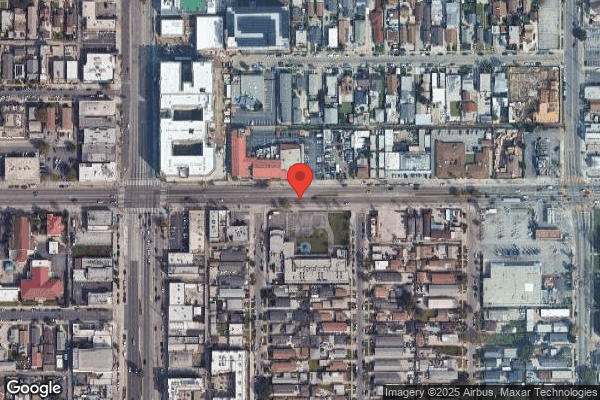
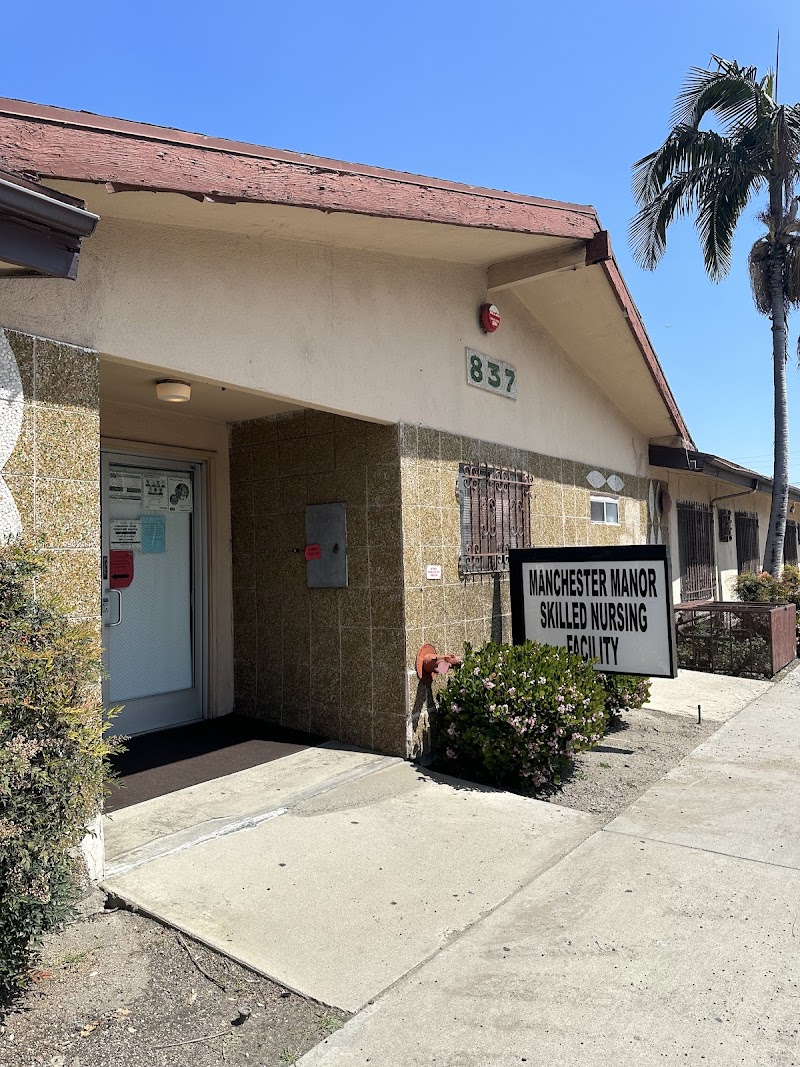
837 W. MANCHESTER AVE., LOS ANGELES, CA 90044 (323) 753-1789
For profit - Individual 49 Beds Independent Data: November 2025 1 Immediate Jeopardy citation
Trust Grade
28/100
#843 of 1155 in CA
Last Inspection: February 2025

Within standard 12-15 month inspection cycle. Federal law requires annual inspections.

Overview

Manchester Healthcare Center has received a Trust Grade of F, indicating significant concerns about the quality of care provided (Grade F means poor). The facility ranks #843 out of 1155 in California, placing it in the bottom half of nursing homes statewide, and #206 out of 369 in Los Angeles County, suggesting only a handful of local options are better. Unfortunately, the trend is worsening, with the number of issues increasing from 14 in 2024 to 35 in 2025. Staffing is a concern here as well, with a low rating of 1 out of 5 stars and less RN coverage than 96% of California facilities, although the turnover is notably low at 0%. Additionally, the facility has incurred $30,332 in fines, which is alarming and higher than 84% of nursing homes in California. Specific incidents include a critical failure to manage medication errors effectively, affecting 17 residents, and a serious lack of emergency care for a resident experiencing altered mental status and high blood pressure. While the facility has a 5 out of 5 star rating for quality measures, the overall results paint a troubling picture that families should carefully consider.

Trust Score
F
28/100
In California
#843/1155
Bottom 28%
Safety Record
High Risk
Review needed
Inspections
Getting Worse
14 → 35 violations
Staff Stability
○ Average
Turnover data not reported for this facility.
Penalties
○ Average
$30,332 in fines. Higher than 68% of California facilities. Some compliance issues.
Skilled Nurses
⚠ Watch
Each resident gets only 12 minutes of Registered Nurse (RN) attention daily — below average for California. Fewer RN minutes means fewer trained eyes watching for problems.
Violations
⚠ Watch
72 deficiencies on record. Higher than average. Multiple issues found across inspections.
★★☆☆☆
2.0
Overall Rating
★☆☆☆☆
1.0
Staff Levels
★★★★★
5.0
Care Quality
★☆☆☆☆
1.0
Inspection Score
Stable
2024: 14 issues
2025: 35 issues

The Good

  • 5-Star Quality Measures · Strong clinical quality outcomes
  • Full Sprinkler Coverage · Fire safety systems throughout facility
  • No fines on record

Facility shows strength in quality measures, fire safety.

The Bad

2-Star Overall Rating

Below California average (3.1)

Below average - review inspection findings carefully

Federal Fines: $30,332

Below median ($33,413)

Moderate penalties - review what triggered them

The Ugly 72 deficiencies on record

1 life-threatening 1 actual harm
Jul 2025 3 deficiencies
CONCERN (D) 📢 Someone Reported This

A family member, employee, or ombudsman was alarmed enough to file a formal complaint

Potential for Harm - no one hurt, but risky conditions existed

Deficiency F0552 (Tag F0552)

Could have caused harm · This affected 1 resident

**NOTE- TERMS IN BRACKETS HAVE BEEN EDITED TO PROTECT CONFIDENTIALITY** Based on interview and record review, the facility failed to obtain a written informed consent (voluntary agreement to accept tr...

Read full inspector narrative →
**NOTE- TERMS IN BRACKETS HAVE BEEN EDITED TO PROTECT CONFIDENTIALITY** Based on interview and record review, the facility failed to obtain a written informed consent (voluntary agreement to accept treatment and/or procedures after receiving education regarding the risks, benefits, and alternatives offered) from the resident and/or conservator (a person appointed by court to manage a person deemed unable to manage their life, such as health, and medical treatment) prior to treatment with Olanzapine (a psychotropic medication [a medication that affect brain activities associated with mental processed and behavior]) for one of four sampled residents (Resident 1). The deficient practice of failing to obtain informed consent prior to initiating treatment with psychotropic medication could have prevented Resident 1 from exercising their right to decline treatment with antipsychotic medications. This increased the risk that Resident 1could have experienced adverse effects (unwanted, uncomfortable, or dangerous effects that a drug may have) leading to impairment or decline in his mental or physical condition or functional or psychosocial status. Findings: During a review of Resident 1's admission Record, the admission Record indicated Resident 1 was admitted to the facility on [DATE] with diagnoses which included schizoaffective disorder (a mental illness that can affect thoughts, mood, and behavior), epilepsy (a brain disorder), and hypertension ([HTN]- high blood pressure). During a review of Resident 1's Minimum Data Set (MDS - a resident assessment tool), dated 4/16/2025, the MDS indicated Resident 1's cognition (process of thinking) was intact. The MDS indicated Resident 1 required moderate (helper does less than half the effort) assistance from staff for activities of daily living ([ADLs]- routine tasks/activities such as bathing, dressing and toileting a person performs daily to care for themselves). The MDS indicated Resident 1 received antipsychotic medication. During a review of Resident 1's Order Summary Report, dated 7/1/2025, the Order Summary Report indicated on 4/12/2025, Resident 1's attending physician prescribed Olanzapine 10 milligrams ([mg]- metric unit of measurement, used for medication dosage and/or amount) by mouth two times a day for schizoaffective disorder manifested by outburst of anger. During a review of Resident 1's Medication Administration Record (MAR), dated 4/1/2025 through 7/1/2025, the MAR indicated Resident 1 received Olanzapine a total of 113 times. During a concurrent interview and record review on 7/7/2025 at 9:45 a.m., with the Director of Nursing (DON), Resident 1's available informed consent for the use of psychotropic medication and clinical records, were reviewed. The DON stated the facility's licensed staff were responsible for verifying that informed consent for the use of psychotropic medication was obtained by the physician, followed by completion of a written informed consent to be placed in the resident's clinical record. The DON stated informed consent was not present in Resident 1's clinical records for the use of Olanzapine. The DON stated she could not explain why the informed consent was not completed; it was a possibility that the informed consent was misplaced or not presented to the resident and/or conservator at the time of admission to the facility. The DON stated as a result of an uncompleted informed consent form for Olanzapine, Resident 1 and/or his conservator were not given the opportunity to make an informed decision about whether to accept or refuse the prescribed medication. The DON stated Resident 1 and/or his conservator should have been given the opportunity to make informed decisions regarding the resident's care and treatment, as it was their right. During a review of the facility's policies and procedures (P&P) titled Informed Consent, dated 10/1/2023, the P&P indicated: 1. The Attending Physician must obtain informed consent before the facility initiates a medical intervention that requires informed consent. 2. An informed consent is required for the administration of psychotherapeutic drugs. 3. The resident or representative must sign an informed consent prior to administration of treatment. 4. The facility staff will verify that informed consent was obtained by the Attending Physician, and the informed consent will be documented and placed in the resident's medical records.
CONCERN (D) 📢 Someone Reported This

A family member, employee, or ombudsman was alarmed enough to file a formal complaint

Potential for Harm - no one hurt, but risky conditions existed

Comprehensive Care Plan (Tag F0656)

Could have caused harm · This affected 1 resident

**NOTE- TERMS IN BRACKETS HAVE BEEN EDITED TO PROTECT CONFIDENTIALITY** Based on interview, and record review, the facility failed to develop a comprehensive care plan with interventions that addressi...

Read full inspector narrative →
**NOTE- TERMS IN BRACKETS HAVE BEEN EDITED TO PROTECT CONFIDENTIALITY** Based on interview, and record review, the facility failed to develop a comprehensive care plan with interventions that addressing the resident's schizoaffective disorder (a mental illness that can affect thoughts, mood, and behavior) for one of four sampled residents (Resident 1). This deficient practice had the potential to negatively affect Resident 1's physical well-being and placed the resident at risk of not receiving care and resident-centered interventions to meet and address Resident 1's needs. Findings: During a review of Resident 1's admission Record, the admission Record indicated Resident 1 was admitted to the facility on [DATE] with diagnoses which included schizoaffective disorder, epilepsy (a brain disorder), and hypertension ([HTN]- high blood pressure). During a review of Resident 1's Minimum Data Set (MDS - a resident assessment tool), dated 4/16/2025, the MDS indicated Resident 1's cognition (process of thinking) was intact. The MDS indicated Resident 1 required moderate (helper does less than half the effort) assistance form staff for activities of daily living ([ADLs]- routine tasks/activities such as bathing, dressing and toileting a person performs daily to care for themselves). The MDS indicated Resident 1's schizoaffective disorder as an active diagnosis. During a concurrent interview and record review on 7/3/2025 at 12:30 p.m., with the Director of Nursing (DON), Resident 1's Order Summary Report, dated 7/1/2025, and Care Plans, dated 4/2025 through 7/2025, were reviewed. The Order Summary Report indicated Resident 1 was ordered Zyprexa (an antipsychotic medication [a medication that affects the mind, emotions, and behavior]) 10 milligrams ([mg)- metric unit of measurement, used for medication dosage and/or amount), one tablet by mouth two times a day, for schizoaffective disorder manifested by (m/b) outburst of anger. This order was started on 4/12/2025. The DON stated there were no care plan interventions and goals addressing Resident 1's schizoaffective disorder or the associated behavior symptoms, such as outburst of anger. The DON stated there were no care plan interventions related to the use of Zyprexa. The DON stated the care plans are intended to identify resident specific needs and ensure personalized care, based on diagnoses, behavior patterns, and prescribed medications. The DON stated Resident 1's diagnosis, psychotropic medication Zyprexa, and behavioral symptoms should have been included in the care plan through measurable goals and person-centered interventions. The DON stated care plans served as a communication tool among staff to ensure consistent, individualized, and effective care. The DON stated that without a care plan in place, staff could not adequately provide care that meets the residents' individual needs. During a review of the facility's policies and procedures (P&P) titled Care Planning, dated 10/1/2023, the P&P indicated the facility would ensure that a comprehensive person-centered Care Plan was developed for each resident based on their individual needs. The P&P indicated a comprehensive care plan would include measurable objectives and timetables to meet a resident's medical, nursing, mental and psychosocial needs.
CONCERN (D) 📢 Someone Reported This

A family member, employee, or ombudsman was alarmed enough to file a formal complaint

Potential for Harm - no one hurt, but risky conditions existed

Medical Records (Tag F0842)

Could have caused harm · This affected 1 resident

**NOTE- TERMS IN BRACKETS HAVE BEEN EDITED TO PROTECT CONFIDENTIALITY** Based on interview and record review, the facility failed to ensure the Situation, Background, Assessment, Recommendation ([SBAR...

Read full inspector narrative →
**NOTE- TERMS IN BRACKETS HAVE BEEN EDITED TO PROTECT CONFIDENTIALITY** Based on interview and record review, the facility failed to ensure the Situation, Background, Assessment, Recommendation ([SBAR]-a communication tool used by healthcare workers when there is a change of condition among the residents) was completed for one of four sampled residents (Resident 1) when Resident 1 had a change of condition and eloped (the act of leaving a facility unsupervised and without prior authorization) on 7/1/2025. This deficient practice had the potential to result in miscommunication among staff and Resident's 1 attending physician to have a detailed explanation of what happened to Resident 1 before he eloped on 7/1/2025, and lack of appropriate response. Findings: During a review of Resident 1's admission Record, the admission Record indicated Resident 1 was admitted to the facility on [DATE] with diagnoses which included schizoaffective disorder (a mental illness that can affect thoughts, mood, and behavior), epilepsy (a brain disorder), and hypertension ([HTN]- high blood pressure). During a review of Resident 1's Minimum Data Set (MDS - a resident assessment tool), dated 4/16/2025, the MDS indicated Resident 1's cognition (process of thinking) was intact. The MDS indicated Resident 1 required moderate (helper does less than half the effort) assistance from staff for activities of daily living ([ADLs]- routine tasks/activities such as bathing, dressing and toileting a person performs daily to care for themselves). During a concurrent interview and record review on 7/3/2025 at 10:10 a.m., with Licensed Vocational Nurse (LVN) 1, Resident 1's progress note, dated 7/1/2025 at 9:26 a.m., was reviewed. LVN 1 stated the progress note indicated on 7/1/2025 at approximately 8:25 a.m., Resident 1 was nowhere to be found within the facility. LVN 1 stated he and other (unidentified) staff began searching the facility perimeter, but Resident 1 was not located. LVN 1 stated he notified Resident 1's physician by phone, but did not complete the SBAR form. LVN 1 stated he was busy and forgot due to being preoccupied with the resident search. During an interview on 7/3/2025 at 12:30 p.m., with the Director of Nursing (DON), the DON stated that the SBAR form should have been completed in response to Resident 1's change in condition and elopement on 7/1/2025. The DON stated the SBAR was a critical tool used to ensure clear communication among staff and with the resident's physician. The DON stated failure to complete the SBAR not only resulted in an incomplete clinical record but also miscommunication between nursing staff and Resident 1's physician. During a review of the facility's policies and procedures (P&P) titled Change in a Resident's Condition or Status, revised 5/2017, the P&P indicated the nurse will notify the resident's Attending Physician when there has been an incident involving the resident and/or a significant change in the resident's physical, emotional, and mental condition. The P&P indicated prior to notifying the physician, the nurse would make detailed observations and gather relevant information for the provider, including the SBAR communication form. During a review of the facility's P&P titled Charting and Documentation, revised 7/2017, the P&P indicated: 1. Any changes in the resident's medical, physical, functional or psychosocial condition, shall be documented in the resident's medical record. 2. The medical record should facilitate communication between the interdisciplinary team regarding the resident's condition and response care. 3. Documentation in the medical record would be complete, and accurate.
Jun 2025 2 deficiencies 1 Harm
SERIOUS (G) 📢 Someone Reported This

A family member, employee, or ombudsman was alarmed enough to file a formal complaint

Actual Harm - a resident was hurt due to facility failures

Quality of Care (Tag F0684)

A resident was harmed · This affected 1 resident

**NOTE- TERMS IN BRACKETS HAVE BEEN EDITED TO PROTECT CONFIDENTIALITY** Based on interview and record review, the facility failed to provide emergency care (the provision of care for conditions that r...

Read full inspector narrative →
**NOTE- TERMS IN BRACKETS HAVE BEEN EDITED TO PROTECT CONFIDENTIALITY** Based on interview and record review, the facility failed to provide emergency care (the provision of care for conditions that require rapid intervention to avoid death or permanent disability) to the resident, who had an altered mental status (a change in a resident's level of awareness, cognition, often indicating an underlying medical or neurological issue [any condition that affects the nervous system, including the brain, spinal cord, and nerves) and high blood pressure (BP- of 200/109 millimeters of mercury ([mmHg, a unit of measurement], reference range is120/80 or lower) to prevent intracerebral hemorrhage ([ICH] a type of stroke involving bleeding within the brain tissue) for one of four sampled residents (Resident 1). The facility failed to: 1. Assess Resident 1 immediately (instantly/ without delay) after Resident 1 had altered mental status on [DATE] at 2:14 p.m. 2. Immediately provide emergency interventions by sending Resident 1 to the general acute care hospital (GACH) without a delay for evaluation and treatment. 3. Implement the facility's policy and procedure (P&P) titled, Emergency Care-General, which indicated to summon help and immediately call 911 (medical emergency phone number) for medical emergency assistance for new onset of unconsciousness or unresponsiveness to verbal or physical stimuli, severe low blood sugar with impaired consciousness, or any seizure activity (a sudden, abnormal surge of electrical activity in the brain that can cause temporary changes in behavior, movement, sensation, or awareness). As a result of these failures, Resident 1 did not receive the emergency care (the immediate medical attention provided to individuals experiencing serious or life-threatening health conditions) on [DATE], from 2:14 p.m. to 5:47 p.m. (a total of three (3) hours and 33 minutes), when Resident 1 had a change in condition, resulting in Resident 1 suffering an intracerebral hemorrhage as evidenced by GACH 1's Computerized Tomography (CT, a diagnostic imaging procedure that uses a combination of X-rays and computer technology to produce images of the inside of the body) scan of the brain without contrast (no contrast agent used) dated [DATE], at 7:15 p.m., leading to Resident 1's intubation (when a breathing tube inserted through the mouth or nose, down to the trachea [windpipe], connected to the mechanical ventilator (a form of life support) and death on [DATE] in GACH 2. Findings: During a review of Resident 1's admission Record, the admission Record indicated Resident 1 was initially admitted to the facility on [DATE] and readmitted on [DATE] with diagnoses including hypertension (high blood pressure), diabetes mellitus (DM- abnormal blood sugar level), hemiplegia (paralysis on one side of the body) affecting right dominant side (resident's preferred side of the body to use), and epilepsy (a neurological disorder characterized by a tendency to have recurrent, unprovoked seizures) During a review of Resident 1's Minimum Data Set (MDS - a resident assessment tool) dated [DATE], the MDS indicated Resident 1 was able to understand and be understood by others. The MDS indicated Resident 1 required partial/moderate assistance (helper does less than half the effort) with eating and upper body dressing. The MDS indicated Resident 1 required substantial/maximal assistance (helper does more than half the effort) for oral hygiene, toileting hygiene, lower body dressing, and personal hygiene. The MDS indicated Resident 1 was dependent (helper does all the effort) on shower/bath and putting on/taking off footwear. The MDS indicated Resident 1 required partial/moderate assistance with rolling from lying on back, to left and right side, and in returning to lying on back on the bed. The MDS indicated Resident 1 required substantial/maximal assistance with sitting to lying and lying to sitting position on side of the bed. The MDS indicated Resident 1 was dependent on chair/bed-to-chair transfer, and tub/shower transfer. During a review of Resident 1's care plan titled, The resident has altered endocrine (tissue that make and release hormones that travel in the bloodstream and control the actions of other cells or organ) status, diabetes, initiated [DATE], the care plan indicated the goal for Resident 1 was not to experience any complications (problems) from diabetes and receive medications as ordered. The care plan interventions indicated to monitor Resident 1 for reports of changes to the eye (eye condition) and report to the physician as needed. During a review of Resident 1's Physician's Order Summary report dated [DATE], the Physician's Order Summary report indicated the following orders: 1. Finger stick blood sugar (FSBS, to check blood sugar level by pricking the finger and using a small drop of blood from the fingertip) as needed for hypoglycemia (low blood sugar) or hyperglycemia (high blood sugar). If FSBS is less than 60 (normal blood sugar range-70 to 99 milligrams per deciliter (mg/dL, a unit of measurement) and the resident is alert/ responsive, to give snack and recheck the blood sugar after 15 minutes, hold insulin (medicine for diabetes) and call the physician immediately, every 15 minutes, as needed. 2. Gvoke ([Glucagon] a prescription medicine used to treat very low blood sugar) prefilled syringe (PFS, a disposable syringe that comes with a pre-measured dose of insulin already loaded), 1 milligram ([mg] unit of mass measurement)/0.2 milliliter ([ml] unit of volume measurement), to inject 0.2 ml intramuscularly (injection into the muscles) as needed for hypoglycemia, if FSBS is less than (<) 60 and resident is unresponsive, call medical doctor (MD) immediately and recheck FSBS in 15 minutes. (hold insulin). 3. Insulin Glargine-yfgn (injection medication for diabetes) subcutaneous (SQ, fatty tissue layer just below the skin tissue) solution pen-injector 100 units, inject 15 milliliters (ml, a unit of measurement) SQ at bedtime. 4. Monitor vital signs (physiological measurements that indicate a person's basic bodily functions, includes blood pressure, heart rate, temperature and oxygen saturation (a measure of how much oxygen is in the blood, normal range 95-100%) every shift. 5. Amlodipine Besylate oral tablet 10 mg., one (1) tablet by mouth one time a day (medicine for hypertension [high blood pressure]), hold when systolic blood pressure (SBP- the top number in a BP reading) is <110. 6. Aspirin (medicine for stroke prevention) 81 mg oral tablet, delayed release, daily. 7. Atorvastatin Calcium (medicine to lower cholesterol levels) 40 mg., tablet by mouth at bedtime for hyperlipidemia (high fats or lipids in the blood). 8. Lisinopril (medicine to treat high blood pressure) 20 mg., tablet by mouth, daily. Hold when SBP <110 and heart rate (HR, normal rate between 80-100 beats per minute) <60. 9. Levetiracetam oral solution (a medication primarily used to treat epilepsy by controlling various types of seizures [sudden, temporary episodes of abnormal brain activity that can cause a variety of symptoms, including muscle spasms, loss of consciousness, and altered behavior]) 100 mg/ml, to give 15 ml by mouth two times a day. The Physician's Order Summary report indicated Resident 1 was discharged to GACH 1 via 911 on [DATE] (no reason indicated). During a review of Resident 1's Medication Administration Record (MAR) for [DATE], the MAR indicated Resident 1 was administered Amlodipine and Lisinopril on [DATE] at 9 a.m., however the MAR did not indicate a documented BP reading. The MAR indicated Resident 1 refused the Levetiracetam morning dose on [DATE], [DATE] and [DATE]. During a review of Resident 1's Licensed Nurses Progress Notes dated [DATE] at 2:14 p.m., the Licensed Nurses Progress Notes indicated Resident 1 was transferred to GACH 1 via 911 (notes did not specify date and time of transfer) due to altered mental status. The Licensed Nurses Progress Notes did not indicate documentation regarding Resident 1's condition, any assessment conducted, and interventions provided to Resident 1 after the change in condition was observed on [DATE] at 2:14 p.m. and prior to the arrival of the paramedics on [DATE] at 5:47 p.m. During a review of Resident 1's Los Angeles Fire Department (LAFD) Patient Care Report (report) dated [DATE] at 5:37 p.m., the report indicated paramedics dispatch were notified on [DATE] at 5:37 p.m. and was on scene with Resident 1 at 5:47 p.m. The report indicated Resident 1 was unconscious (unresponsive to all stimuli). The report indicated Resident 1 was hypoglycemic (with low blood sugar level). The report indicated Resident 1 had been confused for one hour in the facility (time not specified). The report indicated at 5:47 p.m. paramedics checked Resident 1's blood sugar and it was 31. The report indicated Resident 1's BP was 140/80 at 5:47 p.m. and 160/80 at 5:58 p.m. The report indicated an intravenous line ([IV] a thin, flexible tube inserted into a vein to administer fluids, medications or blood products directly into the bloodstream) was established and Resident 1 was given Glucagon which raised Resident 1's blood sugar level to 164 mg/dl. The report also indicated Resident 1 was given (administered) IV of Dextrose 10 (D10- 10% [percent]of sugar in water used to provide body with extra water and calories from sugar). During a review of Resident 1's e-interact Change of Condition (COC) Evaluation dated [DATE] at 6:21 p.m., completed by Licensed Vocational Nurse (LVN) 1, the COC indicated Resident 1 had a minor shortness of breath (the feeling of not being able to breathe deeply enough or get enough air) (time not specified). The COC indicated Resident 1 did not have any oxygen in use. The COC indicated the date and time the physician was notified was [DATE] at 2:23 p.m. The COC indicated, per medical order, Resident 1 was to be transferred to GACH due to altered mental status. During a review of Resident 1's GACH 1 record titled, Emergency Department (ED) note, dated [DATE] at 6:52 p.m., the ED notes indicated, Resident 1 had altered mental status one hour prior to the paramedic's arrival at the facility. The ED notes indicated Resident 1 was hypoglycemic and arrived at the ED still altered. The ED notes indicated Resident 1 had left sided gaze deviation (a condition where a person's eyes are deviated or turned towards the left side which can be due to various neurological conditions, including stroke). The ED notes indicated Resident 1's glucose level was 248, potassium (an essential mineral and electrolyte that plays a vital role in nerve and muscle function, including the heart) level of 3 (normal range is 3.5 to 5.2 milliequivalent per liter ([mEq/L] unit of measurement). The GACH 1 CT of the brain without contrast dated [DATE] at 7:15 p.m., indicated Resident 1 had a focal (localized) hematoma (a localized collection of blood outside of the blood vessels) at the left fronto (front of the head, behind the forehead) parietal (the top and back of the head, behind the frontal lobe and above the temporal (second largest lobe that sit behind the ears) and occipital lobe (the visual processing area of the brain) region, measuring 3.7 x 2.6 x 3.9 centimeters ([cm] unit measure of length) for a total ICH volume of 19.5 cubic centimeters ([cc] a unit of measurement of volume] the volume of blood collected within the brain tissue following a stroke). The impression indicated a focal ICH (bleeding that is localized to a specific area within the brain or its surrounding spaces) at the left posterior (back) parietal area. The ED notes indicated Resident 1 was intubated on [DATE] at 8:43 p.m. for airway protection during transport to GACH 2 for a higher level of care with neurosurgery (the medical specialty concerned with the diagnosis and treatment of patients with injury to, or diseases/disorders of the brain, spinal cord and spinal column, and peripheral nerves within all parts of the body). The ED notes indicated Resident 1 was transferred to GACH 2 on [DATE] at 10 p.m. During a review of GACH 2's History and Physical (H&P, the physician's examination of a patient) report, dated [DATE] at 10:27 p.m., the GACH 2's H&P indicated Resident 1 was transferred from GACH 1 for the management of left parieto-occipital (the region or structures situated between the parietal (walls) and occipital lobes of the brain) intracerebral hemorrhage. The H&P report indicated, according to the nursing staff at the facility on [DATE] at around 1 p.m. to 2 p.m., Resident 1 exhibited facial abnormalities, possibly twitching or asymmetry (uneven), with left-sided gaze deviation along with movement of the resident's arms, hands and legs. The H&P indicated that despite the concerning signs, Resident 1 was not immediately sent to the GACH, rather, was transferred between 4:00-5:00 p.m. (2-3 hours after). The H&P indicated Resident 1 was intubated and was connected to a mechanical ventilator (a breathing machine). During a review of GACH 2's Discharge Documentation dated [DATE], the documentation indicated Resident 2 was compassionately extubated (the process of withdrawing mechanical ventilation from a patient at the end of life to allow for a peaceful and comfortable death) and died on [DATE] at 6:54 a.m. During a review of Resident 1's Certificate of Death indicated, Resident 1 died on [DATE]. The Certificate of Death indicated the immediate cause of death was cardiopulmonary arrest (sudden cessation of heart function and breathing) sequentially (in succession) to cerebral edema (brain swelling), non-traumatic intracranial hemorrhage and hypertension (high blood pressure). During a phone interview on [DATE] at 3:22 p.m., with Resident 1's Family Member (FM 1), FM 1 stated when FM 2 visited Resident 1 on [DATE] around 2:30 p.m., while Resident 1 was being cleaned by Certified Nurse Assistant (CNA 1), Resident 1 was not responsive. FM 1 stated Licensed Vocational Nurse (LVN) 1 reported to FM 2 that Resident 1 had a seizure but when LVN 1 checked the BP, it was 220/138 mmHg. FM 1 stated, according to FM 2, it took the staff over one hour to send Resident 1 to GACH 1. FM 1 stated even though Resident 1 had a stroke before, Resident 1 remained alert and aware of her surroundings. FM 1 stated according to FM 2, Resident 1 was not talking or moving on [DATE]. FM 1 stated from GACH 1 Resident 1 was taken to GACH 2 because GACH 1 found a bleed in her brain and GACH 2 confirmed it was a second stroke. During an interview on [DATE] at 12:43 p.m. with CNA 1, CNA 1 stated on [DATE] around 2:30 p.m., she went to Resident 1's room because FM 2 was visiting Resident 1. CNA 1 stated when she entered Resident 1's room Resident 1 was looking blankly towards the left side and was not answering. CNA 1 stated she cleaned the resident and kept calling Resident 1's name while she was cleaning her, but Resident 1 was not answering. CNA 1 stated Resident 1 was usually awake, alert, able to make all her needs known and move all extremities (both upper arms and both lower legs) despite being bedridden. CNA 1 stated she called LVN 1 to check on Resident 1 after she finished cleaning the resident on [DATE] (duration not specified). CNA 1 stated LVN 1 told her Resident 1 had a seizure. CNA 1 stated, when she saw Resident 1, Resident 1's one side of face (side not specified) looked droopy. CNA 1 stated it looked like Resident 1 had a stroke. CNA 1 stated it did not look like a seizure. CNA 1 stated she notified LVN 1 and LVN 1 took Resident 1's vital signs. CNA 1 stated she was not sure what time the LVN 1 took Resident 1's vital signs but after that, she believed LVN 1 called paramedics on [DATE] (time not specified). During a phone interview on [DATE] at 12:53 p.m. with LVN 1, LVN 1 stated he received a report from CNA 1 on [DATE] at around 2:15 p.m. or 2:30 p.m. that Resident 1 did not look like herself (changed) and had altered mentation from her baseline (normal status). LVN 1 stated he initially suspected a seizure because Resident 1 had a history of seizures. LVN 1 stated he checked the blood pressure, and it was 200/109 mmHg. LVN 1 stated he called the physician (MD) immediately (time not specified) and requested to send Resident 1 to GACH 1. LVN 1 stated on [DATE] in the morning (time not specified), Resident 1 was watching television with her roommate and was verbally responsive and was able to make needs known. LVN 1 stated when he went to Resident 1's room on [DATE] at around 2:15 p.m. or 2:30 p.m., Resident 1 was staring blankly and was not responding. LVN 1 stated it was a medical emergency when a resident has a blood pressure of 200. LVN 1 stated Resident 1 should have been sent to the hospital immediately. LVN 1 stated Resident 1 was at a very high risk for heart attack or stroke. LVN 1 stated he should have assessed Resident 1 for signs of stroke or heart attack like chest pain, sweating, numbness (loss of feeling or sensation), confusion, difficulty understanding and talking, vision, poor balance, facial drooping (a condition where the muscles on one side of the face become weak or paralyzed, causing them to droop or sag) or the ability to hold up arms. LVN 1 stated Resident 1 was not assessed because the resident was very stiff and was not following any commands at that time (on [DATE] at around 2:15 p.m. or 2:30 p.m.) LVN 1 stated he called 911 on [DATE] around 4:30 p.m. or 4:35 p.m. and it took the paramedics 15-25 minutes to arrive (time not specified). During an interview on [DATE] at 3:13 p.m. with LVN 1, LVN 1 stated he was not sure why the sequence of events and the time he assessed Resident 1, did not match his documentation in the COC on [DATE] at 6:21 p.m. and the progress notes on [DATE] at 2:14 p.m. LVN 1 stated he did not check Resident 1's blood sugar at all on [DATE]. LVN 1 stated the BS reading of 100 in Resident 1's clinical record on [DATE] at 4:23 p.m., was a typo on his part. LVN 1 stated the only blood sugar reading was from LAFD which indicated 30 and he was not sure if anything was given for it. LVN 1 stated FM 2 was at bedside and FM 3 arrived 10 minutes after LVN 1 had taken the blood pressure (time not specified). LVN 1 stated on [DATE] (times not specified), he checked the BP about four times, and the BP remained high (around 200's). LVN 1 stated he did not document the BP readings taken on [DATE] (times not specified) in the resident's clinical records. The LVN 1 stated he called the Director of Nursing (DON) who was off on that day (Saturday, [DATE]) at 4:30 p.m. and reported the incident (Resident 1's altered mental status) because the Registered Nurse Supervisor (RN) 1 was busy with another resident. During a concurrent phone interview on [DATE] at 1:22 p.m. with FM 1, FM 2 and FM 3, FM 1 stated FM 2 called her (FM 1) at 3:04 p.m. on [DATE] and was told Resident 1 was not talking and something was wrong (unspecified). FM 2 stated he arrived at the facility a little after 2:30 p.m. on [DATE] while CNA 1 was changing Resident 1. FM 2 stated he observed CNA 1 kept calling Resident 1's name, but Resident 1 was not responding. FM 2 stated he observed a LVN (unidentified) entered the room and checked Resident 1's BP. FM 2 stated Resident 1's BP was 220/138 mmHg. FM 2 stated LVN 1 told him Resident 1 had a seizure because of Resident 1's expression on her face. FM 2 stated he observed LVN 1 tried to give Resident 1 a pill (FM 2 was not sure what it was and LVN 1 did not tell him what it was) but the resident was not swallowing it. FM 2 stated LVN 1 crushed the pill, mixed it with Jello or pudding and gave the crushed pill to Resident 1. FM 2 stated he was not sure if Resident 1 swallowed the crushed pill because Resident 1 was not moving. FM 3 stated she spoke to LVN 1 on [DATE] around 3:30 p.m. and was told that Resident 1 had a seizure. FM 3 stated she asked LVN 1 if it was another stroke, FM 3 stated LVN 1 told her it was not a stroke. FM 3 stated LVN 1 told her that Resident 1 had high BP and that LVN 1 was getting in touch with MD. FM 3 stated she did not notice LVN 1 talking to MD but FM 3 noticed LVN 1 was seen talking to another nurse (unidentified). FM 3 stated it was the other nurse who told LVN 1 to call the paramedics. FM 3 stated Resident 1 was staring towards the left and was not talking or tracking. FM 3 stated LVN 1 was saying Resident 1 needed to go to the hospital, but he (LVN 1) did not call the paramedics until he got off the phone. During a phone interview on [DATE] at 2:36 p.m. with DON, the DON stated RN 1, who was on duty that day ([DATE]), did not see Resident 1 because RN 1 was not aware of the incident. The DON stated when she spoke to LVN 1 on [DATE] (time not specified), LVN 1 told her (DON) that RN 1 had already left for the day. During a phone interview on [DATE] at 2:39 p.m. with RN 1, RN 1 stated LVN 1 called him (RN 1) on the phone on [DATE] at around 3 p.m. while he (RN 1) was on his way to another job. RN 1 stated LVN 1 notified him (RN 1) that Resident 1 had a seizure. RN 1 stated he instructed LVN 1 to send Resident 1 to GACH if the seizure will not stop. During a review of the facility's Policy and Procedures (P&P) titled, Acute Condition Changes (a sudden, clinically significant deviation from a resident's normal state)- Clinical Protocol, dated 3/2018, the P&P indicated the nursing staff will contact the physician based on the urgency of the situation. The P&P indicated, before contacting the physician about someone with an acute change of condition, the nursing staff should collect pertinent details to report to the physician. The P&P indicated phone calls to the attending physician should be made by an adequately prepared nurse who had collected and organized pertinent information, including the resident's current symptoms and status. The P&P indicated the nurse shall assess and document/ report the following baseline information: a. Vital signs; b. Neurological status; c. Level of consciousness; d. Cognitive status; e. Onset, duration, severity; f. Recent labs; g. All active diagnosis h. All current medications. The P&P indicated the nursing staff should contact the physician based on the urgency of the situation. The P&P indicated, for emergencies, the nursing staff should call of page the physician and request a prompt response (within approximately one-half hour or less). The P&P indicated the attending physician should respond in a timely manner to the notification of problems or changes in condition and status and the nursing staff should contact the Medical Director for additional guidance and consultation if they did not receive a timely or appropriate response. The P&P indicated the staff will monitor and document the resident's progress and responses to treatment and the physician will help the staff monitor the resident with acute change of condition until the problem or condition has resolved or stabilized. During a review of the facility's P&P titled, Emergency Care-General, dated 10/2022, the P&P indicated emergency treatment should be given to residents who sustained illness while in the facility to preserve the resident's life, to prevent further harm, and promote recovery. The P&P indicated to summon help and immediately call 911 for medical emergency assistance for new onset of unconsciousness or unresponsiveness to verbal or physical stimuli, severe low blood sugar with impaired consciousness that did not respond to emergency or first-time seizure. The P&P indicated to document the resident's vital signs including blood pressure, pulse, respirations and temperature and notify the physician or Medical Director of the specific complaints and vital signs as soon as possible.
CONCERN (D) 📢 Someone Reported This

A family member, employee, or ombudsman was alarmed enough to file a formal complaint

Potential for Harm - no one hurt, but risky conditions existed

Pharmacy Services (Tag F0755)

Could have caused harm · This affected 1 resident

**NOTE- TERMS IN BRACKETS HAVE BEEN EDITED TO PROTECT CONFIDENTIALITY** Based on interview and record review, the facility failed to implement its Policy and Procedures (P&P) titled, Insulin Administr...

Read full inspector narrative →
**NOTE- TERMS IN BRACKETS HAVE BEEN EDITED TO PROTECT CONFIDENTIALITY** Based on interview and record review, the facility failed to implement its Policy and Procedures (P&P) titled, Insulin Administration which indicated individual administering the medication must check to verify the right dosage before giving the medication, for one of 3 sampled residents, (Resident 1), by failing to: 1). Ensure Resident 1's physician's order for Insulin Glargine-yfgn (injection medication for diabetes) was correct. 2). Ensure Resident 1's blood sugar levels were documented in the resident's electronic medical record. These failures placed the resident at risk to receive high doses of insulin and had the potential to cause complications like severe hypoglycemia (low blood sugar), coma, hospitalization and death. Findings: During a review of Resident 1's admission Record, the admission Record indicated Resident 1 was initially admitted to the facility on [DATE] and readmitted on [DATE] with diagnoses including hypertension (high blood pressure), diabetes mellitus (DM- abnormal blood sugar level), hemiplegia (paralysis on one side of the body) affecting right dominant side (resident's preferred side of the body to use), and epilepsy (a neurological disorder characterized by a tendency to have recurrent, unprovoked seizures) During a review of Resident 1's Minimum Data Set (MDS - a resident assessment tool) dated 3/12/2025, the MDS indicated Resident 1 was able to understand and be understood by others. The MDS indicated Resident 1 required partial/moderate assistance (helper does less than half the effort) for activities of daily living (ADLs) such as eating, personal hygiene and upper body dressing. The MDS indicated Resident 1 required substantial/maximal assistance (helper does more than half the effort) for oral hygiene, toileting hygiene, lower body dressing, and personal hygiene. The MDS indicated Resident 1 was dependent (helper does all the effort) on shower/bath and putting on/taking off footwear. The MDS indicated Resident 1 required partial/moderate assistance with rolling from lying on back, to left and right side, and in returning to lying on back on the bed. The MDS indicated Resident 1 required substantial/maximal assistance with sitting to lying and lying to sitting position on side of the bed. The MDS indicated Resident 1 was dependent on chair/bed-to-chair transfer, and tub/shower transfer. During a review of Resident 1's Order Summary report dated 4/14/2025, the Physician Order Summary report indicated Insulin Glargine-yfgn subcutaneous (SQ, fatty tissue layer just below the skin tissue) solution pen-injector 100 units, inject 15 milliliters (ml, a unit of measurement) SQ at bedtime. The physician order summary report indicated to hold if blood sugar is less than (<) 110 milligram ([mg]), a unit measurement/deciliter ([dL] unit measurement of volume). During a review of Resident 1's History and Physical (H&P) dated 4/25/2025, the H&P indicated Resident 1 had fluctuating capacity to understand and make decisions. During a review of Weights and Vitals Summary under blood sugar summary, the summary did not indicate blood sugar results on 5/2/2025, 5/5/2025 to 5/10/2025 and from 5/12/2025 to 5/16/2025. During a review of Resident 1's Medication Administration Record (MAR) for May 2025, the MAR indicated Insulin Glargine-yfgn 15 ml SQ were administered at bedtime from 5/1/2025 to 5/4/2025 and on 5/6/2025 to 5/16/2025. During a concurrent interview and record review on 6/5/2025 at 1:57 p.m. with Licensed Vocational Nurse (LVN 3), Resident 1's Order Summary Report dated 4/14/2025, MAR for 5/2025 and the Blood Sugar Summary were reviewed. LVN 3 stated the order for Insulin Glargine was incorrect because the order should have been written in units not ml. LVN 3 stated 1 ml has 100 units. LVN 3 stated administering 15 ml of Insulin Glargine would mean the nurse would have administered Insulin Glargine 100 times the dose, which would have been 1,500 units instead of 15 units. LVN 3 stated administering 15 ml of insulin could lead to a severe medication error and could lead to Resident 1's coma or death. LVN 3 stated the order should have been clarified with the Medical Doctor (MD) prior to administering the medication. LVN 3 stated the MAR indicated 15 ml of Insulin Glargine were administered to Resident 1 from 5/1/2025 to 5/4/2025 and on 5/6/2025 to 5/16/2025. LVN 3 stated that the blood sugar summary did not indicate blood sugar levels on 5/2/2025, 5/5/2025 to 5/10/2025 and from 5/12/2025 to 5/16/2025. LVN 3 stated blood sugars should always be checked and recorded to ensure insulin was administered as ordered. During interview on 6/18/2025 at 1:12 p.m. with the Director of Nursing (DON), the DON stated the insulin pen can only contain maximum volume of 3 ml. The DON stated it would be impossible for the LVNs to administer 15 ml. of Insulin Glargine to Resident 1. The DON stated LVNs should have called and verified the Insulin Glargine order with the MD. The DON stated trainings will be provided for staff to ensure the physician order will have the right number of units of the insulin to prevent mistakes. During a review of the facility's P&P titled, Insulin Administration, dated 10/2022, the P&P indicated the insulin dosage requirements must be verified before administration, to assure that it corresponds with the order on the medication sheet and the physician's order. The P&P indicated the nurse shall notify the DON and Attending Physician of any discrepancies before giving the insulin. The P&P indicated injectable insulin comes in concentrations of 100 units per mL liquid. The P&P indicated orders for insulin should always be written as Units. The P&P indicated to document resident's blood glucose result, as ordered. During a review of the facility's P&P titled, Administering Medications dated 10/2022, the P&P indicated if a dosage is believed to be inappropriate or excessive for a resident, or a medication has been identified as having potential adverse consequences for the resident or is suspected of being associated with adverse consequences, the person preparing or administering the medication shall contact the resident's Attending Physician or the facility's Medical Director to discuss the concerns. The P&P indicated the individual administering the medication must check the label three (3) times to verify the right resident, right medication, right dosage, right time and right method (route) of administration before giving the medication.
Apr 2025 4 deficiencies
CONCERN (D) 📢 Someone Reported This

A family member, employee, or ombudsman was alarmed enough to file a formal complaint

Potential for Harm - no one hurt, but risky conditions existed

Resident Rights (Tag F0550)

Could have caused harm · This affected 1 resident

**NOTE- TERMS IN BRACKETS HAVE BEEN EDITED TO PROTECT CONFIDENTIALITY** Based on interview and record review, the facility failed to promote the dignified existence and self-determination of 2 of 14 s...

Read full inspector narrative →
**NOTE- TERMS IN BRACKETS HAVE BEEN EDITED TO PROTECT CONFIDENTIALITY** Based on interview and record review, the facility failed to promote the dignified existence and self-determination of 2 of 14 sampled residents (Resident 13 and 14) who required assistance with activities of daily living (ADLs), by failing to answer the resident's call lights in a timely manner. This deficient practice had the potential to result in Resident 13 and 14 feeling of angry for being ignored by nurses and could negatively affect the resident's psychosocial well-being. Findings: During a review of Resident 13's admission Record, the admission Record indicated Resident 13 was originally admitted to the facility on [DATE] and re-admitted on [DATE]. Resident 13's diagnoses included acquired absences of left and right leg above the knee (surgical removal of the portion of the leg above the knee), muscle weakness and movement disorder (group of involuntary movements). During a review of Resident 13's History and Physical (H&P) dated 12/21/2024, the H&P indicated Resident 13 had fluctuating mental capacity to understand and make medical decisions. During a review of residents 13's Minimum Data Set (MDS - a federally mandated resident assessment tool) dated 3/12/2025, the MDS indicated Resident 13 has no cognitive (ability to think and reason) impairment. The MDS indicated Resident 13 was dependent on staff for activities of daily living (ADLs) such as dressing, toilet use, personal hygiene and transfers (moving between surfaces to and from bed, chair, and walking). During a review of Resident 14's admission Record, the admission Record indicated Resident 14 was admitted to the facility on [DATE] with a diagnoses including quadriplegia (paralysis that affects all a person's limbs), failure to thrive (a decline caused by chronic diseases and functional impairments which can cause weight loss, decreased appetite, poor nutrition and inactivity), and anemia (a condition where the body does not have enough healthy red blood cells). During a review of Resident 14's H&P dated 5/31/2024, the H&P indicated Resident 14 had fluctuating mental capacity to understand and make medical decisions. During a review of residents 14's MDS dated [DATE], the MDS indicated Resident 14 had cognitive impairment. The MDS indicated Resident 14 was dependent on staff with ADLs such as dressing, toilet use, personal hygiene and transfers. During an observation on 4/2/2025 at 6:03 a.m., Resident 13 and Resident 14 had their call lights on. Certified Nurse Assistant (CNA) 2 was observed walking by both rooms with the call light on and did not respond or check on what assistance the residents needed. During an observation on 4/2/2025 at 6:15 a.m., Licensed Vocational Nurse (LVN) 5 was observed to answer Resident 13 and Resident 14's call light. During an interview on 4/2/2025 at 6:30 am with CNA 2, CNA 2 stated answering call lights were everyone's responsibility. CNA 2 stated it was important to answer the lights as soon as possible to prevent resident falls and accidents. CNA 2 stated it was not right to ignore Resident 13 and 14's call lights. During an interview on 4/2/2025 at 6:55 a.m. with LVN 5, LVN 5 stated all nurses must answered call lights right away. LVN 5 stated it was not acceptable for Resident 13 and Resident 14 to wait for a nurse for 12 minutes. LVN 5 stated Resident 13 and Resident 14 could feel neglected by nurses. During an interview on 4/2/2025 at 9:21 a.m. with the Director of nursing (DON), the DON stated everybody at the facility could answer the resident's call lights. The DON stated residents should not wait longer than two minutes for call lights to be answered. The DON stated answering call lights in a timely manner was very important for resident's safety. The DON also stated Resident 13 and Resident 14 may feel abandoned and neglected because staff did not answer the call lights on time. During a review of the facility's policy and procedures (P&P) titled Answering Call lights , dated 8/2017 the P&P indicated the purpose of answering call lights is to respond to the resident's request and needs. Resident's call light will be answer as soon as possible.
CONCERN (D) 📢 Someone Reported This

A family member, employee, or ombudsman was alarmed enough to file a formal complaint

Potential for Harm - no one hurt, but risky conditions existed

Comprehensive Care Plan (Tag F0656)

Could have caused harm · This affected 1 resident

**NOTE- TERMS IN BRACKETS HAVE BEEN EDITED TO PROTECT CONFIDENTIALITY** Based on observation, interview, and record review, the facility failed to develop a care plan for two of twelve sampled residen...

Read full inspector narrative →
**NOTE- TERMS IN BRACKETS HAVE BEEN EDITED TO PROTECT CONFIDENTIALITY** Based on observation, interview, and record review, the facility failed to develop a care plan for two of twelve sampled residents (Resident 7 and Resident 9) who were a high risk for elopement (the act of leaving a facility unsupervised and without prior authorization). This deficient practice had a potential to result in unidentified interventions which could lead to Resident 7 and Resident 9 eloping from the facility leading to accidents and death. Findings: a. During a review of Resident 7 ' s admission Record, the admission Record indicated Resident 7 was admitted to the facility on [DATE] with diagnoses including dementia (a progressive state of decline in mental abilities), schizoaffective disorder (a mental illness that is characterized by disturbances in thought) and lack of coordination (difficulty in controlling and coordinating muscle movements). During a review of Resident 7 ' s History and Physical (H&P) dated 3/5/2025, the H&P indicated Resident 7 did not have the mental capacity to understand and make medical decisions. During a review of residents 7 ' s Minimum Data Set (MDS – a resident assessment tool) dated 3/15/2025, the MDS indicated Resident 7 had cognitive (ability to think and reason) impairment. The MDS indicated Resident 7 required substantial/maximal assistance (staff does more than half the effort) with activities of daily living (ADLs) such as dressing, toilet use, personal hygiene. The MDS indicated Resident 7 required partial to moderate assistance (staff does less than half the effort) with bed mobility (ability to roll from lying on back to left and right side and return to lying on back in bed) transfers (moving between surfaces to and from bed to chair). During a review of Resident 7 ' s Wandering Risk assessment dated [DATE], the Wandering Risk Assessment indicated Resident 7 had a moderate risk for wandering due to the resident being disoriented and diagnosis of dementia with psychosis (a severe mental condition in which thought, and emotions are so affected that contact is lost with reality). During a review of Resident 7 ' s Elopement Risk assessment dated [DATE], the Elopement Risk Assessment indicated Resident 7 was at risk for elopement due to the resident ' s history of elopement or attempted elopement while at home, wandering behavior, and exit seeking behaviors. During a concurrent observation and interview on 4/1/2025 at 12:00 p.m. with Resident 7, Resident 7 was observed walking by herself toward her room. Resident 7 stated I have schizophrenia, and my mind was telling me to go to the bank to get some money and pay for this place. Resident 7 stated, she left the facility (date unknown) through the front door and a staff member brought her back inside. b. During a review of Resident 9 ' s admission Record, the admission Record indicated Resident 9 was admitted to the facility on [DATE] with diagnoses including major depressive disorder (a mood disorder that causes a persistent feeling of sadness and loss of interest), schizoaffective disorder, and muscle weakness. During a review of Resident 9 ' s H&P dated 3/27/2025, the H&P indicated Resident 9 did not have the mental capacity to understand and make medical decisions. During a review of residents 9 ' s MDS dated [DATE], the MDS indicated Resident 9 makes self-understood and had the ability to understand others. The MDS indicated Resident 9 required substantial/maximal assistance with ADLs such as dressing, toilet use and personal hygiene. The MDS indicated Resident 9 required partial to moderate assistance for bed mobility and transfers. During a review of Resident 9 ' s Elopement Risk assessment dated [DATE], the Elopement Risk Assessment indicated Resident 9 was at risk for elopement due to the resident ' s wandering behavior During a review of Resident 9 ' s Wandering Risk assessment dated [DATE], the Wandering Risk Assessment indicated Resident 9 had moderate risk for wandering and exhibited/expressed fear and/or anxiety. During an interview on 4/1/2025 at 4:20 p.m. with the Director of Nursing (DON), the DON stated Resident 7 and Resident 9 should have a care plan to address the resident ' s risk for elopement, however the nurses failed to develop a care plan for residents. The DON stated it was important to develop a care plan, that included interventions to monitor Resident 7 and Resident 9 ' s safety. The DON stated nurses failing to develop a care plan, placed Resident 7 and Resident 9 be at risk of injury, accidents, and actual elopement. During a review of the facility ' s policy and procedures (P&P) titled, Care Plan, Comprehensive Person-Centered dated 12/2016, the P&P indicated a comprehensive, person-centered care plan that includes measurable objectives and timetables to meet the resident ' s physical, psychosocial and functional needs is developed and implemented for each resident. The P&P indicated assessments of residents are ongoing and care plans are revised as information about the residents and the residents ' condition change.
CONCERN (D) 📢 Someone Reported This

A family member, employee, or ombudsman was alarmed enough to file a formal complaint

Potential for Harm - no one hurt, but risky conditions existed

Accident Prevention (Tag F0689)

Could have caused harm · This affected 1 resident

Based on observation, interview and record review, the facility failed to ensure two of four exit doors were locked and had alarms turned on. This deficient practice had the potential to result in res...

Read full inspector narrative →
Based on observation, interview and record review, the facility failed to ensure two of four exit doors were locked and had alarms turned on. This deficient practice had the potential to result in resident's eloping (the act of leaving the facility unsupervised and without prior authorization) leading to accidents and death. Findings: During a concurrent observation and interview on 4/2/2025 at 5:37 a.m., Certified Nurse Assistant (CNA) 1 was observed pushing the front door open without using the door key. The front door was unlocked from the inside and did not alarm when the door was opened. CNA 1 stated she did not know why the front door alarm was off. During a subsequent interview on 4/2/2025 at 6:20 a.m. with CNA 1, CNA 1 stated the front door alarm should always be on so residents were not able to elope. CNA 1 stated, without the door alarm being activated, nurses would not be aware if Residents were attempting to leave the facility unsupervised. During an observation on 4/2/2025 at 6:45 a.m. at the back door next to the laundry room, CNA 2 was observed taking out containers of dirty linen. CNA 2 was able to exit through the back door without a key and the alarm did not sound. During an interview on 4/2/2025 at 9:12 a.m., with the Laundry Assistant (LA), LA stated the back door must always be locked and with the alarm on. LA stated she unlocked the door for the CNAs that morning and the key for the door was at the laundry room. LA stated, she should not have kept the door unlocked or stayed to open the door for the CNA) and not leave the unlocked door unmonitored). LA stated it was important to lock the door, to prevent residents from eloping and for the resident's safety. During an interview on 4/2/2025 at 9:20 a.m. with the Director of nursing (DON), The DON stated the facility staff had being instructed to use the key to let people in and out of the facility. The DON stated nurses must lock the front door and always turn the alarm on. The DON stated the alarms must be on as precautions for Residents who were at high risk of elopement. The DON stated if nurses failed to lock the doors, there was a potential for residents to elope and could lead to accidents or getting lost. During a review of the facility's policy and procedures (P&P) titled, Safety and Supervision of Residents dated 7/2017, the P&P indicated the facility strives to make the environment as free from accidents hazard as possible. The P&P indicated, Resident safety, supervision and assistance to prevent accidents are facility-wide priorities. The P&P indicated individualized, resident centered approach to safety addresses safety and accidents hazards for individual residents.
CONCERN (E) 📢 Someone Reported This

A family member, employee, or ombudsman was alarmed enough to file a formal complaint

Potential for Harm - no one hurt, but risky conditions existed

Pharmacy Services (Tag F0755)

Could have caused harm · This affected multiple residents

**NOTE- TERMS IN BRACKETS HAVE BEEN EDITED TO PROTECT CONFIDENTIALITY** Based on observation, interview, and record review, the facility failed to provide pharmaceutical services to meet resident's ne...

Read full inspector narrative →
**NOTE- TERMS IN BRACKETS HAVE BEEN EDITED TO PROTECT CONFIDENTIALITY** Based on observation, interview, and record review, the facility failed to provide pharmaceutical services to meet resident's needs for three of three sampled residents (Residents 1, 2 and 3) when Licensed Nurses: 1. Failed to administer medications within one hour of scheduled time for Residents 1, 2 and 3. 2. Failed to ensure the Catapres transdermal patch (medication applied to the skin to treat hypertension [high blood pressure]) was available and administered for Resident 1 as ordered by the physician. 3. Did not monitor Resident 1, 2 and 3 for side effects and vital lights as ordered by the physician. 4. Failed to document medication administration for Residents 1, 2 and 3. These failures resulted in Resident 1 feeling scared and sad. These failures had the potential to result in adverse side effects, medication errors, worsening of symptoms and hospitalization for Residents 1, 2 and 2. Findings: During a review of Resident 1's admission Record, the admission Record indicated Resident 1 was admitted to the facility on [DATE] and readmitted on [DATE]. The admission Record indicated Resident 1 had a history of paranoid schizophrenia (a mental illness that is characterized by disturbances in thought) and Hypertension. During a review of Resident 1's History and Physical (H&P) dated 9/24/2024, the H&P indicated Resident 1 was able to make medical decisions. During a review of Resident 1's Minimum Data Set (MDS - a federally mandated resident assessment tool) dated 2/9/2025, the MDS indicated Resident 1 had no cognitive (ability to think and reason) impairment. During a review of Resident 1's Physician Orders dated 4/3/2025, the Physician Orders indicated the following: -Administer Hydralazine (medication to control blood pressure) Oral Tablet 25 milligrams (mg- unit of measurement used for medication dosage or amount) by mouth three times a day for hypertension. -Monitor for rhabdomyolysis (breakdown of muscle tissue) such as muscle weakness, fatigue and tea-colored urine related to use of atorvastatin (Lipitor - medication to treat hyperlipidemia) every shift. -Monitor vital signs every shift. -Apply Catapres Transdermal Patch every Friday for hypertension. -Give one tablet Atenolol (medication to control blood pressure) Oral Tablet 25 mg. by mouth one time a day related to hypertension. During a review of Resident 1's Medication Administration Record (MAR) dated 3/2025, the MAR indicated the following for Resident 1: -Hydralazine administration on 3/4/2025 at 5:00 p.m. and 3/7/2025 at 5:00 p.m. were blank -Monitoring for rhabdomyolysis on 3/4/2025 evening shift (3:00 p.m.-1100 p.m.), 3/5/2025 night shift (11:00 p.m.-7:00 a.m.), and 3/7/2025 evening shift were blank. -Monitoring for vital signs on 3/1/2025 night shift, 3/4/2025 evening shift, 3/5/2025 night shift, 3/7/2025 evening shift, and 3/12/2025 night shift were blank. -Catapres Transdermal Patch was Held on 3/14/2025 (Friday) at 9:00 a.m. and indicated to see progress notes. During a review of Resident 1's Progress Note, dated 3/14/2025, the Progress Note indicated Resident 1's Catapres Transdermal Patch was not available. The Progress Note did not indicate any further action. During an interview on 3/27/2025 at 10:35 a.m. with Resident 1, Resident 1 stated his prescribed Catapres Transdermal Patch was not available on 3/14/2025. Resident 1 stated he felt scared and sad about not receiving his prescribed medication. During a concurrent interview and record review on 3/27/2025 at 3:40 p.m. with the Director of Nursing (DON), Resident 1's Progress Notes dated 3/14/2025 and MAR dated 3/2025, were reviewed. The DON stated Resident 1's hydralazine medication administration was not documented on 3/4/2025 and 3/7/2025. The DON stated Resident 1's vital signs were not monitored for five shifts and was not monitored for signs and symptoms of rhabdomyolysis for three shifts as ordered by the physician. The DON stated Resident 1 may not receive adequate and prompt care if licensed nurses were not monitoring for medication side effects or disease changes. The DON stated Resident 1's Catapres Transdermal Patch was not available and the LVN did notify the doctor or contacted the pharmacy. The DON stated LVNs are responsible for obtaining, administering, and documenting medications. The DON stated the LVN should have monitored the resident, notified the doctor, and notified the pharmacy about the missing medication. The DON stated Resident 1's hypertension could have become unstable, resulting in hypertensive crisis (medical emergency that occurs when blood pressure suddenly and severely increases) and hospitalization. During a review of Resident 1's Medication Administration Audit Report dated 3/25/2025-4/1/2025, the Medication Administration Audit Report indicated Resident 1's hydralazine and atenolol doses were due at 9:00 a.m. The Audit Report indicated Licensed Nurses administered Resident 1's hydralazine on 3/25/2025 at 10:10 a.m., 3/26/2025 at 10:36 a.m., 3/30/25 at 11:00 a.m., 3/31/2025 at 10:27 a.m., and 4/1/2025 at 10:54 a.m. The Audit Report indicated Licensed Nurses administered Resident 1's atenolol on 3/25/2025 at 10:11 a.m., 3/26/2025 at 10:35 a.m., 3/31/2024 at 10:27 a.m. and 4/1/2025 at 10:54 a.m. During a concurrent interview and record review on 4/1/2025 at 2:00 p.m. with the DON, Resident 1's Medication Administration Audit Report dated 3/25/2025-4/1/2025 were reviewed. The DON timed medications must be administered within one hour of the prescribed time. The DON stated Resident 1's medications were administered late nine times. The DON stated, Licensed Nurses were responsible for administering medications on time. The DON stated Resident 1's blood pressure and heart rate could have become dangerously high and could have resulted in hospitalization due to the medications not being given timely. During a review of Resident 2's admission Record, the admission Record indicated Resident 2 was admitted to the facility on [DATE] and readmitted on [DATE]. The admission Record indicated Resident 2's diagnoses included heart failure (a heart disorder which causes the heart to not pump the blood efficiently, sometimes resulting in leg swelling) and hypertension. During a review of Resident 2's H&P dated 2/29/2025, the H&P indicated Resident 2 had fluctuating capacity to make medical decisions. During a review of Resident 2's MDS dated [DATE], the MDS indicated Resident 2 was unable to express ideas and wants and was sometimes able to understand others. During a review of Resident 2's Physician Orders, dated 4/3/2025, the Physician Orders indicated the following: -Administer carvedilol (medication to control blood pressure) 6.25 mg by mouth two times a day for hypertension. -Monitor vital signs ever shift. -Monitor for signs of bleeding every shift for anticoagulant medication use. During a review of Resident 2's MAR dated 3/2025, the MAR indicated the following for Resident 2: -Carvedilol tablet 6.25 mg, one tablet by mouth two times a day for hypertension on 3/6/2025, 3/10/2025, 3/14/2025, 3/19/2025, and 3/20/2025 at 9:00 p.m. were blank. -Monitoring vital signs on 3/7/2025, 3/9/2025, and 3/20/2025 during the day shift and on 3/6/2025, 3/10/2025, 3/14/2025, 3/19/2025, 3/20/2025, and 3/26/2025 during the evening shift were blank -Monitoring for signs of bleeding on 3/7/2025, 3/9/2025, and 3/20/3035 during the day shift and on 3/6/2025, 3/10/2025, 3/14/2025, 3/19/2025, 3/20/2025, and 3/26/2025 during the evening shift were blank. During a concurrent interview and record review on 3/27/2025 at 3:40 p.m. with the DON, Resident 2's MAR dated 3/2025 and Physician's Orders dated 4/3/2025 were reviewed. The DON stated Resident 2's carvedilol medication administration was not documented on 3/6/2025, 3/10/2025, 3/14/2025, 3/19/2025, and 3/20/2025. The DON stated Resident 2's vital signs were not monitored as ordered for nine shifts. The DON stated Resident 2 was not monitored for signs of bleeding related to anticoagulant medication use for nine shifts. The DON stated Resident 2 may not receive adequate and prompt care if the nurses were not monitoring for medication side effects. The DON stated LVNs were responsible for obtaining, administering, and documenting medications. The DON stated Resident 2 could have developed uncontrolled bleeding or unstable vital signs while he was not monitored. During a review of Resident 2's Medication Administration Audit Report dated 3/25/2025-4/1/2025, the Medication Administration Audit Report indicated Resident 2's carvedilol doses were due at 9:00 a.m. and 9:00 p.m. The Audit Report indicated carvedilol were administered on 3/25/2025 at 11:33 p.m., 3/28/2025 at 10:15 a.m., 3/30/2025 at 10:10 a.m. During a concurrent interview and record review on 4/1/2025 at 2:00 p.m. with the DON, Resident 1's Medication Administration Audit Report dated 3/25/2025-4/1/2025 was reviewed. The DON stated nurses administered Resident 1's medications late three times. The DON stated LVNs were responsible for administering medications on time. The DON stated Resident 1's blood pressure and heart rate could have become dangerously high and could have resulted in hospitalization due to the medication not being administered timely. During a review of Resident 3's admission Record, the admission Record indicated Resident 3 was admitted to the facility on [DATE] with diagnoses including bipolar disorder (sometimes called manic-depressive disorder; mood swings that range from the lows of depression to elevated periods of emotional highs), schizoaffective disorder (a mental illness that can affect thoughts, mood, and behavior), and hypertension. During a review of Resident 3's H&P dated 5/31/2024, the H&P indicated Resident 3 had fluctuating capacity to make medical decisions. During a review of Resident 3's MDS dated [DATE], the MDS indicated Resident 3 was unable to express ideas and wants nor was able to understand verbal content. During a review of Resident 3's Physician Orders dated 4/3/2025, the Physician Orders indicated the following: -Administer amlodipine besylate (Norvasc - medication to treat high blood pressure) 5 mg. via G-tube (a surgical opening fitted with a device to allow feedings to be administered directly to the stomach common for people with swallowing problems) one time per day related to essential hypertension. -Administer quetiapine fumarate (Seroquel - a medication to treat mental disorders) 37.5 mg via G-tube two times per day related to bipolar II disorder. -Administer Seroquel 50 mg via G-tube at bedtime for bipolar disorder. -Monitor behavior every shift for bipolar d/o (disorder) m/b (manifested by) labile screaming for the use of Seroquel. -Monitor adverse reaction every shift for use of Seroquel. -Monitor for rhabdomyolysis r/t (related to) use of Lipitor. -Monitor resident for bleeding complications every shift. -Monitor vital signs every shift. During a review of Resident 3's MAR dated 3/2025, the MAR indicated the following for Resident 3: -Seroquel 50 mg medication administration and behavioral monitoring on 3/6/2025, 3/14/2025, and 3/19/2025 at 9:00 p.m. were blank. -Seroquel 37.5 mg medication administration on 3/6/2025, 3/14/2025, and 3/19/2025 at 5:00 p.m. were blank -Monitoring for behavior every shift for bipolar disorder on 3/9/2025, 3/15/2025, and 3/17/2025 during the day shift, and 3/6/2025, 3/10/2025, 3/14/2025, 3/17/2025, 3/19/2025, and 3/26/2025 during the evening shift were blank. -Monitoring for adverse reaction every shift for use of Seroquel on 3/9/2025, 3/15/2025, and 3/17/2025 during the day shift, and 3/6/2025, 3/10/2025, 3/14/2025, 3/17/2025, 3/19/2025, and 3/26/2025 during the evening shift were blank. -Monitoring for rhabdomyolysis related to use of Lipitor on 3/9/2025, 3/15/2025, and 3/17/2025 during the day shift, and 3/6/2025, 3/10/2025, 3/14/2025, 3/17/2025, 3/19/2025, and 3/26/2025 during the evening shift were blank. -Monitoring for bleeding complications every shift on 3/9/2025, 3/15/2025, and 3/17/2025 during the day shift, and 3/6/2025, 3/10/2025, 3/14/2025, 3/17/2025, 3/19/2025, and 3/26/2025 during the evening shift were blank. -Monitoring vital signs every shift on 3/9/2025, 3/15/2025, and 3/17/2025 during the day shift, and 3/6/2025, 3/10/2025, 3/14/2025, 3/17/2025, 3/19/2025, and 3/26/2025 during the evening shift were blank. During a concurrent interview and record review on 3/27/2025 at 3:40 p.m. with the DON, Resident 3's MAR dated 3/2025 and active Physician Orders dated 3/27/2025 were reviewed. The DON stated the blank spaces on Resident 3's MAR indicated the licensed nurses did not document administration (of Seroquel) or monitoring for the resident. The DON stated Resident 3's vital signs were not monitored as ordered for 9 shifts. The DON stated Resident 3 was not monitored for signs of bleeding related to anticoagulant medication, rhabdomyolysis, and behaviors for nine shifts. The DON stated Resident 2 may not have receive adequate and prompt care if the licensed nurses were not monitoring for medication side effects. During a review of Resident 3's Medication Administration Audit Report, dated 3/25/2025-4/1/2025, the Medication Administration Audit Report indicated the following: -Resident 3's norvasc dose was due at 9:00 a.m. daily. The Audit Report indicated Resident 3's Norvasc was administered on 3/26/2025 at until 10:42 a.m., 3/27/25 at 10:14 a.m., 3/28/2025 at 10:50 a.m., 3/29/2025 at 10:32 a.m., 3/30/25 at 10:41 a.m., and 3/31/2025 at 1:52 p.m. -Seroquel dose was due at 9:00 a.m. daily and was not administered until 10:43 a.m. on 3/26/2025, 10:15 a.m. on 3/27/2025, 10:50 a.m. on 3/28/2025, 10:32 a.m. on 3/29/2025, 10:41 a.m. on 3/30/2025, and 1:52 p.m. on 3/31/2025. -Seroquel dose was due at 5:00 p.m. daily and was not administered until 11:48 p.m. on 3/25/2025, 7:34 p.m. on 3/26/2025, 10:39 p.m. on 3/27/2025, and 6:21 p.m. on 3/29/2025. During a concurrent interview and record review on 4/1/2025 at 2:00 p.m. with the DON, Resident 3's Medication Administration Audit Report dated 4/1/2025 was reviewed. The DON stated the Medication Administration Audit Report indicated 16 instances of late administration of time-sensitive medication. The DON stated licensed nurses were responsible for administering medication on time. The DON stated Resident 3 was at risk for developing the conditions ordered to monitor for such as behaviors, rhabdomyolysis, and bleeding. The DON stated Resident 3's blood pressure and heart rate could have become dangerously high and could have resulted in hospitalization due to late medication administration. The DON stated administering Seroquel outside of the ordered times could result in withdrawal, worsened behaviors, continuous screaming, and psychological discomfort. During a review of the facility's Policy and Procedure (P&P) titled, Documentation of Medication Administration, dated April 2007, the P&P indicated administration of medication must be documented immediately after it is given. During a review of the P&P titled, Administering Medications, dated 12/2012, the P&P indicated medications shall be administered in a safe, timely manner and as prescribed. The P&P indication medications must be administered in accordance with the orders, including any required time frame. The P&P indicated medications must be administered within one hour of the prescribed time. During a review of the P&P titled, Resident Examination and Assessment, dated 2/2014, the P&P indicated vital signs should be documented in the resident's medical record, including blood pressure, pulse, respirations, and temperature. The P&P indicated the physician must be notified of abnormal vital signs. During a review of the P&P titled, Medication and Treatment Orders, dated 7/2016, the P&P indicated drugs and biologicals that are required to be refilled must be reordered from the issuing pharmacy not less than three (3) days prior to the last dosage being administered to ensure that refills are readily available.
Feb 2025 3 deficiencies
CONCERN (D) 📢 Someone Reported This

A family member, employee, or ombudsman was alarmed enough to file a formal complaint

Potential for Harm - no one hurt, but risky conditions existed

Resident Rights (Tag F0550)

Could have caused harm · This affected 1 resident

**NOTE- TERMS IN BRACKETS HAVE BEEN EDITED TO PROTECT CONFIDENTIALITY** Based on interview and record review, the facility failed to ensure one of six sampled residents (Resident 1), did not wait 3 ho...

Read full inspector narrative →
**NOTE- TERMS IN BRACKETS HAVE BEEN EDITED TO PROTECT CONFIDENTIALITY** Based on interview and record review, the facility failed to ensure one of six sampled residents (Resident 1), did not wait 3 hours to get assistance from the Certified Nurse Assistant (CNA) 3 to get out of bed to the chair. This deficient practice had the potential to affect the resident ' s self-esteem, self-worth, and psychosocial well-being. Findings: During a review of Resident 1 ' s admission Record, the admission Record indicated Resident 1 was admitted to the facility on [DATE] and re-admitted on [DATE] with diagnosis that included cerebral cyst (brain lesions), hemiplegia unspecified affecting left side (total paralysis of the arm, leg, and trunk on the same side of the body), and weakness (lacking body strength.) During a review of Residents 1 ' s Minimum Data Set (MDS - a federally mandated resident assessment tool), dated 10/30/2024, the MDS indicated Resident 1 had the ability to make self-understood and ability to understand others. The MDS indicated Resident 1 wasdependent with activities of daily living (ADLs) such as dressing, toilet use, personal hygiene, transfer (moving between surfaces to and from bed, chair, and wheelchair) and bed mobility (how resident moves from lying to turning side to side). The MDS indicated Resident 1 preferred to be with a group of people and had participated in activities. During a review of Resident 1 ' s care plan for ADLs dated 3/16/2023, the care plan indicated Resident 1 had an ADL self-care performance deficit related to disease process, neurological and musculoskeletal impairment. The interventions indicated Resident 1 was totally dependent in staff assistance with ADL activities. During a review of Resident 1 ' s physician orders dated 3/27/2023, the physician orders indicated Resident 1 may use geri chair while out of bed. During an interview on 2/25/2025 at 9:15 a.m. with Resident 1 in Resident 1 ' s room, Resident 1 stated I depend on the nurses to help me get up from bed. Resident 1 stated I like to get up in the morning to go to activities. Resident 1 stated, last Sunday, 2/23/2025, Resident 1 asked CNA 3 to help her get up from bed after breakfast around 11:00 a.m. Resident 1 stated, she waited for CNA 3 on bed until 2:00 p.m. Resident 1 stated CNA 3 she felt anxious and sad because she felt CNA 3 did not want to help her (Resident 1). During an interview on 2/25/2025 at 10:25 a.m. with CNA 1, CNA 1stated, last 2/23/2025, Resident 1 told her (CNA 1) that she needed help to get up on chair as CNA 3 took a long time. CNA 1 stated she informed CNA 3 regarding Resident 1 wanted to get up. CNA 1 stated that CNA3 told her she would get Resident 1 up later (time not indicated). CNA 1 stated she reported Resident 1 ' s request to Registered Nurse Supervisor (RN) around 2:00 p.m. CNA 1 stated it was not acceptable to let Resident 1 wait to be gotten up on the chair for a long time. CNA 1 stated Resident 1 usually likes to get up in the morning. CNA 1 stated Resident 1 felt sad. CNA 1 stated Resident 1 had the right to get up on the time she chose. During an interview on 2/25/2025 at 2:36 p.m. with Licensed Vocational Nurse (LVN) 1, LVN 1 stated on 2/23/2025 at 10:30 a.m., Resident 1 asked for CNA 3 as she wanted to get out of bed. LVN 1 stated CNA 3 responded she would get Resident 1 up after her lunch break. LVN 1 stated, Resident 1 was up on the chair after the lunch trays were passed, around 2 p.m. LVN 1 stated ignoring Resident 1 ' s wishes can cause Resident 1 anxiety and sadness. LVN 1 stated it was Resident 1 ' s right to get up the time she likes. During an interview on 2/25/2025 at 3:41 p.m. with the Director of Nursing (DON), the DON stated it was not acceptable for Resident 1 to wait 3 hours for her to get out of bed. The DON stated this could cause Resident 1 to feel neglected and depressed. During an interview on 2/26/2025 at 1:10 p.m. with CNA 3, CNA 3 stated it was not acceptable for Resident 1 to wait long to get up on the chair. CNA 3 stated, it could cause Resident 1 to feel frustrated. During a review of the facility ' s policy and procedures (P&P) titled, Activities of Daily Living (ADL), Supporting, dated 3/2018, the P&P indicated appropriate care and services should be provided to residents who are unable to carry out independently, including mobility (transfer and ambulation, including walking).
CONCERN (D) 📢 Someone Reported This

A family member, employee, or ombudsman was alarmed enough to file a formal complaint

Potential for Harm - no one hurt, but risky conditions existed

Medical Records (Tag F0842)

Could have caused harm · This affected 1 resident

**NOTE- TERMS IN BRACKETS HAVE BEEN EDITED TO PROTECT CONFIDENTIALITY** Based on interview and record review, the facility failed to maintain a complete and accurate Activities of Daily Living (ADLs) ...

Read full inspector narrative →
**NOTE- TERMS IN BRACKETS HAVE BEEN EDITED TO PROTECT CONFIDENTIALITY** Based on interview and record review, the facility failed to maintain a complete and accurate Activities of Daily Living (ADLs) documentation for two of six sample residents, (Resident 1 and Resident 2). This deficient practice had the potential to cause miscommunication that ADLs were not provided to Resident 1 and Resident 2. Finding: a). During a review of Resident 1's admission Record, the admission Record indicated Resident 1 was originally admitted to the facility on [DATE] and re-admitted on [DATE] with diagnosis including cerebral cyst (brain lesions), hemiplegia unspecified affecting left side (total paralysis of the arm, leg, and trunk on the same side of the body), and weakness (lacking body strength.) During a review of Resident 1's care plan for ADLs dated 3/16/2023, indicated Resident 1 has an ADL self-care performance deficit related to disease process neurological and musculoskeletal impairment. The ADL care plan interventions indicated Resident 1 is totally dependent in staff assistance with ADL activities. During a review of Residents 1's Minimum Data Set (MDS - a federally mandated resident assessment tool), dated 10/30/2024, the MDS indicated Resident 1 had the ability to make self-understood and ability to understand ot ers. The MDS indicated Resident 1 was dependent with ADLs) such as dressing, toilet use, personal hygiene, transfer (moving between surfaces to and from bed, chair, and wheelchair) and bed mobility (how resident moves from lying to turning side to side). During a review of Resident 1's ADLs documentation report for 2/2025, the ADL report for personal hygiene, indicated no documentations of ADLs sheets during: 1. Day shift - 7 a.m. to 3 p.m. for 2/2/2025, 2/3/2025, 2/7/2025, 2/8/2025, 2/10/2025, 2/12/2025, 2/13/2025, 2/14/2025, 2/15/2025, 2/16/2025, 2/17/2025, 2/18/2025, 2/19/2025, 2/20/2025, 2/21/2025, 2/22/2025, 2/23/2025 and 2/25/2025. 2. Evening shift - 3 p.m. to 11 p.m. for 2/1/2025, 2/4/2025, 2/10/2025, 2/11/2025, 2/13/2025, 2/14/2025, 2/20/2025 and 2/25/2025. b). During a review of Resident 2's admission Record, the admission Record indicated Resident 2 was admitted to the facility on [DATE] with diagnosis including cerebral infarction (CVA-stroke, loss of blood flow to a part of the brain), major depressive disorder (a mood disorder that causes a persistent feeling of sadness and loss of interest), and other seizures (a sudden, uncontrolled electrical disturbance in the brain which can cause uncontrolled jerking, blank stares, and loss of consciousness.) During a review of Residents 2's MDS dated [DATE], the MDS indicated Resident 2 had the ability to make self-understood and ability to understand others. The MDS indicated Resident 2 required substantial to maximum assistance with ADLs activities, transfer and bed mobility. During a review of Resident 2's ADLs documentation report for 2/2025, the ADL report for personal hygiene, indicated no documentations of ADLs sheets during 1. Day shift - 7 a.m. to 3 p.m. dated for 2/3/2025, 2/5/2025, 2/6/2025, 2/7/2025, 2/8/2025, 2/9/2025, 2/12/20255, 2/14/2025, 2/15/2025, 2/16/2025, 2/17/2025, 2/18/2025, 2/20/2025, 2/21/2025, 2/22/2025, 2/23/2025, 2/24/2025 and 2/25/2025. 2. Evening shift - 3 p.m. to 11 p.m. dated for 2/3/2025, 2/4/2025, 2/5/2025, 2/6/2025, 2/10/2025, 2/11/2025, 2/15/2025, 2/19/2025 and 2/25/2025. During an interview on 2/25/2025 at 10:55 a.m. with Certified Nursing Assistant (CNA) 1, CNA 1 stated we document the ADLs care provided to the residents in the point click care (PCC- electronic documentation) at the end of the shift. CNA 1 stated the documentation is based on numbers that indicated the level of assistance resident needed. CNA 1 stated documentation of care provided are very important because it will indicate the resident had received ADL care. CNA 1 stated if there was no documentation, it meant the resident did not receive the care during the day or evening shift. During a concurrent interview and record review on 2/25/2025 at 3:41 p.m. with the Director of Nursing (DON), the 2/2025 ADL care records for Resident 1 and Resident 2 were reviewed. The DON verified missing ADL documentations for day and evening shift for the month of February. The DON stated CNAs need to document the ADL care two times a day. The DON stated documentations accounts for all care done for the resident in the shift. The DON stated if not documented, care was not done. During a review of the facility's policy and procedures (P&P) titled, Charting and Documentation, dated 7/2017, the P&P indicated all services provided to the resident, progress toward the care goals, shall be documented in the resident's medical record. The P&P indicated, documentation in the medical record should be objective, complete, and accurate.
CONCERN (E) 📢 Someone Reported This

A family member, employee, or ombudsman was alarmed enough to file a formal complaint

Potential for Harm - no one hurt, but risky conditions existed

ADL Care (Tag F0677)

Could have caused harm · This affected multiple residents

**NOTE- TERMS IN BRACKETS HAVE BEEN EDITED TO PROTECT CONFIDENTIALITY** Based on observation, interview, and record review, the facility failed to trim, three of six sampled Residents' (Resident 2, Re...

Read full inspector narrative →
**NOTE- TERMS IN BRACKETS HAVE BEEN EDITED TO PROTECT CONFIDENTIALITY** Based on observation, interview, and record review, the facility failed to trim, three of six sampled Residents' (Resident 2, Resident 5 and Resident 6) long and dirty fingernails. This deficient practiced placed Resident 2, Resident 5 and Resident 6 at risk for infections, injury and bacterial growth under the fingernails. Findings: a). During a review of Resident 2 ' s admission Record, the admission Record indicated Resident 2 was admitted to the facility on [DATE] with diagnosis that included cerebral infarction (CVA-stroke, loss of blood flow to a part of the brain), major depressive disorder (a mood disorder that causes a persistent feeling of sadness and loss of interest), and other seizures (a sudden, uncontrolled electrical disturbance in the brain which can cause uncontrolled jerking, blank stares, and loss of consciousness). During a review of Resident 2 ' s care plan titled, The resident has limited physical mobility related to stroke, dated, 10/11/2024, the care plan indicated to provide Resident 2 supportive care. During a review of Residents 2 ' s Minimum Data Set (MDS - a federally mandated resident assessment tool), dated 1/26/2025, the MDS indicated Resident 1 had the ability to make self-understood and ability to understand others. The MDS indicated Resident 2 required substantial to maximum assistance with Activities of daily living (ADLs- activities such as bathing, dressing and toileting a person performs daily) transfer and bed mobility. During a concurrent observation and interview on 2/26/2025 at 9:30 a.m. with Resident 2, Resident 2 bilateral hands fingernails were long and uncleaned. Resident 2 stated the nurse did not cut his fingernails this month (February). During an interview on 2/26/2025 at 12:15 p.m. with CNA 5, CNA 5 stated I check the fingernails every other day for dirtiness and length. CNA 5 stated I have not checked Resident 2 ' s fingernails today. CNA 5 stated I will trim it today. CNA 5 stated the importance of trimming the fingernails is to prevent any skin infection or skin breakdown. b). During a review of Resident 5 ' s admission Record, the admission Record indicated Resident 5 was originally admitted to the facility on [DATE] and readmitted on [DATE] with diagnosis that included heart failure (occurs when the heart muscle doesn't pump blood as well as it should), major depressive disorder (a mood disorder that causes a persistent feeling of sadness and loss of interest), and mild cognitive impairment (decline in cognitive abilities, such as memory, attention, and language, that is not severe enough to interfere with daily life.) During a review of Resident 5 ' s care plan titled, The resident has an ADL (Activities of Daily Living) self-Care performance deficit related to musculoskeletal impairment, dated, 2/4/2022, the interventions indicated to anticipate Resident 5 ' s needs. During a review of Residents 5 ' s MDS, dated [DATE], the MDS indicated Resident 1 had the ability to make self-understood and ability to understand others. The MDS indicated Resident 5 required dependent assistance with ADLs. During a concurrent observation and interview on 2/26/2025 at 10:40 a.m. with Resident 5, Resident 5 bilateral hands fingernails were long and uncleaned. Resident 5 stated her fingernail were long and wanted the nurses to cut her nails so the dirt could not get inside. c). During a review of Resident 6 ' s admission Record, the admission Record indicated Resident 6 was admitted to the facility on [DATE] with a diagnosis that included dementia (a progressive state of decline in mental abilities), atrial fibrillation (heart rhythm disorder), and muscle weakness (decreased ability of muscles to contract and produce force). During a review of Resident 6 ' s care plan titled, Self-Care Deficit: Bathing, dressing, feeding, hygiene and grooming, dated, 2/19/2025, the interventions indicated to provide Resident 6 with assistance with ADLs as needed. During a review of Residents 6 ' s MDS, dated [DATE], the MDS indicated Resident 1 had the ability to make self-understood and ability to understand others. The MDS indicated Resident 6 was dependent with ADLs. During a concurrent observation and interview on 2/26/2025 at 10:45 a.m. with Certified Nurse Assistant(CNA) 4, CNA 4 was combing Resident 6 ' s hair. Resident 6 ' s bilateral hand fingernails were long and uncleaned. CNA 4 stated I think Resident 6 was admitted two weeks ago, and I had not seen her nails. CNA 4 stated yes the nails are long, and it needed to be trimmed. CNA 4 stated Resident 6 ' s fingernails were long and uncleaned. CNA 4 stated it was important to trim resident ' s nails short because the germs could get inside their fingernails and cause an infection of the skin. During an interview on 2/26/2025 at 2:20 p.m. with the Director of Nursing (DON), the DON stated CNAs should assess residents ' nails every shower day. The DON stated it was CNAs responsibility to trim residents ' fingernails. The DON stated fingernails should be kept short and clean for proper hygiene and avoid bacteria growing under the fingernails, causing skin infections. During a review of the facility ' s policy and procedures (P&P) titled ,Assisting the nurse in examine and assessing the resident, dated 9/2010 the P&P indicated grooming and dressing as nurse provide the resident with personal care needs, nurse should note: Assistance needed with bathing, hair and nail care. During a review of the facility ' s policy and procedures (P&P) titled, Activities of Daily Living (ADL), Supporting, dated 3/2018, the P&P indicated appropriate care and services should be provided to residents who are unable to carry out independently, including hygiene (grooming).
Feb 2025 22 deficiencies
CONCERN (D)

Potential for Harm - no one hurt, but risky conditions existed

Transfer Requirements (Tag F0622)

Could have caused harm · This affected 1 resident

**NOTE- TERMS IN BRACKETS HAVE BEEN EDITED TO PROTECT CONFIDENTIALITY** Based on interview, and record review the facility failed to: 1. Ensure one of two residents (Resident 21) had a physician order...

Read full inspector narrative →
**NOTE- TERMS IN BRACKETS HAVE BEEN EDITED TO PROTECT CONFIDENTIALITY** Based on interview, and record review the facility failed to: 1. Ensure one of two residents (Resident 21) had a physician order to transfer out to the hospital. This deficient practice had the potential to result in miscommunication amongst the facility staff and physician. Findings: During a review of Resident 21's Face Sheet, it indicated Resident 21 was originally admitted on [DATE] and readmitted on [DATE] with diagnoses that included seizures, hemiplegia (total paralysis of the arm, leg, and trunk on the same side of the body), and hemiparalysis (weakness or paralysis on one side of the body). During a review of Resident 21's Minimum Data Set (MDS - a resident assessment tool) dated 10/1/2024, it indicated Resident 21 was cognitively intact (ability to reason, understand, remember, judge, and learn). During a review of Resident 21's Progress Notes dated 6/29/2024 at 8:05 a.m., it stated Resident 21 left the facility to the general acute care hospital (GACH). During a review of Resident 21's Transfer Form dated 6/29/2024, it indicated Resident 21 was transferred to the GACH for abdominal pain. During a concurrent interview and record review on 2/2/2025 at 10:06 a.m. with Licensed Vocational Nurse (LVN) 2, Resident 21's Order Summary was reviewed. LVN 2 stated there were no orders placed to transfer the resident out to the GACH. LVN 1 stated there needs to be an order for that because it is up to the doctor to decide if the resident needs to be transferred out. During a review of the facility's policy and procedure titled, Discharge/Transfer Documentation, dated, 4/22/2002, it indicated when a resident discharge is anticipated, the nurse will obtain an order for discharge from the attending physician.
CONCERN (D)

Potential for Harm - no one hurt, but risky conditions existed

Deficiency F0637 (Tag F0637)

Could have caused harm · This affected 1 resident

**NOTE- TERMS IN BRACKETS HAVE BEEN EDITED TO PROTECT CONFIDENTIALITY** Based on interview and record review, the facility failed to: 1. Ensure Resident 21 had a Change in Condition Form completed whe...

Read full inspector narrative →
**NOTE- TERMS IN BRACKETS HAVE BEEN EDITED TO PROTECT CONFIDENTIALITY** Based on interview and record review, the facility failed to: 1. Ensure Resident 21 had a Change in Condition Form completed when they had to be transferred to the general acute care hospital (GACH). This deficient practice had the potential for staff to miss appropriate monitoring and interventions for Resident 21. Findings: During a review of Resident 21's Face Sheet, it indicated Resident 21 was originally admitted on [DATE] and readmitted on [DATE] with diagnoses that included seizures, hemiplegia (total paralysis of the arm, leg, and trunk on the same side of the body), and hemiparalysis (weakness or paralysis on one side of the body). During a review of Resident 21's Minimum Data Set (MDS - a resident assessment tool) dated 10/1/2024, it indicated Resident 21 was cognitively intact (ability to reason, understand, remember, judge, and learn). During a review of Resident 21's Progress Notes dated 6/29/2024 at 8:05 a.m., it stated Resident 21 left the facility to the general acute care hospital (GACH). During a review of Resident 21's Transfer Form dated 6/29/2024, it indicated Resident 21 was transferred to the GACH for abdominal pain. During a concurrent interview and record review on 2/2/2025 at 10:06 a.m. with Licensed Vocational Nurse (LVN) 2, Resident 21's medical records were reviewed. LVN 2 stated Resident 21 was transferred out to the GACH on 6/29/2024 but there was no documentation in the progress notes to indicate what happened to the resident that they needed to be transferred out. LVN 2 also stated there was no Change of Condition (COC) form to indicate what change Resident 21 experienced. LVN 2 stated it was important to fill out the COC when there is a change in baseline so that nurses can monitor the resident appropriately and report to the physician after the change was identified. During a review of the facility's policy and procedure titled, Change of Condition Notification, dated, 10/1/2023, it indicated the licensed nurse will assess the resident's change of condition and document the observations and symptoms.
CONCERN (D)

Potential for Harm - no one hurt, but risky conditions existed

MDS Data Transmission (Tag F0640)

Could have caused harm · This affected 1 resident

**NOTE- TERMS IN BRACKETS HAVE BEEN EDITED TO PROTECT CONFIDENTIALITY** Based on interview and record review, the facility failed to: 1. Transmit the Minimum Data Set ([MDS] - a resident assessment t...

Read full inspector narrative →
**NOTE- TERMS IN BRACKETS HAVE BEEN EDITED TO PROTECT CONFIDENTIALITY** Based on interview and record review, the facility failed to: 1. Transmit the Minimum Data Set ([MDS] - a resident assessment tool) within 14 days after completion to Center of Medicare and Medicaid Services (CMS) for two of 12 sampled residents (Resident 29 and 34). This deficient practice had the potential to result in billing error and inaccurate data on resident care needs. Findings: a. During a review of Resident 29's admission Record (front page of the chart that contains a summary of basic information about the resident), the admission Record indicated, Resident 29 was initially admitted to the facility on [DATE]and readmitted on [DATE]. The admission Record indicated Resident 29's diagnoses included hypertension ([HTN] high blood pressure) and congestive heart failure ([CHF] - a heart disorder which causes the heart not to pump the blood efficiently, sometimes resulting in leg swelling). During a review of Resident 29's MDS assessment, dated 12/20/2024, the MDS indicated, Resident 29's cognitive (ability to think and reason) skills for daily decision making was intact. The MDS indicated, Resident 29 required set-up assistance (helper sets up, resident completes activity) from staff with oral hygiene, toileting hygiene, and upper body dressing. b. During a review of Resident 34's admission Record (front page of the chart that contains a summary of basic information about the resident), the admission Record indicated, Resident 34 was admitted to the facility on [DATE]. The admission Record indicated Resident 34's diagnoses included anemia (a condition where the body does not have enough healthy red blood cells) and failure to thrive (a decline caused by chronic diseases and functional impairments which can cause weight loss, decreased appetite, poor nutrition, and inactivity). During a review of Resident 34's MDS assessment, dated 12/22/2024, the MDS indicated, Resident 34's cognitive (ability to think and reason) skills for daily decision making was intact. The MDS indicated, Resident 34 was totally dependent (helper does all of the effort) from staff with eating, oral hygiene, and toileting hygiene. During a concurrent phone interview and record review on 2/1/2025 at 3:58 p.m., with the Minimum Data Set Nurse (MDSN), Resident 29's MDS annual assessment, dated 12/20/2024 and Resident 34's MDS quarterly assessment, dated 12/22/2024, were reviewed. The MDSN stated Resident 29's MDS Assessment Reference Date ([ARD] - the specific date used as the end point of the observation period when assessing a resident's condition) was 12/20/2024 and had not been transmitted to the CMS. The MDSN stated Resident 34's MDS ARD was 12/22/2024 and had not been submitted to the CMS. The MDSN stated Resident 29 and 34 MDS assessment should had been transmitted to the CMS within 14 days of the ARD. The MDSN stated there was a delay of informing the CMS about the care provided to Resident 29 and 34 for not transmitting the MDS assessment in a timely manner. During an interview on 2/1/2025 at 4:14 p.m. with the DON, the DON stated by not transmitting the MDS assessment in a timely manner, resident care and facility reimbursement would be affected. During a review of the facility's policy and procedure (P&P) titled, Minimum Data Set, dated 1/1/2014, the P&P indicated, Within seven days after the completion of a resident assessment, the MDS coordinator will encode the assessment date, annual assessment updates, significant change in status, admission assessment, quarterly review assessment, subset of items upon a residents transfer, reentry, discharge and death edit according to HCFA specification and lock the record, and the record is ready for transmission.
CONCERN (D)

Potential for Harm - no one hurt, but risky conditions existed

Deficiency F0645 (Tag F0645)

Could have caused harm · This affected 1 resident

**NOTE- TERMS IN BRACKETS HAVE BEEN EDITED TO PROTECT CONFIDENTIALITY** Based on interview and record review, the facility failed to: 1. Ensure one out of four sampled residents (Resident 40) received...

Read full inspector narrative →
**NOTE- TERMS IN BRACKETS HAVE BEEN EDITED TO PROTECT CONFIDENTIALITY** Based on interview and record review, the facility failed to: 1. Ensure one out of four sampled residents (Resident 40) received a Pre-admission Screening and Resident Review ([PASRR] - a federal assessment requirement to help ensure that individuals who have a mental disorder or intellectual disabilities are placed in facilities that can provide the appropriate care) level II assessment. This deficient practice had the potential to result in Resident 40 not receiving the required services for her mental health condition. Findings: During a review of Resident 40's admission Record, the admission Record indicated Resident 40 was admitted to the facility on [DATE] with diagnoses including hypertension (HTN-high blood pressure), schizophrenia (a mental illness that is characterized by disturbances in thought), and diabetes (a disorder characterized by difficulty in blood sugar control and poor wound healing) During a review of Resident 40's History and Physical (H&P), dated 12/21/2024, the H&P indicated Resident 40 has the capacity to understand and make decisions. During a review of Resident 40's Minimum Data Set ([MDS] a resident assessment tool) dated 12/10/2024, the MDS indicated Resident 40's had severe cognitive (process of thinking and reasoning) impairment. Resident 40 needed maximal assistance toileting and lower body dressing. Resident 40 was dependent on staff for bathing. During a concurrent interview and record review on 2/2/2025 at 9:57 a.m. with the Medical Records Director (MRD), Resident 40's PASRR level I was reviewed. The PASRR level I, dated 12/23/2024 was positive. The PASRR indicated a level II evaluation was required. A review of the Department of Health Care Services letter, dated 12/23/2024, indicated the level II evaluation was not completed because Resident 40 has a duplicate PASRR on file. The MRD stated she was supposed to go back into the system to follow up on the PASRR but she did not. The MRD stated a PASRR is needed to ensure proper placement of residents. A Level II PASRR is needed because they provide recommendations that are helpful in formulating a care plan. The MRD stated since the level II evaluation was not completed, the resident may not be receiving the needed services. During a review of the facility's policy and procedure (P&P) titled, Preadmission Screening, dated August 2014, the P&P indicated if a resident if identified during the Level I screening as having a possible mental illness, the recipient must be referred to a Level II.
CONCERN (D)

Potential for Harm - no one hurt, but risky conditions existed

Comprehensive Care Plan (Tag F0656)

Could have caused harm · This affected 1 resident

**NOTE- TERMS IN BRACKETS HAVE BEEN EDITED TO PROTECT CONFIDENTIALITY** Based on interview, and record review, the facility failed to: 1. Develop a care plan for a peripherally inserted central cathet...

Read full inspector narrative →
**NOTE- TERMS IN BRACKETS HAVE BEEN EDITED TO PROTECT CONFIDENTIALITY** Based on interview, and record review, the facility failed to: 1. Develop a care plan for a peripherally inserted central catheter (PICC- a thin, soft tube that is placed into a vein, usually in the upper arm to deliver fluids or medication) line for one of three sampled residents (Resident 18). This deficient practice had the potential to result in a lack of meeting necessary care goals. Findings: During a review of Resident 18's Face Sheet, it indicated Resident 18 was admitted on [DATE] with diagnoses that included unspecified respiratory disorder, and other disorders of the kidney and ureter (the tube that carries urine from the kidney to the bladder). During a review of Resident 18's (MDS - a resident assessment tool) dated 1/23/2025, it indicated Resident 18 was unable to complete a brief interview for mental status. During a review of Resident 18's Progress Note dated 1/2/2025 to 1/10/2025, it indicated Resident 18 had a PICC line to the right upper arm and no swelling or redness was noted. During a concurrent observation and interview on 2/1/2025 at 6:21 p.m. with the Director of Nursing (DON), Resident 18's right upper arm was assessed. The DON lifted Resident 18's right arm and stated Resident 18 had a PICC line. During a concurrent interview and record review on 2/2/2025 at 11:23 a.m., with the DON, Resident 18's medical records were reviewed. The DON stated registered nurses (RN) are responsible for PICC lines. The RNs monitor the PICC line which included changing the dressing every 7 days or when it is soiled or lifting, flushing the line to ensure it is patent (free from obstruction), measuring the arm circumference, making sure there is no swelling or redness at the site. The DON stated none of these tasks were done after reviewing Resident 18's medical records. The DON also stated there was no care plan that specifically addressed Resident 18's PICC line goals and interventions. The DON stated the care plan for PICC line was important because it would identify areas that needed monitoring concerning the PICC line and if interventions are necessary.
CONCERN (D)

Potential for Harm - no one hurt, but risky conditions existed

Deficiency F0658 (Tag F0658)

Could have caused harm · This affected 1 resident

**NOTE- TERMS IN BRACKETS HAVE BEEN EDITED TO PROTECT CONFIDENTIALITY** Based on interview, and record review, the facility failed to: 1. Ensure one out of three sample residents (Resident 21), had vi...

Read full inspector narrative →
**NOTE- TERMS IN BRACKETS HAVE BEEN EDITED TO PROTECT CONFIDENTIALITY** Based on interview, and record review, the facility failed to: 1. Ensure one out of three sample residents (Resident 21), had vital signs taken every shift as ordered by the physician. This deficient practice had the potential for Resident 21 to experience a delay in interventions if there were any significant changes in their vital signs. Findings: During a review of Resident 21's Face Sheet, it indicated Resident 21 was originally admitted on [DATE] and readmitted on [DATE] with diagnoses that included seizures, and shortness of breath. During a review of Resident 21's Order Summary Report, an order was placed on 5/8/2024 to monitor vital signs every shift. During a review of Resident 21's Minimum Data Set (MDS - a resident assessment tool) dated 10/1/2024, it indicated Resident 21 was cognitively intact (ability to reason, understand, remember, judge, and learn). During a review of Resident 21's Vitals Summary, dated 01/2025, a sample of Resident 21's vital signs is recorded as follows: Blood Pressure: 1/21/2025 10:22 a.m. 123/69 1/23/2025 6:24 a.m. 126/71 1/23/2025 9:29 a.m. 126/75 1/24/2025 5:59 a.m. 126/64 1/24/2025 10:48 p.m. 126/67 Temperature: 1/21/2025 1:18 p.m. 98.2 Fahrenheit ( F) 1/24/2025 10:48 p.m. 97.5 F 1/25/2025 3:50 a.m. 97.2 F 1/25/2025 1:46 p.m. 97.5 F 1/26/2025 9:33 p.m. 97.8 F 1/27/2025 5:27 a.m. 98 F Pulse: 1/21/2025 1:18 p.m. 78 beats per minute (bpm) 1/23/2025 6:24 a.m. 67 bpm 1/23/2025 9:29 a.m. 69 bpm 1/24/2025 5:59 a.m. 80bpm 1/24/2025 10:48 p.m. 78 bpm 1/25/2025 3:50 a.m. 80 bpm 1/25/2025 8:41 a.m. 74 bpm 1/25/2025 1:46 p.m. 74 bpm Respirations: 1/21/2025 1:18 p.m. 17 breaths per minute 1/23/2025 9:31 a.m. 17 breaths per minute 1/23/2025 4:59 p.m. 18 breaths per minute 1/24/2025 7:12 p.m. 17 breaths per minute 1/25/2025 3:50 a.m. 87 breaths per minute 1/25/2025 1:43 p.m. 18 breaths per minute 1/25/2025 1:46 p.m. 18 breaths per minute During a concurrent interview, and record review on 2/2/2025 at 2:25 p.m. with Licensed Vocational Nurse (LVN) 2, Resident 21's Order Summary Report and Vitals Summary was reviewed. LVN 2 reviewed Resident 21's Order Summary Report and stated Resident 21 had an order to check their vital signs every shift, and stated all residents should have their vital signs checked every shift regardless of if they had an order or not. LVN 2 reviewed Resident 21's Vitals Summary and stated there are a lot of missing entries amongst the days, and stated there are some days where the vital signs was taken just once or twice a day where the staff should have checked it at least three times per day. Resident 21 stated it is important to check the vital signs as ordered because if there are any significant changes in the vital signs, the nurse would have to notify the doctor regarding the change and fill out a change of condition form. During a review of the facility's policy and procedure (P&P), dated 2/6/2003, the P&P indicated to ensure optimum assessment and monitoring of resident's change of condition by monitoring vital signs and to document the vital signs on the vital signs flow sheet in the residents medical record. Vitals signs include temperature, pulse, respirations, and blood pressure.
CONCERN (D)

Potential for Harm - no one hurt, but risky conditions existed

Deficiency F0685 (Tag F0685)

Could have caused harm · This affected 1 resident

**NOTE- TERMS IN BRACKETS HAVE BEEN EDITED TO PROTECT CONFIDENTIALITY** Based on interview and record review, the facility failed to: 1. Ensure a vision care service was provided for one of one sample...

Read full inspector narrative →
**NOTE- TERMS IN BRACKETS HAVE BEEN EDITED TO PROTECT CONFIDENTIALITY** Based on interview and record review, the facility failed to: 1. Ensure a vision care service was provided for one of one sampled resident (Resident 15). This deficient practice had the potential to result in Resident 15's worsening of eye vision that would negatively affect his quality of life. Findings: During a review of Resident 15's admission Record (front page of the chart that contains a summary of basic information about the resident), the admission Record indicated, Resident 15 was initially to the facility on 9/20/2018 and readmitted on [DATE]. The admission Record indicated, Resident 15's diagnoses included optic atrophy (a condition that occurs when the optic nerve fibers are damaged , causing vision loss), macular degeneration (an eye disease that can blur your central vision), and hypertension ([HTN] - high blood pressure. During a review of Resident 15's History and Physical (H&P), dated 8/12/2024, the H&P indicated, Resident 15 had the capacity to understand and make decisions. During a review of Resident 15's Minimum Data Set ([MDS] - a resident assessment tool) assessment, dated 1/3/2025, the MDS indicated, Resident 15's cognitive (ability to think and reason) skills for daily decision making was intact. The MDS indicated, Resident 15 was totally dependent (helper does all of the effort) from staff with toileting hygiene, upper body dressing, and personal hygiene. The MDS indicated, Resident 15 had corrective lenses and severely impaired vision. During a review of Resident 15's Care Plan, titled Impaired Visual Function, dated 10/17/2024, the Care Plan goal indicated Resident 15 would not have a decline in visual function through the next review date. The care plan interventions included to arrange consultation with eye care practitioner as required and ensure appropriate visual aids are available. During an interview on 2/1/2025 at 8:57 a.m., with Resident 15 in his room, Resident 15 stated he needed a new prescription eyeglasses so he could clearly see. Resident 15 stated he had been telling facility staff that he need to see an eye doctor to check his vision. Resident 15 stated his vision was blurry and could only see shadow. During a concurrent interview and record review on 2/1/2025 at 3:36 p.m., with the Social Service Designee (SSD), Resident 15's clinical records were reviewed. The DSD stated there was documentation indicating Resident 15 was referred to the optometrist (the profession of examining the eyesight and prescribing corrective lenses to improve vision and of diagnosing and sometimes treating diseases of the eye) to check his vision. The DSD stated it was her responsibility to refer Resident 15 to the optometrist. The DSD stated the risk of not referring Resident 15's to the optometrist could result in worsening of his vision that would lead to depression and would affect his functioning due to lack of independence. During an interview on 2/2/2025 at 10:02 a.m., with the Director of Nursing (DON), the DON stated progressive vision loss would cause permanent blindness and would affect Resident 15's self-esteem (how we value and perceive ourselves). During a review of the facility's policy and procedure (P&P), titled Referrals to Outside Services, dated 10/1/2023, the P&P indicated, the Director of Social Services is responsible for locating agencies and programs that meet the needs of the residents. During a review of the facility's P&P, titled Resident Rights - Quality of Life, dated 10/1/2023, the P&P indicated, Facility staff provides care and services that ensure the resident's abilities in activities of daily living do not diminish while in the care of the facility. The P&P indicated each resident shall be care for in a manner that promotes and enhances the quality of life.
CONCERN (D)

Potential for Harm - no one hurt, but risky conditions existed

Deficiency F0687 (Tag F0687)

Could have caused harm · This affected 1 resident

**NOTE- TERMS IN BRACKETS HAVE BEEN EDITED TO PROTECT CONFIDENTIALITY** Based on observation, interview, and record review, the facility failed to: 1. Ensure resident with long thick elongated (nail p...

Read full inspector narrative →
**NOTE- TERMS IN BRACKETS HAVE BEEN EDITED TO PROTECT CONFIDENTIALITY** Based on observation, interview, and record review, the facility failed to: 1. Ensure resident with long thick elongated (nail plate grows linger than the nail bed) toenails received podiatry (profession dealing with the specialized care of the feet) care services for one of one sampled resident (Resident 24). This deficient practice had the potential to result in foot discomfort, infection, and decline in physical mobility for Resident 24. Findings: During a review of Resident 24's admission Record (front page of the chart that contains a summary of basic information about the resident), the admission Record indicated, Resident 24 was initially admitted to the facility on [DATE] and readmitted on [DATE]. The admission Record indicated, Resident 24's diagnoses included cellulitis (a skin infection that causes swelling and redness), osteoarthritis (a progressive disorder of the joints, caused by a gradual loss of cartilage), and schizophrenia (a mental illness that is characterized by disturbances in thought). During a review of Resident 24's MDS assessment, dated 11/9/2024, the MDS indicated, Resident 24's cognitive (ability to think and reason) skills for daily decision making was intact. The MDS indicated, Resident 24 required moderate assistance (helper does less than half the effort) from staff with oral hygiene, upper body dressing, and personal hygiene. During a concurrent observation and interview on 2/1/2025 at 8:46 a.m., with Resident 24 in his room, Resident 24 had a long thick elongated toenails on both feet. Resident 24 stated he had been telling the facility staff about his long toenails and requested to see a podiatrist, but nothing had been done. Resident 24 stated his long toenails prevented him from wearing a socks because it causes discomfort and irritation. During a concurrent observation and interview on 2/1/2025 at 3:278 p.m., at Resident 24's room, with Social Service Designee (SSD), the SSD stated Resident 24 had a long thick toenails that needs to be trimmed by the podiatrist. The SSD stated the previous SSD did not refer Resident 24 to the podiatrist. The SSD stated the last visit by the podiatrist to the facility was 10/29/2024. The SSD stated podiatry care was one of the services offered by the facility to all residents. The SSD stated Resident 24 would be embarrassed if other residents would see his long thick toenails and his quality of life would be affected. The SSD stated she will refer Resident 24 to the podiatrist immediately because of the risk of foot pain and infection. During a review of the facility's policy and procedure (P&P) titled, Foot Care, dated 2/25/2008, the P&P indicated, To provide hygienic care of the feet, to prevent skin breakdown or infections and to promote comfort. During a review of the facility's P&P, titled Referrals to Outside Services, dated 10/1/2023, the P&P indicated, the Director of Social Services is responsible for locating agencies and programs that meet the needs of the residents.
CONCERN (D)

Potential for Harm - no one hurt, but risky conditions existed

Deficiency F0694 (Tag F0694)

Could have caused harm · This affected 1 resident

**NOTE- TERMS IN BRACKETS HAVE BEEN EDITED TO PROTECT CONFIDENTIALITY** Based on observation, interview, and record review, the facility failed to: 1. Ensure one out of one resident (Resident 18) had ...

Read full inspector narrative →
**NOTE- TERMS IN BRACKETS HAVE BEEN EDITED TO PROTECT CONFIDENTIALITY** Based on observation, interview, and record review, the facility failed to: 1. Ensure one out of one resident (Resident 18) had their peripherally inserted central catheter (PICC- a thin, soft tube that is placed into a vein, usually in the upper arm to deliver fluids or medication) line monitored and the dressing changed as indicated. This deficient practice had the potential for staff to miss any complications associated with a PICC line and for Resident 18 to experience a delay in interventions. Findings: During a review of Resident 18's Progress Note dated 1/2/2025, it indicated Resident 18 would be returning from the hospital with a PICC line for antibiotics. During a review of Resident 18's Face Sheet, it indicated Resident 18 was admitted on [DATE] with diagnoses that included unspecified respiratory disorder, and other disorders of the kidney and ureter (the tube that carries urine from the kidney to the bladder). During a review of Resident 18's (MDS - a resident assessment tool) dated 1/23/2025, it indicated Resident 18 was unable to complete a brief interview for mental status. During a review of Resident 18's Progress Note dated 1/2/2025 to 1/10/2025, it indicated Resident 18 had a PICC line to the right upper arm and no swelling or redness was noted. During a concurrent observation and interview on 2/1/2025 at 6:21 p.m. with the Director of Nursing (DON), Resident 18's right upper arm was assessed. The DON lifted Resident 18's right arm and stated Resident 18 had a PICC line and the dressing is soiled and should have been changed. The DON stated she was unaware Resident 18 had a PICC line and was unaware of when the last time the PICC line dressing was changed or documented on but will address the issue immediately. During a concurrent interview and record review on 2/2/2025 at 11:23 a.m., with the DON, Resident 18's medical records were reviewed. The DON stated registered nurses (RN) are responsible for PICC lines. The RNs monitor the PICC line which included changing the dressing every 7 days or when it is soiled or lifting, flushing the line to ensure it is patent (free from obstruction), measuring the arm circumference, making sure there is no swelling or redness at the site. The DON stated none of these tasks were done after reviewing Resident 18's medical records. The DON stated these tasks and monitoring for the PICC line are important and are done to ensure there are no complications such as infection or infiltration (when fluid leaks out into the tissues under the skin where the tube has been put into the vein).
CONCERN (D)

Potential for Harm - no one hurt, but risky conditions existed

Deficiency F0698 (Tag F0698)

Could have caused harm · This affected 1 resident

**NOTE- TERMS IN BRACKETS HAVE BEEN EDITED TO PROTECT CONFIDENTIALITY** Based on observation, and interview, the facility failed to: 1. Ensure one of one sampled residents (Resident 195), had a dialys...

Read full inspector narrative →
**NOTE- TERMS IN BRACKETS HAVE BEEN EDITED TO PROTECT CONFIDENTIALITY** Based on observation, and interview, the facility failed to: 1. Ensure one of one sampled residents (Resident 195), had a dialysis (a treatment to cleanse the blood of wastes and extra fluids artificially through a machine when the kidney(s) have failed) emergency kit at the bedside. This deficient practice had the potential for Resident 195 to experienced delayed interventions due to bleeding of the dialysis site. Findings: During an interview on 2/1/2025 at 9:17 a.m. with Resident 195, Resident 195 stated he receives dialysis every Tuesday, Thursday, and Saturday. During an observation on 2/2/2025 at 1:56 p.m. at Resident 195's room, no dialysis emergency kit was seen on his nightstand or by his bedside. During a review of Resident 195's Face Sheet, it indicated Resident 195 was admitted to the facility on [DATE] with diagnoses that included chronic kidney disease, acute kidney failure, and is dependent on dialysis. During a review of Resident 195's (MDS - a resident assessment tool), dated 1/28/2025, it indicated Resident 195 moderately impaired cognition (ability to reason, understand, remember, judge, and learn). During a review of Resident 195's Order Summary Report, it indicated Resident 195 received dialysis every Tuesday, Thursday, and Saturday at 1:15 p.m. During an observation on 2/1/2025 at 4:41 p.m. with Licensed Vocational Nurse (LVN) 4 in Resident 195's room, Resident 195's room was searched for a dialysis emergency kit. LVN 4 looked into Resident 195's closet, nightstand and surrounding area in the room and no dialysis emergency kit was found. During an interview on 2/1/2025 at 4:53 p.m. with LVN 4, LVN 4 stated the dialysis emergency kit should be at the bedside for all residents who are on dialysis. LVN 4 stated the dialysis emergency kit contains gauze, tape, and a tourniquet and the resident's should have one readily at the bedside in case the resident experiences bleeding at the site and the nurse
CONCERN (D)

Potential for Harm - no one hurt, but risky conditions existed

Pharmacy Services (Tag F0755)

Could have caused harm · This affected 1 resident

**NOTE- TERMS IN BRACKETS HAVE BEEN EDITED TO PROTECT CONFIDENTIALITY** Based on observation, interview, and record review, the facility failed to: 1. Ensure a Narcotic Count Record (a log signed by l...

Read full inspector narrative →
**NOTE- TERMS IN BRACKETS HAVE BEEN EDITED TO PROTECT CONFIDENTIALITY** Based on observation, interview, and record review, the facility failed to: 1. Ensure a Narcotic Count Record (a log signed by licensed nurses during shift change endorsing over responsibility for the controlled substances in the cart) was completed accurately. This deficient practice increased the risk of loss or diversion of controlled medication. 2. Ensure Resident 96's medications of Zinc Sulfate (vitamin mineral supplement used to treat or prevent low levels of zinc) and Olopatadine HCL Ophthalmic solution (an eye drops used to treat itching of the eye) are available in the medication cart. This deficient practice had the potential to result in harm to Resident 96 by not administering medication and following physician orders to meet resident individual medication needs. Findings: 1. During a concurrent interview and record review on 2/1/2025 at 1:57 p.m., with Licensed Vocational Nurse 2 (LVN 2), medication cart 1 Narcotic Count Record was reviewed. LVN 2 stated there was at least one missing initials of licensed nurses on shift change on 1/2/2025, 1/5/2025, 1/12/2025, 1/13/2025, 1/14/2025, 1/15/2025, 1/18/2025, 1/19/2025, 1/21/2025, 1/22/2025, 1/23/2025, 1/26/2025, 1/27/2025, 1/28/2025, 1/30/2025, and 1/31/2025. LVN 2 stated incoming and outgoing licensed nurses should sign consistently on the Narcotic Count Record. LVN 2 stated if there were missing initials of licensed nurses on the Narcotic Count Record there would be no validation that Narcotic Count was done by the incoming and outgoing licensed nurses and there was a risk for theft of the narcotic medications. During an interview on 2/1/2025 at 2:17 p.m., with the Director of Nursing (DON), the DON stated there was a risk for drug diversion if the Narcotic Count Record was not completed accurately. During a review of the facility's policy and procedure (P&P) titled, Controlled Drugs, dated 1/1/2014, the P&P indicated, Controlled scheduled drugs shall be reconciled at least every shift by counting the drugs and verifying the count with the number recorded on the Controlled Drug Record for each drug. The count will be conducted by the licensed nurse assigned to medication administration going off duty and the licensed nurse coming on duty assigned to medication administration. 2. During a review of Resident 96's admission Record (front page of the chart that contains a summary of basic information about the resident), the admission Record indicated, Resident 96 was admitted to the facility on [DATE]. The admission Record indicated, Resident 96's diagnoses included pneumonia, hypertension ([HTN] - high blood pressure), and muscle weakness. During a review if Resident 96's History and Physical (H&P), dated 2/2/2025, the H&P indicated, Resident 96 did not have the capacity to understand and make decisions. During a review of Resident 96's MDS assessment, dated 1/28/2025, the MDS indicated, Resident 96's cognitive (ability to think and reason) skills for daily decision making was severely impaired. During a review of Resident 96's Order Summary Report (a document containing active orders), dated 1/24/2025, indicated Resident 96's physician prescribed Zinc Sulfate 220 milligrams ([mg] - metric unit of measurement, used for medication dosage and/or amount) once a day for supplement and Olopatadine HCL Ophthalmic solution to apply one drop in both eyes two times a day for eye itching. During a concurrent medication pass observation and interview on 2/2/2025 at 8:59 a.m., with Licensed Vocational Nurse 3 (LVN 3), LVN 3 observed not giving the Zinc Sulfate and Olopatadine HCL Ophthalmic solution eye drops to Resident 96. LVN 3 stated she did not have the stock medications of Zinc Sulfate and Olopatadine HCL Ophthalmic solution eye drops and that was the reason why she failed to administer the medication to the resident. LVN 3 stated each medications has its own indication for the resident and should be given as prescribed by the physician. LVN 3 stated all medications should be available and accessible at all times. LVN 3 stated she will order the medications immediately to the pharmacy. During a review of the facility's P&P titled, Medication and Treatment Administration, dated 1/5/2017, the P&P indicated, Medications and treatments will be administered as prescribed in accordance with good nursing principles and practices. The P&P indicated doses shall be administered within two hours of prescribed time unless otherwise indicated by the prescriber.
CONCERN (D)

Potential for Harm - no one hurt, but risky conditions existed

Unnecessary Medications (Tag F0759)

Could have caused harm · This affected 1 resident

**NOTE- TERMS IN BRACKETS HAVE BEEN EDITED TO PROTECT CONFIDENTIALITY** Based on observation, interview, and record review, the facility failed to: 1. Ensure it was free of a medication error rate of ...

Read full inspector narrative →
**NOTE- TERMS IN BRACKETS HAVE BEEN EDITED TO PROTECT CONFIDENTIALITY** Based on observation, interview, and record review, the facility failed to: 1. Ensure it was free of a medication error rate of five percent (5%) or greater, as evidenced by the identification of two out of 26 medication opportunities (observations during medication administration) for error, to yield a cumulative error rate of 7.69% for one of four sampled residents (Resident 96) observed during the medication administration facility task by failing to: 2. Administer Resident 96's Zinc Sulfate (vitamin mineral supplement used to treat or prevent low levels of zinc) and Olopatadine HCL Ophthalmic solution (an eye drops used to treat itching of the eye) as prescribed by the physician. This deficient practice had the potential to result in harm to Resident 96 by not administering medication and following physician orders to meet resident individual medication needs. Findings: During a review of Resident 96's admission Record (front page of the chart that contains a summary of basic information about the resident), the admission Record indicated, Resident 96 was admitted to the facility on [DATE]. The admission Record indicated, Resident 96's diagnoses included pneumonia, hypertension ([HTN] - high blood pressure), and muscle weakness. During a review if Resident 96's History and Physical (H&P), dated 2/2/2025, the H&P indicated, Resident 96 did not have the capacity to understand and make decisions. During a review of Resident 96's MDS assessment, dated 1/28/2025, the MDS indicated, Resident 96's cognitive (ability to think and reason) skills for daily decision making was severely impaired. During a review of Resident 96's Order Summary Report (a document containing active orders), dated 1/24/2025, indicated Resident 96's physician prescribed Zinc Sulfate 220 milligrams ([mg] - metric unit of measurement, used for medication dosage and/or amount) once a day for supplement and Olopatadine HCL Ophthalmic solution to apply one drop in both eyes two times a day for eye itching. During a concurrent medication pass observation and interview on 2/2/2025 at 8:59 a.m., with Licensed Vocational Nurse 3 (LVN 3), LVN 3 observed not giving the Zinc Sulfate and Olopatadine HCL Ophthalmic solution eye drops to Resident 96. LVN 3 stated she did not have the stock medications of Zinc Sulfate and Olopatadine HCL Ophthalmic solution eye drops and that was the reason why she failed to administer the medication to the resident. LVN 3 stated each medications has its own indication for the resident and should be given as prescribed by the physician. LVN 3 stated she omitted two medications and that was considered as medication error. LVN 3 stated she will order the medications immediately to the pharmacy. During a review of the facility's policy and procedure (P&P) titled, Medication and Treatment Administration, dated 1/5/2017, the P&P indicated, Medications and treatments will be administered as prescribed in accordance with good nursing principles and practices. The P&P indicated doses shall be administered within two hours of prescribed time unless otherwise indicated by the prescriber.
CONCERN (D)

Potential for Harm - no one hurt, but risky conditions existed

Laboratory Services (Tag F0770)

Could have caused harm · This affected 1 resident

**NOTE- TERMS IN BRACKETS HAVE BEEN EDITED TO PROTECT CONFIDENTIALITY** Based on interview and record review, the facility failed to: 1. Ensure one of four sampled residents (Resident 5) had a Complet...

Read full inspector narrative →
**NOTE- TERMS IN BRACKETS HAVE BEEN EDITED TO PROTECT CONFIDENTIALITY** Based on interview and record review, the facility failed to: 1. Ensure one of four sampled residents (Resident 5) had a Complete Blood Count ([CBC] a blood test that measures the number and type of cells in your blood), and Comprehensive Metabolic Panel ([CMP] a blood test that measures 14 substances in your blood to provide an overall picture of your body's chemical balance) completed monthly per physician's order. This deficient practice resulted in a lack of required monitoring of Resident 5's health status. Findings: During a review of Resident 5's admission Record, the admission Record indicated Resident 5 was admitted to the facility on [DATE] with diagnoses including hypertension (HTN-high blood pressure), diabetes (a disorder characterized by difficulty in blood sugar control and poor wound healing), and congestive heart failure ([CHF]- a heart disorder which causes the heart to not pump the blood efficiently). During a review of Resident 5's History and Physical (H&P), dated 11/22/2024, the H&P indicated Resident 5 had fluctuating capacity to understand and make decisions. During a review of Resident 5's Minimum Data Set ([MDS] a resident assessment tool) dated 11/24/2024, the MDS indicated Resident 5 had moderate cognitive (ability to think and reason) impairment. Resident 5 was dependent on staff for toileting, bathing, and dressing the lower body. During a review of Resident 5's care plan, dated 12/7/2021, the care plan indicated Resident 5 was on diuretic (medication that helps remove excess fluid from the body) therapy and at risk for dehydration. The care plan indicated as an intervention, the facility would complete lab tests as ordered and report the sodium and potassium (two tests included in a CMP) to the physician. During a review of Resident 5's care plan, dated 8/11/2024, the care plan indicated Resident 5 was on an anti-coagulant (medication that thins the blood). The care plan indicated as an intervention, the facility would complete lab tests as ordered and report abnormal results to the physician. During a review of Resident 5's Order Summary Report, dated 2/1/2025, the report indicated on 10/25/2024 the physician entered an order for a monthly CBC and CMP to be completed starting on 10/28/2024. During a concurrent interview and record review on 2/1/2025 at 6:33 p.m. with Licensed Vocational Nurse (LVN) 6, Resident 5's physician orders and lab results were reviewed. Resident 5's physician orders indicated she was to have a CBC and CMP drawn monthly starting on 10/28/2024. Review of Resident 5's lab results indicated the CBC was last completed November 2024. LVN 6 stated the CBC should have been completed in December 2024 and January 2025. A review of Resident 5's lab results indicated the CMP was last completed June 2024. LVN 6 stated the CMP should have been completed in October 2024, November 2024, December 2024, and January 2025. LVN 6 stated the labs were ordered for ongoing monitoring of the Resident 5's health. LVN 6 stated since the tests were not completed the resident may have had a decline in health that was not noticed. The labs can identify infection. Something could have been developing, but you wouldn't know. During a review of the facility's policy and procedure (P&P) titled, Laboratory/Radiology and Other Diagnostic Services, dated August 2002, the P&P indicated the facility will provide residents laboratory and diagnostic services when ordered by the attending physician 24 hours a day, seven days a week.
CONCERN (D)

Potential for Harm - no one hurt, but risky conditions existed

Antibiotic Stewardship (Tag F0881)

Could have caused harm · This affected 1 resident

**NOTE- TERMS IN BRACKETS HAVE BEEN EDITED TO PROTECT CONFIDENTIALITY** Based on interview and record review, the facility failed to: 1. Implement the antibiotic stewardship program (coordinated progr...

Read full inspector narrative →
**NOTE- TERMS IN BRACKETS HAVE BEEN EDITED TO PROTECT CONFIDENTIALITY** Based on interview and record review, the facility failed to: 1. Implement the antibiotic stewardship program (coordinated program that promotes the appropriate use of antibiotics by clinician) by failing to monitor and address antibiotic (a drug used to kill bacteria or to treat infection) use for one of one sampled resident (Resident 96) who was on antibiotic for pneumonia (infection of the lungs) was not evaluated upon admission to the facility. This deficient practice had the potential for Resident 96 to receive an inappropriate antibiotic and develop antibiotic resistance (when bacteria change and becomes resistant to antibiotic). Findings: During a review of Resident 96's admission Record (front page of the chart that contains a summary of basic information about the resident), the admission Record indicated, Resident 96 was admitted to the facility on [DATE]. The admission Record indicated, Resident 96's diagnoses included pneumonia, hypertension ([HTN] - high blood pressure), and muscle weakness. During a review if Resident 96's History and Physical (H&P), dated 2/2/2025, the H&P indicated, Resident 96 did not have the capacity to understand and make decisions. During a review of Resident 96's MDS assessment, dated 1/28/2025, the MDS indicated, Resident 96's cognitive (ability to think and reason) skills for daily decision making was severely impaired. During a review of Resident 96's Order Summary Report (a document containing active orders), dated 1/24/2025, indicated Resident 96's physician prescribed levofloxacin (drug used to treat bacterial infection) once a day for two days. During a review of Resident 96's chest computed tomography ([CT] - process of taking pictures of body parts to diagnose and treat disease or injury), dated 1/20/2025, from General Acute Care Hospital (GACH), the chest CT result consistent of pneumonia. During a concurrent interview and record review on 2/1/2025 at 5:05 p.m., with the Infection Preventionist Nurse (IPN), Resident 96's clinical records were reviewed. The IPN stated he did not fill out and complete the McGeer Criteria (minimum set of signs and symptoms which when met, indicate that a resident likely has an infection and that an antibiotic might be needed) surveillance form when Resident 96 was started and completed the antibiotic. The IPN stated he did not check Resident 96's GACH records and was not informed by facility staff that Resident 96's was on antibiotic and diagnosed with pneumonia. The IPN stated he could not validate if Resident 96 meets the criteria for antibiotic since he did not complete the antibiotic surveillance form. During an interview on 2/2/2025 at 9:57 a.m., with the Director of Nursing (DON), the DON stated completing the infection surveillance form was part of the antibiotic stewardship program of the facility in compliance with the federal requirements. The DON stated the risk for not completing the McGeer Surveillance form placed Resident 96 at risk for harm for antibiotic drug resistance since his prescribed antibiotic was not evaluated. During a review of the facility's policy and procedure (P&P) titled, Infection Prevention and Control Program, dated 10/1/2023, the P&P indicated, The criteria for identifying HAI's are based on the current standard definitions of infections according to the McGeer criteria and Centers for Disease Control and Prevention (CDC) guidelines. The P&P indicated the licensed nurses will initiate the gathering of surveillance data for each resident and the Infection Preventionist will review the Infection Control Surveillance Form.
CONCERN (E)

Potential for Harm - no one hurt, but risky conditions existed

Deficiency F0761 (Tag F0761)

Could have caused harm · This affected multiple residents

**NOTE- TERMS IN BRACKETS HAVE BEEN EDITED TO PROTECT CONFIDENTIALITY** Based on observation, interview, and record review, the facility failed to: 1. Ensure routine room temperature monitoring and do...

Read full inspector narrative →
**NOTE- TERMS IN BRACKETS HAVE BEEN EDITED TO PROTECT CONFIDENTIALITY** Based on observation, interview, and record review, the facility failed to: 1. Ensure routine room temperature monitoring and documentation were in place to ensure medications were within the temperature ranges as specified by the drug manufacturers, in one of one medication storage room. 2. Label with an opened date one vial (a small container, usually made of glass or plastic used to store liquids) of Aplisol (a medication that is used as a diagnostic tool to help identify tuberculosis infections in individuals who are at a higher risk of developing the active disease) solution found at medication storage refrigerator. 3. Label with an opened date one vial of lorazepam (a medication indicated for treatment of anxiety) for Resident 9 found at medication storage refrigerator. 4. Label with an opened date one vial of Admelog (type of insulin medication) insulin (a hormone that removes excess sugar from the blood, can be produced by the body or given artificially via medication) for Resident 4 found at medication cart 1. 5. Label with an opened date one vial of Admelog insulin for Resident 11 found at medication cart 1. These deficient practices had the potential for harm to residents due to potential loss of strength of the medicine. Findings 1. During a concurrent observation and interview on [DATE] at 1:24 p.m., with Licensed Vocational Nurse 1 (LVN 1), of the medication room storage, LVN 1 stated there was no room temperature monitoring log. LVN 1 stated it was very important to monitor and document the temperature of the medication room storage because it could affect the stability of the medication that would decrease the effectiveness of the medication. 2. During a concurrent observation and interview on [DATE] at 1:28 p.m., with LVN 1, of the medication room storage, found one vial of Aplisol solution with no label with an opened date. LVN 1 stated it was unknown when the Aplisol solution was opened since it was not labeled. LVN 1 stated the Aplisol solution is good only for 30 days once it was opened. LVN 1 stated she will dispose the one vial of Aplisol solution immediately because it was not safe to administer to resident and could cause drug adverse reaction (unwanted, uncomfortable, or dangerous effects that drugs may have). 3. During a review of Resident 9's admission Record (front page of the chart that contains a summary of basic information about the resident), the admission Record indicated, Resident 9 was admitted to the facility on [DATE]. The admission Record indicated Resident 9's diagnoses included anxiety disorder (a mental health condition that involves excessive and persistent feelings of fear and worry) and congestive heart failure ([CHF] - a heart disorder which causes the heart not to pump the blood efficiently, sometimes resulting in leg swelling). During a review of Resident 9's MDS assessment, dated [DATE], the MDS indicated, Resident 9's cognitive (ability to think and reason) skills for daily decision making was severely impaired. The MDS indicated, Resident 9 was totally dependent (helper does all of the effort) from staff with eating, oral hygiene, and lower body dressing. During a review of Resident 9's Order Summary Report (a document containing active orders), dated [DATE], indicated Resident 9's physician prescribed lorazepam 2 milligrams ([mg] - metric unit of measurement , used for medication dosage and/or amount) per millimeter ([ml]- unit of measurement) to give 0.25 ml every 3 hours as needed for anxiety disorder. 4. During a review of Resident 4's admission Record (front page of the chart that contains a summary of basic information about the resident), the admission Record indicated, Resident 4 was initially admitted to the facility on [DATE] and readmitted on [DATE]. The admission Record indicated Resident 4's diagnoses included Diabetes Mellitus ([DM] - a disorder characterized by difficulty in blood sugar control and poor wound healing) and dementia (a progressive state of decline in mental abilities). During a review of Resident 4's MDS assessment, dated [DATE], the MDS indicated, Resident 4's cognitive (ability to think and reason) skills for daily decision making was severely impaired. The MDS indicated, Resident 4 was totally dependent (helper does all of the effort) from staff with oral hygiene, toileting hygiene, and lower body dressing. During a review of Resident 4's Order Summary Report (a document containing active orders), dated [DATE], indicated Resident 4's physician prescribed insulin Admelog to inject subcutaneously ([SQ] - beneath or under the layer of the skin) there times a day before meals at 6:30 a.m., 11:30 a.m., 4:30 p.m., and at bedtime per sliding scale (increasing administration of the pre-meal insulin dose based on the blood sugar level before the meal): if blood sugar 0-149 = 0, 150-199 = 2 units, 200-249 = 4 units, 250-299 = 6 units, 300-349 = 8 units, 350-400 = 10 units, and to call md if blood sugar less than 40 or above 400. 5. During a review of Resident 11's admission Record (front page of the chart that contains a summary of basic information about the resident), the admission Record indicated, Resident 11 was admitted to the facility on [DATE]. The admission Record indicated Resident 11's diagnoses included Diabetes Mellitus ([DM] - a disorder characterized by difficulty in blood sugar control and poor wound healing) and anemia (a condition where the body dos not have enough healthy red blood cells). During a review of Resident 11's MDS assessment, dated [DATE], the MDS indicated, Resident 11's cognitive (ability to think and reason) skills for daily decision making was moderately impaired. The MDS indicated, Resident 11 required supervision (helper provides verbal cues) from staff with toileting hygiene, upper body dressing, and personal hygiene. During a review of Resident 11's Order Summary Report (a document containing active orders), dated [DATE], indicated Resident 4's physician prescribed insulin Admelog to inject subcutaneously ([SQ] - beneath or under the layer of the skin) there times a day before meals at 6:30 a.m., 11:30 a.m., 4:30 p.m., and at bedtime per sliding scale (increasing administration of the pre-meal insulin dose based on the blood sugar level before the meal): if blood sugar 0-150 = 0, 151-200 = 2 units, 201-250 = 4 units, 251-300 = 6 units, 301-350 = 8 units, 351-400 = 10 units, and to call md if blood sugar less than 40 or above 400. During a concurrent observation and interview on [DATE] at 1:44 p.m., of medication cart one with Licensed Vocational Nurse 2 (LVN 2), found one opened Admelog insulin with no label with an opened date for Resident 4 and one opened Admelog insulin with no label with an opened date for Resident 11. LVN 2 stated Resident 4 and 11's Admelog insulin was unknown it was opened since it was not labeled at an open date. LVN 2 stated Admelog insulin is good only for 28 days per manufacture guidelines. LVN 2 stated it was important to label the insulin with an opened date to know the validity and when to discard the medication. LVN 2 stated giving expired insulin would be ineffective in treating Resident 4 and 11's blood sugar. During a review of the facility's policy and procedure (P&P) titled, Labeling and Storage of Drugs, dated [DATE], the P&P indicated, All drugs shall be labeled in compliance with state and federal law. The P&P indicated opened multidose injectables will be dated, initialed, and stored according to the manufactures directions.
CONCERN (F)

Potential for Harm - no one hurt, but risky conditions existed

Deficiency F0577 (Tag F0577)

Could have caused harm · This affected most or all residents

Based on observation, interview, and record review, the facility failed to: 1. Ensure the results of their last recertification survey was in a place easily accessible and viewed by residents/the publ...

Read full inspector narrative →
Based on observation, interview, and record review, the facility failed to: 1. Ensure the results of their last recertification survey was in a place easily accessible and viewed by residents/the public. This deficient practice had the potential to result in residents/the public not being well informed about the quality-of-care residents receive at the facility. Findings: During a concurrent observation and interview on 2/1/2025 at 8:40 a.m. with Licensed Vocational Nurse (LVN) 5 in the front lobby, the facility's last survey results were not in a place visible to residents/the public. LVN 5 stated family members need to know what kind of facility this is. LVN 5 stated the survey results tell visitors about infractions, strengths, and if there were any major incidents. Family members can receive information about where they are putting their loved ones. LVN 5 stated since the results are not visible, the public doesn't know what is going on inside the facility. LVN 5 found the survey results behind the nurse's station in a non-transparent file rack labeled 11-7 LVN's. LVN 5 stated the file rack was not accessible. During a review of the facility's policy and procedure (P&P) titled, Resident Rights, dated October 2023, the P&P indicated residents have the right to examine survey results.
CONCERN (F)

Potential for Harm - no one hurt, but risky conditions existed

Deficiency F0726 (Tag F0726)

Could have caused harm · This affected most or all residents

Based on interview and record review, the facility failed to: 1. Ensure four out of five sampled employees had a completed orientation skills check list upon hire. This deficient practice had the pote...

Read full inspector narrative →
Based on interview and record review, the facility failed to: 1. Ensure four out of five sampled employees had a completed orientation skills check list upon hire. This deficient practice had the potential to result in residents receiving substandard quality of care because staff had not been deemed competent through a skills assessment. Findings: During a concurrent interview and record review on 2/1/2025 at 4:15 p.m. with the Director of Staff Development (DSD), the employee files of three Certified Nursing Assistants (CNA) and one Licensed Vocational Nurse (LVN) was reviewed. The DSD stated everyone needs to have a skills check list to ensure they know what they are doing. The DSD stated the skills checklist should be completed upon hire and every year. The check list gives a summary of what you need to do and that you have been trained. The DSD stated whomever trains the employee needs to sign the form to accept responsibility for providing the training. If the form is not signed, it wasn't done. The DSD stated if you don't have a completed skills checklist they don't know you are competent. Not being competent could result in poor quality of care to the resident. Employee file review: 1. CNA 1 was hired on 1/22/2024. CNA 1's orientation skills checklist, dated 1/22/2024, was not signed by a trainer. CNA 1 did not have an annual skills checklist completed for January 2025. 2. CNA 2 was hired on 7/1/2024. CNA 2's orientation skills check list was not dated. The checklist did not contain a signature for CNA 2 or a trainer. 3. CNA 3 was hired on 11/14/2024. CNA 3's orientation skills checklist dated 11/14/2024, did not contain a signature of a trainer. 4. LVN 1 was hired on 8/29/2024. LVN 1's employee file did not contain an orientation skills checklist.
CONCERN (F)

Potential for Harm - no one hurt, but risky conditions existed

Staffing Information (Tag F0732)

Could have caused harm · This affected most or all residents

Based on observation, interview, and record review, the facility failed to: 1. Ensure the Nursing Hours Per Patient Day ([NHPPD]- a measure of the average number of hours of nursing care provided to e...

Read full inspector narrative →
Based on observation, interview, and record review, the facility failed to: 1. Ensure the Nursing Hours Per Patient Day ([NHPPD]- a measure of the average number of hours of nursing care provided to each patient in a hospital or nursing facility) information was posted in an area that was easily viewable by residents/the public. This deficient practice had the potential to result in residents/the public not being aware if the facility had enough staff to provide safe/quality care. Findings: During a concurrent observation and interview on 2/1/2025 at 7:45 a.m. with Licensed Vocational Nurse (LVN) 5 at the nurse's station, it was observed there was no NHPPD information posted. LVN 5 stated the NHPPD information is supposed to be posted on the bulletin board. LVN 5 stated NHPPD has to be in a place that is visible to everyone so they know what the census is and if there is enough staff. LVN 5 stated the facility has to meet staffing requirements to meet the needs of the residents. During an interview on 2/1/2025 at 2:15 p.m. with the Director of Staff Development (DSD), the DSD stated the NHPPD gives the ratio of nurses to residents. The DSD stated there should be a new posting everyday in a place that can be easily seen by the public. The numbers let others know the facility has enough staff to provide quality care. During a review of the facility's policy and procedure (P&P) titled, Nursing Department - Staffing, Scheduling & Postings, dated January 2024, the P&P indicated nurse staffing data must be posted in a prominent place readily accessible to residents and visitors.
CONCERN (F)

Potential for Harm - no one hurt, but risky conditions existed

Drug Regimen Review (Tag F0756)

Could have caused harm · This affected most or all residents

**NOTE- TERMS IN BRACKETS HAVE BEEN EDITED TO PROTECT CONFIDENTIALITY** Based on interview and record review, the facility failed to: 1. Ensure four out of eight sampled residents (Residents 4, 5, 10,...

Read full inspector narrative →
**NOTE- TERMS IN BRACKETS HAVE BEEN EDITED TO PROTECT CONFIDENTIALITY** Based on interview and record review, the facility failed to: 1. Ensure four out of eight sampled residents (Residents 4, 5, 10, and 24) had a Medication Regimen Review ([MRR]- a review of medications to identify problems/errors) completed monthly by the pharmacist. This deficient practice put Residents 4, 5, 10, and 24 at risk of having a drug interaction or being overmedicated. Findings: a. During a review of Resident 4's admission Record, the admission Record indicated Resident 4 was admitted to the facility on [DATE] with diagnoses including hypertension (HTN-high blood pressure), diabetes (a disorder characterized by difficulty in blood sugar control and poor wound healing), and dementia (a progressive state of decline in mental abilities). During a review of Resident 4's History and Physical (H&P), dated 8/22/2023, the H&P indicated Resident 4 does not have capacity to understand and make decisions. During a review of Resident 4's Minimum Data Set ([MDS] a resident assessment tool) dated 2/7/2025, the MDS indicated Resident 4 had severe cognitive (ability to think and reason) impairment. Resident 4 was dependent on staff for toileting, bathing, and dressing the lower body. During a concurrent interview and record review on 2/01/2025 at 5:14 p.m. with the Director of Nursing, we attempted to review the MRR's for October 2024 to December 2024. There is no evidence the pharmacist completed an MRR October 2024 to December 2024 for Resident 4. The DON stated an MRR is needed to check if there are any drug interactions. The review allows the pharmacist to make recommendations. If the review is not completed there may be drug interactions or the resident may be overmedicated. The DON stated if the MRR is not completed the resident may have a negative outcome. b. During a review of Resident 5's admission Record, the admission Record indicated Resident 5 was admitted to the facility on [DATE] with diagnoses including hypertension (HTN-high blood pressure), diabetes (a disorder characterized by difficulty in blood sugar control and poor wound healing), and congestive heart failure ([CHF]- a heart disorder which causes the heart to not pump the blood efficiently). During a review of Resident 5's History and Physical (H&P), dated 11/22/2024, the H&P indicated Resident 5 had fluctuating capacity to understand and make decisions. During a review of Resident 5's Minimum Data Set ([MDS] a resident assessment tool) dated 11/24/2024, the MDS indicated Resident 5 had moderate cognitive (ability to think and reason) impairment. Resident 5 was dependent on staff for toileting, bathing, and dressing the lower body. During a concurrent interview and record review on 2/01/2025 at 5:14 p.m. with the Director of Nursing, we attempted to review the MRR's for October 2024 to December 2024. There is no evidence the pharmacist completed an MRR October 2024 to December 2024 for Resident 5. The DON stated an MRR is needed to check if there are any drug interactions. The review allows the pharmacist to make recommendations. If the review is not completed there may be drug interactions or the resident may be overmedicated. The DON stated if the MRR is not completed the resident may have a negative outcome. c. During a review of Resident 10's admission Record, the admission Record indicated Resident 10 was admitted to the facility on [DATE] with diagnoses including dysphagia (difficulty swallowing), diabetes (a disorder characterized by difficulty in blood sugar control and poor wound healing), and intellectual disabilities. During a review of Resident 10's History and Physical (H&P), dated 12/18/2024, the H&P indicated Resident 10 has capacity to understand and make decisions. During a review of Resident 10's Minimum Data Set ([MDS] a resident assessment tool) dated 12/4/2024, the MDS indicated Resident 10's cognition (ability to think and reason) was intact. Resident 10 required supervision with eating, toileting, and upper body dressing. Resident 10 needed moderate assistance bathing and dressing the lower body. During a concurrent interview and record review on 2/01/2025 at 5:14 p.m. with the Director of Nursing, we attempted to review the MRR's for October 2024 to December 2024. There is no evidence the pharmacist completed an MRR October 2024 to December 2024 for Resident 10. The DON stated an MRR is needed to check if there are any drug interactions. The review allows the pharmacist to make recommendations. If the review is not completed there may be drug interactions or the resident may be overmedicated. The DON stated if the MRR is not completed the resident may have a negative outcome. d. During a review of Resident 24's admission Record (front page of the chart that contains a summary of basic information about the resident), the admission Record indicated 24 was initially admitted to the facility on [DATE] and readmitted on [DATE]. The admission Record indicated, Resident 24's diagnoses included cellulitis (a skin infection that causes swelling and redness), osteoarthritis (a progressive disorder of the joints, caused by a gradual loss of cartilage), and schizophrenia (a mental illness that is characterized by disturbances in thought). During a review of Resident 24's MDS assessment, dated 11/9/2024, the MDS indicated, Resident 24's cognitive (ability to think and reason) skills for daily decision making was intact. The MDS indicated, Resident 24 required moderate assistance (helper does less than half the effort) from staff with oral hygiene, upper body dressing, and personal hygiene. During a concurrent interview and record review on 2/2/2025 at 11:01 a.m., with the Director of Nursing (DON), Medication Regimen Review Report from 12/1/2024 through 2/1/2025 was reviewed. The DON stated Resident 24's drug regimen was not reviewed by the pharmacy consultant from 12/1/2024 through 2/1/2025. The DON stated all residents drug regimen should be reviewed once a month by the pharmacy consultant in order to ensure residents not receiving inappropriate medications.
CONCERN (F)

Potential for Harm - no one hurt, but risky conditions existed

Food Safety (Tag F0812)

Could have caused harm · This affected most or all residents

Based on observation, and interview, the facility failed to: 1. Keep the dry food pantry area clean and free from food debris. 2. Ensure open packages of food are sealed and closed. 3. Ensure leaking...

Read full inspector narrative →
Based on observation, and interview, the facility failed to: 1. Keep the dry food pantry area clean and free from food debris. 2. Ensure open packages of food are sealed and closed. 3. Ensure leaking food items in the freezer are cleaned up. These deficient practices had the potential for cross-contamination and can attract pests and rodents to the area. Findings: During an observation on 2/1/2025 at 7:53 a.m. in the dry food pantry, a whitish granule substance was found on the floor underneath the shelves and on top of the lid of a container on the food shelf. During an observation on 2/1/2025 at 7:53 a.m. in the dry food pantry, one package of Pure Grade A Dried Milk was opened and placed inside a clear resealable plastic bag which was also open and had the product exposed. During an observation on 2/1/2025 at 7:59 a.m. in the kitchen, a can of opened soda and a cup with clear liquid was found on top of a desk. During an observation on 2/1/2025 at 8:04 a.m. in the kitchen, the bottom shelf of the freezer had one package of ground turkey with an already frozen red substance leaking from the packaging and spilling onto another package of ground turkey just below it. During an interview on 2/1/2025 at 6:48 p.m. with the Dietary Supervisor (DS), the DS was shown pictures taken of the areas of concern. DS stated the whitish granule substance on the floor and the container lid is possibly corn meal, salt, or sugar. The DS stated the package of dried milk should be closed and not exposed, and the can of soda and cup of clear liquid should have been discarded and not left on the desk. The DS further stated the package of ground turkey is leaking and looks like frozen blood and was leaking onto the package at the bottom and should be cleaned up or discarded. The DS stated the food storage area and kitchen need to be kept clean to prevent attracting pests or rodents to the area and can be a source of cross-contamination as well.
CONCERN (F)

Potential for Harm - no one hurt, but risky conditions existed

Staffing Data (Tag F0851)

Could have caused harm · This affected most or all residents

Based on interview and record review, the facility failed to: 1. Ensure payroll-based journal (PBJ) data was submitted to CMS quarterly as mandated by the Centers for Medicare and Medicaid Services (C...

Read full inspector narrative →
Based on interview and record review, the facility failed to: 1. Ensure payroll-based journal (PBJ) data was submitted to CMS quarterly as mandated by the Centers for Medicare and Medicaid Services (CMS). This deficient practice prevented CMS from knowing if the facility was meeting required staffing levels for safe/quality patient care. Findings: During a review of the PBJ Staffing Data Report, dated 1/29/2025, the report indicated for fiscal year quarter four (July-September 30) of 2024, the facility failed to submit PBJ data. During an interview on 2/01/2025 at 10:40 a.m. with the Administrator (ADM), the ADM stated he was not aware the PBJ data had not been submitted. The ADM stated the PBJ must be submitted to CMS so they can verify the facility has adequate staffing. During an interview on 2/01/2025 at 4:36 p.m. with the Director of Nursing (DON), the DON stated the PBJ should be submitted by the payroll department. The DON stated the payroll staff was not aware he was responsible for sending it. PBJ must be submitted so CMS can see if you have safe staffing for patient care.
MINOR (B)

Minor Issue - procedural, no safety impact

Deficiency F0912 (Tag F0912)

Minor procedural issue · This affected multiple residents

Based on interview and record review, the facility failed to: 1. Ensure each resident had 80 sqft of living space in rooms 101, 102, 103, 104, 105, 107, 111, 112, 114, 115, 117, 201, 202, 203, 204, 20...

Read full inspector narrative →
Based on interview and record review, the facility failed to: 1. Ensure each resident had 80 sqft of living space in rooms 101, 102, 103, 104, 105, 107, 111, 112, 114, 115, 117, 201, 202, 203, 204, 205, 207, 209, 211, 212, 214, 215, 217. This deficient practice had the potential to result in residents not being able to move around freely or store personal items. Staff may also have difficulty providing care due to a lack of space. Findings: During an interview on 2/2/2025 at 3:00 pm. with the Administrator (Adm), the Adm stated he did not have a room waiver. The Adm did not provide a room waiver request letter. During a review of the Client Accommodation Analysis, dated 2/2/2025, the analysis indicated the facility had the following room measurements: Room # # of beds Dimensions Sqft per resident 101, 102, 103, 104 2 11x14 77 sqft 105, 106, 107, 111 2 11x14 77 sqft 112, 115, 114, 117 2 11x14 77 sqft 201, 202, 203, 204 2 11x14 77 sqft 205, 207, 211, 212 2 11x14 77 sqft 214, 215, 217 2 11x14 77 sqft 209 3 11x19 69 sqft
Jan 2025 1 deficiency
CONCERN (E) 📢 Someone Reported This

A family member, employee, or ombudsman was alarmed enough to file a formal complaint

Potential for Harm - no one hurt, but risky conditions existed

Accident Prevention (Tag F0689)

Could have caused harm · This affected multiple residents

**NOTE- TERMS IN BRACKETS HAVE BEEN EDITED TO PROTECT CONFIDENTIALITY** Based on observation, interview, and record review, the facility failed to ensure four of five sampled residents (Residents 1, 2...

Read full inspector narrative →
**NOTE- TERMS IN BRACKETS HAVE BEEN EDITED TO PROTECT CONFIDENTIALITY** Based on observation, interview, and record review, the facility failed to ensure four of five sampled residents (Residents 1, 2, 3, 5) were free from accident and hazards by failing to: 1. Complete a Wandering and Elopement (leaving the facility unsupervised and without prior authorization) Risk Assessment for (Residents 1, 2, 3, 5) upon readmission to the facility and quarterly according to its policy and procedure (P&P) titled, Wandering & Elopement. 2. Ensure facility door alarms were always armed according to Resident 1 ' s care plan. 3. Maintain a photograph in the medical record for Resident 1 who was a risk of elopement, according to the facility ' s undated P&P titled Wandering & Elopement These failures had the potential to result in Residents 1, 2, 3, and 5 eloping from the facility, be exposed to harsh environmental conditions, motor vehicle accident, and death. 1.) During a review of Resident 1 ' s admission Record, the admission Record indicated Resident 1 was admitted to the facility on [DATE] and readmitted on [DATE]. The admission Record indicated Resident 1 ' s diagnoses included Schizophrenia (a mental illness that is characterized by disturbances in thought), encephalopathy (mental condition that can cause confusion and memory loss), major depressive disorder (a mood disorder that causes a persistent feeling of sadness and loss of interest), visual and auditory hallucinations (hearing or seeing something that is not present in reality). During a review of Resident 1 ' s Minimum Data Set (MDS, a resident assessment tool), dated 12/6/2024, the MDS indicated Resident 1 was cognitively intact. The MDS indicated Resident 1 required supervision to touch assistance (staff provides verbal cues and/or touching/steadying and/or contact guard assistance as resident completes activity) for Activities of Daily Living (ADLs) such transferring from a sitting to standing position and ambulating (walking) ten to 150 feet. During a review of Resident 1 ' s care plan dated 12/13/2024, the care plan indicated Resident 1 was at risk for wandering/elopement. The Care plan interventions included staff to use measures to provide for Resident 1 ' s safety by always keeping alarms on (armed). During a review of Resident 1 ' s History and Physical (H&P), dated 12/18/2024, the H&P indicated Resident 1 had the capacity to understand and make decisions. During a review of Resident 1 ' s Wandering Risk Scale, dated 1/2/2025, the Wandering Risk Scale indicated Resident 1 had a history of wandering. The Wandering Risk Scale indicated Resident 1 had voiced he wanted to leave the facility, and the resident was at high risk for wandering and elopement. During a review of Resident 1 ' s Change of Condition (COC) Evaluation dated 1/3/2025, the COC assessment indicated Resident 1 ' s had increased agitation and grandiose ideations (a false or unusual believe about one ' s power, wealth, talents and other traits). The COC indicated Resident 1 paced around the facility and was not redirectable. The COC also indicated Resident 1 was on monitoring for attempting to elope from the facility. During a review of Resident 1 ' s Medication Administration Record (MAR, a daily documentation record used by a licensed nurse to document medications and treatments given to a resident), dated 1/2025, the MAR indicated Resident 1 wandered and attempted to elope from the facility on 1/16/2025, 1/18/2025, and 1/19/2025. During an observation on 1/21/2025 at 9:26 a.m., the facility exit door, next to the dining room, was observed to be unlocked and the door alarm was disarmed. No facility staff was observed monitoring the exit door and Surveyor was able to walk out of the facility door to the parking lot, exiting the building. During an interview on 1/22/2025 at 9:28 a.m. with the Activities Director (AD), the AD stated the alarm on the exit door was not armed during the day. The AD also stated there was not an assigned staff to monitor the exit door. During a concurrent interview and record review on 1/22/2025 at 10:15 a.m. with Licensed Vocational Nurse (LVN 1), Resident 1 ' s care plan dated 11/26/2024 was reviewed. LVN 1 stated Resident 1 ' s care plan indicated door alarms must always be armed. LVN 1 stated all residents who were ambulatory and able to propel self (use the hand-rims on the large rear wheels to push forward) in a wheelchair were at risk of elopement from the facility if door alarms were not armed. LVN 1 stated a resident could suffer health complications and death if a resident eloped from the facility. LVN 1 also stated Resident 1 ' s photo was not in the resident ' s chart. LVN 1 stated Resident 1 ' s photo should have been maintained in the chart to identify the resident and minimize risks of elopement. During a concurrent interview and record review on 1/22/2025 at 1:25 p.m. with the Director of Nursing (DON), Resident 1 ' s Wandering Risk Assessment was reviewed. The DON stated Resident 1 was at high risk of wandering. The DON stated Licensed Nurses should have completed a Wandering and Elopement Risk Assessment for Resident 1 upon readmission to the facility on 1/13/2025, however was not done. The DON stated residents who did not receive a Wandering Risk Assessment and Elopement Risk Assessment may not receive adequate, safe care and would be at risk of elopement. 2.) During a review of Resident 2 ' s admission Record, the admission Record indicated Resident 2 was admitted to the facility on [DATE] and readmitted on [DATE]. The admission Record indicated Resident 2 ' s diagnoses included cerebral infarction (stroke, loss of blood flow to a part of the brain) and major depressive disorder. During a review of Resident 2 ' s Wandering Risk Assessment, dated 5/28/2024, the Assessment indicated Resident 2 was at low risk for wandering. The assessment indicated Resident 2 could move without assistance while in a wheelchair. During a review of Resident 2 ' s H&P, dated 5/31/2024, the H&P indicated Resident 2 had the capacity to understand and make decisions. During a review of Resident 2 ' s MDS, dated [DATE], the MDS indicated Resident 2 was cognitively intact. The MDS indicated Resident 2 used a walker and manual wheelchair. The MDS indicated Resident 2 required supervision or touch assistance to wheel 50 to 150 feet (once seated in wheelchair, the ability to wheel at least 50 to 150 feet). During an interview on 1/22/2025 at 10:46 a.m. with LVN 2, LVN 2 stated Resident 2 propelled himself in a wheelchair and could wheel himself out of the facility without staff assistance. LVN 2 stated Resident 2 needed to be assessed to ensure appropriate elopement prevention measures were provided. During a concurrent interview and record review on 1/22/2024 at 1:25 p.m. with the DON, Resident 2 ' s Wandering assessment dated [DATE] was reviewed. The DON stated Resident 2 ' s Wandering and elopement Risk Assessments were not performed when the resident was readmitted to the facility and should have been completed (on 12/6/2024). The DON stated Resident 2 should have had an Elopement Risk Assessment performed to evaluate Resident 2 ' s care needs and decrease the risk of elopement. 3.) During a review of Resident 3 ' s admission Record, the admission Record indicated Resident 3 was admitted to the facility on [DATE]. The admission Record indicated Resident 3 ' s diagnoses included Alzheimer ' s disease (a disease characterized by a progressive decline in mental abilities), cerebral infarction, schizoaffective disorder (a mental illness that can affect thoughts, mood, and behavior), schizophrenia, and major depressive disorder. During a review of Resident 3 ' s H&P, dated 10/31/2023, the H&P indicated Resident 3 did not have the capacity to understand and make decisions. During a review of Resident 3 ' s MDS dated [DATE], the MDS indicated Resident 3 ' s cognition was moderately impaired. The MDS indicated Resident 3 used a walker and wheelchair. The MDS indicated Resident 3 required set-up or clean-up assistance (staff sets up or cleans up, resident completes activity) to wheel 50 to 150 feet During a review of Resident 3 ' s Wandering Risk Scale, dated 9/19/2024, the assessment indicated Resident 3 was at low risk for wandering due to cognitive impairment and Resident 1 ' s ability to move without assistance in a wheelchair. During a concurrent interview and record review on 1/22/2024 at 1:25 p.m. with the DON, Resident 3 ' s Wandering and Elopement Risk assessment dated [DATE] was reviewed. The DON stated Resident 3 ' s Wandering Risk Assessment was not performed quarterly and did not have an Elopement Risk Assessment. The DON stated Resident 3 should have had a Wandering and Elopement Risk Assessment performed to evaluate Resident 3 ' s care needs and decrease risk of elopement. 4.) During a review of Resident 5 ' s admission Record, the admission Record indicated Resident 5 was admitted to the facility on [DATE] with diagnosis including Schizophrenia. During a review of Resident 5 ' s H&P, dated 8/22/2023, the H&P indicated Resident 5 did not have the capacity to understand and make decisions. During a review of Resident 5 ' s Wandering Risk Assessment, dated 4/24/2024, the Assessment indicated Resident 5 was a low risk for wandering. During a review of Resident 5 ' s care plan titled Resident is a risk for wandering/elopement, dated 4/24/2024, the care plan indicated an intervention to use measures to provide for safety. During a review of Resident 5 ' s MDS, dated [DATE], the MDS indicated Resident 5 was cognitively intact. The MDS indicated Resident 5 required partial or moderate assistance (helper does less than half the effort) from staff to wheel 50 to 150 feet. During a concurrent interview and record review on 1/22/2025 at 1:25 p.m. with the DON, Resident 5 ' s Wandering assessment dated [DATE] was reviewed. The DON stated Resident 5 ' s Wandering Risk Assessment was not performed quarterly and should have been updated. The DON stated Resident 5 should have had a Wandering Risk Assessment performed to evaluate Resident 5 ' s care needs and decrease risk of elopement. During a review of the facility ' s undated P&P titled Wandering & Elopement indicated licensed nurses, in collaboration with the IDT, will assess residents upon admission, readmission, quarterly, and with significant change in condition to determine their risk of wandering and elopement. The P&P indicated residents with a history of wandering will have a photograph maintained in their medical record.
Apr 2024 3 deficiencies
CONCERN (D) 📢 Someone Reported This

A family member, employee, or ombudsman was alarmed enough to file a formal complaint

Potential for Harm - no one hurt, but risky conditions existed

Report Alleged Abuse (Tag F0609)

Could have caused harm · This affected 1 resident

**NOTE- TERMS IN BRACKETS HAVE BEEN EDITED TO PROTECT CONFIDENTIALITY** Based on interview and record review, the facility failed to implement its policy and procedure (P&P) titled, Abuse, Neglect, Ex...

Read full inspector narrative →
**NOTE- TERMS IN BRACKETS HAVE BEEN EDITED TO PROTECT CONFIDENTIALITY** Based on interview and record review, the facility failed to implement its policy and procedure (P&P) titled, Abuse, Neglect, Exploitation or Misappropriation-Reporting and Investigating , which indicated to report immediately suspicions of abuse to the state licensing/certification agency within two hours of an allegation of abuse. This deficient practice delayed the investigation by the CDPH and placed Resident 1 at risk for further abuse. Findings: A review of Resident 1's admission record, dated 4/23/2024, indicated Resident 1 was originally admitted to the facility on [DATE] and readmitted on [DATE] with diagnoses including hypertension (high blood pressure), arthritis (joint pain and stiffness), and quadriplegia (paralysis of the arms and legs). A review of Resident 1's History and Physical (H&P), dated 10/31/2023 indicated Resident 1 had the capacity to understand and make decisions. A review of Resident 1's Minimum Data Set (MDS), a standardized assessment and care screening tool, dated 2/9/2024, indicated Resident 1 was able to understand and be understood by others. The MDS indicated Resident 1 was dependent on staff for showering, required extensive assistance from staff for toileting hygiene, lower body dressing, and putting on footwear, required partial assistance from staff for upper body dressing and personal hygiene and required supervision from staff for oral hygiene. The MDS indicated Resident 1 was dependent on staff for sit to stand, required supervision for chair/bed to chair transfer, toilet transfer, and shower transfer, and was independent rolling left and right, sit to lying, and lying to sitting on side of bed. A review of Resident 1's electronic mail (email) sent to the Social Service Director (SSD), dated 4/20/2024, indicated Licensed Vocational Nurse (LVN 3) allegedly intimidated (frightened) and threatened Resident 1 and Resident 1 asked LVN 3 to leave the room. Resident 1's email indicated LVN 3 ignored Resident 1's requests for LVN 3 to leave his room. The email indicated LVN 3 refused to allow another staff in the room. The email indicated LVN 3 had attempted to forcibly remove (physically aggressive) the lift sling from Resident 1's hands and staff s had witnessed the incident. During an interview with Resident 1 on 4/23/2024 at 11:25 a.m., Resident 1 stated on 4/19/2024 at 7:45 a.m., LVN 3 came into his room and grabbed the transfer sling (strap) from another staff member, shut the door, and threatened Resident 1. Resident 1 stated the staff knew about it but no one did anything. During an interview with Licensed Vocational Nurse (LVN 1) on 4/23/2024 at 1:36 p.m., LVN 1 stated Resident 1 reported to him that he was attacked by LVN 3. LVN1 stated he did not report the abuse to the administrator because she assumed another LVN would report the allegation. LVN 1 stated abuse should be reported immediately to the Administrator. LVN 1 stated abuse can continue to happen to the resident if abuse allegations were not reported. During a concurrent interview and record review of Resident 1's email with the SSD on 4/23/2024 at 3:36 p.m., the SSD stated on 4/19/2024, Resident 1 reported to the SSD that LVN 3 had yelled at Resident 1. The SSD stated she (SSD) forwarded the email to the Administrator (ADM) on 4/22/2024. The SSD stated Resident 1's email indicated, on the morning of 4/19/2024, Resident 1 told LVN 3 (over 40 times) to leave his room and cease (stop) his aggressive behavior but LVN 3 ignored Resident 1's pleas, escalating the situation further to harassment and abuse by challenging Resident 1 to violent confrontation. The SSD stated staff are not allowed to yell at the residents and yelling at residents was abuse. The SSD stated everyone was responsible for reporting alleged abuse. The SSD stated she did not report the abuse because the SSD assumed the charge nurse reported the alleged abuse to the administrator (ADM) on 4/19/2024. During an interview with the Director of Nursing (DON) on 4/24/2024 at 3:01 p.m., the DON stated if an abuse allegation occur, the ADM was the abuse coordinator and should be notified. The DON stated the charge nurse would initiate the investigation by completing the interviews, reports, and contact the police and CDPH. The DON stated the timeframe for reporting was 2 hours. The DON stated it was important to report to CDPH any allegation of abuse so (the department) can conduct their own investigation. During an interview with the ADM on 4/25/2024 at 4:28 p.m., the ADM stated he was notified about the allegation of abuse on 4/20/2024 but thought it was a customer service issue. The ADM stated he talked to Resident 1 on 4/23/2024 (3 days after he was made aware) and Resident 1 reported that LVN 3 attacked Resident 1 but LVN 3 did not hit Resident 1. The ADM stated if there was an allegation of a staff member attacking a resident, the incident needed to be reported because it is suspected abuse. The ADM stated the allegation should have been reported to CDPH and the Ombudsman on 4/19/2024. The ADM stated for any allegations of abuse such as physical or verbal, being the abuse coordinator, he or any staff needs to report to CDPH immediately. A review of the facility's policy and procedure (P&P), titled Abuse, Neglect, Exploitation or Misappropriation-Reporting and Investigating , dated April 2021, indicated all reports of resident abuse are reported to local, state, and federal agencies and thoroughly investigated by facility management, indicated if resident abuse is suspected, the suspicion must be reported immediately to the administrator. The P&P indicated the administrator or the individual making the allegation immediately reports his or her suspicion to the state licensing/certification agency, local ombudsman, resident representative, adult protective services, law enforcement officials, resident's attending physician and the facility medical director. The P&P indicated the report must be made within two hours of an allegation of abuse.
CONCERN (D) 📢 Someone Reported This

A family member, employee, or ombudsman was alarmed enough to file a formal complaint

Potential for Harm - no one hurt, but risky conditions existed

Accident Prevention (Tag F0689)

Could have caused harm · This affected 1 resident

**NOTE- TERMS IN BRACKETS HAVE BEEN EDITED TO PROTECT CONFIDENTIALITY** Based on interview and record review, the facility failed to provide adequate supervision to prevent one of five sampled residen...

Read full inspector narrative →
**NOTE- TERMS IN BRACKETS HAVE BEEN EDITED TO PROTECT CONFIDENTIALITY** Based on interview and record review, the facility failed to provide adequate supervision to prevent one of five sampled residents (Resident 2), from eloping (when a resident who is cognitively, physically, mentally, emotionally, and/or chemically impaired wanders away, walks away, runs away, escapes, or otherwise leaves a care-giving facility or environment unsupervised, unnoticed, and/or prior to their scheduled discharge) the facility on 4/23/2024. This failure had the potential for Resident 2 to be exposed to medical complications,motor vehicle accidents, hospitalization or death. Findings A review of Resident 2's admission record, dated 4/24/2024, indicated Resident 2 was originally admitted to the facility on [DATE] and readmitted on [DATE] with diagnoses including Alzheimer's disease (a progressive disease that destroys memory and other important mental functions), dementia (a group of conditions characterized by impairment of at least two brain function such as memory loss and judgement), schizophreniform disorder (a type of mental health condition that causes symptoms like hallucinations, delusions, and disorganized speech that lasts fewer than six months), hypertension (a condition in which the force of blood flowing through blood vessels are too high), chronic kidney disease (a gradual loss of kidney function over time), glaucoma (a condition of increased pressure within the eyeball causing gradual loss of sight), and Parkinson's disease (a disorder of the central nervous system that affects movement, often including tremors). A review of Resident 2's History and Physical (H&P), dated 6/23/2023, indicated Resident 2 had the capacity to understand and make decisions. A review of Resident 2's Minimum Data Set ([MDS] an assessment and care screening tool), dated 3/12/2024, indicated Resident 2 was able to understand and be understood by others. The MDS indicated Resident 2 required supervision from staff for showering, set up assistance for toileting hygiene, lower body dressing, and putting on/taking off footwear, and was independent for eating, oral hygiene, upper body dressing, and personal hygiene. The MDS indicated Resident 2 required supervision for walking 10 feet, 50 feet, and 150 feet and was independent for rolling left and right, sit to lying, lying to sitting on side of bed, sit to stand, chair/bed to chair transfer, toilet transfer, and shower transfer. A review of Resident 2's wandering risk scale, dated 12/8/2021, indicated Resident 2 was at low risk for wandering. The wandering risk scale instructions indicated to complete on admission/readmission, at 72 hours, and one month later, with change of condition and annually on all residents and for residents at risk or high risk to wander, update quarterly. A review of Resident 2's care plan titled, Behaviors , dated 12/8/2021, one of the interventions indicated to provide reality awareness and provide Resident 2 redirection as needed. A review of Resident 2's psychiatric note, dated 4/10/2024, indicated diagnoses of schizoaffective disorder (a mental health disorder marked by a combination of schizophrenia symptoms such hallucinations or delusions and mood disorder symptoms, such as depression or mania), Alzheimer's, and Parkinson's. The psychiatric note indicated Resident 2 had impaired insight and judgement. A review of Resident 2's progress note, dated 4/23/2024, indicated Resident 2 eloped from the facility. The progress notes indicated, prior to elopement, Resident 2 was last seen in his room alert and oriented during medication pass. The progress notes indicated Resident 2 refused medications three times and the nurse proceeded with medication pass to other residents. The progress notes indicated Resident 2 was not observed in the facility during dinner. The charge nurses searched for Resident 2 around the area, notified emergency service officers, and Resident 2's responsible party. During an interview with the administrator (ADM) on 4/24/2024 at 9:27 a.m., the ADM stated Resident 2 left the facility at around 4:15 p.m. on 4/23/2024 and was not found yet. During a concurrent observation of the facility's door alarms and interview with the Housekeeping Supervisor (HK 1) on 4/24/2024 at 10:27 a.m., the HK 1 tested the door alarms were functional but were not turned on. HK1 stated all the doors in the facility had alarms scheduled to turn on at night after 6 p.m. HK1 stated there were no alarms during the daytime because no one would use the door. HK 1 tested the door alarm by the nursing station; however, the door alarm did not function. HK stated battery needed to be changed., however, after HK 1 changed the battery, the door alarm did not function. HK stated he would have to replace the entire alarm unit. HK 1 stated the door alarms were being tested every two weeks but did not keep a log when alarms were tested. The facility's security video was viewed concurrently with the ADM on 4/24/2024 at 11:37 a.m. During the concurrent video review and interview with the ADM, Resident 2 was viewed left the facility/ walked out the door by the nursing station at 4/23/2024 at 4:17:21 p.m. and there were no staffs present at the nursing station. The ADM identified a restorative nursing assistant (RNA) walked by the station on 4/23/2024 at 4:17:25 p.m. The ADM identified Resident 1's Licensed Vocational Nurse (LVN 4) at 5:03:10 p.m. passed medications while dinner trays were being served. The ADM identified Resident 1's Certified Nursing Assistant (CNA 4) looking for Resident 1 and talking to a Licensed Vocational Nurse (LVN 5) on 4/23/2024 at 5:29:25 p.m. The ADM identified CNA 4 walking around to search for Resident 1 on 4/23/2024 at 5:34:40 p.m. and at 5:37:10 p.m. The ADM identified LVN 5 telling the infection preventionist nurse (IPN) and the IPN checked door by the nursing station on 4/23/2024 at 5:53:37 p.m. The ADM identified the IPN telling the ADM on 4/23/2024 at 5:54:50 p.m. and the ADM calling a code pink for resident eloping at 5:59:09 p.m. During a concurrent interview and record review of Resident 2's wandering risk scale dated 12/8/2021 on 4/24/2024 at 4:15 p.m. with the Director of Nursing (DON), the DON stated the wandering risk scale was incorrect because Resident 2 was ambulatory and never used a wheelchair. The DON stated Resident 2 was at risk for wandering on paper but Resident 2 did not display any wandering behavior. During another interview with the DON on 4/24/2024 at 5:36 p.m., the DON stated the interventions to prevent residents from wandering were to keep residents occupied and reorient residents to reality if they were confused. The DON stated Resident 2 did not have a care plan for wandering. The DON stated there was no way to prevent Resident 2 from leaving the facility and was at risk for harm because the facility was located on a busy street and there had been shootings around the neighborhood. The DON stated the only wandering risk scale for Resident 1 were dated 9/15/2021 and 12/8/2021 and there should have more assessments. The DON stated residents who were at risk for wandering should have a care plan for the risk. During an interview with the ADM on 4/24/2024 at 6:05 p.m., the ADM stated the doors were panic doors and the doors were locked from the outside so no one could come in. The ADM stated the purpose of the alarm was for security purposes at night to let staff know if anyone was trying to come in or out. The ADM stated staff supervision was what was needed to prevent residents from leaving the facility. The ADM stated there were no staff at the nursing station at the time Resident 2 left the facility due to medication pass. During an interview with the ADM on 4/25/2024 at 2:26 p.m., Resident 2 was found in front of a GACH. During an interview with Resident 2's responsible party on 4/25/2024 at 3:42 p.m., the responsible party stated Resident 2 was found in the garden area in front of a GACH and had no injuries and was medically cleared. A review of the facility's policy and procedure (P&P) titled, Wandering and Elopements, dated 3/2019, indicated if the resident was identified as at risk for wandering, eloping, or other safety issues, the resident's care plan would include strategies and interventions to maintain the resident's safety and strive to prevent harm. A review of the facility's P&P titled, Safety and Supervision of Residents, dated 7/2017, indicated resident safety and supervision and assistance to prevent accidents were facility wide priorities. The P&P indicated the care team would target interventions to reduce individual risks related to hazards in the environment, including adequate supervision and assistive devices. The P&P indicated resident supervision was a core component of the systems approach to safety and the type and frequency of resident supervision was determined by the individual resident's assessed needs and identified hazards in the environment. A review of the facility's P&P titled, Care plans, Comprehensive Person-Centered, dated 3/2022, indicated the comprehensive, person-centered care plan described the services that were to be furnished to attain or maintain the resident's highest practicable physical, mental, and psychosocial well-being.
CONCERN (F) 📢 Someone Reported This

A family member, employee, or ombudsman was alarmed enough to file a formal complaint

Potential for Harm - no one hurt, but risky conditions existed

Deficiency F0727 (Tag F0727)

Could have caused harm · This affected most or all residents

Based on interview and record review, the facility failed to have a Registered Nurse (RN) in the facility for at least 8 consecutive hours a day, 7 days a week. This failure resulted in the facility n...

Read full inspector narrative →
Based on interview and record review, the facility failed to have a Registered Nurse (RN) in the facility for at least 8 consecutive hours a day, 7 days a week. This failure resulted in the facility not having an RN responsible to oversee the care provided by Licensed Vocational Nurses (LVN) or Certified Nurse Aides (CNA), conducting residents' assessments and placed all the patients' health and safety in jeopardy. Findings A review of the staff employee phone numbers, dated 4/12/2024, indicated the Director of Nursing (DON) was the only Registered Nurse (RN) in the facility. A review of the staff schedule, dated 4/2024, did not indicate the DON was scheduled on the weekends between 4/19/2024 until 4/30/2024. During an interview with the LVN 1 on 4/23/2024 at 1:36 p.m., LVN 1 stated when the incident between Resident 1 and LVN 3 happened on 4/19/2024, LVN 1 stated the incident was not reported to the DON because the DON was not working on 4/23/2024, Tuesday. During an interview with the Administrator (ADM) on 4/23/2024 at 3:34 p.m., the ADM stated there were no RNs in the facility that day (4/23/2024). During a concurrent interview and record review on 4/25/2024 at 4:28 p.m. with the ADM, the staff employee phone numbers was reviewed. The ADM stated the DON was the only RN in the facility. The ADM stated the facility does not have an RN on the weekend because of the size of the facility (current census was 45 residents). The ADM stated the facility did not have a staffing waiver because of the facility size. During an interview with the DON on 4/26/2024 at 11:36 a.m., the DON stated because the facility had less than 99 beds, the facility did not need RN coverage over the weekend. The DON stated there were no residents with intravenous (IV) medications and if the residents had IV medications, the DON would request for the medications to be changed to an oral medication. The DON stated she was not in the facility on 4/18/2024, 4/19/2024, 4/20/2024, 4/21/2024, 4/22/2024, and 4/23/2024.
Apr 2024 1 deficiency
CONCERN (D) 📢 Someone Reported This

A family member, employee, or ombudsman was alarmed enough to file a formal complaint

Potential for Harm - no one hurt, but risky conditions existed

Comprehensive Care Plan (Tag F0656)

Could have caused harm · This affected 1 resident

**NOTE- TERMS IN BRACKETS HAVE BEEN EDITED TO PROTECT CONFIDENTIALITY** Based on interviews, and record review, the facility failed to develop a comprehensive person-centered plan of care for three of...

Read full inspector narrative →
**NOTE- TERMS IN BRACKETS HAVE BEEN EDITED TO PROTECT CONFIDENTIALITY** Based on interviews, and record review, the facility failed to develop a comprehensive person-centered plan of care for three of four sample residents (Resident 1, 2 and 3) for the Restorative Nurse Assistance (RNA) therapy as ordered by doctor. This deficient practice has the potential to result in a lack of provision of necessary care and potential for further decrease mobility and possible contractions (prolonged static positioning of the limbs). Findings: During a review of Resident 1 ' s admission record, the admission record indicated Resident 1 was admitted on [DATE] with a diagnosis that included other muscle weakness (physical weakness or lack of energy), difficulty walking (gait disorders are an abnormal walking pattern), unspecified osteoarthritis (characterized by joint pain, stiffness, limited range of motion, and weakness). During a review of Resident 1 ' s history and physical (H&P) dated 12/12/2023, the H&P indicated Resident 1 does not have the mental capacity to understand and make medical decisions. During a review of Resident 1 ' s minimum data set ([MDS] a standardized care assessment and care screening tool), dated 3/13/2024, the MDS indicated Resident 1 ' s cognitive skills (thought process) severely impaired- never/rarely made decisions. The MDS indicated Resident 1 required dependent assistance with activities of daily living such as dressing, toilet use, personal hygiene, supervision with bed mobility (how resident moves from lying to turning side to side). During a review of Resident 1 ' s physician orders dated, 4/4/2024 the physician orders indicated Resident 1 had an order for RNA to perform Passive Range of Motion (PROM) to left (L) Bilateral lower extremities (BLE) two times a week (2x/wk.) or as tolerated. The PO dated 2/20/2024 indicated, RNA to perform PROM to right (R) BLE 2x/wk. or as tolerated. The PO dated 2/13/2024 indicated, RNA to perform Active Range of Motion (AROM) to R Upper Extremity (UE) 2x/wk. or as tolerated. The PO dated 2/13/2024 indicated, RNA to perform AROM to L UE 2x/wk. During an Observation on 4/2/2024 at 8:50 a.m., in Resident 1 ' s room, Resident 1 was on bed awake and alert. Resident 1 ' s neck and head were turn to the left side and down. Resident 1 had a supported pillows under the head and head was elevated to the left side. Resident 1 was unable to turn her head completely to the right side. Resident 1 moved bilateral upper extremities and hands. Resident 1 had no contractions of the hands or upper extremities. Resident 1 was able to move lower extremities slightly. Resident 1 was able to wiggle her toes. During a review of Resident 2 ' s admission record, the admission record indicated Resident 2 was admitted on [DATE] and re-admitted on [DATE] with a diagnosis that included weakness (lacking strength), cerebral cysts (brain lesion is a fluid-filled sac in the brain), systemic lupus erythematosus (immune system attacks healthy tissues and organs). During a review of Resident 2 ' s history and physical (H&P) dated 3/29/2024, the H&P indicated Resident 1 does have the mental capacity to understand and make medical decisions. During a review of Resident 2 ' s minimum data set ([MDS] a standardized care assessment and care screening tool), dated 12/12/2023, the MDS indicated Resident 2 ' s cognitive skills (thought process) was capable to understand and be understood by others. The MDS indicated Resident 2 required dependent assistance with activities of daily living such as dressing, toilet use, personal hygiene, supervision with bed mobility (how resident moves from lying to turning side to side). During a review of Resident 2 ' s physician orders dated 4/14/2023, the physician orders orders indicated Resident 2 had an order for PROM to all joints, with focus on wrist and thumb Monday to Friday until further notice. The physician orders dated 4/14/2023 indicated Resident 2 had an order for may apply cast AP splints (support and protect injured bones and soft tissue), may start with 4 hours on, 2 hours off. During a concurrent observation and interview on 4/2/2024 at 9:20 a.m., in Resident 2 ' room. Resident 2 sitting on a geri chair (large, padded chair that is designed to help seniors with limited mobility) cover with blankets. Resident left first and second finger contracted. Resident 2 was able to move right hand slowly. Resident 2 stated, I received RNA therapy 5 times a week in my arms and hands. Resident 2 stated, the RNA applied hand braces on both hands for 2 hours, that is what the doctor order. During a review of Resident 3 ' s admission record, the admission record indicated Resident 3 was admitted on [DATE] with a diagnosis that included Cerebral infarction (occurs because of disrupted blood flow to the brain), myocardial infarction (decreased or complete cessation of blood flow to a portion of the myocardium), cardia arrest (heart stops beating suddenly). During a review of Resident 3 ' s history and physical (H&P) dated 3/29/2024, the H&P indicated Resident 3 has fluctuating mental capacity to understand and make medical decisions. During a review of Resident 3 ' s minimum data set ([MDS] a standardized care assessment and care screening tool), dated 2/7/2024, the MDS indicated Resident 3 ' s cognitive skills (thought process) was capable to understand and be understood by others. The MDS indicated Resident 3 required dependent assistance with activities of daily living such as dressing, toilet use, personal hygiene, supervision with bed mobility (how resident moves from lying to turning side to side). During a review of Resident 3 ' s physician orders dated 10/15/2021, the physician orders orders indicated Resident 3 had an order for RNA to perform AAROM to RLE and PROM on LLE 3 times a week (3x/wk.) as tolerated (3x/wk.). The physician orders dated 10/15/2021 indicated RNA to apply AFO splint (provides support and flexibility) for LLE everyday for 3-4 hours or as tolerated. During a concurrent observation and interview on 4/2/2024 at 9:51 a.m., with Resident 3 in Resident 3 ' s room, Resident 3 was laying on bed. Resident 3 wearing a blue splint on his left hand. Resident 3 stated, I had weakness on my left side. Resident 3 stated, I cannot move my left side but is not contracted, I put the brace on. Resident 3 stated, the exercises were done 3 times a week Monday, Wednesday, and Thursday. Resident 3 stated, I need to wear a splint in my left hand for 3 hours every day. During an interview on 4/2/2024 at 1:36 p.m. with RNA, RNA stated, I am not sure who does the care plan, but I know we should have a care plan for RNA therapy. RNA stated, the care plan has the interventions of what we are doing with Residents 1, 2 and 3 therapy. RNA stated, the care plan interventions are necessary for Residents 1,2 and 3, to improve. During a concurrent interview and record review on 4/2/2024 at 1:46 p.m., with Director of Nursing (DON), the DON stated, we need to have a care plan for RNA therapy. DON stated care plan is a guideline for nurses to provide care. DON stated every resident that has an RNA program should have a care plan. DON stated, it is important to do a care plan for continuity of care, and evaluations of interventions. The DON stated, if we do not have a care plan Residents 1, 2, and 3 can be at risk for further mobility decline. DON stated, everybody involved in patient care, must be aware of care plan interventions. DON stated, there were no care plans for Residents 1, 2 and 3. During an interview on 4/9/2024 at 3:00 p.m. with Licensed Vocational Nurse (LVN), LVN stated, care plans have goals that nurses need to follow with interventions for each resident. LVN stated, the care plan is important to do because nurses are aware of the goals and monitor if the interventions are accomplished or needed to be changed. LVN stated, the risk of not having a care plan is that nurses will not know if the problems were resolved and residents will not receive the proper care. LVN stated, Residents 1, 2 and 3 need to have a care plan for RNA services. During a review of Polices and Procedure (P&P) titled, Resident Mobility and Range of Motion, dated 7/2017, the P&P indicated, the care plan will be developed by the interdisciplinary team based on the comprehensive assessment and will be revised as needed. The P&P indicated, the care plan will include specific interventions, exercises and therapies to maintain, prevent avoidable decline, and /or improve mobility and range of motion. During a review of the P&P titled, Care Plans, Comprehensive Person-Centered, dated 3/2022, the P&P indicated the interdisciplinary team (IDT) in conjunction with resident and his/her family or legal representative, develops and implements a comprehensive, person-centered care plan for each resident.
Feb 2024 10 deficiencies 1 IJ (1 facility-wide)
CRITICAL (L)

Immediate Jeopardy (IJ) - the most serious Medicare violation

Unnecessary Medications (Tag F0759)

Someone could have died · This affected most or all residents

⚠️ Facility-wide issue

**NOTE- TERMS IN BRACKETS HAVE BEEN EDITED TO PROTECT CONFIDENTIALITY** Based on observation, interview, and record review, the facility failed to ensure that its medication error rate was less than f...

Read full inspector narrative →
**NOTE- TERMS IN BRACKETS HAVE BEEN EDITED TO PROTECT CONFIDENTIALITY** Based on observation, interview, and record review, the facility failed to ensure that its medication error rate was less than five percent (%). Sixty-four medication errors out of 82 total opportunities contributed to an overall medication error rate of 78 % affecting 17 out of 20 residents observed during medication administration (Resident 1, 2, 3, 4, 6, 8, 14, 15, 16, 18, 22, 25, 26, 35, 38, 44, and 99). The medication errors were as follows: 1. Omitted or late administration of Amiloride HCI (medication to treat high blood pressure) 10 milligram ([mg] unit of measurement) for hypertension ([HTN] high blood pressure), of Finasteride (medication to treat overgrowth of prostate) 5.0 mg for benign prostatic hyperplasia ([BPH] a condition when the prostate [male organ] and surrounding tissue expands), Namenda (medication to treat Alzheimer's [a brain disorder that slowly destroys memory and thinking skills, and eventually, the ability to carry out the simplest tasks) 10 mg for Alzheimer's disease to Resident 1. 2. Omitted or late administration of Acetazolamide (medication to treat glaucoma) 500 mg, Benztropine Mesylate (medication to help body fight infections) 0.5 mg for immunodeficiency (failure of the immune system to protect the body adequately from infection), Risperdal (medication used to treat schizophrenia) 2 mg, Propranolol HCI (medication to treat high blood pressure) 20 mg, Aspirin (medication used to prevent interruption of blood flow to the cells of the brain) 81 mg for prophylaxis (measures designed to preserve health and prevent the spread of disease) of cerebral vascular accident ([CVA] an interruption in the flow of blood to cells in the brain) to Resident 2 . 3. Omitted or late administration of Metformin (medication to treat high blood sugar) 500 mg to Resident 3. 4. Omitted or late administration of Vascepa (medication to treat high cholesterol) 1.0 gm two capsules for hyperlipidemia, Amantadine HCl (medication to treat involuntary, erratic, twisting movements of the face, arms, legs or trunk) 100 mg for dyskinesia (involuntary, erratic, writhing movements of the face, arms, legs or trunk) Lamotrigine (medication used to treat bipolar disorder [a serious mental illness that causes unusual shifts in mood, ranging from extreme highs to lows] and schizophrenia [a mental disorder characterized by disruptions in thought processes, perceptions, emotional responsiveness, and social interactions]) 400 mg, Trihexyphenidyl HCL (medication given to treat Extrapyramidal side effects [EPS], commonly referred to as drug-induced movement disorders) 3.0 gm ([gram] unit of measurement) and Flomax (medication to treat overgrowth of prostate [BPH]) 0.4 mg to Resident 4. 5. Omitted or late administration to Resident 6 of Midodrine (for low blood pressure) 5 mg, Keppra ([Levetiracetam] medication to treat seizure [a sudden, uncontrolled burst of electrical activity in the brain] disorder) 5.0 milliliters ([ml] unit of measurement) of 100 mg/ml for seizure disorder, Gabapentin (medication used to treat nerve problem that causes pain, numbness, tingling, swelling, or muscle weakness in different parts of the body) 300 mg for neuropathy (a nerve problem that causes pain, numbness, tingling, swelling, or muscle weakness in different parts of the body) to Resident 6. 6. Omitted or late administration of Symbicort inhalation aerosol (medication used to treat [{Asthma} a condition when airways in the lungs become narrowed and swollen, making it difficult to breathe]) 160- 4.5 mg one puff, Norvasc (medication used to treat hypertension) 10 mg HTN, Eliquis (medication to treat damaged tissues in the brain due to a loss of oxygen to the area) 5 mg, Metoprolol Tartrate (medication to treat HTN) 25 mg for HTN, and Losartan Potassium (medication to treat HTN) 25 mg for HTN to Resident 8. 7. Omitted or late administration of Zyprexa ([Olanzapine] medication given to treat hallucinations in mental disorder) 7.5 mg tablet for auditory hallucinations (hearing voices or noises that do not exist in reality) related to schizophrenia and Metformin HCL 500 mg tablet for DM to Resident 14. 8. Omitted or late administration to Resident 15 of Cogentin (medication given to treat EPS) 1.0 mg for EPS, Risperdal (medication to treat schizophrenia)1.0 mg, Metformin HCL 850 mg for diabetes mellitus ([DM] a condition that happens because of a problem in the way the body regulates and uses sugar as a fuel), Lactulose (medication used to treat elevated ammonia levels[high ammonia levels can cause permanent brain damage, coma, and even death]) 15 ml of 10 gm/15 ml for elevated ammonia levels, and Admelog Solution ([Insulin Lispro] medication used to treat elevated blood sugar) 100 units/ml subcutaneously ([SQ] beneath, or under, all the layers of the skin) to Resident 15. 9. Omitted or late administration of Cogentin 1.0 mg for EPS, Amlodipine Besylate (medication used to treat HTN) 10 mg for HTN, Aspirin 81 mg for CVA prophylaxis, Levetiracetam 10 ml of 500 mg/5 ml for epilepsy (a recurrent seizures, which are brief episodes of involuntary movement that may involve a part of the body or the entire body), Topiramate (medication used to treat seizures) 100 mg for seizure, and Haloperidol (a medication to treat schizophrenia) 1.0 mg for schizophrenia to Resident 16. 10. Omitted or late administration of Fluoxetine HCL (medication used to treat a mood disorder that causes a persistent feeling of sadness and loss of interest) 10 mg and Levetiracetam 5 ml of 100mg/ml for convulsions to Resident 18. 11. Omitted or late administration of Carvedilol (medication used to treat high blood pressure) 6.25 mg for HTN, Duloxetine HCl (medication used to treat a mood disorder that causes a persistent feeling of sadness and loss of interest) 60 mg for major depressive disorder (a mood disorder that causes a persistent feeling of sadness and loss of interest), Amlodipine Besylate 10 mg for HTN, and Aspirin 81 mg for CVA prophylaxis to Resident 22. 12. Omitted or late administration of Amlodipine Besylate 10 mg for HTN and Benazepril HCl (medication used to treat high blood pressure) 40 mg for HTN to Resident 25. 13. Omitted of late administration of Duloxetine HCl 40 mg low mood and anxiety (a feeling of worry, nervousness, or unease, typically about an imminent event or something with an uncertain outcome), Baclofen (medication used to treat muscle spasms [an involuntary and abnormal muscular contraction]) 10 mg for muscle spasms, Amlodipine Besylate 5 mg tablet for HTN, Gabapentin 400 mg for neuropathy, and Keppra 500 mg for seizure to Resident 26. 14. Omitted or late administration of Lasix (diuretic) 60 mg for heart failure (condition in which the heart muscle cannot pump enough blood to meet the body's needs for blood and oxygen), Gabapentin 600 mg, Metformin HCl 1000 mg for diabetes mellitus (DM), Carvedilol 6.25 mg for HTN, Benazepril HCL 40 mg HTN, Clonidine (medication used to treat high blood pressure) 0.2 mg for HTN, and Empagliflozin (medication used to treat high blood sugars) 10 mg for DM to Resident 26. 15. Omitted or late administration of Norvasc 5 mg for HTN, Seroquel (medication used for the treatment of schizophrenia) 37.5 mg for bipolar disorder, and Aspirin 81 mg for CVA prophylaxis to Resident 38. 16. Omitted or late administration of Topamax (medication used to treat seizure) 100 mg for seizure, Lacosamide (medication used to treat seizures) 100 mg for seizure, Keppra 750 mg for seizure, Lisinopril (medication used to treat abnormally high blood pressure) 20 mg for HTN, Cymbalta (medication used to treat a mood disorder that causes a persistent feeling of sadness and loss of interest) delayed release capsule 30 mg, Sinemet (medication used to treat Parkinson's disease [a progressive disorder that affects the nervous system and the parts of the body controlled by the nerves]) 10 mg of 10-100 mg for Parkinson's disease, Aspirin 81 mg for CVA prophylaxis, Cenobamate (medication given to treat seizures) 50 mg for seizure, and Baclofen 10 mg for muscle spasm to Resident 44. 17. Omitted or late administration of Morphine Sulfate (narcotic medication used to treat pain) 15 mg for pain to Resident 99. 18. Follow their policy and procedure titled Administering Medications, which indicated medications are administered in accordance with prescriber orders, including required time frame within one before or after prescribed/scheduled time. This deficient practice of failing to administer medications in accordance with the physician's orders at the scheduled administration time increased the risk that Resident 1, 2, 3, 4, 6, 8, 14, 15, 16, 18, 22, 25, 26, 35, 38, 44, and 99 may have experienced serious medical complications such as stroke (occurs when something blocks blood supply to part of the brain or when a blood vessel in the brain bursts) or complications related to poor blood sugar control including hyperglycemia (an excess of sugar in the bloodstream), diabetic coma (a life-threatening disorder that causes unconsciousness), uncontrolled seizure, worsening of depression, anxiety, and schizophrenia with associated complications including death. On 2/3/2024 at 7:01 p.m., an Immediate Jeopardy (situation in which the facility's noncompliance with one or more requirements of participation has cause, or is likely to cause serious injury, harm, impairment, or death to a resident) situation was identified and declared in the presence of Director of Nursing (DON) and Administrator (Admin) due to the facility's failure to ensure that its medication error rate was less than 5%. The medication error rate was 75.86 %. On 2/4/2024 at 7:15 p.m., the facility provided the California Department of Public Health (CDPH) with an Immediate Jeopardy Removal Plan (IJRP) containing the following summarized actions: 1. On 2/3/24, the DON immediately initiated incident reports by way of the Risk Management section of the facilities Electronic Medical Records system as well as notifying the attending physician for the 17 residents affected by the deficient practice. Initiated 2/4/24 care plans are being updated with additional monitoring added to resident EMAR's in order to ensure they are not experiencing any adverse reactions that could have been cause by the delay of the medication administration described in the CMS-2567, F759. Also, on 2/4/24 11 alert orientated residents and 6 responsible parties will being notified that they received their medication late by the Director of Nursing to ensure they are fully aware of medication error and risk involved. 2. Effective immediately on 2/4/24, the Medical Records Director initiated a clinical audit facility wide of resident Medication Administration Records to ensure they are accurate, complete, and timely. The results of this audit will be shared with the Director of Nurses and Medical Director for recommendations and/or possible immediate corrective actions. 3. Commencing on 2/3/24 the Director of Nursing Service initiated in-service training of the licensed nursing staff as they are scheduled on the policies of Administering Medications, Documentation of Medication Administration, Adverse Consequences & Medication Errors, Medication Errors, as well as Attendance and Punctuality in order to ensure that all licensed nursing staff I fully aware of these important and required policy and procedure changes to immediately follow. This in-service training will include a quiz on the information provided with a special focus on medication administration timeliness and attendance. Staff who are on vacation or who cannot attend the in-service training will be notified by way of email of the Immediate Jeopardy and the policy changes and standards that must be adhered too. 4. Effective immediately on 2/3/24 the Director of Nursing services will review the attendance and punctuality of the facilities licensed nursing staff with the facility Administrator for possible recommendation for resolution. Also, the licensed nursing staff will be required to contact the facility to notify the charge nurse on duty if they are going to be more than 15 minutes late. If no arrival or contact occurs from oncoming scheduled licensed nurse staff the charge nurse on duty will be required to contact the Director of Nursing immediately. Immediate changes to the facility Attendance and Punctuality Policy now requires all employees to submit vacation and time off request 30 days in advance to ensure that there is ample time to schedule coverage for the time off being requested. Another immediate change in the Attendance and Punctuality Policy is if employees will not be able to report for their assigned shift, they must notify their supervisor and the facility within (2 hours for CNA; 4 hours for Licensed Nurse), of the start of their shift. Failure to follow the Attendance Policy may result in further disciplinary action up to and including possible termination of employment. 5. Effective 2/4/24 the facility will now require a charge nurse back up that will administer medication in the event that the scheduled nurse is late or does not report for their assigned shift. The following licensed nurse positions will substitute for the medication administration pass in the following order: 1. Desk Nurse, 2. Director of Staff Development, 3. Infection Prevention Nurse, 4. Director of Nursing and/or 5. Nursing Registry. 6. Effective 2/4/24 the Director of Nursing will ensure that the Licensed Nurses' schedule will be completed at a minimum 45 days forward by the 15th of each month to ensure that there is a stable staffing plan that is well prepared in advance. Thus, avoiding and/or reducing the likely hood of reoccurrence of a negative outcome with medication administration. 7. Effective 2/4/24 the Director of Nursing will spot check the performance of the license nurses by observing the medication administration to ensure they are efficient and timely without delay. Negative finding will be immediately addressed when they occur and then brought forward to the QA/QAPI committee for review and root cause analysis. On 2/4/2024 at 7:31 p.m., while onsite, after verification through observation, interview, and record review the facility's implementation of the IJ immediate corrective actions, the Immediate Jeopardy was removed, in the presence of the Administrator and DON. Findings: 1. During a review of Resident 1's Face Sheet (admission record), dated 2/4/2024, the face sheet indicated Resident 1 was admitted to the facility on [DATE] and readmitted on [DATE] with diagnosis including Alzheimer's Disease, HTN, and BPH. During a review of Resident 1's Minimum Data Set ([MDS], a standardized assessment and care screening tool), dated 12/11/2023, the MDS indicated Resident 1 was able to understand and be understood by others. The MDS Section N0415 High-Risk Drug Classes indicated Resident 1 had medically complex conditions and was receiving antipsychotic and antidepressant medications. During a review of Resident 1's physician's order dated 6/30/2023, the physician's order indicated an order for Amiloride HCI 5.0 mg to administer two tablets (10 mg) for hypertension, the order dated 3/19/2019 for Finasteride (medication to treat overgrowth of prostate) 5.0 mg give one tablet daily for BPH, and the order for Namenda 10 mg one tablet daily for Alzheimer's disease. During an observation of the medication pass, on 2/3/2024 starting at 10:02 a.m., the licensed vocational nurse (LVN 2) did not administer to Resident 1 Amiloride HCI 10 mg, Finasteride 5 mg, and Namenda 10 mg at 7:30 a.m., as scheduled. During a review of Resident 1's Medication Administration Record (MAR) dated 2/3/2024, the MAR indicated medication Amiloride HCI 10 mg was administered on the same day 2/3/24 at 12:09 p.m., instead as scheduled at 7:30 a.m., and Finasteride 5 mg and Amenda 10 mg were administered on 2/3/24 at 12:10 a.m., which was approximately 4.0 hours and 40 minutes later than scheduled time. 2. During a review of Resident 2's Face Sheet (admission Record), dated 2/4/2024, the Face Sheet indicated Resident 2 was admitted to the facility on [DATE] with diagnosis including schizophrenia (a mental disorder characterized by disruptions in thought processes, perceptions, emotional responsiveness, and social interaction), immunodeficiency, glaucomatous flecks (subcapsular [a group of eye diseases that can cause vision loss and blindness by damaging a nerve in the back of your eye called the optic nerve]) both eyes, and HTN. During a review of Resident 2's MDS, dated [DATE], the MDS indicated Resident 2 was able to understand and be understood by others and his vision was severely impaired. The MDS Section N0415 High-Risk Drug Classes indicated Resident 2 had medically complex conditions and was receiving antipsychotic and antiplatelet medication (a group of medicines that stop blood cells (called platelets) from sticking together and forming a blood clot). During a review of Resident 2's physician's order dated 3/12/2019, the physician's order indicated an order for Acetazolamide 500 mg by mouth twice a day for glaucoma, the order dated 8/4/2021 for Benztropine Mesylate 0.5 mg tablet twice a day for immunodeficiency, the order dated 10/24/2022 for Risperdal 2 mg by mouth in the morning for mood swings related to schizophrenia, the order date 2/4/2021 for Propranolol HCI 20 mg tablet twice a day for HTN, and the order dated 7/31/2023 for Aspirin (medication used to prevent interruption of blood flow to the cells of the brain) 81 mg tablet by mouth once a day in the morning for prophylaxis (measures designed to preserve health and prevent the spread of disease) of cerebral vascular accident ([CVA] an interruption in the flow of blood to cells in the brain). During an observation of the medication pass, on 2/3/2024 starting at 10:02 a.m., LVN 2 did not administering to Resident 2 Acetazolamide 500 mg one tablet, Benztropine Mesylate 0.5 mg one tablet and Risperdal 2.0 mg two tablets as scheduled at 7:30 a.m. During a review of Resident 2's MAR dated 2/3/2024, the MAR indicated medication Acetazolamide 500 mg one tablet, Benztropine Mesylate 0.5 mg one tablet and Risperdal 2.0 mg two tablets were administered on 2/3/24 at 12:03 p.m , which was approximately 4.0 hours and 30 minutes later than scheduled time. 3. During a review of Resident 3's Face Sheet (admission Record), dated 2/4/2024, the face sheet indicated Resident 3 was admitted to the facility on [DATE] with diagnosis including type 2 diabetes mellitus (abnormal blood sugar) and muscle weakness. During a review of Resident 3's MDS, dated [DATE], the MDS indicated Resident 3 usually was able to understand and be understood by others. The MDS Section N0415 High-Risk Drug Classes indicated Resident 3 had medically complex conditions and was receiving hypoglycemic medication (a medication to lower blood sugar level). range). During a review of Resident 3's physician's order dated 6/30/2023, the physician's order indicated the order for Metformin (medication to treat high blood sugar) 500 mg one tablet twice a day for diabetes. During an observation of the medication pass, on 2/3/2024 starting at 10:02 a.m., LVN 2 did not administering Metformin 500 mg one tablet to Resident 3 for diabetes as scheduled at 7:30 a.m. During a review of Resident 3's MAR dated 2/3/2024, the MAR indicated medication Metformin 500 mg one tablet was administered on 2/3/24 at 11:11 a.m., which was approximately 3.0 hours and 40 minutes later than scheduled time. 4. During a review of Resident 4's Face Sheet (admission Record), dated 2/4/2024, the Face Sheet indicated Resident 4 was admitted to the facility on [DATE] with diagnosis including hyperlipidemia (abnormally high concentration of fat particles [lipids] in the blood), schizoaffective disorder (a disorder that affects a person's ability to think, feel, and behave clearly) and unspecified abnormal involuntary movements (occurs when you move your body in an uncontrollable and unintended way). During a review of Resident 4's MDS, dated [DATE], the MDS indicated Resident 4 was able to understand and usually was understood by others. The MDS Section N0415 High-Risk Drug Classes indicated Resident 4 had medically complex conditions and was receiving antipsychotic medication (used to treat symptoms of psychosis [when a person loses contact with reality including seeing or hearing things that others cannot see or hear (hallucinations) and believing things that are not actually true (delusions)]). During a review of Resident 4's physician's order dated 2/21/2023, the physician's order indicated an order for Vascepa 1.0 gm two capsules by mouth twice a day with food for hyperlipidemia, the order dated 5/26/2015 for Amantadine HCl 100 mg one tablet by mouth daily for dyskinesia related to unspecified abnormal involuntary movements, order dated 9/8/2021 for Lamotrigine 400 mg daily for mood lability (unpredictable, uncontrollable, and rapid shifts in emotions) and psychosis, the order dated 3/21/2023 for Trihexyphenidyl HCL 3.0 gm twice a day for EPS, and the order date 8/22/2023 Flomax 0.4 mg one capsule daily. During an observation of the medication pass, on 2/3/2024 starting at 10:02 a.m., LVN 2 did not administering Vascepa 1.0 gm two capsules, Amantadine HCl 100 mg one tablet, Lamotrigine 400 mg, Trihexyphenidyl HCL 3.0 gm, and Flomax 0.4 mg one capsule to Resident 4 as scheduled at 7:30 a.m. During a review of Resident 4's MAR dated 2/3/2024, the MAR indicated medication Vascepa 1.0 gm two capsules medication, Amantadine HCl 100 mg one tablet, Lamotrigine 400 mg, Trihexyphenidyl HCL 3.0 gm, and Flomax 0.4 mg one capsule were administered on 2/3/24 at 11:48 a.m., which was approximately 4.0 hours and 30 minutes later than scheduled time. 5. During a review of Resident 6's Face Sheet (admission record), dated 2/4/2024, the Face Sheet indicated Resident 6 was initially admitted to the facility on [DATE] and readmitted on [DATE] with diagnosis including epilepsy (brain condition that causes recurring seizures), and orthostatic hypotension (low blood pressure that happens when standing after sitting or lying down.) During a review of Resident 6's MDS, dated [DATE], the MDS indicated Resident 6 was able to understand and be understood by others. The MDS indicated Resident 6 had debility (state of general weakness that may be a result or an outcome of one or more medical conditions) and cardiorespiratory (related to heart and lungs) condition. The MDS Section N0415 High-Risk Drug Classes indicated Resident 6 was receiving antidepressants (medication for sadness.) During a review of Resident 6's physician's order dated 8/31/2023, the physician's order indicated an order for Midodrine 5 mg one tablet by mouth three times a day, order dated 3/31/2023 for Keppra 100 mg/ml) to administer 5.0 ml by mouth twice a day for seizure disorder, an order for Gabapentin 300 mg by mouth twice a day for neuropathy (weakness, numbness, or pain from nerve damage). During an observation of the medication pass, on 2/3/2024 starting at 10:02 a.m., LVN 2 did not administering Midodrine 5 mg tablet, Keppra 500 mg Gabapentin 300 mg to Resident 6 as scheduled at 7:30 a.m. During a review of Resident 6's MAR dated 2/3/2024, the MAR indicated medication Midodrine 5 mg tablet, Keppra 500 mg and Gabapentin 300 mg were administered on 2/3/24 at 11:07 a.m., which was approximately 3.0 hours and 30 minutes later than scheduled time. 6. During a review of Resident 8's Face Sheet (admission Record), dated 2/4/2024, the Face Sheet indicated Resident 8 was initially admitted to the facility on [DATE] and readmitted on [DATE] with diagnosis including transient ischemic attack ([TIA] occurs when the blood supply to part of the brain is briefly interrupted), and cerebral infarction (damage to tissues in the brain due to a loss of oxygen to the area) and HTN. During a review of Resident 8's MDS, dated [DATE], the MDS indicated Resident 8 was able to understand and be understood by others. The MDS Section N0415 High-Risk Drug Classes indicated Resident 8 had a stroke and was receiving antipsychotics and anticoagulant medication. During a review of Resident 8's physician's order dated 8/31/2023, the physician's order indicated the order for Symbicort inhalation aerosol (medication used to treat [{Asthma} a condition when airways in the lungs become narrowed and swollen, making it difficult to breathe]) 160- 4.5 mg one puff to inhale orally twice a day for asthma, the order dated 10/17/2022 for Norvasc 10 mg once a day for HTN, the order date 10/17/2022 for Eliquis 5 mg one tablet by mouth twice a day for cerebral infarction, the order dated 9/24/2023 for Metoprolol Tartrate 25 mg one tablet by mouth twice a day for HTN, and the order dated 12/7/2021 for Losartan Potassium 25 mg by mouth daily for HTN. During an observation of the medication pass, on 2/3/2024 starting at 10:02 a.m., LVN 2 did not administering Symbicort aerosol 160- 4.5 mg inhaler, Norvasc 10 mg, Eliquis 5 mg, Metoprolol Tartrate 25 mg and Losartan Potassium 25 mg to Resident 8 as scheduled at 7:30 a.m. During a review of Resident 8's MAR dated 2/3/2024, the MAR indicated medications Symbicort inhalation aerosol 160- 4.5 mg, Norvasc 10 mg, Eliquis 5 mg, Metoprolol Tartrate 25 mg and Losartan Potassium 25 mg were administered on 2/3/24 at 11:48 a.m., which was approximately 4.0 hours and 30 minutes later than scheduled time. 7. During a review of Resident 14's Face Sheet (admission Record), dated 2/4/2024, the Face Sheet indicated Resident 14 was admitted to the facility on [DATE], with diagnosis including schizophrenia, type 2 diabetes mellitus (DM), and HTN. During a review of Resident 14's MDS, dated [DATE], the MDS indicated Resident 14 had cognitive (thinking, reasoning, or remembering) impairment for daily decision making. The MDS indicated Resident 14 was dependent with toileting hygiene, bathing, and dressing. The MDS Section N0415 High-Risk Drug Classes indicated Resident 14 was taking antipsychotic, antidepressant, and hypoglycemic medication. During a review of Resident 14's physician's order dated 6/11/2020, the physician's order indicated the order for Zyprexa ([Olanzapine] medication given to treat hallucinations in mental disorder) 7.5 mg tablet by mouth in the morning daily for auditory hallucinations (hearing voices or noises that don't exist in reality) related to schizophrenia. During a review of Resident 14's physician's order dated 6/24/2020, the physician's order indicated the order for Metformin HCL 500 mg tablet by mouth two times a day for DM. During a review of Resident 14's MAR, dated 2/3/2024, the MAR indicated Resident 14's Metformin 500 mg and Zyprexa 10 mg, scheduled for administration at 8 a.m., were administered on 2/3/2024 at 10:54 a.m. approximately 3 hours later than scheduled time. 8. During a review of Resident 15's Face Sheet (admission Record), dated 2/4/2024, the Face Sheet indicated Resident 15 was admitted to the facility on [DATE] with diagnosis including encephalopathy (disease of the brain where functioning is affected by a condition or toxins), type 2 diabetes mellitus (DM) and paranoid schizophrenia (a pattern of behavior where a person feels distrustful and suspicious of other people and acts accordingly). During a review of Resident 15's MDS, dated [DATE], the MDS indicated Resident 15 was able to understand and be understood by others. The MDS Section N0415 High-Risk Drug Classes indicated Resident 15 had a medically complex condition and was receiving hypoglycemic medication. During a review of Resident 15's physician's order dated 1/6/2022, the physician's order indicated the order for Cogentin 1.0 mg tablet by mouth twice a day for EPS due to Risperdal usage related to schizophrenia m/b delusion as evidence by hallucination, the order dated 2/9/2023 for Risperdal 1.0 mg tablet by mouth twice a day for paranoid schizophrenia, the order dated 10/26/2022 for Metformin HCL 850 mg by mouth twice a day for DM, the order dated 7/26/2021 for Lactulose 10 gm/15 ml to give 15 ml by mouth daily for elevated ammonia levels, and the order dated 10/3/2021 for Admelog Solution 100 units/ml inject SQ) before meals and at bedtime for diabetes per sliding scale as follows: a. For blood sugar level 151 to 200 - administer two units. b. For blood sugar level 201 to 250 - administer four units. c. For blood sugar level 251 to 300 - administer six units. d. For blood sugar level 301 to 350 -administer eight units. e. For blood sugar level 351 to 400 - administer 10 units. During an observation of the medication pass, on 2/3/2024 starting at 10:02 a.m., LVN 2 did not administer Cogentin 1.0 mg and Risperdal 1.0 mg, did not administer Insulin Lispro per sliding scale before breakfast as scheduled at 7:30 a.m., did not administer Metformin 850 mg as scheduled at 7:30 a.m., and Lactulose 10 gm to Resident 15 as scheduled at 8 a.m. During a review of Resident 15's MAR dated 2/3/2024, the MAR indicated medication Cogentin 1.0 mg, was administered on 2/3/2024 at 11:24 a.m., Risperdal 1.0 mg was administered at 11:25 a.m., Admelog Solution (Insulin Lispro) per sliding scale was administered at 11:27 a.m., and not before breakfast at 8 a.m., Metformin 850 mg was administered and Lactulose 10 mg were administer at 11:24 a.m., which was approximately 4.0 hours later than medication administration scheduled time. 9. During a review of Resident 16's Face Sheet (admission record), dated 2/4/2024, the Face Sheet indicated Resident 16 was admitted to the facility on [DATE] with diagnosis including epilepsy, schizophrenia, and HTN. During a review of Resident 16's MDS, dated [DATE], the MDS indicated Resident 16 was able to understand and be understood by others. The MDS Section N0415 High-Risk Drug Classes indicated Resident 16 had a medically complex condition and was receiving antipsychotic, hypoglycemic, and antiplatelet medication. During a review of Resident 16's physician's order dated 6/28/2021, the physician's order indicated the order for Cogentin 1.0 mg tablet by mouth twice a day for EPS due to Haloperidol (medication used to treat nervous, emotional, and mental disorders) use for schizophrenia, the order dated 6/30/2021 for Amlodipine Besylate 10 mg one tablet by mouth once a day for HTN, the order dated 6/30/2021 for Aspirin 81 mg tablet by mouth once day for CVA prophylaxis, the order dated 10/3/2022 for Levetiracetam (used to treat epilepsy [burst of electrical activity in the brain that temporarily affect how it works]) 500 mg/5 ml to give 10 ml by mouth for epilepsy, the order dated 10/3/2022 for Topiramate 100 mg tablet by mouth twice a day for seizure, and the order dated 3/15/2023 for Haloperidol 1.0 mg tablet by mouth twice a day for schizophrenia. During an observation of the medication pass, on 2/3/2024 starting at 10:02 a.m., LVN 2 did not administer Cogentin 1.0 mg, Amlodipine Besylate 10 mg, Aspirin 81 mg, Levetiracetam 1000 mg, Topiramate, and Haloperidol 1 mg to Resident 16 as scheduled at 7:30 a.m. During a review of Resident 16's MAR dated 2/3/2024, the MAR indicated medication Amlodipine Besylate was administered at 11:20 a.m., Cogentin 1.0 mg, Aspirin 81 mg, Haloperidol 1.0 mg, and Levetiracetam 1000 mg were administered at 11:21 a.m., Topiramate 100 mg was administered at 11:22 a.m., which was approximately 4.0 hours later than medication administration scheduled time. 10. During a review of Resident 18's Face Sheet (admission Record), dated 2/4/2024, the Face Sheet indicated Resident 18 was originally admitted to the facility on [DATE] and readmitted on [DATE] with diagnosis including unspecified convulsions (rapid, involuntary muscle contractions that cause uncontrollable shaking and limb movement), and major depressive disorder (a mood disorder
CONCERN (D)

Potential for Harm - no one hurt, but risky conditions existed

Comprehensive Care Plan (Tag F0656)

Could have caused harm · This affected 1 resident

**NOTE- TERMS IN BRACKETS HAVE BEEN EDITED TO PROTECT CONFIDENTIALITY** Based on observation, interview, and record review, the facility failed to implement the care plan for Restorative Nursing Aide ...

Read full inspector narrative →
**NOTE- TERMS IN BRACKETS HAVE BEEN EDITED TO PROTECT CONFIDENTIALITY** Based on observation, interview, and record review, the facility failed to implement the care plan for Restorative Nursing Aide (RNA) services for one of 25 sampled residents (Resident 18). This deficient practice had the potential to cause Resident 18 to have a decline of range of motion (ROM). Findings During a review of Resident 18's admission record (face sheet), dated 2/4/2024, the face sheet indicated Resident 18 was originally admitted to the facility on [DATE] and readmitted on [DATE] with diagnoses including aphasia following unspecified cerebrovascular disease (a language disorder that affects a person's ability to communicate following an unspecified brain damage), hemiplegia and hemiparesis following unspecified cerebrovascular disease affecting right dominant side (weakness or paralysis on the right side of the body following an unspecified brain damage), and osteoarthritis (degeneration of the joint cartilage and bone). During a review of Resident 18's History and Physical (H&P), dated 9/22/2023, the H&P indicated Resident 18 did not have the capacity to understand and make decisions. During a review of Resident 18's Minimum Data Set (MDS), a standardized assessment and care screening tool, dated 1/19/2024, the MDS indicated Resident 3 usually understood others and was rarely understood by others. The MDS indicated Resident 18 was dependent on staff for activities of daily living (ADLs) such as eating, toileting hygiene, showering, lower body dressing, showering, and putting on and taking off footwear. The MDS indicated Resident 18 required maximal assistance from staff for ADLs such as oral hygiene, upper body dressing, and personal hygiene. The MDS indicated Resident 18 was dependent on staff for chair to bed transfers and required maximal assistance from staff for rolling left and right, sitting to lying, and lying to sitting on the edge of the bed. During a review of Resident 18's care plan titled, At risk for decline with ROM on bilateral (pertaining to both sides) lower extremity joints, dated 6/9/2021, the interventions indicated range of motion (Passive, Active, Self). During an observation on 2/3/2024 at 11:06 a.m., Resident 18 was observed in bed with limited movement to the right arm. During a concurrent interview and record review with Licensed Vocational Nurse (LVN 5) on 2/4/2024 at 2 p.m., Resident 18's care plan was reviewed. LVN 5 stated Resident 18 had limited ROM to her right arm and did not have orders for RNA services when the care plan intervention indicated range of motion. LVN 5 stated Resident 18 should be getting range of motion, but LVN 5 was not sure if Resident 18 was receiving RNA services. During a concurrent interview and record review with the Director of Nursing (DON) on 2/4/2024 at 4:13 p.m., Resident 18's care plan was reviewed. The DON stated Resident 18's care plan indicated Resident 18 was at risk for decline with ROM and the intervention was ROM. The DON stated Resident 18 did not have a RNA order and the resident should have an order for ROM with RNA. The DON stated not having an order for ROM with RNA was not following the care plan and if Resident 18 did not do ROM with an RNA, Resident 18 was at risk for decline with ROM. During a review of the facility's policy and procedure (P&P) titled, Resident Mobility and Range of Motion, dated 7/2017, the P&P indicated residents with limited range of motion would receive treatment and services to increase and/or prevent a further decrease in ROM. The P&P indicated the care plan would include specific interventions, exercises and therapies to maintain, prevent avoidable decline in, and/or improve mobility and range of motion. During a review of the facility's P&P titled, Care Plans, Comprehensive Person-Centered, dated 3/2022, the P&P indicated each resident would have a comprehensive, person-centered care plan implemented. The P&P indicated the comprehensive, person-centered care plan described the services that were to be furnished to attain or maintain the resident's highest practicable physical, mental, and psychosocial well-being.
CONCERN (D)

Potential for Harm - no one hurt, but risky conditions existed

Quality of Care (Tag F0684)

Could have caused harm · This affected 1 resident

**NOTE- TERMS IN BRACKETS HAVE BEEN EDITED TO PROTECT CONFIDENTIALITY** Based on interview and record review, the facility failed to ensure one of one sampled resident (Resident 15) received Admelog S...

Read full inspector narrative →
**NOTE- TERMS IN BRACKETS HAVE BEEN EDITED TO PROTECT CONFIDENTIALITY** Based on interview and record review, the facility failed to ensure one of one sampled resident (Resident 15) received Admelog Solution ([insulin] medication used to treat elevated blood sugar) 100 unit/ml ([mg][ml] unit of measurement) and metformin HCL 850 mg at their scheduled time of 8:00 a.m. per standards of nursing. As a result of this failure, Resident 15 was without his blood sugar medication for three hours and twenty-four minutes which resulted in elevated blood sugars, and could have led to shakiness, fast heart rate, drowsiness, confusion, loss of consciousness, hospitalization, coma, and death. Findings: During a review of Resident 15's Face Sheet (admission record), dated 2/4/2024, the face sheet indicated Resident 15 was admitted to the facility on [DATE] with diagnoses including encephalopathy (disease of the brain where functioning is affected by a condition or toxins), type 2 diabetes mellitus [DM] abnormal blood sugar), and paranoid schizophrenia (a pattern of behavior where a person feels distrustful and suspicious of other people and acts accordingly). During a review of Resident 15's History and Physical (H&P), dated 11/4/2023, the H&P indicated Resident 15 had to capacity to understand and make decisions. During a review of Resident 15's MDS ([MDS], a standardized assessment and care screening tool), dated 11/17/2023, the MDS indicated Resident 15 was able to understand and be understood by others. The MDS indicated Resident 15 had medically complex conditions and was receiving antipsychotics (class of mediations used to treat mental illness) and hypoglycemics (medications used to lower blood sugar levels). During a review of Resident 15's Care Plan titled, DM 2, dated 4/29/2021, the care plan indicated diabetes medication to be given as ordered by the doctor and to monitor for side effects and effectiveness. During a review of Resident 15's physician's order dated 10/3/2021, the physician's order indicated to administer Admelog Solution 100 UNIT/ML Inject as per sliding scale: if 151 - 200 = 2; 201 - 250 = 4; 251 - 300 = 6; 301 - 350 = 8; 351 - 400 = 10 to administer before meals, subcutaneously (SQ, under the skin) before meals and at bedtime related to type 2 DM. During a review of Resident 15's physician's order dated 10/26/2022, the physician's order indicated to administer metformin HCL give 850 mg PO BID related to type 2 DM. During an interview with Resident 15 on 2/3/2024 at 11:41 a.m., Resident 15 stated he received his blood sugar medication late that morning (2/3/2024) and his blood sugar level was over 300. Resident 15 stated that usually with a high blood sugar he tended to get jittery. During an interview with Licensed Vocational Nurse (LVN) 2 on 2/3/2024 at 10:45 a.m. LVN 2 sated that she was late administering Resident 15's blood sugar medications and that administering antihyperglycemics late could lead to hyperglycemia (high blood sugar) and that could lead to coma, hospitalization, and death. During an interview with the Director of Nursing (DON) on 2/3/2024 on 2:55 p.m. the DON stated usually if an LVN would call out they would call another LVN to cover the shift but since the scheduled LVN was a no call, no show they could not have called anyone to cover. The DON stated the facility had a desk nurse, but that desk nurse did not have a designated time. The DON stated the desk LVN had a variable schedule. The DON further stated that there could be multiple effects of not passing medication on time like sugar imbalances, and delayed treatment could lead to adverse effects, such as hospitalization and death. The DON stated per the facility's policy and procedures (P&P) delayed medication pass was considered a medication error. During a review of the facility's P&P titled Charge Nurse, dated 2003, the P&P indicated the primary purpose of the nurse's job position was to provide direct nursing care to the residents in accordance with current federal, state, and local standards. The P&P indicated drug administration's functions were to prepare and administer medications as order by the physician. During a review of the facility's P&P titled Administering Medications, revised 4/2019, the P&P indicated medications are administered in a safe and timely manner and as prescribed. The P&P indicated medications are administered in accordance with prescriber orders including any required time frame. The P&P indicated that medications are administered within one (1) hours of their prescribed time.
CONCERN (D)

Potential for Harm - no one hurt, but risky conditions existed

Deficiency F0685 (Tag F0685)

Could have caused harm · This affected 1 resident

**NOTE- TERMS IN BRACKETS HAVE BEEN EDITED TO PROTECT CONFIDENTIALITY** Based on interview and record review, the facility failed to ensure one of 15 sampled residents (Resident 43) received prompt as...

Read full inspector narrative →
**NOTE- TERMS IN BRACKETS HAVE BEEN EDITED TO PROTECT CONFIDENTIALITY** Based on interview and record review, the facility failed to ensure one of 15 sampled residents (Resident 43) received prompt assistive devices to maintain vision abilities by not assisting in finding the prescribed eyeglasses (order written by an optometrist) since 11/2023. This failure had the potential to result in feelings of frustration when Resident 43 was unable to adequately read and watch television (TV). Findings: During a review of Resident 43's admission Record, the admission record indicated Resident 43 was admitted to the facility on [DATE] with diagnoses that included other psychoactive substance abuse (strong desire or sense of compulsion to take the substance), major depressive disorder (mood disorder that causes a persistent feeling of sadness), and anxiety disorder (mental health disorder characterized by feelings of worry, anxiety, or fear). During a review of Resident 43's History and Physical (H&P) dated 6/23/2023, the H&P indicated Resident 43 had the mental capacity to understand and make medical decisions. During a review of Resident 43's Minimum Data Set ([MDS] a standardized care assessment and care screening tool), dated 11/3/2023, the MDS indicated Resident 43's cognitive skills (thought process) was independent and could understand and be understood by others. The MDS indicated Resident 43 required dependent assistance with activities of daily living (ADLs) such as dressing, toilet use, personal hygiene, transfer (moving between surfaces to and from bed, chair, and wheelchair), and bed mobility (how resident moves from lying to turning side to side). During a review of Resident 43's Optometric Consultation dated 1/16/2023, the optometric consultation indicated eye examinations were recommended. The optometric consultation indicated New glasses recommended, bifocal (reading glasses) frame 23:3. During an observation on 2/3/2024 at 9:35 a.m., in Resident 43's room, Resident 43 was observed laying on the bed wearing a gown, well groomed. Resident 43 stated he had not seen his eyeglasses for about 4 months. Resident 43 stated, I need my eyeglasses for reading and watching television. Resident 43 stated he told the nurses he could not find the eyeglasses. During an interview with the Social Services Designee (SSD) on 2/4/2024 at 8:07 a.m., the SSD stated Resident 43 was seen by the Optometrist on 1/16/2023 and the Optometrist recommended bifocal eyeglasses. The SSD stated Resident 43 received the eyeglasses but the facility was not able to find the eyeglasses. The SSD stated Resident 43 was seen by the Optometrist on 2/1/2024 but the facility had not received the progress notes. During a concurrent observation and interview with Certified Nursing Assistance (CNA) 1 on 2/4/2024 at 11:35 a.m., CNA 1 stated she had never seen Resident 43 wearing eyeglass. CNA 1 checked Resident 43's belongings and the eyeglasses were not found. During an interview with Licensed Vocational Nurse (LVN) 1 on 3/4/2024 at 3:47 p.m., LVN 1 stated she previously saw Resident 43's eyeglasses twice at the resident's bedside. LVN 1 stated after that, LVN 1 did not see the eyeglasses anymore. LVN 1 stated, Resident 43 never mentions about missing glasses. During an interview with the SSD on 3/4/2024 at 3:51 p.m., the SSD stated Resident 43 received prescribed eyeglasses last year (2023). The SSD stated she usually called the optometrist to notify them that Resident 43 needed to be seen to assess if the resident was eligible for new eyeglasses or to purchase eyeglasses for Resident 43. The SSD stated it was important to follow up with the eyeglasses to make sure the facility met Residents 43's needs. The SSD stated Resident 43 could be at risk of getting sad and depressed due to missing eyeglasses. During an interview the Director of Nursing (DON) on 3/4/2024 at 4:15 p.m., the DON stated the optometrist comes to the facility every 3 months. The DON stated if residents lose their glasses, nurses needed to call the doctor and get a replacement. The DON stated depending on Residents 43 vision limitation, the missing eyeglasses could cause Resident 43 to become anxious because he did not have the eyeglasses. The DON stated it was the facility's responsibility to look for the eyeglasses if Resident 43 verbalized missing eyeglasses. The DON stated Resident 43 needed to be listened to and the eyeglasses needed to be replaced. During a review of the facility's policy and procedure (P&P) titled, Referrals, Social Services, dated, 12/2008 indicated, Social Services will collaborate with nursing staff or other pertinent disciplines to arrange for services that had been ordered by the physician. During a review of the facility's P&P titled, Investigation Incident of Theft and/or Misappropriation of Resident Property, dated 4/2021, the P&P indicated, Our facility exercises reasonable care to protect the resident from property loss or theft, including: promptly responding to an investigation complaint of theft or misappropriation of property.
CONCERN (E)

Potential for Harm - no one hurt, but risky conditions existed

Deficiency F0578 (Tag F0578)

Could have caused harm · This affected multiple residents

**NOTE- TERMS IN BRACKETS HAVE BEEN EDITED TO PROTECT CONFIDENTIALITY** Based on interview and record review, the facility failed to ensure two of twelve sampled residents' (Resident 15 and Resident 3...

Read full inspector narrative →
**NOTE- TERMS IN BRACKETS HAVE BEEN EDITED TO PROTECT CONFIDENTIALITY** Based on interview and record review, the facility failed to ensure two of twelve sampled residents' (Resident 15 and Resident 32) medical records were updated to show documentation the Advance Directive (AD - legal document of a resident's wishes regarding medical treatment) was discussed, and written information was provided to the resident and/or responsible party (RP - individual responsible for making medical decisions for a resident). This deficient practice violated Resident 15's and Resident 32's and/or their RP's right to be fully informed of the option to formulate their AD and had the potential to cause conflict with the residents' and/or RP's wishes regarding health care. Findings: During a review of Resident 15's admission Record, the admission record indicated Resident 15 was admitted to the facility on [DATE]. Resident 15's diagnoses included anxiety disorder (intense, excessive, and persistent worry and fear about everyday situations), insomnia (common sleep disorder that can make it hard to fall asleep or stay asleep) and diabetes (DM - high blood sugar). During a review of Resident 15's History and Physical (H&P), dated 8/22/2023, the H&P indicated Resident 15 had the mental capacity to understand and make medical decisions. During a review of Resident 15's Minimum Data Set ([MDS] a standardized care assessment and care screening tool), dated 1/19/2024, the MDS indicated Resident 15's was able to understand and be understood by others. The MDS indicated Resident 15 required supervision or touching assistance with activities of daily living (ADLs) such as dressing, toilet use, personal hygiene, transfer (moving between surfaces to and from bed, chair, and wheelchair) and bed mobility (how resident moves from lying to turning side to side). During a review of Resident 32's admission Record, the admission record indicated Resident 32 was admitted to the facility on [DATE]. Resident 32 diagnoses included paraplegia (paralysis that affects all or part of the trunk, legs, and pelvic organs), muscle spams of back (sudden tightness and pain in your back muscles) and constipation (problem with passing stool). During a review of Resident 32's H&P, dated 8/22,2023, the H&P indicated Resident 32 had the mental capacity to understand and make medical decisions. During a review of Resident 32's MDS, dated [DATE], the MDS indicated Resident 32's was able to understand and be understood by others. The MDS indicated Resident 32 required supervision or touching assistance with ADLs and bed mobility. During an interview on 2/4/2024, at 8:46 a.m., with Resident 32, Resident 32 stated the facility had not discussed an advance directive with him. During a concurrent interview and record review on 2/4/2024 at 9:00 a.m., with the Social Services Director (SSD), Resident 15's and Resident 32's medical records were reviewed. The SSD stated, the AD was done at time of the residents' admission to the facility. The SSD stated, the AD was a document where the resident decides the treatment they wish to receive, when no they can no longer make their own decisions. The SSD stated, Yes, it was the SSD's responsibility to acquire the AD at admission. The SSD stated if the AD was not done, Resident 15 and Resident 32 were at risk of receiving the wrong treatment. The SSD stated there was not an AD for Resident 15 and Resident 32. During an interview on 2/4/2024 at 4:03 p.m., with the Director of Nursing (DON), the DON stated AD was a plan of care in any circumstance that the resident could not make decisions for themselves if they did not have the capacity. The DON stated the SSD documented the AD at admission. The DON stated it was a courtesy to ask Resident 15 and Resident 32 their rights and received information on ADs. During a review of the facility's policies and procedures (P&P) titled, Advance Directive, dated 9/2022 the P&P indicated, Prior to or upon admission of a resident, the social services director or designee inquires of the resident, his/her family members, and /or his or her legal representative, about the existence of any written advance directives. The resident or representative is provided with written information concerning the right to refuse or accept medical or surgical treatment and to formulate an advance director if he or she chooses to do so.
CONCERN (E)

Potential for Harm - no one hurt, but risky conditions existed

ADL Care (Tag F0677)

Could have caused harm · This affected multiple residents

**NOTE- TERMS IN BRACKETS HAVE BEEN EDITED TO PROTECT CONFIDENTIALITY** Based on observation, interview, and record review, the facility failed to ensure two of four sampled residents (Resident 39 and...

Read full inspector narrative →
**NOTE- TERMS IN BRACKETS HAVE BEEN EDITED TO PROTECT CONFIDENTIALITY** Based on observation, interview, and record review, the facility failed to ensure two of four sampled residents (Resident 39 and Resident 46) fingernails and toenails were trimmed. This deficient practiced placed Resident 39 and Resident 46 at risk for an infection, injury, and bacteria growth of the fingernails and toenails. Findings: During a review of Resident 39's admission Record, the admission record indicated Resident 39 was admitted to the facility on [DATE] and re-admitted on [DATE]. Resident 39 diagnoses included mild cognitive impairment (decline in memory and thinking) major depressive disorder (mood disorder that causes a persistent feeling of sadness), and other stimulant dependence (the continued use of stimulants despite harm to the user). During a review of Resident 39's History and Physical (H&P), dated 8/23/2023, the H&P indicated Resident 39 had the mental capacity to understand and make medical decisions. During a review of Resident 39's Minimum Data Set ([MDS] a standardized care assessment and care screening tool), dated 11/22/2023, the MDS indicated Resident 39 was able to understand and be understood by others. The MDS indicated Resident 39 required partial to moderate assistance with activities of daily living (ADLs) such as, toilet use, personal hygiene, and dependent assistance with showers and dressing, and supervision or touching assistance with transfer (moving between surfaces to and from bed, chair, and wheelchair) and bed mobility (how resident moves from lying to turning side to side). During a review of Resident 39's physician's orders dated 2/1/2023, the physician's orders indicated Resident 39 had an order for Podiatry (the treatment of the feet and their ailments) care every two months for mycotic (an infection with a fungus or a disease caused by a fungus), hypertrophic (the alteration of shape, partial loss, or absence of the nail) nails. During a review of Resident 39's care plan for ADL Self-Care performance deficit dated 6/29/2022, the care plan indicated Resident 39 required assistance by (1) staff with personal hygiene. During a concurrent observation and interview with Resident 39 on 2/3/2024 at 9:32 a.m., in Residents 39's room, Resident 39 was observed in bed awake and alert, wearing clothes, and covered with blankets. Resident 39 fingernails and toenails were long. Resident 39 stated her nails needed to be trimmed. Resident 39 stated the nurses trimmed her nails once a month, but they had not clipped it. Resident 39 stated, I want my nails trimmed. During an interview on 2/4/2024 at 11:38 a.m., with Certified Nursing Assistance (CNA) 2, CNA 2 stated CNA's duties were to check the resident's skin and nails of the hands and feet. CNA 2 stated she could trim and clean Resident 39's fingernails, but long toenails were reported to the charge nurse so Resident 39 could be seen by the podiatrist (a medical professional who treats the feet and their ailments). CNA 2 stated the risk of residents having long fingernails could cause skin injuries, scratches, and poor hygiene. CNA 2 stated it was the residents right to keep fingernails short and cleaned. CNA 2 stated Resident 39's toenails were long. During a review of Resident 46's admission Record, the admission record indicated Resident 46 was admitted to the facility on [DATE]. Resident 46 diagnoses included unspecified dementia (loss of memory), diabetes (DM-high blood sugar), and hemiplegia (a symptom that involves one-sided paralysis [inability to move]). During a review of Resident 46's H&P, dated 12/15/2023, the H&P indicated Resident 46 was a poor historian and not cooperative with the exam. During a review of Resident 46's MDS, dated [DATE], the MDS indicated Resident 46's was able to make self-understood and sometimes be understand by others. The MDS indicated Resident 46 required dependent assistance with ADLs, transfer, and bed mobility. During a review of Resident 46's physician's orders dated 2/1/2023, the physician's orders indicated May have an ancillary service (supportive or diagnostic measures that supplement and support a primary physician, nurse, or other healthcare provider in treating a patient). During a review of Resident 46's care plan for ADL Self-Care performance deficit dated 12/14/2023, the care plan indicated Resident 46 preferred AM routine of dressing/grooming routine. During an observation on 2/3/2024 at 11:08 a.m., in Residents 46's room, observed Resident 46's fingernails and toenails were long. During an interview with CNA 2 on 2/4/2024 at 11:55 a.m., CNA 2 stated Resident 46 was under hospice care (terminally ill patient's care). CNA 2 stated if the hospice assistance (HA) staff was not at the facility, then the facility's staff performed Resident 46's ADLs. CNA 2 stated CNAs would assess Resident 46's fingernails and toenails every day to make sure they were cleaned and trim. CNA 2 stated Resident 46 would be at risk of cutting or scratching herself, hygiene problems, and infection. CNA 2 stated she could clip Resident 46's fingernails if the HA did not clip the resident's nails. CNA 2 stated she would inform the charge nurses if the resident's toenails were long. CNA 2 stated she (CNA 2) had not seen Resident 46's toenails lately. During an interview on 2/4/2024 at 3:34 p.m., with Licensed Vocational Nurse (LVN) 1, LVN 1 stated the process of assessing fingernails was at the time when the residents' received a shower. LVN 1 stated nurses made sure the nails were clean and trimmed to maintain hygiene and prevent bacteria growth under the nails or skin breakdown. LVN 1 stated toenails were done by the podiatrists. LVN 1 stated CNAs usually informed the charge nurses and charge nurses communicated it to the social services department. LVN 1 stated if the HA did not provide the care, CNAs needed to provide the care. During a concurrent interview and record review with the Social Services Designee (SSD) on 2/4/2024 at 3:55 p.m., the SSD stated the podiatrists came to the facility every 2 to 3 months. The SSD stated she had a list when the residents needed to be seen by the podiatrist. The SSD stated when nurses inform her (SSD), she would add the resident and fax the list to the doctor. The SSD stated Resident 39 was on the podiatrist list in October 2023, but was not able to find the progress notes. The SSD stated she was not sure if Resident 39 was seen because there were no notes. The SSD stated it was important to follow up with the doctors so Resident 39's and Resident 46's needs were met. The SSD stated the risk of having longs fingernails or toenails would be pain, ingrown toenails that must be followed up to avoid any complications. During an interview on 2/4/2024 at 4:20 p.m., with the Director of Nursing (DON) the DON stated the podiatrist came once a month or every two months. The DON stated the fingernails assessment was part of ADL care. The DON stated CNAs and LVN's must do daily assessments on Resident 39 and Resident 46 if their fingernails were long and needed to be trimmed. The DON stated Resident 46 had a diagnosis of diabetes and the nurses waited for the podiatrist. The DON stated, if Resident 39 did not have a diagnosis of diabetes, CNAs could trim the fingernails and toenails. The DON stated it was important to provide care to prevent infection or skin damage. The DON stated the risk of leaving Resident 39's and Resident 46's toenails long could result in-grown nails, improper fitting shoes, and pain. The DON sated nails should be assessed all the time and the SSD should be informed for a referral. During a review of the facility's policy and procedure (P&P) titled, Nail- Care of dated 1/2010, the P&P indicated The resident's nail will be cared for by the nursing assistant, when receiving a shower, tub or bed bath. Resident with diabetes or peripheral vascular disease will have nails trimmed as directed by the physician and/or licensed nurse. During a review of the facility's P&P titled, Activities of Daily Living (ADLs) Supporting, dated 3/2018, the P&P indicated Appropriate care and services will be provided for residents who are unable to carry out ADLs independently, with the consent of the resident and in accordance with the plan of care, including appropriate support and assistance with hygiene. During a review of the facility's P&P titled, Foot Care, dated 3/2018, the P&P indicated Resident will be provided with foot care and treatment in accordance with professional standards of practice. Overall foot care will include the care and treatment of medical conditions associated with foot complications (e.g., diabetes, peripheral vascular disease, etc.).
CONCERN (F)

Potential for Harm - no one hurt, but risky conditions existed

Deficiency F0725 (Tag F0725)

Could have caused harm · This affected most or all residents

**NOTE- TERMS IN BRACKETS HAVE BEEN EDITED TO PROTECT CONFIDENTIALITY** Based on observation, interview, and record review, the facility failed to ensure licensed vocational nurses (LVNs) administered...

Read full inspector narrative →
**NOTE- TERMS IN BRACKETS HAVE BEEN EDITED TO PROTECT CONFIDENTIALITY** Based on observation, interview, and record review, the facility failed to ensure licensed vocational nurses (LVNs) administered medications and provided nursing services in a timely manner for three out of three residents (Resident 1, 2, and 15) This deficient practice resulted in delayed in care and services and had the potential for harm to residents when care and treatment was not provided in a timely manner and could had led to coma, hospitalization, and death. Findings: a. During a review of Resident 1's Face Sheet (admission record), dated 2/4/2024, the face sheet indicated Resident 1 was admitted to the facility on [DATE] and readmitted on [DATE] with diagnosis including Alzheimer's disease (a brain disorder that slowly destroys memory and thinking skills, and eventually, the ability to carry out the simplest tasks), essential primary hypertension ([HTN] abnormally high blood pressure), and benign prostatic hyperplasia ([BPH] condition in which an overgrowth of prostate tissue pushes against the urethra and the bladder). During a review of Resident 1's History and Physical (H&P), dated 6/23/2023, the H&P indicated Resident 1 had the capacity to understand and make decisions. During a review of Resident 1's Care Plan titled, At risk of unavoidable declines related to Alzheimer's dated 12/8/2021, the care plan indicated to assess for pain or discomfort and medicate as needed. During a review of Resident 1's Care Plan titled, Fluctuating blood pressure, fall, and injury, dated 12/8/2021, the care plan indicated to check blood pressure as ordered and record, monitor, and report significant changes. During a review of Resident 1's Minimum Data Set ([MDS], a standardized assessment and care screening tool), dated 12/11/2023, the MDS indicated Resident 1 was able to understand and be understood by others. The MDS indicated Resident 1 had medically complex conditions. During a review of Resident 1's physician's order dated 6/30/2023, the physician's order indicated to administer amiloride (medication to treat high blood pressure) HCl Tablet (tab) 5 mg ([mg] unit of measurement) give 10 mg one time a day (QD) related to essential (primary) hypertension, order date 3/19/2019, Finasteride (medication to treat overgrowth of prostate) 5 mg give 1 tab QD related to BPH without lower urinary tract symptoms, and Namenda (medication to treat Alzheimer's) 10 mg give 1 tab QD related to Alzheimer's disease. During an observation of the medication pass with Licensed Vocational Nurse (LVN) 2 on 2/3/2024 at 10:02 a.m., LVN 2 failed to administer the following 7:30 a.m. routine medications: 1. Amiloride HCI 10 mg, one tablet. 2. Finasteride 5 mg, one tablet. 3. Namenda 10 mg, one tablet. During a review of Resident 1's Medication Administration Record (MAR, for the month of February 2024, the MAR indicated the following: 1. Amiloride HCI 10 mg was administered on 2/3/2024 at 12:09 p.m., approximately 4 hours and 40 minutes from the scheduled time at 7:30 a.m. 2. Finasteride 5 mg and Namenda 10 mg were administered on 2/3/24 at 12:10 a.m., approximately three hours from the scheduled time at 9:00 a.m. b. During a review of Resident 2's Face Sheet (admission record), dated 2/4/2024, the face sheet indicated Resident 2 was admitted to the facility on [DATE] with diagnoses including schizophrenia, immunodeficiency following hereditary defective response to [NAME] virus (body's low defense against infections due to herpes family virus), glaucomatous flecks (a group of eye diseases that can cause vision loss and blindness by damaging a nerve in the back of your eye called the optic nerve) bilateral (both eyes), and essential primary hypertension. During a review of Resident 2's MDS, dated [DATE], the MDS indicated Resident 2 was able to understand and be understood by others and his vision was severely impaired. The MDS indicated Resident 2 had medically complex conditions. The MDS indicated Resident 2 was receiving antipsychotics (class of drugs used to treat mental illness) and antiplatelets (medications used to prevent blood cells called platelets from clumping together to form a clot). During a review of Resident 2's H&P, dated 9/14/2022, the H&P indicated Resident 2 had the capacity to understand and make decisions. During a review of Resident 2's Care Plan titled, Has hypertension dated 7/829/2020, the care plan indicated to give medication as ordered and to obtain blood pressure as ordered. During a review of Resident 2's Care Plan titled, Resident uses psychotropics (used to treat mental disorders) dated 10/24/2022, the care plan indicated to administer psychotropics as ordered and monitor/record for adverse reactions to psychotropic use. During a review of Resident 2's physician's order dated 3/12/2019, the physician's order indicated to administer acetazolamide (medication to treat glaucoma) 500 mg, give 500 mg by mouth (PO), twice a day (BID [9 a.m. and 5 p.m.]), order date 8/4/2021; Benztropine Mesylate (medication to help the body fight infections) tablet 0.5 mg, give 1 tab, BID for immunodeficiency following hereditary defective response to [NAME] virus, order date 10/24/2022; Risperdal (medication used to treat schizophrenia) give 2 mg PO in the morning, for mood up and down related to schizophrenia, order date 2/4/2021; Propranolol (medication to treat high blood pressure) HCl Tablet 20 mg, give 1 tab BID for essential primary HTN, order date 7/31/2023; and aspirin (medication used to prevent interruption of blood flow to the cells of the brain) 81 mg, give 1 tablet PO in the morning for cerebral vascular accident (CVA or a brain attack, is an interruption in the flow of blood to cells in the brain) prophylaxis (measures designed to preserve health and prevent the spread of disease). During a review of Resident 2's MAAR dated 2/3/2024, the MAAR indicated the 7:00 a.m. scheduled dose of medications was administered at 12:49 p.m. The MAAR indicated Resident 2's scheduled 9:00 a.m. doses of acetazolamide 500 mg, Benztropine Mesylate 0.5 mg, Risperdal 2 mg, propranolol HCl 20 mg, and aspirin 81 mg, was administered at 12:00 p.m., approximately three hours from the scheduled time. During a review of Resident 2's MAAR dated 2/5/2024, the MAAR indicated to monitor vital signs every shift and to monitor side effects for antipsychotics. During an observation of Resident 2's medication pass with LVN 2 on 2/3/2024 at 10:02 a.m., LVN 2 failed to administer the scheduled 9:00 a.m. doses of medications: 1. acetazolamide 500 mg 1 tablet. 2. Benztropine Mesylate 0.5 mg 1 tablet 3. Risperdal 2 mg 1 tablet 4. Propranolol HCl 20 mg 1 tablet 5. aspirin (medication used to prevent interruption of blood flow to the cells of the brain) 81 mg 1 tablet c. During a review of Resident 15's Face Sheet (admission record), dated 2/4/2024, the face sheet indicated Resident 15 was admitted to the facility on [DATE] with diagnosis including encephalopathy (disease of the brain where functioning is affected by a condition or toxins), type 2 diabetes mellitus (DM, abnormally high blood sugar levels), and paranoid schizophrenia. During a review of Resident 15's H&P, dated 11/4/2023, the H&P indicated Resident 15 had the capacity to understand and make decisions. During a review of Resident 15's Care Plan titled, DM 2 dated 4/29/2021, the care plan indicated to administer diabetes medication as ordered by the doctor and to monitor for side effects and effectiveness. During a review of Resident 15's Care Plan titled, Encephalopathy dated 5/13/2020, the care plan indicated to provide medications as ordered. During a review of Resident 15's Care Plan titled, Behavior problems related to schizophrenia dated 10/27/2021, the care plan indicated to administer medications as ordered and to monitor and document for side effects and effectiveness. During a review of Resident 15's MDS, dated [DATE], the MDS indicated Resident 15 was able to understand and be understood by others. The MDS indicated Resident 15 had medically complex conditions. The MDS indicated Resident 15 was receiving antipsychotics and hypoglycemics (class of medications used to treat low blood sugar). During a review of Resident 15's physician's order dated 1/6/2022, the physician's order indicated to administer Cogentin (medication given to treat extrapyramidal side effects [drug induced movement disorders]) 1mg give 1 tab PO BID for EPS, Risperdal usage related to schizophrenia manifested by (M/B) delusions as evidenced by hallucinations, order date 2/9/2023; Risperdal 1 mg give 1 tab PO BID related to paranoid schizophrenia, order dated 10/3/2021; Admelog Solution (medication used to treat elevated blood sugar) 100 UNIT/ML (Insulin Lispro) Inject as per sliding scale: if 151 - 200 = 2; 201 - 250 = 4; 251 - 300 = 6; 301 - 350 = 8; 351 - 400 = 10 to administer before meals, subcutaneously (SQ, under the skin) before meals and at bedtime related to type 2 DM order dated 10/26/2022; metformin HCL give 850 mg PO BID related to type 2 DM order dated 7/26/2021; and lactulose (medication used to treat elevated ammonia levels [high ammonia levels can cause permanent brain damage, coma, and even death]) 10 gm/15 ml give 15 ml PO QD for elevated ammonia levels. During a review of Resident 15's MAAR dated 2/5/2024, the MAAR indicated to monitor vital signs every shift and to monitor adverse effects for antipsychotics every shift scheduled on 2/3/2023 at 7:00 a.m. and administered at 3:15 p.m. During a review of Resident 15's MAAR dated 2/5/2024, the MAAR indicated to monitor vital signs every shift and to monitor side effects for antipsychotics scheduled on 2/3/2023 at 7:00 a.m. and administered at 12:49 p.m. During an observation of the medication pass with LVN 2 on 2/3/2024 at 10:02 a.m., LVN 2 did not administer the following scheduled medications at 8:00 a.m. and 9:00 a.m., as follows: 1. Cogentin 1mg, 1 tablet. 2. Risperdal 1 mg, 1 tablet. 3. Admelog Solution 100 unit/ml per sliding scale. 4. metformin HCL 850 mg, 1 tablet. 5. lactulose 10 gm/15 ml, give 15 ml. During a review of Resident 15's MAAR, for the month of February 2024, the MAAR indicated on 2/3/2024, the 8:00 a.m. scheduled doses of metformin HCL 850 mg and Admelog Solution 100 unit/ml per sliding scale were administered at 11:24 a.m. and 11:27 a.m., approximately 3 hours and 20 minutes from the scheduled time. The 9:00 a.m. scheduled doses of Cogentin 1 mg, Risperdal 1 mg, Benztropine Mesylate 0.5 mg, and lactulose 10 gm were administered at 11:24 0.m. and 11:25 a.m., approximately two hours and twenty minutes from the scheduled time. During an interview with LVN 2 on 2/3/2024 at 10:45 a.m., LVN 2 sated that she was late administering Resident 15's blood sugar medications and that administering antihyperglycemics (medications that lower blood sugar) late could lead to hyperglycemia and that could lead to coma, hospitalization, and death. During an interview with the Director of Nursing (DON) on 2/3/2024 on 2:55 p.m., the DON stated usually if an LVN would call out they would call another LVN to cover but since the scheduled LVN was a no call, no show they could not have called anyone to cover. The DON stated that the facility had a desk nurse, but that desk nurse did not have a designated time. The DON stated the desk LVN had a variable schedule. The DON further stated that there could be multiple effects of not passing medication on time like sugar imbalances, and delayed treatment could lead to adverse effects, such as hospitalization and death. The DON stated per the facility policy and procedure (P&P) delayed medication pass was considered a medication error. During a review of the facility's P&P titled, Charge Nurse, dated 2003, the P&P indicated the primary purpose of the nurse's job position was to provide direct nursing care to the residents in accordance with current federal, state, and local standards. The P&P indicated drug administration's functions were to prepare and administer medications as order by the physician. During a review of the facility's P&P titled, Administering Medications, revised 4/2019, the P&P indicated medications are administered in a safe and timely manner and as prescribed. The P&P indicated medications are administered in accordance with prescriber orders including any required time frame. The P&P indicated that medications are administered within one (1) hours of their prescribed time. During a review of the facility's P&P titled, Staffing, revised 10/2017, the P&P indicated licensed nurses and certified nursing assistants are available 24 hours a day to provide direct resident care services. The P&P Staffing numbers and the skill requirements of direct care staff are determined by the needs of the residents based on each resident's plan of care. The P&P indicated inquiries or concerns relative to facility's staffing should be directed to the administrator or his/her designee.
CONCERN (F)

Potential for Harm - no one hurt, but risky conditions existed

Deficiency F0761 (Tag F0761)

Could have caused harm · This affected most or all residents

**NOTE- TERMS IN BRACKETS HAVE BEEN EDITED TO PROTECT CONFIDENTIALITY** Based on observation, interview, and record review, the facility failed to: 1. Monitor the expiration dates of over the counter ...

Read full inspector narrative →
**NOTE- TERMS IN BRACKETS HAVE BEEN EDITED TO PROTECT CONFIDENTIALITY** Based on observation, interview, and record review, the facility failed to: 1. Monitor the expiration dates of over the counter (OTC) medications. 2. Monitor the expiration date of hygiene products such as denture cleanser, hand & body lotion, and hand sanitizer. 3. Monitor the expiration date of medical supplies such as syringes, Excelginate (non-woven calcium alginate dressing) wound dressing, and Isosource feeding (nutritionally complete tube feeding formula). This deficient practice had the potential to cause resident harm, due to the loss of effectiveness of the OTC medications and the potential of loss of strength of the hygiene products and medical supplies, and the potential for residents for skin irritation along with abdominal discomfort. Findings: a. During an observation of the medication storage room on 2/3/2024 at 5:00 p.m., the observed 2 boxes with 65 Bisacodyl suppositories (relieves constipation) 10 milligrams (mg, a unit of measurement of mass) with an expiration date of 8/31/2022. b. During an observation of Central Supply room [ROOM NUMBER] on 2/4/2024 at 5:30 p.m., observed 22 boxes of expired denture cleanser, with an expiration date of 6/2023. 9 bottles of Gentell (brand name) hand & body lotion with an expiration date of 2/2023. 13 bottles of hand sanitizer with an expiration date of 4/26/2022. c. During an observation of Central Supply room [ROOM NUMBER] on 2/4/2024 at 6:00 p.m., observed 66 expired 3 milliliter (mL, unit of measurement) syringes with an expiration date of 9/30/2021, 5 expired Excelginate wound dressings with an expiration date of 10/25/2023, and 2 expired bottles of Isosource 1.5 kcal/ml (calorie per 1 mL) with an expiration date of 8/10/2023. During an interview on 2/4/2024 at 11:45 p.m., with Certified Nursing Assistance (CNA) 1, CNA 1 stated when activities of daily living (ADLs, activities such as dressing, hygiene, and toileting) care was provided, CNA 1 got the supplies from the storage room but did not check the expiration dates. CNA 1 stated, I never thought about checking dates. CNA 1 stated the importance of checking the expiration date was the nurses' responsibility to protect the residents from a potential health problem. During an interview on 2/4/2024 at 12:00 p.m., with CNA 2, CNA 2 stated when nurses take products for ADL care, such as lotions, the nurses must check the expiration date to prevent any injuries to the resident's skin. CNA 2 stated if the sanitizers were expired staff would not be able to use it because it would not be effective. During an interview on 2/4/2024 at 12:15 p.m., with the Director of Staff Development (DSD), the DSD stated she responsible for overseeing the storage rooms. The DSD stated when products were restocked, the old products were moved to the front and the new products were placed in the back. The DSD stated the CNAs should check the expiration date on the products used for residents. The DSD stated the danger of residents receiving expired products would be an adverse reaction and the products would lose its effectiveness. During an interview on 2/4/2024 at 12:37 p.m., with Licensed Vocational Nurse (LVN) 1, LVN 1 stated the medication rooms housed OTC medications, such as vitamins and stool softener. LVN 1 stated when staff retrieved the OTC medications the bottles should have an open date and expiration date. LVN 1 stated nurses were responsible in stocking the medications. LVN 1 stated when the medication was restocked, nurses needed to put the new bottles in the back and old bottles in the front. LVN 1 stated the danger of residents receiving expired medication could cause the medication to be ineffective, and the risk of bacteria growth would harm the residents. LVN 1 stated the residents could be at risk of having pain, diarrhea or vomiting, and hospitalizations. LVN 1 stated it was essential to check for expiration dates for resident safety. During an interview on 2/4/2024 at 4:25 p.m., with the Director of Nursing (DON), the DON stated new products needed to be placed in the back and old items in the front so the items could be used sooner. The DON stated the risk of using expired products could be less effectiveness of products such as the lotion and it could possibly cause skin irritation. The DON stated it was important to be careful with residents' safety and efficiency care. The DON stated expired OTC medications would be less effective. The DON stated the potential side effects of receiving expired medications would also be possible gastric problems. During a review of the facility's policies and procedures (P&P) titled, Receipt and storage of Supplies and Equipment, dated 11/2009, the P&P indicated all supplies and equipment must be stored in accordance with the manufacturer's recommendations. The P&P indicated it shall be the purchasing agent's responsibility to assure that proper storage procedures are maintained. During a review of the facility's P&P titled, Storage of medications, dated 11/2020, the P&P indicated Discontinued, outdated, or deteriorated drugs or biologicals are returned to the dispensing pharmacy or destroyed.
CONCERN (F)

Potential for Harm - no one hurt, but risky conditions existed

Food Safety (Tag F0812)

Could have caused harm · This affected most or all residents

Based on observation, interview, and record review, the facility failed to properly clean their ice machine in the kitchen and properly store a bag of protein powder in the dry storage room. Thess def...

Read full inspector narrative →
Based on observation, interview, and record review, the facility failed to properly clean their ice machine in the kitchen and properly store a bag of protein powder in the dry storage room. Thess deficiencies had the potential to cause foodborne illness to residents. Findings: During an observation of the kitchen at 2/3/2024 at 7:50 a.m., the ice machine was observed to have a crack and black dust on the ice flap in the machine and upon wiping the flap with a clean napkin, there were black dust and red streaks on the napkin. The air filter above the ice machine was observed to be dusty. The ice machine's cleaning log indicated it was last cleaned on 1/26/2024. During an observation of the dry storage area on 2/3/2024 at 8:01 a.m., an opened bag of protein powder dated 2/8/2022 was observed folded over and not sealed properly. During a concurrent observation and interview of the ice machine with the Kitchen Supervisor (KS) on 2/3/2024 at 12:31 p.m., the KS stated the ice machine flap was not supposed to have a crack in it and it could have been caused by putting it in the wash machine. The KS wiped the ice machine flap with a clean napkin and confirmed there were black specks of dirt on the flap. The KS stated the ice machine flap was dirty and it should not be dirty. The KS stated the crack in the ice machine could have bacteria in the crack and in the dirt and the residents could get sick. During a concurrent observation and interview of the dry goods storage area with the KS on 2/4/2024 at 8:11 a.m., the KS stated the bag of protein powder in the dry good storage was for a resident, but the resident was no longer in the facility. The KS stated the bag of protein powder was not properly sealed and anything could get in it like cockroaches and residents could get sick. During a review of the facility's policy and procedure (P&P) titled, Ice Machines and Ice Storage Chests, dated 1/2012, the P&P indicated ice machines would be used and maintained to assure a safe and sanitary supply of ice. The P&P indicated ice making machines and ice can be contaminated by unsanitary handling by employees, waterborne microorganisms (bacteria that can cause foodborne illness), colonization by microorganisms, or improper storage or handling of ice. During a review of the facility's P&P titled, Food Receiving and Storage, dated 11/2022, the P&P indicated dry foods and goods are handled and stored in a manner that maintains the integrity of the packaging until they are ready to use. The P&P indicated dry goods that are stored in bins are removed from original packaging, labeled, and dated. The P&P indicated foods belonging to residents are labeled with the resident's name, the item, and the use by date and containers are dated and sealed or covered during storage.
CONCERN (F)

Potential for Harm - no one hurt, but risky conditions existed

Staffing Data (Tag F0851)

Could have caused harm · This affected most or all residents

Based on interview and record review, the facility failed to submit the payroll-based journal quarterly as mandated by the Centers for Medicare and Medicaid Services (CMS). This deficient practice has...

Read full inspector narrative →
Based on interview and record review, the facility failed to submit the payroll-based journal quarterly as mandated by the Centers for Medicare and Medicaid Services (CMS). This deficient practice has the potential to cause the staffing data to not be accurate and quality of care could decline. Findings During a review of the Payroll-Based Journalling (PBJ) Staffing Data Report, dated 2/1/2024, the report indicated for the fiscal year of 2023 from October 1 until December 31, the facility failed to submit data for the quarter. During an interview with the Director of Nursing (DON) on 2/4/2024 at 1:59 p.m., the DON stated she did not know what the PBJ was, and she did not know who reported it. During an interview with the Administrator (ADM) on 2/4/2024 at 2 p.m., the ADM stated the Chief Executive Officer (CEO) was not reporting the PBJ because the pay roll company was not able to report it to CMS. The ADM stated the company would have their first training on Monday and they would submit the PBJ on March 1st. The ADM stated the facility was mandated to submit the PBJ report quarterly to CMS to share staffing levels and to ensure quality of care. The ADM stated he did not remember when the last time was the facility submitted the PBJ report. During a review of the facility's policy and procedure (P&P) titled, Reporting Direct-Care Staffing Information (Payroll-Based Journal), dated 10/2017, the P&P indicated staffing and census information would be reported electronically to CMS through the Payroll-Based Journal system. The P&P indicated staffing information was collected daily and reported for each fiscal quarter no later than 45 days after the end of the reporting quarter.
Dec 2023 1 deficiency
CONCERN (D) 📢 Someone Reported This

A family member, employee, or ombudsman was alarmed enough to file a formal complaint

Potential for Harm - no one hurt, but risky conditions existed

Pharmacy Services (Tag F0755)

Could have caused harm · This affected 1 resident

**NOTE- TERMS IN BRACKETS HAVE BEEN EDITED TO PROTECT CONFIDENTIALITY** Based on observation, interview and record review, the facility failed to document the administration of a controlled medication...

Read full inspector narrative →
**NOTE- TERMS IN BRACKETS HAVE BEEN EDITED TO PROTECT CONFIDENTIALITY** Based on observation, interview and record review, the facility failed to document the administration of a controlled medications (medications that are regulated by a government), Norco (an opioid pain medication) 10-325 milligrams (mg-unit of measurement), and Tramadol (an opioid pain medication) 50 mg in the medication administration record (MAR) and in the narcotic log for two of three residents (Resident 1, Resident 2) as indicated in the facility policy. This failure resulted in a discrepancy between Resident 1 ' s and Resident 2 ' s narcotic log sheet and MAR and had the potential of not only drug diversion but double dosing Resident 1 and Resident 2. Findings: During a review of Resident 1 ' s admission record (Face sheet), the face sheet indicated Resident 1 was admitted to the facility on [DATE] and re-admitted on [DATE] with a diagnosis that included Parkinson ' s disease (nerve cell damage), absence of right leg above knee, and hypertension (high blood pressure). During a review of Resident 1 ' s history and physical (H&P) dated 8/22/2023, the H&P indicated Resident 1 had the capacity to understand and make medical decisions. During a review of Resident 1 ' s minimum data set ([MDS] a standardized care assessment and care screening tool), dated 10/25/2023, the MDS indicated Resident 1 ' s cognitive skills (thought process) was moderately impaired and could understand and be understood by others. The MDS indicated Resident 1 required extensive assistance with one to two persons assist with activities such as dressing, toilet use, personal hygiene, transfer (moving between surfaces to and from bed, chair, and wheelchair) and bed mobility (how resident moves from lying to turning side to side). The MDS indicated Resident 1 was always incontinent of bowel and bladder. During a review of Resident 1 ' s order summary report for the month of December 2023, the order summary report indicated Resident 1 had an order for tramadol 50 milligrams (mg) one tablet a day, two times a day for pain management. During a review of Resident 1 ' s narcotic log dated 12/1/23 to 12/20/2023, the narcotic log indicated Resident 1 received Tramadol 50 mg a total of sixteen (16) times for the morning shift and sixteen (16) times for the evening shift. During a review of Resident 1 ' s MAR dated 12/1/2023 to 12/20/2023, the MAR indicated Resident 1 received Tramadol 50 mg a total of nineteen (19) times for the morning shift, and eighteen times (18) for the evening shift. During a review of Resident 2 ' s face sheet, the face sheet indicated Resident 2 was admitted to the facility on [DATE] with a diagnosis that included secondary malignant neoplasm of unspecified lung (lung cancer), chronic pain, and hypertension (high blood pressure). A review of Resident 2 ' s MDS dated [DATE], the MDS indicated Resident 2 ' s cognitive skills (thought process) was moderately impaired and could understand and be understood by others. The MDS indicated Resident 2 required extensive assistance with one to two persons assist with activities such as dressing, toilet use, personal hygiene, transfer (moving between surfaces to and from bed, chair, and wheelchair) and bed mobility (how resident moves from lying to turning side to side). The MDS indicated Resident 2 was incontinent of bowel and bladder and required a wheelchair for mobility. During a review of Resident 2 ' s order summary report for the month of December 2023, the order summary report indicated Resident 2 had an order for Norco 10-325 mg one tablet a day every six (6) hours as needed for pain. During a review of Resident 2 ' s narcotic log dated 12/1/23 to 12/15/2023, the narcotic log indicated Resident 2 received Norco 10-325 mg a total of twenty-one (21) times. During a review of Resident 2 ' s MAR dated 12/1/2023 to 12/15/2023, the MAR indicated Resident 2 received Norco 10-325 mg a total of eight (8) times. During a concurrent interview and record review with the director of nursing (DON) on 12/20/23 at 11:40 a.m. of Resident 1 and Resident 2 ' s MAR and narcotic log, the DON stated the license nurses should have been documenting the time and date that narcotics are administered on both the residents ' MAR and the residents ' narcotic log sheets. The DON stated there should not have been any discrepancies between the MAR and the narcotic log sheet especially since they are scheduled medications. The DON stated it was important that both the MAR and narcotic log sheets reflect the time and date that controlled medications were administered because it prevents drug diversion, and it prevents the nurses from double dosing the residents as well. During a review of the facility ' s policy and procedures (P&P) titled Controlled Drugs, with a revision date of 1/1/2015, the P&P indicated a separate record will be maintained for all controlled scheduled drugs. It shall include the name of the prescriber, the prescription number, the drug name, strength, and dose administered, the date and time of administration and the signature of the person administering the drug.
Jun 2023 2 deficiencies
CONCERN (D) 📢 Someone Reported This

A family member, employee, or ombudsman was alarmed enough to file a formal complaint

Potential for Harm - no one hurt, but risky conditions existed

Deficiency F0726 (Tag F0726)

Could have caused harm · This affected 1 resident

**NOTE- TERMS IN BRACKETS HAVE BEEN EDITED TO PROTECT CONFIDENTIALITY** Based on interview and record review the facility failed to: 1. Ensure License Vocational Nurses (LVNs) were trained on how to c...

Read full inspector narrative →
**NOTE- TERMS IN BRACKETS HAVE BEEN EDITED TO PROTECT CONFIDENTIALITY** Based on interview and record review the facility failed to: 1. Ensure License Vocational Nurses (LVNs) were trained on how to care for resident with a wound vac (a vacuum assisted closure used to promote healing wounds) 2. Staff correctly documented the site of the wound vac on correct limb. These deficient practices had the potential to delay the wound healing and place Resident 1's safety and health at risk for infection. Findings: During a review of Resident 1's Face Sheet (admission Record), the Face Sheet indicated Resident 1 was admitted to the facility on [DATE] with diagnoses including carcinoma in situ of the skin (abnormal cells that may become cancer in the skin), psychosis (a mental disorder characterized by a disconnection from reality), and epilepsy (a disorder in which nerve cell activity in the brain is disturbed, causing seizures). During a review of Resident 1's Minimum Data Set ([MDS], a standardized assessment and care planning tool), dated 3/20/2023, the MDS indicated Resident 1's Cognitive (thought process) for decision making was moderately impaired (poor, required cues/supervision) and required limited (resident highly involved in activity; staff provided maneuvering of limbs or other non-weight-bearing assistance) to extensive assistance (resident involved in activity; staff provided weight bearing support) for bed mobility, dressing, toilet use and personal hygiene. During a review of Resident 1's discharge summary from a general acute care hospital (GACH) dated 3/17/2023 at 2:25 p.m., the discharge summary indicated Resident 1 underwent a right knee mass excision (a surgical procedure to remove abnormal tissue), and a wound vac was placed over the right knee. During a review of Resident 1's physician orders dated 3/18/2023, the physician orders indicated monitor wound vac device on the left knee to ensure therapeutic function every shift. The physician orders indicated monitor wound vac device on the left knee for skin integrity every shift. During a review of Resident 1's nurses' progress notes (NPN) dated 3/19/2023 at 1:52 p.m., the NPN indicated Resident 1's right knee wound vac was intact and functioning. During an interview on 6/13/2023 at 2:20 p.m. with the Director of Nursing (DON), the DON stated, Resident 1 was admitted on [DATE] in the evening with a wound vac on the right knee. The DON stated the weekend of 3/17/2023 there were three license nurses working and none of the nurses were trained on how to care for a resident with a wound vac, how to assess, or trouble shoot wound vac problems. The DON stated the facility agreed to admit Resident 1 to the facility because she (the DON) was under the impression that a home health agency was assigned to care for Resident 1's wound vac. The DON stated it was important for the license nurses to be trained to prevent complications and prevent infection and delayed wound healing. The DON stated Residents 1's documentation indicated the wound vac was on the left leg instead of the right leg. The DON stated LVN 2 documented the site of the wound vac on the wrong limb. The DON stated it was important that the nurses document accurately to indicate the residents care was done and demonstrate continuity of care. During a review of the facility's policy and procedure (P&P) titled Charting and Documentation with a revision date of July 2017, the P&P indicated documentation in the medical record will be objective, complete and accurate.
CONCERN (D) 📢 Someone Reported This

A family member, employee, or ombudsman was alarmed enough to file a formal complaint

Potential for Harm - no one hurt, but risky conditions existed

Pharmacy Services (Tag F0755)

Could have caused harm · This affected 1 resident

**NOTE- TERMS IN BRACKETS HAVE BEEN EDITED TO PROTECT CONFIDENTIALITY** Based on interview and record review, License Vocational Nurse (LVN) 1 failed to: 1. Document the medication administration for ...

Read full inspector narrative →
**NOTE- TERMS IN BRACKETS HAVE BEEN EDITED TO PROTECT CONFIDENTIALITY** Based on interview and record review, License Vocational Nurse (LVN) 1 failed to: 1. Document the medication administration for morphine sulfate (strong pain medication) 10 milligrams (mg-unit of measurement) in the medication administration record (MAR) for one of three sampled residents (Resident 1). 2. Document the pain assessment before and after administering morphine sulfate to Resident 1. This deficient practice had the potential for Resident 1 to receive a second dose of morphine sulfate OR be left untreated for pain. Findings During a review of Resident 1's Face Sheet (admission Record), the Face Sheet indicated Resident 1 was admitted to the facility on [DATE] with diagnoses including carcinoma in situ of the skin (abnormal cells that may become cancer in the skin), psychosis (a mental disorder characterized by a disconnection from reality), and epilepsy (a disorder in which nerve cell activity in the brain is disturbed, causing seizures). During a review of Resident 1's Minimum Data Set ([MDS], a standardized assessment and care planning tool), dated 3/20/2023, the MDS indicated Resident 1's Cognitive (thought process) for decision making was moderately impaired (poor, required cues/supervision) and required limited (resident highly involved in activity; staff provided maneuvering of limbs or other non-weight-bearing assistance) to extensive assistance (resident involved in activity; staff provided weight bearing support) for bed mobility, dressing, toilet use and personal hygiene. During a review of Resident 1's physician orders dated 3/18/2023, the physician orders indicated morphine sulfate 10 mg for severe pain. During a review of Resident 1's care plan for acute pain dated 3/19/2023, the care plan interventions indicated to evaluate the effectiveness of pain interventions, and review for compliance. The care plan interventions also indicated to document alleviating symptoms, dosing schedules, and resident satisfaction with results. During a review of Resident 1's MAR for March 2023, there was no assessment documented for pain on 3/18/2023 for the evening shift. During an interview on 6/13/2023 at 1:30 p.m. with the Director of Nursing (DON), the DON stated LVN 1 failed to document the administration of morphine sulfate 10 mg IM, the pain assessment before administering morphine and the pain assessment after the administration of morphine on Resident 1's electronic medical administration record ([EMAR]-electronic documentation). The DON stated it was important to document the pain assessment before administering pain medication because nurses need to assess the residents for pain and determine the appropriate pain medication to administer. The DON stated it was important to document pain assessment after administering pain medication so that the nurses can determine if the pain medication was effective or not. The DON stated it was important for nurses to document the administration of pain medication on the residents EMAR, because the EMAR was a form of communication that the nurses use to prevent double dosing which could lead to serious side effects such as respiratory depression (slow and ineffective breathing). The DON stated it was also important to document the administration of pain medication on the residents for care continuity. During a review of the facility's policy and procedure (P&P) titled Pain Assessment and Management, with a revision date of March 2020, the P&P indicated the resident's reported level of pain should be documented with adequate detail as necessary and in accordance with the pain management program. The P&P indicated upon completion of the pain assessment, the person conducting the assessment shall record the information obtained from the assessment in the resident's medical record.
Apr 2023 1 deficiency
CONCERN (D) 📢 Someone Reported This

A family member, employee, or ombudsman was alarmed enough to file a formal complaint

Potential for Harm - no one hurt, but risky conditions existed

Deficiency F0573 (Tag F0573)

Could have caused harm · This affected 1 resident

**NOTE- TERMS IN BRACKETS HAVE BEEN EDITED TO PROTECT CONFIDENTIALITY** Based on interview and record review, the facility failed to provide a copy of medical records upon a written request to a consu...

Read full inspector narrative →
**NOTE- TERMS IN BRACKETS HAVE BEEN EDITED TO PROTECT CONFIDENTIALITY** Based on interview and record review, the facility failed to provide a copy of medical records upon a written request to a consulting outside facility (COF) for one of one sampled resident (Resident 1). This deficient practice prevented the COF from obtaining a copy of Resident 1's medical records promptly. Findings: During a review of Resident 1's face sheet (admission Record), dated 4/12/2023, the face sheet indicated Resident 1 was admitted to the facility on [DATE] with diagnoses including carcinoma in situ of skin (abnormal cells that may become cancer in the skin), psychosis (a mental disorder characterized by a disconnection from reality), and epilepsy (a disorder in which nerve cell activity in the brain is disturbed, causing seizures). During a review of Resident 1's History and Physical (H&P), dated 3/10/2023, the H&P indicated Resident 1's family (FM) 1 was the medical decision maker for Resident 1. During a review of Resident 1's Minimum Data Set ([MDS]), a standardized assessment and care planning tool), dated 3/20/2023, the MDS indicated Resident 1's decision making for daily life was moderately impaired and the resident required supervision. The MDS indicated Resident 1 required extensive assistance from staff for toilet use and personal hygiene. The MDS indicated Resident 1 required limited assistance from staff for bed mobility and dressing. During a review of Resident 1's progress notes, dated 4/14/2023, the progress notes indicated Resident 1 was transferred to the general acute care hospital (GACH) on 3/20/2023. During a review of an authorization to release patient information, dated 4/7/2023, the authorization signed by FM 1, indicated the COF was authorized to obtain Resident 1's medical records. During a review of an email from the COF to the facility dated 4/7/2023, the email indicated the COF requested Resident 1's medical records from the facility. During a review of an email between the facility's Administrator (Admin) and FM 1, dated 4/12/2023, the email indicated the Admin refused to provide Resident 1's medical records to the COF. During a review of a Medical Records request from the COF dated 4/13/2023, the request indicated Resident 1's medical records were needed to complete the state mandated responsibilities of protecting the health and safety of Resident 1, under the COF's care. During a review of the COF's authorization to release patient information form, dated 4/15/2023, the authorization indicated Resident 1, and FM 1 authorized the COF to obtained Resident 1's medical records from the facility. During an interview with a medical records staff (MR) 1 on 4/25/2023 at 3:05 p.m., MR 1 stated if an outside agency requested medical records via email, the agency had to provide MR 1 a medical record request form signed by appropriate parties. MR 1 stated she had not received a request form from the outside facility. MR 1 stated on 4/12/2023 MR 1 advised FM 1 to provide the COF with Resident 1's medical records because Resident 1 was no longer a resident in the facility. During an interview with the Admin on 4/25/23 at 3:34 p.m., the Admin stated if the facility received an authorization for medical records from a non-healthcare facility, the facility would not give records to them. The Admin stated the facility only released records to other skilled nursing facilities or hospitals. The Admin stated FM 1 had copies of the medical record and FM 1 should provide copies of Resident 1's medical records to the COF. During an interview with MR 1 on 5/3/23 @ 10:46 a.m., MR 1 stated the facility was not obligated to give records to any other facility if the resident was no longer a resident of the facility. MR 1 stated by law the resident and residents' representatives had the right to receive copies of their medical records if they gave the facility a signed release of information consent form. During a review of the facility's policy and procedure (P&P) titled, Release of Information, dated 11/2009, the P&P indicated, Access to the resident's medical records will be limited to the staff and consultants providing services to the resident .The resident may initiate a request to release such information contained in his/her records and charts to anyone he/she wishes. Such requests will be honored only upon the receipt of a written, signed, and dated request form the resident or representative (sponsor) . A resident may obtain photocopies of his or her records by providing the facility with at least a forty-eight (48) hour (excluding weekends and holidays) advance notice of such request.
Apr 2023 2 deficiencies
CONCERN (D) 📢 Someone Reported This

A family member, employee, or ombudsman was alarmed enough to file a formal complaint

Potential for Harm - no one hurt, but risky conditions existed

Deficiency F0697 (Tag F0697)

Could have caused harm · This affected 1 resident

**NOTE- TERMS IN BRACKETS HAVE BEEN EDITED TO PROTECT CONFIDENTIALITY** Based on interview and record review, the facility failed to provide pain management in accordance with the resident's comprehen...

Read full inspector narrative →
**NOTE- TERMS IN BRACKETS HAVE BEEN EDITED TO PROTECT CONFIDENTIALITY** Based on interview and record review, the facility failed to provide pain management in accordance with the resident's comprehensive care plan and physician's order for one of four sampled residents (Resident 1) by failing to administer Morphine Sulfate (MS) and monitor pain. This deficient practice had the potential to cause unrelieved pain and distress for Resident 1. Findings During a review of Resident 1's Face Sheet (admission Record), the Face Sheet indicated Resident 1 was admitted to the facility on [DATE] with diagnoses including carcinoma in situ of the skin (abnormal cells that may become cancer in the skin), psychosis (a mental disorder characterized by a disconnection from reality), and epilepsy (a disorder in which nerve cell activity in the brain is disturbed, causing seizures). During a review of Resident 1's Minimum Data Set ([MDS], a standardized assessment and care planning tool), dated 3/20/2023, the MDS indicated Resident 1's Cognitive (thought process) for decision making was moderately impaired (poor, required cues/supervision) and required limited (resident highly involved in activity; staff provided maneuvering of limbs or other non-weight-bearing assistance) to extensive assistance (resident involved in activity; staff provided weight bearing support) for bed mobility, dressing, toilet use and personal hygiene. During a review of Resident 1's Order Summary Report, the report indicated, on 3/17/2023, the physician ordered to monitor pain rating 0-10 (0=none, 1-3=mild, 4-6 moderate, 7-10 severe) every shift and on 3/18/2023 to administer Morphine Sulfate (MS) injection solution 10 milligrams/milliliter ([mg/ml], unit of measurement) intramuscularly one time only for severe pain. During a review of Resident 1's Progress Notes dated 3/19/2023 at 1:54 a.m., the Notes indicated MS 10 mg one time only for severe pain was not given during 11:00 p.m.- 7:00 a.m. shift. During a review of Resident 1's Care Plan dated 3/19/2023, the Care Plan indicated the resident was on pain medication therapy related to cancer of the skin and presence of wound, goal included resident would be free of any discomfort or adverse side effects from pain medication and interventions included to administer analgesic (class of medications designed to relieve pain) medications as ordered by the physician and to monitor/document side effects and effectiveness every shift. During an interview on 4/11/2023 at 1:12 p.m. with Resident 1's roommate (Resident 3), Resident 3 stated, Resident 1 would scream in pain whenever the nurses would turn on the resident's wound machine for his leg. During an interview on 4/12/2023 at 3:58 p.m. with Licensed Vocational Nurse (LVN 2), LVN 2 stated Resident 1 had a wound vacuum (type of therapy to help wounds heal) and the resident's pain would increase when the machine was on. During a concurrent interview and record review on 4/17/2023 at 3:48 p.m. with the Director of Nursing (DON), Resident 1's Medication Administration Record (MAR) for the month of March and progress notes were reviewed. DON stated there were no supporting documentation that pain was monitored, nor that the MS was administered on 3/18/2023 3:00 p.m. -11:00 p.m. shift for the resident. The DON also stated by not documenting medication administration, the resident could potentially miss a dose or get multiple doses. During a review the facility's Policy and Procedure (P&P) titled, Pain-Clinical Protocol dated, 3/2018, the P&P indicated the physician and staff would identify residents who had pain or who were at risk for having pain. Staff would reassess the resident's pain and related consequences at regular intervals; at least each shift for acute (new) pain or significant changes in levels of chronic pain and review should include frequency, duration and intensity of pain, ability to perform activities of daily living, sleep pattern, mood, behavior and participation in activities. The P&P also indicated the staff would evaluate and report the resident's use of standing and PRN analgesics.
CONCERN (D) 📢 Someone Reported This

A family member, employee, or ombudsman was alarmed enough to file a formal complaint

Potential for Harm - no one hurt, but risky conditions existed

Deficiency F0761 (Tag F0761)

Could have caused harm · This affected 1 resident

**NOTE- TERMS IN BRACKETS HAVE BEEN EDITED TO PROTECT CONFIDENTIALITY** Based on interview and record review, facility failed to properly inventory and store medications upon arrival to the facility f...

Read full inspector narrative →
**NOTE- TERMS IN BRACKETS HAVE BEEN EDITED TO PROTECT CONFIDENTIALITY** Based on interview and record review, facility failed to properly inventory and store medications upon arrival to the facility for one of four sampled residents (Resident 1). This deficient practice had the potential to lead to loss and diversion (abuse of prescription drugs or their use for purposes not intended by the prescriber). Findings During a review of Resident 1's Face Sheet (admission Record), the Face Sheet indicated Resident 1 was admitted to the facility on [DATE] with diagnoses including carcinoma in situ of skin (abnormal cells that may become cancer in the skin), psychosis (a mental disorder characterized by a disconnection from reality), and epilepsy (a disorder in which nerve cell activity in the brain is disturbed, causing seizures). During a review of Resident 1's Face Sheet (admission Record), the Face Sheet indicated Resident 1 was admitted to the facility on [DATE] with diagnoses including carcinoma in situ of the skin (abnormal cells that may become cancer in the skin), psychosis (a mental disorder characterized by a disconnection from reality), and epilepsy (a disorder in which nerve cell activity in the brain is disturbed, causing seizures). During a review of Resident 1's Minimum Data Set ([MDS], a standardized assessment and care planning tool), dated 3/20/2023, the MDS indicated Resident 1's Cognitive (thought process) for decision making was moderately impaired (poor, required cues/supervision) and required limited (resident highly involved in activity; staff provided maneuvering of limbs or other non-weight-bearing assistance) to extensive assistance (resident involved in activity; staff provided weight bearing support) for bed mobility, dressing, toilet use and personal hygiene. During a review of Resident 1's Inventory List dated 3/17/2023, the inventory List indicated Resident 1 had three bottles of medicine upon admission to the facility, signed by Facility Representative on 3/20/2023, and signed by Responsible Party on 3/22/2023. During a review of Resident 3's face sheet, dated 4/12/2023, the face sheet indicated Resident 3 was admitted to the facility on [DATE] with diagnoses including congestive heart failure (a chronic condition in which the heart does not pump blood as well as it should) and primary hypertension (abnormal high blood pressure that is not the result of a medical condition). During a review of Resident 3's MDS, dated [DATE], the MDS indicated Resident 3 was able to understand and be understood by others. During an interview on 4/11/2023 at 1:12 p.m. with Resident 1's roommate (Resident 3) on Resident 3 stated he was Resident 1 had a bag of medications with him when he was admitted to the facility and Resident 1's sister was alarmed when she saw it and brought it to an unnamed staff's attention. During a phone interview on 4/12/2023 at 3:40 p.m. with Licensed Vocational Nurse (LVN 2), LVN 2 stated she admitted Resident 1 when he arrived at the facility on 3/17/2023 and could not remember seeing a bag of medication. LVN 2 stated Resident 1's sister (FAM 1) showed her a paper bag and notified her they were the medications the resident took at home. LVN 2 stated the facility had the medications in the facility and assumed FAM 1 took the medication home with her. LVN 2 also stated inventory was supposed to be done on admission and medications should never be left at the bedside. LVN 2 also stated if medication was left at bedside, someone else could take the medication. During a phone interview on 4/17/2023 at 3:31 p.m. with the Director of Nursing (DON), DON stated Resident 1 arrived at the facility on 3/17/2023 with a large bag but did not know that bag contained medications until Resident 1's sister notified her. The DON stated Resident 1's sister gave her the bag of medications on 3/20/2023 and told her the bag was on top of the dresser in the resident's room, and the DON then placed it on the inventory list and locked it up. The DON stated the bag contained oxycodone/acetaminophen (a combination opioid and non-opioid pain reliever) and ibuprofen (nonsteroidal anti-inflammatory drug that relieves pain and fever). The DON stated depending on staffing, no one reviewed inventory on the weekends until Monday and also stated anything the resident brought into the facility needed to be inventoried and having medication at bedside could cause harm to the resident or roommate because they may take it. During a review of the facility's procedure and policy (P&P) titled, admission of Resident, undated, the P&P indicated as part of the admission procedure, the Certified Nursing Assistant would log the resident's personal belongings into personal inventory form and obtain the resident's or resident's representative's signature on the form when all items were recorded. During a review of the facility's P&P titled, Inventory List, Resident's Personal, undated, the P&P indicated as part of the inventorying procedure, the individual completing the inventory list was to review the list of items with the resident and/or resident's representative and ask for and witness the signature. The P&P indicated all items were to be stored in an appropriate place and items that could not be stored in the resident's room were stored per facility policy or sent home with the resident's representative.
Nov 2021 17 deficiencies
CONCERN (D)

Potential for Harm - no one hurt, but risky conditions existed

Transfer Notice (Tag F0623)

Could have caused harm · This affected 1 resident

**NOTE- TERMS IN BRACKETS HAVE BEEN EDITED TO PROTECT CONFIDENTIALITY** Based on interview and record review, the facility failed to ensure a resident's written notice of transfer was done and a copy ...

Read full inspector narrative →
**NOTE- TERMS IN BRACKETS HAVE BEEN EDITED TO PROTECT CONFIDENTIALITY** Based on interview and record review, the facility failed to ensure a resident's written notice of transfer was done and a copy provided to the resident's responsible party or ombudsman (public resident advocate) as soon as practicable for one (1) of the six (6) randomly selected residents (Resident 30). This deficient practice had the potential to result in the resident's responsible party being unaware of the resident's status and whereabouts, on how to contact the State Long Term Care Ombudsman (public advocate), and on how to appeal the transfer if necessary. Findings: A review of Resident 30's admission Record indicated the resident was originally admitted to the facility on [DATE], with diagnoses of, but not limited to, psychotic disorder with delusions due to known physiological condition (belief or altered reality that is persistently held despite evidence or agreement to the contrary, generally about a mental disorder), unsteadiness on feet, vascular dementia with behavioral disturbance (a brain condition including memory loss caused by loss of blood supply to the brain). A review of Resident 30's Minimum Data Set (MDS- a standardized assessment and screening tool) dated 10/1/2021, indicated the resident had severe cognitive (ability to think reason and communicate) impairment. The MDS also indicated the resident needed supervision with bed mobility, transfer, extensive assistance with dressing, total assistance with staff help for toilet use and personal hygiene. During a concurrent interview and record review on 11/3/2021 at 9:38 a.m., with Director of Nursing (DON), DON stated that the notice of proposed transfer/ discharge should be given to all the resident's that are transfered to the hospital or to the community and the ombudsman should be notified because if responsible party or resident wants to appeal, they have all the information on the form. DON added, the transfer/ discharge form also justified if a resident's transfer or discharge met the criteria for the transfer or discharge, DON acknowledged the form should have been completed for Resident 30. During a review of the facility policy and procedure (P/P) titled Appealing a transfer or Discharge Notice, the P/P indicated that a resident who disagrees with a notice of a transfer or discharge, the resident, and or representative may file an appeal with the state agency designated for such appeals.
CONCERN (D)

Potential for Harm - no one hurt, but risky conditions existed

Deficiency F0688 (Tag F0688)

Could have caused harm · This affected 1 resident

**NOTE- TERMS IN BRACKETS HAVE BEEN EDITED TO PROTECT CONFIDENTIALITY** Based on observation, interview and record review, the facility failed to provide range of motion exercises to both upper and lo...

Read full inspector narrative →
**NOTE- TERMS IN BRACKETS HAVE BEEN EDITED TO PROTECT CONFIDENTIALITY** Based on observation, interview and record review, the facility failed to provide range of motion exercises to both upper and lower extremities by a Restorative Nursing Assistant (RNA) for one of the eight sampled residents (Resident 31). This deficient practice had the potential to promote the development of contractures (condition of shortening and hardening of muscles, tendons, or other tissue, often leading to deformity and rigidity of joints) for Resident 31's lower extremities. Findings: A review of the admission record indicated Resident 31 was admitted to the facility on [DATE] with diagnoses that included Parkinson's Disease (a disorder of the central nervous system that affects movement, often including tremors), hypertension (high blood pressure), and anxiety disorder (a mental health disorder characterized by feelings of worry, anxiety, or fear that are strong enough to interfere with one's daily activities). A review of Resident 31's Minimum Data Set (MDS-a comprehensive care screening tool) dated 10/2/2021, indicated that Resident 1 had clear speech, and could communicate effectively. Activities of Daily Living (ADL's) bed mobility extensive assistance with one staff, transfer, locomotion on unit, dressing, toilet use, personal hygiene total assistance with two persons assists, unable to ambulate. During a concurrent observation and interview with Resident 31 on 11/1/2021 at 10:42, Resident 31, stated that he moved side to side, but needed assistance to stand up and also exercise. During a record review of the joint mobility screening dated 6/10/2021, the screening tool indicated Resident 31 had a right above knee amputation and severe loss of lower extremity range of motion. No assessment screening for Resident 31's upper extremities. During a record review of the physician's order for November 2021 no order for any Range of motion exercises. During a concurrent interview and record review of Resident 31's medical record, on 11/3/2021 at 9:21 a.m. with Director of Nursing (DON), DON stated that all admission and re-admissions to the facility should get screened for Joint mobility, then quarterly (every three months) and annually. DON said that Resident 31 would benefit from range of motion exercises to prevent further contracture. DON stated Resident 31's upper and lower extremities should have been assessed for range of motion and get a physicans order for range of motion exercises. During a review of Policy and Procedure(P/P) titled Rehabilitative Nursing Care revised 2007, indicated the facility's rehabilitative nursing care program is performed daily for those residents who require such service. Such programs includes, but is not limited to: encouraging and assisting bedfast residents to change positions at least every two hours (day and night) to stimulate circulation and to prevent decubitus ulcers, contractures and deformities.
CONCERN (D)

Potential for Harm - no one hurt, but risky conditions existed

Staffing Information (Tag F0732)

Could have caused harm · This affected 1 resident

Based on observation, interview and record review, the facility failed to ensure staffing information was posted daily. As a result, the total number of staff and the actual hours worked by the staff ...

Read full inspector narrative →
Based on observation, interview and record review, the facility failed to ensure staffing information was posted daily. As a result, the total number of staff and the actual hours worked by the staff was not readily accessible to residents and visitors. Findings: During an observation, on 11/01/2021 at 10:17 a.m., no visible daily staffing information posting was found at the nursing station. During a concurrent observation and interview with Director of Staff Development (DSD) on 11/2/2021 at 1:05p.m., DSD stated that she is posting the Census and Direct Care Services Hours Per Patient Day (DHPPD) indicating Scheduled/ projected in the morning every day, but yesterday she was not working so it was not there. On 11/03/2021 at 07:03 a.m., during an observation, the staffing information was not posted in nurse's station. On 11/03/2021 at 08:22 a.m., during an observation, the staffing information was not posted in nurse's station. On 11/03/2021 at 09:58 a.m., during a concurrent observation and interview with Director of Nursing (DON), DON acknowledged the staffing information was not posted in nurse's station. DON stated staffing information needs to be posted at the nurse's station every morning and it is the DSD's responsibility to post it.
CONCERN (D)

Potential for Harm - no one hurt, but risky conditions existed

Deficiency F0802 (Tag F0802)

Could have caused harm · This affected 1 resident

Based on observation, interview and record review, the facility failed to provide sufficient support personnel to carry out the functions of the food and nutrition service including infection control,...

Read full inspector narrative →
Based on observation, interview and record review, the facility failed to provide sufficient support personnel to carry out the functions of the food and nutrition service including infection control, safely and effectively in the kitchen to prevent growth of microorganisms that could cause food borne illness (food poisoning: any illness resulting from the food spoilage of contaminated food pathogenic bacteria, viruses, or parasites that contaminate food, as well as toxins) for 38 residents in the facility. This deficient practice had the potential to result in pathogen (germ) exposure of the facility residents resulting in foodborne illness (food poisoning) with symptoms including upset stomach, stomach cramps, nausea, vomiting, diarrhea and fever which and lead to other serious medical complications and hospitalization. Findings: On November 1, 2021 at 10:01 a.m., during a concurrent observation of the kitchen and interview with dietary supervisor (DS), DS stated that kitchen was understaffed. Cook (CK) 2 was preparing lunch for all the residents in the facility. CK2 stated usually she would do the cooking and another kitchen staff would do the plating, CK2 stated, she does the cooking and plate preparation for all residents by herself. The hand washing sink water temperature was tested 82.6 degrees Fahrenheit (a unit measuring temperature). DS stated that it should have been above 120 degrees F. DS stated that if water temperature is below the required temperature, it is not effective to kill bacteria. On November 1, 2021 at 10:20 a.m., during an observation, and interview with DS, DS confirmed the dishwasher temperature log for November was blank. DS stated that every staff member of the kitchen is responsible for completing the dishwasher temperature log, to ensure correct temperatures are being used, to maintain infection prevention. The DS stated she would make sure the log is filled out accurately and consistently. DS also performed a test to ensure the correct amount of sanitizing solution was used in the dishwasher. The test results indicated there was no chemical sanitizing solution in the dishwasher. DS acknowledged the test should have indicated the amount of chemical santitizing solution should have been as required per manufacture instructions. On November 2, 2021 at 11:30 a.m., during a concurrent observation and interview with Kitchen Staff (KS) 1, the ice machine was noted with a black matter on the plastic container inside. KS 1 confirmed that the ice maker was dirty. KS 1 stated that she should have checked the ice machineand cleaned it prior to getting ice and giving it to the residents, to prevent possible infections from germs. DS stated the last in-service/education to dietary staff about cleaning and sanitizing equipment was in September, 2020. DS stated that she had been giving instructions and education for other kitchen related topics, but missed giving the inservice about cleaning and santitizing equipment. A review of the facility's policy (P/P) titled Sanitation and Infection Control,dated 2011 indicated dishwashing procedures (dish washer) to avoid cross contamination, it is recommended two employees handle dishwashing . One employee should handle soiled dishes, trays, and carts and the other employee should handle clean dishes, trays, and carts. If only one employee is available to wash and handle clean and soiled dishes, the employee must wash hands thoroughly before handling clean dishes, trays and carts. The dish washer should be drained and filters emptied after each meal service. A review of the facility's P/P titled Staffing, revised 2006 indicated other support services (e.g, dietary, activities/recreational, social, therapy. Environment, tec.) will be adequately staffed to ensure that resident needs are met.
CONCERN (D)

Potential for Harm - no one hurt, but risky conditions existed

Infection Control (Tag F0880)

Could have caused harm · This affected 1 resident

**NOTE- TERMS IN BRACKETS HAVE BEEN EDITED TO PROTECT CONFIDENTIALITY** Based on observation, interview and record review, one (1) of 1 staff (Licensed Vocational Nurse 1 [LVN 1]) failed to perform ha...

Read full inspector narrative →
**NOTE- TERMS IN BRACKETS HAVE BEEN EDITED TO PROTECT CONFIDENTIALITY** Based on observation, interview and record review, one (1) of 1 staff (Licensed Vocational Nurse 1 [LVN 1]) failed to perform hand hygiene after removing a pair of gloves used to remove soiled wound dressing and after every glove change during wound care for (1) out of four (4) sampled residents (Resident 6). This deficient practice had the potential to result in spread of infection and could lead to a delay in the healing process. Findings: During a review of Resident 6's undated Face Sheet (admission record), the Face Sheet indicated Resident 6 was admitted to the facility on [DATE]. Resident 6's diagnoses included epilepsy (brain disorder that causes people to have recurring seizures), transient cerebral ischemic attack (brief episode during which parts of the brain do not receive enough blood), Alzheimer's disease (brain disorder that slowly destroys memory and thinking skills, and, eventually, the ability to carry out simple tasks), diabetes mellitus (chronic disease that impairs blood sugar regulation in the body), and syncope and collapse (temporary drop in the amount of blood that flows to the brain and fainting due to sudden drop in blood pressure, a drop in heart rate, or changes in the amount of blood in areas of your body). During a review of Resident 6's Minimum Data Set (MDS), a comprehensive assessment and care-screening tool, dated 7/15/2021, the MDS indicated Resident 6's cognitive (mental action or process of acquiring knowledge and understanding) skills for daily decisions were severely impaired. The MDS indicated Resident 6 required extensive assistance with one person assist for bed mobility, transfer, dressing, eating, toilet use and personal hygiene. It indicated Resident 11 was frequently incontinent (inability to control) of bladder and bowel. During wound care observation on 11/3/2021 at 10:49 a.m., Licensed Vocational Nurse (LVN1) washed her hands, and then touched the privacy curtain, before she donned (put on) gloves and took off the old, soiled wound dressing. LVN1 then doffed (took off) gloves and donned new gloves without performing hand hygiene. LVN1 then dipped three (3) gauze into a normal saline cup, placed gauze on the table and used each one to clean Resident 6's wound. She continued to doff and don gloves and applied medications without performing hand hygine. LVN1 proceeded to don/doff gloves several more times without performing hand hygiene in between glove changes. During an interview on 11/3/2021 at 11:15 a.m., LVN1 stated that she did not know she had to perform hand hygiene before donning and after doffing of gloves during wound care. She stated she would, moving forward. LVN1 stated that she did not notice herself place the gauze on the table, because that's not her normal practice, but she will be more mindful in the future. She stated it's important to stay hygienic during wound care to prevent infection. During a review of facility's policy and procedure (P/P) titled, 'Handwashing,' dated 1/1/2014, the P/P indicated that to protect residents from in-hospital infections called nosocomial infections, Handwashing must be performed routinely between every resident contact and after handling contaminated articles. Handwashing will be performed before and after residents care, after handling contaminated articles, before caring for susceptible residents and handling any invasive device. During review of facility's P/P titled, 'Handwashing during Med Pass,' dated 1/14/2016,the P/P indicated that hands are washed with soap and water before and after the administration of topical (applied on the skin) , ophthalmic (applied in the eye), otic (applied in the ear), parenteral (relating to injecting directrly into the body, bypasing the skin), enteral (nutrition taken through a tube that goes directlyh to the stomach or small intestine), rectal, and vaginal medications, and with any resident contact. Antimicrobial sanitizer may be used between Med-Pass.
CONCERN (E)

Potential for Harm - no one hurt, but risky conditions existed

Deficiency F0655 (Tag F0655)

Could have caused harm · This affected multiple residents

**NOTE- TERMS IN BRACKETS HAVE BEEN EDITED TO PROTECT CONFIDENTIALITY** Based on interview, and record review, the licensed nursing staff failed to develop a baseline care plan addressing use of side ...

Read full inspector narrative →
**NOTE- TERMS IN BRACKETS HAVE BEEN EDITED TO PROTECT CONFIDENTIALITY** Based on interview, and record review, the licensed nursing staff failed to develop a baseline care plan addressing use of side rails for five (5) of thirteen (13) sampled residents (Resident 1, 6, 23, 25 and 188). These deficient practices had the potential to negatively affect physcial and psychsocial well-being of residents due to lack of to necessary care and services for Residents 1, 5, 23, 25 and 188). Findings: A. During a review of Resident 6's admission Face Sheet, the Face Sheet indicated Resident 6 was admitted to the facility on [DATE]. Resident 6's diagnoses included epilepsy (a brain disorder that causes people to have recurring uncontrolled body movements), transient cerebral ischemic attack (brief episode during which parts of the brain do not receive enough blood), Alzheimer disease (a brain disorder that slowly destroys memory and thinking skills, and, eventually, the ability to carry out simple tasks), and diabetes mellitus (a disease that impairs blood sugar regulation in the body). During a review of Resident 6's Minimum Data Set (MDS), a comprehensive assessment and care screening tool, dated 7/15/2021, the MDS indicated Resident 6's cognitive (mental process of acquiring knowledge and understanding) skills for daily decisions were severely impaired. The MDS indicated Resident 6 required extensive one person assistance wfor bed mobility, transfer, dressing, eating, toilet use and personal hygiene. MDS indicated Resident 11 was frequently incontinent (inability to control) of bladder and bowel and uses bed rail daily. During observation on 11/2/2021 at 8:10 a.m., Resident 6 was laying on an air mattress, bed in low position with three (3) side rails up. During observation on 11/03/21 10:49 a.m., Resident 6 was laying on an air mattress, bed in low position with three (3) side rails up. During a concurrent interview and record review on 11/3/2021 at 11:16 a.m., Licensed Vocational Nurse 2 (LVN2) stated that Resident 6 did not have a care plan specific for side rails. LVN 2 stated creating a care plan was imperative to monitor interventions and goals for resident care and can delay care if not initiated. B. During a review of Resident 23's admission Face Sheet, the Face Sheet indicated Resident 23 was admitted on [DATE]. Resident 23's diagnoses included hepatic failure (loss of liver function that occurs rapidly), cirrhosis (liver damage where healthy cells are replaced by scar tissue), and anxiety (intense, excessive and persistent worry and fear about everyday situations) During a review of Resident 23's Minimum Data Set (MDS), a comprehensive assessment and care screening tool, dated 9/2/2021, the MDS indicated Resident 23's cognitive (mental action or process of acquiring knowledge and understanding) skills for daily decisions were moderately impaired with no swallowing disorder or bedrail use. During an interview on 11/2/2021 at 6:56 a.m., Resident 23 stated the two side rails on his bed have been there since he can remember but does not know what they are for. He stated he does not need them for mobility because he is mostly independent and can get in and out of bed without difficulty. Resident 23 stated he does not want to touch them, because he assumed, they are supposed to be there. During interview and record review on 11/23/2021 at 9:55 a.m., Licensed Vocational Nurse 2 (LVN2) stated that she does not know why Resident 23's side rails are up, because he does not have orders for side rails. She also stated that Resident 23 does not need them for mobility and that he is very ambulatory. LVN2 stated she can not find a side rail use and entrapment evaluation, signed consent or care plan for the side rails. She stated it's important to have consent to make sure resident or representative are informed and okay with the use of side rails and assessment is done for resident safety. She added that care plan is imperative to measurable interventions and goals for resident care. Facility could not provide an order, care plan and a 'Bed-rail Use and Entrapment Evaluation' for Resident 23. C. During review of Resident 25's admission Face Sheet, the Face Sheet indicated Resident 25 was admitted on [DATE]. Resident 25's diagnoses included diabetes mellitus (chronic disease that impairs blood sugar regulation in the body), anemia (condition in which you lack enough healthy red blood cells to carry adequate oxygen to your body's tissues) intracerebral hemorrhage (bleeding into the brain tissue), and hyperlipidemia (abnormally high levels of fats in the blood, which include cholesterol and triglycerides). During a review of Resident 25's Minimum Data Set (MDS), a comprehensive assessment and care screening tool, dated 9/4/2021, the MDS indicated Resident 25's cognitive (mental action or process of acquiring knowledge and understanding) skills for daily decisions are intact, no swallowing disorder and with side rail use under physical restraints. During an interview on 11/1/2021 at 11:37 a.m., Resident 25 stated that the side rails were put up without her permission and would rather not have them on. She stated she uses them to transfer out of bed but they're a bother. During interview and record review on 11/23/2021 at 9:55 a.m., Licensed Vocational Nurse 2 (LVN2) stated that side rails are a standing order in the facility and should have consent and care planned. She stated that she cannot find a side rail care plan or the 'Bed-rail Use and Entrapment Evaluation' form. LVN2 stated that side rail assessment is important to prevent injury and resident safety, while having a care plan is an imperative tool to measure interventions and goals for resident care. Facility could not provide a 'Bed-rail Use and Entrapment Evaluation' form and a side rail care plan for Resident 25. D. A review of the admission record indicated Resident 1 was admitted to the facility on [DATE], with diagnoses that included hypertension (high blood pressure) quadriplegia (paralysis of all four limbs), chronic embolism and thrombosis of other specified deep vein of unspecified lower extremity (thrombosis occurs when a thrombus, or blood clot, develops in a blood vessel and reduces the flow of blood through the vessel). A review of Resident 1's Minimum Data Set (MDS-a comprehensive screening tool) dated 7/2/2021, Section B, indicated that Resident 1 has clear speech, has the ability to make himself understood and understand others. During a record review of Resident 1's MDS dated [DATE], the section refering to restraints (physical restraints- are any manual method or physical or mechanical device, material or equipment attached or adjacent to the resident's body that the individual cannot remove easily which restricts freedom of movement or normal access to one's body), Resident 1 was assessed for daily use of in bed restraint as follows: bed rail, trunk restraint, limb restraint, other. Resident 1 restraint used in chair or out of bed coded trunk restraint, limb restraint, chair prevent rising and other is used daily and alarms (bed alarm, chair alarm, floor mat alarm, motion sensor alarm, wander/elopement alarm) assessed as used daily. During an interview on 11/3/2021 at 10:30 a.m. with Director of Nursing (DON), DON stated that since she started working in the facility back January 2021 she could not recall Resident 1 with restraints that were used daily. DON confirmed that there was no physican order, no care plan or any consent and assessment for the use of restraints in Resident 1's medical record. E. A review of the admission record indicated Resident 188 was admitted to the facility on [DATE] with diagnoses that included quadriplegia (paralysis of all four limbs), hypertension (high blood pressure), and anxiety disorder (a mental health disorder characterized by feelings of worry, anxiety, or fear that are strong enough to interfere with one's daily activities). A review of Resident 188' s fall risk assessment dated [DATE], the fall [NAME] assessment indicated Resident 188 was alert and oriented with clear vision, chair bound, and required assistive device to ambulate. During a concurrent observation and interview with Resident 188, on 11/1/2021 at 10:45 am, Resident 188's bed had 4 side rails up. Resident 188 stated that he asked staff to put up two siderails, but staff put up all four. During a concurrent interview and record review of Resident 188's medical record, on 11/3/2021 at 7:11am, LVN 3 and LVN 1 stated Resident 188 had four side rails up on his bed. LVN 3 and LVN 1 acknowledged there was no physicians order, care plan, assessment and consent signed for four siderails to be up on Resident 188's bed. LVN 3 and LVN 1 stated four side rails being up could be considered a restraint. During review of the facility's policy and procedure (P/P) titled Care Planning, revised 4/24/2015, purpose is to establish guidelines for the development of and individual, resident care plan which indicates the care to be given, the objectives to be accomplished and the professional discipline responsible for each element of care. Objective must be measurable and time limited. During review of facility's P/P dated 1/5/2021, the P/P indicated that the facility is to screen residents before implementation of side rail use and ensure appropriate assessment has been followed. It also indicated all residents will be assessed upon admission with the completion of the Side Rail Rationale Screen. Risk, benefits, and alternatives to side rail use will be discussed with the resident and/or family on admission and as needed. Resident who are totally dependent to staff on transfer and mobility, but still warrants the use of side rails due to medical condition, a physician order shall be obtained with accompanying diagnosis for its use .If side rails are warranted, the multi-disciplinary team (IDT) reviews assessment recommended based upon the Side Rail Rationale Screen .If IDT recommends the use of side rails, nursing will contact physician for orders if physician is not present. They physician will obtain the Informed Consent from resident and/or family pertaining to the use of side rails and when it should be sued and if considered restraining to the resident. During review of the facility's P/P revised 8/2007, the P/P indicated that restrained individuals shall be reviewed regularly (at least quarterly) to determine whether they are a candidate for restraint reduction, less restrictive methods of restraints, or total restraint elimination. Care plans for residents in restraints will reflect interventions that address not only the immediate medical symptoms, but the underlying problems that may be causing they symptoms. Care plans shall also include the measures taken to systematically reduce or eliminate the need for restraint use.
CONCERN (E)

Potential for Harm - no one hurt, but risky conditions existed

QAPI Program (Tag F0867)

Could have caused harm · This affected multiple residents

Based on interview, and record review the facility's Quality Assessment and Assurance ([QAA] develop and implement appropriate plans of action to correct identified quality deficiencies) and Quality A...

Read full inspector narrative →
Based on interview, and record review the facility's Quality Assessment and Assurance ([QAA] develop and implement appropriate plans of action to correct identified quality deficiencies) and Quality Assurance Performance Improvement ([QAPI] takes a systematic, interdisciplinary, comprehensive, and data-driven approach to maintaining and improving safety and quality in nursing homes while involving residents and families, and all nursing home caregivers in practical and creative problem solving) committee failed to develop and implement appropriate plans of action: a.To ensure the QAA/QAPI committee systematically monitored the provisions of care by developing and implementing plans of action to execute their Antibiotic Stewardship Program ( a system in place, to measure and improve how antibiotics are prescribed by clinicians and used by patients. and implement their protocol to monitor appropriate use of antibiotics (a substance used to kill bacteria and to treat infections) on a regular basis for eleven (11) months. b.To ensure the QAA/QAPI committee systematically implemented and evaluated a plan of action facility wide to ensure the assessment submitted to Center for Medicaid and Medicare on the Minimum Data Set (MDS- an assessment and care screening tool) was reviewed and signed by a Registered Nurse for five (5) out of five (5) Randomly Selected Residents and was coded accurately on Section P (restraint and alarm) for one of 5 randomly selected residents (Resident1). These deficient practices resulted and could continue to result in residents not receiving the quality treatments necessary to meet their highest potential well-being. Findings: a. The QAA /QAPI committee failed to monitor the provisions of care to ensure their Antibiotic Stewardship Program was executed and implemented to monitor appropriate use of antibiotics on a regular basis for eleven (11) months. During an interview on 11/3/2021 at 11:31 p.m., Infection Preventionist Nurse (IP) stated she works forty (40) hours per week as an IP nurse and no specific hours doing the Minimum Data Set ([MDS] a standardized assessment and care screening tool). When asked about overseeing Antibiotic Stewardship, IP stated it wdone, because she thought the DSD was responsible for it. She stated it has not been done since January 2021. During an interview on 11/3/2021 at 7:42 a.m., Director of Staff Development (DSD) stated that the Antibiotic Stewardship Program is being monitored by the IP, not her. She stated she does not know anything going on regarding the program During an interview on 11/3/2021 at 1:20 p.m., Administrator (ADM) stated that Antibiotic Stewardship Program is not working very well and fell through the cracks in the last few months. He stated it use to be the responsibility of the DSD but was reassigned to the IP. ADM stated IP is also assisting with the Minimum Set Data ([MDS] a standardized comprehensive assessment and care screening tool). ADM stated Antibiotic Stewardship was not done, but Director of Nursing (DON) and medical staff will immediately start working on it and get the program reset to where it should be. b. To ensure the QAA/QAPI committee systematically implemented and evaluated a plan of action facility wide to ensure the assessment submitted to Center for Medicaid and Medicare on the Minimum Data Set (MDS- an assessment and care screening tool) was reviewd and signed by a Registered Nurse for five (5) out of five (5) Randomly Selected Residents and was coded accurately on Section P (restraint and alarm) for one (1) out of the 5 randomly selected residents (Resident1). During an interview on 11/3/2021 at 10:30 a.m. with DON, DON stated that since she started working in the facility back in January 2021 DON could not recall Resident 1 being restrained, DON verified that there was no order nor care plan or any consent and assessment. During record review five randomly selected resident was signed by LVN 8 instead of a Registered Nurse. During an interview on 11/3/2021 at 10:59 a.m. with Licensed Vocational Nurse 8(LVN8), LVN 8 stated that she was filling out MDS because the MDS coordinator quit, LVN 8 added that she does use 40 hours of her time doing IP role then helps MDS when needed, LVN 8 added that she closes the assessment. LVN 8 stated that she miscoded that restraint assessment for Resident 1. LVN 8 stated that Resident has one full side rail that she could remember but not full restraints. LVN 8 said that she signs where the Registered Nurse Assessment coordinator verifying assessment completion (section Z0500) should sign, but it should be the DON who signed it because the DON is a registered nurse During a review of Resident Assessment Instrument 3.0 user's manual dated October 2019 indicated: Section Z0500: Signature of RN Assessment Coordinator Verifying Assessment Completion, Item Rationale Federal regulation requires the RN assessment coordinator to sign and thereby certify that the assessment is complete. During a QAPI interview on 11/3/2021 at 01:20 p.m., ADM confirmed that the facility's Antibiotic Stewardship Program had been overlooked and not being done. ADM confirmed that the MDS should be signed by a Registered Nurse (RN) not a Licensed Vocational Nurse (LVN) . ADM stated he does not know why none of these have been done, but the Director of Nursing (DON) and medical staff will immediately start working on it and get the programs reset to where they should be. ADM also stated that kitchen staff should be better trained and required more in-services in the kitchen. ADM stated that Registered Dietician (RD) will take over and work on getting the kitchen staff retrained and in-serviced. The Administrator acknowledged QAPI was a tool to identify and monitor issues and find a solution, but they had not identified some of the facility's concerns due to staffing turnover and Covid-19 pandemic. According to the facility's policy and procedure titled QAPI Plan and Program: Quality Assurance and Performance Improvement (QAPI) Plan and Program, undated, indicated the organization will conduct Performance Improvement Projects (PIP) that are designed to take a systematic approach to revise and improve care or services in areas that we identify as needing attention. We will conduct PIPs that will lead to changes and guide corrective actions in our systems, which will cross multiple departments, and have impact on the quality of life and quality of care for patients living in our community. We will conduct PICs that will improve care and service delivery, increase efficiencies, lead to improved staff and patient outcomes, and lead to greater staff, patients, and family satisfaction. An important aspect of our PIPs is a plan to determine the effectiveness of our performance improvement activities and whether the improvement is sustained. The QAA committee will review data and input in a monthly basis to look for potential topics for PIPs .
CONCERN (E)

Potential for Harm - no one hurt, but risky conditions existed

Antibiotic Stewardship (Tag F0881)

Could have caused harm · This affected multiple residents

Based on interview and record review, the facility failed to execute their Antibiotic Stewardship Program (the effort to measure and improve how antibiotics are prescribed by clinicians and used by pa...

Read full inspector narrative →
Based on interview and record review, the facility failed to execute their Antibiotic Stewardship Program (the effort to measure and improve how antibiotics are prescribed by clinicians and used by patients) and implement their protocol to monitor appropriate use of antibiotics (a substance used to kill bacteria and to treat infections) on a regular basis for eleven (11) months. This deficient practice had the potential for resident be administered antibiotics that were not justified and to develop increased antibiotic resistance (not effective to treat infection) from unnecessary or inappropriate antibiotic use. Findings: During an interview on 11/2/2021, at 7:42 a.m., with the Director of Staff Development (DSD), DSD stated that the Antibiotic Stewardship Program is being monitored by the IP, not her. She stated she does not know anything going on regarding the program. During an interview on 11/3/2021, at 11:31 p.m., with the Infection Preventionist Nurse (IP), IP stated she works forty (40) hours per week as an IP nurse. IP stated that she complete Minimum Data Set (MDS, a standardized assessment and care screening tool) assessments but could not verbalize the specific hours she complete MDS assessments. IP stated the antibiotic stewardship has not been done because she thought the DSD was responsible for it. IP stated it has not been done since January 2021. During interview on 11/3/2021 at 1:20 p.m., with the Administrator (ADM), ADM stated that the Antibiotic Stewardship Program is not working very well and fell through the cracks in the last few months. ADM stated it used to be the responsibility of the DSD, but was reassigned to the IP. ADM stated he does not know why the antibiotic stewardship has not been done, but Director of Nursing (DON) and medical staff will immediately start working on it and get the program reset to where it should be. ADM stated that there is no documented evidence the facility was performing antibiotic surveillance. During review of facility's policy and procedure (p/p), titled Policy for Antibiotic Stewardship Program, dated 2016, the p/p indicated that the facility is to implement an Antibiotic Stewardship Program (ASP) which will promote appropriate use of antibiotics while optimizing the treatment of infections, at the same time reducing the possible adverse events associated with antibiotic use .Nursing home ASP activities should, at a minimum, include these basic elements: leadership, accountability, drug expertise, action to implement recommended policies or practices, tracking measures, reporting data, education for clinicians, nursing staff, residents and families about antibiotic resistance and opportunities for improvement .An ASP team will be established to be accountable for stewardship activities .as a team they will review infections an monitor antibiotic usage patterns on a regular basis .IP will be responsible for infection surveillance and multidrug resistant organism tracking. IP will collect and review data .
CONCERN (F)

Potential for Harm - no one hurt, but risky conditions existed

Deficiency F0557 (Tag F0557)

Could have caused harm · This affected most or all residents

**NOTE- TERMS IN BRACKETS HAVE BEEN EDITED TO PROTECT CONFIDENTIALITY** Based on interview and record review, the facility failed to enhance resident's dignity and respect by not returning personal cl...

Read full inspector narrative →
**NOTE- TERMS IN BRACKETS HAVE BEEN EDITED TO PROTECT CONFIDENTIALITY** Based on interview and record review, the facility failed to enhance resident's dignity and respect by not returning personal clothing for six of six sampled residents; Resident 34, Resident 18, Resident 33, Resident 24, Resident 17 and Resident 9. This deficient practice had the potential to negatively affect the residents' psychosocial wellbeing. Findings: A .A review of the admission record indicated Resident 34 was admitted to the facility on [DATE], with diagnoses that included essential hypertension (high blood pressure), schizophrenia (mental disorder causing a break from reality), and muscle weakness. B.A review of the admission record indicated Resident 18 was admitted to the facility on [DATE], with diagnoses that included peripheral vascular disease (circulatory condition in which narrowed blood vessels reduce blood flow to the limbs), schizophrenia, and anxiety disorder (mental health disorder characterized by feelings of worry, anxiety, or fear that are strong enough to interfere with one's daily activities). C.A review of the admission record indicated Resident 33 was admitted to the facility on [DATE] with diagnoses that included retention of urine, muscle spasm of back, paraplegia unspecified (paralysis that affects all or part of the trunk, legs, and pelvic organs). D. A review of the admission record indicated Resident 24 was admitted to the facility on [DATE] with diagnoses that included essential hypertension (high blood pressure), hyperlipidemia (high lipids in the blood), Schizophrenia (disorder that affects a person's ability to think, feel, and behave clearly). E. A review of the admission record indicated Resident 17 was admitted to the facility on [DATE] with diagnoses that included diabetes (irregular levels of sugar in the blood), hyperlipidemia (high lipids in the blood), anxiety disorder, and essential hypertension. F.A review of the admission record indicated Resident 9 was admitted to the facility on [DATE] with diagnoses that included anxiety disorde rand a history of falling. On 11/02/2021 at 10:27 a.m., during a Resident Council (an independent, organized group of people living in a long term care facility that meet on a regular basis to discuss concerns, develop suggestions on improving services or resolve differences in their home), group interview, six of six alert and oriented residents; 34, 18, 33, 24, 17, 9, stated that their main concern was missing clothing on a regular basis. Resident 33 stated that personal clothes get lost most of the time and one time was provided with women's clothing to wear and he added he has no choice but to wear them. Resident 18 stated that a shirt that his sister gave him never came back to him after wearing it only once, Resident 18 stated he has asked staff to look for it. Resident 18 stated he gave up on his missing clothes after several attempts of complaining to the staff with no results. During an interview on 11/2/2021 at 11:36 a.m. with Social Services(SS), SS stated that if a residents items went missing the facility tried to search for it because the facility does laundry in-house. SS stated if resident's belongings are still missing the facility replaced it. During a review of Policy and Procedure(P/P) titled, Resident right to a dignified existence dated 01/02/2015, the P/P indicated the facility will maintain a resident's right to be treated with consideration, respect and dignity.
CONCERN (F)

Potential for Harm - no one hurt, but risky conditions existed

Deficiency F0577 (Tag F0577)

Could have caused harm · This affected most or all residents

**NOTE- TERMS IN BRACKETS HAVE BEEN EDITED TO PROTECT CONFIDENTIALITY** Based on interview and record review, the facility failed to ensure that six of six (Resident 34,18,33,24,17,9), who attended th...

Read full inspector narrative →
**NOTE- TERMS IN BRACKETS HAVE BEEN EDITED TO PROTECT CONFIDENTIALITY** Based on interview and record review, the facility failed to ensure that six of six (Resident 34,18,33,24,17,9), who attended the group interview were aware of the availability and location of the facility's latest survey results. This deficient practice had the potential for the residents and their legal representatives to not be fully informed of the facility's deficient practices and how they were corrected. Findings: A .A review of the admission record indicated Resident 34 was admitted to the facility on [DATE], with diagnoses that included essential hypertension (high blood pressure), schizophrenia (mental disorder causing a break from reality), and muscle weakness. B.A review of the admission record indicated Resident 18 was admitted to the facility on [DATE], with diagnoses that included peripheral vascular disease (circulatory condition in which narrowed blood vessels reduce blood flow to the limbs), schizophrenia, and anxiety disorder (mental health disorder characterized by feelings of worry, anxiety, or fear that are strong enough to interfere with one's daily activities). C.A review of the admission record indicated Resident 33 was admitted to the facility on [DATE] with diagnoses that included retention of urine, muscle spasm of back, paraplegia unspecified (paralysis that affects all or part of the trunk, legs, and pelvic organs). D. A review of the admission record indicated Resident 24 was admitted to the facility on [DATE] with diagnoses that included essential hypertension (high blood pressure), hyperlipidemia (high lipids in the blood), Schizophrenia (disorder that affects a person's ability to think, feel, and behave clearly). E. A review of the admission record indicated Resident 17 was admitted to the facility on [DATE] with diagnoses that included diabetes (irregular levels of sugar in the blood), hyperlipidemia (high lipids in the blood), anxiety disorder, and essential hypertension. F.A review of the admission record indicated Resident 9 was admitted to the facility on [DATE] with diagnoses that included anxiety disorde rand a history of falling. On 11/02/2021 at 10:27 a.m., during a group interview, six of six residents; Residents 34, 18, 33, 24, 17, 9, stated they were not aware of the availability and location of the survey results and how the facility corrected the deficiencies that were identified in the past survey. The residents stated they would like to know the facility's latest survey inspection results and the corrections that the facility put into place. On 11/03/2021 at 9:58 a.m., during a concurrent observation and interview with the director of nursing (DON), at the nurse's station, DON verified that there were no postings indicating the availability of the survey within the facility. On 11/03/2021 at 1:55 p.m., during an interview, Administrator (ADM) acknowledged he did not post the results of last survey. A review of the facility's Policy & Procedures, titled, Survey Results, Examination of, indicated that a copy of the most recent standard survey, including any subsequent extended surveys, follow-up revisits reports, etc., along with state approved plans of correction of noted deficiencies, should be maintained in a 3-ring binder located in an area frequented by most residents, such as the main lobby or resident activity room. The facility must make the results available for examination in a place readily accessible to residents and must post a notice of their availability.
CONCERN (F)

Potential for Harm - no one hurt, but risky conditions existed

Deficiency F0604 (Tag F0604)

Could have caused harm · This affected most or all residents

**NOTE- TERMS IN BRACKETS HAVE BEEN EDITED TO PROTECT CONFIDENTIALITY** Based on interview and record review, the facility failed to identify, evaluate and implement accident risks and hazard interven...

Read full inspector narrative →
**NOTE- TERMS IN BRACKETS HAVE BEEN EDITED TO PROTECT CONFIDENTIALITY** Based on interview and record review, the facility failed to identify, evaluate and implement accident risks and hazard interventions for five (5) of thirteen (13) sampled residents (Resident 1, 10, 23, 25, 188) by failing to: 1. Assess and complete 'Side Rail Rational Screening' as indicated in their policy for Resident 23 and 25. 2. Obtain a physician order for side rails (often metal rails that normally hang on the side of the patient's bed) for Residents 1, 10, 23, and 188 3. Obtain side rail consent for Resident 10, 23, and 188 4. Assess Residents for risk of entrapment (an event in which a resident is caught, trapped, or entangled in the space in or about the enclosure of bed rails) for Residents 23 and 25 This deficient practice resulted in unnecessary restraint use, absence of continued assessment/monitoring and placed the residents at potential risk for serious physical injuries. Findings: A. During a review of Resident 23's admission Face Sheet, the Face Sheet indicated Resident 23 was admitted on [DATE]. Resident 23's diagnoses included hepatic failure (loss of liver function that occurs rapidly), cirrhosis (liver damage where healthy cells are replaced by scar tissue), gastro-esophageal reflux disease (digestive disorder that affects the ring of muscle between your esophagus and your stomach) and anxiety (intense, excessive and persistent worry and fear about everyday situations). During a review of Resident 23's Minimum Data Set (MDS), a comprehensive assessment and care screening tool, dated 9/2/2021, the MDS indicated Resident 23's cognitive (mental action or process of acquiring knowledge and understanding) skills for daily decisions were moderately impaired. The MDS indicated Resident 23 required supervision with set up help for bed mobility, transfer to and from bed, dressing, eating, toilet use and personal hygiene. It indicated Resident 11 was frequently incontinent (inability to control) of bladder and bowel and used bed rail daily. During an interview on 11/2/2021 at 6:56 a.m., Resident 23 stated the two side rails on his bed have been there since he can remember but does not know what they were for. He stated he does not need them for mobility because he is mostly independent and can get in and out of bed without difficulty. Resident 23 stated he assumed, they are supposed to be there. During interview and record review on 11/23/2021 at 9:55 a.m., Licensed Vocational Nurse 2 (LVN2) stated that it was the facility policy to get consent from the resident or the resident's representative before implementing the bed rails as well as develop a care plan for the bed rails. LVN 2 stated she does not know why Resident 23's side rails were up because Resident 23 does not have physicans orders for side rails. LVN 2 also stated that Resident 23 does not need bed side rails for mobility since he is very moves independently. LVN2 acknowledged she there was no evaluation of Resident 23 for side rail use and entrapment, there was no signed consent form or a care plan for the side rails per facility policy. LVN 2 stated it was important to get consent to make sure Resident 23 or representative were informed, educated and okay with the use of side rails. LVN 2 added that assessment is done for resident safety and that care plan is imperative to set measurable interventions and goals for resident care. B. During review of Resident 25's admission Face Sheet, the Face Sheet indicated Resident 25 was admitted on [DATE]. Resident 25's diagnoses included diabetes mellitus (chronic disease that impairs blood sugar regulation in the body), anemia (condition in which you lack enough healthy red blood cells to carry adequate oxygen to your body's tissues) intracerebral hemorrhage (bleeding into the brain tissue), and hyperlipidemia (abnormally high levels of fats in the blood). During a review of Resident 25's MDS , dated 9/4/2021, the MDS indicated Resident 25's cognitive skills for daily decisions were intact and no swallowing disorder. The MDS indicated Resident 25 require extensive assistance with one person assist for walk in room and corridor, dressing, and personal hygiene. Total dependence with one person assist for toile use. During an interview on 11/1/2021 at 11:37 a.m., Resident 25 stated that the side rails were put up without her consent and would she would rather not have them on her bed. She stated they're a bother. During interview and record review on 11/23/2021 at 9:55 a.m., LVN2 stated that side rails should have consent and a care plan. LVN 2 confirmed there was no care plan she nor the 'Bed-rail Use and Entrapment Evaluation' form on Resident 25. LVN2 stated that side rail assessment is important to prevent injury and resident safety, while a care plan is an imperative tool to measure interventions and goals for resident care. C. A review of the admission record indicated Resident 1 was admitted to the facility on [DATE], with diagnoses that included hypertension (high blood pressure) quadriplegia (paralysis of all four limbs), chronic embolism and thrombosis of other specified deep vein of unspecified lower extremity (thrombosis occurs when a thrombus, or blood clot, develops in a blood vessel and reduces the flow of blood through the vessel). A review of Resident 1's MDS dated [DATE], indicated Resident 1 had clear speech, and had the ability to make himself understood and understand others. During a concurrent observation and interview on 11/1/2021 at 10:34 a.m. Resident 1 had 2 full side rails up. Resident 1 stated staff put up the side rails, but he did not need them because he could not move without staff assistance. D. A review of the admission record indicated Resident 10 was admitted to the facility on [DATE] with diagnoses that included hypertension (high blood pressure), Alzheimer's disease (a progressive disease that destroys memory and other important mental functions), benign prostatic hyperplasia (age-associated prostate gland enlargement that can cause urination difficulty). A review of Resident 10's MDS dated [DATE], indicated Resident 10 had clear speech, and the ability to make himself understood and understand others. MDS further indicated Resident 1 used bed rails daily. During observation on 11/2/2021 at 2:01 pm, certified nursing assistant (CNA) 3 stated that Resident 10 needed to have four side rails up at all times because Resident 10 tries to get up unassisted and may fall out of bed. During an interview on 11/2/2021 at 2:39 pm, with LVN2, LVN 2 acknowledged that four side rails up at one time are considered a restraint ( physical, chemical or environmental measures used to control the physical or behavioral activity of a person or a portion of his/her bod) and it was against the law to have four side rails up because it is restraint. E. A review of the admission record indicated Resident 188 was admitted to the facility on [DATE] with a diagnosis that included Quadriplegia (paralysis of all four limbs), Hypertension (high blood pressure), anxiety disorder (A mental health disorder characterized by feelings of worry, anxiety, or fear that are strong enough to interfere with one's daily activities), hyperlipidemia (high lipids in blood). A review of Resident 188' s fall risk assessment dated [DATE], Resident 188 alert and oriented with clear vision, chair bound, requires assistive device to ambulate. During an initial tour on 11/1/2021 at 10:45 am Resident 188's bed had ted resident with four side rails up. Resident 188 stated that he was requesting his personal bed to be moved at this current facility because he paid for it, I ask staff for the 2 siderails in the bed, but I did not request to have all four side rails to be up. During an interview on 11/2/2021 at 7:55 a.m., with Licensed Vocational Nurse 1(LVN1), LVN1 stated that bed rails for Resident 188 has a consent, assessment, care plan and physician's order. On 11/2/21 at 12:44 p.m., an interview with CNA 7, CNA 7 said that Resident 1, 31 and 188 were her assignment for today and CNA 7 stated she is familiar with them, Resident 1,31 and 188 all have their four rails up because it helps them turn, CNA 7 added that Resident 1 is tall resident so full side rails is what he has on the bed. During a concurrent interview and record review on 11/3/2021 at 7:11a.m., LVN 3 and LVN 2 both stated that they could not find Resident 188's physicians order, care plan, assessment and consent sign is for four siderails. LVN 2 and LVN 3 verified Resident 188's bed had four side reails up. During a concurrent interview and record review on 11/3/2021 at 10:09 a.m., with Director of Nursing (DON), DON acknowledged there wasn't a consent, assessment, care plan and physician's order for resident use of side rails for Resident188 and Resident 31. DON added that the facility policy is not to use restraints, however, DON stated that full side rails or four side rails was considered a restraint. DON said that Resident 1 did not have a physcian order for full side rails. DON added there should have been a care plan for use of side rails as well. During review of facility's Policy and Procedure (P/P) dated 1/5/2021, P/P indicated that the facility is to screen residents before implementation of side rail use and ensure appropriate assessment has been followed. It also indicated all residents will be assessed upon admission with the completion of the Side Rail Rationale Screen. Risk, benefits, and alternatives to side rail use will be discussed with the resident and/or family on admission and as needed. Resident who are totally dependent to staff on transfer and mobility, but still warrants the use of side rails due to medical condition, a physician order shall be obtained with accompanying diagnosis for its use .If side rails are warranted, the IDT will review assessment recommended based upon the Side Rail Rationale Screen .If IDT recommends the use of side rails, nursing will contact physician for orders if physician is not present. They physician will obtain the Informed Consent from resident and/or family pertaining to the use of side rails and when it should be sued and if considered restraining to the resident. During a review of Policy and Procedure's(P/P) titled Use of Restraints revised August 2007, indicated practices that inappropriately utilize equipment to prevent resident mobility are considered restraints and are not permitted including using bedrails to keep a resident from voluntarily getting out of bed as opposed to enhancing mobility while in bed. Prior to placing a resident in restraint there shall be a pre- restraining assessment and review to determine the need for restraints. The assessment shall be used to determine possible underlying causes of the problematic medical symptom and to determine if there are less restrictive interventions that may improve the symptoms.
CONCERN (F)

Potential for Harm - no one hurt, but risky conditions existed

Assessment Accuracy (Tag F0641)

Could have caused harm · This affected most or all residents

**NOTE- TERMS IN BRACKETS HAVE BEEN EDITED TO PROTECT CONFIDENTIALITY** a. Based on observation, interview, and record review, the facility failed to ensure the assessment submitted to Center for Med...

Read full inspector narrative →
**NOTE- TERMS IN BRACKETS HAVE BEEN EDITED TO PROTECT CONFIDENTIALITY** a. Based on observation, interview, and record review, the facility failed to ensure the assessment submitted to Center for Medicaid and Medicare on the Minimum Data Set (MDS- an assessment and care screening tool) was signed by Registered Nurse, at Section Z0500, for Five of Five randomly selected residents (Residents 1, 18, 23, 30, and 188) and coded accurately on Section P (restraint and alarm) for one of one resident (Resident 1). These deficient practices resulted in the delay in confirming the accuracy of the MDS assessment as well as a delay in fully addressing Resident 1's the care plan for potential entrapment and or unnecessary restraint. Findings: A review of the admission record indicated Resident 1 was admitted to the facility on [DATE], with diagnoses that included hypertension (high blood pressure) quadriplegia (paralysis of all four limbs), chronic embolism and thrombosis of other specified deep vein of unspecified lower extremity (thrombosis occurs when a blood clot, develops in a blood vessel and reduces the flow of blood through the vessel). A review of Resident 1's MDS dated [DATE], Section B, indicated that Resident 1 had clear speech, had the ability to make himself understood and understand others. MDS further indicated daily restraints use in and out of bed. During an interview on 11/3/2021 at 10:30 a.m., with Director of Nursing (DON), DON stated that since she started working in the facility in January 2021 she could not recall Resident 1 with restraint that are used daily. DON acknowledged there was no physcian order, consent, assessment or order for restrains, in Resident 1's medical record. During record review five randomly selected resident was signed by LVN 8 for Z0500 section. During an interview on 11/3/2021 at 10:59 a.m., with Licensed Vocational Nurse (LVN) 8, LVN 8 stated that she was completing the MDS because the MDS coordinator quit, LVN 8 added that she does use 40 hours of her time fulfilling her Infection Preventionit role then helps complete MDS assessments when needed. LVN 8 added that she closed the assessment. LVN 8 verified she miscoded that restraint assessment for Resident 1. LVN 8 said that she always signs insted of the Registered Nurse (RN) on the Assessment coordinator verifying assessment completion section, because that was the facilities system. LVN 8 acknowledged she should not sign the assessment coordinator verifying assessment section because she was not a registered nurse. LVN 8 stated a registered nurse should sign this section. During record review five randomly selected residents (Residents 1,18,23,30 and 188) were signed by LVN 8 for Z0500 section. A review of Resident Assessment Instrument 3.0 user's manual (guide on how to correctly complete the MDS), dated [DATE] indicated: Section Z0500: Signature of RN Assessment Coordinator Verifying Assessment Completion, the rationale being Federal regulation requires the RN assessment coordinator to sign and thereby certify that the assessment is complete. Steps for Assessment 1. Verify that all items on this assessment are complete. 2. Verify that Item Z0400 (Signature of Persons Completing the Assessment) contains attestation for all MDS sections. For Z0500B use the actual date that the MDS was completed, reviewed and sign as complete by the RN assessment coordinator. b. Based on observation, interview, and record review, the facility failed to ensure for one of one resident (Resident 31) that; 1. Registered Dietician (RD) assessed for significant weight change. 2. Occupational Therapist assessed for upper extremities range of motion (measurement of amount of movement around a joint or body part). These deficient practices resulted in delaying addressing Resident 31's potential for further weight fluctuations and range of motion limitations. Findings: A. A review of the admission record indicated Resident 31 was admitted to the facility on [DATE] with a diagnoses that included Parkinson's Disease (a disorder of the central nervous system that affects movement, often including tremors), hypertension (high blood pressure), and anxiety disorder (a mental health disorder characterized by feelings of worry, anxiety, or fear that are strong enough to interfere with one's daily activities). A review of Resident 31's MDS dated [DATE], Section B, indicated that Resident 1 had clear speech, could make himself understood and understood others.MDS further indciated Resident 1 required extensive assistance of one to two staff for activities of daily living such as getting dressed, toileting, personal hygien and transfering in and out of bed or chair. During a concurrent interview and record review on 11/3/2021 at 8:29 a.m., with Director of Nursing (DON), DON stated that there was no care plan for contracture in Resident 31's medical chart. DON acknowledged Resident 31 had a significant weight change for the Month of October 2021. DON verified Resident 31 should have been assessed by the RD, and there should have been a care plan addressing the significant change in weight.
CONCERN (F)

Potential for Harm - no one hurt, but risky conditions existed

Comprehensive Care Plan (Tag F0656)

Could have caused harm · This affected most or all residents

**NOTE- TERMS IN BRACKETS HAVE BEEN EDITED TO PROTECT CONFIDENTIALITY** Based on interview, and record review, the licensed nursing staff failed to: 1. Develop a baseline care plan addressing contrac...

Read full inspector narrative →
**NOTE- TERMS IN BRACKETS HAVE BEEN EDITED TO PROTECT CONFIDENTIALITY** Based on interview, and record review, the licensed nursing staff failed to: 1. Develop a baseline care plan addressing contractures (condition of shortening and hardening of muscles, tendons, or other tissue, often leading to deformity and rigidity of joints) and significant weight change for one of three sampled residents (Resident 31). 2. Develop a care plan for side rail use for Resident 23 and 188. This deficient practice had the potential for delayed provision of necessary care and services. Findings: A. A review of the admission record indicated Resident 31 was admitted to the facility under Hospice care on 08/20/2021 with diagnoses that included Parkinson's Disease (a disorder of the central nervous system that affects movement, often including tremors), Hypertension (high blood pressure) and anxiety disorder (a mental health disorder characterized by feelings of worry, anxiety, or fear that are strong enough to interfere with one's daily activities). A review of Resident 31's Minimum Data Set (MDS-a comprehensive care screening tool) dated 10/2/2021, indicated that Resident 1 had clear speech, could make himself understood and understand others. MDS further indicated, Resident 188 required extensive one person assistance for, transfering from one surface to another, locomotion on the unit, dressing, toilet use, personal hygiene and two person assistance for ambulatation. During a concurrent interview and record review of Resident 31's medical record, on 11/3/2021 at 8:29 a.m., with Director of Nursing (DON), DON confirmed there was no care plan for contracture in Resident 31's medical chart. DON acknowledged Resident 31 had a significant weight change during October 2021, and had not been assessed by the registered dietitian (RD) per facility protocol. B. During a review of Resident 23's admission Face Sheet, the Face Sheet indicated Resident 23 was admitted on [DATE]. Resident 23's diagnoses included hepatic failure (loss of liver function that occurs rapidly), cirrhosis (liver damage where healthy cells are replaced by scar tissue), gastro-esophageal reflux disease and anxiety (intense, excessive and persistent worry and fear about everyday situations) During a review of Resident 23's Minimum Data Set (MDS), a comprehensive assessment and care screening tool, dated 9/2/2021, the MDS indicated Resident 23's cognitive (mental action or process of acquiring knowledge and understanding) skills for daily decisions were moderately impaired. During an interview on 11/2/2021 at 6:56 a.m., Resident 23 stated the two side rails on his bed have been there since he can remember but does not know what they are for. He stated he does not need them for mobility because he is mostly independent and can get in and out of bed without difficulty. During a concurrent interview and record review on 11/23/2021 at 9:55 a.m., Licensed Vocational Nurse 2 (LVN2) stated that she does not know why Resident 23's side rails are up, because he does not have orders for side rails. LVN 2 stated that Resident 23 does not need bed side rails for mobility and that he is very ambulatory. LVN2 confirmed there should have been, a side rail use and entrapment evaluation, signed consent and a care plan for the side rails in Resident 23's medical record. She stated it's important to have consent to make sure resident or representative are informed and okay with the use of side rails and assessment is done for resident safety. LVN 2 added that care plan is imperative to measurable interventions and goals for resident care. C.A review of the admission record indicated Resident 188 was admitted to the facility on [DATE] with a diagnosis that included Quadriplegia (paralysis of all four limbs), hypertension (high blood pressure), and anxiety disorder (a mental health disorder characterized by feelings of worry, anxiety, or fear that are strong enough to interfere with one's daily activities). A review of Resident 188' s fall risk assessment dated [DATE], Resident 188 alert and oriented with clear vision, chair bound, required an assistive device to ambulate. During a concurrent observation and interview on 11/1/2021 at 10:45 am, with Resident 188, Resident 188's bed had 4 side rails up. Resident 188 stated he asked staff for 2 siderails to be up in the bed, but staff puts all 4 side rails to be up. During a concurrent interview and record review of Resident 188's medical record, on 11/3/2021 at 7:11a.m., LVN 3 and LVN 1 both verified that they could not find Resident 188's physicians order, care plan, assessment and signed consent for bilateral 4 siderails. LVN 3 and LVN 2 stated, Resident 188's bed did have 4 side rails up. During a review of the Policy and Procedure(P/P) titled Care Planning revised 04/24/2015, the P/P indicated planning of residents care will identify care needs based on an initial written and continuing assessment of the resident's needs with input , as necessary, from health professionals involved in the care of the resident. Facility will develop and implement a comprehensive care plan for each resident that includes measurable objectives and time tables to meet a residents medical, nursing, and mental and psychosocial needs that are identified in the comprehensive assessment.
CONCERN (F)

Potential for Harm - no one hurt, but risky conditions existed

Deficiency F0726 (Tag F0726)

Could have caused harm · This affected most or all residents

**NOTE- TERMS IN BRACKETS HAVE BEEN EDITED TO PROTECT CONFIDENTIALITY** Based on observation, interview, and record review the facility failed to provide sufficient staffing to accommodate resident's ...

Read full inspector narrative →
**NOTE- TERMS IN BRACKETS HAVE BEEN EDITED TO PROTECT CONFIDENTIALITY** Based on observation, interview, and record review the facility failed to provide sufficient staffing to accommodate resident's needs. This deficient practice resulted in residents not receiving needed services timely and efficiently. Findings: During an initial tour to the facility on [DATE] unable to locate nursing hours posting in the hallway or at the nursing station. During an observation on 11/2/2021 at around 11:00 a.m., nursing hours was posted at the nursing station bulletin. During an interview on 11/02/21 08:17 AM Certified Nursing Assistant 3(CNA 3) observed feeding resident standing up. Stated she helps other CNA's as some residents need help to eat. During an interview on 11/2/2021 at 1:05p.m. with Director of Staff Development (DSD), DSD said facility does not have a waiver for staffing and she is the one responsible for posting the nursing hours projection every morning then actual hours will be computed the next day. During a resident council meeting on 11/2/2021 between 10:00 a.m.-11:00a.m, attendees stated that call lights were answered after 10-15 minutes. During a record review of Resident Council Minutes meeting dated 11/01/2021, the Resident Council meeting minutes indicated residents complained CNAs did not come when call lights were on. Nurses take up to 30 minutes to get to the room. During an interview on 11/03/21 at 12:06 p.m. with Infection Preventionist (IP), IP stated DSD does staffing for CNAs, Director of Nursing(DON) does staffing for Licensed Vocational Nurses(LVN). During an interview on 11/03/21 at 12:11 p.m., DSD confirmed the facility uses a registry company (an entity that has employees that can be hired out for temporary or long term work) for nursing staff . DSD Verbalized the daily Actual/Final CNA direct care hours per patient day (DHPPD- the number of direct care nursing hours per resident) should be at least 2.5, and daily scheduled DHPPD of 3.5 minimum. During an interview on 11/03/21 08:22 a.m., LVN3 stated she worked double shift last night due to low staffing. During a record review of random nursing hours dated: a. 07/04/2021 Actual/Final hours CNA DHPPD: 2.1 b. 07/24/2021 Actual/Final hours CNA DHPPD: 1.9 c. 08/28/2021 Actual/Final hours CNA DHPPD: 1.8 d. 09/18/2021 Actual/Final hours CNA DHPPD: 1.9 e. 09/26/2021 Actual/Final hours CNA DHPPD: 2.0 f. 10/02/2021 Actual/Final hours CNA DHPPD: 2.0 g. 10/21/2021 Actual/Final hours CNA DHPPD: 2.3 h. 10/23/2021 Actual/Final hours CNA DHPPD: 1.9 i. 10/24/2021 Actual/Final hours CNA DHPPD: 1.9 j. 11/01/2021 Actual/Final hours CNA DHPPD: 2.1 k. 11/02/2021 Actual/Final hours CNA DHPPD: 2.3 During record review of Concern/Grievance Report dated 04/27/2021, Resident 1 expressed concerns regarding patient care, stated, Where are the regular nurses, these agency people don't care Administrator (ADM) made aware on 04/27/21. On 04/28/21, Resident 17 had some concerns regarding patient care, she was unhappy with care, ADM was made aware on 04/28/21. On 10/29/2021, Resident 188 complained he was unable to obtain help on the 11p.m.-7 a.m. shift. Residdent 188 stated, I don't get changed at night, no one comes when I call, DON was made aware. During a review of Policy & Procedure Staffing indicated: 1. Our facility maintains adequate staffing on each shift to ensure that our resident's needs and services are met. Licensed registered nursing and licensed nursing staff are available to provide and monitor the delivery of resident care services. 2. Certified Nursing Assistants are available on each shift to provide the needed care and services of each resident as outlined on the resident's comprehensive care plan., answer all call lights promptly whether you are assigned to the resident. A review of All Facilities Letter (AFL) dated 1/23/2018 indicated, effective July 1,2018, SB 97 (Chapter 52, Statutes 2017) requires SNFs, except those that are a distinct part of general acute care or a state- owned hospital or development center, to provide a minimum of 3.5 direct care service hours per patient day, with a minimum of 2.4 performed by certified nurse assistants.
CONCERN (F)

Potential for Harm - no one hurt, but risky conditions existed

Deficiency F0806 (Tag F0806)

Could have caused harm · This affected most or all residents

**NOTE- TERMS IN BRACKETS HAVE BEEN EDITED TO PROTECT CONFIDENTIALITY** Based on observation, interview, and record review, the facility failed to provide food that accommodated Residents' preferences...

Read full inspector narrative →
**NOTE- TERMS IN BRACKETS HAVE BEEN EDITED TO PROTECT CONFIDENTIALITY** Based on observation, interview, and record review, the facility failed to provide food that accommodated Residents' preferences and offer meal substitutes of same nutritive values for three (3) of twelve (12) sampled residents, Residents 23, 25 and 18. This deficient practice had the potential to result in decreased meal intake that can lead to weight loss, malnutrition, and increase in blood sugar. This deficient practice had the potential to affect Resident 18's self-esteem and alter the resident's nutritional status. Findings: a. During a review of Resident 23's admission Face Sheet, the Face Sheet indicated Resident 23 was admitted on [DATE] with diagnoses that included hepatic failure (loss of liver function that occurs rapidly), cirrhosis (liver damage where healthy cells are replaced by scar tissue), and gastro-esophageal reflux disease (digestive disorder that affects the ring of muscle between your esophagus and your stomach). During a review of Resident 23's Minimum Data Set (MDS), a comprehensive assessment and care screening tool, dated 9/2/2021, the MDS indicated Resident 23's cognitive (mental action or process of acquiring knowledge and understanding) skills for daily decisions were moderately impaired and no swallowing disorder. During an interview on 11/2/2021 at 6:56 a.m., Resident 23 stated he only eats lunch most of the time because he does not like beef, fish and beans. Resident 23 stated he was not offered any food substitutions when he informed staff that he did not like the food nor was he offered snacks throughout the day. Resident 23 stated that he stayed hungry when this occured. b. During a review of Resident 25's admission Face Sheet, the Face Sheet indicated Resident 25 was admitted on [DATE]. Resident 25's diagnoses included diabetes mellitus (chronic disease that impairs blood sugar regulation in the body), anemia (condition in which you lack enough healthy red blood cells to carry adequate oxygen to your body's tissues) and hyperlipidemia (abnormally high levels of fats in the blood,). During a review of Resident 25's MDS, dated [DATE], the MDS indicated Resident 25's cognitive (mental action or process of acquiring knowledge and understanding) skills for daily decisions were inact, Resident 25 had no swallowing disorder. During an interview on 11/1/2021 at 11:37 a.m., Resident 25 stated that when she informed staff she did not like the food served, staff did not offere any other food alternative. She stated she does get hungry when this occurs, but feels she has no other options. During an interview on 11/3/2021 at 9:55 a.m.with LVN2, LVN2 stated that if residents do not like their food, they should be given an alternative option. LVN 2 acknowledged Resident 25 should be offered alternatives to prevent weight loss. During a concurrent interview and record review on 11/3/2021 at 9:25 a.m., Dietary Supervisor (DS) reviewed Resident 23's meal card that indicated he dislikes small portions, beef and pork. She stated that Resident 23 likes fish and salad but does not know if he has been offered meal substitution when he does not like the food. A review of Resident 25's meal card indicated she dislikes milk and bacon. DS stated if residents do not like the food on the menu, they should be offered an alternative. DS stated that menus were provided monthly and if residents want something different from the menu, they should put in their request an hour before meal is served. DS stated nurses should tell dietary staff when a resident did not like the meal that was served. DS stated it was important for residents to get their proper nutrients. A review of the admission record indicated Resident 18 was admitted on [DATE] and re-admitted on [DATE] with diagnoses that included acquired absence of both left and right above the knee amputation, schizophrenia (a mental disorder characterized by delusions, hallucinations, disorganized thoughts, speech and behavior), anxiety disorder (the mind and body's reaction to stressful, dangerous, or unfamiliar situations) and hypertension (high pressure in the arteries (vessels that carry blood from the heart to the rest of the body). A review of Resident 18's MDS - adated August 13, 2021, indicated the resident had intact cognitive skills for daily decision making. During an interview on November 2, 2021 at 11:50 a.m., Resident 18 stated that he did not eat breakfast. Resident 18 stated that when he tried to eat the food, it was not good. Resident stated that he was not offered or given a breakfast substitute. Resident 18 stated that they didn't ask me what I wanted, they just left. During an interview on November 3, 2021 at 7:10 a.m., at the front lobby with Resident 18, Resident 18 stated he had an appointment today. Resident 18 stated that he has not eaten breakfast yet. Resident 18 did no have a meal bag when he left the facility. A review of the facility's policies and procedures (P/P) titled Resident Food Preferences, indicated that upon resident's admission or within twenty-four (24) hours after his/her admission, the Dietitian or nursing staff will identify a resident's food preferences. The Dietitian will discuss resident food preferences with the resident when such preferences conflict with a prescribed diet. The resident has the right not to comply with prescribed diet or dietary restrictions. The food services department will offer a limited number of food substitutes for individuals who do not want to eat the primary meal. The nursing staff will inform the kitchen about resident requests. During review of the facility's P/P titled Resident Food Preference, revised 4/2006, indicated that the Food Services Department will offer a limited number of food substitutes for individuals who do not want to eat the primary meal.
CONCERN (F)

Potential for Harm - no one hurt, but risky conditions existed

Food Safety (Tag F0812)

Could have caused harm · This affected most or all residents

Based on observation, interview, and record review, the facility failed to ensure facility kitchen equipment was maintained in a sanitary manner to prevent growth of microorganisms that could cause fo...

Read full inspector narrative →
Based on observation, interview, and record review, the facility failed to ensure facility kitchen equipment was maintained in a sanitary manner to prevent growth of microorganisms that could cause food borne illness (food poisoning: any illness resulting from food spoilage or contamination with food pathogenic bacteria, viruses, or parasites) for 38 of 38 residents in the facility by not: 1. Ensuring the ice machine was clean and free from dirt before operating. 2. Ensuring the dishwashing machine had effective sanitation before operating. 3. Ensuring staff had up to date in-service/ education for cleaning and sanitation of kitchen equipment. 4. Monitoring and documenting the dishwashing machine temperature and sanitation log. These deficient practices had the potential to expose residents to contaminated foods and drinks placing them at risk for developing foodborne illness (food poisoning) with symptoms including upset stomach, stomach cramps, nausea, vomiting, diarrhea and fever and can lead to other serious medical complications and hospitalization. Findings: During a concurrent observation and interview with Dietary Supervisor (DS) on November 1, 2021 at 10:01 a.m., the hand washing sink water temperature was 82.6 degrees Fahrenheit (F-a unit of measure for temperature). DS stated the correct and safe temperature should have been above 120 degrees F. DS stated that if water temperature is below the required temperature, it would not kill bacteria. On November 1, 2021 at 10:20 a.m., during an observation, and interview with DS, DS confirmed the dishwasher temperature log for November was blank. DS stated that every staff member of the kitchen is responsible for completing the dishwasher temperature log, to ensure correct temperatures are being used, to maintain infection prevention. The DS stated she would make sure the log is filled out accurately and consistently. DS also performed a test to ensure the correct amount of sanitizing solution was used in the dishwasher. The test results indicated there was no chemical sanitizing solution in the dishwasher. DS acknowledged the test should have indicated the amount of chemical santitizing solution should have been as required per manufacture instructions On November 2, 2021 at 11:30, TRL 1 shown how to check the ice machine maker if it clean though visualization. TRL 1 stated that the ice maker machine has black matter on the plastic container inside. TRL 1 stated that the ice machine maker is dirty. TRL 1 stated that she should have checked the ice machine earlier prior to getting ice and giving it to the resident. TRL1 stated that it made the residents risk for acquiring a food-borne disease. During an interview on November 1, 2021at 11:01 a.m. DS stated the last in-service/education to dietary staff about cleaning and sanitizing equipment was in September, 2020. DS stated that she had been giving instructions and education for other kitchen related topics, but missed giving the inservice about cleaning and santitizing equipment. A review of the facility's dated 2011 policy titled Sanitation and Infection Control, indicated dishwashing procedures (dishmachine) that dishmachine temperature logs must be documented prior to start of washing at each meal to ensure proper sanitation of all dishware and trays. A review of the facility's dated 2011 policy titled Sanitation and Infection Control, indicated dishwashing machine that chemical low temperature dishmachine must maintain a water temperature of 120 degrees F- 140 degrees F. Use a chemical sanitizing rinse to achieve and maintain 50 -100PPM of chlorine at the dish surface or according to manufacturer's specifications.
CONCERN (F)

Potential for Harm - no one hurt, but risky conditions existed

Deficiency F0882 (Tag F0882)

Could have caused harm · This affected most or all residents

Based on interview and record review, the facility failed to employ one full-time infection preventionist. This deficient practice had the potential for the spread of COVID-19 (A disease spread by the...

Read full inspector narrative →
Based on interview and record review, the facility failed to employ one full-time infection preventionist. This deficient practice had the potential for the spread of COVID-19 (A disease spread by the coronavirus, a highly contagious virus, that causes severe respiratory illness that affects the lungs and airways) Findings: During an interview on 11/2/2021, at 7:42 a.m., with the Director of Staff Development (DSD), the DSD stated that the Antibiotic Stewardship Program (the effort to measure and improve how antibiotics are prescribed by clinicians and used by residents) is being monitored by the IP, not her (the DSD). During an interview on 11/3/2021, at 11:31 p.m., with the Infection Preventionist Nurse (IP), the IP stated she works 40 hours per week as an IP nurse. IP stated she also completes the Minimum Data Set (MDS, a standardized assessment and care-screening tool) assessments but could not verbalize the specific hours she does MDS assessments. IP stated she has LVN 6 as backup, who works as charge nurse in the evening shift, but they do not have written documentation on how the hours are designated, no written specifics such as time or assignments. The IP stated Antibiotic Stewardship has has not been done, because she thought the DSD is responsible for it. The IP stated it's a lot for her to do. During an interview on 11/3/2021, at 1:20 p.m., with the Administrator (ADM), the ADM stated that due to their building size, he does not think that a full-time infection preventionist is needed. He stated that the IP is also in charge of the MDS because the the facility has not had many and the MDS do not take so much time. ADM stated that Antibiotic Stewardship fell through the cracks and used to be the responsibility of the Director of Staff Development (DSD) but reassigned to IP. He stated IP does not have a lot to do. ADM acknowledged that facility's mitigation plan (MP, a plan to reduce the rate of COVID-19 infection) indicated that the facility would maintain a full-time IP. ADM stated there is no documented evidence the facility maintains a full-time (40 hours per week) infection preventionist. During a review of the resident's MDS records, IP's signature were found under 'Z0500. Signature of RN Assessment Coordinator Verifying Assessment Completion' on the following dates: 7/2/2021, 7/19/2021, 7/23/2021, 8/4/2021. 10/14/2021, and 10/28/2021. During a review of the facility's undated COVID-19 MP, the MP indicated that the Skilled Nursing Facility (SNF) has a full time, dedicated infection preventionist. During a review of the Los Angeles County Guidelines for Preventing and Managing COVID-19 in Skilled Nursing Facilities, dated 10/2/2021, the guidelines indicated that facilities must employ a full-time, on-site infection preventionist who will monitor compliance with infection control guidance.
Understanding Severity Codes (click to expand)
Life-Threatening (Immediate Jeopardy)
J - Isolated K - Pattern L - Widespread
Actual Harm
G - Isolated H - Pattern I - Widespread
Potential for Harm
D - Isolated E - Pattern F - Widespread
No Harm (Minor)
A - Isolated B - Pattern C - Widespread

Questions to Ask on Your Visit

  • "What changes have you made since the serious inspection findings?"
  • "Can I speak with families of current residents?"
  • "What's your RN coverage like on weekends and overnight?"

Our Honest Assessment

Strengths
  • • Licensed and certified facility. Meets minimum state requirements.
Concerns
  • • Multiple safety concerns identified: 1 life-threatening violation(s), 1 harm violation(s), $30,332 in fines, Payment denial on record. Review inspection reports carefully.
  • • 72 deficiencies on record, including 1 critical (life-threatening) violation. These warrant careful review before choosing this facility.
  • • $30,332 in fines. Higher than 94% of California facilities, suggesting repeated compliance issues.
  • • Grade F (28/100). Below average facility with significant concerns.
Bottom line: Trust Score of 28/100 indicates significant concerns. Thoroughly evaluate alternatives.

About This Facility

What is Manchester Healthcare Center's CMS Rating?

CMS assigns MANCHESTER HEALTHCARE CENTER an overall rating of 2 out of 5 stars, which is considered below average nationally. Within California, this rating places the facility higher than 0% of the state's 100 nursing homes. A rating at this level reflects concerns identified through health inspections, staffing assessments, or quality measures that families should carefully consider.

How is Manchester Healthcare Center Staffed?

CMS rates MANCHESTER HEALTHCARE CENTER's staffing level at 1 out of 5 stars, which is much below average compared to other nursing homes.

What Have Inspectors Found at Manchester Healthcare Center?

State health inspectors documented 72 deficiencies at MANCHESTER HEALTHCARE CENTER during 2021 to 2025. These included: 1 Immediate Jeopardy (the most serious level, indicating potential for serious harm or death), 1 that caused actual resident harm, 69 with potential for harm, and 1 minor or isolated issues. Immediate Jeopardy findings are rare and represent the most serious regulatory concerns. They require immediate corrective action.

Who Owns and Operates Manchester Healthcare Center?

MANCHESTER HEALTHCARE CENTER is owned by a for-profit company. For-profit facilities operate as businesses with obligations to shareholders or private owners. The facility operates independently rather than as part of a larger chain. With 49 certified beds and approximately 46 residents (about 94% occupancy), it is a smaller facility located in LOS ANGELES, California.

How Does Manchester Healthcare Center Compare to Other California Nursing Homes?

Compared to the 100 nursing homes in California, MANCHESTER HEALTHCARE CENTER's overall rating (2 stars) is below the state average of 3.1 and health inspection rating (1 stars) is much below the national benchmark.

What Should Families Ask When Visiting Manchester Healthcare Center?

Based on this facility's data, families visiting should ask: "What changes have been made since the serious inspection findings, and how are you preventing similar issues?" "Can you walk me through typical staffing levels on day, evening, and night shifts?" "Can I visit during a mealtime to observe dining assistance and food quality?" "How do you handle medical emergencies, and what is your hospital transfer rate?" These questions are particularly relevant given the facility's Immediate Jeopardy citations and the below-average staffing rating.

Is Manchester Healthcare Center Safe?

Based on CMS inspection data, MANCHESTER HEALTHCARE CENTER has documented safety concerns. Inspectors have issued 1 Immediate Jeopardy citation (the most serious violation level indicating risk of serious injury or death). The facility has a 2-star overall rating and ranks #100 of 100 nursing homes in California. Families considering this facility should ask detailed questions about what corrective actions have been taken since these incidents.

Do Nurses at Manchester Healthcare Center Stick Around?

MANCHESTER HEALTHCARE CENTER has not reported staff turnover data to CMS. Staff turnover matters because consistent caregivers learn residents' individual needs, medications, and preferences. When staff frequently change, this institutional knowledge is lost. Families should ask the facility directly about their staff retention rates and average employee tenure.

Was Manchester Healthcare Center Ever Fined?

MANCHESTER HEALTHCARE CENTER has been fined $30,332 across 2 penalty actions. This is below the California average of $33,382. While any fine indicates a compliance issue, fines under $50,000 are relatively common and typically reflect isolated problems that were subsequently corrected. Families should ask what specific issues led to these fines and confirm they've been resolved.

Is Manchester Healthcare Center on Any Federal Watch List?

MANCHESTER HEALTHCARE CENTER is not on any federal watch list. The most significant is the Special Focus Facility (SFF) program, which identifies the bottom 1% of nursing homes nationally based on persistent, serious quality problems. Not being on this list means the facility has avoided the pattern of deficiencies that triggers enhanced federal oversight. This is a positive indicator, though families should still review the facility's inspection history directly.