MAR VISTA COUNTRY VILLA HEALTHCARE & WELLNESS
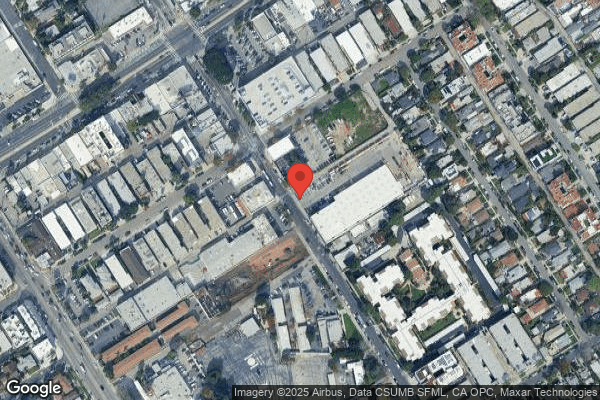
3966 MARCASEL AVE, LOS ANGELES, CA 90066 (310) 397-2372
For profit - Limited Liability company 68 Beds SHLOMO RECHNITZ Data: November 2025
Trust Grade
15/100
#845 of 1155 in CA
Last Inspection: November 2024

Within standard 12-15 month inspection cycle. Federal law requires annual inspections.

Overview

Mar Vista Country Villa Healthcare & Wellness has a Trust Grade of F, indicating poor quality and significant concerns about care. It ranks #845 out of 1155 facilities in California, placing it in the bottom half, and #207 out of 369 in Los Angeles County, meaning there are only a few local options that are worse. While the facility is improving, reducing serious issues from 24 in 2024 to 8 in 2025, it still reported 63 total deficiencies, including serious incidents where residents fell due to inadequate supervision and care. Staffing is average with a turnover rate of 45%, and while RN coverage is also average, the facility received concerning fines totaling $78,717, which is higher than 92% of California facilities. Families should weigh these serious deficiencies against the facility’s improving trend and average staffing conditions when considering care for their loved ones.

Trust Score
F
15/100
In California
#845/1155
Bottom 27%
Safety Record
High Risk
Review needed
Inspections
Getting Better
24 → 8 violations
Staff Stability
⚠ Watch
45% turnover. Above average. Higher turnover means staff may not know residents' routines.
Penalties
⚠ Watch
$78,717 in fines. Higher than 86% of California facilities, suggesting repeated compliance issues.
Skilled Nurses
⚠ Watch
Each resident gets only 22 minutes of Registered Nurse (RN) attention daily — below average for California. Fewer RN minutes means fewer trained eyes watching for problems.
Violations
⚠ Watch
63 deficiencies on record. Higher than average. Multiple issues found across inspections.
★★☆☆☆
2.0
Overall Rating
★★☆☆☆
2.0
Staff Levels
★★★★☆
4.0
Care Quality
★★☆☆☆
2.0
Inspection Score
Stable
2024: 24 issues
2025: 8 issues

The Good

  • 4-Star Quality Measures · Strong clinical quality outcomes
  • Full Sprinkler Coverage · Fire safety systems throughout facility
  • No fines on record

Facility shows strength in quality measures, fire safety.

The Bad

2-Star Overall Rating

Below California average (3.1)

Below average - review inspection findings carefully

Staff Turnover: 45%

Near California avg (46%)

Higher turnover may affect care consistency

Federal Fines: $78,717

Well above median ($33,413)

Moderate penalties - review what triggered them

Chain: SHLOMO RECHNITZ

Part of a multi-facility chain

Ask about local staffing decisions and management

The Ugly 63 deficiencies on record

5 actual harm
Aug 2025 2 deficiencies
CONCERN (D) 📢 Someone Reported This

A family member, employee, or ombudsman was alarmed enough to file a formal complaint

Potential for Harm - no one hurt, but risky conditions existed

Free from Abuse/Neglect (Tag F0600)

Could have caused harm · This affected 1 resident

**NOTE- TERMS IN BRACKETS HAVE BEEN EDITED TO PROTECT CONFIDENTIALITY** Based on interview and record reviews for two of three sampled residents, Resident's 1 and 2. The facility failed to prevent a t...

Read full inspector narrative →
**NOTE- TERMS IN BRACKETS HAVE BEEN EDITED TO PROTECT CONFIDENTIALITY** Based on interview and record reviews for two of three sampled residents, Resident's 1 and 2. The facility failed to prevent a third incident of resident-on-resident altercation.This deficient practice caused Resident 1 to go to Resident 2's new room and provoke a fight which led to Resident 1 hitting Resident 2 on the nose and Resident 2 hitting Resident 1 on the back of the head.Cross Reference: F609.Findings:A review of Resident 1's admission Record indicated the facility originally admitted this [AGE] year old male on 12/2/2024 and most recently on 7/3/2025 with diagnoses including chronic obstructive pulmonary disease (COPD-a chronic lung disease causing difficulty in breathing), Type 2 diabetes mellitus (DM-a disorder characterized by difficulty in blood sugar control and poor wound healing), Anxiety disorder (feelings of persistent fear and worry), hypothyroidism (thyroid gland does not produce enough thyroid hormone), bipolar disorder (sometimes called manic-depressive disorder; mood swings that range from the lows of depression to elevated periods of emotional highs), unspecified psychosis (a severe mental condition in which thought, and emotions are so affected that contact is lost with reality), other abnormalities of gait (walking) and mobility, hyperlipidemia (HLD-high fat in the blood), peripheral vascular disease (PVD - a slow progressive narrowing of the blood flow to the arms and legs), coronary artery ( - a slow progressive separation of the layers of the heart vessels) dissection and atrial fibrillation (heart dysrhythmia).A review of Resident 1's Minimum Data Set (MDS- a resident assessment) dated 7/10/2025 indicated Resident 1's cognition (mental ability to make decisions for daily living) was intact. The MDS indicated Resident 1 required set up assistance (Helper sets up or cleans up; resident completes activity. Helper only assists before or after activity) with toileting and showering. Resident was independent (Resident completes activity by themselves with no assistance from helper), with transfers (moving between surfaces) from bed to chair.A review of Resident 1's care plan titled, The resident exhibits behaviors including fabricating and confabulating stories, provoking other residents into arguments and fights, hitting the medication cart, making false accusations and demonstrating inappropriate behaviors towards staff initiated 1/13/2025, revised 6/25/2025. One goal was the resident will effectively express concerns and needs without resorting to verbal or physical aggression. Interventions included monitoring and document instances of inappropriate behaviors, including triggers, frequency and responses. Maintain a behavior log to identify patterns and inform care strategies.A review of Resident 1's care plan titled, Resident exhibits verbal aggression including use of profanity and racial remarks, during interpersonal conflicts with roommate initiated 8/12/2025. Includes goal that physical altercations will be prevented through early interventions and staff monitoring. Interventions include maintaining separate living arrangements, when possible, to reduce direct triggers and prevent escalation. Implement and maintain safety precautions during high-risk interactions (i.e. increased staff presence)A review of Resident 1's care plan initiated 8/11/2025 titled, Resident exhibits verbal aggression characterized by the use of inappropriate offensive, and racially charged language towards staff, causing distress and disruption in care environment such as the N word and black B word and similar expressions. The care plan does not include any goals. The intervention listed is to ensure staff have clear protocol for managing verbal aggression to maintain safety and a respectful care environment.A review of Resident 2's admission Record indicated the facility admitted this [AGE] year-old male on 7/16/2025 with diagnoses including Osteomyelitis (inflammation of bone or bone marrow, usually due to infection), HLD, difficulty walking, Essential hypertension (HTN-high blood pressure) and DM.A review of Resident 2's MDS dated [DATE] indicated Resident 2's cognition (mental ability to make decisions for daily living) was intact. Resident 2 required moderate assistance (Helper does less than half the effort. Helper lifts, holds, or supports trunk or limbs, but provides less than half the effort) with toileting, showering and transfers (moving between surfaces) from bed to chair.During a review of Resident 1's SBAR communication form (situation, background, assessment, recommendation-a communication tool used by healthcare workers when there is a change of condition among the residents) dated 7/31/2025 indicated while unnamed licensed Vocational Nurse (LVN) was in room administering intravenous (IV) medication to Resident 2, Resident 1's table was moved from the walkway. After which Resident 1 became angry and verbally aggressive toward the unnamed LVN. Resident 2 then asked Resident 1 to be nice, and Resident 1 began cursing at both the unnamed LVN and Resident 2. Resident 1 then walked up to Resident 2 and lifted the cane towards Resident 2 as if Resident 1 was going to hit Resident 2 with the cane. Room changes offered, however both residents refused. The medical doctor (MD) 1 was informed however the unnamed LVN was awaiting a response.During a review of Resident 1's SBAR dated 8/10/2025 indicated at 9:05 a.m. Resident 1 was yelling, cursing and accusing Resident 2 of stealing a shirt. Resident 2 then became upset and yelled back at Resident 1, both exchanging verbal, racial remarks. Safety precaution measures were implemented, and residents were relocated to prevent further escalation. MD 1 was informed and recommended to monitor and redirect as needed.During an interview on 8/27/2025 at 1:35 p.m. with the medical doctor (MD). The MD stated Resident 1 should have been discharged a long time ago. Resident 1 had no skilled need to be here. Resident 1 left the facility often driving a vehicle. Resident 1 was very aggressive and attacked multiple residents.During an interview on 8/27/2025 at 2:13 p.m. with LVN. The LVN stated, Resident 2 never stole Resident 1's shirt. Resident 1 had all belongings locked in a closet and Resident 1 was the only one with a key to that closet.A record review of Resident 2's Nursing progress note dated 8/10/2025 timed 4:00 p.m. indicated the unnamed LVN encouraged Resident 2 to switch rooms for safety, Resident 2 initially refused then agreed to move to another room.During an interview on 8/27/2025 at 2:00 p.m. with the Director of Medical Records (DMR). The DMR stated there was no SBAR dated 8/11/2025 found in either Resident 1 nor Resident 2's chart.During a concurrent interview and record review on 8/27/2025 at 3:55pm with the Licensed Vocational Nurse (LVN), Resident 1's Nursing progress dated 8/11/2025 timed at 2:16 p.m. was reviewed. The progress note was struck out indicating a reason: wrong chart. The struck-out progress note indicated the LVN was walking by Resident 2's new room when arguing was heard. The LVN looked inside of the room and saw Resident 1 arguing with Resident 2. The LVN attempted to deescalate the very heated argument. LVN managed to get Resident 2 to step aside so Resident 1 could exit the room. Resident 1 still refused to leave to the LVN stepped in between both residents and attempted to help Resident 1 pass by to exit the room. As Resident 1 was exiting the room they were both calling each other names. As Resident 1 was passing by Resident 2, Resident 1 swung at Resident 2 and hit Resident 2 on the nose. Resident 2 then struck back at Resident 1 and hit Resident 1 on the back of the head. Resident 1 was then pushed out of the room. The LVN stated, The note was struck out because I wasn't sure if I was supposed to document it on Resident 1 or Resident 2's chart. My plan was to go back and document it on Resident 2's chart since Resident 2 was the victim, but it slipped my mind. Resident 1 was in the wheelchair (w/c) when this happened, I am the one who wheeled Resident 1 out of the room. After this we notified the police, and they came and gave both residents an order to stay 25 feet away from each other. I was the charge nurse on 8/11/2025 and I informed the nurses the two residents had a verbal altercation the day before, so they were aware.A record review of Resident 1's Nursing progress note dated 8/10/2025 timed at 3:57 p.m. indicated frequent visual checks to prevent another altercation occurring throughout shift.A record review of Resident 1's Nursing progress note dated 8/11/2025 timed 12:41 a.m. indicated resident was sleeping. No further documentation found indicating monitoring of resident 1.During a concurrent interview and record review on 8/27/2025 at 3:10 p.m. with the director of Nursing (DON). Resident 1's electronic medical record was accessed. No specific record was reviewed. The DON was unable to show a care plan with interventions to prevent another incident after Resident 2 moved to another room. The DON was unable to show evidence of an interdisciplinary team note (IDT) conducted after the Resident 2 switched rooms. The DON was unable to show evidence of monitoring Residents after Resident 2 switched rooms. The DON stated, Can you just give me the deficiency. A review of the facility's policy and procedure (P&P) titled, Abuse Prevention and Management revised 5/30/2024, the P&P indicated, 1.Definitions:a. Abuse is defined as the willful, deliberate infliction of injury, unreasonable confinement, involuntary seclusion, and physical or chemical restraint not required to treat symptoms, and/or imposed for the purposes of discipline or convenience, intimidation, exploitation, misappropriation of resident property, mistreatment, and injuries of unknown source or punishment with resulting physical harm, pain, or mental anguish. Abuse includes the neglect and deprivation of goods and services that are necessary to attain or maintain physical, mental, and psychosocial well­being. Abuse also includes verbal abuse, sexual abuse, physical abuse, mental abuse, or abuse facilitated or enabled by the use of technology that causes physical harm, pain, or mental anguish.b. Verbal abuse is defined as any use of oral, written, gestured communication, or sounds that willfully includes disparaging and derogatory terms directed to residents within their hearing distance, regardless of age, ability to comprehend, or disability.c. Sexual abuse is defined as non-consensual sexual contact of any type, sexual harassment, sexual coercion, or sexual assault.d. Physical abuse is defined as, but not limited to, hitting, slapping, punching, and/or kicking. It also includes corporal punishment which is physical punishment used to correct and/or control behavior. {.} The administrator or designated representative will provide for a safe environment for the resident as indicated by the situation.i. If the suspected perpetrator is another resident, separate the resident so they do not interact with each other until the circumstances of the reported incident can be clarified.
CONCERN (D) 📢 Someone Reported This

A family member, employee, or ombudsman was alarmed enough to file a formal complaint

Potential for Harm - no one hurt, but risky conditions existed

Report Alleged Abuse (Tag F0609)

Could have caused harm · This affected 1 resident

**NOTE- TERMS IN BRACKETS HAVE BEEN EDITED TO PROTECT CONFIDENTIALITY** Based on interview and record review for two of three sampled residents, (Resident 1 and 2) the facility failed to report an inc...

Read full inspector narrative →
**NOTE- TERMS IN BRACKETS HAVE BEEN EDITED TO PROTECT CONFIDENTIALITY** Based on interview and record review for two of three sampled residents, (Resident 1 and 2) the facility failed to report an incident of verbal abuse to the California Department of Public Health (CDPH) and failed to report an incident of physical abuse timely.This deficient practice placed Residents 1 and 2 at risk for further abuse.Cross Reference: F600.Findings:A review of Resident 1's admission Record indicated the facility originally admitted this [AGE] year old male on 12/2/2024 and most recently on 7/3/2025 with diagnoses including chronic obstructive pulmonary disease (COPD-a chronic lung disease causing difficulty in breathing), Type 2 diabetes mellitus (DM-a disorder characterized by difficulty in blood sugar control and poor wound healing), Anxiety disorder (feelings of persistent fear and worry), hypothyroidism (thyroid gland does not produce enough thyroid hormone), bipolar disorder (sometimes called manic-depressive disorder; mood swings that range from the lows of depression to elevated periods of emotional highs), unspecified psychosis (a severe mental condition in which thought, and emotions are so affected that contact is lost with reality), other abnormalities of gait (walking) and mobility, hyperlipidemia (HLD-high fat in the blood), peripheral vascular disease (PVD - a slow progressive narrowing of the blood flow to the arms and legs), coronary artery ( - a slow progressive separation of the layers of the heart vessels) dissection and atrial fibrillation (heart dysrhythmia).A review of Resident 1's Minimum Data Set (MDS- a resident assessment) dated 7/10/2025 indicated Resident 1's cognition (mental ability to make decisions for daily living) was intact. The MDS indicated Resident 1 required set up assistance (Helper sets up or cleans up; resident completes activity. Helper only assists before or after activity) with toileting and showering. Resident was independent (Resident completes activity by themselves with no assistance from helper), with transfers (moving between surfaces) from bed to chair.A review of Resident 2's admission Record indicated the facility admitted this [AGE] year-old male on 7/16/2025 with diagnoses including Osteomyelitis (inflammation of bone or bone marrow, usually due to infection), HLD, difficulty walking, Essential hypertension (HTN-high blood pressure) and DM.A review of Resident 2's MDS dated [DATE] indicated Resident 2's cognition (mental ability to make decisions for daily living) was intact. Resident 2 required moderate assistance (Helper does less than half the effort. Helper lifts, holds, or supports trunk or limbs, but provides less than half the effort) with toileting, showering and transfers (moving between surfaces) from bed to chair.During a review of Resident 1's SBAR communication form (situation, background, assessment, recommendation-a communication tool used by healthcare workers when there is a change of condition among the residents) dated 7/31/2025 indicated while unnamed licensed Vocational Nurse (LVN) was in room administering intravenous (IV) medication to Resident 2, Resident 1's table was moved from the walkway. After which Resident 1 became angry and verbally aggressive toward the unnamed LVN. Resident 2 then asked Resident 1 to be nice, and Resident 1 began cursing at both the unnamed LVN and Resident 2. Resident 1 then walked up to Resident 2 and lifted the cane towards Resident 2 as if Resident 1 was going to hit Resident 2 with the cane. Room changes offered, however both residents refused. The medical doctor (MD) 1 was informed however the unnamed LVN was awaiting a response.During a review of Resident 1's SBAR dated 8/10/2025 indicated at 9:05 a.m. Resident 1 was yelling, cursing and accusing Resident 2 of stealing a shirt. Resident 2 then became upset and yelled back at Resident 1, both exchanging verbal, racial remarks. Safety precaution measures were implemented, and residents were relocated to prevent further escalation. MD 1 was informed and recommended to monitor and redirect as needed.During an interview on 8/27/2025 at 1:35 p.m. with the medical doctor (MD). The MD stated Resident 1 should have been discharged a long time ago. Resident 1 had no skilled need to be here. Resident 1 left the facility often driving a vehicle. Resident 1 was very aggressive and attacked multiple residents.During an interview on 8/27/2025 at 2:13 p.m. with LVN. The LVN stated, Resident 2 never stole Resident 1's shirt. Resident 1 had all belongings locked in a closet and Resident 1 was the only one with a key to that closet.A record review of Resident 2's Nursing progress note dated 8/10/2025 timed 4:00 p.m. indicated the unnamed LVN encouraged Resident 2 to switch rooms for safety, Resident 2 initially refused then agreed to move to another room.During an interview on 8/27/2025 at 2:00 p.m. with the Director of Medical Records (DMR). The DMR stated there was no SBAR dated 8/11/2025 found in either Resident 1 nor Resident 2's chart.During a concurrent interview and record review on 8/27/2025 at 3:55pm with the Licensed Vocational Nurse (LVN), Resident 1's Nursing progress dated 8/11/2025 timed at 2:16 p.m. was reviewed. The progress note was struck out indicating a reason: wrong chart. The struck-out progress note indicated the LVN was walking by Resident 2's new room when arguing was heard. The LVN looked inside of the room and saw Resident 1 arguing with Resident 2. The LVN attempted to deescalate the very heated argument. LVN managed to get Resident 2 to step aside so Resident 1 could exit the room. Resident 1 still refused to leave to the LVN stepped in between both residents and attempted to help Resident 1 pass by to exit the room. As Resident 1 was exiting the room they were both calling each other names. As Resident 1 was passing by Resident 2, Resident 1 swung at Resident 2 and hit Resident 2 on the nose. Resident 2 then struck back at Resident 1 and hit Resident 1 on the back of the head. Resident 1 was then pushed out of the room. The LVN stated, The note was struck out because I wasn't sure if I was supposed to document it on Resident 1 or Resident 2's chart. My plan was to go back and document it on Resident 2's chart since Resident 2 was the victim, but it slipped my mind. Resident 1 was in the wheelchair (w/c) when this happened, I am the one who wheeled Resident 1 out of the room. After this we notified the police, and they came and gave both residents an order to stay 25 feet away from each other. I was the charge nurse on 8/11/2025 and I informed the nurses the two residents had a verbal altercation the day before, so they were aware.A record review of Resident 1's Nursing progress note dated 8/10/2025 timed at 3:57 p.m. indicated frequent visual checks to prevent another altercation occurring throughout shift.A record review of Resident 1's Nursing progress note dated 8/11/2025 timed 12:41 a.m. indicated resident was sleeping. No further documentation found indicating monitoring of resident 1.During a concurrent interview and record review on 8/27/2025 at 3:10 p.m. with the director of Nursing (DON). Resident 1's electronic medical record was accessed. No specific record was reviewed. The DON was unable to show a care plan with interventions to prevent another incident after Resident 2 moved to another room. The DON was unable to show evidence of an interdisciplinary team note (IDT) conducted after the Resident 2 switched rooms. The DON was unable to show evidence of monitoring Residents after Resident 2 switched rooms. The DON stated, Can you just give me the deficiency. During a concurrent interview and record review on 8/27/2025 at 4:11 p.m. with the Administrator (Adm). A Fax confirmation page and abuse report dated 8/12/2025 were reviewed. The abuse report indicated physical as the type of abuse being reported. Resident 1 as the abuser and Resident 2 as the victim. The fax confirmation sheets indicated the report was faxed to CDPH, the police department and the ombudsman (an advocate for residents of nursing homes, board and care centers, and assisted living facilities). The Adm stated, we reported the incident of physical abuse however we did not report the incident of verbal abuse. The Adm stated, I was aware of both incidents, and all forms of abuse should be reported to CDPH within 2 hours. A review of the facility policy and procedure titled, Abuse Prevention and Management revised 5/30/2024 indicated, 1. Definitions:a. Abuse is defined as the willful, deliberate infliction of injury, unreasonable confinement, involuntary seclusion, and physical or chemical restraint not required to treat symptoms, and/or imposed for the purposes of discipline or convenience, intimidation, exploitation, misappropriation of resident property, mistreatment, and injuries of unknown source or punishment with resulting physical harm, pain, or mental anguish. Abuse includes the neglect and deprivation of goods and services that are necessary to attain or maintain physical, mental, and psychosocial well­being. Abuse also includes verbal abuse, sexual abuse, physical abuse, mental abuse, or abuse facilitated or enabled by the use of technology that causes physical harm, pain, or mental anguish.b. Verbal abuse is defined as any use of oral, written, gestured communication, or sounds that willfully includes disparaging and derogatory terms directed to residents within their hearing distance, regardless of age, ability to comprehend, or disability. {.} Notification of Outside Agencies for All Allegations of Abuse.a. The Administrator or designated representative will notify law enforcement, by telephone immediately, or as soon as practicably possible, but no longer than (2) hours of an initial report AND send a written SOC341 report to the Ombudsman, Law Enforcement, and CDPH Licensing and Certification within (2) hours.
Jul 2025 1 deficiency 1 Harm
SERIOUS (G) 📢 Someone Reported This

A family member, employee, or ombudsman was alarmed enough to file a formal complaint

Actual Harm - a resident was hurt due to facility failures

Accident Prevention (Tag F0689)

A resident was harmed · This affected 1 resident

**NOTE- TERMS IN BRACKETS HAVE BEEN EDITED TO PROTECT CONFIDENTIALITY** Based on interviews and record review, the facility failed to ensure one of three sampled residents (Resident 1) was closely sup...

Read full inspector narrative →
**NOTE- TERMS IN BRACKETS HAVE BEEN EDITED TO PROTECT CONFIDENTIALITY** Based on interviews and record review, the facility failed to ensure one of three sampled residents (Resident 1) was closely supervised, monitored, and within staff reach to prevent a fall. The facility was aware that Resident 1 is confused (is the inability to think as clearly or quickly as you normally do), has a history of falls, and impulsive behavior (refers to actions that are taken without sufficient thought or consideration of the consequences) of getting up from the wheelchair (WC) without assistance.This deficient practice resulted in Resident 1 falling on 6/24/2025 at 8:30 PM. On 6/24/2025 at 8:30 PM, Resident 1 was transferred to a General Acute Care Hospital (GACH) emergency room (the department of a hospital that provides immediate treatment for acute (sudden onset) illnesses and trauma[injury]) for further evaluation via 911 (emergency response telephone number). GACH diagnosed Resident 1 with closed fracture (a break in a bone that does not extend through the skin or surrounding tissues) of the left orbital floor (the bony socket around the eye), and swelling and abrasion (a superficial wound caused by the scraping or rubbing away of skin or other surface tissue) of the left eyebrow. During a review of Resident 1's admission Record indicated the facility admitted Resident 1 was admitted on [DATE] with diagnoses including dementia (a decline in mental ability severe enough to interfere with daily life), muscle wasting/atrophy (when muscles start to shrink and weaken), difficulty in walking, and mixed incontinence (involuntary leakage of urine). During a review of Resident 1's admission Fall Risk Evaluation record dated 5/28/2025, the fall risk evaluation record indicated that Resident 1's fall risk score was 10 (a score of 10 or greater is an indicator that the resident is at a high risk for falls). The fall risk evaluation record indicated that fall prevention protocol (nonspecific) should be initiated immediately and documented on the care plan. During a review of Resident 1's High Risk for Fall care plan (CP) initiated on 5/29/2025, the CP indicated that Resident 1 is a high risk for falls related to the history of fall, confusion, incontinence (the involuntary loss of urine and stool), poor communication/comprehension, psychoactive drug (a drug or substance that causes changes in mood, awareness, thoughts, feelings, or behavior) use and recent hip surgery (not specified). The High Risk for Fall CP indicated Resident 1 has balance problem while standing and while walking, has decreased muscular coordination, and requires use of assisting device (such as cane, wheelchair, walker, and furniture) for mobility. The High Risk for Fall CP goals included to assist Resident 1 with ambulation and transfers, . and evaluate for fall risk on admission and PRN (as necessary). During a review of Resident 1's Care Plan Report on Status Post Fall (S/P) dated initiated 5/29/2025 and revised on 6/25/2025, indicated Resident 1 fell on [DATE]. The Care Plan Report goals indicated that Resident 1 will be free of falls, will be free of minor injury, and will not sustain serious injury through target date of 9/9/2025. The Care Plan Report interventions included facility to follow the fall protocol (unspecified), frequent visual monitoring, and place the resident in front of the nursing for visual monitoring . and prompt availability of staff (initiated on 6/2/2025). The Care Plan Report interventions also included to review information on past falls and attempting to determine cause of falls. During a review of Resident 1's Multidisciplinary Care Conference (MCC-is a mechanism by which information is shared between various professionals involved in the patient's care) dated 5/30/2025, at 11 A.M., the MCC indicated Resident 1 is a high risk for falls. The MCC interventions included to have the resident's bed in a low position, placing bilateral (both side) floor mats, and supervising Resident 1 closely. The MCC indicated that Resident 1 family member (FM) stated Resident 1 has been having anxiety, has poor impulse control, is high risk for falls, and does not call for assistance. During a review of Resident 1's Minimum Data Set (MDS - a resident assessment tool) dated 6/4/2025, it indicated Resident 1 was cognitively impaired (when a person has trouble remembering, learning new things, concentrating, or making decisions that affect their everyday life). The MDS indicated Resident 1 was dependent on staff assistance with activities of daily living (ADLs- routine tasks/activities such as bathing, dressing and toileting a person performs daily to care for themselves). During a review of Resident 1's Situation Background Appearance Review and notify (SBAR - a communication tool used by healthcare workers when there is a change of condition among the residents) dated 6/24/2025 documented by Licensed Vocational Nurse (LVN) 1, the SBAR indicated that on 6/24/2025 at 8:30 P.M. had a witnessed fall and hit her head (Fall witnessed by LVN 1). The SBAR indicated, [Resident 1] stood up from the [WC] attempting to ambulate without assistance. Upon assessment, [Resident 1] alert and responsive. Observed [Resident 1] with left eye swelling and applied ice pack. [Resident 1] able to move all extremities without difficulty. The SBAR indicated that a Medical Doctor (MD) was paged (to call a person using a loudspeaker/electric device) who gave an order to transfer Resident 1 to emergency room (the department of a hospital that provides immediate treatment for acute (sudden onset) illnesses and trauma[injury]) for further evaluation. Orders (MD) taken and carried out. The SBAR indicated Resident 1 was transferred to GACH via 911. During a review of Resident 1's Emergency Department After Visit Summary GACH record dated 6/24/2025, the GACH records indicated, the reason for visit (Resident 1), fall. Diagnoses abrasion of the left eyebrow, ground level fall, closed fracture of the left orbital floor, and injury of the head. During an interview on 7/1/2025, at 12:58 P.M., with LVN 1, LVN 1 stated Resident 1 is dependent on WC for mobility, requires frequent use of the bathroom to urinate and tries to get up from the WC, and attempts to walk. LVN 1 stated Resident 1 has a diagnosis of dementia, which causes Resident 1 to forget that she (Resident 1) is not steady on her feet and that is reason the facility staff instructs Resident 1 to stop getting up when the resident tries to get up from the WC without staff assistance. LVN 1 stated that sometimes Resident 1 listens to the instructions and other times the resident does not. LVN 1 stated the facility staff will quickly get to the resident to prevent the resident from getting up without assistance and does not fall. LVN 1 stated facility staff will have Resident 1 seat at the nursing station, and sometimes behind the nursing station with a staff to ensure that the staff can easily catch the resident to prevent falls when the resident tries to get up from the WC. LVN 1 stated that on 6/24/2025 around 8:15 P.M., LVN 1 stated Resident 1 was seating approximately 8 feet (ft-unit of measurement) in the hallway and across the nursing station between resident room numbers 18 and 20 with no direct access to Resident 1. LVN 1 stated Resident 1 was wearing eyeglasses. LVN 1 stated LVN 1 was seated behind the desk at the nurses station and was the only staff at the nursing station. LVN 1 stated LVN 1 observed Resident 1 suddenly/slowly stood up from the WC and LVN 1 verbalized to Resident 1 to stop getting up from the WC and to seat back down. LVN 1 stated Resident 1 did not stop, and that by the time LVN 1 moved from behind the nursing station desk, Resident 1 was up already, turned to the left, attempted to ambulate by taking maybe one step and then fell to the floor and hit the left side of the face with the eyeglasses still on. LVN 1 stated Resident 1 suffered redness to the corner of the left eye and that the redness progressively increased with swelling. LVN 1 stated she applied ice on the resident's left eye. LVN 1 stated she called 911 to transfer Resident 1 to GACH because the resident was on a blood thinner (did not specified). LVN 1 stated Resident 1 left for GACH on 6/24/2025 at around 8:30 P.M. LVN 1 stated Resident 1 is at risk for falls because the resident is [AGE] years old, very fragile, has dementia, and is on Ativan (a medication primarily used to help people feel calmer and less anxious). LVN 1 stated if LVN 1 had been close enough (arm's length [DA1] - very near or close by, easily reachable) to Resident 1, then LVN 1 would have been able to quickly get to and brace Resident 1's fall because Resident 1 is small enough. LVN 1 further stated LVN 1 should also have placed Resident 1 behind the nursing station next to LVN 1 as LVN 1 has previously done. LVN 1 stated, close supervision means that the resident needs to be watched at all times, at least an arm's length away. During a concurrent interview and record review on 7/1/2025, at 3:05 P.M., with the Director of Nursing (DON), Resident 1's admission Falls risk Evaluation record dated 5/28/2025, high risk for fall care plan dated 5/29/2025, and MCC notes dated 5/30/2025 were reviewed. The DON stated the Resident 1's admission Falls risk Evaluation record, high risk for fall care plan, and MCC notes indicated that Resident 1 was high risk for fall and that the resident required close supervision by staff. The DON stated Resident 1's high risk for fall care plan was not revised after the Interdisciplinary Team (IDT [MCC] - refers to a group of healthcare professionals from different fields who collaborate to provide comprehensive patient care) meeting on 5/30/2025 at 11 AM should include to supervise Resident 1 closely. The DON stated that close resident supervision means that the staff needs to be within the reach of a resident. The DON stated that within reach means at arm's length of the staff. The DON stated that Resident 1's care plan should have been revised based on IDT recommendation which is resident specific which includes resident centered interventions. During a review of the facility policy and procedures (P&P), titled, Fall Management Program, revised 3/13/2021, the P&P indicated, Purpose -To provide residents a safe environment that minimizes complications associated with falls.C. The interdisciplinary Team (IDT) and/or the licensed nurse will develop a care plan according to the identified risk factors and root cause(s) per care area assessment (CAA) guidelines.D. The IDT will initiate, review, and update the resident's fall risk status and care plan at the following intervals: on admission, quarterly, annually, upon identification of a significant change of condition, post fall and as needed. Post-Fall Response:A. Following every resident fall, the licensed nurse will perform a post-fall evaluation and update, initiate or revise the resident's care plan.Fall Investigation, Reporting, and Documentation:C. IDT will investigate the fall including a review of the resident's medical record .D. IDT will review circumstances surrounding the fall .will review and revise the care plan as necessary.Recurrent Falls:A. A resident who endures more than one fall . will be considered at high risk for falls.B. Monthly, for those (residents) identified as high risk for falls, the IDT will meet to review the fall risk interventions for appropriateness and effectiveness until the frequency of their (residents) falls diminishes.C. The residents' care plans will be updated with the IDT recommendations. During a review of the facility P&P, titled Resident Safety revised on 4/15/2021, the purpose of P&P indicated, To provide a safe and hazard free environment.Policy:Residents will be evaluated on admission quarterly and whenever there s a change in condition to identify circumstances that pose a risk for the safety and wellbeing of the resident.Procedure:I. During the comprehensive assessment period [NAME] interdisciplinary team (IDT) members will assess the resident's safety (e.g. [example], fall. behavior issues) as well as any other resident specific safety risks.III. After a risk evaluation is completed, a resident centered care plan will be developed to mitigate safety risk factors.IV. The IDT will establish a person-centered observation or monitoring systems for the resident to address the identified risk factors identified.V. To observe the safety and wellbeing of the residents, . The person-centered care plan may require more frequent safety checks.
Jan 2025 4 deficiencies
CONCERN (D) 📢 Someone Reported This

A family member, employee, or ombudsman was alarmed enough to file a formal complaint

Potential for Harm - no one hurt, but risky conditions existed

Notification of Changes (Tag F0580)

Could have caused harm · This affected 1 resident

**NOTE- TERMS IN BRACKETS HAVE BEEN EDITED TO PROTECT CONFIDENTIALITY** Cross Referenced F609, F610, F656 Based on interview and record review, the facility staff failed to notify the physician when a...

Read full inspector narrative →
**NOTE- TERMS IN BRACKETS HAVE BEEN EDITED TO PROTECT CONFIDENTIALITY** Cross Referenced F609, F610, F656 Based on interview and record review, the facility staff failed to notify the physician when a resident had a change of condition (CIC) for one of eight sampled residents (Resident 1). This deficient practice had the potential to result in delayed provision of necessary care, treatment and services to Resident 1. Findings: During a review of Resident 1's admission Record (AR), AR indicated Resident 1 was originally admitted to the facility on [DATE] and was re-admitted on [DATE] with diagnoses including hypokalemia (low potassium [important mineral that the body needs, to work properly] level in the blood, hypertension (HTN - elevated blood pressure), and chronic obstructive pulmonary disease (COPD-group of lung diseases that block airflow and make it difficult to breathe). During a review of Resident 1 ' s Minimum Data Set (MDS - a resident assessment tool), dated 11/7/2024, MDS indicated Resident 1's cognitive skills for daily decision-making were moderately impaired and required moderate to maximal assistance from staff for activities of daily livings (ADLs- toileting hygiene, shower/bathing self, upper and lower body dressing, repositioning from sit to lying and sit to stand). During a concurrent interview and record review on 1/29/2025 at 1:39 p.m., with Licensed Vocational Nurse (LVN) 1, Resident 1 ' s Progress Notes (PN), dated 10/2/2024 was reviewed. Resident 1 ' s PN indicated LVN1 documented that, Resident 1 confabulated stories that the CNA (Certified Nursing Assistant) raped her and touched her (Resident 1). LVN1 validated the documentation and stated that he (LVN1) was supposed to report to the physician and document Resident 1 ' s COC via SBAR (situation, background, appearance and review/notify- structured tool for healthcare provider that provides communication between members. Also, being used as documentation for any changes of condition). LVN1 also stated that he (LVN1) was not sure why it was not completed. During a review of the facility ' s policy and procedures (P&P) titled, Change of Condition Notification, reviewed on 6/19/2024, P&P indicated, that Facility to ensure residents, family, legal representatives and physicians are informed of changes in the resident ' s condition in a timely manner . COC related to attending physician notification is defined as when the attending physician must be notified when any sudden and marked adverse change in the resident ' s condition in which is manifested by signs and symptoms different than usual denote a new problem, complication or permanent change in status and require a medical assessment, coordination and consultation with the attending physician and a change in the treatment plan. Cross Referenced F609, F610, F656 Based on interview and record review, the facility staff failed to notify the physician when a resident had a change of condition (CIC) for one of eight sampled residents (Resident 1). This deficient practice had the potential to result in delayed provision of necessary care, treatment and services to Resident 1. Findings: During a review of Resident 1's admission Record (AR), AR indicated Resident 1 was originally admitted to the facility on [DATE] and was re-admitted on [DATE] with diagnoses including hypokalemia (low potassium [important mineral that the body needs, to work properly] level in the blood, hypertension (HTN - elevated blood pressure), and chronic obstructive pulmonary disease (COPD-group of lung diseases that block airflow and make it difficult to breathe). During a review of Resident 1's Minimum Data Set (MDS - a resident assessment tool), dated 11/7/2024, MDS indicated Resident 1's cognitive skills for daily decision-making were moderately impaired and required moderate to maximal assistance from staff for activities of daily livings (ADLs- toileting hygiene, shower/bathing self, upper and lower body dressing, repositioning from sit to lying and sit to stand). During a concurrent interview and record review on 1/29/2025 at 1:39 p.m., with Licensed Vocational Nurse (LVN) 1, Resident 1's Progress Notes (PN), dated 10/2/2024 was reviewed. Resident 1's PN indicated LVN1 documented that, Resident 1 confabulated stories that the CNA (Certified Nursing Assistant) raped her and touched her (Resident 1). LVN1 validated the documentation and stated that he (LVN1) was supposed to report to the physician and document Resident 1's COC via SBAR (situation, background, appearance and review/notify- structured tool for healthcare provider that provides communication between members. Also, being used as documentation for any changes of condition). LVN1 also stated that he (LVN1) was not sure why it was not completed. During a review of the facility's policy and procedures (P&P) titled, Change of Condition Notification, reviewed on 6/19/2024, P&P indicated, that Facility to ensure residents, family, legal representatives and physicians are informed of changes in the resident's condition in a timely manner . COC related to attending physician notification is defined as when the attending physician must be notified when any sudden and marked adverse change in the resident's condition in which is manifested by signs and symptoms different than usual denote a new problem, complication or permanent change in status and require a medical assessment, coordination and consultation with the attending physician and a change in the treatment plan.
CONCERN (D) 📢 Someone Reported This

A family member, employee, or ombudsman was alarmed enough to file a formal complaint

Potential for Harm - no one hurt, but risky conditions existed

Report Alleged Abuse (Tag F0609)

Could have caused harm · This affected 1 resident

**NOTE- TERMS IN BRACKETS HAVE BEEN EDITED TO PROTECT CONFIDENTIALITY** Cross Referenced F580, F610, F656 Based on interview and record review, the facility failed to implement policies and procedures...

Read full inspector narrative →
**NOTE- TERMS IN BRACKETS HAVE BEEN EDITED TO PROTECT CONFIDENTIALITY** Cross Referenced F580, F610, F656 Based on interview and record review, the facility failed to implement policies and procedures (P&P) to ensure reporting of a reasonable suspicion of an abuse in accordance with state and federal law for one of eight sampled resident (Resident 1). This resulted in a delay of an onsite inspection by the State Agency (SA) to ensure the safety of the residents and had the potential to result in unidentified abuse in the facility as well as failure to protect residents from any possible abuse. Findings: During a review of Resident 1's admission Record (AR), AR indicated Resident 1 was originally admitted to the facility on [DATE] and was re-admitted on [DATE] with diagnoses including hypokalemia (low potassium [important mineral that the body needs, to work properly] level in the blood, hypertension (HTN - elevated blood pressure), and chronic obstructive pulmonary disease (COPD-group of lung diseases that block airflow and make it difficult to breathe). During a review of Resident 1 ' s Minimum Data Set (MDS - a resident assessment tool), dated 11/7/2024, MDS indicated Resident 1's cognitive skills for daily decision-making were moderately impaired and required moderate to maximal assistance from staff for activities of daily livings (ADLs- toileting hygiene, shower/bathing self, upper and lower body dressing, repositioning from sit to lying and sit to stand). During a concurrent interview and record review on 1/29/2025 at 1:24 p.m., with Licensed Vocational Nurse (LVN) 1, Resident 1 ' s Progress Notes (PN), dated 10/2/2024 was reviewed. Resident 1 ' s PN indicated LVN1 documented that, Resident 1 confabulated stories that the CNA (Certified Nursing Assistant) raped her and touched her (Resident 1). LVN1 validated the documentation and stated that he (LVN1) did not remember reporting the issue to the Director of Nursing (DON), neither to the Facility Administrator (FA). LVN1 stated that he (LVN1) was supposed to report any possible abuse to the DON and FA. During an interview on 1/29/2025 at 1:26 p.m., with the Registered Nursing Supervisor (RNS) 1, RNS1 stated that she (RNS1) was not aware of Resident 1 ' s issue of possible abuse. RNS1 stated that if LVN1 reported it to her (RNS1), RNS1 could have done an investigation and notify the DON and/or FA; and report it to the local police, ombudsman and the Department of Public of Health (DPH). During an interview on 1/29/2025 at 1:28 p.m., with the DON, DON stated that she (DON) was not informed of Resident 1 ' s issue of possible abuse. DON stated that they need to do an investigation and notify the DON and/or FA; and report it to the local police, ombudsman and DPH. DON also stated that even if a resident has episodes of making up stories, they (facility staff) still are mandated reporter and a possible abuse investigation was necessary. During an interview on 1/29/2025 at 1:31 p.m., with the Social Service Director (SSD), SSD stated that she (SSD) was not informed of Resident 1 ' s issue of possible abuse. SSD stated that the facility needs to do a proper investigation regardless of resident ' s condition and facility staff are mandated to report for resident ' s safety. During a review of the facility ' s policy and procedures (P&P) titled, Reporting Abuse, reviewed on 6/19/2024, P&P indicated that facility to ensure compliance with federal, and state laws and regulations regarding reporting of incidents and suspected incidents of abuse, neglect and mistreatment of residents. P&P also stated that facility staff are mandatory reporters. During a review of the facility ' s P&P, titled, Abuse and Neglect, reviewed on 6/19/2024, P&P indicated that the facility will report all allegations of abuse and criminal activity, as required by law and regulations, to the appropriate agencies. P&P also indicated that, allegations of abuse .are to be reported to the administrator or designated representative immediately. Cross Referenced F580, F610, F656 Based on interview and record review, the facility failed to implement policies and procedures (P&P) to ensure reporting of a reasonable suspicion of an abuse in accordance with state and federal law for one of eight sampled resident (Resident 1). This resulted in a delay of an onsite inspection by the State Agency (SA) to ensure the safety of the residents and had the potential to result in unidentified abuse in the facility as well as failure to protect residents from any possible abuse. Findings: During a review of Resident 1's admission Record (AR), AR indicated Resident 1 was originally admitted to the facility on [DATE] and was re-admitted on [DATE] with diagnoses including hypokalemia (low potassium [important mineral that the body needs, to work properly] level in the blood, hypertension (HTN - elevated blood pressure), and chronic obstructive pulmonary disease (COPD-group of lung diseases that block airflow and make it difficult to breathe). During a review of Resident 1's Minimum Data Set (MDS - a resident assessment tool), dated 11/7/2024, MDS indicated Resident 1's cognitive skills for daily decision-making were moderately impaired and required moderate to maximal assistance from staff for activities of daily livings (ADLs- toileting hygiene, shower/bathing self, upper and lower body dressing, repositioning from sit to lying and sit to stand). During a concurrent interview and record review on 1/29/2025 at 1:24 p.m., with Licensed Vocational Nurse (LVN) 1, Resident 1's Progress Notes (PN), dated 10/2/2024 was reviewed. Resident 1's PN indicated LVN1 documented that, Resident 1 confabulated stories that the CNA (Certified Nursing Assistant) raped her and touched her (Resident 1). LVN1 validated the documentation and stated that he (LVN1) did not remember reporting the issue to the Director of Nursing (DON), neither to the Facility Administrator (FA). LVN1 stated that he (LVN1) was supposed to report any possible abuse to the DON and FA. During an interview on 1/29/2025 at 1:26 p.m., with the Registered Nursing Supervisor (RNS) 1, RNS1 stated that she (RNS1) was not aware of Resident 1's issue of possible abuse. RNS1 stated that if LVN1 reported it to her (RNS1), RNS1 could have done an investigation and notify the DON and/or FA; and report it to the local police, ombudsman and the Department of Public of Health (DPH). During an interview on 1/29/2025 at 1:28 p.m., with the DON, DON stated that she (DON) was not informed of Resident 1's issue of possible abuse. DON stated that they need to do an investigation and notify the DON and/or FA; and report it to the local police, ombudsman and DPH. DON also stated that even if a resident has episodes of making up stories, they (facility staff) still are mandated reporter and a possible abuse investigation was necessary. During an interview on 1/29/2025 at 1:31 p.m., with the Social Service Director (SSD), SSD stated that she (SSD) was not informed of Resident 1's issue of possible abuse. SSD stated that the facility needs to do a proper investigation regardless of resident's condition and facility staff are mandated to report for resident's safety. During a review of the facility's policy and procedures (P&P) titled, Reporting Abuse, reviewed on 6/19/2024, P&P indicated that facility to ensure compliance with federal, and state laws and regulations regarding reporting of incidents and suspected incidents of abuse, neglect and mistreatment of residents. P&P also stated that facility staff are mandatory reporters. During a review of the facility's P&P, titled, Abuse and Neglect, reviewed on 6/19/2024, P&P indicated that the facility will report all allegations of abuse and criminal activity, as required by law and regulations, to the appropriate agencies. P&P also indicated that, allegations of abuse .are to be reported to the administrator or designated representative immediately.
CONCERN (D) 📢 Someone Reported This

A family member, employee, or ombudsman was alarmed enough to file a formal complaint

Potential for Harm - no one hurt, but risky conditions existed

Investigate Abuse (Tag F0610)

Could have caused harm · This affected 1 resident

**NOTE- TERMS IN BRACKETS HAVE BEEN EDITED TO PROTECT CONFIDENTIALITY** Cross Referenced F580, F609, F656 Based on interview and record review, the facility failed to implement its policies and proced...

Read full inspector narrative →
**NOTE- TERMS IN BRACKETS HAVE BEEN EDITED TO PROTECT CONFIDENTIALITY** Cross Referenced F580, F609, F656 Based on interview and record review, the facility failed to implement its policies and procedures by failing to ensure an investigation was completed for any reasonable suspicion of an abuse in accordance with state and federal law for one of eight sampled resident (Resident 1). This resulted in a delay of an onsite inspection by the State Agency (SA) to ensure the safety of the residents and had the potential to result in unidentified abuse in the facility as well as failure to protect residents from any possible abuse. Findings: During a review of Resident 1's admission Record (AR), AR indicated Resident 1 was originally admitted to the facility on [DATE] and was re-admitted on [DATE] with diagnoses including hypokalemia (low potassium [important mineral that the body needs, to work properly] level in the blood, hypertension (HTN - elevated blood pressure), and chronic obstructive pulmonary disease (COPD-group of lung diseases that block airflow and make it difficult to breathe). During a review of Resident 1 ' s Minimum Data Set (MDS - a resident assessment tool), dated 11/7/2024, MDS indicated Resident 1's cognitive skills for daily decision-making were moderately impaired and required moderate to maximal assistance from staff for activities of daily livings (ADLs- toileting hygiene, shower/bathing self, upper and lower body dressing, repositioning from sit to lying and sit to stand). During a concurrent interview and record review on 1/29/2025 at 1:24 p.m., with Licensed Vocational Nurse (LVN) 1, Resident 1 ' s Progress Notes (PN), dated 10/2/2024 was reviewed. Resident 1 ' s PN indicated LVN1 documented that, Resident 1 confabulated stories that the CNA (Certified Nursing Assistant) raped her and touched her (Resident 1). LVN1 validated the documentation and stated that he (LVN1) did not remember reporting the issue to the Director of Nursing (DON), neither to the Facility Administrator (FA). LVN1 stated that he (LVN1) was supposed to report any possible abuse to the DON and FA and start an investigation. During an interview on 1/29/2025 at 1:26 p.m., with the Registered Nursing Supervisor (RNS)1, RNS1 stated that she (RNS1) was not aware of Resident 1 ' s issue of possible abuse. RNS1 stated that if LVN1 reported it to her (RNS1), RNS1 could have done an investigation and notify the DON and/or FA; and report it to the local police, ombudsman and the Department of Public of Health (DPH). During an interview on 1/29/2025 at 1:28 p.m., with the DON, DON stated that she (DON) was not informed of Resident 1 ' s issue of possible abuse. DON stated that they need to do an investigation and notify the DON and/or FA; and report it to the local police, ombudsman and DPH. DON also stated that even if a resident has episodes of making up stories, they (facility staff) still are mandated reporter and a possible abuse investigation was necessary. During an interview on 1/29/2025 at 1:31 p.m., with the Social Service Director (SSD), SSD stated that she (SSD) was not informed of Resident 1 ' s issue of possible abuse. SSD stated that the facility needs to do a proper investigation regardless of resident ' s condition and facility staff are mandated to report for resident ' s safety. During a review of the facility ' s P&P, titled, Abuse and Neglect, reviewed on 6/19/2024, P&P indicated that the facility will protect the health , safety and welfare of facility residents by ensuring that all reports of residents abuse, mistreatment, neglect, exploitation, injuries of unknown source and suspicion of crimes are promptly reported and thoroughly investigated. Cross Referenced F580, F609, F656 Based on interview and record review, the facility failed to implement its policies and procedures by failing to ensure an investigation was completed for any reasonable suspicion of an abuse in accordance with state and federal law for one of eight sampled resident (Resident 1). This resulted in a delay of an onsite inspection by the State Agency (SA) to ensure the safety of the residents and had the potential to result in unidentified abuse in the facility as well as failure to protect residents from any possible abuse. Findings: During a review of Resident 1's admission Record (AR), AR indicated Resident 1 was originally admitted to the facility on [DATE] and was re-admitted on [DATE] with diagnoses including hypokalemia (low potassium [important mineral that the body needs, to work properly] level in the blood, hypertension (HTN - elevated blood pressure), and chronic obstructive pulmonary disease (COPD-group of lung diseases that block airflow and make it difficult to breathe). During a review of Resident 1's Minimum Data Set (MDS - a resident assessment tool), dated 11/7/2024, MDS indicated Resident 1's cognitive skills for daily decision-making were moderately impaired and required moderate to maximal assistance from staff for activities of daily livings (ADLs- toileting hygiene, shower/bathing self, upper and lower body dressing, repositioning from sit to lying and sit to stand). During a concurrent interview and record review on 1/29/2025 at 1:24 p.m., with Licensed Vocational Nurse (LVN) 1, Resident 1's Progress Notes (PN), dated 10/2/2024 was reviewed. Resident 1's PN indicated LVN1 documented that, Resident 1 confabulated stories that the CNA (Certified Nursing Assistant) raped her and touched her (Resident 1). LVN1 validated the documentation and stated that he (LVN1) did not remember reporting the issue to the Director of Nursing (DON), neither to the Facility Administrator (FA). LVN1 stated that he (LVN1) was supposed to report any possible abuse to the DON and FA and start an investigation. During an interview on 1/29/2025 at 1:26 p.m., with the Registered Nursing Supervisor (RNS)1, RNS1 stated that she (RNS1) was not aware of Resident 1's issue of possible abuse. RNS1 stated that if LVN1 reported it to her (RNS1), RNS1 could have done an investigation and notify the DON and/or FA; and report it to the local police, ombudsman and the Department of Public of Health (DPH). During an interview on 1/29/2025 at 1:28 p.m., with the DON, DON stated that she (DON) was not informed of Resident 1's issue of possible abuse. DON stated that they need to do an investigation and notify the DON and/or FA; and report it to the local police, ombudsman and DPH. DON also stated that even if a resident has episodes of making up stories, they (facility staff) still are mandated reporter and a possible abuse investigation was necessary. During an interview on 1/29/2025 at 1:31 p.m., with the Social Service Director (SSD), SSD stated that she (SSD) was not informed of Resident 1's issue of possible abuse. SSD stated that the facility needs to do a proper investigation regardless of resident's condition and facility staff are mandated to report for resident's safety. During a review of the facility's P&P, titled, Abuse and Neglect, reviewed on 6/19/2024, P&P indicated that the facility will protect the health , safety and welfare of facility residents by ensuring that all reports of residents abuse, mistreatment, neglect, exploitation, injuries of unknown source and suspicion of crimes are promptly reported and thoroughly investigated.
CONCERN (D) 📢 Someone Reported This

A family member, employee, or ombudsman was alarmed enough to file a formal complaint

Potential for Harm - no one hurt, but risky conditions existed

Comprehensive Care Plan (Tag F0656)

Could have caused harm · This affected 1 resident

**NOTE- TERMS IN BRACKETS HAVE BEEN EDITED TO PROTECT CONFIDENTIALITY** Cross Referenced F580, F609, F610 Based on interview and record review, the facility failed to develop and implement a comprehen...

Read full inspector narrative →
**NOTE- TERMS IN BRACKETS HAVE BEEN EDITED TO PROTECT CONFIDENTIALITY** Cross Referenced F580, F609, F610 Based on interview and record review, the facility failed to develop and implement a comprehensive care plan that meet the care/services based on the resident ' s individual assessed needs for one of eight sampled residents (Resident 1) by failing to ensure a care plan was completed when Resident 1 stated to Licensed Vocational Nurse (LVN) 1, that Resident 1 was raped and touched by a Certified Nursing Assistant (CNA). This deficient practice had the potential to result negative impact on Resident 1 ' s health and safety, as well as the quality of care and services received. Findings: During a review of Resident 1's admission Record (AR), AR indicated Resident 1 was originally admitted to the facility on [DATE] and was re-admitted on [DATE] with diagnoses including hypokalemia (low potassium [important mineral that the body needs, to work properly] level in the blood, hypertension (HTN - elevated blood pressure), and chronic obstructive pulmonary disease (COPD-group of lung diseases that block airflow and make it difficult to breathe). During a review of Resident 1's Minimum Data Set (MDS - a resident assessment tool), dated 11/7/2024, MDS indicated Resident 1's cognitive skills for daily decision-making were moderately impaired and required moderate to maximal assistance from staff for activities of daily livings (ADLs- toileting hygiene, shower/bathing self, upper and lower body dressing, repositioning from sit to lying and sit to stand). During a review of Resident 1's Care Plan (CP), as of 1/29/2025, CP indicated no documentation when Resident 1 stated to Licensed Vocational Nurse (LVN) 1, that Resident 1 was raped and touched by a CNA. During a concurrent interview and record review on 1/29/2025 at 1:39 p.m., with LVN1, Resident 1 ' s Progress Notes (PN), dated 10/2/2024 was reviewed. Resident 1 ' s PN indicated LVN1 documented that, Resident 1 confabulated stories that the CNA (Certified Nursing Assistant) raped her and touched her (Resident 1). LVN1 validated the documentation and stated that he (LVN1) was supposed to ensure an individualized care plan was completed for Resident 1. LVN1 also stated that he (LVN1) was not sure why it was not completed. During a review of the facility ' s policy and procedures (P&P) titled, Comprehensive Person-Centered Care Planning, reviewed on 6/19/2024, P&P indicated, that the comprehensive care plan will also be reviewed and revised at the following times: i. Onset of new problems; ii. Change of condition; iii. In preparation for discharge; iv. To address changes in behavior and care; and v. Other times as appropriate or necessary. During a review of the facility ' s P&P titled, Change of Condition Notification, reviewed on 6/19/2024, P&P indicated, under documentation that, A licensed nurse will document and update the care to reflect the resident ' s current status. Cross Referenced F580, F609, F610 Based on interview and record review, the facility failed to develop and implement a comprehensive care plan that meet the care/services based on the resident's individual assessed needs for one of eight sampled residents (Resident 1) by failing to ensure a care plan was completed when Resident 1 stated to Licensed Vocational Nurse (LVN) 1, that Resident 1 was raped and touched by a Certified Nursing Assistant (CNA). This deficient practice had the potential to result negative impact on Resident 1's health and safety, as well as the quality of care and services received. Findings: During a review of Resident 1's admission Record (AR), AR indicated Resident 1 was originally admitted to the facility on [DATE] and was re-admitted on [DATE] with diagnoses including hypokalemia (low potassium [important mineral that the body needs, to work properly] level in the blood, hypertension (HTN - elevated blood pressure), and chronic obstructive pulmonary disease (COPD-group of lung diseases that block airflow and make it difficult to breathe). During a review of Resident 1's Minimum Data Set (MDS - a resident assessment tool), dated 11/7/2024, MDS indicated Resident 1's cognitive skills for daily decision-making were moderately impaired and required moderate to maximal assistance from staff for activities of daily livings (ADLs- toileting hygiene, shower/bathing self, upper and lower body dressing, repositioning from sit to lying and sit to stand). During a review of Resident 1's Care Plan (CP), as of 1/29/2025, CP indicated no documentation when Resident 1 stated to Licensed Vocational Nurse (LVN) 1, that Resident 1 was raped and touched by a CNA. During a concurrent interview and record review on 1/29/2025 at 1:39 p.m., with LVN1, Resident 1's Progress Notes (PN), dated 10/2/2024 was reviewed. Resident 1's PN indicated LVN1 documented that, Resident 1 confabulated stories that the CNA (Certified Nursing Assistant) raped her and touched her (Resident 1). LVN1 validated the documentation and stated that he (LVN1) was supposed to ensure an individualized care plan was completed for Resident 1. LVN1 also stated that he (LVN1) was not sure why it was not completed. During a review of the facility's policy and procedures (P&P) titled, Comprehensive Person-Centered Care Planning, reviewed on 6/19/2024, P&P indicated, that the comprehensive care plan will also be reviewed and revised at the following times: i. Onset of new problems; ii. Change of condition; iii. In preparation for discharge; iv. To address changes in behavior and care; and v. Other times as appropriate or necessary. During a review of the facility's P&P titled, Change of Condition Notification, reviewed on 6/19/2024, P&P indicated, under documentation that, A licensed nurse will document and update the care to reflect the resident's current status.
Jan 2025 1 deficiency
CONCERN (D) 📢 Someone Reported This

A family member, employee, or ombudsman was alarmed enough to file a formal complaint

Potential for Harm - no one hurt, but risky conditions existed

Free from Abuse/Neglect (Tag F0600)

Could have caused harm · This affected 1 resident

**NOTE- TERMS IN BRACKETS HAVE BEEN EDITED TO PROTECT CONFIDENTIALITY** Based on observation, interview, and record review, the facility failed to protect one of the three sampled residents (Resident ...

Read full inspector narrative →
**NOTE- TERMS IN BRACKETS HAVE BEEN EDITED TO PROTECT CONFIDENTIALITY** Based on observation, interview, and record review, the facility failed to protect one of the three sampled residents (Resident 4) from verbal abuse by Resident 3 by failing to manage repeated aggressive behaviors by Resident 3. This deficient practice placed Resident 4 and all residents at risk for further abuse. Findings: A review of Resident 4's face sheet (admission record - a document containing demographic and diagnostic information) indicated Resident 4 was admitted to the facility on [DATE] with diagnoses including: metabolic encephalopathy (a general term that describes a brain disease, damage or malfunction; brain function is disturbed), unspecified mood affective disorder (a group of mental health conditions characterized by significant and persistent changes in mood), and Type 2 diabetes mellitus (DM-a disorder characterized by difficulty in blood sugar control and poor wound healing). A review of Resident 4's Preadmission Screening and Resident Review I (PASRR Level I -a screening that involves completion of an evaluation to determine if an individual has or is suspected of having a serious mental illness [SMI] or intellectual disability [ID]) dated 10/21/2024, indicated, Resident 4 did not require Level II (necessary to confirm the indicated diagnoses noted in the Level I screening, and to determine whether placement or continued stay in a nursing facility is appropriate) mental health evaluation. A review of Resident 4's [NAME] Data Set (MDS-resident assessment tool) dated 10/24/2024, indicated, Resident 4 had the capacity to make decisions on his activities of daily living. A review of Resident 4's History and physical (H&P - a physician's complete patient examination) dated 10/29/2024, indicated, Resident 4 could participate in own plan of care. A review of Resident 3's face sheet indicated Resident 3 was admitted to the facility on [DATE] with diagnoses including: type 2 DM, unspecified psychosis (not enough information to make a diagnosis of a specific psychotic disorder), cognitive communication deficit (trouble participating in conversations), bipolar disorder (mood swings that range from the lows of depression to elevated periods of emotional highs). A review of Resident 3's PASRR -Level II (necessary to confirm the indicated diagnoses noted in the Level I screening, and to determine whether placement or continued stay in a nursing facility is appropriate) dated 11/21/2024, indicated, PASRR II recommended behavior monitors for verbal aggression for Resident 3 A review of Resident 3's Informed Consent Documentation signed and dated by Resident 3 on 12/03/2024, indicated, Resident 3 refused to take Risperdal (risperidone - use to treat symptoms of schizophrenia) and Depakote (divalproex - treats various types of seizure disorders) medications. A review of Resident 3's Psychiatric Notes dated 12/04/2024, indicated Resident 3 refused adjustment on psychotropic medications. A review of Resident 3's MDS dated [DATE], indicated, Resident 3 had the mental ability to make decisions on activities of daily living. A review of Resident 3's Mental Health Initial Assessment (a healthcare professional gathering information about a patient's mental health, symptoms, and needs) dated 12/10/24, indicated, Resident 3's mental status during assessment were agitated, fidgety, anxious, depressed, and sad. The assessment also indicated Resident 3's thought content included ideas of reference (false beliefs that neutral or insignificant events in the environment are specifically directed at or related to oneself), and paranoia (one is overly suspicious and thinking others are out to harm them). The Mental Health Initial Assessment indicated Resident 3 had mood swings (range from the lows of depression to elevated periods of emotional highs), agitation (a state of restlessness, unease, quick to frustration and anger), poor coping skills (a person is easily embarrassed, offended, intimidated, quick to respond emotionally), poor social skills ( a person having difficulty connecting with others), and had low volition (a person's inability to start or continue purposeful activities). A review of Resident 3's Order Summary Report (a list of all types of physician orders), with an order and start date of 12/11/2024, indicated to monitor Resident 3 of verbal aggression towards staff every shift. A review of Resident 3's Medication Administration Record (MAR - a report detailing the drugs administered to a patient by a licensed healthcare professional at a facility) for 01/2025, MAR indicated Resident 3 did not take Xanax (alprazolam - produces a calming effect on the brain which helps to reduce anxiety and promote relaxation) medication as a prn (as needed) order on 01/13, 01/14, and 01/15, 2025. The MAR did not indicate Xanax was offered to Resident 3 nor did the MAR indicate Resident 3 refused to take Xanax when offered. A review of Resident 3's Care Plan (CP), dated 1/06/2025, indicated, Resident 3 had episodes of verbal aggression, including profanity and demeaning language directed at staff members. The CP had goals of reducing episodes of verbal aggression by 50% over the next four weeks and to promote positive interactions between the resident and staff with a target date of 3/06/2025. The CP had the following interventions: encourage staff to avoid taking aggression personally and to stay calm, firm, and empathetic, reinforce calm and respectful behavior with praise or small rewards, use clear, simple, and respectful language when speaking with Resident 3, and when verbal aggression occurs, calmly redirect the resident's attention to a neutral or pleasant topic. A review of Resident 3's Order Summary Report with an order and start date of 1/07/2025, indicated to monitor Resident 3 for provocative behavior toward staff and resident every shift. A review of Resident 3's Psychosocial Note (a document that records a patient's mental health treatment, observations, and progress), dated 1/07/2025, indicated the goal was to enhance [Resident 3's] understanding of the role of social services . and to foster a more realistic perspective about [Resident 3's] current living situation and future housing options. The Psychosocial Note indicated, Resident 3 maintained a negative and irritable mood, which further exacerbated by [Resident 3's] dramatic and repetitive speech patterns. The plan was to focus on addressing [Resident 3's] grandiose delusions (false beliefs about one's own importance) and unrealistic expectations related to [Resident 3's] living situation. The Note also indicated ultimate goal of improving [Resident 3's] interpersonal relationships and quality of life within the skilled nursing home. A review of Resident 3's Internal Medicine Attending Note (medical documentation detailing a patient's clinical presentation, assessment, and treatment) dated 1/12/2025, indicated, Resident 3 refused to take risperidone (Risperdal) for [Resident 3's] bipolar disorder. A review of Resident 3's Behavior Note dated 1/13/2025, indicated, Resident 3 was observed by a nurse engaged in a verbal altercation using verbally aggressive language with both staff and other residents. A review of Social Service Director's (SSD - manages and coordinates social service programs [ex. housing, mental health, healthcare] and organizations that provide assistance to people in need) notes dated 1/13/2025, indicated, Resident 3 expressed feeling upset and distressed by the incident when asked how [Resident 3] felt about the Resident 4 allegedly throwing ice at Resident 3. A review of Resident 3's Situation, Background, Assessment, Recommendation (SBAR - a communication tool used by healthcare workers when there is a change of condition among the residents) dated 1/13/2025, indicated, Resident 3 displayed physical aggression, verbally aggressive toward staff and other residents, was disrespectful towards staff, attempted to provoke other residents into conflicts without cause. The SBAR indicated a physician was notified and ordered a psychological/psychiatric consult. A review of Resident 3's IDT Progress Notes-Behavior Management dated 1/13/2025, indicated, Resident 3 provoked Resident 4 with persistent, unwanted verbal interactions. Resident 4 stated Resident 3's actions led to [Resident 4's] frustration, culminating in throwing ice at Resident 3. IDT recommended continued monitoring, reinforcement of behavioral interventions, and ongoing psychosocial support to minimize the likelihood of future incidents. A review of Resident 3's CP dated, 1/13/2025, indicated, Resident 3 had the tendency to get physically and verbally aggressive towards the staff. The CP had a goal of no unacceptable behaviors until next review date of 3/21/2025. The CP had the following interventions: point out Resident 3's unacceptable behavior, redirect attention to reduce behavior and escalation by monitoring Resident 3's whereabouts frequently, give Resident 3 boundaries with what is acceptable behavior, psychiatrist and psychologist consults, remind Resident 3 of expectations of behaviors, and offer alternatives to reduce behavior. A review of Resident 3's CP, dated 1/13/2025, indicated, Resident 3 fabricating and confabulating stories, provoking other residents into arguments and fights. The CP had the following interventions: include the social worker in developing and implementing plans to address the Resident 3's needs and long-term care goals, work with the interdisciplinary team (IDT - a group of different healthcare professionals working together towards a common goal for a resident) to evaluate the Resident 3's suitability for a lower level of care or alternative placement based on progress and behavioral stability, ensure the resident attends all scheduled psychiatric evaluations and follow-up appointments), implement precautions to ensure the safety of staff and other residents, and separate the resident from others when their behavior becomes disruptive or aggressive. A review of Resident 3's IDT Progress Notes-Behavior Management dated 1/13/2025, indicated, Resident 3 provoked Resident 4 with persistent, unwanted verbal interactions. Resident 4 stated Resident 3's actions led to [Resident 4's] frustration, culminating in throwing ice at Resident 3. IDT recommended continued monitoring, reinforcement of behavioral interventions, and ongoing psychosocial support to minimize the likelihood of future incidents. A review of Resident 4's CP dated, 1/13/2025, indicated, Resident 4 had aggressive behavior with conflict resolution and impulse control. The CP had the following goals: resident will demonstrate improved control over aggressive behaviors, will use appropriate communication techniques to express frustration, and will engage in therapeutic activities designed to enhance emotional regulation and social interactions. The CP had the following interventions: offer resident a quiet space or calming activity to help reduce emotional arousal, resident will closely monitor for signs of agitation and frustration particularly during interaction with others, ensure the environment promotes calmness and structure, minimizing overstimulation and for resident to get a psychiatric evaluation to assess any underlying emotional or psychological conditions. A review of Resident 4's Nursing Progress Notes-Long Term Care Evaluation dated 1/13/2025, indicated, Resident 4's mood and behavior evaluated as being agitated. A review of Resident 4's Social Service Director's (SSD) notes dated 1/13/2025, indicated, Resident 4 reported to SSD that Resident 3 taunted him which triggered [Resident 3's] anger. The SSD report also indicated Resident 4 stated Resident 3 made an offensive comment towards Resident 4 further agitating Resident 4 which led to a verbal exchange between Residents 3 and 4. Resident 4 admitted to throwing ice at Resident 3 during their verbal exchange. A review of Resident 4's SBAR dated 1/13/2025, indicated, Resident 4 threw ice at Resident 3 during a verbal altercation. The SBAR indicated a physician was notified and ordered a psychological or psychiatric consult to assess resident's emotional state and behavioral triggers. A review of Resident 4's IDT Progress Notes-Behavior Management dated 1/13/2025 at 4:03 PM, indicated, Resident 3 was observed by staff provoking Resident 4 which led to physical aggression. IDT Progress Notes indicated Resident 4 threw ice at Resident 3 due to frustration. A review of Resident 3's Nursing Progress Notes, dated 1/14/2025, indicated Resident 3 continued to be rude to staff during 3-11 shift. Being very rude, demanding, and complaining of changes in medications . A review of Resident 3's Psychosocial Note (a document that records a patient's mental health treatment, observations, and progress), dated, 1/14/2025, indicated the goal of the consult was to develop effective coping strategies to manage Resident 3's bipolar and schizophrenia (a mental illness that is characterized by disturbances in thought) disorder symptoms, particularly during interpersonal conflicts. The Psychosocial Note indicated Resident 3 expressed dissatisfaction with [Resident 3] current living situation, reinforcing belief that Resident 3 is better than everybody else in the facility. The plan was to continue sessions focusing on incorporating stress management techniques and coping strategies to help [Resident 3] handle anxiety and irritability more effectively. A review of Resident 4's Psychosocial Notes dated 1/14/2025, indicated, Resident 4's primary goal was to enhance [Resident 4's] emotional regulation skills to manage anger and frustration effectively. During Resident 4's psychological consultation, Resident 4 actively participation in the session, openly admitting to throwing ice at Resident 3 due to feelings of irritation and being triggered. The plan was for Resident 4 to continue working on emotional regulation strategies with a focused on anger management and social interaction skills. A review of Resident 4's Physician/PA/NP Progress Notes dated 1/14/2025, indicated, Resident 4 requested to be discharged to home from the facility on 1/15/2025. A review of Resident 4's Psychosocial Notes dated 1/14/2025, indicated, Resident 4's primary goal was to enhance [Resident 4's] emotional regulation skills to manage anger and frustration effectively. During Resident 4's psychological consultation, Resident 4 actively participation in the session, openly admitting to throwing ice at Resident 3 due to feelings of irritation and being triggered. The plan was for Resident 4 to continue working on emotional regulation strategies with a focused on anger management and social interaction skills. A review of Resident 3's CP, dated 1/17/2025, indicated, Resident 3 exhibited provocative behavior towards both staff and other residents. The CP had the following goals: decrease instances of provocative behavior towards staff and residents, ensure a safe and respectful environmental for both the residents and others, improve communication and emotional regulation skills for the resident, and promote cooperation with staff and adherence to care protocols. The CP had the following interventions: staff will closely observe and document instances of provocative behavior, use calm, clear, and respectful communication to de-escalate situations, offer emotional support and reassurance, acknowledging the resident's concerns while encouraging cooperation with CPs, ensure Resident 3's environment is conducive to relaxation and comfort, reducing potential triggers for negative behavior, and IDT will meet regularly to assess the effectiveness of the interventions and make adjustments as needed. A review of Resident 3's Psychosocial Note dated, 1/22/2025, indicated the goal of the consult was to address Resident 3's mood and emotional states, particularly Resident 3's adjustment to living in a skilled nursing facility (SNF - provides nursing care and rehabilitative services to individuals recovering from an illness, injury, or surgery). The Psychosocial Note indicated Resident 3 appeared to have a depressed and angry affect during the session with a negative, agitated, anxious, and irritable mood. The Psychosocial Note also indicated Resident 3 had a lack of awareness about [Resident 3's] interpersonal interactions but recognized [Resident 3's] stress and the factors contributing to it, showing some willingness to discuss these issues further in future sessions. The plan was to continue sessions focusing on techniques to improve insight into how [Resident 3's] actions affect his relationships with the staff and other residents, and coordination with nursing staff will be maintained to ensure a supportive environment that aligns with the therapeutic objectives. During a phone interview with Resident 4 on 1/23/2025 at 10:13 AM, Resident 4 stated Resident 3 verbally attacked him repeatedly since Resident 3 was admitted to the facility. Resident 4 stated Resident 3 said to Resident 4 your football team is a loser just like you, and don't move that ashtray when they were in the smoking patio. Resident 4 stated when Resident 4 was on the phone talking to someone, Resident 3 would interrupt his telephone conversations. Resident 4 stated Resident 3 said you are not going to do anything to me and I am gonna get you kicked out of here. Resident 4 admitted to throwing ice at Resident 3 I got fed up so I threw a cup of ice on [Resident 3's] face. The ice didn't hit [Resident 3]. During an interview with Resident 3 on 1/23/2025 at 10:50 AM, Resident 3 stated this [Resident 4] claimed an original gang-banger . I don't believe he was. I think [Resident 4] was straight out of [NAME]. [Resident 4] is filthy and disgusting. I spit on people like [Resident 4] every day because they don't do anything to make this country better .they are parasites. [Resident 4] is a grown [person] with a mind of a 6-year-old. Resident 3 stated on 1/13/2025 when [Resident 3] returned to the facility, Resident 4 was standing a few doors down from [Resident 3's] room when Resident 4 pointed at Resident 3 then said this white mother f****r over here. Resident 3 stated I said to [Resident 4] I am not a mother f****r, you are a piece of garbage when Resident 4 picked up a cup with ice in it and threw it at me. Resident 3 was observed smiling after stating the ice didn't hit me, but I acted like it did. During an interview with Resident 3 on 1/23/2025 at 10:50 AM, Resident 3 stated the facility nurses are nothing but a bunch of lowlifes, they don't do anything for me, I don't care about them. During an interview with the Certified Nurse's Aide (CNA 1) on 1/23/2025 at 11:26 AM, CNA 1 stated Resident 3 and Resident 4 had many verbal arguments before the alleged incident happen on 1/13/2025. CNA 1 stated Resident 4 was a nice man, friendly to the staff and residents; says hello to the staff. CNA 1 stated when CNA 1 asked Resident 3 if there was anything [Resident 3] needed, Resident 3 said not from you, you're just a CNA. During an interview with the Licensed Vocational Nurse 3 (LVN 3) on 1/23/2025 at 12:15 PM, LVN 3 stated these two (Residents 3 and 4) have been having issues for a while now. They are both verbally aggressive towards each other. [Resident 3] is more an aggressor. [Resident 3] is relentless .doesn't stop taunting [Resident 4]. They just don't like each other. LVN 3 also stated [Resident 3] is verbally abusive towards the staff F*****g a*****e, you are good for nothing, many F words. LVN 3 stated when Resident 3 didn't want to wait for [Resident 3's] turn getting medications, [Resident 3] got mad and called me names I cannot repeat. During an interview with the Registered Nurse Supervisor 2 (RNS 2) on 1/23/2025 at 1:20 PM, RNS 2 stated Resident 3 was very rude towards staff, called the staff bad names. RNS 2 was asked when Resident 3 exhibited expressions or indications of distress such as anxiety, and being verbally abusive towards staff and other residents, how did RNS 2 address these indications of distress, RNS 2 stated doing a 1:1 with the resident, notifying the doctor about the resident's behavior to get a consultation with a psychologist or a psychiatrist. When RNS 2 was asked how Resident 3's CP's effectiveness was monitored, RNS 2 stated when there were less or no behavioral issues indicated. RNS 2 also stated when the CP was not effective, CP revision must be done. RNS 2 stated Resident 3 does not adhere to the facility policy or orders from the doctor. During an interview with the Director of Nursing (DON) on 1/23/2025 at 3:07 PM, DON stated on the day before the alleged incident happened on 1/13/2025, Resident 4's football team was playing and the team lost the game. Resident 3 stated to Resident 4 you are a loser bastard like your team. DON stated Resident 3 can be argumentative, [Resident 3] lies, likes to argue, also calm while arguing with someone. Resident 3 is non-compliant, does not take meds that was prescribed, but that is [Resident 3's] right. During an interview with the DON on 1/24/2025 at 10:12 AM, DON was asked how the DON addressed Resident 3's anxiety and being verbally abusive to residents and staff, DON stated by having a 1:1 meeting with the resident to provide Resident 3 with the space and time needed to alleviate (improve) feelings of anxiety and to help Resident 3 calm down when verbally abusive to residents and/or staff. DON was asked how DON knew Resident 3's CP was effective, DON stated when Resident 3 showed calmness, not argumentative, not verbally abusive towards other residents and staff. DON also stated when CP interventions do not work, revisions to the CP must be done to meet the needs of Resident 3. During an interview with RNS 2 on 1/24/2025 at 2:31 PM, RNS 2 was asked to 2 review Resident 3's Medication Administration Record (MAR - a report detailing the drugs administered to a patient by a licensed healthcare professional at a facility) with surveyor for any antipsychotic (medications work by altering brain chemistry to help reduce psychotic symptoms such as hallucinations, delusions and disordered thinking [disturbance in how thoughts are organized and expressed]) medications, RNS 2 stated Resident 3 had Xanax (alprazolam - produces a calming effect on the brain which helps to reduce anxiety and promote relaxation) medication as a prn (as needed) order. When RNS 2 was asked to describe Resident 3's signs and symptoms of behavioral instability, RNS 2 stated verbal aggression .does not talk to anyone politely, physically Resident 3 would fidget (making small movements with the body), and skin turns red. RNS 2 stated Resident 3 did not take Xanax on 01/13, 01/14, and 01/15, 2025. RNS 2 stated RNS 2 would have offered Xanax to Resident 3 on the day of the alleged incident happened on 1/13/2025. RNS 2 was asked when the appropriate time to offer Xanax to Resident 3, RNS 2 stated at the time [Resident 3] displays behavioral instability. When asked to show documentation Resident 3 was offered but refused Xanax, RNS 2 reviewed the MAR and nursing progress notes then stated MAR would not show Xanax was offered to Resident 3 because there is no code for that. RNS 2 also stated no nursing documentation in the nursing progress notes were found indicating Resident 3 was offered but refused Xanax. When RNS 2 was asked if Resident 3's unstable behavior may have led to Resident 3 being aggressive with Resident 4, RNS 2 stated it may have . RNS 2 stated MD should be notified when Resident 3 showed signs and symptoms of behavioral instability. No nursing progress documentation indicating MD was notified each time Resident 3 had shown behavioral instability. During an interview with LVN 2 on 1/24/2025 at 3:05 PM, LVN 2 was asked if Xanax LVN 2 would have offered Xanax to Resident 3 after Resident 3 displayed outbursts and verbal aggression towards another resident, LVN 2 stated yes, because he displayed the signs and symptoms of anxiety . LVN 2 added MD would have been notified right away when Resident 3 showed signs and symptoms of behavioral instability but refused to accept the offer of Xanax. LVN 2 stated there were no nursing documentation indicating MD was notified about Resident 3's behavioral issues. When LVN 2 was asked if Resident 3's aggression towards Resident 4 may have led to the 1/13/2025 alleged incident of abuse, LVN 2 stated yes. During an interview with LVN 1 on 1/28/2025 at 2:57 PM, LVN 1 stated LVN 1 witnessed Resident 3 speaks down to the staff, example he's a VIP and the staff are here to serve him; everything is as what he says regardless of what the MD orders. LVN 1 stated when Resident 3 showed signs and symptoms of behavioral issues especially towards staff or other residents, LVN 1 documented Resident 3's behavior to support the staff observation and have a history of Resident 3's behaviors. LVN 1 was asked to show LVN 1's nursing documentation notifying MD about Resident 3's behavioral instability, LVN 1 was not able to show nursing documentation from the electronic health record. When LVN 1 was asked when MD should be notified of Resident 3's behavioral instability, LVN 1 stated every incident .so MD is aware of [Resident 3's] behavioral issues and could properly manage [Resident 3's] behaviors. LVN 1 was asked if Resident 3's behavioral instability may have led to the alleged abusive incident with Resident 4 on 1/13/2025, LVN 1 stated yes. During an interview with the DON on 1/28/2025 at 4:08 PM, DON stated all licensed nurses need to document when Resident 3 was showing signs and symptoms of behavioral instability. When asked what happened if Resident 3's behavioral instability was not documented, DON stated we won't be able to monitor how often [Resident 3] shows aggression and other behavioral issues .we cannot tell the doctor an accurate documentation of [Resident 3's] behaviors. DON stated MD should be notified of Resident 3's behavioral issues when there is one situation that is above and beyond of what we are monitoring. A review of the facility's In-Service Education on Dealing with Resident Behaviors dated 12/24/2024, indicated, facility staff were educated on how to assess resident triggers and to reduce resident combativeness. A review of the facility's P&P titled Behavior Management dated 3/2018, indicated, the facility will identify the root cause of the behavior when a behavioral problem was recognized through the nursing assessment. A review of the facility's Policy & Procedures (P&P - policy explains the rules and presents them in a logical framework while procedures outline the step-by-step implementation of various tasks) titled Abuse - Prevention, Screening, and Training Program, dated 07/2018, indicated, staff are trained during orientation and annually how to understand resident behavioral symptoms that may increase the risk of abuse .and how to respond.
Dec 2024 2 deficiencies
CONCERN (D) 📢 Someone Reported This

A family member, employee, or ombudsman was alarmed enough to file a formal complaint

Potential for Harm - no one hurt, but risky conditions existed

Grievances (Tag F0585)

Could have caused harm · This affected 1 resident

Based on observation, interview, and record review the facility failed to investigate a residents complaint allegation and make prompt efforts to resolve the resident ' s grievance for one of three sa...

Read full inspector narrative →
Based on observation, interview, and record review the facility failed to investigate a residents complaint allegation and make prompt efforts to resolve the resident ' s grievance for one of three sampled residents, Resident 1. This deficient practice resulted in inadequate available incontinent briefs in Resident 1 ' s size which the facility does not carry/stock. Findings: A review of Resident 1 ' s admission Record indicated the facility admitted Resident 1 on 7/22/2024 with diagnoses including chronic obstructive pulmonary disease(COPD-a chronic/ongoing lung disease causing difficulty in breathing), palliative care (compassionate care for people who are near the end of life provided at the person ' s home or within a health care facility), chronic respiratory failure with hypoxia (the lungs cannot remove enough oxygen from the blood), Morbid Obesity (disorder that involves too much body fat), heart failure (heart does not pump properly), GOUT (severe joint swelling), major depressive disorder (long term low mood), gastro-esophageal reflux disease (heartburn), glaucoma (long term eye condition), cardiac pacemaker and dependence on supplemental oxygen. A review of Resident 1 Minimum Data Set (MDS-resident assessment tool) dated 10/28/2024 indicated Resident 1 ' s cognition (mental ability to make decisions for daily living) was intact. The MDS indicated Resident 1 was dependent (helper does all the effort. Resident 1 does none of the effort to complete the activity. Or the assistance of 2 or more helpers is required for the resident to complete the activity) with toileting, personal hygiene, and transfers (moving between surfaces) from bed to chair. On 12/06/2024 The California Department of Public Health received a complaint alleging Resident 1 ' s diapers were being stolen and the facility had not done anything to address the allegation. During a concurrent observation and interview on 12/19/2024 at 12:15 p.m. with Resident 1 inside Resident 1 ' s room, 1 pack of diapers with 2 incontinent briefs inside was noted on the bed with Resident 1. 1 incontinent brief was found inside Resident 1 ' s closet. Resident 1 stated, My hospice company orders my diapers from Amazon because I wear size 5 and the facility does not carry my size. I had 2 packs of diapers in my closet just the other day and now they are gone someone keeps taking them. I called the hospice company today and they said they were working on getting another vendor but who knows how long that will take. I told the social worker about it some time ago and again recently and they said they would put a lock on my closet but that has not happened yet. During a concurrent interview and record review on 12/19/2024 at 12:31 p.m. with the Director of Social Services (DSS), Resident 1 ' s Grievance/Complaint Investigation Report dated 12/17/2024 was reviewed. Resident 1 ' s Grievance/Complaint Investigation Report indicated Resident 1 reported concerns about missing incontinent briefs and that Resident 1 claimed staff were taking her incontinet briefs. Immediate action taken indicated informed department heads right away and asked maintenance to install lock on Resident 1 ' s closet. The DSS stated, I just talked to Resident 1 yesterday and Resident 1 informed the DSS about the missing (incontinent briefs). The DSS stated, I did check her closet on 12/18/2024 and saw two packs of (incontinent briefs), both were open, one pack was very full and the other had about three (incontinet briefs) left. I asked her if she wanted me to call hospice and she declined stating she would call. I did ask maintenance yesterday to put a lock on Resident 1 ' s closet door but I have to follow up because when I checked this morning, and it has not been done. I have 5 days follow up on grievances. During an interview on 12/19/2024 at 12:53 p.m. the Director of Nursing (DON) stated the DSS informed the DON of Resident 1 ' s allegation that someone was stealing Resident 1 ' s (incontinent briefs). The DON stated the facility was planning to put a lock on Resident 1 ' s closet in response to Resident 1 ' s allegation. The DON stated, We don ' t call hospice about the (incontinent briefs) they order them and have them delivered here we just receive them and put them in her closet when they arrive. Resident 1 cannot fit the (incontinent briefs) we have here that is why she gets them from hospice. I guess we can call the hospice to follow up on the diapers and if we can ' t get the (incontinent briefs) we will order them from . today. The DON stated, no we did not offer to order [Resident 1] more (incontinent briefs) when Resident 1 reported the allegation. The DON stated, no we did not investigate (Resident 1 ' s) allegation staff taking the diapers. During an interview on 12/19/2024 at 1:36 p.m. the Director of Central Supply (DCS) stated, we received 1 box with two packs of (incontinent briefs) on 12/16/2024 from . and I took them to (Resident 1 ' s) room and placed them in the closet and informed Resident 1. A review of the facility's policy and procedures titled, Grievances and Complaints revised (12/2017) indicated: Duties and Obligations of Staff A. When a Facility Staff member overhears or receives a grievance/ complaint from a resident, a resident ' s representative, or another interested family member of a resident concerning the resident ' s medical care, treatment, food, clothing, or behavior of other residents, etc., the Facility Staff member is encouraged to advise the resident that the resident may file a complaint or grievance without fear of reprisal or discrimination, and will assist the resident, or person acting on the resident ' s behalf, in filing a written complaint with the Facility. B. Facility Staff will inform the resident or the person acting on the resident ' s behalf that he or she may file a grievance/complaint with the Facility, the Ombudsman or the Department of Public Health, and/or Quality Improvement without fear of threat or any other form of reprisal. C. Staff members inform the resident or the person acting on the resident ' s behalf where to obtain a Resident Grievance/Complaint Investigation Report (See RR-11-Form C) and where to locate the procedures for filing a grievance or complaint (e.g., consumer board). All alleged abuse, mistreatment, neglect, injuries of unknown source, and misappropriation of property will be reported and investigated as indicated in policy AN-07 Reporting and Investigating Abuse. D. As necessary, the facility staff will take immediate action to prevent further potential violation of resident right while the alleged violation is being investigated. Grievance Investigation A. Upon receiving a grievance/complaint report, the Grievance Official or designee provides a copy of the grievance/complaint report to the appropriate department manager to begin the investigation, and subsequent resolution. B. The investigation and report includes, as applicable: i. The date and time of the alleged grievance/complaint; ii. The circumstances surrounding the alleged grievance/complaint; iii. The location of the alleged grievance/complaint; iv. The names of any witnesses and their accounts of the alleged grievance/complaint; v. The resident ' s account of the alleged grievance/complaint; vi. The employee ' s account of the alleged grievance/complaint; vii. Accounts of any other individuals involved (i.e., employee ' s supervisor, etc.); and viii. Statement as to if the grievance/complaint was confirmed and corrective actions taken. C. The Grievance Official will be provided with a completed Resident Grievance/Complaint Investigation Report within five (5) business days of the start of the investigation. (See RR – 11 – Form C – Resident Grievance/Complaint Investigation Report). D. If follow-up is required, the Grievance Official is responsible for ensuring that the follow-up action is taken in a timely manner. E. Social Services department will maintain copies of resident grievance/complaint reports for 3 years from the date of grievance decision. F. The Facility will inform the resident or his/ her representative of the findings of the investigation and any corrective actions recommended in a timely manner. The Facility may provide the resident or his/her representative with a copy of the Investigation Report. G. If the resident is not satisfied with the result of the investigation, or the recommended actions, he or she may file a written complaint to the local Long Term Care Ombudsman ' s office or to the California Department of Public Health. Addresses and telephone numbers of these agencies are posted on the facility consumer board.
CONCERN (D) 📢 Someone Reported This

A family member, employee, or ombudsman was alarmed enough to file a formal complaint

Potential for Harm - no one hurt, but risky conditions existed

Deficiency F0849 (Tag F0849)

Could have caused harm · This affected 1 resident

Based on observation, interview and record review the facility failed to keep Hospice (compassionate care for people who are near the end of life provided at the person ' s home or within a health car...

Read full inspector narrative →
Based on observation, interview and record review the facility failed to keep Hospice (compassionate care for people who are near the end of life provided at the person ' s home or within a health care facility) visit records for one of two sampled residents on Hospice, Resident 1. This deficient practice was not in line with the facility's policy and had the potential for nursing staff not be be informed of any changes recommended by the hospice staff for Resident 1. Findings: A review of Resident 1 ' s admission Record indicated the facility admitted Resident 1 on 7/22/2024 with diagnoses including chronic obstructive pulmonary disease (COPD-a chronic lung disease causing difficulty in breathing), Palliative care (compassionate care for people who are near the end of life provided at the person ' s home or within a health care facility), chronic respiratory failure with hypoxia (the lungs cannot remove enough oxygen from the blood), Morbid Obesity (disorder that involves too much body fat), heart failure (heart does not pump properly), GOUT (severe joint swelling), major depressive disorder (long term low mood), gastro-esophageal reflux disease (heartburn), glaucoma (long term eye condition), cardiac pacemaker and dependence on supplemental Oxygen. A review of Resident 1 Minimum Data Set (MDS- a resident assessment tool) dated 10/28/2024 indicated Resident 1 ' s cognition (mental ability to make decisions for daily living) was intact. The MDS indicated Resident 1 was dependent (helper does all the effort. Resident does none of the effort to complete the activity. Or the assistance of 2 or more helpers is required for the resident to complete the activity) with toileting, personal hygiene, and transfers (moving between surfaces) from bed to chair. During an observation on 12/19/2024 at 11:34 a.m. the facility Hospice binder was reviewed, Resident 1 ' s Hospice visit calendar dated 7/2024, Hospice orders dated 7/2024 and hospice consent dated 7/2024 were reviewed. The binder did not contain Resident 1 ' s hospice nursing visit notes nor hospice doctor visit notes. During an interview on 12/19/2024 at 12:53 p.m. the Director of Nursing (DON) stated, We don ' t have any of the hospice notes here for (Resident 1). I know we are supposed to have them but honestly I have not followed up with them to get the notes and I don ' t attend the hospice meetings. During an interview on 12/19/2024 at 1:38 p.m. with the Director of Medical Records (DMR) stated, Resident 1 was admitted to the facility on hospice in 7/2024, I do not have any progress notes in the electronic medical system (EMR) from hospice let me call them to request. A review of the facility's policy and procedures titled, Hospice Care of Residents revised 1/2012 indicated: V. Documentation Ai A Minimum Data Set (MDS) will be completed per RAI guidelines for a change in condition and/or when hospice care is discontinued for a resident. B. Hospice notes will be included in the Facility Progress Notes. i. Nursing Staff will be informed of any changes recommended by the hospice staff. C. All documentation concerning hospice services will be maintained in the resident's medical record.
Nov 2024 1 deficiency
CONCERN (D) 📢 Someone Reported This

A family member, employee, or ombudsman was alarmed enough to file a formal complaint

Potential for Harm - no one hurt, but risky conditions existed

Accident Prevention (Tag F0689)

Could have caused harm · This affected 1 resident

**NOTE- TERMS IN BRACKETS HAVE BEEN EDITED TO PROTECT CONFIDENTIALITY** Based on observation, interview, and record review, for one of three sampled residents (Resident 1), facility failed to: 1. Adeq...

Read full inspector narrative →
**NOTE- TERMS IN BRACKETS HAVE BEEN EDITED TO PROTECT CONFIDENTIALITY** Based on observation, interview, and record review, for one of three sampled residents (Resident 1), facility failed to: 1. Adequately monitor and supervise Resident 1 to prevent elopement (to leave a health care or educational facility without permission or authorization) according to the facility ' s policy and procedures (P&P), titled, Wandering and Elopement, dated 2/10/2023 2. Ensure alarm system was in place on two of seven exit doors to alert staff if a resident was eloping and or exiting the facility. 3. Ensure the front desk was monitored daily from 7:30 P.M., to 8 A.M., These deficient practices resulted in Resident 1 eloping from the facility on 11/22/2024 at 3:45 A.M., placing the resident at increased risk for extreme weather, medical emergencies, accidents, injuries, hospitalization, and/or death. Findings: During a review of Resident 1's admission Record indicated the facility admitted Resident 1 on 7/5/2024 with diagnoses including metabolic encephalopathy (imbalance in the body ' s chemical causing the brain not to work properly), unspecified altered mental status (not thinking clearly or having trouble focusing), and diabetes (DM -a disorder characterized by difficulty in blood sugar control and poor wound healing). During a review of Resident 1's Minimum Data Set (MDS - a resident assessment tool) dated 10/12/2024, indicated Resident 1 was cognitively intact (when a person can remember, learning new things, concentrate, or making decisions that affect their everyday life). The MDS indicated Resident 1 required supervision to set up/clean up assistance from staff for Activities of daily living. During a review of Resident 1's Multidisciplinary care conference (a group of healthcare professions from different disciplines working together to take care of the patient) notes date 10/17/2024, the multidisciplinary care conference note indicated, a. Summary of Recommendations . Resident (Resident 1) lived with his [family members] who raised a concern of resident wandering around and might stress his (family member). During a review of Resident 1's History and Physical (H&P -a comprehensive assessment of the patient ' s health) dated 11/14/2024, the H&P indicated, the patient is having memory loss. The patient has flatulating capacity to make medical decisions. During a review of Resident 1's Situation, Background, Assessment, Recommendation (SBAR-a communication tool used by healthcare workers when there is a change of condition among the residents) dated 11/22/2024, the SBAR indicated Licensed Vocational Nurse 1 (LVN 1) documented that on 11/22/2024 at 3:45 A.M., Certified Nursing Assistant 1 (CNA 1) reported that Resident 1 was no longer in the bed and could not be found in the room. the SBAR indicated facility staff was searched, each room, the patio, the basement, the kitchen but locate the resident. The SBAR indicated LVN 1, and CNA 1 went out to search the community and were not able to find the resident. During a review of Resident 1's Nursing Progress Notes dated 11/22/2023 at 2:49 P.M., the nursing progress notes indicated, Director of Staff Development (DSD) documented that on 11/22/2024, at 10:53 A.M., LVN (unknown) called the facility to notify staff that she had found Resident 1 at the bus stop. During a concurrent observation and interview on 11/23/2024, at 10:20 A.M., with Registered Nurse Supervisor (RNS), tour of the facility, the main entrance door, the exit door in the lobby area and the double doors between the resident ' s room and the lobby area did not alarm on exit. RNS stated the doors do not have an alarm system that activates should a resident or staff member exit through them. RNS states there is only a wander guard keypad that alarms only when a resident with a wander guard goes close to it. During an interview on 11/23/2024, at 1:16 P.M., with CNA 1, CNA 1 stated, he was making resident rounds on 11/22/2024 at around 3:45 A.M. and noticed Resident 1 was not in the room. CNA 1 stated he looked for Resident 1 in the bathroom, and the patio and notified LVN 1 when he could not locate the resident. CNA 1 stated that himself, LVN 1 and all staff who were working on that night looked throughout the entire facility and around the neighborhood for hours and they could not locate Resident 1. CNA 1 stated Resident 1 sometimes goes to the wrong room, and we (staff) have to remind him where his room is. CNA 1 stated Resident 1 did not have a wander guard. CNA 1 stated he makes rounds on the residents every hour however, there is no documentation to show proof that he made rounds. CNA 1 further stated we should document so that what just happened to Resident 1 does not happen. He [Resident 1] left the facility without us knowing. During an interview on 11/23/2024, at 1:43 P.M., with LVN 1, LVN 1 stated on the day of the incident, 11/22/2024, she came back from break at around 3:30 A.M., when CNA 1 told her that CNA 1 was unable to find Resident 1 in his room. LVN 1 stated facility staff on duty that night searched the entire facility, the area around the facility by foot and by car and Resident 1 was nowhere to be found. LVN 1 stated she then notified the Director of staff development (DSD) who stated she was on her way to the facility and that DSD would also notify the Director of Nursing (DON). LVN 1 stated she and the DSD called the police, the police officers came and searched the facility with the staff and Resident 1 was nowhere to be found. LVN 1 stated she was in a car going home on [DATE] at around 10:40 A.M., when she saw Resident 1 seating at a bus stop. LVN 1 stated she asked Resident 1 what happened, and the resident told LVN 1, I just wanted to get out. LVN 1 stated Resident 1 is forgetful and needs repeated instructions. LVN 1 stated Resident 1 had a wander guard (a device that alerts staff if someone at risk has left the department and allows staff to respond quickly and help) before but no longer had one including the day the resident eloped. LVN 1 stated she makes rounds on residents at least every 30 minutes, however, LVN 1 was not able to provide any documented for resident rounding. LVN 1 stated, I think there should be documentation done for rounding to show that we are doing as much as we are supposed to, to show proof that we did round and what time we rounded. During a concurrent observation and interview on 11/23/2024, at 3 P.M., with the Maintenance Director (MD), MD stated the facility does not have any alarms on all exit doors. MD stated, as you can see, he (pointing at a gentleman placing equipment on the main entrance door/by area to the facility) he is putting an alarm on that door (main entrance) and then he will also be putting an alarm on that door (point to the exit door between the Business of and the MDS/CM office. MD stated, facility doors did not have any alarm system on them, and that the vendor was here to install alarms on all the exit doors in the facility so that the residents do not leave the facility without the staff knowing like what just happened. During an interview on 11/26/2024, at 1:25 P.M., with the Director of Nursing (DON), the DON stated, facility does not have anyone at the front desk from 7:30 P.M., to 8 A.M., and that no one can come into the facility because the doors are looked however, anyone including residents can leave the facility without being detected. The DON stated, wandering is defined as confused, trying to look for something and going from room to room. The DON stated the potential adverse outcome of a resident leaving the facility unsupervised include the resident being run over by traffic, get cold, hungry and may be at risk for hypoglycemia and hypertension. The DON stated, when asked where he went and why, Resident 1 wanted to get food, take a walk, and just went for a walk; I didn ' t know that I had to tell someone when I want to walk. The DON stated wandering is confused, trying to look for something, going from room to room, in the hallways. It can harm other patient, female patient can be fearful -invasion of privacy, invasion of personal space, possible, physical altercation -altercation -harm himself, possible they can wonder off to the exit door. The DON stated facility staff need to round on residents every two hours to ensure that all residents are accounted for however, facility does not have any documentation to show that the staff rounded on the residents. The DON stated facility should have documentation to show that the staff rounded on the residents. The DON stated Resident 1 did not have a wander guard at the time of the incident we have it now. It is important to have one (wander guard), if we had it (wander guard), we would have prevented him from going out. During a review of the facility's policy and procedures (P&P), titled, Resident Safety, revised 4/15/2021, indicated, the purpose of the policy is to provide a safe and hazard free environment . to observe the safety and wellbeing of the residents, 1. During the comprehensive assessment period of the interdisciplinary team IDT) members will assess the Resident's safety risk (e.g . elopement . etc.) as well as any other resident safety risks. a. Resident check will be made at least two hours around the clock the clock by nursing service personnel. During a review of the facility's P&P, titled, Wandering and Elopement, dated 2/10/2023, indicated Elopement - A behavior that may lead to the resident leaving the facility unsupervised and/or without permission.
Nov 2024 1 deficiency
CONCERN (E) 📢 Someone Reported This

A family member, employee, or ombudsman was alarmed enough to file a formal complaint

Potential for Harm - no one hurt, but risky conditions existed

Pharmacy Services (Tag F0755)

Could have caused harm · This affected multiple residents

**NOTE- TERMS IN BRACKETS HAVE BEEN EDITED TO PROTECT CONFIDENTIALITY** Based on observation, interview, and record review the Licensed Vocational Nurse (LVN) 1 failed to replace missing Lidocaine pat...

Read full inspector narrative →
**NOTE- TERMS IN BRACKETS HAVE BEEN EDITED TO PROTECT CONFIDENTIALITY** Based on observation, interview, and record review the Licensed Vocational Nurse (LVN) 1 failed to replace missing Lidocaine patch (medication applied to skin for pain) for one of three sampled residents, Resident 1 Failed to replace missing Florastor (probiotic supplement for the gut) for one of three sampled residents, Resident 3. These deficient practices caused LVN 1 to borrow the Lidocaine patch from Resident 2 which placed Resident 2 at risk of not having enough Lidocaine patches available when needed and caused Resident 3 to miss a scheduled dose. Findings: A review of Resident 1's admission Record indicated the facility originally admitted this [AGE] year-old female on 9/12/2022 and most recently on 6/3/2024 with diagnoses including Cirrhosis of the liver (chronic liver disease), Diabetes Mellitus (DM-a disorder characterized by difficulty in blood sugar control and poor wound healing), Essential Hypertension (HTN-high blood pressure), Chronic Obstructive Pulmonary Disease (COPD-a chronic lung disease causing difficulty in breathing) and End stage Renal Disease (ESRD- (End Stage Renal Disease-irreversible kidney failure) on Hemodialysis (a treatment to cleanse the blood of wastes and extra fluids artificially through a machine when the kidney(s) have failed). A review of Resident 1's Minimum Data Set (MDS - a resident assessment tool) dated 8/22/2024 indicated Resident 1's cognition (mental ability to make decisions for daily living) was intact. Resident 1 required supervision (helper provided verbal cues and or touching/steadying and/or contact guard assistance as resident completes activity) with toileting, personal hygiene, and transfers (moving between surfaces) from bed to wheelchair. A review of Resident 1's physician order dated 9/17/2024 indicated Lidocaine External Patch 5% (Lidocaine) Apply to left forearm topically one time a day every Tuesday, Thursday, Saturday for pain, remove patches after 12 hours leave on for 12 hours only within a 24-hour period and remove per schedule. A review of Resident 1's physician order dated 9/17/2024 indicated Hemodialysis every Tuesday, Thursday, and Saturday at 1:15 p.m. A review of the facility consolidated delivery sheet signed on 11/6/2024 indicated the facility received 12 Lidocaine patches for Resident 1. A review of Resident 2's admission Record indicated the facility admitted this [AGE] year-old female on 8/29/2024 with diagnoses including diarrhea, Osteoarthritis (a progressive disorder of the joints, caused by a gradual loss of cartilage), Nicotine Dependence (cigarette use), chronic kidney disease (CKD-chronic kidney failure) and Anemia (a condition where the body does not have enough healthy red blood cells). A review of Resident 2' Minimum Data Set, dated [DATE] indicated Resident 2's cognition (mental ability to make decisions for daily living) was intact. Resident 2 required moderate assistance (helper does less than half the effort) with toileting, personal hygiene, and transfers (moving between surfaces) from bed to wheelchair. A review of Resident 2's physician order dated 10/15/2024 indicated Lidocaine External Patch 5% Apply to back topically one time a day for pain management and remove per schedule. A review of Resident 3's admission Record indicated the facility admitted this [AGE] year old male pm 7/2/2024 with diagnoses including left lower leg fracture, DM, CKD, Benign Prostatic Hypertrophy (BPH-enlarged prostate), Gout (inflammatory joint swelling), and unspecified protein calorie malnutrition. A review of Resident 3's Minimum Data Set, dated [DATE] indicated Resident 3's cognition (mental ability to make decisions for daily living) was intact. Resident 3 required supervision (helper provided verbal cues and or touching/steadying and/or contact guard assistance as resident completes activity) with toileting, personal hygiene, and transfers (moving between surfaces) from bed to wheelchair. A review of Resident 3's physician order dated 7/2/2024 indicated Florastor Oral Capsule 250mg (Saccharomyces boulardil) give 1 capsule by mouth two times a day for supplement. A review of Resident 3's Medication Administration Record (MAR) entry for Florastor dated 11/21/2024 indicated see progress note. On 11/7/2024 The California Department of Public Health (CDPH) received an anonymous complaint alleging the facility multiple resident's medications were missing from the medication carts. During a concurrent observation and interview on 11/21/2024 at 9:14 a.m. the Licensed Vocational Nurse (LVN) 1 during medication pass LVN 1 noted the bubble pack for Florastor was not inside of Resident 3's drawer. LVN 1 called the registered Nurse Supervisor (RNS) to the cart and handwritten note to the RNS then continued with medication pass. Florastor was not given. LVN 1 stated, I wrote down the Resident's name and the medication so the RNS can re-order the Florastor. During a concurrent observation and interview on 11/21/2024 at 9:43 a.m. the Licensed Vocational Nurse (LVN) 1 at the medication cart in front of Resident 1's room, Resident 1's bag that contained Lidocaine patches was empty; LVN 1 left cart and returned with a Lidocaine Patch. LVN 1 stated, Resident 1 does not have any more patches, looks like they were re-ordered on 11/14/2024 but have not arrived . LVN 1 further stated LVN 1 went to the other medication cart and borrowed the Lidocaine patch from Resident 2's drawer. During a concurrent observation and interview on 11/21/2024 at 10:14 a.m. with LVN 2 at medication cart #3, Resident 2's bag of Lidocaine patched indicated quantity 10 and contained three patches inside of the bag. LVN 2 stated, These should be reordered . During an interview on 11/21/2024 at 10:17 a.m. the RNS stated LVN 1 asked to reorder Florastor for Resident 3. The RNS stated pharmacy was called and the medication should be delivered by 1:00 p.m. The RNS stated when the bubble pack of any medication is between 5-7 pills the medication should be re-ordered from the pharmacy. The RNS stated the LVN should follow up on receipt of the medication if not delivered, call pharmacy and endorse to next shift until the medication arrives. Lastly, The RNS stated borrowing medication from another resident is not permitted. During an interview on 11/21/2024 at 10:26 a.m. Resident 1 stated, There were times when they did not have my lidocaine patch for my dialysis access, but it was just a couple of times . Resident 1 went on to add it is very painful when they poke my access with a needle when Resident 1 goes to dialysis that is why they put the Lidocaine patch and cream on before dialysis to numb it, so it doesn't hurt. Lastly, Resident 1 added the times they did not have my patches happened last year. A review of the facility policy and procedure titled, Medication Administration revised 1/2012 indicated: I. Medication will be administered directed by a Licensed Nurse and upon the order of a physician or licensed independent practitioner. II. No medication will be used for any patient other than the patient for whom it was prescribed. I. Administration Of Medications A. Medication and biological orders will be received by a Licensed Nurse prior to administration. i. Orders will be reviewed for allergies, food/drug interaction. ii. Medications and treatments will be administered as prescribed to ensure compliance with dose guidelines. B The Licensed Nurse will prepare medications within one hour of administration. i. Medications may be administered one hour before or after the scheduled medication administration time. C. Tests and taking of vital signs, upon which administration of medications or treatments are conditioned, will be performed as required and the results recorded. i. When administration of the drug is dependent upon vital signs or testing, the vital signs/testing will be completed prior to administration of the medication and recorded in the medical record i.e. BP, pulse, finger stick blood glucose monitoring etc. Di Medications must be given to the resident by the Licensed Nurse preparing the medication. i. The Licensed Nurse will verify the resident's identity before administering the medication. E. The Licensed Nurse will chart the drug, time administered and initial his/her name with each medication administration and sign full name and title on each page of the Medication Administration Record (MAR). i. If the medication is given by injection, the site will be noted on the MAR. ii. Preparation of doses for more than one scheduled administration time will not be permitted. F. If the Attending Physician increases or changes a medication order, this is an automatic stop or discontinue order for the original order. G. If the resident has difficulty swallowing pills, the Licensed Nurse will notify the physician to discuss the possibility of a different form of the medication i.e. crushed, liquid or suspension. If the medication is to be crushed, a physician order is required. IP. Administration By Unlicensed Personnel A. Medications and treatments will be administered only by Licensed Medical or Licensed Nursing Staff with the following exceptions: i. Students in the healing arts professions may administer medications and treatments only when the administration or medications and treatments is incidental to their course of study as approved by the professional board or organization legally authorized to give such approval under supervision of their instructor. A. Whenever a medication is held for any reason, the hour it was held must be initialed and circled in the Medication Administration Record (MAR) by the responsible Licensed Nurse. B. The Licensed Nurse will document on the back of the MAR, noting the time and reason the medication was held. IVD PRN Medication Documentation A. When a PRN medication is given, it will be charted on the Medication Administration Record. The Nurse will document the reason given, reason for drug, route of administration, date, and time. B. The result of the PRN medication will be charted by the responsible Nurse on the back of the MAR. C. If the PRN is for complaint of pain, the Nurse will document the pain score prior to giving the medication and after administration of the pain medication. V. Routine Scheduled Medication Times A. Routine scheduled medication will be posted on each medication chart. VI. Medication Rights A. Nursing Staff will keep in mind the seven rights of medication when administering medication. B. The seven rights of medication are: i. The right medication. ii. The right amount. iii. The right resident. iv. The right time. v. The right route. vi. Resident has right to know what the medication does. vii. Resident has the right to refuse the medication (unless court ordered). V Route of Administration and Location A. SQ or IM is to be charted by Licensed Nursing Staff giving the medication according to the following: i. LD - Left Deltoid ii. RD - Right Deltoid iii. LUOQ - Left Upper Outer Quadrant iv. RUOQ - Right Upper Outer Quadrant v. RMT- Right Medial Thigh vi. LMT - Left Medial Thigh VIII. Refusing Medication A. If resident is refusing to take medication, time of refusal must be circled in the Medication Administration Record (MAR) and initialed by the Licensed Nurse who is passing meds and documentation will be entered on the back of the MAR stating the reason for the refusal. The Licensed Nurse will attempt to give the medications several times, but if resident continues to refuse after one hour, the refused medications will be destroyed. Licensed Nurse will notify M.D. and document in the medical record. IX. Documentation The time and dose of the drug or treatment administered to the patient will be recorded in B. Recording will include the date, the time and the dosage of the medication or type of the treatment. C. Initials may be used, provided that the signature of the person administering the medication or treatment is also recorded on the medication or treatment record. A review of the facility policy and procedure titled, Medication Ordering and Receiving From Pharmacy revised 1/2018 indicated: A. Couriers/Drivers) wear identifiable uniforms or nametags so they are easily recognized when in the facility. B. After the contents are verified, the tote/ bag is secured by the pharmacy and given to the courier/driver]. C. The dispensing pharmacy provides documentation of contents of the delivery to the courier/driver. D. The medications are transported in accordance with manufacturer's specifications and according to state and federal laws. I) The delivery is not exposed to extreme temperatures. 2) The delivery is not left unsecured. 3) The delivery is not exposed to contamination and is separated from medications being returned to the pharmacy. E. Upon arrival at the facility, the courier/driver] delivers the medication directly to a licensed nurse, facility representative or to an Automated Dispensing System (ADS). F. The pharmacy provides a method, such as a manifest, for both parties to confirm delivery and receipt of all items. G. The nurse receiving the delivery provides a written or electronic signature to the (courier/driver] as proof of delivery, or in the case of delivery to an ADS, an electronic receipt is generated.
Nov 2024 11 deficiencies
CONCERN (D)

Potential for Harm - no one hurt, but risky conditions existed

Resident Rights (Tag F0550)

Could have caused harm · This affected 1 resident

**NOTE- TERMS IN BRACKETS HAVE BEEN EDITED TO PROTECT CONFIDENTIALITY** Based on observation, interview, and record review, the facility failed to ensure the resident's right to be treated with dignit...

Read full inspector narrative →
**NOTE- TERMS IN BRACKETS HAVE BEEN EDITED TO PROTECT CONFIDENTIALITY** Based on observation, interview, and record review, the facility failed to ensure the resident's right to be treated with dignity was maintained by not providing a dignity bag cover (a bag used to maintain a person's mobility, dignity, and comfort) for one out 14 sampled residents (Resident 46) This deficient practice has the potential to affect resident's sense of self-worth and self-esteem for Resident 46. Findings: During a review of Resident 46's admission Record indicated the resident was admitted to the facility on [DATE] with diagnoses that included, Dementia (decline in mental ability severe enough to interfere with daily functioning/life), mild cognitive impairment (an early stage of memory loss or other cognitive ability loss), muscle wasting and atrophy (Decrease in size of a body part or tissue), benign prostate hypertrophy (A condition in which the prostate gland (A gland in the male reproductive system) is larger than normal) and obstructive and reflux uropathy (a disorder of the urinary tract that occurs due to obstructed urinary flow ). During a review of Resident 46's history and physical (H&P) dated 07/16/2023, indicated Resident 46 had the capacity to understand and make decisions. During a review of Resident 46's Minimum Data Set (MDS - a federally mandated resident assessment tool) dated 7/17/2024, indicated Resident 46 had moderately impaired cognition (the mental inability to make decisions of daily living). The MDS also indicated Resident 46 required setup and clean-up with eating, supervision or touching assistance upper body dressing, substantial/maximal assistance with toileting, personal hygiene, and toilet transfer. During a tour on 10/29/24 at 11:11 am, Resident 46 was observed in the facility hallway seated in a wheelchair and using his legs to wheel himself around the facility. Resident 46 was also observed to have a urinary catheter (device that drains urine (pee) from the urinary bladder into a collection bag). Resident 46's drainage bag was observed to be hoisted and tucked in the back pocket located behind the resident's wheelchair. The urine bag was in open view with clear yellow fluid draining into the bag and no privacy cover. During an interview on 10/29/2024 at 11:14 am, Restorative Nurse Assistant 1 (RNA1) stated Resident 46 should have a privacy cover over the catheter drainage bag to maintain the resident's dignity. RNA1 further stated she did not know who assisted Resident 46 to the wheelchair and did not provide a dignity bag for the catheter. RNA 1 was observed wheeling Resident 46 back to the resident's room and placed a dignity bag over Resident 46's catheter drainage bag then wheeled the resident towards the nursing station. During an interview on 11/01/24 at 04:34 PM, Director of Nursing (DON) stated a resident with catheter drainage bag must be provided a dignity bag, for decency, and for privacy and dignity. During a review of the facility's policy and procedures (P&P) titled Resident Rights-Quality of Life dated 03/2017, indicated, Demeaning practices and standards of care that compromise dignity are prohibited. Facility will promote dignity and assist resident as needed by: A. Helping the resident to keep urinary catheter bags covered .
CONCERN (D)

Potential for Harm - no one hurt, but risky conditions existed

Deficiency F0554 (Tag F0554)

Could have caused harm · This affected 1 resident

**NOTE- TERMS IN BRACKETS HAVE BEEN EDITED TO PROTECT CONFIDENTIALITY** Based on observation, interview, and record review, the facility failed to ensure medications were not left with the resident wh...

Read full inspector narrative →
**NOTE- TERMS IN BRACKETS HAVE BEEN EDITED TO PROTECT CONFIDENTIALITY** Based on observation, interview, and record review, the facility failed to ensure medications were not left with the resident who was not capable of self-administering oral medications for one of 14 sample residents (Resident 29). This deficient practice had the potential to result in unauthorized/unintended person accessing/using the medications with the potential for harm through drug interactions and/or allergic reactions resulting in unnecessary hospitalizations and even death. Findings: During a review of Resident 29's admission record indicated Resident 29 was admitted to the facility on [DATE], with diagnoses that included diabetes mellitus (high sugar in the blood), dysphagia oropharyngeal phase (swallowing problems occurring in the mouth and/or the throat), congestive heart failure (a condition that develops when your heart doesn't pump enough blood for your body's needs ), atrial fibrillation (irregular heartbeat), malignant neoplasm of right female breast (breast cancer), hearing loss, and acute angle-closure glaucoma bilateral (a rapid or sudden increase in pressure inside the eye). During a review of Resident 29's History and Physical (H&P) dated 10/2/2024, indicated, Resident 29 had the capacity to understand and make medical decisions. During a review of Resident 29's Minimum Data Set (MDS - a federally mandated resident assessment tool) dated 9/28/2024, indicated Resident 29's cognition (the mental action or process of acquiring knowledge and understanding through thought, experience, and the senses) was intact. The MDS indicated Resident 29 required set-up or clean up assistance with eating and oral hygiene, partial/moderate assistance with upper body dressing, was dependent for lower body dressing. During a facility tour on 10/29/24 at 9:17 AM, Resident 29 was observed to be hard of hearing and had the following medications on top of Resident 29's bedside drawer: 1. Children's Afrin Nasal Decongestant (Medication that makes breathing easier). 2. Icy Hot Max with Lidocaine 4% + Menthol 1% (Medication to treat minor aches and pains). 3. 2 tubes of Triple antibiotic ointment (Medication to treta/[prevent infection) 4. Chocolated laxative (Medication to treat constipation) pieces 12-piece block. 5. Xlear Nasal Decongestant (Medication that makes breathing easier). During an interview 10/29/24 at 9:21 AM, Resident 29 stated the medications belong to Resident 29. Resident 29 stated, the medications are not toxic and, 9Resident 29) was cleared by emergency room (ER) doctor to have the medications at bedside. Resident 29 additionally stated she provides her own medication. During an interview on 10/29/24 at 9:27 AM, Licensed Vocational Nurse 2 (LVN 2) stated, Residents cannot have medications at bedside, unless they have a doctor's order, and the resident has been cleared and has demonstrated she can safely self-administer the medication. LVN 2 further stated Resident 29, is legally blind and could inaccurately self-administer the medication which could result in her (Resident 29) developing side effects, and health complications. During an interview on 11/01/24 at 04:26 PM, Director of Nursing (DON) stated, Residents are only allowed to have Medications at the bedside if they have a physician's order and have been evaluated by demonstrating competence to safely self-administer the medication. DON further stated, taking medications not prescribed and without a physician's order, and/or having medications at bedside places Resident 29 and other wandering confused Resident at risk of incorrectly self-administering the medication which could cause side effects such as an allergic reaction, from drug interactions and/or accidental overdose. During a review of the facility's policy and procedures (P&P) titled Medication Self-Administration dated revised 01/01/2012, indicated, The facility will allow a Resident to self-administer medications when determined capable to do so by the interdisciplinary team (IDT-a group of healthcare professionals from different fields who work together to treat a patient's needs) and the Resident's attending physician. If a resident wants to self-administer medication, the IDT (Interdisciplinary team- a group of health care professionals with various areas of expertise who work together toward the goals of their clients) will assess the residents cognitive, physical, and visual ability to carry out this responsibility based on a review of an assessment by a licensed nurse .
CONCERN (D) 📢 Someone Reported This

A family member, employee, or ombudsman was alarmed enough to file a formal complaint

Potential for Harm - no one hurt, but risky conditions existed

Deficiency F0558 (Tag F0558)

Could have caused harm · This affected 1 resident

**NOTE- TERMS IN BRACKETS HAVE BEEN EDITED TO PROTECT CONFIDENTIALITY** Based on observation, interview, and record review, the facility failed to ensure that the catheter drainage (a bag that collect...

Read full inspector narrative →
**NOTE- TERMS IN BRACKETS HAVE BEEN EDITED TO PROTECT CONFIDENTIALITY** Based on observation, interview, and record review, the facility failed to ensure that the catheter drainage (a bag that collects urine that drains from a catheter) bag for two of 26 sampled residents (Resident 46 and Resident 50) were placed inside a dignity bag. This deficient practice resulted in violation of Resident 46 and Resident 50's right to have dignity. Findings: Durring a review of Residents 50's admission Record indicated Resident 50 was initially admitted to the facility on [DATE] and was readmitted on [DATE] with diagnoses including Acute Kidney Failure (AKI -a condition where the kidney's suddenly stop working properly, causing waste to build up in the blood), history of falling, and personal history transient ischemic attack (TIA - a temporary blockage of blood flow to the brain). During a review of Resident 50's Minimum Data Set (MDS - a federally mandated resident assessment tool tool) dated 10/8/2024, indicated Resident 2 is cognitive impairment (when a person has trouble remembering, learning new things, concentrating, or making decisions that affect their everyday life). The MDS indicated Resident 2 was dependent on staff for toileting, shower, chair to bed transfer and personal hygiene. During a concurrent observation and interview on 10/29/2024, at 8:49 A.M., with the Director of Nursing (DON), in Resident 50's room, DON was observed placing Resident 50's catheter drainage bag in a dignity bag. The DON stated she placed the catheter bag in the dignity bag for Resident 50's dignity. During a review of Resident 46's admission Record indicated the resident was admitted to the facility on [DATE] with diagnoses that included, Dementia (decline in mental ability severe enough to interfere with daily functioning/life), mild cognitive impairment (an early stage of memory loss or other cognitive ability loss), muscle wasting and atrophy (Decrease in size of a body part or tissue), benign prostate hypertrophy (A condition in which the prostate gland(A gland in the male reproductive system) is larger than normal) and obstructive and reflux uropathy (a disorder of the urinary tract that occurs due to obstructed urinary flow ). During a review of Resident 46's history and physical (H&P) dated 07/16/2023, indicated Resident 46 had the capacity to understand and make decisions. During a review of Resident 46's MDS dated [DATE], indicated Resident 46 had moderately impaired cognition. The MDS also indicated Resident 46 required setup and clean-up with eating, supervision or touching assistance upper body dressing, substantial/maximal assistance with toileting, personal hygiene, and toilet transfer. During a tour on 10/29/24 at 11:11 am, Resident 46 was observed in the facility hallway seated in a wheelchair and using his legs to wheel himself around the facility. Resident 46 was also observed to have a urinary catheter (device that drains urine (pee) from the urinary bladder into a collection bag). Resident 46's drainage bag was observed to be hoisted and tucked in the back pocket located behind the resident's wheelchair. The urine bag was in open view with clear yellow fluid draining into the bag and no privacy cover. During a review of the facility's policy and procedures (P&P) dated 3/2017 title Resident Rights-Quality of Life, indicated, Policy Each resident shall be cared for in a manner that promotes and enhances the quality of life, dignity, respect, individuality and receives services in a person-centered manner, as well as those that support the resident in attaining or maintaining his/her highest practicable well-being . A. Helping the resident to keep urinary catheter bag covered.
CONCERN (D)

Potential for Harm - no one hurt, but risky conditions existed

Safe Environment (Tag F0584)

Could have caused harm · This affected 1 resident

**NOTE- TERMS IN BRACKETS HAVE BEEN EDITED TO PROTECT CONFIDENTIALITY** Based on observation, and interview, the facility failed to ensure a quiet, comfortable, and homelike environment for two of six...

Read full inspector narrative →
**NOTE- TERMS IN BRACKETS HAVE BEEN EDITED TO PROTECT CONFIDENTIALITY** Based on observation, and interview, the facility failed to ensure a quiet, comfortable, and homelike environment for two of six sampled residents. Residents 48 and 210. This failure resulted in residents not being able to fall asleep or remain asleep throughout the night. In addition to residents not being able to rest peacefully throughout the day in a homelike environment. Findings: During a review of Resident 210's admission Record indicated Resident 210 was admitted to the facility on [DATE], with diagnoses that included: Hypertension (HTN- High or raised blood pressure, a condition in which the blood vessels have persistently raised pressure causing a high blood pressure reading), and muscle weakness (a lack of physical or muscle strength, throughout the body). During a review of Resident 210's Minimum Data Set (MDS - a federally mandated resident assessment tool) dated 9/29/2024, indicated Resident 210's cognition (the mental ability to make decisions of daily living) was intact. The MDs indicated Resident 210 could make decisions regarding daily care. Resident 210 requires some assistance from staff for toileting, hygiene, bathing, lower body dressing, and personal hygiene. During a review of Resident 48's admission Record indicated Resident 48 was admitted to the facility on [DATE], with diagnoses that included: HTN, muscle weakness, hyperlipidemia (an abnormally high concentration of fats or lipids (any of a class of organic compounds that are fatty acids), in the blood). During a review of Resident 48's MDS dated [DATE], indicated Resident 48's cognition was intact, and could make decisions regarding daily care. The MDS indicated Resident 48 required some assistance from staff for toileting, hygiene, bathing, lower body dressing, and personal hygiene. During an interview on 10/29/2024 at 8:47 am, Resident 210 stated that she was unable to sleep due to noise at night and in the day time, and was uncomfortable because an unknown resident, is screaming often during the day and night time. Resident 210 stated she is worried for the resident that no one wants to help resident who screams. Resident 210 stated that she fears that one day she may need help, and no one will come to her aid. Resident 210 stated she would, like someone to go and help the poor lady. During an interview on 10/29/2024 at 8:59 am, Resident 48 stated that she is unable to sleep at night due to noise. Resident 48 stated, A resident screaming for help, no one attempting to help the resident. Resident 48 stated that resident, continues to scream for hours then she may stop for a short while then she will continue again for an extended period until the day shift comes into work, then someone goes to help her, or she stops screaming. During observation on 10/29/2024 at 8:52 am, during initial tour, a resident was heard continuously screaming and yelling. Staff were observed enter the resident's room, and the resident would calm down for a short time then would continue screaming for help until the next time a staff returned to the resident's room. The resident continued to scream on and off for 40 minutes and the stopped screaming/yelling. During an interview on 10/29/2024 at 9:30 am, Certified Nursing Assistant 6 (CNA 6) stated that the resident that is screaming does that all the time. CNA 6 stated that when someone goes to see what she needs then she stops screaming and once the staff member leaves the room she starts screaming again. During an interview on 10/30/24 at 09:37 am, Registered Nurse Supervisor (RNS) stated, there is a resident that yells for help, however, once we check on her she stops for a while and then starts to yell and call for help immediately after staff leave the room. RNS stated RNS was not sure if the resident yells at night, because she only works day shift. The facility did not have a policy and procedures on a quiet, comfortable, and homelike environment.
CONCERN (D)

Potential for Harm - no one hurt, but risky conditions existed

PASARR Coordination (Tag F0644)

Could have caused harm · This affected 1 resident

**NOTE- TERMS IN BRACKETS HAVE BEEN EDITED TO PROTECT CONFIDENTIALITY** Based on observation, interview, and record review, the facility failed to ensure one of four sampled residents' (Resident 27) P...

Read full inspector narrative →
**NOTE- TERMS IN BRACKETS HAVE BEEN EDITED TO PROTECT CONFIDENTIALITY** Based on observation, interview, and record review, the facility failed to ensure one of four sampled residents' (Resident 27) Preadmission Screening and Resident Review (PASRR - a screening evaluation used to determine whether placement in a long term care facility is appropriate for the resident) Level II (a person-centered evaluation that helps determine placement and specialized services) assessment was completed as required by PASRR Level I (a tool that helps identify possible serious mental illness and/or intellectual/development disability) assessment. This deficient practice placed Resident 27 at risk for not receiving the necessary care and specialized services tailored to Resident 27's needs. Findings: During a review of Resident 27's care plans (a guideline for nurses to help them create and achieve a solid plan of action in the treatment of a resident) did not indicate any individualized rehabilitative treatments and services as required by PASRR Level II for Resident 27's mental health condition. During a review of Resident 27's face sheet (admission Record- a document containing demographic and diagnostic information) indicated Resident 27 was admitted to the facility on [DATE] and was re-admitted on [DATE] with diagnoses: metabolic encephalopathy, multiple sclerosis (a chronic, progressive disease involving damage to the nerve cells in the brain and spinal cord), major depressive disorder (a mood disorder that causes a persistent feeling of sadness and loss of interest), bipolar disorder (mood swings that range from the lows of depression to elevated periods of emotional highs), paranoid personality disorder (a mental disorder characterized by lack of trust and is suspicious of others and the reasons for their actions), and schizophrenia (a mental illness that is characterized by disturbances in thought). During a review of Resident 27's PASRR Level 1 screening dated 11/30/2023, and 1/24/2024, indicated Resident 27 required a PASRR Level II mental health evaluation screening. During a review of Resident 27's nurse practitioner (NP - a registered nurse [RN] with advanced training and education who can diagnose and treat patients) progress notes dated 8/09/2024, indicated, Resident 27 had past medical history that included schizophrenia (a mental illness that is characterized by disturbances in thought), and depression (a common but serious mood disorder that causes a persistent feeling of sadness and loss of interest). The progress notes also indicated patient has the capacity to make medical decisions. During a review of Resident 27's history and physical (H&P - a physician's complete patient examination) dated 9/14/2024, indicated, Resident 27 had the capacity to make medical decisions. During a review of Resident 27's Minimum Data Set, (MDS - a federally mandated resident assessment tool) dated 9/20/2024, indicated, Resident 27 had the mental ability to make decisions on activities of daily living. During a review of Resident 27's physician psychosocial note (a document that records a patient's mental health treatment, observations, and progress) dated 10/14/2024 at 4:01 pm, indicated, Resident 27's primary goal was to help Resident 27 develop coping strategies and engage in solution-focused and acceptance therapy. The physician psychosocial note also indicated a plan to continue with regular therapy sessions focused on acceptance and coping strategies. During a review of Resident 27's physician psychosocial note dated 10/28/2024 at 7:30 pm, indicated, Resident 27's primary goal was to address the ongoing depressive symptoms Resident 27 was experiencing. The physician psychosocial note also indicated a plan to continue providing emotional support to Resident 27 moving forward. During an interview with Minimum Data Set Coordinator (MDSC) on 11/01/2024 at 12:41 PM, when asked what happens if the resident was admitted to their facility with only PASRR Level I which indicated a PASRR Level II was required, MDSC stated the facility completes a PASRR Level I for accuracy and if the Level I required a Level II, MDSC is contacted by PASRR to visit the resident for a Level II assessment and evaluation. During an interview with MDSC on 11/01/2024 at 2:12 PM, MDSC stated the facility did not have a tracking log in place to track which residents require PASRR Level I and/or Level II. When MDSC was asked how MDSC would know which of the facility's residents require a PASRR Level II assessment when the facility was not keeping track of which residents require PASRR Level I and/or II, MDSC stated by checking if they have psychosis (a severe mental condition in which thought, and emotions are so affected that contact is lost with reality) or on psychotropic meds (medications that treat mental health disorders), will trigger Level II. During an interview with the Director of Nursing (DON - responsible for leading and supervising a nursing unit and ultimately responsible and accountable for the nursing care received by residents) on 11/01/2024 at 2:56 PM, the DON stated the facility don't have a tracking list to tell us which of our residents require or need PASRR II. During a review of the facility's policy and procedures (P&P - policy explains the rules and presents them in a logical framework while procedures outline the step-by-step implementation of various tasks) titled Comprehensive Person-Centered Care Planning revised on 11/2018, indicated, the baseline care plan summary will be developed an implemented within 48 hours of the resident's admission, which includes PASRR recommendations. During a review of the facility's P&P titled admission Screening Resident Review (PASRR) revised on 9/01/2023, indicated, a PASRR Level II will be completed, when triggered. During a review of the facility's P&P titled Pre-admission Screening Level II Resident Review revised on 9/2017, indicated, the Business Office Manager (BOM) or designee will log onto the PASRR portal daily to check for Level II determination and evaluator's reports. The P&P also indicated in the absence of the BOM or designee, the DON will review the PASRR portal for Level II determinations. The P&P also indicated the Interdisciplinary Team (IDT - a group of different healthcare professionals working together towards a common goal for a resident) will review Level II evaluation report to develop a care plan and arrange the specialized services recommended for the resident. The P&P indicated IDT will document reason(s) the Level II recommendations are not followed or implemented.
CONCERN (D)

Potential for Harm - no one hurt, but risky conditions existed

Incontinence Care (Tag F0690)

Could have caused harm · This affected 1 resident

**NOTE- TERMS IN BRACKETS HAVE BEEN EDITED TO PROTECT CONFIDENTIALITY** Based on observation, interview, and record review, the facility failed to ensure one of two residents (Resident 15) by failing ...

Read full inspector narrative →
**NOTE- TERMS IN BRACKETS HAVE BEEN EDITED TO PROTECT CONFIDENTIALITY** Based on observation, interview, and record review, the facility failed to ensure one of two residents (Resident 15) by failing to: 1) Identify Resident 15's indwelling catheter (a thin, hollow tube that's inserted into the bladder to drain urine) had yellow cloudy fluid with sediments. 2) Change Resident 15's indwelling catheter bag according to the physician's order and facility's policy and procedures titled Care of Catheter revised on 6/10/2021. These deficient practices placed Resident 15 at increased risk for urinary tract infection (UTI-is an infection in any part of the urinary system). Findings: During a review of Resident 15's face sheet (admission Record- a document containing demographic and diagnostic information) indicated Resident 15 was admitted on [DATE] and was re-admitted on [DATE] with diagnoses including: hypertensive chronic kidney disease (elevated blood pressure), obstructive and reflux uropathy (a urinary tract condition that occurs when urine cannot drain properly causing the urine to back up into the kidneys), unspecified osteoarthritis (a progressive disorder of the joints caused by a gradual loss of cartilage), spinal stenosis (when the space inside the neck and chest bones are getting narrower causing pressure on the spinal cord), and fibromyalgia (ongoing disorder that causes pain and tenderness throughout the body, as well as fatigue and trouble sleeping). During a review of Resident 15's Physician Telephone Order dated 2/06/2024, indicated, Resident 15 to have an indwelling catheter for obstructive uropathy. During a review of Resident 15's Physician Telephone Order dated 2/06/2024 at 10:47 PM, indicated, to assess the urinary drainage (catheter bag) for signs and symptoms of infection, noting cloudiness, color, sediment .every shift. The ordering physician also ordered catheter care to be provided every shift for Resident 15. During a review of Resident 15's history and physical (H&P - a physician's complete patient examination) dated 2/07/2024, indicated, Resident 15 had the capacity to understand and make decisions. During a review of Resident 15's care plan titled indwelling catheter with date initiated on 4/24/2024, revision date on 10/15/2024, and a target date of 12/08/2024, indicated Resident 15's goal was to show no signs and symptoms of urinary infection. Care plan interventions indicated to monitor/record/report to the physician for signs and symptoms of UTI which included urine cloudiness. During a review of Resident 15's Minimum Data Set, (MDS - a federally mandated resident assessment tool) dated 10/08/2024, indicated, Resident 15 had the mental ability to make decisions on activities of daily living. MDS indicated Resident 15 had an indwelling catheter and was completely dependent on staff with toileting hygiene (practice of minimizing the potential to spread germs in and around the toilet). MDS also indicated Resident 15 had a diagnosis of obstructive uropathy. During a review of a Physician Telephone Order dated 10/14/2024 at 1:06 PM, indicated, to change the catheter bag per schedule and as needed for Resident 15. During an observation of Resident 15's indwelling catheter on 10/29/2024 at 10:26 AM, Resident 15's catheter tubing was observed with yellow cloudy fluid with off white sediments. The indwelling catheter bag had a date of 10/21/2024 written on the bag. During a review of Resident 15's Long Term Care Evaluation notes dated 10/28/2024 at 00:53 AM, the long term care evaluation notes did not indicate indwelling catheter was changed for Resident 15. During a review of Resident 15's SBAR (Situation, Background, Assessment, Recommendation - a communication tool used by healthcare workers when there is a change of condition among the residents) dated 10/29/2024, indicated, Resident 15's indwelling catheter was noted with sediment in tubing. During a concurrent observation and interview with the Director of Nursing (DON - responsible for leading and supervising a nursing unit and ultimately responsible and accountable for the nursing care received by residents) on 10/29/2024 at 10:29 AM, DON was asked when Resident 15's indwelling catheter was last changed, DON was observed looking at the bag and stated 10/21/2024. When DON was asked when the bag was supposed to be changed, DON stated 10/27/2024 or on 10/28/2024 in the morning. DON was asked what was floating in the catheter tubing, DON stated that's sediment (bacteria and white blood cells are shed into the urine turning the urine cloudy). DON stated sediment may be due to infection. When asked what signs and symptoms resident may experience because of having sediment in the catheter tubing, DON stated resident may become confused, may have a fever, a tenderness in the lower abdomen, and increase pain. DON stated a physician should be called right away about the sediment in the catheter tubing. During a review of Resident 15's care plan titled catheter care with date initiated on 10/29/2024, indicated Resident 15's goal was to have no complications from cloudy urine with sediments. Care plan interventions indicated to render good pericare (practice of washing the genital and anal areas), flush catheter tubing, encourage resident to increase fluid intake, administer UTI-Stat (a ready to drink medical food that helps support urinary tract health) two times a day, and urinalysis and urine culture (urine tests using urine sample to help diagnose a urinary tract infection [UTI]). During a concurrent observation and interview with DSD on 10/29/2024 at 10:37 AM, Resident 15's indwelling catheter bag and tubing were observed. The indwelling catheter bag was dated 10/21/2024 and the catheter tubing had white sediments. When asked when was Resident 15's indwelling catheter bag changed, DSD looked at the indwelling catheter bag and stated, the date the bag was changed was written as 10/21/2024 . When asked what was floating in the indwelling catheter tubing, DSD stated sediment. When asked the meaning of sediments, DSD stated something is going on . because it (catheter tubing) was yellow, cloudy that means there's possible infection. DSD stated a physician should be called right away about the sediment in the catheter tubing. During an interview with RN Supervisor (RNS) on 10/31/2024 at 2:30 PM, RNS stated Resident 15's indwelling catheter bag was changed on 10/29/2024 by a treatment nurse because there were sediments in the catheter tubing. When asked what potential harm could cause Resident 15 for not changing the catheter bag per physician's order, RNS stated, bacterial (germs) may be growing in the bag, may [Resident] have an infection. RNS stated indwelling catheter bag should be changed every seven days. During a review of the facility's policy and procedures (P&P - policy explains the rules and presents them in a logical framework while procedures outline the step-by-step implementation of various tasks) titled Care of Catheter revised on 6/10/2021, indicated nursing staff will assess indwelling catheter for signs and symptoms of infection which included cloudiness and sediment in the urine. The P&P indicated a licensed nurse will notify the physician of any signs and symptoms of infection for clinical interventions.
CONCERN (D)

Potential for Harm - no one hurt, but risky conditions existed

Respiratory Care (Tag F0695)

Could have caused harm · This affected 1 resident

**NOTE- TERMS IN BRACKETS HAVE BEEN EDITED TO PROTECT CONFIDENTIALITY** 2. During a review of Residents 2's admission Record indicated the facility admitted Resident 2 on 7/22/2024 with diagnoses incl...

Read full inspector narrative →
**NOTE- TERMS IN BRACKETS HAVE BEEN EDITED TO PROTECT CONFIDENTIALITY** 2. During a review of Residents 2's admission Record indicated the facility admitted Resident 2 on 7/22/2024 with diagnoses including chronic obstructive respiratory disease (COPD a common lung disease that makes it difficult to breath), Chronic respiratory failure with hypoxia (when the lung cannot get enough oxygen into the blood or remove enough carbon dioxide from the body), and heart failure (when the heart is unable to pump enough blood to meet the body's needs). During a review of Resident 2's MDS dated [DATE], indicated Resident 2 was cognitively intact. The MDS indicated Resident 2 was dependent on staff for toileting, shower, chair to bed transfer and personal hygiene. MDS further indicated Resident 2 had shortness of breath or trouble breathing when lying flat. During a concurrent observation and interview on 10/29/2024, at 12:49 pm., with Registered Nurse 1 (RNS 1), in Resident 2's room, Resident 2 was observed getting oxygen 3 liters via the nasal cannula. RNS 1 stated, Resident 2's oxygen flow rate was set at 3 liters. During a concurrent interview and record review, on 10/29/2024, at 12:53 pm., with RNS 1, Resident 2's physician orders, dated 7/23/2024 was reviewed. The physicians' orders indicated oxygen via nasal cannula at 2 liters. RNS 1 stated Resident 2's physician order stated 2 liter via nasal cannula and that Resident 2's oxygen concentrator should have been set at 2 liter per physicians orders. RNS 1 stated, oxygen is considered a medication and not following the physician's orders can lead to a medication error. During an interview on 11/1/2024, at 3:36 P.M., with the Director of Nursing (DON), the DON stated oxygen needs to be given per physicians' orders, oxygen is a medication which when not given as ordered causes a medication error and not following the appropriate treatment for the resident if above or below the order. The DON stated Resident 2 has COPD and too much oxygen can cause the resident to have hypercapnia (a condition where there is too much carbon dioxide in the blood). During a review of facility's undated Job Description approved for Licensed Vocational Nurse, indicated . the following: -Prepare/administer medication as ordered by the physician and within the legal scope of practice. -Identifies/assesses emergency medical situations. During a review of facility's Policy and procedures dated 11/2017 title Oxygen Therapy, indicated, Oxygen is administered under safe and sanitary conditions to meet resident needs. Licensed nursing staff will administer oxygen as prescribed . D. Humidifier equipment will be maintained and/or changed per manufacturers guidelines or no more than every 7 days. They will be dated each time they are changed. Based on observation, interview and record review, the facility failed to ensure two of 16 sampled residents (Residents 7 and 2) by failing to ensure: 1. Resident 7 received the correct amouunt of prescribed (ordered) volume of oxygen (a colorless, odorless gas that is essential for life and the proper functioning of the body) as ordered by the physician. This deficient practice resulted in Resident 7 receiving no oxygen per physician order and had the potential to negatively impact the Resident 7's health and well-being. 2. Resident 2 received two liters (unit of measure) of continuous oxygen as oredered by the physician. This deficient practice had the potential to cause complications associated with oxygen therapy. Findings: 1. During a review of Resident 7's admission Record indicated Resident 7 was admitted to the facility on [DATE] with diagnoses that included, encephalopathy (a change in your brain function due to injury or disease), diabetes mellitus (A disease in which the body does not control the amount of glucose (a type of sugar) in the blood), dysphagia, muscle wasting and atrophy (Decrease in size of a body part or tissue), protein calorie malnutrition (severe protein deficiency), and dementia (decline in mental ability severe enough to interfere with daily functioning/life). During a review of Resident 1's history and physical (H&P) dated 09/01/2024, indicated Resident 7 did not have the capacity to understand and make decisions. During a review of Resident 7s Minimum Data Set (MDS - a federally mandated resident assessment tool) dated 9/17/2024, indicated Resident 7 had severely impaired cognition (the mental ability to use mental processes to think, learn, remember, reason, pay attention, and solve problems). The MDS also indicated Resident 7 required partial to moderate assistance with eating, upper body dressing, and personal hygiene, for bed mobility sit to lying on side of the bed. The MDS also indicated the resident was non-ambulatory. During a review of Resident 7's Order Summary Report dated 11/1/2024 indicated a physician's order to administer oxygen at three (3) liters per minute via nasal cannula (a device used to deliver supplemental oxygen that should be placed directly on the resident's nostrils) continuously every shift for desaturation (low blood oxygen saturation). During an initial tour on 10/29/2024 at 9:28 am, Resident 7 was observed asleep in bed, an oxygen concentrator machine (a medical device that concentrates oxygen from environmental air and delivers it to the resident in need of supplemental oxygen) was observed at bedside flowing at 3 liters per minute (L/min) flowing but the Resident's nasal cannula was not on Resident 7's nostrils. Upon further investigation, the nasal cannula was observed on Resident 7's chest and covered with the resident's linens. During an observation and a concurrent interview on 10/29/2024 at 9:34 am, Licensed Vocational Nurse 2 (LVN 2), stated Resident 7 has an order for continuous oxygen at 3L/min, a nasal cannula for desaturation, LVN 2 further stated, the nasal cannula is supposed to be placed on Resident 7's nostrils and not on [Resident 7's] chest. LVN 2 was also observed removing the nasal cannula from Resident 7's chest and placing the nasal cannula on the residents nostrils. Resident 7's oxygenation was assessed to be at 95%. LVN 2 stated, Resident 7 was at risk of desaturation (a decrease in the amount of oxygen in your blood, or a drop in blood oxygen levels), confusion from poor oxygenation to the brain and other vital organs and even death. During an interview on 11/001/2024 at 4:39 p.m., the Director of Nursing (DON) stated Resident 7 risked of not receiving oxygenation per doctor's order and could have suffered from desaturation which could lead to confusion and fatal outcomes. During a review of the facility's policy and procedures titled, Oxygen Therapy, dated 11/2017, indicated, The purpose of oxygen therapy is to ensure safe storage and administration of oxygen in the facility, Oxygen is administered under safe . conditions to meet resident needs. Licensed staff will administer oxygen per physician orders.
CONCERN (D)

Potential for Harm - no one hurt, but risky conditions existed

Deficiency F0730 (Tag F0730)

Could have caused harm · This affected 1 resident

Based on interview and record review, the facility failed to complete performance evaluations annually for one out of five sampled staff. This deficient practice had the potential for residents to no...

Read full inspector narrative →
Based on interview and record review, the facility failed to complete performance evaluations annually for one out of five sampled staff. This deficient practice had the potential for residents to not receive the appropriate level of care needed affecting quality of care and potentially leading to resident harm. Findings: During a record review on 10/3/124 at 10:34 am., with the Director of Staff Development (DSD), the employee files of Certified Nursing Assistant 2 (CNA 2) was reviewed. CNA 2's employee file indicated CNA 2 was hired on 10/29/2001. The DSD stated there was no annual performance evaluation for the year 2023 or 2024 available for review in CNA 2's employee file. The DSD stated competencies are important to ensure staff are doing safe practices and are competent. The DSD stated, there is potential harm to residents if performance evaluations are not done. During an interview on 11/1/24 at 1:16 pm., the DON stated performance evaluations are annually and as needed. The DON stated competencies are evaluate to ensure staff have the proper skills to take care of the residents. The DON stated if performance evaluations are completed, the certified nursing assistants or licensed vocational nurse might give the proper care to residents. During a review of the facility's policy and procedures titled Staff Competency Assessment, revised 3/17/2022, indicated, The purpose of completing competency assessments is to determine knowledge and/ or performance of assigned responsibilities based on standard of practice, policy and procedure and regulatory requirement. Competency assessments will be performed upon higher during the employees 90-day employment, annually, or any time new equipment or procedures introduced and as needed.
CONCERN (D)

Potential for Harm - no one hurt, but risky conditions existed

Infection Control (Tag F0880)

Could have caused harm · This affected 1 resident

Based on observation, interview and record review, the facility failed to observe infection control measure for two of ten sampled residents (Resident 2 and Resident 50) by failing to ensure that:, 1....

Read full inspector narrative →
Based on observation, interview and record review, the facility failed to observe infection control measure for two of ten sampled residents (Resident 2 and Resident 50) by failing to ensure that:, 1. Resident 2's nasal cannula (a medical device that provides supplemental oxygen to the patient through two prongs that fit into the nostrils) tubing was not touching the floor. 2. Resident 2's oxygen (gas that is essential for life on earth) humidifier (a device that adds moisture to the air to prevent dryness) was changed after seven days per facility's policy. 3. Resident 50's supra pubic catheter (a thin tube that drains urine from the bladder through a small cut made in the lower abdomen [part of the body located between the chest and the hips]) drainage bag was not touching the floor. These deficient practices had the potential to result in infections for Resident 2 and Resident 50. Finding: During a review of Residents 2's admission Record indicated the facility admitted Resident 2 on 7/22/2024 with diagnoses including chronic obstructive respiratory disease (COPD a common lung disease that makes it difficult to breath), Chronic respiratory failure with hypoxia (when the lung cannot get enough oxygen into the blood or remove enough carbon dioxide from the body), and heart failure (when the heart is unable to pump enough blood to meet the body's needs). During a review of Resident 2's physician orders dated 7/23/2024 indicated change humidifier, oxygen tubing and bag every Sunday. One time a day, every Sunday. During a review of Resident 2's Minimum Data Set (MDS - a federally mandated resident assessment tool) dated 7/29/2024, indicated Resident 2 was cognitively (the ability to use mental processes to think, learn, remember, reason, pay attention, and solve problems) intact. The MDS indicated Resident 2 was dependent on staff for toileting, shower, chair to bed transfer and personal hygiene. The MDS further indicated Resident 2 had shortness of breath or trouble breathing when lying flat. During an observation on 10/29/2024, at 12:49 pm., in Resident 2's room, oxygen tubing was observed on the floor under Resident 2's bed and oxygen humidifier was observed with a date of 10/13/2024. During a concurrent observation and interview on 10/29/2024, at 12:49 pm., with Registered Nurse 1 (RNS 1), in Resident 2's room, RNS 1 stated, the date on the humidifier was 10/13/2024. RNS 1 stated humidifiers should be changed as needed and when empty or consumed. During an interview on 11/1/2024, at 3:36 pm., with the Director of Nursing (DON), the DON stated oxygen tubing should not be on the floor because the dirt on the floor may cause an infection. The DON further stated oxygen humidifiers are changed weekly, dated for the day they have been changed to ensure that they are clean and for infection control reasons. During a review of Residents 50's admission Record indicated the facility initially admitted Resident 50 on 4/24/2024 and readmitted Resident 50 on 10/1/2024 with diagnoses including Acute Kidney Failure (AKI -a condition where the kidney's suddenly stop working properly, causing waste to build up in the blood), history of falling, and personal history transient ischemic attack (TIA - a temporary blockage of blood flow to the brain). During a review of Resident 50's Minimum Data Set (MDS - a standard assessment and care screening tool) dated 10/8/2024, indicated Resident 2 is cognitive impairment (when a person has trouble remembering, learning new things, concentrating, or making decisions that affect their everyday life). The MDS indicated Resident 2 was dependent on staff for toileting, shower, chair to bed transfer and personal hygiene. During a concurrent observation and interview on 10/29/2024, at 8:49 A.M., with the DON, in Resident 2's room, DON raised Resident 50's bed higher and the DON stated she was raising the bed so that the suprapubic catheter drainage bag was not touching the floor to prevent infection. During a review of facility's policy and procedures (P&P) dated 6/21/2022 title Infection Control, indicated, . to facilitate maintaining a safe, and sanitary, comfortable environment and to help prevent and manage transmission of diseases and infections . Purpose: To provide infection control policies and procedures required to a safe and sanitary environment. During a review of facility's P&P dated 11/2017 title Oxygen Therapy, indicated, Oxygen is administered under safe and sanitary conditions to meet resident needs. Licensed nursing staff will administer oxygen as prescribed . D. Humidifier equipment will be maintained and/or changed per manufacturers guidelines or no more than every 7 days. They will be dated each time they are changed.
CONCERN (F)

Potential for Harm - no one hurt, but risky conditions existed

Deficiency F0761 (Tag F0761)

Could have caused harm · This affected most or all residents

**NOTE- TERMS IN BRACKETS HAVE BEEN EDITED TO PROTECT CONFIDENTIALITY** Based on observation, interview, and record review, the facility failed to: 1. Remove expired Glucose Quality Control Solution ...

Read full inspector narrative →
**NOTE- TERMS IN BRACKETS HAVE BEEN EDITED TO PROTECT CONFIDENTIALITY** Based on observation, interview, and record review, the facility failed to: 1. Remove expired Glucose Quality Control Solution from medication cart A. 2. Place expired Glucose Quality Control Solution in the correct original package/box. These failures had the potential to cause confusion amongst staff and inaccurate blood sugar results to the residents in the facility. Findings: During a concurrent medication storage observation and interview on [DATE] at 2:13 pm, with License Vocational Nurse 5 (LVN 5), Medication Cart A was observed the Glucose Quality Control Solution box had an open date of [DATE] and a solution bottle was inside the box. The blood glucose solution bottle had a lot number was 030923A and the lot number on the box that the blood glucose solution was stored in, was 100625A. LVN 5 stated the Director of Nursing (DON) instructed staff that Glucose Quality Control Solution expires 28 days after opening the solution the blood glucose solution bottle. During a concurrent record review with LVN 5, the Glucose Meter Quality Control Results Log was reviewed. The Glucose Meter Quality Control Results Log indicated the blood glucose solution expires 28 days after opening and not the expiration date as indicated on the bottle. During the same interview, LVN 5 stated, if the nurses use expired Glucose Quality Control Solution it could give a false reading on the glucometer in which it could cause the nurses to administer unnecessary insulin to a patient and cause harm to the patients by lowering the blood sugar causing the resident to die or get very sick. LVN 5 stated she has never reviewed a policy for Glucose Meter Quality Control. During a concurrent observation, interview, and record on [DATE] at 2:33pm, with the DON, the Glucose Meter Quality Control Solution box had an open date of [DATE]. The DON stated she was not sure when the Glucose Quality Control Solution expires. The Glucose Meter Quality Control Results Log was also reviewed and the log indicated the glucose quality solution expires 28 days after opening, and not the expiration date on the bottle. The DON stated the nurses are to follow the instructions on the Blood Glucose Meter Quality Control Results Log and not the manufactures instructions. The DON stated the facility does not have a policy and procedures for the Glucometer or Glucose Quality Control Solution. During an interview on [DATE] at 8:56 am, the DON stated, If the staff uses expired Glucose Quality Control Solution it could give a false high or low blood glucose reading resulting in an inaccurate blood glucose reading. The DON stated, a false reading can cause the nurses to administer insulin or medication that could harm the residents by causing a resident to have a very low blood sugar that can cause them to go into a coma. The DON stated the facility do not have a policy and procedures for glucose meter or Glucose Quality Control Solution.
CONCERN (F)

Potential for Harm - no one hurt, but risky conditions existed

Food Safety (Tag F0812)

Could have caused harm · This affected most or all residents

**NOTE- TERMS IN BRACKETS HAVE BEEN EDITED TO PROTECT CONFIDENTIALITY** B. During observation in the walk-in food storage area in the kitchen on 10/29/2024 at 7:14 am., the following were discovered s...

Read full inspector narrative →
**NOTE- TERMS IN BRACKETS HAVE BEEN EDITED TO PROTECT CONFIDENTIALITY** B. During observation in the walk-in food storage area in the kitchen on 10/29/2024 at 7:14 am., the following were discovered stored together and next to canned food ready to use: 1. One dented large can of A . Apple Sauce Sweetened 6lbs 10 oz had a label indicating received on 10/24/2024. However, there was no use by and or expire date posted on the can. 2. Unlabeled large can of K . Finest Irregular Diced Pears in Light Syrup 6 lbs 10 oz had a label indicating received on 10/21/2024. However, there was no use by and or expire date posted on the can. During an interview, on 10/29/2024 at 7:38 am., [NAME] 1 stated stored food should have an expiration and delivery date. [NAME] 1 stated labels with the delivery and expiration date should be placed on the food products to clearly alert staff when food will expire. [NAME] 1 also stated there should not be any dented canned food stored with the undented food ready to use for facility residents. [NAME] 1 stated dented cans containing food should be separated from the remaining food and returned to the manufacturer or discarded. During concurrent observation and interview, on 10/30/24 at 12:18 pm., Dietary Supervisor (DS) stated dented and or expired canned food must be separated and placed in the area labeled; do not use, return to manufacturer. DS stated, dented and or expired canned food can be used by mistake if left in the food storage area where non-expired food is kept. DS stated DS would discard the two cans of dented and or expired food immediately. DS stated nursing staff are responsible for food brought from outside the facility. During observation in the activity room on 10/30/24 at 1:50 pm., the unit refrigerator used to store food and snacks brought by for residents from outside the facility by family members was inspected. The unit refrigerator had four containers of food were dated 10/20/24. The refrigerator was left unlocked allowing ambulatory residents frequent and easy access. During an interview, on 10/30/24 at 1:54 pm., Infection Preventionist (IP) stated, food brought to residents from family members and friends are kept in the unit refrigerator. Food brought into the facility by family is kept in the refrigerator for 72 hours after the date it was brought into the facility. IP stated it is the responsibility of nursing staff to maintain the unit refrigerator and dispose of food stored in the refrigerator longer than 72 hours. During an interview on 10/30/24 at 1:58 pm., Director of Nursing (DON) stated, the Resident refrigerator is used to keep outside food. The food in the resident refrigerated is dated once it is placed in the unit refrigerator. The food is kept for 72 hours then it is discarded if not eaten within the 72 hours. DON stated the Activity Director (AD) is responsible for monitoring and discarding any expired food left in the refrigerator longer than 72 hours. The DON also stated that the refrigerator is to remain locked and only opened when a resident requests to eat the food they have stored in the refrigerator. During an interview on 10/30/24 at 3:06 pm., the Administrator (ADM) stated, the AD is responsible for discarding expired resident food, from outside sources. ADM stated that previously housekeeping and the nursing staff on the 11 pm to 7 am. shift, managed residents food brought from outside. However, the ADM stated outside food responsibility was shifted to the activity director about ten days ago and that there was a miscommunication about which staff was responsible for the residents food refrigerator. The ADM stated that due to miscommunication the staff were not aware of their responsibility to maintain the residents' refrigerator, so no one disposed of the expired food left in the refrigerator for residents to eat. During a review of the facility's policy and procedures (P&P) titled Food Storage dated revised 7/25,/2019, indicated Policy: Food items will be stored, thawed, and prepared in accordance with good sanitary practice. All items will be correctly labeled and dated. Procedure: VIII. Canned Fruit Storage Guidelines. A. Canned fruit should be stored in a dry, well-ventilated room at 50 F to 70 F. B. Cans should be stored with labels exposed for easy identification. C. Dented or bulging cans should be placed in separate storage area and returned for credit. D. Label and date all food items. E. Stock should be rotated with oldest cans in front. F. Recommended use is within 12 months. During a review of the facility's P&P titled Food Brought in by Visitors revised 6/2018, indicated Policy: Food may be brought to a resident by visitors, if the food is compatible with the resident's plan of care. Procedure: I. The licensed staff will review the diet order with the resident/resident representative, and provide education regarding the diet orders as needed. A. The nurse assigned to the resident will also account for the resident's intake of food from sources outside the Facility. When food is brought into a nursing home prepared by others, the nursing home is responsible for Ensuring that the food container is clearly labeled with the resident's name and date received and stored in a refrigerator designated for this purpose. And provide resident and family with this policy about the use and storage of foods brought into by family or visitors as part of the admission packet. Ensure that staff is made aware of policy addressing food brought in by residents, family, or visitors by the DSD upon orientation and how to apply it. B. Ensuring safe food handling once the food is brought to the facility, including safe reheating and hot/cold holding, and handling of leftovers. II. Perishable food requiring refrigeration will be discarded after two (2) hours at bedside, and if refrigerated it will then be labeled, dated, and discarded after 48 hours. Based on observation, interview, and record review, the facility failed to ensure: 1. Food was stored in a sanitary manner to prevent growth of microorganisms (germs) that could cause food borne illness (food poisoning: any illness resulting from the food spoilage of contaminated food, pathogenic bacteria, viruses, or parasites that contaminate food), as well as toxins for one of 14 residents (Resident 29). 2. Outside food brought in for the residents' stored in the residents' assigned refrigerator was discarded after 48 hours. 3. The residents' refrigertaor remained locked at all times. 4. Dented and expired canned food in the kitchen, are not stored in the same food storage room with and next to canned food ready to use for the residents. These deficient practices placed the residents at increased risk to suffer foodborne illness and complications including upset stomach, stomach cramps, nausea, vomiting, diarrhea, and fever and unnecessary hospitalization. Findings: A. During a facility tour on 10/29/2024 at 9:17 am., Resident 29 was observed to have a bottle of Tree Top 100% pure pressed Apple Juice on the floor by the left upper side of her bed. During a concurrent interview at same time, Resident 29 stated, I am hard of hearing, please speak loudly. Resident 29 stated a friend brought the bottle of apple juice a few days ago (unable to recall the date). During a review of Resident 29's admission record indicated Resident 29 was admitted to the facility on [DATE], with diagnoses that included diabetes mellitus (high sugar in the blood), dysphagia oropharyngeal phase (swallowing problems occurring in the mouth and/or the throat), congestive heart failure (a condition that develops when your heart doesn't pump enough blood for your body's needs ), atrial fibrillation (irregular heartbeat) , malignant neoplasm of right female breast (breast cancer), hearing loss and acute angle-closure glaucoma bilateral (a rapid or sudden increase in pressure inside the eye ). During a review of Resident 29's H&P dated 10/2/2024 indicated, Resident 29 had the capacity to understand and make medical decisions. During a review of Resident 29's Minimum Data Set (MDS - a federally mandated resident assessment tool) dated 9/28/2024, indicated Resident 29's cognition (the mental action or process of acquiring knowledge and understanding through thought, experience, and the senses) was assessed to be intact. The MDS indicated Resident 29 required set-up or clean up assistance with eating and oral hygiene, partial/moderate assistance with upper body dressing, was dependent for lower body dressing. During an interview on 10/29/24 at 9:27 am., Licensed Vocational Nurse 2 (LVN 2) stated, the bottle of unopened apple juice on the floor by the left upper side of Resident 29's bed, should not be placed on the floor because it poses an infection control issue. During an interview on 10/29/2024 at 11:10 am., Director of Nursing (DON) stated food brought in by visitors should be stored in Resident communal refrigerator and not on the floor. DON further stated environmental factors such as temperature fluctuations of excessive summer head and/or cold due to poor storage could affect the potency and consistency of the food, the food can expire from prolonged poor storage and if consumed by a wandering resident and/or given to Resident 29 could lead to food poisoning due to poor storage. During a review of facility's policy and procedures titled Food Stored brought in by visitors dated, revised 06/2018 indicated, The licensed staff will review the diet order with the Resident . and provide education regarding ensuring safe food handling once the food is [NAME] to the facility.
Aug 2024 1 deficiency
CONCERN (E) 📢 Someone Reported This

A family member, employee, or ombudsman was alarmed enough to file a formal complaint

Potential for Harm - no one hurt, but risky conditions existed

Deficiency F0726 (Tag F0726)

Could have caused harm · This affected multiple residents

Based on interview, and record review, the facility failed to ensure the Assistant Director of Nursing (ADON) and licensed vocation nurse had the skill set to train the registered nursing staff regard...

Read full inspector narrative →
Based on interview, and record review, the facility failed to ensure the Assistant Director of Nursing (ADON) and licensed vocation nurse had the skill set to train the registered nursing staff regarding resident care and resident assessment. This deficient practice resulted in or had the potential to result in unsatisfactory training for the registered nursing staff. Findings: During an interview and concurrent record review, on 8/12/2024 at 3:28 p.m., the ADON stated, she has been the ADON since 3/2024. The ADON stated that she does not have a California registered nursing (RN) license, however, she is in the process of transferring her credentials to California. The ADON stated that at this time, she (ADON) is a licensed to practice as a License Vocational Nurse (LVN) pending her registered nursing license in California. The ADON stated that part of her duty as the acting director of nursing is to perform in-service education and training as needed to Certified Nursing Assistants (CNAs), License Vocational Nurses (LVNs), and to Registered Nurses (RNs) working in the facility. The ADON stated that she has the in-service lesson plans and attendance records of the previous lessons that she has taught the CNAs, LVNs, and RN staff on abuse, falls and other topics concerning resident care. A review of the facility's in-service records including abuse training binder indicated the ADON provided Inservices to the CNAs, LVNs, and RNs the education plan and sign in sheet. The ADON stated that she trains RNs and all other staff along with the Director of Staff Development (DSD) on all subjects. The ADON stated that she will train staff either with the DSD or independently, depending on the need of the facility at the time. During an interview, on 8/13/2024 at 3:45 p.m., the Director of Nursing (DON) stated, the ADON trains RNs and all other staff on an as needed basis. However, the DON stated that she personally does a lot of training for the registered nurses also. The DON stated that she has another registered nurse on staff that does training, when necessary, along with the ADON. When asked if LVNs can train RNs, the DON stated that moving forward, the DON and an RN will perform the in-service training for all RNs. The DON stated that LVNs would not be working within their scope of practice if they were assigned to train RNs. During an interview, on 8/13/2024 at 4:15, the Administrator (ADM) stated that he was aware that the ADON was training staff including the RNs. The ADM stated the ADM understood that an LVN trainings RNs would be performing out of scope of practice for the LVN. The ADM stated the ADON should not be training RNs until she obtains a RN license in the state of California. During a review of the facility's undated Job Description of the Assistant Director of Nursing, indicated, .: A licensed professional nurse immediately under the Director of Nursing is to assist the Director as instructed and has the authority of the Director of carrying out given. Asks or areas of supervisor in the Director's absence. General Duties and Responsibilities: General. Attend staff meetings and in-service classes. Supervision- Review and evaluate nursing personnel and make recommendations to the Director of Nurses. Assist in orientation of newly assigned personnel as well as supervise and instruct other nursing personnel. During a review of the job description of the License Vocation Nurse (LVN) Staff Nurse, indicated: . A licensed professional nurse under the supervisor of a Registered Nurse who provides nursing care and services to residents in a long-term care setting. General Duties and Responsibilities: General Provides nursing care as prescribed by physician/health care professional in accordance with the legal scope of practice, any Board of Licensing restrictions, and within established standards of care, policies, and procedures. Performs manual and technical skills according to scope of practice under the direction of a Registered Nurse Informs RN Supervisor or RN in charge of the facility of significant changes in resident condition, unusual occurrences, incidents, or accidents as indicated and per facility policy and procedure. Supervise CNAs. Additional Duties: Attends in-services and educational classes to maintain nursing skills competency, and current knowledge for standard of care and effective practices. During a review of the facility's policy and procedures (P&P) titled HR01 Staff Competency Validation dated effective 6/04/2024, Indicated, Competency validation is a determination based on an individual's satisfactory performance of each specific element of his/her job description, and of the specific requirements for the area in which he or she is employed. protect the health, safety, and well-being of residents.
Jul 2024 3 deficiencies
CONCERN (D) 📢 Someone Reported This

A family member, employee, or ombudsman was alarmed enough to file a formal complaint

Potential for Harm - no one hurt, but risky conditions existed

Resident Rights (Tag F0550)

Could have caused harm · This affected 1 resident

**NOTE- TERMS IN BRACKETS HAVE BEEN EDITED TO PROTECT CONFIDENTIALITY** Based on observation, interview and record review, the facility failed to provide care in a manner that maintained or enhanced a...

Read full inspector narrative →
**NOTE- TERMS IN BRACKETS HAVE BEEN EDITED TO PROTECT CONFIDENTIALITY** Based on observation, interview and record review, the facility failed to provide care in a manner that maintained or enhanced a resident's dignity and respect in full recognition of her individuality for one of four sampled residents (Resident 1) by failing to provide a timely lunch tray as indicated on the facility ' s meal schedule. The deficient practice resulted in Resident 1 feeling irritable and uncomfortable due to hunger. Findings: A review of Resident 1 ' s admission Record indicated the resident was originally admitted to the facility on [DATE], with diagnoses that included, type two diabetes mellitus (DM-a chronic condition that affects the way the body processes blood sugar [glucose]), chronic kidney disease (CKD-a longstanding disease of the kidneys leading to renal failure), and major depressive disorder (a mental health condition that causes a persistently low or depressed mood and a loss of interest in activities that once brought joy). A review of Resident 1's Minimum Data Set (MDS - a comprehensive standardized assessment and care-screening tool), dated 6/26/2024, indicated Resident 1 had moderately impaired cognition (mental action or process of acquiring knowledge and understanding) for daily decision-making and required supervision from staff with eating. During an observation of the facility on 7/29/2024 at 12:35 p.m., there were no meal carts observed in the hallway or lunch trays in residents ' rooms. During an observation of Resident 1 on 7/29/2024 at 12:37 p.m., Resident 1 was observed by the door of his room waiting for his lunch tray. Resident 1 was observed talking to a staff and stated, Where is my food?. Resident 1 was pacing back and forth inside his room, waiting for his lunch tray. During an interview with Resident 1 on 7/29/2024 at 12:40 p.m., Resident 1 stated, They always bring the food late. Resident 1 stated, by the time the lunch trays are brought in the room, it ' s already almost 1 p.m. and it makes him irritated because he is hungry. During an interview with Licensed Vocational Nurse (LVN 1) on 7/29/2024 at 12:41 p.m., LVN 1 stated, the food trays sometimes come in late because the certified nursing assistants (CNAs) have to bring the carts from the kitchen, in the basement, to the facility via foot. LVN 1 stated, the elevator in the building does not work and it has been out of service for a long time, therefore, the CNAs have to take the carts from the kitchen to the first floor which takes time. During an interview with Certified Nursing Assistant 1 (CNA1) on 7/29/2024 at 12:49 p.m., CNA1 stated, since the elevator in the facility has been out of service, they have to push the carts from the basement, to the first floor via the parking lot area, to a steep ramp and on to the first floor. CNA1 stated, sometimes they have to walk to the kitchen in the basement multiple times a day if they need anything in the basement. CNA1 stated, pushing the carts takes time and they sometimes cannot pick up the carts on time if they are in the middle of assisting residents, etc. During an interview with Certified Nursing Assistant 4 (CNA4) on 7/29/2024 at 12:58 p.m., CNA4 stated, they have to push heavy and large carts from the basement to the first floor to bring the meal trays for the residents and because of that, it takes away their time from assisting residents. A review of the facility ' s undated Meal Schedule, indicated the first cart of lunch trays must be on the floor for lunch at 12:15 p.m. A review of the facility ' s policy and procedure (P&P) titled, Resident Rights, revised 1/1/2012 indicated, employees are to treat all residents with kindness, respect, and dignity and honor the exercise of residents ' rights . Each resident is allowed to choose activities, schedules and health care that are consistent with his or her interest, assessments and plans of care, including: sleeping, eating, exercise and bathing schedules. A review of the facility ' s P&P titled, Meal Service Times, revised 7/1/2014 indicated, Meals are served at regularly scheduled hours . Meal times are typically at 7 a.m., 12 p.m. and 5 p.m.
CONCERN (F) 📢 Someone Reported This

A family member, employee, or ombudsman was alarmed enough to file a formal complaint

Potential for Harm - no one hurt, but risky conditions existed

Deficiency F0726 (Tag F0726)

Could have caused harm · This affected most or all residents

Based on interview, and record review, the facility failed to ensure the Director of Staff and Development (DSD)had the specific competencies and skill sets necessary to plan, implement, direct, and e...

Read full inspector narrative →
Based on interview, and record review, the facility failed to ensure the Director of Staff and Development (DSD)had the specific competencies and skill sets necessary to plan, implement, direct, and evaluate the facility ' s educational programs for all employees by failing to acquire the continuing education course required to be a DSD. This deficient practice placed all employees in the facility at risk for not receiving educational provisions that a DSD is generally responsible for. Findings: A review of the facility ' s Director of Staff Development Application Form, indicated the DSD application was approved on 6/8/2023. During an interview with the DSD on 7/29/2024 at 1:37 p.m., the DSD stated, she started performing the DSD duties and responsibilities in 3/2023. The DSD stated, she transitioned from Infection Preventionist Nurse (IPN) to DSD without finishing the required continuing education to perform the task of a DSD. The DSD stated, she did not have any choice because the previous DSD had resigned. The DSD further stated, she had to do all the required paper works herself, such as the continuing education so that she could submit the application and obtain her certificates. During an interview with Assistant Director of Nursing (ADON), the ADON stated the DSD was transitioned from IPN to DSD in 3/2023 because the previous DSD had resigned. A review of the facility ' s undated, job description titled, Director of Staff Development, indicated the DSD is responsible for planning, implementation, direction and evaluation of the facility ' s educational programs for all employees and quality assurance and improvement in the facility . Qualifications: has a 24-hours continuing education course in planning, implementing and evaluating educational programs in nursing.
CONCERN (F) 📢 Someone Reported This

A family member, employee, or ombudsman was alarmed enough to file a formal complaint

Potential for Harm - no one hurt, but risky conditions existed

Deficiency F0837 (Tag F0837)

Could have caused harm · This affected most or all residents

Based on interviews, and record review the facility ' s governing body (individuals such as facility owner(s), Chief Executive Officer(s), or other individuals who are legally responsible to establish...

Read full inspector narrative →
Based on interviews, and record review the facility ' s governing body (individuals such as facility owner(s), Chief Executive Officer(s), or other individuals who are legally responsible to establish and implement policies regarding the management and operations of the facility) failed to ensure the Administrator (ADM) who was responsible for managing and overseeing the implementation of policies and procedures reported the change in Administrator as required by State and Federal regulations. This deficient practice had the potential to affect the safety and over all well-being of 56 out of 56 residents and had the potential to result in poor management of the facility. Findings: A review of the Electronic Licensing Management System (ELMS – a State Department of Public Health data system created to manage state licensing-related data which lists the services that are associated to a healthcare facilities) indicated, as of 7/29/2024, the ADM of Skilled Nursing Facility 1 (SNF 1) had a different name from the current ADM of the facility. During an interview with the Assistant Director of Nursing (ADON) on 7/29/2024 at 11:31 a.m., the ADON stated, the ADM started on 10/2023, and was also an ADM at another facility. During an interview with the ADM on 7/29/2024 at 3:05 p.m., the ADM stated, he started in the facility on 10/2023. The ADM stated, he applied to the State Department for the Change of Ownership (CHOW - form that must be completed for disclosure purposes when changes are reported. For example, changes in an administrator, general partner, trustee or trust applicant, sole proprietor, executor, corporate officer or director, shareholders, parents or subsidiaries, facility agents, managers, and limited liability company members, as required by law, even though no change in legal ownership is occurring) in 10/2023. When asked for a copy of the application sent to the State Department, the ADM was unable to provide a document to the Surveyor. The ADM further stated, he does not have a copy of the application and that it is not a regulation to keep a copy. A review of the facility ' s policy and procedure (P&P) titled, Governing Body, revised 5/23/2019, the P&P indicated, The Governing Body appoints a qualified Administrator, who is licensed by the State of California, responsible for the management of the Facility and accountable to the Governing Body . The facility submits a new application package to the California Department of Public Health whenever a change in ownership occurs . All other changes are ported the Licensing and Certification District Office in writing within ten (10) days of the change.
Jun 2024 1 deficiency 1 Harm
SERIOUS (G) 📢 Someone Reported This

A family member, employee, or ombudsman was alarmed enough to file a formal complaint

Actual Harm - a resident was hurt due to facility failures

Accident Prevention (Tag F0689)

A resident was harmed · This affected 1 resident

**NOTE- TERMS IN BRACKETS HAVE BEEN EDITED TO PROTECT CONFIDENTIALITY** Based on interview and record review, the facility failed to ensure one of five sampled residents (Resident 4) was monitored and...

Read full inspector narrative →
**NOTE- TERMS IN BRACKETS HAVE BEEN EDITED TO PROTECT CONFIDENTIALITY** Based on interview and record review, the facility failed to ensure one of five sampled residents (Resident 4) was monitored and supervised to prevent fall and injuries as evidenced by failing to: 1. Ensure Resident 4's bed was in low position based on Resident 4's fall care plan and physician order. 2. Ensure Resident 4 had floor mats based on Resident 4's fall care plan and physician order. 3. Ensure Resident 4 was not left unattended by Certified Nursing Assistant 4 (CNA 4) while the bed was in high position , and the bed rails (also called side rails; are adjustable metal or rigid plastic bars that attach to the bed. They are available in a variety of types, shapes, and sizes ranging from full to one-half, one- quarter, or one-eighth lengths) are in position (on). These deficient practices resulted in Resident 4 had a fall sustaining a head injury and laceration (a deep cut or tear in skin or flesh) to the left eyebrow on 5/6/2024 where she was transferred to General Acute Care Hospital 1 (GACH 1). Findings: A record review of the admission Record (Face Sheet) indicated Resident 4, was originally admitted to the facility on [DATE] and re-admitted on [DATE] with diagnoses that included muscle weakness, disorder of bone density (amount of bone mineral in the bone) and structure, cachexia (a general state of ill health involving great weight loss and muscle loss), hypertension (high blood pressure), and malignant neoplasm (cancer tumor) of the thymus (a small organ that lies in the upper chest under the breastbone). A record review of Resident 4's Bed Rail Assessment, dated 9/30/2023, indicated Resident 4's level of consciousness fluctuates (rise and fall irregularly). The Bed Rail Assessment indicated Resident 4 had an altered safety awareness due to cognitive (involve the ability to acquire factual information) decline, had displayed poor mobility or difficulty moving to a sitting position on the side of the bed, and had difficulty with balance or poor trunk control (ability to hold the body upright when sitting or moving). The Bed Rail Assessment indicated interventions to lower the bed to the floor and provide restorative care to enhance Resident 4's abilities to safely stand and walk. The Bed Rail Assessment indicated side rail placement recommendations of bilateral (both sides) side rails, which are indicated to serve as an enabler to promote independence. A record review of Resident 4's Fall Risk Evaluation, dated 1/11/2024, indicated Resident 4 scored an 8. The evaluation indicated that a total score of 10 or higher identifies the resident as a high risk for potential falls. A record review of Resident 4's Minimum Data Set (MDS, a comprehensive assessment tool), dated 4/3/2024, indicated Resident 4 had severe cognitive impairment. The MDS also indicated Resident 4 was dependent on staff (helper does all effort. Resident does none of the effort to complete activity. Assistance of two or more helpers are required for the resident to complete the activity) on eating, oral hygiene, toileting, bathing, upper body dressing, lower body dressing, putting on and taking off footwear and personal hygiene. The MDS also indicated Resident 4 was dependent on staff when changing positions from rolling left and right, sitting to lying, lying to sitting on side of bed, bed to chair transfer, toilet transfer, and shower transfer. A record review of Resident 4's Physician Order, dated 3/27/2024, indicated an order for floor mat with low bed. The order identified Resident 4 as fall risk. A record review of Resident 4's care plan titled Resident on low bed with floor mat to decrease potential risk for injury, initiated on 4/15/2024, indicated a goal to prevent fall and injury until the next review date of 7/2/2024. The care plan indicated interventions of providing Resident 4 with frequent supervision and to provide Resident 4 a low bed with floor mats as ordered. A record review of Resident 4's care plan titled The resident has impaired cognitive function / or impaired thought process r/t (related to) difficulty making decisions, impaired decision making, psychotropic (drug or other substance that affects how the brain works) drug use, BIMS (Brief Interview for Mental Status; a mandatory tool used to screen and identify the cognitive condition of residents) score of 6, (score of 6 indicates severe cognitive impairment), initiated on 4/15/2024, indicated a goal for Resident 4 to maintain current level of cognitive function through the review date of 7/2/2024. One of the interventions included in the care plan is to cue, reorient and supervise Resident 4 as needed. A record review of Resident 4's care plan titled The resident has an alteration in musculoskeletal (part of the body that includes the muscle, bones, ligaments and tendons) status r/t (related to) disorder of bone density and structure, cachexia initiated on 4/15/2024, indicated a goal for Resident 4 to remain free of injuries or complications until the next review date of 7/2/2024. Interventions included in the care plan was to anticipate and meet Resident 4's needs, to be sure call light is within reach, to respond promptly to all of Resident 4's requests for assistance, to monitor and document for risk of falls and to educate resident, family and caregivers on safety measures that need to be taken in order to reduce risk of falls. A record review of Resident 4's Situation, Background, Assessment and Recommendation (SBAR, a tool used to facilitate prompt and appropriate communication between the healthcare team) Communication Form and Progress Note, dated 5/6/2024, indicated Resident 4 had a change in condition of fall. The SBAR Communication Form indicated Resident 4 was found on the floor with a laceration to the left eyebrow and hematoma (a mass of usually clotted blood that forms in a tissue, organ, or body space) to the right eyebrow. Resident 4 was assessed and sent to GACH 1 via emergency medical transport. A record review of Resident 4's Skilled Nursing Facility (SNF) to Hospital Transfer Form, dated 5/6/2024, indicated Resident 4 was transferred to GACH 1 on 5/6/2024 at 11:05 am because of a fall. The SNF to Hospital Transfer Form indicated Resident 4 was totally dependent on staff on all ADLs ( Activities of Daily Living) including bathing, dressing, toileting, transfers and eating. A record review of the Emergency Department Provider Note, dated 5/6/2024 at 11:19 am, indicated Resident 4 was diagnosed with head injury and a laceration of the left eyebrow. The physical assessment part of the note indicated a 1-centimeter (cm, unit of measurement) laceration to the left eyebrow. Resident 4 underwent a Computed Tomography scan (CT, a medical imaging scan used to obtain detailed internal images of the body) of the head and spine and X rays (medical imaging that creates pictures of bones and soft tissues, such as organs) of both humerus (bone of the upper arm) and was treated with a laceration repair where she received three sutures (a strand or fiber used to sew parts of the living body). A record review of Resident 4's CT of the head result from GACH 1, dated 5/6/2024, indicated frontal scalp soft tissue swelling. A record review of Resident 4's Post Fall Risk evaluation, dated 5/6/2024, indicated Resident 4 scored an 11. The evaluation indicated that a total score of 10 or higher identifies the resident as a high risk for potential falls. A record review of Resident 4's Post Fall Evaluation, dated 5/6/2024, indicated Resident 4 had an unwitnessed fall in her room that resulted to an injury of laceration to the left eyebrow and hematoma above her right eyebrow. The Post Fall Evaluation identified the improper height of the bed as one of the contributing factors of the fall. The Post Fall Evaluation indicated there was no floor mat on the floor. The Post Fall Evaluation also indicated Resident 4 complained of pain and exhibited facial expressions of pain to the head after the fall. A record review of Resident 4's Health Status Note, dated 5/6/2024, indicated Resident 4 returned to the facility from GACH 1 with three stitches on the left eyebrow / forehead. A record review of Resident 4's Weekly Skin/ Wound Assessment, dated 5/6/2024, indicated Resident 4 returned from GACH 1 with three (3) stitches in the left eyebrow / forehead, discoloration with hematoma in the center forehead, discoloration on the right eye, multiple discoloration on the left arm, multiple discoloration on the right arm with scab and right shin (front parts of your legs between knees and ankles) scratch. A record review of Resident 4's Health Status Note, dated 5/7/2024, indicated Resident 4 returned to the facility from GACH 1 with a left eyebrow laceration with three sutures, right periorbital (around the eyes) discoloration, forehead hematoma, right upper extremity (right arm) and left upper extremity (left arm) discoloration and a right forearm skin tear measuring at 1.1 cm x 0.3 cm. A record review of Resident 4's Physician Orders, dated 5/7/2024, indicated the orders of: [Treatment] L (left) eyebrow laceration w/ (with) sutures: Cleanse with NSS (normal saline solution, a cleansing solution made up of water and salt), pat dry and LOA (leave open to air) every day shift for 14 days and [Treatment] R (right) forearm skin tear: Cleanse with NSS, pat dry, apply xeroform (a petrolatum-based fine mesh gauze containing 3% bismuth tribromophenate [Medication that has antimicrobial properties]), and cover with foam dressing every day shift for 14 days. A record review of Resident 4's Progress Note, dated 5/7/2024 at 5:19 am, indicated Resident 4 complained of pain of 3/10. Resident 4 refused pain medications but was offered ice pack on her forehead for comfort measures. A record review of Resident 4's Interdisciplinary Progress Note (IDT, a group of healthcare professionals from various areas working together to set goals and make decisions) for Fall, dated 5/7/2024, indicated that the IDT met to discuss Resident 4's fall on 5/6/2024. The IDT Note indicated Resident 4 rolled out of bed after the CNA (later identified as Certified Nursing Assistant 4) provided ADL care. The IDT note indicated CNA 4 placed Resident 4 in the center of the bed, placed a fourth of the side rails up and went to the doorway to call for help with repositioning Resident 4 when suddenly Resident 4 was found on the floor next to her bed. The IDT note indicated CNA 4 immediately called for help and Resident 4 was assessed and was transferred to GACH 1 for evaluation. The IDT note indicated Resident 4 has behaviors of aggressions, striking at staff and moving abruptly. The IDT note indicated The IDT believes the resident was possibly angry regarding having care provided and moved abruptly in her bed due to her feelings and suddenly came off her bed. During an interview on 6/5/2024 at 2:50 pm, Resident 3 stated Resident 4 fell on 5/6/2024 around 10 am in the morning. Resident 3 stated a curtain is separating her and Resident 4 when she heard a bang. Resident 3 pulled the curtain divider and saw Resident 4 on the floor, on the right side of the bed between the bed and the wall. Resident 3 stated she observed Resident 4's head bleeding after the fall. Resident 3 stated when Resident 4 fell, the side rails were up and not down, and the bed was also high because CNA 4 was changing Resident 4 before the fall happened. Resident 3 stated at the time of the fall, Resident 4 did not have floor mats beside her bed. Resident 3 stated Resident 4 left the facility to the hospital and came back with a right black eye and a cut on her left eyebrow. Resident 3 stated she is disappointed because Resident 4 fell because staff left her. During an interview on 6/5/2024 at 3 pm, Responsibly Party 1 (RP 1) stated the facility informed her of Resident 4's fall on 5/6/2024 at 11 am. RP 1 stated she visits Resident 4 every day and she has not seen floor mats placed beside her bed before the fall. RP 1 confirmed they were placed after the fall. RP 1 stated she observed Resident 4 withdrawn after the fall. RP 1 stated she believes the fall could have been prevented if two assistants were present when changing Resident 4 and if the side rails were not left up (not in position). During an interview on 6/5/2024 at 4:20 pm, Licensed Vocational Nurse 3 (LVN 3) stated and confirmed Resident 4 fell out of her bed on 5/6/2024. LVN 3 stated she heard a loud bang and went to Resident 4's room where she found Resident 4 on her back in between her bed and the wall. LVN 3 confirmed Resident 4 did not have floor mats and the height of the bed was high at hip level because CNA 4 was changing the resident before the fall. LVN 4 stated she observed Resident 4 was bleeding from her left eyebrow due to a laceration. LVN 4 stated when Resident 4 came back from GACH 1, she also observed Resident 4 with a black eye (discoloration) on her right eye and a bump on the middle of her forehead. LVN 3 stated she asked CNA 4 what happened and CNA 4 informed her she (CNA 4) stepped out of the room when Resident 4 fell. LVN 3 stated Resident 4's bed side rails should have been down and the height of the bed should be low. LVN 3 stated she believes the fall could have been prevented if CNA 4 placed the side rails in position. LVN 3 further stated that instead of leaving Resident 4, CNA 3 could have yelled for help. During a phone interview on 6/5/2024 at 5:03 pm, CNA 4 stated Resident 4 fell on 5/6/2024. CNA 4 stated It was really a mistake on my end. CNA 4 stated she had Resident 4's bed high while changing Resident 4 during incontinent care. CNA 4 stated after changing Resident 4, she stepped away from Resident 4's bedside to the door to ask for help to pull up (reposition) Resident 4. While waiting for someone to help, CNA 4 stated Resident 4 was kicking to the side of the bed, which prompted her to reposition Resident 4's leg back to the middle of the bed. CNA 4 stated while she was at the door, Resident 4 fell. CNA 4 stated she believes Resident 4 turned over while trying to kick and then fell. CNA 4 confirmed the height of the bed was high and the side rails were up. CNA 4 stated Resident 4 was screaming after the fall. CNA 4 stated Resident 4 also had a cut on her forehead and was bleeding after the fall. CNA 4 stated Resident 4's fall could have been prevented if she placed the side rails down and if she lowered the bed close to the floor for safety. CNA 4 stated it is important to have the side rails down and the bed low to prevent falls and to prevent the resident from rolling out of bed. During an interview on 6/5/2024 at 5:32 pm, the Interim Director of Nursing (IDON) stated a resident's height of the bed should be low and side rails down (in position) to ensure safety. The IDON stated side rails aid with mobility and repositioning. The IDON also stated side rails help with repositioning changes so residents do not slide out of bed. The IDON stated the bed being low is important so if the residents slide out of bed, the impact, which the IDON defined as the contact of the body to the floor, would be less. During a follow up interview on 6/5/2024 at 6:20 pm, CNA 3 stated the side rails is not the usual side rails set up that we used, if say the side rails are up, the resident can fall; while say if the side rails are down it protects the resident from rolling out of bed. CNA 3 stated leaving the side rails up defeats the purpose of protecting the resident from falling. A review of the facility's policy titled Fall Management Program, reviewed on 5/17/2023, indicated that the facility will provide residents a safe environment that minimizes complications associated with falls. A review of the facility's policy titled Resident Safety, reviewed on 5/17/2023, indicated that the purpose of the policy is to provide a safe and hazard free environment to the residents. The policy indicated that after a risk evaluation is completed, a resident-centered care plan will be developed to mitigate safety risk factors. A record review of the facility's policy titled Physician Orders, reviewed on 5/17/2023, indicated Whenever possible, the licensed nurse receiving the order will be responsible for documenting and carrying out the order.
Mar 2024 1 deficiency
CONCERN (D) 📢 Someone Reported This

A family member, employee, or ombudsman was alarmed enough to file a formal complaint

Potential for Harm - no one hurt, but risky conditions existed

Accident Prevention (Tag F0689)

Could have caused harm · This affected 1 resident

**NOTE- TERMS IN BRACKETS HAVE BEEN EDITED TO PROTECT CONFIDENTIALITY** Based on interview and record review, the facility failed to check/monitor for resident's safety every two hours around the cloc...

Read full inspector narrative →
**NOTE- TERMS IN BRACKETS HAVE BEEN EDITED TO PROTECT CONFIDENTIALITY** Based on interview and record review, the facility failed to check/monitor for resident's safety every two hours around the clock in accordance with facility's policy and procedures, titled, Resident Safety, for one of three sampled residents (Resident 1). Resident 1 was at risk for fall. This deficient practice had the potential not to identify circumstances that pose a risk for the safety and wellbeing of Resident 1. Findings: A review of Resident 1's admission Record indicated the facility admitted initially Resident 1 on 8/4/2023 and was readmitted on [DATE] on with diagnoses including dementia (impaired ability to remember, think or make decisions that interferes with doing everyday activities), hypertension (HTN -elevated blood pressure), and cerebral vascular disease (CVA - a group of conditions that affect blood flow and the blood vessels in the brain). A review of Resident 1's Fall Risk Evaluation completed 2/1/2024, indicated Resident 1 was at risk for fall. A review of Resident 1's Minimum Data Set (MDS - a standard assessment and care screening tool) dated 3/12/2024, indicated Resident 1 had cognitive impairment (when a person has trouble remembering, learning new things, concentrating, or making decisions that affect their everyday life). The MDS indicated Resident 1 was dependent on staff with bed mobility, dressing, and transfers. During a concurrent interview and record review with Certified Nursing Assistant 2 (CNA 2), on 3/15/2024, at 11:27 A.M., Resident 1's electronic chart was reviewed. CNA 2 stated facility staff round (check on) on the residents every two hours and document their rounding on the resident's electronic chart. However, during a review of Resident 1's chart, there was no documented evidence of that CNAs rounds were done for Resident 1. During an interview with Director of Staff Development (DSD) on 3/15/2024, at 11:40 A.M., DSD stated facility staff round on residents every two hours however, the facility did not have documented evidence of rounding done on residents because, we don't have one (rounding documentation). We should have that. If it is not documented (rounding), then it was not done. During an interview with Director of Nursing (DON) on 3/15/2024, at 12:10 P.M., DON stated the facility staff made rounds on residents every two hours however, the facility did not have documented evidence of rounding done for Resident 1. The DON stated, we have nothing like (documentation log/record) that. There should be one for residents' safety. A review of the facility's policy and procedures, titled, Resident Safety, revised 4/15/2021, indicated, the purpose of the policy is to provide a safe and hazard free environment . to observe the safety and wellbeing of the Residents, a Resident check will be made at least two hours around the clock by nursing service personnel.
Mar 2024 1 deficiency
CONCERN (D) 📢 Someone Reported This

A family member, employee, or ombudsman was alarmed enough to file a formal complaint

Potential for Harm - no one hurt, but risky conditions existed

Notification of Changes (Tag F0580)

Could have caused harm · This affected 1 resident

Based on interview and record review, facility failed to document an acute change of condition in one out of three residents medical Record, Resident 1. This deficient practice led to incomplete docum...

Read full inspector narrative →
Based on interview and record review, facility failed to document an acute change of condition in one out of three residents medical Record, Resident 1. This deficient practice led to incomplete documentation of Resident 1 ' s Healthcare Record and had the potential to cause inaccuracies in communication of, and dissemination of vital medical information to Resident 1 ' s healthcare team regarding Resident1 ' s medical condition, leading delay in care and resulting in poor outcomes and even death. Findings: A review of Resident 1 ' s admission record indicated, facility admitted Resident 1 on 12/19/2023 with diagnoses which included cellulitis of left lower limb (an acute infection of the deep tissues of the skin and muscle), cognitive communication deficit (difficulty with thinking and how someone uses language), difficulty walking and unspecified protein-calorie malnutrition (a disorder caused by lack of proper nutrition or an inability to absorb nutrients from food. A review of Resident 1 ' s history and physical (H&P) dated 12/21/2023, indicated, Resident 1 had the capacity to understand and make medical decisions. A review of Resident 1 ' s Minimum Data Set (MDS-a standardized assessment and care planning tool), dated 12/23/2023, indicated Resident 1 ' s cognitive (mental ability to make decisions for daily living) was mildly impaired, mobility (process for determining how much a patient can move) was not attempted due to Resident 1 ' s medical condition. A review of Resident 1 ' s medical record, indicated that on 1/16/2024, Resident 1 had a change in condition (COC- a sudden clinical deterioration in the resident ' s physical or mental condition) that required transfer to a higher level of care on 1/16/2023. A review of Resident 1 ' s transfer form (a document outlining a Residents health information before they are transferred to a higher level of care) dated 1/16/2024, indicated Resident 1's blood pressure (B/P-unit of measuring force of circulating blood on the walls of the arteries) was 84/52, normal blood pressure is 90-120/50-80, heart rate (HR-63), respiration (RR-20), Temperature (Temp 96.8 ) and oxygen Saturation (O2 Sat) was 79%, normal O2 sat is between 92-100%. A review of Resident 1 ' s medical records indicated Situation, Background, Assessment, Request (SBAR-a formal written communication tool used to provide essential, concise information during crucial medical situations was documented on 3/11/2024. During an interview with Family 1 on 3/11/2024 at 1:22 p.m., Family 1 stated Resident 1 expired (died) on 1/17/2024 at 10:32a.m., at a higher level of care. During an interview with Licensed Vocational Nurse 1 (LVN1) on 3/12/2024 at 10:14 a.m., LVN 1 stated, he forgot to document Resident 1 ' s COC on the SBAR. LVN1 further stated, it is important to document timely because it ' s the most accurate way of documenting the COC and any factors involved in the change of condition. LVN1 stated, failing to document the information timely can lead to communication of inaccurate medical information that can cause dissemination of inaccurate information leading to delay in care and/or poor outcomes. A review of facility's policy and procedures titled Change of Condition, revised 4/1/2015, subsection VI. Documentation, indicated, A. A Licensed Nurse will document the following: i. Date, time, and pertinent details of the incident and the subsequent assessment in the Nursing Notes. ii. The time the Attending Physician was contacted, the method by which he was contacted, the response time, and whether or not orders were received. iii. The time the family/responsible person was contacted. iv. Update the Care Plan to reflect the resident's current status. v. The incident and brief details in the 24 Hour Report. vi. If the resident is transferred to an acute care hospital, complete an inter-facility transfer form. vii. Complete an incident report per Facility policy.
Feb 2024 1 deficiency
CONCERN (D) 📢 Someone Reported This

A family member, employee, or ombudsman was alarmed enough to file a formal complaint

Potential for Harm - no one hurt, but risky conditions existed

Deficiency F0836 (Tag F0836)

Could have caused harm · This affected 1 resident

Based on interview, and record review, the facility failed to provide a minimum of 3.5 nursing hours per patient day (NHPPD) on two (2) out of 14 sampled days and a minimum of 2.4 Certified Nursing As...

Read full inspector narrative →
Based on interview, and record review, the facility failed to provide a minimum of 3.5 nursing hours per patient day (NHPPD) on two (2) out of 14 sampled days and a minimum of 2.4 Certified Nursing Assistant (CNA) NHPPD on six (6) out of 14 sampled days in accordance with the facility's policy and State requirement. This deficient practice had a potential to violate residents' rights in receiving the required nursing hours, placing the residents at risk for inadequate care and safety. Findings: A review of the Census and Direct Care Services Hours Per Patient Day (DHPPD) indicated an actual DPHHD of 2.89 for 1/20/2024 and 3.23 for 1/22/2024 and an actual CNA (Certified Nursing Assistant) DHPPD of 1.89 for 1/20/2024, 2.18 for 1/21/2024, 2.29 for 1/22/2024, 2.26 for 1/24/2024, 2.35 for 1/26/2024, 2.39 for 1/28/2024. During an interview on 2/6/2024 at 1:40 pm, the Director of Staff Development (DSD) stated staffing is a concern in the facility and she confirmed the facility did not meet the requirement of a minimum of 3.5 nursing hours per patient day for a couple of sampled days in January 2024 secondary to staff calling in sick and not showing up for work. During an interview on 2/6/2024 at 4:06 pm, the Director of Nursing (DON) stated she was made aware that the requirement of NHPPD of 3.5 was not met for two days in January 2024. The DON stated it is important to meet the NHPPD per guidelines so that the residents can get basic quality of care. A review of the facility's titled Nursing Department - NHPPD Staffing Audit Guidelines, reviewed by the facility on 5/17/2023, indicated that the purpose of the policy is the ensure that the facility provides the adequate supervision of nursing hours required for each resident. The policy indicated it follows 3.5 Nursing Hours per Patient Day (NHPPD) and it will provide the minimum number of actual nursing hours performed by direct caregivers per patient day. A review of State of California's AFL 21-11 (AFL: all facility letters-the letters issued by California Department of Public Health [CDPH] to nursing health facilities) indicated, the California Department of Public Health (CDPH) is replacing AFL 19-16 with AFL 21-11 to clarify the requirements and guidelines for the 3.5 and/or 2.4 (CNA) DHPPD staffing requirements in skilled nursing facilities (SNFs).
Feb 2024 1 deficiency 1 Harm
SERIOUS (G) 📢 Someone Reported This

A family member, employee, or ombudsman was alarmed enough to file a formal complaint

Actual Harm - a resident was hurt due to facility failures

Accident Prevention (Tag F0689)

A resident was harmed · This affected 1 resident

**NOTE- TERMS IN BRACKETS HAVE BEEN EDITED TO PROTECT CONFIDENTIALITY** Based on observation, interview, and record review, the facility failed to ensure Certified Nursing Assistant 1 (CNA 1) provide ...

Read full inspector narrative →
**NOTE- TERMS IN BRACKETS HAVE BEEN EDITED TO PROTECT CONFIDENTIALITY** Based on observation, interview, and record review, the facility failed to ensure Certified Nursing Assistant 1 (CNA 1) provide care and services to prevent a fall (move downward, typically rapidly and freely without control, from a higher to a lower level) for one of two sampled residents (Resident 1), who was assessed at risk for fall by failing to: 1. Ensure Certified Nurse Assistant 1 (CNA 1) provided two-person physical assistance (had help from another staff member) when turning Resident 1 in bed as indicated in Resident 1's Minimum Data Set (MDS- a required standardized assessment and care planning tool) dated 12/20/2023. 2. Ensure CNA 1 checked Resident 1's Low Air Loss mattress (LAL, mattress that operates using a blower-based pump that was designed to circulate a constant flow of air) to make sure the LAL mattress was on static mode (firm surface set in place and unlikely to move) before CNA 1 turned Resident 1 to Resident 1's right side while giving Resident 1 a bed bath. As a result, Resident 1 fell from Resident 1's bed to the floor, on 01/19/2024, at 11:30 AM, Resident 1 sustained a fracture (break in a bone) of the right distal (a part of the body that is farther away from the center of the body) femur (thigh) and experienced pain (unrated) on the right leg. Findings: A review of Resident 1's admission Record (background information; a document containing demographic and diagnostic information) indicated Resident 1 was admitted to the facility on [DATE] and was re-admitted on [DATE] with diagnoses including multiple sclerosis (MS - a long lasting and disabling disease in which the body attacks itself affecting the brain and spinal cord [a long ropelike structure that sends commands from the brain to the body and vice versa]), abnormalities of gait (a person's manner of walking) and mobility (ability to move freely and easily), and quadriplegia (paralysis [complete or partial loss of muscle strength], that affects all four limbs and body from the neck down). A review of Resident 1's untitled Care Plan, initiated on 12/21/2021, and revised on 1/19/2024 indicated Resident 1 was at risk for falls related to the disease processes of impaired mobility, abnormalities of gait, muscle weakness, right arm weakness, and paraplegia (paralysis of the legs and lower body). The goal was for Resident 1 to be free from falls and the intervention was to provide a safe environment for Resident 1. A review of Resident 1's untitled Care Plan, initiated on 12/21/2021, and revised on 7/27/2023 indicated Resident 1 had self-care performance deficit (falling short of a desired amount) related to MS, muscle weakness, difficulty walking, and paraplegia. The goal was for Resident 1 to maintain current level of function in activities of daily living (ADL). The interventions were for Resident 1 to receive assistant from one to two staff for bed bath, turning, and repositioning in bed. A review of Resident 1's Fall Risk Evaluation, dated 11/26/2023, indicated Resident 1 was at risk for falls due to inability to perform gait (pattern of walking) and stand or move without falling. The goal was for Resident 1 to be free from falls and the intervention was to implement fall risk precautions. A review of Resident 1's MDS, dated [DATE], indicated Resident 1 had moderately impaired cognition (mental ability to make decisions of daily living). Resident 1 had impairment (loss of part or all physical ability) on one side of the upper extremity (arm) and both sides on the lower extremities (legs). Resident 1 required substantial/maximal assistance (helper does more than half the effort; helper lifts or holds trunk or limbs) when rolling from lying on back to left and right side and returning to lying on back on the bed. The MDS indicated Resident 1 was dependent on two or more staff for shower/bathing, dressing, personal hygiene, and lying down. A review of Resident 1's Nurses Progress Notes, dated 01/19/2024, at 10:21 PM, indicated Resident 1 complained of lower legs and lower back pain (unrated) after a fall. The notes indicated a Medical Doctor (MD) was notified and the MD ordered to transfer Resident 1 to a general acute care hospital (GACH) for a stat (immediate) X-ray (medical imaging technique that provide detailed images of the inside of the body) of the lower back and both lower extremities (legs). A review of Resident 1's Change in Condition (COC - a decline or improvement in a resident's mental, psychosocial, or physical functioning that requires a change in the resident's comprehensive plan of care) Evaluation completed by the DON, dated 01/19/2024 at 12:19 PM, indicated on 01/19/2024, Resident 1 was receiving a bed bath and CNA 1 was repositioning Resident 1 when the resident slipped from CNA 1's hands and fell to the floor. A review of the facility's fall investigation report, dated 01/24/2024, indicated CNA 1 failed to ensure Resident 1's LAL mattress was on a static/firm mode while turning Resident 1 in bed on 1/19/2024.The report indicated Resident 1 fell out of bed and sustained a fracture of the right distal femur. Resident 1 was immediately transferred to the hospital due to pain (unrated). The hospital informed the facility that Resident 1 had a right distal femur fracture. On 1/22/2024, Resident 1 was readmitted to the facility with half cast, (the hard part of a splint [a rigid or flexible device that maintains in position a displaced or movable part] also used to keep in place and protect an injured part does not wrap all the way around the injured area. A review of GACH Patient Report for Resident 1, dated 01/29/2024, indicated, right knee follow-up Xray report indicated fracture distal femur unchanged. The Xray was in comparison with right knee Xray completed on 01/19/2024. During an observation in Resident 1's room and concurrent interview with Resident 1 on 02/01/2024 at 3:26 PM, Resident 1 was lying in bed. Resident 1 was not moving the right arm and the lower extremities. Resident 1 stated she was partially blind (very limited vision) in my right eye because of MS. Resident 1 stated she was not able to move her lower body (from the waist down), Resident 1 stated Resident 1's right arm was very weak, and the left arm was weak. Resident 1 stated that during bed bath (on 119/2024), CNA 1 was standing behind Resident 1 and assisted Resident 1 with turning from Resident 1's back onto Resident 1's right side. Resident 1 stated, I fell off the bed as soon as I turned over. Resident 1 stated several nurses came into the room after CNA 1 called for help. Resident 1 stated, I told everyone that my leg was hurting, I said it many times immediately after the fall. Resident 1 stated a nurse (unidentified) gave Resident 1 Percocet (controlled medication for pain relief) to control the pain on Resident 1's right leg. Resident 1 stated Resident 1's right leg was still hurting a lot. Resident 1 stated only 1 staff (in general) provided bed bath for her. During an interview with CNA 1 on 02/02/2024 at 11:30 AM, CNA 1 stated on 1/19/2024, CNA 1 was providing a bed bath to Resident 1 assisting Resident 1 turn to Resident 1's right side away from CNA 1, and Resident 1 fell from the bed to the floor. CNA 1 stated Resident 1 was on a LAL mattress CNA 1 stated CNA 1 saw some kind of movement/motion and that's when Resident 1 fell. CNA 1 stated Resident 1 was on the floor facing up and the resident's head was near the foot of the bed. CNA 1 stated Resident 1 could not move Resident 1's legs and her arms due to weakness CNA 1 stated a second person/staff should have assisted her to turn and bathe Resident 1. CNA 1 stated, it's so easy for [Resident 1] to fall. CNA 1 stated she did not ask another staff to assist with Resident 1's bed bath due to no one was available. During an interview with LVN 2 on 02/02/2024 at 12:44 PM, LVN 2 stated that on 01/19/2024 morning (unable to recall the time), LVN 2 heard CNA 1 calling for help. LVN 2 stated LVN 2 went into Resident 1's room and saw Resident 1 lying on the floor facing up. LVN 2 stated Resident 1 was lifted off the floor and transferred back to bed. LVN 2 stated having another staff (any nursing staff) assist CNA 1 due to Resident 1 has MS and Resident 1 could not perform ADL due to weakness on all extremities (arms and leg). LVN 2 staff two staff providing bed bath for Resident 1 could have prevented Resident 1 from falling. During an interview with LVN 1 on 02/02/2024 at 4:02 PM, LVN 1 stated Resident 1's arms were weak, and Resident 1 was unable to move lower extremities. LVN 1 stated Resident 1 needed two people/staff to perform ADLs. During an observation in Resident 1's room and a concurrent interview with the DON on 02/02/2024 at 5:55 PM, the DON stated, two CNAs (in general) were supposed to perform ADLs on Resident 1. A review of the facility's policy and procedures (P&P) titled, Positioning and Body Alignment, dated 01/01/2012, indicated, staff must be aware of any limitation a resident may have in positioning. A review of the Low Air Loss (LAL) Mattress Instruction Manual Guide, undated, indicated staff must be carefully assessed for the best ways to keep the residents from harm, such as falling. Staff must identify safety risks involving the bed, mattress. The LAL mattress instruction indicated static mode was when the redistribute body mass over a greater surface area at the constant air pressure base on the resident comfort weight setting, and alternating pressure mode was alternating cell cycle with periodic pressure relief (pressure disturbed in wavelike movements). A review of the facility's P&P titled, Fall Management Program, dated 03/31/2021, indicated, The purpose of fall management program was to provide residents a safe environment that minimizes complications associated with falls. Licensed nurse will complete a fall risk evaluation and document interventions for every Resident regardless of fall risk evaluation score.
Nov 2023 1 deficiency
CONCERN (D) 📢 Someone Reported This

A family member, employee, or ombudsman was alarmed enough to file a formal complaint

Potential for Harm - no one hurt, but risky conditions existed

Report Alleged Abuse (Tag F0609)

Could have caused harm · This affected 1 resident

**NOTE- TERMS IN BRACKETS HAVE BEEN EDITED TO PROTECT CONFIDENTIALITY** Based on interview and record review, the facility failed to report an allegation of abuse to the State Survey Agency within twe...

Read full inspector narrative →
**NOTE- TERMS IN BRACKETS HAVE BEEN EDITED TO PROTECT CONFIDENTIALITY** Based on interview and record review, the facility failed to report an allegation of abuse to the State Survey Agency within twenty-four hours for one of three sampled residents (Resident 1). This deficient practice resulted to a delay of an onsite inspection by the State Survey Agency to ensure Resident 1's allegation of abuse was investigated. Findings: A review of Resident 1's admission Record indicated Resident 1 was admitted to the facility on [DATE], with diagnoses of, but not limited to, Dementia (Impaired ability to remember, think, or make decisions that interfere with doing everyday activities) and repeated falls. A review of the Minimum Data Set (MDS, an assessment and care screening tool), dated August 15,2023, indicated Resident 1 did not have the capacity to understand and make decisions. Resident 1's cognition (thought process) was not intact, and the resident required extensive staff assistance for dressing, mobility, transfer, and toilet use. During a telephone interview on November 17, 2023, at 10:35 a.m., with Resident 1's Family Member 1 (FM1), FM1 stated the facility never notified her that Resident 1 had a bruise to the left side of resident's face. FM 1 stated she was notified by a family friend who visited Resident 1 on Monday November 13, 2023. FM 1 stated she notified the facility's head nurse in charge on that November 13, 2023. FM 1 stated none of the staff could tell her what happened to Resident 1 ' s face. FM 1 stated the facility would not have called and informed the family her if the family friend did not come to visit Resident 1. FM1 stated, I am getting afraid for [Resident 1] because this is not the first time [Resident 1] had a bruise to her face. Nobody in the facility can tell us what happen to [Resident 1]. FM 1 stated, somebody is hitting [Resident 1]. During an interview on November 17, 2023, at 11:54 a.m., with certified nursing assistant 1 (CNA 1), CNA 1 stated she was assigned Resident 1 from November 12, 2023 to November 23, 2023 on the 7 am -3 p.m. shift. CNA 1 stated she noticed the bruise to the left side of Resident 1 ' s face on November 13, 2023 early morning when she first came in to work. CNA 1 stated she informed the 11 pm -7 am licensed vocational nurse (LVN) charge Nurse on duty. CNA 1 stated she heard the LVN reported the RN Supervisor that Resident 1 had a bruise to her left side of her face. CNA 1 stated Resident 1 face was red and blue in color. During an interview on November 17, 2023, at 2:10 p.m., with Administrator, the Administrator stated suspected abuse and or injury of unknown origin must be reported to the Department within two hours. A review of the facility's policy and procedures titled Abuse-Reporting & Investigations revised March 2018, indicated, the purpose is to protect the health, safety, and welfare of facility residents by ensuring that all reports of resident abuse, mistreatment, neglect, exploitation or injuries of an unknown source and suspicion of crimes are promptly reported and thoroughly investigated.
Nov 2023 3 deficiencies 1 Harm
SERIOUS (G) 📢 Someone Reported This

A family member, employee, or ombudsman was alarmed enough to file a formal complaint

Actual Harm - a resident was hurt due to facility failures

Incontinence Care (Tag F0690)

A resident was harmed · This affected 1 resident

**NOTE- TERMS IN BRACKETS HAVE BEEN EDITED TO PROTECT CONFIDENTIALITY** Based on interview and record review, the facility failed to provide necessary care and treatment for urinary tract infection (U...

Read full inspector narrative →
**NOTE- TERMS IN BRACKETS HAVE BEEN EDITED TO PROTECT CONFIDENTIALITY** Based on interview and record review, the facility failed to provide necessary care and treatment for urinary tract infection (UTI, an infection in the drainage system for removing urine) due to failure to promptly (with little or no delay) notify a physician and or a nurse practitioner (NP - a nurse with a graduate degree in advanced practice nursing) of a urinalysis (UA - urine test used to check for infection or kidney problems) test results positive for bacteria on [DATE] and failure to place an order for urine culture and sensitivity (C&S -a test to diagnose germs such as bacteria or fungus [yeast or mold] that can cause an infection and checks on the appropriate medicine, such as an antibiotic [medication to treat infection]) for one of three sampled residents (Resident 1) in accordance with the facility's policy and procedures (P&P) titled, Laboratory -Critical values (laboratory results that are outside the normal range to a degree that may constitute an immediate health risk to the individual or require immediate action on the part of the ordering physician), revised 11/2018. As a result, on [DATE] at 10:30 A.M., Resident 1 developed altered mental status (AMS -change in mental function that maybe as a result of illness or injuries) and Resident 1 was transferred to a general acute care hospital (GACH) via 911 (telephone number used to reach emergency medical, fire, and police services). Resident 1 was treated for sepsis (a life-threatening medical emergency and the body's extreme response to an infection which causes organ damage) and UTI. Resident 1 was admitted to telemetry unit (a floor in a hospital where patients undergo continuous cardiac [heart] monitoring). Resident 1 died on [DATE]. Cross Reference 773 Findings: A review of Resident 1's admission Record indicated Resident 1 was admitted to the facility on [DATE], with diagnoses that included encephalopathy (damage or disease that affects the brain), dementia (loss of cognitive functioning-thinking, remembering, and reasoning) and generalized muscle weakness (lack of physical or muscle strength). A review of Resident 1's Minimum Data Set (MDS-a standardized screening tool) dated [DATE], indicated Resident 1 had impaired cognition (when a person has trouble remembering, learning new things, concentrating, or making decisions that affect their everyday life) and required limited assistance with bed mobility, transfer, dressing, toilet use and personal hygiene. A review of Resident 1's history and physical (H&P) dated [DATE], indicated Resident 1 did not have the capacity to understand and make decisions. The H&P indicated Resident 1 was able to make needs known but could not make medical decisions. A review of Resident 1's complete blood count (CBC -blood test that checks for infection) report collected on [DATE], indicated Resident 1's neutrophils (white blood cells or WBC -body cells that protect against illness and disease) count was high at 80.2 percent (% - unit of measure, normal range is 45.0 % to 70.0 %). A review of Resident 1's Registered Nurse (RN) Note dated [DATE] at 11:46 A.M., indicated pending urine results for urinalysis and urine C&S for Resident 1. The nurses' notes indicated to inform the NP of the urine results once received. A review of Resident 1's UA report dated [DATE], indicated urine collection time not provided. The UA report indicated that Resident 1's urine sample was slightly cloudy (indicates presence of an infection, blood, pus, protein [normal urine color is pale/light/clear yellow]), white blood cells (WBC - are part of CBC that help fight infections) count was high at 5 (five) per high power field (HPF- diagnostic evaluation such as the quantification), (reference range [RR] is zero to two [0-2]), and protein was 100 milligrams per deciliter (mg/dL-unit of measurement (RR negative or none)). The UA indicated presence of bacteria (RR is none) and moderate mucus (RR is none to few). A review of Resident 1's interfacility transfer form dated [DATE] at 2:40 P.M., indicated at 10:30 A.M., Resident 1's family member (FM) approached the charge nurse (not identified) stating Resident 1 had AMS. On assessment, charge nurse found Resident 1 with AMS, unable to answer simple questions which is not within her baseline and her blood pressure (BP) was recorded low at 98/59 millimeters of mercury (mmHg -unit of measure [normal BP is 120/80 mmHg]) and pulse (heart rate) was 61 beats per minute (bpm -number of times the heart beats per minute).The facility called 911 and Resident 1 was transferred to GACH at 11 A.M. A review of GACH Emergency Provider (a physician who evaluates/manages/treats people with severe injuries or sudden illnesses) Note for Resident 1 dated [DATE] at 11:20 A.M., indicated Resident 1 was brought in by Emergency Medical Services (EMS - a team of medical professionals who respond to 911 (a telephone number that links the public to the police and mobile rescue units to provide emergency care) calls and treat and transport people in crisis health situations) to the Emergency Department (ED - is the part of a hospital where people who have severe injuries or sudden illnesses are taken for emergency treatment) for evaluation of sudden AMS. Resident 1 was alert, awake and oriented times one (AOx1 - Resident 1's baseline). Resident 1 was last seen normal at 8:30 A.M. Resident 1's blood pressure (BP) was 103/61 mmHg, temperature (Temp) was low at 35.1 degrees Celsius (C - a scale for measuring temperature RR is 36.1 C and 37.2 C). Resident 1 was in acute distress (life threatening) and was moaning (a long, low sound of pain, suffering). Resident 1's abdomen was distended (enlarged, swollen from internal pressure). The ED notes indicated laboratory test results for Resident 1 indicated the following: 1. Blood culture (blood test to look for germs/bacteria) test was positive for gram positive cocci (bacteria) 2. Urine for UA indicated clarity as hazy, protein one plus (1+) (RR is negative), blood 1+ (RR is negative), leukocyte esterase (a urine test for the presence of white blood cells and other abnormalities associated with infection) 1+ (RR is negative), WBC 6-10, bacteria few, mucus moderate . 3. Blood Urea Nitrogen (BUN - is what forms when protein breaks down and is filtered out by the kidneys and removed from the body in urine) was 110 milligrams per deciliter (mg/dL- unit of measurement (RR 6-23 mg/dL[high BUN indicates that the kidneys are not working well and can lead to kidney failure]). 4. Creatinine (breakdown of muscle tissue which is removed from the blood through the kidneys) was 4.99 mg/dL (RR is 0.60- 1.10 mg/dL). High Creatine is a sign of kidney problems, such as kidney damage or failure, infection, or reduced blood flow, loss of body fluid (dehydration), and muscle problems, such as breakdown of muscle fibers. High creatinine can cause chronic (ongoing) kidney failure. 5. Phosphorus (a mineral) was 6.5 mg/dL (RR is 2.5-4.9 mg/dL). High phosphorus is often a sign of kidney damage which may lead to increased risk of heart attack, stroke or death. A review of the Emergency Provider Notes dated [DATE] at 11:20 A.M., indicated Resident 1 on physical exam, was somnolent (drowsiness or strong desire to fall asleep), groaning constantly, responsive to painful stimuli (a thing or event that evokes a specific functional reaction) but not able to localize. Resident 1's BP was ranging between 87/45 mmHg to 98/53 mmHg. Resident 1 was found with UTI and sepsis and was administered lactated ringers (LR- intravenous [IV - into a vein] 1 (one) liter and was started on IV cefepime and vancomycin antibiotics (medications to treat infection). Inpatient palliative care (a specialized medical care for people living with serious illness) consult was placed for Resident 1. A review of the Emergency Provider Notes dated [DATE] at 11:20 A.M., indicated Computerized Tomography (CT- a diagnostic imaging procedure that uses a combination of X-rays and computer technology to produce images of the inside of the body) was recommended because Resident 1 had abdominal distention and abdominal pain on exam. Resident 1 remained in critical condition and required constant monitoring and attendance of care. Resident 1 had a high probability of imminent deterioration (decline) threatening life or limb, required immediate attending physician's attention/intervention .particularly concerning for hypotension (low BP) . had a high probability of respiratory compromise (a high likelihood of respiratory insufficiency and failure, respiratory arrest [stop] or death). The emergency provider note indicated Resident 1 had acute renal (kidney) failure, acute cystitis (inflammation of the bladder (a hollow organ in the lower abdomen that stores urine), usually caused by a bladder infection), urinary retention (a condition in which a person is unable to empty all the urine from his/her bladder), . CT abdomen indicated urinary catheter (a flexible tube inserted in the bladder to drain urine) in place and the bladder was empty for Resident 1. Resident 1's condition was critical (injury or illness is life threatening). A review of the Emergency Provider Notes dated [DATE] at 11:20 A.M., indicated Resident 1's condition was discussed with a family member (FM). FM wanted Resident 1 to be full code (if a person's heart stopped beating and/or the person stopped breathing, all resuscitation[process of correcting physiological disorders such as lack of breathing or heartbeat] procedures will be provided to keep the person alive). Per FM, Resident 1 had been altered for several days. Resident 1 had severe uremia (a dangerous condition that occurs when waste products associated with decreased kidney function build up in your blood). GACH admitted Resident 1 to telemetry unit (a floor in a hospital where patients undergo continuous cardiac (heart) monitoring) for further treatment and management. Resident 1 will be treated for sepsis. A review of the GACH history and physical (H&P) dated [DATE] at 3:31 P.M., under assessment/plan of the H&P indicated . sepsis. Meets two of four (2/4) criteria (for sepsis - temperature above 38 degrees centigrade [36 degrees Celsius], pulse greater than 90 beats per minute [p/min], respirations greater than 20 breaths p/min, neutrophils count greater than 10%) with hypotension (low blood pressure), hypothermia (a medical emergency that occurs when your body loses heat faster than it can produce, causing dangerously low body temperature). The H&P indicated will sepsis and then re-evaluate. A review of GACH notes for Resident 1 dated [DATE] at 8:07 P.M., indicated GACH discharged Resident 1 to home on palliative care with FM. On [DATE] at 9:30 A.M., during an interview with FM, FM stated Resident 1's mind was okay the first week Resident 1 was admitted at the facility. FM stated that on [DATE], she visited Resident 1 and noticed Resident 1's, mind was off. FM stated she went to nurses' station and informed a head nurse (does not know the charge nurse's name) and the head nurse told FM that Resident 1 may have UTI and would have laboratory (lab) tests done on Resident 1. FM stated she decided to visit Resident 1 daily and followed up daily on the lab results with the nurses seated at the nurses' station (does not know their names). FM stated she never found out the lab results for Resident 1. On [DATE] at 9:30 A.M., during the interview with FM, FM stated as she continued to visit Resident 1 at the SNF, she noticed Resident 1's mind continued to decline. FM stated that on [DATE] at 10:30 A.M to 11 A.M. , she went to the facility to visit Resident 1 and waited outside the door because Resident 1's door was shut. FM stated that on [DATE] at around 10:30 A.M., and 11 A.M., she entered Resident 1's room after a certified nurse assistant (CNA) came out of Resident 1's room. FM stated that upon entering resident 1's room, she noticed that Resident 1 was not alert (when a person is awake/aware and can respond to the environment around them independently), was groaning and was saying, please, please, help me. FM stated she went to the nurses' station and told a nurse that Resident 1 did not seem right. FM stated the nurse told FM that Resident 1 may have UTI and the facility called paramedics (medical professionals who specialize in emergency treatment). On [DATE] at 9:30 A.M., during the interview with FM, FM stated she was very frantic (wild or distraught with fear, anxiety) and Resident 1 was transferred to GACH on [DATE] at 11 a.m. FM stated that GACH told her that Resident 1 was really sick, had UTI, was septic (the body's extreme response to an infection. It is a life-threatening medical emergency), Resident 1's bladder was full of urine, and that the kidneys (organs found on either side if the spine that filter waste material out of the blood) were shutting down (kidney failure - a condition where one of both kidneys no longer work on their own), and that Resident 1 did not have long to live. On [DATE] at 9:30 A.M., during the interview with FM, FM stated a medical doctor (MD) at GACH informed her to have Resident 1 on hospice (care that focuses on comfort and quality of life of a person with a serious illness who is approaching the end of life). FM stated that on [DATE] (a day and half after discharge to home from GACH), Resident 1 died. FM stated the facility was negligent in providing care to Resident 1 as a result, Resident 1 developed UTI. On [DATE] at 4:23 P.M., during a concurrent interview and record review with the Infection Preventionist Nurse (IPN) and Medical Records (MR), Resident 1's UA results dated [DATE], nursing progress notes dated [DATE], and medical charts were reviewed. IPN stated elevated neutrophils in CBC and the elevated WBC in urine sample are indicators of an infection and need to be reported to a resident's care provider for possible treatment and transfer to a GACH. IPN stated potential adverse outcome of not treating the infection may lead to a lot of things going wrong including sepsis. IPN confirmed and stated there was no documented evidence that UA results for Resident 1, were reported to a care provider. MR confirmed and stated there was no documented evidence that the facility followed up on the UA and C&S results for Resident 1. MR confirmed and stated there was no documented evidence that the facility followed up on the urine C&S results, placed an order for C&S for urine or notified a care provider the urine C&S results for Resident 1. On [DATE] at 5 P.M., during an interview with NP, NP stated she could not recall receiving UA lab results from the facility for Resident 1. NP stated that elevated blood neutrophils and elevated WBC in the urine could result in leukocytosis (elevated WBC) which requires treatment with antibiotics or transfer to a GACH. NP stated if left untreated, leukocytosis could result in sepsis. A review of the facility's P&P titled, Alert Charting Documentation, revised [DATE], indicated, . The licensed nurse must note the change of condition that justifies alert charting when assessing the resident and thereafter: document the findings in the nursing notes; notify the physician and the responsible party. A review of the facility's P&P titled, Change of condition Notification revised [DATE], indicated, .Purpose is to ensure residents .physicians are informed of changes in the resident's condition in a timely manner .condition which is manifested by signs and symptoms different than usual. A review of the facility's P&P titled, Laboratory -Critical values, revised 11/2018, indicated, . The purpose of the policy is to ensure the resident's attending physician/prescriber is promptly informed of critical laboratory values requiring immediate evaluation . Critical laboratory values are those that, if left untreated, could be threatening or could place the resident at serious risk.
CONCERN (D) 📢 Someone Reported This

A family member, employee, or ombudsman was alarmed enough to file a formal complaint

Potential for Harm - no one hurt, but risky conditions existed

Deficiency F0573 (Tag F0573)

Could have caused harm · This affected 1 resident

**NOTE- TERMS IN BRACKETS HAVE BEEN EDITED TO PROTECT CONFIDENTIALITY** Based on interview and record review, the facility failed to provide medical records requested upon written request for one of t...

Read full inspector narrative →
**NOTE- TERMS IN BRACKETS HAVE BEEN EDITED TO PROTECT CONFIDENTIALITY** Based on interview and record review, the facility failed to provide medical records requested upon written request for one of three sampled residents (Resident 1). This deficient practice violated the rights of Resident 1's representative to obtain copy of the medical records. Findings: A review of Resident 1's admission Record indicated Resident 1 was admitted to the facility on [DATE], with diagnoses that included encephalopathy (damage or disease that affects the brain), dementia (loss of cognitive functioning-thinking, remembering, and reasoning) and generalized muscle weakness (lack of physical or muscle strength). A review of Resident 1's Minimum Data Set (MDS-a standardized screening tool) dated 4/22/2022, indicated Resident 1 had impaired cognition (when a person has trouble remembering, learning new things, concentrating, or making decisions that affect their everyday life) and required limited assistance with bed mobility, transfer, dressing, toilet use and personal hygiene. A review of the Resident Request for access to protected health information form date 6/22/2022 indicated Resident 1's family member (FM) requested for a copy of Resident 1 ' s medical record from 4/5/2022 to 5/8/2022. On 11/10/2023 at 10:30 A.M., during an telephone interview with Resident 1's family member (FM), FM stated she requested the facility for Resident 1's medical records in6/2022 medical records in 6/2022 but the facility did not give her the medical records. FM stated that with the assistance of ombudsman (an official who is usually appointed by the government or by [NAME] to investigate complaints and attempt to resolve them, usually through recommendations or mediation), she was finally able to get the medical records however, the medical records were incomplete, and that the facility may have missed something on Resident 1's records. On 11/10/2023 at 2:40 P.M., during an interview with Medical Records (MR), Resident 1's Resident Request for access to protected health information form was reviewed. MR stated Resident 1's requested medical records were still in the MR's office and that they were not provided to Resident 1's FM. MR further stated Resident's medical records should be provided to the Resident/Resident Representative within 72 hours of receipt of the Resident Request for access to protected health information form. A review of the facility 's policy and procedures (P&P) titled, Disclosure of PHI, revised 11/1/2015, indicated, . If the resident and/or their personal representative requests a copy of the residents medical record, the HIPAA Privacy Officer will provide the resident and/or their personal representative with a copy of the medical record within two working days after receiving the written request.
CONCERN (D) 📢 Someone Reported This

A family member, employee, or ombudsman was alarmed enough to file a formal complaint

Potential for Harm - no one hurt, but risky conditions existed

Deficiency F0773 (Tag F0773)

Could have caused harm · This affected 1 resident

**NOTE- TERMS IN BRACKETS HAVE BEEN EDITED TO PROTECT CONFIDENTIALITY** Based one interview and record review, the facility failed to provide necessary care and treatment for urinary tract infection (...

Read full inspector narrative →
**NOTE- TERMS IN BRACKETS HAVE BEEN EDITED TO PROTECT CONFIDENTIALITY** Based one interview and record review, the facility failed to provide necessary care and treatment for urinary tract infection (UTI, an infection in the drainage system for removing urine) due to failure to promptly (with little or no delay) notify a physician and or a nurse practitioner (NP - a nurse with a graduate degree in advanced practice nursing) of a urinalysis (UA - urine test used to check for infection or kidney problems) test results positive for bacteria on [DATE] and failure to place an order for urine culture and sensitivity (C&S -a test to diagnose germs such as bacteria or fungus [yeast or mold] that can cause an infection and checks on the appropriate medicine, such as an antibiotic [medication to treat infection]) for one of three sampled residents (Resident 1) in accordance with the facility ' s policy and procedures (P&P) titled, Laboratory -Critical values (laboratory results that are outside the normal range to a degree that may constitute an immediate health risk to the individual or require immediate action on the part of the ordering physician), revised 11/2018. As a result, on [DATE] at 10:30 A.M., Resident 1 developed altered mental status (AMS -change in mental function that maybe as a result of illness or injuries) and Resident 1 was transferred to a general acute care hospital (GACH) via 911 (telephone number used to reach emergency medical, fire, and police services). Resident 1 ' s was treated for sepsis (a life-threatening medical emergency and the body's extreme response to an infection which causes organ damage) and UTI. Resident 1 was admitted to telemetry unit (a floor in a hospital where patients undergo continuous cardiac [heart] monitoring). Resident 1 died on [DATE]. Cross Refrence F690 Findings: A review of Resident 1 ' s admission Record indicated Resident 1 was admitted to the facility on [DATE], with diagnoses that included encephalopathy (damage or disease that affects the brain), dementia (loss of cognitive functioning-thinking, remembering, and reasoning) and generalized muscle weakness (lack of physical or muscle strength). A review of Resident 1's Minimum Data Set (MDS-a standardized screening tool) dated [DATE], indicated Resident 1 had impaired cognition (when a person has trouble remembering, learning new things, concentrating, or making decisions that affect their everyday life) and required limited assistance with bed mobility, transfer, dressing, toilet use and personal hygiene. A review of Resident 1 ' s history and physical (H&P) dated [DATE], indicated Resident 1 did not have the capacity to understand and make decisions. The H&P indicated Resident 1 was able to make needs known but could not make medical decisions. A review of Resident 1 ' s Registered Nurse (RN) Note dated [DATE] at 11:46 A.M., indicated pending urine results for urinalysis and urine C&S for Resident 1. The nurses ' notes indicated to inform the NP of the urine results once received. A review of Resident 1 ' s UA report dated [DATE], indicated urine collection time not provided. The UA report indicated that Resident 1 ' s urine sample was slightly cloudy (indicates presence of an infection, blood, pus, protein [normal urine color is pale/light/clear yellow]), white blood cells (WBC – are part of CBC that help fight infections) count was high at 5 (five) per high power field (HPF- diagnostic evaluation such as the quantification), (reference range [RR] is zero to two [0-2]), and protein was 100 milligrams per deciliter (mg/dL-unit of measurement (RR negative or none)). The UA indicated presence of bacteria (RR is none) and moderate mucus (RR is none to few). A review of Resident 1 ' s interfacility transfer form dated [DATE] at 2:40 P.M., indicated at 10:30 A.M., Resident 1 ' s family member (FM) approached the charge nurse (not identified) stating Resident 1 had AMS. On assessment, charge nurse found Resident 1 with AMS, unable to answer simple questions which is not within her baseline and her blood pressure (BP) was recorded low at 98/59 millimeters of mercury (mmHg -unit of measure [normal BP is 120/80 mmHg]) and pulse (heart rate) was 61 beats per minute (bpm -number of times the heart beats per minute).The facility called 911 and Resident 1 was transferred to GACH at 11 A.M. A review of GACH Emergency Provider (a physician who evaluates/manages/treats people with severe injuries or sudden illnesses) Note for Resident 1 dated [DATE] at 11:20 A.M., indicated Resident 1 was brought in by Emergency Medical Services (EMS – a team of medical professionals who respond to 911 (a telephone number that links the public to the police and mobile rescue units to provide emergency care) calls and treat and transport people in crisis health situations) to the Emergency Department (ED - is the part of a hospital where people who have severe injuries or sudden illnesses are taken for emergency treatment) for evaluation of sudden AMS. Resident 1 was alert and oriented times one (AOx1 – Resident 1 ' s baseline). Resident 1 was last seen normal at 8:30 A.M. Resident 1 ' s blood pressure (BP) was 103/61 mmHg, temperature (Temp) was low at 35.1 degrees Celsius (C - a scale for measuring temperature (RR is 36.1 C and 37.2 C). Resident 1 was in acute distress (life threatening) and was moaning (a long, low sound of pain, suffering). Resident 1 ' s abdomen was distended (enlarged, swollen from internal pressure). The ED notes indicated laboratory test results for Resident 1 indicated the following: 1. Blood culture (blood test to look for germs/bacteria) test was positive for gram positive cocci (bacteria) 2. Urine for UA indicated clarity as hazy, protein one plus (1+) (RR is negative), blood 1+ (RR is negative), leukocyte esterase (a urine test for the presence of white blood cells and other abnormalities associated with infection) 1+ (RR is negative), WBC 6-10, bacteria few, mucus moderate . 3. Blood Urea Nitrogen (BUN – is what forms when protein breaks down and is filtered out by the kidneys and removed from the body in urine) was 110 milligrams per deciliter (mg/dL- unit of measurement (RR 6-23 mg/dL[high BUN indicates that the kidneys are not working well and can lead to kidney failure]). 4. Creatinine (breakdown of muscle tissue which is removed from the blood through the kidneys) was 4.99 mg/dL (RR is 0.60- 1.10 mg/dL). High Creatine is a sign of kidney problems, such as kidney damage or failure, infection, or reduced blood flow, loss of body fluid (dehydration), and muscle problems, such as breakdown of muscle fibers. High creatinine can cause chronic (ongoing) kidney failure. 5. Phosphorus (a mineral) was 6.5 mg/dL (RR is 2.5-4.9 mg/dL). High phosphorus is often a sign of kidney damage which may lead to increased risk of heart attack, stroke or death. The Emergency Provider Notes dated [DATE] at 11:20 A.M., indicated Resident 1 on physical exam, was somnolent (drowsiness or strong desire to fall asleep), groaning constantly, responsive to painful stimuli (a thing or event that evokes a specific functional reaction) but not able to localize. Resident 1 ' s BP was ranging between 87/45 mmHg to 98/53 mmHg. Resident 1 was found with UTI and sepsis and was administered lactated ringers (LR- intravenous [IV – into a vein] 1 (one) liter and was started on IV cefepime and vancomycin antibiotics (medications to treat infection). Inpatient palliative care (a specialized medical care for people living with serious illness) consult was placed for Resident 1. A review of GACH hospitalist (a physician who works only inside a hospital) history and physical (H&P) dated [DATE] at 3:31 P.M., under assessment/plan of the H&P indicated . sepsis. Meets two of four (2/4) criteria (for sepsis) with hypotension (low blood pressure), hypothermia (a medical emergency that occurs when your body loses heat faster than it can produce, causing dangerously low body temperature). The H&P indicated will treat Resident 1 for sepsis and then re-evaluate. A review of GACH notes for Resident 1 dated [DATE] at 8:07 P.M., indicated GACH discharged Resident 1 to home on palliative care with FM. On [DATE] at 9:30 A.M., during an interview with FM, FM stated Resident 1 ' s mind was okay the first week Resident 1 was admitted at the facility. FM stated that on [DATE], she visited Resident 1 and noticed Resident 1 ' s, mind was off. FM stated she went to nurses ' station and informed a head nurse (does not know the charge nurse ' s name) and the head nurse told FM that Resident 1 may have UTI and would have laboratory (lab) tests done on Resident 1. FM stated she decided to visit Resident 1 daily and followed up daily on the lab results with the nurses seated at the nurses ' station (does not know their names). FM stated she never found out the lab results for Resident 1. On [DATE] at 9:30 A.M., during the interview with FM, FM stated as she continued to visit Resident 1 at the SNF, she noticed Resident 1 ' s mind continued to decline. FM stated that on [DATE] at 10:30 A.M to 11 A.M. , she went to the facility to visit Resident 1 and waited outside the door because Resident 1 ' s door was shut. FM stated that on [DATE] at around 10:30 A.M., and 11 A.M., she entered Resident 1 ' s room after a certified nurse assistant (CNA) came out of Resident 1 ' s room. FM stated that upon entering resident 1 ' s room, she noticed that Resident 1 was not alert (when a person is awake/aware and can respond to the environment around them independently), was groaning and was saying, please, please, help me. FM stated she went to the nurses ' station and told a nurse that Resident 1 did not seem right. FM stated the nurse told FM that Resident 1 may have UTI and the facility called paramedics (medical professionals who specialize in emergency treatment). On [DATE] at 9:30 A.M., during the interview with FM, FM stated she was very frantic (wild or distraught with fear, anxiety) and Resident 1 was transferred to GACH on [DATE] at 11 a.m. FM stated that GACH told her that Resident 1 was really sick, had UTI, was septic (the body's extreme response to an infection. It is a life-threatening medical emergency), Resident 1 ' s bladder was full of urine, and that the kidneys (organs found on either side if the spine that filter waste material out of the blood) were shutting down (kidney failure - a condition where one of both kidneys no longer work on their own), and that Resident 1 did not have long to live. On [DATE] at 9:30 A.M., during the interview with FM, FM stated a medical doctor (MD) at GACH informed her to have Resident 1 on hospice (care that focuses on comfort and quality of life of a person with a serious illness who is approaching the end of life). FM stated that on [DATE] (a day and half after discharge to home from GACH), Resident 1 died. FM stated the facility was negligent in providing care to Resident 1 as a result, Resident 1 developed UTI. On [DATE] at 4:23 P.M., during a concurrent interview and record review with the Infection Preventionist Nurse (IPN) and Medical Records (MR), Resident 1 ' s UA results, nursing progress notes, and medical charts were reviewed. IPN stated elevated neutrophils in CBC and the elevated WBC in urine sample are indicators of an infection and need to be reported to a resident ' s care provider for possible treatment and transfer to a GACH. IPN stated potential adverse outcome of not treating the infection may lead to a lot of things going wrong including sepsis. IPN confirmed and stated there was no documented evidence that UA results for Resident 1, were reported to a care provider. MR confirmed and stated there was no documented evidence that the facility followed up on the UA and C&S results for Resident 1. MR confirmed and stated there was no documented evidence that the facility followed up on the urine C&S results, placed an order for C&S for urine or notified a care provider the urine C&S results for Resident 1. On [DATE] at 5 P.M., during an interview with NP, NP stated she could not recall receiving UA lab results from the facility for Resident 1. NP stated that elevated blood neutrophils and elevated WBC in the urine could result in leukocytosis (elevated WBC) which requires treatment with antibiotics or transfer to a GACH. NP stated if left untreated, leukocytosis could result in sepsis. A review of the facility ' s P&P titled, Laboratory -Critical values, revised 11/2018, indicated, . The purpose of the policy is to ensure the resident ' s attending physician/prescriber is promptly informed of critical laboratory values requiring immediate evaluation . Critical laboratory values are those that, if left untreated, could be threatening or could place the resident at serious risk.
Oct 2023 8 deficiencies
CONCERN (D)

Potential for Harm - no one hurt, but risky conditions existed

MDS Data Transmission (Tag F0640)

Could have caused harm · This affected 1 resident

**NOTE- TERMS IN BRACKETS HAVE BEEN EDITED TO PROTECT CONFIDENTIALITY** Based on interview and record review, the facility failed to transmit to Medicare and Medicaid Services (a Federal agency that a...

Read full inspector narrative →
**NOTE- TERMS IN BRACKETS HAVE BEEN EDITED TO PROTECT CONFIDENTIALITY** Based on interview and record review, the facility failed to transmit to Medicare and Medicaid Services (a Federal agency that administers the nation's major healthcare programs, including Medicare and Medicaid) within 14 days, the quarter and annual completed Minimum Data Set (MDS- standardized assessment and care screening tool) Assessments for five of five sampled residents (Residents 9, 11, 41, 48 and 51). This deficient practice resulted in more than 14 days delay of transmission to Medicare and Medicaid Services, the clinical assessment for Residents 9, 11, 41, 48 and 51. Findings: A review of Resident 41's admission Record indicated Resident 41 was admitted to the facility on [DATE], and readmitted on [DATE] with diagnoses including muscle wasting, and atrophy (partial or complete wasting away of a part of the body), acute respiratory failure with hypoxia (an absence of enough oxygen in the tissues to sustain bodily functions), obesity (excessive body fat), type 2 diabetes( body's inability to process sugars), protein calorie malnutrition (lack of proper nutrition), acute kidney failure (a condition in which the kidneys suddenly can't filter waste from the blood), paraplegia (paralysis of the legs and lower body), encephalopathy (a broad term for any brain disease that alters brain function), chronic pain syndrome (pain that carries on for longer than 12 weeks), dysphagia (inability to swallow), sepsis (a life threatening condition caused by an infection), peripheral vascular disease (a circulatory condition causing reduce blood flow to limbs), hypertension (elevated blood pressure), and chronic kidney disease (long standing disease of the kidneys leading to renal failure). A review of Resident 41's MDS, dated [DATE], indicated Resident 41 was moderately cognitive intact for daily decision making and required limited one-person physical assistance with transfers, bed mobility, dressing, and toilet use. A review of Resident 48's admission Record indicated Resident 48 was admitted to the facility on [DATE], with diagnosis including cerebral infarction (disrupted blood flow to the brain), acute respiratory failure ( a disease affecting a person's breathing), type 2 diabetes (body's inability to process sugars), protein-calorie malnutrition (lack of proper nutrition), post-traumatic stress disorder (A disorder in which a person has difficulty recovering after experiencing or witnessing a tarrying event.), tachycardia (elevated hear rate), pneumonia (lung infection), heart failure (when the heart muscle does not pump blood), sepsis (bacterial blood infection), muscle weakness, dementia (loss of memory), and pressure sores (injury to skin and underlying tissue resulting from prolonged pressure on the skin) A review of Resident 48's Minimum Data Set (MDS-a standardized assessment and care screening tool), dated 8/24/2023, indicated Resident 48 was cognitively impaired (thought processes) for daily decision making and required total dependence with bed mobility, transfers, dressing, eating, toilet use and personal hygiene. During an interview and record review with MDS Registered Nurse 4 (MDS RN4) on 10/5/2023 at 4:05 PM, The MDS Assessment Reference Date (MDS ARD) for Residents 9, 11, 41, 48 and 51 were reviewed. MDS RN 4 that MDS ARD were not completed and transmitted within 14 days to the Centers for Medicare and Medicaid for Residents 9, 11, 41, 48 and 51 as follows: a. Resident 9: Quarterly MDS (ARD : 8/24/2023 completed 9/26/2023 (32 days) and transmitted on 10/4/2023. b. Resident 11: Annual MDS (ARD: 8/17/2023) completed 9/20/2023 (33 days late) and transmitted on 9/29/2023. c. Resident 41: Quarterly MDS (ARD:8/24/2023 completed 9/26/2023 (32 days) and transmitted on 10/4/2023. d. Resident 48: Quarterly MDS Assessment Reference Date (ARD8/24/2023) completed 9/21/2023 (28 days late) and transmitted 10/4/2023. e. Resident 51:Quarterly MDS (ARD 8/25/2023 completed 9/26/2023 (31 days) and transmitted on 9/29/2023. A review of the facility's Center for Medicare and Medicaid Services' Resident Assessment Instrument Version 3.0 Manual, Chapter 5, provided by the facility indicated that MDS must be no later than 14 days after the Assessment Reference Date (ARD).
CONCERN (D)

Potential for Harm - no one hurt, but risky conditions existed

Deficiency F0645 (Tag F0645)

Could have caused harm · This affected 1 resident

**NOTE- TERMS IN BRACKETS HAVE BEEN EDITED TO PROTECT CONFIDENTIALITY** Based on observation, interview, and record review, the facility failed to follow through with the Preadmission Screening and Re...

Read full inspector narrative →
**NOTE- TERMS IN BRACKETS HAVE BEEN EDITED TO PROTECT CONFIDENTIALITY** Based on observation, interview, and record review, the facility failed to follow through with the Preadmission Screening and Resident Review (PASRR) recommendation to obtain a PASRR level II evaluation for two of three sampled residents (Resident 21 and 28) in accordance with the facility's policy and procedures titled Pre-admission Screening Level II Resident Review revised 9/2017. This deficient practice had the potential to result in inappropriate placement and unidentified specialized services for Residents 21 and 28. Findings: A review of Resident 21's admission Record indicated the facility initially admitted Resident 1 on 7/15/2022 and readmitted Resident 1 on 12/29/2022 with diagnoses including dementia (loss of memory, language, problem-solving and other thinking abilities that are severe enough) psychosis (a collection of symptoms that affect the mind, where there has been some loss of contact with reality) and altered mental status (change in mental function). A review of Resident 21's Minimum Data Set (MDS - a standard assessment and care screening tool) dated 6/26/2023, indicated Resident 1 had cognitive impairment (when a person has trouble remembering, learning new things, concentrating, or making decisions that affect their everyday life). The MDS indicated Resident 21 required extensive two staff assist for bed mobility, dressing and toilet use. A review of Resident 21's PASRR completed on 12/6/2022, indicated the need for Level II PASRR evaluation. During a concurrent interview and record review on 10/5/2023 at 1:10 P.M., with Registered Nurse Supervisor 1 (RNS 1), Resident 21's medical chart and PASRR I was reviewed. RNS 1stated there was no documented evidence that PASRR level II was completed. RNS 1 stated, it (PASRR level II) should have been done, to ensure that [Resident 21] gets the care [Resident 21] needs. RNS 1 acknowledged and stated that the potential adverse outcome of not having the PASRR level II not done may lead to inadequate and not resident specific care. A review of Resident 28's admission Record indicated Resident 28 was re-admitted to the facility on [DATE], with diagnoses that included schizophrenia (a chronic and severe mental disorder that affects how a person thinks, feels, and behaves), multiple sclerosis (a condition that happens when the immune system attacks the brain and spinal cord). and paraplegia (the inability to voluntarily move the lower parts of the body). A review of Resident 28's MDS dated [DATE], indicated Resident 28 had moderately impaired cognitive skills for daily decision making. The MDS also indicated Resident 28 was on antipsychotic medications (medications to treat mental illness). A review of Resident 28's PASRR completed on 11/13/2022, indicated the need for Level II PASRR evaluation. A review of Resident 28's Care Plan Report initiated and dated 01/13/2023 indicated Resident 28 was on antipsychotic drugs (medicines used to treat psychosis and other mental and emotional conditions) on a regular basis for schizophrenia manifested by visual hallucinations (seeing people in her room). The interventions included to provide medication as ordered, record behaviors on Medication Administration Record (MAR). During an interview with Business Office Manager (BOM) on 10/6/2023 at 10:31 A.M., BOM stated PASRR level I was done for Resident 21 and Resident 28. However, PASRR level II, was stated to have been closed on the online county system. BOM further stated facility had not received any recommendation for PASRR level II. BOM stated I should have. I did not follow up on the PASRR level II, to ensure Resident 21 and Resident 28 get the care they [Resident 21 and Resident 28] need. During a concurrent interview and record review on 10/6/2023 at 1:32 P.M., with Director of Nursing (DON), Resident 21 and Resident 28's medical charts and PASRR's I were reviewed. DON stated Resident 21 and Resident 28 did not have a PASRR level II done. DON stated PASRR level II should have been done to ensure that Resident 21and Resident 28 receive the right type of care. DON stated the potential adverse outcome of not having a PASRR level II done for Resident 21 and Resident 28, is not providing [Resident 21 and Resident 28] with the care they need. A review of the facility's policy and procedures titled Pre-admission Screening Level II Resident Review revised 9/2017, indicated, The facility staff will coordinate the recommendations from the level II PASRR determinations and the PASRR evaluation report with the resident's assessment, care planning and transitions of care. Policy further stated the facility will refer all level II residents and all residents with a newly evident or possible serious mental disorder, intellectual disability or a related condition for level II resident review upon a significant change in status assessment. .
CONCERN (D)

Potential for Harm - no one hurt, but risky conditions existed

Comprehensive Care Plan (Tag F0656)

Could have caused harm · This affected 1 resident

**NOTE- TERMS IN BRACKETS HAVE BEEN EDITED TO PROTECT CONFIDENTIALITY** Based on interview, and record review, the facility failed to formulate care plan with measurable objectives, timeframes, and in...

Read full inspector narrative →
**NOTE- TERMS IN BRACKETS HAVE BEEN EDITED TO PROTECT CONFIDENTIALITY** Based on interview, and record review, the facility failed to formulate care plan with measurable objectives, timeframes, and interventions to meet the needs of four of 22 sampled residents (Residents 47, 48, 64 and 221) in accordance with the facility's policy and procedure titled, Comprehensive Person-Centered Care Planning dated 11/2018, The fcaility was aware that: a) Resident 47 did not have teeth. b) Resident 48 had diagnosis of post-traumatic stress syndrome (PTSD- a disorder in which a person has difficulty recovering after experiencing or witnessing a tarrying event). c) Resident 64 was on oxygen (O2- colorless, odorless, tasteless gas necessaru to sustain life) therapy. d) Resident 221 had bowel (gut) and bladder (balloon like organ that collects urine in the body) concerns. These deficient practices had the potential to negatively affect the delivery of necessary and required care and services to Residents 47, 48, 64 and 221. Findings: a) A review of Resident 48's admission Record indicated Resident 48 was admitted to the facility on [DATE], with diagnosis including cerebral infarction (disrupted blood flow to the brain), acute respiratory failure ( a disease affecting a person's breathing), type 2 diabetes (body's inability to process sugars), protein-calorie malnutrition (lack of proper nutrition), post-traumatic stress disorder (A disorder in which a person has difficulty recovering after experiencing or witnessing a tarrying event.), tachycardia (elevated hear rate), pneumonia (lung infection), heart failure (when the heart muscle does not pump blood), sepsis (bacterial blood infection), muscle weakness, dementia (loss of memory), and pressure sores (injury to skin and underlying tissue resulting from prolonged pressure on the skin) A review of Resident 48's Minimum Data Set (MDS-a standardized assessment and care screening tool), dated 8/24/2023, indicated Resident 48 was cognitively impaired (thought processes) for daily decision making and required total dependence with bed mobility, transfers, dressing, eating, toilet use and personal hygiene. A review of Resident 48's Order Summary Report dated 4//27/2023, indicated an order for Seroquel (a medication used to treat certain mental/mood conditions) 25 milligrams (mg). Give 1 tablet via gastrostomy tube (GT-a feeding tube to provide nutrition, hydration and or medication to people who cannot obtain nutrition by mouth) at bedtime PTSD manifested by increased agitation and screaming. During an interview and record review with director of nursing (DON) on 10/6/2023 at 10 AM, DON stated Resident 48 did not have a care plan to address PTSD. DON stated the care plan would address goals and interventions for PTSD. DON stated, this is important because it will guide the staff on how to properly care for the resident. b) A review of Resident 64's admission Record indicated the facility admitted Resident 64 on 8/4/2023 with diagnoses including anemia (disorder in which red blood cells [cells that carry oxygen to all parts of body] are destroyed faster than they can be made), anxiety (worried or anxious about many things) and generalized muscle weakness. A review of Resident 64's MDS dated [DATE], indicated Resident 1 had intact cognition. The MDS indicated Resident 64 required extensive two staff assist for bed mobility, dressing, transfer, and toilet use. A review of Resident 64's History and Physical (H&P) dated 8/5/2023, indicated Resident 64 had the capacity to understand and make decisions. A review of Resident 64's Order Summary Report, active orders as of 10/5/2023, indicated Resident 64 had an order dated 8/8/2023 for oxygen. During a concurrent interview and record review on 10/5/2023 at 1:52 P.M., with Registered Nurse Supervisor 1(RNS 1), Resident 64's medical chart was reviewed. RNS 1stated there was no documented evidence that a care plan for oxygen was initiated for Resident 64. RNS 1 further stated, there is no care plan for the oxygen and acknowledged that a care plan should have been done. RNS 1 stated, it is essential to have a care plan for the resident to ensure that nursing staff have guidance on how to care for the resident. RNS 1 stated the potential adverse outcome of not having a care plan is, appropriate guidance may not be followed on how to care for Resident 64's oxygen. During a concurrent interview and record review on 10/6/2023 at 3:00 P.M., with DON, Resident 64's medical chart was reviewed, DON stated Resident 64 did not have a care plan for the oxygen. DON further stated care plans are important to give direction on how to care for the Resident and potential adverse outcome of not having a care plan is facility staff, may not provide resident with the right care. c) A review of Resident 221's admission Record indicated the facility admitted Resident 221 on 9/23/2023 with diagnoses including generalized muscle weakness, anemia (disorder in which red blood cells [cells that carry oxygen to all parts of body] and difficulty walking. A review of Resident 221's MDS dated [DATE], indicated Resident 1 had intact cognition. The MDS indicated Resident 64 required extensive two staff assist for bed mobility, dressing, transfer, and toilet use. A review of Resident 221's H&P dated 9/25/2023, indicated Resident 221 had the capacity to make medical decisions. During a concurrent interview and record review on 10/6/2023 at 10:21 A.M., with DON, Resident 221's medical chart was reviewed, DON stated Resident 221 did not have a care plan for bowel and bladder. DON further stated a care plan should have been initiated for the resident at the time of admission to set the goals and for staff to know what type of care to provide the resident with. Potential adverse outcome of not having a care plan is facility staff are unable to provide the needs of the resident. d) A review of Resident 47's admission Record indicated the facility initially admitted Resident 47 on 8/8/2022 and readmitted Resident 47 on 3/16/2023 with diagnoses including dysphagia (swallowing difficulties), Malnutrition (not enough intake of energy and/or nutrients) and generalized muscle weakness, A review of Resident 47's MDS dated [DATE], indicated Resident 1 had intact cognition. The MDS indicated Resident 47 required limited assistance for bed mobility, dressing, transfer, and toilet use. A review of Resident 47's H&P dated 5/19/2023 indicated Resident 47 had the capacity medical decision making. During a concurrent interview and record review on 10/6/2023 at 2:28 P.M., with DON, Resident 47's medical chart was reviewed. DON stated Resident 47 did not have any teeth or dentures, chews with her gums and had been refusing to get dentures. DON further stated Resident 47 did not have a dental care plan. DON stated Resident 47 needed to have a care plan for dental and oral care. DON stated the care plan guides facility staff on how to provide care to residents. DON stated potential adverse outcome of not having a care plan for Resident 47, is that this may lead to alteration of food intake which may potentially lead to weight loss for [Resident 47]. A review of the facility's policy and procedures titled, Comprehensive Person-Centered Care Planning dated 11/2018, indicated, It is the policy of the facility to provide a person-centered, comprehensive and interdisciplinary care that reflects best practice standards for meeting health, safety, psychosocial, behavioral, and environmental needs of residents in order to obtain the highest physical, mental , and psychosocial well-being.
CONCERN (D)

Potential for Harm - no one hurt, but risky conditions existed

Deficiency F0676 (Tag F0676)

Could have caused harm · This affected 1 resident

**NOTE- TERMS IN BRACKETS HAVE BEEN EDITED TO PROTECT CONFIDENTIALITY** Based on observation, interview and record review, the facility failed to provide services to maintain and/or improve resident's...

Read full inspector narrative →
**NOTE- TERMS IN BRACKETS HAVE BEEN EDITED TO PROTECT CONFIDENTIALITY** Based on observation, interview and record review, the facility failed to provide services to maintain and/or improve resident's (Resident 121) bladder function when a urinal was not offered per the resident's request in accordance with the facility's policy and procedures titled, Bowel and Bladder Training/Toileting Program dated 8/21/2023. The deficient practice resulted in Resident 121 being unable to access the urinal and having to void in bed. Findings: A review of Resident 121's admission Record indicated the resident was admitted to the facility on [DATE], with diagnoses including sepsis ( a life threatening complication of an infection), type 2 diabetes (the body's inability to process sugar), obesity (a disorder involving excessive body fat), atrial fibrillation (an irregular, often rapid heart rate that commonly causes poor blood flow), hypertension (elevated blood pressure), renal insufficiency ( a condition in which the kidneys lose the ability to remove waste and balance fluids) , septicemia (a life threatening complication of an infection ), urinary tract infection ( bladder infection), arthritis ( joint inflammation), cerebrovascular accident (damage to the brain from interruption of its blood supply), cardiomegaly (an enlarged heart), history of falls, morbid obesity (excessive body fat), and hepatomegaly (enlarged liver) . A review of Resident 121's Minimum Data Set (MDS-a standardized assessment and care screening tool), dated 9/14/2023, indicated Resident 121 was cognitively (relating to the mental process involved in knowing, learning, and understanding things) intact for daily decision making. Resident 121 required extensive one-person physical assistance with bed mobility, dressing, toilet use, and personal hygiene. During an initial tour on 10/3/2023 at 9:20 AM, Resident 121 stated, he did not know where his urinal was and he had been notifying the nurses that his urine had a foul smell, but no one seemed to be in charge, and they (staff) just ignored him. Resident 121 stated, many hours went by without a nurse coming to assist him. Resident 121 stated his urine smelled bad and his roommates had complained about the unpleasant odor. Resident 121 stated he would like assistance with his urinal, but nurses told him to go in the incontinence pad. During an interview with Licensed Vocational Nurse 5 (LVN 5) on 10/3/2023 at 9:23 AM, LVN 5 stated Resident 121, had not used urinal because he typically voided in the incontinence pad. LVN 5 stated, she did not know Resident 121 wished to use the urinal. A review of the facility's policy and procedures titled, Resident Rights, dated January 1, 2012, indicated residents of skilled nursing facilities have a number of rights under the state and federal law. The facility will promote and protect those rights. Residents have freedom of choice, as much as possible, about how they wish to live their everyday lives and receive care. A review of the facility's policy and procedures titled, Bowel and Bladder Training/Toileting Program dated 8/21/2023, indicated each resident who is incontinent of bowel and/or bladder is identified, assessed and provided appropriate treatment and services to achieve or maintain as much normal bladder and/or bowel function as possible.
CONCERN (D)

Potential for Harm - no one hurt, but risky conditions existed

Food Safety (Tag F0812)

Could have caused harm · This affected 1 resident

Based on observation and interview the facility failed to maintain a sanitary condition in handling dishes to prevent food contamination and the growth of disease in accordance with facility's policy ...

Read full inspector narrative →
Based on observation and interview the facility failed to maintain a sanitary condition in handling dishes to prevent food contamination and the growth of disease in accordance with facility's policy and procedures titled Dietary Department -Infection Control for Dietary Employees, revised 11/9/2016,when: 1. Dietary Supervisor (DS) handled clean dishes from the dishwasher with street clothes on without an apron. 2. Dietary Aid (DA) handled dirty dishes and then proceeded to handing clean dishes from the dishwasher without observing hand hygiene and putting on a clean apron. This deficient practice had the potential to place 69 of 69 residents, who consumed food prepared by the facility kitchen, at risk for food borne illness. Findings: During an observation on 10/5/2023 at 8:10 A.M., Dietary Supervisor (DS) was observed removing clean dishes from the dishwasher with her street clothes and without an apron. During an interview on 10/5/2023 at 8:15 A.M., the DS stated I need to have a clean apron on. The DS further stated the apron is to prevent contamination that may lead to sickness of the residents. During an observation on 10/5/2023 at 9:30 A.M., Dietary Aid (DA) was observed handling dirty dishes and then proceeded to emptying the clean dishes from the dish washer without performing hand hygiene or putting on a clean apron. During an interview on 10/5/2023 at 9:35 A.M., the DA stated she needs to change her apron between dirty and clean dishes. The DA further stated she needs to observe hand hygiene between dirty and clean dishes to prevent contamination, which may transmit viruses to the residents. During an interview on 10/5/2023 at 9:40 A.M., the DS stated staff need to wear a clean apron when going from dirty to clean dishes and observe hand hygiene between dirty and clean dished to prevent contaminating the dishes with viruses. A review of the facility's policy and procedures titled Dietary Department -Infection Control for Dietary Employees, revised 11/9/2016, indicated the purpose of the policy is to ensure that the dietary department is maintained in a sanitary condition in order to prevent food contamination and the growth of disease producing organism and toxins . A dietary employee will follow infection control policies as established and approved by the facility's infection control committee . Proper hand washing by personnel will be done as follows . before handling clean table ware and serving utensils in the food service area.
CONCERN (E)

Potential for Harm - no one hurt, but risky conditions existed

Resident Rights (Tag F0550)

Could have caused harm · This affected multiple residents

**NOTE- TERMS IN BRACKETS HAVE BEEN EDITED TO PROTECT CONFIDENTIALITY** Based on observation, interview, and record review the facility failed to provide care in a manner that promoted or enhanced res...

Read full inspector narrative →
**NOTE- TERMS IN BRACKETS HAVE BEEN EDITED TO PROTECT CONFIDENTIALITY** Based on observation, interview, and record review the facility failed to provide care in a manner that promoted or enhanced residents dignity and respect for four of four sampled residents (Residents 29, 33, 64 and 121) the facility's policy and procedures titled, Catheter-Care of dated 6/10/2021, by failing to: 1. Ensure facility staff practiced and promoted good attitude and behavior towards Residents 29 and 121 in accordance with the facility's policy and procedures titled, Resident Right dated 1/1/2012. 2. Ensure the Resident's urinary collection bag was covered with a privacy bag for Residents 33 and 64 in accordance with the facility's policy and procedures titled, Catheter-Care of dated 6/10/2021. These deficient practices had the potential to cause psychosocial harm and violated the resident's rights to be treated with dignity for Residents 29, 33, 64 and 121. Findings: 1. A review of Resident 29's admission Record indicated Resident 29 was admitted to the facility on [DATE], with diagnosis including muscle wasting and atrophy (the decrease in size and wasting of muscle tissue), type 2 diabetes (a chronic condition that affects the way the body processes blood sugar), contracture of lower extremities (when muscles, tendons, joints, or other tissues tighten or shorten causing a deformity), protein calorie malnutrition, asthma( a condition in which a person's airways become inflamed making it difficult to breathe), thrombocythemia (high platelet count), paraplegia (paralysis of the legs and lower body), spinal stenosis (a narrowing of the spinal canal), muscle weakness, bacteremia (the presence of viable bacteria in the blood), hyperlipidemia (an elevated level of lipids), major depressive disorder (a mood disorder that causes a persistent feeling of sadness), multiple sclerosis ( a disease in which the immune system eats away at protective covering of nerves), peripheral vascular disease (a circulatory condition in which narrowed blood vessels reduce blood flow to the limbs). A review of Resident 29's Minimum Data Set (MDS-a standardized assessment and care screening tool), dated 7/12/2023, indicated Resident 29 was cognitively intact (thought processes) for daily decision making and requires extensive one-person physical assistance with transfers, locomotion off unit, and dressing. During an initial tour on 10/3/2023 at 9 AM, Resident 29 stated the nurses tell her they are too busy to assist her with her care and they are very impatient with her. Resident 29 the nurses give her a lot of attitude when she requests for help. Resident 29 stated the registry staff are the worst and display more negative attitudes. A review of Resident 121's admission Record indicated Resident 121 was admitted to the facility on [DATE], with diagnosis including sepsis ( a life threatening complication of an infection), type 2 diabetes (the body's inability to process sugar), obesity (a disorder involving excessive body fat), atrial fibrillation (an irregular, often rapid heart rate that commonly causes poor blood flow), hypertension (elevated blood pressure), renal insufficiency ( a condition in which the kidneys lose the ability to remove waste and balance fluids) , septicemia (a life threatening complication of an infection ), urinary tract infection ( bladder infection), arthritis ( joint inflammation), cerebrovascular accident (damage to the brain from interruption of its blood supply), cardiomegaly (an enlarged heart), history of falls, morbid obesity (excessive body fat), and hepatomegaly (enlarged liver) . A review of Resident 121's MDS, dated [DATE], indicated Resident 121 was cognitively intact for daily decision making and requires extensive one-person physical assistance with bed mobility, dressing, toilet use, and personal hygiene. During an initial tour and observation on 10/3/2023 at 9:20 AM, Resident 121 stated, he did not know where his urinal (a device to pass urine in) was and that he has been notifying the nurses that his urine had a foul (unpleasant) smell, but no one seems to be in charge, and the nurses just ignored him. Resident 121 stated, many hours go by without a nurse coming to assist him. Resident 121 stated the urine smells bad and his roommates have complained about the unpleasant odor. Resident 121 stated he would like assistance with his urinal, but the nurses tell him to pass urine in the incontinence pad. A review of Resident 33's admission Record indicated Resident 33 was admitted to the facility on [DATE] and readmitted on [DATE], with diagnosis including metabolic encephalopathy (alterations of brain chemistry) and sepsis (a life-threatening complication of an infection). 2. A review of Resident 33's MDS, dated [DATE], indicated Resident 33 was cognitively intact for daily decision making and requires extensive one-person physical assistance with bed mobility, dressing, toilet use, and personal hygiene. During an initial tour and observation on 10/3/2023 at 9:15 AM in Resident 33's room, Resident 1 urinary collection bag (a bag designed to collect urine drained from the bladder) noted with clear yellow like urine fluid. The Collection bag was not covered by a dignity bag. During an interview with Certified Nurse Assistant 8 (CNA 8) on 10/3/2023 at 9:17 AM, CNA 8 stated the urinary collection bag should always covered to provide dignity for the Resident. During a review of the facility's policy and procedures titled, Resident Right dated 1/1/2012, indicated, Employees are to treat all residents with kindness, respect, and dignity and honor the exercise of residents' rights. A review of Resident 64's admission Record indicated the facility admitted Resident 64 on 8/4/2023 with diagnoses including anemia (disorder in which red blood cells [cells that carry oxygen to all parts of body] are destroyed faster than they can be made), anxiety (worried or anxious about many things) and generalized muscle weakness. A review of Resident 64's MDS dated [DATE], indicated Resident 1 was cognitively intact. The MDS indicated Resident 64 required extensive two staff assist for bed mobility, dressing, transfer, and toilet use. During an observation in Resident 64's room on 10/3/2023 at 8:40 A.M., Resident 64's was observed lying in semi high fowlers (head of the bed elevated between 60-90 degrees) position in bed. On Resident 64's left-hand side, observed indwelling catheter bag hanging from a bed frame near the foot of the bed without a dignity bag cover. During a concurrent observation and interview with Licensed Vocational Nurse 1 (LVN 1) on 10/3/2023 at 8:45 A.M., LVN 1 stated indwelling catheter bag should be covered with a dignity bag. LVN 1 further stated, as the name states, dignity back is for the Resident's dignity. During an interview with Director of Nursing (DON) on 10/6/2023 at 3 P.M., DON stated Resident 64 needed a dignity bag cover for his indwelling catheter bag to ensure and maintain Resident 64's dignity. During a review of the facility's policy and procedures titled, Catheter-Care of dated 6/10/2021, indicated, The resident's privacy and dignity will be protected by placing a cover over drainage bag when the resident is out of bed.
CONCERN (E)

Potential for Harm - no one hurt, but risky conditions existed

Deficiency F0725 (Tag F0725)

Could have caused harm · This affected multiple residents

**NOTE- TERMS IN BRACKETS HAVE BEEN EDITED TO PROTECT CONFIDENTIALITY** Based on interview and record review, the facility failed to ensure there was sufficient nursing staff available at all times to...

Read full inspector narrative →
**NOTE- TERMS IN BRACKETS HAVE BEEN EDITED TO PROTECT CONFIDENTIALITY** Based on interview and record review, the facility failed to ensure there was sufficient nursing staff available at all times to provide nursing and related services to meet the resident's needs for seven of 22 sampled residents (Resident 29, 33, 39, 40, 41, 121 and 122) in accordance with the facility's policy and procedures titled, Nursing Department-Staffing, Scheduling & Postings dated 7/2018. This deficient practice resulted in call lights not being answered in a timely manner, residents not receiving assistance from staff with activities of daily living (ADLs-bed mobility, walk in room/corridor, transfer, toilet use, bathing, personal hygiene, etc.) in a timely manner and had the potential to affect the quality of life, quality of care and treatment of residents. Findings: 1. A review of Resident 29's admission Record indicated the resident was admitted to the facility on [DATE], with diagnoses including muscle wasting and atrophy (the decrease in size and wasting of muscle tissue), type 2 diabetes (a chronic condition that affects the way the body processes blood sugar), contracture of lower extremities (when muscles, tendons, joints, or other tissues tighten or shorten causing a deformity), protein calorie malnutrition, asthma (a condition in which a person's airways become inflamed making it difficult to breathe), thrombocythemia (high platelet count), paraplegia (paralysis of the legs and lower body), spinal stenosis (a narrowing of the spinal canal), muscle weakness, bacteremia (the presence of viable bacteria in the blood), hyperlipidemia (an elevated level of lipids), major depressive disorder (a mood disorder that causes a persistent feeling of sadness), multiple sclerosis ( a disease in which the immune system eats away at protective covering of nerves), peripheral vascular disease (a circulatory condition in which narrowed blood vessels reduce blood flow to the limbs). A review of Resident 29's Minimum Data Set (MDS-a standardized assessment and care screening tool), dated 7/12/2023, indicated Resident 29 was cognitively (relating to the mental process involved in knowing, learning, and understanding things) intact for daily decision making. Resident 29 required extensive one-person physical assistance with transfers, locomotion off unit, and dressing. A review of Resident 29's care plan dated 5/4/2023, indicted Resident 29 was at risk for falls with interventions for staff to make sure that the resident's call light is within reach and to ensure prompt response to all requests for assistance. During an initial tour on 10/3/2023 at 9:00 AM, Resident 29 stated it took a long time to get help from the staff when she pressed the call light. Resident 29 stated when they(staff) come to her room, the staff told her they were too busy; and they are impatient. Resident 29 further stated, sometimes the facility was so short staffed that she did not get an RNA (Restorative Nurse Assistant) for the day because RNAs were put on the floor to work as certified nurse assistants (CNA). 2. A review of Resident 33's admission Record indicated Resident 33 was admitted to the facility on [DATE] and readmitted on [DATE], with diagnoses including metabolic encephalopathy (a metabolic imbalance within the brain) and sepsis (a life-threatening complication of an infection). A review of Resident 33's MDS, dated [DATE], indicated Resident 33 was cognitively intact for daily decision making and required extensive one-person physical assistance with bed mobility, dressing, toilet use, and personal hygiene. During an initial tour on 10/3/2023 at 9:15 AM, Resident 33 stated, it took over three hours to get help from the staff when he pressed the call light, or they (staff) did not come in at all. Resident 33 stated, the facility was understaffed. 3. A review of Resident 39 's admission Record indicated Resident 39 was admitted to the facility on [DATE], with diagnoses including lack of coordination, abnormalities of gait and mobility, type 2 diabetes, polyosteoarthritis (damage to joints and cartilage), dysphagia (inability to swallow), acute kidney failure ( a condition in which the kidneys suddenly can't filter waste from the blood), macular degeneration (an eye disease that causes vision loss), protein-calorie malnutrition (lack of proper nutrition), hypertension, depression (a mood disorder characterized by sadness), hyperlipidemia (increased lipids in the blood), history of falls, and weakness. A review of Resident 39's MDS, dated [DATE], indicated Resident 39's cognition was moderately intact for daily decision making and required extensive one-person physical assistance with transfers, toilet use, and personal hygiene. During an initial tour on 10/3/2023 at 9:30 AM, Resident 39 was observed in bed with a soiled incontinence pad on the floor while call light was hanging off the bed. Resident 39 stated she had been waiting for a nurse for an hour or more, but no nurse came to help her, so she removed the soiled incontinence pad herself and threw it on the floor. Resident 39 stated, it took a long time to get help from staff. 4. A review of Resident 40's admission Record indicated Resident 40 was admitted to the facility on [DATE] and readmitted on [DATE] with diagnoses including hypertension, hyperlipidemia, cerebrovascular accident (damage to the brain from interruption of the blood supply), hemiplegia. A review of Resident 40's MDS, dated [DATE], indicated Resident 40 was cognitively intact for daily decision making and required extensive one-person physical assistance with transfers, and toilet use. During an initial tour on 10/3/2023 at 10:00 AM, Resident 40 stated, she often had to wait over one hour to get assistance from the staff. Resident 40 stated, she should not have to wait over an hour to get help. Resident 40 stated the facility was short staffed and they (staff) needed to answer her call lights in a timely manner. Resident 40 stated, she believed waiting ten minutes would be a reasonable amount of time. 5. A review of Resident 41's admission Record indicated Resident 41 was admitted to the facility on [DATE], and readmitted on [DATE] with diagnoses including muscle wasting, and atrophy (partial or complete wasting away of a part of the body), acute respiratory failure with hypoxia (an absence of enough oxygen in the tissues to sustain bodily functions), obesity (excessive body fat), type 2 diabetes( body's inability to process sugars), protein calorie malnutrition (lack of proper nutrition), acute kidney failure (a condition in which the kidneys suddenly can't filter waste from the blood), paraplegia (paralysis of the legs and lower body), encephalopathy (a broad term for any brain disease that alters brain function), chronic pain syndrome (pain that carries on for longer than 12 weeks), dysphagia (inability to swallow), sepsis (a life threatening condition caused by an infection), peripheral vascular disease (a circulatory condition causing reduce blood flow to limbs), hypertension (elevated blood pressure), and chronic kidney disease (long standing disease of the kidneys leading to renal failure). A review of Resident 41's MDS, dated [DATE], indicated Resident 41 was moderately cognitive intact for daily decision making and required limited one-person physical assistance with transfers, bed mobility, dressing, and toilet use. During an initial tour on 10/3/2023 at 9:25 AM, Resident 41 stated, the staff told him they were taking care of too many people, and they could not help him. Resident 41 stated, he needed assistance with feeding, but the nurses were either too busy or not enough to help him. 6. A review of Resident 121's admission Record indicated Resident 121 was admitted to the facility on [DATE], with diagnoses including sepsis ( a life threatening complication of an infection), type 2 diabetes (the body's inability to process sugar), obesity (a disorder involving excessive body fat), atrial fibrillation (an irregular, often rapid heart rate that commonly causes poor blood flow), hypertension (elevated blood pressure), renal insufficiency ( a condition in which the kidneys lose the ability to remove waste and balance fluids) , septicemia (a life threatening complication of an infection ), urinary tract infection ( bladder infection), arthritis ( joint inflammation), cerebrovascular accident (damage to the brain from interruption of its blood supply), cardiomegaly (an enlarged heart), history of falls, morbid obesity (excessive body fat), and hepatomegaly (enlarged liver) . A review of Resident 121's MDS, dated [DATE], indicated Resident 121 was cognitively intact for daily decision making and required extensive one-person physical assistance with bed mobility, dressing, toilet use, and personal hygiene. During an initial tour on 10/3/2023 at 9:20 AM, Resident 121 stated, he did not know where his urinal was and he had been notifying the nurses that his urine had a foul smell, but no one seemed to be in charge, and they (staff) just ignored him. Resident 121 stated, many hours went by without a nurse coming to assist him. Resident 121 stated his urine smelled bad and his roommates had complained about the unpleasant odor. Resident 121 stated he would like assistance with his urinal, but nurses told him to go in the incontinence pad. 7. A review of Resident 122's admission Record indicated Resident 122 was admitted to the facility on [DATE], with diagnoses including hepatic encephalopathy ( liver disease), viral hepatitis (liver infection), hemiplegia (paralysis of one side of the body), chronic obstructive pulmonary disease (a group of lung diseases that block airflow and make it difficult to breathe), type 2 diabetes, hypertensive (relating to high blood pressure) heart disease, hyperlipidemia, metabolic encephalopathy (a metabolic imbalance within the brain), legally blind, cognitive communication deficit. A review of Resident 122's MDS dated [DATE], indicated Resident 122 had moderately impaired cognition for daily decision making and required extensive one-person physical assistance with bed mobility, dressing, toilet use, and personal hygiene. During an interview with Resident 122 on 10/3/2023 at 9:10 AM, Resident 122 stated, she needed to go to the bathroom last night and she was screaming for someone to help her. Resident 122 stated she was waiting over an hour to get help. During an interview with Certified Nurse Assistant (CNA 1) on 10/3/2023 at 11:00 AM, CNA 1 stated, the facility was often short staffed. CNA 1 stated, sometimes there were no RNAs on the floor because they (RNAs) had to take care of residents. During an interview with Director of Staff Development (DSD) on 10/4/2023 at 3:09 PM, the DSD stated, the facility is short of CNAs. The DSD stated, they are currently hiring more nurses and they use registry nurses for staffing needs. During an interview with Director of Nurses (DON) on 10/4/2023 at 3:30PM, the DON stated she is aware of their short staffing for CNAs. The DON stated the DSD just hired one new nurse. The DON stated, the facility uses registry nurses to meet the care for the day. During a review of the facility's policy and procedures titled, Nursing Department-Staffing, Scheduling & Postings dated 7/2018, indicated, the facility will ensure an adequate number of nursing personnel are available to meet resident needs. The facility will employ nursing staff that will be on duty in at least the number and with the qualifications required to provide the necessary nursing services for residents admitted for care.
CONCERN (E)

Potential for Harm - no one hurt, but risky conditions existed

Infection Control (Tag F0880)

Could have caused harm · This affected multiple residents

**NOTE- TERMS IN BRACKETS HAVE BEEN EDITED TO PROTECT CONFIDENTIALITY** Based on observation, interview, and record review, the facility failed to establish and maintain an infection prevention and co...

Read full inspector narrative →
**NOTE- TERMS IN BRACKETS HAVE BEEN EDITED TO PROTECT CONFIDENTIALITY** Based on observation, interview, and record review, the facility failed to establish and maintain an infection prevention and control program designed to provide a safe, sanitary, and comfortable environment for 3 of 3 sampled residents (Residents 3, 121 and 172) in accordance with the facility's policies and procedures titled, Resident Isolation-Initiating Transmission Based-Precautions dated 4/22/2016, and Cleaning & Disinfection of Resident Care Equipment dated 01/01/2012, by failing to: 1. Ensure a multi-use pill cutter was cleaned before and after use when cutting medication tablet that require a half dose for Resident 3 and a multi-use blood pressure cuff was sanitized between use for Resident 3 and Resident 172. 2. Ensure Resident 121, who tested positive for ESBL (Extended spectrum beta-lactamase bacteria that can't be killed by many of the antibiotics treat infections. ESBL infections are spread by direct contact with an infected person's bodily fluids), was placed on transmission-based precautions (the second tier of basic infection control and are to be used in addition to standard precautions for residents who may be infected or colonized with certain infectious agents for which additional precautions are needed to prevent infection transmission). These deficient practices had potential to spread and transmit infectious diseases to other residents and staff. Findings: 1. A review of Resident 3's admission Record indicated the resident was admitted on [DATE] with diagnoses that included unspecified kidney failure (condition in which one or both of your kidneys have lost their ability to filter waste from your blood), dysphagia oropharyngeal phase (swallowing problems occurring in the mouth and/or the throat), tachycardia (heart rate that's faster than normal, or more than 100 beats per minute at rest.), and heart failure (a condition that develops when your heart does not pump enough blood for your body's needs). A review of Resident 3's MDS, dated [DATE], indicated Resident 3's cognition was severely impaired. Resident 3 required extensive assistance from staff with bed mobility, transfer, dressing, eating, toilet use and personal hygiene. A review of Resident 172's admission Record indicated the resident was admitted on [DATE], with diagnoses that included, chronic kidney disease (CKD - a condition in which the kidneys are damaged and cannot filter blood as well as they should), type 2 diabetes mellitus without complications, (a long term metabolic disease characterized by elevated levels of sugar in the blood), hypertension (high blood pressure) and bipolar disorder (.a mental illness that causes unusual shifts in a person's mood, energy, activity levels, and concentration). A review of Resident 172's Minimum Data Set (standardized screening and assessment tool for all residents of long-term care facilities), dated 9/11/2023, indicated Resident 172 had intact cognition (the act of thinking, perceiving, and understanding) and required supervision from staff with bed mobility, transfer, eating, toilet use, and personal hygiene. On 10/5/2023, at 8:32 AM, during a medication administration observation of Med Cart A, LVN 1 (licensed vocational nurse) reviewed Resident 172's medication list then proceeded to assess the resident's blood pressure (B/P- The gauge uses a unit of measurement called millimeters of mercury [mmHg] to measure the pressure in your blood vessels). Upon completing the assessment, LVN 1 returned to Med Cart A without sanitizing the blood pressure cuff. LVN 1 proceeded to perform hand hygiene, then started to retrieve Resident 172's 9:00am medication for administration. Resident 172 had an order of docusate sodium (medication is used to treat occasional constipation) 250mg while the available docusate sodium came in a multi-use bottle at a dose of 100mg per tablet. LVN 1 searched medication cart A drawers but was unable to find a pill cutter to cut 1 of the 3 tablets in half to administer an accurate dose. LVN 1 went to Med Cart B to retrieve a pill cutter; LVN 1 returned to Med Cart A with a pill cutter that was not sealed and was observed with pill residue indicating previous use. LVN 1 proceeded to cut 1 of the 3 tablets in half without cleaning the residue off the pill cutter prior to use, then went to do administer the Docusate sodium with other ordered medications to Resident 172. On 10/5/2023, at 8:50AM, LVN 1 went to the next resident (Resident 3) after reviewing the resident's list of morning medication. LVN 1 then proceeded to Resident 3's bedside and assessed the B/P of Resident 3. LVN 1 did not sanitize the blood pressure cuff that she had previously used on Resident 172 prior to checking Resident 3's blood pressure. On 10/5/2023 at 9:13AM, during an interview, LVN 1 stated a multi-use pill cutter must be cleaned between use to ensure no medication residue is left of the pill cutter; LVN 1 further stated failure to clean the pill cutter risks exposing other residents to medication allergic reactions, anaphylaxis and even death. LVN 1 also stated a [NAME]-use blood pressure cuff must be sanitized between residents. LVN 1 stated failing to sanitize B/P cuff between resident use risks exposing resident to skin infections. On 10/6/2023, at 3:50PM, during an interview with director of nursing (DON), the DON stated pill cutters are a multi-use equipment and each medication cart has its own pill cutter. The DON further stated pill cutters must be cleaned between resident use to remove residual medication. The DON also stated failure to clean pill cutter between resident use can cause an unintended allergic reaction. The DON also stated B/P cuffs are also [NAME]-use equipment and should be cleaned between each resident use. The DON went on to state that failure to clean B/P cuff between use places residents at risk of transmission of disease between residents. 2. A review of Resident 121's admission Record indicated Resident 121 was admitted to the facility on [DATE], with diagnoses including sepsis ( a life threatening complication of an infection), type 2 diabetes (the body's inability to process sugar), obesity (a disorder involving excessive body fat), atrial fibrillation (an irregular, often rapid heart rate that commonly causes poor blood flow), hypertension (elevated blood pressure), renal insufficiency ( a condition in which the kidneys lose the ability to remove waste and balance fluids) , septicemia (a life threatening complication of an infection ), urinary tract infection ( bladder infection), arthritis ( joint inflammation), cerebrovascular accident (damage to the brain from interruption of its blood supply), cardiomegaly (an enlarged heart), history of falls, morbid obesity (excessive body fat), and hepatomegaly (enlarged liver) . A review of Resident 121's MDS, dated [DATE], indicated Resident 121 was cognitively intact for daily decision making and required extensive one-person physical assistance with bed mobility, dressing, toilet use, and personal hygiene. During an initial tour on 10/3/2023 at 9:20 AM, Resident 121 stated he did not know where his urinal was and he had been notifying the nurses that his urine had a foul smell, but no one seemed to be in charge, and they just ignored him. Resident 121 also stated, many hours went by without a nurse coming to assist him. Resident 121 stated the urine smelled bad and his roommates had complained about the unpleasant odor. Resident 121 stated he would like assistance with his urinal, but nurses told him to go in the incontinence pad. Resident 121 was not on transmission-based precautions and had two other residents in his room. During a concurrent interview and record review with Infection Preventionist (IP) on 10/6/2023 at 1:04 PM, the IP stated Resident 121's Lab Result Report, dated 9/26/2023, indicated urine culture tested positive for ESBL. The IP stated doctor was notified, and an order was received to place Resident 121 on transmission-based precautions. The IP stated she could not find any written order and the resident had not been placed on transmission-based precautions. The IP stated, Resident 121 should have been placed on transmission-based precautions to prevent the spread of the infection to other staff and residents. The IP stated, she did not know why the Medical Doctor's order was not carried out. A review of the facility's policy and procedures titled Cleaning & Disinfection of Resident Care Equipment, dated 01/01/2012, indicated reusable items are cleaned and disinfected or sterilized between residents (e.g., stethoscope, durable medical equipment). A review of the facility's policy and procedures titled, Resident Isolation-Initiating Transmission Based-Precautions dated 4/22/2016, indicated Transmission-based precautions are initiated when there is reason to believe that a resident has a communicable infectious disease. When transmission-based precautions are implemented, the infection Control Coordinator ensures that protective equipment is maintained near the resident's room so that everyone entering the room can access what they need, posts the appropriate notice on the room entrance door and on the front of the resident's chart to that all personnel are aware of precautions, or aware that they must first see a nurse to obtain additional information about the situation before entering the room. ensures that an appropriate linen barrel/hamper and waste container with a liner, is placed within reasonable distance to the resident's room. Places necessary treatment equipment and supplies in the room that are needed during the period of transmission-based precautions. Ensures there is an adequate supply of antiseptic soap and paper towels maintained in the room during the isolation period and explains to the resident (or representative) the reason for the precaution.
Sept 2023 2 deficiencies
CONCERN (D) 📢 Someone Reported This

A family member, employee, or ombudsman was alarmed enough to file a formal complaint

Potential for Harm - no one hurt, but risky conditions existed

Pharmacy Services (Tag F0755)

Could have caused harm · This affected 1 resident

**NOTE- TERMS IN BRACKETS HAVE BEEN EDITED TO PROTECT CONFIDENTIALITY** Based on interview and record review, the facility failed to provide pharmaceutical services to meet the needs of one of four sa...

Read full inspector narrative →
**NOTE- TERMS IN BRACKETS HAVE BEEN EDITED TO PROTECT CONFIDENTIALITY** Based on interview and record review, the facility failed to provide pharmaceutical services to meet the needs of one of four sampled residents (Resident 3) by failing to ensure Resident 3 ' s medication was dispensed as written. This deficient practice had the potential for Resident 3 to receive a lesser dose than prescribed by the physician. Findings: A review of the admission Record (Face Sheet) indicated Resident 3 was admitted to the facility on [DATE] with diagnoses that included diabetes mellitus (a disease of inadequate control of blood levels of glucose), pulmonary embolism (a condition in which one or more arteries in the lungs become blocked by a blood clot ), morbid obesity due to excess calories (a chronic condition in which a person has a body mass index of 40 or higher), hyperlipidemia (high levels of fat particles called lipids in the blood), absence of right and left leg below knee, and long term use of anticoagulants (drugs that are commonly known as blood thinners and helps prevent blood clots). A review of the History and Physical (H&P) signed by Nurse Practitioner 1 and Physician 1, dated 9/4/2023, indicated Resident 3 has a medical history for peripheral artery disease (PAD, a circulatory condition in which narrowed blood vessels reduce blood low to the limbs), status post bilateral below knee amputation (BKA, surgical removal of the legs below the knees) and pulmonary embolism (PE). The H&P indicated Resident 3 is on lovenox (brand name for enoxaparin sodium which is an anticoagulant – medications that are used to help prevent the formation of blood clots) for treatment of PE. The H&P indicated Resident 3 has the capacity to make her own medical decisions. A review of the Minimum Data Set (MDS, comprehensive screening and assessment tool), dated 9/5/2023, indicated Resident 3 ' s cognition is intact. The MDS also indicated Resident 3 needed extensive assistance (resident is involved in the activity but staff provides weight-bearing support) in bed mobility, dressing, toilet use and personal hygiene. A review of Resident 1 ' s Physician Order, dated 9/1/2023, indicated an order for enoxaparin sodium injection solution prefilled syringe 120 mg /0.8 ml (Enoxaparin Sodium) Inject 0.7 ml Intramuscularly (an injection technique used to deliver a medication deep into the muscle) every 12 hours for DVT (Deep vein thrombosis is a blood clot that develops within a deep vein in the body) ppx (prophylaxis). A review of the enoxaparin label provided by Pharmacist 1 indicated a label with Resident 3 ' s name and the drug information of enoxaparin 60 mg/0.6 ml. Generic For: Lovenox 60 mg prefilled S. Inject 0.6 ml (60 mg) subcutaneously every 12 hours for DVT ppx (prophylaxis). The label indicated a quantity of 6 ml and the date of 9/1/2023. The delivery slip that corresponded to the prescription number (RX #) on the label indicated that enoxaparin with a quantity dispensed of 6 was delivered to the facility on 9/2/2023 at 4:54 am. A review of Resident ' 1s Physician Order, dated 9/3/2023, indicated a revised order of Enoxaparin Sodium Injection Solution Prefilled Syringe 120 mg/0.8 ml (Enoxaparin Sodium) Inject 0.7 ml subcutaneously (an injection technique used to deliver a medication in the fatty tissue underneath the skin) two times a day for DVT. During a phone interview with Pharmacist 1 who works for the facility ' s contracted pharmacy (Pharmacy 1), in the presence of the Director of Nursing (DON) on 9/26/2023 at 2:20 pm, Pharmacist 1 stated the pharmacy received an order for Resident 3 ' s enoxaparin 120 mg/0.8 ml. Inject 0.7 ml subcutaneously every 12 hours on 9/1/2023 at 9:50 pm. Pharmacist 1 stated the enoxaparin was delivered on 9/2/2023 at 4:54 am and 10 of the 60 mg syringes and not 120 mg syringes were delivered to the facility. Pharmacist 1 stated the medication was not dispensed as written. Pharmacist 1 stated and confirmed the order was for 120 mg syringes yet 60 mg syringes were dispensed. Pharmacist 1 stated It appears that is a mistake on the pharmacist ' s end. A review of the Pharmacy Services Agreement between Pharmacy 1 and the facility, dated 10/1/2017, indicated the pharmacy is responsible for supplying products and services for residents at the facility in compliance with applicable local, state and federal laws and regulations, industry-recognized practice standards and Pharmacy ' s policies and procedures. A review of the facility ' s policy and procedures titled Medication – Administration, reviewed 5/17/2023, indicated that the facility will ensure accurate administration of medications for resident in the facility. The policy indicated medications and treatment will be administered as prescribed to ensure compliance with dose guidelines. The policy indicated that the nursing staff will keep in mind the seven rights of medication administration including the right resident, medication, amount, time, route, the right of the resident to know what the medication does and the right of the resident to refuse the medication.
CONCERN (D) 📢 Someone Reported This

A family member, employee, or ombudsman was alarmed enough to file a formal complaint

Potential for Harm - no one hurt, but risky conditions existed

Deficiency F0760 (Tag F0760)

Could have caused harm · This affected 1 resident

**NOTE- TERMS IN BRACKETS HAVE BEEN EDITED TO PROTECT CONFIDENTIALITY** Based on interview and record review, the facility failed to follow its policy on Medication Administration on 2 of 4 sampled re...

Read full inspector narrative →
**NOTE- TERMS IN BRACKETS HAVE BEEN EDITED TO PROTECT CONFIDENTIALITY** Based on interview and record review, the facility failed to follow its policy on Medication Administration on 2 of 4 sampled residents (Resident 2 and 3) as evidenced by: 1. Failing to ensure Resident 2 ' s pain medication (oxycodone - a controlled narcotic analgesic medication that treats moderate to severe pain) was available for administration. 2. Failing to ensure that the administration of Resident 2 ' s oxycodone was documented in the medication administration record (MAR) 3. Failing to administer enoxaparin (an anticoagulant; a medication used to help prevent the formation of blood clots) as ordered by the physician and as indicated in the care plan for Resident 3. 4. Failing to ensure Resident 3 ' s enoxaparin was transcribed with the correct route to the MAR. This deficient practice had the potential for harm to the residents due to inadequate pain management for Resident 2, inaccurate record of medication use for Resident 2 and Resident 3 and risk for blood clots for Resident 3. Findings: 1. A review of Resident 2 ' s admission Record indicated Resident 2 was admitted to the facility on [DATE] with diagnoses that included polyneuropathy (a condition which a person ' s peripheral nerves are damaged) and acute cholecystitis (inflammation of the gallbladder [a small digestive organ beneath the liver] that can cause severe pain in the upper right abdomen). A review of the Census Entry Report indicated Resident 2 was admitted to the facility on [DATE] at 6:12 pm. A review of Resident 2 ' s Physician Order, dated 9/8/2023, indicated an order for oxycodone hcl (hydrochloride) oral tablet 5 mg (milligram, unit of measurement) and to give 1 tablet by mouth every 6 hours as needed for severe pain. A review of the History and Physical, dated 9/11/2023, indicated Resident 2 was recently in the hospital with abdominal pain and was found to have cholecystitis for which she had a lap chole (laparoscopic cholecystectomy; involves the removal of the gallbladder through a laparoscopic approach in which the surgeons make small incisions in the abdomen) on 9/6/2023 and was admitted to the facility for rehabilitation. During a phone interview on 9/20/2023 at 3:28 pm, Resident 2 stated and confirmed she was admitted to the facility from the hospital after her gallbladder surgery to strengthen her core (muscles deep within the abdominals and back). Resident 2 stated after admission to the facility, she asked for her oxycodone at 7:00 pm but the facility did not give it to her until 10:00 pm at night. When asked what her pain was from a pain scale of 0 – 10, with 0 being no pain and 10 being the worst pain, Resident 2 stated her pain was 10+(plus) and she was hurting in her core where she had five holes from her gallbladder surgery. Resident 2 stated she kept asking for her pain medication, but the nurse told her it was not available. 2. A review of Resident 2 ' s Medication Administration Record (MAR, a record filled out by the nurse each time a patient takes a dose of their medication) indicated that oxycodone hcl 5 mg was documented as given on 9/11/2023 at 5:30 am. There were no other documented administrations in the MAR. However, a review of the C-II E Kit Record (C-II [Scheduled II controlled substance] are a group of drugs that have high potential for abuse while E Kit stands for Emergency kit which is a kit that contains a small quantity of medications that can be dispensed when pharmacy services are not available) and the Individual Narcotic Records, indicated oxycodone 5 mg was removed from the E kit twice on 9/8/2023 at 10:30 pm and 9/9/2023 at 8:30 pm and three times from the resident ' s delivered narcotic supply on 9/9/2023 at 6:45 pm, 9/10/2023 at 8:30 am and 9/11/2023 at 5:30 am. During an interview on 9/25/2023 at 3:43 pm, Licensed Vocational Nurse 2 (LVN 2) stated and confirmed she was Resident 2 ' s nurse on 9/8/2023 when Resident 2 was admitted to the facility. LVN 2 stated she gave Resident 2 ' s oxycodone at 10:30 pm on 9/8/2023. During a concurrent interview and record review of the E kit Record and Resident 2 ' s MAR, LVN 2 stated she signed the removal of the oxycodone from the E kit in the E-Kit Record but failed to document it as given in the MAR. LVN 2 stated it is important to document in the MAR as proof that the medication was given so the next nurse can see when the medication was last given. During an interview on 9/25/2023 at 4:16 pm, the Director of Nursing (DON) stated and confirmed Resident 2 ' s oxycodone was removed from the E kit and the narcotic supply five times yet only one administration was documented in the MAR. The DON stated that nurses are expected to document every administration of a medication, especially a narcotic, in the MAR. The DON stated the facility ' s policy is to document after administering a medication and for pain medication, to document the pain before and after giving the medication. The DON stated it is important to document as proof that the medication was given. A review of the facility ' s policy titled Medication-Administration, reviewed on, 5/17/2023, indicated that medications will be administrated directly by a Licensed Nurse and upon the order of a physician or licensed independent practitioner. The policy also indicated that a Licensed Nurse will chart the drug, time administered and initial his/her name with each medication administration and sign full name and title on each page of the Medication Administration Record (MAR). In regards to pain management, the policy indicated that When a PRN (define, as needed) medication is given, it will be charted on the Medication Administration Record. The nurse will document the reason given, reason for drug, route of administration, date, and time. Furthermore, The result of the PRN medication will be charted by the responsible nurse on the back of the MAR and If the PRN is for complain of pain, the Nurse will document the pain score prior to given the medication and after administration of the pain medication. A review of the admission Record (Face Sheet) indicated Resident 3 was admitted to the facility on [DATE] with diagnoses that included diabetes mellitus (a disease of inadequate control of blood levels of glucose), pulmonary embolism (a condition in which one or more arteries in the lungs become blocked by a blood clot ), morbid obesity due to excess calories (a chronic condition in which a person has a body mass index of 40 or higher), hyperlipidemia (high levels of fat particles called lipids in the blood), absence of right and left leg below knee, and long term use of anticoagulants (drugs that are commonly known as blood thinners and helps prevent blood clots). A review of Resident 3 ' s Physician Order, dated 9/1/2023, indicated an order for enoxaparin sodium injection solution prefilled syringe 120 mg /0.8 ml (Enoxaparin Sodium) Inject 0.7 ml Intramuscularly (an injection technique used to deliver a medication deep into the muscle) every 12 hours for DVT (Deep vein thrombosis is a blood clot that develops within a deep vein in the body) ppx (prophylaxis). A review of Resident 3 ' s Care Plan, dated 9/2/2023, indicated Resident 3 has impaired circulation related to diabetes and pulmonary embolism. The goal of the care plan is for Resident 3 to be free from signs and symptoms of complication of poor circulation. One of the interventions included in the care plan is to administer medication as ordered. A review of Resident 3 ' s Care Plan, dated 9/2/2023, indicated Resident 3 is on anticoagulant therapy enoxaparin related to her pulmonary embolism. The care plan indicated Resident 3 is at risk for abnormal bleeding, skin discoloration/bruising or GI (gastrointestinal) distress. The goal of the care plan is for Resident 3 to be free from discomfort or adverse reactions related to anticoagulant use. One of the interventions included in the care plan is to administer anticoagulant medications as ordered by the physician and to monitor for side effects and effectiveness every shift. A review of Resident 3's Physician Order, dated 9/3/2023, indicated a revised order of Enoxaparin Sodium Injection Solution Prefilled Syringe 120 mg/0.8 ml (Enoxaparin Sodium) Inject 0.7 ml subcutaneously (an injection technique used to deliver a medication in the fatty tissue underneath the skin) two times a day for DVT. A review of the History and Physical (H&P) signed by Nurse Practitioner 1 and Physician 1, dated 9/4/2023, indicated Resident 3 has a medical history for peripheral artery disease (PAD, a circulatory condition in which narrowed blood vessels reduce blood low to the limbs), status post bilateral below knee amputation (BKA, surgical removal of the legs below the knees) and pulmonary embolism (PE). The H&P indicated Resident 3 is on lovenox (brand name for enoxaparin sodium which is an anticoagulant – medications that are used to help prevent the formation of blood clots) for treatment of PE. The H&P indicated Resident 3 has the capacity to make her own medical decisions. A review of the Minimum Data Set (MDS, comprehensive screening and assessment tool), dated 9/5/2023, indicated Resident 3 ' s cognition is intact. The MDS also indicated Resident 3 needed extensive assistance (resident is involved in the activity but staff provides weight-bearing support) in bed mobility, dressing, toilet use and personal hygiene. A review of Resident 3's Physician Order, dated 9/10/2023, indicated a revised order of Enoxaparin sodium injection solution prefilled syringe 120 mg/0.8 ml (Enoxaparin Sodium) Inject 0.7 ml subcutaneously two times a day for DVT. A review of the enoxaparin label provided by Pharmacist 1 indicated a label with Resident 3 ' s name and the drug information of enoxaparin 60 mg/0.6 ml. Generic For: Lovenox 60 mg prefilled S. Inject 0.6 ml (60 mg) subcutaneously every 12 hours for DVT ppx (prophylaxis). The label indicated a quantity of 6 ml and the date of 9/1/2023. The delivery slip that corresponded to the prescription number (RX #) on the label indicated that enoxaparin with a quantity dispensed of 6 was delivered to the facility on 9/2/2023 at 4:54 am. A review of the enoxaparin label provided by Pharmacist 1 indicated a label with Resident 3 ' s name and enoxaparin 120 mg/0.8 ml. Generic For: Lovenox 120 mg/0.8 ml syr (syringe). Inject 0.7 ml (105 ml) subcutaneously twice a day for DVT. The label indicated a quantity of 16 ml. The delivery slip that corresponded to the prescription number (Rx #) on the label indicated that enoxaparin with a quantity dispensed of 16 was delivered on 9/10/2023 at 4:22 pm to the facility. A review of the Orders-Administration Note, dated 9/10/2023 at 10:38 am, indicated Awaiting for refill delivery from pharmacy. Per pharmacy, medication should be delivered within the next 24 hrs (hours). During an interview on 9/25/2023 at 11:04 am, Resident 3 stated she did not receive her anticoagulant injection (enoxaparin) on 9/8/2023 evening, 9/9/2023 morning, 9/9/2023 evening and 9/10/2023 morning doses. Resident 3 stated she was supposed to receive two doses each day because of her history of a blood clot on her chest. Resident 3 stated she was informed by the charge nurses that the she missed her doses because Pharmacy 1 did not delivery her medication. Resident 3 stated that she was stressed and worried because of the missed doses. During an interview on 9/25/2023 at 3:43 pm, Licensed Vocational Nurse 2 (LVN 2) stated she is Resident 3 ' s usual LVN during the 3-11 shift. LVN 2 stated Resident 3 has informed her two to three times that she (Resident 3) did not receive her enoxaparin injections in the morning. However, LVN 2 stated when she checked the MAR, it indicated as given in the morning shifts in question. During a phone interview with Pharmacist 1 who works for the facility ' s contracted pharmacy (Pharmacy 1), in the presence of the Director of Nursing (DON) on 9/26/2023 at 2:20 pm, Pharmacist 1 stated the pharmacy received an order for Resident 3 ' s enoxaparin 120 mg/0.8 ml. Inject 0.7 ml subcutaneously every 12 hours on 9/1/2023 at 9:50 pm. Pharmacist 1 stated the enoxaparin was delivered on 9/2/2023 at 4:54 am and 10 of the 60 mg syringes and not 120 mg syringes were delivered to the facility. Pharmacist 1 stated the medication was not dispensed as written. Pharmacist 1 stated and confirmed the order was for 120 mg syringes yet 60 mg syringes were dispensed. Pharmacist 1 stated It appears that is a mistake on the pharmacist ' s end. Pharmacist 1 stated a refill request was received by the pharmacy on 9/10/2023 at 9:47 am for Resident 3 ' s enoxaparin. Pharmacist 1 stated and confirmed 20 syringes of 120 mg / 0.8 ml syringes were delivered to the facility on 9/10/2023 at 4:22 pm. Pharmacist 1 stated the most recent refill request was received by the pharmacy on 9/23/2023 at 10:30 am for Resident 3 ' s enoxaparin and 20 syringes of 120 mg/0.8 ml each syringe were delivered to the facility on 9/23/2023 at 3:39 pm. During a concurrent interview and record review of Resident 3 ' s Medication Administration Record (MAR) on 9/26/2023 at 3:07 pm, the Director of Nursing (DON) stated that if each delivered syringe on 9/1/2023 was only 60 mg as per Pharmacist 1 and 10 syringes were delivered, then this only equals to 5 doses. However, a record review of the Medication Administration (MAR) indicated that between 9/1/2023 up to the next refill delivery date of 9/10/2023 at 4:22 pm, Resident 3 received 16 doses of enoxaparin. The DON stated she does not know what happened and will find out from her nurses. The DON stated that on 9/10/2023 at 4:22 pm, 20 syringes of 120 mg enoxaparin were delivered to the facility which equaled to 20 doses. However, a record review of the Medication Administration Record (MAR) indicated that between 9/10/2023 at 4:22 pm up to the next delivery date of 9/23/2023 at 3:39 pm, Resident 3 received 26 doses of enoxaparin. The DON stated she does not know what happened and will check with the nurses. The DON stated it is important for Resident 3 to receive her enoxaparin as ordered because it is important to receive blood thinners to avoid actual harm to the patient, which is blood clot. A review of the facility ' s policy and procedures titled Physician Orders, reviewed 5/17/2023, indicated that the licensed nurse will confirm that physician orders are clear, complete and accurate as needed. The policy indicated that medication orders will include the name of the medication, dosage, frequency, duration route of administration and condition or diagnosis for which the medication is ordered. The policy also indicated that the licensed nurse receiving the order will be responsible for documenting and carrying out the order. A review of the facility ' s policy and procedures titled Medication – Administration, reviewed 5/17/2023, indicated that the facility will ensure accurate administration of medications for resident in the facility. The policy indicated medications and treatment will be administered as prescribed to ensure compliance with dose guidelines. The policy indicated that the nursing staff will keep in mind the seven rights of medication administration including the right resident, medication, amount, time, route, the right of the resident to know what the medication does and the right of the resident to refuse the medication.
Jul 2023 1 deficiency
CONCERN (D) 📢 Someone Reported This

A family member, employee, or ombudsman was alarmed enough to file a formal complaint

Potential for Harm - no one hurt, but risky conditions existed

Deficiency F0658 (Tag F0658)

Could have caused harm · This affected 1 resident

**NOTE- TERMS IN BRACKETS HAVE BEEN EDITED TO PROTECT CONFIDENTIALITY** Based on interviews and record review, the facility failed to provide one (1) out of five (5) sampled residents (Resident 1) the...

Read full inspector narrative →
**NOTE- TERMS IN BRACKETS HAVE BEEN EDITED TO PROTECT CONFIDENTIALITY** Based on interviews and record review, the facility failed to provide one (1) out of five (5) sampled residents (Resident 1) their physician-prescribed medication. This deficient practice had a potential to place Resident 1 at risk for further health decline. Findings: A review of Resident 1's admission Record indicated Resident 1 was admitted to the facility on [DATE] and readmitted back to the facility on 6/26/2023 3/29/2021 with diagnosis including essential thrombocythemia (ET- a rare blood disorder that causes a high number of blood cells called platelets to form), hyperlipidemia (high levels of fat particles in the blood), peripheral vascular disease (narrowing or blockage of the vessels that carry blood from the heart to the legs). A review of Resident 1's Minimum Data Set (MDS-a standardized assessment and care screening tool), dated 7/12/2023, indicated Resident 1 had the capacity to understand and make decisions. Resident 1 required assistance from staff with transfers, dressing and personal hygiene. During an interview on 7/24/2023 at 9:32 AM with Resident 1, Resident 1 stated she has not received her hydroxyurea medication for about six (6) days. Resident 1 stated the facility was not able get her medication, so she had to call to multiple pharmacies to get her medications delivered to the facility. During a concurrent interview and record review on 7/24/2023 at 11:20 AM with Registered Nurse (RN 1), Resident 1's Medication Administration Record (MAR), dated 7/24/2023 and Progress Notes, dated 7/16/2023, 7/17/2023, 7/19/2023 and 7/20/2023 was reviewed. The MAR indicated Resident 1 did not receive hydroxyurea on dated 7/16/2023, 7/17/2023, 7/19/2023 and 7/20/2023 scheduled at 9:00 AM. RN 1 stated, according to the MAR and Progress Notes, the facility failed to give the resident her medications for four days and placed Resident 1 at risk and was prone to having complications regarding her blood. During an interview on 7/24/2023 at 1:06 PM with Director of Nursing (DON), DON stated if Resident 1 did not receive her hydroxyurea medication, as prescribed by the physician, it placed a risk to Resident 1's health. During a review of Resident 1's Order Summary Report, dated 7/24/2023, the Order Summary Report indicated a physician order of hydroxyurea 500 milligrams (mg) capsule, by mouth two times a day for ET. During a review of Resident 1's MAR dated 7/24/2023, the MAR indicated Resident 1 did not receive a hydroxyurea (medication used for ET) on: 7/16/2023 at 9:00 AM 7/17/2023 at 9:00 AM 7/19/2023 at 9:00 AM 7/20/2023 at 9:00 AM. During a review of Resident 1's progress notes, indicated: On 7/16/2023 at 9:44 AM, hydroxyurea medication not on hand, awaiting on pharmacy to fill. On 7/17/2023 at 9:50 AM, hydroxyurea medication medication not on hand, followed up with pharmacy and medication is being filled and will be sent out on the next run. On 7/17/20203 at 11:04 AM, hydroxyurea medication being processed from pharmacy. On 7/19/2023 at 8:47 AM, hydroxyurea medication pending delivery, will follow up. On 7/20/2023 at 9:34 AM, hydroxyurea medication medication not on hand, medication ordered by pharmacy and have yet to receive, following up w (with) pharmacy. On 7/20/2023 at 10:57 AM, hydroxyurea medication will be delivered on the next run. A review of the facility's policy and procedures (P&P) titled, Medication - Administration, dated 1/1/12, indicated, Medications and treatments will be administered as prescribed to ensure compliance with dose guidelines. In addition, P&P indicated a nursing staff will keep in mind the seven rights of medications when administering medications. The rights of medication administration include: the right medication, the right amount, the right resident, the right time, and the right route. A review of the facility's P&P titled, Pharmacy Services Committee Composition & (and) Duties, dated 1/1/12, indicated, the Facility has a Pharmacy Services (PSC) to oversee pharmacy services in the delivery of resident care at the Facility. The same P&P indicated duties and responsibilities include: Conduct ongoing drug usage review; Review changes in the drug laws and prepared recommendations for methods of compliance; Review events which have occurred since the last review, such as errors of medication procurement, distribution use, and disposal, and Review the status of ongoing drug usage review. A review of the facility's P&P titled, Resident Rights- Quality of Life, dated 3/2017, indicated, the facility will ensure that each resident receives the necessary care and services to attain or maintain the highest practicable physical, mental and psychosocial well-being, consistent with the resident's comprehensive assessment and plan of care.
Jun 2023 2 deficiencies 1 Harm
SERIOUS (G) 📢 Someone Reported This

A family member, employee, or ombudsman was alarmed enough to file a formal complaint

Actual Harm - a resident was hurt due to facility failures

Accident Prevention (Tag F0689)

A resident was harmed · This affected 1 resident

Based on observation, interview, and record review, the facility failed to provide a safe environment to prevent accident for one of three sampled residents (Resident 1). The facility failed to ensure...

Read full inspector narrative →
Based on observation, interview, and record review, the facility failed to provide a safe environment to prevent accident for one of three sampled residents (Resident 1). The facility failed to ensure: 1. The specific lift machine (designed to lift and transfer patients from one place to another) was identified based on Resident 1's assessed needs for a safe transfer and as per the lift machines manufacturer's Operational Manual and the facility's policy and procedure (P&P) on Sit-to-Stand Lift and the P&P on Transfer of Residents. 2. The specific lift machine and the number of staff needed in the transfer procedure was documented and care planned in Resident 1's clinical record to prevent the staff from using the wrong lift machine. 3. Certified Nursing Assistant 1 (CNA 1) received training on the safe operation of a sit-to-stand lift machine (helps residents with mobility problems that can bear some weight and lack strength or muscle control to rise to a standing position; it has a wide adjustable base, strong slings, and electrical motorized lifting mechanisms) for safe transfer in accordance with the facility's policy and procedures (P&P) on Sit-to-Stand Lift. 4. Two staff were present when performing surface transfers for Resident 1 in accordance with the facility's P&P titled, Total Mechanical Lift dated 4/2023. As a result, on 6/17/2023 at 4:30 p.m., while CNA 1 was transferring Resident 1 from his wheelchair (W/C) to bed using the sit-to-stand lift machine, the resident fell hitting his head on the floor sustaining an abrasion (a superficial rub or wearing off the skin) on the left forehead. On the same day, Resident 1 was transferred to General Acute Care Hospital 1 (GACH 1) where he was diagnosed with a displaced fracture (one in which two or more portions of broken bone come out of proper alignment) of the right lateral (side) maxillary sinus wall (the cheek area next to the nose). Findings: A review of Resident 1's admission Record indicated the facility originally admitted Resident 1 on 5/20/2020 with diagnoses including hemiplegia (muscle weakness or paralysis [inability to move and feel] on one side of the body affecting the arms, legs, and facial muscles) and hemiparesis (loss of strength on one side of the body) after cerebral vascular infarction (a stroke caused by interruption or blockage of blood flow to the brain), Alzheimer's disease (a progressive disease that destroys memory and other important mental functions), contractures (thickening of tissues overtime that causes the hands to pull inward uncontrollably without the ability to straighten) of the left and right hand, and history of falling. A review of Resident 1's Fall Risk Evaluation Form, dated 3/6/2023, indicated Resident 1 had a score of 14 indicating a high fall risk. A review of Resident 1's Minimum Date Set (MDS - a standardized assessment care-screening tool) dated 5/17/2023, indicated Resident 1 was unable to understand and make decisions, required one-person physical extensive assist with bed mobility, surface-to-surface transfers, locomotion (movement on and off the unit), dressing, toilet use, personal hygiene, and eating. Resident 1 was not steady and was only able to stabilize, move from seated to standing position, and transferring from surface-to-surface with staff assistance. Resident 1 could not walk, could not move on one side of the body, and used a wheelchair for mobility. A review of Resident 1's Care Plan revised on 5/31/2023, indicated Resident 1 was at risk for falls related impaired mobility, Alzheimer disease, contractures, and a history of falling. The interventions included anticipating Resident 1's needs and keep the environment free of clutter. A review of Resident 1's nursing Interact Change in Condition Evaluation form, dated 6/17/2023, indicated at 4:30 pm., CNA 1 used a sit-to-stand lift machine to transfer Resident 1 from W/C to bed. During the transfer Resident 1 moved his arm out of the sling and started to go down. CNA 1 caught Resident 1 by his pants and assisted Resident 1 to the ground hitting the left side of his forehead on the floor. The MD was informed, and the orders included to keep the wound clean. At 4:45 pm., when Family Member 1 (FM 1), was notified FM 1 stated she was calling 911 (telephone number to call for emergency medical services) to have Resident 1 transported to a hospital. A review of Resident 1's GACH 1 Emergency Department (ED) notes, dated 6/17/2023, indicated Resident 1's computerized tomography (CT - a series of X-ray images and a computer to obtain detailed internal images of the body) scan of the maxillofacial (face and jaw) bones result dated 6/17/2023, indicated Resident 1 had an age-indeterminate (not sure how long ago the fracture occurred [new or old]), likely acute (new) displaced fracture of the right lateral maxillary sinus wall. No acute surgical interventions were recommended. Resident 1 was sent back to the facility the same day (6/17/2023) and was prescribed Augmentin (antibiotic - medication to treat / prevent infection) and Afrin (medication to treat / prevent nose congestion). Resident 1's discharge diagnoses included closed head injury, closed fracture of right side of maxilla (upper jaw bone) and fall. On 6/21/2023 at 11:11 am., Resident 1 was observed in his room sitting up in high back W/C. Resident 1 had a small abrasion on the forehead over his left eye and a swelling with slight purplish discoloration around the left eye. Resident 1 was unable to respond to simple questions. On 6/21/2023 at 2:53 pm., during an interview, the Director of Staff Development (DSD) stated she was working as the DSD at the facility for three months and on 6/3/2023, she provided one in-service training on the use mechanical lifts on the residents. The DSD stated she could not find any documented records of in-service training related to mechanical lifts prior to 6/3/2023. The DSD stated the in-service included how to use the total lift and the sit-to-stand lift machines. The DSD stated she did not use the manufacturer's operation manual when providing the in-service training to the CNAs. The DSD stated she taught staff residents must have upper body stability and be able to sit at the edge of the bed to use the sit-to-stand lift, otherwise they should use the total lift machine. The DSD stated the physical therapist (PT - healthcare professional that treats of disease, injury, or deformity by physical methods such as massage, heat treatment, and exercise rather than by drugs or surgery) initially assessed the residents to determine if a lift machine is needed for safe transfers and nursing decides what specific lift machine to use. A review of the facility's In-Service Training for CNAs Attendance Sign in Record for the course titled, Safe transfer / mechanical lift, dated 6/3/2023, indicated CNA 1 did not attend the training. On 6/21/2023 at 3:20 pm., during an interview, CNA 2 stated on 6/17/2023 (unable to remember the time), CNA 1 called her on her cellphone to assist her in Resident 1's room. CNA 2 stated upon arrival Resident 1 was lying on the floor on his left side next to the bed, the sit-to-stand lift machine was off to the side of the bed and CNA 1 was the only staff in the room with Resident 1. On 6/21/2023 at 3:54 pm., during an interview, CNA 1 stated on 6/17/2023, at the time of Resident 1's fall, she used the sit-to-stand lift machine by herself to transfer Resident 1 from W/C to bed when suddenly he moved his arm out of the sling and began to fall, CNA 1 grabbed his pants, he slid down and hit his head on the floor. CNA 1 stated she was trained on the use of the lift machine and was told to use two people but everyone else was busy, so, I just did it myself. On 6/21/2023 at 3:56 pm., during an interview, Registered Nursing Supervisor (RNS) stated she was trained on the use of mechanical lifts but did not recall being told the need of two persons to use lifts. RNS stated that on 6/17/2023, at 4:30 pm., CNA 2 called her to Resident 1's room and she assessed the resident. RNS stated that when informing the MD, he did not feel Resident 1 needed to be transferred to the hospital. The RNS stated FM 1 was not happy with the MD's decision and decided to call 911. On 6/22/2023 at 10:31 am., during in Resident 1's room, CNA 3 and CNA 4 were observed using the sit-to-stand lift to transfer Resident 1 from bed to a W/C. Resident 1 was sitting at the edge of bed with the sling placed underneath his contracted arms. CNA 4 stood behind Resident 1 holding the grip handle on the back of the sling. Resident 1's upper body was swaying as she adjusted her grip. CNA 3 was in front of Resident 1 securing the loops of the sling to the machine and placed Resident 1's legs into the leg holders securing them with the straps. CNA 3 used the Sit-to-Stand remote control to take Resident 1 from a sitting to a standing position and simultaneously, CNA 4 went in front of Resident 1, engaged, and locked the W/C brakes. CNA 3 then lowered Resident 1 into the W/C. CNA 3 and CNA 4 removed the slings and straps from under Resident 1. Resident 1 did not move or lift his contracted arms at any time during the transfer. On 6/22/2023 at 12:15 pm., during an interview, the Director of Rehabilitation (DOR) stated during the initial PT evaluation, the PTs determine if a resident needs to be transferred with one or two-person assist and if a mechanical lift is needed but nursing decide which lift to use. This was verbalized and not documented. The DOR stated the sit-to-stand lift required for the resident to be able to grasp the handles to self-stabilize and should be able tolerate weight bearing on the legs. The DOR further stated for Resident 1, the CNAs should have used the total lift machine because the resident could not grasp the handles on the sit-to-stand lift and could not stand unassisted. On 6/22/2023 at 12:30 p.m., during an interview, the Director of Nursing (DON) confirmed PT did not recommend nursing which lift machine to use in transferring residents. The DON could not provide documentation about what type of lift should have been used with Resident 1 and confirmed the specific lift machine and the number of staff needed to transfer Resident 1 were not included in Resident 1's care plan or in any other document in the clinical record. A review of the lift machine manufacturer's Operation Manual for the total lift/sit-to-stand lift machine indicated the total lift machine was intended for patients who are non-weight bearing and require total lifting. The sit-to-stand lift machine should only be used with patients that can bear the requisite amount of weight as determined by your facility. It also required that residents possessed more advanced motor and cognitive skills than for the total lift. It is important to first determine the appropriateness of this piece of equipment for a particular patient. A review of the facility's policy and procedures (P&P) titled, Sit-to-Stand Lift, revised 1/1/2012, indicated the sit-to-stand lift machine may be used for residents who have difficulty rising from a sitting position or who are unsteady on their feet, but still could sit upright and support their own weight while standing. A review of the facility's P&P titled, Transfer of Residents, dated 4/2023, indicated the resident will be lifted or transferred according to the assessment and needs of residents. Provide the form of transfer best suited to the residents' needs and to maintain resident / staff safety during the procedure. A review of the facility P&P titled, Total Mechanical Lift dated 4/2023, indicated two staff are required for the total lift machine.A review of the facility P&P titled, Total Mechanical Lift dated 4/2023, indicated two staff are required for the total lift machine.
CONCERN (D) 📢 Someone Reported This

A family member, employee, or ombudsman was alarmed enough to file a formal complaint

Potential for Harm - no one hurt, but risky conditions existed

Deficiency F0657 (Tag F0657)

Could have caused harm · This affected 1 resident

Based on interview and record review, for one of three sampled residents (resident 1), the facility failed to develop a resident specific interventions to prevent a fall, and review and revise the car...

Read full inspector narrative →
Based on interview and record review, for one of three sampled residents (resident 1), the facility failed to develop a resident specific interventions to prevent a fall, and review and revise the care plan after a resident fell for one of three sampled residents (Resident 1) in accordance with the facility ' s policy and procedures titled, Fall Management Program revised on 3/2021. These deficient practices had the potential for repeated falls for Resident 1. On 6/17/2023, Resident 1 fell and sustained a hematoma (a pool of mostly clotted blood that forms in an organ, tissue, or body space usually caused by a broken blood vessel), closed head injury (nonpenetrating injury to the brain with no break in the skull), closed (nonpenetrating) fracture (break in a bone) of right side of maxillary (bones that form the upper part of the jaw [the roof of the mouth, and parts of the eye socket and nose] sinus (facial bone) wall. Findings: A review of Resident 1 ' s admission record indicated the facility originally admitted Resident 1 on 5/20/2020 and readmitted Resident 1 on 6/18/2023 with diagnoses including hemiplegia (muscle weakness or partial paralysis on one side of the body that can affect the arms, legs, and facial muscles) and hemiparesis (loss of strength in the arm, leg, and sometimes face on one side of the body) after cerebral vascular infarction (CVA - stroke), Alzheimer ' s disease (a progressive disease that destroys memory and other important mental functions), contracture ( thickening of tissues overtime that causes the hands to pull inward uncontrollably without the ability to straighten) of left and right hand, history of falling and dementia (loss of memory, language, problem-solving and other thinking abilities that are severe enough to interfere with daily life). A review of Resident 1 ' s Minimum Date Set (MDS - a standardized assessment care screening tool) dated 5/17/2023, indicated Resident 1 ' s cognition (the mental ability to make decisions of daily living) was not intact. Resident 1 required one person physical extensive assist with bed mobility, surface to surface transfers, locomotion (movement on and off the unit, dressing, toilet use and personal hygiene. Resident 1 required one person physical limited assist with eating. Resident 1 did not walk, had impairment on one side to the upper (arm) and lower (legs) extremities, and used a wheelchair for mobility. A review of Resident 1 ' s Fall Risk Evaluation Form dated 3/6/2023 indicated Resident 1 had a fall risk score of 14 which is high risk. A review of Resident 1 ' s care plan revised on 5/31/2023, indicated Resident 1 was at risk for falls related impaired mobility, dementia, Alzheimer disease, contractures and a history of falling. The care plan Interventions included to anticipate the needs, ensure call light was within reach, respond promptly, keep personal items within reach, and keep environment free of clutter. A review of the interdisciplinary note (IDT - a group of professional and direct care staff that have primary responsibility for the development of a Service Plan for an individual receiving services) dated 6/17/2023, timed at 4:30 p.m., indicated the reason for Resident 1 ' s fall was not evident when staff transferred Resident 1 from a wheelchair (WC) to a bed. The IDT notes further indicated, the certified nursing assistant (CNA) was using the Care Stands (Sit to stand- designed to assist patients who have some mobility but need help to rise from a sitting position) lift copyright dated 2016 indicated because the sit to stand is an assistive device, it should only be used with patients that can bear the requisite amount of weight as determined by your facility. It also requires that patients possess more advanced motor skills and cognitive skills than a . lift (Hoyer). It is important to first determine the appropriateness of this piece of equipment for a particular patient). A review of Resident 1 ' s care plan initiated 6/17/2023, indicated Resident 1 was lowered to the ground during a transfer from a WC to a bed. The interventions included to continue . no apparent acute injury, determine the causative factors of the fall, and physical therapy consult for strength and mobility. During an interview and record review with the Director of Nursing (DON) on 6/22/2023 at 11:07 a.m., Resident 1 ' s medical chart and IDT note dated 6/17/2023 timed at 4:30 p.m. was reviewed. The DON confirmed and stated no causative factors were identified related to Resident 1 ' s fall. The DON further stated, I did not interview the CNA who performed the transfer because I spoke to the Registered nurse Supervisor (RNS). The RNS told me that the CNA was transferring the resident using the lift alone. The DON confirmed and stated that the CNA should have used another person to assist with Resident 1 ' s to prevent the fall. The DON confirmed and stated that Resident 1 did not have the cognitive nor the physical ability to use a call light. The DON confirmed all residents room should be kept free of clutter and not just Resident 1 ' s room. The DON confirmed and stated that Resident 1, does not have the cognitive nor physical ability to reach for personal items. The DON was asked how the aforementioned interventions were specific to Resident 1 and the DON did not respond. Resident 1 ' s care plan initiated 6/17/2023 was reviewed. The DON stated, the doctor ordered a physical therapy evaluation when asked what new interventions did the facility add to prevent interventions to future falls for Resident 1. The DON stated, care planned interventions should be specific to the resident and we review/revise them quarterly (every three months) and when there is a change in condition. The DON stated, we assess the resident, find out how they fell by discussing potential causes during the IDT meeting where the physical therapist, director of social services and nursing attend and we talk about what we can do to prevent it from happening again when asked about the facility falls protocol. The DON confirmed and stated, if a root cause of a fall and the interventions to prevent a fall are not identified, developed and implemented, it could lead to another fall. A review of the facility ' s policy and procedures titled, Fall Management Program revised on 3/2021, indicated, post fall the IDT will review the circumstances surrounding the fall then summarize their conclusions on an IDT note. In an effort to prevent more falls, the IDT will review and revise the care plan as necessary.
Oct 2022 14 deficiencies
CONCERN (D)

Potential for Harm - no one hurt, but risky conditions existed

Resident Rights (Tag F0550)

Could have caused harm · This affected 1 resident

**NOTE- TERMS IN BRACKETS HAVE BEEN EDITED TO PROTECT CONFIDENTIALITY** Based on observation, interview and record review, the facility failed to provide care in a manner that promoted or enhanced res...

Read full inspector narrative →
**NOTE- TERMS IN BRACKETS HAVE BEEN EDITED TO PROTECT CONFIDENTIALITY** Based on observation, interview and record review, the facility failed to provide care in a manner that promoted or enhanced resident's dignity and respect for two of two sampled residents (Residents 1 and 119) by failing to ensure facility staff promote good attitude and behavior toward the residents per facility's policy. This deficient practice had the potential to cause psychosocial harm to the residents and can violate resident's right to be treated with dignity. Findings: a. A review of Resident 1's admission Record indicated the Resident 1 was admitted to the facility on [DATE] with diagnoses including multiple sclerosis (MS- a disabling disease of the brain and spinal cord [ central nervous system]), asthma (respiratory condition marked by spasms in the bronchi of the lungs, causing difficulty in breathing) and osteoarthritis (inflammation of the bone). A review of Resident 1's Minimum Data Set (MDS - a comprehensive standardized assessment and care-screening tool), dated 7/5/2022, indicated Resident 1 had an intact cognition (mental action or process of acquiring knowledge and understanding) for daily decision-making and requiring extensive to total assistance from staff for activities of daily living (ADL-bed mobility, surface transfer, eating, walk in room, dressing, toileting, and personal hygiene). During an initial tour on 10/3/2022 at 11:16 a.m., Resident 1 stated facility staff had bad attitude towards her and talked back at her when she requested assistance for ADLs. Resident 1 was not able to state staff names at this time. During an interview with the Assistant Director of Nursing (ADON) on 10/4/2022 at 2:55 p.m., the ADON stated that good behavior and attitude should be given towards the residents. b. A review of Resident 119's admission Record indicated that Resident 119 was admitted to the facility on [DATE], with diagnoses including malignant neoplasm (a new and abnormal growth of tissues), diabetes mellitus (DM-a chronic condition that affects the way the body processes blood sugar [glucose]), anxiety and abnormal gait and mobility. A review of Resident 119's MDS, dated [DATE], indicated Resident 119 has an intact cognition for daily decision-making. A review of Resident 119's Care Plan, dated 9/29/2022, indicated that Resident 119 has risk for alteration in well-being with interventions to provide resident with supportive care and services to promote sense of safety, well being and positive self-image. During an initial tour on 10/3/2022 at 11:26 a.m., Resident 119 stated that staff can become rude towards her and orders her on what to do. Resident 119 refused to disclose the specific staff name. During an interview with the ADON on 10/4/2022 at 2:55 p.m., ADON stated that good behavior and attitude should be given towards the residents. A review of the facility's policy and procedures, titled, Resident Rights, with revised date of 1/1/2012, indicated in order to accommodate resident's individual needs and preferences, Facility staff attitude and behavior are directed towards assisting the residents in maintaining independence, dignity and well-being to the extent possible according to residents' wishes .facility staff interacts with the residents in a way that accommodates the physical or sensory limitation of the residents, promotes communication, and maintain each resident's dignity.
CONCERN (D)

Potential for Harm - no one hurt, but risky conditions existed

Deficiency F0578 (Tag F0578)

Could have caused harm · This affected 1 resident

**NOTE- TERMS IN BRACKETS HAVE BEEN EDITED TO PROTECT CONFIDENTIALITY** Based on interview and record review, the facility failed to ensure residents' medical records were updated to indicate that adv...

Read full inspector narrative →
**NOTE- TERMS IN BRACKETS HAVE BEEN EDITED TO PROTECT CONFIDENTIALITY** Based on interview and record review, the facility failed to ensure residents' medical records were updated to indicate that advance directives (written statement of a person's wishes regarding medical treatment made to ensure those wishes are carried out should the person be unable to communicate them to a doctor) were discussed and written information were provided to the residents and/or responsible parties for one of one sampled resident (Resident 26). This deficient practice violated the residents' and/or the representatives' right to be fully informed of the option to formulate advanced directives and had the potential to cause conflict with health care wishes for Resident 26. Findings: A review of Resident 26's admission Record indicated the facility originally admitted Resident 26 on 4/18/2022 and was re-admitted on [DATE] with diagnoses including encephalopathy (a disease in which the functioning of the brain is affected by some agent or condition-such as viral infection or toxins in the blood), protein calorie malnutrition (lack of sufficient nutrients in the body) and dehydration (a harmful reduction in the amount of water in the body). A review of Resident 26's Minimum Data Set (MDS - a standardized assessment and care-screening tool), dated 8/2/2022, indicated Resident 26 had moderately impaired cognition (mental action or process of acquiring knowledge and understanding) for daily decision-making and required extensive to total staff assist for activities of daily living (ADL-bed mobility, surface transfer, eating, walk in room, dressing, toileting, and personal hygiene). MDS also indicated that advance directive was not completed. During an interview and concurrent record review with the Licensed Vocational Nurse 6 (LVN 6) on 10/3/2022 at 4:31 p.m., LVN 6 verified and stated Resident 26's chart was missing a complete advance directive form. LVN 6 stated upon admission, staff should request and offer advanced directives information as needed to the resident and or family. During an interview with the Assistant Director of Nursing (ADON) on 10/4/2022 at 3:12 p.m., the ADON stated and verified Resident 26 was missing a complete advance directives. The ADON stated that admitting nurse and or the Social Service department will obtain a copy and if there was none given, it will be offered to the resident and or responsible party. A review of Facility's policy and procedures (P&P), titled, Advance Directives, revised on 7/2018, indicated that upon admission, the admission Staff or designee will obtain a copy of a resident's advance directive and a copy of the resident's advance directive will be included in the resident's medical record. P&P also indicated if a resident does not have an Advance Directive, the Facility will provide the resident and/or resident's next of kin with information about advance directives upon request.
CONCERN (D)

Potential for Harm - no one hurt, but risky conditions existed

Deficiency F0583 (Tag F0583)

Could have caused harm · This affected 1 resident

**NOTE- TERMS IN BRACKETS HAVE BEEN EDITED TO PROTECT CONFIDENTIALITY** Based on observation, interview and record review, the facility failed to ensure protection of resident's medical record for one...

Read full inspector narrative →
**NOTE- TERMS IN BRACKETS HAVE BEEN EDITED TO PROTECT CONFIDENTIALITY** Based on observation, interview and record review, the facility failed to ensure protection of resident's medical record for one of one sampled resident (Resident 47). This deficient practice had the potential to violate Resident 47's right to privacy and confidentiality. Findings: A review of Resident 47's admission Record indicated the facility originally admitted Resident 47 on 2/3/2022 and was re-admitted on [DATE], with diagnoses including paraplegia (paralysis of the legs and lower body), osteomyelitis (bone infection) and DM (DM-a chronic condition that affects the way the body processes blood sugar [glucose]). A review of Resident 47's Minimum Data Set (MDS-a standardized assessment and care screening tool), dated 9/5/2022, indicated Resident 47 was cognitively (thought processes) intact for daily decision making and required limited assistance on staff for activities of daily living (ADLs- transfers, locomotion on and off the unit, dressing and toilet use). A review of Resident 47's California Standard admission Agreement for Skilled Nursing Facilities and Intermediate Care Facilities, dated 2/17/2022, indicated under resident rights for privacy and confidentiality resident has the right to personal and confidentiality of his or her personal and clinical records. During an observation on 10/3/2022 at 5:12 p.m., Medication Cart C's laptop/computer screen was open and unattended in the hallway, with visible and legible information for Resident 47. During a concurrent interview with the Licensed Vocational Nurse 7 (LVN 7) on 10/3/2022 at 5:15 p.m., LVN 7 stated he had to step away really quick from the cart but should have not left the computer screen open with Resident 47's information due to privacy and HIPAA (Health Insurance Portability and Accountability Act) violation. During an interview with the Assistant Director of Nursing (ADON) on 10/4/2022 at 3:35 p.m., the ADON stated residents' charts must never be left open and unattended for privacy issues. A review of LVN 7's file, titled, Confidentiality and Non-Solicitation Agreement, signed on 1/24/2022, indicated that the employee recognizes the importance to company of confidential information, and recognize and agrees that confidential information is critical. It also indicated that the employee agrees that he/she will hold all confidential information in the strictest confidence and will use and permit use of confidential information solely for the benefit of company. A review of Facility's undated Job Description (JD), titled, LVN Staff Nurse, indicated, staff will ensure the protection of health information as required by the HIPAA. A review of Facility's policy and procedures, titled, Resident Rights, revised 1/1/2012, indicated State and Federal laws guarantee certain basic rights to all residents of the facility including privacy and confidentiality.
CONCERN (D)

Potential for Harm - no one hurt, but risky conditions existed

Deficiency F0658 (Tag F0658)

Could have caused harm · This affected 1 resident

**NOTE- TERMS IN BRACKETS HAVE BEEN EDITED TO PROTECT CONFIDENTIALITY** Based on observation, interview, and record review, the facility failed to meet professional standards of quality for one of 19 ...

Read full inspector narrative →
**NOTE- TERMS IN BRACKETS HAVE BEEN EDITED TO PROTECT CONFIDENTIALITY** Based on observation, interview, and record review, the facility failed to meet professional standards of quality for one of 19 sampled residents (Resident 24) by failing to ensure that Resident 24's medication was not left unattended at the bedside. This deficient practice had the potential of placing Resident 24 at risk of receiving the wrong medications and for another resident to consume the medications not met for them. Findings: A review of Resident 24's admission Record indicated Resident 24 was admitted to the facility on [DATE], with diagnoses including anemia (a condition which the blood does not have enough health red blood cells), muscle wasting and atrophy (characterized by a significant shortening of the muscle fibers and a loss of overall muscle mass) and dysphagia (difficulty swallowing food or liquid). A review of Resident 24's Minimum Data Set (MDS - a comprehensive assessment and care screening tool), dated 7/21/2022, indicated Resident 24's cognitive (mental action or process of acquiring knowledge and understanding) skills for daily decision-making were intact and required extensive assistance from staff for activities of daily living (ADLs- transfers, locomotion on and off the unit, dressing, toilet use, and personal hygiene). During an initial tour of the facility on 10/3/2022 at 9:30 a.m., Resident 24 was not in the room but observed one yellow capsule on a medication cup at his bedside table. During an interview with Resident 24 on 10/3/2022 at 9:50 a.m., Resident 24 stated the medication pill that was on top of his bedside table was his medication from a day or two days ago. Resident 24 stated, he didn't want to take it at the time the nurse handed it to him, and the nurse just left it on his table. Resident 24 further stated he forgot who left the medication pill on his bedside table. During an interview with Licensed Vocational Nurse 4 (LVN 4), on 10/3/2022 at 9:46 a.m., LVN 4 stated nurses should not leave a medication at the bedside. LVN 4 further stated, nurse should observe residents take the medication upon handing it to them to make sure that resident swallows the pills before leaving the room. LVN 4 stated, if a resident refused the medication, they must discard the medication, documents and notify the physician. During a record review of Resident 24's medication bubble pack with LVN 4 on 10/3/2022 at 9:55 p.m., LVN 4 confirmed and stated the medication capsule that was left at Resident 24's bedside was Gabapentin (works in the brain to prevent seizures and relieve pain for certain conditions in the nervous system). During a record review of Resident 24's Medication Administration Record (MAR) indicated, Gabapentin 300 milligram (mg, unit of measurement) - Give 1 capsule orally three times a day - MAR indicated gabapentin was given on 10/1/2022 to 10/3/2022 at 6:00 a.m., 2:00 p.m., 10:00 p.m. During an interview with the Director of Nursing (DON), on 10/5/2022 at 12:54 p.m., the DON stated medications should not be left at bedside and nurses should be observing the residents take the medications upon giving it to them. DON stated, if medications are left at the bedside, it puts other residents at risk of accident as other residents might take it which can cause accidents and safety issues. A review of the facility's policy and procedures, titled, Medication - Administration, revised on 1/1/2012, indicated, no medication will be used for any patient other than the patient for whom it was prescribed. The same P&P indicated, whenever a medication is held for any reason, the hour it was held must be initialed and circled in the MAR) by the responsible Licensed Nurse. The Licensed Nurse will document on the back of the MAR, noting the time and reason the medication was held.
CONCERN (D)

Potential for Harm - no one hurt, but risky conditions existed

Deficiency F0688 (Tag F0688)

Could have caused harm · This affected 1 resident

**NOTE- TERMS IN BRACKETS HAVE BEEN EDITED TO PROTECT CONFIDENTIALITY** Based on observation, interview, and record review, the facility failed to ensure resident receives appropriate treatment and se...

Read full inspector narrative →
**NOTE- TERMS IN BRACKETS HAVE BEEN EDITED TO PROTECT CONFIDENTIALITY** Based on observation, interview, and record review, the facility failed to ensure resident receives appropriate treatment and services to increase, prevent, or maintain the range of motion (ROM- the extent of movement of a joint) mobility for one of 19 sampled resident (Resident 1). This deficient practice had the potential to place Resident 1 at risk for further ROM decline and contracture (a condition of shortening and hardening of muscles, tendons, or other tissue, often leading to deformity and rigidity of joints). Findings: A review of Resident 1's admission Record indicated the Resident 1 was admitted to the facility on [DATE] with diagnoses including multiple sclerosis (MS- a disabling disease of the brain and spinal cord [central nervous system]), asthma (respiratory condition marked by spasms in the bronchi of the lungs, causing difficulty in breathing), osteoarthritis (inflammation of the bone) and left leg contracture. A review of Resident 1's Minimum Data Set (MDS - a comprehensive standardized assessment and care-screening tool), dated 7/5/2022, indicated Resident 1 has an intact cognition (mental action or process of acquiring knowledge and understanding) for daily decision-making and requiring extensive to total assistance from staff for activities of daily living (ADL-bed mobility, surface transfer, eating, walk in room, dressing, toileting, and personal hygiene). MDS also indicated that Resident 1 was not on a restorative nursing program (a person-centered nursing care designed to improve or maintain the functional ability of residents). A review of Resident 1's physician order, dated 1/7/2022, indicated an order for an RNA (restorative nursing assistant) for lower extremity ROM daily 3 times a week for only 3 months. A review of Resident 1's Physician Order for September 2022, indicated no new order for the RNA treatment. A review of Resident 1's chart, indicated no documentation regarding Resident 1's response before the RNA order was discontinued. A review of the monthly RNA meeting minutes from March 2022 to June 2022, indicated no documentation regarding Resident 1's response to the RNA program. A review of Resident 1's interdisciplinary team (IDT) notes, dated 7/20/2022, indicated Resident 1 was at risk for decrease in ADLs. A review of Resident 1's care plan, revised on 9/14/2022, indicated Resident 1 has limited physical mobility with interventions to provide ROM with RNA 3 times a week for lower extremity ROM. A review of Resident 1's chart, titled, Progress Note: Long Term Care Evaluation, dated 10/5/2022, indicated, Resident 1 was able to move bilateral upper extremities, impairment on one side of upper extremity ROM and impairment on both sides of lower extremity ROM. During an observation and the initial tour of the facility and concurrent interview with Resident 1, on 10/3/2022 at 11:16 a.m., Resident 1 stated that at times she gets an exercise with an RNA and at times, she does not. Resident 1 further stated having her exercise 3 times a week and added that even though the doctor had told her that having an MS will have a progressive decrease in ROM, Resident 1 stated that she should have some more exercises to maintain her ROM as much as she can and lessen the effect of MS. During an interview with the Restorative Nursing Assistant 1 (RNA 1), on 10/4/2022 at 3:40 p.m., RNA 1 stated that Resident 1 was not on the list for an RNA treatment and have not done any treatment since around March or April 2022. During a concurrent interview and record review with the Director of Staff Development (DSD), on 10/4/2022 at 4:01 p.m., DSD stated that Resident 1 was not in the RNA program since the last order on 1/7/2022. She verified missing documentation on the RNA minutes regarding Resident 1 and stated that she was not sure since she barely started working last June 2022. DSD also stated that there was no documentation in Resident 1's chart regarding RNA response prior to discontinuing of the order. DSD further stated the facility does a monthly RNA meeting to check and see all the residents' responses with the RNA program. A review of the facility's policy and procedures, titled, Restorative Nursing Program Guidelines, dated 9/19/2019, indicated the program provides nursing interventions that promote the resident's ability to adapt and adjust to living as independently and safely as possible which includes nursing interventions that promote a patient's ability to attain, and maintain his/her optimal functional potentials .evidence of periodic evaluation by the licensed nurse must be present in the resident's' medical record and that the interdisciplinary care plan will reflect the written plan of care for meeting the restorative needs of each resident including problems/ needs, measurable goals, and individualized approaches.
CONCERN (D)

Potential for Harm - no one hurt, but risky conditions existed

Accident Prevention (Tag F0689)

Could have caused harm · This affected 1 resident

**NOTE- TERMS IN BRACKETS HAVE BEEN EDITED TO PROTECT CONFIDENTIALITY** Based on observation, interview and record review, the facility failed to ensure residents received adequate supervision while s...

Read full inspector narrative →
**NOTE- TERMS IN BRACKETS HAVE BEEN EDITED TO PROTECT CONFIDENTIALITY** Based on observation, interview and record review, the facility failed to ensure residents received adequate supervision while smoking cigarettes, and cigarettes and or medication were not left unattended at the bedside for two of 40 sampled residents (Resident 24 and 54). These deficient practices increased the risk for injuries, accidents, fires in the facility, and increased the risk for medication diversion and medication ingestion by unintended person. Findings: a. A review of Resident 24's admission Record indicated the facility admitted Resident 24 on 10/23/2021, with diagnoses including anemia (a condition which the blood does not have enough health red blood cells), muscle wasting and atrophy (characterized by a significant shortening of the muscle fibers and a loss of overall muscle mass) and dysphagia (difficulty swallowing food or liquid). A review of Resident 24's Minimum Data Set (MDS - a standardized assessment and care screening tool), dated 7/21/2022, indicated Resident 24's cognitive (mental action or process of acquiring knowledge and understanding) skills for daily decision-making was intact. Resident 24 required extensive staff assist for activities of daily living (ADLs- transfers, locomotion on and off the unit, dressing, toilet use, and personal hygiene). A review of Resident 24's Care Plan, initiated on 6/10/2022, indicated Resident 24 was a smoker with interventions that the resident requires supervision while smoking. During the initial tour of the facility on 10/3/2022 at 9:30 a.m., Resident 24 was not in his room. One yellow capsule in a medication cup and an opened cigarette pack were observed at Resident 24's bedside table. During an interview with Resident 24 on 10/3/2022 at 9:50 a.m., Resident 24 stated the yellow capsule on top of his bedside table was his medication from a day or two ago. Resident 24 stated, he did not want to take it (medication) at the time the nurse handed it to him and that the nurse just left it on his bedside table. Resident 24 stated he forgot which nurse left the medication pill on his bedside table. Resident 24 further stated, he usually leaves his pack of cigarette at his bedside table, or he keeps it with him. Resident 24 stated, he goes to the patio to smoke whenever he wanted to, and sometimes the staff did not supervise him. During an interview with Licensed Vocational Nurse (LVN 4) on 10/3/2022 at 9:46 a.m., LVN 4 stated nurses should not leave medication at residents' bedside. LVN 4 stated, nurses should observe and make sure residents take and swallow medications before the leaving the residents' room. LVN 4 stated the nurse must discard the medication, documents and notify the physician if a resident refuses to take the medication. LVN 4 further stated, cigarettes should not be left at residents' bedside and should not be accessible to other residents, especially to the resident's roommate (Resident 54). b. A review of Resident 54's admission Record indicated resident was admitted to the facility on [DATE] and readmitted on [DATE], with diagnoses including cardiomyopathy (a disease of the heart muscle that makes it harder for the heart to pump blood to the rest of the body), epilepsy (a disorder in which nerve cell activity in the brain is disturbed causing seizures) and muscle wasting and atrophy. A review of Resident 54's MDS dated [DATE], indicated Resident 54's cognitive skills for daily decision-making were moderately impaired. Resident 54 required limited staff assist for ADLs- bed mobility, transfers, locomotion on and off the unit, and toilet use. During an interview with Resident 54 on 10/3/2022 at 9:30 a.m., Resident 54 (Resident 24's roommate) stated he was able to get up and walk on his own and did not smoke. Resident 54 stated he saw a pack of cigarette at Resident 24's bedside table. Resident 54 further stated Resident 24's cigarettes were accessible to anyone because Resident 24 was not stay in his room most of the time. During an interview with Director of Nursing (DON) on 10/5/2022 at 12:54 p.m., the DON stated medications should not be left at residents' bedside and that nurses should observe and make sure the residents take and swallow the medications. The DON further stated, the cigarettes should remain locked at all times to prevent accidents. The DON stated other residents could take and swallow medications left at bedside which could cause accidents and safety issues. A review of facility's policy and procedures (P&P) titled, Medication - Administration, revised on 1/1/2012, indicated, no medication will be used for any patient other than the patient for whom it was prescribed. The P&P indicated, whenever a medication is held for any reason, the hour it was held must be initialed and circled in the MAR) by the responsible Licensed Nurse. The Licensed Nurse will document on the back of the MAR, noting the time and reason the medication was held. A review of facility's P&P titled, Smoking by Residents, revised on 1/2017, indicated, the facility will accommodate residents who desire to smoke by taking reasonable precautions, providing a safe environment for them, and protecting the non-smoking residents. The same P&P also indicated, residents who require assistance and/or monitoring for smoking safety are not allowed to smoke unaccompanied.
CONCERN (E)

Potential for Harm - no one hurt, but risky conditions existed

Deficiency F0558 (Tag F0558)

Could have caused harm · This affected multiple residents

**NOTE- TERMS IN BRACKETS HAVE BEEN EDITED TO PROTECT CONFIDENTIALITY** Based on observation, interview, and record review, the nursing staff failed to ensure call lights were within reach for eight o...

Read full inspector narrative →
**NOTE- TERMS IN BRACKETS HAVE BEEN EDITED TO PROTECT CONFIDENTIALITY** Based on observation, interview, and record review, the nursing staff failed to ensure call lights were within reach for eight of 40 sampled residents (Residents 10, 11, 12, 14, 18, 22, 56 and 114). These deficient practices had the potential to result in the residents not being able to summon staff for assistance for care and services as needed, which could lead to accidents such as falls with injuries. Findings: A. A review of Resident 10's admission Record indicated the resident was originally admitted to the facility on [DATE] and readmitted on [DATE], with diagnoses that included end stage renal disease (disease where the kidney is unable to filter water and excess fluid from the blood), diabetes mellitus (a chronic condition that affects the way the body processes blood sugar [glucose]) and hypothyroidism (a condition in which your thyroid gland does not produce enough of certain crucial hormones). A review of Resident 10's Minimum Data Set (MDS-a standardized assessment and care screening tool), dated 9/27/2022, indicated the resident was cognitively (relating to the mental processes of perception, memory, judgment, and reasoning) intact for daily decision making and required extensive assistance on staff for activities of daily living (ADLs- transfers, locomotion on and off the unit, dressing and toilet use). A review of the care plan initiated on 7/14/2022, indicated Resident 10 was at risk for falls related to balance problems, incontinence, lack of coordination and right leg below the knee amputation. The goal indicated the resident was to be free from injury. The care plan interventions included Be sure the resident's call light is within reach and encourage the resident to use it for as assistance as needed. The resident needs prompt response to all requests for assistance. During a concurrent observation and interview on 10/3/2022, at 9:40 a.m., in Resident 10's room, call light was not within reach. Resident 10 stated she did not usually know where the call light was, and she relied on her roommate or waited for staff to come in her room to get assistance. During an interview on 10/3/2022, at 9:54 a.m., with Licensed Vocational Nurse 1 (LVN 1), LVN 1 verified that the call light was not within reach for Residents 10. LVN 1 stated Resident 10 must have shoved the call light away. B. A review of Resident 11's admission Record indicated the resident was originally admitted to the facility on [DATE] and readmitted on [DATE], with diagnoses that included paraplegia (the loss of movement and sensation in both legs), encephalopathy (a brain disease that alters brain function or structure) and cirrhosis (a late stage of scarring of the liver). A review of Resident 11's MDS, dated [DATE], indicated the resident was moderately impaired in cognitive skills for daily decision making and required extensive assistance on staff for ADLs. During an observation on 10/3/2022, at 9:17 a.m., in Resident 11's room, call light was on the floor and not within reach. During a concurrent observation and interview on 10/3/2022, at 9:17 a.m., with Certified Nursing Assistant 1 (CNA1), CNA 1 verified and stated that the call light was on the floor and it should have been with Resident 11. CNA 1 stated the call light is a way for the residents to contact staff during an emergency. C. A review of Resident 12's admission Record indicated the resident was originally admitted to the facility on [DATE] and readmitted on [DATE], with diagnoses that included encephalopathy, schizophrenia (a disorder that affects a person's ability to think, feel, and behave clearly) and epilepsy (is a brain disorder that causes people to have recurring seizures [sudden, uncontrolled electrical disturbance in the brain]). A review of Resident 12's MDS dated [DATE], indicated the resident was cognitively intact for daily decision making and was totally dependent on staff for ADLs. A review of the care plan initiated on 7/15/2022, indicated Resident 12 was at risk for falls related to confusion, balance problems, low blood pressure, poor communication and comprehension. The goal for Resident 12 was to be free from injury. Interventions included be sure the resident's call light is within reach and encourage the resident to use it for assistance as needed. The resident needs prompt response to all requests for assistance. During an observation on 10/3/2022, at 9:30 a.m., in Resident 12's room, call light was not within reach of Resident 12. D. A review of Resident 14's admission Record indicated the resident was originally admitted to the facility on [DATE] and readmitted on [DATE], with diagnoses that included encephalopathy, sepsis (a life-threatening medical emergency and the body's extreme response to an infection) and diabetes mellitus. A review of Resident 14's MDS, dated [DATE], indicated the resident was unable to complete the Brief Interview of Mental Status (BIMS) for daily decision making and was totally dependent on staff for ADLs. A review of the care plan initiated on 5/4/2022, indicated Resident 14 was a risk for falls related to an unwitnessed fall on 9/22/2022. The goal for Resident 14 was to be free from falls. Interventions included ensure call light is available to resident. During an observation on 10/3/2022, at 9:27 a.m., in Resident 14's room, call light and bed controls were found on the floor. E. A review of Resident 18's admission Record indicated the resident was admitted to the facility on [DATE], with diagnoses that included encephalopathy, diabetes mellitus and seizures. A review of Resident 18's MDS, dated [DATE], indicated the resident was moderately impaired in cognitive skills for daily decision making and required limited assistance on staff for ADLs. During a concurrent observation and interview on 10/3/2022, at 9:30 a.m., in Resident 18's room, call light was not found and not within the resident's reach. Resident 18 stated he did not know where the call light was, and he needed his nurse for his diabetic pills. F. A review of admission Record indicated Resident 22 was originally admitted to the facility on [DATE] and readmitted on [DATE], with diagnoses including intracranial hemorrhage (bleeding inside the skull (cranium), Type II diabetes (a chronic condition that affects the way the body processes blood sugar [glucose]), history of falling, and respiratory failure (condition in which your blood does not get enough oxygen or has too much carbon dioxide). A review of Resident 22's MDS, dated [DATE], indicated Resident 22's cognitive skills for daily decision-making were severely impaired and the resident required extensive assistance from staff for ADLs. A review of Resident 22's Care Plan risk for fall, initiated on 7/10/2022, indicated that Resident 22 was at high risk for fall related to cognitive deficits, impaired physical mobility and unsteady gait with interventions to be sure the resident's call light is within reach and encourage the resident to use is for assistance as needed . the resident needs prompt response to all requests for assistance. During the initial tour of the facility on 10/3/2022 at 8:36 a.m., Resident 22 was observed trying to call for assistance while the call light device was on the floor away from the resident's reach. During the subsequent observation of Resident 22 on 10/3/2022 at 2:48 p.m., Resident 22 was observed trying to get out of the bed and was calling for help but the call light was away from Resident 22's reach. During a concurrent observation on Resident 22 and interview with LVN 4 on 10/3/2022 at 2:47 p.m., LVN 4 stated and confirmed, Resident 22 was yelling for assistance while her call light device was away from her reach. LVN 4 stated, call light device should be within residents reach so they may be able to call for help when needed. LVN 4 stated, if call light is not within residents' reach, it may cause accidents and put residents at risk of falling. G. A review of Resident 56's admission Record indicated the resident was originally admitted on [DATE] and re-admitted on [DATE], with diagnoses including atrial fibrillation (AF-an irregular rapid heart rate that commonly causes poor blood flow), hyperlipidemia (abnormally high levels of fats in the blood), lack of coordination and generalized weakness. A review of Resident 56's MDS, dated [DATE], indicated the resident was moderately impaired in cognitive skills for daily decision making; and had limited to extensive assistance on staff for ADLs. A review of Resident 56's order summary report, dated 9/18/2022, indicated for visual checks every hour to prevent Resident from leaving facility unattended. A review of Resident 56's Fall Risk Evaluation, dated 7/22/2022, indicated that Resident was at risk for fall. A review of Resident 56's Care Plan, dated, 7/22/2022, indicated that resident was at risk for fall with interventions to make sure that the resident's call light is within reach. During the initial tour on 10/3/2022 at 9:39 a.m., Resident 56's call light was observed hanging on the back side, head of the bed. Resident 56 was not interviewable. During a concurrent observation and interview with the LVN 1, on 10/3/2022 at 9:48 a.m., LVN 1 verified Resident 56's call light was far back and not unreachable by the resident. LVN 1 stated that call light should be within reach for safety. H. A review of Resident 114's admission Record indicated the resident was admitted on [DATE], with diagnoses including cerebral infarction (lack of blood flow resulting in severe damage to some of the brain tissue), fracture (broken bone) on left wrist, lack of coordination and history of falling. A review of Resident 114's MDS, dated [DATE], indicated the resident had intact cognitive skills for daily decision making and the resident required limited to extensive assistance with staff for ADLs. The MDS also indicated that Resident 114 was always incontinent (loss of bowel and or bladder control) care with both bowel and bladder. A review of Resident 114's Care Plan, dated, 9/16/2022, indicated that resident was at risk for fall with interventions to make sure that the resident's call light is within reach. During an initial tour on 10/3/2022 at 10:07 a.m., observed Resident 114's call light hanging on the back wall. Resident 114 stated that since he has a broken wrist, he was unable to grab the call light behind him. During a concurrent observation and interview with LVN 3, on 10/3/2022 at 10:10 a.m., LVN 3 verified Resident 114's call light was far away and stated that the call light needs to be within reach at all times for resident's safety. A review of facility's policy and procedure (P&P), titled, Communication Call System, revised on 1/1/2012, indicated call cords will be placed within the resident's reach in the resident's room and Nursing Staff will answer call bells promptly, in a courteous manner.
CONCERN (E)

Potential for Harm - no one hurt, but risky conditions existed

Pressure Ulcer Prevention (Tag F0686)

Could have caused harm · This affected multiple residents

**NOTE- TERMS IN BRACKETS HAVE BEEN EDITED TO PROTECT CONFIDENTIALITY** Based on observation, interview and record review, the facility failed to ensure the appropriate setting of the low air loss mat...

Read full inspector narrative →
**NOTE- TERMS IN BRACKETS HAVE BEEN EDITED TO PROTECT CONFIDENTIALITY** Based on observation, interview and record review, the facility failed to ensure the appropriate setting of the low air loss mattress (LAL-a mattress designed to prevent and treat pressure wounds) was properly set up for five of five sampled residents (Residents 4, 7, 21, 28, and 112) according to settings that were consistent with manufacturer's guide and individualized care plan for six of six sampled residents. These deficient practices placed Residents 4, 7, 21, 28, and 112 at risk to develop a pressure injury (bed sore-localized damage to the skin and or underlying soft tissue over bony prominence) or at risk of poor wound healing of the current pressure ulcer. Findings: A. A review of Resident 4's admission Record indicated Resident 4 was originally admitted to the facility on [DATE] and readmitted on [DATE], with diagnosis including pressure ulcer on left and right buttock (an injury that breaks down the skin and underlying tissue), muscle wasting and atrophy (characterized by a significant shortening of the muscle fibers and a loss of overall muscle mass) and dysphagia (difficulty swallowing food or liquid). A review of Resident 4's Minimum Data Set (MDS - a comprehensive assessment and care screening tool), dated 8/18/2022, indicated Resident 4's cognitive (mental action or process of acquiring knowledge and understanding) skills for daily decision-making were severely impaired and required total dependence from staff for activities of daily living (ADLs- transfers, locomotion on and off the unit, eating, and toilet use). The same MDS, Section M (Skin Conditions), also indicated, Resident 4 had Stage 3 pressure ulcer (full thickness tissue loss) and was on pressure reducing device for bed for skin and ulcer/injury treatments. A review of Resident 4's Order Summary Report, dated as of 10/4/2022, indicated a LAL mattress setting #3 every shift. A review of Resident 4's Vital Report, dated 10/4/2022, indicated, Resident 4's weight was 127 pounds (lbs). A review of Resident 4's Care Plan, dated 8/4/2022, indicated Resident 4 has an actual impairment to skin integrity related to fragile skin with intervention to use LAL mattress for skin management. During the initial tour of the facility on 10/3/2022 at 8:34 a.m., Resident 4 was observed lying on a LAL mattress bed, eyes closed. The LAL mattress machine knob on the bed indicated setting of 9 or weight of 350 lbs and more. During the an observation of Resident 4 on 10/3/2022 at 2:45 p.m., Resident 4 was observed lying on a LAL mattress bed, eyes closed with the LAL mattress machine knob at setting 2 or weight of 105 lbs. During a concurrent interview and observation of Resident 4 with the Treatment Nurse 1 (TXN 1), on 10/4/2022 at 2:05 p.m., TXN 1 stated and confirmed Resident 4's LAL mattress setting is at 350 lbs on 10/3/2022 then changed to setting at 105 lbs in the afternoon of 10/3/2022. TXN 1 stated, Resident 4 does not weigh 350 lbs and therefore the LAL mattress was at the wrong setting. During a concurrent interview and record review of Resident 4's Order Summary with the TXN 2, on 10/4/2022 at 2:53 p.m., TXN 2 stated and confirmed Resident 4's LAL mattress order of LAL mattress setting #3 is incorrect. TXN 1 stated, the order set should not indicate the setting as the LAL mattress depends on resident's weight, which may fluctuate each time. TXN 2 stated, if the setting of the LAL mattress is not correct, it puts resident at risk of developing skin injury and poor wound healing. b. A review of Resident 21's admission Record indicated Resident 21 was originally admitted to the facility on [DATE] and readmitted on [DATE], with diagnosis including sepsis (a life-threatening condition that arises when the body's response to infection causes injury to its own tissues and organs), pressure ulcer of right and left buttock, Type II diabetes (a chronic condition that affects the way the body processes blood sugar [glucose]). A review of Resident 21's MDS, dated [DATE], indicated Resident 21's cognitive skills for daily decision-making were severely impaired and required extensive assistance from staff for ADLs- bed mobility, transfer, dressing and personal hygiene. A review of Resident 21's Order Summary Report, dated 6/30/2022, indicated LAL mattress setting #5. A review of Resident 21's Weights and Vitals Summary, dated 10/4/2022, indicated, Resident 21's weight was 177 lbs. A review of Resident 21's Care Plan, date initiated on 11/26/2021, indicated Resident 21 has a potential for impaired skin integrity with intervention to use LAL mattress. During an initial tour of the facility on 10/3/2022 at 10:15 a.m., Resident 21 was observed lying on a LAL mattress bed. The LAL mattress machine knob on the bed indicated setting of 9 or weight of 350 lbs and more. During the subsequent observation of Resident 21 on 10/3/2022 at 2:54 p.m., Resident 4 was observed lying on a LAL mattress bed, with the LAL mattress machine knob at setting of 4 or weight of 175 lbs. During a concurrent interview and observation of Resident 21 with TXN 1 on 10/4/2022 at 2:10 p.m., TXN 1 stated and confirmed Resident 21's LAL mattress setting is not consistent throughout the day. TXN 1 stated, Resident 21's LAL mattress setting should be at the correct setting at all times. During a concurrent interview and record review of Resident 21's Order Summary with TXN 2 on 10/4/2022 at 2:59 p.m., TXN 2 stated and confirmed Resident 21's LAL mattress order of LAL mattress setting #5 is incorrect. TXN 1 stated, the order set should not indicate the setting as the LAL mattress depends on resident's weight, which may fluctuate each time. TXN 2 stated, if the setting of the LAL mattress is not correct, it puts resident at risk of developing skin injury and poor wound healing. C. A review of Resident 7's admission Record indicated Resident 7 was originally admitted on [DATE] but re-admitted on [DATE], with diagnoses including encephalopathy (a disease in which the functioning of the brain is affected by some agent or condition-such as viral infection or toxins in the blood), acute respiratory failure (condition in which your blood does not get enough oxygen or has too much carbon dioxide), pressure ulcer on upper back and right buttock. A review of Resident 7's MDS, dated [DATE], indicated the resident was moderately impaired in cognitive skills (thought processes) for daily decision making; and has extensive to total assistance with ADLs. It further indicated that Resident 7 was at risk for developing pressure ulcers with treatment to use a pressure reducing device for chair/ bed. A review of Resident 7's Weights and Vitals Summary, dated 10/1/2022, indicated that Resident 7 weighed 83 lbs. A review of Resident 7's Physician Order, dated 9/9/2022, indicated an order for a LAL mattress for prevention measures every day shift. A review of Resident 7's Care Plan, dated, 9/9/2022, indicated that resident was at risk for impaired skin integrity with interventions to use a LAL mattress for preventative measures with setting #2. During an initial tour on 10/3/2022 at 10:20 a.m., observed Resident 7's LAL mattress was set at #9 (350 lbs.). Resident 7 stated feeling uncomfortable on her back area. During a concurrent observation and interview with the Licensed Vocational Nurse 3 (LVN 3), on 10/3/2022 at 10:45 a.m., LVN 3 verified Resident 7's LAL mattress set on #9. LVN 3 stated that Resident 7's LAL mattress should have a proper setting of #2 due to high-risk skin breakdown. During an interview with the Assistant Director of Nursing (ADON), on 10/4/2022 at 2:55 p.m., ADON stated that the LAL mattress should be based on the resident's weight and proper setting should be check. D. A review of Resident 28's admission Record indicated Resident 28 was originally admitted on [DATE] but re-admitted on [DATE], with diagnoses including encephalopathy, diabetes mellitus (DM-a chronic condition that affects the way the body processes blood sugar [glucose]), and contractures (permanent tightening of the muscles that causes joints to shorten and become very stiff) on left wrist and hand. A review of Resident 28's MDS, dated [DATE], indicated the resident was severely impaired in cognitive skills for daily decision making; and has extensive to total assistance with ADLs. It further indicated that Resident 28 was at risk for developing pressure ulcers with treatment to use a pressure reducing device for chair/ bed. A review of Resident 28's Weights and Vitals Summary, dated 10/1/2022, indicated that Resident 28 weighed 108 lbs. A review of Resident 28's Physician Order, dated 4/7/2022, indicated an order for a LAL mattress for wound/ skin management per shift. A review of Resident 28's Care Plan, dated, 10/4/2022, indicated that resident was at risk for impaired skin integrity with interventions to use a LAL mattress for skin management with setting #2. During an initial tour on 10/3/2022 at 10:19 a.m., observed Resident 28's LAL mattress was set at #9 (350 lbs.). Unable to interview Resident 28. During a concurrent observation and interview with LVN 3, on 10/3/2022 at 10:45 a.m., LVN 3 verified Resident 28's LAL mattress set on #9. LVN 3 stated that Resident 28's LAL mattress should have a proper setting of #2 due to high-risk skin breakdown. During an interview with the ADON on 10/4/2022 at 2:55 p.m., ADON stated that the LAL mattress should be based on the resident's weight and proper setting should be check. E. A review of Resident 112's admission Record indicated Resident 112 was originally admitted on [DATE], with diagnoses including encephalopathy, sacral pressure ulcer, anemia (disorder in which red blood cells [cells that carry oxygen to all parts of body] are destroyed faster than they can be made) and sepsis. A review of Resident 112's MDS, dated [DATE], indicated the resident was severely impaired in cognitive skills for daily decision making; and has extensive to total assistance with ADLs. It further indicated that Resident 112 was at risk for developing pressure ulcers and injuries. A review of Resident 112's Weights and Vitals Summary, dated 10/1/2022, indicated that Resident 112 weighed 73 lbs. A review of Resident 112's Physician Order, dated 9/14/2022, indicated an order for a LAL mattress for wound management. A review of Resident 112's Care Plan, dated, 9/23/2022, indicated that Resident 112 has pressure ulcer with potential for further pressure ulcer development with interventions to use a LAL mattress for wound management with setting #2. During an initial tour on 10/3/2022 at 9:38 a.m., observed Resident 112's LAL mattress was set at #5 (210 lbs.). Unable to interview Resident 112. During a concurrent observation and interview with LVN 1, on 10/3/2022 at 9:48 a.m., LVN 1 verified Resident 112's LAL mattress set on #5. LVN 1 stated the LAL mattress should be according to the resident's weight and added that Resident 112 seemed to be weighing less than 210 lbs. During an interview with the ADON on 10/4/2022 at 2:55 p.m., ADON stated the LAL mattress should be based on the resident's weight and proper setting should be check. A review of the facility's policy and procedures (P&P), titled, Mattresses, revised 1/1/2012, indicated the facility will provide mattresses appropriate to the residents' needs . to provide pressure reduction to residents at risk for skin breakdown. A review of the facility's P&P, titled, MicroAir MA65 Series, dated 2017, indicated the comfort pressure levels from 0 to 9 provides a guide to the caregiver to set approximate comfort pressure level depending on the patient weight. A review of facility's document for the Alternating Pressure LAL Mattress User Manual, undated, indicated the comfort pressure level of the mattress depends on the patient weight.
CONCERN (E)

Potential for Harm - no one hurt, but risky conditions existed

Deficiency F0725 (Tag F0725)

Could have caused harm · This affected multiple residents

**NOTE- TERMS IN BRACKETS HAVE BEEN EDITED TO PROTECT CONFIDENTIALITY** D. A review of Resident 10's admission Record indicated Resident 10 was originally admitted to the facility on [DATE] and readmi...

Read full inspector narrative →
**NOTE- TERMS IN BRACKETS HAVE BEEN EDITED TO PROTECT CONFIDENTIALITY** D. A review of Resident 10's admission Record indicated Resident 10 was originally admitted to the facility on [DATE] and readmitted back on 3/20/2022, with diagnosis including end stage renal disease (disease where the kidney is unable to filter water and excess fluid from the blood), DM, and hypothyroidism (a condition in which your thyroid gland does not produce enough of certain crucial hormones). A review of Resident 10's MDS dated [DATE], indicated the resident was cognitively intact for daily decision making and requires extensive assistance on staff for activities of daily living ADLs. A review of the care plan initiated on 7/14/2022, indicated Resident 10 was at risk for falls related to balance problems, incontinence, lack of coordination and right leg below the knee amputation. The goal indicated resident will be free from injury. The care plan interventions indicated Be sure the resident's call light is within reach and encourage the resident to use it for as assistance as needed. The resident needs prompt response to all requests for assistance. During a concurrent observation and interview on 10/3/2022, at 9:40 a.m., in Resident 10's room, call light was not within reach. Resident 10 stated she does not usually know where it is, and she relied on her roommate or wait for staff to come in her room to get assistance. During an interview Licensed Vocational Nurse 1 (LVN) 1, on 10/3/2022, at 9:54 a.m. with , LVN 1 confirmed and stated the call light was not within reach for Residents 10. E. A review of Resident 59's admission Record indicated the resident was admitted to the facility on [DATE], with diagnosis including gout (a sudden sever attack of pain, swelling, redness and tenderness in one or more joints), kidney failure (when kidneys have stopped working well enough to survive without treatment or kidney transplant) and congestive heart failure (CHF- a weakened heart condition causing fluid buildup in the feet, arms, lungs and other organs). A review of Resident 59's MDS, dated [DATE], indicated Resident 59 was moderately impaired in cognitive skills for daily decision making and required extensive assistance on staff for activities of daily living ADLs. A review of the care plan initiated on 8/19/2022, indicated Resident 59 was at risk for falls related to balance problems. The goal indicated resident will be free from injury. The care plan interventions indicated Be sure the resident's call light is within reach and encourage the resident to use it for as assistance as needed. The resident needs prompt response to all requests for assistance. During an interview with Resident 59, on 10/3/2022, at 9:58 a.m. Resident 59 stated facility staff usually takes about 30 minutes to over an hour to respond to the call light. Resident 59 stated I wish they would come sooner but I understand that there are other patients as well. Resident 59 stated that on 10/2/2022, she had a bowel movement and wanted to be changed prior to eating lunch. Lunch tray had arrived in her room and waited over an hour to be changed. Resident 59 further stated she had to use her personal cell phone to call the facility to remind them that she was still waiting to be changed and by the time she was cleaned up, the food was already cold. F. A review of Resident 60's admission Record indicated Resident 60 was originally admitted to the facility on [DATE] and readmitted back on 1/19/2022 with diagnosis including heart failure, fibromyalgia ( a condition that causes pain all over the body [also referred to as widespread pain], sleep problems, fatigue, and often emotional and mental distress) and gastroesophageal reflux disease (when the stomach acid repeatedly flows back into the tube connecting the mouth and the stomach). A review of Resident 60's MDS, dated [DATE], indicated the resident was cognitively intact for daily decision making and requires extensive assistance on staff for activities of daily living ADLs. A review of the care plan initiated on 3/24/2022, indicated Resident 60 was at risk for falls related to balance problems, incontinence, and vision/hearing problems. The goal indicated resident will be free from falls. The care plan interventions indicated Be sure the resident's call light is within reach and encourage the resident to use it for as assistance as needed. The resident needs prompt response to all requests for assistance. During an interview with Resident 60, on 10/3/2022, at 10:29 a.m. Resident 60 stated it usually takes 10-40 minutes or longer for staff to respond to the call light. A review of the facility's policy and procedures, titled, Communication Call System, revised on 1/1/2012, indicated call cords will be placed within the resident's reach in the resident's room and Nursing Staff will answer call bells promptly, in a courteous manner. Based on interview and record review, the facility failed to ensure there was sufficient nursing staff available at all times to provide nursing and related services to meet the residents' needs safely and in a manner that promotes each resident's rights, physically, mental and psychosocial well-being for six of 40 sampled residents (Residents 10, 45, 47, 59, 60 and 114). This deficient practice resulted in call lights not being answered in a timely manner; residents not receiving assistance from staff with activities of daily living (ADLs-bed mobility, walk in room/ corridor, transfer, toilet use, bathing, personal hygiene, etc.) in a timely manner and had the potential to affect the quality of life and treatment for Residents 10, 45, 47, 59, 60 and 114. Findings: A. A review of Resident 45's admission Record indicated Resident 45 was admitted to the facility on [DATE], with diagnosis including second degree burn on the right forearm, diabetes mellitus (DM-a chronic condition that affects the way the body processes blood sugar [glucose]) and spinal stenosis (narrowing of the spaces within the spine, which can put pressure on the nerves that travel through the spine). A review of Resident 45's Minimum Data Set (MDS-a standardized assessment and care screening tool), dated 9/7/2022, indicated Resident 45 was cognitively intact (thought processes) for daily decision making and requires limited to extensive assistance on staff for ADLs. A review of Resident 45's care plan dated 9/3/2022, indicated Resident 45 was at risk for fall with interventions to for staff to makes sure that the resident's call light was within reach and the resident needs prompt response to all requests for assistance. During an initial tour on 10/3/2022 at 10:24 a.m., Resident 45 stated staff takes 30 minutes or longer to answer the call light whenever he needs assistance on emptying his urinal or water request. During an interview with the Assistant Director of Nursing (ADON), on 10/4/2022 at 3:36 p.m., ADON stated staff should answer the call light as soon as possible to assist residents with their individual needs. B. A review of Resident 47's admission Record indicated the resident was originally admitted to the facility on [DATE] and was re-admitted on [DATE], with diagnosis including paraplegia (paralysis of the legs and lower body), osteomyelitis (bone infection) and DM. A review of Resident 47's MDS, dated [DATE], indicated the resident was cognitively intact for daily decision making and requires limited assistance on staff for ADLs. During an initial tour on 10/3/2022 at 10:28 a.m., Resident 47 stated that he had to wait for quite some time before the staff answers the call light for his pain medication. During an interview with the ADON on 10/4/2022 at 3:36 p.m., ADON stated that staff should answer the call light as soon as possible to assist residents with their individual needs. C. A review of Resident 114's admission Record indicated the Resident 114 was admitted to the facility on [DATE], with diagnosis including cerebral infarction (lack of blood flow resulting in severe damage to some of the brain tissue), fracture (a break, crack or crush injury of the thigh bone) on left wrist and history of falling. A review of Resident 114's MDS, dated [DATE], indicated the resident was cognitively intact for daily decision making and requires limited to extensive assistance on staff for ADLs. A review of Resident 114's care plan dated 9/16/2022, indicated Resident 114 was at risk for fall with interventions to for staff to makes sure that the resident's call light is within reach and the resident needs prompt response to all requests for assistance. During an initial tour on 10/3/2022 at 10:07 a.m., Resident 114 stated that it takes a long time for facility staff to answer the call light for his ADL needs. During an interview with the ADON, on 10/4/2022 at 3:36 p.m., ADON stated that staff should answer the call light as soon as possible to assist residents with their individual needs.
CONCERN (E)

Potential for Harm - no one hurt, but risky conditions existed

Staffing Information (Tag F0732)

Could have caused harm · This affected multiple residents

Based on observation, interview and record review, the facility failed to ensure staffing information posted was correct, updated with the actual hours daily per facility policy on three of three samp...

Read full inspector narrative →
Based on observation, interview and record review, the facility failed to ensure staffing information posted was correct, updated with the actual hours daily per facility policy on three of three sampled days (10/3/2022, 10/4/2022 and 10/5/2022). As a result, the accurate and final Direct Care Services Hours Per Patient Day (DHPPD) was not readily accessible to the residents and visitors per facility policy. Findings: During an observation on 10/3/2022 at 7:54 a.m., nurse staffing information posted was dated 9/30/2022, with no actual DHPPD hours and missing designee signature. During an observation on 10/3/2022 at 12:17 p.m., nurse staffing information posted was dated 10/3/2022, with no actual DHPPD hours and missing designee signature. During an observation on 10/3/2022 at 5:17 p.m., nurse staffing information posted was dated 10/3/2022, with no actual DHPPD hours and missing designee signature. During an observation on 10/4/2022 at 8:13 a.m., nurse staffing information posted was dated 10/4/2022, with no actual DHPPD hours and missing designee signature. During an observation on 10/4/2022 at 6:10 p.m., nurse staffing information posted was dated 10/4/2022, with no actual DHPPD hours and missing designee signature. During an observation on 10/5/2022 at 8:28 a.m., nurse staffing information posted was dated 10/5/2022, with no actual DHPPD hours and missing designee signature. During an interview with the Director of Staff Developer (DSD), on 10/4/2022 at 4:01 p.m., the DSD stated and verified the nurse posting was only being posted once daily with only the projected DHPPD hours for the entire scheduled shifts. DSD further stated that it will only be signed once the actual DHPPD hours are completed but added that actual DHPPD hours are not being posted per the facility policy. A review of the facility's policy and procedures titled, Nursing Department-Staffing, Scheduling & Postings, revised on 7/2018, indicated that the facility will post the following information on a daily basis: i. Facility name ii. current date iii. the total number and the actual hours worked by the following categories of licensed and unlicensed nursing staff directly responsible for resident care per shift: a. Registered Nurses. b. Licensed Vocational Nurses. c. Certified Nurse Aides. d. Resident Census. The same policy further indicated the facility will post the nurse staffing data as specified above, on a daily basis at the beginning of each shift. A review of All Facilities Letter (AFL) 21-11 dated 3/17/2021, indicated facilities are mandated to use the CDPH 612 to record daily census and The Administrator, DON, or designee must sign the census form verifying that the information is true and accurate and unacceptable documentation includes, but is not limited to: substantially similar or modified versions of CDPH 530 or CDPH 612. In addition, in determining time, the actual time will be based upon the calculation of the actual (not scheduled) time worked by direct caregivers while providing skilled nursing care to patients.
CONCERN (E)

Potential for Harm - no one hurt, but risky conditions existed

Deficiency F0760 (Tag F0760)

Could have caused harm · This affected multiple residents

**NOTE- TERMS IN BRACKETS HAVE BEEN EDITED TO PROTECT CONFIDENTIALITY** Based on observation, interview and record review, the facility failed to ensure the correct type of insulin (used to control th...

Read full inspector narrative →
**NOTE- TERMS IN BRACKETS HAVE BEEN EDITED TO PROTECT CONFIDENTIALITY** Based on observation, interview and record review, the facility failed to ensure the correct type of insulin (used to control the level of the sugar-glucose in the blood) was administered, according to a sliding scale (a dosing regimen that prescribes how much insulin to give for different levels of blood sugar) as ordered, to one of five sampled residents (Resident 23) This deficient practice had placed the resident at risk of inadequate blood sugar management, which could cause hypoglycemia (low blood sugar), a potential to lead to other health complications including coma and death. Findings: A review of Resident 23's admission Record indicated the resident was admitted to the facility on [DATE], with diagnoses including Type II diabetes (a chronic condition that affects the way the body processes blood sugar [glucose]), ischemic cardiomyopathy (a disease of the heart muscle that makes it harder for the heart to pump blood to the rest of the body), and sepsis (a life-threatening condition that arises when the body's response to infection causes injury to its own tissues and organs). A review of the Minimum Data Set (MDS - a comprehensive assessment and care screening tool), dated 7/20/2022, indicated Resident 23's cognitive (relating to the mental processes of perception, memory, judgment, and reasoning) skills for daily decision-making were moderately impaired, and Resident 23 required limited assistance from staff for activities of daily living (ADLs- transfers, locomotion on and off the unit, dressing, toilet use, and personal hygiene). A review of Resident 23's plan of care, initiated on 10/4/2022 for risk for hypoglycemia related to diabetes mellitus (DM), indicated an intervention to administer diabetes medications as ordered by doctor. On 10/3/2022 at 4:57 p.m., during an observation of a medication pass by Licensed Vocational Nurse 5 (LVN 5). LVN 5 checked Resident 23's blood sugar and the result was 356 milligrams per deciliter (mg/dl). LVN 5 administered two medications including 15 units of insulin Lispro (used to control high blood sugar in adults and children with diabetes) injection subcutaneously (SQ - applied under the skin). However, LVN 5 did not administer Insulin Lispro protamine & Lispro suspension (75-25) 100 unit/ml, 3 units SQ before meals. A review of Resident 23's physician orders during reconciliation of the medications administered during the medication pass indicated the physician ordered on 6/30/2022, to inject 3 units of Lispro protamine & Lispro suspension (75-25) subcutaneously before meals (breakfast, lunch, and dinner). A review of Resident 23's physician order dated 7/6/2022, indicated to administer insulin Lispro injection per sliding scale before meals and at bedtime as follows: i. 70 milligram (mg)/deciliter (dl)-130 mg/dl = 0 unit ii. 131 mg/dl-149 mg/dl = 2 units iii. 150 mg/dl -199 mg/dl = 4 units iv. 200 mg/dl- 249 mg/dl = 6 units v. 250 mg/dl-299 mg/dl = 8 units vi. 300 mg/dl-349 mg/dl = 10 units vii. 350 mg/dl-400 mg/dl = 12 units During an interview with LVN 5 on 10/3/2022 at 5:10 p.m., LVN 5 stated she administered insulin Lispro of 15 units when Resident 23's blood sugar was 356 mg/dl because she combined the standing order of Lispro protamine & Lispro suspension (75-25) with insulin Lispro sliding scale. LVN 5 further stated, she was not sure if there were two different medications as there were no other insulin pens in the medication cart for Resident 23. LVN 5 further stated, she had been combining the insulin Lispro dose order sliding scale and insulin Lispro Protamine & Lispro suspension (75-25) standing order. During a concurrent interview and record review with Pharmacist 1 (PH 1) from Pharmacy 1 on 10/4/2022 at 4:54 p.m., PH 1 stated and confirmed the Insulin Lispro and Insulin Lispro protamine & Lispro suspension (75-25) are two different medications. PH 1 stated the last delivery of Lispro protamine & Lispro suspension (75-25) insulin pen in the facility was on 9/18/2022 and confirmed that once opened, the insulin pen only lasts for 10 days which is according to the manufacturer guidelines. A record review of Resident 23's Medication Administration Record (MAR) for the month of September and October 2022 indicated, Insulin Lispro Protamine and Lispro suspension (75-25) was administered by LVN 5 on 9/10/2022, 9/11/2022, 9/16/2022, 9/17/2022, 9/18/2022, 9/24/2022, 9/25/2022, 9/26/2022, 9/30/2022, 10/3/2022. A record review of facility's medication manufacturer guidelines titled, Insulin lispro and insulin lispro protamine, undated, indicated, store the injection pen at room temperature and use within 10 days. During an interview with Director of Nursing (DON) on 10/4/2022 at 5:38 p.m., the DON stated licensed nurses should follow physician's medication order. The DON stated, Resident 23 did not receive the correct dose of Lispro insulin medication and missed the Insulin protamine and Lispro suspension (75-25) as it was not readily available in the facility. The DON stated nurses are responsible to ordering a refill from the pharmacy. The DON further stated, when resident receives the incorrect dose of insulin, it puts them at risk of hypoglycemia. A review of the facility's policy and procedures titled Medication - Administration revised on 1/1/2012, indicated facility is to ensure the accurate administration of medications for residents in the facility . medication will be administered directed by a Licensed Nurse and upon the order of a physician.
CONCERN (E)

Potential for Harm - no one hurt, but risky conditions existed

Deficiency F0761 (Tag F0761)

Could have caused harm · This affected multiple residents

Based on observation, interview, and record review, the facility failed to: A. Ensure that two unopened insulin (used to lower blood sugar) medications were stored in the refrigerator, in two of three...

Read full inspector narrative →
Based on observation, interview, and record review, the facility failed to: A. Ensure that two unopened insulin (used to lower blood sugar) medications were stored in the refrigerator, in two of three medication carts affecting Resident 9 and 15. B. Remove five expired Jevity 1.2 Cal (used to provide complete, balanced nutrition for tube feeding residents) cartons from one of three medication carts affecting all residents receiving this nutritional supplement. C. Ensure medication cart was locked at all times per facility policy. These deficient practices resulted in unsafe storage of the medications and had the potential to result in medication errors leading to health complications including hospitalization or death. Findings: A. During a concurrent observation and interview on 10/4/2022, at 8:32 a.m. with Licensed Vocational Nurse 1 (LVN 1), the following medication was found: An unopened Insulin Lispro 100 unit (u) /milliliter (ml- unit of measure) vial stored in room temperature in Medication Cart B for Resident 15. LVN 1 stated unopened insulin medication should be stored in the refrigerator not in the Medication Carts. LVN 1 stated she will contact the pharmacy and report the unused insulin stored in the medication cart and will dispose of the medication. B. During a concurrent observation and interview on 10/4/2022, at 8:45 a.m. with LVN 2, the following medications were found: 1. An unopened Insulin Admelog 100 u/ml unopened vial stored in room temperature in Medication Cart A for Resident 9. 2. Five Jevity 1.2 Cal 5 cartons expired on 8/1/2022. LVN 2 stated the insulin should have been in the refrigerator and only the opened insulin can be kept in the medication cart. LVN 2 also stated that there should be no expired medications including Jevity 1.2 Cal, are to be stored in the medication cart and was not aware it was there at all. During an interview on 10/4/2022, at 2:55 p.m., with Director of Nursing (DON), the DON stated unopened insulin medication should be stored in the refrigerator not in the medication carts. The DON stated all expired medications, including Jevity 1.2 Cal, should be removed from the Medication Carts to prevent any accidents towards the residents. C. During an observation on 10/3/2022 at 5:12 p.m., Medication cart C was observed unlocked and unattended in the hallway. During a concurrent observation and interview with LVN 7, on 10/3/2022 at 5:15 p.m., LVN 7 verified Medication cart C was open and unattended . LVN 7 stated that he had forgotten to lock the cart, adding that medication cart must be locked at all times. During an interview with Assistant Director of Nursing (ADON) on 10/4/2022 at 3:35 p.m., the ADON stated that medication cart must be locked when not in use for safety issue. A review of facility's Job Description (JD), titled, LVN Staff Nurse, undated, indicated that LVN provides nursing care in accordance with the legal scope of practice and within standards of care, policies and procedures. A review of the facility's policy and procedures (P&P), titled, Medication Storage in the Facility, revised on 2/23/2015, indicated Medications and biologicals are stored safely, securely, and properly, following manufacturer's recommendations or those of the supplier. The medication supply is accessible only to licensed nursing personnel, pharmacy personnel, or staff members lawfully authorized to administer mediations. Medication rooms, carts, and medication supplies are locked or attended by persons with authorized access. Medications requiring storage at 'refrigeration' are kept in a refrigerator with a thermometer to allow temperature monitoring. Outdated, contaminated, or deteriorated medications and those in container that are cracked, soiled, or without secure closures are immediately removed from stock, disposed of according to procedures for medication disposal, and reordered from the pharmacy. A review of the facility's P&P, titled, Storage of Insulin, revised on 2/23/2015, indicated date opened stickers will be placed on the bottom of the insulin vial/pen/cartridge. Outdated, contaminated, or deteriorated insulin are immediately removed from stock, disposed of according to procedures for medication disposal. In addition, insulin should never be used after the expiration date on vial pen/cartridge. A loss of potency of the insulin may affect changes in blood glucose levels.
CONCERN (E)

Potential for Harm - no one hurt, but risky conditions existed

Food Safety (Tag F0812)

Could have caused harm · This affected multiple residents

Based on observation, interview, and record review, the facility failed to store food in accordance with professional standards for food service when: 1. The refrigerator log was not being fully check...

Read full inspector narrative →
Based on observation, interview, and record review, the facility failed to store food in accordance with professional standards for food service when: 1. The refrigerator log was not being fully checked by kitchen staff. 2. The salt was stored in a container with the incorrect open and use-by date. These deficient practices may have the potential to cause food borne illness to residents who received food from the facility's kitchen. Findings: 1. During a concurrent observation and interview on 10/3/2022, at 8:12 a.m., with [NAME] 2 in the facility kitchen, the refrigerator temperature log for refrigerator #1 was missing an evening check on 10/2/2022. [NAME] 2 stated that refrigerator log should be done twice daily and the cook from the evening might have forgotten to do it. During an interview on 10/3/2022, at 5:02 p.m., with Regional Registered Dietician (RD), the RD was aware that the 10/2/22 evening temperature log was not checked and stated, it was an oversight and will conduct an in-service with staff about maintaining the refrigerator log in all shifts. 2. During a concurrent observation and interview on 10/3/2022, at 4:59 p.m., with Dietary Supervisor (DS), the DS observed and verified the salt container dated with preparation date of 9/20/22 with the use by date of 9/19/2022. The DS stated whoever was the staff that opened a new box of salt, should have properly labeled it with the correct date when it was opened. In addition, DS stated that staff should have checked it since per their policy, once open, salt has a used by within a year. A review of the facility's policy and procedures (P&P), titled, Food Storage, revised on 7/25/2019, indicated All items will be correctly labeled and dated. A review of the facility's P&P, titled, Refrigerator/Freezer Temperature Records, revised on 11/1/2014, indicated A daily temperature record is to be kept for refrigerated and frozen storage areas. The Dietary manager or designee is to record daily all refrigerator and freezer temperatures on Form A- Refrigerator/Freezer Temperature Log during AM and PM shifts.
CONCERN (E)

Potential for Harm - no one hurt, but risky conditions existed

Infection Control (Tag F0880)

Could have caused harm · This affected multiple residents

**NOTE- TERMS IN BRACKETS HAVE BEEN EDITED TO PROTECT CONFIDENTIALITY** Based on observation, interview and record review, the facility failed to maintain an infection control and prevention program b...

Read full inspector narrative →
**NOTE- TERMS IN BRACKETS HAVE BEEN EDITED TO PROTECT CONFIDENTIALITY** Based on observation, interview and record review, the facility failed to maintain an infection control and prevention program by failing to: 1. Ensure 1 of 1 sampled facility staff (Licensed Vocational Nurse 3-LVN 3) wore full personal protective equipment (PPE-mask, gown, eye protection, gloves) before entering Resident 26 and 32's room in yellow zone (area in the facility for residents under investigation for possible COVID-19 infection) per facility policy. 2. Ensure Resident 7's oxygen concentrator (portable medical device that provides oxygen) was maintained clean and in sanitary condition by not leaving any uncleaned towels, plastic bag and opened shampoo bottles on top. These deficient practices had the potential to result in the spread of disease and infection to residents and staff. Findings: 1. A review of Resident 26's admission Record indicated Resident 26 was originally admitted to the facility on [DATE] and was re-admitted on [DATE] with diagnoses including encephalopathy (a disease in which the functioning of the brain is affected by some agent or condition-such as viral infection or toxins in the blood), protein calorie malnutrition (lack of sufficient nutrients in the body) and dehydration (a harmful reduction in the amount of water in the body). A review of Resident 26's Minimum Data Set (MDS - a comprehensive standardized assessment and care-screening tool), dated 8/2/2022, indicated Resident 26 had moderately impaired cognition (mental action or process of acquiring knowledge and understanding) for daily decision-making. Resident 26 required extensive to total assistance from staff for activities of daily living (ADL-bed mobility, surface transfer, eating, walk in room, dressing, toileting, and personal hygiene). A review of Resident 26's Care plan, undated, indicated Resident 26 was at risk for COVID-19 infection related to exposure with interventions to implement transmission-based precautions (Enhanced standard precautions-contact, droplet and airborne types[steps that healthcare facility visitors and staff need to follow before going into or leaving a resident's room]). A review of Resident 32's admission Record indicated Resident 32 was admitted to the facility on [DATE] with diagnoses including congestive heart failure (CHF-a chronic condition in which the heart does not pump blood as well as it should), exposure to COVID-19 and diabetes mellitus (DM-a chronic condition that affects the way the body processes blood sugar [glucose]). A review of Resident 32's MDS, dated [DATE], indicated Resident 32 had intact cognition for daily decision-making and Resident 32 required limited assistance from staff for ADLs. A review of Resident 32's Care plan, undated, indicated Resident 26 was at risk for COVID-19 infection related to exposure with interventions to maintain contact/droplet isolation. During a concurrent observation and interview with LVN 3 on 10/3/2022 at 11:03 a.m., LVN 3 was observed entering Resident 26 and 32's room in the yellow zone without a gown and gloves to answer the call light. LVN 3 stated that she should have worn the whole PPE before entering an isolation room but did not. During an interview with Infection Preventionist Nurse (IPN), on 10/5/2022 at 11:09 a.m., the IPN stated that all staff must wear the whole PPE when entering an isolation room and doff (removal) the PPE before exiting the room for infection control purposes. A review of Facility's Policy and Procedure (P&P), titled, COVID-19 Mitigation Plan, revised on 6/22/2022, indicated that N95 (respirators that filters at least 95% of airborne particles, eye protection, gloves and gown must be worn when caring for a yellow zone room. 2. A review of Resident 7's admission Record indicated Resident 7 was originally admitted on [DATE] but re-admitted on [DATE], with diagnoses including encephalopathy, acute respiratory failure (condition in which your blood does not get enough oxygen or has too much carbon dioxide), pressure ulcer (injury to skin and underlying tissue resulting from prolonged pressure on the skin) on upper back and right buttock. A review of Resident 7's MDS, dated [DATE], indicated the resident was moderately impaired in cognitive skills for daily decision making, and required extensive to total assistance with ADLs. A review of Resident 7's Order Summary Report, dated 6/25/2022, indicated a physician order for oxygen at 2 liters (L)/minute via nasal cannula (device used to deliver supplemental oxygen or increased airflow to a patient or person in need of oxygen) to keep oxygen level above 92 percent (%) every shift for shortness of breath. During an initial tour on 10/3/2022 at 10:42 a.m., uncleaned, wet towels, plastic bag and opened shampoo bottles were observed on top of Resident 7's oxygen concentrator. During a concurrent interview with LVN 3 on 10/3/2022 at 10:45 a.m., LVN 3 verified there were uncleaned, wet towels, plastic bag and opened shampoo bottles were observed on top of Resident 7's oxygen concentrator, and stated that there should never have anything on top of the oxygen concentrator due to infection control. A review of Facility's P&P, titled, Oxygen Therapy, revised on 11/2017, indicated that oxygen must be administered under safe and sanitary conditions to meet resident needs.
Understanding Severity Codes (click to expand)
Life-Threatening (Immediate Jeopardy)
J - Isolated K - Pattern L - Widespread
Actual Harm
G - Isolated H - Pattern I - Widespread
Potential for Harm
D - Isolated E - Pattern F - Widespread
No Harm (Minor)
A - Isolated B - Pattern C - Widespread

Questions to Ask on Your Visit

  • "Can I speak with families of current residents?"
  • "What's your RN coverage like on weekends and overnight?"

Our Honest Assessment

Strengths
  • • Licensed and certified facility. Meets minimum state requirements.
Concerns
  • • Multiple safety concerns identified: 5 harm violation(s), $78,717 in fines. Review inspection reports carefully.
  • • 63 deficiencies on record, including 5 serious (caused harm) violations. Ask about corrective actions taken.
  • • $78,717 in fines. Extremely high, among the most fined facilities in California. Major compliance failures.
  • • Grade F (15/100). Below average facility with significant concerns.
Bottom line: Trust Score of 15/100 indicates significant concerns. Thoroughly evaluate alternatives.

About This Facility

What is Mar Vista Country Villa Healthcare & Wellness's CMS Rating?

CMS assigns MAR VISTA COUNTRY VILLA HEALTHCARE & WELLNESS an overall rating of 2 out of 5 stars, which is considered below average nationally. Within California, this rating places the facility higher than 0% of the state's 100 nursing homes. A rating at this level reflects concerns identified through health inspections, staffing assessments, or quality measures that families should carefully consider.
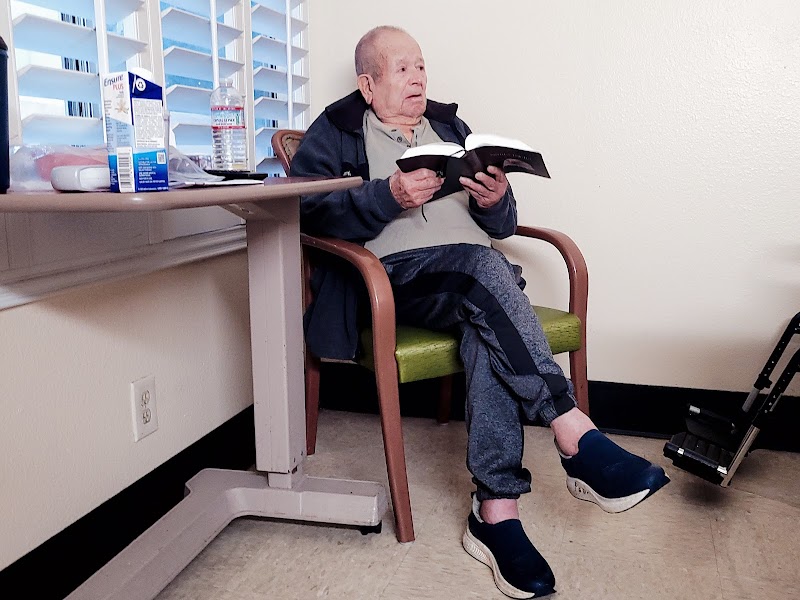
How is Mar Vista Country Villa Healthcare & Wellness Staffed?

CMS rates MAR VISTA COUNTRY VILLA HEALTHCARE & WELLNESS's staffing level at 2 out of 5 stars, which is below average compared to other nursing homes. Staff turnover is 45%, compared to the California average of 46%. This relatively stable workforce can support continuity of care. RN turnover specifically is 64%, which is notably high. RNs provide skilled clinical oversight, so turnover in this role can affect medical care quality.

What Have Inspectors Found at Mar Vista Country Villa Healthcare & Wellness?

State health inspectors documented 63 deficiencies at MAR VISTA COUNTRY VILLA HEALTHCARE & WELLNESS during 2022 to 2025. These included: 5 that caused actual resident harm and 58 with potential for harm. Deficiencies causing actual harm indicate documented cases where residents experienced negative health consequences.
Who Owns and Operates Mar Vista Country Villa Healthcare & Wellness?

MAR VISTA COUNTRY VILLA HEALTHCARE & WELLNESS is owned by a for-profit company. For-profit facilities operate as businesses with obligations to shareholders or private owners. The facility is operated by SHLOMO RECHNITZ, a chain that manages multiple nursing homes. With 68 certified beds and approximately 65 residents (about 96% occupancy), it is a smaller facility located in LOS ANGELES, California.
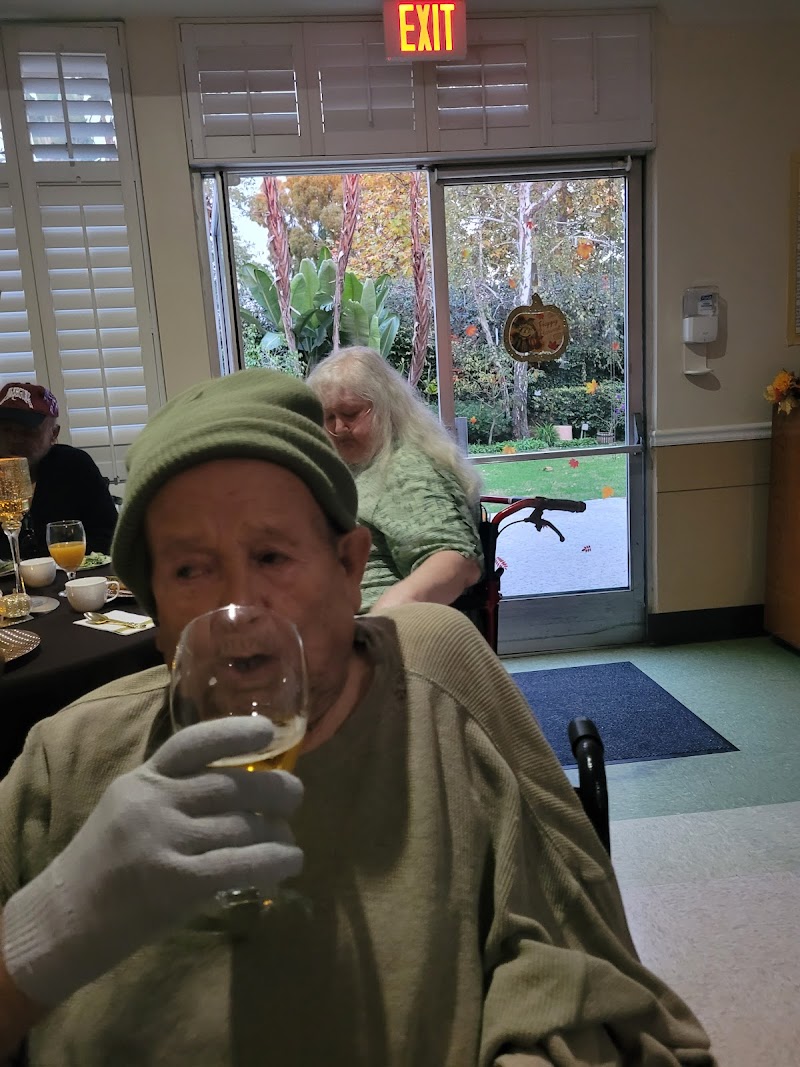
How Does Mar Vista Country Villa Healthcare & Wellness Compare to Other California Nursing Homes?

Compared to the 100 nursing homes in California, MAR VISTA COUNTRY VILLA HEALTHCARE & WELLNESS's overall rating (2 stars) is below the state average of 3.1, staff turnover (45%) is near the state average of 46%, and health inspection rating (2 stars) is below the national benchmark.

What Should Families Ask When Visiting Mar Vista Country Villa Healthcare & Wellness?

Based on this facility's data, families visiting should ask: "Can you walk me through typical staffing levels on day, evening, and night shifts?" "Can I visit during a mealtime to observe dining assistance and food quality?" "How do you handle medical emergencies, and what is your hospital transfer rate?" "Can I speak with family members of current residents about their experience?" These questions are particularly relevant given the below-average staffing rating.

Is Mar Vista Country Villa Healthcare & Wellness Safe?

Based on CMS inspection data, MAR VISTA COUNTRY VILLA HEALTHCARE & WELLNESS has a clean safety record: no substantiated abuse findings (meaning no confirmed cases of resident harm), no Immediate Jeopardy citations (the most serious violation level indicating risk of serious injury or death), and is not on the Special Focus Facility watch list (a federal program monitoring the lowest-performing 1% of nursing homes). The facility has a 2-star overall rating and ranks #100 of 100 nursing homes in California. While no facility is perfect, families should still ask about staff-to-resident ratios and recent inspection results during their visit.

Do Nurses at Mar Vista Country Villa Healthcare & Wellness Stick Around?

MAR VISTA COUNTRY VILLA HEALTHCARE & WELLNESS has a staff turnover rate of 45%, which is about average for California nursing homes (state average: 46%). Moderate turnover is common in nursing homes, but families should still ask about staff tenure and how the facility maintains care continuity when employees leave.

Was Mar Vista Country Villa Healthcare & Wellness Ever Fined?

MAR VISTA COUNTRY VILLA HEALTHCARE & WELLNESS has been fined $78,717 across 3 penalty actions. This is above the California average of $33,866. Fines in this range indicate compliance issues significant enough for CMS to impose meaningful financial consequences. Common causes include delayed correction of deficiencies, repeat violations, or care failures affecting resident safety. Families should ask facility leadership what changes have been made since these penalties.

Is Mar Vista Country Villa Healthcare & Wellness on Any Federal Watch List?

MAR VISTA COUNTRY VILLA HEALTHCARE & WELLNESS is not on any federal watch list. The most significant is the Special Focus Facility (SFF) program, which identifies the bottom 1% of nursing homes nationally based on persistent, serious quality problems. Not being on this list means the facility has avoided the pattern of deficiencies that triggers enhanced federal oversight. This is a positive indicator, though families should still review the facility's inspection history directly.