MIRACLE MILE HEALTHCARE CENTER, LLC
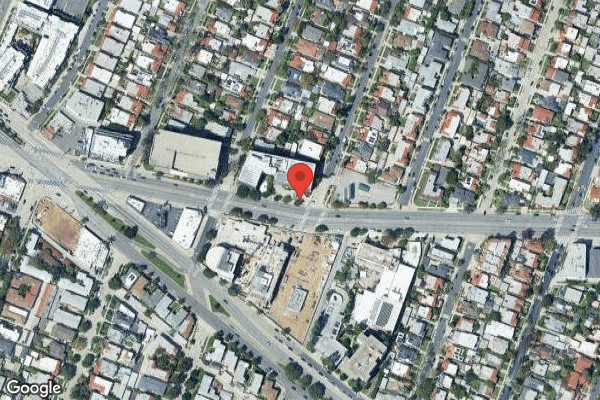

1020 SOUTH FAIRFAX AVE, LOS ANGELES, CA 90019 (323) 938-2451
For profit - Limited Liability company 120 Beds Independent Data: November 2025 4 Immediate Jeopardy citations
Trust Grade
0/100
#1066 of 1155 in CA
Last Inspection: January 2025

Within standard 12-15 month inspection cycle. Federal law requires annual inspections.

Overview

Miracle Mile Healthcare Center has received a Trust Grade of F, indicating significant concerns regarding care quality. With a state rank of #1066 out of 1155, they are in the bottom half of California facilities, and at #321 out of 369 in Los Angeles County, only a few local options are worse. The facility is improving, as the number of issues decreased from 29 in 2024 to 26 in 2025, though they still have a high staff turnover rate of 56%, which is concerning compared to the state average of 38%. They also face serious issues, including $231,862 in fines, highlighting repeated compliance problems. Specific incidents include a resident eloping from the facility due to insufficient supervision and failure to notify a physician about a resident's critical health changes, raising significant safety concerns. While staffing is rated average with some RN coverage, these weaknesses suggest families should carefully consider their options.

Trust Score
F
0/100
In California
#1066/1155
Bottom 8%
Safety Record
High Risk
Review needed
Inspections
Getting Better
29 → 26 violations
Staff Stability
⚠ Watch
56% turnover. Above average. Higher turnover means staff may not know residents' routines.
Penalties
○ Average
$231,862 in fines. Higher than 62% of California facilities. Some compliance issues.
Skilled Nurses
⚠ Watch
Each resident gets only 19 minutes of Registered Nurse (RN) attention daily — below average for California. Fewer RN minutes means fewer trained eyes watching for problems.
Violations
⚠ Watch
99 deficiencies on record. Higher than average. Multiple issues found across inspections.
★☆☆☆☆
1.0
Overall Rating
★★★☆☆
3.0
Staff Levels
★★☆☆☆
2.0
Care Quality
★☆☆☆☆
1.0
Inspection Score
Stable
2024: 29 issues
2025: 26 issues

The Good

  • Full Sprinkler Coverage · Fire safety systems throughout facility
  • No fines on record

Facility shows strength in fire safety.

The Bad

1-Star Overall Rating

Below California average (3.1)

Significant quality concerns identified by CMS

Staff Turnover: 56%

Near California avg (46%)

Frequent staff changes - ask about care continuity

Federal Fines: $231,862

Well above median ($33,413)

Significant penalties indicating serious issues

Staff turnover is elevated (56%)

8 points above California average of 48%

The Ugly 99 deficiencies on record

4 life-threatening 4 actual harm
Sept 2025 1 deficiency
CONCERN (D) 📢 Someone Reported This

A family member, employee, or ombudsman was alarmed enough to file a formal complaint

Potential for Harm - no one hurt, but risky conditions existed

Safe Environment (Tag F0584)

Could have caused harm · This affected 1 resident

Based on observation, interview, and record review, the facility failed to maintain window screens in good repair for one of six sampled resident rooms (Room A). During observation on 9/16/25, the win...

Read full inspector narrative →
Based on observation, interview, and record review, the facility failed to maintain window screens in good repair for one of six sampled resident rooms (Room A). During observation on 9/16/25, the window in Room A was observed open and the window screen had a big hole in the lower corner. This deficient practice had the potential for insects to enter through the hole in the window screen and potentially cause diseases to residents, staff and visitors. During observation inside Room A and concurrent interview on 9/16/25 at 11:23 a.m., the certified nursing assistant (CNA 1) stated the window in Room A was slightly open. CNA 1 stated the window was open for ventilation. CNA 1 further added the window screen had a hole and .insects such as flies and mosquitoes can get inside the room and go to the residents. During an interview on 9/16/25 at 1:21 p.m., the infection preventionist (IP) stated when there's a hole in the window screen there is the potential for flies and mosquitoes to enter the residents room. During a review of the facility Policy titled Quality of Life- Homelike Environment reviewed on 1/25/25 indicated residents are provided with a safe, clean, comfortable homelike environment and encouraged to use their personal belongings to the extent possible. The same policy indicated the facility staff, and management shall maximize to the extent possible the characteristics of the facility that reflect a personalized, homelike setting. These characteristics include clean, sanitary and orderly environment.
Sept 2025 1 deficiency
CONCERN (D) 📢 Someone Reported This

A family member, employee, or ombudsman was alarmed enough to file a formal complaint

Potential for Harm - no one hurt, but risky conditions existed

Deficiency F0919 (Tag F0919)

Could have caused harm · This affected 1 resident

**NOTE- TERMS IN BRACKETS HAVE BEEN EDITED TO PROTECT CONFIDENTIALITY** Based on observation and interview, the facility failed to keep the call light (the primary method of patient-nurse communicatio...

Read full inspector narrative →
**NOTE- TERMS IN BRACKETS HAVE BEEN EDITED TO PROTECT CONFIDENTIALITY** Based on observation and interview, the facility failed to keep the call light (the primary method of patient-nurse communication in a hospital setting, often used as a measure of nurse responsiveness) within reach for one of three random selected residents (Resident 3). This deficient practice had the potential to result in staff delay in meeting resident's needs for hydration, toileting, and activities of daily living as well as a delay in provision of assistance which may lead to falls and accidents.During a review of Resident 3's Record of Admission (undated), indicated, Resident 3 was initially admitted to the facility on [DATE] and readmitted on [DATE] with diagnoses including asthma (a chronic lung condition that causes the airways to become inflamed and narrow, making it difficult to breathe), osteoarthritis (a progressive disorder of the joints, caused by a gradual loss of cartilage), and hyperlipidemia (a medical condition characterized by abnormally high levels of fats (lipids) in the bloodstream). During a review of Resident 3's History and Physical (H&P), dated 11/26/2024 indicated, Resident 3 was had the capacity to understand and make decisions. During a review of Resident 3's Minimum Data Set (MDS, a resident assessment tool), dated 7/22/2025, indicated that Resident 3 was cognitively intact (a person's thinking, memory, and other conscious mental processes are normal and functioning well, allowing them to manage daily tasks and environmental demands without significant impairment). The same MDS further indicated Resident 3 was mostly required partial/moderate assistance for her Activities of Daily Living (ADLs-toileting, shower/bathe self, lower body dressing, and putting on/taking off footwear). During a review of Resident 3's Care Plan (CP) created 8/20/2024 with a focus The resident has an ADL self-care performance deficit r/t (related to), multiple diagnoses, the CP indicated interventions which included:- Encourage the resident (Resident 3) to use bell to call for assist- The resident (Resident 3) requires assistance by (1) staff with personal hygiene and oral care.During a concurrent observation and interview of Resident 3 on 9/15/2025 at 12:04 pm, Resident 3 was heard screaming for a CNA to come and assist her. Resident 3 stated that she had been calling for about 4 hours with no help in sight. Resident 3 stated that she was unable to reach the call light, which was a very common occurrence and was left without receiving much-needed help. The call light was observed on the floor to the left side of her bed and out of reach. Resident 3 stated that she was calling because she needed some help with removing the extra clothing that had bunched up under and was uncomfortable. Resident 3 stated that her skin was clear. During a concurrent observation and interview of Resident 3 on 9/15/2025 at 12:05 pm with the Registered Nurse Supervisor (RNS), RNS confirmed that the call light was out of reach of Resident 3. RNS stated that call lights must be within reach of residents so that the resident's needs such as requests for receiving medications or emergency situations such as shortness of breath and falls. During an interview with the Director of Nursing (DON) on 9/15/2025 at 1:04 pm, the DON stated that call light must be within reach to ensure that they had access to call the facility staff. The DON stated that not having the call light within reach could potentially place the residents at risk for injuries from accidents such as falls. During a review of the facility's policy and procedures (P&P), titled, Answering the Call Light, reviewed 1/25/2025, indicated, The purpose of this procedure is to ensure timely responses to the resident's requests and needs. The same P&P indicated the following guidelines:- Upon admission and periodically as needed, explain and demonstrate use of the call light to the resident.- Ask the resident to return the demonstration,- Explain to the resident that a call system is also located in his/her bathroom. Be sure that the call light is plugged in and functioning at all times.- Ensure that the call light is accessible to the resident when in bed, from the toilet, from the shower or bathing facility and from the floor.- Report all defective call lights to the nurse supervisor promptly.
Jun 2025 1 deficiency
CONCERN (D) 📢 Someone Reported This

A family member, employee, or ombudsman was alarmed enough to file a formal complaint

Potential for Harm - no one hurt, but risky conditions existed

Deficiency F0557 (Tag F0557)

Could have caused harm · This affected 1 resident

**NOTE- TERMS IN BRACKETS HAVE BEEN EDITED TO PROTECT CONFIDENTIALITY** Based on interview and record review, the facility failed to promote dignity and respect for one of three sampled residents (Res...

Read full inspector narrative →
**NOTE- TERMS IN BRACKETS HAVE BEEN EDITED TO PROTECT CONFIDENTIALITY** Based on interview and record review, the facility failed to promote dignity and respect for one of three sampled residents (Resident 3) by failing to: 1. Provide clean clothings and linen. 2. Provide an incontinence (Inability to control the flow of urine from the bladder [urinary incontinence] or the escape of stool from the rectum [fecal incontinence] diaper. This deficient practice placed Resident 3 to feel uncared for and embarrassed. Findings: During a review of Resident 3 ' s admission record indicated the facility was initially admitted to the facility on [DATE] and readmitted on [DATE], with diagnosis that included End Stage Renal Disease (ESRD- the final, permanent stage of chronic kidney disease, where kidney function has declined to the point that the kidneys can no longer function on their own), dependence on renal dialysis (HD- a procedure that cleans your blood when your kidneys can't do it properly), and chronic obstructive pulmonary disease (COPD- a progressive lung disease that causes long-term inflammation and damage to the airways and lungs). During a review of Resident 3 ' s Minimum Data Set (MDS – a resident assessment tool) dated 5/8/2025, indicated Resident 3 had mild cognitive impairment (a condition where individuals experience memory or other cognitive issues, such as language or judgment, that are noticeable but don't significantly interfere with daily activities). The same MDS indicated Resident 3 required between partial/moderate and substantial/maximal assistance for most of his Activities of Daily Living such as: (ADLs routine tasks/activities such as eating, oral hygiene, toileting hygiene, shower/bathe self, personal hygiene, lower/upper body dressing, putting on/taking off footwear). During a concurrent observation and interview with Resident 3 on 6/5/2025 at 8:43 am, Resident 3 was observed in the hallway of the unit propelling himself in his wheelchair. Resident 3 was noted to be wearing a white t-shirt and green pants; the pants were unzipped and about midway around the hips. Resident 3 ' s white t-shirt was observed to have several yellowish and brownish stains. Resident 3 stated that he usually feels embarrassed and uncared for because the facility staff did not assist him to look presentable especially when he goes out to his HD appointments. He (Resident 3) stated that his incontinence diaper usually gets very soiled and gets forced to remove it and stay without for long periods of time. In Resident 3 ' s room, Resident ' s clothing were on both sides of his (Resident 3) bed directly on the floor. The bed was not was not made, the white sheets were exposed and noted to have a large (basketball sized) yellow stain located about halfway towards the left side of Resident 3 ' s bed. During a concurrent observation and interview of Resident 3 with Licensed Vocational Nurse (LVN) 2 on 6/5/25 at 8:56 am, LVN 2 confirmed that Resident 3 was sitting in his wheelchair and observed to have his (Resident 3) paints unzipped and were about mid his hip area. LVN 2 confirmed that Resident 3 ' s white shirt had several yellow and brown stains that made him (Resident 3) dirty and unkempt. LVN 2 admitted that Resident 3 ' s rights and dignity were not being honored by not ensuring that he was clean and well groomed. LVN 2 stated that soiled linen must be changed as soon as possible for resident comfort and hygiene. During an interview with the Director of Nursing (DON), on 6/5/2025 at 1: 32 pm, the DON stated that it was very important to ensure that that all residents are clean to ensure hygiene and also preserve their dignity. The DON stated that the potential for not ensuring cleanliness could place residents at risk for infection and low self-esteem. During a review of a Policy and Procedures (P&P) titled, Quality of Life - Homelike Environment, revised 1/25/2025, the P&P indicated, Residents are provided with a safe, clean, comfo1iable and homelike environment and encouraged to use their personal belongings to the extent possible. The same P&P indicated under policy interpretation and implementation included the following: The facility staff and management shall maximize, to the extent possible, the characteristics of the facility that reflect a personalized, homelike setting. These characteristics include: - Clean, sanitary and orderly environment. - Comfortable (minimum glare) yet adequate (suitable to the task) lighting. - Inviting colors and decor. - Clean bed and bath linens that are in good condition. During a review of a P&P titled, Resident Rights, revised 1/25/2025 indicated, Employees shall treat all residents with kindness, respect, and dignity. The same P&P indicated under policy interpretation and implementation included the following: Federal and state laws guarantee certain basic rights to all residents of this facility. These rights include the resident's right to: - a dignified existence. - be treated with respect, kindness, and dignity.
Mar 2025 5 deficiencies
CONCERN (D) 📢 Someone Reported This

A family member, employee, or ombudsman was alarmed enough to file a formal complaint

Potential for Harm - no one hurt, but risky conditions existed

Transfer Requirements (Tag F0622)

Could have caused harm · This affected 1 resident

**NOTE- TERMS IN BRACKETS HAVE BEEN EDITED TO PROTECT CONFIDENTIALITY** Based on interview and record review, the facility failed to ensure safe and orderly discharge from the facility to Residential ...

Read full inspector narrative →
**NOTE- TERMS IN BRACKETS HAVE BEEN EDITED TO PROTECT CONFIDENTIALITY** Based on interview and record review, the facility failed to ensure safe and orderly discharge from the facility to Residential Care Facility for the Elderly (RCFE) for one of three sampled residents (Resident 1) by failing to: 1. to have resident's physician document the reason for discharge in the medical record. 2. have documentation of communication with the receiving facility about Resident 1's discharge and follow up call to the facility on how the resident was adjusting to the new facility. These failures had the potential to result in ineffective discharge planning, with disruption in continuity of care, and complications in the resident's recovery. Cross reference with F712. Findings: During a review of Resident 1's admission Record , the record indicated the resident was admitted to the facility on [DATE] with diagnoses including; paranoid schizophrenia, anemia, diabetes mellitus (DM-, major depressive disorder and hypertensive (high blood pressure) heart disease. The same record further indicated Resident 1 was self- responsible. During a review of the Minimum Data Set (MDS - a resident assessment tool) dated 8/19/24 indicated Resident 1's cognitive (relating to mental action or process of acquiring knowledge and understanding) skills for daily decisions were severely impaired and had medically complex conditions. The MDS further indicated Resident 1 required set up or clean-up assistance to supervision or touching assistance from staff for activities of daily living (ADLs- routine tasks/activities such as bathing, dressing and toileting a person performs daily to care for themselves), toilet transfers and walking, and was independent with bed mobility. During a review of Resident 1's physician order dated 9/11/24 indicated may discharge to Residential Care Facility for the Elderly (RCFE) with Home Health Agency (HHA) with Physical Therapy, Occupational Therapy and Registered Nurse. No Durable Medical Equipment (DME -refers to medical devices like wheelchairs, walkers, oxygen equipment, and hospital beds that are designed to be used repeatedly at home) for discharge. Follow up with Primary Care Provider (PCP), Psychiatry after discharge (RCFE to arrange). May have all remaining medications. Social Services Director (SSD) to arrange necessary arrangements. 1. During a review of Resident 1's medical record from November 2023 through September 2024, there were physician progress notes noted from 11/16/23 through 2/8/24 only, no other physician progress notes were noted in the medical record. During a review of Resident 1's Physician Discharge Summary dated 9/11/24 indicated the reason for discharge to be the resident's health has improved so that they no longer need the services of the facility but the space for the physician signature and date was left blank. During an interview with concurrent record review with Medical Records Director (MRD) on 3/13/25 at 3:00 pm Resident 1's physician's progress notes for his entire stay at the facility (11/13/23-9/11/24) were reviewed. The MRD verified there were no physician notes in the medical record after 2/8/24 and stated the physician should have made visits after that. During an interview with LVN 2 on 2/14/25 at 2:05 pm LVN 2 stated the physician should see the residents every month for the first three then once a month every other month, they have Nurse practitioners that are there more frequently. During a review of the facility's policy and procedures (P&P) titled Transfer or Discharge Documentation reviewed 1/25/25 indicated 5. Should the resident be transferred or discharge for any of the following reasons, the basis for the transfer or discharge will be documented in the resident's clinical record by the residents Attending Physician . b. The transfer or discharge is appropriate because the resident's health has improved sufficiently so the resident no longer needs the services provided by the facility. 2. During a review of Resident 1's Recapitulation of Care Discharge Summary / Guide for Aftercare dated 9/11/25 indicated no contact number for the receiving facility only an address. During a review of Resident 1's Discharge Summary Progress notes dated 9/11/25, indicated the resident was discharged to a RCFE at 1:45 pm all belongings taken, medications and discharge paperwork given, resident left via private transportation. No indication of any communication with the receiving facility. During a concurrent interview and record review with Licensed Vocational Nurse (LVN) 1 on 3/13/25 at 9:45 am Resident 1's Discharge Planning Review record was reviewed. The record indicated Resident 1 was discharged to a lower level of care and the resident had discharge goal barriers of cognitive impairment, medical management and physical challenges. The record further indicated the resident required professional assistance for Activities of Daily Living (ADLs) and was self-responsible. The record did not indicate anyone at the receiving facility was contacted and given report. LVN 1 stated he did not call anyone at the facility the Social Services Director was responsible for that, he just gave the discharge instructions and the resident was picked up by a private vehicle. During a review of Resident 1's social services post discharge note date 9/16/24 indicated the Social Services Director (SSD) called the facility the resident was discharged to and did not get an answer only one time and did not indicate the phone number called in the note.
CONCERN (D) 📢 Someone Reported This

A family member, employee, or ombudsman was alarmed enough to file a formal complaint

Potential for Harm - no one hurt, but risky conditions existed

Transfer Notice (Tag F0623)

Could have caused harm · This affected 1 resident

**NOTE- TERMS IN BRACKETS HAVE BEEN EDITED TO PROTECT CONFIDENTIALITY** Based on interview and record review the facility failed to provide one of six sampled residents (Resident 1) the Notice of Tran...

Read full inspector narrative →
**NOTE- TERMS IN BRACKETS HAVE BEEN EDITED TO PROTECT CONFIDENTIALITY** Based on interview and record review the facility failed to provide one of six sampled residents (Resident 1) the Notice of Transfer Discharge form 30 days before non-emergency discharge. This failure resulted in the resident not being able to appeal his discharge thus infringing on his rights to do so. Cross reference with F622 Findings: During a review of Resident 1's admission Record , the record indicated the resident was admitted to the facility on [DATE] with diagnoses including; paranoid schizophrenia, anemia, diabetes mellitus (DM-, major depressive disorder and hypertensive (high blood pressure) heart disease. The same record further indicated Resident 1 was self- responsible. During a review of the Minimum Data Set (MDS - a resident assessment tool) dated 8/19/24 indicated Resident 1's cognitive (relating to mental action or process of acquiring knowledge and understanding) skills for daily decisions were severely impaired and had medically complex conditions. The MDS further indicated Resident 1 required set up or clean-up assistance to supervision or touching assistance from staff for activities of daily living (ADLs- routine tasks/activities such as bathing, dressing and toileting a person performs daily to care for themselves), toilet transfers and walking, and was independent with bed mobility. During a review of Resident 1's physician order dated 9/11/24 indicated may discharge to Residential Care Facility for the Elderly (RCFE) with Home Health Agency (HHA) with Physical Therapy, Occupational Therapy and Registered Nurse. No Durable Medical Equipment (DME -refers to medical devices like wheelchairs, walkers, oxygen equipment, and hospital beds that are designed to be used repeatedly at home) for discharge. Follow up with Primary Care Provider (PCP), Psychiatry after discharge (RCFE to arrange). May have all remaining medications. Social Services Director (SSD) to arrange necessary arrangements. During a concurrent interview and record review with Licensed Vocational Nurse (LVN) 1 on 3/13/25 at 9:45 am Resident 1's Notice of Transfer / Discharge notification and signed date 9/11/24, the form indicated the resident was notified and discharged on 9/11/24. The form further indicated the reason for transfer was the health of the resident had improved sufficiently so that they no longer required services provided by the facility. LVN 1 verified the resident was notified of the discharge on the date of discharge, and it was a transfer to a lower level of care and not an emergency. During a review of the facility's policy and procedures (P&P) titled Transfer or Discharge Notice reviewed 1/25/25, the P&P indicates Our facility shall provide a resident and/or the resident's representative (sponsor) with a thirty (30)-day written notice of an impending transfer or discharge.
CONCERN (D) 📢 Someone Reported This

A family member, employee, or ombudsman was alarmed enough to file a formal complaint

Potential for Harm - no one hurt, but risky conditions existed

Deficiency F0624 (Tag F0624)

Could have caused harm · This affected 1 resident

**NOTE- TERMS IN BRACKETS HAVE BEEN EDITED TO PROTECT CONFIDENTIALITY** Based on interview and record review the facility failed to ensure a safe and orderly discharge for one of six sampled residents...

Read full inspector narrative →
**NOTE- TERMS IN BRACKETS HAVE BEEN EDITED TO PROTECT CONFIDENTIALITY** Based on interview and record review the facility failed to ensure a safe and orderly discharge for one of six sampled residents (Resident 1). This failure resulted in the resident not being involved in selecting the facility he would be discharged to. Cross reference with F622 Findings: During a review of Resident 1's admission Record , the record indicated the resident was admitted to the facility on [DATE] with diagnoses including; paranoid schizophrenia, anemia, diabetes mellitus (DM-, major depressive disorder and hypertensive (high blood pressure) heart disease. The same record further indicated Resident 1 was self- responsible. During a review of the Minimum Data Set (MDS - a resident assessment tool) dated 8/19/24 indicated Resident 1's cognitive (relating to mental action or process of acquiring knowledge and understanding) skills for daily decisions were severely impaired and had medically complex conditions. The MDS further indicated Resident 1 required set up or clean-up assistance to supervision or touching assistance from staff for activities of daily living (ADLs- routine tasks/activities such as bathing, dressing and toileting a person performs daily to care for themselves), toilet transfers and walking, and was independent with bed mobility. During a review of Resident 1's physician order dated 9/11/24 indicated may discharge to Residential Care Facility for the Elderly (RCFE) with Home Health Agency (HHA) with Physical Therapy, Occupational Therapy and Registered Nurse. No Durable Medical Equipment (DME -refers to medical devices like wheelchairs, walkers, oxygen equipment, and hospital beds that are designed to be used repeatedly at home) for discharge. Follow up with Primary Care Provider (PCP), Psychiatry after discharge (RCFE to arrange). May have all remaining medications. Social Services Director (SSD) to arrange necessary arrangements. During a concurrent interview and record review on 3/14/25 at 2:05 pm with LVN 2, Resident 1's discharge order was reviewed. LVN 2 stated she just got the discharge order from the physician because she was told by the Social Services Director (SSD) that the resident was being discharged to RCFE with home health. LVN 2 further indicated the residents should have a choice of where they are going to be discharged and visiting the new facility would be part of the discharge planning, but she does not know if that was done for Resident 1.
CONCERN (D) 📢 Someone Reported This

A family member, employee, or ombudsman was alarmed enough to file a formal complaint

Potential for Harm - no one hurt, but risky conditions existed

Comprehensive Care Plan (Tag F0656)

Could have caused harm · This affected 1 resident

**NOTE- TERMS IN BRACKETS HAVE BEEN EDITED TO PROTECT CONFIDENTIALITY** Based on interview and record review the facility failed to develop a care plan for history of memory problems for one of six sa...

Read full inspector narrative →
**NOTE- TERMS IN BRACKETS HAVE BEEN EDITED TO PROTECT CONFIDENTIALITY** Based on interview and record review the facility failed to develop a care plan for history of memory problems for one of six sampled residents (Resident 1). This failure resulted in no plan of care for Resident 1's memory problems during his time at the facility. Findings: During a review of Resident 1's admission Record , the record indicated the resident was admitted to the facility on [DATE] with diagnoses including; paranoid schizophrenia, anemia, diabetes mellitus (DM-, major depressive disorder and hypertensive (high blood pressure) heart disease. The same record further indicated Resident 1 was self- responsible. During a review of the Minimum Data Set (MDS - a resident assessment tool) dated 8/19/24 indicated Resident 1's cognitive (relating to mental action or process of acquiring knowledge and understanding) skills for daily decisions were severely impaired and had medically complex conditions. The MDS further indicated Resident 1 required set up or clean-up assistance to supervision or touching assistance from staff for activities of daily living (ADLs- routine tasks/activities such as bathing, dressing and toileting a person performs daily to care for themselves), toilet transfers and walking, and was independent with bed mobility. During a review of Resident 1's Baseline Care Plan dated 11/14/24 indicated the resident had history of memory problems and noncompliance. During an interview on 3/14/25 at 2:05 pm with LVN 2, LVN 2 stated if the resident had memory problems on admission there should have been a care plan developed for that. During a review of the facility's policy and procedures (P&P) titled Care Plans, Comprehensive Person-Centered reviewed 1/25/25, the P&P indicates A comprehensive, person-centered care plan that includes measurable objectives and timetables to meet the resident's physical, psychosocial and functional needs is developed and implemented for each resident.
CONCERN (D) 📢 Someone Reported This

A family member, employee, or ombudsman was alarmed enough to file a formal complaint

Potential for Harm - no one hurt, but risky conditions existed

Deficiency F0712 (Tag F0712)

Could have caused harm · This affected 1 resident

**NOTE- TERMS IN BRACKETS HAVE BEEN EDITED TO PROTECT CONFIDENTIALITY** Based on interview and record review, the facility failed to ensure the attending physicians came in to visit the resident as ou...

Read full inspector narrative →
**NOTE- TERMS IN BRACKETS HAVE BEEN EDITED TO PROTECT CONFIDENTIALITY** Based on interview and record review, the facility failed to ensure the attending physicians came in to visit the resident as outlined in the regulation for one of five sampled residents (Resident 1). This failure had the potential to effect the residents plan of care and delivery of services. Cross reference with F622 Findings: During a review of Resident 1's admission Record , the record indicated the resident was admitted to the facility on [DATE] with diagnoses including; paranoid schizophrenia, anemia, diabetes mellitus (DM-, major depressive disorder and hypertensive (high blood pressure) heart disease. The same record further indicated Resident 1 was self- responsible. During a review of the Minimum Data Set (MDS - a resident assessment tool) dated 8/19/24 indicated Resident 1's cognitive (relating to mental action or process of acquiring knowledge and understanding) skills for daily decisions were severely impaired and had medically complex conditions. The MDS further indicated Resident 1 required set up or clean-up assistance to supervision or touching assistance from staff for activities of daily living (ADLs- routine tasks/activities such as bathing, dressing and toileting a person performs daily to care for themselves), toilet transfers and walking, and was independent with bed mobility. During a telephone interview with Medical Doctor (MD) 1 on 3/13/25 at 1:14 pm, MD 1 the facility was not one of his (that he sees residents at). During an interview with concurrent record review with Medical Records Director (MRD) on 3/13/25 at 3:00 pm Resident 1's physician's progress notes for his entire stay at the facility (11/13/23-9/11/24) were reviewed. The MRD verified there were no physician notes in the medical record after 2/8/24 and stated the physician should have made visits after that but he didn't (per the record review). During a review of the facility's P&P titled Physician's Visits reviewed 1/25/25 indicated The Attending Physician must make visits in accordance with applicable state and federal regulations. 1. The Attending Physician will visit residents in a timely fashion, consistent with applicable state and federal requirements . The Attending Physician must visit his/her patients at least once every thirty (30) days for the first ninety (90) days following the resident's admission, and then at least every sixty (60) days thereafter.
Mar 2025 2 deficiencies
CONCERN (D) 📢 Someone Reported This

A family member, employee, or ombudsman was alarmed enough to file a formal complaint

Potential for Harm - no one hurt, but risky conditions existed

Resident Rights (Tag F0550)

Could have caused harm · This affected 1 resident

**NOTE- TERMS IN BRACKETS HAVE BEEN EDITED TO PROTECT CONFIDENTIALITY** Based on interview and record review, the facility failed to honor one of the four sampled residents (Resident 3) rights to be s...

Read full inspector narrative →
**NOTE- TERMS IN BRACKETS HAVE BEEN EDITED TO PROTECT CONFIDENTIALITY** Based on interview and record review, the facility failed to honor one of the four sampled residents (Resident 3) rights to be seen by a physician by failing to arrange reliable transportation for Resident 3. This deficient practice resulted in Resident 3 missing his appointment on 3/4/2025. Findings: During a review of the admission record for Resident 3 indicated Resident 3 was initially admitted to the facility on [DATE] and was readmitted on [DATE] with diagnoses including depression (a common mental health condition characterized by a persistent low mood, loss of interest or pleasure in activities, and other symptoms that can significantly impact daily life), alcohol abuse (drinking in a manner, situation, amount, or frequency that could cause harm), and insomnia (trouble falling asleep or staying asleep) . During a review of a history and physical (a term used to describe a physician's examination of a patient. In an H&P, the physician obtains a thorough medical history from the patient, performs a physical examination, and then documents their findings) for Resident 4 dated 2/12/2025 indicated, Resident 4 did not have the capacity to understand and make decisions. During a review of the Minimum Data Set (MDS – a resident assessment tool) dated 2/13/2025, indicated Resident 3 was cognitively intact (sufficient judgment, planning, organization, self-control, and the persistence needed to manage the normal demands of the participant's environment). The same MDS indicated Resident 3 was independent for all Activities of Daily Living such as: (ADLs- routine tasks/activities such as eating, oral hygiene, toileting hygiene, personal hygiene, lower/upper body dressing, putting on/taking off footwear). During an interview with Resident 3 on 3/5/2025 at 10:20 am, Resident 3 stated that he had scheduled an appointment with his Primary Medical Doctor (PMD) for 3/4/2025 at 11 am and notified the facility staff two weeks prior. Resident 3 stated that the facility staff confirmed that they had transportation arranged to take him (Resident 3) to the appointment. Resident 3 stated that the transport arranged by the facility arrived at 11:15 am. Resident 3 stated that the appointment was cancelled. During an interview with the Director of Social Services (DSS), on 3/5/25 at 11:12 am, the DSS stated that Resident 3 had notified facility staff about his (Resident 3) 3/4/2025 appointment about two weeks prior. DSS stated that transportation was arranged through Resident 3 ' s insurance for 3/4/2025 a pick up time 10 am. The DSS stated on the 3/4/2025 around 10:30 am, she (DSS) noticed that Resident 3 was still in the facility and was prompted to call the transportation company for the Estimated Time of Arrival (ETA). DSS stated the insurance informed her that transportation had been cancelled. The insurance arranged through a different company that arrived at the facility at 11:15 am. The DSS admitted that the transportation issues could have been avoided had the facility staff called at least one or two days before the appointment. During a review of the facility's policy and procedures (P&P) titled, Resident Rights, revised 1/25/2025, the P&P indicated, Employees shall treat all residents with kindness, respect, and dignity. The same P&P indicated under policy interpretation and implementation including the following: Federal and state laws guarantee certain basic rights to all residents of this facility. These rights include the resident's right to: - Be supported by the facility in exercising his or her rights. - Be informed of, and participate in, his or her care planning and treatment. - Choose an attending physician and participate in decision-making regarding his or her care.
CONCERN (D) 📢 Someone Reported This

A family member, employee, or ombudsman was alarmed enough to file a formal complaint

Potential for Harm - no one hurt, but risky conditions existed

Deficiency F0912 (Tag F0912)

Could have caused harm · This affected 1 resident

**NOTE- TERMS IN BRACKETS HAVE BEEN EDITED TO PROTECT CONFIDENTIALITY** Based on interview and record review, the facility failed to ensure that one of the four sampled residents (Resident 4) who was ...

Read full inspector narrative →
**NOTE- TERMS IN BRACKETS HAVE BEEN EDITED TO PROTECT CONFIDENTIALITY** Based on interview and record review, the facility failed to ensure that one of the four sampled residents (Resident 4) who was cognitively impaired was provided at least 80 square feet (sq. ft. -unit of measurement for space) per resident in multiple resident bedrooms. This deficient practice had the potential to negatively impact Resident 4 ' s well-being by reducing privacy and dignity. Findings: 1. During a review of the admission record for Resident 4 indicated Resident 4 was initially admitted to the facility on [DATE] and was readmitted on [DATE] with diagnoses including Parkinson ' s disease (a progressive disease of the nervous system marked by tremor, muscular rigidity, and slow, imprecise movements), dementia (a progressive state of decline in mental abilities), and diabetes mellitus (DM-a disorder characterized by difficulty in blood sugar control and poor wound healing). During a review of Resident 4's History and Physical (H&P, a term used to describe a physician's examination of a patient, the physician obtains a thorough medical history from the patient, performs a physical examination, and then documents their findings) dated 2/12/2025, the H&P indicated, Resident 4 did not have the capacity to understand and make decisions. During a review of the Minimum Data Set (MDS – a resident assessment tool) dated 2/14/2025, indicated Resident 4 had moderate cognitive impairment (a stage of cognitive decline that affects short-term memory and the ability to complete complex tasks). The same MDS indicated Resident 4 was dependent for all Activities of Daily Living such as: (ADLs- routine tasks/activities such as eating, oral hygiene, toileting hygiene, shower/bathe self, personal hygiene, lower/upper body dressing, putting on/taking off footwear). During an observation of Resident 4 ' s room which is a semiprivate room on 3/5/2025 at 10:50 am, the room was close to the door and was separated from Resident 2 ' s bed by the privacy curtains which flowed towards Resident 4 ' s bed due to Resident 2 ' s belongings that were placed in the space for Resident 4. The room appeared small and could not accommodate a bedside table at the bedside for Resident 4. Resident 4 ' s wheelchair was observed at the foot of Resident bed. During a concurrent observation and interview with the Maintenance Director (MD) of Resident 2 and 4 ' s room on 3/5/25 at 1:35 pm, the MD admitted that Resident 4 ' s room appeared small due to Resident 2 ' s belongings that spread across to Resident 4 ' s side. The MD stated that residents in a multiple bed room are required to have at least 80 sq. ft of living space. The MD measured Resident 4 ' s livable space measured at 48.44 sq. ft. 2. During a review of the admission record for Resident 2 indicated Resident 2 was admitted to the facility on [DATE] with diagnoses including hypothyroidism (a condition where the thyroid gland does not produce enough thyroid hormones), Chronic Obstructive Pulmonary Disease (COPD-a chronic lung disease causing difficulty in breathing), and major depressive disorder (a mood disorder that causes a persistent feeling of sadness and loss of interest). During a review of Resident 2 ' s H&P dated 2/20/2024 indicated, Resident 2 had the capacity to understand and make decisions. During a review of Resident 2 ' s MDS dated [DATE], indicated Resident 2 was cognitively intact (sufficient judgment, planning, organization, self-control, and the persistence needed to manage the normal demands of the participant's environment). The same MDS indicated Resident 2 required between setup or clean-up and supervision or touching assistance for all ADLs. During a review of the facility ' s client accommodations analysis list with the MD on 3/5/2025 at 1:40 pm, the facility ' s client accommodations analysis list indicated the measurements of the facility resident room indicated that Resident 2 and 4 ' s room measured at 164.47 sq. ft. which would allow each resident to have 82.24 sq. ft. of livable space. The MD admitted that privacy and safety could be compromised resulting in falls because the space was under what was recommended for Resident 4. During an interview with the Facility Administrator (FA) on 3/5/25 at 1:39 pm, the FA confirmed that Resident 2 ' s belongings were cluttered around her room and extended across over to Resident 4 ' s side of the room. The FA admitted that admitted that the potential effect of not having enough space could result in reduced privacy, dignity and safety. During a review of the facility's policy and procedures (P&P) titled, Quality of Life - Homelike Environment, revised 1/25/2025, the P&P indicated, Residents are provided with a safe, clean, comfortable and homelike environment and encouraged to use their personal belongings to the extent possible. The same P&P indicated under policy interpretation and implementation that the facility staff shall reflect homelike characteristics which will include a clean, sanitary, and orderly environment. According to the federal regulation §483.90(e)(1)(ii), the minimum square footage for a two bedroom is at least 160 sq. ft and three bedroom is at least 240 sq. ft.
Jan 2025 2 deficiencies
CONCERN (D) 📢 Someone Reported This

A family member, employee, or ombudsman was alarmed enough to file a formal complaint

Potential for Harm - no one hurt, but risky conditions existed

Accident Prevention (Tag F0689)

Could have caused harm · This affected 1 resident

**NOTE- TERMS IN BRACKETS HAVE BEEN EDITED TO PROTECT CONFIDENTIALITY** Based on interview, observation and record review, the facility failed to maintain a safe, functional and comfortable environmen...

Read full inspector narrative →
**NOTE- TERMS IN BRACKETS HAVE BEEN EDITED TO PROTECT CONFIDENTIALITY** Based on interview, observation and record review, the facility failed to maintain a safe, functional and comfortable environment for residents, staff and public by failing to ensure the ceiling was free from water leaks for two of five sampled residents (Resident 2 and Resident 3). This failure had the potential to place Resident 2 and 3 at risk for falls or injury from fracture (break in bone). Findings: I. A review of the admission Record indicated Resident 2 was originally admitted to the facility on [DATE] and readmitted on [DATE] with diagnosis including paroxysmal atrial fibrillation (afib- an irregular and very rapid heart rhythm that and can lead blood clots in the heart), hypertensive heart disease without heart failure (the heart is being affected by high blood pressure [hypertension] over a long period of time, causing changes to the heart muscle, but it's not yet weak enough to be considered heart failure where the heart can't pump blood effectively) and hyperlipidemia (abnormally high levels of fats in the blood). A review of the Minimum Data Set (MDS – resident assessment tool) dated 12/18/2024, indicated Resident 2 ' s cognitive (mental action or process of acquiring knowledge and understanding) skills for daily decisions was intact. The MDS indicated Resident 2 was independent for activities of daily living (ADLs- routine tasks/activities such as bathing, dressing and toileting a person performs daily to care for themselves). A review of Resident 2 ' s Care Plan (CP) for at risk for falls, initiated on 10/4/2024 indicated a goal of resident (2) will be free of falls and interventions including, resident (2) needs a safe environment with even floors free from spills and/or clutter. II. A review of the admission Record indicated Resident 3 was originally admitted to the facility on [DATE] and readmitted on [DATE] with diagnosis including metabolic encephalopathy (a chemical imbalance in the blood affecting the brain), paranoid schizophrenia (a mental illness that is characterized by disturbances in thought) and - chronic obstructive pulmonary disease (COPD-a chronic lung disease causing difficulty in breathing). A review of the MDS dated [DATE], indicated Resident 3 ' s skills for daily decisions was moderately impaired. The MDS indicated Resident 3 required moderate to maximal assistance from staff for ADLs. The MDS also indicated, Resident 3 uses manual wheelchair for assistive mobility device. A review of Resident 3s ' CP for risk for falls, initiated on 12/30/2024 indicated a goal of, resident (3) will be free of falls, and interventions including resident (3) needs a safe environment with even floors free from spills and/or clutter. During an observation of Resident 2 and Resident 3 ' s room, the ceiling was leaking with dripping water on top of Resident 3 ' s bed. The ceiling had a dent and cracked with a visible water stain. Observed water on the floor below Resident 2 and Resident 3 ' s bed. During an interview with Certified Nursing Assistant (CNA 1) on 1/27/2025 at 11:25 a.m., CNA 1 stated, the ceiling started on top of Resident 3 ' s bed two days ago. CNA 1 stated, Resident 2 and Resident 3 is still in the same room and was not moved to another room. During an interview with Licensed Vocational Nurse (LVN 1) on 1/27/2025 at 11:28 a.m., LVN 1 stated, Resident 3 stays outside his room and are placed in the hallway because of the water leaks in the ceiling. LVN 1 stated, they did not move Resident 2 and Resident 3 ' s room. During an interview with Maintenance Director (MTD) on 1/27/2025 at 12:13 p.m., MTD stated, the roof on top of Resident 3 ' s bed had been repaired multiple times with n success. The ceiling would constantly leak with water whenever it rains, and facility has tried to fix it with no success. MTD stated, the ceiling has a dent due to weigh of the water that accumulates on the roof, the ceiling was also cracked and sagging with water stain visible. During an interview with Registered Nurse 1 (RN 1) on 1/27/2025 at 12:44 p.m., RN 1 stated, they relayed the water leaks on the ceiling for Resident 2 and Resident 3 two days ago from the MTD. RN 1 stated, when the water started leaking from the ceiling, they moved Resident 2 and Resident 3 ' s room at the edge of the room and they did not move Resident 2 and 3 ' s room and they added buckets to catch the water. RN 1 stated, the water leaks put residents at risk of safety hazard and placed them at risk of falls due to wet area and floors. During an interview with Director of Nursing (DON) on 1/27/2025 at 1:21 p.m., DON stated, if there are water leaks in resident ' s room and water on the floor, this puts residents at risk of injury as residents may slip and fall. A review of the facility ' s policy and procedure (P&P) titled, Safety and Supervision of Residents, reviewed date 1/25/2024, the P&P indicated, Our facility strives to make the environment as free from accident hazards as possible. Resident safety and supervision and assistance to prevent accidents are facility-wide priorities . Due to their complexity and scope, certain resident risk factors and environmental hazards are addressed in dedicated policies and procedures. These risk factors and environmental hazards include: falls.
CONCERN (D) 📢 Someone Reported This

A family member, employee, or ombudsman was alarmed enough to file a formal complaint

Potential for Harm - no one hurt, but risky conditions existed

Safe Environment (Tag F0921)

Could have caused harm · This affected 1 resident

**NOTE- TERMS IN BRACKETS HAVE BEEN EDITED TO PROTECT CONFIDENTIALITY** Based on interview, observation and record review, the facility failed to maintain a safe, functional and comfortable environmen...

Read full inspector narrative →
**NOTE- TERMS IN BRACKETS HAVE BEEN EDITED TO PROTECT CONFIDENTIALITY** Based on interview, observation and record review, the facility failed to maintain a safe, functional and comfortable environment for residents, staff and public by failing to: i. Ensure the ceiling was free from water leaks for two of five sampled residents, Resident 2 and Resident 3. ii. Ensure the one of the 13 thermostats in the facility were free from mechanical and electrical failure and were in safe operating condition These deficient practices have a potential to cause incidental accidents and had the potential for the resident ' s physical discomfort. Cross Reference F689. Findings: 1a. A review of the admission Record indicated Resident 2 was originally admitted to the facility on [DATE] and readmitted on [DATE] with diagnosis including paroxysmal atrial fibrillation (afib- an irregular and very rapid heart rhythm that and can lead blood clots in the heart), hypertensive heart disease without heart failure (the heart is being affected by high blood pressure [hypertension] over a long period of time, causing changes to the heart muscle, but it's not yet weak enough to be considered heart failure where the heart can't pump blood effectively) and hyperlipidemia (abnormally high levels of fats in the blood). A review of the Minimum Data Set (MDS – resident assessment tool) dated 12/18/2024, indicated Resident 2 ' s cognitive (mental action or process of acquiring knowledge and understanding) skills for daily decisions was intact. The MDS indicated Resident 2 was independent for activities of daily living (ADLs- routine tasks/activities such as bathing, dressing and toileting a person performs daily to care for themselves). 1b. A review of the admission Record indicated Resident 3 was originally admitted to the facility on [DATE] and readmitted on [DATE] with diagnosis including metabolic encephalopathy (a chemical imbalance in the blood affecting the brain), paranoid schizophrenia (a mental illness that is characterized by disturbances in thought) and - chronic obstructive pulmonary disease (COPD-a chronic lung disease causing difficulty in breathing). A review of the MDS dated [DATE], indicated Resident 3 ' s skills for daily decisions was moderately impaired. The MDS indicated Resident 3 required moderate to maximal assistance from staff for ADLs. The MDS also indicated, Resident 3 uses manual wheelchair for assistive mobility device. During an observation of Resident 2 and Resident 3 ' s room, the ceiling was leaking with dripping water on top of Resident 3 ' s bed. The ceiling had a dent and cracked with a visible water stain. Observed water on the floor below Resident 2 and Resident 3 ' s bed. During an interview with Certified Nursing Assistant (CNA 1) on 1/27/2025 at 11:25 a.m., CNA 1 stated, the ceiling started on top of Resident 3 ' s bed two days ago. CNA 1 stated, Resident 2 and Resident 3 is still in the same room and was not moved to another room. During an interview with Licensed Vocational Nurse (LVN 1) on 1/27/2025 at 11:28 a.m., LVN 1 stated, Resident 3 stays outside his room and are placed in the hallway because of the water leaks in the ceiling. LVN 1 stated, they did not move Resident 2 and Resident 3 ' s room. During an interview with Maintenance Director (MTD) on 1/27/2025 at 12:13 p.m., MTD stated, the roof on top of Resident 3 ' s bed had been repaired multiple times with n success. The ceiling would constantly leak with water whenever it rains, and facility has tried to fix it with no success. MTD stated, the ceiling has a dent due to weigh of the water that accumulates on the roof, the ceiling was also cracked and sagging with water stain visible. During an interview with Registered Nurse 1 (RN 1) on 1/27/2025 at 12:44 p.m., RN 1 stated, they relayed the water leaks on the ceiling for Resident 2 and Resident 3 two days ago from the MTD. RN 1 stated, when the water started leaking from the ceiling, they moved Resident 2 and Resident 3 ' s room at the edge of the room and they did not move Resident 2 and 3 ' s room and they added buckets to catch the water. RN 1 stated, the water leaks put residents at risk of safety hazard and placed them at risk of falls due to wet area and floors. During an interview with Director of Nursing (DON) on 1/27/2025 at 1:21 p.m., DON stated, if there are water leaks in resident ' s room and water on the floor, this puts residents at risk of injury as residents may slip and fall. 2. During a concurrent observation and interview with MTD on 1/27/2025 at 12:06 p.m., MTD stated, one of the thermostats in the facility is not working properly. MTD stated, the thermostat in room [ROOM NUMBER], room [ROOM NUMBER] and DON ' s room does not work. MTD stated, he tried to adjust the thermostat for staff and residents ' comfortability, but he was unable to adjust it. MTD stated, there maybe electrical or mechanical failure. During an interview with DON on 1/27/2025 at 1:21 p.m., DON stated, he noticed his room gets cold sometimes. DON stated, if the thermostat is not working properly and they are unable to adjust it, it may affect residents ' health, and they may be compromised. DON stated, there are multiple residents in the rooms where the thermostat was located and not working properly. A review of the facility ' s policy and procedure (P&P) titled, Maintenance Service, reviewed date 1/25/2024, the P&P indicated, The maintenance department is responsible for maintaining the buildings, grounds, and equipment in a safe and operable manner at all times. Functions of maintenance personnel include, but are not limited to: .maintaining the building in good repair and free from hazards; maintaining the heat/cooling system, plumbing fixtures, wiring, etc., in good working order; establishing priorities in providing repair service.
Jan 2025 14 deficiencies
CONCERN (D)

Potential for Harm - no one hurt, but risky conditions existed

Deficiency F0552 (Tag F0552)

Could have caused harm · This affected 1 resident

**NOTE- TERMS IN BRACKETS HAVE BEEN EDITED TO PROTECT CONFIDENTIALITY** Based on interview and record review, the facility failed to obtain informed consent (a process during which residents or caregi...

Read full inspector narrative →
**NOTE- TERMS IN BRACKETS HAVE BEEN EDITED TO PROTECT CONFIDENTIALITY** Based on interview and record review, the facility failed to obtain informed consent (a process during which residents or caregivers are educated regarding the potential risks and benefits of medication therapy) from the resident or their responsible party (a person delegated to make medical decisions for the resident in the event they are unable to do so) prior to treatment for 2 out of 30 sampled Resident's (Resident 50 and Resident 84). The deficient practice of failing to obtain informed consent prior to initiating treatment with psychotropic medications (medications that affect brain activities associated with mental processes and behavior) could have prevented Resident 50 and 84 from exercising his right to decline to take psychotropic medications. Findings: 1. A review of Resident 50s admission indicates Resident 50 was originally admitted to the facility on [DATE] and re-admitted to the facility on [DATE], with diagnoses that included schizophrenia (a mental disorder characterized by disruptions in thought processes, perceptions, emotional responsiveness, and social interactions), and major depressive disorder (mood disorder that causes a persistent feeling of sadness and loss of interest), gout (a form of inflammatory arthritis (joint inflammation) characterized by the deposition of uric acid crystals in the joints, leading to pain, swelling, and redness.), chronic kidney disease (a long-term condition where the kidneys gradually lose their ability to filter blood properly), and type II Diabetes (condition that caused by the body inability to regulate and use sugar as a fuel.). A review of Resident 50s history and physical (H&P) dated 9/18/2024 indicated Resident 50 has the capacity to understand and make decisions. A review of Resident 50s A review of the Minimum Data Set (MDS - a standardized assessment and care screening tool) dated 11/20/2024, indicated Resident 50's cognition (the mental action or process of acquiring knowledge and understanding through thought, experience, and the senses) was moderately impaired for daily decision making. A review of Resident 50's psychotropic drug, physical restraint or medical device informed consent indicated physician obtained consent from the resident (no resident signature), and the facility was unable to identify the signature of the nurse verifying the consent for: Mirtazapine (Medication use to treat depression) 7.5 milligrams (mg) at bed time (QHS) for depression manifested by (M/B) verbalization of feeling depressed consent is dated 9/18/2024 without signature of the physician. Divalproex Sodium (medication to treat bipolar disorder) DR 250 mg twice a day (BID), 125MG at QHS for bipolar disorder M/B yelling with labile mood. 2. A review of Resident 84's medical records indicated Resident 84 was admitted to the facility on [DATE] and re-admitted on [DATE] with diagnoses that included osteo arthritis (a degenerative joint disease, in which the tissues in the joint break down over time), chronic kidney disease (disease characterized by progressive damage and loss of function in the kidney), major depressive disorder (a persistently low or depressed mood and a loss of interest in daily activities), anxiety disorder (excessive and persistent feelings of fear, worry, dread, and uneasiness that significantly impair a person's functioning or cause distress), hypertensive heart disease (heart problems that develop over time due to high blood pressure) and diabetes mellitus (abnormally high blood sugar levels). A review of Resident 84's H&P dated 10/8/2024 indicated Resident 84 had the capacity to understand and make decisions. A review of Resident 84's MDS dated [DATE] indicated Resident 84's cognition was intact. A review of Resident 84's psychotropic drug, physical restraint or medical device informed consent indicated the physician obtained consent from the Resident (no resident signature), and the facility was unable to identify the signature of the nurse verifying the consent for: Sertraline (Medication use to treat depression) 50mg daily for depression manifested by (M/B) verbalization of sadness consent dated 6/18/2024. Trazadone (Medication use to treat depression) 50mg QHS for depression m/b inability to sleep 6hrs or more at night consent undated. During an interview on 1/5/2025 at 6 pm DON stated with if resident can make medical decisions consent must be signed by the resident agreeing to psychotropic medications. DON further stated the prescribing physician is also supposed to sign the consent, to ensure the order is right, doctor is also supposed to explain the risks and benefits of the medications to the Resident. A review of facility policy and procedure (P&P) titled, psychoactive medication informed consent, dated 3/2024 indicated, Prior to the administration of any psychoactive medications an informed consent for the specific medication will be obtained by the physician and verified by the nurse Policy further states the prescriber must personally examine the resident and obtain informed written consent signed by the Resident or the Resident's representative long with the signature of the healthcare professional declaring the required material information has been provided.
CONCERN (D)

Potential for Harm - no one hurt, but risky conditions existed

Safe Environment (Tag F0584)

Could have caused harm · This affected 1 resident

Based on observation, and interview, the facility failed to ensure a comfortable, homelike environment for one out of five residents (Resident 3). This failure resulted in Resident 3 feeling uncomfor...

Read full inspector narrative →
Based on observation, and interview, the facility failed to ensure a comfortable, homelike environment for one out of five residents (Resident 3). This failure resulted in Resident 3 feeling uncomfortably cold while resting in her bed without bed covering such as, a top sheet and blankets, in addition resident had no pillowcase for her pillow. Cross Reference: F908 Findings: A review of Resident 3's admission record indicated the facility initially admitted Resident 3 on 8/8/2024 with diagnoses that included hypertension (high blood pressure), diabetes mellitus (a disease characterized by elevated levels of blood sugar), chronic obstructive pulmonary disease (COPD) (a lung disease that damages the lungs and makes breathing difficult). A review of Resident 3's minimum data set (MDS- a standardized assessment and care screening tool) dated 11/13/2024, indicated Resident 3 was cognitively intact (able to make decisions concerning care, alert to situation and oriented to place and time). The MDS indicated the resident required supervision and touching assistance (helper provides verbal cues and/or touching/steadying and/or contact guard assistance as resident completed activities of daily living (shower, toileting hygiene, upper and lower body dressing). During observation in Resident 3's room on 01/02/25 at 7:02 pm, Resident 3 was observed laying on the bed with no blanket or linen, aside from the fitted sheet that was on the bed. During an interview on 01/02/25 at 7:02 pm, Resident 3 stated the certified nursing assistant (CAN) on day shift removed the resident's linen to change the linen for the day, however there was no clean linen available, so the CNA took the used linen and did not return. Resident 3 did not remember the time the CNA took the linen; however, stated the CNA took the linen in the morning and the resident had not had any linen on the bed since early that morning. During an interview on 01/02/25 at 7:28 pm, CNA 1 Stated, Linen was changed in the morning, and as needed. CNA 1 stated residents should always have a top sheet and a blanket along with pillowcases. CNA 1 stated she (CNA1) was not able to replace the linen for Resident 3 because the linen had not been delivered to the floor for staff. During an interview on 1/5/25 at 4:23 pm, the Director of Nursing (DON) stated all residents had the right to have a homelike environment to the extent possible while living in the facility. The DON stated having a homelike environment meant the resident's beds were to be completely made with clean linen daily. The DON stated linen included a fitted sheet, cover sheet with pillowcases and a blanket. The [NAME] stated if the beds were not clean and with all the linen on the bed, then the resident would experience the discomfort of not having a homelike environment. During a review of the facilities policy titled Homelike Environment dated, revised 5/2017 indicated Policy Statement: Policy Statement Resident are provided with a safe, clean, comfortable, and homelike environment and encouraged to use their personal belongings to the extent possible. Policy Interpretation and Implementation 2. The facility staff and management shall maximize, to the extent possible, the characteristics of the facility that reflect a personalized, homelike setting. These characteristics include e. clean bed and bath linens that are in good condition.
CONCERN (D)

Potential for Harm - no one hurt, but risky conditions existed

ADL Care (Tag F0677)

Could have caused harm · This affected 1 resident

**NOTE- TERMS IN BRACKETS HAVE BEEN EDITED TO PROTECT CONFIDENTIALITY** Based on interview and record review, the facility failed to provide activities of daily living (ADL-such as bathing, showering,...

Read full inspector narrative →
**NOTE- TERMS IN BRACKETS HAVE BEEN EDITED TO PROTECT CONFIDENTIALITY** Based on interview and record review, the facility failed to provide activities of daily living (ADL-such as bathing, showering, toileting, and mobility) for one of seven sampled residents (Residents 96). This failure resulted in Resident 96 feeling angry and had the potential to develop skin infections, skin irritation, and foul odor. Findings: A review of Resident 96's admission Record indicated Resident 96 was re-admitted to the facility on [DATE] with diagnoses including cerebral palsy (a condition that affects a person's ability to move, balance and maintain posture), and muscle wasting (the loss of muscle mass that occurs when muscles weaken and shrink). A review of resident 96's Minimum Data Set (MDS- a resident assessment tool) dated 11/27/24, indicated Resident 96's (cognitive skills- the core skills your brain uses to think, read, learn, remember, reason, and pay attention) for daily decision making was intact. The same MDS further indicated Resident 96 needed extensive assistance with Activities of Daily Living (ADLs, such bathing, showering, toileting, and mobility). A review of Resident 96's care plan dated 12/20/24, indicated Resident at risk for emotional distress related to: noted to be uncontrollably crying due to complain of not getting changed timely and dislikes nurse assigned to her during 3-11 shift. During an observation on 01/02/25 at 05:26 p.m., Resident 96 was observed sitting up in the bed watching TV in her room. Resident 96 stated the 3-11 shift nurses are not changing her in a timely manner. Resident 96 stated she is a Two person assist but the nurses on the night shift can't find assistance to provide her ADL care. Resident 96 further stated the Certified Nursing Assistant (CNA) and Restorative Nursing Assistant (RNA) are nurses from the registry. Resident 96 stated she was told the Hoyer lift was broken. Resident 96 stated [NAME] had not taken a shower in three weeks. Resident 96 stated when she calls for the nurse to come and change her diaper, she is waiting over 1 hour and sometimes she does not get changed at all. Resident 96 stated approximately 1 or two months ago she asked a CNA (no name given) to change her, the CNA walked out of her room and never came back the entire shift. Resident 96 stated she felt so embarrassed that she had to sit in urine the entire shift. Resident 96 stated she has talked to the Administrator and the Director of Nursing (DON) about it, and nothing had changed. During an interview on 01/03/25 at 07:13 a.m., Resident 96 stated she did not get showers on Tuesdays or Thursdays because the Hoyer Lyft was not working. During an observation with Licensed Vocational Nurse (LVN) 3, on 01/03/25 at 07:46 a.m., two Hoyer lifts were observed in the hallway. LVN 3 stated and confirmed that both Hoyer lifts are in good working condition. LVN 3 further stated if the Hoyer lifts are not working, he would call the Maintenance Supervisor or the on-call Maintenance Supervisor to come into the facility to fix it right away. LVN 3 further stated it might take 1-2 day to fix the Hoyer lifts. During an interview on 01/04/25 at 01:06 p.m., CNA/RNA 1 stated it was important to shower the residents on their shower days. CNA/RNA 1 further stated it is important to turn and changed residents to prevent them from getting sores especially if they can't turn themselves. During a concurrent interview and record review on 01/04/25 at 06:26 p.m., CNA/RNA 1, the facility's document titled CNA/RNA Assignment Sheet dated 11/1/24 and 11/6/24 were reviewed. The assignment sheet indicated Certified CNA/RNA 1 was assigned to care for Resident 96. The facility's document titled Scheduled CNA indicated CNA/RNA 1 was scheduled on 11/1/24 and 11/6/24. During a concurrent interview and record review on 01/04/25 at 07:02 p.m., with the Medical Record Director (MRD), there is no ADL charting in Resident 96's medical record for the month of November. The MRD confirmed the findings and stated there was no ADL charting in Resident 96's medical record for the month of November. During a concurrent record review and interview on 01/04/25 at 07:42 p.m., the DON reviewed Resident 96's record and stated, there is no ADL charting in Resident 96's medical records for the month of November. The DON stated every resident in the facility should have an ADL documentation in their medical record. The DON further stated, it is very important for all of the residents to receive ADL care to prevent having a foul odor, skin rashes, or skin breakdown. During a review of the facility's document titled Activities of Daily Living (ADL's), with a revised date of 3/2018, indicated Residents will be provided with care, treatment and services to maintain or improve their ability to carry out activities of daily living (ADL's). Residents who are unable to carry out activities of daily living independently will receive the services necessary to maintain good nutrition, grooming, and personal and oral hygiene.
CONCERN (D)

Potential for Harm - no one hurt, but risky conditions existed

Deficiency F0691 (Tag F0691)

Could have caused harm · This affected 1 resident

**NOTE- TERMS IN BRACKETS HAVE BEEN EDITED TO PROTECT CONFIDENTIALITY** Based on observation, interview, and record review, the facility failed to prevent skin surrounding the ostomy free of excoriati...

Read full inspector narrative →
**NOTE- TERMS IN BRACKETS HAVE BEEN EDITED TO PROTECT CONFIDENTIALITY** Based on observation, interview, and record review, the facility failed to prevent skin surrounding the ostomy free of excoriation (abrasion, breakdown) to the colostomy ( (a surgical procedure that brings one end of the large intestine out through the abdominal wall to allow waste to leave the body) site for one of seven sampled residents (Resident 114). This failure resulted in Resident 114's colostomy site and surrounding site to become excoriated and at risk for infection. Findings: A review of Resident 114's admission Record indicate Resident 114 was admitted to the facility on [DATE] with diagnoses including colostomy malfunction (can occur when there are problems with the stoma, which is the opening in the abdominal wall created during a colostomy procedure) and gastro-esophageal reflux disease (a common condition in which the stomach contents move up into the esophagus). A review of Resident 114's History and Physical dated 11/01/24, indicated resident 114 has to capacity to make medical decisions. A review of Resident 114's Order Summary Report with an active date of 1/4/25, indicated colostomy care daily, check surrounding area for s/s of trauma and bleeding. Notify PMD if noted. During a review of Resident 114's Minimum Data Set (MDS- a resident assessment tool) dated 11/5/2024, indicated the resident was cognitively intact, and required assistance Activities of Daily Living ((ADLs- routine tasks/activities such as bathing, dressing and toileting a person performs daily to care for themselves). During a review of Resident 114's care plan dated 10/31/24, the care plan indicated: colostomy care daily, check surrounding area for signs and symptoms (S/S) of trauma and bleeding, notify primary medical doctor (PMD) if noted. During a concurrent observation and interview on 01/03/25 at 06:58 p.m., Resident 114' colostomy site was observed with Licensed Vocational Nurse (LVN) 2. The colostomy site was noted to be reddened and macerated. Resident 114 stated the nurses are not changing his colostomy bag as needed. Resident 114 further stated sometimes he go the whole day without his colostomy bag being changed and this makes him very angry that he had to go all day and night with his colostomy bag full of feces. Resident 114 stated his skin around his colostomy site is reddened because of his colostomy bag not being changed in a timely manner. LVN 2 stated she is from registry and confirmed the findings. LVN 2 further stated if the nurses are not changing Resident 114's colostomy bag as needed and as ordered it can cause redness, infection, and skin breakdown. During a concurrent interview and record review on 01/05/25 at 10:07 a.m., the Treatment Nurse (TN) stated Resident 114's colostomy was supposed to be changed daily and as needed. The TN further stated if the nurses are not changing the resident's colostomy in a timely manner the resident can be susceptible (likely or liable) to skin breakdown, pain at the ostomy site, and infection. During a review of the facility's policy and procedure (P&P) titled Colostomy/Ileostomy Care with a revised date of 10/2010, the P&P indicated, Purpose: The purpose of the procedure is to provide guidelines that will aid in preventing exposure of the resident's skin to fecal matter.
CONCERN (D)

Potential for Harm - no one hurt, but risky conditions existed

Deficiency F0698 (Tag F0698)

Could have caused harm · This affected 1 resident

Based on interviews and record reviews the facility failed to complete a post-hemodialysis (dialysis is the removing of waste, salt, and extra water to prevent build up in the body for residents who h...

Read full inspector narrative →
Based on interviews and record reviews the facility failed to complete a post-hemodialysis (dialysis is the removing of waste, salt, and extra water to prevent build up in the body for residents who have loss of kidney function) assessment for one of 18 sampled residents (Resident 47). This deficient practice placed the resident at risk for a delay in detecting if the resident had a non-functioning arteriovenous shunt (AV- a connection or passageway between an artery and a vein used for hemodialysis) and a delay in detecting complications including infections and bleeding. Findings: A review of Resident 88's admission record indicated the facility originally admitted the resident on 10/14/2022 and re-admitted the resident on 6/7/2024 with diagnoses that included end stage renal disease (ESRD - loss of kidney function in which the kidneys no long work to meet the body's needs) and dependence on renal dialysis (the process of removing waste products and excess fluid from the body using a machine when the kidneys are not able to do so) and diabetes (high blood sugar). A review of the Physician's History and Physical (H&P) dated, 8/9/2024, indicated Resident 88 had the capacity to understand and make medical decisions. The H&P indicated Resident 88 was diagnosed with ESRD and was on hemodialysis. A review of Resident 88's Order Summary Report indicated the physician ordered on 8/19/2024, the resident to receive dialysis on Tuesdays, Thursdays, and Saturdays; Access site; Left upper arm AV Shunt. A review of Resident 88's Order Summary Report indicated the physician ordered on 8/20/2024, facility staff to monitor the resident's left AV shunt for bruit (sound of blood flowing through the AV shut) and thrill (palpable blood flow through the AV shunt) every day and to remove AV fistula shunt dressing four to six hours after dialysis treatment every Tuesday, Thursday, and Saturday. A review of Resident 88's dialysis care plan initiated 8/20/2024, indicated the resident required dialysis due to renal failure. The care plan goal was for the resident to have immediate intervention should any sign or symptom of complications from dialysis occur. The interventions included to monitor vital signs and notify the physician of significant abnormalities, monitor/document/report signs and symptoms of infection to access site as needed. The care plan indicated the signs and symptoms of infection to the access site included redness, swelling, warmth or drainage. A review of the Minimum Data Set (MDS - a comprehensive assessment and care screening tool) dated 10/20/2024 indicated Resident 88's cognition (ability to think, understand, and reason) was intact. The MDS indicated Resident 88 required partial/moderate assistance from staff with dressing, toileting hygiene and bathing. The MDS indicated Resident 88 was receiving dialysis treatment. A review of the facilities dialysis communication forum indicated it was a three-section form. The first section was the pre dialysis assessment to be completed by the facility. The second section was for the dialysis unit to fill out. The third section was the facility's post hemodialysis assessment to be completed by the receiving nurse when the when the resident returned from dialysis. A further review of the post hemodialysis section included an assessment of the resident's mental status, AV sunt, bruit, thrill, AV shunt dressing, breath sounds and vital signs. During a concurrent interview and record review of Resident 88's dialysis binder with Registered Nurse Supervisor 2 (RNS 2). RNS reviewed the resident's dialysis binder and stated the resident's dialysis communication forms did not have a post dialysis assessment on the following dates: 8/12/2024, 9/17/2024, 10/1/2024, 11/12/2024, 12/17/2024 and 12/30/2024. RNS 2 stated once the resident returned from dialysis, the nurse was to complete the post dialysis assessment. RNS 2 stated the assessment had to be completed because dialysis could cause hypotension and the resident's vital signs could become unstable. During a concurrent review of Resident 88's nurse's notes, RNS 2 stated there were no progress notes that indicated the nurse documented the post dialysis assessment in the resident's electronic health record. During an interview on 1/5/2025 at 6:00 PM, the Director of Nursing (DON) stated the dialysis communication form was to monitor's the resident's vital signs prior to and after dialysis. The DON stated not assessing the resident upon return from dialysis could result in the facility not addressing changes in the resident's health condition. A review of the facility's policy and procedure titled, Hemodialysis Access Care, reviewed 1/25/2024, under the section Documentation indicated: The General Medical nurse should document in the resident's medical record every shift as follows: 1. Location of catheter. 2. Condition of dressing (interventions if needed). 3. If dialysis was done during shift. 4. Any part of report from dialysis nurse post dialysis is being given. 5. Observations post dialysis.
CONCERN (D)

Potential for Harm - no one hurt, but risky conditions existed

Deficiency F0745 (Tag F0745)

Could have caused harm · This affected 1 resident

Based on interview and record review, the facility failed to ensure the social service designee follow up with the sending facility (F2) the resident's personal belonging for one out of 30 sampled Res...

Read full inspector narrative →
Based on interview and record review, the facility failed to ensure the social service designee follow up with the sending facility (F2) the resident's personal belonging for one out of 30 sampled Residents (Resident 48) This deficient practice had the potential for personal property misplaced and or lost. Findings: A review of Resident 48's admission Record, indicated F1 originally admitted Resident 48 on 4/25/2024, with diagnoses that included, hemiplegia and hemiparesis following cerebral infarction affecting the left non-dominant side (weakness or paralysis on the left side of their body due to a stroke that damaged the right side of their brain), muscle wasting and atrophy (the loss or thinning of muscle tissue), hyperlipidemia (a medical condition characterized by abnormally high levels of lipids (fats) in the blood), hypertension (High blood pressure), and morbid obesity (A serious health condition that results from an abnormally high body mass that is diagnosed by having a body mass index (BMI) greater than 40). A review of Resident 48's history and physical (H&P) dated 4/25/2024 indicated Resident 48 can make needs known but cannot make medical decisions. A review of Resident 48's A review of the Minimum Data Set (MDS - a standardized assessment and care screening tool) dated 10/31/2024, indicated Resident 48's cognition (the mental action or process of acquiring knowledge and understanding through thought, experience, and the senses) was intact for daily decision making. During a facility tour on 1/4/25 at 4:53 PM, Resident 48 stated she has been requesting assistance from the Social Services Designee (SSD) in getting her personal belongings from previous skilled nursing facility (F2) and had not received any update on the status of her personal belongings. Resident 48 stated she is on the verge of giving up on every getting her belongings back from the F2. During an interview on 1/4/25 at 3:15 PM, SSD stated she called the F2, and their staff (unable to recall name) stated they had already sent Resident 48's belongings to F2. SSD was unable to provide a date, the individual she spoke to from F2 who stated they sent Resident 48's belongings to the facility, and/or supporting documentation from F2 proving they had delivered Resident 48's belongings to facility. SSD further stated if a Resident's reports missing belongings, she (SSD) will review the Residents belonging list, will try to look for it round the facility, in the Residents room and closet and in the facility laundry area. SSD stated if she is unable locate the missing belongings, then the facility will replace the missing belongings. A review of facility policy and procedure titled Social Services revised date 2010, indicated, the facility provides medically-related social services to assure that each resident can attain or maintain his/her highest practicable physical, mental, or psychosocial well-being . c. Assisting in providing corrective action for the resident's needs by developing and maintaining individualized social services care plans; i. Making supportive visits to residents and performing needed services (i.e., communication with the family or friends, coordinating resources and services to meet the resident's needs);
CONCERN (D)

Potential for Harm - no one hurt, but risky conditions existed

Infection Control (Tag F0880)

Could have caused harm · This affected 1 resident

**NOTE- TERMS IN BRACKETS HAVE BEEN EDITED TO PROTECT CONFIDENTIALITY** Based on observation, interview, and record review, the facility staff failed to observe infection control measures by: 1. Stori...

Read full inspector narrative →
**NOTE- TERMS IN BRACKETS HAVE BEEN EDITED TO PROTECT CONFIDENTIALITY** Based on observation, interview, and record review, the facility staff failed to observe infection control measures by: 1. Storing a clean bedside table, clean linen and a wheelchair in the bathroom for one out of nine bathrooms (room [ROOM NUMBER]'s bathroom). 2. Failing to doff used gloves after applying topical medication to a resident in room and then went out in the hallway for one out of five Licensed Vocational Nurse (LVN 5). These deficient practices had the potential to cause cross contamination and spread infections to the facility. Findings: During a facility tour on 1/2/25 7:22 PM a bedside table was observed to have clean linen inside the bathroom of Resident room [ROOM NUMBER]. During concurrent interview, Certified Nursing Assistant (CNA2) stated she did not know who placed the bedside table, clean linen, and a wheelchair inside room [ROOM NUMBER]'s bathroom. CNA2 further stated the items are not supposed to be in the bathroom, because of infection control. During a facility tour on 1/3/2025 6:35 PM Licensed Vocational Nurse (LVN 5) was observed walking out of room [ROOM NUMBER] and to a medication cart outside the room while wearing gloves with a topical medication cream Diclofenac sodium (pain medication) belonging to a resident in hand. During a concurrent interview with LVN 5 stated she (LVN 5) is not supposed to have gloves and holding medication in the hallway because of infection control. room [ROOM NUMBER] was observed to have an enhanced barrier precaution sign at the entrance, LVN 5 stated she did not know which Resident in room [ROOM NUMBER] was on enhanced precaution. During an interview on 1/5/2025 at 6 PM, Director of Nursing (DON) stated wheelchairs, bedside tables and clean linens should not be inside Resident's bathrooms because they can get contaminated and if used could pause an infection control issue for the Residents. DON further stated staff should doff personal protective equipment (PPE) and place it in the trash before exiting the Residents room to prevent spread of diseases. A review of facility policy and procedure (P&P) titled infection control dated 1/25/2024 indicated, facility's infection control policies and practices are intended to facilitate maintaining a safe, sanitary and comfortable environment and to help prevent and manage transmission of diseases and infections.
CONCERN (D) 📢 Someone Reported This

A family member, employee, or ombudsman was alarmed enough to file a formal complaint

Potential for Harm - no one hurt, but risky conditions existed

Safe Environment (Tag F0921)

Could have caused harm · This affected 1 resident

**NOTE- TERMS IN BRACKETS HAVE BEEN EDITED TO PROTECT CONFIDENTIALITY** Based on observation, interview, and record review, the facility failed to ensure one of seven sampled residents (Resident 68) d...

Read full inspector narrative →
**NOTE- TERMS IN BRACKETS HAVE BEEN EDITED TO PROTECT CONFIDENTIALITY** Based on observation, interview, and record review, the facility failed to ensure one of seven sampled residents (Resident 68) did not have a broken trim on the wall near his bed, missing knobs to his closet door, and a exposed wire that ran from his television to the window in room [ROOM NUMBER]. This failure had the potential to put Resident 68 at risk for injury. Findings: A review of Resident 68's admission Record, indicated Resident 68 was admitted to the facility on [DATE] with diagnoses that included but not limited to cerebral infarction (occurs as a result of disrupted blood flow to the brain due to problems with the blood vessels that supply it) and hyperlipidemia (excess of lipids or fat in your blood). During an observation and interview on 01/03/25 at 7:11 p.m., Resident 68 was observed lying in bed watching television (TV). Resident 68 stated the broken trim on the wall near his bed was like that when he was admitted to room [ROOM NUMBER]. Resident 68 further stated the walls and the missing knobs, and the wire that is running from his television to the window was like that when he was admitted to room [ROOM NUMBER]. Resident 68 stated the Maintenance Supervisor (MS) never fix anything in his room. Resident 68 further stated it makes him frustrated to wake up everyday and look at all of the things that need repairing in his room. A review of Resident 68's Physician History and Physical dated 4/25/24, indicated Resident 68 was oriented to person, place, and time. A review of the Minimum Data Set (MDS, a resident assessment tool) dated 11/4/24, indicated Resident 68 had the capacity to understand and make some decisions. Resident 68's cognition (thought process) is mildly impaired, and she required extensive assistance in dressing, mobility, transfer, and toilet use. During a concurrent observation and interview on 01/03/25 at 07:11 p.m., of room [ROOM NUMBER] with Maintenance Assistant (MA) was observed with peeling paint on the walls, noted with bent trim on the wall near the Residents 68's bed, wire leading from Resident 68 television to the window, knob missing from the Resident 68's closet door. The MA stated he had been employed with the facility for one year. The MA stated the Maintenance Supervisor (MS) resigned approximately one week ago, and he do not know what needs to be repaired throughout the facility because the MS did not leave a repair list, binder, or give him any verbal instructions. The MA further stated with the trim on the wall being bent like that the residents can injure themselves. The MA stated he do not know why there is a wire running from Resident 68's TV leading to the window. During a review of the facility's Policy and Procedures (P&P) titled Maintenance Service with a revised date of 12/2009, the P&P indicated, Policy Interpretation and Implementation: 1. The maintenance department is responsible for maintaining the buildings, grounds, and equipment in a safe and operable manner at all times. 2. Functions of maintenance personnel include, but are not limited to: b. Maintaining the building in good repair and free from hazards.
CONCERN (D) 📢 Someone Reported This

A family member, employee, or ombudsman was alarmed enough to file a formal complaint

Potential for Harm - no one hurt, but risky conditions existed

Deficiency F0943 (Tag F0943)

Could have caused harm · This affected 1 resident

Based on interview and record review, the facility failed to ensure staff receive required abuse training for one of five employees (Sitter 1 [STR 1]), who did not receive abuse training upon hire on ...

Read full inspector narrative →
Based on interview and record review, the facility failed to ensure staff receive required abuse training for one of five employees (Sitter 1 [STR 1]), who did not receive abuse training upon hire on 6/18/24. This failure has the potential to delay identification or protection of residents from possible abuse, neglect, and exploitation. Findings: A review of STR 1's employee file indicated STR 1 was hired on 6/18/2024. A review of STR 1's in-service trainings indicated STR 1 did not receive training on abuse upon hire. During an interview on 1/4/2025 at 1:16 PM, STR 1 stated he has been employed by the facility since June 2024. STR 1 stated received abuse training in December 2024 after a resident made an allegation of abuse. During a concurrent interview and record review on 1/4/2025 at 5:56 PM, STR 1's employee file was reviewed with the facility's staffer (STFR - person that prepares the work schedule for the facility's employees). The STFR stated there was no evidence STR 1 received abuse training upon his hire on 6/18/2024. STFR stated STR 1 was in-serviced on abuse on December 2024 after a resident made an allegation of abuse against STR 1. STFR stated employees were given abuse training upon hire. The STFR stated not providing abuse training upon hire could lead to the abuse and neglect of residents due to the staff not knowing what constitutes abuse and neglect. During an interview on 1/05/2025 at 5:58 PM, the Director of Nursing (DON) stated abuse in-services were to be completed upon hire. The DON further stated abuse in-services were given to educate the staff and nurses on the types of abuse and to guide them when interacting with residents. The DON stated not giving abuse in-service could lead to abuse. The facility's policy and procedure titled, Abuse Prevention/Prohibition, reviewed 1/25/2024, indicated the facility conducts mandatory Facility Staff training programs during orientation, annually and as needed on: - Prohibiting and preventing all forms of abuse, neglect, misappropriation of resident property, and exploitation. - Identifying what constitutes abuse, neglect, exploitation, and misappropriation of resident's property. - Recognizing signs of abuse, neglect, exploitation, and misappropriation of resident property, such as physical or psychosocial indicators. - Reporting abuse, neglect, exploitation, and misappropriations of resident property, including injuries of unknown sources, and to whom and when staff and others must report their knowledge related to any alleged violation without fear of reprisal.
CONCERN (E)

Potential for Harm - no one hurt, but risky conditions existed

Deficiency F0578 (Tag F0578)

Could have caused harm · This affected multiple residents

**NOTE- TERMS IN BRACKETS HAVE BEEN EDITED TO PROTECT CONFIDENTIALITY** b. A review of Resident 48's admission Record, indicated the facility originally admitted Resident 48 on 4/25/2024, with diagnos...

Read full inspector narrative →
**NOTE- TERMS IN BRACKETS HAVE BEEN EDITED TO PROTECT CONFIDENTIALITY** b. A review of Resident 48's admission Record, indicated the facility originally admitted Resident 48 on 4/25/2024, with diagnoses that included, Hemiplegia and hemiparesis following cerebral infarction affecting the left non-dominant side (weakness or paralysis on the left side of their body due to a stroke that damaged the right side of their brain), muscle wasting and atrophy (the loss or thinning of muscle tissue), hyperlipidemia (a medical condition characterized by abnormally high levels of lipids (fats) in the blood), hypertension (High blood pressure), and morbid obesity (A serious health condition that results from an abnormally high body mass that is diagnosed by having a body mass index (BMI) greater than 40). A review of Resident 48's history and physical (H&P) dated 4/25/2024 indicated Resident 48 could make needs known but could not make medical decisions and was unable to complete an advance directive. A review of Resident 48's Minimum Data Set (MDS - a standardized assessment and care screening tool) dated 10/31/2024, indicated Resident 48's cognition (the mental action or process of acquiring knowledge and understanding through thought, experience, and the senses) was intact for daily decision making. c. A review of Resident 105's admission record, indicated facility originally admitted Resident 105 to the facility on 2/26/2024 with a re-admission date of 12/6/2024 with diagnoses that included, metabolic encephalopathy (a brain disorder that occurs when there's an imbalance of chemicals in the blood ), type 2 diabetes mellitus with foot ulcer (a full-thickness skin sore that develops on the foot of a person with type 1 or type 2 diabetes ) muscle wasting and atrophy (loss of muscle mass and strength), hypertension (High blood pressure), major depressive disorder (a mood disorder that causes a persistent feeling of sadness and loss of interest), mild protein-calorie malnutrition (a condition in which a lack of sufficient energy or protein to meet the body's metabolic demands, as a result of either an inadequate dietary intake of protein, intake of poor quality dietary protein, increased demands due to disease, or increased nutrient losses) and anemia (a condition characterized by a low level of red blood cells (erythrocytes) or hemoglobin in the blood). A review of Resident 105's H&P indicated Resident 105 did not have the capacity to understand and make decisions and was unable to complete an advance directive. A review of Resident 105s Minimum Data Set (MDS - a standardized assessment and care screening tool) dated 12/10/2024, indicated Resident 105's cognition was moderately impaired for daily decision making. During a concurrent interview and record review on 1/4/2025 at 11:59 AM licensed vocational nurse 4 (LVN 4) stated the advance directive in Resident 48's chart was not signed by Resident 48's representative and/or power of attorney (POA). LVN stated there was no Advance Directive (A notice of health care wishes in advance) in Resident 105's clinical record. LVN 4 was unable to provide evidence indicating Resident 48 or Resident 105's Representatives and/or POA's were asked to provide or given information regarding an Advance Directive. During an interview on 1/5/2024 at 6:00 PM, the Director of Nursing (DON) stated facility staff were required to complete an advance directive within 72 hours of a Residents admission, to know what the Residents wishes in the event the residents become incapacitated. A review of the facility's policy and procedure titled, Advance Directives dated 12/2016, indicated Upon admission, the resident will be provided with written information concerning the right to refuse or accept medical or surgical treatment and to formulate an advance directive if he or she chooses to do so. Written information will include a description of the facility's policies to implement advance directives and applicable state law. If the resident is incapacitated and unable to receive information about his or her right to formulate an advance directive, the information may be provided to the resident's legal representative. Prior to or upon admission of a resident, the Social Services Director or designee will inquire of the resident, his/her family members and/or his or her legal representative, about the existence of any written advance directive. Information about whether the resident has executed an advance directive shall be displayed prominently in the medical record. Nursing staff will document in the medical record the offer to assist and the resident's decision to accept or decline assistance. Based on interview and record review, the facility failed to ensure three of 25 residents (Resident 48, Resident 97, and Resident 105) had the Advance Directives (written statement of a person's wishes regarding medical treatment made to ensure those wishes are carried out should the person be unable to communicate them to a doctor) or Advanced Directives Acknowledgement forms (a signed acknowledgment indicating the resident and/or resident representative were provided with information regarding creating an Advanced Directive) documented in the residents' active medical record. This deficient practice violated the residents' and/or the representatives' right to be fully informed of the option to formulate their advance directives and had the potential to cause conflict with the residents' wishes regarding health care. And had the potential for Resident 48, Resident 97, and Resident 105 to be denied the right to request or refuse medical care and treatment. Findings: a. A review of Resident 97's admission Record indicated the resident was admitted to the facility on [DATE], with diagnoses including diabetes mellitus (a disease characterized by elevated levels of blood sugar), hypertension (high blood pressure), and chronic kidney disease (kidneys are gradually becoming less and less capable of removing waist from the blood of the body). A review of Resident 97's Minimum Data Set (MDS- a standardized assessment and screening tool) dated 12/26/24, indicated Resident 97's cognition (a person's mental ability to think, learn, remember, use judgement, and make decisions) was intact. The MDs indicated the resident required partial to moderate assistance (Helper does less than half the effort. Helper lifts, holds, or supports trunk or limbs, but provides less than half the effort needed to complete activities of daily living (ADL's-they include bathing, showering, dressing, getting in and out of bed or chair, toileting, and eating). During review of Resident 97's medical record on 1/5/25 at 10:48 am, no advanced directive was noted in the resident's electronic health record or physical chart. During an interview on 1/5/25 at 10:46 am Registered Nurse Supervisor (RNS) 1 confirmed by stating there was no advanced directive in the chart for Resident 97. RNS 1 stated it was important to have an advanced directive in the resident's chart to understand the end of life wishes for the resident in case of emergency. RNS 1 stated it was important to have an advanced directive in the medical record because it would prevent the resident from receiving unwanted treatment and would allow the facility to respect and honor the resident's last wishes. During an interview on 1/5/25 at 4:23 pm, the Director of Nursing (DON) stated all advanced directives or the declinations, stating the end of life wishes of the resident or the resident representatives had to be immediately accessible in the residents' charts. The DON stated if the advanced directive information was not available, the residents could be subjected to unnecessary medical treatment, or medical treatment against the resident's wishes. During a review of the facilities policy titled Advance Directives dated, revised 12/2016 indicated Policy Statement: Advance directives will be respected in accordance with state law and facility policy. Policy Interpretation and Implementation. 7. Information about whether or not the resident has executed an advance directive shall be displayed prominently in the medical record. 21. The Nurse Supervisor will be required to inform emergency medical personnel of a resident's advance directive regarding treatment options and provide such personnel with a copy of such directive when transfer from the facility via ambulance or other means is made.
CONCERN (E)

Potential for Harm - no one hurt, but risky conditions existed

Pharmacy Services (Tag F0755)

Could have caused harm · This affected multiple residents

Based on observation and interview, the facility failed to ensure the facility staff stored and discard controlled (s (medications that the use and possession of are controlled by the federal governme...

Read full inspector narrative →
Based on observation and interview, the facility failed to ensure the facility staff stored and discard controlled (s (medications that the use and possession of are controlled by the federal government), and non-controlled medications properly as indicated in the facility's policy and procedures (P&P) titled Controlled Medication Disposal. This failure had the potential to result in lack of accountability for these medications, and presented a potential for the diversion of the controlled substances Findings: During a concurrent observation and interview on 01/04/25 at 8:07 a.m., of the facility's medication storage room with Registered Nurse Supervisor (RNS) 1, RNS 1 stated expired medications are being destroyed by two-night shift License Nurses. RNS 1 further stated the disposal of narcotics are to be destroyed by the Director of Nursing (DON) and stored in the DON's office. During a concurrent observation and interview on 01/04/25 at 8:37 a.m., with the DON, it was noted that the storage container for the narcotics was not a locked permanently or locked affixed compartment. It was observed that the compartment was open and easily accessible to extract medication from. The DON stated the medications should be in a locked container prevent diversion. During an interview on 01/05/25 at 09:59 a.m., the DON stated the process of narcotics disposition starts with the charge nurses. The DON stated the narcotics are first counted by two licenses before they remove the medication from the medication carts, the license nurse gives the medications to the DON and then the narcotics are double locked in the DON's office until the pharmacist comes in the facility to waste the medication. The DON stated the pharmacist verified the medications with the DON and then it is put into an incinerator (an apparatus for burning waste material, especially industrial waste, at high temperatures until it is reduced to ash), and the pharmacist will seal the container to prevent diversion. The DON further stated the company picks up the medication and signed that they picked up the medication. The DON did not have a log/record of the dates, times, and contact pharmacist that comes to the facility to waste controlled medications, or of the company that pick up the controlled medications. During a review of the facility's policy and procedures (P&P) titled Controlled Medication Disposal with an effective date of 4/2021, the P&P indicated, Procedures: e.Since Alliance Pharmacy only facilitates the destruction, all destruction logs will be performed and maintained at the facility. The facility shall be responsible for all records and those records must be maintained for at least three years.
CONCERN (E)

Potential for Harm - no one hurt, but risky conditions existed

Food Safety (Tag F0812)

Could have caused harm · This affected multiple residents

Based on observations, interviews, and record reviews, the facility failed to ensure safe and sanitary food storage and preparation practices when: 1. [NAME] 1's cell phone and speaker were placed on...

Read full inspector narrative →
Based on observations, interviews, and record reviews, the facility failed to ensure safe and sanitary food storage and preparation practices when: 1. [NAME] 1's cell phone and speaker were placed on the preparation sink (prep sink: area where food is prepared). 2. Opened bags of hashbrowns in the kitchen's chest freezer were not labeled with an open date. 3. Dietary Aide (DA1) loaded dirty pots and pans into the dish machine and then removed cleaned and sanitized dishes to air dry without washing hands between the two actions. These deficiencies had the potential to result in harmful bacteria growth and cross contamination (transfer of harmful bacteria from one place to another) that could place the residents at risk for food borne illness or contamination. Findings: During an observation in the prep sink area of the kitchen and interview on1/2/2025 at 5:04 PM, a cell phone and personal speaker were observed on the prep sink. [NAME] 1 stated the items belonged to [NAME] 1 and [NAME] 1removed the items from the area. [NAME] 1 stated personal items should not be in the kitchen area for infection control. During a concurrent interview and observation in the dish machine area on 1/2/2025 at 5:17 PM Dietary Aide (DA1) was loading dirty pots and pans in the dish machine. Then DA1 was removing the cleaned and sanitized dishes to air dry without washing hands between the two actions. DA 1 confirmed not washing hands after touching the dirty dishes and prior to putting away clean dishes. DA 1 stated they should have washed hands to prevent cross contamination. During a concurrent interview and observation on 1/2/2025 at 5:24 PM with the Dietary Services Supervisor (DSS) the kitchen's chest freezer was observed. The DSS stated the hashbrowns inside the freezer were in open bags without open dates and should have been dated. The DSS stated the date the hashbrowns were opened was unknown. The DSS stated the not labeling the hashbrowns, having personal outside items on the prep sink, and the dietary aide not washing hands between touching dirty and clean dishes all could lead to foodborne illness. During an interview on 1/5/2025 at 5:56 PM, the Director of Nursing (DON) stated food in the kitchen were to be labeled with opened date so that the residents didn't receive expired foods. A review of facility policy titled Sanitization, reviewed 1/25/2024, indicated, The food service area shall be maintained in a clean and sanitary manner. A review of facility Procedure for Refrigerated Storage, dated 2020, indicated individual packages of refrigerated or frozen food taken from the original packing box need to be labeled and dated. Freezer burn may occur before that and reduce the maximum shelf life.
CONCERN (E)

Potential for Harm - no one hurt, but risky conditions existed

Room Equipment (Tag F0908)

Could have caused harm · This affected multiple residents

Based on observation, interview, and record review the facility failed to ensure the industrial washing machine used to wash facility linen for residents was in operating condition to provide clean li...

Read full inspector narrative →
Based on observation, interview, and record review the facility failed to ensure the industrial washing machine used to wash facility linen for residents was in operating condition to provide clean linen daily and as needed for all facility residents. This deficient practice had the potential to result in a significant delay in providing clean and sanitary linen for all 111 medically compromised residents. Cross reference: F584 Findings: During an observation of the laundry service area on 1/4/2025 at 4:03 pm, the laundry room was clean, no water on the floor, or rust on the pipes, machine lint traps clean, folding area full of unfolded clothes, one laundry service worker on duty, LSW 1. Laundry room had two industrial size washing machines, with one industrial washing machine was not working. During an interview on 1/4/2025 at 4:13 pm with Assistant Maintenance Supervisor (AMS) and Assistant Laundry Supervisor (ALS), the ALS stated he was temporarily in charge of the laundry service as acting laundry services supervisor. AMS stated that the washing machine had been out of service for about a month. AMS stated the industrial washing machine needed a part that was being ordered. AMS was not familiar with how to install the ordered part, and someone will have to be sent to the facility to install the part on the machine. AMS stated until then there was only one machine used to wash the linen for the facility. During observation on 1/5/2025 4:10 pm the laundry room had two industrial size laundry machines and one small commercial size washing machine; in addition, the laundry room had two industrial size drying machines. One of two industrial washing machines was out of service. The machine to the right side of the laundry room was empty and the electronic display read Error scrolling across the screen continually. The laundry room had one bin full of dirty linen and the working industrial washer was washing a full load of facility linen. The small commercial size washer was not in use at the time, however, according to laundry worker 1 (LW 1) the small commercial size washing machine was in working condition. During an interview on 1/5/2025 at 4:12 LW 1 stated, the industrial size laundry machine had not been working for over three weeks. LW 1 stated that some time prior, someone went out to fix the industrial washing machine, however, they stated that a part needed to be ordered and someone needed to install the part before the machine could be used again. During an interview on 1/5/2025 4:23 pm the Director of Nursing (DON) was not sure if the part to fix the machine had been ordered, or an appointment for a repair person was scheduled. The DON stated he would check to see if a technician was scheduled to come out to fix the machine or if the part was ordered. The DON stated, if there was only one machine, it could cause a delay in delivering clean linen to the staff in the resident care area. The DON stated the shortage of clean linen could cause the residents to feel some frustration due to a delay in having their linen changed. A review of the facility's Policy and Procedure (P&P) titled Maintenance Service dated revised 12/2009, indicated Policy Statement: Maintenance service shall be provided to all areas of the building, grounds, and equipment. Policy Interpretation and Implementation 1. The maintenance department is responsible for maintaining the building, grounds, and equipment in a safe and operable manner at all times. 2. Functions of maintenance personnel include but are not limited to: a. maintaining the building in compliance with current federal, state, and local laws, regulations, and guidelines. B. maintaining the building in good repair and free from hazards. D. maintaining the heat/cooling system, plumbing fixtures, wiring, etc., in good working order. F. establishing priorities in providing repair service. 3. The maintenance director is responsible for developing and maintaining a schedule of maintenance service to assure that the buildings, grounds, and equipment are maintained in a safe and operable manner.
CONCERN (F)

Potential for Harm - no one hurt, but risky conditions existed

Deficiency F0907 (Tag F0907)

Could have caused harm · This affected most or all residents

Based on observation, interview, and record review, the facility failed to ensure that the elevator was in safe working condition. This failure had the potential to cause harm to the residents, staff,...

Read full inspector narrative →
Based on observation, interview, and record review, the facility failed to ensure that the elevator was in safe working condition. This failure had the potential to cause harm to the residents, staff, and visitors. Findings: During an observation on 1/4/2025, at 12:25 p.m., the Monitor Aide (MA) was observed seated by the facility elevator back exit and Garage exit on the 1st floor. The MA stated he was monitoring the exits for possible elopement. The MA further stated the elevator would sometimes stop functioning. The MA stated when the elevator stops functioning, he notifies the receptionist to come monitor the exits for potential elopements while he (MA) would go inside the parking garage to reset the breaker for the elevator to function again. The MA stated this happens at least 3-4 times during his 7am-3pm work shift. The MA stated the Maintenance Supervisor, Administrator, and all of the Nursing Supervisors are aware of the elevator not functioning properly. During an interview on 1/4/2025 at 5:19 p.m., the Certified Nursing Assistant (CNA) 1, stated they had previously been stuck in the elevator for about two minutes. CNA 1 stated staff get stuck frequently. During an interview on 01/05/25 at 06:39 p.m., Director of Nursing (DON) stated he is aware of the elevators not working properly. Stated he is in the process of discussing the issue with the elevators with the corporate office to see how soon the elevator can be repaired. DON stated if the staff or a resident get stuck on the elevator, they can get injured or be fearful of using the elevators. During a concurrent interview and record review on 01/05/25 at 07:13 p.m., the Maintenance Assistant (MA) stated the facility's elevator had not been working properly for at least one year. The MA stated he has gotten stuck in the elevator many times for about 1-3 minutes. The MA stated the last time he was stuck in the elevator was approximately two days ago and multiple employees had gotten stuck in the elevator daily. The MA further stated if a person gets stuck on the elevator another staff will reset the elevator so that the doors can properly open. The MA further stated the elevator company came out to the facility on 8/29/24 as an urgent request, to inspect the elevators and gave the Administrator the invoice and the cost to repair the elevator. The MA further sated as of today the elevator is has not been repaired. A review of the facility's document titled Golden State Elevator Service, dated 8/29/24, indicated Urgent Request work order #5919 for Facility Name and location On your Located: Passenger Elevator. The document further indicated the door equipment is original equipment. It has become very troublesome; it is out of date. Golden State Elevator highly recommends the updating meet all current elevator codes. During a review of the facility's policy and procedures (P&P) titled Maintenance Service with a revised date of 12/2009, the P&P indicated, Policy Interpretation and Implementation: 1.The maintenance department is responsible for maintaining the buildings, grounds, and equipment in a safe and operable manner at all times.
Dec 2024 1 deficiency
CONCERN (D) 📢 Someone Reported This

A family member, employee, or ombudsman was alarmed enough to file a formal complaint

Potential for Harm - no one hurt, but risky conditions existed

Deficiency F0760 (Tag F0760)

Could have caused harm · This affected 1 resident

**NOTE- TERMS IN BRACKETS HAVE BEEN EDITED TO PROTECT CONFIDENTIALITY** Based on interview and record review, the facility failed to ensure one of five sample residents (Resident 2) was free from medi...

Read full inspector narrative →
**NOTE- TERMS IN BRACKETS HAVE BEEN EDITED TO PROTECT CONFIDENTIALITY** Based on interview and record review, the facility failed to ensure one of five sample residents (Resident 2) was free from medication errors. By failing to ensure Resident 2 received the prescribed clonidine oral tablet 0.1 milligram (mg -metric unit of measure) give 1 tablet by mouth every six hours as need for hypertension for SBP more than 160 or diastolic blood pressure (DBP - blood pressure during the phase between heartbeats) more than 100 as ordered on 12/6/24, 12/7/24, and 12/15/24. This failure resulted in Resident 2 not receiving the prescribed medication as needed for systolic blood pressure (SBP - blood pressure in your arteries when your heart beats and pumps blood out) over 160. Placing Resident 2 at risk for uncontrolled blood pressure and stroke. Findings: A review of Resident 2 ' s admission Record dated 12/19/24, indicated Resident 2 was admitted to the facility on [DATE], with diagnoses including muscle wasting, hypertensive (high blood pressure) heart disease, chest pain, hyperlipidemia (high fats in the blood), and tobacco use disorder. A review of Resident 2 ' s History and Physical (H&P), dated 10/4/24 indicated the resident has capacity for medical decision making. A review of Resident 2 ' s Minimum Data Set (MDS, a standardized assessment and care screening tool), dated 10/9/24 indicated Resident 2 had intact cognition (ability to think, understand and make daily decisions) and required limited supervision/touching assistance from staff for bed mobility, walking, transfer, personal hygiene, and required partial/moderate assistance with and dressing and bathing. A review of Resident 2 ' s physician ' s orders, dated 12/18/24, indicated, an order entered on 10/3/24 for clonidine oral tablet 0.1 mg give 1 tablet by mouth every six hours as need for hypertension for SBP more than 160 or DBP more than 100. A review of Resident 2 ' s hypertension care plan dated 10/4/24 indicated an intervention of give anti-hypertensive medications as ordered and clonidine oral tablet 0.1 mg as needed every six hours. During an interview with concurrent record review on 12/18/24 at 4:16 pm with Licensed Vocational Nurse 1, Resident 2 ' s Medication Administration Record (MAR) form dated December 2024 was reviewed. The form indicated six entries where the SBP was above 160. Of the six, three doses of clonidine were documented as given in the MAR and three were missing. LVN confirmed that on the evening shift on 12/6/24 for SBP 164, 12/7/24 for SBP 166 and 12/15/24 for 164 there was no documentation of clonidine given, and stated she must have forgotten to document the medications because she remembers giving them. A review of the facility ' s policy and procedure (P&P) titled, Documentation of Medication Administration, revised 11/13/24, indicated, the facility shall maintain a medication administration record to document all medications administered . document all medications administered to each resident on the resident ' s medication administration record (MAR) . Administration of medication must be documented immediately after (never before) it is given.
Dec 2024 1 deficiency
CONCERN (D) 📢 Someone Reported This

A family member, employee, or ombudsman was alarmed enough to file a formal complaint

Potential for Harm - no one hurt, but risky conditions existed

Free from Abuse/Neglect (Tag F0600)

Could have caused harm · This affected 1 resident

**NOTE- TERMS IN BRACKETS HAVE BEEN EDITED TO PROTECT CONFIDENTIALITY** Based on observation, interview, and record review, the facility failed to provide protection from abuse by a facility staff, fo...

Read full inspector narrative →
**NOTE- TERMS IN BRACKETS HAVE BEEN EDITED TO PROTECT CONFIDENTIALITY** Based on observation, interview, and record review, the facility failed to provide protection from abuse by a facility staff, for one of the three sampled residents (Resident 1). By failing to ensure CNA3 did not slap Resident 1 on 12/5/2024. This deficient placed all facility residents at risk for further abuse. Findings: A review of Resident 1's face sheet (admission record - a document containing demographic and diagnostic information) indicated Resident 1 was admitted to the facility on [DATE] and was re-admitted on [DATE] with the following medical diagnoses: acute kidney failure (when kidneys suddenly cannot remove waste from the blood), hyperkalemia (a condition where the potassium level in the blood is too high), type 2 diabetes mellitus (DM - a disorder characterized by difficulty in blood sugar control and poor wound healing), benign prostatic hyperplasia with lower urinary tract symptoms (difficulty starting to urinate), paraplegia (paralysis of the legs and lower body), major depressive disorder (a mood disorder that causes a persistent feeling of sadness and loss of interest), and anxiety disorder (a condition of excessive worry about daily issues and situations). A review of Resident 1's history and physical (H&P - a physician's complete patient examination) dated 8/08/2024, indicated Resident 1 had the capacity to understand and make decisions. A review of Resident 1's Minimum Data Sheet (MDS - an assessment tool) dated 11/12/2024, indicated, Resident 1 had the mental ability to make decisions on activities of daily living. A review of Resident 1's Situation, Background, Assessment, and Recommendation (SBAR - a communication tool used by healthcare workers when there is a change of condition among the residents) form dated 12/05/2024, indicated Resident 1 called the local police department at approximately 9:50 AM to report a facility staff member assigned to Resident 1had slapped the resident on left cheek twice and laughed. The form indicated Resident 1's physician was informed, and a psychiatric consult was ordered. A review of Resident 1's Skin Assessment (inspecting overall skin color and temperature, moisture level, elasticity, and any skin damage) dated 12/05/2024, indicated, Resident 1 did not have any skin issues. A review of Resident 1's Interdisciplinary (IDT - a group of different healthcare professionals working together towards a common goal for a resident) Conference Record, dated 12/05/2024, indicated, Resident 1 was able to make own decisions and that Resident 1 felt comfortable and safe in the facility. The IDT Conference Record indicated Resident 1 was provided room visits by the Social Service Director (SSD) for emotional support, empathy, and ensured Resident 1's needs were met. The IDT Conference Record indicated Activity staff provided a 1:1 room visit and encouraged Resident 1 to participate in 1:1 activity. A review of Resident 1's care plan (a guideline for nurses to help them create and achieve a solid plan of action in the treatment of a patient) with a focus on Resident 1 at risk for pain and discomfort due to an alleged staff slapped Resident 1 on the left cheek with an initiation date of 12/05/2024. The care plan interventions included encouraging Resident 1 to rest if with pain and balance with activity, encouraged Resident 1 to verbalize pain, to handle Resident 1 gently, carefully, and unhurriedly during transfer, mobility, and repositioning. During an interview with Resident 1 on 12/18/24 at 6:26 PM, Resident 1 stated Certified Nursing Assistant 3 (CNA 3) came into the resident's room to routinely asked if Resident 1 needed help. Resident 1 stated CNA 3 was asked when [Resident 1's] doctor would release the resident. Resident 1 stated CNA 3 replied, people are here to take care of you, feed you, we change you, Resident 1 replied yeah but I still wanna find out when [the doctor] is going to release me. Resident 1 stated then without warning, CNA 3 slapped Resident 1 on the left cheek two to three times. Resident 1 asked CNA 3 why CNA 3 slapped Resident 1 on the left cheek, Resident 1 stated CNA 3 did not say nothing to me, [CNA 3] just laughed at me. Resident 1 stated after informing CNA 3 that Resident 1 would call 911 to report the incident, [CNA 3] said to me, go ahead. Resident 1 stated I called 911 right away. I told the operator that I was assaulted and slapped by the CNA. Resident 1 stated the facility staff were not informed of the incident until LAPD showed up to the resident's room with the Administrator. When Resident 1 was asked how the alleged abuse incident made him feel, Resident 1 stated I felt violated. I was very vulnerable. No resident should be slapped by any staff, no one. During an interview with CNA 2 on 12/19/2024 at 5:18 PM, CNA 2 stated Resident 1 was always nice and cooperative. When CNA 2 was asked what potential harm could come to Resident 1 after an alleged physical abuse, CNA 2 stated Resident 1 could have pain, fear of getting hurt again if the incident was reported. During an interview with Licensed Vocational Nurse 5 (LVN 5) on 12/19/2024 at 5:32 PM, LVN 5 stated Resident 1 was sometimes in a very good mood and sometimes quiet but always nice to the staff. When LVN 5 was asked why it was never permissible to hit a resident, regardless of the time and reason, LVN 5 stated because that is assault. LVN 5 was asked what potential harm may happen to Resident 1 because of the alleged physical abuse, LVN 5 stated Resident 1 maybe will be afraid of getting hurt again when Resident 1 tries to report the incident, may stop being active, isolation. During an interview with Registered Nurse Supervisor 1 (RNS 1) on 12/19/2024 at 5:41 PM, RNS 1 stated staff can never hit anyone, residents, or staff, regardless of the reason. You could legally get into trouble for assaulting anyone. During an interview with the Administrator (Adm) on 12/19/2024 at 6:07 PM, Adm stated any dispute with residents had to be reported to the supervisor. Adm stated all staff were trained on abuse during their new hire orientation and again throughout their employment. Adm stated prior to hiring a staff, background checks were performed prior to the start of their employment. During a review of CNA 3's Abuse and Reporting Orientation (documentation on how and when to report abuse), CNA 3 signed the form on 3/20/2024. A review of CNA 3's certificate indicated; the CNA certificate would expire on 4/04/2026. A review of CNA 3's background check indicated; the background check request was received on 3/20/2024 and CNA 3 had no negative reports. A review of a facility provided 5-Day Facility Investigation follow up dated 12/5/2024, indicated a summary of the facility's investigation which concluded Based on the investigation, the incident was substantiated. Based on the witness CNA's statement, resident's cheek was tapped, which caused resident to call 911. [CNA 3] will be terminated and scheduled quarterly abuse training will continue. CNA board was contacted on 12/09/2024 to report CNA and incident. A review of CNA 3's Corrective Action Memo (a formal written notice that informs an employee of a performance issue, the corrective action required, and the consequences if the employee doesn't improve) dated 12/09/2024 indicated, CNA 3 violated facility policy and procedure and violated safety rules. The memo indicated Employee involved in an alleged abuse incident. Incident substantiated The memo indicated the action to be taken was termination. The memo indicated CNA 3 was contacted by phone informing CNA 3 of outcome of the facility's investigation and CNA 3's employment with the facility was terminated. A review of the facility's policy and procedure (P&P - policy explains the rules and presents them in a logical framework while procedures outline the step-by-step implementation of various tasks) titled Abuse Prevention/Prohibition dated 1/25/2024, indicated, physical abuse is defined as hitting, slapping .The P&P also indicated the facility screens potential employees for a history of abuse, neglect, or mistreating residents. A review of the facility's P&P titled Background Screening Investigations revised on 3/2019, indicated for any individual applying for a position as a CNA, the state nurse aide registry would be contacted to determine if any findings of abuse, neglect, mistreatment of individuals . have been entered into the applicant's file.
Nov 2024 3 deficiencies 1 IJ
CRITICAL (J) 📢 Someone Reported This

A family member, employee, or ombudsman was alarmed enough to file a formal complaint

Immediate Jeopardy (IJ) - the most serious Medicare violation

Accident Prevention (Tag F0689)

Someone could have died · This affected 1 resident

**NOTE- TERMS IN BRACKETS HAVE BEEN EDITED TO PROTECT CONFIDENTIALITY** Based on interview and record review the facility failed to ensure a resident, who had periods of confusion, did not elope (the ...

Read full inspector narrative →
**NOTE- TERMS IN BRACKETS HAVE BEEN EDITED TO PROTECT CONFIDENTIALITY** Based on interview and record review the facility failed to ensure a resident, who had periods of confusion, did not elope (the act of leaving a facility unsupervised and without prior authorization) from the facility for one of nine sampled residents (Resident 1). The facility failed to: 1. Implement the care plan to Monitor/document/report PRN (whenever necessary) any changes in cognitive (of, relating to, being, or involving conscious intellectual activity (such as thinking, reasoning, or remembering) function when Resident 1 exhibited periods of confusion on [DATE]. 2. Monitor and supervise Resident 1 when Certified Nursing Assistant (CNA 3) observed Resident 1 on [DATE] at around 1 pm close to the elevator. Resident 1 was wearing a double gown (one on front and one on the back) with a sweater and had a black bag with some belongings. 3. Have a system in place to supervise and monitor Resident 1's whereabouts to prevent him from eloping from the facility. These deficient practices resulted in Resident 1 eloping from the facility on [DATE] and subsequently found by police deceased (dead) in a park two days later ([DATE]). On [DATE] at 5:22 p.m., the State Survey Agency (SSA) called an Immediate Jeopardy (IJ-a situation in which the facility's non-compliance with one or more requirements of participation has caused, or is likely to cause, serious injury, harm, impairment, or death of a resident) situation for the facility's failure to: 1.Establish or have a system in place to identify significant changes in behavior and report to the physician, on [DATE] when Resident 1 displayed confusion, aggressive behavior, and refusal of care. 2. Identify and document the frequency of changes in behavior of Resident 1 and report to the Physician. 3. Supervise Resident 1 as exhibited confusion on [DATE]. 4. To have a system in place to supervise and monitor residents leaving the facility unaccompanied. As a result, Resident 1 eloped on [DATE] around 12 pm and 2 pm, just after the last smoke break. The exact time of Resident 1's elopement was unknown. Police found Resident 1 at a park deceased on [DATE] at 1 pm. On [DATE] at 7:08 pm, the IJ was removed after the Administrator (ADM) and the facility's two consultants submitted an acceptable removal plan (interventions to correct the deficient practices) which was verified and confirmed through observation, interview, and record review. The acceptable removal plan was as follows: 1. All four residents currently identified as risk for elopement (Resident 2, 3, 4 &5) were reassessed for wandering/elopement by the Minimum Data Set (MDS, a resident assessment tool) nurse on [DATE]. Monitoring of location will be documented by licensed nurses. Activities of Daily Living (ADLs- routine tasks/activities such as bathing, dressing and toileting a person performs daily to care for themselves) participation will be documented by CNAs in EMR [electronic medical record] in the task section. 2. The Governing Body (Medical Director, ADM, VPO [Vice President for Operations], CNO (Chief Nurse Officer) and An interdisciplinary team (IDT, brings together knowledge from different health care disciplines to help people receive the care they need) members, which consisted of MDS RN [registered nurse], DOR (Director of Rehabilitation), Activities Director, SSD [Social Service Director], MRD [Medical Record Director], QA [Quality Assurance] Nurse) convened on [DATE] at 11 am to: i. Revise the wandering and elopement policy. The updated policy includes assessment updates, risk scoring with targeted interventions based on risk levels, elopement drills, and procedures to follow if a resident goes missing. Following the review and update of the policy, an emergency meeting of the Quality Assurance Performance Improvement (QAPI, Improvement-a data driven proactive approach to improvement used to ensure services are meeting quality standards) Committee was held on [DATE] at 11 am to review, update and approve the new wandering and elopement policy, including the wandering and elopement assessment. ii. Review the change of condition policy. The review focused on verifying that the policy includes procedures for assessing and notifying attending physicians of condition changes, including behavioral changes in residents. Following this review and update, an emergency meeting of the QAPI Committee was also held. During the emergency QAPI Committee meeting on [DATE] at 11 am, a root cause analysis (RCA-a structured process used to identify the underlying causes of a medical error or adverse event in healthcare) revealed key issues in the wandering and elopement process, including lack of oversight, communication breakdowns, inconsistent documentation, and training gaps in high risk monitoring protocols/interventions for change of conditions such as behavioral and cognition changes. Staff were found to lack clear guidance on monitoring frequency, specific elopement prevention protocols, and proper documentation of care plans for high-risk residents. These findings underscore the need for improved communication, consistent documentation, and targeted training to enhance care quality for residents at risk of elopement. 3. The Administrator contacted an independent consultant to review the facility's policy and procedures related to the deficient practice, with policies for review by the QAPI committee: a. Elopement and Wandering Assessment, b. Elopement and Wandering Interventions, c. Post Elopement Review, d. Elopement Drills, f. Procedure for Locating Missing Residents, g. Discharge Against Medical Advice, h. Leave of Absence and Out on Pass Order, and i. Change of Condition and Identifying Behavior in Change of Condition. 4. The IDT convened on [DATE] at 11 am, to review discharge against medical advice and out on pass policy. The updated policy includes updates on how out on pass will be allowed including how residents will be accompanied by a resident representative in cases where the resident does not have mental capacity or decision-making skills. Following the review and update of the policy, an emergency meeting of the QAPI Committee was held on [DATE] to review, update and approve the out on pass and leave of absence policy for residents. 5. The Facility Administrator will oversee corrective actions initiated on [DATE] and monthly thereafter during QAPI meetings which are based on the results of the RCA and plan of corrections for the findings during survey. Any corrective actions not meeting the 100% compliance benchmark, as determined by medical records audits, wandering and elopement system audit will be reviewed and revised with the QAPI Committee for revision, further evaluation, and recommendations, with a designated person IDT member assigned to each corrective action. Any new issues found during medical record audits and wandering, and elopement system audit will be presented to the Wandering/Elopement IDT members for immediate action. RN supervisor will monitor the immediate actions for implementation of monitoring/audit need at least monthly for the next 3 months or until compliance is 100% or is achieved. 6. The elopement/wandering binder that already contained the list of all the residents with moderate/ serious/ significant risk for wandering and elopement was reviewed on [DATE] at 4 pm. The elopement binder will be updated at least weekly by each QA and/or with new admissions that meet the significant/serious risk score. The wandering/elopement binder will be audited for completion and verification of list of patients every week by Medical Records Designee and any inconsistencies from the list will be provided to QA nurse to update and make corrections. 7. A 24-hour receptionist and elevator monitor were hired on [DATE] at 5 pm. 8. Starting [DATE] at 8 am, the Medical Records Department will use a monitoring tool to audit the documented frequency of routine checks/location for residents identified with a risk for wandering or elopement, based on their established care plans. Audits will be conducted daily for three days, then weekly for two weeks and monthly thereafter. The Medical Records Designee will submit the findings of the audits to the RN Supervisor. Immediately following the audit completion, issues found by the RN Supervisor will be referred to the Wandering and Elopement IDT for further review and revision of the action plan and/or to determine any further training needed for staff involved. 9. On [DATE], at around 4 pm, the faulty alarm on back door on the first floor was replaced and tested for function. The front door was repaired to ensure that it properly engages with the lock. Currently, all possible exit doors have working alarms. 10. The Director of Staff development (DSD), the facility's consultants, and or designee provided ln-service training for licensed staff was provided to all the nursing staff and non-nursing staff related to the following topics below and will continue to provide in-services per policy upon new hire, annually, and as needed: i. How to notify California Department of Public Health (CDPH) and other state agencies according to facility policy for any episodes of resident elopement. ii. Updating comprehensive care plan for residents that have been identified as wandering/elopement risk. iii. How to assess residents with elopement/wandering risks iv. How to determine frequent monitoring needs based on elopement/wandering episodes and how to document the monitoring. v. How to recognize behaviors that place residents at risk for elopement and how to report and follow up. vi. How to identify residents that are at high risk for wandering using an orange band vii. On elopement drill and what to do for missing residents viii. That even if resident requests to be discharged against medical advice, to offer options for transition of care such as referral for home health, local contact agencies. ix. How to document, recognize and identify new significant changes in behavior and how to report to the attending physician and monitor such behavior x. On out on pass and leave of absence for residents, and need for resident representative including how residents will be accompanied by a resident representative in cases where resident does not have mental capacity of decision-making ability. Findings: A review of Resident 1's admission record indicated Resident 1 was admitted to the facility on [DATE] with diagnoses that included bipolar disorder (sometimes called manic-depressive disorder; mood swings that range from the lows of depression to elevated periods of emotional highs), delirium (a serious disturbance in a person's mental abilities that results in a decreased awareness of one's environment and confused thinking), metabolic encephalopathy (a problem with how the brain works caused by a chemical imbalance in the blood), diabetes mellitus (DM-a disorder characterized by difficulty in blood sugar control and poor wound healing), and acute (sudden) kidney failure. A review of Resident 1's elopement evaluation dated [DATE] at 12:25 pm, indicated the resident was not a risk for elopement. The note indicated the resident did not have a history of elopement or an attempted elopement while at home. A review of Resident 1's history and physical (H&P- physician's examination of a resident, in which the physician obtains a thorough medical history from the resident or resident representative, performs a physical examination, and then documents the findings) dated [DATE], indicated the resident had the capacity for medical decision making. The same H&P further indicated Resident 1 had a history of paranoid schizophrenia (a mental illness that is characterized by disturbances in thought) and had been recently hospitalized for acute on chronic psychiatric decompensation (a period when the person's mental state becomes unbalanced, and symptoms return) and aggressive behavior towards others. The H&P indicated the resident was to have a psychiatric consult (a meeting with a psychiatrist to evaluate a patient's mental health and create a treatment plan). A review of Resident 1's Minimum Data Set (MDS- a resident assessment tool) dated [DATE], indicated Resident 1 had mild cognitive (ability to think, read, learn, remember, reason, express thoughts, and make decisions) impairment. The MDS indicated the resident was able to recall words after cueing. A review of Resident 1's care plan titled The resident has impaired cognitive function or impaired thought processes related to (r/t) psychotropic (drugs that affect the mind, emotions, and behaviors) drug use Acute Metabolic Encephalopathy and Acute Confusion d/t [due to] medical condition dated [DATE], indicated three goals marked as overdue the resident will be able to communicate basic needs on a daily basis through review date (OVERDUE), The resident will develop skills to cope with cognitive decline and maintain safety by review date (OVERDUE), The resident will improve current level of cognitive function through the review date (OVERDUE). The listed interventions included Cue, reorient and supervise as needed, Discuss concerns about confusion, disease process, NH (nursing home) placement with resident/family/caregivers, and Monitor/document/report PRN (whenever necessary) any changes in cognitive function, specifically changes in: decision making ability, memory, recall and general awareness, difficulty expressing self, difficulty understanding others, level of conscious, mental status. A review of Resident 1's health status note dated [DATE] at 10:39 pm, indicated the resident was found trying to smoke in the room. A review of Resident 1's multidisciplinary care conference note dated [DATE], indicated the resident was admitted to the facility on [DATE] and was noted to have some memory problem, with episodes of inconsistency, requires assistance with mobility and self-care . A review of Resident 1's Health Status note dated [DATE] at 7:11 pm, indicated Resident is on monitor for unscheduled smoke times inside bathroom. A review of Resident 1's Situation, Background, Assessment, and Recommendation (SBAR - a structured communication tool) form dated [DATE] at 12 am, indicated resident smoked inside room unscheduled, redirection, explanation, education gave to comply facility room and to smoke in the patio with schedule time . The SBAR indicated the primary care physician was notified and the facility staff were awaiting a call back for recommendations. A review of Resident 1's Nutrition/Dietary note dated [DATE] at 4:21 pm, indicated the resident required feeding supervision/assistance with all meals. A review of Resident 1's health status note dated [DATE] at 6:44 am, indicated Resident refused to be change. Resident alert and awake with period of confusion. Noted resident agitated and verbally aggressive. The note did not indicate Resident 1's physician was notified of Resident 1's refusal to be changed, confusion, or verbally aggressive behavior. A review of Resident 1's health status note dated [DATE] at 5:45 pm, indicated at 2 pm on [DATE] Licensed Vocational Nurse 2 (LVN 2) saw Resident 1 walking in the hallway towards the patio. The note indicated at 2:45 pm LVN 2 noted the resident was not in room and could not be found. The note indicated at 2:50 pm a code green [facility code for elopement] was initiated, facility and surrounding area searched, and the resident was not found. The note indicated the resident's family was not notified until 4:50 pm, the Nurse Practitioner (NP) at 5:08pm, and 911 was not called to assist in finding the resident until 5:11 pm. A review of Resident 1's health status note dated [DATE] at 7 pm, indicated Resident 1's physician notified that resident was not found during search of the facility and surrounding area, and left without notifying staff. Per MD, discharge AMA as resident is AOx4 [alert and oriented to person, place, time, situation] and is able to and has the capacity to make his own decisions as stated on MD's recent H&P. order read back and verified with MD. The detailed view of the progress note revealed the note was created on [DATE] at 2:51 pm (the day after the resident had eloped from the facility). A review of Resident 1's physician's orders dated [DATE] at 2:41 pm, indicated and order was received to Discharge AMA [DATE] (the day prior). During an interview on [DATE] at 11:29 am with Registered Nurse Supervisor 2 (RNS 2), RNS 2 stated no one saw Resident 1 leave on [DATE], and they had initiated a code green (at 2:30 pm) to look for the resident, called the police, the doctor the resident's family, and Adult Protective Services (APS). The last time the RNS 2 saw the resident was in the hallway around 2 p.m. walking to the smoking patio area. During a telephone interview on [DATE] at 12:37 pm with LVN 2, LVN 2 stated Resident 1 had behaviors of wandering around and going outside, he would disappear without anyone knowing. He would go outside and come back, a couple of times she had seen the Resident at the corner coffee shop. LVN 2 further stated his leaving was considered an elopement because he did not tell anyone, and they started the elopement procedures to look for him inside and outside of the building. LVN 2 stated it happened late in her shift, and the last time she saw the resident was around 2 pm walking in the hallway, the resident was wearing a gown and did not know if the resident would know how to call his family or get back to the facility. A review of Resident 1's Alert Note dated [DATE] at 1:11 pm, indicated Received a call from [MD] approximately 1300 [1pm] informing the facility that he received a call from law enforcement to inform him [Resident 1] was found dead at the park today ([DATE]). During an interview on [DATE] at 3:15 pm with Activities Assistant 1 (AA 1), AA 1 stated Resident 1 was forgetful often forgetting the smoking times and asking when they were. They would have to remind him frequently, and the resident would often refuse to take a shower or be changed. He would need a lot of encouragement. During an interview on [DATE] at 12:25 pm with Certified Nursing Assistant 3 (CNA 3), CNA 3 stated the last time he saw Resident 1 on [DATE] was around 1 pm when he saw him close to the elevator, he was wearing a double gown (one on front and one on the back) with a sweater. CNA 3 stated he (Resident 1) had a black bag with some belongings. CNA 3 stated he (Resident 1) left some clothing and other items at his bedside. CNA 3 stated Resident 1 was an avid smoker and would need assistance with changing his incontinence brief (a type of underwear designed for people who have lost bladder or bowel control) and showers. Sometimes he (Resident 1) would refuse and would need some negotiation to get him to change and shower. The resident would need frequent reorientation because he was forgetful. Liked to drink his coffee, juice, and milk. During a telephone interview on [DATE] at 12:02 pm with Medical Doctor 1 (MD 1), MD 1 stated the police had called him on [DATE] and informed him Resident 1 had been found deceased in a park. MD 1 further stated the facility had texted him on [DATE] at 6 pm the resident took some cash and left the facility without notifying anyone, which would be considered an elopement. MD 1 further stated no one notified him about the aggressive behaviors and confusion the day before on [DATE]. MD 1 also explained for someone with a diagnosis of metabolic encephalopathy that would affect the cognition (thought, reasoning, understanding) it is a broad term which is like a spectrum the way it would affect someone could make them act aggressively or could make them non-verbal obtunded (diminished responsiveness to stimuli, dulled or reduced level of alertness). A review of a facility's policy and procedures (P&P) titled Wandering and Elopements with a revised date of [DATE], indicated: 3. If a resident is missing, initiate the elopement/missing resident emergency procedure: a. Determine if the resident is out on an authorized leave or pass. b. If the resident was not authorized to leave, initiate a search of the building(s) and premises; and c. If the resident is not located, notify the Administrator and the Director of Nursing Services, the resident's legal representative, the Attending Physician, law enforcement officials, and (as necessary) volunteer agencies (i.e., Emergency Management, Rescue Squads, etc.). A review of the facility's P&P titled Discharging a Resident without a Physician's Approval with a reviewed [DATE], indicated: 3. If the resident or representative (sponsor) insists upon being discharged without the approval of the Attending Physician, the resident and/or representative (sponsor) must sign a Release of Responsibility form. Should either party refuse to sign the release. such refusal must be documented in the resident's medical record and witnessed by two staff members. The policy indicated The Director of Nursing Services, or Charge Nurse, shall inform the resident, and/or representative (sponsor) of the potential hazards involved in the early discharge of the resident and shall request that the resident remain in the facility until such time as the isolation/precautionary period has ended.
CONCERN (D) 📢 Someone Reported This

A family member, employee, or ombudsman was alarmed enough to file a formal complaint

Potential for Harm - no one hurt, but risky conditions existed

Safe Environment (Tag F0584)

Could have caused harm · This affected 1 resident

**NOTE- TERMS IN BRACKETS HAVE BEEN EDITED TO PROTECT CONFIDENTIALITY** Based on observation, interview, and record review, the facility failed to maintain a , well-kept environment for two of three s...

Read full inspector narrative →
**NOTE- TERMS IN BRACKETS HAVE BEEN EDITED TO PROTECT CONFIDENTIALITY** Based on observation, interview, and record review, the facility failed to maintain a , well-kept environment for two of three sample residents (Resident 3 and 4), by failing to maintain a comfortable, warm room overnight, and a neutral odor environment. This deficient practice resulted in Residents 3 and 4 feeling cold at during the night and the unit having offensive odors. Findings: 1. During a review of the admission record indicated Resident 3 was admitted to the facility on [DATE] with diagnoses that included atrial fibrillation (a type of heart arrhythmia that causes the upper chambers of the heart to beat irregularly and often very fast), myocardial infarction (heart attack a medical emergency where your heart muscle begins to die because it isn't getting enough blood flow), and hyperlipidemia (an abnormally high concentration of fats or lipids in the blood). During a review of Resident 3's Minimum Data Set (MDS - a resident assessment tool) dated 10/9/2024, the MDS indicated Resident 3 was cognitively intact (had sufficient judgment, planning, organization, self-control, and the persistence needed to manage the normal demands of the participant's environment). The same MDS indicated Resident 3 required between supervision or touching assistant to partial/moderate assistance for all Activities of Daily Living such as: (ADLs - ADLs- routine tasks/activities such as bathing, lower body dressing, toileting hygiene, oral hygiene, upper body dressing, personal hygiene. During a review of the admission record indicated Resident 4 was admitted to the facility on [DATE] with diagnoses that included atrial fibrillation, diabetes mellitus (DM-a disorder characterized by difficulty in blood sugar control and poor wound healing) and hyperlipidemia. During a review of Resident 4's MDS dated [DATE], the MDS indicated Resident 4 was cognitively intact. The same MDS indicated Resident 4 required between supervision or touching assistant to partial/moderate assistance for all Activities of Daily Living such as: (ADLs - ADLs- routine tasks/activities such as bathing, lower body dressing, toileting hygiene, oral hygiene, upper body dressing, personal hygiene. During an interview with Resident 3 on 11/14/2024 at 5:37 pm, Resident 3 stated the temperature in his room was ok during the day but got really cold at night that it was difficult to sleep. During an interview with Resident 4 on 11/14/2024 at 5:52 pm who is Resident 3's roommate, Resident 4 stated that their room got so cold at night. 2. During an observation of the nursing unit on 11/14/2024 at 5:25 pm, The nursing unit was noted to have an ammonia like smell which smelled like urine. Surveyor 2 was present and confirmed the finding. During a review of the facility's policy and procedures (P&P) titled Quality of Life - Homelike Environment, revised 2024, the P&P indicated, Residents are provided with a safe, clean, comfortable and homelike environment and encouraged to use their personal belongings to the extent possible. The same P&P indicated the facility management would maximize to the extent possible reflect a personalized, home like setting and listed the following characteristics: a. Clean, sanitary and orderly environment. b. Comfortable (minimum glare) yet adequate (suitable to the task) lighting. c. Inviting colors and decor. d. Personalized furniture and room arrangements. e. clean bed and bath linens that are in good condition. f. Pleasant, neutral scents. g. Plants and flowers, where appropriate. h. Comfortable and safe temperatures (71°F - 81°F); and i. Comfortable noise levels.
CONCERN (F) 📢 Someone Reported This

A family member, employee, or ombudsman was alarmed enough to file a formal complaint

Potential for Harm - no one hurt, but risky conditions existed

Deficiency F0727 (Tag F0727)

Could have caused harm · This affected most or all residents

Based on interview and record review the facility failed to have a Director of Nursing (DON) employed at the facility consistently over the past two months. This failure had the potential to affect re...

Read full inspector narrative →
Based on interview and record review the facility failed to have a Director of Nursing (DON) employed at the facility consistently over the past two months. This failure had the potential to affect resident care, clinical outcomes, and assessment. Findings: A review of the facility's Director of Nursing Services job description (undated) indicated, The primary purpose of your job position is to plan, organize, develop and direct the overall operation of our Nursing Service Department in accordance with current federal, state, and local standards, guidelines and regulations that govern our facility, and as may be directed by the Administrator and the Medical Director to ensure the highest degree of quality of care is maintained at all times. During an interview with Medical Records Director (MRD) on 11/14/24 at 1:54 pm, the MRD stated there has been no DON consistently employed at the facility the last DON lasted about three weeks and then quit, then they hired this new one and he was here only an week and quit. The facility does not have a system in place for the DON ' s job to be covered in the interim. During a review of the facility's policy and procedures titled, Director Of Nursing Services, reviewed on 1/25/2024, the P&P inidcated The Director is employed full-time (40 hours per week) and is responsible for, but not necessarily limited to: a. Developing and periodically updating the nursing service objectives and statements of philosophy; b. Developing standards of nursing practice; c. Developing and maintaining nursing policy and procedure manuals; d. Developing and maintaining written job descriptions for each level of nursing personnel; e. Scheduling of daily rounds to visit residents; f. Developing methods for coordination of nursing services with other resident services; g. Recruiting and retaining the number and levels of nursing personnel necessary to meet the nursing care needs of each resident; h. Developing staff training programs for nursing service personnel; i. Participating in the planning and budgeting for Nursing Services; j. Ensuring that all health services notes are informative and descriptive of the supervision and care rendered including the resident's response to his or her care; k. Assessing the nursing requirements for each resident admitted and assisting the Attending Physician in planning for the resident's care; l. Participating in the development and implementation of the resident assessment (MOS) and comprehensive care plan; m. Establishing resident selection criteria for determining which residents may be fed by paid feeding assistants; and n. Assuring that nursing care personnel are administering care and services in accordance with the resident's assessment and care plan.
Oct 2024 1 deficiency
CONCERN (D) 📢 Someone Reported This

A family member, employee, or ombudsman was alarmed enough to file a formal complaint

Potential for Harm - no one hurt, but risky conditions existed

Incontinence Care (Tag F0690)

Could have caused harm · This affected 1 resident

**NOTE- TERMS IN BRACKETS HAVE BEEN EDITED TO PROTECT CONFIDENTIALITY** Based on observation, interview, and record review, the facility failed to ensure one of three sampled residents (Resident 3) wh...

Read full inspector narrative →
**NOTE- TERMS IN BRACKETS HAVE BEEN EDITED TO PROTECT CONFIDENTIALITY** Based on observation, interview, and record review, the facility failed to ensure one of three sampled residents (Resident 3) who is continent (the inability to control the flow of urine or stool) of bladder (is a hollow, stretchy organ in the lower part of your abdomen that stores urine before it leaves your body through your urethra) and bowel (a long, tube-shaped organ in the abdomen that is part of the digestive system and is responsible for digesting food and expelling waste) received services and assistance to maintain continence. This failure had the potential to result in skin problems such as pressure ulcers (localized, pressure-related damage to the skin and/or underlying tissue usually over a bony prominence), skin irritation, rashes, redness, and peeling. Findings: During a review of the admission record indicated Resident 3 was initially admitted to the facility on [DATE] and was readmitted on [DATE] with diagnoses including cerebral palsy (a group of neurological disorders that affect a person's ability to move, balance, and maintain posture), major depressive disorder (a mood disorder that causes a persistent feeling of sadness and loss of interest), and muscle atrophy (the partial or complete wasting away of a body part, organ, tissue, or cell) and wasting (weakening, shrinking, and loss of muscle). During a review of a history and physical (a term used to describe a physician's examination of a patient. In an H&P, the physician obtains a thorough medical history from the patient, performs a physical examination, and then documents their findings) dated 4/7/2024 indicated Resident 3 had the capacity to understand and make decisions. During a review of the Minimum Data Set (MDS – a federally mandated resident assessment tool) dated 8/28/2024, indicated Resident 3 was cognitively intact (had sufficient judgment, planning, organization, self-control, and the persistence needed to manage the normal demands of the participant's environment). The MDS indicated Resident 3 was dependent for toileting and required between substantial/maximal assistance to supervision or touching assistance for Activities of Daily Living (ADLs - ADLs- routine tasks/activities such as bathing, dressing and toileting a person performs daily to care for themselves). During a review of the Interdisciplinary Team meeting (IDT - a group of dedicated healthcare professionals who work to bring knowledge together to help residents receive the care they need) dated 10/16/2024 indicated, IDT met with resident to address any concerns/issues, stated that she has issues with not being assisted with her toileting needs in a timely manner at times, resident stated that there are some CNAs (Certified Nursing Assistant) that are good and some that are not so attentive. The same IDT indicated the CNAs to be instructed to monitor and offer toileting assistance every 2 hours. During a concurrent observation and interview with Resident 3 on 10/29/24 at 12:45 pm, Resident 3 ' s room was noted to have an ammonia like smell consistent with urine. Resident 3 ' s incontinence brief was observed to be soaked in urine. Resident 3 stated that she usually gets 2-person assist when receiving personal care. Resident 3 stated that she had asked CNA 3 who was assigned to her if she could get her incontinence brief changed around 9 am that morning. Resident 3 stated that CNA 3 informed her that he would not be available until 12 pm. Resident 3 stated that she was still waiting for CNA 3 to come and assist her. During an interview with CNA 3 on 10/29/24 at 12:57 pm, CNA 3 confirmed that he was assigned to Resident 3 who required 2-person assistance for personal care. CNA 3 stated that Resident 3 was incontinent of both bowel and bladder, required to be checked every 2 hours and changed promptly to avoid skin issues such as pressure ulcers or redness which may end up breaking the skin. CNA 3 admitted that CNA 3 had requested to be changed earlier that morning and that he had told her to wait until 12 pm when the person who had promised to help him change would be available. During an interview with the Director of Nursing on 10/30/2024 at 2 pm, the DON stated residents needed to be checked on at least every 2hrs and changed promptly to prevent skin break down such as pressure ulcers and redness. The DON stated when residents asked to be changed, facility staff needed to ensure they (facility staff) respected the resident ' s right to get be clean and change the residents. During a review of the Policy and Procedure (P&P) titled Resident Rights Guidelines for All Nursing Procedures, indicated the purpose To provide general guidelines for resident rights while caring for the resident. The same P&P her indicated under preparation the following: Prior to having direct-care responsibilities for residents, staff must have appropriate in-service training on resident rights, including: a. Preventing, recognizing and reporting resident abuse; b. Resident dignity and respect, c. Resident notification of rights, services, and health/medical condition. d. Protection of resident funds and personal property; e. Confidentiality of protected health information; f. Resident right of refusal (medications and treatments); g. Use of restraints; h. Resident freedom of choice; i. Resident/Family participation in care planning, j. Resident access to information; and k. Visitation.
Sept 2024 2 deficiencies
CONCERN (D) 📢 Someone Reported This

A family member, employee, or ombudsman was alarmed enough to file a formal complaint

Potential for Harm - no one hurt, but risky conditions existed

Accident Prevention (Tag F0689)

Could have caused harm · This affected 1 resident

**NOTE- TERMS IN BRACKETS HAVE BEEN EDITED TO PROTECT CONFIDENTIALITY** Based on observation, interview, and record review, the facility failed to provide two-person assist with Activities of Daily Li...

Read full inspector narrative →
**NOTE- TERMS IN BRACKETS HAVE BEEN EDITED TO PROTECT CONFIDENTIALITY** Based on observation, interview, and record review, the facility failed to provide two-person assist with Activities of Daily Living (ADL, routine tasks/activities such as bathing, dressing and toileting a person performs daily to care for themselves) care for one of three sampled residents (Resident 1). These deficient practices resulted in Resident 1 falling to the floor during ADL care, was transferred to a general acute care hospital (GACH) sustaining a sprain to her left ankle. Findings: During a review of Resident 1's admission record indicated Resident 1 was re-re-admitted to the facility on [DATE], with a diagnoses including cerebral palsy ( a group of neurological disorders that appear in infancy or early childhood and permanently affects body movement and muscle coordination), muscle wasting ( a weakening, shrinking, and loss of muscle caused by disease or lack of use), and osteoporosis ( a bone disease that develops when bone mineral density and bone mass decreases). During a review of Resident 1's History and Physical dated 4/7/24, indicated Resident 1 has the capacity to understand and make decisions. During a review of Resident 1's Minimum Data Set (MDS, a federally mandated resident assessment tool) dated 7/28/24, indicated Resident 1 has a BIM (Brief Interview for Mental Status) score of 15. The same MDS further indicates that Resident 1 required moderate to maximum assistance with ADL care. During an interview with Resident 1 on 9/26/24 at 10:30am, Resident 1 stated on the night of the incident (9/12/24 around 7:30pm), Certified Nurse Assistant (CNA) 3 did not use a second nurse to assist with her ADL care. Resident 1 stated CNA 3 worked 3-11 shift. Resident 1 stated CNA 3 was familiar with her because CNA 3 was her regular CNA. Resident 1 further stated that CNA 3 rolled her over very quickly to her left side and she fell on the floor and her left foot was underneath her body. Resident 1 stated the CNA 3 supported her head so that it would not hit the floor. Resident 1 stated she was transferred to GACH. Resident 1 stated she sustained a sprain to her left ankle. Resident 1 stated she was sad and upset that the CNA 3 did this to her. Resident 1 stated that CNA 3 knew she was a two person assist since being admitted to the facility. Resident 1 stated she received a brace for her left ankle, however she refuses to wear it until her ankle was no longer sore. During an interview on 9/26/24 at 2:53 p.m., CNA 1 stated she was the nurse for Resident 1 today. CNA 1 stated she was very familiar with Resident 1. CNA 1 confirmed and stated that Resident 1 has always had a two-person assist at all times to prevent the resident from falling or getting injured. During an interview with on 9/26/24 at 3:54 p.m., CNA 3 stated she was the nurse working with Resident 1 on the night of the incident on 9/12/24. CNA 3 stated on the night of the incident, she turned her slowly to her left side after changing her and she is not sure how Resident 1 fell off the bed. CNA 3 stated she supported Resident 1's head to prevent her from hitting her head on the floor. CNA 3 stated Resident 1 complained of pain to her left ankle. CNA 3 further stated the fall could have been prevented if she would have called for assistance to change Resident 1. During a concurrent record review and interview on 9/26/24 at 2:23 p.m., RNS stated CNA 3 was the nurse for Resident 1 on the day of the incident. Stated the nurses are always supposed to do two-person assist when providing ADL care for Resident 1. RNS stated CNA 3 is fully aware that she is always to do two-person assist when providing ADL care for Resident 1. RNS stated CNA 3 was the regular CNA for Resident 1. During a review of the facility's policy and procedures titled Falls and Fall Risk, Managing dated 1/25/24, indicated the staff will identify interventions related to the resident's specific risk and causes to try to prevent the residents from falling and to try to minimize complications from falling.
CONCERN (D) 📢 Someone Reported This

A family member, employee, or ombudsman was alarmed enough to file a formal complaint

Potential for Harm - no one hurt, but risky conditions existed

Deficiency F0806 (Tag F0806)

Could have caused harm · This affected 1 resident

**NOTE- TERMS IN BRACKETS HAVE BEEN EDITED TO PROTECT CONFIDENTIALITY** Based on observation, interview, and record review, the facility failed to serve food consistent with the preferences of one of ...

Read full inspector narrative →
**NOTE- TERMS IN BRACKETS HAVE BEEN EDITED TO PROTECT CONFIDENTIALITY** Based on observation, interview, and record review, the facility failed to serve food consistent with the preferences of one of three sampled residents (Resident 2) who was noted to be allegic (occurs when a person's immune system reacts to substances in the environment that are harmless to most people) to coconut, when staff served Resident 2's food tray was noted with a piece of chocolate cake noted with coconut on it. This failure resulted to Resident 1's getting a piece of chocolate cake noted with coconut on it which was listed as food allergy. Findings: During a review of Resident 2's admission record indicated Resident 2 was re-admitted to the facility on [DATE], with a diagnoses that included and not limited to chronic obstructive pulmonary disease (a common lung disease causing restricted airflow and breathing problems), heart failure (a condition that develops when your heart doesn ' t pump enough blood for your body ' s needs), morbid obesity (if their weight is more than 80 to 100 pounds above their ideal body weight). During a review of Resident 2's History and Physical dated 9/13/24, indicated Resident 1 has the capacity to understand and make decisions, and have an allergy to coconut. During a review of Resident 1's Minimum Data Set (MDS, a federally mandated resident assessment tool) dated 7/28/24, indicated Resident 1 has a BIM (Brief Interview for Mental Status) score of 15. It further indicates that Resident 1 need moderate to maximum assistance with Activities of Daily Living (ADLs, routine tasks/activities such as bathing, dressing, and tioleting a person performs daily to care for themselves). During a review of Residen1's careplan dated 9/26/24, indicated Resident 1 has an allergy to coconut. During a concurrent observation and interview on 9/26/24 at 11:24am, Resident 2's food tray noted a piece of chocolate cake noted with coconut on it. Resident 2 stated the food in the facility was not good and they need to switch the food menus sometimes. Resident 2 stated the kitchen always give her an adequate amount of food with every meal. Stated today for lunch the kitchen gave her a piece of cake with coconut on it. Resident 2 stated the kitchen staff was aware of her allergies to coconut. Resident 2 further stated giving me food with coconut on it made me very angry. Stated the kitchen staff is being very careless with giving me food that I am allergic to. Resident 2 stated if she consumes coconut, it causes her throat to swell and causes difficulty breathing. During an interview on 9/26/24 at 1:29 p.m., Certified Nurse Assistant (CNA) 2 stated she has been employed with the facility for 7 months. CNA 2 stated she was the nurse for Resident 2 today. CNA 2 stated she went to the kitchen to request for an alternate food tray for Resident 2. CNA 2 stated Resident 2 requested for 1 hotdog, chef salad, 1 orange juices, and 1 pieces of chocolate cake. CNA 2 stated the Licensed Vocational Nurses' (LVNs) usually check the food carts prior to the CNA's passing the food trays. CNA 2 stated she did not witness any of the LVN's check the food carts before the CNA's passed the food trays. During a concurrent interview and record review on 9/26/24 at 1:57 p.m., Registered Dietician (RD) stated she has been employed with the facility for 7 months. Resident 2's food tray card was reviewed. Resident 2's food tray card the allergies to coconut was highlighted in green indicating the allergies to coconut. A review of Resident 2's history and physical indicated Resident 2 had an allergy to coconut.The RD stated it was the kitchen staff responsibility to check the food trays prior to the food trays going to the floor to the residents. The RD stated if the kitchen staff do not check food tickets and food trays prior to the trays going to the floors can cause the residents to receive wrong foods which can cause harm to the residents especially if they have an allergy to certain foods. The RD stated she tried her best to accommodate the residents with foods of their choice, however, the kitchen staff was limited due to the amount of funds they are allowed to spend from the corporate office. The RD stated she has never gotten a report from the staff or a resident that the kitchen ran out of food to serve to the residents. RD stated all patient weight loss is addressed and reported to the physician. During a concurrent observation, interview and record review on 9/26/24 at 2:23 p.m., with the Registered Nurse Supervisor (RNS), Resident 2's food tray was observed, there was a piece of chocolate cake with coconut icing on the cake. R review of Residents 1,2, and 3's records indicated, there was no significant weight loss for Residents 1, 2, or 3. A review of Resident 2's physician orders indicated that Resident 2 was allergic to coconut. The food card from the food tray for Resident 2 indicated Resident 2 has an allergy to coconut was highlighted in green.The RNS stated he has been employed with the facility for 5 months. The RNS stated it was the treatment nurses' responsibility to check the food trays prior to the trays being given to the residents. RNS stated if the food trays are not checked by a license nurse the resident could be given foods that can be harmful to the residents. RNS stated CNA 3 was the nurse for Resident 1 on the day of the incident. Stated the nurses are always supposed to do two-person assist when providing ADL care for Resident 1. RNS stated CNA 3 is fully aware that she is always to do two-person assist when providing ADL care for Resident 1. RNS stated CNA 3 is the regular CNA for Resident 1. Stated if the residents are complaining about food choices, he will notify the dietary supervisor to follow up with the residents. RNS stated none of the staff or residents reported to him that the residents are not getting enough food. Stated the facility is not working short of staff that often. Stated if the nurses call of and the regular staff cannot work overtime the facility will utilize the registry staff. During an interview and a concurrent record review on 9/26/24 at 3:34 p.m., with Dietary Supervisor (DS), Resident 2' food tray card was reviewed. The DS confirmed and stated, Resident 2 food tray card was highlighted in green indicated that Resident 2 was allergic to coconut. The DS stated she has been employed with the facility for two years. The DS stated it was the tray lines staff responsibility to check the tray cards and the food trays prior to the food being placed on the food carts. The DS stated if the food trays and tray cards are not checked properly the resident could receive foods that are harmful to them, wrong consistency, or have an allergy. The DS stated she reminds the dietary staff during morning huddle to always check the food tray cards prior to putting the food on the carts. DS stated none of the kitchen staff has ever reported to her that the kitchen ran out of food to feed the residents. During an interview on 9/26/24 at 3:15 p.m., the Treatment Nurse (TN) stated she was not informed by the DON, DSD, or the RNS that it was her responsibility to check the food trays prior to the nurses giving the food tray to the residents. The TN stated it was important to check the resident's food trays so that the residents are not receiving foods that can be harmful to them, make sure the resident gets the right food consistency. The TN further stated if a resident received food that they are allergic to they can have a reaction to the food such as rashes, difficulty breathing or even death. During a review of the facility's policy and procedures titled Food Allergies dated 1/25/24, indicated allergies will be noted on the tray card, the resident diet profile, and posted in the kitchen and nursing station if necessary.
Sept 2024 1 deficiency 1 Harm
SERIOUS (G) 📢 Someone Reported This

A family member, employee, or ombudsman was alarmed enough to file a formal complaint

Actual Harm - a resident was hurt due to facility failures

Accident Prevention (Tag F0689)

A resident was harmed · This affected 1 resident

**NOTE- TERMS IN BRACKETS HAVE BEEN EDITED TO PROTECT CONFIDENTIALITY** Based on interview and record review the facility failed to implement fall prevention measures by monitoring for the effectivene...

Read full inspector narrative →
**NOTE- TERMS IN BRACKETS HAVE BEEN EDITED TO PROTECT CONFIDENTIALITY** Based on interview and record review the facility failed to implement fall prevention measures by monitoring for the effectiveness of the interventions and modify the interventions based on the needs of the resident to prevent recurrent falls and injury for one of three sampled residents (Resident 1). This deficient practice resulted in Resident 1 having multiple falls on 10/10/23, 11/20/23, 2/25/24, 5/24/24, 7/5/24, and 8/21/24. On 8/21/24 at 5:25 pm, Resident 1 had a fall and was transferred to a general acute care hospital (GACH) via 911 (emergency response telephone number), where Resident 1 with a traumatic head injury (injury to the head acquired from an outside force, usually a violent blow) resulting in a left subdural (area between the brain and skull) hematoma (a collection of blood outside of blood vessels usually caused by injury or surgery that damages the blood vessels) and nondisplaced (connected) left 3rd to 6th rib fractures. GACH admitted Resident 1 to the Intensive Care Unit (ICU, a special department or unit of a hospital or health care facility that provides intensive care medicine, for patients that are seriously ill), for further management and care. Findings: During a review of Resident 1's admission Record dated 9/10/24, indicated Resident 1 was admitted to the facility on [DATE], with diagnoses including metabolic encephalopathy (a condition affecting the brain due to a chemical imbalance in the blood), dementia (a condition of the brain that causes memory loss, confusion, trouble finding, words, misjudging distances and problems performing familiar tasks) with other behavioral disturbance, aphasia (a condition involving language, effecting the ability to communicate) following cerebral infarction (stroke), impulse disorder (behavioral conditions affecting the way one controls their actions and reactions) , and epilepsy (seizure disorder). During a review of Resident 1's fall risk assessment dated [DATE], indicated Resident 1 had a score of 14 (a score of 10 or above represents high risk for fall). The fall assessment further indicated Resident 1 had balance problems while standing, balance problems while walking, decreased muscular coordination, and used of assistive devices for mobility. During a review of Resident 1's fall risk care plan dated 9/19/23, indicated Resident at risk for fall due to recent fall, use of psychotropic medication (drugs that affect mood, thoughts and behaviors used to treat mental illness), balance problem, and poor safety awareness. The same care plan further indicated prevention interventions included, to place the call light within reach and staff to answer/respond to the residents call lights promptly. The same care plan indicated to maintain safe environment, room free of cluster, remind resident to use assistive device, toileting schedule, refer to PT (physical therapy, treatment that to help manage pain, improve movement, regain strength after surgery)/OT (occupational therapy, treatment that helps people overcome physical, sensory or cognitive problems, with basic tasks people do every day to care for themselves e.g., grooming, dressing), lap buddy (cushioned device that fits the wheelchair and assists with reminding a persona not to get up by themselves) in wheelchair check and release every two hours and reposition, keep frequently used items within reach, siderails/padded as per Medical Doctor (MD) order. During a review of Resident 1's Short Term Care Plan for status post (after) fall (10/10/23) left leg pain initiated on 10/10/23 indicated interventions included to monitor the resident for 72 hours, notify MD, notify Resident 1's family responsible party (RP) and STAT (without delay) x-ray. During a review of Resident 1's Interdisciplinary Team (IDT, a meeting where team members from different heads of department get together and plan and review resident's care) meeting notes dated 11/20/23 indicated resident is impulsive continues to get up unassisted due to impaired cognition. Frequent urge to get up unassisted. Reinforce use of call light. During a review of Resident 1's Care Plan Short Term Fall and Incidence dated 11/29/23, indicated interventions of: provide safe environment at all times, encourage resident to use call light and an intervention written in by hand but illegible. During a review of Resident 1's Care Plan Short Term Fall and Incidence dated 2/25/24, indicated Resident 1 was found on floor going to/coming from bathroom transferring self without nursing assistance on 2/25/204 at 8 am. The care plan further indicated interventions included to provide the resident with a safe environment at all times, handle gently, encourage resident to use call light for all needs, provide resident with free of cluster, place all personal belongings within reach, encourage resident to ask for assistance from staff for all transfers (to and from wheelchair, bed, etc.), anticipate resident need to use the restroom, neurological check (neurological exam, a way to evaluate a patient's nervous system, to detect threatening conditions) for 72 hours, monitor for pain every shift. During a review of Resident 1's Fall Risk care plan dated 2/25/24, indicated, Resident 1 was at risk for fall related to dementia, impulse control disorder, and epilepsy, recent fall, history of multiple falls, balance problem, memory problem, poor safety awareness and refuses to use call light. The care plan further indicated interventions included to place the call light within the resident's reach and staff to answer the call light promptly. The care plan further indicated to encourage the resident to call for assistance if needed, maintain a safe environment, the resident's room be free of clutter, assist with ADLs (Activities of Daily Living) as needed, and to remind the resident to use assistive device, monitor for adverse side effect (ASE, undesirable or harmful effect) from medications. During a review of Resident 1's IDT meeting notes dated 2/26/24 indicated no injury, fell when coming from bathroom. Resident 1 is being closely monitored by staff, grouped in a room with roommates on closed monitoring meaning the other two residents were being monitored by sitter (healthcare worker who provides care and support to patients: by monitoring, assisting, providing safety, and/or companionship). During a review of Resident 1's Fall Risk care plan with a revision date on 2/25/24 indicated status post fall (2/25/24) resident is move close to nursing station and on close supervision. During a review of Resident 1's Nursing Progress Note dated 2/26/24, Licensed Vocational Nurse (LVN) indicated that on 2/25/24 at 8 am Resident 1 had slid out of his wheelchair while transferring self, coming from the bathroom. The nursing progress note further indicated the resident's Responsible Party (RP, is the individual or entity that has the legal control, manages, or directs the entity and the disposition of the entity's funds and assets, and at least [AGE] years older) had requested a sitter nurse to monitor Resident 1 because he has dementia and has fallen multiple times. The LVN documented that staff were encouraging Resident 1 to ask for assistance with all transfers even if the resident believed he could transfer himself. The nursing progress note further indicated RP again mentioned Resident 1 had dementia and cannot remember to use the call light (to call for assistance) and could barely remember anyone's name. The nursing progress note further indicated RP was offered to have a pad alarm (pressure-sensitive pad that can be placed under a person in bed or chair, which will alarm when the person starts getting up) placed on the resident's wheelchair for safety but was told that Resident 1 did not qualify for a sitter. The nursing progress note indicated that RP is tired of Resident 1 falling and that RP would feel bad if the resident was to die, break a hip, or hurt himself from falling. During a review of Resident 1's Physician Orders dated 3/4/2024, indicated for pad alarm on bed while Resident 1 is in bed to alert nursing staff when the resident is attempting to get out of bed by self, apply pad alarm on wheelchair while resident is in wheelchair to alert nursing staff when resident is attempting to get out of wheelchair by self, wheelchair and monitor pad alarm placement and functioning/mark ON is Pad Alarm is in place and functioning/mark OFF if pad Alarm is not in place and not functioning. During a review of Resident 1's Fall Risk care plan for the fall on 3/4/24, indicated no revision was indicated for the use of the tab or pad alarm, or interventions indicated for the behaviors of the resident removing the tab or pad alarm. During a review of Resident 1's Renew SBAR form (Situation, Background, Assessment, and Recommendation, used to communication critical information in a change of condition) dated 3/4/24, indicated Resident 1 was having multiple episodes of taking/removing the tab alarm. The SBAR indicated that staff were conducting rounds to visually monitor Resident 1 who was a high fall risk. The SBAR indicated the resident was refusing the tab alarm (alarm connected to resident's clothes that will monitor movement) and change of tab alarm (a personal alarm clipped to person's garment, which will alarm when pulled) to pad alarm. During a review of Resident 1's Renew SBAR dated 5/24/24 at 5:50 pm, indicated Resident 1 had fall, witnessed by a staff who reported that the resident is on the floor sitting down beside his bed, and resident stated he was trying to get up on the wheelchair and lost balance. During a review of Resident 1's Fall Risk care plan for the fall on 5/24/24, no revision was indicated after the fall on 5/24/24. During a review of Resident 1's Short Term Care Plan dated 6/3/24, indicated, change of condition (COC - significant decline or improvement in their health that requires intervention) status post fall on 5/24/24, with interventions to monitor Resident 1 for 72 hours, notify MD, and notify family/RP. No new interventions noted. During a review of Resident 1's Minimum Data Set (MDS a standardized assessment and care screening tool) dated 6/25/24, indicated Resident 1 had a moderately impaired (confusion about where one is and what is happening) cognition (ability to think, understand and make daily decisions). Resident 1's MDS further indicated Resident 1 required supervision or touching assistance, where a helper provides verbal cures and/ or touching/ steadying and/or contact guard assistance as resident completes activity; for toileting, sit to lying, sit to stand, chair to chair transfer, and toilet transfer. During a review of Resident 1's Renew SBAR dated 7/7/24 at 4:30 pm, indicated, RP visited Resident 1 today (7/7/2024) and informed a Registered Nurse (RN) that on 7/5/24 at around 11:20 pm while sleeping, Resident 1 fell, rolled out of bed, complained of intermittent rib pain during inspiration (breathing in), and an x-ray was ordered. During a review of Resident 1's Incident of fall care plan dated 7/7/24 indicated, [Resident 1] claimed he fell on Friday 7/5/24 at 11:20 pm. The incident of fall indicated the resident stated he was asleep and rolled out of bed on the right side, and reported incident to RP. The care plan interventions included, monitor vital signs, medicate for pain, rehabilitation (restoring someone to health or normal life through training and therapy) post fall assessment, keep environment free of hazards ., place call light within reach, answer promptly, keep frequently used items within reach, discuss, with resident the necessity for use of preventative equipment to ensure safety, bed in lock position, fall precaution every shift x-ray will report the result to MD. During a review of Resident 1's SBAR Communication Form dated 8/21/24, indicated Resident 1 had an unwitnessed fall (8/21/24 at 5:25 pm) and was noted on the floor lying on the floor on his back with his head against the wall, bed in lowest position, skin intact, no visible injuries, resident stated he felt dizzy due to fall and was immobilized until paramedics arrived. During a review of Resident 1's care plan titled Post Unwitnessed Fall dated 8/21/24 indicated interventions including, check range of motion, continue interventions on the at-risk plan, monitoring and report change in status pain bruises, new onset confusion, sleepiness, inability to maintain posture, agitation, neuro (means nerve and nervous system) checks for 72 hours, resident transferred to a GACH. During a review of GACH Emergency Department (ED) Provider Note dated 8/21/2024 at 11:43 pm, indicated Resident 1 with a witnessed non-syncopal (without loss of consciousness) fall with head trauma and back pain. The ED provider note indicated computed tomography scan (CT scan-is a medical imaging technique used to obtain detailed internal images of the body) brain, c-spine (neck region of your backbone, spinal column) . ordered. The ED provider note indicated Resident 1 diagnoses included traumatic injury of the head initial encounter. During a review of GACH Neurocritical (pertaining to intensive care management of patients with life-threatening neurological and neurosurgical illnesses such as massive stroke, bleeding in or around the brain) Progress Note dated 8/22/2024 indicated Resident 1 complained of headache and back pain (pain level for both not documented). The neurocritical progress note indicated that the CT imaging for Resident 1, Revealed 10 millimeter (mm-unit of measurement) left (L) parasagittal (situated alongside of or adjacent to) subdural hematoma (SDH), 15mm acute (of sudden onset) L tentorial (a tent-shaped duplicated fold) SDH, 8mm acute L hemispheric (relating to, or involving one of the two parts of the brain) SDH, trace left middle cranial fossa (a depression, commonly it refers to bones) subarachnoid hemorrhage (bleeding) with 15mm rightward midline shift. He [Resident 1] is admitted to the Neuro ICU for close neurologic monitoring. In addition . patient (pt- Resident 1) was also found with subacute nondisplaced L 3rd-6th rib fractures . The neurocritical progress note indicated Resident 1 was awake and oriented to self and place . During a review of GACH CT Brain for Resident 1 dated 8/22/2024 at 5:11 am, indicated the following: 1. The ventricular system was moderately enlarged with right midline shift measuring 6.62 mm . 2. Acute left parasagittal subdural hematoma measuring 8.5 mm 3. Acute left tentorial subdural hematoma measuring up to 14.1 mm, 4. Acute left hemispheric subdural hematoma extending toward frontal lobe measuring up to 8.8 mm 5. Small interval increase in left hemispheric subdural hematoma. 6. Small subarachnoid hemorrhage in temporal lobe measuring 2.5 mm During a review of Resident 1 GACH physician progress note dated 8/22/24 at 6:51 am indicated, Resident 1 was admitted to ICU on 8/21/24 with a traumatic brain injury, subdural hematoma, subarachnoid hemorrhage, and multiple fracture of ribs (initial encounter for closed fracture) on the left side. During a review of GACH CT Brain for Resident 1 dated 8/22/2024 at 4:25 am, indicated Resident 1 had Large left hemispheric mixed attenuating subdural hematoma is noted measuring up to 29 mm. Blood products along the interhemispheric falx (sickle-shaped structure along the longitudinal slit separating the two hemispheres of the brain) is noted . Midline shift to the right measures 14 mm . Actionable Finding: Urgent . During a review of GACH Internal Medicine Progress Note dated 8/24/2024 at 12:48 pm, indicated Resident 1 Became unresponsive and L pupil became sluggish (slow to react). CT Head (CTH) showed worsening left hemispheric subdural hematoma with worsening midline shift to the left. Patient (pt) [Resident 1] was urgently intubated (a process where a healthcare provider inserts a tube through a person's mouth or nose, then down into their trachea (airway/windpipe) and taken to operating room (OR) for craniotomy (the surgical removal of part of the bone from the skull to expose the brain) . During an interview on 9/10/24 at 11:10 am with Licensed Vocational Nurse (LVN) 1, LVN 1 stated interventions to prevent falls included the call light be within reach, bed in low position, maybe fall mats at the bedside after a fall, and if the resident is non-compliant, then a sitter (staff to assist resident who need additional supervision and / or companionship). LVN 1 further stated Resident 1 needed assistance with transfers, used a wheelchair and had fallen recently. During an interview on 9/10/24 at 3:21 pm with Certified Nursing Assistant (CNA) 1, CNA 1 stated he was aware Resident 1 had a fall and there was no sitter assigned to the resident the day the resident fell. CNA 1 further stated nurses are informed during the morning stand up meeting of residents at high fall risk. During a telephone interview on 9/16/24 at 4:59 pm with Sitter 2, Sitter 2 stated, she was in the room when Resident 1 fell, and was assigned as a sitter for the two other residents in the same room as Resident 1. Sitter 2 stated she was assisting one of the two residents in the room and saw Resident 1 stand. Sitter 2 stated she asked Resident 1 if the resident needed help and the resident told Sitter 2, he was OK. Sitter 2 stated she was dealing with an agitated resident [Resident 1's roommate] and when Sitter 2 turned to look again to look at Resident 1, Resident 1 on the floor on the back with the head up against the wall in between the bed and the wall. Sitter 2 further stated she yelled for help and staff came to assess the Resident 1. Sitter 2 stated 911 was called, and Resident 1 was immobilized until the paramedics arrived. Sitter 2 further stated Resident 1's fall could have been avoided had the resident had a one-to-one sitter. During an interview on 9/19/24 at 12:58 pm, with CNA 2, CNA 2 stated he was aware Resident 1 fell but was not aware the resident was a high fall risk or had fallen before. CNA 2 further stated Resident 1's bed was in the normal position the day the resident fell and there were no fall mats at the bedside. CNA 2 stated it looked like the resident fell back into the wall when getting out of the wheelchair after dinner to get back into bed. During an interview on 9/19/24 at 1:30 pm with Medical Records Director (MRD), the MRD stated all the care plans and records related to Resident 1's falls were provided. During a telephone interview on 9/19/24 at 2:05 pm with Registered Nurse (RN) 1, RN 1 stated Resident 1 was a fall risk, and the resident's room was close to the nursing station for closer monitoring. RN 1 stated the resident would not use the call light or call for assistance, and that there were no other interventions in place to the resident from repeated falls. RN 1 further stated she was unaware the resident had previous falls and to qualify for a sitter a resident would have to have behaviors, be a fall risk non-complaint with interventions. During a telephone interview on 9/19/24 at 2:20 pm with LVN 3, LVN 3 stated she was unaware Resident 1 had fallen before, was aware the resident was quiet and would be in the wheelchair and that the resident had shaky legs. LVN 3 stated, If he [Resident 1] had fallen before, they would have to have put him [Resident 1] on a sitter, because that would have been high, high risk (for falls). During a review of the facility's policy and procedures (P&P) titled Falls and Fall Risk, managing dated 1/25/24, the P&P indicated, fall risk factors environmental . incorrect bed height or width . resident conditions . other cognitive impairment, pain, lower extremity weakness, medication side effects . medical factors . balance and gait disorders. Resident-centered approaches to managing falls and fall risk . staff with the input of the attending physician, will implement a resident-centered fall prevention plan to reduce the specific risk factor(s) of falls for each resident at risk or with a history of falls . if falling recurs despite initial interventions, staff will implement additional or different interventions, or indicate why the current approach remains relevant. Monitoring subsequent falls and fall risk . The staff will monitor and document each resident's response to interventions intended to reduce falling or the risks of falling . If interventions have been successful in preventing falling, staff will continue the interventions or reconsider whether these measures are still needed . If the resident continues to fall, staff will re-evaluate the situation and whether it is appropriate to continue or change current interventions. During a review of the facility's P&P titled 1:1 Supervision/Sitters undated, the P&P indicated, Purpose to assist resident who need additional supervision and/or companionship in obtaining sitters or companion care. The facility will hire, train, and provide monitoring aides to those residents in need of extra supervision due to their medical, physical, or psychosocial wellbeing in accordance with IDT (Interdisciplinary Team) assessment.
Jun 2024 1 deficiency
CONCERN (D) 📢 Someone Reported This

A family member, employee, or ombudsman was alarmed enough to file a formal complaint

Potential for Harm - no one hurt, but risky conditions existed

Medical Records (Tag F0842)

Could have caused harm · This affected 1 resident

**NOTE- TERMS IN BRACKETS HAVE BEEN EDITED TO PROTECT CONFIDENTIALITY** Based on interview and record review, the facility failed ensure medical record for two of four sampled residents (Resident 1 an...

Read full inspector narrative →
**NOTE- TERMS IN BRACKETS HAVE BEEN EDITED TO PROTECT CONFIDENTIALITY** Based on interview and record review, the facility failed ensure medical record for two of four sampled residents (Resident 1 and 3) was accurate and compete for: 1. Resident 1's Medication Administration Record (MAR), 2. Resident 1 and 3's informed consent (resident's authorization to receive treatments or medications after risks and benefits are discussed by physician, physician's assistant, or nurse practitioner) form. These failures resulted in an inaccurate and incomplete medical record and informed consent forms. for Resident 1 and 3. Findings: 1. A review of Resident 1's Face sheet (summary of residents personal and demographic information, cover sheet of the medical record) dated 6/7/24, indicated Resident 1 was admitted to the facility on [DATE], with diagnoses including cerebral palsy (abnormal brain development before birth with loss of motor function), muscle wasting and atrophy (decrease in size), schizophrenia (mental illness that affects how a person thinks, feels, and behaves), and anxiety (mental health disorder characterized by feelings of worry, anxiety, or fear that are strong enough to interfere with one's daily activities) disorder. A review of Resident 1's Minimum Data Set (MDS, a standardized assessment and screening tool), dated 2/12/24, indicated, Resident 1 mild memory problems. The same MDS further indicated Resident 1 required supervision to partial/moderate assistance from one staff for eating, oral hygiene, toilet use, bathing, dressing, personal hygiene, bed mobility and transfers. A review of Resident 1's Medication Administration Record (MAR), dated 4/2024, indicated the following missing entries in documentation: a. Diet mechanical soft, chopped with thin liquids missing entries on 4/12/24 at 5:00 pm, 4/14/24 at 12:00 pm and 5:00pm, 4/15/24 at 7:00 am, 12:00 pm and 5:00 pm. b. Risperdal (medication used for schizophrenia) 1 milligram (mg, metric unit of measure) 1 tablet by mouth twice a day, missing entries on: 4/16/24 at 5:00 pm, 4/15/24 at 9:00 am and 5:00 pm, and 4/16/24 at 5:00 pm. c. Multivitamin with minerals tablet (vitamin supplement) 1 tablet by mouth one time a day, missing entry on: 4/15/24 at 5:00 pm. d. Ortho Tri-cyclen (medication for birth control) 28 tablet 1 tablet by mouth daily, missing entry on: 4/15/24 at 5:00 pm. e. Anti-psychotic (drug used to treat psychotic disorders): monitor side effects every shift, missing entries on: 4/14/24 for evening and night shift, 4/15/24 for day, evening, and night shift, 4/1/24 for evening and night shift. f. Monitor for schizophrenia manifested by fecal (stool/ waste) smearing every shift and indicate total number of behaviors, missing entries on: 4/14/24 for evening and night shift, 4/15/24 for day, evening, and night shift, 4/1/24 for evening and night shift. g. Pain assessment: monitor every shift using the pain description scale, missing entries on: 4/14/24 for evening and night shift, 4/15/24 for day, evening, and night shift, 4/1/24 for evening and night shift. A review of Resident 1's Physicians Orders, dated 4/2024, indicated an order for Risperdal 1 mg tablet give 1 tablet by mouth twice a day for schizophrenia manifested by fecal smearing informed consent obtained by MD (Medical Doctor) from responsible party. During an interview with concurrent record review with the ADON on 6/20/24 at 3:05 pm, Resident 1's Informed Consent and Verification of Informed Consent forms were reviewed. Resident 1's Informed Consent form, undated, indicated, Risperdal 2 mg by mouth twice a day, the ADON confirmed the consent form was missing name and signature and date of MD or NP who obtained informed consent, and that the Verification of Informed Consent form was missing a signature of the nurse verifying consent and date. The ADON stated complete documentation is the way to prove it was done. During the same interview with concurrent record review with the Assistant Director of Nursing (ADON) of Resident 1's Medication Administration Record (MAR) on 6/20/24 at 3:05 pm, the ADON confirmed there were gaps in the documentation on Resident 1's MAR. ADON stated, if it is not documented we would not know if the resident received the medications or services, it's the way to prove it was done. A review of the facility's policy and procedures titled Charting and Documentation, reviewed 1/25/24, indicated, All services provided to the resident, progress toward the care plan goals, or any changes in the resident's medical, physical, functional or psychosocial condition, shall be documented in the resident's medical record . documentation in the medical record will be objective (not opinionated or speculative), complete, and accurate. 2. A review of Resident 3's Face sheet dated 6/7/24, indicated Resident 3 was admitted to the facility on [DATE], with diagnoses muscle wasting and atrophy (decrease in size), schizoaffective disorder (mental health condition including schizophrenia and mood disorder symptoms), and hypertensive (high blood pressure) heart disease with heart failure (a condition in which the heart doesn't pump blood as well as it should) and anemia (A condition in which the blood doesn't have enough healthy red blood cells, to carry oxygen all through the body). A review of Resident 3's MDS, dated [DATE], indicated, Resident 3 was cognitively (the way one thinks, reasons, and remembers) intact. The same MDS further indicated Resident 3 required setup or clean-up to partial/moderate assistance from one staff for eating, oral hygiene, toilet use, bathing, dressing, personal hygiene, bed mobility and transfers. A review of Resident 3's Physicians Orders, dated 6/2024, indicated an order for Seroquel 25 mg tablet give 1 tablet by mouth daily for schizoaffective disorder manifested by aggression towards staff, informed consent obtained by MD/NP (Medical Doctor/ Nurse Practitioner) from responsible party. Further review of the same Physicians Orders indicated Aripiprazole 10 mg tablet give 1 tablet by mouth daily for schizoaffective disorder manifested by sudden angry outbursts, informed consent obtained by MD/NP from responsible party. During an interview with concurrent record review with the ADON on 6/20/24 at 3:05 pm, Resident 3's Informed Consent and Verification of Informed Consent forms were reviewed. Resident 3's Informed Consent forms, undated, indicated, Seroquel 25 mg tablet give 1 tablet by mouth daily for schizoaffective disorder manifested by aggression towards staff and Aripiprazole 10 mg tablet by mouth daily for schizoaffective disorder manifested by sudden outburst of anger, respectively the ADON confirmed the consent forms were both missing the date signed by MD who obtained informed consent. The ADON stated complete documentation is the way to prove it was done. A review of the facility's policy and procedures titled Charting and Documentation, reviewed 1/25/24, indicated, All services provided to the resident, progress toward the care plan goals, or any changes in the resident's medical, physical, functional or psychosocial condition, shall be documented in the resident's medical record . documentation in the medical record will be objective (not opinionated or speculative), complete, and accurate.
Jun 2024 1 deficiency
CONCERN (D) 📢 Someone Reported This

A family member, employee, or ombudsman was alarmed enough to file a formal complaint

Potential for Harm - no one hurt, but risky conditions existed

ADL Care (Tag F0677)

Could have caused harm · This affected 1 resident

Based on observation, interview and record review, the facility failed to ensure one of five sampled residents (Resident 8 [R8]) was provided care and services to main good grooming, personal hygiene,...

Read full inspector narrative →
Based on observation, interview and record review, the facility failed to ensure one of five sampled residents (Resident 8 [R8]) was provided care and services to main good grooming, personal hygiene, and clean and organized environment. This deficient practice resulted in R8 being left unattended in bed with a blanket, linen, gown, and trash on the floor. Findings: A review of R8's Facesheet indicated the facility originally admitted R8 on 3/1/2024 with diagnoses including metabolic encephalopathy (a chemical imbalance in the blood affecting the brain), acute psychosis (acute mental health condition when there is a loss of contact with reality) and anxiety disorder (is a mental disorder in which a person is often worried or anxious about many things and finds it hard to control the anxiety). A review of R8's Minimum Data Set (MDS - a comprehensive standardized assessment and care-screening tool) dated 4/25/2024, indicated R8 had some difficulty in new situations and required moderate assistance from staff for activities of daily living (ADLs-toileting hygiene, upper and lower body dressing, roll left and right, sit to stand repositioning, and toilet transfer). A review of R8's Progress Notes (Nurse's notes) indicated that: i. On 6/2/2024, Licensed Vocational Nurse 2 (LVN2) R8 observed on the floor next to R8's bed . R8 was refusing to get back into bed, choosing to sit on the floor all shift with belongings (trash, food, et) next to R8. iii. On 6/4/2024 at 1:36 p.m., R8 was observed to be sitting on the floor next to her bed with trash and other personal belongings, refuses to get back into bed and yells and screams when trying to convince her to do so, and begins to threaten whoever attempts to help R8. During a concurrent observation and interview with R8 on 6/19/2024 at 12:44 p.m., R8's room observed with linen, blanket, big plastic bags with trashes and personal belongings on the floor, R8 appeared disheveled (of a person's hair, clothes, or appearance are untidy and disordered) and was talking incoherently (in a way that is difficult to understand and does not make sense). During an interview with Certified Nursing Assistant 6 (CNA6) on 6/19/2024 at 12:50 p.m., CNA6 stated, R8 tends to be non-compliant with care and does not like her room to be cleaned. CNA6 stated, R8 would yell and scream at staff when she doesn't get her way. During an interview with Assistant Director of Nursing (ADON) on 6/19/2024 at 1:07 p.m., ADON stated, R8 refused care and cleaning her room, and if anyone tries to clean her room, she would throw things and would call staff, devil . ADON further stated, they didn't have any care plan for R8's noncompliance with care. ADON stated, if resident's room are not clean and organized, this can be a safety issue to her linen, blankets and plastic bags being on the floor. A review of the facility's policy and procedures (P&P) titled, Quality of Life - Homelike Environment , reviewed on 1/25/2024 indicated, Residents are provided with a safe, clean, comfortable, and homelike environment . The facility staff and management shall minimize, to the extent possible, the characteristics of the facility that reflect a personalized, homelike setting. These characteristics include: clean, sanitary and orderly environment; clean bed and bath linens that are in good condition.
May 2024 2 deficiencies
CONCERN (D) 📢 Someone Reported This

A family member, employee, or ombudsman was alarmed enough to file a formal complaint

Potential for Harm - no one hurt, but risky conditions existed

Deficiency F0726 (Tag F0726)

Could have caused harm · This affected 1 resident

**NOTE- TERMS IN BRACKETS HAVE BEEN EDITED TO PROTECT CONFIDENTIALITY** Based on interview and record review, the facility failed to ensure appropriate competencies to provide nursing and related serv...

Read full inspector narrative →
**NOTE- TERMS IN BRACKETS HAVE BEEN EDITED TO PROTECT CONFIDENTIALITY** Based on interview and record review, the facility failed to ensure appropriate competencies to provide nursing and related services to assure resident safety by failing to: 1. Maintain and update basic life support/ Cardiopulmonary Resuscitation (BLS/CPR) certification to one of six sampled facility staff (Minimum Data Set Nurse 1[MDS1]). 2. Ensure two of six sampled facility staff (Licensed Vocational Nurse 2 [LVN2], and Licensed Vocational Nurse 9[LVN9]) had the specific competencies and skill sets necessary to care for the residents in the facility. These deficient practices had the potential to place resident at risk of not getting proper immediate care during a life-threatening situation. Findings: During a concurrent interview and record review with the Director of Staff Development (DSD) on [DATE] at 5:31 p.m., all six sampled staff files were reviewed. Staff files indicated that MDS1 was missing an updated BLS/CPR. Staff files also indicated that LVN2 and LVN9 was missing skills check competencies. DSD stated that staff files should be updated especially BLS/CPR and the skills check competencies. DSD also stated that skills check must be done to all the nursing staff upon hire, annually and as needed. A review of facility policy and procedures (P&P), titled, Competency of Nursing Staff, reviewed on [DATE], P&P indicated that licensed nurses will participate in a facility-specific competency-based staff development and training program and demonstrate specific competencies and skills set deemed necessary to care for the needs of residents. A review of facility P&P, titled, Emergency Procedure-Cardiopulmonary Resuscitation, reviewed on [DATE], P&P indicated that staff will obtain and maintain certification in BLS/CPR for key clinical staff members who will direct resuscitative efforts, including non-licensed personnel.
CONCERN (E) 📢 Someone Reported This

A family member, employee, or ombudsman was alarmed enough to file a formal complaint

Potential for Harm - no one hurt, but risky conditions existed

Quality of Care (Tag F0684)

Could have caused harm · This affected multiple residents

**NOTE- TERMS IN BRACKETS HAVE BEEN EDITED TO PROTECT CONFIDENTIALITY** Based on interview and record review, the facility failed to provide care, services, and advocacy for eight of 21 sampled reside...

Read full inspector narrative →
**NOTE- TERMS IN BRACKETS HAVE BEEN EDITED TO PROTECT CONFIDENTIALITY** Based on interview and record review, the facility failed to provide care, services, and advocacy for eight of 21 sampled residents (Residents 1, 2, 3, 4, 5, 6, 7, and 8 ) as per professional standards of practice, when the resident had a change in condition (COC, a sudden clinically important deviation from a patient's baseline in physical, cognitive, behavioral, or functional domains) by failing to: 1. Failing to check blood sugar levels (FS) before meals and/ checking dinner and bedtime within minutes of each other. 2. Failing to administer insulin (a naturally occurring hormone your pancreas makes that's essential for allowing your body to use sugar (glucose) for energy. If your pancreas doesn't make enough insulin or your body doesn't use insulin properly, it leads to high blood sugar levels (hyperglycemia). A synthetic insulin [insulin is any pharmaceutical preparation of the protein hormone insulin that is used to treat high blood glucose for people whose insulin does not function appropriately]) with meals 5/3/2024 and 5/8/2024. 3. Failing to notify the physician about late blood sugar check and late insulin administration on 5/3/2024 and 5/8/2024. This failure had the potential to place Residents 1-8 at risk for unmanaged blood glucose that may lead to complications such as diabetic ketoacidosis, diabetic coma, blindness, organ failure, nerve damage and even death. Findings: A review of Resident 1 's admission record indicated the resident was admitted on [DATE] with diagnoses including, diabetes type 2 (DM-a chronic condition that affects the way the body processes blood sugar [glucose]), anxiety disorder (a mental health disorder characterized by feelings of worry, anxiety or fear that are strong enough to interfere with one ' s daily activities), and cerebral infarction (lack of blood flow resulting in severe damage to some of the brain tissue). A review of Resident 1 's care plan titled DIABETES MELLITUS, dated 1/9/24 indicated, Resident 1 was at risk for hyperglycemia or hypoglycemia related to (r/t) diabetes mellitus (DM) with a goal of keeping Blood Sugar (BS) between 65-115mg/dl. The plan approaches included giving insulin as ordered and monitoring BS per Medical Doctor (MD) order. A review of Resident 1 's Minimum Data Set (MDS- standardized data collection tool used to assess cognitive and functional status, and care needs) dated 4/15/24, indicated Resident 1 had some severe cognitive impairment ( a decline in cognitive abilities such as language, memory reasoning, judgment, or perception that is not due to normal aging) and required substantial to maximum assistance for activities of daily living and required between setup or clean up assistance to supervision or touching assistance (ADL ' s: activities related to personal care. They include bathing or showering, dressing, getting in and out of bed or a chair, walking, using the toilet, and eating). A review of the Medication administration Record (MAR - includes key information about the individual's medication including, the medication name, dose taken, special instructions and date and time) for the month of May between 5/6/24 and 5/9/24 indicated, Resident 1 got BS levels checked at the following times: - 5/6/24 - BS scheduled at 4:30 pm and was checked at 9:58 pm. Level 145mg/dl - 5/7/24 - BS scheduled at 4:30 pm and was checked at 8:50 pm. Level 136mg/dl - 5/7/24 - BS scheduled at 9 pm and was checked at 8:51 pm. Level 136mg/dl - 5/8/24 - BS scheduled at 4:30 pm and was checked at 10 pm. Level 147mg/dl - 5/8/24 - BS scheduled at 9 pm and was checked at 10:09 pm. Level 167mg/dl. A review of Resident 2 's admission record indicated the resident was admitted on [DATE] with diagnoses including, diabetes type 2 (DM-a chronic condition that affects the way the body processes blood sugar [glucose]), chronic kidney disease (CKD-a longstanding disease of the kidneys leading to renal failure), and major depressive disorder (a mental health condition that causes a persistently low or depressed mood and a loss of interest in activities that once brought joy). A review of Resident 2 's care plan titled DIABETES MELLITUS, dated 3/2/23 indicated, Resident 2 had the potential for hyperglycemia or hypoglycemia secondary to diagnosis of DM with a goal of keeping BS within normal level of 70-120mg/dl. The interventions included monitoring labs and BS as ordered. A review of Resident 2 's MDS dated [DATE], indicated Resident 2 had some moderate cognitive impairment (when you have a slight decline in your mental abilities, like memory and completing complex tasks) and required substantial to maximum assistance for activities of daily living and required between setup or clean up assistance to supervision or touching assistance for ADLs. A review of the MAR audit between 5/9/24 to 5/14/24 indicated the following: - 5/10/24-BS scheduled at 4:30 pm and was checked at 7:24 pm. Level 190mg/dl. 2 units of Humulin R (a short-acting insulin, which means it can cover insulin needs for meals eaten within 30 minutes) were administered per sliding scale (varies the dose of insulin based on blood glucose level). - 5/10/24 - BS scheduled at 9 pm and was checked at 8:58 pm. Level 212mg/dl. 4 units of insulin were administered. A review of Resident 3 's admission record indicated the resident was admitted on [DATE] with diagnoses including, diabetes type 2 (DM-a chronic condition that affects the way the body processes blood sugar [glucose]), chronic kidney disease (CKD-a longstanding disease of the kidneys leading to renal failure), and encephalopathy (a disease in which the functioning of the brain is affected by some agent or condition-such as viral infection or toxins in the blood). A review of Resident 3 's care plan titled DIABETES MELLITUS, dated 5/1/24 indicated, Resident 3 had was at risk for hyperglycemia or hypoglycemia r/t DM with a goal indicating BS will be 65-115 mg/dl. The interventions included giving insulin and monitoring BS as ordered. A review of Resident 3 's MDS dated [DATE], indicated Resident 3 required substantial to maximum assistance for activities of daily living and required substantial/maximum assistance for ADLs. A review of the MAR audit between 5/1/24 to 5/14/24 indicated the following: - 5/2/24-BS scheduled at 11:30 am and was checked at 2 pm. Level 310mg/dl. 10 units of insulin lispro (a fast-acting insulin that starts to work about 15 minutes after injection, peaks in about 1 hour, and keeps working for 2 to 4 hours) were administered per sliding scale. - 5/7/24 - BS scheduled at 4:30 pm and was checked at 7:34 pm. Level 388mg/dl. 12 units of insulin were administered. - 5/7/24 - BS scheduled at 9 pm and was checked at 10:52 pm. Level 303mg/dl. 10 units of insulin were administered. -5/13/24 - BS scheduled at 4:30 pm and was checked at 6:08 pm. Level 378mg/dl. 12 units of insulin were administered. A review of Resident 4 ' s admission record indicated the resident was admitted on [DATE] with diagnoses including, diabetes type 2 (DM-a chronic condition that affects the way the body processes blood sugar [glucose]), cerebral infarction (lack of blood flow resulting in severe damage to some of the brain tissue), and hyperlipidemia (high levels of fats (lipids) in the blood which can increase the risk of heart attack and stroke because blood can't flow through the arteries easily). A review of Resident 4 ' s care plan titled DIABETES MELLITUS, dated 11/18/23 indicated, Resident 4 had was at risk for hyperglycemia or hypoglycemia r/t DM with a goal of keeping BS less than 200 mg/dl. The interventions included giving insulin and monitoring BS as ordered. A review of Resident 4 ' s MDS dated [DATE], indicated Resident 4 was cognitively intact (has sufficient judgment, planning, organization, self-control, and the persistence needed to manage the normal demands of the participant's environment) required between supervision or touching assistance to partial/moderate assistance for all ADLs. A review of the MAR audit between 5/7/24 to 5/14/24 indicated the following: - 5/7/24-BS scheduled at 9 am and was checked at 11:02 am. Level 141mg/dl. - 5/7/24 - BS scheduled at 5 pm, checked at 7:46 pm. Level 141mg/dl 2 units of Novolin R administered. - 5/7/24 - BS scheduled at 4:30 pm and was checked at 7:46 pm. Level 141mg/dl. 2 units of insulin were administered. - 5/7/24 - BS scheduled at 10 pm and was checked at 7:47 pm. Level 144mg/dl. 2 units of insulin were administered. -5/8/24 - BS scheduled at 9 pm and was checked at 8:52 pm. Level 179mg/dl. 4 units of insulin were administered. -5/8/24 - BS scheduled at 11:30 am and was checked at 1:49 pm. Level 168mg/dl. 2 units of insulin were administered. -5/8/24 - BS scheduled at 4:30 pm and was checked at 8:23 pm. Level 144mg/dl. -5/09/24 - BS scheduled at 6:30 am and checked at 6:41 am. Level at 61mg/dl. -5/12/24 - BS scheduled at 11:30 am and checked at 2:12 pm. Level at 400 mg/dl. 12 units of Novolin R administered. A review of Resident 5 ' s admission record indicated the resident was admitted on [DATE] with diagnoses including, diabetes type 2 (DM-a chronic condition that affects the way the body processes blood sugar [glucose]), cardiomyopathy (disorder that affects the heart muscle and causes the heart to lose its ability to pump blood well. In some cases, the heart rhythm also becomes disturbed. This leads to arrhythmias [irregular heartbeats]) and hyperlipidemia (high levels of fats (lipids) in the blood which can increase the risk of heart attack and stroke because blood can't flow through the arteries easily). A review of Resident 5 ' s care plan dated 4/2/24 indicated, Resident 5 had was at risk for hyperglycemia or hypoglycemia r/t DM with a goal of keeping BS within normal limits. The interventions included BS monitoring and labs as ordered. A review of Resident 5 ' s MDS dated [DATE], indicated Resident 5 was cognitively intact (has sufficient judgment, planning, organization, self-control, and the persistence needed to manage the normal demands of the participant's environment) required between supervision or touching assistance to substantial/maximal assistance for all ADLs. A review of the MAR audit between 5/7/24 to 5/14/24 indicated the following: - 5/9/24-BS scheduled at 4:30 pm and was checked at 9:23 pm. Level 159mg/dl. 2 units of insulin aspart administered. - 5/9/24 - BS scheduled at 4:30 pm, checked at 7:38 pm. Level 219 mg/dl 4 units insulin aspart administered. - 5/11/24 - BS scheduled at 11:30 am and was checked at 2:47 pm. Level 329mg/dl. 10 units of insulin were administered. - 5/11/24 - BS scheduled at 9 pm and was checked at 10:07 pm. Level 195mg/dl. 2 units of insulin were administered. A review of Resident 6 's admission record indicated the resident was admitted on [DATE] with diagnoses including, diabetes type 2 (DM-a chronic condition that affects the way the body processes blood sugar [glucose]), metabolic encephalopathy (a series of neurological disorders not caused by primary structural abnormalities; rather, they result from systemic illness, such as diabetes, liver disease, renal failure and heart failure), and schizophrenia (a serious mental illness that affects how a person thinks, feels, and behaves. People with schizophrenia may seem like they have lost touch with reality, which can be distressing for them and for their family and friends). A review of Resident 6 's care plan titled DIABETES MELLITUS, dated 1/31/24 indicated, Resident 6 had was at risk for hyperglycemia or hypoglycemia r/t DM with a goal of BS remaining within normal levels of 65-120 mg/dl. The interventions included BS monitoring and labs as ordered. A review of Resident 6 's MDS dated [DATE], indicated Resident 6 was cognitively intact (has sufficient judgment, planning, organization, self-control, and the persistence needed to manage the normal demands of the participant's environment) required between supervision or touching assistance to setup or clean-up assistance for all ADLs. A review of the MAR audit between 5/7/24 to 5/14/24 indicated the following: -5/11/24-BS scheduled at 9 pm and was checked on 5/11/24 at 12:21 am. Level 124mg/dl. A review of Resident 7 ' s admission record indicated the resident was admitted on [DATE] with diagnoses including, diabetes type 2 (DM-a chronic condition that affects the way the body processes blood sugar [glucose]), major depressive disorder (a mental health condition that causes a persistently low or depressed mood and a loss of interest in activities that once brought joy), and encephalopathy (a disease in which the functioning of the brain is affected by some agent or condition-such as viral infection or toxins in the blood). A review of Resident 7 's care plan titled DIABETES MELLITUS, dated 10/18/23 indicated, Resident 6 had was at risk for hyperglycemia or hypoglycemia r/t DM with a goal of BS remaining within normal levels of 65-120 mg/dl. The interventions included BS monitoring and labs as ordered. A review of Resident 7 's MDS dated [DATE], indicated Resident 7 was had severe cognitive impairment and required between supervision or touching assistance to partial/moderate assistance for all ADLs. A review of the MAR audit between 5/7/24 to 5/14/24 indicated the following: -5/8/24-BS scheduled at 4:30 pm and was checked at 10:43 pm. Level 147mg/dl. - No BS checked for 9 pm. - 5/9/24-BS scheduled at 4:30 pm and was checked at 10:11 pm. Level 231mg/dl. 2 units of insulin administered. -5/9/24-BS scheduled at 9 pm and was checked at 10:13 pm. Level 177mg/dl. No insulin administered. -5/10/24-BS scheduled at 4:30 pm and was checked at 7:29 pm. Level 163mg/dl. No insulin was administered. A review of Resident 7 ' s admission record indicated the resident was admitted on [DATE] with diagnoses including, diabetes type 2 (DM-a chronic condition that affects the way the body processes blood sugar [glucose]), metabolic encephalopathy (a series of neurological disorders not caused by primary structural abnormalities; rather, they result from systemic illness, such as diabetes, liver disease, renal failure and heart failure), and schizophrenia (a serious mental illness that affects how a person thinks, feels, and behaves. People with schizophrenia may seem like they have lost touch with reality, which can be distressing for them and for their family and friends). A review of Resident 7 ' s care plan titled DIABETES MELLITUS, dated 1/31/24 indicated, Resident 7 had was at risk for hyperglycemia or hypoglycemia r/t DM with a goal of BS remaining within normal levels of 65-120 mg/dl. The interventions included BS monitoring and labs as ordered. A review of Resident 7 ' s MDS dated [DATE], indicated Resident 7 was cognitively intact (has sufficient judgment, planning, organization, self-control, and the persistence needed to manage the normal demands of the participant's environment) required between supervision or touching assistance to setup or clean-up assistance for all ADLs. A review of the MAR audit between 5/7/24 to 5/14/24 indicated the following: -5/11/24-BS scheduled at 9 pm and was checked on 5/11/24 at 12:21 am. Level 124mg/dl. A review of Resident 8 ' s admission record indicated the resident was admitted on [DATE] with diagnoses including, diabetes type 2 (DM-a chronic condition that affects the way the body processes blood sugar [glucose]), secondary parkinsonism (when symptoms similar to Parkinson disease [a progressive disorder that affects the nervous system and the parts of the body controlled by the nerves] are caused by certain medicines, a different nervous system disorder, or another illness), and hyperlipidemia (high levels of fats (lipids) in the blood which can increase the risk of heart attack and stroke because blood can't flow through the arteries easily). A review of Resident 8 ' s care plan titled DIABETES MELLITUS, dated 11/7/22 indicated, Resident 8 had was at risk for hyperglycemia or hypoglycemia r/t DM with a goal of BS below 65-120 mg/dl. The interventions included taking medication glipizide as ordered (belongs to a class of drugs called sulfonylureas. It stimulates the release of insulin from the pancreas, directing your body to store blood sugar. This helps lower blood sugar and restore the way you use food to make energy). A review of Resident 8 ' s MDS dated [DATE], indicated Resident 8 was had mild cognitive impairment and required partial/moderate assistance for all ADLs. There were no orders for blood glucose monitoring. During an interview and record review of Resident 9 ' s Medical Record Administration Record (MAR- includes key information about the individual's medication including, the medication name, dose taken, special instructions and date and time.) with Licensed Vocational Nurse (LVN) 1 on 5/8/24 at 10:07 pm, LVN stated that his shift starts at 7 am and admitted that he had reported to work at 8:30 am. LVN 1 admitted that he had been coming in to start shift between 8:30 am and 10 am. LVN 1 stated the morning medication are schedule at 9 am. LVN 1 stated that the facility policy allows medications to be passed an hour before and an hour after which gives a window between 8 am and 10 am. LVN 1 stated that medication pass lasts between one to two hours and admitted that starting them later than 8 am could result in late medication administration. Resident 9 ' s MAR indicated the following medications had not been administered: 1. Baclofen (a muscle relaxer used to treat muscle symptoms like spasms, pain, and stiffness.) 10 milligrams (mg), take 1 tablet (tab) by mouth ( three times a day. 2. Amlodipine (used alone or in combination with other medications to treat high blood pressure in adults and children) 10 mg, take po daily. 3. Seroquel (used to treat certain mental/mood disorders) 100mg, take one-tab po for schizophrenia. During an interview with Resident 9 on 5/8/24 at 10:21 am, Resident he had not received his morning medications yet. Record review of LVN 1 ' s time card for the month of May 2024 indicated, out of the 5 days that LVN 1 was scheduled to start his shift at 7 am he clocked in at the following times: 5/1/24 - 9:41 am 5/2/24 - 9:36 am 5/3/24 - 10 am 5/7/24 - 9:53 am 5/8/24 - 8:26 am. During an interview with the Minimal Data Set Nurse (MDS 1) on 5/8/24 at 2:15 pm, MDS 1 stated that she oversaw scheduling the nursing assignments as well as ensuring coverage for late minute call ins or late calls. MDS 1 was did not want to state what was considered late/[NAME]. MDS 1 stated that the facility was not concerned about checking tardiness unless a resident complained. MDS 1 stated the potential effect of coming in late is that medications will be administered late to the residents. The risk of late medication administration could result in worsening of residents conditions such as elevated Blood Pressure (BP) if BP meds not administered when ordered. During an interview with the administrator on 5/8/24 at 4:23 pm, the administrator stated that she (administrator) had identified that LVN 1 was coming in to work late sometime year. The administrator admitted that there was no documented evidence of an intervention plan or follow up. During a concurrent observation and interview with LVN 2 on 5/8/24 at 5:55 pm, LVN 2 was observed reporting on the unit for work. LVN 2 admitted that he was late and that medications scheduled for 5 pm would now be overdue. LVN 2 stated that he had 6 residents who needed to have their blood sugar checked had already had their dinner. LVN 2 stated that he would check it after their dinner. LVN 2 stated that the order for FS was before meals. During an interview with the MDS 1 on 5/8/24 at 6:17 pm, MDS 1 admitted that she was made aware that LVN 2 was coming in late for his shift (3 - 11 pm) and that there was no coverage brought in to cover his (LVN 2) assignment. MDS 1 confirmed that checking BSs and administering medications later than they were ordered for is considered a medication error. During a concurrent interview and record review with Registered Nurse supervisor (RNS 2) on 5/13/24 at 11:40 am, RNS stated BS must be checked before meals as ordered by the physician to prevent getting inaccurate readings which may indicate hyperglycemia (numbers greater than 180). RNS stated that those numbers maybe misleading for physician ' s reviewing them as they may end up ordering more insulin which may lead to hypoglycemia, hospitalizations, diabetic coma, or death. During an interview with LVN 2 on 5/14/24 at 12:25 pm, LVN 2 admitted that he had been checking BS levels after meals especially on days that he reported late for work even though the orders indicated to check before meals. LVN 2 confirmed that he gave insulin based on the BS levels and that he did not feel that it was not necessary to inform the physician that the BS was not checked per their orders. LVN 2 was unable to explain the implications of administering short acting insulin hours after dinner right before bedtime. During an interview with RNS on 5/14/24 at 2:38 pm, RNS 2 stated that the physician should have been notified every time the BS was checked late and also for each instance the insulin sliding scale was based on BS levels checked after residents already had their meals. During a telephone interview with the Medical Doctor (MD 1), on 5/14/24 at 6:05 pm, MD 1 stated that checking a postprandial (after meals) BS is not useful. MD 1 stated that those BS levels are misleading to the physician managing a resident 's BS and may lead to insulin dosages being increased resulting in residents being hypoglycemic. MD 1 stated that physician ' s must be notified if BS not checked pre-prandial (before meals) and late insulin administration. During a telephone interview with MD 2 on 5/15/24 at 9:21 am, MD 2 stated that BS much be checked before meals as ordered by physician. MD 2 stated that BS levels checked after meals are not useful. During a concurrent observation and interview with the Director of staff Development (DSD), on 5/15/24 at 2:02 pm, DSD stated that she sometimes helps on the floor, administering medications if the unit was short staffed. DSD stated that there was a drug hand book in each cart used which the other nurses can check insulin as well as other medications. DSD stated that she does not need it because she knows everything. DSD stated that she uses google if she had a question regarding newer medications. All 4 medication carts did not have drug books stocked. A review of the facility's policy and procedures (P&P) titled Insulin Administration, revised 1/25/24 indicated, To provide guidelines for the safe administration of insulin to residents with diabetes. The P&P indicated under preparation that the nurse shall notify the Director of Nursing (DON) and attending physician about discrepancies before administering insulin. The same P&P indicated, documentation to include the resident ' s blood glucose result as ordered. A review of a P&P titled Administering Medications, reviewed 1/25/24 indicated, Medications are administered in a safe and timely manner, and as prescribed. The policy interpretation and implementation included the following: Medications are administered in accordance with prescriber orders, including any required time frame. - Medication administration times are determined by resident need and benefit, not staff convenience. - Factors that are considered include: a. Enhancing optimal therapeutic effect of the medication; b. Preventing potential medication or food interactions; and c. Honoring resident choices and preferences, consistent with his or her care plan. - The individual administering the medication checks the label THREE (3) times to verify the right resident, right medication, right dosage, right time and right method (route) of administration before giving the medication.
May 2024 5 deficiencies 2 IJ
CRITICAL (J) 📢 Someone Reported This

A family member, employee, or ombudsman was alarmed enough to file a formal complaint

Immediate Jeopardy (IJ) - the most serious Medicare violation

Notification of Changes (Tag F0580)

Someone could have died · This affected 1 resident

**NOTE- TERMS IN BRACKETS HAVE BEEN EDITED TO PROTECT CONFIDENTIALITY** Based on observation, interview, and record review, the facility failed to notify the physician when there is a significant chan...

Read full inspector narrative →
**NOTE- TERMS IN BRACKETS HAVE BEEN EDITED TO PROTECT CONFIDENTIALITY** Based on observation, interview, and record review, the facility failed to notify the physician when there is a significant change in resident's health condition for one of five sampled residents (Resident 1) by failing to: 1. Notify the attending physician and/or the Psychiatrist (PSYCH 1) when Resident 1 (R1) had increased paranoia (the unwarranted or delusional belief that one is being persecuted, harassed, or betrayed by others, occurring as part of a mental condition) episodes. Resident 1 stating, I was being poisoned, and refusing to take prescribed Risperdal (used to treat certain mental/mood disorders such as schizophrenia) and Keppra (used to treat seizures [a sudden, uncontrolled electrical disturbance in the brain]). 2. Notify the attending physician when Resident 1 is refusing to take prescribed Risperdal (used to treat certain mental/mood disorders such as schizophrenia) and Keppra two or more consecutive times as indicated in the facility's P&P titled, Change in a Resident's Condition or Status. 3. Notify the physician regarding Resident 1 s last Keppra blood level when Resident 1 had an episode of seizure in 1/9/2024 according to facility's policy and procedure (P&P) titled, Seizure and Epilepsy (a disorder in which nerve cell activity in the brain is disturbed causing seizures) - Clinical Protocol. Resident 1 was transferred and hospitalized at general acute care hospital 1 (GACH1) for altered level of consciousness on 4/18/2024. While at GACH1, R1's blood was drawn for Keppra Level. On 4/20/2024, laboratory (lab) result of Keppra level in GACH1, was below the therapeutic level (result is less than two, normal is 6 to 46 micrograms per deciliter [mcg/m], a lab tests to look for the amount of a drug or medicine in the blood). This deficient practice resulted to resident 1's physician unaware of resident condition, delayed ordering the potential necessary interventions and placed the resident at risk for having seizures with associated complication and at risk for delayed preventative interventions. On 4/26/2024 at 8:27 p.m., while at the facility, an Immediate Jeopardy (IJ, a situation in which the facility's non-compliance with one or more requirements of participation has caused, or is likely to cause, serious injury, harm, impairment, or death to a resident) was identified in the presence of facility's Administrator (ADM), Director of Nursing (DON) and Assistant Director of Nursing/Registered Nurse 1 (ADON/RN 1) regarding the facility's failure to ensure a system is in place for staffs to notify physician for any change of condition and missed/refused medications and assess residents with increased signs and symptoms of paranoia and seizures. These deficient practices significantly increased increase the risk of early death from seizures include falls or other injuries that happen because of seizures. These injuries can be life-threatening. On 5/1/2024 at 2:54 p.m., the IJ was removed in the presence of the DON and ADON/RN 1 after the facility submitted an acceptable IJ Removal Plan (a plan that identifies all actions the facility will take to immediately address the noncompliance that has resulted in the IJ situation) and the surveyor verified and confirmed through observation, interview, and record review onsite the facility's implementation of the IJ Removal Plan. The acceptable removal plan included the following actions: 1. As of 4/27/2024 Medical Director, who was also the R1's Medical Doctor (MD 1) was made aware by the nurses regarding R1's history of refusal of Risperdal and Keppra medication. As of 4/30/2024, R1 has been taking medications: Keppra and Risperdal. As of 4/30/2024, there are no refusals noted at this time for all 10 residents receiving Keppra and six residents receiving Risperdal. On 4/30/2024, the Director of Nursing Services informed the psychiatrist regarding the history of refusals of prescribed medication: Risperdal for R1. 2. On 4/26/2024, the Nurse Health Practitioner 1 (NP 1) was made aware of the R1'S blood Keppra Level and have ordered to have a repeat of blood Keppra Level on 5/1/2024. As of 4/26/2024, Keppra level was within normal range of 29.9 microgram - (ug - unit of measurement) /millimeter (ml - unit of measurement); normal range is 6 - 46 ug/ml and made aware MD 1. As of 4/26/2024, Keppra level was obtained from MD 1 by the ADON to all 10 residents on Keppra medications. As of 4/27/2024, the NP 1 seen R1 and was agreeable with the plan of care. 3. As of 4/27/2024, licensed nurse updated the Care Plan for history of refusal of medication of R1. As of 4/27/2024, licensed nurse has informed NP 1 history of R1's refusal of medications and documented in the clinical record of R1. On 4/30/2024, there are no refusal noted at this time for all 10 residents receiving Keppra. Licensed nurses will initiate change of condition (COC) if resident will have any refusal on medications and will notify the health practitioner. R1 has no episode of further refusal since 4/26/2024. 4. As of 4/29/2024, Licensed Nurses were provided in-services by the facility nurse leaders with regards to and not limited to the following: initiating COC for refusal of medications, missed doses, notifying health practitioners of the refusal to medications, monitoring resident's episode of refusal to medications every shift, monitoring of episodes of behaviors such as paranoia and aggressive behaviors. 85 percent (% - unit of measurement) of licensed nurses was provided education by the DON/designee. The facility's nurse leader/designee will continue to provide in-services to all remaining nurses (15%) on their next work schedule. The Director of Staff Developer (DSD) followed up regarding implementation of the in-services and conducted skilled competency training to 85% of licensed nurses as of 4/30/2024 (remaining 15% of licensed nurses will be trained on skills competency upon upcoming shifts). 5. As of 4/27/2024, the Comprehensive and personalized care plan for R1 for fall management is developed and revised by the DON and coordinated to the staff for continuity of care. As of 4/29/2024, care plan for fall management is updated by the DON and collaborated with staff for continuity of care and implementation of the plan of care. 6. As of 4/27/2024, licensed nurse updated the R1 care plan for seizure management and seizure activity. Nurses will continue to document seizure monitoring in the MAR every shift as ordered. On 4/30/2024, all 10 residents on Keppra medication have orders for monitoring for seizure every shift by their primary physicians. The licensed nurses will inform the primary physicians regarding seizure activity and re-education provided by the DON regarding sign and symptoms of seizure. 7. Quality Assurance and Performance Improvement (QAPI- a program to improve the quality of life and care for services in nursing homes) meeting was conducted on 4/29/2024 with Medical Director, ADM, DON, Administrative personnel and ADON regarding concerns with IJ: Physician notification, informed consents, COC-episode of refusals, MAR missing documentations and manifested behaviors, seizure and fall management and precautions; the DON will continue to monitor twice a week for four weeks then once a month then quarterly and ensure the audits done in timely manner. Findings: A review of R1's Face sheet indicated the facility originally admitted the resident on 4/15/2022 and readmitted on [DATE] with diagnoses including epilepsy, unspecified, intractable (not easily managed or relieved), without status epilepticus (refers to a prolonged seizure that manifests primarily as altered mental status as opposed to the dramatic convulsions), schizophrenia, respiratory failure (condition in which your blood does not get enough oxygen or has too much carbon dioxide) and dysphagia (difficulty swallowing food or liquid). A review of Resident 1's Fall Risk assessment dated [DATE] indicated R1's fall risk total score was 10 (10 or above represents high risk of falls). A review of Resident 1's Minimum Data Set (MDS - a comprehensive standardized assessment and care-screening tool), dated 1/19/2024, indicated R1 has intact cognition (mental action or process of acquiring knowledge and understanding) for daily decision-making and required moderate assistance to supervision from staff for activities of daily living (ADLs-toileting hygiene, personal hygiene, roll left and right, sit to stand repositioning, and toilet transfer). The same MDS also indicated that R1 uses manual wheelchair. A review of R1's Progress Notes dated 1/9/2024 at 11:26 p.m., R1 noted to be having a seizure. Timed and lasted three minutes, placed R1 on left side, surrounding area kept clear for safety . post seizure disoriented, unable to answer questions. A review of R1's Situation Background Assessment Recommendation (SBAR - a written or verbal communication tool used to provide essential and concise information, usually during crucial situations), dated 1/15/2024 indicated, R1 found in sitting position between his bed and roommates' bed with wheelchair at the end of his bed. A review of R1's SBAR dated 1/31/2024 indicated, R1 refused Keppra tablets (times refusals) . R1 stated angrily, you guys are trying to poison me, this medical makes me sleepy. A review of R1's MAR for January 2024 indicated four doses (a.m. and p.m.) of Keppra documented as N (refused), two doses were refused consecutively on 1/6/2024 for morning and afternoon dose, three doses (a.m. and p.m.) of Keppra documented as blank (no annotation), one dose of Risperdal is refused on 1/5/2024, one dose of Risperdal was documented as blank on 1/6/2024, 48 paranoia episodes was documented, and four shift had no documentation for monitoring episodes of seizures, two episodes of seizures was documented. A review of R1's Keppra blood level lab test collected on 2/21/2024, date resulted 2/21/2024, indicated Keppra level was 7.2. A review of R1's MAR for February 2024 indicated eight doses of Keppra documented as N (refused), two doses were refused consecutively on 2/1/2024 for morning and afternoon dose and on 2/5/2024 and 2/6/2024, three doses (a.m. and p.m.) of Keppra documented as blank (no annotation), six doses of Risperdal is refused on 2/16, 2/17, 2/18, 2/20, 2/21, and 2/22/2024, two doses of Risperdal was documented as blank on 1/6/2024, 23 paranoia episodes was documented, and seven shift had no documentation for monitoring episodes of seizures. A review of R1's SBAR dated 3/7/2024 indicated, at around 3:22 p.m., notified by Activity Staff 1 (AS1), R1 sitting in wheelchair at patio with other residents, AS1 suddenly heard a thud sound and turned his head towards residents and saw R1 on floor lying on right side and possibly hit his head on the floor . A review of R1 Progress Notes dated 3/7/2024 indicated, R1 was asked how the incident happened but not able to relay how the incident happened, and simply stated, my medicine taken this morning makes me dizzy and slip to the floor off wheelchair. A review of R1's MAR for March 2024 indicated five doses (a.m. and p.m.) of Keppra documented as N (refused), three doses were refused consecutively on 3/8, 3/9, and 3/11/2024 for morning dose and on 3/10/2024 documented as blank (no annotation), 10 doses of Risperdal is refused on 3/2,3/6, 3/8, 3/9,11,12,13,16,25 and 3/312024, two doses of Risperdal was documented as blank on 3/10 and 3/17/024, 32 episodes of paranoia was documented and 22 shifts had no documentation for monitoring episodes of seizures. A review of R1's MDS dated [DATE], indicated R1 has severely impaired cognition for daily decision-making and required moderate assistance to supervision from staff for ADLs-toileting hygiene, personal hygiene, roll left and right, sit to stand repositioning, and toilet transfer. The same MDS also indicated that R1 uses manual wheelchair. A review of R1's SBAR dated 4/18/2024 indicated, on 4/17/2024 at 10:55 p.m., R1 was sitting near the nursing stations when Registered Nurse 2 (RN2) noticed R1 mental status is altered after assessment, he (R1) was not oriented to person, place and time . transferred on 4/18/2024 to GACH1 for further evaluation. A review of R1's GACH1 Emergency Department Notes indicated the following: i. R1 presented in the Emergency Department (ED) on 4/18/2024 with chief complaints of altered mental status. ii. R1 was shouting, having flights of ideas, not answering questions appropriately on triage (methods used to assess patients' severity of injury or illness within a short time after their arrival), stated his name was Clint Eastwood, and was staring into space. iii. R1 appeared severely confused, was speaking slowly & was giving verbal responses that had no relation to Psychiatrist evaluation, R1 started speaking in English so then encounter was done in English. R1 was alert and oriented times zero and appeared detached from his (R1) immediate environment. Patient (R1) is not responding to internal stimuli nor appear hypervigilant. iv. GACH1 with Keppra blood level undetectable until discharge back to the facility on 4/20/2024. A review of R1's Keppra blood level lab test collected at GACH1 on 4/18/2024, date resulted 4/20/2024, indicated Keppra level was less than two. A review of R1's Psychotropic Medication Care plan, initiated on 4/22/2024 indicated, R1 requires the use of psychoactive medications for schizophrenia with approaches/plan included, to supervise and give reassurance of well-being, evaluate behaviors/medication as necessary and report any COC to Physician. A review of R1's Behavioral Patterns Care plan, initiated on 4/22/2024 indicated, R1 have behavioral patterns related to schizophrenia with goals that R1 will not have more than 1 episodes of paranoia, with approaches/plan included to monitor R1's behavior frequently and record every shift, explain that his (R1) behavior is inappropriate and unacceptable and redirect behavior, evaluate effectiveness and adverse side effects (ASE) of medications for possible reduction of meds and notify Physician of any significant findings or changes immediately. A review of R1 Physician's Orders, dated 4/22/2024 indicated, i. Keppra 500 milligram (mg - unit of measurement) tablet, give two tablets by mouth twice daily for seizure disorder (9 a.m. and 5 p.m.) ii. Risperdal 1 mg tablet by mouth daily for schizophrenia manifested by paranoia and fear others are trying to poison him. (9 a.m.) iii. Monitor for seizure activity every shift (three times daily) iv. Monitor for diagnosis schizophrenia manifested by (m/b) paranoia and fear others are trying to poison him every shift and indicate total number of behaviors. A review of Resident 1's Fall Risk assessment dated [DATE] (readmission) indicated R1's fall risk total score was 17. During a concurrent interview and record review of R1's SBAR and Progress Notes (November 2023 through April 2024) with Assistant Director of Nursing/Registered Nurse 1 (ADON/RN1) on 4/24/2024 at 3:20 p.m., ADON/RN 1 reviewed R1's Progress Notes and stated, R1's SBAR and Progress Notes did not indicate if MD1 was notified on 1/9/2024 regarding R1's latest Keppra blood level according to their P&P. ADON/RN 1 further stated no documented that PSYCH 1 was notified regarding Resident 1 increasing episodes of paranoia. ADON/RN1 further indicated, R1's incident of falls could be an indication that R1 had seizure as these fall incidents were not observed and seizure have many different forms of s/sx. A review of R1's MAR for April 2024 indicated 10 paranoia episodes was documented. During a concurrent interview and record review of R1's MAR for the months of January to April 2024 with ADON/RN1 on 4/26/2024 at 6:40 p.m., ADON/RN1 stated, if MAR for Keppra and Risperdal is blank, if means it was not documented, and it did not happen and was not given. ADON/RN1 stated, the monitoring for paranoia episodes did not indicate if MD1 was notified for the multiple episodes of paranoia and what the interventions was implemented by the nurses. ADON/RN1 further stated, if MAR for seizure monitoring is blank in the MAR, it did not indicate if R1 had an episode of seizures, therefore, unable to indicate if medications were effective. During a concurrent observation and interview with R1 on 4/24/2024 at 10:52 a.m., R1 stated, he had epilepsy since he was [AGE] years old, and he does not like taking his medications because it makes him sleepy. During an interview with AS1 on 4/24/2024 at 3:20 p.m., AS1 stated, he heard a loud thump sound in the patio where R1 was and then found him lying on the floor. AS1 stated, he did not see how R1 fell on the floor. AS1 further stated, he thought he (R1) had a seizure as he was known to have multiple of seizure episodes in the past. A concurrent observation and interview with R1 on 4/25/2024 at 9:06 a.m., R1 was observed lying on very right-side edge of the bed with eyes closed. R1 then opened his eyes and asked for a coffee. R1 stated, he had not taken his morning medications today because he doesn't like taking them. When asked if the medications were offered yet, R1 stated no, and growled, R1 further stated, he does not want to talk anymore. During an interview with Licensed Vocational Nurse 2 (LVN2) on 4/25/2024 at 10:18 a.m., LVN2 stated, she had not administered R1's medications because he was hallucinating this morning (4/25/2024). LVN2 stated, R1 growled when she came and saw him when they passed the breakfast tray. LVN2 stated, she did not offer his medications, and explained the risk and benefits of refusing medications. LVN2 stated, she would always assess R1's mood in the morning and would wait until he is calm to administer his medications. LVN2 stated, R1's medications are usually given after 10 a.m., or sometimes, medications are not given at all as he (R1) tends to refuse medications and treatment. LVN 2 further stated Resident 1 refuses his medication because he (R1) thinks was being poisoned. LVN2 further stated, she did not notify MD1 regarding medications not being administered on timed schedule. During an interview with MD1 on 4/26/2024 at 9:56 a.m., MD1 stated, he was not notified regarding R1's medication refusal and/or not administered on scheduled yesterday (4/25/2024). MD1 stated, if Keppra level is below therapeutic level, it may mean that residents were not receiving the medications as ordered which may cause residents to have seizures that causes falls and injury. MD1 further stated, nurses are to ensure residents take their medications as ordered, but if they refuse, they need to notify the physicians and update the plan of care. MD1 stated, staffs should also document in detail what the interventions are if they (residents) refuses care and treatment. MD1 stated, staffs should document in each MAR and MAR should not be left blank. MD1 stated, he was also the Medical Director in the facility, and he is unsure if all staffs are following the protocol. During an interview NP2 on 4/26/2024 at 5:55 p.m., NP2 stated, R1 was selective with medications and treatment. NP2 stated, she was not aware of the multiple episodes of R1's refusal of Risperdal and paranoia episodes when reviewed MAR for 1/2024, 2/2024, 3/2024 and 4/2024. NP2 stated, if she would've known, she could have increased the dose of Risperdal as R1's current medication treatment for his schizophrenia was ineffective. A review of facility's P&P titled, Seizures and Epilepsy - Clinical Protocol, reviewed on 1/25/2024, the P&P indicated, the nurse shall assess and document/report the following . whether resident has a known seizure disorder or history of actual seizure activity; date of most recent actual seizure activity; last blood level of any anticonvulsants being given . The staff will identify and report individuals who may be having a seizure; examples of s/sx include sudden onset of confusion, aura, visual or auditory hallucinations, difficulty speaking or understanding speech, severe dizziness, loss of consciousness, loss of balance or coordination, sudden numbness, tingling, or weakness of the face or in an arm or leg . the physician should help the staff distinguish seizure activity from other abnormal movements and reasons for change in mental status or level of consciousness . the physician will monitor antiepileptic medication blood levels periodically, where applicable, the physician should document why additional doses may not be needed to address low blood levels. A review of facility's P&P titled, Requesting, Refusing and/or Discontinuing Care or Treatment, reviewed on 1/25/2024, the P&P indicated, residents have the right to request, refuse and/or discontinue treatment prescribed by his or her healthcare practitioner, as well as care routines outlined on the resident's assessment and plan of care . If a resident requests, discontinues or refuses care or treatment, the Unit Manager, Charge Nurse, or Director of Nursing Services will meet with resident to: determine why the resident is requesting, refusing or discontinuing care or treatment; try to address the residents' concerns and discuss alternative options; and discuss the potential outcomes or consequences of the resident's decision . Detailed information relating to the request, refusal or discontinuation of care or treatment will be documented in the resident's medical record . the healthcare practitioner must be notified of refusal of treatment, in a time frame determined by the resident's condition and potential serious consequences of the request. A review of facility's P&P titled, Change in a Resident's Condition or Status, reviewed on 1/25/2024, the P&P indicated, facility shall promptly notify the resident, his or her Attending Physician, and representative of changes in the resident's medical/mental condition and/or status . The nurse will notify the resident's Attending Physician or physician on call when there has been a(an): significant change in the resident's physical/emotional/mental condition . refusal of treatment of medications two or more consecutive times. According to the Epilepsy Foundation, Missed doses of seizure medications is the most common cause of breakthrough seizures. According to the Centers for Disease Control and Prevention (CDC - the nation's leading science-based, data-driven, service organization that protects the public's health), factors that increase the risk of early death from seizures include falls or other injuries that happen because of seizures. These injuries can be life-threatening.
CRITICAL (J) 📢 Someone Reported This

A family member, employee, or ombudsman was alarmed enough to file a formal complaint

Immediate Jeopardy (IJ) - the most serious Medicare violation

Medication Errors (Tag F0758)

Someone could have died · This affected 1 resident

**NOTE- TERMS IN BRACKETS HAVE BEEN EDITED TO PROTECT CONFIDENTIALITY** Based on observation, interview, and record review, the facility failed to: 1. Ensure one of five sampled residents (Resident 1[...

Read full inspector narrative →
**NOTE- TERMS IN BRACKETS HAVE BEEN EDITED TO PROTECT CONFIDENTIALITY** Based on observation, interview, and record review, the facility failed to: 1. Ensure one of five sampled residents (Resident 1[R1]) received Risperdal (medication used to treat certain mental and or/mood disorders such as schizophrenia [a disorder that affects a person's ability to think, feel, and behave clearly]) as prescribed by the attending physician (MD1). Resident 1's diagnoses included schizophrenia. 2. Ensure the MD1 were made aware that one of five sampled residents (R1) was refusing to take Risperdal as ordered and was exhibiting increased paranoia episodes manifested by (m/b) R1 stating, I was being poisoned, and hearing voices. 3. Ensure the Pharmacist (Pharm1) conducted a monthly medication regimen review (MRR - an important component of the overall management and monitoring of a resident's medication regimen) for one of five sampled residents' (R1) used of Risperdal. 4. Ensure a gradual dose reduction (GDR the stepwise tapering of a dose to determine if symptoms, conditions, or risks can be managed by a lower dose or if the dose or medication can be discontinued) was performed quarterly (three-month period for one of five sampled resident (R1) use of Risperdal. These deficient practices resulted in R1's having continued paranoia and leading to the R1's subsequent refusal of the medication Risperdal; leading to R1's to have unmanaged schizophrenia requiring R1 to be transferred to General Acute Care Hospital 1(GACH 1) due to altered level of consciousness on 4/17/2024. R1 did not receive the care and medications needed for the resident's condition placing R1 at increased risk for serious injury, serious harm, serious impairment and/or death. On 4/26/2024 at 8:27 p.m., while at the facility, an Immediate Jeopardy (IJ, a situation in which the facility's non-compliance with one or more requirements of participation has caused, or is likely to cause, serious injury, harm, impairment, or death to a resident) was identified in the presence of facility's Administrator (ADM), Director of Nursing (DON) and Assistant Director of Nursing (ADON) regarding the facility's failure to ensure the attending physician is notified when any resident refuses to take prescribed medications for resident's care and management. On 5/1/2024 at 2:54 p.m., the IJ was removed in the presence of the DON and ADON after the facility submitted an acceptable IJ Removal Plan (a plan that identifies all actions the facility will take to immediately address the noncompliance that has resulted in the IJ situation) and the surveyor verified and confirmed through observation, interview, and record review, onsite the facility's implementation of the IJ Removal Plan. The acceptable removal plan included the following actions: 1. As of 4/26/2024, R1 received the Risperdal medication as ordered by the physician On 4/27/2024, the Medical Director who was also R1's primary physician was made aware by the nurses on R1's history of refusal of Risperdal medication. 2. R1's informed consent for Risperdal, was updated by the Nurse Practitioner 2 (NP 2) on 4/27/2024 upon patient's re-evaluation. Informed consent is verified by the nurse during NP 2's visit on 4/27/2024. On 4/30/2024, licensed nurses provided education regarding Informed Consent by the DON. 3. On 4/30/2024, R1 has been taking R1's Risperdal medication. The health practitioner was made aware on 4/27/2024 by the nurses on R1's history of refusal of Risperdal medication. As of 4/28/2024, Resident 1's refusal of medication is being monitored by the licensed nurses every shift along with an order to inform the practitioner for any refusal and/ or missed doses. The medical records designee will conduct daily audits (Monday-Friday) and findings will be reported to the DON for immediate action. 4. As of 4/29/2024, Licensed nurses were provided in-services by the facility nurse leaders with regards to and not limited to the following: initiating change of condition (COC) for refusal of medications, missed doses, notifying health practitioners of the refusal to medications, monitoring resident's episode of refusal to medications every shift, monitoring of episodes of behaviors such as paranoia and aggressive behaviors. 85 percent (% - unit of measurement) of licensed nurses was provided education by the DON/designee. The facility's nurse leader/designee will continue to provide in-services to all remaining nurses (15%) on their next work schedule. The Director of Staff Developer (DSD) followed up regarding implementation of the in-services and conducted skilled competency training to 85% of licensed nurses as of 4/30/2024 (remaining 15% of licensed nurses will be trained on skills competency upon upcoming shift). 5. On 4/27/24, NP2 came to the facility and was made aware by the licensed nurse of R1's paranoia episodes. NP 2 re-evaluated the resident on 4/27/2024 and updated R1's behavior manifestations. On 4/27/2024, licensed nurses updated R1's manifestations monitoring in the Medication Administration Record (MAR- a report detailing the drugs or care administered to a resident by a healthcare professional). 6. As of 4/27/2024, R1'S MRR for Risperdal was done by the Pharm1 and evaluated by NP2. 7. As of 4/27/2024, R1's Risperdal medication was reviewed by the Interdisciplinary Team (IDT - a group of dedicated healthcare professionals who work to bring knowledge together to help residents receive the care they need) with NP 2. At this time, per NP 2 and IDT, GDR is not warranted and to continue the current dose for Risperdal. 8. Licensed nurses will initiate COC if a resident has any refusal episode and will notify the health practitioner. On 4/29/2024, the Director of Nursing Services informed MD1 regarding the following refusals of prescribed medications: Risperdal for R1. As of 4/29/2024, 85% of all licensed nurses were provided education by the DON/designee on continuously documenting refusals and notifying the MDs on any refusals in the residents' records. The facility's nurse leader/designee will continue to provide in-service to all remaining nurses (15%) who were not educated at this time during their next work schedule. The DSD will follow up on competency skills check and implementation of the in-services and training. On 4/30/2024, IDT spoke with R1 regarding his refusal, fall precaution, seizure precaution, and was educated about the risk of non-compliance, resident verbalized understanding. Next IDT meeting will be conducted on 5/7/2024. 9. Quality Assurance and Performance Improvement (QAPI- a program to improve the quality of life and care for services in nursing homes) was conducted on 4/29/2024 with Medical Director, ADM, DON, Administrative personnel, and ADON regarding concerns with IJ: MD notification, informed consents, Change of Condition-episode of refusals, MAR missing documentations and manifested behaviors, seizure and fall management and precautions. DON will continue to monitor twice a week for four weeks then once a month then quarterly and ensure the audits done in timely manner. Findings: 1. A review of R1's Facesheet indicated the facility originally admitted the resident on 4/15/2022 and readmitted R1 on 4/20/2024 with diagnoses including Schizophrenia. A review of R1's Minimum Data Set (MDS - a comprehensive standardized assessment and care-screening tool) dated 4/17/2024, indicated R1 has severely impaired cognition (mental action or process of acquiring knowledge and understanding) for daily decision-making and required moderate assistance to supervision from staff for activities of daily living (ADLs-toileting hygiene, personal hygiene, roll left and right, sit to stand repositioning, and toilet transfer). A review of R1 Physician's Orders, dated 4/22/2024 indicated the following orders: i. Risperdal one (1) milligram (mg-unit of measure) tablet by mouth daily for Schizophrenia manifested by (m/b) paranoia (an extreme fear and distrust of others) and fear others are trying to poison him. ii. Monitor for diagnosis of Schizophrenia m/b paranoia and fear others are trying to poison him every shift and indicate total number of behaviors. A review of R1's Care plan (CP-a plan for an individual's specific health needs and desired health outcomes) indicated the following: i. a CP for psychotropic medication (medications that that affects behavior, mood, thoughts, or perception) initiated on 4/22/2024 indicated, R1 requires the use of psychoactive medications for Schizophrenia with approaches/to evaluate behaviors/medication as necessary and report any change of condition to Physician. ii. a CP for behavioral patterns, initiated on 4/22/2024 indicated, R1 has behavioral patterns related to Schizophrenia with goals that R1 will not have more than 1 episodes of paranoia, with approaches and or plan that includes to monitor R1's behavior frequently and record every shift, explain that his (R1) behavior is inappropriate and unacceptable and redirect behavior, evaluate effectiveness and adverse side effects (ASE) of medications for possible reduction of meds and notify Physician of any significant findings or changes immediately. A review of R1's SBAR dated 4/18/2024 indicated that on 4/17/2024 at 10:55 p.m., Registered Nurse 2 (RN2) noticed R1 to be altered after assessment, he (R1) was not oriented to person, place and time. The SBAR further indicated that R1 was transferred to GACH1 for further evaluation. A review of R1's GACH1 Emergency Department Notes indicated the following: i. R1 presented in the Emergency Department (ED- a part of a hospital for treating people who have just come to the GACH, need to be treated quickly even without an appointment) on 4/18/2024 with chief complaints of altered mental status. ii. R1 was shouting, having flights of ideas (occurs when someone talks quickly and erratically, jumping rapidly between ideas and thoughts), not answering questions appropriately on triage (methods used to assess patients' severity of injury or illness within a short time after their arrival), stated his name was [NAME], and was staring into space. R1 appeared severely confused, was speaking slowly and was giving verbal responses that had no relation to Psychiatrist evaluation, R1 started speaking in English so then encounter was done in English. R1 was alert and oriented times (x) zero and appeared detached from his (R1) immediate environment. Resident (R1) is not responding to internal stimuli (changes, experiences, or feelings that occur within someone such as hunger or thirst) nor appear hypervigilant (a chronic state of heightened alertness and awareness). During a concurrent observation and interview with R1 on 4/24/2024 at 10:52 a.m., R1 stated, he does not like taking his medications because it makes him sleepy. During a follow-up interview with R1 on 4/25/2024 at 9:06 a.m., R1 stated, he (R1) had not taken his (R1) morning medications today because he (R1) does not like taking them. When asked if the medications were offered, R1 stated no, and growled. R1 further stated, he (R1) does not want to talk anymore. During an interview with Licensed Vocational Nurse 2 (LVN 2) on 4/25/2024 at 10:18 a.m., LVN 2 stated that LVN 2 had not yet administered R1's morning medications because R1 was hallucinating. LVN 2 stated, R1 growled when LVN 2 came and saw the resident. LVN 2 stated that LVN 2 did not offer R1's medication nor did LVN 2 explained the risk and benefits of refusing medication. LVN 2 stated that LVN 2 would assess R1's mood in the morning and would wait until R1 is calm to administer R1's due medications. LVN 2 stated that R1's medications are usually given after 10:00 a.m.; or sometimes, medications are not given at all as R1 tends to refuse medications. A review of the facility's P&P titled, Administering Medications, reviewed on 1/25/2024, the P&P indicated, medications are administered within one hour of their prescribed time, unless otherwise specified . if a drug is withheld, refused, or given at a time other than the scheduled time, the individual administering the medication shall initial and circle MAR space provided for the drug and dose. A review of the facility's P&P titled, Change in a Resident's Condition or Status, reviewed on 1/25/2024, the P&P indicated, our facility shall promptly notify the resident, his or her Attending Physician, and representative of changes in the resident's medical/mental condition and/or status . The nurse will notify the resident's Attending Physician or physician on call when there has been a: refusal of treatment or medications two or more consecutive times. 2. A review of R1's MAR for January 2024 indicated one dose of Risperdal is refused on 1/5/2024, one dose of Risperdal was documented as blank on 1/6/2024, and 48 paranoia episodes were documented. A review of R1's MAR for February 2024 indicated six doses of Risperdal is refused on 2/16, 2/17, 2/18, 2/20, 2/21, and 2/22/2024, two doses of Risperdal was documented as blank on 1/6/2024, and 23 paranoia episodes were documented. A review of R1's MAR for March 2024 indicated 10 doses of Risperdal is refused on 3/2,3/6, 3/8, 3/9,11,12,13,16,25 and 3/312024, two doses of Risperdal was documented as blank on 3/10 and 3/17/024, and 32 episodes of paranoia were documented. A review of R1's MAR for April 2024 indicated 10 paranoia episodes was documented. A review of R1's Situation Background Assessment Recommendation (SBAR - a written or verbal communication tool used to provide essential and concise information, usually during crucial situations) indicated the following: i. R1's SBAR dated 1/31/2024 indicated, R1 refused Risperdal tablets (three times refusals) . R1 stated angrily, you guys are trying to poison me, this medication makes me sleepy. During a concurrent interview and record review with ADON on 4/26/2024 at 6:40 p.m., reviewed R1's MAR for 1/2024, 2/2024, 3/2024, and 4/2024. ADON stated that there were: i. One dose of Risperdal is refused on 1/5/2024, one dose of Risperdal was documented as blank on 1/6/2024 for 1/2024 MAR. ii. Six doses of Risperdal are refused on 2/16, 2/17, 2/18, 2/20, 2/21, and 2/22/2024, two doses of Risperdal were documented as blank on 1/6/2024, for 22/2024 MAR. iii. 10 doses of Risperdal are refused on 3/2,3/6, 3/8, 3/9,11,12,13,16,25 and 3/312024, two doses of Risperdal were documented as blank on 3/10 and 3/17/024 for 3/2024 MAR. ADON stated that the blank spaces in R1's MAR for Risperdal means that the medication was not given as it was not documented. During a concurrent interview and record review with ADON on 4/26/2024 at 6:40 p.m., reviewed R1's MAR for 1/2024, 2/2024, 3/2024, and 4/2024. ADON stated that there were: i. 48 paranoia episodes documented that R1 had episodes of paranoia for 1/2024 ii. 23 paranoia episodes documented that R1 had episodes of paranoia for 2/2024 iii. 32 episodes of paranoia documented that R1 had episodes of paranoia for 3/2024 iv. 10 paranoia episodes documented that R1 had episodes of paranoia for 4/2024 ADON stated after reviewing R1's MAR from 1/2024 to 4/2024 that there was no indication that MD 1 was notified of the multiple episodes of paranoia. During an interview Nurse Practitioner 2 (NP 2) on 4/26/2024 at 5:55 p.m., NP2 stated that R 1 was selective with medications and treatment. NP 2 stated that NP 2 was not aware of the multiple episodes of R1's refusal of Risperdal and paranoia episodes noted in R1's MAR for 1/2024, 2/2024, 3/2024 and 4/2024. NP 2 stated that had NP2 known of R1's refusal and episodes of paranoia, NP 2 would have increased the dose of R1's Risperdal as R1's current medication treatment for his schizophrenia was ineffective. A review of the facility's P&P titled, Antipsychotic Medication Use, reviewed on 1/25/2024, the P&P indicated, Antipsychotic medications will be prescribed at the lowest possible dosage for the shortest period of time and are subject to gradual dose reduction and re-review . The staff will observe, document, and report to the Attending Physician information regarding the effectiveness of any interventions, including antipsychotic medications. A review of the facility's P&P titled, Requesting, Refusing and/or Discontinuing Care or Treatment, reviewed on 1/25/2024, the P&P indicated, residents have the right to request, refuse and/or discontinue treatment prescribed by his or her healthcare practitioner, as well as care routines outlined on the resident's assessment and plan of care . If a resident requests, discontinues or refuses care or treatment, the Unit Manager, Charge Nurse, or Director of Nursing Services will meet with resident to: determine why the resident is requesting, refusing or discontinuing care or treatment; try to address the residents' concerns and discuss alternative options; and discuss the potential outcomes or consequences of the resident's decision . Detailed information relating to the request, refusal or discontinuation of care or treatment will be documented in the resident's medical record . the healthcare practitioner must be notified of refusal of treatment, in a time frame determined by the resident's condition and potential serious consequences of the request. A review of the facility's P&P titled, Charting and Documentation, reviewed on 1/25/2024, the P&P indicated, the following information is to be documented in the resident medical record: objective observations; . changes in the resident's condition . Documentation in the medical record will be objective, complete, and accurate . Documentation of procedures and treatment will include care-specific details, including: whether the resident refused the procedure/treatment. 3. A review of R1's monthly medication regimen review (MRR - an important component of the overall management and monitoring of a resident's medication regimen) for Risperdal for the months of 1/2024, 2/2024 and 3/2024 indicated that the pharmacist consultant had no recommendations for R1. A review of R1's MAR for January 2024 indicated one dose of Risperdal is refused on 1/5/2024, one dose of Risperdal was documented as blank on 1/6/2024, and 48 paranoia episodes were documented. A review of R1's MAR for February 2024 indicated six doses of Risperdal is refused on 2/16, 2/17, 2/18, 2/20, 2/21, and 2/22/2024, two doses of Risperdal was documented as blank on 1/6/2024, and 23 paranoia episodes were documented. A review of R1's MAR for March 2024 indicated 10 doses of Risperdal is refused on 3/2,3/6, 3/8, 3/9,11,12,13,16,25 and 3/312024, two doses of Risperdal was documented as blank on 3/10 and 3/17/024, and 32 episodes of paranoia were documented. A review of R1's MAR for April 2024 indicated 10 paranoia episodes was documented. During an interview with Pharm1 on 4/26/2024 at 9:03 a.m., Pharm1 stated that R1's MRR for Risperdal was reviewed and evaluated for the months of 1/2024, 2/2024 and 3/2024. Pharm1 stated that there were no recommendations required for R1 as R1 was compliant with the medication Risperdal. When asked if Pharm 1 was aware of R1's refusal of medications from 1/2024 to 4/2024; and paranoia episodes 1/2024 to 4/2024, Pharm1 did not answer. A review of the facility's P&P titled, Medication Regimen Review reviewed on 1/25/2024, the P&P indicated, the Consultant Pharmacist reviews the medication regimen of each resident at least monthly . The MRR involves thorough review of the resident's medical record to prevent, identify, report and resolve medication related problems, medication errors and other irregularities, for example: medication regimes that appear inconsistent with the resident's stated preferences, duplicative therapies or omissions of ordered medications . an acute change of condition may prompt a request for a MRR, the staff member who identifies the change of condition follows reporting procedures to notify the physician. The physician may request a MRR be conducted within a specific timeframe. 4. During an interview with Pharm1 on 4/26/2024 at 9:03 a.m., Pharm1 stated that R1's last GDR for Risperdal was done on 9/2023. Pharm1 stated that R1's GDR evaluation for R1's Risperdal should be conducted quarterly (three-month periods). When asked how come R1's last GDR was done seven (7) months ago on 9/2023, Pharm 1 did not answer. A review of the facility's P&P titled, Antipsychotic Medication Use, reviewed on 1/25/2024, the P&P indicated, Antipsychotic medications will be prescribed at the lowest possible dosage for the shortest period of time and are subject to gradual dose reduction and re-review . The staff will observe, document, and report to the Attending Physician information regarding the effectiveness of any interventions, including antipsychotic medications.
CONCERN (D) 📢 Someone Reported This

A family member, employee, or ombudsman was alarmed enough to file a formal complaint

Potential for Harm - no one hurt, but risky conditions existed

Quality of Care (Tag F0684)

Could have caused harm · This affected 1 resident

Based on observation, interview, and record review, the facility failed to ensure: 1. One of three sampled residents (Resident 8 [R8]) received Risperdal (medication used to treat certain mental illne...

Read full inspector narrative →
Based on observation, interview, and record review, the facility failed to ensure: 1. One of three sampled residents (Resident 8 [R8]) received Risperdal (medication used to treat certain mental illnesses and or/mood disorders such as schizophrenia [a disorder that affects a person's ability to think, feel, and behave clearly]) as prescribed by the attending physician (MD1). 2. MD 1 was made aware R8 was refusing to take Risperdal as ordered and was exhibiting psychosis (a mental disorder characterized by a disconnection from reality) episodes manifested by (m/b) R8 refusing to treatments, sitting on the floor, and refusing to get back into bed while yelling and threatening staff when asked to into bed. These deficient practices had the potential to place R8 at risk for unnecessary psychotropic drugs (medications used to treat mental health disorders) side effect and adverse consequence such as a decline in quality of life and functional capacity. Findings: A review of R8's Facesheet indicated the facility originally admitted R8 on 3/1/2024 with diagnoses including acute psychosis (acute mental health condition when there is a loss of contact with reality) and anxiety disorder (intense, excessive, and persistent worry and fear about everyday situations). A review of R8's Minimum Data Set (MDS - a comprehensive standardized assessment and care-screening tool) dated 4/25/2024, indicated R8 had some difficulty in new situations. The MDS indicated R8 required moderate assistance from staff for activities of daily living (ADLs-toileting hygiene, upper and lower body dressing, roll left and right, sit to stand repositioning, and toilet transfer). The MDS also indicated R8 exhibited verbal behavioral symptoms including threatening and cursing others and screaming at others. A review of R8 Physician's Orders, dated 4/22/2024, indicated the following orders: i. Risperdal one (1) milligram (mg-unit of measure) tablet by mouth twice a day every day for acute psychosis m/b yelling at staff. ii. Monitor acute psychosis m/b yelling at staff every shift and non-compliance with medications every shift. A review of R8's Care plan (CP - a plan for an individual's specific health needs and desired health outcomes) titled, Change of Condition due to non-compliant with medications . Risperdal, dated 5/14/2024, the goal indicated R8 will be compliant with medications. The CP did not include intervention(s) for non-compliance with medications. A review of R8's Care plans initiated on 6/4/2024, indicated, R8 had behavioral patterns related to psychosis, indicated R8 will not have more than zero episodes of getting out of bed. The CP approaches/plan included to notify MD of any significant findings or changes. A review of R8's Progress Notes (Nurse's notes) dated 6/2/2024 indicated Licensed Vocational Nurse (LVN) 2, observed R 8 on the floor next to her bed. The Nurse's notes indicated R8 refused to get back to bed and chose to sit on the floor the with his belonging such as trash, food the entire shift. A review of R8's Nurse's Notes dated 6/4/2024, at 6:37 a.m., indicated R8 was observed sitting on the floor, refused to get back to bed, and remained on the floor. A review of R8's Nurse's Notes dated 6/4/2024, at 1:36 p.m., R8 was observed sitting on the floor next to her bed with trash and other personal belongings and refused to get back to bed. The Nurse's Notes indicated R8 yelled and screamed when staff attempted to convince her to get up from the floor. The Nurse's Notes indicated R8, threatened whoever attempted to help her. A review of R8's Nurse's Notes dated 6/5/2024, at 10:28 a.m., indicated R8 was sitting down on the floor and when staff asked R8 if she needed assistance to get back on the bed, R8 refused stating, This is where I want to be. A review of R8's Medication Administration Record (MAR) for 6/2024, indicated that on 6/1/2024 - 6/2/2024, 6/4/2024 - 6/16/2024, and 6/18/2024 - 6/20/2024:, i. N (Not administered) was documented for 13 doses of Risperdal as not administered at 9 a.m., on 6/2/2024, 6/4/2024 - 6/13/2024, 6/16/2024, 6/18/2024 at 9 a.m. ii. N was documented for 11 doses of Risperdal as not administered at 5 p.m., on 6/1/2024-6/2/2024, 6/4/2024, 6/7/2024 - 6/9/2024, 6/13/2024-6/15/2024, 6/19/2024 - 6/20/2024 at 5 p.m. iii. R8 had 84 episodes of psychosis manifested by (m/b) yelling at staff and non-compliance with medication. During a concurrent observation and interview with R8 on 6/19/2024 at 12:44 p.m., R8's room was observed with linen, blanket, big plastic bags with trashes and personal belongings on the floor. R8 appeared disheveled (of a person's hair, clothes, or appearance are untidy and disordered) and was talking incoherently (in a way that is difficult to understand and does not make sense). During an interview with Certified Nursing Assistant (CNA) 6 on 6/19/2024 at 12:50 p.m., CNA 6 stated, R8 tends to be non-compliant with care and does not like her room to be cleaned. CNA 6 stated, R8 would yell and scream at staff when she doesn't get her way. During a concurrent interview and record review with the Assistant Director of Nursing (ADON) on 6/19/2024 at 1:07 p.m., R8's MAR for 6/2024 was reviewed. The ADON stated, on 6/1/2024 - 6/2/2024, 6/4/2024 - 6/16/2024, 6/18/2024 - 6/20/2024 the staff documented N for 13 doses of Risperdal for 9 a.m. dose, and N for 11 doses of Risperdal for the evening dose. The ADON stated, N means it was not administered. The ADON stated there was no documented evidence if R8 refused or any reason why Risperdal administered to R8. The ADON stated, there were no documentations on R8's progress notes to indicate if a MD was notified that R8 was not given Risperdal. The ADON stated, there were no progress notes as well that indicated physicians were notified of R8's psychosis episodes. The ADON further stated the staff were not following and implementing the facility's policy on Behavioral Assessment, Intervention, and Monitoring that indicated, The facility will provide, and residents will receive behavioral health services as needed to attain or maintain the highest practicable physical, mental, and psychosocial well-being. The nursing staff will identify, document, and inform the physician about specific details regarding changes in an individual's mental status, behavior, and cognition, including onset, duration, intensity, and frequency of behavioral symptoms. A review of the facility's policy and procedures (P&P) titled, Behavioral Assessment, Intervention, and Monitoring, reviewed on 1/25/2024, indicated, The facility will provide, and residents will receive behavioral health services as needed to attain or maintain the highest practicable physical, mental, and psychosocial well-being. The nursing staff will identify, document, and inform the physician about specific details regarding changes in an individual's mental status, behavior, and cognition, including onset, duration, intensity, and frequency of behavioral symptoms. A review of the facility's P&P titled, Requesting, Refusing, and/or Discontinuing Care or Treatment, reviewed on 1/25/2024, indicated, Residents have the right to request, refuse, and/or discontinue treatment prescribed by his or her healthcare practitioner, as well as care routines outlined on the resident's assessment and plan of care . If a resident requests, discontinues or refuses care or treatment, the Unit Manager, Charge Nurse, or Director of Nursing Services will meet with resident to determine why the resident is requesting, refusing, or discontinuing care or treatment; try to address the residents' concerns and discuss alternative options; and discuss the potential outcomes or consequences of the resident's decision.
CONCERN (D) 📢 Someone Reported This

A family member, employee, or ombudsman was alarmed enough to file a formal complaint

Potential for Harm - no one hurt, but risky conditions existed

Infection Control (Tag F0880)

Could have caused harm · This affected 1 resident

Based on observation, interview, and record review, the facility failed to observe infection control measures to ensure the indwelling catheter (or known as Foley catheter, a tube that allows urine to...

Read full inspector narrative →
Based on observation, interview, and record review, the facility failed to observe infection control measures to ensure the indwelling catheter (or known as Foley catheter, a tube that allows urine to drain from the bladder into a bag that is usually attached to the thigh) drainage bag was not touching the floor for one of one sampled resident (Resident 8). This deficient practice had the potential for cross contamination and placed the residents at risk for infection. Findings: A review of Resident 8's admission Record indicated the facility originally admitted the resident on 4/6/2024 with diagnoses including congestive heart failure (CHF- a progressive condition that affects the pumping power of the heart muscle), type 2 diabetes mellitus (DM-a chronic condition that affects the way the body processes blood sugar [glucose]), muscle wasting and atrophy (characterized by a significant shortening of the muscle fibers and a loss of overall muscle mass) and benign prostatic hyperplasia (BPH - a noncancerous enlargement of the prostate gland, is the most common benign tumor found in men). A review of Resident 8's Minimum Data Set (MDS - a standardized assessment and care-screening tool), dated 4/12/2024, indicated Resident 8 had moderately impaired cognition (mental action or process of acquiring knowledge and understanding) for daily decision-making. Resident 8 required moderate assistance to supervision from staff for activities of daily living (ADLs-toileting hygiene, personal hygiene, roll left and right, sit to stand repositioning, and toilet transfer). The same MDS also indicated, Resident 8 uses manual wheelchair. A review of Resident 8's Care Plan (CP) for Foley catheter use, dated 4/6/2024, indicated, Resident 8 is at high risk for developing urinary tract infection (UTI- an infection in any part of the urinary system, including the kidney, bladder or urethra) and urinary trauma related to the use of foley catheter, with a goal of that Resident 8 will be free from signs and symptoms (s/sx) of UTI. During an observation of Resident 8 on 4/24/2024 at 11:53 a.m., Resident 8 was observed in the hallway wheeling himself in his wheelchair heading to the Activity Room, with his foley catheter bag dragging on the floor. Resident 8 passed by the nursing station where Licensed Vocational Nurse 4 (LVN4), Certified Nursing Assistant 1 (CNA1) and Assistant Director of Nursing / Registered Nurse 1 (ADON/RN1) were stationed. None of the staff acted to intervene Resident 8 while his foley catheter bag was being dragged on the floor. During a concurrent observation of Resident 8 and interview with ADON/RN1 on 4/24/2024 at 11:59 a.m. ADON/RN1 noticed Resident 8's foley catheter bag and stopped Resident 8 to fix his foley catheter bag. ADON/RN1 stated, it (the catheter bag) should not be dragging on the floor and should be hanging to the side of the wheelchair, off the floor. ADON/RN1 stated, this (with catheter bag dragging on floor) could put the resident at risk of contamination and spread of infection. A review of the facility's policy and procedures (P&P) titled, Catheter Care, Urinary, reviewed on 1/25/2024, indicated, the purpose of this procedure is to prevent catheter-associated urinary tract infections . Maintain clean technique when handling or manipulating the catheter, tubing, or drainage bag . be sure the catheter tubing and drainage bag are kept off the floor.
CONCERN (E) 📢 Someone Reported This

A family member, employee, or ombudsman was alarmed enough to file a formal complaint

Potential for Harm - no one hurt, but risky conditions existed

Deficiency F0658 (Tag F0658)

Could have caused harm · This affected multiple residents

**NOTE- TERMS IN BRACKETS HAVE BEEN EDITED TO PROTECT CONFIDENTIALITY** Based on observation, interview, and record review, the facility failed to meet professional standards of quality of care to ens...

Read full inspector narrative →
**NOTE- TERMS IN BRACKETS HAVE BEEN EDITED TO PROTECT CONFIDENTIALITY** Based on observation, interview, and record review, the facility failed to meet professional standards of quality of care to ensure documentation were completed after administration of medications to each resident for four of eight sampled residents (Resident 1, 3, 4, 5). This deficient practice had the potential to result in medication error, which could negatively impact residents' health and safety. Findings: A review of Resident 1 (R1)'s admission Record indicated the facility originally admitted the resident on 4/15/2022 and readmitted on [DATE] with diagnoses including epilepsy, unspecified, intractable (not easily managed or relieved), without status epilepticus (refers to a prolonged seizure that manifests primarily as altered mental status as opposed to the dramatic convulsions), Schizophrenia (a disorder that affects a person's ability to think, feel, and behave clearly), respiratory failure (condition in which your blood does not get enough oxygen or has too much carbon dioxide) and dysphagia (difficulty swallowing food or liquid). A review of Resident 3 (R3)'s admission Record indicated the facility admitted the resident on 2/16/2024 with diagnoses including chronic kidney disease (CKD-a longstanding disease of the kidneys leading to renal failure), type 2 diabetes mellitus (DM-a chronic condition that affects the way the body processes blood sugar [glucose]) and epilepsy. A review of Resident 4 (R4)'s admission Record indicated the facility admitted the resident on 1/16/2024 with diagnoses including end stage renal disease (ESRD-a medical condition in which a person's kidney [organ in the body that lifters waste and excess fluid from the blood] function stop functioning on a permanent basis), DM, encephalopathy (a disease in which the functioning of the brain is affected by some agent or condition-such as viral infection or toxins in the blood). A review of Resident 5 (R5)'s admission Record indicated the facility admitted the resident on 7/19/2023 with diagnoses including muscle wasting and atrophy (characterized by a significant shortening of the muscle fibers and a loss of overall muscle mass), DM and hyperlipidemia (abnormally high levels of fats in the blood). During a concurrent medication pass(administration) observation and interview with Licensed Vocational Nurse 2 (LVN2) on 4/25/2024 at 9:14 a.m., LVN administrated medications to Resident 1, 3, 4, and 5, however, LVN2 did not document in the Medication Administration Record (MAR) after each resident's medication pass. When asked when LVN 2 should document the medication administration in the MAR, LVN2 stated, she would document in the MAR after having administered medications to three-four residents, sometimes even more residents. LVN2 further stated that, it depends how busy she is, but she doesn't have time documenting after each resident. During an interview with Assistant Director of Nursing/Registered Nurse 1 (ADON/RN1) on 4/26/2024 at 6:40 p.m., ADON/RN1 stated, documentation in MAR should be done right after each medication pass for each resident. ADON/RN1 stated, this (not documenting after each medication pass) puts residents at risk of medication error. A review of facility's policy and procedures (P&P) titled, Administering Medications, reviewed on 1/25/2024, indicated, the individual administering the medication initials the resident's MAR on the appropriate line after giving each medication and before administering the next ones.
Mar 2024 2 deficiencies
CONCERN (D) 📢 Someone Reported This

A family member, employee, or ombudsman was alarmed enough to file a formal complaint

Potential for Harm - no one hurt, but risky conditions existed

Notification of Changes (Tag F0580)

Could have caused harm · This affected 1 resident

**NOTE- TERMS IN BRACKETS HAVE BEEN EDITED TO PROTECT CONFIDENTIALITY** Based on observations, interviews and record reviews, the facility failed to notify a physician of changes for one of three Resi...

Read full inspector narrative →
**NOTE- TERMS IN BRACKETS HAVE BEEN EDITED TO PROTECT CONFIDENTIALITY** Based on observations, interviews and record reviews, the facility failed to notify a physician of changes for one of three Residents (Resident 1). This deficient practice resulted Resident 1 not assessed by psychiatrist (a medical practitioner specializing in the diagnosis and treatment of mental illness) after altercation with Resident 2. Cross Reference F600 Findings: A review of Resident 1's Face Sheet indicated the resident was admitted to the facility on [DATE], with diagnoses that included major depressive disorder (persistently depressed mood or loss of interest in activities, causing significant impairment in daily life) and cognitive communication deficit (when a person does not recognize everyday social cues, both verbal and non-verbal). A review of Resident 1's History and Physical dated 3/12/24, indicated, Resident 1 did not have the capacity to understand and make decisions. A review of Resident 1's Minimum Data Set (MDS; a standardized assessment and care screening tool) dated 2/28/24, indicated, Resident 1 did not have intact cognition (capable of remembering, learning new things, concentrating, or making decisions that affect everyday life) and required assistance from staff for eating, hygiene (oral and physical), and toileting. A review of Resident 1's Care Plan titled Resident is at risk for emotional distress initiated on 10/11/22, indicated, staff will monitor mood status every shift and request psychological consult as needed for Resident 1. A review of Resident 1's Medication Administration Record for the month of 3/24, indicated, Resident 1 had aggressive/combative behavior on 12 shifts. A review of Resident 1's Physician Orders for 3/24 indicated Resident 1 had orders for monitoring aggressive/combative behavior and psychology/psychiatric evaluation and follow up as indicated. A review of Resident 1's Progress Notes by Licensed Vocational Nurse 2 (LVN 2) dated 3/21/24 at 3:22 AM, indicated, Resident 1 was noted to have a 1 centimeter (cm) red mark below the left eye after being allegedly slapped by Resident 2. During an interview with LVN 2 on 3/27/24 at 1:17 PM, LVN 2 stated, I heard a scream. I went into the room of [Resident 1]. [Resident 1] was screaming and crying in bed. [Resident 2] was in a wheelchair by [Resident 1 ' s] bed. [Resident 1] stated [Resident 2] slapped [Resident 1] under the left cheek. LVN 2 stated Resident 2 denied slapping Resident 1, and that Resident 1 had a little redness under the left cheek. LVN 2 stated Resident 1 and 2's rooms were changed. LVN 2 stated LVN 2 reported within five minutes to law enforcement, and within five more minutes called the Administrator. LVN 2 stated LVN 2 called the Director of Nursing (DON) and Resident 1's family member after interviewing Residents 1 and 2. During an interview with the DON on 3/27/24 at 2:24 PM, DON stated, a psychiatry consult has not been done for [Resident 1] for being allegedly slapped on the face on 3/21/24 but it will be done soon. During an interview phone call with Psychiatrist (PSY) on 3/27/24 at 3:47 PM, PSY stated, I was contacted today to see [Resident 1] due to an incident of altercation (3/21/24). This is the first time I ' m aware of the incident and need to visit her. [Resident 1] has diagnosis of dementia (a condition characterized by progressive or persistent loss of intellectual functioning) and depression and is poor historian. [Resident 1] is not on agitation meds. Nobody has reported aggression to me. Resident is demented and I cannot get too much information. During an interview with LVN 2 on 3/28/24 at 8:38 AM, LVN 2 stated, If a resident is disruptive to neighbors or exhibits bad behavior we call the MD, assess resident if they are too loud or disruptive and get new orders, inform Social Worker to get room change. Resident could get worse, worsening behavior, agitating, if MD is not aware of behavior, there could be altercations that could ' ve been avoided. During an interview with DON on 3/28/24 at 11:47 AM, DON stated, If staff sees disruptive behavior, staff could redirect resident, provide activities, if they are bothering neighbor, we contact Social Services to have room change, we put residents are compatible together, if the resident is loud they are placed with another loud resident. DON stated a medical doctor (MD) should be notified by charge nurse, a change of condition completed and documented in the resident's progress notes that the MD was notified. DON stated, If a behavior is documented such as aggression is reported multiple times in a month we have a psychiatry doctor come in and adjust medication. Doctor should be notified for ongoing episodes of aggression such as when it is on consecutive days. DON stated a resident is supposed to be protected from potential abuse if they are admitted exhibiting disruptive behavior such as screaming. DON stated residents screaming could annoy other resident and is important to notify the MD of changes to obtain new orders to address concerns. A review of the facility's policy and procedures titled, Resident to Resident Altercations dated 12/16, indicated, If two residents are involved in an altercation, staff will: consult psychiatric services as needed for assistance in assessing the resident.
CONCERN (D) 📢 Someone Reported This

A family member, employee, or ombudsman was alarmed enough to file a formal complaint

Potential for Harm - no one hurt, but risky conditions existed

Free from Abuse/Neglect (Tag F0600)

Could have caused harm · This affected 1 resident

**NOTE- TERMS IN BRACKETS HAVE BEEN EDITED TO PROTECT CONFIDENTIALITY** Based on observations, interviews and record reviews, the facility failed to protect resident's right from physical and verbal a...

Read full inspector narrative →
**NOTE- TERMS IN BRACKETS HAVE BEEN EDITED TO PROTECT CONFIDENTIALITY** Based on observations, interviews and record reviews, the facility failed to protect resident's right from physical and verbal abuse for one of three sampled residents (Resident 1). This deficient practice resulted in Resident 2 slapping Resident 1 on the face. Cross Reference F580 Findings: A review of Resident 1's Face Sheet indicated the resident was admitted to the facility on [DATE], with diagnoses that included major depressive disorder (persistently depressed mood or loss of interest in activities, causing significant impairment in daily life) and cognitive communication deficit (when a person does not recognize everyday social cues, both verbal and non-verbal). A review of Resident 1's History and Physical (H&P) dated 3/12/24, indicated, Resident 1 did not have the capacity to understand and make decisions. A review of Resident 1's Minimum Data Set (MDS; a standardized assessment and care screening tool) dated 2/28/24, indicated, Resident 1 did not have intact cognition (capable of remembering, learning new things, concentrating, or making decisions that affect everyday life) and required assistance from staff for eating, hygiene (oral and physical), and toileting. A review of Resident 1's Care Plan titled Resident is at risk for emotional distress initiated on 10/11/2022, indicated the staff will monitor mood status every shift and request psychological consult as needed. A review of Resident 1's Medication Administration Record dated 3/24 indicated Resident 1 had aggressive/combative behavior on 12 shifts during 3/24. A review of Resident 1's Physician Orders for 3/24 indicated Resident 1 had orders for monitoring aggressive/combative behavior and psychology/psychiatric evaluation and follow up as indicated. A review of Resident 1's Progress Notes by Licensed Vocational Nurse (LVN) 2 for 3/21/24 at 3:22 AM indicated, Resident 1 was noted to have a 1 cm red mark below her left eye after being allegedly slapped by Resident 2. A review of Resident 2's Face Sheet indicated the resident was admitted to the facility on [DATE], with diagnoses that included: major depressive disorder. A review of Resident 2's H&P dated 8/2/23 indicated, Resident 2 did not have the capacity to understand and make decisions. A review of Resident 2's MDS, dated [DATE], indicated, Resident 2 did not have intact cognition (capable of remembering, learning new things, concentrating, or making decisions that affect everyday life). A review of Resident 2's Care Plan titled Resident 2 is at risk for decline in psychosocial well-being related to an allegation of resident-to-resident physical aggression initiated on 7/18/2023, indicated, identify any significant changes in behavior and notify MD for needed follow up. A review of Resident 2's Progress Notes by LVN 2 for 3/21/24 at 3:35 AM, indicated, Resident 1 was noted to have a one centimeter (cm) red mark below the left eye after being allegedly slapped by Resident 2.2. During an interview with Resident 2 (Resident 1, 3, and 4's roommate)on 3/27/24 at 10:50 AM, Resident 2 stated, [Resident 1] would call me puta (Spanish for prostitute) and ciega (Spanish for blind woman) when I would go to the bathroom. [Resident 1] was a confused and would yell sometimes. [Resident 1] was insulting but I would ignore [Resident 1]. During an interview with LVN 2 on 3/27/24 at 11:22 AM, LVN 1 stated, [Resident 1] gets angry when someone is trying to force her to do something she doesn ' t want to do and tries to push people away. During an interview with Resident 3 (Residents 1, 2, and 4's roomamates) on 3/27/24 at 12:50 PM, Resident 3 stated, [Resident 1] sometimes suddenly yells out angry sounding things in Spanish. It is annoying. During an interview with Certified Nurse Assistant 1 (CNA 1) on 3/27/24 at 12:55 PM, CNA 1 stated, [Resident 1] sometimes yells out angry things in Spanish and becomes violent with staff. During a record review on 3/27/24 at 1:05 PM, Resident 1's Progress Notes for 3/24 were reviewed. The progress indicated there was no documentation of Resident 1 yelling prior to 3/21/24. During an interview with LVN 2 on 3/27/24 at 1:17 PM, LVN 2 stated, I heard a scream. I went into the room of [Resident 1]. [Resident 1] was screaming and crying in bed. [Resident 2] was in a wheelchair by [Resident 1 ' s] bed. [Resident 1] stated [Resident 2] slapped [Resident 1] under the left cheek. LVN 2 stated Resident 2 denied slapping Resident 1, and that Resident 1 had a little redness under the left cheek. LVN 2 stated Resident 1 and 2's rooms were changed. LVN 2 stated LVN 2 reported within five minutes to law enforcement, and within five more minutes called the Administrator. LVN 2 stated LVN 2 called the Director of Nursing (DON) and Resident 1's family member after interviewing Residents 1 and 2. During an interview with Resident 4 (Resident 1, 2, and 3's roomate) on 3/27/24 at 3:39 PM, Resident 4 stated, I have experienced neighbor (Resident 1) yelling suddenly out of the blue. Sounds angry. It bothers me but I understand that she ' s in her 90's. It ' s been going on since she was admitted into this room. During a concurrent interview and record review with LVN 2 on 3/28/24 at 9:49 AM, Resident 1 ' s Medication Administration Record (MAR) under Monitor aggressive/combative behavior every shift section dated 3/24 was reviewed. LVN 2 stated, the number 1 in each slot means that Resident 1 had 1 episode of aggressive/combative behavior for that shift. There are several 1 ' s charted in 3/2024. During an interview with LVN 2 on 3/28/24 at 8:38 AM, LVN 2 stated, If a resident is disruptive to neighbors or exhibits bad behavior we call the MD, assess resident if they are too loud or disruptive and get new orders, inform Social Worker to get room change. Resident could get worse, worsening behavior, agitating, if MD is not aware of behavior, there could be altercations that could ' ve been avoided. During an interview with DON on 3/28/24 at 11:47 AM, DON stated, If staff sees disruptive behavior, staff could redirect resident, provide activities, if they are bothering neighbor, we contact Social Services to have room change, we put residents are compatible together, if the resident is loud they are placed with another loud resident. DON stated a medical doctor (MD) should be notified by charge nurse, a change of condition completed and documented in the resident's progress notes that the MD was notified. DON stated, If a behavior is documented such as aggression is reported multiple times in a month we have a psychiatry doctor come in and adjust medication. Doctor should be notified for ongoing episodes of aggression such as when it is on consecutive days. DON stated a resident is supposed to be protected from potential abuse if they are admitted exhibiting disruptive behavior such as screaming. DON stated residents screaming could annoy other resident and is important to notify the MD of changes to obtain new orders to address concerns. A review of the facility's policy and procedures titled, Resident to Resident Altercations dated 12/16, indicated, facility staff will monitor for aggressive/inappropriate behavior towards other residents and promptly report it to nurse supervisor, DON and Administrator. A review of the facility's policy and procedures titled, Abuse Prevention/Prohibition dated 11/18, indicated, facility policies, procedures and training programs promote an environment free from abuse and mistreatment. Physical Abuse is defined as hitting, slapping, pinching and/or kicking. Staff are trained to understand and how to respond to behavioral symptoms of residents that may increase the risk of abuse such as: outbursts or yelling out.
Mar 2024 1 deficiency
CONCERN (D) 📢 Someone Reported This

A family member, employee, or ombudsman was alarmed enough to file a formal complaint

Potential for Harm - no one hurt, but risky conditions existed

Pharmacy Services (Tag F0755)

Could have caused harm · This affected 1 resident

Based on interview and record review the facility failed to ensure medications were administered as ordered by the physician for one of two sampled residents (Resident 1). For Resident 1, the facility...

Read full inspector narrative →
Based on interview and record review the facility failed to ensure medications were administered as ordered by the physician for one of two sampled residents (Resident 1). For Resident 1, the facility failed to document medications were administered as soon as given and failed to document the reasons why the medications were not administered. These deficient practices resulted in the facility failing to determine if the medications were administered to Resident 1, prevent the potential for medication errors, medication duplication and delay in care and treatment to meet the needs of Resident 1. Findings: During a review of the admission Record indicated the facility admitted Resident 1 on 1/31/24 with diagnoses including schizoaffective disorder (chronic mental illness that causes a person to experience dramatic changes in their thoughts, moods, and behavior), major depression and anxiety disorder. During a review of Resident 1 ' s Care Plan dated 1/31/24 indicated Resident 1 had behavioral patterns related to psychosis (collection of symptoms that affect the mind, where there has been some loss of contact with reality). The care plan goal indicated Resident 1 will not have more than 12 episodes of behavior in one week. Interventions included to give medications as ordered. During a review of the Minimum Data Set (MDS, standardized care and screening tool) dated 2/20/24 indicated Resident 1 was cognitively intact (mental process involved in knowing, learning, and understanding things). Resident 1 needed supervision with oral hygiene, toileting, shower, upper and lower body dressing, personal hygiene, and set-up with eating. During a review of Resident 1 ' s Medication Administration Record (MAR) indicated the following medications were not signed as given. 1. Carvedilol 3.125 milligrams (mg., unit of measurement) give one tablet by mouth two times a day for hypertension (high blood pressure) was not signed as given on 3/2/24 at 5 p.m., and 3/13/24 at 5 p.m. 2. Carisoprodol 350 mg. give one tablet by mouth two times a day for muscle spasms not signed as given on 3/2/24 at 5 p.m. and 3/13/24 at 5 p.m. 3. Gabapentin 300 mg. capsule give one capsule three times a day for nerve pain not signed as given on 3/13/24 at 5 p.m. 4. Pantoprazole 20 mg give one tablet by mouth once daily before breakfast for gastroesophageal reflux disease (GERD, occurs when the stomach acid repeatedly flows back into the esophagus [tube connecting the mouth and the stomach]) not signed as given on 3/3/24 at 6:30 a.m., 3/10/24 at 6:30 a.m. and 3/17/24 at 6:30 a.m. 5. Risperidone 2 mg. give one tablet by mouth at bedtime for schizophrenia (serious mental disorder in which people interpret reality abnormally) manifested by auditory hallucination (sensory perceptions of hearing noises without external stimulus) was not signed as given on 3/2/24 at 9 p.m., 3/4/24 at 9 p.m. and 3/18/24 at 9 p.m. 6. Quetiapine Fumarate 50 mg. give one tablet by mouth at bedtime for psychosis manifested by paranoia (an extreme and unreasonable feeling that other people do not like you or going to harm or criticize you) was not signed as given on 2/3/24 at 9 p.m., 3/4/24 at 9 p.m. and 3/18/24 at 9 p.m. During an interview on 3/26/24 at 12:36 p.m., Resident 1 ' s MAR for 3/24 was reviewed with the Director of Nursing (DON). During concurrent interview, DON agreed that the MAR was not signed as given. DON stated the MAR should be signed as soon as the medications were administered to Resident 1. DON stated if Resident 1 ' s medication was not given, especially medications indicated for behavior, Resident 1 ' s behavior will not be controlled, and Resident 1 will have mood swings. During a review of the facility's policy and procedures titled Administering Medications, reviewed on 1/24 indicated medications are administered in a safe and timely manner and as prescribed. The same Policy indicated if a drug is withheld, refused, or given at a time other than the scheduled time, the individual administering the medication shall initial and circle the MAR space provided for that drug and dose. The individual administering the medication initials the resident ' s MAR on the appropriate line after giving each medication and before administering the next ones.
Mar 2024 2 deficiencies
CONCERN (D) 📢 Someone Reported This

A family member, employee, or ombudsman was alarmed enough to file a formal complaint

Potential for Harm - no one hurt, but risky conditions existed

Notification of Changes (Tag F0580)

Could have caused harm · This affected 1 resident

Based on interview and record review the facility failed to ensure the primary physician was notified promptly when there was a change of condition for one of four sampled residents (Resident 1). For ...

Read full inspector narrative →
Based on interview and record review the facility failed to ensure the primary physician was notified promptly when there was a change of condition for one of four sampled residents (Resident 1). For Resident 1 who had diarrhea on 3/4/24 at 8:46 a.m., the facility failed to notify Resident 1 ' s primary physician (MD) promptly on 3/4/24 and ensure the physician orders for the blood test were carried out timely. The primary physician gave order on 3/5/24 for blood test and the blood test was not done until 3/8/24. These deficient practices had the potential for Resident 1 to have dehydration due to the diarrhea and potentially delay the necessary treatment. Findings: A review of the admission Record indicated the facility admitted Resident 1 on 2/21/24 with diagnoses including cerebral palsy (a group of disorders that affect a person ' s ability to move and maintain balance and posture) and anxiety disorder. A review of the Minimum Data Set (MDS, standardized care and health screening tool) dated 2/28/24 indicated Resident 1 had moderately impaired cognition (ability to think and reason). Resident 1 was dependent (helper does all the effort) with toileting hygiene, shower, lower body dressing, maximal assistance (helper does more than half the effort) with upper body dressing and moderate assistance (helper does less than half the effort) with eating and oral hygiene. A review of the Situation Background Assessment and Request (SBAR, communication tool that help teams share information about the condition of a resident that the team needs to address) dated 3/4/24 at 8:46 a.m., indicated Resident 1 complained of having loose stool for three days. The SBAR indicated the primary physician was notified on 3/4/24 at 8:46 a.m. and awaiting response. A review of the Physician ' s Telephone Order dated 3/5/24 at 6:06 a.m., indicated a physician order for Resident 1 to have a blood test for Complete Blood Count (CBC, blood test used to help diagnose and monitor many different conditions including anemia and infection), Comprehensive Metabolic Panel (blood test that helps determine the health of the liver, kidneys. blood sugar and protein levels) and three stool samples for Clostridium difficile (C. diff, a highly contagious bacteria that causes diarrhea) for loose stools. During an interview on 3/8/24 at 9:38 a.m., licensed vocational nurse 1 (LVN 1) stated Resident 1 had diarrhea on 3/4/24 and Resident 1 ' s primary physician was notified on 3/4/24. LVN 1 stated Resident 1 ' s primary physician gave order on 3/5/24 for Resident 1 ' s blood sample for CBC, CMP, and stool for c-diff. LVN 1 stated the blood sample was done today, 3/8/24, three days later. During an interview on 3/8/24 at 12:16 p.m., the SBAR dated 3/4/24 and Nursing Progress Notes dated 3/4/24 to 3/8/24 were reviewed with the assistant director of nursing (ADON). During concurrent interview, the ADON stated Resident 1 ' s primary physician was notified on 3/4/24 at 8:46 a.m. regarding Resident 1 ' s diarrhea. The ADON stated the primary physician returned the call the next day on 3/5/24 at 6:06 a.m. ADON stated the next shift on 3/4/24 during the 3 p.m. to 11 p.m. should follow up and call Resident 1 ' s primary physician. ADON stated she was unable to find documentation that a follow up call was made to the primary physician. During an interview on 3/8/24 at 12:37 p.m., the director of nursing (DON) stated Resident 1 had the potential for dehydration due to the diarrhea. Resident 1 ' s primary physician gave the order for the blood sample on 3/5/24 and the blood sample was not taken until three days later, 3/8/23. The DON stated the order for the blood sample was not entered in the computer timely. A review of the facility policy and procedures titled Change in a Resident ' s Condition or Status reviewed on 1/24, indicate, the facility shall promptly notify the resident, his or her attending physician and representative of changes in the resident ' s medical/mental condition and or status (e.g., changes in level of care, billing/payments, resident rights, etc.). The Policy indicated the nurse will notify the resident ' s attending physician or physician on call when which included significant change in the resident ' s physical/emotional/mental condition and need to alter the resident ' s medical treatment significantly. A review of the facility policy and procedures titled Laboratory (Lab) and Diagnostic Test Results – Clinical Protocol reviewed on 1/24, indicated, the staff will process test requisitions and arrange for tests. The nurse will try to determine whether the test was done which included: a. As a routine screen or follow-up b. To assess a condition change or recent onset of signs and symptoms.
CONCERN (E) 📢 Someone Reported This

A family member, employee, or ombudsman was alarmed enough to file a formal complaint

Potential for Harm - no one hurt, but risky conditions existed

Safe Environment (Tag F0584)

Could have caused harm · This affected multiple residents

**NOTE- TERMS IN BRACKETS HAVE BEEN EDITED TO PROTECT CONFIDENTIALITY** Based on interview and record review the facility failed to ensure belongings were itemized for three of four sampled residents ...

Read full inspector narrative →
**NOTE- TERMS IN BRACKETS HAVE BEEN EDITED TO PROTECT CONFIDENTIALITY** Based on interview and record review the facility failed to ensure belongings were itemized for three of four sampled residents (Resident 1, Resident 2, and Resident 3). For Resident 1, Resident 2, and Resident 3, the facility failed to itemize their belongings upon admission and as new belongings were added during their stay at the facility. This deficient practice had the potential for Resident 1, Resident 2, and Resident 3 to lose their belongings without the facility knowing what belongings were missing. Findings. 1. A review of the admission Record indicated the facility admitted Resident 1 on 2/21/24 with diagnoses including cerebral palsy (a group of disorders that affect a person ' s ability to move and maintain balance and posture) and anxiety disorder. A review of the Minimum Data Set (MDS, standardized care and health screening tool) dated 2/28/24 indicated Resident 1 had moderately impaired cognition (ability to think and reason). Resident 1 was dependent (helper does all the effort) with toileting hygiene, shower, lower body dressing, maximal assistance (helper does more than half the effort) with upper body dressing and moderate assistance (helper does less than half the effort) with eating and oral hygiene. A review of Resident 1 ' s Inventory of Personal Effects dated 2/21/24, the Inventory was blank. 2. A review of the admission Record indicated the facility admitted Resident 2 on 8/28/23 with diagnoses including Parkinson ' s disease (a brain disorder that causes unintended or uncontrollable movements such as shaking, stiffness, and difficulty with balance and coordination) and Alzheimer ' s disease (a brain disorder that slowly destroys memory and thinking skills). A review of Resident 2 ' s MDS dated [DATE] indicated Resident 2 had short- and long-term memory problems. Resident 2 had severely impaired cognitive skills for daily decision making. Resident 1 was dependent (helper does all the effort) with eating, oral hygiene, toileting hygiene, shower, upper and lower body dressing, and personal hygiene. A review of Resident 2 ' s Inventory of Personal Effects dated 8/28/23, the Inventory was blank. 3. During a review of the admission Record indicated the facility admitted Resident 3 on 2/27/24 with diagnoses including major depression and anemia (decrease in circulating red blood cells). A review of the Resident 3 ' s MDS, dated [DATE] indicated Resident 3 had moderately impaired cognition. Resident 3 needed supervision with eating and oral hygiene and moderate assistance with toileting hygiene, shower, upper and lower body dressing and putting on/taking off shoes. A review of Resident 3 ' s Inventory of Personal Effects, the Inventory was blank. During an interview on 3/8/24 at 10:18 a.m., the social service designee (SSD) stated the Inventory of Personal Effects were filled out on the day of admission of the residents and if there are new items, will be added to the Inventory. During an interview on 3/8/24 at 11:14 a.m., the director of nursing (DON) stated the Inventory of Personal Effects are done upon admission for the facility to know what belongings the residents brought to the facility. During an interview on 3/8/24 at 12:16 p.m., Resident 1, Resident 2, and Resident 3 ' s Inventory of Personal Effects were reviewed with the assistant director of nursing (ADON). ADON stated the Inventory Lists were blank and should have been done/completed when Resident 1, Resident 2, and Resident 3 during their admission. A review of the facility policy and procedures titled Personal Property reviewed on 1/24, indicated, the resident ' s personal belongings and clothing shall be inventoried and documented upon admission and as such items are replenished.
Feb 2024 1 deficiency
CONCERN (D) 📢 Someone Reported This

A family member, employee, or ombudsman was alarmed enough to file a formal complaint

Potential for Harm - no one hurt, but risky conditions existed

Deficiency F0657 (Tag F0657)

Could have caused harm · This affected 1 resident

**NOTE- TERMS IN BRACKETS HAVE BEEN EDITED TO PROTECT CONFIDENTIALITY** Based on observation, interview, and record review, the facility's staff failed to revise a care plan for one of two sampled res...

Read full inspector narrative →
**NOTE- TERMS IN BRACKETS HAVE BEEN EDITED TO PROTECT CONFIDENTIALITY** Based on observation, interview, and record review, the facility's staff failed to revise a care plan for one of two sampled residents (Resident 2). This deficient practice had the potential to place Resident 2 at risk for altercations with other residents by wondering into other resident ' s rooms or coming onto the roommate ' s side of the room. Findings: A review of Resident 1 ' s admission record indicated Resident 1 was admitted to the facility on [DATE], with a diagnoses including hypertensive heart disease (heart problems that occur because of high blood pressure that is present over a long time), and generalized osteoarthritis (a degenerative joint disease, in which the tissues in the joint break down over time). A review of Resident 1's Minimum Data Set (MDS- a comprehensive assessment and screening tool) dated 2/14/2024, indicated the resident was cognitively intact, and required moderate assistance Activities of Daily Living (ADL ' s- activities related to personal care). During an interview with Resident 1 on 2/26/2024, at 9:30 a.m., inside of his room. Resident 1stated on the day of the incident 2/22/2024, he was folding up clothes and placing the clothes on his bed while sitting in his wheelchair. Stated Resident 2 walked over to him speaking in Spanish and attempted to swing his fist at him. Resident 1 stated he grabbed Resident 2 in self-defense and exchanged 1 or punches with Resident 2. Resident 1 stated the staff came and broke it up immediately. Resident 1 stated that was the first time Resident 2 attempted to him. Stated he has never been abused by any of the staff or another resident prior to the incident. Resident 1 stated he is very familiar with Resident 2. Resident 1 stated he has never witnessed Resident 2 abuse any other resident. Stated the staff treats him with dignity and respect. Stated when he calls for the nurses for assistance, they come right away if the nurse is not busy with another resident. Stated he do not fear remaining in the facility. Resident 1 stated he did not sustain any injuries. A review of Resident 2 ' s admission record indicated Resident 2 was admitted to the facility on [DATE], with a diagnoses including unspecified dementia (the loss of cognitive functioning, thinking, remembering, and reasoning to such an extent that it interferes with a person ' s2daily life and activities.), and encephalopathy (a change in how your brain function). A review of Resident 2 ' s History and Physical dated 7/15/23, indicated Resident 2 does not have the capacity for medical decision making due to underlying dementia. A review of Resident 2's MDS dated [DATE], indicated the resident 2 cognitively impaired, and required moderate assistance ADLs. A review of Resident 2 ' s Care Plan (document of the resident ' s needs, wants, and nursing interventions) dated 12/15/2023, did not indicated Resident 1 wonders into other residents room or onto other residents side of the room. During an observation on of Resident 2 on 2/26/2024, at 9:55 a.m., Resident 2 noted to be clean, face shaven, and dressed appropriately for the weather. There were no visible injuries to Resident 2 ' s face. During an interview with Resident 2 on 2/26/24 at 9:55 a.m., inside of his room. Resident 2 is Spanish speaking only. Resident 2 ' s interview translated by Activities Director (AD). AD stated Resident 2 stated he do not remember what happened on 2/22/2024 with Resident 1. Resident 2 stated he do not remember hitting Resident 1 or being hit by Resident 1. Resident 2 stated he has never been abused by any of the staff or another resident prior to this incident. Stated he do not fear remaining in the facility. During an interview on 2/26/24 at 9:55 a.m., with Resident 2 inside of his room. Resident is Spanish speaking only. Resident 2 ' s interview translated by Activities Director (AD). Resident 2 stated he do not remember what happened on 2/22/2024 with Resident 1. Resident 2 stated he do not remember hitting Resident 1 or being hit by Resident 1. Resident 2 stated he has never been abused by any of the staff or another resident prior to this incident. Stated he do not fear remaining in the facility. During an interview on 2/26/24, at 10:32 a.m., the Social Worker Designee (SSD) stated she has been employed with the facility for 1 year. Stated she is fully vaccinated. Stated during her interview with Resident 1 post the incident Resident 1 admitted to hitting Resident 2 in self-defense. Resident 1 stated when Resident 2 walked over to his side of the room and took a stance and swung on him, Resident 1 stated he defended himself because he thought Resident 1 was going to hit him. Stated she is very familiar with Resident 1 and Resident 2. Stated Resident 2 gets very confused and sometimes wonders into other resident ' s rooms. Stated the hall monitors remove Resident 2 from other resident ' s rooms right away for safety. Stated Resident 1 can be demanding at times when requesting items such as towels and gowns. SSD stated it has never been reported to her by any of the staff that Resident 1 or Resident 2 abused any of the staff or another resident. During an interview on 2/26/24 at 10:58 a.m., License Vocational Nurse 1 (LNV 1) stated she has been employed with the facility for 2 years. Stated she is fully vaccinated. Stated she was working on the day of the alleged incident, but she did not witness the incident. Stated Resident 2 had 3 very small abrasions to his forehead. Stated Resident 1 had slight redness to the right side of his face. LVN 1 stated Resident 1 stated that resident 2 provoked him to hit him by coming over to his side of the room. Stated Resident 1 stated he was defending himself from Resident 2. Stated Resident 1 gets demanding when he wants his way. LVN 1 stated she has never witnessed Resident 1 or Resident 2 abuse any of the staff or another resident. LVN 1 stated Resident 2 is a very nice person that stay to himself. Stated Resident 2 attends activities every day. Stated the staff is monitoring Resident 2 to keep him out of the other resident ' s rooms. During an interview on 2/26/24 at 11:55 a.m., the AD stated Resident 1 and Resident 2 attends activities daily. The AD stated she has never witness Resident 1 or Resident 2 abuse any other resident or staff. AD stated Resident 2 is very confused, but easily re-directed. The AD further stated Resident 1 can be a little demanding at times, but never abusive. Stated her last in-service for abuse was approximately 1 week ago. During an interview on 2/26/24 at 1:55 p.m., Director of Nursing (DON) stated she was first made aware on the day of the alleged incident. The DON stated LVN 1 notified her of the alleged incident. DON stated the facility have hallway in place monitors to assist the nurses with monitoring the resident frequently. The DON stated none of the staff has ever reported to her any type of abuse from Resident 1 or Resident 2. The DON further stated the facility utilizes the registry at times when we can ' t get coverage from regular staff. DON stated she has removed Resident 2 to another room to prevent further altercations with Resident 1 and Resident 2. A review of the facility's policy and procedures titled Charting and Documentation, with a revised date of 7/2017, indicated: All services provided to the resident, progress toward the care plan goals, or any changes in the resident ' s medical, physical, functional, or psychosocial condition, shall be documented int the resident ' s record. The medical records should facilitate communication between the interdisciplinary team regarding the resident ' s condition and response to care.
Jan 2024 3 deficiencies
CONCERN (D) 📢 Someone Reported This

A family member, employee, or ombudsman was alarmed enough to file a formal complaint

Potential for Harm - no one hurt, but risky conditions existed

Safe Environment (Tag F0584)

Could have caused harm · This affected 1 resident

**NOTE- TERMS IN BRACKETS HAVE BEEN EDITED TO PROTECT CONFIDENTIALITY** Based on observation and interview, the facility failed to provide an odor free and home like environment by failing: 1. Ensure ...

Read full inspector narrative →
**NOTE- TERMS IN BRACKETS HAVE BEEN EDITED TO PROTECT CONFIDENTIALITY** Based on observation and interview, the facility failed to provide an odor free and home like environment by failing: 1. Ensure the second-floor unit where residents resided was free from a strong ammonia smell which smelled like urine. This deficient practice had the potential to exacerbate (to make something that is already bad even worse) allergic reactions in residents who have respiratory issues such as asthma (is a condition in which your airways narrow and swell and may produce extra mucus. This can make breathing difficult and trigger coughing, a whistling sound (wheezing) when you breathe out and shortness of breath). 2. Provide a comfortable sound level for one of six sampled resident (Resident 1) per facility ' s policy. This deficient practice placed residents exposed to loud noise in the facility. Findings: A. On 1/19/23 at 11:20 a.m. during a tour of the unit along with another surveyor while wearing surgical masks, a strong ammonia smell like that of urine was noted. The offending odor was apparent in all the hallways as well as the nurse ' s station, as well as the resident ' s rooms. The Director or Nursing (DON) as well as Licensed Vocational Nurse denied perceiving the smell. B. A review of Resident 1 ' s admission Record indicated Resident 1 was admitted to the facility on [DATE] with diagnoses including hemiplegia (paralysis of one side of the body) following cerebral infarction (CVA-also known as a stroke refers to damage to tissues in the brain due to a loss of oxygen to the area), noninfective gastroenteritis and colitis (a disorder characterized by inflammation of the colon-large intestines), muscle wasting and atrophy (it is the decrease in size and wasting of muscle tissue) and major depressive disorder (a mental disorder that have a persistent feeling of loss of pleasure or interest in life). A review of Resident 1 ' s Minimum Data Set (MDS- a standardized assessment and care screening tool), dated 12/9/2023, indicated Resident 1 was cognitively intact (has sufficient judgment, planning, organization, self-control, and the persistence needed to manage the normal demands of the participant's environment). Resident 1 required partial/moderate to substantial/maximal assistance for Activities of Daily Living such as oral hygiene, toileting, shower/bath, upper & lower body dressing, putting on/taking off footwear, and personal hygiene. During an interview with Resident 1 on 1/19/2024 at 11:39 a.m., Resident 1 stated the door in her room cannot be shut closed completely due to the length of her roommate ' s bed. Resident 1 stated, because of this, she can hear the loud noise from the hallway and she ' s unable to get rest and good sleep especially at night because she can hear the noise from outside. Resident 1 stated, this makes her feel uncomfortable. During an observation of Resident 1 ' s room on 1/19/2024 at 11:45 a.m., observed Resident 1 ' s room door not completely closing due to it being obstructed by a bed. During an interview with Maintenance Supervisor (MS) on 1/19/2024 at 12:49 p.m., MS stated and confirmed, Resident 1 ' s room door was unable to completely shut closed due to Resident 1 roommate ' s bed. MS stated, he is aware of this and they need to change Resident 1 ' s roommate ' s bed so that they can close their door. During an interview with Director of Nursing (DON) on 1/19/2024 at 4:08 p.m., DON stated, resident ' s door should be able to completely close or shut per their request. A review of the facility's policy and procedure (P&P) titled Homelike Environment, which was reviewed 1/26/23 indicated, Residents are provided with a safe, clean, comfortable, and homelike environment and encouraged to use their personal belongings to the extent possible. The same policy indicated the following Policy Interpretation and Implementation which included: The facility staff and management shall maximize, to the extent possible, the characteristics of the facility that reflect a personalized, homelike setting. These characteristics include: a. Clean, sanitary, and orderly environment. b. Comfortable (minimum glare) yet adequate (suitable to the task) lighting. c. Inviting colors and decor. d. Personalized furniture and room arrangements. e. clean bed and bath linens that are in good condition. f. Pleasant, neutral scents. g. Plants and flowers, where appropriate. h. Comfortable and safe temperatures (68°F - 85°F); and 1. Comfortable noise levels. A review of the facility's P&P titled Housekeeping, which was reviewed 1/26/23 indicated, Effective environmental sanitation is required to lessen the hazards of exposure to contaminated air, dust, furnishings, equipment, and other fomites. Frequent cleaning of the building's interior will aid in physically removing some of the micro-organisms which might cause these hazards. The same P&P indicated, the housekeeping supervisor will implement effective systems of environmental sanitation. including a regular cleaning schedule for an areas.
CONCERN (D) 📢 Someone Reported This

A family member, employee, or ombudsman was alarmed enough to file a formal complaint

Potential for Harm - no one hurt, but risky conditions existed

Respiratory Care (Tag F0695)

Could have caused harm · This affected 1 resident

**NOTE- TERMS IN BRACKETS HAVE BEEN EDITED TO PROTECT CONFIDENTIALITY** Based on observation, interview, and record review, the facility failed to provide necessary respiratory care services for one o...

Read full inspector narrative →
**NOTE- TERMS IN BRACKETS HAVE BEEN EDITED TO PROTECT CONFIDENTIALITY** Based on observation, interview, and record review, the facility failed to provide necessary respiratory care services for one out of one sampled resident (Resident 3) by failing to: 1. Ensure Resident 1 ' s nasal cannula (NC -a connector attached to oxygen) tubing and humidifier (a device used to make supplemental oxygen moist) was changed per facility ' s policy. 2. Ensure there is a current physician ' s order for oxygen supplement therapy for Resident 1. These deficient practices had the potential for the residents to develop respiratory infection. Findings: A review of Resident 1 ' s admission Record indicated Resident 1 was admitted to the facility on [DATE] with diagnoses including hemiplegia (paralysis of one side of the body) following cerebral infarction (CVA-also known as a stroke refers to damage to tissues in the brain due to a loss of oxygen to the area), noninfective gastroenteritis and colitis (a disorder characterized by inflammation of the colon-large intestines), muscle wasting and atrophy (it is the decrease in size and wasting of muscle tissue) and major depressive disorder (a mental disorder that have a persistent feeling of loss of pleasure or interest in life). A review of Resident 1 ' s Minimum Data Set (MDS- a standardized assessment and care screening tool), dated 12/9/2023, indicated Resident 1 was cognitively intact (has sufficient judgment, planning, organization, self-control, and the persistence needed to manage the normal demands of the participant's environment). Resident 1 required partial/moderate to substantial/maximal assistance for Activities of Daily Living such as oral hygiene, toileting, shower/bath, upper & lower body dressing, putting on/taking off footwear, and personal hygiene. A review of Resident 1 ' s Physician ' s order, the Physician orders did not indicate a current order for supplemental oxygen with specific directions. A review of Resident 1 ' s Care Plan for at risk in alteration in respiratory function, the Care plan indicated a goal of Resident (1) will be free from respiratory problems for 90 days. The Care plan does not indicate if Resident 1 is on oxygen therapy. During a concurrent observation and interview with Resident 1 on 1/19/2024 at 11:3 a.m., Resident 1 stated, she uses oxygen because has shortness of breath and has been on oxygen therapy. Resident 1 was observed with an oxygen concentrator machine with NC and humidifier at the bedside. Observed Resident 1 ' s NC tubing and humidifier dated 12/24/2023. During a concurrent observation and interview with Licensed Vocational Nurse 1 (LVN 1), on 1/19/2024 at 11:46 a.m., LVN 1 observed Resident 1 ' s NC and humidifier then stated and confirmed, Resident 1 ' s NC tubing and humidifier is dated 12/24/2023 which means it was last changed on 12/24/2023. LVN 1 stated, the NC should be changed weekly and as needed to prevent risk of infection. During an interview with Director of Nursing (DON), on 1/19/2024 at 4:08 p.m., DON stated, the oxygen NC tubing and humidifier should be changed once a week or as needed to prevent risk of infection. A review of the facility ' s policy and procedure (P&P) titled, Respiratory Therapy – Prevention of Infection, reviewed on 1/26/2023, the P&P indicated, the purpose of this procedure is to guide prevention of infection associate with respiratory therapy tasks and equipment. The same P&P also indicated, distilled water used in respiratory therapy must be dated and initialed when opened, and discarded after twenty-four (24 hours). Change the oxygen cannula and tubing every seven (7) days, or as needed. A review of the facility ' s P&P titled, Oxygen Administration, reviewed on 1/26/2023, the P&P indicated, the purpose of this procedure is to provide guidelines for safe oxygen administration. The same P&P also indicated, verify that there is a physician ' s order for this procedure. Review the physician ' s orders or facility protocol for oxygen administration. The following information should be recorded in the resident ' s medical record: 1. The date and time the respiratory therapy was performed. 2. The type of respiratory therapy performed. 3. The name and title of the individual(s) who performed the respiratory therapy. 4. All assessment data obtained during the treatment. 5. If the resident refused the therapy, the reason(s) why and what was done as a result. 6. The signature and title of person recording the information.
CONCERN (D) 📢 Someone Reported This

A family member, employee, or ombudsman was alarmed enough to file a formal complaint

Potential for Harm - no one hurt, but risky conditions existed

Deficiency F0761 (Tag F0761)

Could have caused harm · This affected 1 resident

**NOTE- TERMS IN BRACKETS HAVE BEEN EDITED TO PROTECT CONFIDENTIALITY** Based on observation, interview and record reviews, the facility failed to ensure one of six sampled resident, Resident 1 ' s me...

Read full inspector narrative →
**NOTE- TERMS IN BRACKETS HAVE BEEN EDITED TO PROTECT CONFIDENTIALITY** Based on observation, interview and record reviews, the facility failed to ensure one of six sampled resident, Resident 1 ' s medication was properly stored and secured per facility policy. This deficient practice increased the risk for accidents and unintended complications from receiving more or less than the required medications dose for Resident 1. Findings: A review of Resident 1 ' s admission Record indicated Resident 1 was admitted to the facility on [DATE] with diagnoses including hemiplegia (paralysis of one side of the body) following cerebral infarction (CVA-also known as a stroke refers to damage to tissues in the brain due to a loss of oxygen to the area), noninfective gastroenteritis and colitis (a disorder characterized by inflammation of the colon-large intestines), muscle wasting and atrophy (it is the decrease in size and wasting of muscle tissue) and major depressive disorder (a mental disorder that have a persistent feeling of loss of pleasure or interest in life). A review of Resident 1 ' s Minimum Data Set (MDS- a standardized assessment and care screening tool), dated 12/9/2023, indicated Resident 1 was cognitively intact (has sufficient judgment, planning, organization, self-control, and the persistence needed to manage the normal demands of the participant's environment). Resident 1 required partial/moderate to substantial/maximal assistance for Activities of Daily Living such as oral hygiene, toileting, shower/bath, upper & lower body dressing, putting on/taking off footwear, and personal hygiene. A review of Resident 1 ' s Physician ' s order dated 12/2/2023, the Physician orders indicated, latanoprost (used to treat certain kinds of glaucoma [group of eye conditions that can cause blindness]) 0.005 percent (%) eye drops, instill one drop in both eyes every night for glaucoma. During a concurrent observation and interview with Resident 1 on 1/19/2024 at 11:3 a.m., observed latanoprost medication at bedside next to Resident 1. Resident 1 stated, she uses eyedrops every night and the staffs forget to take the eyedrops from her sometimes. Resident 1 stated, she puts the eyedrops herself. During a concurrent observation and interview with Licensed Vocational Nurse 1 (LVN 1) on 1/19/2024 at 11:46 a.m., LVN 1 observed Resident 1 ' s latanoprost medication at bedside then stated and confirmed, Resident 1 ' s eyedrop medication should not be left at bedside. LVN 1 stated, Resident 1 does not have an order from physician that she may keep medication at bedside. During an interview with Director of Nursing (DON) on 1/19/2024 at 4:08 p.m., DON stated, medications should be left at bedside. If a resident is allowed to keep medications at bedside, it should be properly stored in a locked box, and they need a physician order for it. A review of the facility ' s policy and procedures (P&P) titled, Storage of Medications, reviewed on 1/26/2023, the P&P indicated, medications and biologicals shall be stored safely, securely, and properly, following manufacturer ' s recommendations or those of the supplier. The same P&P also indicated, only licensed nurses, the consultant pharmacist, and those lawfully authorized to administer medications shall be allowed access to medications. Medication rooms, carts and medication supplies shall be locked or attended by persons with authorized access. A review of the facility ' s P&P titled, Self-Administration of Medications, reviewed on 1/26/2023, the P&P indicated, residents have the right to self-administer medications if the interdisciplinary team has determined that it is clinically appropriate and safe for resident to do so. The same P&P also indicated, if it is deemed safe and appropriate for a resident to self-administer medications, this is documented in the medical record and the care plan. The decision that a resident can safely self-administer medications is re-assessed periodically based on changes in the resident ' s medical and/or decision-making status.
Jan 2024 2 deficiencies
CONCERN (D) 📢 Someone Reported This

A family member, employee, or ombudsman was alarmed enough to file a formal complaint

Potential for Harm - no one hurt, but risky conditions existed

Free from Abuse/Neglect (Tag F0600)

Could have caused harm · This affected 1 resident

**NOTE- TERMS IN BRACKETS HAVE BEEN EDITED TO PROTECT CONFIDENTIALITY** Based on interview and record review, the facility failed to protect the resident ' s(s ' ) right to be free from physical abuse...

Read full inspector narrative →
**NOTE- TERMS IN BRACKETS HAVE BEEN EDITED TO PROTECT CONFIDENTIALITY** Based on interview and record review, the facility failed to protect the resident ' s(s ' ) right to be free from physical abuse by a Certified Nurse Assistant (CNA) for one of two sampled residents (Resident 1). This deficient practices placed Resident 1 at further risk for abuse. Findings: A record review of Resident 1 ' s admission Record, indicated Resident 1 was admitted on [DATE] with diagnoses including cellulitis of right lower limb (bacterial skin infection), cellulitis of left lower limb, muscle wasting and atrophy (the wasting of muscle mass), acute kidney failure (a condition in which the kidneys suddenly can ' t filter waste from the blood), asthma (inflamed airways), peripheral neuropathy (numbness and weakness from nerve damage), sacral pressure ulcer (bed sore), and osteoporosis (a disease that weakens bones). A review of Resident 1's Minimum Data Set (MDS - a standardized assessment and care-screening tool), dated 12/ 29, 2023, indicated Resident 1 had intact cognition (the mental action or process of acquiring knowledge and understanding through thought, experience, and the senses). Resident 1 required supervision with eating, toilet hygiene, and personal hygiene. During a record review of Resident 1 ' s Progress Notes dated 12/26/2023 at 2:33 AM, indicated, Resident [Resident 1] reported that the Certified Nurse Assistant (CNA) assigned to him for the 3-11pm shift grabbed his arm and twisted it. Resident requested that we both take photos on our phones for evidence as he felt assaulted unwarranted. Resident denied any physical pain and advised that he was shake up and he stated, he didn ' t do anything. Resident declined for 911 to be called and stated he wanted it documented that this this took place. Monitoring on going. A review of the facility ' s 5 Day Report to CDPH dated 12/31/2023, indicated a registry nurse (staffing agency) grabbed Resident 1 ' s arm during the night before. The document indicated that during an interview, the registry CNA said, Nothing happened and that Resident 1 refused to talk. The document indicated Resident 1 had scattered discoloration on the left wrist area. During an interview with Resident 1 on 1/9/2023 at 12 PM, Resident 1 stated, he did not recall which night, but a CNA came to his room to assist his roommate, and he asked the nurse what happened to the laundry he had on the wheelchair. Resident 1 stated the CNA told him he did not take his laundry. Resident 1 stated he tried to close the curtain and then the CNA came to his side and grabbed his left hand and squeezed it very hard. Resident 1 stated that he looked at the nurse ' s face and he looked like he was trying to hurt him. Resident 1 stated, he did not have pain, but that he has some discoloration to the left hand. Resident 1 stated he notified the charge nurse and told her to take pictures of his hands. During an interview with Registered Nurse (RN) on 1/9/2023 at 12:30 PM, RN stated she came to work late, and that the charge nurse told her that Resident 1 had reported an allegation of abuse against a CNA. RN stated she did not know exactly when the incident happened. RN stated, she was sorry for not reporting to the abuse coordinator within two hours of knowing of the allegation. During an interview with Assistant Administrator (AA) on 1/9/023 at 1 PM, AA stated, the incident with Resident 1 happened on 12/25/2023 during the 3 PM to 11 PM shift, but the resident did not report it at that time. AA stated the incident of abuse allegation on Resident 1 was reported to the charge nurses during the 11PM to 7 AM shift as well as the RN supervisor. AA stated, the RN did not report the incident right away and the RN decided to resign employment with the facility. During an interview with Treatment Nurse (TN) on 1/9/2023 at 1:30 PM, TN stated, when he went do provide a wound treatment for Resident 1 on 12/26/2023. Resident 1 told him that he was attacked by a CNA. TN stated he went to report to the Director of Nurses (DON) an allegation of abuse. TN stated he assessed Resident 1 ' s left hand and noted that Resident 1 had a purple discoloration to the left hand. TN stated the discoloration was not there before. TN stated the Medical Doctor was notified and new orders received to monitor the Resident 1 ' s left hand. During an interview with DON on 1/9/2023 at 2 PM, DON stated, The facility ' s policy for reporting abuse is within two hours. We were late on reporting this allegation of abuse because we reported the next day. The facility is not hiding anything. It is important to report allegations of abuse right away so that the appropriate agencies can conduct their own investigations. DON stated allegations of abuse are taken seriously and the facility does not condone any abuse. DON stated the nightshift RN was aware, and she failed to report to the abuse coordinator. DON stated, The staff can call the abuse coordinator and DON even if it these incidents happen during the nighttime. Moving forward we keep providing in-services because we don ' t tolerate any abuse. A review of the facility ' s policy and procedures titled, Abuse Reporting and Investigation dated 11/2018, indicated, The facility will provide for a safe environment for the resident as indicated by the situation . if suspected perpetrator is an employee, remove the employee immediately from the care of the residents9s) and immediately suspend the employee pending the outcome of the investigation in accordance with facility policies. Type of Abuse: Physical Abuse is defines as hitting, slapping, pinching, and/or kicking. It also includes controlling behavior through corporal punishment (A punishment which is intended to cause physical pain to a person)
CONCERN (D) 📢 Someone Reported This

A family member, employee, or ombudsman was alarmed enough to file a formal complaint

Potential for Harm - no one hurt, but risky conditions existed

Report Alleged Abuse (Tag F0609)

Could have caused harm · This affected 1 resident

**NOTE- TERMS IN BRACKETS HAVE BEEN EDITED TO PROTECT CONFIDENTIALITY** Based on interview and record review, the facility failed to report immediately not later than two hours an allegation of abuse ...

Read full inspector narrative →
**NOTE- TERMS IN BRACKETS HAVE BEEN EDITED TO PROTECT CONFIDENTIALITY** Based on interview and record review, the facility failed to report immediately not later than two hours an allegation of abuse to the facility administrator, and to other officials (including to California Department of public Health [CDPH] and adult protective services where state law provides for jurisdiction in long-term care facilities) for one of two sampled residents (Resident 1). This deficient practice placed the residents in the facility at risks of abuse and a delay in a timely investigation. Findings: A record review of Resident 1 ' s admission Record, indicated Resident 1 was admitted on [DATE] with diagnoses including cellulitis of right lower limb (bacterial skin infection), cellulitis of left lower limb, muscle wasting and atrophy (the wasting of muscle mass), acute kidney failure (a condition in which the kidneys suddenly can ' t filter waste from the blood), asthma (inflamed airways), peripheral neuropathy (numbness and weakness from nerve damage), sacral pressure ulcer (bed sore), and osteoporosis (a disease that weakens bones). A review of Resident 1's Minimum Data Set (MDS - a standardized assessment and care-screening tool), dated 12/ 29, 2023, indicated Resident 1 had intact cognition (the mental action or process of acquiring knowledge and understanding through thought, experience, and the senses). Resident 1 required supervision with eating, toilet hygiene, and personal hygiene. During a record review of Resident 1 ' s Progress Notes dated 12/26/2023 at 2:33 AM, indicated, Resident [Resident 1] reported that the Certified Nurse Assistant (CNA) assigned to him for the 3-11pm shift grabbed his arm and twisted it. Resident requested that we both take photos on our phones for evidence as he felt assaulted unwarranted. Resident denied any physical pain and advised that he was shake up and he stated, he didn ' t do anything. Resident declined for 911 to be called and stated he wanted it documented that this this took place. Monitoring on going. During an interview with Resident 1 on 1/9/2023 at 12 PM, Resident 1 stated, he did not recall which night, but a CNA came to his room to assist his roommate, and he asked the nurse what happened to the laundry he had on the wheelchair. Resident 1 stated the CNA told him he did not take his laundry. Resident 1 stated he tried to close the curtain and then the CNA came to his side and grabbed his left hand and squeezed it very hard. Resident 1 stated that he looked at the nurse ' s face and he looked like he was trying to hurt him. Resident 1 stated, he did not have pain, but that he has some discoloration to the left hand. Resident 1 stated he notified the charge nurse and told her to take pictures of his hands. During an interview with Registered Nurse (RN) on 1/9/2023 at 12:30 PM, RN stated she came to work late, and that the charge nurse told her that Resident 1 had reported an allegation of abuse against a CNA. RN stated she did not report the abuse allegation to any one because the charge nurse did not complete a change of condition (COC - a sudden clinically important deviation from a patient's baseline in physical, cognitive, behavioral, or functional domains) and she did not know exactly when the incident happened. RN stated, she was sorry for not reporting to the abuse coordinator within two hours of knowing of the allegation. During an interview with Assistant Administrator (AA) on 1/9/023 at 1 PM, AA stated, the incident with Resident 1 happened on 12/25/2023 during the 3 PM to 11 PM shift, but the resident did not report it at that time. AA stated the incident of abuse allegation on Resident 1 was reported to the charge nurses during the 11PM to 7 AM shift as well as the RN supervisor. AA stated, the RN did not report the incident right away and the RN decided to resign employment with the facility. During an interview with Treatment Nurse (TN) on 1/9/2023 at 1:30 PM, TN stated, when he went do provide a wound treatment for Resident 1 on 12/26/2023. Resident 1 told him that he was attacked by a CNA. TN stated he went to report to the Director of Nurses (DON) an allegation of abuse. TN stated he assessed Resident 1 ' s left hand and noted that Resident 1 had a purple discoloration to the left hand. TN stated the discoloration was not there before. TN stated the Medical Doctor was notified and new orders received to monitor the Resident 1 ' s left hand. During an interview with the Social Worker (SW) on 1/9/2023 at 1:30 PM, SW stated, she was notified on Resident 1 ' s allegation of abuse on 12/26/2023. SW stated that on 12/26/2023, the facility filled and sent out the form for Suspected Dependent Adult/Elder Abuse. SW stated the incident happened on 12/25/23 during the 3PM to 11PM shift. During an interview with DON on 1/9/2023 at 2 PM, DON stated, The facility ' s policy for reporting abuse is within two hours. We were late on reporting this allegation of abuse because we reported the next day. The facility is not hiding anything. It is important to report allegations of abuse right away so that the appropriate agencies can conduct their own investigations. DON stated allegations of abuse are taken seriously and the facility does not condone any abuse. DON stated the nightshift RN was aware, and she failed to report to the abuse coordinator. DON stated, The staff can call the abuse coordinator and DON even if it these incidents happen during the nighttime. Moving forward we keep providing in-services because we don ' t tolerate any abuse. A review of the facility ' s policy and procedures titled, Abuse Reporting and Investigation dated 11/2018, indicated, The facility will report all allegations of abuse as required by law and regulations to the appropriate agencies within 2 hours. Abuse Prevention Coordinator will also notify the LTC Ombudsman and Law Enforcement by telephone and in writing within two hours of initial report.
Dec 2023 2 deficiencies
CONCERN (D) 📢 Someone Reported This

A family member, employee, or ombudsman was alarmed enough to file a formal complaint

Potential for Harm - no one hurt, but risky conditions existed

Transfer Notice (Tag F0623)

Could have caused harm · This affected 1 resident

**NOTE- TERMS IN BRACKETS HAVE BEEN EDITED TO PROTECT CONFIDENTIALITY** Based on interview and record review, the facility failed to ensure the Notice of Proposed Transfer and Discharge was provided t...

Read full inspector narrative →
**NOTE- TERMS IN BRACKETS HAVE BEEN EDITED TO PROTECT CONFIDENTIALITY** Based on interview and record review, the facility failed to ensure the Notice of Proposed Transfer and Discharge was provided to the resident as soon as practicable. The facility also failed to provide documentation to show that the State Long Term Care Ombudsman (public advocate) was notified of the transfer and discharge from the facility for one out of the three sampled residents (Resident 1). This deficient practice denied the residents additional protections from being inappropriately discharged and caused Resident 1to have increased depression and anxiety which required and increase in Lamotrigine (a medicine used to treat seizures which are bursts of electrical activity in the brain that temporarily affect how it works. It also helps prevent low mood [depression] in adults with bipolar disorder). Cross reference F842 Findings: A review of Resident 1 ' s admission Record indicated the resident was admitted to the facility on [DATE] with diagnoses including displaced fracture (ends of the bone have come out of alignment) of medial malleolus (the small prominent bone on the inner side of the ankle at the end of the tibia) of right tibia (the shinbone, the larger of the two bones in the lower leg), displaced comminuted fracture (a type of broken bone is when the bone is broken into more than two pieces) shaft of right fibula (or calf bone is a leg bone on the lateral side of the tibia, to which it is connected above and below), and general anxiety (means that you are worrying constantly and can't control the worrying). A review of the Minimum Data Set (MDS - a comprehensive assessment and screening tool), dated 11/15/2023, indicated Resident 1, was cognitively intact (mental ability to make decisions of daily living) and required setup or clean-up assistance for Activities of Daily Living (ADLs) such as toilet transfer and chair/beds-to-chair transfer; required substantial/maximal assistance for toilet hygiene, shower/bathe self, upper and lower body dressing, and putting on/taking off footwear. A review of Resident 1 ' s physician ' s note dated 12/4/2023 at 9:56 a.m., indicated the resident was to receive Lamotrigine 25 mg tablet, 2 tablets by mouth, twice a day for depression manifested by irritability and mood swings. A review of Resident 1 ' s of the interdisciplinary (a team of healthcare professionals from different professional disciplines who work together to manage the physical, psychological, and spiritual needs of the patient) conference notes dated 12/20/2023 at 2:30 p.m., indicated, the IDT met with the resident regarding discharge plans. The IDT note indicated 30-day notice was issued to the resident. During a concurrent observation, interview and record review with Resident 1 and Family Member (FM called via phone per resident ' s request) 1 on 12/22/23 10:01 a.m., Resident 1 was observed crying, yelling, and cursing verbalizing feeling trapped. The resident stated on 12/20/2023, he (Resident 1) was served a 30-day notice (notice to vacate) to leave the facility by three staff and stated that he (Resident 1) declined to sign the 30-day notice because he (Resident 1) still felt that he (Resident 1) still needed to stay in the facility. A review of the 30-day notice served to the resident on 12/20/2023 indicated the day of service as 11/28/2024. The notice indicated the person notified was FM 1 not Resident 1. The notice indicated Resident 1 had refused to sign, so the Business Office Manager (BOM) signed it. Resident 1 verbalized feeling constantly being harassed by the facility staff (general) and was frequently reminded about getting discharged to a different place. The resident stated because of the constant reminders, he (Resident 1) stopped going out on day passes to go to the store such as 7-eleven (tears falling from the resident ' s eyes). The resident stated that he (resident 1) was afraid to go out of the facility and spend time with family for Christmas for fear of being locked out of the facility as an act of immediate discharge. FM 1 denied ever being notified about the 30-day noticed on 11/28/2023. Resident 1 stated seeing the final day of stay at the facility as 12/28/2023 and hearing the Social Worker (SW) tell him that 12/21/2023 was his last day, caused Resident 1 increased anxiety and depression. FM 1 stated Resident 1 ' s anxiety and depression increasedwith the constant threats from the facility to discharge Resident 1. FM 1 stated Resident 1 ' s frequently withdrew from family gatherings or doing things that he (Resident 1) liked to do such as go outside for fear that the facility would find a reason to kick the resident out. FM 1 stated Resident 1 even refused to join the upcoming holiday festivities with family. During a concurrent interview and record review of the 30-day notice with the BOM on 12/22/2023 on 12:00 p.m., the BOM stated the 30-day notice was given to Resident 1 on 11/28/2023 right after an interdisciplinary (IDT)meeting on 11/28/2023 by the BOM. A review of the IDT meeting notes for Resident 1 indicated the last two meetings were held on 12/20/2023 and 10/23/2023. The BOM confirmed there was no documented evidence that the notice was served on 11/28/2023. The BOM stated the 30-day notice was faxed over to the Ombudsman ' s (an individual usually affiliated with an organization or business who serves as an advocate for patients, consumers, employees, etc.) office per facility policy on 11/28/2023 . The BOM admitted to signing the notice and documenting on the notice that Resident 1 had refused to sign the 30-day notice. During a telephone interview on 12/22/2023 at 12:02 p.m., Representee 1 (R1) from the Ombudsman ' s office confirmed that there was no fax received from the facility in their office regarding the 30-day notice for Resident 1. During an interview the Social Worker (SW) and the Director of Nursing (DON) on 12/22/23 at 12:44 p.m., SW confirmed going to Resident 1 ' s room on 12/20/2023 to discuss discharge. The SW admitted telling Resident 1 that the following day (12/21/2023) was his last dayat the facility. The SW stated the discharge date of 12/21/2023 was based on the 30-day notice. The SW was unable to respond when asked which 30-day notice the SW was referring to because the 30-day notice on file indicated 12/28/2023 as being the last day. The SW admitted that notifying Resident 1 that the last was the following day (12/21/2023)could lead to increased anxiety. The SW also confirmed that Resident 1 was self-responsible and had the capacity to make decisions and that he (Resident 1) had to be the one informed about the 30-day notice instead of FM 1. When asked to define mental abuse, the DON stated mental abuse was the use of threats, verbal insults, and other indirect ways to control a person's way of thinking. When asked if informing resident 1 that the following day (12/21/2023) would be his (resident 1 ' s) last day would be considered mental abuse, the DON answered yes. During an interview with the Facility Administrator (FA) on 12/22/23 at 2:20 p.m., the FA admitted that a root cause analysis[HR4] [SM5] (RCA is a structured facilitated team process to identify root causes of an event that resulted in an undesired outcome and develop corrective actions) should have been completed to find out why Resident 1 had an increase in irritability as well as cursing. A review of a facility Policy and Procedure (P&P) titled Charting and Documentation, revised 7/2017 indicated, All services provided to the resident, progress toward the care plan goals, or any changes in the resident's medical, physical, functional, or psychosocial condition, shall be documented in the resident's medical record. The medical record should facilitate communication between the interdisciplinary team regarding the resident's condition and response to care. The same policy indicated, documentation in the medical record will be objective (not opinionated or speculative), complete, and accurate. A review of a facility P&P titled ABUSE PREVENTION PROHIBITION, updated 5/2019 indicated, The Facility does not condone any form of resident abuse, neglect, misappropriation of resident property, exploitation and/or mistreatment, and develops Facility policies, procedures, training programs, and systems in order to promote an environment free from abuse and mistreatment. The Administrator as Abuse Prevention Coordinat01· (APC) is responsible for the coordination and implementation of the Facility's abuse prevention policies and training. The same P&P defined mental abuse as, but not limited to humiliation, harassment, threats of punishment, or withholding of treatment or services. A review of a facility P&P titled Framework for Root Cause Analysis (RCA) & Action Plan, released 8/2017 indicated, It is the policy of the facility to utilizes a Root Cause Analysis Form and Action Plan Form to identify the basic or causal factors that underlie variation in performance, to assess as well as to carry out the plan and improve quality deficiency identified. The same P&P indicated the Quality Assurance and Performance Improvement (QAPI) Program is to provide the facility its framework for to assure that a RCA and an Action Plan Form (AP) is utilized to review, investigate, evaluate, formulate corrective action plan, and show evidence of an analysis of all key components for a quality deficiency identified.
CONCERN (D) 📢 Someone Reported This

A family member, employee, or ombudsman was alarmed enough to file a formal complaint

Potential for Harm - no one hurt, but risky conditions existed

Medical Records (Tag F0842)

Could have caused harm · This affected 1 resident

**NOTE- TERMS IN BRACKETS HAVE BEEN EDITED TO PROTECT CONFIDENTIALITY** Based on interview and record review, the facility failed to ensure the accuracy of medical records for one of one sampled resid...

Read full inspector narrative →
**NOTE- TERMS IN BRACKETS HAVE BEEN EDITED TO PROTECT CONFIDENTIALITY** Based on interview and record review, the facility failed to ensure the accuracy of medical records for one of one sampled residents (Resident 1) by documenting a 30-day notice (notice to vacate/be discharged from the facility required to be provided to residents 30 days in advance) as served on 11/28/2023 instead of the actual date of 12/20/2023 (discharge date [DATE]) for one of the sampled residents (Resident 1). The deficient practice of falsifying the status of treatment records in such a way that the record does not accurately reflect information delivered to the residents had the potential to cause Residents 1 to experience anxiety and depression. Cross Reference: F623 Findings: A review of Resident 1 ' s admission Record indicated the resident was admitted to the facility on [DATE] with diagnoses including displaced fracture (ends of the bone have come out of alignment) of medial malleolus (the small prominent bone on the inner side of the ankle at the end of the tibia) of right tibia (the shinbone, the larger of the two bones in the lower leg), displaced comminuted fracture (a type of broken bone is when the bone is broken into more than two pieces) shaft of right fibula (or calf bone is a leg bone on the lateral side of the tibia, to which it is connected above and below), and general anxiety (means that you are worrying constantly and can't control the worrying). A review of the Minimum Data Set (MDS - a comprehensive assessment and screening tool), dated 11/15/2023, indicated Resident 1, was cognitively intact (mental ability to make decisions of daily living) and required setup or clean-up assistance for Activities of Daily Living (ADLs) such as toilet transfer and chair/beds-to-chair transfer; required substantial/maximal assistance for toilet hygiene, shower/bathe self, upper and lower body dressing, and putting on/taking off footwear. During a concurrent observation, interview and record review with Resident 1 and Family Member (FM called via phone per resident ' s request) 1 on 12/22/23 10:01 a.m., Resident 1 was observed crying, yelling, and cursing verbalizing feeling trapped. The resident stated on 12/20/2023, he (Resident 1) was served a 30-day notice (notice to vacate) to leave the facility by three staff and stated that he (Resident 1) declined to sign the 30-day notice because he (Resident 1) still felt that he (Resident 1) still needed to stay in the facility. A review of the 30-day notice served to the resident on 12/20/2023 indicated the day of service as 11/28/2024. The notice indicated the person notified was FM 1 not Resident 1. The notice indicated Resident 1 had refused to sign, so the Business Office Manager (BOM) signed it. Resident 1 verbalized feeling constantly being harassed by the facility staff (general) and was frequently reminded about getting discharged to a different place. FM 1 denied ever being notified about the noticed on 11/28/2023 as indicated. Resident 1 stated seeing the final day of stay at the facility as 12/28/2023 and hearing the Social Worker (SW) tell him that 12/21/2023 was his last day, caused Resident 1 increased anxiety and depression. During a concurrent interview and record review of the 30-day notice with the BOM on 12/22/23 on 12p.m., the BOM stated the 30-day notice was given to Resident 1 on 11/28/2023 right after an interdisciplinary (IDT)meeting on 11/28/2023 by the BOM. A review of the IDT meeting notes for Resident 1 indicated the last two meetings were held on 10/23/2023 and 12/20/2023. The BOM confirmed there was no documented evidence that the notice was served on 11/28/2023. The BOM stated the 30-day notice was faxed over to the Ombudsman ' s (an individual usually affiliated with an organization or business who serves as an advocate for patients, consumers, employees, etc.) office per facility policy on 11/28/2023. The BOM admitted to signing the notice on 11/28/2023 and documenting on the notice that Resident 1 had refused to sign the 30-day notice. During a telephone interview on 12/22/2023 at 12:02 p.m., Representee 1 (R1) from the Ombudsman ' s office confirmed that there was no fax received from the facility in their office regarding the 30-day notice for Resident 1. During an interview the Social Worker (SW) and the Director of Nursing (DON) on 12/22/23 at 12:44 p.m., SW confirmed going to Resident 1 ' s room on 12/20/2023 to discuss discharge. The SW admitted telling Resident 1 that the following day (12/21/2023) was his last dayat the facility. The SW stated the discharge date of 12/21/2023 was based on the 30-day notice. The SW was unable to respond when asked which 30-day notice the SW was referring to because the 30-day notice on file indicated 12/28/2023 as being the last day. The SW admitted that notifying Resident 1 that the last was the following day (12/21/2023)could lead to increased anxiety. The SW also confirmed that Resident 1 was self-responsible and had the capacity to make decisions and that he (Resident 1) had to be the one informed about the 30-day notice instead of FM 1. When asked to define mental abuse, the DON stated mental abuse was the use of threats, verbal insults, and other indirect ways to control a person's way of thinking. When asked if informing resident 1 that the following day (12/21/2023) would be his (resident 1 ' s) last day would be considered mental abuse, the DON answered yes. A review of a facility Policy and Procedure titled Charting and Documentation, revised 7/2017 indicated, All services provided to the resident, progress toward the care plan goals, or any changes in the resident's medical, physical, functional, or psychosocial condition, shall be documented in the resident's medical record. The medical record should facilitate communication between the interdisciplinary team regarding the resident's condition and response to care. The same policy indicated, documentation in the medical record will be objective (not opinionated or speculative), complete, and accurate.
Dec 2023 2 deficiencies
CONCERN (D) 📢 Someone Reported This

A family member, employee, or ombudsman was alarmed enough to file a formal complaint

Potential for Harm - no one hurt, but risky conditions existed

Resident Rights (Tag F0550)

Could have caused harm · This affected 1 resident

**NOTE- TERMS IN BRACKETS HAVE BEEN EDITED TO PROTECT CONFIDENTIALITY** Based on observation, interview, and record review the facility failed to respect the residents ' rights to dignity and respect ...

Read full inspector narrative →
**NOTE- TERMS IN BRACKETS HAVE BEEN EDITED TO PROTECT CONFIDENTIALITY** Based on observation, interview, and record review the facility failed to respect the residents ' rights to dignity and respect for 1 out of 3 sampled residents (Resident 3). by failing to provide the resident clothing and by not utilizing privacy curtains or closing the door while resident was undressed. This deficient practice left Resident 3 exposed to facility staff, residents, and visitors leaving the resident vulnerable to exploitation, humiliation, and safety concerns. Findings: A review of Resident 1 ' s admission record indicated Resident 1 was admitted to the facility on [DATE] with diagnoses including allergic purpura (a disease that involves purple spots on the skin, joint pain, gastrointestinal problems, and glomerulonephritis [a type of kidney disorder]), generalized osteoarthritis (GOA- a chronic disease that involves changes to the joints. The factors resulting in the breakdown of cartilage in the joint occur more quickly than those that rebuild and repair it. Any joint in the body can be affected), and chronic pain syndrome (pain that lasts for over three months. The pain can be there all the time, or it may come and go, and can happen anywhere in the body). A review of Resident 1 ' s Minimum Data Set (MDS- a standardized assessment and care screening tool), dated 12/7/2023, indicated Resident 1 was cognitively intact (mental ability to make decisions of daily living) and required setup or clean up assistance and supervision or touching assistance for all Activities of Daily Living (ADLs) such as eating, oral hygiene, toilet hygiene, shower/bathe self, upper and lower body dressing, toilet hygiene, and personal hygiene. During an observation of Resident 3 on 12/20/2023 at 11:21 a.m., Resident 3 was observed undressed with a sheet wrapped loosely around her bust. The privacy curtain was open and the door to the room wide open placing resident in full view other residents on the unit as well as all staff which included non-direct care staff. During an interview with the Certified Nursing Assistant (CNA) 1 on 12/20/2023 at 11:40 a.m., CNA confirmed that Resident 3 was undressed and that the privacy curtain as well the door was wide open. CNA 1 admitted that Resident 3 was in plain view of everyone that walked down the hallway and that dignity and safety were a concern for Resident 3. During an interview with the Director of Nursing on 12/20/2023 at 1:29 p.m., the DON confirmed that Resident 3 had refused to get dressed and that dignity was a concern with the resident being in full view other resident and staff which included non-clinical staff. A review of the facility's policy and procedure (P&P) titled Quality of Life – Dignity, revised 2/2020 indicated, Each resident shall be cared for in a manner that promotes and enhances his or her sense of well-being, level of satisfaction with life, feeling of self-worth and self-esteem. The same policy indicated Residents are treated with dignity and respect at all times. Some examples or ways in which respect for choices and values are exercised include a. Personal grooming - residents are groomed as they wish to be groomed (hair styles, nails, facial hair, etc.). Residents are encouraged and assisted to dress in their own clothes. b. Activities - residents are encouraged to attend the activities of their choice, including religious, political, civic, recreational, or social activities. c. Clothing - residents are encouraged to dress in clothing that they prefer. d. Schedules - residents may choose when to sleep, eat and conduct activities of daily living. -Staff promote, maintain, and protect resident privacy, including bodily privacy during assistance with personal care and during treatment procedures.
CONCERN (D) 📢 Someone Reported This

A family member, employee, or ombudsman was alarmed enough to file a formal complaint

Potential for Harm - no one hurt, but risky conditions existed

Assessment Accuracy (Tag F0641)

Could have caused harm · This affected 1 resident

**NOTE- TERMS IN BRACKETS HAVE BEEN EDITED TO PROTECT CONFIDENTIALITY** Based on interview and record review the facility failed to ensure one out of three sampled residents (Resident 3 ' s) medical r...

Read full inspector narrative →
**NOTE- TERMS IN BRACKETS HAVE BEEN EDITED TO PROTECT CONFIDENTIALITY** Based on interview and record review the facility failed to ensure one out of three sampled residents (Resident 3 ' s) medical records had accurately documented assessment and treatment reflective of the resident ' s status during a cardiac arrest (when the heart suddenly and unexpectedly stops pumping). This deficient practice resulted in Resident 1 ' s medical records being inaccurate and missing vital information of treatment and services provided while attempting to revive the resident. Findings: A review of the admission Record indicated the facility admitted Resident 3 on [DATE] with diagnoses including aphasia (difficulty speaking) following cerebral infarction (stroke), Diabetes Mellitus (a chronic, metabolic disease characterized by elevated levels of blood sugar), Alzheimer ' s disease (progressive mental decline due to generalized breakdown of the brain), and hypertension (high blood pressure). A review of the Minimum Data Set (MDS - an assessment and screening tool), dated [DATE], indicated Resident 3's cognitive skills (mental action or process of acquiring knowledge and understanding) for daily decision-making were severely impaired. In addition, Resident 3 was totally dependent and required full staff assistance to perform bed mobility, dressing, eating and toilet with the assistance of one person. A review of the physician order dated [DATE] indicated Resident 3 was a full code (if a person ' s heart stopped beating and or they stopped breathing, all resuscitation procedures will be provided to keep them alive). A review of the change in condition form (a form that details a decline or improvement in a resident ' s condition that may require a change in treatment) dated [DATE] at 2:00p.m. indicated Resident 3 was having shortness of breath (SOB) and 911 (emergency medical response that dispatches paramedics to the location of the emergency) was called. The resident was intubated (a process where a healthcare provider inserts a tube through the person ' s mouth or nose, then down into their windpipe/airway to assist with breathing). No other information was documented. During an interview on [DATE] at 3:20p.m. the registered nurse supervisor (RNS) confirmed she did not document lifesaving treatment provided to Resident 3 on [DATE]. RNS stated she was consumed with calling 911 and trying to reach the family of Resident 3. RNS stated she should have documented the details of treatment rendered in the nursing progress notes. During a concurrent interview and record review of Resident 3 ' s nursing progress notes dated [DATE] on [DATE] at 3:44p.m., licensed vocational nurse (LVN)1, stated the notes indicated Resident 3 was noted with SOB, called 911 who responded right away, performed intubation suctioning (the removal of secretions from the lungs of a patient with an artificial airway in place) but the resident did not . end of note. No further documentation noted on this date regarding this incident. LVN 1 assessed the resident and found Resident 3 having shallow, fast respirations and appeared to be in distress. LVN 1 was unable to obtain resident 3 ' s blood pressure using a manual blood pressure cuff (tightening a strap around the patient ' s arm and slowly increasing the pressure with a handheld pump to measure the blood pressure) and the O2 saturation (a measure of how much oxygen is circulating in the blood, normal levels are between 95 and 100%) was 89%. LVN1 stated the paramedics arrived shortly after, connected Resident 3 to an ECG (electrocardiogram-records the electrical signal from the heart to check for different heart conditions) monitor and at that time Resident 3 ' s heart stopped beating and the paramedics started CPR (cardiopulmonary resuscitation-life saving techniques of pumping on chest to restore blood circulation and delivering breaths in the absence of spontaneous breathing). LVN1 stated the CPR was unsuccessful and Resident 3 died. LVN 1 was asked why her actions were not documented and stated it was the facility practice when in an emergent situation the RNS was responsible documenting all treatments rendered. A review of the facility's policy and procedure titled, charting and documentation not dated indicated Documentation of procedures and treatments should include care-specific details, including items such as: a. The date and time the procedure/treatment was provided. b. The name and title of the individual(s) who provided the care. c. the assessment data and/or any unusual findings obtained during the procedure/treatment. d. Whether the resident refused the procedure/treatment. e. Notification of family, physician, or other staff, if indicated, and f. The signature and title of the individual documenting.
Dec 2023 14 deficiencies
CONCERN (D)

Potential for Harm - no one hurt, but risky conditions existed

Assessment Accuracy (Tag F0641)

Could have caused harm · This affected 1 resident

**NOTE- TERMS IN BRACKETS HAVE BEEN EDITED TO PROTECT CONFIDENTIALITY** Based on interview and record review the facility failed to ensure the assessment entries on the Minimum Data Set (MDS-a standar...

Read full inspector narrative →
**NOTE- TERMS IN BRACKETS HAVE BEEN EDITED TO PROTECT CONFIDENTIALITY** Based on interview and record review the facility failed to ensure the assessment entries on the Minimum Data Set (MDS-a standardized assessment and care screening tool) related to accurate diagnoses for one of three sampled residents (Resident 55) were correct. This deficient practice had the potential to negatively affect the plan of care and delivery of necessary care and services for Resident 55. Findings: A review of the admission record indicated Resident 55 was admitted to the facility on [DATE] with diagnoses that include dementia (impaired ability to remember, think, or make decisions that interferes with doing everyday activities), psychosis (a collection of symptoms that affect the mind, where there has been some loss of contact with reality), mood disorder (general emotional state or mood is distorted or inconsistent with a person's circumstances and interferes with the person's ability to function) and osteoarthritis (a type of arthritis that happens when the cartilage that lines joints is worn down and bones rub against each). A review of Resident 55's MDS, dated [DATE], Section I, indicated, Resident 55's current diagnoses include Psychotic Disorder (severe mental disorders that cause abnormal thinking and perceptions). A review of Resident 55's MDS dated [DATE], Section I, indicated, Resident 55's current diagnoses included psychotic disorder, and schizophrenia (a serious mental disorder characterized by disruptions in thought processes, perceptions, emotional responsiveness, and social interaction). A review of Resident 55's history and physical dated 7/6/2023, indicated Resident 55 did not have the capacity to understand and make decisions. During an interview with Licensed Vocational Nurse 4 (LVN 4), the MDS coordinator, LVN 4 stated she was unsure why MDS indicated Resident 55 had a diagnosis of schizophrenia (. LVN 4 stated Resident 55 did not have a diagnosis of schizophrenia and that it should not be placed on the MDS. During an interview with the Director of Nursing (DON) on 12/15/2023 at 11:10 AM, DON stated that a resident's MDS should reflect accurate diagnoses that the resident has. DON stated Resident 55's MDS should not have included schizophrenia as a diagnosis. A review of the facility's policy and procedures titled admission Assessment and Follow up: Role of the Nurse effective 1/26/2023, indicated, the purpose of the this procedure is to gather information about the resident's physical, emotional, cognitive, and psychosocial condition upon admission for the purposes of managing the resident, initiating the care plan and completing required assessment instruments, including the MDS . conduct an admission assessment including a list of active medical diagnoses and patient problems, especially those most related to reasons for admission to the facility and those that are affecting function, behavior, cognition, nutrition, hydration, quality of life, likelihood of functional recovery, and ability to participate in activities and to socialize.
CONCERN (D)

Potential for Harm - no one hurt, but risky conditions existed

PASARR Coordination (Tag F0644)

Could have caused harm · This affected 1 resident

**NOTE- TERMS IN BRACKETS HAVE BEEN EDITED TO PROTECT CONFIDENTIALITY** Based on interview and record review the facility failed to ensure preadmissions screening and annual resident review (PASRR-men...

Read full inspector narrative →
**NOTE- TERMS IN BRACKETS HAVE BEEN EDITED TO PROTECT CONFIDENTIALITY** Based on interview and record review the facility failed to ensure preadmissions screening and annual resident review (PASRR-mental health assessment used to identify a need for active treatment due to a mental illness) assessment screening was completed to determine the facility's ability to provide care for the special needs for one of four sampled residents (Resident 42). This deficient practice placed Resident 42 at risk of not receiving necessary care and services. Findings: A review of Resident 42's admission record dated 9/15/2023, indicated Resident 42 was admitted to the facility on [DATE] with diagnoses that include chronic lymphocytic leukemia (a type of cancer of the blood and bone marrow), respiratory failure (occurs when the lungs can't release enough oxygen into your blood), chronic obstructive pulmonary disease (COPD -a chronic inflammatory lung disease that causes obstructed airflow from the lungs) and muscle weakness. A review of Resident 42's history and physical dated 9/26/2023, indicated Resident 42 had the capacity to understand and make decisions. A review of Resident 42's Minimum Data Set (MDS - a comprehensive standardized assessment and screening tool), dated 9/22/2023, indicated Resident 42's cognitive skills (mental action or process of acquiring knowledge and understanding) were moderately impaired. Resident 42's diagnoses included anxiety disorder (when a person is worrying constantly and cannot control the worrying), and schizophrenia (a mental disorder characterized by disruptions in thought processes, perceptions, emotional responsiveness, and social interaction). A review of Resident 42's PASRR dated 9/15/2023, indicated Resident 42 had a negative level 1 PASRR screening and that Resident 42 did not require a level 2 mental health evaluation. The PASRR assessment indicated, when asked if he [Resident 42] had a serious diagnosed mental disorder such as anxiety disorder, or mood disturbance, Resident 42's answer was No. A review of Resident 42's initial consultation with the psychiatric (the branch of medicine that deals with the causation, prevention, diagnosis and treatment of mental and behavioral disorders) physician, dated 9/27/2023, indicated Resident 42's psychiatric diagnoses include, generalized anxiety disorder, dementia (impaired ability to remember, think, or make decisions that interferes with doing everyday activities), with psychotic disturbance (severe mental disorders that cause abnormal thinking and perceptions), and mood disturbance (feelings of distress, sadness or symptoms of depression, and anxiety). The plan of treatment included to continue with current medications, titrate medications according to the symptoms, increase socialization to prevent isolation and provide emotional support for compliance with treatment. During an interview with Licensed Vocational Nurse 4 (LVN 4 [MDS coordinator]) on 12/15/2023 at 8:30 a.m., LVN 4 stated Resident 42's initial PASRR 1 was completed at a previous facility before Resident 42 was admitted to the facility. LVN 4 stated the facility should have completed a new PASRR assessment for Resident 42 when Resident 42 was admitted to the facility. LVN 4 stated, the facility is currently updating the PASRR 1 now. During an interview with the Director of Nursing (DON) on 12/15/2023 at 11:14 a.m., DON stated Resident 42's PASRR 1 should have been updated when Resident 42 was readmitted to the facility so Resident 42 could have a mental health evaluation completed. A review of the facility's policy and procedures titled Pre-admission Screening and Resident Review effective 1/26/2023, indicated, the purpose of the policy and procedure is to endure that all facility applicants are screened for mental illness and/or intellectual disability prior to admission and to ensure this assessment effort is coordinated with the appropriate state agencies if indicated. The PASRR is a federal requirement . The facility also conducts a Level 1 screen for current residents who experience a significant change in their condition based on the MDS guidelines.
CONCERN (D)

Potential for Harm - no one hurt, but risky conditions existed

Deficiency F0657 (Tag F0657)

Could have caused harm · This affected 1 resident

**NOTE- TERMS IN BRACKETS HAVE BEEN EDITED TO PROTECT CONFIDENTIALITY** Based on interview and record review the facility failed to revise a care plan titled Noncompliance with restorative nursing ass...

Read full inspector narrative →
**NOTE- TERMS IN BRACKETS HAVE BEEN EDITED TO PROTECT CONFIDENTIALITY** Based on interview and record review the facility failed to revise a care plan titled Noncompliance with restorative nursing assistant (RNA-assist the resident in performing tasks that restore or maintain physical function as directed by the established care plan) for one of three sampled residents (Resident 102), who continued to refuse RNA services. This deficient practice had the potential for Resident 102 to have decreased strength, mobility, increased weight gain, depression (feeling sad or within drawn for normal activities of daily life), and quality of life. Findings: A review of Resident 102's admission record dated 3/25/2022, indicated Resident 102 was admitted to the facility on [DATE] with diagnoses that included acute respiratory failure (occurs when the lungs can't release enough oxygen into your blood), obstructive sleep apnea (occurs when your breathing is interrupted during sleep, for longer than 10 seconds at least 5 times per hour throughout your sleep period), asthma (a condition in which your airways narrow and swell and may produce extra mucus in the lungs), and morbid obesity (weighting over 100 lbs. greater than the recommended body weight). A review of Resident 102's history and physical dated 3/2/2023, indicated Resident 102 had the capacity to understand and make decisions. A review of physician order summary for Resident 102 dated 3/12/2023, indicated a physician order for Resident 102 to have RNA services, to do, sit to stand and ambulation (walking) with a two wheel walker (an assistive medical devices used to assist with walking) as tolerated, 5 times a week. A review of Resident 102's care plan titled Non-Compliance dated 5/1/2023, indicated Resident 102 had the potential for injury, worsening condition related to noncompliance as evidenced by refusing RNA treatment and refuses to get out of bed. The goal for the care plan indicated, Resident 102 will be complaint with physician orders daily x 3 months, the resident's right to choose will be honored daily and resident will be informed of risk and consequence of noncompliant with treatment. The plan indicated for Resident 102 to establish a daily routine based on input from the resident, provide non-threatening and nonjudgmental environment .staff to monitor behavior closely .report non-compliant behavior to medical doctor and responsible party. During a review of Resident 102's restorative record, dated 12/2023, indicated, Resident 102 did not have RNA services completed on 12/1/2023, 12/4/2023, 12/8/2023 and 12/11/2023. Resident 102 did receive RNA services on 12/5/2023, 12/6/2023 and 12/7/2023. During an interview with Resident 102 on 12/13/2023 at 9 AM, Resident 102 stated she wants to get stronger, so she can walk on her own without an assistive device. Resident 102 stated she did not always feel like completing the RNA services, because on somedays she was tired and did not feel like completing RNA services. Resident 102 stated she felt she needs to perform exercises to increase her leg strength in her legs which she was not doing during her RNA treatments. Resident 102 stated she felt once her leg strength improves, she would be able to walk better. During an interview with Physical Therapist 1 (PT 1 - a movement experts who improve quality of life through prescribed exercise, hands-on care, and patient education) on 12/14/2023 at 2 p.m., PT 1 stated Resident 102 refuses to have RNA services completed on a regular basis. PT 1 stated he spoke with Resident 102 today (12/14/2023) and that Resident 102, is requesting to have exercises that would improve her leg strength which would help her with walking and would assist her with being more independent. PT 1 stated that he added leg strengthening exercises to Resident 102's plan of care and spoken with the RNA staff. During an interview with the Director of Nursing (DON) on 12/15/2023 at 11:05 a.m., DON stated Resident 102's, care plan should have been updated to provide a more resident specific plan of care to assist [Resident 102] with strengthening exercises, which improve her [Resident 102] ability to participate more with the RNA services. A review of the facility's policy and procedures titled Care Plans, Comprehensive Person-Centered effective 1/26/2023, indicated, a comprehensive, person centered care plan that includes measurable objectives and timetables to meet the resident's physical, psychosocial and functional needs is developed and implemented for each resident . Each resident's comprehensive person-centered plan will be consistent with the resident's rights to participate in the development and implementation of his or her plan of care .Identifying problem areas and their causes, and developing interventions that are targeted and meaningful to the resident.
CONCERN (D)

Potential for Harm - no one hurt, but risky conditions existed

Deficiency F0661 (Tag F0661)

Could have caused harm · This affected 1 resident

**NOTE- TERMS IN BRACKETS HAVE BEEN EDITED TO PROTECT CONFIDENTIALITY** Based on interview and record review, the facility failed to ensure the discharge summary included a final summary of the reside...

Read full inspector narrative →
**NOTE- TERMS IN BRACKETS HAVE BEEN EDITED TO PROTECT CONFIDENTIALITY** Based on interview and record review, the facility failed to ensure the discharge summary included a final summary of the resident status, including reconciliation of all pre and post discharge medications and a post-discharge plan of care for one of three sampled residents (Resident 127). This deficient practice had the potential to delay assistance to Resident 127 for adjustment to a new living environment after discharge. Findings: A review of Resident 127's admission record dated 9/30/2023, indicated Resident 127 was admitted to the facility on [DATE] with diagnoses that include chronic obstructive pulmonary disorder (COPD -a chronic inflammatory lung disease that causes obstructed airflow from the lungs), dysphagia (difficulty swallowing), heart failure (condition that develops when your heart doesn't pump enough blood for your body's needs), anemia (a condition in which the body does not have enough healthy red blood cells), and type 2 diabetes (a condition that happens because of a problem in the way the body regulates and uses sugar as a fuel). A review of Resident 127's history and physical, not dated, indicated Resident 127 had the capacity to understand and make medical decisions. A review of Resident 127's nursing progress note dated 10/3/2023, indicated Resident 127 has a new physician order to discharge to another skilled nursing facility. During an interview on 12/14/2023 at 8:20 a.m. with Registered Nurse Supervisor (RNS), stated Resident 127 was admitted with COPD and on oxygen therapy. RNS stated Resident 127 requested a transfer to another facility. RNS stated Resident 127 was transferred on 10/3/2023 to another skilled nursing facility. A review of Resident 127's Discharge summary dated [DATE], indicated Resident 127's diagnoses were the same as admission and Resident 127's prognosis was guarded (the outcome of a patient's illness is in doubt). The rest of the discharge summary was left blank. The discharge summary did not include the reconciliation of the pre and post discharge mediation or the post-discharge plan of care. During an interview on 12/14/2023 at 9:00 a.m. with the administrator (ADM), ADM confirmed and stated there was no evidence of a pre and post discharge medication reconciliation or a discharge planning and post-discharge plan of care and that it should have been completed. A review of the facility's policy and procedure titled Discharge Summary and Plan dated 10/2022, indicated, when a resident's discharge is anticipated, a discharge summary and post-discharge plan is developed to assist the resident with discharge .The discharge summary includes a recapitulation (summary) of the resident's stay at the facility and a final summary of the resident's status at the time of discharge . the discharge summary shall include a description of the resident's current diagnosis, medical history, course of illness, treatment and/or therapy since entering the facility, current laboratory, radiology, consultation, diagnostic test results .and medication therapy.
CONCERN (D)

Potential for Harm - no one hurt, but risky conditions existed

Quality of Care (Tag F0684)

Could have caused harm · This affected 1 resident

**NOTE- TERMS IN BRACKETS HAVE BEEN EDITED TO PROTECT CONFIDENTIALITY** Based on observation, interview and record review the facility failed to implement its policy and procedures (P&P) titled Reposi...

Read full inspector narrative →
**NOTE- TERMS IN BRACKETS HAVE BEEN EDITED TO PROTECT CONFIDENTIALITY** Based on observation, interview and record review the facility failed to implement its policy and procedures (P&P) titled Repositioning for one of three sample residents (Resident 64), by not repositioning Resident 64 every 2 hours. This deficient practice had the potential to negatively affect the resident's physical comfort, psychosocial well-being and had the potential for formation of pressure sores (injury to the skin and underlying tissue resulting from prolonged pressure on the skin) to Resident 64. Findings: A review of Resident 64's admission record dated 7/9/2023, indicated Resident 64 was admitted to the facility on [DATE] was readmitted to the facility on [DATE] with diagnoses that included, chronic obstructive pulmonary disease (COPD -a chronic inflammatory lung disease that causes obstructed airflow from the lungs), asthma (a condition in which your airways narrow and swell and may produce extra mucus in the lungs), type 2 diabetes (a condition that happens because of a problem in the way the body regulates and uses sugar as a fuel), acute embolism of deep veins of right lower extremity (blockage of the blood vessel in the right leg due to a blood clot), Insomnia (difficulty sleeping and staying asleep). A review of Resident 64's history and physical dated 7/19/2023 indicated Resident 64, can make needs known but can not make medical decisions. A review of Resident 64's Minimum Data Set (MDS - a standardized assessment and screening tool) dated 9/29/2023, indicated the resident had severely impaired decision making skills and is dependent on staff for activities of daily living (ADL-bathing or showering, dressing, getting in and out of bed or a chair, walking, using the toilet, and eating). A review of Resident 64's care plan titled At risk for skin breakdown, related to mobility skills indicated the plan of care to reposition (resident) at least every 2 hours. During an observation on 12/13/2023 at 8 a.m., Resident 64 was observed lying on his back in bed, with the bed in a low position. During an observation on 12/13/2023 at 10:20 a.m., Resident 64 was observed lying on his back. During an observation on 12/13/2023 at 12:10 p.m., Resident 64 was observed lying on his back. During an observation on 12/13/2023 at 1:20 p.m., Resident 64 was observed lying on his back. During an observation and interview on 12/13/2023 at 1:20 p.m. with Certified Nursing Attendant 4 (CNA 4), CNA 4 stated that he was assigned to provide care for Resident 64 today (12/13/2023). CNA 4 stated that he had not repositioned Resident 64 today because Resident 64's current condition and was planning on notifying the charge nurse today (12/13/2023). CNA 4 stated that he should have informed the charge nurse sooner if he did not feel comfortable repositioning Resident 64 earlier. During an observation on 12/13/2023 at 2 p.m., Resident 64 was observed sitting up in a chair in the hallway. During an interview on 12/15/2023 at 11 a.m. with the Director of Nursing (DON), DON stated Resident 64 should have been repositioned every two hours per facility's policy to prevent skin breakdown and to provide comfort for Resident 64. A review of the facility's policy and procedures titled Repositioning effective 1/26/2023, indicated, the purpose of the facility policy is to provide guidelines for the evaluation of resident repositing needs, to aid in the development of an individualized care plan for repositing, to promote comfort for all bed-or chair-bound residents and to prevent skin breakdown, promote circulation and provide pressure relief for residents . Resident who are in bed should be on at least an every two hour repositioning schedule.
CONCERN (D)

Potential for Harm - no one hurt, but risky conditions existed

Deficiency F0688 (Tag F0688)

Could have caused harm · This affected 1 resident

**NOTE- TERMS IN BRACKETS HAVE BEEN EDITED TO PROTECT CONFIDENTIALITY** Based on observation, interview, and record review, the facility failed to ensure its residents with or without limited range of...

Read full inspector narrative →
**NOTE- TERMS IN BRACKETS HAVE BEEN EDITED TO PROTECT CONFIDENTIALITY** Based on observation, interview, and record review, the facility failed to ensure its residents with or without limited range of motion (ROM - movement of the joints) received appropriate treatment and services to increase, prevent, or maintain the ROM mobility for one of six residents (Resident 113) with physician's orders for Restorative Nursing Assistant (RNA) exercises. This failure resulted in or had the potential to delay treatment and services for Resident 113 and placed the resident at higher risk for further decline. Findings: A review of Resident 113's admission Record indicated the resident was admitted to the facility on [DATE], with diagnoses of, but not limited to, Peripheral vascular disease (the reduced circulation of blood to a body part, other than the brain or heart, due to a narrowed or blocked blood vessel), acquired absence of left leg below knee (removal of the foot, ankle joint, distal tibia, fibula, and corresponding soft tissue). A review of Residents 113's physicians orders dated 8/07/2023, indicated Restorative Nurse Assistant (RNA- provide rehabilative care to individuals recovering from illnesses or injuries) to do active-assisted range of motion (AAROM- is when the joint receives partial assistance from an outside force) exercises for bilateral lower extremities (both legs) 5 times a week as tolerated. A review of Resident 113's Scheduled Minimum Data Set (MDS- a standardized assessment and screening tool) dated 11/23/2023, indicated the resident had intact cognition (mental ability to make decisions of daily living). The MDS also indicated the resident needed minimal assistance with bed mobility, transfer, dressing, eating, toilet use and personal hygiene. During a record review with Restorative Nursing Assistant 2 (RNA 2) on 12/12/2023, Resident 113's Restorative Record were reviewed. the restorative record indicated Resident 113 had several days of RNA services for the month of 11/2023 and 12/2023. During an interview with Resident 113 on 12/12/2023 at 10:20 a.m., Resident 113 complained of not getting RNA services. During an interview with licensed vocational nurse 1 (LVN 1) Charge Nurse on 12/14/2023 1:30 p.m., LVN 1 stated No, when if she was aware that Resident 113 was not receiving RNA services. LVN 1 stated, the residents care could decline, the residents could get contracted (tightening, shortening, or lengthening of muscles when you do some activity), when asked what could happen if Resident 113 did not receive RNA services. During an interview with RNA 1 on 12/14/2023 at 2:03 p.m., RNA 1 stated residents could become contracted when asked what could happen if a resident does not receive RNA services. RNA 1 further stated if the resident is not getting up out of bed ambulating the resident could get bedsores. During an interview with Resident 113 on 12/14/2023 at 2:13 p.m., Resident 113 stated she did not receive RNA services today (12/14/2023). Resident 113 stated she wanted to do her exercises so that she will be strong enough to walk when she gets her prosthetic (a device designed to replace a missing part of the body or to make a part of the body work better) left leg. During a review of the facility's policy and procedures titled Restorative Nursing Services effective 1/26/2023, indicated, residents will receive restorative nursing care as needed to help promote optimal safety and independence.
CONCERN (D)

Potential for Harm - no one hurt, but risky conditions existed

Deficiency F0698 (Tag F0698)

Could have caused harm · This affected 1 resident

**NOTE- TERMS IN BRACKETS HAVE BEEN EDITED TO PROTECT CONFIDENTIALITY** Based on observation, interview, and record review the facility failed to assess, document, and provide care and services consis...

Read full inspector narrative →
**NOTE- TERMS IN BRACKETS HAVE BEEN EDITED TO PROTECT CONFIDENTIALITY** Based on observation, interview, and record review the facility failed to assess, document, and provide care and services consistent with professional standards of practice for the care of a hemodialysis (a machine that filters waste, salts, and fluids from your blood when your kidneys are no longer health enough to do this work adequately) AV Shunt (arteriovenous shunt-abnormal connections between coronary arteries and a compartment of the venous side of the heart for dialysis access) post dialysis for one of one sampled residents (Resident 70). This deficient practice had the potential to allow for unidentified malfunctioning AV shunt, infections and bleeding from the AV shunt site which could all lead to serious harm and/or death. Findings: A review of Resident 70's face sheet indicated the facility admitted this [AGE] year-old male on 9/13/2023 with diagnoses including encounter for orthopedic aftercare following surgical amputation ( surgical removal of toes on right foot), acquired absence of right toes, end stage renal disease (a condition in which the kidneys lose the ability to remove waste and balance fluids), dependence on renal dialysis, heart failure (a chronic condition in which the heart doesn't pump blood as well as it should), type 2 diabetes mellitus (a chronic, metabolic disease characterized by elevated levels of blood sugar) and hypertension (high blood pressure). A review Resident 70's physician order dated 9/14/2023 indicated the resident had an order to receive dialysis every Monday and Friday with a chair time (set appointment time) of 5:30 a.m. A review of Resident 70's Dialysis Renal care plan initiated 9/14/2023 indicated the access site had to be monitored for patency (open, not obstructed), bruit (a whooshing sound caused by high pressure flow of blood through the fistula heard with a stethoscope and indicated shunt is working), and thrill (a vibration that can be felt over the shunt and indicates the shunt is working). A review of Resident 70's Minimum Date Set (MDS - a standardized assessment care screening tool) dated 11/24/2023 indicated Resident 70's cognition (the mental ability to make decisions of daily living) was intact. The MDS also indicated Resident 70 required hemodialysis. A review of Resident 70's Dialysis Communication Record dated 12/1/2023 revealed there was no documentation indicating Resident 70's AV shunt was assessed prior to the resident. A review of Resident 70's Dialysis Communication Record dated 12/8/2023 revealed there was no documentation indicating Resident 70's AV shunt was assessed upon return from hemodialysis. A review of Resident 70's Dialysis Communication Record dated 12/11/2023 revealed there was no documentation indicating Resident 70's AV shunt was assessed upon return from hemodialysis. During an observation on 12/14/2023 at 7:53 a.m. Resident 70 was noted with an AV shunt inside of the left upper arm with vibration felt upon palpation. During an interview on 12/14/2023 at 7:53 a.m., Resident 70 was shown a picture of a stethoscope and stated, no, I don't see them put that on my left upper arm, they don't touch my arm, they check the bandage when I come back from dialysis, but I usually take the bandage off later in the evening. During an interview on 12/14/2023 at 7:57 a.m., Licensed Vocational Nurse 2 (LVN 2) stated the process for sending a resident to hemodialysis included to check the vital signs (heart rate, blood pressure, respiratory rate, temperature) and assess the hemodialysis access site for patency before and upon return from hemodialysis and document on the Dialysis Communication Record. LVN 2 stated the procedure for checking the AV shunt for patency included feeling the site for the thrill and to listen to the site with a stethoscope for the bruit. LVN 2 stated the assessment of the AV shunt should be done at least once a shift as well as before and upon return from hemodialysis. LVN 2 stated it was important to assess the AV shunt because the AV shunt could develop a blood clot (a clump of blood that get stuck inside of the arteries and or veins in the shunt causing a blockage) and stop working leading to delayed hemodialysis placing Resident 70 at risk for fluid overload (too much fluid in the body). A review of the facility's document titled Dialysis Agreement effective 1/26/2023, indicated: D. Care of Access Site. The nursing facility will cooperate in monitoring and caring for each resident's access sites, including: 1. Avoidance of blood pressure readings, venipuncture, and trauma in dialysis access extremity.2. Evaluation of patency of dialysis access including but not limited to shunts and fistulas.
CONCERN (D)

Potential for Harm - no one hurt, but risky conditions existed

Deficiency F0711 (Tag F0711)

Could have caused harm · This affected 1 resident

**NOTE- TERMS IN BRACKETS HAVE BEEN EDITED TO PROTECT CONFIDENTIALITY** Based on interviews, and record review, the facility failed to ensure one out of 35 sampled residents (Resident 70's) physician ...

Read full inspector narrative →
**NOTE- TERMS IN BRACKETS HAVE BEEN EDITED TO PROTECT CONFIDENTIALITY** Based on interviews, and record review, the facility failed to ensure one out of 35 sampled residents (Resident 70's) physician signed and dated physician's orders for the month of September 2023. This deficient practice had the potential for inaccurate orders and/or medication errors. Cross Reference: F760 Findings: A review of Resident 70's admission record indicated the facility admitted the resident with diagnoses included heart failure and high blood pressure. A review of Resident 70's physician's orders dated 09/14/2023 indicated the resident had an active order for furosemide 20 mg give 1 tablet by mouth one time a day for high blood pressure and hold for SBP < (less than) 100 or HF <60. A review of Resident 70's physician's orders dated 09/14/2023 indicated the resident had an active order for losartan (medication to treat high blood pressure) dated 9/14/2023 to be given 100 mg 1 tablet by mouth one time a day every Tuesday, Wednesday, Thursday, Saturday, and Sunday for high blood pressure. Hold for SBP <100 or HF <60 and hold on dialysis days every Monday and Friday. A review of Resident 70's physician's orders dated 09/14/2023 indicated the resident had an active order for nifedipine (medication to treat high blood pressure) dated 9/14/2023 to be given 30 mg 1 tablet by mouth one time a day every Tuesday, Wednesday, Thursday, Saturday, and Sunday for high blood pressure. Hold for SBP <100 or HF <60 and hold on dialysis days every Monday and Friday. A review of Resident 70's physician's orders dated 09/14/2023 indicated the resident had an active order for tamsulosin dated 9/14/2023 to be given 0.4 mg 1 capsule by mouth one time a day every Tuesday, Wednesday, Thursday, Saturday, and Sunday for BPH (benign prostatic hyperplasia, a noncancerous enlargement of the prostate gland) A review of Resident 70's electronic medication administration record (eMAR) for November 2023, revealed the resident was not given the ordered furosemide, losartan, nifedipine, and tamsulosin (generic for Flomax on 11/05/2023 and on 11/08/2023. The eMAR also revealed a reason why the medications were not given was not documented. During a concurrent interview and record review on 12/14/23 at 11:39 AM, Registered Nurse Consultant (RNS) stated Resident 70 had been admitted to the facility on [DATE]. RNS reviewed Resident 70's physician's orders for the month of September and confirmed the physician did not sign and date the physician's orders. Licensed Vocational Nurse (LVN2) stated physicians usually sign the orders when they come to the facility. During a concurrent interview and record review on 12/13/2023 at 1:43 PM, the Registered Nurse Supervisor (RNS) reviewed Resident 70's eMAR for the month of November 2023. The RNS confirmed the furosemide, losartan, nifedipine, and tamsulosin were not documented as administered on 11/05/2023 and on 11/08/2023. The RNS then reviewed Resident 70's progress notes for 11/05/2023 and 11/08/2023 and stated there was no documentations indicating why the furosemide, losartan, nifedipine, and tamsulosin were not given. The RNS stated nurses needed to document the reasons why medications were not administered in the resident's medical record. A review of a facility policy and procedure titled Medication and Treatment Orders effective 1/26/2023, indicated . All drug and biological orders must be recorded on the physician's order sheet in the resident's chart . Verbal orders must be signed by the prescriber at his or her next visit .
CONCERN (D)

Potential for Harm - no one hurt, but risky conditions existed

Deficiency F0825 (Tag F0825)

Could have caused harm · This affected 1 resident

**NOTE- TERMS IN BRACKETS HAVE BEEN EDITED TO PROTECT CONFIDENTIALITY** Based on interview and record review, the facility's rehabilitation department failed to follow the facility's policy and proced...

Read full inspector narrative →
**NOTE- TERMS IN BRACKETS HAVE BEEN EDITED TO PROTECT CONFIDENTIALITY** Based on interview and record review, the facility's rehabilitation department failed to follow the facility's policy and procedure (P&P) to initiate a maintenance program with either nursing or restorative aids (certified nursing assistants primarily assigned to perform therapeutic exercises and activities to maintain or re- establish a resident's optimum physical function and abilities) following the completion of physical therapy (care that aims to ease pain and help you function, move, and live better) treatment for one (1) of three (3) sampled residents (Resident 67). This deficient practice resulted in the delay of treatment and services for Resident 67 and placed Resident 67 at risk for possible decrease in strength, mobility, and overall quality of life. Findings: A review of Resident 67's admission record dated 6/23/2023, indicated Resident 67 was admitted to the facility on [DATE] from the General Acute Care Hospital (GACH) with diagnoses that included, below knee amputation (removal of body part) of the left leg, heart failure (occurs when the heart muscle doesn't pump blood as well as it should), anemia (a condition in which the body does not have enough healthy red blood cells), type 2 diabetes (a condition that happens because of a problem in the way the body regulates and uses sugar as a fuel), major depressive (disorder mental health condition that causes a persistently low or depressed mood and a loss of interest in activities that once brought joy), and chronic kidney disease (a gradual loss of kidney function over time). A review of Resident 67's history and physical dated 8/28/2023, indicated Resident 67 had the capacity for medical decision making. A review of the Minimum Data Set (MDS - a comprehensive standardized assessment and screening tool), dated 9/29/2023, indicated Resident 67's cognitive skills (mental action or process of acquiring knowledge and understanding) for daily decision-making were intact. Resident 67 required one-person physical assist with dressing, toilet use and personal hygiene. Resident 67 required set up only assist with eating. A review of Resident 67's care plan titled physical therapy treatment care plan dated 9/25/2023, indicated Resident 67's had difficulty in gait (walking), muscle weakness, balance deficits, safety awareness problems and at risk for falls. The plan of care included providing physical therapy for five (5) times a day for four (4) weeks for gait training, therapeutic exercises, prosthetic (a device designed to replace a missing body part) fitting and training and resident/caregiver training and safety awareness training. During an interview with Resident 67 on 12/12/2023 at 9:00 a.m., Resident 67 stated that he had been in the facility since 6/2023 after having surgical amputation of his left lower leg due to an infection. Resident stated that he was previously working with physical therapy but had not been working with physical therapy for a few weeks now. Resident 67 stated that he would like to get stronger so that he could be discharged home. Resident 67 stated that he lives alone and would need to make sure he was able to do things for himself prior to going home. During an interview with Physical Therapist (PT) 1 on 12/14/2023 at 12:30 p.m., PT 1 stated that Resident 67's was previously working with physical therapy for gait training, strength training, and safety training. PT 1 stated that Resident 67's insurance coverage ended on 10/1/2023 and the plan was for Resident 67 to have his insurance coverage reinstated and Resident 67 to continue with physical therapy. PT 1 stated that the facility was in the process of having Resident 67's insurance updated and for physical therapy to continue working with Resident 67. PT 1 stated that Resident 67 should have been started on restorative therapy during the meantime. During an interview with Director of Nursing (DON) on 12/15/2023 at 11:15 a.m., the DON stated that Resident 67 should have been placed on to restorative therapy while waiting for physical therapy to begin again. The DON stated there was a potential for decrease in strength and mobility when Resident 67 did not have restorative therapy. A review of the facility's policy and procedure titled Specialized Rehabilitative Services effective 1/26/2023, indicated our facility will provide rehabilitative services to resident as indicated by the MDS .Once a resident has met his/her care plan goals, a licensed professional can either discontinue treatment or initiate a maintenance program which either nursing or restorative aids will implement to assure that the resident maintains his/her functional and physical status.
CONCERN (E)

Potential for Harm - no one hurt, but risky conditions existed

Safe Environment (Tag F0584)

Could have caused harm · This affected multiple residents

Based on observation, interview and record review, the facility failed to ensure 113 out of 113 residents were provided a safe, clean, homelike environment by having peeling paint throughout the facil...

Read full inspector narrative →
Based on observation, interview and record review, the facility failed to ensure 113 out of 113 residents were provided a safe, clean, homelike environment by having peeling paint throughout the facility including residents' rooms, hallways, handrails and dinning room. This deficient practice had the potential to negatively affect residents' psychosocial (mental, emotional, social, and spiritual health) well-being and affect the resident's quality of life. Findings: During an initial tour of the facility during an annual recertification survey on 12/12/2023 at 7:45 a.m., it was observed that the hallway halls were stripped of the paint, handrails were stripped of paint, residents' rooms had been stripped of paint and the dinning area walls had been stripped of paint. During an interview with Resident 228 on 12/12/2023 at 8:15 a.m., Resident 228 stated that she was recently admitted to the facility and felt the facility was in a state of disrepair. Stated that she did not like the fact that the walls in her room were not painted. Resident stated that the facility needed upgrading. During an interview with the Maintenance Supervisor (MS) on 12/13/2023 at 2:30 p.m., MS stated that himself and his two assistances are currently repainting the facility. MS stated that the repainting of the facility has been going on for several months and that himself and two assistants are trying to complete the work as fast as they can but have been busy with their normal job duties. MS stated they will continue to work on repainting the facility. During an interview with the Administrator (ADM) on 12/15/2023 at 11:30 a.m., ADM stated that the facility is currently being repainted. The ADM stated that the facility maintenance staff is working on repainting the facility, but it has not been completed as of now. ADM stated the facility attempted to hire an outside company to assist with painting the facility but unable to hire a company at this time. A review of the facility's policy and procedures titled Homelike Environment effective 1/26/2023, indicated, residents are provided with a safe, clean, comfortable, and homelike environment .The facility staff and management shall maximize, to the extent possible, the characteristics of the facility that reflect a personalized, homelike setting .clean, sanitary, and orderly environment .inviting colors and décor.
CONCERN (E)

Potential for Harm - no one hurt, but risky conditions existed

Pharmacy Services (Tag F0755)

Could have caused harm · This affected multiple residents

Based on observation, interview, and record review the facility failed to: 1. Maintain required accurate counts and documentation of controlled substances (a drug or medication that is monitored by th...

Read full inspector narrative →
Based on observation, interview, and record review the facility failed to: 1. Maintain required accurate counts and documentation of controlled substances (a drug or medication that is monitored by the government) for one out of four medications carts (medication cart 3). 2. Maintain required accurate records and documentation of the use of drugs retrieved and administered from the emergency drug supply (e-kit) which included controlled substances. This deficient practice had the potential of drug diversion (used for a purpose or on a person not prescribed for) and/or medication errors. Findings: 1. During a concurrent interview and observation of medication cart 3 on 12/13/23 at 10:01 AM, Licensed Vocational Nurse 3 (LVN3) reviewed the Controlled Substance shift count record and confirmed the controlled substance shift count record was for the period from 12/2/23 to 12/15/23. LVN 2 stated there were 3 nursing shifts per day (7am to 3pm, 3pm to 11pm, and 11pm to 7am). The record had boxes for nurses to sign at each shift change (both in-coming and out-going nurses). A review of the record indicated the following shifts were blank: 12/6/23 11 pm to 7 am shift: no signatures 12/8/23 11 pm to 7 am shift: no signatures 12/9/23 11 pm to 7 am shift: no signatures 12/10/23 7 am to 3 pm shift: no signatures 12/11/23 7 am to 3 pm shift: no signatures 12/12/23 3 pm to 11 pm shift: no signatures During an interview on 12/13/23 at 10:02 AM, LVN 2 stated nurses who performed shift count on12/6/23 11pm to 7am shift, 12/8/23 11pm to 7am shift, 12/9/23 11pm to 7am shift, 12/10/23 7am to 3pm shift, and 12/12/23 3 pm to 11 pm shift did not sign the shift count record. During an interview on 12/13/23 at 2:13 PM, the DON stated nurses at the end of shift (out-going) and nurses (in-coming) at the beginning of each shift had to perform the controlled substance shift count sign the shift count record. A review of a facility's policy and procedure titled Controlled Substances effective 1/25/2023, indicated Nursing staff must count controlled medications at the end of each shift. The nurse coming on duty and the nurse going off duty must make the count together. They must document and report any discrepancies to the Director of Nursing Services. 2. During an observation of the emergency drugs supply (E-kit) in the 1 of 1 medication room on 12/13/23 at 2:00 PM, the e-kit was dated 12/13/23. The registered nurse supervisor (RN Sup) stated the e-kit was newly dispensed (distributed) by the pharmacy. When asked for the e-kit usage record, RN Sup stated the facility did not keep a record of the usage, and the staff would document the administration of medications removed from the E-kit on the electronic medication administration record (eMAR). During an interview on 12/13/23 at 2:02 PM, LVN 3 stated the facility did not keep a log for the e-kit usage. During an interview on 12/13/23 at 2:05 PM, RN Sup stated if a resident had an emergent need for a medication or when there is an emergency order of a medication, the nurses would break the seal of the e-kit, fill out a form, contact the pharmacy for approval, retrieve the medication needed from the e-kit, and administered the medication to the resident. The RN Sup stated the form would be placed in the e-kit to be picked up by the pharmacy for exchange. When asked which resident(s) recently needed emergency medications, what were administered, and how the facility reconciled (the process of comparing what was taken to what was used) usage from the e-kit, RN Sup stated the facility would not have that information. During an interview on 12/13/23 at 2:12 PM, the director of nursing (DON) stated he (the DON) could not know who accessed the e-kit and what medication was administered to which resident. A review of the facility's policy and procedures titled Emergency Pharmacy Services/emergency Kits effective 1/26/2023, did not indicate how to keep a usage record.
CONCERN (E)

Potential for Harm - no one hurt, but risky conditions existed

Deficiency F0760 (Tag F0760)

Could have caused harm · This affected multiple residents

Based on interview and record review, the facility failed to ensure one out of 35 sampled residents (Resident 70) were free from significant medication errors (an error in medication administration or...

Read full inspector narrative →
Based on interview and record review, the facility failed to ensure one out of 35 sampled residents (Resident 70) were free from significant medication errors (an error in medication administration or omission [withholding] that jeopardizes a resident's health and/or safety). By failing to: Administer Resident 70's furosemide (generic for Lasix, a medication to treat high blood pressure, HTN), losartan (medication to treat high blood pressure) nifedipine (medication to treat high blood pressure) and Flomax (medication used to treat benign prostatic hyperplasia, a noncancerous enlargement of the prostate gland) on 11/5/23 and on 11/8/23 as per physician's orders. This deficient practice had the potential to cause harm to Resident 70 by causing uncontrolled blood pressure which could in turn cause cardiac arrest, stroke, and death. Cross Reference: F711 Findings: A review of Resident 70's admission record indicated the facility admitted the resident with diagnoses included heart failure and high blood pressure. A review of Resident 70's physician's orders dated 09/14/2023 indicated the resident had an active order for furosemide 20 mg give 1 tablet by mouth one time a day for high blood pressure and hold for SBP (Systolic Blood Pressure: the amount of pressure the blood is exerting against the artery walls) < (less than) 100 or HR (heart rate) <60. A review of Resident 70's physician's orders dated 09/14/2023 indicated the resident had an active order for losartan (medication to treat high blood pressure) dated 9/14/2023 to be given 100 mg 1 tablet by mouth one time a day every Tuesday, Wednesday, Thursday, Saturday, and Sunday for high blood pressure. Hold for SBP <100 or HF <60 and hold on dialysis days every Monday and Friday. A review of Resident 70's physician's orders dated 09/14/2023 indicated the resident had an active order for nifedipine (medication to treat high blood pressure) dated 9/14/2023 to be given 30 mg 1 tablet by mouth one time a day every Tuesday, Wednesday, Thursday, Saturday, and Sunday for high blood pressure. Hold for SBP <100 or HF <60 and hold on dialysis days every Monday and Friday. A review of Resident 70's physician's orders dated 09/14/2023 indicated the resident had an active order for tamsulosin dated 9/14/2023 to be given 0.4 mg 1 capsule by mouth one time a day every Tuesday, Wednesday, Thursday, Saturday, and Sunday for BPH (benign prostatic hyperplasia, a noncancerous enlargement of the prostate gland) A review of Resident 70's electronic medication administration record (eMAR) for November 2023, revealed the resident was not given the ordered furosemide, losartan, nifedipine, and tamsulosin (generic for Flomax) on 11/05/2023 and on 11/08/2023. The eMAR also revealed a reason why the medications were not given was not documented. During a concurrent interview and record review on 12/13/2023 at 1:43 PM, the Registered Nurse Supervisor (RNS) reviewed Resident 70's eMAR for the month of November 2023. The RNS confirmed the furosemide, losartan, nifedipine, and tamsulosin were not documented as administered on 11/05/2023 and on 11/08/2023. The RNS then reviewed Resident 70's progress notes for 11/05/2023 and 11/08/2023 and stated there was no documentations indicating why the furosemide, losartan, nifedipine, and tamsulosin were not given. The RNS stated nurses needed to document the reasons why medications were not administered in the resident's medical record. A review of a facility's policy and procedures titled Administering Medications effective 1/26/2023, indicated, . Medications are administered in accordance with prescriber orders . If a drug is withheld, refused, or given at a time other than the scheduled time, the individual administering the medication shall initial and circle the MAR space provided for that drug and dose .
CONCERN (E)

Potential for Harm - no one hurt, but risky conditions existed

Deficiency F0804 (Tag F0804)

Could have caused harm · This affected multiple residents

Based on observation, interview, and record review, the facility failed to prepare food by methods that conserved flavor and appearance. This deficient practice placed ninety-one (91) of one hundred t...

Read full inspector narrative →
Based on observation, interview, and record review, the facility failed to prepare food by methods that conserved flavor and appearance. This deficient practice placed ninety-one (91) of one hundred thirteen (113) facility residents, who received food from the kitchen, at risk of not consuming adequate fiber, water soluble vitamins and unplanned weight loss, a consequence of poor food intake. Findings: A review of the facility's winter menu spreadsheets dated 12/12/2023, indicated regular diet (diet with no restrictions), consistent carbohydrate diet (diet with same amount of carbohydrates in each meal), no added salt (NAS), no salt packet in the received fresh green salad, ½ cup (c), and dressing ½ ounce (oz, a unit of measurement). During a test tray conducted with the Dietary Supervisor (DS) on 12/12/2023 at 12:51 p.m. for regular diet, the regular diet was presented in a Styrofoam container, fresh salad was mushy, watery (looked like soup), and drenched with salad dressing. The DS stated the test tray was served in Styrofoam because they ran out of domes and lids. The DS stated the domes and lids had been already ordered. The DS stated one thing that she would change was the salad dressing because it was too watery, and the residents might not eat it. The DS stated she could not change the dressing now as it was part of the recipe that they were following. A record review of the facility's purchase order order #986540, dated 12/12/2023, indicated cover plate and base were ordered on 12/12/2023 at 5:09 p.m. A record review of the facility's recipe titled Fresh [NAME] Salad, undated, indicated, portion size ½ cup, Ingredients: romaine, spinach or mixed greens, garbanzo beans, canned, drained, or may use any other canned bean, or mixture, diced fresh cucumber, shredded carrots, dressing of choice. A record review of the facility's policies and procedures (P&P) titled Menu Planning reviewed 1/26/2023, indicated (4) The menus are planned to meet nutritional needs if residents in accordance with established national guidelines, physician's orders and, to the extent medically possible, in accordance with the most recent recommended dietary allowances of the Food and Nutrition Board of the National Research Council National Academy of Sciences. (8) Menus are planned to consider: (F) Texture and color of all foods in meals.
CONCERN (E)

Potential for Harm - no one hurt, but risky conditions existed

Food Safety (Tag F0812)

Could have caused harm · This affected multiple residents

Based on observation, interview, and record review, the facility failed to ensure safe and sanitary food storage and food preparation practices in the kitchen when: a. Dented (hallow or dip in a surf...

Read full inspector narrative →
Based on observation, interview, and record review, the facility failed to ensure safe and sanitary food storage and food preparation practices in the kitchen when: a. Dented (hallow or dip in a surface caused by pressure or blow) cans were found in the kitchen dry storage along with other cans not dented. b. Staff was not wearing a beard guard (a latex-free net use to prevent hair from falling to food). c. Six (6) clean carts used to deliver meal trays for lunch had dust residue on the racks. d. Refrigerator 1 door and gaskets (a rubber attached to outer edge of the refrigerator use for airtight seal) had dirt and dust build up. e. Walk in-freezer and chest freezer had ice buildups and ice crystals. f. Countertops and pots and pans storage areas were dusty to touch. g. Pots and pans were stacked wet and not air dried. h. Unlabeled and expired food was found in the resident's refrigerator. i. Refrigerator and Freezer were not maintained in the acceptable temperature in the nurse's station and activity room. These failures had the potential to result in harmful bacteria growth and cross contamination (transfer of bacteria from one object to another) that could lead to foodborne illness in one hundred seven (107) of one hundred thirteen (113) medically compromised residents who received food from the kitchen. Findings: a. During an initial kitchen tour observation on 12/12/2023 at 8:22 a.m., there were two (2) dented cans stored on the bottom shelves and 2 dented cans stored on top shelves along with the cans that were not dented in the dry storage area. During a concurrent observation of the dry storage area and interview with Dietary Aide 1 (DA 1) and the Dietary Supervisor (DS) on 12/12/2023 at 8:35 a.m., dented cans were not labeled with use by /best by date(s). DA 1 stated dented cans were stored in one area at the bottom shelves of the rack that was labeled dented cans. DA 1 acknowledged that were dented cans stored mixed with the not-dented cans. DA 1 stated the facility does not use dented cans due to possible growth of bacteria but he did not know the possible outcomes to the residents if they consumed food from a dented can. The DS acknowledged DA 1 did not know the facility's policy about the dented cans. The DS stated dented cans are stored in the dented cans section so that the cooks or the vendor could see them [dented cans] and throw them away. The DS stated they do not use dented cans because bacteria can grow in them. The DS was unable to tell the possible outcomes for the residents if they consumed products from the dented cans. A review of the facility's Policy and Procedures (P&P) titled Food Storage-Dented Cans, reviewed 1/26/2023, indicated Food in unlabeled, rusty, leaking, broken containers or can with side seam dents or swells shall not be retained or used by the facility. PROCEDURE: All dented cans (defined as side seam or rim dents) and rusty cans are to be separated from remaining stock and placed in a specified labeled area for return to purveyor for refund. All leaking cans are to be disposed immediately. A review of Food Code 2017 indicated 3-101.11 Safe Unadulterated, and Honestly Presented. Food shall be safe, unadulterated, and, as specified under 3-601.12, honestly presented. 3-201.11 Compliance with Food Law. A primary line of defense ensuring that food meets the requirements of §3-101.11 is to obtain food from approved sources, the implications of which are discussed below. However, it is also critical to monitor food products to ensure that, after harvesting, processing, they do not fail victim to conditions that endanger their safety, make them adulterated, or compromise their honest presentation. The regulatory community, industry, and consumers should exercise vigilance in controlling the conditions to which foods are subjected and be alert to signs of abuse. FDA considers food in hermetically sealed containers that are swelled or leaking to be adulterated and actionable under the Federal Food, Drug, and Cosmetic Act. Depending on the circumstances, rusted, and pitted or dented cans may also present a serious potential hazard. b. During an initial kitchen tour observation on 12/12/2023 at 8:43 a.m., DA 1 was not wearing a beard guard while putting away food deliveries in the kitchen. During an observation of the ware washing process with Dishwasher 1 (DW 1) on 12/12/2023 at 9:52 a.m., DW 1 was not wearing a beard guard. During a tray line (an area where resident's foods are assembled) observation on 12/12/2023 at 12:20 p.m., DA 1 was dishing out cold food to resident's tray without a beard guard. During an interview on 12/12/2023 at 1:05 p.m. with the DS, the DS stated the facility had no policy for beard guard restraints, however, other facilities use beard guard to avoid hair going to the food tray and to prevent cross-contamination. A review of the facility's Policy and Procedure (P&P) titled Dress Code reviewed 1/26/2023, indicated Proper Dress: (6) Hair net which completely covers the hair. A review of Food Code 2017 indicated -2-402.11 Effectiveness. (A) Except as provided in (B) of this section, food employees shall wear hair restraints such as hats, hair coverings, or nets, beard restraints, and clothing that covers body hair, that are designed and worn to effectively keep their hair from contacting exposed food; clean equipment, utensils, and linens; and unwrapped singles service and single-use articles. c. During a concurrent observation of tray set-up for lunch service and interview with the DA 2 on 12/12/2023 at 10:00 a.m., six (6) carts ready to use for lunch service had dirt and dust like residue. DA 2 stated 6 carts were dusty to touch and she needed to clean the carts again because of possible cross contamination of dust getting into the resident's food. DA 2 stated residents could get sick because of it (cross contamination). During an interview on 12/12/2023 at 10:10 a.m. with the DS, the DS stated the staff did detailed cleaning the carts once a month and may need to increase the frequency as the carts still had dirt residue and it's not good for residents due to cross-contamination. A review of the facility's P&P titled Sanitation reviewed on 1/26/2023, indicated, All utensils, counters, shelves and equipment shall be kept clean, maintained in good repair and shall be free from breaks, corrosions, open seam, cracks, and chipped areas. A review of the facility's P&P titled Food Carts reviewed on 1/26/2023 indicated, Cleaning Procedure 1. Brush or wipe off all loose soil. Clean out corners. 2. Prepare a hot solution of detergent following manufacturer's instructions. Clean cart inside and outside with a clean cloth. Be sure to get into corners, under shelves and brackets, and into seams or joints. Then rinse with clean warm water. A review of Food Code 2017 indicated 4-601.11 (A) Equipment Food Contact Surfaces and utensils shall be clean to sight and touch. (B) Nonfood-Contact surfaces of equipment shall be kept free of an accumulation of dust, dirt, food residue and other debris. A review of Food Code 2017 indicated 4-601.11 (A) Equipment Food Contact Surfaces and utensils shall be clean to sight and touch. 4-701.10 Food Contact Surfaces and Utensils shall be sanitized. 4-702.11 Before use After cleaning. Utensils and Food-Contact Surfaces of Equipment shall be sanitized before use after cleaning. d. During an observation of the Refrigerator 1 on 12/12/2023 at 10:42 a.m., Refrigerator 1's door and gasket had visible dust and black dirt build up. During an interview on 12/12/2023 at 10:51 a.m. with the DS, the DS stated refrigerator 1 was cleaned, swept, wiped, and mopped when there was a delivery and was deep cleaned once a week. The DS acknowledged that there was dust build up around the refrigerator gasket and stated they cannot have dust in the food storage as the dust might go to the resident's food and might contaminate the food. A review of the facility's P&P titled Refrigerator and Freezer, reviewed 1/26/2023, indicated maintain a clean refrigerator and freezer can improve the safety and quality of your foods. For the best cleaning results, always refer to your owner's manual. (5) Wipe down gaskets with soapy water. A review of the facility's P&P titled Procedure for Refrigerated Storage, reviewed 1/26/2023, indicated Refrigerator equipment should be routinely cleaned. A review of Food Code 2017 indicated 3-305.11 Food Storage. (A) Except as specified in (B) and (C) of this section, food shall be protected from contamination by storing the food: (1) in a clean, dry location; (2) where it is not exposed to splash, dust, or other contamination. e. During an initial kitchen observation inside the walk-in-freezer on 12/12/2023 at 8:11 a.m., there was an ice buildup on top of the walk-in-freezer door. During an observation of the chest freezer on 12/12/2023 at 10:44 a.m., there was an ice buildup inside the refrigerator. During a concurrent observation on 12/12/2023 at 10:51 a.m. and interview with the DS, the DS confirmed there were buildups in both walk-in freezer and chest freezer. The DS stated there should not be ice buildup in the freezers due to bacterial growth and they need to clean the freezers. A review of the facility's P&P titled Refrigerator and Freezer, reviewed 1/26/2023, indicated maintain a clean refrigerator and freezer can improve the safety and quality of your foods. For the best cleaning results, always refer to your owner's manual. (5) Wipe down gaskets with soapy water. f. During a concurrent observation of the condiment's countertops storage and pots and pans storage areas on 12/12/2023 at 11:00 a.m., with the DS, countertops and pots and pans storage areas were dusty to touch. The DS stated the tray line area was a clean area and it was cleaned once a week. The DS stated, the tray line area could not be dirty with dirt and dust to avoid potential contamination of dirt going to resident's food causing them(residents) to get sick. A review of the facility's P&P titled Sanitation, reviewed 1/26/2023, indicated (9) All utensils, counters, shelves, and equipment shall be kept clean, maintained in good repair and shall be free from breaks, corrosions, open seams, cracks, and chipped areas. g. During a concurrent observation of the dishwashing process on 12/12/2023 at 1:14 p.m., with DA 2, pots and pans, containers were stacked wet by the tray line storage area and dish machine area. DA 2 stated the process of dishwashing is to air dry dish wares individually and not to stack them wet as it could form molds. During an interview on 12/12/2023 at 1:28 p.m., with the DS, the DS stated the process of ware washing is to airdry the dishes, however, they did not have enough space for drying and the administrator already ordered extra drying racks. A review of the facility's P& P titled Dishwashing, reviewed on 1/26/2023, indicated, (2) Dishes are to be racked loosely without overlapping. (5) Dishes are air dried in racks before stacking and storing. A review of Food Code 2017 indicated 4-901.11 Equipment and Utensils, air-drying required. After cleaning and sanitizing equipment and utensils: (A) Shall be air-dried or used after adequate draining. (B) May not be cloth dried. h. During a concurrent observation of the unit refrigerator with freezer in the nurse's station and interview with Licensed Vocational Nurse 1 (LVN 1) on 12/12/2023 at 2:18 p.m., the freezer had ice buildup and there was no thermometer inside it. The refrigerator had dirt debris and the resident's food was not labeled with expiration date while oat milk soup had a best by date of 10/21/2023. LVN 1 stated that he needed to double check how long the food from outside needed to be kept in the refrigerator before it expired. LVN 1 stated the oat milk soup was expired and should be thrown away. LVN 1 stated the possible outcomes for resident consuming expired food was stomachache, and other stomach problems. LVN 1 stated both refrigerator and freezer needed to be cleaned to for infection control. A review of the facility's P& P titled Refrigerator and Freezer, reviewed on 1/26/2023, indicated, Maintaining a clean refrigerator and freezer can improve the safety and quality of your foods. For the best cleaning results, always refer to your owner's manual. (1) Refrigerator and freezer should be on a weekly cleaning schedule. (2) Wipe up spills immediately. (3) Check all foods at least weekly, being mindful of expiration and use by date. (6) Remove all items and clean shelves. Wipe with sanitizer. A review of the facility's P& P titled Food for Resident from Outside Sources, reviewed on 1/26/2023, indicated, (3) Prepared food brought in for the resident must be consumed within one (1) hour after receiving it in an effort to prevent food borne illness. Unused food will be disposed of immediately thereafter. (4) Non-perishable foods such as cookies, cake, crackers, fruit, etc. (do not require time and temperature holding), can be stored in the residents' room or at the nurse's station with resident's name and date of storage. If unopened, refer to the dry storage guide page 6.6-6.8 for shelf life. If opened, the food must be sealed, dated to the date opened and disposed by the best by date or 30 days, whichever comes first. i. During a concurrent observation of the refrigerator in the activity room and interview with the Activity Assistant (AA) on 12/12/2023 at 2:35 p.m., Resident 16's wrapped chicken had a receive date of 11/18/2023 and was expired. Refrigerator log indicated a 40-45°F (Fahrenheit) and Freezer log indicated 10°F. The AA stated Resident 16's whole chicken was received on 11/18/2023 and the longest time they kept food in the refrigerator was seven (7) days. The AA stated Resident 16's chicken needed to be thrown away and that they needed to notify her (Resident 16). The AA stated a temperature of 43°F was an acceptable temperature for refrigerator and a temperature of 10°F for freezer was not acceptable. The AA stated freezer temperatures should be around 20-25°F so that the foods were not super frozen. The AA stated she was not sure of the potential outcomes for residents who consumed expired food and she don't have issue with the refrigerator temperature at 43°F and freezer at 10°F. A review of the facility's P& P titled Procedure for Refrigerated Storage, reviewed on 1/26/2023, indicated, (1) Refrigerator - 41°F or lower Freezer - 0°F or lower. To keep food at a specific temperature, the air temperature in the refrigerator usually must be about 2°F lower. For example, to hold chicken at 41°F, the air temperature must be 39°F. (2) Two thermometers, placed to be easily visible for checking, should be inside all walk-in, reach-in-refrigerator. The second thermometer is a check against the first thermometer. A review of the facility's P& P titled Food for Resident from Outside Sources, reviewed on 1/26/2023, indicated, (5) Prepared foods, beverages, or perishable food that requires refrigeration can be stored for the resident in the facility kitchen, nursing station's refrigerator or in the residents' personal refrigerator. Otherwise, if unopened, refrigerated, or frozen items will be disposed of by the expiration date on the container. If opened, the food must be sealed, dated to the date opened and disposed of in 2 days after opening.
Nov 2023 2 deficiencies
CONCERN (D) 📢 Someone Reported This

A family member, employee, or ombudsman was alarmed enough to file a formal complaint

Potential for Harm - no one hurt, but risky conditions existed

Free from Abuse/Neglect (Tag F0600)

Could have caused harm · This affected 1 resident

**NOTE- TERMS IN BRACKETS HAVE BEEN EDITED TO PROTECT CONFIDENTIALITY** Based on interview and record review, the facility failed to ensure one of two sampled residents (Resident 2), who was identifie...

Read full inspector narrative →
**NOTE- TERMS IN BRACKETS HAVE BEEN EDITED TO PROTECT CONFIDENTIALITY** Based on interview and record review, the facility failed to ensure one of two sampled residents (Resident 2), who was identified as exhibiting aggressive behavior, had a 1:1 sitter (provide residents with supervision, companionship, and care) monitoring the resident while smoking on the patio. As a result, on 10/18/2023, Resident 2 punched Resident 1 in the face while on the smoking patio. Resident 2 fell on the floor and Resident 1 continued to punch Resident 2. Resident 1 sustained an abrasion (a superficial rub or wearing off on the skin) on the left cheek. Cross Reference F602 Findings: A record review of Resident 2 ' s admission record, indicated Resident 2 was admitted to the facility on [DATE], with a medical history that included schizophrenia, (a disorder that affects a person ' s ability to think, feel, and behave clearly), depression (a group of conditions associated with the elevation or lowering of a person ' s mood), multiple wasting and atrophy (the partial or complete wasting away of part of the body) , hypertension (elevated blood pressure), chronic obstructive pulmonary disease (COPD- ongoing group of diseases that cause airflow blockage and breathing-related problems), alcohol abuse (a pattern of drinking that interferes with day-to-day activities), and gastroesophageal reflux (GERD-a digestive disease in which the stomach acid irritates the food pipe lining). A record review of Resident 2 ' s (This is Resident 2 ' s record not Resident 1) Plan of Care dated 9/7/2023, indicated Resident 1 had behavioral patterns related to schizophrenia. Interventions included to: 1. Monitor Resident 1 ' s behavior frequently and record every shift. 2. Keep residents away from other residents when agitated. 3. Approach resident in a calm non-threatening manner. 4. Try to divert attention to pleasant thoughts. 5. Encourage resident to verbalize thoughts, feeling, fears, and concerns. 6. Explain that his/her behavior is inappropriate and unacceptable. A record review of Resident 2 ' s plan of care dated 10/11/2023, indicated Resident 1 had impaired behavior status due to verbally abusive, physically abusive, and socially inappropriate behavior. The goals included Resident 2 would have less episodes of verbal and physical aggression towards other resident and staff. The interventions indicated to: 1. Provide a safe environment at all times. 2. One to one (1:1- a person assigned to provide residents with supervision, companionship, and care) sitter for safety. 3. Always approach Resident 1 calmly and unhurriedly. 4. Assist Medical Doctor in determining why behavior changes happen, and . behavior manifestation, and environment. A record review of Resident 2 ' s Care Conference notes dated 10/18/2023 at 1:30 PM, indicated according to witnesses during the investigation, while a Certified Nurse Assistant was inside the dining room, she observed Resident 1 sitting in his wheelchair when Resident 2 threw chocolate on him. Resident 2 used both hands with closed fists to hit Resident 1 in the face. Resident 1 while trying to block Resident 2 from hitting him, lost his balance and fell out of the wheelchair. Resident 1 landed on the floor on his left side. Resident 2 continued to swing his fist at Resident 1. Resident 1 hit the left side of his face on the vertical aluminum frame of the patio sliding door. A record review of Resident 1 ' s admission Record indicated the resident was admitted on [DATE] with medical history including respiratory failure (a serious condition that makes it difficult to breathe) hypothyroidism (low thyroid levels), acute kidney injury (a condition in which the kidneys suddenly cannot filter waste from the blood), epilepsy( a seizure disorder) hypertensive heart disease (elevated blood pressure), schizophrenia (a disorder that affects a person ' s ability to think, feel and behave clearly), muscle wasting (the decrease in size and wasting of muscle tissue ), dysphagia (inability to swallow), and spinal stenosis (a narrowing of the spinal canal. A record review of Resident 1's admission Record indicated the resident was admitted on [DATE] with medical history including respiratory failure (a serious condition that makes it difficult to breathe) hypothyroidism (low thyroid levels), acute kidney injury (a condition in which the kidneys suddenly cannot filter waste from the blood), epilepsy( a seizure disorder) hypertensive heart disease (elevated blood pressure), schizophrenia (a disorder that affects a person's ability to think, feel and behave clearly), muscle wasting (the decrease in size and wasting of muscle tissue ), dysphagia (inability to swallow), and spinal stenosis (a narrowing of the spinal canal. A record review of Resident 1's Minimum Data Set (MDS-a standardized assessment and care screening tool), dated 10/20/2023, indicated the resident was cognitively intact and able to make own decisions. Resident 1 required limited extensive assistance with activities of daily living including transfers and ambulation. During an interview with Director of Nurses (DON) on 10/26/2023 at 11 AM, the DON stated she was not in the facility when Resident 2 attacked Resident 1, but per LVN 1 she saw Resident 2 attacking Resident 1. The DON stated she did not know Resident 2 ' s sitter was not close to Resident 2. DON stated, the facility made sure Resident 2 had a one-to-one sitter at all times. During an interview with Licensed Vocational Nurse (LVN 1) on 11/3/2023 at 2 PM. LVN 1 stated, she was in the activity room about to clock in and saw Resident 2 hitting Resident 1. LVN 1 ran to the patio, but by the time she arrived the residents were separated. LVN 1 stated, the resident ' s 1:1 sitter was outside the patio because the sitter did not want to be exposed to smoke. LVN 1 stated, the 1:1 sitter should have been within proximity to Resident 2 to prevent Resident 2 from attacking Resident 1. A review of the facility ' s policy and procedures titled, Abuse Prevention/Prohibition dated 5/2019, indicated the facility does not condone any form of resident abuse, neglect, misappropriation of resident property, exploitation and/ or mistreatment, and develops facilities, policies, procedures, training programs, and systems in order to promote and environment free from abuse and mistreatment. Based on interview and record review, the facility failed to ensure one of two sampled residents (Resident 2), who was identified as exhibiting aggressive behavior, had a 1:1 sitter (provide residents with supervision, companionship, and care) monitoring the resident while smoking on the patio. As a result, on 10/18/2023, Resident 2 punched Resident 1 in the face while on the smoking patio. Resident 2 fell on the floor and Resident 1 continued to punch Resident 2. Resident 1 sustained an abrasion (a superficial rub or wearing off on the skin) on the left cheek. Cross Reference F602 Findings: A record review of Resident 2's admission record, indicated Resident 2 was admitted to the facility on [DATE], with a medical history that included schizophrenia, (a disorder that affects a person's ability to think, feel, and behave clearly), depression (a group of conditions associated with the elevation or lowering of a person's mood), multiple wasting and atrophy (the partial or complete wasting away of part of the body) , hypertension (elevated blood pressure), chronic obstructive pulmonary disease (COPD- ongoing group of diseases that cause airflow blockage and breathing-related problems), alcohol abuse (a pattern of drinking that interferes with day-to-day activities), and gastroesophageal reflux (GERD-a digestive disease in which the stomach acid irritates the food pipe lining). A record review of Resident 2's (This is Resident 2's record not Resident 1) Plan of Care dated 9/7/2023, indicated Resident 1 had behavioral patterns related to schizophrenia. Interventions included to: 1. Monitor Resident 1's behavior frequently and record every shift. 2. Keep residents away from other residents when agitated. 3. Approach resident in a calm non-threatening manner. 4. Try to divert attention to pleasant thoughts. 5. Encourage resident to verbalize thoughts, feeling, fears, and concerns. 6. Explain that his/her behavior is inappropriate and unacceptable. A record review of Resident 2's plan of care dated 10/11/2023, indicated Resident 1 had impaired behavior status due to verbally abusive, physically abusive, and socially inappropriate behavior. The goals included Resident 2 would have less episodes of verbal and physical aggression towards other resident and staff. The interventions indicated to: 1. Provide a safe environment at all times. 2. One to one (1:1- a person assigned to provide residents with supervision, companionship, and care) sitter for safety. 3. Always approach Resident 1 calmly and unhurriedly. 4. Assist Medical Doctor in determining why behavior changes happen, and . behavior manifestation, and environment. A record review of Resident 2's Care Conference notes dated 10/18/2023 at 1:30 PM, indicated according to witnesses during the investigation, while a Certified Nurse Assistant was inside the dining room, she observed Resident 1 sitting in his wheelchair when Resident 2 threw chocolate on him. Resident 2 used both hands with closed fists to hit Resident 1 in the face. Resident 1 while trying to block Resident 2 from hitting him, lost his balance and fell out of the wheelchair. Resident 1 landed on the floor on his left side. Resident 2 continued to swing his fist at Resident 1. Resident 1 hit the left side of his face on the vertical aluminum frame of the patio sliding door. A record review of Resident 1's admission Record indicated the resident was admitted on [DATE] with medical history including respiratory failure (a serious condition that makes it difficult to breathe) hypothyroidism (low thyroid levels), acute kidney injury (a condition in which the kidneys suddenly cannot filter waste from the blood), epilepsy( a seizure disorder) hypertensive heart disease (elevated blood pressure), schizophrenia (a disorder that affects a person's ability to think, feel and behave clearly), muscle wasting (the decrease in size and wasting of muscle tissue ), dysphagia (inability to swallow), and spinal stenosis (a narrowing of the spinal canal. A record review of Resident 1's Minimum Data Set (MDS-a standardized assessment and care screening tool), dated 10/20/2023, indicated the resident was cognitively intact and able to make own decisions. Resident 1 required limited extensive assistance with activities of daily living including transfers and ambulation. During an interview with Director of Nurses (DON) on 10/26/2023 at 11 AM, the DON stated she was not in the facility when Resident 2 attacked Resident 1, but per LVN 1 she saw Resident 2 attacking Resident 1. The DON stated she did not know Resident 2's sitter was not close to Resident 2. DON stated, the facility made sure Resident 2 had a one-to-one sitter at all times. During an interview with Licensed Vocational Nurse (LVN 1) on 11/3/2023 at 2 PM. LVN 1 stated, she was in the activity room about to clock in and saw Resident 2 hitting Resident 1. LVN 1 ran to the patio, but by the time she arrived the residents were separated. LVN 1 stated, the resident's 1:1 sitter was outside the patio because the sitter did not want to be exposed to smoke. LVN 1 stated, the 1:1 sitter should have been within proximity to Resident 2 to prevent Resident 2 from attacking Resident 1. A review of the facility's policy and procedures titled, Abuse Prevention/Prohibition dated 5/2019, indicated the facility does not condone any form of resident abuse, neglect, misappropriation of resident property, exploitation and/ or mistreatment, and develops facilities, policies, procedures, training programs, and systems in order to promote and environment free from abuse and mistreatment.
CONCERN (D) 📢 Someone Reported This

A family member, employee, or ombudsman was alarmed enough to file a formal complaint

Potential for Harm - no one hurt, but risky conditions existed

Deficiency F0602 (Tag F0602)

Could have caused harm · This affected 1 resident

**NOTE- TERMS IN BRACKETS HAVE BEEN EDITED TO PROTECT CONFIDENTIALITY** Based on interview and record review, the facility failed to ensure one of two sampled residents (Resident 2) who had episodes o...

Read full inspector narrative →
**NOTE- TERMS IN BRACKETS HAVE BEEN EDITED TO PROTECT CONFIDENTIALITY** Based on interview and record review, the facility failed to ensure one of two sampled residents (Resident 2) who had episodes of aggressive behavior was provided with adequate supervision. As a result, on 10/18/2023, Resident 2 physically attacked Resident 1. Resident 2 punched Resident 1 in the face. Resident 1 fell on the floor and Resident 2 continued punching Resident 1. Cross Reference F600 Findings: A record review of Resident 2 ' s admission record, indicated Resident 2 was admitted to the facility on [DATE] with a medical history that included schizophrenia (a disorder that affects a person's ability to think, feel, and behave clearly), depression (a group of conditions associated with elevation or loweringof a person's mood), multiple wasting and atrophy (partial or complete wasting away of a part of the body), hypertension (elevated blood pressure), chronic obstructive pulmonary disease (COPD-a group of lung diseases that block airflow and make it difficult to breathe), alcohol abuse (a pattern of drinking that interferes with day-to day activities), and gastroesophageal reflux (a digestive disease in which stomach acid or bile irritates the food pipe lining). A record review of Resident 2 ' s plan of care dated 9/7/2023, indicated Resident 2 had behavioral patterns related to schizophrenia. The Interventions included to: 1. Monitor resident ' s behavior frequently and record every shift. 2. Keep residents away from other residents when agitated. 3. Approach resident in a calm non-threatening manner. 4. Try to divert attention to pleasant thoughts. 5. Encourage resident to verbalize thoughts, feeling, fears, and concerns, explain that his/her behavior is inappropriate and unacceptable. A record review of Resident 2 ' s Care Conference notes dated 10/18/2023 at 1:30 PM, indicated according to witnesses during the investigation, while a Certified Nurse Assistant was inside the dining room, she observed Resident 1 sitting in his wheelchair when Resident 2 threw chocolate on him. Resident 2 used both hands with closed fists to hit Resident 1 in the face. Resident 1 while trying to block Resident 2 from hitting him, lost his balance and fell out of the wheelchair. Resident 1 landed on the floor on his left side. Resident 2 continued to swing his fist at Resident 1. Resident 1 hit the left side of his face on the vertical aluminum frame of the patio sliding door. A record review of Resident 2 ' s plan of care dated 10/11/2023, indicated Resident 2 had impaired behavior status due to verbally abusive, physically abusive, and socially inappropriate behavior. The goals included Resident 2 would have less episodes of verbal and physical aggression towards other resident and staff. The Interventions indicated to: 1. Provide a safe environment at all times. 2. 1:1 sitter provided to resident for safety. 3. Always approach resident calmly and unhurriedly. 4. Assist medical doctor in determining why behavior changes happen. 5. Monitor medications, appetite, labs, weight, level of consciousness, vital signs, behavior manifestation, and environment. A record review of Resident 1 ' s admission Record indicated the resident was admitted on [DATE] with medical history including respiratory failure (a serious condition that makes it difficult to breathe) hypothyroidism (low thyroid levels), acute kidney injury (a condition in which the kidneys suddenly cannot filter waste from the blood), epilepsy( a seizure disorder) hypertensive heart disease (elevated blood pressure), schizophrenia (a disorder that affects a person ' s ability to think, feel and behave clearly), muscle wasting (the decrease in size and wasting of muscle tissue ), dysphagia (inability to swallow), and spinal stenosis (a narrowing of the spinal canal. A record review of Resident 1 ' s Minimum Data Set (MDS-a standardized assessment and care screening tool), dated 10/20/2023, indicated the resident was cognitively intact and able to make own decisions. Resident 1 required limited extensive assistance with activities of daily living including transfers and ambulation. During an interview with Director of Nurses (DON) on 10/26/2023 at 11 AM, the DON stated she was not in the facility when Resident 2 attacked Resident 1, but per LVN 1 she saw Resident 2 attacking Resident 1. The DON stated she did not know Resident 2 ' s sitter was not close to Resident 2. The DON stated, they made sure Resident 2 had a one-to-one sitter at all times. During an interview with Licensed Vocational Nurse 1 (LVN 1) on 11/3/2023 at 2 PM. LVN 1 stated, she was in the activity room about to clock in when she saw Resident 2 hitting Resident 1. LVN 1 ran to the patio, but by the time she arrived the residents were separated. LVN 1 stated, the resident ' s 1:1 sitter was outside the patio because the sitter did not want to be exposed to smoke. LVN 1 stated, the 1;1 sitter should have been within proximity to Resident 2 to prevent Resident 2 from attacking Resident 1. A review of the facility's policy and procedures titled, Abuse Prevention/Prohibition dated May 2019, indicated the facility does not condone any form of resident abuse, neglect, misappropriation of resident property, exploitation and/ or mistreatment, and develops facilities, policies, procedures, training programs, and systems in order to promote and environment free from abuse and mistreatment. Based on interview and record review, the facility failed to ensure one of two sampled residents (Resident 2) who had episodes of aggressive behavior was provided with adequate supervision. As a result, on 10/18/2023, Resident 2 physically attacked Resident 1. Resident 2 punched Resident 1 in the face. Resident 1 fell on the floor and Resident 2 continued punching Resident 1. Cross Reference F600 Findings: A record review of Resident 2's admission record, indicated Resident 2 was admitted to the facility on [DATE] with a medical history that included schizophrenia (a disorder that affects a person's ability to think, feel, and behave clearly), depression (a group of conditions associated with elevation or loweringof a person's mood), multiple wasting and atrophy (partial or complete wasting away of a part of the body), hypertension (elevated blood pressure), chronic obstructive pulmonary disease (COPD-a group of lung diseases that block airflow and make it difficult to breathe), alcohol abuse (a pattern of drinking that interferes with day-to day activities), and gastroesophageal reflux (a digestive disease in which stomach acid or bile irritates the food pipe lining). A record review of Resident 2's plan of care dated 9/7/2023, indicated Resident 2 had behavioral patterns related to schizophrenia. The Interventions included to: 1. Monitor resident's behavior frequently and record every shift. 2. Keep residents away from other residents when agitated. 3. Approach resident in a calm non-threatening manner. 4. Try to divert attention to pleasant thoughts. 5. Encourage resident to verbalize thoughts, feeling, fears, and concerns, explain that his/her behavior is inappropriate and unacceptable. A record review of Resident 2's Care Conference notes dated 10/18/2023 at 1:30 PM, indicated according to witnesses during the investigation, while a Certified Nurse Assistant was inside the dining room, she observed Resident 1 sitting in his wheelchair when Resident 2 threw chocolate on him. Resident 2 used both hands with closed fists to hit Resident 1 in the face. Resident 1 while trying to block Resident 2 from hitting him, lost his balance and fell out of the wheelchair. Resident 1 landed on the floor on his left side. Resident 2 continued to swing his fist at Resident 1. Resident 1 hit the left side of his face on the vertical aluminum frame of the patio sliding door. A record review of Resident 2's plan of care dated 10/11/2023, indicated Resident 2 had impaired behavior status due to verbally abusive, physically abusive, and socially inappropriate behavior. The goals included Resident 2 would have less episodes of verbal and physical aggression towards other resident and staff. The Interventions indicated to: 1. Provide a safe environment at all times. 2. 1:1 sitter provided to resident for safety. 3. Always approach resident calmly and unhurriedly. 4. Assist medical doctor in determining why behavior changes happen. 5. Monitor medications, appetite, labs, weight, level of consciousness, vital signs, behavior manifestation, and environment. A record review of Resident 1's admission Record indicated the resident was admitted on [DATE] with medical history including respiratory failure (a serious condition that makes it difficult to breathe) hypothyroidism (low thyroid levels), acute kidney injury (a condition in which the kidneys suddenly cannot filter waste from the blood), epilepsy( a seizure disorder) hypertensive heart disease (elevated blood pressure), schizophrenia (a disorder that affects a person's ability to think, feel and behave clearly), muscle wasting (the decrease in size and wasting of muscle tissue ), dysphagia (inability to swallow), and spinal stenosis (a narrowing of the spinal canal. A record review of Resident 1's Minimum Data Set (MDS-a standardized assessment and care screening tool), dated 10/20/2023, indicated the resident was cognitively intact and able to make own decisions. Resident 1 required limited extensive assistance with activities of daily living including transfers and ambulation. During an interview with Director of Nurses (DON) on 10/26/2023 at 11 AM, the DON stated she was not in the facility when Resident 2 attacked Resident 1, but per LVN 1 she saw Resident 2 attacking Resident 1. The DON stated she did not know Resident 2's sitter was not close to Resident 2. The DON stated, they made sure Resident 2 had a one-to-one sitter at all times. During an interview with Licensed Vocational Nurse 1 (LVN 1) on 11/3/2023 at 2 PM. LVN 1 stated, she was in the activity room about to clock in when she saw Resident 2 hitting Resident 1. LVN 1 ran to the patio, but by the time she arrived the residents were separated. LVN 1 stated, the resident's 1:1 sitter was outside the patio because the sitter did not want to be exposed to smoke. LVN 1 stated, the 1;1 sitter should have been within proximity to Resident 2 to prevent Resident 2 from attacking Resident 1. A review of the facility's policy and procedures titled, Abuse Prevention/Prohibition dated May 2019, indicated the facility does not condone any form of resident abuse, neglect, misappropriation of resident property, exploitation and/ or mistreatment, and develops facilities, policies, procedures, training programs, and systems in order to promote and environment free from abuse and mistreatment.
Oct 2023 1 deficiency
CONCERN (D) 📢 Someone Reported This

A family member, employee, or ombudsman was alarmed enough to file a formal complaint

Potential for Harm - no one hurt, but risky conditions existed

Deficiency F0836 (Tag F0836)

Could have caused harm · This affected 1 resident

Based on interview and record review the facility failed to provide services in compliance with applicable state regulation that require facilities licensed for 100 beds or more shall always have at l...

Read full inspector narrative →
Based on interview and record review the facility failed to provide services in compliance with applicable state regulation that require facilities licensed for 100 beds or more shall always have at least one registered nurse (RN) on duty in the facility, day, and night, in addition to the director of nursing services (DON). The facility failed to ensure that an RN was always on duty during the 7 a.m. to 3 p.m. shift, 3 p.m. to 11 p.m. shift and 11 p.m. to 7 a.m. shift for the month of 9/2023. This deficient practice failed to ensure supervision were given to licensed vocational nurses, (LVN ' s), certified nursing assistants (CNAs) and oversee the care of the residents in the facility. Findings: During a review and concurrent interview on 10/19/23 at 11:11 a.m., the Nursing Staffing Assignment and Sign-in Sheet for the month of September 2023 was reviewed with licensed vocational nurse (LVN 1). During concurrent interview, LVN 1 stated the facility is licensed for 119 beds. LVN 1 added there should be a registered nurse on duty every shift. The following dates indicated there were no RN on duty. 9/1/23 -3 p.m. to 11 p.m. 9/3/23 - 3 p.m. to 11 p.m. 9/5/23 - 3 p.m. to 11 p.m. and 11 p.m. to 7 a.m. 9/6/23 - 11p.m. to 7 a.m. 9/7/23 - 11 p.m. to 7 a.m. 9/9/23 - 3 p.m. to 11 p.m. 9/12/23 - 3 p.m.- 11 p.m. 9/13/23 – 7 a.m. to 3 p.m. and 3 p.m. to 11 p.m. 9/14/23 – 3 p.m. to 11 p.m. and 11 p.m. to 7 a.m. 9/16/23 - 3 p.m. to 11 p.m. 9/18/23 – 11 p.m. to 7 a.m. 9/20/23 – 7 a.m. to 3 p.m. 9/23/23 – 3 p.m. to 11 p.m. 9/24/23 – 7 a.m. to 3 p.m. 9/29/23 – 3 p.m. to 11 p.m. 9/30/23 – 3 p.m. to 11 p.m. During an interview on 10/26/23 at 9:44 a.m., the director of staff development (DSD) stated the facility should have an RN around the clock. DSD further stated it is important to have and RN .because it is the requirement and also for the safety of the residents. During an interview on 10/26/23 at 10:29 a.m., the director of nursing (DON) stated it is important to have an RN on duty during each shift to supervise the LVNs, CNAs and supervise the care of the residents. During an interview on 10/26/23 at 1:10 p.m., the administrator stated there should be an RN on duty 24/7. A review of the facility's policy and procedures titled Staffing reviewed on 1/26/23, indicated the facility provides enough staff with the skills and competency necessary to provide care and services for all residents in accordance with resident care plans and the facility assessment. During a review of the facility document titled, Facility Assessment Plan completed on 11/13/22 indicated the facility was licensed for 120 beds (119 beds in 2023). The Plan indicated the Staffing Plan included one RN supervisor for 11 to 7 a.m. shift, one RN for the 7 a.m. to 3 p.m. shift and one RN for the 3 p.m. to 11 p.m. shift. The plan further provides sufficient staff with appropriate competencies and skill sets to provide nursing and related services to assure resident safety and attain or maintain the highest practicable physical, mental, and psychosocial well-being of each resident as determined by resident assessments and individual plans of care and considering the number, acuity and diagnoses of the facility ' s resident population.
Aug 2023 1 deficiency 1 IJ
CRITICAL (J) 📢 Someone Reported This

A family member, employee, or ombudsman was alarmed enough to file a formal complaint

Immediate Jeopardy (IJ) - the most serious Medicare violation

Accident Prevention (Tag F0689)

Someone could have died · This affected 1 resident

Based on observation, interview, and record review the facility failed to ensure, for one of seven residents (Resident 1), who was on 1:1 (an observation whereby a patient/person at no time is left al...

Read full inspector narrative →
Based on observation, interview, and record review the facility failed to ensure, for one of seven residents (Resident 1), who was on 1:1 (an observation whereby a patient/person at no time is left alone) supervision for safety while on 5150 (is the Welfare and Institutions Code number, which allows an adult who is experiencing a mental health crisis to be involuntarily detained for a 72- hour psychiatric hospitalization when evaluated to be a danger to others, or to himself or herself, or gravely disabled) for danger to others and elopement (a patient who leaves the hospital when doing so may present an imminent threat to the patient's health or safety), was not left unattended on 8/13/2023. The facility was aware Resident 1 had a history of elopement at a general acute care hospital 1 (GACH 1), attempted to open his room window twice while at the skilled nursing facility (SNF), had exhibited increased agitation, and was verbally and physically threatening staff for two days. This failure resulted in Resident 1 escaping and falling from a second floor window on 8/13/2023 and landed 11.5 feet on the ground (asphalt). Resident 1 sustained fractures to the right leg and right wrist, right femoral neck head, and ribs. On 8/13/2023 at 11:30 p.m., Resident 1 was transferred and admitted at GACH 2 for evaluation and further management. On 8/17/2023, at 6:45 p.m., the State Survey Agency (SSA) called an Immediate Jeopardy (IJ - a situation in which the facility's non-compliance with one or more requirements of participation has caused, or is likely to cause, serious injury, harm, impairment, or death of a resident) in the presence of the Administrator and the Director of Nursing (DON) because of the seriousness related to the facility 's failure to provide care and continuous supervision to prevent accident for Resident 1 who was on 5150 hold (a 72-hour long involuntary treatment hold in a hospital or mental health facility) and one to one (1:1) supervision for danger to others (DTO - means the condition of a person whose behavior or significant threats support a reasonable expectation that there is a substantial risk that he will inflict physical harm upon to themselves or to another person). On 8/18/2023, at 3:29 p.m., the facility provided acceptable IJ Removal Plan (interventions to correct the deficient practice). While onsite, the survey team confirmed implementation of the IJ corrective actions through observation, interview, and record review, and the SSA removed the IJ in the presence of the Administrator and the DON on 8/18/2023, at 5:20 p.m. A review of the IJ removal plan included the following: The facility transferred Resident 1 was transferred to GACH 2 via 911 (the telephone number used to reach emergency medical, fire, and police services) on 8/13/2023. On 8/14/2023, The Administrator educated the maintenance staff to ensure the windows in resident rooms were secure for resident safety, on weekly log window inspection, and on maintain safe and hazard free environment. On 8/17/2023, during an observation, the facility's Administrator and Maintenance staff initiated resident room round inspection and identified 36 windows that were not secured for safety to prevent residents from opening and escaping through the windows. Upon hire and on orientation day, staff will be educated by the Director of Staff Development (DSD)/Designee on the importance of window safety, and management and prevention of elopement. On 8/17/2023, the Administrator, the DON and DSD and a certified nurse assistant (CNA) identified all residents with 1:1 sitters and plotted a 1:1 sitter schedule. The schedule will address the 1:1 sitter needed daily and the 1:1 sitter replacement during mealtimes. The 1:1 sitter will be responsible to remain with the resident at all times, monitor the residents' actions and to prevent harm such as elopement, wandering, fall risk, suicidal ideations, aggressive behavior, self-inflicted injury, etc. On 8/17/2023 and 8/18/2023, the DSD/DON/licensed nurse designee initiated a 5150 and 1:1 sitter competency evaluation. The 1:1 sitters will have to complete and pass competency evaluation prior to being assigned a resident as a sitter. Beginning 8/21/23 and on every Monday, the maintenance staff will inspect windows to ensure security and safety of residents. The Maintenance supervisor will provide a summary report of findings from window inspection to the Quality Assessment Assurance (QAA - is responsible for identifying and responding to quality deficiencies that are identified in the facility) committee during monthly QAA committee meeting. Licensed nurse will provide companionship and close supervision to residents who require 1:1 supervision to reduce potential accidents and incidents such as elopement, falls, resident to resident altercations, self-inflicted harm and harm towards others and avoid recurrence of incident as with Resident 1. The DSD/DON/Designee on a monthly basis will provide a summary report of completed competency for staff regarding 5150 and 1:1 sitter to the QAA committee. The QAA committee, including the attendance of the Medical Director will review findings for further corrective actions as needed. Every quarter, beginning 11/2023 and every quarter, the DSD/designee will educate the licensed nurses, CNAs, and other non-nursing department staff on the importance of window safety, and elopement management and prevention. Findings: A review f Resident 1's Face Sheet (admission Record) indicated the facility admitted Resident 1 on 8/8/2023 from GACH 1 with diagnoses including schizoaffective disorder (a serious mental health condition which include hallucinations [A perception of having seen, heard, touched, tasted, or smelled something that was not actually there] or delusions (a belief or altered reality that is persistently held despite evidence or agreement to the contrary, generally in reference to a mental disorder), unspecified affective mood disorder (marked disruption of emotions), and unspecified psychosis (a collection of symptoms that affect the mind, where there has been some loss of contact with reality). A review of Resident 1's Interdisciplinary Team Conference (IDT- a group of professional and direct care staff that have primary responsibility for the development of a plan for the care and treatment of a patient) dated 8/9/2023, indicated, sitter provided to [Resident 1] for adjustment to placement, elopement risk and behavior. A review of Resident 1's history and physical (H&P) dated 8/10/2023, indicated Resident 1 diagnoses included . schizoaffective, bipolar (a mental illness that causes unusual shifts in a person's mood, energy, activity levels, and concentration) . who presented to emergency room (ER - The department of a hospital responsible for the provision of medical and surgical care to patients arriving at the hospital in need of immediate care) for severe psychosis and disorganization, refusal of care, non-compliant with medications (meds), and spitting at staff. [Resident 1] kicked down a secured door and eloped and was brought back by police to the hospital [GACH 1]. The H&P indicated Resident 1 had the capacity for medical decision making. A review of the facility's Physician Orders for Resident 1 dated 8/2023, indicated effective 8/8/2023, Resident 1 may have psychology (is the study of mind and behavior in humans) consult and follow up treatment as needed. The physician orders further indicated to monitor Resident 1 for behavior episodes of restlessness ., refusal of care ., and spitting on staff. A review of Resident 1's Elopement Risk Assessment, dated 8/8/2023, indicated Resident 1's elopement risk total score was 16 (above 10 represents high risk) which placed Resident 1 was a high risk for elopement. The elopement risk indicated Resident 1 had expressed a desire to go back to a shelter at . A review of Resident 1's Care Plan on At Risk for Elopement, dated 8/8/2023, indicated Resident 1 will not have incidents of elopement through next review of 11/2023. The care plan interventions included to monitor Resident 1's whereabouts frequently and attempt to find out why the resident wants to leave the facility. The care plan indicated a 1:1sitter for Resident 1 effective 8/9/2023. A review of Resident 1's Care Plan on Schizoaffective, dated 8/8/2023, indicated Resident 1 will be discharged to appropriate level of care .The care plan approach included safety supervision . A review of Resident 1's Progress Notes dated 8/11/2023, timed at 12:31 a.m., indicated Resident 1 on supervision for attempts to elope . A review of the facility's document titled Situation Background Assessment Recommendation (SBAR) Communication Form, dated 8/10/2023 timed at 12 a.m., indicated Resident 1, noted with multiple behaviors throughout the shift. pacing down the hallways, restless, agitated and making absurd comments towards residents and staff members. Resident 1 whispered in the charge nurse ears I am going to stab the lady at the front desk in the heart. Resident 1 was running down the hallway attempting to escape from the facility multiple times. The hallway monitor watching resident. The SBAR communication form indicated a physician was notified on 8/9/2023 who gave an order to, call 911 if resident becomes increasingly aggressive and emergency medical transport, and transfer to hospital. A review of Resident 1's Physician Orders dated 8/13/2023, indicated to transfer Resident 1 to GACH 1 for psychiatry (medical specialty devoted to the diagnosis, prevention, and treatment of deleterious mental conditions) evaluation via private ambulance on 8/14/2023. A review of Resident 1's Physician Orders dated 8/13/2023, indicated to transfer Resident 1 to GACH 2, via 911 for evaluation status post (S/P- after) fall out of the window. A review of Resident 1's Psychiatric Evaluation Team (PET - a clinician designated to perform evaluations for involuntary detention of individuals determined to be at risk of harming themselves or others, or who are unable to provide food, clothing, or shelter for themselves) Assessment Form, dated 8/13/2023 timed at 6:45 p.m., indicated Resident 1 was placed on 5150 hold for DTO. A review of the facility's document titled SBAR Communication Form, dated 8/14/2023, indicated Licensed Vocational Nurse 1 (LVN 1) documented the following: On 8/13/2023 at 3:30 p.m., Resident 1 was sitting in the patio with 1:1 sitter. On 8/13/2023 at 3:55 p.m., a female charge nurse took a cart to block Resident 1 from touching her and getting too close to her. Resident 1 was seen walking up and down the hallways in an agitated pace and sitter had difficulty keeping up with Resident 1. Resident 1 was saying sexually inappropriate words to LVN 1. On 8/13/2023 at around 4 p.m., and 5:30 p.m., Resident 1 refused his medications and threw the medications at the charge nurse [LVN 1]. Resident 1 began pacing up and down after eating dinner. On 8/13/2023 at 6:37 p.m., GACH 1 staff member contacted the facility to interview an unnamed nurse, conducted face time with Resident 1, and then placed Resident 1 on 5150 hold and that he would be transferred to GACH 1. The SBAR form indicated that staff member for a physician and for a nurse practitioner (NP) would arrange for transportation for Resident 1 once GACH 1 had a room was available. The SBAR form indicated Resident 1 said, .slit her throat [LVN 1]. The SBAR form further indicated Resident 1 had tried to open the window and failed, . and had asked Registered Nurse Supervisor (RNS) for a screwdriver or tool to open a window in Resident 1's room. Resident 1 became agitated when the facility denied his request for a screwdriver. On 8/13/2023 at 8:45 p.m., Resident 1 fell asleep. On 8/13/2023 at 11:05 p.m., Resident 1 was asleep. On 8/13/2023 at 11:20 p.m., CNA 2 alerted the nurses that Resident 1 was lying in the alley. The nurses immediately went to alley and found Resident 1 in semi-Fowlers position (is a position in which a patient/person is lying on their back with the head and chest raised between 15 and 45 degrees), the resident's head/back was against the facility's wall and was right under his [Resident 1's] window which was open.The nurses assessed Resident 1 and called 911. Resident 1 was alert and oriented times three (awareness of person, place and time) and complained of pain to the right leg and wrist. A small amount of blood was noted on the ground next to Resident 1, and on the resident's beard on the right chin. The SBAR form indicated resident 1 said, he walked out. The SBAR indicated 911 arrived and took over Resident 1's care on 8/13/2023 at 11:30 p.m. and transferred Resident 1 to GACH 2. The SBAR form document indicated GACH 2 informed the facility that Resident 1 suffered a right hip fracture and was admitted at GACH 2. A review of the facility's document titled SBAR Communication Form, dated 8/14/2023 timed at 11:11 a.m., indicated that . [Resident 1] was found outside the facility in the alley . on 8/13/2023 at 11:20 p.m. Resident 1 refused vital signs (blood pressure, pulse, respiration, and temperature) to be taken. A review of GACH 2 Xray (is an imaging study that takes pictures of bones and soft tissues) report for Resident 1 dated 8/14/2023 timed at 12:03 a.m., indicated Resident 1 with displaced right femoral (thigh bone) neck fracture. A review of GACH 2 computerized tomography (CT- a medical imaging technique used to obtain detailed internal images of the body) scan brain report for Resident 1 dated 8/16/2023 timed at 9:48 a.m., indicated Resident 1 with non-displaced fracture of the left mandible condyle (jaw bone) with right facial soft tissue swelling. A review of GACH 2 CT chest report for Resident 1 dated 8/16/2023 timed at 9:48 a.m., indicated resident 1 with multiple bilateral (both sides) subacute rib fractures. A review of GACH 2 Xray report for Resident 1 dated 8/16/2023 timed at 9:48 a.m., indicated Resident 1 with displaced right ulnar (forearm) styloid fracture (usually occur from direct trauma such as in sports or a fall), right triquetral avulsion (is often caused by a fall onto an outstretched hand) fracture, and bilateral wrist soft tissue swelling. A review of GACH 2 Xray report for Resident 1 dated 8/16/2023 timed at 9:48 a.m., indicated Resident 1 with comminuted intra-articular (are wrist fractures that affect the wrist joint) distal (it refers to parts of the body further away from the center) radius (near the wrist) fracture and displaced ulnar styloid fracture noted again. During an interview on 8/13/2023 at 1:30 p.m., the Administrator stated the outside agency terminated Resident 1's 1:1 sitter. During an interview and concurrent record review with the Director of Nursing (DON) on 8/17/2023 at 2:58 p.m., Resident 1's Progress Notes dated 8/12/2023 was reviewed. The DON stated Resident 1 was assigned 1:1 sitter supervision on 8/9/2023 with stop date. The DON further stated that on 8/10/2023, Resident 1 was on supervision for elopement risk because the resident had a history of elopement. The DON stated that 1:1 sitter supervision means the sitter should be within line of eye sight of the resident and the sitter is not assigned any other duties/resident care. The DON stated the PET clinician evaluated and placed Resident 1 on 5150 on 8/18/2023 at 6:26 p.m. The DON stated Resident 1 was not transferred to GACH 1 because GACH 1 did not admit patients at night. The DON further stated that on 8/13/2023, Resident 1 jumped through a window when the resident's assigned 1:1 sitter was on break. The DON stated that LVN 1 was watching Resident 1 when the 1:1 sitter was on break and that CNA 1 (not the sitter) last saw Resident 1 on 8/13/2023 at 11 p.m. The DON stated CNA 2 was leaving the facility on 8/13/2023, when she saw Resident 1 outside on the ground. The DON stated CNA 2 went back into the facility and alerted LVN 1 and RNS that Resident 1 was outside on the ground. The DON stated she was not sure if any staff member knew that Resident 1 was outside the facility. During an observation of the residents' room windows with the Assistant Maintenance Supervisor (AMS) on 8/17/2023 at 3:25 p.m., 22 windows were inspected and were identified with a metal or a wooden reinforcement to prevent the windows from sliding open and prevent the residents from opening and jumping out of the windows. During an interview on 8/17/2023, at 3:39 p.m., CNA 2 stated she got off work on 8/14/2023 at 11 p.m., went to her car and saw Resident 1 on the road alone. CNA 2 stated she went back into the facility and called the nurses. CNA 2 stated all the nurses were at the nurses' station charting (documenting). CNA 2 stated the RNS said that Resident 1 has 1:1 sitter. How did he leave? CNA 2 stated the last time she saw Resident 1 was around 8 p.m. CNA 2 stated on 8/13/2023 from 9 p.m., Resident 1 did not have a sitter and that the facility did not ask her [CNA 2] to sit with Resident 1. CNA 2 stated she made the decision to sit with Resident 1 in the resident's room on 8/13/2023 at 9 p.m. because Resident 1, was confused and I did not want him to elope. CNA 2 stated she sat with Resident 1 till 11 p.m. During an interview on 8/17/2023, at 5 p.m., the DSD stated the facility uses sitters from a staffing agency. The DSD stated she talks/educates the sitters at the bed when assigned as a 1:1 sitter. The DSD stated the 1:1 sitters are expected to monitor/supervise a resident to prevent falls, injuries, report any behaviors of attempting to leave the facility, and to make sure the resident is continuously monitored even when on breaks. During an interview on 8/17/2023, at 5:32 p.m., RNS stated, I don't know. I did not see him in the room. when asked where Resident 1's sitter was when Resident 1 jumped through the window. RNS stated CNA 2 clocked out on 8/13/2923 after 11 p.m., returned to the facility and, told us that [Resident 1] was outside. RNS further stated on 8/13/2023, Resident 1 gave her a written requesting for a screwdriver or a flat blade. RNS stated Resident 1 then snatched the written note back from her. During an interview on 8/17/2023 at 5:57 p.m., LVN 1 stated Resident 1 started pacing after he was placed on 5150. LVN 1 stated GACH 1 did not have a bed on 8/13/2023 and the facility had to wait until 8/14/2023 morning. LVN 1 stated she did not know where the sitter on 1:1 went the day Resident 1 jumped through the window and the sitter did not respond when LVN 1 called him. LVN 1 stated she observed the sitter leave the facility a few hours before and that is why LVN 1, or CNA, or a RN always checked on Resident 1. LVN 1 stated the facility did not have enough CNAs to be assigned as a sitter for Resident 1. A review of the facility's policy and procedures titled, Monitors/Sitters revised 10/2018, indicated, Monitor are used to enhance monitor and supervision of residents. 1:1 sitters are used to provide companion care and supervision for one singular resident for current behaviors that place the resident at higher risk for falls, self-inflicted injuries, elopement, suicidal behaviors and/or aggressive/threatening behaviors that place the resident or others at immediate risk. Definition of 5150- Patients with mental health illness who poses harm or danger to himself or others. 1:1 Sitters will be responsible only for the one assigned resident. They are to remain with the resident at all times within the line of sight and resident adjacent. Close enough to respond quickly to event but not close enough to be harmed by combative resident.
Jun 2023 4 deficiencies
CONCERN (D) 📢 Someone Reported This

A family member, employee, or ombudsman was alarmed enough to file a formal complaint

Potential for Harm - no one hurt, but risky conditions existed

Quality of Care (Tag F0684)

Could have caused harm · This affected 1 resident

**NOTE- TERMS IN BRACKETS HAVE BEEN EDITED TO PROTECT CONFIDENTIALITY** Based on interview and record review the facility failed to ensure one of five sample residents (Resident 5) had: 1. changes of ...

Read full inspector narrative →
**NOTE- TERMS IN BRACKETS HAVE BEEN EDITED TO PROTECT CONFIDENTIALITY** Based on interview and record review the facility failed to ensure one of five sample residents (Resident 5) had: 1. changes of condition of: a low sodium blood level on 1/13/2023 and, the first of three seizures the morning of 1/16/2023, reported to Resident 5 ' s physician, and 2. received their morning dose of seizure medication, as ordered by physician. This failure resulted in Resident 5 ' s changes in conditions not being reported to the resident ' s physician in a timely manner, possibly delaying care and the resident missing their dose of seizure medication ordered by physician. Findings: 1. During a review of Resident 5's Face Sheet (first sheet of the medical record with detailed information about the resident), dated 6/20/2023, the Face Sheet indicated, the resident was admitted to the facility on [DATE], with diagnoses including epilepsy (seizure disorder), metabolic encephalopathy (changes in the brain from chemical imbalances in the blood), and spinal stenosis (narrowing inside the spinal canal which may result in numbness, muscle weakness or pain). During a review of Resident 5 ' s Minimum Data Set (MDS, a standardized assessment and screening tool), dated 12/19/2022, the MDS indicated, Resident 5 had mild memory problems, and required extensive assistance with one-person physical assist (staff provide guided maneuvering of limbs and non-weight-bearing assistance) with bed mobility and personal hygiene. The same MDS further stated Resident 5 was dependent on staff for transfer, locomotion on unit, locomotion off unit (with use of wheelchair), dressing, and toilet use. During a review of Resident 5 ' s Patient Care Plan (document that outlines problems, goals of care, and interventions), dated 1/11/2023, the Patient Care Plan indicated, problems of: abnormal lab value sodium level (amount of sodium in the blood) and risk for electrolyte (chemicals found in the blood which regulate body functions) imbalance, and entry of approach/plan: Notify MD for all lab values. During a review of Resident 5 ' s Patient Care Plans there was no care plan developed for seizures. During a concurrent interview and record review on 6/21/2023 at 3:18 pm with Director of Nursing (DON), of Resident 5 ' s lab report dated 1/13/2023, the lab report was reviewed. The lab report indicated a sodium level (level of sodium in the blood) of 133 milliequivalents per liter (mEq/L, a normal sodium level is 135-145 mEq/L). The DON verified there was no documentation the low sodium value was reported to the physician, and it should have been reported as a Change of Condition (COC). During a concurrent interview and record review on 6/21/2023 at 3:18 pm with Director of Nursing (DON), of Resident 5 ' s Progress Notes, (undated) was reviewed. The Progress Notes indicated, an entry on 1/13/2023 at 12:57 pm of reporting a urine culture (a lab test which tests for bacteria in the urine) lab result and the resident having seizures that morning to the resident ' s physician. The DON verified the entry did not mention reporting the low sodium lab value to the physician. During a concurrent interview and record review on 6/21/2023 at 3:18 pm with Director of Nursing (DON), of Resident 5 ' s Change of Condition (COC) form dated 1/16/2023 the COC was reviewed. The COC indicated Patient had a seizure this morning at 8:30 am, 10:45 am and 11:10 am. The COC further indicated the doctor was notified of the seizures at 12:53 pm. The DON verified and stated a seizure is a change of condition and physician should have been notified after the first seizure at 8:30 am because the doctor knows better what to do. During a review of the facility ' s policy and procedure (P&P) titled, Change in a Resident ' s Condition or Status, revised May 2017, the P&P indicated, The nurse will notify the resident ' s Attending Physician or Physician on call when there has been a significant change in the resident ' s physical/emotional/mental condition. A ' significant change ' of condition is a major decline or improvement in the resident ' s status that: will not normally resolve itself without intervention by staff. During a review of the facility ' s policy and procedure (P&P) titled, Seizures and Epilepsy – Clinical protocol, revised November 2018, the P&P indicated, The staff will identify and report individuals who may be having a seizure. 2. During a review of Resident 5's Face Sheet (first sheet of the medical record with detailed information about the resident), dated 6/20/2023, the Face Sheet indicated, the resident was admitted to the facility on [DATE], with diagnoses including epilepsy (seizure disorder), metabolic encephalopathy (changes in the brain from chemical imbalances in the blood), and spinal stenosis (narrowing inside the spinal canal which may result in numbness, muscle weakness or pain). During a review of Resident 5 ' s Minimum Data Set (MDS, a standardized assessment and screening tool), dated 12/19/2022, the MDS indicated, Resident 5 had mild memory problems, and required extensive assistance with one-person physical assist (staff provide guided maneuvering of limbs and non-weight-bearing assistance) with bed mobility and personal hygiene. The same MDS further stated Resident 5 was dependent on staff for transfer, locomotion on unit, locomotion off unit (with use of wheelchair), dressing, and toilet use. During a review of Resident 5 ' s Patient Care Plans there was no care plan developed for seizures. During a review of Resident 5 ' s Physician Orders, dated January 2023, the Physician Orders indicated, Levetiracetam 750 milligrams (mg) tablet give two tablets (1,500 mg) by mouth every 12 hours for seizure disorder. During a concurrent interview and record review on 6/21/2023 at 3:18 pm with Director of Nursing (DON), of Resident 5 ' s Medication Administration Record (MAR) for January 2023, the MAR was reviewed. The MAR indicated, on 1/16/2023 for the 9:00 am administration time N (Not Administered) was documented for Levetiracetam 750 mg tablet give two tablets (1,500 mg) by mouth every 12 hours for seizure disorder. The DON verified the entry as N meaning it was not given. During a review of the facility ' s policy and procedures (P&P) titled, Administering Medications, revised April 2019, the P&P indicated, Medications are administered in accordance with prescriber orders, including any required time frame.
CONCERN (D) 📢 Someone Reported This

A family member, employee, or ombudsman was alarmed enough to file a formal complaint

Potential for Harm - no one hurt, but risky conditions existed

Medical Records (Tag F0842)

Could have caused harm · This affected 1 resident

**NOTE- TERMS IN BRACKETS HAVE BEEN EDITED TO PROTECT CONFIDENTIALITY** Based on interview and record review the facility failed to ensure one of five sample residents (Resident 1) had accurate dates ...

Read full inspector narrative →
**NOTE- TERMS IN BRACKETS HAVE BEEN EDITED TO PROTECT CONFIDENTIALITY** Based on interview and record review the facility failed to ensure one of five sample residents (Resident 1) had accurate dates documented on the resident ' s Informed Consent for Influenza Vaccine form. This failure resulted in Resident 1 not being offered flu vaccination during the 2021-2022 and 2022-2023 flu seasons. Cross reference with F883 Findings: During an interview with Resident 1 on 6/16/2023 at 2:41 pm, Resident 1 stated he was never offered the flu vaccine during his stay at the facility starting in 2/8/2022. During a review of Resident 1's Face Sheet (first sheet of the medical record with detailed information about the resident), dated 6/16/2023, the Face Sheet indicated, the resident was admitted to the facility on [DATE], with diagnoses including fracture of right lower leg and unstable burst (breaks in many directions) fracture of first lumbar (lower back) vertebra (bone of the spine). During a review of Resident 1 ' s History and Physical (H&P), dated 1/27/2023, the H&P indicated, Resident 1 has the capacity to understand and make decisions. During a concurrent interview and record review on 6/17/2023 at 1:38 pm with Infection Preventionist Nurse (IPN), of Resident 1 ' s Informed Consent for Influenza Vaccine dated 2/3/2022, the Informed Consent for Influenza Vaccine was reviewed. The Informed Consent for Influenza Vaccine indicated a handwritten X the box next to I hereby DO NOT GIVE the facility permission to administer an influenza vaccination , and handwritten in the Resident Signature box was Received verbal consent from resident with date of 2/3/2022. IPN stated the Resident did not sign, so she had someone cosign with her. IPN verified the date on the record as 2/3/2022 and stated she did not know when Resident 1 was admitted she would have to check (Resident 1 was admitted [DATE]). During a concurrent interview and record review on 6/17/2023 at 3:30 pm with Administrator, of Resident 1 ' s Informed Consent for Influenza Vaccine dated 11/8/2023, the Informed Consent for Influenza Vaccine was reviewed. The Informed Consent for Influenza Vaccine indicated a handwritten X the box next to I hereby DO NOT GIVE the facility permission to administer an influenza vaccination, and handwritten in the Resident Signature box was Received verbal consent from resident with date of 11/8/2023. The Administrator verified the date as 11/6/2023 and stated the date is in the future. During a review of the facility ' s policy and procedure (P&P) titled, Charting and Documentation, revised July 2017, the P&P indicated, Documentation in the medical record will be objective (not opinionated or speculative), complete and accurate.
CONCERN (D) 📢 Someone Reported This

A family member, employee, or ombudsman was alarmed enough to file a formal complaint

Potential for Harm - no one hurt, but risky conditions existed

Deficiency F0883 (Tag F0883)

Could have caused harm · This affected 1 resident

**NOTE- TERMS IN BRACKETS HAVE BEEN EDITED TO PROTECT CONFIDENTIALITY** Based on interview and record review the facility failed to ensure one of five sample residents (Resident 1) was offered an infl...

Read full inspector narrative →
**NOTE- TERMS IN BRACKETS HAVE BEEN EDITED TO PROTECT CONFIDENTIALITY** Based on interview and record review the facility failed to ensure one of five sample residents (Resident 1) was offered an influenza (flu, viral infection that affects the lungs, nose and throat) vaccine (medication that prevents the seasonal flu) during the flu season yearly October 1st through March 31st. This failure resulted in Resident 1 not being offered flu vaccination during the 2021-2022 and 2022-2023 flu seasons. Cross reference with F842 Findings: During an interview with Resident 1 on 6/16/2023 at 2:41 pm, Resident 1 stated he was never offered the flu vaccine during his stay at the facility starting in 2/8/2022. During a review of Resident 1's Face Sheet (first sheet of the medical record with detailed information about the resident), dated 6/16/2023, the Face Sheet indicated, the resident was admitted to the facility on [DATE], with diagnoses including fracture of right lower leg and unstable burst (breaks in many directions) fracture of first lumbar (lower back) vertebra (bone of the spine). During a review of Resident 1 ' s History and Physical (H&P), dated 1/27/2023, the H&P indicated, Resident 1 has the capacity to understand and make decisions. During a concurrent interview and record review on 6/17/2023 at 3:30 pm with Administrator, of Resident 1 ' s Informed Consent for Influenza Vaccine records, one dated 2/3/2022 and another dated 11/8/2023, the Informed Consent for Influenza Vaccine records were reviewed. Both Informed Consent for Influenza Vaccine records indicated a handwritten X the box next to I hereby DO NOT GIVE the facility permission to administer an influenza vaccination and handwritten in the Resident Signature box was Received verbal consent from resident with dates of 2/3/2023 and 11/8/2023 respectively. The Administrator verified 2/3/2023 as being before the resident was admitted and 11/6/2023 a date is in the future. During a review of the facility ' s policy and procedure (P&P) titled, Influenza Vaccine, revised October 2019, the P&P indicated, Between October 1st and March 31st each year, the influenza vaccine shall be offered to residents and employees, unless the vaccine is medically contraindicated, or the resident or employee has already been immunized.
CONCERN (D) 📢 Someone Reported This

A family member, employee, or ombudsman was alarmed enough to file a formal complaint

Potential for Harm - no one hurt, but risky conditions existed

Deficiency F0887 (Tag F0887)

Could have caused harm · This affected 1 resident

**NOTE- TERMS IN BRACKETS HAVE BEEN EDITED TO PROTECT CONFIDENTIALITY** Based on interview and record review the facility failed to ensure one of five sample residents (Resident 1) was offered the sec...

Read full inspector narrative →
**NOTE- TERMS IN BRACKETS HAVE BEEN EDITED TO PROTECT CONFIDENTIALITY** Based on interview and record review the facility failed to ensure one of five sample residents (Resident 1) was offered the second dose of two dose series of Coronavirus-19 (COVID-19, is an infectious disease that can be transmitted from person to person and sometimes deadly) vaccine (medication that prevents COVID-19) 21 days after the first dose of the vaccine. This failure resulted in Resident 1 not receiving the second dose of a two dose series for the COVID-19 vaccine and had the potential for more severe illness if infected with COVID-19. Findings: During an interview with Resident 1 on 6/16/2023 at 2:41 pm, Resident 1 stated he was never offered the COVID-19 vaccine 21 days after his first dose on 2/4/2022. During a review of Resident 1's Face Sheet (first sheet of the medical record with detailed information about the resident), dated 6/16/2023, the Face Sheet indicated, the resident was admitted to the facility on [DATE], with diagnoses including fracture of right lower leg and unstable burst (breaks in many directions) fracture of first lumbar (lower back) vertebra (bone of the spine). During a review of Resident 1 ' s History and Physical (H&P), dated 1/27/2023, the H&P indicated, Resident 1 has the capacity to understand and make decisions. During a concurrent interview and record review on 6/17/2023 at 1:38 pm with Infection Preventionist Nurse (IPN), of Resident 1 ' s COVID-19 Vaccination Record Card dated 2/4/2022, the COVID-19 Vaccination Record Card was reviewed. The IPN stated the second dose for a Pfizer (brand name) COVID-19 vaccination should be 21 days after the initial dose. During a concurrent interview and record review on 6/17/2023 at 1:38 pm with Infection Preventionist Nurse (IPN), of Resident 1 ' s COVID-19 vaccination form dated 10/6/2022, the COVID-19 vaccination form was reviewed. The IPN verified the resident had signed the consent form and it was dated 10/6/2022 months after the second dose of the vaccine series should have been offered. During a review of the Center for Disease Control ' s (CDC) Pfizer-BioNTech COVID-19 Vaccine Dosage Chart, dated 1/7/2022, indicates Primary Series: Dose 1 or 2 (Separate by at least 21 days). During a review of the facility ' s policy and procedure (P&P) titled, COVID-19 Vaccination (undated), the P&P indicated, COVID-19 vaccinations will be offered to staff and residents (or their representative if they cannot make health care decisions) unless such immunization is medically contraindicated, per CDC guidance, or the individual has already been immunized.
Jun 2023 1 deficiency
CONCERN (E) 📢 Someone Reported This

A family member, employee, or ombudsman was alarmed enough to file a formal complaint

Potential for Harm - no one hurt, but risky conditions existed

Accident Prevention (Tag F0689)

Could have caused harm · This affected multiple residents

**NOTE- TERMS IN BRACKETS HAVE BEEN EDITED TO PROTECT CONFIDENTIALITY** Based on interview and record review, the facility failed to ensure that the Hallway Monitor (HM) continuously monitored and sup...

Read full inspector narrative →
**NOTE- TERMS IN BRACKETS HAVE BEEN EDITED TO PROTECT CONFIDENTIALITY** Based on interview and record review, the facility failed to ensure that the Hallway Monitor (HM) continuously monitored and supervised one of three sampled residents (Resident 1) to ensure Resident 1 did not elope (an unauthorized departure of a patient from an around-the-clock care setting) from the facility in accordance with the facility's policy and procedures titled, Wandering and Elopement, dated 1/11/2016. This deficient practice resulted in Resident 1 eloping from the facility on 5/31/2023, exposing Resident 1 to dangerous environmental factors and extreme weather and temperatures, lack of nutrition and hydration, and missed prescribed medications for three days and nights. An unknown person found and returned Resident 1 to the facility on 6/4/2023 at 9:45 PM. Findings A record review Resident 1's admission Record indicated the facility admitted Resident 1 on 2/17/2023 with diagnoses including encephalopathy (disorder of the brain that can be caused by disease, injury, drugs, or chemicals), dysphagia (inability to swallow), schizoaffective disorder (a mental health condition including schizophrenia and mood disorder symptoms), chronic obstructive pulmonary disease (COPD, a group of lung diseases that block airflow and make it difficult to breathe), alcohol abuse (a pattern of drinking that interferes with day-to-day activities), paranoid schizophrenia (a pattern of behavior where a person feels distrustful and suspicious of other people), muscle wasting and muscle atrophy (the decrease in size and wasting muscle tissue. A record review of Resident 1's Care Plan dated 2/17/2023, indicated Resident 1 is ambulatory without an assistive device. Resident 1 is at risk for elopement. The interventions included to monitor Resident 1's location frequently, secure doors, inform risk and consequences of leaving the facility, keep a hazard free environment, provide reality orientation as needed, and anticipate Resident 1's needs based upon wandering behavior. A record review of Resident 1's Care dated 4/29/2023 indicated a staff member observed Resident 1 enter the elevator without notifying the staff to walk outside due to hearing her family member. Resident 1 refused to wear wander guard (a monitoring device used for patients and resident safety at risk of elopement) on three attempts. Resident 1 preferred not to wear a wander guard and identification wrist band (a device worn usually around the wrist that contains a person's name and the facility where the person resides). A review of Resident 1's Physician Orders for the month of 5/2023, indicated Resident was the following medications: 1. Geodon (medication used to treat schizophrenia) 60 milligrams (mg, unit of measurement)1 capsule by mouth (PO) twice a day for schizophrenia manifested by (m/b) hearing voices trying kill herself 2. Lamictal (medication used to treat mood disorder) 25 mg 1 tablet PO twice a day for mood disorder 3. Topamax (medication to treat mood swings) 100 mg 1 tablet PO twice a day for bipolar disorder (a mental illness that can cause intense mood swings) 4. Benztropine MES (medication to treat Extrapyramidal side effects [EPS, commonly referred to as drug-induced movement disorders] 1 mg 1 tablet PO twice a day for EPS. 5. Albuterol HFA (medication to treat wheezing [difficulty breathing] 90 micrograms (mcg, unit of measurement) inhale 2 puffs every four (4) hours as needed for shortness of breath (SOB)/wheezing. A review of Resident 1's Interdisciplinary Team (IDT, a group of healthcare professionals from different professional disciplines who work together to manage the physical, psychological and spiritual needs of the patient) Care conference document dated 5/1/2023, timed at 2:30 PM, indicated that on 4/29/2023 at 6 PM, a Certified Nurse assistant (CNA) alerted the charge nurse that Resident 1 entered the elevator and verbalized that she heard family member outside and wanted to take a walk. Resident 1, is at moderate risk of elopement per elopement risk assessment completed on 4/30/2023. The IDT care conference document indicated, will continue to monitor [Resident 1's] location with visual checks frequently. The Administrator, DON, and SSD attended the IDT care conference for Resident 1. A review of the facility's Department Notes dated 5/2/2023 at 9:56 PM, indicated a Licensed vocational Nurse (LVN) documented that Resident 1, is on monitoring for risk of elopement. monitored for risk of elopement. A review of Resident 1's Short Term Care Plan dated 5/23/2023, indicated Resident 1 had increased agitation and restlessness. The care plan interventions include to administer Ativan 0.5 mg PO every six as needed (PRN) for 14 days. A record review of Resident 1's Minimum Data Set (MDS-a standardized assessment and care screening tool) dated 5/26/2023, indicated Resident 1 had intact cognitive (mental ability to make decisions of daily living) skills and able to make needs known. The MDS indicated Resident 1 required supervision with bed mobility, transfers, locomotion on unit, dressing, eating, toilet use and personal hygiene. The MDS further indicated Resident 1 had potential indicator of psychosis (a mental health problem that causes people to perceive or interpret things differently from those around them) manifested by delusions (misconceptions or beliefs that are firmly held, contrary to reality). The MDS indicated Resident 1 had wandering behavior and had wandered on one to three days. The MDS indicated Resident 1 was not steady but able to stabilize with staff when moving from seated to standing position, walking turning around and facing the opposite direction, moving on and off the toilet, and surface to surface transfer. A record review of the facility's, Departmental Notes dated 5/26/2023 timed at 9:54 PM, indicated a LVN documented that Resident 1 was lying in bed, no distress and discomfort noted, resident is being monitored for right ankle pain, Resident 1 did not verbalize any pain. A record review of Resident 1's Situation Background Assessment Recommendation (SBAR, is a verbal or written communication tool that helps provide essential, concise information, usually during crucial situations) Communication Form dated 5/31/2023, indicated, a staff member (unnamed) saw Resident 1 take the elevator on 5/31/2023, at around 3:37 AM. The SBAR indicated a staff member used the stairs and did not see Resident 1 in the lobby or the parking lot. The SBAR indicated the staff member returned to the facility and notified other staff members that Resident 1 had eloped. The SAR indicated that the facility staff members searched for Resident 1 by checking the alley, checking the stores around the facility, and drove around the facility, but could not locate Resident 1. The SBAR further indicated the police was notified and two police officers went to the facility. The SBAR indicated that Resident 1's responsible party and the Director of Nursing (DON) were notified. A record review of Resident 1's Social services (SS) Departmental Notes dated 5/31/2023 at 4 PM indicated the Social Services Director (SSD) documented that on 5/31/2023 at around 10:15 PM, the SSD received a call from the Police Department (PD) that PD was still actively looking for Resident 1 . A record review of Resident 1's Nurse Department Notes dated 5/31/2023 at 7:25 PM, indicated that indicated an LVN documented that PD contacted the facility to check if Resident 1 had returned and were informed that Resident 1 had not returned to the facility. During an interview and record review with the Infection Preventionist (IP) on 6/1/2023 at 9 AM, Resident 1's medical chart was reviewed. The IP stated the facility did not have any documented evidence that indicate the facility supervised and monitored Resident 1 for safety and prevent elopement from 5/26/2023 to 5/31/2023. The IP stated the staff completes a 72 hour charting when a resident is identified with a change in condition. During an interview on 6/1/2023 at 1:07 PM, the Director of Nurses (DON) stated Resident 1 left the facility 5/31/2023 at around 3:30 AM. The DON stated a facility staff member notified her [DON] that Resident 1 had eloped from the facility. The DON stated, LVN 1 saw Resident enter the elevator, and that LVN 1 took the stairs to look for Resident 1 but Resident 1 was already gone. The DON stated, LVN 1 went back up to the nurse's station to notify other staff members that Resident 1 left the facility. The DON stated, the staff went to look for [Resident 1] but were unable to locate [Resident 1]. The DON stated, the facility contacted the police to report that Resident 1 had eloped from the facility. The DON stated, [Resident 1] is still missing. During an interview on 6/1/2023 at 3:35 PM, Licensed Vocational Nurse (LVN 1) stated, he was sitting by the medication cart, and he noticed Resident 1 going in the elevator. LVN 1 stated, he went down the stairs to get Resident 1. LVN 1 stated Resident 1 was not in the lobby when he that by the time he made it to the lobby. LVN 1 stated the facility's front door alarm went off and that went outside the facility to look for Resident 1 but could not see her. LVN 1 stated he went back to the nurses' station to notify the other staff members. LVN 1 stated that two nurses went to look for Resident 1 but could did not find the resident. During an interview on 6/1/2023 at 3:40 PM, LVN 2 stated, on 5/30/2023 at around 11 PM, she observed Resident 1 laying down in bed and that Resident 1 was talking to herself. LVN 2 stated, that on 5/31/2023 at around 2 AM, Resident 1 asked LVN 2 for some juice. LVN 2 stated that on 5/31/2023 at around 3:15 AM, Resident 1 was walking around the nursing unit and was asking everyone for a cigarette. LVN 2 stated she told Resident 1 that it was dark outside, and that it was not smoking time. LVN 2 stated, Resident 2 then became agitated, walked away, and went to the patio. LVN 2 stated that LVN 1 saw Resident 1 enter the elevator and that LVN 1 went down the stairs to look for Resident 1 and that LVN 1 was unable to locate Resident 1. LVN 2 stated that LVN 1 returned to upstairs and notified LVN 2 that Resident 1 had eloped. LVN 2 stated Resident 1 was very agitated that night because she wanted to smoke. During an interview on 6/1/2023 at 3:50 PM, the HM stated she was works the 11 pm to 7 am nightshift as a hallway monitor. The HM staff stated, she ss in charge of monitoring residents and to make sure residents do not leave the facility. The HM stated that on 5/31/2023 at around 2:15 AM, she left and was no longer monitoring the hallway because another resident needed help find a dress. The HS stated she did not tell any staff member on shift, at the time because it happened very quickly. The HM stated she did not know when Resident 1 entered the elevator. The HM stated, she heard the alarm go off and went to see what was going on. A review of the facility's undated document titled, JOB DESCRIPTION-Monitoring Aide and Sitter, indicated, The primary function of the Monitor Aide to provide enhanced supervision of the whereabouts of the residents . A review of the facility's Progress Notes dated 6/5/2023, timed at 1:38 AM, indicated a LVN documented that at around 9 PM (no date), the writer [LVN] received a phone call from unidentified man who reported to have found Resident 1 in San [NAME] Valley (approximately 20 miles from the facility. The exact location was not documented). The unidentified man knew which facility Resident 1 came from based on the identification (ID) band Resident 1 was wearing. The unidentified man was willing to take Resident 1 back the facility. The progress note indicated Resident 1 refused to answer any questions. A private ambulance picked up and transported Resident 1 to a General Acute Care Hospital for further evaluation on 6/5/2023 at 8:09 PM During an interview on 6/8/2023 at 3 PM, the Administrator (ADMIN) stated he was looking to hire someone to work the night shift in the reception area to prevent residents from eloping. The ADMIN stated the nightshift receptionist, can monitor anyone attempting to leave the facility. A review of the facility's policy and procedures titled, Wandering and Elopement dated 1/11/2016, indicated the facility will identify residents at risk for elopement and minimize any possible injury as a result of elopement. If facility staff observes a resident leaving the premises without having followed proper procedures, he/she may try to prevent the departure in a courteous manner, get help from other facility staff in the immediate vicinity, direct another facility member to inform charge nurse or Director of Nursing that a resident is trying to leave the premises, if the resident exits the facility despite efforts to stop the resident, a staff member will accompany or follow the resident to insure the resident's safety until assistance arrives. A review of the facility's policy and procedures (P&P) titled, Safety and Supervision, revised 5/2017, indicated, Our facility strives to make the environment . Resident safety and supervision . are facility-wide priorities. The P&P further indicated, [under facility-oriented approach to safety], safety risks . are identified on an ongoing basis through a combination of employee training, employee monitoring . The P&P further indicated, [under resident risks and environmental hazards], indicated, due to their [residents] complexity and scope, certain risk factors and environmental hazards . These risk factors and environmental hazards include: . unsafe wandering.
Apr 2023 1 deficiency
CONCERN (D) 📢 Someone Reported This

A family member, employee, or ombudsman was alarmed enough to file a formal complaint

Potential for Harm - no one hurt, but risky conditions existed

Deficiency F0558 (Tag F0558)

Could have caused harm · This affected 1 resident

**NOTE- TERMS IN BRACKETS HAVE BEEN EDITED TO PROTECT CONFIDENTIALITY** Based on interview and record review the facility failed respond to call lights timely for two of four sampled residents (Reside...

Read full inspector narrative →
**NOTE- TERMS IN BRACKETS HAVE BEEN EDITED TO PROTECT CONFIDENTIALITY** Based on interview and record review the facility failed respond to call lights timely for two of four sampled residents (Resident 3 and Resident 4) in accordance with the facility's policy and procedures titled, Answering Call Light reviewed on 1/26/23, i. Resident 3 and Resident 4 stated the facility nurses take a while before they to the residents respond to the call light when the residents call for assistance. This deficient practice resulted in Resident 3 and Resident 4 stating they felt frustrated. Findings: 1. During a review of Resident 3's admission Record indicated the facility admitted Resident 3 on 5/2/17 with diagnoses including wedge fracture (break in the front part of the bone) of the fifth lumbar vertebra (bone of the spine) and osteoarthritis (the knee joint cartilage [tough flexible tissue that lines joints] breaks down) of both knees. During a review of Resident 3's Minimum Data Set (MDS, standardized care and screening tool) dated 1/26/23, indicated Resident 3 was oriented to year, month, and day. The MDS indicated Resident 3 needed help only to set up when eating, personal hygiene and one-person physical assist with bed mobility, transfer, dressing toilet use and bathing. 2. During a review of Resident 4's admission Record indicated the facility admitted Resident 4 on 5/12/11 with diagnoses including cerebral infarction (blood supply to the brain is interrupted or reduced) with left side weakness and low back pain. During a review of Resident 4's MDS dated [DATE], indicated Resident 4 was oriented to year, month, and day. Resident 4 needed help with set up when eating, one-person physical assist with bed mobility, dressing, toilet use, personal hygiene, bathing and two or more persons physical assistance with transfers. During a review of the facility's Resident Council Minutes dated 4/7/23, timed at 2 p.m., indicated call lights were getting answered too late and residents were waiting too long to be taken to the restroom. During an interview on 4/26/23 at 9:50 a.m., Resident 3 stated she used, the call lights for assistance and at times it takes a while before the nurses come and assist me. Sometimes it takes 30 minutes or longer. Resident 3 stated she would need help with changing of her adult incontinent (lack of voluntary control of urine or stool) briefs. Resident 3 stated she felt frustrated. During an interview on 4/26/23 at 10:10 a.m., the facility's hallway monitor staff stated call lights should be answered immediately. During an interview on 4/26/23 at 12:48 p.m., Resident 4 stated, it takes a while before the nurses respond to my call light. Resident 4 stated she, need help going to the restroom or change my briefs. Resident 4 stated she felt frustrated and further stated, I don't want to be wet and smelly. During the exit conference with the administrator and licensed vocational nurse 1 (LVN 1 on 4/26/2023 at 1:17 p.m., both the administrator and LVN 1 stated residents' call lights should be answered within reasonable time. During a review of the facility's policy and procedures titled, Answering Call Light reviewed on 1/26/23, indicated, the purpose of the procedure is to respond to the resident's requests and needs. The same Policy indicated to answer the resident's call as soon as possible.
Mar 2023 3 deficiencies 2 Harm
SERIOUS (G) 📢 Someone Reported This

A family member, employee, or ombudsman was alarmed enough to file a formal complaint

Actual Harm - a resident was hurt due to facility failures

Free from Abuse/Neglect (Tag F0600)

A resident was harmed · This affected 1 resident

Cross Reference F609 and F697 Based on interviews and record review, the facility failed to protect the resident ' s right to be free from mental abuse, verbal abuse, and neglect for one of three samp...

Read full inspector narrative →
Cross Reference F609 and F697 Based on interviews and record review, the facility failed to protect the resident ' s right to be free from mental abuse, verbal abuse, and neglect for one of three sampled residents (Resident 2) when 1. Licensed Vocational Nurse 2 (LVN 2) did not give oxycodone (controlled medication used to treat moderate to severe pain) and carisoprodol (a muscle relaxer medication) when Resident 2 complained of nine out of 10 pain level (9/10 - numerical pain assessment tool wherein zero is no pain and 10 is severe pain) pain level. 2. LVN 2 responded to the Resident 2 with such word as wait a *d* minute and I don ' t give a *d* if you tell the president. I do what I want to do. These failures resulted in Resident 2 suffering from pain, stress, humiliation, and frustration. Findings: A review of Resident 2 ' s admission record indicated the facility admitted Resident 2 on 1/9/2023 with diagnoses including fusion of the spine lumbar region (surgery to connect two or more bones in the lower back region of the backbone), cellulitis and abscess (inflammation beneath the skins connective tissue containing accumulation of pus) of mouth, and morbid obesity (weight that is more than 80 to 100 pounds above the ideal body weight). A review of Resident 2 ' s Minimum Data Set (MDS- a standardized assessment and screening tool) dated 1/16/2023 indicated Resident 2 ' s cognitive skills (mental ability to make decisions of daily living) was intact. A review of Resident 2 ' s history and physical (H&P) dated 1/18/2023, indicated Resident 2 had the capacity to understand and make decisions. A review of Resident 2 ' s physician orders dated 1/31/2023, indicated oxycodone 30 milligrams (mg - unit of measurement) one tablet every three hours as needed for pain and carisoprodol 350 mg one tablet four times daily. The physician order did not indicate the facility could not administer both oxycodone and carisoprodol at the same time. A review of the facility ' s Nursing Staffing Assignments and sign-in sheets dated 1/23/2023, 1/28/2023 and 1/31/2023, indicated LVN 2 worked an eight hour shift on 1/23/2023, a 16-hour shift on 1/28/2023 and, an eight-hour shift on 1/31/2023 at the Facility (SNF). On 2/9/2023 at 12:20 p.m., during an interview, Resident 2 stated on 1/23/2023 at about 8 a.m., she asked LVN 2 for oxycodone 30 mg medication for nine out of 10 pain level. Resident 2 stated LVN 2 ignored her request by failing to acknowledge and/or respond to her (Resident 2) request for oxycodone. Resident 2 stated at about 8:30 a.m., she told LVN 2 she was still in pain and again asked LVN 2 for oxycodone. Resident 2 stated LVN 2 quickly and irritably responded and told her, wait a *d* minute, I am working with a dialysis (a type of treatment that helps the body remove extra fluid and waste products from the blood when the kidneys fail to function) resident. Resident 2 stated she waited for LVN 2 to finish attending to the dialysis resident. Resident 2 stated, after the dialysis resident left the facility, she (Resident 2) told LVN 2, now that the dialysis patient is gone can I have my pain medication and LVN 2 said No. Resident 2 stated she told LVN 2 she was going to report her to the supervisor. Resident 2 stated she reported LVN 2 to the Registered Nurse 1 (RN1), but RN 1 told Resident 2 to wait. Resident 2 stated LVN 2 started to prepare her medications after Resident 2 reported LVN 2 to RN 1. Resident 2 stated LVN 2 gave her all her scheduled morning medications except for oxycodone. LVN 2 told Resident 2 that she would not give Resident 2 carisoprodol 350 mg and oxycodone 30 mg at the same time. Resident 2 stated she told LVN 2 that she (Resident 20) always took her pain medication and muscle relaxer at the same time. Resident 2 stated she told LVN 2 that her pain management doctor said it was okay to take the carisoprodol and oxycodone at the same time. Resident 2 stated that other nurses always gave her the carisoprodol and oxycodone at the same time. Resident 2 stated she told LVN 2 to call her doctor if LVN 2 was concerned about administering both the carisoprodol and oxycodone at the same time. Resident 2 stated LVN 2 ignored her and did not to respond to Resident 2 ' s request for oxycodone and the request to contact Resident 2 ' s doctor to clarify the order for oxycodone. On the same interview on 2/9/2023 at 12:20 p.m., Resident 2 stated she told LVN 2 she was going to report her to the Director of Nursing (DON). Resident 2 stated while on her way to report her concerns with LVN 2 to the DON, LVN 2 told Resident 2, I don ' t give a *d* if you tell the president. I do what I want to do. Resident 2 stated she told the DON that LVN 2 refused to give her (Resident 2) pain medication and that LVN 2 was rude and disrespectful towards her (Resident 2). Resident 2 stated the DON told LVN 2 to give Resident 2 the muscle relaxer and oxycodone together, but LVN 2 said No to the DON. Resident 2 stated LVN 2 told the DON, According to the law she could not administer a pain medication and muscle relaxer at the same time. Resident 2 stated LVN 2, told the DON that she (LVN 2) had the key to medication cart (cart stocked with emergency medical equipment, supplies, and drugs for use by medical personnel) and that she (LVN 2) could do what she wanted to do. Resident 2 stated the DON said, Well it ' s her cart (medication cart). I cannot force her (LVN 2) to do what she does not want to do. Resident 2 stated her pain level was a 9/10, she was stressed, humiliated, frustrated, and cried. A review of Resident 2 ' s Medication Administration Record (MAR) for 1/2023, indicated Resident 2 was on the following medications: a. Calcium Carb (medication for treat upset stomach) 500 mg 1 tablet chew by mouth as needed three times daily. b. Famotidine (medication to reduce stomach acid) 20 mg 1 tablet by mouth twice daily before meals (AC). c. Acidophilus capsule (supplement) 1 capsule by mouth one time a day. d. Breo Ellipta 100-25 micrograms (mcg- unit dose measurement) INH (inhaler) I puff inhaled orally (by mouth) daily (QD) for Asthma (a disease in which the lung airways become narrowed and swollen, making it difficult to breathe) d. Ferrous Sulfate (iron supplement) 325 mg 1 tablet by mouth once daily for anemia (low blood count). e. Lexapro (medication for depression [low mood] 10 mg 1 tablet by mouth once daily for depression manifested by (m/b) inconsolable crying. f. Xarelto (medication to prevent blood clots) 20 mg 1 tablet by mouth once daily g. Pantoprazole sod (medication to reduce stomach acid) 40 mg 1 tablet by mouth twice a day AC. On 2/9/2023 at 12:30 p.m., Resident 2 stated a Family Member (FM 1) happened to call her (Resident 2) and heard her (Resident 2) cry. Resident 2 stated she told FM 1 that LVN 2 was rude, disrespectful, would not listen to her (Resident 2) and that LVN 2 had refused to give her pain medication and muscle relaxer together like the doctor ordered. Resident 2 stated she put her telephone on speaker so that FM 1 could speak to LVN 2. Resident 2 stated LVN 2 said I don ' t give a *d* what you say and walked away, before FM 1 could speak to LVN 2. On the same interview, 2/9/2023 at 12:30 p.m., Resident 2 stated she complained to the DON three more times (unspecified times) between about 8:30 a.m. to 2 p.m. about the incident with LVN 2. Resident 2 stated the DON and RN 1 decided RN 1 should administer oxycodone to Resident 2. Resident 2 stated every time she asked RN 1 for oxycodone, RN 1 would send her (Resident 2) back to LVN 2. Resident 2 stated one staff member (name unknown) observed how LVN 2 mistreated her and suggested to Resident 2 to call the ombudsman (a government official who acts as patient ' s advocate or go-between). Resident 2 stated LVN 2 overheard the aforementioned conversation and told Resident 2, What are you going to do. You are going to report me to the ombudsman? I don ' t give a *d* go ahead and do it. Resident 2 stated LVN 2 spell her name (LVN 2) loudly. Resident 2 stated LVN 2 further said, You can do whatever you want. I guarantee you I am still going to work here (facility). You are not going to have me working at *** (retail store). Resident 2 stated she reported LVN 2 to the Ombudsman. On 2/09/2023 at 1:16 p.m., during an interview, LVN 2 stated Resident 2 requested for oxycodone and another medication together and she (LVN 2) did not feel comfortable giving the medications together. LVN 2 stated Resident 2 was due to leave the facility for an appointment when she (Resident 2) asked for oxycodone and would not be able to assess the Resident 2 ' s response to oxycodone. LVN 2 stated, Resident 2 told her (LVN 2) that all the other medication nurses have always administered the medications together. LVN 2 stated she told Resident 2 I am registry (from staffing agency), I don ' t work here all the time. Surveyor asked LVN 2, if she (LVN 20 contacted Resident 2 ' s doctor to clarify if oxycodone and carisoprodol at the same time. LVN 2 stated I know technically what I am supposed to do, but reality is I don ' t have time. I am executing and just doing my job. On 2/9/2023 at 1:40 p.m., during an interview, the DON stated on 1/23/2023 morning during the 7 a.m.to 3 p.m., Resident 2 complained to her that LVN 2 refused to give Resident 2 oxycodone for pain. The DON stated she was not aware LVN 2 was verbally and mentally abusive towards Resident 2 until the ombudsman contacted the facility and inquired about the alleged abuse and mistreatment towards Resident 2. On 3/4/2023 at 10:38 a.m., during an interview, RN 1 stated Resident 2 had issues with pain management, often requested pain medication and would look for RN 1 if Resident 2 unable to find her medication nurse. RN 1 stated on 1/23/2023 morning, the DON asked him (RN 1) to observe and make sure Resident 2 received pain medication as ordered by the doctor. RN 1 stated he asked LVN 2 why she was not giving Resident 2 her medications as ordered by the doctor. RN 1 stated LVN 2 said she did not know Resident 2 very well and was concerned about the potential side effects like fall risk and breathing issues that could occur if the medications (carisoprodol and oxycodone) were administered at the same time. RN 1 stated he directed LVN 2 to call the doctor if she was concerned or give Resident 2 the medications and to closely observe and assess Resident 2 ' s response to the medications. RN 1 stated Resident 2 told him that she always takes carisoprodol and oxycodone together. On 3/14/2023 at 10:56 a.m., during an interview, Resident 2 ' s FM 1 stated she contacted Resident 2 via telephone and Resident 2 was crying. FM 1 stated she told Resident 2 if your medication is due let your medication nurse know. FM 1 stated Resident 2 said LVN 2 refused to administer pain medication as ordered by the doctor to Resident 2. FM 1 stated she asked Resident 2 to speak with LVN 2 and Resident 2 placed the telephone on speaker and FM 1 asked LVN 2. FM 1 stated that before she could say anything on the telephone, she heard LVN 2 say I know what I am doing. FM 1 stated she heard Resident 2 tell LVN 2 Please give me my medicine and LVN 2 responded According to the law you are not supposed to take both medications together. FM 1 stated she told LVN 2, If you are concerned, please call the doctor. FM 1 stated she told LVN 2, You are not the doctor. It is not your decision to make. FM 1 stated LVN 2 started talking louder over her (FM 1) while saying, It ' s the law, she (LVN2) knows what she is doing. Nobody is going to tell her what to do. FM 1 stated Resident 2 sounded stressed and was crying hysterically. On 3/29/2023 at 2:30 p.m. during an interview with LVN 4, he stated all medications are administered according to physician ' s orders. LVN 4 stated medication can only be withheld if the Resident verbalizes an allergy to the medication, a medication is not listed in the MAR, or a prior adverse reaction (unwanted undesirable effects that are possibly related to a drug) has been observed and documented not limited to excessive sleepiness, delirium (disturbed state of mind) or respiratory distress all of which must be documented and reported immediately to the resident ' s doctor. LVN 4 further stated, withholding a resident ' s medication without a clinical justification is neglect (failure of a health care provider or caregiver to observe due care and diligence in performing services or delivering medicine or other products) and should be reported to the DON and Administrator immediately for further action. A review of the facility ' s policy and procedures titled Abuse and Neglect Prohibition dated June 2022, indicated, It is the facility ' s policy to prohibit abuse, mistreatment, neglect through, prevention of occurrences, identification of possible incidents or allegations which need investigation, the policy further states, Abuse is defined in part as the willful infliction of or mental anguish or the willful deprivation by a caretaker of services which are necessary to maintain physical or mental health.
SERIOUS (G) 📢 Someone Reported This

A family member, employee, or ombudsman was alarmed enough to file a formal complaint

Actual Harm - a resident was hurt due to facility failures

Deficiency F0697 (Tag F0697)

A resident was harmed · This affected 1 resident

Cross Reference F600 and F609 Based on interview and record review, the facility failed to administer oxycodone (controlled medication used to treat moderate to severe pain) for pain management (the p...

Read full inspector narrative →
Cross Reference F600 and F609 Based on interview and record review, the facility failed to administer oxycodone (controlled medication used to treat moderate to severe pain) for pain management (the process of alleviating pain) for one of three sampled residents (Resident 2). Resident 2 complained of nine out of 10 (9/10 - numerical pain assessment tool where zero is no pain and 10 severe pain) on 1/23/2023 at 8 a.m. This is deficient practice resulted in Resident 2 remaining in severe pain level of 9/10. Resident 2 left the facility for outside appointment without receiving oxycodone on 1/23/2023 between 1:30 p.m. and 2 p.m. Findings: A review of Resident 2 ' s admission record indicated the facility admitted Resident 2 on 1/9/2023 with diagnoses including fusion of the spine lumbar region (surgery to connect two or more bones in the lower back region of the backbone), cellulitis and abscess (inflammation beneath the skins connective tissue containing accumulation of pus) of mouth, and morbid obesity (weight that is more than 80 to 100 pounds above the ideal body weight). A review of Resident 2 ' s Minimum Data Set (MDS- a standardized assessment and screening tool) dated 1/16/2023, indicated Resident 2 was cognitively (mental ability to make decisions of daily living) intact. A review of Resident 2 ' s history and physical (H&P) dated 1/18/2023, indicated Resident 2 had the capacity to understand and make decisions. A review of Resident 2 ' s plan of care dated 1/9/2023, indicated Resident 2 had a chronic (on going) pain to the lower back. Resident 2 ' s plan of care indicated Resident 2 will be: a) Monitored for pain every shift. b) Medications will be administered as ordered by the doctor. c) The doctor will be notified if pain medication was not effective The goal of the plan of care indicated Resident 2 ' s pain will be resolved within one hour after pain medication is given. A review of Resident 2 ' s physician orders for 2/2023, indicated Resident 2 to receive the following medications effective 1/31/2023: a) Oxycodone Immediate Release (IR) of 30 (dose amount) milligrams (mg - unit dose measurement) by mouth every 3 (three) hours (q 3 hrs) as needed (prn) for moderate to severe pain of (4-9/10 - Pain scale). b) Dilaudid (controlled strong pain medication) 4 mg tablet give one tablet by mouth every three hours as needed for breakthrough pain. A review of Resident 2 ' s Medication Administration Record (MAR) for the month of 1/2023, indicated Licensed Vocational Nurse 2 (LVN 2) did not administer Oxycodone 30 mg or the Dilaudid 4 mg to Resident 2 for pain relief during the entire work eight hour shift (7am -3PM) on 2/9/2023. On 2/9/2023 at 12:20 p.m., during an interview, Resident 2 stated on 1/23/2023 at about 8 a.m., she asked LVN 2 for her oxycodone 30 mg for pain level of 9/10 and her other scheduled (routine) medications. Resident 2 stated LVN 2 ignored her request by failing to acknowledge and/or respond to her request for oxycodone. Resident 2 stated at about 8:30 a.m., she told LVN 2 she was still in pain and again asked LVN 2 for oxycodone together with her scheduled medications. Resident 2 stated LVN 2 quickly and irritably responded and told her Wait a *d .* minute, I am working with a dialysis (a type of treatment that helps the body remove extra fluid and waste products from the blood when the kidneys fail to function) resident. Resident 2 stated she waited for LVN 2 to finish attending to the dialysis resident. Resident 2 stated, after the dialysis resident left the facility, she (Resident 2) told LVN 2 now that the dialysis patient is gone can I have my pain medication and my scheduled medications and LVN 2 said No. Resident 2 stated she told LVN 2 she was going to report her to the supervisor. Resident 2 stated she reported LVN 2 to the Registered Nurse 1 (RN 1), but RN 1 told Resident 2 to wait. Resident 2 stated LVN 2 started to prepare her medications after Resident 2 reported LVN 2 to RN 1. Resident 2 stated LVN 2 gave her all her morning medications except for oxycodone. LVN 2 told Resident 2 that she would not give Resident 2 carisoprodol (muscle relaxer) 350 mg and oxycodone 30 mg at the same time. Resident 2 stated she told LVN 2 that she always takes her pain medication and muscle relaxer at the same time. Resident 2 stated she told LVN 2 that her pain management doctor had said it was okay to take the carisoprodol and oxycodone at the same time. Resident 2 stated that other nurses always gave her the carisoprodol and oxycodone at the same time. Resident 2 stated she told LVN 2 to call her doctor if LVN 2 was concerned about administering both the carisoprodol and oxycodone together. Resident 2 stated LVN 2 ignored her and did not to respond to Resident 2 ' s request for oxycodone nor Resident 2 ' s request to contact the doctor and clarify the order for oxycodone. On the same interview on 2/9/2023 at 12:20 p.m., Resident 2 stated she told LVN 2 she was going to report her to the Director of Nursing (DON). Resident 2 stated the DON told LVN 2 to give Resident 2 the muscle relaxer and oxycodone together, but LVN 2 said No to the DON. Resident 2 stated LVN 2 told the DON According to the law she could not administer a pain medication and muscle relaxer at the same time and that she (LVN 2) had the key to medication cart (cart stocked with emergency medical equipment, supplies, and drugs for use by medical personnel) and that she (LVN 2) could do what she wanted to do. Resident 2 stated the DON said, Well it ' s her cart (medication cart)., I cannot force her (LVN 2) to do what she does not want to do. Resident 2 stated her pain level was a 9/10, and that she was stressed, humiliated, frustrated, and cried. On 2/9/2023 at 1:16 p.m., during an interview LVN 2 stated Resident 2 requested oxycodone and another medication together and she (LVN 2) did not feel comfortable giving carisoprodol and oxycodone at the same time. LVN 2 stated, Resident 2 told her (LVN 2) that all the other medication nurses have always administered the medications together. LVN 2 stated she told Resident 2 I am registry (from staffing agency), I don ' t work here all the time. The surveyor asked LVN 2, if she (LVN 2) contacted Resident 2 ' s doctor to clarify if oxycodone and carisoprodol could be given at the same time. LVN 2 stated I know technically what I am supposed to do, but reality is I don ' t have time. I am executing and just doing my job. On 2/9/2023 at 1:40 p.m., during an interview, the DON stated on 1/23/2023 morning during the 7 a.m. to 3 p.m., Resident 2 complained to her that LVN 2 refused to give her [Resident 2] oxycodone. The DON stated, LVN 2 told the DON that LVN 2 was not comfortable giving both the pain medication and muscle relaxer together to Resident 2. The DON stated she told LVN 2 to call Resident 2 ' s doctor if she (LVN 2) was concerned about administering carisoprodol and oxycodone at the same time. On 3/4/2023 at 10:38 a.m., during an interview, RN 1 stated Resident 2 had issues with pain management, often requested pain medication and would look for RN 1 if Resident 2 was unable to find her medication nurse. RN 1 stated on 1/23/2023 morning, the DON asked him (RN 1) to observe and make sure Resident 2 received pain medication as ordered by the doctor. RN 1 stated he asked LVN 2 why she was not giving Resident 2 her medications as ordered by the doctor. RN 1 stated LVN 2 said she did not know Resident 2 very well and was concerned about the potential side effects like fall risk and breathing issues that could occur if the medications (carisoprodol and oxycodone) were administered at the same time. RN 1 stated he directed LVN 2 to call the doctor if she was concerned or give Resident 2 the medications and to closely observe and assess Resident 2 ' s response to the medications. RN 1 stated Resident 2 told him that she always takes the medications together. RN 1 stated he observed LVN 2 give Resident 2 medications (unidentified). On 3/15/2023 at 12:34 p.m. during an interview and record review with the DON, Resident 2 ' s Medication Administration Record (MAR) for the month of 1/2023 was reviewed. The MAR did not indicate LVN 2 administered pain medication to Resident 2 on 1/23/2023 during the 7 a.m. to 3 p.m. shift. The DON stated she did not follow up with Resident 2 if LVN 2 administered carisoprodol and oxycodone to Resident 2. The DON stated she told RN 1 to follow up and to make sure Resident 2 received her pain medication (oxycodone). On 3/29/2023 at 2:30 p.m. during an interview, LVN 4 stated all medications are administered according to a physician ' s orders. LVN 4 stated, a medication can only be withheld if a resident is allergic to a particular medication ., the resident is excessively sleepy, or has trouble breathing. LVN 4 further stated, withholding a resident ' s medication without a clinical justification is neglect (failure of a health care provider or caregiver to observe due care and diligence in performing services or delivering medicine or other products) and should be reported to the DON and Administrator immediately for further action. A Review of the facility ' s policy and procedures (P&P) titled Pain assessment and Management revised 3/2020 indicated, Pain Management is defined as the process of alleviating the resident ' s pain based on his or her clinical condition and established treatment goals. A review of the facility ' s policy and procedures titled Administering Medications revised 2019 indicated, Medications are administered in a safe and timely manner and as prescribed. The P&P further indicated: a) Medications are administered in accordance with prescriber ' s orders, including any required time frame. b) Medications administration times are determined by resident need and benefit, not staff convenience. c) If a dosage is believed to be inappropriate or excessive for a resident, or a medication has been identified as having potential adverse consequences for the resident or is suspected of being associated with adverse consequences, the person preparing or administering the medication will contact the prescriber, the resident ' s Attending Physician or the facility ' s medical director to discuss concerns.
CONCERN (D) 📢 Someone Reported This

A family member, employee, or ombudsman was alarmed enough to file a formal complaint

Potential for Harm - no one hurt, but risky conditions existed

Report Alleged Abuse (Tag F0609)

Could have caused harm · This affected 1 resident

Cross Reference F600 and F697 Based on interview and record review, the facility failed to report allegation of violation verbal abuse and neglect by Licensed Vocational Nurse 2 (LVN 2) within two hou...

Read full inspector narrative →
Cross Reference F600 and F697 Based on interview and record review, the facility failed to report allegation of violation verbal abuse and neglect by Licensed Vocational Nurse 2 (LVN 2) within two hours for one of three residents (Resident 2). This deficient practice had the potential to result in the investigation delay by California Department of Public Health, and had the potential for further verbal abuse, mental anguish, and deprivation of services necessary to attain physical, mental, and psychological wellbeing for Resident 2. Findings: A review of Resident 2 ' s admission record indicated the facility admitted Resident 2 on 1/9/2023 with diagnoses including fusion of the spine lumbar region (surgery to connect two or more bones in the lower back region of the backbone), cellulitis and abscess (inflammation beneath the skins connective tissue containing accumulation of pus) of mouth, and morbid obesity (weight that is more than 80 to 100 pounds above the ideal body weight). A review of Resident 2 ' s Minimum Data Set (MDS- a standardized assessment and screening tool) dated 1/16/2023 indicated Resident 2 was cognitively (mental ability to make decisions of daily living intact. A review of Resident 2 ' s history and physical (H&P) dated 01/18/2023, indicated Resident 2 had the capacity to understand and make decisions. A review of Resident 2 ' s history and physical (H&P) dated 01/18/2023 indicated Resident 2 had the capacity to understand and make decisions. On 2/09/2023 at 12:20 p.m., during an interview, Resident 2 stated on 1/23/2023 at about 8 a.m., she asked LVN 2 for oxycodone (a drug used to treat moderate to severe pain) 30 milligrams (mg - unit of measurement) for pain level of nine out of 10 (9/10- numerical pain assessment tool wherein zero is no pain and 10 is severe pain). Resident 2 stated she was in pain and at about 8:30 a.m., she told LVN 2 again that she was in pain and asked LVN 2 for oxycodone together with her scheduled medications. Resident 2 stated LVN 2 quickly and irritably responded and told Resident 2 wait a *d* minute I am working with a dialysis (a type of treatment that helps your body remove extra fluid and waste products from your blood when the kidneys fail to function) resident and waited for LVN 2 to finish attending to the dialysis resident. Resident 2 stated LVN 2 told Resident 2 I don ' t give a *d* if you tell the president. I do what I want. Resident 2 stated the Director of Nursing (DON) told LVN 2 to give Resident 2 the muscle relaxer and oxycodone together, but LVN 2 said No to the DON. Resident 2 stated LVN 2 told the DON that she (LVN 2) had the key to medication cart (a medical equipment cart gives medical personnel and caregivers immediate access to patient medications) and that she (LVN 2) could do whatever she wanted to do. Resident 2 stated the DON told Resident 2, Well it ' s her Cart., I cannot force her (LVN 2) to do what she does not want to do. Resident 2 stated she was stressed, humiliated, frustrated, and cried. Resident 2 stated LVN 2 told family member 1 (FM 1) over the phone I don ' t give a *d* what you say and walked away. Resident 2 stated LVN 2 told her (Resident 2), what are you going to do. You are going to report me .? I don ' t give a *d* go ahead and do it. Resident 2 stated LVN 2 spelt her name (LVN 2) loudly and said, You can do whatever you want. I guarantee you I am still going to be working here. You are not going to have me working at *** (retail store). On 2/9/2023 at 1:16 p.m., during an interview with LVN 2 stated Resident 2 requested oxycodone and another medication together and she (LVN2) did not feel comfortable giving the medications that way. LVN2 stated Resident 2 was due to leave the facility for an appointment when she (Resident 2) asked for the medication, and she could not assess the Resident 2 ' s response to the medication. LVN2 states, Resident 2 told her (LVN2) that all the other medication nurses have always administered the medications together. LVN2 stated she told Resident 2 I am registry, I don ' t work here all the time. Surveyor asked LVN2, if she call the doctor for clarification? LVN2 stated I know technically what I am supposed to do, but reality is I don ' t have time, I am executing and just doing my job. On 2/9/2023 at 1:50 p.m. during an interview, the Administrator stated she was unaware of the alleged abuse until 2/1/2023. The Administrator stated she immediately suspended LVN 2 and notified LVN 2 ' s employer (staffing agency) and notified the California Department of Public Health (CDPH) and the Police On 3/15/2023 at 12 p.m., during an interview, the Administrator stated the facility did not notify the police department. The Administrator stated she was at fault and that she made a mistake, I (Administrator) dropped the ball. The police should have been notified. A review of the facility ' s policy and procedures (P&P) titled Abuse Investigation and Reporting revised July 2017 indicated, All reports of abuse, neglect, mistreatment shall be promptly reported to local, state, and federal agencies (as defined by current regulations) and thoroughly investigated by facility management. The P&P further indicated the investigator will: a) Interview any witnesses to the incident, b) Interview staff members (on all shifts) who had contact with the resident during the period of the alleged incident will, c) Interview the resident ' s roommate, family members and visitors; and d) Review all the events leading up to the alleged incident.
Mar 2023 2 deficiencies
CONCERN (E) 📢 Someone Reported This

A family member, employee, or ombudsman was alarmed enough to file a formal complaint

Potential for Harm - no one hurt, but risky conditions existed

Accident Prevention (Tag F0689)

Could have caused harm · This affected multiple residents

**NOTE- TERMS IN BRACKETS HAVE BEEN EDITED TO PROTECT CONFIDENTIALITY** Based on observation, interview, and record review, the facility failed to ensure the new non-skid strips were appropriately ins...

Read full inspector narrative →
**NOTE- TERMS IN BRACKETS HAVE BEEN EDITED TO PROTECT CONFIDENTIALITY** Based on observation, interview, and record review, the facility failed to ensure the new non-skid strips were appropriately installed for three of five resident shower rooms. This deficient practice had the potential for fall with injuries and hospitalization for staff and residents who use the shower rooms. Findings: On March 2, 2023, at 8:03 a.m., The California Department of Public Health (CDPH) conducted unannounced complaint visit related to physical environment. A review of Resident 1 ' s admission record indicated th facility admitted Resident 1 on May 2, 2017, with diagnoses including spondylolysis of lumbar region (a painful age related wear and tear of the spine). A review of Resident 1 ' s Minimum Data Set (MDS, a standardized assessment and care screening tool), dated January 26, 2023, indicated Resident 1's cognition (mental ability to make decisions of daily living) was intact. Resident 1 required staff assist with dressing, mobility, transfer, and toilet use. A review of Resident 1 ' s Care Plan, dated April 28, 2023, indicated Resident 1 is a high risk for falls due to unsteady gait. A review of Resident 2 ' s admission record indicated the facility admitted Resident 2 on November 29, 2022, with diagnoses including muscle wasting and atrophy (decrease in size/thinning) and urinary tract infection (UTI, infection of any part of the urinary system [kidneys, ureters, bladder, or urethra). A review of Resident 2 ' s MDS, dated March13, 2023, indicated Resident 2's cognition was intact. Resident 2 required minimal staff assist with dressing, mobility, transfer, and toilet use. A review of Resident 3 ' s admission record indicated the facility admitted Resident 3 on May 2, 2017, with diagnoses including acute respiratory failure (a serious condition that makes it difficult to breathe), and obstructive sleep apnea (a disorder in which a person frequently stops breathing during sleep) A review of Resident 3 ' s MDS, dated [DATE], indicated Resident 3 had the capacity to understand and make decisions. Resident 3's cognition (thought process) was intact, and she required extensive assistance in dressing, mobility, transfer, and toilet use. On March 2, 2023, at 10:18 a.m., during an interview, Resident 1 stated she showers three times a week and that the showers are dirty looking and needs to be upgraded. On March 2, 2023, at 11:00 a.m., during an interview, Resident 2 stated, I do not like to use the showers because they are always dirty and slippery. Resident 2 stated she reported the dirty slippery shower to a nurse but could not remember the nurse ' s name. On March 2, 2023, at 11:18 a.m., during an interview, Resident 3 stated, I prefer a bed bath most of the time because the showers look too dirty. On March 2, 2023, at 3:14 p.m., during an observation of showers and interview with Maintenance Supervisor (MS) and the Infection Preventionist Nurse (IPN), three of five resident shower rooms were observed with non-slip strips not properly installed. The MS stated the residents and staff could fall and get injured by not appropriately installing the non-slip strips. On March 2, 2023, at 3:20 p.m., during an observation and interview with the IPN, the IPN verified and stated the non-skid strips in three of five resident shower rooms were peeling away from the floor and not appropriately installed for safety. She was asked what could happened to a resident if they continue to take a shower in the dirty shower and what could happen to a patient that ' s ambulatory residents walk in the shower without the non-skid strips. IPN stated ambulatory residents who use the shower rooms could and staff could slip and fall and get injured. A review of the facility's policy and procedures titled Safety and Supervision, with revision date of July 2017, indicated the facility strives to make the environment as free from accident hazards as supervision and assistance to prevent accidents are facility-wide priorities. Facility-Oriented Approach to Safety 1. Employees shall be trained on potential accident hazards and demonstrate competency on how to identify and report accident hazards and try to prevent avoidable accidents. Individualized, Resident-Centered Approach to Safety 4. Implementing interventions to reduce accident risk hazards shall include the following: a. Communicating specific interventions to all relevant staff d. Ensuring that interventions are implemented e. Documenting interventions.
CONCERN (E) 📢 Someone Reported This

A family member, employee, or ombudsman was alarmed enough to file a formal complaint

Potential for Harm - no one hurt, but risky conditions existed

Infection Control (Tag F0880)

Could have caused harm · This affected multiple residents

**NOTE- TERMS IN BRACKETS HAVE BEEN EDITED TO PROTECT CONFIDENTIALITY** Based on observation, interview, and record review, the facility failed to ensure three of five residents shower rooms were clea...

Read full inspector narrative →
**NOTE- TERMS IN BRACKETS HAVE BEEN EDITED TO PROTECT CONFIDENTIALITY** Based on observation, interview, and record review, the facility failed to ensure three of five residents shower rooms were cleaned daily. This deficient practice placed the residents at risk for infection. Findings: On March 2, 2023, at 8:03 a.m., the California Department of Public Health (CDPH) made an unannounced complaint visit regarding physical environment. A review of Resident 1 ' s admission record indicated th facility admitted Resident 1 on May 2, 2017, with diagnoses including spondylolysis of lumbar region (a painful age related wear and tear of the spine). A review of Resident 1 ' s Minimum Data Set (MDS, a standardized assessment and care screening tool), dated January 26, 2023, indicated Resident 1's cognition (mental ability to make decisions of daily living) was intact. Resident 1 required staff assist with dressing, mobility, transfer, and toilet use. A review of Resident 1 ' s Care Plan, dated April 28, 2023, indicated Resident 1 is a high risk for falls due to unsteady gait. A review of Resident 2 ' s admission record indicated the facility admitted Resident 2 on November 29, 2022, with diagnoses including muscle wasting and atrophy (decrease in size/thinning) and urinary tract infection (UTI, infection of any part of the urinary system [kidneys, ureters, bladder, or urethra). A review of Resident 2 ' s MDS, dated March13, 2023, indicated Resident 2's cognition was intact. Resident 2 required minimal staff assist with dressing, mobility, transfer, and toilet use. A review of Resident 3 ' s admission record indicated the facility admitted Resident 3 on May 2, 2017, with diagnoses including acute respiratory failure (a serious condition that makes it difficult to breathe), and obstructive sleep apnea (a disorder in which a person frequently stops breathing during sleep) A review of Resident 3 ' s MDS, dated [DATE], indicated Resident 3 had the capacity to understand and make decisions. Resident 3's cognition (thought process) was intact, and she required extensive assistance in dressing, mobility, transfer, and toilet use. On March 2, 2023, at 10:18 a.m., during an interview, Resident 1 stated she showers three times a week and that the showers are dirty looking and needs to be upgraded. On March 2, 2023, at 11:00 a.m., during an interview, Resident 2 stated, I do not like to use the showers because they are always dirty and slippery. Resident 2 stated she reported the dirty slippery shower to a nurse but could not remember the nurse ' s name. On March 2, 2023, at 11:18 a.m., during an interview, Resident 3 stated, I prefer a bed bath most of the time because the showers look too dirty. On March 2, 2023, at 3:14 p.m., during an observation of showers and interview with Maintenance Supervisor (MS) and the IPN nurse, three of five resident shower rooms had black like markings on the walls inside of the shower rooms. The MS stated residents could get sick if they showered in a dirty shower room. The MS stated he had not created a cleaning log to monitor cleaning of the shower rooms and for housekeeping staff to sign after cleaning the shower rooms. On March 2, 2023, at 3:20 p.m., during an observation and interview with the Infection Preventionist Nurse (IPN), the IPN verified and stated the three of five resident shower rooms were dirty. The IPN stated she did not know if housekeeping kept or sign the log every time the shower rooms are cleaned. The IPN stated residents could get sick if they showered in dirty shower rooms. On March 17, 2023, at 11:43 a.m., during an interview interpreted by Certified Nursing Assistant 3 (CNA 3), Housekeeper 1 stated she cleans the shower rooms twice a day. Housekeeping 1 stated Yes that the facility had a log for cleaning the shower rooms. Housekeeper 1 went downstairs and later returned and stated she could not find the log and that none of the housekeepers used the log after cleaning the residents shower rooms. On March 17, 2023, at 12:25 p.m., during an interview, the Director of Nursing (DON) stated, No when asked if the facility kept a log for cleaning the residents ' shower rooms. The DON stated the residents could get an infection if they showered in dirty shower rooms. A review of the facility's policy and procedures titled Monitoring Compliance with Infection Control revised in August 2019, indicated routine monitoring and surveillance of the workplace are conducted to determine compliance with infection prevention and control policies and practices. A review of the facility's policy and procedures titled Cleaning and Disinfection of Environmental Surfaces, revised in August 2019, indicated Environmental surfaces will be cleaned and disinfected according to current CDC recommendations for disinfection of healthcare facilities and the OSHA bloodborne pathogens standard.
Feb 2023 1 deficiency
CONCERN (D) 📢 Someone Reported This

A family member, employee, or ombudsman was alarmed enough to file a formal complaint

Potential for Harm - no one hurt, but risky conditions existed

Deficiency F0624 (Tag F0624)

Could have caused harm · This affected 1 resident

**NOTE- TERMS IN BRACKETS HAVE BEEN EDITED TO PROTECT CONFIDENTIALITY** Based on observation, interview, and record review, the facility failed to process discharge authorizations timely for required ...

Read full inspector narrative →
**NOTE- TERMS IN BRACKETS HAVE BEEN EDITED TO PROTECT CONFIDENTIALITY** Based on observation, interview, and record review, the facility failed to process discharge authorizations timely for required equipments and consultations and provide discharge training and orientation prior to proposed discharge date for one of two sampled residents (Resident 1). These deficient practices had the potential for unsafe discharge and hospitalization for Resident 1. Findings: A review of Resident 1's Facesheet (admission record), dated 1/27/2023, indicated the facility admitted Resident 1 on 2/8/2022 with diagnoses including displaced fracture of the medial malleolus of the right tibia (broken bone of the right lower leg), displaced comminuted fracture of the shaft of the right fibula (broken bone of the right calf), unstable burst fracture of the first lumbar vertebra (broken bone of the lower part of the spine), muscle wasting and atrophy (decrease in muscle size), and neuromuscular dysfunction of the bladder (also known as neurogenic bladder, when a person lacks bladder control due to brain, spinal cord, or nerve problems). A review of Resident 1's History and Physical (H&P), dated 2/9/2022, indicated Resident 1 had the capacity to understand and make decisions. A review of Resident 1's Minimum Data Set (MDS - a standardized assessment and care screening tool), dated 8/16/2022, indicated Resident 1 ' s cognition (able to understand and make decisions) was intact. The MDS indicated Resident 1 required staff supervision and set up help for activities of daily living (ADL - tasks of everyday life including eating, dressing, getting in and out of bed or a chair, bathing, toileting), and had an indwelling catheter (also known as a urinary catheter, flexible tubing inserted into the bladder to drain urine into a bag outside the body). A review of Resident 1's Physician's Telephone Order, dated 10/7/2022, indicated Resident 1 may discharge home on [DATE]. A review of Resident 1's Notice of Proposed Transfer/Discharge, dated 10/7/2022, indicated Resident 1's transfer or discharge was appropriate because Resident 1's health had improved sufficiently, and the resident no longer required services provided by the facility effective 11/7/2022. A review of Resident 1's Physician Telephone Order, dated 10/12/2022, indicated Resident 1 to have Neurology (branch of medicine that deals with the diagnosis and treatment of disorders of the brain, spinal cord, and nerves) consult. A review of Resident 1's Physician Telephone Order, dated 10/12/2022, indicated Resident 1 to have Ortho (Orthopedic - relating to the branch of medicine dealing with the correction of deformities of bones and muscles) consult. A review of Resident 1's Physician Telephone Order, dated 10/12/2022, indicated Resident 1 to have Urology (branch of medicine concerned with the function and disorders of the urinary system) consult for neurogenic bladder. A review of Resident 1's Physician Telephone Order, dated 10/12/2022, indicated Resident 1 to have pain management consult. A review of Resident 1's Physician's Progress Notes, dated 10/19/2022, indicated Based on record review and resident condition, the resident (Resident 1) is appropriate to transfer to a lower level of care. The discharge is appropriate because resident health has improved sufficiently that the resident no longer require services provided by the facility. A review of Resident 1's Physician Telephone Order, dated 10/21/2022, indicated to teach Resident 1 on medication and urinary catheter care. A review of Resident 1's Physician Telephone Order, dated 10/21/2022, indicated Resident 1 to discharge home on [DATE] with bedside commode, walker, and urinary catheter supplies for 30 days. A review of Resident 1's Notice of Authorization of Services, dated 11/9/2022, indicated Resident 1 was approved for urology consult between 11/8/2022 to 2/8/2023. A review of Resident 1's Notice of Authorization of Services, dated 11/9/2022, indicated Resident 1 was approved for neurology consult between 11/8/2022 to 2/8/2023. A review of Resident 1's Notice of Authorization of Services, dated 11/21/2022, indicated Resident 1 was approved for orthopedic consult between 11/8/2022 to 2/8/2023. A review of Resident 1's Notice of Authorization of Services, dated 11/21/2022, indicated Resident 1 was approved for pain management consult between 11/8/2022 to 2/8/2023. A review of the Department of Health Care Services Office of Administrative Hearings and Appeals document titled, Final Decision and Order, for Resident 1's appeal case (Appeal No.: TDA23-1022-497-MJ), dated 11/17/2022, indicated The appeal is GRANTED. [Facility] has not complied with the legal requirements to involuntarily discharge [Resident 1] in that it did not provide [Resident 1] with sufficient preparation and orientation to ensure a safe and orderly discharge from Facility. The document indicated During the hearing, [Administrator 2] testified to additional post-discharge needs, including [urinary catheter] training and supplies, an assessment for In-Home Support Services (IHSS), and durable medical equipment [(DME)], including a bedside commode and walker. These additional needs are not documented in [Resident 1's] clinical record. The document indicated [Resident 1] testified his family members are unwilling and/or unable to provide for his care upon discharge. The document further indicated Facility did not submit documentation to show it has developed a written discharge plan, with the involvement of the [Resident 1] and the interdisciplinary team, which identified the arrangements that have been made for [Resident 1's] follow up care and any post-discharge medical and non-medical services. This would include the consideration caregiver/support person availability, as well as the caregiver/support person's capacity and capability to perform required care post-discharge. On 1/24/2023, at 1:30 PM, during a concurrent observation and interview, Resident 1 stated the facility was going to discharge him on 11/7/2022, but he appealed his discharge because he was not ready to go home. Resident 1 stated the facility did not train him and or his family regarding his urinary catheter care. Resident 1 stated he is incontinent (does not have control over urination or defecation), is not able to clean himself, and needs the help of the certified nursing assistants (CNAs) to get cleaned. Resident 1 stated the facility informed him they would get him a walker for discharge, but he never received one. During a concurrent observation, no walker was observed among Resident 1's belongings inside the resident's room. Resident 1 further stated the facility informed him that arrangements would be made for home health services after he discharged home, however, the arrangements was not set up. On 2/7/2023, at 11:17 AM, during an interview, the Social Services Assistant (SSA) stated she was involved with the discharge planning for Resident 1. The SSA stated the facility provided Resident 1 with notice of discharge on [DATE]. The SSA stated the facility requested Resident 1's authorization consultations for Resident 1's insurance company before Resident 1's proposed discharge date of 11/7/2022. The SSA stated Resident 1's consultation authorizations were not authorized until after 11/7/2022. The SSA stated the facility did not perform IHSS assessment/evaluation before Resident 1's proposed discharge because the County of Los Angeles's Social Service Office would perform the IHSS evaluation after Resident 1 was discharge. The SSA stated establishing Resident 1's IHSS service would take time. The SSA stated the facility offered Resident 1 home health services upon discharge to cover Resident 1's care pending IHSS to establish. The SSA stated Resident 1 was not provided with durable medical equipment before his proposed discharge. The SSA further stated Resident 1 could be readmitted to a general acute care hospital (GACH) for not training Resident 1 on how to perform catheter care, assessed for IHSS, consultations not set up, or provided with DMEs (durable medical equipment- not limited to hospital bed, commode, walker) prior to discharge. On 2/7/2023, at 12:04 PM, during interview, MDS Coordinator 1 stated the facility issued Resident 1 with the notice of discharge on [DATE]. MDS Coordinator 1 stated Resident 1's post-discharge services included home health services and whatever the physician ordered. MDS Coordinator 1 stated the facility did not proceed with Resident 1's discharge planning since Resident 1 informed the facility he was going to appeal his discharge. MDS Coordinator 1 stated Resident 1 discharge order equipments included a bedside commode (portable toilet), walker, and foley catheter supplies for 30 days and the resident was to discharge home on [DATE]. MDS Coordinator 1 stated Resident 1 discharge order included education on urinary catheter care and medication. MDS Coordinator 1 stated the facility would have documented if the aforementioned training occurred for Resident 1. MDS Coordinator 1 stated she could not find urinary catheter training documentation. MDS Coordinator 1 stated Resident 1 had consultation physician orders for neurology, urology, orthopedic, and pain management, however, the aforementioned consultations insurance authorization were effective after Resident 1's proposed discharge date of 11/7/2022. MDS Coordinator 1 stated the facility did not provide Resident 1 with DME's before proposed discharge date . MDS Coordinator 1 further stated there was a potential for Resident 1 to be readmitted at a GACH if Resident 1 was discharged without aforementioned training, assessed for IHSS, consultation appointments not set up, and or provided with ordered DMEs. On 2/7/2023, at 12:39 PM, during an interview, MDS Coordinator 2 stated the facility provided Resident 1 with the notice for discharge on [DATE] and the effective discharge date was on 11/7/2022. MDS Coordinator 2 stated Resident 1 might need a walker, but he was not provided with a walker upon discharge. MDS Coordinator 2 stated the facility planned to train Resident 1 on how to care for the urinary catheter. MDS Coordinator 2 stated he reviewed Resident 1's medical records and could not find documentation that indicated Resident 1 received training on how to care the urinary catheter. MDS Coordinator 2 stated Resident 1 wanted to consult with a neurology, orthopedics, urology, and pain management, but the consultation was not authorized until after Resident 1's proposed discharge date . MDS Coordinator 2 stated if Resident 1 would probably thrive at home if he was provided with the ordered services and DMEs prior to discharge. MDS Coordinator 2 further stated Resident 1 could be admitted to a GACH if Resident 1 was not provided with the ordered services and DMEs prior to discharge home. A review of the facility's policy and procedures (P&P) titled, Transfer or Discharge Notice, revised 12/2016, indicated at the time of notification, the facility will provide each resident with assurances that the resident will be transferred to the most appropriate facility or setting to meet his or her needs in terms of quality, service, and location. The P&P further indicated in determining the transfer location for a resident, the decision to transfer to a particular location will be determined by the needs, choices, and best interests of that resident. A review of the facility's P&P titled, Discharge Summary and Plan, revised 12/2016, indicated the post-discharge plan will include the degree of caregiver/support person availability, capacity, and capability to perform required care, what factors may make the resident vulnerable to preventable readmissions, and how those factors will be addressed.
Feb 2023 2 deficiencies
CONCERN (D) 📢 Someone Reported This

A family member, employee, or ombudsman was alarmed enough to file a formal complaint

Potential for Harm - no one hurt, but risky conditions existed

Report Alleged Abuse (Tag F0609)

Could have caused harm · This affected 1 resident

**NOTE- TERMS IN BRACKETS HAVE BEEN EDITED TO PROTECT CONFIDENTIALITY** Based on interviews and record review, the facility failed to implement its policies and procedures evidenced by failing to repo...

Read full inspector narrative →
**NOTE- TERMS IN BRACKETS HAVE BEEN EDITED TO PROTECT CONFIDENTIALITY** Based on interviews and record review, the facility failed to implement its policies and procedures evidenced by failing to report to California Department of Public Health (CDPH), ombudsman (advocates for the residents of long-term care facilities), and local law enforcement, immediately and no later than two hours regarding employee-to-resident sexual abuse allegation by Certified Nurse assistant 1 (CNA 1) for one of three sampled residents (Resident 2). Resident 2 informed CNA 2 of the aforementioned allegation on 2/1/2023 at around 10pm. The facility reported the aforementioned allegation to California Department of Public Health (CDPH) on 2/3/2023 at 5:19PM This deficient practice resulted in delayed investigation by CDPH, and Resident 2 reported to the surveyor that CNA 1 inappropriately touched her breasts and attempted to touch her private parts, and also witnessed CNA 1 inappropriately touch Resident 3's breasts and private parts. Findings: 1. A review of Resident 2's Face Sheet (admission record) indicated the facility admitted Resident 2 on 1/25/2023 with diagnoses including chronic obstructive pulmonary disease (COPD- a long-lasting lung disease where the small airways in the lungs are damaged, making it harder for air to get in and out), chronic kidney disease (a condition in which the kidneys are damaged and cannot filter blood as well as they should), schizophrenia (a serious mental disorder in which people interpret reality abnormally). A review of Resident 2's Minimum Data Set (MDS- a standardized screening and assessment tool) dated 2/7/2023, indicated Resident 2 had limited ability to make herself understood by making simple requests and had limited ability to understand others by responding to simple, direct communication only. Resident 2 required extensive to total staff assist with transfers from bed and one person physical assist for activities of daily living (ADLs - bed mobility, transfers from bed, toilet use, and personal hygiene). 2. A review of Resident 3's Face Sheet indicated the facility admitted Resident 3 on 1/13/2023 and was readmitted on [DATE] with diagnoses including alcoholic cirrhosis of liver with ascites (the most advanced form of liver disease that's related to drinking alcohol and a buildup of fluid in your abdomen), muscle wasting, epilepsy (a central nervous system (neurological) disorder in which brain activity becomes abnormal, causing seizures or periods of unusual behavior, sensations and sometimes loss of awareness), and hepatic encephalopathy (a brain disorder that develops in some individuals with liver disease). A review of Resident 3's MDS dated [DATE], indicated Resident 3 had intact cognition (mental ability to make decisions of daily living) intact and required extensive to total dependence and a staff person ' s physical assistance for activities of daily living (ADLs - bed mobility, transfers from bed, toilet use, and personal hygiene). The MDS also indicated Resident 1 was incontinent (inability to voluntarily control the retention of urine and stool) to voiding (pass urine) and bowel movement (passage of stool). On 2/7/2023, at 1:43pm, during an interview, Resident 2 stated, last week around 10:00pm at night on Wednesday (2/1/2023) she called for help and be provided with incontinent care for herself and Resident 3 (Resident 's roommate). Resident 2 she could directly see Resident 3 from her bed. Resident 2 further stated CNA 1 entered her room alone, did not pull the privacy curtains shut for Resident 3 and proceeded to provide incontinent care to Resident 3. Resident 2 further stated she saw CNA 1 inappropriately touch Resident 3's breasts and private parts and told CNA 1 to stop touching Resident 3 inappropriately. Resident 2 also stated CNA 1 inappropriately touched her breasts and attempted to touch private parts during incontinent care. Resident 2 stated she told CNA 1 stop and CNA 1 quickly left her room. Resident 2 stated she reported to CNA 2 that a male CNA had inappropriately touched her. Resident 2 stated CNA 2 said she reported the incident to the Registered Nurse (RN) supervisor. Resident 2 stated the RN Supervisor assessed her and that she (Resident 2) has not seen CNA 1 since that night. Resident 2 stated she felt mad and angry. On 2/7/2023, at 1:52pm, during an interview, Resident 3 stated last week, a black, short, skinny male CNA who worked the early morning shift, touched both her breasts. Resident 3 stated she did not know the name of the male CNA. Resident 3 stated she is not sure if this was the same person that touched Resident 2. Resident 3 stated the male nurse was mean and touched both of her breasts a lot, she pushed his hand away. Resident 3 stated Resident 2 was in the room when the male CNA inappropriately touched her. Resident 3 stated she did not tell anyone after the incident happened, she just kept it to herself. On 2/7/2023, at 3:25pm, during an interview, the Social Services Assistant (SSA) stated on Friday 2/3/2023 at 4:15pm, the psychologist (a mental health professional who uses psychological evaluations and talk therapy to help people learn to better cope with life and relationship issues and mental health conditions) contacted her that Resident 2 informed him (psychologist) that a male nurse touched Resident 2's private areas. The SSA stated she immediately informed the ADMIN who then reported the allegation to CDPH, Ombudsman, and the police. The SSA stated she, the ADMIN, the Social Services Director (SSD), the Director of Nursing (DON) met with Resident 2 and that Resident 2 told them that a male CNA had inappropriately touched Resident 2. The SSA stated Resident 2 said she reported the incident to CNA 2, and that CNA 2 reported the incident the RN supervisor on duty. The SSA stated Resident 2 said CNA 2 told Resident 2 that she (CNA 2) would take care of it. The SSA stated CNA 1 was immediately removed from residents ' assignment as soon as the facility became aware of the incident, and that CNA 1 has not worked in the facility again. On 2/7/2023, at 4:00pm, during an interview, the MDS nurse stated she first heard about the incident from SSA on Friday 2/3/2023 around 3pm after the psychologist contacted the SSA. The MDS nurse stated Resident 2 told the SSA, and herself, the DON, and the ADMIN that she had reported to CNA 2 that a male CNA had inappropriately touched her. The MDS nurse further stated CNA 2 notified the RN supervisor on the night of the incident and notified the charge nurse about the incident the following morning. The MDS nurse stated CNA 2 did not inform her about the abuse allegation and that CNA 2 should have immediately reported the abuse allegation. The MDS nurse stated the facility unsubstantiated the allegation and that CNA 1 no longer works at the facility. On 2/7/2023, at 4:06pm, during an interview, the Administrator (ADMIN) stated CNA 2 should have immediately reported the sexual abuse allegation to the Admin, the RN supervisor, or the charge nurse. On 2/8/2023, at 11:19am, during a telephone interview, CNA 2 stated during her rounds on 2/1/2023 night between 11pm to 11pm., Resident 2 informed her that a male CNA had touched Resident 2 breasts and her private parts. CNA 2 stated she immediately informed the RN supervisor on duty about the allegation. CNA 2 stated she and the RN supervisor then went to Resident 2's room and the RN supervisor told Resident 2 that she would inform the charge nurse the next day in the morning about the incident and that everything was going to be ok. CNA 2 stated she told the charge nurse/IPN and the Director of Staff Development (DSD) about the incident the next day in the morning and did not inform the DON. CNA 2 stated she wrote a statement on about the incident and faxed it to facility on 2/4/2023. CNA 2 stated the facility always conducts abuse in-service trainings. On 2/9/2023, at 8:3am, during a telephone interview, RN supervisor stated, CNA 2 tried to tell her something on the night of 2/2/23 but did not get a chance because she (RN Supervisor) was busy with the paramedics (a person trained to give emergency medical care to people who are injured or ill, typically in a setting outside of a hospital) and was attending to a resident emergency who needed to be transferred out of the facility. RN supervisor stated she told CNA 2 to inform the Charge nurse because she was overwhelmed on that night. RN supervisor stated the IPN was the licensed charge nurse covering the next day morning shift. The RN supervisor stated Resident 2 never told her anything about a male nurse touching Resident 2 inappropriately. A review of the facility's Policy and Procedures (P&P) titled Abuse Reporting and Investigation, updated 11/2018, indicated, The Facility will report ALL allegations of abuse as required by law and regulations to the appropriate agencies within 2 hours. The Facility promptly and thoroughly investigates reports of resident abuse, mistreatment, neglect, exploitation, misappropriation of resident property, or injuries of an unknown source when appropriate. A review of the facility's P&P titled Abuse Prevention Prohibition, updated 5/2019, indicated, The Facility does not condone any form of resident abuse, neglect, misappropriation of resident property, exploitation and/or mistreatment. The Facility shall report any and all allegation of abuse to the District CDPH, Local Ombudsman and Local Law enforcement, either by phone, email or facsimile, within 2-hour timeframe.
CONCERN (E) 📢 Someone Reported This

A family member, employee, or ombudsman was alarmed enough to file a formal complaint

Potential for Harm - no one hurt, but risky conditions existed

Free from Abuse/Neglect (Tag F0600)

Could have caused harm · This affected multiple residents

**NOTE- TERMS IN BRACKETS HAVE BEEN EDITED TO PROTECT CONFIDENTIALITY** Based on interview and record review, the facility failed to: 1. Protect the resident's right to be free from sexual abuse by Ce...

Read full inspector narrative →
**NOTE- TERMS IN BRACKETS HAVE BEEN EDITED TO PROTECT CONFIDENTIALITY** Based on interview and record review, the facility failed to: 1. Protect the resident's right to be free from sexual abuse by Certified Nursing Assistant 1 (CNA 1 from a staffing agency) for two of three sampled residents (Residents 2 and 3). On 2/2/2023, at around 10pm, Resident 2 witnessed CNA 1 inappropriately touched Resident 3's breasts and private parts, touched Resident 2's breasts and attempted to touch Resident 2's private parts. 2. Conduct background search prior to assigning CNA 1 to residents in the facility. These deficient practice resulted in delayed investigation of the sexual abuse allegation by CDPH, Resident 2 felt mad and angry, Resident 3 did not know who to report the sexual abuse allegation to and had the potential for continued sexual abuse to residents in the facility by CNA 1. Findings: 1. A review of Resident 2's Face Sheet (admission record) indicated the facility admitted Resident 2 on 1/25/2023 with diagnoses including chronic obstructive pulmonary disease (COPD- a long-lasting lung disease where the small airways in the lungs are damaged, making it harder for air to get in and out), chronic kidney disease (a condition in which the kidneys are damaged and cannot filter blood as well as they should), schizophrenia (a serious mental disorder in which people interpret reality abnormally). A review of Resident 2's Minimum Data Set (MDS- a standardized screening and assessment tool) dated 2/7/2023, indicated Resident 2 had limited ability to make herself understood by making simple requests and had limited ability to understand others by responding to simple, direct communication only. Resident 2 required extensive to total staff assist with transfers from bed and one person physical assist for activities of daily living (ADLs - bed mobility, transfers from bed, toilet use, and personal hygiene). 2. A review of Resident 3's Face Sheet indicated the facility admitted Resident 3 on 1/13/2023 and was readmitted on [DATE] with diagnoses including alcoholic cirrhosis of liver with ascites (the most advanced form of liver disease that's related to drinking alcohol and a buildup of fluid in your abdomen), muscle wasting, epilepsy (a central nervous system (neurological) disorder in which brain activity becomes abnormal, causing seizures or periods of unusual behavior, sensations and sometimes loss of awareness), and hepatic encephalopathy (a brain disorder that develops in some individuals with liver disease). A review of Resident 3's MDS dated [DATE], indicated Resident 3 had intact cognition (mental ability to make decisions of daily living) intact and required extensive to total dependence and a staff person ' s physical assistance for activities of daily living (ADLs - bed mobility, transfers from bed, toilet use, and personal hygiene). The MDS also indicated Resident 1 was incontinent (inability to voluntarily control the retention of urine and stool) to voiding (pass urine) and bowel movement (passage of stool). A review of the facility's Certified Nursing Assistant (CNA) Staffing Assignment, dated 2/2/2023, indicated Certified Nursing Assistant 1 (CNA 1) worked on 2/2/2023 on the 3pm-11pm shift. The CNA staffing assignment further indicated CNA 2 worked on 2/2/2023 on the 11pm-7am shift. A review of Resident 2's interview statement with the facility dated 2/3/2023 at 3:15pm, indicated Resident 2 stated that about four days ago during the 3pm to11pm shift, a male CNA entered her room, and she asked him for incontinent brief. Resident 2 further stated the male CNA approached her but did not have an incontinent brief with him. Resident 2 further stated the male CNA then touched her breast. Resident 2 stated she reported to CNA 2. Resident 2 stated CNA 2 told her that she (CNA 2) would take care of it (reported aforementioned incident). Resident 2 stated she did not tell anyone because she felt like she did not know who else to tell. A review of Resident 3's interview statement with the facility, dated 2/3/2023, indicated Resident 3 told the Police Officer, Nothing Happened I don't remember, and police responded with Okay Resident 3 Thank you for your time. A review of Resident 2's Psychiatrist (a medical doctor who specializes in diagnosing, managing, and treating mental health) evaluation, dated 2/3/2023, indicated the plan was to provide Resident 2 with supportive therapy to help patient manage mood and symptoms of chronic mental illness. A review of CNA1's timecard, dated 2/3/2023, indicated CNA 1 clocked in to work on 2/3/2023 at 3pm and clocked out at 5pm., on 2/3/2023. A review of the Infection Preventionist Nurse (IPN) interview statement with the facility dated 2/6/2023, at 9:30am, indicated the IPN stated on 2/2/2023 morning, CNA2 approached the IPN that Resident 2 was requesting to have female CNAs only if it was possible assigned to Resident 2. IPN CNA 2 stated it was Resident 2's preference when the IPN asked why a female CNA. The IPN stated she relayed the information to Interdisciplinary Team (IDT- a group of health care professionals with various areas of expertise who work together toward the goals of their clients). A review of the MDS nurse interview statement with the facility dated 2/6/2023, at 9:35am, indicated CNA 2 never spoke nor report the aforementioned allegation of sexual abuse between Resident 2 and a male CNA to the MDS nurse on the night of the incident. A review of Resident 2's IDT (Interdisciplinary Team- a team of professionals who plan, coordinate, and deliver personalized health care) notes dated 2/6/2023 at 10:00am, indicated IDT including the Administrator, met with Resident 2 regarding the allegation of a male CNA inappropriately touching Resident 2's private parts. The IDT noted indicated CNA 1 assigned to Resident 2, denied the aforementioned allegation and that a female CNA assisted him provide care to Resident 2 . The IDT notes further indicated, based on investigation and interviews, our team (facility) concluded that the alleged inappropriate touching was unsubstantiated, the report was unfounded by the team. A review of Resident 3's interview statement with the facility dated 2/7/2023, at 5:01pm, indicated Resident 3 told the Police Officer, about that man that touched me in my parts. Last week a Man touched my breast, I kept pushing his hand away. I don't know his name. He was doing it over the blanket. He was feeding me while he was rubbing my breast, during dinner time. I never allowed him to do that. He was Black, Short. He was about 5 feet 4 inches (5'4), skinny maybe 160-180 pounds (unit to measure weight), brown eyes, curly short hair maybe 30 years to [AGE] years old. That's all I could remember. I haven't seen him since. A review of the facility's 5 (five)-day investigation report for Resident 2, dated 2/7/2023, indicated investigation completed by the Administrator (ADMIN), and that based on investigation and interviews, the facility team had concluded that the alleged inappropriate touching was unsubstantiated, the report was unfounded by the team. A review of the facility's 5 (five)-day investigation report for Resident 3, dated 2/11/2023, completed by the Administrator (ADMIN), indicated based on investigation and interviews, the facility team had concluded that the alleged inappropriate touching was unsubstantiated, the report was unfounded by the team. The alleged CNA was not assigned to the resident. On 2/7/2023, at 1:43pm, during an interview, Resident 2 stated, last week around 10pm at night on Wednesday (2/1/2023) she called for help and be provided with incontinent care for herself and Resident 3 (Resident 's roommate). Resident 2 she could directly see Resident 3 from her bed. Resident 2 further stated CNA 1 entered her room alone, did not pull the privacy curtains shut for Resident 3 and proceeded to provide incontinent care to Resident 3. Resident 2 further stated she saw CNA 1 inappropriately touch Resident 3's breasts and private parts and told CNA 1 to stop touching Resident 3 inappropriately. Resident 2 also stated CNA 1 inappropriately touched her breasts and attempted to touch private parts during incontinent care. Resident 2 stated she told CNA 1 stop and CNA 1 quickly left her room. Resident 2 stated she reported to CNA 2 that a male CNA had inappropriately touched her. Resident 2 stated CNA 2 said she reported the incident to the Registered Nurse (RN) supervisor. Resident 2 stated the RN Supervisor assessed her and that she (Resident 2) has not seen CNA 1 since that night. Resident 2 stated she felt mad and angry. On 2/7/2023, at 1:52pm, during an interview, Resident 3 stated last week, a black, short, skinny male CNA who worked the early morning shift, touched both her breasts. Resident 3 stated she did not know the name of the male CNA. Resident 3 stated she is not sure if this was the same person that touched Resident 2. Resident 3 stated the male nurse was mean and touched both of her breasts a lot, she pushed his hand away. Resident 3 stated Resident 2 was in the room when the male CNA inappropriately touched her. Resident 3 stated she did not tell anyone after the incident happened, she just kept it to herself. On 2/7/2023, at 3:25pm, during an interview, the Social Services Assistant (SSA) stated on Friday 2/3/2023 at 4:15pm, the psychologist (a mental health professional who uses psychological evaluations and talk therapy to help people learn to better cope with life and relationship issues and mental health conditions) contacted her that Resident 2 informed him (psychologist) that a male nurse touched Resident 2's private areas. The SSA stated she immediately informed the ADMIN who then reported the allegation to CDPH, Ombudsman, and the police. The SSA stated she, the ADMIN, the Social Services Director (SSD), the Director of Nursing (DON) met with Resident 2 and that Resident 2 told them that a male CNA had inappropriately touched Resident 2. The SSA stated Resident 2 said she reported the incident to CNA 2, and that CNA 2 reported the incident the RN supervisor on duty. The SSA stated Resident 2 said CNA 2 told Resident 2 that she (CNA 2) would take care of it. The SSA stated CNA 1 was immediately removed from residents ' assignment as soon as the facility became aware of the incident, and that CNA 1 has not worked in the facility again. On 2/7/2023, at 4pm, during an interview, the MDS nurse stated she first heard about the incident from SSA on Friday 2/3/2023 around 3pm after the psychologist contacted the SSA. The MDS nurse stated Resident 2 told the SSA, and herself, the DON, and the ADMIN that she had reported to CNA 2 that a male CNA had inappropriately touched her. The MDS nurse further stated CNA 2 notified the RN supervisor on the night of the incident and notified the charge nurse about the incident the following morning. The MDS nurse stated CNA 2 did not inform her about the abuse allegation and that CNA 2 should have immediately reported the abuse allegation. The MDS nurse stated the facility unsubstantiated the allegation and that CNA 1 no longer works at the facility. On 2/7/2023, at 4:06pm, during an interview, the Administrator (ADMIN) stated CNA 2 should have immediately reported the sexual abuse allegation to the Admin, the RN supervisor, or the charge nurse. On 2/8/2023, at 11:19am, during a telephone interview, CNA 2 stated during her rounds on 2/1/2023 night between 11pm to 11pm., Resident 2 informed her that a male CNA had touched Resident 2 breasts and her private parts. CNA 2 stated she immediately informed the RN supervisor on duty about the allegation. CNA 2 stated she and the RN supervisor then went to Resident 2's room and the RN supervisor told Resident 2 that she would inform the charge nurse the next day in the morning about the incident and that everything was going to be ok. CNA 2 stated she told the charge nurse/IPN and the Director of Staff Development (DSD) about the incident the next day in the morning and did not inform the DON. CNA 2 stated she wrote a statement on about the incident and faxed it to facility on 2/4/2023. CNA 2 stated the facility always conducts abuse in-service trainings. On 2/8/2023, at 12:16pm, during a telephone interview, the IPN stated CNA2 told her that Resident 2 preferred to have and only wanted female CNAs assigned to her (Resident 2). The IPN stated the RN supervisor, never told her about the sexual abuse allegation incident between Resident 2 and a male CNA on the 3pm-11pm shift on 2/1/2023. The IPN stated she would have immediately reported the allegation if she had known about it. On 2/8/2023, at 3:01pm, during a telephone interview, CNA 1 stated, he was hired by a staffing agency and worked at the facility on 1/31/2023, 2/1/2023, and 2/2/2023. CNA 1 stated on Friday 2/3/2023, he reported to work at the facility and was informed that a patient (resident) had reported that he had touched the resident. CNA 1 stated the facility took him off the schedule and has not returned to the facility since 2/3/2023. CNA 1 stated the registry staffing agency trained him on patient (resident) rights and boundaries . privacy, and abuse. CNA1 stated he was able to provide care by himself to all the residents assigned to him and that no staff assisted or witnessed him providing care to any resident during his shift on 2/2/2023. CNA 1 further stated he started working at the facility 12/31/2022 and works the 3pm to 11pm shift and also 11pm to 7 am shift. On 2/8/2023, at 3:29pm, during a telephone interview, Staff 1 stated the facility requested for the first time CNA 1's background search and employee file sometime last week. On 2/9/2023, at 8:31am, during a telephone interview, RN supervisor stated, CNA 2 tried to tell her something on the night of 2/2/23 but did not get a chance because she (RN Supervisor) was busy with the paramedics (a person trained to give emergency medical care to people who are injured or ill, typically in a setting outside of a hospital) and was attending to a resident emergency who needed to be transferred out of the facility. RN supervisor stated she told CNA 2 to inform the Charge nurse because she was overwhelmed on that night. RN supervisor stated the IPN was the licensed charge nurse covering the next day morning shift. The RN supervisor stated Resident 2 never told her anything about a male nurse touching Resident 2 inappropriately. On 2/21/2023, at 4:37pm, during a telephone interview, the DON stated, the only background checks the facility has for CNA1, was dated 2/6/2023 and that CNA1 started working at the facility before 2/6/2023. The DON further stated the facility conducts employee background searches and that the background searches must be cleared prior to employees start to work in the facility. The DON stated employee background checks are important to make sure the employee does not have any convictions or criminal records. A review of the facility's Policy and Procedures (P&P) titled Abuse Prevention Prohibition, updated 5/2019, indicated, The Facility does not condone any form of resident abuse, neglect, misappropriation of resident property, exploitation and/or mistreatment. The Facility shall report any and all allegation of abuse to the District CDPH, Local Ombudsman and Local Law enforcement, either by phone, email or facsimile, within 2-hour timeframe. A review of the facility's P&P titled Abuse Reporting and Investigation, updated 11/2018, indicated, The Facility will report ALL allegations of abuse as required by law and regulations to the appropriate agencies within 2 hours. The Facility promptly and thoroughly investigates reports of resident abuse, mistreatment, neglect, exploitation, misappropriation of resident property, or injuries of an unknown source when appropriate. A review of the facility's P&P titled Background Screening Investigations, revised 3/2019, indicated, The Director of Personnel, or designee, conducts background checks, reference checks and criminal conviction checks (including fingerprinting as may be required by state law) on all potential direct access employees and contractors. Background and criminal checks are initiated within two days of an offer of employment or contract agreement and completed prior to employment.
Jan 2023 1 deficiency
CONCERN (D) 📢 Someone Reported This

A family member, employee, or ombudsman was alarmed enough to file a formal complaint

Potential for Harm - no one hurt, but risky conditions existed

Accident Prevention (Tag F0689)

Could have caused harm · This affected 1 resident

**NOTE- TERMS IN BRACKETS HAVE BEEN EDITED TO PROTECT CONFIDENTIALITY** Based on interview and record review, the facility failed to identify the environment for potential hazard and resident's risk f...

Read full inspector narrative →
**NOTE- TERMS IN BRACKETS HAVE BEEN EDITED TO PROTECT CONFIDENTIALITY** Based on interview and record review, the facility failed to identify the environment for potential hazard and resident's risk for falls for one of three sample residents (Resident 1) Resident 1 who had fallen out of his room window by failing to accurately assess for falls, develop a care plan, and monitor him for high risk for falls. This failure has the potential for causing serious injuries from the fall for Resident 1. Findings: A review of the admission record dated 11/11/2022, indicated Resident 1 was admitted to the facility on [DATE], with diagnoses including type 2 diabetes mellitus with hyperglycemia (occurs when a person's blood sugar elevates to potentially dangerous levels that require medical treatment), muscle wasting and atrophy (muscular atrophy is the decrease in size and wasting of muscle tissue). A review of Resident 1's Minimum Data Set (MDS, a standardized assessment and care screening tool), dated 11/2/2022, indicated Resident 1 required limited assistance with Activities of Daily Living (ADLs- related to personal care such as: bathing or showering, dressing, getting in and out of bed or a chair, walking, using the toilet, and eating). A review of the Situation-Background-Assessment-Recommendation (SBAR- a tool used to facilitate and strengthening communication between healthcare professionals) Communication form, dated June 12/5/2022, at 3:00 p.m., indicated that a staff who was throwing away some boxes in the trashcan by the alley observed Resident 1 climb out of his second story room fell and landed on the ground (first floor in the alley). A review of the occupational therapy (OT) discharge summary reports dated 11/4/2022-to-11/10/2022, indicated that Resident 1 had the following impairments at discharge; Decreased coordination, decreased dynamic balance (Standing and moving about, stepping from place to place), decreased static balance (the ability to maintain an upright posture and to keep the line of gravity within the limits of the base of support [i.e., quiet standing]), postural alignment control (the ability to control our balance in fairly predictable and nonchanging conditions) and decreased safety awareness. A review of Resident 1 initial falls risk assessment dated [DATE], indicated Resident 1 had a score of 8 (10 or higher represents a high risk fall assessments). The fall risk further indicated that Resident 1 was continent of bowel and bladder (able to control their bladder and/or their bowel of their own accord)/ambulatory and that the gait/balance was normal. A review of Resident ' s 1 ' s care plan dated 10/22/2022, indicated that Resident will have no further fall or incident x 14 days with interventions to always provide a safe environment. A review of Resident 1 ' s clinical records had a post-fall assessment form dated 12/5/2022, indicated that Resident 1 was not re-evaluated for a post fall risk even though the evaluation type was listed as a post fall evaluation, however, the post fall risk assessment form categorized Resident 1 as ambulatory/continent, alert with a normal gait/balance. During an observation and concurrent interview on 12/6/2022, at 12:10 p.m., with Resident 1 was observed to have abrasions to his right sheen and ankle. Resident 1 acknowledged that he had jumped out of his window which was on the second floor and landed on the ground of the first floor alleyway. Resident 1 stated that his feet will get sore and swollen whenever he put pressure on them during transferring or walking. During an interview on 12/6/2022, at 12:14 p.m., with Certified Nursing Assistant (CNA) 1, stated Resident 1 was incontinent (unintentional passing of urine and stool). During an interview with the Environmental Director (EVS) on 12/6/2022, at 12:50 p.m., the EVS stated that some of the rooms were noted to have some loosened screws that which should have been keeping the windows sealed and secure. EVS stated that the resident was moved to a different room which was secured with screws. During an interview with the Director of Nursing (DON) on 1/10/2022, at 4:37 p.m., the DON stated that the initial fall risk assessment should have included OT findings for accuracy which would have placed Resident 1 as a high fall risk. DON stated that the fall risk as well as the care plan should have been updated after the fall and that the potential outcome of not accurately evaluating or updating fall risk evaluation or care plans are increased fall risk. A review of the policy titled Safety and Supervision of Residents, revised 7/2017 indicated that the facility strives to make the environment as free from accident hazards as possible. Resident safety and supervision and assistance to prevent accidents are facility-wide priorities. It further stated that Safety risks and environmental hazards are identified on an ongoing basis through a combination of employee training, employee monitoring, and reporting processes; QAPI reviews of safety and incident/accident data; and a facility-wide commitment to safety at all levels of the organization. A review of the policy titled Falls and Fall Risk, Managing, revised 3/2018 indicated that based on previous evaluations and current data, the staff will identify interventions related to the resident's specific risks and causes to try to prevent the resident from falling and to try to minimize complications from falling. It further indicated that the staff, with the input of the attending physician, will implement a resident-centered fall prevention plan to reduce the specific risk factor(s) of falls for each resident at risk or with a history of falls.
Jul 2021 7 deficiencies 1 Harm
SERIOUS (G)

Actual Harm - a resident was hurt due to facility failures

Accident Prevention (Tag F0689)

A resident was harmed · This affected 1 resident

**NOTE- TERMS IN BRACKETS HAVE BEEN EDITED TO PROTECT CONFIDENTIALITY** Based on observation, interview and record review, the facility failed to ensure each resident received adequate supervision and...

Read full inspector narrative →
**NOTE- TERMS IN BRACKETS HAVE BEEN EDITED TO PROTECT CONFIDENTIALITY** Based on observation, interview and record review, the facility failed to ensure each resident received adequate supervision and a safe environment to prevent accidents for one of two sampled residents (Resident 93). For Resident 93, who was diagnosed with End Stage Renal Disease (ESRD - stage when the kidneys can no longer support the body's needs of removing waste and excess water from the body), received dialysis (a treatment for kidney failure that rids your body of unwanted toxins, waste products), and was a fall risk, the facility failed to provide assistance with one person assist while Resident 93 waited for dialysis transportation. This deficient practice resulted in Resident 93 having an unwitnessed fall while waiting for the dialysis transportation outside the facility lobby on 6/19/2021. Within the next several days Resident 93 yelled out, complained of excruciating pain to the right ankle, and was transferred to the General Acute Hospital (GACH), where he was diagnosed with a closed fracture of the right ankle (a broken bone that does not penetrate the skin). Findings: A review of Resident 93's admission Record indicated the facility admitted the resident on 6/14/2021 with diagnoses including heart failure (the heart is unable to provide adequate blood flow to other organs), hypertension (HTN - elevated blood pressure), and end stage renal disease (ESRD - stage when the kidneys can no longer support the body's needs of removing waste and excess water from the body). A review of the Physician's Orders dated 6/15/2021, indicated Resident 93 received dialysis (a treatment for kidney failure that rids your body of unwanted toxins, waste products and excess fluids by filtering your blood) on Tuesdays, Thursdays and Saturdays at 7 AM, via transportation to dialysis center. A review of Resident 93's Fall Risk assessment dated [DATE], indicated Resident 93 had a Fall Risk score of 8 (a score of 10 or higher indicated a high risk for falls) with balance problem while standing and decreased muscular coordination. A review of Resident 93's Fall Risk care plan dated 6/15/2021, indicated resident was at risk for falls due to ESRD and poor safety awareness. The care plan goal indicated Resident 93 would have a reduced risk for falls for 90 days and the approach / plan indicated to assist the resident with activities of daily living as needed and to maintain a safe environment. According to a review of Resident 93's dialysis transportation record dated 6/19/2021 Resident 93 was picked up on 6/19/2021 at 6:15 AM from the facility and returned to the facility at 11:20 AM. A review of Resident 93's Quarterly Minimum Data Set (MDS- a standardized assessment and screening tool) dated 6/21/2021 indicated the resident was mildly cognitively impaired (some difficulty in new situations). The MDS indicated Resident 93 required limited assistance with one person assist for activities of daily living including transfer, walk in corridor, and locomotion off unit. A review of Resident 93's change of condition (COC) form, dated 6/19/2021 indicated Resident 93 returned from dialysis stating, I sprained my ankle. I fell at the steps and I fell again at the gas station. Resident 93 stated he fell at the front of the facility first, then walked to the gas station to get cash and fell again while waiting for his dialysis transportation. A review of Resident 93's pain assessment dated [DATE] indicated Resident 93 had a pain score of 0 out of 10, no pain. A review of Resident 93's x-ray of right ankle conducted at the facility on 6/19/2021 indicated no evidence of acute fracture. According to a review of Resident 93's nursing notes dated 7/4/2021 at 9:30 AM, Resident 93 complained of right ankle swelling and was administered two tablets of acetaminophen 500 milligrams and tea bags were placed on ankle. A review of Resident 93's nursing notes dated 7/4/2021 at 12:15 PM, indicated Resident 93 complained of 10 out 10 right ankle pain (using scale of zero to 10, 10 indicating the most severe pain) and was administered Hydromorphone (an opiod used to treat moderate to severe pain) 2 milligrams for breakthrough pain. A review of Resident 93's change of condition (COC) form dated 7/4/2021 indicated Resident 93 had a pain score of 10 out of 10 to right ankle. Resident 93 described the pain as excruciating pain. A review of Resident 93's nursing notes dated 7/4/2021 at 1:15 p.m., indicated Resident 93 was yelling and 911 was called related to the excruciating pain. A review of Resident 93's Physician's Orders dated 7/4/2021 indicated transfer to GACH for right ankle pain. According to a review of Resident 93's General Acute Care Hospital emergency department notes dated 7/4/2021, Resident 93 fell a week ago with a negative xray for fracture and woke up in the morning with excruciating pain radiating proximally into the calf. Resident 93 was administered morphine (narcotic medication used to treat severe pain) intravenous 4 milligrams at 3:17 PM and Dilaudid (opiod medication to treat pain) intravenous (through the vein) 1 milligram at 3:26 PM. A review of Resident 93's hospital x-ray record of the right ankle, dated 7/4/2021 indicated minimally displaced avulsion fracture of the tip of the lateral malleolus (fracture where a fragment of the bone on the outside of the ankle joint is pulled away at the ligament [fibrous connective tissue which connects two bones or cartilages or holds together a joint] or tendon [a flexible but inelastic cord of strong fibrous collagen tissue attaching a muscle to a bone] attachment). During an observation on 7/13/2021 at 7 AM, the front entrance to the facility was locked preventing unauthorized entry into the facility; however, the front entrance was unlocked from inside of the lobby, allowing for unauthorized exit from the facility. The front entrance was noted without any alarm to notify facility staff of unauthorized exit by residents. During an interview with Director of Nursing (DON) on 7/15/2021 at 7:02 AM, the DON stated residents were brought down to the lobby by the facility staff to be picked up by transportation to be taken to dialysis. The DON stated on 6/19/2021 Resident 93 was left in the lobby without supervision to wait for dialysis transportation, exited the facility through the unlocked front entrance doors, fell outside the facility and suffered an injury. The DON stated the facility front doors did not have an alarm to alert staff residents were exiting without permission. The DON stated the facility failed to provide supervision and ensure the safety for Resident 93 while in the facility lobby waiting for dialysis transportation. The DON stated the outcome was Resident 93 suffered a fracture of the right ankle. During an interview with Director of Rehabilitation (DOR) on 7/15/2021 at 9:15 AM, and a concurrent record review of Resident 93's physical therapy evaluation dated 6/17/2021, the DOR stated the resident was ambulatory (able to walk) with impaired coordination, gait was noted as impulsive (acting or done without forethought) with decreased safety and reduced reactive balance. On 7/15/2021 at 3 PM, during an interview, Licensed Vocational Nurse 1 (LVN 1) stated Resident 93 was ready to go to dialysis around 6 AM on 6/19/2021. LVN 1 stated the resident took the elevator to the lobby by himself and was not escorted to the lobby by facility staff. LVN 1 stated there was no receptionist at the lobby at that time and facility staff did not observe or witness Resident 93's fall in front of the facility door and no one witnessed him go across the street to the gas station. LVN 1 stated there was no alarm on the facility front doors. During an interview with Administrator (Admin) on 7/16/2021 at 9:13 AM, Admin stated Resident 93 was in the lobby unsupervised, waiting for a ride to go to dialysis on 6/19/2021 around 6 AM. The Admin stated on weekends the receptionist did not begin work until 8 AM and the front doors did not have an alarm to alert staff of unauthorized exits of residents. The Admin stated Resident 93 walked out the unlocked front doors and fell outside on the front steps and later fell at the gas station across the street. The Admin stated the facility failed to provide supervision and ensure the safety for Resident 93 while he was being picked up for dialysis. During an interview on 7/19/2021 at 3:27 PM, Resident 93 stated he was dressed and waiting for dialysis transportation in the facility lobby around 6 AM. He was alone and there was no staff at the time. Resident 93 stated he wanted to get some cash from the automated teller machine (ATM-machine for withdrawal of cash) and he exited the facility to walk to the gas station. He stated there was no staff watching him in the lobby when he exited at 6 AM and no alarm sounded when he exited the facility. Resident 93 stated he missed the first step in front of the lobby doors and fell on 6/19/2021 around 6 AM. He stated as he was going to the gas station across the street and missed the curb on the sidewalk and fell again. Resident 93 stated when he fell everything was Ok, he felt some sprain, but no pain, and he continued to go to dialysis and returned to the facility on 6/19/2021. Resident 93 stated several days later he had excruciating pain on the right foot, and he went to the hospital where he was told he had a fracture on the right foot. A review of the facility's policy and procedure titled, Dialysis Care, no revision date, indicated the facility would ensure the resident had viable means of transportation to and from the dialysis appointment, and facility staff would supervise the resident to ensure a safe departure.
CONCERN (D)

Potential for Harm - no one hurt, but risky conditions existed

Deficiency F0578 (Tag F0578)

Could have caused harm · This affected 1 resident

Based on observation, interview and record review, the facility failed to keep a copy of the Resident's Advance Directives (written statement of a person's wishes regarding medical treatment made to e...

Read full inspector narrative →
Based on observation, interview and record review, the facility failed to keep a copy of the Resident's Advance Directives (written statement of a person's wishes regarding medical treatment made to ensure those wishes are carried out should the person be unable to communicate them to a doctor) and physician orders for life-sustaining treatment (POLST - a portable medical order form that records residents' treatment wishes so that emergency personnel know what treatments the resident wishes in the event of a medical emergency, taking the resident's current medical condition into consideration. A POLST form is not an advance directive) in the resident's clinical record for one of two residents (Resident 62). These deficient practices had the potential to cause conflict with Resident's wishes regarding health care. Findings: A review of Resident 62's admission record indicated the facility admitted the resident on 4/30/21 with diagnoses of hypertension (HTN - elevated blood pressure), epilepsy (a brain disorder that can cause people to suddenly become unconscious and have violent, uncontrolled movements of the body), and Type II diabetes mellitus (a chronic condition that affects the way the body processes blood sugar [glucose]). A review of Resident 62's Minimum Data Set (MDS- a standardized assessment and screening tool) dated 5/21/21 indicated the resident was moderately impaired (decisions poor). The MDS indicated Resident 62 required extensive assistance with one person assist for activities of daily living (bed mobility, transfer, and toilet use). During an interview with the Social Services Director (SSD) on 7/13/21 at 9:03 AM, the SSD stated Resident 62 did not have an Advanced Directive and POLST in her medical record. She stated social services was responsible to offer the POLST and Advance Directive to residents or responsible party when the resident did not have the cognitive capacity. The SSD stated the Advance Directive or declination and POLST were required to be in the resident's medical record. During an interview with the Director of Nursing (DON) on 7/14/21 at 12:09 PM, the DON stated all residents or responsible party when the resident did not have the cognitive capacity must be provided information regarding Advance Directive and POLST. The documents were kept in the residents' medical records. The DON stated the facility did not keep the Advance Directive or POLST for Resident 62 in her medical records. During an interview with the Administrator (Admin) on 7/14/21 at 12:22 PM, the Admin stated all residents or responsible party when the resident did not have the cognitive capacity must be provided information regarding Advance Directive and POLST. The documents were kept in the residents' medical records. She stated the facility failed to keep Resident 62's POLST and Advance Directive in the medical chart and the potential outcome was the resident not receiving the indicated life sustaining services per their wishes. A review of facility's policy titled, Advance Directives, revised 12/16 indicated a copy of the Resident's Advance Directive will be displayed prominently in the Resident's medical record. A review of facility's policy titled, Physician Orders for Life-Sustaining Treatment (POLST), revised 8/18 indicated the POLST form must be completed, signed, and dated. The facility will make a copy of the completed POLST form and file the copy in the Advance Directive or legal section of the medical record.
CONCERN (D)

Potential for Harm - no one hurt, but risky conditions existed

Pressure Ulcer Prevention (Tag F0686)

Could have caused harm · This affected 1 resident

Based on observation, interview, and record review, the facility failed to provide care consistent with professional standards of care to maintain skin integrity and prevent recurrent avoidable pressu...

Read full inspector narrative →
Based on observation, interview, and record review, the facility failed to provide care consistent with professional standards of care to maintain skin integrity and prevent recurrent avoidable pressure sore (also known as pressure ulcers or bedsores, are injuries to the skin and underlying tissue resulting from prolonged pressure on the skin, especially where the bones are close to the skin such as in the hip, back, heels, and elbows) for one of three samples residents (Resident 51). Resident 51, who was totally dependent on staff for bed mobility, was on diuretics (medications designed to increase the amount of water and salt expelled from the body as urine), and was a high risk for developing pressures sores, was not monitored and repositioned every two hours as indicated in resident's care plan. This deficient practice had the potential to delay Resident 51's pressure injury healing process and increased the potential for further skin breakdown. Findings: A review of Resident 51's Face sheet (admission Record) indicated the facility re-admitted the resident on 4/2/21, with diagnoses including hemiplegia (paralysis of one side of the body) following cerebral infarction (damage to tissues in the brain) affecting the right dominant side, acute cholecystitis (inflammation of the gallbladder), dysphagia (difficulty swallowing), sepsis ( harmful microorganisms in the blood), Type II diabetes (a chronic condition that affects the way the body processes blood sugar), encephalopathy (damage that affects the brain), muscle atrophy (when muscles waste away), and hypertension (high blood pressure). A review of Resident 51's Minimum Data Set (MDS, standardized assessment and care-planning tool) dated, 5/17/21, indicated the resident was unable to communicate needs and could not make decisions. Resident 51 required extensive assistance with mobility and positioning, as well as total dependence during transfers from bed to chair. Resident 51 was at risk for developing pressure sores and did not have any skin problems present. A review of Resident 51's Physician's Order dated 6/17/21 indicated a treatment of reulceration of sacro-coccyx Stage III pressure ulcer- cleanse with normal saline (is a mixture of salt and water). Pat dry apply santyl (ointment used for skin ulcers to help remove dead skin tissue and aid in wound healing), cover with dry dressing every day for 30 days. An additional treatment of left inner heel non-blanching redness - apply vitamin A&D (a skin protectant which aids in skin healing), leave open to air daily for 30 days. A review of Resident 51's care plan developed on 6/17/21 for the resident's Stage III Sacro coccyx pressure ulcer, included the approaches for turning and repositioned as scheduled. An additional care plan dated 6/17/21 for left inner heel non-blanching redness related to thin, fragile skin and diabetes mellitus, indicated a goal for skin condition will heal within 30 days and resident will be free from further skin breakdown by turning and repositioned as scheduled, offloading heels while in bed, and provide good skin care. During an observation of Resident 51 on 6/12/21 at 11 AM, Resident 51 did not have a call light within reach and was attempting to reposition herself and was calling for help. CNA 1 came in the room and stated she would get help to reposition the resident. During an observation on 6/14/21, at 8 AM, 9:45 AM, 11:20 AM, and 1 PM, in Resident 51's room, Resident 51 was laying on her back with the head of bed elevated 35-45 degrees and her head resting on a pillow. The call light was within reach. During an interview with CNA 1 on 6/14/21 at 1 PM, CNA 1 stated, the Resident 51 has not been repositioned while in bed because she is able to do it herself. Resident 51 was asked if she can reposition herself. Resident 51 was not able to reposition herself and requested assistance. CNA 1 stated, they do not keep any documentation indicating any repositioning schedules. During an interview with DON on 6/14/21 at 3 PM, the DON stated, the Resident 51 must be repositioned every two hours and she was not able to reposition herself. The facility followed a turning schedule that each staff had behind their name badge. The staff did not keep any documentation regarding repositioning schedule for the residents. The DON stated she would provide an in service to CNA 1 regarding the turning schedule. During a review of the facility's policy and procedure titled Repositioning, dated May 2013 repositioning was critical for a resident who was immobile or dependent upon staff for repositioning and positioning the resident on an existing pressure ulcer should be avoided since it puts additional pressure on tissue that already compromised and may impede healing. Interventions include, a turning/repositioning program includes a continuous program for changing the resident's position and realigning the body. A program is defined as a specific approach that is organized, planned, documented, monitored, and evaluated. Residents who are in bed should be on at least every two hours repositioning schedule. In addition, the following information should be recorded in the resident's medical record: 1. The position in which the resident was placed. This maybe on a flow sheet. 2. The name and title of the individual who gave the care. 3. Any change in the resident's condition. 4. Any problems or complaints made by the resident related to the procedure. 5. If the resident refused the care and the reason why. 6. Observations of anything unusual exhibited by the resident. 7. The signature and title of the person recording the data.
CONCERN (E)

Potential for Harm - no one hurt, but risky conditions existed

Food Safety (Tag F0812)

Could have caused harm · This affected multiple residents

**NOTE- TERMS IN BRACKETS HAVE BEEN EDITED TO PROTECT CONFIDENTIALITY** Based on observation, interview and record review, the facility failed to store and serve food in accordance with professional s...

Read full inspector narrative →
**NOTE- TERMS IN BRACKETS HAVE BEEN EDITED TO PROTECT CONFIDENTIALITY** Based on observation, interview and record review, the facility failed to store and serve food in accordance with professional standards for food service safety when: 1. A container of imported basil leaves had an expiration date of 5/15/21. 2. Bottles of cranberry juice cocktail from concentrate had an expiration date of 6/2/21. 3. A can of [NAME] Sol [NAME] chile Verde diced had name tag peeling off with black markings. 4. A container with margarine butter sticks had a tag that indicated a delivery date of 7/11/21 and an open date 7/8/21. 5. A container with lettuce did not have any label indicating use by date or delivery date. 6. A trash can was located next to onions and potatoes by the kitchen's entrance. 7. A can of Heinz fresh pack pickle spears had an expiration date of 7/28/19. 8. A pineapple sherbet container had an open lid with black markings. These deficient practices had the potential to result in food borne illness in a medical vulnerable resident population who consume the food prepared by the facility kitchen. Findings: During an inspection of the kitchen on 7/12/21 at 8 AM, the following was observed: 1. A container of imported basil leaves had an expiration date of 5/15/21 2. Bottles of cranberry juice cocktail from concentrate had an expiration date of 06/02/21 3. A can of [NAME] Sol [NAME] chile Verde diced had name tag peeling off with black markings 4. A container with margarine butter sticks had a tag that indicated a delivery date of 07/11/21 and an open date 07/08/21. 5. A container with lettuce did not have any label indicating use by date or delivery date. 6. A trash can was located next to onions and potatoes by the kitchen's entrance. 7. A can of Heinz fresh pack pickle spears had an expiration date of 07/28/19. 8. A pineapple sherbet container had an open lid with black markings. During an interview with the Dietary Supervisor on 7/12/2021 at 9AM, she stated, she will in service the kitchen staff and instruct them to check all expired items in the kitchen and throw them away as this can result in food borne illnesses in vulnerable residents. A review of the facility document titled, Inservice Program, dated 7/12/21, indicated the topic of in service was expired food. Objectives: No food will be kept longer than expiration date, throw it right away. A review of facility's policy and procedure titled, Procedure for Refrigerated Storage, undated, indicated all food will be dated with month, day, year. All food products will be used per the times specified. A review of the 2017 U.S. Food and Drug Administration Food Code, Ready -to-eat, Time/ Temperature control for safety, food should be marked by date or day of preparation, with a procedure to discard the food on or before the last date or day by which the food must be consumed, sold or discarded. It further indicated Time/Temperature control for safety refrigerated food must be consumed, sold or discarded by the expiration date.
CONCERN (E)

Potential for Harm - no one hurt, but risky conditions existed

Infection Control (Tag F0880)

Could have caused harm · This affected multiple residents

**NOTE- TERMS IN BRACKETS HAVE BEEN EDITED TO PROTECT CONFIDENTIALITY** Based on observation, interview, and record review the facility failed to follow their infection prevention and control policy a...

Read full inspector narrative →
**NOTE- TERMS IN BRACKETS HAVE BEEN EDITED TO PROTECT CONFIDENTIALITY** Based on observation, interview, and record review the facility failed to follow their infection prevention and control policy and procedures and national standards when: 1. Facility failed to monitor the water temperature for washing machine #3 to ensure proper disinfection. 2. Facility failed to handle soiled linens in a safe and sanitary manner. 3. Facility failed to observe infection control measures for 1 out of 2 sampled residents by not wearing proper PPE (Personal Protective Equipment, N-95 mask, face shield, gloves, and gown), into isolation rooms. These failures had the potential to place residents, staff, and visitors at risk for the spread of infectious diseases. Findings: 1. During an observation on 7/13/21 at 1:55 PM of the facility laundry room no temperature reading was observed for washer #3. A review of the Laundry Temperature Log, dated July 2021, indicated no recorded temperature for washer #3. During an interview on 7/13/21 at 2 PM, with Laundry Staff 1 (LS1), Washer #3 was used only for personal items and had no temperature log. LS 1 stated she had not checked the temperature at all for washer #3. During an interview on 7/13/21 at 2:20 PM, Laundry Staff 2 (LS2) stated she did not check the temperature for washer #3. She never checks it. During an interview on 7/13/21 at 2:15 PM, the Maintenance Supervisor (MS) stated the small washing machine (washer #3) was only used for personal items. We have not been checking the temperature for that machine. Yes, we should have been checking. The required temperature for the washer was 160 F. During an interview on 7/13/21 at 2:25 PM, the Administrator (Admin) stated washer #3 did not have a log. We have not been monitoring the temperature. During an observation on 7/16/21 at 8:15 AM of the facility laundry room, no temperature reading was observed for washer #3. During an interview on 7/16/21 at 8:20 AM, with Laundry Staff 3 (LS3), LS3 stated we do not have a temperature log for washer number #3. I did not check it today and I have not been checking it. During an interview on 7/16/21 at 8:25 AM with LS2, she stated, I only checked the temperature for dryer #1 and #2, and washer #1 and #2 today. I have not been checking the temperature of washer #3, it was not on here on the log. During an interview on 7/16/21 at 8:30 AM, the MS stated no one was checking the temperature for washer #3. I need to get them something so they can check it. I need to create a new temperature log and add washer #3. A review of facility's policy titled, Departmental (Environmental Service)-Laundry and Linen, dated 1/2014, indicated for high-temperature processing, wash linen in water that is at least 160 degrees, for a minimum of twenty-five (25) minutes. For low temperature processing, wash linen in water that is at least 71-77 degrees and use a 125-part-per-million (ppm) chlorine bleach rinse if the material being washed can withstand bleach and remain intact. 3. During an observation on 7/12/21 at 8:30 AM of resident room [ROOM NUMBER], a yellow zone room (isolation room for Covid-19 exposure) staff may only enter with an N-95 respirator, face shield, gloves and a gown in place. CNA 3 (Certified Nursing Attendant 3) was assigned as the sitter for Resident 247 and was not wearing gloves while providing resident care. During an interview on 7/12/21 at 8:31 AM, CNA 3 stated that he should be wearing gloves within the yellow zone room. During an interview on 7/12/21 at 8:40 AM, CNA 4 stated that proper PPE while entering the yellow zone room consist of N-95 respirator, face shield, gloves and a gown. During an interview on 7/12/21 at 10:30 AM, the infection preventionist (IP) stated that proper PPE for yellow zone was N-95 respirator, face shield, gloves and a gown. A review of the facility's undated Covid-19 Mitigation Plan, indicated the facility provided training for its staff on selecting, donning and doffing appropriate PPE and demonstrate competency of such skills during resident care. According to AFL (all facilities letter) 20-74 dated 9/22/20 from the California Department of Public Health indicated proper PPE use for yellow zone rooms is a N-95 Respirator, Face shield, eye protections, gown and gloves. 2. During an observation outside the kitchen's entrance/exit on 7/13/21 at 10:50 AM, an open yellow and black bin labeled biohazard contained soiled linen without a lid or cover in place. A dirty towel was hanging from the side of the yellow container. During an interview with dietary supervisor, on 7/13/21 at 10:55 AM, the dietary supervisor stated the bin should be away from the kitchen entrance door and notified laundry staff to close the soiled linen biohazard bin. During an interview with the ADM on 7/14/21 at 9 AM, she stated the biohazard soiled linen should be enclosed and away from the kitchen entrance door and will in service staff laundry staff on the proper handling of soiled linen. A review of the facility's policy and procedure titled, Departmental (Environmental Services)- Laundry and Linen, dated January 2014, indicated all soiled linen to be potentially infectious and handles with standard precautions. All soiled linen must be places directly into a covered laundry hamper.
CONCERN (E)

Potential for Harm - no one hurt, but risky conditions existed

Deficiency F0912 (Tag F0912)

Could have caused harm · This affected multiple residents

Based on observation, interview and record review, the facility failed to ensure that 30 out of 38 resident rooms (Rooms, 104, 106, 108, 110, 112, 114, 116, 118, 120, 122, 124, 126, 128, 136, 138, 210...

Read full inspector narrative →
Based on observation, interview and record review, the facility failed to ensure that 30 out of 38 resident rooms (Rooms, 104, 106, 108, 110, 112, 114, 116, 118, 120, 122, 124, 126, 128, 136, 138, 210, 212, 214, 216, 218, 220, 222, 224, 226, 230, 232, 234, 236 and 238) met the square footage requirement of 80 square feet per resident in multiple resident rooms.This deficient practice had the potential to result in inadequate useable living space for the residents and working space for the health care givers. Findings: During a record review of the facility's Client Accommodations Analysis, dated 7/14/21, indicated resident rooms 104, 106, 108, 110, 112, 114, 116, 118, 120, 122, 124, 126, 128, 136, 138, 210, 212, 214, 216, 218, 220, 222, 224, 226, 230, 232, 234, 236 and 238, did not meet the minimum requirement of 80 square feet per resident. The following rooms provided less than 80 square feet per resident: Rooms # Beds Sq. Ft. Sq. Ft/Bed 104 4 314.59 78.6 106 4 239.55 59.8 108 3 238.86 79.6 110 3 238.86 79.6 112 3 238.86 79.6 114 3 238.86 79.6 116 3 238.86 79.6 118 3 238.86 79.6 120 3 238.86 79.6 122 3 238.86 79.6 124 3 238.86 79.6 126 3 238.86 79.6 128 3 238.86 79.6 136 4 318.90 79.7 138 4 318.90 79.7 210 3 238.86 79.6 212 3 238.86 79.6 214 3 238.86 79.6 216 3 238.86 79.6 218 3 238.86 79.6 220 3 236.91 78.9 222 3 238.86 79.6 224 3 238.86 79.6 226 3 238.86 79.6 230 3 238.86 79.6 232 3 218.06 72.6 234 3 239.89 79.9 236 4 315.78 78.9 238 4 315.78 78.9 During the initial tour, 7/12/21, from 8 a.m. to 2 p.m., the Department observed in rooms 104, 106, 108, 110, 112, 114, 116, 118, 120, 122, 124, 126, 128, 136, 138, 210, 212, 214, 216, 218, 220, 222, 224, 226, 230, 232, 234, 236 and 238 that nursing staff had enough space to provide care to the residents, and that the privacy curtains provided privacy for each resident, and the rooms had direct access to the corridors. During the resident council meeting, on 7/12/21 at 1 p.m., no concerns were brought up regarding the size of the rooms by residents. During an interview with the administrator on 7/12/21 at 7:30 a.m. the facility does not have a room wavier and will be requesting a waiver due to not meeting the requirement of 80 square feet per resident.
CONCERN (E)

Potential for Harm - no one hurt, but risky conditions existed

Deficiency F0925 (Tag F0925)

Could have caused harm · This affected multiple residents

**NOTE- TERMS IN BRACKETS HAVE BEEN EDITED TO PROTECT CONFIDENTIALITY** Based on observation, interview, and record review, the facility failed to maintain an effective pest control program when sever...

Read full inspector narrative →
**NOTE- TERMS IN BRACKETS HAVE BEEN EDITED TO PROTECT CONFIDENTIALITY** Based on observation, interview, and record review, the facility failed to maintain an effective pest control program when several fruit flies were observed in 2 out of 39 rooms (Resident 49's room and activities room). This deficient practice placed all the residents in the facility at risk for food borne illness and the transmission of infectious microorganisms. Findings: A review of Resident 49's admission Record indicated Resident 49 was admitted to the facility on [DATE], with diagnoses including chronic kidney disease (the gradual loss of kidney function), hyperlipidemia (high cholesterol), anemia (low red blood cells), hypertension (high blood pressure), cerebral infarction ( damage to tissued in the brain). A review of Resident 49's Minimum Data Set (MDS-an assessment and care screening tool), dated 5/12/21, indicated Resident 49 cognitive (mental action or process of acquiring knowledge and understanding) skills for daily decision making was moderately impaired. During an observation on 7/12/21 at 1 PM, Resident 49 was observed eating a peanut butter and jelly sandwich, Resident 49 placed the sandwich on the tray table and several fruit flies were seen flying on and around Resident 49's sandwich. Resident 49 stated she did not want to finish her sandwich and she sees fruit flies all the time. During an interview with Maintenance Supervisor (MS) on 7/12/21 at 1:10 PM, the MS stated, I see the fruit flies on the resident's sandwich, I will call the pest service company immediately so they can fumigate the facility. During a review of a document titled, Service Pro Pest Management Co dated, 1/11/16, indicated pests to be managed: roaches, rats, mice, ants, fleas, spiders, etc. additional guarantees/special instructions: we will spray rooms, office areas, restroom areas, storage areas, interior and exterior, dumpster area. Service to be performed: 3 times per month. Expiration date January 2016. During an interview with MS on 7/16/21 at 3 PM, the MS stated they contacted the pest control company and provided a document titled, Service Agreement dated 7/15/21, indicating, we will treat rooms, offices, restrooms, storages, laundry, trash area, basement. Services to be performed was left bank and document did not include an expiration date. A review of the facility's policy and procedure titled, Pest Control, dated May 2008, indicated the facility shall maintain an effective pest control program so that the facility was free of pests and rodents. The facility maintains an ongoing pest control program to ensure that the building was kept free on insects and rodents.
Understanding Severity Codes (click to expand)
Life-Threatening (Immediate Jeopardy)
J - Isolated K - Pattern L - Widespread
Actual Harm
G - Isolated H - Pattern I - Widespread
Potential for Harm
D - Isolated E - Pattern F - Widespread
No Harm (Minor)
A - Isolated B - Pattern C - Widespread

Questions to Ask on Your Visit

  • "What changes have you made since the serious inspection findings?"
  • "What safeguards are in place to prevent abuse and neglect?"
  • "Why is there high staff turnover? How do you retain staff?"
  • "Can I speak with families of current residents?"
  • "What's your RN coverage like on weekends and overnight?"

Our Honest Assessment

Strengths
  • • Licensed and certified facility. Meets minimum state requirements.
Concerns
  • • Multiple safety concerns identified: Federal abuse finding, 4 life-threatening violation(s), 4 harm violation(s), $231,862 in fines, Payment denial on record. Review inspection reports carefully.
  • • 99 deficiencies on record, including 4 critical (life-threatening) violations. These warrant careful review before choosing this facility.
  • • $231,862 in fines. Extremely high, among the most fined facilities in California. Major compliance failures.
  • • Grade F (0/100). Below average facility with significant concerns.
Bottom line: This facility has a substantiated abuse finding. Extreme caution advised. Explore alternatives.

About This Facility

What is Miracle Mile Healthcare Center, Llc's CMS Rating?

CMS assigns MIRACLE MILE HEALTHCARE CENTER, LLC an overall rating of 1 out of 5 stars, which is considered much below average nationally. Within California, this rating places the facility higher than 0% of the state's 100 nursing homes. A rating at this level reflects concerns identified through health inspections, staffing assessments, or quality measures that families should carefully consider.

How is Miracle Mile Healthcare Center, Llc Staffed?

CMS rates MIRACLE MILE HEALTHCARE CENTER, LLC's staffing level at 3 out of 5 stars, which is average compared to other nursing homes. Staff turnover is 56%, which is 10 percentage points above the California average of 46%. High turnover can affect care consistency as new staff learn residents' individual needs. RN turnover specifically is 58%, which is notably high. RNs provide skilled clinical oversight, so turnover in this role can affect medical care quality.

What Have Inspectors Found at Miracle Mile Healthcare Center, Llc?

State health inspectors documented 99 deficiencies at MIRACLE MILE HEALTHCARE CENTER, LLC during 2021 to 2025. These included: 4 Immediate Jeopardy (the most serious level, indicating potential for serious harm or death), 4 that caused actual resident harm, and 91 with potential for harm. Immediate Jeopardy findings are rare and represent the most serious regulatory concerns. They require immediate corrective action.

Who Owns and Operates Miracle Mile Healthcare Center, Llc?

MIRACLE MILE HEALTHCARE CENTER, LLC is owned by a for-profit company. For-profit facilities operate as businesses with obligations to shareholders or private owners. The facility operates independently rather than as part of a larger chain. With 120 certified beds and approximately 113 residents (about 94% occupancy), it is a mid-sized facility located in LOS ANGELES, California.

How Does Miracle Mile Healthcare Center, Llc Compare to Other California Nursing Homes?

Compared to the 100 nursing homes in California, MIRACLE MILE HEALTHCARE CENTER, LLC's overall rating (1 stars) is below the state average of 3.1, staff turnover (56%) is near the state average of 46%, and health inspection rating (1 stars) is much below the national benchmark.

What Should Families Ask When Visiting Miracle Mile Healthcare Center, Llc?

Based on this facility's data, families visiting should ask: "What changes have been made since the serious inspection findings, and how are you preventing similar issues?" "What safeguards and monitoring systems are in place to protect residents from abuse or neglect?" "How do you ensure continuity of care given staff turnover, and what is your staff retention strategy?" "Can I visit during a mealtime to observe dining assistance and food quality?" These questions are particularly relevant given the facility's Immediate Jeopardy citations, the substantiated abuse finding on record, and the facility's high staff turnover rate.

Is Miracle Mile Healthcare Center, Llc Safe?

Based on CMS inspection data, MIRACLE MILE HEALTHCARE CENTER, LLC has documented safety concerns. The facility has 1 substantiated abuse finding (meaning confirmed case of resident harm by staff or other residents). Inspectors have issued 4 Immediate Jeopardy citations (the most serious violation level indicating risk of serious injury or death). The facility has a 1-star overall rating and ranks #100 of 100 nursing homes in California. Families considering this facility should ask detailed questions about what corrective actions have been taken since these incidents.

Do Nurses at Miracle Mile Healthcare Center, Llc Stick Around?

Staff turnover at MIRACLE MILE HEALTHCARE CENTER, LLC is high. At 56%, the facility is 10 percentage points above the California average of 46%. Registered Nurse turnover is particularly concerning at 58%. RNs handle complex medical decisions and coordinate care — frequent RN changes can directly impact care quality. High turnover means new staff may not know residents' individual needs, medications, or preferences. It can also be disorienting for residents, especially those with dementia who rely on familiar faces. Families should ask: What is causing the turnover? What retention programs are in place? How do you ensure care continuity during staff transitions?

Was Miracle Mile Healthcare Center, Llc Ever Fined?

MIRACLE MILE HEALTHCARE CENTER, LLC has been fined $231,862 across 3 penalty actions. This is 6.6x the California average of $35,397. Fines at this level are uncommon and typically indicate a pattern of serious deficiencies, repeated violations, or failure to correct problems promptly. CMS reserves penalties of this magnitude for facilities that pose significant, documented risk to resident health or safety. Families should request specific documentation of what issues led to these fines and what systemic changes have been implemented.

Is Miracle Mile Healthcare Center, Llc on Any Federal Watch List?

MIRACLE MILE HEALTHCARE CENTER, LLC is not on any federal watch list. The most significant is the Special Focus Facility (SFF) program, which identifies the bottom 1% of nursing homes nationally based on persistent, serious quality problems. Not being on this list means the facility has avoided the pattern of deficiencies that triggers enhanced federal oversight. This is a positive indicator, though families should still review the facility's inspection history directly.