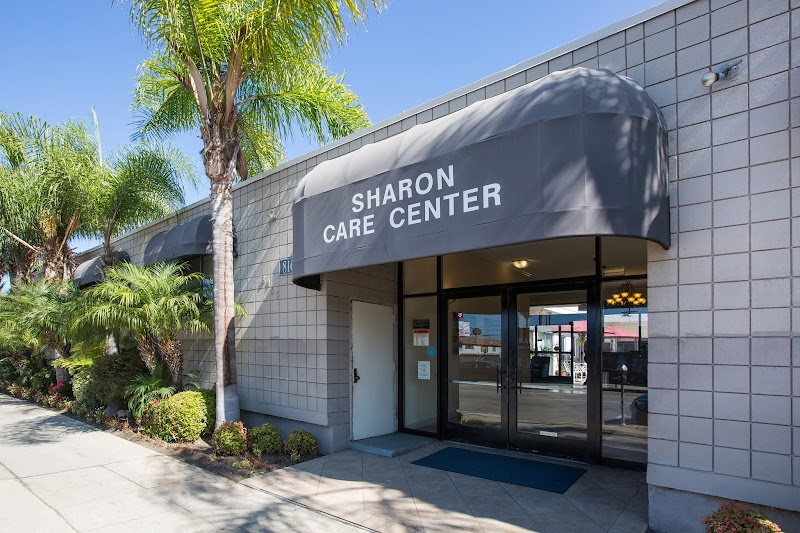
SHARON CARE CENTER

8167 WEST THIRD ST., LOS ANGELES, CA 90048 (323) 655-2023
For profit - Limited Liability company 86 Beds GENESIS HEALTHCARE Data: November 2025 1 Immediate Jeopardy citation
Trust Grade
0/100
#1110 of 1155 in CA
Last Inspection: April 2025

Within standard 12-15 month inspection cycle. Federal law requires annual inspections.

Overview

Sharon Care Center has received a Trust Grade of F, indicating significant concerns with the quality of care provided. It ranks #1110 out of 1155 facilities in California, placing it in the bottom half, and #342 out of 369 in Los Angeles County, meaning there are only a few local options that are better. The facility's performance trend is stable, showing a consistent number of issues over the last two years. Staffing is below average with a rating of 2 out of 5 stars and a concerning turnover rate of 76%, which is significantly higher than the California average. Additionally, the center has incurred $49,162 in fines, which is higher than 83% of other California facilities, indicating ongoing compliance problems. While RN coverage is average, the quality of care is highlighted by several serious incidents, such as a resident being restrained against their will during a catheter procedure and a failure to notify a physician after a resident slipped in the shower. These findings raise serious concerns about the treatment and safety of residents. Overall, families should weigh these significant weaknesses against any positives before considering Sharon Care Center for their loved ones.

Trust Score
F
0/100
In California
#1110/1155
Bottom 4%
Safety Record
High Risk
Review needed
Inspections
Holding Steady
30 → 30 violations
Staff Stability
⚠ Watch
76% turnover. Very high, 28 points above average. Constant new faces learning your loved one's needs.
Penalties
✓ Good
$49,162 in fines. Lower than most California facilities. Relatively clean record.
Skilled Nurses
⚠ Watch
Each resident gets only 20 minutes of Registered Nurse (RN) attention daily — below average for California. Fewer RN minutes means fewer trained eyes watching for problems.
Violations
⚠ Watch
110 deficiencies on record. Higher than average. Multiple issues found across inspections.
★☆☆☆☆
1.0
Overall Rating
★★☆☆☆
2.0
Staff Levels
★★★★☆
4.0
Care Quality
★☆☆☆☆
1.0
Inspection Score
Stable
2024: 30 issues
2025: 30 issues

The Good

  • 4-Star Quality Measures · Strong clinical quality outcomes
  • Full Sprinkler Coverage · Fire safety systems throughout facility
  • No fines on record

Facility shows strength in quality measures, fire safety.

The Bad

1-Star Overall Rating

Below California average (3.1)

Significant quality concerns identified by CMS

Staff Turnover: 76%

30pts above California avg (46%)

Frequent staff changes - ask about care continuity

Federal Fines: $49,162

Above median ($33,413)

Moderate penalties - review what triggered them

Chain: GENESIS HEALTHCARE

Part of a multi-facility chain

Ask about local staffing decisions and management

Staff turnover is very high (76%)

28 points above California average of 48%

The Ugly 110 deficiencies on record

1 life-threatening 4 actual harm
Apr 2025 1 deficiency
CONCERN (D) 📢 Someone Reported This

A family member, employee, or ombudsman was alarmed enough to file a formal complaint

Potential for Harm - no one hurt, but risky conditions existed

Deficiency F0774 (Tag F0774)

Could have caused harm · This affected 1 resident

**NOTE- TERMS IN BRACKETS HAVE BEEN EDITED TO PROTECT CONFIDENTIALITY** Based on observation, interview, and record review, the facility failed to assist and make transportation arrangements for recur...

Read full inspector narrative →
**NOTE- TERMS IN BRACKETS HAVE BEEN EDITED TO PROTECT CONFIDENTIALITY** Based on observation, interview, and record review, the facility failed to assist and make transportation arrangements for recurring chemotherapy (treatment for cancer [A disease in which abnormal cells divide uncontrollably and destroy body tissue]) appointments for one of the three sampled residents (Resident 1). This deficient practice had the potential to result in Resident 1 missing the chemotherapy treatment. Findings: During a record review, the admission record for Resident 1 indicated Resident 1 was admitted to the facility on [DATE] with diagnoses which included non-Hodgkin lymphoma (a type of cancer that begins in lymphocytes, which are white blood cells that help fight infection), fracture (a break in a bone) of the left fibula (the smaller of the two long bones in the lower leg, running from the knee to the ankle), and falls (an event which results in a person coming to rest inadvertently on the ground or floor or other lower level). During a record review, the Minimum Data Set (MDS – a resident assessment tool) dated 2/16/2025, indicated Resident 1 was cognitively intact (a participant who has sufficient judgment, planning, organization, self-control, and the persistence needed to manage the normal demands of the participant's environ). The same MDS indicated, Resident 1 required between partial moderate to substantial/maximum assistance for Activities of Daily Living such as: (ADLs- routine tasks/activities such as, oral hygiene, toileting hygiene, personal hygiene, lower/upper body dressing, putting on/taking off footwear). During a record review, Resident 1 ' s physician ' s order dated 3/10/2025 indicated, Chemotherapy on Monday April 21, 2025, at 8AM. During a concurrent interview and record review of Resident 1 ' s chart with Registered Nurse Supervisor (RNS) on 4/29/2025 and 10:43 am, the RNS 1 acknowledged and stated that the physician order for Resident 1 ' s chemotherapy infusion (to administer into a blood vessel) was entered on 3/10/2025 and scheduled for a chemotherapy infusion appointment on 4/21/2025. RNS stated that on 4/21/2025, at approximately 7:30 am, a few minutes after reporting to work, another facility staff (not identified) working with Resident 1 notified RNS that Resident 1 was verbalizing that Resident 1 had an appointment for chemotherapy at a chemotherapy center on 4/21/2025 at 8 am. RNS 1 stated that she reviewed the appointment schedule and noted that Resident 1 had an appointment but could not find any evidence that transportation was booked for the appointment for Resident 1. RNS stated she called the facility ' s backup transportation to transport Resident 1 to the chemotherapy appointment. RNS stated transportation must be scheduled before the day of appointment to avoid panic and anxiety to residents, and avoid delays. During an interview with the Facility Administrator (FA) on 4/29/2025 at 1:58 pm, the FA stated the facility policy on outside appointments is that whenever a appointment scheduled for a resident, the facility schedules and books transportation as soon as possible to ensure there is enough time before the appointment. The FA admitted and stated Resident 1's transportation was not booked until the day of the appointment, 4/21/2025. The FA stated not booking transportation could result in a resident missing appointment(s). During an interview with the Director of Nursing (DON) on 4/29/2025 at 2:10 pm, the DON admitted and stated Resident 1 reminded the facility about the chemotherapy appointment on the morning of the appointment, 4/21/2025. During a record review, the facility Policy and Procedures (P&P) titled Appointments, revised 12/13/2024, indicated, This policy and procedure document outlines the support a facility provides to residents in accessing specialty healthcare services to enhance their health and wellbeing. The same P&P indicated under procedure steps indicated, Transportation Setup: Transportation to and from the specialty provider is organized as required, to be arranged by Social Services Department and will collaborate with family representative.
Apr 2025 15 deficiencies
CONCERN (D) 📢 Someone Reported This

A family member, employee, or ombudsman was alarmed enough to file a formal complaint

Potential for Harm - no one hurt, but risky conditions existed

Deficiency F0554 (Tag F0554)

Could have caused harm · This affected 1 resident

Based on observation, interview, and record review, the facility failed to assess and ensure one of three sampled residents (Resident 11) had an order to self-administer a medication. This failure ha...

Read full inspector narrative →
Based on observation, interview, and record review, the facility failed to assess and ensure one of three sampled residents (Resident 11) had an order to self-administer a medication. This failure had a potential for Resident 11 to over or under medicate herself which could lead to complications. Findings: During a record review of Resident 11's admission Record, the admission Record indicated the facility admitted Resident 11 on 5/12/2023 with diagnosis including type 2 diabetes mellitus (a medical condition characterized by the body's inability to regulate blood sugar levels) hyperglycemia (too much sugar in the blood). During a review of Resident 11's Minimum data Set (MDS, a resident assessment tool), dated 2/10/2025, the MDS indicated Resident 11's cognition (thought process) was intact. The MDS indicated Resident 11 needed set up assistance with toilet hygiene and personal hygiene, partial moderate assistant (helper does less than half the effort) with shower bathe self, upper and lower body dressing. During an observation and interview on 4/12/2025 at 9am, the bedside of Resident 11, Resident 11 had two tubes of prescription medication triamcinolone acetonide ointment 0.1 %. The directions indicated to apply to left axillary (arm pit) and right buttocks rash. Resident 11 stated the CNAs (in general) would apply the medication to her buttocks daily or whenever she (Resident 11) would request the cream to be applied. Resident 11 stated the medication was prescribed from her doctor outside the facility. During an interview on 4/12/2025 at 3:25 p.m., with CNA 4, CNA 4 stated after cleaning Resident 11 she (CNA4) would apply the triamcinolone acetonide ointment to Resident 11's bilateral (both) armpits, buttocks, and in between Resident 11's thighs. CNA 4 stated Resident 11 told her the triamcinolone acetonide ointment was approved and stated she (CNA4) thought it was ok to apply it. CNA4 stated she did not ask the charge nurse (unidentified). CNA 4 stated it was important not to give any medication to a resident because she (CNA4) was not a licensed nurse, and it could cause harm to the resident. During an interview on 4/12/2025 at 3:40p.m., with Licensed Vocational Nurse 3 (LVN 3), LVN 3 stated before a resident (in general) could administer their own medications, the licensed nurses (in general) needed to complete an assessment form called Self Administration of Medications and would need to call the doctor and create a care plan. LVN stated there could be a bad outcome because Resident 1 was alert and her baseline could change. LVN 3 stated if a medication was left at the bedside, Resident 11 could ingest the medication or overmedicate herself. During an interview on 4/13/2025 at 10:14 a.m., with the Director of Nursing (DON), the DON stated medication should not be left at the resident's bedside and there needs to be an order. The DON stated this could be dangerous the because the medication cream was left at the bedside the resident was at risk of getting too much of the medication. During a review of the facility's undated Policy and Procedures (P&P) titled, Administering Medications, the P&P indicated only persons licensed or permitted by the state to prepare, administer document the administration of medications may do so.
CONCERN (D) 📢 Someone Reported This

A family member, employee, or ombudsman was alarmed enough to file a formal complaint

Potential for Harm - no one hurt, but risky conditions existed

Deficiency F0561 (Tag F0561)

Could have caused harm · This affected 1 resident

Based on observation, interview, and record review the facility failed to provide warm water for one of two sampled residents (Resident 2) to make tea during meals. This failure had the potential for ...

Read full inspector narrative →
Based on observation, interview, and record review the facility failed to provide warm water for one of two sampled residents (Resident 2) to make tea during meals. This failure had the potential for Resident 2's preferences not to be honored and for Resident 2 to feel frustrated. Findings: During a review of Resident 2's admission Record, the admission Record indicated the facility admitted Resident 2 on 3/4/2023 with diagnoses that included muscle weakness (a decrease in muscle strength and the ability to move the body, lack of coordination (a failure in the organization and communication of patient care activities across different healthcare providers and settings), and chronic kidney disease (a progressive, irreversible condition where kidney declines significantly over time). During a review of Resident 2's Food Preference Interview, dated 3/6/2023, the Food Preference Interview indicated Resident 2 preferred to drink tea for breakfast, lunch, and dinner. During a review of Resident 2's Minimum Data Set (MDS, a resident assessment tool), dated 2/17/2025, the MDS indicated Resident 2's cognition (ability to learn, reason, remember, understand, and make decisions) was able to usually understand. The MDS indicated Resident 2 required substantial/maximal assist (helper does more than half the effort; helper lifts or holds trunk or limbs and provide more than half the effort) on staff for showering, dressing, and toileting hygiene. During a review of Resident 2's History and Physical (H&P), dated 3/27/2025, the H&P indicated Resident 2 had the capacity to make needs known but could not make medical decisions. During an interview on 4/11/2025 at 7:51 p.m., with Resident 2, Resident 2 stated, that her preference was to have warm tea three times a day. Resident 2 stated, It was frustrating to have to keep asking for hot water every time; when they (the staff) already know what I prefer tea with my meals. During an observation on 4/13/2025 at 7:30 a.m., in Resident 2's room, there was no tea bag on Resident 2's breakfast tray and no hot water. During an interview on 4/13/2025 at 8:15 a.m., with Certified Nursing Assistant 1 (CNA 1), CNA 1 stated there was no tea bag on Resident 2's breakfast tray. CNA 1 stated she did not bring the hot water to the resident because there was no tea bag on the breakfast tray. CNA 1 stated she was aware Resident 2 preferred to have tea regularly but since she did not see the tea bag, she (CNA1) did not provide the hot water. CNA 1 stated it was important to offer the tea bag and hot water to the resident even if it was does not on the meal tray. CNA 1 stated Resident 2 loved tea. CNA 1 stated if she did not get her (Resident 2) tea with her meals; it could not make her feel well. During a concurrent record review and interview on 4/13/2025 at 9:59 a.m., with the Dietary Manager, Resident 2's Food Preference Interview, dated 3/6/2023, was reviewed. The Dietary Manager stated the Food Preference Interview indicated Resident 2 preferred to drink tea for breakfast, lunch, and dinner. The Dietary Manager stated Resident 2 liked to drink tea and the food preference sheet indicated she (Resident 2) wanted the tea three times a day. The Dietary Manager stated the hot water was to be provided to Resident 2 by the CNAs (in general) when the trays arrived. The Dietary Manager stated it was important for the facility to provide Resident 2 with the tea daily to maintain a homelike environment and the resident dignity. The Dietary Manager stated if the facility did not provide Resident 2 with services, she (Resident 2) could become depressed (characterized by persistent low mood and a loss of interest in activities) and would make the resident unhappy. During a review facility's policy and procedure (P&P) titled, Resident Food Preferences, dated 7/2017, the P&P indicated the Dietary Manager would complete a dietary profile for residents to reflect current food preferences and nutritional needs upon admission, readmission, quarterly, annually or as needed. The P&P indicated the facility would provide residents with meals consistent with their preferences, as indicated on their tray card.
CONCERN (D) 📢 Someone Reported This

A family member, employee, or ombudsman was alarmed enough to file a formal complaint

Potential for Harm - no one hurt, but risky conditions existed

Safe Environment (Tag F0584)

Could have caused harm · This affected 1 resident

Based on observation, interview, and record review the facility failed to ensure one of two sampled residents (Resident 2) had a homelike environment (creating a setting that feels more like a persona...

Read full inspector narrative →
Based on observation, interview, and record review the facility failed to ensure one of two sampled residents (Resident 2) had a homelike environment (creating a setting that feels more like a personal resident than a hospital-like institution) due to chip paint on the wall. This failure had the potential for Resident 2 not to have a comfortable homelike environment. Findings: During a review of Resident 2's admission Record, the admission Record indicated the facility admitted Resident 2 on 3/4/2023 with diagnoses that included muscle weakness (a decrease in muscle strength and the ability to move the body, lack of coordination (a failure in the organization and communication of patient care activities across different healthcare providers and settings), and chronic kidney disease (a progressive, irreversible condition where kidney declines significantly over time). During a review of Resident 2's Minimum Data Set (MDS, a resident assessment tool), dated 2/17/2025, the MDS indicated Resident 2's cognition (ability to learn, reason, remember, understand, and make decisions) was usually able to understand. The MDS indicated Resident 2 required substantial/maximal assist (helper does more than half the effort; helper lifts or holds trunk or limbs and provide more than half the effort) on staff for showering, dressing, and toileting hygiene. During a review of Resident 2's History and Physical (H&P), dated 3/27/2025, the H&P indicated Resident 2 had the capacity to make needs known but could not make medical decisions. During a concurrent observation and interview on 4/11/2025 at 7:51 p.m., with Resident 2, in Resident 2's room, the wall in Resident 2's room had scattered chip paint. Resident 2 stated the chip paint on the wall made her feel upset. During a concurrent observation and interview on 4/11/2025 at 8:11 p.m., with Licensed Vocational Nurse 1 (LVN1), in Resident 2's room, Resident 2's room had scattered chip paint on the wall. LVN 1 stated the chip paint should be addressed right away. LVN 1 stated it was unacceptable to have the wall looking that way. LVN 1 stated it could make Resident 2 feel like she (Resident 2) was not living in a home like environment. During an interview on 4/13/2025 at 9:02 a.m., with the Maintenance Director, the Maintenance Director stated the chip paint on the wall was reported to him on the night of 4/11/2025. The Maintenance Director stated, I don't think the chip paint on the wall just happened on a Friday night while the resident is sleeping. The Maintenance Director stated, I make rounds every week. The Maintenance Director stated it was important to keep the rooms ready and organized for the residents (in general) to feel like they were at home. During a review of policy and procedure (P&P) titled, Maintenance Service, dated 12/2009, the P&P indicated the maintenance department was responsible for maintaining the buildings, grounds, and equipment in a safe and operable manner at all times. The P&P indicated maintaining the building in good repair and establishing priorities in providing repair service. During a review of facility's policy and procedure (P&P) titled, dated 2/2021, the P&P indicated residents were provided with a safe, clean, comfortable and homelike environment. The P&P indicated the facility staff and management maximized, the extent possible, the characteristics of the facility that reflected a personalized, homelike setting including clean, sanitary, and orderly environment.
CONCERN (D) 📢 Someone Reported This

A family member, employee, or ombudsman was alarmed enough to file a formal complaint

Potential for Harm - no one hurt, but risky conditions existed

Comprehensive Care Plan (Tag F0656)

Could have caused harm · This affected 1 resident

Based on observation, interview, and record review the facility failed to ensure one of six sampled residents (Resident 37) had a comprehensive care plan (a detail individualized document that outline...

Read full inspector narrative →
Based on observation, interview, and record review the facility failed to ensure one of six sampled residents (Resident 37) had a comprehensive care plan (a detail individualized document that outlines a patient's goals, needs, and the interventions needed to achieve them across various care settings) when the facility identified Resident 37 had a hard time hearing. This failure had the potential not to meet Resident 37's needs. Findings: During a review of Resident 37's admission Record, the admission Record indicated the facility admitted Resident 37 to the facility on 4/22/2023 with diagnoses of anxiety disorder (a mental health condition characterized by excessive and persistent worry and fear), major depressive disorder (a mental health condition characterized by a persistently low mood, loss of interest, or pleasure in activities), and atherosclerotic heart disease (a buildup of fats on the artery walls). During a review of Resident 37's History and Physical (H&P), dated 9/6/2024, the H&P indicated Resident 37 did not have the capacity to understand and make decisions. During a review of Resident 37's Minimum Data Set (MDS, a resident assessment tool), dated 2/5/2025 the MDS indicated Resident 37's cognition (ability to learn, reason, remember, understand, and make decisions) usually understood others. The MDS indicated Resident 37 required partial/moderate assistance (helper does less than half the effort. Helper lifts, holds, or supports trunk or limbs, but provides less than half the effort) on staff for showering, toileting hygiene, and dressing. During an observation on 4/11/2025 at 8:20 p.m., in Resident 37's room, Resident 37 had a hard time hearing when conversing about the facility. During a concurrent observation and record review on 4/12/2025, at 5:12 p.m., with Social Services Director (SSD), the SSD stated Resident 37 had trouble hearing some of the conversation when speaking to the resident. The SSD stated a care plan should have been developed to ensure the staff was aware of the resident communication needs. During a concurrent interview and record review on 4/12/2025 at 5:25 p.m., with Registered Nurse 3 (RN 3), RN 3 stated there was no care plan developed when Resident 37 became hard of hearing. RN 3 stated the visitor had trouble communicating with Resident 37 and had asked to get her some hearing aids (a device worn in or behind the ear designed to amplify sound for individuals who have difficulty hearing). RN 3 stated a care plan should have been developed to try different interventions such as a communication board, an amplified hearing device (an electronic device that boosts an audio signal), and speaking slowly. RN 3 stated it was important to develop a care plan so the resident (Resident 37) could hear the staff and visitors and communicate her needs. During a review of facility's procedure and policy (P&P) titled, Care Plan Comprehensive, dated 8/2021, the P&P indicated an individualized comprehensive care plan that included measurable objectives and timetables to meet the resident's medical, physical, mental, and psychosocial needs shall be developed for each resident. The P&P indicated for the facility to identify the professional services that are responsible for each element of care. The P&P indicated to aid in preventing or reducing declines in the resident's functional status and/or functional levels. The P&P indicated to reflect currently recognized professional standards of practice for problem areas and conditions.
CONCERN (D) 📢 Someone Reported This

A family member, employee, or ombudsman was alarmed enough to file a formal complaint

Potential for Harm - no one hurt, but risky conditions existed

Pressure Ulcer Prevention (Tag F0686)

Could have caused harm · This affected 1 resident

**NOTE- TERMS IN BRACKETS HAVE BEEN EDITED TO PROTECT CONFIDENTIALITY** c. During a review of Resident 35's admission Record, the admission Record indicated, Resident 35 was readmitted to the facility...

Read full inspector narrative →
**NOTE- TERMS IN BRACKETS HAVE BEEN EDITED TO PROTECT CONFIDENTIALITY** c. During a review of Resident 35's admission Record, the admission Record indicated, Resident 35 was readmitted to the facility on [DATE] with diagnoses including chronic obstructive pulmonary disease ([COPD] -a chronic lung disease causing difficulty in breathing), gastrotomy (a surgical opening fitted with a device to allow feedings to be administered directly to the stomach common for people with swallowing problems), and dysphagia (difficulty swallowing). During a review of Resident 35's History and Physical (H&P), dated 6/23/2023, the H&P indicated Resident 35 had fluctuating capacity to understand and make decisions. During a review of Resident 35's MDS dated [DATE], the MDS indicated Resident 35's cognition (ability to learn, reason, remember, understand, and make decisions) was rarely able to understand. The MDS indicated Resident 35 was dependent (helper does all of the effort. Resident did none of the effort to complete the activity) for showering, dressing, and toileting hygiene. The MDS indicated Resident 35 was to have a pressure reducing device for bed. A review of the Physician's Orders / Order Summary Report, dated 9/20/2023, indicated Resident 35 was to have a LAL mattress with a Level 2, for wound prevention. During a concurrent interview and record review on 4/13/2025 at 2:19 p.m. with Director of Nursing (DON), Resident 35's Order Summary Report was reviewed. The DON stated Level 2 meant the LAL settings would be set for residents that weighed 120 lbs. The DON stated Resident 35 current weight was 82.3 lbs., and it was important to clarify the physician's orders so the staff could lessen the risk for skin breakdown. A review of the facility's policy and procedure titled, Skin Integrity Management, dated 12/16/2024 indicated the purpose was to provide safe and effective care to prevent the occurrence of pressure ulcers, manage treatment, and promote healing of all wounds. Staff continuously monitored and observed residents for changes and implements revisions to the plan of care as needed. Implement pressure ulcer prevention for identified risk factors. Based on observation, interviews and record reviews, the facility failed to provide necessary treatment and services to minimize the risk of development of pressure injuries (PIs, areas of damaged skin caused by staying in one position for too long) for three of four sampled residents (Resident 28, Resident 35, and Resident 71) by failing to: -Ensure to provide a properly functioning low air loss mattress (LALM, pressure relieving mattress that is filled with air) for Resident 28. -Ensure to set Resident 35 and Resident 71's LALM at the correct weight setting in accordance with the attending physician's (MD) order. These failures had the potential for Resident 28, Resident 35, and Resident 71 to develop PIs and skin wounds to worsen. Findings: a. During a review of Resident 28's admission Record, the admission Record indicated the facility admitted Resident 28 on 12/24/2018 with diagnoses of cerebral infarction (damage to tissues in the brain due to a loss of oxygen to the area), and contractures (shortening and hardening of muscles, tendons, or other tissue, often leading to deformity and rigidity of joints) to both legs. During a review of Resident 28's Minimum Data Set (MDS, a resident assessment tool), dated 1/26/2025, the MDS indicated Resident 28 did not have intact cognition and required substantial/maximal assistance (helper does more than half the effort) for toileting hygiene, showering, upper/lower body dressing, personal hygiene and putting on/taking off footwear; required set up or clean up assistance (helper sets up or cleans up) for eating and oral hygiene. During a review of Resident 28's Order Summary Report (OSR) dated 4/12/2025, the OSR indicated Resident 28 was ordered a LALM to be set at 65 lbs., to 110 lbs., for wound prevention. During a review of Resident 28's Care Plan titled, At risk for further skin breakdown related to impaired mobility with history of pressure ulcers, dated 8/13/2022, the care plan indicated the nursing interventions included to use the LALM as ordered and to check the LALM settings. During a review of Resident 28's Care Plan titled, Resident at risk for skin breakdown related to actual skin breakdown, indicated the LALM would be set at 65-110 lbs., with interventions including to monitor the LALM for proper functioning and setting every shift. During an observation on 4/11/2025, at 7:22 PM, Resident 28's LALM was observed with tape and making a loud hissing noise. During a concurrent observation and interview on 4/11/2025, at 7:27 PM with Licensed Vocational Nurse 4 (LVN 4), Resident 28's LALM was observed. LVN 4 stated, The LALM of this resident is leaking air and there's tape all around the machine. If the machine is not working properly, it is not relieving the pressure from the resident's back and they can develop pressure injuries. b. During a review of Resident 71's admission Record, the admission Record indicated the facility admitted Resident 71 on 2/27/2025 with diagnoses that included ulcer of the left lower leg and an open wound of the left lower leg. During a review of Resident 71's MDS, dated [DATE], the MDS indicated Resident 71 had intact cognition (capable of remembering, learning new things, concentrating, or making decisions that affect everyday life) and required substantial/maximal assistance (helper does more than half the effort) for toileting hygiene, showering, lower body dressing and putting on/taking off footwear; required partial/moderate assistance (helper does less than half the effort) for upper body dressing; and required supervision (helper provides verbal cues or touching assistance) for eating and oral hygiene. During a review of Resident 71's OSR dated 3/26/2025, the OSR indicated Resident 71 was ordered a LALM to be set at 120 pounds (lbs., unit of measurement for weight). During a review of Resident 71's Clinical Physician Orders, the Clinical Physician Orders indicated Resident 71 weighed 103.5 lbs. on 4/2/2025. During a review of Resident 71's Care Plan titled, Resident actual skin breakdown due to vascular disease, dated 4/12/2025, the care plan indicated for Resident 71's bed to be set at 80-120 lbs. with interventions including to monitor the LALM for proper functioning and setting every shift. During an observation on 4/11/2025 at 8:06 PM, Resident 71's LALM was observed to be set at 355 lbs. During a concurrent record review and interview on 4/11/2025, at 8:07 PM with Registered Nurse 4 (RN 4), Resident 71's weight record was reviewed. RN 4 stated, On 4/2/2025 she weighed 103.5 lbs. The LALM should not be set at 355 lbs. because it's adding more pressure to her back and she can develop a pressure ulcer. During an interview on 4/13/2025 at 9:04 AM, the Director of Nursing (DON) stated that a LALM set at a higher setting than the resident's weight would add pressure to the resident's wounds, prevent proper healing, and worsen their skin condition. The DON stated that a leaking LALM must be replaced to properly prevent the deterioration of skin ulcers.
CONCERN (D) 📢 Someone Reported This

A family member, employee, or ombudsman was alarmed enough to file a formal complaint

Potential for Harm - no one hurt, but risky conditions existed

Accident Prevention (Tag F0689)

Could have caused harm · This affected 1 resident

**NOTE- TERMS IN BRACKETS HAVE BEEN EDITED TO PROTECT CONFIDENTIALITY** Based on observation, interview, and record review the facility failed to provide a safe environment for two of two sampled resi...

Read full inspector narrative →
**NOTE- TERMS IN BRACKETS HAVE BEEN EDITED TO PROTECT CONFIDENTIALITY** Based on observation, interview, and record review the facility failed to provide a safe environment for two of two sampled residents (Resident 48 and Resident 11) by failing to ensure not to place an electrical extension cord in the residents' walk area. This failure had the potential for Resident 48 and Resident 11 to fall and sustain an injury. Findings: a. During a review of Resident 48's admission Record, the admission Record indicated the facility admitted Resident 48 on 4/1/2024 with diagnoses including acute kidney failure (rapid loss of the kidneys' ability to remove waste), chest pain, and muscle weakness. During a review of Resident 48's Minimum Data Set (MDS, a resident assessment tool) dated 2/28/2025, the MDS indicated Resident 48's cognitive skills (ability to think and reason) for daily decision-making was intact. The MDS indicated Resident 48 required set up or clean up assistance (helper provides verbal cues with and assistance) with shower/bathe self, lower body dressing, putting on /taking off footwear and walking ten feet. During a review of Resident 48's Care Plan Report dated 8/26/2024, the Care Plan Report, indicated Resident 48 was at risk for falls related to hoarding (difficulty discarding possessions), ambulatory, intervertebral disc disorders (wear and tear of the disc in the spine) with lumbar region radiculopathy (compression or irritation of nerve roots of the spine), muscle wasting and atrophy (a decrease in size), iron deficiency anemia (low level of healthy red blood cells ), generalized anxiety disorder (excessive ongoing worry that is difficult to control), adjustment disorder (excessive reactions to stress that involve negative thoughts) with depressed mood (persistence feelings of sadness), and atherosclerotic heart disease (damage or disease of the heart). The Care Plan indicated the goal was for Resident 48 not to have falls with injury within 90 days. The Care Plan indicated the nursing interventions were to provide verbal cues for safety and sequencing when needed, reposition items as needed to location within visual field, and to provide resident/caregiver education for safe techniques to prevent falls. b. During a review of Resident 11's admission Record, the admission Record indicated the facility admitted Resident 11 on 5/12/2023 with diagnoses including type 2 diabetes mellitus (a medical condition characterized by the body's inability to regulate blood sugar levels) hyperglycemia (too much sugar in the blood), and hyperlipidemia unspecified (high level of fat in the blood). During a review of Resident 11's MDS, dated [DATE], the MDS indicated Resident 11's cognition (thought process) was intact. The MDS indicated Resident 11 needed set up assistance with toilet hygiene and personal hygiene, partial moderate assistant (helper does less than half the effort) with shower bathe self, upper and lower body dressing. During an observation and interview on 4/12/2025 at 9 a.m., in resident 48's room, there was an orange extension cord plugged in the bathroom outlet taped on the wall, the cord went down the wall, under the bathroom door on to the floor with tape stretching across the floor plugged into resident 11's bed. Resident 48 told the surveyor to look at the way maintenance set up the extension cord. Resident 48 stated he almost fell when he (Resident 48) went over to help his wife (unspecified date and time). Resident 48 stated it was not safe to have an extension cord on the floor. During an observation and interview on 4/12/2025 at 5:13 p.m., with the Maintenance Director, the Maintenance Director stated the extension cord had been plugged in the bathroom outlet for two weeks. The Maintenance Director stated the tape he (Maintence Director) placed to hold the extension cord in place was coming off. The Maintenance Director stated by placing the extension cord from the bathroom going to the resident's bed was not safe and stated someone could trip, fall, and sustain injuries. During an interview on 4/13/2025 at 10:14 a.m., with the Director of Nursing (DON), the DON stated placing an extension cord from the bathroom to the resident's bed was not safe and it could cause injury. The DON stated the residents could trip over the extension cord. During a review of the facility's undated policy and Procedure (P&P) titled, Electrical Safety for Residents, the P&P indicated the resident would be protected from injury associated with the use of electrical devices, including electrocution, burns and fire. The P&P indicated when extension cords were used, the following precautions must be taken: -Secure extension cords and do not place overhead, under carpets, or where they can cause trips, falls or overheat. -Connect extension cords to only one device -Ensure the type of cord used is appropriate of the size and type of electrical load. -Ensure that cords have proper grounding. -Inspect regularly for fraying, cuts, or breakage
CONCERN (D) 📢 Someone Reported This

A family member, employee, or ombudsman was alarmed enough to file a formal complaint

Potential for Harm - no one hurt, but risky conditions existed

Incontinence Care (Tag F0690)

Could have caused harm · This affected 1 resident

Based on observation, interview, and record review the facility failed to provide the necessary care and treatment for one of three sampled residents (Resident 51) who had an indwelling catheter (a me...

Read full inspector narrative →
Based on observation, interview, and record review the facility failed to provide the necessary care and treatment for one of three sampled residents (Resident 51) who had an indwelling catheter (a medical device inserted into the bladder to drain urine continuously) by failing to notify the physician when there were sediment (the solid matter that settles to the bottom of a liquid, such as urine or blood) in the indwelling catheter's tubing. This failure placed Resident 51 at risk for urinary tract infection (UTI, an infection in any part of the urinary system). Findings: During a review of Resident 51's admission Record, the admission Record indicated the facility admitted Resident 51 on 11/25/2024 with diagnoses including osteomyelitis (a bone infection and inflammation caused by bacteria), diabetes mellitus (DM, a medical condition characterized by the body's inability to regulate blood sugar levels), and benign prostatic hyperplasia (a non-cancerous condition when the prostate gland grows larger than normal which can cause urinary problems). During a review of Resident 51's physician order titled, Order Summary Report, dated 2/11/2025, the Order Summary Report indicated to change Resident 51's indwelling catheter for excessive sedimentation. During a review of Resident 51's History and Physical (H&P), dated 3/5/2025, the H&P indicated Resident 51 had the capacity to make needs known but could not make medical decisions. During a review of Resident 51's Minimum Data Set (MDS, a resident assessment tool), dated 3/10/2025 the MDS indicated Resident 51's cognition (ability to learn, reason, remember, understand, and make decisions) usually understood others. The MDS indicated Resident 51 required substantial/maximal assist (helper does more than half the effort; helper lifts or holds trunk or limbs and provide more than half the effort) on staff for showering, toileting hygiene, and putting on footwear. During an observation on 4/11/2025 at 9 p.m., in Resident 51's room there was a large amount of sediment in Resident 51's indwelling catheter. During an observation on 4/12/2025 at 9:01 a.m., in Resident 51's room there was a large amount of sediment in Resident 51's indwelling catheter. During a concurrent observation and interview on 4/12/2025 at 3:07 p.m. with Licensed Vocational Nurse 4 (LVN4) in Resident 52's room. LVN 4 stated Resident 51 had sediment in the indwelling catheter. LVN 4 stated it was important to keep track of the sediment and report to the physician. LVN 4 stated to notify the physician if the sediment was increased or decreased. LVN 4 stated not communicating with the physician placed Resident 51 at risk to miss treatments for the sediment. During a concurrent interview and record review on 4/12/2025 at 4:05 p.m. with Registered Nurse 1 (RN 1), Resident 51's physician order titled, Order Summary Report, dated 2/11/2025 was reviewed. RN1 stated the Order Summary Report indicated to change indwelling catheter for excessive sedimentation. RN 1 stated there was sediment in the indwelling catheter. RN 1 stated the nurses (in general) were to notify the physician when there was sediment in the indwelling catheter. RN 1 stated Resident 51's physician was not notified of the sediment. RN 1 stated not notifying the physician placed Resident 51 at risk for a UTI. During a review of facility's policy and procedure (P&P) titled, Change of Condition, dated 8/2021, the P&P indicated to ensure residents, family, legal representatives and physicians are informed of changes in the resident's condition.
CONCERN (D) 📢 Someone Reported This

A family member, employee, or ombudsman was alarmed enough to file a formal complaint

Potential for Harm - no one hurt, but risky conditions existed

Tube Feeding (Tag F0693)

Could have caused harm · This affected 1 resident

**NOTE- TERMS IN BRACKETS HAVE BEEN EDITED TO PROTECT CONFIDENTIALITY** Based on observation, interview, and record review the facility failed to ensure to label and date the feeding tube syringe (a s...

Read full inspector narrative →
**NOTE- TERMS IN BRACKETS HAVE BEEN EDITED TO PROTECT CONFIDENTIALITY** Based on observation, interview, and record review the facility failed to ensure to label and date the feeding tube syringe (a specialized syringe used to administer liquid formula or medication directly into a feeding tube) for one of one sampled resident (Resident 35) who had a gastrostomy tube (G-tube, is a tube that is placed directly into the stomach). This failure placed Resident 35 at risk for infection and G-tube complications. Findings: During a review of Resident 35's admission Record, the admission Record indicated the facility initially admitted Resident 35 on 12/2/2022 and was readmitted on [DATE] with diagnoses that included chronic obstructive pulmonary disease(COPD, a chronic lung disease causing difficulty in breathing), gastrotomy (a surgical opening fitted with a device to allow feedings to be administered directly to the stomach common for people with swallowing problems), and dysphagia (difficulty swallowing). During a review of Resident 35's History and Physical (H&P), dated 6/23/2023, the H&P indicated Resident 35 had fluctuated capacity to understand and make decisions. During a review of Resident 35's Minimum Data Set (MDS, a resident assessment tool), dated 2/21/2025, the MDS indicated Resident 35's cognition (ability to learn, reason, remember, understand, and make decisions) was rarely able to understand. The MDS indicated Resident 35 was dependent (helper does all of the effort. Resident does none of the effort to complete the activity) for showering, dressing, and toileting hygiene. The MDS indicated Resident 35's nutritional approaches were feeding tube (a method of delivering nutrition directly to the digestive system through a tube). During an observation on 4/11/2025 at 7:20 p.m., in Resident 35's room, the feeding tube syringe was not dated and was not labeled. During a concurrent interview and record review on 4/12/2025, at 4:36 p.m., with Registered Nurse 1 (RN 1), a picture dated as taken on 4/11/2025 of Resident 35's feeding tube syringe was reviewed. RN 1 stated the feeding tube syringe should be dated and timed. RN 1 stated the feeding tube syringe needed to be changed daily. RN1 stated the nurses (in general) would not be able to know when the last time the feeding tube syringe was changed. RN 1 stated Resident 35 would be at risk for an infection if the feeding tube syringe was not changed daily. During a review of the facility's policy and procedure titled, Enteral Feeding-Close, dated 5/26/2021, the P&P indicated to administered tube feeding and change syringe daily.
CONCERN (D) 📢 Someone Reported This

A family member, employee, or ombudsman was alarmed enough to file a formal complaint

Potential for Harm - no one hurt, but risky conditions existed

Deficiency F0698 (Tag F0698)

Could have caused harm · This affected 1 resident

**NOTE- TERMS IN BRACKETS HAVE BEEN EDITED TO PROTECT CONFIDENTIALITY** Based on observation, interview, and record review, the facility failed to ensure one of two hemodialysis (HD, a treatment to cl...

Read full inspector narrative →
**NOTE- TERMS IN BRACKETS HAVE BEEN EDITED TO PROTECT CONFIDENTIALITY** Based on observation, interview, and record review, the facility failed to ensure one of two hemodialysis (HD, a treatment to cleanse the blood of wastes and extra fluids artificially through a machine when the kidney(s) have failed) residents (Resident 125) received dialysis care and services based on professional standards. Resident 125 did not have equipment or supplies, including an emergency kit consisting of clean gauze, tourniquet (a device used to compress a limb to stop bleeding) and tape necessary to manage emergencies such as bleeding at the bedside. The deficient practices had the potential to result in not having the necessary supplies to stop bleeding from an arterial venous fistula shunt (AV shunt, an abnormal connection between an artery and a vein, provides an accessible pathway for blood removal and return during dialysis [a medical procedure that cleans your blood when your kidneys are not working]). Findings: During a review of Resident 125's admission Record, the admission Record indicated Resident 125 was admitted to the facility on [DATE] with diagnoses including end stage renal disease (ESRD -irreversible kidney failure), dependence on renal dialysis (a treatment to cleanse the blood of wastes and extra fluids artificially through a machine when the kidney[s] have failed), peripheral vascular disease, unspecified (a slow and progressive disorder of the blood vessels. During a review of Resident 125's Minimum data Set (MDS, a resident assessment tool) dated 3/30/2025, the MDS indicated Resident 125's cognition (thought process) was intact. The MDS indicated Resident 125 needed set up assistance with eating, partial/moderate assistance (helper does less than half the effort ) with toilet hygiene, lower and upper body dressing and shower/bathe self. During a review of Resident 125's Physician's Order Report, active orders as of 4/12/2025, the report indicated to monitor AV shunt site for signs and symptoms of infection, edema (swelling), bleeding and upon return from dialysis. Notify primary care physician and dialysis unit if there were signs and symptoms of infection (invasion and growth of germs in the body), if AV site was bleeding apply pressure for 15 minutes and notify MD /physician extender if bleeding did not stop as needed. During an observation and interview on 4/11/2025 at 8 p.m., in Resident 125's room with the Licensed Vocational Nurse 2 (LVN 2), LVN 2 stated an emergency kit needed to be near Resident 125's bedside. LVN 2 stated Resident 125 had an AV shunt to her left upper arm and after searching for the emergency kit, she stated the resident did not have one. LVN 2 stated it was important to have an emergency kit at the residents bedside in case there was an incident where the AV fistula starts to bleed. She stated this would be an emergency and there would be no delay in care if the emergency kit was present. During an interview on 4/12/2025 at 9:24 a.m., LVN 3 stated an emergency kit was used if the residents AV shunt was dislodged and started to bleed. LVN 3 stated the supplies would be within easy reach for staff to use. LVN 3 stated taking your time in helping the resident could have bad consequences, like hemorrhage, loss of consciousness, or stop breathing. During an interview on 4/13/2025 at 10:14 a.m., the Director of Nursing (DON) stated there should always be an emergency kit at the resident's bedside. It was important for the resident's safety in case of bleeding, staff could prevent. The DON stated if there was no e-kit the resident's blood pressure could become low, 911 must be called and the resident could possibly die. A review of the facility's policy and procedure titled, Dialysis Care dated 12/16/2024, indicated nursing staff would be trained on emergency care for residents with renal diseases and dialysis care (e.g., hypotension, hemorrhage, from dislodging of the catheter, symptoms of sepsis or other needs of the dialysis resident.
CONCERN (D) 📢 Someone Reported This

A family member, employee, or ombudsman was alarmed enough to file a formal complaint

Potential for Harm - no one hurt, but risky conditions existed

Deficiency F0726 (Tag F0726)

Could have caused harm · This affected 1 resident

Based on observation, interview, and record review, the facility failed to ensure Certified Nursing Assistant 4 (CNA4) and CNAs (in general) did not apply triamcinolone acetonide ointment 0.1 % (presc...

Read full inspector narrative →
Based on observation, interview, and record review, the facility failed to ensure Certified Nursing Assistant 4 (CNA4) and CNAs (in general) did not apply triamcinolone acetonide ointment 0.1 % (prescribed medication used to help relieve redness, itching, and swelling) to one of five sampled residents (Resident 11). This failure violated the facility's Administering Medications policy and procedure and had the potential for Resident 11 to use the medication inappropriately. Findings: During a record review of Resident 11's admission Record, the admission Record indicated the facility admitted Resident 11 on 5/12/2023 with diagnosis including type 2 diabetes mellitus (a medical condition characterized by the body's inability to regulate blood sugar levels) hyperglycemia (too much sugar in the blood). During a review of Resident 11's Minimum data Set (MDS, a resident assessment tool), dated 2/10/2025, the MDS indicated Resident 11's cognition (thought process) was intact. The MDS indicated Resident 11 needed set up assistance with toilet hygiene and personal hygiene, partial moderate assistant (helper does less than half the effort) with shower bathe self, upper and lower body dressing. During an observation and interview on 4/12/2025 at 9am, the bedside of Resident 11 had two tubes of prescription medication triamcinolone acetonide ointment 0.1 %. The directions indicated to apply to left axillary (arm pit) and right buttocks rash. Resident 11 stated the CNAs (in general) would apply the medication to her buttocks daily or whenever she (Resident 11) would request the cream to be applied. Resident 11 stated the medication was prescribed from her doctor outside the facility. During an interview on 4/12/2025 at 3:25 p.m., with CNA 4, CNA 4 stated after cleaning Resident 11 she (CNA4) would apply the triamcinolone acetonide ointment to Resident 11's bilateral (both) armpits, buttocks, and in between Resident 11's thighs. CNA 4 stated Resident 11 told her the triamcinolone acetonide ointment was approved and stated she (CNA4) thought it was ok to apply it. CNA4 stated she did not ask the charge nurse (unidentified). CNA 4 stated it was important not to give any medication to a resident because she (CNA4) was not a licensed nurse, and it could cause harm to the resident. During an interview on 4/12/2025 at 3:40p.m., with Registered Nurse 3 (RN 3), RN 3 stated triamcinolone acetonide ointment was a prescription medication. RN 3 stated Resident 11 did not have an order for the triamcinolone acetonide ointment and needed a doctor's order. RN3 stated Resident 11 needed to have a self-administration of medication evaluation (a tool used to assess the ability to self-administer medications) and a care plan. RN 3 stated the CNAs (in general) were not licensed nurses and were not allowed to give prescription medication and could harm to the residents. During a review of the facility's undated Policy and Procedures (P&P) titled, Administering Medications, the P&P indicated only persons licensed or permitted by the state to prepare, administer document the administration of medications may do so.
CONCERN (D) 📢 Someone Reported This

A family member, employee, or ombudsman was alarmed enough to file a formal complaint

Potential for Harm - no one hurt, but risky conditions existed

Deficiency F0761 (Tag F0761)

Could have caused harm · This affected 1 resident

**NOTE- TERMS IN BRACKETS HAVE BEEN EDITED TO PROTECT CONFIDENTIALITY** b. During a review of Resident 52's admission Record, the admission Record indicated, Resident 52 was initially admitted to the ...

Read full inspector narrative →
**NOTE- TERMS IN BRACKETS HAVE BEEN EDITED TO PROTECT CONFIDENTIALITY** b. During a review of Resident 52's admission Record, the admission Record indicated, Resident 52 was initially admitted to the facility on [DATE] and was readmitted on [DATE]. Resident 52's diagnoses included depressive disorder (mental health conditions characterized by persistent low mood and loss of interest or pressure in activities), epilepsy (a neurological disorder characterized by recurrent seizures), and rotator cuff tear (an injury to the muscles and tendons that surround the shoulder joint, causing shoulder pain, weakness, and limited range of motion). During a review of Resident 52's History and Physical (H&P), dated 12/20/2022, the H&P indicated Resident 52 had the capacity to understand and make decisions. During a review of Resident 35's MDS dated [DATE], the MDS indicated Resident 35's cognition (ability to learn, reason, remember, understand, and make decisions) had the ability to understand. The MDS indicated Resident 52 required substantial/maximal assist (helper does more than half the effort; helper lifts or holds trunk or limbs and provide more than half the effort) from staff for showering, dressing, and toileting hygiene. During an observation on 4/11/2025 at 9:28 p.m. in Resident 52's room there were two tablets in a medicine cup on the Resident 52's bedside table. During an interview on 4/12/2025 at 6:33 p.m., the Licensed Vocational Nurse (LVN) stated she had left the medication on the bedside table at 8:35 p.m. and she did this every night. The LVN stated Resident 52 used the medication to help her sleep and it was not okay to leave the medication with the resident. The LVN stated Resident 52 could be hiding the medications and could potentially collect the medication and overdose. During an interview on 4/13/2025 at 11:28 a.m., the Registered Nurse (RN) stated the process was to pour the medication, pass the medication, allow Resident 52 to take the medication, and sign the medication was given. The RN stated the staff was not to leave medications on the bedside table. The RN stated it was best to ensure the resident take the medication before leaving the room, as leaving the medication on the bedside could be dangerous because another resident might take it or have an allergic reaction to Resident 52's medication. The facility's policy and procedure titled, Storage of Medications, dated 12/16/2024 indicated the facility stored all drugs and biologicals in a safe, secure and orderly manner. The drugs used in the facility were stored in locked compartments under proper temperature, light and humidity controls. Based on observation, interview, and record review, the facility failed to properly store two of 20 sampled residents (Resident 62 and Resident 52) medications in accordance with the facility's Storage of Medications policy and procedure (P&P). This failure had the potential to cause Resident 62 and Resident 52 to use the medication improperly which could lead to harm. Findings: a. During a review of Resident 62's admission Record, the admission Record indicated the facility admitted Resident 62 on 1/25/2024 with diagnosis of cerebral infarction (damage to tissues in the brain due to a loss of oxygen to the area). During a review of Resident 62's Minimum Data Set (MDS, a resident assessment tool) dated 1/29/2025, the MDS indicated the resident had intact cognition (capable of remembering, learning new things, concentrating, or making decisions that affect everyday life) and required partial/moderate assistance (helper does less than half the effort) for toileting hygiene, showering, upper/lower body dressing, putting on/taking off footwear and personal hygiene. The MDS indicated Resident 62 required set up or clean up assistance (helper sets up or cleans up) for eating and oral hygiene. During a review of Resident 62's Order Summary Report (OSR) dated 9/17/2024, the OSR indicated Resident 62 was ordered Preparation H (hemorrhoid [bulging growths in anus] cream). During an observation on 4/11/2025, at 8:03 PM, Preparation H cream was observed in Resident 62's room on Resident 62's bedside table next to food. During a concurrent observation and interview with Registered Nurse 4 (RN 4), Preparation H was observed on Resident 62's bedside table next to food. RN 4 stated, medication should not be left at bedside, because it's not safe, they may eat it, drink it, take in a different route not intended and this may cause harm to the resident. During an interview on 4/13/2024 at 9:11 AM, the Director of Nursing (DON) stated the P&P indicated only persons authorized to prepare and administer medications had access to locked medications. The DON stated, We have to make sure the medication cannot be taken by another resident. It needs to be stored in a secure area with the licensed nurse. It's not appropriate to leave a medication at a resident's bedside. The patient might use it inappropriately or have it stolen by another resident who may use it.
CONCERN (D) 📢 Someone Reported This

A family member, employee, or ombudsman was alarmed enough to file a formal complaint

Potential for Harm - no one hurt, but risky conditions existed

Food Safety (Tag F0812)

Could have caused harm · This affected 1 resident

Based on observation, interview, and record review, the facility failed to store food in accordance with professional standards for food service safety. In the refrigerator, there was no label or date...

Read full inspector narrative →
Based on observation, interview, and record review, the facility failed to store food in accordance with professional standards for food service safety. In the refrigerator, there was no label or date on the sandwiches and the bin of expired butter cups were not discarded. These deficient practices had the potential to cause food-borne illnesses to the residents. -Ensure the low temperature dishwashing machine had the appropriate concentration of sanitizer. Findings: During an observation on 4/11/2025 at 6:36 PM, unlabeled sandwiches were observed in the facility's kitchen refrigerator. During a concurrent observation and interview on 4/11/2025 at 6:41 PM with [NAME] 1, unlabeled sandwiches were observed in the refrigerator. [NAME] 1 stated, There's no date on the sandwiches. If there's no date we don't know how old it is and someone can get sick if they eat an old sandwich. During an observation on 4/11/2025 at 6:58 PM, a bin of expired butter cups were observed in the facility's refrigerator. During a concurrent observation and interview on 4/11/2025 at 6:42 PM with Dishwasher 1, the dishwasher test strip was observed to be white after D1 tested the low temperature dishwashing machine's sanitizer concentration level. D1 stated, the test strip is white but it should be purple to show that the proper concentration of sanitizer is present in the rinse solution. It's important to have the correct concentration of sanitizer so the dishes can be properly sanitized and prevent illness to residents. A review of the facility's policy and procedure (P&P) titled, Food Storage: Cold Foods, dated 2/2023, indicated all food would be labeled and dated. A review of the facility's P&P titled, Warewashing, dated 2/2023, indicated all dishware, service ware and utensils would be cleaned and sanitized after each use. During a concurrent interview and record review on 4/13/2025 at 9:16 AM with the Director of Nursing (DON), the facility's P&P titled, Receiving, dated 2/2023, indicated all food items would be appropriately labeled and dated either through manufacturer packaging or staff notation. The DON stated food must be labeled to ensure it was not expired and to prevent residents from eating old food and getting sick. The DON stated the dishwashing machine must have the appropriate level of sanitizer to disinfect plates and prevent residents from eating from dirty plates which may get residents sick.
CONCERN (D) 📢 Someone Reported This

A family member, employee, or ombudsman was alarmed enough to file a formal complaint

Potential for Harm - no one hurt, but risky conditions existed

Infection Control (Tag F0880)

Could have caused harm · This affected 1 resident

Based on observation, interview, and record review the facility failed to practice effective infection control for one of two sampled residents (Resident 23) in accordance with the facility's Infectio...

Read full inspector narrative →
Based on observation, interview, and record review the facility failed to practice effective infection control for one of two sampled residents (Resident 23) in accordance with the facility's Infection Prevention and Control policy and procedure by failing to keep Resident 23's urinal (a device for males to urinate) away from his food. This failure had the potential for Resident 23 to eat contaminated food and placed Resident 23 at risk for infection. Findings: During a review of Resident 23's admission Record, the admission Record indicated the facility admitted Resident 23 on 1/12/2023 with diagnosis of unspecified mental disorder. During a review of Resident 23's History and Physical (H&P) dated 1/13/2023, the HP indicated Resident 23 did not have the capacity to understand and make decisions. During a review of Resident 23's Minimum Data Set (MDS, a resident assessment tool) dated 12/30/2024, the MDS indicated Resident 23 had moderately impaired cognition (capable of remembering, learning new things, concentrating, or making decisions that affect everyday life) and required partial/moderate assistance (helper does less than half the effort) for toileting hygiene, showering, lower body dressing and putting on/taking off shoes. The MDS indicated Resident 23 required supervision (helper provides verbal cues or touching assistance) for oral hygiene, upper body dressing and personal hygiene. The MDS indicated Resident 23 required set up or clean up assistance (helper sets up or cleans up) for eating. During an observation on 4/11/2025, at 7:49 PM, in Resident 23's room, a urinal with urine inside was observed on Resident 23's bedside table next to his food and drinks. During a concurrent observation and interview on 4/11/2025, at 7:51 PM with Licensed Vocational Nurse 6 (LVN 6) in Resident 23's room, a urinal with urine inside was observed on Resident 23's bedside table next to his food and drinks. LVN 6 stated, the urinal is next the pt's food. This is not safe for infection control reasons. He might get sick from eating the food exposed to urine. During a concurrent interview and record review on 4/13/2024, at 9:07 AM, with the Director of Nursing (DON), the facility's P&P titled Infection Prevention and Control dated 12/16/2024 was reviewed. The P&P indicated the facility would help maintain a safe and sanitary environment to help prevent and manage the transmission of diseases and infections. The P&P indicated the objectives of the infection prevention and control P&Ps were to monitor, prevent, detect, investigate and control infections in the facility. The DON stated, if the resident's urinal is next to the resident's food it is not a safe and sanitary environment. The resident might get sick if they eat the food exposed to urine because urine is dirty.
CONCERN (D) 📢 Someone Reported This

A family member, employee, or ombudsman was alarmed enough to file a formal complaint

Potential for Harm - no one hurt, but risky conditions existed

Deficiency F0919 (Tag F0919)

Could have caused harm · This affected 1 resident

Based on observation, interview, and record review the facility failed to ensure the call light (a device used by a resident to signal his or her need for assistance) for one of 20 sampled resident (R...

Read full inspector narrative →
Based on observation, interview, and record review the facility failed to ensure the call light (a device used by a resident to signal his or her need for assistance) for one of 20 sampled resident (Resident 2) functioned properly. This failure had the potential for Resident 2 not to be able to call for assistance. Findings: During a review of Resident 2's admission Record, the admission Record indicated the facility admitted Resident 2 on 3/4/2023 with diagnoses that included muscle weakness (a decrease in muscle strength and the ability to move the body, lack of coordination (a failure in the organization and communication of patient care activities across different healthcare providers and settings), and chronic kidney disease (a progressive, irreversible condition where kidney declines significantly over time). During a review of Resident 2's Minimum Data Set (MDS, a resident assessment tool), dated 2/17/2025, the MDS indicated Resident 2's cognition (ability to learn, reason, remember, understand, and make decisions) was able to usually understand. The MDS indicated Resident 2 required substantial/maximal assist (helper does more than half the effort; helper lifts or holds trunk or limbs and provide more than half the effort) on staff for showering, dressing, and toileting hygiene. During a review of Resident 2's History and Physical (H&P), dated 3/27/2025, the H&P indicated Resident 2 had the capacity to make needs known but could not make medical decisions. During an observation on 4/11/2025 at 7:51 p.m., and at 8 p.m., in Resident 2's room, Resident 2 pressed the call light, and the call light did not have a sound and did not have a light appear on the outside of the doorway. During an interview on 4/11/2025 at 8:10 p.m., with Licensed Vocational Nurse 1 (LVN 1), LVN 1 stated Resident 2 had the ability to press the call light. LVN1 stated the call light was not working. LVN 1 stated he was not sure how often the call lights were checked by maintenance. LVN 1 stated it was the staff's responsibility to make sure the call lights were fully accessible and working. LVN 1 stated if the call light was not working, the staff would not know if the resident needed help, and the resident would not get help immediately. During an interview on 4/13/2025 at 9:10 a.m., with the Maintenance Supervisor, the Maintenance Supervisor stated he checked the call lights throughout the facility once a week on Fridays from 11 a.m., to 3 p.m. The Maintenance Supervisor stated it was important to make sure the call lights were working so the residents could get help and would get what they (the residents) needed. During a review of policy and procedure (P&P) titled, Maintenance Service, dated 12/2009, the P&P indicated the maintenance department was responsible for maintaining the buildings, grounds, and equipment in a safe and operable manner at all times. The P&P indicated functions of maintenance personnel included but were not limited to maintaining the paging system in good working order. During a review of policy and procedure (P&P) titled, Call System, Resident, dated 9/2022, the P&P indicated residents were provided with a means to call staff for assistance through a communication system that directly calls a staff member or a centralized workstation. The P&P indicated the resident call system remained functional at all times. The P&P indicate the resident call system was routinely maintained and tested by the maintenance department.
MINOR (B) 📢 Someone Reported This

A family member, employee, or ombudsman was alarmed enough to file a formal complaint

Minor Issue - procedural, no safety impact

Deficiency F0912 (Tag F0912)

Minor procedural issue · This affected multiple residents

**NOTE- TERMS IN BRACKETS HAVE BEEN EDITED TO PROTECT CONFIDENTIALITY** Based on observation, interview, and record review , the facility failed to ensure 14 of 33 residents' rooms ( room [ROOM NUMBER...

Read full inspector narrative →
**NOTE- TERMS IN BRACKETS HAVE BEEN EDITED TO PROTECT CONFIDENTIALITY** Based on observation, interview, and record review , the facility failed to ensure 14 of 33 residents' rooms ( room [ROOM NUMBER], 8, 9, 11, 14, 15, 16, 17, 18, 19, 21, 24, 25) met the space requirements of 80 square feet for each resident in multiple resident bedrooms. This deficient practice had the potential to result in inadequate space to provide safe nursing care and privacy for the impacted residents. Findings: On 4/12/2025 at 9;13 p.m., during a tour of the facility, Rooms 1, 8, 9, 11, 14, 15, 17, 18, 18, 19, 21, 23, 24, 25 were observed not to be occupied with more than four residents. The rooms were observed with enough space for nursing staff to provide care to the residents. The rooms were observed with enough space for nursing staff to provide care to the residents in the rooms. The rooms were observed with privacy curtains for each resident and direct access to the corridors. During a resident council meeting on 4/12/2025 there were no concerns brought up by the residents who attended the meeting, regarding the size of the residents rooms. A review of the facility's Client Accommodation Analysis, dated 4/12/2025 at 5:13 p.m., indicated the following rooms with their corresponding measurements. Room number of Beds Total Square Feet 1 3 228.26 8 3 229.00 9 3 237.00 11 3 233.00 14 3 234.00 15 3 237.00 16 3 230.00 17 3 234.00 18 3 216.00 21 3 225.70 23 3 239.28 24 3 236.54 25 3 239.71 The Client Accommodation Analysis indicated the above rooms measured less than the required 80 square footage per resident in multiple resident bedrooms. For a three bed capacity room, the square footage requirements would be at least 240 square feet. During a concurrent observation and interview, on 4/12/2025 at 3:41 p.m., the Maintenance (MD), stated he did not have any residents or staff complain of the rooms being too small. The MD stated the nurses had enough space when using the Hoyer lift (mechanical device allows a person to be lifted and transferred with a minimum of physical effort) and wheelchairs. During an observation and interview on 4/13/2025 at 8:30 a.m., in Resident 1's room, Certified Nurse Assistant 3 (CNA 3 ) stated she had no problems with the room size when preparing residents to get up in their wheel chairs. CNA 3 stated she could transfer residents in wheelchairs to the bathroom with no problem. During an interview on 4/13/2025 at 10:14 a.m., the Director of Nursing (DON) stated this was an old building, I have never had a nurse complain of the rooms being too small. During a review of a letter from the Administrator dated 6/ 6/2024, indicated the administrator requested for a room waiver for Rooms 1, 8, 9, 11, 14, 15, 16, 17, 18, 19, 21, 23, 24, and 25. The letter indicated each room listed on the attached on the Client Accommodation Analysis had no projections or other obstructions, which may interfere with free movement of wheel chairs and / or sitting devices. The letter indicated there was enough space to provide for each resident's care, dignity, and privacy. The letter indicated the rooms were in accordance with the special needs of the residents and would not have an adverse effect on residents' health and safety or impede the ability of any residents in the rooms to attain his or her highest practical well-being. The letter further indicated all measures would be taken to assure the comfort of each resident, the granting of this variance would not adversely affect the health and safety of the residents, and would be in accordance with any special needs of each resident. The room waiver was recommended to continue and was contingent with federal regulations at accommodation of needs (483.15) Residents Rights (483.10).
Mar 2025 1 deficiency
CONCERN (D) 📢 Someone Reported This

A family member, employee, or ombudsman was alarmed enough to file a formal complaint

Potential for Harm - no one hurt, but risky conditions existed

Medication Errors (Tag F0758)

Could have caused harm · This affected 1 resident

**NOTE- TERMS IN BRACKETS HAVE BEEN EDITED TO PROTECT CONFIDENTIALITY** Based on interview and record review, the facility failed to ensure one sampled resident's (Resident 3) as needed (PRN) psychotr...

Read full inspector narrative →
**NOTE- TERMS IN BRACKETS HAVE BEEN EDITED TO PROTECT CONFIDENTIALITY** Based on interview and record review, the facility failed to ensure one sampled resident's (Resident 3) as needed (PRN) psychotropic medication (any drug that affects brain activities associated with mental processes and behavior) had a documented 14-day limit for administration. This failure caused an increased risk in Resident 3's mental and psychosocial well-being. Findings: A review of Resident 3's admission Record indicated the resident was admitted to the facility on [DATE] with diagnoses including schizophrenia (a mental illness that is characterized by disturbances in thought), major depressive disorder (a mood disorder that causes a persistent feeling of sadness and loss of interest), and restlessness and agitation. A review of Resident 3's Medication Administration Record (MAR) dated 12/24/24 indicated the resident was prescribed Seroquel 25 milligrams (mg, unit of measurement) every 12 hours as needed without a 14-day stop. A review of the Scheduling Details dated 12/11/24 and 12/23/24, indicated Resident 3 was prescribed Seroquel 25 mg every 12 hours as needed for agitation. The end date indicated an indefinite end date. A review of Resident 3's Minimum Data Set (MDS – a resident assessment tool), dated 3/3/25, indicated the resident had no long or short-term memory deficit, good memory recall, and no signs or symptoms of delirium. The MDS indicated the resident had little interest, was feeling down, feeling tired, and feeling bad about herself between 2-11 days a week. A review of Resident 3's Order Summary Report dated 3/6/25 indicated the resident was prescribed Seroquel 50 mg every six hours as needed for agitation. The order had a start date of 2/28/25. The order did not have a 14-day stop. A review Resident 3's MAR dated 3/25 indicated Resident 3 was prescribed Seroquel 50 mg without the 14-day stop. During an interview on 3/21/25 at 4:10 PM, the facility Psychiatrist (PSYMD) stated she did not order the Seroquel as needed for agitation for Resident 3. The PSYMD stated when she sees PRN Seroquel orders she discontinues the order. The PSYMD stated the order probably came from the General Acute Care Hospital (GACH) when Resident 3 was at the hospital. The PSYMD stated she was sure she did not order it. During a concurrent interview and record review on 3/21/25 at 11:15 AM with the Director of Nursing (DON), Resident 3's Order Summary Report dated 3/6/25, the MAR dated 3/25, and the Physician Order Scheduling Details dated 12/11/24 and 12/23/24 were reviewed. The DON stated and agreed the Seroquel as needed order (PRN) was not canceled per the Order Summary Report, and did not have the 14-day time stop. The DON agreed the Seroquel order was on Resident 3's MAR without the 14-day stop. The DON reviewed the Physician ' s Order Scheduling Details dated 12/11/24 and 12/23/24 and agreed the Seroquel PRN order end date indicated indefinite. The DON stated, The 14-day stop was needed otherwise how do we know it's effective. During an interview on 3/21/25 at 2:12 PM, the Pharmacy Consultant stated Seroquel should have a 14-day stop for Resident 3 and the prescriber should write it as a stop date. A review of the facility's policy and procedure titled, Psychotropic Medication Use, dated 6/21, indicated PRN orders for psychotropic drugs were limited to 14 days. If the attending physician or prescribing practitioner believed that it was appropriate for the PRN order to be extended beyond 14 days, the rational should be documented and indicate the duration for the PRN order.
Mar 2025 3 deficiencies
CONCERN (D) 📢 Someone Reported This

A family member, employee, or ombudsman was alarmed enough to file a formal complaint

Potential for Harm - no one hurt, but risky conditions existed

Deficiency F0645 (Tag F0645)

Could have caused harm · This affected 1 resident

**NOTE- TERMS IN BRACKETS HAVE BEEN EDITED TO PROTECT CONFIDENTIALITY** Based on interview and record review, the facility failed to ensure staff properly assessed and document for one of three sample...

Read full inspector narrative →
**NOTE- TERMS IN BRACKETS HAVE BEEN EDITED TO PROTECT CONFIDENTIALITY** Based on interview and record review, the facility failed to ensure staff properly assessed and document for one of three sampled residents (Resident 1) on Preadmission Screening and Resident Review, (PASARR- a federally required screening to help identify individuals with possible serious mental illnesses requiring a specialized follow up evaluation). The deficient practice resulted in Resident 1 not receiving a PASRR II (assessment that determines if resident's mental condition could be met in the nursing facility or if the individual requires specialized services) and subsequent follow up. Findings: During a review of the admission record for Resident 3 indicated Resident 3 was initially admitted to the facility on [DATE] and was readmitted on [DATE] with diagnoses including metabolic encephalopathy (a brain dysfunction caused by underlying conditions affecting the body's metabolism, leading to impaired brain function and potentially symptoms like confusion, memory loss, or coma), schizophrenia (a mental illness that is characterized by disturbances in thought), and major depressive disorder (a mood disorder that causes a persistent feeling of sadness and loss of interest). During a review of the Minimum Data Set (MDS – a resident assessment tool) dated 12/18/2024, indicated Resident 1 had moderate cognitive impairment (a stage of cognitive decline that affects short-term memory and the ability to complete complex tasks). The same MDS indicated Resident 1 had feelings of feeling down, depressed, hopeless, and feeling bad about herself/she was a failure/let herself or family down seven to 11 days. Resident 1 ' s MDS indicated, Resident 1 required between supervision or touching assistance and partial/moderate assistance for all Activities of Daily Living such as: (ADLs- routine tasks/activities such as eating, oral hygiene, toileting hygiene, personal hygiene, lower/upper body dressing, putting on/taking off footwear). During a review of Resident 1 ' s care plan titled Focus: Resident 1 exhibits verbal behaviors aeb (as evidenced by) yelling at staff and becoming physical with staff members related to: Cognitive loss/Dementia, Psychiatric Disorder(s): Schizophrenia, mood disorder dated 12/10/2024, indicated approaches for staff to evaluate the nature and circumstances (i.e., triggers) of the [verbal behavior] with resident/patient and/or resident representative. Remove resident/patient from environment, if needed. Gently guide the resident from the environment while speaking in a calm, reassuring voice. During a review of Resident 1 ' s care plan titled Resident/patient exhibits or is at risk for distressed/fluctuating mood symptoms related to episodes of paranoia dated 12/17/2024, Provide an environment that is conducive to the residents/patients ability to get adequate sleep and maintain resident's/patient's preferred sleep/wake schedule. Allow time for expression of feelings; provide empathy, encouragement, and reassurance. During a review of Resident 1 ' s PASARR level I dated 12/10/2024, the PASRR level I indicated, the screening was no completed. Section III-Mental Illness of the PASARR question 10 Suspected Mental Illness. After observing the Individual or reviewing their records, do you believe the Individual may be experiencing serious depression or anxiety, unusual or abnormal thoughts, extreme difficulty coping, or significantly unusual behaviors or does the individual actively engage in community mental health services? Was not answered. During a review of Resident 1 ' s Situation Background Assessment and Recommendation (SBAR: a form that is a documentation of a complete assessment in response to a change in condition) form dated 1/14/2025 at 11:13 pm, indicated Resident 1 had a change in condition (COC, a sudden clinically important decline from a patient's baseline in physical, cognitive, behavioral, or functional abilities) behavioral symptoms identified as verbal aggression. The SBAR indicated, Patient (Resident 1) became increasingly agitated because she wanted her medication scheduled to be changed from 2100 to 19:30 (9pm to 7:30 pm) Patient (Resident 1) stated, I will pull your hair if you don't give me the medication. During a review of Resident 1 ' s SBAR dated 3/3/2025 at 6:30 pm indicated, Resident 1 had alleged that her (Resident 1) roommate said inappropriate comments. The SBAR indicated, Patient (Resident 1) get agitated often or behavioral changes happens frequently, she create situation to be getting extra attention. During an interview with the Minimal Data Set Nurse (MDSN) on 3/7/25 at 12:01 pm, the MDSN stated that every admission packet of a resident being admitted from General Acute Care Hospital (GACH) must include a PASRR level I and II level II if a resident is determined to have serious mental illness. The MDSN stated that the facility reviews and ensures that the PASRR is accurate. The facility initiates another PASRR assessment if it is inaccurate during the first clinical team (Director of Nursing [DON], Social Services, MDSN, Medical Records Director) meeting held within the first 24 hours of the resident ' s admission. MDSN confirmed that Resident 1 should have had a PASRR level II completed due to her schizophrenia diagnosis. A PASRR level II triggers additional support from the Department of Mental Health (DMH). During a concurrent interview and record review of Resident 1 ' s PASRR level I with the DON on 3/11/25 at 12:20 pm, the DON admitted that the evaluation was inaccurate because question number 10 was not answered which may have prompted that PASRR level II be completed. The DON admitted that the facility should have reviewed and worked to rectify the inaccuracy of PASRR level I. The DON admitted that support from the DMH personnel may have assisted with finding the right plan of care to prevent escalation of behaviors. During a review of the facility's policy and procedure (P&P) titled, BEHAVIOR MANAGEMENT, revised 12/16/2024, the P&P indicated, Resident exhibiting behavioral symptoms will be individually evaluated to determine the behavior. The interdisciplinary team identifies underlying medical, physical, functional, psychosocial, emotional, psychiatric, or environmental causes that contribute to changes in the Resident's behavior. The same P&P indicated, staff must ensure that a resident Whose assessment did not reveal or who does not have a diagnosis of a mental or psychosocial adjustment difficulty does not display a pattern of decreased social intervention and/or increased withdrawn, angry, or depressive behaviors, unless the resident's clinical condition demonstrates that development of such a pattern was unavoidable.
CONCERN (D) 📢 Someone Reported This

A family member, employee, or ombudsman was alarmed enough to file a formal complaint

Potential for Harm - no one hurt, but risky conditions existed

Deficiency F0646 (Tag F0646)

Could have caused harm · This affected 1 resident

**NOTE- TERMS IN BRACKETS HAVE BEEN EDITED TO PROTECT CONFIDENTIALITY** Based on interview and record review, the facility failed to notify a physician after a significant change (COC- a sudden clinic...

Read full inspector narrative →
**NOTE- TERMS IN BRACKETS HAVE BEEN EDITED TO PROTECT CONFIDENTIALITY** Based on interview and record review, the facility failed to notify a physician after a significant change (COC- a sudden clinically important decline from a patient's baseline in physical, cognitive, behavioral, or functional abilities) in the mental or physical condition of a resident who has mental illness for one of the three sampled residents (Resident 1). This deficient practice resulted in Resident 1 ' s increased behavioral, psychiatric, and mood-related symptoms requiring General Acuate Care Hospital (GACH) admission on [DATE]. Cross reference F645and F656. Findings: During a review of the admission record for Resident 3 indicated Resident 3 was initially admitted to the facility on [DATE] and was readmitted on [DATE] with diagnoses including metabolic encephalopathy (a brain dysfunction caused by underlying conditions affecting the body's metabolism, leading to impaired brain function and potentially symptoms like confusion, memory loss, or coma), schizophrenia (a mental illness that is characterized by disturbances in thought), and major depressive disorder (a mood disorder that causes a persistent feeling of sadness and loss of interest). During a review of the Minimum Data Set (MDS – a resident assessment tool) dated 12/18/2024, indicated Resident 1 had moderate cognitive impairment (a stage of cognitive decline that affects short-term memory and the ability to complete complex tasks). The same MDS indicated Resident 1 had feelings of feeling down, depressed, hopeless, and feeling bad about herself/she was a failure/let herself or family down seven to 11 days. Resident 1 ' s MDS indicated, Resident 1 required between supervision or touching assistance and partial/moderate assistance for all Activities of Daily Living such as: (ADLs- routine tasks/activities such as eating, oral hygiene, toileting hygiene, personal hygiene, lower/upper body dressing, putting on/taking off footwear). During a review of Resident 1 ' s Situation Background Assessment and Recommendation (SBAR: a form that is a documentation of a complete assessment in response to a change in condition) form dated 1/14/2025 at 11:13 pm, indicated Resident 1 had a change in condition (COC, a sudden clinically important decline from a patient's baseline in physical, cognitive, behavioral, or functional abilities) behavioral symptoms identified as verbal aggression. The SBAR indicated, Patient (Resident 1) became increasingly agitated because she wanted her medication scheduled to be changed from 2100 to 19:30 (9pm to 7:30 pm) Patient (Resident 1) stated, I will pull your hair if you don't give me the medication. The same SBAR indicated that the physician was not yet informed about the COC. During a review of Resident 1 ' s SBAR dated 3/3/2025 at 6:30 pm indicated, Resident 1 had alleged that her (Resident 1) roommate said inappropriate comments. The SBAR indicated, Patient (Resident 1) get agitated often or behavioral changes happens frequently, she create situation to be getting extra attention. The SBAR did not include any recommendations from the physician During a review of Resident 1 ' s SBAR dated 3/6/2025 at 9:25 am, indicated, Resident 1 was evaluated for Altered Mental Status (AMS). The same SBAR indicated that Resident 1 had personality changes and AMS. Resident 1 was sent to Emergency Department (ED) for further evaluation. During a review of nursing notes dated 3/6/2025 at 9:26 am indicated, Pt attempted to choke herself with hair bonnet. Assisted by license nurses, 3 CNA's, activities and maintenance director. Removed bonnet and attempted to redirect the pt (Resident 1) . Fire department responded for 5150 (a temporary, involuntary psychiatric hold in California, where a person is taken into custody for up to 72 hours for evaluation and treatment if they are deemed a danger to themselves or others, or are gravely disabled due to a mental illness) followed by LAPD (Pos Angeles Police Department) officers Pt (Resident 1) transferred via 911 (the emergency telephone number in the United States and Canada used to contact police, fire, or ambulance services for immediate help) to GACH. During a concurrent interview and record review of Resident 1 ' s SBAR for 1/14/2025 with Licensed Vocational Nurse (LVN) 2 on 3/10/2025 at 9:27 am, LVN 2 admitted that there was no documented evidence that the physician was notified about the change. She stated that the physician must be informed about all changes in condition. During a concurrent interview and record review of Resident 1 ' s SBAR dated 1/14/2025 with the Director of Nursing (DON) on 3/11/2025 at 12:20 pm confirmed that there was no documented evidence that the physician was called and informed. The DON stated that notifying the physician is important because they (physician) will give new orders or instructions on how to handle the behaviors presented. During a review of the facility's policy and procedure (P&P) titled, Change in Condition: Notification of, revised 12/16/2024, the P&P indicated, To ensure residents, family, legal representatives, and physicians are infom1ed of changes in the resident's condition. The same P&P indicated, A Facility must immediately inform the resident, consult with the Resident's physician and/or NP (Nurse Practitioner), and notify, consistent with his/her authority, Resident Representative where there is: · An accident involving the Resident. · A significant change in the Resident's physical, mental, or psychosocial status (that is, a deterioration in health, mental or psychosocial status in either life-threatening conditions or clinical complications). · A need to alter treatment significantly (that is, a need to discontinue or change an existing form of treatment due to adverse consequences, or to commence a new fom1 of treatment); or · A decision to transfer or discharge the Resident from the Center.
CONCERN (D) 📢 Someone Reported This

A family member, employee, or ombudsman was alarmed enough to file a formal complaint

Potential for Harm - no one hurt, but risky conditions existed

Comprehensive Care Plan (Tag F0656)

Could have caused harm · This affected 1 resident

**NOTE- TERMS IN BRACKETS HAVE BEEN EDITED TO PROTECT CONFIDENTIALITY** Based on observations and record reviews, the facility failed to monitor one of the three sampled residents (Resident 1) by fail...

Read full inspector narrative →
**NOTE- TERMS IN BRACKETS HAVE BEEN EDITED TO PROTECT CONFIDENTIALITY** Based on observations and record reviews, the facility failed to monitor one of the three sampled residents (Resident 1) by failing to: 1. Update Resident 1 ' s care plan for at risk for physical behavior towards others, after a Change of Condition (COC) on 1/14/2025 and 2/24/2025. 2. create an individualized and specific interventions for quetiapine fumarate (Seroquel- an antipsychotic medication that treats several kinds of mental health conditions including schizophrenia and bipolar disorder) and schizophrenia. This failure resulted in the escalation of behaviors requiring Resident 1 to be admitted to General Acute Care Hospital (GACH) on 3/6/2025. Findings: Cross reference F645. During a review of the admission record for Resident 3 indicated Resident 3 was initially admitted to the facility on [DATE] and was readmitted on [DATE] with diagnoses including metabolic encephalopathy (a brain dysfunction caused by underlying conditions affecting the body's metabolism, leading to impaired brain function and potentially symptoms like confusion, memory loss, or coma), schizophrenia (a mental illness that is characterized by disturbances in thought), and major depressive disorder (a mood disorder that causes a persistent feeling of sadness and loss of interest). During a review of the Minimum Data Set (MDS – a resident assessment tool) dated 12/18/2024, indicated Resident 1 had moderate cognitive impairment (a stage of cognitive decline that affects short-term memory and the ability to complete complex tasks). The same MDS indicated Resident 1 had feelings of feeling down, depressed, hopeless, and feeling bad about herself/she was a failure/let herself or family down seven to 11 days. Resident 1 ' s MDS indicated, Resident 1 required between supervision or touching assistance and partial/moderate assistance for all Activities of Daily Living such as: (ADLs- routine tasks/activities such as eating, oral hygiene, toileting hygiene, personal hygiene, lower/upper body dressing, putting on/taking off footwear). During a review of Resident 1 ' s care plan titled Focus: Resident 1 exhibits verbal behaviors aeb (as evidenced by) yelling at staff and becoming physical with staff members related to: Cognitive loss/Dementia, Psychiatric Disorder(s): Schizophrenia, mood disorder dated 12/10/2024, indicated approaches for staff to evaluate the nature and circumstances (i.e., triggers) of the [verbal behavior] with resident/patient and/or resident representative. Remove resident/patient from environment, if needed. Gently guide the resident from the environment while speaking in a calm, reassuring voice. During a review of Resident 1 ' s care plan titled Resident/patient exhibits or is at risk for distressed/fluctuating mood symptoms related to episodes of paranoia dated 12/17/2024, Provide an environment that is conducive to the residents/patients ability to get adequate sleep and maintain resident's/patient's preferred sleep/wake schedule. Allow time for expression of feelings; provide empathy, encouragement, and reassurance During a review of Resident 1 ' s Situation Background Assessment and Recommendation (SBAR: a form that is a documentation of a complete assessment in response to a change in condition) form dated 1/14/2025 at 11:13 pm, indicated Resident 1 had a change in condition (COC, a sudden clinically important decline from a patient's baseline in physical, cognitive, behavioral, or functional abilities) behavioral symptoms identified as verbal aggression. The SBAR indicated, Patient (Resident 1) became increasingly agitated because she wanted her medication scheduled to be changed from 2100 to 19:30 (9pm to 7:30 pm) Patient (Resident 1) stated, I will pull your hair if you don't give me the medication. During a review of Resident 1 ' s physician ' s order dated 1/24/2025 indicated, Seroquel oral tablet. Give 250mg by mouth at bedtime for schizophrenia m/b (manifested by) anger outburst. During a review of Resident 1 ' s physician ' s order dated 2/28/2025 indicated, Seroquel 50 mg oral tablet. Give 1 tablet by mouth every 6 hours as needed for agitation and give 1 tablet by mouth one time a day for schizophrenia aeb (as evidence by) agitation related to schizophrenia. During a review of Resident 1 ' s SBAR dated 3/3/2025 at 6:30 pm indicated, Resident 1 had alleged that her (Resident 1) roommate said inappropriate comments. The SBAR indicated, Patient (Resident 1) get agitated often or behavioral changes happens frequently, she create situation to be getting extra attention. During an interview with the Minimal Data Set Nurse (MDSN) on 3/7/2025 at 12:01 pm, MDSN stated that a care plan is a tool to address pt (resident) needs to provide the right care during a resident ' s stay. MDSN stated that all residents must have care plans about their diagnoses, medications, and treatments such as skin care treatments. MDSN stated that care plans must be initiated and updated if there is a change in conditions. Interventions for medications must be specific to each medication such as the exact side effects to observe and when to report. During a concurrent interview and record review of Resident 1 ' s chart with Licensed Vocational Nurse (LVN) 2 on 3/10/2025 at 9:27 am, LVN 2 stated that a care plan must be initiated when there is a COC or updated when one had already been developed because that is how nursing staff know what the needs of a resident are and ensure safety and quality of life. LVN 2 confirmed that the care plan for Seroquel did not list the specific interventions nursing staff should have been monitoring. LVN 2 admitted that the behavior monitoring care plan was not updated when Resident 1 had a change in condition on 1/14/2025 and 2/24/2025. During a concurrent interview and record review of Resident 1 ' s chart with the Director of Nursing (DON) on 3/11/2025 at 12:20 pm admitted that a care plan should have been developed/updated when she had behavioral changes on 1/14/25 to show what the plan is for the resident. The potential could be that staff may miss something that could help with the Resident 1 ' s behavior. The DON confirmed admitted that the behavior care plan should have included the types of behavior Resident 1 was presenting. The DON admitted stated that for the Seroquel, the interventions must include the specifics that the facility were monitory as listed in the behavior monitoring. During a review of the policy and procedure (P&P) titled, CARE PLAN COMPREHENSIVE, revised 12/16/2024, the P&P indicated, An individualized comprehensive care plan that includes measurable objectives and timetables to meet the resident' s medical, physical, mental and psychosocial needs shall be developed for each resident. The same P&P indicated the following procedures which included: Each resident ' s comprehensive care plan is designed to: - Incorporate identified problem areas. - Build on the resident's individualized needs, strengths, preferences. Assessments of residents are ongoing and care plans arc reviewed and revised as information about the resident and the resident's condition change.
Mar 2025 3 deficiencies
CONCERN (D) 📢 Someone Reported This

A family member, employee, or ombudsman was alarmed enough to file a formal complaint

Potential for Harm - no one hurt, but risky conditions existed

Comprehensive Care Plan (Tag F0656)

Could have caused harm · This affected 1 resident

**NOTE- TERMS IN BRACKETS HAVE BEEN EDITED TO PROTECT CONFIDENTIALITY** Based on interview and record review, the facility failed to develop and implement a comprehensive care plan that meet the care/...

Read full inspector narrative →
**NOTE- TERMS IN BRACKETS HAVE BEEN EDITED TO PROTECT CONFIDENTIALITY** Based on interview and record review, the facility failed to develop and implement a comprehensive care plan that meet the care/services based on the resident ' s individual assessed needs for one of five sampled resident (Resident 1) by failing to ensure a baseline care plan was initiated and implemented for Resident 1 ' s pain management and left lower leg fracture with splint. This deficient practice had the potential to result negative impact on Resident 1 ' s health and safety, as well as the quality of care and services received. Findings: A review of Resident 1's admission Record indicated that Resident 1 was admitted to the facility on [DATE] with diagnosis including fracture (broken bone) of left fibula (long, thin bone located in the lower leg) and osteoporosis (a condition in which bones become weak and brittle). A review of Resident 1's Minimum Data Set (MDS - a comprehensive standardized assessment and care-screening tool) dated 2/16/2025, MDS indicated Resident 1 has an intact cognition (mental action or process of acquiring knowledge and understanding) for daily decision-making and requiring moderate to maximal assistance from staff for activities of daily living (ADLs- toileting hygiene, shower/bathing self, upper and lower body dressing, repositioning from sit to lying and sit to stand). A review of Resident 1 ' s Medical Record (MR), from 2/9/2025 to 3/4/2025, MR indicated no care plan was initiated and implemented for Resident 1 ' s pain management and left lower leg fracture with splint. During a concurrent interview and record review with the Director of Nursing (DON) on 3/5/2025 at 12:03 p.m., DON verified missing care plans for Resident 1 ' s pain management and left lower leg fracture with splint. DON stated that baseline care plan should be initiated within 48 hours upon admission to be able to provide an individualized plan of care to the residents. A review of the facility ' s policy and procedures (P&P), titled, Care Plan-Baseline, reviewed on 12/16/2024, P&P indicated that the baseline care plan is developed within 48 hours of a resident ' s admission. A review of the facility ' s P&P, titled, Pain Management, reviewed on 12/16/2024, P&P indicated that an individualized, interdisciplinary plan of care will be developed and include: · Addressing/treating underlying causes of pain to the extent possible. · Non-pharmacological and pharmacological approaches · Using specific strategies for preventing or minimizing different levels of sources of pain or pain related symptoms. A review of facility ' s P&P, titled, Skin Integrity Management, reviewed on 12/16/2024, P&P indicated to develop comprehensive, interdisciplinary plan of care including prevention and wound treatments as indicated.
CONCERN (D) 📢 Someone Reported This

A family member, employee, or ombudsman was alarmed enough to file a formal complaint

Potential for Harm - no one hurt, but risky conditions existed

Pressure Ulcer Prevention (Tag F0686)

Could have caused harm · This affected 1 resident

**NOTE- TERMS IN BRACKETS HAVE BEEN EDITED TO PROTECT CONFIDENTIALITY** Based on observation, interview, and record review, the facility failed to ensure assessment and monitoring of the left lower le...

Read full inspector narrative →
**NOTE- TERMS IN BRACKETS HAVE BEEN EDITED TO PROTECT CONFIDENTIALITY** Based on observation, interview, and record review, the facility failed to ensure assessment and monitoring of the left lower leg splint to one of one sampled resident (Resident 1). This deficient practice has the potential for Resident 1 to develop complications such as skin breakdown and possibly compartment syndrome (excessive pressure builds up inside an enclosed muscle space in the body which slows the flow of blood, oxygen and nutrients to and from the affected tissue). Findings: A review of Resident 1's admission Record indicated that Resident 1 was admitted to the facility on [DATE] with diagnosis including fracture (broken bone) of left fibula (long, thin bone located in the lower leg) and osteoporosis (a condition in which bones become weak and brittle). A review of Resident 1's Minimum Data Set (MDS - a comprehensive standardized assessment and care-screening tool) dated 2/16/2025, MDS indicated Resident 1 has an intact cognition (mental action or process of acquiring knowledge and understanding) for daily decision-making and requiring moderate to maximal assistance from staff for activities of daily living (ADLs- toileting hygiene, shower/bathing self, upper and lower body dressing, repositioning from sit to lying and sit to stand). MDS also indicated Resident 1 was at risk for developing pressure ulcers/injuries (injury to skin and underlying tissue resulting from prolonged pressure on the skin). A review of Resident 1 ' s Medical Record (MR), from 2/9/2025 to 3/5/2025, MR indicated no documentation of assessment and monitoring of Resident 1 ' s left lower leg splint. During an observation on 3/5/2025 at 10:36 a.m., Resident 1 was observed with left lower leg splint. During a concurrent interview and record review with the Director of Nursing (DON) on 3/5/2025 at 12:03 p.m., DON verified missing documentation on assessment and monitoring Resident 1 ' s left lower leg splint. DON stated that they are supposed to assess and monitor the site every shift with a physician order to make sure no complications A review of the facility ' s policy and procedure (P&P), titled, Skin Integrity Management, reviewed on 12/16/2024, P&P indicated that facility will provide safe and effective care to prevent occurrence of pressure ulcers, manage treatment and promote healing of all wounds. P&P indicated to perform skin inspection on admission/re-admission, weekly for the first month, quarterly and with significant change in condition. P&P also indicated to perform daily monitoring of wounds or dressing for presence of complications or declines and document.
CONCERN (D) 📢 Someone Reported This

A family member, employee, or ombudsman was alarmed enough to file a formal complaint

Potential for Harm - no one hurt, but risky conditions existed

Deficiency F0725 (Tag F0725)

Could have caused harm · This affected 1 resident

**NOTE- TERMS IN BRACKETS HAVE BEEN EDITED TO PROTECT CONFIDENTIALITY** Based on interview, and record review, the facility failed to ensure sufficient nursing staff was available to provide nursing a...

Read full inspector narrative →
**NOTE- TERMS IN BRACKETS HAVE BEEN EDITED TO PROTECT CONFIDENTIALITY** Based on interview, and record review, the facility failed to ensure sufficient nursing staff was available to provide nursing and related services to meet the resident ' s needs safely and in a manner that promotes each resident ' s rights, physical, mental, and psychosocial well-being for three of five sampled residents (Residents 1, 4 and 5) by failing to: 1. Ensure prompt assistance with basic care for Resident 1. 2. Ensure scheduled showers were provided to Residents 4 and 5. These deficient practices resulted in Residents 1 waiting for more than three hours for basic care, while Resident 4 and 5 not receiving the scheduled shower which has the potential to affect the quality of life for Residents 1, 4 and 5. Findings: 1. A review of Resident 1's admission Record indicated that Resident 1 was admitted to the facility on [DATE] with diagnosis including fracture (broken bone) of left fibula (long, thin bone located in the lower leg) and osteoporosis (a condition in which bones become weak and brittle). A review of Resident 1's Minimum Data Set (MDS - a comprehensive standardized assessment and care-screening tool) dated 2/16/2025, MDS indicated Resident 1 has an intact cognition (mental action or process of acquiring knowledge and understanding) for daily decision-making and requiring moderate to maximal assistance from staff for activities of daily living (ADLs- toileting hygiene, shower/bathing self, upper and lower body dressing, repositioning from sit to lying and sit to stand). MDS also indicated Resident 1 has frequent episodes of incontinence (having no or insufficient voluntary control over urination or defecation) with urine. During an interview with Resident 1 on 3/5/2025 at 10:36 a.m., Resident 1 stated that she (Resident 1) had to wait more than three hours to get assistance for incontinence care. During an interview with the Certified Nursing Assistant 1 (CNA1) on 3/5/2025 at 11:32 a.m., CNA1 stated that Resident 1 needed to wait longer before she (CNA1) was able to assist her (Resident 1). During an interview with the Director of Nursing (DON) on 3/5/2025 at 12:03 p.m., DON stated that they have to assist the resident as soon as possible and that waiting for three hours to get the care was too long and unacceptable. A review of facility ' s policy and procedure (P&P), titled, Activities of Daily Living, Supporting, reviewed on 12/16/2024, P&P indicated that Residents will be provided with care, treatment and services as appropriate to maintain or improve the ability to carry out ADLs. P&P also indicated that Residents who are unable to carry out ADLs independently will received the services necessary to maintain good nutrition, grooming and personal hygiene. 2a. A review of Resident 4's admission Record indicated that Resident 4 was admitted to the facility on [DATE] with diagnosis including Parkinson ' s Disease (a disorder in the brain that affects movement, often including tremors), epilepsy (a disorder in which a nerve cell activity in the brain is disturbed causing seizure [a sudden, uncontrolled electrical disturbance in the brain]) and dementia (loss of cognitive functioning-thinking, remembering, and reasoning). A review of Resident 4's MDS dated [DATE], MDS indicated Resident 4 has severely impaired cognition for daily decision-making and requiring maximal assistance from staff for ADLs. A review of Resident 4 ' s ADLs flowsheet, dated 3/5/2025, ADLs flowsheet indicated no documentation that Resident 4 was bathed or showered. A review of facility ' s shower schedule, dated 3/5/2025, shower schedule indicated Resident 4 was scheduled to shower every Wednesday. During an interview with CNA1 on 3/5/2025 at 11:32 a.m., CNA1 stated that she (CNA1) was not able to shower Resident 4 due to not having enough time and that she (CNA1) got busy with four residents needing to be showered. 2b. A review of Resident 5's admission Record indicated that Resident 5 was admitted to the facility on [DATE] with diagnosis including atrial fibrillation (AF-an irregular rapid heart rate that commonly causes poor blood flow), generalized weakness and abnormalities with gait (ambulation) and mobility. A review of Resident 5's MDS dated [DATE], MDS indicated Resident 5 has moderately impaired cognition for daily decision-making and requiring moderate assistance from staff for ADLs. A review of Resident 5 ' s ADLs flowsheet, dated 3/5/2025, ADLs flowsheet indicated no documentation that Resident 5 was bathed or showered. A review of facility ' s shower schedule, dated 3/5/2025, shower schedule indicated Resident 5 was scheduled to shower every Wednesday. During an interview with Certified Nursing Assistant 2 (CNA2) on 3/5/2025 at 11:42 a.m., CNA2 stated that she (CNA2) was not able to shower Resident 5 due to having too many residents assigned to her (CNA2) to shower. During an interview with the DON on 3/5/2025 at 12:03 p.m., DON stated that residents should be showered twice a week and as needed unless resident refused. A review of the facility ' s policy and procedure (P&P), titled, Activities of Daily Living, Supporting, reviewed on 12/16/2024, P&P indicated that Residents will be provided with care, treatment and services as appropriate to maintain or improve the ability to carry out ADLs. P&P also indicated that Residents who are unable to carry out ADLs independently will received the services necessary to maintain good nutrition, grooming and personal hygiene. A review of facility ' s P&P, titled, Bath, Shower/Tub reviewed on 12/16/2024, P&P indicated that facility promote cleanliness, provide comfort to the resident and to observe the condition of the resident ' s skin. A review of facility ' s Job Description (JD), titled, Certified Nursing Assistant, reviewed on 12/16/2024, JD indicated that CNAs will assist residents in accordance to their needs ranging from minimal assistance to total dependent care on ADLs.
Jan 2025 1 deficiency
CONCERN (D) 📢 Someone Reported This

A family member, employee, or ombudsman was alarmed enough to file a formal complaint

Potential for Harm - no one hurt, but risky conditions existed

Deficiency F0726 (Tag F0726)

Could have caused harm · This affected 1 resident

**NOTE- TERMS IN BRACKETS HAVE BEEN EDITED TO PROTECT CONFIDENTIALITY** Based on interviews and record review, the facility failed to ensure: 1. Licensed nurses had the skills and knowledge to identif...

Read full inspector narrative →
**NOTE- TERMS IN BRACKETS HAVE BEEN EDITED TO PROTECT CONFIDENTIALITY** Based on interviews and record review, the facility failed to ensure: 1. Licensed nurses had the skills and knowledge to identify a change in condition for one of the three sampled residents (Resident 1) who had a critically low platelet count (PLT- a laboratory test that measures the number of platelets in the blood. Platelets are small, cell-like fragments that play a crucial role in blood clotting by forming a plug at the site of injury) level of 33,000 (normal PLT is between 150,000 and 400,000 platelets per microliter [µL]). 2. The physician was informed immediately when the critically low PLT count as soon as it was called in by the laboratory staff. This failure resulted in Resident 1 ' s delay in getting transferred to General Acute Care Hospital (GACH) for treatment and placing him at a risk for spontaneous bleeding which could result in death. Resident 1 died seven days later at GACH. Findings: During a review of the admission record for Resident 1 indicated Resident 1 was initially admitted to the facility on [DATE] and was readmitted on [DATE] with diagnoses including urinary tract infection (UTI- a bacterial infection in the urinary system), chronic obstructive pulmonary disease (COPD- a progressive lung disease that makes it difficult to breathe caused by damage to the lungs that blocks airflow), and paroxysmal atrial fibrillation (a type of irregular heartbeat that lasts a few hours or days and then goes away on its own). During a review of Resident 1 ' s history and physical (a term used to describe a physician's examination of a patient) for Resident 1 dated [DATE] indicated, Resident 1 was alert, conversant, nontoxic (not harmful or destructive). The H&P indicated Resident 1 had a history of hemorrhagic disorder (a condition that makes it difficult for a person to stop bleeding) due to circulating oral anticoagulants (medications that can cause hemorrhaging as a side effect). The same P&P indicated the PLT count was 95,000 µL on [DATE]. During a review of Resident 1 ' s Minimum Data Set (MDS – a resident assessment tool) dated [DATE], indicated Resident 1 was cognitively intact (has sufficient judgment, planning, organization, self-control, and the persistence needed to manage the normal demands of their environment). The same MDS indicated Resident 1 required between supervision or touching assistance and substantial/maximum assistance for his Activities of Daily Living such as: (ADLs- routine tasks/activities such as eating, oral hygiene, toileting hygiene, shower/bathe self, personal hygiene, lower/upper body dressing, putting on/taking off footwear). During a review of Resident 1 ' s nursing progress noted dated [DATE] at 3:19 pm indicated, Resident 1 was transferred to GACH at 3 pm due to low platelets and persisting gross hematuria. During a review of Resident 1 ' s laboratory report dated [DATE] at 12:03 pm indicated a PLT count of 35, 000 µL. The same lab report indicated the results were reported to the facility on [DATE] at 9:32 am. During a review of Resident 1 ' s laboratory results dated [DATE], indicated a PLT count of 33, 000 µL. The same lab report indicated the results were reported to the facility on [DATE] at 1:06 pm. During a review of Resident 1 ' s Situation, Background, Assessment, and Recommendation/Change of Condition (SBAR- a structured communication tool used to share information between people, especially in critical situations/COC- a significant change in a person's physical, financial, or cognitive state that may require intervention) dated [DATE] at 12 pm indicated, Patient was reporting for having nausea and not feeling good also due to low platelets result and persisting Hematuria (blood in urine) NP (Nurse Practitioner) notified and got new order for transferring him (Resident 1) to the Hospital. During a review of Resident 1 ' s physician order dated [DATE] at 12:29 pm, indicated, TRANSFER PATIENT TO ED FOR LOW PLATELETS AND PERSISTING GROSS HEMATURIA VIA ORDINARY TRANSPORT. During an interview with Licensed Vocational Nurse (LVN) 2 [DATE] at 10:15 am, LVN 2 stated when emergency situations arise such as critically low labs results including PLTs, a resident must be sent via emergency services via 911 (a number called for emergencies such as fire, medical, and theft). LVN 2 stated that she would use her critical nursing judgment especially if a resident was symptomatic to notify the MD that non-emergency will not work because the resident is unstable. During an interview with LVN 1 on [DATE] at 12:32 pm, LVN 1 stated when critical lab results are reported, LVN 1 first informs the supervisor, then the ordering physician. LVN 1 stated that she (LVN1) first follows what the supervisor recommends for critical results no matter how emergent the results and stated, The supervisor knows better what to do. LVN 1 stated that even if a resident was in Cardiac Arrest (when the heart stops beating), LVN 1 would wait until the supervisor or Director of Nursing (DON) said so. LVN 1 stated that she (LVN 1) did not specifically remember when a supervisor (unable to recall) notified her that there was a critical lab result of 33, 000 µL for Resident 1. LVN 1 stated that the supervisor then called the physician and called for non-emergency ambulance. LVN 1 admitted that Resident 1 ' s low PLT count could cause internal bleeding. LVN 1 also admitted that Resident 1 ' s consistently bleed through his foley catheter (a medical device used to drain fluids from or deliver medications and other treatments directly into the body). LVN 1 confirmed that bleeding would be categorized as an emergency and that an emergency health issue required emergency services via 911. During an interview with the DON on [DATE] at 2 pm, the DON stated that Resident 1 had a critical low PLT count of 35, 000 on [DATE]. The labs were reordered to confirm the result which came back at 33,000 on [DATE]. The DON stated that Resident 1 was not sent to GACH upon confirmation of the critical low PLT count on [DATE] because there was no change of condition. The DON defined a change in condition as a change in a resident ' s baseline. The DON admitted that Resident 1 ' s critical PLT count as a change in condition. The DON stated that the physician must be notified immediately when a critical lab is received and sent to GACH via 911, otherwise the resident will be at risk for bleeding. During an interview with Medical Doctor (MD) 1 on [DATE] at 11:35 am, MD 1 stated the facility had reported the PLT count of 35,000 on [DATE] which was a pretty sizable drop given that Resident 1 ' s level was at 113, 000 while at GACH. MD 1 reordered a second set to confirm the critical level. MD 1 stated that the facility then called to report the confirmation level on [DATE] which was no at 33, 000. MD 1 gave orders to transfer Resident 1 emergently via 911 because there is a risk of bleeding out if the PLT count continued to drop which may result in death. MD 1 was not aware that the facility has received the second set of results on [DATE]. MD1 stated critical results must be reported to the physician immediately. During a review of the facility ' s Policy and Procedure (P&P) titled, Lab and Diagnostic Test Results – Clinical, reviewed [DATE], the P&P indicated, When test results are reported to the facility, a nurse will first review the results. a. If staff who first receive or review lab and diagnostic test results cannot follow the remainder of this procedure for reporting and documenting the results and their implications, another nurse in the facility (supervisor, charge nurse, etc.) should follow or coordinate the procedure. Nursing staff will consider the following factors to help identify situations requiring prompt physician notification concerning lab or diagnostic test results: a. Whether the physician has requested to be notified as soon as a result is received. b. Whether the result should be conveyed to a physician regardless of other circumstances (that is, the abnormal result is problematic regardless of any other factors). During a review of the facility ' s P&P titled, Competency of Nursing Staff, reviewed [DATE], the P&P indicated, All nursing staff must meet the specific competency requirements of their respective licensure and certification requirements defined by State law, the same P&P indicated, Demonstrate specific competencies and skill sets deemed necessary to care for the needs of residents, as identified through resident assessments and described in the plans of care.
Jan 2025 2 deficiencies
CONCERN (D) 📢 Someone Reported This

A family member, employee, or ombudsman was alarmed enough to file a formal complaint

Potential for Harm - no one hurt, but risky conditions existed

Deficiency F0806 (Tag F0806)

Could have caused harm · This affected 1 resident

**NOTE- TERMS IN BRACKETS HAVE BEEN EDITED TO PROTECT CONFIDENTIALITY** Based on observation, interview and record review, the facility failed to honor food preferences for two of five sample resident...

Read full inspector narrative →
**NOTE- TERMS IN BRACKETS HAVE BEEN EDITED TO PROTECT CONFIDENTIALITY** Based on observation, interview and record review, the facility failed to honor food preferences for two of five sample residents (Resident 2 and 3). This failure resulted in Resident 2 and 3 only having canned fruits to eat, instead of the fresh fruits preferred. Findings: During a review of Resident 2 ' s admission Record dated 1/24/25 indicated, Resident 2 was admitted to the facility on [DATE], with diagnoses including hypertension (high blood pressure), anemia (a condition where the body does not have enough healthy red blood cells), muscle weakness, and diabetes mellitus (DM-a disorder characterized by difficulty in blood sugar control and poor wound healing). During a review of Resident 2 ' s Minimum Data Set (MDS – a federally mandated resident assessment tool) dated 10/30/24, indicated Resident 2 had mild memory problems. During a review of Resident 2 ' s physicians orders date 1/24/25, indicated the resident was on a consistent carbohydrate diet (diabetic diet) with regular texture, no added salt, no milk, almond milk if possible, bland diet with seasonings on the side. During a review of Resident 3 ' s admission Record dated 1/24/25 indicated, Resident 3 was admitted to the facility on [DATE], with diagnoses including chronic obstructive pulmonary disease (COPD-a chronic lung disease causing difficulty in breathing), anemia (a condition where the body does not have enough healthy red blood cells), hemiplegia (weakness on one side of the body) and hemiparesis (paralysis on one side of the body), muscle weakness, and abnormalities of gait and mobility. During a review of Resident 3 ' s Minimum Data Set (MDS – a federally mandated resident assessment tool) dated 10/27/24, indicated Resident 3 had mild memory problems. During a review of Resident 3 ' s physicians orders date 1/24/25, indicated the resident was on a regular diet, regular texture, thin consistency, with additional fortified foods at breakfast and dinner for diet. During an interview on 1/23/25 at 12:46 pm with Resident 2 and 3, Resident 2 stated the facility no longer gave out fresh fruits like bananas and grapes, and the residnet had only been getting canned fruits on her tray. Resident 3 confirmed no fresh fruits were given and stated the facility used to have fresh fruit. During an interview on 1/29/25 at 2:28 pm with Dietary Manager (DM), the DM stated the fresh fruits were not in the budget. The DM stated fresh fruits were available in the past but not anymore due to the fruits being seasonal. A review of the facility ' s policy and procedures titled Resident Food Preferences reviewed 12/16/24 indicated The Dietary Department will provide residents with meals consistent with their preferences, as indicated on their tray card . If a preferred item is not available, a suitable substitute should be provided.
CONCERN (E) 📢 Someone Reported This

A family member, employee, or ombudsman was alarmed enough to file a formal complaint

Potential for Harm - no one hurt, but risky conditions existed

Food Safety (Tag F0812)

Could have caused harm · This affected multiple residents

**NOTE- TERMS IN BRACKETS HAVE BEEN EDITED TO PROTECT CONFIDENTIALITY** Based on observation, interview, and record review the facility failed to ensure the dinnerware and food service equipment was c...

Read full inspector narrative →
**NOTE- TERMS IN BRACKETS HAVE BEEN EDITED TO PROTECT CONFIDENTIALITY** Based on observation, interview, and record review the facility failed to ensure the dinnerware and food service equipment was clean and in good condition by failing to: 1. Ensure the residents had cups that were free from stains, residue, and cloudy dishwasher cleaning build-up and the blue coffee pots had lids that were not worn out. 2. Ensure the residents water pitchers were changed out in a timely manner by staff for washing. These deficient practices had the potential to result in cross contamination or drink safety issues. Findings: 1. During an observation with concurrent interview with Dietary Manager (DM) on 1/23/25 at 11:11 am, clear plastic glasses were drying on drying rack and some glasses were noted to be cloudy with wear from the dishwasher cleaning buildup, as well as coffee or tea-stained plastic mug. The DM stated the stained cups and cloudy glasses should have been replaced. During an interview with CNA 4, CNA 5 and CNA 6 on 1/29/25 at 2:34 pm, all three CNAs had concerns about the cleanliness of the resident ' s cups some having milk residue and lipstick still on them when they would come up from the kitchen. All three CNAs had concerns with the thermoses and coffee pots being old and worn to the point where the lids did not stay on and could cause a hazard when pouring a hot beverage, particularly the blue coffee pots. During a review of the facilities policy and procedures titled Warewashing reviewed 12/16/24 indicated All dishware, serviceware, and utensils will be cleaned and sanitized after each use. 2. During an observation with concurrent interview on 1/29/25 at 12:55 pm with Certified Nursing Assistant (CNA) 4, two of the residents in room [ROOM NUMBER] and one of the residents in room [ROOM NUMBER] were observed to have no water pitcher at the bedside, and the water pitchers that were at the beside were yellow in color. During an interview with DM on 1/29/25 at 2:28 pm, DM stated there are about 78 to 80 pitchers out on the floor per day and the pitvhers were color coded either yellow or gray. The DM stated CNA ' s were responsible for swapping out the pitchers daily to be washed. The DM stated on the date of interview (1/29/25) all water pitchers on the floor should have been gray. During a review of the facilities policy and procedures titled Warewashing reviewed 12/16/24 indicated All dishware, serviceware, and utensils will be cleaned and sanitized after each use.
Jan 2025 4 deficiencies
CONCERN (D) 📢 Someone Reported This

A family member, employee, or ombudsman was alarmed enough to file a formal complaint

Potential for Harm - no one hurt, but risky conditions existed

Comprehensive Care Plan (Tag F0656)

Could have caused harm · This affected 1 resident

**NOTE- TERMS IN BRACKETS HAVE BEEN EDITED TO PROTECT CONFIDENTIALITY** Based on interview and record review, the facility failed to ensure one of three sampled residents (Resident 3) had a comprehens...

Read full inspector narrative →
**NOTE- TERMS IN BRACKETS HAVE BEEN EDITED TO PROTECT CONFIDENTIALITY** Based on interview and record review, the facility failed to ensure one of three sampled residents (Resident 3) had a comprehensive care plan addressing Resident 3's bipolar disorder (mood swings that range from the lows of depression to elevated periods of emotional highs) and psychotropic medications (drugs that affect the brain and nervous system to treat mental illnesses). This deficiency had the potential for Resident 3 to have an adverse reaction that could go untreated. Findings: A review of Resident 3's admission record indicated the resident was admitted to the facility on [DATE] with diagnoses including Type II diabetes mellitus (chronic disease that occurs when the body can't produce or use insulin properly), bipolar disorder, and cellulitis (a skin infection that causes swelling and redness). A review of the Physician's Order indicated Resident 3 was prescribed Risperidone for antipsychotic manifested by bipolar disorder mood swings. A review of Resident 3's Minimum Data Set (MDS - a resident assessment tool), dated 12/31/24, indicated the resident was alert and oriented and had good recall. The MDS indicted Resident 3 felt down, depressed, or hopeless and had little interest or pleasure in doing things 7 days out of the week. The MDS indicated Resident 3 felt bad about herself, trouble concentrating 2 days out of the week. The MDS - Active Diagnoses indicated Resident 3 had bipolar disorder. During an observation on 1/13/25 at 11:19 AM, in Resident 3's room, the resident was lying in the bed watching television. Resident 3 stated the care was wonderful, she was very pleased. A review of Resident 3's bipolar disorder / mood swings care plan and the Risperidone care plan indicated there were no goals, interventions, or monitoring included. During an interview on 1/13/25 at 1:40 PM, the Minimum Data Set Nurse (MDSN) stated she did not see a care plan including the monitoring of Resident 3 for bipolar disorder or for the medication Risperidone. The MDSN stated the care plan must be completed independent of the MDS and the initial Interdisciplinary Team meeting was intended to go over medications the resident was prescribed. The MDSN stated without a care plan it would be difficult to know whether those intervention were effective. The MDSN stated there would be increased risk to the resident. During an interview on 1/14/25 at 8:45 AM, the Administrator (ADM) stated the psychiatrist had not seen Resident 3, there was no psychiatrist note in Resident 3's chart and there should have been a psychiatrist consult completed. During an interview on 1/14/25 at 9 AM, the Psychiatrist (Psych) stated she visited the facility once a month, including December, but she was not made aware that Resident 3 was admitted on [DATE]. The Psych stated the facility conducted the IDT meetings where this should have been noticed. During an interview on 1/14/25 at 9:30 AM, the Director of Nursing (DON) stated and agreed that without a care plan, the facility would be unable to determine the effectiveness of the interventions. The DON stated it was the admitting nurse responsibility to initiate the care plan and Resident 3 should have had a care plan for the psychotropic medications and diagnosis. A review of the facility's policy and procedure titled, Care Plan Comprehensive, dated 8/25/21 indicated the Interdisciplinary Team with the resident and/or his/her resident representative must develop/implement comprehensive care plan which included measurable objectives and timetables to meet the resident's medical, physical, mental, and psychosocial needs.
CONCERN (D) 📢 Someone Reported This

A family member, employee, or ombudsman was alarmed enough to file a formal complaint

Potential for Harm - no one hurt, but risky conditions existed

Deficiency F0726 (Tag F0726)

Could have caused harm · This affected 1 resident

Based on interview and record review, the facility failed to ensure one Licensed Vocational Nurse (LVN 1) employee file contained a yearly performance evaluation. This deficient practice caused an inc...

Read full inspector narrative →
Based on interview and record review, the facility failed to ensure one Licensed Vocational Nurse (LVN 1) employee file contained a yearly performance evaluation. This deficient practice caused an increased risk in resident safety. Findings: A review of LVN 1's employee file indicated the date of hire was 9/22/22 and there was no performance evaluation (PE) completed since the date of hire. During an interview on 1/14/25 at 9:30 AM, the Director of Nursing (DON) stated PEs should be done 90 days after start of employment and then annually. The DON stated she could not explain why LVN 1 did not have a performance evaluation in the file. During a concurrent interview, the ADM stated she was unable to find LVN 1's performance evaluation. The DON and ADM both agreed and confirmed that a PE should have been performed once LVN 1 returned to work. The DON stated this created a risk to the residents safety. A review of the facility's policy and procedures titled, Performance Evaluations, dated 9/20, indicated a performance evaluation will be completed on employees at the conclusion of his/her 90-day probationary period, and at least annually thereafter. The policy indicated performance evaluations may be used to improve the quality of the employee ' s work performance.
CONCERN (D) 📢 Someone Reported This

A family member, employee, or ombudsman was alarmed enough to file a formal complaint

Potential for Harm - no one hurt, but risky conditions existed

Deficiency F0730 (Tag F0730)

Could have caused harm · This affected 1 resident

Based on interview and record review, the facility failed to ensure one of two sampled Certified Nurse Assistants (CNA 2) employee file contained a yearly skills competency checklist. This deficiency ...

Read full inspector narrative →
Based on interview and record review, the facility failed to ensure one of two sampled Certified Nurse Assistants (CNA 2) employee file contained a yearly skills competency checklist. This deficiency had the potential to have employees lacking safe, quality, and individualized care for the residents. Findings: A review of CNA 2's the employee file indicated the date of hire was 3/12/24 and there was no skills competency checklist in the file. During a concurrent interview, the Administrator (ADM) stated she was unable to find the skills competency checklist for CNA 2. During an interview on 1/14/25 at 9:30 AM, the Director of Nursing (DON) stated CNA 2's skills competency should have been completed upon hire and then annually. The DON stated, Check marks on a paper don't ensure that employees are competent. The DON stated agreed and confirmed that if documentation was not written then it was not done. The DON agreed and confirmed that the skills checklists were performed, reviewed, and documented to ensure employees know how to perform their job duties safely. The DON stated the facility was scheduled for a facility-wide skills competency. A review of the facility's policy and procedure (P&P) titled, Competency for Nursing Staff, dated 5/19 indicated the facility and resident-specific competency evaluations would be conducted upon hire, annually and as deemed necessary based on the facility assessment. The P&P indicated nursing staff would demonstrate specific competencies and skill sets deemed necessary to care for the needs of residents.
CONCERN (D) 📢 Someone Reported This

A family member, employee, or ombudsman was alarmed enough to file a formal complaint

Potential for Harm - no one hurt, but risky conditions existed

Medication Errors (Tag F0758)

Could have caused harm · This affected 1 resident

**NOTE- TERMS IN BRACKETS HAVE BEEN EDITED TO PROTECT CONFIDENTIALITY** Based on interview and record review, the facility failed to ensure one sampled resident (Resident 3) had a documented consent f...

Read full inspector narrative →
**NOTE- TERMS IN BRACKETS HAVE BEEN EDITED TO PROTECT CONFIDENTIALITY** Based on interview and record review, the facility failed to ensure one sampled resident (Resident 3) had a documented consent for psychotropic medications. This deficient practice caused an increased risk for Resident 3 to lack proper education regarding the medication. Findings: A review of Resident 3's admission record indicated the resident was admitted to the facility on [DATE] with diagnoses including Type II diabetes mellitus (chronic disease that occurs when the body cannot produce or use insulin properly), bipolar disorder (mood swings that range from the lows of depression to elevated periods of emotional highs), and cellulitis (a skin infection that causes swelling and redness). A review of the Minimum Data Set (MDS - a resident assessment tool), dated 12/31/24, indicated Resident 3 was alert, oriented and had good recall. The MDS indicted Resident 3 felt down, depressed, or hopeless and had little interest or pleasure in doing things 7 days out of the week. The MDS indicated Resident 3 felt bad about herself, with trouble concentrating 2 days out of the week and an Active Diagnoses of bipolar disorder. During an observation on 1/13/25 at 11:19 AM, in Resident 3's room, the resident was lying in the bed watching television. Resident 3 stated the care was wonderful, she was very pleased. A review of the Physician's Order indicated Resident 3 was prescribed Risperidone for antipsychotic manifested by bipolar disorder mood swings. A review of Resident 3's physical chart on 1/13/25 indicated the resident did not have a signed Psychotropic Medication Administration Disclosure for consent for psychotropic medications. During an interview on 1/13/25 at 2:10 PM, the Medical Records Department (MRD) stated the nurses oversee obtaining the consent for psychotropic medications. During an interview on 1/13/25 at 2:30 PM, the Registered Nurse (RN 1) stated the admitting nurse was the one to obtain consent for psychotropic medications within the day or the next day. RN 1 stated the risk to Resident 3 without a consent for psychotropic medications would be a lack of education regarding the medications. During an interview on 1/14/25 at 9 AM, the Psychiatrist (Psych) stated she visits the facility once a month, including December, but she was not made aware that Resident 3 was admitted on [DATE]. During an interview on 1/14/25 at 9:30 AM, the Director of Nursing (DON) stated it was the admitting nurses responsibility to obtain signed consents for psychotropic medications. The DON stated Resident 3 could have an adverse reaction that facility staff may not know about right away. A review of the facility's policy and procedure (P&P) titled, Psychotropic Medication Use, dated 6/21 indicated, it was the responsibility of the attending health care practitioner to inform the resident and/or his/her representative of the reason for use, risks, and initiation of the medication. The P&P indicated informed consents would be obtained by the prescriber prior to initiation of the psychotropic medications.
Nov 2024 1 deficiency
CONCERN (D) 📢 Someone Reported This

A family member, employee, or ombudsman was alarmed enough to file a formal complaint

Potential for Harm - no one hurt, but risky conditions existed

Report Alleged Abuse (Tag F0609)

Could have caused harm · This affected 1 resident

**NOTE- TERMS IN BRACKETS HAVE BEEN EDITED TO PROTECT CONFIDENTIALITY** Based on interview and record review, the facility failed to follow their abuse policy and procedures for two of 10 sampled resi...

Read full inspector narrative →
**NOTE- TERMS IN BRACKETS HAVE BEEN EDITED TO PROTECT CONFIDENTIALITY** Based on interview and record review, the facility failed to follow their abuse policy and procedures for two of 10 sampled residents (Residents 1 and 7). This deficient practice resulted in the resident-to-resident abuse incident was not reported to state licensing/certification office, police, and ombudsman, the incident was not investigated, and the residents were not separated (rooms changed) in a timely manner. Findings: During a review of Resident 1's admission Record, dated 11/21/24, indicated, Resident 1 was admitted to the facility on [DATE] with diagnoses including chronic obstructive pulmonary disease (COPD, a group of lung diseases that block airflow and make it difficult to breath), pneumonia (infection in the lungs), neoplasm of the prostate (tumor of the male gland in the rectum), muscle weakness, and abnormalities of gait and mobility. During a review of Resident 1's Minimum Data Set (MDS - resident assessment tool), dated 4/10/24, indicated, Resident 1 had mild cognitive issues (ability to think, understand and make daily decisions - considered to have intact cognition showing no significant signs of impairment). The same MDS indicated Resident 1 required set up assistance from staff while eating, and partial/moderate assistance from staff for toileting, bathing, dressing and personal hygiene. [NAME] a review of Resident 1 ' s Case Management Progress Note dated 11/1/24 indicated, 'LATE ENTRY, responded to pt ' s (patient ' s) room after hearing shouting in hallway. Arrived to the pt ' s room to find pt and roommate arguing and shouting. Separated pts and roommate attempted to strike pt in bed from bedside. Removed the pt outside of room and placed in patio. Pt requesting to remain in room and have roommate change as pt feels he should remain in the room as he was admitted first. Presented with empty rooms available. Pt declined for room change. Endorsed to RN (Registered Nurse) supervisor and CN (Charge Nurse) . During a review of Resident 1 ' s Progress Note dated 11/12/24 at 9:00 am indicated Resident 1 requested room change due poor roommate compatibility and misunderstanding. During a review of Resident 1 ' s Progress Note assessment dated [DATE] 4:08 pm indicated resident is expected to transfer rooms because of roommate compatibility patient ' s responsible party was notified, roommate notified. During a review of Resident 7's admission Record, dated 11/21/24, indicated, Resident 7 (Resident 1 ' s roommate) was admitted to the facility on [DATE] with diagnoses including metabolic encephalopathy (brain disfunction due to chemical imbalance in the blood), dysphagia (difficulty swallowing), hemiplegia (paralysis on one side of the body and hemiparesis (weakness on one side of the body) following cerebral infarction (stroke), Parkinson ' s disease (a progressive disease of the nervous system marked by tremor, muscular rigidity, and slow, imprecise movements) and bipolar disorder (sometimes called manic-depressive disorder; mood swings that range from the lows of depression to elevated periods of emotional highs). During a review of Resident 7's MDS, dated [DATE], indicated, Resident 7 had moderate cognitive issues (ability to think, understand and make daily decisions - may need help with activities of daily living and specific tasks), and had behaviors of inattention that would fluctuate (come and go). The same MDS indicated Resident 7 required substantial/maximal assistance from staff for eating, oral and personal hygiene, and was dependent on staff for toileting, bathing, dressing and bed mobility. During a review of Resident 7 ' s Case Management Progress Note dated 11/1/24 indicated, LATE ENTRY, responded to pt ' s (patient ' s) room after hearing argument. Attempted to redirect pt from arguing and attempting to strike roommate. Pt requesting to room change. Offered open rooms. Pt agreeable to room change. Endorsed and communicated to RN supervisor and CN. During a review of Resident 7 census indicated resident was never moved to a different room, and Resident 1 was moved to a different room on 11/12/24 (11 days after the original incident). During a review of the Resident 1 and Resident 7 ' s medical records indicated no contact to the ombudsman, police or resident representatives post incident, nor an investigation of the incident. During a telephone interview on 11/20/24 at 5:11 pm with Case Manger (CM), the CM stated she has training on abuse and reporting procedures. The CM further stated she (CM) responded to and argument between Resident 1 and Resident 7 on 11/1/24 toward the end of her shift and separated them by taking Resident 1 to the patio. CM offered room changes to both and they both refused the change in room. CM stated Resident 1 was agreeable to stay since Resident 7 did not want to move either. CM statedshe endorsed the situation to the RN supervisor and CN, and also notified all leadership via group chat. During an interview on 11/20/24 at 5:30 pm, with the facility Administrator (ADM), the incident between Resident 1 and Resident 7 was discussed. The ADM stated since it was just an argument and there was no injury she didn ' t think it should be reported. During a review of the facility ' s policy and procedures titled Abuse Prohibition Policy and Procedure, dated 2/23/21, indicated, HealthCare Centers prohibit abuse . for all residents. This includes, but is not limited to, freedom from corporal punishment . employees are designated as mandated reporters and are obligated to immediately report any suspicion of a crime against a resident. Reporting a suspicion of a crime only to an immediate supervisor does not meet the obligation to report . The Center will implement an abuse prohibition program through the following . prevention of occurrences . Investigation of incidents and allegations . Reporting of incidents, investigations, and Center response to the results of their investigations. Abuse is defined as the willful . intimidation, injury or mental anguish . It includes verbal abuse . Willful . the individual must have acted deliberately . Verbal Abuse is any use of oral, written or gestured language. 6. Staff will identify events . This also includes the patient-to-patient abuse. 6.1 Anyone who witnesses and incident of suspected abuse . is to tell the abuser to stop immediately and report the incident to his/her supervisor immediately. 6.1.1 The notified supervisor will report the suspected abuse immediately to the Center Executive Director (CED) or designee and other officials in accordance with state law . 6.1.3 All reports of suspected abuse must also be reported to the patient ' s family and attending physician . 6.2 If the suspected abuse is resident-to-resident, the resident who has in any way threated or attacked will be removed from the setting or situation and an investigation will be completed. 7. Upon receiving the information concerning a report of suspected or alleged abuse . 7.1 Report allegations involving abuse (physical, verbal, sexual, mental) not later than two (2) hours after the allegation is made . 7.4 Notify local law enforcement, Ombudsman, Licensing District Office, Licensing Boards, Registries and other agencies as required. Based on interview and record review, the facility failed to follow their abuse policy and procedures for two of 10 sampled residents (Residents 1 and 7). This deficient practice resulted in the resident-to-resident abuse incident was not reported to state licensing/certification office, police, and ombudsman, the incident was not investigated, and the residents were not separated (rooms changed) in a timely manner. Findings: During a review of Resident 1's admission Record, dated 11/21/24, indicated, Resident 1 was admitted to the facility on [DATE] with diagnoses including chronic obstructive pulmonary disease (COPD, a group of lung diseases that block airflow and make it difficult to breath), pneumonia (infection in the lungs), neoplasm of the prostate (tumor of the male gland in the rectum), muscle weakness, and abnormalities of gait and mobility. During a review of Resident 1's Minimum Data Set (MDS - resident assessment tool), dated 4/10/24, indicated, Resident 1 had mild cognitive issues (ability to think, understand and make daily decisions – considered to have intact cognition showing no significant signs of impairment). The same MDS indicated Resident 1 required set up assistance from staff while eating, and partial/moderate assistance from staff for toileting, bathing, dressing and personal hygiene. [NAME] a review of Resident 1's Case Management Progress Note dated 11/1/24 indicated, 'LATE ENTRY, responded to pt's (patient's) room after hearing shouting in hallway. Arrived to the pt's room to find pt and roommate arguing and shouting. Separated pts and roommate attempted to strike pt in bed from bedside. Removed the pt outside of room and placed in patio. Pt requesting to remain in room and have roommate change as pt feels he should remain in the room as he was admitted first. Presented with empty rooms available. Pt declined for room change. Endorsed to RN (Registered Nurse) supervisor and CN (Charge Nurse) . During a review of Resident 1's Progress Note dated 11/12/24 at 9:00 am indicated Resident 1 requested room change due poor roommate compatibility and misunderstanding. During a review of Resident 1's Progress Note assessment dated [DATE] 4:08 pm indicated resident is expected to transfer rooms because of roommate compatibility patient's responsible party was notified, roommate notified. During a review of Resident 7's admission Record, dated 11/21/24, indicated, Resident 7 (Resident 1's roommate) was admitted to the facility on [DATE] with diagnoses including metabolic encephalopathy (brain disfunction due to chemical imbalance in the blood), dysphagia (difficulty swallowing), hemiplegia (paralysis on one side of the body and hemiparesis (weakness on one side of the body) following cerebral infarction (stroke), Parkinson's disease (a progressive disease of the nervous system marked by tremor, muscular rigidity, and slow, imprecise movements) and bipolar disorder (sometimes called manic-depressive disorder; mood swings that range from the lows of depression to elevated periods of emotional highs). During a review of Resident 7's MDS, dated [DATE], indicated, Resident 7 had moderate cognitive issues (ability to think, understand and make daily decisions – may need help with activities of daily living and specific tasks), and had behaviors of inattention that would fluctuate (come and go). The same MDS indicated Resident 7 required substantial/maximal assistance from staff for eating, oral and personal hygiene, and was dependent on staff for toileting, bathing, dressing and bed mobility. During a review of Resident 7's Case Management Progress Note dated 11/1/24 indicated, LATE ENTRY, responded to pt's (patient's) room after hearing argument. Attempted to redirect pt from arguing and attempting to strike roommate. Pt requesting to room change. Offered open rooms. Pt agreeable to room change. Endorsed and communicated to RN supervisor and CN. During a review of Resident 7 census indicated resident was never moved to a different room, and Resident 1 was moved to a different room on 11/12/24 (11 days after the original incident). During a review of the Resident 1 and Resident 7's medical records indicated no contact to the ombudsman, police or resident representatives post incident, nor an investigation of the incident. During a telephone interview on 11/20/24 at 5:11 pm with Case Manger (CM), the CM stated she has training on abuse and reporting procedures. The CM further stated she (CM) responded to and argument between Resident 1 and Resident 7 on 11/1/24 toward the end of her shift and separated them by taking Resident 1 to the patio. CM offered room changes to both and they both refused the change in room. CM stated Resident 1 was agreeable to stay since Resident 7 did not want to move either. CM statedshe endorsed the situation to the RN supervisor and CN, and also notified all leadership via group chat. During an interview on 11/20/24 at 5:30 pm, with the facility Administrator (ADM), the incident between Resident 1 and Resident 7 was discussed. The ADM stated since it was just an argument and there was no injury she didn't think it should be reported. During a review of the facility's policy and procedures titled Abuse Prohibition Policy and Procedure , dated 2/23/21, indicated, HealthCare Centers prohibit abuse . for all residents. This includes, but is not limited to, freedom from corporal punishment . employees are designated as mandated reporters and are obligated to immediately report any suspicion of a crime against a resident. Reporting a suspicion of a crime only to an immediate supervisor does not meet the obligation to report . The Center will implement an abuse prohibition program through the following . prevention of occurrences . Investigation of incidents and allegations . Reporting of incidents, investigations, and Center response to the results of their investigations. Abuse is defined as the willful . intimidation, injury or mental anguish . It includes verbal abuse . Willful . the individual must have acted deliberately . Verbal Abuse is any use of oral, written or gestured language. 6. Staff will identify events . This also includes the patient-to-patient abuse. 6.1 Anyone who witnesses and incident of suspected abuse . is to tell the abuser to stop immediately and report the incident to his/her supervisor immediately. 6.1.1 The notified supervisor will report the suspected abuse immediately to the Center Executive Director (CED) or designee and other officials in accordance with state law . 6.1.3 All reports of suspected abuse must also be reported to the patient's family and attending physician . 6.2 If the suspected abuse is resident-to-resident, the resident who has in any way threated or attacked will be removed from the setting or situation and an investigation will be completed. 7. Upon receiving the information concerning a report of suspected or alleged abuse . 7.1 Report allegations involving abuse (physical, verbal, sexual, mental) not later than two (2) hours after the allegation is made . 7.4 Notify local law enforcement, Ombudsman, Licensing District Office, Licensing Boards, Registries and other agencies as required.
Oct 2024 2 deficiencies
CONCERN (D) 📢 Someone Reported This

A family member, employee, or ombudsman was alarmed enough to file a formal complaint

Potential for Harm - no one hurt, but risky conditions existed

Deficiency F0658 (Tag F0658)

Could have caused harm · This affected 1 resident

**NOTE- TERMS IN BRACKETS HAVE BEEN EDITED TO PROTECT CONFIDENTIALITY** Based on interview and record review the facility failed to ensure residents are correctly identified for two of five sampled re...

Read full inspector narrative →
**NOTE- TERMS IN BRACKETS HAVE BEEN EDITED TO PROTECT CONFIDENTIALITY** Based on interview and record review the facility failed to ensure residents are correctly identified for two of five sampled residents (Resident 1 and Resident 2). On 10/16/24, Resident 1 was for transfer to another skilled nursing facility (SNF) and Resident 2 had an appointment with the ophthalmologist (medical doctor with specialized training in medical and surgical eye care). The transportation company came and picked up Resident 2 and drove Resident 2 to the SNF instead of the ophthalmologist. This deficient practice resulted in Resident 2 stated that he felt mad and upset when the facility took him to the SNF resulting in Resident 2 missing his appointment with the eye specialist on 10/16/24. Findings: 1.During a review of the admission Record indicated the facility admitted Resident 1 on 10/15/24 with diagnoses including metabolic encephalopathy (alteration in consciousness caused by brain dysfunction) and generalized muscle weakness. During a review of the Minimum Data Set (MDS - a federally mandated resident assessment tool) indicated Resident 1 had severe cognitive impairment. Resident 1 needed substantial assistance (helper does more than half of the effort) with eating, oral hygiene, toileting hygiene, shower/bathe, upper and lower body dressing. During a review of the Case Management Progress Note dated 10/16/24 at 10:37 a.m., indicated Resident 1 was for transfer to another SNF on 10/16/24. The Notes indicated the transportation pick up time was at 10 a.m. 2. During a review of the admission Record indicated the facility admitted Resident 2 on 3/6/23 and re-admitted on [DATE] with diagnoses including legally blind (level of visual impairment that limits the activities performed by individuals without assistance) and difficulty in walking. During a review of the MDS dated [DATE], indicated Resident 1 had moderately impaired cognitive impairment. The same MDS indicated Resident 1 needed moderate assistance (helper does less than half the effort) with toileting hygiene, shower/bathe self, lower body dressing, putting on/taking off footwear, set up with oral hygiene, upper body dressing, personal hygiene and was independent with eating. During a review of Resident 2's Physician Order dated 9/17/24 at 8:40 a.m., indicated Resident 2 had confirmed appointment with the ophthalmologist on 10/16/24 at 12:30 p.m. During a review of Resident 2's Progress Notes dated 10/16/24 at 11:35 a.m., indicated Resident 2 left for his appointment at 11:30 a.m., with private transport, accompanied by certified nursing assistant (CNA). During a review of the Progress Note with late entry dated 10/16/24 at 12:09 pm indicated Resident 2 was sent to a wrong location with the CNA. The Notes indicated Resident 2 missed his appointment with the eye specialist and was re-scheduled for 10/24/24. During an interview on 10/21/24 at 9:24 a.m., Resident 2 stated on 10/16/24 he had an appointment with the eye specialist for his cataract. Resident 2 stated the transportation driver took him to the wrong place. Resident 2 stated he missed the appointment and had to reschedule. Resident 2 stated he was mad and upset that this happened. During a telephone interview on 10/21/24 at 11:29 a.m., licensed vocational nurse (LVN 1) stated on 10/16/24 the driver came to the facility and the driver stated that he will pick up a resident, using the resident's first name. LVN 1 stated she asked the driver if the driver was to pick up Resident 2, using Resident 2's last name. The driver stated yes. LVN 2 stated Resident 2 and the CNA left with the driver. LVN 1 stated after 30 minutes, the CNA who was with Resident 2 called the facility and informed the facility that they were taken to the SNF instead of the appointment with the eye specialist. LVN 1 stated Resident 1 was supposed to go to the SNF and not Resident 2. During an interview on 10/21/24 at 1:43 p.m., the registered nurse supervisor (RNS 1) stated Resident 1 and Resident 2 had the same first name. RNS 1 stated the driver drove Resident 2 to SNF instead of Resident 1. During the exit conference on 10/22/24 at 12:40 p.m., with the director of nursing (DON) and the administrator (ADM), the ADM stated the issue was with the transportation company. ADM stated Resident 2 was carrying an envelope with Resident 2's name written on the envelope. ADM further stated Resident 2 was accompanied by the CNA, but the driver drove Resident 2 to the wrong place. DON stated Resident 2 missed his appointment and had to be rescheduled. During a review of the facility policy and procedure (P&P) titled Resident Identification System reviewed on 1/18/24 indicated a resident identification system is used to help facility personnel provide medical and nursing care. The same Policy indicate the facility had adopted a photo and/or wristband identification system to help assure that medication and treatments are administered to the right resident.
CONCERN (D) 📢 Someone Reported This

A family member, employee, or ombudsman was alarmed enough to file a formal complaint

Potential for Harm - no one hurt, but risky conditions existed

Quality of Care (Tag F0684)

Could have caused harm · This affected 1 resident

Based on interview and record review the facility failed to provide care to the resident who had a fall in accordance with professional standards of practice for one of four sampled residents (Residen...

Read full inspector narrative →
Based on interview and record review the facility failed to provide care to the resident who had a fall in accordance with professional standards of practice for one of four sampled residents (Resident 1). For Resident 1 who had a fall on 10/16/24 during the night shift (11 p.m. to 6 p.m.), the facility failed to: 1.Assess Resident 1 immediately after the fall. 2.Notify Resident 1's physician and responsible party of the fall. These deficient practices resulted in Resident 1 not given immediate care after the fall. Findings: During a review of the admission Record indicated the facility admitted Resident 1 on 10/15/24 with diagnoses including metabolic encephalopathy (alteration in consciousness caused by brain dysfunction) and generalized muscle weakness. During a review of the Minimum Data Set (MDS - a federally mandated resident assessment tool) dated 10/16/24, indicated Resident 1 had severe cognitive impairment. Resident 1 needed substantial assistance (helper does more than half of the effort) with eating, oral hygiene, toileting hygiene, shower/bathe, upper and lower body dressing. During a review of the Progress Note dated 10/16/24 at 12:33 p.m., indicated licensed vocational nurse (LVN 1) was made aware that Resident 1 was observed on the floor early this morning on a sitting position. Resident 1 had no pain and no edema (swelling in parts of the body). The notes indicated Resident 1 denied hitting his head. The Notes indicated the nurse practitioner (NP, registered nurse with advanced clinical education and training) was notified and gave order to start neurological check (series of test that assess that includes mental status, reflexes, and movement) and to continue to monitor Resident 1. During a telephone interview on 10/21/24 at 1:38 p.m., LVN 1 stated on 10/16/24, Resident 1 had a fall during the night shift. LVN 1 stated she was made aware of the fall at about noon on 10/16/24. LVN 1 stated there was no documentation that Resident 1 fell during the night shift. LVN 1 further stated, Resident 1's physician was not notified right after the fall. LVN 1 stated when she was made aware, LVN 1 notified Resident 1's NP. LVN 1 stated the NP gave order to do the neuro check and to continue to monitor Resident 1. During an interview on 10/22/24 at 10:23 a.m. the admission coordinator (AC) stated Resident 1's caregiver informed him that Resident 1 had a fall the on 10/16/24 during the night shift. The AC stated he informed the director of nursing. During an interview on 10/22/24 at 12:18 p.m., the director of nursing (DON) stated Resident 1 fell during the night shift on 10/16/24 and there was no documentation of the fall. DON stated when Resident 1 fell the physician should be notified immediately to obtain orders or what the physician wants to do. During a review of the facility's Policy and Procedure (P&P) titled Fall Management, reviewed on 1/18/24, the P&P indicated residents who are experiencing a fall will receive appropriate care and investigation of the cause. The same Policy indicated if a resident falls: 1.Observe/check for injury 2.Perform neurological evaluation for all unwitnessed falls and witnessed falls with injury to the head or face. 3.Document accident/incident in the clinical record 4.Update the care plan to reflect new interventions. 5.Notify physician and responsible party 6.Interdisciplinary to review post fall. During a review of the facility's P&P titled Change in Condition: Notification, reviewed on 1/18/24, indicated the facility must immediately inform the resident, consult with the resident's physician and/or nurse practitioner and notify, consistent with his/her authority, residents' representative that included where there is an accident involving the resident.
Sept 2024 2 deficiencies
CONCERN (D) 📢 Someone Reported This

A family member, employee, or ombudsman was alarmed enough to file a formal complaint

Potential for Harm - no one hurt, but risky conditions existed

Deficiency F0638 (Tag F0638)

Could have caused harm · This affected 1 resident

Based on interview and record review, the facility failed to ensure one of three sampled residents (Resident 1), who had pressure ulcers (also known as a pressure injury, a localized area of damaged s...

Read full inspector narrative →
Based on interview and record review, the facility failed to ensure one of three sampled residents (Resident 1), who had pressure ulcers (also known as a pressure injury, a localized area of damaged skin or tissue caused by prolonged pressure on the skin), was assessed quarterly using the Braden scale assessment (a tool used to assess a patient's risk of developing pressure ulcers). This deficient practice caused an increased risk in assessing a significant change to Resident 1's skin integrity. Findings: A review of Resident 1's Minimum Data Set (MDS, a federally mandated resident assessment tool) dated 4/15/2024 indicated the resident was at risk of developing pressure ulcers. A review of Resident 1's admission Record indicated the facility re-admitted the resident on 4/19/2024 with diagnoses including altered mental status, hemiplegia (severe or complete loss of strength or paralysis on one side of the body), hemiparesis (mild or partial weakness or loss of strength on one side of the body), muscle wasting and atrophy (the decrease in size or wasting away of a tissue, organ, or body part), and gastrostomy (G-Tube, a tube inserted through the abdomen that delivers nutrition directly to the stomach). A review of Resident 1's Wound Care Specialist Progress Note dated 4/23/2024, indicated Resident 1 had unstageable pressure induced tissue damage (also known as an unstageable pressure injury or pressure ulcer, a type of pressure sore that occurs when tissue is compressed for a long time resulting in tissue death. Unstageable pressure injuries are when the stage of the injury is not clear) on their sacral coccyx (tailbone area) extending to the left buttock. The progress note indicated Resident 1 also had a right lateral (side) heel vascular wound. A review of Resident 1's Care Plan initiated on 4/25/2024, indicated Resident 1 had unstageable pressure induced tissue damage on the sacral coccyx extending to the left buttock. The care plan indicated a goal for Resident 1's wound to heal as evidenced by a decrease in size, absence of erythema (skin redness caused by increase blood flow) and drainage, and/or the presence of granulation (the appearance of red, bumpy tissue in the wound bed as the wound heals). The care plan indicated an intervention of sacral coccyx extending to left buttock unstageable pressure induced tissue damage. There were no other listed interventions on the care plan. A review of Resident 1's Braden scale assessment form dated 5/18/2024, indicated the resident was at severe risk of developing a pressure ulcer with a score of 8. The Braden scale indicated Resident 1 had completely limited sensory perception (unresponsive to painful stimuli due to diminished level of consciousness or sedation), was constantly moist, was bedfast (confined to bed), was completely immobile, and had a problem with friction and shear (required moderate to maximum assistance in moving). According to a review of Resident 1's Wound Specialist Progress Note dated 6/18/2024, the wound specialist changed the classification of the resident's sacral coccyx wound that extended to the left buttock to a Stage IV pressure ulcer and noted the condition of the sacral coccyx wound was stable. The note further indicated Resident 1 had the right lateral heel vascular wound. During a concurrent interview and record review on 9/26/2024 at 3:44 PM, Resident 1's Braden scale form was reviewed with the Director of Nursing (DON). The DON stated the Braden scale assessment form should be completed quarterly and stated Resident 1 did not have had a Braden Scale completed on 8/15/2024. The DON stated the Braden scale was important to help prevent pressure ulcers and inform the staff of the type of care the resident needs and helped to improve the resident's health. The DON stated there was a potential for the staff to not be aware of the care Resident 1 needed which could potentially lead to the worsening of the resident's wounds as the Braden scale assessment was not completed quarterly. A review of the facility's policy and procedure titled, Skin Integrity and Wound Management, revised 5/1/2024, indicated A comprehensive initial and ongoing nursing assessment of intrinsic and extrinsic factors that influence skin health, skin/wound impairment, and the ability of a wound to heal will be performed. The plan of care for the patient will be reflective of assessment findings from the comprehensive patient assessment and wound evaluation. Staff will continually observe and monitor patients for changes and implement revisions to the plan of care as needed Complete risk evaluation on admission/readmission, weekly for the first month, quarterly, and with significant change in condition .Identify patient's skin integrity status and need for prevention or treatment interventions through review of all appropriate assessment information.
CONCERN (D) 📢 Someone Reported This

A family member, employee, or ombudsman was alarmed enough to file a formal complaint

Potential for Harm - no one hurt, but risky conditions existed

Pressure Ulcer Prevention (Tag F0686)

Could have caused harm · This affected 1 resident

Based on interview and record review, the facility failed to ensure one of three sampled residents (Resident 1), who had a severe risk for developing a pressure ulcer (also known as a pressure injury,...

Read full inspector narrative →
Based on interview and record review, the facility failed to ensure one of three sampled residents (Resident 1), who had a severe risk for developing a pressure ulcer (also known as a pressure injury, a localized area of damaged skin or tissue caused by prolonged pressure on the skin), received necessary treatment and services to promote healing of pressure sore by: -Failing to develop a care plan for Resident 1's right lateral (side) leg vascular wound (develop due to problems with blood circulation, often caused by peripheral vascular disease [PVD, a circulatory condition that occurs when blood vessels outside of the heart and brain narrow, spasm, or become blocked]). -Failing to revise the care plan for Resident 1's sacral coccyx (tailbone area) pressure ulcer when it was re-classified from an unstageable pressure ulcer (when the stage of the pressure injury is not clear) to a Stage IV (characterized by full-thickness skin loss that extends through the fascia and into the muscle, bone, tendon, or joint) pressure ulcer. -Failing to indicate services that were to be provided to Resident 1 in the care plan interventions for the resident's sacral coccyx pressure ulcer and the right lateral heel vascular wound. These deficient practices caused an increased risk for Resident 1's skin integrity to worsen and prevent healing. Findings: A review of Resident 1's Minimum Data Set (MDS, a federally mandated resident assessment tool) dated 4/15/2024, indicated the resident was at risk of developing pressure ulcers. A review of Resident 1's admission Record indicated the facility re-admitted the resident on 4/19/2024 with diagnoses including altered mental status, hemiplegia (severe or complete loss of strength or paralysis on one side of the body), hemiparesis (mild or partial weakness or loss of strength on one side of the body), muscle wasting and atrophy (the decrease in size or wasting away of a tissue, organ, or body part), and gastrostomy (G-Tube, a tube inserted through the abdomen that delivers nutrition directly to the stomach). A review of Resident 1's Wound Care Specialist Progress Note dated 4/23/2024, indicated Resident 1 had unstageable pressure induced tissue damage (also known as an unstageable pressure injury or pressure ulcer, a type of pressure sore that occurs when tissue is compressed for a long time resulting in tissue death. Unstageable pressure injuries are when the stage of the injury is not clear) on their sacral coccyx (tailbone area) extending to the left buttock. The progress note indicated Resident 1 also had a right lateral (side) heel vascular wound. A review of Resident 1's Care Plan initiated on 4/25/2024, indicated Resident 1 had unstageable pressure induced tissue damage on the sacral coccyx extending to the left buttock. The care plan indicated a goal for Resident 1's wound to heal as evidenced by a decrease in size, absence of erythema (skin redness caused by increase blood flow) and drainage, and/or the presence of granulation (the appearance of red, bumpy tissue in the wound bed as the wound heals). The care plan indicated an intervention of sacral coccyx extending to left buttock unstageable pressure induced tissue damage. There were no other listed interventions on the care plan. A review of Resident 1's Care Plan initiated on 4/25/2024, indicated the resident had a right lateral heel vascular wound with the goal to heal as evidenced by a decrease in size, absence of erythema and drainage, and/or the presence of granulation. The care plan indicated an intervention to paint the right heel vascular wound with betadine (a topical antiseptic that helps prevent infections in minor cuts, scrapes, burns, and other wounds) and cover with foam dressing every day shift for wound care management for 30 days until finished. There were no other listed interventions listed on the care plan. A review of Resident 1's Braden scale dated 5/18/2024, indicated the resident was at severe risk of developing a pressure ulcer with a score of 8. The Braden scale indicated Resident 1 had completely limited sensory perception (unresponsive to painful stimuli due to diminished level of consciousness or sedation), was constantly moist, was bedfast (confined to bed), was completely immobile, and had a problem with friction and shear (required moderate to maximum assistance in moving). According to a review of Resident 1's Wound Specialist Progress Note dated 6/18/2024, the wound specialist changed the classification of the resident's sacral coccyx wound that extended to the left buttock to a Stage IV pressure ulcer and noted the condition of the sacral coccyx wound was stable. The note further indicated Resident 1 had the right lateral heel vascular wound. A review of Resident 1's Care Plan dated 4/25/2024, for the unstageable pressure induced tissue damage on the sacral coccyx extending to the left buttock, indicated the care plan was not revised when the Wound Specialist changed the classification of resident's sacral coccyx wound to a Stage IV. A review of Resident 1's Skin Check Documentation dated 9/3/2024, indicated the resident had a Stage IV pressure injury to the sacro coccyx and a right lateral heel PVD wound. The documentation further indicated Resident 1 had a new PVD wound to the right lateral lower leg. A review of Resident 1's Wound Specialist Progress note dated 9/3/2024, indicated the resident had an improved Stage IV pressure wound to their sacral coccyx extending to the left buttock. The progress note indicated Resident 1 had a right lateral heel vascular wound that was in stable condition and was unavoidable due to the resident's vascular condition. A review of Resident 1's Care Plans indicated there was no care plan developed for the new PVD wound to the resident's right lateral lower leg. During a concurrent interview and record review on 9/25/2024 at 1:07 PM, Resident 1's Care Plans initiated 4/25/2024 were reviewed with Treatment Nurse (TN) 1. TN 1 stated Resident 1 was being seen by the wound specialist every week and was receiving treatment for the wounds daily. TN 1 stated the care plan for the resident's sacro coccyx pressure ulcer indicated the pressure ulcer was unstageable. TN 1 stated the care plan should have been revised when the wound specialist re-classified the sacro coccyx pressure ulcer as a Stage IV. TN 1 stated both the care plans for the sacro coccyx wound and the right lateral heel vascular wound were both lacking interventions. TN 1 stated the care plans should have included more interventions such as the use of a low air loss mattress (LALM, mattresses that are designed to distribute the patient's body weight over a broad surface area and help prevent skin breakdown), wound care, notifying the physician if there were any changes to the wounds, monitoring for signs and symptoms of infection, and repositioning the resident every 2 hours. During a concurrent interview and record review on 9/26/2024 at 3:44 PM, Resident 1's care plans were reviewed with the Director of Nursing (DON). The DON stated there was no care plan developed for the PVD wound to Resident 1's right lateral leg. The DON stated Resident 1's care plan was not revised to reflect the sacro coccyx pressure ulcer being reclassified from an unstageable to a Stage IV pressure ulcer. The DON stated the care plans for the sacro coccyx pressure ulcer and right lateral heel wound also needed more substance. The DON stated the care plans should list more than one intervention, should be revised when there was a change in the resident's condition, as needed, and every three months. Additionally, the DON stated care plans were important to help prevent pressure ulcers, they inform the staff of the type of care the resident needs, and helped to improve the resident's skin health. The DON stated there was a potential for the staff to not be aware of the care Resident 1 needed which could potentially lead to the worsening of the resident's wounds because the care plans did not reflect the resident's current wound status. A review of the facility's policy and procedure titled, Person-Centered Care Plan, revised 10/24/2022, indicated A comprehensive person-centered care plan must be developed for each patient and must describe the following: Services that are to be furnished; any services that would otherwise be required but are not provided due to the patient's exercise of rights, including the right to refuse treatment .in consultation with the patient and the resident representatives (s): Goals for admission and desired outcomes .The care plan must be customized to each individual patient's preferences and needs .Care plans will be: . Revised and revised by the interdisciplinary team after each assessment, including both the comprehensive and quarterly review assessments, and as needed to reflect the response to care and changing needs and goals. A review of the facility's policy and procedure titled, Skin Integrity and Wound Management, revised 5/1/2024, indicated A comprehensive initial and ongoing nursing assessment of intrinsic and extrinsic factors that influence skin health, skin/wound impairment, and the ability of a wound to heal will be performed. The plan of care for the patient will be reflective of assessment findings from the comprehensive patient assessment and wound evaluation. Staff will continually observe and monitor patients for changes and implement revisions to the plan of care as needed Complete risk evaluation on admission/readmission, weekly for the first month, quarterly, and with significant change in condition .Identify patient's skin integrity status and need for prevention or treatment interventions through review of all appropriate assessment information .Review care plan and revise as indicated.
Aug 2024 1 deficiency
CONCERN (D) 📢 Someone Reported This

A family member, employee, or ombudsman was alarmed enough to file a formal complaint

Potential for Harm - no one hurt, but risky conditions existed

Free from Abuse/Neglect (Tag F0600)

Could have caused harm · This affected 1 resident

**NOTE- TERMS IN BRACKETS HAVE BEEN EDITED TO PROTECT CONFIDENTIALITY** Based on interview and record review, the facility failed to protect the resident ' s right to be free from verbal abuse (a form...

Read full inspector narrative →
**NOTE- TERMS IN BRACKETS HAVE BEEN EDITED TO PROTECT CONFIDENTIALITY** Based on interview and record review, the facility failed to protect the resident ' s right to be free from verbal abuse (a form of emotional or psychological harm that involves the use of words to demean, insult, or manipulate another person) for one of three sampled residents (Resident 1) when on 8/12/2024 at 5:30 AM, CNA 1 stated a derogatory word in Resident 1's room. This deficient practice resulted in Resident 1 being subjected to verbal abuse while under the care of the facility and had the potential to cause Resident 1 mental anguish. Findings: A review of Resident 1 ' s admission Record indicated the facility admitted Resident 1 on 5/12/2023 with diagnoses including diabetes Type II (a long-term medical condition in which the body does not use insulin [a hormone that lowers the level of sugar in the blood] properly), spinal stenosis (a narrowing of one or more spaces within your spinal canal), personal history of transient ischemic attack (a stroke that last only a few minutes), and cerebral infarction (damage to tissues in the brain due to a loss of oxygen to the area). A review of Resident 1's Minimum Data Set (MDS - a standardized assessment and care-screening tool), dated 5/11/2024, indicated the resident had mildly impaired cognition (a slight decline in mental abilities, memory and completing complex tasks), required moderate assistance with toileting hygiene, and needed set up assistance with eating. The MDS indicated Resident 1 was feeling down, depressed, or hopeless for several days over the last two weeks. A review of Resident 2 ' s admission Record indicated the facility admitted Resident 2 on 8/31/2023 and readmitted the resident 4/1/2024, with diagnoses including acute respiratory failure (a condition in which your blood does not have enough oxygen causing shortness of breath and difficulty breathing, often caused by a disease or injury), acute kidney failure (a condition when the kidney stop working suddenly), and anxiety disorder (a feeling of fear, dread, and uneasiness). A review of Resident 2's MDS, dated [DATE], indicated the resident had mildly impaired cognition, required moderate assistance with toileting hygiene, and needed set up assistance with eating. The MDS indicated Resident 2 was feeling down, depressed, or hopeless several days over last two weeks. A review of Resident 1's Change in Condition form (COC), dated 8/12/2024, indicated that around 5:30 AM, Resident 1 was alleged in verbal abuse toward Certified Nurse Assistant 1 (CNA 1). A review of Nursing note dated 8/12/2024 indicated RN 1 heard Resident 1 was arguing with regarding the resident ' s socks and called CNA 1 a liar and the B-word. A review of RN 1 ' s statement dated 8/12/2024 indicated RN 1 was outside Resident 1 ' s room preparing the resident ' s medication and heard Resident 1 and CNA 1 talking about a pair of socks. RN 1 heard Resident 1 call CNA 1 a liar and the b-word. Further, the statement indicated RN 1 heard CNA 1 say the b-word on her way out of Resident 1 ' s room. A review of Resident 1 ' s Psychiatrist Progress Note, dated 8/13/2024, indicated Resident 1 was seen for a psychiatric evaluation due to the alleged verbal abuse. The psychiatric evaluation indicated Resident 1 was in no acute distress during the examination. During an observation and interview on 8/14/2024 at 9:10 AM, Resident 1 was observed in Resident 1 ' s room in bed and stated on 8/12/2024 CNA 1 had an attitude when CNA 1 could not find Resident 1 ' s socks. The resident stated CNA 1 called her the b-word which made Resident 1 feel upset. During an observation and interview on 8/14/2024 at 9:50 AM, Resident 2 was observed in Resident 2 ' s room, in bed and stated that on 8/12/2024, CNA 1 got upset because she could not find Resident 1 ' s socks and Resident 2 heard CNA 1 repeat in a loud voice b-word on her way out of the room. Resident 2 stated CNA 1 ' s attitude disturbed him, and CNA 1 should not be working around people who are trying to get well. During a phone interview on 8/14/2024 at 10:52 AM, CNA 1 stated on 8/14/2024 around 5:30 AM she was unable to find Resident 1 ' s socks, then Resident 1 started screaming at her and calling her b-word. Further, CNA 1 stated that she replied to Resident 1, Why are you calling me ' b-word ' after everything I did for you? During an interview and record review on 8/14/2024 at 11:20 AM, RN 1 reviewed the statement and confirmed that she heard raised voices of CNA 1 and Resident 1 during a conversation about socks and CNA 1 stated b-word on her way out of Resident 1 ' s room. RN 1 stated CNA 1 should not say any derogatory words, because Resident 1 may consider it as verbal abuse. During an interview and record review on 8/14/2024 at 3:29 PM, the Director of Nursing (DON) reviewed RN 1 ' s statement and stated derogatory words should never be used by a CNA in front of any resident in the facility unless CNA 1 did not know the meaning of that word. During an interview and record review on 8/14/2024 at 4:11 PM, the Administrator reviewed facility ' s policy titled, Abuse Prohibition, last reviewed 10/24/2022, and stated facility provided to all employees through orientation and minimum of annually training that included effective communication skills with residents. The Administrator stated CNA 1 ' s communication with Resident 1 on 8/12/2024 was not effective, which may increase the risk of verbal abuse. A review of the facility ' s current policy and procedure titled, Abuse Prohibition, last reviewed 10/24/2022, indicated that verbal abuse was any use of oral, written, or gesture language that willfully includes disparaging and derogatory terms to patients or their families.
Jul 2024 3 deficiencies
CONCERN (D) 📢 Someone Reported This

A family member, employee, or ombudsman was alarmed enough to file a formal complaint

Potential for Harm - no one hurt, but risky conditions existed

Resident Rights (Tag F0550)

Could have caused harm · This affected 1 resident

**NOTE- TERMS IN BRACKETS HAVE BEEN EDITED TO PROTECT CONFIDENTIALITY** Based on interview and record review, the facility failed to ensure one of five sampled residents (Resident 2), was not billed f...

Read full inspector narrative →
**NOTE- TERMS IN BRACKETS HAVE BEEN EDITED TO PROTECT CONFIDENTIALITY** Based on interview and record review, the facility failed to ensure one of five sampled residents (Resident 2), was not billed for a single room during the time another resident was on bed hold (bed at the facility is held for a resident during hospitalization up to seven days and paid for), in the same room as the resident. This failure resulted in the resident not receiving the single room they were paying for. Findings: During a review of Resident 2's admission Record, dated 7/2/24, indicated, Resident 2 was admitted to the facility on [DATE] with diagnoses including left artificial hip joint, muscle weakness, abnormal posture, abnormalities of gait and mobility, hypertension (high blood pressure) and type two diabetes mellitus (a condition were your body has trouble controlling the level of sugar in the blood). During a review of Resident 2 ' s Minimum Data Set (MDS, a standardized assessment and screening tool), dated 4/15/24, the MDS indicated, Resident 2 was independent in decision making, and required set-up assistance from staff for eating and oral hygiene, as well as, partial to moderate assistance for bed mobility, toileting, dressing and personal hygiene. During an interview with concurrent record review on 7/2/24 at 12:48 pm, with Business Office Assistant (BOA), Resident 2 ' s census (list of residents at the nursing facility) list dated 7/2/24 and financial statement dated 7/1/24 were reviewed. The census list indicated Resident 2 was admitted on [DATE], had a room change on 4/11/24 and was discharged on 4/26/24. The financial statement indicated an amount due of ($5,684.00). The BOA verified the information and stated the process for private (single) room would be to give the resident a daily price then they get billed, and it is recommended they pay weekly. For the single room cost, the resident would have to pay for the extra bed in the room, so if their insurance pays for the semi-private room rate the resident would be responsible to pay for the other bed in the room. During a follow up interview with BOA on 7/2/24 at 1:35 pm, the BOA stated there was no documentation of the agreement for Resident 2 ' s single room, so the resident will not be liable and requested a refund of what they paid. BOA further stated the resident has a credit so they will be refunding that as well. During an interview and a concurrent record review on 7/11/24 at 11:20 am with Director of Nursing (DON), the facility censuses dated 4/10/24 through 4/15/24 were reviewed. The DON verified the censuses indicated Resident 2 was in a semi-private (two beds) room with a resident on bed hold in the room ' s second bed for those dates. The DON stated the resident should not have been charged if there was a resident on bed hold on the census.
CONCERN (D) 📢 Someone Reported This

A family member, employee, or ombudsman was alarmed enough to file a formal complaint

Potential for Harm - no one hurt, but risky conditions existed

Deficiency F0692 (Tag F0692)

Could have caused harm · This affected 1 resident

**NOTE- TERMS IN BRACKETS HAVE BEEN EDITED TO PROTECT CONFIDENTIALITY** Based on interview and record review the facility failed to follow Registered Dietician (RD) recommendations made during the int...

Read full inspector narrative →
**NOTE- TERMS IN BRACKETS HAVE BEEN EDITED TO PROTECT CONFIDENTIALITY** Based on interview and record review the facility failed to follow Registered Dietician (RD) recommendations made during the interdisciplinary team (IDT, different health care disciplines get together to review the plan of care of the resident) meeting to change the residents gastrostomy (G-tube, a tube inserted through the belly that brings nutrition directly to the stomach) feeding formula (nutrition) for one of five sampled residents (Resident 1). This failure resulted in recommendations for a change in Resident 1's G-tube formula to be delayed for 51 days and the resident losing six pounds (4% of their weight). Findings: During a review of Resident 1's admission Record dated 7/2/24, indicated, Resident 1 was admitted to the facility on [DATE] with diagnoses including hypertension (high blood pressure), type two diabetes mellitus (a condition were your body has trouble controlling the level of sugar in the blood), heart failure (condition in which the heart muscle is unable to pump enough blood to meet the body's needs for blood and oxygen), muscle weakness, dysphagia (difficulty swallowing), and encephalopathy (disturbance in brain function). During a review of Resident 1's Minimum Data Set (MDS, a standardized assessment and screening tool), dated 4/28/24, the MDS indicated, Resident 1 had cognitive impairment (problems with a person's ability to think, learn, remember, use judgement, and make decisions), and was dependent on staff for eating, toileting, bed mobility, bathing, dressing, and personal hygiene. During an interview with concurrent record review on 7/11/24 at 11:20 am with Director of Nursing (DON), Resident 1's weight change notes dated 6/1/23, 6/23/23, 7/6/23, were reviewed. The noted indicated the following: 1. The note dated 6/1/23, indicated, a current weight of 143 lbs (pounds), and a G-tube feeding of Jevity 1.2 calorie per milliliter (cal/ml) at a rate of 40 milliliters per hour (ml/hr) with a recommendation to change tube feeding to Glucerna 1.5 cal/ml at a rate of 65 ml/hr. 2. The note dated 6/23/23, indicated, a current weight of 140 lbs, and a G-tube feeding of Jevity 1.2 cal/ml at a rate of 40 ml/hr (same as previous order) with recommendation to change the feeding to Jevity 1.2 cal/ml at a rate of 50 ml/hr. 3. The note dated 7/6/23, indicated, a current weight of 137 lbs and a G-tube feeding of Jevity 1.2 cal/ml at rate of 40 ml/hr (same as previous order) with recommendation to increase the feeding to Jevity 1.2 cal/ml at a rate of 50 ml/hr. The DON verified the note entries and stated the recommendations should have been followed up by the licensed nurse, they are supposed to call the doctor and get the order for the recommendation made by the registered dietitian and the G-tube feeding was not changed until 7/21/23 when it was ordered as Glucerna 1.2 calories per milliliter at a rate of 50 milliliters per hour. A review of the facility's policy and procedures titled Physician Orders, reviewed 3/1/22, indicated, orders will be accepted only from authorized, credentialed physicians . a physician my delegate the tasks of writing dietary orders to a qualified Dietitian or other clinically qualified nutrition professional.
CONCERN (E) 📢 Someone Reported This

A family member, employee, or ombudsman was alarmed enough to file a formal complaint

Potential for Harm - no one hurt, but risky conditions existed

Tube Feeding (Tag F0693)

Could have caused harm · This affected multiple residents

**NOTE- TERMS IN BRACKETS HAVE BEEN EDITED TO PROTECT CONFIDENTIALITY** Based on interview and record review, the facility failed to ensure one of five sampled residents (Resident 1): 1. had and initi...

Read full inspector narrative →
**NOTE- TERMS IN BRACKETS HAVE BEEN EDITED TO PROTECT CONFIDENTIALITY** Based on interview and record review, the facility failed to ensure one of five sampled residents (Resident 1): 1. had and initial care plan developed for G-tube dislodgment and revised after the second dislodgement, to include new interventions. 2. had Interdisciplinary team meetings completed in a timely manner after G-tube dislodgement. This failure resulted in seven instances where Resident 1 ' s G-tube was dislodged and required replacement. Findings: 1. During a review of Resident 1's admission Record, dated 7/2/24, indicated, Resident 1 was admitted to the facility on [DATE] with diagnoses including hypertension (high blood pressure), type two diabetes mellitus (a condition were your body has trouble controlling the level of sugar in the blood), heart failure (condition in which the heart muscle is unable to pump enough blood to meet the body's needs for blood and oxygen), muscle weakness, dysphagia (difficulty swallowing), and encephalopathy (disturbance in brain function). During a review of Resident 1 ' s Minimum Data Set (MDS, a standardized assessment and screening tool), dated 4/28/24, the MDS indicated, Resident 1 had cognitive impairment (problems with a person's ability to think, learn, remember, use judgement, and make decisions), and was dependent on staff for eating, toileting, bed mobility, bathing, dressing, and personal hygiene. During a concurrent interview and record review, on 9/27/23 at 2:45 pm with Director of Nursing (DON), Resident 1's, admission and hospital leave report dated 9/27/23 was reviewed. The report indicated: 4/11/23 initial admission date to the facility, 5/11/23 hospital leave, 5/15/23 return to facility, 5/28/23 hospital leave, 6/1/23 return to facility, 6/14/23 hospital leave, 7/6/23 return to facility, 7/10/23 hospital leave, 8/3/23 return to facility, 8/8/23 hospital leave, 9/8/23 return to facility, 9/14/23 hospital leave, 9/19/23 return to facility. The DON stated and verified there were six instances between the initial admission date of 4/11/23 and the most recent readmission date 9/19/23 where Resident 1 was transferred to the hospital. During an interview with concurrent record review on 7/11/24 at 11:20 am with DON, Resident 1's, Progress notes dated 5/9/23, 5/15/23, 7/24/23, 9/20/23, 9/22/23, 10/17/23, and 12/24/23 were reviewed. The DON verified those entries were for G-tube dislodgment that required replacement. The DON further stated the resident had comorbidities and the G-tube was sometimes leaking requiring a change of site. During an interview with concurrent record review on 7/11/24 at 11:20 am with DON, Resident 1's, Care plan for G-tube, dated 7/25/23 was reviewed. The DON verified there was no care plan for G-tube dislodgement with new interventions developed before this date and there should have been one made. 2. During an interview with concurrent record review on 7/11/24 at 11:20 am with DON, Resident 1's progress notes dated 5/8/23 through 1/5/24 were reviewed. The progress note indicated no entries for interdisciplinary team (IDT) meeting notes for the G-tube dislodgement. The DON verified there were no IDT meeting notes in the medical record regarding G-tube dislodgement until 1/5/24. A review of the facility 's policy and procedures titled, Person-Centered Care Plan, reviewed 10/24/22, indicated, purpose . to attain or maintain the patient ' s highest practicable physical, mental, and psychosocial well being . to eliminate or mitigate triggers that may cause re-traumatization of the patient . the care plan must be customized to each individual patient ' s preferences and needs .Care plans will be: communicated to appropriate staff, patient, patient representative, family; reviewed and revised by the interdisciplinary team after each assessment including both the comprehensive and quarterly review assessments, and as needed to reflect the response to care and changing needs and goals.
Jun 2024 15 deficiencies
CONCERN (D)

Potential for Harm - no one hurt, but risky conditions existed

Deficiency F0582 (Tag F0582)

Could have caused harm · This affected 1 resident

Based on interview and record review, the facility failed to ensure two of three sampled residents (Residents 11 and 55) were provided with the Skilled Nursing Facility Advanced Beneficiary Notice of ...

Read full inspector narrative →
Based on interview and record review, the facility failed to ensure two of three sampled residents (Residents 11 and 55) were provided with the Skilled Nursing Facility Advanced Beneficiary Notice of Non-Coverage (SNF ABN, a form issued in order to transfer financial liability to beneficiaries before the SNF provides an item or service that is usually paid for by Medicare, but may not be paid for in this particular instance because it is not medically reasonable and necessary, or is custodial in nature). This deficient practice had the potential to result in Resident 11 and Resident 55 not being given the information needed to make informed decisions about their care. Findings: a. A review of Resident 11's admission Record indicated the facility admitted the resident on 4/19/2024 with diagnoses that included an unspecified fall, urinary tract infection (an infection in any part of the urinary system), hypertension (high blood pressure), muscle weakness, anxiety, schizophrenia (a disorder that affects a person's ability to think, feel, and behave clearly), and major depressive disorder (a mood disorder that causes a persistent feeling of sadness and loss of interest that can interfere with daily living). A review of Resident 11's SNF Beneficiary Protection Notification Review indicated the resident's last covered Medicare Part A Skilled Services was 5/29/2024. The SNF Beneficiary Protect Notification Review form indicated the facility initiated the discharge form, Medicare Part A, when benefit days were not exhausted and indicated a SNF Beneficiary Protection Notification Review Notice of Medicare Non-Coverage (NOMNC) form was provided to the resident, but a SNF-ABN was not. b. A review of Resident 55's SNF Beneficiary Protection Notification Review indicated the facility admitted the resident on 3/27/2024 with diagnoses that included diverticulitis (inflammation of irregular bulging pouches in the wall of the large intestine), hyperlipidemia (high levels of cholesterol in the blood), difficulty in walking, dysphagia (difficulty swallowing), major depressive disorder, hypertension (high blood pressure), and dementia (impaired ability to remember, think, or make decisions that interferes with doing everyday activities). A review of Resident 55's SNF Beneficiary Protection Notification Review indicated the resident's last covered Medicare Part A Skilled Services was 5/31/2024. The SNF Beneficiary Protect Notification Review form indicated the facility initiated the discharge form Medicare Part A when benefit days were not exhausted and indicated a SNF Beneficiary Protection Notification Review Notice of Medicare Non-Coverage (NOMNC) form was provided to the resident, but a SNF-ABN was not. During a concurrent interview and record review on 6/6/2024, Resident 11 and Resident 55's SNF Beneficiary Protection Notification Review forms were reviewed with the Assistant Business Office Manager (ABOM). The ABOM stated Resident 11 and Resident 55 did not exhaust SNF days and had benefit days remaining. The ABOM stated Resident 11 and Resident 55 were provided with a NOMNC. The ABOM stated they did not know what a SNF ABN was and the residents were not provided with a SNF ABN because they did not know it was supposed to be provided. The ABOM stated a SNF ABN was supposed to be provided along with the NOMNC. The ABOM stated residents were provided with a NOMNC/SNF ABN to know they have ability to appeal if they want to and know their Medicare days were almost over. The ABOM stated there was a potential for the residents to not have the ability to make informed decisions about their care if they were not provided with the appropriate notices. During an interview on 6/6/2024 at 11:34 AM, the Director of Nursing (DON) stated Resident 11 and Resident 55 should have been provided with a SNF ABN, not just a NOMNC. The DON stated if the proper notices were not provided there was a potential for the resident and family to not be informed about their care and not be aware that their Medicare part A days were almost finished. A review of the facility's policy and procedure titled, PB DB102 Advance Beneficiary Notice, revised 1/1/2024, indicated when required, the provider of record must use the most current version of the Medicare Advance Beneficiary Notice of Noncoverage (ABN) form, which was designated for use by rehab agencies and group practices. A review of the Centers for Medicare and Medicaid Services document titled, Form Instructions Skilled Nursing Facility Advance Beneficiary Notice of Non-coverage (SNFABN), indicated Medicare requires SNFs to issue the SNFABN to Original Medicare, also called fee-for-service (FFS), beneficiaries prior to providing care that Medicare usually covers, but may not pay for in this instance because the care was: not medically reasonable and necessary; or considered custodial. The SNFABN provides information to the beneficiary so that s/he can decide whether or not to get the care that may not be paid for by Medicare and assume financial responsibility. SNFs must use the SNFABN when applicable for SNF Prospective Payment System services (Medicare Part A).
CONCERN (D)

Potential for Harm - no one hurt, but risky conditions existed

Safe Environment (Tag F0584)

Could have caused harm · This affected 1 resident

Based on observation, interview, and record review, the facility failed to follow up on missing eyeglasses for one of six sampled residents (Resident 13), after the resident informed facility staff th...

Read full inspector narrative →
Based on observation, interview, and record review, the facility failed to follow up on missing eyeglasses for one of six sampled residents (Resident 13), after the resident informed facility staff the eyeglasses were missing. This deficient practice had the potential to for Resident 13 to not have her missing items replaced. Findings: A review of the Resident 13's admission Record indicated the facility admitted the resident on 5/12/2023 with diagnoses that included Type II diabetes (a long term condition in which the body has trouble controlling blood sugar and using it for energy, causing high levels of sugar in the blood), arthritis (inflammation and swelling in one or more joints), spinal stenosis (when the spaces in the bones of the spine become too small), and hyperlipidemia (high cholesterol levels in the blood). A review of Resident 13's Inventory of Personal Effects dated 5/12/2023, indicated the resident had one pair of eyewear. A review of Resident 13's Minimum Data Set (MDS, a standardized assessment and care screening tool) dated 5/11/2024, indicated the resident required set up or clean up assistance with eating and oral hygiene. The MDS indicated Resident 13 required partial / moderate assistance for toileting hygiene, shower / bathing self, upper body dressing, lower body dressing, putting on / taking off footwear, and personal hygiene. A review of the Progress Note dated 5/15/2024 at 2:20 PM, documented by Registered Nurse (RN) 2, indicated Resident 11 stated one side of their earring had gone missing. The note indicated Resident 13 also stated her eyeglasses went missing last week. The note indicated Resident 13 had a case but no eyeglasses and the Social Services Director was informed. A review of Resident 13's Social Service note dated 5/28/2024 at 11:35 AM, indicated the Social Services Assistant (SSA) spoke with the resident. The note indicated Resident 13 stated she lost an earring and was not sure where she lost it. The note indicated Resident 13 stated she remembered taking them off the night when she returned from Mother's Day dinner with family. The note indicated SSA explained to Resident 13 that a receipt for the earring was needed to send to corporate. The note indicated Resident 13 stated she would continue to look. The social services notes did not indicate documentation regarding Resident 13's missing eyeglasses. A review of the facility's Grievance/Concern Log dated 5/2024, did not indicate a concern about missing eyeglasses from Resident 13. During a concurrent observation and interview on 6/3/2024 at 10:24 AM, Resident 13 was observed lying in bed with an empty eyeglasses case at residents beside. Resident 13 stated she had a pair of eyeglasses that went missing about a week ago, she told social services, but they did not do anything about it. During an interview on 6/5/2024 at 10:17 AM, RN 2 stated Resident 13 told her on 5/19/2024 that they were missing one earring and the eyeglasses. RN 2 stated Resident 13 had their eye glass case but there were no glasses. RN 2 stated she informed the Social Services Director of Resident 13's missing earring and eyeglasses. During an interview on 6/5/2024 at 10:19 AM, the Social Services Director (SSD) stated he was informed of Resident 13's missing earring, but not about the resident's missing glasses. The SSD stated he did not see the note written by RN 2 regarding Resident 13's missing glasses. The SSD stated if the social services department gets information regarding missing items from staff or residents a theft/loss form was filled out with the details. The SSD stated the facility will look for the item, get everyone involved, and if not found the missing item would be replaced. The SSD stated he would submit information about missing items to administration for follow up with corporate. The SSD stated there was no theft/loss form filled out regarding Resident 13's missing eyeglasses. The SSD stated he would follow up with Resident 13 about their missing eyeglasses now. During an interview on 6/5/2024 at 10:53 AM, the Administrator stated she was not informed Resident 13 was missing eyeglasses. The Administrator stated she gave Resident 13 her number to inform her of any concerns but had not received any concerns about missing eyeglasses from the resident. The Administrator stated she would follow up with Resident 13 now. During an interview on 6/6/2024 at 11:32 AM, the Director of Nursing (DON) stated if staff were informed of missing items, staff should follow up. The DON stated staff should check around the facility first for the missing item, if not found, the facility should take the next steps to replacing the items, especially if the item was on the inventory list. The DON stated staff should have followed up regarding Resident 13's missing eyeglasses. The DON stated there was a potential for Resident 13 to not have their eyeglasses replaced. A review of the facility's policy and procedure titled, Resident's Personal Property, effective 8/25/2021, indicated personnel would identify and record the Resident belongings upon administration to a facility. The Resident will be allowed to use his/her personal belongings to the extent possible. Residents will be encouraged to send valuables home; however, a personal property lock box/area may be made available, and items can be stored in a secured area of the Facility. All items brought into the Facility will be listened on the Inventory of Personal Effects from and kept in the Resident clinical chart. Any additional items brought into the Facility after admission much be added to the list. The Resident and/or resident representative will be notified of the loss or breakage of personal items and advised if the loss or breakage will or will not be repaired at the Facility's expense. The policy indicated any loss of breakage of a Resident's personal item will be properly documented on the Theft/Loss form and/or Grievance form by the person receiving the report, and then referred to the Administrator. The Administrator or designee will investigate the lost item. If the investigation identifies misappropriation of Resident property, refer to Abuse Prohibition policy. The results of the investigation will be given to the Resident/family and documented. A copy of the report will be sent to the Administrator.
CONCERN (D)

Potential for Harm - no one hurt, but risky conditions existed

Transfer Notice (Tag F0623)

Could have caused harm · This affected 1 resident

Based on interview and record review, the facility failed to ensure a Notice of Transfer/Discharge Form was sent to the Office of the State Long-Term Care Ombudsman (representatives that assist the re...

Read full inspector narrative →
Based on interview and record review, the facility failed to ensure a Notice of Transfer/Discharge Form was sent to the Office of the State Long-Term Care Ombudsman (representatives that assist the residents in long-term care facilities with issues related to day-to-day care, health, safety, and personal preferences) for one of six sampled residents (Resident 8). This deficient practice had the potential to result in an unsafe discharge and/or denying the resident the right to appeal the discharge. Findings: A review of Resident 8's admission Record, indicated the facility re-admitted the resident on 1/11/2024 with diagnoses that included asthma (a condition in which your airways narrow and swell making breathing difficult), dysphagia (difficulty swallowing), dementia (impaired ability to remember, think, or make decisions that interferes with doing every day activities), muscle weakness, acute respiratory failure (a disease or injury that happened quickly without much warning and affects your breathing), and major depressive disorder (a mood disorder that causes a persistent feeling of sadness and loss of interest that can interfere with daily living). A review of Resident 8's Notice of Transfer/Discharge Form dated 12/31/2023, indicated the resident was transferred/discharged to General Acute Care Hospital (GACH) 1 on 12/31/2023. The form indicated Resident 8's transfer was necessary for their welfare and indicated the resident's needs could not be met in the facility. The form indicated Resident 8's family member was notified of the resident's transfer/discharge from the facility. The form did not indicate it was sent to the Ombudsman. A review of Resident 8's History and Physical (H&P) from GACH 1 dated 1/1/2024 at 1:31 AM, indicated the resident was admitted to GACH 1 on 12/31/2023. The H&P indicated Resident 8 was brought in by ambulance from the facility due to hypoxemia (a low level of oxygen in the blood). A review of Resident 8's Minimum Data Set (MDS, a standardized assessment and care screening tool) dated 5/11/2024, indicated the resident had severely impaired cognition (problems with a person's ability to think, learn, remember, use judgement, and make decisions). The MDS indicated Resident 8 required partial/moderate assistance for eating and oral hygiene. The MDS indicated Resident 8 required substantial/maximal assistance for toileting hygiene, upper body dressing, lower body dressing, and personal hygiene. The MDS further indicated Resident 8 was dependent on help for showering/bathing self and putting on/taking off footwear. During a concurrent interview and record review on 6/5/2024 at 8:45 AM, Resident 8's Notice of Transfer/Discharge Form dated 12/31/2024 was reviewed with Registered Nurse (RN) 2. RN 2 confirmed the form was not sent to the Ombudsman. RN 2 stated the Notice of Transfer/Discharge form was supposed to be faxed to the Ombudsman when a resident was transferred or discharged from the facility. RN 2 confirmed there was no indication the form was faxed to the Ombudsman in Resident 8's medical chart. RN 2 stated there was a potential for an inappropriate discharge if the Ombudsman was not notified of a resident's transfer / discharge. During a concurrent interview and record review on 6/6/2024 at 11:22 AM, Resident 8's Notice of Transfer/Discharge Form dated 12/31/2024 was reviewed with the Director of Nursing (DON). The DON stated the form did not indicate the transfer information was faxed to Ombudsman. The DON stated when a resident was transferred or discharged to the hospital the Ombudsman was informed. The DON stated if a resident was transferred to the hospital, the licensed nurses fax the transfer/discharge form to the Ombudsman. The DON stated the from should have been faxed to notify the Ombudsman of Resident 8's transfer. The DON stated there was a potential for the resident to have an unsafe discharge if the Ombudsman was not aware of the transfer. A review of the facility's policy and procedure titled, OPS404 Discharge and Transfer, revised 11/15/2022, indicated for unplanned, acute transfers for the patient must be permitted to return to the facility. Prior to the transfer, the patient and patient representative will be notified verbally followed by written notification using the Notice of Hospital Transfer or state specific transfer form. Copies of the notices for emergency transfers must also be sent to the Ombudsman, but they may be sent when practicable, such as in a list of patients on a monthly basis or per state requirements
CONCERN (D)

Potential for Harm - no one hurt, but risky conditions existed

Comprehensive Care Plan (Tag F0656)

Could have caused harm · This affected 1 resident

Based on interview and record review, the facility failed to develop a person-centered care plan for Lexapro (a medication used to treat major depressive disorder [a mood disorder that causes a persis...

Read full inspector narrative →
Based on interview and record review, the facility failed to develop a person-centered care plan for Lexapro (a medication used to treat major depressive disorder [a mood disorder that causes a persistent feeling of sadness and loss of interest that can interfere with daily living]) for one of six sampled residents (Resident 27). This deficient practice had the potential for Resident 70 to not receive adequate and appropriate care. Findings: A review of the Resident 27's admission Record indicated the facility re-admitted the resident on 4/17/2024 with diagnoses that included dementia (impaired ability to remember, think, or make decisions that interferes with doing everyday activities) and unspecified mental disorder (a diagnosis made when the healthcare provider doesn't specify a particular depressive disorder diagnosis). A review of Resident 27's Physician's Order dated 4/20/2024 indicated the resident was to receive Lexapro 5 milligrams (mg) by mouth one time a day for depression manifested by withdrawn behavior. A review of Resident 27's Minimum Data Set (MDS, a standardized assessment and care screening tool) dated 4/26/2024, indicated the resident had moderately impaired cognition (a problem with a person's ability to think, learn, remember, use judgement, and make decisions). The MDS indicated the resident required set up to clean up assistance with eating, oral hygiene, and personal hygiene. The MDS indicated the resident required partial/moderate assistance for upper body dressing. The MDS indicated Resident 27 required substantial/maximal assistance for toileting hygiene, showering/bathing self, lower body dressing, and putting on/taking off footwear. A review of Resident 27's Psychiatry Progress Note dated 4/30/2024, indicated the resident had a history of anxiety (a feeling of fear, dread, and uneasiness) and major depressive disorder. A review of Resident 27's MAR dated 5/1/2024 - 5/31/2024, indicated the resident received 28 doses of Lexapro. A review of Resident 27's MAR dated 6/1/2024 - 6/30/2024, indicated the resident received 3 doses of Lexapro. A review of Resident 27's Care Plan, indicated there was no care plan initiated for Lexapro. During a concurrent interview and record review on 6/5/2024 at 8:17 AM, Resident 27's care plan was reviewed with Registered Nurse (RN) 2. RN 2 stated Resident 27 was taking 5 mg of Lexapro one time a day for depression but the resident did not have a care plan for Lexapro. RN 2 stated Resident 27 should have a care plan for Lexapro because it tells us about the care the resident needs. RN 2 stated there was potential for Resident 27 to not receive adequate care if a care plan was not developed for Lexapro. RN 2 stated, We need to know to monitor the resident. During an interview on 6/6/2024 at 11:24 AM, the Director of Nursing (DON) stated Resident 27 should have a care plan for Lexapro. The DON stated a care plan ensured the care the resident receives is correct. The DON stated there was potential for a resident who receives Lexapro to not receive adequate care if they do not have a care plan developed for the medication. A review of the facility's policy and procedure titled, OPS416 Person-Centered Care Plan, revised 10/24/2022, indicated a comprehensive, individualized care plan will be developed within seven days after completion of the comprehensive assessment (admission, annual, or significant change in status) and review and review the care plan after each assessment. Care plan includes measurable objectives and timetables to meet a patient's medical, nurse, nutrition, and mental and physiological needs that are identified in the comprehensive assessments. The purpose to attain or maintain the patient's highest practicable physical, mental and psychosocial well-being. A comprehensive person-centered care plan must be developed for each patient and must describe the following: Services that are to be furnished; any services that would otherwise be required but are not provided due to the patient's exercise of rights, include the right to refuse treatment; any specialized services or specialized rehabilitative services the Center will provide as a result of PASRR recommendations. In consultation with the patient and the resident's representative (s): Goals for admission and desired outcomes, preference and potential for future discharge. The care plan will be customized to each individual patient's preferences and needs.
CONCERN (D)

Potential for Harm - no one hurt, but risky conditions existed

Quality of Care (Tag F0684)

Could have caused harm · This affected 1 resident

Based on interview and record review, the facility failed to ensure two of six sampled residents (Resident 69 and Resident 80) received care and treatment in accordance with professional standards of ...

Read full inspector narrative →
Based on interview and record review, the facility failed to ensure two of six sampled residents (Resident 69 and Resident 80) received care and treatment in accordance with professional standards of practice by failing to: -Implement Physician's Orders in a timely manner for Resident 69's orthopedic consultation (a type of physician who treats conditions related to the musculoskeletal system). This failure resulted in the delay of physical therapy (PT-medical treatment used to restore standing, walking, and movement of different body parts) treatment for Resident 69. -Ensure staff followed up with the physician and obtain orders for Testosterone injections (treatment for individuals whose bodies do not make enough natural testosterone, a hormone that is responsible for many of the physical characteristics specific to adult males) for Resident 80. This deficient practice had the potential for Resident 80 to experience withdrawal (physical and mental symptoms that occur after stopping or reducing intake of a medication) symptoms of headache and nausea. Findings: a. A review of Resident 69's admission record indicated the facility admitted the resident on 1/5/2024, with diagnoses including fibromyalgia (widespread body pain and tiredness), muscle weakness, history of falling, and dorsalgia (back pain). A review of the Physical Therapy (PT) Progress Notes, dated on 4/11/2024, indicated that per the rehabilitative nurse assistant (RNA), Resident 69 refused PT since admission. The RNA educated Resident 69 on the benefits of PT and per Resident 69 she expressed frustration of not seeing an orthopedic doctor. The PT Progress Note indicated Resident 69 stated that she did not want to put any weight on her left leg. The RNA notified the RN supervisor of Resident 69's continued refusal of PT. A review of Resident 69's Minimum Data Set (MDS - a comprehensive assessment and care screening tool) dated 5/8/2024, indicated the resident had lower extremity impairment on both sides and needed moderate assistance with activities of daily living (ADL's; an individuals daily self-care activities). During an interview on 6/3/2024 at 10:50 AM, Resident 69 stated she requested to see an orthopedic physician because she had not been able to get up and walk since arriving to the facility. Resident 69 stated she had not started PT because she wanted an orthopedic physician to evaluate her first before starting any treatment, as she did not want to injure herself. Resident 69 stated she was frustrated and wanted to be able to walk again so she can go home. During an interview on 6/4/2024 at 12:05 PM, Licensed Vocational Nurse (LVN) 2 stated Resident 69 was seen by the primary care physician (MD) monthly, but the resident insisted on being seen by an orthopedic doctor. LVN 2 stated Resident 69 had refused PT because she did not want to put any weight on her left leg and that it was important for the resident to start PT as soon as possible, so she could start walking. During an interview on 6/4/2024 at 3:11 PM, the Case Manager (CM) stated he started the position two months ago and was not endorsed by the previous CM of Resident 69's orthopedic consultation order. The CM stated the orthopedic consultation authorization was received on 5/1/2024 and the earliest available appointment for Resident 69 was for 6/6/2024. The CM stated he was not aware that the resident was refusing physical therapy because she was waiting to be seen by an orthopedic doctor. The CM stated he should have attempted to find a sooner appointment for Resident 69. During a concurrent interview and record review on 6/5/2024 at 9:44 AM with Registered Nurse (RN 2), Resident 69's Notice of Authorization of Services form, dated 3/28/2024 was reviewed. It indicated Resident 69's orthopedic consultation was authorized by the insurance on 3/28/2024 but was not carried out until 5/1/2024. RN 2 stated she was aware of the issues with the delay of the orthopedic consultation for Resident 69. During a concurrent interview and record review on 6/5/2024 at 9:45 AM with RN 2, Resident 69's physician's progress note, dated 3/27/2024 was reviewed. It indicated Resident 69's physician addressed the orthopedic consultation order with a RN but no follow up of orthopedic consultation was made. RN 2 stated the resident should have been seen earlier by the orthopedic doctor and therefore started PT. RN 2 was unsure as to what happened and what caused the delay. During a concurrent interview and record review on 6/5/2024 at 10:56 AM with Director of Nursing (DON), Resident 69's Notice of Authorization Services form dated 3/28/2024, was reviewed. It indicated Resident 69 had been assigned to an orthopedic physician. The DON stated if Resident 69 already had authorization from the insurance for an orthopedic physician, the resident should have been scheduled an appointment right away. The DON stated the order was not carried out in a timely manner and it caused a delay in the resident's treatment. b. A review of Resident 80's Internal Medical Hospitalist History and Physical Note from General Acute Care Hospital (GACH) 1 dated 3/14/2024 at 10:45 PM, indicated the resident was admitted to GACH 1 on 3/14/2024. The GACH 1 Note further indicated, Resident 80 was taking Testosterone Cypionate (an injectable form of testosterone that's used to treat low testosterone levels) 200 milligrams (mg) by intramuscular injection (a shot of medicine given into a muscle) every 14 days at home. A review of Resident 80's admission Record indicated the facility admitted the resident on 4/19/2024 with diagnoses that included sepsis (a life-threatening emergency that happens when your body's response to an infection damages vital organs and often causes death), Type II diabetes (a long term condition in which the body has trouble controlling blood sugar and using it for energy, causing high levels of sugar in the blood), muscle weakness, osteomyelitis (inflammation or swelling that occurs in the bone), asthma (a condition in which your airways narrow and swell making breathing difficult), hypertension (when the pressure in the blood vessels are too high), and hyperlipidemia (increased cholesterol levels in the blood). A review of Resident 80's Minimum Data Set (MDS, a standardized assessment and care screening tool) dated 4/23/2024, indicated the resident was cognitively intact (has the ability to think, learn, remember, use judgement, and make decisions). The MDS indicated Resident 80 required set up or clean up assistance with eating, personal hygiene, and oral hygiene. The MDS indicated Resident 80 required substantial/moderate assistance with toileting hygiene, upper body dressing, and lower body dressing. The MDS indicated Resident 80 was dependent on staff for putting on/taking off footwear. A review of Resident 80's Physician's Orders indicated there were no orders for Testosterone injections. During an observation on 6/3/2024 at 10:41 AM, Resident 80 was observed lying in bed. During a concurrent interview, Resident 80 stated he was doing ok and that he was supposed to take testosterone injections but had not been taking them while being in the facility. Resident 80 stated two nurses were informed of this about a week ago, but nothing happened. During a concurrent interview and record review on 6/5/2024 at 10:28 AM, Licensed Vocational Nurse (LVN) 7 stated Resident 80 had informed another nurse on the night shift that the resident was taking testosterone at home. LVN 7 stated she saw this information on the communication board on point click care (PCC, an electronic health care record software). LVN 7 reviewed the communication board on PCC with the surveyor. The communication board showed a note dated 5/30/2024 at 10:46 PM that indicated Resident 80 stated he took Testosterone from his physician from GACH 1. The note indicated to please ask the physician in the morning if Resident 80 could get an order for Testosterone injections. LVN 7 stated she tried to follow up with Resident 80's physician on 5/31/2024 but stated the physician did not respond. LVN 7 stated she endorsed it to another nurse after her shift was over on 5/31/2024 but could not remember who the nurse was that she endorsed the information to. LVN 7 further stated Resident 80 did not currently have any orders for Testosterone injections and she would try contacting the Resident 80's physician again. LVN 7 stated if she was having difficulty reaching the resident's physician, she was supposed to notify the Director of Nursing (DON) and the Medical Director but indicated this was not done when she could not previously reach Resident 80's physician regarding the Testosterone injections. During an interview on 6/6/2024 at 10:57 AM, Resident 80 stated he took Testosterone 200 mg by injection every 2 weeks. Resident 80 stated he could not remember when their last dose of Testosterone was, but stated they knew they were almost due for the dose. Resident 80 stated they were feeling fine, but stated when they have withdrawal from the Testosterone, they get headaches and nausea. During an interview on 6/6/2024 at 11:28 AM, the DON stated Resident 80 was not currently taking Testosterone. The DON stated the licensed nurses should have followed up with Resident 80's physician for orders of Testosterone injections. The DON further stated if the resident's physician did not answer after a few attempts at contacting them, they should have notified the Medical Director. The DON stated residents who were coming from the hospital should have their medications reconciled with the physician. The DON stated there was a potential for Resident 80 to experience withdrawal symptoms if they were not receiving Testosterone injections as they normally would. A review of the facility's policy and procedure titled, OPS424 Medication Reconciliation, effective 9/1/2022 indicated the patient's medication orders will be reconciled at each transition of care. Medication reconciliation is the process of comparing a patient's existing medication orders to all of the previous medications the patient has been taking. The process involves obtaining and maintaining a complete and accurate list of current medication use across all healthcare settings. To ensure a complete an accurate list of current medications, medication reconciliation will be performed: when patient are admitted from home; when patients are admitted /readmitted from the hospital; whenever a patient transfers in or out or changes healthcare setting; and upon discharge. The policy indicated for patients admitted from the hospital: Obtain and review copies of Medication Administration Records (MARs), Treatment Administration Records (TARs), transfer forms, and Physician Order Sheets (POS). Verify MAR/TAR information with transfer forms and POS if available. A medication history will be obtained for all patients and documented in the patient's medical record as soon as possible after admission .Once reconciled, medication orders will be obtained from the physician/APP and entered electronically into the medical record. A repeat reconciliation will be performed to compare hospital/home care discharge medication listing to current Center medication listing to MAR. Any discrepancies discovered during repeat reconciliation will be reported to the physician/APP. A review of the facility's policy and procedures (P&P) titled, Resident Rights Under Federal Law, revised 2/1/2023, indicated the resident has the right to be informed of, and participate in, his/her treatment, including the right to receive services and/or items included in the plan of care. A review of the facility's policy and procedure titled, OPS123 Medical Director Responsibilities, revised 8/15/2023 indicated the Center Medical Director helps the Center Identify, evaluate, and address/resolve medical and clinical concerns and issues that: affect patient care, medical care of quality of life; or are related to the provision of services by physicians and other licensed health care practitioners. The Center Medical Director identifies performance expectations and facilitates feedback to physicians and other health care practitioners regarding their performance and practices. When applicable the Medical Director will have discussion and intervene, as appropriate, with health care practitioners regarding medical care that is inconsistent with current standards of care.
CONCERN (D)

Potential for Harm - no one hurt, but risky conditions existed

Accident Prevention (Tag F0689)

Could have caused harm · This affected 1 resident

Based on interview and record review, the facility failed to ensure one of two sampled residents (Resident 30) received care and services necessary to prevent accidents and falls by failing to provide...

Read full inspector narrative →
Based on interview and record review, the facility failed to ensure one of two sampled residents (Resident 30) received care and services necessary to prevent accidents and falls by failing to provide a fall mat, per Resident 30's risk for fall care plan. This deficient practice placed the resident at increased risk for injury after a fall. Findings: A review of Resident 30's admission Record (face sheet) indicated the facility admitted the resident on 12/27/2023, with diagnoses including traumatic subdural hematoma (collection of blood between the covering of the brain and the surface of the brain due to an injury to the head), dementia (a chronic or persistent disorder of the mental processes caused by brain disease or injury and marked by memory disorders, personality changes, and impaired reasoning) and hearing loss. A review of Resident 30's At Risk for Falls care plan, developed 1/15/2024, indicated the resident had cognitive loss, lack of safety awareness and impaired mobility. The care plan indicated the goal was for Resident 30 to have no falls with injury. The care plan interventions included to arrange residents environment to enhance vision and maximize independence, place the bed in a low position and to place a fall mat. A review of Resident 30's Situation Background Assessment and Recommendation Form (SBAR - documentation of a complete assessment in response to a change in condition) dated 3/8/2024, indicated Resident 30 had an unwitnessed fall and the resident was found on the floor by facility staff. A review of Resident 30's Minimum Data Set (MDS- standardized assessment and care planning tool) dated 4/1/2024, indicated Resident 30's cognition was severely impaired. The MDS indicated Resident 30 required partial/moderate assistance with personal hygiene, toileting hygiene, showering, dressing upper body and oral hygiene. The MDS also indicated Resident 30 did not attempt to walk 10 feet due to his medical condition or for safety reasons and the resident has had one fall since his admission. A review of Resident 30's Physician's Progress Note, dated 5/27/2024, indicated the resident was unable to communicate and lacked capacity to make medical decisions. During an interview on 6/4/2024 at 11:06 AM Registered Nurse 1 (RN 1) stated Resident 30 had a fall on 3/8/2024. RN 1 stated Resident 30's head hit the bedrail during the fall and Resident 30 was transferred to a general acute care hospital (GACH). During a concurrent review of Resident 30's risk for fall care plan, RN 1 stated per the care plan, the facility was to provide a fall mat for Resident 30 to prevent injury following subsequent falls. During an observation on 6/4/2024 at 11:19 AM with Licensed Vocational Nurse (LVN) 1 at Resident 30's bedside, LVN 1 stated Resident did not have a fall mat beside his bed. LVN 1 sated Resident 30 was supposed to have a fall mat and the fall mat prevents or minimizes the risk of injury after a fall. During an interview and record review on 6/4/2024 at 12:01 PM, the Director of Nursing (DON) stated per Resident 30's weekly nursing documentation form dated 5/29/2024, Resident 30 was at risk for falls. During an interview on 6/6/2024 at 12:03 PM, the DON stated a care plan was to ensure the care the resident receive is correct. The fall mat was to prevent a higher-level injury. A review of the facility's policy and procedures (P&P) titled, Fall Management, reviewed 3/15/2024, indicated intervention to reduce risk for falls and minimize injury will be implemented as appropriate. The P&P also indicated staff will implement and document patient-centered interventions according to individual risk factors in the patient's plan of care. A review of the facility's policy and procedure titled, OPS416 Person-Centered Care Plan, revised 10/24/2022, indicated a comprehensive, individualized care plan will be developed within seven days after completion of the comprehensive assessment (admission, annual, or significant change in status) and review and review the care plan after each assessment. Care plan includes measurable objectives and timetables to meet a patient's medical, nurse, nutrition, and mental and physiological needs that are identified in the comprehensive assessments. The purpose to attain or maintain the patient's highest practicable physical, mental and psychosocial well-being. A comprehensive person-centered care plan must be developed for each patient and must describe the following: Services that are to be furnished; any services that would otherwise be required but are not provided due to the patient's exercise of rights, include the right to refuse treatment. The care plan will be customized to each individual patient's preferences and needs.
CONCERN (D)

Potential for Harm - no one hurt, but risky conditions existed

Deficiency F0692 (Tag F0692)

Could have caused harm · This affected 1 resident

**NOTE- TERMS IN BRACKETS HAVE BEEN EDITED TO PROTECT CONFIDENTIALITY** Based on observation, interview, and record review, the facility failed to ensure one of five sampled residents (Resident 68), w...

Read full inspector narrative →
**NOTE- TERMS IN BRACKETS HAVE BEEN EDITED TO PROTECT CONFIDENTIALITY** Based on observation, interview, and record review, the facility failed to ensure one of five sampled residents (Resident 68), who was experiencing unplanned severe weight loss (greater than five [5] percent [% - unit of measure] in one month), received the care and services necessary to prevent severe weight loss. Facility staff did not input into the electronic chart Resident 68's weekly weights, nor implement the care plan interventions of a frozen nutritional treat every day at lunch. These deficient practices placed Resident 68 at risk for continued nutritional decline and weight loss. Findings: A review of Resident 68's admission Record indicated the facility admitted the resident on 1/4/2024 with diagnoses including multiple sclerosis (MS, disabling disease of the brain and spinal cord that causes the nerves to deteriorate or become permanently damaged), adult failure to thrive (state of decline that may include weight loss, decreased appetite, poor nutrition, and inactivity) and schizophrenia (a serious mental disorder in which people interpret reality abnormally). A review of Resident 68's Nutritional Assessment, dated 1/8/2024, indicated the resident weighed 109 lbs on 1/4/2024. The Nutritional Assessment indicated the resident was at risk for future weight variance, and the resident's body mass index (BMI - medical screening tool that measures the ratio of your height to your weight to estimate the amount of body fat you have) indicated Resident 68 was underweight, as the hospital laboratory results suggested the resident was malnourished. The Nutritional Assessment indicated the nutritional plan included a 4 ounce (oz) frozen nutritional treat at lunch, supplements and for the resident to receive an Ensure (a type of nutrition drink that may help people who cannot get all the nutrients they need from foods and other drinks) every day with medication pass. A review of Resident 68's Nutritional Risk Care Plan developed on 1/8/2024 indicated the resident was at risk for weight loss due to a diagnoses of MS, failure to thrive, and due to the BMI indicating she was underweight. The care plan indicated the goal was to minimize further significant weight loss and the long-term goal was for the resident to reach the ideal body weight of 108 to 132 lbs. The interventions to prevent weight loss included to increase Ensure Plus to three times a day, extend weekly weight for four weeks and to provide a 4 oz frozen nutritional treat twice a day at lunch and dinner. A review of Resident 68's History and Physical (H&P), dated 1/20/2024, indicated the resident's appetite was in need of improvement and the resident had fluctuating capacity to make decisions. The H&P also indicated the plan of care was to monitor the resident's weight and for the resident to have a registered dietician (RD) consult. A review of Resident 68's Entry Minimum Data Set (MDS, a standardized assessment and care-planning tool) dated 1/22/2024, indicated the resident had moderate cognitive (ability to acquire and understand knowledge) impairment. The MDS indicated Resident 68's weight was 109 pounds (lbs). According to a review of Resident 68's Nutritional assessment dated [DATE], Resident 68 weighed 97.1 lbs. on 3/13/2024. The Nutritional Assessment indicated the resident had an 11.9 lb weight loss which equated to 10.9% weight loss in one month. There was significant weight loss possibly due to multiple medical problems. The intervention section of the assessment indicated staff were to monitor weight, intake, and diet tolerance. A review of the Physician's Orders dated 4/7/2024 indicated the facility was to provide Resident 68 a 4 oz frozen nutritional treat twice a day, at lunch and dinner for 30 days. A review of the Physician's Orders dated 4/10/2024 indicated the facility was to weigh Resident 68 every Monday for 4 weeks. A review of Resident 68's Nutritional assessment dated [DATE], indicated Resident 68 current weight was 95 lbs. The Nutritional Assessment used the resident's weight on 4/2/2024. A review of Resident 68's Minimum Data Set (MDS, standardized assessment and care-planning tool) dated 4/22/2024, indicated the resident had severe cognitive (ability to acquire and understand knowledge) impairment. The MDS indicated Resident 68's weight was 94 lbs (a 15 lb weight loss [13.77%] in 3 months); the resident had a weight loss of 5% or more in the last month or loss of 10% or more in last 6 months and the resident was not on a prescribed weight-loss regimen. A review of Resident Physician's Orders dated 5/17/2024 indicated the facility was to weigh Resident 68 weekly for four weeks until 6/17/2024. A review of Resident 68's Weights and Vitals Summary log, dated 6/4/2024, indicated Resident 68's weights were: 109 lbs. on 1/4/2024; 102 lbs on 1/22/2024 97.1 on 3/13/2024 95 lbs on 4/2/2024; and 94.5 lbs on 5/6/2024 A review of the Weight Summary indicated the last inputted weight was on 5/6/2024. A further review of the Weights and Vital Summary indicated there were no weekly weights inputted from 4/10/2024 (per the physician's order on 4/10/2024) nor the weekly weights inputted after 5/17/2024 (per the physician's order on 5/17/2024). During an observation in Resident 68's room and interview on 6/3/2024 at 12:54 PM, Resident 68 was observed eating her lunch. During a concurrent interview, Certified Nursing Assistant (CNA) 7 stated Resident 68 did not have a frozen treat on her lunch tray. CNA 7 stated she did not know if Resident 68 was to have a frozen treat as part of her care plan. During a concurrent interview and record review on 6/4/2024 at 10:54 AM, Registered Nurse 1 (RN 1) reviewed Resident 68's weight log in the electronic chart. RN 1 stated the restorative nursing assistant (RNA) weighs the resident and the licensed vocational nurse (LVN) inputs the weights into the electronic record. RN 1 stated there was one weight inputted for the months of April and May 2024. RN 1 stated the weekly weights were not completed. RN 1 further stated that Resident 68's nutritional care plan included the intervention to provide a frozen treat at lunch and dinner. RN 1 stated it was important to complete the weekly weights and important to know for a resident with severe weight loss in order to know if our interventions for the weight loss are effective. During an interview on 6/4/2024 12:30 PM, the Director of Nursing (DON) stated Resident 68's weekly weights were completed by the RNA, however the weights were not inputted into the Resident 68's electronic chart. During an interview on 6/5/2024 at 10:55 AM, the Registered Dietician (RD 1) stated Resident 68 experienced significant weight loss and the facility was to weigh the resident weekly. RD 1 also stated if the frozen treat was not part of the menu for the day for the facility, Resident 68 did not receive the frozen treat. A review of the facility policy and procedures (P&P) titled, Weight Management, dated 8/25/2021, indicated nursing will be responsible for obtaining each individual's initial weight. This will be included in the initial nursing assessment and /or admission note, Minimum Data Set/Resident Assessment Instrument (MDS/RAI) for skilled nursing facilities and in the nutrition assessment. Initial and subsequent measurements for weight will also be documented on in the weight/Vital tab in PCC or tracked in the electronic medical record and /or computer database. The P&P also indicated weights will be obtained weekly for 4 weeks after admission. Subsequent weights will be obtained monthly unless physician's orders or an individual's condition warrants more frequent weight measurements.
CONCERN (D)

Potential for Harm - no one hurt, but risky conditions existed

Medication Errors (Tag F0758)

Could have caused harm · This affected 1 resident

**NOTE- TERMS IN BRACKETS HAVE BEEN EDITED TO PROTECT CONFIDENTIALITY** Based on observation, interview, and record review, the facility failed to obtain informed consent for psychotropic medication (...

Read full inspector narrative →
**NOTE- TERMS IN BRACKETS HAVE BEEN EDITED TO PROTECT CONFIDENTIALITY** Based on observation, interview, and record review, the facility failed to obtain informed consent for psychotropic medication (drugs that act on the brain to alter mood and behavior) use for two of three sampled residents (Resident 67 and Resident 290) when the following occurred: -Resident 67 gave verbal consent for a Quetiapine (a medication used for schizophrenia; a disorder that affects a person's ability to think, feel, and behave clearly), despite not having the mental capacity to make his own medical decisions. -There was no physician (MD) signature on the psychotropic medication administration disclosure form (form given to the resident with the risks and benefits for psychotropic medications) for Resident 67 and Resident 290. These failures had the potential to result in Resident 67 and Resident 290 not being educated on the risks and benefits of their prescribed psychotropic medications. Findings: A review of Resident 67's admission record indicated the facility admitted the resident on 2/27/2024 with diagnoses that included schizophrenia, Parkinson's disease (a brain disorder that causes stiffness, and difficulty with balance and coordination), anxiety disorder, and bipolar disorder (a mental illness that causes unusual shifts in mood). A review of Resident 67's Minimum Data Set (MDS - a comprehensive assessment and care screening tool) dated 5/20/2024, indicated the resident had moderate impaired cognitive (brain's ability to think, read, learn, remember, reason, express thoughts, and make decisions) skills for daily decision making. A review of Resident 67's history and physical (H&P), indicated the resident could make needs known but could not make medical decisions. A review of Resident 290's admission record indicated the facility admitted the resident on 5/29/2024 with diagnoses that included schizophrenia, Type II diabetes mellitus (when the body has trouble controlling blood sugar and using it for energy), and hypertension (when the pressure in your blood vessels is too high). A review of Resident 290's MDS dated [DATE], indicated the resident had no cognitive impairment. During an interview on 6/4/2024 at 11:28 AM with Resident 67, Resident 67 stated he was not sure what medications he takes. During an interview on 6/5/2024 at 9:35 AM, Registered Nurse (RN) 2 stated Resident 67 was confused most of the time and should not be making his own medical decisions. RN 2 also stated the resident should have a representative sign the psychotropic medication administration disclose form on his behalf. During a concurrent interview and record review on 6/5/2024 at 10:37 AM with DON, Resident 67's psychotropic medication administration disclosure form, dated on 2/27/2024 was reviewed. The psychotropic medication administration disclosure form indicated Resident 67 gave verbal consent for Quetiapine to a nurse and it was documented. The DON stated Resident 67's representative or whoever was listed as the first emergency contact should be signing all of Resident 67's forms, including the psychotropic medication administration disclosure form. The DON also stated that residents with impaired cognition should have a designated person who was responsible with signing consents because a resident with impaired cognition would not be able to fully comprehend their treatment plan. During an interview on 6/5/2024 at 11:52 AM with Resident 67's MD, the MD stated Resident 67 had episodes of confusion and seems to be declining in his mental capacity. The MD stated that he believed the resident should not be making his own medical decisions and the resident should have a representative make medical decisions. During a concurrent interview and record review on 6/4/2024 at 10:15 AM with RN 1, Resident 290's psychotropic medication administration disclosure form, undated, was reviewed. It did not indicate the MD signed the form. RN 1 stated the psychotropic medication administration disclosure form should have been signed, as the MD was at the facility. RN 1 stated the importance of the psychotropic medication administration disclosure form to be signed by the MD was to ensure the resident was informed and educated about their newly prescribed medications. During a concurrent interview and record review on 6/5/2024 at 10:02 AM with the Director of Nursing (DON), Resident 290's psychotropic medication administration disclosure form, undated, was reviewed. It did not indicate the MD signed the form. The DON stated the psychotropic medication administration disclosure form should be signed by the MD within 72 hours from the time the order was given or within 7 days if the ordering MD saw the resident while the resident was in the hospital. If the MD had not signed the form within that time frame, then medical records would call the MD and remind them to sign. When asked if there should be MD signature and she stated, yes. The DON stated without the informed consent being signed by MD, the resident was at risk for not being informed of the risks and benefits of the medication they were being prescribed. A review of the facility's policy and procedures (P&P) titled, Psychopharmacological Medication Use, revised 11/31/2011, indicated if the attending physician/prescriber of a resident in a SNF [skilled nursing facility] prescribed, orders, or increases and order for a psychotherapeutic medication for a resident, the physician/prescriber shall do the following: obtain informed consent of the resident for purposes of prescribing, ordering, or increasing an order for the medication, and obtain informed consent of the resident's authorized representative for purposes of prescribing, ordering, or increasing an order for the medication personally or via telecommunication. The policy indicated facility staff should verify that the prescribing physician obtained informed consent or refusal prior to the administration of psychotherapeutic medications. Documentation of the fact that informed consent has been obtained by the physician / prescriber for the administration of psychotherapeutic medications must be available in the resident's permanent medical record.
CONCERN (D)

Potential for Harm - no one hurt, but risky conditions existed

Deficiency F0761 (Tag F0761)

Could have caused harm · This affected 1 resident

**NOTE- TERMS IN BRACKETS HAVE BEEN EDITED TO PROTECT CONFIDENTIALITY** Based on observation, interview, and record review, the facility failed to remove and replace expired medication in one of two M...

Read full inspector narrative →
**NOTE- TERMS IN BRACKETS HAVE BEEN EDITED TO PROTECT CONFIDENTIALITY** Based on observation, interview, and record review, the facility failed to remove and replace expired medication in one of two Medication Storage Rooms. This deficient practice had the potential to result in a resident receiving expired or the wrong medication. Findings: On [DATE] at 11:32 AM, during an inspection of the Medication Room located at Nursing Station B with Registered Nurse 1 (RN 1), an intravenous piggyback (IVPB- a small volume of solution, through an established primary infusion line Meropenem (a medication used for the treatment of bacterial infections) 500 milligrams (mg) with expiration date of [DATE] was observed in the medication refrigerator. During a concurrent interview, RN 1 stated the medication was expired and was for a discharged resident. RN 1 sated the expired bag of Meropenem should have been discarded when the resident was discharged or when the medication became expired. RN 1 further stated by not discarding the medication, there was the potential for a resident to receive expired medication. During an interview on [DATE] at 11:53 AM, the Director of Nursing (DON) stated medications should be removed when residents were discharged from the facility, when the medicine was discontinued or expired. The DON stated not discarding the medication could lead to the medication being given to the wrong resident and cause harm. A review of the facility's policy and procedure titled, 5.3 Storage and Expiration of Medications, Biologicals, Syringes and Needles, revised [DATE], indicated the facility should ensure medications and biologicals for expired or discharged residents were stored separately, away from use, until destroyed or returned to the provider. The policy indicated the facility should destroy or return all discontinued, outdated/expired, or deteriorated medications or biologicals in accordance with Pharmacy return/destruction guidelines and other Applicable Law, and in accordance with Policy 8.2 (Disposal/Destruction of Expired or Discontinued Medication).
CONCERN (D)

Potential for Harm - no one hurt, but risky conditions existed

Food Safety (Tag F0812)

Could have caused harm · This affected 1 resident

Based on observation, interview, and record review, the facility failed to ensure sanitary food storage practices in the kitchen freezer area for one of two freezer floor areas located in the kitchen....

Read full inspector narrative →
Based on observation, interview, and record review, the facility failed to ensure sanitary food storage practices in the kitchen freezer area for one of two freezer floor areas located in the kitchen. The kitchen had trash littered on the floor where the frozen food was kept for resident consumption. These failures had the potential to result in harmful bacteria growth and cross contamination (transfer of bacteria from one object to another) that could lead to foodborne illness in 80 of 80 medically compromised residents who received food from the kitchen. Findings: During initial tour observation of the kitchen on 6/3/2024 at 7:18 a.m., the freezer area revealed an unsanitary floor area located in a small compartment inside a larger freezer area. During an interview on 6/3/2024 at 12:23 PM, the Dietary Manager (DM) stated the freezer area should be cleaned and sanitized, and the floor should not be dirty with trash littered on the floor where the food was stored. The DM stated that she would provide an immediate in service for the staff on cleaning and maintaining a safe and clean environment in which to store the food that would be served to the residents at the facility. During an interview on 6/6/2024 at 11:58 a.m., the Director of Nursing (DON) stated the floor in the freezer area was not checked during the monthly walkthrough assessment of the kitchen area. The DON stated that a deep cleaning for the freezer area has been scheduled to ensure the freezer was clean and sanitized to prevent any possibility of cross contamination of resident food. A review of the facility's policy and procedure (P&P) titled, Environment, dated 9/2017, indicated all food preparation areas, food service areas, and dining areas will be maintained in a clean and sanitary condition. The policy further indicated all trash will be contained in covered, leak-proof containers that prevent cross contamination.
CONCERN (D)

Potential for Harm - no one hurt, but risky conditions existed

Deficiency F0849 (Tag F0849)

Could have caused harm · This affected 1 resident

**NOTE- TERMS IN BRACKETS HAVE BEEN EDITED TO PROTECT CONFIDENTIALITY** Based on interview and record review, the facility failed to ensure necessary care was consistently provided for one of 23 sampl...

Read full inspector narrative →
**NOTE- TERMS IN BRACKETS HAVE BEEN EDITED TO PROTECT CONFIDENTIALITY** Based on interview and record review, the facility failed to ensure necessary care was consistently provided for one of 23 sampled residents (Resident 38), who received hospice service (a program designed to provide a caring environment for meeting the physical and emotional needs of the terminally ill), by failing to maintain an integrated hospice binder that included: -Calendar of hospice staff visits. -Certification of Terminal Illness. -Ensure that hospice staff provided nursing/visitation notes to the facility. -Specific and resident centered end stage/hospice care plan. These deficient practices had the potential to lead to the resident not receiving the needed and necessary services timely. Findings: A review of the admission record indicated Resident 38 was admitted to the facility on [DATE] with diagnoses including atherosclerotic heart disease, adult failure to thrive (state of decline that may include weight loss, decreased appetite, poor nutrition, and inactivity), moderate protein-calorie malnutrition (lack of proper nutrition) and major depressive disorder (characterized by a persistent feeling of sadness or a lack of interest in outside stimuli). A review of the hospice and facility contract, dated 1/20/2024, indicated the hospice agency will provide physician certifications and recertifications of terminal illness and hospice shall review hospice patients clinical records to determine if they include a record of all inpatient services. The contract indicated the hospice agency and the facility were responsible for documenting communications with one another in its respective clinical records to ensure the needs of the hospice patients were met 24 hours per day. A review of Resident 38's Patient Service Agreement with the hospice agency dated 1/22/2024, indicated the date of hospice election (hospice admission date) was 1/22/2024. A review of the Physician's Order Summary Report indicated on 2/23/2024 Resident 38 was admitted to the hospice agency. According to a review of Resident 38's Minimum Data Set (MDS - a comprehensive assessment and care screening tool) dated 4/24/2024, the resident had severely impaired cognitive skills for daily decision making and received hospice care. A review of Resident 38's Progress Notes, dated 5/25 and 5/26/2024 indicated Registered Nurse (RN) 2 attempted to reach Resident 38's hospice agency regarding lab results but the hospice agency could not be reached. When called it indicated, Call cannot be completed at this time try to call later. A review of Resident 38's medical records on 6/4/2024 at 10:17 AM, the hospice section indicated there was no Physician Certification of Terminal Illness. There were no progress notes from hospice staff and no calendar indicating the dates of visits for any month from January to June 2024. During an interview on 6/5/2024 at 8:47 AM, RN 2 stated Resident 38 was admitted to hospice on 1/22/2024 and was unaware of Resident 38's hospice diagnosis(es). During a concurrent review of Resident 38's hospice section of the physical chart, RN 2 stated there was no certification of terminal illness in the chart. RN 2 stated Resident 38's hospice care plan was not specific to Resident 38 as it did not include Resident 38's hospice diagnoses. The certification of terminal illness hospice staff comes once a week. RN 2 stated she could not find any calendar for the months of January to June 2024. When asked how do you know when the hospice will visit and how do you coordinate care, RN 2 stated she did not know when the hospice visits and RN 2 never coordinates care with the hospice. During a concurrent review of Resident 38's interdisciplinary team (IDT, - a group of healthcare professionals from different disciplines [nurses, social worker, therapist, physician, etc.] that provide care for the residents) notes, RN 2 stated there was no evidence hospice staff attended the IDT meetings. RN 2 stated the IDT meeting was a collaborative meeting with all departments involved in Resident 38's care and the hospice should be involved to ensure proper care of the resident. During a concurrent interview and record review with the Director of Nursing (DON) on 6/5/2024 at 9:11 AM, Resident 38's hospice section of the physical medical chart was reviewed. The DON stated there was no certification of terminal illness in the chart and the DON called the hospice agency in order to receive a copy. The DON further stated there were no hospice progress notes in the chart. During an interview on 6/6/2024 at 12:05 PM, the DON stated the hospice chart was to contain the certification of terminal illness, hospice progress notes and hospice calendar. The DON stated the calendar was in the chart so that everyone had access to it and the facility was aware when the hospice staff was scheduled to visit. A review of the facility's policy and procedure titled, OPS118 Hospice, reviewed 1/13/2022, indicated the facility was responsible for ensuring the hospice services provided meet professional standards and principles and for the timeliness of those services. The policy indicated the hospice and facility must communicate, establish and agree upon a coordinated plan of care which reflects the hospice philosophy, and was based on an assessment of the patient's needs.
CONCERN (D)

Potential for Harm - no one hurt, but risky conditions existed

Deficiency F0919 (Tag F0919)

Could have caused harm · This affected 1 resident

Based on observation, interview, and record review, the facility failed to ensure the call light was within reach for one of six sampled residents (Resident 8). This deficient practice had the potenti...

Read full inspector narrative →
Based on observation, interview, and record review, the facility failed to ensure the call light was within reach for one of six sampled residents (Resident 8). This deficient practice had the potential to result in the resident not being able to call nursing staff for assistance when needed. Findings: A review of Resident 8's admission Record, indicated the facility re-admitted the resident on 1/11/2024 with diagnoses that included asthma (a condition in which your airways narrow and swell making breathing difficult), Parkinson's disease (a brain disorder that causes unintended or uncontrolled movements such as shaking), Type II diabetes (a long term condition in which the body has trouble controlling blood sugar and using it for energy, causing high levels of sugar in the blood), dysphagia (difficulty swallowing), dementia (impaired ability to remember, think, or make decisions that interferes with doing every day activities), muscle weakness, acute respiratory failure (a disease or injury that happened quickly without much warning and affects your breathing), and major depressive disorder (a mood disorder that causes a persistent feeling of sadness and loss of interest that can interfere with daily living). A review of Resident 8's Minimum Data Set (MDS, a standardized assessment and care screening tool) dated 5/11/2024, indicated the resident had severely impaired cognition (problems with a person's ability to think, learn, remember, use judgement, and make decisions). The MDS indicated Resident 8 required partial/moderate assistance for eating and oral hygiene. The MDS indicated Resident 8 required substantial/maximal assistance for toileting hygiene, upper body dressing, lower body dressing, and personal hygiene. The MDS further indicated Resident 8 was dependent on help for showering/bathing self and putting on/taking off footwear. During a concurrent observation and interview on 6/3/2024 at 8:42 AM, Resident 8 was observed lying in their bed on their right side. Resident 8 was observed with their call light hanging off the left side of the bed not within the resident's reach. The Infection Preventionist (IP) confirmed that Resident 8's call light was not within the resident's reach and stated the call light should be on the bed next to the resident, so it is easily reachable. The IP stated the call light should be within reach at all times so the resident can call for assistance if needed. During an interview on 6/6/2024 at 11:36 AM, the DON stated call lights should always be within the resident's reach. The DON further stated there was a potential for the resident to not get assistance or the care they need because they would not be able to call staff for help. A review of the facility's policy and procedure titled, NSG 101 Call Lights, reviewed 2/1/2023, indicated all patients would have a call light or alternative communication device within their reach at all times when unattended. Staff would respond to call lights and communication devices promptly.
CONCERN (E)

Potential for Harm - no one hurt, but risky conditions existed

Deficiency F0726 (Tag F0726)

Could have caused harm · This affected multiple residents

Based on interview and record review, the facility failed to perform staff competencies upon hire and/or annually for three of five sampled staff (Certified Nursing Assistant [CNA] 8, 10 and Licensed ...

Read full inspector narrative →
Based on interview and record review, the facility failed to perform staff competencies upon hire and/or annually for three of five sampled staff (Certified Nursing Assistant [CNA] 8, 10 and Licensed Vocational Nurse [LVN] 4). This deficient practice had the potential for residents to not receive the appropriate level of care needed affecting quality of care and potentially leading to resident harm. Findings: During a review on 6/6/2024 at 10:05 AM, employee files CNA 8, CNA 9, CNA 10, LVN 4, and Registered Nurse 2 (RN 2) were reviewed. CNA 8's employee file indicated the employee was hired on 11/30/2018. There were no competencies for the year 2023 available for review in CNA 8's employee file. CNA 10's employee file indicated the employee was hired on 6/6/2022. There were no competencies for the year 2023 available for review in CNA 9's employee file. LVN 4's employee file indicated the employee was hired on 2/14/2024. LVN 4's file indicated there was no employee competency completed upon hire. During an interview on 6/6/2024 at 10:34 AM, the Director of Staff Development (DSD) stated staff competencies were evaluated upon hire, annually and as needed and the staff's performance evaluations were kept in the employee's file. During a concurrent record review of CNA 8, CNA 10, LVN 4 files, the DSD stated there were no competencies for CNA 8, CNA 10 and LVN 4 available for review in their respective files. The DSD stated the Director of Nursing (DON) or a Registered Nurse Supervisor should have completed LVN 4's competency upon hire. The DSD stated competencies were important to ensure staff were doing safe practices. The DSD stated competencies for medication pass, eye drops, notifying physicians, personal protective equipment, Hoyer lifts were some competencies that should be checked. The DSD stated there was potential harm to residents if performance evaluations were not done. During an interview on 6/6/2024 at 11:52 AM, the DON stated competencies were completed upon hire, as needed and annually. The DON stated competencies were evaluate to ensure staff have the proper skills to take care of the residents. The DON stated if performance evaluations were completed, the certified nursing assistants or licensed vocational nurse might give the proper care to residents. A review of the facility's policy and procedure titled, Competency of Nursing Staff, revised 5/2019, indicated all nursing staff must meet the specific competency requirements of their respective licensure and certification requirements defined by State law. In addition, licensed nurses and nursing assistants employed (or contracted) by the facility will demonstrate specific competencies ad skill sets deemed necessary to care for the needs of residents, as identified through resident assessments and described in the plans of care. P&P also indicated facility and resident specific competency evaluations will be conducted upon hire, annually and as deemed necessary based on the facility assessment.
CONCERN (E)

Potential for Harm - no one hurt, but risky conditions existed

Deficiency F0760 (Tag F0760)

Could have caused harm · This affected multiple residents

**NOTE- TERMS IN BRACKETS HAVE BEEN EDITED TO PROTECT CONFIDENTIALITY** Based on interview and record review, the facility failed to ensure the nurses were rotating the insulin (a medication that regu...

Read full inspector narrative →
**NOTE- TERMS IN BRACKETS HAVE BEEN EDITED TO PROTECT CONFIDENTIALITY** Based on interview and record review, the facility failed to ensure the nurses were rotating the insulin (a medication that regulates sugar in the blood) injection site for two of five sampled residents (Resident 21 and 75). This failure had the potential to result in bruising, pain, lipohypertrophy (a lump or accumulation of fatty tissue under skin), and/or localized cutaneous amyloidosis (-a condition caused by the buildup of abnormal proteins in the skin) to Residents 21 and 75. Findings: A review of Resident 21's medical records indicated the resident was admitted to the facility on [DATE] with diagnoses including diabetes mellitus (a disease condition that affects the way the body produces and processes blood sugar), other diabetic kidney complications, long term use of insulin, and muscle wasting (a condition that causes a loss or thinning of muscle mass). A review of the Physician's Orders, dated 5/5/2024, indicated Resident 21 to receive 24 units of Humulin NPH (a type of intermediate-acting insulin) to be injected subcutaneously at bedtime for diabetic mellitus management and Humulin regular insulin (a type of short acting insulin) to be injected subcutaneously four times a day using a sliding scale (a variable dosage dependent on the resident's blood sugar level). A review of Resident 21's April and May 2024 medication administration record (MAR) indicated the resident was administered: a. Humulin NPH solution on: 4/23/2024 6:07 AM on the resident's right arm subcutaneously 4/23/2024 10:23 PM on the resident's right arm subcutaneously 5/2/2024 6:07 AM on the resident's right arm subcutaneously 5/2/2024 10:14 PM on the resident's right arm subcutaneously b. Humulin Regular solution on: 4/30/2024 6:17 AM on the resident's right arm subcutaneously 4/30/2024 11:33 AM on the resident's right arm subcutaneously 4/30/2024 5:58 PM on the resident's right arm subcutaneously 5/2/2024 12:33 PM on the resident's left arm subcutaneously 5/2/2024 7:46 PM on the resident's left arm subcutaneously 5/2/2024 10:14 PM on the resident's left arm subcutaneously According to a review of Resident 75's medical records, the resident was admitted in the facility on 12/11/2023 with diagnoses including muscle weakness and diabetes mellitus without complications. A review of Resident 75's Physician's Orders, dated 5/5/2024 indicated an order for Insulin Aspart (a rapid or fast-acting insulin) to be injected subcutaneously before meals and at bedtime using a sliding scale and an order for 17 units of Insulin Detemir (a long-acting insulin) to be injected subcutaneously at bedtime for management of diabetes mellitus. A review of Resident 75's April and May 2024 medication administration record (MAR) indicated the resident was administered: a. Humulin Aspart solution on: 4/4/2024 11:25 AM on the resident's right arm subcutaneously 4/4/2024 6:36 PM on the resident's right arm subcutaneously 4/4/2024 8:06 PM on the resident's right arm subcutaneously 5/3/24 11:22 AM on the resident's left arm subcutaneously 5/3/24 5:23 PM on the resident's left arm subcutaneously 5/3/24 9:05 PM on the resident's left arm subcutaneously b. Insulin Detemir solution on: 4/27/2024 9:36 PM on the resident's left arm subcutaneously 4/28/2024 10:23 PM on the resident's left arm subcutaneously 5/27/2024 8:28 PM on the resident's left arm subcutaneously 5/28/2024 9:18 PM on the resident's left arm subcutaneously 5/30/2024 8:53 PM on the resident's left arm subcutaneously During an interview on 6/5/2024 at 9:53 AM, Licensed Vocational Nurse (LVN) 1 stated it was the practice in the facility and professional standards of practice to rotate the subcutaneous injection sites to prevent pain, bruising, lipohypertrophy. The staff should check the last injection site record and ask the residents' preference. During an interview on 6/5/2024 at 10:12 AM with Resident 75 (via a language interpreter [Activities Director]), the resident stated the staff did not ask his preferred injection site for insulin. They just inject the medication without telling him. The resident stated he preferred to inject the insulin on his stomach. During a concurrent interview and record review on 6/5/2024 at 10:15 AM with LVN 5, Resident 21 and 75's April and May 2024 MAR were reviewed. The MAR indicated Resident 21 and 75's insulin subcutaneous injections site was not being rotated. LVN 5 stated rotation of subcutaneous injection sites were standard practice and injecting insulin on the same site can cause harm by creating a mass accumulation under the skin. LVN 5 stated in addition the medication might not work as it was intended to. During a phone interview on 6/5/2024 at 3:43 PM, the Pharmacist (PharmD) stated it was standard practice to rotate medication injection sites. During an interview on 6/6/2024 at 11:15 AM, the Director of Nursing (DON) stated it was the expectations of the facility and standard practice to rotate insulin subcutaneous injection sites. A review of the insulin manufacturer's guide, dated 2022, indicated to rotate injection sites to reduce risk of lipodystrophy and localized cutaneous amyloidosis (a mass under the injection site).
MINOR (B)

Minor Issue - procedural, no safety impact

Deficiency F0912 (Tag F0912)

Minor procedural issue · This affected multiple residents

**NOTE- TERMS IN BRACKETS HAVE BEEN EDITED TO PROTECT CONFIDENTIALITY** Based on observation, interview and record review, the facility failed to ensure 14 of 33 resident rooms (room [ROOM NUMBER], 8,...

Read full inspector narrative →
**NOTE- TERMS IN BRACKETS HAVE BEEN EDITED TO PROTECT CONFIDENTIALITY** Based on observation, interview and record review, the facility failed to ensure 14 of 33 resident rooms (room [ROOM NUMBER], 8, 9, 11, 14, 15, 16, 17, 18, 19, 21, 23, 24, 25) met the space requirements of 80 square feet for each resident in multiple resident bedrooms. This deficient practice had the potential to result in inadequate space to provide safe nursing care and privacy for the impacted residents. Findings: On 6/3/2024 at 8:30 AM to 11 AM, during a general tour of the facility, Rooms 1, 8, 9, 11, 14, 15, 16, 17, 18, 19, 21, 23, 24, 25 were observed to not be occupied with more than four residents. The rooms were observed with enough space for nursing staff to provide care to the residents in the rooms. The rooms were observed with privacy curtains for each resident and with direct access to the corridors. During the resident council meeting (an organized group of residents who meet regularly to discuss and address concerns about their rights, quality of care, and quality of life) on 6/4/2024 at 11 AM, there were no concerns brought up by residents who attended the meeting regarding the size of the residents' rooms. A review of the Client Accommodations Analysis dated 6/6/2024, indicated the following rooms with their corresponding measurements: Room # # of beds Total Square Feet 1 3 228.46 8 3 229.00 9 3 237.00 11 3 233.00 14 3 234.00 15 3 237.00 16 3 230.00 17 3 234.00 18 3 216.00 19 3 239.97 21 3 225.70 23 3 239.28 24 3 236.54 25 3 239.71 The Client Accommodation Analysis indicated the above rooms measured less than the required 80 square footage per resident in multiple resident bedrooms. For a three-bed capacity room, the square footage requirements would be at least 240 square feet. During a concurrent observation and interview on 6/6/2024 at 9:08 AM, Licensed Vocational Nurse (LVN) 2 was observed in room [ROOM NUMBER] administering medications. LVN 2 observed moving around resident bedside tables in the room easily. No obstructions were observed in LVN 2's way. LVN 2 stated she had no difficulty moving in the room. LVN 3 stated she felt like there was enough space in room [ROOM NUMBER] for her to work with the residents. During a concurrent observation and interview on 6/6/2024 at 9:17 AM, room [ROOM NUMBER] was observed with three residents. Resident 81 was observed in room [ROOM NUMBER] bed A with a walker and cane at bedside. Resident 81 was observed with a dresser and bedside table. No obstructions were observed in room [ROOM NUMBER]. Resident 86 stated they were able to get up out of bed and use their cane. Resident 86 stated they had no trouble getting around the room. Resident 86 was observed in bed B with a wheelchair at bedside, a dresser, and a bedside table. Resident 86 stated they were happy with the amount of space they had in their room. Resident 86 stated they used their wheelchair with the help from the nurses. Resident 86 stated the nurses have no problems with the space in their room. During an observation on 6/6/2024 at 9:27 AM, Certified Nursing Assistant (CNA) 4 was observed in room [ROOM NUMBER] assisting a resident in bed B to a shower chair. A wheelchair was also observed at the bedside of bed B. CNA 4 was observed being able to move around the room without difficulty. There were no projections or other obstructions observed that interfered with the movement of the shower chair around the room. A review of a letter from the Administrator dated 6/6/2024, indicated the Administrator was requesting a waiver for Rooms 1, 8, 9, 11, 14, 15, 16, 17, 18, 19, 21, 23, 24, 25. The letter indicated each room listed on the attached Client Accommodation Analysis had no projections or other obstruction, which may interfere with free movement of wheelchairs and/or sitting devices. The letter indicated there was enough space to provide for each resident's care, dignity, and privacy. The letter indicated the rooms were in accordance with the special needs of the residents and would not have an adverse effect on residents' health and safety or impede the ability of any residents in the rooms to attain his or her highest practicable well-being. The letter indicated all measures would be taken to assure the comfort of each resident. The letter further indicated the granting of this variance would not adversely affect the health and safety of the residents and would be in accordance with any special needs of each resident. The room waiver was recommended to continue and was contingent with federal regulations at accommodation of needs (483.15 e) and Resident Rights (483.10).
Apr 2024 1 deficiency
CONCERN (D) 📢 Someone Reported This

A family member, employee, or ombudsman was alarmed enough to file a formal complaint

Potential for Harm - no one hurt, but risky conditions existed

Quality of Care (Tag F0684)

Could have caused harm · This affected 1 resident

**NOTE- TERMS IN BRACKETS HAVE BEEN EDITED TO PROTECT CONFIDENTIALITY** Based on interview, and record review the facility failed to ensure one out of six sampled residents (Resident 1) received treat...

Read full inspector narrative →
**NOTE- TERMS IN BRACKETS HAVE BEEN EDITED TO PROTECT CONFIDENTIALITY** Based on interview, and record review the facility failed to ensure one out of six sampled residents (Resident 1) received treatment and care in accordance with professional standards of practice and physician's orders. By failing to apply bilateral (both sides) compression (a garment that applies gentle pressure to the limb to prevent fluid buildup in the tissues to manage swelling) sleeves for arms and stockings for legs for the management of lymphedema (swelling caused by a blockage of the lymphatic system [part of the body's immune system, made up of organs, tissues and vessels that protect the body from disease and infection] drainage). This failure had the potential to result in Resident 1's arms and legs to become swollen, painful, decrease blood flow, and tissue death. Findings: A review of Resident 1's admission Record dated 4/25/24, indicated Resident 1 was admitted to the facility on [DATE], with diagnoses including, type two diabetes (a condition were your body has trouble controlling the level of sugar in the blood) with diabetic neuropathy (nerve damage), polymyalgia rheumatica (a condition that cause aches, pains and stiffness in large muscle groups), difficulty walking, abnormal posture, and muscle weakness. A review of Resident 1's Minimum Data Set (MDS, a standardized assessment and care screening tool), dated 2/9/24 indicated Resident 1 had mild cognitive (ability to think, understand and make daily decisions) impairment and required set up assistance (helper sets up . resident completes activity, helper assists only prior to of following activity) for eating and oral hygiene. The MDS indicated the resident required partial assistance / moderate assistance from staff for toileting, bathing, dressing, personal hygiene, and bed mobility. During an observation on with concurrent interview on 4/23/24 at 7:32 pm with Resident 1, Resident 1 was noted to have a black compression sleeve on the right arm, and non-skid socks on both feet. Resident 1 stated she only had a compression sleeve for the right arm available to her and she was not wearing the compression stockings because they were too tight to wear all day. During an observation on 4/24/24 at 12:57 pm Resident 1 is observed wearing a black compression sleeve on the right arm, the left arm was bare, and non-skid socks. During an observation on 4/26/24 at 3:10 pm Resident 1 was observed not wearing either the sleeves or compression stockings. During a concurrent interview and record review with Director of Nursing (DON), on 4/26/24 at 3:55 pm, Resident 1's Order Summary Report, dated 4/25/24, was reviewed. The report indicated the following orders: compression stockings on BLE (bilateral lower extremities) as needed (order date 12/5/23), lymphedema sleeve on both upper extremities as needed (order date 1/10/24), lymphedema sleeve on both upper extremities every day shift (order date 1/10/24), lymphedema sleeve RUE (right upper extremity) compression stockings BLE (order date 9/22/23), lymphedema sleeves BLE compression stocking at all times every shift for BLE edema (swelling) (order date 1/31/24). The DON verified the orders and stated if the resident was unable to tolerate the ordered compression devices then the doctor had to be notified and the orders changed. A review of the facility's policy and procedures titled, Change in condition, revised 6/1/21, indicated, a center must . consult with the patient's physician . where there is . a need to alter treatment significantly (that is, a need to discontinue or change and existing form of treatment . to commence a new form of treatment).
Apr 2024 1 deficiency
CONCERN (D) 📢 Someone Reported This

A family member, employee, or ombudsman was alarmed enough to file a formal complaint

Potential for Harm - no one hurt, but risky conditions existed

Pharmacy Services (Tag F0755)

Could have caused harm · This affected 1 resident

**NOTE- TERMS IN BRACKETS HAVE BEEN EDITED TO PROTECT CONFIDENTIALITY** Based on observation, interview, and record review the facility failed to remove discontinued medication from the medication car...

Read full inspector narrative →
**NOTE- TERMS IN BRACKETS HAVE BEEN EDITED TO PROTECT CONFIDENTIALITY** Based on observation, interview, and record review the facility failed to remove discontinued medication from the medication cart for one of six sampled residents (Resident 1). For Resident 1 who had a discontinued order for gabapentin 300 milligrams (mg, unit of measurement) for neuropathic pain (pain caused by disease or injury of the nervous system [includes the brain, spinal cord, and nerves) dated [DATE], the facility continued to store the discontinued gabapentin 300 mg. inside the medication cart. This deficient practice had the potential for medication error by giving the wrong dose of the gabapentin to Resident 1. Findings: A review of the admission Record indicated the facility admitted Resident 1 on [DATE] with diagnoses including diabetes mellitus (a disease in which the body does not control the amount of glucose (a type of sugar) in the blood) and muscle weakness. A review of the Minimum Data Set (MDS, standardized care and health screening tool) dated [DATE] indicated Resident 1 was cognitively ([NAME] ability to make decisions of daily living) intact. Resident 1 was dependent with lower body dressing, toileting hygiene, shower/bath, maximal assistance (helper does more than half the effort) with upper body dressing and personal hygiene. Resident 1 needed moderate assistance (helper does less than half the effort) with oral hygiene and needed setup with eating. A review of the Physician Order dated [DATE] at 8:01 p.m., indicated an order for gabapentin 300 mg, give one capsule by mouth three times a day for five days only, give two capsules of gabapentin two times a day for five days only and one capsule at bedtime for five days only. A review of the Physician Order dated [DATE] at 12:11 p.m., indicated an order to give Resident 1 gabapentin capsule 100 mg. by mouth three times a day for neuropathic pain. During medication pass observation on [DATE] at 9:12 a.m., and concurrent interview with licensed vocational nurse 1 (LVN 1), LVN 1 stated Resident 1 had gabapentin 300 mg in the medication cart. LVN 1 stated the gabapentin 300 mg is the wrong dose. LVN 1 stated LVN 1 will remove the gabapentin 300 mg from the medication cart. LVN 1 was observed checking the gabapentin 100 mg. against the physician order and proceeded to prepare the gabapentin 100 mg. During an interview on [DATE] at 12:02 p.m., LVN 2 stated the discontinued medications should be removed from the medication cart as soon as the medication was discontinued to prevent confusion with the medication dose. During an interview on [DATE] at 12:46 p.m., director of nursing (DON) stated the gabapentin 300 mg for Resident 1, was delivered by the pharmacy on [DATE]. DON stated DON was not sure why the pharmacy delivered the gabapentin 300 mg. DON stated Resident 1 ' s physician changed the order of the gabapentin 300 mg to gabapentin 100 mg. DON further stated the gabapentin 300 mg., should be removed from the medication cart so it will not be administered to Resident 1. A review of the facility's policy and procedures (P&P) titled Disposal/Destruction of Expired or Discontinued Medications reviewed on [DATE], indicated, facility staff should destroy and dispose of medications in accordance with facility policy and applicable law. Once an order to discontinue a medication is received, facility staff should remove this medication from the resident ' s medication supply. The same P&P indicated, the facility should place all discontinued or outdated medications in a designated, secure location which is solely for discontinued medications or marked to identify the medications are discontinued and subject to destruction.
Mar 2024 1 deficiency
CONCERN (D) 📢 Someone Reported This

A family member, employee, or ombudsman was alarmed enough to file a formal complaint

Potential for Harm - no one hurt, but risky conditions existed

Report Alleged Abuse (Tag F0609)

Could have caused harm · This affected 1 resident

**NOTE- TERMS IN BRACKETS HAVE BEEN EDITED TO PROTECT CONFIDENTIALITY** Based on observation, interview, and record review, the facility failed to report to the local California Department of Public H...

Read full inspector narrative →
**NOTE- TERMS IN BRACKETS HAVE BEEN EDITED TO PROTECT CONFIDENTIALITY** Based on observation, interview, and record review, the facility failed to report to the local California Department of Public Health (CDPH) within two hours of the physical altercation that occurred on 2/27/2024 involving two residents (Resident 1 and 2). This deficient practice resulted in a delay of an onsite inspection by the California Department of Public Health (CDPH) to ensure circumstances were investigated and had the potential to place Resident 1 and 2 at further risk for injury and abuse. Findings: a. A review of Resident 1's admission record indicated the facility readmitted Resident 1 on 10/6/2023 with diagnoses including bipolar disorder (extreme mood swings that include mania [emotional highs] and depression which may lead to impaired functioning), anxiety disorder (a mental disorder characterized by feelings of excessive uneasiness and apprehension), and schizoaffective disorder (mental disorder characterized by abnormal thought processes and an unstable mood). A review of the Minimum Data Set (MDS- a comprehensive assessment and care screening tool), dated 2/19/2024, indicated Resident 1 was mildly cognitively impaired (some difficulty in new situations only) and required setup assistance for oral hygiene, partial / moderate assistance for toileting hygiene, and personal hygiene. The MDS indicated Resident 1 did not have behavioral symptoms. A review of Resident 1's Change of Condition form, dated 2/27/2024 at 10:45 PM, indicated Resident 1 was hit by another resident (Resident 2). A review of Resident 1's Skin Assessment form, dated 2/27/2024, indicated Resident 1 had no skin injury. A review of the incident report faxed to local California Department of Public Health indicated it was faxed on 2/28/2024 at 7:26 AM. During a concurrent observation and interview on 3/7/2024 at 11:35 AM, with Resident 1, in Resident 1's room, Resident 1 stated on 2/27/2024 at around 11 PM, he was in his room, when Resident 2 came and hit him on his face. No injuries were observed on resident face. Resident 1 stated he was shocked and pushed Resident 2 away to protect himself. Resident 1 stated he called for help and the nurses came in about 45 seconds. b. A review of Resident 2 ' s admission record indicated the facility admitted Resident 2 on 2/26/2024 with diagnoses including Parkinson ' s Disease (degenerative disorder affecting the motor system with symptoms that included shaking, rigidity, slowness of movement and difficulty with walking and gait), dementia (decline in mental ability severe enough to interfere with daily functioning/life), and muscle weakness (lack of physical or muscle strength and the feeling that extra effort is required to move your arms, legs, or other muscles). A review of the MDS, dated [DATE], indicated Resident 2 was moderately cognitively impaired (decisions poor; cues/supervision required), and required partial / moderate assistance for toileting hygiene, shower, and walk 10 feet. A review of Resident 2 ' s Change of Condition form, dated 2/27/2024 at 10:45 PM indicated Resident 2 had physical aggression. A review of Resident 2 ' s Skin Assessment form, dated 2/27/2024, indicated Resident 2 had no skin injury. A review of the incident report faxed to local California Department of Public Health indicated it was faxed on 2/28/2024 7:26 AM. During an interview on 3/7/2024 at 4:33 PM, Registered Nurse 1 (RN 1) stated he was assigned to Resident 1 and 2 on 2/27/2024 for the 3 PM to 11 PM shift. He stated on 2/27/2024 around 11 PM, he was informed there was a physical incident between Resident 1 and 2. RN 1 stated the fax confirmation indicated the report form was faxed to local CDPH on 2/28/2024 at 7:26 AM. He stated he did not report the incident between Residents 1 and 2 to the local CDPH within the required two hours. During an interview on 3/8/2024 at 1:57 PM, the Administrator stated she was informed on 2/28/2024 around 6 AM of the incident that occurred on 2/27/2024 around 11 PM between Resident 1 and 2. She stated she checked to ensure the potential abuse was reported correctly. The Administrator stated the abuse was required to be reported within two hours using the appropriate form to the ombudsman, local CPDH, and call the police department. The Administrator stated the fax confirmation of the report form submitted to local CPDH was time stamped 2/28/2024 at 7:26 AM and RN 1 failed to notify the local CDPH within the two hours requirement. The Administrator stated if they failed to report within the required two hours it may result in placing the resident at further risk for injury and delay the investigation by the Department of Public Health. A review of the facility ' s policy and procedure titled, Abuse Prohibition, reviewed 10/24/2022 indicated to report allegations involving abuse not later than 2 hours after the allegation was made. Report allegations to the appropriate state and local authority involving neglect, exploitation, or mistreatment, suspected criminal activity, and misappropriation of patient property not later than two hours after the allegation was made if the event results in serious bodily injury.
Mar 2024 3 deficiencies
CONCERN (D) 📢 Someone Reported This

A family member, employee, or ombudsman was alarmed enough to file a formal complaint

Potential for Harm - no one hurt, but risky conditions existed

Infection Control (Tag F0880)

Could have caused harm · This affected 1 resident

Based on observation, interview and record review, the facility failed to maintain an infection control measure and prevention by failing to ensure three of 19 sampled facility staff (Cook [CK], Dieta...

Read full inspector narrative →
Based on observation, interview and record review, the facility failed to maintain an infection control measure and prevention by failing to ensure three of 19 sampled facility staff (Cook [CK], Dietary Aid 2 [DA2], and Dietary Aid 3 [DA3]) were wearing a mask while working together at the kitchen. This deficient practice had the potential to result in the spread of COVID-19 (a viral infection, highly contagious, that easily transmits from person to person, causing respiratory problems and may cause death) infection to residents and staff. Findings: During a concurrent observation and interview with the Director of Nursing (DON) on 3/1/2024 at 12:54 p.m., CK, DA2 and DA3 was observed not wearing any face mask while working together inside the kitchen. DON stated and validated that all staff was supposed to wear a mask at all times due to high risk of infection. A review of facility ' s policy and procedures (P&P), titled, Personal Protective Equipment (PPE) Guide for Healthcare Personnel, revised on 12/2022, P&P indicated that when a center is experiencing an outbreak, a well-fitting mask must be used by everyone in the facility. A review of facility ' s COVID-19 outbreak (OB-a sudden rise in the number of cases of a disease) notification letter given by the Los Angeles County Department of Public Health (LA-DPH), dated 2/12/2024, indicated, an N95 mask should be worn for every encounter with a confirmed or suspected COVID-19 . In other areas, all staff are required to wear surgical/procedure masks as per LA-DPH health officer order.
CONCERN (D) 📢 Someone Reported This

A family member, employee, or ombudsman was alarmed enough to file a formal complaint

Potential for Harm - no one hurt, but risky conditions existed

Deficiency F0883 (Tag F0883)

Could have caused harm · This affected 1 resident

**NOTE- TERMS IN BRACKETS HAVE BEEN EDITED TO PROTECT CONFIDENTIALITY** Based on interview and record review, the facility failed to ensure Influenza (Flu-common viral infection that can be deadly, es...

Read full inspector narrative →
**NOTE- TERMS IN BRACKETS HAVE BEEN EDITED TO PROTECT CONFIDENTIALITY** Based on interview and record review, the facility failed to ensure Influenza (Flu-common viral infection that can be deadly, especially in high-risk groups) vaccine was offered to two of six sampled residents (Resident 3 and 5) per facility policy. This deficient practice placed Resident 3 and 5 at a higher risk of acquiring and transmitting Flu infection to other residents and staff in the facility. Findings: 1. A review of Resident 3's admission Record indicated Resident 3 was originally admitted to the facility on [DATE] and was re-admitted on [DATE], with diagnoses including congestive heart failure (CHF-a chronic condition in which the heart does not pump blood as well as it should), hypotension (low blood pressure reading) and chronic kidney disease (CKD-a longstanding disease of the kidneys leading to kidney failure). A review of Resident 3's Minimum Data Set (MDS-a standardized assessment and care-screening tool), dated 12/29/2023, indicated Resident 3's cognitive (mental action or process of acquiring knowledge and understanding) skills for daily decision-making was severely impaired and requiring moderate physical assistance from staff for activities of daily livings (ADLs-bed mobility, dressing, toilet use and personal hygiene). A review of Resident 3's Immunization Report, dated from 3/20/2023 to 3/1/2024, indicated last dose of influenza (Flu) vaccine was provided to Resident 3 on 10/5/2022. A review of Resident 3's medical chart, dated from 3/20/2023 to 3/1/2024, indicated a Flu Vaccination consent, dated 10/5/2022 and no other consent or documentation indicating that Flu vaccination was re-offered for the year of 2023-2024. 2. A review of Resident 5's admission Record indicated Resident 5 was admitted to the facility on [DATE], with diagnoses including rheumatoid arthritis (inflammation of the joints), anemia (disorder in which red blood cells [cells that carry oxygen to all parts of body] are destroyed faster than they can be made) and schizophrenia (a mental health problem that primarily affects a person's emotional state). A review of Resident 5's MDS, dated [DATE], indicated Resident 5's cognitive skills for daily decision-making was severely impaired and with moderate assistance from staff for ADLs. A review of Resident 5's Immunization Report, dated from 11/18/2015 to 3/1/2024, indicated last dose of Flu vaccine was provided to Resident 5 on 10/6/2022. A review of Resident 5's medical chart, dated from 11/18/2015 to 3/1/2024, indicated missing Flu Vaccination consent for the year of 2023-2024 and missing documentation if Flu vaccination was re-offered. During a concurrent interview and record review with the Director of Nursing (DON) on 3/1/2024 at 4:20 p.m., Resident 3 and 5's Flu immunization record and documentation was reviewed. DON stated and validated missing consent and documentation that Flu vaccination was offered. DON stated that it was important to offer and/or re-offer Flu vaccination to all residents due to high risk of respiratory infection. A review of facility's policy and procedures (P&P), titled, Influenza Immunization, dated 9/1/2023, indicated, the facility will obtain influenza vaccination history from the patient/representative, and based on patients' influenza vaccination history, staff will offer the vaccination with the manufacturer's recommended schedule to prevent the spread of influenza infection and its complications to patients.
CONCERN (E) 📢 Someone Reported This

A family member, employee, or ombudsman was alarmed enough to file a formal complaint

Potential for Harm - no one hurt, but risky conditions existed

Deficiency F0887 (Tag F0887)

Could have caused harm · This affected multiple residents

**NOTE- TERMS IN BRACKETS HAVE BEEN EDITED TO PROTECT CONFIDENTIALITY** Based on interview and record review, the facility failed to ensure that COVID-19 (a viral infection, highly contagious, that ea...

Read full inspector narrative →
**NOTE- TERMS IN BRACKETS HAVE BEEN EDITED TO PROTECT CONFIDENTIALITY** Based on interview and record review, the facility failed to ensure that COVID-19 (a viral infection, highly contagious, that easily transmits from person to person, causing respiratory problems and may cause death) vaccination was offered/ re-offered and/or administered for six of six sampled residents (Residents 1, 2, 3, 4, 5 and 6) per facility policy. This deficient practice resulted COVID-19 infection to Residents 1, 2, 3, 4, 5 and 6. Findings: 1. A review of Resident 1's admission Record indicated Resident 1 was admitted to the facility on [DATE], with diagnoses including metabolic encephalopathy (a disease in which the functioning of the brain is affected by some agent or condition-such as viral infection or toxins in the blood), spinal stenosis (narrowing of the spaces within the spine, which can put pressure on the nerves that travel through the spine) and diabetes mellitus (DM-a chronic [ongoing] condition that affects the way the body processes blood sugar [glucose]). A review of Resident 1's Minimum Data Set (MDS-a standardized assessment and care-screening tool), dated 2/6/2024, indicated Resident 1's cognitive (mental action or process of acquiring knowledge and understanding) skills for daily decision-making was intact and requiring moderate to maximal physical assistance from staff for activities of daily livings (ADLs-bed mobility, dressing, toilet use and personal hygiene). A review of Resident 1's Immunization Report, dated from 2/2/2024 to 3/1/2024, indicated no immunization documentation. A review of Resident 1's medical chart, dated from 2/2/2024 to 3/1/2024, indicated missing COVID-19 Vaccination consent and missing documentation if COVID-19 vaccination was offered. A review of facility line listing, dated 2/10/2024, indicated Resident 1 tested positive with COVID-19. 2. A review of Resident 2's admission Record indicated Resident 2 was admitted to the facility on [DATE], with diagnoses including neoplasm (a new and abnormal growth of tissues) of the bladder, muscle wasting and abnormalities of gait and mobility. A review of Resident 2's MDS, dated [DATE], indicated Resident 2's cognitive skills for daily decision-making was moderately intact and moderate assistance from staff for ADLs. A review of Resident 2's Immunization Report, dated from 2/1/2024 to 3/1/2024, indicated no immunization documentation. A review of Resident 2's medical chart, dated from 2/1/2024 to 3/1/2024, indicated missing COVID-19 Vaccination consent and missing documentation if COVID-19 vaccination was offered. A review of facility line listing, dated 2/12/2024, indicated Resident 2 tested positive with COVID-19. 3. A review of Resident 3's admission Record indicated Resident 3 was originally admitted to the facility on [DATE] and was re-admitted on [DATE], with diagnoses including congestive heart failure (CHF-a chronic condition in which the heart does not pump blood as well as it should), hypotension (low blood pressure reading) and chronic kidney disease (CKD-a longstanding disease of the kidneys leading to kidney failure). A review of Resident 3's MDS, dated [DATE], indicated Resident 3's cognitive skills for daily decision-making was severely impaired and with moderate assistance from staff for ADLs. A review of Resident 3's Immunization Report, dated from 3/20/2023 to 3/1/2024, indicated COVID-19 was refused. The immunization report indicated no documented date when Resident 3 refused. A review of Resident 3's medical chart, dated from 3/20/2023 to 3/1/2024, indicated COVID-19 Vaccination consents refused, dated 4/19/2022 and 3/1/2022. No other documentation if COVID-19 vaccination was re-offered. A review of facility line listing, dated 2/15/2024, indicated Resident 3 tested positive with COVID-19. 4. A review of Resident 4's admission Record indicated Resident 4 was originally admitted to the facility on [DATE] and was re-admitted on [DATE], with diagnoses including right femur fracture (a break, crack or crush injury of the thigh bone), protein-calorie malnutrition (lack of sufficient nutrients in the body) and pneumonia (PNA-infection that inflames air sacs in one or both lungs which may fill with fluid). A review of Resident 4's MDS, dated [DATE], indicated Resident 4's cognitive skills for daily decision-making was intact and with supervision to moderate assistance from staff for ADLs. A review of Resident 4's Immunization Report, dated from 4/9/2023 to 3/1/2024, indicated COVID-19 was given and consented on 5/2/2023. A review of Resident 4's medical chart, dated from 4/9/2023 to 3/1/2024, indicated missing COVID-19 Vaccination consent and missing documentation if COVID-19 vaccination was re-offered. A review of facility line listing, dated 2/26/2024, indicated Resident 4 tested positive with COVID-19. 5. A review of Resident 5's admission Record indicated Resident 5 was admitted to the facility on [DATE], with diagnoses including rheumatoid arthritis (inflammation of the joints), anemia (disorder in which red blood cells [cells that carry oxygen to all parts of body] are destroyed faster than they can be made) and schizophrenia (a mental health problem that primarily affects a person's emotional state). A review of Resident 5's MDS, dated [DATE], indicated Resident 5's cognitive skills for daily decision-making was severely impaired and with moderate assistance from staff for ADLs. A review of Resident 5's Immunization Report, dated from 11/18/2015 to 3/1/2024, indicated COVID-19 was refused. No date was documented when it was refused. A review of Resident 5's medical chart, dated from 11/18/2015 to 3/1/2024, indicated COVID-19 Vaccination consents refused, dated 1/6/2021 and 6/14/2022. No other documentation if COVID-19 vaccination was re-offered. A review of facility line listing, dated 2/26/2024, indicated Resident 5 tested positive with COVID-19. 6. A review of Resident 6's admission Record indicated Resident 6 was originally admitted to the facility on [DATE] and was re-admitted on [DATE], with diagnoses including encephalopathy, chronic obstructive pulmonary disease (COPD-group of lung diseases that block airflow and make it difficult to breathe) and dementia (loss of cognitive functioning-thinking, remembering, and reasoning). A review of Resident 6's MDS, dated [DATE], indicated Resident 6's cognitive skills for daily decision-making was severely impaired and with only clean up assistance from staff for ADLs. A review of Resident 6's Immunization Report, dated from 11/7/2023 to 3/1/2024, indicated COVID-19 was administered on 4/29/2022 and 10/27/2022. A review of Resident 6's medical chart, dated from 11/18/2015 to 3/1/2024, indicated COVID-19 Vaccination consents refused, dated 1/6/2021 and 6/14/2022. No other documentation if COVID-19 vaccination was re-offered. A review of facility line listing, dated 2/24/2024, indicated Resident 6 tested positive with COVID-19. During a concurrent interview and record review with the Director of Nursing (DON) on 3/1/2024 at 4:20 p.m., Residents 1, 2, 3, 4, 5 and 6's COVID-19 immunization record and documentation was reviewed. The DON stated and validated missing consent and documentation that COVID-19 vaccination was offered. DON stated that it was important to offer and or re-offer COVID-19 vaccination to all residents due to risk of COVID-19 infection. A review of facility's policy and procedure (P&P), titled, COVID-19 Vaccination, dated 2/7/2024, indicated, the facility will obtain COVID-19 vaccination history from the patient/representative, and based on patients' COVID-19 vaccination history, staff will offer the vaccination with the manufacturer's recommended schedule to prevent the spread of COVID-19 infection and its complications to patients.
Dec 2023 1 deficiency
CONCERN (D) 📢 Someone Reported This

A family member, employee, or ombudsman was alarmed enough to file a formal complaint

Potential for Harm - no one hurt, but risky conditions existed

Deficiency F0558 (Tag F0558)

Could have caused harm · This affected 1 resident

Based on interview and record review the facility failed to respond timely to resident's requests for one of four sampled residents (Resident 1). The facility failed to: 1. Assess Resident 1 when Resi...

Read full inspector narrative →
Based on interview and record review the facility failed to respond timely to resident's requests for one of four sampled residents (Resident 1). The facility failed to: 1. Assess Resident 1 when Resident 1 complained of headache on 11/7/2023 (unknown time) and administer acetaminophen (Tylenol, medication for pain) 650 milligrams (mg. unit of measurement) as needed (PRN) as ordered by the physician and based on the assessment, give the acetaminophen when indicated. 2. Licensed Vocational Nurse (LVN 1) went for her meal/rest break before administering the acetaminophen to Resident 1 on 11/7/2023. 3. Treat Resident 1 with respect when Resident 1 requested LVN 1 to lower her voice during the early morning hours. (Date unknown). LVN 1 did not lower her voice. These deficient practices resulted in Resident 1 stated she felt mad at LVN 1 and that LVN 1 was rude and disrespectful . Findings: During a review of the admission Record indicated the facility admitted Resident 1 on 12/19/2022 with diagnoses including rotator cuff (group of muscles and tendons that hold the shoulder in place) tear or rupture of the left shoulder, localized swelling, mass and lump of bilateral (both) lower limb (everything from the hip to the toes) and generalized muscle weakness. During a review of the Physician Order dated 12/19/2022 at 11:49 a.m., indicated a telephone order for acetaminophen (Tylenol) tablet 325 mg. give two tablets by mouth every four hours as needed for moderate pain, do not exceed three grams (gm., unit of measurement) per day. During a review of the Minimum Data Set (MDS, standardized care and health screening tool) dated 8/21/2023 indicated Resident 1 was cognitively intact (ability to think and reason). Resident 1 needed set up (help only) with eating, one-person physical assistance with bed mobility, dressing, toilet use, personal hygiene, bathing and two or more persons physical assistance with transfer. During a review of Resident 1's Care Plan initiated on 4/10/2023, indicated Resident 1 exhibits or is at risk for alteration in comfort related to acute and chronic pain. The care plan goal indicated Resident 1 will achieve acceptable level of pain control as defined by the resident for 90 days. Interventions included to medicate Resident 1 as ordered for pain, monitor for effectiveness and side effects and report to physician as indicated. During a review of Resident 1's Care Plan initiated on 10/31/2023 indicated Resident 1 reported experience of trauma as evidenced by (which included) life threatening illness and car accident or serious accident at work. The care plan goal indicated Resident 1 will identify stressors and report to staff. Interventions included: 1.Keep noise level as low as possible: be sensitive, 2. Maintain communication that is consistent, open, respectful, and compassionate. 3. Respect concerns and questions 4. Listen to resident and treat without judgment or guilt. During a review of the Progress Notes dated 11/7/23 at 5:05 a.m., indicated Resident 1 keeps asking for acetaminophen when she knows it was given to her on 3 (p.m.) to 11 (p.m. shift) and it hasn't been q4h (four hours) . The Notes indicated I'm (LVN 1) documenting that she (Resident 1) is a drug seeker . The Notes further indicated LVN 1 informed Resident 1 that LVN 1 will give Resident 1 the acetaminophen once LVN 1 returned from her (meal/rest) break. The Notes indicated Resident 1 stated that she waited long enough for the acetaminophen. During a review of the Medication Administration Record (MAR) indicated Resident 1 was given Tylenol 650 mg 11/7/2023 at 4:59 a.m. During an interview on 12/5/23 at 11:31 a.m., Resident 1 stated sometime last month (November), she does not remember the date and time, during the 11 p.m. to 7 a.m., Resident 1 stated she had a headache and asked LVN 1 for acetaminophen. Resident 1 stated LVN 1 told her that the acetaminophen was not due yet. Resident 1 stated LVN 1 went on her (meal/rest) break. Resident 1 stated she had to wait until LVN 1 returned from her (meal/rest) break to give her the acetaminophen. Resident 1 further added LVN talks loudly, and her loud voice would wake her up at 5 a.m. in the morning. Resident 1 stated she asked LVN 1 to please lower your voice down but LVN 1 did not lower her voice. Resident 1 stated LVN 1 was disrespectful and rude. During a telephone interview on 12/5/2023 at 12:27 p.m., certified nursing assistant (CNA 1) stated LVN 1 can be loud. During an interview on 12/5/23, at 12:42 p.m., Resident 1's Progress Notes dated 11/7/2023 at 5:05 a.m., was reviewed with LVN 2. During concurrent interview, LVN 2 stated when Resident 1 requested for the acetaminophen, LVN 1 should give the acetaminophen to Resident 1because we don't want residents to suffer. During an interview on 12/5/23, at 2:25 p.m., the MAR and the Nurses Progress Notes dated 11/7/2023 at 5:05 a.m., was reviewed with the director of nursing (DON). During concurrent interview, the DON stated, the physician order for the acetaminophen was to give 650 mg. every four hours as needed. DON stated Resident 1 was on Tramadol 50 mg every eight hours for pain and was administered on 11/7/2023 at 8:02 p.m. DON further stated Resident 1 was also given Neurontin (medication for pain) 200 mg. at 9 p.m. DON stated Resident 1 can also have acetaminophen when Resident 1 requested for the acetaminophen. DON further stated LVN 1 had a loud voice even though LVN 1 was not yelling. During a telephone interview on 12/6/20 at 9:02 a.m., the Progress Notes dated 11/7/2023 at 5:05 a.m. was reviewed with LVN 1. During concurrent interview, LVN 1 stated Resident 1 asked for acetaminophen for sleep. LVN 1 stated the acetaminophen was given during the 3 p.m. to 11 p.m. shift and it was not due yet when Resident 1 asked for the acetaminophen. LVN 1 further stated she was unable to find documentation that the acetaminophen was given during the 3 p.m. to 11 p.m. shift on 11/6/2023. LVN 1 stated she informed Resident 1 that she will give the acetaminophen when she returns from her (meal/rest) break. During an interview on 12/5/23 at 2:33 p.m., the administrator (ADM) stated Resident 1's needs are number one and to ensure that Resident 1 was okay . A review of the facility's policy and procedures titled, Resident Rights Under Federal Law, revised on 3/1/2022 indicated the facility must treat each resident with respect and dignity and care for each resident in a manner and in an environment that promotes maintenance or enhancement of his/her quality of life, recognizing each resident's individuality. The facility must protect and promote the rights of the resident. The same Policy indicated the resident have the right to receive the services and/or items included in the plan of care. The resident has the right to reside and receive services in the facility with reasonable accommodation of resident needs and preferences except when to do so would endanger the health or safety of the resident or other residents. A review of the facility's P & P titled Accommodation of Needs, revised on 2/1/2023 indicated the center's physical environment and staff behaviors should be directed toward assisting the resident in maintaining and/or achieving independent functioning, dignity and wellbeing to the extent possible in accordance with the resident's own needs and preferences . The same Policy indicated the Center must provide that included . for the maintenance of comfortable sound levels .
Nov 2023 3 deficiencies
CONCERN (D) 📢 Someone Reported This

A family member, employee, or ombudsman was alarmed enough to file a formal complaint

Potential for Harm - no one hurt, but risky conditions existed

Free from Abuse/Neglect (Tag F0600)

Could have caused harm · This affected 1 resident

**NOTE- TERMS IN BRACKETS HAVE BEEN EDITED TO PROTECT CONFIDENTIALITY** Based on interview and record review, the facility failed to implement its policy to conduct a psychosocial (regarding how socia...

Read full inspector narrative →
**NOTE- TERMS IN BRACKETS HAVE BEEN EDITED TO PROTECT CONFIDENTIALITY** Based on interview and record review, the facility failed to implement its policy to conduct a psychosocial (regarding how social factors influence the individuals mind or behavior) follow up for one of three sampled residents (Resident 1), after an alleged abuse incident report. This deficient practice had the potential to result in Resident 1 ' s care needs not being met. Findings: A review of Resident 1 ' s admission record indicated the resident was originally admitted to the facility on [DATE] and was readmitted on [DATE], with diagnoses that included dementia (loss of cognitive functioning-thinking, remembering, and reasoning), diabetes mellitus (DM-a chronic condition that affects the way the body processes blood sugar [glucose]) and heart failure (CHF-a chronic condition in which the heart does not pump blood as well as it should). A review of Resident 1's Minimum Data Set (MDS-a standardized assessment and care screening tool) dated 8/4/2023, indicated the resident had impaired cognition (when a person has trouble remembering, learning new things, concentrating, or making decisions that affect their everyday life). Resident 1 required extensive assistance with bed mobility, transfer, dressing, eating, toilet use and personal hygiene. During a concurrent interview and record review on 11/2/2023 at 9:10 A.M., with the Social Services Directors Assistant (SSDA), Resident 1 ' s medical chart was reviewed. The SSDA stated there was no documented evidence Resident 1 was seen by social services after the alleged abuse incident. SSDA stated Resident 1 should have had a psychosocial follow up after the alleged abuse incident for 72 hours. SSDA further stated that potential adverse outcome of Resident 1 not receiving psychosocial follow up is that Resident 1 may not receive the mental care that Resident 1 needs and may not address any safety concerns for Resident 1. During a concurrent interview and record review on 11/3/2023 at 12:30 P.M., with the Director of Nursing (DON), resident 1 ' s medical chart was reviewed, the DON stated the process for post alleged or actual abuse incident, Social services is to follow up with the resident involved in the abuse for psychosocial support for 72 hours post the alleged or actual abuse incident. The DON further stated Resident 1 did not have documented evidence that she (Resident 1) was seen for psychosocial support by Social services. The DON stated the potential adverse outcome of Resident 1 not receiving psychosocial support is that Resident 1 may not receive the appropriate care which may lead to emotional behavior manifested by physical or verbal behaviors. A review of the facility's policies and procedures titled Abuse Prohibition dated 7/1/2013 revised 10/24/2023 indicated .Social Services or a designee is to monitor the patient ' s feeling concerning the incident, as well as the patient ' s involvement in the investigation.
CONCERN (D) 📢 Someone Reported This

A family member, employee, or ombudsman was alarmed enough to file a formal complaint

Potential for Harm - no one hurt, but risky conditions existed

Deficiency F0624 (Tag F0624)

Could have caused harm · This affected 1 resident

**NOTE- TERMS IN BRACKETS HAVE BEEN EDITED TO PROTECT CONFIDENTIALITY** Based on interview and record review, the facility failed to arrange for a home health visit for one of three sampled residents ...

Read full inspector narrative →
**NOTE- TERMS IN BRACKETS HAVE BEEN EDITED TO PROTECT CONFIDENTIALITY** Based on interview and record review, the facility failed to arrange for a home health visit for one of three sampled residents (Resident 3), after Resident 3 was discharge from the facility. This failure had the potential to result in rehospitalization or risk residents ' safety. Findings: A review of Resident 3 ' s admission Record indicated Resident 3 was admitted to the facility on [DATE], with diagnoses that included encephalopathy (damage or disease that affects the brain), dementia (loss of cognitive functioning-thinking, remembering, and reasoning) and generalized muscle weakness (lack of physical or muscle strength). A review of Resident 3's Minimum Data Set (MDS-a standardized assessment and care screening tool) dated 9/21/2023, indicated Resident 3 had impaired cognition (when a person has trouble remembering, learning new things, concentrating, or making decisions that affect their everyday life) and required extensive assistance with bed mobility, transfer, dressing, eating, toilet use and personal hygiene. During a concurrent interview and record review, on 11/2/2023 at 9:10 A.M., with the Social Services Directors Assistant (SSDA), Resident 3 ' s medical chart was reviewed. The SSDA stated social services (SS) and case management (CM) are responsible for arranging home health services upon discharge for the residents. SSDA stated she did not arrange home health services for Resident 3 upon discharge. During an interview on 11/2/2023 at 1:45 P.M., with the Social Services Directors (SSD), SSD stated it was the Case Managers (CM ' s) responsibility to order home health services for residents on discharge. SSD further stated she did not arrange the home health services for Resident 3 on discharge. During an interview on 11/2/2023 at 4:00 P.M., with the Case Manager, CM stated she obtained the physicians orders for home health for Resident 3 however, she did not arrange home health services for Resident 3. CM further stated home health services should have been arranged for Resident 3 and the potential adverse outcome of not arranging home health services is a lack of education provision for the resident and family which may lead to risking the safety of the resident. During an interview on 11/3/2023 at 12:30 P.M., with the Director of Nursing (DON), the DON stated home health should be arranged for residents on discharge. DON further stated that potential adverse effects of not arranging home health services for residents is that it may lead to resident deterioration, rehospitalization and even safety concerns for the resident. A review of the facility's policies and procedures titled Transfer and Discharge dated 3/23/2022 indicated .Social Services staff will participate in assisting the resident with transfer and discharges . Discharge planning will begin on the resident ' s admission to the facility.
CONCERN (D) 📢 Someone Reported This

A family member, employee, or ombudsman was alarmed enough to file a formal complaint

Potential for Harm - no one hurt, but risky conditions existed

Deficiency F0657 (Tag F0657)

Could have caused harm · This affected 1 resident

**NOTE- TERMS IN BRACKETS HAVE BEEN EDITED TO PROTECT CONFIDENTIALITY** Based on interview and record review, the facility failed to conduct an interdisciplinary team meeting (IDT - a group of experts...

Read full inspector narrative →
**NOTE- TERMS IN BRACKETS HAVE BEEN EDITED TO PROTECT CONFIDENTIALITY** Based on interview and record review, the facility failed to conduct an interdisciplinary team meeting (IDT - a group of experts from several different fields) for one of three sampled residents (Resident 3), per the facility ' s policy. This deficient practice had the potential to result in Resident 3 ' s care needs not being met comprehensively when resident/resident ' s representative were not involved in developing a care plan and making decisions for Resident 3. Findings: A review of Resident 3 ' s admission record indicated Resident 3 was admitted to the facility on [DATE], with diagnoses that included encephalopathy (damage or disease that affects the brain), dementia (loss of cognitive functioning-thinking, remembering, and reasoning) and generalized muscle weakness (lack of physical or muscle strength). A review of Resident 3's Minimum Data Set (MDS-a standardized assessment and care screening tool) dated 9/21/2023, indicated Resident 3 had impaired cognition (when a person has trouble remembering, learning new things, concentrating, or making decisions that affect their everyday life) and required extensive assistance with bed mobility, transfers, dressing, eating, toilet use and personal hygiene. During a concurrent interview and record review on 11/3/2023 at 12:30 P.M., with the Director of Nursing (DON), Resident 3 ' s medical chart was reviewed. The DON described the facility ' s process for the IDT meeting. Within 72 hours of admission, an IDT meeting is held by the interdisciplinary team which includes but is not limited to the DON, director of social services, dietary, and the rehabilitation department. The DON stated Resident 3 did not have an IDT meeting on admission. She (Resident 3) should have had an IDT meeting within 72 hours of admission. The DON furthers stated that potential adverse effects of not having an IDT meeting is that the resident may not have Good quality of care, may be at risk of not having the right plan of care and lack of an individualized care plan. A review of the facility's policy and procedures titled Person Centered Care Plan dated 11/28/2016 and revised on 10/24/2022 indicated, . The post admission Patient/Family Conference will be held with the patient, resident representative, care team, and community providers as available. For short stay patients, the conference will be held within 72 hours after admission.
Oct 2023 3 deficiencies 1 IJ
CRITICAL (J) 📢 Someone Reported This

A family member, employee, or ombudsman was alarmed enough to file a formal complaint

Immediate Jeopardy (IJ) - the most serious Medicare violation

Free from Abuse/Neglect (Tag F0600)

Someone could have died · This affected 1 resident

**NOTE- TERMS IN BRACKETS HAVE BEEN EDITED TO PROTECT CONFIDENTIALITY** Based on interview and record review the facility failed to protect residents right to be free from physical and mental abuse (w...

Read full inspector narrative →
**NOTE- TERMS IN BRACKETS HAVE BEEN EDITED TO PROTECT CONFIDENTIALITY** Based on interview and record review the facility failed to protect residents right to be free from physical and mental abuse (willful infliction of injury, unreasonable confinement, intimidation or punishment with resulting physical harm, pain or mental anguish) by three facility employees for one of six sampled residents (Resident 1) on 7/6/2023 at 4:30 a.m., in accordance with facility's policy and procedures titled, Resident Rights Under Federal Law revised 3/1/2023, and Abuse Prohibition revised on 10/24/2022, by failing to: 1. Honor Resident 1's wishes when she stated to stop during the collection of urine sample using the straight catheter (a flexible tube placed in the bladder [body organ that stores urine] to obtain urine) without her consent. 2. Ensure Licensed Vocational Nurse 1 (LVN 1), Certified Nursing Assistants 1 and 2 (CNA 1 and CNA 2), stopped to hold Resident 1's arms and legs, and spread Resident 1's legs against the resident's wishes after Resident 1 screamed at LVN 1, CNA 1 and CNA 2 to stop. 3. Explain straight catheter procedure and obtain Resident 1's consent before collecting a urine sample using a straight catheter As a result, Resident 1 stated she felt scared, experienced pain in her private parts, suffered mental anguish, emotional distress and stated, I felt raped. Resident 1 developed shingles (a highly infectious painful skin rash and fluid -filled blister [raised area on the skin] in the right side of the face and was sent out to the general acute hospital (GACH 1) on 7/19/2023 for evaluation and treatment. On 10/4/2023 at 2:15 p.m., the State Survey Agency (SSA) called an Immediate Jeopardy (IJ - a situation in which the facility's non-compliance with one or more requirements of participation has caused, or is likely to cause, serious injury, harm, impairment, or death of a resident) in the presence of the Administrator (ADM) and the Director of Nursing (DON) because of the seriousness related to the facility 's failure to honor Resident 1's wishes, obtain consent for the use of straight catheter to collect urine sample and protect Resident 1 from abuse on 7/6/2023. On 10/6/2023 at 12 p.m., the facility provided acceptable IJ Removal Plan (interventions to correct the deficient practice). While onsite, the survey team confirmed implementation of the IJ corrective actions through interview, and record review, and the SSA removed the IJ in the presence of the ADM, DON, [NAME] President of Operations (VPO), Clinical Consultant and Senior VPO on 10/6/2023 at 1:04 p.m. A review of the IJ removal plan included the following: 1. On 7/19/23, the ADM reported the allegation of abuse to the Ombudsman, SSA and police department. 2. On 7/19/23, licensed nurse initiated a Change in Condition (COC, a major decline or improvement in a resident's status that will not normally resolve itself without intervention from staff) for Resident 1 regarding the abuse allegation. Resident 1's condition was monitored and there was no change of condition since 7/19/2023. The comprehensive care plan was updated to reflect the incident and corrective actions taken to prevent recurrence and to ensure that Resident 1 will continue to feel safe and secure. Resident 1 has continued to perform usual functions, felt safe and secure. 3. On 7/19/23, LVN 1, CNA 1 and CNA 2 were placed on suspension pending further investigation. The facility reinstated LVN 1, CNA 1, and CNA 2 back to work on 7/25/23 after receiving one on one (1:1, when a person receives individualized instruction from an educator) education and training on abuse management. LVN 1 completed 1:1 education and training including skills validation on how to collect urine sample for resident requiring catheterization (procedure used to drain the bladder and collect the urine using a flexible tube called catheter). 4. On 7/19/23, licensed nurse completed COC to address complaint of rash on Resident 1's forehead. Resident 1 was transferred to the GACH 1 for further evaluation. Resident came back the same day with diagnosis of Herpes Zoster Keratitis (shingles). Resident 1 was started on Valacyclovir Hydrochloride (HCL, medication used to treat shingles, helps to relieve pain and discomfort, and helps sores heal faster) one gram (gm, unit of measurement) one tablet by mouth three times a day for 10 days for shingles. The treatment was completed on 7/29/2023. 5. On 7/26/23, Resident 1 was seen by psychologist (professional who is trained and qualified to address emotional and behavioral issues) for supportive visit 6. On 8/9/2023, Resident 1 had follow-up visit with the psychologist. 7. On 10/4/23, Trauma (deeply distressing or disturbing experience) Evaluation was completed for Resident 1 by a licensed nurse. 8. On 10/4/23, DON and the Director of Staff Development (DSD) initiated the following in-services: a. Abuse Management with emphasis on honoring resident's wishes, offering treatment options/alternatives prior to any proposed care and treatment such as offering urine specimen (sample of medical testing) bottle and/or bedpan or urinal (container used to collect urine) and collaborate with the physician for any other alternative options. b. How to collect urine sample for resident requiring straight catheterization and the need for physician order. 9. On 10/4/23 the Activity Director (AD) conducted an emergency Resident Council meeting to identify any concerns about safety and resident rights. All residents who attended the Resident Council Meeting were satisfied with their care and verbalized that they feel safe and secure. 10. On 10/4/23, the ADM informed the Medical Director about the IJ for further recommendations. 11. On 10/4/2023 the Interdisciplinary Team (IDT, group of professionals all working together toward a common goal) will schedule care conference with Resident 1 and Resident 1's representative to discuss care and for further recommendations. This will continue quarterly as scheduled and as necessary. 12. On 10/4/2023, Resident 1 received an order for psychiatrist (medical doctor who diagnose and treat mental, emotional, and behavioral disorders) and psychologist consultation for further evaluation. Findings: During a review of the admission Record indicated the facility admitted Resident 1 on 2/16/2022 with diagnoses including heart failure (the heart muscle cannot pump enough blood to meet the body's needs for blood and oxygen), generalized muscle weakness and abnormalities of gait and mobility. During a review of Resident 1's untitled Care Plan created on 12/29/2022 indicated Resident 1 had a Physician Orders for Life-Sustaining Treatment (POLST, written medical order that helps give people with serious illness more control over their own care by specifying the types of medical treatment they want to receive during serious illness). The goal of the care plan indicated resident, or healthcare decision maker shall participate in decisions regarding medical care and treatment. The interventions included to inform the resident and/or healthcare decision maker of any change in status or care needs, promote opportunities for resident/healthcare decision maker to participate in decisions regarding care and to provide the resident/healthcare decision maker with sufficient information to make an informed decision (a choice made after learning about the options, potential outcomes, benefits, and risks). During a review of Resident 1's Minimum Data Set (MDS, standardized care and health screening tool) dated 7/4/2023 indicated Resident 1 was cognitively (ability to think and make decisions) intact. Resident 1 needed supervision (oversight, encouragement or cuing) with bed mobility, transfer, eating, toilet use, personal hygiene, and limited assistance (resident highly involved with activity, staff provide guided maneuvering of limbs or other non-weight bearing assistance) with dressing and bathing. The same MDS indicated Resident 1 was occasionally incontinent (inability to control passage of urine) of urine. During a review of Resident 1's Physician Order dated 7/5/2023 at 8:38 p.m., indicated a telephone order to collect urine sample for urinalysis (UA, medical test in which the urine is examined to diagnose and monitor various illness) with culture and sensitivity (a urine test to find the germs that can cause the infection and check what kind of medicine will work best for the infection) for urinary frequency (need to pass urine more often than normal). During a review of Resident 1's Laboratory Results Report indicated the facility collected Resident 1's urine on 7/6/2023 at 4:33 a.m. During a review of Resident 1's Situation, Background, Appearance, Review and Notify (SBAR, tool that allows healthcare team members to provide essential and concise information about the individual's condition) Communication Form and Progress Notes dated 7/19/2023 at 9 a.m., indicated Resident 1 reported abuse allegation to the DSD. Resident 1 reported that on 7/6/2023, she was pinned down while LVN 1 was inserting a catheter. The SBAR indicated Resident 1 was in emotional distress. The SBAR indicated the next of kin 1 (NOK 1), SSA, the ombudsman, the police, and nurse practitioner (NP, a registered nurse who is qualified through advance training to assume some of the duties and responsibilities of the physician) were notified. The same SBAR also indicated Resident 1 had a red rash on the forehead and that the NP gave order to transfer Resident 1 to GACH 1 for evaluation of the rash. During a review of GACH 1 After Visit Summary dated 7/19/2023, indicated Resident 1's rash was diagnosed as Herpes zoster keratitis and was given a physician order to take Valacyclovir one gm one tablet by mouth three times a day for 10 days. The After Visit Summary indicated shingles infection is common in people which included those who are experiencing a lot of stress. During a review of Resident 1's Progress Notes dated 7/20/2023 at 1 a.m., indicated Resident 1 returned to the facility from GACH 1 on 7/20/2023. During a review of the facility's IDT Notes dated 7/20/2023 at 3:33 p.m., indicated the IDT held a conference meeting with Resident 1's NOK. The IDT informed Resident 1's NOK that Resident 1 reported that three employees, LVN 1, CNA 1, and CNA 2, held her down during the collection of the urine sample during early morning between 7/5/2023 and 7/6/2023. Resident 1 reported the incident to the facility on 7/19/2023. The IDT indicated once the facility learned of the abuse allegation, LVN 1, CNA 1 and CNA 2 were suspended. The Notes also indicated a psychologist consultation was arranged for Resident 1. During a review of the facility's Final Investigation Summary Report dated 7/24/2023, indicated that on 7/5/2023 at about 4:45 a.m., LVN 1 to collect urine using a bedpan ( a device placed underneath a person to pass urine and or stool) sample and to comply with a physician's order for Resident 1. LVN 1 explained to Resident 1 that LVN 1 will have to do catheterization after Resident 1 did not void (pass urine) in the bedpan. LVN sought the help of CNA 1 and CNA 2. CNA 1 held on to Resident 1's knees with her right hand. CNA 2 held Resident 1's folded forearms to immobilize Resident 1 Urine collection took less than five minutes. LVN 1 acted in good faith in trying to obtain a urine sample and proceeded with catheterization . During a review of Resident 1's Psychologist Notes dated 7/26/2023, indicated Resident 1 was cognitively intact and was able to articulate feelings. Resident 1 was anxious and sad, teary at times during the consultation. During an interview and record review with LVN 2 on 9/29/2023 at 8:31 a.m., Resident 1's physician order and the nurses progress notes. LVN 2 stated a physician order was needed to collect a urine sample using the straight catheter for Resident 1. LVN 2 stated she was unable to find a physician's order to collect the urine sample using a straight catheter. LVN 2 also stated she was unable to find any documentation that supported LVN 1 had explained to Resident 1 about an order to obtain a urine sample by straight catheter and that Resident 1 had consented for LVN 1 to insert a straight catheter to collect the urine sample. During an interview with DSD on 9/29/2023 at 10:34 a.m., DSD stated that on 7/19/2023, Resident 1 reported to DSD that LVN 1 came in the middle of the night on 7/6/2023, awakened Resident 1 and informed Resident 1 that LVN 1 needed a urine sample. DSD stated LVN 1 then proceeded to collect the urine sample by using a straight catheter. DSD stated LVN 1 called CNA 1 to help hold Resident 1's legs because LVN 1, may have a hard time inserting the straight catheter in Resident 1. DSD stated LVN 1 also called CNA 2 to help hold Resident 1's arms while LVN 1 inserted a straight catheter in Resident 1. During a telephone interview with LVN 1 on 9/29/2023 at 11:34 a.m., LVN 1 stated on 7/5/2023 she received an order from Resident 1's primary physician to collect urine sample from Resident 1. LVN 1 then stated she did not obtain a physician order to collect the urine sample using a straight catheter. LVN 1 stated before she collected the urine sample on 7/6/2023, she explained to Resident 1 that she will collect a urine sample using straight catheter. LVN 1 stated Resident 1 did not say yes or no to the procedure. LVN 1 stated she inserted a straight catheter in Resident 1 and collected Resident 1's urine with the help of CNA 1 and CNA 2. LVN 1 stated she did not document that she explained the urine collection procedure to Resident 1 and that Resident 1 did not struggle or say no during the procedure. LVN 1 stated the collection of Resident 1's urine by straight catheter was done quickly. During an interview with CNA 1 on 9/29/2023 at 11:58 a.m., CNA 1 stated that on 7/6/2023 between 4 a.m. and 5 a.m., LVN 1 called CNA 1 to help LVN 1 collect urine sample from Resident 1. CNA 1 stated she came to help LVN 1, stood at the end of the bed and held on Resident 1's legs. CNA 1 stated she was just touching Resident 1's legs and did not pin her down. CNA 1 further stated CNA 2 was touching Resident 1's arms during the insertion of the straight catheter. During an interview on 9/29/2023 at 12:17 p.m., ADM stated the incident with Resident 1 happened on 7/6/2023 and that Resident 1 reported the incident to the facility on 7/19/2023. The ADM stated the procedure of collecting the urine sample was explained to Resident 1, however, the ADM agreed and stated the facility was not able to find any documented evidence that the procedure of collecting urine by straight catheter was explained to Resident 1 and that Resident 1 consented to collecting urine using a straight catheter. During an interview with the DON on 9/29/2023 at 12:29 p.m., the DON stated collection of urine sample by straight catheter required a physician's order because the procedure was invasive, and the physician must be aware of the procedure. During an interview with Resident 1 and NOK 1 in the MDS office on 9/29/23 at 12:45 p.m., Resident 1 stated that, On 7/6/23 at 4:30 a.m., I was restrained (prevent from any action/movement) by three nurses. The nurse told me I must give urine sample for the laboratory test. I was half asleep and I said to myself, what are they doing to my body. The three of them held my arms and legs, they spread my legs and put something sharp in my private parts and I suffered excruciating pain. I can't explain the pain. I was laying there in pain and I was suffering. I was traumatized. I told them to stop, I cried, I screamed, they did not stop. No one came to help me. They should have told me in advance. They just came into my room .and I feel like am not treated as a human being. I am [AGE] years old and 100 pounds. They could have waited later during the day. I kept quiet and did not tell anyone because I feared retaliation, I was always thinking about it, it is in my mind, I was scared. I did not give them permission to do this. I must have told someone, and the administrator came and interviewed me. This is serious, all I want is justice. I want compensation for my pain and suffering, my brain was affected. I got shingles and my doctor told me because of pain (that) was stored in my brain, it must come out. And it came out as shingles. I felt I was raped. NOK 1 stated, It is shocking to me. How can [Resident 1] experience such indignity and violence. It was so shocking to me. During a telephone interview with CNA 2 on 10/4/2023, at 1:56 p.m., CNA 2 stated that LVN 1 asked CNA 2 to help hold Resident's hands. CNA 2 stated she grabbed Resident 1's hands. During a telephone interview with NP on 10/4/2023 at 3:59 p.m., NP stated Resident 1's, memory is intact, and [Resident 1] remembers everything. NP further stated the incident [restraining Resident 1 and performing straight catheterization without Resident 1's consent), was a traumatic experience for [Resident 1] because she is still talking about it until now. During an interview with the DON on 10/5/2023 at 1:49 p.m., the DON stated procedure of collecting the urine sample by straight catheter should have been explained to Resident 1, .make sure the resident will agree first and if she refuse in the middle of the procedure, the nurse should stop and then remove the catheter. The DON further stated, consent is important.We have to honor the resident wishes because resident have the right to refuse, and we have to respect their wishes. During a review of the facility's policy and procedures titled, Abuse Prohibition revised on 10/24/2022, indicated the facility, prohibit abuse, mistreatment (being cruel or thoughtless toward a person), neglect, misappropriation of resident property and exploitation for all residents. Abuse is defined as the willful infliction of injury, unreasonable confinement, . resulting in physical harm, injury, or mental anguish. Willful . means the individual must have acted deliberately, . Mental abuse may occur through either verbal or nonverbal conduct which causes or has potential to cause the patient to experience humiliation, intimidation, fear, shame, agitation, . The purpose of the Policy is to ensure that the facility staff are doing all that is within their control to prevent occurrences of abuse, mistreatment, neglect, . for all residents. 6.1.2 The employee alleged to have committed the act of abuse will be immediately removed from duty, pending investigation. 7.7 Initiate an investigation within 24 hours of an allegation of abuse that focuses om 7.7.1 Whether abuse or neglect occurred and to what extent. 7.7.2. Clinical examination for signs of injuries . 7.7.3 causative factors; and 7.7.4. Interventions to prevent further injury. 7.8. The investigation will be thoroughly documented . During a review of the facility's policy and procedures (P&P) titled, Resident Rights Under Federal Law revised on 3/1/2022, indicated, the purpose of the P&P included to: 1. Treat each resident with respect and dignity and care for each resident in a manner and in an environment that promotes or enhance of his/her self-esteem and self-worth. 2. Incorporate the resident's goals, preferences, and choices into care. 3. Protect and promote the rights of the residents. 4. Recognize each resident's individuality as well as honor and value his/her input. The resident has the right to be informed, in advance, by the physician or other practitioner or professional of the risks and benefits of proposed care of treatment and treatment alternatives or treatment options and to choose the alternative or option he/she prefers. Resident has the right to request, refuse and/or discontinue treatment.
SERIOUS (G) 📢 Someone Reported This

A family member, employee, or ombudsman was alarmed enough to file a formal complaint

Actual Harm - a resident was hurt due to facility failures

Deficiency F0658 (Tag F0658)

A resident was harmed · This affected 1 resident

**NOTE- TERMS IN BRACKETS HAVE BEEN EDITED TO PROTECT CONFIDENTIALITY** Based on interview and record review the facility failed to obtain physician's order to collect urine sample by straight cathete...

Read full inspector narrative →
**NOTE- TERMS IN BRACKETS HAVE BEEN EDITED TO PROTECT CONFIDENTIALITY** Based on interview and record review the facility failed to obtain physician's order to collect urine sample by straight catheter (a flexible tube placed in the bladder [body organ that stores urine] to obtain urine) for three of six sampled residents (Resident 1, Resident 2, and Resident 3) in accordance with the facility's policy and procedure (P&P) titled, Procedure Specimen (sample) Collection: Urine, revised on 2/1/2023, P&P titled, Physician Advanced Practice Provider (APP) Orders revised 3/1/2022, and P&P titled, Catheter: Urinary -Justification for Use, revised on 8/7/2023. 1. Resident 1, who was occasionally incontinent (inability to control passage of urine) of urine, had a physician order dated 7/5/2023 to collect urine sample for urinalysis (UA, medical test in which urine is examined to diagnose and monitor various illness) with culture and sensitivity (C&S, a urine test to find the germs that can cause the infection and check what kind of medicine will work best for the infection), Licensed Vocational Nurse 1 (LVN 1) collected urine sample by straight catheter on 7/6/2023 at 4:33 a.m. As a result, Resident 1 stated she was traumatized (to shock someone so badly that they are affected by it for a very long time) and experienced excruciating (intense) pain in her private parts during straight catheterization (process of draining urine by use of catheter). 2. For Resident 2 who was incontinent of urine and had a physician order dated 9/19/2023 to collect urine sample for UA with C&S, unknown licensed nurse collected the urine sample by straight catheter on 9/21/2023 at 4:50 a.m. As a result, Resident 2 stated he felt pain during the catheterization and did not want to have a straight catheter again. 3. For Resident 3 who was incontinent of urine and had a physician order dated 9/20/2023 to collect a urine sample for UA with C&S, an unknown licensed nurse collected the urine sample by straight catheter on 9/21/2023 at 4:37 a.m. As a result, Resident 3 had the potential to experience excruciating pain in her private parts. Resident 3 was non interviewable. The facility subjected Resident 1, Resident 2, and Resident 3 to invasive (enter a person's body by a needle, tube, device, or scope) procedure without a physician's order/approval. Findings: 1. During a review of Resident 1's admission Record indicated the facility admitted Resident 1 on 2/16/2022 with diagnoses including heart failure (the heart muscle cannot pump enough blood to meet the body's needs for blood and oxygen), generalized muscle weakness and abnormalities of gait and mobility. During a review of Resident 1's Minimum Data Set (MDS, standardized care and health screening tool) dated 7/4/2023 indicated Resident 1 was cognitively (ability to think and make decisions) intact. Resident 1 needed supervision (oversight, encouragement or cuing) with bed mobility, transfer, eating, toilet use, personal hygiene, and limited assistance (resident highly involved with activity, staff provide guided maneuvering of limbs or other non-weight bearing assistance) with dressing and bathing. The same MDS indicated Resident 1 was occasionally incontinent of urine. During a review of Resident 1's Physician Order dated 7/5/2023 at 8:38 p.m., indicated a telephone order to collect urine sample for UA and C&S for urinary frequency (need to pass urine more often than normal). During a review of Resident 1's Laboratory (Lab) Results Report indicated Resident 1's urine sample was collected on 7/6/2023 at 4:33 a.m. During an interview with Resident 1 and Next of Kin 1 (NOK 1) in the MDS office on 9/29/23 at 12:45 p.m., Resident 1 stated that, On 7/6/23 at 4:30 a.m., three nurses held my arms and legs, they spread my legs and put something sharp in my private parts and I suffered excruciating pain. I can't explain the pain. I was laying there in pain and I was suffering. I was traumatized. I told them to stop, I cried, I screamed. I am [AGE] years old, and I weigh 100 pounds (unit of measurement). They ([LVN 1], certified nursing assistant CNA 1, and CNA 2]) could have waited later during the day. NOK 1 stated, It is shocking to me. How can [Resident 1] experience such indignity and violence. It was so shocking to me. 2. During a review of Resident 2's admission Record indicated the facility admitted Resident 2 on 8/14/2023 with diagnoses including cerebral infarction (condition caused by interruption or blockage of blood flow to the brain) and abnormal posture. During a review of Resident 2's MDS dated [DATE], indicated Resident 2 had impaired cognition. Resident 2 needed one-person physical assistance with bed mobility, dressing, eating, toilet use, personal hygiene, and bathing. The same MDS indicated Resident 2 was always incontinent of urine. During a review of Resident 2's Physician Order dated 9/19/2023 at 4:10 p.m., indicated to obtain urine for UA and C&S. During a review of Resident 2's Lab Result dated 9/21/2023, indicated a urine sample collection time of 4:50 a.m. During an interview with Resident 2 on 10/5/2023 at 1:09 p.m., Resident 2 stated the facility collected his urine sample .last month [9/2023] using a catheter. Resident 2 stated he felt excruciating pain during the procedure, and 1 do not want it done again because it hurts. 3. During a review of Resident 3's admission Record indicated the facility admitted Resident 3 on 1/19/2017 with diagnoses including dementia (loss of memory, language, problem-solving and other thinking abilities that are severe enough to interfere with daily life) and muscle weakness. During a review of the MDS dated [DATE] indicated Resident 3 had severely impaired cognitive skills for daily decision making. Resident 3 needed one-person physical assistance with bed mobility, dressing, eating, toilet use, personal hygiene and two and more person physical assistance with transfer and bathing. The same MDS indicated Resident 3 was always incontinent of urine. During a review of the facility's Nursing Staffing Assignment and Sign in Sheet dated 9/20/2023, indicated LVN 1 worked on 9/20/2023 on the 11 p.m. to 7 a.m. shift. During a review of the Situation, Background, Appearance, Review and Notify (SBAR, tool that allows healthcare team members to provide essential and concise information about the individual's condition) Communication Form and Progress Notes dated 10/4/2023, indicated the director of nursing (DON) documented there was a physician's order dated 9/20/2023 to collect Resident 3's urine sample. During a review of Resident 3's lab report dated 9/21/2023, indicated the facility collected Resident 3's urine on 9/21/2023 at 4:37 a.m. During an interview with LVN 2 on 9/29/2023 at 8:31 a.m., LVN 2 stated a physician order was needed to collect a urine sample using the straight catheter for Resident 1. During concurrent review of the Resident 1's Physician Order and Nursing Notes, LVN 2 stated she was unable to find a physician order to collect the urine sample by straight catheter for Resident 1. During an interview with LVN 1 on 9/29/2023 at 11:34 a.m., LVN 1 stated she did not contact Resident 1's physician to obtain Resident 1's urine sample by straight catheter. LVN 1 further stated I did not document the procedure of collecting the urine sample in the nurses' notes. LVN 1 stated It is important to document to ensure good communication among staff. During an interview with the director of nursing (DON) on 9/29/2023 at 12:29 p.m., the DON stated collecting urine sample by straight catheter required a physician's order because the procedure was invasive, and that the physician must be aware of the procedure. During an interview with the DON on 10/5/2023, at 12:48 p.m., the DON stated that Resident 2 and Resident 3 had an order to collect urine sample for UA and C&S and that urine for Resident 2 and Resident 3 were collected using a straight catheter without a physician's order. The DON stated licensed nurses collected urine sample from Resident 2 and Resident 3. However, the DON stated she was unable to identify the licensed nurses that collected the urine sample from Resident 2 and Resident 3 because she was unable to find any documentation that the urine sample was collected. The DON further stated she contacted LVN 1 and LVN 1 denied that she collected the urine sample for Resident 2 and Resident 3. The DON stated, it is important to document in the progress notes to communicate to everyone that the urine sample was collected and the process on how the urine sample was collected. During a review of the facility's policy and procedures titled, Physician Advanced Practice Provider (APP) Orders revised 3/1/2022, indicated, . Telephone orders are received by phone from a practitioner . 1.2.1 Person obtaining the order . can only take the order from a credentialed physician Regarding prescriptive privileges. 1.2.2 Person obtaining the orders must enter the order into the electronic order management system (phone order) plus prescriber's name and title, name and title of the person receiving the order, date, month, year, and time. 1.2.3 Read back to prescriber to clarify the order . order. 1.2.4 Prescriber's signature must be obtained per State regulations. During a review of the facility's policy and procedures titled, Procedure Specimen Collection: Urine, revised on 2/1/2023, indicated to verify the order and to document the following: 1. Date and time of specimen collection 2. Method of collection 3. Indwelling catheter removal and insertion if applicable 4. Type of testing of specimen 5. Amount of urine collected if applicable. 6. Appearance, odor, color, and unusual characteristics of specimen 7. Time specimen transported to laboratory. During a review of the facility's policy and procedures titled, Clinical Record: Charting and Documentation, revised on 2/1/2023, indicated, Process . 2. Document ., reaction to treatment . 3. Documentation will be concise, accurate, complete, factual, and objective. During a review of the facility's policy and procedures titled, Catheter: Urinary -Justification for Use, revised on 8/7/2023, indicated, Intermittent Catheter Criteria: . It is the treatment of choice of physician/advanced practice provider (APP)/patient/representative based on condition. The patient's record must include how and when the patient/representative was involved and informed of care and treatment including the risk and benefits of a catheter. The patient/representative has the right to decline treatment. There must be documented evidence of discussion.
CONCERN (D) 📢 Someone Reported This

A family member, employee, or ombudsman was alarmed enough to file a formal complaint

Potential for Harm - no one hurt, but risky conditions existed

Deficiency F0657 (Tag F0657)

Could have caused harm · This affected 1 resident

Based on interview and record review, for one of six sampled residents (Resident 1), the facility failed to revise Resident 1 ' s care plan to accurately reflect the correct Advance Directive (legal d...

Read full inspector narrative →
Based on interview and record review, for one of six sampled residents (Resident 1), the facility failed to revise Resident 1 ' s care plan to accurately reflect the correct Advance Directive (legal document that provide instructions for medical care when a person lose the ability to make their own decisions) status and the correct Physician Orders for Life-Sustaining Treatment (POLST, written medical order that helps give people with serious illness more control over their own care by specifying the types of medical treatment they want to receive during serious illness) status in accordance with the facility ' s policy and procedures titled, Person-Centered Care Plan, revised on 10/24/2022. This deficient practice resulted in failing to reflect Resident 1 ' s treatment options during medical emergencies and follow Resident 1 ' s wishes. Findings: During a review of Resident 1 ' s admission Record indicated the facility admitted Resident 1 on 2/16/2022 with diagnoses including heart failure (the heart muscle cannot pump enough blood to meet the body ' s needs for blood and oxygen), generalized muscle weakness and abnormalities of gait and mobility. During a review of Resident 1 ' s untitled Care Plan created on 12/29/2022, indicated Resident 1 ' s advanced directive and a POLST revealed that Resident 1 was a full code (if a person's heart stopped beating and/or the person stops breathing, all resuscitation [attempt to restart a person ' s breathing and/or heartbeat] procedures will be provided to keep the person alive). During a review of Resident 1 ' s POLST dated 4/2/2023, indicated do not attempt resuscitation (DNR, allow natural death) for Resident 1 during medical emergency. The POLST indicated for medical interventions, the selective treatment (goal of treating medical condition while avoiding burdensome measures) was marked which included to use medical treatment, intravenous (inside a vein) antibiotics (medication s to treat infection/s), and IV fluids as indicated, do not intubate (a process where a healthcare provider inserts a tube through a person's mouth or nose, then down into their trachea [airway/windpipe] to keep the tube trachea open so that air can get through). During a review of Resident 1 ' s Minimum Data Set (MDS, standardized care and health screening tool) dated 7/4/2023 indicated Resident 1 was cognitively (ability to think and make decisions) intact. Resident 1 needed supervision (oversight, encouragement or cuing) with bed mobility, transfer, eating, toilet use, personal hygiene, and limited assistance (resident highly involved with activity, staff provide guided maneuvering of limbs or other non-weight bearing assistance) with dressing and bathing. The same MDS indicated Resident 1 was occasionally incontinent of urine. During a review of Resident 1 ' s Social Services Assessment and Documentation dated 7/20/2023 at 1:56 p.m., indicated Resident 1 did not have Advance Directive. The Assessment indicated advance directive educational materials including the state form was provided. During an interview and record review with Licensed Vocational Nurse 2 (LVN 2) on 10/5/2023 at 7:59 a.m., Resident 1 ' s care plan was reviewed with LVN 2. During concurrent interview, LVN 2 stated she was unable to find Resident 1 ' s Advance Directive. LVN 2 stated the care plan was not correct and did not reflect Resident 1 ' s current advanced directive status. LVN 2 stated the care plan should have been updated. LVN 2 stated care plans are revised when a resident has a change in condition (COC, a major decline or improvement in a resident ' s status that will not normally resolve itself without intervention from staff) and are updated as needed. LVN 2 stated a care plan .gives a clear picture of the care a resident needs. During an interview with the Director of Nursing (DON) on 10/5/2023 at 1:49 p.m., the DON stated Resident 1 did not have Advance Directive, and that the care plan should be updated during COC and as needed. During a review of the facility ' s policy and procedures titled, Person-Centered Care Plan, revised on 10/24/2022, indicated, The care plan must be customized to each individual patient ' s preferences and needs. The care plan will be reviewed and revised by the interdisciplinary team (IDT, group of professional all working together toward a common goal) after each assessment, including both the comprehensive and quarterly review and as needed to reflect the response to care and changing needs and goals.
Jul 2023 1 deficiency
CONCERN (D) 📢 Someone Reported This

A family member, employee, or ombudsman was alarmed enough to file a formal complaint

Potential for Harm - no one hurt, but risky conditions existed

Deficiency F0657 (Tag F0657)

Could have caused harm · This affected 1 resident

**NOTE- TERMS IN BRACKETS HAVE BEEN EDITED TO PROTECT CONFIDENTIALITY** Based on interview and record review, the facility failed to ensure the comprehensive individualized plan of care was prepared b...

Read full inspector narrative →
**NOTE- TERMS IN BRACKETS HAVE BEEN EDITED TO PROTECT CONFIDENTIALITY** Based on interview and record review, the facility failed to ensure the comprehensive individualized plan of care was prepared by an Interdisciplinary Team (IDT-a group of experts from several different fields) that included resident/resident ' s representative (RP) according to its policy for one of three sampled residents (Resident 2). This failure had a potential not to meet the resident ' s needs when the resident ' s representative was not involved in developing the care plan and making decisions about care. Findings: A review of Resident 2 ' s admission Record indicated the facility originallyadmitted Resident 2 on 12/24/2018, initially admitted on [DATE] and then readmitted on [DATE] with diagnoses including dysphagia (swallowing difficulties), Aphasia (loss of ability to understand or express speech, caused by brain damage) and Hemiplegia (paralysis on one side of the body). A review of Resident 2 ' s Minimum Data Set (MDS - a standard assessment and care screening tool) dated 4/24/2023, indicated Resident 2 was cognitively (in a way that is connected with thinking, or conscious mental processes) impaired. The MDS indicated Resident 1 required extensive assistance for dressing, personal hygiene, eating, and toilet use. During a concurrent interview and record review on 7/19/2023 at 4:32 p.m., with the Assistant Director of Nursing (ADON), Resident 2 ' s IDT notes from 4/2023 to 7/2023 were reviewed. ADON stated Resident representative had not been included in the IDT meetings that was held by the facility. ADON stated they (family/Resident representative) should have been included in the meeting (IDT). ADON further stated including them (family/Resident representative) allows input to the resident ' s plan of care. During a concurrent interview and record review on 7/20/2023 at 10:26 a.m., with the Social Services Director (SSD), Resident 1 ' s IDT notes from 1/2023 to 7/20/2023 were reviewed. SSD stated IDT meetings were arranged by Social Services Department for all residents. The IDT meetings were conducted on admission, quarterly and as needed. Resident 2 did not have an IDT meeting that included resident ' s representative from 1/2023 to 7/20/2023. SSD stated I have not contacted them (resident ' s representative) for a meeting. They (resident ' s representative) should have been contacted, to get their (resident ' s representative) input on the Residents care and to notify them (resident ' s representative) on how the resident is doing. A review of the facility ' s policy and procedure titled Care Planning -Interdisciplinary Team dated 8/25/2021,indicated, the facility ' s ' Interdisciplinary Team is responsible for the development of an individualized comprehensive care plan assessment .The care plan is based on the residents comprehensive assessment and is developed by an interdisciplinary Team which includes but not necessary limited to the following personnel .the participation of the resident and the residents representative .The resident, the residents family and/or the residents representative are encouraged to participate in the development of and the revisions to the residents care plan .Every effort will be made to schedule care plan meeting at the best time of the day for resident and family.
Jun 2023 2 deficiencies
CONCERN (D) 📢 Someone Reported This

A family member, employee, or ombudsman was alarmed enough to file a formal complaint

Potential for Harm - no one hurt, but risky conditions existed

Deficiency F0658 (Tag F0658)

Could have caused harm · This affected 1 resident

**NOTE- TERMS IN BRACKETS HAVE BEEN EDITED TO PROTECT CONFIDENTIALITY** Based on interview and record review, the facility failed to provide care that met professional standards of quality for one of ...

Read full inspector narrative →
**NOTE- TERMS IN BRACKETS HAVE BEEN EDITED TO PROTECT CONFIDENTIALITY** Based on interview and record review, the facility failed to provide care that met professional standards of quality for one of one sampled resident (Resident 1) by failing to reassess Resident 1's blood sugar after administering insulin Humulin R (medication used to control and lower blood sugar) 20 units per milliliter (unit/ml) after a high blood sugar reading of 325 mg/dL (regular blood sugar levels 70 to 130 mg/dL-milligrams per deciliter). This deficient practice had the potential to result in ineffective management of Resident 1's diabetes melliltus (DM- high blood sugar). Findings: A review of Resident 1's admission Record indicated Resident 1 was admitted to the facility on [DATE] with diagnosis including metabolic encephalopathy (a problem in the brain caused by chemical imbalance in the blood), type 2 diabetes mellitus with ketoacidosis without coma (a serious complication of diabetes that can be life-threatening), and blindness (lack of vision). A review of Resident 1's Order Summary Report, dated 5/22/2023, Order Summary Report indicated a physician order of 20 units/ml of Humulin R Injection intramuscularly (in the muscle) before meals for a blood sugar reading within 301-350. A review of Resident 1's situation background assessment recommendation (SBAR) Communication Form, dated 5/27/2023 and timed at 8 pm, indicated Resident 1 was found unresponsive, . Resident 1's BS was 235 mg/dl. A review of Resident 1's Progress Notes, dated 5/28/2023, Licensed Vocational Nurse 1 (LVN 1) documented that Resident 1 was found unresponsive around 7:30 pm and Resident 1's BS was 325 mg/dl. During a concurrent interview and record review with Director of Nursing (DON), on 6/13/2023 at 1:22 pm. Resident 1's Medication Administration Record (MAR) was reviewed. The MAR indicated the following: 1. On 5/27/2023 at 11:00 am, Resident 1's BS was 325 and Humulin R 20 units/ml was administered to the resident per sliding scale. The DON stated no records show a blood sugar check after administering 20 units/ml of Humulin R. 2. On 5/27/2023 at 5:00 pm, no blood sugar was checked for Resident 1. The DON stated, there is a blood sugar check order before meals. The DON stated Resident 1's BS should have been reassessed within an hour after the insulin was administered to Resident 1. The DON stated as a registered nurse, she would have checked Resident 1's BS if the BS reading indicated 235 mg/dl and 20 units of Humulin R was administered to determine if Resident 1's blood glucose was controlled. The DON stated the facility did not have policies and procedures regarding hyperglycemia (high BS), blood sugar checks and/or reassessments.
CONCERN (D) 📢 Someone Reported This

A family member, employee, or ombudsman was alarmed enough to file a formal complaint

Potential for Harm - no one hurt, but risky conditions existed

Deficiency F0678 (Tag F0678)

Could have caused harm · This affected 1 resident

**NOTE- TERMS IN BRACKETS HAVE BEEN EDITED TO PROTECT CONFIDENTIALITY** Based on interview and record review, for one of one sampled resident (Resident 1), the facility failed to ensure Certified Nurs...

Read full inspector narrative →
**NOTE- TERMS IN BRACKETS HAVE BEEN EDITED TO PROTECT CONFIDENTIALITY** Based on interview and record review, for one of one sampled resident (Resident 1), the facility failed to ensure Certified Nursing Assistants 1 and 2 (CNAs 1 and 2) summoned (call) help, remained with Resident 1, and promptly initiated CPR when Resident 1 was found in his room, on the floor, and unresponsive (not reacting or responding to an action, question, suggestion) on [DATE] at 7:30 pm., in accordance with the facility ' s policies and procedures titled, Emergency: Medical Response, revised on [DATE] and reviewed on [DATE], and Accidents/Incidents, dated [DATE]. This failure resulted in delayed CPR for Resident 1. The paramedics (trained team to provide emergency medical care to people who are injured or ill, typically in a setting outside of a hospital) pronounced (declared) Resident 1 dead in the facility on [DATE] at 8:08 pm. Findings: A review of Resident 1 ' s admission Record indicated the facility admitted Resident 1 on [DATE] with diagnoses including metabolic encephalopathy (a disorder of the brain that can be caused by disease, injury, drugs, or chemicals) type 2 DM with ketoacidosis without coma (a serious complication of diabetes that can be life-threatening), and blindness (lack of vision). A review of Resident 1 ' s General Acute Care Hospital (GACH) History and Physical (H&P) dated [DATE], this was prior to admission timed at 7:07 am., indicated Resident 1 was a full Code (all resuscitation procedures will be provided to keep a person alive if the heart stopped beating and/or the person stopped breathing). A review of Resident 1 ' s Nursing Documentation Note Late Entry dated [DATE] timed at 10:49 pm., indicated the facility admitted Resident 1 on [DATE]. Resident 1 was alert, oriented time three (x3 - when a person is alert and is aware of person, place and time:) with episode of forgetfulness. A review of Resident 1 ' s care plan for Activities of Daily Living (ADL) initiated [DATE], indicated Resident 1 required assistance with bathing, grooming, personal hygiene, dressing, eating, bed mobility, transfer, locomotion, and t toileting. A review of Resident 1 ' s care plan related to, Resident is at risk for falls . secondary to impaired safety awareness ., initiated on [DATE], indicated, initiate emergency interventions . A review of Resident 1 ' s Minimum Data Set (MDS – a standardized assessment and care screening tool) dated [DATE], indicated the facility did not complete the Physician Orders of Life Sustaining Treatment (POLST- is a written medical order from a physician, nurse practitioner or physician assistant that helps give people with serious illnesses more control over their own care by specifying the types of medical treatment they want to receive during serious illness) form for Resident 1 A review of Resident 1's General note dated [DATE] timed at 5:36 pm, indicated Licensed Vocational Nurse 3 (LVN 3) documented that she found Resident 1 on the floor supine (face up) position, Resident 1 ' s chest was not rising and falling (chest movement), Resident 1 ' s pulse was palpated (felt) and exited the room and notified LVN 2 on duty. A review of Resident 1 ' s General note dated [DATE] at 5:04 am, indicated LVN 1 documented that Resident 1 was last seen alive in bed on [DATE] at 7:04 pm. The progress further indicated that at approximately 7:30 pm, LVN 1 responded to Resident 1 found on the floor. The general note further indicated that CNA 1 assigned to Resident 1 reported that Housekeeper 1 (HK 1) informed CNA 1 that Resident 1 was on the floor and CNA 1 then informed LVN 1 that Resident 1 was on the floor. The general note indicated that LVN 1 went into Resident 1 ' s room and found patient [Resident 1] on the floor non-responsive, flaccid (a condition in which a which a muscle(s) become weak, lax, or soft) and Resident 1 was warm to touch. The general note indicated LVN 1 informed LVN 2 to call Emergency Medical Services (EMS – paramedics), and to activate code blue (is generally used to indicate a patient requiring resuscitation or otherwise in need of immediate medical attention, most often as the result of a respiratory or cardiac arrest [no pulse]. The general note indicated Resident 1 was a full code, Resident 1 ' s blood sugar checked and recorded at 235 and then CPR initiated on the floor. and CPR was initiated. The general notes indicated the paramedics arrived at approximately 7:40 pm. The paramedics pronounced Resident 1 dead on [DATE] at 8:08 pm. A review of Resident 1's Death Certificate, dated [DATE], the death certificate indicated Resident 1 expired in facility on [DATE] due to arrhythmia (a problem with the rate or rhythm of the heartbeat) and atherosclerotic heart disease (a condition that develops when plaque builds up inside the arteries). During an interview on [DATE] at 10:33 am, Licensed Vocational Nurse 3 (LVN 3) stated that on [DATE] at around 7:30 pm., CNA 2 approached her at the nurses ' station and told LVN 1 that Resident 1 had an emergency. LVN 3 stated she got up, went to Resident 1 ' s room, and saw Resident 1 on the floor, face up, eyes open, and was unresponsive. LVN 3 stated she checked [Resident 1 ' s] heart rate and oxygen saturation (O2 sat, the amount of oxygen [a colorless, odorless gas necessary to maintain life] in the blood), and nothing registered [no readings/recordings] on the monitor. LVN 3 stated she checked Resident 1 ' s pulse (heart rate) but Resident 1 did not have a pulse. LVN 3 stated that at the same time, LVN 2 came and checked for Resident 1 ' s pulse but Resident 1 did not have a pulse and then initiated CPR. LVN 3 stated in case a resident has accident, incident, or a fall, the facility staff should go to the resident, remain with the resident, assess the situation, take vital signs (blood pressure, pulse, respirations [breaths], temperature, O2 sat), call out for help and immediately initiate a code (CPR). During an interview on [DATE] at 12:43 pm, CNA 1 stated that CNA 2 approached her in the hallway near Resident 1 ' s room and told her that Resident 1 was on the floor. CNA 1 stated she was unable to recall the time she found Resident 1 on the floor. CNA 1 stated she went inside Resident 1 ' s while CNA 2 remained outside Resident 1 ' s room. CNA 1 stated she left Resident 1 ' s room to get help from LVN 3 after she determined that Resident 1 was unresponsive. CNA 1 stated HK 1 first saw Resident 1 was on the floor and notified CNA 2. CNA 2 stated she then notified CNA 1 that Resident 1 was found on the floor. During an interview on [DATE] at 1:22 pm, the Director of Nursing (DON) stated during her investigation and interviews regarding Resident 1 ' s death, CNA 2 told her that HK 1 observed Resident 1 ' s foot on the floor from the hallway and looked for help. HK 1 then notified CNA 2 that Resident 1 was on the floor. The DON was unable to recall the time and date she interviewed CNA 2. During an interview with Facility Administrator (FA) and the DON on [DATE] at 2:25 pm, the FA stated during his investigation of Resident 1 ' s death, HK 1 saw Resident 1 ' s feet by the floor and went to get help from other staff. The FA stated HK 1 then notified CNA 2 that Resident 1 was on the floor. The FA stated CNA 2 did not go inside Resident 1 ' s room to assist Resident 1 but looked for staff to help. The FA stated LVN 1 was the first staff member who initiated CPR on Resident 1. The DON stated based on her interviews with the staff, CNA 1 should have initiated CPR when she had found Resident 1 on the floor and unresponsive. The DON stated CNA 1, should have just yelled out for help and should have not left the room. The DON stated leaving an unresponsive resident on the floor alone placed the resident at increased risk for possible harm. During an interview on [DATE] at 2:59 pm, LVN 3 stated when she had entered Resident 1 ' s room, Resident 1 was alone, and no staff members was with the resident. LVN 3 stated, if a patient was found unresponsive, staff should yell for help and should not leave the resident alone because it is not safe, and the patient might die. During an interview on [DATE] at 3:18 pm, the FA stated CNA 2 remained outside the resident ' s room when CNA 2 initially found Resident 1 on the floor. The FA further stated that CNA 2 then notified CNA 1 that Resident 1 was on the floor. The FA stated that CNA 1 then left Resident 1 in the room to get help from LVN 3. A review of the facility ' s policy and procedures (P &P) titled, Emergency: Medical Response, revised on [DATE], indicated, The purpose is, To provide immediate care and treatment and prevent further injury. Refer to Emergency: Medical Response procedures. A review of the facility ' s P & P titled, Emergency: Medical Response, reviewed on [DATE], indicated, 1.2.2 Initiate appropriate medical intervention (CPR, .) 1.2.2.1 Any staff with current cardiopulmonary resuscitation (CPR) certification is permitted to initiate CPR. A review of the facility ' s P & P titled, Accidents/Incidents, dated [DATE], indicated, . If an employee witnesses a patient accident/incident, the employee will stay with the individual and summon help. If an employee discovers a situation that poses an immediate threat to safety . 1.2.1 Secure the area to prevent an incident .from occurring. 1.2.2.1 .the individual will summon help . A review of the facility ' s P & P titled, Cardiopulmonary Resuscitation (CPR), dated [DATE], indicated, Centers support the right of every patient to accept or decline cardiopulmonary resuscitation in the event of cardiac or respiratory arrest. The Center will perform CPR on all patients, except in certain limited circumstances, unless there is a written physician ' s order, agreed to by the patient or health care representative, not to resuscitate, in accordance with state regulation/law.
Jun 2023 2 deficiencies
CONCERN (D) 📢 Someone Reported This

A family member, employee, or ombudsman was alarmed enough to file a formal complaint

Potential for Harm - no one hurt, but risky conditions existed

Deficiency F0657 (Tag F0657)

Could have caused harm · This affected 1 resident

**NOTE- TERMS IN BRACKETS HAVE BEEN EDITED TO PROTECT CONFIDENTIALITY** Based on observation, interview and record review, the facility failed to conduct an Interdisciplinary Team (IDT - a group of pr...

Read full inspector narrative →
**NOTE- TERMS IN BRACKETS HAVE BEEN EDITED TO PROTECT CONFIDENTIALITY** Based on observation, interview and record review, the facility failed to conduct an Interdisciplinary Team (IDT - a group of professional experts from several different fields) meeting for one of three sample residents (Resident 1) in accordance with the facility's policy and procedures titled Care Planning - Interdisciplinary Team, effective 8/25/2021. This deficient practices had the potential to result in a delay of necessary and required nursing care, and inaccurately identify care area needs for Resident 1. Findings: A review of Resident 1's admission record (Facesheet) indicated the facility admitted Resident 1 on 11/11/2021 with diagnoses that included encephalopathy (a term for any disease of the brain that alters brain function or structure which may be caused by an infection), acute kidney failure (a sudden episode of kidney failure or kidney damage that happens within a few hours or a few days and causes a buildup of waste products in the blood), and weakness. A review of Resident 1's Minimum Data Set (MDS - a standardized assessment and care-screening tool), dated 5/12/2023, indicated Resident 1 was cognitively (related to thinking, reasoning, decision-making and problem solving) intact. The MDS further indicated Resident 1 required extensive one person assist for bed mobility, dressing, eating, personal hygiene and toilet use. During an interview with Resident 1's Family Member 1 (FM 1) on 6/5/2023 at 11:30 am, FM 1 stated the facility had not conducted any IDT meetings since admission for Resident 1. During an interview and concurrent record review with the Director of Nursing on 6/5/2023 at 2:26 pm, Resident 1's medical chart was reviewed. The DON confirmed and stated the facility did not conduct any IDT meeting(s) for Resident 1 since the resident ' s admission on [DATE]. The DON further stated that the importance IDT meetings included the facility responding to residents' care area issues in a collaboration with other departments in the facility. The DON further stated failure to conduct IDT meeting s could result in the facility overlooking residents' problem areas. A review of the facility's policy and procedures titled Care Planning - Interdisciplinary Team, effective 8/25/2021, indicated, the facility's Interdisciplinary Team is responsible for the development of an individualized comprehensive care plan for each resident. The care plan is based on the resident's comprehensive assessment and is developed by an Interdisciplinary Team which includes but is not necessarily limited to the following personnel. a. The resident's Attending Physician. b. A registered nurse with responsibility for the resident. c. The Dietary Manager/Dietitian. d. The Social Services Worker responsible for the resident. e. The Activity Director/Coordinator. f. Specialized Rehabilitative Service Therapists, as applicable. g. To the extent practicable, the participation of the resident and the resident's representative(s). h. The Charge Nurse responsible for resident care.
CONCERN (D) 📢 Someone Reported This

A family member, employee, or ombudsman was alarmed enough to file a formal complaint

Potential for Harm - no one hurt, but risky conditions existed

Deficiency F0712 (Tag F0712)

Could have caused harm · This affected 1 resident

Based on interview and record review, the facility failed to ensure a physician conducted monthly face-to-face visit from 1/2023 to 6/5/2023 for one of three sampled residents (Resident 1) in accordan...

Read full inspector narrative →
Based on interview and record review, the facility failed to ensure a physician conducted monthly face-to-face visit from 1/2023 to 6/5/2023 for one of three sampled residents (Resident 1) in accordance with the facility ' s policy and procedures titled Physician Services with a revision date of 8/31/2020. This deficient practice had the potential to result in undetected decline in the medical and psychosocial (having to do with the mental, emotional, social, and spiritual effects of a disease) health and a delay in necessary care, treatment and services for Resident 1. Findings: A review of Resident 1's admission record (Facesheet) indicated the facility admitted Resident 1 on 11/11/2021 with diagnoses that included encephalopathy (a term for any disease of the brain that alters brain function or structure which may be caused by an infection), acute kidney failure (a sudden episode of kidney failure or kidney damage that happens within a few hours or a few days and causes a buildup of waste products in the blood), and weakness. A review of Resident 1's Minimum Data Set (MDS - a standardized assessment and care-screening tool), dated 5/12/2023, indicated Resident 1 was cognitively (related to thinking, reasoning, decision-making and problem solving) intact. The MDS further indicated Resident 1 required extensive one person assist for bed mobility, dressing, eating, personal hygiene and toilet use. During an interview with Resident 1's Family Member 1 (FM 1) on 6/5/2023 at 11:30 am, FM 1 stated that a physician had not seen/visited Resident 1 since 5/2022. During an interview and record review with the Director of Nursing (DON and Medical Records (MR) on 6/5/2023 at 2:26 pm, Resident 1 ' s medical chart was reviewed. The DON and the MR both confirmed and stated that there was no documented evidence that a physician had seen/visited Resident 1 from 12/2022 to 6/5/2023. The MR further stated that every month, the facility collects and scans physician's progress and then files the progress notes into residents' electronic medical charts. The DON and the MR both confirmed and stated that the above process should have identified that Resident 1 medical chart was missing a physician ' s progress notes. The DON and the MR both stated that the facility missed the opportunities in 2/2023, 3/2023, 4/2023, 5/2023, and 6/2023. The DON further stated that physicians ' visits are necessary and important for continuity of care for the residents. The DON stated a physician's failure to visit a residents had the potential for missed care or delayed care for residents. A review of the facility's policy and procedures titled Physician Services revised 8/31/2020, indicated, Centers will ensure that the medical care of each patient is supervised by a physician. The Administrator and Center Medical Director are responsible for ensuring that Licensed Independent Practitioners adhere to the Standards and Procedures for all Licensed Independent Practitioners. The purpose is to ensure medical supervision of the care of each patient by a physician throughout the patient's stay and the following processes: 1. The Administrator will establish a process for tracking licensed practitioner visits according to the Standards and Procedures for all Licensed Independent Practitioners as well as state and federal regulations. 2. The CED will identify designee(s) to track and manage practitioner visits utilizing the PointClickCare (PCC- cloud-based healthcare software provider for North America's long-term and post-acute care) Managing Physician Visits Reference Guide: 2.1 Designee(s) will enter practitioner visits into PCC at a minimum of weekly. 3. The Administrator will review the Physician Visits Report from PCC weekly to identify any passed due visits. 3.1 If passed due visits are identified, the Administrator will establish a plan to address the overdue visits including, but not limited to: 3.1.1 Verifying the designee(s) have tracked visits in PCC according to the process stated above.
May 2023 1 deficiency
CONCERN (D) 📢 Someone Reported This

A family member, employee, or ombudsman was alarmed enough to file a formal complaint

Potential for Harm - no one hurt, but risky conditions existed

Deficiency F0573 (Tag F0573)

Could have caused harm · This affected 1 resident

Based on interview and review of records of the facility documents, the facility failed to provide a copy of the records upon written request for one of three sampled residents (Resident 1) in accorda...

Read full inspector narrative →
Based on interview and review of records of the facility documents, the facility failed to provide a copy of the records upon written request for one of three sampled residents (Resident 1) in accordance with the facility's policy and procedures titled, Resident/Patient Access to Protected Health Information (PHI), revised 5/1/2022. This deficient practice violated Resident 1's Power of Attorney (POA- a person granted the legal authority to make medical or financial decisions on one's behalf) the rights to obtain a copy of requested records for Resident 3. Findings: A review of Resident 1's admission record indicated the facility admitted Resident 1 on 4/16/2023 with diagnoses that included nonrheumatic aortic valve stenosis (a type of heart valve disease), Cerebral infarction (occurs because of disrupted blood flow to the brain due to problems with the blood vessels that supply it. A lack of adequate blood supply to brain cells deprives them of oxygen and vital nutrients which can cause parts of the brain to die off), and end stage renal disease (a medical condition in which a person's kidneys cease functioning on a permanent basis leading to the need for a regular course of long-term dialysis or a kidney transplant to maintain life). A review of Resident 1's Minimum Data Set (MDS- a standardized assessment and care screening tool), dated 4/20/2023, indicated Resident 1 had moderately impaired cognitive (mental ability to make decisions of daily living). Resident 1 required one-person physical assist for activities of daily living (ADLs - Bed mobility, dressing, toilet use, and personal hygiene and required two persons physical assistance for transfers). During an interview and concurrent record review with the Director of Nursing (DON) on 5/10/23 at 4:26pm, the DON stated that on 4/21/2023, Resident 1's POA requested to access some medical records for Resident 1. The DON confirmed and stated the facility's medical records sent an email to Resident 1's POA for a signature was dated 5/1/2023. The DON further stated that it was the resident's and or the POA's legal right to access medical records. A review of the facility's policy and procedures titled, Resident/Patient Access to Protected Health Information (PHI), revised 5/1/2022, indicated, the company will honor the rights of residents/patients (hereinafter patient) or their personal representatives to access their protected health information (PHI). All access will be provided according to federal and/ or state regulations. Patients are permitted full access to information included in the Designated Record Set; however, there may be limited situations where access is not permitted. PHI may be subject to requests for access for a period of 10 years or per state regulation from the date it was created or was in effect, whichever is later. The policy further indicated verbal requests are accepted for access to PHI. Service locations will respond to requests for access within 24 hours of the request, excluding weekends and holidays.
May 2023 1 deficiency
CONCERN (D) 📢 Someone Reported This

A family member, employee, or ombudsman was alarmed enough to file a formal complaint

Potential for Harm - no one hurt, but risky conditions existed

Free from Abuse/Neglect (Tag F0600)

Could have caused harm · This affected 1 resident

**NOTE- TERMS IN BRACKETS HAVE BEEN EDITED TO PROTECT CONFIDENTIALITY** Based on interview and record review, the facility failed to protect the resident's right to be free from verbal abuse by Certif...

Read full inspector narrative →
**NOTE- TERMS IN BRACKETS HAVE BEEN EDITED TO PROTECT CONFIDENTIALITY** Based on interview and record review, the facility failed to protect the resident's right to be free from verbal abuse by Certified Nursing Assistant 1 (CNA 1) for one of two sampled residents (Resident 1) in accordance with the facility's policy and procedures titled, Abuse Prohibition Policy and Procedure, reviewed on 2/23/2021. CNA 1 called Resident 1 stupid on 4/3/2023. This deficient practice subjected Resident 1 to verbal abuse and had the potential to cause Resident 1 to have psychological effects including fear, hopelessness, helplessness and humiliation. Findings: A review of Resident 1's admission Record indicated the facility admitted Resident 1 on 3/6/2023, with diagnoses including broken hip, legal blindness and spinal stenosis (narrowing of the spinal column that causes pressure on the spinal cord). A review of Resident 1's Minimum Data Set (MDS - a standardized assessment and screening tool) dated 3/16/2023, indicated Resident 1 had moderately impaired cognitive (mental action or process of acquiring knowledge and understanding) skills for daily living. Resident 1 was unable to answer questions and required extensive one -person assist for toileting, personal hygiene, transferring and bed mobility. A review of the facility's abuse allegation and investigation letter dated 4/8/2023, indicated that on 4/3/2023, Resident 1 reported to the Social Services Director (SS) that during the night shift Resident 1 became upset due having to wait a long time for CNA 1 to assist him and when Resident 1 asked what took so long, CNA 1 replied Oh, you are stupid. It also indicated that the facility investigated the allegation and substantiated the verbal abuse claim due to the confirmation from a witness to the witness, Resident 1's roommate at the time, Resident 2. A review of Resident 2's admission record indicated the facility admitted Resident 2 on 3/13/2023 with diagnoses that included cellulitis (a skin infection), neuropathy (nerve problem that causes pain, numbness, tingling, swelling, or muscle weakness in different parts of the body) and major depressive disorder A review of Resident 2's MDS, dated [DATE], indicated Resident 2's cognitive skills for daily decision-making were intact. It also indicated Resident 2 possessed adequate hearing (no difficulty in normal conversation, social interaction, listening to TV), was able to make himself understood and could understand others. A review of the facility's census dated 4/3/2023, indicated Resident 1 and Resident 2 resided in the same room. A review of CNA 1's undated letter of resignation, indicated CNA 1 resigned from the facility. A review of Resident 1's Situation, Background, Assessment, Recommendation (SBAR - a technique that can be used to facilitate prompt and appropriate communication between the different disciplines caring for the resident) form dated 4/3/2023, indicated Resident 1 alleged that a CNA called him stupid, and that the facility's Social Services Director (SSD) and the Director of Nursing (DON) went speak with Resident 1. During an interview on 4/24/2023 at 1:32 PM, Resident 1 stated the night of the incident (4/8/2023), CNA 1 told Resident 1, You stupid. It made me feel like a person who did not have any respect for. Resident 1 also said he never had an issues with CNA 1, but that CNA 1 had a grumpy attitude. Resident 1 stated he could not remember why CNA 1 called him stupid and that all he could remember was that CNA 1 called him [Resident 1] stupid. Resident 1 stated his roommate [Resident 2] was present when CNA 1 called him stupid. Resident 1 stated that CNA 1 did something to Resident 2 and that Resident 2 called the police. During an interview on 4/24/2023 at 3:11 PM, the Administrator (ADM) stated he interviewed CNA 1 regarding the situation (incident with Resident 1), and CNA 1 denied the allegation. The Admin further stated that before he could finish his investigation, CNA 1 resigned from the facility. The Admin also stated he substantiated the allegation because Resident 1 was alert and oriented. The Admin stated Resident 1 told him that it happened [incident with CNA 1] and that there was a witness. During an interview on 5/4/2023 at 1:45 PM, the SSD stated that during an interviewing with Resident 1 about the abuse allegation, Resident 1 stated CNA 1 called him stupid. The SSD also stated she checked the nursing assignment and CNA worked 4/8/2023 night. The SSD also stated that Resident 2 kept interrupting her interview with Resident 1 and that Resident 2 said, I heard it, I heard it during the interviewing with Resident 1. A review of facility's policy and procedures titled, Abuse Prohibition Policy and Procedure, reviewed on 2/23/2021, indicated, the facility prohibits abuse, neglect, and exploitation of residents for all residents. It also indicated verbal abuse is any use of oral, written, or gestured language that willfully includes disparaging and derogatory terms to patients or their families, or within their hearing distance, regardless of their age, ability to comprehend, or disability.
Apr 2023 1 deficiency
CONCERN (D) 📢 Someone Reported This

A family member, employee, or ombudsman was alarmed enough to file a formal complaint

Potential for Harm - no one hurt, but risky conditions existed

Comprehensive Care Plan (Tag F0656)

Could have caused harm · This affected 1 resident

Based on interview and record review, for one of three sampled residents (Resident 1), the facility failed to: 1. Develop Resident 1's specific care plan and interventions for pulling out the gastrost...

Read full inspector narrative →
Based on interview and record review, for one of three sampled residents (Resident 1), the facility failed to: 1. Develop Resident 1's specific care plan and interventions for pulling out the gastrostomy tube (G-Tube- a tube inserted through the wall of the abdomen directly into the stomach and is used to medicines, liquids, including liquid food) on multiple occasions in accordance with the facility's policy and procedures titled, Care Plan-Baseline, dated 8/25/2021. 2. Notify a physician that Resident 1 had not received the Intravenous (IV - inside a vein [blood vessel]) fluids as ordered for 12 hours in accordance with the facility's policy and procedures titled Change in Condition: Notification of, revised 6/01/2021. These deficient practice resulted in multiple G-Tube dislodgements requiring multiple hospital visits for reinstallation and had the potential to cause dehydration and low blood sugar for Resident 1 who was dependent on G-tube feedings. Findings: A review of Resident 1's admission record (Facesheet) indicated the facility admitted Resident 1 on 9/21/2016, and readmitted Resident 1 on 4/10/2023, with diagnoses that included G-Tube malfunction, dysphagia (swallowing difficulties), and metabolic encephalopathy (a problem in the brain. It is caused by a chemical imbalance in the blood). A review of Resident 1's Minimum Data Set (MDS - a standardized assessment and care planning tool), dated 1/24/2023, indicated Resident 1 required one-person physical assist for Activities of Daily Living (ADLs- bed mobility, transfers, dressing, eating, toilet use and personal hygiene). A review of Resident 1's Physician Progress Note dated 4/12/2023, indicated Resident 1 had recently had a G-tube placement. It further indicated that Resident 1 had a history of multiple replacements/dislodgements since initial placement of the G-Tube in 12/2028. During an interview with Family Member 1 (FM 1) for Resident 1 on 4/24/2023 at 10:22 am, FM 1 stated Resident 1 had at least eight different occasions visits to general acute care hospital (GACH) for dislodged G-Tube. FM 1 further stated that Resident 1 was put under anesthesia (medications given before surgery to prevent pain) every time the G-Tube was replaced. During an interview with Licensed Vocational Nurse 1 (LVN 1) on 4/24/23 at 12:30pm, LVN 1 stated she had discovered that Resident 1's G-Tube had dislodged at 4 am during her rounds. LVN 1 stated she notified the nurse practitioner (NP) for Resident 1 who gave orders to insert an IV line to administer IV fluids. LVN 1 further stated that she endorsed the NP's order to LVN 2. LVN 1 confirmed and stated physician orders must be carried out right away, otherwise Resident 1, may have suffered low blood sugar. During an interview and concurrent record review with LVN 2 on 4/24/23 at 1:32 pm, LVN 2 stated that she did not inform the RN supervisor about the NP orders to insert IV for Resident 1 until the RN supervisor came to work in the morning between 10 am and 10:30 am. LVN 2 further stated the RN supervisor attempted to insert the IV on Resident 1 but was unsuccessful. LVN 2 stated the RN supervisor obtained an order for a nurse who specializes in inserting Peripheral Inserted Central Catheters (PICC- a long, flexible catheter (thin tube) that's put into a vein in the upper arm into the chest using ultrasound as a guide) to insert the IV line. The progress note dated 4/23/2023 timed at 4:02 pm, was reviewed which indicated the PICC line nurse successfully inserted the IV on 4/23/2023 at 4:02 pm. The progress note further indicated IV fluid of Dextrose (sugar) 5% and half normal saline (0.45% of salt per 100 milliliters [mls] was infusing at 60 milliliters per hour (mls/hr). When asked if the NP was notified that Resident 1 did not receive any fluids from the time the G-Tube was dislodged to when the IV was successfully inserted on Resident 1, LVN 2 stated the NP was not informed. LVN 2 was unable to verbalize the potential effects for Resident 1 not receiving any hydration or feeding for 12 hours. LVN 2 also stated the facility did not care plan for the multiple G-Tube dislodgement for Resident 1. During an interview and record review with the Assistant Director of Nursing (ADON) on 4/24/23 at 1:54pm, Resident 1's medical chart was reviewed. The ADON stated that physician orders should be carried out timely and that the nurses should have called the RN supervisor to inform about the order to insert the IV for Resident 1. The ADON further stated the facility should have notified the physician that Resident 1 had not received any fluids including IV fluids during the time nursing was having a hard time inserting an IV access line for Resident 1. The ADON stated that would be considered as delay of care. The ADON also confirmed and stated Resident 1 did not have a care plan to address the multiple G-Tube dislodgement. The ADON further stated it was important to have a care plan with interventions to prevent further dislodgement for Resident 1. A review of the facility's policy and procedures titled, Care Plan-Baseline, dated 8/25/2021, indicated, a baseline care plan for each resident that includes the instructions needed to provide effective and person-centered care of the resident that meet professional standards of quality care shall be developed and implemented for each resident by the Interdisciplinary Team (IDT). A review of the facility's policy and procedures (P&P) titled Change in Condition: Notification of, revised 6/01/2021, indicated, that a Center must immediately inform the resident/patient (hereinafter patient), consult with the patient's physician, and notify, consistent with his/her authority, the patient's Health Care Decision Maker (HCDM), where there is: a need to alter treatment significantly (that is, a need to discontinue or change an existing fom1 of treatment due to adverse consequences, or to commence a new form of treatment). The P&P further indicated, the purpose was to provide appropriate and timely infom1ation about changes relevant to the patient's condition.
Mar 2023 2 deficiencies
CONCERN (D) 📢 Someone Reported This

A family member, employee, or ombudsman was alarmed enough to file a formal complaint

Potential for Harm - no one hurt, but risky conditions existed

Free from Abuse/Neglect (Tag F0600)

Could have caused harm · This affected 1 resident

**NOTE- TERMS IN BRACKETS HAVE BEEN EDITED TO PROTECT CONFIDENTIALITY** Cross Reference F609 Based on interviews and record review, the facility failed to protect the resident's right to be free from ...

Read full inspector narrative →
**NOTE- TERMS IN BRACKETS HAVE BEEN EDITED TO PROTECT CONFIDENTIALITY** Cross Reference F609 Based on interviews and record review, the facility failed to protect the resident's right to be free from mental abuse and verbal abuse by Certified Nursing Assistant 1 (CNA 1) for one of three sampled residents (Resident 1). This deficient practice resulted in Resident 1 feeling uncomfortable. Findings: A review of Resident 1's admission Record indicate the facility admitted Resident 1 admitted on [DATE] with diagnoses including hypertensive urgency (elevation in blood pressure), coronary angioplasty (a procedure used to widened blocked or narrowed coronary arteries ), cardiac arrest (sudden, unexpected loss of heart function ), muscle weakness, epilepsy (a disorder in which nerve cell activity in the brain is disturbed ), right bundle branch block ( a condition in which there is a delay or blockage along the pathway that electrical impulses travel to make the heart beat), difficulty walking, major depressive disorder (a mental health disorder characterized by persistently depressed mood) A review of Resident 1's Minimum Data Set (MDS- a standardized assessment and care screening tool) dated 2/16/2023 indicated Resident 1 had intact cognition and required extensive-one-person physical assist with bed mobility, dressing, eating, toilet use, and personal hygiene. During an interview on 3/15/2023 at 1 PM, Resident 1 stated a Certified Nurse Assistant 1 (CNA 1) who works 3 pm to 11 pm shift, refused to give her [Resident1] snacks that a family brought for Resident 1. Resident 1 stated the CNA told Resident 1 she did not need to eat the snacks because Resident 1 is getting too fat. Resident 1 stated CNA 2's statement made her [Resident 1] feel uncomfortable. Resident 1 stated she reported CNA 1 to CNA 2. During an interview on 3/15/2023 at 1:15 PM, CNA 2 stated, Resident 1 reported to her that the afternoon nurse does not give her snacks because she [Resident 1] is too fat and needs to lose weight. CNA 2 stated she reported this allegation to Licensed Vocational Nurse (LVN 1) two week ago and was not sure if the abuse coordinator was notified. During an interview on 3/15/2023 at 1:20 PM, LVN 1 stated, CNA 2 informed her about two weeks ago that Resident 1 reported that the afternoon nurse does not give the resident her [Resident 1] snacks and tells the resident [Resident 1] that she [Resident 1] is too fat. LVN 1 stated nurses are supposed to provide residents with their [residents] snacks. LVN 1 stated, making remarks about a resident's weight is unacceptable. During an interview on 3/15/23 at 1:30 PM, the Social Worker (SW) stated Resident 1 told her that a nurse who works the 3 pm-11 pm shift withholds Resident 1's snacks and tells Resident 1 Your butt (buttocks) is getting too big. The SW stated, that the nurse is getting too comfortable. This behavior is not acceptable. During a record review of Resident 1's Progress Notes dated 3/15/2023 timed at 5:01 PM, indicated the Department of Public Health informed the Social Services during the writer's unannounced visit to the facility. The progress notes indicated Resident 1 informed the writer that a CNA did not give Resident 1 her [Resident1] snacks because of Resident 1's weight. The progress notes indicated Resident 1 told the Social Services and Social Services Assistant that she asked her Certified Nurse Assistant to hand her snack by the bedside and the CNA stated, No because your butt is too big. A review of the facility's policy and procedures titled, Abuse Prohibition Policy and Procedure dated 2/23/2021, indicated Healthcare Centers prohibit abuse, mistreatment, neglect, misappropriation of resident property, and exploitation for all residents. Mental abuse includes, but not limited to humiliation, harassment, and threats of punishment or deprivation. Mental abuse may occur through either verbal or non-verbal conduct which causes or has the potential to cause the patient to experience humiliation, intimidation, fear, shame, agitation, or degradation.
CONCERN (D) 📢 Someone Reported This

A family member, employee, or ombudsman was alarmed enough to file a formal complaint

Potential for Harm - no one hurt, but risky conditions existed

Report Alleged Abuse (Tag F0609)

Could have caused harm · This affected 1 resident

**NOTE- TERMS IN BRACKETS HAVE BEEN EDITED TO PROTECT CONFIDENTIALITY** Cross Reference F600 Based on interview, and record review, the facility failed to report to the Department of Public Health an ...

Read full inspector narrative →
**NOTE- TERMS IN BRACKETS HAVE BEEN EDITED TO PROTECT CONFIDENTIALITY** Cross Reference F600 Based on interview, and record review, the facility failed to report to the Department of Public Health an allegation of mental abuse for one of three sampled residents (Resident 1). This deficient practice resulted in Resident 1 not getting a proper investigation regarding her allegations. Findings: A review of Resident 1's admission Record indicated the facility admitted Resident 1 admitted on [DATE] with diagnoses including hypertensive urgency (elevation in blood pressure), coronary angioplasty (a procedure used to widened blocked or narrowed coronary arteries ), cardiac arrest (sudden, unexpected loss of heart function ), muscle weakness, epilepsy (a disorder in which nerve cell activity in the brain is disturbed ), right bundle branch block ( a condition in which there is a delay or blockage along the pathway that electrical impulses travel to make the heart beat), difficulty walking, major depressive disorder (a mental health disorder characterized by persistently depressed mood). A review of Resident 1's Minimum Data Set (MDS- a standardized assessment and care screening tool) dated 2/16/2023 indicated Resident 1 had intact cognition and required extensive-one-person physical assist with bed mobility, dressing, eating, toilet use, and personal hygiene. During an interview on 3/15/2023 at 1 PM, Resident 1 stated a Certified Nurse Assistant 1 (CNA 1) who works 3 pm to 11 pm shift, refused to give her [Resident1] snacks that a family brought for Resident 1. Resident 1 stated the CNA told Resident 1 she did not need to eat the snacks because Resident 1 is getting too fat. Resident 1 stated CNA 2's statement made her [Resident 1] feel uncomfortable. Resident 1 stated she reported CNA 1 to CNA 2. During an interview on 3/15/2023 at 1:15 PM, CNA 2 stated, Resident 1 reported to her that the afternoon nurse does not give her snacks because she [Resident 1] is too fat and needs to lose weight. CNA 2 stated she reported this allegation to Licensed Vocational Nurse (LVN 1) two week ago and was not sure if the abuse coordinator was notified. During an interview on 3/15/2023 at 1:20 PM, LVN 1 stated, CNA 2 informed her about two weeks ago that Resident 1 reported that the afternoon nurse does not give the resident her [Resident 1] snacks and tells the resident [Resident 1] that she [Resident 1] is too fat. LVN 1 stated nurses are supposed to provide residents with their [residents] snacks. LVN 1 stated, making remarks about a resident's weight is unacceptable. LVN 1 stated Resident 1 reported the incident between Resident 1 and CNA 1 to LVN 1 a couple of weeks ago. During an interview on 3/15/2023 at 1:40 PM, the Administrator (ADMIN) stated he was not informed of the incident that occurred between Resident 1 and CNA 1 allegations. A review of the facility's policy and procedures titled, Abuse Prohibition Policy and Procedure dated 2/23/2021 indicated Healthcare Centers prohibit abuse, mistreatment, neglect, misappropriation of resident property, and exploitation for all residents. upon receiving information concerning a report or alleged abuse, mistreatment, or neglect, the CED or designee will perform the following, Report allegations involving abuse (physical, verbal, sexual, mental) no late than two hours after the allegation is made.
Feb 2023 2 deficiencies
CONCERN (D) 📢 Someone Reported This

A family member, employee, or ombudsman was alarmed enough to file a formal complaint

Potential for Harm - no one hurt, but risky conditions existed

Grievances (Tag F0585)

Could have caused harm · This affected 1 resident

**NOTE- TERMS IN BRACKETS HAVE BEEN EDITED TO PROTECT CONFIDENTIALITY** Based on interview, and record review the facility failed to develop a belongings inventory list for and maintain an inventory l...

Read full inspector narrative →
**NOTE- TERMS IN BRACKETS HAVE BEEN EDITED TO PROTECT CONFIDENTIALITY** Based on interview, and record review the facility failed to develop a belongings inventory list for and maintain an inventory list for one of three sampled residents (Resident 1). This deficient practice resulted in the facility inability to accurate account for Resident 1 ' s belongings and had the potential for psychological harm. Findings: A review of Resident 1 ' s admission Record indicated the facility admitted Resident 1 initially on 8/8/2017 and was readmitted on [DATE] with diagnoses including unspecified injury of cervical spinal cord (damage to the tight bundle of cells and nerves that sends and receives signals from the brain to and from the rest of the body), encephalopathy (a disease in which the functioning of the brain is affected by some agent or condition-such as viral infection or toxins in the blood) and generalized muscle weakness. abnormal posture (hold a particular body position or move one or more parts of the body in an abnormal way) and hypertension (HTN-elevated blood pressure). A review of Resident 1 ' s Minimum Data Set (MDS - a standardized assessment and care screening tool) dated 11/7/2022, indicated Resident 1 was cognitively (mental ability to make decisions of daily living) intact. The MDS indicated Resident 1 required extensive staff assist for bed mobility, transfers, dressing, and personal hygiene. On 2/10/2023 at 1:34 p.m., during a concurrent concurrent interview and record review with Social Worker (SW) and Medical Records Director (MRD), Resident 1 ' s medical chart was reviewed. The SW stated, there is no inventory list in the chart, I need to ask medical records for Resident 1. The MRD stated, each resident should have one (inventory list). I have looked and have not been able to find once for him (Resident 1). The MRD further stated inventory list is how we know what the resident has. On 2/21/2023 at 3:13 p.m., during an interview and record review of Resident 1 ' s medical chart, Licensed Vocational Nurse (LVN), LVN stated every resident should have a belongings inventory list completed on admission. LVN stated the charge nurse completes the inventory form and who may delegate the task to the Certified Nursing Assistant (CNA). LVN stated the charge verifies that the CNA completes the inventory task. LVN stated the belongings inventory list is filed on the resident ' s medical chart. LVN stated I don ' t see it (Inventory List). There should be one for everyone (Residents). Importance of inventory list is so we (facility) know what the resident has with them when they come into the facility. A review of the facility ' s policy and procedures (P&P) titled Resident ' s Personal Property dated with effective date 8/25/2021, indicated the purpose is to protect the Resident ' s rights to retain his/her personal belongings and preserve the Resident ' s individuality and dignity. The P&P further indicated that all items [NAME] into the facility will be listed on the Inventory of personal effects form and kept in the Residents clinical chart. A copy of a current inventory will be made available upon request to the Resident, Resident Representative or other authorized representative.
CONCERN (E) 📢 Someone Reported This

A family member, employee, or ombudsman was alarmed enough to file a formal complaint

Potential for Harm - no one hurt, but risky conditions existed

Deficiency F0688 (Tag F0688)

Could have caused harm · This affected multiple residents

**NOTE- TERMS IN BRACKETS HAVE BEEN EDITED TO PROTECT CONFIDENTIALITY** Based on interview, and record review, the facility failed to provide Restorative Nursing Assistant (RNA) program for one of thr...

Read full inspector narrative →
**NOTE- TERMS IN BRACKETS HAVE BEEN EDITED TO PROTECT CONFIDENTIALITY** Based on interview, and record review, the facility failed to provide Restorative Nursing Assistant (RNA) program for one of three sampled Residents (Resident 1. As a result, Resident 1 did not receive RNA program for 39 days in 2020 placing Resident 1 at increased risk mobility and range of motion decline. Findings: A review of Resident 1 ' s admission Record indicated the facility admitted Resident 1 initially on 8/8/2017 and was readmitted on [DATE] with diagnoses including unspecified injury of cervical spinal cord (damage to the tight bundle of cells and nerves that sends and receives signals from the brain to and from the rest of the body), encephalopathy (a disease in which the functioning of the brain is affected by some agent or condition-such as viral infection or toxins in the blood) and generalized muscle weakness. abnormal posture (hold a particular body position or move one or more parts of the body in an abnormal way) and hypertension (HTN-elevated blood pressure). A review of Resident 1 ' s Minimum Data Set (MDS - a standard assessment and care screening tool) dated 11/7/2022, indicated Resident 1 was cognitively (mental ability to make decisions of daily living) intact. The MDS indicated Resident 1 required extensive assistance for bed mobility, transfers, dressing, and personal hygiene. A review of Resident 1 ' s RNA record for 3/2020, indicated Resident 1 to receive RNA three times a week and September through November indicated that Resident 1 had to receive RNA five times a week, the following were the findings: A review of Resident 1 ' s RNA record for 3/2020, indicated Resident 1 to receive RNA three times a week. However, the RNA record indicated Blank and 0 (zero) for four days for dates: 3/7/2020. 3/8/2020, 3/11/2020, and 3/29/2020. A review of Resident 1 ' s RNA record for 4/2020, indicated Resident 1 to receive RNA three times a week. However, the RNA record indicated Blank and 0 (zero) for five days for dates: 4/12/2020, 4/18/2020, 4/19/2020, 4/22/2022, and 4/29/2022. A review of Resident 1 ' s RNA record for 5/2020, indicated Resident 1 to receive RNA three times a week. However, the RNA record indicated Blank and 0 (zero) for four days for dates: 5/2/2020, 5/3/2020, 5/24/2020, and 5/31/2020. A review of Resident 1 ' s RNA record for 6/2020, indicated Resident 1 to receive RNA three times a week. However, the RNA record indicated Blank and 0 (zero) for six days for dates: 6/3/2020, 6/6/2020, 6/7/2020, 6/21/2020, 6/28/2020, and 6/31/2020. A review of Resident 1 ' s RNA record for 7/2020, indicated Resident 1 to receive RNA four times a week. However, the RNA record indicated Blank and 0 (zero) for 15 days for dates: 7/1/2020, 7/2/2020, 7/4/2020, 7/8/2020, 7/9/2020, 7/11/2020, 7/12/2020, 7/15/2020, 7/16/2020, 7/18/202, 7/19/2020, 7/25/2020, 7/26/2020, 7/29/2020, and 7/30/2020 A review of Resident 1 ' s RNA record for 11/2020, indicated Resident 1 to receive RNA five times a week. However, the RNA record indicated Blank and 0 (zero) for five days for dates: 11/5/2020, 11/18/2020, 11/29/2020, 11/30/2020, and 11/31/2020. On 2/9/2023 at 2 p.m., during an interview and record review with Restorative Nurse Assistant 1 (RNA 1), Resident 1 ' s RNA Record documents were reviewed. The RNA stated Blank or 0 on Resident 1 ' s RNA records, indicated therapy (RNA program) was not done that day. On 2/21/2023 at 3:13 p.m., during an interview and record review with Infection Preventionist/Licensed Vocational Nurse (IP/LVN), Resident 1 ' s RNA records for 2/2020 to 7/2020 and 9/2020 to 11/2020 were reviewed. The IP/LVN stated, care (RNA program) was not provided on the days that are Blank and O. The IP/LVN stated, lack of care (RNA program) may result in muscle loss, contraction, loss of movement and hardening muscles. On 2/23/2028 at 3 p.m., during an interview, the Medical Records Director (MRD) stated we are unable to find the RNA form for the month of January 2020 for Resident 1. The MRD further stated we should have it, but I can ' t find it. It is important to have it to know the type of care that was given to the resident at that time. A review of the facility ' s policy and procedures titled NSG232 Restorative Nursing revised on 6/1/2021, indicated the purpose is to promote the patient ' s ability to adapt and adjust to living as independently and safely as possible. To help the patient attain and maintain optimal physical, mental, and psychosocial functioning.
Feb 2022 31 deficiencies 3 Harm
SERIOUS (G)

Actual Harm - a resident was hurt due to facility failures

Notification of Changes (Tag F0580)

A resident was harmed · This affected 1 resident

**NOTE- TERMS IN BRACKETS HAVE BEEN EDITED TO PROTECT CONFIDENTIALITY** Based on interview and record review, the facility failed to immediately notify the physician when one of four sampled residents...

Read full inspector narrative →
**NOTE- TERMS IN BRACKETS HAVE BEEN EDITED TO PROTECT CONFIDENTIALITY** Based on interview and record review, the facility failed to immediately notify the physician when one of four sampled residents (Resident 17), who was totally dependent on staff for showering, sustained two episodes of almost falling in the shower room. On 11/10/2021, Resident 17 slid down twice from the shower chair (or bath chair allow resident to have a shower in the seated position; a shower chair is typically a four-legged chair with wheels usually made with a durable plastic seat) but did not fall onto the floor. The facility failed to: 1. Notify the physician of Resident 17's two incidents of sliding down the shower chair, Certified Nursing Assistant 2 (CNA 2) was able to hold the resident and call for help to sit the resident back in the shower chair, and the resident's subsequent complaints of right leg and knee pain, for the physician to determine the course of treatment. 2. Evaluate Resident 17's right leg and knee immediately after the two incidents of sliding down the shower chair and notify the physician of the resident's complain of pain and swelling on the right knee. As result, Resident 17 endured unnecessary pain and there was a delay of five days for the physician to order x-rays (quick, painless test that produces images of the structures inside the body) and identify on 11/15/2021, Resident 17 had sustained a spiral fracture (bone fracture that occurs when a long bone is broken by a twisting force) of the right distal femur (the thigh bone close to the knee). Resident 17 required transfer to General acute care hospital (GACH) on 11/15/2021 to underwent surgery the same day. Findings: A review of the Resident 17's admission Record indicated the facility admitted the resident on 9/20/2017 with diagnoses including quadriplegia (loss of muscle function and strength from the neck down, including the trunk on four extremities) and multiple sclerosis (disease in which the immune system eats away at the protective covering of nerves in the brain and spinal cord). A review of the Physician's Order for Resident 17, dated 4/6/2020, indicated to administer the resident Tylenol 325 milligram (mg) two tablets by mouth every six hours as needed for mild pain (1-4 out of 10, in pain rating scale from zero to 10, zero indicating no pain and 10 the worst possible pain). A review of Resident 17's Minimum Data Set (MDS - a standardized assessment and care-screening tool), dated 9/20/2021 indicated resident was oriented (aware of surroundings, place, and person), could verbalize needs, and make decisions. Resident 17 needed extensive assistance with one-person physical assist with bed mobility, transfer, dressing, eating, toilet use and personal hygiene. A review of Resident 17's undated Care Plan developed for the resident's risk for alteration in comfort related to immobility and multiple sclerosis. The interventions included medicate resident as ordered for pain, monitor for effectiveness and side effects, and report to physician as indicated. A review of Resident 17's undated Care Plan developed for the resident's risk for spontaneous fracture (breakage of bone occurring without any apparent external damage or trauma) related to severe osteopenia (a condition that begins as the person loses bone mass and the bones get weaker) that even just a slight bump she could easily have a fracture even without a fall, included in the interventions observing for changes in medical, pain, and mental status and report to the physician as indicated. A review of Resident 17's nursing Progress Notes, dated 11/10/2021, timed at 2:14 p.m., indicated CNA 2 was giving the resident a shower and CNA 2, while in the shower room, called for help to sit Resident 17 because the resident almost slid down from the shower chair. After sitting her back in the shower chair, Resident 17 slid down once more. Resident complained of pain rated 2/10 (mild pain). The licensed nurse offered pain medication, but Resident 17 refused. The licensed nurse did not explain the reason the resident refused. The note did not include pain assessment such as location, level, intensity, what increased the pain (movement, pressure, touch, etc.) and what relieved the pain. The note did not include Resident 17's physician was notified of the resident's two incidents of almost falling from the shower chair and need of two staff to put her back in a sitting position and the resident's immediate complaints of pain on the right leg and knee. A review of Resident 17's nursing Progress Notes, dated 11/10/2021, timed at 7:00 p.m. (3 p.m. to 11 p.m. shift) Licensed Vocational Nurse 2 (LVN 2) documented the resident complained of right knee pain. LVN 2 did not document the resident's pain level, severity, and quality of the pain. LVN 2 documented Resident 17 had swelling on the right knee, and it was warm to touch. The physician was informed of the swelling and ordered Keflex (antibiotic, a medication to treat infections) 250 milligram (mg) three times a day for seven days for cellulitis (infection of the skin). There was no documentation the physician was informed of the two incidents of almost falling when sliding down the shower chair during the previous shift (7 a.m. to 3 p.m.) for the physician to consider different treatment options such as x-rays and immobilization of the right leg. A review of Resident 17's Change of Condition form dated 11/10/2021 timed at 10:14 p.m., indicated the resident had right knee swelling treated with antibiotic, pain assessment was not clinically applicable, and the pain assessment and location of the pain was left blank. A review of Resident 17's nursing documentation from 11/10/2021 until 11/13/2021, indicated the licensed nurses were monitoring the resident for right knee swelling and antibiotic use. There was no documentation the licensed nurses notified the physician about the continued pain and swelling of the right knee. A review of Resident 17's Radiology result of the right knee on 11/15/2021, indicated Resident 17 had a right femoral (thigh bone) fracture. A review of Resident 17's nursing note on 11/15/2022, indicated the physician when informed of the x-rays result ordered transferring the resident to GACH 1 the same day. A review of Resident 17's discharge summary from GACH 1, dated 11/19/2021, indicated resident was admitted to the hospital on [DATE] with mechanical fall and required on 11/15/2021 to undergo an open reduction, internal fixation (ORIF- a type of surgery used to repair broken bones that need to be put back together; some form of hardware is used to hold the bone together so it can heal) of the right femur. During an interview on 2/25/2022 at 7:33 p.m., Resident 17 stated she did not fall onto the floor but almost fell from the shower chair twice because it was slippery. Resident 17 stated CNA 2 was able to hold her before she fell and with another staff, she was put back in the shower chair in a sitting position. Resident 17 states since then she was in moderate to severe pain for four days and finally the doctor ordered x-rays of the right knee and leg and discovered she had a broken knee. On 2/26/2022 at 4:05 p.m., during an interview with LVN 2 and a review of Resident 17's nursing documentation for 11/2021, LVN 2 stated she was the nurse on 11/10/2021 during the 3 pm to 11 pm shift. LVN 2 stated resident complained of right knee pain and swelling. LVN 2 stated that she was not aware of the incident of Resident 17's almost falling in the morning. LVN 2 stated she notified Registered Nurse 1 (RN 1) about the resident's right knee pain and swelling and RN 1 called the physician. During a telephone interview on 2/26/2022 at 4:35 p.m. with CNA 2, on 11/10/2021, while in the shower chair and as she was pushing the shower chair out of the shower room, Resident 17 slid down twice but she was able to hold her not to fall on the floor On 2/26/2022 at 3:09 p.m. during an interview with Director of Nursing (DON) and concurrent review of Resident 17's Investigation Report dated 11/15/2021, DON stated Resident 17 had an incident on 11/10/2021 during the shower when two staff showered the resident. DON stated there was no need to notify the resident's physician about the incident in the shower because Resident 17 did not fall. DON the physician was notified on 11/14/2021 and ordered x-rays of the right leg and knee because of continued swelling and pain. During a telephone interview on 2/26/2022 at 4:35 p.m., CNA 2 stated that on 11/10/2021, she was showering the resident by herself. Resident 17 almost slid in the shower twice on 11/10/2021 when she was pushing her outside the shower by herself. CNA 2 stated another staff (did not specify who) saw her and started helping her to keep the resident from falling but resident slid again. n 3/1/2/2022 at 11:34 a.m., during a concurrent interview with DON and the Administrator and a review of Resident 1's medical record and the Change of Condition and Accidents policies and procedures, DON stated that during the incident on 11/10/2021, she did not think it was an accident requiring the doctor to be notify and have the incident/accident investigated right away. A review of facility's policy and procedures titled, Accidents/Incidents, with revised date on 1/1/2022, indicated, The facility's staff will use the risk management system to report, review and investigate all accidents/incidents which occurred, or allegedly occurred on property and involved, or allegedly involved a patient who is receiving services .An accident is defined as any unexpected or unintentional incident which may result in injury or illness to a resident an incident is defined any occurrence not consistent with routine operation of the facility or normal care of the patient. an incident can involve a visitor or staff member, malfunctioning equipment, or observation of a situation that poses a threat to safety or security the nurse will notify the physician of the accident/incident, report the physical findings and extent of injuries and obtain orders if indicated. It will also be documented in the patient's chart, documentation will include all pertinent information, date, time, place, notifications, and initial ongoing assessments. It should also be documented in the accident/incident on the 24-hour report.
SERIOUS (G)

Actual Harm - a resident was hurt due to facility failures

Accident Prevention (Tag F0689)

A resident was harmed · This affected 1 resident

**NOTE- TERMS IN BRACKETS HAVE BEEN EDITED TO PROTECT CONFIDENTIALITY** Based on interview and record review, the facility failed to ensure the residents receive adequate supervision and assistance de...

Read full inspector narrative →
**NOTE- TERMS IN BRACKETS HAVE BEEN EDITED TO PROTECT CONFIDENTIALITY** Based on interview and record review, the facility failed to ensure the residents receive adequate supervision and assistance devices based on the residents' individual needs to prevent injuries for five of five sampled residents (Residents 17, 25, 33, 69 and 174). The facility failed to: 1a. Provide at least two staff assistance on 11/10/2021, when Resident 17, who was quadriplegic (loss of muscle function and strength from the neck down, including the trunk and four extremities) was sat in a shower chair (also called bath chair, allows residents to have a shower in the seated position; a shower chair is typically a four-legged chair with wheels usually made with a durable plastic seat) without a securing device (belt or bar), transported to a communal shower room, was given shower with soap and water, resulting in a slippery chair causing the resident to slide down the chair twice. Certified Nursing Assistant 2 (CNA 2) who was alone giving Resident 17 the shower, held the resident twice before the resident would hit floor, called for assistance and with another staff placed the resident back in a sitting position in the shower chair. Immediately after the two incidents, Resident 17 complained of pain on the right leg and knee. 1b. Evaluate Resident 17's sitting balance (the ability to sit upright and maintain upright posture) to safely use a shower chair and consider safer options for showers including the use of a reclining shower chair or a shower bed (a height adjustable bed makes showering and changing safe and comfortable for disabled and people with mobility disabilities). 2. Provide Resident 25 with assistance when on 12/15/2021 he was calling for assistance to use the toilet, but nobody came to help him. Resident 25 went to the toilet by himself, fell and sustained a fracture of shaft of left tibia (shin bone), was transferred to GACH 2 where he underwent surgery. 3. Provide Residents 33, 69 and 174 with supervision while smoking. 4. Ensure the emergency exit door was always closed and the fire alarm always remained on. 5. Ensure Resident 53's bed was in the low position for safety. These deficient practices resulted in Resident 17's being identified on 11/15/2021 with a right femoral (thigh bone) fracture (broken bone) requiring transfer to General Acute Care Hospital 1 (GACH 1) on 11/15/2021 to have surgery the same day; Resident 25 sustained a leg fracture requiring hospitalization and surgery; Residents 33, 69 and 174 were place at risk for burns from smoking, residents and staff were placed a risk in case of fire; and Resident 53, who was at risk for fall was placed at risk for injuries in the bed was not lowered to the lowest position. Findings: 1. A review of the Resident 17's admission Record indicated the facility admitted the resident on 9/20/2017 with diagnoses including quadriplegia (loss of muscle function and strength from the neck down, including the trunk and four extremities) and multiple sclerosis (disease in which the immune system eats away at the protective covering of nerves in the brain and spinal cord). A review of the Physician's Order for Resident 17, dated 4/6/2020, indicated to administer the resident Tylenol 325 milligram (mg) two tablets by mouth every six hours as needed for mild pain (1-4 out of 10, in pain rating scale from zero to 10, zero indicating no pain and 10 the worst possible pain). A review of Resident 17's Minimum Data Set (MDS - a standardized assessment and care-screening tool), dated 9/20/2021 indicated resident was oriented (aware of surroundings, place, and person), could verbalize needs, and make decisions. Resident 17 needed extensive assistance with one-person physical assist with bed mobility, transfer, dressing, eating, toilet use and personal hygiene. Resident 17 was dependent on one-person assist for toileting hygiene, shower, and bathing. A review of Resident 17's undated Care Plan developed for the resident's risk for alteration in comfort related to immobility and multiple sclerosis. The interventions included medicate resident as ordered for pain, monitor for effectiveness and side effects, and report to physician as indicated. A review of Resident 17's Physical Therapy (PT) evaluation, dated 9/1/2021, indicated the resident was a fall risk related to impaired strength and balance impairment, was dependent with bed mobility, and sitting (balance) was not tested. A review of Resident 17's undated Care Plan developed for the resident's risk for spontaneous fracture (breakage of bone occurring without any apparent external damage or trauma) related to severe osteopenia (a condition that begins as the person loses bone mass and the bones get weaker) that even just a slight bump she could easily have a fracture even without a fall, included in the interventions observing for changes in medical, pain, and mental status and report to the physician as indicated. A review of Resident 17's nursing Progress Notes, dated 11/10/2021, timed at 2:14 p.m., indicated CNA 2 was giving the resident a shower and CNA 2, while in the shower room, called for help to sit Resident 17 because the resident almost slid down from the shower chair. After sitting her back in the shower chair, Resident 17 slid down once more. Resident complained of pain rated 2/10 (mild pain). The licensed nurse offered pain medication, but Resident 17 refused. The licensed nurse did not explain the reason the resident refused. The note did not include pain assessment such as location, level, intensity, what increased the pain (movement, pressure, touch, etc.) and what relieved the pain. The note did not include Resident 17's physician was notified of the resident's two incidents of almost falling from the shower chair and need of two staff to put her back in a sitting position and the resident's immediate complaints of pain on the right leg and knee. A review of Resident 17's nursing Progress Notes, dated 11/10/2021, timed at 7:00 p.m. (3 p.m. to 11 p.m. shift) Licensed Vocational Nurse 2 (LVN 2) documented the resident complained of right knee pain. LVN 2 did not document the resident's pain level, severity, and quality of the pain. LVN 2 documented Resident 17 had swelling on the right knee, and it was warm to touch. The physician was informed of the swelling and ordered Keflex (antibiotic, a medication to treat infections) 250 milligram (mg) three times a day for seven days for cellulitis (infection of the skin). There was no documentation the physician was informed of the two incidents of almost falling when sliding down the shower chair during the previous shift (7 a.m. to 3 p.m.) for the physician to consider different treatment options such as x-rays and immobilization of the right leg. A review of Resident 17's Change of Condition form dated 11/10/2021 timed at 10:14 p.m., indicated the resident had right knee swelling treated with antibiotic, pain assessment was not clinically applicable, and the pain assessment and location of the pain was left blank. A review of Resident 17's nursing documentation from 11/10/2021 until 11/13/2021, indicated the licensed nurses were monitoring the resident for right knee swelling and antibiotic use. There was no documentation the licensed nurses notified the physician about the continued pain and swelling of the right knee. A review of Resident 17's Radiology result of the right knee on 11/15/2021, indicated Resident 17 had a right femoral (thigh bone) fracture. A review of Resident 17's nursing note on 11/15/2022, indicated the physician when informed of the x-rays result ordered transferring the resident to GACH 1 the same day. A review of Resident 17's discharge summary from GACH 1, dated 11/19/2021, indicated resident was admitted to the hospital on [DATE] with mechanical fall and required on 11/15/2021 to undergo an open reduction, internal fixation (ORIF- a type of surgery used to repair broken bones that need to be put back together; some form of hardware is used to hold the bone together so it can heal) of the right femur. During an interview on 2/25/2022 at 7:33 p.m., Resident 17 stated she did not fall onto the floor but almost fell from the shower chair twice because it was slippery. Resident 17 stated CNA 2 was able to hold her before she fell and with another staff, she was put back in the shower chair in a sitting position. Resident 17 states since then she was in moderate to severe pain for four days and finally the doctor ordered x-rays of the right knee and leg and discovered she had a broken knee. On 2/26/2022 at 4:05 p.m., during an interview with LVN 2 and a review of Resident 17's nursing documentation for 11/2021, LVN 2 stated she was the nurse on 11/10/2021 during the 3 pm to 11 pm shift. LVN 2 stated resident complained of right knee pain and swelling. LVN 2 stated that she was not aware of the incident of Resident 17's almost falling in the morning. LVN 2 stated she notified Registered Nurse 1 (RN 1) about the resident's right knee pain and swelling, and RN 1 called the physician. During a telephone interview on 2/26/2022 at 4:35 p.m. with CNA 2, on 11/10/2021, while in the shower chair and as she was pushing the shower chair out of the shower room, Resident 17 slid down twice but she was able to hold her not to fall on the floor On 2/26/2022 at 3:09 p.m. during an interview with Director of Nursing (DON) and concurrent review of Resident 17's Investigation Report dated 11/15/2021, DON stated Resident 17 had an incident on 11/10/2021 during the shower when two staff showered the resident. DON stated that resident needed always two-person assist during shower. DON stated there were two CNAs and a Restorative Nursing Assistant (RNA) showering the resident on 11/10/2021 when resident slid from the shower chair. On 2/26/2022 at 4:35 p.m., during a telephone interview, CNA 2 stated on 11/10/2021, she was showering the resident by herself. CNA 2 stated Resident 2 slid down and almost fall twice on 11/10/2021 when she was pushing her outside the shower room by herself. CNA 2 stated another staff (did not specify who) saw her and started helping her to keep the resident from falling but resident slid again. On 3/1/2/2022 at 11:34 a.m., during a concurrent interview with DON and the Administrator and a review of Resident 1's medical record and the Change of Condition and Accidents policies and procedures, DON stated that during the incident on 11/10/2021, she did not think it was an accident requiring the doctor to be notify and have the incident/accident investigated right away. On 2/27/2022 at 10:19 a.m., during an interview with Director of Rehabilitation (DOR) and a concurrent review of Resident 17's Physical therapy (PT) evaluation and MDS dated [DATE], DOR stated the resident was totally dependent, meaning the resident needed to have two-person assist for most of her activities of daily living (ADLs, such as eating, dressing, transfers, bathing, and showering). DOR stated Resident 17, would require a reclining shower chair, but the facility did not have one. A review of facility's policy and procedures (P &P) titled, Accidents/Incidents, with revised date on 1/1/2022, indicated, The facility's staff will use the risk management system to report, review and investigate all accidents/incidents which occurred, or allegedly occurred on property and involved, or allegedly involved a patient who is receiving services .An accident is defined as any unexpected or unintentional incident which may result in injury or illness to a resident an incident is defined any occurrence not consistent with routine operation of the facility or normal care of the patient. an incident can involve a visitor or staff member, malfunctioning equipment, or observation of a situation that poses a threat to safety or security the nurse will notify the physician of the accident/incident, report the physical findings and extent of injuries and obtain orders if indicated. It will also be documented in the patient's chart, documentation will include all pertinent information, date, time, place, notifications, and initial ongoing assessments. It should also be documented in the accident/incident on the 24-hour report. 2. A review of Resident 25's admission Record indicated the facility admitted the resident on 8/31/2017, with diagnosis including chronic obstructive pulmonary disease (COPD, a group of diseases that cause airflow blockage and breathing related problems making it difficult to breathe) and major depressive disorder (a mental disorder that have a persistent feeling of loss of pleasure or interest in life). A review of Resident 25's MDS, dated [DATE], indicated the resident was moderately cognitively (the mental action or process of acquiring knowledge and understanding through thought, experience, and the senses) impaired and required limited assistance from staff with bed mobility, dressing, toilet use, and personal hygiene. On 2/26/2022 at 2:15p.m., during an interview, Resident 25 stated that he had a fall in the facility in 12/2021 which resulted in a left leg surgery. Resident 25 stated he had used the call light for assistance to the bathroom, waited for about 30 minutes, and decided to go to the bathroom on his own since no one came to assist him and could not wait any longer. Resident 25 stated he was in the bathroom, started walking back to his bed and his leg weakened which caused him to fall and break his left leg. On 2/27/2022 at 8:57 a.m., during an interview with Social Services 2 (SS 2), a concurrent review of Resident 25's clinical record was conducted. SS 2 stated Resident 25 fell on [DATE] and LVN 5 found the resident on the bathroom floor. SS 2 stated Resident 25 was immediately transported to the hospital and returned back on 12/18/2021. On 2/27/2022 at 9:20 a.m., during a concurrent observation and interview with Resident 25, observed resident with a yellow risk band (a band to indicate to staff the resident was on fall precautions) on his arm and was laying down on his bed. Resident 25 pointed to his left leg and showed marks which indicated his surgical site which he stated the metal rod was placed in his left lower leg. On 2/27/2022 at 10:32 a.m., during an interview, DON stated prior to Resident 25's fall, resident was alert, oriented, and was placed on fall-risk precautions (any action taken to help reduce the number of accidental falls). DON stated he was a fall risk due to his physical condition, mobility, medication use, and his age. DON stated it is the responsibility of all staff members to answer call lights and need to be answered as soon as possible, no longer than 10-15 minutes. DON stated if call lights are taking longer than 15 minutes, it is considered an issue and needs to be addressed. On 2/28/2022 at 10:55 a.m., during an interview, Resident 28 stated that his roommate, Resident 25, on the day of the fall, he used the call light to request assistance from staff to go to the bathroom. Resident 28 stated he heard a loud breaking sound and Resident 25 screaming in pain. Resident 28 stated LVN 5 came to the room first and many more nurses came afterwards to assist Resident 25. A record review of the facility's P&P titled, Fall Management, dated 5/26/2021, indicated Patients will be assessed for falls risk as part of the nursing assessment process. Those determined to be at risk will receive appropriate interventions (action) to reduce risk and minimize injury. Patients experiencing a fall will receive appropriate care and investigation of the cause. A record review of the facility's P & P titled, Accidents/Incident revised on 1/1/2022, indicated an accident is defined as any unexpected or unintentional incident which may result in injury or illness to a resident/patient. The licensed nurse will utilize Risk Management System (RMS) to report accidents/incidents and assist with completion of a timely investigation to determine root cause. The information will: generate notification of appropriate leadership depending on the severity level of the event; trigger specific investigation tools based on the type of event and/or injury of the patient; and flow to individualized state reporting forms to assist with completing the state and federal reporting requirement, as indicated. The nurse will: enter the accident/incident into RMS as a new event within 24 hours of the occurrence; document the accident/incident in the patient's chart; documentation will include all pertinent information, date, time, place, notifications, and initial and ongoing assessments; document the accident/incident on the 24-hour report. The Center Nurse Executive or designee will close the event within five days or per Abuse Prohibition policy for incidents of abuse. A review of the facility's P & P titled, Call Lights dated 06/01/21, indicated Call light or alternative communication device within their reach at all times when unattended. Staff will respond to call lights and communication devices promptly. 3a. A review of Resident 33's admission Record indicated the facility admitted the resident on 9/20/2021 with diagnoses including encephalopathy (a disease in which the functioning of the brain is affected by some agent or condition-such as viral infection or toxins in the blood) and heart failure (HF-a chronic condition in which the heart does not pump blood as well as it should). A review of Resident 33's MDS dated [DATE], indicated Resident 33's cognition was severely impaired for daily decision-making (unable to understand, comprehend and make decisions) and required extensive assistance from staff for ADLs. 3b.A review of Resident 69's admission Record indicated the facility admitted the resident on 2/2/2022 with diagnoses including COPD and type II diabetes (a chronic condition that affects the way the body processes blood sugar [glucose]). A review of Resident 69's MDS dated [DATE], indicated the resident's cognition was moderately impaired for daily decision-making (difficulty comprehending and having poor judgement) and required extensive assistance from staff for ADLs. A review of Resident 69's Care Plan, initiated on 2/4/2022, indicated patient may smoke with supervision per smoking assessment. 3c. A review of Resident 174's admission Record indicated the facility admitted the resident to the facility on 2/3/2022 with diagnoses including schizophrenia (a disorder that affects a person's ability to think, feel, and behave clearly) and type II diabetes. A review of Resident 174's MDS dated [DATE], indicated Resident 174's cognition was moderately impaired for daily decision-making and required limited assistance from staff for ADLs. A review of Resident 174's Care Plan, initiated on 2/4/2022, indicated patient may smoke with supervision per smoking assessment. During an observation on 2/26/2022 at 10:30 a.m., Residents 33, 69 and 174 were smoking in the patio without staff supervision. In a concurrent interview, Resident 33 stated they usually smoke in the patio without supervision. Resident 174 had a cigarette in her pocket and stated she keeps her cigarette in her room. During an interview with Activity Director (AD) on 2/26/2022 at 10:46 a.m., AD stated residents should be supervised while smoking to make sure they are safe from burns or any accidents. AD further stated and confirmed, there was no staff supervising the residents in the patio while smoking. A review of the facility's P & P titled Smoking revised 11/20/2018, indicated the patient will be allowed to smoke only with direct supervision . supervised smoking is defined as the observer must be in the direct area of the smoker, within eye contact, and able to respond to emergency situations. 4. During a facility tour on 2/25/2022 at 8:06 p.m., it was observed that the emergency exit door by the Station 2 was propped open with an empty box of gloves. During an interview with Maintenance Supervisor (MS) on 2/27/2022 at 10:05 a.m., MS stated emergency doors should be kept always closed. During a concurrent observation of the emergency exit door in Station 2, a key was by the door, and it was to turn off the emergency exit alarm system. MS closed the emergency door and used the key to turn on the alarm system. MS stated they kept the emergency key by the door so that it will be accessible to any staff in the facility. MS further stated he did not know if it the key should be kept by the door. During an interview with the DON on 2/27/2022 at 10:30 a.m., DON stated the key for the alarm system should not be kept by the emergency exit door. DON stated if the key is inserted in the alarm system and turned to off, the alarm will not work, and anyone can access the door and exit the facility. A review of the facility's P & P titled, Fire Protection Systems revised 8/27/2018 indicated the central monitoring services must be continuously stations to electronically supervise the system to ensure site personnel are aware when part of the system fails or needs repair. 5.A review of Resident 53's admission Record indicated the facility admitted the resident on 1/28/2022, with diagnoses including dysphasia (language disorder, affecting speaking and understanding language), acute respiratory failure (condition in which your blood does not get enough oxygen or has too much carbon dioxide), heart failure and gastrostomy tube (GT- a flexible tube surgically inserted through the abdomen into the stomach for feeding, fluid, and medication administration). A review of Resident 53's MDS, dated [DATE], indicated the resident had severely impaired cognition (mental action or process of acquiring knowledge and understanding) for daily decision-making and required extensive assistance from staff for ADLs. A review of Resident 53's fall risk assessment, dated 2/17/2022, indicated Resident 53 was at risk for fall. A review of Resident 53's chart, dated 1/31/2022, indicated Resident 53 had a risk for fall care plan. During an initial tour on 2/25/2022 at 7:17 p.m., Resident 53's bed was observed in a high position level. During a concurrent observation and interview with the Licensed Vocational Nurse 6 (LVN 6) on 2/25/2022 at 7:43 p.m., LVN 6 stated that Resident 53's bed was up too high with risk of possible fall. LVN 6 further stated that the certified nursing assistant might have forgotten to put in the lowest position after basic care. A record review of the facility's P&P titled, Fall Management, dated 5/26/2021, indicated Patients will be assessed for falls risk as part of the nursing assessment process. Those determined to be at risk will receive appropriate interventions (action) to reduce risk and minimize injury. Patients experiencing a fall will receive appropriate care and investigation of the cause.
SERIOUS (G)

Actual Harm - a resident was hurt due to facility failures

Deficiency F0697 (Tag F0697)

A resident was harmed · This affected 1 resident

**NOTE- TERMS IN BRACKETS HAVE BEEN EDITED TO PROTECT CONFIDENTIALITY** Based on interview and record review, the facility failed to provide pain management for one of four sampled residents (Resident...

Read full inspector narrative →
**NOTE- TERMS IN BRACKETS HAVE BEEN EDITED TO PROTECT CONFIDENTIALITY** Based on interview and record review, the facility failed to provide pain management for one of four sampled residents (Resident 17), who was unable to move from the neck down and was totally dependent on staff for showering, developed pain immediately after sustaining two episodes of almost falling to the floor. On 11/10/2021, Resident 17 slid down twice from the shower chair (or bath chair allow resident to have a shower in the seated position; a shower chair is typically a four-legged chair with wheels usually made with a durable plastic seat) and Certified Nursing Assistant 2 (CNA 2) was able to hold the resident and call for help to sit the resident back in the shower chair. The facility failed to: 1. Assess Resident 17's extent of injuries from the incidents of almost falling and maneuvering to put her back in a sitting position correlated with the resident's complains of pain on the right leg and right knee immediately after the two incidents. 2. Implement the facility's Pain Management policy by not developing an individualized care plan addressing Resident 17's new onset of pain. 3. Continuously assess Resident 17's pain location, intensity, quality, aggravating factors, what relieved the resident's pain, provide medication as ordered and if ineffective notify the physician for further orders. As result, Resident 17 endured unnecessary pain for five days until 11/5/2021 when x-rays (test that produces images of the structures inside the body) identified Resident 17 had sustained a spiral fracture (bone fracture that occurs when a long bone is broken by a twisting force) of the right distal femur (the thigh bone close to the knee). Resident 17 required transfer to General Acute Care Hospital 1 (GACH 1) on 11/15/2021 to underwent surgery the same day. Findings: A review of the Resident 17's admission Record indicated the facility admitted the resident on 9/20/2017 with diagnoses including quadriplegia (loss of muscle function and strength from the neck down, including the trunk and on four extremities) and multiple sclerosis (disease in which the immune system eats away at the protective covering of nerves in the brain and spinal cord). A review of the Physician's Order for Resident 17, dated 4/6/2020, indicated to administer the resident Tylenol 325 milligram (mg) two tablets by mouth every six hours as needed for mild pain (1-4 out of 10, in pain rating scale from zero to 10, zero indicating no pain and 10 the worst possible pain). A review of Resident 17's Minimum Data Set (MDS - a standardized assessment and care-screening tool), dated 9/20/2021 indicated resident was oriented (aware of surroundings, place, and person), could verbalize needs, and make decisions. Resident 17 needed extensive assistance with one-person physical assist with bed mobility, transfer, dressing, eating, toilet use and personal hygiene. Resident 17 was dependent for toileting hygiene, shower, and bathing. A review of Resident 17's undated Care Plan developed for the resident's risk for alteration in comfort related to immobility and multiple sclerosis. The interventions included to medicate resident Tylenol (medication for pain) 325 milligram (mg) two tablets by mouth every six hours as needed for mild pain as ordered for pain and monitor for effectiveness and monitor for side effects, report to physician as indicated. A review of Resident 17's nursing Progress Notes, dated 11/10/2021, timed at 2:14 p.m., indicated CNA 2 took Resident 17 for a shower in a shower room. CNA 2, while in the shower room, called for help to sit Resident 17 because the resident almost slid down from the shower chair onto the floor. After sitting the resident back in the shower chair, Resident 17 slid down once more. Resident 17 complained of pain rated 2/10 (mild pain). The progress notes indicated the licensed nurse offered pain medication, but Resident 17 refused, the reason for the refusal was not documented. The progress notes did not include pain assessment such as location, level, intensity, what increased the pain (movement, pressure, touch, etc.) and what relieved the pain. The progress notes did not include Resident 17's physician was notified of the resident's incidents of sliding down and needing to be put back in the shower chair. A review of Resident 17's nursing Progress Notes, dated 11/10/2021, timed at 7:00 p.m. (3 p.m. to 11 p.m. shift) Licensed Vocational Nurse 2 (LVN 2) documented the resident complained of right knee pain. LVN 2 did not document the resident's pain level, severity, and quality of the pain. LVN 2 documented Resident 17 had swelling on the right knee, and it was warm to touch. The physician was informed of the swelling and ordered Keflex (antibiotic, a medication to treat infections) 250 milligram (mg) three times a day for seven days for cellulitis (infection of the skin). There was no documentation the physician was informed of the accident that occurred in the previous shift (7 a.m. to 3 p.m.) A review of Resident 17's Change of Condition form dated 11/10/2021 timed at 10:14 p.m., indicated the resident had right knee swelling treated with antibiotic, pain assessment was not, clinically applicable, and the pain assessment and location of the pain was left blank. A review of Resident 17's nursing Progress Notes, dated 11/11/2021 timed at 8:03 a.m., indicated the resident asked for pain medication and was given two tablets of Tylenol. There was no documentation of pain level, location, quality, and there was no documentation if the pain medication was effective. A review of Resident 17's Pain Monitoring Sheet for 11/2021, indicated resident had pain (location of the pain was not specified) on: - 11/10/2021, 3 p.m. to 11 p.m. shift, rated 8/10 - 11/11/2021, 7 a.m. to 3 p.m. shift, rated 5/10 - 11/11/2021, 3 p.m. to 11 p.m. shift, rated 5/10 A review of Resident 17's Medication Administration Record (MAR) indicated the only time Tylenol 325 mg two tablets by mouth every six hours as needed for mild pain was administered was on 11/11/2021 at 8:03 a.m. A review of Resident 17's MAR and nursing notes from 11/10/2021 to 11/14/2021 indicated no documentation the resident was provided with non-pharmacological interventions. A review of Resident 17's Radiology result of the right knee on 11/15/2021, indicated Resident 17 had a right femoral (thigh bone) fracture. A review of Resident 17's nursing note on 11/15/2022, indicated the resident's physician ordered to transfer the resident to GACH 1 the same day when informed of the resident's x-rays result. A review of Resident 17's discharge summary from GACH 1, dated 11/19/2021, indicated the resident was admitted to the hospital on [DATE] with mechanical fall and required on 11/15/2021 to undergo an open reduction, internal fixation (ORIF- a type of surgery used to repair broken bones that need to be put back together; some form of hardware is used to hold the bone together so it can heal) of the right femur. During an interview on 2/25/2022 at 7:33 p.m., Resident 17 stated she did not fall onto the floor but almost fell from the shower chair twice because it was slippery. Resident 17 stated CNA 2 was able to hold her before she fell and with another staff, and that she was put back in the shower chair in a sitting position. Resident 17 stated since then she was in moderate to severe pain for four days and finally the doctor ordered x-rays of the right knee and leg and discovered she had a broken knee. Resident 17 stated that she refused the Tylenol because it was not working. On 2/26/2022 at 4:05 p.m., during an interview and a review of Resident 17's nursing documentation with LVN 2 for 11/2021, LVN 2 stated she was the nurse on 11/10/2021 on 3 pm to 11 pm shift. LVN 2 stated resident complained of right knee pain and swelling. LVN 2 stated that she was not aware of the incident in the morning that resident out in the shower chair. LVN 2 stated that she notified Registered Nurse 1 (RN 1), who called the doctor. LVN 2 stated that she was not aware she was supposed to document the pain level in the pain assessment. LVN 2 stated that if resident refused pain medication, she should document nonpharmacological interventions and notify the doctor for unrelieved pain. During a telephone interview with CNA 2 on 2/26/2022 at 4:35 p.m., CNA 2 stated that on 11/10/2021, while in the shower chair and as she was pushing the resident on a shower chair out of the shower room, Resident 17 slid down twice but she was able to hold the resident not to fall on the floor. During an interview on 3/1/2022 at 11:34 a.m., Director of Nursing (DON) stated Resident 17 should have been assessed for pain at least every shift and the licensed nurses should have documented the pain assessment including the pain intensity, quality, and location. The DON stated licensed nurses should notify the doctor if the resident's pain is not getting any better or the pain medication is ineffective. A review of facility's policy and procedures titled, Pain Management revised on 6/1/2021, indicated, Residents will be evaluated as part of the nursing assessment process for the presence of pain upon admission/re-admission, quarterly, with change of condition or change in pain status, and as required by the state thereafter. Pain management that is consistent with professional standards of practice, the comprehensive person-centered care plan, and the patient's goals and preferences is provided to patients who require such services .the nurse will notify the physician as appropriate and obtain treatment orders as indicated. An individualized care plan will be developed and include addressing/treating underlying causes of pain to the extent possible; nonpharmacological and pharmacological approaches and using specific strategies for preventing or minimizing different levels or source of pain or pain related symptoms .if a patient has a change in pain status, complete a pain evaluation .patients who have unstable pain medication will be indicated on the 24-hour summary report.
CONCERN (D)

Potential for Harm - no one hurt, but risky conditions existed

Deficiency F0554 (Tag F0554)

Could have caused harm · This affected 1 resident

Based on observation, interview, and record review, for one of one sampled resident (Resident 58), the facility failed to: 1. Implement its medications self-administration policy and procedures (P&P) ...

Read full inspector narrative →
Based on observation, interview, and record review, for one of one sampled resident (Resident 58), the facility failed to: 1. Implement its medications self-administration policy and procedures (P&P) 2. Ensure that interdisciplinary team (IDT-a coordinated group of experts from several healthcare fields that actively coordinate treatment goals for the resident) 3. Assess, document, and care plan to determine self-medication administration. These deficient practices had the potential to result in an unsafe medication administration of omega blend capsule (supplement) and zinc water (supplement) by Resident 58, and unauthorized access of the supplements by other residents. Findings: A review of Resident 58's admission Record indicated the facility admitted Resident 58 on 10/28/2021, with diagnoses that included fracture (broken bone) of the left femur (thigh bone), generalized weakness, and dysphagia (difficulty swallowing food or liquid). A review of Resident 58's Minimum Data Set (MDS - a standardized assessment and care-screening tool) dated 2/3/2022, indicated Resident 58 had intact cognition (mental action or process of acquiring knowledge and understanding) for daily decision-making. The MDS indicated Resident 58 required extensive staff assist with activities of daily living (ADL-bed mobility, toilet use and personal hygiene). A review of Resident 58's medical chart, no physician order, and no care plan for self-administration. A review of Resident 58's self-administration evaluation assessment done by the facility, dated 10/28/2021, indicated Resident 58 was determined not safe to self-administer medications. During the initial tour of Resident 58's room on 2/25/2022 at 8:08 p.m., opened bottles labeled omega blend capsule and zinc water were observed at Resident 58 bedside table. During a concurrent interview with Resident 58, Resident 58 stated that she has been taking them (omega blend and zinc water) since she was admitted in the facility. The resident further stated that the facility staff were aware that the resident had the medications at bedside. During a concurrent record review and interview with the Licensed Vocational Nurse 6 (LVN 6) on 2/25/2022 at 8:19 p.m., LVN 6 stated that LVN 6 was not aware of Resident 58's supplements. LVN 6 verified that there was no physician order for the supplements. LVN 6 further stated that the supplements should not be left at the resident's bedside unless administered by licensed nurses for safety issues. During a concurrent record review and interview with LVN 8 on 2/27/2022 at 8:17 a.m., LVN 8 stated that Resident 58's family brought the supplements for the resident and that the resident's providers were aware. LVN 8 further stated the resident insisted on taking the supplements, and that any medications should be stored in the medication cart for safety. LVN 8 verified there was no documentation in Resident 58's medical chart that indicated self-medication administration, and that the facility conducted IDT meeting with Resident 58 on self-medication administration. During an interview with the Assistant Director of Nursing (ADON) on 2/28/2022 at 10:42 a.m., the ADON stated that unless a resident was assessed for safe self-administration, all medications must be stored inside the medication cart for safety. A review of facility's policy and procedures (P&P) titled Medications Self-Administration revised on 6/1/2021, indicated that patient (Resident) will be assessed for self-administering medications for capability and if it is determined that resident is able to self-administer: A physician/ advanced practice provider order is required; Self-administration and medication self-storage must be care planned; Patient must be provided with a secure, locked area to maintain medications; Patient must be instructed in self-administration; Periodic evaluation of capability must be performed; .the facility will provide a safe, effective process for patient self-administration of medication.
CONCERN (D)

Potential for Harm - no one hurt, but risky conditions existed

Deficiency F0583 (Tag F0583)

Could have caused harm · This affected 1 resident

**NOTE- TERMS IN BRACKETS HAVE BEEN EDITED TO PROTECT CONFIDENTIALITY** Based on observation, interview and record review, the facility failed to implement its HIPAA Compliance policy and procedures (...

Read full inspector narrative →
**NOTE- TERMS IN BRACKETS HAVE BEEN EDITED TO PROTECT CONFIDENTIALITY** Based on observation, interview and record review, the facility failed to implement its HIPAA Compliance policy and procedures (P&P) and protect the electronic medical records for one of one sampled resident (Resident 273). This deficient practice had the potential to violate resident's rights to privacy and confidentiality, and unauthorized access to medical records for Resident 273. Findings: A review of Resident 273's admission record indicated Resident 273 was admitted on [DATE]. A review of Resident 273's History and Physical dated 2/25/2022, indicated Resident 273 had the capacity to understand and make decisions. The H&P indicated Resident 273 had diagnoses that included status post (after) fall due to bilateral knee weakness, osteoarthritis (inflammation of the bone) and congestive heart failure (CHF-a chronic condition in which the heart does not pump blood as well as it should). A review of Resident 273's California Standard admission Agreement for Skilled Nursing Facilities and Intermediate Care Facilities dated 2/24/2022, indicated under resident rights for privacy and confidentiality that resident has the right to personal and confidentiality of his or her personal and clinical records. During an observation on 3/1/2022 at 9:49 a.m., a computer at Nurses' Station B was observed unattended and the screen opened and Resident 273's electronic medical records could be read. During a concurrent interview with the Licensed Vocational Nurse 9 on 3/1/2022 at 9:50 a.m., (LVN 9) stated that the computer screen should not be left open and unattended due to possible HIPAA (Health Insurance Portability and Accountability Act) violation. During an interview with the Director of Nursing (DON) on 3/1/2022 at 11:06 a.m., the DON stated that all staff must log out the computer when done with the resident chart to always ensure privacy and HIPAA compliance. A review of facility's policy and procedures (P&P) titled HIPAA Compliance reviewed on 1/30/2020, indicated the facility is committed to protect privacy of the protected health information (PHI) and further indicated that facility will secure resident/patient record containing individually identifiable health information such that they are not readily accessible by unauthorized parties. A review of facility's Job Description (JD) document titled Registered Nurse revised on 6/16/2017, indicated that RN will maintains confidentiality and protects sensitive PHI. A review of facility's JD document titled Licensed Vocational Nurse (LVN) revised on 6/16/2017, indicated that LVN will maintain confidentiality and protects sensitive PHI at all times. A review of facility's JD document titled Certified Nursing Assistant (CNA) revised on 6/27/2017, indicated that CNA will maintain confidentiality and protects sensitive PHI at all times.
CONCERN (D)

Potential for Harm - no one hurt, but risky conditions existed

Safe Environment (Tag F0584)

Could have caused harm · This affected 1 resident

Based on observation, interview and record review, the facility failed to provide hot water for shower and ensure dirty linen was not left on the bathroom floor for two of two sampled residents (Resid...

Read full inspector narrative →
Based on observation, interview and record review, the facility failed to provide hot water for shower and ensure dirty linen was not left on the bathroom floor for two of two sampled residents (Residents 42 and 53). These deficient practices had the potential to negatively impact the quality of life, increased risk for physical discomfort, and increased risk for the spread of infection for Residents 42 and 53. Findings: 1. A review of Resident 42's admission Record indicated the facility admitted Resident 42 on 9/25/2021 with diagnoses that included chronic atrial fibrillation (afib- an irregular and very rapid heart rhythm that and can lead blood clots in the heart) and benign prostatic hyperplasia (BPH- a condition in men in which the prostate gland is enlarged and not cancerous). A review of Resident 42's Minimum Data Set (MDS - a standardized assessment and care-screening tool) dated 1/1/2022, indicated Resident 42's cognition was intact for daily decision-making. The MDS indicated Resident 42 required extensive staff assistance for activities of daily living (ADL- transfer, dressing, and personal hygiene). During an interview with Resident 42 on 2/25/2022 at 8:45 p.m., Resident 42 stated the facility was out of hot water for a long time and that he had three showers in January. Resident 42 further stated the facility staff gave him bed bath with cold water due to lack of hot water. Resident 4 further stated he preferred to shower instead of bed bath. During an interview with Certified Nursing Assistant 12 (CNA 12) on 2/27/2022 at 8:24 a.m., CNA 12 stated the facility had issue with plumbing and therefore had issues with hot water all throughout the facility. CNA 12 further stated the facility staff was unable to provide showers to residents during their schedule shower days. CNA 12 stated residents are scheduled to shower twice a week. During an interview with CNA 3 on 2/27/2022 at 8:32 a.m., CNA 3 stated and confirmed the facility had issues with hot water all throughout the facility which happened on and off. CNA 3 further stated Resident 42 had complained about inability to shower, but the facility staff just try to do what they can do to help the resident. During a concurrent interview and record review with the Activity Director (AD) on 2/28/2022 at 10:45 p.m., the AD stated Resident 42 preferred to shower than bed bath based on the resident's initial assessment and had documented on the resident's MDS and care plan. The AD further stated she was aware the facility unable to shower residents due to lack of hot water in the facility. The AD stated lack of shower affected the residents right and comfort. A record review of Resident 42's Bathing record log dated 1//2022 through 1/31/2022, indicated Resident 42 showered on 1/24/2022 and 1/27/2022. A record review of Resident 42's Bathing record log dated 2/1/2022 through 2/28/2022, indicated Resident 42 showered on 2/3/2022 and 2/10/2022. According to facility's undated document titled Shower schedule, indicated residents are scheduled for showers twice a week. A review of facility's policy and procedures (P&P) titled Accommodation of Needs revised 11/28/2016, indicated the resident has the right to a safe, clean, comfortable, and homelike environment including, but not limited, to receiving treatment and supports for daily living safely. 2. During the initial tour on 2/25/2022 at 7:24 p.m., Resident 53's bathroom had several dirty linen were on the floor. During an observation with Registered Nurse 1 (RN 1) on 2/25/2022 at 8:55 p.m., several dirty linen were on the floor in Resident 53's bathroom. During a concurrent interview with RN 1, RN 1 stated that the aid may have forgotten to remove the dirty linens on the floor. RN 1 further stated that dirty linen should be placed in a bag for laundry and not on the floor due to infection control. During an interview with the Assistant Director of Nursing (ADON) on 2/25/2022 at 3:19 p.m., the ADON stated that facility staff should always place dirty laundry inside a bag. The ADON further stated that facility staff should then place the bag with dirty linen inside dirty bins to minimize cross contamination and keep resident room clean and sanitary. A review of facility's job description (JD) document titled Certified Nursing Assistant (CNA) revised on 6/27/2017, indicated that CNAs are responsible to collect and bag soiled linen and delivers to linen area. A review of facility's P&P titled Linen Handling reviewed on 11/15/2021, indicated that all linen will be handled, stored, transported, and processed to contain and minimize exposure to waste products. The P&P further indicated that soiled linen should be bagged or directly placed in covered container at the location where removing linen and to maintain appropriate, adequate system for containing soiled linen. A review of facility's P&P titled Accommodation of Needs revised 11/28/2016, indicated the resident has the right to a safe, clean, comfortable, and homelike environment including, but not limited, to receiving treatment and supports for daily living safely.
CONCERN (D)

Potential for Harm - no one hurt, but risky conditions existed

Abuse Prevention Policies (Tag F0607)

Could have caused harm · This affected 1 resident

**NOTE- TERMS IN BRACKETS HAVE BEEN EDITED TO PROTECT CONFIDENTIALITY** Based on interview, and record review, the facility failed to implement its policy and procedures to thoroughly investigate abus...

Read full inspector narrative →
**NOTE- TERMS IN BRACKETS HAVE BEEN EDITED TO PROTECT CONFIDENTIALITY** Based on interview, and record review, the facility failed to implement its policy and procedures to thoroughly investigate abuse allegation, notify local law enforcement, ombudsman (state official appointed to assist residents in long-term care facilities with issues related to day-to-day care, health, safety, and personal preferences), licensing district office and other agencies no later than two hours per abuse prohibition policy and procedures (P&P) on staff to resident and resident to resident abuse for two of two sampled residents (Residents 26 and 43). This deficient practice placed Residents 26 and 43 and all residents at risk for further abuse with the potential of undesired serious outcomes. Cross Reference-F609 Findings: 1. A Review of Resident 26's admission Record indicated the facility originally admitted Resident 26 on 5/12/20 and readmitted on [DATE], with diagnoses that included multiple sclerosis (a progressive disease involving cell damage of the brain, spinal cord which will leave numbness, impairment of speech, muscular coordination, blurred vision and extreme tiredness), chronic kidney disease (CKD-a longstanding disease of the kidneys leading to renal failure) and schizophrenia (a disorder that affects a person's ability to think, feel, and behave clearly). A review of Resident 26's Minimum Data Set (MDS- a standardized assessment and care-screening tool) dated 1/4/2022, indicated Resident 26 had no cognitive (the mental action or process of acquiring knowledge and understanding through thought, experience, and the senses) impairment. The MDS indicated Resident 26 required extensive staff assist with bed mobility, transfer, dressing, toilet use and personal hygiene. During an interview with Resident 26 on 2/26/22 at 8:15a.m., Resident 26 reported a bite incident between the resident and Certified Nursing Aide 8 (CNA 8). Resident 26 stated CNA 8 bit her one night while CNA 8 changed the resident incontinent soiled brief. Resident 26 stated no one had investigated or interviewed her about the incident with CNA 8. During an interview with the Director of Nursing (DON) on 2/27/2022 at 7:56 a.m., the DON stated there were no recent abuse allegation, but a grievance incident was reported about Resident 26 beginning of 2/2022. The DON stated the facility's policy and procedures was to report any abuse allegations to the Administrator who is also the Abuse Coordinator. The DON stated Social Services would also follow up and interview the resident and the alleged perpetrator. The DON stated the facility would then contact Department Public of Health, the Ombudsman, and local Law Enforcement. The DON stated all abuse allegations should be reported within two hours as soon as staff is made aware of the possible abuse allegations. The DON stated the facility will immediately remove the staff (perpetrator) from the schedule until the investigation is completed. During a concurrent interview and record review with Social Services 1 (SS1) on 2/27/2022 at 8:32 a.m., SS1 stated any allegation of abuse must be reported to the facility's administrator within two hours, allegation is thoroughly investigated, and involved nurses and residents are interviewed. SS1 further stated that the Administrator, Social Services, and the DON are also involved in abuse investigation. SS1 stated the facility creates a SOC341 (a document used to report of suspected adult/elder abuse), calls the police, sends the report to the Ombudsman, continues with the investigation, conducts a 72-hr follow up with the resident, and informs the family, the resident and primary physician. During an interview with Social Services 2 (SS2) on 2/27/2022 9:02 a.m., SS2 stated an incident occurred on 2/6/2022 around 8:00 p.m., between a Certified Nursing Aide (CNA) and Resident 26. Social Services (SS2) stated the DON was notified of Resident 26's bite incident. SS2 stated allegation of abuse is normally reported within 2 hours to the State, local Ombudsman, and law enforcement. SS2 stated that based on her investigation, Certified Nursing Aide (CNA 8) was providing care for Resident 26 and that CNA 8 witnessed Resident 26 bite herself. SS2 stated Resident 26 denied biting herself and stated that someone else did bite the resident. SS2 stated Resident was not able to state who bit her. SS2 stated that the bite was self-inflicted by Resident 26 and SS2 did not report the incident to the Department of Health, Ombudsman, and/or Law Enforcement although the resident denied self-infliction. SS2 stated CNA 8 was no longer assigned to Resident 26 after the incident, however, the facility did not take CNA 8 not take off the schedule. SS2 stated the facility did not conduct further investigation after SS2 interviewed Resident 26, CNA 8, CNA 9, and Registered Nurse 2 (RN 2) supervisor. During an interview with the DON on 2/27/2022 at 10:50 a.m., the DON stated Resident 26 did not have an abuse allegation report but did have a Grievance/Incident Report filed on February 2022. DON stated abuse allegations are reported to the Administrator who also is the Abuse Coordinator. DON stated that SS2 verbally notified her about Resident 26's claim about a staff member biting the resident. The DON stated that Resident 26 was witnessed biting herself and was not always alert and oriented. During a concurrent interview and record review with the Administrator and DON on 2/27/2022 at 10:57 a.m., the Administrator reviewed the Abuse Allegation Records and was not able to locate abuse report about Resident 26's bite incident with CNA 8 or CNA 9. The Administrator stated an Incident Report was recorded but no abuse investigation was conducted. The Administrator stated it was established to be self-inflicted, so it was marked as an incident and not abuse. The DON reconfirmed that SS2 had verbally notified her about the incident but did not record of her conversation with SS2 in any records. When asked if Resident 26 denied biting herself and blamed staff for biting her, would it be considered an abuse allegation? The Administrator and DON both agreed that it would be considered an abuse allegation made by the resident against staff member. During an interview with Resident 26 on 2/28/2022 at 10:54 a.m., Resident 26 stated CNA 8 was the only staff in the room with the resident the night of the bite incident. Resident 26 stated CNA 8 was mad at her because the resident moved too slow and I didn't do what she wanted me to do. Resident 26 stated CNA 8 bit her left hand while standing on the resident's right side. Resident 26 stated she yelled out a cry when she was bitten and could not recall who came into the room. Resident 26 stated she did not see CNA 8 the rest of the night thereafter. Resident 26 stated she heard CNA 8's voice in the hallway talking with other staff members. Resident 26 stated it hurt so much and was shocked. Resident 26 stated she had a red half-moon red mark was left on her hand which stayed for a week. Resident 26 stated I've never been bitten before, and it shocked the hell out of me, and it was very frightening. It felt like no one has done anything. The impression I got was, 'no big deal that you got bit. I thought someone would at least clean my hand with alcohol because human bits are scary and can cause infection. During an interview on 2/28/2022 at 12:54 p.m., CNA 9 stated she was trying to change Resident 26's diaper when the resident became violent. CNA 9 stated Resident 26 dug her fingernails in CNA 9's arm. CNA 9 stated she was only trying to clean her and change her diapers and the resident kept calling her all sorts of profanity. CNA 9 stated CNA 8 came in Resident 26's room when she heard the resident yelling. CNA 9 stated that she did not hurt the resident at all, and she (CNA 9) was being attacked. CNA 9 stated Resident 26 did not often refuse care and did not understand her mood that day. CNA 9 stated she saw the resident open her (resident) mouth to try to bite her (CNA 9). CNA 9 denied observing Resident 26 bite herself. CNA 9 stated she left the room and came back moments later and observed that the resident's hand was red and skin was broken. CNA 9 stated she did not know how it happened. CNA 9 assumed the resident bit herself, and did not ask the resident who bit the resident. CNA 9 stated she reported the incident to Registered Nurse (RN 2) supervisor after the incident occurred. CNA 9 stated RN 2 did not have a response to her report. CNA 9 stated she had only reported the incident to RN 2 and the Director of Staff Development (DSD). During an interview Registered Nurse 2 (RN 2) on 2/28/2022 at 4:18 p.m., RN 2 stated CNA 9 was attempting to change Resident 26 because the resident was soiled. RN 2 stated that Resident 26 did not want to be changed and that the incident could have been prevented if CNA 9 had stopped providing care as the resident had requested. RN 2 stated CNA 9 reported to him that Resident 26 had scratched CNA 9 because CNA 9 insisted on changing the resident. RN 2 stated that he advised CNA 9 not to change the resident in the future if she refused to be changed. RN 2 stated two to three days after the incident, Resident 26 claimed CNA 9 bit her and Social Services contacted him. RN 2 denied witnessing the incident and was only notified by CNA 9. RN 2 stated CNA 8 tried to help CNA 9 and was never left alone with the resident during the time the incident occurred. RN 2 stated the facility's policy regarding refusal of care is to stop providing care if the resident refused and staff will come back later to re-attempt. RN 2 stated he had only discussed this incident with the social worker and CNA 9. RN 2 stated this was considered incident and should have created an Incident Report. RN 2 stated if the resident denies biting herself and claimed that someone else had done it, it is considered an abuse allegation. RN 2 stated the facility's policy indicated that he needed to talk to the DON, Social Worker, and the Administrator if an abuse allegation was made. RN 2 denied contacting law enforcement, the Ombudsman, and the State. RN 2 stated whether the resident is alert, oriented or not, an abuse allegation can still be made, and it would still be investigated as abuse allegation. During an interview with CNA 8 on 3/1/2022 at 10:05 a.m., CNA 8 stated that Resident 26 did not like to be changed when soiled. CNA 8 stated she was assisting CNA 9 and observed Resident 26 hit, scratch and pinch CNA 9. CNA 8 stated she witnessed Resident 26 bite herself. CNA 8 stated that because Resident 26 had Multiple Sclerosis, everything hurts the resident, including moving and changing the resident. CNA 8 stated you have to push her to the side and wipe the behind in order to change Resident 26. CNA 8 stated she did not recall if pain medications were offered to the resident prior to moving the resident. CNA 8 stated RN 2 heard the resident yelling, and RN 2 stood at Resident 26's to observe. CNA 8 stated she had only reported the incident to RN 2. During an interview with the Administrator and the DON on 2/1/2022 at 12:41 p.m., the DON stated if a resident refuses care, they (residents) have the right to refuse. The DON stated staff will then educate the resident about the risk and the benefits of the care, document the refusal, and notify the physician. The DON stated if the resident refuses care and staff continues to provide care, the resident's rights are violated. The Administrator stated and confirmed she is the Abuse Coordinator for the facility. The Administrator stated when there is abuse allegation, social services will conduct interviews with staff, the resident, and provide psychosocial support. The DON stated the Administrator will conduct an investigation within five days. The DON stated all staff are mandated reporters. The Administrator stated staff and the resident will be separated immediately and the staff member suspended until investigation is completed. The DON stated staff and resident are immediately interviewed. The DON stated mandated reporters are required to contact the State, the Ombudsman, and local police within two hours once the facility was made aware of any physical, sexual, or mental abuse. The DON stated if the staff would conduct an assessment if a resident was hurt or injured, notify the physician, and speak to the resident's representative about the incident. The DON stated Social Services would provide psychosocial support, conduct a psychological evaluation, and update the care of plan for affected resident. 2. A review of the Resident 43's admission Record indicated the facility admitted Resident 43 on 1/4/2022 with diagnoses that included heart failure (a condition in which the heart does not pump blood as well as it should), Gastro-esophageal reflux disease (GERD-chronic condition in which stomach contents rise up into the esophagus [part of the intestinal organ that connects the throat to the stomach]) and chronic obstructive pulmonary disease (COPD-group of lung diseases that block airflow and make it difficult to breathe). A review of Resident 43's MDS dated [DATE] indicated Resident 43 was oriented, able to verbalize needs and make decisions. The MDS indicated Resident 43 needed extensive staff assist for transfer, dressing, toilet use and personal hygiene. A review of Resident 59's admission Record indicated the facility admitted Resident 59 on 10/12/2021 with diagnoses that included diabetes (DM-a chronic condition that affects the way the body processes blood sugar [glucose]), cirrhosis of liver (chronic liver damage from variety of causes leading to scarring and liver failure) and history of falling. A review of Resident 59's MDS dated [DATE], indicated Resident 59 had severe cognitive. The MDS indicated Resident 59 needed extensive staff assist for bed mobility, transfer, dressing, eating, toilet use and personal hygiene. A review of Resident 59's Change of Condition (COC) form dated 2/22/2022 at 7:30 a.m., indicated Resident 43 (Resident 59's roommate) complained that Resident 59 poured water on her. The COC also indicated that there was water trail that started from the resident's room mate floor. The COC further stated that Resident 43 was observed with water on her clothing and bag. During an interview with Resident 43 on 2/26/2022 at 7:56 a.m., Resident 43 stated that a few days ago, her roommate (Resident 59) threw water on her around two in the morning. Resident 43's stated she reported it to the social services and the DON. During an interview with the Administrator on 2/26/2022 at 8:46 a.m., the Administrator stated that she was aware about the resident-to-resident altercation on 2/22/2022 but did not report nor investigate the allegation. The Administrator stated that Resident 43 denied the allegations. The Administrator stated the facility did not conduct any investigation regarding the allegation. During an interview with the DON on 2/26/2022 at 8:50 a.m., the DON stated that she was aware about the incident regarding Residents 43 and 59. The DON stated that she told SS1 to investigate the allegation. During a concurrent interview and record review with SS1 on 2/26/2022 at 9:05 a.m., Resident 43's Grievance form dated 2/22/2022 was reviewed. SS1 stated that Resident 43 denied the allegations when she talked to the resident. SS1 denied interviewing the nurse who reported the incident between Residents 43 and 59. During an interview with Licensed Vocational Nurse 3 (LVN 3) on 3/1/2022 at 10:19 a.m., LVN 3 stated she was the nurse on 2/22/2022 for Residents 43 and 59. LVN 3 stated Resident 43 called and told her that Resident 59 threw water on her while she was asleep which woke her up. LVN 3 stated Resident 59 denied throwing water on Resident 43. LVN 3 stated that she told another staff (unidentified) who notified the DON. The DON told them (staff) to move Resident 59 to another room. During an interview with the Administrator on 3/1/2022 at 11:23 a.m., the Administrator stated that she was the abuse coordinator, and all staff are mandated reporters. The Administrator stated that all abuse allegations should be investigated promptly and reported to the state survey agency, law enforcement and ombudsman. A review of facility's P&P titled Abuse Prohibition revised on 2/23/2021, indicated, The facility prohibits abuse, mistreatment, neglect, misappropriation of resident properly, and exploitation for all residents. All employees are designated as mandated reporters and are obligated to immediately report any suspicion of crime against a resident. Reporting a suspicion of crime only to an immediate supervisor does not meet the obligation to report. If the suspected abuse is resident to resident, the resident who has in any way threatened or attached another will be removed from the setting or situation and an investigation will be completed. Upon receiving information concerning a report of suspected or alleged abuse, mistreatment, or neglect, the facility's executive director or designee will report allegations involving abuse (physical, verbal, sexual, mental) not later than two hours after the allegations was made. Notify local law enforcement, ombudsman, licensing district office and other agencies as required. the investigations will be thoroughly documented, ensure that documentation of witnessed interviews were included.
CONCERN (D)

Potential for Harm - no one hurt, but risky conditions existed

Report Alleged Abuse (Tag F0609)

Could have caused harm · This affected 1 resident

**NOTE- TERMS IN BRACKETS HAVE BEEN EDITED TO PROTECT CONFIDENTIALITY** Based on interview, and record review, the facility failed to report to the State Survey Agency (The Department), Ombudsman (an ...

Read full inspector narrative →
**NOTE- TERMS IN BRACKETS HAVE BEEN EDITED TO PROTECT CONFIDENTIALITY** Based on interview, and record review, the facility failed to report to the State Survey Agency (The Department), Ombudsman (an official appointed to investigate individuals' complaints against a facility), and Local Law Enforcement an abuse allegation made by two of two sampled residents (Resident 26 and 43) against another resident and staff member. This deficient practice resulted in a delay of an onsite inspection by the Department to ensure the safety of the residents and had the potential to place residents at further risk for abuse. Cross Reference- F607 Findings: 1. A Review of Resident 26's admission Record indicated Resident 26 was originally admitted to the facility on [DATE] and readmitted on [DATE], with diagnoses including multiple sclerosis (a progressive disease involving cell damage of the brain, spinal cord which will leave numbness, impairment of speech, muscular coordination, blurred vision and extreme tiredness), chronic kidney disease (CKD-a longstanding disease of the kidneys leading to renal failure) and schizophrenia (a disorder that affects a person's ability to think, feel, and behave clearly). A review of Resident 26's Minimum Data Set (MDS- a standardized assessment and care-screening tool) dated 1/4/2022, indicated that Resident 26 was cognitively (the mental action or process of acquiring knowledge and understanding through thought, experience, and the senses) intact and required extensive assistance from staff with bed mobility, transfer, dressing, toilet use and personal hygiene. During an interview on 2/26/22 at 8:15a.m., Resident 26 reported a bite incident between her and Certified Nursing Aide 8 (CNA 8). Resident 26 stated CNA 8 had bit her during the nighttime while she was being changed out of a soiled brief. Resident 26 stated no one investigated or interviewed her. During an interview on 2/27/2022 at 7:56 a.m., the Director of Nursing (DON) stated there were no recent abuse allegation, but a grievance incident was reported regarding Resident 26 in the beginning of February 2022. The DON stated the facility's policy was to report abuse allegations to the Abuse Coordinator, whom was the Administrator (ADM) . The DON stated all abuse allegations are required to be reported within two hours from staff made aware of the possible abuse allegations. The DON further stated, the facility would then immediately remove the staff from the schedule until the investigation was completed. During a concurrent interview and record review on 2/27/2022 at 8:32 a.m., the Social Services 1 (SS 1) stated any allegation of abuse must be reported to the administrator within 2 hours, conduct a thorough investigation, interview the nurses and residents involved in the allegation. The SS 1 further stated, the Administrator, Social Services, and the DON are also involved with the abuse investigation. The SS 1 stated the facility would create a SOC341 (a document used to report of suspected adult/elder abuse), call the police, send the report to the Ombudsman, continue with the investigation, conduct a 72-hr follow up with the resident, inform the family, the resident and primary physician. During an interview on 2/27/2022 9:02a.m., SS 2, stated there was an incident that occurred on 2/6/2022 around 8:00 p.m. between a CNA and Resident 26. SS 2 stated the DON was notified of Resident 26's bite incident. SS2 stated allegation of abuse is normally reported within 2 hours to the State, local Ombudsman, and law enforcement. SS2 stated that based on her investigation, CNA 8 was providing care for Resident 26 and witnessed Resident 26 bite herself. SS 2 stated while conducting an interview with Resident 26, the resident denied biting herself and stated that someone else had done it and pointed in different directions who the perpetrator might have been. Resident 26 did not mention names of whom it might have been. SS 2 further stated since staff witnessed Resident 26 biting herself, it was noted to be self-inflicted, the SS2 did not report the incident to the Department of Health, Ombudsman, and/or Law Enforcement although Resident 26 denied self-infliction. SS 2 stated CNA 8 was no longer assigned to Resident 26 after the incident but was not taken off the schedule. SS 2 stated no further investigation was conducted after her interview with Resident 26, CNAs 8 and 9 and Registered Nurse Supervisor 2 (RNS 2). During an interview on 2/27/2022 at 10:50 a.m., the DON stated Resident 26 did not have an abuse allegation report but did have a Grievance/Incident Report filed on February 2022. The DON stated abuse allegations are reported to the Administrator who was the Abuse Coordinator. The DON stated SS 2 verbally notified her about Resident 26's claim regarding a staff member biting her. The DON stated that Resident 26 was witnessed biting herself and was not always alert and oriented. During a concurrent interview and record review on 2/27/2022 at 10:57 a.m., with the ADM and DON, the ADM reviewed the Abuse Allegation Records and no abuse report was found regarding Resident 26's bite incident with CNA 8 or CNA 9. The Administrator stated an Incident Report was recorded but no abuse investigation was conducted. The Administrator stated it was established to be self-inflicted, so it was marked as an incident not abuse. The DON reconfirmed that SS 2 had verbally notified her about the incident but did not record of her conversation with SS 2 in any records. The ADM and DON confirmed and both agreed that, if Resident 26 denied biting herself and blamed staff for biting her, it would be considered an abuse allegation. During an interview on 2/28/2022 at 10:54 a.m., Resident 26 stated CNA 8 was the only staff in the room with her the night of the bite incident. Resident 26 stated CNA 8 was mad at her because she moved too slow and didn't do what she wanted me to do. Resident 26 stated CNA 8 bit her left hand while standing on the resident's right side. Resident 26 stated she yelled out a cry when she was bit and does not recall who came into the room. Resident 26 stated she did not see CNA 8 after the rest of the night, but she did hear her voice in the hallway talking with other staff members. Resident 26 stated, it hurt so much and shocked. A red half moon red mark was left on my hand and stayed for a week. I've never been bit before, and it shocked the hell out of me and it was very frightening. It felt like no one has done anything. Resident 26 further stated, the impression I got was, 'no big deal that you got bitten. Resident 26 further stated, I thought someone would at least clean my hand with alcohol because human bits are scary and can cause infection. During an interview on 2/28/2022 at 12:54 p.m., CNA 9 stated she was trying to change Resident 26's diaper and became violent. Resident 26 started to dig her fingernails in her arm. CNA 9 stated she was only trying to clean her and change her diapers and the resident kept calling her all sorts of profanity. CNA 9 stated CNA 8 came in the room when she heard Resident 26 yelling. CNA 9 stated she saw Resident 26 opened her mouth to try to bite her. CNA 9 denied observing the resident biting herself. CNA 9 stated she left the room and came back moments later and observed that the resident's hand was red and skin was broken. CNA 9 stated she does not know how it happened, she assumed Resident 26 bit herself, and did not ask the resident who did it. CNA 9 stated she had reported the incident to RNS 2. CNA 9 stated she reported the incident to RNS 2 and the Director of Staff Development (DSD). During an interview on 2/28/2022 at 4:18 p.m., Registered Nurse 2 (RN 2) stated CNA 9 was attempting to change the resident because she was soiled. RN 2 stated Resident 26 did not want to be changed and if CNA 9 had stopped providing care for the resident, as she requested, the incident could have been prevented. RN 2 stated CNA 9 reported to him that Resident 26 had scratched her because she insisted on changing the resident. RN 2 stated that he advised CNA 9 not to change the resident in the future if she refused to be changed. RN 2 stated 2-3 days after the incident, Resident 26 claimed CNA 9 bit her and Social Services contacted him. RN 2 denied witnessing the incident and was only notified by CNA 9. RN 2 stated CNA 8 tried to help CNA 9 and was never left alone with the resident during the time the incident occurred. RN 2 stated the facility's policy regarding refusal of care was to stop providing care if the resident refused and staff would come back later to re-attempt. RN 2 stated he had only discussed this incident with the social worker and CNA 9. RN 2 stated this was considered incident and should have created an Incident Report. RN 2 stated if the resident denies biting herself and claimed that someone else had done it, it was considered an abuse allegation. RN 2 stated the policy stated if an abuse allegation is made, he will need to talk to the DON, Social Worker, and the Administrator. RN 2 denied contacting law enforcement, the Ombudsman, and the State. RN 2 further stated whether the resident was alert, oriented or not, an abuse allegation can still be made, and it would still be investigated as an abuse allegation. During an interview on 3/1/2022 at 10:05 a.m., CNA 8 stated that Resident 26 does not like to be changed when soiled. CNA 8 stated she was assisting CNA 9 and observed the resident hitting, scratching and pinching CNA 9. CNA 8 stated she witnessed Resident 26 biting herself. CNA 8 stated RN 2 heard the resident yelling, and he was observing from the bedroom door. CNA 8 stated she had reported the incident to RN 2. During an interview with the ADM and the DON, on 2/1/2022 at 12:41 p.m., the DON stated residents have the right to refuse care. The DON stated staff would then educate the resident about the risk and the benefits of the care, document the refusal, and notify the physician. The DON stated if the resident refuses care and staff continues to provide care, the resident's rights are violated. The ADM stated she was the Abuse Coordinator for the facility. The ADM stated when there was an abuse allegation, social services will conduct interviews with staff, the resident, and provide psychosocial support. The DON stated the ADM will conduct the investigation within 5 days. DON stated all staff are mandated reporters. ADM stated staff and the resident would be separated immediately and suspend the staff member until investigation was completed. The DON stated staff and resident would be interviewed immediately. The DON stated mandated reporters are required to contact the State, the Ombudsman, and local police within 2 hours once the facility is made aware of any physical, sexual, or mental abuse. DON stated if someone was being hurt or injured, staff will assess the resident, notify the physician, speak to the resident's representative about the incident. DON stated Social Services will provide psychosocial support, conduct a psychological evaluation, and update the care of plan for the resident.2. A review of the Resident 43's admission Record indicated the facility admitted the resident on 1/4/2022 with diagnoses including heart failure (a condition in which the heart does not pump blood as well as it should), Gastro-esophageal reflux disease (GERD-chronic condition in which stomach contents rise up into the esophagus [part of the intestinal organ that connects the throat to the stomach]) and chronic obstructive pulmonary disease (COPD-group of lung diseases that block airflow and make it difficult to breathe). A review of Resident 43's MDS, dated [DATE] indicated the resident was oriented, able to verbalize needs and make decisions. Resident 43 needed extensive assistance with transfer, dressing, toilet use and personal hygiene. A review of Resident 59's admission Record indicated the facility admitted the resident on 10/12/2021 with diagnoses including diabetes (DM-a chronic condition that affects the way the body processes blood sugar [glucose]), cirrhosis of liver (chronic liver damage from variety of causes leading to scarring and liver failure) and history of falling. A review of Resident 59's MDS dated [DATE], indicated Resident 59 had severely impaired cognition (when a person has trouble remembering, learning new things, concentrating or making decisions that affect their everyday life). Resident 59 needed extensive assistance with bed mobility, transfer, dressing, eating, toilet use and personal hygiene. A review of Resident 59's change of condition form dated 2/22/2022 at 7:30 a.m., indicated resident's roommate was complaining that Resident 59 poured water on her. It also indicated that there was water trail and it started from the roommate floor. It further stated that Resident 43 had water on her clothing and bag. During an interview on 2/26/2022 at 7:56 a.m., Resident 43 stated that few days ago, her roommate threw water on her around two in the morning. Resident 43's stated she reported it to the social services and director of nursing. During an interview on 2/26/2022 at 8:46 a.m., ADM stated that she was aware about the resident-to-resident altercation on 2/22/2022 but it was not reported. ADM stated that Resident 43 denied the allegations. ADM denied having any investigation regarding the incident. During an interview on 2/26/2022 at 8:50 a.m., DON stated that she was aware about the incident regarding Resident 43 and Resident 59. DON stated that she told the SS 1 to investigate the allegation. During a concurrent interview and record review on 2/26/2022 at 9:05 a.m. with SS 1 Resident 43's Grievance form dated 2/22/2022 was reviewed. SS 1 stated that Resident 43 denied the allegations when she talked to her. SS 1 denied interviewing the nurse who reported the incident. During an interview on 3/1/2022 at 10:19 a.m., Licensed Vocational Nurse 3 (LVN 3) stated she was the nurse on 2/22/2022 for Resident 43 and Resident 59. Resident 43 called and told her that Resident 59 threw water on her while she was sleeping, and it woke her up. LVN 3 stated Resident 59 denied throwing water on Resident 43. LVN 3 stated that she told another staff who called the DON and told them move Resident 59 to another room. During an interview on 3/1/2022 at 11:23 a.m., the ADM stated that she was the abuse coordinator, but all the staff were mandated reporter. ADM stated that all abuse allegations should be investigated promptly and reported to the state survey agency, law enforcement and ombudsman. A review of the facility's policy and procedures titled, Abuse Prohibition, revised on 2/23/2021, indicated, Anyone who witnesses an incident of suspected abuse, neglect, involuntary seclusion, injuries of unknown origin, or misappropriation of patient property is to tell the abuser to stop immediately and report the incident to his/her supervisor immediately. The notified supervisor will report the suspected abuse immediately to the Center of Executive Director or designee and other officials in accordance with state law. If the patient/resident sustains serious bodily injury, the employee who forms the suspicion or witnesses the incident must report no later than two hours after forming the suspicion. The employee alleged to have committed the act of abuse will be immediately removed from duty, pending investigation. All reports of suspected abuse must be also reported to the patient's family and attending physician. Report allegations involving neglect, exploitation or mistreatment (including injuries or unknown source), suspected criminal activity and misappropriation of resident property within twenty-four hours if the event does not result in serious bodily injury. Notify local law enforcement, Ombudsman, Licensing District Office, Licensing boards, Registries and other agencies as required Initiate an investigation within two hours of an allegation of abuse that focuses on: whether abuse or neglect occurred and to what extent; clinical examination for signs of injuries, if indicated; causative factors; and interventions to prevent further injury. The investigation will be thoroughly documented. Ensure that documentation of witness interviews is included. Failure to report in the required time frames may result in disciplinary action, up to and including termination.
CONCERN (D)

Potential for Harm - no one hurt, but risky conditions existed

Tube Feeding (Tag F0693)

Could have caused harm · This affected 1 resident

**NOTE- TERMS IN BRACKETS HAVE BEEN EDITED TO PROTECT CONFIDENTIALITY** Based on observation, interview, and record review, the facility failed to ensure three of four sampled residents (Residents 37,...

Read full inspector narrative →
**NOTE- TERMS IN BRACKETS HAVE BEEN EDITED TO PROTECT CONFIDENTIALITY** Based on observation, interview, and record review, the facility failed to ensure three of four sampled residents (Residents 37, 225 and 53) who are fed by enteral means received appropriate treatment and services by ensuring the gastrostomy tube (GT - a tube inserted through the abdomen that delivers nutrition directly to the stomach) feeding and GT line was labeled, dated, and Resident 37's GT feeding was properly primed prior to using a new GT feeding line set. This deficient practice has the potential to result in residents' enteral nutrition therapy to develop an infection. Findings: A review of Resident 37's admission Record indicated Resident 37 was originally admitted to the facility on [DATE] and readmitted on [DATE] with diagnosis including Parkinson's disease (a disorder in the brain that affects movement, often including tremors) and dysphagia (difficulty swallowing food or liquid). A review of Resident 37's Minimum Data Set (MDS - a comprehensive standardized assessment and care-screening tool) dated 1/4/2022, indicated Resident 37's cognition (mental action or process of acquiring knowledge and understanding) was severely impaired for daily decision-making and required extensive assistance from staff for bed mobility, transfer, dressing, and eating. During an initial tour of the facility on 2/25/2022 at 6:55 p.m., observed Resident 37 on GT feeding (GFT). Observed GTF machine was beeping with error sign on the monitor and line was full of bubbles. GTF line has no label of date and time. During an interview with Licensed Vocational Nurse 6 (LVN 6) on 2/25/2022 at 7:23 p.m., LVN 6 stated she hung a new GTF formula bottle using the previous GTF line. LVN 6 further stated she was new and does not know how to work with the GTF machine. During a concurrent interview and an observation with Registered Nurse 1 (RN 1) on 2/25/2022 at 7:34 p.m., RN 1 stated GTF bottle and line set should be changed when hanging a new GTF formula bottle. RN 1 further stated, GTF line should also be labeled with date and time so that they know if it's due to be changed. A review of Resident 225's admission Record indicated Resident 225 was originally admitted to the facility on [DATE] and readmitted on [DATE] with diagnosis including chronic obstructive pulmonary disease (COPD-group of lung diseases that block airflow and make it difficult to breathe) and dysphagia. A review of Resident 225's MDS dated [DATE], indicated Resident 225's cognition was severely impaired for daily decision-making and required extensive assistance from staff for bed mobility, transfer, eating and toilet use. During an initial tour of the facility on 2/25/2022 at 7:49 p.m., observed Resident 225 awake and on GTF. Observed GTF line with no label of date and time. During a concurrent interview and observation with RN 1 on 2/25/2022 at 7:53 p.m., RN 1 stated GTF bottle and line should also be labeled with date and time so that they know if it's due to be changed. RN stated he will restart a new GTF line set and will properly label with date and time. A review of Resident 53's admission Record indicated Resident 53 was admitted on [DATE], with diagnoses including dysphasia (language disorder, affecting speaking and understanding language), acute respiratory failure (condition in which your blood does not get enough oxygen or has too much carbon dioxide), heart failure (HF-a chronic condition in which the heart does not pump blood as well as it should) and gastrostomy tube. A review of Resident 53's MDS dated [DATE], indicated Resident 53 has severely impaired cognition for daily decision-making and required extensive assistance from staff for ADL's. It further indicated that resident was in an enteral feeding (a way of delivering nutrition directly to the stomach or small intestine) tube. A review of Resident 53's order summary report, dated 1/28/2022, indicated that Resident 53 has an enteral feeding with Jevity 1.5 (type of nutritional formula feeding) continuously via pump at 45 milliliter per hour (ml/hr) and change feeding spike set (pump set tubing that delivers formula from the feeding to the stomach) as needed with each new bottle. During an initial tour on 2/25/2022 at 7:25 p.m., observed Resident 53's GTF formula bottle was hung with no labels indicating date/time when it was hung and name of resident. During a concurrent observation and interview with LVN 6 on 2/25/2022 at 7:43 p.m., LVN 6 stated that GTF should have labels at least with date/time when it was hung, resident's name and nurse's initials that changed the feeding. LVN 6 further stated that there will be a high risk of infection for not knowing when it was changed and that there's a possibility of giving the wrong GTF per doctor's order. A review of facility's policy and procedures (P&P), titled, Enteral Feeding, dated 5/26/2021, indicated to label the formula container and tubing with date and time hung. A review of the facility's job description titled, Licensed Vocational Nurse (LVN), revised on 6/16/2017, indicated LVN ensures that assigned tasks are performed in accordance with policies and procedures.
CONCERN (D)

Potential for Harm - no one hurt, but risky conditions existed

Deficiency F0694 (Tag F0694)

Could have caused harm · This affected 1 resident

**NOTE- TERMS IN BRACKETS HAVE BEEN EDITED TO PROTECT CONFIDENTIALITY** Based on observation, interview and record review the facility failed to assure one of one sampled resident (Resident 53) receiv...

Read full inspector narrative →
**NOTE- TERMS IN BRACKETS HAVE BEEN EDITED TO PROTECT CONFIDENTIALITY** Based on observation, interview and record review the facility failed to assure one of one sampled resident (Resident 53) received care and services when providing parenteral fluids (intravenous [IV-a small, flexible tube placed into a small vein for intravenous therapy such as medication fluids] infusion of various solutions to maintain hydration, restore and/ or maintain fluid volume, reestablish lost electrolytes [substance that help regulate chemical balance in the body] or maintain nutrition ) consistent with professional standards of practice by: 1. Failing to ensure IV site was documented upon insertion, 2. Failing to ensure IV dressing was changed, with labels and date per facility policy, and 3. Failing to ensure proper monitoring and documentation of the IV site every shift per physician order. These deficient practices had the potential to result in Resident 53's IV site to develop complication such as infection. Findings: A review of Resident 53's admission Record indicated Resident 53 was admitted on [DATE], with diagnoses including dysphasia (language disorder, affecting speaking and understanding language), acute respiratory failure (condition in which your blood does not get enough oxygen or has too much carbon dioxide), heart failure (HF-a chronic condition in which the heart does not pump blood as well as it should) and gastrostomy tube (GT- a flexible tube surgically inserted through the abdomen into the stomach for feeding, fluid, and medication administration). A review of Resident 53's Minimum Data Set (MDS - a standardized assessment and care-screening tool), dated 2/3/2022, indicated Resident 53 has severely impaired cognition (mental action or process of acquiring knowledge and understanding) for daily decision-making and required extensive assistance from staff for activities of daily living (ADL-bed mobility, toilet use and personal hygiene). It further indicated that resident was in an enteral feeding (a way of delivering nutrition directly to the stomach or small intestine) tube. A review of Resident 53's order summary report, dated, 2/18/2022, indicated a physician order for an IV site to be changed with a transparent dressing every 7 days and as needed with site change; observe IV site routinely for any signs and symptoms (s/s) of infiltration (when IV medications leaks out of the vein and infuse into the surrounding skin)/ extravasation (when IV medications destroy tissue, leak out veins and into the surrounding skin and muscle), and document every shift before and after administration of intermittent medications or when not in use. A review of Resident 53's care plan, undated, indicated that under the treatment goal, Resident 53 will have no complications related to IV therapy for 5 days with interventions to change dressing per policy and as needed, flush IV per policy, monitor site for s/s of infiltration or complications such as pain at site, redness at site, fever, poorly running IV, red streak proximal from site, purulent drainage and swelling at site every shift and as needed. A review of Resident 53's Medication Administration Record (MAR), indicated missing documentation on IV site transparent dressing change on 2/19/2022 for 7-3 shift. It also indicated missing documentation on IV site observation and monitoring every shift on 2/19/2022 for 7-3 shift and 11-7 shift, 2/23/2022 for 7-3 shift and 2/24/2022 for 3-11 shift. A review of Resident 53's chart, indicated no documentation on when the IV site was inserted. During an observation on 2/26/2022 at 7:46 a.m., Resident 53 observed with an unlabeled IV site on radial (lateral side of the elbow to the thumb side) side of the left hand. During a concurrent observation and interview with the Registered Nurse 1 (RN 1) on 2/26/2022 at 8:10 a.m., RN 1 stated and validated IV site dressing was missing labels of the date and time when it was changed and initials of the nurse who changed it. RN 1 also stated that IV site dressings should be changed weekly and as needed and that it should be labeled per facility policy. Concurrent record review with RN 1 and verified missing IV site documentation when it was inserted and added it is important to monitor site to prevent any complications and also document since if it was not documented, means care was not being provided. During a concurrent record review and interview with the Assistant Director of Nursing (ADON), on 2/28/2022 at 10:42 a.m., ADON stated and verified missing documentation on the insertion of the IV site. The ADON further stated nurses should be documenting every time they insert a new IV. During a review of facility's policy and procedures (P&P), titled, Short Peripheral Intravenous Catheter (PIVC) Insertion, revised on 6/1/2021, indicated, Assessment of PIVC site is performed during dressing change, at least every 2 hours during continuous therapy, before an after administration of intermittent IV medication, at least once every shift and routinely for s/s of IV related complications. Label dressing with date, time, catheter gauge and length and nurse's initials and document in the medical record the date and time, informed verbal consent obtained, catheter type, gauge and length, site location, site assessment, dressing type, patient response to procedure and patient/ significant other teaching. A review of facility's job description titled, Registered Nurse (RN), revised on 6/16/2017, indicated, RN will perform nursing functions and provides care within scope of practice and administer medications and performs treatments per physician orders.
CONCERN (D)

Potential for Harm - no one hurt, but risky conditions existed

Respiratory Care (Tag F0695)

Could have caused harm · This affected 1 resident

**NOTE- TERMS IN BRACKETS HAVE BEEN EDITED TO PROTECT CONFIDENTIALITY** Based on observation, interview and record review, the facility failed to ensure there was an active physician's order for one o...

Read full inspector narrative →
**NOTE- TERMS IN BRACKETS HAVE BEEN EDITED TO PROTECT CONFIDENTIALITY** Based on observation, interview and record review, the facility failed to ensure there was an active physician's order for one of 19 sampled residents (Resident 273) who was receiving oxygen therapy. This deficient practice resulted in Resident 273 receiving oxygen than required and the potential to negatively impact Resident 273's well-being. Findings: A review of Resident 273's admission Record indicated Resident 273 was admitted to the facility on [DATE], with diagnoses including congestive heart failure (CHF- chronic condition in which the heart doesn't pump blood as well as it should) and chronic kidney disease (CKD- a longstanding disease of the kidneys leading to renal failure). A review of Resident 273's History and Physical, dated 2/25/2022 indicated Resident 273 had the capacity to understand and make decisions. During an initial tour of the facility on 2/25/2022 at 8:18 p.m., observed Resident 273 receiving oxygen via nasal cannula (NC- a device used to deliver supplemental oxygen that should be placed directly on a resident's nostrils) at 2.5 liters per minute (lpm). A review of Resident 273's Order Summary Report as of 2/27/2022, there was no physician's order for resident to receive oxygen therapy. During a concurrent observation, interview, and record review with Licensed Vocational Nurse 7 (LVN 7) on 3/1/2022 at 9:49 a.m., LVN 7 stated and confirmed Resident 273 was receiving oxygen via NC at 2.5 lpm. LVN 7 stated and confirmed there was no active order from physician for resident to receive oxygen therapy. LVN 7 further stated, all treatments and medications should have a physician's order in place. During an interview with the Director of Nursing (DON), on 3/1/2022 at 12:23 p.m., the DON stated oxygen therapy was considered medications and therefore needed a physician's order. The DON further stated, if a resident was admitted from an acute care facility with an oxygen therapy or any kind of therapy, it needed to be validated and confirmed by a licensed nurse and a physician's order should be in place. A review of facility's policy and procedures titled, Physician/Advanced Practice Provider Order, revised 3/1/2022, indicated admission, interim, re-admission, and renewal orders must be entered into the electronic order management system.
CONCERN (D)

Potential for Harm - no one hurt, but risky conditions existed

Staffing Information (Tag F0732)

Could have caused harm · This affected 1 resident

Based on observation, interview and record review, the facility failed to ensure that staffing information posted was updated and with the actual hours on a daily basis for each shift per facility pol...

Read full inspector narrative →
Based on observation, interview and record review, the facility failed to ensure that staffing information posted was updated and with the actual hours on a daily basis for each shift per facility policy on four of four sampled days (2/25/2022, 2/26/2022, 2/27/2022, and 2/28/2022). These deficient practices had the potential for residents and visitors not knowing the staffing information for meeting residents' needs and the accurate and final Direct Care Services Hours Per Patient Day (DHPPD) required by California Department of Public Health (CDPH). Findings: During an observation on 2/25/2022 at 6:14 p.m., the facility's daily nursing staffing form posted up by the front door, dated 2/24/2022 and 2/25/2022, indicated staffing information unknown of whether the hours posted were the actual or projected as the actual California Department of Public Health (CDPH) 612 form was not posted. During an observation on 2/26/2022 at 5:07 p.m., the facility's daily nursing staffing form posted up by the front door, dated 2/24/2022, 2/25/2022 and 2/26/2022, indicated staffing information unknown of whether the hours posted were the actual or projected as the actual CDPH 612 form was not posted. During an observation on 2/27/2022 at 7:53 a.m., the facility's daily nursing staffing form posted up by the front door, dated 2/26/2022, 2/27/2022 and 2/28/2022, indicated staffing information unknown of whether the hours posted were the actual or projected as the actual CDPH 612 form was not posted. During a concurrent observation and interview with the Administrator in training/payroll (AIT/PR), on 2/27/2022 at 8:00 a.m., the AIT/PR stated that she had posted the nursing hours posting once daily and she only needed to post the projected hours, not the actual hours. The AIT/PR further stated that during the weekends, she would post the Friday to Monday projected hours using the facility form which only would be changed once she returned to the facility on Monday. During an observation on 2/28/2022 at 9:45 a.m., the facility's daily nursing staffing form posted up by the front door, dated 2/28/2022, indicated staffing information unknown of whether the hours posted were the actual or projected as the actual CDPH 612 form was not posted. A review of facility's policy and procedure (P&P), titled, Posting Staffing, reviewed 11/1/2019, indicated in accordance with federal and state regulations, facility will post the census, shift hours, number of staff, and actual hours worked by licensed and unlicensed nursing staff who are directly responsible for patient care for each shift and on a daily basis. It also indicated that the posting should include the center name, current date, census at the beginning of each shift and number and actual hours worked per shift by category of licensed and unlicensed nursing staff directly responsible for the care of the patients and further indicated that the posting should be completed on a daily basis at the beginning of each shift and adjusted either upward or downward if staffing changes. A review of All Facilities Letter (AFL) 21-11 by CDPH, dated 3/17/2021, indicated that facilities are mandated to use the CDPH 612 to record daily census and The Administrator, DON, or designee must sign the census form verifying that the information is true and accurate and unacceptable documentation includes, but is not limited to: substantially similar or modified versions of CDPH 530 or CDPH 612. In addition, in determining time, the actual time will be based upon the calculation of the actual (not scheduled) time worked by direct caregivers while providing skilled nursing care to patients. A review of All Facilities Letter (AFL) 18-27 by CDPH, dated 6/29/2018, indicated that the facility shall either create a census and DHPPD form (CDPH 612) to report daily DHPPD. The DON or designee must sign the form verifying the information is true and accurate. Failure to provide a complete, signed and legible form will result in a finding of non-compliance with the 3.5 and/or 2.4 minimum DHPPD requirements for each day. It also indicated that if the facility chooses to create a form, it must be substantially similar information to the attached CDPH 612 and instructions that includes: Facility name, address, and license number, patient day date and the patient day start time, total licensed SNF (skilled nursing facility) beds, name of administrator, DON and or designee, patient census at start of patient day, schedules nursing hours and the scheduled DHPPD, for the designated census periods, total actual/final nursing hours at the end of each census period, average census, the actual/final total nursing hours, the actual/final DHPPD and an attestation statement signed by the DON or designee verifying they have reviewed the patient census and nursing hours information and acknowledge the information is true and correct.
CONCERN (D)

Potential for Harm - no one hurt, but risky conditions existed

Pharmacy Services (Tag F0755)

Could have caused harm · This affected 1 resident

Based on observation, interview and record review, the facility failed to ensure pharmaceutical policy and procedure was implemented as evidenced by medication was not given as ordered for one of thre...

Read full inspector narrative →
Based on observation, interview and record review, the facility failed to ensure pharmaceutical policy and procedure was implemented as evidenced by medication was not given as ordered for one of three sampled residents (Resident 43). Resident 43 had a medication for Gastroesophageal reflux disease (GERD-chronic condition in which stomach contents rise into the esophagus resulting in symptoms and/or complications) ordered to be given before meals and was administered after meal. The deficient practice placed resident at risk for not receiving the benefits of the medication ordered. Findings: A review of Resident 43's admission Record indicated the facility admitted the resident on 1/4/2022 with diagnoses including heart failure (a condition in which the heart does not pump blood as well as it should), Gastro-esophageal reflux disease (GERD-chronic condition in which stomach contents rise up into the esophagus [part of the intestinal organ that connects the throat to the stomach]) and chronic obstructive pulmonary disease (COPD-group of lung diseases that block airflow and make it difficult to breathe). A review of Resident 43's Minimum Data Set (MDS - a standardized assessment and care-screening tool), dated 1/11/2022, indicated the resident was oriented, able to verbalize needs and make decisions. Resident 43 needed extensive assistance with transfer, dressing, toilet use and personal hygiene. A review of Resident 43's Physician order dated 1/27/2022, indicated an active order for Omeprazole (medication use in the treatment of GERD) 20 milligram (mg), one capsule to be given by mouth two times a day for GERD before breakfast. During a concurrent observation, interview, and record review on 2/26/2022 at 8:15 a.m. with Licensed vocational Nurse 1 (LVN 1), Medication administration to Resident 43 was observed. LVN 1 took out Omeprazole packet for Resident 43 and placed it on a medication cup. A review of the Omeprazole order of 20 mg, to give one capsule by mouth two times a day for GERD before breakfast. LVN 1 stated that Resident 43 was already eating and the medication should have been given before breakfast. LVN 1 stated Omeprazole was for GERD and giving the medication after meal would prevent the resident from getting the benefit of the medication. During an interview on 3/1/2022 at 12:39 p.m. Director of Nursing (DON) stated that medications should be followed as ordered. The DON further stated if the medication was ordered to be given before meals should be given before each meal. The DON stated that giving the medication after meal would place the resident from not absorbing the medication and not benifiting from the medication as intended. A review of the facility's policy and procedure titled General Medication Administration with last revision date of 6/1/2021, indicated that a licensed nurse, med tech or medication, aide, per state regulations, will administer medications to patients. Accepted standards of practice will be followed. It also indicated that doses will be administered within one hour of the prescribed time unless otherwise indicated by the prescriber.
CONCERN (D)

Potential for Harm - no one hurt, but risky conditions existed

Deficiency F0757 (Tag F0757)

Could have caused harm · This affected 1 resident

**NOTE- TERMS IN BRACKETS HAVE BEEN EDITED TO PROTECT CONFIDENTIALITY** Based on observation, interview and record review, the facility failed to ensure one of five sampled residents (Resident 53) was...

Read full inspector narrative →
**NOTE- TERMS IN BRACKETS HAVE BEEN EDITED TO PROTECT CONFIDENTIALITY** Based on observation, interview and record review, the facility failed to ensure one of five sampled residents (Resident 53) was adequately monitored for any signs and symptoms (s/s) of bleeding while using Plavix (anticoagulant: blood thinner medication that can prevent stroke [when a blood flow to a part of your brain is stopped either by a blockage or rupture of a blood vessel], heart attack [when a blood clot obstruct the heart vessels] and other heart problems). This deficient practice had the potential to result in unintended adverse effect related to the use of anticoagulant therapy to Resident 53. Findings: A review of Resident 53's admission record indicated the resident was admitted on [DATE], with diagnoses including dysphasia (language disorder, affecting speaking and understanding language), acute respiratory failure (condition in which your blood does not get enough oxygen or has too much carbon dioxide), heart failure (HF-a chronic condition in which the heart does not pump blood as well as it should) and gastrostomy tube (GT- a flexible tube surgically inserted through the abdomen into the stomach for feeding, fluid, and medication administration). A review of Resident 53's Minimum Data Set (MDS - a comprehensive standardized assessment and care-screening tool), dated 2/3/2022, indicated Resident 53 had severely impaired cognition (mental action or process of acquiring knowledge and understanding) for daily decision-making. Resident 53 required extensive assistance from staff for activities of daily living (ADL-bed mobility, toilet use and personal hygiene). The same MDS further indicated Resident 53 was in an enteral feeding (a way of delivering nutrition directly to the stomach or small intestine) tube. A review of Resident 53's order summary report, indicated an active order on 1/28/2022 for Plavix 75 milligram (mg) one tablet to be given via GT daily to prevent stroke. A review of Resident 53's medical records indicated no documentation on Plavix monitoring for possible risk of bleeding. A concurrent record review and interview with Assistant Director of Nursing (ADON) on 2/28/2022 at 10:42 a.m., the ADON stated that Resident 53 should have an order for monitoring for adverse effect due to high risk of bleeding when the resident took anti-coagulant medication. A review of the facility's policy and procedure (P&P), titled, Nursing Services, reviewed on 6/1/2022, indicated that facility will have sufficient nursing staff, including nurse aides, with the appropriate competencies and skills sets to provide nursing and related services to assure patient safety and attain or maintain the highest practicable physical, mental, and psychosocial well-being of each patient, as determined by patient assessments and individual plans of care. It further indicated that facility staff will provide nursing care within scope of practice and in accordance with nursing standards of care and approved policies and procedures. A review of the facility's P&P, titled, Medication Regimen Review (MRR), revised on 11/1/2019, indicated that facility can request an interim MRR upon admission or if the patient's condition and risk of adverse consequences may be related to current medication regimen. According to the article of the American Heart Association (AHA), undated, titled, Anticoagulant (blood thinners) and Congenital Heart Defects,(https://www.heart.org/en/health-topics/congenital-heart-defects/care-and-treatment-for-congenital-heart-defects/anticoagulation-and-congenital-heart-defects) indicated that bleeding may be a complication while taking anticoagulants and added that Plavix might affect platelet (component in the blood whose function is to react to bleeding by clumping) function and with a high risk of bleeding.
CONCERN (D)

Potential for Harm - no one hurt, but risky conditions existed

Deficiency F0761 (Tag F0761)

Could have caused harm · This affected 1 resident

**NOTE- TERMS IN BRACKETS HAVE BEEN EDITED TO PROTECT CONFIDENTIALITY** 2. On 2/27/2022 8:31 a.m., during a concurrent observation and interview, Assistant Director of Nursing (ADON) observed an unatt...

Read full inspector narrative →
**NOTE- TERMS IN BRACKETS HAVE BEEN EDITED TO PROTECT CONFIDENTIALITY** 2. On 2/27/2022 8:31 a.m., during a concurrent observation and interview, Assistant Director of Nursing (ADON) observed an unattended and left unlocked Medication Cart (medcart). The ADON stated medcarts should never be left unlocked while unattended. In addition, the ADON stated residents might have access to medications and may cause a potential accident. On 3/01/2022 12:25 p.m., during an interview, Director of Nursing (DON) stated medcarts and treatment carts need to be locked at all times for safety, prevention of accidents, and staff drug diversion (prescription drugs from medical sources into the illegal market). In addition, the DON stated only authorized personnel can only have access to both carts. A review of the facility's policy and procedures (P&P) titled Accidents/Incident, with revision date 1/1/2022, indicated, An accident is defined as any unexpected or unintentional incident which may result in injury or illness to a resident/patient. An incident is defined as any occurrence not consistent with the routine operation of the Center or normal care of the patient. An incident can involve a visitor or staff member, malfunctioning equipment, or observation of a situation that poses a threat to safety or security. A review of the facility's P&P, titled, Medications: Self-administration, revised on 6/1/2021, indicated that patients who request to self-administer medications will be provided with a secure, locked area to maintain medications. A review of the facility's P&P titled, Storage and Expiration Dating of Medications, Biologicals, Syringes and Needles, revised on 10/31/2016, indicated the facility should ensure that all medications and biologicals including treatment items are stored securely stored in a locked cabinet/cart or locked medication room that is inaccessible by residents and visitors. Facility should ensure that Schedule II-V controlled substances are only accessible to licensed nursing, Pharmacy, and medical personnel designated by Facility. After receiving controlled substances and adding to inventory, Facility should ensure that Schedule II-V controlled substances are immediately placed into a secured storage area (i.e., a safe, self-locked cabinet, or locked room, in all cases in accordance with Applicable Law.) Facility should ensure that all controlled substances are stored in a manner that maintains their integrity and security. In addition, the policy indicated that facility should store bedside medication in a locked compartment within the resident's room and facility should ensure that facility representatives and the appropriate resident maintains the keys, access cards, electronic codes, or combinations which open the locked compartment. Based on observation, interview and record review, the facility failed to maintain proper medication storage as evidenced by: 1. Resident 58's supplement bottles were observed at the bedside. 2. Medication cart was found unlocked for one of two sampled medication carts. These deficient practices had the potential for unauthorized medication access leading to possible medication theft, unapproved medication use and medication dispensing errors. Findings: 1. A review of Resident 58's admission record indicated Resident 58 was admitted on [DATE], with diagnoses including fracture (broken bone) of the left femur (leg), generalized weakness and dysphagia (difficulty swallowing food or liquid). A review of Resident 58's Minimum Data Set (MDS - a comprehensive standardized assessment and care-screening tool), dated 2/3/2022, indicated Resident 58 had an intact cognition (mental action or process of acquiring knowledge and understanding) for daily decision-making and the resident required extensive assistance from staff for activities of daily living (ADL-bed mobility, toilet use and personal hygiene). During an initial tour on 2/25/2022 at 8:08 p.m., opened bottles of supplements (omega blend capsule and zinc water) were observed located at her bedside table. Resident 58 stated that she had been taking them since she was admitted and added that staff were aware of her medication at bedside. During a concurrent record review and interview with Licensed Vocational Nurse 6 (LVN 6) on 2/25/2022 at 8:19 p.m., LVN 6 stated that she was not aware of the supplements and verified that there was no physician order for the supplements. LVN 6 further stated that medications should not be at bedside unless being given by the nurses for safety issues. During a concurrent record review and interview with Licensed Vocational Nurse 8 (LVN 8) on 2/27/2022 at 8:17 a.m., LVN 8 stated that Resident 58's family brought the supplements and the providers were aware. LVN 8 further stated Resident 58 insisted on taking the supplements and added that any medications should be stored in the medication cart for safety. LVN 8 verified no documentation was indicated in Resident 58's medical records regarding self-administration assessment and interdisciplinary team (IDT- a coordinated group of experts from several healthcare fields that actively coordinate treatment goals for the patient) meeting with the resident for medication self -administration. During an interview with Assistant Director of Nursing (ADON) on 2/28/2022 at 10:42 a.m., the ADON stated that unless resident was assessed for safe self-administration, all medications must be kept inside the medication cart for proper safe storage.
CONCERN (D)

Potential for Harm - no one hurt, but risky conditions existed

Deficiency F0883 (Tag F0883)

Could have caused harm · This affected 1 resident

**NOTE- TERMS IN BRACKETS HAVE BEEN EDITED TO PROTECT CONFIDENTIALITY** Based on interview and record review, the facility failed to ensure to provide documentation of influenza (common viral infectio...

Read full inspector narrative →
**NOTE- TERMS IN BRACKETS HAVE BEEN EDITED TO PROTECT CONFIDENTIALITY** Based on interview and record review, the facility failed to ensure to provide documentation of influenza (common viral infection that can be deadly, especially in high-risk groups) and pneumonia (infection that inflames air sacs in one or both lungs and can be life-threatening to anyone but particularly to infants, children, and people over [AGE] years old) vaccination was offered to one of six sampled residents (Resident 33) upon admission and during Influenza season. This deficient practice placed Residents at a higher risk of acquiring and transmitting influenza and pneumonia to other residents in the facility. Findings: A review of Resident 33's admission records indicated the resident was admitted on [DATE] with diagnoses including sepsis (a life-threatening condition that arises when the body's response to infection causes injury to its own tissues and organs), heart failure (a condition in which the heart does not pump blood as well as it should) and muscle weakness. A review of Resident 33's Minimum Data Set (MDS-a standardized assessment and care screening tool), dated 12/27/2021, indicated Resident 33's cognitive (mental action or process of acquiring knowledge and understanding such as thinking, reasoning, or remembering) skills for daily decision-making was moderately impaired. During an interview on 2/25/2022 at 6:35 p.m., Resident 33 stated that she was offered influenza and pneumonia vaccines a few months ago, but the staff had not given them to her. During an interview on 2/26/2022 at 9:27 a.m., Infection Preventionist (IPN) stated that influenza season starts every September until March. IPN also stated that all residents in the facility would be offered influenza vaccine in the beginning of the influenza season on August. IPN also stated that new admissions would be offered influenza and pneumonia vaccines upon admission. IPN further stated that the refusal and teaching for both vaccinations should be documented in the chart. During a concurrent interview and record review on 2/26/2022 at 5:47 p.m. with Assistant Director of Nursing (ADON), Resident 33's vaccination status was reviewed. ADON stated that, according to her note on 1/13/2022, Resident 33 was offered and consented for influenza vaccination but there was no documentation that the pneumonia vaccine was offered. A review of facility's policy and procedure titled Influenza Immunization Program last revised date on 11/15/2021, indicated that the facility would provide the opportunity to receive the appropriate influenza vaccine to patients and to employees annually, unless the immunization is medically contraindicated, or the patient/employee has already been immunized. It also indicated that Influenza immunization history would be obtained and documented upon admission for patients. If patient and/or Healthcare decision maker refuses influenza immunization, provide information and counseling regarding the benefit of immunization. It also indicated that if immunization refused, document's patient's or decision maker's refusal of immunization and education and counseling given regarding the benefit of immunization in the chart. A review of facility's policy and procedure titled Pneumococcal vaccination last revised date on 7/19/2021, indicated the facility would provide the opportunity to receive the pneumococcal vaccine to all patients. It stated that upon admission, the staff would obtain the pneumococcal vaccination history of all patients. It also indicated that if patient or resident representative refuses pneumococcal vaccination, provide information and counseling regarding the benefit of vaccination. If vaccination refused, document patient's or resident representative's reason for refusal of vaccination.
CONCERN (D)

Potential for Harm - no one hurt, but risky conditions existed

Deficiency F0887 (Tag F0887)

Could have caused harm · This affected 1 resident

**NOTE- TERMS IN BRACKETS HAVE BEEN EDITED TO PROTECT CONFIDENTIALITY** Based on interview and record review, the facility failed to timely provide all doses of COVID-19 (a highly contagious viral inf...

Read full inspector narrative →
**NOTE- TERMS IN BRACKETS HAVE BEEN EDITED TO PROTECT CONFIDENTIALITY** Based on interview and record review, the facility failed to timely provide all doses of COVID-19 (a highly contagious viral infection that easily transmits from person to person, causing respiratory problems and may cause death) vaccine to one of five sampled residents (Resident 33) per the facility's policy and CDC (Centers for Disease Control and prevention) recommendation. This deficient practice had the potential for the resident not receiving the protection offered by COVID-19 vaccine while placing other residents and staff at risk for COVID-19. Findings: A review of Resident 33's admission records indicated the resident was admitted on [DATE] with diagnoses including sepsis (a life-threatening condition that arises when the body's response to infection causes injury to its own tissues and organs), heart failure (a condition in which the heart does not pump blood as well as it should) and muscle weakness. A review of Resident 33's Minimum Data Set (MDS-a standardized assessment and care screening tool), dated 12/27/2021, indicated Resident 33's cognitive (mental action or process of acquiring knowledge and understanding, such as thinking, reasoning, or remembering) skills for daily decision-making was moderately impaired. During an interview on 2/25/2022 at 6:35 p.m., Resident 33 stated that she was given the COVID-19 vaccine but had not had the second dose. During a concurrent interview and record review on 2/26/2022 at 5:47 p.m. with Assistant Director of Nursing (ADON), Resident 33's vaccination status was reviewed. ADON stated that Resident 33 was given the first dose of COVID -19 vaccine on 1/19/2022. ADON stated that per CDC recommendation that the 2nd dose for Moderna vaccine was to be given after 28 days. ADON stated that Resident 33's second dose for COVID -19 was due on 2/16/2022 and the resident should have gotten the COVID -19 vaccination at that time. During an interview on 3/1/2022 at 11:34 a.m. with Director of Nursing (DON) stated that COVID-19 vaccination should be available for all residents and to be given promptly as ordered. The DON stated that the delay would place all residents at risk for acquiring COVID-19. A review of facility's policy and procedures titled COVID-19 Vaccination with last revision date on 11/15/2021, indicated that the facility will provide the opportunity to receive COVID-19 vaccinations for all doses (including dose 1, dose 2, additional dose, booster-not immunocompromised, and any future doses) following Centers for Disease control and Prevention (CDC) recommendations to patients/residents, employees, visiting healthcare personnel, and visitors unless the immunization is medically contraindicated or the individual has already been immunized.
CONCERN (E)

Potential for Harm - no one hurt, but risky conditions existed

Resident Rights (Tag F0550)

Could have caused harm · This affected multiple residents

**NOTE- TERMS IN BRACKETS HAVE BEEN EDITED TO PROTECT CONFIDENTIALITY** 1a. A Review of Resident 26's admission Record indicated the facility originally admitted Resident 26 on 05/12/2020 and readmitt...

Read full inspector narrative →
**NOTE- TERMS IN BRACKETS HAVE BEEN EDITED TO PROTECT CONFIDENTIALITY** 1a. A Review of Resident 26's admission Record indicated the facility originally admitted Resident 26 on 05/12/2020 and readmitted on [DATE], with diagnoses that included multiple sclerosis (a progressive disease involving cell damage of the brain, spinal cord which will leave numbness, impairment of speech, muscular coordination, blurred vision and extreme tiredness), chronic kidney disease (CKD-a longstanding disease of the kidneys leading to renal failure) and schizophrenia (a disorder that affects a person's ability to think, feel, and behave clearly). A review of Resident 26's MDS dated [DATE], indicated Resident 26 had no cognitive impairment. The MDS indicated Resident 26 required extensive staff assist with bed mobility, transfer, dressing, toilet use and personal hygiene. During an observation with Licensed Vocational Nurse 4 (LVN 4) on 2/25/2022 at 6:33 p.m., Resident 27's urinary catheter drainage bag was not covered with a dignity bag. During a concurrent interview with LVN 4, LVN 4 stated residents urinary catheter drainage bag required a dignity bag for privacy and dignity, and for infection control. 1b. A review of Resident 27's admission Record indicated the facility originally admitted Resident 27 on 06/18/2015 and readmitted to the facility on [DATE], with diagnoses that included chronic obstructive pulmonary disease (COPD-group of lung diseases that block airflow and make it difficult to breathe), diabetes mellitus, and atrial fibrillation (an irregular and very rapid heart rhythm that result in blood clots in the heart). A review of the MDS dated [DATE], indicated Resident 27 had cognitive impairment and required extensive staff assist with bed mobility, dressing, toilet use, and personal hygiene. During an observation on 2/26/2022 at 8:15 a.m., CNA 6 was feeding Resident 27 while standing up. During a concurrent interview with CNA 6, CNA 6 stated that sometimes she fed most residents while standing up. 1c. A review of Resident 54's admission Record indicated the facility initially admitted Resident 54 on 12/24/2018 and readmitted on [DATE], with diagnoses sepsis (a life-threatening condition that arises when the body's response to infection causes injury to its own tissues and organs), hemiplegia (inability to move one side of the body), and hemiparesis (weakness on one side of the body). A review of Resident 54's MDS dated [DATE], indicated Resident 54 had moderate cognitive impairment. The MDS indicated Resident 54 required extensive staff assist with bed mobility, transfer, dressing, eating, toilet use and personal hygiene. During an observation with LVN 4 on 2/25/2022 6:47 p.m., Resident 54's urinary catheter drainage bag was not covered with a dignity bag. During a concurrent interview with LVN 4, LVN 4 stated residents' urinary catheter drainage bag are required to have a dignity bag for privacy and dignity, and for infection control. During an interview with the Director of Nursing (DON) on 2/27/2022 at 8:10 a.m., the DON stated CNAs must be seated to ensure and maintain the resident's dignity, make sure the resident's head of the bed was high to prevent aspiration (choking), and clearly see the resident when feeding residents. In addition, the DON stated staff failed to provide dignity to residents by standing up when feeding residents. The DON further stated urinary catheter dignity bags are only required if residents left their rooms. The DON stated urinary catheter bags should be placed on the opposite side of the bed and away from the door for residents who remain in their rooms. Based on observation, interview, and record review, the facility failed to implement its feeding a resident and resident rights under Federal Law policy and procedures (P&P) on residents' privacy and dignity by failing to ensure that: 1. Urinary catheters (a soft hollow tube placed in the bladder to drain urine, for persons who cannot empty their bladder in the usual way) drainage bag was covered to promote dignity and privacy for four of 19 sampled residents (Residents 10, 26, 54 and 69). 2. Staff did not stand when feeding four of five sampled residents (Residents 19, 27, 51 and 125). 3. The back was covered and not left exposed for one of 19 sampled resident (Resident 223). These deficient practices had the potential for lowered self-worth and self-esteem, risk of aspiration, and choking for Residents 10, 19, 51, 26, 27, 54, 69, 125 and 223. Findings: 1a) A review of Resident 10's admission Record indicated the facility originally admitted Resident 10 on 10/17/2021 and readmitted on [DATE], with diagnoses that included encephalopathy (problem in the brain causing chemical imbalance in the blood causing confusion and delirium) and benign prostatic hyperplasia (BPH- a condition in men in which the prostate gland is enlarged and not cancerous). A review of Resident 10's Minimum Data Set (MDS - a standardized assessment and care-screening tool) dated 1/29/2022, indicated Resident 10 had severe cognitive (the mental action or process of acquiring knowledge and understanding through thought, experience, and the senses) impairment for daily decision-making. The MDS indicated Resident 10 required extensive staff assist for activities of daily living (ADL- bed mobility, transfer, dressing, toilet use and personal hygiene). During an observation on 2/25/2022 at 8:13 pm, Resident 10's urinary catheter drainage bag with yellow like fluid, was hanging on the side of resident's bed. The urinary catheter drainage bag was not covered with any privacy bag for privacy and dignity. During an interview with Registered Nurse 1 (RN 1) on 2/25/2022 at 8:20 p.m., RN 1 stated and confirmed Resident 10's urinary catheter bag was not covered with any privacy bag. RN 1 further stated, residents' urinary catheter bag should be always covered for privacy and dignity. 2a) A review of Resident 51's admission Record indicated the facility originally admitted Resident 51 on 11/22/2021 and readmitted on [DATE], with diagnoses that included Parkinson's disease (a disorder in the brain that affects movement, often including tremors) and dysphagia (difficulty swallowing food or liquid). A review of Resident 51's MDS dated [DATE], indicated Resident 51 had moderate cognitive impairment for daily decision-making. The MDS indicated Resident 51 required extensive staff assist for bed mobility, dressing and eating. During a meal observation in Resident 51's room on 2/26/2022 at 8:11 a.m., Resident 51 was observed in bed. Certified Nursing Assistant 7 (CNA 7) stood while feeding Resident 51 breakfast. Resident 51 was observed extending her neck to look up at CNA 7. During a concurrent interview with CNA 7, CNA 7 stated she should be sitting while feeding Resident 51 but was unable to find a chair. 3) A review of Resident 223's admission Record indicated the facility admitted Resident 223 on 2/3/2022 with diagnoses that included dysphagia (difficulty swallowing food) and difficulty in walking. A review of Resident 223's MDS dated [DATE], indicated Resident 223 did not have cognitive impairment for daily decision-making and required extensive. The MDS indicated Resident 223 required staff assist for bed mobility, transfer, and personal hygiene. During the initial tour of the facility on 2/25/2022 at 6:38 p.m., Resident 223 was observed seated in bed and had on a hospital gown. The gown was opened in the back and exposed the resident's back down to the legs. CNA 4 was observed assist Resident 223 from the bed to the bathroom and did not cover the resident's exposed back. During a concurrent interview with CNA 4, CNA 4 stated she forgot to cover the resident's back. CNA 4 further stated she should have covered the resident's back for privacy. A review of facility's policy and procedures (P&P) titled Resident Rights Under Federal Law, revised on 3/1/2018, indicated the facility will treat each patient (residents) with respect and dignity and care for each patient in a manner and in an environment that promotes maintenance or enhancement of his/her self-esteem and self-worth. 1d. A review of Resident 69's admission record indicated the facility admitted Resident 69 on 2/2/2022, with diagnoses that included COPD diabetes mellitus (DM-a chronic condition that affects the way the body processes blood sugar [glucose]) and generalized muscle weakness. A review of Resident 69's MDS dated [DATE], indicated Resident 69 had moderate cognitive impairment for daily decision-making. The MDS indicated Resident 69 required extensive staff assist for activities of daily living (ADL-bed mobility, toilet use and personal hygiene). A review of Resident 69's Order Summary Report dated 2/3/2022, indicated Resident 69 had an order for urinary catheter to bedside drainage bag. During an observation with the CNA 1 on 2/26/2022 at 7:37 a.m., Resident 69's urinary drainage bag was hanging on the bed side. The urinary drainage bag had no privacy bag. During a concurrent interview with CNA 1, CNA 1 stated that Resident 69's urinary drainage bag should be covered for dignity. A review of facility's P&P titled Resident Rights Under Federal Law revised on 3/1/2018, indicated that facility will treat each patient with respect and dignity and care for each patient in a manner and in an environment that promotes maintenance or enhancement of his/her self-esteem and self-worth. 1e. A review of the Resident 19's admission Record indicated the facility admitted Resident 19 on 10/11/2021, with diagnoses that included dysphagia, hemiplegia; and muscle weakness. A review of Resident 19's MDS dated [DATE], indicated Resident 19 had severe cognitive impairment and required extensive staff assist with transfer, eating, dressing, toilet use and personal hygiene. During dining room observation on 2/26/2022 at 7:46 a.m., CNA 1 stood up while feeding Resident 19. During a concurrent interview with CNA 1, CNA 1 stated Resident 19 needed help with eating, and that CNA 1 did not want to sit down. 1f. A review of the Resident 125's admission Record indicated the facility admitted Resident 125 on 2/10/2022 with diagnoses that included Parkinson's disease, diabetes mellitus, and muscle weakness. A review of Resident 125 MDS dated [DATE], indicated Resident 125 was oriented, able to verbalize needs, and make decisions. During an observation on 2/27/2022 at 8:11 a.m., CNA 1 was standing up while feeding Resident 125. During an interview with the Assistant Director of Nursing (ADON) on 2/28/2022 at 10:42 a.m., the ADON stated that the CNA should sit down while feeding the resident. A review of facility's P&P titled Feeding a Resident with revised date of 6/1/2021, indicated to sit in chair at eye level with the patient.
CONCERN (E)

Potential for Harm - no one hurt, but risky conditions existed

Deficiency F0558 (Tag F0558)

Could have caused harm · This affected multiple residents

**NOTE- TERMS IN BRACKETS HAVE BEEN EDITED TO PROTECT CONFIDENTIALITY** i. A review of the admission record indicated Resident 27 was originally admitted to the facility on [DATE] and readmitted to th...

Read full inspector narrative →
**NOTE- TERMS IN BRACKETS HAVE BEEN EDITED TO PROTECT CONFIDENTIALITY** i. A review of the admission record indicated Resident 27 was originally admitted to the facility on [DATE] and readmitted to the facility on [DATE]. Resident 27 had diagnoses that included COPD, diabetes mellitus (DM-a chronic condition that affects the way the body processes blood sugar), and atrial fibrillation (an irregular and very rapid heart rhythm that and can lead blood clots in the heart). A review of the MDS dated [DATE], indicated Resident 27 was not cognitively intact and required extensive assistance from staff with bed mobility, dressing, toilet use, and personal hygiene. During an observation with CNA 6 on 02/25/22 at 6:33 p.m., Resident 27's call light was not within the resident's reach. During a concurrent interview with CNA 6, CNA 6 stated she had provided care to Resident 27 and forgot to hand the call light back to the resident. A review of Resident 27's undated care plan on fall risk, indicated Resident 27 was at risk for falls. The interventions included to implement the following safety precautions, call light within reach, low bed, and floor mats. A review of the facility's P&P titled Call Lights dated 06/01/21, indicated Call light or alternative communication device within their reach at all times when unattended. Staff will respond to call lights and communication devices promptly. Based on observation, interview and record review, the facility failed to implement call lights policy and procedures (P&P) and ensure call light device were within reach and answered timely for nine out of 19 sampled residents (Residents 5, 10, 15, 19, 27, 53, 224, 225, and 273). These deficient practices had the potential to negatively impact the psychosocial well-being of the residents and or result in delayed provision of required services for Residents 5, 10, 15, 19, 27, 53, 224, 225, and 273. Findings: a. A review of Resident 5's admission Record indicated the facility originally admitted Resident 5 on 11/2/2021 and readmitted on [DATE], with diagnoses that included encephalopathy (a disease in which the functioning of the brain is affected by some agent or condition-such as viral infection or toxins in the blood) and muscle weakness. A review of Resident 5's Minimum Data Set (MDS-a standardized assessment and care-screening tool) dated 2/23/2022, indicated Resident 5 had intact cognition (mental action or process of acquiring knowledge and understanding) for daily decision-making. The MDS indicated Resident 5 required extensive staff assist for activities of daily living (ADLs-eating, grooming, personal hygiene, locomotion, toilet use and surface transfers). During the initial tour of the facility on 2/25/2022 at 7:12 p.m., Resident 5 was in bed, alert and calm. The call light was away from Resident 5's reach. During a concurrent interview with Resident 5, Resident 5 stated her call light was too short and the facility was supposed to check and replace it 2/26/2022. Resident 5 further stated it the staff took a long time to answer her call light. b. A review of Resident 10's admission Record indicated the facility originally admitted Resident 10 on 10/17/2021 and readmitted on [DATE], with diagnoses that included encephalopathy and benign prostatic hyperplasia (BPH- enlarged prostate gland in men). A review of Resident 10's MDS dated [DATE], indicated Resident 10 had severe cognitive impairment for daily decision-making. The MDS indicated Resident 10 required extensive staff assist for ADLs. During an observation on 2/25/2022 at 8:13 p.m., Resident 10 was in bed, and the call light was behind the resident's bed away from the resident's reach. c. A review of Resident 15's admission Record indicated the facility admitted Resident 15 on 11/24/2021, with diagnoses that included hemiplegia (paralysis on one side of the body), hemiparesis (weakness on one side of the body), and anemia (a condition which the blood does not have enough health red blood cells). A review of Resident 15's MDS dated [DATE], indicated Resident 15 had severe cognitive impairment for daily decision-making. The MDS indicated Resident 15 required extensive staff assist for ADLs. During an observation on 2/25/2022 at 6:50 p.m., Resident 15's call light was on top of a table behind the resident's bed and away from the resident's reach. d. A review of Resident 224's admission Record indicated the facility admitted Resident 224 on 2/24/2022, with diagnoses including Cirrhosis (a late-stage liver disease in which healthy liver tissue is replaced with scar tissue and damaged permanently) and anemia. A review of Resident 224's Hospitalist History and Physical (H&P) dated 2/22/2022, indicated Resident 224 had severe cognitive impairment for daily decision-making. The MDS indicated Resident 224 required extensive staff assist for ADLs. During an observation on 2/25/2022 at 8:09 a.m., Resident's 224 call light was clipped on the curtain away from Resident 224's reach. e. A review of Resident 225's admission Record indicated the facility originally admitted Resident 225 on 2/11/2021 and readmitted on [DATE], with diagnoses including chronic obstructive pulmonary disease (COPD-group of lung diseases that block airflow and make it difficult to breathe) and dysphagia (difficulty swallowing food or liquid). A review of Resident 225's MDS dated [DATE], indicated Resident 225 had severe cognitive impairment. The MDS indicated Resident 225 required extensive staff assist for ADLs. During the initial tour of the facility on 2/25/2022 at 7:49 p.m., Resident 225's call light device was on the floor away from Resident 225's reach. During an observation on 2/26/2022 at 7:56 a.m., Resident 225's call light was on at 8:00 a.m. Two facility staff walked past Resident 225's room and did not answer the resident's call light. On 2/26/2022 at 8:02 a.m., two more facility staffs walked past Resident 225's room and did not answer the resident's call light. On 2/26/2022 at 8:04 a.m., observed Minimum Data Set Nurse 1 (MDSN 1) walk past Resident 225's room and did not answer the resident's call light. Resident 225's call light remained on for 10 minutes when Certified Nursing Assistant 11 (CNA 11) answered Resident 225's call light. During an interview with MDSN 1 on 2/26/2022 at 8:07 a.m., MDSN 1 stated residents' call light should be answered as soon as possible, and all facility staff are responsible to answer residents' call light. MDSN 1 stated she did not see the call light on in Resident 225's room when she walked by and past the resident's room. f. A review of the admission records indicated Resident 273 was admitted to the facility on [DATE], with diagnoses that included congestive heart failure (CHF- chronic condition in which the heart doesn't pump blood as well as it should) and chronic kidney disease (CKD- a longstanding disease of the kidneys leading to renal failure). A review of Resident 273's History and Physical (H&P) for Skilled Nursing Facility dated 2/25/2022, indicated Resident 273 had the capacity to understand and make decisions. During the initial tour of the facility on 2/25/2022 at 8:18 p.m., Resident 273 awake and alert, and the call light away from Resident 273's reach. During a concurrent interview with Resident 273, Resident 273 stated, he did not know where his call light was. During an observation of Residents 5, 10, 15, 224, 225, and 273 with Registered Nurse 1 (RN 1) on 2/25/2021 from 8:30 p.m., the call light devices were not within reach of Residents 5, 10, 15, 224, 225, and 273. During a concurrent interview with RN 1, RN 1 stated the residents should be able to call for assistance and that call light devices should always be within residents' reach. g. A review of Resident 19's admission Record indicated the facility originally admitted Resident 19 on 5/24/2019 and was re-admitted to the facility on [DATE], with diagnoses that included dysphagia (difficulty swallowing food or liquid), hemiplegia, and hemiparesis. A review of Resident 19's MDS dated [DATE], indicated Resident 19 had severe cognitive impairment for daily decision-making. The MDS indicated Resident 19 required extensive assistance from staff for ADLs. A review of Resident 19's Fall Risk assessment dated [DATE], indicated Resident 19 was at risk for fall. A review of Resident 19's care plan for at risk for fall revised on 6/23/2021, under interventions, indicated to place call light within reach when Resident 19 was in bed or within proximity to the resident's bed. On 2/26/2022 at 3:34 p.m., Resident 19 was heard screaming on the hallway. During an observation with CNA 13, Resident 19 was in bed with call light hanging down the side of the bed, almost touching the floor. During a concurrent interview with Resident 19, Resident 19 stated did not know where the call light was and needed assistance to be pulled up in the bed. During a concurrent interview with CNA 13, CNA 13 stated the call lights are supposed to be within residents' reach all times in case a resident needs assistance. h. A review of Resident 53's admission Record indicated the facility admitted Resident 53 on 1/28/2022, with diagnoses that included dysphasia (language disorder, affecting speaking and understanding language), acute respiratory failure (condition in which your blood does not get enough oxygen or has too much carbon dioxide), heart failure, and gastrostomy tube (GT- a flexible tube surgically inserted through the abdomen into the stomach for feeding, fluid, and medication administration). A review of Resident 53's MDS dated [DATE], indicated Resident 53 had severe cognitive impairment for daily decision-making. The MDS indicated Resident 53 required extensive staff assist for ADLs. A review of Resident 53's Fall Risk assessment dated [DATE], indicated Resident 53 was at risk for fall. A review of Resident 53's care plan on fall dated 1/31/2022, indicated Resident 53 was at risk for fall. During the initial tour on 2/25/2022 at 7:17 p.m., Resident 53 was in bed and the writer was unable to interview the resident. Resident 53's call light was hanging up on the back wall and away from Resident 53's reach. During an observation with CNA 14 on 2/25/2022 at 7:36 p.m., Resident 53's call light was hanging on the wall and away from Resident 53's reach. During a concurrent interview with CNA 14, CNA 14 stated Resident 53's call light should be reachable Resident 53's incase the resident needed assistance. During an interview with the Assistant Director of Nurse (ADON) on 2/28/2022 at 10:42 a.m., the ADON stated the facility staff should always make sure that all residents' call light are within reach to ensure residents' safety.
CONCERN (E)

Potential for Harm - no one hurt, but risky conditions existed

Deficiency F0578 (Tag F0578)

Could have caused harm · This affected multiple residents

**NOTE- TERMS IN BRACKETS HAVE BEEN EDITED TO PROTECT CONFIDENTIALITY** Based on interview and record review, the facility failed to document and update the medical records to indicate that advance di...

Read full inspector narrative →
**NOTE- TERMS IN BRACKETS HAVE BEEN EDITED TO PROTECT CONFIDENTIALITY** Based on interview and record review, the facility failed to document and update the medical records to indicate that advance directives (written statement of a person's wishes regarding medical treatment made to ensure those wishes are carried out should the person be unable to communicate them to a doctor) was discussed and written information was provided to the residents and or resident representatives per facility's advanced directives policy procedures (P&P) for four of five sampled residents (Residents 25, 26, 54, and 65) This deficient practice violated the residents' and/or the residents' representatives rights to be fully informed of options to formulate advanced directives and had the potential to cause conflict with health care wishes for Residents 25, 26, 54, and 65. Findings: 1. A review of Resident 25's admission Record indicated the facility admitted Resident 25 was admitted on [DATE] and readmitted on [DATE], with diagnoses that included Chronic Obstructive Pulmonary Disease (COPD-a group of diseases that cause airflow blockage and breathing related problems making it difficult to breathe), fracture of shaft of left tibia ((a break, crack or crush injury of the inner and large of the two bones between the knee and the ankle ), and major depressive disorder (a mental disorder that have a persistent feeling of loss of pleasure or interest in life). A review of Resident 25's Minimum Data Set (MDS- a standardized assessment and care-screening tool) dated 11/15/2021, indicated Resident 25 had moderate cognitive (the mental action or process of acquiring knowledge and understanding through thought, experience, and the senses) impairment. The MDS indicated Resident 25 required limited staff assist with bed mobility, dressing, toilet use, and personal hygiene. 2. A Review of Resident 26's admission Record indicated the facility originally admitted Resident 26 on 05/12/20 and readmitted on [DATE], with diagnoses that included multiple sclerosis (a progressive disease involving cell damage of the brain, spinal cord which will leave numbness, impairment of speech, muscular coordination, blurred vision and extreme tiredness), chronic kidney disease (CKD-a longstanding disease of the kidneys leading to renal failure) and schizophrenia (a disorder that affects a person's ability to think, feel, and behave clearly). A review of Resident 26's MDS dated [DATE], indicated Resident 26 had no cognitive and required extensive staff assist with bed mobility, transfer, dressing, toilet use and personal hygiene. 3. A review of Resident 54's admission Record indicated the facility initially admitted Resident 54 on 12/24/2018 and readmitted on [DATE], with diagnoses sepsis (a life-threatening condition that arises when the body's response to infection causes injury to its own tissues and organs), hemiplegia (inability to move one side of the body), and Hemiparesis (weakness on one side of the body). A review of Resident 54's MDS dated [DATE], indicated Resident 54 had moderate cognitive impairment and required extensive staff assist with bed mobility, transfer, dressing, eating, toilet use and personal hygiene. 4. A review of Resident 65's admission Record indicated the facility originally admitted Resident 65 on 9/21/2016 and readmitted on [DATE], with diagnoses that included encephalopathy (a disease in which the functioning of the brain is affected by some agent or condition-such as viral infection or toxins in the blood), dysphagia (difficulty swallowing food or liquid), and hyperlipidemia (abnormally high levels of fats in the blood) A review of Resident 65's MDS dated [DATE], indicated Resident 65 required extensive staff assist with bed mobility, transfer, dressing, eating, toilet use and personal hygiene. During an interview with the Medical Records (MR) on 2/26/2022 4:26 p.m., the MR stated the facility did not have records of advance directive and advance directive acknowledgment for Residents 25, 26, 54 and 65. During an interview with the Director of Nursing (DON)on 2/27/2022 7:56 a.m., the DON stated Social Services was responsible to discuss with and or offer directives to residents and or resident representative. The DON stated Social Services would follow up and reapproach residents and or responsible party do not want to formulate advance directive. During an interview and concurrent record review with Social Services 1 (SS1) and Social Services 2 (SS2) on 02/27/22 8:32 a.m., both SS 1 and SS 2 stated assists resident or resident representative to formulate advance directive. SS1 stated the facility did not use the Advance Directive Acknowledgment form and would document attempts made on residents' medical chart if a resident and or resident representative refuses to formulate an advance directive. A review of the facility's P&P titled Advance Directives revised on 4/15/2020, indicated Centers must inform and provide written information to all patients concerning the right to accept or refuse medical or surgical treatment and, at the patient's option, formulate an advance directive.
CONCERN (E)

Potential for Harm - no one hurt, but risky conditions existed

Comprehensive Care Plan (Tag F0656)

Could have caused harm · This affected multiple residents

**NOTE- TERMS IN BRACKETS HAVE BEEN EDITED TO PROTECT CONFIDENTIALITY** Based on interview and record review, the facility failed to develop and implement a person-centered care plan with measurable o...

Read full inspector narrative →
**NOTE- TERMS IN BRACKETS HAVE BEEN EDITED TO PROTECT CONFIDENTIALITY** Based on interview and record review, the facility failed to develop and implement a person-centered care plan with measurable objectives, timeframe and interventions to meet the needs of one of 45 sampled resident (Resident 53). These deficient practices had the potential to negatively affect the delivery of necessary care and services to Resident 53. Findings: A review of Resident 53's admission Record indicated Resident 53 was admitted on [DATE], with diagnoses including dysphasia (language disorder, affecting speaking and understanding language), acute respiratory failure (condition in which your blood does not get enough oxygen or has too much carbon dioxide), heart failure (HF-a chronic condition in which the heart does not pump blood as well as it should) and GT. A review of Resident 53's Minimum Data Set (MDS - a comprehensive standardized assessment and care-screening tool), dated 2/3/2022, indicated Resident 53 has severely impaired cognition (mental action or process of acquiring knowledge and understanding) for daily decision-making and required extensive assistance from staff for activities of daily living (ADL-bed mobility, toilet use and personal hygiene). It further indicated that resident was in an enteral feeding (a way of delivering nutrition directly to the stomach or small intestine) tube and incontinent in both bowel and bladder. A review of Resident 53's order summary report, dated 1/28/2022, indicated that Resident 53 has an enteral feeding with Jevity 1.5 (type of nutritional formula feeding) continuously via pump at 45 milliliter per hour (ml/hr). A review of Resident 53's order summary report, indicated on 1/28/2022, Plavix 75 milligram (mg) one tablet to be given via gastrostomy tube (GT- a flexible tube surgically inserted through the abdomen into the stomach for feeding, fluid, and medication administration) feeding, daily to prevent stroke. A review of Resident 53's medical chart indicated Resident 53 was missing baseline care plan that addressed GT feeding, Plavix (anticoagulant; blood thinner medication that can prevent stroke [when a blood flow to a part of your brain is stopped either by a blockage or rupture of a blood vessel], heart attack [when a blood clot obstruct the heart vessels] and other heart problems) use, and incontinence (loss of bowel or bladder control) care. A review of Resident 53's care plan, indicated no care plan addressing GT feeding, Plavix use and incontinence care. During a concurrent record review and interview with the Assistant Director of Nursing (ADON), on 2/28/2022 at 10:42 a.m., ADON stated missing care plans addressing resident's identified needs for GT, Plavix use and incontinence care. She further stated that it is important to assess and identify each residents' needs/ concerns and develop a comprehensive care plan specific for the resident. A review of facility's job description titled, Registered Nurse (RN), revised on 6/16/2017, indicated, RN will establish realistic and measurable short- and long-term goals for the identified health problems and needs; develops individualized interventions to achieve goals; determines a timeline within the care plan; conducts a systematic and ongoing evaluations of patient outcomes and reviews and revises plan of care as indicated. A review of the facility's policy and procedures (P&P), titled, Care Planning- Interdisciplinary Team (IDT), dated, 8/25/2021, indicated that facility's IDT is responsible for the development of an individualized comprehensive care plan for each resident and developed within seven days of completion of the comprehensive assessment. A review of the facility's P&P titled, Activities of Daily Living (ADLs), revised on 6/1/2021, indicated that based on comprehensive assessment of a resident and consistent with the patient's needs and choices, the facility must provide necessary care and services to ensure ADLs are maintained or improved unless individual's clinical condition demonstrated unavoidable change. A review of the facility's P&P titled, Nursing Services, revised on 6/1/2022, indicated that facility's purpose is to provide nursing care to all patients in accordance with the patient care plans.
CONCERN (E)

Potential for Harm - no one hurt, but risky conditions existed

Deficiency F0658 (Tag F0658)

Could have caused harm · This affected multiple residents

Based on interview and record review, the facility failed to provide care that met professional standards of quality care for two of four sampled residents (Residents 16 and 47) by failing to: 1. Ensu...

Read full inspector narrative →
Based on interview and record review, the facility failed to provide care that met professional standards of quality care for two of four sampled residents (Residents 16 and 47) by failing to: 1. Ensure Resident 16's Heparin (blood thinner), divalproex sodium (anti-seizure medications) and furosemide (medication to treat fluid retention) medications were document in the Medication Administration Record (MAR). 2. Ensure Resident 47's blood glucose monitoring, insulin (hormone that promote absorption of glucose from the blood into liver) administration was documented in the MAR. This deficient practice had the potential to negatively affect the provision of care and services for Residents 16 and 47. Findings: A review of the Resident 16's admission Record indicated the facility admitted the resident on 12/7/2021 with diagnoses including hemiplegia (paralysis of one side of the body) and hemiparesis (weakness of one side of the body), dysphagia (difficulty swallowing) and diabetes mellitus (DM-a chronic condition that affects the way the body processes blood sugar [glucose]). A review of Resident 16's Minimum Data Set (MDS - a standardized assessment and care-screening tool), dated 12/14/2021 indicated Resident 16 had severely impaired cognition (mental action of acquiring knowledge and understanding through thought and the senses) and required extensive assistance with bed mobility, transfer, dressing, eating, toilet use and personal hygiene. A review of Resident 16's Physician Order dated 12/7/2021, indicated resident had an order for Heparin Sodium (blood thinner) inject one milliliter subcutaneously (under the skin) every eight hours for atrial fibrillation (irregular heart rate). A review of Resident 16's Physician Order dated 12/7/2021, indicated Resident 16 had an order for Furosemide tablet 40 milligram (mg) give one tablet via gastrostomy tube one time a day for hypertension. A review of Resident 16's physician order dated 12/9/2021, indicated Resident 16 had an order for Divalproex sodium capsule delayed release sprinkle 125 mg, give two capsules via gastrostomy tube every 12 hours for seizure. During a concurrent interview and record review on 2/27/2022 at 10:46 a.m. with Assistant Director of Nursing (ADON), Resident 16's MAR for month of February 2022 was reviewed. The ADON stated that the registry sometimes uses a paper MAR because they do not have access for the electronic MAR (eMAR). The ADON confirmed and stated there was no documentation for Divalproex sodium on the following days: 2/1/2022 at 9 pm; 2/5/2022 at 9 am; 2/11/2022 at 9 am; 2/12/2022 at 9 am; and 2/19/2022 at 9 pm. During a concurrent interview and record review on 2/27/2022 at 10:50 a.m., with ADON, Resident 16's MAR for month of February 2022 was reviewed. ADON stated that there was no documentation for Furosemide Tablet on the following days: 2/4/2022 at 9 am; 2/5/2022 at 9 am; 2/11/2022 at 9 am; and 2/12/2022 at 9 am. During a concurrent interview and record review on 2/27/2022 at 10:55 a.m., with ADON, Resident 16's MAR for month of February 2022 was reviewed. ADON stated that there was no documentation for Heparin sodium on the following days: 2/1/2022 at 6 am; 2/1/2022 at 10 pm; 2/4/2022 at 2 pm; 2/5/2022 at 2 pm; 2/6/2022 at 6 am; 2/8/2022 until 2/15/2022 at 9 am; 2/10/2022 until 2/12/2022 at 2 pm 2/16/2022 10 pm; 2/18/2022 at 6 am; 2/19/2022 at 6 am and 10 pm; and 2/25/2022 at 6 am. During an interview on 2/27/2022 at 10:46 am., the ADON, stated that the licensed nurses need to document the medications as soon as they gave the medication to the residents. ADON further stated that if the resident refused the medication, they must document the refusal in the MAR. ADON stated that the risk of not documenting the medication administration in the MAR will place residents at risk for knowing if the medication was actually given. This will place resident at risk for getting blood clots, seizure and fluid overload if the medications were not given. A review of the Resident 47's admission Record indicated the facility admitted the resident on 1/12/2022 with diagnoses including diabetes, urinary tract infection and muscle weakness. A review of Resident 47s Minimum Data Set (MDS - a standardized assessment and care-screening tool), dated 1/17/2022 indicated the resident had moderately impaired cognition. A review of Resident 47's Physician order dated 1/12/2022, indicated resident had an order for insulin lispro solution, inject as per sliding scale: If blood sugar is 0-149=0 unit, 150-199=1 unit, 200-249=3 units, 250-299=5 units, 300-349=7 units, 350-400=9 units if blood sugar over 400, call the doctor, subcutaneously before meals and at bedtime for diabetes. During a concurrent interview and record review on 2/27/2022 at 10:40 a.m. with ADON, Resident 47's MAR for the month of February 2022 was reviewed. The ADON stated that Resident 47 had no documentation for blood sugar monitoring and insulin administration on the following days: 2/3/2022, 6:30 am; 2/4/2022 11:30 am; 2/5/2022 11:30 am; 2/8/2022 until 2/15/2022 at 6:30 am; 2/11/2022-2/12/2022 at 11:30 am; 2/18/2022 at 6:30 am; 2/19/2022 at 6:30 am; and 2/22/2022 at 6:30 am. During an interview on 2/27/2022 at 10:44 a.m., the ADON stated the risk of not documenting the resident's blood sugar monitoring and insulin administration was to place resident at risk for ineffective management of diabetes. During an interview on 3/1/2022 at 11:30 am., the Director of Nursing (DON) stated the licensed nurses should be documenting the medication administration in the MAR to make sure the medications were being given. The DON further stated, this places the resident at risk for not knowing if the medications were given or not. A review of facility's policy and procedures titled General Medication Administration, with revised date of 6/1/2021, indicated, a licensed nurse, med tech or medication, aide, per state regulations, will administer medications to patients. Accepted standards of practice will be followed. It also indicated that the administration of the medication should be documented in MAR.
CONCERN (E)

Potential for Harm - no one hurt, but risky conditions existed

Deficiency F0675 (Tag F0675)

Could have caused harm · This affected multiple residents

**NOTE- TERMS IN BRACKETS HAVE BEEN EDITED TO PROTECT CONFIDENTIALITY** Based on observation, interview and record review the facility failed to ensure that the care and services provided are person c...

Read full inspector narrative →
**NOTE- TERMS IN BRACKETS HAVE BEEN EDITED TO PROTECT CONFIDENTIALITY** Based on observation, interview and record review the facility failed to ensure that the care and services provided are person centered and honor and support each resident's preferences and choices for five of five sampled residents (Resident 17, 33, 42, 43 and 55). This deficient practice had the potential to affect the Resident's sense of well-being, level of satisfaction with life and feeling of self-worth and self-esteem. Findings: A review of the Resident 17's admission Record indicated the facility admitted Resident 17 on 9/20/2017 with diagnoses including quadriplegia (loss of muscle function and strength on four extremities), multiple sclerosis (disease in which the immune system eats away at the protective covering of nerves), and muscle weakness. A review of Resident 17's Minimum Data Set (MDS - a standardized assessment and care-screening tool), dated 9/20/2021 indicated Resident 17 was oriented, able to verbalize needs, make decisions, and needed extensive assistance with transfer, dressing, toilet use and personal hygiene. 1. During an interview on 2/25/2022 at 7:31 p.m., Resident 17 stated there was no hot water in the facility, so they gave her bed bath with cold water. During a concurrent interview and record review with Activity Director (AD), on 2/28/2022 at 11:23 a.m., Resident 17's recreation comprehensive assessment dated [DATE] was reviewed. The AD stated during her interview on 9/29/2021, Resident 17 stated that it was very important for her to choose between a tub bath, shower, bed bath or sponge bath. The AD further stated Resident 17 liked to shower. 2. A review of Resident 33's admission Records indicated Resident 33 was admitted on [DATE] with diagnoses including sepsis (a life-threatening condition that arises when the body's response to infection causes injury to its own tissues and organs), heart failure (a condition in which the heart does not pump blood as well as it should) and muscle weakness. A review of Resident 33's MDS dated [DATE], indicated Resident 33's cognitive (mental action or process of acquiring knowledge and understanding) skills for daily decision-making was moderately impaired and needed limited assistance with dressing, toilet use and personal hygiene. During an interview on 2/25/2022 at 6:36 p.m., Resident 33 stated the facility didn't have hot water for couple of weeks and was unable to shower. During a concurrent interview and record review with AD, on 2/28/2022 at 11:23 a.m., Resident 33's recreation comprehensive assessment dated [DATE] was reviewed. AD stated during her interview on 9/29/2021, resident stated that it was very important for her to choose between a tub bath, shower, bed bath or sponge bath. AD also stated that resident likes to shower. 3. A review of Resident 42's admission Record indicated the resident was admitted to the facility on [DATE] with diagnosis including chronic atrial fibrillation (afib- an irregular and very rapid heart rhythm that and can lead blood clots in the heart) and benign prostatic hyperplasia (BPH- a condition in men in which the prostate gland is enlarged and not cancerous). A review of Resident 42's MDS dated [DATE], indicated Resident 42's cognition was intact for daily decision-making and required extensive assistance from staff for activities of daily living (ADL- transfer, dressing, and personal hygiene). During an interview on 2/25/2022 at 8:45 p.m., Resident 42 stated the facility was out of hot water for a long time that he only had shower three times in January. Resident 42 further stated, due to lack of hot water, they've been giving him bed bath with cold water, but he prefers to get a shower instead of bed bath. During an interview on 2/27/2022 at 8:24 a.m., Certified Nursing Assistant 12 (CNA 12) stated they had issue with plumbing in the facility, therefore had issues with hot water all throughout the facility. CNA 12 further stated, due to lack of hot water, they were unable to provide showers to residents during their schedule shower days. CNA 12 stated, residents have scheduled shower which is twice a week. During an interview on 2/27/2022 at 8:32 a.m. CNA 3 stated and confirmed they had issues with hot water all throughout the facility which happens on and off. CNA 3 further stated, Resident 42 had complained about getting lack of shower, but they just try to do what they can do to help him. During a concurrent interview and record review with AD, on 2/28/2022 at 10:45 a.m., Resident 42's recreation comprehensive assessment was reviewed. AD stated Resident 42 prefers to get shower than bed bath according to her initial assessment which she also documented in MDS and in Care Plan. AD further stated, she is aware that due to lack of hot water in the facility, they were unable to provide showers to residents accordingly. AD stated, this affects residents right and comfortability. During a record review of Resident 42's Bathing record log shows the following: i. January 1-31, 2022 - received shower on January 24 and January 27 ii. February 1-28, 2022 - received shower on February 3 and February 10. 4. During an interview on 2/26/2022 at 7:56 a.m., Resident 43 stated that there was no hot water for couple of weeks and that she couldn't shower. Resident 43 stated that they were giving her bed bath with cold water. During an interview on 2/26/2022 at 8:39 a.m., Certified Nursing Assistant 3 (CNA 3) stated that there was no hot water for couple of weeks. CNA 3 stated that it does affect the resident's care because they can't shower if they want to. A review of the Resident 43's admission Record indicated the facility admitted the resident on 1/4/2022 with diagnoses including heart failure (a condition in which the heart does not pump blood as well as it should), Gastro-esophageal reflux disease (GERD-chronic condition in which stomach contents rise up into the esophagus [part of the intestinal organ that connects the throat to the stomach]) and chronic obstructive pulmonary disease (COPD-group of lung diseases that block airflow and make it difficult to breathe). A review of Resident 43's MDS dated [DATE] indicated the resident was oriented, able to verbalize needs and make decisions. Resident 43 needed extensive assistance with transfer, dressing, toilet use and personal hygiene. A review of Resident 43's Bathing documentation for the month of January to February 2022, indicated resident was only getting a bed bath. During an interview on 2/26/2022 at 7:56 a.m., Resident 43 stated that there was no hot water for couple of weeks and that she wasn't able to shower. During a concurrent interview and record review with AD, on 2/28/2022 at 11:23 a.m., Resident 43's recreation comprehensive assessment dated [DATE] was reviewed. AD stated that during her interview on 1/12/2022, resident stated that it was very important for her to choose between a tub bath, shower, bed bath or sponge bath. AD also stated that resident likes to shower. 5. During an interview on 2/25/2022 at 7:29 p.m., Resident 55 stated that she didn't shower for couple of weeks because there was no hot water. Resident 55 also stated that she was usually assigned twice a week to shower but didn't get to. A review of the Resident 55's admission Record indicated the facility admitted the resident on 7/16/2021 with diagnoses including right leg fracture, fall and multiple sclerosis. A review of Resident 55's MDS dated [DATE] indicated the resident was oriented, able to verbalize needs and make decisions. Resident 55 needed limited assistance with bed mobility, transfer, dressing, toilet use and personal hygiene. A review of Resident 55's Bathing documentation for the month of January 2022, indicated Resident only shower on 1/4/2022, 1/5/2022, 1/7/2022, 1/19/2022, 1/26/2022. During a concurrent interview and record review with AD, on 2/28/2022 at 11:23 a.m. Resident 55's recreation comprehensive assessment dated [DATE] was reviewed. AD stated that during her interview on 7/16/2021, resident stated that it was very important for her to choose between a tub bath, shower, bed bath or sponge bath. AD also stated that resident likes to shower. During an interview on 2/27/2022 at 9:17 a.m. with Maintenance Supervisor (MS) stated that the facility had problems with hot water that started around January 2022. MS also stated that the facility went through the renovation of the pipe to fixed it. According to facility's documentation titled, Shower schedule, residents are scheduled for showers at least twice a week. During a record review of facility's policy and procedures (P & P) titled, Resident Rights Under Federal Law, revised 3/1/2018 indicated, State resident rights will be provided to the patient/resident representative and posted in accordance with state law .to incorporate the patient's goals, preferences, and choices into care .to recognize each patient's individuality as well as honor and value his/her input .to protect and promote the rights of the patient. A review of facility's P & P titled accommodation of needs, with revised date of 11/28/2016, indicated that the resident has the right to a safe, clean, comfortable, and homelike environment including, but not limited to receiving treatment and supports for daily living safely. It also indicated that residents have the right to resident and receive services in the center with reasonable accommodation of individual needs and preferences. A review of facility's P & P titled Activities of Daily Living, with revised date of 6/1/2021, indicated that based on the comprehensive assessment of a resident/patient and consistent with patient needs and choices, the Center must provide the necessary care and services to ensure that a patient's activities of daily living activities are maintained or improved and do not diminish unless circumstances of the individual's clinical condition demonstrate that a change was unavoidable. It also indicated that Activities of daily living includes hygiene (bathing, dressing, grooming, and oral care).
CONCERN (E)

Potential for Harm - no one hurt, but risky conditions existed

Deficiency F0725 (Tag F0725)

Could have caused harm · This affected multiple residents

**NOTE- TERMS IN BRACKETS HAVE BEEN EDITED TO PROTECT CONFIDENTIALITY** A review of Resident 10's admission Record indicated the resident was originally admitted to the facility on [DATE] and readmitt...

Read full inspector narrative →
**NOTE- TERMS IN BRACKETS HAVE BEEN EDITED TO PROTECT CONFIDENTIALITY** A review of Resident 10's admission Record indicated the resident was originally admitted to the facility on [DATE] and readmitted on [DATE] with diagnosis including encephalopathy (problem in the brain causing chemical imbalance in the blood causing confusion and delirium) and benign prostatic hyperplasia (BPH- a condition in men in which the prostate gland is enlarged and not cancerous). A review of Resident 10's Minimum Data Set (MDS - a comprehensive standardized assessment and care-screening tool) dated 1/29/2022, indicated Resident 10's cognition was severely impaired for daily decision-making and required extensive assistance from staff for activities of daily living (ADL- bed mobility, transfer, dressing, toilet use and personal hygiene). During an initial tour of the facility on 2/25/2022 at 8:13 p.m., observed Resident 10 with a coffee ground emesis (the action or process of vomiting) visible from his mouth and on the gown. Resident 10 was confused and nonverbal. Observed Resident 10's machine equipment beeping, call light was behind Resident 10's bed and foley catheter uncovered. At 8:15 p.m., Health Facility Evaluator Nurse (HFEN) tried to call for an assistance from any of the staff by pressing call light, but no staff answered call light after 11 minutes. During a concurrent observation and interview with Registered Nurse 1 (RN 1) on 2/25/2022 at 8:21 p.m., RN 1 stated and confirmed Resident 10 had a coffee ground emesis, his call light was away from his reach and foley catheter was uncovered. RN 1 further stated he will call physician and will call for an ambulance to transfer Resident 10 to General Acute Care Hospital (GACH). RN 1 stated he should have assessed and monitored Resident 10 frequently and staffs should answer call light immediately. During a concurrent interview and record review of Resident 10 with RN 1, RN 1 stated Resident 10 was transferred to a GACH last night due to the coffee ground emesis and his hemoglobin level (hgb- a substance in red blood cells that makes it possible for blood to transport (carry) oxygen throughout the body) was 4.7 grams per deciliter (g/dl) which was critically low. During a record review of facility's policy and procedures (P & P) titled, Registered Nurse - Job Description revised 6/16/2017, indicated The Registered Nurse (RN) delivers efficient and effective nursing care while achieving positive clinical outcomes and patient/family satisfaction . The RN manages patient care by performing nursing assessments and collaborating with the nursing team and other disciplines, patients and families to develop effective plans of care. A review of the facility's P&P, titled, Nursing Services, revised on 6/1/2022, indicated the facility will have sufficient nursing staff to provided nursing and related services to assure patient safety and attain or maintain the highest practicable physical, mental, and or psychological well being of each patient with considerations the number and acuity and diagnoses of the facility's patient population. It further indicated that facility will have a staffing plan for nursing and daily care assignments and meets federal and state regulations. According to the California Department of Public Health (CDPH) All Facilities Letter (AFL) 21-11 (takes the place of 19-16), dated 3/17/2021, titled Guidelines for 3.5 Direct Care Service Hours Per Patient Day (DHPPD) Staffing Audits. Indicated that The 3.5 DHPPD staffing requirements, of which 2.4 hours per patient day must be performed by CNAs, is a minimum requirement for SNFs. SNFs shall employ and schedule additional staff and anticipate individual patient needs for the activities of each shift, to ensure patients received nursing care based on their needs. A review of the facility's P & P, titled, Call Lights dated 06/01/21, indicated Call light or alternative communication device within their reach at all times when unattended. Staff will respond to call lights and communication devices promptly. 2. A review of Resident 42's admission Record indicated the resident was admitted to the facility on [DATE] with diagnosis including chronic atrial fibrillation (afib- an irregular and very rapid heart rhythm that and can lead blood clots in the heart) and benign prostatic hyperplasia (BPH- a condition in men in which the prostate gland is enlarged and not cancerous). A review of Resident 42's Minimum Data Set (MDS - a standardized assessment and care-screening tool), dated 1/1/2022, indicated Resident 42's cognition was intact for daily decision-making and required extensive assistance from staff for ADLs. During an interview with Resident 42 on 2/25/2022 at 8:45 p.m., Resident 42 stated he is receiving skin treatment on his buttocks, groin and back. Resident 42 stated he did not receive any skin treatment today because there is no available treatment nurse staffed today. During a record review of Resident 42's Treatment Administration Record (TAR) for the month of February 2022, indicated: i. Left groin redness; apply Nystatin powder (used to treat fungal skin infections every shift; ii. Nystatin-Triamcinolone Cream 100000-0.1 unit/gram-% - apply to lower back topically twice a day for lower back rash. The same TAR, further indicated Resident 42 was only receiving skin treatment once a day or twice a day, and sometimes not at all. During a concurrent interview and record review with Assistant Director of Nursing (ADON) on 3/1/2022 at 9:27 a.m., the ADON stated and confirmed, Resident 42's physician's order for skin treatment was three times daily for left groin and twice daily for his back. ADON further stated, Resident 42 was not receiving the skin treatment that the physician ordered appropriately. The ADON further stated, Resident 42 was at risk for further skin breakdown because physician's order was not being followed. During a review of facility's P & P titled, Nursing Services review date 6/1/2022 indicated, provide nursing care within scope of practice and in accordance with nursing standards of care and approved policies and procedures. Based on observation, interview, and record review, the facility failed to: 1. Maintain a minimum of 2.4 Direct Care Service Hours Per Patient (Resident) day (DHPPD) staffing of certified nursing assistant (CNA) on 21 of 59 sampled days (1/1/2022 to 2/28/2022) in accordance with the California Department of Public Health (CDPH) regulations resulting in call lights not been answered timely for seven of seven sampled residents (Residents 10, 14, 25, 33, 40, 42, and 223). This deficient practices resulted in call lights not being answered in a timely manner, and had the potential to affect the quality of life and treatment given to the residents. 2. To provide the necessary care and treatment for skin therapy as ordered by the physician for one of one sampled residents (Resident 42). This deficient practice had the potential for Resident 42's to be a risk for further skin breakdown if skin care treatment are not been administered as ordered by the physician. Findings: During an initial tour on 2/25/2022 at 7:17 p.m., Resident 14 stated that facility is short staffed and it takes about an hour to answer the call light and gets assistance to be cleaned up or whenever she needs her medication. During an initial tour on 2/25/2022 at 8:08 p.m., Resident 58 stated that facility does not have enough nurses to give them the proper care that they need. She stated that whenever she puts the call light on, it took more than an hour for the staff to answer the call light and another hour to actually get the help that she needs such as assistance to use the bathroom or small things such as getting some water. During an initial tour on 2/25/2022 at 8:45 p.m., Resident 42 stated that he uses call light for assistance but very difficult to get the staff to come in, and waited for two hours. During a resident council meeting held on 2/26/2022 at 10:58 a.m., Resident 33, and 40 stated having issues with staff not answering the call light in a timely manner. During an interview on 2/26/2022 at 2:15 p.m., Resident 25 stated that he had a recent fall with fracture needing to be transferred to the hospital. He stated that he waited for about 30 minutes but staff did not answer his call light so he decided to use the bathroom on his own and fell. During an interview on 2/26/2022 at 6:38 p.m., Resident 223 stated that facility does not have sufficient staff since staff takes a long time to answer and had to wait hours before someone answers the call light. A review of facility's CDPH 612 form (daily report form of the DHPPD created by the CDPH for the skilled nursing facilities), indicated from 1/1/2022 to 2/28/2022, the facility did not meet the minimum required 2.4 hours for CNA: 1/2/2022 2.11; 1/3/2022 2.18; 1/6/2022 2.31; 1/7/2022 2.35; 1/8/2022 2.35; 1/10/2022 2.11; 1/11/2022 2.36; 1/13/2022 2.04; 1/16/2022 2.20; 1/20/2022 1.94; 1/23/2022 2.30; 1/24/2022 2.30; 1/25/2022 2.33 1/28/2022 2.23; 1/29/2022 2.19; 1/30/2022 2.02; 1/31/2022 2.13; 2/2/2022 2.19; 2/3/2022 2.12; 2/15/2022 2.29; and 2/24/2022 2.26.
CONCERN (E)

Potential for Harm - no one hurt, but risky conditions existed

Deficiency F0726 (Tag F0726)

Could have caused harm · This affected multiple residents

**NOTE- TERMS IN BRACKETS HAVE BEEN EDITED TO PROTECT CONFIDENTIALITY** Based on interview and record review, the facility failed to ensure appropriate competencies to provide nursing and related serv...

Read full inspector narrative →
**NOTE- TERMS IN BRACKETS HAVE BEEN EDITED TO PROTECT CONFIDENTIALITY** Based on interview and record review, the facility failed to ensure appropriate competencies to provide nursing and related services to assure resident safety by failing to maintain and update basic life support/ Cardio Pulmonary Resuscitation (BLS/CPR) certification for 14 of 33 sampled staff (Assistant Director of Nursing (ADON), Registered Nurse 2 (RN 2), Licensed Vocational Nurses 1, 2, 8, 10 (LVNs 1, 2, 8, and 10), Certified Nursing Assistants 2, 4, 7, 8, 10, 11, and 14 (CNAs 2, 4, 7, 8, 10, 11, and 14), and the Director of Rehabilitation (DOR)). This deficient practice had the potential to place residents at risk of not getting proper immediate care in a life-threatening situation. Findings: During a concurrent record review and interview with the Director of Staff Development (DSD), on [DATE] at 12:56 p.m., DSD stated as of today, that the list of staff including ADON, RN 2, LVNs 1, 2, 8, and 10, CNAs 2, 4, 7, 8, 10, 11, and 14, and the DOR were missing updated documentation of their BLS training in the staff files. The DSD stated started working December of 2021, all of the staff files were mixed up. The DSD further stated all staff must have an updated BLS training/ certification in their own files since staff would not be able to do proper lifesaving treatment to the residents. During an interview with the Assistant Director of Nursing (ADON), on [DATE] at 9:24 a.m., the ADON stated the DSD supposed to make sure that all competencies and licenses are up to date. A review of the facility's policy and procedures (P&P), titled, Hiring, revised on [DATE], indicated upon hiring, facility will verify credentials, licenses, certificates, or other documents required for the position. A review of the facility's P&P, titled, Nursing Services, reviewed on [DATE], indicated that facility will have sufficient nursing staff with appropriate competencies and skills sets to provide nursing and related services to assure patient safety. A review of the facility's job description (JD) titled, DSD, revised on [DATE], indicated DSD functions as a practitioner, consultant, educator and facilitator for all nursing staff focusing on orientation, education, competencies evaluation and maintenance. A review of the facility's JD titled, Registered Nurse, revised on [DATE], indicated RN will maintains current BLS/CPR certification. A review of the facility's JD, titled, Licensed Vocational Nurse (LVN), revised on [DATE], indicated that LVN will maintains current BLS/CPR certification.
CONCERN (E)

Potential for Harm - no one hurt, but risky conditions existed

Deficiency F0802 (Tag F0802)

Could have caused harm · This affected multiple residents

Based on observation, interview and record review, the facility failed to employ sufficient staff with the appropriate competencies and skills sets to carry out the functions of the food and nutrition...

Read full inspector narrative →
Based on observation, interview and record review, the facility failed to employ sufficient staff with the appropriate competencies and skills sets to carry out the functions of the food and nutrition services as follows: 1) Dietary Aide 1 did not know how to manually wash dishes. 2) [NAME] 1 did not follow the recipe for a pureed item for lunch. These failures had the potential: 1) to result in unsafe and unsanitary food preparation and production, and a potential for food-borne illness affecting all residents who received foods from the kitchen; and 2) for 6 of 73 residents who were on pureed diet to receive wrong protein and caloric intake when not following the menu, which could result in undernutrition or overnutrition negatively affecting their health and well-being. Findings: 1) During a concurrent observation and interview on 2/25/2022, at 7:02 p.m., with Dietary Aide 1 (DA 1) and Dietary Supervisor (DS), DA 1 demonstrated manual dishwashing process with a spoon and started at the left two-compartment sink. DA 1 applied soapy water and placed the spoon under running sanitizing solution from the sanitizer dispenser for less than 10 seconds, then he moved to the right two-compartment sink and rinsed the spoon with running water to complete the manual dishwashing process. DA 1 stated the method he demonstrated was what he learned from training. The DS stated that what DA 1 demonstrated as manual dishwashing process was inaccurately done. A review of the facility's document titled, Two Compartment Sink Procedure, undated, indicated the manual dishwashing processes as follows: Step 1: Set up sinks and log temperature and ppm (quat). Temperature Minimum 110F (degree Fahrenheit) PPM 150-400 (ppm: parts per million - Usually describes the concentration of something in water or soil) Step 2: Scrap food off dishes Step 3: Wash dishes in the left compartment with soap and water Step 4: Let the water out of the left compartment and rinse dishes in the left compartment. Step 5: Move dishes to the right compartment in the QUAT sanitizer for 1 minute or 60 seconds. Step 6: Remove dishes from QUAT sanitizer and AIR DRY in a clean area. 2) During an interview on 2/26/2022, at 11:53 a.m., with [NAME] 1, she stated she prepared 8 servings of pureed Turkey & Cheese Hoagie (sandwich) by blending 8 slices of cheese, 8 turkey slices, and 6 Hoagie breads. During a concurrent interview and record review on 2/26/2022, at 11:58 a.m., with Account Manager (AM), in the kitchen, the AM stated that pureed Turkey & Cheese Hoagie should be prepared with the same amount and ratio of the ingredients that the recipe suggested for the regular Turkey & Cheese Hoagie. A review of the recipe for the Turkey & Cheese Hoagie, undated, indicated that one sandwich should be made with 2 slices of cheese, 2 ounces of turkey between 2 slices of Hoagie bread. The AM directed the [NAME] 1 to re-make the pureed Turkey & Cheese Hoagie with the accurate ingredient ratio.
CONCERN (E)

Potential for Harm - no one hurt, but risky conditions existed

Deficiency F0804 (Tag F0804)

Could have caused harm · This affected multiple residents

Based on observation, interview, and record review, the facility failed to: 1) ensure that foods at the trayline were maintained at the temperatures in accordance with the facility's policy. 2) ensure...

Read full inspector narrative →
Based on observation, interview, and record review, the facility failed to: 1) ensure that foods at the trayline were maintained at the temperatures in accordance with the facility's policy. 2) ensure all foods that were served to the residents were flavorful. Two pureed items that were served to 6 of 73 residents who were on pureed diet were not palatable. These deficient practices had the potential to result in decreased food intake for residents receiving food from the facility which could negatively affect the residents' health and well-being. Findings: 1) During a concurrent observation and interview on 2/26/2022, at 12:10 p.m., with Account Manager (AM), in the kitchen, the AM observed the following food items (hot dog, sauteed zucchini tomatoes, grilled cheese, and cheese quesadilla) prepared per special request were on plates without being heated at the trayline. Temperature of the aforementioned food items were measured as follows: a) hot dog: 91°F (degree Fahrenheit); b)sauteed zucchini tomatoes: 98.2°F; c) grilled cheese: 110°F. The AM stated that the temperatures were not hot enough and directed the [NAME] 1 to reheat the items. During a concurrent observation and interview on 2/26/2022, at 12:32 p.m., with Account Manager (AM), in the kitchen, the AM measured the temperature of the shredded turkey in the sandwiches that were set up at the trayline for the residents on dysphagia (difficulty or discomfort in swallowing) adv diet. The temperature was measured at 59°F. The AM directed [NAME] 1 to transfer the sandwiches to the walk-in refrigerator. During a concurrent observation and interview on 2/26/2022, at 12:50 p.m., with Account Manager (AM) and Dietary Supervisor (DS), in the kitchen, the AM measured temperature of food items on the test trays as soon as the test trays were prepared in the kitchen as follows: a) Pureed turkey sandwich: 62°F b) Pureed broccoli: 50.9°F c) Pureed macaroni salad: 58°F d) Regular turkey sandwich: 57.9°F e) Regular macaroni salad: 65.8°F During a concurrent interview and record review on 2/26/2022, at 6:13 p.m., with the District Manager and Dietary Supervisor (DS), they stated that the facility followed the temperature guideline written on the form titled, Service Line Checklist for foods set up at the trayline. However, A review of the facility's document titled, Service Line Checklist, undated, indicated the temperature requirement as follows: 1) Hot foods: greater than or equal to 135°F (degree Fahrenheit); and 2) Cold foods: less than or equal to 41°F. A review of the facility's policy and procedures titled, Food: Preparation, dated 9/2017, indicated as follows: All foods will be held at appropriate temperatures, greater than 135°F (or as state regulation requires) for hot holding, and less than 41°F for cold food holding. 2) During a concurrent observation and interview on 2/26/2022, at 1:20 p.m., with Account Manager (AM) and Dietary Supervisor (DS), in the conference room, food items that were prepared for the test trays were tasted. State Surveyor, the AM and the DS all agreed that pureed broccoli and pureed macaroni salad were bland and not as flavorful as regular food.
CONCERN (E)

Potential for Harm - no one hurt, but risky conditions existed

Food Safety (Tag F0812)

Could have caused harm · This affected multiple residents

Based on observation, interview and record review, the facility failed to store, prepare, distribute, and serve food in accordance with professional standards for food service safety when: 1) can open...

Read full inspector narrative →
Based on observation, interview and record review, the facility failed to store, prepare, distribute, and serve food in accordance with professional standards for food service safety when: 1) can opener blade was not clean; 2) ice machine was not clean; 3) sanitizing solution concentration in a sanitizer bucket in the kitchen was below the required concentration level; and 4) resident food in the resident food refrigerator was not marked with the use-by-date or the date when the food was brought in. These deficient practices had the potential to result in food-borne illness (any illness resulting from the spoilage of contaminated food, bacteria-germs, viruses, or parasites that contaminate food, as well as toxins [poisons]) for all medically vulnerable residents who consumed the food prepared by the facility kitchen and/or food brought in from outside. Findings: 1) During a concurrent observation and interview on 2/25/2022, at 6:50 p.m., with Dietary Supervisor (DS), in the kitchen, the DS confirmed the finding of the blade of a can opener was not clean and immediately directed Dietary Aide 1 to wash the can opener. 2) During a concurrent observation, interview, and record review on 2/25/2022, at 6:59 p.m., with Dietary Supervisor (DS), in the kitchen, State Surveyor used a clean piece of paper towel and wiped the lower edge of the splash panel inside the ice machine, and slimy, pink material was observed on the paper towel. The DS stated the yellow sticker on the ice machine would show when the deep cleaning sessions were performed, and it should be done monthly. A review of the yellow sticker on the ice machine indicated that the last deep cleaning session was performed on 1/7/2022. 3) During a concurrent observation and interview on 2/26/2022, at 12:33 p.m., with Account Manager (AM), in the kitchen, the AM tested the cooks' sanitizer bucket with the designated test strip during lunch time. It was measured close to zero ppm (parts per million - Usually describes the concentration of something in water or soil). The AM stated that the sanitizer bucket should be replaced every two hours and the acceptable sanitizer concentration range would be from 150 ppm to 400 ppm. A review of the facility's document titled, Record of Sanitizer Agent for Sanitizing Bucket, indicated that the cooks' sanitizer bucket was not replaced after it was prepared at 7:00 a.m. on 2/26/2022. A review of the facility's document titled, Ecolab Oasis 146 Multi-Quat Sanitizer (type of Sanitizer), undated, indicated as follows: Testing solution should be between 150 - 400 ppm. 4) During a concurrent observation and interview on 2/26/2022, at 3:26 p.m., with Assistant Director of Nursing (ADON), in the Staff Lounge in the basement, the ADON observed a resident food stored in the freezer in the Staff Lounge. The food item was marked with the resident name and room number, but it was not marked with any dates. There were two unlabeled food containers in the refrigerator, but the ADON stated it might be employee's food because the refrigerator in the basement Staff Lounge was being used to store resident foods and employee foods together. A review of the facility's policy and procedures titled, Safe Handling of Food from Visitors, undated, indicated that refrigerator/freezer for storage of foods brought in by visitors will be properly maintained and daily monitor for refrigerated storage duration and discard of any food items that have been stored for more than 2 days. When food items are intended for later consumption, the responsible staff member will label foods with the resident name, and the current date and use by date (2 days from date when the food was brought in).
CONCERN (E)

Potential for Harm - no one hurt, but risky conditions existed

Administration (Tag F0835)

Could have caused harm · This affected multiple residents

Based on observation, interview and record review, the facility failed to ensure 10 of 32 facility staff (Assistant Director of Nursing (ADON), Minimum Data Set Nurse (MDSN 1), Registered Nurse 2 (RN ...

Read full inspector narrative →
Based on observation, interview and record review, the facility failed to ensure 10 of 32 facility staff (Assistant Director of Nursing (ADON), Minimum Data Set Nurse (MDSN 1), Registered Nurse 2 (RN 2), Licensed Vocational Nurse 6 (LVN 6), Licensed Vocational Nurse 8 (LVN 8), Licensed Vocational Nurse 9 (LVN 9), Certified Nursing Assistant 7 (CNA 7), Certified Nursing Assistant 10 (CNA 10), Certified Nursing Assistant 13 (CNA 13), and Certified Nursing Assistant 14 (CNA 14) wore their identification (ID) name badge while at work per facility's policy. This deficient practice had the potential to affect residents' sense of security and deny residents' rights to know who worked for them. Findings: During a concurrent observation and interview with CNA 10, on 2/25/2022 at 7:04 p.m., CNA 10 was observed with no ID badge, but with written name on a piece of tape taped on her shirt. CNA 10 stated that she had not received her ID badge since she started working for the facility. During an initial tour on 2/25/2022 at 7:17 p.m., Resident 14 stated not knowing her nurses since they did not wear an ID badge. During a concurrent observation and interview with CNA 14, on 2/25/2022 at 7:36 p.m., CNA 14 was observed with no ID badge. When asked, CNA 14 stated she forgot to bring her ID badge to work. During a concurrent observation and interview with LVN 6, on 2/25/2022 at 7:43 p.m., LVN 6 was observed with no ID badge. LVN 6 stated that she forgot to bring it but added that she was supposed to wear it so the resident and staff would know who she was. During an initial tour on 2/25/2022 at 8:08 p.m., Resident 58 stated the facility constantly had different staff, but she was unaware who they were since ID badge was not visible to her. During a concurrent observation and interview with LVN 8, on 2/26/2022 at 7:53 a.m., LVN 8 was observed with no ID badge. LVN 8 stated that she forgot to wear it and stated that it is important to wear an ID badge at all times when at work. During a concurrent observation with MDSN 1, on 2/26/2022 at 8:04 a.m., MDSN 1 was observed walking in the hallway not wearing an ID badge. MDSN 1 had a sticker with a written name taped on the shirt. During a concurrent observation and interview with CNA 7, on 2/26/2022 at 8:11 a.m., CNA 7 was observed with no ID badge. CNA 7 stated that she still had not received her ID badge. During a concurrent observation and interview with CNA 13, on 2/26/2022 at 3:35 p.m., CNA 13 was observed with no ID badge. CNA 13 stated that she did not have it but added that it is important to wear it when at work. During a concurrent observation and interview with RN 2, on 2/28/2022 at 4:15 p.m., RN 2 was observed with no ID badge. RN 2 stated that he left his ID badge in the car. During a concurrent observation and interview with ADON, on 3/1/2022 at 9:24 a.m., ADON was observed with no ID badge. ADON stated that all staff must wear an ID badge at all times for identification purposes. During a concurrent observation and interview with LVN 9, on 3/1/2022 at 9:50 a.m., LVN 9 was observed with no ID badge but having a written name sticker taped on his shirt. LVN 9 stated that he had left it inside his car and added that it was acceptable to not wear the ID badge as long as having a sticker with name written on it. During an interview with the Administrator and Director of Nursing (DON) on 3/1/2022 at 11:06 a.m., both Administrator and DON stated that ID badge should be worn at all times. A review of facility's policy and procedure (P&P), titled, Dress Code, revised on 11/1/2007, indicated that name badges are worn in the facility.
CONCERN (E)

Potential for Harm - no one hurt, but risky conditions existed

Infection Control (Tag F0880)

Could have caused harm · This affected multiple residents

**NOTE- TERMS IN BRACKETS HAVE BEEN EDITED TO PROTECT CONFIDENTIALITY** 4. During an observation of the facility on 2/27/2022 at 10:21 a.m., Clinical Resource Consultant (CRC) was observed not wearing...

Read full inspector narrative →
**NOTE- TERMS IN BRACKETS HAVE BEEN EDITED TO PROTECT CONFIDENTIALITY** 4. During an observation of the facility on 2/27/2022 at 10:21 a.m., Clinical Resource Consultant (CRC) was observed not wearing any face covering while inside Director of Nursing (DON)'s office with three other staff inside the office. The CRC was not either eating or drinking at the time of occurrence. During an interview on 2/27/2022 at 10:25 a.m., The DON stated and confirmed the CRC was not wearing any face covering while inside the facility. The DON further stated everyone should be wearing mask inside the facility as without wearing mask put residents, staffs, and visitors at risk of exposure of infection of COVID-19. A review of Local Dept of Public Health (LA DPH) Coronavirus Disease 2019 Guidelines for preventing and managing COVID-19 in skilled nursing facilities updated on 12/15/2021, indicated that all staff, regardless of vaccination status, must wear a medical-grade surgical/procedure mask or N95 respirator while in the facility, including when caring for or assisting with residents during group activities and communal dining. 2. During facility entrance on 2/25/2022 at 6:10 p.m., State Surveyors (SS) were not screened for COVID-19 symptoms by the facility upon entry into the facility. During an interview on 2/25/2022 at 6:55 p.m., the front desk staff (FD) stated all staff and all visitors must be screened before entering facility for COVID-19 symptoms due to possible risk of infection to all residents and staff. During an interview on 2/27/2022 at 3:19 p.m., Infection Preventionist (IPN) stated that before entering the facility, visitors must be screened for symptoms for COVID-19, vaccination status and last COVID-19 test result. A review of facility's policy and procedure (P&P), titled, COVID-19, revised 5/22/2020, indicated that active screening of employees, visitors, and other medically necessary personnel would be done upon entry into the center. 3. During an initial tour on 2/25/2022 at 7:24 p.m., observed Resident 53's bathroom with soiled linens on the floor. During a concurrent observation and interview on 2/25/2022 at 8:55 p.m., with Registered Nurse 1 (RN 1), resident 53's room was observed. RN 1 stated that the aid might have forgotten to remove the dirty linens on the floor. RN 1 further stated that dirty linens should not be on the floor and should be placed in a bag for laundry due to infection control. During an interview on 2/25/2022 at 3:19 p.m., the Assistant Director of Nursing (ADON) stated that staff should always have a bag for the dirty laundry and place it in the dirty bins to minimize cross contamination and keep resident room clean and sanitary. A review of facility's job description (JD), titled, Certified Nursing Assistant (CNA), revised on 6/27/2017, indicated that CNAs are responsible to collect and bag soiled linen and delivers to linen area. A review of facility's policy and procedure (P&P), titled, Linen Handling, reviewed on 11/15/2021, indicated that all linen would be handled, stored, transported, and processed to contain and minimize exposure to waste products. P&P further indicated that soiled linen should be bagged or directly placed in covered container at the location where removing linen and to maintain appropriate, adequate system for containing soiled linen. Based on observation, interview and Record review, the facility failed to maintain an infection prevention and control program regarding COVID-19 (a highly contagious viral infection that easily transmits from person to person, causing respiratory problems and may cause death) and Infection Control policy and procedure by failing to: 1. Ensure a staff entering a contact isolation room for Clostridium difficile (C-DIFF- inflammation of the colon caused by the bacteria that can be transmitted from person to person by spores) was wearing N95 mask (respirator that filters at least 95% of airborne particles), disposable gowns and gloves prior to entering the isolation room and yellow zone area (quarantine area for COVID 19 exposure, symptomatic residents). 2. Ensure visitors were screened for COVID-19 symptoms upon entering the facility. 3. Ensure adequate system for containing soiled linens. 4. Ensure to observe infection control measure by following Los Angeles County Department of Public Health (LA DPH) Guidelines regarding face covering in the facility. These deficient practices placed residents and staff at risk for exposure and contracting COVID-19 and had the potential to transmit infectious microorganisms and increase the risk of infection to the residents and staff. Findings: 1. A review of the Resident 125's admission Record indicated the facility admitted the resident on 2/10/2022 with diagnoses including Parkinson's disease (a disorder of the central nervous system that affects the movement, often includes tremors), diabetes mellitus (DM-a chronic condition that affects the way the body processes blood sugar [glucose]) and muscle weakness. A review of Resident 125's Minimum Data Set (MDS - a standardized assessment and care-screening tool), dated 2/17/2022, indicated Resident 125 was oriented, able to verbalize needs and make decisions. A review of Resident 125's laboratory results dated [DATE] with reported date on 2/25/2022, indicated Resident 125 was positive for CDIFF toxin in his stool. A review of Resident 125's Physician orders dated 2/26/2022, indicated an order was given for contact precaution (meaning that everyone coming into the resident's room is asked to wear a gown and gloves) due to positive C-DIFF infection. During an observation on 2/27/2022 at 8:08 a.m., Certified Nursing Assistant 1 (CNA 1) was observed entering Resident 125's contact isolation room in yellow zone ( an area for residents with unknown COVID-19 status such as new admissions) without disposable gowns, gloves. CNA 1 was observed wearing only a surgical mask. During a concurrent observation and interview on 2/27/2022 at 8:11 a.m., CNA 1 was observed not wearing disposable gowns and gloves while feeding Resident 125. CNA 1 was observed with surgical mask not covering his nose. CNA 1 stated that he needed to wear a gown and gloves before entering the room. CNA 1 then went outside the room and grabbed a disposable gown and gloves. When asked, if he was wearing his surgical mask properly, CNA 1 answered no. CNA 1 then grabbed an N95 mask in the isolation cart and put it on top of the surgical mask. During a concurrent observation and interview on 2/27/2022 at 8:15 a.m., Infection Preventionist Nurse (IPN) confirmed CNA 1 was wearing N95 mask on top of the surgical mask. IPN stated that the CNA 1 was not supposed to wear N95 mask on top of the surgical mask. IPN also stated that all staff entering yellow zone should wear N95 mask and eye protection. During an interview on 2/27/2022 at 2:52 p.m., IPN stated that Resident 125 tested positive on C-DIFF and was placed on contact isolation. IPN stated that all staff entering the contact isolation room should wear disposable gowns and gloves. A review of facility's signs posted outside at Resident 125's room, indicated the resident was on special droplet/contact precautions (steps that healthcare facility visitors and staff need to follow when going into or leaving a resident's room). The signs further indicated, that everyone entering the room had to clean hands when entering and leaving room, wear facemask, eye protection, gown and gloves at door. A review of facility's policy and procedure titled Infection Prevention and control program with revised date of 6/7/2021, indicated that it is a set of comprehensive processes that addresses preventing, identifying, reporting, investigating, and controlling of infectious and communicable diseases for patients, staff, volunteers, visitors, and other individuals providing services. it also indicated that the policy was developed to provide staff with a coordinated organizational structure, technical procedures, comprehensive work practices and guidelines to reduce the risk of transmission of infection or communicable diseases. Two of the goals were to decrease the risk of infection to patients and staff; monitor for occurrence of infection and communicable disease and implement appropriate control measures. A review of local Department of Public Health (LA DPH) Coronavirus Disease 2019 Guidelines for preventing and managing COVID-19 in skilled nursing facilities updated on 2/25/2022, indicated that HCP (health care providers) should follow transmission- based precautions for each cohort including standard precautions and wearing of appropriate PPE (Personal protective equipment, such as gowns, gloves, facial shields) while providing resident care. For yellow zone cohort, PPE needed were N95 mask respirators, eye protection and gowns. These PPE should be worn during all resident encounters within 6 feet of resident.
MINOR (B)

Minor Issue - procedural, no safety impact

Deficiency F0912 (Tag F0912)

Minor procedural issue · This affected multiple residents

Based on observation, interview and record review, the facility failed to ensure space requirements of 80 square feet for each resident were met in multiple resident bedrooms, which had the potential ...

Read full inspector narrative →
Based on observation, interview and record review, the facility failed to ensure space requirements of 80 square feet for each resident were met in multiple resident bedrooms, which had the potential to result in inadequate space to provide safe nursing care and privacy for the impacted residents. Findings: On 2/25/2022 and 2/26/2022, during a general tour of the facility, it was observed that there were several rooms that measured less than the required 80 square footage per resident in multiple resident bedrooms. During an interview, on 2/26/2022, with the Administrator, the Administrator stated the facility had a room waiver for the rooms that did not meet the required 80 square footage per resident in multiple resident bedrooms. A review of the Client Accommodations Analysis, dated 2/26/2022, indicated the following rooms with their corresponding measurements: Room# No: of Beds Total Square feet/Total Square Ft per Resident 1 3 228.46/76.15 8 3 229.00/76.33 9 3 237.00/79 11 3 233.00/77.67 14 3 234.00/78 15 3 237.00/79 16 3 230.00/76.67 17 3 234.00/78 18 3 216.00/72 19 3 239.97/79.99 21 3 225.70/75.23 23 3 239.28/79.76 24 3 236.54/78.85 25 3 239.71/79.90 The square footage requirements for a two-bed capacity room are at least 160 square feet, and for a three-bed capacity room, the square footage requirements would be at least 240 square feet. During observations of the facility, from 2/25/2022 to 2/26/2022, the above-mentioned rooms were not occupied by more than four residents. With ample room space for residents to move freely, the rooms provided enough space for care, dignity, and privacy. There were no concerns observed related to space or to the safe provisions of care to the residents residing in the rooms. A review of a letter from the Administrator , dated 2/26/2022, indicated a request for a room waiver for the above-mentioned rooms stating that the aforesaid rooms were In accordance with the special needs of the residents and would not have an adverse effect on the resident's health and safety or impede the abilities of any residents in the room to attain his or her highest practicable well-being. Each room has adequate space to provide care and services. The room waiver is recommended to continue and is contingent with federal regulations at accommodation of needs (483.15 e) and Resident Rights (483.10).
Understanding Severity Codes (click to expand)
Life-Threatening (Immediate Jeopardy)
J - Isolated K - Pattern L - Widespread
Actual Harm
G - Isolated H - Pattern I - Widespread
Potential for Harm
D - Isolated E - Pattern F - Widespread
No Harm (Minor)
A - Isolated B - Pattern C - Widespread

Questions to Ask on Your Visit

  • "What changes have you made since the serious inspection findings?"
  • "Why is there high staff turnover? How do you retain staff?"
  • "Can I speak with families of current residents?"
  • "What's your RN coverage like on weekends and overnight?"

Our Honest Assessment

Strengths
  • • Licensed and certified facility. Meets minimum state requirements.
Concerns
  • • Multiple safety concerns identified: 1 life-threatening violation(s), 4 harm violation(s), $49,162 in fines. Review inspection reports carefully.
  • • 110 deficiencies on record, including 1 critical (life-threatening) violation. These warrant careful review before choosing this facility.
  • • $49,162 in fines. Higher than 94% of California facilities, suggesting repeated compliance issues.
  • • Grade F (0/100). Below average facility with significant concerns.
Bottom line: Trust Score of 0/100 indicates significant concerns. Thoroughly evaluate alternatives.

About This Facility

What is Sharon's CMS Rating?

CMS assigns SHARON CARE CENTER an overall rating of 1 out of 5 stars, which is considered much below average nationally. Within California, this rating places the facility higher than 0% of the state's 100 nursing homes. A rating at this level reflects concerns identified through health inspections, staffing assessments, or quality measures that families should carefully consider.

How is Sharon Staffed?

CMS rates SHARON CARE CENTER's staffing level at 2 out of 5 stars, which is below average compared to other nursing homes. Staff turnover is 76%, which is 30 percentage points above the California average of 46%. High turnover can affect care consistency as new staff learn residents' individual needs.

What Have Inspectors Found at Sharon?

State health inspectors documented 110 deficiencies at SHARON CARE CENTER during 2022 to 2025. These included: 1 Immediate Jeopardy (the most serious level, indicating potential for serious harm or death), 4 that caused actual resident harm, 102 with potential for harm, and 3 minor or isolated issues. Immediate Jeopardy findings are rare and represent the most serious regulatory concerns. They require immediate corrective action.

Who Owns and Operates Sharon?

SHARON CARE CENTER is owned by a for-profit company. For-profit facilities operate as businesses with obligations to shareholders or private owners. The facility is operated by GENESIS HEALTHCARE, a chain that manages multiple nursing homes. With 86 certified beds and approximately 77 residents (about 90% occupancy), it is a smaller facility located in LOS ANGELES, California.

How Does Sharon Compare to Other California Nursing Homes?

Compared to the 100 nursing homes in California, SHARON CARE CENTER's overall rating (1 stars) is below the state average of 3.1, staff turnover (76%) is significantly higher than the state average of 46%, and health inspection rating (1 stars) is much below the national benchmark.

What Should Families Ask When Visiting Sharon?

Based on this facility's data, families visiting should ask: "What changes have been made since the serious inspection findings, and how are you preventing similar issues?" "How do you ensure continuity of care given staff turnover, and what is your staff retention strategy?" "Can you walk me through typical staffing levels on day, evening, and night shifts?" "Can I visit during a mealtime to observe dining assistance and food quality?" These questions are particularly relevant given the facility's Immediate Jeopardy citations, the facility's high staff turnover rate, and the below-average staffing rating.

Is Sharon Safe?

Based on CMS inspection data, SHARON CARE CENTER has documented safety concerns. Inspectors have issued 1 Immediate Jeopardy citation (the most serious violation level indicating risk of serious injury or death). The facility has a 1-star overall rating and ranks #100 of 100 nursing homes in California. Families considering this facility should ask detailed questions about what corrective actions have been taken since these incidents.

Do Nurses at Sharon Stick Around?

Staff turnover at SHARON CARE CENTER is high. At 76%, the facility is 30 percentage points above the California average of 46%. High turnover means new staff may not know residents' individual needs, medications, or preferences. It can also be disorienting for residents, especially those with dementia who rely on familiar faces. Families should ask: What is causing the turnover? What retention programs are in place? How do you ensure care continuity during staff transitions?

Was Sharon Ever Fined?

SHARON CARE CENTER has been fined $49,162 across 1 penalty action. The California average is $33,570. While any fine indicates a compliance issue, fines under $50,000 are relatively common and typically reflect isolated problems that were subsequently corrected. Families should ask what specific issues led to these fines and confirm they've been resolved.

Is Sharon on Any Federal Watch List?

SHARON CARE CENTER is not on any federal watch list. The most significant is the Special Focus Facility (SFF) program, which identifies the bottom 1% of nursing homes nationally based on persistent, serious quality problems. Not being on this list means the facility has avoided the pattern of deficiencies that triggers enhanced federal oversight. This is a positive indicator, though families should still review the facility's inspection history directly.