SUNRAY HEALTHCARE CENTER
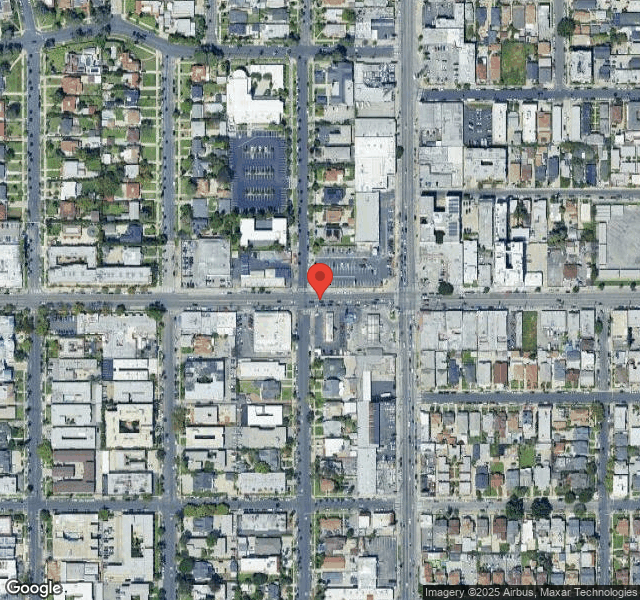
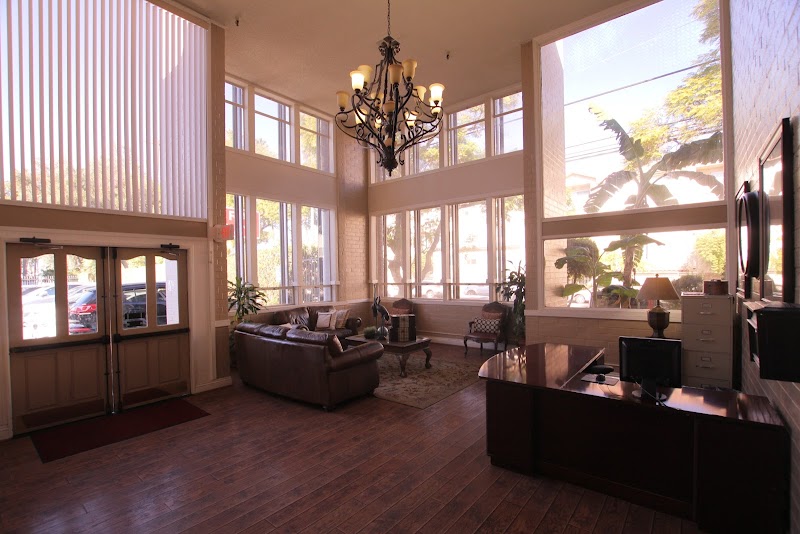
3210 W PICO BLVD, LOS ANGELES, CA 90019 (323) 734-2171
For profit - Limited Liability company 99 Beds CAMBRIDGE HEALTHCARE SERVICES Data: November 2025 2 Immediate Jeopardy citations
Trust Grade
0/100
Last Inspection: April 2025

Within standard 12-15 month inspection cycle. Federal law requires annual inspections.

Overview

Sunray Healthcare Center in Los Angeles has received a Trust Grade of F, indicating significant concerns about the facility's quality and care. It ranks at the bottom of all nursing homes in California and Los Angeles County, suggesting there are no better options nearby. The facility is reportedly improving, with a drop in issues identified from 47 in 2024 to 17 in 2025; however, it still faces serious challenges. Staffing is a concern, with a turnover rate of 48%, which is around the state average, meaning staff may not be as consistent in their care. Families should note that the facility has incurred $125,663 in fines, higher than 93% of California homes, indicating ongoing compliance issues. Specific incidents include a failure to prevent a resident at risk of leaving the facility from eloping, as well as neglecting a resident with HIV who did not receive necessary medical care, resulting in a decline in their health. Additionally, two residents requiring assistance with daily activities were left without care for extended periods. While there are some improvements in the trend, these serious deficiencies highlight significant weaknesses that families should carefully consider.

Trust Score
F
0/100
In California
#112/223
Top 50%
Safety Record
High Risk
Review needed
Inspections
Getting Better
47 → 17 violations
Staff Stability
⚠ Watch
48% turnover. Above average. Higher turnover means staff may not know residents' routines.
Penalties
✓ Good
$125,663 in fines. Lower than most California facilities. Relatively clean record.
Skilled Nurses
○ Average
Each resident gets 35 minutes of Registered Nurse (RN) attention daily — about average for California. RNs are the most trained staff who monitor for health changes.
Violations
⚠ Watch
122 deficiencies on record. Higher than average. Multiple issues found across inspections.
☆☆☆☆☆
0.0
Overall Rating
☆☆☆☆☆
0.0
Staff Levels
☆☆☆☆☆
0.0
Care Quality
☆☆☆☆☆
0.0
Inspection Score
Stable
2024: 47 issues
2025: 17 issues

The Good

  • Full Sprinkler Coverage · Fire safety systems throughout facility
  • No fines on record

Facility shows strength in fire safety.

The Bad

Staff Turnover: 48%

Near California avg (46%)

Higher turnover may affect care consistency

Federal Fines: $125,663

Well above median ($33,413)

Significant penalties indicating serious issues

Chain: CAMBRIDGE HEALTHCARE SERVICES

Part of a multi-facility chain

Ask about local staffing decisions and management

The Ugly 122 deficiencies on record

2 life-threatening 7 actual harm
Jul 2025 1 deficiency
CONCERN (D) 📢 Someone Reported This

A family member, employee, or ombudsman was alarmed enough to file a formal complaint

Potential for Harm - no one hurt, but risky conditions existed

Deficiency F0726 (Tag F0726)

Could have caused harm · This affected 1 resident

Based on interview and record review, the facility failed to perform required staff competency evaluations (an evaluation of the skills, knowledge, and abilities of a staff member) for two of three sa...

Read full inspector narrative →
Based on interview and record review, the facility failed to perform required staff competency evaluations (an evaluation of the skills, knowledge, and abilities of a staff member) for two of three sampled staff (Certified Nursing Assistant 1 [CNA1] and CNA3) in accordance with the facility's Performance Evaluations policy and procedure.This deficient practice had the potential for residents not to receive the appropriate care and services needed, which could affect the quality of care received, and potentially lead to resident harm.During a concurrent interview and record review on 7/28/2025 at 12:11 PM with the Director of Staff Development (DSD), CNA1 and CNA3 files were reviewed. The DSD stated CNA 1 did not have a performance skills checklist (is a tool used to assess and record the proficiency level of an individual in performing specific tasks or demonstrating certain abilities) in the employee file and CNA 3 (hired on 11/26/2024) did not have a performance evaluation. The DSD stated she (DSD) was hired shortly after CNA 1 was hired (6/27/24) and was new to the system therefore was not aware when CNA 1's skills checklist was performed. The DSD stated CNA 3's performance evaluation was not done. The DSD stated performance evaluations (in general) were performed ninety days after the date of hire and then annually. The DSD stated that she (DSD) had observed both CNAs (CNA1 and CNA3) work and communication with the residents (in general) and the CNAs were very good. During an interview on 7/28/25 at 1:28 PM with the Director of Nursing (DON), the DON stated the employee files (in general) were audited in April 2025. The DON stated without the staff's performance evaluations and skills checklist the facility would not know if there was a lack of knowledge or more training needed in some areas for the employees. During a review of the facility's policy and procedures (P&P) titled, Performance Evaluations, dated 09/2020, indicated the job performance of each employee shall be reviewed and evaluated at least annually. The P&P indicated the performance evaluation will be completed on each employee at the conclusion of his/her 90-day probationary period, and at least annually thereafter.During a review of the facility's policy and procedures (P&P) titled, Staffing and Competent Nursing, dated 08/2022, indicated the facility provides sufficient numbers of nursing staff with the appropriate skills and competency necessary to provide nursing and related care and services for all residents. The P&P indicated competency requirements and training for nursing staff are established and monitored by nursing leadership to ensure that tracking or other mechanisms are in place to evaluate effectiveness of training. During a concurrent interview and record review on 7/28/2025 at 12:11 PM with the Director of Staff Development (DSD), employee files were reviewed. During the record review, CNA 1 did not have a skills checklist in the employee file and CNA 3 did not have a performance evaluation. The DSD stated she (the DSD) was hired shortly after CNA 1 was hired and was new to the system therefore was not aware when CNA 1's skills checklist was performed. The DSD stated CNA 3's performance evaluation was not done. The DSD stated performance evaluations are performed ninety days after the date of hire and then annually. The DSD stated that she had observed the both CNAs work and communication with the residents and the CNAs are very good. The DSD would not agree that without a documented performance evaluation or skills checklist that an employee of the facility had knowledge of how the facility cares for the residents.During an interview on 7/28/25 at 1:28 PM with the Director of Nursing (DON), the DON stated the employee files were audited in April 2025. The DON stated the risk to the residents without performance evaluations and skills checklists would be the facility would not know if there was a lack of knowledge or more training needed in some areas for the employees.During a review of the facility's policy and procedures (P&P) titled, Staffing and Competent Nursing, dated 08/2022, indicated the facility provides sufficient numbers of nursing staff with the appropriate skills and competency necessary to provide nursing and related care and services for all residents. The P&P indicated competency requirements and training for nursing staff are established and monitored by nursing leadership to ensure that tracking or other mechanisms are in place to evaluate effectiveness of training.During a review of the facility's policy and procedures (P&P) titled, Performance Evaluations, dated 09/2020, indicated the job performance of each employee shall be reviewed and evaluated at least annually. The P&P indicated the performance evaluation will be completed on each employee at the conclusion of his/her 90-day probationary period, and at least annually thereafter.
Jul 2025 2 deficiencies
CONCERN (D) 📢 Someone Reported This

A family member, employee, or ombudsman was alarmed enough to file a formal complaint

Potential for Harm - no one hurt, but risky conditions existed

Safe Environment (Tag F0584)

Could have caused harm · This affected 1 resident

**NOTE- TERMS IN BRACKETS HAVE BEEN EDITED TO PROTECT CONFIDENTIALITY** Based on observation, interview, and record review, the facility failed to maintain a clean, odor free, homelike environment for...

Read full inspector narrative →
**NOTE- TERMS IN BRACKETS HAVE BEEN EDITED TO PROTECT CONFIDENTIALITY** Based on observation, interview, and record review, the facility failed to maintain a clean, odor free, homelike environment for one of four sampled residents (Resident 1), by failing to maintain an urine odor free environment and maintain the gray fall mat at the right side of Resident 1's bed clean, dry and odor free. This deficient practice resulted in a strong odor of urine lingering around the resident's bed and room entrance, and a dirty, wet, smelly fall mat, leading to an unkempt, un-homelike environment. During a review Resident 1's admission Record dated 7/8/25 indicated Resident 1 was admitted to the facility on [DATE] with diagnosis including diabetes mellitus (DM-a condition where your body has trouble controlling the level of sugar in the blood), chronic obstructive pulmonary disease (COPD-a chronic lung disease causing difficulty in breathing), cerebrovascular disease (stroke, loss of blood flow to a part of the brain), gastrostomy (Gtube-a surgical opening fitted with a device to allow feedings to be administered directly to the stomach common for people with swallowing problems), hypertension (HTN-high blood pressure) and dysphagia (difficulty swallowing). During a review of Resident 1's Minimum Data Set (MDS, a standardized assessment and care screening tool), dated 10/22/2022 indicated Resident 1 had severe cognitive (ability to think, understand and make daily decisions) impairment and was totally dependent on facility staff for bed mobility, dressing, toileting, bathing and personal hygiene. During an observation in Resident 1's room on 7/7/25 at 9:10 am, the area around the resident's bed smelled strongly of urine and a gray fall mat at the right of the resident's bed was observed dirty with foot prints, scuff marks and a drying sticky wet mark. During an observation in Resident 1's room and concurrent interview on 7/7/25 at 11:05 am with Certified Nursing Assistant 1 (CNA 1), CNA 1 acknowledged the area around Resident 1's bed smelled strongly and identified the odor as urine. CNA 1 stated the gray fall mat to the right of the resident's bed was dirty, wet - possibly adding to the pungent (strong, offensive) odor. CNA 1 stated she had not had a chance to change the resident's incontinence brief, because she had been busy cleaning residents in a different room. During a review of the facility's Policy and Procedures titled Homelike Environment reviewed 8/30/24, indicated Residents are provided with a safe, clean, comfortable and homelike environment. The facility staff and management maximizes, to the extent possible, the characteristics of the facility that reflect a personalized, homelike setting. clean, sanitary and orderly. pleasant, neutral scents.
CONCERN (D) 📢 Someone Reported This

A family member, employee, or ombudsman was alarmed enough to file a formal complaint

Potential for Harm - no one hurt, but risky conditions existed

Tube Feeding (Tag F0693)

Could have caused harm · This affected 1 resident

**NOTE- TERMS IN BRACKETS HAVE BEEN EDITED TO PROTECT CONFIDENTIALITY** Based on observation, interview, and record review, the facility failed to infuse the proper amount enteral feeding (a method of...

Read full inspector narrative →
**NOTE- TERMS IN BRACKETS HAVE BEEN EDITED TO PROTECT CONFIDENTIALITY** Based on observation, interview, and record review, the facility failed to infuse the proper amount enteral feeding (a method of providing nutrition directly into the gastrointestinal (GI) tract, typically through a feeding tube) of diabetic source 1.2 calories per milliliter (ml) at 80 ml an hour for 20 hours with a total volume of 1600 ml or 1920 calories, continue until dose is met as ordered by the physician for one of four sampled residents (Resident 1). This failure resulted in the resident not receiving the ordered nutrition had the potential to cause a low caloric intake that could result in malnutrition, dehydration, unexpected weight loss, and decline in overall health. During a review Resident 1's admission Record dated 7/8/25, the admission record indicated Resident 1 was admitted to the facility on [DATE] with diagnosis including diabetes mellitus (DM-a condition where your body has trouble controlling the level of sugar in the blood), chronic obstructive pulmonary disease (COPD-a chronic lung disease causing difficulty in breathing), cerebrovascular disease (stroke, loss of blood flow to a part of the brain), gastrostomy (Gtube-a surgical opening fitted with a device to allow feedings to be administered directly to the stomach common for people with swallowing problems), hypertension (HTN-high blood pressure) and dysphagia (difficulty swallowing).During a review of Resident 1's Minimum Data Set (MDS, a standardized assessment and care screening tool), dated 10/22/2022, the MDS indicated Resident 1 had severe cognitive (ability to think, understand and make daily decisions) impairment and was totally dependent on facility staff for bed mobility, dressing, toileting, bathing and personal hygiene. During a review of Resident 1's Order Summary Report dated 7/8/25, the order summary report indicated an order for Enteral Feed order every shift enteral feeding diabetic source 1.2 calories per milliliter (ml) at 80 ml an hour for 20 hours with a total volume of 1600 ml or 1920 calories, continue until dose is met. Off from 8 am to 12 pm. During an observation at Resident 1's bedside on 7/7/25 at 9:09 am, the enteral tube feeding was observed connected to the resident's Gtube with the pump turned off. The bottle of enteral feeding formula indicated it had been hung on 7/6/25 at 8 pm, and there was 200 ml of enteral feeding formula that had been infused (photograph was taken). During an interview with concurrent photograph of Resident 1's feeding pump review on 7/7/25 at 4:00 pm with the Director of Nursing (DON), the picture of the enteral feeding formula bottle taken during the observation on 7/7/25 at 9:09 am, was reviewed, the DON acknowledged Resident 1 only received 200ml of feeding over 12 hours instead of the 960ml the resident should have received. The DON stated she believed the pump was malfunctioning and was swapped out for a different one so the resident will have the correct amount infused today. During a review of the facility's Policy and Procedures titled Enteral Nutrition reviewed 8/30/24, indicated Adequate nutritional support through enteral nutrition is provided to the residents as ordered.
Apr 2025 10 deficiencies
CONCERN (D)

Potential for Harm - no one hurt, but risky conditions existed

Deficiency F0558 (Tag F0558)

Could have caused harm · This affected 1 resident

**NOTE- TERMS IN BRACKETS HAVE BEEN EDITED TO PROTECT CONFIDENTIALITY** Based on observation, interview, and record review, the facility failed to provide reasonable accommodations for resident needs ...

Read full inspector narrative →
**NOTE- TERMS IN BRACKETS HAVE BEEN EDITED TO PROTECT CONFIDENTIALITY** Based on observation, interview, and record review, the facility failed to provide reasonable accommodations for resident needs by not having the call light within reach for two of 22 sampled residents (Resident 13 and Resident 61) observed for call light placement. The deficient practice had the potential for residents not being able to call facility staff for help as needed. Findings: a. A review of Resident 13's admission Record indicated the resident was admitted to the facility on [DATE], and readmitted on [DATE], with diagnoses including abnormalities of gait and mobility, muscle weakness, pressure-induced deep tissue damage (localized damage to the skin and/or underlying tissue usually over a bony prominence) of the sacral region, right and left heel, need for assistance with personal care, and history of falling. During a review of Resident 13's History and Physical (H&P) dated 3/31/2025, the H&P indicated the resident had the capacity to understand and make own medical decisions. During a review of Resident 13's Minimum Data Set (MDS, a resident assessment tool) dated 3/21/2025, the MDS indicated the resident usually had the ability to understand others, and was missing some part of the message but comprehends most of the conversation. The MDS indicated the resident was dependent on toileting hygiene, was frequently incontinent of urine and always incontinent of bowel. The MDS also indicated Resident 13 had two unstageable pressure injuries (localized damage to the skin and/or underlying tissue usually over a bony prominence) presenting as deep tissue injuries that were present upon admission/entry or reentry. During a review of Resident 13's Care Plan titled, Resident has an ADL self care performance deficit related to limited mobility, initiated on 12/17/2024, indicated an intervention to encourage the resident to use bell to call for assistance. During a review of Resident 13's Care Plan titled, Resident at risk for falls with injury related to limited mobility and gait/balance problems, initiated on 12/17/2024, indicated interventions for the resident's call light to be within reach, encourage the resident to use it for assistance as needed and prompt response to all requests for assistance. The care plan also indicated interventions for the resident safe environment including a working and reachable call light. During a review of Resident 13's Care Plan titled, Resident bilateral upper 1/3 side rails up for turn and reposition, initiated on 12/17/2024, indicated interventions for call light within easy reach at all times and answer promptly. During a review of Resident 13's Care Plan titled, The resident had a communication problem related to a diagnosis of dysphagia oropharyngeal phase, initiated on 3/14/2025, indicated an intervention to encourage/provide a safe environment: call light in reach. During an observation on 4/21/2025 at 11:26 AM inside Resident 13's room, the call light was observed above the head resting on the mattress facing the back wall, not within reach of the resident. During a concurrent observation with the Director of Staff Development 2 (DSD 2), DSD 2 assisted the resident by placing the call light within reach and the resident requested to be changed after having an incontinent episode. DSD 2 contacted Certified Nursing Assistant (CNA) 8 to assist Resident 13. During an interview at 11:54 AM, CNA 8 stated that if the call light was not within reach the resident cannot call for assistance. b. A review of Resident 61's admission Record indicated the resident was admitted to the facility on [DATE], and readmitted on [DATE], with diagnoses including pressure ulcer of sacral region (sacrum- a large, triangular bone at the base of the spine) and right buttock, and functional quadriplegia (paralysis from the neck down, including legs, and arms, usually due to spinal cord injury). During a review of Resident 61's History and Physical (H&P) dated 4/2/2025, the H&P indicated the resident had the capacity to understand and make decisions. During a review of Resident 61's MDS dated [DATE], the MDS indicated the resident usually had the ability to understand others, and was missing some part of the message but comprehends most of the conversation. The MDS indicated the resident was dependent on toileting hygiene, shower/bathe self, upper and lower body dressing including footwear and personal hygiene. The MDS also indicated the resident had one stage three (full-thickness loss of skin, dead and black tissue may be visible) and one stage four (full-thickness skin and tissue loss with exposed muscle, tendon, ligament, cartilage, or bone) pressure ulcer injuries that were present upon admission/entry or reentry. A review of Resident 61's Care Plan titled, Resident has an ADL self care performance deficit related to hemiplegia (total paralysis of the arm, leg, and trunk on the same side of the body), functional quadriplegia, initiated on 7/29/2023, indicated an intervention to encourage the resident to use bell to call for assistance. During a review of Resident 61's Care Plan titled, Resident has a behavioral problem of breaking the remote device related to repetitive pressing the call light, bed control and TV remote control, initiated /27/2024, indicated an intervention to frequently monitor, approach resident in calm manner, and stop resident actions of repetitive pressing call light. During a review of Resident 61' Care Plan titled, Resident at risk for unavoidable falls with injury related to limited mobility gait/balance problems. Surface-to-surface transfer (transfer between bed and chair or wheelchair = not steady, only able to stabilize with staff assistance), initiated on 8/9/2023, indicated an intervention to be sure the resident's call light was within reach and encourage resident to use it for assistance as needed. During a concurrent observation and interview on 4/21/2025 at 11:41 AM inside Resident 61's room, the call light clipped to the top of the resident's mattress and left dangling off the side of the bed, not within reach of the resident. During an observation, DSD 2 assisted the resident by placing the call light within reach. During an interview at 11:53 AM, CNA 6 stated that if the call light was not within reach the resident cannot call for assistance. CNA 6 stated currently the assigned CNA for this resident was out for lunch but CNA's were always in the hallways checking and assisting the residents. During an interview on 4/24/2025 at 10:55 AM, the Director of Nursing (DON) stated that in the beginning of the shift, the nursing staff should be doing rounds to make sure the call lights were in place, this included the CNAs. During lunch time, there was a schedule for who was going to lunch. Those who stay behind take up their coworker's assignment until they return from their lunch. During an interview on 4/24/2025 at 10:59 AM, the DON stated having the call light within reach was important to be able to attend the resident's needs as soon as possible. During a review of the facility's policy and procedure titled, Answering the Call Light dated 8/30/2024, the P&P indicated to Ensure that the call light is accessible to the resident when in bed.
CONCERN (D)

Potential for Harm - no one hurt, but risky conditions existed

Deficiency F0582 (Tag F0582)

Could have caused harm · This affected 1 resident

**NOTE- TERMS IN BRACKETS HAVE BEEN EDITED TO PROTECT CONFIDENTIALITY** Based on interview and record review, the facility failed to ensure one of one sampled resident (Resident 399) reviewed for Bene...

Read full inspector narrative →
**NOTE- TERMS IN BRACKETS HAVE BEEN EDITED TO PROTECT CONFIDENTIALITY** Based on interview and record review, the facility failed to ensure one of one sampled resident (Resident 399) reviewed for Beneficiary Notification was provided with a Notice of Medicare Non-Coverage (NOMNC - a notice that is provided to beneficiaries that indicates when their Medicare covered services are ending). This deficient practice had the potential to result in the resident not being informed of their coverage end date and not being able to exercise their right to file an appeal. Findings: During a review of Resident 399's admission Record, the admission Record indicated the resident was admitted to the facility on [DATE] for an acute kidney failure (a condition where the kidneys suddenly lose their ability to filter waste products from the blood and regulate fluids and electrolytes in the body). The admission record indicated Resident 399 was discharged home on [DATE]. During a review of Resident 399's Minimum Data Set (MDS - a resident assessment tool) dated 11/17/2024, the MDS indicated Resident 399 was moderately cognitively (ability to think, understand, and reason) impaired. The MDS indicated Resident 399 needed partial assistance from another person to complete any activities such as self-care, mobility and functional cognition. The MDS further indicated Resident 399 required substantial/maximal assistance where helper does more than half the effort such as eating, oral hygiene, toileting, and upper body dressing. During review of Resident 399's SNF Beneficiary Notification Review form, the form indicated the resident's last covered day for Medicare Part A skilled services was on 12/23/2024. The form indicated the facility initiated the discharge from Medicare Part A Services when the benefit days were exhausted. The form indicated Resident 399 was not provided with a NOMNC. The form indicated the explanation for not issuing the NOMNC to Resident 399 as: not being able to locate the issued NOMNC and not being able to determine if beneficiary initiated discharge. During a concurrent interview and record review on 4/24/2025 at 1:06 PM, the Business Office Administrator (BOA) stated Resident 399's Medicare Part A skilled services started on 11/13/2024 when admitted to the facility and was discharged on 12/23/2024. The BOA stated Resident 399's discharge was planned and the resident went home with home health services. The BOA stated Resident 399's last covered day for Medicare Part A services was 12/23/2024 and was unable to locate the NOMNC. During a concurrent interview and record review on 4/24/2025 at 1:33 PM, the Director of Nursing (DON) stated they were unable to locate the 12/23/2024 issued NOMNC to Resident 399 and was not able to determine if it was a beneficiary initiated discharge. During a review of the facility's policy and procedure (P&P) titled, Medicare Advance Beneficiary and Medicare Non-Coverage Notices, dated September 2022, the P&P indicated, If the resident's Medicare covered Part A stay or when all of Part B therapies are ending, a Notice of Medicare Non-Coverage (CMS form 10123) was issued to the resident at least two calendar days before benefits end.
CONCERN (D) 📢 Someone Reported This

A family member, employee, or ombudsman was alarmed enough to file a formal complaint

Potential for Harm - no one hurt, but risky conditions existed

Abuse Prevention Policies (Tag F0607)

Could have caused harm · This affected 1 resident

**NOTE- TERMS IN BRACKETS HAVE BEEN EDITED TO PROTECT CONFIDENTIALITY** Based on interview and record review, the facility failed to ensure three out of ten facilitiy staff (Registered Nurse [RN 1], L...

Read full inspector narrative →
**NOTE- TERMS IN BRACKETS HAVE BEEN EDITED TO PROTECT CONFIDENTIALITY** Based on interview and record review, the facility failed to ensure three out of ten facilitiy staff (Registered Nurse [RN 1], Licensed Vocational Nurse [LVN 6], Certified Nurse Assistant (CNA 4) reviewed for personal file had a background check prior to employment. This deficient practice caused an increased risk to the safety of the residents. Findings: a. During a review of the facility document received to the Department dated 4/14/2025, the document indicated Resident 93 alerted the Administrator that CNA 4 handled her roughly during incontinent care on the morning shift. The document indicated CNA 4 was sent home and suspended pending investigation. During a review of Resident 93's admission Record, the admission Record indicated the resident was admitted to the facility on [DATE] with diagnoses including need for assistance with personal care, gout (a form of arthritis, when uric acid crystals accumulate in the joints causing swelling and intense pain), and toxic encephalopathy (a disease or dysfunction of the brain, affecting its normal function). During a review of Resident 93's Minimum Data Set (MDS - a resident assessment tool) dated 4/1/2025, the MDS indicated the resident was oriented to year and month but not day, and had poor recall. The MDS indicated Resident 93 did not have little interest in doing things and did not feel down, depressed, or hopeless. During a review of the five-day abuse investigation conducted by the Administrator dated 4/14/2025, the investigation indicated an interview was conducted with CNA 4. CNA 4 stated Resident 93 was soiled and wet at the start of the shift. CNA 4 stated when she was ready to wash Resident 93, the resident was holding onto the curtain. She asked Resident 93 to release the curtain. CNA 4 stated she needed to turn Resident 93 side to side but the resident was resistant due to pain when being moved. On 4/22/2025 at 9:48 AM, a voice message was left for CNA 4 for a call back. As of 4/23/2025 no call back was received. During an observation on 4/21/2025 at 9:47 AM, in Resident 93's room, Resident 93 was lying in bed, with siderails x two, and with the call light within reach. During a concurrent interview, Resident 93 stated she asked a staff member for help, the staff member came in the room with an attitude, and started pulling on her while in the bed. Resident 93 stated she was holding onto the curtain and yelling because she did not want to fall. During a concurrent interview and record review on 4/22/2025 at 12:25 PM, with the Director of Staff Development (DSD), two employee files were reviewed. CNA 4's employee file indicated the date of hire (DOH) was 10/5/2022, but the background check was done on 4/17/2024. The DSD stated they did a random background check for CNA 4 on 4/17/2024. The DSD stated she was still reviewing all the employee files to ensure all documents were in the files. The DSD agreed that if a staff member had an abuse allegation against them and there was not a background check performed before the hire date, then the staff member could be abusing residents without the facility's knowledge. During an interview on 4/24/2025 at 12:44 PM, the Director of Nursing (DON) stated there was a risk of danger to the residents when staff did not have a background check, because the facility would not know if the staff member had any abuse allegations against them. During a concurrent interview and record review on 4/23/2025 at 1:45 PM with the Director of Staff Development (DSD), two employee files were reviewed. RN 1's date of hire was 8/21/2014 while the background check was performed on 3/31/2025. The DSD stated the background check was a random check due to the original not in the file. LVN 6's hire date was 4/3/2025, and the background check was done on 4/23/2025. During a review of the facility's policy and procedures (P&P) titled, Abuse, Neglect, Exploitation and Misappropriation Prevention Program dated 4/2021, the P&P indicated the resident abuse, neglect, and exploitation prevention program consisted of a facility-wide commitment and resources including conducting employee background checks. During a review of the facility's P&P titled, Background Screening Investigations, dated 8/30/2024, the P&P indicated the director of personnel conducts the background checks, reference checks, and criminal conviction checks on all potential direct access employees and contractors. Background and criminal checks were initiated within two days of an offer of employment or contract agreement and completed prior to employment.
CONCERN (D)

Potential for Harm - no one hurt, but risky conditions existed

Pressure Ulcer Prevention (Tag F0686)

Could have caused harm · This affected 1 resident

**NOTE- TERMS IN BRACKETS HAVE BEEN EDITED TO PROTECT CONFIDENTIALITY** Based on observation, interview, and record review, the facility failed to ensure one of five sampled residents (Resident 71) wi...

Read full inspector narrative →
**NOTE- TERMS IN BRACKETS HAVE BEEN EDITED TO PROTECT CONFIDENTIALITY** Based on observation, interview, and record review, the facility failed to ensure one of five sampled residents (Resident 71) with pressure ulcers received the necessary treatment and services, consistent with professional standards of practice. Resident 71 was not repositioned(turn from side to side) in her bed every two hours per the care plan. This deficient practice had the potential for Resident 71 to experience worsening of pressure ulcers (bedsores - areas of damaged skin and tissue caused by sustained pressure that reduces blood flow to vulnerable areas of the body) / injuries to the resident. Findings: A review of Resident 71's admission Record indicated the resident was admitted to the facility on [DATE] with diagnoses including acute (short-term) and chronic (long-term) respiratory failure (a serious condition that makes it difficult to breathe on your own), non-traumatic subarachnoid hemorrhage (bleeding in the space between the brain and the thin tissues that cover it, without any prior head injury), chronic obstructive pulmonary disease (COPD-a chronic lung disease causing difficulty in breathing), dependence on respiratory ventilator status (using a breathing machine to help them breathe), and persistent vegetative state (a person is awake but unaware of their surroundings and cannot interact with others). During a review of Resident 71's care plan, titled Pressure Ulcer: Altered skin integrity related to pressure ulcer on: Right Lower Leg lateral, Left lower leg lateral, Right scalp posterior (lateral), Right heel, Sacra coccyx, Wound on Right forearm, Outer Multiple wounds on Left Forearm Outer, dated [DATE] indicated a goal for the pressure ulcers/wounds to resolve without complications. The care plan intervention indicated to turn and reposition Resident 71 every two hours. A review of the Minimum Data Set (MDS, a resident assessment tool), dated [DATE], indicated Resident 71 was in a persistent vegetative state and was dependent on the facility staff for oral hygiene, toileting, showering/bathing, and rolling left and right. The MDS indicated Resident 71 was frequently incontinent of urine (unable to control when a person urinates) and always incontinent of bowel (unable to control when a person poops). The MDS also indicated Resident 71 had a Stage III and a Stage IV pressure ulcer (wound goes through all three layers of skin, exposing muscles, tendons [a cord of strong, flexible tissue, similar to a rope that attaches your muscles to your bones] and bones). A review of Resident 71's care plan titled, Functional abilities: dependent for all ADL (activities of daily living - basic tasks people do every day to take care of themselves)performance, dated [DATE] indicated the goal was for Resident 71 to receive adequate assistance. The care plan intervention indicated to assist Resident 71 to turn and reposition at least every two hours and as needed. During a review of Resident 71's Order Summary Report (OSR), dated [DATE], the OSR indicated Resident 71 had a diagnosis of pressure ulcer of other site, Stage IV, and pressure ulcer of sacral (a triangular-shaped bone located at the base of your spine, just below your lower back and above your tailbone) region. The OSR indicated an order for low air loss therapy mattress (a medical-grade mattress designed to prevent and treat pressure injuries by reducing moisture and heat buildup) for wound management. During an observation on [DATE] at 10:55 AM, Resident 71 was observed laying on her left side. During a concurrent observation and interview on [DATE] at 12:55 PM (two hours later) with Certified Nursing Assistant (CNA) 1 in Resident 71's room, Resident 71 was observed laying on her left side. CNA 1 stated he would reposition Resident 71 right away. CNA 1 stated Resident 71 would be at risk for a pressure ulcer if she was not turned/repositioned every two hours. During an interview on [DATE] at 1:07 PM, Licensed Vocational Nurse (LVN) 1 and the Registered Nurse Supervisor (RN) 1 stated residents should be repositioned every two hours to prevent pressure ulcers or worsening or pressure ulcers. During an interview on [DATE] at 2:16 PM, the Medical Director (MDR) stated Resident 71 obtained the ulcers from the general acute care hospital and that Resident 71 was close to skin failure (the skin has broken down or died, often due to poor blood flow and other underlying medical issues). During an observation on [DATE] at 2:43 PM with the Director of Nursing (DON) and CNA 2 in Resident 71's room, Resident 71 was observed to be lying on her left side (over three and a half hours). During a concurrent interview, the DON stated Resident 71 should have been turned every two hours and as needed. The DON reviewed and verified Resident 71's care plan titled, Functional abilities: dependent for all ADL performance, indicated an intervention to turn Resident 71 every two hours and as needed. During a concurrent interview, CNA 2 stated he and the Treatment Nurse (TX) repositioned Resident 71 after CNA 2 and the TX had performed Resident 71's dressing change. The DON verified Resident 71 remained lying on her left side. The DON agreed that placing a second pillow underneath Resident 71 did not mean she was repositioned, because the resident continued lying on the same side. During a review of the facility's policy and procedure (P&P) titled, Prevention of Pressure Injuries, dated [DATE], indicated the purpose of the P&P was to provide information regarding identification of pressure injury risk factors and interventions for specific risk factors. The P&P indicated the facility would reposition all residents with or at risk of pressure injuries. During a review of the facility's P&P titled, Repositioning, dated [DATE], indicated the purpose was to provide guidelines for the evaluation of resident repositioning needs, to aid in the development of an individualized care plan for repositioning, to promote comfort for all bed- or chair-bound residents and to prevent skin breakdown, promote circulation and provide pressure relief for residents. The P&P indicated frequency of repositioning a bed- or chair-bound resident should be determined by: a. The type of support surface used; b. The condition of the skin; c. The overall condition of the resident; d. The response to the current repositioning schedule; and e. Overall treatment objectives. The P&P indicated residents should be on at least an every two-hour repositioning schedule.
CONCERN (D)

Potential for Harm - no one hurt, but risky conditions existed

Respiratory Care (Tag F0695)

Could have caused harm · This affected 1 resident

**NOTE- TERMS IN BRACKETS HAVE BEEN EDITED TO PROTECT CONFIDENTIALITY** b. A review of Resident 63's admission Record indicated the resident was readmitted to the facility on [DATE] with diagnoses inc...

Read full inspector narrative →
**NOTE- TERMS IN BRACKETS HAVE BEEN EDITED TO PROTECT CONFIDENTIALITY** b. A review of Resident 63's admission Record indicated the resident was readmitted to the facility on [DATE] with diagnoses including dependence on respiratory ventilator, chronic obstructive pulmonary disease (COPD - a chronic lung disease causing difficulty in breathing), chronic respiratory failure with hypoxia or hypercapnia ,and amyotrophic lateral sclerosis (ALS - also known as Lou Gehrigsdisease is a disease that affects nerve cells in the brain and spine). A review of Resident 63's H&P dated 11/24/2024, indicated Resident 63 was on a ventilator with tracheostomy and had mental capacity (a person's ability to understand information and make decisions for themselves). During a review of Resident 63's care plan titled, Ventilator dependent related to respiratory failure dated 2/20/2025, indicated a goal for Resident 63 to be free of ventilator associated pneumonia (an infection / inflammation in the lungs). During a review of Resident 63's care plan titled, Tracheostomy related to injury, dated 2/20/2025, indicated a goal for Resident 63 to have no signs and symptoms of infection. A review of Resident 63's MDS, dated [DATE], indicated Resident 63 usually had the ability to understand others and make himself understood. During a review of Resident 63's OSR dated 4/22/2025, the OSR indicated the resident had a physician's order for a trach tube, ventilator, oxygen at 2.5 liters per minute via oxygen concentrator (a medical device that gives you extra oxygen), and titrate (adjust) oxygen to keep Resident 63's oxygen saturation above 94 percent. During an observation on 4/21/2025 at 9:37 AM in Resident 63's room, the oxygen tubing was observed touching the floor. During a concurrent observation and interview on 4/21/2025 9:46 AM with Respiratory Therapist (RT) 1 in both resident's room, the oxygen tubing for Resident 63 and Resident 29 were observed touching the floor. RT 1 stated the tubing for Resident 63 and Resident 29 was on the floor and would exchange them for new ones. RT 1 stated oxygen tubing on the floor could be an infection control (preventing the spread of infections, especially in healthcare settings) problem for Resident 63 and Resident 29. During an interview on 4/22/2025 at 2:41 PM with the Infection Preventionist (IP) and Director of Nursing (DON), both the IP and DON stated oxygen tubing touching the floor would be an infection control issue. A review of the facility's policy and procedure titled, Policies and Practices - Infection Control, dated 8/30/2024 indicated, Facility's infection control policies and practices are intended to facilitate maintaining a safe, sanitary and comfortable environment and to help prevent and manage transmission of diseases and infections. The objectives of the facility's infection control policies and practices were to prevent, detect, investigate and control infections in the facility. The P&P indicated all personnel will be trained on our infection control policies and practices upon hire and periodically thereafter, including where and how to find and use pertinent procedures and equipment related to infection control. Based on observation, interview, and record review, the facility failed to provide necessary respiratory care services for two of three sampled residents (Resident 29 and Resident 63) observed for respiratory care. For Resident 29 and Resident 63, the oxygen tubing was resting on the floor while connected to the residents' ventilators (a medical device to help support or replace breathing). This deficient practice had the potential for Resident 29 and Resident 63 to experience respiratory infections associated with using an unsanitary (dirty, unhealthy, or unclean in a way that could endanger health) oxygen tubing. Findings: a. A review of Resident 29's admission Record indicated the resident was readmitted to the facility on [DATE] with diagnoses including chronic respiratory failure (a serious condition that makes it difficult to breathe on your own) with hypoxia (unable to get enough oxygen into your blood, leading to a dangerously low level of oxygen in your body) or hypercapnia (body cannot get rid of carbon dioxide [gas we naturally produce and need to remove when our bodies use oxygen for energy] causing breathing difficulties due to the buildup of carbon dioxide), cerebral infarction (stroke -a loss of blood flow to a part of the brain), and tracheostomy (a surgical procedure that creates an opening through the front of the neck for breathing). A review of Resident 29's History and Physical (H&P) dated 3/26/2025, indicated the resident had respiratory failure and was admitted under hospice care (a type of medical care that provides comfort and support to those nearing the end of their life). A review of Resident 29's Minimum Data Set (MDS, a resident assessment tool), dated 3/31/2025, indicated the resident was in a persistent vegetative state (a person is awake but unaware of their surroundings and cannot interact with others). During a review of Resident 29's Care Plan titled, Tracheostomy related to impaired breathing mechanics, injury, dated 4/16/2025, indicated a goal for Resident 29 to be free of signs and symptoms of infection. During an observation on 4/21/2025 at 9:37 AM in Resident 29's room, the oxygen tubing was observed touching the floor. During a review of Resident 29's Order Summary Report (OSR), dated 4/24/2025, the OSR indicated the resident had a physician's order for a tracheostomy tube, oxygen at four liters per minute via T-piece (a T-shaped connector tube used in to help patients who are having trouble breathing on their own or to support breathing ), and titrate (adjust) oxygen to keep Resident 29's oxygen saturation (a measure of how much oxygen is carried by red blood cells in your blood, expressed as a percentage) above 94 percent.
CONCERN (D)

Potential for Harm - no one hurt, but risky conditions existed

Drug Regimen Review (Tag F0756)

Could have caused harm · This affected 1 resident

Based on interview and record review, the facility failed to clarify the physician's orders for hydrocortisone cream (a topical steroid cream applied to the skin to reduce inflammation, redness, itchi...

Read full inspector narrative →
Based on interview and record review, the facility failed to clarify the physician's orders for hydrocortisone cream (a topical steroid cream applied to the skin to reduce inflammation, redness, itching and swelling) as recommended by the facility's consultant pharmacist (a healthcare professional, who provides specialized expertise to healthcare facilities, typically focusing on ensuring the safe and effective use of medications) during the Monthly Medication Regimen Review (MRR, when a consultant pharmacist reviews and analyzes a resident's medication list, ensuring that the medications are appropriate, effective, and safe) dated 1/13/2025, for one of three sampled residents (Resident 49) reviewed for Unnecessary Medications and Medication Regimen Review. This deficient practice had the potential for Resident 49 to experience adverse effects (undesired and harmful effects that occur because of a medication, treatment, or procedure) from hydrocortisone cream such as skin thinning, skin irritation and/or skin infection. Findings: During a review of Resident 49's admission Record, the admission Record indicated the facility re-admitted the resident on 9/12/2024 with diagnoses that included Type 2 diabetes (DM, a disorder characterized by difficulty in blood sugar control and poor wound healing), rash (an abnormal skin condition, often characterized by redness, irritation, bumpy, or itchy skin), schizophrenia (a mental illness that is characterized by disturbances in thought), dementia (a progressive state of decline in mental abilities), and psychosis (a severe mental condition in which thought and emotions are so affected that contact is lost with reality). During a review of Resident 49's physician's order dated 9/12/2024, the order indicated the resident was to receive 1 % hydrocortisone cream to the right side of his nose and face every 6 hours as needed for itching. The physician's order for 1% hydrocortisone cream had no end date and could be used indefinitely (for an unlimited or unspecified period of time). During a review of the facility's document titled, Consultant Pharmacist's Medication Regimen Review, dated 1/13/2025, the document indicated Resident 49 had an order for hydrocortisone cream without a stop date. The MRR indicated a recommendation to use a topical steroid for no more than four weeks at a time. The MRR indicated for facility staff to ask Resident 49's physician to include a stop date in the order of or discontinue the resident's hydrocortisone cream. During a review of Resident 49's Minimum Data Set (MDS, a resident assessment tool) dated 4/7/2025, the MDS indicated the resident was cognitively intact (had the ability to think, understand, and reason). The MDS further indicated Resident 49 was applying ointment/medications to areas other than the feet for skin treatments. During a concurrent interview and record review on 4/23/2025 at 2:20 PM, Resident 49's physician's order for hydrocortisone cream dated 9/12/2024 and the facility's document titled Consultant Pharmacist's Medication Regimen Review, dated 1/13/2025 were reviewed with Licensed Vocational Nurse (LVN) 5. LVN 5 verified and confirmed the consultant pharmacist recommended to put a stop date or discontinue Resident 49's physician order for hydrocortisone cream. LVN 5 stated Resident 49's current physician's order for hydrocortisone was indefinite and had no stop date. LVN 5 stated when the consultant pharmacist made a recommendation, the resident's physician had to be notified of the recommendation. LVN 5 stated Resident 49's physician's order should have been clarified with the resident's physician as recommended by the consultant pharmacist. LVN 5 stated consultant pharmacist recommendations had to be followed to help prevent the resident from having unwanted side effects. During a concurrent interview and record review on 4/24/2025 at 9:02 AM, Resident 49's physician's order for hydrocortisone cream dated 9/12/2024 and the facility's document titled Consultant Pharmacist's Medication Regimen Review, dated 1/13/2025 were reviewed with the Director of Nursing (DON). The DON verified the facility's pharmacy consultant recommended to put a stop date or discontinue Resident 49's physician's order for hydrocortisone cream on 1/13/2025. The DON stated Resident 49's current physician's order for hydrocortisone cream did not have a stop date. The DON did not know why Resident 49's physician's order for hydrocortisone cream was not discontinued or clarified. The DON stated that when the pharmacist recommended changes to the residents' medication, the recommendations had to be followed through because medications had adverse effects. The DON stated there could have been a potential for Resident 80 to experience adverse effects of the medication if the pharmacist recommendations were not followed. The DON stated following the pharmacist recommendations could help prevent the resident from experiencing adverse effects of medications. During a review of the facility's policy and procedure titled, IIIA1: Medication Regimen Review (Monthly Report), reviewed 8/30/2024, the P&P indicated The consultant pharmacist performs a comprehensive medication regimen review (MRR) at least monthly. The MRR includes evaluating the resident's response to medication therapy to determine that the resident maintains the highest practicable level of functioning and prevents or minimizes adverse consequences related to medication therapy. Resident-specific irregularities and/or clinical significant risks resulting from or associated with medications are documented and reported to the DON, and/or prescriber as appropriate. Recommendations are acted upon and documented by the facility staff and or the prescriber .Physician accepts and acts upon suggestion or rejects and provides an explanation for disagreeing by the next physician visit.
CONCERN (D)

Potential for Harm - no one hurt, but risky conditions existed

Unnecessary Medications (Tag F0759)

Could have caused harm · This affected 1 resident

**NOTE- TERMS IN BRACKETS HAVE BEEN EDITED TO PROTECT CONFIDENTIALITY** Based on observation, interview, and record review, the facility failed to ensure the facility's medication error rate (observed...

Read full inspector narrative →
**NOTE- TERMS IN BRACKETS HAVE BEEN EDITED TO PROTECT CONFIDENTIALITY** Based on observation, interview, and record review, the facility failed to ensure the facility's medication error rate (observed or identified preparation or administration of medications or biologicals which was not in accordance with the physician's order, manufacturer's specifications for the preparation and administration of the medication or biological, and professional standards of practice) was not five percent (5%) or greater. There were seven medication errors out of 28 opportunities (observations during medication administration) for error, to yield a cumulative error rate of 25 % for one of four sampled residents (Resident 80) observed during the medication administration. These deficient practices had the potential to result in harm to Resident 80 by not meeting the residents' individual medication and therapeutic needs (the specific types of treatments or interventions that are necessary to address a person's medical condition or improve their overall well-being). Findings: During a review of Resident 80's admission Record, the admission record indicated Resident 80 was admitted to the facility on [DATE] with diagnoses that included hypertension (HTN, high blood pressure), dependence on respiratory (ventilator, relies on a machine to breathe and cannot breathe independently) status, and gastrotomy tube (G-tube, a surgically placed tube that provides direct access to the stomach for feeding, hydration, or medication administration). During a review of Resident 80's Minimum Data Set (MDS - a resident assessment tool) dated 3/27/2025, the MDS indicated the resident's cognition (mental action or process of acquiring knowledge and understanding) was intact. The MDS indicated the resident required between moderate to totally dependent on staff for activities of daily living (ADLs - basic tasks that must be accomplished every day for an individual to thrive). During a review of Resident 80's April 2025 Physician's Order Summary Report, the report included the following physician's orders: -Amlodipine (use to treat hypertension [HTN], high blood pressure), Oral Tablet 5 mg, dated 12/23/2024, administer one tablet via G-Tube once per day (9 AM) for HTN. Hold for Systolic Blood Pressure (SBP, when the heart contracts and pumps blood) less than 110 millimeters of mercury (mmHg) or Heart Rate (HR) - the number of times the heart beats per minute [bpm]) less than 60 bpm. -Vitamin D3 Oral Capsule 125 mcg (5000 IU), dated 1/21/2025, give one capsule via G-Tube once a day (9 AM) for Vitamin D deficiency. -Ferrous Sulfate (helps red blood cells carry oxygen to tissues and organs) Oral Solution 220 mg/5 ml, dated 4/4/2025, give 7.5 ml via G-Tube once a day (9 AM) for Anemia Give 7.5 ml=330 mg. Shake bottle well. -Folic Acid (helps prevent anemia, low red blood cells), Oral Tablet 1 mg, dated 12/23/2024, give one tablet via G-Tube once a day (9 AM) for Supplement. -Senokot (Sennosides, used to treat constipation) Oral Tablet 8.6 mg, dated 12/23/2024, give two tablets (17.2 mg) via G-Tube every 12 hours (9 AM and 9 PM) for Bowel Management. Hold for loose stool. -Vitamin B12 Oral Tablet (Cyanocobalamin), dated 4/4/2025, give 1000 mcg via G-Tube once a day (9 AM) for Vitamin B12 deficiency. -Vitamin C Oral Liquid 500 mg /5 ml (Ascorbic Acid), dated 3/26/2025, give 5 ml via G-Tube once a day (9 AM) for Supplement. -Cranberry Oral Tablet 450 MG, dated 1/21/2025, give one tablet via G-Tube once a day (9 AM) for UTI, prophylactically (to prevent). During an observation of medication administration for Resident 80 on 4/21/2025, between 11:33 AM to 12:14 PM, Licensed Vocational Nurse (LVN) 2 was observed preparing the above medications for the 9 AM scheduled medication administration via G-tube. During an interview on 4/21/2025, at 11:33 AM, LVN 2 stated the medications prepared for Resident 80 were to be administered at 9 AM and should have been given to Resident 80 by 10 AM. LVN 2 confirmed a total of eight morning medications were prepared for the resident. During an observation in Resident 80's room on 4/21/2025 at 12 PM, Resident 80 was observed awake, alert, and responded to LVN 2 by nodding his head. LVN 2 administered each medication via the residents' G-tube one by one, flushing with water before and in between each medication, and after completion of the medication administration. LVN 2 was not observed checking the resident's blood pressure or heart rate prior to administering the blood pressure medication, Amlodipine. During an interview on 4/21/2025 at 12:20 PM, LVN 2 stated, I have not notified my supervisor that I was running behind, and I have not called or informed the doctor yet. LVN 2 stated the Registered Nurse Practitioner (NP 1) was at the facility and had not been notified yet. During a concurrent interview and record review, on 4/21/2025 at 12:33 PM with NP 1, Resident 80's blood pressure (BP), heart rate, nursing progress notes, and medication administration records were reviewed for 4/21/2025. Resident 80's BP was documented at 8:04 AM on 4/21/2025 as 138 mmHg/80 mmHg (systolic pressure, top number measures the pressure in the arteries when the heart beats; diastolic pressure, bottom number measures the pressure in the arteries between heartbeats. Normal blood pressure is below 120/80 mmHg). NP 1 stated the licensed nurse (LVN 2) should have checked Resident 80's BP before administering the BP medication, Amlodipine, because the licensed nurse needed to know the resident's BP and HR before giving the BP medications. NP 1 stated the licensed nurse (LVN 2) should not give BP medication based on BP or HR taken hours earlier as the vital signs (reflect essential body functions, including the heartbeat, breathing rate, temperature, and blood pressure) might not have been accurate. NP 1 stated administering Resident 80's Amlodipine too close to the next scheduled BP medication, Metoprolol, scheduled for administration at 2 PM, could cause a drop in the resident HR and cause bradycardia (a heart rate that is slower than normal, generally defined as less than 60 beats per minute (bpm) for adults). NP 1 stated that was the reason the medications (Amlodipine and Metoprolol) were scheduled at different times. During an interview on 4/21/2025 at 12:39 PM, LVN 2 stated she checked Resident 80's BP at 8:04 AM on 4/21/2025 at the start of her shift but had not checked Resident 80's BP before administering the resident's BP medication, Amlodipine at 12:19 PM (four hours later) on 4/21/2025. During an interview on 4/21/2025 at 12:39 PM, Registered Nurse (RN) 1 stated LVN 2 should have informed her that LVN 2 was running late during medication pass before passing the 9 AM medications to Resident 80. RN 1 stated Resident 80's physician had to be informed to make sure there were no contraindications with other medications and to allow the physician to adjust medication administration as needed. During an interview on 4/21/2025 at 3:56 PM, the Director of Nursing (DON) stated Resident 80's BP should have been taken prior to administering BP medications with a parameter (fixed high and low limits in which blood pressure must be to safely administer the medication) to determine when to give or hold a BP medication. The DON stated the facility's policy was to give residents their medications within one hour before or after the scheduled administration time and the nurses had to inform the NP or physician if medications could not be administered on time. During a concurrent interview and record review on 4/21/2025 at 3:56 PM, with the DON, Resident 80's April 2025 Physician's Orders were reviewed and indicated: Metoprolol Tartrate 50 mg, give one tablet via G-tube every eight hours (6 AM, 2 PM, and 10 PM) for HTN. Hold for SBP less than 110 mm Hg or HR less than 60 bpm, order dated 12/23/2024. The DON stated if another medication was due soon after the late medication was administered there could be an overlap of BP medications and the effect of the combined BP medications could have a greater effect on the residents that could lead to confusion, lethargy (sleepiness), or a stroke (occurs when blood flow to the brain is interrupted). The DON stated if medications were not given as scheduled, the physician had to be notified. During an interview on 4/23/2025, at 2:41 PM with the facility's Medical Director (MDR), the MDR stated the physician should have been informed if Resident 80 was going to receive medications later than scheduled. The MDR stated the reason for checking the resident's BP before giving the BP medication was to ensure the licensed nurse followed the parameters that were listed on the physician's order. During a review of the facility's policy and procedure titled, Administering Medications, revision date 4/2019 indicated medications were administered in a safe and timely manner, and as prescribed. Staffing schedules were arranged to ensure that medications were administered without unnecessary interruptions. Medications were administered in accordance with prescriber orders, including any required time frame. Medications were administered within one (1) hour of their prescribed time, unless otherwise specified (for example, before and after meal orders). The following information was checked/verified for each resident prior to administering medications, vital signs if necessary.
CONCERN (E)

Potential for Harm - no one hurt, but risky conditions existed

Pharmacy Services (Tag F0755)

Could have caused harm · This affected multiple residents

**NOTE- TERMS IN BRACKETS HAVE BEEN EDITED TO PROTECT CONFIDENTIALITY** Based on observation, interview, and record review, the facility failed to ensure safe medication administration and accurate ac...

Read full inspector narrative →
**NOTE- TERMS IN BRACKETS HAVE BEEN EDITED TO PROTECT CONFIDENTIALITY** Based on observation, interview, and record review, the facility failed to ensure safe medication administration and accurate accountability of controlled medications (high potential for abuse) as indicated in the facility's policy and procedures (P&P) for four of four sampled residents (Resident 6, Resident 18, Resident 73, and Resident 80) observed during the medication administration by failing to: -Ensure Resident 80's blood pressure (BP) medication, Amlodipine 5 milligram ([mg] - a unit of measure for weight) was administered as ordered and the physician was notified when administered over an hour later than the 9 AM scheduled administration six times, between 4/7 to 4/21/2025. (Cross Reference F759) -Ensure the Controlled Drug Record form (CDR, an accountability record of medications that are considered to have a strong potential for abuse) coincided with the Medication Administration Record (MAR, a log initialed and/or signed by the nurse with the date and time each time a medication is administered to a resident) for an administered dose of a controlled medication, (Oxycodone/acetaminophen [APAP] is a combination medicine used to help treat severe pain) 10 mg per 325 mg [10-325 mg] on 3/28/2025 at 8:20 PM for Resident 80. -Ensure an accurate accountability of the inventory of a controlled medication Ativan (Lorazepam, use to treat seizures, a sudden, temporary disruption of normal brain activity) 20 mg per 10 milliliter (ml, unit of measurement by volume) was maintained at all times including delivery to the facility and administration of the medication to Resident 18. -Ensure Resident 18 was reassessed for effectiveness of as needed (PRN) when administered Ativan for seizure control within 30 minutes and not over 15 hours later. -Ensure the prescription label, the Medication Administration Record (MAR) and the current physician's order matched for Resident 18's controlled medication, Ativan. -Ensure Resident 6 and Resident 73 had rotation of injection sites for insulin administration. These deficient practices had the potential for discoloration of skin and hardening of the injection sites for Resident 6 and Resident 73, created the potential for unsafe medication administration of necessary medications to Resident 80 and Resident 18, had the potential for inability to readily identify loss and drug diversion (illegal distribution of abuse of prescription drugs or their use for unintended purposes) of controlled medications, and resulted in an increased risk for inaccurate reconciliation of controlled medications in the facility. Findings: a. A review of Resident 80's admission Record indicated the resident was admitted to the facility on [DATE] with diagnoses including hypertension (HTN, high blood pressure), dependence on respiratory (ventilator, relies on a machine to breathe and cannot breathe independently) status, and gastrotomy tube (G-tube, a surgically placed tube that provides direct access to the stomach for feeding, hydration, or medication administration). During a review of Resident 80's Minimum Data Set (MDS - a resident assessment tool) dated 3/27/2025 indicated the resident's cognition (mental action or process of acquiring knowledge and understanding) was intact and the resident required between moderate to totally dependent on staff for activities of daily living (ADLs - basic tasks that must be accomplished every day for an individual to thrive). During a medication pass observation on 4/21/2025, between 11:33 AM to 12:14 PM for Resident 80, with Licensed Vocational Nurse (LVN) 2, LVN 2 was observed preparing and administering one tablet of Amlodipine 5 mg crushed, dissolved in water and given through a G-tube to the resident. LVN 2 was not observed checking Resident 80's BP prior to the administration of the BP medication. During an interview on 4/21/2025 at 12:20 PM, LVN 2 stated there was a timeframe to give medications and Resident 80's scheduled 9 AM medications was to be administered by 10 AM. LVN 2 stated, I have not notified my supervisor that I was running behind, and I have not called or informed the doctor yet. LVN 2 stated the Registered Nurse Practitioner (NP 1) was at the facility and had not been notified. During an interview on 4/21/2025 at 12:39 PM, LVN 2 stated she checked Resident 80's BP at 8:04 AM, on 4/21/2025 at the start of her shift, but had not checked Resident 80's BP before administering the resident's BP medication, Amlodipine at 12:19 PM (four hours later). A review of Resident 80's April 2025 Physician's Order Summary Report indicated: -Amlodipine Oral Tablet 5 mg, dated 12/23/2024, give one tablet via G-Tube one time a day (scheduled administration at 9 AM) for hypertension. Hold for systolic blood pressure (SBP, when the heart contracts and pumps blood) less than 110 millimeters of mercury (mmHg) or heart rate (HR, the number of times the heart beats per minute [bpm]) less than 60 bpm. -Metoprolol Tartrate 50 mg, dated 12/23/2024, give one tablet via G-tube every eight hours (scheduled administration at 6 AM, 2 PM, and 10 PM) for HTN. Hold for SBP less than 110 mm Hg or HR less than 60 bpm. During a review of Resident 80's Medication Administration Audit Report dated between 4/7/2025 to 4/21/2025, indicated the resident was administered Amlodipine scheduled daily at 9 AM late on a total of six occasions as follow: 4/12/25 scheduled at 9 am, documented administered at 11:06 am 4/13/25 scheduled at 9 am, documented administered at 12:58 pm 4/14/25 scheduled at 9 am, documented administered at 11:16 am 4/17/25 scheduled at 9 am, documented administered at 12:04 pm 4/19/25 scheduled at 9 am, documented administered at 10:38 am 4/21/25 scheduled at 9 am, documented administered at 12:19 pm During a concurrent interview and record review on 4/21/2025 at 3:56 PM, with the Director of Nursing (DON), Resident 80's April 2025 Physician's Orders was reviewed and indicated resident's Metoprolol Tartrate 50 mg, had a 2 PM scheduled administration time. The DON stated if another medication was due soon after the late medication (Amlodipine) was administered, there could be an overlap of BP medications and the effect of the combined BP medications could have a greater effect on the resident that could lead to a confusion, lethargy (sleepiness), or a stroke (occurs when blood flow to the brain is interrupted). The DON stated if medications were not given as scheduled, the physician should be notified. During an interview on 4/23/2025, at 2:41 PM, the facility's Medical Director (MDR) stated the physician should have been informed if Resident 80 received medications later than scheduled. The MDR stated the reason for checking the resident's BP before giving the BP medication was to ensure the licensed nurse follows the parameters that were listed on the physician's order. During a review of the facility's P&P titled, Administering Medications, revision date 4/2019 indicated medications were administered in a safe and timely manner, and as prescribed. Staffing schedules were arranged to ensure that medications were administered without unnecessary interruptions. Medications were administered in accordance with prescriber orders, including any required time frame. Medications were administered within one hour of their prescribed time, unless otherwise specified (for example, before and after meal orders). The following information was checked / verified for each resident prior to administering medications .Vital signs if necessary. b. A review of Subacute A, Medication Cart 3, on 4/23/2025 at 10:13 AM, with LVN 4, indicated Resident 80's CDR for Oxycodone/APAP 10-325 mg had one tablet removed from the medication card (a bubble pack from the dispensing pharmacy labeled with the resident's information that contains the individual doses of the medication) on 3/28/2025 at 8:20 PM. The MAR indicated the licensed nurse's initials or documentation to indicate the resident was administered the dose of Oxycodone/APAP 10-325 mg on 3/28/2025 at 8:20 PM was missing. During a concurrent interview, LVN 4 stated Resident 80's administration of Oxycodone / APAP 10-325 mg was not documented on the MAR on 3/28/2025, but was documented on the CDR on 3/28/2025 at 8:20 PM. LVN 4 stated when the licensed nurse removed the Oxycodone/APAP 10-325 mg from the medication card for Resident 80, the nurse should have signed on the CDR for the removal of the medication and signed on the MAR after the medication was administered to the resident. During a review of Resident 80's March 2025 Physician's Order Summary Report, the report indicated a physician's order for Oxycodone/APAP Oral Tablet 10-325 mg, with instructions to give one tablet via G- Tube every 8 hours as needed for moderate to severe pain 4-10 (using a Pain Scale of 0-10, 0 indicating no pain and 10 indicating most severe pain). The report indicated to hold if drowsy or respiratory rate (RR, the number of breaths a person takes per minute) below 12 and notify MD (physician). During a concurrent interview and record review on 4/23/2025 at 11:18 AM, with Licensed Vocational / Quality Assurance Nurse (LVN 5), Resident 80's pain assessment, MAR, CDR, and nursing progress notes were reviewed. LVN 5 stated the initials on the CDR was from a Registry (temporary nurse) LVN (LVN 6). LVN 5 stated LVN 6 did not document on Resident 80's MAR the administration of Oxycodone/APAP 10-325 mg and did not document on the MAR or in the nursing progress notes a pain assessment for the resident to determine the resident's level of pain prior to administering the pain medication or the effectiveness of the medication. LVN 5 stated not documenting on the MAR increased the risk for medication errors and drug (medication) diversion. During an interview on 4/23/2025 at 3:01 PM, the facility's Medical Director (MDR) stated licensed nurses should have documented the administration of Oxycodone/APAP 10-325 mg for Resident 80 on the MAR to verify that the medication was pulled and administered to the resident. During a review of the facility's undated policy and procedure (P&P) titled, Documentation of Medication Administration, the P&P indicated A medication administration record is used to document all medications administered. A nurse or certified medication aide (where applicable) documents all medications administered to each resident on the resident's MAR. Administration of medication was documented immediately after it was given. Documentation of medication administration includes, as a minimum, initials, signature and title of the person administering the medication, resident response to the medication, if applicable (e.g., PRN, pain medication, etc.). c. During a review of Resident 18's admission Record indicated the resident was admitted to the facility on [DATE] and readmitted on [DATE] with diagnoses that included epilepsy ( a brain condition that causes repeated seizures), anoxic brain damage (brain injury resulting from a complete lack of oxygen supply, causing serious damage or death to brain cells), dependence on respiratory (ventilator), and G-Tube A review of Resident 18's MDS dated [DATE] indicated the resident was in a persistent vegetative state (PVS, an individual with severe brain damage appears to be awake but shows no evidence of awareness of their surroundings). Resident 18's MDS indicated the resident was totally dependent on staff for activities of daily living (ADLs - basic tasks that must be accomplished every day for an individual to thrive). During concurrent interview and record review of Subacute A, Medication Cart 3, on 4/23/2025 at 10:20 AM, with LVN 4, Resident 18's CDR, MAR, Medication Administration Detail, physician's order, and pharmacy label for Resident 18's Ativan 2 mg/ ml injectable medication were reviewed, and the following discrepancies were observed: -Resident 18's CDR was handwritten that included the resident's name, the name of the medication, Ativan injection solution 2 mg/ ml, the route of administration, IM, and a starting quantity of 7 ml and an ending quantity of 6 ml. LVN 4 stated the instructions on the CDR form for Resident 18's Ativan was missing instructions for use and the pharmacist prescription label. -Resident 18's Medication Administration Detail, for April 2025 indicated the resident was administered two doses of Ativan 2 mg/ml, injection of 0.5 ml (1 mg) on 4/12/2025 at 4:30 PM and follow up on 4/12/2025 at 4:32 documentation indicated, Effective and on 4/12/2025 at 4:41 PM and follow up on 4/13/2025 at 7:56 AM documentation indicated, Effective (15 hours later). LVN 4 stated Resident 18 should have been reassessed 30 minutes after the PRN administration of Ativan and not the next day. LVN 4 stated part of the documentation within 30 minutes is to monitor the effectiveness of the medication administered to Resident 18 for seizure control. -Resident 18's April 2025 Physician's Order Summary Report included a physician's order for Ativan (Lorazepam) Injection Solution 2 mg/ml, instructions indicated to inject 0.5 ml (1 mg) intramuscularly (medication administered into a muscle) every 10 minutes as needed for seizure activity, order dated 4/8/2025. LVN 4 stated Resident 18's physician's order was missing a maximum dose. LVN 4 stated the physician's order was incomplete and the licensed nurse should have called the doctor to have the order for Ativan clarified. LVN 4 stated Resident 18's Ativan, physician's order was missing the maximum dose to give before calling the physician. LVN 4 stated Resident 18 was receiving Ativan for seizures, if the medication was not effective for the seizures the resident would need to be sent out by calling 911 (an emergency situation that requires immediate assistance from the police, fire department or ambulance) and transfer to the hospital for uncontrolled seizures. LVN 4 stated there was nothing on the order to indicated when to call the physician. -Resident 18's Ativan prescription label dated 8/26/2024, instructions for use indicated to administer 1 ml (2 mg) of Ativan 2 mg/ ml every 10 minutes as needed for seizure disorder. LVN 4 stated the Ativan prescription labeled for Resident 18's was incorrect, and the current physician's order dose had decreased to 0.5 ml (1 mg) of Ativan 2 mg/ ml every 10 minutes as needed. The Ativan prescription bottle indicated 2 mg/ml quantity of 10 ml. The CDR indicated a starting quantity of 7 ml. LVN 4 could not explain the 3 ml discrepancy in quantity of the controlled medication, Ativan 2 mg/ml. During a concurrent interview and record review on 4/23/2024 at 11:48 AM, with NP 1, Resident 18's April 2025, CDR, MAR, and nursing progress notes were reviewed. NP 1 stated Resident 18's licensed nurse should have documented the follow-up 30 minutes after the PRN dose of Ativan was administered by injection to Resident 18. NP 1 stated the reassessment of Resident 18 was to check if the resident was having another seizure that may require the facility to call 911 and send the resident out to the hospital to prevent a delay in care for seizure control. During an interview on 4/23/2024 at 11:55 AM, LVN 5 stated Resident 18's Ativan 2 mg/ml 10 ml vial had not been updated from the old instructions to administer Ativan 1 ml (2 mg) to the current order to administer Ativan 0.5 ml (1 mg), which could lead to medication errors or drug diversion. During an interview on 4/23/2025 at 1:12 PM, NP 1 stated Resident 18's Ativan 2 gm/ml order should have been clarified, and a new prescription should have been sent to the facility, or a note should have been attached to the prescription label to indicate a direction change with clear instructions for use. During an interview on 4/23/2025 at 3:12 PM, the MDR stated for Resident 18's Ativan 2 mg/ml the order should have been clarified to indicate how many doses to give and when to call the doctor and or call 911, because treatment may change. During a review of the facility's P&P titled, Controlled Medication Storage, effective date 8/2014, the P&P indicated, Medications included in the Drug Enforcement Administration (DEA) classification as controlled substances are subject to special handling, storage, disposal and recordkeeping in the facility in accordance with federal, state and other applicable laws and regulations. A controlled medication accountability record was prepared by the pharmacy or facility for all Schedule Il-V medications. The following information was completed: 1) Name of resident 2) Prescription number 3) Name, strength, and dosage form of medication 4) Date received 5) Quantity received 6) Name of person receiving medication supply 7) Dispensing pharmacy information . Any discrepancy in controlled substance medication counts was reported to the director of nursing immediately. The director or designee investigates and makes every reasonable effort to reconcile all reported discrepancies. The director of nursing documents irreconcilable discrepancies in a report to the administrator. The director of nursing in conjunction with consultant pharmacist or designee routinely monitors controlled medication storage, records, and expiration dates during medication storage inspections. d. A review of Resident 6's admission Record indicated the resident was admitted to the facility on [DATE] with a diagnoses including Type 2 Diabetes Mellitus (DM-a disorder characterized by difficulty in blood sugar control and poor wound healing), anoxic brain damage (a type of brain injury that occurs when the brain is completely deprived of oxygen), and paraplegia (loss of movement and/or sensation, to some degree, of the legs). During a review of Resident 6's MDS dated [DATE], the MDS indicated the resident was not oriented to person, place, or time. The MDS indicated Resident 6 had poor recall and was either dependent and needed substantial/maximal assistance with eating, dressing, hygiene, showering, and toileting. During a review of Resident 6's Diabetes Mellitus Care Plan dated 4/2/2025, the Care Plan indicated in the interventions to rotate the injections sites. During a review of Resident 6's Location of Administration Record dated 4/2025, the Administration Record indicated Resident 6 received Novolin R injection in the same injection sites on the following dates: -4/2/2025 - subcutaneously (situated or applied under the skin) - Abdomen left upper quadrant (LUQ - located on the left side of the abdomen, above the navel), at 4 PM and 9 PM. -4/7/2025 - subcutaneously - Abdomen right upper quadrant (RUQ - located on the right-side abdomen, above the navel), at 11:30 AM and 4:30 PM. -4/11/2025 and 4/12/2025 - subcutaneously - Abdomen left lower quadrant (LLQ - located on the left side of the abdomen, below the navel). -4/19/2025 - subcutaneously - Abdomen LLQ at 12:22 PM and 11:01 PM. e. During a review of Resident 73's admission Record, the admission Record indicated the resident was admitted to the facility on [DATE] with a diagnoses including Type 2 Diabetes Mellitus (DM-a disorder characterized by difficulty in blood sugar control and poor wound healing), hemiplegia (total paralysis of the arm, leg, and trunk on the same side of the body), and aphasia (a disorder that makes it difficult to speak). During a review of Resident 73's MDS dated [DATE], the MDS indicated the resident was oriented to year and month. The MDS indicated Resident 73 had poor recall and had no symptoms of feeling down, depressed, or hopeless. During a review of Resident 73's Location of Administration Record dated 4/2025, the Administration Record indicated Resident 73 received Insulin Injection in the same injection sites on the following dates: -4/6/2025 - subcutaneously - Abdomen LLQ at 05:32 AM and 12:22 PM. -4/11/2025 and 4/12/2025 - subcutaneously - Abdomen LLQ. -4/13/2025 - subcutaneously - Arm right at 11:37 AM and 5:34 PM. -4/13/2025 and 4/14/2025 - subcutaneously - Abdomen LUQ. -4/16/2025 - subcutaneously - Abdomen LUQ at 05:48 AM and 12:20 PM. -4/19/2025 - subcutaneously - Arm - right at 11:11 AM and 8:20 PM. -4/20/2025 - subcutaneously - Abdomen LLQ at 4:30 PM and 11:01 PM. -4/21/2025 - subcutaneously - Abdomen LLQ at 05:41 AM. During a concurrent interview and record review on 4/23/2025 at 12:15 PM with LVN 3, Resident 6 and 73's Location of Administration Record dated 4/2025 were reviewed. LVN 3 reviewed on several days both residents received their insulin injections in the same sites on multiples days hours from the last injection. LVN 3 stated that the nurses should be rotating injections sites each time an injection was given. LVN 3 stated the policy indicated the nurses should be rotating sites. LVN 3 did not confirm that the policy indicated injection sites could be administered per the resident's preference. LVN 3 stated the risk these residents could be discoloration and hardened areas. During an interview on 4/23/2025 at 12:25 PM, the Director of Nursing (DON) stated the nurses should be rotating injection sites each time an injection was given. The DON stated she was unsure if the policy indicated that the injection sites could be administered per resident preference. During a review of the facility's policy and procedure (P&P) titled, Insulin Administration, dated 8/30/24, the P&P indicated that injection sites should be rotated, preferably within the same general area (abdomen, thigh, upper arm).
CONCERN (E)

Potential for Harm - no one hurt, but risky conditions existed

Menu Adequacy (Tag F0803)

Could have caused harm · This affected multiple residents

Based on observation, interview, and record review, the facility failed to ensure staff followed the Reduced Concentrated Sweets (RCS) diet for blood sugar control, according to the facility's food po...

Read full inspector narrative →
Based on observation, interview, and record review, the facility failed to ensure staff followed the Reduced Concentrated Sweets (RCS) diet for blood sugar control, according to the facility's food portioning and serving guide spreadsheet instructions. By failing to ensure residents on RCS diets did not receive garlic bread for lunch on 4/21/2025. This deficient practice could result in increased blood sugar levels for 13 of 64 residents who were on RCS diet. Findings: A review of the facility lunch menu for regular and RCS diets on 4/21/2025 indicated the following items were to be served: Regular diet: Spaghetti with meat sauce 1 cup, tossed salad with dressing 1 cup, garlic bread 1 each, Strawberry poke cake 1 square, and water. RCS diet: Spaghetti with meat sauce 1 cup, tossed salad with dressing 1 cup, strawberry poke cake ½ square, and water. During an observation of the tray line service for lunch (a system of food preparation, in which trays move along an assembly line) on 4/21/2025 at 11:45 AM, both regular and RCS diets were observed receiving garlic bread. During a review of the facility's lunch meal food portioning and serving guide spreadsheet, the spreadsheet indicated RCS diet was not to receive garlic bread. During a concurrent observation and interview with Dietary Aide (DA) 2 on 4/21/2025 at 12:30 PM, DA 2 stated his job was to look at the diets and serve the side dishes such as salad, dessert and bread that went on each resident tray along with the main meal. DA 2 confirmed by stating he added the bread and salad to the trays. DA 2 stated regular diets received one square of strawberry poke cake and the RCS diet received ½ square of strawberry poke cake. During a concurrent review of the spreadsheet and interview with DA 2 on 4/21/2025 at 12:35 PM, DA 2 stated residents on RCS diet should not have received garlic bread and confirmed the residents were served garlic bread. DA 2 stated serving garlic bread could affect blood sugar levels. During an interview with the Dietary Supervisor (DS) and Registered Dietitian (RD) on 4/21/2025 at 1 PM, the DS stated garlic bread should not have been served on the RCS diet. The DS stated portions and serving directions indicated on the spreadsheet had to be followed. The RD stated staff were to follow diet spreadsheets to make sure residents received the correct nutrition per diet orders. A review of facility policy titled, Controlled-Carbohydrate Diet, revised 2/2025 indicated Controlled Carbohydrate Diet (CC) was used to achieve and maintain sugar control alone or in conjunction with medication. This diet may be appropriate for residents with diabetes or impaired glucose tolerance. In this diet, priority was given to the total amount of carbohydrates consumed at each meal and snack rather than to the specific source of carbohydrate. Portion sizes on this menu must be followed. Consistent timing of meals and snacks was also important.
CONCERN (E)

Potential for Harm - no one hurt, but risky conditions existed

Food Safety (Tag F0812)

Could have caused harm · This affected multiple residents

Based on observation, interview and record review, the facility failed to ensure safe and sanitary food storage and food preparation practices in the kitchen, by failing to ensure resident cups, trays...

Read full inspector narrative →
Based on observation, interview and record review, the facility failed to ensure safe and sanitary food storage and food preparation practices in the kitchen, by failing to ensure resident cups, trays, and dishes were clean prior to removing from the dish machine and storing to air dry. This deficient practice had the potential to result in harmful bacteria growth and cross contamination (transfer of harmful bacteria from one place to another) that could lead to foodborne illness in 64 out 69 residents who received food from the facility kitchen. Findings: During a concurrent observation and interview in the dish washing area, with Dietary Aide (DA) 1 and Dietary Supervisor (DS) on 4/21/2025 at 9:30 AM, DA 1 was observed removing resident trays, cups and bowls from the dishwashing machine and storing them away to air dry. Food particles were observed stuck on trays and plastic cereal bowls. DA 1 was observed removing dishes from the dish machine with visible solid waste on it and returning them to the dishwasher (DW) to be washed again. Trays and bowls were observed washed and stacked to air dry. Food residue was observed on the trays and bowls. Tape was also observed stuck on trays that were stacked away to air dry. During the same observation of the dishwashing area, there were food particles, including small white grains covering the counter where the clean dishes were removed from the dishwashing machine. During a concurrent observation and interview with DA 1 and DS on 4/21/2025 at 9:40 AM, DA 1 confirmed by stating she removed dishes that were dirty and returned the dirty dishes to be washed. DA 1 stated she did not see the bowls and trays with food stains that were stored away to air dry. DA 1 stated the dirty dishes were contaminated and could cause problems in residents. The DS stated the tape on the trays should have been removed before washing. The DS then returned all the trays and cereal bowls to be rewashed. The DS confirmed by stating the clean counter next to the dishwashing machine was covered with food particles. The DS stated the food particles looked like cereal from the morning breakfast. The DS stated the cereal fell from the dishes that were coming out of the dishwashing machine. During a concurrent interview with the DS and the dishwasher (DW) on 4/21/2025 at 9:45 AM, the DW stated breakfast for 4/21/2025 was grits (a type of creamy hot cereal) and was stuck to the dishes. The DW confirmed the trays and cereal bowls were not clean. The DW stated he should have scraped and rinsed longer before loaded into the dishwasher. The DS then instructed the DW to scrape, rinse, and remove all the visible soil from the dishes and then load them in the dish machine. The DS instructed the DW to remove the tape from the trays and rewash all the trays and cereal bowls. The DS then instructed DA 1 and the DW to clean and sanitize the counters before rewashing the dishes. A review of facility policy titled, Sanitization, revised 11/2022 indicated all utensils, counters, shelves and equipment were kept clean, maintained in good repair and were free from breaks, corrosions, open seams, cracks and chipped areas that may affect their use or proper cleaning. A review of the 2022 U.S. Food and Drug Administration Food Code, Code 4-603.12 titled, Precleaning, indicated food debris on equipment and utensils shall be scraped over a waste disposal unit or garbage receptacle. If necessary for effective cleaning, utensils and equipment shall be pre flushed, presoaked, or scrubbed with abrasives.
Mar 2025 1 deficiency
CONCERN (D) 📢 Someone Reported This

A family member, employee, or ombudsman was alarmed enough to file a formal complaint

Potential for Harm - no one hurt, but risky conditions existed

Comprehensive Care Plan (Tag F0656)

Could have caused harm · This affected 1 resident

**NOTE- TERMS IN BRACKETS HAVE BEEN EDITED TO PROTECT CONFIDENTIALITY** Based on interview and record review the facility failed to develop a person-centered care plan for one of three sampled residen...

Read full inspector narrative →
**NOTE- TERMS IN BRACKETS HAVE BEEN EDITED TO PROTECT CONFIDENTIALITY** Based on interview and record review the facility failed to develop a person-centered care plan for one of three sampled residents (Resident 1). Resident 1 did not have a care plan for his diagnosis of depression. This deficient practice caused an increased risk in Resident 1 experiencing sadness and a decreased quality of life. Findings: A review of the admission Record indicated Resident 1 was admitted to the facility on [DATE] with diagnoses including myopathy (disease that affects the muscles that control voluntary movement in the body), schizophrenia (a mental illness that is characterized by disturbances in thought), and major depressive disorder (a mood disorder that causes a persistent feeling of sadness and loss of interest). A review of the comprehensive Minimum Data Set (MDS - a resident assessment tool) dated 2/19/2025, indicated Resident 1 was free of cognitive impairment (no problems with thinking, memory or making decisions) and needed assistance with bed mobility, transfer, and personal hygiene. The MDS further indicated Resident 1 had a diagnosis of depression. A review of Resident 1's medical record and care plans, revised on 3/17/2025, failed to address Resident 1's diagnosis of depression. During a concurrent interview and record review on 3/20/2025 at 2:44 PM with Licensed Vocational Nurse (LVN) 1, LVN 1 reviewed Resident 1's care plans. LVN 1 stated and confirmed the facility failed to initiate a care plan for Resident 1's diagnosis of depression. LVN 1 stated that since Resident 1 had a diagnosis of depression, there should be a behavioral monitoring care plan to monitor for signs of depression such as crying, lack of appetite and refusal of care. LVN 1 stated the staff caring for Resident 1 may not notice the signs and symptoms of depression, which should be documented in the care plan, as this could potentially lead to self-harm or suicide. During an interview on 3/20/2025 at 3:11 PM, the MDS Nurse stated Resident 1 had an active medical diagnosis of depression listed in the medical record and should have a care plan for depression. The MDS Nurse further stated Resident 1 was not taking medications for the diagnosis and did not have a physician's order for behavior monitoring. The MDS Nurse stated this should be discussed during the facility's quarterly interdisciplinary team (IDT- a team of professionals from various fields who work together toward the care goals of the resident) meeting to clarify Resident 1's plan of care for depression. A review of the facility's policy and procedure (P&P) titled, Care Plans, Comprehensive Person-Centered, revised March 2022, indicated that a comprehensive, person-centered care plan that includes measurable objectives and timetables to meet the resident's physical, psychosocial and functional needs was developed and implemented for each resident.
Feb 2025 1 deficiency
CONCERN (D) 📢 Someone Reported This

A family member, employee, or ombudsman was alarmed enough to file a formal complaint

Potential for Harm - no one hurt, but risky conditions existed

Comprehensive Care Plan (Tag F0656)

Could have caused harm · This affected 1 resident

**NOTE- TERMS IN BRACKETS HAVE BEEN EDITED TO PROTECT CONFIDENTIALITY** Based on interview and record review, the facility failed to implement the resident's care plan intervention of weekly skin asse...

Read full inspector narrative →
**NOTE- TERMS IN BRACKETS HAVE BEEN EDITED TO PROTECT CONFIDENTIALITY** Based on interview and record review, the facility failed to implement the resident's care plan intervention of weekly skin assessments for one of 15 sampled residents (Resident 1). This failure had a potential to negatively affect the delivery of care and services. Findings: During a review of Resident 1's admission Record, indicated, the resident was admitted to the facility on [DATE] with diagnoses including visual loss bilateral (both sides), hypertension (high blood pressure), morbid obesity (a severe form of obesity characterized by an excessive amount of body fat that significantly impacts health and well-being), anemia (a condition where the body does not have enough healthy red blood cells), heart failure (a condition where the heart cannot pump enough blood to meet the body's needs) and arrythmia (irregular heartbeat). During a review of Resident 1's Alteration in skin integrity related to: MASD care plan dated 11/14/24 indicated assess progress of skin weekly. During a review of Resident 1's History & Physical (H&P) dated 11/14/24 indicated unable to obtain mental capacity or rehabilitation status, with no mention of a pressure ulcer. During a review of Resident 1's Skin/Wound Note dated 11/14/24 indicated Body assessment initiated . Resident noted with . Sacral MASD. During a review of Resident 1's Minimum Data Set (MDS-a resident assessment tool), dated 11/17/25, the MDS indicated, Resident 1 had moderate cognitive (mental action or process of acquiring knowledge and understanding through thought, experience, and the senses) impairment, and required substantial/maximal assistance (helper does more than half the effort. Helper lifts or holds trunk or limbs and provides more than half the effort) for eating and oral hygiene, toileting, bed mobility and dressing and dependance on staff for showering and personal hygiene. The same MDS further indicated, Resident 1 was at risk for developing pressure ulcers/injuries, did not have any pressure ulcers/injuries, but did have moisture associated skin damage (MASD-skin condition that occurs when the skin is repeatedly exposed to moisture from bodily fluids). During a review of Resident 1's Skin/Wound Note dated 12/12/24 indicated sacral MASD is now unstageable (a type of pressure ulcer where the full depth of the wound cannot be determined because the wound bed is completely covered by necrotic (dead) tissue, known as slough or eschar, making it impossible to accurately stage the severity of the pressure ulcer) pressure injury measuring 7.5 cm length x 8.5 cm width x unable to determine (UTD) depth, 100% deep purple. Resident at risk for unavoidable pressure injury/skin breakdown/wound regression due to complex medical diagnosis . resident noted with episodes of noncompliance with care, refused turning and repositioning, episodes of refusing wound care. During a review of Resident 1's Skin/Wound Note dated 12/17/24 indicated the resident had Sacral area MASD, and it became a pressure injury Unstageable with 100% Necrotic tissue. During a concurrent interview and record review on 2/4/25 at 1:15 pm with the Director of Nursing (DON), Resident 1's nurses progress notes and assessments dated 11/13/24 through 12/23/24 were reviewed. There were no weekly skin assessment notes for the week of 11/18/24, 11/25/24, and 12/2/24. The DON verified there were no notes for three weeks (11/18/24, 11/25/24, and 12/2/24) and stated if a resident had a skin issue on admission a skin assessment should have been done weekly. During a review of the facility's policy and procedure (P&P) titled, Care Plans, Comprehensive Person-Centered, revised March 2024, the P&P indicated A comprehensive, person-centered care plan that includes measurable objectives and timetables to meet the resident's physical, psychosocial and functional needs is developed and implemented for each resident.
Jan 2025 1 deficiency
CONCERN (D) 📢 Someone Reported This

A family member, employee, or ombudsman was alarmed enough to file a formal complaint

Potential for Harm - no one hurt, but risky conditions existed

Infection Control (Tag F0880)

Could have caused harm · This affected 1 resident

Based on observation, interview, and record review, the facility failed to maintain an infection prevention and control program by failing to ensure one of two mobile linen carts positioned outside of...

Read full inspector narrative →
Based on observation, interview, and record review, the facility failed to maintain an infection prevention and control program by failing to ensure one of two mobile linen carts positioned outside of the activity room was covered while unattended. This deficient practice caused an increased risk to the facility maintaining a safe and sanitary environment to prevent the spread of infections among residents. Findings: During an observation on 1/30/2025 at 10:37 am in the hallway, in front of the facility's activity room, a mobile linen cart was observed unattended, with the flap open, and the linen inside the cart was exposed. During a concurrent observation and interview on 1/30/2025 at 10:52 am with Certified Nursing Assistant 1 (CNA 1), in the hallway in front of the facility's activity room, the mobile linen cart was observed unattended with the flap open and linen inside exposed. CNA 1 was then observed closing the flap of the linen cart. CNA 1 stated the linen cart should have been covered for infection control. During an interview on 1/30/2025 at 10:53 am, Licensed Vocational Nurse (LVN) 1 stated linen carts should be covered for infection control. During an interview on 1/30/2025 at 11:55 am with LVN 2 and the Director of Nursing (DON), LVN 2 stated the linen cart should not be left uncovered in order to prevent the spread of infection. The DON agreed with LVN 2. During an interview on 1/30/2025 at 12:41 pm, the Infection Preventionist (IP) stated uncovered linens could cause the spread of infection and staff should cover the cart and not leave them exposed. The IP stated that he and the Director of Staffing Development (DSD) gave in-services to staff regarding covering the mobile linen carts. A review of the facility's policy and procedure (P&P) titled, Laundry and Bedding, Soiled, dated 6/2022, indicated clean linen was protected from dust and soiling during transport and storage to ensure cleanliness. A review of the facility's P&P titled, Infection Control, dated 10/2018, indicated the policies and practices were intended to maintain a safe, sanitary, and comfortable environment. The P&P indicated practices were to detect, prevent and control infections. The P&P indicated all personnel would be trained on the facility's infection control policies and practices upon hire and periodically.
Jan 2025 1 deficiency
CONCERN (D) 📢 Someone Reported This

A family member, employee, or ombudsman was alarmed enough to file a formal complaint

Potential for Harm - no one hurt, but risky conditions existed

Comprehensive Care Plan (Tag F0656)

Could have caused harm · This affected 1 resident

**NOTE- TERMS IN BRACKETS HAVE BEEN EDITED TO PROTECT CONFIDENTIALITY** Based on interview and record review, the facility failed to ensure one of three sampled residents (Resident 1) care plan was de...

Read full inspector narrative →
**NOTE- TERMS IN BRACKETS HAVE BEEN EDITED TO PROTECT CONFIDENTIALITY** Based on interview and record review, the facility failed to ensure one of three sampled residents (Resident 1) care plan was developed for left trochanter (hip) pressure injury stage four (full-thickness skin and tissue loss with exposed muscle, tendon, ligament, cartilage, or bone). This failure had the potential to pose the risk of not providing appropriate, consistent, and individualized care to Resident 1. Findings: During a review of Resident 1's admission Record dated 1/3/25, it was indicated that Resident 1 was admitted to the facility on [DATE], with diagnoses including chronic obstructive pulmonary disease (COPD-a chronic lung disease causing difficulty in breathing), diabetes mellitus (DM-a disorder characterized by difficulty in blood sugar control and poor wound healing), dysphagia (difficulty swallowing), gastrostomy (a surgical opening fitted with a device to allow feedings to be administered directly to the stomach, common for people with swallowing problems), and cerebrovascular accident (CVA-stroke, loss of blood flow to a part of the brain). A review of Resident 1's Minimum Data Sheet (MDS, a resident assessment tool) dated 10/4/24, indicated Resident 1 was rarely/never understood and had short- and long-term memory problems with severely impaired cognition (mental action of understanding, reasoning, thinking, judgment, thought) and was dependent on staff for his Activities of Daily Living (ADLs such as mobility, eating, dressing, bathing, and personal hygiene). During a review of Resident 1's physician's orders, indicated an order dated 12/21/24 for Santyl (wound medication; collagenase is an enzyme that breaks down collagen fibers) external ointment 250 unit/gram (metric unit of weight measurement) apply to left lateral hip topically every dayshift to stage 4 pressure injury for 20 days. During a concurrent interview and record review on 1/15/15 at 3:41 pm with the Director of Nursing (DON), Resident 1's care plans were reviewed. DON confirmed and stated there was no care plan for the left trochanter (hip) wound. The DON stated there should be one for every wound. During a review of the facility's policy and procedures (P&P) titled Care Plans, Comprehensive Person-Centered dated March 2024, the P&P indicated, A comprehensive, person-centered care plan that includes measurable objectives and timetables to meet the resident's physical, psychosocial, and functional needs is developed and implemented for each resident.
Dec 2024 2 deficiencies
CONCERN (D) 📢 Someone Reported This

A family member, employee, or ombudsman was alarmed enough to file a formal complaint

Potential for Harm - no one hurt, but risky conditions existed

Abuse Prevention Policies (Tag F0607)

Could have caused harm · This affected 1 resident

**NOTE- TERMS IN BRACKETS HAVE BEEN EDITED TO PROTECT CONFIDENTIALITY** Based on interview and record review, the facility failed to implement the policy and procedure (P&P) titled, Abuse, Neglect, Ex...

Read full inspector narrative →
**NOTE- TERMS IN BRACKETS HAVE BEEN EDITED TO PROTECT CONFIDENTIALITY** Based on interview and record review, the facility failed to implement the policy and procedure (P&P) titled, Abuse, Neglect, Exploitation and Misappropriation Prevention Program, to ensure a background check for staff was conducted prior to the start of employment for two of three sampled staff (Licensed Vocational Nurse [LVN 1] and Certified Nurse Assistant [CNA 2]). This deficient practice caused an increased risk in the protections for health and rights of the residents in the facility. Findings: A review of CNA 2's employee file indicated a date of hire to the facility on [DATE]. A review of LVN 1's employee file indicated the date of hire was 10/1/2024. A review of the employee files with the Director of Staff Development (DSD) was conducted on 12/19/2024 at 10:51 AM. The employee files for CNA 2 and LVN 1 did not have background checks located in the file. The DSD stated the background checks for these staff should be in the employee files but were not there. The DSD then conducted a search with the OIG background check (healthcare background screening that searches the OIG exclusion list for individuals or providers who cannot work in healthcare programs) for CNA 2 and LVN 1 and no results were found. During an interview on 12/19/24 at 12:55 PM, the Director of Nursing (DON) stated background checks were completed before the employee was hired to make sure employees did not have any legal issues. The DON stated the facility could not start the hiring process without the background checks as there would be an increased risk to the residents safety and well-being. A review of the facility ' s P&P titled, Abuse, Neglect, Exploitation and Misappropriation Prevention Program, dated 4/2021, indicated the facility must conduct employee background checks. The P&P indicated objectives of their facility-wide commitment include but not limited to: protect residents from abuse, neglect, exploitation or misappropriation of property by anyone including facility staff and develop / implement policies and protocols to prevent and identify abuse and mistreatment of residents.
CONCERN (D) 📢 Someone Reported This

A family member, employee, or ombudsman was alarmed enough to file a formal complaint

Potential for Harm - no one hurt, but risky conditions existed

Assessment Accuracy (Tag F0641)

Could have caused harm · This affected 1 resident

**NOTE- TERMS IN BRACKETS HAVE BEEN EDITED TO PROTECT CONFIDENTIALITY** Based on observation, interview, and record review, the facility failed to ensure one sampled resident (Resident 2) had current ...

Read full inspector narrative →
**NOTE- TERMS IN BRACKETS HAVE BEEN EDITED TO PROTECT CONFIDENTIALITY** Based on observation, interview, and record review, the facility failed to ensure one sampled resident (Resident 2) had current documented diagnoses to support the administration of psychotropic medications (drugs that affect the brain and mind, altering a person's thoughts, emotions, feelings, awareness, and perceptions). This deficient practice could result in a delay of treatment without a diagnosis attached to the psychotropic medications. Findings: A review of Resident 2's admission record indicated the resident was admitted to the facility on [DATE] with a diagnosis of dementia (a progressive and chronic condition that causes a gradual decline in cognitive abilities, such as thinking, remembering, and reasoning), and muscle weakness. A review of the Anxiety Disorder care plan dated 9/4/24 indicated Resident 2 had angry outbursts and used anti-anxiety medication Ativan. A review of Resident 2's Compulsive Hoarding Disorder care plan (insistent difficulty in parting with possessions and an excessive collection of items) dated 10/11/24 indicated the resident collected excessive materials at bedside and used an anti-depressant medication Prozac. A review of Resident 2's Minimum Data Set (MDS - a federally mandated resident assessment tool), dated 12/2/24 indicated the resident was oriented to time but had difficulty with recall. The MDS indicated the resident did not have little interest or pleasure in doing things, with no feelings of depression or hopelessness. The MDS indicated Resident 2's Active Diagnoses were not marked for compulsive hoarding disorder or anger outburst / depression. During an observation on 12/19/24 at 9:23 AM, in Resident 2's room, Resident 2 was sitting up in bed, food tray was on the bed, and call light was within reach. During a concurrent interview, Resident 2 stated she did not remember anything regarding being pushed. The resident stated she had not heard of any abuse or noise in the facility. Resident 2 stated if there was something serious, she knew to report it. Resident 2 stated she felt safe in the facility. A review of the Physician's Order report dated 12/19/24, indicated Resident 2 was to receive Ativan for anxiety manifested by anger outburst dated 9/2/24 and Prozac for compulsive hoarding disorder dated 10/11/24. A review of the MDS Section I - Active Diagnoses, dated 12/2/24, was reviewed with the Minimum Data Set Nurse (MDSN). The Active Diagnoses indicated that Resident 2 did not have diagnoses of compulsive hoarding disorder, depression, or anger outburst. During a concurrent interview on 12/19/24 at 11:51 AM, the MDSN stated and confirmed that there was a miscoding for Resident 2. The MDSN stated during clinical meetings, new orders were discussed and presented in the communication so that new diagnoses were captured. During an interview on 12/19/24 at 12:55 PM, the Director of Nursing (DON) stated the MDS was captured on admission, quarterly and as needed, or after a significant change of condition. The DON confirmed that Resident 2's MDS was not indicated for compulsive hoarding disorder, and depression diagnoses. The DON stated there could be unnecessary treatment for Resident 2 without a diagnosis attached to the psychotropic medications. A review of the facility's policy and procedure titled, Electronic Transmission of the MDS, dated 10/23, indicated the MDS coordinator was responsible for ensuring that appropriate edits were made prior to transmitting MDS data.
Dec 2024 1 deficiency
CONCERN (D) 📢 Someone Reported This

A family member, employee, or ombudsman was alarmed enough to file a formal complaint

Potential for Harm - no one hurt, but risky conditions existed

Deficiency F0657 (Tag F0657)

Could have caused harm · This affected 1 resident

**NOTE- TERMS IN BRACKETS HAVE BEEN EDITED TO PROTECT CONFIDENTIALITY** Based on interview and record review, the facility failed to ensure one of four sampled residents (Resident 1), who was administ...

Read full inspector narrative →
**NOTE- TERMS IN BRACKETS HAVE BEEN EDITED TO PROTECT CONFIDENTIALITY** Based on interview and record review, the facility failed to ensure one of four sampled residents (Resident 1), who was administered oxygen, received care in accordance with professional standards of practice and the comprehensive person-centered care plan. Resident 1 was found smoking in his room and the smoking care plan was not updated or revised. This deficient practice caused an increased risk in a negative outcome to Resident 1's physical and psychosocial well-being. Findings: A review of the admission record indicated Resident 1 was initially admitted to the facility on [DATE] with diagnoses including hemiplegia (severe or complete loss / paralysis of one side of the body), hemiparesis (slight muscle weakness or partial paralysis of one side of the body), depression (a mental health condition that can impact a person's thoughts, feelings, behavior, and sense of well-being), anxiety (a feeling of fear, dread, and uneasiness), and intellectual disability (a condition that affects a person's ability to learn, think, and understand). A review of Resident 1's admission / readmission Data Tool dated 3/16/2023, indicated under the Smoking Assessment that Resident 1 did not smoke. A review of Resident 1's admission / readmission Data Tool dated 5/12/2024 indicated under the Smoking Assessment that Resident 1 did not smoke. A review of Resident 1's smoking care plan dated 8/26/2024, indicated the goal was for Resident 1 to understand the risk of fire and smoking in the room. The care plan interventions included explaining to Resident 1 the facility's smoking policies and procedures, hazards of smoking in the room, and fire safety. A review of the Minimum Data Set (MDS - a federally mandated resident assessment tool) dated 9/23/2024, indicated Resident 1 was cognitively intact (no problems with thinking, memory, reasoning, or decision-making). This indicated a discrepancy compared to the list of diagnoses. Further review of the MDS indicated Resident 1 was not triggered as a smoker which was also a discrepancy compared to the smoking care plan. A review of the Physician's Orders, dated 10/11/2024, indicated Resident 1 received oxygen at 1-3 liters per minute via nasal cannula (a medical device that provides oxygen to a person through two prongs that sit inside the nose) for chronic obstructive pulmonary disease, and may titrate to keep the oxygen above 94% saturation as needed. According to the National Institutes of Health, 2024, oxygen accelerates combustion (a chemical reaction that gives off heat) and smoking may increase the risk of burn injuries and fire hazards; therefore, it was considered a contraindication. An oxygen-rich environment can cause materials to ignite easier and burn quickly. A review of Resident 1's medical record indicated there was no documentation to verify the facility staff implemented the smoking care plan interventions of explaining to Resident 1 the facility's smoking policies and procedures, hazards of smoking in the room, and fire safety. A review of Resident 1's admission / readmission Data Tool dated 10/12/2024, indicated under the Smoking Assessment that Resident 1 did not smoke. A review of the facility document received to the Department on 11/25/2024 indicated that on the night of 11/23/2024, Resident 1 was found smoking in his room. A review of the document titled, Smoking Assessment - V4, dated 11/25/2024, indicated Resident 1 was a smoker, used electronic cigarettes and did not express the desire to quit smoking. The smoking assessment indicated Resident 1's memory was intact, had alert mental status and consistent decision-making ability. The smoking assessment further indicated Resident 1 did not dispose of ashes in an ashtray or designated receptacle, did not respond quickly to fallen ashes, and did not follow smoking guidelines per facility policy. During an interview on 12/3/2024 at 7:10 AM, Resident 1 stated he did not want to be interviewed and did not answer any questions. During an interview on 12/3/2024 at 6:48 AM, LVN 1 stated that after Resident 1 was found smoking in his room, the smoking care plan should have been updated to include the teaching and specific precautions that would be taken to ensure Resident 1 did not continue to smoke in his room. LVN 1 stated she explained the hazards of smoking while on oxygen and in the room to Resident 1. LVN 1 stated that the smoking education for Resident 1 was not documented. A review of the facility's P&P titled, Smoking Policy - Residents, revised October 2023, indicated a resident's smoking status was evaluated upon admission and the resident's ability to smoke safely was re-evaluated quarterly, upon a significant change, and as determined by staff. A review of the facility's P&P titled, Care Plans, Comprehensive Person-Centered, revised March 2022, indicated that a comprehensive, person-centered care plan that included measurable objectives and timetables to meet the resident's physical, psychosocial and functional needs was developed and implemented for each resident.
Nov 2024 19 deficiencies 2 Harm
SERIOUS (G)

Actual Harm - a resident was hurt due to facility failures

Free from Abuse/Neglect (Tag F0600)

A resident was harmed · This affected 1 resident

**NOTE- TERMS IN BRACKETS HAVE BEEN EDITED TO PROTECT CONFIDENTIALITY** Based on observation, interview, and record review, the facility failed to ensure two of six sampled residents (Resident 48 and ...

Read full inspector narrative →
**NOTE- TERMS IN BRACKETS HAVE BEEN EDITED TO PROTECT CONFIDENTIALITY** Based on observation, interview, and record review, the facility failed to ensure two of six sampled residents (Resident 48 and Resident 77), who required assistance from staff with activities of daily living (ADLs - essential and routine activities include eating, dressing, getting into or out of a bed or chair, taking a bath or shower, and using the toilet) were free from neglect (failure of the facility, its employees or service providers to provide services to a resident that were necessary to avoid pain, mental anguish or emotional distress). The facility failed to: -Provide Resident 77, who required substantial / maximal assistance (helper does more than half the effort, helper lifts or holds trunk or limbs) with personal hygiene. Resident 77 was observed lying in bed calling out for help for over 45 minutes, stating, Can somebody change my diaper (incontinence brief)? -Provide Resident 48, who required substantial / maximal assistance, with eye care. Resident 48 was observed with a dry flaky substance around the right eye, which remained from the night prior. These deficient practices resulted in Resident 77 remaining in her soiled incontinence brief with urine and feces for 45 minutes without being helped. Resident 77 stated she felt dirty, unimportant, and frustrated. Resident 48 had the potential to develop an eye infection. Cross Reference F725 Findings: a. A review of Resident 77's admission Record indicated the facility admitted the resident on 8/13/2024 with diagnoses including chronic osteomyelitis (a bone infection that lasts longer than 30 days, usually with pain) of the left ankle and foot, Type II diabetes (a disease that results in high levels of sugar in the blood), cirrhosis of the liver (a condition that occurs when healthy liver tissue is replaced by scar tissue), abnormalities of gait and mobility, need for assistance with personal care, congestive heart failure (a serious condition that occurs when the heart can't pump enough blood to meet the body's needs). A review of Resident 77's care plan initiated on 8/14/2024, indicated the resident had an Activities of Daily Living (ADLs) self-care performance deficit related to impaired balance, limited mobility, limited range of motion (ROM), and pain. The care plan indicated a goal for Resident 77 was to improve their current level of function in bed mobility, transfers, eating, dressing, toilet use, personal hygiene, and ADL score. The interventions indicated Resident 77 required staff participation to use the toilet, required assistance with washing their hands, adjusting clothing, cleaning themselves, transferring onto the toilet, transferring off the toilet, and using the toilet. The care plan further indicated Resident 77 required total assistance with transfers. A review of Resident 77's Minimum Data Set (MDS, a federally mandated resident assessment tool) dated 8/19/2024, indicated the resident had moderately impaired cognition (ability to remember understand and make decisions), required set up or clean up assistance with eating, and required supervision or touching assistance with oral hygiene. The MDS indicated Resident 77 required substantial / maximal assistance with personal hygiene and was always incontinent (unable to control) of urine and bowel. During an observation on 10/28/2024 at 11 AM. Resident 77 was observed lying in bed calling out for help stating, Can somebody change my diaper? During an observation on 10/28/2024 at 11:20 AM, a Certified Nursing Assistant (CNA) was observed passing by Resident 77's room. Resident 77 was observed again calling out for help stating, Can you change my diaper? The CNA was observed stating to resident, Give me one moment. During an observation on 10/28/2024 at 11:25 AM, Licensed Vocational Nurse (LVN) 3 was observed standing across from Resident 77's room. Resident 77 was observed calling out for help stating, Can you change my diaper? LVN 3 did not respond to Resident 77. During a concurrent observation and interview on 10/28/2024 at 11:35 AM, in Resident 77's room, Resident 77 stated she needed to have her incontinence brief changed. Resident 77 stated she had gone both number 1 (urine) and number 2 (feces) and had been sitting in her soiled incontinence brief for 45 minutes. Resident 77 stated she had been asking nurses for help, but no one had come in to help her. Resident 77 stated no one comes to check on her and it made her feel unimportant. Everyone keeps telling me they're coming but don't come. Resident 77 stated she felt frustrated and uncomfortable because she felt dirty. Resident 77 stated, It shouldn't be that hard. During an interview on 10/28/2024 at 11:39 AM, LVN 3 stated the CNA assigned to Resident 77 was at lunch and was not available to help Resident 77. LVN 3 stated they would try to find someone to help Resident 77 clean up. LVN 3 was observed trying to locate staff to assist Resident 77. During an interview on 10/28/2024 at 11:50 AM, CNA 5 stated they were assigned to take care of Resident 77 and that when they were at lunch or on break, there was another CNA that would cover for them and help their residents if needed. CNA 5 stated they did not know who was covering for them during lunch. CNA 5 was then observed assisting Resident 77 clean up. During an interview on 11/1/2024 at 12:05 PM, the Director of Staff Development (DSD) stated when a resident was calling out for help staff should not ignore the resident. The DSD stated when someone was on break, whoever was not scheduled for break should be responsible in answering the resident's needs. The DSD stated if a resident sat in a soiled incontinent brief for a long period of time, 30 minutes or more, there was a potential for skin breakdown. The DSD stated it was uncomfortable for the resident to sit in a soiled incontinent brief. b. A review of Resident 48's admission Record indicated the facility re-admitted the resident on 6/11/2024 with diagnoses including hemiplegia (severe or complete loss / paralysis of one side of the body) and hemiparesis (slight muscle weakness or partial paralysis of one side of the body), glaucoma (a group of eye conditions that cause blindness), need for assistance with personal care, and contracture (permanent or temporary tightening of muscles, tendons, skin, and nearby tissues that limits the normal movement of a joint or body part) of the muscle of the right hand. A review of Resident 48's MDS dated [DATE], indicated the resident was cognitively intact (ability to think, remember, express thoughts and make decisions), required substantial / maximal assistance with eating and was dependent on help for personal hygiene. A review of Resident 48's care plan initiated 10/28/2024, indicated the resident was at risk for injury related to impaired visual function. The care plan indicated Resident 48 followed / tracked moving objects and had a diagnosis of glaucoma. The care plan indicated a goal for Resident 48 was to show no eye redness, scratching, or tearing. The care plan interventions included to clean Resident 48's eyes every day during morning care. During an observation on 10/28/2024 at 9:45 AM, Resident 48 was observed lying in bed with the right eye closed and the left eye open. Resident 48 was observed with dry flaky fluid around the right eye. During a concurrent interview, Resident 48 stated, Can you ask someone to clean my eye. Resident 48 stated there was too much water in his right eye and some of it was dry in the eye. Resident 48 stated his eye had been like that overnight and had not been cleaned since last night. Resident 48 stated it bothered him. During a concurrent observation and interview on 10/28/2024 at 9:56 AM, Resident 48's right eye was observed with the Certified Nursing Assistant (CNA). CNA 7 stated Resident 48 was blind and could not see. CNA 7 stated Resident 48 was total care and needed assistance with cleaning. CNA 7 stated Resident 48's right eye was closed and had dried stuff around it. CNA 7 stated Resident 48's right eye needed to be cleaned so they could open their eyes. During an interview on 11/1/2024 at 1:52 PM, the Director of Nursing (DON) stated Resident 48 was dependent on others for ADLs and was visually impaired. The DON stated it was the expectation of the staff to assist Resident 48 in cleaning their eyes and ensuring their needs were being met. The DON stated there was a potential for Resident 48 to develop an eye infection if the resident was not assisted in having their eyes cleaned. A review of the facility's policy and procedure titled, Activities of Daily Living (ADLs), Supporting, reviewed 8/30/2024, indicated residents would be provided with care, treatment, and services as appropriate to maintain or improve their ability to carry out activities of daily living (ADLs). Residents who were unable to carry out activities of daily living independently would receive the services necessary to maintain good nutrition, grooming, and personal and oral hygiene. Appropriate care and services would be provided for residents who were unable to carry out ADLs independently, with the consent of the resident and in accordance with the plan of care, including appropriate support and assistance with: hygiene (bathing, dressing, grooming, and oral care); mobility (transfer and ambulation, including walking); elimination (toileting); dining (meals and snacks); and communication (speech, language, and any functional communication systems). A review of the facility's policy and procedure titled, Abuse and Neglect - Clinical Protocol, dated 3/2018, indicated along with staff and management, the physician would help identify situations that might constitute or could be construed as neglect; for example recurrent failure to provide incontinence care. The policy indicated the facility management and staff would institute measures to address the needs of residents and minimize the possibility of neglect. The physician would advise the facility and help review and address neglect issues as part of the quality assurance process.
SERIOUS (G)

Actual Harm - a resident was hurt due to facility failures

Deficiency F0740 (Tag F0740)

A resident was harmed · This affected 1 resident

**NOTE- TERMS IN BRACKETS HAVE BEEN EDITED TO PROTECT CONFIDENTIALITY** Based on observation, interview, and record review, the facility failed to ensure one sampled resident (Resident 39), who had a ...

Read full inspector narrative →
**NOTE- TERMS IN BRACKETS HAVE BEEN EDITED TO PROTECT CONFIDENTIALITY** Based on observation, interview, and record review, the facility failed to ensure one sampled resident (Resident 39), who had a diagnosis of major depressive disorder (a common and serious medical illness, with severe low mood, sadness and despair) was provided necessary behavioral health care. The facility failed to: -Monitor Resident 39 for signs and symptoms of sad feelings and depression, per the Mood Problem with Crying Episodes Care Plan initiated 9/9/22. -Provide Resident 39 with a psychiatrist (a medical practitioner specializing in the diagnosis and treatment of mental illness) or psychologist (a professional who practices and studies mental states, perceptual, emotional, and social processes and behavior, involves the experimentation, observation, and interpretation of how individuals relate to each other and to their environments) to evaluate and assess the resident's mood. -Evaluate the effectiveness of the care plan for Resident 39's depressive symptoms. As a result, on 10/28/24, Resident 39 expressed feelings of frustration since the last comprehensive assessments on 12/1/23 and 2/29/24 and began to cry with tears streaming down his face. Findings: A review of Residents 39's admission record indicated the resident was admitted to the facility on [DATE], with diagnoses including nontraumatic intracerebral hemorrhage (a type of stroke that occurs when a pool of clotted blood forms in the brain tissue), major depressive disorder (a common and serious medical illness, severe low mood, sadness and despair), hemiplegia (loss of the ability to move one side of the body), hemiparesis (weakness on one side of the body), abnormalities in gait and mobility. A review of Resident 39's Mood Problem Care Plan initiated 3/10/21, manifested by feeling down, trouble sleeping, and feeling bad, indicated the interventions were to encourage Resident 39 to verbalize feelings and offer understanding. The Mood Problem Care Plan did not indicate an intervention to monitor the resident for adverse signs and symptoms. In addition, upon request from facility staff, the care plan was not updated, reviewed or revised quarterly, as there were no current dates to reflect the review. A review of Resident 39's Mood Problem with Crying Episodes Care Plan initiated 9/9/22, with psychologist visits every three weeks indicated the interventions were to monitor / record / report to physician as needed acute episodes of sad feelings, sign and symptoms of depression, and monitor for feelings of worthlessness or guilt. A review of Resident 39's Minimum Data Set (MDS - a federally mandated resident assessment tool) dated 12/1/2023, indicated the resident presented with feeling down, depressed, or hopeless for 2-6 days. Resident 39's functional abilities and goals indicated the resident used a wheelchair, was dependent on staff assistance for oral hygiene and toileting hygiene. The MDS indicated Resident 39 did not attempt or perform the ability to walk. A review of Resident 39's Minimum Data Set (MDS - a federally mandated resident assessment tool) dated 2/29/24, indicated the resident presented with feeling down, depressed, or hopeless for 2-6 days. Resident 39's functional abilities and goals indicated the resident used a wheelchair, was dependent on staff assistance for oral hygiene and toileting hygiene. The MDS indicated Resident 39 did not attempt or perform the ability to walk. According to a review of Resident 39's CSC - PHQ 2 to 9 Evaluation (a self-report patient health questionnaire, social services trauma assessment, tool used to gauge the resident's level of depression) dated 10/21/24, the resident felt down, depressed, or hopeless 12-14 days (nearly every day). During an interview on 10/28/24 at 11:05 AM, the Social Services Director (SSD) stated in her opinion the PHQ questions did not reflect how depressed Resident 39 may be. For example, the SSD stated, she performed an interview with Resident 39 using the CSC -PHQ assessment, the questions asked did not reflect how depressed the resident really appeared. During a concurrent observation and interview on 10/28/24 at 11:15 AM, Resident 39 was in his room, lying in the bed, and the call light was noted within reach. Resident 39 stated he did not like the care he received, and that the facility was not doing enough to provide the assistance he needed to get better. Resident 39 stated he did not know what was needed to get better and started to cry. Resident 39 was observed laying on his right side and began an expressionless cry with tears coming down his face. During an interview on 10/30/24 at 12:49 PM, Certified Nurse Assistant (CNA) 3 stated Resident 39 expressed feeling down and sad to the nursing staff in the past. CNA 3 stated she had observed Resident 39 cry about feeling down in the past and that the nurses were aware. CNA 3 stated when the resident expressed those feelings, CNA 3 tried to get Resident 39 to smile and focus on something happy. A review of Resident 39's clinical record indicated there was no monitoring / recording / reporting to the physician as needed of acute episodes of sad feelings, sign and symptoms of depression, or monitor for feelings of worthlessness or guilt, per Resident 39's care plan. A review of Resident 39's October Medication Administration Record (MAR) with Licensed Vocational Nurse (LVN) 1 indicated the resident was not being monitored for mood problem behavior or episodes sadness, hopelessness, or depression. During an observation on 10/30/24 at 1:02 PM, LVN 1 entered the nurse's computer system to review Resident 39's monitoring which remained blank. During a concurrent interview, LVN 1 stated Resident 39 was not being monitored for a mood problem. LVN 1 stated, The resident did not appear down or depressed and did not have diagnoses of psychosis (a mental disorder, collection of symptoms that affect the mind, where there has been some loss of contact with reality), aggressive behavior, or did not verbalize wanting to harm himself or others. During concurrent interview and record review on 10/30/24 at 1:22 PM, with the Social Services Director (SSD), Resident 39's PHQ / trauma assessment by Social Services dated 10/21/24, was reviewed. The SSD stated the evaluation was performed 72 hours after admission, but if the resident had been at the facility for a while, then trauma assessments were done quarterly (Resident 39's last PHQ trauma assessment was dated 5/2024). The SSD confirmed that Resident 39 was not being monitored for signs and symptoms of depression, nor had a visit from a psychiatrist or psychologist. During a concurrent interview and record review on 11/1/24 at 1:31 PM with the Director of Nursing (DON), Resident 39's CSC - PHQ Evaluation dated 10/21/24 was reviewed. The DON stated the process to monitor a resident with behavioral issues begins with a psychologist or psychiatrist on staff who would place an order to monitor the resident. The DON stated a change of condition would be done to monitor the resident per the doctor's orders and psych evaluation. The DON stated the impact to the residents who were not monitored resulted in the resident's behavioral situation as unmanaged. The DON stated the CSC - PHQ Evaluation occurred during the time when the new social services director was hired and the old director was leaving. The DON stated Resident 39 was not receiving medication for his depression diagnosis therefore he would not be monitored. The DON stated the facility is obligated to provide the needed care. A review of the facility's policy and procedure titled, Behavioral Assessment, Intervention and Monitoring, dated 8/30/24, indicated the facility would provide behavioral health services to maintain the highest practicable physical, mental, and psychosocial well-being. The policy indicated nursing staff would identify, document, and inform the physician about specific changes in the resident's mental status, behavior, and cognition. The policy indicated new onset or changes in behavior would be documented.
CONCERN (D)

Potential for Harm - no one hurt, but risky conditions existed

Resident Rights (Tag F0550)

Could have caused harm · This affected 1 resident

**NOTE- TERMS IN BRACKETS HAVE BEEN EDITED TO PROTECT CONFIDENTIALITY** Based on observation, interview, and record review, the facility failed to maintain dignity and privacy for one of three sampled...

Read full inspector narrative →
**NOTE- TERMS IN BRACKETS HAVE BEEN EDITED TO PROTECT CONFIDENTIALITY** Based on observation, interview, and record review, the facility failed to maintain dignity and privacy for one of three sampled residents (Resident 63) by failing to close the bedside curtain during medication administration. This failure had the potential to cause psychosocial harm to Resident 63, violated the resident's right to privacy and the right to be treated with dignity. Findings: A review of Resident 63's admission Record indicated the resident was originally admitted to the facility on [DATE] with diagnoses including Type II Diabetes Mellitus without complications and unspecified anemia (a condition where the body does not have enough healthy red blood cells). A review of Resident 63's History and Physical (H&P), dated 4/24/2024 indicated Resident 63 had the capacity to understand and make decisions. A review of Resident 63's Minimum Data Set (MDS - a federally mandated resident assessment tool), dated 8/23/2024, indicated Resident 63's had intact cognition (able to understand and make decisions), required supervision or touching assistance for eating and was dependent or required moderate assistance for personal hygiene. During an observation on 10/29/2024 at 11:06 AM, the Director of Nursing (DON) instructed Licensed Vocational Nurse (LVN) 4 to help LVN 3 with medication pass. LVN 4 assisted LVN 3 in preparing 12 medications for Resident 63. LVN 3 entered Resident 63's room with the prepared medications to administer to Resident 63. LVN 3 did not close Resident 63's bedside curtain while administering medications. During an interview on 10/30/2024 at 12:59 PM, the DON stated it was important to close the bedside curtain to provide privacy while providing care to residents and to prevent violation of residents' rights to dignity and privacy. During an interview on 10/31/2024 at 1:57 PM, LVN 4 stated she would knock before entering resident's room, verify resident's name and close the bedside curtain to provide privacy to the residents. LVN 4 stated LVN 3 was not available for interview. LVN 4 stated LVN 3 did not close curtains while administering medications for Resident 63. A review of the facility's policy and procedure titled, Dignity, reviewed 8/2024, indicated residents were treated with dignity and respect at all times. Staff promote, maintain and protect resident privacy, including bodily privacy during assistance with personal care and during treatment procedures.
CONCERN (D)

Potential for Harm - no one hurt, but risky conditions existed

Deficiency F0578 (Tag F0578)

Could have caused harm · This affected 1 resident

**NOTE- TERMS IN BRACKETS HAVE BEEN EDITED TO PROTECT CONFIDENTIALITY** Based on interview and record review, the facility failed to ensure one of eleven residents (Resident 66) had legal documentatio...

Read full inspector narrative →
**NOTE- TERMS IN BRACKETS HAVE BEEN EDITED TO PROTECT CONFIDENTIALITY** Based on interview and record review, the facility failed to ensure one of eleven residents (Resident 66) had legal documentation indicating the resident's family member was the resident's representative. This failure had the potential to result in Resident 66 receiving delayed care. Findings: A review of Residents 66's admission record indicated the resident was admitted to the facility on [DATE], with diagnoses including unspecified mental disorder due to known physiological condition and essential primary hypertension (high blood pressure). A review of the facility's letter of agreement with the home health facility supervising the care of Resident 66, dated 6/27/2024, indicated the resident's Family Member 1 passed away and therefore the resident's Family Member 2 would be able to make decisions for the resident. A review of Resident 66's Minimum Data Set (MDS - a federally mandated resident assessment tool) dated 8/27/2024, indicated the resident was not able to report the correct year, month, or day of the week. A review of Resident 66's electronic record on 10/30/2024 with the Social Services Director (SSD) indicated the Physician's Orders for Life-Sustaining Treatment was not signed. A review of Resident 66's admission record, dated 10/31/24, indicated the resident's family member was identified as the responsible party, financial representative, and emergency contact. During an interview on 11/1/2024 at 1:31 p.m., the Director of Nursing (DON) stated during admission to the facility, the admission nurse should identify if a resident could represent themselves. If the resident cannot represent themselves the facility must explore if a responsible party was available. The DON stated if there was not a responsible party, during the initial care conference, the ombudsman or conservatorship was contacted. The DON stated the impact to the resident, without a legal resident representation, could be a delay in care. A review of Resident 66's electronic chart in the progress notes and assessment indicated there was no legal documentation indicating Family Member 2 would be the resident's representative. A review of the facility's policy and procedure titled, Resident Representative, dated 8/30/24, indicated, the director of nursing or a designee obtains documentation designating the representative as the delegated authority making decision on behave of the resident.
CONCERN (D)

Potential for Harm - no one hurt, but risky conditions existed

Comprehensive Care Plan (Tag F0656)

Could have caused harm · This affected 1 resident

**NOTE- TERMS IN BRACKETS HAVE BEEN EDITED TO PROTECT CONFIDENTIALITY** Based on observation, interview, and record review, the facility failed to implement a comprehensive person-centered care plan f...

Read full inspector narrative →
**NOTE- TERMS IN BRACKETS HAVE BEEN EDITED TO PROTECT CONFIDENTIALITY** Based on observation, interview, and record review, the facility failed to implement a comprehensive person-centered care plan for one of three sampled residents (Resident 6) by failing to implement Resident 6's 'At Risk for Falls' care plan to provide floor mats. This deficient practice increased the risk for further falls and injury of Resident 6. Findings: A review of the admission record indicated Resident 6 was readmitted to the facility on [DATE], with diagnoses including cerebral infarction (when blood flow to the brain is blocked, causing brain tissue to die) and dementia (loss of cognitive functioning - thinking, remembering, and reasoning, to such an extent that the loss interferes with a person's daily life and activities). A review of the facility's Fall Risk assessment dated [DATE] indicated Resident 6 had a history of falls and was a high fall risk. A review of the history and physical report completed on 5/24/2024, indicated Resident 6 did not have the capacity to make decision or make needs known. A review of Resident 6's At Risk for Fall and Injury care plan dated 5/30/2024 indicated the goal was to minimize falls and injuries for Resident 6. The care plan interventions indicated to place Resident 6's bed in the lowest position and to have floor mats bilaterally (on both sides). A review of the Minimum Data Set (MDS, a federally mandated resident assessment tool) dated 7/15/2024, indicated Resident 6 had severe cognitive impairment (problems with the ability to think, remember, and make decisions) and needed maximum assistance with all the activities of daily living (ADL). During an observation on 10/28/2024 at 9:22 AM in Resident 6's room, Resident 6 was asleep in bed. The bed was in lowest position and no floor mats were observed on either side of Resident 6's bed. During an interview on 10/28/2024 at 10:04 AM with Resident 6's Responsible Party (RP 1), RP 1 stated that Resident 6 had multiple falls in the facility but no injuries. During an observation on 10/29/2024 at 2:47 PM in Resident 6's room, Resident 6 was lying in bed awake, nonverbal, and unable to make their needs known. Resident 6's bed was in the lowest position and there were no floor mats observed on either side of Resident 6's bed. During a concurrent interview, Resident 6's Certified Nursing Assistant (CNA 1) was asked if Resident 6 should have floor mats on either side of the bed and CNA 1 stated she was not sure. During an observation on 10/30/2024 at 6:45 AM, Resident 6 was asleep in bed, there were no floor mats observed on either side of Resident 6's bed. During a concurrent interview, Resident 6's CNA (CNA 2) was asked if Resident 6 should have floor mats on either side of the bed and CNA 2 stated yes, the resident should have floor mats, but CNA 2 stated she was not sure why Resident 6 did not have any floor mats in place. CNA 2 stated that not having the floor mats next to the Resident 6's bed put Resident 6 at risk injury. During a concurrent interview and record review on 11/1/2024 at 11:50 AM, the Director of Staff Development (DSD) stated that if a resident had a history of falls or was a high or moderate risk for falls as indicated on the facilities Fall Assessment one of the interventions that was included in the care plan was to place floor mats next to the resident. After review of the At Risk for Falls care plan for Resident 6 with the DSD, the DSD stated Resident 6 should have floor mats on both sides of the bed and that by not placing floor mats next to Resident 6 increased the resident at risk for further falls and injury. A review of the facility's policy and procedure reviewed 8/30/2024 and titled, Care Plans, Comprehensive Person-Centered, indicated that a person-centered care plan that included measurable objectives and timetables to meet the resident's physical, psychosocial and functional needs was developed and implemented for each resident.
CONCERN (D)

Potential for Harm - no one hurt, but risky conditions existed

Deficiency F0657 (Tag F0657)

Could have caused harm · This affected 1 resident

**NOTE- TERMS IN BRACKETS HAVE BEEN EDITED TO PROTECT CONFIDENTIALITY** Based on interview and record review, the facility failed to revise the fall care plan for one of three sampled resident (Reside...

Read full inspector narrative →
**NOTE- TERMS IN BRACKETS HAVE BEEN EDITED TO PROTECT CONFIDENTIALITY** Based on interview and record review, the facility failed to revise the fall care plan for one of three sampled resident (Resident 6), who sustained a fall on 10/27/2024. This deficient practice caused an increased risk in for injury and recurrent falls for Resident 6. Findings: A review of the admission record indicated Resident 6 was readmitted to the facility on [DATE], with diagnoses including cerebral infarction (when blood flow to the brain in blocked, causing brain tissue to die) and dementia (loss of cognitive functioning, thinking, remembering, and reasoning, to such an extent that the loss interferes with a person's daily life and activities). A review of the facility's Fall Risk assessment dated [DATE], indicated Resident 6 had a history of falls and was a high fall risk. A review of the history and physical report completed on 5/24/2024, indicated Resident 6 did not have the capacity to make decisions or make needs known. A review of Resident 6's care plan did not indicate a care plan was created or revised after Resident 6's fall on 10/27/2024. A review of the Minimum Data Set (MDS, a federally mandated resident assessment tool) dated 7/15/2024, indicated Resident 6 had severe cognitive impairment (problems with a person's ability to think, remember, use judgement, and make decisions) and needed maximum assistance with all activities of daily living (ADL). A review of Resident 6's Progress Notes dated 10/27/2024 at 11:29 PM, indicated Resident 6 was found on the floor in their room and was yelling. A full body assessment was done by the nursing staff and no injuries or complaints of pain were noted at the time. Resident 6's physician (MD) and family were notified of the incident. No new orders were received from Resident 6's MD. During an interview on 10/31/2024 at 9:03 AM, Licensed Vocational Nurse (LVN) 1 stated Resident 6 had a history of falls and had a fall on 10/27/2024. LVN 1 stated Resident 6's care plan for falls should have been updated because it was considered a change of condition. During an interview on 11/1/2024 at 11:50 AM, the Director of Staff Development (DSD) stated that if a resident had a fall, the care plan should always be updated. During a concurrent review the care plan for Resident 6 with the DSD, the DSD stated Resident 6's fall care plan should have been updated to address Resident 6's most recent fall on 10/27/2024. A review of the facility's policy and procedure reviewed 8/30/2024 and titled, Care Plans, Comprehensive Person-Centered, indicated the interdisciplinary team (IDT) reviewed and updated the care plan when there was a significant change in the resident's condition or when the desired outcome was not met.
CONCERN (D)

Potential for Harm - no one hurt, but risky conditions existed

Accident Prevention (Tag F0689)

Could have caused harm · This affected 1 resident

**NOTE- TERMS IN BRACKETS HAVE BEEN EDITED TO PROTECT CONFIDENTIALITY** Based on observation, interview, and record review, the nursing staff failed to ensure two of nine sampled residents (Resident 6...

Read full inspector narrative →
**NOTE- TERMS IN BRACKETS HAVE BEEN EDITED TO PROTECT CONFIDENTIALITY** Based on observation, interview, and record review, the nursing staff failed to ensure two of nine sampled residents (Resident 6 and Resident 63) were provided with interventions to prevent accidents as evidenced by: -Failing to provide floor mats for Resident 6 who had a history of falls. -Failing to provide padded bedside rails for Resident 63, who had a history of epilepsy (a brain disorder that causes seizures, which are episodes of abnormal electrical activity in the brain). This deficient practice had the potential to place Resident 6 and Resident 63 at further risk for injury due to falls or seizures. Findings: a. A review of the admission record indicated Resident 6 was readmitted to the facility on [DATE], with diagnoses including cerebral infarction (when blood flow to the brain in blocked, causing brain tissue to die) and dementia (loss of cognitive functioning - thinking, remembering, and reasoning - to such an extent that the loss interferes with a person's daily life and activities). A review of the facility's Fall Risk assessment dated [DATE] indicated Resident 6 had a history of falls and was a high fall risk. A review of the history and physical report completed on 5/24/2024, indicated Resident 6 did not have the capacity to make decisions or make needs known. A review of Resident 6's At Risk for Fall and Injury care plan revised on 10/13/2024 indicated the goal was to minimize falls and injuries for Resident 6. The care plan interventions indicated to place Resident 6's bed in the lowest position and to have floor mats bilaterally (on both sides). A review of the Minimum Data Set (MDS, a federally mandated resident assessment tool) dated 7/15/2024, indicated Resident 6 had severe cognitive impairment and needed maximum assistance with all their activities of daily living (ADL). During an observation on 10/28/2024 at 9:22 AM in Resident 6's room, Resident 6 was asleep in bed. Resident 6's bed was in lowest position and no floor mats were observed on either side of Resident 6's bed. During an interview on 10/28/2024 at 10:04 AM with Resident 6's Representative (RP 1), RP 1 stated that Resident 6 had multiple falls in the facility but no injuries. RP 1 stated Resident 6 was to have pads on the floor next to the bed so Resident 6 did not get injured. During an observation on 10/29/2024 at 2:47 PM in Resident 6's room, Resident 6 was lying in bed awake, nonverbal, and unable to make their needs known. Resident 6's bed was in the lowest position and no floor mats were observed on either side of Resident 6's bed. During a concurrent interview, Resident 6's Certified Nursing Assistant (CNA 1) was asked if Resident 6 should have floor mats on either side of the bed and CNA 1 stated she was not sure. During an observation on 10/30/2024 at 6:45 AM, Resident 6 was asleep in bed. No floor mats were observed on either side of Resident 6's bed. During a concurrent interview, Resident 6's CNA (CNA 2) was asked if Resident 6 should have floor mats on either side of the bed and CNA 2 stated yes, the resident should have floor mats, but CNA 2 stated she was not sure why Resident 6 did not have any floor mats in place. CNA 2 stated that not having the floor mats next to the Resident 6's bed placed Resident 6 at risk of injury. During an interview on 11/1/2024 at 11:50 AM, the Director of Staff Development (DSD) stated that if a resident had a history of falls or was a high or moderate risk for falls as indicated on the facilities Fall Assessment, one of the interventions that was included in the care plan was to place floor mats next to the resident. During a concurrent record review with the DSD of Resident 6's care plan, the DSD stated that Resident 6 should have floor mats on both sides of their bed. The DSD stated that by not placing floor mats next to Resident 6 placed the resident at risk for further falls and injury. A review of the facility's policy and procedure (P&P) dated 8/24/2024 and titled, Falls-Clinical Protocol, indicated the staff and physician would identify pertinent interventions to try to prevent subsequent falls and staff would try various relevant interventions, based on assessment of the nature of falling until falling reduces or stops. b. A review of Resident 63's admission Record indicated the facility re-admitted the resident on 4/24/2024 with diagnoses including epilepsy, hemiplegia (severe or complete loss of strength or paralysis on one side of the body) and hemiparesis (mild or partial weakness or loss of strength on one side of the body). A review of the Physician's Order dated 4/26/2024 indicated Resident 63 was to have bilateral (pertaining to both sides) 1/3 padded side rails for seizure diagnosis. A review of Resident 63's Side Rail Utilization assessment dated [DATE], indicated to apply bilateral upper 1/3 side rails up for turn and repositioning. The utilization assessment indicated Resident 63 had a history of active seizure disorder or active movement disorder. A review of Resident 63's MDS dated [DATE], indicated the resident was cognitively intact (ability to think, remember, express thoughts and make decisions), had impairment on both sides of their upper and lower extremities, and was dependent on help for personal hygiene. A review of Resident 63's Care Plan revised 9/11/2024, indicated the resident needed to have bilateral upper 1/3 side rails for a diagnosis of seizure. The care plan indicated a goal for Resident 63 to minimize the risk for falls by the next review date. The care plan further indicated interventions that included to make sure padded side rails were up while in bed. During an observation on 10/31/2024 at 11:25 AM, Resident 63 was observed lying in bed. Resident 63's bilateral side rails were both observed up. The bilateral side rails were observed without padding. During a concurrent observation and interview on 10/31/2024 at 1:13 PM, Resident 63 was observed lying in bed with Treatment Nurse (TN) 1. TN 1 confirmed Resident 63's bed side rails were not padded. TN 1 stated Resident 63 had physician orders that indicate the residents was to have padded side rails. TN 1 stated Resident 63 had a history of seizures. TN 1 stated padded side rails are used to prevent the resident from hitting and injuring their head. TN 1 stated there was a potential for Resident 63 to injure themselves because there was no padding to the resident's side rails. During a concurrent interview and record review on 11/1/2024 at 1:52 PM, Resident 63's physician order dated 4/26/2024 was reviewed with the Director of Nursing (DON). The DON stated Resident 63 had physician's orders for padded side rails. The DON stated Resident 63 had a history of seizures. The DON stated Resident 63 should have padded side rails for the prevention of injury. The DON stated there was a potential for Resident 63 to be injured if they had a seizure and no padded side rails. A review of the facility's policy and procedure titled, Bed Safety and Bed Rails, reviewed 8/30/2024, indicated The resident's sleeping environment is evaluated by the interdisciplinary team. Consideration is given to the resident's safety, medical conditions, comfort, and freedom of movement, as well as input from the resident and family regarding previous sleeping habits and bed environment. Bed frames, mattresses and bed rails were checked for compatibility and size prior to use. Bed rails were properly installed and used according to the manufacturer's instructions, specifications, and other pertinent safety guidance to ensure proper fit. Additional safety measures are implemented for residents who have been identified as having a higher than usual risk for injury including bed entrapment. The policy indicated the use of bed rails or side rails (including temporarily raising the side rails for episodic use during care) was prohibited unless the criteria for use of bed rails have been met, including attempts to use alternatives, interdisciplinary evaluation, resident assessment, and informed consent. If attempted alternative do not adequately meet the resident's needs the resident may be evaluated for the use of bed rails. This interdisciplinary evaluation includes: an evaluation of .input from the resident and/or representative; and consultation with the attending physician. Before using bed rails for any reason, the staff shall inform the resident or representative about the benefits and potential hazards associated with bed rails and obtain informed consent. The following information will be included in the consent: the assessed medical needs that will be addressed with the use of bed rails.
CONCERN (D)

Potential for Harm - no one hurt, but risky conditions existed

Deficiency F0692 (Tag F0692)

Could have caused harm · This affected 1 resident

**NOTE- TERMS IN BRACKETS HAVE BEEN EDITED TO PROTECT CONFIDENTIALITY** Based on interview and record review, the facility failed to perform a quarterly nutritional assessment for one of six sampled r...

Read full inspector narrative →
**NOTE- TERMS IN BRACKETS HAVE BEEN EDITED TO PROTECT CONFIDENTIALITY** Based on interview and record review, the facility failed to perform a quarterly nutritional assessment for one of six sampled residents (Resident 78). This deficient practice had the potential for Resident 78 to not have their nutritional needs met. Findings: A review of Resident 78's admission Record indicated the facility admitted the resident on 5/25/2024 with diagnoses including Type II diabetes (a disease that result in too much sugar in the blood), dysphagia (difficulty swallowing), hyperlipidemia (high levels of cholesterol in the blood), end stage renal disease (ESRD, loss of kidney function in which the kidneys no long work to meet the body's needs), and dependence on renal dialysis (the process of removing waste products and excess fluid from the body using a machine when the kidneys are not able to do so). A review of Resident 78's nutritional assessment dated [DATE], indicated the resident was at risk for significant weight change related to the resident's admitting diagnoses. The nutritional assessment indicated Resident 78 had expected weight fluctuations related to ESRD and hemodialysis three times a week. The nutritional assessment indicated Resident 78 had fair to good intake by mouth and consumed 50% - 100% of meals. There were no nutritional assessments documented after 5/28/2024. A review of Resident 78's Minimum Data Set (MDS, a federally mandated resident assessment tool) dated 8/29/2024, indicated the resident had severely impaired cognition (loss in ability to think, remember, express thoughts and make decisions). The MDS indicated Resident 78 required set up or clean up assistance with eating, partial/moderate assistance for oral hygiene and was on a therapeutic diet (a meal plan that's tailored to a person's nutritional needs and is part of a treatment plan for a medical condition). During a concurrent telephone interview and record review on 10/31/2024 at 2:55 PM, Resident 78's nutritional assessment dated [DATE] was reviewed with the Registered Dietitian (RD). The RD stated she reviewed Resident 78's chart and stated the resident's last nutritional assessment was done on 5/28/2024. The RD stated nutritional assessments were completed by the RD when a resident was initially admitted to the facility, quarterly, and annually. The RD stated Resident 78 should have had a nutritional assessment completed on 8/28/2024 to check the resident's appetite, usual body weight, if they had any weight loss, and review their likes and dislikes. The RD further stated because Resident 78 missed their quarterly nutritional assessment, the resident could have potential weight loss, and nutritional interventions which could have severely affected the resident's health. During a concurrent interview and record review on 11/1/2024 at 10:39 AM, Resident 78's nutritional assessment dated [DATE] was reviewed with the Dietary Supervisor (DS). The DS stated Resident 78 should have had a nutritional assessment done in 8/2024. The DS further stated nutritional assessments were done on admission, quarterly, annually, and as needed. During a concurrent interview and record review on 11/1/2024 at 1:52 PM, Resident 78's nutritional assessment dated [DATE] was reviewed with the DON. The DON stated the RD performs nutritional assessments. The DON stated Resident 78's nutritional assessment was last done on 5/28/2024. The DON further stated there was a potential for Resident 78 to not have their nutritional needs met if a nutritional assessment is not done quarterly. A review of the facility's policy and procedure titled, Food and Nutrition Services, reviewed 8/30/2024, indicated The multidisciplinary staff, including nursing staff, the attending physician and the dietitian will assess each resident's nutritional needs, food likes, dislikes, and eating habits, as well as physical, functional, and psychosocial factors that affect eating and nutritional intake and utilization. A resident-centered diet and nutrition plan will be based on this assessment.
CONCERN (D)

Potential for Harm - no one hurt, but risky conditions existed

Deficiency F0694 (Tag F0694)

Could have caused harm · This affected 1 resident

**NOTE- TERMS IN BRACKETS HAVE BEEN EDITED TO PROTECT CONFIDENTIALITY** Based on observation, interview, and record review, the facility failed to change the dressing of a peripherally inserted centra...

Read full inspector narrative →
**NOTE- TERMS IN BRACKETS HAVE BEEN EDITED TO PROTECT CONFIDENTIALITY** Based on observation, interview, and record review, the facility failed to change the dressing of a peripherally inserted central catheter (PICC, a thin, flexible tube inserted into an arm vein and threaded to a large vein near the heart, used for administering fluids, medications, and other treatments) in seven days, per facility policy and professional standards of practice for one of three sampled residents (Resident 49). This deficient practice had the potential to result in Resident 49's PICC line to develop an infection. Findings: A review of the admission record indicated Resident 49 was admitted to the facility on [DATE], with diagnoses including right middle finger fracture (broken bone), cellulitis (bacterial infection that affects the deep layers of the skin and underlying tissue) of the finger, and bacteremia (bacteria in the blood). A review of Resident 49's Minimum Data Set (MDS, a federally mandated resident assessment tool) dated 8/22/2024, indicated the resident had moderately impaired cognition (problems with a person's ability to think, remember, and make decisions) and required maximum assistance with all activities of daily living (ADLs). The MDS indicated Resident 49 had intravenous (IV) access (giving medicines or fluids through a needle or tube inserted into a vein) while at the facility. A review of the Physician's Orders dated 10/24/2024, indicated to administer to Resident 49 Vancomycin (an antibiotic used to treat and prevent various bacterial infections) intravenous solution 500 milligrams (mg - unit of measurement) / 100 milliliters (ml) intravenously every 12 hours for right 3rd finger osteomyelitis (serious bone infection that occurs when bacteria or fungi spread to the bone) until 10/29/2024. During an observation on 10/28/2024 at 9:42 AM in Resident 49's room, Resident 49 was awake and alert. Resident 49 revealed the right upper arm (RUA) PICC line with a dressing dated 10/19/2024 (nine days prior). There were no signs of swelling or redness noted at PICC line site. During an interview on 10/28/2024 at 10:09 AM, Registered Nurse (RN) 1 stated PICC line dressing changes were done every seven days or as needed. During a concurrent observation of Resident 49's PICC line dressing and the last date of change was 10/19/2024, RN 1 stated this resident's dressing should have been changed on Saturday 10/26/2024. RN 1 stated she was not sure why it was not changed and would change the PICC line dressing today. RN 1 stated Resident 49 had the potential risk for getting an infection. During an interview on 10/29/2024 at 12:52 PM, the Director of Nursing (DON) stated the PICC line dressing changes should be changed every seven days or as needed. The DON stated that by not changing the PICC line dressing every seven days the resident was at risk for infection and other complications. A review of the facility's policy and procedure reviewed 8/30/2024 and titled, Central Venous Catheter Care and Dressing Changes, indicated to maintain sterile dressings for all central vascular access devices (a thin, flexible tube inserted into a vein to deliver fluids, nutrients, medication, or blood products to the bloodstream) and to change the dressing at least every seven days with a TSM (transparent semi-permeable membrane) dressing.
CONCERN (D)

Potential for Harm - no one hurt, but risky conditions existed

Deficiency F0726 (Tag F0726)

Could have caused harm · This affected 1 resident

**NOTE- TERMS IN BRACKETS HAVE BEEN EDITED TO PROTECT CONFIDENTIALITY** Based on observation, interview, and record review, the facility failed to ensure Certified Nursing Assistants (CNAs) were compe...

Read full inspector narrative →
**NOTE- TERMS IN BRACKETS HAVE BEEN EDITED TO PROTECT CONFIDENTIALITY** Based on observation, interview, and record review, the facility failed to ensure Certified Nursing Assistants (CNAs) were competent in identifying residents who were a fall risk to assure safety when: -Two CNAs (CNA 1 and CNA 2) were unable to verbalize what a yellow star (fall risk) above a resident's bed (Resident 6) meant. This deficient practice had the potential to place resident's who were a fall risk (including Resident 6) at risk for injury and recurrent falls. Findings: A review of the admission record indicated Resident 6 was initially admitted to the facility on [DATE] and readmitted to the facility on [DATE], with diagnoses including cerebral infarction (when blood flow to the brain in blocked, causing brain tissue to die) and dementia (a chronic condition that causes a gradual decline in cognitive abilities, such as thinking, remembering, and reasoning to such an extent that the loss interferes with a person's daily life and activities). A review of the At Risk for Fall and Injury care plan dated 5/17/2024, indicated the goal for Resident 6 was to minimize falls and injuries and the interventions included to place Resident 6's bed in the lowest position, with floor mats bilaterally (both sides). A review of the facility's Fall Risk assessment dated [DATE] indicated Resident 6 had a history of falls and was a high fall risk. A review of the history and physical report dated 5/24/2024, indicated Resident 6 did not have the capacity to make decisions or make needs known. A review of the Minimum Data Set (MDS, a federally mandated resident assessment tool) dated 7/15/2024, indicated Resident 6 had severe cognitive impairment (problems concentrating, completing tasks, following instructions and understanding) and needed maximum assistance with all activities of daily living (ADL). During an observation on 10/29/2024 at 10:52 AM in Resident 6's room, there was a yellow star above Resident 6's bed. During a concurrent interview, Resident 6's CNA (CNA 1) was asked if she knew what the yellow star above Resident 6's bed meant and stated she was new at the facility and did not know. CNA 1 then went to ask another CNA what it meant. CNA 1 then stated it meant Resident 6 was a fall risk. During an observation on 10/30/2024 at 6:45 AM in Resident 6's room, there was a yellow star above Resident 6's bed. During a concurrent interview, Resident 6's CNA (CNA 2) was asked if she knew what the yellow star above Resident 6's bed meant, CNA 2 stated she did not know. CNA 2 stated she did not recall being educated on the meaning of the yellow star. During an interview on 11/1/2024 at 11:50 AM, the Director of Staff Development (DSD) stated she was responsible for the CNA's orientation and in services. The DSD stated that all the CNAs should be knowledgeable about the facility's fall prevention program which included recognizing what the yellow star above the beds of those resident's who were identified as a high fall risk. The DSD stated that a huddle (meeting) was done prior to each shift and the CNAs were informed which residents were a high fall risk. During a concurrent review of the calendar of in services from July -October 2024 with the DSD, there was no indication any in services were provided regarding safety and fall prevention to the nursing staff. The DSD stated that if the CNA's were not able to identify those residents who were a high risk for falls it placed the residents at risk for actual falls and potential injuries. During an interview on 11/1/2024 at 1:17 PM, the Director of Nursing (DON) stated safety and fall prevention had not been an in-service topic, as it was not an identified concern in the facility. The DON stated that all facility staff were educated and should be familiar with the facility's fall prevention program which included the yellow star above residents bed who were identified as a high fall risk. The DON stated other than an Annual Competency Evaluation for all staff, staff competency was not being routinely monitored unless there was a concern. A review of the facilities policy and procedure dated 8/30/2024 and titled, Staffing, Sufficient and Competent Nursing, indicated competency requirements and training for nursing staff were established and monitored by nursing leadership to ensure that gaps in education were identified and addressed. Education topics and skills needed were determined based on the resident population, and tracking or other mechanisms were in place to evaluate the effectiveness of training.
CONCERN (D)

Potential for Harm - no one hurt, but risky conditions existed

Pharmacy Services (Tag F0755)

Could have caused harm · This affected 1 resident

**NOTE- TERMS IN BRACKETS HAVE BEEN EDITED TO PROTECT CONFIDENTIALITY** Based on observation, interview, and record review, the facility failed to ensure availability of divalproex (a medication used ...

Read full inspector narrative →
**NOTE- TERMS IN BRACKETS HAVE BEEN EDITED TO PROTECT CONFIDENTIALITY** Based on observation, interview, and record review, the facility failed to ensure availability of divalproex (a medication used to treat a seizure [a sudden, uncontrolled electrical disturbance in the brain which can cause uncontrolled jerking, blank stares, and loss of consciousness]) extended release (ER - a medication form that is slowly released into the body over a period of time) in the correct dose, and pyridoxine (a vitamin B6 used to treat or prevent low levels of vitamin B6) in accordance with physician's orders or professional standards of practice, affecting two of three sampled residents during medication administration (Residents 4 and 63). This deficient practice had the potential to result in seizures for Resident 4, and vitamin B6 deficiency, anemia, and mental status changes for Resident 63. Cross Reference F759 Findings: a. A review of Resident 4's admission Record indicated the resident was originally admitted to the facility on [DATE] and readmitted on [DATE] with a diagnosis including epilepsy (a chronic brain disease causing seizures). A review of Resident 4's History and Physical dated 10/8/2024, indicated Resident 4 had mental capacity. A review of Resident 4's Minimum Data Set (MDS - a federally mandated resident assessment tool), dated 9/4/2024, indicated the resident had intact cognition (able to understand and make decisions), and required supervision from facility staff for eating and oral hygiene, During an observation of medication administration on 10/29/2024 at 10:08 AM with Licensed Vocational Nurse (LVN) 3, LVN 3 prepared the following medications to administer to Resident 4: -one tablet of cranberry 450 milligrams (mg - a unit of measurement for mass) -one tablet of multivitamin with minerals -one tablet of loratadine (a medication used to treat seasonal allergies) 10 mg -one tablet of amlodipine (a medication used to treat high blood pressure) 5 mg -one tablet of baclofen (a medication used to treat muscle stiffness and spasms) 10 mg -one tablet of divalproex ER 500 mg -one capsule of tamsulosin (a medication used to treat prostate [a gland below the bladder and in front of the rectum in men] problems) 0.4 mg -one tablet of topiramate (a medication used to treat seizures and prevent headaches) 25 mg -a small amount of bengay cream (a cream with combination of camphor 14% (percent), menthol 10% and methyl salicylate 30% used to treat localized pain -one drop in each eye of timolol (a medication used to treat high pressure inside the eyes) eye drops. During a concurrent interview and record review on 10/29/2024 at 10:08 AM with LVN 3, the pharmacy label on Resident 4's medication card for divalproex ER 500 mg was reviewed. The pharmacy label indicated, Divalproex Sod ER 500 mg tab, Generic for: Depakote ER 500 mg tab, take one tablet with 250 mg (750 mg) by mouth every 12 hours for seizure/epilepsy. LVN 3 stated the medications listed above were the only medications that Resident 4 was supposed to receive. LVN 3 stated she did not think the pharmacy label required another tablet of divalproex ER 250 mg in addition to divalproex ER 500 mg to make the total dose of 750 mg. LVN 3 stated she thought the divalproex ER 500 mg medication card included total dose of 750 mg and did not have a medication card for divalproex ER 250 mg available in her medication cart. A review of the Physician's Order Summary Report dated 10/29/2024, indicated for Resident 4 to receive Divalproex Sodium ER Tablet Extended Release 24 hour, give 750 mg by mouth every 12 hours for seizure related to epilepsy, order date: 9/28/2023, start date: 9/28/2023. A review of Resident 4's medication administration record (MAR) dated 10/1 to 10/31/2024, 9/1 to 9/30/2024 and 8/1 to 8/31/2024, indicated divalproex sodium ER 750 mg dose was documented as administered every 12 hours. The MAR indicated there was no documented administration of divalproex ER 250 mg along with divalproex ER 500 mg dose as indicated on the pharmacy label of medication card. A review of pharmacy delivery receipts from 5/2024 to 10/2024, indicated there were zero deliveries from the pharmacy to the facility for Resident 4's divalproex ER 250 mg. During an interview on 10/29/2024 at 11:37 AM, LVN 3 stated she should have had another medication card for Resident 4's divalproex ER 250 mg to make the total dose of 750 mg. LVN 3 stated facility staff should ensure medications were in stock and ordered the medication before it was out of stock. LVN 3 stated divalproex was for Resident 4's seizure, and this was the first time when they realized that Resident 4 was not receiving the right dose. LVN 3 stated, Resident 4 could suffer from seizures, fall, get injured and could end up in the hospital. During an interview on 10/30/2024 at 12:59 PM, the Director of Nursing (DON) stated The facility nurse should have checked the Depakote order. The DON stated it was the nurses' responsibility to ensure correct doses of medications were administered to Resident 4 and that divalproex ER 250 mg was started on 9/28/2023 and never sent to the facility. The DON stated there was potential harm to Resident 4 for not receiving the correct dose, and a risk of seizure, related injuries, and hospitalization. During an interview on 10/31/2024 at 12:43 PM, Registered Pharmacist (RPH) 1 stated the Pharmacy (PH) 1 needed to receive two separate refill requests for Resident 4's divalproex ER 500 mg and 250 mg in order to be fulfilled and delivered to the facility, but the facility solely sent a refill request for divalproex ER 500 mg. The RPH 1 stated PH 1 delivered divalproex ER 500 mg and divalproex ER 250 mg to make the total dose of 750 mg on 1/2/2024. RPH 1 stated there were no orders delivered to the facility for Resident 4's divalproex ER 250 mg from 1/2/2024 to 10/28/2024. b. A review of Resident 63's admission Record indicated the resident was originally admitted to the facility on [DATE] and readmitted on [DATE] with diagnoses including Type II diabetes mellitus without complications and unspecified anemia (a condition where the body does not have enough healthy red blood cells). A review of Resident 63's H&P, dated 4/24/2024, indicated the resident had the capacity to understand and make decisions. A review of Resident 63's MDS, dated [DATE], indicated had intact cognition, required supervision or touching assistance for eating and was dependent or required moderate assistance for toileting, showering, dressing and personal hygiene. During a concurrent observation and interview on 10/29/2024 at 11:06 AM with LVN 4, LVN 4 prepared the following medications to administer to Resident 63: -one tablet of hydralazine (a medication used to treat high blood pressure) 25 mg -one tablet of baclofen 5 mg -one capsule of gabapentin 300 mg -one-half (1/2) tablet of labetalol (a medication used to treat high blood pressure and heart conditions) 100 mg -one tablet of cranberry 450 mg -7.5 milliliters (ml - a unit of measurement for volume) of ferrous sulfate (a medication used to treat low levels of iron) 220 mg/5 ml -one tablet of vitamin C (a supplement used to treat low vitamin C levels) 500 mg -one tablet of vitamin D3 (a vitamin used to treat low level of vitamin D) 25 micrograms (mcg - a unit of measurement for mass) -one tablet of amlodipine (a medication used to treat high blood pressure) 5 mg -one tablet of magnesium 480 mg (elemental magnesium 240 mg) -20 ml of levetiracetam (a medication used to treat seizures) 100 mg/ml solution -one tablet of multivitamin with minerals. LVN 4 stated Resident 63 was supposed to receive two tablets of pyridoxine 50 mg, but it was not in stock, so would not be administering pyridoxine 50 mg. A review of the Physician's Order Summary Report, dated 10/29/2024, indicated Resident 63 was to receive Pyridoxine HCl oral tablet 50 mg, give two tablets by mouth one time a day for supplement, order date: 4/24/2024, start date: 4/25/2024. During an interview on 10/30/2024 at 12:59 PM, the DON stated it was important for the facility to have vitamins such as pyridoxine in stock, to treat vitamin deficiency for Resident 63. A review of the facility's policy and procedure (P&P) titled, Administering Medications, dated 8/2024, indicated, Medications are administered in a safe and timely manner, and as prescribed. Medications are administered in accordance with prescriber orders, including any required time frame. The individual administering the medication checks the label to verify the right resident, right dosage, before giving the medication. The P&P indicated, if a drug is withheld, refused, or given at a time other than the scheduled time, the individual administering the medication shall document, given at another time or, another medication.
CONCERN (D)

Potential for Harm - no one hurt, but risky conditions existed

Medication Errors (Tag F0758)

Could have caused harm · This affected 1 resident

Based on interview and record review, the facility failed to limit an as needed medication, Lorazepam (used to treat anxiety), to 14 days for one of six sampled residents (Resident 84). This deficient...

Read full inspector narrative →
Based on interview and record review, the facility failed to limit an as needed medication, Lorazepam (used to treat anxiety), to 14 days for one of six sampled residents (Resident 84). This deficient practice had the potential for Resident 84 to receive more medication as necessary and experience adverse (harmful) effects from the medication. Findings: A review of Resident 84's admission Record indicated the facility admitted the resident on 7/19/2024 with diagnoses that included generalized anxiety disorder (a mental disorder that causes people to experience excessive and persistent worry that's difficult to control). A review of Resident 84's Minimum Data Set (MDS, a federally mandated resident assessment tool) dated 7/25/2024, indicated the resident had moderately impaired cognition (some loss in the ability to think, remember, express thoughts and make decisions) and was dependent on help for personal hygiene. The MDS indicated Resident 84 had a feeding tube was not taking anti-anxiety medication. A review of the Physician's Order dated 10/10/2024 indicated Resident 84 was to receive Lorazepam 0.25 milligrams (mg) via G-Tube (a tube inserted through the abdomen that delivers nutrition directly to the stomach) every 8 hours as needed for anxiety manifested by being unable to relax. The physician's order did not indicate a stop date for the medication. During a concurrent interview and record review on 11/1/2024 at 10:12 AM, Resident 84's physician's order dated 10/10/2024 was reviewed with Registered Nurse (RN) 3. RN 3 stated Resident 84's physician's order for Lorazepam was not limited to 14 days and should be limited to 14 days as indicated in the policy. RN 3 stated, I don't know what happened. RN 3 stated there was a potential for Resident 84 to receive a lot of dosages of Lorazepam and stated, We don't know how it will affect the resident. During a concurrent interview and record review on 11/1/2024 at 1:52 PM, Resident 84's physician's order dated 10/10/2024 was reviewed with the Director of Nursing (DON). The DON stated Resident 84's physician's order for Lorazepam did not follow the facility's policy. The DON stated as needed Lorazepam should be limited to 14 days, as it was a psychotropic medication (drug that affects behavior, mood, thoughts, or perception). The DON stated if there was not a limit given on Resident 84's Lorazepam there was a potential the resident could receive more medication then necessary and experience adverse effects from the medication. A review of the facility's policy and procedure titled, Psychotropic Medication Use, reviewed 8/30/2024, indicated a psychotropic medication was any medication that affects brain activity associated with mental processes and behavior. Drugs in the following categories were considered psychotropic medication and were subject to prescribing, monitoring, and review requirements specific to psychotropic medications like Anti-anxiety medications. Psychotropic medications were not prescribed or given on a PRN basis unless that medication was necessary to treat a diagnoses specific condition that was documented in the clinical record. The PRN orders for psychotropic medications were limited to 14 days. For psychotropic medications that were not antipsychotics: If the prescriber or attending physician believes it was appropriate to extend the PRN order beyond the 14 days, he or she would document the rationale for extending the use and include the during for the PRN order.
CONCERN (D)

Potential for Harm - no one hurt, but risky conditions existed

Unnecessary Medications (Tag F0759)

Could have caused harm · This affected 1 resident

**NOTE- TERMS IN BRACKETS HAVE BEEN EDITED TO PROTECT CONFIDENTIALITY** Based on observation, interview, and record review, the facility failed to maintain a medication error rate of less than 5% (per...

Read full inspector narrative →
**NOTE- TERMS IN BRACKETS HAVE BEEN EDITED TO PROTECT CONFIDENTIALITY** Based on observation, interview, and record review, the facility failed to maintain a medication error rate of less than 5% (percent) during medication pass for two of three sampled residents (Residents 4 and 63) observed during medication administration by failing to: -Ensure availability and administration of Resident 4's divalproex (a medication used to treat a seizure [a sudden, uncontrolled electrical disturbance in the brain which can cause uncontrolled jerking, blank stares, and loss of consciousness]) extended release (ER - a medication form that is slowly released into the body over a period of time) in correct dose and in accordance with physician's orders. -Ensure availability and administration of Resident 63's metformin (a medication used to treat diabetes mellitus [DM-a disorder characterized by difficulty in blood sugar control and poor wound healing]) in timely manner, cranberry (a supplement used to prevent urinary tract infection [UTI - an infection in the bladder/urinary tract]) in correct dose, and pyridoxine (a vitamin B6 used to treat or prevent low levels of vitamin B6) in accordance with physician's orders. These failures resulted in an overall medication error rate of 12.9 % exceeding the 5% threshold and placed Residents 4 and 63 at risk to experience seizures, hyperglycemia (high blood glucose [simple sugar- the body's primary source of energy from food]), urinary tract infection or other medical complications leading to hospitalization. Cross Reference F755 Findings: a. A review of Resident 4's admission Record indicated the resident was orignally admitted to the facility on [DATE] and readmitted on [DATE] with a diagnosis including epilepsy (a chronic brain disease causing seizures). A review of Resident 4's Minimum Data Set (MDS - a federally mandated resident assessment tool), dated 9/4/2024, indicated the resident had intact cognition (able to understand and make decisions) ted Resident 4 required setup or clean-up assistance and supervision from facility staff for eating and oral hygiene, respectively, and was fully dependent (helper does all of the effort) to requiring moderate assistance for performing some activities of daily living (ADLs- routine tasks/activities such as bathing, dressing and toileting a person performs daily to care for themselves) such as toileting, showering, dressing and personal hygiene. A review of Resident 4's History and Physical (H&P), dated 10/8/2024 indicated the resident had mental capacity. During an observation of medication administration on 10/29/2024 at 10:08 AM with Licensed Vocational Nurse (LVN) 3, LVN 3 prepared the following medications to administer to Resident 4: -one tablet of cranberry 450 milligrams (mg - a unit of measurement for mass) -one tablet of multivitamin with minerals -one tablet of loratadine (a medication used to treat seasonal allergies) 10 mg -one tablet of amlodipine (a medication used to treat high blood pressure) 5 mg -one tablet of baclofen (a medication used to treat muscle stiffness and spasms) 10 mg -one tablet of divalproex ER 500 mg -one capsule of tamsulosin (a medication used to treat prostate [a gland below the bladder and in front of the rectum in men] problems) 0.4 mg -one tablet of topiramate (a medication used to treat seizures and prevent headaches) 25 mg -a small amount of bengay cream (a cream with combination of camphor 14% (percent), menthol 10% and methyl salicylate 30% used to treat localized pain -one drop in each eye of timolol (a medication used to treat high pressure inside the eyes) eye drops. During a concurrent interview and record review on 10/29/2024 at 10:08 AM with LVN 3, the pharmacy label on Resident 4's medication card for divalproex ER 500 mg was reviewed. The pharmacy label indicated, Divalproex Sod ER 500 mg tab, Generic for: Depakote ER 500 mg tab, take 1 tablet with 250 mg (750 mg) by mouth every 12 hours for seizure/epilepsy. LVN 3 stated the medications listed above were the only medications that Resident 4 was supposed to receive. LVN 3 stated she did not think the pharmacy label required another tablet of divalproex ER 250 mg in addition to divalproex ER 500 mg to make the total dose of 750 mg. LVN 3 stated she thought the divalproex ER 500 mg medication card included total dose of 750 mg and did not have a medication card for divalproex ER 250 mg available in her medication cart. A review of the Physician's Order Summary Report dated 10/29/2024, indicated Resident 4 to receive Divalproex Sodium ER Tablet Extended Release 24 hour, give 750 mg by mouth every 12 hours for seizure related to epilepsy, order date: 9/28/2023, start date: 9/28/2023. A review of Resident 4's medication administration record (MAR) dated 10/1 to 10/31/2024, 9/1/ to 9/30/2024 and 8/1 to 8/31/2024, indicated divalproex sodium ER 750 mg dose was documented as administered every 12 hours. The MAR indicated there was no documented administration of divalproex ER 250 mg along with divalproex ER 500 mg dose as indicated on the pharmacy label of medication card. A review of the pharmacy delivery receipts from 5/2024 to 10/2024, indicated there were zero deliveries from the pharmacy to the facility for Resident 4's divalproex ER 250 mg. During an interview on 10/29/2024 at 11:37 AM, LVN 3 stated she should have had another medication card for Resident 4's divalproex ER 250 mg to make the total dose of 750 mg. LVN 3 stated facility staff should ensure medications were in stock and ordered the medication before it was out of stock. LVN 3 stated divalproex was for Resident 4's seizure, and this was the first time when they realized that Resident 4 was not receiving the right dose. LVN 3 stated, Resident 4 could suffer from seizures, fall, get injured and could end up in the hospital. During an interview on 10/30/2024 at 12:59 PM, the Director of Nursing (DON) stated, The facility nurse should have checked the Depakote order, and it was the nurses' responsibility to ensure correct doses of medications were administered to Resident 4. The DON stated divalproex ER 250 mg was started on 9/28/2023 and never sent to the facility. The DON stated there was a potential harm to Resident 4 for not receiving the correct dose, and a risk of seizure, related injuries, and hospitalization. During an interview on 10/31/2024 at 12:43 PM, the Registered Pharmacist (RPH) 1 stated the Pharmacy (PH) 1 needed to receive two separate refill requests for Resident 4's divalproex ER 500 mg and 250 mg in order to be fulfilled and delivered to the facility, but the facility solely sent refill request for divalproex ER 500 mg. RPH 1 stated PH 1 delivered divalproex ER 500 mg and divalproex ER 250 mg to make the total dose of 750 mg on 1/2/2024. RPH 1 stated there were no orders delivered to the facility for Resident 4's divalproex ER 250 mg from 1/2/2024 to 10/28/2024. b. A review of Resident 63's admission Record indicated the resident was originally admitted to the facility on [DATE] and readmitted on [DATE] with diagnoses including Type II diabetes mellitus without complications and unspecified anemia (a condition where the body does not have enough healthy red blood cells). A review of Resident 63's H&P, dated 4/24/2024 indicated the resident had the capacity to understand and make decisions. A review of Resident 63's MDS, dated [DATE] indicated the resident had intact cognition and required required moderate assistance for toileting, showering, dressing and personal hygiene. During a concurrent observation and interview on 10/29/2024 at 11:06 AM with LVN 4, LVN 4 prepared the following medications to administer to Resident 63: -one tablet of hydralazine (a medication used to treat high blood pressure) 25 mg -one tablet of baclofen 5 mg -one capsule of gabapentin 300 mg -One-half (1/2) tablet of labetalol (a medication used to treat high blood pressure and heart conditions) 100 mg -one tablet of cranberry 450 mg -7.5 milliliters (mL - a unit of measurement for volume) of ferrous sulfate (a medication used to treat low levels of iron) 220 mg/5 mL -one tablet of vitamin C (a supplement used to treat low vitamin C levels) 500 mg -one tablet of vitamin D3 (a vitamin used to treat low level of vitamin D) 25 micrograms (mcg - a unit of measurement for mass) -one tablet of amlodipine (a medication used to treat high blood pressure) 5 mg -one tablet of magnesium 480 mg (elemental magnesium 240 mg) -one 20 mL of levetiracetam (a medication used to treat seizures) 100 mg/mL solution -one tablet of multivitamin with minerals. LVN 4 stated Resident 63 was supposed to receive one tablet of metformin 500 mg with breakfast, but she did not know if Resident 63 had consumed breakfast, so LVN 4 stated she would not be administering metformin 500 mg. LVN 4 stated Resident 63 was supposed to receive two tablets of pyridoxine 50 mg but did not have it in stock so would not be administering pyridoxine 50 mg. A review of the Physician's Order Summary Report, dated 10/29/2024 indicated Resident 63 was to receive Metformin hydrochloride (HCl) oral tablet 500 mg, give 1 tablet by mouth two times a day for DM, give with meals, order date: 10/3/2024, start date: 10/4/2024. Cranberry oral capsule, give 425 mg by mouth one time a day for UTI prophylaxis (ppx - prevention), order date: 9/30/2024, start date: 10/1/2024. Pyridoxine HCl oral tablet 50 mg, give 2 tablets by mouth one time a day for supplement, order date: 4/24/2024, start date: 4/25/2024. During an interview on 10/29/2024 at 11:35 AM, LVN 3 stated she did not know if Resident 63 had breakfast and metformin was supposed to be given early morning with breakfast, so metformin was not given to Resident 63. LVN 3 stated metformin was prescribed to treat resident's diabetes, and not receiving medication could cause Resident 63 to have hyperglycemia leading to loss of consciousness and hospitalization. During an interview on 10/29/2024 at 3:30 PM, LVN 4 stated Resident 63 did not receive metformin because he did not eat and the color frame on health record indicated metformin was a late administration. LVN 4 stated LVN 3 informed her that she had given metformin to Resident 63 but was not documented in the MAR. LVN 4 stated there was a risk for Resident 63 to become hypoglycemic (low blood glucose level) if metformin was administered again after being given but not documented in MAR. LVN 4 stated Resident 63 was supposed to receive cranberry 425 mg instead of 450 mg. LVN 4 stated she should have verified the dose and strength of cranberry capsule before giving to the resident. LVN 4 stated cranberry was given to prevent UTI and she did not know the risk of receiving higher than prescribed dose. During an interview on 10/31/2024 at 2:51 PM, LVN 4 stated Resident 63's metformin was supposed to be given on 10/29/2024 at 7 AM or 7:15 AM. LVN 4 stated metformin was not administered to Resident 63 on 10/29/2024 until 11:41 AM. LVN 4 stated not administering metformin to Resident 63 in timely manner increased risk for hyperglycemia and hospitalization. During a concurrent interview and record review on 10/30/2024 at 12:59 PM with the DON, Resident 63's administration details for metformin oral tablet 500 mg, dated 10/30/2024 was reviewed. The administration details indicated one tablet of metformin 500 mg was administered to Resident 63 on 10/29/2024 at 11:41 AM. The DON stated metformin for Resident 63 was administered late and not administering metformin in a timely manner increased Resident 63's risk for hyperglycemia that could progress into coma, hospitalization, and death. The DON stated it was important for the facility to have vitamins such as pyridoxine in stock to treat vitamin deficiency for resident. The DON stated cranberry given at an incorrect dose would not be effective for the resident to prevent UTI and could progress to sepsis (a life-threatening blood infection), painful urination and needing aggressive treatment. A review of the facility's policy and procedure (P&P) titled, Administering Medications, dated 8/2024, indicated medications were administered in a safe and timely manner, and as prescribed. Medications were administered in accordance with prescriber orders, including any required time frame. The individual administering the medication checks the label to verify the right resident, right dosage, before giving the medication. The P&P indicated if a drug was withheld, refused, or given at a time other than the scheduled time, the individual administering the medication shall document, given at another time or another medication.
CONCERN (D)

Potential for Harm - no one hurt, but risky conditions existed

Deficiency F0806 (Tag F0806)

Could have caused harm · This affected 1 resident

**NOTE- TERMS IN BRACKETS HAVE BEEN EDITED TO PROTECT CONFIDENTIALITY** Based on observation, interviews, and record review, the facility failed to honor and update food preferences for 1 of 20 sample...

Read full inspector narrative →
**NOTE- TERMS IN BRACKETS HAVE BEEN EDITED TO PROTECT CONFIDENTIALITY** Based on observation, interviews, and record review, the facility failed to honor and update food preferences for 1 of 20 sampled residents (Resident 1). Resident 1's food preferences were not updated on the dietary profile and tray card and the resident received food he did not like. This deficient practice caused decreased meal satisfaction and overall caloric intake for Resident 1. Findings: A review of an admission records indicated Resident 1 was readmitted to the facility on [DATE] with diagnoses including acute embolism and thrombosis of right femoral vein (when blood clot forms in blood vessels and partially or completely blocks blood flow), Guillain-Barre Syndrome (a condition that causes nerve damage), spinal stenosis (a condition that can put pressure on the spinal cord and the nerves that affect the neck or lower back), muscle weakness. A review of the care plan dated 2/20/2024 indicated Resident 1 refused whole breakfast and preferred juice and milk. The care plan interventions indicated to honor food preferences and to update food preferences as needed. A review of the dietary profile/preferences for Resident 1 dated 2/20/2024 indicated the resident liked 8 oz of cranberry juice and 8 oz of whole milk for breakfast and lunch. The profile / preferences indicated 8 oz of juice and water for dinner, Resident 1 preferred to have juice and milk for breakfast and no meal. Resident 1 disliked pizza, tuna, iceberg lettuce, cucumber, green peas, and chicken breast. A review of the dietary profile/preferences for Resident 1 dated 6/17/2024 indicated the resident preferred 4 oz of juice and 8 oz of milk for breakfast and 4 oz of milk and water for lunch and dinner. There was no documentation on dislikes and the juice cup size was changed. A review of the care plan dated 7/1/2024 indicated Resident 1 was on a fortified diet with regular texture and there was no documentation regarding resident food preferences. A review of the Minimal Data Set (MDS - a federally mandated resident assessment tool) dated 8/16/2024, indicated Resident 1's current mental function was cognitively intact (able to understand and make decisions). A review of the dietary profile/preference for Resident 1 dated 9/29/2024 indicated there was no preference documented and the likes or dislikes were not documented. There were no beverages preferences were documented. During an interview with Resident 1 on 10/30/2024 at 2:36 PM, the resident stated he was not happy with the food at the facility. Resident 1 stated his food preferences were not honored and food preferences were not listed on the meal ticket/card that was placed on his lunch tray. Resident 1 stated he disliked tuna and chicken, but he gets them because his food preferences were not listed on the meal ticket. Resident 1 stated he wanted cranberry juice in a large cup, but he received juice in a ½ cup 4 ounces (oz) cup. Resident 1 stated that his juice preferences were not written on his meal ticket, and it was written in the past. During an interview on 11/1/2024 at 10:39 AM, the Dietary Supervisor (DS) stated she reviewed residents diet preferences on a quarterly or as needed basis. During a concurrent interview and record review of the dietary profile/preferences for Resident 1 dated 9/29/2024, the DS stated the dietary profile was blank and I don't see any of Resident 1's likes or dislikes documented. The DS stated the dietary profile had lots of information missing from previous months, that there was a menu update at that time and Resident 1's preferences were removed accidentally. The DS stated she was not aware of the preferences being removed and that they were not following what the resident liked. The DS stated this concern had a potential for the resident to feel frustrated if the food preferences were not acknowledged. A review of facility policy and procedure titled, Resident Food Preferences, revised July 2017 indicated, Upon the resident's admission (or within twenty-four (24) hours after admission) the dietitian or nursing staff will identify resident's food preferences .when possible, staff will interview the resident directly to determine current food preferences based on history and life patterns related to food and mealtimes.
CONCERN (D)

Potential for Harm - no one hurt, but risky conditions existed

Deficiency F0840 (Tag F0840)

Could have caused harm · This affected 1 resident

**NOTE- TERMS IN BRACKETS HAVE BEEN EDITED TO PROTECT CONFIDENTIALITY** Based on interview and record review, the facility failed to provide a contract between the facility and the cosmetologist (a pe...

Read full inspector narrative →
**NOTE- TERMS IN BRACKETS HAVE BEEN EDITED TO PROTECT CONFIDENTIALITY** Based on interview and record review, the facility failed to provide a contract between the facility and the cosmetologist (a person who gives beauty treatments to skin and hair, not employed by the facility) and failed to provide the cosmetologist with an orientation program per the facility policy. This deficient practice caused an increased risk in the services being in accordance with professional standards of practice. Findings: A review of Residents 47's admission record indicated the resident was admitted to the facility on [DATE], with diagnoses including Alzheimer's disease (characterized by a progressive decline in mental abilities), need for assistance with personal care, and dementia (a chronic condition that causes a gradual decline in cognitive abilities, such as thinking, remembering, and reasoning). A review of Resident 47's Minimum Data Set (MDS - a federally mandated resident assessment tool) dated 10/7/24, indicated the resident usually understands verbal content, and had the ability to express ideas and wants. During observation on 10/28/24 at 11:23 a.m., a cosmetologist (COSM) walked into Resident 47's room and started to perform a haircut on the resident. The COSM did not knock on the door before entering or pull the curtain for privacy. During an interview on 10/30/24 at 11:32 a.m., the (COSM) stated she provided services to the facility for two years and there was no contract between the COSM and the facility. The COSM stated the services were provided once a week on Mondays. During an interview on 10/31/24 at 8:35 a.m., the Administrator (ADM) stated there was not a contract with the COSM and the facility. During an interview on 10/31/24 at 10:17 a.m., the Director of Staff Development (DSD) stated there was no knowledge of who the COSM was until the Department arrived on 10/28/24. The DSD stated the facility had contracts with outside services and the COSM did not have a vendor file with the facility. The DSD stated all contracts were kept with the Social Services Director (SSD). During an interview on 10/31/24 at 10:28 a.m., the Social Services Director (SSD) stated the COSM had been coming to the facility for two years and he was not sure if the COSM had a license to cut hair. The SSD stated the COSM did not have a vendor file or a contract with the facility. A review of Resident 47's care plan printed on 10/31/24, indicated there was no request from family or the facility for the resident to receive a hair cut or barber services. During an interview on 11/1/24 at 1:31 p.m., the ADM stated all vendors should have a contract with the facility. During a concurrent interview, the Director of Nursing (DON) stated vendors should go through the same process that employees go through and there could be concern if a vendor was not equipped or skilled to do the service. During a concurrent interview and record review of the facility's vendor list dated 11/1/24 (two years after start of service), the COSM's name, vendor ID, and phone number were listed, but there was no contract listed next to the COSM name or a cosmotology license number. The Payroll Staff stated the COSM was not on the payroll and was not an employee of the facility. A review of the facility's policy and procedure titled, Orientation Program for Newly Hired Employee, Transfers, Volunteers, dated 8/30/24, indicated an orientation program shall be conducted for those providing services under contractual arrangements. The policy indicated newly hired personnel / volunteers / transfers / contractors must attend a 10-hour orientation program. The program included a tour of the facility, instructions in emergency situations, introduction to resident care procedures and administrative structure.
CONCERN (E)

Potential for Harm - no one hurt, but risky conditions existed

Deficiency F0725 (Tag F0725)

Could have caused harm · This affected multiple residents

Based on observation, interview, and record review, the facility failed provide adequate and sufficient nursing staff to meet the needs of two sampled residents (Resident 77 and Resident 39). Both res...

Read full inspector narrative →
Based on observation, interview, and record review, the facility failed provide adequate and sufficient nursing staff to meet the needs of two sampled residents (Resident 77 and Resident 39). Both residents had to wait for available assistance to be cleaned and changed. In addition, on 10/30/2024, Certified Nursing Assistants (CNA 2 and CNA 6) stated they each had over 15 residents assigned to them to provide care, including dressing, toilet use, personal hygiene, bathing, assist getting them out of bed, repositioning, and answer their calls for help. CNA 2 and CNA 6 stated with that workload it was impossible to provide quality care to the residents. This repeated deficient practice resulted in inadequate availability of nursing services to assure resident safety and attainment of the highest practicable physical, mental, and psychosocial well-being of each resident. Cross Reference F600 Findings: a. A review of Resident 77's admission Record indicated the facility admitted the resident on 8/13/2024 with diagnoses including chronic osteomyelitis (a bone infection that lasts longer than 30 days causing severe pain) of the left ankle and foot, abnormalities of gait and mobility, need for assistance with personal care, congestive heart failure (a serious condition that occurs when the heart cannot pump enough blood to meet the body's needs). A review of Resident 77's care plan dated 8/14/2024, indicated the resident had an Activities of Daily Living (ADLs) self-care performance deficit related to impaired balance, limited mobility, limited range of motion (ROM), and pain. The care plan indicated Resident 77 required staff participation to use the toilet, required assistance with washing their hands, adjusting clothing, cleaning themselves, transferring onto the toilet, transferring off the toilet, and using the toilet. The care plan further indicated Resident 77 required total assistance with transfers. A review of Resident 77's Minimum Data Set (MDS, a federally mandated resident assessment tool) dated 8/19/2024, indicated the resident had moderately impaired cognition (some loss in the ability to think, remember, express thoughts and make decisions), required set up or clean up assistance with eating and supervision or touching assistance with oral hygiene. The MDS indicated Resident 77 required substantial / maximal assistance with toileting hygiene, showering / bathing themselves, upper / lower body dressing, putting on/taking off footwear, and personal hygiene. The MDS further indicated Resident 77 was always incontinent (unable to control) of urine and bowel. During an observation on 10/28/2024 at 11 AM. Resident 77 was observed lying in bed calling out for help stating, Can somebody change my diaper? During an interview on 10/28/2024 at 11:15 AM, Resident 39 stated he needed to be changed but no one was available to help him. Resident 39 stated that the staff had too many assignments. During an observation on 10/28/2024 at 11:20 AM a Certified Nursing Assistant (CNA) was observed passing by Resident 77's room. During an observation on 10/28/2024 at 11:25 AM Licensed Vocational Nurse (LVN) 3 was observed standing across from Resident 77's room. Resident 77 was observed calling out for help stating, Can you change my diaper? LVN 3 did not respond to Resident 77. During a concurrent observation and interview on 10/28/2024 at 11:50 AM, CNA 5 stated they did not know who was covering for them during lunch. CNA 5 was observed assisting Resident 77 clean up (over 45 minutes later). During an interview on 10/29/2024 at 12:39 PM with a resident's family member (FM 2), FM 2 stated they believed the facility was short staffed. FM 2 stated that sometimes when they would call the facility, they would be on hold for up to 30 minutes waiting for someone to answer the phone. FM 2 stated she had seen staff not respond to the call lights right away because there was not enough staff. b. During an interview on 10/30/2024 at 6:17 AM, LVN 7 stated the facility was short staffed CNAs all the time. LVN 7 stated it was difficult to do the work because they felt very stretched. LVN 7 stated it was difficult to respond to all the residents needs in a timely manner because there was not enough staff to help with the workload. During an interview on 10/30/2024 at 6:24 AM, LVN 8 stated the facility was short staffed CNAs. LVN 8 stated it was difficult to for the CNAs to do work because each CNA had more residents to take care of and the CNAs take longer to reply to residents when they call. During an interview on 10/30/2024 at 6:30 AM, CNA 6 stated the facility was short staffed every other day. CNA 6 stated on a day when the facility was fully staffed, they would have 8 - 12 residents in their assignment. CNA 6 stated that they had 16 residents in their current assignment. CNA 6 stated there were only 4 CNAs working on their shift and there were supposed to be 6 CNAs working. CNA 6 stated they had difficulty responding to call lights right away because there was not enough staff and residents had to wait longer for assistance because the facility was short staffed. During an interview on 10/30/2024 at 6:45 AM, CNA 2 stated there was an issue with not having enough staff to care for the residents. CNA 2 stated that on their shift today (11 PM - 7:30 AM shift), there were supposed to be six CNAs on the shift but there were four CNAs. CNA 2 stated that when the facility was short staffed, CNAs would be assigned more residents than they could handle. CNA 2 stated it could be difficult to provide good quality care for the residents because it could get busy. During an interview on 11/1/2024 at 11:50 AM, the Director of Staff Development (DSD) stated the facility did not have staffing issues and that since she started at this position the facility had hired more staff. The DSD stated she received positive feedback from family that services were better. The DSD stated that if there was not enough staff it could affect the quality of care for the residents. During an interview on 11/1/2024 at 12:05 PM, the DSD stated everybody was responsible for answering call lights as soon as possible and that when a resident called out for help staff should not ignore the resident. The DSD stated when someone was on break, whoever was not scheduled for break, should be responsible in answering the residents needs. The DSD stated if a resident sat in a soiled incontinent brief for a long period of time, 30 minutes or more, there was a potential for skin breakdown. The DSD stated it was uncomfortable for the resident to sit in a soiled incontinent brief. During an interview on 11/1/2024 at 1:17 PM, the Director of Nursing (DON) stated staffing was stabilized at this time, but in the last nine months the facility did not meet the required hours in the facility's subacute unit. The DON stated registry was being used for the LVNs and not for the CNAs. A review of the facility's policy and procedure dated 8/30/2024 and titled, Staffing, Sufficient, and Competent Nursing, indicated the facility provided a sufficient number of nursing staff to provide nursing and related care and services for all residents in accordance with resident care plans and the facility assessment. The policy indicated licensed nurses and certified nursing assistants were available 24 hours a day, seven days a week to provide competent resident care services including, assuring resident safety, attaining or maintain the highest practicable physical, mental and psychosocial well-being of each resident, assessing, evaluation, planning and implementing resident care plans and responding to resident needs.
CONCERN (E)

Potential for Harm - no one hurt, but risky conditions existed

Deficiency F0761 (Tag F0761)

Could have caused harm · This affected multiple residents

Based on observation, interview, and record review, the facility failed to: -Ensure storage and/or removal of undated and/or expired insulin (a hormone that removes excess sugar from the blood, can be...

Read full inspector narrative →
Based on observation, interview, and record review, the facility failed to: -Ensure storage and/or removal of undated and/or expired insulin (a hormone that removes excess sugar from the blood, can be produced by the body or given artificially via medication), per manufacturer's requirements affecting two residents (Residents 42 and 87) in one of one inspected medication room (Station A Medication Room). -Ensure storage and/or removal of undated and/or expired insulin, fluticasone-salmeterol (a medication delivered in the form of inhalation powder through a device used to treat breathing problems), lansoprazole suspension (a medication used to treat gastroesophageal reflux disease (GERD - a digestive disorder when stomach contents leak into the esophagus [a muscular tube that moves food and liquids from the mouth to the stomach]) and gabapentin solution (a medication used to treat nerve pain and seizures [a sudden, uncontrolled electrical disturbance in the brain which can cause uncontrolled jerking, blank stares, and loss of consciousness]), per manufacturer's requirements, affecting seven residents (Residents 13, 17, 35, 37, 40, 62 and 63) and in two of two inspected medication carts (Middle Medication Cart and Medication Cart 4 Subacute). -Ensure secure storage of timolol (a medication used to treat high pressure inside the eyes) eye drops affecting one of three sampled residents during medication administration (Resident 4). These failures resulted in and had the potential to result in Residents 4, 13, 17, 35, 37, 40, 42, 62, 63 and 87 receiving medications without supervision, or that had become ineffective or toxic due to improper storage or labeling possibly leading to misuse and health complications such as hyperglycemia (high blood glucose [simple sugar- the body's primary source of energy from food]), difficulty breathing and hospitalization. Findings: a. During a concurrent observation and interview on 10/29/2024 at 3:36 PM with Licensed Vocational Nurse (LVN) 4 in the Station A Medication Room, the following medications were stored in the medication refrigerator in a manner contrary to manufacturer's requirements, or not labeled with an open date as required by manufacturer's specifications: -Humulin R 100 units (a unit of measurement for insulin) / milliliters (ml - a unit of measurement) vial for Resident 87 that was unsealed and with an opened date of 9/3/2024. -Humulin R 100 units/ml vial for Resident 42, that was unsealed and with no open date. According to the manufacturer's product labeling, in-use (opened) vial stored at room temperature, below 30-degree Celsius [(°C) is a unit of temperature] (86-degree Fahrenheit [(°F) a unit of temperature] must be used within 31 days or be discarded. LVN 4 stated Humulin R for Resident 87 expired on 10/4/2024 and the Humulin R for Residents 87 and Resident 42 would be unsafe and ineffective to administer to the residents, causing abnormal blood sugar levels because they were not labeled and/or removed from medication stock after their expiration date, as required per manufacturer. During an interview on 10/30/2024 at 2:01 PM, the Director of Nursing (DON) stated insulin should have been labeled with an open date when the insulin vial was opened. The DON stated the insulin labeled with the open date should have been removed from the refrigerator when expired to prevent medication errors and accidental administration. The DON stated there was a risk for insulin to be used that had lost its potency (effectiveness) and would not be effective for the resident, increasing the risk of adverse events such as hyperglycemia and hospitalization. b. During an observation and inspection of the Middle Medication Cart on 10/30/2024 at 3:07 PM with LVN 5, the following medications were found either expired or stored in a manner contrary to their respective manufacturer's requirements: -Insulin Lispro Kwik Pen (a type of insulin injection delivery device) 100 units/ml for Resident 63 with an opened date of 9/22/2024. According to the manufacturer's product labeling, once opened / in-use or once stored at room temperature, below 86°F (30°C), Insulin Lispro Kwik Pen must be used within 28 days or be discarded. Resident 63's Insulin Lispro KwikPen expired on 10/20/2024. -Basaglar (Generic name - Insulin Glargine) Kwik Pen 100 units/ml for Resident 37 with an opened date of 9/9/2024. According to the manufacturer's product labeling, once stored at room temperature (up to 86°F [30°C]), in use (opened) Basaglar Kwik Pen must be used within 28 days or be discarded. Resident 37's Basaglar Kwik Pen expired on 10/7/2024. -Admelog (Generic name - Insulin Lispro) SoloStar 100 units/ml prefilled pen for Resident 35 with an opened date of 9/13/2024. According to the manufacturer's product labeling, once stored at room temperature (up to 86°F [30°C]), in use (opened) Admelog SoloStar must be used within 28 days or be discarded. Resident 35's Admelog expired on 10/11/2024. -Humulin N KwikPen 100 units/ml for Resident 13 with an opened date of 10/12/2024. According to the manufacturer's product labeling, once stored at room temperature (below 86°F [30°C], in use (opened) Humulin N KwikPen must be discarded after 14 days. Resident 13's Humulin N KwikPen expired on 10/26/2024. -Fluticasone Propionate and Salmeterol Inhalation Powder 500 micrograms (mcg - a unit of measurement for mass)/50 mcg for Resident 17 with an opened date of 9/14/2024. According to the manufacturer's product labeling, the medication should be discarded one month after being opened or after removal from the moisture-protective foil pouch or after all blisters have been used (when the dose indicator reads 0') whichever comes first. Resident 17's fluticasone and salmeterol inhalation powder expired on 10/14/2024. During an interview on 10/30/2024 at 3:07 PM, LVN 5 stated the expired insulins lost potency and would increase the potential for adverse effects when administered to the residents. LVN 5 stated the blood glucose levels would not be controlled leading to high blood glucose, complications related to diabetes (a disorder characterized by difficulty in blood sugar control and poor wound healing) and hospitalization. LVN 5 stated the fluticasone and salmeterol inhalation powder should have been removed from the medication cart at one month expiration date and medication would not be effective to treat resident's shortness of breath due to asthma or COPD increasing the resident's risk for hospitalization. During an observation and inspection of Medication Cart 4 Subacute on 10/30/2024 at 4:18 PM with LVN 6, the following medications were found stored in a manner contrary to their respective manufacturer's requirements, or not labeled with resident name: -Lansoprazole Oral Suspension 3 milligrams (mg - a unit of measurement for mass)/ml for Resident 62 stored in the medication cart with an opened date of 10/16/2024. According to the manufacturer's product labeling, lansoprazole suspension should be stored in the refrigerator with a beyond-use date of not more than 30 days. -Gabapentin 250 mg/5 ml oral solution for Resident 40 stored in the medication cart with an opened date of 10/22/2024. According to the manufacturer's product labeling, gabapentin oral solution should be stored in the refrigerator at 2°-8°C (36°-46°F). -Humulin 70/30 100 units/ml, an unopened insulin vial with no resident label, no pharmacy label, and no labeled date. According to the manufacturer's product labeling, not-in-use (unopened) Humulin 70/30 vials should be stored in refrigerator (36° to 46°F [2° to 8°C]), if stored at room temperature, below 86°F (30°C) the vial must be discarded after 31 days, in-use (opened) vials could be stored in a refrigerator (36° to 46°F [2° to 8°C]) and must be used within 31 days or be discarded, and if stored at room temperature, below 86°F (30°C), the vial must be discarded after 31 days. During an interview on 10/30/2024 at 4:18 PM with LVN 6, LVN 6 stated expired medications, and lansoprazole suspension and gabapentin solution, that were not stored in the refrigerator according to the manufacturer requirements, would not be effective or safe to be administered to residents. LVN 6 stated, The chemistry and components in the bottle may change. LVN 6 stated he could not determine expiration date for the Humulin 70/30 insulin because it did not have date opened or a pharmacy label, and it would not be effective or safe to administer due to improper storage and labeling, with the potential of misuse or diversion. During an interview on 10/31/2024 at 3:22 PM, the DON stated the facility staff should have removed the insulin if expired and that the expired insulins could cause hyperglycemia leading to hospitalization and mortality. The DON stated fluticasone and salmeterol inhalation powder for asthma and COPD, if not removed after manufacturer recommended expiration date, the medication would not be effective, and resident could experience an asthma attack. The DON stated gabapentin solution's therapeutic effect could be altered and would not relieve nerve pain for the resident causing discomfort and pain, due to the medication not being stored in refrigerator as required. The DON stated lansoprazole suspension effectiveness and safety would be compromised and would not treat acid reflux for the resident because it was not stored in refrigerator as required. c. During an observation of Resident 4's medication administration on 10/29/2024 at 10:08 AM in Resident 4's room, timolol 0.5% (percent) ophthalmic (for the eyes) solution was found unattended on bedside cart. LVN 3 administered timolol eye drops into Resident 4's eyes before administering the rest of Resident 4's medications as prescribed. During an interview on 10/29/2024 at 11:35 AM, LVN 3 stated she planned to administer timolol eye drops to Resident 4 as the first medication before preparing other medications during medication pass. LVN 3 stated surveyor started following her and she did not realize that she had left the timolol eye drops at Resident 4's bedside. LVN 3 stated timolol eye drops should not have left unattended and unsecured by resident's bedside because that increased risk for misplacement, misuse, and diversion. During an interview on 10/30/2024 at 12:59 PM, the DON stated it was important to secure medications and should not be left unattended at resident's bedside. The DON stated securing medications was important to maintain residents' safety and to prevent an untoward accident, unintentional use, misuse and diversion. A review of the facility's policy and procedure (P&P) titled, Medication Labeling and Storage, dated 2/2023, indicated the facility stored all mediations and biologicals in locked compartments under proper temperature humidity and light controls. Medications requiring refrigeration were stored in a refrigerator located in the medication room at the nurses' station or other secured location. The P&P indicated the medication label included at a minimum: medication name, expiration date, when applicable resident's name, and precautions. Multi-dose vials that have been opened or accessed were dated and discarded within 28 days unless the manufacturer specifies a shorter or longer date for the open vial. The P&P indicated medications were stored in an orderly manner in cabinets, drawers, carts, or automated. Each resident's medications were assigned to an individual to prevent mixing medications of several residents.
CONCERN (E)

Potential for Harm - no one hurt, but risky conditions existed

Food Safety (Tag F0812)

Could have caused harm · This affected multiple residents

Based on observation, interview, and record review, the facility failed to ensure safe and sanitary food storage and food preparation practices in the kitchen when: -There was one carton of thickened ...

Read full inspector narrative →
Based on observation, interview, and record review, the facility failed to ensure safe and sanitary food storage and food preparation practices in the kitchen when: -There was one carton of thickened milk with manufactures instruction to discard if not used within 4 days of opening stored in the reach in refrigerator with no open date. There was one carton of open and thickened apple juice mislabeled with a use by date that exceeds facility guidelines for fruit juice storage. There was one half of a peeled onion wrapped in a plastic wrap and stored in the bulk onion storage container at room temperature. -Nutritional supplement labeled store frozen with manufactures instruction to use within 14 days of thawing, were not monitored for the correct date they were thawed to ensure expired shakes were discarded after this time frame. 30 strawberry flavored nutrition supplements were stored in the reach in refrigerator with different thaw dates. This deficient practice had the potential to result in food borne illness in 13 residents who are on nutrition supplements at the facility. -One can opener blade was dirty with sticky and brown residue. The blade was worn and nicked with the potential to harbor harmful bacteria that were not easily cleanable. These deficient practices had the potential to result in harmful bacteria growth and cross contamination (transfer of harmful bacteria from one place to another) that could lead food borne illness in 70 out of 97 residents who received food from the facility. Findings: a. During an observation in the kitchen on 10/28/2024 at 8:30 AM, there was one open carton of thickened milk with no open date and one carton of opened thickened apple juice with open date of 10/25/2024. The use by date of 11/15/2024 exceeded facility storage period for open juice, as the facility storage period for open juice box was one week. During a concurrent interview, the Dietary Supervisor (DS) stated once the carton of milk or juice was open it was good for a week. The DS stated usually beverages were finished in three days and the labels and dates informed staff know when it was time to discard the product. The DS stated expired milk and beverages can cause stomachache and the thickened apple juice was labeled with manufactures expiration date. The DS stated once a product was open it should be marked use within 7 days per fancily guidelines. During an observation in the kitchen dry storage area on 10/28/2024 at 9 AM, there was one half of an onion that was peeled and wrapped in plastic and stored in the large bulk containers where onions were stored. During a concurrent observation and interview, the DS stated once the onion was peeled and cut it should be stored in the refrigerator. The DS stated peeled and cut onion would go bad when stored at room temperature. The DS discarded the onion. During an interview on 10/28/2024 at 9:05 AM, [NAME] 1 stated he used the onion and got confused and left it in the container outside instead of storing in the refrigerator. [NAME] 1 stated he had just put the onion there after using it for lunch preparation and that cut onions should be stored in the fridge or else they would go bad and make residents sick. A review of facility policy titled, Food Receiving and Storage, revised 2014 indicated, All foods stored in the refrigerator or freezer will be covered, labeled, and dated (use by date). A review of facility document posted in the kitchen titled, Food Share-Shelf-Life guide, (undated) indicated juice in cartons, fruit drinks and punch store for 7-10 days when open. A review of manufacturer's instruction for storage of the thickened milk product indicated to Store in a cool, dry place. Do not expose to moisture and heat. Do not freeze. Refrigerate after opening. Discard if not used within 4 days of opening. https://www.hormelhealthlabs.com/product/thick-easy-dairy-drinks-copy/?srsltid=AfmBOorBC6kXLjkG9dNR6L7y_7ni8MEWRS2M_9-ufVR3NoUk7S8nUa1C b. During an observation in the kitchen on 10/28/2024 at 8:30 AM, there were 30 single serve cartons of strawberry flavor nutrition supplements stored in the reach in refrigerator with a received date of 9/23/24. There was a removed from freezer date of 9/30/24 and a thawing date 10/14/24 all written on the box. During a concurrent observation and interview with dietary supervisor (DS) on 10/28/24 at 8:30 AM, the DS stated the single service carton of nutrition supplements were delivered frozen and were stored in the freezer. Then they were removed from the freezer to be served. The DS stated she did not know why there were two separate dates for thawing and that the produce was good for 14 days once removed from the freezer. The DS stated the nutrition supplement was milk based and residents could get sick when they drink expired milk. The DS stated since there were multiple thawing dates, she did not know the real thaw date and discarded the nutrition supplements. A review of facility document posted in the kitchen titled, Food and Dining Manual-Shelf Life/Use By Dates, indicated 'Health shake thaw - use by date two weeks.' c. During an observation in the kitchen food preparation area on 10/28/2024 at 9:30 AM, one can opener blade was noted to be worn out and nicked. The blade was not smooth to the touch due to the nicked / dented surface of the blade. The blade was also dirty with sticky brown substance on the blade. During a concurrent interview, the DS verified there was only one can opener in the kitchen and stated that the blade needed to be changed. The DS stated the can opener was washed in the dish machine and that she would order a new blade to replace the current blade with dents. The DS stated when there was a dent in the blade, it did not get cleaned well and could contaminate food. A review of the facility policy titled, Sanitization, revised 11/2022 indicated, All utensils, counters, shelves and equipment are kept clean, maintained in good repair and are fee form breaks, corrosions, open seam, cracks and chipped areas that may affect their use or proper cleaning. A review of the 2022 U.S. Food and Drug Administration Food Code, 4-202.15 Can Openers. Indicated, Once can openers become pitted or the surface in any way becomes uncleanable, they must be replaced because they can no longer be adequately cleaned and sanitized.
CONCERN (E)

Potential for Harm - no one hurt, but risky conditions existed

Deficiency F0919 (Tag F0919)

Could have caused harm · This affected multiple residents

**NOTE- TERMS IN BRACKETS HAVE BEEN EDITED TO PROTECT CONFIDENTIALITY** Based on observation, interview, and record review, the facility failed to ensure the audible resident call system remained func...

Read full inspector narrative →
**NOTE- TERMS IN BRACKETS HAVE BEEN EDITED TO PROTECT CONFIDENTIALITY** Based on observation, interview, and record review, the facility failed to ensure the audible resident call system remained functional. The resident call light for room [ROOM NUMBER] A was not audible when pressed. This deficient practice had the potential to prevent staff from answering call lights promptly. Findings: A review of Residents 1's admission record indicated the resident was admitted to the facility on [DATE], with diagnoses of Guillain-Barre Syndrome (the body's immune system attacks the nerves that lies outside the brain and spinal cord), spinal stenosis (narrowing of the spinal canal that puts pressure on the spinal cord and nerve), and muscle weakness. A review of the Minimum Data Set (MDS - a federally mandated resident assessment tool) dated 9/16/2024 indicated Resident 1 was dependent to roll left to right and chair to bed transfer. The MDS indicated the resident had frequent bowel incontinence and was at risk for pressure ulcers. During an interview on 10/30/2024 at 1:14 p.m., Resident 1 stated the call system was broken. Resident 1 stated the automated voice should announce when the call light was pushed. Resident 1 stated the automated voice would be on at 7 am and off at 8 pm. During an interview on 10/30/24 at 1:35 p.m., Certified Nurse Assistant (CNA) 4 stated the call light system would light up outside the room and the announcement for which room could be heard. CNA 4 stated the announcement had not been working for about six months. During an interview on 10/30/24 at 1:54 p.m., with Maintenance (Staff 2), Staff 2 stated when the call light was pushed the light comes on to the metal panel across from the nurse's station, outside the room, and the room number was announced overhead. During a concurrent observation, the call light was pushed in room [ROOM NUMBER] A, the light was seen at the metal panel across from the nurse's station and outside the room. The announcement of the room number was not heard. Staff 2 stated would call to have the system serviced. During observation on 11/1/24 at 7:30 a.m., upon entrance into the facility, the audible call light system could be heard announcing the room number. During observation on 11/1/24 at 8:35 a.m., in the conference room, the audible call light system could not be heard once residents pressed the call light system for assistance. During concurrent interview on 11/1/24 at 1:31 p.m., the Director of Nursing (DON) stated it was important for both the audible and visual call systems to work. The Administrator (ADM) stated the supplement for the audible not working was for the CNAs to be stationed at the end of each hallway to see the call lights. The ADM stated the expectation was to respond to the call lights promptly. A review of the facility's policy and procedure titled, Call System, Resident, dated 8/30/24, indicated call system remains functional at all times.
Sept 2024 2 deficiencies
CONCERN (D) 📢 Someone Reported This

A family member, employee, or ombudsman was alarmed enough to file a formal complaint

Potential for Harm - no one hurt, but risky conditions existed

Deficiency F0883 (Tag F0883)

Could have caused harm · This affected 1 resident

**NOTE- TERMS IN BRACKETS HAVE BEEN EDITED TO PROTECT CONFIDENTIALITY** Based on interview and record review, the facility failed to offer influenza (flu, an infection of the nose, throat, and lungs),...

Read full inspector narrative →
**NOTE- TERMS IN BRACKETS HAVE BEEN EDITED TO PROTECT CONFIDENTIALITY** Based on interview and record review, the facility failed to offer influenza (flu, an infection of the nose, throat, and lungs), pneumonia (an infection that inflames the air sacs in one or both lungs), and Coronavirus (COVID-19, a contagious viral illness that causes mild to severe respiratory illness with symptoms such as fever, cough, shortness of breath, sore throat, and congestion) vaccines (a biological preparation that provides active acquired immunity to a particular infectious or malignant disease) to one of five sampled residents (Resident 1). This deficient practice placed Resident 1 at increased risk of acquiring the flu, pneumonia, and COVID-19; and had the potential for Resident 1 to transmit these viruses to other residents and staff at the facility. Findings: A review of Resident 1's admission Record indicated the the resident was admitted to the facility on [DATE] with diagnoses including acute respiratory failure (a condition when there is not enough oxygen passing from the lungs to the blood), pulmonary emphysema (a lung condition in which the air sacs of the lungs become damaged), congestive heart failure (a long term condition that happens when the heart cannot pump blood well enough to the body), Chronic Obstructive Pulmonary Disease (COPD, a group of lung diseases that block airflow and make it difficult to breathe) and dependence on supplemental oxygen (the use of oxygen as a medical treatment, that supports people with respiratory conditions by providing a continuous supply of oxygen to help them breathe better). The admission Record indicated Resident 1 was their own financial representative and Family Member (FM) 1 was Resident 1's emergency contact. A review of the Minimum Data Set (MDS, a standardized assessment and care screening tool) dated 4/17/2024, indicated Resident 1 was cognitively intact (had the ability to think, understand, and reason). A review of Resident 1's Influenza Vaccination Consent Form dated 5/1/2024, indicated FM 1 verbally refused for the resident to receive the flu vaccine. The vaccination consent form did not indicate Resident 1 was offered the flu vaccine, nor did the consent form indicate Resident 1 refused the flu vaccine. A review of Resident 1's Pneumococcal (Pneumonia) Vaccination Consent Form dated 5/1/2024, indicated FM 1 verbally refused for the resident to receive the pneumonia. The vaccination consent form did not indicate Resident 1 was offered the pneumonia vaccine, nor did the consent form indicate Resident 1 refused the pneumonia vaccine. A review of Resident 1's Consent for 2023 / 2024 COVID-19 Monovalent Vaccine dated 5/1/2024, indicated FM 1 verbally refused for the resident to receive the COVID-19 vaccine. The vaccination consent form did not indicate Resident 1 was offered the COVID-19 vaccine, nor did the consent form indicate Resident 1 refused the COVID-19 vaccine. A review of Resident 1's History and Physical dated 7/3/2024, indicated the resident had the capacity to understand and make decisions. During an interview on 9/19/2024 at 12 PM, Resident 1 stated the facility offered her the COVID-19 vaccine earlier in the week, but that was the only time she was offered vaccines during her stay at the facility. Resident 1 stated the facility asked her family if he wanted her to have the vaccines and he told them no. Resident 1 stated she did not know why the facility asked her family about her vaccines. Resident 1 stated she was of sound mind and could make decisions for herself. Resident 1 stated she wanted to receive the flu, pneumonia, and COVID-19 vaccines. A review of Resident 1's Immunization Record indicated the resident last received the flu vaccine on 10/1/2021 and the COVID-19 vaccine on 9/19/2022. The Immunization Record indicated Resident 1 had not received the pneumonia vaccine. During a concurrent interview and record review on 9/19/2024 at 12:40 PM, Resident 1's immunization record and vaccine consent forms dated 5/1/2024 were reviewed with the Infection Preventionist (IP). The IP stated they had the responsibility of obtaining consent from residents or their responsible party for the flu, pneumonia, and COVID-19 vaccines. The IP stated they were familiar with Resident 1 and stated Resident 1 was self-responsible. The IP stated Resident 1 could make her own decisions. The IP stated the consent forms indicated FM 1 refused for Resident 1 to receive the flu, pneumonia, and COVID-19 vaccine. The IP stated because Resident 1 was self-responsible, the resident herself should have been asked if they wanted the vaccines, not the resident's emergency contact. The IP stated Resident 1 should have been offered the flu, pneumonia, and COVID-19 vaccines. The IP stated Resident 1's Immunization record indicated the resident had not received a pneumonia vaccine in the past and Resident 1 could have potentially acquired and experienced worse symptoms of the flu, pneumonia, or COVID-19 because they were not offered and did not receive the vaccines. During a concurrent interview and record review on 9/19/2024 at 2:27 PM, Resident 1's vaccine consent forms dated 5/1/2024 were reviewed with the Director of Nursing (DON). The DON stated Resident 1 was self-responsible and could make their own decisions. The DON stated the vaccine consent forms indicated FM 1 refused for Resident 1 to have the flu, pneumonia, and COVID-19 vaccines. The DON stated the IP who obtained consent should have offered the vaccines to Resident 1, not FM 1 because the resident was self-responsible. The DON stated Resident 1 could have potentially been more susceptible to acquiring the flu, pneumonia, or COVID-19 because they did not receive the vaccines. A review of the facility's policy and procedure titled, Influenza Vaccine, reviewed 8/15/2024, indicated all residents and employees who have no medical contraindications to the vaccine will be offered the influenza vaccine annually to encourage and promote the benefits associated with vaccinations against influenza. The facility shall provide pertinent information about the significant risks and benefits of vaccines to staff and residents (or legal representatives); for example, risk factors that have been identified for specific age groups or individuals with risk factors such as allergies or pregnancy. A review of the facility's policy and procedure titled, Pneumococcal Vaccine, reviewed 8/15/2024, indicated all residents were offered pneumococcal vaccines to aid in preventing pneumonia / pneumococcal infections. Prior to or upon admission, residents were assessed for eligibility to receive the pneumococcal vaccine series, and when indicated, were offered the vaccine series within thirty (30) days of admission to the facility unless medically contraindicated or the resident had completed the current recommended vaccine series.
CONCERN (E) 📢 Someone Reported This

A family member, employee, or ombudsman was alarmed enough to file a formal complaint

Potential for Harm - no one hurt, but risky conditions existed

Infection Control (Tag F0880)

Could have caused harm · This affected multiple residents

Based on observation, interview, and record review, the facility failed to maintain an infection control program to ensure prevention and development of communicable diseases for five sampled staff me...

Read full inspector narrative →
Based on observation, interview, and record review, the facility failed to maintain an infection control program to ensure prevention and development of communicable diseases for five sampled staff members (Certified Nursing Assistant 1, 2, 3, and Licensed Vocational Nurse 1 and 2). Facility staff were not in compliance with the mandatory respirator (a mask or device worn over the mouth and nose to protect the respiratory system by filtering out dangerous substance) fit testing requirement. This deficient practice had the potential to expose residents, employees, and the community to health hazards and airborne transmissible infectious diseases (bacteria or viruses most commonly transmitted through small respiratory droplets). Findings: During an observation on 9/18/2024 at 8:50 a.m. during initial tour, employees were seen wearing identical, white N95 respirators in the hallways and resident rooms. During a concurrent observation and interview on 9/18/2024 at 10:58 a.m. with Certified Nurse Assistant (CNA) 1 in the facility conference room, CNA 1 was observed wearing a Medline NON24506A Regular TC 64A5411 NIOSH N95 respirator (a respiratory protective device designed to achieve a very close facial fit and very efficient filtration of airborne particles). CNA 1 stated he was not fit-tested for the N95 respirator currently used in the facility. During a concurrent observation and interview on 9/18/2024 at 11:16 a.m. with Licensed Vocational Nurse (LVN) 1 in the facility conference room, LVN 1 was observed wearing a Medline NON24506A Regular TC 64A5411 NIOSH N95 respirator. LVN 1 stated she was fit-tested for an N95 respirator around orientation period upon hire. LVN 1 was unable to recall the name and size of N95 respirator that was used during the respirator fit test. During a concurrent observation and interview on 9/18/2024 at 11:30 a.m. with LVN 2 in the facility conference room, LVN 2 was observed wearing a Medline NON24506A Regular TC 64A5411 NIOSH N95. LVN 2 was unable to recall if he was fit tested for the N95 respirator currently used in the facility. During an interview on 9/18/2024 at 11:57 a.m. with CNA 2 in the facility conference room, CNA 2 stated she was not fit-tested for the Medline NON24506A Regular TC 64A5411 NIOSH N95 respirator currently used in the facility. During a concurrent interview and record review on 9/18/2024 at 2:20 p.m. with the Infection Preventionist (IP) in the facility conference room, the following documents were reviewed: -CNA 3's Respirator Fit Test Record dated 3/15/2024, indicated the employee was not fit-tested for the Medline NON24506A Regular TC 64A5411 NIOSH N95 respirator. -LVN 1's Respirator Fit Test Record dated 3/18/2024, indicated the employee was not fit-tested for the Medline NON24506A Regular TC 64A5411 NIOSH N95 respirator. -CNA 2's Respirator Fit Test Record dated 5/7/2024, indicated the employee was not fit-tested for the Medline NON24506A Regular TC 64A5411 NIOSH N95 respirator. -CNA 1's Respirator Fit Test Record dated 5/30/2024, indicated the employee was not fit-tested for the Medline NON24506A Regular TC 64A5411 NIOSH N95 respirator. -LVN 2's Respirator Fit Test Record dated 6/18/2024, indicated the employee was not fit-tested for the Medline NON24506A Regular TC 64A5411 NIOSH N95 respirator. The IP stated and confirmed that CNA 1, CNA 2, CNA 3, LVN 1, and LVN 2 were not fit tested for the Medline NON24506A Regular TC 64A5411 NIOSH N95 respirator currently used in the facility. The IP stated the employees just started using the Medline model N95 respirator during the start of COVID-19 outbreak in the facility and the facility was in the process of providing updated N95 respirator fit testing for the employees. The IP stated if the N95 respirator did not properly fit, there could be gaps while wearing the N95 respirator and air can come in or out and expose residents and employees to infection. During a concurrent observation and interview on 9/19/2024 at 1:57 p.m. in the facility conference room, CNA 3 was observed wearing a Medline NON24506A Regular TC 64A5411 NIOSH N95 respirator. CNA 3 stated she was fit tested for an N95 respirator months ago. CNA 3 stated she used a green colored N95 respirator during the fit test. During a concurrent observation and interview on 9/19/2024 at 10:50 a.m. with CNA 2 in the hallway, CNA 2 was observed wearing a Medline NON24506A Regular TC 64A5411 NIOSH N95 respirator. CNA 2 stated everyone used the same respirator she was wearing. CNA 2 stated she obtained the respirator in the morning when she started her shift. During an interview on 9/19/2024 at 2:30 p.m. with the Administrator (ADM) in the facility conference room, the ADM stated they were in the process of getting the employees fit-tested for the Medline NON24506A Regular TC 64A5411 NIOSH N95 respirator currently used in the facility. A review of the facility's policy and procedure titled, Respiratory Protection Program, dated 8/15/2024 indicated, After the initial fit test, fit tests must be completed at least annually, or more frequently if there is a change in status of the wearer or if the employer changes model or type of respiratory protection. Fit tests are conducted to determine that the respirator fits the user adequately and that a good seal can be obtained. Respirators that do not seal do not offer adequate protection. Fit testing is required for tight fitting respirators. Fit tests will be conducted if the facility changes respirator product.
Aug 2024 2 deficiencies
CONCERN (D) 📢 Someone Reported This

A family member, employee, or ombudsman was alarmed enough to file a formal complaint

Potential for Harm - no one hurt, but risky conditions existed

Free from Abuse/Neglect (Tag F0600)

Could have caused harm · This affected 1 resident

**NOTE- TERMS IN BRACKETS HAVE BEEN EDITED TO PROTECT CONFIDENTIALITY** Based on interview and record review, the facility failed to ensure one of three sampled residents (Resident 1) felt safe when a...

Read full inspector narrative →
**NOTE- TERMS IN BRACKETS HAVE BEEN EDITED TO PROTECT CONFIDENTIALITY** Based on interview and record review, the facility failed to ensure one of three sampled residents (Resident 1) felt safe when another resident (Resident 2) wandered into their room in the middle of the night and kissed them on the cheek. This failure resulted in Resident 1 feeling nervous and violated. Findings: During a review of the admission record indicated Resident 1 was initially admitted on [DATE] and readmitted on [DATE], with diagnoses that included cerebrovascular disease (conditions that affect blood flow to the brain), dysphagia (difficulty swallowing), muscle weakness, and tracheostomy (a surgical opening in the neck that provides an alternate way to breath). During a review of Resident 1's Quarterly Minimum Data Set (MDS- a standardized assessment and screening tool) dated 5/28/2024, indicated Resident 1 had intact cognition and memory, was able to make needs known, and was able to understand others. The MDS also indicated Resident 1 was unable to ambulate and needed maximum assistance with their activities of daily living (ADL's). During a review of the admission record indicated Resident 2 was initially admitted on [DATE] with diagnoses that included dementia (impaired ability to remember, think, or make decisions that interferes with doing everyday activities), nicotine dependence (smoking cigarettes), and cerebral infarction (loss of blood flow to a part of the brain). During a review of Resident 2's Annual MDS dated [DATE], indicated Resident 2 had moderate cognitive impairment (ability to think, understand, and reason), was independent in using a wheelchair, and needed minimal supervision with their ADL's. During a review of Resident 2's dementia care plan initiated on 11/16/2023 indicated Resident 2 had impaired cognitive function related to dementia, had impaired decision making and short-term memory loss. The goal for the resident was to develop skills to cope with cognitive decline and to maintain safety. The Interventions included the following: 1. Redirection as needed to time, place and event. 2. Administer medications as ordered. 3. Communicate with the resident and family regarding the resident's capabilities. During a concurrent observation and interview on 8/21/2024 at 8:40 AM, Resident 1 was in the room, lying in bed, awake on her cell phone. Resident 1's room was across from the facility smoking patio. Resident 1 had tracheostomy, but Resident 1 was able to speak and make needs known. Resident 1 stated on the day of the incident, Resident 1 was asleep when she felt someone kiss her on the left cheek. Resident 1 stated when she woke up, she saw Resident 2 next to her bed. Resident 2 did not speak to Resident 1 when she asked what he was doing. Resident 1 stated she immediately called a nurse, and they moved Resident 2 out of the room. Resident 1 stated that Resident 2 always greets her when he passes by her room every day and was friendly. Resident 1 stated at the time of the incident she felt nervous and felt violated because someone went into her room at night. During a concurrent observation and interview on 8/21/2024 at 9 AM, Resident 2 was observed in their room lying in bed asleep. Resident 2 awakened to verbal stimuli and able to make needs known. Resident 2 was oriented to person but not to place or time. When Resident 2 was questioned about the incident with Resident 1, Resident 2 acknowledged that he kissed Resident 1 on the cheek. When Resident 1 was asked why he did it, Resident 1 did not give a reason. During an interview with the Social Services Director (SSD) on 8/21/2024 at 9:10 AM, the SSD stated Resident 2 was a very social person and used his wheelchair to go around the unit. Resident 2 passes by Resident 1's room daily to go outside to smoke. The SSD stated that upon her interview with Resident 2, Resident 2 admitted to kissing Resident 1 on the cheek and stated that he did it just because. The SSD stated that Resident 2 was educated on not going into other resident's rooms or touching others without their consent. The SSD further stated that there was a potential for Resident 1 to feel unsafe and feel like her privacy and dignity had been violated. During an interview on 8/21/2024 at 9:34 AM, the Charge Nurse (CN) stated Resident 2 was a nice and pleasant person with episodes of confusion. The CN stated she was not aware of any other incidents involving Resident 2 and the resident was being closely monitored for wandering. The CN stated that an increase in monitoring for Resident 2 could have potentially prevented the incident from occurring. During a telephone interview on 8/21/2024 at 12:30 PM the Director of Nursing (DON) stated that Resident 2's room was in front of the nursing station, and someone would have seen Resident 2 come out of his room, as it was around 3:30 AM when the incident occurred. When asked why there was no staff who saw Resident 2 leave his room and enter Resident 1's room, the DON could not provide a reason. During a review of the facility's policy and procedure titled, Abuse and Neglect - Clinical Protocol, revised March 2018, it indicated that instances of abuse of all residents, regardless of their mental or physical condition, can cause physical harm, pain, or mental anguish. It also indicated that sexual abuse was defined as the non-consensual sexual contact of any type with a resident.
CONCERN (D) 📢 Someone Reported This

A family member, employee, or ombudsman was alarmed enough to file a formal complaint

Potential for Harm - no one hurt, but risky conditions existed

Deficiency F0744 (Tag F0744)

Could have caused harm · This affected 1 resident

**NOTE- TERMS IN BRACKETS HAVE BEEN EDITED TO PROTECT CONFIDENTIALITY** Based on interview and record review, the facility failed to implement the individualized interventions to address the resident ...

Read full inspector narrative →
**NOTE- TERMS IN BRACKETS HAVE BEEN EDITED TO PROTECT CONFIDENTIALITY** Based on interview and record review, the facility failed to implement the individualized interventions to address the resident ' s dementia (a disorder of mental processes caused by brain disease or injury and marked by memory disorder, personality changes, and impaired reasoning) care needs for one of two sampled residents (Resident 2). This deficient practice resulted in Resident 2 wandering into another resident ' s room (Resident 1) and kissing Resident 1 on the cheek. Findings: A review of the admission record indicated Resident 2 was initially admitted on [DATE] with diagnoses including dementia (impaired ability to remember, think, or make decisions that interferes with doing everyday activities), nicotine dependence (smoking cigarettes), and cerebral infarction (loss of blood flow to a part of the brain). A review of Resident 2 ' s Annual Minimum Data Set (MDS) dated [DATE] indicated Resident 2 had moderate cognitive impairment (trouble with thinking, understanding, and reasoning), was independent in using a wheelchair, and needed minimal supervision with their (ADL ' s). A review of Resident 2 ' s dementia care plan initiated on 8/16/2023 indicated the resident had impaired cognitive function related to dementia, had impaired decision making, and short-term memory loss. The care plan goal for the resident was to develop skills to cope with cognitive decline and to maintain safety. The interventions included: -Redirection as needed to time, place and event. -Administer medications as ordered. -Communicate with the resident and family regarding the resident ' s capabilities. There were no interventions regarding supervision for Resident 1 noted in the care plan. During a concurrent observation and interview on 8/21/2024 at 9 AM, Resident 2 was in his room lying in bed asleep. Resident 2 awakened to verbal stimuli and was able to make his needs known. Resident 2 was oriented to person, but not to place or time. When Resident 2 was questioned about the incident with Resident 1, Resident 2 acknowledged that he kissed Resident 1 on the cheek. When Resident 1 was asked why he did it, Resident 1 did not give a reason. During an interview on 8/21/2024 at 9:34 AM, the Charge Nurse (CN) stated Resident 2 was a nice and pleasant person with episodes of confusion. The CN stated she was not aware of any other incident ' s involving Resident 2 and that the resident was being closely monitored for wandering. The CN stated that an increase in monitoring for Resident 2 could have potentially prevented the incident from occurring. During an interview on 8/21/2024 at 11:21 AM, the Director of Staff Development (DSD) stated that in the subacute unit there were two certified nursing assistants (CNA) that should be assigned. The DSD stated that she was unsure how Resident 2 entered Resident 1 ' s room without being seen by a staff member. The DSD stated Resident 2 should have been more closely supervised to prevent them from wandering into Resident 1 ' s room. During a telephone interview on 8/21/2024 at 12:30 PM, the Director of Nursing (DON) stated Resident 2 ' s room was in front of the nursing station, and someone would have seen Resident 2 come out of their room as it was around 3:30 AM when the incident occurred. The DON was unable to give a reason as to why there was no staff who saw Resident 2 leave his room. The DON stated Resident 2 must have left his room when there was no staff at the nursing station. The DON stated there should always be at least one staff member at the nursing station to monitor the residents in case a call light goes off or a resident needs assistance. A review of the facility policy and procedure titled, Dementia-Clinical Protocol, revised November 2018, indicated the IDT (interdisciplinary team) will identify a resident-centered care plan to maximize remaining function and quality of life. The policy indicated direct care staff will supervise and support the resident throughout the day as needed.
Aug 2024 1 deficiency
CONCERN (D) 📢 Someone Reported This

A family member, employee, or ombudsman was alarmed enough to file a formal complaint

Potential for Harm - no one hurt, but risky conditions existed

Safe Environment (Tag F0584)

Could have caused harm · This affected 1 resident

**NOTE- TERMS IN BRACKETS HAVE BEEN EDITED TO PROTECT CONFIDENTIALITY** Based on observation, interview, and record review, the facility failed to maintain clean and sanitary fall mats (provide a cush...

Read full inspector narrative →
**NOTE- TERMS IN BRACKETS HAVE BEEN EDITED TO PROTECT CONFIDENTIALITY** Based on observation, interview, and record review, the facility failed to maintain clean and sanitary fall mats (provide a cushioned surface to absorb the impact of a fall), while in use inside two out of four sampled resident ' s room (Resident1 and Resident 2). This failure has a potential to expose residents to germs and spread an infection in the facility. Findings: During a review of Resident 2 ' s admission Record, dated 8/7/24, indicated, the Resident 2 was admitted to the facility on [DATE], with diagnoses including, metabolic encephalopathy (chemical imbalance in the blood that affects the brain), anemia (a condition of not having enough healthy red blood cells to carry oxygen to the body's tissues), type two diabetes mellitus (a condition in which the body has trouble controlling blood sugar and using it for energy), paraplegia (the loss of muscle function in the lower half of the body, including both legs) and dysphagia (difficulty swallowing). During a review of Resident 2 ' s Minimum Data Set (MDS- standardized data collection tool used to assess cognitive brain ' s ability to think, read, learn, remember, reason, express thoughts, and make decisions] and functional status, and care needs), dated 7/11/24, the MDS indicated Resident 2 had severe memory problems, and was dependent on staff for bed mobility, personal hygiene, dressing, bathing and eating. During a concurrent observation and interview on 8/7/24 at 11:25 AM with Resident 2 in Resident 2 ' s room, Resident 2 ' s fall mats were observed on the floor on each side of the resident ' s bed. The fall mats had soiled shoe marks and dust. Resident 2 stated she did not know if the fall mats were cleaned and [NAME] seen anyone remove the fall matts on the floor to clean the fall mats. During a review of Resident 1 ' s admission Record, dated 8/7/24, indicated, Resident 1 was admitted to the facility on [DATE], with diagnoses including, history of falling, hypertension (high blood pressure), obesity, abnormal posture, and chronic inflammatory demyelinating polyneuritis (autoimmune disease of the peripheral nervous system characterized by progressive weakness and impaired sensory function in the legs and arms). During a review of Resident 1 ' s MDS, dated [DATE], the MDS indicated Resident 1 was cognitively intact, and was dependent on staff for bed mobility, personal hygiene, dressing, bathing, and eating. During a concurrent observation and interview on 8/7/24 at 11:30 AM with Resident 1 in Resident 1 ' s room, Resident 1 ' s fall mats were observed on the floor on each side of the resident ' s bed. The fall mats had dust, dark spots marks, and dirty footwear marks. Resident 1 stated had not seen anyone clean the fall mats. The resident stated housekeeping would just mop the floor and wipe around the floor mats but did not touch the fall mats. During a review of Resident 3 ' s admission Record, dated 8/7/24, indicated, Resident 3 was admitted to the facility on [DATE], with diagnoses including, history of falling, spinal stenosis (narrowing of the spinal column), abnormal posture, hypertension, dysphagia, and paraplegia. During a review of Resident 3 ' s History and Physical (H&P), dated 11/30/23, indicated Resident 3 had the capacity to understand and make decisions. During an interview on 8/7/24 at 12:00 PM with Resident 3 (Resident 2 ' s roommate) in Resident 2 ' s room, Resident 3 stated housekeeping cleaned and moped the floor daily but Resident 3 had never seen the housekeeper clean Resident 2 ' s floor mats. During a review of the facility ' s Maintenance Logbook dated 7/2024, the Maintenance Logbook did not indicate Resident 2 ' s fall mats were cleaned and did not indicate the process of cleaning. During a record review of facility ' s policy & procedure (P&P) titled, Cleaning and Disinfection of Environmental Surfaces, dated 8/2019, indicated housekeeping surfaces (e.g., floors, tabletops) were to be cleaned on a regular basis, when spills occur, and when the surfaces were visibly soiled . environmental surfaces would be disinfected (or cleaned) on a regular basis (e.g., daily, three times per week) and when surfaces and visibly soiled.
Jul 2024 1 deficiency
CONCERN (D) 📢 Someone Reported This

A family member, employee, or ombudsman was alarmed enough to file a formal complaint

Potential for Harm - no one hurt, but risky conditions existed

Deficiency F0882 (Tag F0882)

Could have caused harm · This affected 1 resident

Based on interview and record review the facility failed to ensure their acting Infection Preventionist ' s (IP, a professional with special training in maintaining and implementing the infection cont...

Read full inspector narrative →
Based on interview and record review the facility failed to ensure their acting Infection Preventionist ' s (IP, a professional with special training in maintaining and implementing the infection control program at a healthcare facility) certificate or training records for infection prevention and control were available and accessible. This deficient practice had a potential for the facility ' s infection prevention and control program not being maintained, placing the residents and staff at risk for healthcare-associated infections (HAIs- are infections you can get while in a healthcare facility). Findings: During a review of the Director of Staff Development ' s (DSD) employee file, there was no IP certificate or training records that were found in the file. During an interview on 7/23/24 at 2:30 p.m., the DSD stated, she was the acting infection preventionist and has an Infection Preventionist certificate, however the DSD was not able to provide a copy of certificate or training records for review. During a review of the facility ' s Infection Preventionist Job Description (undated), the job description indicated, specialty training in Infection Prevention and Control through accredited continuing education. During a review of the facility ' s policy and procedures (P&P) titled, Infection Control, dated 2018, the P&P indicated, All personnel will be trained on our infection control policies and practices upon hire and periodically thereafter During a review of the facility ' s P&P titled, Infection Preventionist, dated 2022, the P&P indicated, The infection preventionist is qualified by education, training, experience and/or certification and has sufficient knowledge to perform the role. According to All Facilities Letter (AFL) 21-51, issued by California Department of Public Health (CDPH) on 12/13/2021, with SUBJECT: Assembly [NAME] (AB) 1585 – Expansion of SNF Infection Preventionist (IP) Minimum Qualifications, the IP must be qualified by education, training, clinical or health care experience, or certification, and must have completed specialized training in infection prevention and control.
Jul 2024 1 deficiency
CONCERN (D) 📢 Someone Reported This

A family member, employee, or ombudsman was alarmed enough to file a formal complaint

Potential for Harm - no one hurt, but risky conditions existed

Deficiency F0730 (Tag F0730)

Could have caused harm · This affected 1 resident

Based on interview and record review, the facility failed to ensure the facility ' s employee handbook was followed for three of three sampled Certified Nursing Assistants (CNA 1, CNA 2, and CNA 3) by...

Read full inspector narrative →
Based on interview and record review, the facility failed to ensure the facility ' s employee handbook was followed for three of three sampled Certified Nursing Assistants (CNA 1, CNA 2, and CNA 3) by failing to conduct a performance evaluation every 12 months. This failure resulted in no yearly performance evaluations done for CNAs 1, 2, and 3 and had the potential to effect resident care. Findings: During a review of CNA 1 ' s employee file indicated CNA 1 was working at the facility since 2020. During telephone interview on 7/18/24 at 10:26 am with CNA 2, the CNA stated she had been working at the facility for almost two years. During a review of CNA 3 ' s employee file, the file indicated CNA 3 was hired 11/26/13. During a concurrent interview and record review on 7/18/2024 at 11:14 am with the Director of Nursing (DON), the personnel files of CNAs 1, 2, and 3 were reviewed. The files indicated no evidence of a performance review to have been done in the last 12 months. DON stated the performance reviews were not done. DON stated yearly performance evaluations are important to see if employees are performing their job correctly or if any improvement is needed. The DON further stated the performance evaluation is the responsibility of the Director of Staff Development (DSD), and there has been a high turnover rate in that position. During a review of the facilities employee handbook, dated September 2020, the employee handbook indicated performance reviews are conducted after an employee ' s first 90 days and every year around their hire date.
Jul 2024 2 deficiencies
CONCERN (D) 📢 Someone Reported This

A family member, employee, or ombudsman was alarmed enough to file a formal complaint

Potential for Harm - no one hurt, but risky conditions existed

Resident Rights (Tag F0550)

Could have caused harm · This affected 1 resident

**NOTE- TERMS IN BRACKETS HAVE BEEN EDITED TO PROTECT CONFIDENTIALITY** Based on interview, and record review, facility failed to ensure the resident's right to be treated with dignity and respect was...

Read full inspector narrative →
**NOTE- TERMS IN BRACKETS HAVE BEEN EDITED TO PROTECT CONFIDENTIALITY** Based on interview, and record review, facility failed to ensure the resident's right to be treated with dignity and respect was promoted for two of five sampled residents (Residents 1 and 5). This failure resulted in Residents 1 and 5 not being treated with dignity and respect and had the potential to affect the resident ' s self-esteem and self-worth. Cross reference with F677. Findings: A review of Resident 1 ' s admission Record dated 7/9/24, indicated Resident 1 was admitted to the facility on [DATE], with diagnoses including, monoplegia (paralysis) of the left non dominate side, muscle weakness, anxiety, diabetes mellitus type two (a condition were your body has trouble controlling the level of sugar in the blood), chronic obstructive pulmonary disease (COPD, a group of lung diseases that block airflow and make it difficult to breath), and urinary tract infection. A review of Resident 1 ' s History and Physical (H&P), dated 3/1/24, indicated, Resident 1 has the capacity to understand and make decisions. A review of Resident 1 ' s Minimum Data Set (MDS, a standardized assessment and care screening tool), dated 6/12/24 indicated Resident 1 required supervision from staff for eating, and maximal assistance to total dependence on staff for bed mobility, toileting, dressing, and personal hygiene. A review of Resident 5 ' s admission Record dated 7/9/24, indicated Resident 5 was admitted to the facility on [DATE], with diagnoses including, COPD, cardiomyopathy (chronic disease of the heart muscle), hemiplegia (paralysis on one side) and hemiparesis (weakness on one side) following cerebral infarction (stroke) affecting the left non-dominant side. A review of Resident 5 ' s H&P, dated 3/1/24, indicated, Resident 5 has the capacity to understand and make decisions. A review of Resident 5 ' s MDS, dated [DATE] indicated Resident 5 totally dependent on staff for eating, bed mobility, toileting, dressing, and personal hygiene. During an interview on 7/8/24 at 1:25 pm with Resident 1, the resident stated has been treated and talked to rudely by staff at night, stating they are ghetto, not friendly, and will yell. Resident 1 further stated staff will not tell me their names. During an interview on 7/8/24 at 1:30 pm, Certified Nursing Assistant (CNA) 1, stated they make the good nurses leave then they hire bad ones, I ' ve heard that night shift (11 pm to 7 am) yells, gets into fights and are unprofessional. They have no compassion, only come to work for the money. During an interview on 7/9/24 at 9:20 am, Resident 5 stated there was a staff at night that yells at residents and the staff are very loud, which is very disrespectful. Resident 5 further stated the staff have a bad attitude when answering the call light. A review of the facility ' s policy and procedures (P&P) titled, Resident rights, revised on 2/2021, indicated Employees shall treat all residents with kindness, respect and dignity . Federal and state laws guarantee certain basic rights to all residents of this facility. These rights include the resident ' s rights to be treated with respect, kindness, and dignity.
CONCERN (D) 📢 Someone Reported This

A family member, employee, or ombudsman was alarmed enough to file a formal complaint

Potential for Harm - no one hurt, but risky conditions existed

ADL Care (Tag F0677)

Could have caused harm · This affected 1 resident

**NOTE- TERMS IN BRACKETS HAVE BEEN EDITED TO PROTECT CONFIDENTIALITY** Based on interview, and record review, the facility failed to ensure incontinence care was provided a timely manner for one of f...

Read full inspector narrative →
**NOTE- TERMS IN BRACKETS HAVE BEEN EDITED TO PROTECT CONFIDENTIALITY** Based on interview, and record review, the facility failed to ensure incontinence care was provided a timely manner for one of five sampled residents (Resident 1). This deficeint practice had the potential to result in infection, illness and effect the resident ' s self-esteem and quality of life. Cross Reference:F550. Findings: A review of Resident 1 ' s admission Record dated 7/9/24, indicated Resident 1 was admitted to the facility on [DATE], with diagnoses including, monoplegia (paralysis) of the left non dominate side, muscle weakness, anxiety, diabetes mellitus type two (a condition were your body has trouble controlling the level of sugar in the blood), chronic obstructive pulmonary disease (COPD, a group of lung diseases that block airflow and make it difficult to breath), and urinary tract infection. A review of Resident 1 ' s History and Physical (H&P), dated 3/1/24, indicated, Resident 1 has the capacity to understand and make decisions. A review of Resident 1 ' s Minimum Data Set (MDS, a standardized assessment and care screening tool), dated 6/12/24 indicated Resident 1 required supervision from staff for eating, and maximal assistance to total dependence on staff for bed mobility, toileting, dressing, and personal hygiene. During an interview with Resident 1 on 7/8/24 at 1:25 pm, Resident 1 stated some of staff are incompetent or do not want to do their job. States he has been left wet (from urinary incontinence) for hours and the night shift will not change him before 4:30 am, and he had situation more than once where the urine had soaked his whole back all the way up to his pillow. Stated he should be changed at minimum twice a shift, even had a sign put up above his bed indicating that. During an interview with Certified Nurse Assistant (CNA) 2, on 7/9/24 at 1:44 pm, CNA 2 stated there would be times she would come on her shift at 7 am and find the residents from night shift would be soiled. CNA 2 corroborated Resident 1 ' s statement being left wet with urine to the point where the sheets soaked through and dripping because night shift staff failed to assist the resident. During and interview with Director of Nursing (DON), on 7/9/24 at 2:55 pm, DON stated best practices for incontinence would be to change the resident a least two times a shift, it is unacceptable to leave a resident for hours without changing the resident. A review of the facility ' s policy and procedures (P&P) titled Prevention of Pressure Injuries, revision date of April 2020, the P&P indicated, Skin Care . 1. Keep the skin clean and hydrated. 2. Clean promptly after episodes of incontinence.
Jun 2024 2 deficiencies
CONCERN (D) 📢 Someone Reported This

A family member, employee, or ombudsman was alarmed enough to file a formal complaint

Potential for Harm - no one hurt, but risky conditions existed

Deficiency F0624 (Tag F0624)

Could have caused harm · This affected 1 resident

**NOTE- TERMS IN BRACKETS HAVE BEEN EDITED TO PROTECT CONFIDENTIALITY** Based on interview and record review, the facility failed ensure discharge orders were followed for one of four sampled resident...

Read full inspector narrative →
**NOTE- TERMS IN BRACKETS HAVE BEEN EDITED TO PROTECT CONFIDENTIALITY** Based on interview and record review, the facility failed ensure discharge orders were followed for one of four sampled residents (Resident 1). This deficient practice resulted in Resident 1 being discharged home without the ordered oxygen concentrator (device that separates nitrogen from the air around you so you can breathe up to 95% pure oxygen). Findings: A review of Resident 1's admission Record, dated 6/26/24, indicated Resident 1 was admitted to the facility on [DATE], with diagnoses including asthma (A condition in which a person's airways become inflamed, narrow and swell, and produce extra mucus, which makes it difficult to breathe), chronic obstructive pulmonary disease (COPD, a group of lung diseases that block airflow and make it difficult to breathe), and obstructive sleep apnea (OSA, is when a blockage in your airway keeps air from moving through your windpipe while you're asleep). A review of Resident 1's progress notes for case management, dated 6/18/24, indicated resident was discharged home with home health and an oxygen tank. A review of Resident 1's progress notes for Discharge summary, dated [DATE], indicated resident was discharged home with one tank of oxygen for as needed use. During an interview with concurrent record review with the Case Manager (CM), on 6/25/24 at 3:49 pm, Resident 1's physician's orders, dated 6/14/24-6/18/24 were reviewed. The physician's orders indicated an order for oxygen at two liters per minute via nasal canula (a device used to deliver supplemental oxygen via a thin tube to the nostrils) as needed for shortness of breath related to asthma and/or COPD, dated 6/18/24. The CM confirmed the order was entered the day the resident was discharged from the facility, and stated the resident was sent home with an oxygen tank and the concentrator was going to be sent later. The CM further stated the oxygen tank would not last very long, and she had not called to follow up receipt of the concentrator by the resident, but she should have. A review of the facility's policy and procedures titled Oxygen Administration , revised October 2010, indicated, the purposed of this procedure is to provide guidelines for safe oxygen administration . Verify that there is a physician's order . before administering oxygen . asses vital signs.
CONCERN (D) 📢 Someone Reported This

A family member, employee, or ombudsman was alarmed enough to file a formal complaint

Potential for Harm - no one hurt, but risky conditions existed

Deficiency F0635 (Tag F0635)

Could have caused harm · This affected 1 resident

**NOTE- TERMS IN BRACKETS HAVE BEEN EDITED TO PROTECT CONFIDENTIALITY** Based on interview and record review, the facility failed ensure, admission orders from the General Acute Care Hospital (GACH) w...

Read full inspector narrative →
**NOTE- TERMS IN BRACKETS HAVE BEEN EDITED TO PROTECT CONFIDENTIALITY** Based on interview and record review, the facility failed ensure, admission orders from the General Acute Care Hospital (GACH) were accurately transcribed and reconciled, and orders per admission protocol for monitoring of vital signs (measurements of the body's most basic functions including; oxygen saturation [O2 sat, saturation by percentage of oxygen in the blood], heart rate, respiratory rate, blood pressure, and temperature) were entered for one of four sampled residents (Resident 1). This deficient practice resulted in no orders entered for oxygen therapy and vital sign monitoring upon admission and therefore were not done for Resident 1. Findings: A review of Resident 1's admission Record, dated 6/26/24, indicated Resident 1 was admitted to the facility on [DATE], with diagnoses including asthma (A condition in which a person's airways become inflamed, narrow and swell, and produce extra mucus, which makes it difficult to breathe), chronic obstructive pulmonary disease (COPD, a group of lung diseases that block airflow and make it difficult to breathe), and obstructive sleep apnea (OSA, is when a blockage in your airway keeps air from moving through your windpipe while you're asleep). A review of Resident 1's Medication Administration Record (MAR), dated June 2024, indicated no vital signs recorded or monitoring done for supplemental oxygen therapy. A review of Resident 1's Weights and Vitals Summary report, dated 6/26/24, indicated, only one oxygen saturation was recorded on 6/15/24 at 10:00 am for the entire four day stay of the resident at the facility. A review of Resident 1's care plan for risk for respiratory distress (trouble breathing) related to COPD and asthma, dated 6/15/24, indicated interventions of: monitor for shortness of breath, monitor for oxygen saturation as needed/as ordered, oxygen inhalation as ordered. During an interview with concurrent record review with the Case Manager (CM), on 6/25/24 at 3:49 pm, Resident 1's physician's orders, dated 6/14/24-6/18/24 were reviewed. The physician's orders indicated an order for oxygen at two liters per minute via nasal canula as needed for shortness of breath related to asthma and/or COPD, dated 6/18/24. The CM confirmed the order was entered the day the resident was discharged from the facility and not upon admission on [DATE]. Further review of the same physician's orders did not show any orders for vital sign monitoring or oxygen from the admission date of 6/14/24, the CM confirmed the orders were not entered therefore not done and stated the protocol for vital signs monitoring upon admission is vital signs checked every shift for 72 hours. A review of the facility's policy and procedures (P & P) titled Medication orders revised 11/2014, indicated, the purpose of this procedure is to establish guidelines in the receiving and recording of medication orders . Oxygen orders - when recording orders for oxygen, specify the rate of flow, route and rationale. A review of the facility's P & P titled Oxygen Administration , revised October 2010, indicated, the purposed of this procedure is to provide guidelines for safe oxygen administration . Verify that there is a physician's order . before administering oxygen . asses vital signs.
Jun 2024 1 deficiency
CONCERN (E) 📢 Someone Reported This

A family member, employee, or ombudsman was alarmed enough to file a formal complaint

Potential for Harm - no one hurt, but risky conditions existed

Staffing Information (Tag F0732)

Could have caused harm · This affected multiple residents

Based on observation, interview, and record review the facility failed to post the total number and the actual hours worked by the licensed and unlicensed nursing staff directly responsible for reside...

Read full inspector narrative →
Based on observation, interview, and record review the facility failed to post the total number and the actual hours worked by the licensed and unlicensed nursing staff directly responsible for resident care per shift with actual date. This deficient practice had a potential to cause the misinformation to the public and residents regarding the most current staffing levels which could violate the residents' rights to know staff who took of them. Findings: During an observation on 6/19/2024 at 11:30 a.m., at the nursing station, the Census and Direct Care Service Hours Per Patient Day (DHPPD) dated 6/12/2024 was posted inside of a locked glass case. During an interview on 6/19/2024 at 11:35 a.m., the director of nursing (DON) stated, the payroll clerk was responsible for posting the DHPPD after the director of staff development (DSD) left. The DON stated, It should be posted daily to show the projected staffing. A review of the facility policy and procedure titled, Staffing, Sufficient and Competent Nursing, revised 8/2022, indicated Direct care daily staffing (the number of nursing personnel responsible for providing direct care to residents) are posted in the facility for every shift.
Jun 2024 1 deficiency
CONCERN (D) 📢 Someone Reported This

A family member, employee, or ombudsman was alarmed enough to file a formal complaint

Potential for Harm - no one hurt, but risky conditions existed

Investigate Abuse (Tag F0610)

Could have caused harm · This affected 1 resident

**NOTE- TERMS IN BRACKETS HAVE BEEN EDITED TO PROTECT CONFIDENTIALITY** Based on observation, interview, and record review, the facility failed to implement its abuse policy and procedure by failing t...

Read full inspector narrative →
**NOTE- TERMS IN BRACKETS HAVE BEEN EDITED TO PROTECT CONFIDENTIALITY** Based on observation, interview, and record review, the facility failed to implement its abuse policy and procedure by failing to investigate staff-to-resident alleged abuse for one of five sampled residents (Resident 4). This deficient practice had the potential to result in unidentified abuse in the facility and failure to protect residents from abuse. Findings: a. A review of Resident 4's admission Record indicated the facility admitted the resident on 6/14/2024 with diagnoses including mediastinitis (an inflammation [swelling and irritation] of the chest area between lungs). A review of the Interdisciplinary Team Review (IDT) note indicated Resident 4 felt rushed during her body assessment on 6/15/2024 by Registered Nurse 2 (RN 2), and that RN 2 was very rude, and it made her uncomfortable. A review of Resident 4 ' s Care Plan initiated on 6/15/2024 indicated Resident 4 was at risk for emotional distress related to her claim of having the nurse be rude to her and feeling disrespected. The care plan interventions indicated to conduct a telehealth visit with a psychologist and to provide psychosocial visits by the Social Service Designee (SSD). A review of a Progress note dated 6/17/2024 indicated the brief interview for mental status was conducted and that Resident 4 had mildly impaired cognition (a slight decline in mental abilities, memory and completing complex tasks). A review of a Social Service note dated 6/17/2024 indicated Resident 4 informed the SSD that a nurse was rude to her on Saturday morning but did not recall their name or how the person looks. A review of the Psychological assessment dated [DATE] indicated Resident 4 reported staff being really mean to her. Resident 4 expressed frustration with being physically impaired and having to be in the facility. Resident 4 also expressed excitement as she was being discharged home with family. During a phone interview on 6/21/2024 at 12:45 PM, Resident 4 stated, I do not remember the nurse ' s name. My experience with her was terrible and she was very rude when she was rushing to turn me. She made me feel worthless and not wanted. When asked if there were any witnesses of her interaction with the nurse, Resident 4 stated Resident 5 was there. b.A review of Resident 5's admission Record indicated the facility admitted the resident on 2/26/2024 with diagnoses including multiple fracture of ribs, hepatitis (an inflammation of the liver), and dysphagia (swallowing difficulties). A review of Resident 5's Physical and History , dated 2/26/2024 , indicated Resident 5 did not have the capacity to understand and make decisions. A review of Resident 5 ' s Minimum Data Set (MDS - a standardized assessment and care screening tool), dated 5/28/2024, indicated the resident had intact cognition (was able to remember, make decisions, concentrate, or learn) and required 1-2-person assistance with eating, toileting and personal hygiene, showering, and dressing. During an interview on 6/21/2024 at 12:29 PM, the Social Service Director stated that during her interview with Resident 4 on 6/17/2024 , resident was not able to describe the nurse and did not remember her name. The SSD stated she did not interview the roommates of Resident 4. During an interview on 6/21/2024 at 1:25 PM, Resident 5 stated, I remember that two weeks ago Resident 4 was crying after the nurse who was asking Resident 4 questions left the room. I heard that Resident 4 was asking the nurse to wait when she was turning her. The nurse talked with an accent, was wearing blue scrubs and a surgical bonnet. I saw that nurse only that day when she was passing in the hallway, and she never took care of me. During an interview on 6/21/2024 at 4 PM, the Director of Nursing (DON ) stated that during the investigation of alleged abuse she did not interview the witness Resident 5, because Resident 4 was alert and oriented and she did not feel like she needed to interview her roommates. A review of the facility ' s policy and procedures revised 9/2022, titled, Abuse, Neglect, Exploitation or Misappropriation -Reporting and Investigation, indicated all allegations are thoroughly investigated. The individual conducting the investigation as a minimum must interview any witnesses to the incident.
May 2024 2 deficiencies
CONCERN (D) 📢 Someone Reported This

A family member, employee, or ombudsman was alarmed enough to file a formal complaint

Potential for Harm - no one hurt, but risky conditions existed

Safe Environment (Tag F0584)

Could have caused harm · This affected 1 resident

**NOTE- TERMS IN BRACKETS HAVE BEEN EDITED TO PROTECT CONFIDENTIALITY** Based on observation, interview the facility failed to maintain a clean, odor-free, well-kept environment for one of five sample...

Read full inspector narrative →
**NOTE- TERMS IN BRACKETS HAVE BEEN EDITED TO PROTECT CONFIDENTIALITY** Based on observation, interview the facility failed to maintain a clean, odor-free, well-kept environment for one of five sampled residents (Resident 4), by failing to ensure the resident ' s room and adjacent hallway were odor free and Resident 4 ' s floor around the bed area was not sticky. This deficient practice resulted in foul-smelling environment and sticky floor in and around Resident 4 ' s room. Findings: A review of Resident 4 ' s admission record, dated 5/22/24, the record indicated, the resident was admitted to the facility on [DATE] with diagnoses including muscle weakness, need for assistance with personal care, hypertension (high blood pressure) and hyperlipidemia (high levels of fat particles [lipids] in the blood). A review of Resident 4 ' s Minimum Data Set (MDS, a standardized assessment and screening tool), dated 5/22/24, the MDS indicated, Resident 4 had moderate impaired cognition (ability to think, understand and make daily decisions). The same MDS indicated Resident 4 required setup or clean-up assistance for eating, and was dependent on staff for toileting, bathing, dressing and personal hygiene. During an observation with concurrent interview on 5/22/24 at 9:48 am, with Resident 4 in their room, Resident 4 confirmed a urine-like smell. During an observation with concurrent interview on 5/22/24 at 9:55 am, with Director of Staff Development (DSD), in Resident 4 ' s room and outside the room in the hallway, there was a strong urine-like odor, and the floors felt sticky. The DSD confirmed the odor and the stickiness of the floors and said she will get someone to clean the area right away.
CONCERN (D) 📢 Someone Reported This

A family member, employee, or ombudsman was alarmed enough to file a formal complaint

Potential for Harm - no one hurt, but risky conditions existed

ADL Care (Tag F0677)

Could have caused harm · This affected 1 resident

**NOTE- TERMS IN BRACKETS HAVE BEEN EDITED TO PROTECT CONFIDENTIALITY** Based on observation, interview, and record review, the facility failed to maintain fingernails of one of five sampled residents...

Read full inspector narrative →
**NOTE- TERMS IN BRACKETS HAVE BEEN EDITED TO PROTECT CONFIDENTIALITY** Based on observation, interview, and record review, the facility failed to maintain fingernails of one of five sampled residents (Resident 4), trimmed and free of dirt and debris ( the remains of something broken down or destroyed). This deficient practice had the potential to result to odors, infection, unkempt fingernails, poor hygiene, and embarrassment. in infection, illness and effect the resident ' s self-esteem and quality of life. A review of Resident 4 ' s admission record, dated 5/22/24, indicated, Resident 4 was admitted to the facility on [DATE] with diagnoses including muscle weakness, need for assistance with personal care, hypertension (high blood pressure) and hyperlipidemia (high levels of fat particles [lipids] in the blood). A review of Resident 4 ' s Minimum Data Set (MDS, a standardized assessment and screening tool), dated 5/22/24, the MDS indicated, Resident 4 had moderate impaired cognition (ability to think, understand and make daily decisions). The same MDS indicated Resident 4 required setup or clean-up assistance for eating, and was dependent on staff for toileting, bathing, dressing and personal hygiene. During an observation with concurrent interview on 5/22/24 at 9:48 am, with Resident 4, Resident 4 was observed handling his coffee mug with long fingernails with brown dirt/debris underneath. Resident 4 stated they don ' t always let me wash my hands before eating and his fingernails needs to be trimmed. During and observation with concurrent interview on 5/22/24 at 10:03 am, with DSD, Resident 4 ' s long dirty fingernails were observed, the DSD confirmed they were long and should be cleaned and trimmed. During a review of the facility ' s policy and procedures (P&P) titled Fingernails/Toenails, care of, revision date of February 2018, the P&P indicated, The purpose of this procedure are to clean the nail bed, to keep nails trimmed and to prevent infections . General Guidelines 1. Nail care includes daily cleaning and regular trimming. 2. Proper nail care can aid in the prevention of skin problems around the nail bed.
Apr 2024 1 deficiency 1 Harm
SERIOUS (G) 📢 Someone Reported This

A family member, employee, or ombudsman was alarmed enough to file a formal complaint

Actual Harm - a resident was hurt due to facility failures

Pressure Ulcer Prevention (Tag F0686)

A resident was harmed · This affected 1 resident

**NOTE- TERMS IN BRACKETS HAVE BEEN EDITED TO PROTECT CONFIDENTIALITY** Based on observation, interview, and record review, the facility failed to ensure staff turned and repositioned one of four samp...

Read full inspector narrative →
**NOTE- TERMS IN BRACKETS HAVE BEEN EDITED TO PROTECT CONFIDENTIALITY** Based on observation, interview, and record review, the facility failed to ensure staff turned and repositioned one of four sampled residents (Resident 1), every 2 hours (Q 2hrs) and as needed (PRN) to prevent pressure sores (also known as pressure ulcer, pressure injury, or bed sore - is an injury to the skin that develops over bony areas of the body from prolonged pressure to the area) according to physician's order and facility's policy and procedures. Resident 1 was identified as at high risk for regression of pressure sores/injuries and was at high risk to develop new pressure sores. These failures resulted in Resident 1 developed five (5) new facility acquired (not present on arrival to the facility) pressure sores to the left ear, right ear, right 5th metatarsal head, right 1st metatarsal head (joint where the long bone of the foot connects to the great toe bone), right great medial toe (surface area of the toe on the inside of the body) and left lateral malleolus (the bony protuberance on either side of the ankle). Findings: A review of Resident 1's admission Record, dated 4/12/24, indicated, Resident 1 was admitted to the facility on [DATE] with diagnoses including traumatic subarachnoid hemorrhage (brain bleed caused by trauma) with loss of consciousness, metabolic encephalopathy, seizures, hypertension (HTN - high blood pressure), muscle weakness, abnormalities of mobility, and pressure-induced deep tissue damage (bed sore) of sacral (portion of spine between lower back and tail bone) region. A review of Resident 1's admission summary dated [DATE] at 9:21 pm, indicated the facility admitted Resident on 8/31/23with diagnoses including, traumatic brain injury and HTN. Resident 1, needs assist with all ADLs (activities of daily living - bed mobility, transfer dressing, eating, toilet use and personal hygiene). admission summary indicated Resident 1's skin was dry and warm to touch but did not indicate Resident 1 had any skin integrity concerns/pressure sores. A review of Resident 1's Braden scale (tool for predicting pressure sore risk), dated 9/1/23, indicated Resident 1 was at high risk for pressure sores. A review of Resident 1's Skin/Wound Note dated 9/1/23 at 1 pm, indicated Resident 1 had Sacrococcyx injury measuring 6 x 6.4 x UTD (Unable to determine), 100% deep maroon. MD (medical doctor) made aware with order noted and carried out (order not specified). A review of Resident 1's Minimum Data Set (MDS, a standardized assessment and care screening tool), dated 9/7/23, indicated, Resident 1 had severe cognitive (function of the mind, related to thinking memory, problem-solving, decision making, judgement) impairment and was totally dependent on staff for all ADLs. The MDS indicated Resident 1 to apply pressure reducing device on bed and receive pressure ulcer/injury care for Resident 1. However, the MDS did not have a check mark to turn and reposition Resident 1 A review of Resident 1's care plan on Sacrococcyx (pertaining to both the sacrum and coccyx [the tailbone]), area initiated 9/1/23, indicated Resident 1 was admitted to the facility with Deep Tissue Injury (DTI - purple or maroon localized area of discolored intact skin or blood?filled blister due to damage of underlying soft tissue from pressure and/or shear) pressure injury at risk for unavoidable pressure ulcer or potential for pressure ulcer development related to (r/t) disease process, immobility. The Care plan interventions included: ., 1. Educate the resident/family/caregivers as to the causes of skin breakdown; including: transfer/ positioning requirements; importance of taking care during mobility, good nutrition, and frequent repositioning 2. Follow facility policies / protocols for the prevention/treatment of skin breakdown . 3. Obtain and monitor laboratory/diagnostic work as ordered. Report results to MD and follow up as indicated . 4. Low Air Loss Therapy Mattress to bed for wound management . 5. To turn/reposition Resident 1, at least every 2 hours, more often as needed or requested . A review of Resident 1's Health Status Note, did not indicate if Resident 1 was turned and repositioned Q2Hrs (every two hours) on the following dates: 9/4/23 and 9/5/23, 9/7/23, 9/11/23 and 9/12/23, 9/15/23 and 9/16/23, 9/17/23 and 9/18/23 - No nursing notes, 9/24/23, and, 9/25/23 to 9/30/23 - No nursing notes. A review of Resident 1's Multidisciplinary Care Conference (MCC - a term used to describe a treatment planning approach or team that includes a number of doctors and other health care professionals who are experts in different specialties) note, dated 9/5/23 at 3:59 pm, indicated Resident 1 was new to the facility. MCC note indicated, alteration in skin integrity, high risk factors for developing pressure sores/interventions and prevention/education to responsible party and resident. MCC note indicated Resident 1 to use pressure relieving mattress and, turn and reposition Q2hrs. A review of Resident 1's Health Status Note, did not indicate if Resident 1 was turned and repositioned Q2Hrs on 10/15/23 by 3:57 pm. A review of Resident 1's Skin/Wound Note, dated 10/22/23 at 4:39 pm, indicated Resident 1 was turned and repositioned Q2Hrs and PRN. A review of Resident 1's Health Status Note, did not indicate if Resident 1 was turned and repositioned Q2Hrs on 11/29/24 from 11 pm to 7 am. A review of Resident 1's Skin/Wound Note dated 12/1/23 at 1:53 pm, indicated Resident 1 had a follow up visit by a wound doctor. Resident 1 had Sacral Stage 4 pressure sore measuring 2.3 x 2.1 x 1.2 cm (centimeter- unit of measurement) with undermining (occurs when significant erosion occurs underneath the outwardly visible wound margins resulting in more extensive damage beneath the skin surface) of 12 o'clock=2.5 cm with moderate serous (a clear to yellow fluid that leaks out of a wound) drainage. The sacral stage 4 sore had 20% eschar (a hardened, dry, black, or brown dead tissue) tissue, 30% slough (refers to the yellow/white material in the wound bed), and 50% granulation (new tissue). Sharp debridement (a method for the removal of loosely adherent necrotic tissue using sterile instruments such as scalpel and scissors) done by the wound doctor. Tx (Treatment) with Santyl (Collagenase - is a topical medication used for removing damaged or burned skin to allow for wound healing and growth of healthy skin) and foam dressing (wound care material used to provide a moist wound environment, most commonly in wounds with moderate-to-heavy exudate [drainage]) . The Skin/Wound Note, indicated, Resident 1 remained high risk for further wound regression/breakdown due to comorbidities (the simultaneous presence of two or more diseases or medical conditions in a patient), and impaired mobility. CNA (unidentified) was reminded the importance of turning and repositioning Resident 1 Q2Hrs and PRN (as needed) and offload Resident 1's heels. The Skin/Wound Note did not indicate Resident 1 had other pressure sores. A review of Resident 1's Health Status Note, did not indicate if Resident 1 was turned and repositioned Q2Hrs on for the following dates: 12/1/23, 12/5/23, and, 12/12/23 to 12/23/23. A review of Resident 1's Order Summary Report dated 12/1/23 to 1/31/24, indicated, Low Air loss Mattress in Bed for skin integrity, was discontinued on 1/2/24 and on 1/17/24. A review of Resident 1's ADL Documentation Survey Report' for 12/23 indicated Resident 1 was not rolled from left to right on the following dates and time: 12/1/23 - 7 am to 3 pm, and 11 pm to 7 am, 12/3/24 - 7 am to 3 pm, and 11 pm to 7 am, 12/4/24 - 7 am to 3 pm, 12/5/24 - 7 am to 3 pm, 12/7/24 - 7 am to 3 pm, and 3 pm to 11 pm, 12/9/24 - 11 pm to 7 am, 12/13/24 - 7 am to 3 pm, 12/17/24 - 11 pm to 7 am, 12/18/24 - 3 pm to 11 pm, and 3 pm to 11 pm, 12/19/24 - 3 pm to 11 pm, 12/21/24 - 11 pm to 7 am, 12/24/24 - 3 pm to 11 pm, and 12/25/24 - 3 pm to 11 pm. A review of Resident 1's MCC, dated 12/5/23, indicated any alteration in skin integrity, high risk factors for developing pressure sores/interventions and prevention/education to responsible party and resident. MCC indicated, Resident 1 with sacrococcyx stage 4, sharp debridement done at bedside by wound MD . Resident 1 will continue with plan of care. A review of Resident 1's IDT Note, dated 12/7/23, indicated the IDT discussed on the phone about Sacral Stage 4 and wound debridement for Resident 1, with Resident 1's family member and Resident 1's Responsible Party. A review of Resident 1's Skin/Wound Note dated 12/10/23, indicated, one pressure injury of: sacral stage four (pressure injury classification [four stages], full thickness tissue [involving all layers of the skin into the subcutaneous [fat] tissue or beyond into muscle, bone, tendons, etc] loss with exposed bone, tendon, or muscle), and Wound progress: improved evidenced by decrease surface area . Resident will remain high risk for further wound regression/breakdown due to comorbidities, and impaired mobility. Reminded the Certified Nursing Assistant (CNA) importance of repositioning Q (every) two hours and as needed. A review of Resident 1's Skin/Wound Note, dated 12/12/23 at 10:32 am, indicated Resident 1 observed with left earlobe wound. MD notified, and new order received and carried out (order not specified). A review of Resident 1's Skin/Wound Note, dated 12/15/23 at 6:11 pm, indicated follow up visit by wound MD. Resident 1 noted with right ear/right lateral face area measuring 1.5 x 0.4 x UTD and Tx with bacitracin (medication to treat infection). Skin/Wound Note indicated Resident 1 remains high risk for further wound regression/breakdown due to comorbidities and impaired mobility. CNA (unidentified) reminded the importance of turning and repositioning Q2Hrs and PRN, and off load heels. A review of Resident 1's Skin/Wound Note, dated 12/15/23 at 6:11 pm, indicated Resident 1 had a follow up visit by a wound doctor. Resident 1 had sacral stage 4 pressure sore measuring 4.2 x 4.0 x 1.0 cm (centimeter- unit of measurement) with undermining of 12 o'clock=3.5 cm with moderate serous drainage. The sacral stage 4 sore had 15% necrotic tissue, 20% slough and 65% granulation. Sharp debridement done by the wound doctor. Tx with Santyl and foam dressing . The Skin/Wound Note, indicated, Resident 1 remained high risk for further wound regression/breakdown due to comorbidities and impaired mobility. CNA (unidentified) was reminded the importance of turning and repositioning Resident 1 Q2Hrs and PRN (as needed) and offload Resident 1's heels. A review of Resident 1's Skin/Wound Note dated 1/1/24 at 10 am, indicated, body assessment was initiated on Resident 1. Skin/Wound Note indicated Resident 1 with three new facility acquired wounds namely, right 5th metatarsal (long bone of the foot that connects to the small toe) head (area where the metatarsal connects to the toe bone) pressure injury stage 1 (pressure injury classification, area of redness that is non-blanchable [the area stays red when pressed indicating tissue damage]), right lateral (side that is away for the middle of the body) leg pressure injury stage 1, and right lateral malleolus (knobby bones on the outside and inside of ankle area) pressure injury stage 1. A review of Resident 1's Skin/Wound Note dated 1/2/24 at 12:30 pm, indicated Resident 1 with stage 4 pressure injury and MD notified with an order to discontinue (d/c -stop) pressure reduction mattress and change to LALM for wound management, and that MD's order noted and carried. A review of Resident 1's Health Status Note, did not indicate if Resident 1 was turned and repositioned Q2Hrs on the following dates: 1/1/24, 1/7/24 - 11 pm to 7 am, 1/9/24 and 1/10/24, 1/11/24 on 7 am to 3 pm, 1/12/24 - No nursing notes, 1/13/24 at 8:27 am, Resident 1 had shortness of breath, 1/17/24 at 2:50 pm, Resident 1 was readmitted from GACH, and, 1/18/24 to 1/23/24. A review of Resident 1's ADL Documentation Survey Report' for 1/24 indicated Resident 1 was not rolled from left to right on the following dates and time: 1/2/24 -11 pm to 7 am 1/2/24 - 3 pm to 11 pm 1/7/24 - 7 am to 3 pm 1/10/24 - 7 am to 3 pm, and 11 pm to 7 am. 1/17/24 - 7 am to 3 pm 1/20/24 - 11 pm to 7 am 1/23/24 - 11 pm to 7 am 1/24/24 - 7 am to 3 pm, and 11 pm to 7 am 1/25/24 - 11 pm to 7 am A review of Resident 1's Skin/Wound Note, dated 1/5/24 at 4:44 pm, indicated Resident 1 was seen and assessed by a wound MD for weekly wound assessment follow up on 1/5/24. Skin/Wound Note indicated the following for Resident 1: 1. Sacro Coccyx Stage 4 Pressure Injury measured 3 x 2.4 x 0.9 cm 2. Right, lateral face full thickness measuring wound 3 x 1.5 x 0.1 with light drainage. Tissue type 90% granulation and 10% cartilage (a tough, flexible tissue that lines joints and gives structure to the nose, ears, and other parts of the body). Tx with bacitracin. 3. Left face full thickness wound measuring 0.9 x 0.7 x 0.1. Tissue type 50% granulation and 50% dermis (skin). 4. Right heel unstageable due to necrosis of the right, lateral, fifth foot full thickness measuring 2.2 x 2 x UTD. No drainage. Tissue type 100% black eschar. Wound progress (first observation) and Tx with betadine (medication used on the skin to treat or prevent skin infection in minor cuts, scrapes, or burns) and rolled gauze (wound care material). The same Resident 1's Skin/Wound Note, indicated Resident 1 remains high risk for further wound regression breakdown due to comorbidities, and impaired mobility. CNA (unidentified) was reminded the importance of turning and repositioning Resident 1 Q2 hrs and PRN, and offload heels. A review of Resident 1's Health Status Note, did not indicate if Resident 1 was turned and repositioned Q2Hrs on the following dates: 2/9/24 and 2/10/24, 2/11/24 - No nursing notes, 2/12/24, 2/13/24 to 2/22/24 - No nursing notes, 2/23/24, and, 2/24/24 to 2/29/24 - No nursing notes. A review of Resident 1's Health Status Note, did not indicate if Resident 1 was turned and repositioned Q2Hrs on the following: 3/1/24 to 3/11/24 - No nursing notes, 3/12/24, 3/13/24 and 3/14/24 - No nursing notes, 3/21/24 Resident 1 transferred to GACH, 3/28/23 at 8 pm, Resident 1 was readmitted from GACH, and, 3/29/24 to 3/31/24. A review of Resident 1's MCC dated 3/4/24, indicated alteration in skin integrity, high risk factors for developing pressure sores/interventions and prevention/education to responsible party and resident. MCC indicated, Resident 1 with left ear stage 4, right ear stage 4, left elbow UTS (unable to stage), sacrococcyx stage 4, right lateral malleolus UTS, right 5th metatarsal had UTS, right lateral midfoot UTS, right 1st metatarsal head UTS, right 1st toe UTS. Tx included med honey, and Santyl. Resident 1 will continue with plan of care. A review of Resident 1's Health Status Note, did not indicate if Resident 1 was turned and repositioned Q2Hrs on the following dates: 4/1/24 to 4/3/24, and, 4/5/24 at 10:16 am, Resident 1 was readmitted from GACH. During a telephone interview on 4/9/24 at 1:39 pm with Resident 1's Responsible Party (RP), the RP stated when Resident 1 was admitted to the facility, Resident 1 had one pressure sore now has many more pressure sores. The RP further stated, They (CNAs) are not turning [Resident 1] as they should every two hours. They just leave [Resident 1] and don't change [Resident 1] unless they are asked to do it. There should be more oversite on the CNAs. During a concurrent interview with Treatment Nurse 1 (TXN 1) and Resident 1's wound treatment observation in Resident 1's room by TXN 1, on 4/10/2024 from 9:52 am to 10:54 am, the following were observed: 1. Right ear pink colored wound measuring 0.5 x 0.5 with epithelial tissue. 2. Left ear dime size red beefy colored wound with granulation tissue. 3. Left elbow quarter size wound with less than dime size pink colored epithelial tissue. The same elbow wound bed with yellow tissue. 4. Sacral red beefy colored wound bed surrounded by pink colored epithelial tissue. TNX 1 stated the sacral wound used to have yellow slough. 5. Left trochanter with dark discoloration of old scar tissue. 6. Left foot lateral wounds healed with dark discoloration on lateral (side) aspect. 7. Left lateral malleolus with nickel/dime size eschar tissue surrounded by ink epithelial tissue. 8. Right lateral 5th metatarsal head healed. During a concurrent interview and records review on 4/12/24 at 10:25 am with Medical Doctor 1 (MD 1), Resident 1's Surgical Consult, dated 4/5/24 was reviewed. The Surgical Consult record indicated, pressure injury left ear, pressure injury left trochanter (joint that connected the thigh phone to the hip bone), pressure injury left elbow, pressure injury sacrococcyx pressure injury right ear, pressure injury right 5th metatarsal head, pressure injury right 1st metatarsal head (joint where the long bone of the foot connects to the great toe bone), right great medial toe (surface area of the toe on the inside of the body), pressure injury left lateral malleolus. MD 1 stated Resident 1 has a total of nine wounds. MD 1 further stated the facility has a variety of CNAs that may not be as diligent with their work or training. MD 1 stated some CNAs have an attitude and some CNAs are nowhere to be found, when MD 1 was asked the reason why Resident 1 pressure sores developed in 12/2023. During a concurrent interview and record review with Director of Nursing (DON) on 4/16/24 at 3:45 pm, Resident 1's MDS, dated [DATE], was reviewed. The MDS indicated on admission to the facility, Resident 1 had one pressure sore. The DON verified and stated Resident 1 was admitted to the facility with one pressure sore. The DON further stated, DON and was unaware that Resident 1's pressure sores/injuries; specifically, to Resident 1's bilateral (both) ears documented on 12/12/23 and 12/24/23, respectively, and to the right 5th metatarsal head, right lateral malleolus and right leg documented on 1/1/24. DON stated the pressures sores to Resident 1's bilateral ears, right 5th metatarsal head, right lateral malleolus, and right leg, were acquired in the facility. During a concurrent interview and record review with DON on 4/16/24 at 3:45 pm, the facility's policy, and procedures (P&P) titled, Repositioning, revised 5/2013, was reviewed. The P&P indicated, The purpose of this procedure is to provide guidelines of the evaluation of the resident repositioning needs . and to prevent skin breakdown, and promote circulation and provide pressure relief for residents . The following information should be recorded in the resident's medical record: 1. The position in which the resident was placed. This may be on a flow sheet. 2. The name and title of the individual who gave the care . 7. The signature and title of the person recording the data. During the same interview, DON stated, with the Point Click Care (PCC, application used by facility to document in the resident's medical record). There is no way to chart that (resident's turning and repositioning). They (staff) only chart once at the end of the shift. A review of the facility's policy and procedures (P&P), titled, Repositioning, revised 5/2013, the P&P indicated, Interventions included: . 1. A turning/repositioning program includes a continuous consistent program for changing the resident's position and realigning the body. A program is defined as a specific approach that is organized, planned, documented, monitored, and evaluated. 2. Frequency of repositioning a bed- or chair-bound resident should be determined by: a. The type of support surface used. b. The condition of the skin; c. The overall condition of the resident. d. The response to the current repositioning schedule; and e. Overall treatment objectives. 3. Resident who are in bed should be on at least an every two hour (q2Hr) repositioning schedule. 4. For resident with a Stage 1 or above pressure ulcer, an every two hour repositioning schedule is inadequate. A review of the facility's P&P, titled, Pressure Ulcers/Skin Breakdown - Clinical Protocol, revised 2/2024, the P&P indicated, Cause Identification 1. The physician will help identify factors contributing or predisposing residents to skin breakdown. 2. The physician will clarify the status of relevant medical issues. Treatment/Management 1. The physician will order pertinent wound treatments. a. The physician will help identify medical interventions related to wound management. The physician may help staff characterize the likelihood of wound healing. Healing or prevision Likely: The residents underlying physical condition, prognosis, personal goals, and wishes, care instructions, and ability to cooperate with the treatment plan make wound healing and subsequent wound prevention realistic.
Mar 2024 2 deficiencies
CONCERN (D) 📢 Someone Reported This

A family member, employee, or ombudsman was alarmed enough to file a formal complaint

Potential for Harm - no one hurt, but risky conditions existed

Report Alleged Abuse (Tag F0609)

Could have caused harm · This affected 1 resident

**NOTE- TERMS IN BRACKETS HAVE BEEN EDITED TO PROTECT CONFIDENTIALITY** Based on observation, interviews and record review, the facility failed to develop and/or implement policies and procedures for ...

Read full inspector narrative →
**NOTE- TERMS IN BRACKETS HAVE BEEN EDITED TO PROTECT CONFIDENTIALITY** Based on observation, interviews and record review, the facility failed to develop and/or implement policies and procedures for ensuring the reporting of a reasonable suspicion of a crime in accordance with section 1150 B of the Act. The facility failed to report to the state survey agency within two hours an allegation of physical abuse directed toward one of three sampled residents (Resident 1) by Certified Nursing Assistant 1 (CNA 1) on 3/16/2024. This deficient practice resulted in a delay of an onsite inspection by the California Department of Public Health to ensure Resident 1's circumstance were investigated. This deficient practice also had the potential to place Resident 1 at further risk for abuse. Findings: A review of Resident 1's admission Record indicated the facility admitted the resident was re-admitted on [DATE] with diagnoses of Parkinson's disease (brain disorder that causes unintended or uncontrollable movements, such as shaking, stiffness, and difficulty with balance and coordination) and encephalopathy (a disease damaged the functions of the brain). A review of the At Risk for activities of daily living (ADLs - essential and routine activities include eating, dressing, getting into or out of a bed or chair, taking a bath or shower, and using the toilet) decline care plan, initiated 11/2/2017, indicated Resident 1 was at risk for a decline in his physical functioning. The care plan interventions included to monitor the resident's voiding pattern and continence and to implement a toileting program if needed. The interventions also included to provide extensive to maximum assist with ADLs, transfer, and mobility and to monitor/document ability to perform ADLs. A review of Resident 1's Quarterly Minimum Data Set (MDS- a standardized assessment and care screening tool), dated 2/1/2024, indicated the resident had severe cognitive (ability to acquire and understand knowledge) impairment. The MDS indicated Resident 1 was frequently incontinent of urine and was dependent upon staff for toileting hygiene. A review of the Progress Notes, dated 3/16/2024 at 3:40 AM, indicated Licensed Vocational Nurse 1 (LVN 1) informed Registered Nurse Supervisor 1 (RN 1) that LVN 1 overheard a hollow sound coming from Resident 1's room. LVN 1 insisted the sound was result of CNA 1 hitting Resident 1's stomach. The Progress Note also indicated due to the allegation, CNA 1 was reassigned, and Resident 1 was placed on monitoring and no distress noted. A review of the Situation-Background-Assessment-Recommendation (SBAR - a technique used to provide a framework for communication between members of the health care team) Communication Form, dated 3/18/2024, indicated the Administrator (ADM) was told on 3/18/2024 at 11:45 AM, LVN 1 heard a slapping sound come from the room where CNA 1 was assisting the resident. There was no witness and CNA 1 denied the allegation. Upon assessment no injury noted no pain or discomfort, no new skin issue, no facial grimacing noted on resident. The physician and family were made aware. CNA 1 is suspended due to pending investigation. A review of the psychosocial well-being problem care plan, initiated 3/18/2024 (after the abuse allegation), indicated the resident was at risk due to staff allegation of hearing a slapping sound in room while a CNA was doing care. A review of the psyschosocial care plan goal indicated for the resident to not have any indication of a psychosocial well being problem. The interventions included to monitor the resident from head to toe for any skin discoloration, swelling and increasing pain and to monitor/document residents feeling relative to allegation of slapping sound in the resident's room during care. During a concurrent interview and observation on 3/28/2024 at 11:15 AM at Resident 1's bedside, Resident 1 was observed lying in bed. The resident was minimally verbal, able to nod and shake his head no or yes in answers to questions and only verbalized the word coffee. During a phone interview on 3/29/2024 at 10:55 AM, CNA 2 stated on 3/16/2024, she stood outside Resident 1's door with LVN 1. CNA 2 stated they heard a sound like something and both [LVN 1 and CNA 2] went into the room to investigate. CNA 2 stated LVN 1 thought Resident 1 had been hit but, CNA 2 did not know what caused the sound. CNA 2 stated CNA 1 stated it was the bed moving. CNA 2 stated CNA 1 remained in the facility and continued to work with residents and was not sent home because CNA 1 had other residents to care for. During an interview on 3/29/2024 at 2:06 PM, ADM stated the facility failed to report the allegation of verbal abuse within 2 hours. ADM stated he reported the allegation of abuse regarding Resident 1 to the state survey agency on 3/18/2024 and the allegation should have been reported within two hours on 3/16/2024. ADM stated a potential outcome of the delay was that other staff could be harmed. A review of the facility's (P&P) titled, Abuse, Neglect Exploitation or Misappropriation - Reporting and Investigating, revised 9/2022, indicated if resident abuse, neglect, exploitation, or injury of unknown source is suspected, the suspicion must be reported immediately to the administrator and to other officials according to state law. It also indicated the administrator or the individual making the allegation immediately reports his or her suspicion to the following persons or agencies: a. The state licensing/certification agency responsible for surveying/licensing the facility; b. The local/state ombudsman; c. The resident's representative; d. Adult protective services (where state law provides jurisdiction in long-term care); e. Law enforcement officials; f. The resident's attending physician; and g. The facility medical director. The P&P further indicated Immediately is defined as: a. within two hours of an allegation involving abuse or result in serious bodily injury; or b. within 24 hours of an allegation that does not involve abuse or result in serious bodily injury.
CONCERN (D) 📢 Someone Reported This

A family member, employee, or ombudsman was alarmed enough to file a formal complaint

Potential for Harm - no one hurt, but risky conditions existed

Investigate Abuse (Tag F0610)

Could have caused harm · This affected 1 resident

Based on interview and record review, the facility failed to ensure an allegation of abuse was thoroughly investigated and immediately place effective measures in order to prevent further or potential...

Read full inspector narrative →
Based on interview and record review, the facility failed to ensure an allegation of abuse was thoroughly investigated and immediately place effective measures in order to prevent further or potential abuse for one of three sampled residents (Resident 1). After Licensed Vocational Nurse 1 (LVN 1) reported an allegation of physical abuse to Registered Nurse 1 (RN 1) on 3/16/2024, Certified Nursing Assistant 1 (CNA 1) was not immediately removed from providing direct care and continued to have access to the resident. As a result of this deficiency, Resident 1 was not protected from the potential of further harm or retaliation from the staff after being identified. Findings: A review of Resident 1's admission Record indicated the facility re-admitted the resident on 4/21/2020 with diagnoses of Parkinson's disease (brain disorder that causes unintended or uncontrollable movements, such as shaking, stiffness, and difficulty with balance and coordination) and encephalopathy (a disease damaged the functions of the brain). A review of the Progress Notes, dated 3/16/2023 at 3:40 AM, indicated LVN 1 informed Registered Nurse Supervisor 1 (RN 1) that LVN 1 overheard a sound coming from Resident 1's room. LVN 1 insisted the sound was a result of Certified Nursing Assistant 1 (CNA 1) hitting Resident 1's stomach. The Progress Note indicated due to the allegation, CNA 1 was reassigned, and Resident 1 was placed on monitoring with no distress noted. A review of Resident 1's Quarterly Minimum Data Set (MDS- a standardized assessment and care screening tool), dated 2/1/2024, indicated the resident had severe cognitive impairment (ability to acquire and understand knowledge), was frequently incontinent of urine and was dependent upon staff for toileting hygiene. A review of the Nurse Staffing Assignment and Sign-In Sheet indicated that on 3/15/2024, for the 11 PM to 7 AM shift, CNA 1 was on duty and assigned to the same room where Resident 1 resided. A review of the Documentation Survey Report v2 for March 2024 indicated CNA 1 documented on 3/16/2024 between 4:51 AM and 4:53 AM, Resident 1 was incontinent of urine and was dependent upon staff to provide personal hygiene. A review of the facility's employee timecards indicated for the 3/15/2024 11 PM to 7 AM shift, CNA 1 signed in on 3/15/2024 at 11:44 PM and signed out on 3/16/2024 at 8:01 AM (more than fours hours after the abuse was alleged). A review of the Nurse Staffing Assignment and Sign-In Sheet indicated that on 3/17/2024, 11 PM to 7 AM shift, CNA 1 was on duty. A review of the Situation-Background-Assessment-Recommendation (SBAR - a technique used to provide a framework for communication between members of the health care team) form, dated 3/18/2024, indicated the Administrator (ADM) was told on 3/18/2024 at 11:45 AM (two days after the incident), LVN 1 heard a slapping sound come from the room where CNA 1 was assisting the resident. There were no witnesses and CNA 1 denied the allegation. Upon assessment, no injury noted, no pain or discomfort, no new skin issue, no facial grimacing noted on resident. The physician and family were made aware. CNA 1 was suspended due to the pending investigation. A review of the facility's employee timecards indicated for the 3/15/2024 11 PM to 7 AM shift, CNA 1 was working on 3/15/2024, 3/17/2024 and 3/20/2024, for the 11 PM to 7 AM shift. A review of the facility's investigation report, dated 3/19/2024 (three days after the incident), indicated on 3/18/2024, LVN 1 notified the ADM she heard a skin-on-skin slap sound come from Resident 1's room on 3/16/2024. It also indicated the incident was unwitnessed and the CNA denied the abuse allegation. The investigation report identified the CNA as CNA 1 and that Resident 1 was attended to by CNA 1. During a phone interview on 3/28/2024 at 11:43 AM, LVN 1 stated on 3/16/2024 around 3:30 AM, she directed CNA 1 to provide personal care to Resident 1. LVN 1 stated based on sounds coming from Resident 1, LVN 1 stayed close to the resident's door in order to hear what was happening in the room. LVN 1 stated she heard a slapping sound and thought CNA 1 hit Resident 1. LVN 1 stated she went into the room to investigate; CNA 1 stated the sound was the bed moving and LVN 1 stated she observed a red mark on Resident 1's stomach. LVN 1 stated she then reported the suspected abuse allegation to RN 1. LVN 1 also stated RN 1 refused to send CNA 1 home. LVN 1 stated she changed CNA 1's assignment. I removed the CNA 1 from that room. I switched the assignment. LVN 1 further stated RN 1 stated the DON did not say CNA 1 should be suspended. LVN 1 stated, She [CNA 1] never got suspended for a minute. During a concurrent interview and record review, on 3/29/2024 at 11:34 AM, Resident 1's Progress Notes and the facility's policy and procedure (P&P) titled, Abuse, Neglect Exploitation or Misappropriation - Reporting and Investigating, were reviewed. Registered Nurse Supervisor 2 (RN 2) stated that on 3/16/2024, LVN 1 alleged CNA 1 abused Resident 1. RN 2 stated based on the progress note, CNA 1 was reassigned but should have been sent home after the incident, in order to protect the resident. RN 2 also stated abuse allegations were reported within 2 hours, so it should have been reported on 3/16/2024 by 5:40 AM. RN 2 stated abuse allegations were reported within 2 hours in order to make sure the resident was not harmed. During an interview on 3/29/2024 at 1:50 PM, the Director of Nursing (DON) stated CNA 1 should have been suspended immediately pending the investigation but at that time, CNA 1 was reassigned instead of being sent home. The DON further stated by not immediately suspending CNA 1, Resident 1 and the other residents were at risk for further abuse or mistreatment. During an interview on 3/29/2024 at 2:06 PM, the ADM stated LVN 1 alleged CNA 1 abused Resident 1 on 3/16/2024 and that CNA 1 was suspended two days later on 3/18/2024 and should have been suspended immediately on 3/16/2024 per the facility's policy. The ADM further stated, We suspend staff that have been alleged to have committed abuse immediately to make sure that all residents are safe. A potential outcome was possible for other residents to be harmed. A review of the facility's policy titled, Abuse, Neglect Exploitation or Misappropriation - Reporting and Investigating, revised 9/2022, indicated the administrator ensures that the resident and the persons reporting the suspected violation are protected from retaliation or reprisal by the alleged perpetrator, or by anyone associated with the facility. It also indicated any employee who has been accused of resident abuse is placed on leave with no resident contact until the investigation is complete.
Mar 2024 1 deficiency 1 IJ
CRITICAL (J) 📢 Someone Reported This

A family member, employee, or ombudsman was alarmed enough to file a formal complaint

Immediate Jeopardy (IJ) - the most serious Medicare violation

Accident Prevention (Tag F0689)

Someone could have died · This affected 1 resident

Based on observation, interview and record review, the facility failed to ensure a resident, who was at risk to leave the facility and had expressed to multiple staff that he wanted to leave, did not ...

Read full inspector narrative →
Based on observation, interview and record review, the facility failed to ensure a resident, who was at risk to leave the facility and had expressed to multiple staff that he wanted to leave, did not elope (Resident leaves the premises or a safe area without the facility's knowledge and supervision) from the facility for one of four sampled residents (Resident 1). The facility failed to: 1. Assess Resident 1's risk for elopement upon admission. 2. Implement their care plan interventions to check resident's whereabouts. 3. Communicate with the facility staff the planned intervention of every 30 minutes monitoring for Resident 1 who is at risk to leave the facility. 4. Identify Resident 1's risk for elopement behavior of repeatedly asking to leave the facility. 5. Follow their policy and procedure (P&P) titled, Wandering and Elopements, which indicated, if identified as at risk for elopement, or other safety issues, the resident's care plan would include strategies and intervention to maintain the resident's safety. As a result of these deficient practices, around 12 AM on 3/3/2024, Resident 1 was found to have eloped from the facility. The facility is unaware of how and when the resident eloped and has not found Resident 1. Resident 1 had an increased risk of serious harm or death due to not receiving the physician ordered care which includes dialysis (a treatment to filter wastes and water from your blood, as your kidneys did when they were healthy) and medications. On 3/11/2024 at 3:14 PM, an Immediate Jeopardy ([IJ] a situation in which the provider's noncompliance with one or more requirements of participation has caused, or is likely to cause serious injury, harm, impairment, or death to a resident) was called in the presence of the facility's Administrator (ADM) due to the facility's failure to assess Resident 1's risk for elopement upon admission, properly perform the elopement risk assessment for Resident 1, and to implement their care planned interventions to check resident's whereabouts every thirty-minute visual check log to prevent his elopement from the facility on 3/3/2024. This put Resident 1 at an increased risk of serious harm or death due to not receiving dialysis, medications and care. On 3/13/2024, the facility submitted an acceptable IJ Removal Plan (IJRP) interventions to immediately correct the deficient practices). After onsite verification of the facility's IJRP's implementation through observation, interview, and record review, the IJ was removed on 3/13/2024 at 4:12 PM, in the presence of the facility's ADM and the Director of Nursing (DON). The facility's IJRP included the following immediate actions: - On 3/4/24 thru 3/12/2024 conducted in-services for all staff regarding the elopement policy and procedure and elopement risks. - Conducted an elopement drill for 11 - 7 shift and will continue/ongoing to all shifts. - Reassessed all residents for their elopement risk. - Any resident identified as at risk for elopement on admission or as a change of condition will be placed on close monitoring every 30 minutes by visual checks for 72 hours. This will be accomplished by staff using a hard copy location monitoring sheet for each shift. - On 3/11/2024, all residents who are at risk for elopement were reassessed. Two residents were initially assessed at risk for the years 2018 and 2017 but have not had an incident of elopement since elopement. - All newly admitted and readmitted residents will be assessed for elopement risk by the admission nurse within 24 hours. All patients who are assessed to be at risk for elopement will be placed on every 30-minute visual check as a best practice for the building. - A comprehensive risk assessment will be conducted by a designated staff upon identification based on initial elopement risk review. - Elopement assessment will be completed at least quarterly, or if change of condition occurs by a licensed staff designee. - Elopement care plan will be initiated upon completion of elopement assessment. - All resident identified to be at risk for elopement will be reviewed by Interdisciplinary Team (IDT) the following business day (Monday - Friday), quarterly and as needed as indicated. - Medical records will audit all elopement risks assessments for all residents identified as at risk for elopement weekly for eight weeks or until compliance is achieved to ensure elopement assessments are conducted quarterly or as needed and care plan is in place for elopement. - All findings will be discussed during the morning IDT meeting to ensure follow up is completed. Findings: A review of the general acute care hospital (GACH 1) Medicine Discharge Summary Note, dated 2/29/2024, indicated on 2/5/2024 after being found on a bus incontinent of bowel, Resident 1 was brought to the Emergency Department (ED) in shock (the body's response to a sudden drop in blood pressure) and in renal failure (a condition in which one or both of the kidneys no longer work on their own). Resident 1 was admitted to the hospital and a hemodialysis catheter (a tubular medical device for insertion into canals, vessels, passageways, or body cavities for diagnostic or therapeutic purposes) was placed. Resident 1 was started on continuous renal replacement therapy (a slower dialysis that is 24 hours or longer). The Discharge Summary further indicated on 2/13/2024 Resident 1 had an open reduction and internal fixation (ORIF - a surgical procedure for repairing fractured bone using either plates, screws or a rod to stabilize the bone) of his left femur (thigh bone). It also indicated Resident 1 required continued hemodialysis and the resident's discharge diagnoses (active problems) included acute renal failure, septic shock (When blood pressure drops to a dangerously low level after an infection), chronic osteomyelitis (a bone infection), altered mental status, severe opioid (A class of drug used to reduce moderate to severe pain ) use disorder and severe methamphetamine (A powerful, highly addictive stimulant that affects the central nervous system) use disorder. A review of Resident 1's admission record indicated the facility admitted the resident on 2/29/2024 with only one diagnosis of high blood pressure. It also indicated Family Member 1 (FM 1) and Family Member 2 (FM 2) were Resident 1's emergency contacts (first person medical personnel will get in touch within an emergency). A review of Resident 1's History and Physical (H&P) Note, dated 2/29/2024, Resident 1's diagnoses included acute kidney failure, severe sepsis (A life-threatening complication of an infection) , altered mental status, hepatitis C, opioid disorder and methamphetamine use disorder. It further indicated on admission the resident was irritable and uncooperative during examination. It also indicated the resident had fluctuating capacity to understand and make decisions. A review of the physician orders, dated 2/29/2024, indicated Resident 1 was to receive the following medications/care: Valproic acid (Used to treat bipolar disorder) 250 milligrams (mg) - Give two capsules (=500 mg) twice a day for mood disorder. Valproic acid 250mg - Give five capsules (=1250 mg) with dinner for mood disorder. Olanzapine (Zyprexa - an antipsychotic) oral tablet (tab) five mg give one tablet by mouth as needed for anxiety/agitation. Diazepam two mg (An anti-anxiety medication) Give one tab twice a day for anxiety manifested by agitation. Eliquis (Used to prevent serious blood clots from forming due to a certain irregular heartbeat) five mg -Give one tablet twice a day for deep vein thrombosis (DVT - a blood clot in a deep vein of the leg, pelvis and sometimes arm) prophylaxis for 68 days. Sodium Zirconium Cyclosilicate (To treat high potassium [salt] in the blood) - Give one packet one time a day for high blood potassium level. Cefazolin (an antibiotic) one gm intravenously (IV - into or within a vein) one time a day every Tuesday, Thursday, Saturday, Sunday for sepsis for 36 days. Cefazolin two gm IV one time in the evening every Monday, Wednesday for sepsis for 37 days. Give after dialysis at the dialysis center. Cefazolin three gm IV one time in the evening every Fri for sepsis for 40 days. Give after dialysis at the dialysis center on Friday. May reinforce dialysis catheter or shunt as needed and every day shift. Monitor dialysis site for tenderness, redness or bleeding every shift. A review of Resident 1's Interdisciplinary Team (IDT) Review, dated 3/1/2024, indicated Resident 1's psychosocial (involving both psychological and social aspects) needs and behaviors were agitation. It also indicated the facility explained out on pass (OOP) protocol and the risk of safety. A review of Resident 1's Care Plan for Risk for Against Medical Advice (AMA) Identified, initiated 3/1/2024, indicated Resident 1 was identified to be at risk to leave the facility AMA and the facility explained the risk of injury versus the benefits of complying with his stay. The interventions included to check the resident's whereabouts and redirect as needed. A review of the Progress Notes, dated 3/1/2024 at 9 AM, indicated Resident 1was admitted to the facility and had a Perma catheter (a flexible tube inserted into a blood vessel in the neck or upper chest used for dialysis treatment) on the right upper chest and a Heplock (an IV catheter placed in a vein to administer medication or fluid into the bloodstream) on the right hand. A review of the March 2024 Certified Nursing Assistant (CNA) Documentation Survey Report on 3/2/2024 for the 3 PM to 11 PM shift, Certified Nursing Assistant 1 (CNA 1) indicated the resident was not available on the 3 PM to 11 PM shift for personal hygiene, toilet transfer, toileting hygiene and amount [of meal] eaten. A review of Resident 1's 30 Minute Visual Check forms, dated 3/1/2024 and 3/2/2024 indicated assigned staff would document duty performed (whereabouts) and initial of the assigned staff every thirty minutes. The 30- Minute Visual Check were pre-printed on the form and start from 6:30 AM to 6 AM the next day. A further review of the 30 Minute Visual Check form dated 3/2/2024 indicated Resident 1's whereabouts was the last identified at 9:30 PM on 3/2/2024 (2.5 hours prior to determining the resident had eloped) that resident was in his room. A review of the SBAR (an acronym for Situation-Background-Assessment-Recommendation is a technique used to provide a framework for communication between members of the health care team) form, dated 3/3/2024, indicated at 12 AM upon arrival to the facility, Licensed Vocational Nurse 1 (LVN 1) made rounds and noted Resident 1 was not in bed and the resident's dinner tray was at bedside and was untouched. The form further indicated LVN 1 called the previous shifts charge nurse, Licensed Vocational Nurse 2 (LVN 2) and LVN 2 reported he last saw Resident 1 at 5 PM. A review of Resident 1's Elopement Risk Assessment, dated 3/4/2024 (after the resident eloped), indicated Resident 1 was not considered an elopement risk. The Elopement Risk Assessment indicated the resident was not independently mobile and did not perceive that he needed to be doing something other than what he was doing. A further review of the elopement risk assessment indicated it did not assess the resident's cognition (the states and processes involved in knowing, which in their completeness include perception and judgment), medications or history of drug use. During an interview on 3/5/2024 at 9:05 AM, the Director of Nursing (DON) stated Resident 1 was determined to be at risk to leave the facility against medical advice (AMA) so, she initiated a monitoring log for the resident in which staff were to monitor the resident's location every 30 minutes. During a phone interview on 3/5/2024 at 9:23 AM, Registered Nurse 1 (RN 1) stated she worked the 3 PM to 11 PM shift on 3/2/2024. RN 1 stated she last saw Resident 1 sometime between 9 and 10 PM. RN 1 stated Resident 1 inquired about being able to go to a money transfer business that night in order to get money and buy clothes. RN 1 stated she told Resident 1 he would have to wait until Monday to speak with social services. RN 1 further stated Resident 1 replied, Man, that's too late. RN 1 further stated she did not consider Resident 1 an elopement risk and did not check the resident's whereabouts every 30 minutes. RN 1 also stated she was not aware that Resident 1's location was to be monitored every 30 minutes. During a concurrent interview and observation on 3/5/2024 at 10:39 AM, with the Maintenance Director (MTD) a general observation of the facility premises was performed. MTD stated the facility did not have any working cameras inside or outside the building. During an observation of the smoking area, MTD stated there was no staff to continuously monitor the electronic parking gate that opened onto the area and the door to the parking area was not alarmed at this time (daytime), but staff were to alarm it at night. During an interview on 3/5/2024 at 10:56 AM, LVN 1 stated he worked the 11 PM to 7 AM shift on 3/2/2024. LVN 1 stated he arrived at the facility at 11:59 PM on 3/2/2024. LVN 1 stated he went to check all of the residents assigned to him and discovered Resident 1 was not in bed, his dinner tray was still at bedside and untouched. LVN 1 stated Resident 1 was known to complete 100% of meals and usually wanted a snack around midnight. LVN 1 stated he assumed the resident returned to the GACH and he completed checking the rest of the residents assigned to him. LVN 1 stated he then started looking on the computer to find out what happened to Resident 1. LVN 1 stated he did not find any notes regarding Resident 1's whereabouts and so contacted LVN 2, who was assigned to Resident 1 on the previous shift. LVN 1 stated LVN 2 told him he last saw Resident 1 around 5 PM. LVN 1 further stated he asked the current certified nursing assistant assigned to Resident 1 and she said she had not seen the resident at all. LVN 1 stated he then thought Resident 1 had eloped, he initiated a thorough search for the resident of the facility's premises and after Resident 1 was not found, extended the search to the surrounding area. LVN 1 also stated, he called law enforcement. LVN 1 stated he was very concerned because Resident 1 had intravenous (IV - inside the vein) access and that the resident could give himself IV drugs and overdose. LVN 1 further stated Resident 1 was not considered an elopement risk and the resident was not on any monitoring for his location. LVN 1 stated Resident 1 was never found. During a phone interview on 3/5/2024 at 12:13 PM, FM 1 stated she was informed by a transportation company that Resident 1 was missing. FM 1 stated the facility never informed her Resident 1 was missing. FM 1 further stated the facility never told her that Resident 1 was at risk for AMA nor did the facility contact her to be part of an IDT meeting. During an interview on 3/5/2024 at 1:58 PM, LVN 2 stated he worked on 3/2/2024 on the 3 PM to 11 PM shift. LVN 2 stated he last saw Resident 1 at 9 PM on 3/2/2024 when he administered Resident 1's medications. LVN 2 stated Resident 1 mentioned he did not want to be in the facility and LVN 2 told Resident 1 he would have to wait until the morning to speak with social services. LVN 2 further stated he was not aware that Resident 1's location was being monitored and he did not monitor or document Resident 1's whereabouts. During a concurrent interview with RN 1 and record review on 3/5/2024 at 3:45 PM, Resident 1's 30 Minute Visual Check forms, dated 3/1/2024 and 3/2/2024 were reviewed. RN 1 stated she had never seen this form. RN 1 stated after Resident 1 stated he wanted to leave the facility; she did not start monitoring his (Resident 1) location or have communicated to the other staff on duty. During a phone interview on 3/6/2024 at 8:04 AM, Certified Nursing Assistant 1 (CNA 1) stated she worked as a registry (staff personnel provided by a placement service on a temporary or on a day-to day basis) CNA at the facility on 3/2/2024 for the 3 PM to 11 PM shift and was assigned to care for Resident 1. CNA 1 stated Resident 1 told her he was going to dialysis, and he needed help adjusting his resident's clothes. CNA 1 stated the last time she saw Resident 1 was around 3:30 PM or 4 PM, when she adjusted Resident 1's clothes in the activities room. CNA 1 stated she placed Resident 1's dinner tray on his bedside table around 5:15 PM and the resident was not present. CNA 1 stated she left his dinner tray at bedside because she thought the resident went to dialysis, she knew dialysis took a while and the resident would probably be hungry when he returned to the facility. CNA 1 stated she never spoke to the Resident 1's charge nurse during that shift. CNA 1 stated she was not aware Resident 1 was at risk to leave the facility and she was not instructed to monitor the resident's location. CNA 1 stated if she had known Resident 1 was at risk to leave the facility, when the resident stated he had an appointment and would leave the facility, she would have reported this to the charge nurse and monitored his location more. CNA 1 further stated when I did my charting, I put the resident wasn't available. During a phone interview on 3/6/2024 at 9:15 AM, Registered Nurse 2 (RN 2) stated she worked on 3/2/2024 during the 11 PM to 7 AM shift. RN 2 stated she did not observe Resident 1 when she did her rounds at the start of her shift. RN 2 stated LVN 1 arrived around midnight. RN 2 stated LVN 1 informed her Resident 1 was missing and the staff searched the facility and the surrounding neighborhood. Resident 1 was not found. RN 2 stated, she did not know how and when Resident 1 left. Stated she was not informed Resident 1 was at risk to leave the facility and was not informed to monitor Resident 1's location every 30 minutes. RN 2 stated Resident 2's IV access catheter (if he pulled out) was not found in the room, and it was not safe for him to have IV access as he could overdose if he does drugs. During an interview on 3/6/2024 at 9:57 AM, Director of Staff Development (DSD) stated CNA 1 did not have training on elopement. DSD stated Resident 1's AMA care plan is not specific enough. DSD stated every 30 Minute Visual Check form should have been specified in his care plan. DSD stated Resident 1's whereabouts should have been monitored at all times and not as needed. DSD further stated if Resident 1's risk for elopement should have been discussed in huddle and all staff should have known not just the staff assigned to him. DSD also stated residents expressing a wish to leave the facility or go to the store is an indication of being an elopement risk and CNA 1 should have followed up with the charge nurse or RN Supervisor when Resident 1 stated he had an appointment. DSD stated CNA informing the charge nurse or RN Supervisor may have prevented Resident 1 from eloping. During a concurrent interview and record review on 3/6/2024 at 11:09 AM, Resident 1's medical chart was reviewed. Licensed Vocational Nurse 3 (LVN 3) stated she was assigned to Resident 1 on the 7 AM to 3 PM shift on 3/1/2024 and 3/2/2024. LVN 3 stated Resident 1 would repeatedly say he wanted to leave the facility to go somewhere else. LVN 3 stated at that time I did not think of him as an elopement risk but now thinking about that he always wanted to go out of the facility, I think he was. LVN 3 stated she was never told he was at risk for leaving AMA. LVN 3 at first stated she was not aware of any monitoring of Resident 1's location and she did not document Resident 1's location on a log. After showing LVN 3 the 30 Minute Visual Check forms, dated 3/1/2024 and 3/2/2024 , LVN 3 stated she did remember completing the forms. During a concurrent record review, every 30 Minute Visual Check forms dated 3/1/2024 and 3/2/2024 were reviewed. LVN 3 stated she completed the 30 Minute Visual Check form dated, 3/2/2024, from 6:30 AM to 9:30 PM. LVN 3 stated she documented what LVN 2 told her, and she did not independently witness observations from 3:30 PM to 9:30 PM and then LVN 2 signed her documentation. During an interview on 3/6/2024 at 2:59 PM, the DON stated Resident 1 was assessed to be at risk for exiting behavior to his history of drug abuse. DON stated Resident 1 has not been found. DON stated she signed Resident 1's elopement risk assessment as part of the admission assessment on 3/4/2024 after she assessed the resident (did not stated when did she assessed Resident 1). DON stated it is her expectation that the staff who admit Resident 1 signed the elopement risk assessment on 3/1/2024. DON stated the charge nurses were to monitor Resident 1's location every thirty minutes and should have followed the protocol as part of the elopement binder. DON stated the last entry by the charge nurse on the 30-minute visual check sheet was at 9:30 PM. DON stated the RN 1 flushed Resident 1's IV around 11 PM. However, DON unable to show order for IV flush on medication administration record (MAR) and when asked does an IV flush require a physician order and if performed without an order does that constitute a medication error, the DON did not answer. A review of Resident 1's Medication Admin Audit Report, dated 3/6/2024, indicated RN 1 performed Monitor IV site every shift for signs of inflammation/infiltration, on 3/2/2024 at 6:33 PM. It also indicated LVN 2 administered Tylenol Extra Strength 500mg, Lasix (water pill) 40 mg, on 3/2/2024 at 8:11 PM and Melatonin (aid to sleep) 3 mg on 3/2/2024 at 8:23 PM. A record review on 3/12/2024 at 3:30 PM of the Resident 1's physician orders from 2/29/2024 through 3/4/2024, indicated there was no order for IV flush. A review of the facility P&P titled, Wandering and Elopements, revised 3/2019, indicated the facility would identify residents who are at risk of unsafe wandering and strive to prevent harm while maintaining the least restrictive environment for residents. If identified as at risk for wandering, elopement, or other safety issues, the resident's care plan would include strategies and intervention to maintain the resident's safety. A review of the facility policy titled, Safety and Supervision of Residents, revised on 7/2017, indicated the interdisciplinary care team shall analyze information obtained from assessments and observations to identify any specific accident hazards or risks for individual residents. The care team shall target interventions to reduce individual risks related to hazards in the environment including adequate supervision and assistive device. Implementing interventions to reduce accident risks and hazards shall include ensuring that interventions were implemented correctly and consistently. A review of the facility P&P titled, Emergency Procedure - Missing Resident, updated 1/2023, indicated resident elopement resulting in a missing resident was considered a facility emergency. It also indicated residents at risk for wandering and or elopement would be monitored, and staff would take necessary precautions to ensure resident safety.
Mar 2024 1 deficiency
CONCERN (D) 📢 Someone Reported This

A family member, employee, or ombudsman was alarmed enough to file a formal complaint

Potential for Harm - no one hurt, but risky conditions existed

Medical Records (Tag F0842)

Could have caused harm · This affected 1 resident

**NOTE- TERMS IN BRACKETS HAVE BEEN EDITED TO PROTECT CONFIDENTIALITY** Based on interview and record review, the facility failed to ensure the Medication Administration Record (MAR) for intravenous (...

Read full inspector narrative →
**NOTE- TERMS IN BRACKETS HAVE BEEN EDITED TO PROTECT CONFIDENTIALITY** Based on interview and record review, the facility failed to ensure the Medication Administration Record (MAR) for intravenous (IV) medication Zosyn (used to treat many different infections caused by bacteria, such as stomach infections [occurs when germs enter the body, increase in number, and cause a reaction of the body], skin infections, pneumonia, and severe uterine infections) was complete and accurate for one of eight sampled residents (Resident 7). This deficeint practice resulted in an inaccurate and incomplete documentation. Findings: A review of Resident 7 ' s admission Record dated 3/8/24, indicated Resident 7 was admitted to the facility on [DATE], with diagnoses including dementia (loss of memory judgement, language, problem-solving and thinking ability), malignant neoplasm (cancerous tumor) of the large intestine and prostate (a walnut-size gland of the male reproductive system that produces a fluid), type II diabetes mellitus (a condition where your body has trouble controlling the level of sugar in the blood), and anemia (low level of red blood cells in the blood. A review of Resident 7 ' s Minimum Data Set (MDS, a standardized assessment and screening tool), dated 1/21/24, indicated, Resident 7 had memory problems. The same MDS further indicated Resident 7 required extensive assistance to total dependence with toilet use, bathing, dressing and personal hygiene. A review of Resident 7 ' s care plan for pneumonia ( inflammation and fluid in your lungs caused by a bacterial, viral or fungal infection), dated 2/9/24, indicated and intervention of Zosyn IV therapy 3.375 gram intravenously every 8 hours for sepsis (is a serious condition in which the body responds improperly to an infection) until 2/16/14. During an interview with concurrent record review on, 3/12/24 at 3:40 pm, with the Director of Nursing (DON), Resident 7 ' s MAR, dated February 2024, was reviewed. Resident 7 ' s MAR, indicated an entry of: monitor IV site every shift for signs of inflammation (swelling) / infiltration (when the IV line is outside and vein and fluid seeps into the surrounding tissues), start date of 2/10/24, the MAR indicated missing documentation from the 11pm-7am shift on 2/14/24 and 2/15/24. Further review of the same MAR, indicated, an entry for Zosyn intravenous solution 3.375 gm every eight hours for sepsis for seven days, start date 2/9/24, the MAR indicated missing documentation from the 11pm-7am shift for the 6:00 am dose on 2/15/24 and 2/16/24. The DON confirmed the missing entries and stated there was a Registered Nurse (RN) available the night of the 2/14/24 who was registry and there were RNs available for the day shift on 2/15/24 and 2/16/24. The DON further stated, but if it was not documented, it was not done. A review of the facility ' s policy and procedures, titled Administering Medications by IV Push, revised March 2022, indicated The purpose of this procedure is to provide guidelines for the safe . administration of a medication . directly into the venous system (blood vessels) thorough a vascular access device (thin, flexible tube that provides access to blood vessels without the need for repeated needle sticks). Document the following in the resident ' s medical record 1. Medication; 2. Dose; 3. Total amount infused; 4. Total time infused; 5. Condition of the catheter site.
Feb 2024 2 deficiencies
CONCERN (D) 📢 Someone Reported This

A family member, employee, or ombudsman was alarmed enough to file a formal complaint

Potential for Harm - no one hurt, but risky conditions existed

Quality of Care (Tag F0684)

Could have caused harm · This affected 1 resident

**NOTE- TERMS IN BRACKETS HAVE BEEN EDITED TO PROTECT CONFIDENTIALITY** Based on interview and record review the facility failed to ensure the policy and procedures for a change in condition (COC - a ...

Read full inspector narrative →
**NOTE- TERMS IN BRACKETS HAVE BEEN EDITED TO PROTECT CONFIDENTIALITY** Based on interview and record review the facility failed to ensure the policy and procedures for a change in condition (COC - a deterioration in health, mental, or psychosocial status in either life-threat- ening circumstances or clinical complications) was followed for one of four sample residents (Resident 1). This failure resulted in Resident 1 ' s COC not being assessed in a timely manner by staff. Findings: A review of Resident 1 ' s admission Record dated 1/24/24, indicated Resident 1 was admitted to the facility on [DATE], with diagnoses including type two diabetes mellitus (DMII, a condition where your body has trouble controlling the level of sugar in the blood), essential (primary) hypertension (high blood pressure), hemiplegia (muscle weakness on onside of the body) and hemiparesis (muscle paralysis on one side of the body) following cerebral infarction (stroke) of the left non-dominant side and pressure injuries (bed sores) to both heels and both sides of the buttocks. During a review of Resident 1 ' s Minimum Data Set (MDS, a standardized assessment and screening tool), dated 12/19/2022, the MDS indicated, Resident 5 had severe cognitive (ability to remember, understand, make decisions, and learn) problems, and was dependent to requiring maximum assistance from staff for eating, toileting, bathing, and personal hygiene. During a telephone interview on 1/23/24 at 9:14 am with Licensed Vocational Nurse 1 (LVN 1), LVN 1 stated when they checked on Resident 1 at around 5:00 pm on 1/15/24, the resident had a blood pressure that was below the resident ' s normal level, LVN 1 further stated they told the Registered Nurse Supervisor (RNS) 2 about the below baseline blood pressure and was told to continue to monitor the resident. During an interview with RNS 2 on 1/23/24 at 11:44 am, RNS 2 stated when they are made aware of a resident ' s change in condition, their role is to ensure an assessment is completed, interventions are implement and carried out and the doctor is contacted. RNS 2 further stated she was not aware Resident 1 had a change in condition. During a telephone interview on 2/1/24 at 8:22 am with RNS 3, RNS 3 stated on 1/15/24 when they arrived to relieve RNS 2 around 9:30 pm, RNS 2 had said you might want to check Resident 1. RNS 3 further stated they went to Resident 1 ' s room to assess the resident -- they did not look good so, RNS 3 checked the resident ' s blood pressure it was low then they called 911 and the resident was taken by ambulance to the General Acute Care Hospital (GACH). During a review of Resident 1 ' s nurse progress notes dated 1/15/24 at 10:00 pm, entered by RNS 3, indicated, I arrived to relieve the 7-3 RN when she stated to me ' you might [NAME] go look at the resident. During a review of the facility ' s policy and procedures (P&P) titled, Change in a Resident ' s Condition or Status, revised 2/2021, indicated, Our facility promptly notifies the resident his or her attending physician and the resident representative of changes in the residence medical slash mental condition and slash or status (EG, changes in level of care billing slash payments resident rights etc.) . a significant change of condition is a major decline in the resident ' s status that: will normally not resolve without intervention by staff . impacts more than one area of the resident ' s health status. Prior to notifying the physician or health care provider or the nurse will make detailed observations and gather relevant and pertinent information for the provider including for example information prompted by the interact SBAR communication form.
CONCERN (D) 📢 Someone Reported This

A family member, employee, or ombudsman was alarmed enough to file a formal complaint

Potential for Harm - no one hurt, but risky conditions existed

Deficiency F0761 (Tag F0761)

Could have caused harm · This affected 1 resident

**NOTE- TERMS IN BRACKETS HAVE BEEN EDITED TO PROTECT CONFIDENTIALITY** Based on observation, interview and record review, the facility failed to ensure one of four sampled residents ' (Resident 2), m...

Read full inspector narrative →
**NOTE- TERMS IN BRACKETS HAVE BEEN EDITED TO PROTECT CONFIDENTIALITY** Based on observation, interview and record review, the facility failed to ensure one of four sampled residents ' (Resident 2), medications were stored safely in medication cart and not at resident ' s bedside. This failure had the potential to result in Resident 2 taking extra doses of the medications. Findings: During a review of Resident 2 ' s admission Record dated 1/24/24, indicated Resident 2 was admitted to the facility on [DATE], with diagnoses including type II diabetes mellitus (DMII, a condition where your body has trouble controlling the level of sugar in the blood), essential (primary) hypertension (high blood pressure), muscle weakness and Chronic Obstructive Pulmonary Disease (COPD, a group of lung diseases that block airflow and make it difficult to breath) with dependence on supplemental oxygen. During a review of Resident 2 ' s Minimum Data Set (MDS, a standardized assessment and screening tool), dated 12/19/2022, the MDS indicated, Resident 2 had mild memory problems, and required supervision to substantial assistance with eating, toileting, bathing, and personal hygiene. During a review of Resident 2 ' s order summary report dated 1/24/24, indicated and order for Spirivia Respimat inhalation aerosol solution 2.5 mcg (micrograms) per albuterol base (an inhaled medication to relax muscles in airways so to make it easier to breath) inhaler two puff inhale orally one time a day for COPD. During a review of Resident 2 ' s order summary report dated 1/24/24, indicated and order for Advair Diskus (steroid medication used to treat inflammation in the airways) inhalation aerosol powder breath activated 250-50 mcg/ ACT one puff inhale orally every 12 hours for COPD. During a concurrent observation and interview on 1/24/24 at 9:42 am with Licensed Vocational Nurse (LVN) 3, Resident 2 ' s Spiriva inhaler and Advair Diskus are not found in their boxes stored in the medication cart, LVN 3 stated the boxes were empty (flipping them upside down). During a concurrent observation and interview on 1/24/24 at 9:55 am with LVN 3, at Resident 2 ' s bedside the Spiriva inhaler and Advair Diskus were observed on the resident ' s beside table, the resident stated the previous nurse has left them there, LVN 3 stated the medications should not be left at the bedside. During a review of the facility ' s policy and procedures (P&P) titled, Medication Labeling and Storage, revised 2/2023, the P&P indicated, The facility stores all medications and biologicals in locked compartments under proper temperature, humidity and light controls . Compartments (including, but not limited to, drawers, cabinets, rooms, refrigerators, carts and boxes) containing medications and biologicals are locked when not in use, and trays or carts used to transport such items are not left unattended if open or otherwise potentially available to others. Medications are stored in an orderly manner in cabinets, drawers carts or automatic dispensing systems. Each resident's medications are assigned to an individual cubicle drawer or other holding area to prevent the possibility of mixing medications of several residents.
Jan 2024 1 deficiency 1 Harm
SERIOUS (G) 📢 Someone Reported This

A family member, employee, or ombudsman was alarmed enough to file a formal complaint

Actual Harm - a resident was hurt due to facility failures

Accident Prevention (Tag F0689)

A resident was harmed · This affected 1 resident

**NOTE- TERMS IN BRACKETS HAVE BEEN EDITED TO PROTECT CONFIDENTIALITY** Based on interview and record review the facility failed to implement measures to prevent fall and injury for one of three sampl...

Read full inspector narrative →
**NOTE- TERMS IN BRACKETS HAVE BEEN EDITED TO PROTECT CONFIDENTIALITY** Based on interview and record review the facility failed to implement measures to prevent fall and injury for one of three sampled residents (Resident 1). For Resident 1, who was confused, with unsteady gait and history of falls, the facility failed to: 1. Supervise and monitor the whereabouts of Resident 1. 2. Identify interventions related to the resident's specific risks and causes to try to prevent resident from falling and try to minimize complications from falling As a result, Resident 1 suffered five unwitnessed falls on 8/20/23, 9/5/23, 9/27/23, 11/19/23, and 11/23/23. On 11/23/23 at 2 p.m., Resident 1 was found with his face down in his room and was bleeding from the right side of the head and required transfer to general acute hospital 1 (GACH 1) by paramedics (Medical professionals who specializes in emergency treatment). At GACH 1, Resident 1 was found with three centimeters (cm., unit of measurement) laceration (tear in the skin caused by blunt trauma [A tissue injury that occurs more or less suddenly due to violence or accident]) in the right forehead, traumatic brain injury (TBI, caused by a forceful bump, blow or jolt to the head) with subarachnoid (The middle of three membranes that cover the central nervous system [system that sends messages back and forth between the brain and the body] and subdural (The area between the brain and the skull) hemorrhage (bleeding in the space surrounding the brain that is life threatening and can cause brain damage) because of the fall. Resident 1 was admitted in the trauma intensive care unit (ICU, unit in the hospital that provide highly specialized care to patients who suffer from a serious injury or illness) for further treatment. Findings: During a review of the admission Record indicated the facility admitted Resident 1 on 6/30/22 with diagnoses including Parkinson's disease (disorder of the nervous system [controls internal functions of the body that receives, interprets and responds to stimuli] that affects movement), cerebral infarction (damage to tissues in the brain due to a loss of oxygen to the area) with right side hemiplegia (weakness or paralysis on one side of the body) and hemiparesis (one sided muscle weakness) During a review of the Resident Fall Risk Evaluation dated 3/15/23 at 3:07 p.m., indicated Resident 1 was at risk for falls. During a review of untitled Care Plan revised on 3/30/23 indicated Resident 1 was at risk for fall and injury due to confusion, gait, and balance problems. The care plan goal indicated Resident 1 will minimize fall and injury through the next review date. Interventions included to provide Resident 1 with safe environment that included the bed in low position at night. During a review of untitled Care Plan revised on 6/20/23, indicated Resident 1 was at risk for fall and injury due to unsteady gait and attempts to get up from wheelchair and bed unassisted. The care plan goal indicated Resident 1 will minimize fall and injury through the next review date. Intervention included to observe Resident 1 for unsafe behavior such as attempting to get out of bed or wheelchair unassisted. During a review of untitled Care Plan initiated on 8/20/23 and revised on 9/5/23 indicated Resident 1 was found on the floor on 8/20/23 and 9/5/23. The care plan goal indicated Resident 1 will have no further injury related to the fall through the next review date. Intervention included frequent visual checks by staff for Resident 1 and refer to Interdisciplinary Team (IDT, A group of health care professionals with various areas of expertise who work together toward the goals of their clients) for further review of plan of care. During a review of the Post Fall Review dated 8/20/23 at 3:27 p.m., indicated Resident 1 had an unwitnessed fall on 8/20/23 at 2:55 p.m. The Post Fall Review indicated Resident 1 was found lying on the floor in the hallway. Resident 1 was observed wandering per self on wheelchair prior to the fall. The IDT recommendation indicated will .escalate the plan of care for when he (Resident 1) is up in the chair to facilitate increased safety for the resident. During a review of the Post Fall Review dated 9/5/23 at 4:36 p.m. indicated Resident 1 had an unwitnessed fall on 9/5/23 at 3:10 p.m. Resident 1 was found sitting upright on the floor next to the sofa in the front lobby. The section on IDT review and summary of the root cause [fall] was left blank. During a review of the Minimum Data Set (MDS, a standardized care and health screening tool) dated 9/13/23, indicated Resident 1 had severely impaired cognitive skills (mental process that take place in the brain including thinking, attention, language, learning, memory, and perception). Resident 1 needed one-person physical assistance with bed mobility, transfer, dressing, eating, toilet use, personal hygiene, and bathing. Resident 1 was unsteady and only able to stabilize with assistance when moving from seated to standing position and transfer between bed and chair or wheelchair. Resident 1 had limited range of motion (ROM, measurement of movement around the joint or body part) in the lower extremity (hip, knee, ankle, and foot). During a review of the Situation, Background, Appearance, Review and Notify (SBAR, communication tool that share information among healthcare team about resident condition) and Progress Notes dated 11/23/23 at 2 p.m., indicated Resident 1 was found on the floor in his room face down beside his bed. The SBAR indicated Resident 1 was bleeding a lot from the right side of his head. The paramedics were called and transported Resident 1 to the GACH 1. During a review of the Paramedic Patient Care Report dated 11/23/23 at 2:17 p.m., indicated the paramedics were informed that Resident 1 fell out of bed and the fall was unwitnessed (had unwitnessed fall out of bed on 11/23/23). Resident 1 had laceration in the eyebrow area and bleeding was controlled. The paramedics placed a cervical collar (c-collar, brace or support used to support and protect the neck) to Resident 1 for spinal (backbone) precautions and transported Resident 1 to the GACH 1. During a review of GACH 1 Emergency Documentation dated 11/23/23 at 2:56 p.m., indicated Resident 1 was found with blunt head trauma and had changes in mentation (mental activity). Resident 1 was admitted to GACH 1 trauma ICU. During a review of the GACH 1 computerized tomography scan (CT, procedure that use combination of x-rays and computer to produce images) of the head dated 11/23/23 at 3:23 p.m. indicated Resident 1 had an acute subarachnoid and subdural hemorrhage within the left parietal region (near the back of the head). During a review of GACH 1 Consultation record dated 11/24/23 at 2 p.m., indicated Resident 1 was started on Keppra 500 milligrams (mg., unit of measurement) by intravenous (IV, given into a vein [blood vessel] every 12 hours. During a review of the GACH 1 Physician Notes dated 11/24/23 at 8:57 a.m., indicated Resident 1 was noted to have three centimeters (cm., unit of measurement) of laceration on the right forehead. During a review of the Physician Note dated 11/24/23 at 9:48 a.m., indicated Resident 1's subdural hematoma (A serious condition where blood collects between the skull and the surface of the brain) was non operable (cannot be treated by surgery). During a review of the Physician Note dated 11/27/23 at 10:06 a.m., indicated Resident 1, Keeps his eyes closed and had no movement to stimuli, was not improving and appears will be his current mental status in the future. Resident 1 needed nasogastric tube (NGT, a thin, soft tube that goes through the nose, down the throat and into the stomach) for feeding, hydration, or medication. During a review of the GACH 1 Discharge summary dated [DATE] indicated Resident 1 was discharged to GACH 2 for traumatic brain injury with subarachnoid and subdural hemorrhage, continued therapies . During an interview on 1/12/24 at 7:46 a.m., Licensed Vocational Nurse 1 (LVN 1) stated Resident 1 was confused, restless, tries to get out of bed and wheelchair unassisted. LVN 1 stated Resident 1 had history of falls and Resident 1 needed a one to one (1:1, continuous observation/monitoring) sitter (staff that are immediately at hand to prevent fall or redirect unsafe behavior) to make sure Resident 1 does not fall or prevent the resident from falling. LVN 1 stated Resident 1 had an unwitnessed fall on 11/23/23 and was found face down on the floor in his room beside his bed. During an interview and record review with LVN 2 on 1/12/24 at 9:41 a.m., Resident 1's fall incidents were reviewed. During concurrent interview, LVN 2 stated Resident 1 had five fall incidents while at the facility. LVN 2 stated Resident 1 fell on the following dates and time: 1. On 8/20/23 at 2:55 p.m. Resident 1 had unwitnessed fall and was found lying on his right side near Room A. Resident 1 had an x-ray and he had no injury. 2. On 9/5/23 at 3:10 p.m., Resident 1 had unwitnessed fall and was found sitting in the floor next to the sofa in the front lobby. Resident 1 had no injury. 3. On 9/27/23 at 3:15 p.m., Resident 1 was found on the floor in the lobby lying on his left side and had no injury. 4. On 11/19/23 at 3 p.m., Resident 1 was found lying in the floor in the hallway and had no injury. Resident 1 was trying to transfer from wheelchair to the sofa. 5. On 11/23/23 at 2 p.m., LVN 2 stated Resident 1 had another fall and was found face down in his room when Resident 1 was last seen trying to reach for something (unknown object). LVN 2 stated the paramedics were called and Resident 1 was transferred to the GACH 1. During an interview on 1/12/24 at 10:52 a.m., the Director of Rehabilitation (DOR) stated Resident 1 was confused, impulsive, had poor safety awareness and a fall risk. DOR stated Resident 1 was able to stand but balance is poor. Resident 1 needed constant supervision and have someone keep an eye on him to prevent Resident 1 from falling. During an interview on 1/12/24 at 11:53 a.m., the Director of Nursing (DON) stated she was not employed at the facility when Resident 1 had the fall incidents. DON stated she started working for the facility after Resident 1 had been discharged . DON stated Resident 1 should not fall five times. DON stated Resident 1 needed constant supervision, need his bed in lowest position and bilateral floor mats by his bed. DON stated she would ask the family member if they were willing to provide 1:1 sitter for Resident 1. DON further stated CNAs can alternate as 30-minute room sitters to monitor Resident 1 and prevent the resident from falling. During a follow-up interview and record review with LVN 2 on 1/24/23 at 1:38 p.m., Resident 1's care plan for falls were reviewed. During concurrent interview, LVN 2 stated she was unable to find floor mat and that the bed was always not in lowest position as part of the fall intervention for Resident 1. LVN 2 stated the floor mat and bed placed in the lowest position will prevent injury in case Resident 1 falls. During a review of the facility's policy and procedures (P&P) titled Falls and Fall Risk, Managing, reviewed on 8/30/23, indicated, based on previous evaluations and current data, the facility will identify interventions related to the resident's specific risks and causes to try to prevent resident from falling and try to minimize complications from falling. Environmental factors that contribute to the risk of falls include incorrect bed height. If falling recurs despite initial interventions, staff will implement additional or different interventions or indicate why the current approach remains relevant. In conjunction with the attending physician, staff will identify and implement relevant interventions to try to minimize serious consequences of falling. During a review of the facility's P&P titled Safety and Supervision of Residents reviewed on 8/30/23, indicated, the facility strives to make the environment as free from accident hazards as possible. Resident safety and supervision and assistance to prevent accidents are facility wide priorities. The care team shall target interventions to reduce individual risks related to hazards in the environment, including adequate supervision and assistive devices.
Jan 2024 2 deficiencies
CONCERN (D) 📢 Someone Reported This

A family member, employee, or ombudsman was alarmed enough to file a formal complaint

Potential for Harm - no one hurt, but risky conditions existed

Accident Prevention (Tag F0689)

Could have caused harm · This affected 1 resident

**NOTE- TERMS IN BRACKETS HAVE BEEN EDITED TO PROTECT CONFIDENTIALITY** Based on interview and record review, the facility failed to provide an environment that was free of accident hazards for one of...

Read full inspector narrative →
**NOTE- TERMS IN BRACKETS HAVE BEEN EDITED TO PROTECT CONFIDENTIALITY** Based on interview and record review, the facility failed to provide an environment that was free of accident hazards for one of three sampled residents (Resident 2), by failing to ensure call lights were answered timely. This deficient practice resulted in Resident 2 falling on 12/11/2023 sustaining a laceration to the back of the head requiring transfer to the GACH (General Acute Care Hospital). Findings: A review of Resident 2's admission Record dated 1/3/24 indicated Resident 2 was admitted to the facility on [DATE], with diagnoses including muscle weakness (generalized), quadriplegia (paralysis of legs and arms)and type II diabetes (an impairment in the way the body regulates and uses glucose [sugar] as a fuel). A review of Resident 2 ' s History and Physical (H&P) dated 8/24/23, indicated, Resident 2 could make needs known but not able to make medical decisions. A review of Resident 2's Minimum Data Set (MDS a standardized assessment and care screening tool) dated 12/29/23 indicated Resident 2 had mildly impaired cognition (ability to think, understand and make daily decisions). The \MDS indicated Resident 2 was required substantial maximal assistance from staff for eating, toileting, bathing, dressing, and bed mobility. A review of Resident 2 ' s Situation Background Assessment Recommendation form (SBAR, used to document residents ' change in condition) dated 12/11/23 at 4:00 pm the SBAR form indicated Resident 2 had a fall and 911 was called. The SBAR form indicated theresident had a small laceration on the back of the head with bleeding. A review of Resident 2 ' s Care plan at risk for falls with injury dated 6/22/23 indicated an intervention for staff to take was to anticipate and meet the resident ' s needs. A review of Resident 2 ' s GACH records for Resident 2 ' s admission dated 12/11/13 indicated admission for blunt head injury and trauma, requiring two staples to close the wound. The ED notes indicated patient presents with Brought in By Ambulance (BIBA) from nursing facility for fall with posterior (back) head strike about 30 min Prior to Arrival (PTA). Patient was having a bowel movement, then called a nurse to help him up, however nobody came so he tried to get up on his own and was found on the floor. During an interview on 1/5/24 at 12:01 pm with Independent Caregiver (IC), the IC stated the day Resident 2 fell she (IC) was standing in the doorway located across the hallway from the resident ' s room and heard him yelling I ' m on the floor!, the IC went over to the room and saw the resident ' s bed was empty and it was around the change of shift (day shift [7am to 3pm] leaving and evening shift [3pm to 11pm] coming in to work). During an interview on 1/5/24 at 12:07 pm with Activities Assistant (AA), the AA stated the day Resident 2 fell she (AA) was coming out of the activities room (which is right next to Resident 2 ' s room) and heard the resident yelling for help. The AA stated when she (AA) went into the room, Resident 2 was on the floor next to the bed with blood on his (Resident 2 ' s) head and poop everywhere. The AA stated the resident used the call light when he needed assistance. During an interview on 1/5/24 at 2:55 pm with Assistant to the Administrator, the Assistant stated he went in to help Resident 2 the day that he fell (12/11/23), and he saw the resident on the floor bleeding. He further stated the saw Resident 2 ' s cell phone ringing, he answered the cell phone and gave the RR (who was calling the Resident 2) and update of the situation. During a telephone interview on 1/11/24 at 1:43 pm, with Certified Nursing Assistant (CNA) 2, CNA 2 stated they were not short staffed on the day the resident fell (12/11/2023) and the call light should have been answered within two to five minutes. A review of Resident 2 ' s telephone records for the fall incident on 12/11/23, indicated a timeline of events as follows: At 2:22 pm Resident 2 called Resident Representative (RR) and stated he was soiled and had pressed the call light for assistance. At 2:46 pm RR made a three-way phone call with Resident 2 and the facility main line with no answer. At 2:47 pm RR made a three-way phone call with Resident 2 and the facility main line with no answer. At 2:48 pm RR made a call to the facility main line spoke with LVN 2, who stated they (LVN2 and facility staff) would let the resident ' s CNA know. At 2:49 pm RR calls Resident 2 – no answer. At 2:56 pm Resident 2 calls RR and stated no one had come to clean him (34 minutes from initial call for assistance). At 3:27 pm RR called Resident 2 – no answer. At 3:27 pm RR received a call from Resident 2 ' s phone and was told by the Administrative Assistant (who was in Resident 2's room) that Resident 2 fell out of bed and was bleeding. A review of facility policy and procedures titled Call System, Residents, dated September 2022, indicated, Resident are provided with a means to call staff for assistance through a communication system that directly calls a staff member or centralized workstation . Calls for assistance are answered as soon as possible, but no later than 5 minutes. Urgent requests for assistance are addressed immediately.
CONCERN (D) 📢 Someone Reported This

A family member, employee, or ombudsman was alarmed enough to file a formal complaint

Potential for Harm - no one hurt, but risky conditions existed

Deficiency F0760 (Tag F0760)

Could have caused harm · This affected 1 resident

**NOTE- TERMS IN BRACKETS HAVE BEEN EDITED TO PROTECT CONFIDENTIALITY** Based on interview and record review, the facility failed to ensure one of three sample residents (Resident 1) was free from med...

Read full inspector narrative →
**NOTE- TERMS IN BRACKETS HAVE BEEN EDITED TO PROTECT CONFIDENTIALITY** Based on interview and record review, the facility failed to ensure one of three sample residents (Resident 1) was free from medication errors. By failing to: 1. Ensure Resident 1 received the ordered medication Isosorbide Mononitrate (medication used to lower blood pressure) ER (extended release) 60 mg (milligram) oral tablet one tablet by mouth in the morning (6:30 am) on 12/6/23, 12/7/23, and 12/9/23. 2. Follow Resident 1 ' s physician ' s orders for blood sugar (BS) interventions (when resident ' s blood sugar was at 401 millimoles per liter [mmol/L] or above) were followed on: 12/15/23 at 9:00 pm when the resident ' s BS was 525 requiring the administration of 10 units of insulin (medication used to lower BS levels) and physician notification, 12/17/23 at 9:00 pm when the resident ' s BS was 425 requiring the administration of 10 units of insulin and physician notification, 12/20/23 at 4:30 pm when the resident ' s BS was 401 requiring the administration of 10 units of insulin and physician notification, 12/21/23 at 4:30 pm when the resident ' s BS was 422 requiring the administration of 10 units of insulin and physician notification, and 12/22/23 at 4:30 pm when the resident ' s BS was 478 requiring the administration of 10 units of insulin and physician notification. 3. Document Resident 1 ' s blood sugar level on 12/23/23 at 6:30 am. These deficient practices had the potential to result in Resident 1 ' s blood pressure rising to a dangerous level increasing the risk for stroke, heart attack, and death. These deficient practices also had the potential to lead to an over or under administration of insulin, resulting in dangerously high or low blood sugar levels which could cause permanent injury/harm and death. Findings: A review of Resident 1 ' s admission Record dated 1/3/24, indicated Resident 1 was admitted to the facility on [DATE], with diagnoses including type II diabetes mellitus (DMII, a condition where your body has trouble controlling the level of sugar in the blood), essential (primary) hypertension (high blood pressure) and muscle weakness. A review of Resident 1 ' s History & Physical (H&P), dated 7/16/23, indicated Resident 1 had the capacity to understand and make decisions. A review of Resident 1 ' s physician ' s orders, dated 1/3/24, indicated an order dated 1/13/23 for Isosorbide Mononitrate ER (extended release) oral tablet 24-hour 60 mg give 1 tablet by mouth in the morning related to hypertension. A review of Resident 1 ' s physician dated 5/19/2023 indicated the resident was to receive Novolog (type of insulin, a medication used to control blood sugars for people with DMII), Flex pen (a device that carries the insulin and used to inject the medication under the skin) subcutaneous (fatty tissue under the skin) solution pen-injector 100 units/ml (units per milliliter). Inject as per sliding scale (varies the dose of insulin depending on the blood sugar level): if 0-80 mmol/L administer 0 units, if conscious, give 4 ounces of juice. If unconscious, give glucagon (medication used when the blood sugar is low to bring up the level) 1 mg (milligram) one time. Notify physician. 81-199 mmol/L administer 0 units; 200-250 mmol/L administer 2 units; 251-300 mmol/L administer 4 units; 301-350 mmol/L administer 6 units; 351-400 mmol/L administer 8 units; 401 mmol/L or above administer 10 units and notify the physician. A review of Resident 1 ' s nurses note dated 12/06/2023 at 6:28 am, indicated Isosorbide Mononitrate .awaiting for delivery. A review of Resident 1 ' s nurses note date 12/07/2023 at 7:24 am, indicated Isosorbide Mononitrate .MEDICATION NOT AVAILABLE PHARMACY CALLED. A review of Resident 1 ' s nurses note date 12/09/2023 at 7:24 am, indicated Isosorbide Mononitrate . Called pharmacy and spoke with (pharmacy staff name), medication delivery is pending will continue to monitor and endorsed to next shift. A review of Resident 1 ' s MAR for 12/15/2023 at 9pm, indicated the resident ' s BS level was 535 mmol/L. A review of Resident 1 ' s MAR for 12/17/2023 at 9pm, indicated the resident ' s BS level was 425 mmol/L. A review of Resident 1 ' s MAR for 12/20/2023 at 4:30pm, indicated the resident ' s BS level was 401 mmol/L. A review of Resident 1 ' s MAR for 12/21/2023 at 4:30pm, indicated the resident ' s BS level was 422 mmol/L. A review of Resident 1 ' s MAR for 12/22/2023 at 4:30pm, indicated the resident ' s BS level was 478 mmol/L. During an interview and observation of a facility blister card (medication packaging of 31 single doses either capsules or tablets -- one dose for every day of the month) on 1/5/24 at 9:53 am, LVN 2 stated medication should be ordered five days before a medication ' s last dose in the medication blister card. LVN 2 pulled a sample blister card out of the medication cart and pointed to a blue box around the last row of doses on the medication card with the word reorder. During an interview on 1/5/24 at 9:00 am, Licensed Vocational Nurse 1 (LVN1) stated if a resident ' s blood sugar level wasover 400 mmol/L the nurses had to call the physicianfor new orders to send the resident to the hospital. LVN1 stated the communication to the physician would have to be documented in the resident ' s medical record. During an interview and concurrent record review on 1/5/23 at 3:45 pm, the Director of Nursing (DON) reviewed Resident 1 ' s MAR (Medication Administration Record) for December 2023. The DON confirmed Resident 1 ' s MAR indicated Isosorbide Mononitrate ER oral tablet was documented as other on 12/6/23 along with a nurses note entered at 6:28 am indicating Isosorbide Mononitrate .awaiting for delivery; Isosorbide Mononitrate ER oral tablet was documented as other on 12/7/23 along with a nurses note entered at 7:24 am indicating Isosorbide Mononitrate .MEDICATION NOT AVAILABLE PHARMACY CALLED; and Isosorbide Mononitrate ER oral tablet was documented as other on 12/9/23 along with nurses note entered at 7:27 am indicating, Isosorbide Mononitrate . Called pharmacy and spoke with (pharmacy staff name), medication delivery is pending will continue to monitor and endorsed to next shift. The DON stated the resident did not receive the ordered Isosorbide Mononitrate ER oral tablet on 12/06/2023, 12/07/2023, and on 12/09/2023. The DON stated the Isosorbide Mononitrate ER oral tablet should have been given as ordered to control the blood pressure, to prevent having to send the resident to the hospital. During an interview and concurrent record review on 1/5/23 at 3:45 pm, the DON reviewed Resident 1 ' s MAR for December 2023. The DON confirmed Resident 1 ' s MAR indicated the resident ' s blood sugar was 535 mmolon 12/15/23 at 9:00 pm, 425 mmolon 12/17/23 at 9:00 pm, 401 mmolon 12/20/23 at 4:30 pm, 422 mmolon 12/21/23 at 4:30 pm, and 478 mmolon 12/22/23 at 4:30 pm. The DON confirmed there was no documentation in the resident ' s medical records indicated the physician was called as ordered. The DON also confirmed Resident 1's blood sugar level was no documented on 12/23/23 at 6:30 am. The DON stated the elevated blood sugar levels could have had a bad effect such a hyperglycemia (high blood sugar) on the resident and the doctor should have been called to change the parameter (fixed limit that establishes what needs to be done) or order. A review of a facility ' s policy and procedures titled Administering Medications, revised April 2019, indicated, Medications are administered in a safe and timely manner, and as prescribed . Medications are administered in accordance with prescriber orders, including any required time frame.
Dec 2023 1 deficiency
CONCERN (D) 📢 Someone Reported This

A family member, employee, or ombudsman was alarmed enough to file a formal complaint

Potential for Harm - no one hurt, but risky conditions existed

Deficiency F0836 (Tag F0836)

Could have caused harm · This affected 1 resident

**NOTE- TERMS IN BRACKETS HAVE BEEN EDITED TO PROTECT CONFIDENTIALITY** Based on observation, interview and record review, the facility failed to ensure one of three sampled residents (Resident 1), ha...

Read full inspector narrative →
**NOTE- TERMS IN BRACKETS HAVE BEEN EDITED TO PROTECT CONFIDENTIALITY** Based on observation, interview and record review, the facility failed to ensure one of three sampled residents (Resident 1), had interventions in place for medical device-related pressure sore (pressure ulcer/ injury resulting from use of a medical device, equipment, furniture, or everyday objects in direct contact with skin and because of increased external mechanical load leading to soft tissue damage) prevention. This failure had the potential to result in Resident 1 developing a pressure sore on his posterior (rear) thigh, due to a medical device -- the resident ' s foley catheter (a flexible plastic tube inserted into the bladder to provide continuous urinary drainage via drainage tubing and urine collection bag) tubing. Findings: A review of Resident 1's admission Record, dated 12/11/23, the admission Record indicated, the resident was admitted to the facility on [DATE] with diagnoses including history of endocarditis (heart infection), respiratory (breathing) failure requiring tracheostomy (surgical procedure where these is an opening made from the windpipe to the outside allowing for an alternative airway for breathing), benign prostatic hyperplasia (BPH, enlarged prostate [small gland that below the bladder]) with urinary obstruction. A review of Resident 1 ' s Minimum Data Set (MDS, a standardized assessment and screening tool), dated 10/20/23, the MDS indicated, Resident 1 has major memory problems, and required substantial/ maximal assistance to being totally dependent on staff for eating, bathing, dressing and bed mobility. The same MDS further indicated, Resident 1 to have both urinary and bowel incontinence (loss of control). A review of Resident 1 ' s care plan for risk indwelling catheter initiated 11/24/23, the care plan indicated a goal of will be/ remain free from catheter-related trauma through review date. Further review of same care plan indicated no intervention related to the positioning of the catheter and tubing to prevent skin issues. During a concurrent observation and interview on 12/12/23 at 8:58 am with Certified Nursing Assistant (CNA) 2, Resident 1 ' s right thigh was observed laying on top of his foley catheter tubing and the Velcro leg strap used to secure the foley tubing was hanging loosely on the resident ' s right thigh (essentially not securing the foley in position on the anterior [front] side of the resident ' s thigh). The CNA states the leg strap is used to secure the foley in place. During a concurrent observation and interview on 12/12/23 at 9:02 am with Treatment Nurse (TXN) Resident 1 ' s foley tubing was observed under the resident ' s right thigh, the TXN verified and stated he would reposition it to the front of the resident ' s thigh. The TXN then adjusted a new leg strap on the resident ' s right thigh and secured the foley tubing to the anterior (front) of the thigh. A review of the facility ' s policy and procedure (P&P) titled, Pressure Sore Management, with review date of 3/2020, the P&P indicated, Device-Related Pressure Injuries: 1. Review and select medical devices with consideration to the ability to minimize tissue damage, including size, shape, its application and ability to secure the device. 2. Monitor regularly for comfort and signs of pressure-related injury. 3. For prevention measures associated with specific devices, consult current clinical practice guidelines.
Dec 2023 27 deficiencies 1 IJ
CRITICAL (J) 📢 Someone Reported This

A family member, employee, or ombudsman was alarmed enough to file a formal complaint

Immediate Jeopardy (IJ) - the most serious Medicare violation

Quality of Care (Tag F0684)

Someone could have died · This affected 1 resident

**NOTE- TERMS IN BRACKETS HAVE BEEN EDITED TO PROTECT CONFIDENTIALITY** Based on interview, and record review, the facility failed to identify and ensure one of three sampled residents (Resident 77), ...

Read full inspector narrative →
**NOTE- TERMS IN BRACKETS HAVE BEEN EDITED TO PROTECT CONFIDENTIALITY** Based on interview, and record review, the facility failed to identify and ensure one of three sampled residents (Resident 77), who had a diagnosis of Human Immunodeficiency Virus (HIV - a virus that attacks the body's immune system), received care, treatment, and services in accordance with professional standards of practice by failing to: - Conduct a comprehensive reassessment of Resident 77, including risk for immunocompromised (immune system's defenses are low, affecting its ability to fight off infections and diseases) status. - Conduct an Interdisciplinary Team (IDT - a group of health care professionals from different fields who coordinate resident care) meeting to address Resident 77's HIV positive status. -Develop and implement a care plan with specific interventions for Resident 77's HIV positive status. As a result of the deficient practices of failing to provide HIV-related medical care including HIV medications, Resident 77's CD4+ cells (immune system cells attacked by the HIV virus) decreased to a level below normal at 29% (reference range 30-61%) on 11/30/2023, and the HIV RNA level increased to 148339 copies (ideally this number is undetectable or so low the test cannot measure the number) per milliliter (ml, unit of measurement), which increased the likelihood that Resident 77 could have contracted life-threatening opportunistic infections (occur mostly in individuals with an impaired immune system) possibly leading to hospitalization or death. On 11/30/2023 at 4:22 PM, an Immediate Jeopardy (IJ, a situation in which the facility's noncompliance with one or more requirements of participation has caused, or is likely to cause, serious injury, harm, impairment, or death to a resident) was identified in the presence of the Administrator (ADM) and Interim Director of Nursing (DON), regarding the facility's failure to identify and ensure Resident 77, who had a diagnosis of HIV, received HIV-related medical care including HIV medications, treatment, and services in accordance with professional standards of practice. If HIV was not treated, it can lead to acquired immunodeficiency syndrome [AIDS - the most advanced stage of HIV infection]). On 12/2/2023 at 4:05 PM, while onsite at the facility, the IJ was removed in the presence of the ADM and Interim DON, after the ADM submitted an acceptable Removal Plan (interventions and implementation to correct the deficient practices) which was verified and confirmed through observation, interview, and record review. The acceptable removal plan was as follows: On 11/29/2023, the attending physician for Resident 77 evaluated the resident and ordered blood workup that was drawn for Resident 77. Resident 77's mother was made aware of the order on 11/29/2023. The following blood tests were ordered for this blood draw: -CD4 -Hepatitis panel (a blood test that's used to find out if you have been infected with a hepatitis A, hepatitis B, or hepatitis C virus). On 11/30/2023, a care conference was held with the IDT and Resident 77's responsible party regarding her awareness of his possible immunocompromised condition and any medical treatment that he was receiving that was not currently being provided by the facility, and to help develop a plan of care. On 11/30/2023, the responsible party stated she would sign consent for records from GACH 1 clinic. On 11/30/2023, a person-centered care plan was initiated for Resident 77 to reflect monitoring of possible signs and symptoms of complications related to a probable immunocompromised condition (HIV) which includes coordination with GACH 1 clinic regarding potential medical treatment plan coordinated with Primary Care Physician such as medication, diagnostic testing, and other related treatments as needed. On 12/1/2023 - A Physician Progress note was completed by Physician 1 (PHYS) to reflect review of resident's status and action plan. All residents were at risk of being affected by this potential issue. On 11/30/2023, the Regional Nurse Resources conducted an audit of 84 residents who were identified with an actual change in condition within the last 30 days. Based on this audit, there were about 10 out of 84 residents that were found to have new diagnoses. The Physicians were notified at the time the change of condition occurred. The care plans of the 84 residents were reviewed and validated for timely completion of corresponding plan of care. All of which reflected timely completion of care plan. On 11/30/2023, the Medical Records Director audited all residents with potential diagnosis of HIV disease and no other resident was identified with a diagnosis of HIV disease. On 11/30/2023, there were 15 residents who were admitted or readmitted within the last 30 days. The Licensed Nurse conducted an audit of all 15 residents which revealed at least six residents with new diagnosis but noted with missing or incomplete care plans. Two residents were identified to be discharged at the time of review. On 12/1/2023, the licensed nurse designee initiated appropriate care plans based on new diagnosis. On 11/30/2023, the Director of Staff Development/Infection Prevention/DSD Resource conducted an interview with licensed nurses to determine if there were any diagnoses for residents that the MD/facility staff were not aware, and if such diagnosis was not captured on the resident's medical record. It was determined that no other residents have been affected. On 12/1/2023 and 12/2/2023, the Regional Nurse Resource (RNR) conducted in-services with the Licensed Nurses on Identification and Escalation of Resident Change of Condition which included corresponding validation of skills competency. As of 12 PM on 12/2/2023, 56% of the licensed nurses had been in-serviced. It was expected that 100% of the licensed nurses will have been in-serviced by end of day on 12/5/2023. This in-service included but not limited to the following areas of focus: -Review of process of identification of new diagnosis or medical condition -Review of process to address a new diagnosis or medical condition -MD/Responsible Party notification -Detailed documentation in resident's medical record (progress note) -Development of resident centered care plan -Initiation of MD orders (meds, treatment, labs, etc.) -Interdisciplinary Team Review (IDT) -Review of process of escalation of issues i.e., chain of command -Review of process when to escalate problem/issue to Medical Director -Review process on acceptable timeframes to address unresolved issues -Review possible adverse risk or outcome if information or issues are not addressed in a timely manner. -It was expected that 100% of the Licensed Nurses skills competency on Identification and Escalation of Resident Condition would be conducted and completed via in person review and/or via face time/zoom call method and completed by 12/5/2023. As of 12 PM on 12/2/2023, 56% had been completed. Any newly hired Licensed Nurse will be educated during orientation particularly on how to identify and escalate changes in condition. -The RN Supervisor/Designee will review and validate if a new diagnosis or medical condition was identified and addressed timely by Licensed staff during shift huddles. Issues identified during shift huddles would be forwarded to the RN Supervisor for action review and follow as needed. There was no current stop date to these shift huddles. -By 12/4/2023, during the daily Clinical meeting that was typically held Monday through Friday, the DON or designee would include a review of the following areas: PCC communication New Admissions Change of condition review Progress Notes Review of new orders 24 hr Report Any other pertinent items needing to be reviewed On any day that the regular daily clinical meeting was not held (i.e., a weekend or a holiday), a licensed nurse designee would review the above items to ensure compliance. Any areas of concern identified will be corrected or followed up within 24 hours. Any repeated or unresolved issues must be reported to the Administrator/DON, and maybe escalated to the Medical Director within 24 hours as deemed necessary by the facility key leaders. There was no current stop date to these clinical meetings or licensed designee reviewing the items to ensure compliance on holiday and weekends. For newly admitted residents, medical records will continue to perform an audit to determine if there were any diagnoses that were not captured on admission and COCs. Resident centered care plans would be developed for any missed diagnoses within 24 hours of identification by medical records staff. This plan of correction will be presented at the next scheduled Quality Assurance (QA&A) committee meeting on 12/20/2023. Ongoing findings/results from the daily clinical meeting, daily shift huddles, and medical records audits will be reported to the QA monthly meeting by the DON or licensed designee for at least three (3) months, and quarterly thereafter until substantial compliance was achieved. Findings: A review of Resident 77's Laboratory Report from GACH 1 clinic, with a collection date of 5/8/2023, indicated a HIV RNA (viral load, a laboratory test used to quantify how much HIV is replicating in a patient's body which can be useful to determine if current treatments are effective) level of 1130 copies / ml, CD4+ cells (white blood cells used to fight disease that are attacked by the HIV virus. Measuring these can be used to determine the level of a patient's immune impairment) of 570 cells per microliter (cell/uL unit of measurement [reference range [PHONE NUMBER]]), and CD4+ cells were 38% (reference range 30-61). The Laboratory Report indicated Resident 77 received Symtuza (antiviral medicine, combines different drugs in one pill used to treat HIV) one tablet every day with meals. A review of Resident 77's admission record indicated the facility admitted the resident on 7/3/2023 with diagnoses including a person injured in unspecified motor vehicle accident, unspecified intracranial injury (brain dysfunction caused by an outside force, usually a violent blow to the head) with loss of consciousness, pressure ulcer Stage IV (wound penetrates all three layers of skin, exposing muscles, tendons and bones) and encounter for attention to gastrostomy (an opening into the stomach from the abdominal wall, made surgically for the introduction of food). The admission record did not indicate Resident 77 had a diagnosis of HIV-1 (the most common type of HIV, the virus attacks your body's immune system by destroying CD4+ cells, which help your body fight infections. This can lead to Acquired Immune Deficiency Syndrome [AIDS]). A review of the Physician's Orders dated 7/3/2023 through 11/20/2023, indicated Resident 77 was to receive Lovenox (an anticoagulant [blood thinner] medication injection, used to treat and prevent harmful blood clots) injection 40 mg one time a day for deep vein thrombosis (DVT - a blood clot in a deep vein, usually in the legs) prophylaxis (action taken to prevent disease). Further review of Resident 77's Physician's Orders indicated no orders for Symtuza or any other antiretroviral (class of drugs that inhibit the activity of such viruses) therapy, and no orders for laboratory tests i.e., HIV RNA or CD4+ cells. A review of Resident 77's Care Plan dated 7/3/2023, indicated the resident was on anticoagulant therapy related to DVT prophylaxis. The care plan interventions included give medications at the same time of day, and review medication list for adverse interactions. Further review of Resident 77's care plans indicated there were no care plans with interventions developed for the HIV status or risk of developing opportunistic infections and immunocompromised (the immune system's defenses are low, affecting its ability to fight off infections and diseases) status. According to a review of the Progress Note dated 8/9/2023, RN 1 attempted to make an Ear Nose and Throat (ENT - specialists treat hearing, swallowing and speech) appointment for Resident 77 at the GACH 1 HIV / AIDS clinic. On 8/23/2023 the Progress Note indicated RN 1 spoke with GACH 1 HIV / AIDS clinic staff who indicated Resident 77 was HIV positive and required medications. A review of Resident 77's full medical record indicated the facility did not request or obtain medical records from GACH 1 clinic on 8/23/2023 to confirm Resident 77's HIV positive status. A review of the Minimum Data Set (MDS- a comprehensive assessment and care screening tool), dated 9/12/2023, indicated Resident 77 was cognitively moderately impaired (decisions poor; cues/supervision required), and required extensive assistance with one person assist for bed mobility. Under the Active Diagnoses section of the MDS, Resident 77 did not have a medically complex condition and did not have any infections. A review of the Progress Note dated 10/13/2023 indicated Licensed Vocational Nurse (LVN) 7 documented she received a call from GACH 1 clinic Case Manager (CM) 1 regarding Resident 77 receiving his HIV medication. The CM 1 informed LVN 7 that Resident 77 was in fact HIV positive and advised LVN 7 confirm this information. A review of Resident 77's Laboratory Report from the facility, collection date 11/30/2023, indicated a decrease of CD4+ cells at 461 cells/uL (reference range 355-1,213), and CD4+ cells at 29% (reference range 30-61). A review of Resident 77's Laboratory Report from the facility, collection date 12/5/2023, indicated an increase in HIV RNA at 148339 (a detectable level indicates the virus is actively replicating and may represent a treatment failure). According to a review of the Centers for Disease Control (CDC), if HIV is not treated, it can lead to acquired immunodeficiency syndrome (AIDS - the most advanced stage of HIV infection) and reduced CD4+ cell counts. There is currently no effective cure. https://www.cdc.gov/hiv/basics/whatishiv.html A review of Resident 77's medical record indicated there was no IDT meeting conducted for the HIV positive status. During an interview on 11/28/2023 at 3:49 PM, with Licensed Vocational Nurse 7 (LVN 7), she confirmed she documented the nursing note dated 10/13/2023 and that she received a call from CM 1. LVN 7 stated she was not aware Resident 77 was HIV positive and requested documentation to verify. LVN 7 stated she placed the communication regarding Resident 77's HIV status and medications on the 24 hours communication board and nursing notes dated 10/13/2023. LVN 7 stated she did not conduct additional follow ups regarding the potential HIV status of Resident 77 or his medications. LVN 7 stated she did not inform the physician. During an interview on 11/29/2023 at 8:31 AM, Registered Nurse 1 (RN 1) stated she was informed Resident 77 was HIV positive and would require HIV medication by the staff at GACH 1 clinic on 8/23/2023 as noted in her nursing note. RN 1 stated she failed to document she informed PHY 1 in the nursing notes and that was why PHY 1 stated he did not have any records to indicate the resident was HIV positive. RN 1 stated PHY 1 did not order any labs to confirm HIV status, or request to obtain records from GACH 1. RN 1 stated the normal protocol when a hospital or clinic informs the facility a resident had a disease, the facility would request confirmation by requesting medical records from the hospital or clinic. RN 1 stated she did not ask Medical Records Director (MRD) to obtain medical records from GACH 1. RN 1 stated the facility did not conduct an IDT care conference for Resident 77's HIV status and did not create a care plan for HIV status. RN 1 stated Resident 77 was not provided HIV medications since his admission on [DATE], because the facility did not confirm the resident was HIV positive and required medication. During an interview on 11/29/2023 at 8:50 AM, with Medical Records Director (MRD), he stated he was not requested to obtain medical records for Resident 77 from GACH 1. He stated he did not request or obtain medical records from GACH 1 for Resident 77. On 11/29/2023 at 1:55 PM, during an interview, Physician 1 (PHY 1) stated he was the primary physician for Resident 77 and the facility received confirmation the resident was in fact HIV positive from Registered Nurse 2 (RN 2) on 11/28/2023 (over four months since the resident's admission to the facility). PHY 1 stated he spoke with RN 2 regarding Resident 77's HIV status on 11/28/2023 and he placed orders on 11/29/2023 for the viral load (HIV RNA) and T-cell count (CD4+ cells) for Resident 77. PHY 1 stated the facility documents indicated the facility staff had discussions with GACH 1 clinic staff regarding Resident 77 beginning from 8/9/2023 when RN 1 attempted to schedule an appointment for the resident. PHY 1 stated there was a follow up nursing note on 8/23/2023 indicating GACH 1 clinic was an HIV/AIDS clinic and to follow up with the clinic regarding Resident 77's medications. PHY 1 stated he did not order the test at that time in 8/2023 or in 10/2023. PHY 1 stated if he had known Resident 77 was HIV positive, he would have provided treatment for the diagnoses including medications. During an interview on 11/30/2023 at 9:23 AM, with Case Manager 2 (CM 2), he stated Resident 77 was a patient at GACH 1 and the resident's medical records indicated the resident was HIV positive and was receiving HIV medication. During an interview on 11/30/2023 at 3:22 PM, the interim Director of Nursing (IDON) stated the facility protocol when hospital or clinic called the facility to inform facility staff of potential new diagnoses not present or available upon admission, the staff would notify the physician and relay the information obtained from the hospital or clinic. The IDON stated the staff would wait for physician response, carry out an order or response, and document in the resident records. The IDON stated when the physician did not respond, the staff would follow up and attempt to contact the physician again. The IDON stated the facility would endorse the information to the incoming staff to follow up and when the primary physician did not respond, then staff can notify the Medical Director. She stated facility staff should notify physician urgent matters within 24 hours and non-emergent within 72 hours. IDON stated the facility staff should have requested medical records from GACH 1 to validate Resident 77's diagnosis when they were made aware as documented on the nursing progress notes dated 8/23/2023 and 10/13/2023. She stated PHY 1 was made aware of Resident 77's potential HIV status but cannot confirm when he was made aware. The IDON stated the facility staff should have followed up with PHY 1 and/or Medical Director to recommend a laboratory test for HIV status for Resident 77. She stated there was no laboratory test prior to 11/29/2023 for HIV status such as HIV RNA or CD4+ cells. She stated the facility failed to conduct IDT care conference or care planning for Resident 77 potential HIV positive status to provide continuation of care for the HIV diagnosis. She stated the potential outcome of an HIV resident not receiving treatment was the resident could develop AIDS and have an increased risk for infection, and suffer serious harm, and death. During an interview on 12/1/2023 at 2:17 PM, the Administrator (Admin) stated according to the facility nursing documentation dated 8/23/2023 and 10/13/2023, the facility staff RN 1 and LVN 7 had communication with GACH 1 regarding the potential HIV diagnosis and medication for Resident 77. The Admin stated the facility staff failed to obtain medical records and/or laboratory tests to confirm the HIV diagnosis for Resident 77. Admin stated the potential outcome of Resident 77 not receiving treatment for HIV is the resident is at risk to become sick, suffer harm from illness, and potentially death. A review of the facility policy and procedure titled, admission Assessment and Follow up: Role of the Nurse, revised 9/2012, indicated to conduct an admission assessment including a summary of the individual's recent medical history, including hospitalizations, acute illness, and overall status prior to admission; relevant medical, social, and family history. It further indicated, to contact the attending physician to communicate and review the findings. In addition, contact outside services, such as laboratory or diagnostic services, as necessary. A review of the facility's policy and procedure titled, Care plans, comprehensive person centered, revised March 2022, indicated assessments of residents were ongoing and care plans were revised as information about the residents and the residents conditions change. A review of the facility policy and procedure titled, Change in a Resident's Condition or Status, revised 2021, indicated our facility promptly notifies the resident, his or her attending physician, and the resident representative of changes in the resident's medical/mental condition and/or status. The nurse would notify the resident's attending physician or physician on call when there was a need to alter the resident's medical treatment significantly. Prior to notifying the physician or healthcare provider, the nurse would make detailed observations and gather relevant and pertinent information for the provider, including information prompted by the Interact SBAR Communication form.
CONCERN (D)

Potential for Harm - no one hurt, but risky conditions existed

Comprehensive Care Plan (Tag F0656)

Could have caused harm · This affected 1 resident

Based on interview and record review the facility failed to develop a care plan that specifically addressed the psychotropic (medications that affect the mind, emotions, and behavior) medications for ...

Read full inspector narrative →
Based on interview and record review the facility failed to develop a care plan that specifically addressed the psychotropic (medications that affect the mind, emotions, and behavior) medications for one of three sampled residents (Resident 30). This deficient practice had the potential to lead to the inadequate care of Resident 30. Findings: A review of Resident 30's admission record indicated the facility admitted the resident on 4/7/2023 with medical diagnoses that included dementia (impaired ability to remember, think, or make decisions that interferes with doing everyday activities) and psychosis (a mental health problem that causes people to perceive or interpret things differently from those around them). A review of Resident 30's history and physical dated 4/10/23 indicated the resident did not have the capacity to understand and make decisions. A review of Resident 30's Psychotropic Care Plan revised 8/13/2023, indicated Resident 30 was using antipsychotic medication, anti-anxiety medication, and antidepressant medication. The Care Plan indicated goals for Resident 30 included to: 1. Be able to complete an assigned task daily. 2. Interaction peaceably in social situations daily. 3. Show minimal/no side effect of the medications, 4. To verbalize feelings of contentment daily. The care plan interventions included to: 1. Explain all procedures. 2. Give praise to activities completed. 3. Medicate as ordered. 4. Observe conversational content, change in mental status, and cognitive ability. 5. Provide active/passing range of motion. The care plan did not specify what antipsychotic medication, anti-anxiety medication, and antidepressant medication Resident 30 was taking. A review of Resident 30's Physician Order dated 8/13/2023, indicated the resident was to receive Fluoxetine HCl (Prozac - a type of psychotropic medication that treats depression) 20 milligrams (mg), 1 tablet one time a day for depression (a mood disorder that causes a persistent feeling of sadness and loss of interest) manifested by a sad facial affect. A review of Resident 30's physician order dated 10/4/2023, indicated the resident was to receive Quetiapine Fumarate (Seroquel - an antipsychotic medication) 25 mg, 1 tablet one time a day for Schizoaffective disorder (a mental health disorder that is marked by a combination of schizophrenia symptoms, such as hallucinations or delusions, and mood disorder symptoms such as depression mania -a period of abnormally elevated, extreme changes in mood, behavior and activity and energy level) manifested by mood swings. A review of Resident 30's Minimum Data Set (MDS, a standardized assessment and care screening tool) dated 10/12/2023, indicated Resident 30 had moderately impaired cognition (decisions poor; cues/supervision required) and impairment on both the upper and lower extremities. The MDS indicated Resident 30 was dependent on help for eating, oral hygiene, toileting, showering and bathing self, upper and lower body dressing, putting on and taking off footwear, and personal hygiene. The MDS indicated Resident 30 was always incontinent of bowel and urine. The MDS further indicated Resident 30 was taking antipsychotic (medications that work by altering brain chemistry to help reduce psychotic symptoms like hallucinations - where you hear, see, smell, taste or feel things that appear to be real but only exist in your mind, delusions - a belief that is clearly false and that indicates an abnormality in the affected person's content of thought, and disordered thinking) medication. A review of Resident 30's Physician Order dated 11/21/2023, indicated Resident 30 was to receive Alprazolam (Xanax - a type of psychotropic medication that treats anxiety) 0.25 mg, 1 tablet every 12 hours as needed for anxiety manifested by restlessness. During a concurrent interview and record review on 11/29/2023 at 3:40 PM, Resident 30's Psychotropic Care Plan was reviewed with Licensed Vocational Nurse (LVN) 3. LVN 3 stated the care plan did not specifically indicate what psychotropic medication Resident 30 was taking. LVN 3 stated Resident 30 was taking Xanax, Prozac, and Seroquel. LVN 3 stated the care plan did not specifically include the name of those three medications. LVN 3 stated care plans are supposed to personalized and specific to the problem area. During a concurrent interview and record review on 11/29/2023 at 3:59 PM, Resident 30's Psychotropic Care Plan was reviewed with the Interim Director of Nursing (IDON). The IDON stated Resident 30's care plan was not specific to the psychotropic medication Resident 30 was taking. The IDON stated care plans should be specific to what the resident is being treated for and should be individualized. The IDON indicated a care plan that is not specific could potentially lead to inadequate care for the resident. A review of the facility's policy and procedure titled Care Plans, Comprehensive Person-Centered, revised 3/2022, indicated a comprehensive, person-centered care plan that includes measurable objectives and timetables to meet the resident's physical, psychosocial and functional needs is developed and implemented for each resident.
CONCERN (D) 📢 Someone Reported This

A family member, employee, or ombudsman was alarmed enough to file a formal complaint

Potential for Harm - no one hurt, but risky conditions existed

Deficiency F0678 (Tag F0678)

Could have caused harm · This affected 1 resident

**NOTE- TERMS IN BRACKETS HAVE BEEN EDITED TO PROTECT CONFIDENTIALITY** Based on interview and record review, the facility failed to ensure two of four sampled staff (Licensed Vocational Nurse) 3 and ...

Read full inspector narrative →
**NOTE- TERMS IN BRACKETS HAVE BEEN EDITED TO PROTECT CONFIDENTIALITY** Based on interview and record review, the facility failed to ensure two of four sampled staff (Licensed Vocational Nurse) 3 and Certified Nursing Assistant (CNA) 1 had valid Basic Life Support (BLS - a certification for healthcare professionals who need to know how to perform CPR, as well as other lifesaving skills, in a wide variety of in-hospital and out-of-hospital settings) certification. This deficient practice had the potential for residents to not receive appropriate emergency care during life-threatening situations. Findings: During a concurrent interview and record review on [DATE] at 9:16 AM, the employee files for Certified Nursing Assistant 1 (CNA 1) and Licensed Vocational Nurse 3 (LVN 3) were reviewed with the Director of Staff Development (DSD). The DSD stated LVN 3's date of hire was [DATE]. The DSD further stated LVN 3's BLS certification expired in [DATE]. The DSD further stated she was unable to locate proof of the BLS certification for CNA 1. The DSD stated all employees of the facility must have a current BLS certification. The DSD stated there was a potential for staff to not be able to provide cardiopulmonary resuscitation (CPR -refers to any medical intervention used to restore circulatory and/or respiratory function that has ceased) to the residents if needed. During an interview on [DATE] at 3:34 PM, the Director of Nursing (DON) stated all staff were required to have an up-to-date BLS certification. The DON stated a possible outcome of not having a valid certification would be staff would not be able to perform CPR properly. A review of the facility's policy and procedure (P&P) titled, Hiring, revised 1/2008, indicated the following criteria would be considered in determining whether an applicant was qualified for a particular job position: a. Ability to perform the essential functions of the job (with or without reasonable accommodations); b. Skill, knowledge, training, efficiency, etc.; and c. Certifications and licenses A review of the facility's P&P titled, Emergency Procedure- Cardiopulmonary Resuscitation, revised 2/2018 indicated it was the facility's policy for personnel have completed training on the initiation of CPR and BLS, including defibrillation, for victims of sudden cardiac arrest. It also indicated if an individual (resident, visitor, or staff member) was found unresponsive and not breathing normally, a licensed staff member who was certified in CPR/BLS shall initiate CPR unless: a. it was known that a do not resuscitate (DNR) order that specifically prohibits CPR and/or external defibrillation exists for that individual; or b. there were obvious signs of irreversible death (e.g., rigor mortis). The policy further indicated the CPR team in this facility shall include at least one nurse, one LPN/[NAME] and two CNAs, all of whom have received training and certification in CPR/BLS.
CONCERN (D)

Potential for Harm - no one hurt, but risky conditions existed

Pressure Ulcer Prevention (Tag F0686)

Could have caused harm · This affected 1 resident

Based on observation, interview, and record review, the facility failed to turn on the resident's pressure reduction mattress (a pressure-relieving mattress used to prevent and treat pressure injuries...

Read full inspector narrative →
Based on observation, interview, and record review, the facility failed to turn on the resident's pressure reduction mattress (a pressure-relieving mattress used to prevent and treat pressure injuries) for one of two sample residents (Resident 40). This deficient practice had the potential to place the resident at risk for discomfort and development of pressure ulcers/injuries. Findings: A review of Resident 40's admission record indicated the facility admitted Resident 40 on 9/6/2023 with diagnoses that included epilepsy (a broad term used for a brain disorder that causes seizures [may cause loss of consciousness, falls, or massive muscle spasms]), Parkinson's disease (degenerative disorder affecting the motor system with symptoms that included shaking, rigidity, slowness of movement and difficulty with walking and gait), and encounter for attention to gastrostomy (an opening into the stomach from the abdominal wall, made surgically for the introduction of food). A review of the Minimum Data Set (MDS- a comprehensive assessment and care screening tool), dated 9/13/2023, indicated Resident 40 was cognitively severely impaired (never/rarely made decisions). The MDS indicated resident required total dependence with one person assist for bed mobility, toilet use, and personal hygiene. A review of Resident 40's skin assessment, dated 9/7/2023, indicated Resident 40 had a sacrum (buttocks) deep tissue injury measuring 34.3-centimeter (cm - unit of measure) x 6.1 cm x 7.0 cm. A review of Resident 40's Physician Orders, dated 9/7/2023, indicated to use a pressure reduction mattress every day shift per manufacturer recommendation. The setting is to be set per patient's comfort. A review of Resident 40's care plan, Resident 40 has potential for impairment to skin integrity related to decreased mobility, anemia, dysphagia, initiated 9/9/2023, indicated low air loss mattress for skin prevention and management as needed. During a concurrent observation and interview on 11/27/2023 at 10:35 AM, with the Interim Director of Nursing (IDON), in Resident 40's room, the resident's pressure reduction mattress was observed turned off. The IDON stated the pressure reduction mattress is turned off and the pressure reduction mattress is used as a preventive for pressure injuries. The IDON stated if it is not turned on and working then there is potential for the resident to develop skin breakdown. A review of the facility's policy and procedure titled, Support Surface Guidelines, revised 9/2013, indicated review the resident's care plan to assess for any special needs of the resident. Redistributing support surfaces are to promote comfort for all bed or chairbound residents, prevent skin breakdown, promote circulation, and provide pressure relief or reduction.
CONCERN (D)

Potential for Harm - no one hurt, but risky conditions existed

Accident Prevention (Tag F0689)

Could have caused harm · This affected 1 resident

**NOTE- TERMS IN BRACKETS HAVE BEEN EDITED TO PROTECT CONFIDENTIALITY** Based on observation, interview, and record review, the facility failed to ensure residents were free from accidents by failing ...

Read full inspector narrative →
**NOTE- TERMS IN BRACKETS HAVE BEEN EDITED TO PROTECT CONFIDENTIALITY** Based on observation, interview, and record review, the facility failed to ensure residents were free from accidents by failing to ensure one of ten sampled residents (Resident 83) was supervised and using a smoking apron (protective gear to prevent burn injury) while smoking tobacco. This deficient practice placed Resident 83 at increased risk for injuries related to smoking. Findings: A review of the admission record (Face Sheet) indicated the facility admitted Resident 83 on 8/1/2023, with diagnoses that included unspecified dementia (loss of memory, thinking, and reasoning), and muscle weakness. A review of Resident 83`s Smoking assessment dated [DATE], indicated Resident 83 is a smoker, has cognitive loss, smokes 3-5 times a day, requires facility to store cigarettes and lighter and requires smoking apron while smoking. A review of Resident 83`s Care Plan dated 8/3/2023, indicated to provide supervision while resident is smoking. The care plan further indicated the use of a smoking apron while resident is smoking. A review of the Minimum Data Set (MDS - a standardized assessment and care-screening tool) dated 11/8/2023, indicated Resident 83 had severely impaired cognition (never/rarely made decisions). The MDS further indicated Resident 83 required maximum assistance for personal hygiene, showering, bathing, and toileting and oral hygiene. During an observation on 11/29/2023 at 8:05 AM, Resident 83 was observed sitting on his wheelchair smoking in the smoking patio. No staff member was present at the smoking patio to supervise Resident 83. Resident 83 was not wearing a smoking apron. During a concurrent observation and interview on 11/29/2023 at 8:07 AM with the Treatment Nurse (TN) at the smoking patio, TN confirmed that there was no staff member supervising Resident 83 while he was smoking. The TN stated Resident 83 was not wearing a smoking apron while smoking. The TN stated Resident 83 is required to wear smoking apron and to be supervised while smoking. The TN further stated the potential outcome is burn and injury. During a concurrent interview and record review on 11/30/2023 at 10:18 AM, with the Interim Director of Nursing (IDON), Resident 83`s Smoking assessment dated [DATE], and Care Plan for smoking were reviewed. The IDON stated Resident 83`s smoking assessment indicated to apply a smoking apron on Resident 83 while he is smoking. The IDON further stated the care plan for smoking indicated to provide supervision while Resident 83 is smoking. The IDON stated Resident 83 smoking outside on the patio unsupervised and without an apron is a deficient practice. The IDON stated the potential outcome is burn and harm to the resident. A review of the facility's policy and procedure (P&P) titled, Smoking Policy-Residents, revised August 2022, indicated residents smoking status is evaluated upon admission. If a smoker, the evaluation includes ability to smoke safely with or without supervision. A resident`s ability to smoke is re-evaluated quarterly, upon a significant change of condition or and as determined by the staff. Any smoke related privileges, restrictions, and concerns are noted on the care plan, and all personnel caring for the resident shall be alerted to these issues. Any resident with smoking privileges requiring monitoring shall have the direct supervision of a staff member, family member, visitor or volunteer worker at all times while smoking.
CONCERN (D)

Potential for Harm - no one hurt, but risky conditions existed

Deficiency F0698 (Tag F0698)

Could have caused harm · This affected 1 resident

**NOTE- TERMS IN BRACKETS HAVE BEEN EDITED TO PROTECT CONFIDENTIALITY** Based on observation, interview, and record review, the facility failed to ensure one of one sampled resident (Resident 32) who ...

Read full inspector narrative →
**NOTE- TERMS IN BRACKETS HAVE BEEN EDITED TO PROTECT CONFIDENTIALITY** Based on observation, interview, and record review, the facility failed to ensure one of one sampled resident (Resident 32) who is receiving hemodialysis (HD-a medical procedure to remove fluid and waste products from the body) had an emergency kit (supplies can be used to stop bleeding during emergency) at his bedside. This deficient practice had the potential to result in delayed interventions during accidental bleeding. Findings: A review of the admission record indicated the facility originally admitted Resident 32 on 5/3/2023, and readmitted on [DATE], with diagnoses that included metabolic encephalopathy (problem in the brain caused by chemical imbalance in the blood), and end stage renal disease (ESRD, when kidneys are no longer able to work as they should to meet the needs of the body) requiring hemodialysis. A review of the Minimum Data Set (MDS, a standardized assessment and care screening tool) dated 10/30/2023, indicated Resident 32 had moderately impaired cognition (decisions poor, cues/supervision required). The MDS further indicated Resident 32 required moderate assistance for personal hygiene and was dependent for showering and bathing. A review of Resident 32`s Physician's Orders, dated 11/9/2023, indicated Resident 32 required hemodialysis every Tuesday, Thursday, and Saturday at 5:30 AM. During an observation on 11/28/2023 at 2 PM, Resident 32 was observed in his bed. Resident 32 stated he went to HD treatment earlier today. The surveyor did not observe an HD emergency kit at the resident`s bedside. During a concurrent observation and interview on 11/28/2023 at 2:05 PM, with Licensed Vocational Nurse 3 (LVN3) inside Resident 32`s room, LVN 3 was not able to locate an emergency kit at resident`s bedside or inside his drawer. LVN 3 stated, It is required for a resident who is undergoing HD to have an emergency kit present at his bedside to be used in case of emergency bleeding. LVN 3 further stated Resident 32 does not have a HD kit at his bedside. LVN 3 stated the potential outcome is inability to stop bleeding during an emergency situation. During an interview on 11/30/2023 at 10:25 AM with the Interim Director of Nursing (IDON), the IDON stated staff are required to place an emergency kit at the bedside of a resident who is going through HD. The IDON stated the potential outcome of not having an emergency kit at a resident`s bedside is inability to stop bleeding during accidental bleeding. A review of the facility`s policy and procedure titled Hemodialysis Catheters-Access and Care of, revised February 2023, indicated mild bleeding from the site (post-dialysis) can be expected. Apply pressure to insertion site and contact dialysis center for instructions. If there is a major bleeding from site ( post-dialysis), apply pressure to insertion site and contact emergency services and dialysis center. Do not leave resident alone until emergency services arrive.
CONCERN (D)

Potential for Harm - no one hurt, but risky conditions existed

Medication Errors (Tag F0758)

Could have caused harm · This affected 1 resident

Based on interview and record review, the facility failed to follow their antipsychotic medication (medications that work by altering brain chemistry to help reduce psychotic symptoms like hallucinati...

Read full inspector narrative →
Based on interview and record review, the facility failed to follow their antipsychotic medication (medications that work by altering brain chemistry to help reduce psychotic symptoms like hallucinations - where you hear, see, smell, taste or feel things that appear to be real but only exist in your mind, delusions - a belief that was clearly false and that indicates an abnormality in the affected person's content of thought, and disordered thinking) use policy and procedure for one of three sampled Residents (Resident 30), by failing to indicate a stop date and/or duration for how long the resident was to receive an as needed psychotropic (medications that affect the mind, emotions, and behavior) medication. Findings: A review of Resident 30's admission record indicated the facility admitted Resident 30 on 4/7/2023 with medical diagnoses that included dementia (impaired ability to remember, think, or make decisions that interferes with doing everyday activities) and psychosis (a mental health problem that causes people to perceive or interpret things differently from those around them). A review of Resident 30's history and physical dated 4/10/23 indicated the resident did not have the capacity to understand and make decisions. A review of Resident 30's Minimum Data Set (MDS, a standardized assessment and care screening tool) dated 10/12/2023, indicated Residdent 30 had moderately impaired cognition (decisions poor; cues/supervision required) and impairment on both the upper and lower extremities. The MDS indicated Resident 30 was dependent on help for eating, oral hygiene, toileting, showering/bathing self, upper/lower body dressing, putting on and taking off footwear, and personal hygiene. The MDS indicated Resident 30 was always incontinent of bowel and urine and was taking antipsychotic medication. A review of Resident 30's Physician's Order dated 11/21/2023, indicated Resident 30 was to receive Alprazolam (Xanax - a type of psychotropic medication that treats anxiety) 0.25 milligrams (mg), 1 tablet every 12 hours as needed for anxiety manifested by restlessness. The physician's order for Xanax did not have a stop date and did not indicate the duration of how long Resident 80 was to receive the medication. During a concurrent interview and record review on 11/29/2023 at 3:40 PM, Resident 30's physician order for Xanax 0.25 mg dated 11/21/2023 was reviewed with Licensed Vocational Nurse (LVN) 3. LVN 3 stated the physician order did not have a stop date. LVN 3 stated all as needed psychotropic medications should have a stop date to monitor the resident's response to the medication. During a concurrent interview and record review on 11/29/2023 at 3:59 PM, Resident 30's physician's order for Xanax 0.25 mg dated 11/21/2023 was reviewed with the Interim Director of Nursing (IDON). The IDON stated Resident 30's physician's order did not have a stop date. The IDON stated as needed psychotropics should have a stop date so the physican can re-evaluate for the necessity of the medication. A review of the facility's policy and procedure titled, Antipsychotic Medication Use, revised 7/2022, indicated PRN (as needed) orders for antipsychotic medications will not be renewed beyond 14 days unless the healthcare practitioner has evaluated the resident for the appropriateness of that medication and documented the rationale for continued use. The duration of the PRN order will be indicated in the order.
CONCERN (D)

Potential for Harm - no one hurt, but risky conditions existed

Deficiency F0761 (Tag F0761)

Could have caused harm · This affected 1 resident

Based on observation, interview, and record review, the facility failed to: -Ensure a medication requiring refrigeration was stored and refrigerated according to the manufacturer's requirements affect...

Read full inspector narrative →
Based on observation, interview, and record review, the facility failed to: -Ensure a medication requiring refrigeration was stored and refrigerated according to the manufacturer's requirements affecting Resident 61. This deficient practice increased the risk that Resident 61 would receive medication that had become ineffective or toxic due to improper storage. -Ensure the refrigerator temperature was monitored to maintain appropriate temperature storage for influenza (Brand Names Afluria and Fluzone [flu- a highly contagious viral infection of the respiratory passages]) vaccines (helps protect against certain diseases) for one of two medication refrigerators ([Vaccine Refrigerator] located inside the facility's Director of Staff Development [DSD] office). -Store influenza vaccines separately from staff food in the vaccine refrigerator located in the DSD's office. This deficient practice had a potential to result in deterioration in the integrity of medication and potential for cross contamination. These deficient practices had the potential to result in harm to residents due to the potential loss of strength of the medication, and the potential for the residents to receive ineffective medication dosages due to expired medication or refrigerated Influenza vaccine medications potentially stored outside of the correct temperature range required to maintain vaccine potency and effectiveness to protect residents and staff throughout the facility against disease. Findings: a.A review of the admission record indicated the facility admitted Resident 61 on 4/7/2023 with diagnoses that included dementia (loss of memory, thinking and reasoning), Type 2 diabetes mellitus (a disease that result in too much sugar in the blood) and metabolic encephalopathy (problem in the brain caused by chemical imbalance in the blood). A review of the physician order dated 4/7/2023 indicated to administer to Resident 61 gabapentin oral solution 250mg/ml, 2 ml via gastrostomy tube (g-tube: a surgical procedure for inserting a tube through the abdomen wall and into the stomach) two times a day for nerve pain. A review of Resident 61's Pain care plan initiated on 4/7/2023 indicated Resident 61 had nerve pain due to the disease process. The care plan goal indicated Resident 61 would be free from any discomfort or adverse side effects from the pain medication. The care plan interventions included to: -Administer gabapentin oral solution 250mg/5ml as ordered. -Review for pain medication efficacy. -Assess if pain was controlled adequately by therapeutic regimen. A review of Resident 61's Minimum Data Set (MDS - a standardized assessment and screening tool) dated 10/12/2023, indicated Resident 61 had a brief interview for mental status (BIMS - a screen used to assist with identifying a resident's current cognition and to help determine if any interventions need to occur) of 10 out of 15, indicating the resident had moderate cognitive (ability to acquire and understand knowledge) impairment. The MDS indicated Resident 61 was dependent in eating, oral and toileting hygiene, showering, bathing, and personal hygiene. A review of the November 2023 Medication Administration Record (MAR) indicated Resident 61 received the gabapentin oral solution dose from the first to the 28th with no missing doses. During a concurrent interview and observation on 11/29/2023 at 11:04 AM with Licensed Vocational Nurse 2 (LVN 2), medication Cart B was observed. A bottle of gabapentin oral solution (a medication used to prevent seizures and nerve pain) 250 milligrams (mg) in 5 milliliters (ml) for Resident 61 was observed in a clear re-closeable bag with a pink label stating Refrigerate. LVN 2 stated the medication was stored in the medication cart and only needed to be refrigerated prior to opening. During a phone interview on 11/29/2023 at 11:33 AM, with the facility's pharmacy provider (PHARM 1), Pharm 1 stated gabapentin solution needs to be refrigerated to guarantee the stability (the extent to which a medication has the same properties and characteristics that it possessed at the time of its manufacture) of the medication. During an interview on 11/30/2023 at 12:47 PM, the Interim Director of Nursing (IDON) stated gabapentin oral solution should be refrigerated to preserve the efficacy (the ability of the medication to provide a beneficial effect) of the medication. A review of the National Library of Medicine (NLM)'s DailyMed a searchable database which provides the most recent labeling submitted to the Food and Drug Administration (FDA), revised date of 7/2022, manufacturer's labeling for Gabapentin suspension indicated, to store gabapentin oral solution refrigerated at 2°C to 8°C (36°F to 46°F). b. During an interview on 11/30/23 at 8:51 AM, Registered Nurse 1 (RN 1) stated vaccinations were stored in the infection control refrigerator in the Director of Staff Development's (DSD) office. During an interview on 11/30/23 at 12:07 PM with the Consultant Infection Preventionist (CIP), the CIP stated the refrigerator in the DSD office was observed. During a concurrent observation, inside the refrigerator there were containers with food and multiple vials of influenza Afluria quadrivalent vaccine, influenza vaccine Fluzone high dose quadrivalent and Tuberculin Purified Protein Derivative, diluted Aplisol (PPD - used in a skin test to help diagnose tuberculosis [TB) ]infection) vials. There was a nonworking digital thermometer for the refrigerator laying on top of the refrigerator. The CIP removed the food from the refrigerator including a frozen bottle of Iced Tea from the back of the refrigerator. There was a digital thermometer connected to the inside of the refrigerator and placed on top of the refrigerator that was not working. The CIP Stated the food was not dated and CIP did not know how long it had been in the refrigerator. The CIP stated vaccinations should not be stored with food. Storing food with medication was an infection control issue. The CIP further stated the refrigerator thermometer was not working and there was no temperature log for the refrigerator. The CIP stated there should be a working thermometer and a temperature log. The CIP stated, If I can't verify the temperature, if I can't trust the temperatures have been maintained, I can't administer the vaccinations. I will be ordering new flu vaccines. During an interview on 11/30/2023 at 12:47 PM, the IDON stated food should not be stored with the vaccines. There should be a log of the temperatures in order to maintain the medications per the manufacturer's recommendations. If the temperature was not maintained the medication or vaccine was not usable. A review of National Library of Medicine (NLM)'s DailyMed a searchable database provides the most recent labeling submitted to the Food and Drug Administration (FDA), revised 6/2023, manufacturer's labeling for Afluria (Influenza Vaccine) indicated under: Storage and Handling, Store refrigerated at 2-8°C (36-46°F). Do not freeze. Discard if product had been frozen. Between uses, return the multi-dose vial to the recommended storage conditions. Once the stopper of the multi-dose vial has been pierced (opened) the vial must be discarded within 28 days. A review of National Library of Medicine (NLM)'s DailyMed, revised 2/2022, manufacturer's labeling for Fluzone Quadrivalent (Influenza Vaccine) indicated under: Storage and Handling, Store refrigerated at 2-8°C (36-46°F). Do not freeze. Discard if vaccine had been frozen. A review of National Library of Medicine (NLM)'s DailyMed, revised 2/2022, manufacturer's labeling for Aplisol (tuberculin purified protein derivative injection) indicated under Storage, do not freeze and this product should be stored between 2-8°C (36-46°F) and protected from light. A review of the facility's policy and procedure titled, Medication Labeling and Storage, revised 2/2023, indicated the facility stores all medications and biologicals in locked compartments under proper temperature, humidity and light controls. It also indicated medications requiring refrigeration were stored in a refrigerator located in the medication room at the nurses' station or other secured location. Medications are stored separately from food and were labeled accordingly.
CONCERN (D)

Potential for Harm - no one hurt, but risky conditions existed

Administration (Tag F0835)

Could have caused harm · This affected 1 resident

Based on observation, interview, and record review the facility failed to have two facility staff wear identification badges. This deficient practice had the potential for residents to be unaware of w...

Read full inspector narrative →
Based on observation, interview, and record review the facility failed to have two facility staff wear identification badges. This deficient practice had the potential for residents to be unaware of who was providing care to them and cause residents to worry. Findings: A review of Resident 1's admission record indicated the facility initially admitted the resident on 1/5/2005 with diagnoses that included Guillan-Barre Syndrome (a rare disorder where the body's immune system damages nerve), spinal stenosis (a narrowing of the spinal canal in the lower part of the back), hyperlipidemia (high cholesterol levels in the blood), anxiety, dysphagia (difficulty swallowing), and major depressive disorder (a mood disorder that causes a persistent feeling of sadness and loss of interest). A review of Resident 1's Minimum Data Set (MDS, a standardized assessment and care screening tool) dated 8/26/2023, indicated Resident 1 was cognitively (ability to think, understand, and reason) intact, required total assistance and two-person physical assistance with transferring. The MDS indicated Resident 1 required total assistance and one-person physical assistance with locomotion (movement) on and off the unit and personal hygiene. The MDS indicated Resident 1 required extensive assistance and one-person physical assistance for bed mobility, dressing, and toilet use. The MDS further indicated Resident 1 required supervision and one-person physical assistance with eating. During an interview on 11/27/2023 at 9:26 AM, Resident 1 stated sometimes the Certified Nursing Assistants (CNA) from the registry and the facility staff do not wear badges. Resident 1 stated he did not know who anyone was when they do not wear an identification badge. During an observation on 11/27/2023 at 1:08 PM, CNA 5 was observed not wearing an identification badge. During a concurrent interview, CNA 5 stated he forgot his badge in the car and did not have time to get it. CNA 5 stated he was not wearing an identification badge but was supposed to be wearing one so residents know who he is. During an observation on 11/30/2023 at 8:27 AM, Licensed Vocational Nurse (LVN) 8 was observed not wearing an identification badge. During a concurrent interview, LVN 8 stated she forgot her identification badge in the car. LVN 8 stated staff should be wearing one so residents will know who she is. During an interview on 11/30/2023 at 3:45 PM, the Interim Director of Nursing (IDON) stated staff were expected to wear badges to identify they were working in the facility. The IDON stated if staff did not wear identification badges residents might potentially not know who the staff were which may worry the resident. A review of the facility's policy and procedure titled, Identification Badges, revised 1/2008, indicated in order to promote safety and security measures established by our facility, each employee must wear his/her identification name badge at all times while on duty. All personnel were required to wear identification name tags or badges during their work shift.
CONCERN (D)

Potential for Harm - no one hurt, but risky conditions existed

Infection Control (Tag F0880)

Could have caused harm · This affected 1 resident

**NOTE- TERMS IN BRACKETS HAVE BEEN EDITED TO PROTECT CONFIDENTIALITY** Based on observation, interview, and record review, the facility failed to ensure standard infection control practices for two o...

Read full inspector narrative →
**NOTE- TERMS IN BRACKETS HAVE BEEN EDITED TO PROTECT CONFIDENTIALITY** Based on observation, interview, and record review, the facility failed to ensure standard infection control practices for two of seven residents (Resident 32 and Residents 34) and for two of three staff by failing to ensure: -Resident 32's oxygen nasal cannula tubing (NC-A device used to deliver supplemental oxygen plate directly on that residence nostrils) and humidification bottle (medical device that increases the humidity in your oxygen while using supplemental oxygen) was dated. -Resident 34's humidification bottle was changed weekly per physician order. -Resident 34's intravenous (IV) administration set (also known as IV tubing or IV line) was changed per the dated label. -To fit test two of three sampled staff for their N95 mask (also known as a respirator, it is a respiratory protective device designed to achieve a very close facial fit and provide efficient filtration of airborne particles). These deficient practices had the potential to result in infections for all residents in the facility. Findings: a. A review of Resident 32's admission record indicated Resident 32 was admitted to the facility originally on 5/3/2023, and readmitted on [DATE], with diagnoses that included metabolic encephalopathy (problem in the brain caused by chemical imbalance in the blood), and end stage renal disease (ESRD, when kidneys are no longer able to work as they should to meet the needs of the body) requiring hemodialysis (a medical procedure to remove fluid and waste products from the body). A review of Resident 32's Care Plan dated 5/11/2023, indicated Resident 32 had oxygen therapy related to congesitive heart failure (CHF, a serious condition in which the heart does not pump blood as efficiently as it should) and shortness of breath (SOB). The Care Plan interventions indicated the resident's oxygen settings were to infuse continuously at two liters per minute via nasal cannula. A review of the MDS dated [DATE], indicated Resident 32 had moderately impaired cognition (decisions poor, cues/supervision) required moderate assistance for personal hygiene and was dependent for showering and bathing. A review of Resident 32's Order Summary Report dated 11/28/2023, indicated on 11/9/2023, the physician prescribed Resident 32 to receive oxygen (O2) at two liters (unit of measurement) per minute via a nasal cannula (a device that delivers extra oxygen through a tube and into your nose). The order indicated may titrate (to adjust) to maintain O2 saturation greater than 92% every shift for chronic heart failure (CHF- a condition that the heart cannot pump enough blood) and morbid obesity. During an observation on 11/27/2023 at 8:22 AM, Resident 32 was observed receiving oxygen via a nasal cannula. Resident 32's oxygen settings were observed at two liters per minute (lpm). Further observation indicated Resident 32's nasal cannula tubing and the humidification bottle were not labeled with the date and time. During an observation on 11/27/2023 at 8:22 AM, Resident 32 was observed receiving oxygen via a nasal cannula. Resident 32's oxygen settings were observed infusing at two liters per minute (lpm). Further observation indicated Resident 32's nasal cannula tubing and the humidification bottle were not labeled with the date and time. During an interview on 11/27/2023 at 8:51 AM, the Interim Director of Nursing (IDON) stated Resident 32's nasal cannula tubing and humidification bottle did not have labels indicating the date and time it was changed. She stated the facility protocol was to change the oxygen tubing once weekly. The IDON stated it was important to date and label the tubing and the humidification bottle to know when the tubing needs to be changed and to prevent issues with infection control. A review of the facility's policy and procedure (P&P) titled, Oxygen Administration, revised 10/2010, indicated the purpose of this procedure was to provide guidelines for safe oxygen administration. Verify that there was a physician's order for this procedure. Review the physician's order or facility protocol for oxygen administration. Review the resident's care plan to assess for any special needs of the resident. A review of the facility's P&P titled, Departmental (Respiratory Therapy) - Prevention of Infection, revised 11/2011, indicated to change the oxygen cannula and tubing every seven days or as needed. It also indicated to mark the humidification bottle with the date. b. A review of the admission record indicated Resident 34 was admitted to the facility on [DATE], with diagnoses that included a Stage 4 pressure ulcer (deep wound reaching the muscles, ligaments, or bones) and dementia (a chronic or persistent disorder of the mental processes caused by brain disease or injury and marked by memory disorders, personality changes, and impaired reasoning). A review of Resident 34's physician's order dated 4/16/2023, indicated to change oxygen humidification bottle every week on Sunday and as needed when consumed. A review of Resident 34's MDS dated [DATE], indicated Resident 34's cognition was severely impaired (never/rarely made decisions) and was totally dependent on staff in transfer, bed mobility, and dressing, personal hygiene, and toileting. The MDS also indicated Resident 34 was receiving oxygen therapy. During an observation on 11/27/2023 at 9:39 AM at Resident 34's bedside, Resident 34's humidification bottle was observed attached to the oxygen concentrator, empty and dated 11/19/2023. During a concurrent interview and observation on 11/27/2023 at 9:58 AM with Licensed Vocational Nurse 5 (LVN 5) at Resident 34's bedside, LVN 5 stated the resident's humidification bottle was empty and the bottle was dated 11/19/2023. LVN 5 stated she doesn't know if there is a timeframe in which to change the bottle. LVN 5 further stated she monitors the bottle and changes them when there is a little bit left. During an interview on 11/29/23 at 4:08 PM, the Interim Director of Nursing (IDON) stated the humidification bottle should be changed when empty and weekly again for infection control and prevention. IDON further stated it is our practice for the oxygen tubing to be changed weekly or as needed. A review of the facility's P&P titled Oxygen Administration, revised 10/2010, indicated the purpose of this procedure is to: 1. Provide guidelines for safe oxygen administration. 2. Verify that there is a physician's order for this procedure. 3. Review the physician's order or facility protocol for oxygen administration. 4. Review the resident's care plan to assess for any special needs of the resident. c. A review of the Progress Note dated 11/23/2023 indicated the facility was to administer to Resident 34 D5 ½ NS at 65 milliliters (ml) per hour (hr.) for 2 liters. A review of the SBAR form (Situation, Background, Assessment, Recommendation - a technique that can be used to facilitate prompt and appropriate communication between the different disciplines caring for the resident) dated 11/23/2023, indicated Resident 34's tube feeding (TF, a form of nutrition that is delivered into the digestive system as a liquid) was leaking from her gastrostomy stoma (an opening to the stomach from the abdominal wall made surgically for the introduction of food). It also indicated the physician recommended stopping the tube feeding, give IV fluids and obtain a gastroenterologist consult. A review of the physician order dated, 11/23/2023, indicated the facility was to administer D5 ½ NS intravenously at 65 ml/hr. to Resident 34 for hydration due to the G-tube hold for two days and to administer 2 liters. During an observation on 11/27/2023 at 9:39 AM at Resident 34's bedside, Resident 34's humidification bottle was observed attached to the oxygen concentrator, empty and dated 11/19/2023. A bag of D5 ½ NS solution bag was hanging dated 11/25/2023 at 9 PM. The IV administration tubing indicated it was placed on 11/23/2023 at 12 AM and should be changed on 11/26/2023 at 12 AM. A review of Resident 34's November 2023 IV Medication Administration Record (MAR) indicated the resident received the last dose of D5 ½ NS on 11/25/2023 at 1:59 PM. During a concurrent interview and observation on 11/27/23 at 9:42 AM, at Resident 34's bedside, the Director of Staff Development (DSD) stated the resident's IV fluids should not still be hanging at bedside nor connected to the patient. The DSD stated the IV tubing was to be changed on 11/26/2023 at 12 AM. The DSD further stated this was an infection control issue. During a concurrent interview and observation on 11/27/2023 at 10:17 AM, with Registered Nurse 1 (RN 1), Resident 34's IV fluids and administration set was observed. RN 1 stated the IV tubing should be changed every 72 hours to prevent an infection. RN 1 stated per the label on Resident 34's IV the tubing should have been changed on 11/26/2023. During a concurrent interview and record review on 11/27/2023 at 10:22 AM, RN 1 stated the order for IV fluids was written on 11/23/2023 due to holding Resident 34's enteral feeding for two days. During an interview on 11/29/23 at 4:08 PM, the Interim Director of Nursing (IDON) stated IV tubing should be changed every three days for infection control and prevention. A review of the facility policy and procedure (P&P) titled, Administration Set/Tubing Changes, revised 2/2023, indicated the purpose of this procedure is to provide guidelines for aseptic administration set changes in order to prevent infections associated with contaminated IV therapy equipment. It indicated to label tubing with date, time, and initials. If facility requires, the label may include the date and time that tubing was initiated and when tubing should be discontinued or changed. d. During an interview on 12/01/23 at 2:03 PM, RN 1 stated she was last fit tested for a N95 mask more than a year ago. RN 1 stated she was fit tested today. RN 1 stated fit tests ensures one wears the correct N95 mask and that is important to protect against receiving or passing on respiratory infections to the residents. During an interview on 12/01/23 at 3:25 PM, Consultant Infection Preventionist (CIP) stated she could not find a N95 fit test for RN 1 or Certified Nursing Assistant 1 (CNA 1). CIP stated fit test are completed upon hire, yearly and as needed. CIP stated, the fit test is completed to make sure the mask fits properly, to prevent one from getting a respiratory infection. CIP further stated a possible outcome of not being fit tested is the spread of respiratory infections. During an interview on 12/01/23 at 3:33 PM, the administrator (ADM) stated fit test should be conducted annually. The ADM stated the fit test is conducted to make sure the N95 mask fits one's face properly and for infection prevention. A review of the facility's undated policy and procedure titled, Respiratory Protection Program, indicated after the initial fit test, fit test must be completed at least annually or more frequently if there's a change in status of the wear or if the employer changes model or type of respiratory protection. Fit tests are conducted to determine that the respiratory fits the user adequately and that a good seal can be obtained. Respirators that do not seal do not offer adequate protection. Fit testing is required for tight fitting respirators.
CONCERN (D)

Potential for Harm - no one hurt, but risky conditions existed

Deficiency F0882 (Tag F0882)

Could have caused harm · This affected 1 resident

Based on record review and interview, the facility failed to employee an Infection Preventionist (a professional who makes sure healthcare workers and health facilities are doing all the things they s...

Read full inspector narrative →
Based on record review and interview, the facility failed to employee an Infection Preventionist (a professional who makes sure healthcare workers and health facilities are doing all the things they should to prevent infections from spreading) at least part time at the facility. This deficient practice had the potential for appropriate infection control measures to not be conducted in the facility. Findings: During an interview on 11/30/2023 at 10:40 AM, the Consultant Infection Preventionist (CIP) stated, the Previous Director of Staff Development (PDSD) was to transition into the role of Infection Preventionist (IP) on Monday, 11/27/2023. The PDSD did not show up for work on Monday, nor had he called in since. After three days of no show no call, the PDSD no longer works for the facility. The CIP stated, she was assisting the facility with the IP role, I don't work for this facility, I work for the facility's management company. During an interview on 11/30/2023 at 3:54 PM, the Interim Director of Nursing (IDON) stated currently the CIP was doing the work of the IP for the facility, but the CIP was not an employee of the facility. The IDON stated the last IP stopped working at the facility somewhere between 11/6/2023 and 11/10/2023. The PDSD was to transition into the role of IP on 11/27/2023 but he never returned to work. The IDON further stated the facility must hire at least a part-time IP. It was important to have an IP In order to oversee our infection control program and we can minimize any infection control practices and minimize any infection result. A review of the facility's policy and procedure titled, Licensure, Certification, and Registration of Personnel, dated 10/2018 indicated employees who required a license, certification, or registration to perform their duties must present such verification with their application for employment. A copy of the current license, certification, or registration number must be filed in the employee's personnel record.
CONCERN (D)

Potential for Harm - no one hurt, but risky conditions existed

Deficiency F0887 (Tag F0887)

Could have caused harm · This affected 1 resident

**NOTE- TERMS IN BRACKETS HAVE BEEN EDITED TO PROTECT CONFIDENTIALITY** Based on interview and record review, the facility failed to offer the Coronavirus Disease (COVID-19) vaccination to two of five...

Read full inspector narrative →
**NOTE- TERMS IN BRACKETS HAVE BEEN EDITED TO PROTECT CONFIDENTIALITY** Based on interview and record review, the facility failed to offer the Coronavirus Disease (COVID-19) vaccination to two of five sampled residents (Resident 65 and Resident 93). This deficient practice placed Resident 65 and Resident 93 at a higher risk of acquiring and transmitting COVID-19 to other residents in the facility. Findings: a). A review of Resident 65's admission record indicated Resident 65 was admitted to the facility on [DATE], with diagnoses that included cerebral infarction (damage to tissues in the brain due to a loss of oxygen to the area), hemiplegia (one-sided muscle weakness) and hemiparesis (weakness or the inability to move on one side of the body) affecting the right dominant (more powerful) side. A review of Resident 65's Minimum Data Set (MDS - a standardized assessment and screening tool) dated 11/9/2023, indicated Resident 65 had severely impaired cognition (never/rarely made decisions was dependent in eating, oral and toileting hygiene, showering, bathing, and personal hygiene). A review of Resident 65's Immunization Audit Report, dated 11/30/2023, indicated Resident 65 never received the COVID-19 vaccination. During an interview on 11/30/2023 at 10:40 AM, the Consultant Infection Preventionist (CIP) stated Resident 65 was not vaccinated against COVID-19 and the facility had not offered Resident 65 the COVID-19 vaccination. b). A review of Resident 93's admission record indicated Resident 93 was admitted to the facility on [DATE] with diagnoses that included bone cancer (a rare cancer that begins in the bones. It destroys tissue and can spread to other organs in the body), chronic respiratory failure (a condition that occurs when the lungs cannot get enough oxygen into the blood or eliminate enough carbon dioxide from the body) and dysphagia (difficulty swallowing). A review of Resident 93's MDS, dated [DATE], indicated Resident 93 had moderately impaired cognition (decisions poor; cues/supervision required). It also indicated Resident 93 was totally dependent in all activities of daily living (ADLs -essential and routine activities include eating, dressing, getting into or out of a bed or chair, taking a bath or shower, and using the toilet). According to a review of the Physician's History and Physical and Progress Note, dated 11/15/2023, Resident 93 had fluctuating capacity to understand and make decisions. A review of Resident 93's Immunization Audit Report, dated 11/30/2023, indicated Resident 93 was never immunized against COVID-19. During an interview on 11/30/2023 at 10:55 AM, the CIP stated Resident 93 was admitted on [DATE]. The CIP further stated the facility had not offered Resident 93 the COVID-19 vaccine and stated because Resident 93 had a tracheostomy (a procedure to help air and oxygen reach the lungs by creating an opening into the trachea (windpipe) from outside the neck), it was important for the resident to received the COVID-19 vaccine. During an interview on 11/30/2023 at 11:40 AM, the CIP stated COVID-19 can be given year-round. It was important to offer the COVID-19 vaccination, as it, lessens the severity of the infection and reduced the chance of death from COVID-19. During an interview on 11/30/2023 at 12:47 PM, the Interim Director of Nursing (IDON) stated, We offer the COVID-19 vaccination to residents upon admission. We offer whatever vaccine the resident is eligible for upon admission. It is important to give eligible and needed vaccinations to prevent the residents from getting sick, to build up their immune system and prevent infection. A review of the facility's policy and procedure titled, Coronavirus Disease (COVID-19) - Vaccination of Residents, revised 6/2022, indicated each resident is offered the COVID-19 vaccine unless the immunization is medically contraindicated, or the resident has already been immunized. It also indicated that the resident's medical record includes documentation that indicates, at a minimum, the following. a. The resident or resident representative was provided education regarding the benefits and potential risks associated with COVID-19 vaccine, including: 1. Samples of educational materials used. 2. The date the education took place. 3. The name of the individual who received the education. b. Signed consent. c. Dose of COVID-19 vaccine that was administered to the resident.
CONCERN (E)

Potential for Harm - no one hurt, but risky conditions existed

Resident Rights (Tag F0550)

Could have caused harm · This affected multiple residents

**NOTE- TERMS IN BRACKETS HAVE BEEN EDITED TO PROTECT CONFIDENTIALITY** Based on observation, interview, and record review, the facility failed to provide care in a manner that maintained or enhanced ...

Read full inspector narrative →
**NOTE- TERMS IN BRACKETS HAVE BEEN EDITED TO PROTECT CONFIDENTIALITY** Based on observation, interview, and record review, the facility failed to provide care in a manner that maintained or enhanced residents` dignity and respect for two of six sampled residents (Residents 47 and 87) by standing over the residents while assisting them during a meal. These deficient practices had the potential to affect residents` sense of self-worth and self-esteem. Findings: a. A review of Resident 47's admission record indicated the facility originally admitted the resident on 5/24/2023, with diagnoses that included dysphagia (difficulty swallowing), type 2 diabetes (a chronic condition that happens when you have persistently high blood sugar levels), major depressive disorder (a mood disorder that causes a persistent feeling of sadness and loss of interest), and muscle weakness. A review of Resident 47's Minimum Data Set (MDS, a standardized assessment and care screening tool) dated 10/16/2023, indicated the resident had severely impaired cognition (never/rarely made decisions) and impairment on both the upper and lower extremities. The MDS indicated Resident 47 required supervision and touching assistance (helper provides verbal cues and/or touching/steadying assistance) for eating. The MDS indicated Resident 47 required substantial/maximal assistance for oral hygiene, upper body dressing, and personal hygiene. The MDS indicated Resident 47 was dependent on help for toileting, lower body dressing, and putting on/taking off footwear. The MDS further indicated Resident 47 was frequently incontinent of bowel and urine. During an observation on 11/27/2023 at 12:46 PM, Certified Nursing Assistant 5 (CNA5) was observed feeding Resident 47 at bedside. CNA 5 was observed standing up and looking down at Resident 47 while feeding the resident peaches and ice cream. Resident 47 was observed looking up at CNA 5 while being fed. During an interview on 11/27/2023 at 1:08 PM, CNA 5 stated he was standing while feeding Resident 47 because the resident usually eats fast so he doesn't really need to use a chair. CNA 5 stated staff are supposed to be sitting and using a chair while feeding residents. b. A review of Resident 87's admission record indicated the facility admitted the resident on 9/11/2023, with diagnoses that included Wernicke`s encephalopathy (a brain disorder due to vitamin B1 [thiamine- a vitamin that helps the body's cells change carbohydrates into energy] deficiency), and repeated falls. A review of Resident 87's MDS dated [DATE], indicated Resident 87 had severely impaired cognition (never/rarely made decisions). The MDS indicated Resident 87 was dependent for oral and toileting hygiene, showering and bathing, and personal hygiene and required maximum assistance with eating. During an observation on 11/27/2023 at 12:49 PM, inside Resident 87's room, CNA 4 was observed standing over Resident 87 while feeding him. CNA 4 stated, The correct way of feeding residents is to sit next to them but standing is more comfortable position for me. During an interview on 11/30/2023 at 10:14 AM, with the Interim Director of Nursing (IDON), the IDON stated it is important for the CNAs to be sitting down when feeding the residents because this provides dignity and respect for the residents. A review of the facility's policy and procedure titled, Assistance with Meals, revised March 2022, indicated facility staff will serve trays and will help residents who requires assistance with eating. Residents who cannot feed themselves will be fed with attention to safety, comfort, and dignity, for example: not standing over residents while assisting them with meals. A review of the facility's policy and procedure titled, Dignity, revised February 2021, indicated each resident shall be cared for in a manner that promotes and enhances his or her sense of well-being, level of satisfaction with life, and feeling of self-worth and self-esteem. Residents are treated with dignity and respect at all times. When assisting with care, residents are provided with a dignified dining experience.
CONCERN (E)

Potential for Harm - no one hurt, but risky conditions existed

Deficiency F0565 (Tag F0565)

Could have caused harm · This affected multiple residents

Based on interview and record review, the facility failed to provide prompt efforts to resolve grievances the residents voiced to the facility through the Resident Council Meetings for five out of the...

Read full inspector narrative →
Based on interview and record review, the facility failed to provide prompt efforts to resolve grievances the residents voiced to the facility through the Resident Council Meetings for five out of the five alert residents who attended the Group Meeting with the surveyor. This deficient practice resulted in unresolved residents' grievances related to delay in assistance for residents' care needs. The facility's failure to resolve issues brought to the facility's attention through the Resident Council Meetings caused the residents to express frustration. Findings: A review of the Resident Council Minutes, dated 7/19/2023, indicated concern that call lights were not being answered on 3:00 to 11:00 PM and 11:00 PM to 7:00 AM shifts. The facility did not have a Resident Council Response form indicating response as per facility policy and procedure addressing the Resident Council concerns. A review of the Resident Council Minutes, dated 8/17/2023, indicated the concern that call lights were not being answered. The facility did not have a Resident Council Response form indicating response as per facility policy and procedure addressing the Resident Council concerns. A review of the Resident Council Minutes, dated 9/22/2023, indicated nothing has changed from last month. The night shifts need to improve more. The facility did not have a Resident Council Response form indicating response as per facility policy and procedure addressing the Resident Council concerns. A review of the Resident Council Minutes, dated 11/16/2023, indicated the need for more staff and call lights not being answered timely. The facility did not have a Resident Council Response form as per facility policy and procedure addressing the Resident Council concerns. During a group interview on 11/27/2023 at 1:40 PM, with five resident council members, the resident census stated the facility is short on staff, especially at nights and weekends. They stated staff at night and weekends also take a long time to answer call lights. They stated they have brought up concerns of short staffing and call lights many times before. They stated they never hear about the outcome of their grievance or concerns. They stated they never got a reason why the facility did not address the Resident Council concerns because they never got any kind of response. They stated the facility was notified of their grievances many times in the past months. The residents complained of delayed response in answering call lights. The residents stated call lights are turned off by staff and then the staff go on somewhere else. The residents stated they have told the facility already, but the issue has not yet been resolved. During an interview on 11/30/2023 at 10:00 AM, with Activities Director (AD), she stated the facility policy and procedure indicated a Resident Council Response Form will be utilized to track issues and their resolution. AD stated currently the facility does not track or use tracking form to track issues brought up by Resident Council and their resolution. She stated she is unable to provide any Resident Council Response Form for any concerns brought up Resident Council within the last year. During an interview on 11/30/2023 at 3:46 PM, with the Administrator (ADM), he stated the facility should be addressing any concerns and issues brought up by Resident Council. The ADM stated the facility created the Departmental Response Form on 11/30/2023 to track issues and their resolutions and the information conveyed to Resident Council. He stated there was no tracking form and was not tracking Resident Council concerns previously. He stated all concerns are addressed by the facility, and the facility is trying to resolve any concerns or issues brought up by the Resident Council or any resident or staff. The ADM stated the documentation pertaining to the facility's responses should be filed together with the Resident Council Minutes in order to readily give updates to the Resident Council during the next Resident Council meeting. He stated if there is no tracking of the issues and their resolution, it is possible the issue may not be resolved and potentially affect the care of the residents. A review of the facility's policies and procedures titled Resident Council, revised in 2/2021, indicated a Resident Council Response Form will be utilized to track issues and their resolution. The facility department related to any issues will be responsible to address the item(s) of concern. The quality assurance and performance improvement committee will review information and feedback from the resident council as part of their quality review.
CONCERN (E)

Potential for Harm - no one hurt, but risky conditions existed

Deficiency F0578 (Tag F0578)

Could have caused harm · This affected multiple residents

**NOTE- TERMS IN BRACKETS HAVE BEEN EDITED TO PROTECT CONFIDENTIALITY** Based on interview and record review, the facility failed to ensure a current copy of the resident's advance directive (AD, a wr...

Read full inspector narrative →
**NOTE- TERMS IN BRACKETS HAVE BEEN EDITED TO PROTECT CONFIDENTIALITY** Based on interview and record review, the facility failed to ensure a current copy of the resident's advance directive (AD, a written instruction, recognized under State law, relating to the provision of health care when the individual is unable to make decisions for themself) and/or advance directive acknowledgement form (document provided by the facility that indicates whether a resident has an advance directive, would like information regarding creation of an advance directive, or refusal to create an advance directive) was complete and in the resident's medical chart for four of 14 sampled residents (Residents 32, 36, 80,and 83). This deficient practice had the potential for the facility to not honor the resident's medical decisions regarding end-of-life treatment. Findings: a. A review of Resident 36's admission record indicated the resident was readmitted to the facility on [DATE], with diagnoses that included acute respiratory failure, Schizophrenia (a serious mental disorder in which people interpret reality abnormally) and atrial fibrillation (a-fib - an irregular and often rapid heart rhythm). A review of Resident 36's history and physical, dated 2/6/2023, indicated the resident does not have the capacity to understand and make decisions. A review of Resident 36's Minimum Data Set (MDS- a standardized assessment and screening tool) dated 9/8/2023, indicated the resident had severely impaired cognition (never/rarely made decisions). The MDS also indicated the resident was totally dependent on staff for transfer, dressing, eating, toilet use and personal hygiene. A review of the Order Summary Report indicated the physician ordered Resident 36's code status as full code (Indicating if a person's heart stopped beating and/or they stopped breathing, all resuscitation procedures will be provided to keep them alive) on 11/19/2018. A review of Resident 36's physical chart on 11/27/2023 at 3:08 PM indicated there was no information readily available regarding the presence of an Advance Directive (a written instruction, recognized under State law, relating to the provision of health care when the individual is unable to make decisions for themself). There was no Advance Directive Acknowledgement Form available in Resident 36's physical chart. During an interview with the Interim Director of Nursing (IDON) on 11/28/2023 at 1 PM, IDON stated Advance Directives are discussed during admission. If a resident doesn't have an Advance Directive, we ask them do they want to execute one. This is documented on the Advance Directive Acknowledgement Form. The form should be in the chart. IDON further stated Resident 36 chart does not have an Advance Directive Acknowledgement form. b. A review of Resident 80's admission Record indicated the facility initially admitted the resident on 7/27/2023 with diagnoses including dysphagia, gastrostomy, and quadriplegia (paralysis of all four limbs). A review of Resident 80's physical chart on 11/27/23 at 2:26 PM, indicated there was no information readily available regarding the presence of an Advance Directive. There was no Advance Directive Acknowledgement Form available in Resident 80's physical chart. A review of Resident 80's MDS dated [DATE], indicated the resident had moderately impaired cognition (decisions poor; cues/supervision required) and impairment of both the upper and lower extremities. The MDS indicated Resident 80 was dependent on help for eating, oral hygiene, toileting, showering/bathing self, upper body dressing, lower body dressing, putting on/taking off footwear, and personal hygiene. The MDS indicated Resident 80 was always incontinent of bowel and urine. A review of Resident 80's Order Summary Report dated 11/28/2023, indicated the physician ordered the resident's code status as full code on 10/16/2023. During an interview with the IDON on 11/28/2023 at 1 PM, the IDON stated Advance Directives are discussed during admission. If a resident doesn't have an Advance Directive, we ask them if they want to execute one. This is documented on the Advance Directive Acknowledgement Form. The form should be in the chart. IDON further stated Resident 80's chart did not have an Advance Directive Acknowledgement form. The IDON stated there should be an Advance Directive Acknowledgement Form in Resident 80's chart in order to follow through with what the resident's preference is on life-sustaining treatment. The IDON stated if the resident had an advance directive and didn't discuss this information on admission there could be a potential of not abiding by the resident's wishes of end-of life treatment. A review of the admission Record (Face Sheet) indicated the facility admitted Resident 83 on 8/1/2023, with diagnoses including unspecified dementia (loss of memory, thinking, and reasoning), and muscle weakness. c. A review of the MDS dated [DATE], indicated Resident 83 had severely impaired cognition (never/rarely made decisions). The MDS further indicated that the resident required maximum assistance for personal hygiene, showering/bathing, and toileting/oral hygiene. A review of Resident 83`s Medical Records on 11/27/2023 at 8:40 AM, indicated no advanced directive acknowledgement form present in the resident`s chart. During a concurrent interview and record review on 11/28/2023 at 9:50 AM, with the Social Services Director (SSD), Resident 83`s medical records were reviewed. The SSD stated there is no advanced directive acknowledgement form present in Resident 83`s chart. The SSD stated, Seems like this one was missed, and the form was not completed upon resident`s admission to the facility. d. A review of the admission Record indicated the facility originally admitted Resident 32 on 5/3/2023 and readmitted on [DATE], with diagnoses that included metabolic encephalopathy (problem in the brain caused by chemical imbalance in the blood), and muscle weakness. A review of the MDS dated [DATE], indicated Resident 32 had moderately impaired cognition (decisions poor, cues/supervision required). The MDS further indicated that the resident required moderate assistance for personal hygiene, and is dependent for showering, and bathing. A review of Resident 32`s Medical Records on 11/28/2023 at 12 PM, indicated no advanced directive acknowledgement form present in the resident`s chart. During a concurrent interview and record review on 11/28/2023 at 12:10 PM, with the SSD Resident 32`s medical records were reviewed. The SSD stated there is no advanced directive acknowledgement form present in Resident 32`s chart. The SSD stated, It was missed. The SSD further stated the facility is required to provide the advance directives information to all residents or resident representatives upon admission. During an interview on 11/30/2023 at 10:30 AM, with the IDON, the IDON stated the facility is required to provide the advance directives acknowledgment form to all residents or resident representatives upon admission. The IDON stated the advance directives acknowledgment form for Resident 32 and 83 was not completed upon admission. The IDON stated the potential outcome is Resident 32 and 83 may not have his choices for medical treatment honored. A review of the facility's policies and procedures titled Advance Directives, revised 9/2022, indicated the prior to or upon admission of a resident, the social services director or designee inquires of the resident, his/her family members and/or his or her legal representative, about the existence of any written advance directives. The resident or representative is provided with written information concerning the right to refuse or accept medical or surgical treatment and to formulate an advance directive if he or she chooses to do so. It also indicated if the resident or the resident's representative has executed one or more advance directive(s), or executes one upon admission, copies of these documents are obtained and maintained in the same section of the resident's medical record and are readily retrievable by any staff.
CONCERN (E)

Potential for Harm - no one hurt, but risky conditions existed

Deficiency F0604 (Tag F0604)

Could have caused harm · This affected multiple residents

**NOTE- TERMS IN BRACKETS HAVE BEEN EDITED TO PROTECT CONFIDENTIALITY** Based on observation, interview, and record review, the facility failed to follow the facility's Use of Restraints policy and pr...

Read full inspector narrative →
**NOTE- TERMS IN BRACKETS HAVE BEEN EDITED TO PROTECT CONFIDENTIALITY** Based on observation, interview, and record review, the facility failed to follow the facility's Use of Restraints policy and procedure for two of two sampled residents (Resident 65 and Resident 93) by failing to: 1. Properly execute an informed consent for restraints. 2. Assess for less restrictive measures prior to the use of mitten restraints. 3. Conduct a pre-restraining assessment. 4. Initiate a flow sheet documenting restraint site, observation, range of motion, and repositioning and every two-hour release of the physical restraint. 5. Initiate care plan interventions to reduce or eliminate the need restraints. These deficient practices have the potential to place the residents at risk for unnecessary prolonged use of restraints, a decline in physical functioning and skin injuries. Findings: A review of Resident 65's admission record indicated the facility admitted the resident on 2/2/2023, with diagnoses including cerebral infarction (damage to tissues in the brain due to a loss of oxygen to the area), and hemiplegia ( one-sided muscle weakness) and hemiparesis (weakness or the inability to move on one side of the body), affecting right dominant (more powerful) side. A review of Resident 65's informed consent for left hand mitten to prevent pulling out medical devices dated 3/23/2023, indicated that a telephone consent was obtained from Resident 65's responsible party. However, the informed consent form was not signed by Resident 65's physician. A review of Resident 65's physician's orders dated 3/23/2023, indicated to apply left hand mitten to prevent pulling out medical devices (tracheostomy [an opening created at the front of the neck so a tube can be inserted into the windpipe to help you breathe], and gastrostomy tubing [a tube inserted through the belly that brings nutrition directly to the stomach]). The order further indicated to release hand mittens every two hours and re-assess the site during each shift. A review of Resident 65's Minimum Data Set (MDS - a standardized assessment and screening tool) dated 11/9/2023, indicated Resident 65 had severely impaired cognition (never/rarely made decisions). The MDS indicated the resident is dependent for eating, oral and toileting hygiene, showering and bathing, and personal hygiene. A review of Resident 65's Hand Mitten Care plans initiated 3/23/2023, indicated, Resident 65 uses hand mitten physical restraints. The care plan interventions indicated to: ensure a valid consent is present in the chart prior to initiating restraint. 1. Monitor, document, and report to the physician the changes regarding effectiveness of restraint. 2. Use less restrictive device if appropriate. 3. Note any negative or adverse effects or decline in cognitive ability or communication, contracture formation, skin breakdown, sign, and symptoms of delirium (a serious change in mental abilities), falls/accidents/injuries, agitation, and weakness, as needed. 4. Release the restraint every two hours and assess skin site for sign and symptoms of skin breakdown. A review of Resident 65's Nursing Assessments from 3/23/2023 to 11/29/2023, indicated no initial physical restraint assessment was performed by a licensed staff. Further review of the resident's medical records indicated no pre-restraining assessment was performed prior to placing Resident 65 on restraint. A review of Resident 65's Medication Administration Records (MAR) on 11/29/2023 at 9:40 AM, for the months of March, April, June, and July 2023, indicated no documentation regarding monitoring, assessment of the restraint site and release of hand mitten every two hours as ordered by the physician and indicated in Resident 65's restraint care plan. During a concurrent interview and record review on 11/29/2023 at 9:50 AM, with Registered Nurse Supervisor 1 (RN 1), Resident 65's MARs and Nursing Assessments were reviewed. RN 1 stated, We do not have a flow sheet to document when we release a resident's restraint every two hours. There is no form or documentation to assess the restraint site. When we perform care at the resident's bedside, we check the restraint and the site, and we release the restraint. RN 1 confirmed that Resident 65's MAR for the months of March, April, May, and June 2023, did not indicate any monitoring, assessment, or any documentation of a restraint release. RN 1 stated I do not know what happened and why it was not mentioned in Resident 65's MAR. We normally document the restraint monitoring in the resident's MAR. A review of Resident 65's Medical Records on 11/29/2023 at 11:00 AM, indicated no flow sheet to document restraint site observation, range of motion, and repositioning as indicated in the facility's Use of Restraint, policy and procedure. During a concurrent interview and record review on 11/29/2023 at 1:15 PM, with the Interim Director of Nursing (IDON), Resident 65's MARs, Nursing Assessments, and informed consent for restraint were reviewed. The IDON stated there is no physical restraint assessment by the licensed nurses for Resident 65 on 3/2023 when the restraint was initiated. The IDON stated staff are required to conduct an initial assessment prior to applying the restraint on the resident. The IDON stated Resident 65's MAR for the months of March, April, May, and June 2023, did not indicate any monitoring , assessing, or documentation of restraint release. The IDON stated staff are required to access and monitor restraint sites and to release the restraint every two hours. The IDON further stated the informed consent obtained from Resident 65's responsible party is missing the physician's signature. The IDON stated staff are required to complete the informed consent form and to make sure the form is signed by the physician. The IDON stated the potential outcome of not releasing the restraint every two hours or not assessing the site for complications is harm to resident. b. A review of Resident 93's admission record, indicated the facility admitted the resident on 11/1/2023, with diagnoses that included bone cancer, chronic respiratory failure and dysphagia (difficulty swallowing). A review of Resident 93's care plan, initiated on 11/2/2023, indicated the resident had an activities of daily living (ADLs -essential and routine activities include eating, dressing, getting into or out of a bed or chair, taking a bath or shower, and using the toilet) self-performance deficit related to his limited mobility and musculoskeletal impairment. The interventions indicated Resident 93 required frequent skin inspection and to observe for redness, open areas, scratches, cuts, bruises, and report changes to the nurse. A review of the SBAR form (Situation, Background, Assessment, Recommendation - a technique that can be used to facilitate prompt and appropriate communication between the different disciplines caring for the resident) dated 11/7/2023, indicated Resident 93 was having behavioral symptoms and the resident was agitated and pulling at a medical device. The symptoms started on 11/7/2020, and the physician recommended to apply bilateral hand mittens. A review of Resident 93's physician's orders, dated 11/7/2023, indicated to apply bilateral (both sides) hand mittens to prevent pulling out life sustaining tubes gastrostomy/tracheostomy. The order further indicated to remove the hand mittens every two hours to assess skin circulation every shift. A review of Resident 93's MDS, dated [DATE], indicated the resident had moderately impaired cognition (decisions poor; cues/supervision required). It also indicated the resident was totally dependent in all ADLs. The MDS further indicated Resident 93 had a tracheostomy. A review of the Physical Restraint Assessment, dated 11/13/2023, indicated it was the initial assessment and the least restrictive measures section was blank. It also indicated the restrictive device to be used was hand mittens. The Risk of Restraint section was blank. A further review of the assessment indicated the only listed potential benefit was to minimize the risk for falls/injuries. A review of Resident 93's care plan initiated on 11/22/2023, indicated Resident 93 used hand mitten physical restraints. The goal was for the resident to remain free from complications related to restraint use, including contractures, skin breakdown, altered mental status, isolation or withdrawal. The care plan interventions indicated to monitor, document, and report to the physician the changes regarding effectiveness of restraint, less restrictive device if appropriate, any negative or adverse effects notes, contracture formation or skin breakdown. It also indicated to remove hand mittens every two hours and assess skin for breakdown. A further review of the care plan indicated there were no interventions addressing how to systematically reduce or eliminate the need for restraint use. A review of Resident 93's informed consent for bilateral hand mitten to prevent pulling out life sustaining tubes indicated it was signed by the physician on 11/15/2023. It did not indicate how the informed consent was obtained or from whom it was obtained. The consent was signed by Resident 93's Family Member 1 (FM 1), however the signature was not dated. A review of SBAR Summary note, dated 11/18/2023 at 8:12 PM, indicated Resident 93 pulled out his g-tube. A review of the resident's medical chart indicated there was no pre-restraining assessment performed prior to placing Resident 93 in restraints. A further review also indicated there was no flow sheet to document restraint site observation, range of motion, and repositioning as indicated in the facility's Use of Restraint, policy and procedure. During an observation on 11/27/2023 at 10:30 AM Resident 93 was observed in a low bed wearing bilateral hand mittens. Resident 93 was sleeping and was calm. During a concurrent interview and record review on 11/28/2023 at 10:23 AM with Registered Nurse 1 (RN 1), Resident 93's medical record was reviewed. RN 1 stated the order for Resident 93's restraints was written on 11/7/2023. RN 1 stated she received the informed consent from FM 1 for Resident 93's mitten restraints. RN 1 stated she did not sign the consent and does not remember when FM 1 signed the consent. RN 1 stated the consent for restraints should be completed before implementing the restraints. RN 1 stated, We need to get approval for use of restraints from family so that they can be aware of the risk and benefits of the restraints. FM 1 doesn't know when the mother signed. RN 1 further stated the facility does not have a way to document every 2 hour release of Resident 93's restraints. RN 1 further stated Resident 93's pulling at his G-tube and tracheostomy are not being monitored. bRN 1 stated We don't monitor for behavior unless it is for psychotropic (affecting the brain) medications. bRN 1 stated that she does not know of a pre-assessment for restraint form. During an interview on 11/28/2023 at 10:52 AM, Licensed Vocational Nurse 1 (LVN 1) stated Resident 93 has mitten restraints because he pulls at his tracheostomy. LVN 1 stated licensed nurses and certified nursing assistants can release the restraints. LVN 1 also stated there is no form to document every 2-hour release and skin check. During an interview on 11/28/2023 at 1:30 PM, FM 1 facility removes the mittens during their visits. When FM 1 leaves, staff places them back on. FM 1 stated she was called for her consent to apply the restraints on 11/18/2023 at 9 PM because Resident 93 pulled out his G-tube and disconnected his tracheostomy. FM 1 stated the restraints were not in effect prior to that date. FM 1 also stated the facility did not give her stop date. During an interview on 11/29/2023 at 1:22 PM, IDON stated informed consent should be obtained prior to initiating restraints and the restraint pre-assessment should be completed prior to administering Resident 93's mitten restraints. IDON further stated we don't require an end date for the restraints because we have to reassess them for their need. IDON further stated she is not able to show any documentation on how the need for restraints is be evaluated, or if the need for restraints can be reduced. A review of the facility policy and procedure titled, Use of Restraints, revised 4/2017, indicated: 1. Restraints shall only be used for the safety and well-being of the resident(s) and only after other alternatives have been tried unsuccessfully. 2. When the use of restraints is indicated, the least restrictive alternative will be used for the least amount of time necessary, or for the prevention of falls. 3. Examples of devices that are/may be considered physical restraints include leg restraints, arm restraints, hand mitts, soft ties or vest, wheelchair safety bars, geri-chairs, and lap cushions and trays that the resident cannot remove. 4. Prior to placing a resident in restraints, there shall be a pre-restraining assessment and review to determine the need for restraints. The assessment shall be used to determine possible underlying causes of the problematic medical symptom and to determine if there are less restrictive interventions (programs, devices, referrals, etc.) that may improve the symptoms. 5. Restraints shall only be used upon the written order of a physician and after obtaining consent from the resident and/or representative (sponsor). The order shall include the following: a. The specific reason for the restraint (as it relates to the resident's medical symptom); b. How the restraint will be used to benefit the resident's medical symptom; and c. The type of restraint, and period of time for the use of the restraint. 6. Orders for restraints will not be enforced for longer than twelve (12) hours, unless the resident's condition requires continued treatment. 7. Reorders are issued only after a review of the resident's condition by his or her physician. 8. Care plans shall also include the measures taken to systematically reduce or eliminate the need for restraint use.
CONCERN (E)

Potential for Harm - no one hurt, but risky conditions existed

Deficiency F0676 (Tag F0676)

Could have caused harm · This affected multiple residents

**NOTE- TERMS IN BRACKETS HAVE BEEN EDITED TO PROTECT CONFIDENTIALITY** Based on observation, interview, and record review, the facility failed to ensure two of 19 sampled residents (Residents 5 and 9...

Read full inspector narrative →
**NOTE- TERMS IN BRACKETS HAVE BEEN EDITED TO PROTECT CONFIDENTIALITY** Based on observation, interview, and record review, the facility failed to ensure two of 19 sampled residents (Residents 5 and 91) were provided a communication device or board with the language that the resident was able to understand. This deficient practice prevented the resident from communicating with the staff and had a potential to delay receiving care and treatment the resident needed. Findings: a. A review of Resident 5's admission record indicated the facility admitted Resident 5 on 4/15/2009, and readmitted on [DATE], with diagnoses that included epilepsy (a broad term used for a brain disorder that causes seizures [may cause loss of consciousness, falls, or massive muscle spasms]), anemia (condition characterized by lowered ability of blood to carry oxygen), and gastro-esophageal reflux disease (GERD - a condition in which the stomach contents leak backwards from the stomach into the esophagus [the tube from the mouth to the stomach]). A review of Resident 5's Minimum Data Set (MDS- standardized assessment and care planning tool) dated 10/15/2023, indicated Resident 5 was cognitively moderately impaired (decisions poor; cues/supervision required). The MDS indicated resident's preferred language was Korean and need or want an interpreter with a doctor or health care staff. The MDS further indicated resident required setup or clean up assistance for eating, toileting, and personal hygiene. A review of Resident 5's care plan (written guide that organizes information about the resident's care) indicated Resident 5 had a communication problem related to language barrier, revised 2/4/2023. The care plan indicated a Korean speaking communication board provided, and to monitor effectiveness of communication strategies. During a concurrent observation and interview on 11/28/2023 at 12:06 PM, with Licensed Vocational Nurse 2 (LVN 2), in Resident 5's room, he stated Resident 5 primarily speaks Korean and does not speak a lot of English. LVN 2 started he is not able to communicate with the resident and will ask a Korean speaking staff to help translate. He stated there is no Korean speaking staff at this time and he is not able to communicate properly with the resident. LVN 2 stated there is no form of communication device to help communicate with Resident 5. He stated if there was a type of communication device it would be helpful and make it better to communicate with the resident. b. A review of Resident 91's admission record indicated the facility admitted Resident 91 on 10/23/2023, with diagnoses that included hypertension (HTN - elevated blood pressure), muscle weakness, and gastro-esophageal reflux disease (GERD - a condition in which the stomach contents leak backwards from the stomach into the esophagus [the tube from the mouth to the stomach]). A review of Resident 91's care plan (written guide that organizes information about the resident's care) indicated Resident 91 had a communication problem related to head injury language barrier, initiated 11/29/2023,. The care plan indicated to provide Resident 91 with a communication board. During a concurrent observation and interview on 11/28/2023 at 12:20 PM, with Registered Nurse 1 (RN 1), in Resident 91's room, she stated Resident 91 primarily speaks Spanish. RN 1 stated Resident 91 does not have a communication device or board. She stated the communication device or board would make it easier to communicate with the resident in his primary language. RN 1 stated the potential outcome is inability to communicate with the resident accurately and understand his needs. During an interview on 11/29/2023 at 4:05 PM, with the Interim Director of Nursing (IDON), she stated the facility uses a communication device or boards to help communicate with residents. IDON stated staff are encouraged to get a Korean or Spanish translator and/or use a Korean or Spanish language communication board. She stated if Residents 5 and 91 were not provided a communication device or board, the potential outcome is inability to communicate with the residents accurately and understand their needs. A review of the facility's policy and procedure titled, Dignity, revised 2/2021, indicated residents are treated with dignity and respect at all times. Individual needs and preferences of the resident are identified through the assessment process.
CONCERN (E)

Potential for Harm - no one hurt, but risky conditions existed

ADL Care (Tag F0677)

Could have caused harm · This affected multiple residents

**NOTE- TERMS IN BRACKETS HAVE BEEN EDITED TO PROTECT CONFIDENTIALITY** Based on observation, interview, and record review, the facility failed to provide assistance with activities of daily living (A...

Read full inspector narrative →
**NOTE- TERMS IN BRACKETS HAVE BEEN EDITED TO PROTECT CONFIDENTIALITY** Based on observation, interview, and record review, the facility failed to provide assistance with activities of daily living (ADL) for two of six sampled residents (Resident 23 and Resident 92) by failing to: a) Ensure Certified Nursing Assistant 6 (CNA6) provided supervision to Resident 23 during lunch. b) Ensure Restorative Nursing Assistant 1 (RNA1) fed Resident 92 during lunch. These deficient practices had the potential for the residents at the facility to experience poor oral intake and be at risk for weight loss and aspiration. Findings: a) A review of Resident 23's admission record indicated the facility admitted Resident 23 on 3/8/2022, with diagnoses that included spastic hemiplegic cerebral palsy (a condition marked by impaired muscle coordination [spastic paralysis] and/or other disabilities, typically caused by damage to the brain before or at birth), muscle weakness, gastro-esophageal reflux disease (GERD - a condition in which the stomach contents leak backwards from the stomach into the esophagus [the tube from the mouth to the stomach]). A review of Resident 23's speech therapy evaluation, dated 4/4/2022, indicated supervision for oral intake. It further indicated risk factors as due to documented physical impairments and associated functional deficits, the resident is at risk for aspiration. A review of Resident 23's Physician Orders dated 4/8/2022, indicated Resident 23 was to receive a fortified/high protein diet, mechanical soft texture, and thin consistency. A review of the Minimum Data Set (MDS- a comprehensive assessment and care screening tool), dated 9/13/2023, indicated Resident 23 had mildly impaired cognition (some difficulty in new situations only). The MDS indicated Resident 23 required supervision or touching assistance while eating. A review of Resident 23's care plan, indicated Resident 23 had a current diet of fortified high protein mechanical soft, initiated 10/10/2022, indicated to provide diet as ordered, monitor, and record every meal, and encourage resident to eat each meal. A review of Resident 23's meal ticket, dated 11/27/2023, indicated to assist instructions, and need supervision while eating. During a concurrent observation and interview on 11/27/2023 at 12:35 PM, with Resident 23, in resident's room, Resident 23 was observed in room eating lunch without staff supervision. He stated he has cerebral palsy and can't move his right arm. Resident 23 stated no staff has come to supervise him while he was eating lunch today. He stated no staff has supervised him while he was eating before. During an interview on 11/27/2023 at 12:44 PM, with Certified Nursing Assistant 6 (CNA 6), she stated Resident 23 does have difficulty moving his right arm. CNA 6 stated the resident requires supervision while he smokes but did not know he needed supervision while he eats. CNA 6 stated supervision is for resident safety. She stated she did not supervise Resident 23 while he was eating his lunch on 11/27/2023. She stated the potential is resident could be injured while eating. During a concurrent interview and record review on 11/29/2023 at 11:01 AM, with the Registered Dietician (RD), of Resident 23's Minimum Data Set (MDS), dated [DATE], and speech therapy evaluation, dated 4/4/2022, were reviewed, in the facility conference room. The RD stated according to the speech evaluation, dated 4/4/2023, Resident 23 was at risk for aspiration and required supervision for oral intake. She stated the resident's MDS assessment, dated 10/2/2023, indicated supervision for eating. The RD stated Resident 23 would require the supervision due to resident safety and for being at risk for potential aspiration. She stated if the facility staff failed to supervise Resident 23 during his meals, then there is potential resident could aspirate. During an interview on 11/29/2023 at 4:00 PM, with Interim Director of Nursing (IDON), she stated the facility protocol is to provide residents who require supervision with supervision for resident safety. IDON stated if facility staff failed to supervise Resident 23 while eating when resident required supervision then there is a potential the resident would be at risk for aspiration and injury. b) A review of Resident 92's admission record indicated the facility admitted Resident 92 on 10/19/2023, with diagnoses that include the need for assistance with personal care, and muscle weakness. A review of Resident 92's MDS dated [DATE], indicated Resident 92 had severely impaired cognition (never/rarely made decisions). The MDS indicated the resident required moderate assistance with toileting, oral and personal hygiene. The MDS further indicated Resident 92 required supervision or touching assistance while eating. A review of Resident 92's Physician Orders dated 11/22/2023, indicated Resient 92 was ordered to receive RNA feeding program during breakfast and lunch for 30 days. A review of Resident 92's Care plan revised on 11/20/2023, indicated Resident 92 is at nutritional and hydration risk for significant weight changes. The care plan interventions indicated to provide and serve diet as ordered and RNA to provide feeding during breakfast and lunch for 30 days. During a concurrent observation and interview on 11/27/2023 at 12:45 PM, Resident 92 was observed sitting in the dining room with Family 2 (FM2) with her lunch tray in front of her. Resident 92 was using her fork and was moving the food around on her plate. During an interview, CNA 8 who was present at the dining room stated that Resident 92 fed herself without the staff member feeding her. CNA8 stated Resident 92 consumed about 25 percent of her lunch. During an interview on 11/27/2023 at 1:00 PM with FM2, FM2 stated staff did not offer help with feeding Resident 92. FM2 stated he was not aware that staff are required to feed the resident. During an interview on 11/27/2023 at 1:04 PM, with RNA1, the RNA1 stated she was assisting two other residents with feeding, and she thought Resident 92`s family member would feed the resident. RNA1 confirmed that she did not communicate with FM2 about assisting with feeding the resident. RNA1 stated she forgot to feed Resident 92. RNA1 stated Resident 92 has lost some weight and they put her on RNA feeding program for breakfast and lunch. RNA1 stated the potential outcome of not feeding a resident who requires feeding assistance is further weight loss. During an interview on 11/30/2023 at 10:33 PM, with IDON, the IDON stated staff are required to follow physician`s order to provide feeding assistance to residents. The IDON stated RNA1 did not feed Resident 92 during lunch time, and it is a deficient practice. The potential outcome is further weight loss and harm to resident. A review of the facility's policy and procedure titled, Assistance with Meals, revised 3/2022, indicated facility staff will serve resident trays and will help residents who require assistance with eating. Residents who cannot feed themselves will be fed with attention to safety, comfort, and dignity.
CONCERN (E)

Potential for Harm - no one hurt, but risky conditions existed

Tube Feeding (Tag F0693)

Could have caused harm · This affected multiple residents

**NOTE- TERMS IN BRACKETS HAVE BEEN EDITED TO PROTECT CONFIDENTIALITY** Based on observation, interview and record review, the facility failed to label the tube feeding with the date, time, and initia...

Read full inspector narrative →
**NOTE- TERMS IN BRACKETS HAVE BEEN EDITED TO PROTECT CONFIDENTIALITY** Based on observation, interview and record review, the facility failed to label the tube feeding with the date, time, and initials for two out of five sampled residents (Residents 78 and 80). This deficient practice had the potential to result in the resident to develop tube feeding associated complications such as infection or diarrhea, and lead to serious illness, hospitalization, and death. Findings: A review of the admission record indicated the facility initially admitted Resident 78 on 7/6/2023 with diagnoses that included gastrostomy (a surgical procedure used to insert a tube, often referred to as a G-tube through the abdomen and into the stomach for feeding), dysphagia (difficulty swallowing), muscle weakness, and the need for assistance with personal care. A review of Resident 78's Minimum Data Set (MDS, a standardized assessment and care screening tool) dated 10/2/2023 indicated Resident 78 had severely impaired cognition (never/rarely made decisions) and impairment on both the upper and lower extremities on both sides. The MDS indicated Resident 78 was dependent on help for eating, oral hygiene, toileting, showering/bathing self, upper body dressing, lower body dressing, putting on and taking off footwear, and personal hygiene. The MDS indicated Resident 78 was always incontinent of bowel and urine. A review of Resident 78's Physician Order dated 11/27/2023, indicated Resident 78 was to receive enteral feeding (tube feeding, a way of delivering nutrition directly to your stomach or small intestine) Glucerna 1.5 (type of tube feeding used to help minimize blood glucose response) via the G-tube at a rate of 73 millimeter (ml)/hour (hr). During an observation on 11/27/2023 at 8:05 AM, Resident 78 was observed receiving Glucerna 1.5 infusing at 73 ml/hr. Resident 78's tube feeding was observed not labeled. During a concurrent observation and interview on 11/27/2023 at 8:12 AM, Resident 78's tube feeding was observed with Licensed Vocational Nurse (LVN) 4. LVN 4 verified Resident 78's tube feeding was not labeled and stated the tube feeding should be labeled. A review of Resident 80's admission record indicated the facility initially admitted the resident on 7/27/2023 with diagnoses that included dysphagia, gastrostomy, and quadriplegia (paralysis of all four limbs). A review of Resident 80's MDS dated [DATE], indicated Resident 80 had moderately impaired cognition (decisions poor; cues/supervision required) and impairment of both the upper and lower extremities. The MDS indicated Resident 80 was dependent on help for eating, oral hygiene, toileting, showering and bathing self, upper body dressing, lower body dressing, putting on and taking off footwear, and personal hygiene. The MDS indicated Resident 80 was always incontinent of bowel and urine. A review of Resident 80's Physician Order dated 11/27/2023, indicated the resident was to receive enteral feeding Nutren 2.0 (type of tube feeding used for those with increased energy needs) at 60 ml/hr. During an observation on 11/27/2023 at 10:08 AM, Resident 80 was observed receiving Nutren 2.0 infusing at 60 ml/hr. Resident 80's tube feeding was observed not labeled. During a concurrent observation and interview on 11/27/2023 at 10:18 AM, Resident 80's tube feeding was observed with LVN 6. LVN 6 verified Resident 80's tube feeding was not labeled and stated it should be labeled to ensure the resident receives the appropriate tube feeding and for infection control. During an interview on 11/28/2023 at 1:13 PM, the Interim Director of Nursing (IDON) stated when starting new tube feeding staff should be labeling them with the date and time. The IDON stated this is done so they are aware of how soon the tube feeding needs to be replaced. The IDON stated that there is a potential of staff not knowing when the tube feeding needs to be replaced and for infection control if the tube feeding is not labeled. A review of the facility's policy and procedure titled Enteral Feedings - Safety Precautions revised 11/2018, indicated On the formula label document initials, date and time the formula was hung, and initial that the label was checked against the order.
CONCERN (E)

Potential for Harm - no one hurt, but risky conditions existed

Deficiency F0726 (Tag F0726)

Could have caused harm · This affected multiple residents

Based on interview and record review, the facility failed to perform staff competencies upon hire and annually for seven out of seven sampled staff (CNA 3, CNA 8, CNA 9, LVN 6, LVN 7, LVN 8, RN 1). Th...

Read full inspector narrative →
Based on interview and record review, the facility failed to perform staff competencies upon hire and annually for seven out of seven sampled staff (CNA 3, CNA 8, CNA 9, LVN 6, LVN 7, LVN 8, RN 1). This deficient practice had the potential for residents to not receive the appropriate level of care needed affecting quality of care and potentially leading to resident harm. Findings: During an interview on 12/01/2023 at 1:20 PM, the DSD stated performance evaluations are kept in the employee's file. The DSD stated performance evaluations are conducted annually and at least once a year. During a record review on 12/1/2023 at 10:22 AM, Certified nursing Assistant 8`s ( CNA 8) employee file was reviewed. CNA 8's employee file indicated CNA 8 was hired on 4/10/2003. There were no competencies for the year 2023 available for review in CNA 8's employee file. During a record review on 12/1/2023 at 10:30 AM, Licensed Vocational Nurse 6`s ( LVN 6) employee file was reviewed. LVN 6's employee file indicated LVN 6 was hired on 12/23/2022. There were no competencies available for review in LVN 6's employee file. During a record review on 12/1/2023 at 10:40 AM. Registered Nurse (RN) 1's employee file was reviewed. RN 1's employee file indicated RN 1 was hired on 8/21/2014. There were no competencies for the year 2023 available for review in RN 1's employee file. During a record review on 12/1/2023 at 10:50 AM. CNA 3's employee file was reviewed. CNA 3's employee file indicated CNA 3 was hired on 5/27/2021. There were no competencies for the year 2023 available for review in CNA 3's employee file. During a record review on 12/1/2023 at 11:00 AM CNA 9's employee file was reviewed. CNA 9's employee file indicated CNA 9 was hired on 5/30/2023. There were no competencies available for review in CNA 9's chart. During a record review on 12/1/2023 at 11:05 AM, LVN 8's employee file was reviewed. LVN 8's employee file indicated LVN 8 was hired on 4/28/2022. There were no competencies for the year 2023 available for review in LVN 8's employee file. During a record review on 12/1/2023 at 11:10 AM LVN 7's employee file was reviewed. LVN 7's employee file indicated LVN 7 was hired on 4/19/2018. There were no competencies for the year 2023 available for review in LVN 7's employee file. During a concurrent interview and record review on 12/1/2023 at 2:17 PM, the employee files for CNA 3, CNA 8, CNA 9, LVN 6, LVN 7, LVN 8, and RN 1 were reviewed with the DSD. The DSD stated the competencies for the reviewed CNA and LVN employee files were not done. The DSD stated competencies are important to ensure staff are performing safe practices. The DSD stated competencies for medication pass, eye drops, notifying physicians, personal protective equipment, Hoyer lifts are some competencies that should be checked. The DSD stated there is potential harm to residents if performance evaluations are not done. During an interview on 12/2/2023 at 3:26 PM, the Interim Director of Nursing (IDON) stated competencies are checked during orientation prior to going on the floor, when there are new guidelines/policies, when there is a deficient practice, and are also done annually to ensure that staff are doing what they are required to perform depending on their scope of practice. The IDON stated if performance evaluations are not done annually there is a potential for staff to not perform according to policy and their scope of practice and for residents not to receive the appropriate level of care needed affecting the quality of care. A review of the facility's policy and procedure titled, Staffing, Sufficient and Competent Nursing revised 8/2022, indicated Competency is a measurable pattern of knowledge, skills, abilities, behaviors, and other characteristics that an individual needs to perform work roles or occupational functions successfully. All nursing staff must meet the specific competency requirements of their respective licensure and certification requirements defined by state law .Licensed nurses and nursing assistants are trained and must demonstrate competency in identifying, documenting and reporting resident changes of condition consistent with their scope of practice and responsibilities.
CONCERN (E)

Potential for Harm - no one hurt, but risky conditions existed

Deficiency F0730 (Tag F0730)

Could have caused harm · This affected multiple residents

Based on interview and record review, the facility failed to perform performance evaluations annually for five out of seven sampled staff (CNA 3, CNA 8, LVN 7, LVN 8, RN 1). This deficient practice ha...

Read full inspector narrative →
Based on interview and record review, the facility failed to perform performance evaluations annually for five out of seven sampled staff (CNA 3, CNA 8, LVN 7, LVN 8, RN 1). This deficient practice had the potential for residents to not receive the appropriate level of care needed affecting quality of care and potentially leading to resident harm. Findings: During an interview on 11/30/2023 at 8:18 AM, Certified Nursing Assistant (CNA) 8 stated she did not recall having her performance evaluations done, indicating the facility had a new Director of Staff Development (DSD). During an interview on 11/30/23 at 8:27 AM, Licensed Vocational Nurse (LVN) 8 stated she had not received her annual performance evaluation. LVN 8 stated there was no time to have her performance evaluation done, because the facility keeps changing people. LVN 8 stated the current DSD started a week ago. During an interview on 11/30/2023 at 9:02 AM, CNA 3 stated he could not remember when her last performance evaluation was done. During an interview on 12/01/2023 at 1:20 PM, the DSD stated performance evaluations are kept in the employee's file. The DSD stated performance evaluations are conducted annually. During a record review on 12/1/2023 at 10:22 AM. CNA 8's employee file was reviewed. CNA 8's employee file indicated CNA 8 was hired on 4/10/2003. There was no performance evaluation for the year 2023 available for review in CNA 8's employee file. During a record review on 12/1/2023 at 10:40 AM. Registered Nurse (RN) 1's employee file was reviewed. RN 1's employee file indicated RN 1 was hired on 8/21/2014. There was no performance evaluation for the year 2023 available for review in RN 1's employee file. During a record review on 12/1/2023 at 10:50 AM. CNA 3's employee file was reviewed. CNA 3's employee file indicated CNA 3 was hired on 5/27/2021. There was no performance evaluation for the year 2023 available for review in CNA 3's employee file. During a record review on 12/1/2023 at 11:05 AM. LVN 8's employee file was reviewed. LVN 8's employee file indicated LVN 8 was hired on 4/28/2022. There was no performance evaluation for the year 2023 available for review in LVN 8's employee file. During a record review on 12/1/2023 at 11:10 AM. LVN 7's employee file was reviewed. LVN 7's employee file indicated LVN 7 was hired on 4/19/2018. There was no performance evaluation for the year 2023 available for review in LVN 7's employee file. During a concurrent interview and record review, on 12/1/2023 at 2:17 PM, the employee files for CNA 3, CNA 8, LVN 7, LVN 8, and RN 1 were reviewed with the DSD. The DSD stated the annual performance evaluations for the reviewed CNA and LVN employee files were not done. The DSD stated performance evaluations are important to ensure staff were performing safe practices. The DSD stated there was potential harm to residents if performance evaluations are not done. During an interview on 12/2/2023 at 3:26 PM, the Interim Director of Nursing (IDON) stated performance evaluations were done annually to ensure that staff were doing what they were required to perform depending on their scope of practice. The IDON stated if performance evaluations were not done annually there were potentials for staff not performing according to policy and their scope of practice and for residents not to receive the appropriate level of care needed affecting the quality of care. A review of the facility's policy and procedure titled, Job Descriptions and Performance Evaluations, revised 9/2020 indicated performance evaluations measure the standards against job performance.
CONCERN (E)

Potential for Harm - no one hurt, but risky conditions existed

Staffing Information (Tag F0732)

Could have caused harm · This affected multiple residents

Based on observation, interview and record review, the facility failed to daily post the actual hours and/or projected hours worked by licensed and unlicensed staff providing direct care to the reside...

Read full inspector narrative →
Based on observation, interview and record review, the facility failed to daily post the actual hours and/or projected hours worked by licensed and unlicensed staff providing direct care to the residents per shift and failed to fill out the Direct Care Service Hours Per Patient Day (DHPPD - refers to the actual hours of work performed per patient day by a direct caregiver) for 11/22/2023 to 11/30/2023. As a result, residents and visitors did not know the accurate number of hours of staff working. Findings: During an observation on 11/30/2023 at 8:41 AM the facility's posting of their DHPPD was observed. The DHPPD was observed to be dated 11/22/2023, was not completed, and did not indicate the actual and/or projected direct care service hours. During an interview on 11/30/2023 at 9:34 AM, the Director of Staff Development (DSD) stated the facility's staffing hours were to be posted daily and include the projected staffing hours for the day and the actual staffing hours from the previous day. The DSD indicated the staffing hours have not been completed because she had not been able to enter Point Click Care (PCC, the facility's database platform). During a concurrent interview and record review on 11/30/23 at 9:44 AM, the facility's DHPPD posting was reviewed with the Interim Director of Nursing (IDON). The IDON stated the DHPPD posting indicated a date of 11/22/2023 and there was no posting of the projected or actual staffing hours worked. The IDON stated the actual and projected staffing hours should be posted daily on the day of. The IDON stated residents and visitors would not know the projected staffing for the day if the staffing hours were not posted. A review of the facility's policy and procedure titled, Posting Direct Care Daily Staffing Numbers, revised 8/2022, indicated our facility will post on a daily basis for each shift nurse staffing data, including the number of nursing personnel responsible for providing direct care to residents. Within two (2) hours of the beginning of each shift, the number of licensed nurses (RN s, LPNs, and L VN s) and the number of unlicensed nursing personnel (CNAs and NAs) directly responsible for resident care was posted in a prominent location (accessible to residents and visitors) and in a clear and readable format. Directly responsible for resident care means that individuals are responsible for residents' total care or some aspect of the residents' care including, but not limited to: assisting with activities of daily living (ADLs), administering medications, supervising care provided by CNAs, and performing nursing assessments. Medication aides, feeding assistants, hospice staff, private duty aides and administrative staff are not calculated in direct care staffing numbers. Shift staffing information is recorded on a form for each shift. The information recorded on the form shall include the following: a. The name of the facility. b. The current date (the date for which the information is posted). c. The resident census at the beginning of the shift for which the information is posted. d. Twenty-four (24)-hour shift schedule operated by the facility. e. The shift for which the information is posted. f. Type (RN, LPN, LVN, or CNA) and category (licensed or non-licensed) of nursing staff working during that shift who are paid by the facility (including contract staff). g. The actual time worked during that shift for each category and type of nursing staff. h. Total number of licensed and non-licensed nursing staff working for the posted shift. Within two (2) hours of the beginning of each shift, the charge nurse or designee computes the number of direct care staff and completes the Nurse Staffing Information form. The charge nurse completes the form and posts the staffing information in the location(s) designated by the administrator.
CONCERN (E)

Potential for Harm - no one hurt, but risky conditions existed

Deficiency F0801 (Tag F0801)

Could have caused harm · This affected multiple residents

Based on observation, interview and record review, the facility failed to provide sufficient dietetic service oversight when the dietetic service supervisor was on leave and the registered dietitian w...

Read full inspector narrative →
Based on observation, interview and record review, the facility failed to provide sufficient dietetic service oversight when the dietetic service supervisor was on leave and the registered dietitian worked on a consulting basis, as evidenced by lapses in the delivery of food services associated with following the menu and recipes for texture modified diets and food safety and sanitation. This deficient practice had the potential to result in compromising the safety and nutritional status of residents through the potential transmission of foodborne illness, incorrect serving of physician ordered texture modified diets such as mechanical soft and puree diets, and/or decreased nutritional intake due to poor resident acceptance of the puree and mechanical soft diet Cross Reference F803 and F812 Findings: During the annual recertification survey from 11/27/23-12/2/23, multiple issues surrounding the delivery of dietetic services were unmet in relation to: -The oversight of food safety and sanitation in the kitchen (cross reference F812) -The overall evaluation of food production in relation to menus, mechanical soft and pureed diets (cross reference F803). During an interview with Registered Dietitian (RD) on 11/27/23, at 12:45PM, the RD was asked to describe the oversight of the food and nutrition department. The RD stated that the Dietary or kitchen supervisor has been out on leave. The RD stated she was scheduled once a week on Mondays and had the responsibility of reviewing and assessing nutritional parameters of residents. RD stated every Monday once she arrived at facility she will make rounds in the kitchen to see if everything is ok and if staff need anything but that was not enough oversight for the kitchen. RD stated she was told that there was a kitchen supervisor from a sister facility who will assists the kitchen in ordering and scheduling. During a telephone interview with the RD on 11/28/23, at 10 AM she stated when she comes in every Monday, she would come in the kitchen make rounds and used to verbally inform the dietary supervisor if she found things in the kitchen that needs work, and she would work closely with the dietary supervisor to correct problems such as provide in-services. The RD stated she did monthly sanitation audits and identified some general cleaning issues. The RD stated she had not done tray line audit lately, and usually the dietary supervisor would look at that. During an interview with the Interim Dietary Supervisor (IDS) on 11/28/23, at 11 AM, the IDS stated she had her own facility to manage and could not help for many hours. She mainly had done the ordering of food. The IDS did not know the kitchen was short of staff and the cook had to help with dishwashing. The IDS stated staff informed her that there was not enough fish to make the fish tacos for the residents on a pureed diet. The IDS stated she was not familiar with the facility and had ordered supplies but had incorrectly calculated the number of products. During an interview with Administrator (ADM) on 11/28/23, at 2 PM, the ADM stated the dietary supervisor had been on leave for about three weeks and was not returning. The ADM agreed the kitchen needs more supervision and oversight because of the identified concerns. A review of the facility document titled, Sanitation Review, dated 9/25/23 and 10/30/23 and indicated the RD had identified issues surrounding cleanliness of the kitchen areas and equipment. However, there was no documented evidence indicating the facility and the kitchen department had developed a plan of action to correct their own identified issues. There was no documentation that the facility provided Inservices to staff on following menu and following mechanical soft and puree diet guidelines.
CONCERN (E)

Potential for Harm - no one hurt, but risky conditions existed

Menu Adequacy (Tag F0803)

Could have caused harm · This affected multiple residents

Based on observation, interview, and record review, the facility failed to ensure staff followed the food production recipes and pureed diet (food with a very smooth consistency or foods that have bee...

Read full inspector narrative →
Based on observation, interview, and record review, the facility failed to ensure staff followed the food production recipes and pureed diet (food with a very smooth consistency or foods that have been well processed in a food processor or blender to a very smooth consistency or texture. No solid pieces or parts can be noticed in the food) guidelines during lunch preparation and tray line observation by failing to: -Ensure Fish tacos prepared for a Mechanical soft diet (food texture modified for residents who have chewing or swallowing difficulties) were not served whole and Confetti salad prepared for a mechanical soft diet was finely chopped according to the recipe and spreadsheet (food portion and service guide) instruction and mechanical soft diet guidelines. Residents on puree diet received a pureed chicken taco instead of a fish taco. The tacos were missing the salsa and sour cream topping per recipe. -Ensure the pureed chicken taco did not have small pieces of chicken fibers and the pureed beans were not lumpy. This deficient practice had the potential to result in meal dissatisfaction and an increased choking risk for 21 residents on mechanical soft diet and nine residents requiring a puree diet. Findings: a.During a concurrent observation and interview with [NAME] 1 on 11/27/23 at 11:50 AM, [NAME] 1 stated, For lunch we are serving fish tacos, beans, and Confetti Salad. [NAME] 1 and [NAME] 2 served regular fish taco and beans to residents who were on a mechanical soft diet. [NAME] 1 stated residents on a mechanical soft diet receive the same whole taco as the residents on a regular diet. During the lunch observation, residents on a mechanical soft diet received salad that had been chopped and there were some large pieces of lettuce or cabbage leaves in the salad. During the same observation of lunch service, the fish tacos had melted cheese and no salsa and sour cream per the menu. During a concurrent interview and review of recipes for fish taco and confetti slaw with [NAME] 1 and [NAME] 2 on 11/27/2023 at 12:30 PM, [NAME] 1 stated he added salsa inside the taco and did not add salsa and sour cream on the fish tacos per the recipe. [NAME] 1 also stated he should grind the fish tacos for the mechanical soft diet per the recipe instead of serving whole. [NAME] 1 stated the tortilla was hard and had no salsa. [NAME] 1 also stated, it would be difficult for residents on a mechanical soft diet to chew. [NAME] 1 also stated he chopped the lettuce leaves to prepare the salad instead of finely chopping the leaves for the mechanical soft diet. During the same interview and review of recipes [NAME] 2 stated for a mechanical soft diet the salad leaves should be finely chopped like minced because its hard to chew large pieces of lettuce leaves. [NAME] 1 stated for the residents on a puree diet fish was replaced with chicken in the taco. [NAME] 1 stated the menu indicated puree fish taco but there was not enough fish to make it. During an interview with Registered Dietitian (RD) on 11/27/2023 at 12:45 PM, RD agreed that the tortilla for the mechanical soft diet was not soft and hard to chew for a mechanical soft diet. The RD stated the fish taco was not grinded per the menu and recipe. The RD also stated that the toppings of salsa and sour cream were missing from the fish taco and the salad should be finely chopped for the mechanical soft diet per menu. The RD was not aware that the residents on a pureed diet received pureed chicken tacos instead of fish tacos. The RD stated the cooks should always follow the menu and food production guide when serving. The RD stated the kitchen supervisor had been out on leave for several weeks. During an observation of lunch on 11/27/2023 at 1 PM, one resident (Resident 14) who was on a mechanical soft diet was not able to eat the tortilla taco shell covering the fish taco and the salad. During an interview with the Interim Dietary Supervisor (IDS) on 11/28/2023 at 11 AM, the IDS stated the kitchen supervisor had been out on leave. The IDS stated she helped with ordering and purchasing of the food supply and ingredients for the recipes and she had ordered the fish for the fish taco, but because she was not familiar with the facility The IDS did not order the correct number of fish and they were short for the recipe. The IDS stated she had her own facility kitchen to manage and did not have a lot of time to come in and help. The IDS stated cooks should always follow the menu to serve the correct portions, ingredients, and texture of food. A review of the spreadsheet (food portion and serving guide) for 11/27/2023 indicated mechanical soft fish tacos were grinded (grounded and cut into small pieces), and a mechanical soft Confetti Slaw salad was finely chopped. A review of the recipe for Soft FishTaco/Sauce, indicated for mechanical soft diet, Grind portions needed from regular prepared recipe. Top each taco with 1 tbsp shredded cheese, 1 tablespoon salsa and 1 tablespoon sour cream. A review of the recipe for Confetti Slaw, indicated for a mechanical soft diet, finely chop/shred all vegetables, or if raw vegetables were not tolerated, serve a cooked vegetable of choice. A review of the facility policy titled, Mechanical Soft (Revised 8/2023) indicated, a mechanical soft diet was intended to provide a nutritionally adequate diet that required a reduced amount of mastication. Fresh vegetables were acceptable if they were chopped fine as in coleslaw. Chopped Fine:1/8-1/4 pieces. A review of the facility policy titled, Menus (Revised 10/2017) indicated menus meet the nutritional needs of residents in accordance with the recommended dietary allowances. A review of the facility policy titled, Therapeutic Diets (Revised 10/2017) indicated, therapeutic diets were prescribed by the attending physician to support the resident treatment and plan of care. Therapeutic Diet was considered a diet ordered by physician .to alter the texture of a diet. b.During the tray line observation on 11/27/2023 at 11:50 AM, residents who were on a pureed diet [NAME] 1 served pureed chicken taco instead of Fish tacos. A review of the facility menu and spreadsheet (food portion and serving guide) indicated to serve pureed soft fish taco/sauce. During a test tray (sampling of the food) on 11/27/2023 at 12:45 PM, the pureed chicken taco was not smooth and had pieces of chicken bits or fibers that required chewing. The pureed beans were lumpy and had little pieces of beans. During a concurrent interview with Registered Dietitian (RD) on 11/27/2023 at 12:45 PM, the RD stated that the puree should have a smooth texture, the RD tasted the puree chicken taco and stated the puree chicken taco was not smooth and there were fibrous pieces. The RD also agreed that the pureed beans were lumpy. The RD stated the facility kitchen supervisor had been on leave, but she would provide an Inservice on pureed diets. A review of the facility recipe Soft Fish Taco/Sauce, indicated pureed: place portions needed into a food processor. Process until pudding consistency was achieved. A review of facility policy titled, Puree, Revised 8/2023, indicated puree foods do not require chewing. They should have a pudding like consistency without lumps (like sour cream or mayonnaise). All foods were appropriate if the consistency was pureed smooth without fibrous particles. Gravy or sauce may be added for lubrication or flavor enhancement.
CONCERN (E)

Potential for Harm - no one hurt, but risky conditions existed

Food Safety (Tag F0812)

Could have caused harm · This affected multiple residents

Based on observation, interview and record review, the facility failed to ensure safe and sanitary food storage and food preparation practices in the kitchen by failing to: -Ensure the juice machine ...

Read full inspector narrative →
Based on observation, interview and record review, the facility failed to ensure safe and sanitary food storage and food preparation practices in the kitchen by failing to: -Ensure the juice machine tubing connectors were not disconnected from the machine and left on the shelving and touching the shelving that had rust. -Ensure the storage cabinet under the food preparation sink was not dirty with dust. -Ensure there was not a large bin filled with food thickener and another with oatmeal inside the cabinet under the food preparation counter. The bins had dust on them, and the lids did not close tight. -Ensure the ice machine was maintained in a sanitary manner and the inside compartment of ice machine did not have a black color residue. This deficient practice had the potential to cross contaminate ice and placed 68 resident, staff, and visitor at risk for food borne illness. -Ensure dietary staff, (DA 1) working in the dish washing area washed her hands after changing gloves and when removing the clean and sanitized dishes from the dish machine. -Ensure [NAME] 1 cleaned the food preparation area with a towel stored in a container with Sanitizer solution concentration that was effective in sanitizing food contact surfaces. -Ensure that food brought to residents from outside of the facility, including five containers of food in to go boxes, were not stored in the resident food refrigerator with no date. These deficient practices had the potential to result in harmful bacteria growth and cross contamination (transfer of harmful bacteria from one place to another) that could lead to foodborne illness in 68 out of 92 residents who received food and ice from the facility and including five residents who had food stored in the resident refrigerator. Findings: a. During an observation in the kitchen on 11/27/2023 at 7:45 AM, the juice machine tubing connector was disconnected from the juice box and was on top of the lowest shelving of a cart that was rusty and the connector touching the rusted area. During an interview on 11/27/2023 at 7:45 AM, the Dietary Aide (DA 1) stated the juice box was finished and need to be replaced. DA 1 stated the connector should not touch the rust because rust was dirty, and the connector can get contaminated. DA 1 stated they did not tell anyone about the rusted carts and shelves. During the initial tour of the kitchen on 11/27/23 at 9 AM, the storage cabinet under the food preparation sink was observed dirty. It had a rough surface with bumps and orange color discoloration like rust and corrosion on the surface that was not smooth. The adjacent storage cabinet under the food preparation counter had two large metal bins. One of the bins had food thickener the lid was closed and had dust on the lid. The other bin was filled with oatmeal, the lid was opened and was not closing tight. There was dust on the lid. During a concurrent interview [NAME] 1 he stated the storage cabinet under the sink was dirty and only chemicals were stored there. [NAME] 1 stated the adjacent cabinet was for food storage and that the lid was not closing tight because it was stuck. [NAME] 1 stated there was oatmeal and food thickener dust on the lids and that he would clean the dust. A review of the facility policy titled, Sanitization, Revised 11/2022, indicated all utensils, counters, shelves and equipment were kept clean, maintained in good repair and were free from breaks, corrosions, open seams, cracks and chipped area that may affect their use or proper cleaning. b. During an observation of the facility ice machine on 11/27/2023 at 8:15 AM, located in the kitchen, a clean paper towel swipe of the ice storage bin ceiling produced small amounts of black residue. The residue was located under the baffle (plastic board that hold the ice from falling out of the ice storage bin). During a concurrent interview the Maintenance Supervisor (MS) stated that it was his responsibility to clean the filters and internal compartment of the ice machine. The MS stated that he cleans the ice machine every month. A review of the ice machine cleaning log indicated the MS cleaned the ice machine on 10/16/2023. The MS verified that there was black residue inside the ice machine and stated he tried to ask kitchen staff to remove the ice so he can clean the inside, but the kitchen supervisor was on leave. A review of the facility policy titled, Sanitization, revised 11/2022, indicated the ice machine and ice storage containers were drained, cleaned and sanitized per manufactures instructions. c. During an observation in the dishwashing area on 11/27/2023 at 8:30 AM, the Dietary Aide (DA 1) was rinsing soiled dishes and loading the dirty dishes in the dish machine. DA 1 had gloves on her hands, and after the dish machine stopped DA 1 removed the gloves without washing her hands, then donned new gloves, and proceeded to remove the clean and sanitized dishes from the dish machine. During a concurrent interview, DA 1 stated she did not wash her hands after removing gloves and before putting on new gloves. DA 1 stated usually there were two people working in the dish machine area to help remove the clean dishes but today they were not here. DA 1 stated not washing hands can contaminate clean dishes. During an interview with [NAME] 2 on 11/27/2023 at 8:50 AM, [NAME] 2 stated he was helping in the dish machine area because they were short today. [NAME] 2 stated we wash hands after removing gloves to not contaminate the dishes. A review of facility policy titled, Preventing Foodborne Illness-Employee Hygiene and Sanitary Practices, revised 11/2022 indicated gloves were considered single-use items and must be discarded after completing the task for which they were used. Gloves were removed, hands were washed, and gloves were replaced. The use of disposable gloves did not substitute for proper handwashing. d. During an observation in the food preparation area on 11/27/2023 at 9 AM, [NAME] 1 removed a kitchen towel stored in a red bucket filled with sanitizer solution and cleaned the food preparation counters. During a concurrent interview, [NAME] 1 stated the kitchen towels were stored in a sanitizer solution and was used to sanitize food contact surfaces. [NAME] 1 stated he prepared the sanitizer solution at 5:30 AM in the morning, then took a test strip and immersed the test strip inside the bucket filled with sanitizer solution to check for effectiveness. [NAME] 1 stated the sanitizer solution was not good if it measured at zero and it had to be replaced. [NAME] 1 stated the test strip should change color indicating at 200 PPM (parts per million-measurement for the sanitizer solution per manufactures instruction). [NAME] 1 stated the towels were not in an effective sanitizer solution and he did not sanitize the food contact surfaces which could cause contamination of surfaces and food. During a concurrent interview with [NAME] 2 on 11/27/2023 at 9:05 AM, [NAME] 2 stated the test strip should read 200 PPM for normal range. A review of the facility policy titled, Sanitization, revised 11/2022, indicated all equipment, food contact surfaces and utensils were cleaned and sanitized using heat or chemical sanitizing solutions. Service area wiping cloths were cleaned and dried or placed in a chemical sanitizing solution of appropriate concentration. A review of the facility policy titled, Food Preparation and Service, revised 11/2022, indicated sanitizing towels and cloths used for wiping surfaces in containers filled with approved sanitizing solution (at concentrations specified by the manufacturer of the solution used. e. During an observation in the resident refrigerator located in the activity room on 11/28/2023 at 9:45 AM, there were five Styrofoam to-go containers full of fried chicken with resident last names were written on them. There was no date. During a concurrent interview the Interim DON (IDON) stated she checked this morning and there was no food for residents in the refrigerator. The IDON stated all food brought to residents from outside of facility had to be checked by nurses for diet compatibility and then labeled with the name and date. During an interview with the Activity Director (AD) on 11/28/2023 at 9:50 AM she stated someone must have brought food just now. The AD stated nurses have to check the food first and then the food must be labeled and dated. The AD stated that food was stored for 72 hours for residents and the food would be discarded because there was no date on them. A review of the facility policy titled, Food Receiving and Storage, revised 11/2022, indicated all food items belonging to residents were labeled with the resident's name, the item and the use by date.
CONCERN (E)

Potential for Harm - no one hurt, but risky conditions existed

Deficiency F0883 (Tag F0883)

Could have caused harm · This affected multiple residents

**NOTE- TERMS IN BRACKETS HAVE BEEN EDITED TO PROTECT CONFIDENTIALITY** Based on interview and record review, the licensed nursing staff failed to offer the influenza (flu) and/or pneumonia vaccine as...

Read full inspector narrative →
**NOTE- TERMS IN BRACKETS HAVE BEEN EDITED TO PROTECT CONFIDENTIALITY** Based on interview and record review, the licensed nursing staff failed to offer the influenza (flu) and/or pneumonia vaccine as required or appropriate to three of five sampled residents (Resident 36, Resident 65, and Resident 93). This deficient practice placed Resident 36, Resident 65, and Resident 93 at increased risk of acquiring and transmitting the flu and pneumonia to other residents in the facility. Findings: a. A review of Resident 36's admission record indicated Resident 36 was readmitted to the facility on [DATE], with diagnoses that included acute respiratory failure (acute respiratory failure occurs when the lungs can't release enough oxygen into your blood), Schizophrenia (a serious mental disorder in which people interpret reality abnormally) and atrial fibrillation (a-fib - an irregular and often rapid heart rhythm). A review of Resident 36's Minimum Data Set (MDS- a standardized assessment and care screening tool) dated 9/8/2023, indicated Resident 36 had severely impaired cognition (never/rarely made decisions and was totally dependent on staff for transfers, dressing, eating, toilet use and personal hygiene. A review of Resident 36's History and Physical, dated 11/21/2023, indicated Resident 36 did not have the capacity to understand and make decisions. A review of Resident 36's Immunization Audit Report, dated 11/30/2023, indicated Resident 36 last received the flu vaccine on 10/21/2021. A review of Resident 36's medical chart indicated Resident 36 had been offered the Flu or Pneumonia vaccine. During an interview on 11/30/2023 at 10:40 AM, the Consultant Infection Preventionist (CIP) stated the facility had not offered Resident 36 his immunizations for this year. The facility had not offered Resident 36 the flu vaccination. The CIP further stated Resident 36 was [AGE] years old, he received the Prevnar 13 pneumonia vaccine in 2021 and he should have been offered the Prevnar 20. b. A review of Resident 65's admission record indicated Resident 65 was admitted to the facility on [DATE], with diagnoses that included cerebral infarction (damage to tissues in the brain due to a loss of oxygen to the area), and hemiplegia (one-sided muscle weakness) and hemiparesis (weakness or the inability to move on one side of the body) affecting the right dominant (more powerful) side. A review of Resident 65's MDS dated [DATE], indicated Resident 65 had severely impaired cognition (never/rarely made decisions) and was dependent in eating, oral and toileting hygiene, showering/bathing, and personal hygiene. A review of Resident 65's Immunization Audit Report, dated 11/30/2023, indicated Resident 65 last received the pneumonia vaccine on 10/1/2018. The Immunization Record did not indicate the resident had ever received the flu vaccine. During an interview on 11/30/2023 at 10:40 AM, the CIP stated Resident 65 was not current with any of her vaccinations. The CIP further stated the facility had not offered Resident 65 the flu vaccination. c. A review of Resident 93's admission record indicated Resident 93 was admitted to the facility on [DATE] with diagnoses that included bone cancer, chronic respiratory failure, and dysphagia (difficulty swallowing). A review of Resident 93's MDS, dated [DATE], indicated Resident 93 had moderately impaired cognition (decisions poor; cues/supervision required). The MDS also indicated Resident 93 was totally dependent in all activities of daily living (ADLs -essential and routine activities that include eating, dressing, getting into or out of a bed or chair, taking a bath or shower, and using the toilet). The MDS also indicated the flu and pneumococcal vaccines were not offered to the resident. It also indicated Resident 93 had a tracheostomy (an opening created at the front of the neck so a tube can be inserted into the windpipe to help you breathe). A review of Resident 93's November Medication Administration Record (MAR) indicated Resident 93 never received the flu or pneumonia vaccines. A review of Resident 93's December MAR indicated Resident 93 never received the flu or pneumonia vaccines. During an interview on 11/30/2023 at 10:55 AM, the CIP stated Resident 93 was admitted to the facility on [DATE]. The CIP stated the facility had not offered Resident 93 the flu or pneumonia vaccinations. The CIP stated although Resident 93 was [AGE] years old, due to his tracheostomy, he should have at least one pneumonia vaccination. During an interview on 11/30/2023 at 11:40 AM, the CIP stated newly admitted residents should be offered all vaccinations for which they were eligible. Vaccinations lessen the severity of the infection, if contracted. It also can prevent the death of the resident due to respiratory infections. During an interview on 11/30/2023 at 12:47 PM, the Interim Director of Nursing (IDON) stated the facility inquires about the resident's vaccination status upon admission and we discuss vaccinations with the residents. If a resident was interested in vaccination, we follow up with resident in seven days. The IDON further stated the facility offers residents all vaccinations, that were required, or the resident was eligible for. If a resident refused, we follow up at least quarterly. The IDON also stated vaccinations were offered to prevent residents from getting sick, to build up their immune system and prevent infection. A review of the facility's policy and procedure (P&P) titled, Influenza Vaccine, dated 3/2022, indicated all residents who have no medical contraindication to the vaccine will be offered the influenza vaccine annually to encourage and promote the benefits associated with vaccinations against influenza. It further indicated between October 1st and March 31 each year; the influenza vaccine shall be offered to residents. A review of the facility's P&P titled, Pneumococcal Vaccine, dated 3/2022, indicated all residents were offered pneumococcal vaccines to aid preventing pneumonia/pneumococcal infection. It also indicated administration of the pneumococcal vaccines were made in accordance with current Centers for Disease Control and Prevention (CDC) recommendations at the time of the vaccination. A review of the facility P&P titled, Vaccination of Residents, dated 10/2019, indicated all residents will be offered vaccines that aid in preventing infectious disease unless the vaccine is medically contraindicated, or the resident has already been vaccinated. It also indicated all new residents shall be assessed for current vaccination status upon admission.
CONCERN (F) 📢 Someone Reported This

A family member, employee, or ombudsman was alarmed enough to file a formal complaint

Potential for Harm - no one hurt, but risky conditions existed

Deficiency F0725 (Tag F0725)

Could have caused harm · This affected most or all residents

**NOTE- TERMS IN BRACKETS HAVE BEEN EDITED TO PROTECT CONFIDENTIALITY** Based on observation, interview, and record review, the facility failed to provide adequate and sufficient nursing staff to meet...

Read full inspector narrative →
**NOTE- TERMS IN BRACKETS HAVE BEEN EDITED TO PROTECT CONFIDENTIALITY** Based on observation, interview, and record review, the facility failed to provide adequate and sufficient nursing staff to meet the needs of five sampled residents (Resident 1, Resident 6, Resident 23, Resident 56, and Resident 61). This deficient practice resulted in inadequate availability of nursing services to assure resident safety and attainment of the highest practicable physical, mental, and psychosocial well-being of each resident. Findings: a. A review of the admission record of Resident 6 indicated the facility originally admitted Resident 6 on 4/17/2019 and re-admitted the resident on 1/10/2020 with diagnoses that included spondylosis with myelopathy (a slow progressing neurologic condition that results in spinal cord compression), boutonniere deformity and spinal stenosis (narrowing of the spinal canal placing pressure on the spinal cord and nerve roots). A review of the activities of daily living (ADLs -essential and routine activities include eating, dressing, getting into or out of a bed or chair, taking a bath or shower, and using the toilet) care plan, initiated on 7/26/2019, indicated Resident 6 had an ADL self-care performance deficit and required limited to extensive assistance with ADL function. The interventions included to change and clean after each incontinence, and encourage the resident to use call bell for assistance. A review of Resident 6's Quarterly Minimum Data Set (MDS - a comprehensive standardized assessment and screening tool), dated 10/13/2023, indicated Resident 6 was able to make reasonable and consistent decisions about daily living tasks. The MDS indicated Resident 6 had clear speech and was able to understand and be understood by others. The MDS indicated Resident 6 had impairments on both sides of his upper and lower extremities and was dependent upon staff for toileting, bathing, lower body dressing and removing footwear. During an interview on 11/27/2023 at 7:59 AM, Resident 6 stated the facility was understaffed. When I push the call light, no one answers. Resident 6 stated he regularly has to wait more than 40 minutes for someone to answer his call light. Resident 6 further stated he feels frustrated and exasperated from having to wait so long. A review of Resident 1's admission record indicated the facility initially admitted the resident on 1/5/2005 with diagnoses that included Guillan-Barre Syndrome (a rare disorder where the body's immune system damages nerve), spinal stenosis, hyperlipidemia (high cholesterol levels in the blood), anxiety, dysphagia (difficulty swallowing), and major depressive disorder (a mood disorder that causes a persistent feeling of sadness and loss of interest). A review of Resident 1's MDS dated [DATE], indicated Resident 1 was cognitively (ability to think, understand, and reason) intact. The MDS indicated Resident 1 required total assistance and two-person physical assistance with transferring. The MDS indicated Resident 1 required total assistance and one-person physical assistance with locomotion (movement) on and off the unit and personal hygiene. The MDS indicated Resident 1 required extensive assistance and one-person physical assistance for bed mobility, dressing, and toilet use. The MDS further indicated Resident 1 required supervision and one-person physical assistance with eating. A review of Resident 1's Care Plan initiated on 7/8/2017, indicated Resident 1 had an ADL Self Care Deficit related to activity intolerance and impaired balance. The care plan indicated goals for the resident to minimize fall and injury by the next review date, and to minimize skin breakdown by the next review date. The care plan interventions included to have the call light within reach and answer promptly, explain all procedures, give the resident choices while giving care, provide good peri care after each incontinence, and to provide privacy at all times. The care plan interventions indicated to wash the resident's face, brush the resident's teeth, comb the resident's hair, shave the resident, and assist the resident as needed. The care plan interventions further indicated to encourage Resident 1 to use the bell to call for assistance and to avoid scrubbing and pat dry sensitive skin when bathing. During an interview on 11/27/2023 at 9:26 AM, Resident 1 stated, Certified Nursing Assistant's (CNA) take a long time to answer call lights. Resident 1 stated the other night he had to wait 1.5 hours to have his urinal emptied. Resident 1 stated it makes him angry and frustrated because he doesn't want to smell the urine. Resident 1 stated nurses will answer call lights and tell him that a CNA will come in, but then they don't come in until an hour later. A review of Resident 61's admission record indicated the facility admitted the resident on 4/7/2023 with diagnoses that included metabolic encephalopathy (alteration in consciousness caused by brain dysfunction), dysphagia (difficulty swallowing), chronic respiratory failure (a condition in which your blood doesn't have enough oxygen or has too much carbon dioxide), Type II diabetes (medical condition in which your body doesn't use insulin properly, resulting in unusual blood sugar levels), dementia (impaired ability to remember, think, or make decisions that interferes with doing everyday activities), psychosis (a collection of symptoms that affect the mind, where there has been some loss of contact with reality), and congestive heart failure (a condition in which your heart can't pump blood well enough to meet your body's needs). A review of Resident 61's MDS dated [DATE], indicated the resident had moderately impaired cognition (decisions poor; cues/supervision required) and impairment to both the upper and lower extremities. The MDS indicated Resident 61 was dependent on help for eating, oral hygiene, toileting, showering and bathing self, upper and lower body dressing, putting on and taking off footwear, and personal hygiene. The MDS indicated Resident 61 was always incontinent of bowel and urine. During an interview on 11/27/2023 at 9:50 AM, Resident 61 stated staff take up to an hour to answer call lights. Resident 61 stated this happens on every shift. Resident 61 stated it makes him upset because every time he calls it takes a long time, and sometimes he can't wait for very long because he must use the restroom. A review of Resident 56's admission Record indicated the facility originally admitted the resident on 7/19/2022, and readmitted on [DATE], with diagnoses that included cerebral infarction (damage to tissues in the brain due to a loss of oxygen to the area), and muscle weakness. A review of Resident 56's MDS dated [DATE], indicated Resident 56 had moderately impaired cognition (decisions poor, cues/supervision required). The MDS indicated the resident was dependent for transfers, and toilet use and required extensive assistance with one-person physical assist for bed mobility, dressing, eating, and personal hygiene. The MDS further indicated Resident 56 was always incontinent of bowel and urine. During an observation on 11/29/2023 at 6:33AM, the surveyor did not observe any CNA in the hallways to the right after entering the facility. The surveyor checked the nursing assignment book. Based on the assignment book, CNA7 was assigned to the hallway at issue. The surveyor looked for CNA7 and was not able to locate her. The surveyor also asked other staff for assistance to locate CNA7. However, no one was able to locate CNA 7. During an observation on 11/29/2023 at 6:42 AM, the surveyor heard Resident 56 screaming, Help, I need to be changed. The surveyor entered Resident 56`s room and observed the resident laying on his bed. Resident 56 stated he had not been changed the entire night and he is soaking wet. The resident further stated he did not know who his nurse was during the night shift, and he had not seen his assigned CNA at all. Resident 56 stated, He feels sad when he is wet, and the nurses do not change him. Resident 56 further stated, This happens mostly at nighttime, I stay wet the entire night. During an interview on 11/29/2023 at 6:46 AM, with the facility's Director of Staff Development (DSD), The DSD stated CNA7 was from the registry (temporary nursing staff from outside the facility). The DSD checked the sign in/out application on the computer for registry staff. The DSD stated CNA7 was scheduled to work from 11PM-7AM. The DSD further stated CNA7 clocked out at 6:38 AM without notifying any staff members or supervisors. The DSD stated, I will notify the company and CNA7 will never come back to the facility again. During an interview on 11/29/2023 at 7:10 AM, with the DSD, when asked if the assigned CNA for Resident 56 during the 7AM-3PM shift was available to clean Resident 56. The DSD stated the assigned CNA for the morning shift was running late and had not yet arrived at the facility. A review of Resident 23's admission Record indicated the facility admitted Resident 23 on 3/8/2022, with diagnoses that included spastic hemiplegic cerebral palsy (a type of spastic cerebral palsy [a developmental disability that affects movement, posture, and coordination] affecting one side of the body where the part of the brain controlling movement is damaged), and muscle weakness. A review of Resident 23's MDS dated [DATE], indicated Resident 23 had moderately impaired cognition. The MDS indicated the resident is dependent in toileting hygiene, showering, bathing, and dressing, and required maximum assistance with personal and oral hygiene. The MDS further stated Resident 23 was always incontinent of bowel and urine. During an interview on 11/29/2023 at 7:16 AM, Resident 23 stated he was wet, and he had not been changed the entire night. Resident 23 stated, I feel helpless. Even when I use the call light for assistance no one will show up. So I am not expecting anything to happen at nighttime but to wait for the morning shift nurses to change me. Resident 23 stated, It has been like this. There is no consistency at nighttime. Staff showing up in the facility at nighttime have no business being in the facility to take care of residents. They just show up and do nothing. Resident 23 stated he complained about lack of staffing specially at nighttime to management before, but nothing had changed. During an interview on 11/29/2023 at 7:20 AM, with the facility's Interim Director of Nursing (IDON) present at nurses' station, the IDON stated, The CNA assigned to Residents 23 and 56 is still not in the facility and she is late. I will locate a CNA and I will ask her to change the residents. A review of Resident 56`s Activities of Daily Living (ADLs) documentation report for 11/2023, on 11/29/2023 at 8:30AM, indicated no entry or any other documentation for bladder continent care, bowel continent care, bowel movement care, personal hygiene, toilet transfer, toileting hygiene care and repositioning side to side for the entire month of November except for 11/7/2023, and 11/13/2023, during the 11PM-7AM shift. A review of Resident 23`s ADLs documentation report for 11/2023, on 11/29/2023 at 8:40AM, indicated no entry or any other documentation for bladder continent care, bowel continent care, bowel movement care, personal hygiene, toilet transfer, toileting hygiene care and repositioning side to side for the entire month of November except for the 11/7/2023 and 11/13/2023 during the 11PM-7AM shift. During an interview on 11/30/2023 at 8:27 AM, LVN 8 stated the facility was short Licensed Vocational Nurses (LVNs) and CNAs. LVN 8 stated she was asked to stay late past her shift the past four days. LVN 8 stated the facility has registry staff, but sometimes they call off. LVN 8 stated short staffing makes it difficult to handle the workload. LVN 8 sometimes with less staff, you have to take care of more residents which makes providing care slower. LVN 8 states it becomes more difficult to answer call lights timely. During an interview on 11/30/2023 at 8:46 AM, LVN 6 stated the facility used registry staff. LVN stated she felt registry staff slow things down because they need help knowing what to do. LVN stated she feels that the Skilled Nursing Facility (SNF) side had no Registered Nurse (RN) Supervisor sometimes which makes it difficult because they then get pulled away from med pass to answer phones. During an interview on 11/30/2023 at 10:36 AM, with the Interim Director of Nursing (IDON), IDON stated, We are aware of the staffing shortage in the facility. I am aware that staff are showing up late to work and registry staff leave whenever they want. We are denying future facility access to the registry staff who do not abide by the facility's attendance requirements and standard of care to its residents. This is what we did with CNA. A review of the facility's Skilled Nursing Census and Direct Care Service Hours Per Patient Day (DHPPD, calculations that were determined by the number of residents in a skilled nursing facility (census), and the number of clinical staff caring for them each shift (morning, afternoon, night). The minimal requirement actual DHPPD was 3.5 and 2.4 for actual CNA DHPPD) for dates 9/1/2023 to 9/30/2023, indicated the following: On 9/2/2023 the actual DHPPD was 3.37 and the actual CNA DHPPD was 2.11. On 9/3/2023 the actual DHPPD was 3.46 and the actual CNA DHPPD was 2.20. On 9/5/2023 the actual DHPPD was 3.08 and the actual CNA DHPPD was 1.95. On 9/6/2023 the actual CNA DHPPD was 2.39. On 9/8/2023 the actual DHPPD was 3.41 and the actual CNA DHPPD was 2.39. On 9/10/2023 the actual CNA DHPPD was 2.33. On 9/11/2023 the actual DHPPD was 3.36 and the actual CNA DHPPD was 2.19. On 9/12/2023 the actual DHPPD was 3.43. On 9/13/2023 the actual DHPPD was 3.41 and the actual CNA DHPPD was 2.14. On 9/14/2023 the actual DHPPD was 3.34 and the actual CNA DHPPD was 2.07. On 9/15/2023 the actual CNA DHPPD was 2.26. On 9/16/2023 the actual CNA DHPPD was 2.35. On 9/17/2023 the actual CNA DHPPD was 2.26. On 9/18/2023 the actual CNA DHPPD was 2.09. On 9/19/2023 the actual CNA DHPPD was 2.35. On 9/20/2023 the actual CNA DHPPD was 2.21. On 9/22/2023 the actual CNA DHPPD was 2.29. On 9/26/23 the actual CNA DHPPD was 2.31. A review of the Skilled Nursing DHPPD for dates 10/1/2023 to 10/31/2023, indicated the following: On 10/8/2023 the actual DHPPD was 3.12 and the actual CNA DHPPD was 2.12. On 10/11/2023 the actual CNA DHPPD was 2.20. A review of the Skilled Nursing DHPPD for dates 11/1/2023 to 11/29/2023, indicated the following: On 11/4/2023 the actual CNA DHPPD was 2.10. On 11/18/2023 the actual CNA DHPPD was 2.26. On 11/19/2023 the actual CNA was 2.30. A review of the Monthly Subacute (Care that is provided to residents on an inpatient basis that are more intensive than those typically received in skilled nursing) Staffing Report for dates 9/1/2023 to 9/30/2023, indicated the facility was below the daily required subacute Registered Nurse (RN) and Licensed Vocational Nurse (LVN) hours for 24 out of 30 days. The Monthly Subacute Staffing Report indicated the facility was 255.16 hours below the minimum required monthly hours. A review of the Monthly Subacute Staffing Report for dates 10/1/2023 to 10/31/2023, indicated the facility was below the daily required subacute RN and LVN hours for 7 out of 31 days. The Monthly Subacute Staffing Report indicated the facility was 49.86 hours below the minimum required monthly hours. During a concurrent interview and record review on 11/30/2023 at 3:22 PM with the DSD, Resident 23, and 56`s ADLs were reviewed. The DSD stated, All registry staff were capable to access facility's computer system for documentation. The DSD confirmed that no documentations were made for Resident 23 and 56`s ADLs by the staff during the 11PM-7AM shift. The DSD further stated, If it is not documented, it is not done. The DSD stated not providing care for Resident 23 and 56 is neglect. The DSD stated the potential outcome of not cleaning and repositioning residents frequently is skin tears, wounds, and harm to residents. The DSD stated CNA7 did not provide the required care or change Resident 23 and 56 during her shift. The DSD stated CNA7 left the facility prior to completing her shift without notifying anyone she was leaving. The DSD stated, Basically to me it is patient abandonment, and it is not acceptable. The DSD stated, Staff are expected to monitor residents and change the residents as needed. Any resident who has left soiled for long periods of time, is expectedly irritated and upset. During a concurrent interview and record review on 11/30/2023 at 3:30 PM, the facility's DHPPD for the months of 9/2023, 10/2023, and 11/2023 were reviewed with the DSD. The DSD stated the registry makes up about 30-40% of the facility's staff currently. The DSD stated the use of registry staff could indicate inconsistency of patient care. The DSD stated the actual DHPPD should be at least 3.5 and the actual CNA DHPPD should be at least 2.4 daily, anything less would indicate the facility did not meet the required staffing hours. The DSD stated according to the DHPPD, the facility did not meet required staffing hours for several days in 9/2023, 10/2023, and 11/2023. The DSD stated short staffing could lead to residents being upset and angry. During a concurrent interview and record review on 11/30/2023 at 3:45 PM, the facility's DHPPD for the months of 9/2023, 10/2023, and 11/2023 were reviewed with the IDON. The IDON stated the facility is consistently using about 20% of registry staff a day. The IDON stated the DHPPD for both the SNF and Subacute indicate there were days that do not meet the requirements for daily staffing. The IDON stated the actual DHPPD for SNF should be above 3.5 and the actual CNA DHPPD for SNF should be above 2.4. The IDON stated the Subacute actual DHPPD should be above 3.8 and the actual CNA DHPPD should be above 2.0. The IDON stated if the numbers go below these values that indicates the facility did not meet the requirements for enough staffing. The IDON stated insufficient staffing could result in the delay of care. The IDON stated staff are expected to respond to resident call lights timely. During an interview on 12/1/2023 at 2:08 PM, CNA 2 stated the facility is short staffed at least once a week. CNA 2 stated today her assignment was changed because the facility was short staffed. CNA 2 stated, she generally has seven residents to care for but today she has 11. CNA 2 further stated one of the residents told her he had not been changed during the 11-7 shift and when she started work today his incontinence brief was filled with urine and feces. A review of the facility's policy and procedure titled, Staffing, Sufficient and Competent Nursing, revised 8/2022, indicated the facility provides sufficient numbers of nursing staff with the appropriate skills and competency necessary to provide nursing and related care and services for all residents in accordance with resident care plans and the facility assessment. A review of the Facility assessment dated [DATE], indicated We follow the state minimum NHPPD required for our skilled nursing side and subacute side. Currently that is Skilled 3.5 total direct care nursing, 2.4 direct care CNA. Subacute 3.8 Direct care LVN and RN, 2.0 Direct Care CNA.
Nov 2023 1 deficiency
CONCERN (D) 📢 Someone Reported This

A family member, employee, or ombudsman was alarmed enough to file a formal complaint

Potential for Harm - no one hurt, but risky conditions existed

Report Alleged Abuse (Tag F0609)

Could have caused harm · This affected 1 resident

**NOTE- TERMS IN BRACKETS HAVE BEEN EDITED TO PROTECT CONFIDENTIALITY** Based on interview and record review, the facility failed to report an injury of unknown origin within 24 hours for one of nine ...

Read full inspector narrative →
**NOTE- TERMS IN BRACKETS HAVE BEEN EDITED TO PROTECT CONFIDENTIALITY** Based on interview and record review, the facility failed to report an injury of unknown origin within 24 hours for one of nine sampled residents (Resident 1). This deficient practice resulted in Resident 1 ' s injury of unknown origin not being reported to state licensing/certification office and delayed the investigation to determine the cause of the injury and rule out abuse. Findings: A review of Resident 1's admission Record dated 11/17/23 indicated Resident 1 was admitted to the facility on [DATE] with diagnoses including person injured in a motor-vehicle accident, intracranial (within the skull) injury with loss of consciousness, muscle weakness, multiple fractures of the left leg, fracture of the left jaw and fracture of the back of skull, dysphagia (trouble eating), and anxiety. A review of Resident 1's Minimum Data Set (MDS - a care planning and assessment tool), dated 9/12/23, indicated Resident 1 's cognition (ability to think, understand and make daily decisions) was unable to be assessed (resident could not answer assessment questions). A review of Resident 1 ' s History and Physical (H&P) dated 7/5/23, indicated, the Resident 1 does not have the capacity to understand or make decisions. A review of Resident 1's progress note, dated 10/29/23 4:00 pm, indicated, Resident 1 was seen by wound doctor no signs or symptoms of pain and discomfort of grimacing noted, and left temple lateral side of left eye scab wound healing. A review of Resident 1's change in condition (CIC) note, authored by Director of Nursing (DON), dated 10/30/23 3:07 pm, indicated, Resident 1 was noted to have discoloration to the right eye and hematoma to the top of the right eyebrow during morning medication pass by Licensed Vocational Nurse (LVN) 2. A review of Resident 1's progress note, authored by LVN 2, dated 10/30/23 3:29 pm, indicated when given morning medication noted resident to have discoloration of right eye and hematoma to the top of right eyebrow, family notified and left message with MD (medical doctor) no pain or discomfort noted at this time. During an interview on 11/17/23 at 1:55 pm, with CNA (Certified Nursing Assistant) 1, CNA 1 stated they do not know how Resident 1 attained the injury on the right side of his face, but once they noticed it on the morning of 10/30/23 they reported it to the charge nurse. During an interview on 11/20/23 at 12:11 pm, with LVN 2, LVN 2 stated they noticed the discoloration and hematoma on Resident 1's right eye the morning of 10/30/23, and let the Interim DON know, they did not know how Resident 1 was injured. During an interview11/22/23 at 4:58 pm, with LVN 7, LVN 7 stated they did not see any injury to Resident 1 ' s face the night of the 10/29/23 and if they had, they would have reported it to the nursing supervisor. During an interview on 11/22/23 at 7:30 pm with the facility Administrator and Clinical Resource Nurse (CRN), the Administrator confirmed they did not report the injury of unknown origin to the state licensing/certification agency. A review of the facility 's policy and procedures titled Abuse, Neglect, Exploitation or Misappropriation - Reporting and Investigating, revised September 2022, indicated, 1. If resident abuse, neglect, exploitation, misappropriation of resident property or injury of unknown source is suspected, the suspicion must be reported immediately to the administrator and to other officials according to state law. 2. The administrator or the individual making the allegation immediately reports his or her suspicion to the following persons or agencies: a. The state licensing/certification agency responsible for surveying/licensing the facility; b. The local/state ombudsman; c. The resident ' s representative; d. Adult protective services (where state law provides jurisdiction in long-term care); e. Law enforcement officials; f. The resident ' s attending physician; and g. The facility medical director.
Nov 2023 1 deficiency
CONCERN (D) 📢 Someone Reported This

A family member, employee, or ombudsman was alarmed enough to file a formal complaint

Potential for Harm - no one hurt, but risky conditions existed

Deficiency F0657 (Tag F0657)

Could have caused harm · This affected 1 resident

**NOTE- TERMS IN BRACKETS HAVE BEEN EDITED TO PROTECT CONFIDENTIALITY** Based on interview and record review, the facility failed to ensure care plan was developed post incident for one of two sample ...

Read full inspector narrative →
**NOTE- TERMS IN BRACKETS HAVE BEEN EDITED TO PROTECT CONFIDENTIALITY** Based on interview and record review, the facility failed to ensure care plan was developed post incident for one of two sample residents (Resident 2). This deficient practice had the potential to negatively affect the delivery of care and services for Residents 2. Findings: During a review of Resident 2's admission Record (Face Sheet), dated 11/9/23, Face Sheet indicated, Resident 2 was initially admitted to the facility on [DATE] with diagnoses including schizophrenia (a serious mental disorder in which people interpret reality abnormally), muscle weakness, obesity, Crohn ' s disease (a chronic condition causing inflammation in the tissues of your digestive tract) of the small intestine, with fistula (an abnormal connection between an organ, vessel or intestine to another organ vessel or intestine, or the skin). During a review of Resident 2 ' s History and Physical (H&P) dated 7/7/23, the H&P indicated Resident 2 has the capacity to understand and make decisions. During an interview with Licensed Vocational Nurse 2 (LVN 2), on 11/9/23 at 3:28 pm, LVN 2 stated there was an incident on 10/31/23 where Resident 2 accidently backed into LVN 2 ' s car while backing up in the facility parking lot. During an interview with Physical Therapist (PT), on 11/9/23 at 3:32 pm, PT stated he witnessed Resident 2 back into LVN 2 ' s car in the facility parking lot, the PT further stated Resident 2 was independent in mobility. During a concurrent interview and record review on 11/9/23 at 4:30 pm, with Director of Nursing (DON), Resident 2 ' s order summary report, dated 11/9/23 was reviewed. The order summary report indicated an order entry on 7/7/23, may go out on pass for therapeutic purposes for four-hour periods by self. The DON verified the order and stated the resident, the resident did go out on 10/31/23 and she is independent. During the concurrent interview and record review on 11/9/23 at 4:30 pm, with DON, Resident 2 ' s nurses progress notes and care plans were reviewed. The DON stated they could not locate an Interdisciplinary Team Meeting (IDT) note nor a care plan regarding this incident. The DON further stated there should have been one done. A review of the facility ' s policy and procedures titled Care plans, Comprehensive Person-Centered ' , revised March 2022, indicated Care plan interventions are chosen only after data gathering, proper sequencing of events, careful consideration of the relationship between the resident ' s problem areas and their causes, and relevant clinical decision making. When possible, interventions address the underlying source(s) of problem area(s), not just symptoms or triggers. Assessments of residents are ongoing and care plans are revised as information about the residents and the residents ' conditions change. The interdisciplinary team reviews and updates the care plan: when there has been a significant change in the resident ' s condition.
Oct 2023 2 deficiencies
CONCERN (D) 📢 Someone Reported This

A family member, employee, or ombudsman was alarmed enough to file a formal complaint

Potential for Harm - no one hurt, but risky conditions existed

Deficiency F0558 (Tag F0558)

Could have caused harm · This affected 1 resident

**NOTE- TERMS IN BRACKETS HAVE BEEN EDITED TO PROTECT CONFIDENTIALITY** Based on interview and record review the facility failed to ensure call lights were answered and residents ' needs are attended ...

Read full inspector narrative →
**NOTE- TERMS IN BRACKETS HAVE BEEN EDITED TO PROTECT CONFIDENTIALITY** Based on interview and record review the facility failed to ensure call lights were answered and residents ' needs are attended to for two of 10 sampled residents (Resident 2 and Resident 3). The facility failed to answer the call lights timely when Resident 2 and Resident 3 called for assistance. These deficient practices resulted in Resident 2 and Resident 3 stating that they felt frustrated. Findings: 1. During a review of the admission Record indicated the facility admitted Resident 2 on 5/27/2023 with diagnoses including dysphagia (difficulty swallowing), with gastrostomy tube (tube surgically inserted to the belly that brings food and medicine directly to the stomach) and need for assistance with personal care. During a review of the MDS dated [DATE] indicated Resident 2 was cognitively intact. Resident 2 needed set-up (help only) with dressing, personal hygiene and one-person physical assistance with eating and bathing. 2. During a review of the admission Record indicated the facility admitted Resident 3 on 9/29/2015 with diagnoses including muscle weakness and need for assistance with personal care. During a review of the Minimum Data Set (MDS, standardized care and health screening tool) dated 9/8/2023 indicated Resident 2 was cognitively intact. Resident 3 needed one-person physical assistance with dressing, eating, toilet use, personal hygiene, bathing and two and more person physical assistance with bed mobility and transfer. During a review of the Resident Council Minutes dated 7/19/2023 indicated call lights were not being answered on the 3 p.m. to the 11 p.m. shift and the 11 p.m. to the 7 a.m. shift. The same minutes indicated night nurses don ' t like doing their jobs. During a review of the Resident Council Minutes dated 9/22/2023 indicated . night shift needs to improve .and need to stay awake. During an interview on 10/11/2023, at 9:51 a.m., Resident 2 stated, during the night shift he would call for assistance by using the call light but at times nobody comes to attend to his needs such as when he wants water. Stated he would step out of his room to find nurse but stated. Some of the nurses were sleeping. Resident 2 stated he gets frustrated when no one is available to help him. During an interview and record review with the activities director (AD) on 10/11/2023 at 10:10 a.m., the Resident Council minutes were reviewed. During concurrent interview, the AD stated, answering the call lights was always a problem brought up by the residents during the monthly resident council meeting. The AD stated the department heads were notified to address the issue. The AD stated, it is everyone ' s responsibility to answer the call lights. During an interview on 10/11/23 at 10:50 a.m., Resident 3 stated call lights are not being answered during the night shift. Resident 3 stated the night shift nurses sleep and when he calls for assistance to have his pull ups changed, he gets frustrated because it takes them awhile to change him. During a review of the facility's policy and procedures, titled, Answering the Call Light reviewed on 8/30/2023, indicated, to answer the call light immediately. When answering an auditory request for assistance, identify yourself and politely respond to the resident by his/her name. a. If the resident needs assistance, indicate the approximate time it will take for you to respond. b. If the resident ' s request requires another staff member, notify the individual. If the resident ' s request is something you can fulfill, complete the task as soon as possible. c. If you are uncertain as to whether a request can be fulfilled, or if you cannot fulfill the resident ' s request, ask the nurse supervisor for assistance.
CONCERN (D) 📢 Someone Reported This

A family member, employee, or ombudsman was alarmed enough to file a formal complaint

Potential for Harm - no one hurt, but risky conditions existed

Deficiency F0760 (Tag F0760)

Could have caused harm · This affected 1 resident

**NOTE- TERMS IN BRACKETS HAVE BEEN EDITED TO PROTECT CONFIDENTIALITY** Based on interview and record review the facility failed to follow physician ' s order to hold (not to administer) hydralazine h...

Read full inspector narrative →
**NOTE- TERMS IN BRACKETS HAVE BEEN EDITED TO PROTECT CONFIDENTIALITY** Based on interview and record review the facility failed to follow physician ' s order to hold (not to administer) hydralazine hydrochloride (HCL, medicine for high blood pressure) 25 milligrams (mg., unit of measurement) for systolic blood pressure (SBP, the top blood pressure number) less than 120 millimeters of mercury (mmHg). On 8/20/2023 at 5:45 p.m., Resident 1 ' s blood pressure (BP) was 116/64 mmHg and licensed vocational nurse 2 (LVN 2) administered hydralazine HCL 25 mg by mouth to Resident 1.The facility failed to hold the hydralazine HCL on 8/20/2023, at 9 a.m., 1 p.m. and 5 p.m. when Resident 1 ' s SBP was less than 120 mmHg. As a result, , Resident 1 became weak, had syncopal episode (passed out), and was unresponsive (a state in which a person becomes unaware and does not respond to touch, light, sound). Paramedics (trained team who respond and provide emergencies medical care to people who are injured or ill, typically in a setting outside of a hospital) transported Resident 1 to general acute care hospital 1 (GACH 1) for evaluation and treatment. Resident 1 received two liters of intravenous fluid (IV, administer medicine or fluids through a needle or tube inserted into the vein [blood vessel]). Resident 1 was admitted GACH 1 for three days. Findings: During a review of Resident 1 ' s admission Record indicated the facility admitted Resident 1 on 6/22/2023 and re-admitted on [DATE] with diagnoses including high blood pressure (HTN- SBP of 130 millimeters of mercury [mmHg - Unit of measurement] or higher or diastolic of 80 mmHg or higher, that remains high over time) and diabetes mellitus (DM- a group of diseases that affect how the body uses blood sugar [glucose]. During a review of Resident 1 ' s Physician Order dated 6/22/2023 at 6:12 p.m., indicated a telephone order to administer hydralazine HCL tablet 25 mg. Give one tablet by mouth three times a day for hypertension (high blood pressure) and to hold the hydralazine HCL when the SBP is less than 120 mmHg or heart rate of less than 60 bpm. During a review of Resident 1 ' s untitled care plan titled . , initiated on 6/22/2023, indicated Resident 1 had a diagnosis of HTN. The care plan goal indicated Resident 1 will remain free of complications related to HTN through the review date of 9/29/2023. The interventions included to give antihypertension (medication for high blood pressure) medication as ordered and to obtain blood pressure readings . During a review of Resident 1 ' s Minimum Data Set (MDS, standardized care and health screening tool) dated 6/29/2023, indicated Resident 1 was cognitively (ability to think and make decisions) impaired (imperfect/diminished). Resident 1 needed one-person physical assistance with bed mobility, dressing, eating, toilet use, personal hygiene and needed two and more person physical assistance with transfer and bathing. During a review of Resident 1 ' s Medication Administration Record (MAR) for the month of 8/20/2023, indicated, that on 8/20/2023 at 9 a.m., Resident 1 ' s BP was 116/84 mmHg and LVN 2 administered hydralazine HCL 25 mg per mouth (PO) to Resident 1. The same MAR indicated that on 8/20/2023 at 1 p.m., Resident 1 ' s BP was 116/84 mmHg and LVN 2 administered hydralazine HCL 25 mg PO to Resident 1. The same MAR also indicated that on 8/20/2023 at 5 p.m., Resident 1 ' s BP was 115/67 mmHg and LVN 1 administered hydralazine HCl 25 mg PO to Resident 1. During a review of Resident 1 ' s Situation, Background, Appearance and Review (SBAR, tool that allows healthcare team members to provide essential and concise information about the individual ' s condition) Communication Form dated 8/20/2023, indicated LVN 1 documented that on /20/2023 at 5 p.m., LVN 1 administered hydralazine HCl 25 mg PO to Resident 1. Resident 1 then developed a change of condition (COC- a sudden clinically important deviation from a patient's baseline in physical, cognitive, behavioral, or functional domains that could lead to significant complications including death). Resident 1 had general weakness, had syncopal episode, became unresponsive and that 911 (emergency response number) was called. Resident 1 ' s primary care physician (PCP) and Resident 1 ' s next of kin (NOK) who was at the bedside, were made aware of Resident 1 ' s COC. Resident 1 was transported to GACH 1 emergency room (ER- a room or department in a hospital where people who have severe injuries or sudden illnesses are taken for emergency treatment) on 8/20/2023 at 6:45 p.m. A review of Resident 1 ' s Health Status Note dated 8/20/2023 at 6:45 p.m., indicated LVN 1 documented that Resident 1 ' s NOK was screaming at LVN 1 about the medication LVN 1 administered to Resident 1. LVN 1 further documented that NOK said . to knock [Resident 1] out . During a review of Resident 1 ' s Los Angeles Fire Department (LAFD- Paramedics) Patient Care Report dated 8/20/2023, indicated the paramedics arrived at the facility on 8/20/2023 at 6:12 p.m., and that Resident 1 was diaphoretic (excessive sweating) with altered level of consciousness (ALOC, stated of reduced alertness or inability to arouse). The paramedics report further indicated Resident 1 was confused and irritable Resident 1 ' s BP was 69/31 mmHg (abnormally low BP- Reference Range [RR] is between 90/60mmHg and 120/80mmHg), heart rate was 64 beats per minute, and breathing was normal. The paramedics Report indicated staff (LVN 1) said Resident 1 had received hydralazine HCl tablet (25 mg), and then Resident 1 became lethargic (state of feeling drowsy, unusually tired, or not alert) and unable to arouse. The patient care report indicated resident was altered with hypotension (low blood pressure, which can cause fainting or dizziness because the brain is not receiving enough blood). The paramedics administered IV fluid challenge (rapid administration of small volume of fluid) of normal saline (NS- solution of water and salt used as medical treatment) to Resident 1 and transported Resident 1 to GACH 1. During a review of GACH 1 History and Physical Internal Medicine Consultation Service for Resident 1 dated 8/21/2023 at 3:53 a.m., indicated Resident 1 arrived at the ER had a BP of 70/41 mmHg. Resident 1 received two liters of normal saline IV and Resident 1 ' s BP improved to 120/60 mmHg. Computerized Tomography (CT- medical imaging technique used to obtain detailed internal images of the body) head dated 8/20/2023, revealed a small right frontal hematoma (blood clot). Right periorbital soft tissue swelling measuring 5 millimeters (mm- Unit of measurement) . The ER notes indicated Resident 1 had syncopal episode possibly vasovagal (caused by dropped heart rate and blood pressure) or hypotensive (abnormally low blood pressure) after taking hydralazine HCl 25 mg, reported a headache, got diaphoretic and lost consciousness. Resident 1 was admitted to GACH 1 Intensive Care Unit (ICU, part of the hospital where patients receive close medical monitoring and care) for further observation and evaluation. During a review of the Progress Notes admission summary dated [DATE] at 4:50 p.m., indicated the facility re-admitted Resident 1 to the facility on 8/23/2023. During an interview on 9/27/2023 at 1:25 p.m., the MAR dated 8/20/2023 was reviewed with the director of nursing (DON). During concurrent interview, the DON stated Resident 1 had a physician order to give hydralazine HCL 25 mg tablet by mouth three times a day and to hold the hydralazine HCl when the SBP was less than 120 mmHg. The DON stated the hydralazine HCL should not have been given on 8/20/2023 because Resident 1 ' s SBP was less than 120 mmHg at 9 a.m., 1 p.m. and 5 p.m. The DON stated the hydralazine should not have been given to Resident 1 because if the blood pressure was already low .it can cause horrible effect such as dizziness, cause the blood pressure to be lower and can cause syncopal episode. During an interview on 9/27/2023 at 1:37 p.m., Resident 1 ' s MAR dated 8/20/2023 was reviewed with licensed vocational nurse (LVN 1). During concurrent interview, LVN 1 stated she gave the hydralazine HCl to Resident 1 on 8/20/2023 at 5 p.m. LVN 1 stated after Resident 1 took the medication, Resident 1 had syncopal episode and the facility had to call the paramedics. LVN 1 stated she did not follow the physician order to hold hydralazine HCL 25 mg PO for SBP less than 120 mmHg. LVN 1 stated she made a mistake and thought the parameter was to hold the hydralazine HCL when the SBP was less than 110 mmHg. LVN 1 stated, hydralazine can cause hypotension (abnormally low blood pressure). During an interview and record review with LVN 2 on 10/10/2023 at 9:30 a.m., Resident 1 ' s MAR for the month of 8/20/2023 was reviewed. LVN 2 stated that on 8/20/2023, Resident 1 ' s SBP was 116/84 mmHg at 9 a.m. and 1 p.m. LVN 2 stated hydralazine should not have been administered to Resident 1 because the physician ' s order indicated to hold hydralazine HCl for SBP was less than 120 mmHg. During a review of the facility ' s policy and procedures titled, Administering Medications revised 4/2019 and reviewed on 8/23/2023, indicated, medications are administered in a safe and timely manner and as prescribed. Medications are administered in accordance with prescriber orders, including any required time frame. The following information is checked/verified for each resident prior to administering medications: A. Allergies to medications and B. Vital signs if necessary. During a review of . Drug Guide dated 2023, indicated, hydralazine HCL are rapidly absorbed following oral administration. Side effects included hypotension and drowsiness. The Drug Guide indicated to monitor the blood pressure and pulse frequently during initial does adjustment and periodically during therapy.
Oct 2023 2 deficiencies
CONCERN (D) 📢 Someone Reported This

A family member, employee, or ombudsman was alarmed enough to file a formal complaint

Potential for Harm - no one hurt, but risky conditions existed

Resident Rights (Tag F0550)

Could have caused harm · This affected 1 resident

Based on interview, and record review, facility failed to ensure dignity for one of 8 residents sampled (Resident 2) by failing to ensure Resident 2 was addressed by his name during care by Licensed V...

Read full inspector narrative →
Based on interview, and record review, facility failed to ensure dignity for one of 8 residents sampled (Resident 2) by failing to ensure Resident 2 was addressed by his name during care by Licensed Vocational Nurse (LVN) 1. This failure resulted in Resident 2 not being treated with dignity and respect and had the potential to affect the resident ' s self-esteem and self-worth. Findings: During an interview on 10/4/23 at 5:10 pm with Resident 2, Resident 2 stated LVN 1 calls him pops instead of addressing him by his name. Resident 2 further stated the staff should not be using that word, we should be treated with dignity and respect it is our right. During an interview on 10/4/23 at 5:15 pm with Resident 3, Resident 3 stated I call Resident 2 pops and I have heard LVN 1 call Resident 2 pops without asking his permission. During a telephone interview on 10/5/23 at 12:06 pm with Certified Nursing Assistant (CNA) 1, CNA stated she provided dignity and respect to the residents by calling them by their names. A review of the facility ' s policy and procedure (P&P) titled, Resident rights, reviewed on 8/30/23, indicated Employees shall treat all residents with kindness, respect and dignity. Federal and state laws guarantee certain basic rights to all residents of this facility. These rights include the resident ' s rights to: . be treated with respect, kindness, and dignity.
CONCERN (D) 📢 Someone Reported This

A family member, employee, or ombudsman was alarmed enough to file a formal complaint

Potential for Harm - no one hurt, but risky conditions existed

Deficiency F0837 (Tag F0837)

Could have caused harm · This affected 1 resident

Based on observation, interview, and record review the facility failed to ensure a licensed administrator was onsite to manage the facility. This failure had the potential to affect resident care and ...

Read full inspector narrative →
Based on observation, interview, and record review the facility failed to ensure a licensed administrator was onsite to manage the facility. This failure had the potential to affect resident care and management of the facility. Findings: During an observation on 10/4/23 at 10:00 am no Administrator was observed at the facility for the day. During an interview on 10/5/23 at 2:30 pm with Regional Administrator (RA), the RA stated he is the Interim Administrator for the facility. During an observation with concurrent interview 10/5/23 at 7:45 pm with Administrator ' s Assistant (AA), bulletin board to the left of the main entrance and nursing station was observed with no Administrator ' s License posted, the AA confirmed there was no Administrator ' s license posted and stated the previous Administrator ' s last day was 09/25/23. The AA further stated he was hired as the Administrator ' s Assistant, and the RA was on site a few times a week for over eight hours at a time. A review of the Administrator ' s Job Description, (undated), indicated The primary purpose of your job position is to direct the day-to-day functions of the facility in accordance with current federal, state, and local standards, guidelines, and regulations that govern long-term care facilities to assure the highest degree of quality care can be provided to our residents at all times. A review of facility ' s policy and procedure titled Administrative Management (Governing Board) revised February 2023, indicated the The governing board shall be responsible for the management and operation of the facility. The administrator is appointed by and accountable to the governing board.
Aug 2023 2 deficiencies
CONCERN (D) 📢 Someone Reported This

A family member, employee, or ombudsman was alarmed enough to file a formal complaint

Potential for Harm - no one hurt, but risky conditions existed

Notification of Changes (Tag F0580)

Could have caused harm · This affected 1 resident

Based on interview and record review, the facility failed to ensure that one of three sampled residents (Resident 1 ' s) resident representative (RP) was notified of change in condition (COC - a chang...

Read full inspector narrative →
Based on interview and record review, the facility failed to ensure that one of three sampled residents (Resident 1 ' s) resident representative (RP) was notified of change in condition (COC - a changen a person health/condition) after Resident 1 had unwitnessed fall in the facility on . This failure resulted in the violation of rights of COC notification to Resident 1 ' s RP. Finding: A review of Resident 1 ' s admission Record indicated the facility admitted Resident 1 on 6/10/2023 with diagnoses including encephalopathy (a disease in which the functioning of the brain is affected by some agent or condition-such as viral infection or toxins in the blood), congestive heart failure (CHF-a chronic condition in which the heart does not pump blood as well as it should), dependance on oxygen and muscle weakness (when full effort does not produce a normal muscle contraction or movement). A review of Resident 1 ' s Minimum Data Set (MDS - a standard assessment and care screening tool) dated 6/14/2023, indicated Resident 1 was cognitively (in a way that relates to thinking, or conscious mental process) impaired. The MDS indicated Resident 1 required extensive assistance with bed mobility, dressing, toilet use, personal hygiene and required total dependence with transfer. A review of the facility ' s Situation, background, assessment, recommendation (SBAR) communication form, dated 6/14/2023, indicated Registered Nurse 2 (RN 2) notified Resident 1 ' s RP of Resident 1 ' s fall on 6/14/2023 at 6 a.m. During an interview with RN 2 on 8/14/2023 at 2:33 p.m., RN 2 stated he assisted in documenting on Resident 1 ' s SBAR about Resident 1 ' s fall on 6/14/2023. RN 2 stated that Licensed Vocation Nurse 2 (LVN 2) contacted Resident 1 ' s medical doctor and Resident 1 ' s RP to notify them of Resident 1 ' s fall. During an interview with LVN 2 on 8/14/2023 at 2:45 p.m., LVN 2 acknowledged and stated that she did not contact Resident 1 ' s RP after Resident 1 fell down. LVN 2 stated she assumed that RN 2 had contacted Resident 1 ' s RP. LVN 2 stated, I only called the doctor. That was the mistake that was made. A review of the facility ' s policy and procedures titled Change in a Residents Condition or Status dated with revision date 5/2017, indicated, our facility shall promptly notify the resident, his or her attending Physician, and representative (sponsor) of change in the residents medical/mental condition and/or status (e.g., changes in level of care, billing/payment, residents ' rights, etc.) . Unless otherwise instructed by the resident, a nurse will notify the residents representative when: The resident is involved in any accident or incident that results in any injury including injuries of an unknown source; there is a significant change in the residents physical, mental, or psychosocial status.
CONCERN (D) 📢 Someone Reported This

A family member, employee, or ombudsman was alarmed enough to file a formal complaint

Potential for Harm - no one hurt, but risky conditions existed

Quality of Care (Tag F0684)

Could have caused harm · This affected 1 resident

**NOTE- TERMS IN BRACKETS HAVE BEEN EDITED TO PROTECT CONFIDENTIALITY** Based on interview and record review, the facility failed to ensure two of three sampled residents (Residents 1 and 2) received ...

Read full inspector narrative →
**NOTE- TERMS IN BRACKETS HAVE BEEN EDITED TO PROTECT CONFIDENTIALITY** Based on interview and record review, the facility failed to ensure two of three sampled residents (Residents 1 and 2) received treatment and care in accordance with physician ' s orders. This failure resulted in: 1. Resident 1 did not receive supplemental oxygen for five days with the potential for complications realted to hypoxemia (low level of oxygen in the blood) that could lead to hospitalization. 2. Resident 2 did not receive insulin and did not have blood sugar checked on 8/8/2023 and 8/10/2023 with the potential for complications related to hyperglycemia (high blood glucose[sugar]) /hypoglycemia (low blood glucose). Finding: 1. A review of Resident 1 ' s admission Record indicated the facility admitted Resident 1 on 6/10/2023 with diagnoses including encephalopathy (a disease in which the functioning of the brain is affected by some agent or condition-such as viral infection or toxins in the blood), congestive heart failure (CHF-a chronic condition in which the heart does not pump blood as well as it should), dependance on oxygen and muscle weakness (when full effort does not produce a normal muscle contraction or movement). A review of Resident 1 ' s Minimum Data Set (MDS – a standard assessment and care screening tool) dated 6/14/2023, indicated Resident 1 ' s cognitive (in a way that relates to thinking, or conscious mental process) decision making skills was impaired. The MDS indicated Resident 1 required extensive assistance with bed mobility, dressing, toilet use, personal hygiene and required total dependence with transfer. During a concurrent interview and record review, on 8/14/2023, at 10:10 a.m., with Licensed Vocational Nurse 1 (LVN 1), Resident 1 ' s physicians orders dated 6/10/2023 and weights and vital signs summary were reviewed. The physicians ' orders indicated Resident 1 to received oxygen at two liters (unit of measure) per minute via nasal cannula (NC -a medical device to provide supplemental oxygen therapy to people who have lower oxygen levels) continuously every shift. Resident 1 ' s weights and vital signs summary document, for the month of 6/2023, indicated the following: 6/10/2023 at 16:11 97 percent (% -unit of measure) room air (RA -no additional oxygen). 6/11/2023 at 01:59 95% RA 6/11/2023 at 07:47 97% RA 6/12/2023 at 00:28 97% RA 6/12/2023 at 22:53 98% RA 6/13/2023 at 15:26 98% RA 6/14/2023 at 02:56 98% RA 6/14/2023 at 09:12 97% RA During the same interview, LVN 1 stated Resident 1 was on RA oxygen instead of supplemental oxygen as per physicians ' order. LVN 1 stated potential adverse outcome of not following physicians ' orders is providing care that is not per physicians ' orders and may lead to hypoxemia (low level of oxygen in the blood). 2. A review of Resident 2 ' s admission Record indicated the facility admitted Resident 2 on 1/13/2023 with diagnoses including Diabetes Mellitus (DM-a condition that affects the way the body processes blood sugar [glucose]), CHF, Acute Respiratory failure (ARF -when lungs cannot release enough oxygen into the body which prevents the organs from properly functioning) and muscle weakness (when full effort does not produce a normal muscle contraction or movement). A review of Resident 2 ' s MDS dated [DATE], indicated Resident 2 had intact cognitive skills for decision making. The MDS indicated Resident 2 required extensive assistance with bed mobility, dressing, toilet use, and required total dependence with transfer. During a concurrent interview and record review, on 8/14/2023, at 10:10 a.m., with LVN 1, Resident 2 ' s physicians orders dated 6/29/2023; 5/19/2023 and Resident 1 ' s Medication Administration Record (MAR) dated 8/8/2023 and 8/10/2023 were reviewed. The MAR was left blank on 8/8/2023 at 6:30 p.m., and 8/10/2023 at 4:30 p.m., and 8/10/2023 at 9 p.m. The physicians ' orders indicated Resident 2 to receive Insulin Glargine (medication to treat high blood sugar) inject 18 units (unit of measure) subcutaneously (under the skin) at bedtime for diabetes mellitus (DM-a condition that affects the way the body processes blood sugar [glucose]) and to hold for blood sugar below 100 milligrams per deciliter (mg/dl -unit of measure). The MAR further indicated Insulin Aspart (medication to treat high blood sugar) inject as per sliding scale (SS -progressive increase in pre-meal or nighttime insulin doses) before meals and at bedtime for DM fingerstick for Resident 2. LVN 1 stated blanks on the MAR indicated that insulin was not administered, and blood sugar was not checked for Resident 2 as per the physician ' s orders. LVN 1 stated the potential adverse effects for not checking blood glucose and not administering insulin included hyperglycemia or hypoglycemia. During a concurrent interview and record review, on 8/14/2023, at 1:25 p.m., with Registered Nurse 1 (RN 1), Resident 2 ' s physicians orders dated 6/29/2023; 5/19/2023 and the MAR for the month of 8/2023 were reviewed. The MAR was left blank on 8/8/2023 at 6:30 a.m., and 8/10/2023 at 4:30 p.m., and 8/10/2023 at 9 p.m. The physician ' s orders indicated Insulin Glargine inject 18 units subcutaneously at bedtime for DM. Hold for blood sugar below 100 mg/dl. Insulin Aspart inject as per SS -progressive increase before meals and at bedtime for DM fingerstick. RN 1 indicated, blank spaces on the MAR indicated that was not administered insulin and the blood sugar was not checked for Resident 2 as per physician ' s order. RN 1 stated the potential adverse effects of not checking blood glucose and administering insulin included hyperglycemia or hypoglycemia. A review of the facility ' s policy and procedures titles Administering Medications revised on 12/2012, indicated, Medication shall be administered in a safe and timely manner, and as prescribed . Medications must be administered in accordance with the orders, including any required time frame.
May 2023 1 deficiency 1 Harm
SERIOUS (G) 📢 Someone Reported This

A family member, employee, or ombudsman was alarmed enough to file a formal complaint

Actual Harm - a resident was hurt due to facility failures

Accident Prevention (Tag F0689)

A resident was harmed · This affected 1 resident

**NOTE- TERMS IN BRACKETS HAVE BEEN EDITED TO PROTECT CONFIDENTIALITY** Based on interview and record review the facility failed to protect one of three sampled residents (Resident 1) identified as a ...

Read full inspector narrative →
**NOTE- TERMS IN BRACKETS HAVE BEEN EDITED TO PROTECT CONFIDENTIALITY** Based on interview and record review the facility failed to protect one of three sampled residents (Resident 1) identified as a high risk for fall from repeated falls in accordance with the facility's policy and procedures titled, Falls and Fall Risk, Managing, dated 3/2018, by failing to: 1. Identify and implement additional or different interventions related to the resident's specific risk and causes to prevent further falls and injuries. 2. Implement interdisciplinary team (IDT, a group of professional and direct care staff that have primary responsibility for the development of a plan for the care) recommendations to prevent further falls and injuries. 3. Ensure Resident 1 was placed on one to one (1:1- to provide continuous observation for an individual patient for a period of time during acute physical or mental illness) supervision and monitoring for safety and to prevent falls. 4. Ensure Resident 1 safety helmet (head protection gear), knee, and elbow pads were implemented as per the Nurse Practitioner (NP - advanced practice registered nurse and a type of mid-level practitioner trained to assess patient needs, order and interpret diagnostic and laboratory tests, diagnose disease, formulate and prescribe medications and treatment plan) orders. These deficient practices resulted in Resident 1 falling multiple times and sustaining injuries in the facility on the following dates: a. On 4/4/2023, Resident 1 was found next to his bed after a fall and was transported to a general acute care hospital (GACH) for further treatment of facial abrasions (is wearing away of the upper layer of the skin as a result of applied friction force), hematoma (a pool/collection of blood that forms in an organ, tissue, or body space) on the right side of the head and nosebleed. b. On 4/6/2023, Resident 1 fell out of a wheelchair in the activities room and sustained scratches (a mark or wound) on the eyebrow. c. On 4/12/2023, Resident 1 fell on the floor face down, bled from the nose, and sustained discoloration (any change in your natural skin tone) and swelling to the left eyes. The facility transferred Resident 1 to a GACH for further evaluation and treatment. Resident 1 was admitted at GACH's Intensive Care Unit (ICU - Specialist hospital wards that provide treatment and monitoring for people who are very ill) for higher level of care. Resident1 was diagnosed with Subgaleal (accumulation of blood under the scalp) with left pre-septal orbital (surrounding the eye) hematoma (occurs when a blood vessel in the space between the skull and the brain), right subdural (something beneath the outer layer of membranes around the brain) hematoma, left temporal skull (head) fracture (break in a bone that forms part of the side and base of the skull), subarachnoid hemorrhage (bleeding in the space below one of the thin layers that cover and protect your brain), [NAME] II facial fracture (broken bones within the face), Cervical spine (C-spine - the neck region) fractures; and left frontal epidural bleeding (bleeding between the inside of the skull and the outer covering of the brain). Findings: A review of Resident 1's admission Record (Face sheet) indicated, the facility initially admitted Resident 1 on 2/16/2023 and readmitted the resident on 4/4/2023 with diagnoses that included Parkinson Disease (a brain disorder that causes unintended or uncontrollable movements, such as shaking, stiffness, and difficulty with balance and coordination), progressive supranuclear ophthalmoplegia (a rare neurological disorder [disorders that affect the brain, the nerves, and the spinal cord] that affects your body movements, walking and balance, and eye movement), muscle weakness (decreased muscle function), abnormalities of gait and mobility (the body systems that control the way a person walks do not function in the usual way), type 2 diabetes (condition that happens because of a problem in the way the body regulates and uses sugar as a fuel), and hypertension (high blood pressure). A review of Resident 1's History and Physical dated 2/17/2023, indicated Resident 1 had the capacity to understand and make his own decisions. A review of Resident 1's Minimum Date Set (MDS-a standardized assessment care screening tool) for an initial assessment, dated 2/23/2022, indicated Resident 1 required extensive two person assist with transfers and one person assist with bed mobility, dressing, toilet use and personal hygiene. A review of Resident 1's Care Plan for fall risk prevention and management, was initiated on 2/16/2023, was related to musculoskeletal (Having to do with muscles, bones, tendons, ligaments, joints, and cartilage) pain, shuffled gait (manner of walking), stiffness, unsteadiness, dizziness, tender joints, swollen joints, poor weight bearing (decreased ability to place force or weight on a specific limb), poor fitting shoes. The Goals included Resident 1, will be free of serious injury if a fall would occur. The Interventions included, to ensure the call light in reach and answer promptly, encourage to use safety devices as ordered, explain all procedures, monitor resident safety, provide privacy when giving care and remind the resident and reinforce safety awareness. A review of Resident 1's Care Plan for Altered thought process related to at risk for ., falls and injuries, initiated 2/16/2023, did not indicate any goals or interventions to address at risk for falls and injuries. A review of Resident 1's Care Plan for at risk for falls and injury initiated 2/22/2023, indicated the interventions included to monitor Resident 1 for risk for falls. A review of Resident 1's Care Plan for poor safety awareness, initiated 3/1/2023, indicated the interventions included to observe Resident 1 for unsafe behavior or mobility and redirect as needed. A review of Resident 1's Nursing progress notes dated 4/4/2023 timed at 10:05 AM, indicated the paramedics (a team of healthcare professionals who responds to emergency calls for medical help outside of a hospital. Paramedics mainly work as part of the emergency medical services, most often in ambulances) transferred Resident 1 out of the facility via 911 (a telephone number in the US [United States] that links the public to the police and mobile rescue units to provide emergency care) to a GACH for status post fall incident per medical doctors' orders. Resident 1 was noted with a hematoma (a collection (or pooling) of blood outside the blood vessel) on the right side of his head and a nosebleed. A review of Resident 1's Nursing Progress notes dated 4/4/2023 timed at 8 PM, indicated, the facility readmitted Resident 1 from a GACH emergency department (ED) post (after) fall . No new order (physician orders) noted from the ED. Resident 1 was in stable condition. Resident 1 was placed on a low bed (bed in low position, close to the floor) with floor mats (soft mats to assist with prevention of injury due to a fall) on the floor for injury prevention. All needs for Resident 1 were anticipated and met and the call light left within reach. A review of Resident 1's Care Plan dated 4/4/2023, indicated Resident 1 was found on the floor. The goals indicated that Resident 1, will have no further delayed injury related to fall. The interventions indicated to monitor Resident 1's vital signs (measurements of the body's basic functions such as the body temperature, heart rate [the rate of the heartbeat]), respiratory rate (rate of breathing) blood pressure, oxygen saturation (the amount of oxygen circulating in your blood), neuro checks (neurological examination is an assessment tool to determine a patient's brain function) for at least 72 hours. The interventions further indicated to notify a medical doctor of noticeable changes, refer to IDT for review of plan of care, and to transfer to hospital for further evaluation for Resident 1. On 4/19/2023, the surveyor requested the facility for Resident 1's Fall risk assessment documentation after the fall on 4/4/2023. However, the facility was not able provide the requested fall risk assessment documentation. A review of Resident 1's Care Plan for Actual Fall initiated on 4/6/2023, indicated Resident 1 had actual falls on 4/4/2023, 4/6/2023, and 4/12/2023. The goals included that Resident 1, will not have life threatening injury related to fall. The interventions included Resident 1 for, frequent visual supervision, prompt as needed to redirect behavior such as to stay in the wheelchair and to avoid getting up. A review of Resident 1's Nursing Progress notes dated 4/6/2023 timed at 5:42 PM, indicated Resident 1, is on monitoring for status post found on the floor times (x) 2 (two). The nursing progress notes indicated Resident 1 had an actual fall on 4/6/2023 (second fall) and the NP was notified. The NP ordered Ativan (a medication that sedates and can be used for anxiety, difficulty sleeping and seizure), blood work, safety helmet (head protection gear), knee, and elbow pads on 4/6/2023. A review of Resident 1's Care Plan dated 4/6/2023, indicated Resident 1 was found on the floor and had an actual fall. The goals for the care plan indicated Resident 1, will have no further delayed injury related to fall initiated on 4/6/2023. The interventions included, to monitor vital signs and neuro checks for at least 72 hours, notify a medical doctor of any noticeable changes, and refer to IDT team for further review of plan of care for Resident 1. A review of Resident 1's Post Fall Review notes dated 4/6/2023, timed at 6:18 PM, indicated, IDT met and had a post fall discussion about the resident [Resident 1]. IDT agreed that resident [Resident 1] should be supervised during activities and when out of his room to ensure he is assisted and when attempting to get up will have staff to prompt him to sit back, . Instruct the rest of staff to be observant when he is showing signs of being restless . Inform MD (medical doctor) of any change of condition. A review of Resident 1's Post Fall Review notes dated 4/12/2023, timed at 10:30 PM, indicated Resident 1, was found on the floor face down, ., with a left eye swollen and discoloration and also bleeding from the nose and hematoma. Vital signs (measures the basic functions of the body - temperature, blood pressure, pulse and respiratory [breathing]) were within normal range. A Medical Doctor was notified and ordered to transfer Resident 1 to GACH via 911. Resident 1 was transferred to a GACH via 911 paramedics on 4/12/2023 at 11 PM. A review of Resident 1's Post Fall Review notes dated 4/13/2023, timed at 11 AM, indicated, IDT met to discuss measures to prevent further falls, impulsive, able to follow instructions only for brief periods. Forgets directions such as avoid getting up and wait for assistance . Dependent for ADLs (activities of daily living), history of dementia. He [Resident 1] will be placed on 1:1 staffing for close monitoring and redirect as needed to prevent further episode of fall. A review of Resident 1's GACH history and physical, dated 4/13/2023, indicated, Resident 1, who lives in a nursing home, was brought in by paramedics after sustaining a fall when he fell getting out of bed. The patient [Resident 1] normally has depressed Glaucoma Coma Scale (GCS - used to objectively describe the extent of a person's impaired consciousness [is a state where consciousness has been affected by damage to the brain] in all types of acute medical and trauma [injury] patients). However, according to staff at the facility, his [Resident 1] GCS was significantly depressed from normal. He [Resident 1] was therefore brought in as a level 1 trauma (the highest level of trauma care to critically ill or injured patients). Upon arrival, the patient was arousable (able to respond to stimulation) but unable to answer questions effectively and unable to give answers. This is . old gentleman, status post sustaining a blunt head trauma (physical injury caused by a non-penetrating impact via a blunt object or surface and suffering numerous intracranial hemorrhages [refers to acute bleeding inside your skull or brain]) consisting of left frontal epidural bleeding (bleeding between the inside of the skull and the outer covering of the brain) and subdural hematoma is damaged as well as right subdural hematoma and associated left temporal skull fracture (break in the bone in the brain), pneumocephalus (presence of air or gas within the brain cavity), subarachnoid hemorrhage (bleeding in the space below one of the thin layers that cover and protect your brain) as well as [NAME] II facial fracture (broken bones within the face) and numerous maxillary (the bones that form the upper part of the jaw, the roof of the mouth, and parts of the eye socket and nose) ) sinus fractures.The patient will be admitted to ICU. A review of Resident 1's GACH Consultation document dated 4/13/2023, indicated reason for the consultation was facial fractures. The consultation document indicated Resident 1 was in the ICU and was noted with ecchymosis (a discoloration of the skin resulting from bleeding underneath) to both periorbital regions. Resident 1 had a hard collar (a device designed to support and limit movement of the commonly used to manage spinal fractures) to the neck. The consultation had the following impressions were noted for Resident 1: 1. Subgaleal with left pre-septal orbital (surrounding the eye) hematoma, and the left temporal bone fracture is mildly depresses measuring 2 (two) millimeters (mm- unit of measurement). 2. Left Le Fort II fracture complex fractures of the left maxillozygomatic (The bones that form the upper part of the jaw and cheekbones) complex as described in detail above with associated left tripod (a bone that that is part of the eye socket) fracture. 3. Acute comminuted (crushed into numerous pieces) left squamosal (a bone within the human skull) bone fracture with 2 mm depression. 4. Left greater wing of the sphenoid (a bone within the human skull) fracture with bilateral (both) lesser wing of the sphenoid fracture and extension through bilateral walls of the sphenoid sinus and the anterior (the front) and posterior (the back) walls extending through the basisphenoid (a bone at the base of the human skull). 5. Left comminuted frontal zygomatic (facial bone) suture fractures of the left orbit (bones that make up the human eye socket) to include the lateral (relating to the side of the human body), medial (relating to the middle of the human body) and inferior (relating to the inside portion of the human body) walls as well as the left inferior rim. 6. Acute left nasal bone fracture with patent nasopharynx (The upper part of the throat behind the nose). 7. Hemosinus (Hemo [blood] and sinus [a pouch or a cavity within the tissues]) of the left maxillary, sphenoid and bilateral ethmoid sinuses (a hollow space in the bones around the nose). A review of Resident 1's GACH discharge summary report dated 4/17/2023, indicated, Resident 1 was admitted to the ICU, neurosurgery (medical doctor who specializes in brain surgery) consult was requested, Neurosurgeon (A doctor who specializes in surgery on the brain, spine, and other parts of the nervous system) recommended Magnetic Resonance Imaging (MRI - is a non-invasive imaging technology that produces three dimensional detailed anatomical images) of the C-spine. The C-spine MRI was negative for acute injury, neurosurgeon recommended nonoperative management of head injury. The Ear, Nose and Throat (ENT) Medical Doctor consult recommended nonoperative management of facial fractures. Patient [Resident 1] was cleared for discharge back to skilled nursing facility on 4/17/2023. A review of Resident 1's Nursing Progress notes dated 4/17/2023 timed at 9 PM, indicated the facility readmitted Resident 1 from GACH on 4/17/2023. Resident 1 was complaining of five out of 10 pain level (5/10 - Numerical pain assessment tool where zero is no pain and 10 is severe pain). Resident 1 was administered Tylenol (medication that can be used for pain) 325 milligram (mg), 2 tablets when needed for facial headache pain and medication was effective. Resident 1 was placed on 1:1 monitoring for fall prevention and safety. On 4/19/2023, the surveyor requested for Resident 1's Fall risk assessment documentation during the initial admission on [DATE] and for the actual fall that occurred on 4/6/2023. However, the medical records director was not able to provide the requested fall risk assessment documentation. On 4/19/2023 at 11:44 PM during an interview, the Registered Nurse Supervisor (RNS) stated that a few weeks ago (unsure of exact date) Resident 1 was found next to his bed on the floor. Resident 1 was noted with bleeding from the nose and Resident 1 was transferred to a GACH. On 4/19/2023 at 1:40 PM during an interview, Licensed Vocational Nurse 1 (LVN 1) stated that on 4/4/2023, a Certified Nursing Assistant (CNA) informed her that Resident 1 was on the floor by the bed. LVN 1 stated Resident 1 had a history of trying to get up out of bed. LVN 1 stated she went to Resident 1's bed and found Resident 1 on the floor, on top of the floor mat which was next to the resident's bed. LVN 1 stated Resident 1 was bleeding from the nose and had a bump on the right side of the head. LVN 1 stated, I informed the registered nurse in charge and 911 was called. The resident was sent to the hospital. LVN 1 stated Resident 1 returned to the facility the same night on 4/4/2023. LVN 1 stated that on 4/6/2023 Resident 1 was in the dining room seated in a wheelchair and later the activity's assistant informed her that Resident 1 was found on the ground, on his left side, and sustained a minor scratch on the side of his eyebrow. LVN 1 further stated the treatment nurse placed a bandage on Resident 1's eyebrow and Resident 1 was placed back into the wheelchair. LVN 1 stated she was not in the facility when Resident 1 fell on 4/12/2023. On 4/19/2023 at 1:57 PM during an interview, CNA 1 stated the facility assigned her to Resident 1 as a 1:1 sitter since 4/6/2023 and to monitor Resident 1 for safety and prevent Resident 1 from falling. CNA 1 stated she was on light duty and worked from 7 AM to 3 PM five days a week. CNA 1 stated from 4/6/2023 to 4/12/2023, Resident 1 was awake and was to communicate with her and was able to state his needs. CNA 1 stated Resident 1 regularly tried to get out of bed. CNA 1 stated Resident 1 required to be redirected to remain in bed. CNA 1 stated she was unsure if the facility continued to provide 1:1 monitoring for Resident 1 after her 7 AM to 3 PM ended. On 5/11/2023 at 3:38 PM, during an interview, the Director of Nursing (DON) stated Resident 1 was a high risk for falls. The DON stated following Resident 1's second fall on 4/6/2023, Resident 1 should have been placed on 1:1 monitoring to prevent further falls. The DON stated that on 4/12/2023, Resident 1 was in his wheelchair and was sitting in the DON's office until the DON left the facility at 8 PM. The DON further stated she placed Resident 1 at the nursing station and informed unnamed staff, to monitor Resident 1 until the 11 PM-7 AM shift staff arrived. The DON stated she was unsure why the nursing staff placed Resident 1 back into his [Resident 1] room unsupervised before the 11 PM. The DON stated that Resident 1 should not have been placed back into his room unsupervised and should have been on 1:1 monitoring for safety and to prevent falls. The DON stated Resident 1's fall(s) could have been prevented if Resident 1 was placed on 1:1 monitoring and supervision. On the same interview, the DON stated the facility never implemented the helmet, knee pads and elbow pads ordered by NP on 4/6/2023 for Resident 1. The DON stated, if this were [the helmet, knee pads and elbow pads] implemented this will lessen the impact of the fall. A review of the facility's policy and procedures titled, Falls and Fall Risk, Managing, dated 3/2018, indicated, Based on previous evaluations and current data, the staff will identify interventions related to the resident's specific risk and causes to try to prevent the resident from falling and try to minimize complications from falling .Resident-Centered approaches to managing falls and fall risk, the staff, with the input of the attending physician, will implement a resident-centered fall prevention plan to reduce the specific risk factors of falls for each resident at risk or with a history of falls .If a systematic evaluation of resident's fall risk identifies several possible interventions, the staff my choose to prioritize interventions .If falling recurs despite initial interventions, staff will implement additional or different interventions, or indicate why the current approach remains relevant .If the resident continues to fall, staff will re-evaluate the situation and whether it is appropriate to continue or change current interventions. As needed, the attending physician will help the staff reconsider possible causes that may not previously have been identified.
Apr 2023 1 deficiency
CONCERN (D) 📢 Someone Reported This

A family member, employee, or ombudsman was alarmed enough to file a formal complaint

Potential for Harm - no one hurt, but risky conditions existed

Safe Environment (Tag F0584)

Could have caused harm · This affected 1 resident

Based on observation, interview, and record review, the facility failed to provide a comfortable and homelike environment, for one of three sampled residents, (Resident 4) by falling to failing to ens...

Read full inspector narrative →
Based on observation, interview, and record review, the facility failed to provide a comfortable and homelike environment, for one of three sampled residents, (Resident 4) by falling to failing to ensure Resident 4 a bed remote control was functional. This deficient practice had the potential for Resident 4 to not have undisturbed sleep uthrough the night and to decrease the resident's rehabilitation potential. Resident 4 was unable to adjust her bed position for three days. Findings: A review of Resident 4's admission record dated 4/7/2023, indicated the facility admitted Resident 4on 4/7/2023 from a general acute care hospital (GACH) with a diagnosis of Hypertension (HTN-high blood pressure). A review of Resident 4's history and physical dated 3/30/2023, indicated Resident 4 had the capacity to understand and make decisions. On 4/12/2023 on 10:08 AM during an interview and concurrent observation, Resident 4 stated she was recently admitted to the facility and that recently she transferred to another room. Resident 4 stated the head of her bed remained elevated (raised). Resident 4 stated that the remote control for the bed did not work (functional). Resident 4 stated she had informed the staff, but no one repaired the bed control. Resident 4 stated the raised head of the bed made her uncomfortable and made difficult for her to sleep well. On 4/12/2023 at 10:30 AM, during an interview and concurrent observation with the Maintenance Director (MD), the MD stated a staff had informed to check Resident 4's bed remote control today (4/12/2023). The MD then checked Resident 4's bed remote control and was unable to control the bed. The MD checked Resident 4's bed remote control connection and identified that the connection was loose. The MD tightened the connection and the bed remote began to function properly. On 4/12/2023 at 10:35 AM during an interview, the Director of Nursing (DON) stated residents should be able to use of the bed remote controls and should be able to adjust the bed position for comfort. A review of the facility's policy and procedures titled Homelike Environment dated 2/2021, indicated, residents are provided with a safe, clean, comfortable, and homelike environment .Staff provides person-centered care that emphasizes the residents' comfort, independence, and personal needs and preferences.
Apr 2023 1 deficiency
CONCERN (D) 📢 Someone Reported This

A family member, employee, or ombudsman was alarmed enough to file a formal complaint

Potential for Harm - no one hurt, but risky conditions existed

Accident Prevention (Tag F0689)

Could have caused harm · This affected 1 resident

Based on observation, interview, and record review, the facility failed to provide continuous monitoring and supervise to prevent elopement (An unauthorized departure of a patient from an around-the-c...

Read full inspector narrative →
Based on observation, interview, and record review, the facility failed to provide continuous monitoring and supervise to prevent elopement (An unauthorized departure of a patient from an around-the-clock care setting) for one of six Residents (Resident 6) who had expressed that he wanted to leave the facility and visit his daughter in the hospital on March 14, 2023. This deficient practice resulted in Resident 1 eloping from the facility on March 14, 2023, at about 10:40 a.m. Findings: On March 20, 2023, at 8:15 a.m., the California Department of Public Health (CDPH) conducted an unannounced visit to the facility to investigate allegations related to Resident 1 eloping from the facility. A review of Resident 6 ' s admission Record indicated the facility admitted Resident 1 on January 20, 2023, with diagnoses not limited to, dementia (Impaired ability to remember, think, or make decisions that interfere with doing everyday activities), muscle weakness, generalized (Lack of strength in the muscles), and other seizures (Uncontrolled electrical activity between brain cells). A review of Resident 6 ' d Minimum Data Set (MDS- a standardized assessment and care screening tool) dated January 26, 2023, indicated Resident 6 had severely impaired cognitive (The mental ability to make decisions of daily living) skills. The MDS indicated Resident 6 required A review of Resident 6 ' s facility Progress Note dated March 13, 2022, timed at 9:31 a.m., indicated a Registered Nurse 1 (RN 1) documented Resident 6 Seems anxious. States [Resident 1] that his daughter is sick and would like to request a pass to go out (OOP) overnight and return to facility tomorrow [March 14, 2023] afternoon. The document indicated Resident 1 was informed that the facility needed a physician ' s order for overnight OOP. The document indicated Resident 6 said he had money for transportation and that he would catch the public bus. The document indicated Resident 1was sitting in chair at the nurses ' station while waiting for a return call from the physician and the conservator (An individual who handles the financial or daily life affairs of a person or a party deemed incompetent by a court. A review of Resident 6 ' s facility Progress Note dated March 13, 2022, timed at 10:40 a.m. indicated an RN documented that Certified Nursing Assistant 1 (CNA 1) informed the RN that Resident 6 had walked away from the nurses ' station. On March 20, 2023, at 10:54 a.m., during an interview, CNA 1 stated she was working the day Resident 6 eloped from the facility. CNA 1 stated that on March 14, 2023, at approximately 8:30 a.m. Resident 6 kept asking her [CNA 1] for ten dollars so that he could go and visit his daughter in the hospital and Resident 6 was pacing in the hallways. CNA 1 stated she informed Licensed Vocational Nurse 2 (LVN 2) and the RN 1 that Resident 6 was pacing the hallways and was asking for money to go visit his daughter in the hospital. CNA 1 stated she noticed Resident 6 was missing on March 14, 2023, at around 9 a.m. CNA 1 stated she last saw Resident 6 sitting by the RN 1 at the nurses ' station, 30 minutes before the RN 1 alerted staff that Resident 6 was missing. On March 20, 2023, at 1:36 p.m., during an interview, LVN 2 stated she was working on March 14, 2023, when Resident 6 eloped from the facility. LVN 2 stated at 7 a.m., she checked on the residents and Resident 6 was in his room. LVN 2 stated she noticed Resident 6 was not in his room on March 14, 2023, at around 9:00 a.m. when she was passing medications to residents in her assigned area. LVN 2 stated CNA 1 told her stated she [CNA 1] last saw Resident 6 at around 8:30 a.m. LVN 2 stated the RN 1 announced that Resident 6 was missing at around 10:00 a.m. LVN 1 stated all staff members searched for Resident 6 was looking inside and outside of the facility and could not locate Resident 6. LVN 2 stated the RN 1 contacted the appropriate agencies and notified the police. LVN 2 stated the police brought Resident 6 back to the facility on March 14, 2023, between 1 p.m. and 2 p.m. LVN 2 stated Resident 6 had no injuries on assessment upon return to the facility. LVN 1 stated Resident 6 told her that he went to visit his daughter in the hospital. On April 11, 2023, at 8:45 a.m., during an interview, RN 1 stated she was working March 14, 2023, when Resident 6 eloped from the facility. RN 1 stated LVN 2 and CNA 1 notified her [RN 1] that Resident 6 wanted to leave the facility to go see his daughter in the hospital. RN 1 stated she then sat Resident 6 by her at the nurses ' station. RN 1 stated she briefly left Resident 6 sitting near the nurses ' station, and when she returned Resident 6 was gone (missing). RN 1 stated she alerted all staff members, and the Administrator notified the police. RN 1 stated the staff started searching for Resident 6. On April 11, 2023, at 9:30 a.m., during an interview, the Administrator stated RN 1 should have communicated with another staff member to monitor and supervise to prevent Resident 6 from eloping prior to leaving Resident 6 unattended. A review of the facility ' s policy and procedures titled Wandering and Elopements, revised March 2019, indicated, The facility will identify Residents who are at risk of unsafe wandering and strive to prevent harm while maintaining the least restrictive environment for Residents.
Mar 2023 9 deficiencies
CONCERN (D) 📢 Someone Reported This

A family member, employee, or ombudsman was alarmed enough to file a formal complaint

Potential for Harm - no one hurt, but risky conditions existed

Resident Rights (Tag F0550)

Could have caused harm · This affected 1 resident

**NOTE- TERMS IN BRACKETS HAVE BEEN EDITED TO PROTECT CONFIDENTIALITY** Based on observation, interview, and record review, the facility failed to ensure call lights were within reach for two of fifte...

Read full inspector narrative →
**NOTE- TERMS IN BRACKETS HAVE BEEN EDITED TO PROTECT CONFIDENTIALITY** Based on observation, interview, and record review, the facility failed to ensure call lights were within reach for two of fifteen sampled residents (Residents 13 and 17). This failure had the potential to not meet the needs for Residents 13 and 17 and a delay to respond to emergency(ies). Findings: A review of Resident 13 ' s face sheet (admission Record) indicated the facility admitted Resident 13 on 7/19/2022 with diagnoses including history of falling, hemiplegia and hemiparesis (severe or complete loss of strength) affecting the right side of their body, dysphagia (difficulty swallowing), generalized muscle weakness, and contracture (shortening and hardening of muscles, tendons, or other tissue, often leading to deformity and rigidity of joints) of right hand. A review of Resident 13 ' s Minimum Data Set (MDS, a standardized assessment and care-screening/care-planning tool) dated 1/25/22, indicated Resident 13 had severely impaired cognition (trouble remembering, concentrating, or making decisions that affect their everyday life) and had impairment on both sides of their body in all extremities. The MDS indicated Resident 13 required extensive one-person physical assist for positioning in bed, eating, and personal hygiene and was dependent on one-person staff assist for transfers between surfaces and moving in the room and in the facility During a concurrent observation and interview with Staff 3 on 3/8/23 at 7:50 AM, Resident 13 was observed in bed and call light not within his reach. Staff 3 verified and stated the call light was not within Resident 13 ' reach and that the call light should always be within reach to ensure the resident can call for help. Staff 3 stated there was a potential for Resident 13 to be neglected if call light was not in reach. A review of Resident 17 ' s face sheet indicated the facility admitted Resident 17 on 11/07/2019 with diagnoses including syncope (loss of consciousness for a short period of time) and collapse and hemiplegia and hemiparesis (severe or complete loss of strength) affecting the left side of their body (dominant side) A review of Resident 17 ' s dated MDS dated [DATE], indicated Resident 17 had no cognitive impairment. The MDS indicated Resident 17 had impairment on both sides to his upper (arms) and lower extremities (legs). The MDS indicated Resident 17 required extensive one-person physical assist with position changes while in bed, toileting, and maintaining personal hygiene and was dependent on one to two-person staff physical assist for transfers between surface, toileting, and moving in his room and in the facility During an observation on 3/8/23 at 8:10 AM, Resident 17 was observed in bed and the call light was clipped on a blanket and was hanging down towards the floor. The call light was not within the resident ' s reach During a concurrent observation and interview on 3/8/23 at 8:27 AM, Staff 4 verified Resident 17 ' s call light was not within reach. Staff 4 stated it was important to ensure the call light was within Resident 17 ' s reach and the call light was necessary means for Resident 17 to communicate his needs. Staff 4 then stated the staff would not know when a resident needs help and would not be able to provide the needed help if the call light is not within reach. During an interview on 3/13/23 at 1:17 PM, the Director of Nursing (DON) was provided with photo evidence of the call lights not within Residents 13 and 17 reach. The DON verified and stated the call lights were not within Residents 13 and 17 reach. The DON stated, The call light is a useless tool if not within reach. Staff will not be able to help when the resident needs help. A review of the facility ' s policy and procedures titled Answering the Call Light, dated 9/2022, indicated the purpose of the policy and procedure is to ensure timely responses to the resident ' s requests and needs . Staff to ensure that the call light is accessible to the resident when in bed, from the toilet, from the shower or bathing facility and from the floor.
CONCERN (D) 📢 Someone Reported This

A family member, employee, or ombudsman was alarmed enough to file a formal complaint

Potential for Harm - no one hurt, but risky conditions existed

Report Alleged Abuse (Tag F0609)

Could have caused harm · This affected 1 resident

**NOTE- TERMS IN BRACKETS HAVE BEEN EDITED TO PROTECT CONFIDENTIALITY** Based on interview and record review the facility failed to report an allegation of resident-to-resident altercation (a noisy, h...

Read full inspector narrative →
**NOTE- TERMS IN BRACKETS HAVE BEEN EDITED TO PROTECT CONFIDENTIALITY** Based on interview and record review the facility failed to report an allegation of resident-to-resident altercation (a noisy, heated, or angry dispute) to the Department within 2 hours for two of two sampled residents (Resident 6 and Resident 7) which occurred on 2/23/2023. This failure resulted in the delay to investigate the resident-to-resident altercation and a repeated altercation between Resident 6 and Resident 7. Findings: A review of Resident 6 ' s admission record indicated the facility admitted Resident 6 on 2/3/2023 with diagnoses including muscle weakness, abnormalities of gait (manner of walking) and schizophrenia (a serious mental disorder in which people interpret reality abnormally). A review of Resident 6 ' s Minimum Data Set (MDS, standardized care and screening tool) dated 2/10/2023, indicated Resident 6 had mildly impaired cognition (mental ability to make decisions of daily living). Resident 6 Required no physical help from staff on walking, transferring. A review of Resident 6 Behavior Note dated 2/23/2023 timed at 6:54 P.M., indicated on 2/23/2023 at 6:40 P.M., ' heard a noise inside coming from Resident 7 and Resident 6 ' s room. Resident 6 was yelling and screaming, very agitated and verbally aggressive. Resident 6 slammed the bathroom door inside her room and kicked Resident 7 ' s bed. Resident 7 went to nursing station and said we (staff) have to do something to transfer her (Resident 6) out of the facility because Resident 7 was scared that Resident 6 would hit Resident 7.the behavior note indicated Resident 6 is a danger to others. The behavior note indicated Resident 7 complained about Resident 6 slamming and closing the bathroom door. The behavior note indicated a resident in a separate room spoke with Resident 6, but Resident 6 cursed at and told that resident F . y . A Registered Nurse (RN) told the resident not to talk to Resident 6 because she (Resident 6) is verbally aggressive and abusive, a danger to others, very rude and mean, and does not respect the staff and patients. The behavior note indicated on 2/23/2023 at 6:54 P.M., the RN called the police and reported the aforementioned incident between Resident 6 and Resident 7 to the Administrator (ADM). The behavior note indicated on 2/23/2023 at 7:58 P.M., two police officers arrived at the facility and spoke with Resident 6. The behavior noted indicated the Director of Nursing (DON was made aware of the incident between Resident 6 and Resident 7 on 2/23/2023 at 9:18 P.M. A review of Resident 6 Health Status Note dated 2/27/2023 timed at 9:34 A.M., indicated Resident 7 accused Resident 6 of pushing and slapping Resident 7 across the face. The health status note indicated a Medical Doctor (MD) was notified. The MD ordered to place Resident 6 on 1:1 (one patient to one resident monitoring) supervision and recommended 5150 hold. A review of Resident 7 ' s admission record indicated the facility admitted Resident 7 on 12/29/2022 with diagnoses including muscle weakness, abnormalities of gait and mobility and dementia (a term used to describe a group of symptoms affecting memory). A review of Resident 7 ' s MDS dated [DATE], indicated Resident 7 had mildly impaired cognition. The MDS indicated Resident 7 required one-person physical assist with bed mobility, transfer, dressing, toilet use, personal hygiene, and bathing. During an interview and record review with Staff 7 on 3/10/2023 at 4 P.M., Resident 7 ' s Behavior Note was reviewed. Staff 7 stated on 2/23/2023 at 6:54 P.M., Resident 7 was scared because Resident 6 kicked Resident 7s ' bed. Staff 7 stated residents must be separated to prevent further harm following resident to resident altercation and the incident reported to the Administrator, the Director of Nursing (DON), the police, and to the Department of Health. During an interview on 3/10/2023 at 6:30 P.M., the ADM stated she was not aware that Resident 6 kicked Resident 7 ' s bed and that Resident 6 was verbally abusive to Resident 7. The ADM stated she would have moved either Resident 7 or Resident 6 to another room and reported the incident the aforementioned incident to the Department. The ADM verified and stated the facility did not report the incident between Resident 6 and Resident 7 to the Department. A review of the facility ' s policy and procedures titled Abuse, Neglect, Exploitation or Misappropriation- Reporting and Investigating revised 9/2022, under the reporting allegations to the administrator and authorities indicated, All reports of resident abuse (including injuries of unknown origin) Neglect, exploitation, or theft/misappropriations) and thoroughly investigated by facility management. Findings of all investigations are documented and reported. a. The State licensing/certification agency responsible for surveying/ licensing the facility.
CONCERN (D) 📢 Someone Reported This

A family member, employee, or ombudsman was alarmed enough to file a formal complaint

Potential for Harm - no one hurt, but risky conditions existed

Menu Adequacy (Tag F0803)

Could have caused harm · This affected 1 resident

Based on observation, interview, and record review the facility failed to use the scoop size as indicated on the facility ' s menu for one of four therapeutic diets (modification of a regular diet). T...

Read full inspector narrative →
Based on observation, interview, and record review the facility failed to use the scoop size as indicated on the facility ' s menu for one of four therapeutic diets (modification of a regular diet). This failure placed residents at risk for weight loss and for the resident to not receive appropriate calories for the day. Findings: During an observation, interview, and record review in the kitchen on 3/08/2023 at 7:35 A.M., Staff 6 used the following ladle (a large, long-handled spoon with a cup-shaped bowl) sizes to serve breakfast for the residents: scoop #16 for puree waffle, scoop #12 for egg, scoop #16 for mech sausage, 6oz for oatmeal and cereal. Staff 6 stated puree cereal order was 6ounces (oz – unit to measure weight), however, Staff 6 used a 4oz ladle to oatmeal. During interview on 3/09/2023 at 2:10 PM., the Dietary Supervisor (DS) stated, The risk for not giving the residents the proper scoop portions will cause weight loss and the residents will not receiving the right calories for the day. A review of the facility ' s policy and procedures titled Portion Size revised 2/4/2020: indicated the menu adopted by the facility will illustrate portion size for each diet to meet the nutritional standard as set forth in the facility ' s diet manual and to meet the most current DRI ' s (Dietary Reference Intake). A review of the facility ' s policy and procedures titled Standardized Portions revised 2/4/2020: indicated standard portions will be used for all food items to ensure adequate nutrition care is provided and to avoid waste.
CONCERN (D) 📢 Someone Reported This

A family member, employee, or ombudsman was alarmed enough to file a formal complaint

Potential for Harm - no one hurt, but risky conditions existed

Deficiency F0806 (Tag F0806)

Could have caused harm · This affected 1 resident

Based on observation, interview, and record review the facility failed to accommodate food preferences for one of 17 residents (Resident 14). This deficient practice resulted in Resident 14 not eating...

Read full inspector narrative →
Based on observation, interview, and record review the facility failed to accommodate food preferences for one of 17 residents (Resident 14). This deficient practice resulted in Resident 14 not eating food provided and had the potential for unwanted weight loss. Findings: A review of Resident 14 ' s admission Records, indicated the facility admitted Resident 14 on 12/15/2022 with diagnoses including muscle weakness, abnormalities of gait and mobility and Diabetes. A review of Resident 14 ' s Minimum Data Set (MDS, standardized care and screening tool) on dated 12/21/2022, indicated Resident 14 had moderately impaired cognition (mental ability to make decisions of daily living). The MDS indicated Resident 14 required a one-person physical assist with bed mobility, transfer, dressing, toilet use, personal hygiene, and bathing. During an interview, observation, and record review on 3/08/23 at 7:50 AM, Resident 14 had a breakfast tray at bedside. Resident 14 stated the facility served his meals in disposable ware and had complained to the facility ' s management two months back. Resident 14 stated the facility at time offered snacks but was just peanut butter jelly (PBJ) sandwiches. Resident 14 stated the facility never asks him what he would like to eat. A review Resident 14 ' s meal card on the breakfast tray, indicated toast when waffle was included on the menu. Resident 14 told the writer that he wanted waffles. During interview on 3/08/23 at 8 AM, the writer informed Staff 4 that Resident 14 was requesting waffles for breakfast. During an observation and interview on 3/08/23 at 8:05 A.M., Staff 4 served Resident 14 two waffles without syrup or sausages. Resident 14 stated They shouldn ' t treat anybody like that. The waffles are wet and soggy. Resident 14 stated will just drink tea and wait for lunch because they would become hard if reheated. Resident 14 refused to eat and stated, This is really frustrating. During an interview on 3/13/23 at 4:35 PM, Staff 4 stated Resident 14 was served toasted bread but wanted waffle instead for breakfast. Staff 4 stated he did not notice what is inside Resident 14 ' s covered breakfast plate and if there was sausage and syrup. Staff 4 stated he removed the toasted bread per Resident 14 ' s request. Staff 4 stated the normal process was to ask a resident for his/her food preference and offer the food depending on the resident ' s ordered diet. Staff 4 stated a resident will feel bad, may experience weight loss, and cause food wasting when a resident not provided with preferred food. During an interview dated 3/09/23 at 2:10 P.M., the Dietary Supervisor (DS) stated nursing staff are provided with diet communication form when resident requested food. The nurses completes the form with the resident and the nurse gives the form to dietary. The DS stated, it is very important to know residents ' food preferences to avoid weight loss. A review of the facility ' s policy and procedures titled Resident Food Preference revised 7/2017, indicated the food service department will offer a variety of foods at each scheduled meal, as well as access to nourishing snack throughout the day and night. A review of the facility ' s policy and procedures titled Accommodation of Needs revised 3/2021, indicated the resident ' s individual needs and preferences are accommodated to the extent possible. Except when health and safety of the individual or other residents would be endangered.
CONCERN (D) 📢 Someone Reported This

A family member, employee, or ombudsman was alarmed enough to file a formal complaint

Potential for Harm - no one hurt, but risky conditions existed

Food Safety (Tag F0812)

Could have caused harm · This affected 1 resident

Based on observation interview and record review the facility failed to follow food safety guidance to store and prepare food in safe and sanitary manner. This failure had the potential to cause food ...

Read full inspector narrative →
Based on observation interview and record review the facility failed to follow food safety guidance to store and prepare food in safe and sanitary manner. This failure had the potential to cause food borne illness related to food cross contamination for staff and residents. Findings: During an observation and interview with Staff 8 on 3/08/2023 at 6:20 AM, dark colored fluid was observed inside unlabeled clear bag. Staff 8 verified and stated the aforementioned fluid was cranberry juice. Staff 8 stated unidentified kitchen staff who works the afternoon shift, took the cranberry juice out of the original box. Staff 8 stated the cranberry juice should have been left in the original box for identification and with expiration/use by dates. During an interview and observation in the facility ' s kitchen on 3/8/2023 at 8:08 AM, Staff 6 opened and poured a can of tomatoes into pot and touched the trash can lid to throw the can with bear hands. Staff 6 then proceeded to stir tomatoes without performing hand hygiene. Staff 6 stated he needed to wash his hands after touching the trash can and before he continued to stirring tomatoes. During an interview on 3/09/2023 at 2 PM, the dietary supervisor (DS) stated juice should be kept on its original box and the staff should label a container whenever juice is removed from its original box for identification purposes. The DS stated, it is a risk for infection and residents may be offered wrong or expired juice when containers are not correctly labeled and date. The DS stated, If staff use or touch the trash can and not do wash their hands can cause cross contamination which might lead to illness for staff and residents. A review of the facility ' s policy and procedures titled Safety and Sanitation: Food and Nutrition Services revised 2/4/2020, indicated employees shall perform job responsibilities in a safe and sanitary manner. A review of the facility ' s policy and procedures titled Labeling and Dating of Food revised 1/3/2018 indicated all food will be dated, labeled, and prepared for storage to prevent contamination, deterioration, and dehydration. A review of the facility ' s policy and procedures titled Hand Washing revised 2/4/2020, indicated each employee will wash hands frequently to eliminate visible dirt and reduce bacterial load.
CONCERN (D) 📢 Someone Reported This

A family member, employee, or ombudsman was alarmed enough to file a formal complaint

Potential for Harm - no one hurt, but risky conditions existed

Room Equipment (Tag F0908)

Could have caused harm · This affected 1 resident

Based on observation, interview, and record review the facility failed to ensure the faucet in one of two sinks (two compartment sink) was in good repair. The faucet for the two-compartment kitchen si...

Read full inspector narrative →
Based on observation, interview, and record review the facility failed to ensure the faucet in one of two sinks (two compartment sink) was in good repair. The faucet for the two-compartment kitchen sink had a leak. This failure had the potential for mold growth due to increase moisture and possible food contamination when added stress on the plumbing cause drain clogs and overflows. Findings: During an observation and interview with Staff 6 on 3/08/2023 at 6:39 A.M., a two compartment kitchen sink was observed with a heavy hot water leak and the faucet was turned to off position. Staff 6 stated the hot water faucet had been leaking for one week and maintenance was aware. During an interview on 3/8/2023 at 7:44 AM., the maintenance supervisor (MS) stated, It has been a couple months since the hot water leak in kitchen sink. The MS stated he had the part but needed an assistant who was not in the facility. The MS stated, It ' s the left handle that is not working and I needs to shut off the water. The water shut off needs to be performed at night. During an interview on 3/9/2023 at 2:10 PM., the Dietary Supervisor (DS) stated the sink faucet had been leaking for couple of days. The DS stated leaking hot water will harm or scald (injure with very hot liquid or steam) the staff. During an interview on 3/13/2023 at 1:12 PM., the Director of Nursing (DON) stated a leaking faucet in the kitchen wastes water and could cause an infection and food contamination. The DON stated, All equipment ' s should be in functioning condition. A review of the facility's policy and procedures, title Maintenance Services revised 2009, indicated . 2. Function of maintenance personnel includes but not limited to . d. maintaining the heat/ cooling system, plumbing fixtures, wiring, etc. In good working order.
CONCERN (E) 📢 Someone Reported This

A family member, employee, or ombudsman was alarmed enough to file a formal complaint

Potential for Harm - no one hurt, but risky conditions existed

Free from Abuse/Neglect (Tag F0600)

Could have caused harm · This affected multiple residents

**NOTE- TERMS IN BRACKETS HAVE BEEN EDITED TO PROTECT CONFIDENTIALITY** Based on interview and record review the facility failed to ensure two of three residents (Resident 7 and Resident 18) was free ...

Read full inspector narrative →
**NOTE- TERMS IN BRACKETS HAVE BEEN EDITED TO PROTECT CONFIDENTIALITY** Based on interview and record review the facility failed to ensure two of three residents (Resident 7 and Resident 18) was free from physical abuse and verbal abuse when 1. Resident 6 was yelling and screaming, very agitated, and verbally aggressive. Resident 6 kicked Resident 7 on the legs and shoved her (Resident 7) out the bathroom. Resident 6 also slammed the bathroom door and kicked Resident 7 ' s bed. 2. Resident 6 cursed at and told that resident F . y . to Resident 18. These deficient practices resulted in Resident 7 feeling scared and had a potential psychosocial harm to Resident 18. Findings: a. A review of Resident 6 ' s admission record indicated the facility admitted Resident 6 on 2/3/2023 with diagnoses including muscle weakness, abnormalities of gait (manner of walking) and schizophrenia (a serious mental disorder in which people interpret reality abnormally). A review of Resident 6 ' s Minimum Data Set (MDS, standardized care and screening tool) dated 2/10/2023, indicated Resident 6 had mildly impaired cognition (mental ability to make decisions of daily living). Resident 6 Required no physical help from staff on walking and transferring. A review of Resident 6 Behavior Note dated 2/23/2023 timed at 6:54 P.M., indicated on 2/23/2023 at 6:40 P.M., Staff 7 heard a noise inside (room) coming from Resident 7 and Resident 6 ' s room. Resident 6 was yelling and screaming, very agitated, and verbally aggressive. Resident 6 slammed the bathroom door inside her room and kicked Resident 7 ' s bed. Resident 7 went to nursing station and said we (staff) have to do something to transfer her (Resident 6) out of the facility because Resident 7 was scared that Resident 6 would hit him. The behavior note indicated Resident 6 is a danger to others. The behavior note indicated Resident 7 complained about Resident 6 slamming and closing the bathroom door. The behavior note indicated the RN called the police and reported the aforementioned incident between Resident 6 and Resident 7 to the Administrator (ADM). The behavior note indicated on 2/23/2023 at 7:58 P.M., two police officers arrived at the facility and spoke with Resident 6. The two police officers said, No 5150 (72-hour involuntary psychiatric hospitalization of a person who is a danger to themselves or others due to mental illness) criteria today. The behavior noted indicated the DON was made aware of the incident between Resident 6 and Resident 7 on 2/23/2023 at 9:18 P.M. A review of Resident 6 Health Status Note dated 2/27/2023 timed at 9:34 A.M., indicated Resident 7 accused Resident 6 of pushing and slapping Resident 7 across the face. The health status note indicated a Medical Doctor (MD) was notified. The MD ordered to place Resident 6 on 1:1 (one patient to one resident monitoring) supervision and recommended 5150 hold. A review of Resident 7 ' s Social Service Note dated 2/27/2023 timed at 4:53 P.M., indicated Resident 7 was found crying in her room. Resident 7 stated Resident 6 kicked her (Resident 7) on the legs and shoved her (Resident 7) out the bathroom. A review of Resident 7 ' s admission record indicated the facility admitted Resident 7 on 12/29/2022 with diagnoses including muscle weakness, abnormalities of gait and mobility and dementia (a term used to describe a group of symptoms affecting memory). A review of Resident 7 ' s MDS dated [DATE], indicated Resident 7 had mildly impaired cognition. The MDS indicated Resident 7 required one-person physical assist with bed mobility, transfer, dressing, toilet use, personal hygiene, and bathing. During an interview and record review with the ADM and Medical Records Director (MRD) on 3/10/2023 at 10:30 A.M., the facility ' s daily census dated 2/23/2023, 2/24/2023, 2/25/2023, 2/26/2023, and 2/27/2023 were reviewed. The MRD verified and stated Resident 6 and Resident 7 remained in the same room on 2/23/2023, 2/24/2023, 2/25/2023, 2/26/2023, and 2/27/2023. The ADM stated, we don ' t have official record that the residents (Resident 6 and Resident 7) were transferred to different rooms. During an interview and record review with Staff 7 on 3/10/2023 at 4 P.M., Resident 7 ' s Behavior Note was reviewed. Staff 7 stated on 2/23/2023 at 6:54 P.M., Resident 7 was scared because Resident 6 kicked Resident 7s ' bed. Staff 7 stated residents must be separated to prevent further harm following resident to resident altercation and the incident reported to the Administrator, the Director of Nursing (DON), the police, and to the Department. Staff 7 stated the facility did not develop/update care plans related to the aforementioned for Resident 6 and Resident 7. Staff 7 verified and stated the facility did not document change of condition (COC - an improvement or a deterioration in a resident ' s physical or mental condition) for 02/23/22, no care plan initiated for Resident 7. During an interview with the DON and Staff 5 on 3/10/2023 at 5:30 P.M., the DON stated the facility ' s protocol is moved to a resident to another room if the resident reports feeling scared for his/her safety because of another resident ' s behavior. During an interview on 3/10/2023 at 6:30 P.M., the ADM stated she was not aware that Resident 6 kicked Resident 7 ' s bed and that Resident 6 was verbally abusive to Resident 7. The ADM stated she would have moved either Resident 7 or Resident 6 to another room and reported the incident the aforementioned incident to the Department. The ADM verified and stated the facility did not report the incident between Resident 6 and Resident 7 to the Department. b. A review of Resident 6 Behavior Note dated 2/23/2023 timed at 6:54 P.M., indicated a resident (Resident 18) in a separate room spoke with Resident 6, but Resident 6 cursed at and told that resident F . y . A Registered Nurse (RN) told the Resident18 not to talk to Resident 6 because she (Resident 6) is verbally aggressive and abusive, a danger to others, very rude and mean, and does not respect the staff and patients. A review of Resident 18 ' s admission record indicated the facility admitted Resident 18 on 10/10/2022 with diagnoses including muscle weakness, abnormalities of gait and mobility and generalized edema (swelling). A review of Resident 18 ' s MDS dated [DATE], indicated Resident 18 had severely impaired cognition. The MDS indicated Resident 18 required one-person physical assist with bed mobility, dressing, toilet use, personal hygiene, and bathing, and two-person physical assist with surface transfer. During interview on 3/31/23 at 9:50A.M., Resident 18 stated Resident 6 is very nasty and has bad mouth [curses a lot], and I did not like it. A review of facility ' s policy and procedures (P&P) titled Resident to resident Altercation revised September 2022, indicated All altercations, including those that may represent resident to resident abuse, are investigated and reported to the nursing supervisor, the director of nursing services and to the administrator. The P&P interpretation and implementation included the following: 1. Facility staff monitor residents for aggressive/ inappropriate behaviors towards other residents, family members, visitors or to the staff. 4. If two residents are involved in an altercation, staff f. makes any necessary changes in the care plan approaches to any or all of the involved individual. g. document in the resident clinical record all interventions and their effectiveness.
CONCERN (E) 📢 Someone Reported This

A family member, employee, or ombudsman was alarmed enough to file a formal complaint

Potential for Harm - no one hurt, but risky conditions existed

Comprehensive Care Plan (Tag F0656)

Could have caused harm · This affected multiple residents

**NOTE- TERMS IN BRACKETS HAVE BEEN EDITED TO PROTECT CONFIDENTIALITY** Based on interview and record review, the facility failed to develop care plans for four of fifteen sampled residents (Residents...

Read full inspector narrative →
**NOTE- TERMS IN BRACKETS HAVE BEEN EDITED TO PROTECT CONFIDENTIALITY** Based on interview and record review, the facility failed to develop care plans for four of fifteen sampled residents (Residents 7, 8, 14, and 15). This failure had the potential for physical and/or psychosocial distress, and cause a delay to timely addressing of the needs and requirements for Residents 7, 8, 14, and 15). Findings: 1. A review of Resident 7 ' s face sheet indicated the facility admitted Resident 7 on 12/29/22 with diagnoses including: generalized muscle weakness and abnormalities of gait and mobility (unusual and uncontrollable walking patterns which may be due to injuries, underlying conditions, or problems with the legs and feet). A review of Resident 7 ' s Minimum Data Set (MDS, a standardized assessment and care-screening/care-planning tool) dated 1/5/23, indicated Resident 7 had intact cognition. The MDS further indicated Resident 7 required extensive, one-person limited physical assistance with bed mobility, walking, transferring between surfaces (e.g., bed to wheelchair), and movement within the facility. A review of Resident 7 ' s medical record indicated Resident 7 suffered a second resident-to-resident altercation (a noisy, heated, angry dispute) on 2/27/23, which escalated to physical abuse. During an interview on 3/10/23 at 1:24 P.M., the Director of Nursing (DON) stated, Care plan is needed because it ' s the plan of care for the resident. The resident ' s care plan should be personalized. If there ' s no care plan, we won ' t be able to provide the proper care to the resident. During an interview on 3/10/23 at 4 P.M., Staff 7 stated the facility ' s policy requires staff to develop or revise Resident 7 ' s care plan following the resident-to-resident altercation. Staff 7 verified and stated a care plan was not developed for Resident 7 following the aforementioned resident-to-resident altercation on 2/23/23. 2. A review of Resident 8 ' s face sheet indicated the facility admitted Resident 8 on 8/11/22 with diagnoses including: acquired absence of left foot (left foot amputation), generalized muscle weakness, and abnormalities of gait and mobility (unusual and uncontrollable walking patterns which may be due to injuries, underlying conditions, or problems with the legs and feet). A review of Resident 8 ' s Minimum Data Set (MDS, a standardized assessment and care-screening/care-planning tool) dated 2/17/23, indicated Resident 8 had mildly impaired cognition. The MDS indicated Resident 8 required one-person limited physical assist with walking and movement within the facility. The MDS indicated Resident 8 required extensive two-person physical assist with surface transfers. During an interview on 3/8/23 at 6:38 A.M., Resident 8 stated they wanted to visit the physical therapy room (a room with various types of medical equipment used for physical therapy) and required staff assist with mobility and ambulation. Resident 8 stated they felt like their walking ability had declined. Resident 8 stated I tell them [staff] something, and they say ' yes, ' and that ' s the end of it. During a second interview on 3/10/23 at 7:30 A.M., Resident 8 stated It ' s been a while since I ' ve been to the physical therapy room because my exercise is just walking in the hallway. During an interview on 3/10/23 at 11:25 A.M., the Physical Therapy Director (PTD) stated, I talked to [Resident 8]. [Resident 8] is more than welcomed to use the physical therapy room whenever they want. Usually there is someone in the [physical therapy room] supervising them. During an interview and record review with Staff 5 on 3/10/23 at 2:47 P.M., Resident 8 ' s medical chart was reviewed. Staff 5 verified and stated Resident 8 did not have a care plan to address Resident 8 ' s preference to use the physical therapy room. During an interview on 3/13/23 at 4:30 P.M., Staff 6 stated a care plan must be developed if a resident has a special/specific preference. 3. A review of Resident 14 ' s face sheet indicated the facility admitted Resident 14 on 12/15/22 [AD6] with diagnoses including: Type II Diabetes Mellitus (a disease where the body doesn't produce enough insulin [a hormone that regulates blood sugar] or it resists insulin. Symptoms include increased thirst, frequent urination, hunger, fatigue, and blurred vision), generalized muscle weakness, and abnormalities of gait and mobility (unusual and uncontrollable walking patterns which may be due to injuries, underlying conditions, or problems with the legs and feet). A review of Resident 14 ' s Minimum Data Set (MDS, a standardized assessment and care-screening/care-planning tool) dated 12/1/22, indicated Resident 14 had mildly impaired cognition. The MDS further indicated Resident 14 required one-person limited physical assist with walking and transfers between surfaces (e.g., from wheelchair to bed). The MDS indicated Resident 14 required extensive one-person physical assist with movement in bed. During a concurrent observation and interview on 3/8/23 at 7:50 A.M., a facility staff delivered a breakfast tray for Resident 14. The breakfast plate had toasted bread. Resident 14 stated they wanted waffles for breakfast. The writer informed a staff of Resident 14 ' s request. During a concurrent observation and interview on 3/8/23 at 8:05 A.M., a staff delivered a breakfast plate with two waffles, and no syrup or sausages to Resident 14. The waffles were wet and soggy looking and Resident 14 stated, they [staff] should not treat anybody like that. Resident 14 refused to eat the waffles, stating the waffles would be hard if reheated. Resident 14 stated, It is really frustrating. Resident 14 stated, I will just drink tea and wait for lunch. During an interview on 3/8/23 at 8:08 A.M., Staff 9 stated they [staff] followed Resident 14 ' s meal card prepared by the dietary supervisor (DS). Staff 9 stated Resident 14 already had a plate with sausages when asked about sending Resident 14 a plate with waffles and no sausages or syrup. Staff 9 was unable to explain why Resident 14 was not served syrup. During an interview on 3/8/23 at 11:45 A.M., the DS verified and stated there was no care plan developed that addressed Resident 14 ' s food preferences. 4. A review of Resident 15 ' s face sheet indicated the facility admitted Resident 15 on 1/12/23 with diagnoses including: generalized muscle weakness, abnormalities of gait and mobility (unusual and uncontrollable walking patterns which may be due to injuries, underlying conditions, or problems with the legs and feet), history of falling, and cannabis dependence. A review of Resident 15 ' s MDS dated [DATE], indicated Resident 15 had intact cognition. The MDS indicated Resident 15 required supervision while walking and was not steady when moving from seated to standing positions or when walking and turning around. A review of the facility ' s document titled List of Smokers dated 3/2023, indicated Resident 15 was a smoker and required supervised smoke breaks. A record review Resident 15 ' s active care plans did not indicate Resident 15 had a care plan developed related to smoking. During interview 3/10/23 at 5:20 P.M., the Minimum Data Set Coordinator (MDSC) verified and stated Resident 15 had been at the facility for over one month and that the facility did not assess Resident 15 for smoking or develop a care plan related to Resident 15. MDSC stated Resident 15 was at risk for burns related to smoking and could injure himself and others. During an interview on 3/10/23 5:43 P.M., Resident 15 stated, Yes, I smoke three times a day. Resident 15 further stated, I don ' t use the smoking apron (an aid in the prevention of resident clothing and/or wheelchair fabric ignition). Resident 15 stated, I light the cigarette myself and return the lighter to the staff. I smoke non-menthol . brand. During an interview on 3/13/23 at 1:50 P.M., the facility ' s Administrator (ADM) stated, the purpose for a care plan is to address a [resident ' s] needs and to customize the goal for each resident. The ADM stated, each resident should have a care plan, and updated as needed. If there is no care plan, it ' s possible that the resident ' s goals will be delayed. A review of the facility ' s policy and procedures (P&P) titled Care Plans, Comprehensive Person-Centered dated 3/2022, indicated the purpose of the policy was to ensure a comprehensive care, person-centered care plan that includes measurable objectives and timetables to meet the resident ' s physical, psychosocial, and functional needs is developed and implemented for each resident. The P&P further indicated, the comprehensive, person-centered care plan describes the services that are to be furnished to attain or maintain the resident ' s highest practicable well-being. A review of the facility ' s policy and procedures titled Resident-to-Resident Altercations, dated 9/2022, indicated staff are required to make any necessary changes in the care plan approaches to any or all of the involved individuals.
CONCERN (E) 📢 Someone Reported This

A family member, employee, or ombudsman was alarmed enough to file a formal complaint

Potential for Harm - no one hurt, but risky conditions existed

Deficiency F0838 (Tag F0838)

Could have caused harm · This affected multiple residents

**NOTE- TERMS IN BRACKETS HAVE BEEN EDITED TO PROTECT CONFIDENTIALITY** Based on interview and record review, the facility failed to meet and provide adequate staffing to meet and support necessary ca...

Read full inspector narrative →
**NOTE- TERMS IN BRACKETS HAVE BEEN EDITED TO PROTECT CONFIDENTIALITY** Based on interview and record review, the facility failed to meet and provide adequate staffing to meet and support necessary care needs for five of 17 sampled residents (Residents 1, 2, 3, 4, and 5) as outlined in the facility ' s assessment tool document This deficient practice resulted in Residents 1, 2, 3, 4, and 5 waiting for over three hours for their needs to be met, felt unsafe, and were fed up, frustrated, and felt uncomfortable. Findings: 1. A review of Resident 8 ' s face sheet indicated the facility admitted Resident 8 on 8/11/22 with diagnoses including acquired absence of left foot (left foot amputation), generalized muscle weakness, and abnormalities of gait and mobility (unusual and uncontrollable walking patterns which may be due to injuries, underlying conditions, or problems with the legs and feet). A review of Resident 8 ' s Minimum Data Set (MDS, a standardized assessment and care-screening/planning tool) dated 2/17/23, indicated Resident 8 had mildly impaired cognition (mental ability to make decisions of daily living). The MDS indicated Resident 8 required one to two person extensive physical assist with position changes in bed, personal hygiene, and with surface transfers between surfaces. The MDS indicated Resident 8 was dependent on staff for bathing/showers. During an interview on 3/8/23 at 6:38 AM, Resident 8 stated the facility staff did not answer call light (a device used to request for help) and the maximum I have waited is three hours. Resident 8 stated, Yesterday when I asked for coffee, [Staff 1] said, ' Well you ' re not the only person I have to take care of. I have other things to do. ' Resident 8 stated, Try to think of how you would feel in these circumstances .I am fed up and furious. During an interview on 3/8/23 at 6:53 AM, Staff 1 stated, It was only three of us last night. One staff member called off right at 11 PM, one staff called off at 1 PM. Staff 1 further stated, I had 24 residents last night, but it was more like I had 27 residents. Staff 1 stated she had to assist another staff member with workload despite having 24 residents assigned to Staff 1. Staff 1 further stated, Usually it ' s 14 to 17 residents assigned, and staffing has been a problem. Staff 1 stated, It ' s overwhelming to be honest, but I just do what needs to be done. A review of the facility ' s document titled Nursing Staffing Assignment and Sign-In Sheet dated 3/7/23, indicated three staff call-offs for the 11 PM to 7 AM shift. The aforementioned document further indicated Staff 1 worked the 3 PM to 11 PM on 3/7/23 and continued to work the 11 PM to 7 AM shift on 3/7/2023 (a total of 16 hours). A review of the facility ' s untitled and undated document attached to the facility ' s document titled Nursing Staffing Assignment and Sign-In Sheet dated 3/7/23, indicated a total of three non-licensed staff were assigned to work the 11PM to 7 AM shift on 3/7/23. The document further indicated two of those non-licensed staff were assigned 23 residents and one staff was assigned 24 residents. 2. A review of Resident 11 ' s face sheet indicated the facility admitted Resident 11 on 10/17/22 with diagnoses including stroke, abnormalities of gait and mobility and hemiplegia (severe or complete loss of strength) affecting right dominant (strong) side. A review of Resident 11 ' s MDS dated [DATE], indicated Resident 11 had no cognitive impairment. The MDS indicated Resident 11 required one person extensive physical assist with positioning in bed, surface transfers, toileting, and personal hygiene. The MDS indicated Resident 11 was dependent on staff for bathing/showers During an interview on 3/8/23 at 7:51 AM, Resident 11 stated, They [facility] give a lot of patients to one nurse. There are not enough nurses. Resident 11 stated he sometimes waits up to an hour for assistance because staff are busy. Resident 11 stated, I ' m not comfortable. 3. A review of Resident 4 ' s face sheet indicated the facility admitted Resident 4 on 2/27/21 with diagnoses including stroke, generalized muscle weakness, muscle wasting and atrophy (wasting or thinning of muscle mass), abnormalities of gait and mobility and hemiplegia affecting left non-dominant side. A review of Resident 4 ' s MDS dated [DATE], indicated Resident 4 did not have cognitive impairment. The MDS indicated Resident 4 had impairment to both sides of upper (arms) and lower (legs) extremities. The MDS indicated Resident 4 required extensive two-person physical assist with positioning in bed, personal hygiene, and eating/drinking. The MDS indicated Resident 4 was dependent on staff for surface transfers, toileting, bathing/showers, and for movement in the facility. During an interview on 3/8/23 at 8:00 AM, Resident 4 stated, They [facility] do not have enough nurses. Everything they do, they rush. I can ' t even ask them nothing. It ' s frustrating because we can ' t get the help we need. Resident 4 stated the 7 AM to 3 PM and 11 PM to 7 AM shifts are the worst. Resident 4 stated the facility did not have regular staff and staff are always changing. Resident 4 stated, I feel like I have to beg for everything and started to cry. Resident 4 stated while crying, I don ' t feel safe here [facility]. I don ' t even use the call light unless I ' m in dire pain. It takes about an hour for staff to respond. Resident 4 stated, That ' s why I don ' t press the call light, I know how much work they have. How do you expect one nurse to take care of 12 to 14 people in eight hours? They [staff] run around like kids who need to go to bathroom. 4. A review of Resident 5 ' s face sheet indicated Resident 5 had diagnoses including: abnormalities of gait and mobility, spondylosis with myelopathy (spinal cord damage caused by degeneration in the neck), and contracture (shortening and hardening of muscles, tendons, or other tissue, often leading to deformity and rigidity of joints) of right hand. A review of Resident 5 ' s MDS dated [DATE], indicated Resident 5 had no cognitive impairment. The MDS indicated Resident 5 had impairment to both upper and lower extremities. The MDS indicated Resident 5 required staff assist to set-up meal tray and staff supervision while eating. The MDS indicated Resident 5 required extensive two-person physical assist with positioning in bed, surface transfers, and personal hygiene. The MDS indicated Resident 5 was dependent on staff for bathing/showers. During an interview on 3/10/23 at 9:30 AM, Resident 5 stated my insurance sent me to this *d* place. It ' s atrocious (extremely bad) here [facility]. Resident 5 stated staff are always short, Like last night .a staff came in to change my [incontinence brief] (a material that absorbs and contains urine and stool) and they rush, rush, rush. Resident 5 stated, staff dropped off my breakfast tray and didn ' t even introduce themselves because they were rushing. Resident 5 stated, It ' s like patients don ' t matter on the weekends and they don ' t matter in the evenings. Resident 5 stated, We ' re not vegetables. In terms of compassion .it ' s missing . I used to have a life. I would drive, I would go out. But now I ' m in this atrocious place. Resident 5 stated, I haven ' t been out of the bed for four months. Everything is done in the bed. I ' d like to take a shower, but they can ' t get me into the wheelchair. A review of the facility ' s CNA monthly schedules for March 2023, indicated the facility had 30 nurse aides (CNAs) across all three shifts (7 AM to 3 PM, 3 PM to 11 PM, and 11 PM to 7 AM). During an interview on 3/10/23 at 2:13 PM, Staff 2 stated the Director of Nursing (DON) screams and was rude to staff which makes staff feel humiliated. Staff 2 stated staffing is terrible and we are always short. Staff 2 further stated, It ' s so unfair. Staff try to do the best they can but can only do so much. Staff 2 stated due to staffing shortage, they [staff] can ' t provide proper care to residents. Staff 2 stated, normal day assignment is eight or nine residents per staff. But staff have 11 to sometimes 14 residents when short staffed. During an interview on 3/10/23 at 9:53 AM, Staff 3 stated the usual staff assignment used to be seven to eight residents but lately, we have been having 11-12 residents and sometimes 13 residents and a lot of staff call out sick or quit. Staff 3 stated, I can ' t do my job perfect . If they [residents] are clean, changed -- I did my part. Staff 3 further stated some residents require more time to provide care for than others, and my next patient is mad [upset] by the time I get to them because they have been waiting. We used to have a lot of registry (staffing agency) come in, but not anymore. Staff 3 stated, I can ' t provide showers sometimes. I tell the resident, ' I ' m sorry, I can give you a bed bath today, but I can ' t give you the shower ' because of inadequate staffing. Staff 3 stated, I feel like I ' m not making the patient happy. I ' m rushing. During an interview on 3/10/23 at 11:03 AM, the Director of staff Development (DSD) stated she was responsible for the Certified Nursing Assistants (CNAs) assignment and stated, I make the assignment based on the residents ' needs. The DSD stated, If someone calls off at the last minute, there are staff that are willing to stay. DSD stated resident care could be compromised when staff are required to work a double shift. The DSD stated, Of course I feel like we need more staff here. I don ' t use registry for to staff CNAs. The DSD stated, Of course, residents ' quality of care can be affected because of short staffing. During an interview and record review with the DON on 3/13/23 at 6:33 PM, the Facility Assessment Tool dated 11/16/22 was reviewed. The DON stated the facility was responsible for adequate staffing including licensed nurses. The DON stated, I honestly couldn ' t tell you. I don ' t look at the CNA staffing often when asked if the DON oversees the CNA staffing. The DON stated, Well that ' s the first time I ' ve ever seen this when asked if the DON had been involved in developing the facility assessment tool, specifically the section titled Staffing Plan. The DON then continued to look over the facility assessment tool and stated, This is an old situation. We don ' t have anyone on call. I ' m not aware of any staff on call staff when asked about the current facility staffing including how the facility addresses staff call-offs. The DON further stated, We of course prefer lower resident to staff ratios. The current staff to resident assignment for CNAs doesn ' t seem like it ' s unheard of. The DON also stated, I have not seen a CNA registry since I started working, and there ' s probably three or four instances a week that someone works a double shift (16 hours). The DON stated, I ' d like to have more staff. I think the performance of my staff could be better. I think everything can always be better. The DON stated, It can affect residents. It hurts residents and hurts the facility. It hurts everybody. The care is not up to the resident ' s expectations when asked how the current staffing in the facility could affect the quality of care provided to the residents. The DON stated, I ' ve heard complaints from residents. I ' ve heard complaints from staff. The DON further stated, I think they have better in them [staff]. They can perform better than what they ' re collectively doing as a group when asked how the staff currently performed. During an interview and record review with the Administrator (ADM) on 3/13/23 at 7:56 PM, the Facility Assessment Tool dated 11/16/22 was reviewed. The ADM stated staffing was based on the facility census and the acuity (the level of care a patient requires) of the residents. The ADM verified and stated, this was the most recent version of the facility assessment tool. The ADM stated the Staffing Plan section outlined the facility ' s overall staffing needs, including how many full-time, part-time, and on-call staff were required to provide care to residents. The ADM stated, We don ' t have on call staff. We use registry staff; staffing has been a challenge. The ADM stated, Do you have the monthly schedule? All the staff are on there when asked if the facility currently retained the number of staff outlined in the Facility Assessment Tool under the staffing plan section. The ADM stated, Of course if we increase the staff, we can get much more done. Staffing can affect the quality of care provided. Everyone ' s needs are important when asked how staffing could affect the quality of care provided to residents. A review of the facility ' s document titled Facility Assessment Tool dated 11/16/2022, the section titled Our Resident Profile indicated the facility is licensed for 75 skilled nursing beds and 24 sub-acute beds, with an average daily census of 90 residents. The section titled Acuity (a measurement of the intensity of nursing care needed by a patient) indicated the facility had an average of 73 residents with reduced physical function and indicated there were no residents who could independently perform dressing, bathing, or transferring, and those residents ' required assistance of one to two staff, at the minimum. The section titled Facility Resources Needed to Provide Competent Support and Care for our Resident Population Every Day and During Emergencies indicated the total number of nurse aides (CNAs) needed was 39.
Feb 2023 2 deficiencies 2 Harm
SERIOUS (G) 📢 Someone Reported This

A family member, employee, or ombudsman was alarmed enough to file a formal complaint

Actual Harm - a resident was hurt due to facility failures

Free from Abuse/Neglect (Tag F0600)

A resident was harmed · This affected 1 resident

**NOTE- TERMS IN BRACKETS HAVE BEEN EDITED TO PROTECT CONFIDENTIALITY** Based on observation, interview, and record review, the facility failed to protect the resident's right to be free from neglect ...

Read full inspector narrative →
**NOTE- TERMS IN BRACKETS HAVE BEEN EDITED TO PROTECT CONFIDENTIALITY** Based on observation, interview, and record review, the facility failed to protect the resident's right to be free from neglect by failing to provide the appropriate services and treatment to maintain or improve range of motion (ROM, full movement potential of a joint) to one of three sampled residents (Resident 1) with identified ROM limitations by failing to: 1) Provide passive ROM (PROM, movement of a joint through the ROM with no effort from the resident) exercises to both of Resident 1's arms in accordance with physician ' s orders to start Restorative Nurse Aide (RNA, nursing aide program that helps residents to maintain their function and joint mobility) program and the Occupational Therapist (OT - profession aimed to increase or maintain a person's capability of participating in everyday life activities [occupations]) recommendations to apply splints to both of Resident 1 arms, including resting hand splint (RHS, splint secured from the hand to the forearm to position the hand in a functional position), Posey pillow (soft splint secured to the hand to bring the fingers away from the palm), and elbow splints (splint secured from the forearm to the upper arm to extend the elbow or prevent the elbow from bending) from 6/1/2020, 6/8/2020 to 6/10/2020, 6/14/2020, 6/15/2020, 6/21/2020, 6/22/2020, 6/27/2020, 7/2/2020, 7/4/2020, 7/5/2020, 7/9/2020, 7/15/2020, 7/17/2020, 7/17/2020, 7/21/2020, 7/28/2020, 8/2/2020, 8/6/2020 to 8/8/2020, 8/11/2020, 8/12/2020, 8/14/2020, 8/15/2020, 8/18/2020, 8/24/2020 to 8/31/2020, 10/1/2020 to 10/7/2020, 10/12/2020, 10/13/2020, 10/19/2020, 10/24/2020, 10/26/2020, 10/29/2020, 10/30/2020, 11/7/2020, 11/19/2020, 11/25/2020, 11/27/2020, 11/29/2020, 11/30/2020, 12/1/2020 to 12/8/2020, 12/12/2020 to 12/20/2020, 12/22/2020, 12/23/2020, 12/25/2020 to 12/31/2020, 1/1/2021 to 1/18/2021, 1/20/2021 to 1/24/2021, 1/26/2021 to 1/30/2021, 2/1/2021 to 2/7/2021, 2/9/2021 to 2/14/2021, 2/16/2021 to 2/21/2021, 2/23/2021 to 2/28/2021, 3/1/2021 to 3/3/2021, 3/9/2021, 3/21/2021, 3/26/2021, 3/28/2021, 4/1/2021, 4/3/2021, 4/15/2021, 4/16/2021, 4/20/2021, 4/22/2021, 4/27/2021, 4/28/2021 to 4/30/2021, 6/1/2021 to 6/8/2021, 6/17/2021, 6/18/2021, 6/21/2021 to 6/25/2021, 6/28/2021 to 6/30/2021, 7/1/2021, 7/2/2021, 7/5/2021 to 7/9/2021, 7/12/2021 to 7/16/2021, 7/19/2021 to 7/23/2021, 7/26/2021 to 7/30/2021, 8/6/2021, 8/13/2021, 8/16/2021 to 8/20/2021, 8/23/2021 to 8/27/2021, 8/30/2021, and 8/31/2021 (total of 13 months); and 2) Apply both hand splints (a rigid or flexible device that maintains in position a displaced or movable part) and both elbow splints to Resident 1 ' s arms in accordance with the OT recommendation since discharge from OT on 5/19/2021, a total of over one year and seven months. These failures resulted in Resident 1 experiencing further decline in ROM to both arms, including the development of contractures (irreversible deformity and joint stiffness) which interfered with Resident 1 ' s activities of daily living (ADLs, tasks related to personal care including bed mobility, hygiene, grooming, dressing, toileting, and bathing). Cross Reference F688 Findings: A record review of Resident 1's admission Record indicated the facility originally admitted Resident 1 on 10/28/2019 with diagnoses including chronic respiratory failure (inability to effectively exchange carbon dioxide from the blood), ventilator dependence (mechanical ventilation to sustain daily respiration), and quadriplegia (paralysis [loss of ability to move all or part of the body] that affects all a person's limbs and body from the neck down). A review of Resident 1's History and Physical, dated 10/30/2019, did not indicate Resident 1 had preexisting contractures. A review of Resident 1's Minimum Data Set (MDS - standardized assessment and screening tool), dated 11/4/2019, indicated Resident 1 did not have an active diagnosis of impairment/contractures to both sides of upper extremity (BUE, both arms) and lower extremities (BLE, both legs). The MDS indicated Resident 1 had functional limitation (restriction or lack of ability to perform an action or activity in the manner or within the range considered normal that results from impairment) in range of motion in both arms and both legs. The MDS indicated Resident 1 was totally dependent for ADLs, including bed mobility, transfers, dressing, eating, toilet use, hygiene, and bathing. A review of Resident 1's Occupational Therapy (OT) Evaluation and Plan of Treatment report, dated 10/29/2019, indicated Resident 1's did not have any functional limitations due to contractures in both arms. The OT Evaluation indicated the following ROM for both of Resident 1's arms: - Right shoulder: within functional limits (WFL, sufficient ROM without significant limitation) - Right elbow/forearm: WFL - Right wrist: WFL with limited extension (wrist bend upward) - Right thumb: Impaired - Right index finger: Impaired - Right middle finger: Impaired - Right ring finger: WFL - Right little finger: WFL - Left shoulder flexion (raising the arm in front of the body and then overhead): 0-45 degrees - Left shoulder abduction (raising the arm to the side of the body and then overhead): 0-45 degrees - Left elbow/forearm: WFL - Left wrist: WFL with limited extension - Left thumb: Impaired - Left middle finger: Impaired - Left ring finger: WFL - Right little finger: WFL The OT Evaluation for Resident 1 indicated the reason for skilled therapy services included but was not limited to establish the RNA program to enhance patient's quality of life. A review of the facility's policy and procedures titled, Specialized Rehabilitative Services dated 7/2017, indicated once a resident has met his/her care plan goals, a licensed professional can either discontinue treatment or initiate a maintenance program which either nursing or restorative aides will implement to assure that the resident maintains his/her functional status. A review of Resident 1's physician's order indicated to discontinue PT (Physical Therapy), OT, and ST (Speech Therapy) effective 11/13/2019 and to start the RNA program. A review of Resident 1's physician ' s order, dated 11/14/2019 at 2:26 PM, indicated RNA program for PROM (passive ROM, movement of a joint through the ROM with no effort from patient)/gentle sustained stretch to all joints of BUE and BLE to end of range one time a day. A review of Resident 1's RNA flow sheet for the month of 11/2019, indicated Resident 1 to start RNA program from 11/14/2019 and Resident 1 receive RNA therapy from 11/15/2019 to 11/30/2019. A review of Resident 1's RNA flow sheet for the month 6/2020, indicated blank records for the following nine dates: 6/1/2020, 6/8/2020, 6/9/2020, 6/10/2020, 6/14/2020, 6/15/2020, 6/21/2020, 6/22/2020, and 6/27/2020. A review of Resident 1's RNA flow sheet for the month 7/2020, indicated blank records for the following eight dates: 7/2/2020, 7/4/2020, 7/5/2020, 7/9/2020, 7/15/2020, 7/17/2020, 7/21/2020, and 7/28/2020. A review of Resident 1's RNA flow sheet for the month 8/2020, indicated blank records for the following 17 dates: 8/2/2020, 8/6/2020, 8/7/2020, 8/8/2020, 8/11/2020, 8/12/2020, 8/14/2020, 8/15/2020, 8/18/2020, 8/24/2020, 8/25/2020, 8/26/2020, 8/27/2020, 8/28/2020, 8/29/2020, 8/30/2020, and 8/31/2020. A review of Resident 1's Care Profile (admission and discharge records) report, indicated Resident 1 was discharged from the facility on 8/22/2020 and readmitted to the facility on [DATE]. A review of Resident 1's physician ' s order, dated 9/30/2020 at 3:38 PM, indicated to provide Resident 1 with an RNA program for PROM/gentle sustained stretch to all joints of BUE to end of range as tolerated, every day shift. A review of Resident 1's Restorative Nursing Flow Sheet (record of RNA treatment sessions) for the month of 10/2020 indicated blank records for the following 14 dates: 10/1/2020, 10/2/2020, 10/3/2020, 10/4/2020, 10/5/2020, 10/6/2020, 10/7/2020, 10/12/2020, 10/13/2020, 10/19/2020, 10/24/2020, 10/26/2020, 10/29/2020, and 10/30/2020. A review of Resident 1's Restorative Nursing Flow Sheet for the month of 11/2020 indicated blank records for the following six dates: 11/7/2020, 11/19/2020, 11/25/2020, 11/27/2020, 11/29/2020, and 11/30/2020. A review of Resident 1's Restorative Nursing Flow Sheet for the month of 12/2020 indicated blank records for 26 dates: 12/1/2020, 12/2/2020, 12/3/2020, 12/4/2020, 12/5/2020, 12/6/2020, 12/7/2020, 12/8/2020, 12/12/2020, 12/13/2020, 12/14/2020, 12/15/2020, 12/16/2020, 12/17/2020, 12/18/2020, 12/19/2020, 12/20/2020, 12/22/2020, 12/23/2020, 12/25/2020, 12/26/2020, 12/27/2020, 12/28/2020, 12/29/2020, 12/30/2020, and 12/31/2020. A review of Resident 1's Restorative Nursing Flow Sheet for the month of 1/2021 indicated blank records for the following 28 dates: 1/1/2021, 1/2/2021, 1/3/2021, 1/4/2021, 1/5/2021, 1/6/2021, 1/7/2021, 1/8/2021, 1/9/2021, 1/10/2021, 1/11/2021, 1/12/2021, 1/13/2021, 1/14/2021, 1/15/2021, 1/16/2021, 1/17/2021, 1/18/2021, 1/20/2021, 1/21/2021, 1/22/2021, 1/23/2021, 1/24/2021, 1/26/2021, 1/27/2021, 1/28/2021, 1/29/2021, and 1/30/2021. A review of Resident 1's Restorative Nursing Flow Sheet for the month of 2/2021 indicated blank records for the following 25 dates: 2/1/2021, 2/2/2021, 2/3/2021, 2/4/2021, 2/5/2021, 2/6/2021, 2/7/2021, 2/9/2021, 2/10/2021, 2/11/2021, 2/12/2021, 2/13/2021, 2/14/2021, 2/16/2021, 2/17/2021, 2/18/2021, 2/19/2021, 2/20/2021, 2/21/2021, 2/23/2021, 2/24/2021, 2/25/2021, 2/26/2021, 2/27/2021, and 2/28/2021. A review of Resident 1's Restorative Nursing Flow Sheet for the month of 3/2021 indicated blank records for the following seven dates: 3/1/2021, 3/2/2021, 3/3/2021, 3/9/2021, 3/21/2021, 3/26/2021, and 3/28/2021. A review of Resident 1's OT Evaluation and Plan of Treatment report, dated 4/14/2021, indicated Resident 1 had functional limitations due to contractures which increased difficulty for caregivers to provide care due to the limited ROM in both arms. The OT Evaluation indicated the caregiver goals for Resident 1 included for ROM to improve to allow for efficient self-care. The OT Evaluation indicated the following ROM for both arms: - Right shoulder flexion: 0-70 degrees - Right shoulder abduction: 0-45 degrees - Right elbow/forearm: flexion contracture (elbow fixed in a bent position) to 60 degrees of extension (unable to fully straighten elbow) - Right wrist: flexion contracture (wrist fixed in a bent position) - Right hand: MP (metacarpophalangeal joint, knuckle joint) contractures at 90 degrees of flexion (knuckles fixed in a bent position) - Left shoulder flexion: 0-20 degrees - Left shoulder abduction: 0-30 degrees - Left elbow/forearm: flexion contracture to 90 degrees of extension - Left wrist: WFL - Left hand: MP contractures at 90 degrees of flexion The OT Evaluation indicated the reason for skilled therapy services included but was not limited to providing skilled ROM, establishing a splinting protocol (procedure to apply and remove a splint) and redesign and implement Restorative Nursing Programs in order to enhance patient ' s quality of life by improving ROM and positioning in both arms. A review of Resident 1's RNA Flow Sheet for the month of 4/2021, indicated blank RNA program records for PROM gentle sustained stretch to all joints of BUE and BLE to end range as tolerated for the following 10 days dates: 4/1/2021, 4/3/2021, 4/15/2021, 4/16/2021, 4/20/2021, 4/22/2021, 4/27/2021, 4/28/2021, 4/29/2021, and 4/30/2021. A review of Resident 1's Occupational Therapy (OT) Discharge summary, dated [DATE], indicated an RNA program was established and trained in providing Resident 1 with PROM/gentle-sustained stretch to all joint of both arms. The OT Discharge Summary also indicated the RNA program was established and trained in applying splints to both of Resident 1 arms, including a right resting hand splint left Posey pillow and elbow splints to both of Resident 1 ' s arms. A review of Resident 1's Restorative Therapy Referral document, dated 5/19/2021, signed by the RNA and Occupational Therapist (OT), indicated Resident 1 was at risk for decline in range of motion of both arm and both legs. The note indicated the goal was to maintain current ROM of arms and legs and prevent joint stiffness. The approaches included for the RNA to perform PROM exercises to both arms and both legs and to apply the right resting hand splint, left pillow splint, and both elbow splints for six to eight hours, five days a week. A review of Resident 1's physician ' s order, dated 5/19/2021 at 1:20 PM, indicated RNA program for PROM/gentle sustained stretch to all joints of both arms and both legs, every day, five times per week. Resident 1's physician ' s order did not include to apply a right resting hand splint, left pillow splint, and both elbow splints to Resident 1's arms. A review of Resident 1's Restorative Nursing Flow Sheet for the month of 6/2021 indicated blank records for the following 18 dates: 6/1/2021, 6/2/2021, 6/3/2021,6/4/2021, 6/5/2021, 6/6/2021, 6/7/2021, 6/8/2021, 6/17/2021, 6/18/2021, 6/21/2021, 6/22/2021, 6/23/2021, 6/24/2021, 6/25/2021, 6/28/2021, 6/29/2021, and 6/30/2021. A review of Resident 1's Care Profile (admission and discharge records) report, indicated Resident 1 was discharged from the facility on 6/7/2021 and readmitted to the facility on [DATE]. A review of Resident 1's physician ' s order, dated 6/17/2021 at 3:00 PM, indicated RNA program for PROM/gentle sustained stretch to all joints of both arms to end of range as tolerated, five times a week, every day shift, every Monday, Tuesday, Wednesday, Thursday, and Friday. Resident 1 ' s physician ' s order did not include to apply a right resting hand splint, left pillow splint, and both elbow splints to Resident 1 ' s arms. A review of Resident 1's Restorative Nursing Flow Sheet for the month of 7/2021 indicated blank records for the following 22 dates: 7/1/2021, 7/2/2021, 7/5/2021, 7/6/2021, 7/7/2021, 7/8/2021, 7/9/2021, 7/12/2021, 7/13/2021, 7/14/2021, 7/15/2021, 7/16/2021, 7/19/2021, 7/20/2021, 7/21/2021, 7/22/2021, 7/23/2021, 7/26/2021, 7/27/2021, 7/28/2021, 7/29/2021, and 7/30/2021. A review of Resident 1 ' s RNA flow sheet for the month 8/2021, indicated blank records for the following 14 dates: 8/6/2021, 8/13/2021, 8/16/2021, 8/17/2021, 8/18/2021, 8/19/2021, 8/20/2021, 8/23/2021, 8/24/2021, 8/25/2021, 8/26/2021, 8/27/2021, 8/30/2021 and 8/31/2021. A review of Resident 1's Care Profile (admission and discharge records) report, indicated Resident 1 was discharged from the facility on 8/12/2021 and readmitted to the facility on [DATE]. The Care Profile report indicated Resident 1 had multiple discharges and readmissions to the facility, including a readmission on [DATE]. A review of Resident 1's physician's orders indicated the following RNA orders between 8/27/2021 to 1/5/2023 which did not include application of splints to both of Resident 1's arms: - 10/5/2021 at 8:21 AM: RNA program for PROM/gentle sustained stretch to all joints of BUE and BLE to end of range as tolerated daily, every day shift. - 10/12/2022 at 6:38 PM: RNA program for PROM/gentle sustained stretch to all joints of BUE to end of range as tolerated daily, every day shift. - 11/2/2021 at 12:22 PM and 12:23 PM: RNA program for PROM/gentle sustained stretch to all joints of BUE and BLE to end of range as tolerated daily, every day shift. - 11/4/2021 at 6:43 PM: RNA program for PROM/gentle sustained stretch to all joints of BUE and BLE to end of range as tolerated daily, every day shift. - 8/9/2022 at 3:44 PM: RNA program for PROM/gentle sustained stretch to all joint of BUE to end range as tolerated daily, every day shift. - 11/30/2022 at 3:54 PM: RNA program for PROM/gentle sustained stretch to all joints of BUE to end of range as tolerated daily, every day shift. - 12/26/2022 at 3:54 PM: RNA program for PROM/gentle sustained stretch to all joint of BUE to end range as tolerated daily, every day shift. On 1/12/2023 at 1:00 PM, during an interview and record review, the Occupational Therapist (OT) stated OT evaluated Resident 1 on 10/29/2019 and on 4/14/2021. OT stated Resident 1 was to continue with the RNA Program for ROM to both arms and recommended for the RNA to apply a right hand splint, a left hand splint and both elbow splints after Resident 1's discharge on [DATE]. The OT further stated the splints would maintain joint mobility and prevent Resident 1 from abnormal positions to both elbows. The OT reviewed Resident 1's physician ' s orders and was unable to locate orders for the application of both hand splints and both elbow splints to Resident 1's arms. The OT stated the facility did not implement the aforementioned recommendations for Resident 1. OT further stated the facility did not a joint mobility assessment for initial admission and readmission. On 1/12/2023 at 1:30 PM, during an observation and interview with the Registered Nurse (RN), Resident 1 was awake in bed. Resident 1's arms were bent at the elbows, causing both hands to touch Resident 1's body. Resident 1 did not have any splints to both hands and both elbows. The Registered Nurse (RN) stated Resident 1 was not wearing any splints and that the RNAs were responsible for applying splints on Resident 1. The RN did not know if Resident 1 had a physician's order for the application of splints. On 1/12/2023 at 1:35 PM, during an interview and record review, the Licensed Vocational Nurse (LVN) stated Resident 1 has not had any splints to her elbows. The LVN reviewed Resident 1's physician's orders for RNA and did not locate any orders to apply splints on Resident 1's arms. The LVN stated it was the RNAs responsibility to apply splints if Resident 1 needed it. The LVN stated it was important to have splints to prevent further contractures to extremities. On 1/13/2023 at 2:00 PM., during an interview and record review with Restorative Nurse Assistant (RNA), Resident 1 ' s medical chart was reviewed. The RNA stated splints were not applied to Resident 1's arms because there was no order to apply splints in the RNA flow sheet, that she did not apply any splints or hand rolls on Resident 1, and the facility did not have enough nurses to provide RNA treatment. The RNA stated ROM exercises were important so they (the residents) don ' t become contracted (a permanent tightening of the muscles, tendons, skin, and nearby tissues that causes the joints to shorten and become very stiff). The RNA further stated it was important to apply the splints on a resident to prevent further contractures of the joints. On 1/13/2023 at 2:30 PM, during an interview, the Director of Nurses (DON) stated, the facility currently had staffing shortage and was in the process hiring more nurses. The DON stated the facility was responsible to carry out orders and that the facility was supposed to obtain an order from the Medical Doctor to apply the splints to Resident 1 and did not know why this was not done as per OT recommendation on 5/19/2021. The DON stated splints were important because it prevents developing further contractures. On 1/23/2023 at 10:30AM, during an interview and record review with the OT, Resident 1's evaluation and plan of treatment dated 10/29/2019 was reviewed. The OT stated Resident 1's functional limitations were present due to contracture and that the resident's functional limitation was a result of contracture which increased difficulty for caregiver to provide care due to Resident 1's limited ROM of joints. The OT further stated Resident 1's upper extremity muscle tone was rigid, hypertonic (abnormal increase in muscle tone) in a fixed position and had recommended orthotic (an external medical device such as a brace or splint to support, immobilize, or treat muscles and or joints) hand roll splint to right hand, carrot (a device that positions the finger away from the palm to protect the skin from moisture, pressure and nail puncture) to left hand, potential use of elbow extension. Resident 1's evaluation and plan treatment under clinical impressions, indicated Resident 1 continues to be TD (total dependent) with ADLs, bed mobility, and functional mobility but presents with decreased joint ROM and increased contractures. Resident (Resident 1) requires skilled OT services to maximize rehab potential by providing skilled range of motion, establishing splinting protocol and redesign and implement restorative nursing programs in order to enhance patient's quality of life by improving ROM and positioning in upper extremities to allow for improves ADL participation. The OT stated there was a recommendation to apply a splint to the right hand, a carrot splint to the left hand, and both elbow splints for Resident 1. A review of the facility's policy and procedures titled, Resident Mobility and Range of Motion dated 7/2017, indicated residents will not experience an avoidable reduction in range of motion. Residents with limited range of motion will receive treatment and services to increase and or prevent further decrease in range of motion. Residents with limited mobility will receive appropriate services, equipment, and assistance to maintain or improve mobility unless reduction in mobility is unavoidable. A review of the facility's document titled Abuse and Neglect-Clinical protocol revised 3/2018, indicated neglect means the failure of the facility, its employees or service providers to provide goods and services to a resident that are necessary to avoid physical harm, pain, mental anguish or emotional distress. A review of the facility's policy and procedures titled Abuse Prevention Program revised 8/2021, indicated Our residents have the right to be free from . neglect . A review of the facility's policy and procedures titled Staffing, Sufficient and Competent Nursing, revised 8/2022, indicated Our facility provides sufficient numbers of nursing staff with appropriate skills and competency necessary to provide nursing and related care and services for all residents in accordance with residents care plans and the facility assessment . Licensed nurses and certified nursing assistants are available 24 hours a day, seven (7) days a week to provide competent resident care services including . (b) Attaining or maintaining the highest practicable physical, mental and psychological well-being of each resident . (7) Factors considered in determining appropriate staffing ratios and skills include an evaluation of the diseases, conditions, physical or cognitive limitations of the of the resident population, and acuity (the level of severity of an illness).
SERIOUS (G) 📢 Someone Reported This

A family member, employee, or ombudsman was alarmed enough to file a formal complaint

Actual Harm - a resident was hurt due to facility failures

Deficiency F0688 (Tag F0688)

A resident was harmed · This affected 1 resident

**NOTE- TERMS IN BRACKETS HAVE BEEN EDITED TO PROTECT CONFIDENTIALITY** Based on observation, interview, and record review, the facility failed to provide the appropriate services and treatment to mai...

Read full inspector narrative →
**NOTE- TERMS IN BRACKETS HAVE BEEN EDITED TO PROTECT CONFIDENTIALITY** Based on observation, interview, and record review, the facility failed to provide the appropriate services and treatment to maintain or improve range of motion (ROM, full movement potential of a joint) to one of three sampled residents (Resident 1) with identified ROM limitations by failing to: 1) Provide passive ROM (PROM, movement of a joint through the ROM with no effort from the resident) exercises to both of Resident 1's arms in accordance with physician's orders to start Restorative Nurse Aide (RNA, nursing aide program that helps residents to maintain their function and joint mobility) program and the Occupational Therapist (OT - profession aimed to increase or maintain a person's capability of participating in everyday life activities [occupations]) recommendations to apply splints to both of Resident 1 arms, including a right resting hand splint (RHS, splint secured from the hand to the forearm to position the hand in a functional position), left Posey pillow (soft splint secured to the hand to bring the fingers away from the palm), and elbow splints (splint secured from the forearm to the upper arm to extend the elbow or prevent the elbow from bending) from 6/1/2020, 6/8/2020 to 6/10/2020, 6/14/2020, 6/15/2020, 6/21/2020, 6/22/2020, 6/27/2020, 7/2/2020, 7/4/2020, 7/5/2020, 7/9/2020, 7/15/2020, 7/17/2020, 7/17/2020, 7/21/2020, 7/28/2020, 8/2/2020, 8/6/2020 to 8/8/2020, 8/11/2020, 8/12/2020, 8/14/2020, 8/15/2020, 8/18/2020, 8/24/2020 to 8/31/2020, 10/1/2020 to 10/7/2020, 10/12/2020, 10/13/2020, 10/19/2020, 10/24/2020, 10/26/2020, 10/29/2020, 10/30/2020, 11/7/2020, 11/19/2020, 11/25/2020, 11/27/2020, 11/29/2020, 11/30/2020, 12/1/2020 to 12/8/2020, 12/12/2020 to 12/20/2020, 12/22/2020, 12/23/2020, 12/25/2020 to 12/31/2020, 1/1/2021 to 1/18/2021, 1/20/2021 to 1/24/2021, 1/26/2021 to 1/30/2021, 2/1/2021 to 2/7/2021, 2/9/2021 to 2/14/2021, 2/16/2021 to 2/21/2021, 2/23/2021 to 2/28/2021, 3/1/2021 to 3/3/2021, 3/9/2021, 3/21/2021, 3/26/2021, 3/28/2021, 4/1/2021, 4/3/2021, 4/15/2021, 4/16/2021, 4/20/2021, 4/22/2021, 4/27/2021, 4/28/2021 to 4/30/2021, 6/1/2021 to 6/8/2021, 6/17/2021, 6/18/2021, 6/21/2021 to 6/25/2021, 6/28/2021 to 6/30/2021, 7/1/2021, 7/2/2021, 7/5/2021 to 7/9/2021, 7/12/2021 to 7/16/2021, 7/19/2021 to 7/23/2021, 7/26/2021 to 7/30/2021, 8/6/2021, 8/13/2021, 8/16/2021 to 8/20/2021, 8/23/2021 to 8/27/2021, 8/30/2021, and 8/31/2021 (total of 13 months); and 2) Apply both hand splints (a rigid or flexible device that maintains in position a displaced or movable part) and both elbow splints to Resident 1's arms in accordance with the OT recommendation since discharge from OT on 5/19/2021, a total of over one year and seven months. These failures resulted in Resident 1 experiencing further decline in ROM to both arms, including the development of contractures (irreversible deformity and joint stiffness) which interfered with Resident 1's activities of daily living (ADLs, tasks related to personal care including bed mobility, hygiene, grooming, dressing, toileting, and bathing). Cross Reference F600 Findings: A record review of Resident 1's admission Record indicated the facility originally admitted Resident 1 on 10/28/2019 with diagnoses including chronic respiratory failure (inability to effectively exchange carbon dioxide from the blood), ventilator dependence (mechanical ventilation to sustain daily respiration), and quadriplegia (paralysis [loss of ability to move all or part of the body] that affects all a person's limbs and body from the neck down). A review of Resident 1's History and Physical, dated 10/30/2019, did not indicate Resident 1 had preexisting contractures. A review of Resident 1's Minimum Data Set (MDS - standardized assessment and screening tool), dated 11/4/2019, indicated Resident 1 did not have an active diagnosis of impairment/contractures to both sides of upper extremity (BUE, both arms) and lower extremities (BLE, both legs). The MDS indicated Resident 1 had functional limitation (restriction or lack of ability to perform an action or activity in the manner or within the range considered normal that results from impairment) in range of motion in both arms and both legs. The MDS indicated Resident 1 was totally dependent for ADLs, including bed mobility, transfers, dressing, eating, toilet use, hygiene, and bathing. A review of Resident 1's Occupational Therapy (OT) Evaluation and Plan of Treatment report, dated 10/29/2019, indicated Resident 1's did not have any functional limitations due to contractures in both arms. The OT Evaluation indicated the following ROM for both of Resident 1's arms: - Right shoulder: within functional limits (WFL, sufficient ROM without significant limitation) - Right elbow/forearm: WFL - Right wrist: WFL with limited extension (wrist bend upward) - Right thumb: Impaired - Right index finger: Impaired - Right middle finger: Impaired - Right ring finger: WFL - Right little finger: WFL - Left shoulder flexion (raising the arm in front of the body and then overhead): 0-45 degrees - Left shoulder abduction (raising the arm to the side of the body and then overhead): 0-45 degrees - Left elbow/forearm: WFL - Left wrist: WFL with limited extension - Left thumb: Impaired - Left middle finger: Impaired - Left ring finger: WFL - Right little finger: WFL The OT Evaluation for Resident 1 indicated the reason for skilled therapy services included but was not limited to establish the RNA program to enhance patient's quality of life. A review of the facility's policy and procedures titled, Specialized Rehabilitative Services dated 7/2017, indicated once a resident has met his/her care plan goals, a licensed professional can either discontinue treatment or initiate a maintenance program which either nursing or restorative aides will implement to assure that the resident maintains his/her functional status. A review of Resident 1's physician's order indicated to discontinue PT (Physical Therapy), OT, and ST (Speech Therapy) effective 11/13/2019 and to start the RNA program. A review of Resident 1's physician's order, dated 11/14/2019 at 2:26 PM, indicated RNA program for PROM (passive ROM, movement of a joint through the ROM with no effort from patient)/gentle sustained stretch to all joints of BUE and BLE to end of range one time a day. A review of Resident 1's RNA flow sheet for the month of 11/2019, indicated Resident 1 to start RNA program from 11/14/2019 and Resident 1 receive RNA therapy from 11/15/2019 to 11/30/2019. A review of Resident 1's RNA flow sheet for the month 6/2020, indicated blank records for the following nine dates: 6/1/2020, 6/8/2020, 6/9/2020, 6/10/2020, 6/14/2020, 6/15/2020, 6/21/2020, 6/22/2020, and 6/27/2020. A review of Resident 1's RNA flow sheet for the month 7/2020, indicated blank records for the following eight dates: 7/2/2020, 7/4/2020, 7/5/2020, 7/9/2020, 7/15/2020, 7/17/2020, 7/21/2020, and 7/28/2020. A review of Resident 1's RNA flow sheet for the month 8/2020, indicated blank records for the following 17 dates: 8/2/2020, 8/6/2020, 8/7/2020, 8/8/2020, 8/11/2020, 8/12/2020, 8/14/2020, 8/15/2020, 8/18/2020, 8/24/2020, 8/25/2020, 8/26/2020, 8/27/2020, 8/28/2020, 8/29/2020, 8/30/2020, and 8/31/2020. A review of Resident 1's Care Profile (admission and discharge records) report, indicated Resident 1 was discharged from the facility on 8/22/2020 and readmitted to the facility on [DATE]. A review of Resident 1's physician's order, dated 9/30/2020 at 3:38 PM, indicated to provide Resident 1 with an RNA program for PROM/gentle sustained stretch to all joints of BUE to end of range as tolerated, every day shift. A review of Resident 1's Restorative Nursing Flow Sheet (record of RNA treatment sessions) for the month of 10/2020 indicated blank records for the following 14 dates: 10/1/2020, 10/2/2020, 10/3/2020, 10/4/2020, 10/5/2020, 10/6/2020, 10/7/2020, 10/12/2020, 10/13/2020, 10/19/2020, 10/24/2020, 10/26/2020, 10/29/2020, and 10/30/2020. A review of Resident 1's Restorative Nursing Flow Sheet for the month of 11/2020 indicated blank records for the following six dates: 11/7/2020, 11/19/2020, 11/25/2020, 11/27/2020, 11/29/2020, and 11/30/2020. A review of Resident 1's Restorative Nursing Flow Sheet for the month of 12/2020 indicated blank records for 26 dates: 12/1/2020, 12/2/2020, 12/3/2020, 12/4/2020, 12/5/2020, 12/6/2020, 12/7/2020, 12/8/2020, 12/12/2020, 12/13/2020, 12/14/2020, 12/15/2020, 12/16/2020, 12/17/2020, 12/18/2020, 12/19/2020, 12/20/2020, 12/22/2020, 12/23/2020, 12/25/2020, 12/26/2020, 12/27/2020, 12/28/2020, 12/29/2020, 12/30/2020, and 12/31/2020. A review of Resident 1's Restorative Nursing Flow Sheet for the month of 1/2021 indicated blank records for the following 28 dates: 1/1/2021, 1/2/2021, 1/3/2021, 1/4/2021, 1/5/2021, 1/6/2021, 1/7/2021, 1/8/2021, 1/9/2021, 1/10/2021, 1/11/2021, 1/12/2021, 1/13/2021, 1/14/2021, 1/15/2021, 1/16/2021, 1/17/2021, 1/18/2021, 1/20/2021, 1/21/2021, 1/22/2021, 1/23/2021, 1/24/2021, 1/26/2021, 1/27/2021, 1/28/2021, 1/29/2021, and 1/30/2021. A review of Resident 1's Restorative Nursing Flow Sheet for the month of 2/2021 indicated blank records for the following 25 dates: 2/1/2021, 2/2/2021, 2/3/2021, 2/4/2021, 2/5/2021, 2/6/2021, 2/7/2021, 2/9/2021, 2/10/2021, 2/11/2021, 2/12/2021, 2/13/2021, 2/14/2021, 2/16/2021, 2/17/2021, 2/18/2021, 2/19/2021, 2/20/2021, 2/21/2021, 2/23/2021, 2/24/2021, 2/25/2021, 2/26/2021, 2/27/2021, and 2/28/2021. A review of Resident 1's Restorative Nursing Flow Sheet for the month of 3/2021 indicated blank records for the following seven dates: 3/1/2021, 3/2/2021, 3/3/2021, 3/9/2021, 3/21/2021, 3/26/2021, and 3/28/2021. A review of Resident 1's OT Evaluation and Plan of Treatment report, dated 4/14/2021, indicated Resident 1 had functional limitations due to contractures which increased difficulty for caregivers to provide care due to the limited ROM in both arms. The OT Evaluation indicated the caregiver goals for Resident 1 included for ROM to improve to allow for efficient self-care. The OT Evaluation indicated the following ROM for both arms: - Right shoulder flexion: 0-70 degrees - Right shoulder abduction: 0-45 degrees - Right elbow/forearm: flexion contracture (elbow fixed in a bent position) to 60 degrees of extension (unable to fully straighten elbow) - Right wrist: flexion contracture (wrist fixed in a bent position) - Right hand: MP (metacarpophalangeal joint, knuckle joint) contractures at 90 degrees of flexion (knuckles fixed in a bent position) - Left shoulder flexion: 0-20 degrees - Left shoulder abduction: 0-30 degrees - Left elbow/forearm: flexion contracture to 90 degrees of extension - Left wrist: WFL - Left hand: MP contractures at 90 degrees of flexion The OT Evaluation indicated the reason for skilled therapy services included but was not limited to providing skilled ROM, establishing a splinting protocol (procedure to apply and remove a splint) and redesign and implement Restorative Nursing Programs in order to enhance patient's quality of life by improving ROM and positioning in both arms. A review of Resident 1's RNA Flow Sheet for the month of 4/2021, indicated blank RNA program records for PROM gentle sustained stretch to all joints of BUE and BLE to end range as tolerated for the following 10 days dates: 4/1/2021, 4/3/2021, 4/15/2021, 4/16/2021, 4/20/2021, 4/22/2021, 4/27/2021, 4/28/2021, 4/29/2021, and 4/30/2021. A review of Resident 1's Occupational Therapy (OT) Discharge summary, dated [DATE], indicated an RNA program was established and trained in providing Resident 1 with PROM/gentle-sustained stretch to all joint of both arms. The OT Discharge Summary also indicated the RNA program was established and trained in applying splints to both of Resident 1 arms, including a right resting hand splint left Posey pillow and elbow splints to both of Resident 1's arms. A review of Resident 1's Restorative Therapy Referral document, dated 5/19/2021, signed by the RNA and Occupational Therapist (OT), indicated Resident 1 was at risk for decline in range of motion of both arm and both legs. The note indicated the goal was to maintain current ROM of arms and legs and prevent joint stiffness. The approaches included for the RNA to perform PROM exercises to both arms and both legs and to apply the right resting hand splint, left pillow splint, and both elbow splints for six to eight hours, five days a week. A review of Resident 1's physician's order, dated 5/19/2021 at 1:20 PM, indicated RNA program for PROM/gentle sustained stretch to all joints of both arms and both legs, every day, five times per week. Resident 1's physician's order did not include to apply a right resting hand splint, left pillow splint, and both elbow splints to Resident 1's arms. A review of Resident 1's Restorative Nursing Flow Sheet for the month of 6/2021 indicated blank records for the following 18 dates: 6/1/2021, 6/2/2021, 6/3/2021,6/4/2021, 6/5/2021, 6/6/2021, 6/7/2021, 6/8/2021, 6/17/2021, 6/18/2021, 6/21/2021, 6/22/2021, 6/23/2021, 6/24/2021, 6/25/2021, 6/28/2021, 6/29/2021, and 6/30/2021. A review of Resident 1's Care Profile (admission and discharge records) report, indicated Resident 1 was discharged from the facility on 6/7/2021 and readmitted to the facility on [DATE]. A review of Resident 1's physician's order, dated 6/17/2021 at 3:00 PM, indicated RNA program for PROM/gentle sustained stretch to all joints of both arms to end of range as tolerated, five times a week, every day shift, every Monday, Tuesday, Wednesday, Thursday, and Friday. Resident 1's physician's order did not include to apply a right resting hand splint, left pillow splint, and both elbow splints to Resident 1's arms. A review of Resident 1's Restorative Nursing Flow Sheet for the month of 7/2021 indicated blank records for the following 22 dates: 7/1/2021, 7/2/2021, 7/5/2021, 7/6/2021, 7/7/2021, 7/8/2021, 7/9/2021, 7/12/2021, 7/13/2021, 7/14/2021, 7/15/2021, 7/16/2021, 7/19/2021, 7/20/2021, 7/21/2021, 7/22/2021, 7/23/2021, 7/26/2021, 7/27/2021, 7/28/2021, 7/29/2021, and 7/30/2021. A review of Resident 1's RNA flow sheet for the month 8/2021, indicated blank records for the following 14 dates: 8/6/2021, 8/13/2021, 8/16/2021, 8/17/2021, 8/18/2021, 8/19/2021, 8/20/2021, 8/23/2021, 8/24/2021, 8/25/2021, 8/26/2021, 8/27/2021, 8/30/2021 and 8/31/2021. A review of Resident 1's Care Profile (admission and discharge records) report, indicated Resident 1 was discharged from the facility on 8/12/2021 and readmitted to the facility on [DATE]. The Care Profile report indicated Resident 1 had multiple discharges and readmissions to the facility, including a readmission on [DATE]. A review of Resident 1's physician's orders indicated the following RNA orders between 8/27/2021 to 1/5/2023 which did not include application of splints to both of Resident 1's arms: - 10/5/2021 at 8:21 AM: RNA program for PROM/gentle sustained stretch to all joints of BUE and BLE to end of range as tolerated daily, every day shift. - 10/12/2022 at 6:38 PM: RNA program for PROM/gentle sustained stretch to all joints of BUE to end of range as tolerated daily, every day shift. - 11/2/2021 at 12:22 PM and 12:23 PM: RNA program for PROM/gentle sustained stretch to all joints of BUE and BLE to end of range as tolerated daily, every day shift. - 11/4/2021 at 6:43 PM: RNA program for PROM/gentle sustained stretch to all joints of BUE and BLE to end of range as tolerated daily, every day shift. - 8/9/2022 at 3:44 PM: RNA program for PROM/gentle sustained stretch to all joint of BUE to end range as tolerated daily, every day shift. - 11/30/2022 at 3:54 PM: RNA program for PROM/gentle sustained stretch to all joints of BUE to end of range as tolerated daily, every day shift. - 12/26/2022 at 3:54 PM: RNA program for PROM/gentle sustained stretch to all joint of BUE to end range as tolerated daily, every day shift. On 1/12/2023 at 1:00 PM, during an interview and record review, the Occupational Therapist (OT) stated OT evaluated Resident 1 on 10/29/2019 and on 4/14/2021. OT stated Resident 1 was to continue with the RNA Program for ROM to both arms and recommended for the RNA to apply a right hand splint, a left hand splint and both elbow splints after Resident 1's discharge on [DATE]. The OT further stated the splints would maintain joint mobility and prevent Resident 1 from abnormal positions to both elbows. The OT reviewed Resident 1's physician's orders and was unable to locate orders for the application of both hand splints and both elbow splints to Resident 1's arms. The OT stated the facility did not implement the aforementioned recommendations for Resident 1. OT further stated the facility did not a joint mobility assessment for initial admission and readmission. On 1/12/2023 at 1:30 PM, during an observation and interview with the Registered Nurse (RN), Resident 1 was awake in bed. Resident 1's arms were bent at the elbows, causing both hands to touch Resident 1's body. Resident 1 did not have any splints to both hands and both elbows. The Registered Nurse (RN) stated Resident 1 was not wearing any splints and that the RNAs were responsible for applying splints on Resident 1. The RN did not know if Resident 1 had a physician's order for the application of splints. On 1/12/2023 at 1:35 PM, during an interview and record review, the Licensed Vocational Nurse (LVN) stated Resident 1 has not had any splints to her elbows. The LVN reviewed Resident 1's physician's orders for RNA and did not locate any orders to apply splints on Resident 1's arms. The LVN stated it was the RNAs responsibility to apply splints if Resident 1 needed it. The LVN stated it was important to have splints to prevent further contractures to extremities. On 1/13/2023 at 2:00 PM., during an interview and record review with Restorative Nurse Assistant (RNA), Resident 1's medical chart was reviewed. The RNA stated splints were not applied to Resident 1's arms because there was no order to apply splints in the RNA flow sheet. The RNA stated Resident 1's RNA Flow Sheets had missing initials. The RNA stated missing initials indicated Resident 1 did not receive RNA treatment. The RNA stated the facility did not have enough nurses to provide RNA treatment. The RNA stated ROM exercises were important so they (the residents) don't become contracted (a permanent tightening of the muscles, tendons, skin, and nearby tissues that causes the joints to shorten and become very stiff). The RNA further stated it was important to apply the splints on a resident to prevent further contractures of the joints. On 1/13/2023 at 2:30 PM, during an interview, the Director of Nurses (DON) stated, the facility currently had staffing shortage and was in the process hiring more nurses. The DON stated the facility was responsible to carry out orders and that the facility was supposed to obtain an order from the Medical Doctor to apply the splints to Resident 1 and did not know why this was not done as per OT recommendation on 5/19/2021. The DON stated splints were important because it prevents developing further contractures. On 1/23/2023 at 10:30AM, during an interview and record review with the OT, Resident 1's evaluation and plan of treatment dated 10/29/2019 was reviewed. The OT stated Resident 1's functional limitations were present due to contracture and that the resident's functional limitation was a result of contracture which increased difficulty for caregiver to provide care due to Resident 1's limited ROM of joints. The OT further stated Resident 1's upper extremity muscle tone was rigid, hypertonic (abnormal increase in muscle tone) in a fixed position and had recommended orthotic (an external medical device such as a brace or splint to support, immobilize, or treat muscles and or joints) hand roll splint to right hand, carrot (a device that positions the finger away from the palm to protect the skin from moisture, pressure and nail puncture) to left hand, potential use of elbow extension. Resident 1's evaluation and plan treatment under clinical impressions, indicated Resident 1 continues to be TD (total dependent) with ADLs, bed mobility, and functional mobility but presents with decreased joint ROM and increased contractures. Resident (Resident 1) requires skilled OT services to maximize rehab potential by providing skilled range of motion, establishing splinting protocol and redesign and implement restorative nursing programs in order to enhance patient's quality of life by improving ROM and positioning in upper extremities to allow for improves ADL participation. The OT stated there was a recommendation to apply a splint to the right hand, a carrot splint to the left hand, and both elbow splints for Resident 1. A review of the facility's policy and procedures titled, Resident Mobility and Range of Motion dated 7/2017, indicated residents will not experience an avoidable reduction in range of motion. Residents with limited range of motion will receive treatment and services to increase and or prevent further decrease in range of motion. Residents with limited mobility will receive appropriate services, equipment, and assistance to maintain or improve mobility unless reduction in mobility is unavoidable.
Jan 2023 2 deficiencies
CONCERN (D) 📢 Someone Reported This

A family member, employee, or ombudsman was alarmed enough to file a formal complaint

Potential for Harm - no one hurt, but risky conditions existed

Pharmacy Services (Tag F0755)

Could have caused harm · This affected 1 resident

**NOTE- TERMS IN BRACKETS HAVE BEEN EDITED TO PROTECT CONFIDENTIALITY** Based on observation, interview and record review the facility failed to administer scheduled medication Amiodarone (medication ...

Read full inspector narrative →
**NOTE- TERMS IN BRACKETS HAVE BEEN EDITED TO PROTECT CONFIDENTIALITY** Based on observation, interview and record review the facility failed to administer scheduled medication Amiodarone (medication used to treat life threatening heart rhythm problem) on time for one of three sampled residents, (Resident 3). This deficient practice could have caused the life-threatening rhythm to return and require hospitalization or cause death. Findings: A review of resident 3's admission Record indicated the facility admitted this [AGE] year-old female on 12/28/2022 with diagnoses including acute respiratory failure (impairment of gas exchange between the lungs and the blood causing a decrease in circulating oxygen) with attention to tracheostomy (trach- an opening created at the front of the neck so a tube can be inserted into the windpipe for breathing), dependance on ventilator (vent- a machine that pumps air into a patients airway when they are unable to breath on their own), supraventricular tachycardia (SVT- a condition where the heart suddenly beats much faster than normal), hypertension (HTN- high blood pressure), cardiomegaly (abnormal enlarged heart) and paroxysmal atrial fibrillation (PAF- occurs due to abnormal electric pathways in the heart and the heart is not beating regularly or pumping enough oxygen rich blood around the body). A review of Resident 3's Order Summary Report indicated an order for Amiodarone 200 milligrams (mg) one time a day related to PAF. A review of Resident 3's Medication Administration Record (MAR) dated January 2023 indicated Amiodarone was scheduled to be given at 9:00 a.m. On 1/18/2023 at 10:30 a.m. the Licensed Vocational Nurse (LVN 1) was observed standing in front of Resident 3's room with medication cart reviewing orders and getting ready to pass medications to Resident 3. On 1/18/2023 at 10:35 a.m. LVN 1 confirmed she was late passing medications for this resident. LVN 1 stated she arrived at work 1 hour late and that in turn caused her to be late with med pass. LVN 1 was asked what could happen if this resident does not receive this medication as ordered and stated her dangerous heart arrythmia could return and cause a change in condition. Lastly, LVN 1 was asked when the medication should have been given and replied it is standard practice to give one hour before or after the scheduled time of administration. On 1/18/2023 during an interview at 10:40 a.m. the director of nursing (DON) stated medications given after 10:00 a.m. would be considered given late. The DON confirmed LVN 1 was late with med pass for Resident 3 due to having to transfer two other residents out because their condition changed and LVN 1, who is also their attending nurse, had to assist. A review of the facility policy and procedure titled, Administering Medication revised April 2019 indicated medications are administered in accordance with the prescriber orders, including any requires time frame .staffing schedules are arranged to ensure that medications are administered without unnecessary interruptions.
CONCERN (E) 📢 Someone Reported This

A family member, employee, or ombudsman was alarmed enough to file a formal complaint

Potential for Harm - no one hurt, but risky conditions existed

Deficiency F0725 (Tag F0725)

Could have caused harm · This affected multiple residents

**NOTE- TERMS IN BRACKETS HAVE BEEN EDITED TO PROTECT CONFIDENTIALITY** Based on observation, interview, and record review the facility failed to provide enough staff to perform restorative care nursi...

Read full inspector narrative →
**NOTE- TERMS IN BRACKETS HAVE BEEN EDITED TO PROTECT CONFIDENTIALITY** Based on observation, interview, and record review the facility failed to provide enough staff to perform restorative care nursing services (a person-centered nursing care designed to improve or maintain the functional ability of the resident by providing services such as walking and passive range of motion of arms and legs) for one of three sampled residents, Resident 2. This deficient practice could lead to further decline in functioning and subsequent contracture (shortening and hardening of muscles and tendons) of extremity causing pain and potential deformity. Findings: A review of the facility admission Record indicated the facility admitted this [AGE] year-old male on 2/27/2021 with diagnoses including, hemiparesis (muscle weakness of paralysis of one side of the body) and hemiplegia (condition caused by brain injury that results in varying degree of weakness, stiffness and lack of control in one side of the body) of the left side following cerebral infarction (brain tissue death due to lack of oxygen from a blood clot blocking cerebral arteries), visual and spatial neglect (reduction or loss of spatial awareness for one side of the body), abnormal posture, muscle wasting and atrophy. A review of Resident 2's physician order dated 3/3/2022 indicated RNA (restorative care nursing assistant- certified nursing assistant (CNA) trained to perform rehabilitative care such as walking and range of motion for patients) to perform active assisted range of motion (AAROM- when the joint receives partial assistance from an outside source) for (BUE- bilateral upper extremities/arms) and (BLE- bilateral lower extremities/legs) five times a week or as tolerated. A review of Resident 2's Minimum Data Set (MDS - standardized assessment and care screening tool) at dated 12/2/2022 indicated Resident 2's cognition (ability to think, learn and process information to make decisions) was intact. It also indicated Resident 2 required an assistive device (wheelchair), unable to ambulate (walk) and needed extensive assistance to perform activities of daily living (ADL- getting dressed, eating, toileting). Lastly it indicated Resident 2 was receiving active range of motion 5 times a week. A review of Resident 2's care plan revised 11/29/2022 indicates Resident 2 is at risk for decline in range of motion and decreased muscle strength. Interventions include RNA 5 times a week to perform AROM of RUE and BLE one time a day. A review of the Inservice Record Sheet dated 12/7/2022 conducted by Rehabilitation department indicated the purpose of training was an overview of RNA program and includes orders, frequency and proper techniques (range of motion exercises, transferring and applying splints/braces) to carry out program. Lastly the record indicated CNA 1 and CNA 2 completed the class and obtained a certificate. A review of Resident 2's Restorative Nursing Flow Sheet dated 1/2023 indicated a blank entry under RNA to perform AAROM for BUE and BLE 5 time a week on the following dates: 1/2/2023, 1/5/2023, 1/6/2023, 1/12/2023, 1/13/2023, 1/16/2023,1/17/2023, 1/18,2023. A review of the facility's Nursing Staff Assignment Sign-In Sheet for 7:00 a.m. to 3:00 p.m. shift dated 1/14/2023 indicated no assigned RNA and the CNA assigned to Resident 2 was not included in the RNA training course sign in sheet. A review of the facility's Nursing Staff Assignment Sign-In Sheet for 7:00 a.m. to 3:00 p.m. shift dated 1/15/2023 indicated RNA 1 had a patient assignment that included 11 residents and CNA 2 was assigned to Resident 2 with a total of 10 residents. A review of the facility's Nursing Staff Assignment Sign-In Sheet for 7:00 a.m. to 3:00 p.m. shift dated 1/18/2023 indicated 7 CNAs signed in and two called off. RNA 1 was moved into an assignment to replace one call off and the remaining assignment was split amongst the 7 CNA's giving each 11 residents total. On 1/18/2023 during an observation at 11:52 a.m. Resident 2's right arm was noted to be flexed at the elbow with a flaccid (not firm or stiff, lacking normal firmness, floppy) wrist and extended fingers. The left arm was noted to bend and flex at the elbow and wrist approximately 30 degrees, all fingers appear folded and slightly curled at the fingertips. Resident is unable to straighten fingers on left hand or fully open left hand upon command. On 1/18/2023 during an interview at 1:12 p.m. RNA 1 confirmed he was pulled from RNA to take an assignment due to a call off. He further added he worked on 1/14, 1/15, 1/16 and 1/17/2023 and reports being pulled from RNA on all days to take an assignment due to being short staffed. RNA 1 stated he was assigned 11 residents today and he does not have enough time to complete ADL care and restorative nursing care for his residents today. RNA 1 confirmed he did not perform any RNA services for Resident 2 on the above-mentioned dates including today. Lastly RNA 1 confirmed he will not be staying over to complete any RNA services and did not stay over the last three days to complete RNA services. On 1/18/2023 during an interview at 1:34 p.m. the Administrator (Adm) stated the facility cancelled all registry contracts approximately 2 months ago because they hired enough nurse's aide to meet their average daily census of 85-92 residents. She further added a Qapi plan (quality assurance and performance improvement- a data driven and proactive approach to quality improvement) was initiated at that time where the director of rehabilitation department trained some CNA's to perform RNA services. She further added we ask the CNA's to provide care during their shift and stay over to perform RNA services when needed. On 1/18/2023 at 2:15p.m. during a concurrent observation of Resident 2 and interview with Resident 2 and the director of rehabilitation (DOR), Resident 2 confirmed he had not received any RNA exercises on his hands and legs for the last three days. Resident 2 confirmed his right hand has been in this state since birth and he had been left hand dominant up until he had the stroke in 2021. The DOR attempted to open Resident 2's left hand and straighten the fingers and confirmed Resident 2 had slight pain with this action but he was able to fully straighten after which they return to the original position. The DOR confirmed the hand was not contracted however he was concerned about Resident 2 not receiving daily exercises because it could cause a contracture and leave him with bilateral nonfunctioning upper extremities. On 1/24/2023 during an interview at 12:00 p.m. CNA 1 confirmed she was trained on how to perform RNA exercises. CNA 1 confirmed she did not perform any exercises on Resident 2's arms or legs on 1/18/2023. CNA 1 added there is a book located at the nursing station that contains the RNA orders, but she does not check the book. CNA 1 was asked how she is made aware of Residents RNA orders, and she stated she is informed by the regular RNA's when they are there. Lastly CNA 1 could not remember if she was trained to document the exercises but confirmed she does not document. On 1/27/2023 during an interview at 3:13 p.m. CNA 2 stated she did not take a class on how to do RNA exercises. She stated she signed in for orientation to the class but was never taught how to do exercises. CNA 2 further added she was told the class would be taught at another time and confirmed she is not certified to perform RNA exercises and currently does not provide theses services to any residents in her assignments. A review of the facility policy and procedure titled, Restorative Nursing Services restorative nursing care consists of nursing interventions that may or may not be accompanied by formalized rehabilitative services (eg. physical, occupational or speech therapies). A review of the facility policy and procedure titled, Specialized Rehabilitative Services indicates once a resident has met his/her care plan goals, a licensed professional can either discontinue treatment or initiate a maintenance program which either nursing or restorative aides will implement to assure that the resident maintains his/her functional and physical status. A review of the facility policy and procedure titled Staffing, Sufficient and Competent Nursing revised 8/2022 indicates staffing numbers and skill requirements of direct staff are determined by the needs of the residents based on the plan of care . other resident services (e.g. administrative food and nutrition services, specialized rehabilitation services, activities/recreational, social, therapy, environment, etc.) are staffed to ensure the resident needs are met.
Jan 2023 2 deficiencies
CONCERN (E) 📢 Someone Reported This

A family member, employee, or ombudsman was alarmed enough to file a formal complaint

Potential for Harm - no one hurt, but risky conditions existed

Deficiency F0559 (Tag F0559)

Could have caused harm · This affected multiple residents

Based on observation, interview and record review, the facility failed to provide a written notice, including the reason for room change for one of three sampled residents (Resident1). As a result, Re...

Read full inspector narrative →
Based on observation, interview and record review, the facility failed to provide a written notice, including the reason for room change for one of three sampled residents (Resident1). As a result, Resident 1 felt anxious, did not feel safe, experienced loss of dignity and respect, and felt hopeless and suicidal. Findings: On 12/09/2022, at 11:25am, an unannounced visit was conducted at the facility to investigate a complaint allegation related to resident quality of care. A review of Resident1 ' s Face sheet (admission Record) indicated the facility admitted Resident 1 on 4/17/2019 with diagnoses of Spinal stenosis (narrowing of the spinal canal) lumbar region (lower back) in the lower spine. Contracture (a condition of shortening and hardening of muscles, tendons, or other tissue, often leading to deformity and rigidity of joints) of the right hand, and major depressive disorder (a mood disorder that causes a persistent feeling of sadness and loss of interest. A review of Resident 1's Minimum Data Set (MDS, a standardized resident assessment and care-screening tool), dated 10/14/22, indicated Resident 1's cognition (a mental process of acquiring knowledge and understanding) was intact. A review of Resident 1's History and Physical form, dated 2/22/2022, indicated Resident 1 had the capacity to understand and was able to make decisions. On 12/09/2022 at 12:16pm, during an interview, Resident 1 stated he was removed from a room he had occupied for three years after he called 911 (a phone number used to contact emergency services) and reported that he had witnessed Resident 2 verbally abuse unnamed facility staff. Resident 1 stated he did not feel safe in the facility because Resident 2, a tall and big male approached and got forcefully close into Certified Nurse Assistant 1 (CNA 1) face and called CNA 1 a Lying M** B**. Resident 1 stated he informed the DON (Director of Nursing) that he did not want to be removed from his room and asked that Resident 2 be moved to another room. Resident 1 stated the DON ordered the facility staff to remove Resident 1 from his room and into another room. Resident 1 further stated the staff did not want to listen to him, they (staff) moved him out of his room and did not care about his feelings and or his anxiety of moving to a new environment. Resident 1 stated he would not be able to tell his friends where he was when they come to visit him. Resident 1 stated the facility did not treat him with dignity and respect, and that he felt hopeless and wanted to end his life by falling off his bed and dying. On 12/09/2022 at 1:36pm, during an interview, CNA 2 stated, she was recently re-assigned a different care area in the facility after she informed the DSD (Director of Staff Development that she did not feel safe caring for Resident 2 after Resident 2 verbally assaulted her by imposingly standing up, towering over her, bringing his face close to her face and called her a Lying M** B** On 12/09/2022 at 2:18pm, during an interview, DON stated Resident 1 is difficult, did not like any of his (Resident 1) roommates and complained about anything and everything. The DON stated, Resident 1 had called 911 on two separate occasions on the same day stating that he feared for his (Resident 1) life and safety. The DON stated, during the second visit by the police, the police officer suggested that the facility move Resident 1 to a different room. The DON stated he ordered unnamed staff to move Resident 1 to another room because he (Resident 1) was afraid of Resident 2. The DON stated, it is the facility ' s practice to move the complainant (resident) to another room, and that he (DON) did the right thing when asked what was the facility ' s policy and procedures regarding resident room change. The DON also stated Resident 1 told him that he (Resident 1) would commit suicide by dropping onto the floor if he (Resident 1) was not returned to his previous room when the DON was asked if Resident 1 had a plan to end his life. The DON stated he asked the staff to place Resident 1 ' s bed to the lowest position when asked what the facility did about Resident 1 ' s plan to end his life. On 12/09/2022 at 2:57pm, during an interview, the Social Services Director (SSD) stated Resident 1 had a history of arbitrarily (on whim without reason) calling the police and complains about every roommate. The SSD further stated, Resident1 also had a history of saying he is suicidal when he cannot find his remote or cannot get a haircut. The SSD stated the facility provided Resident 1 with the suicide hotline number and additional resources to deal with suicidal ideation. On 12/29/2022 at 1:59pm, during an interview, the DON was asked the facility process for a resident with suicidal ideation, the DON stated, the reporting nurse would notify the supervisor, Supervisor and/or DON would assess the resident and notify the PET (Psychiatric Emergency Team- A mobile team of Licensed mental health clinicians operated by psychiatric hospitals approved by the Department of Mental Health to provide evaluations). The DON further stated, resident1 has verbalized multiple times in the past that he was going to kill himself, and has had numerous PET teams, psyche teams, LAPD (Los Angeles Police Department) and psychiatric consults involved. The DON stated, Resident 1 is manipulative and has an attention seeking behavior. The DON repeated and stated Resident 1 was moved to a different room because Resident 1 said he was scared for his life. The DON stated Resident 1 was asked if would like to be moved to a different room, Resident1 refused. The DON stated neither Resident 1 nor Resident 2 wanted to move to a different room. The DON stated a LAPD officer suggested to move Resident 1 to another room. The DON stated facility ' s practice is to move the resident who is scared and or complains to a different room and that was the reason Resident 1 was moved to another room. On 1/05/2023 at 11:28am, during an interview, Resident 1 stated the SSD, the Activities Director (AD), the DON, and CNA 3 went to his room and told him they had come to have an Interdisciplinary Team (IDT) meeting with the resident. Resident 1 stated, he asked what was an IDT meeting and the SSD told him that they (SSD, AD, DON, and CNA 3) were there to talk to him about what was going on with him (Resident 1). Resident 1 stated he was not pre informed about the IDT meeting. Resident 1 stated he told SSD he wanted to have a representative/witness in the meeting, but the SSD denied his request. On 1/05/2023 at 12:45pm, during an interview, the SSD stated the Administrator had informed Resident 1 about the IDT meeting when asked if Resident 1 was notified about a scheduled IDT meeting. The SSD stated she could not answer/speak about the scheduled IDT time because she was not present when the Administrator spoke to Resident 1. The SSD stated the Administrator did not communicate to the SSD a time Resident 1 preferred to have the IDT meeting. The SSD stated she did not know when asked if Resident 1 had requested for a representative/witness to be present during the IDT meeting. The SSD stated the facility did not try to contact Resident 1 ' s representative/witness to be present during IDT meeting. On 1/05/2023 at 1:10pm, during an interview, CNA 3 stated she, the SSD, the AD, and the DON attending the IDT meeting for Resident 1. CNA 3 stated Resident 1 asked the SSD what the IDT was about, and that the SSD, the AD, and the DON did not tell Resident 1 he was going to have an IDT meeting. CNA 3 further stated Resident1 told SSD he wanted a representative/witness (unable to recall the name) present for the IDT meeting. CNA 3 further stated, Resident 1 seemed very depressed, and that she did not know how to help Resident 1. On 1/05/2023 at 1:25pm, during an interview, the DON stated the facility creates a meeting schedule, the SSD schedules meeting times with the resident and/or Representative, the meetings are held in a private room, and the meetings are held at the bedside if resident is immobile when asked the process of an IDT meeting. The DON stated IDT meeting for Resident 1 was held on 1/4/2023 at about 3:10pm and that he (DON), the DSD, IPN, SSD, Case Management and Dietary staff participated in the IDT meeting. The DON stated he had limited vision on his left side and was unable to see all the participants when asked why the participants he listed did not match those of the SSD. The DON stated he (DON) did not know when asked if Resident 1 mentioned during the meeting that he (Resident 1) did not know what the IDT meeting was about and or if Resident 1 mentioned he (Resident 1) was unaware of a scheduled IDT meeting. The DON stated, SSD schedules the meetings so, as far as I am (DON) aware, it (IDT) meeting was scheduled. The DON stated, I did not hear Resident 1 ask for a representative/Witness when was asked if Resident 1 requested for a Representative/witness to be in the IDT meeting. A review of facility ' s policy and procedures (P&P) titled Suicidal Threats Revised 2007, indicated resident suicide threats shall be taken seriously and addressed appropriately . A psychiatric consultation or transfer for emergency psychiatric evaluation may be initiated . A review of facility ' s policy and procedures (P&P) titled Room Change/Roommate Assignment revised 3/2021, indicated Prior to changing a room, or roommate assignment all parties involved in the change/assignment (e.g., residents and their representatives) are given at least an advance written notice that includes why the change is being made and any information that will assist the roommate in becoming acquainted with his or her new roommate. The P&P further indicated residents have the right to refused to move to another room in the facility if the purpose of the move is solely for the convenience of the staff. A review of facility ' s policy and procedures titled IDT Revised 3/2022, indicated the resident, Resident ' s family and/or the resident ' s legal representative/guardian or surrogate are encouraged to participate in the development of and revisions to the resident ' s care plan. Care plan meeting are scheduled at the best time of the day for the resident and family.
CONCERN (E) 📢 Someone Reported This

A family member, employee, or ombudsman was alarmed enough to file a formal complaint

Potential for Harm - no one hurt, but risky conditions existed

Safe Environment (Tag F0584)

Could have caused harm · This affected multiple residents

**NOTE- TERMS IN BRACKETS HAVE BEEN EDITED TO PROTECT CONFIDENTIALITY** Based on observation, interview and record review, the facility failed to provide a comfortable and safe room temperatures of 71...

Read full inspector narrative →
**NOTE- TERMS IN BRACKETS HAVE BEEN EDITED TO PROTECT CONFIDENTIALITY** Based on observation, interview and record review, the facility failed to provide a comfortable and safe room temperatures of 71°F (Fahrenheit, unit to measure temperature) to 81°F for one of three sampled residents (Resident 1). As a result, Resident 1 was exposed to uncomfortable and cold environment for seven days with the potential for hypothermia (a significant and potentially dangerous drop in body temperature). Findings: On 12/09/2022, at 11:25am, an unannounced visit was made to the facility to investigate a Complaint regarding an allegation of a Physical Environment that was Cold and without heat. A review of Resident1 ' s Face sheet (admission Record) indicated the facility admitted Resident 1 on 4/17/2019 with diagnoses of Spinal stenosis (narrowing of the spinal canal) lumbar region (lower back) in the lower spine. Contracture (a condition of shortening and hardening of muscles, tendons, or other tissue, often leading to deformity and rigidity of joints) of the right hand, and major depressive disorder (a mood disorder that causes a persistent feeling of sadness and loss of interest. A review of Resident 1's Minimum Data Set (MDS, a standardized resident assessment and care-screening tool), dated 10/14/22, indicated Resident 1's cognition (a mental process of acquiring knowledge and understanding) was intact. A review of Resident 1's History and Physical form, dated 2/22/2022, indicated Resident 1 had the capacity to understand and was able to make decisions. On 12/09/2022 at 12:16 pm, during an interview, Resident 1 stated he had informed several staff that his room temperature was cold, but nothing was done about it. Resident 1 was observed with multiple blankets covering the resident ' s entire body including the neck except his head. On 12/09/2022 at 1:06 pm, during a facility tour with the Maintenance Supervisor (MS), facility ' s thermostats for the residents ' rooms were checked. The surveyor and MS were not able to read the temperatures reading/settings on the thermostats by rooms [ROOM NUMBERS]., Thermostat was blank with no reading. The MS directly pointed the facility ' s handheld device to an air vent inside resident1 ' s room to check/measure the room temperature. The handheld device recorded a room temperature of 64°F. During a concurrent interview, the MS confirmed and stated the residents ' room temperatures should be maintained at a minimum of 71°F degrees Fahrenheit. Additionally, the MS stated, a Heating and Air conditioning technician had visited the facility on 12/7/2022 for routine services, and the technician was unable to repair the thermostat due to lack of repair parts. On 12/29/2022 at 1:50pm, during an interview, the Director of Nursing (DON) stated, We have already talked about this the process would be to check the temperature using a digital thermometer, adjust temperature to an ambient air temperature and check the windows to ensure they are not left wide open was asked the facilities process if a resident complains about their room temperature being too cold when asked the facility ' s process if a resident complains about a room temperature being too cold. The DON stated the resident rooms temperatures as needed when asked how often the facility checked the residents ' rooms temperatures to ensure ambient/comfortable temperatures. The DON further stated cold room temperatures could expose residents to hypothermia and illnesses related to cold temperatures. On 12/29/2022 at 2:05 pm, during a telephone interview, the MS stated he checks temperatures every day to ensure ambient temperatures when asked how often the room temperatures were checked. The MS stated, on 12/9/2022, the facility moved Resident 1 and roommates from room [ROOM NUMBER] because the room temperature was 64F degrees. The MS further stated he inspected room [ROOM NUMBER] after moving the residents and discovered that the window was open. The MS stated Resident 1 ' s bed was next to the open window. The MS stated he did not know long the window in Resident 1 ' s room had remained open. The MS stated Resident 1 had occupied the room since 12/2/2022 and was exposed to uncomfortable temperatures for seven days A review of facility ' s policy and procedures titled Homelike Environment, Revised 2/2021 indicated Facility staff and management maximizes, to the extent possible, the characteristics of the facility that reflect a personalized, homelike setting that includes comfortable and safe temperatures (71°F-81°F).
Dec 2022 4 deficiencies
CONCERN (E) 📢 Someone Reported This

A family member, employee, or ombudsman was alarmed enough to file a formal complaint

Potential for Harm - no one hurt, but risky conditions existed

Deficiency F0557 (Tag F0557)

Could have caused harm · This affected multiple residents

**NOTE- TERMS IN BRACKETS HAVE BEEN EDITED TO PROTECT CONFIDENTIALITY** Based on observation, interview, and record review, the facility failed to protect the residents right(s) for privacy and dignit...

Read full inspector narrative →
**NOTE- TERMS IN BRACKETS HAVE BEEN EDITED TO PROTECT CONFIDENTIALITY** Based on observation, interview, and record review, the facility failed to protect the residents right(s) for privacy and dignity by failing to provide privacy curtains for four of 11 sampled residents (Residents 1, 2, 3, and 4). This deficient practice had the potential to decrease the self-worth, feel anxious, and or result in embarrassment for Residents 1, 2, 3, and 4. Findings: On November 15, 2022, the department received an anonymous complaint allegation of multiple Residents placed in the activity room for hours during construction in the facility. On November 16, 2022, the department conducted an unannounced visit to investigate the allegations. On November 16, 2022, at 11:30 a.m., during the initial tour and observation, 15 beds were observed in the facility's activity room and 10 of the 15 beds were occupied by residents. Furthermore, no privacy curtains were observed between the residents' beds, no nursing staff were observed attending to the residents, and the residents' beds were not six feet apart. 1. A review of Resident 1's admission Record indicated the facility admitted Resident 1 on February 20, 2021, with diagnoses not limited to Pressure ulcer of sacral region (bedsore that occur in the sacral region of the body), Stage 4 (Full thickness tissue loss with exposed bone, tendon, or muscle), generalized muscle weakness, COVID-19, and unilateral (one side) primary osteoarthritis (degenerative condition that reduce your mobility) of the left knee. A review of Resident 1's History and Physical dated March 2, 2022, indicated Resident 1 had the capacity to understand and make decisions. A review of Resident 1's Minimum Data Set (MDS - a standardized assessment and screening tool) dated August 25, 2022, indicated Resident 1 had intact cognition (mental ability to make decisions of daily living). The MDS further indicated Resident 1 was dependent on staff for bed mobility, transfer, locomotion, dressing, personal hygiene, and bathing. The MDS also indicated resident 1 had impairment on both sides of lower extremities (legs) and did not walk. A review of Resident 1's care plan initiated on February 20, 2021, under Activities of Daily Living (ADL) self-performance deficit related to activity intolerance, impaired physical mobility, indicated Resident 1 was bedbound and was totally dependent on staff for toilet use, and personal hygiene care. 2. A review of Resident 2's admission Record indicated the facility admitted Resident 2 on June 16, 2020, with diagnoses not limited to personal history of traumatic brain injury (brain dysfunction caused by outside force, usually a violent blow to the head), presence of cerebrospinal fluid drainage device (also known as a shunt - a hollow tube surgically placed in the brain to help drain cerebrospinal fluid and redirected to another location in the body). A review of Resident 2's undated History and Physical, indicated Resident 2 was not able to make medical decisions. A review of Resident 2's MDS dated [DATE], indicated Resident 2 had moderately impaired cognition. The MDS further indicated Resident 2 was dependent on staff assist for bed mobility, transfer, locomotion, dressing, personal hygiene, and bathing. The MDS further indicated Resident 2 required a walker and wheelchair for mobility. A review of Resident 2's care plan initiated on February 20, 2022, under ADL self-performance deficit related to impaired physical mobility, indicated Resident 2 was dependent on staff for toilet use, and personal hygiene care. 3. A review of Resident 3's admission Record indicated the facility admitted Resident 3 on October 29, 2022, with the diagnoses not limited to asthma (a chronic disease of the lungs making it hard to breathe) and anxiety disorder (a mental health disorder characterized by worry, anxiety, or fear that interfere with a person's daily activities). A review of Resident 3's care plan initiated on October 29, 2022, indicated the resident had ADL self-performance deficit related to limited physical mobility and that Resident 3 was totally dependent on staff for toilet use, and personal hygiene care. A review of Resident 3's MDS dated [DATE], indicated Resident 3 had severe cognitive impairment and was dependent on staff for bed mobility, transfer, locomotion, dressing, personal hygiene, and bathing. The MDS indicated Resident 3 required a walker and wheelchair for mobility. 4. A review of Resident 4's admission Record indicated the facility admitted Resident 4 on January 5, 2005, with diagnoses not limited to covid-19, difficulty walking, not elsewhere classified (unsteady movement), major depressive illness (abnormal mood), and Guillain Barre-Syndrome (a condition in which the immune system attacks the nerves). A review of Resident 4's care plan revised on May 25, 2022, indicated Resident 4 had impaired physical mobility, was incontinence, and needed staff assist for ADL and was totally dependent on staff for toilet use, and personal hygiene care. A review of Resident 4's MDS dated [DATE], indicated Resident 4 had intact cognition and was dependent with staff assist with bed mobility, transfer, locomotion, dressing, personal hygiene, and bathing. The MDS further indicated Resident 4 required a wheelchair for mobility and had impairment on one and or both sides of the upper (arms) and lower extremities. On November 16, 2022, at 1:17 p.m., during an interview, the Activity Director (AD) stated the staff/nurses walked the residents who could ambulate the to the staff rest room. The AD stated that when she arrived to work at 8:30 a.m. on November 16, 2022, the residents were already in the activities room. The AD stated she did not witness the staff bath or change the incontinent briefs for any residents in the activities room on November 16, 2022. The AD stated that the facility did not provide water to the residents in the activities room. The AD stated the facility had placed several residents in the activities room since November 11, 2022. The AD stated sometimes she leaves the residents alone to go outside the activities room to get a nurse. On November 16, 2022, at 2:44 p.m., during an interview, Resident 1 stated the facility had placed him in the activities room since about 7:00 a.m., on November 16, 2022, and that he was glad to be back in his room. Resident 1 stated that he did not like being placed in the activities room with so many different people and hoped he do not get sick because of him being so close next person not wearing a face mask (a barrier device used in infection control to prevent a person care providers from breathing or coughing on others). Resident 1 stated that he was so glad that he had a colostomy bag (a container kept constantly in position to receive feces discharged through the opening created by a colostomy [an opening into the colon from the outside of the body]) and that did not have to do number two (have a bowel movement) while in the activity room with so many people and no privacy. Resident 1 stated that it was hard to use a urinal (a device to pass/collect urine in) with no privacy especially being right by the activities room entrance door and with no nurse to assist. Resident 1 stated that he was unable to walk due health conditions. Resident 1 stated nobody (staff) gave him fresh water or assisted him with a bath on November 16, 20220. On November 16, 2022, at 2:59 p.m., during an interview, Resident 2 who was in his room, stated he did not like being in that room (activities room) with all these people. Resident 2 stated that he was happy to be back in his room because it made me feel nervous because he didn't like being by a lot of people. Resident 2 stated he had to use the nurse's restroom down the hallway for toileting purposes. Resident 2 stated nobody (staff) gave him fresh water or helped him take a bath and that the facility did not provide no privacy curtains in the activities room. On November 16, 2022, at 3:23 p.m., during an interview, Resident 3 stated he did not want to be in that room (activities room) with all of them people, especially being so close together. Resident 3 stated the facility did not give the residents a choice. Resident 3 stated he had not received fresh water today from any of the staff. Resident 3 stated nobody offered to take him to the bathroom or offer to help him wash up today. Resident 3 stated that he was glad to be back in his room and that the activities room did not have privacy curtains. On November 16, 2022, at 3:35 p.m., during an interview, Resident 4 stated that he did not like being in the activities room with so many people so close together. Resident 4 stated he did not get cleaned (washed up or a bath) up today (November 16, 2022). Resident 4 stated that he did not receive fresh water this morning and that the activities room did not have privacy curtains. Resident 4 stated, I would feel embarrassed if the nurses would have cleaned me up without privacy. Resident 4 stated that he was happy to be back in his room and that he could get cleaned up in some privacy. On December 28, 2022, at 11:40 a.m., during an interview, the Director of Nursing (DON) stated residents' beds should be six feet apart. The DON further stated residents were risk for contracting covid-19, influenza A (a highly contagious [infectious] viral infection of the respiratory passages causing fever, severe body aches), tuberculosis (a potentially serious infectious disease that mainly affects the lungs), and other infection from droplets or airborne when the residents' beds are not six feet apart. The DON stated the facility did not have portable privacy curtains for use during residents' care. On December 28, 2022, at 11:52 a.m., during an interview, the Infection Prevention Nurse (IPN) stated residents should be six feet apart and residents provided with privacy curtains as barriers. The IPN stated by residents could contract influenza, covid-19, the residents immunity compromised when placed so close together. The IPN stated the facility did not have portable privacy curtains for the residents. On December 28, 2022, at 12:22 p.m., during an interview, the Director of Staff Development (DSD) stated the facility did not have portable privacy curtains for the residents. On December 28, 2022, at 12:44 p.m., during an interview, Registered Nurse 1 (RN 1) stated that the facility could have placed the residents currently in the activities, inside empty rooms during ADL care. On December 28, 2022, at 1:46 p.m., during an interview, Licensed Vocational Nurse 2 (LVN 2) she had never seen any portable privacy curtains in the facility. A review of the facility's policy and procedures titled Bedrooms , revised May 2017, indicated each room is designed to provide full visual privacy for each resident (in the form of ceiling-suspended curtains that extend around the bed) and equipped for adequate nursing care.
CONCERN (E) 📢 Someone Reported This

A family member, employee, or ombudsman was alarmed enough to file a formal complaint

Potential for Harm - no one hurt, but risky conditions existed

ADL Care (Tag F0677)

Could have caused harm · This affected multiple residents

**NOTE- TERMS IN BRACKETS HAVE BEEN EDITED TO PROTECT CONFIDENTIALITY** Based on observation, interview and record review, the facility failed to ensure the residents were kept clean and free of odors...

Read full inspector narrative →
**NOTE- TERMS IN BRACKETS HAVE BEEN EDITED TO PROTECT CONFIDENTIALITY** Based on observation, interview and record review, the facility failed to ensure the residents were kept clean and free of odors by providing showers, carrying out grooming, bathing and personal hygiene, oral care and or incontinent (inability to control passage of urine and or stool) care for four of 11 sample residents (Residents 1, 2, 3, and 4). These deficient practices had the potential to result in frustration, lowered self-esteem, and embarrassment for Residents 1, 2, 3, and 4. Findings: On November 15, 2022, the department received an anonymous complaint allegation of multiple Residents placed in the activity room for hours during construction in the facility. On November 16, 2022, the department conducted an unannounced visit to investigate the allegations. 1. A review of Resident 1's admission Record indicated the facility admitted Resident 1 on February 20, 2021, with diagnoses not limited to Pressure ulcer of sacral region (bedsore that occur in the sacral region of the body), Stage 4 (Full thickness tissue loss with exposed bone, tendon, or muscle), generalized muscle weakness, COVID-19, and unilateral (one side) primary osteoarthritis (degenerative condition that reduce your mobility) of the left knee. A review of Resident 1 ' s History and Physical dated March 2, 2022, indicated Resident 1 had the capacity to understand and make decisions. A review of Resident 1's Minimum Data Set (MDS - a standardized assessment and screening tool) dated August 25, 2022, indicated Resident 1 had intact cognition (mental ability to make decisions of daily living). The MDS further indicated Resident 1 was dependent on staff for bed mobility, transfer, locomotion, dressing, personal hygiene, and bathing. The MDS also indicated resident 1 had impairment on both sides of lower extremities (legs) and did not walk. A review of Resident 1's care plan initiated on February 20, 2021, under Activities of Daily Living (ADL) self-performance deficit related to activity intolerance, impaired physical mobility, indicated Resident 1 was bedbound and was totally dependent on staff for toilet use, and personal hygiene care. 2. A review of Resident 2's admission Record indicated the facility admitted Resident 2 on June 16, 2020, with diagnoses not limited to personal history of traumatic brain injury (brain dysfunction caused by outside force, usually a violent blow to the head), presence of cerebrospinal fluid drainage device (also known as a shunt - a hollow tube surgically placed in the brain to help drain cerebrospinal fluid and redirected to another location in the body). A review of Resident 2 ' s undated History and Physical, indicated Resident 2 was not able to make medical decisions. A review of Resident 2's MDS dated [DATE], indicated Resident 2 had moderately impaired cognition. The MDS further indicated Resident 2 was dependent on staff assist for bed mobility, transfer, locomotion, dressing, personal hygiene, and bathing. The MDS further indicated Resident 2 required a walker and wheelchair for mobility. A review of Resident 2's care plan initiated on February 20, 2022, under ADL self-performance deficit related to impaired physical mobility, indicated Resident 2 was dependent on staff for toilet use, and personal hygiene care. 3. A review of Resident 3's admission Record indicated the facility admitted Resident 3 on October 29, 2022, with the diagnoses not limited to asthma (a chronic disease of the lungs making it hard to breathe) and anxiety disorder (a mental health disorder characterized by worry, anxiety, or fear that interfere with a person ' s daily activities). A review of Resident 3 ' s MDS dated [DATE], indicated Resident 3 had severe cognitive impairment and was dependent on staff for bed mobility, transfer, locomotion, dressing, personal hygiene, and bathing. The MDS indicated Resident 3 required a walker and wheelchair for mobility. A review of Resident 3's care plan initiated on October 29, 2022, indicated the resident had ADL self-performance deficit related to limited physical mobility and that Resident 3 was totally dependent on staff for toilet use, and personal hygiene care. 4. A review of Resident 4's admission Record indicated the facility admitted Resident 4 on January 5, 2005, with diagnoses not limited to covid-19, difficulty walking, not elsewhere classified (unsteady movement), major depressive illness (abnormal mood), and Guillain Barre-Syndrome (a condition in which the immune system attacks the nerves). A review of Resident 4 ' s MDS dated [DATE], indicated Resident 4 had intact cognition and was dependent with staff assist with bed mobility, transfer, locomotion, dressing, personal hygiene, and bathing. The MDS further indicated Resident 4 required a wheelchair for mobility and had impairment on one and or both sides of the upper (arms) and lower extremities. A review of Resident 4's care plan revised on May 25, 2022, indicated Resident 4 had impaired physical mobility, was incontinence, and needed staff assist for ADL and was totally dependent on staff for toilet use, and personal hygiene care. On November 16, 2022, at 12:00 p.m., during an interview, the Administrator and the DON, the Administrator stated residents ' rooms renovations started on November 11, 2022. The Administrator stated the facility was changing/updating the floors and upgrading the blinds in four rooms (Rooms 22, 23, 24, and 25) and that the residents are out of their rooms for approximately 6-7 (six to seven) hours. The Administrator the renovations will be completed by 1:30 -2:pm today. The Administrator stated the Residents in the aforementioned rooms were placed in the activities room because I didn ' t want to leave them in the hallways. The DON stated the Activity Director was in the activity room at all times when asked who was monitoring the residents in the activities room while the nurses attended to the other residents. On November 16, 2022, at 1:17 p.m., during an interview, the Activity Director (AD) stated the staff/nurses walked ambulatory residents to the staff rest room. The AD stated that when she arrived to work at 8:30 a.m. on November 16, 2022, the residents were already in the activities room. The AD stated she did not witness any facility staff bath, change, and or provide ADL care including incontinent care for any residents in the activities room on November 16, 2022. The AD stated that the facility did not provide water to the residents in the activities room. The AD stated the facility had placed several residents in the activities room since November 11, 2022. The AD stated sometimes she leaves the residents alone in the activities room to get a nurse. On November 16, 2022, at 1:31 p.m., Certified Nurse Assistant/Restorative Nurse Assistant 1 (CNA/RNA 1) stated he was assigned to assist/feed the residents in the activities room. CNA/RNA 1 stated that he did not give or assist with baths, give fresh water, or change incontinent briefs for any the residents in the activities room. On November 16, 2022, at 1:50 p.m., during an interview, Licensed Vocational Nurse 1 (LVN 1) stated no nurses monitored the residents at all times in the activities room because the nurses had other residents to take care of as well when asked how often the nurses checked on the residents in the activities room. LVN 1 stated could develop a skin breakdown wen residents are left in soiled/wet incontinent briefs. LVN 1 stated the residents were not provided with incontinent care/ADL they were returned back to their rooms. On November 16, 2022, at 2:05 p.m., during an interview, CNA 2 stated the residents have to wait until they were returned to their rooms for incontinent care and or to change incontinent briefs. CNA 2 clarified and stated yes the facility left some residents in soiled incontinent briefs for up to six (6) hours before they were changed/provided incontinent care. CNA 2 stated residents could develop skin rashes or bedsores if left in soiled incontinent briefs for several hours. On November 16, 2022, at 2:15 p.m., during an interview, CNA 3 stated the residents were already in the activities room when she arrived to work on 11/16/2022 at 7 a.m. and was not assigned the residents in the activities room. CNA 3 stated incontinent residents were changed when they were return to their rooms when asked how/when were the residents in the activities provided with ADL/incontinence care. CNA 3 clarified and stated that some of the residents are left soiled for 6 hours or longer. CNA 3 stated residents could get bedsores was asked what could happened if residents are left soiled for 6 hours or longer. On November 16, 2022, at 2:23 p.m., during an interview, Resident 1 stated he is glad to be back in his room. Resident 1 stated he was placed in the activities room since about 7 am (November 16, 2022). Resident 1 stated that it was hard to use a urinal (a device to collect/pass urine in) and there was no nurse to assist me Resident 1 stated he could not walk. On November 16, 2022, at 2:40 p.m., during an interview, Resident 2 stated he had to use the nurse ' s restroom down the hallway, and that nobody gave him fresh water or helped him take a bath today (November 16, 2022). On November 16, 2022, at 3 p.m., during an interview, Resident 3 stated he had not received no fresh water today (November 16, 2022) and that nobody offered to take him to the bathroom or offered to help him wash up. On November 16, 2022, at 3:17 p.m., during an interview, Resident 4 stated he did not get cleaned (washed up or a bath) up and did not receive fresh water this morning today, November 16, 2022. A review of the facility's policy and procedures (P&P) titled Dignity, revised in February 2021, indicated that each resident shall be cared for in a manner that promotes and enhances his or her sense of well-being, level of satisfaction with life, and feelings of self-worth and self -esteem. The P&P also states that residents ' private space and property are respected at all times, individual needs and preferences of the resident are identified through the assessment process, and staff promote, maintain and protect resident privacy, including bodily privacy during assistance with personal care and during treatment procedures. A review of the facility's policy and procedures titled Activities of Daily Living, Supporting, revised in March 2018, indicated Residents who are unable to carry out activities of daily living independently will receive the services necessary to maintain good nutrition, grooming and personal and oral hygiene. Appropriate care and services will be provided for residents who are unable to carry out ADLs independently, with the consent of the resident and in accordance with the plan of care, including appropriate support and assistance with hygiene (bathing, dressing, grooming, and oral care) and elimination (toileting).
CONCERN (E) 📢 Someone Reported This

A family member, employee, or ombudsman was alarmed enough to file a formal complaint

Potential for Harm - no one hurt, but risky conditions existed

Deficiency F0692 (Tag F0692)

Could have caused harm · This affected multiple residents

**NOTE- TERMS IN BRACKETS HAVE BEEN EDITED TO PROTECT CONFIDENTIALITY** Based on observation, interview, and record review, the facility failed to ensure residents in the activities room, were provide...

Read full inspector narrative →
**NOTE- TERMS IN BRACKETS HAVE BEEN EDITED TO PROTECT CONFIDENTIALITY** Based on observation, interview, and record review, the facility failed to ensure residents in the activities room, were provided with water to drink as evidenced by no water pitchers at the bedside for four of 11 sampled residents (Residents 1, 2, 3, and 4). This deficient practice had the potential for inadequate fluid intake for Residents 1, 2, 3, and 4. Findings: On November 15, 2022, the department received an anonymous complaint allegation of multiple Residents placed in the activity room for hours during construction in the facility. On November 16, 2022, the department conducted an unannounced visit to investigate the allegations. 1. A review of Resident 1's admission Record indicated the facility admitted Resident 1 on February 20, 2021, with diagnoses not limited to pressure ulcer of sacral region (bedsore that occur in the sacral region of the body), stage 4 (Full thickness tissue loss with exposed bone, tendon, or muscle), generalized muscle weakness, COVID-19, and unilateral (one side) primary osteoarthritis (degenerative condition that reduce your mobility) of the left knee. A review of Resident 1 ' s History and Physical dated March 2, 2022, indicated Resident 1 had the capacity to understand and make decisions. A review of Resident 1's Minimum Data Set (MDS - a standardized assessment and screening tool) dated August 25, 2022, indicated Resident 1 had intact cognition (mental ability to make decisions of daily living). The MDS further indicated Resident 1 was dependent on staff for bed mobility, transfer, locomotion, dressing, personal hygiene, and bathing. The MDS also indicated resident 1 had impairment on both sides of lower extremities (legs) and did not walk. 2. A review of Resident 2's admission Record indicated the facility admitted Resident 2 on June 16, 2020, with diagnoses not limited to personal history of traumatic brain injury (brain dysfunction caused by outside force, usually a violent blow to the head), presence of cerebrospinal fluid drainage device (also known as a shunt - a hollow tube surgically placed in the brain to help drain cerebrospinal fluid and redirected to another location in the body). A review of Resident 2 ' s undated History and Physical, indicated Resident 2 was not able to make medical decisions. A review of Resident 2's MDS dated [DATE], indicated Resident 2 had moderately impaired cognition. The MDS further indicated Resident 2 was dependent on staff assist for bed mobility, transfer, locomotion, dressing, personal hygiene, and bathing. The MDS further indicated Resident 2 required a walker and wheelchair for mobility. 3. A review of Resident 3's admission Record indicated the facility admitted Resident 3 on October 29, 2022, with the diagnoses not limited to asthma (a chronic disease of the lungs making it hard to breathe) and anxiety disorder (a mental health disorder characterized by worry, anxiety, or fear that interfere with a person ' s daily activities). A review of Resident 3 ' s MDS dated [DATE], indicated Resident 3 had severe cognitive impairment and was dependent on staff for bed mobility, transfer, locomotion, dressing, personal hygiene, and bathing. The MDS indicated Resident 3 required a walker and wheelchair for mobility. 4. A review of Resident 4's admission Record indicated the facility admitted Resident 4 on January 5, 2005, with diagnoses not limited to covid-19, difficulty walking, not elsewhere classified (unsteady movement), major depressive illness (abnormal mood), and Guillain Barre-Syndrome (a condition in which the immune system attacks the nerves). A review of Resident 4 ' s MDS dated [DATE], indicated Resident 4 had intact cognition and was dependent with staff assist with bed mobility, transfer, locomotion, dressing, personal hygiene, and bathing. The MDS further indicated Resident 4 required a wheelchair for mobility and had impairment on one and or both sides of the upper (arms) and lower extremities. On November 16, 2022, at 11:30 a.m., during an observation, 11 residents in the activities room did not have water/water pitcher at their bedside. On November 16, 2022, at 12:00 p.m., during an interview, the Administrator stated she did not know why the residents in the activities room did not have water at the bedside. The Administrator was observed instruct RNA 1 to get water for all the residents in the activities room. On November 16, 2022, at 1:17 p.m., during an interview, the Activities director stated she arrived to work at 8:30 a.m. Stated the residents were not given any water. On November 16, 2022, at 1:31 p.m., during an interview, Certified Nurse Assistant/Restorative Nurse Assistant 1 (CNA/RNA 1) stated he arrived to work at 7 a.m., was assigned the residents in the activities room, and did not give water to the residents in the activities room. On November 16, 2022, at 2:23 p.m., during an interview, Resident 1 stated the facility had placed him in the activities room since about 7 a.m., on November 16, 2022, and that he was glad to be back in his room. Resident 1 stated nobody (staff) gave him fresh water or assisted him with a bath on November 16, 2022. On November 16, 2022, at 2:40 p.m., during an interview, Resident 2 who was in his room, stated nobody (staff) gave him fresh water or helped him take a bath while he was in the activities room. On November 16, 2022, at 3 p.m., during an interview, Resident 3 stated he had not received fresh water today (November 16, 2022) from any of the facility staff. On November 16, 2022, at 3:17 p.m., during an interview, Resident 4 stated he did not receive fresh water this morning (November 16, 2022). A review of the facility's policy and procedures titled ' Resident Hydration and Prevention of Dehydration revised October 2017, indicated Nurses ' aides will provide and encourage intake of bedside, snack, and meal fluids, on a daily and routine basis as part of daily care. Intake will be documented in the medical records.
CONCERN (E) 📢 Someone Reported This

A family member, employee, or ombudsman was alarmed enough to file a formal complaint

Potential for Harm - no one hurt, but risky conditions existed

Infection Control (Tag F0880)

Could have caused harm · This affected multiple residents

**NOTE- TERMS IN BRACKETS HAVE BEEN EDITED TO PROTECT CONFIDENTIALITY** Based on observation, interview, and record review, the facility failed to establish and maintain an infection prevention and co...

Read full inspector narrative →
**NOTE- TERMS IN BRACKETS HAVE BEEN EDITED TO PROTECT CONFIDENTIALITY** Based on observation, interview, and record review, the facility failed to establish and maintain an infection prevention and control program for four of 11 sample residents (Residents 1, 2, 3, and 4) by failing to ensure: -The residents ' beds in the activity room were six feet (unit of measurement) apart. - Residents were provided with privacy curtains as barriers in the activity room. These deficient practices had the potential for the development and transmission of communicable diseases and infections during the pandemic of COVID-19 (a highly contagious respiratory disease caused by the SARS-CoV-2 virus characterized by fever, coughing, and shortness of breath). Findings: On November 15, 2022, the department received an anonymous complaint allegation of multiple Residents placed in the activity room for hours during construction in the facility. The residents ' beds were close together/next to each other and were not six feet apart. On November 16, 2022, the department conducted an unannounced visit to investigate the allegations. On November 16, 2022, at 11:30 a.m., during the initial tour and observation, 15 beds were observed in the facility ' s activity room and 10 of the 15 beds were occupied by residents. Furthermore, no privacy curtains were observed between the residents ' beds, no nursing staff were observed attending to the residents, and the residents ' beds were not six feet apart. 1. A review of Resident 1's admission Record indicated the facility admitted Resident 1 on February 20, 2021, with diagnoses not limited to Pressure ulcer of sacral region (bedsore that occur in the sacral region of the body), Stage 4 (Full thickness tissue loss with exposed bone, tendon, or muscle), generalized muscle weakness, COVID-19, and unilateral (one side) primary osteoarthritis (degenerative condition that reduce your mobility) of the left knee. A review of Resident 1 ' s History and Physical dated March 2, 2022, indicated Resident 1 had the capacity to understand and make decisions. A review of Resident 1's Minimum Data Set (MDS - a standardized assessment and screening tool) dated August 25, 2022, indicated Resident 1 had intact cognition (mental ability to make decisions of daily living). The MDS further indicated Resident 1 was dependent on staff for bed mobility, transfer, locomotion, dressing, personal hygiene, and bathing. The MDS also indicated resident 1 had impairment on both sides of lower extremities (legs) and did not walk. A review of Resident 1's care plan initiated on February 20, 2021, under Activities of Daily Living (ADL) self-performance deficit related to activity intolerance, impaired physical mobility, indicated Resident 1 was bedbound and was totally dependent on staff for toilet use, and personal hygiene care. 2. A review of Resident 2's admission Record indicated the facility admitted Resident 2 on June 16, 2020, with diagnoses not limited to personal history of traumatic brain injury (brain dysfunction caused by outside force, usually a violent blow to the head), presence of cerebrospinal fluid drainage device (also known as a shunt - a hollow tube surgically placed in the brain to help drain cerebrospinal fluid and redirected to another location in the body). A review of Resident 2 ' s undated History and Physical, indicated Resident 2 was not able to make medical decisions. A review of Resident 2's MDS dated [DATE], indicated Resident 2 had moderately impaired cognition. The MDS further indicated Resident 2 was dependent on staff assist for bed mobility, transfer, locomotion, dressing, personal hygiene, and bathing. The MDS further indicated Resident 2 required a walker and wheelchair for mobility. A review of Resident 2's care plan initiated on February 20, 2022, under ADL self-performance deficit related to impaired physical mobility, indicated Resident 2 was dependent on staff for toilet use, and personal hygiene care. 3. A review of Resident 3's admission Record indicated the facility admitted Resident 3 on October 29, 2022, with the diagnoses not limited to asthma (a chronic disease of the lungs making it hard to breathe) and anxiety disorder (a mental health disorder characterized by worry, anxiety, or fear that interfere with a person ' s daily activities). A review of Resident 3 ' s MDS dated [DATE], indicated Resident 3 had severe cognitive impairment and was dependent on staff for bed mobility, transfer, locomotion, dressing, personal hygiene, and bathing. The MDS indicated Resident 3 required a walker and wheelchair for mobility. A review of Resident 3's care plan initiated on October 29, 2022, indicated the resident had ADL self-performance deficit related to limited physical mobility and that Resident 3 was totally dependent on staff for toilet use, and personal hygiene care. A review of Resident 3 ' s Progress Notes *New* dated November 16, 2023, timed 10:50 a.m., indicated Resident 3 had slight cough and tested negative for COVID-19. 4. A review of Resident 4's admission Record indicated the facility admitted Resident 4 on January 5, 2005, with diagnoses not limited to covid-19, difficulty walking, not elsewhere classified (unsteady movement), major depressive illness (abnormal mood), and Guillain Barre-Syndrome (a condition in which the immune system attacks the nerves). A review of Resident 4 ' s MDS dated [DATE], indicated Resident 4 had intact cognition and was dependent with staff assist with bed mobility, transfer, locomotion, dressing, personal hygiene, and bathing. The MDS further indicated Resident 4 required a wheelchair for mobility and had impairment on one and or both sides of the upper (arms) and lower extremities. A review of Resident 4's care plan revised on May 25, 2022, indicated Resident 4 had impaired physical mobility, was incontinence, and needed staff assist for ADL and was totally dependent on staff for toilet use, and personal hygiene care. On November 16, 2022, at 12:00 p.m., during an interview with the Administrator and the DON, the Administrator stated residents ' rooms renovations started on November 11, 2022. The Administrator stated the facility was changing/updating the floors and upgrading the blinds in four rooms (Rooms 22, 23, 24, and 25) and that the residents are out of their rooms for approximately 6-7 (six to seven) hours. The Administrator the renovations will be completed by 1:30 -2 pm today. The Administrator stated the Residents in the aforementioned rooms were placed in the activities room because I didn ' t want to leave them in the hallways. On November 16, 2022, at 12:15 p.m., during an interview, the Infection Preventionist Nurse (IPN) stated the facility had nine (9) Residents in isolation who had tested positive/confirmed for COVID-19 on November 11, 2022. On November 16, 2022, at 12:30 p.m., during an observation and interview, the Maintenance Director (MD) stated the renovations/installing new floors in residents ' rooms 22, 23, 24, and 25 and nurse ' s stations A and B started on November11, 2022, and was to be completed by November 28, 2022. The MD stated he was not sure if the facility had a policy that indicated six (6) feet apart spacing between each resident ' s bed. The MD measured the bed space between each of the 11 beds in the activities room and verified with the surveyor that none of the residents ' beds were six (6) feet or more apart. The measurements between the residents ' bed space were not limited to the following: Resident 1 ' s bed was 1 (one) foot (12 inches) from Resident 3 ' s bed, Resident 1 ' s bed was 4 (four) feet 8 inches from Resident 6 ' s bed, Resident 4 ' s bed was 9 (nine) inches from Resident 5 ' s bed, Resident 4 ' s bed was 23 inches from Resident 9 ' s bed; and Resident 2 ' s bed was 191/2 inches from Resident 4 ' s bed. On November 16, 2022, at 1:50 p.m., during an interview, Licensed Vocational Nurse 1 (LVN 1) stated none of the residents complained being so close together in the activities room. LVN 1 stated he could not remember the last inservice for infection control. On November 16, 2022, at 2:23 p.m., during an interview, Resident 1 stated the facility had placed him in the activities room since about 7 a.m., on November 16, 2022, and was glad to be back in his room. Resident 1 stated he did not like being placed in the activities room with so many different people and hoped he do not get sick because of him being so close next person not wearing a face mask (a barrier device used in infection control to prevent a person care providers from breathing or coughing on others). On November 16, 2022, at 3 p.m., during an interview, Resident 3 stated he did not want to be in that room (activities room) with all of the people, especially being so close together. Resident 3 stated the facility did not give the residents a choice (rromed in the activities room). Resident 3 stated he had been coughing for about two days. On December 28, 2022, at 11:14 a.m., during an interview, the Administrator stated the facility did not have a policy that indicated bed spacing between each resident ' s bed. On December 28, 2022, at 11:40 a.m., during an interview, the Director of Nursing (DON) stated residents ' beds should be six feet apart. The DON further stated residents were risk for contracting covid-19, influenza A (a highly contagious [infectious] viral infection of the respiratory passages causing fever, severe body aches), tuberculosis (a potentially serious infectious disease that mainly affects the lungs), and other infection from droplets or airborne when the residents ' beds are not six feet apart. The DON stated the facility did not have portable privacy curtains for use during residents ' care. On December 28, 2022, at 11:52 a.m., during an interview, the Infection Prevention Nurse (IPN) stated residents should be six feet apart and residents provided with privacy curtains as barriers. The IPN stated by residents could contract influenza, covid-19, the residents immunity compromised when placed so close together. The IPN stated the facility did not have portable privacy curtains for the residents. On December 28, 2022, at 12:07 p.m., during an interview, the Maintenance Supervisor (MS) stated each resident should have least eighty (80) square feet space and six feet apart from each other. The MS stated less square footage could cause an outbreak of covid-19, or cause someone to get sick. The MS further stated the facility did not have portable privacy curtains. On December 28, 2022, at 12:26 p.m., during an interview, the Staff Development (DSD) stated all the residents should be six feet apart to prevent the spread of germs among residents. The DSD stated that a resident could spread droplet (a particle of moisture discharged from the mouth during coughing, sneezing, or speaking) infection by sneezing. A review of the facility's policy and procedures (P&P) titled Infection Control revised October 2018, indicated this facility ' s infection control policies and practices are intended to facilitate maintaining a safe, sanitary and comfortable environment and to help prevent and manage transmission of diseases and infections. The P&P further indicated the objectives of our infection control policies and practices are to prevent, detect, investigate, and control infections in the facility, maintain a safe, sanitary, and comfortable environment for personnel, residents, visitors, and the general public.
Understanding Severity Codes (click to expand)
Life-Threatening (Immediate Jeopardy)
J - Isolated K - Pattern L - Widespread
Actual Harm
G - Isolated H - Pattern I - Widespread
Potential for Harm
D - Isolated E - Pattern F - Widespread
No Harm (Minor)
A - Isolated B - Pattern C - Widespread

Questions to Ask on Your Visit

  • "What changes have you made since the serious inspection findings?"
  • "Can I speak with families of current residents?"
  • "What's your RN coverage like on weekends and overnight?"

Our Honest Assessment

Strengths
  • • Licensed and certified facility. Meets minimum state requirements.
Concerns
  • • Multiple safety concerns identified: 2 life-threatening violation(s), Special Focus Facility, 7 harm violation(s), $125,663 in fines, Payment denial on record. Review inspection reports carefully.
  • • 122 deficiencies on record, including 2 critical (life-threatening) violations. These warrant careful review before choosing this facility.
  • • $125,663 in fines. Extremely high, among the most fined facilities in California. Major compliance failures.
  • • Grade F (0/100). Below average facility with significant concerns.
Bottom line: This facility is on CMS's Special Focus list for poor performance. Consider alternatives strongly.

About This Facility

What is Sunray Healthcare Center's CMS Rating?

SUNRAY HEALTHCARE CENTER does not currently have a CMS star rating on record.

How is Sunray Healthcare Center Staffed?

Staff turnover is 48%, compared to the California average of 46%.

What Have Inspectors Found at Sunray Healthcare Center?

State health inspectors documented 122 deficiencies at SUNRAY HEALTHCARE CENTER during 2022 to 2025. These included: 2 Immediate Jeopardy (the most serious level, indicating potential for serious harm or death), 7 that caused actual resident harm, and 113 with potential for harm. Immediate Jeopardy findings are rare and represent the most serious regulatory concerns. They require immediate corrective action.

Who Owns and Operates Sunray Healthcare Center?

SUNRAY HEALTHCARE CENTER is owned by a for-profit company. For-profit facilities operate as businesses with obligations to shareholders or private owners. The facility is operated by CAMBRIDGE HEALTHCARE SERVICES, a chain that manages multiple nursing homes. With 99 certified beds and approximately 90 residents (about 91% occupancy), it is a smaller facility located in LOS ANGELES, California.

How Does Sunray Healthcare Center Compare to Other California Nursing Homes?

Compared to the 100 nursing homes in California, SUNRAY HEALTHCARE CENTER's staff turnover (48%) is near the state average of 46%.

What Should Families Ask When Visiting Sunray Healthcare Center?

Based on this facility's data, families visiting should ask: "What changes have been made since the serious inspection findings, and how are you preventing similar issues?" "Can I visit during a mealtime to observe dining assistance and food quality?" "How do you handle medical emergencies, and what is your hospital transfer rate?" "Can I speak with family members of current residents about their experience?" These questions are particularly relevant given the facility's Immediate Jeopardy citations.

Is Sunray Healthcare Center Safe?

Based on CMS inspection data, SUNRAY HEALTHCARE CENTER has documented safety concerns. Inspectors have issued 2 Immediate Jeopardy citations (the most serious violation level indicating risk of serious injury or death). The facility is currently on the Special Focus Facility watch list (a federal program monitoring the lowest-performing 1% of nursing homes nationwide). The facility has a 0-star overall rating and ranks #100 of 100 nursing homes in California. Families considering this facility should ask detailed questions about what corrective actions have been taken since these incidents.

Do Nurses at Sunray Healthcare Center Stick Around?

SUNRAY HEALTHCARE CENTER has a staff turnover rate of 48%, which is about average for California nursing homes (state average: 46%). Moderate turnover is common in nursing homes, but families should still ask about staff tenure and how the facility maintains care continuity when employees leave.

Was Sunray Healthcare Center Ever Fined?

SUNRAY HEALTHCARE CENTER has been fined $125,663 across 3 penalty actions. This is 3.7x the California average of $34,336. Fines at this level are uncommon and typically indicate a pattern of serious deficiencies, repeated violations, or failure to correct problems promptly. CMS reserves penalties of this magnitude for facilities that pose significant, documented risk to resident health or safety. Families should request specific documentation of what issues led to these fines and what systemic changes have been implemented.

Is Sunray Healthcare Center on Any Federal Watch List?

SUNRAY HEALTHCARE CENTER is currently on the Special Focus Facility (SFF) watch list. This federal program identifies the roughly 1% of nursing homes nationally with the most serious and persistent quality problems. SFF facilities receive inspections roughly twice as often as typical nursing homes. Factors in this facility's record include 2 Immediate Jeopardy findings and $125,663 in federal fines. Facilities that fail to improve face escalating consequences, potentially including termination from Medicare and Medicaid. Families considering this facility should ask for documentation of recent improvements and what specific changes have been made since the designation.