TEMPLE PARK CONVALESCENT HOSPITAL
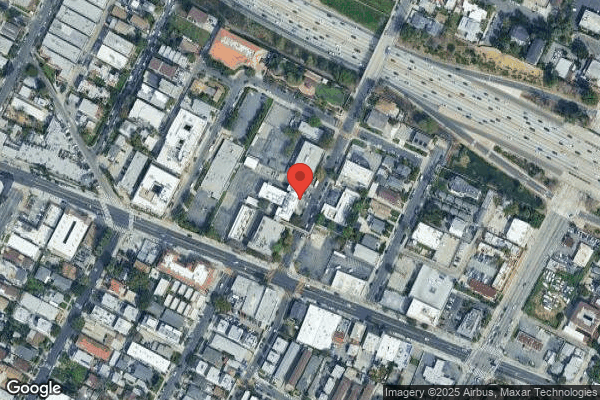

2411 W. TEMPLE STREET, LOS ANGELES, CA 90026 (213) 380-3210
For profit - Limited Liability company 99 Beds Independent Data: November 2025 2 Immediate Jeopardy citations
Trust Grade
0/100
#1131 of 1155 in CA
Last Inspection: April 2025

Within standard 12-15 month inspection cycle. Federal law requires annual inspections.

Overview

Temple Park Convalescent Hospital has received a Trust Grade of F, indicating significant concerns and poor overall performance. With a state rank of #1131 out of 1155 facilities in California, they are in the bottom half, and county rank of #353 out of 369 in Los Angeles County shows limited local competition for quality care. Although the facility's trend is improving, with a reduction in issues from 29 in 2024 to 18 in 2025, it still faces serious problems, including $186,034 in fines-higher than 97% of California facilities-indicating recurring compliance issues. Staffing is a mixed bag; the turnover is at 0%, which is positive, but the facility has less RN coverage than 84% of state facilities, meaning residents may not receive the oversight they need. Specific incidents include a resident ingesting hand sanitizer due to lack of supervision and a failure to prevent a resident from eloping, which raises serious safety concerns alongside a critical issue of neglecting to prevent a pressure ulcer for another resident. Overall, while there are some strengths, the significant weaknesses and safety violations are concerning for families considering this facility.

Trust Score
F
0/100
In California
#1131/1155
Bottom 3%
Safety Record
High Risk
Review needed
Inspections
Getting Better
29 → 18 violations
Staff Stability
○ Average
Turnover data not reported for this facility.
Penalties
○ Average
$186,034 in fines. Higher than 56% of California facilities. Some compliance issues.
Skilled Nurses
⚠ Watch
Each resident gets only 20 minutes of Registered Nurse (RN) attention daily — below average for California. Fewer RN minutes means fewer trained eyes watching for problems.
Violations
⚠ Watch
65 deficiencies on record. Higher than average. Multiple issues found across inspections.
★☆☆☆☆
1.0
Overall Rating
★☆☆☆☆
1.0
Staff Levels
★★★☆☆
3.0
Care Quality
★☆☆☆☆
1.0
Inspection Score
Stable
2024: 29 issues
2025: 18 issues

The Good

  • Full Sprinkler Coverage · Fire safety systems throughout facility
  • No fines on record

Facility shows strength in fire safety.

The Bad

1-Star Overall Rating

Below California average (3.1)

Significant quality concerns identified by CMS

Federal Fines: $186,034

Well above median ($33,413)

Significant penalties indicating serious issues

The Ugly 65 deficiencies on record

2 life-threatening 1 actual harm
Sept 2025 2 deficiencies
CONCERN (D) 📢 Someone Reported This

A family member, employee, or ombudsman was alarmed enough to file a formal complaint

Potential for Harm - no one hurt, but risky conditions existed

Pharmacy Services (Tag F0755)

Could have caused harm · This affected 1 resident

**NOTE- TERMS IN BRACKETS HAVE BEEN EDITED TO PROTECT CONFIDENTIALITY** Based on interview and record review the facility failed to ensure administration of medication was documented for one of three ...

Read full inspector narrative →
**NOTE- TERMS IN BRACKETS HAVE BEEN EDITED TO PROTECT CONFIDENTIALITY** Based on interview and record review the facility failed to ensure administration of medication was documented for one of three sampled residents (Resident 1). For Resident 1, the facility failed to document when Resident 1 was given Benadryl (medication used to relieve symptoms of allergies) 25 milligrams (mg., metric unit of measurement, used for medication dosage and/or amount) orally on 9/18/25.This deficient practice had the potential for medication error and medication duplication to Resident 1. During a review of the admission Record, indicated the facility admitted Resident 1 on 1/31/25 and re-admitted on [DATE] with diagnoses including generalized muscle weakness, hypertension (high blood pressure) and dementia (a group of thinking and social symptoms that interferes with daily functioning).During a review of Resident 1's Minimum Data Set (MDS, a resident assessment tool), dated 9/14/25, the MDS indicated Resident 1 had intact cognition (participant has sufficient judgement, planning organization, self-control, and the persistence needed to manage the normal demands of the participant's environment). During a review of the Medication Administration Record (MAR, a daily documentation record used by a licensed nurse to document medications and treatments given to a resident) dated 9/25 indicated an order to give Resident 1 Benadryl 25 mg. one tablet by mouth every four hours as needed for itchiness for 14 days. The box for 9/18/25 was not signed out as given. During a concurrent observation and interview on 9/18/25 at 8:47 a.m. with Registered Nurse Supervisor (RNS 1), in Resident 1's room, RNS 1 stated there is a medication cup with Benadryl on top of Resident 1's table. Resident 1 was observed taking the medication cup from RNS 1 and Resident 1 swallowed the Benadryl. During a follow-up interview on 9/18/25 at 11:49 a.m., RNS 1 stated she did not document when Resident 1 was given the Benadryl. RNS 1 further added documentation of the Benadryl should be done at the time the Benadryl was given and taken by Resident 1. During a review of the facility's policy and procedures (P&P) titled Administering Medications reviewed on 1/30/25 indicated the individual administering the medication must initial the resident's Medication Administration Record (MAR, a daily documentation record used by a licensed nurse to document medications and treatments given to a resident) after giving each medication and before administering the next ones. As required or indicated for a medication, the individual administering the medication will record in the resident's medical record that included: a. the date and time the medication was administered.b. the dosage.c. the route of the administrationd. any complaints or symptoms for which the drug was administerede. the signature and title of the person administering the drug.
CONCERN (D) 📢 Someone Reported This

A family member, employee, or ombudsman was alarmed enough to file a formal complaint

Potential for Harm - no one hurt, but risky conditions existed

Deficiency F0760 (Tag F0760)

Could have caused harm · This affected 1 resident

**NOTE- TERMS IN BRACKETS HAVE BEEN EDITED TO PROTECT CONFIDENTIALITY** Based on observation, interview, and record review, the facility failed to obtain a physician order before administering a medic...

Read full inspector narrative →
**NOTE- TERMS IN BRACKETS HAVE BEEN EDITED TO PROTECT CONFIDENTIALITY** Based on observation, interview, and record review, the facility failed to obtain a physician order before administering a medication to one of three sampled residents (Resident 1). For Resident 1 the facility failed to:1. Obtain a physician order prior to the administration of Benadryl tablet (medication used to relieve symptoms of allergies) 25 milligrams (mg., metric unit of measurement, used for medication dosage and/or amount) orally.2. Ensure the Benadryl 25 mg. tablet was not left at Resident 1's bedside table unattended.These deficient practices had the potential to result in harm to Resident 1 and other residents from inappropriate and unsafe medication administration.During a review of the admission Record, indicated the facility admitted Resident 1 on 1/31/25 and re-admitted on [DATE] with diagnoses including generalized muscle weakness, hypertension (high blood pressure) and dementia (a group of thinking and social symptoms that interferes with daily functioning).During a review of Resident 1's Minimum Data Set (MDS, a resident assessment tool), dated 9/14/25, the MDS indicated Resident 1 had intact cognition (participant has sufficient judgement, planning organization, self-control, and the persistence needed to manage the normal demands of the participant's environment). During a concurrent observation and interview on 9/18/25 at 8:05 a.m. with Resident 1, a medicine cup with one pink pill was observed on Resident 1's bedside table. Resident 1 stated she complained of itching, and she requested licensed vocational nurse (LVN 1) for Benadryl. During a concurrent observation and interview on 9/18/25 at 8:47 a.m. with Registered Nurse Supervisor (RNS 1), in Resident 1's room, RNS 1 stated there is a medication cup with Benadryl on top of Resident 1's table. RNS 1 stated, when LVN 1 brought the Benadryl to Resident 1, LVN 1 should observe Resident 1 take the Benadryl to ensure that Resident 1 had taken the Benadryl. Resident 1 was observed taking the medication cup from RNS 1 and swallowed the Benadryl. During a follow-up interview on 9/18/25 at 11:49 a.m., RNS 1 confirmed there was no physician order for the Benadryl that was given to Resident 1. RNS 1 stated a physician's order for the Benadryl is needed before administering the Benadryl to Resident 1. During an interview on 9/22/2025 at 8:28 a.m., LVN 1 stated Resident 1 complained of itching on 9/19/25. LVN 1 stated she handed the Benadryl to Resident 1 without observing Resident 1 take the Benadryl. LVN 1 stated she did not check for Benadryl order before giving the medication. LVN 1 stated, She had an order, I think. That was my mistake, I did not check the order. LVN 1 stated it is important to check physician orders to prevent medication errors. LVN 1 stated not checking the physician order may result in giving the wrong medication, or wrong dose, or result in giving medication Resident 1 may be allergic to. LVN 1 stated it is important to check Medication Administration Record (MAR, a daily documentation record used by a licensed nurse to document medications and treatments given to a resident) and verify medication orders before giving the Benadryl to Resident 1 for safety. During a review of facility's policies and procedure (P&P) titled Administering Medications, reviewed on 1/30/25, the P&P indicated, Medications shall be administered in a safe and timely manner, and as prescribed. The same Policy indicated medications must be administered in accordance with the orders, including any required time frame.
Jul 2025 2 deficiencies
CONCERN (D) 📢 Someone Reported This

A family member, employee, or ombudsman was alarmed enough to file a formal complaint

Potential for Harm - no one hurt, but risky conditions existed

Deficiency F0760 (Tag F0760)

Could have caused harm · This affected 1 resident

Based on interview and record review the facility failed to administer medication as ordered by the physician for one of four sampled residents (Resident 1). For Resident 1, the facility failed to adm...

Read full inspector narrative →
Based on interview and record review the facility failed to administer medication as ordered by the physician for one of four sampled residents (Resident 1). For Resident 1, the facility failed to administer the metronidazole (antibiotic that treats infection) 500 milligrams (mg., metric unit of measurement, used for medication dosage and/or amount) as ordered by the physician. This deficient practice resulted in Resident 1 not given one dose of the metronidazole 500 mg. and had the potential for Resident 1's infection to worsen.During a review of the admission Record indicated the facility admitted Resident 1 on 1/30/25 with diagnoses including diabetes mellitus (DM, a disorder characterized by difficulty in blood sugar control and poor wound healing) and pressure ulcer (wounds that occur from prolonged pressure on the skin) of the sacral region (lower back). During a review of Resident 1's Care Plan initiated on 2/26/25 indicated Resident 1 was on enhanced barrier precautions (an infection control intervention designed to reduce transmission of multidrug-resistant organisms (MDROs) in nursing homes) due to gastrostomy tube (a surgical opening fitted with a device to allow feedings to be administered directly to the stomach common for people with swallowing problems) and pressure injury. The care plan goal indicated to reduce the transmission of the organisms between residents and health care practitioners in the facility. The care plan interventions included administer antibiotic medications as ordered by the physician. During a review of the Minimum Data Set (MDS, resident assessment tool) dated 5/7/25 indicated Resident 1 had severe cognitive impairment. Resident 1 was dependent on toileting hygiene, shower/bathe self, lower body dressing, putting on/taking off footwear and substantial assistance (helper does more than half the effort) with oral hygiene, upper body dressing and personal hygiene. During a review of the Physician Telephone Order dated 7/18/25 at 5:06 p.m., indicated to give Resident 1 metronidazole 500 mg. one tablet by GT every eight hours for pressure sore on the sacral area. During a review of the Medication Administration Record (MAR - a daily documentation record used by a licensed nurse to document medications and treatments given to a resident) dated 7/19/25 at 6 a.m. to 7/22/25 at 6 a.m., indicated Resident 1 was given metronidazole 500 mg. every eight hours. The total of the metronidazole given to Resident 1 should be a total of 10 tablets. During a review of Resident 1's metronidazole bubble pack (medication arranged in individual compartments with one medication for each dosing period sealed with protective bubbles) indicated a total of nine tablets were given to Resident 1 instead of a total of 10 tablets. During a concurrent interview and record review on 7/22/25 at 10:35 a.m., Resident 1's MAR, bubble pack and Antibiotic Drug Record for the metronidazole 500 mg. were reviewed with LVN 2 and LVN 3. LVN 2 stated the metronidazole 500 mg. was started on 7/19/25. The bubble pack and the Antibiotic Drug Record indicated a total of nine tablets of metronidazole were given to Resident 1 instead of a total of 10 tablets. LVN 2 and LVN 3 agreed Resident 1 was not given one dose of the metronidazole 500 mg. During an interview on 7/22/25 at 11:41 a.m., the assistant director of nursing (ADON), stated that when Resident 1 was not given a dose of the metronidazole 500 mg., Resident 1's infection may worsen. During a review of the facility's policy and procedures (P&P) titled Administering Medications reviewed on 1/30/25, the P&P indicated medications shall be administered in a safe and timely manner as prescribed. Medications must be administered in accordance with the orders, including any required time frames.
CONCERN (D) 📢 Someone Reported This

A family member, employee, or ombudsman was alarmed enough to file a formal complaint

Potential for Harm - no one hurt, but risky conditions existed

Deficiency F0761 (Tag F0761)

Could have caused harm · This affected 1 resident

**NOTE- TERMS IN BRACKETS HAVE BEEN EDITED TO PROTECT CONFIDENTIALITY** Based on observation, interview and record review, the facility failed to ensure medications were kept secure in accordance with...

Read full inspector narrative →
**NOTE- TERMS IN BRACKETS HAVE BEEN EDITED TO PROTECT CONFIDENTIALITY** Based on observation, interview and record review, the facility failed to ensure medications were kept secure in accordance with professional standards of practice for one of four sample residents (Resident 2). During medication pass observation on 7/22/25 at 9 a.m., the facility failed to ensure Resident 2's medications were not left on top of the medication cart while the medication cart was left unattended. This deficient practice had the potential for other residents and other individuals to easily access the medications on top of the cart for their own. use. During a review of the admission Record indicated the facility admitted Resident 2 on 8/2/23 and readmitted on [DATE] with diagnoses including pneumonia (an infection/inflammation in the lungs) and generalized muscle weakness. During a review of the Minimum Data Set (MDS, resident assessment tool) dated 7/10/25 indicated Resident 2 was cognitively intact. Resident 2 needed substantial assistance (helper does more than half the effort) with toileting hygiene, shower/bathe self, lower body dressing, putting on/taking off footwear, moderate assistance (helper does less than the effort) with oral hygiene, upper body dressing and needed supervision with eating. During medication pass observation on 7/22/25 at 9 a.m., licensed vocational nurse (LVN 1) was observed preparing medications for Resident 2. LVN 1 completed preparing the medications and stepped inside Resident 2's room. LVN 1 left the bubble packs (medications arranged in individual compartments with one medication for each dosing period sealed with protective bubbles) on top of the medication cart unattended. During a follow-up interview on 7/22/25 at 10:57 a.m., LVN 1 stated after popping the medications from the bubble pack, place the bubble packs back inside the medication cart and lock the medication cart. LVN 1 further stated when stepping away from the cart, .don't leave any medications on top of the medication cart because of safety reasons because other people might steal the medications. During an interview on 7/22/25 at 11:41 a.m., the assistant director of nursing (ADON) stated when stepping away from the medication cart, no medications should be left on top of the cart for safety reasons. During a review of the facility Policy titled Administering Medications reviewed on 1/30/25 indicated during administration of medications, the medication cart will be kept closed and locked when out of sight of the medication nurse. It may be kept in the doorway of the resident's room, with open drawers facing inward and all other sides closed. No medications are kept on top of the cart. The cart must be clearly visible to the personnel administering medications, and all outward sides must be inaccessible to residents or other passing by. During a review of the facility's policy and procedures titled Storage of Medications, reviewed on 1/30/25, the P&P indicated the facility stores all drugs and biologicals in a safe, secure and orderly manner.
May 2025 2 deficiencies
CONCERN (D) 📢 Someone Reported This

A family member, employee, or ombudsman was alarmed enough to file a formal complaint

Potential for Harm - no one hurt, but risky conditions existed

Comprehensive Care Plan (Tag F0656)

Could have caused harm · This affected 1 resident

**NOTE- TERMS IN BRACKETS HAVE BEEN EDITED TO PROTECT CONFIDENTIALITY** Based on interview and record review the facility failed to implement the care plan for one of three sampled residents (Resident...

Read full inspector narrative →
**NOTE- TERMS IN BRACKETS HAVE BEEN EDITED TO PROTECT CONFIDENTIALITY** Based on interview and record review the facility failed to implement the care plan for one of three sampled residents (Resident 1). For Resident 1, the facility failed to assess and document weekly Resident 1 ' s moisture associated skin damage (MASD, moisture associated skin damage caused from prolonged exposure to moisture) to the buttocks area as indicated in Resident 1 ' s care plan. This deficient practice resulted in not being able to determine if Resident 1 ' s MASD had healed before Resident 1 was discharged from the facility on 4/11/25. Findings: During a review of the admission Record indicated the facility admitted Resident 1 on 4/2/25 with diagnoses including diabetes mellitus (DM, a disorder characterized by difficulty in blood sugar control and poor wound healing), difficulty in walking and dementia (a progressive state of decline in mental abilities). During a review of the Minimum Data Set (MDS, a resident assessment tool) dated 4/6/25 indicated Resident 1 had severed cognitive impairment. Resident 1 needed moderate assistance (helper does less than half the effort) with oral hygiene, toileting hygiene, shower/bathe self, upper/lower body dressing, putting on/taking off footwear and supervision with eating). During a review of the Skin Evaluation dated 4/3/25 at 9:03 a.m., Resident 1 indicated MASD on the buttocks area. During a review of Resident 1 ' s Care Plan initiated on 4/8/25, indicated Resident 1 had actual impairment to skin integrity related to fragile skin, and with diagnoses including bilateral buttocks MASD. The care plan goal indicated Resident 1 will maintain or develop clean and intact skin by the review date. The care plan interventions included: 1. Monitor/document location, size and treatment of skin injury. 2. Weekly treatment documentation includes measurement of each area of skin breakdown ' s width, length, depth, type of tissue and exudate and any other notable changes or observations. During a review of Resident 1 ' s Treatment Administration Record (TAR, a daily documentation record used by a licensed nurse to document treatments given to a resident) indicated for the MASD in the bilateral buttocks to wash with soap and water, pat dry, and apply zinc oxide (cream used to treat and prevent skin irritation) to the site and leave open. The TAR indicated the treatment was done from 4/3/25 to 4/11/25. During a concurrent interview and record review on 5/13/25 at 12:24 p.m., Resident 1 ' s skin assessment dated [DATE] was reviewed with the registered nurse supervisor (RNS 1). RNS 1 stated Resident 1 had MASD on the buttocks when Resident 1 was admitted on [DATE]. RNS 1 stated there should be a weekly assessment of the MASD. RNS 1 stated she was unable to find documentation that the MASD was assessed weekly. During an interview on 5/13/25 at 1:26 p.m., the director of nursing (DON) stated there was no documentation of Resident 1 ' s MASD whether the MASD had improved or not. The DON stated when Resident 1 was discharged on 4/11/25, the transfer out notes indicated no skin issues. During a review of the facility policy and procedures (P&P) titled Non-Pressure Ulcers/Wound Management revised on 1/30/25, the P&P indicated a licensed nurse will document the status of all skin conditions at least weekly or as otherwise indicated in the resident ' s care plan, until the wound, non-pressure ulcer or other skin condition is resolved. The same Policy indicated treatments for skin problems, wounds and non-pressure ulcers will be assessed and documented by a licensed nurse.
CONCERN (D) 📢 Someone Reported This

A family member, employee, or ombudsman was alarmed enough to file a formal complaint

Potential for Harm - no one hurt, but risky conditions existed

Accident Prevention (Tag F0689)

Could have caused harm · This affected 1 resident

Based on observation, interview and record review, the facility failed to ensure the environment is free of hazard for one of three sampled residents (Resident 3). During observation on 5/13/25, the f...

Read full inspector narrative →
Based on observation, interview and record review, the facility failed to ensure the environment is free of hazard for one of three sampled residents (Resident 3). During observation on 5/13/25, the facility hall was lined with linen carts, dirty linen hampers, trash hampers and showers chairs on both sides of the hall. Residents 3 stated it was difficult for him to self-propel his wheelchair due to the clutter in the hallway. This deficient practice had the potential for accidents to occur for Resident 3 and other residents. Findings: During a review of the admission Record indicated the facility admitted Resident 3 on 3/21/24 with diagnoses including diabetes mellitus (DM, disorder characterized by difficulty in blood sugar control and poor wound healing), muscle weakness and abnormalities of gait and mobility. During a review of Resident 3 ' s Minimum Data Set (MDS, a resident assessment tool) dated 3/4/25 indicated Resident 3 was cognitively intact. The MDS indicated Resident 3 was independent with activities of daily living (ADLs) and used the walker and wheelchair as mobility devices. During a concurrent observation and interview on 5/13/25 at 9:45 a.m., licensed vocational nurse (LVN 1) stated the hallway is cluttered. LVN 1 stated there are linen carts, dirty linen and trash hampers, shower chairs on both sides of the hallway. LVN 1 stated it could be better. During a concurrent observation and interview on 5/13/25 at 9:48 a.m., the infection preventionist (IP) stated the hallway is a little crowded and stated the linen carts and dirty linen hampers are placed on both sides of the hallway. IP stated this is a hazard and safety issues for residents who are using wheelchairs. During an interview on 5/13/25 at 12:24 p.m., the registered nurse supervisor (RNS 1) stated the linen carts, dirty linen hampers, thrash hampers should be placed on one side of the hallway so there is space for the residents to go through. During an interview on 5/13/25 at 1:26 p.m., the director of nursing (DON) stated the certified nursing assistants were doing morning care. DON stated the linen carts and dirty linen hampers should be placed on one side of the hall for the safety of the residents. During a review of the facility' policy and procedurs (P&P) titled Safety and Supervision of Residents reviewed on 1/30/25, the P&P indicated the facility strives to make the environment as free from accident hazards as possible. Resident safety and supervision and assistance to prevent accidents are facility- wide priorities. The same Policy indicated safety risks and environmental hazards are identified on an ongoing basis through a combination of employee training, employee monitoring and reporting processes: Quality Assurance and Performance Improvement (QAPI) reviews of safety and incident/accident data and a facility -wide commitment to safety at all levels of the organization.
Apr 2025 10 deficiencies
CONCERN (D)

Potential for Harm - no one hurt, but risky conditions existed

Deficiency F0578 (Tag F0578)

Could have caused harm · This affected 1 resident

Based on interview and record review, the facility failed to ensure one of three sampled Residents (Resident 19) had an advance directive (a legal document indicating resident preference on end-of-lif...

Read full inspector narrative →
Based on interview and record review, the facility failed to ensure one of three sampled Residents (Resident 19) had an advance directive (a legal document indicating resident preference on end-of-life treatment decisions). This failure violated Resident 19 and/or representative's rights to be fully informed of the option to formulate an advanced directive and had the potential not to follow Resident 19's wishes. Findings: During a review of Resident 19's admission Information, the admission Information indicated the facility admitted Resident 19 on 9/30/2024 and readmitted Resident 19 on 3/6/2025 with diagnoses including metabolic encephalopathy (brain dysfunction caused by problems with the body's metabolism), cerebral infarction (a condition where brain tissue dies due to a lack of blood flow and oxygen) and moderate intellectual disabilities (observable developmental delays, which may be accompanied by physical impairments). During a review of Resident 19's Resident Care Conference Review dated 10/11/2024, the Resident Care Conference Review indicated Resident 19 was under the Regional Center (RC). The Resident Care Conference Review indicated Resident 19 did not have an advanced directive in place at This time and does not want to formulate one. During a review of Resident 19's History and Physical (H&P), dated 3/7/2025, the H&P indicated Resident 19's had a limited capacity to consent due to moderate intellectual disabilities. During a review of Resident 19's Minimum Data Set (MDS, a resident assessment tool), dated 4/4/2025, the MDS indicated the resident was severely cognitively (anything related to thinking, learning, and understanding) impaired for daily decision making. During an interview on 4/8/2025 at 8:16 AM with the Discharge Planner (DP), the DP stated Resident 19 needed an advance directive. The DP stated Resident 19 came from another Skilled Nursing Facility (SNF) and the DP stated she (DP) contacted the previous facility's Social Worker to check for contacts or responsible party for the resident. The DP stated she did not check to see if the resident had an advance directive. The DP stated she (DP) followed up with the RC regarding the AD but did not document. During an interview on 4/8/2025 at 9:02 AM with the DP, the DP stated Resident 19 did not have the capacity to sign an advance directive. The DP stated there was no documentation on the EMR (Electronic Medical Record) that she (the DP) had notified the doctor of the advance directive status, and it was important to notify the doctor. During an interview on 4/10/2025 at 2:01 PM with the Director of Nursing (DON), the DON stated the advance directive was important to have when deciding Resident 19's well-being and code status (what type of intervention [if any] a healthcare team will conduct should their patient's heart stop beating. The DON stated the advance directive needed to be initiated upon admission or received from the previous facility, however due to its absence the facility would consider Resident 19 as a full code status (all life-saving measures will be taken during a medical emergency). During a concurrent interview and record review on 4/10/2025 at 2:22PM with the DON, the facility's policy and procedure (P&P) titled, Advance Directives, dated June 2023 was reviewed. The DON stated the P&P indicated, Prior to or upon admission of a resident, the Social Services Director or designee will inquire of the resident, his/her family members and/or his or her legal representative, about the existence of any written advance directives. The DON stated, the policy was not followed.
CONCERN (D)

Potential for Harm - no one hurt, but risky conditions existed

Transfer Notice (Tag F0623)

Could have caused harm · This affected 1 resident

Based on interview and record review, the facility failed to notify the State Long Term Care Ombudsman (an advocate for residents of nursing homes, board and care centers, and assisted living faciliti...

Read full inspector narrative →
Based on interview and record review, the facility failed to notify the State Long Term Care Ombudsman (an advocate for residents of nursing homes, board and care centers, and assisted living facilities) when the facility transferred one of two sampled residents (Resident 53) to the General Acute Care Hospital (GACH). This failure had the potential for Resident 53 not to have a representative. Findings: During a review of Resident 53's admission Record, the admission Record indicated the facility admitted the resident on 11/8/2024 with diagnoses that included metabolic encephalopathy (a problem in the brain caused by a chemical imbalance in the blood), dementia (a progressive state of decline in mental abilities), human immunodeficiency virus (HIV, a virus that attacks the body's immune system), chronic respiratory failure (a condition when the lungs cannot release enough oxygen into the blood), congestive heart failure (CHF, a heart disorder which causes the heart to not pump the blood efficiently, sometimes resulting in leg swelling), and dysphagia (difficulty swallowing). During a review of Resident 53's Minimum Data Set (MDS, a resident assessment tool) dated 1/7/2025, the MDS indicated the resident had severe cognitive impairment (impaired ability to think, understand, and reason). The MDS indicated Resident 53 required substantial/maximal assistance for eating. The MDS indicated Resident 53 was dependent on help for oral hygiene, toileting hygiene, shower/bathing self, upper body dressing, lower body dressing, putting on/taking off footwear. During a review of Resident 53's SBAR (situation, background, assessment, recommendation, a communication tool used by healthcare workers when there is a change of condition among the residents) Communication Form and progress note dated 1/10/2025 at 11:35 AM, the SBAR indicated the resident was noted with increased agitation and desaturation (a decrease in the amount of oxygen in the blood). The SBAR indicated Resident 53 had an oxygen saturation level (O2 sat, a measurement of how much oxygen the blood is carrying as a percentage) at 70% and was provided with oxygen via a rebreather mask (a medical device used to deliver high concentrations of oxygen to patients who can breathe on their own but require extra oxygen). The SBAR indicated Resident 53's physician was notified and provided orders to send the resident to the GACH via 911. During a review of Resident 53's Transfer Out Packet dated 1/10/2025 at 11:48 AM, the packet indicated the resident was discharged from the facility on 1/10/2025 via 911 to GACH 1 due to increased agitation and desaturation. During a review of Resident 53's Notice of Proposed Transfer/Discharge Form dated 1/10/2025. The notice indicated the resident was transferred to GACH 1 on 1/10/2025. The notice indicated Resident 53's transfer to GACH 1 was necessary for the resident's welfare. The notice indicated the resident's needs could not be met in the facility. There was no indication a copy of the notice was sent to the State Long Term Care Ombudsman. During a concurrent interview and record review on 4/9/2025 at 2:04 PM, Resident 53's Notice of Proposed Transfer/Discharge was reviewed with Licensed Vocational Nurse 1 (LVN 1). LVN 1 stated it was the charge nurse's (in general) responsibility to notify the Ombudsman of a resident's transfer or discharge from the facility. LVN 1 stated the charge nurses would fill out and complete the notice of transfer/discharge form and then fax it to the Ombudsman. LVN 1 stated the Ombudsman was not notified of Resident 53's transfer to GACH 1 on 1/10/2025. LVN 1 stated the notice was completed but did not indicate it was faxed to the Ombudsman. LVN 1 stated he (LVN1) could not locate the fax confirmation to the Ombudsman for the notice of Resident 53's transfer to GACH 1 on 1/10/2025. During a concurrent interview and record review on 4/10/2025 at 1:31 PM, Resident 53's Notice of Transfer/discharge date d 1/10/2025 was reviewed with the Director of Nursing (DON). The DON stated Resident 53 was transferred to GACH 1 on 1/10/2025. The DON stated when Resident 53 was transferred to GACH 1 the Notice of Transfer/Discharge was completed but not faxed to the Ombudsman. The DON stated the Notice of Transfer/Discharge must be faxed to the ombudsman within 30 days. The DON stated if the ombudsman was not notified of the resident's transfer or discharge from the facility, the Ombudsman may not have the ability to follow up with the resident. During a review of the facility's Policy and Procedure (P&P) titled Transfer or Discharge, Facility-Initiated with a review date of 1/30/2025, the P&P indicated A copy of the notice is sent to the Office of the State Long-Term Care Ombudsman at the same time the notice of transfer or discharge is provided to the resident and representative.
CONCERN (D)

Potential for Harm - no one hurt, but risky conditions existed

Comprehensive Care Plan (Tag F0656)

Could have caused harm · This affected 1 resident

**NOTE- TERMS IN BRACKETS HAVE BEEN EDITED TO PROTECT CONFIDENTIALITY** Based on observation, interview, and record review the facility failed to ensure to implement the care plan for one of 19 sample...

Read full inspector narrative →
**NOTE- TERMS IN BRACKETS HAVE BEEN EDITED TO PROTECT CONFIDENTIALITY** Based on observation, interview, and record review the facility failed to ensure to implement the care plan for one of 19 sampled resident (Resident 92) for the use of a hand mitten (used to help protect residents who are prone to disrupting medical treatment). This failure had the potential to cause a lack of monitoring for Resident 93's skin integrity and circulation. Findings: During a review of Resident 92's admission Record, the admission Record indicated the facility admitted Resident 92 on 1/9/2025 with diagnoses including cerebral infarction (a serious condition where blood flow to the brain is blocked, leading to tissue damage and death), legal blindness, and need for assistance with personal care. During a review of Resident 92's Minimum Data Set (MDS, a resident assessment tool) dated 1/13/2025, the MDS indicated the resident was not oriented to the day, month, or year. The MDS indicated Resident 92 had poor recall. During an observation on 4/7/2025 at 10:29 AM in Resident 92's room, Resident 92 was lying in bed positioned facing the window, two bed siderails (are adjustable metal or rigid plastic bars that attach to the bed) were up, call light (a device used by a patient to signal his or her need for assistance) within reach. Resident 92 had a hand mitten to the right hand. Resident 92 was on an Alternating Pressure Mattress (APP, air bladders throughout the mattress that constantly inflate and deflate assisting bedridden adults in reducing, eliminating and treating bed sores). Resident 92 had an indwelling catheter (thin, flexible tube that drains urine from the bladder into a collection bag) with a dignity bag (a cover for a urine drainage bag, designed to conceal the bag from public view and maintain privacy) over the collection bag. During a concurrent observation and interview on 4/8/25 at 1:49 PM with Licensed Vocational Nurse 2 (LVN) 2, in Resident 92's room, the right-hand mitten was observed. LVN 2 stated the reason Resident 92 had the mitten on was because the resident tried to scratch her skin. During a concurrent record review Resident 92's Hand -Mitten Care plan was reviewed. LVN 2 searched for the Hand-Mitten care plan and stated she (LVN 2) was unable to find a care plan. LVN 2 stated the hand mitten was a restraint. LVN 2 stated it was important to have the care plan to monitor for contraction (a permanent tightening of the muscles, tendons, skin, and surrounding tissues that causes the joints to shorten and stiffen), skin integrity, range of motion (means the full movement potential of a joint), and circulation. LVN 2 stated she (LVN2) would release the mitten every two to four hours. During a concurrent interview and record review on 4/8/2025 at 2:26 PM with the Minimum Data Set Nurse (MDSN), the MDS dated [DATE] was reviewed. The MDSN stated that if the resident did not exhibit a requirement to have a hand mitten on admission, then the hand mitten would not be triggered on the MDS which would not trigger a care plan. The MDSN reviewed Resident 92's admission date and the resident was admitted to the facility on [DATE]. The MDSN stated Resident 92's MDS was done on 1/13/2025, and the consent for the hand-mitten was obtained on 1/16/2025 after the MDS was completed. The MDSN stated the nurse who obtained the consent would get an order from the doctor and would trigger the care plan. During an interview on 4/8/25 at 3:02 PM with the Director of Nursing (DON), the DON stated there was no interdisciplinary team (IDT, group of diverse health care professionals from different fields) meeting, no care plan for Resident 92's hand mitten. The DON stated if there were a change of condition the nurse should get informed consent for the hand mitten, a doctor's order, and trigger the care plan. The DON stated any license nurse can trigger the care plan. The DON stated the risk to Resident 92 without a hand mitten care plan would be safety and lack of monitoring of her skin integrity and circulation. During a review of the facility's policy and procedure titled, Care Plan - Comprehensive Person - Centered dated 10/2023, indicated that the comprehensive care plan has been designed to incorporate identified problem areas and incorporate risk factors. During a review of the facility's policy and procedures titled, Use of Restraints dated 5/1/2024, indicated that care plans for residents in restraints will reflect interventions that address not only the immediate medical symptoms, but the underlying problems that may be causing the symptoms.
CONCERN (D)

Potential for Harm - no one hurt, but risky conditions existed

ADL Care (Tag F0677)

Could have caused harm · This affected 1 resident

Based on observation, interview, and record review, the facility failed to provide care and services to maintain good hygiene for one of one sampled residents (Resident 68). This failure had the poten...

Read full inspector narrative →
Based on observation, interview, and record review, the facility failed to provide care and services to maintain good hygiene for one of one sampled residents (Resident 68). This failure had the potential to expose Resident 68 to skin irritation, skin breakdown, and possible infection. Findings: During a review of Resident 68's admission Record), the admission Record indicated the facility admitted Resident 68 on 1/24/2025 with diagnoses that included muscle weakness, need for assistance with personal care (bathing, dressing, eating, toileting, and transferring - moving from one place to another), hemiplegia (the loss of the ability to move, feel, or otherwise control muscles on one side of the body) and hemiparesis (weakness or the inability to move on one side of the body) following cerebral infarction (disrupted blood flow to the brain due to problems with the blood vessels that supply it) affecting left non-dominant (the side that is not your preferred side of the body for performing tasks) side. During a review of Resident 68's Minimum Data Set (MDS, a resident assessment tool) dated 1/28/2025, the MDS indicated Resident 68 had the ability to make himself understood and had the ability to understand others. The MDS indicated Resident 68 was dependent (relying on others) for personal hygiene (bathing, showering, brushing teeth, toileting, cleaning oneself). The MDS indicated an active diagnosis of hemiplegia or hemiparesis and need for assistance with personal care. During a review of Resident 68's Order Summary Report (a doctor's written or spoken instruction for what needs to be done for a patient, whether it's medications, treatments, or tests) dated 4/10/2025, indicated the facility would perform a Braden Scale Assessment (a tool used to assess a patient's risk of developing a pressure ulcer/bed sore [refers to localized damage to the skin and/or underlying soft tissue usually over a bony prominence or related to a medical or other device]) weekly for three weeks starting on 3/28/2025. The Order Summary Report indicated an order for a low air loss mattress (LAL, mattress that operates using a blower-based pump that was designed to circulate a constant flow of air) for skin management. The Order Summary Report indicated an order for right buttock pressure injury - stage 3 (mattress that operates using a blower-based pump that was designed to circulate a constant flow of air) cleanse with Dakin's solution (a liquid to clean and disinfect wounds, preventing infection), pat dry. During a review of Resident 68's care plan (a detailed document outlining an individual's care needs and how a facility would meet these needs, ensuring a person-centered approach to care) dated 2/5/2025 titled at risk for ADL (activities of daily living, activities such as bathing, dressing and toileting a person performs daily) decline related to: aging process, generalized weakness, mental illness had a goal for the resident to be kept clean, dry, and appropriately dress. The care plan interventions indicated for the facility to check the resident every two hours for soiling/wetness, to clean him after each episode of incontinence (trouble controlling when you pee or poop), to assist the resident with ADLs, to cleanse his skin and to apply lotion. During a review of Resident 68's care plan dated 2/5/2025 titled at risk for skin impairment (a situation where the skin's normal protective barrier is compromised, making it more vulnerable to damage and infection), UTI (urinary tract infection - an infection in the bladder/urinary tract), pressure sores decline in bowel and bladder function (parts of the digestive and urinary systems that work together to maintain bodily functions) related to: always incontinent had a goal for the resident to not have any skin breakdown. The care plan had a goal to provide good incontinence care. During a review of Resident 68's care plan dated 2/5/2025 titled the resident has bowel incontinence related to limited mobility had an intervention to provide pericare (cleaning a patient's genital and anal areas) after each incontinent episode. During an interview on 4/7/2025 at 11:30 AM with Treatment Nurse 1 (TN 1), TN 1 stated Resident 68 was soiled, and he (TN1) was waiting for someone to help him clean Resident 68. During an observation on 4/7/2025 at 11:38 AM, Certified Nursing Assistant 2 (CNA 2) entered Resident 68's room. CNA 2 exited Resident 68's room a minute later without cleaning or changing the resident. During a concurrent observation and interview on 4/7/2025 at 11:41 AM with CNA 2 in front of Resident 68's room CNA 2 stated he had just been told Resident 68 had soiled himself and stated he was looking for someone to help him clean Resident 68. During a concurrent observation and interview on 4/7/2025 at 11:46 AM with Licensed Vocational Nurse 3 (LVN 3) at the entrance of Resident 68's room, CNA 2 was observed helping Resident 68's neighbor, Resident 85. LVN 3 stated CNA 2 was helping Resident 85 because Resident 85 had taken off his adult brief (disposable underwear). During an observation on 4/7/2025 at 11:50 AM in Resident 68's room, CNA 2 and CNA 3 were observed cleaning Resident 68. During an interview on 4/72025 at 12 PM with Resident 68 in Resident 68's room, Resident 68 was asked how he felt having to wait 20 minutes for the facility to clean him after he soiled himself. Resident 68 did not respond and stared at the surveyor. During an interview on 4/8/2025 at 2:56 PM with the Director of Nursing (DON), the DON stated staff would need to clean a resident (in general) as soon as they (the staff) knew the resident needed to be cleaned. The DON stated 20 minutes was a long time for the facility to change a resident. The DON stated CNA2 should have asked another staff member to help clean Resident 68 instead of having the resident wait. The DON stated Resident 68 could have been exposed to skin infection or worsening of his pressure ulcer. During a record review of the facility's policy and procedure (P&P) titled, Perineal Care (cleaning the private areas of a patient) dated1/2024, the P&P indicated the purposes of this procedure are to provide cleanliness and comfort to the resident, to prevent infections and skin irritation, and to observe the resident's skin condition. During a record review of the facility's P&P titled, Activities of Daily Living (ADLs), Supporting, dated 4/2023, the P&P indicated residents who are unable to carry our activities of daily living independently will receive the services necessary to maintain good nutrition, grooming, and personal and oral hygiene (regularly cleaning your teeth, gums, and tongue to prevent tooth decay and gum disease). The P&P indicated appropriate care and services will be provided for residents who are unable to carry out ADLs independently, with the consent of the resident and in accordance with the plan of care, including appropriate support and assistance with: a. Hygiene (bathing, dressing, grooming, and oral care); b. Mobility (transfer and ambulation, including walking); c. Elimination (toileting); d. Dining (meals and snacks); and e. Communication (speech, language, and any functional communication systems).
CONCERN (D)

Potential for Harm - no one hurt, but risky conditions existed

Quality of Care (Tag F0684)

Could have caused harm · This affected 1 resident

Based on interview and record review, the facility failed to administer insulin (a hormone that removes excess sugar from the blood, can be produced by the body or given artificially via medication) a...

Read full inspector narrative →
Based on interview and record review, the facility failed to administer insulin (a hormone that removes excess sugar from the blood, can be produced by the body or given artificially via medication) according to the facility's policy by failing to rotate the administration site when administering insulin to one of one sampled residents (Resident 4). This failure had the potential for Resident 4 to experience skin complications. Findings: During a review of Resident 4's admission Record, the admission Record indicated the facility re-admitted the resident on 1/26/2025 with diagnosis that included type 2 diabetes (DM, a disorder characterized by difficulty in blood sugar control and poor wound healing). During a review of Resident 4's Physician Orders dated 1/27/2025, the Physician Order indicated the resident was to receive Humulin R Insulin (a medication used to manage type 2 diabetes by lowering blood sugar levels) per sliding scale (varies the dose of insulin based on blood glucose level) subcutaneously (a method of administering medication by injecting it into the fatty layer of tissue just beneath the skin) before meals and at bedtime for DM. During a review of Resident 4's Medication Administration Record (MAR) dated from 2/1/2025 to 2/28/2025, the MAR indicated the resident received consecutive doses of insulin in the left lower quadrant of her abdomen on 2/14/2025 at 3:59 PM, 2/15/2025 at 11:46 AM, and on 2/15/2025 at 5:05 PM. The MAR indicated Resident 4 received consecutive doses of insulin in the right lower quadrant of her abdomen on 2/20/2025 at 11:30 AM and on 2/21/2025 at 11:45 AM. During a review of Resident 4's Minimum Data Set (MDS, a resident assessment tool) dated 3/17/2025, the MDS indicated the resident had moderate cognitive impairment (some impairment in the ability to think, understand, and reason). The MDS indicated Resident 4 was receiving a hypoglycemic medication (medication used to lower blood sugar levels). During a review of Resident 4's MAR dated from 3/1/2025 to 3/31/2025, the MAR indicated the resident received consecutive doses of insulin in the left lower quadrant (the area left of the midline and below the umbilicus) of her abdomen on 3/2/2025 at 8:11 PM, 3/3/2025 at 4:46 PM, and on 3/6/2025 at 8:21 PM. The MAR indicated Resident 4 received consecutive doses of insulin in the right upper quadrant of her abdomen on 3/21/2025 at 4:01 PM, and on 3/21/2025 at 8:30 PM. During a concurrent interview and record review on 4/10/2025 at 11:10 AM Resident 4's MAR dated from 2/1/2025 to 2/28/2025 and 3/1/2025 to 3/31/2025 were reviewed with Licensed Vocational Nurse 2 (LVN 2). LVN 2 stated Resident 4 did not have her administration sites rotated when insulin was administered on 2/14/2025, 2/15/2025, 2/20/2025, 2/21/2025, 3/2/2025, 3/3/2025, 3/6/2025, and 3/21/2025. LVN 2 stated staff had the ability to see where the previous injection sites were given prior to the administration of insulin to ensure injection sites were rotated. LVN 2 stated if insulin was previously administered in the left lower quadrant of the abdomen, the next dose of insulin should be in a different location. LVN 2 stated insulin administered in the same location could lead to hard lumps under the skin. During a concurrent interview and record review on 4/10/2025 at 1:40 PM, Resident 4's MARs dated from 2/1/2025 to 2/28/2025 and 3/1/2025 to 3/31/2025 were reviewed with the Director of Nursing (DON). The DON stated administration sites of insulin should be rotated. The DON stated administering insulin in the same location could lead to lipohypertrophy (a condition where lumps of fat and scar tissue form under the skin, often at insulin injection sites, due to repeated injections in the same area that can impair insulin absorption and lead to inconsistent blood sugar levels and difficulty managing diabetes). During a review of the facility's Policy and Procedure (P&P) titled, INSULIN ADMINISTRATION with a review date of 1/30/2025, the P&P indicated to provide guidelines for the safe administration of insulin to residents .Injection sites should be rotated, preferably within the same general area.
CONCERN (D)

Potential for Harm - no one hurt, but risky conditions existed

Pressure Ulcer Prevention (Tag F0686)

Could have caused harm · This affected 1 resident

Based on interview and record review the facility failed to ensure Treatment Nurse 1 (TN1) monitored the progression of the pressure ulcers (pressure injury, localized damage to the skin and/or underl...

Read full inspector narrative →
Based on interview and record review the facility failed to ensure Treatment Nurse 1 (TN1) monitored the progression of the pressure ulcers (pressure injury, localized damage to the skin and/or underlying tissue usually over a bony prominence) for one of one sampled residents (Resident 53). This failure had the potential for Resident 53's pressure ulcers to worsen. Findings: During a review of Resident 53's admission Record, the admission Record indicated the facility re-admitted the resident on 2/1/2025 with diagnoses that included metabolic encephalopathy (a problem in the brain caused by a chemical imbalance in the blood), dementia (a progressive state of decline in mental abilities), human immunodeficiency virus (HIV, a virus that attacks the body's immune system), chronic respiratory failure (a condition when the lungs cannot release enough oxygen into the blood), congestive heart failure (CHF, a heart disorder which causes the heart to not pump the blood efficiently, sometimes resulting in leg swelling), and dysphagia (difficulty swallowing). During a review of Resident 53's Care Plan dated 2/2/2025, the Care Plan indicated the resident had an unstageable (a type of pressure injury where the extent of damage cannot be determined because the wound bed is covered by necrotic tissue [dead or damaged tissue]) pressure ulcer of his medial back related to immobility (state of not being able to move around). The Care Plan indicated a goal for Resident 53's pressure ulcer was to show signs of healing and to remain free from infection. The Care Pan indicated interventions that included weekly treatment documentation to include the measurement of each area of the skin breakdown's such as the width, length, depth, type of tissue, and exudate (fluid that seeps out of a wound); and to monitor/document/report as needed any changes in skin status, appearance, color, wound healing, signs and symptoms of infection, wound size, and stage. During a review of Resident 53's Care Plan dated 2/2/2025, the Care Plan indicated the resident had an unstageable pressure ulcer of his coccyx (tailbone area) related to immobility. The Care Plan indicated a goal for Resident 53's pressure ulcer was to show signs of healing and remain free from infection. The Care Plan indicated interventions to monitor/document/report as needed any change in skin status, appearance, color, wound healing, signs and symptoms of infection, wound size, and stage. During a review of Resident 53's Minimum Data Set (MDS, a resident assessment tool) dated 2/28/2025, the MDS indicated the resident had severe cognitive impairment (impaired ability to think, understand, and reason). The MDS indicated Resident 53 was dependent on help for eating, oral hygiene, upper body dressing, lower body dressing, and putting on/taking off footwear. The MDS indicated Resident 53 was at risk of developing pressure ulcers/injuries. The MDS indicated Resident 53 had two unstageable pressure ulcers that were present upon reentry to the facility. During a review of Resident 53's Pressure Sore Skin Problem Report, dated 2/28/2025 at 12:56 PM, the Pressure Sore Skin Problem Report indicated the resident had an unstageable pressure ulcer to his medial back that was 1.5 centimeters (cm, a unit of measurement) in length and 1.0 cm in width. The Pressure Sore Skin Problem Report indicated Resident 53 had an unstageable pressure ulcer to his coccyx that was 3.0 cm in length and 2.0 cm in width. There were no other Pressure Sore Skin Problem Reports documented by nursing staff after 2/28/2025. During a concurrent interview and record review on 4/9/2025 at 10:45 AM, Resident 53's Pressure Sore Skin Problem Report dated 2/28/2025 was reviewed with TN1. TN 1 stated he was in charge of monitoring and providing treatment to Resident 53's pressure ulcers. TN 1 stated he was supposed to document his monitoring of Resident 53's pressure ulcers on the Pressure Sore Skin Problem Report weekly. TN 1 stated he was supposed to document the measurements, location, and description of Resident 53's pressure ulcers on the Pressure Sore Skin Problem Report. TN 1 stated the last Pressure Sore Skin Problem Report was documented on 2/28/2025. TN 1 stated he was having trouble keeping up with his documentation because he felt overwhelmed with the amount of documentation he had to do. TN 1 stated it was important to keep up with Resident 53's documentation to keep track of the progress of the resident's pressure ulcers. TN 1 stated there was a potential to for Resident 53's pressure ulcers to worsen if weekly documentation and monitoring was not completed. During an interview on 4/10/2025 at 1:50 PM with the Director of Nursing (DON), the DON stated licensed nurses (in general) needed to monitor and document on the Pressure Sore Skin Problem Reports weekly the progression of the resident's pressure injuries. The DON stated the last Pressure Sore Skin Problem Report for Resident 53 was last documented on 2/28/2025. The DON stated it was important for TN1 to document on the Pressure Sore Skin Problem Report to ensure Resident 53 received the appropriate pressure injury treatment. The DON stated there was a potential for the resident's pressure injuries to worsen if the Pressure Sore Skin Problem Reports were not documented weekly. During a review of the facility's Policy and Procedure (P&P) with a review date of 6/18/2024, the P&P indicated The nursing staff and Attending Physician will assess and document an individual's significant risk factors for developing pressure sores for example, immobility, recent weight loss, and a history of pressure ulcer(s). In addition, the nurse shall describe and document/report the following: a. assessment of pressure sore including location, stage, length, width, and depth; b. pain assessment; c. Resident's mobility status; d. Current treatments, including support surfaces; and e. active diagnoses. The staff will examine the skin of a new admission for ulcerations or alterations in the skin.
CONCERN (D)

Potential for Harm - no one hurt, but risky conditions existed

Accident Prevention (Tag F0689)

Could have caused harm · This affected 1 resident

Based on observation, interview, and record review the facility failed to ensure not to leave a lighter unattended (left alone without supervision) and unsecured (unprotected) at a resident's bedside ...

Read full inspector narrative →
Based on observation, interview, and record review the facility failed to ensure not to leave a lighter unattended (left alone without supervision) and unsecured (unprotected) at a resident's bedside table for one of two sampled residents (Resident 55). This failure had the potential Resident 24 to sustain burns and/or cause a fire. Findings: During a review of Resident 55's admission Record dated 4/10/2025, the admission Record indicated the facility originally admitted Resident 55 on 4/30/2026 and readmitted Resident 55 on 10/28/2024 with the diagnoses of chronic obstructive pulmonary disease (COPD-a chronic lung disease causing difficulty in breathing) and nicotine dependence (a person's body and brain become used to having nicotine, the addictive substance in tobacco products such as cigarettes), cigarettes, uncomplicated. During a review of Resident 55's Minimum Data Set (MDS - a resident assessment tool) dated 2/11/2025, indicated Resident 55 had the ability to make himself understood and had the ability to understand others. The MDS indicated Resident 55 was independent or needed set up/clean up assistance for self-care. The MDS indicated a diagnosis of COPD and nicotine dependence, cigarettes, uncomplicated. During a review of Resident 55's History and Physical (H&P - the physician obtains a thorough medical history from the patient, performs a physical examination, and then documents their findings) dated 10/30/2024, the H&P indicted the resident's physician educated Resident 55 about smoking cessation (quitting smoking). During a review of Resident 55's care plan titled resident is capable of smoking in a designated (specific) area with supervision only, initiated 10/5/2023, the care plan indicated a goal that Resident 55 will comply with facility policy regarding smoking daily. During a review of Resident 55's care plan titled, potential risk for injury related to smoking, initiated 10/5/2023, the care plan indicated an intervention for the facility to observe resident for unsafe smoking materials from outside source, immediately inform facility management. During a review of Resident 55's Nurse Risk Evaluations/Assessments Section V. Smoking Safety Evaluation, dated 2/13/2025, the Nurse Risk Evaluations/Assessments indicated Resident 55's smoking evaluation score was 22. The Nurse Risk Evaluations/Assessments indicated total score above 2 = Supervised smoking and/or offer assistance to hold the cigarette. During a concurrent observation and interview on 4/8/2025 at 10:09 AM in the facility's designated smoking area, Resident 55 was observed wearing a smoking apron and smoking a cigarette. The surveyor asked Resident 55 if the facility allowed him to keep a lighter at the bedside and Resident 55 initially stated yes but then quickly stated no. The surveyor asked Resident 55 when the facility last allowed him to keep a lighter at the bedside and Resident 55 stated a long time ago. During an observation on 4/8/2025 at 10:18 AM a green, fluorescent lighter was observed on the corner of Resident 55's bedside table approximately 12 inches to the right and 12 inches above his bed. The lighter was observed to be unattended since the resident was outside in the patio smoking. A photo of the lighter on top to the bedside table was taken that included a portion of the resident's bed for reference. During a concurrent observation and interview on 4/8/2025 at 10:10 AM with Licensed Vocational Nurse 3 (LVN 3), in Resident 55's room, a green a green, fluorescent lighter was observed on the corner of Resident 55's bedside table approximately 12 inches to the right and 12 inches above his bed. LVN 3 stated she would speak with Resident 55 to educate him that residents (in general) could not store lighters at the bedside. LVN 3 stated having a lighter at the bedside could be a fire hazard risk. LVN 3 stated she (LVN3) would bring Resident 55's lighter to the Activities Director (AD). During an interview on 4/8/2025 at 10:24 AM with Certified Nursing Assistant 4 (CNA 4), CNA 4 stated she he (Resident 55) sometimes brings it with him, referring to Resident 55's lighter when he went to the designated smoking area. During an interview on 4/8/2025 at 10:33 AM with the AD, the AD stated the facility did not allow residents (in general) to store lighters or cigarettes in their rooms. The AD stated the facility had a place to store the residents' cigarettes and lighters. The AD stated if the facility discovered any lighters or cigarettes, the facility would confiscate (take away) them. The AD stated the facility staff should be making rounds to check for contraband (something that is not allowed or against the rules). The AD stated the facility would take the residents (in general) to the liquor store and then would store the smoking materials for the residents. The AD stated a resident who had cigarettes or a lighter in their room would be a fire risk to the facility or a resident could be at risk for burning themself. The AD stated LVN 3 confiscated Resident 55's lighter and put it in the activities lock box. The AD stated the facility had 2 locked boxes where they stored residents' smoking material. The AD stated when smoke time for the residents was over, the smoking material would be returned to the locked boxes. During an interview on 4/8/2025 at 10:46 AM with the Assistant Director of Nursing (ADON), the ADON stated she was not sure about the facility's policy regarding whether or not a resident could keep cigarettes or lighters in their rooms. The ADON stated she (ADON) thought the residents were not allowed to keep cigarettes or lighters in their room and would need to check the facility's policy. The ADON stated if a resident had cigarettes and lighter in their room, the resident would be at risk for burning themselves or could cause a fire in the facility. During an interview on 4/8/2025 at 12:04 PM with the Director of Nursing (DON), the DON stated the facility allowed residents to keep lighters and cigarettes at the bedside. The DON stated an unattended lighter could pose a fire risk because the facility left it unguarded. When asked if there was a potential for another resident to pick up the lighter, the DON stated yes. The DON stated an unattended lighter could pose a fire risk to the facility. During a record review of the facility's policy and procedure (P&P) titled, Smoking Policy and Guidelines, dated 1/30/2025, indicated smoking is only allowed on designated outdoor patio. The P&P indicated No one, including residents, staff, or guests may smoke inside the facility. Residents who need staff supervision must smoke only at the supervised /smoking times. Supervised smoking times will be posted at TPC (Temple Park Convalescent). The P&P indicated if TPC staff determines that you have safety risks related to your smoking -You will not be allowed to keep cigarettes, matches, or lighters in your possession. -You will only be allowed to smoke at the supervised smoking times under staff supervision -Your plan of care will document the concern or interventions about your smoking.
CONCERN (D)

Potential for Harm - no one hurt, but risky conditions existed

Respiratory Care (Tag F0695)

Could have caused harm · This affected 1 resident

**NOTE- TERMS IN BRACKETS HAVE BEEN EDITED TO PROTECT CONFIDENTIALITY** Based on observation, interview, and record review, the facility failed to provide the necessary respiratory care services for o...

Read full inspector narrative →
**NOTE- TERMS IN BRACKETS HAVE BEEN EDITED TO PROTECT CONFIDENTIALITY** Based on observation, interview, and record review, the facility failed to provide the necessary respiratory care services for one of two sampled residents (Resident 78), by failing to ensure Resident 78 who was receiving oxygen through a nasal cannula tubing (device used to deliver supplemental oxygen or increased airflow to a person in need of respiratory help) was not wrapped around a trash can while Resident 78 used the nasal cannula. This failure had the potential for Resident 78 to experience respiratory infections (infections of parts of the body involved in breathing) associated with using an unsanitary (dirty, unhealthy, or unclean in a way that could endanger health) nasal cannula tubing. Findings: During a review of Resident 78's admission Record, the admission Record indicated the facility originally admitted Resident 78 on 4/23/2024 and readmitted [DATE] with diagnoses that included pneumonia (an infection/inflammation in the lungs), acute and chronic respirator failure (a sudden and gradual condition in which your lungs have a hard time loading your blood with oxygen) with hypoxia (ow levels of oxygen in your body tissues), chronic obstructive pulmonary disease (COPD-a chronic lung disease causing difficulty in breathing), Alzheimer's (a disease characterized by a progressive decline in mental abilities), and dementia (a progressive state of decline in mental abilities. During a review of Resident 78's Minimum Data Set (MDS, a resident assessment tool) dated 3/30/2025, the MDS indicated Resident 78 sometimes had the ability to make himself understood and sometimes had the ability to understand others. The MDS indicated Resident 78 had diagnoses of respiratory failure and COPD. During a review of Resident 78's Order Summary Report ( a doctor's written or spoken instruction for what needs to be done for a patient, whether it's medications, treatments, or tests) dated 4/10/2025, the Order Summary Report indicated the facility was to administer (give) oxygen to Resident 78 at two to four liters per minute (LPM - how much oxygen is given to the resident every minute) via nasal cannula up to five to 10 LPM via oxygen mask to reach O2 saturation (the percentage of hemoglobin [a protein in red blood cells that binds to oxygen and carries it from the lungs to the body's tissue] in your blood that is carrying oxygen) equal to or more than 92% as needed for shortness of breath (the frightening sensation of being unable to breathe normally or feeling suffocated). During a review of Resident 78's care plan (a detailed document outlining an individual's care needs and how a facility would meet these needs, ensuring a person-centered approach to care) dated 4/1/2025 titled the resident has COPD, indicated the resident will be free of signs and symptoms of respiratory infections as a goal. The care plan indicated the facility they would monitor/document/report as needed any signs and symptoms of respiratory infection. During a concurrent observation and interview on 4/7/2025 at 10 AM with Certified Nursing Assistant 1 (CNA 1), Resident 78's oxygen nasal cannula tubing was observed wrapped around the trashcan at the resident's bedside. CNA 1 stated the facility left Resident 78's oxygen nasal cannula tubing wrapped around the trashcan. CNA1 stated he (CNA1) needed to replace the tubing with a new one because Resident 78's current tubing was dirty and could be a source of infection. During a concurrent observation and interview on 4/7/2025 at 10:15 AM with Licensed Vocational Nurse 3 (LVN 3), Resident 78's oxygen nasal cannula tubing was observed wrapped around the trashcan at the resident's bedside. LVN 3 stated the tubing wrapped around the trash can was an infection control (prevents or stops the spread of infections) issue and the facility would need to change the tubing right away. During an interview on 4/8/2025 at 2:56 PM with the Director of Nursing (DON), the DON stated a dirty or soiled nasal cannula tubing would need to be exchanged for a new one to prevent a resident (in general) from getting an infection. During a review of the facility's policy and procedure (P&P) titled, Oxygen Administration, dated 4/8/2025, the P&P indicated the purpose of this procedure is to provide guidelines for safe oxygen administration. The P&P indicated the facility would replace a resident's nasal cannula tubing every 7 days or as necessary when soiled. During a record review of the facility's P&P, Infection Control, dated 1/30/2025, indicated an infection prevention and control program is established and maintained to provide a safe, sanitary, and comfortable environment and to help prevent the development and transmission of communicable diseases (diseases spread from one person to another) and infections. The P&P indicated prevention of infection included identifying possible infections and educating staff and ensuring that they adhere to proper techniques and procedures. The P&P indicated prevention of infection control also included instituting measures (taking steps) to avoid complications or dissemination (to spread) and the facility would follow established general and disease-specific guidelines such as those of the Centers for Disease control.
CONCERN (D)

Potential for Harm - no one hurt, but risky conditions existed

Medication Errors (Tag F0758)

Could have caused harm · This affected 1 resident

Based on interview and record review the facility failed to document and monitor for manifestations of behavior (how a person's personality or inner state is expressed through their outward actions an...

Read full inspector narrative →
Based on interview and record review the facility failed to document and monitor for manifestations of behavior (how a person's personality or inner state is expressed through their outward actions and reactions) for one of five sampled residents (Resident 3) who was taking Aripiprazole (Abilify, a medication known as an antipsychotic medication used to treat and manage schizophrenia [a disorder that affects a person's ability to think, feel, and behave clearly]). This failure had the potential for Resident 3 to take unnecessary medication. Findings: During a review of Resident 3's admission Record, the admission Record indicated the facility admitted the resident on 11/22/2023 with diagnoses that included dementia (a progressive state of decline in mental abilities), schizophrenia, and major depressive disorder (a mood disorder that causes a persistent feeling of sadness and loss of interest). During a review of Resident 3's Minimum Data Set (MDS, a resident assessment tool) dated 2/25/2025, the MDS indicated the resident was cognitively intact (had the ability to think, understand, and reason). The MDS further indicated Resident 3 was taking antidepressant medication (medication used to treat major depressive disorder). The MDS did not indicate Resident 53 was taking antipsychotic medication. During a review of Resident 3's Order Summary Report, the Order Summary Report indicated the resident had a Physician Order (PO) dated 4/6/2025 to receive Abilify 5 milligrams (mg, a unit of measurement) by mouth one time a day for schizophrenia. The PO did not indicate any manifestations of Resident 3's schizophrenia. The Order Summary Report did not indicate there was a PO to monitor Resident 3 for any manifestations of behavior related to schizophrenia. During a concurrent interview and record review on 4/10/2025 at 11:08 AM, Resident 3's Order Summary Report was reviewed with Licensed Vocational Nurse 2 (LVN 2). LVN 2 stated Resident 3 started taking Abilify on 4/7/2025 for schizophrenia. LVN 2 stated Resident 3 had behaviors and episodes of agitation and yelling at staff. LVN 2 stated Resident 3's physician orders for Abilify did not indicate any of Resident 3's behavior manifestations related to schizophrenia. LVN 2 stated Resident 3 did not have any physician orders to monitor the resident's behavior related to schizophrenia. LVN 2 stated if Resident 3's behaviors were being monitored there would be a physician order and documentation on the resident Medication Administration Record (MAR). LVN 2 stated she could not locate documentation on the MAR for the monitoring of Resident 3's behavior related to schizophrenia. LVN 2 stated it would be difficult to evaluate if Abilify was effective on Resident 3's behavior without the nursing staff monitoring the resident's behavior. During a concurrent interview and record review on 4/10/2025 at 11:25 AM, Resident 3's Order Summary Report was reviewed with the Assistant Director of Nursing (ADON). The ADON stated Resident 3's physician orders for Abilify did not include the resident's behavior manifestations related to schizophrenia. The ADON stated Resident 3 did not have any physician orders to monitor the resident's behavior related to schizophrenia. The ADON stated when a medication like Abilify was ordered, the order should include the resident's behavior manifestations and an additional order to monitor for behaviors. During a concurrent interview and record review on 4/10/2025 at 1:55 PM, Resident 3's Order Summary Report was reviewed with the Director of Nursing (DON). The DON stated Resident 3's physician order for Abilify should have indicated the resident's manifestations for schizophrenia. The DON stated Resident 3 needed to have Resident 3's behaviors monitored. The DON stated staff (in general) would monitor the resident's behaviors to assess if the medication the resident took was effective. The DON stated it may be difficult to evaluate if the resident's medication was effective if the behaviors were not monitored. During a review of the facility's Policy & Procedure titled Antipsychotic Medication Use, with a review date of 1/30/2025, indicated Resident will receive antipsychotic medications when necessary to treat specific conditions for which they are indicated and effective .The Attending physician and other staff will gather and document information to clarify a resident's behavior, mood, function, medication condition, specific symptoms, and risks to the resident and others .Diagnosis of a specific condition for which antipsychotic medications are necessary to treat will be based on a comprehensive assessment of the resident. Diagnoses alone do not warrant the use of antipsychotic medication. In addition to the above criteria, antipsychotic medication will generally only be considered if the following conditions are also met. The behavior symptoms present a danger to the resident or others; and the symptoms are identified as being due to mania or psychosis (such as auditory, visual, or other hallucinations; delusions, paranoia or grandiosity); or behavioral interventions have been attempted and included in the plan of care, except in an emergency .The staff will observe, document, and report to the Attending Physician information regarding the effectiveness of any interventions, including antipsychotic medications .Nursing staff shall monitor for and report any of the following side effects and adverse consequences of antipsychotic medications to the Attending physician.
CONCERN (D)

Potential for Harm - no one hurt, but risky conditions existed

Deficiency F0761 (Tag F0761)

Could have caused harm · This affected 1 resident

Based on observation, interview, and record review the facility failed to ensure two opened insulin pens (a device used to administer insulin, a hormone that removes excess sugar from the blood, can b...

Read full inspector narrative →
Based on observation, interview, and record review the facility failed to ensure two opened insulin pens (a device used to administer insulin, a hormone that removes excess sugar from the blood, can be produced by the body or given artificially via medication) were discarded per facility's policy. This failure had the potential for the medication dispensing errors. Findings: During a concurrent observation and interview on 4/9/2025 at 2:23 PM, the facility's medication refrigerator was observed with Licensed Vocational Nurse (LVN) 1 in the facility's medication storage room. In the medication refrigerator the following were observed: 1. Novolog Flexpen (a type of insulin pen) labeled with an open date of 3/8/2025 and a discard date of 4/5/2025. 2. Lantus Solostart pen (a type of insulin pen) with an open date of 2/5/2025 and labeled discard. During a concurrent observation and interview on 4/9/2025 at 2:23 PM, LVN 1 stated that opened insulin pens should not be kept in the refrigerator and if the insulin pens were labeled discard they should be discarded and not left in the refrigerator. LVN 1 stated there was a potential for staff to give medication to a resident that should have been discarded if it was left in the refrigerator. LVN 1 stated if the medication was past the use date and administered to a resident the medication might not be as effective. During an interview on 4/10/2025 at 2 PM with the Director of Nursing (DON), the DON stated open insulin pens should not be kept in the refrigerator. The DON stated if the insulin pen was labeled discard, then the medication should be discarded and not left in the refrigerator. The DON stated there was a potential for a resident to receive medication that should have been discarded if it was left in the refrigerator. During a review of the facility's Policy and Procedure (P&P) titled Storage of Medication with a review date of 1/30/2025, the P&P indicated The facility stores all drugs and biologicals in a safe, secure, and orderly manner .Drug containers that have missing, incomplete, improper, or incorrect labels are returned to the pharmacy for proper labeling before storing. Discontinued, outdated, or deteriorated drugs or biologicals are returned to the dispensing pharmacy or destroyed.
Jan 2025 2 deficiencies
CONCERN (D) 📢 Someone Reported This

A family member, employee, or ombudsman was alarmed enough to file a formal complaint

Potential for Harm - no one hurt, but risky conditions existed

Comprehensive Care Plan (Tag F0656)

Could have caused harm · This affected 1 resident

**NOTE- TERMS IN BRACKETS HAVE BEEN EDITED TO PROTECT CONFIDENTIALITY** Based on interview and record review, the facility failed to develop and implement a care plan (a plan of care that summarizes a...

Read full inspector narrative →
**NOTE- TERMS IN BRACKETS HAVE BEEN EDITED TO PROTECT CONFIDENTIALITY** Based on interview and record review, the facility failed to develop and implement a care plan (a plan of care that summarizes a resident's health conditions, specific care needs, and current treatments) for one of three residents (Resident 2's) right hand swelling noted on 1/5/25. This failure had the potential to negatively affect the delivery of care and services. Findings: During a review of Resident 2's admission Record dated 1/14/25, it was indicated that Resident 2 was admitted to the facility on [DATE], with diagnoses including diabetes mellitus (DM-a disorder characterized by difficulty in blood sugar control and poor wound healing), dementia (a progressive state of decline in mental abilities), muscle weakness, hypertension (high blood pressure), dysphagia (difficulty swallowing), abnormal posture, and Alzheimer's disease (a disease characterized by a progressive decline in mental abilities). During a review of Resident 2's History and Physical (H&P), dated 7/19/24 indicated the patient did not have the capacity (ability) to consent, the reason being dementia. During a review of Resident 2's Minimum Data Set (MDS-an assessment tool) dated 10/21/24 indicated the resident had severely impaired cognition (mental action of understanding, reasoning, thinking, judgment, thought) and required partial/moderate assistance (helper does less than half the effort) for eating, oral hygiene, and upper body dressing and bed mobility and required substantial/maximal assistance (helper does more than half the effort) for bed mobility, toileting, bathing/showering, lower body dressing, personal hygiene, and sit to stand. During a review of Resident 2's SBAR (Situation Background Assessment Recommendation) Communication Form and progress note dated 1/5/25 indicated Resident 2 had a change in condition of right-hand edema (swelling). During a concurrent interview and record review on 1/14/15 at 4:45 pm with the Director of Nursing (DON), Resident 2's care plans were reviewed. DON verified there was no care plan for the problem of right-hand edema in the resident's record and stated every problem had to have a care plan. During a review of the facility policy and procedures, Care Planning - Interdisciplinary Team reviewed 6/18/24, indicated the care plan is based on the resident's comprehensive assessment and is developed by a care planning/interdisciplinary team. Based on interview and record review, the facility failed to develop and implement a care plan (a plan of care that summarizes a resident's health conditions, specific care needs, and current treatments) for one of three residents (Resident 2's) right hand swelling noted on 1/5/25. This failure had the potential to negatively affect the delivery of care and services. Findings: During a review of Resident 2's admission Record dated 1/14/25, it was indicated that Resident 2 was admitted to the facility on [DATE], with diagnoses including diabetes mellitus (DM—a disorder characterized by difficulty in blood sugar control and poor wound healing), dementia (a progressive state of decline in mental abilities), muscle weakness, hypertension (high blood pressure), dysphagia (difficulty swallowing), abnormal posture, and Alzheimer's disease (a disease characterized by a progressive decline in mental abilities). During a review of Resident 2's History and Physical (H&P), dated 7/19/24 indicated the patient did not have the capacity (ability) to consent, the reason being dementia. During a review of Resident 2's Minimum Data Set (MDS—an assessment tool) dated 10/21/24 indicated the resident had severely impaired cognition (mental action of understanding, reasoning, thinking, judgment, thought) and required partial/moderate assistance (helper does less than half the effort) for eating, oral hygiene, and upper body dressing and bed mobility and required substantial/maximal assistance (helper does more than half the effort) for bed mobility, toileting, bathing/showering, lower body dressing, personal hygiene, and sit to stand. During a review of Resident 2's SBAR (Situation Background Assessment Recommendation) Communication Form and progress note dated 1/5/25 indicated Resident 2 had a change in condition of right-hand edema (swelling). During a concurrent interview and record review on 1/14/15 at 4:45 pm with the Director of Nursing (DON), Resident 2's care plans were reviewed. DON verified there was no care plan for the problem of right-hand edema in the resident's record and stated every problem had to have a care plan. During a review of the facility policy and procedures, Care Planning – Interdisciplinary Team reviewed 6/18/24, indicated the care plan is based on the resident's comprehensive assessment and is developed by a care planning/interdisciplinary team.
CONCERN (D) 📢 Someone Reported This

A family member, employee, or ombudsman was alarmed enough to file a formal complaint

Potential for Harm - no one hurt, but risky conditions existed

Deficiency F0692 (Tag F0692)

Could have caused harm · This affected 1 resident

**NOTE- TERMS IN BRACKETS HAVE BEEN EDITED TO PROTECT CONFIDENTIALITY** Based on interview and record review, the facility failed to ensure one of three residents (Resident 2) was offered a substitute...

Read full inspector narrative →
**NOTE- TERMS IN BRACKETS HAVE BEEN EDITED TO PROTECT CONFIDENTIALITY** Based on interview and record review, the facility failed to ensure one of three residents (Resident 2) was offered a substitute meal as required if the resident consumed less than 50% of the meal. This deficient practice had the potential to result in malnutrition, dehydration, and overall decline in health and medical condition. Findings: During a review of Resident 2's admission Record dated 1/14/25, it was indicated that Resident 2 was admitted to the facility on [DATE], with diagnoses including diabetes mellitus (DM-a disorder characterized by difficulty in blood sugar control and poor wound healing), dementia (a progressive state of decline in mental abilities), muscle weakness, hypertension (high blood pressure), dysphagia (difficulty swallowing), abnormal posture, and Alzheimer's disease (a disease characterized by a progressive decline in mental abilities). During a review of Resident 2's History and Physical (H&P), dated 7/19/24 indicated the patient does not have the capacity (ability) to consent, the reason being dementia. During a review of Resident 2's Minimum Data Set (MDS-an assessment tool) dated 10/21/24 indicated the resident had severely impaired cognition (mental action of understanding, reasoning, thinking, judgment, thought) and required partial/moderate assistance (helper does less than half the effort) for eating, oral hygiene, and upper body dressing and bed mobility and required substantial/maximal assistance (helper does more than half the effort) for bed mobility, toileting, bathing/showering, lower body dressing, personal hygiene, and sit to stand. During a concurrent interview and record review on 1/14/15 at 4:45 pm with the Director of Nursing (DON), Resident 2's CNA (Certified Nursing Assistant) Daily Charting Form dated January 2025 was reviewed. The record indicated; for breakfast on 1/4/25, 1/6/25, 1/7/25, 1/8/25, and 1/9/25, lunch on 1/1/25, 1/5/25, 1/6/25, 1/7/25, and 1/9/25, and dinner on 1/2/25 and 1/3/25, the resident's intake was documented as less than 50%, with no substitute offered. The DON verified these entries and stated they should have offered a substitute and documented it. During a review of the facility policy and procedures, Substitutions reviewed 6/18/24 indicated food substitutions will be made as appropriate or necessary. Based on interview and record review, the facility failed to ensure one of three residents (Resident 2) was offered a substitute meal as required if the resident consumed less than 50% of the meal. This deficient practice had the potential to result in malnutrition, dehydration, and overall decline in health and medical condition. Findings: During a review of Resident 2's admission Record dated 1/14/25, it was indicated that Resident 2 was admitted to the facility on [DATE], with diagnoses including diabetes mellitus (DM-a disorder characterized by difficulty in blood sugar control and poor wound healing), dementia (a progressive state of decline in mental abilities), muscle weakness, hypertension (high blood pressure), dysphagia (difficulty swallowing), abnormal posture, and Alzheimer's disease (a disease characterized by a progressive decline in mental abilities). During a review of Resident 2's History and Physical (H&P), dated 7/19/24 indicated the patient does not have the capacity (ability) to consent, the reason being dementia. During a review of Resident 2's Minimum Data Set (MDS-an assessment tool) dated 10/21/24 indicated the resident had severely impaired cognition (mental action of understanding, reasoning, thinking, judgment, thought) and required partial/moderate assistance (helper does less than half the effort) for eating, oral hygiene, and upper body dressing and bed mobility and required substantial/maximal assistance (helper does more than half the effort) for bed mobility, toileting, bathing/showering, lower body dressing, personal hygiene, and sit to stand. During a concurrent interview and record review on 1/14/15 at 4:45 pm with the Director of Nursing (DON), Resident 2's CNA (Certified Nursing Assistant) Daily Charting Form dated January 2025 was reviewed. The record indicated; for breakfast on 1/4/25, 1/6/25, 1/7/25, 1/8/25, and 1/9/25, lunch on 1/1/25, 1/5/25, 1/6/25, 1/7/25, and 1/9/25, and dinner on 1/2/25 and 1/3/25, the resident's intake was documented as less than 50%, with no substitute offered. The DON verified these entries and stated they should have offered a substitute and documented it. During a review of the facility policy and procedures, Substitutions reviewed 6/18/24 indicated food substitutions will be made as appropriate or necessary.
Dec 2024 2 deficiencies
CONCERN (D) 📢 Someone Reported This

A family member, employee, or ombudsman was alarmed enough to file a formal complaint

Potential for Harm - no one hurt, but risky conditions existed

ADL Care (Tag F0677)

Could have caused harm · This affected 1 resident

Based on observation, interview and record review, the facility failed to provide mouthcare regularly for one of three sampled residents (Resident 1). During observation on 12/30/24 at 10 a.m., Reside...

Read full inspector narrative →
Based on observation, interview and record review, the facility failed to provide mouthcare regularly for one of three sampled residents (Resident 1). During observation on 12/30/24 at 10 a.m., Resident 1 was observed with creamy substance at the corner of the left mouth, tongue was coated with white crust and the lower lip was dry with crusts. This deficient practice had the potential for Resident 1 to suffer from pain and infection. Findings: During a review of the admission Record indicated the facility admitted Resident 1 on 7/18/24 with diagnoses including dementia (progressive sate of decline in mental abilities), Alzheimer's disease (progressive decline in mental abilities) and need for assistance with personal care. During a review of the Minimum Data Set (MDS, a resident assessment tool) dated 10/21/24 indicated Resident 1 had severe cognitive impairment. Resident 1 needed substantial assistance (helper does more than half the effort) with toileting hygiene, shower/bathe self, lower body dressing, putting/taking off footwear, personal hygiene, and moderate assistance (helper does less than half the effort) with eating, oral hygiene, and upper body dressing. During a review of care plan initiated on 10/30/24 indicated Resident 1 had dental health problems, all teeth are missing. The care plan goal indicated Resident 1 will comply with mouth care at least daily through the review date. Nursing interventions included to provide mouth care as per activities of daily living personal hygiene. During a review of the care plan initiated on 11/17/24 indicated Resident 1 was at risk for oral pain, weight loss, infection related to inflamed gums, swollen or bleeding gums. The care plan goal indicated Resident 1 will have no dental infection for 90 days. Interventions included provide good oral hygiene every morning, after meals, before bedtime and as needed. During observation on 12/30/24 at 8:47 a.m., Resident 1 was observed with creamy substance at corner of the left mouth. During concurrent interview, certified nursing assistant (CNA 1) stated the creamy substance is the oatmeal from breakfast. Observed CNA 1 obtained a wet washcloth and proceeded to wipe off the creamy substance from Resident 1's mouth but failed to provide oral care. During observation on 12/30/24 at 10:32 a.m., observed Resident 1's lower lips with crusts and Resident 1's tongue was coated with white film. During concurrent interview, CNA 2 stated Resident 1's mouth is not clean and resident needs mouthcare . CNA 2 stated oral care should be done regularly. During an interview on 12/30/24 at 10:47 a.m., the registered nurse supervisor (RNS 1) stated we make sure that we take good care of Resident 1. During a review of the facility Policy titled Activities of Daily Living (ADLs), Supporting reviewed on 6/18/24 indicated residents who are unable to carry out activities of daily living independently will receive the services necessary to maintain good nutrition, grooming, personal hygiene, and oral hygiene. The same Policy indicated appropriate care and services will be provided for residents who are unable to carry out ADLs independently, with consent of the resident and in accordance with the plan of care, including appropriate support and assistance that included hygiene (bathing, dressing, grooming and oral care).
CONCERN (D) 📢 Someone Reported This

A family member, employee, or ombudsman was alarmed enough to file a formal complaint

Potential for Harm - no one hurt, but risky conditions existed

Medical Records (Tag F0842)

Could have caused harm · This affected 1 resident

Based on interview and record review the facility failed to ensure the records for residents were complete and accurate for one of three sampled residents (Resident 1). For Resident 1, the facility fa...

Read full inspector narrative →
Based on interview and record review the facility failed to ensure the records for residents were complete and accurate for one of three sampled residents (Resident 1). For Resident 1, the facility failed to ensure the fluid and oral intake were accurately documented on 12/15/24,12/16/24, 12/17/24 and 12/29/24. This deficient practice resulted in failing to determine the oral and fluid intake of Resident 1. Findings: During a review of the admission Record indicated the facility admitted Resident 1 on 7/18/24 with diagnoses including dementia (progressive sate of decline in mental abilities), Alzheimer's disease (progressive decline in mental abilities) and need for assistance with personal care. During a review of the Minimum Data Set (MDS, a resident assessment tool) dated 10/21/24 indicated Resident 1 had severe cognitive impairment. Resident 1 needed substantial assistance (helper does more than half the effort) with toileting hygiene, shower/bathe self, lower body dressing, putting/taking off footwear, personal hygiene, and moderate assistance (helper does less than half the effort) with eating, oral hygiene, and upper body dressing. During a review of Resident 1's CNA daily Charting Form for 12/24 indicated, Resident 1's oral and fluid intake were not recorded during the afternoon shift on 12/15/24, 12/16/24, 12/17/24 and 12/29/24. During an interview on 12/30/24 at 11:27 a.m., the registered dietitian (RD) stated it is important to know the oral and fluid intake of Resident 1 to find out if there are any changes in Resident 1's oral intake. During a concurrent interview and record review on 12/30/24 at 12:29 p.m. Resident 1's CNA Daily Charting Form for 12/24 was reviewed with the director of nursing (DON). The DON agreed that the documentation for oral and fluid intakes for the afternoon shift on 12/15/24,12/16/24, 12/17/24 and 12/29/24 were blank. DON stated the Resident 1's oral intake should be monitored, and the nurse forgot to document. During a review of the facility Policy titled Charting and Documentation reviewed on 6/18/24 indicated all services provided to the resident, progress toward the care plan goals or any changes in the resident's medical, physical, functional, or psychosocial condition shall be documented in the resident's medical record. The medical record should facilitate communication between the interdisciplinary team regarding the resident's condition and response to care. The same Policy indicated documentation in the medical record will be objective (not opinionated or speculative) complete and accurate.
Dec 2024 1 deficiency
CONCERN (D) 📢 Someone Reported This

A family member, employee, or ombudsman was alarmed enough to file a formal complaint

Potential for Harm - no one hurt, but risky conditions existed

Infection Control (Tag F0880)

Could have caused harm · This affected 1 resident

**NOTE- TERMS IN BRACKETS HAVE BEEN EDITED TO PROTECT CONFIDENTIALITY** Based on observation, interview, and record review, the facility failed to maintain an infection prevention and control program ...

Read full inspector narrative →
**NOTE- TERMS IN BRACKETS HAVE BEEN EDITED TO PROTECT CONFIDENTIALITY** Based on observation, interview, and record review, the facility failed to maintain an infection prevention and control program designed to help prevent the development and transmission of Coronavirus - 19 (COVID-19, COVID, a virus that causes respiratory illness that can spread from person to person) as evidenced by: 1. Failing to ensure that one of the three sampled residents (Residents 1) was wearing a mask while the facility was in an active Covid 19 outbreak (a sudden increase in the number of cases of a disease or medical condition in a specific location or population over a given time period). 2. Failing to ensure that staff were fit tested for N95 respirators/masks (is a respiratory protective device designed to achieve a very close facial fit and very efficient filtration of airborne particles) 3. Failing to ensure that staff were appropriately screened before starting their shifts. These deficient practices had the potential to place both residents and staff at a risk for infection to COVID-19. Findings: During a review of the admission record for Resident 1 indicated Resident 1 was initially admitted to the facility on [DATE] and was readmitted on [DATE] with diagnoses including hypertension (HTN-high blood pressure), bipolar disorder (sometimes called manic-depressive disorder; mood swings that range from the lows of depression to elevated periods of emotional highs), and morbid obesity (a severe and dangerous level of obesity that's defined by a body mass index (BMI) of 40 or higher). During a review of a history and physical (a term used to describe a physician's examination of a patient. In an H&P, the physician obtains a thorough medical history from the patient, performs a physical examination, and then documents their findings) for Resident 1 dated 10/28/2024 indicated, Resident 1 had the capacity to understand and make decisions. During a review of the Minimum Data Set (MDS - a resident assessment tool) dated 11/15/2024, indicated Resident 1 had moderate cognitive impairments (a stage of cognitive decline where a person experiences significant short-term memory loss, difficulty navigating new places, and challenges with complex tasks). The same MDS indicated Resident 1 required partial/moderate assistance for most of her Activities of Daily Living such as: (ADLs- routine tasks/activities such as bathing, dressing, toileting hygiene). During a concurrent observation and interview with the Director of Nursing (DON) on 12/3/2024 at 10:15 am, Resident 1 was observed sitting in the front lobby of the facility and was not wearing a mask. The DON stated that the Resident 1 had refused to wear a mask but was unable to provide documented evidence that the mask was offered to the resident. The DON confirmed that the facility was in an active outbreak. The DON admitted that the potential of not wearing a mask could increase the risk of Covid 19 infection. During an interview with the Receptionist (RCPT) on 12/3/2024 at 10:25 am, the RCPT stated that the facility had two entrances/exits which were the front lobby were the reception was located and another entrance located in the back. RCPT stated that the back entrance had a log were staff self-screened with a Covid 19 questionnaire and tested with the Covid 19 antigen tests available at the entry point but was not sure on who ensured that staff were complying for the requirements. RCPT stated that the facility did not require visitors to have their temperature checked when getting screened to enter the facility. During a concurrent observation and interview with Dietary Staff (DS) 1 on 12/3/2024 at 10:32 am, DS 1 was observed self-screening at the back entrance. DS 1 answered the Covid 19 questionnaire, checked and logged in her temperature and started leaving the area to begin her shift. DS 1 had not performed the Covid 19 test per facility protocol. DS 1 admitted that she had come in to work earlier and went straight to a meeting where other facility staff were present then went back to screen after the meeting was over. DS 1 admitted that she should have self-screened before entering the facility and interacting with other staff and/or residents in the facility. DS 1 confirmed that entering the facility without screening and testing could potentially increase the risk of spreading infection to both residents and staff. During a concurrent observation and interview with Licensed Vocational Nurse (LVN) 1 on 12/3/24 at 10:44 am, LVN 1 was observed wearing a white N95 mask. LVN 1 admitted that she had not been fit tested for the N95 mask she was wearing. LVN 1 stated that the importance of for testing is to ensure proper fitting for infection control. During a concurrent observation and interview with LVN 2 on 12/3/24 at 11:01 am, LVN 2 was observed wear a white N95 mask. LVN 2 admitted that she had not been fit tested since she was hired. LVN 2 stated that fit testing is impotence for proper fitting to prevent infection between staff and residents. During an interview with Infection Prevention Nurse (IPN) 2 on 12/3/2024, IPN 2 stated that all residents and staff must be masked to prevent further spread of the Covid 19 infection during the outbreak. IPN 2 admitted that there was no system in place to ensure that all staff entering through the back door were properly screened and tested before starting their shift. IPN 2 also admitted that the last time she had audited to ensure that facility staff were fit tested was five months prior while the facility was in another outbreak. There was no system in place to ensure that new staff were fit tested upon hire. IPN 2 stated that not fit testing staff could result in poor fitting masks which could potentially increase the risk of exposure. During an interview with the DON on 12/3/2024 at 12:26 pm, the DON stated that the importance of self-screen is to make sure that staff are checking to see if they are positive otherwise, they may risk spreading the infection to other staff and residents. The DON stated that fit testing is to be done annually. Importance is to prevent the spread the covid infection by making sure staff have a proper seal. If not fit tested, staff may have lost or gained weight which may make their current mask not properly fit. This may increase the spread of the infection. During a review of the facility's Policy and Procedures (P&P) titled Policy and Procedure for Conducting N95 Fit Testing at a Skilled Nursing Facility (SNF), revised 1/29/2024, indicated, To ensure that staff required to wear N95 respirators are properly fitted to minimize exposure to airborne contaminants, including infectious agents. The same P&P indicated that fit testing must be done annually, whenever there is a change in the employee's facial structure or when using a different model or size mask. During a review of the facility's P&P titled COVID 19, Prevention and Control, revised 7/14/2023 indicated under healthcare personnel (HCP-staff) screening that HCP (including contract/registry staff) passive/self-screening for COVTD-I9 symptoms prior to shift starting or as per public health recommendations. Based on observation, interview, and record review, the facility failed to maintain an infection prevention and control program designed to help prevent the development and transmission of Coronavirus - 19 (COVID-19, COVID, a virus that causes respiratory illness that can spread from person to person) as evidenced by: 1. Failing to ensure that one of the three sampled residents (Residents 1) was wearing a mask while the facility was in an active Covid 19 outbreak (a sudden increase in the number of cases of a disease or medical condition in a specific location or population over a given time period). 2. Failing to ensure that staff were fit tested for N95 respirators/masks (is a respiratory protective device designed to achieve a very close facial fit and very efficient filtration of airborne particles) 3. Failing to ensure that staff were appropriately screened before starting their shifts. These deficient practices had the potential to place both residents and staff at a risk for infection to COVID-19. Findings: During a review of the admission record for Resident 1 indicated Resident 1 was initially admitted to the facility on [DATE] and was readmitted on [DATE] with diagnoses including hypertension (HTN-high blood pressure), bipolar disorder (sometimes called manic-depressive disorder; mood swings that range from the lows of depression to elevated periods of emotional highs), and morbid obesity (a severe and dangerous level of obesity that's defined by a body mass index (BMI) of 40 or higher). During a review of a history and physical (a term used to describe a physician's examination of a patient. In an H&P, the physician obtains a thorough medical history from the patient, performs a physical examination, and then documents their findings) for Resident 1 dated 10/28/2024 indicated, Resident 1 had the capacity to understand and make decisions. During a review of the Minimum Data Set (MDS - a resident assessment tool) dated 11/15/2024, indicated Resident 1 had moderate cognitive impairments (a stage of cognitive decline where a person experiences significant short-term memory loss, difficulty navigating new places, and challenges with complex tasks). The same MDS indicated Resident 1 required partial/moderate assistance for most of her Activities of Daily Living such as: (ADLs- routine tasks/activities such as bathing, dressing, toileting hygiene). During a concurrent observation and interview with the Director of Nursing (DON) on 12/3/2024 at 10:15 am, Resident 1 was observed sitting in the front lobby of the facility and was not wearing a mask. The DON stated that the Resident 1 had refused to wear a mask but was unable to provide documented evidence that the mask was offered to the resident. The DON confirmed that the facility was in an active outbreak. The DON admitted that the potential of not wearing a mask could increase the risk of Covid 19 infection. During an interview with the Receptionist (RCPT) on 12/3/2024 at 10:25 am, the RCPT stated that the facility had two entrances/exits which were the front lobby were the reception was located and another entrance located in the back. RCPT stated that the back entrance had a log were staff self-screened with a Covid 19 questionnaire and tested with the Covid 19 antigen tests available at the entry point but was not sure on who ensured that staff were complying for the requirements. RCPT stated that the facility did not require visitors to have their temperature checked when getting screened to enter the facility. During a concurrent observation and interview with Dietary Staff (DS) 1 on 12/3/2024 at 10:32 am, DS 1 was observed self-screening at the back entrance. DS 1 answered the Covid 19 questionnaire, checked and logged in her temperature and started leaving the area to begin her shift. DS 1 had not performed the Covid 19 test per facility protocol. DS 1 admitted that she had come in to work earlier and went straight to a meeting where other facility staff were present then went back to screen after the meeting was over. DS 1 admitted that she should have self-screened before entering the facility and interacting with other staff and/or residents in the facility. DS 1 confirmed that entering the facility without screening and testing could potentially increase the risk of spreading infection to both residents and staff. During a concurrent observation and interview with Licensed Vocational Nurse (LVN) 1 on 12/3/24 at 10:44 am, LVN 1 was observed wearing a white N95 mask. LVN 1 admitted that she had not been fit tested for the N95 mask she was wearing. LVN 1 stated that the importance of for testing is to ensure proper fitting for infection control. During a concurrent observation and interview with LVN 2 on 12/3/24 at 11:01 am, LVN 2 was observed wear a white N95 mask. LVN 2 admitted that she had not been fit tested since she was hired. LVN 2 stated that fit testing is impotence for proper fitting to prevent infection between staff and residents. During an interview with Infection Prevention Nurse (IPN) 2 on 12/3/2024, IPN 2 stated that all residents and staff must be masked to prevent further spread of the Covid 19 infection during the outbreak. IPN 2 admitted that there was no system in place to ensure that all staff entering through the back door were properly screened and tested before starting their shift. IPN 2 also admitted that the last time she had audited to ensure that facility staff were fit tested was five months prior while the facility was in another outbreak. There was no system in place to ensure that new staff were fit tested upon hire. IPN 2 stated that not fit testing staff could result in poor fitting masks which could potentially increase the risk of exposure. During an interview with the DON on 12/3/2024 at 12:26 pm, the DON stated that the importance of self-screen is to make sure that staff are checking to see if they are positive otherwise, they may risk spreading the infection to other staff and residents. The DON stated that fit testing is to be done annually. Importance is to prevent the spread the covid infection by making sure staff have a proper seal. If not fit tested, staff may have lost or gained weight which may make their current mask not properly fit. This may increase the spread of the infection. During a review of the facility's Policy and Procedures (P&P) titled Policy and Procedure for Conducting N95 Fit Testing at a Skilled Nursing Facility (SNF), revised 1/29/2024, indicated, To ensure that staff required to wear N95 respirators are properly fitted to minimize exposure to airborne contaminants, including infectious agents. The same P&P indicated that fit testing must be done annually, whenever there is a change in the employee's facial structure or when using a different model or size mask. During a review of the facility's P&P titled COVID 19, Prevention and Control, revised 7/14/2023 indicated under healthcare personnel (HCP-staff) screening that HCP (including contract/registry staff) passive/self-screening for COVTD-I9 symptoms prior to shift starting or as per public health recommendations.
Aug 2024 4 deficiencies
CONCERN (D) 📢 Someone Reported This

A family member, employee, or ombudsman was alarmed enough to file a formal complaint

Potential for Harm - no one hurt, but risky conditions existed

Report Alleged Abuse (Tag F0609)

Could have caused harm · This affected 1 resident

**NOTE- TERMS IN BRACKETS HAVE BEEN EDITED TO PROTECT CONFIDENTIALITY** Based on interviews, and record reviews the facility failed to implement abuse policy and procedure when the facility failed to ...

Read full inspector narrative →
**NOTE- TERMS IN BRACKETS HAVE BEEN EDITED TO PROTECT CONFIDENTIALITY** Based on interviews, and record reviews the facility failed to implement abuse policy and procedure when the facility failed to report to the State Agency: 1. The alleged abuse between two residents (Residents 3 and 4). 2. The injury of unknown origin for Resident 5. This deficient practice resulted in Resident 3 and Resident 4 exposed to continuous verbal and mental abuse and for Resident 5 with a potential for contiuned physical abuse. Cross Reference: F726. Findings: 1. During a review of Resident 3's admission record indicated the resident was admitted to the facility on [DATE] with diagnoses that included hepatic encephalopathy (a serious and potentially reversible condition that can affect individuals with advanced liver dysfunction), alcoholic cirrhosis of the liver (a condition that occurs when the liver is permanently damaged by alcohol, causing scar tissue to replace healthy tissue), and insomnia (a common sleep disorder that makes it difficult to fall asleep, stay asleep, or get quality sleep). During a review of Resident 3's Minimum Data Set (MDS, a standardized assessment and care screening tool) dated 6/24/2024 indicated Resident 3 was cognitively (the mental ability to understand and make decisions of daily living) intact. The MDS indicated Resident 3 required between partial moderate assistance to setup or clean up assistance for Activities of Daily Living (ADL-eating, oral hygiene, toilet hygiene, shower/bathe, upper/lower body dressing, and personal hygiene). During a review of Resident 3's history and physical (H&P) dated 6/26/2024 indicated Resident 3 had the capacity to consent. During a review of a Situation, Background, Assessment, and Recommendation (a communication tool used in nursing to help healthcare teams explain a patient's condition to each other) dated 8/4/2024 at 10:59 pm, indicated, Resident stated that he was hit with a stick by his roommate (Resident 4) and sustained right arm skin tear and discoloration, able to move right arm with no difficulty. Per resident (Resident 3) roommate (Resident 4) accused him of stealing his money on the atm card (Automated Teller Machine card, is a PIN-based card issued by a bank that allows account holders to access their funds at ATMs). 911 was called. During a review of Resident 3 ' s document titled Alert Charting dated 8/5/2024 at 11:52 am indicated, Resident 3 sustained a skin tear from an incident last night. Resident denies pain or discomfort related to the skin tear. During a review of Resident 4 ' s admission Record FS indicated Resident 4 admitted to the facility on [DATE] with diagnoses including hemiplegia and hemiparesis (loss of the ability to move in one side of the body) following cerebral infarction (lack of blood flow resulting in severe damage to some of the brain tissue) affecting left non-dominant side, depression (a mood disorder that causes persistent feeling of sadness and loss of interest), and dysphagia (difficulty swallowing food or liquid). During a review of Resident 5 ' s MDS dated [DATE], indicated the Resident 4 was cognitively intact. The MDS indicated Resident 4 required between partial moderate assistance to substantial/maximal assistance for all his ADLs. During a review of Resident 4 ' s H&P dated 6/19/2024 indicated, Resident 5 had the capacity to consent. During a review of a SBAR dated 8/6/2024 at 9:59 pm, indicated, resident (Resident 4) was physically aggressive with another resident (Resident 3). During a review of the interdisciplinary Team meeting (IDT- a group of dedicated healthcare professionals who work to bring knowledge together to help residents receive the care they need) notes dated 8/5/2024 at 9:37 am indicated, 8/5/2024 @2pm - The resident (Resident 4) stated that last night he and his roommate (Resident 3) ordered food together, roommate (Resident 3) took pictures of his debit card including the security code on the back. The roommate (Resident 3) also asked for the address associated with the card. The resident (Resident 4) suspected his roommate (Resident 3) was using his card when he overheard him talking to someone in the restroom. The resident (Resident 4) checked his debit card balance, which had decreased from $814 to $600. When he (Resident 4) confronted his roommate (Resident 3) about taking his money, the roommate (Resident 3) became upset used racial slurs and threw ice from the cup at him (Resident 4). In response the resident (Resident 4) hit the roommate (Resident 3) on the arm with a wooden stick. The resident (Resident 4) expressed that while he doesn't care about the money he is upset by the racial slurs. 2. During a review of Resident 5 ' s admission Record FS indicated Resident 1 was initially admitted to the facility on [DATE] and was readmitted on [DATE] with diagnoses including metabolic encephalopathy (a neurological disorder that causes brain dysfunction due to a chemical imbalance in the blood), dementia (a syndrome that causes a decline in cognitive abilities, such as memory, thinking, and problem-solving, that can interfere with daily activities), and dysphagia. During a review of Resident 5 ' s H&P dated 4/9/2023 indicated, Resident 5 did not have the capacity to consent. During a review of Resident 5 ' s MDS dated [DATE], indicated the resident had severe cognitive (the mental ability to make decisions of daily living) impairments. The MDS indicated Resident 5 was dependent on staff for all his ADLs. During a review of a Situation, Background, Assessment, and Recommendation ( a communication tool used in nursing to help healthcare teams explain a patient's condition to each other) dated 8/6/2024 at 11:50 pm, indicated, While making a round, noted resident has skin discoloration of L lower eye and L ear. Resident unable to recall what happened due to pt confused and demented. During an observation of Resident 5 on 8/12/2024 at 11:13 pm, Resident 5 was observed to be asleep and did not respond to a soft call of his name or light touch. was observed to have a bruise under his left eye from the outer eye to the inner eye, measuring approximately 3.8 centimeters (cm) by 2.5 cm. the center of the bruise which measure about half a cm was raised and dark purple in color. The rest of the bruise was reddish yellowing in color with a purple line under the bruise from the inner eye to mid under eye. During an interview with the Assistant DON (ADON) on 8/12/24 at 12:36 pm, the ADON stated that Resident 5 may have scratched himself or hit his head against the siderail but that no one had witnessed the events that lead up to the bruising. The ADON did admit that the bruise was not consistent with a scratch. ADON confirmed that there was no investigation completed neither was the event reported to outside agencies such as the police, Department of Public Health (DPH), and the Ombudsman (an official appointed to investigate individuals' complaints against maladministration, especially that of public authorities). During a concurrent interview and record review of (Residents 3 and 4) physical abuse packet with the Social Worker Assistant (SWA) on 8/12/24 at 2:07 pm, there was no documented evidence that physical abuse was reported to the Ombudsman (an official appointed to investigate individuals' complaints against maladministration, especially that of public authorities) nor to the Department of Public Health (DPH). There was no documented evidence that the 72-hour monitoring (when SW visits the suspected abuse residents to ensure their emotional and mental well-being). She stated that the importance of reporting to the DPH was to ensure that facility had done what they needed to do and for the safety of the patient. During an interview with the Assistant Administrator (AADM) on 8/12/24 at 3:19 pm, the AADM admitted that Resident 5 ' s bruise would be considered an injury of unknown origin because Resident 5 was confused and unable to verbalize what had happened and no one witnessed what lead up to the injury. AADM admitted that an injury of unknown must be investigated to prevent further injury to the resident and reported to the Ombudsman, police, and DPH. The AADM confirmed that a 72-hour monitoring should have been done every day for 3 days. During a review of a the facility's policy and procedure (P&P) titled Unusual Occurrence Reporting, revised 9/2023 indicated, As required by federal or state regulations, our facility repo1ts unusual occurrences or other reportable events which affect the health, safety, or welfare of our residents, employees or visitors. The same P&P indicated under policy interpretation that the facility would report events which included: - Allegations of abuse, neglect and misappropriation of resident property. During a review of the facility's P&P titled Abuse prevention program- Resident Behavior, revised 6/18/2024, indicated under policy interpretation that as part of the facility ' s abuse prevention, the administration would implement actions which included: i. Protect our residents from abuse by anyone including, but not necessarily limited to: facility staff, other residents, consultants, volunteers, staff from other agencies, family members, legal representatives, friends, visitors, or any other individual. ii. Require staff training/orientation programs that include such topics as abuse prevention, identification and reporting of abuse, stress management, and handling verbally or physically aggressive resident behavior. iii. Identify and assess all possible incidents of abuse. iv. Investigate and report any allegations of abuse within timeframes as required by federal requirements.
CONCERN (D) 📢 Someone Reported This

A family member, employee, or ombudsman was alarmed enough to file a formal complaint

Potential for Harm - no one hurt, but risky conditions existed

Investigate Abuse (Tag F0610)

Could have caused harm · This affected 1 resident

**NOTE- TERMS IN BRACKETS HAVE BEEN EDITED TO PROTECT CONFIDENTIALITY** Based on interviews, and record reviews the facility failed to implement abuse policy and procedure when the facility failed to ...

Read full inspector narrative →
**NOTE- TERMS IN BRACKETS HAVE BEEN EDITED TO PROTECT CONFIDENTIALITY** Based on interviews, and record reviews the facility failed to implement abuse policy and procedure when the facility failed to report to the State Agency: the injury of unknown for 0ne of the three sampled residents (Resident 5). This deficient practice had the potential exposed to continuous verbal and mental abuse from Resident 3 causing mental anguish and emotional distress. Findings: During a review of Resident 5 ' s admission Record FS indicated Resident 1 was initially admitted to the facility on [DATE] and was readmitted on [DATE] with diagnoses including metabolic encephalopathy (a neurological disorder that causes brain dysfunction due to a chemical imbalance in the blood), dementia (a syndrome that causes a decline in cognitive abilities, such as memory, thinking, and problem-solving, that can interfere with daily activities), and dysphagia (difficulty swallowing). During a review of Resident 5 ' s H&P dated 4/9/2023 indicated, Resident 5 did not have the capacity to consent. During a review of Resident 5 ' s MDS dated [DATE], indicated the resident had severe cognitive (the mental ability to make decisions of daily living) impairments. The MDS indicated Resident 5 was dependent on staff for all his ADLs. During a review of a Situation, Background, Assessment, and Recommendation (a communication tool used in nursing to help healthcare teams explain a patient's condition to each other) dated 8/6/2024 at 11:50 pm, indicated, While making a round, noted resident has skin discoloration of L lower eye and L ear. Resident unable to recall what happened due to pt confused and demented. During an observation of Resident 5 on 8/12/2024 at 11:13 pm, Resident 5 was observed to be asleep and did not respond to a soft call of his name or light touch. was observed to have a bruise under his left eye from the outer eye to the inner eye, measuring approximately 3.8 centimeters (cm) by 2.5 cm. the center of the bruise which measure about half a cm was raised and dark purple in color. The rest of the bruise was reddish yellowing in color with a purple line under the bruise from the inner eye to mid under eye. During an interview with the Assistant DON (ADON), on 8/12/24 at 12:36 pm, the ADON stated that Resident 5 may have scratched himself or hit his head against the siderail but that no one had witnessed the events that lead up to the bruising. The ADON did admit that the bruise was not consistent with a scratch. ADON confirmed that there was no investigation completed neither was the event reported to outside agencies such as the police, Department of Public Health (DPH), and the Ombudsman (an official appointed to investigate individuals' complaints against maladministration, especially that of public authorities). During an interview with the Assistant Administrator (AADM), on 8/12/24 at 3:19 pm, the AADM admitted that Resident 5 ' s bruise would be considered an injury of unknown origin because Resident 5 was confused and unable to verbalize what had happened and no one witnessed what lead up to the injury. AADM admitted that an injury of unknown must be investigated to prevent further injury to the resident and reported to the Ombudsman, police, and DPH. The AADM confirmed that a 72-hour monitoring should have been done every day for 3 days. During a review of the facility's policy and procedure (P&P) titled Unusual Occurrence Reporting, revised 9/2023 indicated, As required by federal or state regulations, our facility repo1ts unusual occurrences or other reportable events which affect the health, safety, or welfare of our residents, employees or visitors. The same P&P indicated under policy interpretation that the facility would report events which included: - Allegations of abuse, neglect and misappropriation of resident property. During a review of the facility's P&P titled Abuse prevention program- Resident Behavior, revised 6/18/2024, indicated under policy interpretation that as part of the facility ' s abuse prevention, the administration would implement actions which included: i. Protect our residents from abuse by anyone including, but not necessarily limited to: facility staff, other residents, consultants, volunteers, staff from other agencies, family members, legal representatives, friends, visitors, or any other individual. ii. Require staff training/orientation programs that include such topics as abuse prevention, identification and reporting of abuse, stress management, and handling verbally or physically aggressive resident behavior. iii. Identify and assess all possible incidents of abuse. iv. Investigate and report any allegations of abuse within timeframes as required by federal requirements. During a review of the facility's P&P titled ABUSE INVESTIGATION AND REPORTING, revised 3/2024 indicated, All reports of resident abuse, neglect, exploitation, misappropriation of resident property, mistreatment and/or injuries of unknown source (abuse) shall be promptly reported to agencies as defined by current regulations and thoroughly investigated by facility management. The same P&P indicated under Policy interpretation and implementation the role of the administrator which included: - If an incident or suspected incident of resident abuse, mistreatment, neglect or injury of unknown source is reported, the Administrator will assign the investigation to an appropriate individual. The P&P indicated under reporting that all other instances of resident abuse, neglect, exploitation, misappropnat1on of resident property, mistreatment and/or injuries of unknown source (abuse) will be reported by the facility Administrator, or his/her designee, to the following agencies immediately or as soon as practicable, but not later than two hours after the incident occurred: a. The local/State Ombudsman. b. Law enforcement officials. c. The State licensing/certification agency responsible for surveying/licensing the facility.
CONCERN (D) 📢 Someone Reported This

A family member, employee, or ombudsman was alarmed enough to file a formal complaint

Potential for Harm - no one hurt, but risky conditions existed

Deficiency F0726 (Tag F0726)

Could have caused harm · This affected 1 resident

**NOTE- TERMS IN BRACKETS HAVE BEEN EDITED TO PROTECT CONFIDENTIALITY** Based on observation, interview, and record review, the facility failed to ensure 1. That licensed nurses had the specific compe...

Read full inspector narrative →
**NOTE- TERMS IN BRACKETS HAVE BEEN EDITED TO PROTECT CONFIDENTIALITY** Based on observation, interview, and record review, the facility failed to ensure 1. That licensed nurses had the specific competencies and skill sets necessary to adequately assess stage Pressure Ulcers (PU-injuries to skin and underlying tissue resulting from prolonged pressure on the skin. They most often develop on skin that covers bony areas of the body, such as the heels, ankles, hips, and tailbone. They range from stage 1 through stage 4: I-intact skin with redness, II-broken skin or intact blister involving top layer of the skin, III- broken skin extending to the fatty tissue, and IV- broken skin extending to the muscle or the bone) for one out of three sampled residents by failing to grade the stage 3 pressure ulcer. 2. To implement abuse policy and procedure when the facility did not Identify and assess all possible incidents of abuse (Resident 5). This failure had the potential to result in improperly treating the wound which may lead to the wound getting infected and also exposed Resident 5 to continuous physical abuse causing mental anguish, further injuries and emotional distress. Findings: 1. During a review of Resident 2 ' s admission Record (FS) indicated Resident 1 was admitted to the facility on [DATE] with diagnoses including diabetes mellitus 2 (a condition that happens because of a problem in the way the body regulates and uses sugar as a fuel), dysphagia (swallowing difficulties where some people have problems swallowing certain foods or liquids, while others can't swallow at all), and dementia (a general term for the impaired ability to remember, think, or make decisions that interferes with doing everyday activities). During a review of Resident 1 ' s Minimum Data Set (MDS- standardized data collection tool used to assess cognitive and functional status, and care needs) dated 4/12/2024, indicated the resident had moderated cognitive (the mental ability to make decisions of daily living) impairments. The MDS indicated Resident 1 was dependent on staff for Activities of Daily Living (ADL-eating, oral hygiene, toilet hygiene, shower/bathe, upper/lower body dressing, and personal hygiene. During a review of the history and physical (a term used to describe a physician's examination of a patient in an H&P, the physician obtains a thorough medical history from the patient, performs a physical examination, and then documents their findings) dated 4/10/2024 indicated that Resident 1 did not have the capacity to consent. During a review of the admission nursing risks evaluation/assessment dated [DATE] indicated Resident 1 ' s was a high risk for skin breakdown. During an interview with the treatment nurse (TxN) on 8/9/24 at 1:51 pm, TxN stated he, along with the Director of Nursing (DON), Desk Nurse (DN), and Infection Preventionist Nurse/Quality Assurance Nurse (IPN/QAN) assessed Resident 1 on 4/10/24 and that her (Resident 1) skin was intact. During an interview with DN on 8/9/2024 at 2:50 pm, DN stated that she (DN) had first assessed Resident 1 upon admission on [DATE] and admitted that she was part of the team that had assessed Resident 1 on 4/10/2024. DN stated that Resident 1 ' s skin was intact upon both assessments. During an interview with the DON on 8/9/24 at 3:10 pm, the DON stated that Resident had a history of PUs to the coccyx (tailbone) area and had scarring due to the same. The DON admitted that the facility failed to appropriately assess and identify the PU. The DON stated that the potential effect of not appropriately assessing and identifying a PU may lead to resident not receiving the appropriate treatments. 2. During a review of Resident 5 ' s admission Record FS indicated Resident 1 was initially admitted to the facility on [DATE] and was readmitted on [DATE] with diagnoses including metabolic encephalopathy (a neurological disorder that causes brain dysfunction due to a chemical imbalance in the blood), dementia (a syndrome that causes a decline in cognitive abilities, such as memory, thinking, and problem-solving, that can interfere with daily activities), and dysphagia. During a review of Resident 5 ' s H&P dated 4/9/2023 indicated, Resident 5 did not have the capacity to consent. During a review of Resident 5 ' s MDS dated [DATE], indicated the resident had severe cognitive (the mental ability to make decisions of daily living) impairments. The MDS indicated Resident 5 was dependent on staff for all his ADLs. During a review of a Situation, Background, Assessment, and Recommendation ( a communication tool used in nursing to help healthcare teams explain a patient's condition to each other) dated 8/6/2024 at 11:50 pm, indicated, While making a round, noted resident has skin discoloration of L lower eye and L ear. Resident unable to recall what happened due to pt confused and demented. During an observation of Resident 5 on 8/12/2024 at 11:13 pm, Resident 5 was observed to be asleep and did not respond to a soft call of his name or light touch. was observed to have a bruise under his left eye from the outer eye to the inner eye, measuring approximately 3.8 centimeters (cm) by 2.5 cm. the center of the bruise which measure about half a cm was raised and dark purple in color. The rest of the bruise was reddish yellowing in color with a purple line under the bruise from the inner eye to mid under eye. During an interview with the Assistant Director of Nursing (ADON), on 8/12/24 at 12:36 pm, the ADON stated that Resident 5 may have scratched himself or hit his head against the siderail but that no one had witnessed the events that lead up to the bruising. The ADON did admit that the bruise was not consistent with a scratch. ADON confirmed that there was no investigation completed neither was the event reported to outside agencies such as the police, Department of Public Health (DPH), and the Ombudsman (an official appointed to investigate individuals' complaints against maladministration, especially that of public authorities). During an interview with the Assistant Administrator (AADM) on 8/12/24 at 3:19 pm, the AADM admitted that Resident 5 ' s bruise would be considered an injury of unknown origin because Resident 5 was confused and unable to verbalize what had happened and no one witnessed what lead up to the injury. AADM admitted that an injury of unknown must be investigated to prevent further injury to the resident and reported to the Ombudsman, police, and DPH. A review of the DON job description indicated, the DON is responsible for provision of 24-hour nursing services to meet nursing needs of residents which includes the spiritual, emotional, cultural, social., and restorative needs and ensure resident care policies/procedures are designed and implemented to meet such needs. The DON ensures proper coordination of staffing, and scheduling of nursing personnel for assignment of duties that are consistent with their training and educational experience, based on type of resident acuity. The DON is totally responsible for staff development, maintenance of nursing service objectives, and standards of nursing practice and has twenty-four hour (24 hour) responsibility for resident care management and staff development to meet resident needs. During a review of the facility's policy and procedure (P&P) titled Pressure Ulcer/Skin Breakdown-Clinical protocol, reviewed 6/18/2024, indicated under assessment and recognition, 1. The nursing staff and Attending Physician will assess and document an individual's significant risk factors for developing pressure sores; for example, immobility, recent weight loss, and a history of pressure ulcer(s). 2. In addition, the nurse shall describe and document/report the following: a. Assessment of pressure sore including location, stage, length, width, and depth. b. Pain assessment. c. Resident's mobility status. d. Current treatments, including support surfaces. e. Active diagnoses. 3. The staff will examine the skin of a new admission for ulcerations or alterations in skin. A review of the facility's P&P titled Unusual Occurrence Reporting, revised 9/2023 indicated, As required by federal or state regulations, our facility repo1ts unusual occurrences or other reportable events which affect the health, safety, or welfare of our residents, employees or visitors. The same P&P indicated under policy interpretation that the facility would report events which included: - Allegations of abuse, neglect and misappropriation of resident property. During a review of the facility's P&P titled Abuse prevention program- Resident Behavior, revised 6/18/2024, indicated under policy interpretation that as part of the facility ' s abuse prevention, the administration would implement actions which included: i. Protect our residents from abuse by anyone including, but not necessarily limited to: facility staff, other residents, consultants, volunteers, staff from other agencies, family members, legal representatives, friends, visitors, or any other individual. ii. Require staff training/orientation programs that include such topics as abuse prevention, identification and reporting of abuse, stress management, and handling verbally or physically aggressive resident behavior. iii. Identify and assess all possible incidents of abuse. iv. Investigate and report any allegations of abuse within timeframes as required by federal requirements. During a review of a P&P titled Unusual Occurrence Reporting, revised 9/2023 indicated, Unusual occurrences shall be reported to appropriate agencies as required by current law and/or regulations within twenty-four (24) hours of such incident or as otherwise required by federal and state regulations. The same P&P indicated, A written report detailing the incident and actions taken by the facility after the event shall be sent or delivered to the state agency (and other appropriate agencies as required by law) within forty-eight (48) hours of reporting the event or as required by federal and state regulations.
CONCERN (D) 📢 Someone Reported This

A family member, employee, or ombudsman was alarmed enough to file a formal complaint

Potential for Harm - no one hurt, but risky conditions existed

Administration (Tag F0835)

Could have caused harm · This affected 1 resident

**NOTE- TERMS IN BRACKETS HAVE BEEN EDITED TO PROTECT CONFIDENTIALITY** Based on interviews and record review the facility failed to have a full-time abuse coordinator (Administrator) in the facility....

Read full inspector narrative →
**NOTE- TERMS IN BRACKETS HAVE BEEN EDITED TO PROTECT CONFIDENTIALITY** Based on interviews and record review the facility failed to have a full-time abuse coordinator (Administrator) in the facility. As a result, the incidents of abuse and neglect were not managed and addressed for three of three residents (Residents 3, 4, and 5). Cross Reference: F609 Findings: 1. During a review of Resident 3's admission record indicated the resident was admitted to the facility on [DATE] with diagnoses that included hepatic encephalopathy (a serious and potentially reversible condition that can affect individuals with advanced liver dysfunction), alcoholic cirrhosis of the liver (a condition that occurs when the liver is permanently damaged by alcohol, causing scar tissue to replace healthy tissue), and insomnia (a common sleep disorder that makes it difficult to fall asleep, stay asleep, or get quality sleep). During a review of Resident 3's Minimum Data Set (MDS, a standardized assessment and care screening tool) dated 6/24/2024 indicated Resident 3 was cognitively (the mental ability to understand and make decisions of daily living) intact. The MDS indicated Resident 3 required between partial moderate assistance to setup or clean up assistance for Activities of Daily Living (ADL-eating, oral hygiene, toilet hygiene, shower/bathe, upper/lower body dressing, and personal hygiene). During a review of Resident 3's history and physical (H&P) dated 6/26/2024 indicated Resident 3 had the capacity to consent. During a review of a Situation, Background, Assessment, and Recommendation (a communication tool used in nursing to help healthcare teams explain a patient's condition to each other) dated 8/4/2024 at 10:59 pm, indicated, Resident stated that he was hit with a stick by his roommate (Resident 4) and sustained right arm skin tear and discoloration, able to move right arm with no difficulty. Per resident (Resident 3) roommate (Resident 4) accused him of stealing his money on the atm card (Automated Teller Machine card, is a PIN-based card issued by a bank that allows account holders to access their funds at ATMs). 911 was called. During a review of Resident 3 ' s document titled Alert Charting dated 8/5/2024 at 11:52 am indicated, Resident 3 sustained a skin tear from an incident last night. Resident denies pain or discomfort related to the skin tear. During a review of Resident 4 ' s admission Record FS indicated Resident 4 admitted to the facility on [DATE] with diagnoses including hemiplegia and hemiparesis (loss of the ability to move in one side of the body) following cerebral infarction (lack of blood flow resulting in severe damage to some of the brain tissue) affecting left non-dominant side, depression (a mood disorder that causes persistent feeling of sadness and loss of interest), and dysphagia (difficulty swallowing food or liquid). During a review of Resident 5 ' s MDS dated [DATE], indicated the Resident 4 was cognitively intact. The MDS indicated Resident 4 required between partial moderate assistance to substantial/maximal assistance for all his ADLs. During a review of Resident 4 ' s H&P dated 6/19/2024 indicated, Resident 5 had the capacity to consent. During a review of a SBAR dated 8/6/2024 at 9:59 pm, indicated, resident (Resident 4) was physically aggressive with another resident (Resident 3). During a review of the interdisciplinary Team meeting (IDT- a group of dedicated healthcare professionals who work to bring knowledge together to help residents receive the care they need) notes dated 8/5/2024 at 9:37 am indicated, 8/5/2024 @2pm - The resident (Resident 4) stated that last night he and his roommate (Resident 3) ordered food together, roommate (Resident 3) took pictures of his debit card including the security code on the back. The roommate (Resident 3) also asked for the address associated with the card. The resident (Resident 4) suspected his roommate (Resident 3) was using his card when he overheard him talking to someone in the restroom. The resident (Resident 4) checked his debit card balance, which had decreased from $814 to $600. When he (Resident 4) confronted his roommate (Resident 3) about taking his money, the roommate (Resident 3) became upset used racial slurs and threw ice from the cup at him (Resident 4). In response the resident (Resident 4) hit the roommate (Resident 3) on the arm with a wooden stick. The resident (Resident 4) expressed that while he doesn't care about the money he is upset by the racial slurs. 2. During a review of Resident 5 ' s admission Record FS indicated Resident 1 was initially admitted to the facility on [DATE] and was readmitted on [DATE] with diagnoses including metabolic encephalopathy (a neurological disorder that causes brain dysfunction due to a chemical imbalance in the blood), dementia (a syndrome that causes a decline in cognitive abilities, such as memory, thinking, and problem-solving, that can interfere with daily activities), and dysphagia. During a review of Resident 5 ' s H&P dated 4/9/2023 indicated, Resident 5 did not have the capacity to consent. During a review of Resident 5 ' s MDS dated [DATE], indicated the resident had severe cognitive (the mental ability to make decisions of daily living) impairments. The MDS indicated Resident 5 was dependent on staff for all his ADLs. During a review of a Situation, Background, Assessment, and Recommendation ( a communication tool used in nursing to help healthcare teams explain a patient's condition to each other) dated 8/6/2024 at 11:50 pm, indicated, While making a round, noted resident has skin discoloration of L lower eye and L ear. Resident unable to recall what happened due to pt confused and demented. During an observation of Resident 5 on 8/12/2024 at 11:13 pm, Resident 5 was observed to be asleep and did not respond to a soft call of his name or light touch. was observed to have a bruise under his left eye from the outer eye to the inner eye, measuring approximately 3.8 centimeters (cm) by 2.5 cm. the center of the bruise which measure about half a cm was raised and dark purple in color. The rest of the bruise was reddish yellowing in color with a purple line under the bruise from the inner eye to mid under eye. During an interview with the Assistant DON (ADON) on 8/12/24 at 12:36 pm, the ADON stated that Resident 5 may have scratched himself or hit his head against the siderail but that no one had witnessed the events that lead up to the bruising. The ADON did admit that the bruise was not consistent with a scratch. ADON confirmed that there was no investigation completed neither was the event reported to outside agencies such as the police, Department of Public Health (DPH), and the Ombudsman (an official appointed to investigate individuals' complaints against maladministration, especially that of public authorities). During a concurrent interview and record review of (Residents 3 and 4) physical abuse packet with the Social Worker Assistant (SWA) on 8/12/24 at 2:07 pm, there was no documented evidence that physical abuse was reported to the Ombudsman (an official appointed to investigate individuals' complaints against maladministration, especially that of public authorities) nor to the Department of Public Health (DPH). There was no documented evidence that the 72-hour monitoring (when SW visits the suspected abuse residents to ensure their emotional and mental well-being). She stated that the importance of reporting to the DPH was to ensure that facility had done what they needed to do and for the safety of the patient. During an interview with the Assistant Administrator (AADM) on 8/12/24 at 3:19 pm, the AADM admitted that Resident 5 ' s bruise would be considered an injury of unknown origin because Resident 5 was confused and unable to verbalize what had happened and no one witnessed what lead up to the injury. AADM admitted that an injury of unknown must be investigated to prevent further injury to the resident and reported to the Ombudsman, police, and DPH. The AADM confirmed that a 72-hour monitoring should have been done every day for 3 days. During a review of the facility's policy and procedure (P&P) titled Unusual Occurrence Reporting, revised 9/2023 indicated, As required by federal or state regulations, our facility repo1ts unusual occurrences or other reportable events which affect the health, safety, or welfare of our residents, employees or visitors. The same P&P indicated under policy interpretation that the facility would report events which included: - Allegations of abuse, neglect and misappropriation of resident property. During a review of a P&P titled Abuse prevention program- Resident Behavior, revised 6/18/2024, indicated under policy interpretation that as part of the facility ' s abuse prevention, the administration would implement actions which included: i. Protect our residents from abuse by anyone including, but not necessarily limited to facility staff, other residents, consultants, volunteers, staff from other agencies, family members, legal representatives, friends, visitors, or any other individual. ii. Require staff training/orientation programs that include such topics as abuse prevention, identification and reporting of abuse, stress management, and handling verbally or physically aggressive resident behavior. iii. Identify and assess all possible incidents of abuse. iv. Investigate and report any allegations of abuse within timeframes as required by federal requirements. During a review of the administrator job description (JD) indicated the basic functions are The Administrator directs and coordinates all the activities of the facility to assure that the highest quality of care is provided to the medically fragile residents it serves. By supporting and interpreting the mission of Advanced Skilled Nursing incorporated (ASN). The Administrator is responsible for the integration of the Affiliate within the ASN. The JD indicated the position was a full time position with hours to be determined by programmatic needs.
Jul 2024 2 deficiencies 1 IJ
CRITICAL (J) 📢 Someone Reported This

A family member, employee, or ombudsman was alarmed enough to file a formal complaint

Immediate Jeopardy (IJ) - the most serious Medicare violation

Accident Prevention (Tag F0689)

Someone could have died · This affected 1 resident

**NOTE- TERMS IN BRACKETS HAVE BEEN EDITED TO PROTECT CONFIDENTIALITY** Based on observation, interview, and record review, the facility failed to ensure one of nine sampled residents (Resident 1), wh...

Read full inspector narrative →
**NOTE- TERMS IN BRACKETS HAVE BEEN EDITED TO PROTECT CONFIDENTIALITY** Based on observation, interview, and record review, the facility failed to ensure one of nine sampled residents (Resident 1), who was identified with wandering episodes, was provided supervision, and maintained a safe and hazard free environment as indicated in Resident1 ' s care plan dated 2/21/2024. The facility failed to ensure a full bottle of hand sanitizer was not within Resident 1 ' s access or reach. As a result, Resident 1 ingested (drank) a toxic substance (hand sanitizer, a liquid or gel, typically one containing alcohol, that is used to clean the hands and kill bacteria, viruses, and other disease-causing agents on the skin) requiring admission to the General Acute Care Hospital (GACH) and was diagnosed with toxic encephalopathy (a neurologic disorder [nervous system problems] caused by consumption or exposure of harmful chemicals/toxins, that cause lead to altered mental status, memory loss, and visual problems). On 7/24/2024 at 3:58 pm., an Immediate Jeopardy (IJ - a situation in which the provider's non-compliance with one or more requirements of participation has caused or is likely to cause serious injury, harm, impairment, or death to a resident) was identified and the facility was notified of the IJ in the presence of the Assistant Administrator (AADM) and the Director of Nursing (DON), regarding the facility's failure to provide supervision and an environment free from accident hazards to prevent Resident 1 from ingesting (drinking) a toxic substance (hand sanitizer). The facility was aware Resident 1 had wandering behavior and would pick up items and place the items in her mouth. 1. On 7/7/24, Resident 1 was left unsupervised at the nurses' station and ingested approximately 160 cubic centimeters (cc- unit of measurement) of hand sanitizer. As a result, Resident 1 was admitted to the GACH and diagnosed with toxic encephalopathy and dehydration. 2. On 7/23/2024 at 1:22 pm, the facility's reception area was observed with no staff present and with a half full bottle of hand sanitizer on top of the reception desk. 3. On 7/23/2024 at 4:22 pm, during an observation of the facility's dining room Resident 1 was observed unsupervised with the door closed sitting next to a desk and one opened bottle (approximately 1 liter) of sanitizing wipes within reach of Resident 1. A sanitizing wipe was observed hanging out of the top of the container. 4. On 7/23/24 at 4:44 pm, during an observation of the facility's Maintenance Room, where cleaning solutions/chemicals were stored, the closet door was observed unlocked. There were no staff observed near the Maintenance Room to monitor and ensure no residents were not going inside the closet. Inside the Maintenance Room there was a door to a wired cage where cleaning solutions/chemicals were stored. There were observed stored several cleaning supplies and chemicals such as bleach and aerosols. The wired cage door was observed wide open, making cleaning supply available to residents. 5. On 7/23/24 at 5:57 pm, the facility's maintenance room door was observed opened with no staff present. On 7/26/2024 at 3:35 pm, the IJ was removed in the presence of the AADM, DON, Director of Staff Development (DSD), and Assistant Director of Nursing (ADON) after the onsite verification of the implementation of the IJ removal plan through observation, interview, and record review. The acceptable IJ removal plan included the following: 1. Resident 1 is being monitored by Licensed Vocational Nurse (LVN) for behavior manifested by an episode of ingesting fluids/liquid not suitable for human consumption. On 7/7/2024, Resident 1 was sent to acute hospital as ordered by the Attending Physician for further evaluation and is currently back in the facility with no sign or symptoms of intoxication. On 7/25/2024, IDT met to discuss resident current behavior and IDT recommended for facility to provide 1:1 supervision while awake. 2. On 7/25/2024 at 7:55am, Medical Director (MD), who is also Resident ' s primary physician, was contacted by the AADM and made aware of the facility's current IJ status. 3. On 7/23/2024, the Receptionist and DON removed the bottle of hand sanitizer on top of Facility's reception area. 4. On 7/23/2024, the Assistant Activity Director (AAD) and the DON removed the sanitizing wipes hanging on the top of the container inside of the facility's dining room. 5. On 7/23/2024, the Maintenance Director (MTD) locked the Maintenance Room and the wired cage. On 7/24/2024, MTD replaced the doorknob on the self-closing door located in the maintenance room, the door now self-locks. The MTD and/or Social Services Designee (MOD to check on weekend), will check the maintenance room around 10am, Minimum Data Set Nurse (MDSN) and/or Infection Preventionist (IP), (manager of the day (MOD) to check on weekend) will check around 3 pm and Desk Nurse and/or CART 2 Licensed Vocational Nurse (LVN) will check around 7 pm utilizing the Maintenance Room to ensure door was locked when room was unattended, noncompliance will be reported immediately to Administrator and/or DON. On 7/25/2024, the Registered Nurse (RN) Consultant reeducated the MTD the importance of locking the door where the facility keeps cleaning supply/chemicals to prevent visitors and residents' access. 6. On 7/23/2024 and 7/24/2024, The department heads consisting of the Business office manager, admissions coordinator, MDS Coordinator, Social Services Director (SSD), MTD, DSD, ADON, Dietary Supervisor, Discharge Planner, DON, immediately checked all the facility's common areas and removed all loose bottles of Alcohol-based hand rub (ABHR- is the preferred method for standard hand hygiene, kills the majority of viruses [an infectious agent that can only replicate within a living thing] from hands) to prevent any resident from accidentally ingesting toxic substances. 7. The IP, Activity Director (AD) would conduct daily room rounds before stand-up meeting at 9:30 a.m., utilizing a log Loose bottles hand sanitizer check to ensure that there are no loose bottles, noncompliance will be reported immediately to Administrator (ADM) and/or DON. of hand sanitizer available inside the facility for one month and weekly thereafter. Loose bottles of ABHR were disposed. Beginning 7/24/2024, Central Supply Staff will no longer order loose bottle hand sanitizer and removed current loose bottle hand sanitizer from the facility and disposed accordingly. 8. On 7/24/2024, the seven residents identified by the facility to be at risk of wandering were being observed by the licensed nurses when approaching ABHR dispensers to ensure residents will not accidentally or intentionally ingest ABHR. The monitoring will be documented on the electronic health record (EHR). Licensed Nurses to report immediately if resident safety is compromised to the ADM and/or DON and in the absence of ADM or DON, the incident would be reported to ADON or designee. Licensed Nurses to inform Certified Nursing Assistants by providing a list of residents identified to be at risk of wandering that are being observed by licensed nurses for when approaching ABHR dispensers to ensure residents will not accidentally or intentionally ingest ABHR. List of residents will be updated by Licensed Nurses when there is resident identified during admission to be high risk, when resident is being transferred or discharged or with change of condition. 9. On 7/25/2024, RN Nurse Consultant educated facility department heads which included (DON, ADM, AADM, DSD, IP, MD, AD, Social Services Designee, Dietary supervisor (DS), Business Office Manager (BOM), ADON, admission Coordinator) regarding the importance Identifying environmental hazards/risks (such as housekeeping chemicals or ABHR and implementing interventions to prevent accidents. The Department Heads that were not able to attend the in-service will be reeducated by DON before they return to work regarding the importance of Identifying environmental hazards/risks. Beginning 7/25/24 and ongoing the DON and ADON provided reeducation to all staff regarding the importance of maintaining toxic substances such as hand sanitizers out of reach of residents and importance of locking the door where facility keeps cleaning supply/chemicals to prevent visitors and residents' access. As of today, the facility has 121 total staff of which 17 are on vacation or out sick. There are 77 staff who completed the in-service, remaining 44 (including the 17 staff) Staff that were not able to attend the in-service will not be allowed to work until in service is completed. The DON and/or ADON and in the absence of both, the DSD and/or Infection Preventionist will review the checklist of facilities who were not in-serviced to ensure staff will be in-serviced before coming back to work. 10. On 7/25/24, the facility begun a Performance Improvement Plan (PIP) titled Toxic substances storage and supervision of residents with following goals and interventions: i. The resident environment remains as free of accident hazards as possible. ii. Each resident receives adequate supervision and assistance devices to prevent accidents by ensuring the MTD, the maintenance department staff and (4) housekeeping/laundry staff understood the importance of locking the door where the facility keeps cleaning supplies/ chemicals to prevent visitors and residents' access. Newly hired Maintenance staff and housekeeping staff will be in-serviced by MTD regarding the importance of locking the door where facility keeps cleaning supply/chemicals to prevent visitors and residents' access before 1st day of work. iii. The Interdisciplinary Team consisting of the BOM, Admissions Coordinator, MDS Coordinator, Social Services Director (SSD), MTD, DSD, ADON, DS, Discharge Planner, IP, AD, would conduct daily room rounds before stand-up meeting at 9:30 a.m., utilizing a log Loose bottles hand sanitizer check to ensure that there are no loose bottles, noncompliance will be reported immediately to ADM and/or DON. iv. Licensed Nurses to inform Certified Nursing Assistants (CNAs) by providing a list of residents identified to be at risk of wandering that are being observed by licensed nurses for when approaching ABHR dispensers to ensure residents will not accidentally or intentionally ingest ABHR. List of residents will be updated by Licensed Nurses when there is resident identified during admission to be high risk, when resident is being transferred or discharged or with change of condition. D v. Department Heads that were not able to attend the in-service will be reeducated by DON before they return to work regarding the importance of Identifying environmental hazards/risks. Department heads which did not attend the training, will not be allowed to work until in service is completed. (such as housekeeping chemicals or ABHR {Alcohol based hand rub) and implement interventions to prevent accidents. vi. The DON and/or ADON and in the absence of both, the DSD and/or Infection Preventionist would review the checklist of facility who were not in-serviced to ensure staff will be in-serviced before coming back to work. The PIP target end date is 8/30/24, the facility would evaluate its effectiveness weekly or as necessary to ensure its approaches/interventions are effective. If approaches are deemed ineffective the team will discuss new approaches/interventions. IF PIP is found ineffective QAPI committee which includes the ADM, the MD, the DON, ADON, MDS Coordinator, Medical Records Director, SSD, MTD, DSD, DS, Discharge Planner, IP, would update or revise interventions. Findings: During a review of Resident 1 ' s admission record, the record indicated the facility initially admitted Resident 1 on 2/17/2024 and was readmitted on 7/12//2024 with diagnoses that included toxic encephalopathy, dementia (loss of cognitive functioning-thinking, remembering, and reasoning), chronic obstructive pulmonary disease (COPD-group of lung diseases that block airflow and make it difficult to breathe), and aphasia (loss of ability to understand or express speech, caused by brain damage). During a review of Resident 1 ' s care plan (CP) titled, Resident with wandering episode secondary to: Dementia initiated 2/21/2024, the CP indicated for interventions: Constant monitoring of whereabouts and maintain safe and hazard free environment. During a review of Resident 1 ' s Minimum Data Set (MDS- standardized data collection tool used to assess cognitive and functional status, and care needs) dated 6/23/2024, indicated Resident 1 had severe cognitive impairments (when social and occupational functions are limited where an individual may not be able to recognize people, use language, or execute purposeful movements). The MDS indicated Resident 1 required between partial/moderate to substantial/maximal assistance for Activities of Daily Living (ADLs – eating, oral hygiene, toileting, showers/bathing, dressing, personal hygiene, and toilet transfer. During a review of Resident 1 ' s History and Physical (H & P) dated 6/8/2024, the H & P indicated Resident 1 had fluctuating capacity to understand and make decisions. During a review of Resident 1 ' s nurse progress notes dated 7/7/2024 at 4:30 pm indicated Resident 1 had ingested 165 cc of hand sanitizer, called Medical Doctor (MD) with new orders to transfer out to hospital to monitor for symptoms of intoxication (is the condition of having physical or mental control markedly diminished by the effects of alcohol or drugs). During a review of Resident 1 ' s nurse progress notes dated 7/7/2024 at 6 pm indicated Resident 1 was picked up by two Emergency Medical Technicians (EMTs- a person who is trained to give emergency medical care at the scene of an accident or in an ambulance) in an ambulance going to GACH for further evaluation for ingestion of alcohol hand sanitizer. During a review of Resident 1 ' s physician ' s order dated 7/7/2024 at 4:30 pm, indicated transfer resident to hospital for further evaluation of ingestion of hand sanitizer. During a review of Resident 1 ' s CP initiated on 7/7/2024 for behavioral problems, the care plan indicated, resident ingested almost 165cc of hand sanitizer, resident is more confused. Wandering. During a review of Resident 1 ' s GACH History and Physical (H&P) records dated 7/12/24 under assessment and plan indicated the following: Toxic encephalopathy due to ingestion of hand sanitizer, cognitive impairment (Problems with a person's ability to think, learn, remember, use judgement, and make decisions) and altered mental status upon admission, consistent with toxic encephalopathy. The same H&P indicated, monitor neurological status (consists of a physical examination to identify signs of disorders affecting your brain, spinal cord, and nerves) and mental alertness every 2 hours. Administer intravenous (a way of giving a drug or other substance through a needle or tube inserted into a vein) fluids and electrolytes (minerals in your blood and other body fluids that carry an electric charge) to manage dehydration (a condition that occurs when the body loses too much water and other fluids that it needs to work normally) due to ingestion. Provide activated charcoal (a fine, odorless, black powder often used in emergency rooms to treat overdoses) if within ingestion window to reduce systemic absorption (the movement of drug from the site of drug administration to the systemic circulation). Consult Poison Control Center for further management and antidote (a remedy to cancel the effects of poison) recommendations PRN (as needed) for complex cases. During an interview with LVN 3 on 7/23/2024 at 12:21 pm, stated that on 7/7/2024 at 4:30 pm while he (LVN 3) was sitting on the inside of the nurses ' station, LVN 3 observed Resident 1 who was sitting on a wheelchair grab a bottle of hand sanitizer which was full (221 cc) opened it, and started drinking it. LVN 3 stated that Resident 1 drank 165 cc of the hand sanitizer. LVN 3 admitted that Resident 1 was known (no time stated) to place items in her mouth that she could get her hands on, but that the behavior was not care planned. During a concurrent observation of the reception desk and interview with the DSD on 7/23/24 at 1:22 pm, the DSD confirmed and stated that there was no staff present at the reception desk. The DSD stated the sanitizer should be at the receptionist desk but was unable to state how the facility would prevent a confused resident with easy access from consuming the hand sanitizer. The DON stated the hand sanitizer could be toxic if consumed especially that residents are taking medications. During a concurrent observation of a desk in the admission ' s office and interview with the DON 7/23/24 1:27 pm, a loose bottle of hand sanitizer was observed within easy access for residents. The DON admitted the residents had access to the office and that the residents who are confused might consume the easily accessible hand sanitizer. The DON stated the potential effect if consuming hand sanitizer may be toxic and require medical attention. The affected resident may result in resident getting drunk. During a concurrent observation of Resident 1, interview, and record review with the ADON on 7/23/24 at 4:22 pm, Resident 1 ' s admission records dated 7/12/24 was reviewed. Resident 1 was readmitted to the facility on [DATE]. Resident 1 was observed sitting on a chair against the wall in the dining room unsupervised with the door closed. Right behind Resident 1 within easy access was a wall mount containing two boxes of gloves and another one next to the gloves containing about one liter of sanitizing wipes with one wipe hanging over the container. The ADON as well as the activities staff (AS) confirmed the observation. The ADON admitted that Resident 1 had easy access to the sanitizing wipes and could ingest them with her history of ingesting nonedible substances. During a concurrent observation and interview of the maintenance room (just across the hallway from the dining room approximately 30 feet from the dining room where Resident 1 was sitting) on 7/23/24 at 4:48 pm with the DON, the door was tied open using a string connected to the doorknob and a wire behind the door. There were no staff observed near the Maintenance Room to monitor and ensure no residents were not going inside the room. Inside the Maintenance Room there was a door to a wired cage where cleaning solutions/chemicals were stored. There were observed stored several cleaning supplies and chemicals such as bleach and aerosols. The wired cage door was observed wide open, making cleaning supply available to residents. The DON confirmed the observation and admitted that the room was easily accessible to residents. During a concurrent observation and interview with the DON of the Maintenance Room on 7/23/24 at 5:57 pm, The Maintenance Room was unattended, and the doors were open, and the caged door (containing cleaning supplies) was open. The DON confirmed and stated that residents had easy access and may consume the chemicals stored in the room. During an interview with Resident 1 ' s Primary Medical Doctor/Medical Director (PMD/MD) on 7/24/24 at 10 am, PMD/MD stated that Resident 1 required a 1:1 sitter after the incident on 7/7/24 for safety to prevent her from consuming toxic substances. The potential effects of consuming these toxic substances may result in metabolic acidosis (too much acid in the blood and can be life-threatening if not treated appropriately), esophageal strictures (narrowing of your esophagus (swallowing tube), cell injury, and death. During a review of the facility ' s policy and procedures (P&P) title Dementia-Clinical Protocol. Resident Behavior , release date 8/1/2023, the P & P indicated, The physician will order appropriate interventions to address significant behavioral and psychiatric symptoms, based on pertinent clinical guidelines and consistent with regulatory requirements. During a review of the facility ' s P & P titled Alcohol-Based Hand Rub Dispensers, Installation and Use, release date 1/2024, the P & P indicated, Alcohol-based hand rub dispensers shall be installed in areas that facilitate access by healthcare personnel and maintain a safe environment for the residents and staff. The same P&P indicated processes which included: Residents with cognitive or behavioral challenges and will be observed when they are near Alcohol Based Hand Rub (ABHR) dispensers.
CONCERN (D) 📢 Someone Reported This

A family member, employee, or ombudsman was alarmed enough to file a formal complaint

Potential for Harm - no one hurt, but risky conditions existed

Medical Records (Tag F0842)

Could have caused harm · This affected 1 resident

**NOTE- TERMS IN BRACKETS HAVE BEEN EDITED TO PROTECT CONFIDENTIALITY** Based on observation, interview and record review, the facility failed to maintain medical records for one of nine sampled resid...

Read full inspector narrative →
**NOTE- TERMS IN BRACKETS HAVE BEEN EDITED TO PROTECT CONFIDENTIALITY** Based on observation, interview and record review, the facility failed to maintain medical records for one of nine sampled residents (Resident 1) in accordance with accepted professional standards and practices by ensuring accurate documentation. This deficient practice had the potential to result in confusion in the care and services rendered to Resident 1 as evident by the inaccurate information entered into Resident 1's clinical record. Findings: During a review of Resident 1 ' s admission record indicated the facility initially admitted the on 2/17/2024 and readmitted on 7/12//2024 with diagnoses that included toxic encephalopathy, dementia (loss of cognitive functioning-thinking, remembering, and reasoning), chronic obstructive pulmonary disease (COPD-group of lung diseases that block airflow and make it difficult to breathe), and aphasia (loss of ability to understand or express speech, caused by brain damage). During a review of Resident 1 ' s Minimum Data Set (MDS- standardized data collection tool used to assess cognitive and functional status, and care needs) dated 6/23/2024, indicated Resident 1 had severe cognitive impairments (when social and occupational functions are limited where an individual may not be able to recognize people, use language, or execute purposeful movements). The MDS indicated Resident 1 required between partial/moderate to substantial/maximal assistance for Activities of Daily Living (ADLs - eating, oral hygiene, toileting, showers/bathing, dressing, personal hygiene, and toilet transfer. During a review of Resident 1 ' s document titled admission NURSING RISKS EVALUATION/ASSESSMENTS, dated 7/12/2024 at 7:36 pm, indicated, admitted a [AGE] year-old male from General Acute Care Hospital (GACH) with diagnoses which included, right leg swelling with scab (a dry, rough protective crust that forms over a cut or wound during healing). The treatment included cleanse with normal saline (NS- an aqueous solution of electrolytes and other hydrophilic molecules) pat dry. Paint with betadine (topical aqueous solution of 10% povidone-iodine), cover with dry dressing. Documented indicated, give clindamycin (an antibiotic that fights bacteria in the body) 300mg 1 tablet orally daily for 10 days. During an interview with the Director of Nursing (DON), on 8/7/24 at 11:46 am, the DON confirmed and stated the facility had failed to identify the wrong information. DON stated that the potential effect could result in a compromised care for Resident 1. During a review of the facility's policy and procedures (P&P) titled CHARTING AND DOCUMENTATION, reviewed 6/18/2024 indicated, All services provided to the resident, progress toward the care plan goals, or any changes in the resident's medical, physical, functional, or psychosocial condition, shall be documented in the resident's medical record. The medical record should facilitate communication between the interdisciplinary team regarding the resident's condition and response to care. The same P&P indicated, Documentation in the medical record will be objective (not opinionated or speculative), complete, and accurate.
Jul 2024 1 deficiency
CONCERN (D) 📢 Someone Reported This

A family member, employee, or ombudsman was alarmed enough to file a formal complaint

Potential for Harm - no one hurt, but risky conditions existed

Deficiency F0744 (Tag F0744)

Could have caused harm · This affected 1 resident

**NOTE- TERMS IN BRACKETS HAVE BEEN EDITED TO PROTECT CONFIDENTIALITY** Based on interview and record review, the facility failed to develop and implement person-centered care plan that included demen...

Read full inspector narrative →
**NOTE- TERMS IN BRACKETS HAVE BEEN EDITED TO PROTECT CONFIDENTIALITY** Based on interview and record review, the facility failed to develop and implement person-centered care plan that included dementia (a disorder of mental processes caused by brain disease or injury and marked by memory disorder, personality changes, and impaired reasoning) care needs for one of three sampled residents (Resident 1). This deficient practice had the potential to negatively affect the delivery of care and services. Finding: A review of Resident 1's admission Record (Face Sheet) indicated the facility originally admitted the resident on 4/10/2023, and readmitted on [DATE], with diagnoses including dementia, history of falling, and metabolic encephalopathy (a problem in the brain caused by an illness or organs that are not working as well as they should). A review of Resident 1 ' s Minimum Data Set (MDS – a comprehensive assessment and care screening tool) dated 1/18/2024, indicated the resident's cognitive skills (ability to think, remember, and make decisions) for daily decision making was moderately impaired (decisions poor, cues/supervision required). The MDS indicated Resident 1 did not exhibit (display) rejection of care and had diagnoses of non-Alzheimer ' s (a progressive brain disorder that slowly destroys memory and thinking skills, and eventually, the ability to carry out the simplest tasks) dementia. A review of the Physician's Order Note dated 1/19/2024 at 2:38 PM, indicated that the licensed staff discontinued the order for memantine (Namenda, a drug used to treat dementia) oral tablet 10 milligram (mg -a unit of measurement), per Family Member 1's request. The order note indicated the physician ordered a new medication, Aricept (a medication used to treat mild to severe [very serious] dementia) oral tablet 10 mg, give one tablet by mouth at bedtime for dementia. A review of the Situation-Background-Assessment and Recommendation (SBAR) Communication Form (a written communication tool that helps provide important information) dated 2/8/2024 at 8:19 AM, indicated Family Member 1 requested staff to discontinue the Namenda medication due to its potential side effects. The SBAR form indicated facility staff educated Resident 1's family member regarding the benefits and side effects of the medication. However, the family member continued to request for the medication to be discontinued. The SBAR form further indicated Resident 1's physician was made aware of this request and staff received orders to discontinue the medication and to monitor Resident 1 for increased confusion. A review of the Care Plan for impaired cognitive function or impaired thought process related to dementia initiated on 10/2/2023, indicated that on 2/8/2024, Family Member 1 requested the Namenda medication to be discontinued and that Resident 1 will be at risk for increased confusion. The care plan goal was for the resident to maintain his current level of decision-making ability. The care plan interventions were to ask yes/no questions in order to determine resident's needs. Administer medications as ordered and to monitor/document the side effects and effectiveness. Engage the resident in simple, structured activities. Keep the resident's routine consistent and try to provide consistent care givers as much as possible in order to decrease confusion. A review of the History and Physical (H&P) dated 5/10/2024, indicated Resident 1 did not have the capacity to understand and make decisions. A review of Resident 1's Medication Administration Record (MAR) for June 2024, indicated that the physician ordered to administer Aricept oral tablet 10 mg, one tablet by mouth at bedtime for dementia on 5/14/2024. The MAR further indicated that Aricept order was discontinued on 6/14/2024. During a concurrent interview and record review on 7/15/2024 at 2:49 PM, with the facility's MDS Coordinator (MDSC), Resident 1's physician orders and care plans were reviewed. The MDSC stated Resident 1 had a diagnosis of dementia, however he was not taking any medications for it. The MDSC stated Resident 1 had not taken Aricept since 6/14/2024 and she revised Resident 1's dementia care plan on 2/8/2024, after discontinuation of the Namenda. However, she did not revise the dementia care plan after discontinuation of Aricept. The MDSC stated it was required to update and revise the care plan for dementia after discontinuation of the medication. The MDSC further stated Resident 1 was required to be monitored closely by licensed staff for increased confusion and behavioral changes that could possibly happen after discontinuation of dementia medication. During an interview on 7/15/2024 at 3 PM, the Director of Nursing (DON) stated Resident 1's care plan for dementia was not revised after discontinuation of Aricept on 6/14/2024. The DON stated licensed staff did not develop person-centered care plan with interventions after discontinuation of Aricept. The DON stated licensed staff were required to monitor Resident 1 for increased confusion and any other behavioral changes after discontinuation of the medications and report to the physician as needed. The DON stated the potential outcome of not developing person centered care plan interventions for a resident with dementia was the inability to provide appropriate care and lack of monitoring. A review of the facility's policy and procedure titled, Dementia-Clinical Protocol, dated 8/1/2023, indicated for the individuals with confirmed dementia, the Interdisciplinary Team (IDT- a group of professional and direct care staff that have primary responsibility for the development of a Service Plan for an individual receiving services) will identify a resident-centered care plan to maximize remaining function and quality of life. The IDT will identify and document the resident's condition and level of support needed during care planning and review changing needs as they arise. The physician will help define potential benefits and risks of medical interventions based on individual risk factors, current condition, history, and details of current symptoms. A review of the facility's policy and procedure titled, Care Planning, Interdisciplinary Team, dated 3/1/2023, indicated care planning/ Interdisciplinary Team was responsible for the development of an individualized comprehensive care plan for each resident.
May 2024 1 deficiency
CONCERN (D) 📢 Someone Reported This

A family member, employee, or ombudsman was alarmed enough to file a formal complaint

Potential for Harm - no one hurt, but risky conditions existed

Deficiency F0624 (Tag F0624)

Could have caused harm · This affected 1 resident

**NOTE- TERMS IN BRACKETS HAVE BEEN EDITED TO PROTECT CONFIDENTIALITY** Based on interview and record review, the facility failed to sufficiently prepare one of three sampled resident (Resident 1) for...

Read full inspector narrative →
**NOTE- TERMS IN BRACKETS HAVE BEEN EDITED TO PROTECT CONFIDENTIALITY** Based on interview and record review, the facility failed to sufficiently prepare one of three sampled resident (Resident 1) for a safe and orderly discharge from the facility to the resident ' s home, by failing to include the resident ' s significant other who was the primary care giver in the discharge process and by failing to ensure all necessary medical equipment and supplies were ordered. This failure resulted in resident 1 not having the appropriate Durable Medical Equipment (DME - any medical equipment used in the home to aid in a better quality of living) necessary for safe ambulation and transfer, and with no support/relief for the caregiver (CG). Placing Resident 1 at risk for accidents, injuries, and/ death. Findings: A review of Resident 1 ' s admission record indicated Resident 1 was originally admitted to the facility on [DATE] and was readmitted on [DATE] with diagnoses including functional quadriplegia (complete inability to move due to severe disability or frailty caused by another medical condition without physical injury or damage to the spinal cord. Patients with functional quadriplegia typically require total care, and high utilization of nursing resources), neuromuscular dysfunction of bladder (when a person lacks bladder control due to brain, spinal cord or nerve problems), and essential hypertension (occurs when you have abnormally high blood pressure that's not the result of a medical condition). A review of Resident 1 ' s Minimum Data Set (MDS- a standardized assessment and care screening tool), dated 3/7/2024, indicated Resident 1 was cognitively intact (mental ability to make decisions of daily living) and required one-person physical assist with bed mobility, dressing, toileting, and personal hygiene. The MDS indicated Resident 1 was independent for Activities of Daily Living (ADLs) such as eating, oral hygiene, toileting hygiene, personal hygiene. The MDS indicated, Resident 1 required to use a motorized wheelchair for movement. A review of Resident 1 ' s care plan initiated 9/7/2023, indicated Resident 1 had a potential/risk for fall/injury related to the diagnosis of functional quadriplegia. Interventions included to keep pathways clear and clear from clutter. A review of Resident 1 ' s care plan initiated 3/18/2024, indicated Resident 1 was at risk for ADL decline related to the aging process and generalized weakness. Interventions included: to assist with daily personal hygiene in brushing teeth and combing hair and to check every two hours for soiling/wetness and thoroughly cleanse after each episode of incontinence (lack of voluntary control over urination or defecation). A review of Resident 1 ' s care plan initiated 3/18/24 indicated, Resident 1 had Peripheral Vascular Disease (PVD- a slow and progressive circulation disorder caused by narrowing, blockage or spasms in a blood vessel) with interventions which included educate resident to use caution with heating pads, hot water bottles. Educate the resident on the importance of proper foot care. Encourage good nutrition and hydration. Encourage resident to change positions frequently, not sit in one position for a long time. Monitor the extremities (limb of the body, such as the arm or leg) for signs and symptoms of injury, infection, or ulcers. During a concurrent interview and record review of Resident 1 ' s Social Services notes with the Social Worker (SW) on 5/21/24 at 11:26 pm, the SW stated that Resident 1 was initially going to be discharged to an assisted living facility and then decided to go home with family member 1 (FM 1). The SW confirmed by stating she (SW) did not meet with FM 1 to discuss and provide education as required by the facility policy for a safe and smooth discharge. The social services notes indicated; Resident 1 was discharged to the residence of FM 1. The notes indicated, FM 1 would be helping Resident 1 with all needs and appointments. The SW confirmed she had never spoken with FM 1 and stated the potential effect of not involving FM 1 could be that FM1 would not be aware of the specific instructions to follow. During an interview with FM 1 on 5/22/24 at 8:26 am, FM 1 stated she (FM 1) was feeling stressed and somewhat burnt out because FM 1 was made to believe that Resident 1 was going to be discharged to an assisted living facility but was surprised when Resident 1 suddenly told FM 1 that he was going to be discharged to FM 1 ' s house. FM 1 quickly arranged for a ramp to be placed at her apartment which was very costly for her. FM 1 resided in an apartment and stated it was impossible to navigate parts of the apartment such as the bathroom, which was not only tight, but the toilet was too low for resident 1 to get up safely. FM 1 stated the facility declined to have Resident 1 go to an assisted living facility and told the resident to go home instead and the facility would arrange caregiving services, and a hospital bed which would make it easier for Resident 1 to transfer in an out of bed. FM 1 stated none of those services had been provided. FM 1 stated that the bed was too low which had made it extremely difficult to transfer Resident 1 in and out of bed. FM 1 stated that she would have liked to be part of the discharge process to receive training, education, as well as resources as FM 1 was feeling unprepared, fatigued, and scrambling to find where to receive any type of assistance. FM 1 had to give up full time employment to be a full-time caregiver for Resident 1. A review of a facility policy and procedures (P&P) titled Transfer or Discharge of the Resident dated 4/21/2023, indicated The facility will provide discharge planning to ensure continuity of care for anticipated discharges. A review of an undated P&P titled Social Services, indicated the social services department was responsible for Participating in the planning of the resident's admission, return to home and community, or transfer to another facility by assessing the impact of these changes and making arrangements for social and emotional support.
Apr 2024 16 deficiencies
CONCERN (D)

Potential for Harm - no one hurt, but risky conditions existed

Resident Rights (Tag F0550)

Could have caused harm · This affected 1 resident

**NOTE- TERMS IN BRACKETS HAVE BEEN EDITED TO PROTECT CONFIDENTIALITY** Based on observation, interview, and record review, the facility failed to provide care in a manner that maintained or enhanced ...

Read full inspector narrative →
**NOTE- TERMS IN BRACKETS HAVE BEEN EDITED TO PROTECT CONFIDENTIALITY** Based on observation, interview, and record review, the facility failed to provide care in a manner that maintained or enhanced residents dignity and respect in full recognition of their individualities for two of ten sampled residents (Resident 85 and Resident 92). For Resident 85, the facility failed to cover the urinary collection bag (designed to collect urine drained from the bladder via a catheter) with a privacy bag. For Resident 92, the facility failed to provide dignity by standing over the resident while assisting her during a meal. These deficient practices had the potential to negatively affect the residents psychosocial wellbeing and loss of dignity. Findings: a. A review of Resident 85's admission Record indicated the facility admitted the resident on 12/6/2023, with diagnoses including muscle weakness, and paraplegia (loss of ability to move that affects your legs, but not your arms). A review of Resident 85's Minimum Date Set (MDS) dated [DATE], indicated the resident had intact cognition (decisions consistent/reasonable) and was dependent for toileting hygiene, showering/bathing, and lower body dressing. The MDS further indicated that the resident required maximum assistance with upper body dressing and required partial/moderate assistance with personal hygiene, and oral hygiene. The MDS further indicated that Resident 85 had indwelling catheter (a flexible tube used to empty the bladder and collect urine in a drainage bag). A review of Resident 85's History and Physical dated 12/8/2023, indicated the resident had the capacity to consent. A review of Resident 85's Physician's Orders dated 12/8/2023, indicated to monitor the placement of indwelling catheter to drainage bag during every shift. The order further indicated to provide care for the indwelling catheter during every shift. During an observation on 4/1/2024 at 8:52 AM, inside Resident 85's room, Resident 85's urinary collection bag was not covered with a privacy bag. During a concurrent observation and interview, on 4/1/2024 at 8:54 AM inside Resident 85's room, with the MDS Coordinator Assistant (MDSA), MDSA stated Resident 85's urinary collection bag was not covered with a privacy bag. The MDSA further stated the urinary collection bags were required to be covered with a privacy bag to promote dignity. During an interview on 4/4/2024 at 12:40 PM, the Director of Nursing (DON) stated urinary collection bags were not required to be covered with a privacy bag inside residents' rooms. b. A review of Resident 92's admission Record indicated the facility admitted the resident on 1/27/2024, with diagnoses including muscle weakness, dysphagia (difficulty swallowing), dementia (impaired ability to remember, think, or make decisions that interferes with doing everyday activities), type 2 diabetes (a long-term medical condition in which your body does not use insulin properly, resulting in unusual blood sugar levels), and transient ischemic attack (TIA, a temporary blockage of blood flow to the brain). A review of Resident 92's MDS dated [DATE], indicated the resident was cognitively intact and was dependent on help for eating, oral hygiene, toileting, showering/bathing self, upper/lower body dressing, putting on/taking off footwear, and personal hygiene. A review of Resident 92's Care Plan revised on 2/9/2024, indicates the resident was at risk for a decline in Activities of Daily Living (ADLs, a term used to collectively describe fundamental skills required to independently care for oneself, such as eating, bathing, and mobility) related to the aging process, generalized weakness, and sensory impairment. The care plan indicated goals for Resident 92 to be kept clean, dry, and appropriately dressed for 90 days and for the resident to maintain their current level of ADL participation for 90 days. The care plan further indicated interventions that included to assist Resident 92 with ADL care. During a concurrent observation and interview on 4/01/2024 at 12:38 PM, Resident 92 was observed being fed by Certified Nursing Assistant (CNA) 4. CNA 4 was observed standing up on the right side of Resident 92's bed. Resident 92 was observed looking up at CNA 4, and CNA 4 was observed looking down on the resident. A folding chair was observed at bedside not being used. CNA 4 stated she should be sitting down in a chair when feeding Resident 92. CNA 4 stated she did not use a chair because it took too long. During an interview on 4/4/2024 at 1:06 PM, the Director of Nursing (DON) stated staff should be sitting in a chair and making sure they were at the same level as the resident when feeding. The DON stated the purpose of this was to ensure the staff had adequate control and can see the resident in the same line of eye. The DON stated there could potentially be dignity concerns for the resident if staff feed them standing and not at eye level. A review of the facility's undated policy and procedure titled, Assistance with Meals, indicated residents who cannot feed themselves will be fed with attention to safety, comfort and dignity, for example: not standing over residents while assisting them with meals; keeping interactions with other staff to a minimum while assisting residents with meals; avoiding the use of labels when referring to residents (e.g., feeders); and avoiding the use of bibs or clothing protectors instead of napkins, unless requested by the resident. A review of the facility's policy and procedure titled, Resident Dignity and Personal Privacy, reviewed April 2023, indicated the facility provides care for residents in a manner that respects and enhances each resident's dignity, individuality, and right to personal privacy.
CONCERN (D)

Potential for Harm - no one hurt, but risky conditions existed

Deficiency F0558 (Tag F0558)

Could have caused harm · This affected 1 resident

Based on observation, interview, and record review, the facility failed to ensure that a call light was within reach for one of four sampled residents (Resident 90) investigated for the call lights ca...

Read full inspector narrative →
Based on observation, interview, and record review, the facility failed to ensure that a call light was within reach for one of four sampled residents (Resident 90) investigated for the call lights care area. This deficient practice had the potential to result in the residents not being able to call for facility staff assistance. Findings: A review of Resident 90's admission Record indicated the facility admitted the resident on 12/19/2023 with diagnoses including Huntington disease (an inherited disease that causes the progressive breakdown [degeneration of the tissue to a less functional active form] of nerve cells in the brain), hypertension (a condition in which blood pressure is higher than normal), and abnormalities in gait and mobility. A review of Resident 90's History and Physical, dated 12/22/2023, indicated the resident had limited capacity to consent. A review of Resident 90's Minimum Data Set (MDS - an assessment and care screening tool), dated 12/26/2023, indicated the resident had mildly impaired cognition (a slight decline in mental abilities, memory and completing complex tasks) and required moderate assistance with oral and toileting hygiene, toilet transfer, upper and lower body dressing, eating and walking 100 feet. A review of Resident 90's care plan, initiated 12/26/2024, indicated the resident had a communication deficit related to Huntington Disease. The care plan intervention indicated that a call light needs to be within reach of the resident and had to be answered promptly so that the resident could communicate his Activities of Daily Living (ADLs- activities related to personal care) needs daily. During a concurrent observation and interview on 4/1/2024 at 10:35 AM, Certified Nurse Assistant 3 (CNA 3) verified that Resident 90's call light was on the floor and not within the resident's easy reach. CNA 3 stated the call light should be within reach at all the times so the resident would be able to call for assistance if needed. During an interview on 4/4/2024 at 1:30 PM, the Director of Nursing (DON) stated call lights should always be within a resident's easy reach for staff to be able to responds to residents' needs and requests. A review of the facility's policy and procedure titled, Call Light, reviewed 5/2023, indicated when the resident was in bed and confined to a chair, the call light will be placed within easy reach of the residents.
CONCERN (D)

Potential for Harm - no one hurt, but risky conditions existed

Deficiency F0578 (Tag F0578)

Could have caused harm · This affected 1 resident

**NOTE- TERMS IN BRACKETS HAVE BEEN EDITED TO PROTECT CONFIDENTIALITY** Based on interview, and record review, the facility failed to ensure the Advance Directive Acknowledgement forms (document provi...

Read full inspector narrative →
**NOTE- TERMS IN BRACKETS HAVE BEEN EDITED TO PROTECT CONFIDENTIALITY** Based on interview, and record review, the facility failed to ensure the Advance Directive Acknowledgement forms (document provided by the facility that indicates whether a resident has an Advance Directive [AD- a written instruction, recognized under State law, relating to the provision of health care when the individual is unable to make decisions for themselves], would like information regarding creation of an advance directive, or refusal to create an advance directive) were completed thoroughly for two of seven sampled residents (Residents 36 and Resident 85). These deficient practices had the potential for the facility to not honor the residents' medical decisions regarding end-of-life treatment. Findings: a. A review of Resident 36's admission Record (Face Sheet) indicated that the facility admitted the resident on 6/8/2023, and readmitted on [DATE], with diagnoses including polyneuropathy (the simultaneous malfunction of many peripheral nerves throughout the body), dementia (decline in mental ability severe enough to interfere with daily functioning/life), and hypertension (a condition in which blood pressure is higher than normal). A review of Resident 36's History and Physical, dated 12/20/2023, indicated the resident did not have the capacity to consent due to dementia. A review of Resident 36's Minimum Data Set (MDS- a comprehensive assessment and care screening tool) dated 3/14/2024, indicated that the resident had mildly impaired cognition (a slight decline in mental abilities, memory and completing complex tasks). The MDS further indicated that the resident was independent in eating, oral and toileting hygiene, dressing and walking. During a concurrent interview and record review on 4/2/2024 at 10 AM, with the Social Services Director (SSD), Resident 36's medical chart was reviewed. The SSD stated that the Advance Directive Acknowledgment form for Resident 36 was not completed. The SSD stated that the Advance Directive Acknowledgment form, dated 8/15/2023, was not signed by Resident 36 or her legal representative and did not indicate if the resident had or had not executed an Advanced Directive. b. A review of Resident 85's admission Record indicated the facility admitted the resident on 12/6/2023, with diagnoses including muscle weakness, and paraplegia (loss of ability to move that affects your legs, but not your arms). A review of Resident 85's History and Physical, dated 12/8/2023, indicated that the resident had the capacity to consent. A review of Resident 85's MDS dated [DATE], indicated the resident had intact cognition (decisions consistent/reasonable). The MDS indicated the resident is dependent for toileting hygiene, showering/bathing, and lower body dressing. The MDS further indicated that the resident required maximum assistance with upper body dressing. The MDS indicated that Resident 85 required partial/moderate assistance with personal hygiene, and oral hygiene. During a concurrent interview and record review on 4/2/2024 at 1:50 PM, with the Social Service Assistant (SSA), Resident 85's Advanced Directive Acknowledgment form was reviewed. The SSA stated, It seems like the form was signed by the resident, but it was not completed, and it does not indicate if the resident executed an advanced directive or not. The SSA stated staff were required to complete the AD acknowledgment form completely so it can reflect the correct information. The SSA stated the potential outcome was inability to know whether or not staff provided education and informed the resident about their right to accept or refuse medical treatments. During an interview on 4/4/2024 at 1:30 PM, the Director of Nursing (DON) stated that the Advance Directive Acknowledgment Form was required to be completed upon admission. The DON stated that staff were required to complete all sections of the form and make sure the form was signed by the resident or resident's responsible party. The DON stated Advance Directive Acknowledgment Forms for Residents 36 and 85 were not completed thoroughly and the potential outcome was that the residents' wishes may not be honored. A review of the facility's undated policy titled, Advance Directives, undated, indicated that upon admission the resident will be provided with written information concerning the right to refuse or accept medical or surgical treatments and to formulate an advanced directive if he or she chooses to do so. Information about whether or not the resident has executed advanced directive shall be placed in the medical record. If the resident indicates that he or she has not established advanced directives, the facility staff will offer assistance in establishing advanced directives. The resident will be given the option to accept or decline the assistance, and care will not be contingent on either decision.
CONCERN (D)

Potential for Harm - no one hurt, but risky conditions existed

Deficiency F0676 (Tag F0676)

Could have caused harm · This affected 1 resident

**NOTE- TERMS IN BRACKETS HAVE BEEN EDITED TO PROTECT CONFIDENTIALITY** Based on observation, interview, and record review, the facility failed to ensure that a resident was provided a communication d...

Read full inspector narrative →
**NOTE- TERMS IN BRACKETS HAVE BEEN EDITED TO PROTECT CONFIDENTIALITY** Based on observation, interview, and record review, the facility failed to ensure that a resident was provided a communication device or board with the language that the resident was able to understand for one of one sampled resident (Resident 25). This deficient practice had the potential to delay the delivery of necessary care to the resident. Findings: A review of Resident 25's admission Record indicated that the facility admitted Resident 25 on 10/17/2022 readmitted on [DATE] with diagnoses including chronic obstructive pulmonary disease (a group of diseases that cause airflow blockage and breathing-related problems), dementia (impaired ability to remember, think, or make decisions that interferes with doing everyday activities), hypertension (a condition in which blood pressure is higher than normal) and depression (a mood disorder that causes a persistent feeling of sadness and loss of interest). A review of Resident 25's History and Physical, dated 9/18/2023, indicated the resident had fluctuating capacity to understand and make decisions. A review of Resident 25's Minimum Data Set (MDS- standardized assessment and care planning tool), dated 3/21/2024, indicated that the resident was severely cognitively impaired (never/rarely made decisions), can sometimes make himself understood and understand others. The MDS further indicated the resident required moderate assistance for oral hygiene, upper body dressing, personal hygiene and supervision or touching assistance with eating. A review of Resident 25's care plan initiated 3/21/2024, indicated Resident 25 had a psychosocial wellbeing problem related to a language barrier. During concurrent observation and interview on 4/2/2024 at 7:55 AM, the resident answered in Chinese. As a result, interpreter services were used to conduct the interview with Resident 25. During a concurrent observation and interview on 4/2/2024 at 8:05 AM in Resident 25's room, Certified Nurse Assistant 3 (CNA 3) stated that Resident 25 knew a few simple English words. CNA 3 stated she was using body and sign language to communicate with Resident 25. CNA 3 further stated that there was no communication device or board in Resident 25's room. During a concurrent observation and interview on 4/2/2024 at 8:05 AM, Licensed Vocational Nurse 2 (LVN 2) stated Resident 25 speaks Chinese and that a communication device would make it clearer what the resident wanted. LVN 2 stated that he was not aware if there was any type of communication device for the resident to use to communicate. During a concurrent interview and record review on 4/3/2024 at 4:05 PM, the Minimum Data Set Coordinator (MDSC) stated she initiated the care plan for Resident 25 and that the resident speaks Chinese, but she did not include an intervention like a communication board in his care plan. The MDSC stated the communication board was for residents who have difficulty communicating to help residents communicate better with staff. During an interview on 4/4/2024 at 1:30 PM, the Director of Nursing (DON) stated that if Resident 25 was not provided a communication device or board, there was the potential that the resident would have difficulty communicating accurately with staff. A review of the facility's undated policy and procedure titled, Communication Policy and Procedure, indicated it was the facility policy to recognize the resident's needs in communicating their needs for resident [who] uses a language other than the dominant language of the facility. It also indicated staff will assess using the resident's preferred language and the resident will be provided with communication board.
CONCERN (D)

Potential for Harm - no one hurt, but risky conditions existed

ADL Care (Tag F0677)

Could have caused harm · This affected 1 resident

**NOTE- TERMS IN BRACKETS HAVE BEEN EDITED TO PROTECT CONFIDENTIALITY** Based on observation, interview, and record review, the facility failed to provide assistance with Activities of Daily Living (A...

Read full inspector narrative →
**NOTE- TERMS IN BRACKETS HAVE BEEN EDITED TO PROTECT CONFIDENTIALITY** Based on observation, interview, and record review, the facility failed to provide assistance with Activities of Daily Living (ADL- refer to an individual's daily self-care activities such as eating, dressing/grooming, bathing/personal hygiene, mobility and toileting) for one of three sampled residents (Resident 29) who had severely impaired vision. This deficient practice had the potential for the resident to experience poor oral intake and be at risk for weight loss. Findings: A review of Resident 29's admission Record indicated the facility admitted the resident on 3/18/2021, and with diagnoses including glaucoma (a group of eye diseases that can cause vision loss and blindness by damaging a nerve in the back of your eye), need for assistance with personal care, type two diabetes ( high blood sugar), and depression (a mood disorder that causes feeling of sadness and loss of interest). A review of Resident 29's Minimum Data Set (MDS - an assessment and care screening tool) dated 2/4/2024, indicated the resident had intact cognition (decisions consistent/reasonable) and required staff supervision for toileting hygiene, showering/bathing, and upper and lower body dressing. The MDS further indicated the resident required set up or clean up assistant for eating, and personal hygiene and Resident 29 had severely impaired vision. A review of Resident 29's History and Physical, dated 3/26/2023, indicated the resident had the capacity to understand and make decisions. A review of Resident 29's Physician's Orders, dated 8/13/2023, indicated the resident's diet was No Added Salt (NAS), CCHO, regular texture regular consistency (Normal, everyday foods), and double position at breakfast, lunch, and dinner. The Physician's Order dated 7/10/2023 indicated to provide diabetic snacks to the resident three times a day. A review of Resident 29's Nutritional assessment dated [DATE], indicated the resident did not have significant weight change in the last 30 days, his weight was stable, and the goal was weight maintenance. The Nutritional Assessment further indicated that Resident 29 was able to feed himself independently. A review of Resident 29's Nutrition Evaluation form, dated 2/10/2024, indicated the resident was able to see enough to determine food items. The Nutrition Evaluation form further indicated the resident had a regular portion size order. A review of Resident 29's ADL Care Plan initiated on 2/7/2024, indicated that the resident had an ADL self-care performance deficit related to muscle weakness, need for assistance with personal care and glaucoma. The care plan goal for the resident was to maintain and improve his current level of function through the review date. The care plan interventions were to encourage the resident to discuss feelings about self-care deficit, encourage the resident to participate to the fullest extent possible with each interaction and encourage the resident to use the bell to call for assistance. A review of Resident 29's Glaucoma Care Plan initiated on 2/7/2024, indicated that the resident had impaired visual function related to glaucoma. The care plan goal for the resident was to show no decline in visual function through the review date. The care plan interventions were to arrange consultation with eye care practitioner as required, tell the resident where you placed their items, be consistent, and to monitor/document/report any signs and symptoms of acute (new) eye problems. A review of Resident 29's Altered Nutritional Need Care Plan initiated on 2/7/2024, indicated that the resident had NAS (no added salt), CCHO (carbohydrate controlled - used to control high blood sugar) diet with regular texture and consistency. The care plan did not indicate double portions for breakfast, lunch, and dinner. The care plan goal for the resident was to have improved labs at next reading. The care plan interventions were to provide diet as ordered by the physician, monitor weight and report significant changes to the physician and to provide snacks, mineral (a nutrient that is needed in small amounts to keep the body healthy) and vitamins as ordered. During an observation on 4/1/2024 at 12:30 PM, inside Resident 29's room, the resident was sitting on his bed and eating his lunch. Resident 29 was holding a hamburger in his left hand and using his right-hand fingers to find food items on his tray for a minute. Resident 29 was not able to find the bowl of pudding and could not locate his utensils. There was a cup of coffee on Resident 29's lunch tray with unopened sugar packages. At 12:38 PM, Certified Nursing Assistant 5 (CNA 5) entered Resident 29's room and placed a spoon in the resident's hand. CNA 5 placed the pudding bowl in front of the resident and explained to him where she was placing the pudding. CNA 5 opened sugar packages, added the sugar to his coffee and placed the cup in the resident's hand. CNA 5 stated that Resident 29 was blind and required assistance with meal set up. CNA 5 stated that Resident 29 also required receiving directions about where the food items were in his tray so he can consume them. CNA 5 stated, seems like staff did not set up Resident 29's lunch tray properly. CNA 5 stated Resident 29 likes to drink his coffee black with sugar. If we do not add sugar in his coffee, he is not going to be able to add them and he is not going to consume the coffee. During a concurrent observation and interview on 4/2/2024 at 10:45 AM, the surveyor observed Resident 29 lying on his bed. On the resident's side table there was a still wrapped, unopened sandwich that had not yet been consumed. Certified Nursing Assistant 4 (CNA 4) was present inside Resident 29's room asked the resident if he was aware that there was a sandwich on his side table. Resident 29 replied no. Resident 29 stated, Someone put something on here, but they did not tell me what it was. CNA 4 stated that the staff members were required to inform Resident 29 when they serve snacks. CNA 4 further stated that staff were required to state the location of where they placed the item on the table because Resident 29 was not able to see. CNA 4 stated Resident 29 would not be able to eat the sandwich if he does not know there is a sandwich on his bedside. During an interview on 4/4/2024 at 12:34 PM, the Director of Nursing (DON) stated Resident 29 is blind, but he needs meals set up. He eats by himself. Staff do not feed him. Staff are required to inform him the location of food items so he can consume them. The DON stated Resident 29's nutrition evaluation, dated 2/10/2024, was not completed correctly and staff were required to complete residents' assessments correctly and thoroughly. The DON stated potential outcome was insufficient care. A review of the facility's policy and procedure titled, Activities of Daily Living, Supporting, reviewed 4/2023, indicated residents will be provided with care, treatment, and services as appropriate to maintain or improve their ability to carry out activities of daily living, Residents who are unable to carry out ADLs independently, will receive the services necessary to maintain good nutrition, grooming, and personal and oral hygiene. Appropriate care and services will be provided for residents who are unable to carry out ADLs independently, with the consent of the resident and in accordance with the plan of care, including appropriate support and assistance with dining (meals and snacks). A resident's ability to perform ADLs will be measured using clinical tools, including MDS.
CONCERN (D)

Potential for Harm - no one hurt, but risky conditions existed

Deficiency F0678 (Tag F0678)

Could have caused harm · This affected 1 resident

**NOTE- TERMS IN BRACKETS HAVE BEEN EDITED TO PROTECT CONFIDENTIALITY** Based on interview and record review, the facility failed to ensure that one of the six sampled staff Certified Nursing Assistan...

Read full inspector narrative →
**NOTE- TERMS IN BRACKETS HAVE BEEN EDITED TO PROTECT CONFIDENTIALITY** Based on interview and record review, the facility failed to ensure that one of the six sampled staff Certified Nursing Assistant (CNA 2) had a Basic Life Support (BLS - an emergency lifesaving procedure that includes recognition of the signs of sudden cardiac arrest, heart attack, and stroke, as well as the performance of cardiopulmonary resuscitation [CPR] when the heart stops beating) certificate was up to date. This deficient practice had the potential to result in facility residents receiving emergency care that was not up to date, which could lead to resident harm and/or death. Findings: A review of CNA 2's employee file indicated the CNA 2 had a BLS certificate that expired on 3/2024. A review of the Nursing Staffing Assignment and sign-in sheet dated [DATE] indicated that CNA 2 was working in the facility on [DATE]. During a concurrent interview and record review on [DATE] at 9:50 AM, CNA 2's employee file was reviewed with the Director of Staff Development (DSD). The DSD verified that CNA 2's BLS certificate expired on 3/2024 and she was not aware that CNA 2's BLS certificate had expired. The DSD indicated that CNA 2 was working on [DATE] and had not yet renewed or obtained a new BLS certificate. During a concurrent interview and record review on [DATE] at 1:30 PM, CNA 2's employee file was reviewed with the Director of Nursing (DON). The DON verified that CNA 2's BLS certificate expired on 3/2023. The DON stated that staff CPR certificates were to be renewed every 2 years. The DON stated that staff not having a valid BLS certificate had the potential to result in residents receiving medical care that was not up to date, which could potentially cause the residents harm. A review of the facility's undated policy, Emergency Procedure- Cardiopulmonary Recitation, undated, indicated personnel have completed training on the initiation of cardiopulmonary resuscitation ( CPR) and basic life support ( BLS). It also indicated clinical staff members who will direct resuscitative efforts, including non-licensed personnel will obtain and/or maintain American red Cross or American Heart Association certification in BLS/CPR.
CONCERN (D)

Potential for Harm - no one hurt, but risky conditions existed

Deficiency F0679 (Tag F0679)

Could have caused harm · This affected 1 resident

Based on observation, interview, and record review, the facility failed to ensure one out of six sampled residents (Resident 42), who was identified with visual impairment and functional limitation, w...

Read full inspector narrative →
Based on observation, interview, and record review, the facility failed to ensure one out of six sampled residents (Resident 42), who was identified with visual impairment and functional limitation, was provided with activities that stimulate the resident's senses as evidenced by -Failing to provide Resident 42 with a radio and television. -Failing to formulate a care plan for activities for Resident 42. -Failing to perform an activity participation review quarterly for Resident 42. This deficient practice resulted in Resident 42 experiencing emotional distress verbalizing she felt her days were empty; and indicating she was frustrated and uncomfortable because she was bored. Findings: A review of Resident 42's admission Record indicated the facility originally admitted the resident on 11/6/2020 and re-admitted the resident on 10/27/2021 with diagnoses including adult failure to thrive (a decline in older adults that manifests as a downward spiral of health and ability), cachexia (a general state of ill health involving great weight loss and muscle loss), muscle weakness, dysphagia (difficulty swallowing), difficulty in walking, dementia (impaired ability to remember, think, or make decisions that interferes with doing everyday activities), and schizophrenia (a disorder that affects a person's ability to think, feel, and behave clearly). A review of Resident 42's Physician's Order dated 10/27/2021, indicated the resident was to receive activity as tolerated and not in conflict with their treatment plan. A review of Resident 42's Minimum Data Set (MDS, a standardized assessment and care screening tool) dated 12/26/2023, indicated the resident had severely impaired cognition (ability to make decisions, understand, learn). The MDS further indicated the Resident 42 was dependent on assistance for oral hygiene, toileting hygiene, showering/bathing self, upper/lower body dressing, and personal hygiene. A review of Resident 42's Activities Participation Review dated 12/26/2023 at 1:43 PM, indicated the resident was one on one (1:1) with activity staff. The review indicated Resident 42 enjoyed sensory stimulation, nail care, listening to music and watching television (TV). The review further indicated Resident 42 needed assistance to and from the activity room. There was no indication an Activities Participation Review was conducted after 12/26/2023. A review of Resident 42's Resident Care Conference Review dated 12/28/2023 at 11:06 PM, indicated the resident was alert with periods of forgetfulness, verbally responsive, and able to make their needs known. The review further indicated the resident enjoyed nail care, hand massage, and relaxing in their room. A review of Resident 42's Care Plan revised on 1/2/2024, indicated the resident had impaired visual function related to cataracts (clouding of the normally clear lens of the eye, causing blurred vision). The care plan indicated goals for Resident 42 that included maintaining optimal quality of life within limitation imposed by visual function and using the appropriate visual devices to promote participation in Activities of Daily Living (ADLs, activities related to personal care that include bathing or showering, dressing, getting in and out of bed, walking, using the toilet, and eating) through the review date. The care plan indicated interventions that included arranging a consultation with an eye care practitioner, identifying, and recording factors affecting visual function, and telling the resident where items are placed. Further review of Resident 42's care plan did not indicate there was a care plan that addressed activities. A review of Resident 42's Activity Attendance Record indicated the resident did not receive a room visit from activities on 1/3/2024 and 1/12/2024. The Activity Attendance Record did not indicate Resident 42 participated in an independent activity on 1/1 and 1/2/2024. The Activity Attendance Record further indicated on 1/4, 1/6 - 1/11, 1/13 - 1/17, 1/20 - 1/22, 1/24 and 1/27 - 1/31/2024 Resident 42 was in bed relaxing. A review of Resident 42's Activity Attendance Record indicated the resident did not receive a room visit from activities on 2/1, 2/2, 2/7, 2/8, 2/14, 2/16, 2/23 and 2/29/2024. The Activity Attendance Record indicated Resident 42 listened to music on 2/9, 2/15, 2/17, and 2/20/2024. The Activity Attendance Record indicated Resident 42 performed other independent activity on 2/3 - 2/6, 2/10 - 2/13, 2/18, 2/19, 2/21, 2/22, and 2/24 - 2/28/2024. The Activity Attendance Record did not specify what other independent activity represented. A review of Resident 42's Activity Attendance Record indicated the resident did not receive a room visit from activities on 3/31/2024 and the resident performed other independent activity on 3/5, 3/6, 3/9 - 3/14, 3/18 - 3/20, 3/22 - 3/27, 3/29 and 3/30/2024. The Activity Attendance Record did not specify what other independent activity represented. A review of Resident 42's Activity Attendance Record indicated the resident performed other independent activity on 4/1 - 4/3/2024. The Activity Attendance Record did not specify what other independent activity represented. During a concurrent observation and interview on 4/1/2024 at 8:34 AM, Resident 42 was observed lying in bed with a blank stare. Resident stated she could not see well, and indicated she only saw shadows. Resident 42 stated she spends her days in her room, because she could not get up to go to activities. Resident 42 stated she would rather stay in her room than go to the activities room. Resident 42 stated she had asked for a radio a few weeks ago because she thought it would be a great way to pass the time. Resident 42 stated she could not remember who she told, but indicated she was informed the staff were working on it. Resident 42 was observed without a radio or television in her room. Resident 42 stated she felt uncomfortable and frustrated because she was bored and did not have anything to listen to. Resident 42 stated she would also like to listen to the TV sometimes. Resident 42 stated she felt her days were empty. During a concurrent interview and record review on 4/2/2024 at 1:55 PM, Resident 42's Activity Participation Review, Care Plan, and Activity Attendance Records were reviewed with the Activities Director (AD). The AD stated Resident 42 was bed bound and visually impaired. The AD stated Resident 42 had 1:1 visits with activities in her room. The AD stated Resident 42 enjoyed listening to music, having someone read to her, and hand massage. The AD stated activities did room rounds around 1 PM to 2 PM and indicated they try to visit Resident 42 every day. The AD stated activities only visits Resident 42 once a day. The AD stated they try not to do more than 10 minutes with Resident 42 because of all the other residents activities had to see. The AD verified Resident 42's last Activity Participation Review was on 12/26/2023. The AD stated the Activity Participation Review should have been done in 3/2024 and indicated it should be done quarterly. The AD stated the purpose of the Activity Participation Review was to evaluate a resident's preferences for the types of activity and participation they prefer. The AD further verified Resident 42 did not have a care plan for activities. The AD stated every resident should have a care plan for their activity preferences, so staff know what activities to provide the resident with. The AD stated the activities department wass responsible for developing a care plan for activities. The AD verified Resident 42 did not have a TV in their room, and stated she was not aware Resident 42 had asked for a radio. During a concurrent observation and interview on 4/2/2024 at 2:20 PM, Certified Nursing Assistant (CNA) 4 stated Resident 42 had a difficult time seeing. CNA 4 verified Resident 4 did not have a radio or TV in their room. CNA 4 did not know how long Resident 4 did not have a TV or radio. CNA 4 stated she was not aware Resident 42 had asked for a radio. During an interview on 4/2/2024 at 2:30 PM, Licensed Vocational Nurse (LVN) 4 stated Resident 42 was visually impaired. LVN 4 stated he was not sure how often activities come to Resident 42's room. LVN 4 stated Resident 42 did not have a TV or radio. LVN 4 stated he was not aware Resident 42 had asked for a radio, and stated he didn't realize the resident hand no TV in their room. During a concurrent interview and record review on 4/3/2024 at 3:36 PM, Resident 42's Activity Attendance Records were reviewed with the Activities Assistant (AA). The AA stated the other independent activity on the attendance records indicated Resident 42 was either asleep or getting changed/cleaned up when the room visit was attempted. The AA stated Resident 42 had difficulty seeing and did not like to go to the activities room. The AA stated Resident 42 liked to have activities in her room. The AA stated Resident 42 liked to listen to music or have a hand massage. The AA stated she was not aware Resident 42 asked for a radio, and indicated she was not aware Resident 42 did not have a TV. The AA stated when doing room visits, she spends about 10 minutes with each resident. The AA stated if Resident 42 was sleeping or getting changed when she first attempted the visit, she did nott come back to the room at a later time because she had to see the other residents and had other activities scheduled for the day in the activity room. The AA stated activities would try to see the residents that required 1:1 activity every day but indicated there may be sometimes when it would not happen. During a concurrent interview and record review on 4/4/2024 at 1:16 PM, Resident 42's Activity Participation Review, Care Plan, and Activity Attendance Records were reviewed with the Director of Nursing (DON). The DON stated Resident 42 had visual impairment and liked to be in their room. The DON stated Resident 42 needed sensory activities because of their visual impairment. The DON stated if the resident would like a radio, one should be provided to them. The DON verified the last Activity Participation Review for Resident 42 was conducted on 12/26/2023, and stated it was due to be completed. The DON stated the Activity Participation Review should be done on admission, quarterly, annually, and with a change of condition. The DON further verified Resident 42 did not have an activity care plan. The DON stated the Activity Participation Review was conducted to determine activity preferences. The DON stated the care plan was used to guide care and provide the resident with what they would want for activities. The DON stated if a resident was not evaluated for their activity preferences and do not have a care plan for activity, the resident may not receive the activities they want. The DON stated this could lead to a decline to the resident's quality of life. A review of the facility's undated policy and procedure titled, Activity Evaluation, indicated in order to promote the physical, mental, and psychosocial well-being of residents, an activity evaluation is conducted and maintained for each resident at least quarterly and with any change of condition that could affect his/her participation in planned activities. An activity evaluation is conducted as part of the comprehensive assessment to help develop an activity plan that reflects the choices and interests of the resident. The resident's activity evaluation is conducted by activity department personnel, in conjunction with other staff who evaluate related factors such as functional level, cognition, and medical conditions that may affect activities participation. The activity evaluation is used to develop individual activities care plan (separate from or as part of the comprehensive care plan) that will allow the resident to participate in activities of his/her choice and interest. Each resident's activities care plan related to his/her comprehensive assessment and reflects his/her individual needs. The completed activity evaluation is part of the resident's medical record and is updated as necessary, but at least quarterly.
CONCERN (D)

Potential for Harm - no one hurt, but risky conditions existed

Pressure Ulcer Prevention (Tag F0686)

Could have caused harm · This affected 1 resident

Based on observation, interview, and record review, the facility failed to ensure one of six sampled residents (Resident 98) received pressure ulcer (localized skin and soft tissue injuries that form ...

Read full inspector narrative →
Based on observation, interview, and record review, the facility failed to ensure one of six sampled residents (Resident 98) received pressure ulcer (localized skin and soft tissue injuries that form as a result of prolonged pressure and shear, usually exerted over bony prominences) care as indicated in their policy and procedure as evidenced by: -Failing to ensure Resident 98's wound vac (negative pressure wound therapy, a therapeutic technique using a suction pump, tubing, and a dressing to remove excess drainage and promote wound healing) was on and functioning. -Failing to revise Resident 98's Stage 4 pressure ulcer (pressure injuries that extend to muscle, tendon, or bone) care plan. These deficient practices had the potential to cause the development and worsening of Resident 98's pressure ulcer that could lead to severe illness, hospitalization, and death. Findings: A review of Resident 98's admission Record indicated the facility admitted the resident on 3/14/2024 with diagnoses that included metabolic encephalopathy (a condition in which brain function is disturbed either temporarily or permanently due to different diseases or toxins in the body), osteomyelitis (infection in the bone), muscle weakness, sepsis (a severe body response to infection, which causes the immune system to attack tissues and leads to inflammation and potential organ damage), adult failure to thrive (a decline in older adults that manifests as a downward spiral of health and ability), stage 4 pressure ulcer of the sacral (tailbone) region, and stage 3 pressure ulcer (pressure ulcers that affect the top two layers of skin, as well as fatty tissue) of the right buttock. A review of Resident 98's Minimum Data Set (MDS, a standardized assessment and care screening tool) dated 3/18/2024, indicated the resident had severely impaired cognition (never/rarely made decisions) and required supervision or touching assistance for eating. The MDS indicated Resident 98 required substantial/maximal assistance for oral hygiene, upper body dressing, and personal hygiene. The MDS indicated Resident 98 was dependent on help for toileting hygiene, showering/bathing self, and lower body dressing, and putting on/taking off footwear. The MDS indicated Resident 98 was at risk for developing pressure ulcers and had one Stage 3 pressure ulcer and one Stage 4 pressure ulcer present on admission to the facility. The MDS indicated Resident 98 was receiving pressure ulcer care. A review of Resident 98's care plan revised on 3/19/2024, indicated the resident had a Stage 4 pressure injury of the sacrococcyx (tailbone) area. The care plan indicated goals for Resident 98 to show no signs or development of infection, show no signs or development of new pressure injury, and to have no complications related to pressure injury through the review date. The care plan indicated interventions that included administering treatment as ordered by the physician and a treatment order to cleanse the pressure ulcer with Dakin's solution (a solution used to cleanse wounds and prevent infection), pat dry, apply collagen (wound dressings can stimulate the growth of new tissue), cover with a dry clean dressing daily, and a low air loss mattress (a mattress designed to distribute the patient's body weight over a broad surface area and help prevent skin breakdown) on the bed for skin integrity management. The care plan did not indicate it was revised to include Resident 98's wound vac treatment that was initiated on 3/28/2024. A review of Resident 98's Physician's Order dated 3/28/2024, indicated to cleanse the resident's Stage 4 pressure ulcer with normal saline, pat dry, apply negative pressure wound therapy (wound vac) with settings running at 125 mm hg continuously. The Physician's Order indicated to change the wound vac dressing every Tuesday, Thursday, and Saturday. A review of Resident 98's Wound Consultation Notes dated 3/28/2024, indicated the resident's Stage 3 right buttock pressure ulcer closed on 3/28/2024. During an observation on 4/1/2024 at 8:55 AM, Resident 98 was observed lying in bed. During a concurrent interview, Resident 98 stated she had wounds but was not able to specify where. Resident 98 was observed with a wound vac placed in bed on the resident's left side. The wound vac was observed off and unplugged. During a concurrent observation and interview on 4/1/2024 at 8:59 AM, the Infection Preventionist (IP) verified Resident 98's wound vac was off and unplugged. The IP stated Resident 98's wound vac should be on continuously and they were not sure for how long Resident 98's wound vac was off. The IP stated it should be on continuously to drain the resident's wound and it was possible for Resident 98's wound to get bigger if the wound vac was not on. During a concurrent interview and record review, on 4/4/2024 at 10:19 AM, Resident 98's Stage 4 sacrococcyx pressure ulcer care plan was reviewed with the IP. The IP stated Resident 98's care plan was not revised to reflect Resident 98's current wound treatment with the wound vac. The IP indicated the care plan should be revised. The IP stated the purpose of the care plan was to develop Resident 98's plan of care and for staff to know the resident's needs. The IP stated if the care plan was not updated and revised there could be a potential for Resident 98 to not receive the care they need. During a concurrent interview and record review on 4/4/2024 at 1:12 PM, the Director of Nursing (DON) verified Resident 98 had Physician's Orders for a wound vac continuously to the resident's Stage 4 sacrococcyx pressure ulcer. The DON reviewed Resident 98's care plan for the Stage 4 pressure ulcer and indicated the care plan was not revised to reflect the resident's current treatment plan. The DON stated the care plan should have been updated to reflect Resident 98's current treatment. The DON indicated having a care plan that is not updated and a wound vac that is not on continuously could contribute to infection and worsening of Resident 98's pressure ulcer. A review of the wound vac reference and troubleshooting guide titled, KMS Negative Pressure Wound Therapy System, dated 2023, indicated the KMS Negative Pressure Wound Therapy (NPWT) pump helps to promote wound healing with the power of gentle suction. The suction aids in removing excess exudates, tissue debris, and infectious material. Power the NPWT system by pressing the power button on the keypad. Turn on the NPWT system. Make sure that the pressure is set at proper mmHg or per doctor's order. Therapy is 24 hours a day/7 days a week until the wound is sufficiently healed. A review of the facility's policy and procedure titled, Care Plan - Comprehensive Person-Centered, dated 10/2023, indicated an individualized comprehensive care plan that includes measurable objectives and timetables to meet the resident's medical, nursing, mental and psychological needs is developed for each resident. Care plans are revised as changes in the resident's condition dictate. Care plans are reviewed as least quarterly.
CONCERN (D)

Potential for Harm - no one hurt, but risky conditions existed

Incontinence Care (Tag F0690)

Could have caused harm · This affected 1 resident

**NOTE- TERMS IN BRACKETS HAVE BEEN EDITED TO PROTECT CONFIDENTIALITY** Based on observation, interview and record review, the facility failed to ensure one of three sampled resident's (Resident 84) u...

Read full inspector narrative →
**NOTE- TERMS IN BRACKETS HAVE BEEN EDITED TO PROTECT CONFIDENTIALITY** Based on observation, interview and record review, the facility failed to ensure one of three sampled resident's (Resident 84) urinary indwelling urinary catheter (Foley catheter [brand name] a flexible tube (a catheter) inserted into the bladder that remains (dwells) there to provide continuous urinary drainage) was securely anchored (secured to the resident). This deficient practice had the potential for the resident to endure pain from potential pulling tractions and dislodgement of the catheter that may result in urethral (a muscular structure that helps keep urine in the bladder until voiding can occur) trauma. Findings: According to the admission record, the facility admitted Resident 84 on 2/11/2024, and readmitted on [DATE], with diagnoses that included urinary tract infection, diabetes and chronic kidney disease. The Minimum Data Set (MDS, assessment and care-screening tool), dated 3/4/2024, indicated the resident had severe cognitive (ability to acquire and understand knowledge) impairment. The MDS also indicated the resident had an indwelling urinary catheter and was not part of a toileting program and required total assistance with toileting hygiene, dressing and personal hygiene. A review of the Physician's Orders, dated 2/12/2024, indicated Resident 1 was to receive the following care: - Foley Catheter to drainage bag. Monitor placement every shift - Change Foley catheter with 16 French (Fr)/10 cubic centimeter (cc) and drainage bag as needed for dislodgement, malfunctioning or blockage/soiled or leaking - Monitor placement of privacy bag to foley catheter drainage bag and catheter stabilizer every shift - Monitor for drainage, redness, bleeding, irritation, crusting or pain at the catheter urethral junction during catheter care. A review of Resident 84's Needs Foley Catheter care plan, initiated 3/1/2024, indicated Resident 84 had a urinary catheter to prevent irritation and contamination of pressure sore. The care plan indicated the goal was for the resident's bladder to adequately empty without complication as evidenced by no bladder distention, pain/discomfort and no signs and symptoms of bladder infection. The interventions included to maintain unobstructed urine flow by maintaining patency tubing and drainage by gravity, and to used bed sheet foley clamp to secure foley catheter tubing. During an observation on 4/2/2024 at 10:40 AM, Resident 84's wound care and catheter was observed. Resident 84's catheter was not anchored to prevent the potential catheter or excessive tension to the catheter. During a concurrent observation and interview on 4/3/2024 at 9:28 AM with Infection Preventionist (IP), inside Resident 84's room, Resident 84's urinary catheter was observed. The IP stated Resident 84's catheter was not anchored to the resident's leg or to the bed and the catheter should have an anchor in place to prevent dislodgement. During an interview on 4/4/2024 at 11:11 AM, the Director of Nursing (DON) stated staff were to secure resident's catheter with either a statlock (a stabilization device) or a bedside Foley clamp. The DON stated the catheter tubing was secured so that the foley catheter would not be dislodged. A review of the facility's policy and procedure titled, Foley Catheter Care, revised 4/2023, indicated the catheter remains secured to reduce friction and movement at the insertion site.
CONCERN (D)

Potential for Harm - no one hurt, but risky conditions existed

Respiratory Care (Tag F0695)

Could have caused harm · This affected 1 resident

**NOTE- TERMS IN BRACKETS HAVE BEEN EDITED TO PROTECT CONFIDENTIALITY** Based on observation, interview and record review, the facility failed to provide respiratory care and services according to pro...

Read full inspector narrative →
**NOTE- TERMS IN BRACKETS HAVE BEEN EDITED TO PROTECT CONFIDENTIALITY** Based on observation, interview and record review, the facility failed to provide respiratory care and services according to professional standards of practice for one of three sampled residents (Resident 39). The facility implemented the following deficient practices: - the facility administered oxygen via a non-rebreather mask without a physician order and without administering 10 -15 LPM oxygen as required for correct functioning of mask. - failed to monitor oxygen saturation level in accordance with the physician's order - develop/revise a plan of care for Resident 39 who was using oxygen and had had shortness of breath Findings: A review of Resident 39's admission record indicated Resident 39 was originally admitted to the facility on [DATE] and readmitted on [DATE], with diagnoses that included myocardial infarction (heart attack), type 2 diabetes (high blood sugar) and high blood pressure. A review of the History and Physical, dated 8/4/2023, indicated the resident's lung sounds were diminished bilaterally. A review of the shortness of breath (SOB) care plan, developed 12/2/2023, indicated the goal was for the resident to not have complications related to SOB and the resident's Pulse Oximetry would remain above (SPECIFY). The care plan indicated the pulse oximetry level was not specified. The interventions included to position resident with proper body alignment for optimal breathing pattern, monitor/document breathing patterns, report abnormalities such as nasal flaring, respiratory depth changes, altered chest excursion, use of accessory muscles, pursed-lip breathing or prolonged expiratory phase, Increased anteposterior chest diameter to the physician. A review of the care plan also indicated the resident's oxygen use was not part of the plan of care. A review of Resident 39's Minimum Data Set (MDS - a standardized assessment and care screening tool) dated 2/6/2024, indicated Resident 39's cognition was severely impaired (never/rarely made decisions) and was totally dependent on staff in, bed mobility, and dressing and toileting hygiene and personal hygiene. A review of Resident 39's Physician's Order dated 4/19/2023, indicated to administer oxygen two to four liters per minute (lpm) via nasal cannula to five to ten lpm via oxygen mask to reach oxygen saturations equal or more than 92% as needed for shortness of breath and to record oxygen saturations before oxygen administration. A review of Resident 39's March and April 2024 Medication Administration Records (MAR) indicated there were no oxygen saturation levels documented for the entire month of March. A review of Resident 39's April 2024 Medication Administration Record (MAR) for 4/1/2024 indicated the resident's oxygen saturation was not documented. During an observation on 4/1/2024 at 9:03 AM, at Resident 39's bedside, Resident 39 was wearing a non-rebreather mask and the reservoir was not fully inflated. Resident 39 was non-interviewable. During an observation and concurrent interview on 4/1/2024 at 12:45 PM, in Resident 39's room, Licensed Vocational Nurse 1, (LVN 1) stated that Resident 39 was receiving oxygen at 8 lpm through a non-rebreather mask. LVN 1 stated there should be Physician's Order to use a non-rebreather mask. LVN 1 stated Resident 39 was admitted wearing the non-rebreather. During a concurrent record review of the Nursing Progress notes and MAR, LVN 1 stated there was no documentation indicating oxygen was being administered to Resident 39. LVN 1 also stated there were no oxygen saturation levels documented per the physician's order. During an interview on 4/3/2024 10:57 AM Licensed Vocational Nurse 3 (LVN 3) stated Resident 39 had a shortness of breath care plan initiated on 12/2/2023, but the resident's oxygen use was not care planned on the shortness of breath care plan or on any other care plan. LVN 3 stated Resident 39's oxygen use should be care planned in order to ensure the resident's needs were met and that the facility was able to address any needs that may arise. During an interview on 4/4/2024 at 11:12 AM, the Director of Nursing (DON) stated she did not know if a non-rebreather mask required a physician's order. The DON stated to properly use a nonrebreather mask the lpm should be set above 9 and that Resident 39's oxygen use should have been care planned. The DON stated oxygen was care planned in order to ensure the correct interventions were implemented and a possible outcome was one might miss something in the resident's care. According to the Open RN Nursing Skills Handbook, 2021, a non-rebreather mask consisted of a mask attached to a reservoir bag that was attached with tubing to a flow meter. The reservoir bag should never totally deflate; if the bag deflates, there was a problem and immediate intervention was required. The the Open RN Nursing Skills Handbook indicated the flow rate for a non-rebreather mask should be set to deliver a minimum of 10 to 15 lpm and the reservoir bag should be inflated prior to placing the mask on the patient. A review of the facility's policies and procedures titled, Care Plan - Comprehensive Person-Centered, dated 10/2023, indicated an individualized comprehensive care plan that includes measurable objectives and timetables to meet the resident's medical, nursing, mental and psychological needs is developed for each resident. It also indicated Care plans are revised as changes in the resident's condition dictate. Care plans are reviewed at least quarterly. A review of the facility's policy and procedure titled, Oxygen Administration, dated 4/2023, indicated the purpose of this procedure was to provide guidelines for safe oxygen administration. It also indicated to: - Turn on the oxygen. Start the flow of oxygen as per physician's order. - Place appropriate oxygen device on the resident (i.e., mask, nasal cannula and/or nasal catheter) and - Adjust the oxygen delivery device so that it is comfortable for the resident and the proper flow of oxygen is being administered.
CONCERN (D)

Potential for Harm - no one hurt, but risky conditions existed

Deficiency F0698 (Tag F0698)

Could have caused harm · This affected 1 resident

**NOTE- TERMS IN BRACKETS HAVE BEEN EDITED TO PROTECT CONFIDENTIALITY** Based on observation, interview and record review, the facility failed to ensure one of 18 sampled residents (Resident 32) who w...

Read full inspector narrative →
**NOTE- TERMS IN BRACKETS HAVE BEEN EDITED TO PROTECT CONFIDENTIALITY** Based on observation, interview and record review, the facility failed to ensure one of 18 sampled residents (Resident 32) who was dependent upon hemodialysis (a medical procedure to remove fluid and waste products from the body) had an emergency kit at resident's bedside. This deficient practice had the potential for resident to receive delay intervention during accidental bleeding. Findings: A review of the admission record, indicated the facility admitted Resident 32 on and re-admitted on [DATE] and readmitted the resident on 3/25/2024 with diagnoses that included end stage renal disease (ESRD, when kidneys are no longer able to work as they should to meet the needs of the body) requiring hemodialysis, type 2 diabetes mellitus (adult onset diabetes - a chronic condition that affects the way the body processes blood sugar), legal blindness, right foot amputation. A review of the Physician's Orders, dated 3/25/2024, indicated Resident 32 required hemodialysis every Monday, Wednesday and Friday at 11:30 AM. A review of the Minimum Data Set (MDS - a standardized assessment and care-screening tool), dated 3/6/2024, indicated Resident 32's cognition was intact and required partial/moderate assistance with toileting hygiene, lower body dressing and putting on/taking off footwear. It also indicated the resident received hemodialysis. A review of Need for Dialysis care plan, initiated 11/30/2023, indicated the Resident 32 was at risk for bleeding due to heparin (used to prevent blood from clotting in the heart or blood vessels) administration during dialysis and the goal was for the resident to have no complications related to hemodialysis. The care plan interventions included to assess the resident for signs and symptoms of bleeding and to communicate with dialysis center for progress or any problems and for nutritional concerns. During an observation on 4/1/2024 at 8:47 AM, at Resident 32's bedside, Resident 32's bed area was observed. No dialysis emergency kit was observed. After gaining permission from Resident 32, checked inside the resident' bedside drawer and no emergency kit was seen. During an interview on 4/3/2024 at 8:40 AM, Resident 32 stated she was ready to go to dialysis today. Resident 32 also stated she did not have an emergency kit at the bedside. Resident 32 further stated she did not know what a dialysis emergency kit was. During a concurrent observation and interview on 4/3/20 24 at 9:20 AM, the Infection Preventionist stated she was not able to find a dialysis kit at Resident 32's bedside. The IP stated the resident should have one at bedside in case of bleeding. During an interview on 4/4/2024 at 11:20 AM , the Director of Nursing (DON) stated dialysis residents were to have an emergency kit at beside to stop bleeding and for emergencies. The facility's policy and procedure titled, End-Stage Renal Disease, Care of a Resident with, undated, indicated Residents with end-stage renal disease (ESRD) will be cared for according to currently recognized standards of care. Staff caring for residents with ESRD, including residents receiving dialysis care outside the facility, shall be trained in the care and special needs of these residents. It also indicated education of staff includes, specifically how to recognize and intervene in medical emergencies such as hemorrhages and septic infections and how to recognize and manage equipment failure or complications (according to the type of equipment used in the facility).
CONCERN (D)

Potential for Harm - no one hurt, but risky conditions existed

Staffing Information (Tag F0732)

Could have caused harm · This affected 1 resident

Based on observation, interview, and record review the facility failed to post staffing information per the facility policy and procedure titled, 'Posting Direct Care Daily Staffing Numbers. This defi...

Read full inspector narrative →
Based on observation, interview, and record review the facility failed to post staffing information per the facility policy and procedure titled, 'Posting Direct Care Daily Staffing Numbers. This deficient practice had the potential for residents, staff, and visitors of the facility to not have knowledge of the facility's staffing information. Findings: During an observation on 4/23/2024 at 4:15 PM, the facility's staff posting was observed displayed at the nursing station. The staff posting did not indicate the facility's name. During a concurrent interview and record review on 4/4/2024 at 10:51 AM, the facility's staff posting was reviewed with the Director of Staff Development (DSD). The DSD stated the staff posting did not include the facility's name and that it was important for the facility's name to be included in the staff posting so residents, visitors, and staff know the information is for the facility. During a concurrent interview and record review on 4/4/2023 at 1:14 PM, the facility's staff posting was reviewed with the Director of Nursing (DON). The DON verified the staff posting did not include the facility's name and stated the facility would edit the posting. The DON stated there was a potential for residents, visitors, and staff to not have knowledge of the facility's staffing information if the staff posting did not include the facility's name. A review of the facility's undated policy and procedure titled, Posting Direct Care Daily Staffing Numbers, indicated shift staffing information is recorded on a form for each shift. The information recorded on the form shall include the following: The name of the facility; the current date (the date for which the information is posted); the resident census at the beginning of the shift for which the information is posted; twenty-four (24)- hour shift schedule operated by the facility; the shift for which the information is posted; type (RN, LPN, LVN, or CNA) and category (licensed or non-licensed) of nursing staff working during that shift who are paid by the facility (including contract staff); the actual time worked during that shift for each category and type of nursing staff; and total number of licensed and non-licensed nursing staff working for the posted shift.
CONCERN (D)

Potential for Harm - no one hurt, but risky conditions existed

Menu Adequacy (Tag F0803)

Could have caused harm · This affected 1 resident

**NOTE- TERMS IN BRACKETS HAVE BEEN EDITED TO PROTECT CONFIDENTIALITY** Based on observation, interview, and record review, the facility failed to meet the nutritional needs for two out of six sampled...

Read full inspector narrative →
**NOTE- TERMS IN BRACKETS HAVE BEEN EDITED TO PROTECT CONFIDENTIALITY** Based on observation, interview, and record review, the facility failed to meet the nutritional needs for two out of six sampled residents (Resident 14 and Resident 29) by failing to provide double portion meals as ordered by the physician. These deficient practices had the potential to result in decreased nutritional intake and weight loss. Findings: a. A review of Resident 14's admission Record indicated that the facility admitted the resident on 8/16/2019, and readmitted him on 3/26/2024, with diagnoses including polyneuropathy (the simultaneous malfunction of many peripheral nerves throughout the body), chronic obstructive pulmonary disease (a group of diseases that cause airflow blockage and breathing-related problems), dysphasia (swallowing difficulties), fibromyalgia (chronic, widespread pain throughout the body or at multiple sites), and urinary tract infection (an infection in any part of the urinary system). A review of Resident 14's Minimum Data Set (MDS- a standardized assessment and screening tool), dated 3/21/2024, indicated the resident had intact cognition (undamaged mental abilities, including remembering things, making decisions, concentrating, or learning), and required moderate assistance with bed mobility, transfer, locomotion on and off the unit, dressing, toilet use, and personal hygiene. A review of Resident 14's Physician's Order, dated 3/26/2024, indicated the resident had to have a controlled carbohydrate diet (CCHO- eating the same amount of carbohydrates every day) with pureed texture (a smooth texture with no lumps), regular consistency, and a double entrée. A review of Resident 14's Care Plan initiated on 1/24/2024, indicated the resident had unplanned weight loss. During a concurrent interview and record review on 4/2/2024 at 2:46 PM, the Registered Dietitian (RD - a medical professional who works with patients and families to create specific diets and teach about nutrition) stated Resident 14 was underweight and was trying to gain weight. The RD stated Resident 14's weight was stable at 140 pounds (lb - unit of weight measurement) at this time, but he did have a history of unexpected weight loss to 134 lb, and it was important that Resident 14 received a double entree to maintain his weight. The RD reviewed Resident 14's nutritional assessment, dated 1/3/2024, and stated Resident 14's diet intervention was to change his diet to CCHO and a double entree. According to the facility's lunch menu on 4/3/2024, the following items were served for CCHO diet: four ounces (oz) roast turkey with sauce, half a cup of herb roasted potatoes, half a cup of rosemary cauliflower and peas, half a cup of fresh green salad with dressing, and four oz of milk. During a concurrent observation and interview on 4/3/2024 at 12:25 PM, with the Dietary Supervisor (DS) during dining observation, the DS stated Resident 14's lunch tray contained puree, CCHO (controlled carbohydrate - diet to control high blood sugar), regular/thin liquid diet: four ounces of roast turkey with sauce, half a cup of herb roasted potatoes, half a cup of rosemary cauliflower and peas, half a cup of fresh green salad , eight oz of milk and one package of pepper. The DS confirmed that Resident 14's meal ticket indicated double entree, and two packages of eight oz nonfat milk. The DS stated that this was not a double entrée, and one nonfat milk was served. The DS stated that he would change the entrée right away to meet the nutritional needs and preferences of the resident. b. A review of Resident 29's admission Record indicated the facility admitted the resident on 3/18/2021 with diagnoses including glaucoma (a group of eye diseases that can cause vision loss and blindness by damaging a nerve in the back of your eye), need for assistance with personal care and depression (a mood disorder that causes feeling of sadness and loss of interest). A review of Resident 29's MDS dated [DATE], indicated the resident had intact cognition (decisions consistent/reasonable) and required staff supervision for toileting hygiene, showering/bathing, and upper and lower body dressing. The MDS further indicated the resident required set up or clean up assistant for eating, and personal hygiene. The MDS further indicated Resident 29 had severely impaired vision. A review of Resident 29's History and Physical dated 3/26/2023, indicated the resident had the capacity to understand and make decisions. A review of Resident 29's Physician's Orders dated 8/13/2023, indicated the resident's diet was No Added Salt (NAS), CCHO, regular texture regular consistency (Normal, everyday foods), and double position at breakfast, lunch, and dinner. A review of Resident 29's Nutritional assessment dated [DATE], indicated the resident did not have significant weight change in the last 30 days, his weight was stable, and the goal was weight maintenance. The Assessment further indicated Resident 29's diet was NAS, CCHO, double portions. A review of Resident 29's Altered Nutritional Need Care Plan initiated on 2/7/2024, indicated the resident had NAS, CCHO diet with regular texture and consistency. The care plan did not indicate double positions for breakfast, lunch, and dinner. The care plan goal for the resident was to have improved labs at next reading. The care plan interventions were to provide diet as ordered by the physician, monitor weight and report significant changes to the physician and to provide snacks, mineral (a nutrient that is needed in small amounts to keep the body healthy) and vitamins as ordered. During an observation on 4/2/2024 at 12:45 PM, inside Resident 29's room, Resident 29 was sitting on his bed and eating his lunch. Resident 29 held a slice of quesadilla in his hand and two more slices on his plate. The meal ticket on Resident 29's tray indicated regular CCHO, no added salt with regular thin liquid diet. During a concurrent observation and interview on 4/2/2024 at 12:50 AM, inside Resident 29's room with the RD, Resident 29's lunch tray and meal ticket were observed. The RD stated Resident 29 did not receive double portion for lunch. The RD stated, For some reason some of the double portion orders which are placed by the physicians in the comment section of the orders, are not showing in residents' meal tickets. I manually fixed this issue for some residents. However, for Resident 29, it was missed. The RD stated the potential outcome of not providing double portion meals to a resident was not following the physician's order and possible weight loss. During an interview on 4/4/2024 at 1:30 PM, the Director of Nursing (DON) stated the facility was required to serve meals based on the residents' physician's orders. The DON stated the potential outcome of not serving double portion meal to residents was inability to meet residents' nutritional needs which could lead to weight loss. A review of the facility's policy and procedure (P&P) titled, Food Preferences, dated 6/2023, indicated resident's food preferences will be adhered to within reason. Food preferences will be obtained as soon as possible through the initial resident screen. Updating of food preferences will be done as resident's needs changes and /or during the quarterly review. A review of the facility's policy and procedure titled, Food and Nutrition Services, dated 6/4/2023, indicated the purpose of this policy is to provide diets as ordered by the physician. Large or small portion modifications are made for residents who desire a change or as a part of their care plan interventions.
CONCERN (D)

Potential for Harm - no one hurt, but risky conditions existed

Deficiency F0806 (Tag F0806)

Could have caused harm · This affected 1 resident

Based on observation, interview, and record review, the facility failed to evaluate the food preferences for one of six sampled residents (Resident 1), as evidenced by failing to perform a Nutrition E...

Read full inspector narrative →
Based on observation, interview, and record review, the facility failed to evaluate the food preferences for one of six sampled residents (Resident 1), as evidenced by failing to perform a Nutrition Evaluation for the resident quarterly. This deficient practice had the potential for Resident 1 to feel their needs were not being met and experience emotional distress. Findings: A review of Resident 1's admission Record indicated the facility initially admitted the resident on 11/13/2003 and re-admitted the resident on 5/30/2019 with diagnoses that included chronic obstructive pulmonary disease (COPD, a group of lung diseases that block airflow and make it difficult to breathe), hypertension (high blood pressure), depressive episodes (a person experiences a depressed mood (feeling sad, irritable, empty), type 2 diabetes (a long-term medical condition in which your body doesn't use insulin properly, resulting in unusual blood sugar levels), and hyperlipidemia (high cholesterol levels in the blood). A review of Resident 1's History and Physical dated 7/27/2022, indicated the resident had the capacity to understand and make decisions. A review of Resident 1's Physician's Order dated 8/13/2023 indicated the resident was on a no salt added, controlled carbohydrate (eating the same amount of carbohydrates in a day), regular texture and regular consistency diet. A review of Resident 1's Nutrition Evaluation dated 11/8/2023, indicated the resident liked mostly everything to eat, and disliked gravy. There were no Nutrition Evaluations for review after 11/8/2023. A review of Resident 1's Minimum Data Set (MDS, a standardized assessment and care screening tool) dated 2/6/2024, indicated the resident was cognitively intact (had the ability to think, understand, and reason) and independent when eating, with oral hygiene, toileting, showering/bathing self, upper body/lower body dressing, putting on/taking off footwear, and personal hygiene. The MDS further indicated Resident 1 felt it was very important to have snacks available between meals. A review of Resident 1's Resident Care Conference Review dated 2/7/2024 at 11:29 AM, indicated resident's food preferences were reviewed, but did not specify which foods the resident preferred. The Resident Care Conference Review indicated Resident 1 would continue with the current diet prescribed by the physician. During a concurrent observation and interview, on 4/1/2024 at 8:42 AM, Resident 1 was observed sitting in a wheelchair at bedside. Resident 1 was observed with a breakfast tray on their bedside table. Resident 1's breakfast tray was observed untouched. Resident 1 stated she did not want breakfast because she did not like the food. Resident 1 stated staff never asked her about her food preferences, and stated she doesn't really get any food that is appetizing to her. During a concurrent interview and record review on 4/3/2024 at 1:12 PM, the Dietary Supervisor (DS) stated residents were asked about their preferences on admission, during care conferences, and during nutrition evaluations. The DS stated they were responsible for doing nutrition evaluations. The DS reviewed Resident 1's Nutrition Evaluations and verified the last one done was on 11/8/2023. The DS stated Nutrition Evaluations were done on admission and quarterly. The DS stated Resident 1 was due to have a Nutritional Evaluation done in 3/2024 and it was past due. The DS stated he would complete a Nutrition Evaluation for Resident 1. The DS stated the Nutritional Evaluations were important to do, so the kitchen would know what the residents like and did not like to eat. During a concurrent interview and record review, on 4/4/2024 at 1:10 PM, the Director of Nursing (DON) verified Resident 1's last Nutrition Evaluation was dated 11/8/2023. The DON stated Nutrition Evaluations should be done quarterly, annually, and as needed. The DON stated there was a potential for the resident to not have their needs met and not be happy because they were not receiving the food they like if their nutritional preferences were evaluated. A review of the facility's policy and procedure titled, Food Preferences dated 6/2023, indicated food preferences will be obtained as soon as possible through the initial resident screen. Assessment must be completed within 7 days of admission by the FNS Director. Food preferences can be obtained from the resident, family, or staff members. Updating of food preferences will be done as resident's needs change and/or during the quarterly review.
CONCERN (D)

Potential for Harm - no one hurt, but risky conditions existed

Medical Records (Tag F0842)

Could have caused harm · This affected 1 resident

**NOTE- TERMS IN BRACKETS HAVE BEEN EDITED TO PROTECT CONFIDENTIALITY** Based on interview and record review, the licensed nursing staff failed to maintain accurate medical records in accordance with ...

Read full inspector narrative →
**NOTE- TERMS IN BRACKETS HAVE BEEN EDITED TO PROTECT CONFIDENTIALITY** Based on interview and record review, the licensed nursing staff failed to maintain accurate medical records in accordance with accepted professional standards for one sampled resident (Resident 16). The facility failed to ensure the licensed nursing staff maintained accurate information regarding the Physician's Order for Life-Sustained Treatment (POLST) for Resident 16. This deficient practice had the potential for the facility to not honor the resident's medical decisions regarding end-of-life treatment. Findings: A review of Resident 16's admission Record indicated the facility admitted the resident on [DATE] and readmitted on [DATE] with diagnoses including encephalopathy (brain disease, damage, or malfunction of brain), acute and chronic respiratory failure with hypoxia (a serious condition that occurs when the air sacs of the lungs cannot release enough oxygen into the blood ), dysphasia (a swallowing difficulties), encounter for attention for gastrostomy (a surgical procedure to insert a tube through the abdomen and into the stomach used for feeding, usually via a feeding tube), and sepsis (the body's extreme response to an infection). A review of Resident 16's History and Physical, dated [DATE], indicated the resident did not have capacity to understand and make decisions. A review of Resident 16's Minimum Data Set (MDS- standardized assessment and care planning tool), dated [DATE], indicated the resident was severely cognitively impaired (never/rarely made decisions) and was totally dependent on two or more helpers with bed mobility, transfer, dressing, eating, toilet use and personal hygiene. A review of Resident 16's Physician's Order, dated [DATE], indicated the code status was Do not Resuscitate with limited interventions. A review of Resident 16's Care Conference Review, dated [DATE], indicated the interdisciplinary team (IDT) conducted a readmission care plan meeting with Resident 16's FM 4 via phone call. The Resident Care Conference Review indicated the POLST was explained to FM 4 and FM 4 wanted to keep the same full code (Attempt Resuscitation) despite the explaining that the Resident 16 was at risk for decline. A review of Resident 16's Latest POLST, dated both [DATE] and [DATE] indicated both choices were marked: Attempt Resuscitation and Do not Resuscitate. During an observation on [DATE] at 9:34 AM, the surveyor noted that Assistant Director of Nursing (ADON) ran to the Resident 16's room, called a code blue and started Cardiovascular Resuscitation (CPR) on the Resident 16. Further the Director of Staff Development (DSD) and the Infection Prevention (IP) with crash cart ran to Resident 16's room and continued CPR. The paramedics arrived at 9:50 AM. During a concurrent interview and record review on [DATE] at 1:58 PM, the Minimum Data Set Coordinator (MDSC) reviewed Resident 16's POLST and stated that the document was not clear because two options were marked on it, one to Attempt Resuscitation and another to Do Not Resuscitate, and it had two dates, [DATE] and [DATE]. The MDSC stated when changes needed to be made to the POST, the staff had to fill out a new document with a new selection and date to be accurate and clear. During a concurrent interview and record review on [DATE] at 1:05 PM, the Licensed Vocational Nurse 2 (LVN 2) reviewed Resident 16's POLST and stated the document was confusing and did not provide accurate information on what to do if CPR was needed for Resident 16. LVN 2 stated that if it was unclear whether or not to perform CPR, he would perform CPR according, per facility policy. During an interview on [DATE] at 2:10 PM, the Director of Staff Development (DSD) stated that she reviewed Resident 16's POLTS on [DATE] before she ran to the Resident 16's room and noticed an indication on his POLST that indicated Attempt Resuscitation. The DSD stated that she had not noticed that both of the POLST options had been checked. During a concurrent interview and record review on [DATE] at 1:30 PM, the Director of Nursing (DON) reviewed Resident 16's POLST and stated that according to POLST we have to do CPR because Attempt Resuscitation /CPR was marked. She stated that she had not noticed that both the Attempt Resuscitation/CPR and to Do not Attempt Resuscitation /CPR options were checked on this form. A review of the facility's undated policy and procedure titled, Advanced Directives, indicated the plan of care for each resident will be consistent with his or her documented treatment preferences and /or advance directive.
CONCERN (E)

Potential for Harm - no one hurt, but risky conditions existed

Food Safety (Tag F0812)

Could have caused harm · This affected multiple residents

**NOTE- TERMS IN BRACKETS HAVE BEEN EDITED TO PROTECT CONFIDENTIALITY** Based on observation, interview, and record review the facility failed to store food in accordance with professional standards f...

Read full inspector narrative →
**NOTE- TERMS IN BRACKETS HAVE BEEN EDITED TO PROTECT CONFIDENTIALITY** Based on observation, interview, and record review the facility failed to store food in accordance with professional standards for food service safety by not labeling: A.Sliced ham with the use by date. B. Ground chicken with the use by date. C. Chicken meat with the use by date D. Sliced Bacon with the use by date. E. Creamy Italian Dressing with the use by date. F. Sausage with the use by date The facility failed to discard ground beef that was still being stored in the refrigerator after its use by date of 3/21/2024 and failed to maintain the refrigerator and freezer temperature log on 3/30/2024 and 3/31/2024. These deficient practices had the potential to cause food-borne illnesses. Findings: During a concurrent observation and interview on 4/1/2024 at 7:52 A.M., the following was in the refrigerator: - Sliced ham in a transparent plastic container with a blue lid with an open date of 3/30/24 and no use by date label. - Ground chicken inside a white plastic bag with an open date of 3/22/24 and no use by date label. - Chicken meat inside a transparent plastic bag with an open date of 3/22/24 and no use by date label. - Sliced bacon inside a transparent plastic container with a blue lid with an open date of 3/29/24 and no use by date label. - Creamy Italian Dressing in white container with an open date of 3/30/2024 and no use by date label. - Sausage inside a transparent plastic bag inside a box with an open date of 3/30/2024 and no use by date label. - Ground beef inside a transparent plastic bag with an open date of 3/18/2024 and a use by date of 3/21/2024. The Dietary Supervisor Assistant 1 (DSA 1) stated the ground beef should have been discarded immediately after the expiration date on 3/21/2024, and that all of the food items in the refrigerator should be labeled with an open date and a use by date. DSA 1 reviewed the temperature logs for refrigerators 1 and 2, as well as freezer 1 and 2, and stated that the temperature log was not maintained on 3/30/2024 and 3/31/2024. During an interview on 4/1/2024 at 12:06 PM, the Dietary Supervisor (DS) stated the staff should place an open date label and a use by date label on all food products transferred to other containers to know when to discard them. The DS stated the temperature should be monitored three times during the day and recorded in the temperature logs to ensure a safe temperature regiment. The DS stated not monitoring the temperature in refrigerators and freezers may cause food borne illnesses in the residents. The DS stated that according to facility policy, the ground beef should have been discarded on 3/21/2024. During an interview on 4/4/2024 at 1:30 PM, the Director of Nursing (DON) stated the staff should be checking the food items for expiration dates, open dates, and best by dates so as to not harm the patients with expired food products. The DON stated the kitchen staff should have removed items that were not properly dated and labeled. A review of the facility's undated policy, Labeling and Dating of Food, indicated newly opened food items will need to be closed and labeled with open date and use by date that follows guidelines on pages 6.6, 6.7, 6.8, 6.13, 6.15, and 6.17. Correct temperatures for storing and handling of food are used. Thermometers will be used to check temperatures of refrigerators, freezers, and food [NAME].
Mar 2024 1 deficiency
CONCERN (D) 📢 Someone Reported This

A family member, employee, or ombudsman was alarmed enough to file a formal complaint

Potential for Harm - no one hurt, but risky conditions existed

Deficiency F0658 (Tag F0658)

Could have caused harm · This affected 1 resident

**NOTE- TERMS IN BRACKETS HAVE BEEN EDITED TO PROTECT CONFIDENTIALITY** Based on interview and record review, the facility failed to confirm the identity of two of three sampled residents (Resident 1 ...

Read full inspector narrative →
**NOTE- TERMS IN BRACKETS HAVE BEEN EDITED TO PROTECT CONFIDENTIALITY** Based on interview and record review, the facility failed to confirm the identity of two of three sampled residents (Resident 1 and Resident 2). Resident 1 who had an audiology (hearing tests that use different techniques to identify hearing loss) appointment on 2/28/24, the facility failed to use identifiers (information directly associated with an individual that reliably identifies the individual as the person for whom the service or treatment is intended) to confirm the identities of Resident 1 and Resident 2. The facility sent Resident 2 to the audiology examination appointment instead of Resident 1. This deficient practice resulted in Resident 1 missed his appointment, had to be rescheduled and had the potential to delay of treatment. Findings: 1. A review of Resident 1's admission Record indicated the facility admitted Resident 1 on 11/17/23 with diagnoses including dementia (loss of memory, language, problem solving and other thinking abilities that are severe enough to interfere with daily life) and muscle weakness. A review of Resident 1 ' s Care Plan initiated on 11/22/23 and revised on 2/29/24, indicated Resident 1 had impaired cognitive function related to dementia. The care plan goal indicated Resident 1 will be able to communicate basic needs daily through the review date. The care plan interventions included use the resident ' s preferred name, and resident understands consistent simple directive sentences. A review of Resident 1's Minimum Data Set (MDS, standardized care and health screening tool) dated 2/24/24 indicated Resident 1 had severe cognitive impairment (problem with the ability to think, learn, remember, use judgment, and make decisions). Resident 1 needed moderate assistance (helper does less than half the effort) with toileting hygiene, shower, upper and lower body dressing, putting on/taking off footwear and personal hygiene. Resident 1 needed supervision with oral hygiene and set-up assistance with eating. A review of the undated Physician Order indicated Resident 1 had an appointment for audiology examination on 2/28/24 at 2 p.m. 2. A review of Resident 2's admission Record indicated the facility admitted Resident 2 on 2/8/24 with diagnoses including dementia and abnormality of gait and mobility. A review of Resident 2's MDS dated [DATE] indicated Resident 2 had severe cognitive impairment. Resident 2 was dependent with toileting hygiene, maximal assistance (helper does more than half the effort) with shower, upper and lower body dressing, putting on/taking off footwear, and personal hygiene. Resident 2 needed moderate assistance with oral hygiene and supervision with eating. A review of Resident 2 ' s care plan indicated Resident 2 was at risk for decline in activities of daily living (ADLs) that included increased confusion related to dementia. The care plan goal indicated Resident 2 will maintain current level of cognitive function. Interventions included to address Resident 2 by calling his name, allow time to respond and request feedback to ensure understanding. During an interview on 3/26/24 at 8:40 a.m., the social service assistant (SSA) stated Resident 1 and Resident 2 were roommates. SSA stated Resident 1 had an appointment on 2/28/24 and the escort staff (ES) was supposed to accompany Resident 1 to the appointment. However, SSA stated ES made a mistake and accompanied Resident 2 instead to the appointment. SSA stated the ES mixed up Resident 1 and Resident 2. During an interview on 3/26/24 at 9:18 a.m., the assistant director of nursing (ADON) stated the ES made a mistake on 2/28/24. The ES accompanied Resident 2 to the audiology appointment instead of Resident 1. ADON stated the ES should have verified Resident 1 and Resident 2 ' s identities by their names, date of birth , photo identifier and wrist band. During a review of the facility's policy and procedures titled Resident Identification System, reviewed on 2/5/24 indicated a resident identification system is used to help facility personnel provide medical and nursing care. The same policy indicated the facility had adopted a photo and/or wristband identification system to help assure that medication and treatment are administered to the right resident.
Mar 2024 1 deficiency
CONCERN (D) 📢 Someone Reported This

A family member, employee, or ombudsman was alarmed enough to file a formal complaint

Potential for Harm - no one hurt, but risky conditions existed

Deficiency F0559 (Tag F0559)

Could have caused harm · This affected 1 resident

Based on interview and record review the facility failed to notify the responsible party (RP) before changing rooms for one of three sampled residents (Resident 1). This deficient practice had the pot...

Read full inspector narrative →
Based on interview and record review the facility failed to notify the responsible party (RP) before changing rooms for one of three sampled residents (Resident 1). This deficient practice had the potential to violate the resident and responsible party's rights in participating in decision making, care planning and treatment choices. Findings: A review of Resident 1's admission Record indicated the facility admitted the resident on 3/18/21 with diagnoses including glaucoma (group of eye disease that can cause vision loss and blindness by damage to the optic nerve [nerve that connects the eye to the brain]), muscle weakness and diabetes mellitus (increased blood glucose [sugar]). A review of the Minimum Data Set (MDS, standardized care and health screening tool) dated 2/4/24, indicated Resident 1 was cognitively (relating to process of thinking, reasoning, and remembering) intact. Resident 1 required supervision with toileting hygiene, shower, upper and lower body dressing, putting on/taking off footwear and needed set up with eating, oral and personal hygiene. A review of Resident 1's care plan initiated on 2/9/24 indicated Resident 1 was expected to remain in the facility long term. The care plan goal indicated Resident 1 would remain in the facility long term due to medical needs. The interventions included (to) encourage resident and RP to participate in care planning and give feedback regarding the facility stay. A review of the Room Change Record dated 2/15/24 indicated the facility had to move Resident 1 from his room (Room A) to Room B to accommodate another resident who needed Resident 1's room (Room A) for isolation (designated room to keep residents with infectious illnesses away from other residents). The Room Change Record indicated on 2/15/24 at 3 p.m., the infection preventionist (IP) called Resident 1's RP and the first emergency contact listed in Resident 1's admission Record but were unable to reach both parties. At 3:12 p.m., the IP made two more unsuccessful attempts to contact Resident 1's RP and was also unable to leave a voicemail. During an interview on 3/5/24 at 9:46 a.m., the social service designee (SSD) stated Resident 1 was moved from his room (Room A) to Room B on 2/15/24. Resident 1's room (Room A) was needed to accommodate another resident who needed Room A for isolation. The SSD stated the facility called Resident 1's RP and the first emergency contact before moving Resident 1 but were not able to get hold of them. The SSD stated she did not call the second emergency contact for Resident 1. The SSD further stated the RP must be notified before moving Resident 1 on the day of the room change. During an interview on 3/5/24 at 10:10 a.m., the IP stated she tried to contact Resident 1's RP and first emergency contact person but was unsuccessful. During an interview on 3/5/24, at 10:53 a.m., Resident 1's admission Record was reviewed with licensed vocational nurse (LVN 1). During a concurrent interview, LVN 1 stated Resident 1 had a RP and two emergency contact persons. LVN 1 stated .we have to inform them first before moving him (Resident 1) to another room so that the family would know what was going on with Resident 1. During an interview on 3/5/24 at 11:04 a.m., Resident 1 stated I was not happy when they moved me to another room. Resident 1 stated because he is blind, he was not familiar with the Room B, and he had problem finding the bathroom in Room B. During an interview on 3/5/24 at 1:32 p.m., the director of nursing (DON) stated, for room changes, the RP and the resident should be notified before room changes. The DON stated if the RP is not available, .we have to go through the list of emergency contacts listed in Resident 1's admission Record. The DON was unable to provide the documentation indicating the second emergency contact for Resident 1 was notified on 2/15/24 before the room change. A review of the facility Policy titled Room Change/Roommate Assignment, reviewed on 2/5/24, indicated prior to changing a room or roommate assignment all parties involved in the change/assignment (e.g., residents and their representatives [sponsor]) will be given one hour advance notice of such change. A review of the facility Policy titled Resident Rights, reviewed on 2/5/24, indicated the federal and state laws guarantee certain basic rights to all residents of the facility. These rights include the resident's right to: 1. to be notified of his or her medical condition, and of any changes in his or her condition 2. be informed of and participate in his or her care planning and treatment.
Nov 2023 1 deficiency
CONCERN (D) 📢 Someone Reported This

A family member, employee, or ombudsman was alarmed enough to file a formal complaint

Potential for Harm - no one hurt, but risky conditions existed

Report Alleged Abuse (Tag F0609)

Could have caused harm · This affected 1 resident

**NOTE- TERMS IN BRACKETS HAVE BEEN EDITED TO PROTECT CONFIDENTIALITY** Based on interview and record review, the facility failed to implement its' policy and procedures titled, Abuse Investigation an...

Read full inspector narrative →
**NOTE- TERMS IN BRACKETS HAVE BEEN EDITED TO PROTECT CONFIDENTIALITY** Based on interview and record review, the facility failed to implement its' policy and procedures titled, Abuse Investigation and Reporting, for one of three sampled residents, (Resident 1) by failing to report an alleged abuse incident to the State Survey Agency (SSA), the local Ombudsman (examines complaints from people who resides in skilled Nursing Facilities who feel they have been unfairly treated by facility staff) and law enforcement. This deficient practice resulted in a delay of an onsite inspection by the SSA to rule out abuse placing Residents 1 and others residents at risk for further abuse. Findings: An unannounced visit was made to the facility to investigate an alleged abuse on 11/3/2023. A review of Resident 1's admission Record indicated Resident 1 was originally admitted to the facility on [DATE], with diagnoses including aftercare following surgery of the digestive tract, delayed milestone in childhood (developmentally delayed), difficulty walking, and generalized muscle weakness. A review of Resident 1's Minimum Data Set (MDS-a standardized assessment and care screening tool), dated 10/18/2023, indicated Resident 1 was alert and oriented with unclear speech able to understand and usually understood. Requiring total assistance from staff with activities of daily living (ADLs-bed dressing, eating, toilet use, and personal hygiene). During an interview and a concurrent record review with the Director of Nursing (DON), on 11/3/2023 at 3:50 the DON stated the mother of Resident 1 complained the resident stated a male nurse picked him up and threw him back in bed hurting his back and neck. The DON informed Resident 1's mother that she would investigate and let her know of the results of the investigation. The DON further stated they assessed Resident 1, interviewed staff, and investigated it as a complaint investigation not an abuse. The DON further confirmed and stated the alleged abuse incident was not reported to the State Agency (SA), police or the Ombudsman. The DON stated the facility should have reported to the proper authorities as indicated in the facility's policy and procedures regarding abuse investigation and reporting. A review of the facility 's policy and procedures (P&P), titled, Abuse Investigation and reporting, revised 7/2023, indicated the facility will ensure that all alleged violations by anyone are reported to the administrator or his / her designee, to the following persons or agencies the State licensing / certification agency responsible for surveying / licensing the facility; the local Ombudsman; the Resident's representative (Sponsor) of Record; Law enforcement officials and the Resident's Attending Physician. An alleged violation abuse, neglect, mistreatment, will be reported immediately, but not later than: violations involving abuse are reported immediately, but not later than 2 hours if involve abuse OR has resulted in serious bodily injury, or 24 hours if the alleged violation does not involve abuse AND has not resulted in serious bodily injury.
Aug 2023 1 deficiency
CONCERN (E) 📢 Someone Reported This

A family member, employee, or ombudsman was alarmed enough to file a formal complaint

Potential for Harm - no one hurt, but risky conditions existed

Transfer Notice (Tag F0623)

Could have caused harm · This affected multiple residents

**NOTE- TERMS IN BRACKETS HAVE BEEN EDITED TO PROTECT CONFIDENTIALITY** Based on observation, interview, and record review, the facility failed to ensure the Notice of Proposed Transfer/Discharge was ...

Read full inspector narrative →
**NOTE- TERMS IN BRACKETS HAVE BEEN EDITED TO PROTECT CONFIDENTIALITY** Based on observation, interview, and record review, the facility failed to ensure the Notice of Proposed Transfer/Discharge was provided to the resident or to the responsible party prior to transfer/Discharge for three of six rsampled esidents (Resident 1, 2, and 3). The facility also failed to provide documentation to show that the State Long Term Care Ombudsman (public advocate) was notified of the transfer/discharge from the facility for one of the six sampled residents (Resident 3). These deficient practices had the potential to deny residents being informed of their rights and protect residents from transfer/discharge without due process for Resident 1, 2, and 3. Findings: a. A review of Resident 1's admission Record indicated the facility admitted the resident on 1/20/2022 with diagnoses including hypertension (HTN - elevated blood pressure), major depressive disorder (mood disorder that causes a persistent feeling of sadness and loss of interest), hemiplegia (weakness on one side of the body) and hemiparesis (paralysis on one side of the body). A review of Resident 1's Minimum Data Set (MDS- a standardized assessment and care screening tool) dated 2/5/2023 indicated the resident was cognitively intact (decisions consistent/reasonable) and required extensive assistance with one person assist for bed mobility, dressing, and personal hygiene. A review of Resident 1's Physician's Order dated 5/12/2023 indicated may transfer resident to Facility 2. A review of Resident 1's Notice of Transfer/discharge date d 5/12/2023 indicated no reason for the Transfer/Discharge, and no date and signature of the resident or representative to acknowledge receipt of the notice and understanding of their rights. During an interview on 7/27/2023 at 9:20 AM, Resident 1 stated he was staying at Facility 1 and did not want to come to Facility 2. He stated he was not given a choice to transfer to Facility 2 from Facility 1 and he was not given any document that informed him of his rights about the transfer. Resident 1 stated he did not receive and did not sign the Notice of proposed transfer/discharge document, and if given a choice he would have remained at Facility 1 and appealed the transfer. During an interview on 7/28/2023 at 10:27 AM, Registered Nurse 1 (RN 1) stated it was her name on the notice of Proposed Transfer/Discharge for Resident 1, but she did not sign or date the notice. RN 1 stated someone else put her name and date on the document. RN 1 stated no one informed her of her name being placed on the Notice of Transfer/discharge date d 5/12/2023 for Resident 1. RN 1 stated she did not provide information to Resident 1 regarding his rights for transfer/discharge. RN 1 stated the notice of proposed transfer/discharge was not complete or accurate. RN 1 stated the document was missing the reason for discharge, the date and signature of Resident 1 or representative, and notification to the Ombudsman Office. RN 1 stated the document must be complete and have the signature of the resident or representative to confirm the resident received and understood their rights before being transferred or discharged . RN 1 stated without the signature there was no evidence Resident 1 was provided his rights before he transferred to another facility. b. A review of Resident 2's admission Record indicated the facility admitted the resident on 1/6/2022 with diagnoses including dysphagia (difficulty swallowing), unspecified dementia (decline in mental ability severe enough to interfere with daily functioning/life), and generalized muscle weakness (lack of physical or muscle strength and the feeling that extra effort is required to move your arms, legs, or other muscles). A review of Resident 2's MDS dated [DATE] indicated the resident was cognitively moderately impaired (decisions poor; cues/supervision required) and required extensive assistance with one person assist for bed mobility, toilet use, and personal hygiene. A review of Resident 2's Notice of Transfer/discharge date d 5/15/2023 indicated reason for the Transfer/Discharge was per resident/representative request. The notice did not have a date and signature of the resident or representative to acknowledge receipt of the notice and understanding of their rights. A review of Resident 2's Physician's Order dated 5/16/2023 indicated may transfer resident to Facility 2 per resident request. During an interview on 7/27/2023 at 9:59 AM, Family Member 1 (FM 1) stated Resident 2 lived at Facility 1 for over six months. FM 1 stated the facility staff, Discharge Planner (DP), at Facility 1 told him Resident 2 had to go to another facility because Facility 1 was not a long-term care facility. FM 1 stated the conversation occurred over the phone on 5/13/2023 with the Discharge Planner. He stated he was not given information about his rights regarding discharge and rights to appeal the discharge. FM 1 stated he was not given or signed the Notice of proposed transfer/discharge document and the facility staff made it sound like he did not have a choice about moving Resident 2 to another facility. FM 1 stated he did not ask Resident 2 to be moved to another facility and the Discharge Planner stated Facility 1 would no longer do long term care, and that they would be transferring Resident 2 to Facility 2. During an interview on 7/28/2023 at 10:59 AM, the Discharge Planner (DP) stated she spoke with FM 1 over the phone and informed him of the move. The DP stated she did not remember the exact date and time nor did she remember telling FM 1 the facility was not a long-term care facility and would not be able to take care of Resident 2. The DP stated she was required to document in the resident medical records discussions regarding discharges and transfers. She stated she did not document the conversation she had with FM 1 and could not remember if she asked if FM 1 understood his rights to appeal the transfer/discharge. c. A review of Resident 3's admission Record indicated the facility admitted the resident on 4/12/2023 with diagnoses including multiple sclerosis (a progressive disease involving damage to part of the nerve cells in the brain and spinal cord), HTN, and generalized muscle weakness (lack of physical or muscle strength and the feeling that extra effort is required to move your arms, legs, or other muscles). A review of Resident 3's MDS dated [DATE] indicated the resident was cognitively mildly impaired (some difficulty in new situations only) and the resident required extensive assistance with one person assist dressing and personal hygiene. A review of Resident 3's Physician's Order indicated no order to transfer/discharge Resident 3 on 5/11/2023. A review of Resident 3's Notice of Transfer/discharge date d 5/11/2023 indicated no reason for the transfer/discharge. The notice indicated a verbal consent dated 5/11/2023 but did not indicate a copy of the notice was provided to the State Long Term Care Ombudsman (public advocate). During an interview on 7/27/2023 at 12 PM, Resident 3 stated he lived at Facility 1 before and then they moved him around 5/10/2023 or 5/11/2023 without his permission. Resident 3 stated no one asked him if he wanted to move or provided him information about his rights to move or not move to another facility. He stated he would have preferred to stay at Facility 1 because it was closer to his family home. Resident 3 stated he was not given, did not sign, or give verbal consent for the Notice of proposed transfer/discharge document. He stated he did not want to be moved to Facility 3. During an interview on 7/28/2023 at 10:35 AM, RN 1stated Resident 1 was alert, oriented, and able to make decisions. She stated resident was able to move and use his arms. RN 1 stated the Notice of proposed transfer/discharge was provided to inform the resident for the reason for the discharge, inform the residents of their rights to refuse the transfer/discharge, and file an appeal. RN 1 stated there was no signature or date of the staff to show who provided Resident 3 ' s notice of transfer/discharge date d 5/11/2023. She stated Resident 3 had the use of his hands and unsure why there was a verbal consent instead of the resident signature. RN 1 stated without a resident or responsible party signature there was no documented evidence the resident was provided the Notice of proposed transfer/discharge. She stated the Notice of transfer/discharge for Resident 3 was incomplete and inaccurate. During an interview on 7/28/2023 at 10:47 AM, the Medical Records Director (MRD) stated she was unable to provide physician orders for discharge for Resident 3 on 5/11/2023. She stated there was no Physician's Order for discharge for Resident 3 and it was facility protocol to require a Physician's Order to discharge a resident. The MRD stated the notice of transfer/discharge for Resident 3 was not dated and not signed by facility staff. She stated all medical records documentation must be complete and accurate. The MRD stated she was unable to provide documents the Notice of transfer/discharge were sent to the State Long Term Care Ombudsman Office for Resident 3. During an interview on 7/28/2023 at 11:35 AM, the Director of Nursing (DON) stated the transfer/discharge process at Facility 1 was the resident would require Physician's Order for transfer/discharge, and resident or responsible party be involved and informed of the discharge planning. The DON stated the facility will conduct Interdisciplinary Team (IDT - a group of health care professionals from different fields who coordinate resident care) discharge planning, provide a notice of proposed transfer/discharge, and conduct a discharge summary. The DON stated the Notice of transfer/discharge was to notify residents of the reason for the discharge, and their rights to appeal the discharge. The DON stated the Notice of proposed transfer was required to be signed and dated by facility staff and by the resident or responsible party. She stated the signed notice of proposed transfer/discharge was submitted to the Ombudsman Office and she was not sure of the time frame requirement of notifying Ombudsman Office of proposed transfer/discharge of residents. The DON stated the Notice of proposed transfer/discharge was required to be provided to every resident prior to transfer or discharge. She stated the Notice of transfer/discharge for Residents 1, 2, and 3 were incomplete and did not have the required signature and date. The DON stated without a resident or responsible party signature there was no documented evidence the resident was provided the Notice of proposed transfer/discharge. She stated Resident 3 did not have a Physician's Order for discharge on [DATE] and the facility was unable to provide documentation the facility submitted the Notice of transfer/discharge to the Ombudsman Office for Resident 3. The DON stated the facility failed to follow transfer/discharge protocols by failing to ensure Residents 1, 2, and 3 or responsible party were informed, understood, and acknowledged their rights for transfer/discharge. She stated the potential outcome of failing to provide Notice of transfer/discharge timely was the resident would not be aware of their rights including to appeal the discharge. A review of the facility's policy and procedure (P&P) titled, Transfer or Discharge of the Resident, reviewed 4/21/2023, indicated to initiate discharge planning as soon as it was determined that discharge may occur. Explain discharge procedure and reason to resident and/or representative. Obtain a physician order for the discharge. Assure that the resident was given a discharge notice with the information concerning their right to appeal.
May 2023 1 deficiency 1 Harm
SERIOUS (G) 📢 Someone Reported This

A family member, employee, or ombudsman was alarmed enough to file a formal complaint

Actual Harm - a resident was hurt due to facility failures

Pressure Ulcer Prevention (Tag F0686)

A resident was harmed · This affected 1 resident

Based on observation, interview, and record review, the facility failed to prevent and timely identify a pressure ulcer (Injury to skin and underlying tissue resulting from prolonged pressure on the s...

Read full inspector narrative →
Based on observation, interview, and record review, the facility failed to prevent and timely identify a pressure ulcer (Injury to skin and underlying tissue resulting from prolonged pressure on the skin and/or underlying soft tissue usually present over a bony prominence) for one of three sampled residents (Resident 1) by failing to: 1. Reposition and turn Resident 1 every (Q) two hours in accordance with the facility's policy and procedures titled Prevention of Pressure Ulcers/Injuries, revised 7/2017. 2. Perform skin assessments daily, weekly, and quarterly (every three months) for Resident 1. These deficient practices resulted in Resident 1 developing a blister (A small bubble on the skin filled with serum and caused by friction, burning, or other damage], to the left buttock and left flank (The area on the side between the ribs and hip) on 5/15/2023 for Resident 1. A blister is also staged as a Stage II (Partial thickness skin loss involving epidermis [the outermost layer of the skin], dermis [the middle layer of the skin], or both [epidermis and dermis] which presents as an abrasion [the process of scraping or wearing something away] pressure ulcer. Findings: A review of Resident 1's admission record (Facesheet) indicated the facility admitted Resident 1 on 9/26/2022 with diagnoses including cerebral vascular disease (CVA- Stroke, a term for conditions that affect blood flow to your brain either by a clot or by a ruptured blood vessel), diabetes mellitus (elevated blood glucose[sugar] levels), and generalized muscle weakness. A review of Resident 1's document titled assessment of decubitus ulcer (pressure ulcer) potential dated 10/9/2022, indicated Resident 1 scored 23 points (Scores above 16 are considered a risk for developing decubitus ulcer). A review of Resident 1's care plan dated 10/9/2022, for Potential for Skin breakdown/Pressure ulcers related to fragile (delicate) and sensitive skin and total incontinent (inability to voluntarily control passage of stool [feces] and urine). The care plan goals included for Resident 1's skin will remain intact (Not damaged), no skin breakdown or with pressure ulcer. The care plan interventions included: 1. May turn and reposition Q two (2) hours, 2. Assess skin condition upon admission, daily, quarterly, and as needed, 3. Use heel protectors (A medical device usually constructed of foam, air-cushioning, gel, or fiber-filling, and is designed to offload pressure from the heel of a non-ambulatory individual to help prevent decubitus ulcers on the boney heel area of the foot), foot cradles (A frame that is installed at the foot of the bed to keep sheets/blankets off legs/feet) as ordered; and 4. Monitor increase swelling, skin discoloration/breakdown every shift and report to the medical doctor (MD). 5. Body checks as ordered. A review of the facility's nursing re-admission evaluation/data collection dated 10/9/2022, indicated Resident 1's skin condition was dry warm with no pressure ulcers or diabetic ulcers (an open sore or wound that occurs in approximately 15 percent of patients with diabetes, and is commonly located on the bottom of the foot). A review of Resident 1's history and physical (H&P) dated 10/10/2022, indicated Resident 1 did not have capacity to make medical decisions due to chronic (ongoing) encephalopathy (any brain disease that alters brain function or structure) associated with CVA. The H&P indicated Resident 1 did not have, lesions (an abnormal change in structure of an organ or part due to injury or disease) on visible body areas. A review of Resident 1's Minimum Data Set (MDS - a standardized assessment and care screening tool), dated 4/18/2023, indicated Resident 1 had long term and short term memory problem. Resident 1 cognitive (the mental ability to make decisions of daily living) skills was severely impaired (A loss of part or all of a physical or mental ability). The MDS indicated Resident 1 was dependent on staff for bed mobility, surface transfer, locomotion (movement) on and off the unit, dressing, eating, toilet use, and personal hygiene. The MDS further indicated Resident 1 was not able to walk and had impairment on one side to upper extremities (arms) and lower extremities (legs). A review of Resident 1's physician's order dated 5/10/2023 timed at 9:24 am, indicated low air loss mattress (An air mattress covered with tiny holes. These holes are designed to let out air very slowly which helps keep the skin dry and, treat and prevent pressure ulcers) on bed for wound management every shift. for Resident 1. A review of Resident 1's physician's order dated 5/10/2023 at 9:59 am, indicated a wound consult and wound follow up care by an agency until resolved for Resident 1. A review of Resident 1's untitled document, dated 5/10/2023, indicated Resident had a deep tissue pressure injury on the left foot dorsal (refers to the back portion of the body). The approaches included to: 1. Provide pressure relieving mattress for wound management 2. Initial assessment followed by weekly body check. 3. Follow Q two hrs repositioning program 4. Perform daily body check for redness, open areas and report to medical doctor (MD). A review of Resident 1's untitled document, dated 5/10/2023, indicated Resident had a deep tissue pressure injury on the right foot dorsal lateral (side). The approaches included to: 1. Provide pressure relieving mattress for wound management 2. Initial assessment followed by weekly body check. 3. Follow Q two hrs. repositioning program 4. Perform daily body check for redness, open areas and report to MD. A review of Resident 1's untitled document, dated 5/10/2023, indicated Resident had a skin tear on the right buttock. The approaches included to: 1. Provide pressure relieving mattress for wound management 2. Initial assessment followed by weekly body check. 3. Follow Q two hrs. repositioning program 4. Perform daily body check for redness, open areas and report to MD. A review of Resident 1's untitled document, dated 5/10/2023, indicated Resident had a deep tissue pressure injury on the right heel. The approaches included to: 1. Provide pressure relieving mattress for wound management 2. Initial assessment followed by weekly body check. 3. Follow Q two hrs. repositioning program 4. Perform daily body check for redness, open areas and report to medical doctor. A review of Resident 1's untitled document, dated 5/10/2023, indicated Resident had a blister right toe. The approaches included to: 1. Provide pressure relieving mattress for wound management 2. Initial assessment followed by weekly body check. 3. Follow Q two hrs. repositioning program 4. perform daily body check for redness, open areas, and report to MD. A review of Resident 1's physician's order dated 5/18/2023, indicated to cleanse Resident 1's left buttock pressure injury stage II with Normal Saline (NS- wound care solution). A review of Resident 1's physician's order dated 5/19/2023 timed at 11 am, indicated Resident 1 was in pain during Restorative Nurse Assistant (RNA - a trained person to help patients regain their ability to perform daily activities such as bathing, eating, and dressing so they can return to their normal life with minimal assistance)/ Physical Therapy (PT - a medical treatment used to restore functional movements, such as standing, walking, and moving different body parts). The physician's order further indicated to start tramadol (a strong pain medication used to treat moderate to severe pain that is not being relieved by other types of pain medicines) 50 milligram (mg - unit dose measurement) one (1) tablet via Gastrostomy Tube (G-Tube - a tube inserted through the abdomen directly into the stomach for nutrition, hydration, medication) every six hrs. as needed (PRN) for severe pain . A review of Resident 1's care plan initiated on 10/9/2022, and updated on 5/19/2023, indicated, concerns for potential for complains of pain/discomfort. The goals indicated Resident 1's pain/discomfort will be relieved within one hour of intervention. The interventions included to encourage to verbalize and complaints of pain/discomfort, pain location, pain intensity, pain duration and intervene as needed . During an interview with family member 1 (FM 1) on 5/23/2023 at 9 am, FM 1 stated the facility admitted Resident 1 in 10/2022 and that Resident 1 did not have any pressure ulcers. FM 1 further stated that during one family visit with Resident 1, FM 1's family member discovered that Resident 1 had a blister to her left buttock and that the facility was not aware about the blister. FM 1 stated that Certified Nursing Assistant 1 (CNA 1) who was assigned to Resident 1, confirmed that Resident 1 was not frequently turned because Resident 1 was in, so much pain and was pushing them (staff) away most of the time. FM 1 further stated that the facility staff told her that Resident 1 did not request for pain medication when FM 1 when asked if the facility staff had administered any pain medications to Resident 1. During an observation with concurrent interview with Resident 1 on 5/23/2023 at 11:15 am, Resident 1 was observed in her room and lying down in bed. Resident 1 was well kempt (in a neat and clean condition; well cared for). Resident 1 was non-verbal (did not speak) and could only nod with her head mostly for yes and seldom for no. Resident 1's both feet were wrapped with bandages (wound care material) that extended from the toes to the ankles. Resident 1's feet were resting directly onto the mattress and no heel protectors (medical device constructed of foam, air-cushioning, gel, or fiber-filling, used to offload pressure from the heel of a non-ambulatory individual to help prevent pressure ulcers on the boney heel area of the foot) were observed on Resident 1's feet. During an interview with CNA 1 on 5/23/2023 at 12:53 pm, CNA 1 stated that Resident 1 was turned Q two hrs to prevent pressure ulcers. CNA 1 further stated Resident 1 gets guarded (protected), screams, and pushes staff back when moved because pain. CNA 1 further stated there was no documented evidence that indicated Resident 1 was turned every two hrs. CNA 1 further stated that on Monday, 5/15/23, she discovered a blister on Resident 1's left buttock and informed the treatment nurse (Tx). During an interview with the Tx nurse on 5/23/23 at 1:19 pm, the Tx nurse initially stated that Resident 1's family discovered that Resident 1 had pressure ulcer on the left buttock. The Tx nurse then later stated that the staff identified the left buttock pressure ulcer before Resident 1's family arrived at the facility. However, the Tx nurse confirmed and stated there was no documented evidence that the facility was the first to identify the pressure ulcer to left buttock for Resident 1. During an observation and concurrent interview with the wound care specialist Medical Doctor (MD 1) on 5/24/2023 at 1:47 pm, MD 1 stated he assessed Resident 1's left buttock pressure ulcer as a staged II pressure ulcer. MD 1 stated Resident 1's left buttock pressure ulcer wound bed (The base or the floor) was bright pink with no drainage. MD 1 stated the left buttock pressure ulcer measured 0.5 centimeters (cm, unit of measurement) long by (x) 0.9 centimeters wide. MD 1 further stated that the left lower flank wound consisted of two closely spaced intact blisters. MD 1 stated blisters contained serous fluid (a clear to pale yellow watery fluid). MD 1 stated the lower flank wound measured 3 cm long x 2.1 cm wide x 0.1 cm deep. When asked the potential effect for not assessing and identifying pressure ulcers, MD 1 stated Resident 1 was at risk for pressure ulcer and wound infection. During an interview and concurrent record review with the MDS nurse on 5/24/2023 at 2 pm, the MDS nurse stated the desk nurse (LVN), performs a resident's initial skin assessment and that the MDS nurse performs a resident's quarterly skin assessment. The MDS nurse stated that a resident's skin assessment includes checking for redness, wounds, and any other skin abnormalities. However, the MDS nurse did not include turning a resident and assessing the resident's back. A review of the facility's document titled, Job Description Registered Nurse, revised on 10/23/2015, indicated, . the responsibilities/accountabilities of an RN for patient care included assessing and evaluating patient's status. A review of the facility's policy and procedures (P&P) titled Prevention of Pressure Ulcers/Injuries, revised in 7/2017, indicated, the purpose of this procedure is to provide information regarding identification of pressure ulcer/injury risk factors and interventions for specific factors. The P&P indicated that, among other factors for prevention as mobility/Repositioning at least every two hours for residents who are reclining and dependent on staff for repositioning and monitoring by evaluating, reporting, and documenting potential changes in the skin.
Apr 2023 1 deficiency
CONCERN (D) 📢 Someone Reported This

A family member, employee, or ombudsman was alarmed enough to file a formal complaint

Potential for Harm - no one hurt, but risky conditions existed

Deficiency F0760 (Tag F0760)

Could have caused harm · This affected 1 resident

Based on observation, interview, and record review, the facility failed to ensure one medication was administered per physician orders for one of two sampled residents (Resident 1). This deficient pra...

Read full inspector narrative →
Based on observation, interview, and record review, the facility failed to ensure one medication was administered per physician orders for one of two sampled residents (Resident 1). This deficient practice had the potential to result in harm to Resident 1 by not administering medications as prescribed by the physician in order to meet his individual medication needs. Findings: A review of Resident 1's admission Record indicated the facility admitted Resident 1 to the facility on 9/9/2022 with diagnoses including anemia (condition characterized by lowered ability of blood to carry oxygen), hypertension (HTN - elevated blood pressure), and chronic kidney disease stage five (CKD – longstanding disease of the kidneys' failure to filter waste from the blood and excrete into the urine) A review of Resident 1's Minimum Data Set (MDS - a standardized assessment and screening tool), dated 3/19/2023, indicated Resident 1's cognition (thought process) was mildly impaired (some difficulty in new situations only). The same MDS indicated Resident 1 required limited assistance with set up help only for bed mobility, transfer, and personal hygiene. A review of Resident 1's Physician Orders (PO), indicated orders for Procrit (a medicine used to treat anemia, commonly associated with chronic kidney failure) 40,000 units/milliliters (units/ml – a unit of measure) give one ml subcutaneous (a method of administering medication where a short needle is used to inject a medication into the tissue layer between the skin and the muscle) every Monday, Wednesday, and Friday daily for anemia A review of Resident 1's Medication Administration Record (MAR – a record of medications administered and not administered) indicated Resident 1's Procrit 40,000 units/ml was documented as not given on 3/6/2023 due to medication not available. A review of the facility's Pharmacy Delivery Manifest, dated 3/3/2023, indicated four quantities of Procrit 40,000 units/ml vials were delivered. During an interview with Registered Nurse 1 (RN 1), on 4/12/2023 at 1:24 PM, RN 1 confirmed and stated according to the MAR, Resident 1 was not given Procrit 40,000 units/ml give one ml subcutaneously on 3/6/2023 due to medication was unavailable. RN 1 stated according to the Pharmacy Delivery Manifest dated 3/3/2023, four quantities of Procrit 40,000 units/ml were delivered. She stated sufficient supply of Procrit should have been available for medication administration for Resident 1 on 3/6/2023. She stated if residents miss medication to due unavailability of medication the nurse should have reported it to the RN Supervisor and followed up with Pharmacy. She stated there was no pharmacy follow up on 3/6/2023 and no delivery of medication on 3/6/2023. During an interview with Director of Nursing (DON), on 4/12/2023 at 2;17 PM, DON confirmed according to the MAR, Resident 1 was not given Procrit 40,000 units/ml on 3/6/2023 due to medication was unavailable. DON stated according to the Pharmacy Delivery Manifest dated 3/3/2023, four quantities of Procrit 40,000 units/ml were delivered. DON stated sufficient supply of Procrit should have been available for medication administration for Resident 1 on 3/6/2023. DON stated if the medication was not provided to the Resident 1 on 3/6/2023 due to unavailability when there was sufficient of supply of Procrit it can be considered a medication error. DON stated the facility staff failed to administer the medications per physician orders and potentially the resident may suffer harm due to missed medication. A review of the facility's policy and procedures titled Administering Medications, dated 1/12/2022, indicated medications are administered in accordance with prescriber orders, including any required time frame.
Feb 2023 2 deficiencies
CONCERN (D)

Potential for Harm - no one hurt, but risky conditions existed

Deficiency F0887 (Tag F0887)

Could have caused harm · This affected 1 resident

**NOTE- TERMS IN BRACKETS HAVE BEEN EDITED TO PROTECT CONFIDENTIALITY** Based on interview and record review, the facility failed to document the refusal of the Coronavirus Diseases 2019 (COVID-19, hi...

Read full inspector narrative →
**NOTE- TERMS IN BRACKETS HAVE BEEN EDITED TO PROTECT CONFIDENTIALITY** Based on interview and record review, the facility failed to document the refusal of the Coronavirus Diseases 2019 (COVID-19, highly contagious infection affecting the respiratory system caused by a virus that can spread from person to person) vaccine to indicate the risk and benefits were explained for two of five sampled residents (Resident 1 and 2). This deficient practice placed the residents at risk of not making an informed decision for the administration of the vaccine. Findings: a. A review of Resident 1's admission Record indicated facility admitted Resident 1 on 12/20/2022 with diagnoses including muscle weakness, sepsis (an infection of the blood stream resulting in a cluster of symptoms such as drop in a blood pressure, increase in heart rate and fever.) A review of the Minimum Data Set (MDS, a standardized assessment and care screening tool) dated 1/1/2023, indicated Resident 1 was oriented to year month and day. Resident 1 required one-person physical assistance with bed mobility, transfer, dressing, toilet use, personal hygiene, bathing and eating. A review of the COVID-19 Consent form, dated 12/24/2022, indicated Resident 1 refused the vaccine. During an interview on 2/7/2023 at 2:30 p.m., the Registered Nurse Supervisor 2 (RNS 2) stated Resident 1 refused the COVID-19 vaccine and that she was unable to find any nursing documentation indicating Resident 1 was explained the risk and benefits of refusing the vaccine. b. A review of Resident 2's admission Record indicated the facility admitted Resident 2 on 10/6/2022 with diagnoses including muscle weakness and low back pain. A review of the MDS, dated [DATE], indicated Resident 2 was oriented to year, month and day. Resident 2 required one-person physical assistance with bed mobility, transfer, dressing, toilet use, personal hygiene, bathing, and set up help only with eating. A review of the COVID-19 Consent form, dated 10/6/2022, indicated Resident 2 refused the vaccine. During an interview on 2/7/2023 at 2:45 p.m., RNS 2 stated Resident 2 refused the COVID-19 vaccine and that she was unable to find any nursing documentation indicating Resident 2 was explained the risk and benefits on refusing the vaccine. During an interview on 2/8/2023 at 11:20 a.m., the Infection Preventionist (IP) stated Resident 1 and Resident 2 refused the COVID-19 vaccination and there should be documentation on nurse's notes where the residents were explained the risk and benefits of refusing the vaccine. The IP further stated a care plan should have been created for Resident 1 and 2. A review of the facility's policy titled, COVID-19 Vaccination of Residents and Staff, dated 2/8/2023, indicated residents who refused vaccinations should be offered the vaccination for at least three times, considering their rights. If the residents refuse there should be documentation and a care plan the residents were explained the risk and benefits of refusing the vaccine.
CONCERN (E)

Potential for Harm - no one hurt, but risky conditions existed

Infection Control (Tag F0880)

Could have caused harm · This affected multiple residents

**NOTE- TERMS IN BRACKETS HAVE BEEN EDITED TO PROTECT CONFIDENTIALITY** Based on observation, interview, and record review, the facility failed to implement its policies and procedure on infection con...

Read full inspector narrative →
**NOTE- TERMS IN BRACKETS HAVE BEEN EDITED TO PROTECT CONFIDENTIALITY** Based on observation, interview, and record review, the facility failed to implement its policies and procedure on infection control to prevent the spread of Coronavirus Disease 2019 (COVID-19, a highly contagious infection affecting the respiratory system caused by a virus that can spread from person to person) by failing to: -Ensure certified nursing assistant (CNA 1, CNA 2, CNA 4, and CNA 5) performed hand hygiene by washing hands using soap and water or use alcohol-based hand rub (ABHR) after contact with residents and their environment. -Ensure that expired disinfectant wipes were discarded and not used in resident care areas. -Ensure that staff used the facility-approved disinfectant wipes in resident care areas per facility policy. These deficient practices had the potential to spread infection to residents, staff, and visitors. Findings: a. During an observation on [DATE] at 8:38 a.m., CNA 1 was observed pushing a bedside table from Room A towards the hall and then pushed the same table back inside Room A. CNA 1 exited Room A and went to the nursing station without performing hand hygiene. During a concurrent interview, CNA 1 stated she did not perform hand hygiene. CNA 1 stated she should have performed hand hygiene using the Alcohol Based Hand Rub (ABHR) before and after leaving Room A to prevent the spread of infection. b. During an observation on [DATE] at 8:55 a.m., Certified Nursing Assistant 2 (CNA 2) exited Room B wearing gloves and holding soiled linens. CNA 2 placed the soiled linens in a collection container, then removed the gloves and placed them into the trash. CNA 2 did not perform hand hygiene after removing the gloves and CNA 2 immediately re-entered Room B. CNA 2 then exited Room B and did not perform hand hygiene before entering Room C. During a concurrent interview, CNA 2 stated hand hygiene was important for infection control and stated it was an infection risk if hand hygiene was not conducted before contact with residents. CNA 2 stated residents can get sick. c. During an observation on [DATE] at 9:56 a.m., CNA 4 exited Room D and did not perform hand hygiene. CNA 4 then entered Room E and did not perform hand hygiene before or upon entry to Room E. CNA 4 exited Room E and did not perform hand hygiene. During a concurrent interview on [DATE] at 10:01 a.m., CNA 4 confirmed he did not perform hand hygiene before entering or after exiting Room D or Room E. CNA 4 stated hand hygiene should be performed before entering and before exiting resident rooms and hand hygiene was performed to kill germs. CNA 4 then stated if hand hygiene was not performed it can spread germs and was a risk to the residents. d. During an observation on [DATE] at 12:23 p.m., CNA 5 exited Room F carrying a resident's meal tray and placed it on the tray collection cart. CNA 5 did not perform hand hygiene after they placed the tray on the cart. CNA 5 then re-entered Room F and did not perform hand hygiene before entry. CNA 5 exited Room E with a different resident's meal tray and did not perform hand hygiene after placing the tray on the cart. During a concurrent interview, CNA 5, who had been with the facility for over a year, stated hand hygiene was performed before delivery and following collection of a resident's tray. CNA 5 stated it was dangerous to the residents if hand hygiene was not done and stated the purpose of hand hygiene was to eliminate germs. During an interview on [DATE] at 2:44 p.m., the Infection Preventionist (IP) stated hand hygiene using an alcohol-based hand rub (ABHR) should be conducted before every entry to a resident's room, regardless of whether contact was made with the resident. The IP then stated hand hygiene with ABHR should be conducted upon exiting a resident's room, and if hands were visibly soiled, then soap and water should be used instead of ABHR. The IP stated if gloves were worn, they should be discarded, and hand hygiene should be conducted immediately after gloves were removed. The IP stated hand hygiene was necessary for infection control and failure to perform hand hygiene can spread harmful microorganisms and was a risk to both residents and staff. During an interview on [DATE] at 1:05 p.m., the Director of Nursing (DON) stated staff were supposed to perform hand hygiene before entering a resident's room using the wall mounted ABHR outside of the resident's room or staff can use soap and water. A review of the facility's policy and procedure titled, Standard Precautions, dated [DATE], indicated staff were required to remove gloves promptly after use, before touching non-contaminated items and environmental surfaces, and before going to another resident and wash hands immediately to avoid transfer of microorganisms (a microscopic organism, especially a bacterium, virus, or fungus) to other residents or environments. A review of the facility policy titled, Handwashing/Hand Hygiene, reviewed on [DATE] indicated all personnel shall follow the handwashing/hand hygiene procedures to help prevent the spread of infections to other personnel, residents, and visitors. The same policy indicated to use an alcohol-based hand rub containing at least 62% alcohol or alternatively, soap (antimicrobial or non-antimicrobial) and water for the following situations including: -Before and after direct contact with residents -After contact with a resident's intact skin -After contact with objects (e.g., medical equipment) in the immediate vicinity of the resident -After removing gloves -Before and after assisting residents with meals. e. During an observation on [DATE] at 8:55 a.m., CNA 2 exited Room B wearing gloves and holding soiled linens. CNA 2 pushed a shared clean linen cart and a reusable walker (a device that gives support to maintain balance or stability while walking) away from the doorway using a gloved hand after exiting Room B. CNA 2 then placed the soiled linens in the soiled linen collection container and disposed of their soiled gloves in the trash. CNA 2 did not clean the walker or linen cart after they touched it with their soiled glove. During a concurrent interview, when asked about disinfection of equipment in the resident care environment, CNA 2 stated they used wipes to clean and disinfect surfaces in resident care areas. CNA 2 stated the process for surface disinfection was to scrub the soiled surface with a wipe and then dry it with a paper towel. CNA 2 was unable to state the necessary contact time (the amount of time disinfectants need to sit on a surface, without being wiped away or disturbed, to effectively kill germs) when using the wipes. During an interview on [DATE] at 9:12 a.m., when asked about the wipes referenced, CNA 2 presented a package of wipes labeled Cardinal Health Personal Cleansing Cloths. CNA 2 stated the wipes were used to clean residents but they can be used for everything. CNA 2 clarified what was intended by the statement for everything and stated the wipes presented can be used to disinfect soiled surfaces in resident rooms and resident care areas, including the walker and the linen cart they had touched with soiled gloves. During a concurrent observation, there was no indication of disinfectant properties or indication for use on non-body surfaces noted on packaging. The wipes did not have an Environmental Protection Agency (EPA) registration number and could not be verified as an EPA approved disinfectant. f. During an observation on [DATE] at 9:23 a.m., CNA 3 wiped a bedside table in a resident's room using a wipe. CNA 3 presented the container the wipe came from, labeled Opti-Cide Max Wipes Disinfectant Cleaner. The container indicated lot number 10071 and an expiration date of [DATE]. During a concurrent interview, CNA 3 stated and confirmed the wipes were expired and stated the wipes should not be used and should be discarded. CNA 3 stated expired disinfectant wipes might not kill all the germs and frequent disinfection of surfaces in resident care areas was important to prevent the spread of infection. During an interview on [DATE] at 2:44 p.m., the IP stated the Opti-Cide Max Wipes Disinfectant Cleaner wipes were the only approved wipes for use to disinfect surfaces in resident care areas, and the necessary contact time was taught to all staff. The IP stated the wipes intended for cleaning residents were not permitted for use on environmental surfaces in resident care areas because they did not have the necessary chemicals to kill infectious bacteria and viruses, and use of resident cleansing wipes in a method not in accordance with the manufacturer's guidelines was an infection risk. The IP further stated the use of disinfectant wipes past the manufacturer's expiration date was not effective in elimination of the bacteria or viruses present on environmental surfaces in the resident care areas and residents can get sick. A review of the facility's policy and procedure titled, Standard Precautions, dated [DATE], indicated staff were required to ensure reusable equipment was not used for the care of another resident until it has been appropriately cleaned and reprocessed, and to ensure environmental surfaces, bedside equipment and other frequently touched surfaces were appropriately cleaned. A review of a facility document titled, Policy: Cleaning High Contact Areas, (no date), indicated it was the policy of [facility] to disinfect/sanitize with the use of [Environmental Protection Agency, EPA] approved disinfectant high touched surfaces or areas and defined high contact areas as surfaces or areas that are highly touched by workers and other visitors or [healthcare personnel]. According to the EPA, all EPA-registered pesticides must have an EPA registration number that consists of two sets of numbers separated by a hyphen (for example, EPA Reg. No. 12345-12). The EPA defined antimicrobial pesticides as substances or mixtures of substances used to destroy or suppress the growth of harmful microorganisms such as bacteria, viruses, or fungi on inanimate objects and surfaces. https://www.epa.gov/pesticide-registration/what-are-antimicrobial-pesticides#:~:text=Antimicrobial%20pesticides%20are%20substances%20or,on%20inanimate%20objects%20and%20surfaces. https://www.epa.gov/pesticide-registration/selected-epa-registered-disinfectants
Jan 2023 1 deficiency 1 IJ (1 affecting multiple)
CRITICAL (K) 📢 Someone Reported This

A family member, employee, or ombudsman was alarmed enough to file a formal complaint

Immediate Jeopardy (IJ) - the most serious Medicare violation

Accident Prevention (Tag F0689)

Someone could have died · This affected multiple residents

**NOTE- TERMS IN BRACKETS HAVE BEEN EDITED TO PROTECT CONFIDENTIALITY** Based on observation, interview, and record review, the facility failed to provide supervision and follow their policy and proce...

Read full inspector narrative →
**NOTE- TERMS IN BRACKETS HAVE BEEN EDITED TO PROTECT CONFIDENTIALITY** Based on observation, interview, and record review, the facility failed to provide supervision and follow their policy and procedures titled, Wandering-Unsafe Residents, to ensure two of three sampled residents (Resident 1 and Resident 2) would not elope (leaving facility without notice or permission) from the facility. The facility failed to: -Develop and implement a person-centered comprehensive elopement care plan for Resident 1 and Resident 2. -Ensure Resident 1 and Resident 2 received care and supervision to prevent accidents and elopement. -Implement elopement care plan interventions to monitor Wander Guard (a device that resident wear and when attempts to wander too close or through the doorway, the door monitor alarm sounds audibly) placement and functioning for Resident 1 and monitoring resident's whereabouts for Resident 2. -Ensure the exit alarms were working properly. As a result, on 3/6/2022, Resident 2 eloped from the facility was found on the street the following day at 2:10 AM. Resident 2 was transferred to the General Acute Care Hospital with abrasions, laceration to left eyebrow, high temperature (fever) and change of Level of Consciousness (ability to relate to self and environment). In addition, Resident 1 eloped from the facility on 12/14/2022 and admitted to GACH 1 on the same day with lacerations (deep cut or tear in skin) and hematoma (a mass of clotted blood) to forehead. Resident 1 eloped again on 12/22/2022. and was admitted to GACH 2 on 12/24/2022 with blunt head trauma (when the head is impacted by a force). On 12/28/2022 at 3:06 PM, an Immediate Jeopardy (IJ, a situation in which the facility's noncompliance with one or more requirements of participation has caused, or is likely to cause, serious injury, harm, impairment, or death to a resident) was identified in the presence of the Director of Nursing (DON), the Infection Preventionist and the Social Services Director, regarding the facility's failure to properly identify residents who were at risk for elopement and to prevent Resident 1 and Resident 2 from eloping from the facility. On 12/30/2023 at 4:48 p.m., while onsite at the facility, the IJ was lifted after the Administrator (ADM) and DON submitted an acceptable Removal Plan (interventions to correct the deficient practices) which was verified and confirmed through observation, interview and record review. The IJ was removed in the presence of the DON. The acceptable removal plan was as follows: 1. On 12/29/2022, Registered Nurse Supervisor and Licensed Nurse conducted a resident head count. All 87 residents were accounted for every four hours for 24 hours. Licensed Nurse and Certified Nursing Assistant (CNA) or designated staff member shall do a head count at the beginning of each shift and shall complete the log provided thereafter. 2. A designated staff was assigned to monitor the entrance/exit door for 24 hours until the new wander guard system and monitor at the Nursing station is installed. The designated staff shall check each person coming out of the exit door. Procedure as follows: -For staff members they must present their identification badge prior to exiting. -For visitors, upon entering they will be given a visitor's name tag /badge to be worn during their visit and must be surrendered upon exit. All other individual who attempts to exit and is not a staff member nor a visitor must be validated first before they can be let out. (May refer to the binder with resident's pictures). All residents' photos were compiled in a binder and placed by the exit door for reference. On 12/29/2022, maintenance supervisor inspected the wander guard system and wander guards and have identified that the system is no longer at its full function. A new wander guard system order was placed on 12/29/2022. 3. The DON and Minimum Data Set (MDS) coordinator re-assessed all 87 residents for elopement/wandering risk., all residents at risk for elopement will be reviewed further and based on the recommendations of the Interdisciplinary Team (IDT) members will obtain an order for wander guard or 1 to 1 (1:1) sitter until deemed stable/safe; residents who are at risk for elopement may have to be placed closer to the nursing station or farther from the exit doors whichever is appropriate/safer for the resident's needs. IDT to follow up and shall be completed by 12/29/2022. 4 residents were identified to be high risk for elopement; care plans were reviewed and renewed. IDT was conducted on 12/29/2022. 4. The DON provided an In-service training and re-education to all staff on Accidents/Hazards and Supervision with Emphasis on Elopement and Wandering on 12/28-12/29/2022. 5. The DON or designee shall review all the new admissions and re-admissions for elopement risks and validate the accuracy of the initial assessment. In addition, the DON or designee shall review any change of condition that is related to elopement and validate accuracy of assessment and the interventions that was put in place. Any findings shall be corrected immediately and shall be discussed daily during stand-up meeting for follow up. 6. A monitor shall be installed at the Nursing station for nurses to be able to monitor live footage of the exit doors within the next 10 days. The DON placed an order for a new Wander Guard system on 12/29/2022 and shall be installed within 10 days. A review of the facility's policy and procedure on Elopement and wandering shall be done and necessary changes will be made as needed recommended by the Quality Assurance and Assessment (QAA) committee. 7. Director of Staff Development shall conduct a follow up in-service on Accidents/Hazards/Supervision every week for one month then monthly for one month, then quarterly for two months, and as needed thereafter. 8. Administrator shall keep track on the findings, Trends, or any issues related to Accidents/Hazards/Supervision shall be discussed during the monthly Quality Assurance and Assessment (QAA) meeting for recommendations to ensure continued compliance. Findings: a. A review of Resident 1's Face sheet (admission Record) indicated the facility admitted Resident 1 on 1/20/2022 and readmitted on [DATE], with diagnoses including dementia (loss of memory, thinking and reasoning), psychosis (a mental disorder characterized by a disconnection from reality), depression (a mood disorder with feeling of sadness and loss of interest), and history of falling. A review of Resident 1's Physician's Orders dated 1/20/2022 indicated to place a wander guard alarm on the resident's left arm because of his tendency to wander outside the facility, monitor wander guard alarm for proper placement and functioning every shift, and change Wander Guard alarm every three months. A review of the Care Plan dated 1/20/2022 indicated Resident 1 had a tendency of wandering outside the facility. The goal indicated Resident 1 would remain inside the facility and would not manifest signs of elopement. The care plan approach indicated for staff to observe for signs of elopement such as verbalization of wanting to go outside / home by the resident, searching behavior, looking for exit doors, watching others exit the facility, monitor resident`s whereabouts, apply wander guard alarm on left arm of the resident, and that the Licensed Vocational Nurse / Certified Nursing Assistant (LVN / CNA) assigned to Resident 1 should know the resident`s whereabouts with proper endorsement during breaks. According to a review of Resident 1's Initial Wandering Assessment Guide dated 1/21/2022, the resident was ambulatory, able to walk alone, with a history of wandering. A review of Resident 1`s Physician's History and Physical (H&P) dated 1/22/2022 indicated, the resident had fluctuating (changing) capacity to understand and make decisions. A review of Resident 1's Minimum Data Set (MDS, a standardized assessment and care-screening tool) dated 2/1/2022, indicated Resident 1 had intact cognition (able to make decisions consistent). The MDS indicated the resident did not have wandering behavior, required limited assistance with one-person physical assistance for activities of daily living (ADLs, such as transferring, walk in room and corridor, dressing, toilet use, and personal hygiene). A review of Resident 1's Physician's Orders dated 8/8/2022 at 2:30 PM indicated to transfer the resident to hospital for further evaluation and treatment for COVID-19 (Coronavirus disease, a severe respiratory illness caused by virus and transmitted from person to person), and high temperature of 101-degree Fahrenheit (F-normal temperature ranges between 97-degree F to 99-degree F). A review of Resident 1`s GACH 3 Physician`s Noted dated 8/9/2022 indicated the resident was transferred to the hospital for cough and shortness of breath. Resident 1 was positive for COVID-19 and his laboratory tests show acute kidney injury (a condition in which the kidneys suddenly cannot filter waste from the blood), and hypokalemia (lower than normal potassium [a mineral that body needs to work properly] in the blood). A review of Resident 1`s re-admission orders dated 8/11/2022, did not indicate an order for placement and monitoring of a wander guard alarm. A review of Resident 1`s Care Plans dated 8/11/2022 indicated no care plan was updated regarding Resident 1`s tendency to wander outside the facility. The MDS dated [DATE] after resident`s re-admission indicated Resident 1 had moderately impaired cognition (decisions poor, cues/supervision required). A review of Resident 1`s Investigation Report dated 12/14/2022 indicated the resident was missing and had eloped. The report indicated Resident 1 was already missing when the morning shift started at 7 AM. A review of Resident 1`s Investigation Report dated 12/14/2022 indicated Resident 1 was last seen on 12/14/2022 at 6:45 AM. The corrective action and plan of care indicated to apply a Wander Guard alarm to Resident 1's left arm. According to a review of the Facility`s Missing Person Report dated 12/14/2022, Resident 1 was found in GACH 1 on 12/14/2022 at 11 PM confused with multiple bruises on his face. A review of the GACH 1 Physician`s H&P form dated 12/14/2022 at 11:10 PM indicated Resident 1 was found altered and minimally responsive on a park bench. Resident 1 was noted to have a hematoma (an injury causes blood to collect and pool under skin) to the forehead. A review of GACH 1 Discharge Summary Notes dated 12/15/2022 at 7:23 PM indicated, A clinical picture concerning for possible intracerebral brain hemorrhage (ICH- bleeding in brain) and infections. The note indicated possible acute versus chronic laceration to Resident 1`s rectum. Given Resident 1`s unclear history, he will be treated empirically (treatment given based on experience without knowledge of cause) for possible sexual assault (offensive physical contact or bodily harm on a person). A review of Resident 1`s Actual Elopement Care Plan dated 12/14/2022 indicated the goal was for Resident 1 to have no daily episodes of elopement. The care plan approach indicated to observe for signs of elopement such as searching behavior, looking for exit doors and watching others exit the facility, monitor resident`s whereabouts, apply wander guard alarm to resident`s left arm as ordered, monitor wander guard alarm for proper placement and functioning every shift, change Wander Guard alarm every three months and LVN/CNA assigned to him should know the resident`s whereabouts and proper endorsement during breaks. A review of Resident 1`s Physician`s Order dated 12/15/2022 at 4 PM indicated to place a Wander Guard alarm on resident's left arm because of his tendency to wander outside the facility, monitor wander guard alarm for proper placement and functioning every shift, and change Wander Guard alarm every three months. A review of Resident 1`s Wander Guard Alarm Monitoring Log initiated on 12/15 - 12/22/2022, indicated no entries for monitoring. The Monitoring Log instructions indicated: After completing the signaling device test, make your initial in the box. Note special circumstances on the comment list (e.g., wristband replacement or damage to signaling device case). The form was blank and did not have a single entry. A review of the Elopement Risk assessment dated [DATE], indicated Resident 1 was a readmission who exhibited routine or sporadic (occasional) confusion, anxiety or disorientation, exhibits wandering with no purpose, searching or looking for exit doors, and had a history of elopement. The elopement risk assessment indicated Resident 1 was at risk for elopement. According to a review of Resident 1's Medication Administration Record (MAR) dated 12/15 - 12/22/2022, Resident 1 was not monitored for proper placement and functioning of Wander Guard alarm, per the physician's instructions. During an observation on 12/22/2022 at 3 PM, Resident 1 was observed in the hallway, walking around. During a concurrent interview, Resident 1 was asked if he left the facility and he stated yes. Resident 1 was not able to answer further questions and he repeatedly stated that he was okay. A small abrasion above Resident 1`s upper lip and a scratch on his chin were observed. A Wander Guard alarm was observed on the resident's left wrist. A review of Resident 1`s Nurses Notes dated 12/22/2022 documented by LVN3 indicated, at 6:30 PM Resident 1 was observed walking around the facility. The Nurses Notes indicated Resident 1 was always wandering inside the facility. At 7 PM nursing staff noted the resident was not in his room. The search for Resident 1 was initiated and staff searched throughout the facility and nearby neighborhood and was not able to find Resident 1. The note indicated that on 12/22/2022 at 10:30 PM, the police arrived at the facility and filed a missing resident report. A review of the GACH 2 Physician`s H&P dated 12/23/2022 at 1:23 PM indicated Resident 1 was found sitting down in the street with multiple abrasions (superficial injuries of skin). The physician`s notes further indicated Resident 1 appeared anxious, shaky and complained of pain to his left knee. A review of the GACH 2 Emergency Department (ED) Physician`s notes dated 12/23/2022 at 11:20 PM indicated Resident 1 showed possible signs of alcohol withdrawal (symptoms that occur when someone stops using alcohol after a period of heavy drinking) with tongue fasciculations (twitching and involuntary contraction and relaxation of tongue muscle) and bilateral (both sides) hand tremors (shake). The notes indicated Resident 1 was covered in paint and was suspected of possible huffing (a type of substance abuse that involves inhaling fumes from common household substances) versus alcohol withdrawal. The impression and plan indicated blunt head trauma. A review of Resident 1`s Nurses Notes dated 12/24/2022 at 10 AM indicated the facility received a call from GACH 2 informing that Resident 1 was admitted into the hospital. The note indicated Resident 1`s family member, physician and the police were notified. A review of the GACH 2 Physician Progress Note dated 12/27/2022 at 3:05 PM indicated Resident 1 tried to climb out of his bed and attempted to pull out his lines, which required bilateral (both sides) soft wrist restrains (device that limit a patient`s movement). During an interview on 12/28/2022 at 10:42 AM, The DON stated although there were surveillance cameras at the front and the back doors of the facility, according to the facility`s Administrator (ADM), there was no back up footage to be reviewed. The DON stated Resident 1 had a history of removing his Wander Guard alarm, but the facility did not develop any care plans for Resident 1`s repeated behavior to remove his Wander Guard alarm. The DON further stated she was not sure how Resident 1 exited the facility and that It might be from the front door or the back door. During an interview on 12/28/2022 at 12:20 PM, Director of Social Services (DSS) stated Resident 1 eloped from the facility for the first time on 12/14/2022 and he did not have a Wander Guard alarm because he never showed any exit seeking behavior. The DSS stated Upon Resident 1's re-admission back to the facility on [DATE], we placed a Wander Guard alarm. The DSS stated Resident 1, Never told me that he wanted to go home. The DSS stated Resident 1 eloped from the facility on 12/22/2022 with his Wander Guard alarm on his wrist. During an interview on 12/28/2022 at 1:50 PM, CNA 1 stated, Resident 1 was always walking around in the facility. He would enter inside other residents` rooms. He was confused and walking without a walker. CNA1 stated Resident 1 used to remove his Wander Guard alarm from his arm and we would find the Wander Guard alarm in his room. During an interview on 12/28/2022 At 2:35 PM, the DON stated Resident 1 did not have a Wander Guard alarm when he was readmitted to the facility on [DATE] because he was too weak and unable to ambulate but confirmed Resident 1 remained a high risk for elopement on 8/11/2022. The DON stated that after Resident 1 recovered and he was no longer weak, there was no re-assessment done regarding his ability to elope from the facility and consequently Resident 1 remained in the facility without a Wander Guard alarm on his person. The DON stated Resident 1 eloped from the facility on 12/14/2022. The DON stated the facility did not provide enough monitoring for Resident 1 to prevent him from eloping. During an interview and concurrent record review of Resident 1`s care plans on 12/28/2022 at 2:37 PM, the DON stated there was no form indicating how the assigned staff members were monitoring Resident 1's whereabouts and providing proper reports during breaks. The DON confirmed that care plan intervention requirement to check Resident 1`s Wander Guard during every shift was not performed during the month of December 2022. The DON stated Resident 1's care plan did not indicate the frequency of monitoring resident`s whereabouts. The DON also confirmed there was no documentation in Resident 1's medical record indicating that this monitoring was performed by the staff. The DON stated Resident 1's care plans were not updated after his first elopement which occurred on 12/14/2022. The DON stated the facility could have developed a more appropriated person-centered care plan for Resident 1 to prevent elopement. During an interview on 12/28/2023 at 2:40 PM, the DSS stated she was in charge of checking residents Wander Guard alarms. DSS stated, I check their alarms every week. The DSS stated that for Resident 1, she initiated the Wander Guard monitoring log on 12/15/2022 and did not perform the wander guard alarm check for Resident 1 on 12/22/2022. During an observation on 12/29/2022 at 3 PM, the Assistant Maintenance Supervisor (AMS) brought a tester for the facility door's Wander Guard alarm. During the observation the tester did not consistently trigger the alarm when the front door barrier was crossed. During a concurrent interview, the AMS stated the Wander Guard testing device was not setting off its alarm consistently. The AMS stated that when the Wander Guard alarm was in fact triggered, it was deactivated by a code manually entered on to the system platform. During an observation on 12/29/2022 at 3:09 PM, the AMS tested the Wander Guard alarm for the back door and the tester did not trigger the alarm when the back door barrier was crossed. During a concurrent interview with the DON, the DON stated and confirmed that the Wander Guard testing device was not setting off the alarm at the back door. During an interview on 12/30/2022 at 11:16 AM, regarding Resident 1's elopements on both 12/14/2022 and 12/22/2022, the facility Administrator (ADM) stated it was either the Wander Guard alarm system not working properly to recognize a breach, or the alarm engaged, and the staff deactivated the alarm without verifying weather or not a resident had exit the facility. During a telephone interview on 1/3/2023 at 10:43 AM, Family Member 1 stated, I know the facility is not a locked unit (a secured ward in a manner that prevents a resident from leaving the unit at will) and my family had a sensor on his arm. Family Member 1 stated, It is either the facility's alarm system was not working properly, or the staff simply did not pay attention when the alarm went off. Family Member 1 stated, I believe the facility could have done a better job supervising my family to prevent him from exiting the facility two times in one month. Family Member 1 stated, I visited my family in the hospital, he was confused, and he was repeating sentences. He was on restraints because the nurses told me that he was trying to remove his intravenous (IV - a way of giving a drug through a needle or tube inserted into a vein) access. During an interview on 1/3/2023 at 12:26 PM, CNA 2 stated that Resident 1 probably eloped at the back door because the alarm at the back door exit did not sound as loud as the alarm at the front door exit. CNA2 stated on 12/22/2022, he was assigned to Resident 1 during the 3PM-11PM shift, at around 4:30 PM, Resident 1 was agitated and wandering throughout the facility. During an interview on 1/3/2023 at 1:10 PM, LVN2 stated, On 12/14/2022, I was assigned to Resident 1. At 7 AM, we started to pass the breakfast trays. The staff reported to me that Resident 1 did not touch his breakfast tray and nowhere to be found. We initiated a search for Resident 1 which included asking the night shift nurses wether or not they had seen Resident 1. They told us that Resident 1 was last seen at 6:45 AM. LVN2 stated the potential outcome of not providing adequate supervision for residents is elopement and consequent injuries and/or harm. During a telephone interview on 1/3/2023 at 2:21 PM, The ADM stated, The DON and I normally review the facilities policies and procedures and update accordingly in the event there is an issue and requires a revision. The ADM stated he did not know what was the required time period within which the facility must review or revise its policies and procedures. The ADM stated the 'Safety and Supervision of Residents policy currently in place was not dated and the Elopement policy and procedure was revised on December 2007. The ADM stated, for the undated policies, I do not have a way to know when it was actually revised. During a telephone interview on 1/6/2023 at 4:10 PM, Resident 1`s assigned RN Care Team Manager (RN-CTM) for Aids Healthcare Foundation-Positive Healthcare stated that she visited Resident 1 in GACH 2 on 12/27/2022 and she observed Resident 1's wander guard alarm remained on his left arm. During an interview on 1/12/2023 at 10:06 AM, the DON stated, The Initial Wandering Assessment Guide was a form the facility was using previously to perform wandering assessment for residents. The DON stated, The facility is currently using the Elopement Risk Assessment because this form is more accurate. The DON stated there was no Elopement Risk Assessment done on 1/21/2022 (first admission) for Resident 1. b.A review of Resident 2's Face sheet indicated the facility admitted Resident 2 on 2/2/2022 and readmitted on [DATE] with diagnoses including dementia, encephalopathy (any brain disease that altered brain function or structure), and history of falling. A review of Resident 2's Physician's Orders dated 2/2/2022 indicated to place a wander guard alarm on resident `s left arm because of his tendency to wander outside the facility, monitor Wander Guard alarm for proper placement and functioning every shift, and change wander guard alarm every three months. A review of the Care Plan dated 2/2/2022 indicated Resident 2 had a tendency of wandering outside the facility and needed a Wander Guard alarm due to history of elopement from other facility as reported by the discharging hospital, family, and the physician. The care plan goal indicated Resident 2 would remain inside the facility and will not manifest signs of elopement. The care plan approach indicated to observe for signs of elopement such as verbalization of wanting to go outside / home by the resident, searching behavior, looking for exit doors, watching others exit the facility, monitor resident's whereabouts and apply Wander Guard alarm on left arm of the resident. According to a review of Resident 2's Initial Wandering Assessment Guide dated 2/3/2022, the resident had dementia, was ambulatory and able to walk alone, with a history of wandering. A review of Resident 2`s Physician's H&P dated 2/5/2022 indicated the resident had fluctuating capacity to understand and make decisions. A review of Resident 2`s Elopement Care Plan dated 3/6/2022 indicated Resident 2 was nowhere to be found when the RN was making his rounds at 12:30 PM. The nurses searched throughout the facility, and the neighboring blocks. The care plan indicated that on 3/7/2022 at 1:05 AM, a police officer called the facility and reported that they found Resident 2 on the street. On 3/7/2022 at 2:10 AM the police dropped off Resident 2 at the facility. The care plan approach indicated for the staff to observe for signs of elopement such as verbalization of wanting to go outside/home by the resident, searching behavior, looking for exit doors, watching others exit the facility, monitor resident`s whereabouts, apply wander guard alarm on left arm of the resident and LVN/CNA assigned to the resident should know the resident`s whereabouts and proper endorsement during breaks. A review of Resident 2's Physician's Orders dated 8/16/2022 indicated to transfer resident to hospital for COVID-19, generalized weakness, and temperature of 102.9-degree Fahrenheit. A review of the Elopement Risk assessment dated [DATE], indicated Resident 2 was a readmission who exhibited routine or sporadic (occasional) confusion, anxiety or disorientation, exhibits wandering with no purpose, searching, or looking for exit doors, and has a history of elopement. The elopement risk assessment indicated Resident 2 was at risk for elopement. A review of Resident 2's Incident Investigation Report dated 11/1/2022 at 5 PM, indicated the nursing staff noted Resident 2 was not in his room when he was making his rounds. Staff searched throughout the facility, building and nearby neighborhood and was not able to find Resident 2. The note indicated that on 11/2/2022 at 12 PM, the facility received a call from GACH 1 reporting Resident 2 was in the hospital with some abrasions, laceration to left eyebrow and change of Level of Consciousness (ability to relate to self and environment). A review of GACH 1 physician's H&P dated 11/1/2022 at 11:35 PM indicated Resident 2 was brought into the Emergency Department (ED) after a ground level fall. Resident 2 reported that he was walking down the sidewalk and fell on his head. Resident 2 was noted to have a three-centimeter (cm) laceration above the left eyebrow which was sutured (to close a wound with threads) and ecchymosis (bruise) on his left cheek. A review of the MDS dated [DATE], indicated Resident 2 had intact cognition (was able to make decisions) and required limited assistance with one-person physical assistance for ADLs, such as dressing, toilet use, and personal hygiene). The MDS indicated Resident 2 did not exhibit wandering behavior. During an interview on 1/3/2022 At 2 PM, The DON stated there was no form indicating how the assigned staff members are monitoring Resident 2's whereabouts and providing proper reports during breaks. The DON stated Resident 2's care plan does not indicate the frequency of monitoring resident's whereabouts. The DON also confirmed there is no documentation in Resident 2's medical record indicating that this monitoring was performed by the staff. The DON stated that Resident 2's care plans were not updated after his first elopement which occurred on 3/6/2022. The DON stated that the facility could have developed a more appropriated person-centered care plan for Resident 2 to prevent elopement. A review of an undated policy and procedure titled, Wandering-Unsafe Residents, indicated the staff will identify residents who are at risk of harm because of unsafe wandering (including elopement). The staff will assess at-risk individual for potentially correctable risk factors related to unsafe wandering. The policy indicated that the resident`s care plan will indicate the resident is at risk for elopement or other safety issues. Interventions to try to maintain safety will be included in the resident's care plan. Nursing staff will document circumstances related to unsafe actions, including wandering by a resident. Staff will institute a detailed monitoring plan, as indicated for residents who are assessed to have a high risk of elopement or other unsafe behavior. A review of an undated policy and procedure titled, Safety and Supervision of Residents, indicated resident supervision is a core component of the systems approach to safety. The type and frequency of resident supervision is determined by the individual resident`s assessed needs and identified hazards in the environment. The type and frequency of resident supervision may vary among residents and over time for the same resident. For example, resident supervision may need to be increased when there is a change of condition. The policy indicated that resident safety and supervision and assistance to prevent accidents are facility-wide priorities. Our individualized, resident-centered approach to safety addresses safety and accident hazards for individual residents.
Dec 2022 1 deficiency
CONCERN (E) 📢 Someone Reported This

A family member, employee, or ombudsman was alarmed enough to file a formal complaint

Potential for Harm - no one hurt, but risky conditions existed

Deficiency F0657 (Tag F0657)

Could have caused harm · This affected multiple residents

**NOTE- TERMS IN BRACKETS HAVE BEEN EDITED TO PROTECT CONFIDENTIALITY** Based on interview and record review the facility failed to review and revise the care plan for one of 2 sampled residents (Resi...

Read full inspector narrative →
**NOTE- TERMS IN BRACKETS HAVE BEEN EDITED TO PROTECT CONFIDENTIALITY** Based on interview and record review the facility failed to review and revise the care plan for one of 2 sampled residents (Resident 1) as evidenced by: 1.Failing to revise Resident 1 ' s risk for elopement (resident leaving the facility without notice) care plan. 2.Failing to perform an Interdisciplinary Team (IDT- comprises of a team of professionals from various disciplines who work in collaboration to address a patient with multiple physical and psychological needs. They complement one another's expertise and actively coordinate to work toward shared treatment goals) Meeting after Resident 1 ' s elopement and return to the facility. These deficient practices have the potential for Resident 1 to receive inadequate care, lead to the resident eloping from the facility again, and potentially harming the resident. Findings: A review of Resident 1 ' s admission Record indicated the resident was originally admitted to the facility on [DATE], and then re-admitted on [DATE], with diagnoses that included traumatic subarachnoid hemorrhage (bleeding in the space below one of the thin layers that cover and protect your brain) without loss of consciousness, muscle weakness, and cognitive communication deficit (difficulty communicating due to a brain injury). A review of Resident 1 ' s Minimum Data Set (MDS- a resident screening and assessment tool) dated 10/5/2022, indicated the resident had severely impaired cognition (never/rarely made decisions) and required extensive assistance and one-person physical assistance for bed mobility, transferring, walking in the room or corridor, dressing, toilet use, and personal hygiene. A review of Resident 1 ' s Initial Wandering Assessment Guide dated 10/27/2022, indicated Resident 1 was able to walk alone, with a walker or other assistive device, and with the assistance of others. The assessment further indicated the resident was forgetful but had no diagnosis of dementia (loss of memory, language, problem-solving and other thinking abilities that are severe enough to interfere with daily life). A review of Residen 1 ' s Risk for Elopement Care Plan initiated 10/27/2022, indicated Resident 1 had a tendency to get out of the facility unattended and needed a Wanderguard (a bracelet worn by a resident who needs monitoring due to wandering and their risk for elopement. This bracelet is equipped with sensors that triggers an alarm when near an exit door) due the resident ' s history of elopement. The care plan indicated goals for Resident 1 to remain inside the facility daily and to not manifest signs of elopement daily. The care plan further indicated approaches to discuss Resident 1 ' s interests, encourage involvement in meaningful activities in and outside of the room, encourage involvement in previously enjoyed activities, encourage family to visit the resident, introduce the resident to peers with similar interests, encourage the resident to verbalize feelings and concerns, place the call light within easy reach, encourage the resident to attend facility activity programs, observe for signs of elopement such as wanting to go outside/home, having searching behavior such as looking for exit doors, watching others to go out or asking others for assistance to leave, encourage the resident to ask for help/assistance as needed, monitor the resident ' s whereabouts, apply the Wanderguard alarm as ordered, monitor the Wanderguard for proper placement, and change the resident ' s room close to the nursing station for visual monitoring. The care plan did not indicate documentation of when it was reviewed or revised. A review of the SBAR Communication Form dated 11/4/2022, at 11:05 p.m., indicated Resident 1 was missing and attempted to go out of the facility multiple times. The SBAR Communication form indicated the resident came back to the facility pushing her wheelchair and was alert and verbally responsive, skin intact, had no shortness of breath (SOB), and no complaints of pain or discomfort. The form further indicated the resident ' s family was notified on 11/5/2022 at 2:48 a.m. and the resident ' s physician was notified on 11/5/2022 at 8:30 a.m. A review of Resident 1 ' s nursing note dated 11/5/2022, at 12:25 a.m., indicated Licensed Vocational Nurse (LVN) 1 heard the facility alarm on the exit of the right side of the facility building. LVN 1 indicated she went to check immediately the whereabouts of Resident 1 and found her missing. The nursing note indicated she and two other staff members went their separate ways to check outside the building but did not find Resident 1. LVN 1 indicated she went driving to find Resident 1, but the resident was nowhere to be found. A review of Resident 1 ' s nursing note dated 11/5/2022, at 2:05 a.m., indicated 911 was called and Resident 1 was reported missing. The note further indicated at 2:13 a.m. a message was left with Family Member (FM) 1 that the resident was missing; and at 2:16 a.m. FM 2 was notified Resident 1 was missing via voicemail. The note further indicated LVN 1 called General Acute Care Hospital (GACH) 1, GACH 2, and GACH 3, and GACH 4 to check if Resident 1 was there but the resident could not be found. At 3:04 a.m., the nursing note indicated Resident 1 came back to the facility pushing her wheelchair with a white towel wrapped around her head and wearing a sweater with black square prints and leggings. The note indicated Resident 1 said she went to Long Beach and visited a shelter. The note indicated a body check was done and Resident 1 ' s skin was intact with no apparent injuries noted. Resident 1 was alert and verbally responsive, had no SOB, and denied any pain or discomfort. At 3:10 a.m., two male police officers came to the facility and spoke with Resident 1. The nursing note further indicated at 3:15 a.m. LVN 1 spoke with FM 2 and informed them the resident came back to the facility, and indicated at 3:18 a.m. a message was left for FM 1 indicating Resident 1 was back and in good condition. During a telephone interview on 12/2/2022, at 12:17 p.m., LVN 1 stated Resident 1 went missing again around 12:30 a.m. on 11/5/2022. LVN 1 stated she and the staff heard the alarm go off on the right side of the building and went to go see if anyone escaped, but they saw nobody outside. LVN 1 stated she then went to the Resident 1 ' s room and the resident was missing. LVN 1 stated Resident 1 was talking about leaving the facility and wanted to leave earlier in the day. LVN 1 stated she and other staff went looking for Resident 1 around the facility and down the streets but could not find the resident. LVN 1 stated the police were called and then a while later there was someone at the facility door and it was Resident 1. LVN 1 stated Resident 1 stated she was just around the facility. LVN 1 further stated Resident 1 had a Wanderguard on at the time she left the facility. A review of Resident 1 ' s Medical Record indicated there was no documentation for an IDT meeting concerning Resident 1 ' s elopement from the facility on 11/5/2022. During a concurrent record review and interview with Registered Nurse (RN) Supervisor 1 on 12/2/2022, at 1:16 p.m., Resident 1 ' s Risk for Elopement care plan dated 10/27/2022 was reviewed. RN Supervisor 1 stated the care plan was not revised since it was initiated on 10/27/2022. RN Supervisor 1 stated the care plan is revised when there are any changes or change in condition to a resident and is revised routinely every quarter. RN Supervisor 1 stated the Risk for Elopement Care plan for Resident 1 was not updated for the elopement that occurred on 11/5/2022. RN Supervisor 1 stated if a care plan is not updated appropriately which any change, Resident 1 could elope from the facility again because the interventions on the care plan were not updated. During a concurrent record review and interview with RN Supervisor 1 on 12/2/2022, at 1:20 p.m., Resident 1 ' s medical record was reviewed. RN Supervisor 1 confirmed there was no documentation an IDT meeting was held for when Resident 1 went missing from the facility on 11/5/2022. RN Supervisor 1 stated an IDT meeting is done on admission, with any change of condition or concerns, and quarterly. RN Supervisor 1 stated an IDT meeting is held for updated problems and interventions so everybody, the resident, family, and whole IDT team, is aware of the interventions. RN Supervisor 1 stated not performing and IDT meeting puts Resident 1 at risk for eloping again. During a concurrent record review and telephone interview on 12/2/2022, at 1:56 p.m., with the Director of Nursing (DON), Resident 1 ' s Risk for Elopement Care Plan was reviewed. The DON stated Resident 1 ' s Risk for Elopement Care Plan should have been updated and revised for when Resident 1 went missing on 11/5/2022. The DON further stated that an IDT meeting should have also been held with Resident 1 and the Resident ' s family. The DON further stated a care plan should be revised and an IDT meeting should be conducted with any resident change of condition, if not Resident 1 could elope from the facility again. A review of the facility ' s Policy and Procedure titled Care Planning Comprehensive revised 12/2010, indicated the care planning/Interdisciplinary Team is responsible for the review and updating of care plans: when there has been a significant change in the resident ' s condition; when the desired outcome is not met; when the resident has been readmitted to the facility from a hospital stay; and at least quarterly.
Jun 2021 10 deficiencies
CONCERN (D)

Potential for Harm - no one hurt, but risky conditions existed

Deficiency F0578 (Tag F0578)

Could have caused harm · This affected 1 resident

**NOTE- TERMS IN BRACKETS HAVE BEEN EDITED TO PROTECT CONFIDENTIALITY** Based on interview and record review the facility failed to ensure two of three sampled residents (Residents 26 and 54) had corr...

Read full inspector narrative →
**NOTE- TERMS IN BRACKETS HAVE BEEN EDITED TO PROTECT CONFIDENTIALITY** Based on interview and record review the facility failed to ensure two of three sampled residents (Residents 26 and 54) had correct physician orders for their code status (a physician's order for the facility to either give or not give emergency treatment to a resident if their heart or lungs stop working. If the resident wishes the facility to save their life, they are noted to be Full Code. If the resident does not wish the facility to save their life, they are noted to be DNR.). This deficient practice had the potential to result in residents receiving improper care and care against their wishes. Findings: a. A review of Resident 26's (R 26) admission Record, dated 11/20/20 indicated R 26 was admitted to the facility on [DATE], with a medical history of Type 2 Diabetes (a condition that prevents your body from using insulin properly), Chronic Kidney Disease (loss of kidney function), Heart Failure (a condition that occurs when your heart doesn't pump blood as well as it should), Hypertension (high blood pressure), and Dementia (a syndrome in which there is loss of thinking ability, memory, and behavior). A review of Resident 26's POLST (Physician's Order for Life Support Treatment, a document that indicates what emergency treatment a resident wishes the facility to provide, if the resident's heart or lungs stop working), dated 3/31/2020, indicated that R 26 was DNR (do not resuscitate, if the resident's heart or lungs stopped working the facility should not attempt to save the resident's life and allow for a natural death). A review of Resident 26's Order Summary Report, dated 6/1/21, did not indicate a physician gave the facility an order to not save R 26's life if her heart or lungs stopped working. During an interview on 6/10/21, at 3:35 PM, Minimum Data Set Nurse 1 (MDS 1) stated R 26's Order Summary Report is a list of all of R 26's current physician orders, and did not include a physician's order for DNR, but it should have as indicated by R 26's POLST. MDS 1 stated there should be a DNR orders for R 26 and that it was important to have the DNR orders to make sure the patient receives the right care. b. A review of Resident 54's (R 54) admission Record, Dated 5/24/21, indicated, R 54 was admitted to the facility on [DATE], with a medical history of Type 2 Diabetes (a condition that prevents your body from using insulin properly), Hypertension (high blood pressure), and Chronic Obstructive Pulmonary Disease (a disease in which airflow to the lungs is blocked causing difficulty breathing). A review of Resident 54's POLST dated 4/1/21, indicated R 54 was DNR, which meant that if R 54's heart or lungs stopped working, that facility should not attempt to save R 54's life, and allow R 54 to die naturally. A review of Resident 54's Order Summary Report, dated 6/1/21, indicated Resident 54 had a physician's orders Full Code, which meant that the facility would attempt to save R 54's life if R 54's heart or lungs stopped working. During an interview on 6/10/21, at 3:38 PM, MDS 1 stated R 54's POLST indicated R 54's code status was DNR, which meant the facility should not attempt to save R 54's life if her heart or lungs stopped working. MDS 1 further stated R 54's Orders Summary Report, a list of all of R 54's current physician orders, included a physician's order for the facility to consider R 54 as Full Code. MDS 1 further stated the physician's order was incorrect, the order should be for DNR not full code . it is important the code status orders are correct so that patient receives proper care. During an interview on 6/10/21 at 3:55 PM, the Director of Nurses (DON), stated the POLST indicated Resident 54's code status should be DNR. The DON further stated R 54's Order Summary Report indicated Resident 54 had a physician's orders for the facility to save R 54's life if her heart or lungs stopped working, but that order is a mistake because there should be a physician order for DNR instead. A review of the facility's undated policy Advance Directive/POLST, indicated, The resident's physician will also sign the POLST and write an order in the Physician's Orders for the code status of the resident.
CONCERN (D)

Potential for Harm - no one hurt, but risky conditions existed

Deficiency F0711 (Tag F0711)

Could have caused harm · This affected 1 resident

**NOTE- TERMS IN BRACKETS HAVE BEEN EDITED TO PROTECT CONFIDENTIALITY** Based on interview and record review the facility failed to obtain physician signatures for discharge orders and the Discharge S...

Read full inspector narrative →
**NOTE- TERMS IN BRACKETS HAVE BEEN EDITED TO PROTECT CONFIDENTIALITY** Based on interview and record review the facility failed to obtain physician signatures for discharge orders and the Discharge Summary for one of three sampled residents (Resident 62). This deficient practice had the potential to result in the facility discharging Resident 62 (R 62) without the supervision of a physician and without meeting their medical needs. Findings: A review of Resident 62's (R 62) admission Record, dated 5/12/21, indicated, R 62 was admitted to the facility on [DATE], with a medical history of alcohol dependence (when a person craves alcohol and is unable to control their drinking), hypertension (high blood pressure), psychoactive substance abuse (addiction to psychoactive drugs), and kidney failure (when kidneys loose ability to filter waste from the body). A review of R 62's Minimum Data Set (MDS), a standardized assessment and care screening tool, dated 5/4/21, indicated R 62's had no cognitive impairment. A review of R 62's Physician Orders, written by Medical Doctor 7 (MD 7), dated 5/23/21, indicated MD 7 ordered the facility to send R 62's to a mental hospital, but did not indicate MD 7 signed the order. A review of R 62's Physician's Discharge summary, dated [DATE], did not indicate a physician's signature. Resident 62 was in the facility from 5/21/2021 to 5/23/2021 and was discharged from the facility as 5150 (California law which states that someone who poses a threat to themselves or others as a result of their mental health can be detained for 72 hours and evaluated in a psychiatric facility). The Physician's Discharge Summary indicated the document was not signed by a physician. During an interview on 6/10/21, at 3:46 PM, MDS 1 stated R 62's Physician's Discharge Summary did not have a physician's signature. MDS 1 stated, there should already be a doctor's signature to make sure the order is correct. During a interview on 6/10/21, at 4:05 PM, the Director of Nurses (DON) stated R 26's discharge order and Discharge Summary did not have a physician signature. The DON stated physicians should sign their telephone orders and discharge Summaries, because that is what makes the order valid. A review of the facility's undated policy titled Telephone Orders, indicated, telephone orders must be countersigned by the physician during his or her next visit.
CONCERN (D)

Potential for Harm - no one hurt, but risky conditions existed

Deficiency F0726 (Tag F0726)

Could have caused harm · This affected 1 resident

**NOTE- TERMS IN BRACKETS HAVE BEEN EDITED TO PROTECT CONFIDENTIALITY** Based on observation, interview, and record review the facility failed to provide training to all licensed staff on how to care ...

Read full inspector narrative →
**NOTE- TERMS IN BRACKETS HAVE BEEN EDITED TO PROTECT CONFIDENTIALITY** Based on observation, interview, and record review the facility failed to provide training to all licensed staff on how to care for residents with Gastro-intestinal tubes (G-tube, a tube inserted through the abdominal wall and into the stomach, that is used for feeding and medication administration). This deficient practice had the potential to affect 3 of 3 sampled residents (Residents 4, 38, 40) who had G-tubes, which could have resulted in serious illness, hospitalization, and death. Findings: a. A review of Resident 4's (R 4) admission Record, dated 4/26/21, indicated, the facility admitted R 4 on 4/26/21 with a medical history of inability to swallow and muscle weakness. A review of R 4's Initial History and Physical, dated 5/11/21, indicated R 4 has a medical history of high blood pressure and difficulty swallowing. During an observation on 06/08/21, at 1 PM, LVN 2 administered medication to Resident 4 (R 4), through R 4's Gastro-intestinal tube (G-tube). b. A review of Resident 38's (R 38) admission Record, dated 4/8/21, indicated, the facility admitted R 38, on 4/7/21 with a medical history of inability to swallow and lung disease. A review of R 38's Initial History and Physical, written by Medical Doctor 1 (MD 1), dated 7/1/20, indicated R 38 has difficulty swallowing and lung disease. A review of R 38's Nursing Note, dated 3/31/21, indicated, the facility staff noted that R 38 had gastric discharges (black) color in appearance . MD [Medical Doctor] made aware of transfer to emergency room for further evaluation and treatment . A review of R 38's Nursing Note, dated 3/31/21, indicated, Resident [R 38] was picked up by two ambulance personnel . transported to [a hospital] . During an interview on 6/10/21, at 10:56 AM, the Director of Staff Development (DSD 1) stated that the facility has not trained licensed nurses on how to use G-tubes. The DSD stated, there has not been any training done (regarding the use of G-tubes). We do not have a lesson plan for that (regarding the use of g-tubes). During an interview on 6/10/21, at 4:29 PM, Licensed Vocational Nurse 3 (LVN 3) stated she provides nursing care to and gives medications to residents with G-tubes. LVN 3 stated, the DSD has not done any training on G-tube sites or G-tube assessments. During an interview on 6/15/21, at 3:45 PM, Medical Director 1 (MD 1) stated that R 38 has a G-tube site, that was infected, and a resident can die if their G-tube site is infected, but not treated. MedDir 1 stated, If left untreated, yes an infection of this type can result in death. c. A review of Resident 40's (R 40) admission Record, dated 3/3/21, indicated R 40 was admitted to the facility on [DATE] with an inability to swallow food, fluids, and medications. A review of R 40's Initial history and Physical, written by Medical Doctor (MD 3), dated 5/31/21, indicated, a surgeon inserted a Gastro-intestinal tube into R 40's stomach (G-tube, a tube that is inserted by a surgeon through the abdominal wall and into the stomach to administer food, water, and medications directly into the stomach) because she cannot swallow food, fluids, or medications. A review of R 40's Minimum Data Set (a tool for resident assessment), dated 4/27/21, indicated R 40 had a feeding tube. A review of R 40's Treatment Administration Record, dated the month of 6/21, indicated, cover with dry dressing daily, every day shift. During an observation on 6/9/21, at 4:28 PM, R 40 had a g-tube and the place where the g-tube goes into R 40's skin was not covered by a dressing. Licensed Vocational Nurse 4 (LVN 4) disconnected R 40's G-tube from a bottle of formula (liquid food) and pushed water through the G-tube to ensure it was not clogged. LVN 4 then reconnected the G-tube to the bottle of formula. During an interview on 6/9/21, at 4:30 PM, LVN 4 stated that the facility has not given us a class about how to use and assess G-tubes . the G-tube site should be covered by a dressing to keep it clean and from getting infected . and the dressing should be changed every day and it should have the date written on it. A review of the facility's undated policy titled, Enteral Nutrition Policy, indicated, Section 12 Staff caring for residents with feeding tubes will be trained on potential adverse effects of tube feeding, such as: Reduced opportunity for socialization; diminished sensory experience; restriction of movement; Feeding-tube Associated Complications. Section 13 Staff care for residents with feeding tubes will be trained on how to recognize and report complications associated with the insertion and/or use of a feeding tube, such as: Aspiration; leaking and skin breakdown around insertion site; perforation of the stomach or small intestine leading to peritonitis; esophageal swelling, strictures, fistulas; clogging of the tube. Section 14 Staff caring for residents with feeding tubes will be trained on how to recognize and report complications relating to the administration of enteral nutrition products, such as: Nausea, vomiting, diarrhea and abdominal cramping; inadequate nutrition; metabolic abnormalities; interactions between feeding formula and medications; and aspiration.
CONCERN (D)

Potential for Harm - no one hurt, but risky conditions existed

Pharmacy Services (Tag F0755)

Could have caused harm · This affected 1 resident

Based on observations, interviews, and record reviews, the facility failed to ensure that the change of shift narcotics reconciliation record, for one (1) out of two (2) medication carts, out of four ...

Read full inspector narrative →
Based on observations, interviews, and record reviews, the facility failed to ensure that the change of shift narcotics reconciliation record, for one (1) out of two (2) medication carts, out of four (4) total medication carts at the facility, were not missing eight (8) licensed nurse's signature in the designated signature boxes over a four (4) month period. This deficient practice had the potential for loss of accountability, which affected the controls against drug loss, diversion, or theft. Findings: During an observation, on 6/8/21 at 1:20 p.m., at the Station 2 Medication Cart, an inspection of the shift change narcotic reconciliation record, titled Narcotic Inventory Sheet, indicated eight (8) missing licensed nurse signatures during the time period of 1/27/21 7 a.m. to 5/8/21 at 7 a.m A review of the Narcotic Inventory Sheet indicated missing signatures on the following dates and shifts: 2/14/21, 11 p.m., On Duty (incoming nurse); 2/15/21, 7 a.m. Off Duty (outgoing nurse); 3/1/21, 11 p.m., On Duty; 3/2/21, 7 a.m. Off Duty; 4/26/21, 7 a.m., On Duty; 4/26/21, 3 p.m. Off Duty; 5/19/21, 7 a.m., Off Duty; 5/19/21, 11 p.m., On Duty. During an interview, on 6/8/21 at 1:22 p.m., the licensed vocational nurse (LVN 2) acknowledged the missing licensed nurse signatures, and stated, Yes. A review of the facility's pharmacy policy and procedures, titled, Controlled Medication Storage, date not listed, indicated, Procedures .At each shift change, a physical inventory of all controlled medications, including the emergency supply, is conducted by two (2) licensed nurses and is documented on the controlled medication accountability record.
CONCERN (D)

Potential for Harm - no one hurt, but risky conditions existed

Drug Regimen Review (Tag F0756)

Could have caused harm · This affected 1 resident

**NOTE- TERMS IN BRACKETS HAVE BEEN EDITED TO PROTECT CONFIDENTIALITY** Based on interview and record review the facility failed to act upon the pharmacy consultant's recommendation to not use antipsy...

Read full inspector narrative →
**NOTE- TERMS IN BRACKETS HAVE BEEN EDITED TO PROTECT CONFIDENTIALITY** Based on interview and record review the facility failed to act upon the pharmacy consultant's recommendation to not use antipsychotic medications on an as needed (PRN) basis for resident 9 (R 9). This deficient practice had the potential to affect 1 of 3 sampled residents (R 9), which could have resulted in serious illness, hospitalization, and death. Findings: A review of Resident 9's (R 9) admission Record, indicated, the facility admitted R9, on 8/5/19 with a medical history of muscle weakness and lung disease. A review of Physician Orders, written by Medical Doctor (MD 1), dated 8/6/19, indicated R 9 has a medical history of high blood pressure and lung disease. A review of R 9's Physician Orders, dated 7/28/20, indicated, Medical Doctor (MD 2) ordered the facility to Inject 5 mg (of Haldol, a potentially dangerous medication used to treat explosive and aggressive behavior in people with mental illness) intramuscularly every 4 hours as needed (PRN) for agitation. The order for the medication Haldol did not indicate a date the order should expire. During an interview on 6/9/21, at 9:55 AM, LVN 3 stated that R 9's PRN order for the medication Haldol was last ordered on 7/28/20. LVN 3 stated the PRN order for Haldol should expire after 14 days and there is no expiration date for the order, but there, should be. A review of R 9's Consultant Pharmacist Medication Regimen Review (MMR), dated 3/10/21, indicated, PRN psychotropic- no duration. During an interview on 6/16/21, at 8:55 AM, with Consultant Pharmacist (Pharm 1) stated that R 9's physician's order for Haldol to be injected into her muscle, did not have an end date and she informed the facility of her recommendation to have the order canceled or rewritten but the facility did not follow her recommendation. Pharm 1 also stated, PRN orders need stop dates to help prevent potentially serious side effects from the medication . PRN orders need stop dates so that the patient can be reevaluated for the potential serious side effects. This stop date helps to ensure patients are reevaluated so they don't experience these potentially life-threatening side effects and we know whether to stop or continue the medication that could potentially cause harm. During an interview on 6/9/21, at 10 AM, the Director of Nursing (DON) stated Pharm 1 made a recommendation to cancel or rewrite the PRN medication Haldol and the facility did not act on the recommendation, but should have. A review of the Black Box Warning for Haldol, published by the manufacturer of Haldol, dated 2005, indicated, Increased Mortality in Elderly Patients with Dementia-Related Psychosis: Elderly patients with dementia-related psychosis treated with antipsychotic drugs are at an increased risk of death . Although the causes of death were varied, most of the deaths appeared to be either cardiovascular (e.g., heart failure, sudden death) or infectious (e.g., pneumonia) in nature. A review of the facility's undated policy Psychotropic Medication Use, indicated, Antipsychotic PRN orders are limited to 14 days and cannot be renewed unless the attending physician or prescribing practitioner evaluated the resident for the appropriateness of the medication. If the attending physician or prescribing practitioner [NAME] to write a new order for the PRN antipsychotic, the attending physician or prescribing practitioner must first evaluate the resident to determine if the new order for the PRN antipsychotic is appropriate.
CONCERN (D)

Potential for Harm - no one hurt, but risky conditions existed

Medication Errors (Tag F0758)

Could have caused harm · This affected 1 resident

**NOTE- TERMS IN BRACKETS HAVE BEEN EDITED TO PROTECT CONFIDENTIALITY** Based on interview and record review the facility failed to ensure that as needed (PRN) physician orders for psychotropic medica...

Read full inspector narrative →
**NOTE- TERMS IN BRACKETS HAVE BEEN EDITED TO PROTECT CONFIDENTIALITY** Based on interview and record review the facility failed to ensure that as needed (PRN) physician orders for psychotropic medications had consent by the resident or an end date for three of five sampled residents (Residents 9, 29 and 55). This deficient practice had the potential to result in the resident's serious illness, hospitalization, and death. a & b. For Resident 9 and 55 the PRN psychotropic medications did not have an end date for the use of the medication. c. For Resident 29 there was no informed consent for the increase in dose for Haldol. Findings: a. A review of Resident 9's (R 9) admission Record, dated 12/25/2020, indicated, the facility admitted R9, on 8/5/19 with a medical history of muscle weakness and lung disease. A review of Physician Orders, written by Medical Doctor 1 (MD 1), dated 8/6/19, indicated R 9 has a medical history of high blood pressure and lung disease. A Review of R 9's Physician Orders, dated 7/28/20, indicated, Medical Doctor 2 (MD 2) ordered the facility to Inject 5 mg (of Haldol, a potentially dangerous medication used to treat explosive and aggressive behavior in people with mental illness) intramuscularly every 4 hours as needed for agitation. The order for the medication Haldol did not indicate a date the order should expire. During an interview on 6/9/21, at 9:55 AM, LVN 3 stated that R 9's PRN order for the medication Haldol was last ordered on 7/28/20. LVN 3 stated the PRN order for Haldol should expire after 14 days and there is not expiration date for the order, but there, should be. A review of the Black Box Warning for Haldol, published by the manufacturer of Haldol, dated 2005, indicated, Increased Mortality in Elderly Patients with Dementia-Related Psychosis: Elderly patients with dementia-related psychosis treated with antipsychotic drugs are at an increased risk of death . Although the causes of death were varied, most of the deaths appeared to be either cardiovascular (e.g., heart failure, sudden death) or infectious (e.g., pneumonia) in nature. b. A Review of Resident 55's (R55) admission Record, dated 5/17/21, indicated, the facility admitted R 55, on 5/11/21 with a medical history of muscle weakness and high blood pressure. A review of R 55's Initial History and Physical, dated 5/13/21, written by Medical Doctor 1 (MD 1), indicated R 55 has a medical history of muscle weakness and high blood pressure. A review of Resident 55's (R 55) Physician Orders, written by Medical Doctor (MD 2), dated 5/11/21, indicated MD 2 ordered the facility to give (Seroquel, a potentially dangerous medication used to treat aggressive behavior such as hitting people, throwing things at people, yelling, screaming, and sudden outbursts of anger) 12.5 milligrams (mg) by mouth every 6 hours as needed for Psychosis (a form of mental illness that often involves sudden outbursts of anger). The order for the medication Seroquel did not indicate a date the order should expire. During an interview on 6/09/21, 9:55 AM, LVN 3 stated that R 55's PRN order for the medication Seroquel does not have an expiration date and that the order, should expire after 14 days. During an interview on 6/16/21, at 8:55 AM, Consultant Pharmacist [NAME] Gross (Pharm 1) stated that R 55's physician's PRN order for Seroquel did not have an end date. Pharm 1 also stated, PRN orders need stop dates to help prevent potentially serious side effects from the medication . PRN orders need stop dates so that the patient can be reevaluated for the potential serious side effects. This stop date helps to ensure patients are reevaluated so they don't experience these potentially life-threatening side effects and we know whether to stop or continue the medication that could potentially cause harm. A review of the Black Box Warning for Seroquel, published by the manufacturer of Seroquel, dated 4/08, indicated, WARNING: INCREASED MORTALITY IN ELDERLY PATIENTS WITH DEMENTIA-RELATED PSYCHOSIS Elderly patients with dementia-related psychosis treated with atypical antipsychotic drugs are at an increased risk of death . most of the deaths appeared to be either cardiovascular (eg, heart failure, sudden death) or infectious (eg, pneumonia) in nature. A Review of the facility's policy Psychotropic Medication Use, undated, indicated, Antipsychotic PRN orders are limited to 14 days and cannot be renewed unless the attending physician or prescribing practitioner evaluated the resident for the appropriateness of the medication. If the attending physician or prescribing practitioner [NAME] to write a new order for the PRN antipsychotic, the attending physician or prescribing practitioner must first evaluate the resident to determine if the new order for the PRN antipsychotic is appropriate. c. A review of Resident 29's (R 29) admission Record, dated 3/23/21, indicated, R 29 was admitted to the facility on [DATE] with a medical history of schizophrenia (a mental illness that makes thinking difficult and can cause aggressive and violent behavior). A review of R 29's History and Physical, written by Medical Doctor 5 (MD 5), dated 3/21/21, indicated, R 29 had a diagnosis of schizophrenia. A review of R 29's Minimum Data Set (MDS, a tool for resident assessment), dated 3/31/21, indicated R 29's ability to think was moderately impaired. A review R 29's Physician Order, dated 4/28/21, indicated Medical Doctor 6 (MD 6) ordered the facility to increase R 29's dosage of the medication Haldol (medication use to treat mental and mood disorders) from 3 milligrams (mg) to 5 milligrams, three times a day. A review of R 29's Facility Verification of Resident Informed Consent to Physical Restraints, Psychotherapeutic Drugs or Prolonged use of a Device, dated 4/5/21, indicated R 29 gave her informed consent for the facility to give her the medication Haldol at a dosage of 3 milligrams, three times a day to treat her schizophrenia. A review of R 29's Medication Administration Record, dated 6/01/21 - 6/30/21, indicated the facility had been administering the medication Haldol at a dosage of 5 mg three times a day, during the month of June 2021. During an interview on 6/10/21 at 3:30 PM, MDS 1 stated that Medical Doctor 6 (MD 6) ordered the facility to increase R 29's dosage of the medication Haldol from 3 milligrams to 5 milligrams. MDS 1 stated R 29 did not give her informed consent for the facility to give her the medication Haldol at a increase dosage of 5 milligrams. MDS 1 stated the facility should have obtained R 29's informed consent for the increase in the dosage of the medication Haldol, but didn't. MDS 1 further stated the facility should obtain an informed consent anytime a physician gives an order to increase the dosage of any psychoactive medication (medications that effect brain function and are used to treat mental illnesses). MDS 1 stated R 29 did not consent to receive the medication Haldol at a dosage of 5 milligrams, three times a day and that there is supposed to be an informed consent because residents have the right to choose if they will take medications that can cause serious illness, hospitalization, and death. During an interview on 6/10/21 at 3:50 PM, the DON stated R 29 did not give her informed consent to receive the medication Haldol at a dosage of 5 milligrams, three times a day. The DON stated the facility should obtain a resident's informed consent for an increase in the dosage of psychoactive medication because psychoactive medications can affect the resident more with a higher dose, and the resident and the family must be made aware of the medication's side effects. A review of the Black Box Warning for Haldol, published by the manufacturer of Haldol, dated 2005, indicated, Increased Mortality in Elderly Patients with Dementia-Related Psychosis: Elderly patients with dementia-related psychosis treated with antipsychotic drugs are at an increased risk of death . Although the causes of death were varied, most of the deaths appeared to be either cardiovascular (e.g., heart failure, sudden death) or infectious (e.g., pneumonia) in nature. A review of the facility's policy Psychotropic Medication Use, undated, indicated, The prescriber should inform the resident and/or resident representative of the initiation, reason for use, and the risks associated with the use of psychotropic medications, per facility policy or applicable state regulation. The informed consent will be obtained by the Prescriber prior to initiation of the psychotropic medication .The facility shall verify informed consent prior the administration of psychotropic medications for a resident.
CONCERN (D)

Potential for Harm - no one hurt, but risky conditions existed

Deficiency F0761 (Tag F0761)

Could have caused harm · This affected 1 resident

**NOTE- TERMS IN BRACKETS HAVE BEEN EDITED TO PROTECT CONFIDENTIALITY** Based on observations, interviews, and record reviews, the facility failed to: a. Ensure that a room thermometer was in place, a...

Read full inspector narrative →
**NOTE- TERMS IN BRACKETS HAVE BEEN EDITED TO PROTECT CONFIDENTIALITY** Based on observations, interviews, and record reviews, the facility failed to: a. Ensure that a room thermometer was in place, and to maintain a temperature log for routine monitoring of medications requiring storage at room temperature, in one (1) of two (2) sampled medication storage rooms, out of two (2) total medication storage rooms at the facility. This deficient practice had the potential for harm to residents due to the potential loss of strength of the medications due to unknown temperature excursions, and the potential for the residents to receive ineffective medication dosages. b. Ensure that one (1) over-the-counter medication was not expired, in one (1) out of two (2) sampled medication carts, out of four (4) total medication carts at the facility. This deficient practice had the potential for harm to residents due to the potential loss of strength of the medications, and the potential for the residents to receive ineffective medication dosages. Findings: a. During an observation, on [DATE] at 10:27 a.m., in the Central Supply Room, an inspection indicated no room temperature thermometer and no room temperature monitoring record. During an interview, on [DATE] at 10:29 a.m., the Restorative Nursing Assistant (a position that requires using special knowledge and skills to perform rehabilitative and therapeutic techniques ordered and supervised by licensed medical staff), RNA 1, indicated that the over-the-counter medications were stored in the Central Supply Room. RNA 1 confirmed that there was no room thermometer and no room temperature monitoring log. RNA 1 stated that the room thermometer was broken, then proceeded to remove a long metal keychain from a wall hook and hung a room thermometer in its place. A review of the facility's pharmacy services policy and procedures, titled, Medication Storage in the Facility, date not listed, indicated, Procedures .Medications requiring storage at 'room temperature' are kept at temperatures ranging from .59 degrees to .86 degrees F (Fahrenheit) .Medication storage conditions are monitored on a routine basis and corrective action taken if problems are identified. b. During an observation, on [DATE] at 10:49 a.m., in the Central Supply Room, one box of an over-the-counter medication Sudogest PE (Phenylephrine HCl, a nasal decongestant), 10 mg (strength in milligrams) tablets, 36 tablets per package, had a stamped expiration date of Exp 04/21 ([DATE]). During an interview, on [DATE] at 10:58 a.m., the licensed vocational nurse (LVN 3), when shown the expired medication, stated, [DATE]. Was it up there (on the shelf in the locked cabinet)? and acknowledged that it was expired. A review of the facility's pharmacy services policy and procedures, titled, Medication Storage in the Facility, date not listed, indicated, Procedures .Outdated .medications .are immediately removed from stock, disposed of according to procedures for medication disposal .
CONCERN (D)

Potential for Harm - no one hurt, but risky conditions existed

Food Safety (Tag F0812)

Could have caused harm · This affected 1 resident

Based on observation, interview and record review, the facility failed to store foods in the kitchen refrigerator properly when two bags of lettuce and cut tomatoes were in the refrigerator without a ...

Read full inspector narrative →
Based on observation, interview and record review, the facility failed to store foods in the kitchen refrigerator properly when two bags of lettuce and cut tomatoes were in the refrigerator without a date on the bag. This deficient practice had the potential to result in 57 of 57 facility residents eating spoiled lettuce and tomatoes, which could have resulted in serious illness. Findings: During an observation on 6/8/21, at 7:10 AM, during the initial kitchen tour, two bags of lettuce and cut tomatoes were in a refrigerator without dates or labels on the bags to indicate when they were opened or when they were placed in the refrigerator. During an interview on 6/11/21 at 7:16 AM, Kitchen Staff 1 (KS 1) stated that the bags of lettuce and cut tomatoes were not labeled, but they should be, to make sure they aren't bad. During an interview on 6/11/21 at 11:15 AM, Kitchen Manager 1 (KM 1) stated it was important for all items in the refrigerator to be labeled to prevent resident from being served food that had expired and to protect residents from food borne illnesses. A review of the facility's undated policy titled, Food Storage, indicated all food items were to be dated upon receipt with the month, day and year. Prepared food stored in the- refrigerator until service shall be dated with an expiration date. The policy indicated to date all merchandise upon receipt and rotate or a first-in, first-om basis. Leftovers will be covered, labeled, an dated; then stored appropriately (refrigerated or frozen if necessary). A review of the Food and Drug Administration Food Code, dated 2017, indicated Foodborne illness in the United States was a major cause of personal distress, preventable illness and death, and avoidable economic burden. Foodborne diseases cause approximately 48 million illnesses, 128,000 hospitalizations, and 3,000 deaths in the United States each year. For some, especially preschool age children, older adults in health care facilities, and those with impaired immune systems, foodborne illness is more serious and may be life threatening.
CONCERN (D)

Potential for Harm - no one hurt, but risky conditions existed

QAPI Program (Tag F0867)

Could have caused harm · This affected 1 resident

Based on interviews record reviews, the facility failed to develop and implement an effective, comprehensive, data-driven quality assessment and assurance program for 57 of 57 facility residents. This...

Read full inspector narrative →
Based on interviews record reviews, the facility failed to develop and implement an effective, comprehensive, data-driven quality assessment and assurance program for 57 of 57 facility residents. This deficient practice had the potential to result in 57 of 57 residents of the facility not receiving the care and services they need for their highest level of health and safety. Findings: A review of the facility policy titled, Quality Assurance and performance improvement (QAPI Committee), dated 2001, indicated the primary goals of the QAPI committee are to help identify actual and potential negative outcomes relative to the resident care and resolve them appropriately, and support the use of root cause analysis to help identify where patterns of negative outcomes point to underlying systematic problems. A review of the facility's QAA Quarterly Committee Meeting, dated 4/23/21, indicated 10 signatures of committee members, however, there was no documentation of what the committee members discussed, or of any negative resident outcomes in need of improvement, and there was no documentation of plans for improvement projects for the QAPI committee to enact and oversee. During an interview on 6/11/21, at 10:15 AM, the Director of Nursing (DON) stated the QAPI committee met monthly, however the DON was unable to show sign-in sheets, meeting minutes or any other documentation of QAPI meetings for the past year, except for one QAPI meeting that took place on 4/23/21. The DON stated, We haven't been meeting because of Covid. The DON stated the facility QAPI committee had not identified negative outcomes related to resident care that can be measured, and had not resolved any negative outcomes. A review of the facility's policy titled, Quality Assurance and performance improvement (QAPI Committee), dated 2001, indicated the Committee shall maintain minutes of all regular and special meetings that include at least the following information: a summary of the reports and findings; a summary of any approaches and action plans to be implemented; Conclusions and recommendations from the committee. During an interview on 6/11/21 at 10:20 AM, the Director of Staff Development (DSD 1) stated that when the QAPI committee met on 4/23/21, We didn't write anything down, it was just discussion. During an interview on 6/11/21, at 10:25 AM, the DON stated the QAPI committee had not followed its policy by not meeting monthly or quarterly, and that it was important for the QAPI committee to meet and function according to its policy, So that we can give good care to our residents. The DON stated that without the QAPI committee meeting and improving the care the facility provides, the residents of the facility may receive poor care.
CONCERN (D)

Potential for Harm - no one hurt, but risky conditions existed

Deficiency F0868 (Tag F0868)

Could have caused harm · This affected 1 resident

Based on interview and record review, the facility's Quality Assessment and Assurance Committee failed to meet at least quarterly for the year of 2021. This deficient practice had the potential to res...

Read full inspector narrative →
Based on interview and record review, the facility's Quality Assessment and Assurance Committee failed to meet at least quarterly for the year of 2021. This deficient practice had the potential to result in 57 of 57 residents of the facility not receiving the care and services they need for their highest level of health and safety. Findings: A review of the facility policy titled, Quality Assurance and performance improvement (QAPI Committee), dated 2001 indicated the primary goals of the QAPI committee are to help identify actual and potential negative outcomes relative to the resident care and resolve them appropriately, support the use of root cause analysis to help identify where patterns of negative outcomes point to underlying systematic problems. The policy indicated to coordinate the development, implementation, monitoring, and evaluation of performance improvement projects to achieve specific goals. A review of the facility's QAA Quarterly Committee Meeting, dated 4/23/21, indicated 10 signatures of committee members, however, there was no documentation of what the committee members discussed, or of any negative resident outcomes in need of improvement, and there was no documentation of plans for improvement projects for the QAPI committee to enact and oversee. During an interview, on 6/11/21, at 10:15 AM, the Director of Nursing (DON) stated the QAPI committee met monthly, however the DON was unable to show sign-in sheets, meeting minutes or any other documentation of QAPI meetings for the past year, except for one QAPI meeting that took place on 4/23/21. The DON stated, We haven't been meeting because of Covid. The DON stated the facility QAPI committee had not identified negative outcomes related to resident care that can be measured, had not resolved any negative outcomes, and had not coordinated, developed or implemented any performance improvement projects. A review of the facility's policy titled, Quality Assurance and performance improvement (QAPI Committee), dated 2001, indicated the committee will meet monthly at an appointed time. The Committee shall maintain minutes of all regular and special meetings that include at least the following information: a summary of the reports and findings; a summary of any approaches and action plans to be implemented; conclusions and recommendations from the committee; and the time the meeting adjourned. During an interview, on 6/11/21 at 10:20 AM, the Director of Staff Development (DSD 1) stated the facility QAPI committee had not met since, During Covid, before March of 2020, except for the meeting on 4/23/21. DSD 1 stated that when the QAPI committee met on 4/23/21, We didn't write anything down, it was just discussion. During an interview on 6/11/21, at 10:25 AM, the DON stated the QAPI committee had not followed its policy by not meeting monthly or quarterly, and that it was important for the QAPI committee to meet and function according to its policy, So that we can give good care to our residents. The DON stated that without the QAPI committee meeting and improving the care the facility provides, the residents of the facility may receive poor care.
Understanding Severity Codes (click to expand)
Life-Threatening (Immediate Jeopardy)
J - Isolated K - Pattern L - Widespread
Actual Harm
G - Isolated H - Pattern I - Widespread
Potential for Harm
D - Isolated E - Pattern F - Widespread
No Harm (Minor)
A - Isolated B - Pattern C - Widespread

Questions to Ask on Your Visit

  • "What changes have you made since the serious inspection findings?"
  • "Can I speak with families of current residents?"
  • "What's your RN coverage like on weekends and overnight?"

Our Honest Assessment

Strengths
  • • Licensed and certified facility. Meets minimum state requirements.
Concerns
  • • Multiple safety concerns identified: 2 life-threatening violation(s), 1 harm violation(s), $186,034 in fines, Payment denial on record. Review inspection reports carefully.
  • • 65 deficiencies on record, including 2 critical (life-threatening) violations. These warrant careful review before choosing this facility.
  • • $186,034 in fines. Extremely high, among the most fined facilities in California. Major compliance failures.
  • • Grade F (0/100). Below average facility with significant concerns.
Bottom line: Trust Score of 0/100 indicates significant concerns. Thoroughly evaluate alternatives.

About This Facility

What is Temple Park Convalescent Hospital's CMS Rating?

CMS assigns TEMPLE PARK CONVALESCENT HOSPITAL an overall rating of 1 out of 5 stars, which is considered much below average nationally. Within California, this rating places the facility higher than 0% of the state's 100 nursing homes. A rating at this level reflects concerns identified through health inspections, staffing assessments, or quality measures that families should carefully consider.

How is Temple Park Convalescent Hospital Staffed?

CMS rates TEMPLE PARK CONVALESCENT HOSPITAL's staffing level at 1 out of 5 stars, which is much below average compared to other nursing homes.

What Have Inspectors Found at Temple Park Convalescent Hospital?

State health inspectors documented 65 deficiencies at TEMPLE PARK CONVALESCENT HOSPITAL during 2021 to 2025. These included: 2 Immediate Jeopardy (the most serious level, indicating potential for serious harm or death), 1 that caused actual resident harm, and 62 with potential for harm. Immediate Jeopardy findings are rare and represent the most serious regulatory concerns. They require immediate corrective action.

Who Owns and Operates Temple Park Convalescent Hospital?

TEMPLE PARK CONVALESCENT HOSPITAL is owned by a for-profit company. For-profit facilities operate as businesses with obligations to shareholders or private owners. The facility operates independently rather than as part of a larger chain. With 99 certified beds and approximately 95 residents (about 96% occupancy), it is a smaller facility located in LOS ANGELES, California.

How Does Temple Park Convalescent Hospital Compare to Other California Nursing Homes?

Compared to the 100 nursing homes in California, TEMPLE PARK CONVALESCENT HOSPITAL's overall rating (1 stars) is below the state average of 3.1 and health inspection rating (1 stars) is much below the national benchmark.

What Should Families Ask When Visiting Temple Park Convalescent Hospital?

Based on this facility's data, families visiting should ask: "What changes have been made since the serious inspection findings, and how are you preventing similar issues?" "Can you walk me through typical staffing levels on day, evening, and night shifts?" "Can I visit during a mealtime to observe dining assistance and food quality?" "How do you handle medical emergencies, and what is your hospital transfer rate?" These questions are particularly relevant given the facility's Immediate Jeopardy citations and the below-average staffing rating.

Is Temple Park Convalescent Hospital Safe?

Based on CMS inspection data, TEMPLE PARK CONVALESCENT HOSPITAL has documented safety concerns. Inspectors have issued 2 Immediate Jeopardy citations (the most serious violation level indicating risk of serious injury or death). The facility has a 1-star overall rating and ranks #100 of 100 nursing homes in California. Families considering this facility should ask detailed questions about what corrective actions have been taken since these incidents.

Do Nurses at Temple Park Convalescent Hospital Stick Around?

TEMPLE PARK CONVALESCENT HOSPITAL has not reported staff turnover data to CMS. Staff turnover matters because consistent caregivers learn residents' individual needs, medications, and preferences. When staff frequently change, this institutional knowledge is lost. Families should ask the facility directly about their staff retention rates and average employee tenure.

Was Temple Park Convalescent Hospital Ever Fined?

TEMPLE PARK CONVALESCENT HOSPITAL has been fined $186,034 across 2 penalty actions. This is 5.3x the California average of $34,939. Fines at this level are uncommon and typically indicate a pattern of serious deficiencies, repeated violations, or failure to correct problems promptly. CMS reserves penalties of this magnitude for facilities that pose significant, documented risk to resident health or safety. Families should request specific documentation of what issues led to these fines and what systemic changes have been implemented.

Is Temple Park Convalescent Hospital on Any Federal Watch List?

TEMPLE PARK CONVALESCENT HOSPITAL is not on any federal watch list. The most significant is the Special Focus Facility (SFF) program, which identifies the bottom 1% of nursing homes nationally based on persistent, serious quality problems. Not being on this list means the facility has avoided the pattern of deficiencies that triggers enhanced federal oversight. This is a positive indicator, though families should still review the facility's inspection history directly.