UNIVERSITY PARK HEALTHCARE CENTER

230 E ADAMS BLVD, LOS ANGELES, CA 90011 (213) 748-0491
For profit - Limited Liability company 88 Beds HELENE MAYER Data: November 2025 3 Immediate Jeopardy citations
Trust Grade
0/100
#936 of 1155 in CA
Last Inspection: February 2025

Within standard 12-15 month inspection cycle. Federal law requires annual inspections.

Overview

University Park Healthcare Center has received a Trust Grade of F, indicating significant concerns about the quality of care provided. The facility ranks #936 out of 1155 statewide in California, placing it in the bottom half of nursing homes, and #252 out of 369 in Los Angeles County, meaning only a few local options are likely better. While the facility's trend is improving, with a decrease in issues from 29 in 2024 to 24 in 2025, the overall situation remains concerning due to critical findings. Staffing is rated 4 out of 5 stars, which is a strength, but the turnover rate is 41%, similar to the state average. However, the facility has incurred $271,036 in fines, which is higher than 98% of California facilities, indicating repeated compliance problems. Specific incidents noted include the failure to control the spread of COVID-19 among residents, which led to unmasked COVID-positive residents being in common areas, and neglect in supervising residents at risk of leaving the facility unsupervised, raising safety concerns. While the facility has a good quality measures rating of 5 out of 5 stars and decent staffing overall, the serious and critical deficiencies highlighted should be carefully considered by families researching care options for their loved ones.

Trust Score
F
0/100
In California
#936/1155
Bottom 19%
Safety Record
High Risk
Review needed
Inspections
Getting Better
29 → 24 violations
Staff Stability
○ Average
41% turnover. Near California's 48% average. Typical for the industry.
Penalties
✓ Good
$271,036 in fines. Lower than most California facilities. Relatively clean record.
Skilled Nurses
⚠ Watch
Each resident gets only 21 minutes of Registered Nurse (RN) attention daily — below average for California. Fewer RN minutes means fewer trained eyes watching for problems.
Violations
⚠ Watch
82 deficiencies on record. Higher than average. Multiple issues found across inspections.
★★☆☆☆
2.0
Overall Rating
★★★★☆
4.0
Staff Levels
★★★★★
5.0
Care Quality
★☆☆☆☆
1.0
Inspection Score
Stable
2024: 29 issues
2025: 24 issues

The Good

  • 4-Star Staffing Rating · Above-average nurse staffing levels
  • 5-Star Quality Measures · Strong clinical quality outcomes
  • Full Sprinkler Coverage · Fire safety systems throughout facility
  • No fines on record
  • Staff turnover below average (41%)

    7 points below California average of 48%

Facility shows strength in staffing levels, quality measures, fire safety.

The Bad

2-Star Overall Rating

Below California average (3.1)

Below average - review inspection findings carefully

Staff Turnover: 41%

Near California avg (46%)

Typical for the industry

Federal Fines: $271,036

Well above median ($33,413)

Significant penalties indicating serious issues

Chain: HELENE MAYER

Part of a multi-facility chain

Ask about local staffing decisions and management

The Ugly 82 deficiencies on record

3 life-threatening 8 actual harm
Sept 2025 1 deficiency
CONCERN (D) 📢 Someone Reported This

A family member, employee, or ombudsman was alarmed enough to file a formal complaint

Potential for Harm - no one hurt, but risky conditions existed

Deficiency F0658 (Tag F0658)

Could have caused harm · This affected 1 resident

Based on interview and record review, the facility failed to ensure services provided to the resident meet professional standard of practice for one of three sampled residents (Resident 1).For Residen...

Read full inspector narrative →
Based on interview and record review, the facility failed to ensure services provided to the resident meet professional standard of practice for one of three sampled residents (Resident 1).For Resident 1 the facility failed to ensure the certified nursing assistant (CNA 1) and CNA 1's friend did not ask for money from Resident 1.This deficient practice may potentially expose Resident 1 to financial abuse (willful infliction of injury, unreasonable confinement, intimidation or punishment with resulting harm, pain or mental anguish). During a review of the admission Record indicated the facility admitted Resident 1 on 2/19/08 and re-admitted on 6/8 /23 with diagnoses including quadriplegia (paralysis from the neck down, including legs, and arms, usually due to a spinal cord injury), diabetes mellitus (DM-a disorder characterized by difficulty in blood sugar control and poor wound healing) and anemia (a condition where the body does not have enough healthy red blood cells).During a review of the Minimum Data Set (MDS, a resident assessment tool) dated 8/1/25 indicated Resident 1 was cognitively intact. Resident 1 was totally dependent on oral hygiene, toileting hygiene, shower, upper/lower body dressing, putting on/taking off footwear, personal hygiene and substantial assistance (helper does more than half the effort) with eating.During a telephone interview on 9/22/25 at 8:30 a.m., Resident 1's next of kin (NOK) stated Resident 1 had been giving money to CNA 1. During an interview on 9/22/25 at 9:05 a.m., certified nursing assistant (CNA 2) stated it is wrong to ask money from Resident 1. CNA 2 stated .it is wrong because we are here to help. Resident 1.During an interview on 9/22/25 at 9:11 a.m., CNA 3 stated it is inappropriate to ask money from Resident 1 .because it is financial abuse.During an interview on 9/22/25 at 9:44 a.m., the social service designee (SSD) stated it was CNA 1's friend who owed Resident 1 $3000.00 in 2020. CNA 1's friend had not paid back Resident 1. SSD further stated Resident 1 refused to give more information about CNA 1's friend and the money. During a telephone interview on 9/22/25 at 4:24 p.m., the administrator (ADM) stated Resident 1 lent $3,000.00 to CNA 1' s friend in 2020, but CNA 1's friend only paid back Resident 1 $200. 00. ADM stated the facility learned about the money owed to Resident 1 on 9/6/25. ADM stated CNA 1 had five years to report that CNA 1's friend owed Resident 1 money. ADM stated CNA 1 should have reported the incident to the facility. During a review of the facility's policy and procedures (P&P) titled Identifying Exploitation, Theft and Misappropriation of Resident Property reviewed on 1/16/25 indicated staff and providers are expected to report suspected exploitation, theft or misappropriation of resident property. During a review of the facility's P&P titled Compliance and Ethics Program - Code of Conduct and Statement of Purpose reviewed on 1/16/25, indicated the objective of the compliance and ethics program included:1.increase the likelihood of identifying and preventing unlawful and unethical behavior2. encourage employees to report potential problems and provide mechanisms for internal inquiry and corrective actions.
Aug 2025 1 deficiency
CONCERN (D) 📢 Someone Reported This

A family member, employee, or ombudsman was alarmed enough to file a formal complaint

Potential for Harm - no one hurt, but risky conditions existed

Safe Environment (Tag F0584)

Could have caused harm · This affected 1 resident

**NOTE- TERMS IN BRACKETS HAVE BEEN EDITED TO PROTECT CONFIDENTIALITY** Based on observation, interview, and record review, the facility failed to provide comfortable room temperature for one of four ...

Read full inspector narrative →
**NOTE- TERMS IN BRACKETS HAVE BEEN EDITED TO PROTECT CONFIDENTIALITY** Based on observation, interview, and record review, the facility failed to provide comfortable room temperature for one of four sampled residents (Resident 1). For Resident 1, the facility failed to ensure Resident 1's room had a room temperature between 71 degrees () Fahrenheit (F, measurement of temperature) to 81 F. Resident 1's room had a room temperature of 84 F on 8/28/25.This deficient practice resulted in Resident 1 stating his room .gets hot and stated he felt uncomfortable. During a review of the admission Record indicated the facility admitted Resident 1 on 6/5/21 and re-admitted on [DATE] with diagnoses including end stage renal disease (kidneys [body organ that remove waste and balance body's fluids] no longer work to meet the body's needs) and depression. During a review of the Minimum Data Set (MDS, a resident assessment tool) dated 6/1/25 indicated Resident 1 was cognitively intact. Resident 1 needed moderate assistance (helper does less than the effort) with toileting hygiene, shower/bathe, lower body dressing, putting on/taking off footwear, supervision with upper body dressing, personal hygiene and set-up with eating and oral hygiene. During an interview on 8/28/25 at 12:10 p.m. Resident 1 stated his room's temperature .gets hot and uncomfortable. Resident 1 stated he uses the electric fan but .it helps a little bit. to cool down the room temperature. During observation and concurrent interview on 8/28/25 at 12:39 p.m. the room temperature was measured by the maintenance supervisor (MS) using the facility's infrared thermometer. The following residents' rooms have the following temperature:room [ROOM NUMBER] - 84 F room [ROOM NUMBER] (where Resident 1 lives) - 84 [NAME] 106 - 84 [NAME] 105 - 84F During concurrent interview on 8/28/25 at 12:39 p.m., the MS stated the residents' room temperature should be between 71 F to 81 F. During a review of the facility's policy and procedures (P&P) titled Homelike Environment reviewed on 1/16/25, the P&P indicated residents are provided with a safe, clean, comfortable and homelike environment and encouraged to use their personal belongings to the extent possible. The facility staff and management maximize to the extent possible the characteristics of the facility that reflect a personalized, homelike setting. These characteristics included comfortable and safe temperature (71 F to 81 F.)
Feb 2025 22 deficiencies 3 Harm
SERIOUS (G) 📢 Someone Reported This

A family member, employee, or ombudsman was alarmed enough to file a formal complaint

Actual Harm - a resident was hurt due to facility failures

Free from Abuse/Neglect (Tag F0600)

A resident was harmed · This affected 1 resident

**NOTE- TERMS IN BRACKETS HAVE BEEN EDITED TO PROTECT CONFIDENTIALITY** Based on observation, interview and record review, the facility failed to protect the resident's right to be free from physical ...

Read full inspector narrative →
**NOTE- TERMS IN BRACKETS HAVE BEEN EDITED TO PROTECT CONFIDENTIALITY** Based on observation, interview and record review, the facility failed to protect the resident's right to be free from physical abuse (deliberate, aggressive, or violent behavior with the intention to cause harm) for two of eight sampled residents (Resident 9 and Resident 42), who was subjected to Resident 392's physical aggression, who had diagnoses of schizoaffective disorder bipolar type (a mental illness that can affect thoughts, mood, and behavior). The facility failed to: -Implement the facility's policy and procedure titled, Abuse Prevention Program, dated 1/16/2025 to protect residents from abuse by anyone including other residents. -Develop a resident specific schizoaffective disorder bipolar type care plan for Resident 392, with interventions to monitor behavior. As a result, on 2/9/2025 at 8:24 pm, Resident 392 hit Resident 42 in the room they shared. On 2/10/2025, Resident 392 hit Resident 9 (his new roommate) above his right eye while Resident 9 was lying in bed. Resident 392 was transferred to the General Acute Care Hospital (GACH) on 2/10/2025 for altered mental status (a noticeable change in someone's mental state, like being confused, disoriented, not acting like themselves, or having difficulty thinking clearly) and agitation. This deficient practice caused an increased risk for Resident 42's psychological harm and Resident 9 sustained a scratch on his neck and remained angry and upset days after the incident. Findings: A review of the GACH Therapy record dated 1/28/2025, indicated Resident 392 was combative, agitated (a feeling of extreme restlessness, tension, or irritability), and required a sitter for monitoring behavior. A review of Resident 392's GACH Consultation record dated 1/29/2025, indicated the resident had an altered mental state (a noticeable change in someone's mental function, like being confused, disoriented, unusually sleepy, or acting strangely), and had aggressive behavior that required antipsychotic medication (generally used to treat the symptoms of psychosis [a collection of symptoms that affect the mind, where there has been some loss of contact with reality]). The GACH Consultation record indicated Resident 392 had poor attention, was confused, had impoverished thought content (issues with thinking often associated with schizophrenia [a serious mental disorder in which people interpret reality abnormally, may result in delusions and behavior that impairs daily functioning, may have grandiose delusions]), dementia (a chronic condition that causes a gradual decline in cognitive abilities, such as thinking, remembering, and reasoning), severe depression (a mood disorder that causes a persistent feeling of sadness and loss of interest and can interfere with your daily activities of living), and poor judgement and insight (a person is unable to recognize changes in their own behavior and emotions). A review of Resident 392's admission Record indicated the resident was admitted to the facility on [DATE] with diagnoses including metabolic encephalopathy (a change in how your brain works due to an underlying condition), schizoaffective disorder bipolar type (a mental illness that can affect thoughts, mood, and behavior), and unspecified dementia (a chronic condition that causes a gradual decline in cognitive abilities, such as thinking, remembering, and reasoning). A review of the Physician's Order Summary Report dated 2/7/2025, indicated Resident 392 had an order for Zyprexa (medication used to treat schizophrenia) 5 milligrams (mg- metric unit of measurement) by mouth two times a day for schizoaffective disorder. The physician's order summary report indicated to monitor behavior of wide mood swings every shift for use of Zyprexa (an antipsychotic medication that can treat several mental health conditions like schizophrenia) starting 2/8/2025. A review of Resident 392's History and Physical (H&P) dated 2/8/2025, indicated the resident was not competent to understand his medical condition and bill of rights. The H&P indicated Resident 392 had a diagnosis of anxiety. According to a review of the Progress Note documented by Registered Nurse (RN) 1, dated 2/9/2025 at 8:24 pm, Resident 392 hit Resident 42 in the room they shared on 2/9/2025. The progress note indicated Resident 392 had a small scratch on his face and the facility moved Resident 392 to Resident 9's room on the same day. A review of Resident 392's care plan dated 2/9/2025 indicated the resident was involved in a physical altercation with a resident (Resident 42). The care plan goal was for Resident 392 to verbalize understanding and the need to control his behavior. The care plan intervention indicated to identify Resident 392's behavior and intervene and monitor for signs of psychological distress (when someone is experiencing a lot of negative emotions or mental discomfort that interferes with their daily life). The care plan also indicated that social services would do daily wellness checks for 72 hours and the facility would be attentive/responsive to Resident 392's behavior and would remove and identify behavior triggers (something that brings on or worsens symptoms). A review of Resident 392's Minimum Data Set (MDS - a resident assessment tool), dated 2/10/2025, indicated the resident's preferred language was non-English, and needed or wanted an interpreter for communication with a doctor or health care staff. The MDS indicated Resident 392 sometimes was able to make himself understood and sometimes able to understand others. The MDS indicated Resident 392 was unable to respond when asked about his health literacy, was inattentive (not able to pay attention), and had issues with sleep and trouble concentrating. A review of Resident 392's Psychiatric Consultation Note dated 2/10/2025, indicated a Psychiatric Mental Health Nurse Practitioner (NP) - a registered nurse who specializes in mental health care) saw Resident 392, but did not indicate the time the resident was seen. The note indicated the NP used a translator during his assessment of Resident 392 and that the resident was anxious, uncooperative, and avoiding eye contact. The consultation note indicated Resident 392 stared blankly at the NP when asked about his altercation with Resident 42. The note indicated Resident 392 was disorganized, irritable, and agitated. The note indicated Resident 392 had poor insight, impaired judgement, poor concentration and limited attention span with a diagnosis of schizoaffective disorder and bipolar type. According to a review of the Interdisciplinary Team (IDT - a group of people with different areas of expertise, like doctors, therapists, and social workers, who work together to solve a problem by combining their unique knowledge and skills to achieve the best possible outcome, especially when dealing with complex situations) Review notes dated 2/10/2025, Resident 392 had periods of confusion and struck his roommate (Resident 42) on 2/9/2025. The IDT notes indicated the facility would monitor Resident 392's behavior and refer him for a psychiatric evaluation (a mental health assessment that helps identify and treat mental health conditions). The notes indicated the SSD would perform wellness visits for 72 hours, the facility would encourage Resident 392 to attend activities of his choice, encourage Resident 392 to verbalize his feelings, and continue the care plan developed on 2/9/2025. The IDT also indicated Resident 392's primary language was English, which was a discrepancy compared to the MDS. A review of the Change of Condition (COC) Situation, Background, Assessment, Recommendation - SBAR) form dated 2/10/2025 at 7 pm, indicated Resident 392 was having a physical confrontation with his new roommate (Resident 9) on 2/10/2025. The COC SBAR form indicated a Certified Nursing Assistant (CNA) separated the residents and the facility placed Resident 392 on visual monitoring for the safety of other residents. The COC SBAR form indicated Resident 392 was transferred to the hospital at 7:30 pm on 2/10/2025 for altered mental status (a noticeable change in someone's mental state, like being confused, disoriented, not acting like themselves, or having difficulty thinking clearly) and agitation. A review of Resident 42's admission Record indicated the facility admitted the resident on 9/4/2024 with diagnoses including schizophrenia, lack of coordination (not being able to move different parts of your body smoothly together), muscle weakness, low back pain. A review of the MDS, dated [DATE], indicated Resident 42 was able to make himself understood and had the ability to understand others. According to a review of Resident 42's investigation report titled, Resident to Resident Altercation, a CNA standing near Resident 42's room heard a loud disturbance at approximately 7:15 pm on 2/9/2025. The investigation report indicated the CNA intervened right away. Resident 42 reported he was in his wheelchair when Resident 392 approached him and struck him. The investigation report indicated Resident 392 was moved to another room on the opposite end of the building and Resident 42 did not sustain any injury. The investigation report indicated Resident 392 had a superficial scratch on the left side of his jaw. During an interview on 2/10/2025 at 9:37 am with Resident 42 in his room, Resident 42 stated he was done talking about the incident with his former roommate, Resident 392 who had hit him. Resident 42 stated he did not want to talk to anyone anymore. A review of Resident 9's admission Record indicated the facility admitted Resident 9 on 6/6/2024 with diagnoses including chronic obstructive pulmonary disease (COPD-a chronic lung disease causing difficulty in breathing), muscle weakness, and history of traumatic brain injury (brain damage caused by an external force, such as a blow to the head or an object penetrating the brain). A review of Resident 9's MDS, dated [DATE], indicated Resident 9 was able to make himself understood and had the ability to understand others. A review of the Resident 9's investigation report titled, Resident on Resident Altercation, indicated on 2/10/2025 a CNA heard a loud voice from Resident 9's room and immediately responded. The CNA observed Resident 392 holding Resident 9's necklace and was striking Resident 9 in the face. The investigation report indicated Resident 392 had an order to transfer to a hospital on 2/10/2025 and was waiting for transportation. During an interview on 2/11/2025 at 10:44 am, in Resident 9's room, Resident 9 stated that his roommate, Resident 392, pulled the necklace from Resident 9's neck and punched him over his right eye on 2/10/2025. Resident 9 stated he was angry and upset that Resident 392 hit him and that he would be upset if Resident 392 returned to the facility. Resident 9 used curse words when talking about Resident 392, that he would hurt Resident 392 after what Resident 392 did to him, and that the attack was unprovoked. Resident 9's face was red, and his voice elevated when describing what happened. During a concurrent observation and interview on 2/13/2025 at 8:59 am, in Resident 9's room, Resident 9 was irritable. Resident 9 stated he remained upset regarding the incident when Resident 392 hit him. Resident 9 stated Resident 392 hit him without provocation (something happened for no reason). During an interview on 2/13/2025 at 10:10 am in Resident 42's room, Resident 42 stated that Resident 392 was acting weird, would go between the curtain and the window that was next to Resident 42's bed on 2/9/2025. Resident 42 stated Resident 392 was on the right side of his bed, then Resident 392 hit Resident 42 without warning. Resident 42 then stated he no longer wanted to talk about what happened since he had already spoken about it with others. During an interview on 2/14/2025 at 11:49 am, CNA 11 stated she heard a sound from Resident 9's and Resident 392's room on 2/10/2025. CNA 11 stated she witnessed Resident 392 pulling Resident 9's necklace and stated she separated the residents right away. On 2/14/2025 at 11:55 am during an interview with the Director of Nursing (DON) and the facility Administrator (ADM), the DON and ADM stated they made arrangements for Resident 392 to be transferred to the hospital and while waiting for the ambulance, Resident 392 hit his roommate, Resident 9. The ADM stated the facility had a care plan (the physical altercation care plan with Resident 42) and a sitter was not needed. During an interview on 2/14/2025 at 2:24 pm, Registered Nurse Consultant 1 (RNC 1), stated the diagnosis of schizoaffective disorder for Zyprexa was not present on Resident 392's admission record, and the facility should have clarified with the Medical Doctor (MD). RNC 1 stated once clarified they would have assessed Resident 392 and created a care plan for schizoaffective disorder on admission. RNC 1 stated since the facility did not verify the diagnosis of schizoaffective disorder, there was no care plan in place for the resident and the interventions may not have been appropriate for Resident 392. The RNC 1 stated the facility staff should have verified the diagnosis to make sure the treatment Resident 392 received was appropriate. The RNC 1 stated there was a risk of Resident 392 to decline in behaviors since there was no schizoaffective care plan developed in accordance with facility policy and the facility may not be able to manage the resident's changes of behavior. During an interview on 2/14/2025 at 2:42 PM, regarding Resident 392 not having a care plan for schizoaffective disorder RNC 1 stated the care plan was important because it guided the staff to follow the interventions for the resident's care needs and to re-evaluate for effectiveness. During an interview on 2/14/2025 at 2:59 pm, when asked about Resident 392 receiving Zyprexa for schizoaffective disorder dated 2/7/2025, but the admission record did not have the diagnosis of schizoaffective disorder indicated until 2/14/2025, the DON stated the facility staff should have verified the diagnosis with the MD. The DON stated once verified, the facility staff should have developed a care plan for schizoaffective disorder to better care for Resident 392. The DON stated since there was no care plan in place, this affected how the staff cared for Resident 392. When asked about the consequences of not managing Resident 392's behavior, the DON declined to answer. A review of the facility's policy and procedure (P&P) titled, Abuse Prevention Program, dated 1/16/2025, indicated the residents have a right to be free from abuse and the facility would protect residents from abuse by anyone including other residents. The P&P indicated the facility would implement measures to address factors that may lead to abusive situations. A review of the facility's P&P titled, Care Planning - Interdisciplinary Team (IDT), dated 1/16/2025, indicated the IDT would be responsible for developing an individualized comprehensive care plan for each individual. A review of the facility's P&P titled, Care Plans, Comprehensive Person-Centered, dated 1/16/2025, indicated the IDT and the resident and his/her family or legal representative would develop and implement a person-centered care plan for each resident. The P&P indicated the care plan would have measurable objectives and timeframes, describe the services to be furnished to help the resident maintain their highest practicable level in regard to physical, mental, and psychosocial well-being. The P&P indicated the care plan would have goals, timetables, objectives, interventions, and desired/measurable outcomes. The P&P indicated the care plan would include problem areas and risk factors associated with identified problems. The P&P indicated the care plan would help in preventing or reducing a resident's decline, identify problem areas, and develop interventions that the facility targeted and was meaningful to the resident. The P&P indicated the facility would revise the care plan when a resident's condition changes.
SERIOUS (G)

Actual Harm - a resident was hurt due to facility failures

Quality of Care (Tag F0684)

A resident was harmed · This affected 1 resident

**NOTE- TERMS IN BRACKETS HAVE BEEN EDITED TO PROTECT CONFIDENTIALITY** Based on interview and record review, the facility failed to ensure one sampled resident (Resident 77), who had diagnoses pneumo...

Read full inspector narrative →
**NOTE- TERMS IN BRACKETS HAVE BEEN EDITED TO PROTECT CONFIDENTIALITY** Based on interview and record review, the facility failed to ensure one sampled resident (Resident 77), who had diagnoses pneumonia (an infection / inflammation in the lungs that causes inflammation, leads to the accumulation of fluid and pus in the lungs, making it difficult to breathe) and chronic obstructive pulmonary disease (COPD-a chronic lung disease causing difficulty in breathing), received necessary care and services in accordance with professional standards of practice by failing to: -Implement the Speech Therapy at Risk for Aspiration care plan interventions dated 1/29/2025, for Resident 77 to receive oral pharyngeal stimulation and exercises (a series of movements designed to strengthen the muscles in the mouth and throat). -Develop a comprehensive, person-centered care plan to include the Physician's Order, for Resident 77 to receive oxygen at two liters per minute via nasal cannula (a small plastic tube, which fits into the person's nostrils for providing supplemental oxygen) as needed for shortness of breath related to COPD and include the oxygen use in the comprehensive assessment. -Ensure Resident 77's vital signs documented by the Licensed Vocational Nurse (LVN 4) were accurate on 2/8, 2/9 and 2/11/2025. -Implement the facility's policy and procedure (P&P) titled Routine Resident Checks as there was no routine resident check at least once per each 8-hour shift for Resident 77. The last skilled nursing assessment was documented on 2/11/2025 at 1:45 PM. As a result, Resident 77 was found unresponsive in his room on 2/12/2025 at 7:32 AM by LVN 3. Cardiopulmonary Resuscitation (CPR, consisting of chest compressions, combined with artificial ventilation [breathing], or mouth-to-mouth in an effort to manually preserve the brain) was initiated and Emergency Medical Services (EMS - immediate medical assistance via ambulance) was called. At 8:08 AM Resident 77 was pronounced dead by the paramedics. Findings: A review of Resident 77's admission Record indicated the resident was admitted to the facility on [DATE] with diagnoses including pneumonia, COPD, bacteremia (condition where bacteria are present in the bloodstream, an abnormal infection in the blood), and dysphagia. A review of Resident 77's History and Physical (H&P) dated 1/29/2025 indicated the resident was not competent to understand his medical condition. A review of the Physician's Orders for Life-Sustaining Treatment (POLST, provides seriously ill patients more control over their end-of-life care) dated 1/29/2025, indicated Resident 77 was a 'Full Code' (a medical term that indicates a patient's wish to receive all possible life-saving measures in the event of a cardiac or respiratory arrest). The POLST was signed by the Attending Physician and Resident 77's responsible party (RP 1). A review of the Physician's Order dated 1/29/2025 indicated Resident 77 to receive oxygen at two liters per minute via nasal cannula, as needed for shortness of breath related to COPD. According to a review of Resident 77's Speech Therapy (ST) care plan dated 1/29/2025, the resident was at risk for aspiration (the accidental inhalation of foreign substances, such as food, liquid, or vomit, into the lungs). The care plan interventions indicated for Resident 77 to receive oral pharyngeal stimulation and exercises (a series of movements designed to strengthen the muscles in the mouth and throat), safe swallowing strategies, and patient and caregiver education. A review of Resident 77's Pneumonia Care Plan dated 1/30/2025 indicated the goal was for the resident's pneumonia to be resolved without any complications. The care plan interventions indicated to elevate the head of the bed for comfort and lung expansion. The care plan did not indicate Oxygen Use interventions for the physician ordered oxygen at two liters per minute as needed. A review of the Acute Respiratory Failure with Hypoxia (low oxygen in the blood) care plan dated 1/30/2025, indicated the goal for Resident 77 was to not have complications related to shortness of breath (SOB). The care plan interventions indicated to encourage sustained deep breaths using an incentive spirometer (a medical device used to help patients improve their lung function with deep inhale and exhale) and asking the resident to yawn. The care plan did not indicate Oxygen Use interventions for the physician ordered oxygen at two liters per minute as needed. A review of the medical record indicated Resident 77 did not have an Oxygen Use care plan with person-centered interventions. A review of the Dysphagia Care Plan dated 1/30/2025, indicated staff interventions to provide Resident 77 with a healthy heart, pureed texture, honey consistency diet as ordered, and a ST evaluation and treatment as ordered. According to a review of the Minimum Data Set (MDS - a resident assessment tool) dated 2/1/2025, Resident 77 had severe cognitive impairment (problems with a person's ability to think, remember, use judgement, and make decisions) and was dependent on facility staff with showering and transfers. The MDS indicated Resident 77 had diagnoses of pneumonia, septicemia (blood poisoning, especially that caused by bacteria or their toxins), hypertension (HTN, high blood pressure), COPD, respiratory failure (a condition where the lungs cannot adequately exchange oxygen), and dysphagia. The MDS did not indicate that Resident 77 was on oxygen therapy. A review of the Medication Administration Record (MAR) dated 2/8/2025 indicated Resident 77's vital signs during the 3 PM -11:30 PM shift was noted as Blood Pressure (BP): 128/76, Temperature (Temp): 97.1, Pulse: 72, Respirations (Resp): 18, and Oxygen Saturation (O2 Sats): 97. All within normal limits. A review of the MAR dated 2/8/2025 indicated Resident 77 vital signs during the 11 PM - 7:30 AM shift were Blood Pressure (BP): 128/76, Temperature (Temp): 97.1, Pulse: 72, Respirations (Resp): 18, and Oxygen Saturation (O2 Sats): 97, exactly the same as the prior shift (3 PM - 11:30 PM). All within normal limits. A review of the MAR dated 2/9/2025 indicated Resident 77's vital signs during the 3 PM - 11:30 PM was noted as BP: 121/70, Temp: 97.8, Pulse: 74, Resp: 18, O2 Sats: 98. A review of the MAR dated 2/9/2025 for the 11 PM - 7:30 AM shift for Resident 77, were exactly the same as the shift prior (3 PM - 11:30 PM). All within normal limits. A review of the Medication Administration Record (MAR) dated 2/11/2025 indicated Resident 77's vital signs during the 3 PM -11:30 PM shift was noted as BP: 126/71, Temp: 97.1, Pulse: 72, Resp: 18, O2 Sats: 96. A review of the MAR dated 2/11/2025 indicated Resident 77 vital signs during the 11 PM- 7:30 AM shift were exactly the same as the prior shift (3 PM - 11:30 PM). All within normal limits. The MAR's for Resident 77 dated 2/8, 2/9 and 2/11/2025 during the 11 PM - 7:30 AM shift were documented by the same LVN (LVN 4). A review of the Medication Administration Record (MAR) dated 2/8, 2/9, 2/10 and 2/11/2025 indicated Resident's 341, 32, 62, 21, and 19 (five additional residents) vital signs during 11 PM - 7:30 AM shift were exactly the same as the prior shift (3 PM - 11:30 PM). All within normal limits and all documented by the same LVN (LVN 4). According to a review of the Nurses Note dated 2/11/2025 at 1:45 PM, Resident 77 was alert and able to follow directions. Resident 77's breathing was regular, had normal breath sounds, and had no cough. The nurses note indicated vital signs were within normal limits and the resident had no pain or discomfort. This was the last nursing note documented for Resident 77 (excluding the vital signs) as there was no nursing notes during the 3 PM - 11:30 PM shift, nor the 11 PM - 7:30 AM shift (approximately 16 hours), A review of the Change of Condition (COC) report, dated on 2/12/2025 at 7:32 AM indicated Resident 77 was found unresponsive in his room by LVN 3. The COC indicated further assessment by LVN 3 included Resident 77 had no pulse, was not breathing, and vital signs were unobtainable. Cardiopulmonary Resuscitation (CPR) was initiated, and EMS was called. A review of the Paramedic Care Report dated 2/12/2025 at 7:38 AM indicated EMS arrived on site with Resident 77 laying in the bed without a pulse and apneic (a condition where breathing stops or is severely reduced). The report indicated the last know well time for Resident 77 was approximately one hour prior to arrival and CPR was initiated. The Paramedic Report indicated EMS administered Resident 77, 15 liters of oxygen per minute via bag valve mask and three rounds of epinephrine (also known as adrenaline, plays an important role in your body's fight-or-flight response, a medication to treat many life-threatening conditions). The Paramedic Report indicated Resident 77 was in asystole (a medical condition where the heart stops to produce electrical activity and contractions, the heart no longer pumps blood throughout the body) and remained in asystole for the duration of CPR. The Paramedic Report indicated Resident 77 had a severe distress level, pupils were fixed and dilated and Resident 77's time of death was 8:08 AM. During an interview on 2/12/2025 on 12:45 PM with the Medical Director (MD, who was also Resident 77's physician), the MD stated he believed that an assessment for Resident 77 should have been conducted every shift and that it was another form of communication. The last skilled nursing assessment was documented on 2/11/2025 at 1:45 PM (two shifts missing documentation prior to Resident 77's death). The MD stated when there was no documentation staff would not know the resident's condition or needs and would not understand the trends of the resident's condition. During a concurrent interview and record review on 2/12/2025 at 1:57 PM, with the Director of Nursing (DON), Resident's 77's MARs were reviewed. The DON stated that she could not consider the vital sign documentation for Resident 77 and the additional five residents as falsification (the act of deliberately lying about or misrepresenting something) of records. The DON stated and agreed the vital sign records for Resident 77 for 2/8, 2/9 and 2/11/2025 on the 3 PM-11:30 PM and 11 PM-7:30 AM shift were exactly the same. The DON stated and agreed the vital sign records for Residents 341, 32, 62, 21, and 19 (five additional residents) during the 11 PM - 7:30 AM shift were exactly the same as the prior shift (3 PM - 11:30 PM). The DON stated the Nursing Note documentation was required by the LVN to be done daily and did not need to be completed for each shift. The DON stated she did not have a policy that stated this specifically and could not provide a policy that showed how often documentation needed to be done for Resident 77. A review of the facility's policy and procedure (P&P) titled, Routine Resident Checks, indicated that nursing staff shall make routine resident checks at least once per 8-hour shift. It further stated the nursing supervisor or charge nurse shall keep documentation related to these routine checks, including the time, identity of the person making checks, and any outcomes of each check. This P&P indicated a discrepancy with the DON's statement regarding documentation. During a telephone interview on 2/12/2025 at 2:47 PM, LVN 4 stated he worked the 11 PM -7:30 AM shift on 2/8, 2/9, 2/10 and 2/11/2025 and documented the vital signs for Resident 77 (including the vital signs for the additional five residents). LVN 4 stated he could not explain how the vital signs on 2/8, 2/9, 2/10 and 2/11/2025 from his shift were exactly the same as the prior shift 3 PM -11:30 PM. During an interview on 2/13/2025 at 11:24 AM, Registered Nurse (RN) 1 stated he received Resident 77 upon admission on [DATE] receiving oxygen via nasal cannula at two liters per minute (LPM). RN 1 stated there was no need to continue Resident 77 on oxygen and there was no need for an incentive spirometer because the resident did not have any respiratory issues. RN 1 stated he placed Resident 77's head of bed up and instructed Resident 77 to take deep breaths, but there was no documentation indicating this. During an interview on 2/13/25 at 1:42 PM, CNA 5 stated Resident 77's meal card indicated he had swallowing issues and to feed with small bites. CNA 5 stated she was not informed regarding any speech therapy recommendations required for Resident 77 and that she did not document the interventions that she completed with the resident. CNA 5 stated that it was important to document because if it was not documented it means it was not done. During an interview on 2/13/2025 at 2:35 PM, the DON stated Resident 77 was on oxygen as needed at the General Acute Care Hospital (GACH). The DON stated the Acute Respiratory Failure care plan and the Pneumonia care plan was not required to include the as needed (PRN) order of oxygen use for Resident 77. During an interview on 2/13/2025 at 2:26 PM the Minimum Data Set Nurse (MDSN) stated Resident 77 had an as needed (PRN) order for oxygen and a care plan should have been initiated. The MDSN stated and confirmed Resident 77's comprehensive assessment (MDS dated [DATE]) did not include the oxygen use but should have been included. During an interview with the Administrator (ADM) on 2/14/2025 at 8:30 AM, the ADM stated that LVN 4 was suspended as of 2/13/2025 pending the facility's internal investigation. When asked the reason of LVN 4's suspension, the ADM stated it was for charting and documentation. During a concurrent interview, the DON stated that an in-service meeting was done with staff on 2/13/2025 regarding accurate documentation of resident vital signs. During a telephone interview on 2/14/2025 at 10:05 AM, the Speech Therapist stated Resident 77 was assessed upon admission due to the dysphagia diagnosis. The ST stated she saw Resident 77 during mealtimes with the CNAs and she gave the CNAs her recommendations to have the head of bed in an upright posture, observe any coughing, and to report any issues to the ST, but this was not documented. The ST stated sometimes Resident 77 would feed himself and sometimes he would need feeding. During a telephone interview on 2/14/2025 at 12:13 PM, the MD stated, in his opinion Resident 77 could have aspirated. The Medical Director stated Resident 77 had some cognitive decline which may have contributed to the aspiration. A review of the facility's P&P titled, Charting and Documentation, reviewed on 1/16/2025, indicated that all services provided to the resident, progress toward the care plan goals, or any changes in the resident's medical, physical, functional, or psychosocial condition, shall be documented in the resident's medical record. The medical record should facilitate communication between the interdisciplinary team (IDT) regarding the resident's condition. The P&P indicated that documentation in the medical record would be objective, complete, and accurate. A review of the facility's P&P titled, Care Plans, Comprehensive Person-Centered, reviewed on 1/16/2025, indicated a comprehensive, person-centered care plan that includes measurable objectives and timetables to meet the resident's physical, psychosocial and functional needs was developed and implemented for each resident.
SERIOUS (G)

Actual Harm - a resident was hurt due to facility failures

Deficiency F0688 (Tag F0688)

A resident was harmed · This affected 1 resident

**NOTE- TERMS IN BRACKETS HAVE BEEN EDITED TO PROTECT CONFIDENTIALITY** Based on observation, interview and record review, the facility failed to provide therapy services for two of eight sampled resi...

Read full inspector narrative →
**NOTE- TERMS IN BRACKETS HAVE BEEN EDITED TO PROTECT CONFIDENTIALITY** Based on observation, interview and record review, the facility failed to provide therapy services for two of eight sampled residents (Residents 48 and 6) who had limited range of motion (ROM, full movement potential of a joint [where two bones meet]) by failing to: -Provide Occupational Therapy (OT, rehabilitative profession aimed to increase or maintain a person's capability to participate in everyday life activities) evaluation after identifying a decline in Resident 48's range of motion in the left shoulder, left elbow, left wrist, and left hand during the OT Joint Mobility Screen (JMS, brief assessment of a resident's ROM) dated 8/22/2024. -Provide OT Evaluation and treatment for Resident 48 prior to the application of a left resting hand splint (rigid material or apparatus used to support and immobilize a broken bone or impaired joint) for one to six (1-6) hours in accordance with professional standards of practice on 8/22/2024. -Provide Restorative Nursing Aide program (RNA, nursing aide program that help residents to maintain their function and joint mobility) treatment from 8/2024 to 2/2025 (over five months) to Resident 48 for passive range of motion (PROM, movement at a given joint with full assistance from another person) to left upper extremity (UE, shoulder, elbow, wrist, hand/fingers) in all planes (all possible joint movements) five (5) times a week in accordance with the physician's order dated 8/22/2024 . -Provide RNA treatment from 8/2024 to 2/2025 (over five months) for the application of a left resting hand splint for 1-6 hours as tolerated five times a week in accordance with the physician's order dated 8/22/2024. -Report Resident 48's refusals and missed RNA treatments on 9/2024, 10/2024, 12/2024, 1/2025, and 2/2025 to the Charge Nurse and Therapy staff in accordance with the facility's job description titled, Restorative Nursing Assistant/CNA. -Provide Resident 48 with a nursing assessment after Restorative Nursing Aide (RNA 3) reported Resident 48's refusals to participate in RNA throughout 11/2024 in accordance with facility policy and procedure. -Provide an appropriate RNA order for Resident 6 who wore left ankle foot orthotics (AFO, an orthotic device designed to correct or address problems with the ankle and foot) for no more than four (4) hours as established by physical therapy (PT, a profession aimed in restoration, maintenance, and promotion of optimal physical function). -Ensure Resident 6 did not have a delay in the start of RNA services for PROM with both lower extremities (LE, hip, knee, ankle, foot) five times a week and application of left AFO five times a week ordered on 2/4/2025 to start on 2/5/2025. These failures resulted in Resident 48's worsening contracture (loss of motion of a joint) of the left hand from 9/2024 to 1/2025 (over four months) into a fisted position with the left thumb positioned under the left index finger and over the middle finger. This fisted position resulted in the development of Resident 48's Stage IV pressure injury (Full-thickness skin and tissue loss with exposed muscle, tendon, ligament, cartilage, or bone) on the left middle finger, which was identified on 1/15/2025. These failures had the potential for Resident 6 to be injured due to the application of the left AFO. Findings: a. A review of Resident 48's admission Record indicated the resident was admitted to the facility on [DATE] with diagnoses including hemiplegia (weakness to one side of the body) and hemiparesis (inability to move one side of the body) following cerebral infarction (blockage of the flow of blood brain, causing or resulting in brain tissue death) affecting left non-dominant side and muscle weakness. A review of Resident 48's Care Plan initiated on 9/15/2022 indicated the resident had the potential for limitations in joint mobility related to decreased physical mobility, history of cerebrovascular accident (CVA-stroke, loss of blood flow to a part of the brain), osteoporosis (weak and brittle bones) and osteoarthritis (a progressive disorder of the joints, caused by a gradual loss of cartilage). The care plan goal indicated Resident 48 would have no further loss of ROM daily for three months. The care plan interventions indicated to monitor for pain or stiffness, position resident to prevent further contractures with pillow or splint as needed, RNA to perform PROM to left UE (LUE) in all places as tolerated 5 times a week, RNA to apply left resting hand splint for 1-6 hours or as tolerated 5 times a week. A review of Resident 48's Care Plan initiated on 9/15/2022 indicated the resident was at risk for complications due to alteration in musculoskeletal status related to diagnosis of hemiplegia and hemiparesis, osteoarthritis of knee and hip, osteoporosis, advanced age, contractures, joint pain. The care plan goal indicated complications related to fracture (broken bone), such as contracture formation, and immobility would be minimized. The care plan interventions included to assist the resident with the use of supportive devices (splints) as recommended; monitor/document/report to medical doctor (MD) as needed signs and symptoms or complications related to arthritis (swelling and tenderness of a joint causing pain and stiffness): joint pain, joint stiffness, swelling, decline in mobility, decline in self-care ability, contracture formation/joint shape changes, pain after exercises. A review of Resident 48's OT Joint Mobility Screening (JMS) dated 2/14/2024 indicated the resident had full range of motion in both wrists, both hand/fingers, both elbows, and both shoulders. The JMS indicated Resident 48 did not have minimal to severe loss of UE passive ROM and did not have a diagnosis or condition that placed Resident 48 at risk for contracture development. The JMS indicated skilled OT evaluation and RNA program was not recommended. A review of Resident 48's OT JMS dated 6/1/2024, indicated the resident had full range of motion in both wrists, both hand/fingers, both elbows, and both shoulders. The JMS indicated Resident 48 did not have minimal to severe loss of UE passive ROM and did not have a diagnosis or condition that placed Resident 48 at risk for contracture development. The JMS indicated skilled OT evaluation and RNA program was not recommended. A review of Resident 48's OT JMS dated 8/22/2024, indicated the resident had full range of motion in the right wrist, right hand/fingers, right elbow, and right shoulder. The JMS indicated Resident 48 had moderate loss (26-50 percent (%) loss) of range of motion in the left wrist, left hand/fingers, and left shoulder and minimal loss (less than 25% loss) range of motion in the left elbow. The JMS indicated Resident 48 had minimal to severe loss of UE passive ROM and had a diagnosis or condition that placed Resident 48 at risk for contracture development. The JMS indicated skilled OT evaluation was not recommended, and RNA program was recommended. The comments indicated PROM left UE, left resting hand splint, [right]UE AAROM. According to a review of the Physician's Order Summary Report (OSR) dated 8/22/2024, Resident 48 was to receive RNA services, perform PROM LUE in all planes as tolerated, frequency five times a week. The OSR indicated the RNA to apply left resting hand splint for 1-6 hours or as tolerated, frequency 5 times a week. A review of Resident 48's 8/2024 RNA Daily Survey Report (DSR), the DSR indicated Resident 48 did not complete RNA treatment (RNA entry was blank or not available) to perform PROM LUE in all planes as tolerated, 5 times a week on the following days: 8/30/24. During a review of Resident 48's 8/2024 RNA DSR, the DSR indicated Resident 48 refused RNA treatment to perform PROM LUE in all planes as tolerated, 5 times a week on 8/26/24. Resident 48 did not complete RNA treatment to apply left resting hand splint for 1-6 hours or as tolerated, 5 times a week on 8/30/24. The DSR indicated Resident 48 refused RNA treatment to apply left resting hand splint for 1-6 hours or as tolerated, 5 times a week on 8/26/24. During a review of Resident 48's OT JMS dated 9/1/24, the JMS indicated Resident 48 had full range of motion in the right wrist, right hand/fingers, right elbow, and right shoulder. The JMS indicated Resident 48 had moderate loss of motion in the left wrist, left hand/fingers, and left shoulder and minimal loss of motion in the left elbow. The JMS indicated Resident 48 had minimal to severe loss of UE passive ROM and had a diagnosis or condition that put Resident 48 at risk for contracture development. The JMS indicated skilled OT evaluation was not recommended. During a review of Resident 48's Minimum Data Set (MDS, a resident assessment tool) dated 9/1/24, the MDS indicated Resident 48 had severe cognitive impairments. The MDS indicated Resident 48 did not exhibit any behavior for rejection of care that was necessary to achieve health and well-being. The MDS also indicated Resident 48 required substantial/maximal assistance from staff for oral hygiene, bathing, dressing, personal hygiene, sit to stand, and bed to chair transfers. The MDS indicated Resident 48 had functional range of motion impairments on one side of the upper extremity and impairments on one side of the lower extremity. During a review of Resident 48's 9/2024 RNA DSR, the DSR indicated Resident 48 did not complete RNA treatment to perform PROM LUE in all planes as tolerated, 5 times a week on the following days: 9/2, 9/4, 9/5, 9/11, 9/17, 9/18, 9/24, 9/25, and 9/30/2024. During a review of Resident 48's 9/2024 RNA DSR, the DSR indicated Resident 48 refused RNA treatment to perform PROM LUE in all planes as tolerated, 5 times a week on 9/13/24. The DSR indicated Resident 48 did not complete RNA treatment to apply left resting hand splint for 1-6 hours or as tolerated, 5 times a week on the following days: 9/2 - 9/5, 9/11, 9/13, 9/16, 9/17, 9/18, 9/20, 9/24 - 9/27 and 9/30/2024. According to a review of Resident 48's 10/2024 RNA DSR, Resident 48 did not complete RNA treatment to perform PROM LUE in all planes as tolerated, 5 times a week on the following days: 10/1, 10/2, 10/4, 10/8, 10/11, 10/14, 10/18, 10/21, 10/22, 10/25, 10/28 and 10/31/2024. The DSR indicated Resident 48 did not refuse RNA treatment to perform PROM LUE in all planes as tolerated, five times a week. During a review of Resident 48's 10/2024 RNA DSR, the DSR indicated Resident 48 did not complete RNA treatment to apply left resting hand splint for 1-6 hours or as tolerated, 5 times a week on the following days: 10/1, 10/4, 10/8, 10/11, 10/14, 10/18, 10/21, 10/22, 10/25, 10/28 and 10/31/2024. The DSR indicated Resident 48 refused RNA treatment to apply left resting hand splint for 1-6 hours or as tolerated, 5 times a week on the following days: 10/7, 10/15, 10/17, 10/23 and 10/24/2024. During a review of Resident 48's RNA Weekly Summary (WS) dated 10/1/24, the WS indicated Resident 48 completed RNA treatment 5 times in the last week for AAROM, PROM, and splint application. The WS did not indicate Resident 48 did not tolerate or had a problem with wearing the splint. During a review of Resident 48's RNA WS dated 10/8/24, the WS indicated Resident 48 completed RNA treatment 5 times in the last week for AAROM, PROM, and splint application for left hand. The WS did not indicate Resident 48 did not tolerate or had a problem with wearing the splint. During a review of Resident 48's RNA WS dated 10/22/24 an 10/30/2024 the WS indicated Resident 48 completed RNA treatment for AAROM and PROM. The WS did not indicate Resident 48 did not tolerate or had a problem with wearing the splint. During a review of Resident 48's 11/2024 RNA DSR, the DSR indicated Resident 48 did not complete RNA treatment to perform PROM LUE in all planes as tolerated, five times a week on the following days: 11/4, 11/7, 11/13, 11/21 and 11/25/2024 and refused RNA treatment to perform PROM LUE in all planes as tolerated, five times a week on the following days: 11/1/24, 11/8/24, 11/11/24, 11/12/24, 11/15/24, 11/19/24, 11/20/24, 11/22/24, 11/26 - 11/29/24 During a review of Resident 48's 11/2024 RNA DSR, the DSR indicated Resident 48 did not complete RNA treatment to apply left resting hand splint for 1-6 hours or as tolerated, 5 times a week on the following days: 11/1/24, 11/4/24, 11/6/24, 11/7/24, 11/13/24, 11/15/24, 11/20/24, 11/21/24, 11/25/24, 11/26/24, 11/27/24 and refused RNA treatment to apply left resting hand splint for 1-6 hours or as tolerated, 5 times a week on the following days: 11/8/24, 11/11/24, 11/12/24, 11/14/24, 11/19/24, 11/22/24, 11/28/24, 11/29/24. According to a review of Resident 48's RNA WS dated 11/1/24, Resident 48 completed RNA treatment 5 times in the last week for AAROM and splint for left hand. The WS did not indicate Resident 48 did not tolerate or had a problem with wearing the splint. During a review of Resident 48's RNA WS dated 11/8/24 and 11/15/2024, the WS indicated Resident 48 completed RNA treatment 5 times in the last week for AAROM of both lower extremities, PROM of LUE, and splint for left hand. The WS did not indicate Resident 48 did not tolerate or had a problem with wearing the splint. The WS indicated refuse in comments. The WS was reviewed and co-signed by an unidentified nursing staff. During a review of Resident 48's RNA WS dated 11/22/2024 and 11/29/2024, the WS indicated Resident 48 completed RNA treatment 5 times in the last week for AAROM of both lower extremities and PROM of LUE. The WS did not indicate Resident 48 did not tolerate or had a problem with wearing the splint. The WS indicated refuse in comments. The WS was reviewed and co-signed by an unidentified nursing staff. During a review of Resident 48's MDS dated [DATE], the MDS indicated Resident 48 had severe cognitive impairments. The MDS indicated Resident 48 did not exhibit any behavior for rejection of care that was necessary to achieve health and well-being. The MDS also indicated Resident 48 required substantial/maximal assistance from staff for oral hygiene, bathing, dressing, personal hygiene, sit to stand, and bed to chair transfers. The MDS indicated Resident 48 had functional limitations in range of motion impairments on one side of the upper extremity and impairments on one side of the lower extremity. During a review of Resident 48's OT JMS dated 12/3/24, the JMS indicated Resident 48 had full range of motion in the right wrist, right hand/fingers, right elbow, and right shoulder. The JMS indicated Resident 48 had moderate loss of motion in the left wrist, left hand/fingers, and left shoulder and minimal loss of motion in the left elbow. The JMS indicated Resident 48 did not have minimal to severe loss of UE passive ROM and had a diagnosis or condition that put Resident 48 at risk for contracture development. The JMS indicated skilled OT evaluation was not recommended, and an RNA program was recommended. During a review of Resident 48's 12/2024 RNA DSR, the DSR indicated Resident 48 did not complete RNA treatment to perform PROM LUE in all planes as tolerated, five times a week on the following days: 12/3 - 12/5/24, 12/9/24, 12/10/24, 12/18/24 and refused RNA treatment to perform PROM LUE in all planes as tolerated, five times a week on the following days: 12/2/24, 12/6/24, 12/16/24, 12/24/24. During a review of Resident 48's 12/2024 RNA DSR, the DSR indicated Resident 48 did not complete RNA treatment RNA treatment to apply left resting hand splint for 1-6 hours or as tolerated, 5 times a week on the following days: 12/3 - 12/5/24, 12/9/24, 12/10/24, 12/18/24 and refused RNA treatment RNA treatment to apply left resting hand splint for 1-6 hours or as tolerated, 5 times a week on the following days: 12/2/24, 12/6/24, 12/11 - 12/13/24, 12/16/24, 12/17/24, 12/19/24, 12/23/24, 12/24/24, 12/26/24, 12/27/24, 12/31/24. According to a review of Resident 48's RNA WS dated 12/3/24, Resident 48 completed RNA treatment 5 times in the last week for AAROM and splint for left hand. The WS did not indicate Resident 48 did not tolerate or had a problem with wearing the splint. During a review of Resident 48's RNA WS dated 12/9/24, 12/16/24 and 12/23/24 the WS indicated Resident 48 completed RNA treatment 5 times in the last week for AAROM, PROM, and splint for left hand. The WS did not indicate Resident 48 did not tolerate or had a problem with wearing the splint. During a review of Resident 48's 1/2025 RNA DSR, the DSR indicated Resident 48 did not complete RNA treatment to perform PROM LUE in all planes as tolerated, five times a week on the following days: 1/3/25, 1/6/25, 1/8/25, 1/9/25, 1/13/25, 1/17/25, 1/20/25, 1/24/25, 1/27/25, 1/28/25, 1/30/25, 1/31/25 and did not refuse RNA treatment to perform PROM LUE in all planes as tolerated, five times a week. During a review of Resident 48's 1/2025 RNA DSR, the DSR indicated Resident 48 did not complete RNA treatment RNA treatment to apply left resting hand splint for 1-6 hours or as tolerated, 5 times a week on the following days: 1/1/25, 1/3/25, 1/6/25, 1/7/25, 1/8/25, 1/9/25, 1/13/25, 1/15/25, 1/20/25, 1/27/25, 1/28/25, 1/30/25, 1/31/25 and refused RNA treatment to apply left resting hand splint for 1-6 hours or as tolerated, 5 times a week on the following days: 1/2/25, 1/14/25. During a review of Resident 48's RNA WS dated 1/2/25 and 1/9/25, the WS indicated Resident 48 completed RNA treatment 5 times in the last week for AAROM, PROM, and splint for left hand. The WS did not indicate Resident 48 did not tolerate or had a problem with wearing the splint. During a review of Resident 48's Change of Condition (COC) dated 1/15/25, the COC indicated Resident 48 had a contracture related pressure injury Stage 4 to inferior left middle finger. The COC indicated Resident 48 had pain to left hand middle finger when moved due to contracture. The COC indicated Resident 48 had a Stage 4 pressure wound 1 centimeter (cm) in length, 1.2 cm in width, and 0.3 cm in depth. The COC indicated Resident 48 was in pain when the affected hand was moved. The COC also indicated a CNA informed charge nurse that Resident 48's left hand appeared different than normal and upon assessment of left hand, observed the hand with existing contracture with thumb between middle finger and index finger. The COC indicated per resident facial grimacing and body language, the wound site was painful when moved or manipulated. The COC indicated Wound Consultant Specialist (WCS) visited resident same day and assessed site with measurement of 1 cm x 1 cm x 0.3 cm and classified the wound as Stage 4 with new orders for wound treatment. During a review of Resident 48's WCS's visit note dated 1/15/25, the WCS visit note indicated Resident 48 had a contracture related Stage 4 pressure wound on inferior left middle finger. The visit note indicated WCS performed a procedure to remove devitalized necrotic (dead tissue) subcutaneous (beneath the skin) tissue and muscle tissue to promote healing and a topical spray solution was provided for anesthesia. According to a review of Resident 48's RNA WS dated 1/16/25 and 1/23/25, Resident 48 completed RNA treatment five times in the last week for AAROM, PROM, and splint for left hand. The WS did not indicate Resident 48 did not tolerate or had a problem with wearing the splint. During a review of Resident 48's OT JMS dated 1/28/25, the JMS indicated Resident 48 had full range of motion in the right wrist, right hand/fingers, right elbow, and right shoulder. The JMS indicated Resident 48 had moderate loss of motion in the left wrist, left hand/fingers, and left shoulder and minimal loss of motion in the left elbow. The JMS indicated Resident 48 did not have minimal to severe loss of UE passive ROM and did not have a diagnosis or condition that put Resident 48 at risk for contracture development. The JMS indicated skilled OT evaluation was not recommended, and an RNA program was recommended. During a review of Resident 48's 2/2025 RNA DSR, the DSR indicated Resident 48 missed RNA treatment to perform PROM LUE in all planes as tolerated, 5 times a week on the following days: 2/3/25, 2/4/25, 2/6/25, 2/7/25 and did not refuse RNA treatment to perform PROM LUE in all planes as tolerated, five times a week. During a review of Resident 48's 2/2025 RNA DSR, the DSR indicated Resident 48 missed RNA treatment to apply left resting hand splint for 1-6 hours or as tolerated, 5 times a week on the following days: 2/3/25, 2/4/25, 2/7/25 and refused RNA treatment to apply left resting hand splint for 1-6 hours or as tolerated, 5 times a week on the following days: 2/10/25, 2/11/25. During a review of Resident 48's RNA WS dated 2/4/25, the WS indicated Resident 48 completed RNA treatment 5 times in the last week for AAROM and splint for left hand. The WS did not indicate Resident 48 did not tolerate or had a problem with wearing the splint. The WS indicated Resident 48 complained of pain during ROM exercises. During a review of Resident 48's OT JMS dated 2/13/25, the JMS indicated Resident 48 had full range of motion in the right wrist, left wrist, right hand/fingers, right elbow, and right shoulder. The JMS indicated Resident 48 had minimal loss of range of motion in the left shoulder, moderate loss of range of motion in the left elbow, and severe loss (more than 50% loss) of range of motion in the left hand/fingers. The JMS indicated Resident 48 had minimal to severe loss of UE passive ROM and had a diagnosis or condition that put Resident 48 at risk for contracture development. The JMS indicated skilled OT evaluation was recommended, and an RNA program was not recommended. During an observation and interview on 2/10/25 at 1:15 p.m. in Resident 48's room, Resident 48 was sitting up in bed. Resident 48 was able to move the right arm up and down to about shoulder level. Resident 48 was able to lift the left arm up a little, the left wrist was straight, and the left hand was fully bent in a fisted position. The left thumb was opposed across the palm underneath the second finger and the tip of the thumb was above the third middle finger. Resident 48 stated the left hand was no good and stated she could not really move the lower extremities. Resident 48's hip and knees were bent and rotated towards the right side. Resident 48 was not wearing any splints on the upper extremities. During an observation on 2/11/25 at 8:24 a.m. in Resident 48's room, Resident 48 was laying in the bed and the left hand was in a fisted position with the thumb opposed and inside the palm. Resident 48 was not wearing any splints on the upper extremities. During an interview on 2/11/25 at 8:35 a.m., Restorative Nursing Aide (RNA 1) stated he was an RNA and central supply, which included ordering and stacking up supplies. RNA 1 stated on Mondays, he completed RNA treatments for residents in bed A, Tuesdays he completed RNA treatments for residents in bed B, Wednesdays he completed RNA treatments for resident in bed C, and then goes back to residents in bed A on Thursdays, bed B Fridays, and bed C on Saturdays. During an observation on 2/11/25 at 1:53 p.m., Resident 48 was lying on a geriatric chair (a large, padded chair designed to help persons with limited mobility) in the hallway outside Resident 48's room and Resident 48's eyes were closed. Resident 48 was not wearing any splints on the upper extremities. On 2/12/25 at 8:50 a.m. during an observation in Resident 48's room, Resident 48 was laying in bed. Resident 48's right knee was bent, and left ankle crossed over the right ankle. Resident 48 was able to move the right arm to move the gown, the left elbow was bent about halfway and left hand was in a fist. RNA 1 asked Resident 48 to move and straighten the right knee and Resident 48 was able to straighten the right knee. Resident 48 did not want to complete exercises with RNA 1. During an interview on 2/12/25 at 9 a.m., RNA 1 stated when Resident 48 agreed to RNA treatment, RNA 1 performed ROM on BUE and BLE and wore a hand roll, a soft one with a cushion. RNA 1 stated the hand roll was in the laundry. RNA 1 stated he also put on boots for both feet. RNA 1 stated on the right side, he did AROM, and on the left side, both he and Resident 48 moved the arms and legs. RNA 1 stated when Resident 48 refused, he would tell the charge nurse and therapy department. RNA 1 stated Resident 48 refused about two times a week. RNA 1 stated if Resident 48 refused, he would document that Resident 48 refused RNA. During an observation and interview on 2/12/25 at 12:55 p.m. in Resident 48's room, Resident 48 was laying in bed. Resident 48's left wrist was straight and able to move the left arm a little. Resident 48 stated the left hand was hard to move. Resident 48 tried to open the left fingers a little and observed minimal movement in the left fingers, but Resident 48 was not able to open the left hand. Resident 48 stated the left arm was paralyzed. During a record review and concurrent interview on 2/12/25 at 1:32 p.m. in the therapy gym, the Director of Rehabilitation (DOR) reviewed Resident 48's therapy records and stated there were no Occupational Therapy records for Resident 48 since 2022 when the new company started. The DOR stated Resident 48 had not received any skilled OT evaluations or treatments in 2022, 2023, 2024, or 2025. During an interview on 2/12/25 at 1:39 p.m., Licensed Vocational Nurse (LVN 6) stated she was Resident 48's charge nurse. LVN 6 stated she had never received any reports from RNA staff about Resident 48 refusing RNA treatment. LVN 6 stated Resident 48 usually did not refuse and had never received any reports about Resident 48 refusing any kind of care. LVN 6 stated Resident 48's left hand was contracted so it was especially important to perform hand hygiene and nail care, because there could be germs inside the hands. During an interview on 2/12/25 at 2:05 p.m., Certified Nursing Assistant (CNA 3) stated Resident 48's left hand was in a fist now and stated it was about 2 to 3 months when Resident 48's left hand started to be in a fist. CNA 3 stated it was harder to clean the left hand now because it was in a fist. CNA 3 stated Resident 48 could now barely open the fingers (CNA 3 demonstrated a clawed hand) and stated Resident 48 either would not let staff open her fingers more than that or Resident 48 could not open the hand more than that. CNA 3 stated she could not remember the last time she saw Resident 48 wear a hand splint with RNA. During an interview and concurrent record review on 2/12/25 at 2:17 p.m., the Wound Treatment Nurse (LVN 5) stated Resident 48 currently had a contracture related pressure injury on the left middle finger. LVN 5 stated when he first assessed Resident 48 on 1/15/25, the thumb was contracted and underneath the second finger and the thumbnail was digging into the right side of the third middle finger between the large knuckle and middle joint. LVN 5 stated Resident 48's hand was in a fisted position and when LVN 5 opened the thumb out, there was an open wound with slough (layer of dead tissue on surface of wound). LVN 5 stated the Wound Consultant Specialist (WCS) was present and assessed the wound as a Stage 4. LVN 5 stated there were Stages 1 through 4 (4 being worse). LVN 5 stated because Resident 48's hand was in a fist and it was contracted, it put Resident 48 at high risk to develop the wound. LVN 5 stated when LVN 5 completed the wound treatments, Resident 48 could not open the left hand fully. LVN 5 stated Resident 48 was in pain when LVN 5 tried to open the hand. LVN 5 stated to prevent the wound from developing, staff should constantly check Resident 48's hand, keep the thumb from touching the other fingers, and keep the fingernails trimmed. LVN 5 stated a wound was not a condition a resident should have, because when a resident had a wound, there was a risk of infection, risk for further skin breakdown, and it was painful. LVN 5 stated he should have informed the therapy department and included therapy in the wound interdisciplinary team (IDT) because the wound was contracture related and therapy could have offered an alternative other than the splint that Resident 48 had and may have accepted. LVN 5 stated for residents that refuse any type of intervention including RNA and splints, the facility should complete a COC assessment, notify the primary MD, document the refusals and update the care plan. LVN 5 reviewed Resident 48's care plans and stated there were no care plans regarding Resident 48 refusing RNA or splints. During an interview and record review on 2/12/25 at 3:21 p.m., Occupational Therapist (OT 2) stated for residents with contracture, including hand contracture, OT would treat the resident for ROM, assess to see if the resident would benefit from a splint and determine the splint that would work best for that specific resident, monitor and establish splint wear time, and establish an RNA program for splinting and ROM to prevent the contracture from getting worse. OT 2 stated contractures should be prevented because contractures were painful, limit ROM, and limit independence in activities of daily living. OT 2 stated contractures also put residents at risk for skin breakdown, especially if a finger was digging into the palm. OT 2 stated if a resident refused RNA, the facility could train Certified Nursing Assistants (CNA) and RNAs to monitor the resident, reposition the resident if there were redness and make sure nails were trimmed. OT 2 stated if a resident refused to wear splints during RNA, OT could reassess the resident and assess the splint, ask RNA about the splint, and maybe order another type of splint, add a finger separator, try a carrot (finger or hand apparatus shaped like a carrot to position the finger away from palm) or hand rolls. OT 2 stated it would be helpful to have the IDT discuss the resident together. OT 2 stated for example, if Resident 48 had a hand contracture in a fist and you put a carrot inside the palm, the carrot would keep the thumb apart and not touch that part of the finger. OT 2 stated Resident 48 refusing RNA ROM or splinting, and developing a wound because of a hand contracture was something OT would want to be informed about so that OT could assess and see if there were any possible interventions. OT 2 stated OT 2 did not have any knowledge of Resident 48 developing a wound in the left finger due to a fisted position. During an interview on 2/12/25 at 3:37 p.m., DOR stated she attended all the RNA meetings and stated RNAs did not report anything regarding Resident 48 continually refusing to wear the left hand splint. DOR stated to therapy's knowledge, Resident 48 had been wearing the left resting hand splint as ordered with RNA. During an interview on 2/12/25 at 3:40 p.m., Certified Nursing Assistant (CNA 2) stated Resident 48 could only open one hand and the other hand was in a fist. CNA 2 stated she tried to open the left hand, but Resident 48 told her she did not like it. During an interview on 2/12/25 at 3:45 p.m., Licensed Vocational Nurse (LVN 2) observed Resident 48 in the room and stated Resident 48's left hand was in a fist. LVN 2 stated Resident 48 would benefit from something inside her hand to help Resident 48. LVN 2 stated Resident 48 sometimes refused care, but not really. LVN 2 stated if you take time with Resident 48, the resident will do the care. During an interview and concurrent record review on 2/13/25 at 8:24 a.m. with RNA 1, Resident 48's RNA DSR was reviewed. RNA 1 confirmed his initials on the RNA DSR in 9/2024, 10/2024, 11/2024, 12/2024, 1/2025, and 2/2025. RNA 1 stated if the DSR indicated a number, it meant Resident 48 completed RNA that day and the number was how long RNA took to complete RNA as a whole. RNA 1 stated if the box was blank, it meant no RNA was completed that day. RNA 1 stated RR indicated Resident 48 refused RNA that day. RNA 1 stated NA was not applicable and it could mean Resident 48 was not in the facility or Resident 48 was in the activity room and meant Resident 48 did not complete the RNA treatment that day. RNA 1 confirmed [TRUNCATED]
CONCERN (D)

Potential for Harm - no one hurt, but risky conditions existed

Deficiency F0551 (Tag F0551)

Could have caused harm · This affected 1 resident

**NOTE- TERMS IN BRACKETS HAVE BEEN EDITED TO PROTECT CONFIDENTIALITY** Based on interview and record review, the facility failed to initiate the process for a resident representative timely for two o...

Read full inspector narrative →
**NOTE- TERMS IN BRACKETS HAVE BEEN EDITED TO PROTECT CONFIDENTIALITY** Based on interview and record review, the facility failed to initiate the process for a resident representative timely for two of eight sampled residents (Resident 48 and Resident 19) when the facility identified the residents were not able to make medical decisions and did not start the application process for conservatorship until months later. This deficient practice had the potential for the residents to not have a responsible party to assist in making medical decisions based on the resident's best interests and wishes. Findings: a. A review of Resident 48's admission Record indicated Resident 48 was admitted to the facility on [DATE] with diagnoses including hemiplegia (weakness to one side of the body) and hemiparesis (inability to move one side of the body) following cerebral infarction (blockage of the flow of blood brain, causing or resulting in brain tissue death) affecting left non-dominant side and muscle weakness. A review of Resident 48's Minimum Data Set (MDS, resident assessment tool) dated 12/1/24, indicated the resident had severe cognitive impairments (mental processes involved in gaining knowledge and comprehension, includes thinking, knowing, remembering, judging, problem-solving) and required substantial / maximal assistance from staff for personal hygiene, dressing, sit to stand, and bed to chair transfers. A review of Resident 48's Multidisciplinary Care Conference (MCC) dated 12/11/24, indicated the resident had severe cognitive impairment (problems with thinking, memory and understanding) and did not indicate a referral or discussion regarding Resident 48 requiring a Bioethics committee or resident representative to make medical decisions. A review of Resident 48's Bioethics Committee Meeting Minutes (BCMM) dated 1/29/25, indicated the resident's lack of capacity and decision-making abilities, the resident had no known family, could not make medical decisions, and was unable to act as the responsible party. The BCMM did not indicate any information regarding Resident 48 application for an assigned conservator (when a judge appoints a person to act or make decisions for someone who cannot make decisions on their own) by the state or a guardian. On 2/13/25 at 12:20 p.m., during an interview, the Social Services Director (SSD) stated Resident 48 could not make any decisions and SSD should have started the process for the Bioethics committee and application for a guardian as a responsible party. The SSD stated since the resident was not able to make decisions and if something happened and Resident 48 needed to make a decision for care, then no one would be able to make a decision for Resident 48. The SSD stated a resident representative needed to assist the resident in making decisions. During an interview and record review on 2/13/25 at 3:43 p.m., with the Medical Records Director (MRD), the facility's policy and procedure titled, Resident Representative, was reviewed. The MRD stated the policy was the only policy the facility had regarding the Bio-Ethics committee and process for delegating a resident representative. During an concurrent interview and record review on 2/14/25 at 12:26 p.m. with SSD, the Bioethics Committee Meeting minutes dated 1/29/25 was reviewed. The SSD stated 1/29/25 was when the process was started for Resident 48 to have a resident representative to assist in making decisions. The SSD stated this process should have started 11/29/24 or close to this time period when SSD assessed that Resident 48 was no longer able to make decisions and resident did not have any family or other responsible party. A review of the facility's policy and procedure dated 2/2021 titled, Resident Representative, the policy indicated, if the resident is determined to be incompetent .the rights of the resident will devolve to and will be exercised by the resident representative appointed to act on the resident's behalf. b. A review of the admission Record indicated Resident 19 was admitted to the facility on [DATE] with diagnoses including metabolic encephalopathy (a condition where the brain's function is impaired due to an underlying metabolic disturbance), schizophrenia (a mental illness that is characterized by disturbances in thought), dementia (a progressive state of decline in mental abilities), bipolar disorder (sometimes called manic-depressive disorder; mood swings that range from the lows of depression to elevated periods of emotional highs), and hemiplegia (total paralysis of the arm, leg, and trunk on the same side of the body). A review of the BCMM dated 11/25/2024, indicated the committee consisted of the Medical Director, the Administrator, the Director of Nursing and the Social Worker. The minutes indicated Resident 19 did not have the capacity to understand and make decisions, resident had no known family, and that the resident was unable to participate in the plan of care and / or act as the responsible party for himself. The BCMM indicated Resident 19 had paranoid schizophrenia, bipolar disorder, and Type II diabetes mellitus. The BCMM indicated the Bioethics Committee would act as Resident 19's responsible party and consented to treat the resident. The BCMM did not indicate any information regarding Resident 19's application for an assigned conservator (when a judge appoints a person to act or make decisions for someone who cannot make decisions on their own) by the state or guardian. A review of the Notice of Referral Receipt dated 1/10/2025 indicated Resident 19 was assigned to a Deputy Public Guardian for investigation, four months after admission to the facility. According to a review of the MDS dated [DATE], Resident 19 was cognitively intact (no problems with a person's ability to think, remember, use judgement, and make decisions). The MDS further indicated Resident 19 was diagnosed with dementia, bipolar disorder, schizophrenia, and metabolic encephalopathy. A review of Resident 19's History and Physical (H&P) dated 2/3/2025, indicated Resident 19's was not competent to understand his medical condition. A review of the social services assessment for Resident 19 dated 2/5/2025, indicated Resident 19 did not have family or friends for support. During an interview on 2/12/2025 at 12:45 PM, the facility's Medical Director (MD) stated the role of the Bioethics Committee was to assist residents who were not able to make medical decisions, and the facility was unable to find a family member to become the responsible party. The MD stated the resident would be represented by the Bioethics Committee until the resident was assigned a conservator (when a judge appoints a person to act or make decisions for someone who cannot make decisions on their own) by the state. During a concurrent interview and record review on 2/14/2025 at 9:30 AM, the Administrator (ADM) was asked for a policy on the guidelines of the Bioethics committee, the ADM provided a policy titled, Resident Representative which did not mention the Bioethics Committee. When asked what guidance was being used regarding the Bioethics Committee, the ADM stated there was no specific guidance followed by the committee. During a concurrent interview and record review on 2/14/2025 at 10:12 AM, the Social Services Director (SSD) stated, currently the facility had 13 residents who were being represented by the Bioethics Committee. The SSD stated upon admission, quarterly, or as needed, the SSD would assess whether a resident was able to make decisions for themselves. The SSD stated when residents were identified as having severe cognitive impairment and did not have a representative to make decisions, the SSD would inform the Bioethics Committee, and the Bioethics committee would then have a meeting to determine if the resident's care would be managed by the facility's Bioethics Committee. The SSD stated an application for conservatorship from the state was then submitted and that there was no specific timeline on the process for conservatorship. The SSD stated a form called the Bioethics Committee Meeting Minutes was the form the facility used to indicate the concerns to be discussed, summary of discussion, and outcome. A review of the facilities policy and procedure (P&P) titled, Resident Representative, reviewed 1/16/2025, indicated the term resident representative was defined as: -an individual chosen by the resident to act on behalf of the resident to support the resident in decision-making; access medical, social, or other personal information of the resident; manage financial matters; or receive notifications. -a person authorized by state or federal law (including but not limited to agents under power of attorney, representative payees, and other fiduciaries) to act on behalf of the resident in order to support the resident in decision-making; access medical, social or other personal information of the resident; manage financial matters; or receive notifications. -legal representative, as used in section 712 of the Older Americans Act and the court-appointed guardian or conservator of a resident.
CONCERN (D)

Potential for Harm - no one hurt, but risky conditions existed

Deficiency F0553 (Tag F0553)

Could have caused harm · This affected 1 resident

**NOTE- TERMS IN BRACKETS HAVE BEEN EDITED TO PROTECT CONFIDENTIALITY** Based on interview and record review, the facility failed to ensure one of seven sampled residents (Resident 62) participated in...

Read full inspector narrative →
**NOTE- TERMS IN BRACKETS HAVE BEEN EDITED TO PROTECT CONFIDENTIALITY** Based on interview and record review, the facility failed to ensure one of seven sampled residents (Resident 62) participated in care plan (a plan of care that summarizes a resident's health conditions, specific care needs, and current treatments) meetings to discuss care and discharge goals. This deficient practice had the potential to violate Resident 62's right to be an active participant in their care. Findings: A review of the Resident 62's admission Record indicated the resident was admitted to the facility on [DATE] and readmitted to the facility on [DATE], with diagnoses that included anxiety, bipolar disorder (sometimes called manic-depressive disorder; mood swings that range from the lows of depression to elevated periods of emotional highs), schizophrenia (a mental illness that is characterized by disturbances in thought), and polyneuropathy (a condition where multiple peripheral nerves (nerves outside the brain and spinal cord) are damaged). A review of the Minimum Data Set (MDS- a resident assessment tool), dated 12/21/2024, indicated Resident 62 was cognitively intact (independent with daily decision making). A review of Resident 62's Annual History and Physical (H&P) dated 3/14/2024, indicated Resident 62 had the capacity to understand and make decisions. During an interview on 2/11/2025 at 1:28 PM, Resident 62 stated he felt like the facility was trying to kick him out. Resident 62 stated he was not ready to be discharged and still needed medical attention. Resident 62 stated he knew there were meetings to discuss the resident's care, but Resident 62 had not been involved in those care plan meetings. During a concurrent interview and record review on 2/14/2025 at 10:10 AM with the Social Services Director (SSD), the SSD stated residents were encouraged to attend their care plan meetings. The SSD reviewed Resident 62's Multidisciplinary Care Conference note dated on 12/30/2024 and acknowledged there was no documentation indicating Resident 62 participated in the meetings. The SSD stated it was important for the residents to be involved in their care plan meetings in order to address resident concerns and discuss resident goals while in the facility. A review of the facility's policy and procedure (P&P) titled, Care Planning-Interdisciplinary Team and last revised on 1/16/2025, indicated the resident, the resident's family and/or resident's legal representative/guardian or surrogate were encouraged to participate in the development of and revisions to the resident care plans.
CONCERN (D)

Potential for Harm - no one hurt, but risky conditions existed

Deficiency F0558 (Tag F0558)

Could have caused harm · This affected 1 resident

Based on observation, interview, and record review the facility failed to ensure the call light (an alerting device for nurses or other nursing personnel to assist a patient when in need) was within r...

Read full inspector narrative →
Based on observation, interview, and record review the facility failed to ensure the call light (an alerting device for nurses or other nursing personnel to assist a patient when in need) was within reach for one of 18 sampled Residents (Resident 51). This deficient practice had the potential to result in Resident 51 not having their needs met and not being able to alert and call facility staff for help during an emergency. Findings: During a review of Resident 51's admission Record, the admission Record indicated the facility re-admitted the resident on 8/24/2022 with diagnoses that included Human Immunodeficiency Virus (HIV, a virus that attacks cells that help the body fight infection), gastrostomy (a surgical opening fitted with a device to allow feedings to be administered directly into the stomach common for people with swallowing problems), epilepsy (a disorder in which nerve cell activity in the brain is disturbed causing seizures [episodes of abnormal brain activity that causes uncontrolled body movements]) blindness, dysphagia (difficulty swallowing), cerebral infarction (a condition where blood flow to the brain is interrupted, leading to the death of brain tissue), hemiparesis (mild or partial weakness or loss of strength on one side of the body), hemiplegia (Severe or complete loss of strength or paralysis on one side of the body) and chronic obstructive pulmonary disease (COPD, a chronic lung disease causing difficulty in breathing). During a review of Resident 51's Minimum Data Set (MDS, a resident assessment tool) dated 11/24/2024, the MDS indicated the resident had severely impaired cognition (impaired ability to think, understand, and reason). The MDS indicated Resident 51 required substantial / maximal assistance (helper does more than half the effort) for eating, oral hygiene, showering / bathing self, upper/lower body dressing, putting on/taking off footwear, and personal hygiene. The MDS indicated Resident 51 was dependent on staff for help with toileting hygiene. During a review of Resident 51's care plan revised on 12/8/2024, the care plan indicated Resident 51 was at risk for injury/accidents and falls related to decreased mobility, impaired physical functions, poor safety awareness, sensory deficits, blindness on both eyes, anticonvulsant medications use, and contributing factors of hemiplegia, hemiparesis, and seizure disorders. The care plan indicated a goal for Resident 51 to not have a major injury. The care plan indicated an intervention for Resident 51 was to have the call light within reach and answered promptly. During an observation on 2/10/2025 at 10:34 AM, in Resident 51's room, the resident was observed lying in bed. Resident 51's adaptable call light (a call light that individuals with physical, cognitive and movement-limiting disabilities can use) was observed on the resident's bed side dresser away from the resident's reach. During a concurrent observation and interview on 2/10/2025 at 10:42 AM, in Resident 51's Room, Resident 51's adaptable call light was observed with the Infection Preventionist (IP). The IP confirmed Resident 51's adaptable call light was not within the resident's reach. The IP was observed moving Resident 51's adaptable call light from the dresser to the resident's bed next to the resident. The IP stated Resident 51's adaptable call light should have been within the resident's reach so the resident could call for assistance when needed. During an interview on 2/13/2025 at 3:07 PM, with the Director of Nursing (DON), the DON stated call lights needed to be placed within the resident's reach, so residents could call for help and staff could assist resident's when needed. The DON stated there was a potential for a delay of care if the call light was not within the resident's reach. During a review of the facility's policy and procedure titled, Answering the Call Light, reviewed 1/16/2025, indicated The purpose of this procedure is to ensure timely responses to the resident's requests and needs .When the resident is in bed or confined to a chair be sure the call light is within easy reach of the resident.
CONCERN (D)

Potential for Harm - no one hurt, but risky conditions existed

Deficiency F0561 (Tag F0561)

Could have caused harm · This affected 1 resident

Based on interview and record review, the facility failed respect resident rights to self-determination and resident choice by failing to provide one of 18 residents (Resident 9) with his preference f...

Read full inspector narrative →
Based on interview and record review, the facility failed respect resident rights to self-determination and resident choice by failing to provide one of 18 residents (Resident 9) with his preference for a daily shave. This deficient practice had the potential to affect Resident 9's quality of life and psychosocial well-being (how good you feel about yourself mentally, emotionally, and in your relationships with others) Findings: A review of Resident 9's admission Record indicated the facility admitted Resident 9 on 6/6/2024 with diagnoses including seizures, chronic obstructive pulmonary disease (COPD-a chronic lung disease causing difficulty in breathing), muscle weakness, bipolar disorder (a mental illness that causes extreme mood swings), anxiety, hereditary and idiopathic neuropathy (group of inherited disorders that affect the peripheral nervous system [a network of nerves that runs throughout the head, neck, and body]), exposure to war and other hostilities, abnormal posture (stiff body movements and chronic abnormal positions of the body), and history of traumatic brain injury (brain damage caused by an external force, such as a blow to the head or an object penetrating the brain). A review of Resident 9's History and Physical (H&P) dated 6/7/2024, indicated Resident 9 had the capacity to understand his medical condition and patient bill of rights presented by the facility staff. A review of Resident 9's Minimum Data Set (MDS - a resident assessment tool), dated 6/10/2024, indicated Resident 9 was able to make himself understood and had the ability to understand others. The MDS indicated Resident 9 needed moderate assist from staff with personal hygiene ( practices that keep people clean and healthy) such as combing his hair, shaving washing/drying his face and hands. A review of Resident 9's care plan, titled, Self-Care Deficit (when someone is unable to perform daily tasks that support their health and well-being) Assistance Required with Bathing, Hygiene, Dressing and Grooming Related to Impaired Physical Mobility (having difficulty moving around freely and independently), dated 7/1/2024, indicated the facility initiated an intervention on 7/1/2024 for Resident 9 to have a daily shave. During an interview on 2/10/2025 at 3:31 PM with Resident 9, Resident 9 stated he was not getting the daily shave he wanted. Resident 9 stated the facility staff only shaved him twice a week and the resident was upset his preference was not being followed. During an interview on 2/12/2025 at 8:52 AM with Certified Nurse Assistant 12 (CNA 12), CNA 12 stated Resident 9 would get shaved on shower days, which was twice a week. CNA 12 stated she would shave the resident on the date of interview (2/12/2025) since it was a shower day. When asked what CNA 12 would do if Resident 9 asked for a daily shave, CNA 12 stated that if she (CNA 12) had time, she would shave Resident 9 in the afternoon on non-shower days after CNA 12 had finished tasks for other residents. During an interview on 2/12/2025 at 8:59 AM with Licensed Vocational Nurse 3 (LVN 3), LVN 3 stated residents had the right to ask for and get a daily shave. LVN 3 reviewed Resident 9's care plan and confirmed by stating the resident was not receiving the requested daily shaves. LVN 3 stated the facility was violating the resident's rights by not following the resident's care plan. During an interview on 2/12/2025 at 9:07 AM with Registered Nurse 3 (RN 3), RN 3 stated Resident 9 had the right to ask for a daily shave and if the facility did not meet the resident's need, Resident 9 could become emotional and even get upset if he did not get a daily shave. During an interview on 2/12/2025 at 9:11 AM with the Director of Nursing (DON), the DON stated Resident 9 had the right to ask for a daily shave and if it was not done, Resident 9 could be sad. The DON stated that if the morning shift was not able to shave Resident 9, the morning shift could endorse (pass along) the request to the next shift. The DON stated the facility was not following the residents right to request a shave and the facility would educate the staff. During a review of the facility's policy and procedure (P&P) titled, Accommodation of Needs, dated 1/16/2025, indicated the facility would accommodate a resident's individual needs and preferences to the extent possible (as much as possible). The P&P indicated the facility was to accommodate the resident, staff attitudes and behaviors would be directed toward assisting the resident with maintaining independence, dignity, and well-being according to the resident's wishes. During a review of the facility's P&P titled, Activities of Daily Living, Supporting, dated 1/16/2025, indicated the facility would have interventions to improve or minimize a resident's functional abilities (a person's capacity to perform everyday tasks and activities) according to the resident's need, preferences, goals and recognized standards of practice (guidelines that outline how a professional should perform their duties).
CONCERN (D)

Potential for Harm - no one hurt, but risky conditions existed

Notification of Changes (Tag F0580)

Could have caused harm · This affected 1 resident

**NOTE- TERMS IN BRACKETS HAVE BEEN EDITED TO PROTECT CONFIDENTIALITY** Based on observation, interview, and record review, the facility failed to notify the resident's physician (MD 1) for one of eig...

Read full inspector narrative →
**NOTE- TERMS IN BRACKETS HAVE BEEN EDITED TO PROTECT CONFIDENTIALITY** Based on observation, interview, and record review, the facility failed to notify the resident's physician (MD 1) for one of eight sampled residents (Resident 48) for a change in condition (COC) for multiple continued refusals during Restorative Nursing Aide (RNA, nursing aide program that help residents to maintain their function and joint mobility) by failing to assess, address and report to MD 1 after Restorative Nursing Aide (RNA 3)'s reports of Resident 48's refusals to participate on the RNA Weekly Summary 11/8/24, 11/15/24, 11/22/24, 11/29/24 in accordance with the facility policy and procedure. These deficient practices resulted in the delay in assessment and prevented Resident 48 from receiving alternative interventions and services to improve ROM and prevent worsening left hand contractures (loss of motion of a joint). CROSS REFERENCE to F688 Findings: During a review of Resident 48's admission Record indicated Resident 48 was admitted to the facility on [DATE] with diagnoses including but not limited to hemiplegia (weakness to one side of the body) and hemiparesis (inability to move one side of the body) following cerebral infarction (blockage of the flow of blood brain, causing or resulting in brain tissue death) affecting left non-dominant side and muscle weakness. During a review of Resident 48's Minimum Data Set (MDS, a resident assessment tool) dated 9/1/24, the MDS indicated Resident 48 had severe cognitive impairments (problems thinking, remembering, judging, problem-solving). The MDS indicated Resident 48 did not exhibit any behavior for rejection of care that was necessary to achieve health and well-being. The MDS also indicated Resident 48 required substantial/maximal assistance from staff for oral hygiene, bathing, dressing, personal hygiene, sit to stand, and bed to chair transfers. The MDS indicated Resident 48 had functional range of motion (ROM, full movement potential of a joint) impairments on one side of the upper extremity (UE, shoulder, elbow, wrist, hand) and impairments on one side of the lower extremity (LE, hip, knee, ankle, foot). During a review of Resident 48's Care Plan (CP) initiated on 9/15/22 and revised on 2/11/25, the CP indicated Resident 48 had the potential for limitations in joint mobility related to decreased physical mobility, history of cerebrovascular accident (CVA-stroke, loss of blood flow to a part of the brain), osteoporosis (weak and brittle bones) and osteoarthritis (a progressive disorder of the joints, caused by a gradual loss of cartilage). The CP goal indicated Resident 48 will have no further loss of ROM daily for three (3) months. The CP interventions indicated to monitor for pain or stiffness, position resident to prevent further contractures with pillow or splint as needed, RNA to perform passive range of motion (PROM, movement at a given joint with full assistance from another person) to left UE (LUE) in all places as tolerated 5 times a week, RNA to apply left resting hand splint (rigid material or apparatus used to support and immobilize a broken bone or impaired joint) for one to six (1-6) hours or as tolerated 5 times a week. During a review of Resident 48's CP initiated on 9/15/22 and revised 2/11/25, the CP indicated Resident 48 was at risk for complications due to alteration in musculoskeletal status related to diagnosis of hemiplegia and hemiparesis, osteoarthritis of knee and hip, osteoporosis, advanced age, contractures, joint pain. The CP goal indicated complications related to fracture (broken bone), such as contracture formation, and immobility will be minimized through review date of 3/21/25. The CP interventions included assist the resident with the use of supportive devices (splints) as recommended; monitor/document/report to medical doctor (MD) as needed signs and symptoms or complications related to arthritis (swelling and tenderness of a joint causing pain and stiffness): joint pain, joint stiffness, swelling, decline in mobility, decline in self-care ability, contracture formation/joint shape changes, pain after exercises. During a review of Resident 48's OT Joint Mobility Screen (JMS, brief screen of joint movements) dated 6/1/24, the JMS indicated Resident 48 had full range of motion in both wrists, both hand/fingers, both elbows, and both shoulders. The JMS indicated Resident 48 did not have minimal to severe loss of UE passive ROM and did not have a diagnosis or condition that put Resident 48 at risk for contracture development. The JMS indicated skilled OT evaluation and RNA program was not recommended. During a review of Resident 48's OT JMS dated 8/22/24, the JMS indicated Resident 48 had full range of motion in the right wrist, right hand/fingers, right elbow, and right shoulder. The JMS indicated Resident 48 had moderate loss (26-50 percent (%) loss) of range of motion in the left wrist, left hand/fingers, and left shoulder and minimal loss (less than 25% loss) range of motion in the left elbow. The JMS indicated Resident 48 had minimal to severe loss of UE passive ROM and had a diagnosis or condition that put Resident 48 at risk for contracture development. The JMS indicated skilled OT evaluation was not recommended, and RNA program was recommended. The comments indicated PROM left UE, left resting hand splint, [right]UE AAROM. During a review of Resident 48's Order Summary Report (OSR), the OSR indicated an order dated 8/22/24 for RNA to perform PROM LUE in all planes as tolerated, frequency five (5) times a week and an order for RNA to apply left resting hand splint for 1-6 hours or as tolerated, frequency 5 times a week. During a review of Resident 48's 11/2024 RNA DSR, the DSR indicated Resident 48 did not complete RNA treatment to perform PROM LUE in all planes as tolerated, five times a week on the following days: 11/4/24, 11/7/24, 11/13/24, 11/21/24, 11/25/24. During a review of Resident 48's 11/2024 RNA DSR, the DSR indicated Resident 48 refused RNA treatment to perform PROM LUE in all planes as tolerated, five times a week on the following days: 11/1/24, 11/8/24, 11/11/24, 11/12/24, 11/15/24, 11/19/24, 11/20/24, 11/22/24, 11/26/24, 11/27/24, 11/28/24, 11/29/24. During a review of Resident 48's 11/2024 RNA DSR, the DSR indicated Resident 48 did not complete RNA treatment RNA treatment to apply left resting hand splint for 1-6 hours or as tolerated, 5 times a week on the following days: 11/1/24, 11/4/24, 11/6/24, 11/7/24, 11/13/24, 11/15/24, 11/20/24, 11/21/24, 11/25/24, 11/26/24, 11/27/24. During a review of Resident 48's 11/2024 RNA DSR, the DSR indicated Resident 48 refused RNA treatment RNA treatment to apply left resting hand splint for 1-6 hours or as tolerated, 5 times a week on the following days: 11/8/24, 11/11/24, 11/12/24, 11/14/24, 11/19/24, 11/22/24, 11/28/24, 11/29/24. During a review of Resident 48's RNA WS dated 11/8/24, 11/15/24, 11/22/24, 11/29/24 indicated Resident 48 completed RNA treatment 5 times in the last week for active assistive range of motion (AAROM, movement at a given joint with a person's own effort and assistance from an external force or another person) of both lower extremities, PROM of LUE, and splint for left hand. The WS did not indicate Resident 48 did not tolerate or had a problem with wearing the splint. The WS indicated refuse in comments. The WS was reviewed and co-signed by an unidentified nursing staff. During an observation and interview on 2/10/25 at 1:15 p.m. in Resident 48's room, Resident 48 was sitting up in bed. Resident 48 was able to move the right arm up and down to about shoulder level. Resident 48 was able to lift the left arm up a little, the left wrist was straight, and the left hand was fully bent in a fisted position. The left thumb was opposed across the palm underneath the second finger and the tip of the thumb was above the third middle finger. Resident 48 stated the left hand was no good and stated she could not really move the lower extremities. Resident 48's hip and knees were bent and rotated towards the right side. Resident 48 was not wearing any splints on the upper extremities. During an observation on 2/11/25 at 8:24 a.m. in Resident 48's room, Resident 48 was laying in the bed and the left hand was in a fisted position with the thumb opposed and inside the palm. Resident 48 was not wearing any splints on the upper extremities. During an observation on 2/12/25 at 8:50 a.m. in Resident 48's room, Resident 48 was laying in bed. Resident 48's right knee was bent and left ankle crossed over the right ankle. Resident 48 was able to move the right arm to move the gown, the left elbow was bent about halfway and left hand was in a fist. RNA 1 asked Resident 48 to move the straighten the right knee and Resident 48 was able to straighten the right knee. Resident 48 did not want to complete exercises with RNA 1. During an observation and interview on 2/12/25 at 12:55 p.m. in Resident 48's room, Resident 48 was laying in bed. Resident 48's left wrist was straight and able to move the left arm a little. Resident 48 stated the left hand was hard to move, tried to open the left fingers a little and observed minimal movement in the left fingers and Resident 48 was not able to open the left hand. Resident 48 stated the left arm was paralyzed. During an interview and record review on 2/12/25 at 2:17 p.m., the Wound Treatment Nurse (LVN 5) stated Resident 48 currently had a contracture related pressure injury on the left middle finger. LVN 5 stated when he first assessed Resident 48 on 1/15/25, the thumb was contracted and underneath the second finger and the thumbnail was digging into the right side of the third middle finger between the large knuckle and middle joint. LVN 5 stated Resident 48's hand was in a fisted position and when LVN 5 opened the thumb out, there was an open wound with slough (layer of dead tissue on surface of wound). LVN 5 stated the Wound Consultant Specialist (WCS) was present and assessed the wound as a Stage 4 (full-thickness skin and tissue loss with exposed muscle, tendon, ligament, cartilage, or bone). LVN 5 stated because Resident 48's hand was in a fist and it was contracted, it put Resident 48 at high risk to develop the wound. LVN 5 stated when LVN 5 completed the wound treatments, Resident 48 could not open the left hand fully. LVN 5 stated Resident 48 was in pain when LVN 5 tried to open the hand. LVN 5 stated to prevent the wound from developing, staff should constantly check Resident 48's hand, keep the thumb from touching the other fingers, and keep the fingernails trimmed. LVN 5 stated for residents that refuse any type of intervention including RNA and splints, the facility should complete a COC assessment, notify the primary MD, document the refusals and update the care plan. LVN 5 reviewed Resident 48's care plans and stated there were no care plans regarding Resident 48 refusing RNA or splints. During an interview and record review on 2/12/25 at 3:21 p.m., Occupational Therapist (OT 2) stated for residents with contracture, including hand contracture, OT would treat the resident for ROM, assess to see if the resident would benefit from a splint and determine the splint that would work best for that specific resident, monitor and establish splint wear time, and establish an RNA program for splinting and ROM to prevent the contracture from getting worse. OT 2 stated contractures should be prevented because contractures were painful, limit ROM, and limit independence in activities of daily living. OT 2 stated contractures also put residents at risk for skin breakdown, especially if a finger was digging into the palm. OT 2 stated if a resident refused RNA, the facility could train Certified Nursing Assistants (CNA) and RNAs to monitor the resident, reposition the resident if there were redness and make sure nails were trimmed. OT 2 stated if a resident refused to wear splints during RNA, OT could reassess the resident and assess the splint, ask RNA about the splint, and maybe order another type of splint, add a finger separator, try a carrot (finger or hand apparatus shaped like a carrot to position the finger away from palm) or hand rolls. OT 2 stated for example, if Resident 48 had a hand contracture in a fist and you put a carrot inside the palm, the carrot would keep the thumb apart and not touch that part of the finger. OT 2 stated Resident 48 refusing RNA ROM or splinting, and developing a wound because of a hand contracture was something OT would want to be informed about so that OT could assess and see if there were any possible interventions. OT 2 stated OT 2 did not have any knowledge of Resident 48 developing a wound in the left finger due to a fisted position. During an interview and record review on 2/13/25 at 9:56 a.m., the Registered Nurse Supervisor (RN 1) stated the RNA program was to maintain the resident's current condition. RN 1 stated if a resident was refusing or not receiving RNA as ordered, the resident was at risk for decline and could get contractures or worsening contractures. RN 1 stated you need to prevent contractures, because it limited a resident's mobility, caused a decline in a resident's overall functioning, affected their dignity, put a resident at risk for skin breakdown, caused more difficulty to complete ADLs, and caused pain. RN 1 stated if the resident was not tolerating the order, then staff needed to inform the MD to adjust the order. RN 1 stated it was important to evaluate and know what was happening during RNA to evaluate the interventions and make modifications if needed. If the resident was not doing the order for RNA, staff needed to tell the MD to see if there was anything else the facility could do because the facility needed to assist the resident, and the resident could decline if the facility did not assist the resident. RN 1 stated if the resident refused 3 times, staff needed to let the MD know and do a COC so it was documented that the resident declined and see if MD wanted to do any other interventions. RN 1 stated the goal was for the resident to maintain their level of functioning and to not decline so the facility needed to see if there was anything else the facility could do to maintain their level of functioning. In the same interview and record review, RN 1 reviewed Resident 48's medical records and confirmed there were no COC, nursing documentation, or progress notes completed indicating Resident 48 was refusing or not completing RNA treatments. RN 1 stated Resident 48 missed many days of RNA and absolutely, if Resident 48 was not putting on the left hand splint that was meant to prevent worsening of her contracture, the left hand contracture could get worse. RN 1 stated if Resident 48 was not wearing the hand splint, it defeated the purpose of the splint and caused the left hand to be in a fist. RN 1 stated if Resident 48's hand was in a fist all the time, it could be hard for staff to wash the hand, cut the nails, and put Resident 48 at risk and lead to the wound on the finger. RN 1 stated the left middle finger wound could have been prevented by doing exercises for the left hand and putting on the hand splint, because the purpose of Resident 48's RNA program was to keep the contracture from getting worse and to keep the hand open. RN 1 stated if an RNA reported to a charge nurse Resident 48's refusal to participate in RNA, the charge nurse should go talk to the resident and if the resident still refused, the charge nurse should communicate with the MD and follow up. RN 1 stated both the RNA and charge nurse should document the communication, especially to the MD so the MD could give an order. RN 1 stated the charge nurse would document it in the progress notes if there was any report or communication with RNA or MD. RN 1 stated it was a teamwork and a train of communication from RNA/CNA to the nurses. RN 1 stated if staff reported Resident 48's refusals with RNA, it should be care planned. RN 1 stated if the RNA had reported the refusals to the charge nurse, then the facility could have addressed it and provided other interventions. RN 1 reviewed Resident 48's care plans and stated there were no care plans about Resident 48 refusing RNA interventions. During an interview and record review on 2/13/25 at 12:27 p.m., RNA 3 stated she only helped doing RNA for a little bit last year and was mostly a CNA. RNA 3 reviewed the November 2024 RNA DSR and WS dated 11/8/24, 11/15/24, 11/22/24, and 11/29/24 and confirmed RNA 3 completed the documentation. RNA 3 stated she documented Resident 48 refused RNA treatments and reported it to the charge nurse, but stated she could not remember who the charge nurses were that co-signed the RNA WS on 11/8/24, 11/15/24, 11/22/24, and 11/29/24. RNA 3 stated Resident 48's left hand was in a fist and had pain if she tried to open the hand. During an interview and record review on 2/14/25 at 8:02 a.m., Registered Nurse Supervisor (RN 2) stated the purpose of the RNA program was to maintain a resident's function and preserve their ROM. RN 2 stated an RNA program was specific and individualized for each resident based on their abilities and stated only an RNA could perform the RNA treatment orders. RN 2 stated if a resident was continually refusing RNA, the staff would review the order, reassess the program, see if the goal needed to be changed, document on a progress note, and communicate to the MD and therapy department. RN 2 stated the MD and therapy department should be notified because they would have opinions on what consultations to do or what else should be done. RN 2 stated she was not aware that Resident 48 was refusing or not completing RNA treatments for any reason. During an interview and record review on 2/14/25 at 8:57 a.m., the Director of Nursing (DON) reviewed the RNA WS dated 11/8/24, 11/15/24, 11/22/24, and 11/29/24 and confirmed charge nurses had to co-sign the RNA WS. DON reviewed the 4 signatures and stated she could not recognize the signatures of the nurses. During an interview and record review on 2/14/25 at 10:15 a.m., the DON stated the RNA program was for certain residents that needed the program to promote health, move their joints to help prevent stiffness and contractures. The DON stated the RNA program was individualized for each resident depending on their needs and that it was very important for the RNAs to complete the RNA treatments as ordered, because the RNA orders were given to maximize a resident's function. The DON stated if the RNA treatments were not completed, it could delay care and the healing process. The DON stated if a resident refused RNA, then it should be care planned and the staff should also try to encourage the resident, put a plan in place, notify the MD so that the MD was aware of the plan of care. The DON stated the purpose of the care plan was to find other interventions or other approaches for the resident. The DON stated a contracture was a deformity and could not get better and the facility should try to prevent contractures. The DON reviewed Resident 48's RNA DSR and stated staff should notify nursing, therapy department, and MD anytime there was a change in the resident to see if there were any recommendations staff could do for the resident. The DON stated the charge nurse should go to assess the resident to see why the resident was not doing RNA and do a COC if the resident refused three times. The DON stated the nurses should try to find out why first and see the reasons for why the resident was refusing or not doing RNA. The DON reviewed Resident 48's progress notes and IDT care plan meetings and stated there were no comments or any documentation regarding Resident 48 refusing RNA specifically. The DON stated if there was a refusal, staff should immediately take care of the situation. During a review of the facility's policy and procedure (P&P) titled, Change in a Resident's Condition or Status, last reviewed on 1/16/25, indicated the facility promptly notifies the attending physician of changes in the resident's medical/mental condition and/or status. The nurse will notify the resident's attending physician or physician on call when there has been a refusal of treatment two or more consecutive times. A significant change of condition is a major decline or improvement in the resident's status that will not normally resolve itself without intervention by staff, impacts more than one area of the resident's health status, requires interdisciplinary review and/or revision to the care plan. The P&P indicated prior to notifying the physician, the nurse will make detailed observations and gather relevant and pertinent information for the provider. The nurse will record in the resident's medical record information relative to changes in the resident's medical/mental condition or status.
CONCERN (D) 📢 Someone Reported This

A family member, employee, or ombudsman was alarmed enough to file a formal complaint

Potential for Harm - no one hurt, but risky conditions existed

Comprehensive Care Plan (Tag F0656)

Could have caused harm · This affected 1 resident

Based on interview and record review, the facility failed to develop an individualized person-centered care plan for one of 18 sampled residents (Resident 60) to meet the resident's needs. The facilit...

Read full inspector narrative →
Based on interview and record review, the facility failed to develop an individualized person-centered care plan for one of 18 sampled residents (Resident 60) to meet the resident's needs. The facility failed to develop a care plan for Resident 60's allegation of abuse on 2/10/2025. This deficient practice had the potential lead to the inadequate and delay of the delivery of care of Resident 60. Findings: During a review of Resident 60's admission Record, the record indicated the facility re-admitted the resident on 11/12/2024 with diagnoses that included end stage renal disease (loss of kidney function in which the kidneys no long work to meet the body's needs), dependence on renal dialysis (a treatment to cleanse the blood of wastes and extra fluids artificially through a machine when the kidney(s) have failed), hypertension (high blood pressure), hemiplegia (severe or complete loss of strength or paralysis on one side of the body), and hemiparesis (mild or partial weakness or loss of strength on one side of the body). During a review of Resident 60's Minimum Data Set (MDS, a resident assessment tool) dated 12/1/2024, the MDS indicated the resident was cognitively intact (had the ability to think, understand, and reason). The MDS indicated Resident 60 required set-up or clean up assistance with eating and oral hygiene. The MDS indicated Resident 60 required supervision or touching assistance with upper body dressing and personal hygiene. The MDS indicated Resident 60 required partial/moderate assistance with toileting hygiene, showering/bathing self, lower body dressing, and putting on/taking off footwear. During an interview on 2/10/2025 at 10:59 AM, in Resident 60's room, the resident stated on 2/3/2025 the Director of Nursing (DON) and Social Services Director (SSD) came to his room to talk to him about an incident that occurred with his roommate. Resident 60 stated the DON verbally harassed him. Resident 60 stated the DON was very aggressive with her tone, she was talking to me and told me if anything happened in this room don't involve myself and let it go. Resident 60 stated the DON yelled at him which made him upset. Resident 60 stated he felt like the DON was trying to intimidate him. During an interview on 2/10/2025 at 12:15 PM with the Administrator, the Administrator was informed of Resident 60's allegation of verbal harassment by the DON. The Administrator stated this was the first time he was made aware of the incident between Resident 60 and the DON. The Administrator stated he would look into the incident immediately. During a review of Resident 60's Report of Suspected Dependent Adult/Elder Abuse completed 2/10/2025, the report indicated at approximately 12:15 PM the resident informed the surveyor that he was allegedly verbally abused by the DON on 2/3/2025. During a review of the facility's follow up letter to the department dated 2/10/2025, the letter indicated the incident between Resident 60 and the DON was reported to the surveyor. The letter indicated Resident 60 stated on 2/3/2025 the DON seemed angry while speaking to the resident during an investigation. The letter indicated Resident 60 stated he felt comfortable and safe at the facility and would like to continue to reside there. The letter indicated the SSD was present during the DON's interview with Resident 60. The letter indicated the SSD sated the DON was professional during the interview. The letter further indicated the facility was not able to substantiate the allegation of abuse. During a review of Resident 60's care plans, there was no indication a care plan was created or implemented for Resident 60's allegation of verbal harassment and abuse by the DON. During a concurrent interview and record review on 2/13/2025 at 12:30 PM, Resident 60's care plan was reviewed with the MDS Nurse (MDSN). The MDSN confirmed Resident 60 did not have a care plan that was initiated for alleged abuse. The MDSN stated a care plan should be initiated when a resident has an allegation of abuse, so staff know to monitor for emotional symptoms. The MDSN stated there was a potential for Resident 60 to experience a delay in the treatment and psychosocial symptoms without a care plan for alleged abuse. During an interview on 2/13/2025 at 3:07 PM, the DON stated a care plan had to be initiated with an allegation of abuse. The DON stated a care plan tells staff how to address a resident's needed. The DON stated there was a potential for a resident to not have their needs met if a care plan is not initiated for alleged abuse. During a review of the facility's policy and procedure titled, Care Plans, Comprehensive Person-Centered, reviewed 1/16/2025, the policy indicated A comprehensive, person-centered care plan that includes measurable objectives and timetables to meet the resident's physical, psychosocial and functional needs is developed and implemented for each resident .The comprehensive, person-centered care plan will include measurable objectives and timeframes; describe the services that are to be furnished to attain or maintain the resident's highest practicable physical, mental, and psychosocial well-being; describe services that would otherwise be provided for the above, but are not provided due to the resident exercising his or her rights, including the right to refuse treatment; describe any specialized services to be provided as a result of PASSAR recommendations. The policy indicated to include the resident's stated goals upon admission and desired outcomes; include the resident's stated preference and potential for future discharge, including his or her desire to return to the community and any referrals made to local agencies or other entities to support such a desire; incorporate identified problem areas; incorporate risk factors associated with identified problems; build on the resident's strengths; reflect the resident's expressed wishes regarding care and treatment goals; reflect treatment goals, timetables and objectives in measurable outcomes; identify the professional services that are responsible for each element of care; aid in preventing or reducing decline in the resident's functional status and/or functional levels; enhance the optimal functioning of the resident by focusing on a rehabilitative program; and reflect currently recognized standards of practice for problem areas and conditions.
CONCERN (D)

Potential for Harm - no one hurt, but risky conditions existed

Accident Prevention (Tag F0689)

Could have caused harm · This affected 1 resident

**NOTE- TERMS IN BRACKETS HAVE BEEN EDITED TO PROTECT CONFIDENTIALITY** Based on observation, interview, and record review, the facility failed to ensure one of 18 sampled residents (Resident 292) rec...

Read full inspector narrative →
**NOTE- TERMS IN BRACKETS HAVE BEEN EDITED TO PROTECT CONFIDENTIALITY** Based on observation, interview, and record review, the facility failed to ensure one of 18 sampled residents (Resident 292) received the necessary care and services to prevent accidents and falls as evidenced by failing to accurately assess Resident 292 when completing fall risk assessments. This deficient practice had the potential to place Resident 292 at an increased risk for recurrent falls. Findings: During a review of Resident 292's admission Record, the record indicated the facility admitted the resident on 1/29/2025 with diagnoses that included hemiplegia (severe or complete loss of strength or paralysis on one side of the body) and hemiparesis (mild or partial weakness or loss of strength on one side of the body) following cerebral infarction (stroke, occurs when blood flow to the brain is interrupted, causing brain cells to die), lack of coordination, acute respiratory failure (a condition in which your blood doesn't have enough oxygen causing shortness of breath and difficulty breathing, often caused by a disease or injury), hypertension (high blood pressure), diabetes mellitus (DM, a disorder characterized by difficulty in blood sugar control and poor wound healing), abnormal posture, and acute kidney failure (a sudden and significant decline in kidney function that occurs over a short period ). During a review of Resident 292's Fall Risk Assessment (an assessment tool used to determine a person's likelihood of falling) dated 1/31/2025, the assessment indicated the resident was a low risk for falling with a score of 5 (a score between 18-29 indicates a resident is considered high risk, a score of 9-17 a resident is considered moderate risk, and a score between 0-8 a resident is considered low risk for falls). The assessment indicated Resident 292 had intermittent confusion/forgetfulness at times; had no falls in the past 3 months; was chairbound and/or needed assistance with elimination; had adequate vision with or without glasses; required the use of assistive devices (i.e. cane, walker, wheelchair, furniture), did not take antihypertensives (medication used to lower high blood pressure) and narcotics (medication used to relieve pain) currently or within the last 7 days, and did not have a predisposing condition of cerebrovascular accident (CVA, also known as a stroke). During a review of Resident 292's Order Summary Report, the report indicated the resident had physician orders for the following: -Low bed and floor mat (a mat placed at the bedside or chair side to reduce the risk of injury from a fall) dated 1/31/2025. -Amlodipine Besylate (antihypertensive medication) 10 milligrams (mg) one time a day for hypertension dated 1/29/2025. -Carvedilol (antihypertensive medication) 25 mg two times a day for hypertension dated 1/29/2025. -Losartan Potassium (antihypertensive medication) 50 mg one time a day for hypertension dated 1/29/2025. -Tramadol (narcotic medication) 50 mg every 6 hours as needed for moderate to severe pain. During a review of Resident 292's Minimum Data Set (MDS, a resident assessment tool) dated 2/2/2025, the MDS indicated the resident had severely impaired cognition (impairment ability to think, understand, and reason). The MDS indicated resident 292 was dependent on help for eating, oral hygiene, toileting hygiene, showering/bathing self, upper/lower body dressing, and putting on/taking off footwear. The MDS indicated Resident 292 walking 10 feet was not attempted due to medical condition or safety concerns. During a review of Resident 292's care plan revised on 2/3/2025, the care plan indicated the resident was high risk for falls related to confusion, deconditioning, gait/balance problems, incontinence, and being unaware of safety needs. The care plan indicated a goal for Resident 292 to not sustain serious injury. The care plan further indicated interventions to anticipate and meet the resident's needs, educate the resident/family/caregivers about safety reminders and what to do if a fall occurs, and to follow fall protocol. During an observation on 2/11/2025 at 2:01 PM, in Resident 292's room, the resident was observed lying in bed. Resident 292's bed was observed low with floor mats to both side of the bed. Resident 292's call light was observed within reach. During an interview on 2/13/2025 at 10:00 AM with Licensed Vocational Nurse (LVN) 1, LVN 1 stated she was taking care of Resident 292. LVN 1 stated Resident 292 was a high risk for falls and had interventions to help prevent falls such as a low bed, floor mats, and bilateral upper side rails. During a concurrent interview and record review on 2/13/2025 Resident 292's Fall Risk assessment dated [DATE] was reviewed with the MDS Nurse (MDSN). The MDSN stated Resident 292's Fall Risk assessment dated [DATE] indicated the resident was at low risk for falls with a score of 5.0. The MDSN stated Resident 292's score was incorrect. The MDSN stated the medication and diagnosis section of Resident 292's Fall Risk Assessment was done incorrectly. The MDSN stated Resident 292 was taking antihypertensive and narcotic medications at the time or within the last 7 days and had a diagnosis of CVA present. The MDSN stated the correction to the medication and diagnosis section of Resident 292's Fall Risk Assessment would add an additional 4 points to the resident's score bring the score up to 9 which meant the resident was at moderate risk for falls. The MDSN stated there was a potential for Resident 292 to not receive the appropriate interventions to help prevent falls if the fall risk assessment was not done correctly. During an interview with the Director of Nursing (DON) on 2/13/2025 at 3:07 PM, the DON stated the fall risk assessment score indicated if the resident was at low, moderate, or high risk for falls. The DON stated the fall risk assessment assisted with the development of a resident's plan of care and would help staff provide interventions to prevent falls from happening. The DON stated if a fall risk assessment was not done accurately and correctly, there was a potential for the resident to experience falls. During a review of the facility's policy and procedure titled, Assessing Falls and Their Causes, reviewed 1/16/2025, indicated General Guidelines: Falls are a leading cause of morbidity and mortality among the elderly in nursing homes .Falling may be related to underlying clinical or medical conditions, overall functional decline, medication side effects, and/or environmental risk factors. Residents must be assessed upon admission and regularly afterward for potential risk for falls. Relevant risk factors must be addressed promptly. During a review of the facility's policy and procedure titled, Falls and Fall Risk, managing, reviewed 1/16/2025, indicated Based on previous evaluations and current data, the staff will identify interventions related to the resident's specific risks and causes to try to prevent the resident from falling and to try to minimize complications from falling. During a review of the facility's policy and procedure titled Fall Risk Assessment reviewed 1/16/2025, the policy indicated The nursing staff, in conjunction with the attending physician, consultant pharmacist, therapy staff, and others, will seek to identify and document resident risk factors for falls and establish a resident-centered falls prevention plan based on relevant assessment information . The nursing staff, attending physician, and consultant pharmacist will review for mediation or medication combinations that could relate to falls or fall risk, such as those that have side effects of dizziness, ataxia, or hypotension .The attending physician and nursing staff will evaluate the resident's vital signs, assess the resident for medical conditions (such as those that cause dizziness or vertigo) or sensory impairments (such as decreased vision and peripheral neuropathy) that may predispose falls. Assessment data shall be used to identify underlying medical conditions that may increase the risk for injury from falls (such as osteoporosis). The staff with the support of the attending physician, will evaluate functional and psychological factors that may increase fall risk, including ambulation, mobility, gait, balance, excessive motor activity, activities of daily living (ADL) capabilities, activity tolerance, continence, and cognition.
CONCERN (D)

Potential for Harm - no one hurt, but risky conditions existed

Deficiency F0691 (Tag F0691)

Could have caused harm · This affected 1 resident

**NOTE- TERMS IN BRACKETS HAVE BEEN EDITED TO PROTECT CONFIDENTIALITY** Based on observation, interview and record review, the facility failed to provide the care and services necessary to prevent com...

Read full inspector narrative →
**NOTE- TERMS IN BRACKETS HAVE BEEN EDITED TO PROTECT CONFIDENTIALITY** Based on observation, interview and record review, the facility failed to provide the care and services necessary to prevent complications from colostomy (a surgical procedure that creates an opening in the abdomen that allows waste to pass out of the body) for one out of 18 sampled residents (Resident 4) by failing to: -Ensure orders were in place for colostomy care for Resident 4 was readmitted to the facility on [DATE] with a colostomy, there we no orders in place for colostomy care until 2/10/2025. -Ensure staff documented colostomy care given to Resident 4 in the resident's electronic health record (EHR). -Ensure staff dated Resident 4's colostomy bag with the date and time the bag was changed. This deficient practice had the potential for Resident 4 to not receive timely colostomy care and treatment resulting in infection, skin irritation, bleeding from the colostomy stoma (an opening on the abdomen connected to the digestive system [breaks down the food we eat into tiny parts to give us fuel and the nutrients we need to live]), and obstruction (blockage). Findings: During a review of Resident 4's admission Record, the record indicated the facility initially admitted the resident on 6/19/2020 and readmitted the resident on 6/8/2023 with diagnoses that included quadriplegia (condition in which both the arms and legs are paralyzed and lose normal function), ulcer (a painful, open sore that develops on the lining of an organ, like the skin, where the top layers of tissue have been damaged or worn away) of the left buttock (butt, back of a hip that forms one of the fleshy parts on which a person sits), obesity (a chronic disease that occurs when someone has too much body fat), type 2 diabetes (a disease that occurs when your blood glucose, also called blood sugar, is too high), and colostomy. The admission Record indicated Resident 4's colostomy onset date (the date when a medical condition or injury first started) was 3/8/2023. During a review of Resident 4's Minimum Data Set (MDS, a resident assessment tool), dated 11/1/2024, the MDS indicated Resident 4 could make himself understood and had the ability to understand others. The MDS indicated Resident 4's upper extremities (shoulders, elbow, wrists, hands) and lower extremities (hips, knees, ankles, feet) were impaired (something is damaged, diminished, or weakened). The MDS indicated Resident 4 needed maximal assistance with eating and oral hygiene (the practice of keeping your mouth clean and healthy by brushing, flossing). The MDS indicated Resident 4 was dependent on staff for toileting, showering/bathing, personal hygiene (combing hair, shaving, washing/drying face and hands), and dressing. During a review of Resident 4's Order Summary Report (OSR), printed on 2/11/2025 at 2:24 PM, the order summary report indicated Resident 4 did not have an order to clean, apply skin prep around the stoma (cleaning the skin around the stoma, and using a skin barrier wipe or film to protect the skin), and change the colostomy bag as needed until 2/10/2025 (date survey began). During a concurrent observation and interview on 2/10/2025 at 11:15 AM with the Infection Preventionist (IP) in Resident 4's room, the surveyor and IP observed Resident 4's colostomy bag missing a date and time the facility staff who last provided colostomy care and changed Resident 4's colostomy bag. The IP stated, the facility staff should have documented the date on Resident 4's colostomy. The IP stated she would verify with the facility policy. During a review of Resident 4's physical chart and electronic medical record (EMR - a digital version of the resident's medical chart) on 2/10/2025, the physical chart and EMR did not show the facility documented Resident 4's colostomy care/bag replacement. During an interview on 2/10/2025 at 11:32 AM with the IP and Licensed Vocational Nurse 5 (LVN 5), the IP stated she checked the facility's policy, and the facility staff should have documented Resident 4's colostomy care in Resident 4's chart. LVN 5 stated he could not explain why Resident 4's colostomy did not have a date and time on it. LVN 5 stated he was not aware of the facility's policy regarding documenting the colostomy care/bag replacement in the resident's chart. During an interview on 2/11/2025 at 1:57 PM with the Director of Nursing (DON), the DON stated if the facility staff did not document the colostomy care/bag replacement, the colostomy care/bag replacement was not done. The DON stated Resident 4's skin could be affected and would be an infection control (stopping the spread of infections) issue if the facility staff did not document the colostomy care/bag replacement per the facility's policy. During a review of the facility's policy and procedure (P&P), titled Colostomy/Ileostomy (a surgical procedure that creates an opening in the abdomen to divert waste from the small intestine), dated 1/16/2025, the policy indicated the P&P's purpose was to provide guidelines to aid in preventing exposure of the resident's skin to fecal matter (the waste product left after digestion, poop). The P&P indicated the steps for the colostomy care/bag replacement such as washing hands, cleansing and evaluating the resident's skin for signs of skin excoriation (where the top layer has been scraped off, often causing redness, irritation, and sometimes small wounds), and signs of infection. The P&P indicated the facility staff would document the date and time the facility provided the colostomy care, the name and title of the individual providing the care, any signs of infection, signs skin breaks (that the surface layers of the skin has been broken), signs of excoriation, as well as the signature and title of the person recording the data.
CONCERN (D)

Potential for Harm - no one hurt, but risky conditions existed

Deficiency F0692 (Tag F0692)

Could have caused harm · This affected 1 resident

Based on interview and record review, the facility failed to perform weekly weights and provide a Magic Cup supplement (a frozen dessert that can be served as ice cream or pudding and is used to help ...

Read full inspector narrative →
Based on interview and record review, the facility failed to perform weekly weights and provide a Magic Cup supplement (a frozen dessert that can be served as ice cream or pudding and is used to help residents gain or maintain weight, or to add calories and protein to meals) twice a day with meals for one of 18 sampled residents (Resident 61), who had a history of significant weight loss. This deficient practice had the potential for Resident 61 to experience additional weight loss. Findings: During a review of Resident 61's admission Record, the admission Record indicated the facility admitted the resident on 9/6/2024 with diagnoses that included schizoaffective disorder (a mental illness that can affect thoughts, mood, and behavior), major depressive disorder (a mood disorder that causes a persistent feeling of sadness and loss of interest), blindness to the left and right eye, glaucoma (an eye disease that occurs when fluid builds up in the eye, damaging the optic nerve), anemia (a condition where the body does not have enough healthy red blood cells) and psychosis (a severe mental condition in which thought and emotions are so affect that contact is lost with reality). During a review of Resident 61's Minimum Data Set (MDS, a resident assessment tool) dated 12/12/2024, the MDS indicated the resident was cognitively intact (had the ability to think, understand, and reason). The MDS indicated Resident 61 required supervision or touch assistance (helper provides verbal cues and/or touching/steadying and/or contact guard assistance as resident completes activity) with eating. The MDS indicated Resident 61 had weight loss of 5% or more in the last month. During a review of Resident 61's Physician Orders dated 12/28/2024, the physician orders indicated the following: -Resident 61 was to receive a Magic Cup supplement twice a day with meals. The physician order did not specify whether to provide Resident 61 with the Magic Cup at breakfast, lunch, or dinner. -Weekly weights for four weeks. During a review of Resident's 61's Nutrition Assessment Form dated 12/31/2024, the form indicated the resident had a nutritional risk related to schizoaffective disorder, depression, and anemia. The form indicated Resident 61 had 10.2 lbs. or 8.9% weight loss in 1 month (a weight loss greater than 5% in 1 month indicates severe weight loss) and 13.2 lbs. or 11.3% weight loss in 3 months (a weight loss greater than 7.5% indicates severe weight loss). The form indicated Resident 61 was not meeting her nutritional needs as evidenced by weight loss and poor PO (by mouth) intake related to depression and reports of low appetite. The form indicated Resident 61 had nourishment orders for a Magic Cup twice a day with meals. During a review of Resident 61's electronic weight log, the weight log indicated on 11/12/2024 the resident weighed 114.2 pounds (lbs.), on 12/5/2024 the resident weighed 104.0 lbs., and on 2/4/2025 the resident weighed 106.0 lbs. The weight log did not indicate there was documentation for Resident 61's weight for the month of 1/2025. During a concurrent observation and interview on 2/10/2025 at 1:09 PM, in Resident 61's room, the resident was observed eating lunch. Resident 61 was observed eating with her hands and refusing assistance from staff. Resident 61 stated the food was good. Resident 61's meal tray card did not indicate the resident was to receive a Magic Cup supplement. Further observation indicated there was no Magic Cup supplement on Resident 61's meal tray. During an observation on 2/12/2025 at 12:42 PM, in Resident 61's Room, the resident was observed eating lunch. Resident 61's meal tray card did not indicate the resident was to receive a Magic Cup supplement. Further observation indicated there was no Magic Cup supplement on Resident 61's meal tray. During a concurrent interview and record review on 2/12/2025 at 12:58 PM, Resident 61's lunch meal tray card was reviewed with the Dietary Supervisor (DS). The DS stated a Magic Cup was a supplement and if the physician order did not specify when to give the resident a Magic Cup, the magic cup would be provided for lunch and dinner. The DS stated if a resident was receiving a Magic Cup, it would be indicated on the resident's meal tray card. The DS reviewed Resident 61's meal tray card and confirmed the meal tray card did not indicate to provide the resident with a Magic Cup. The DS stated she would provide Resident 61 with a Magic Cup immediately. During a follow up interview on 2/12/2025 at 1:40 PM with Resident 61, the resident stated she was just provided with a Magic Cup. Resident 61 stated it tasted like frozen yogurt. Resident 61 stated she hadn't received a Magic Cup with her meals before. Resident 61 stated she did not receive a Magic Cup on her meal tray for breakfast earlier in the day or for dinner the previous night. Resident 61 stated 2/12/25 was the first time receiving a Magic Cup. During a concurrent interview and record review on 2/12/2025 at 2:21 PM, Resident 61's electronic weight log was reviewed with Licensed Vocational Nurse (LVN) 3. LVN 3 stated Resident 61 had physician orders for weekly weights for 4 weeks dated 12/28/2024. LVN 3 stated weekly weights for Resident 61 were not done. LVN 3 stated the last weights recorded for Resident 61 in the electronic weight log were dated 12/5/2024 and 2/4/2025. LVN 3 stated Restorative Nursing Aides (RNA) were responsible for weighing the residents. LVN 3 further stated the RNAs also document resident weights in the RNA Book. During a concurrent interview and record review on 2/12/2025 at 2:28 PM, the RNA Book for station 1 and station 2 were reviewed with RNA 2. RNA 2 stated Resident 61 did not have any weekly weights documented for 12/2024 or 1/2025 in the RNA Books for station 1 or station 2. During a review of the facility's Weekly Weights Log for 1/2025, the log indicated Resident 61 weighed 104.2 lbs. on 1/8/2025. The log did not indicate weights for Resident 61 after 1/8/2025. During a concurrent interview and record review on 2/12/2025 at 2:57 PM, Resident 61's physician orders and weight logs were reviewed with the Minimum Data Set Nurse (MDSN). The MDSN stated Resident 61 had a history of weight loss but was now maintaining weight. The MDSN stated Resident 61 had physician orders for weekly weights for 4 weeks. The MDSN reviewed Resident 61's documented weights and stated the resident's weight was not taken or documented weekly. The MDSN stated Resident 61 should have had her weight taken on 1/15/2025 and 1/22/2025. The MDSN stated weekly weights were done to monitor the resident and the appropriate care could be provided to the resident to help prevent further weight loss. The MDSN stated not performing weekly weights for Resident 61 as ordered by the physician put the resident at risk for additional weight loss. During a telephone interview on 2/13/2025 at 11:53 AM with the Registered Dietitian (RD), the RD stated Resident 61 was having weight loss due a low appetite. The RD stated Resident 61 was initially losing weight but was maintaining her weight. The RD stated Resident 61 had physician orders in 12/2024 for weekly weights for 4 weeks. The RD stated that Resident 61 had her weight documented for 12/2024 and 2/2024. The RD stated weekly weights for Resident 61 were not done in 12/2024 or 1/2025. The RD stated she provided recommendations for Resident 61 to receive a Magic Cup twice a day to help Resident 61 gain weight. The RD stated Resident 61 should have been receiving a Magic Cup twice a day with meals. The RD further stated if weekly weights were not done, and the resident did not receive the Magic Cup with meals there could be a lapse in care, and Resident 61 could have potentially experienced additional weight loss. During a concurrent interview and record review on 2/13/2025 at 3:07 PM, Resident 61's physician orders and weight logs were reviewed with the Director of Nursing (DON). The DON stated Resident 61 was previously losing weight but was maintaining her weight. The DON stated Resident 61 had physician orders for a Magic Cup twice a day with meals and weekly weights for 4 weeks. The DON stated weekly weights for Resident 61 were not performed as ordered on 12/28/24. The DON stated Resident 61 should have been receiving Magic Cups twice a day. The stated weekly weights were performed to monitor the resident for weight loss so the appropriate care and interventions could be provided if weight loss was identified. The DON stated Resident 61 was supposed to receive a magic cup with meals to help provide additional nourishment. The DON stated if the weekly weights were not performed and a Magic Cup not provided twice a day, there could be a potential for Resident 61 to have had additional weight loss. During a review of the facility's policy and procedure titled, Weight Assessment and Intervention, reviewed 1/16/2025, indicated Resident weights are monitored for undesirable or unintended weight loss or gain. Residents are weights upon admission and at intervals established by the interdisciplinary team. Weights are recorded in each unit's weight record chart and in the individual's medical record .Interventions for undesirable weight loss are based on careful consideration of the following: Resident choice and preferences; nutrition and hydration needs of the resident; functional factors that may inhibit independent eating; environmental factors that may inhibit appetite or desire to participate in meals; chewing and swallowing abnormalities and the need for diet modifications; medications that may interfere with appetite, chewing, swallowing, or digestion; the use of supplementation and/or feeding tubes; and end of live decisions and advance directive.
CONCERN (D)

Potential for Harm - no one hurt, but risky conditions existed

Deficiency F0726 (Tag F0726)

Could have caused harm · This affected 1 resident

Based on interview and record review, the facility failed to provide a Restorative Nursing Assistant (a Certified Nursing Assistant who has completed an additional training program that allows them to...

Read full inspector narrative →
Based on interview and record review, the facility failed to provide a Restorative Nursing Assistant (a Certified Nursing Assistant who has completed an additional training program that allows them to work with a resident and provide skill practice in such activities as walking and mobility, dressing, and grooming, eating and swallowing, transferring, amputation care, and communication in order to improve and maintain function in physical abilities and activities and prevent further loss of those abilities) Certificate for one of two sampled Restorative Nursing Assistants (Restorative Nursing Assistant 1 [RNA 1]). This failure resulted in RNA 1 providing care to residents without proof RNA 1 had the education or skills to provide restorative nursing aid care placing residents at risk for injury or reducing in their functional abilities (a person's capacity to perform everyday tasks and activities). Findings: During concurrent interview and record review on 2/14/2025 at 7:59 AM with the Director of Staff Development (DSD), RNA 1's employee record was review. RNA 1's employee record indicated there was no record of RNA 1's RNA certificate. The DSD stated she had been on the job for 7 days and was trying to organize the facility's files. The DSD stated RNA 1 was trying to find his certificate because the facility did not have a copy of it in their records. During an interview on 2/14/2025 at 8:33 AM, the DSD stated it was important for RNA 1 to have an RNA certification to show he had the ability to perform as an RNA. During an interview on 2/14/2025 at 11:27 AM with Registered Nurse Consultant 2 (RNC 2), the RNC 2 stated the facility would not be able to verify RNA 1 was competent (having the necessary ability, knowledge, or skill to do something successfully) to perform tasks/duties as an RNA without proof of their certification. The RNC 2 stated the facility should have been keeping track of RNA 1's certification status before allowing him to work as an RNA. During an interview on 2/14/2025 at 11:55 AM with the Director of Nursing (DON) and facility Administrator (ADM), the DON and ADM stated without RNA 1's certificate, the facility could not prove RNA 1 was competent to perform as an RNA. The DON and the ADM stated they would continue to look for RNA 1's RNA certificate. During an interview on 2/14/2025 at 2:00 PM with the DSD, the DSD stated she could not locate RNA 1's RNA certificate. A review of the facility's policy and procedure (P&P) titled, Competency of Nursing Staff, dated 1/116/2025, indicated the facility nursing staff must meet specific competency requirements for their respective (individual) license and certification requirements. The P&P indicated staff should be able to demonstrate to perform activities that are within their scope of practice (hose activities that a person licensed to practice as a health professional is permitted to perform) an individual is licensed or certified to perform.
CONCERN (D)

Potential for Harm - no one hurt, but risky conditions existed

Unnecessary Medications (Tag F0759)

Could have caused harm · This affected 1 resident

**NOTE- TERMS IN BRACKETS HAVE BEEN EDITED TO PROTECT CONFIDENTIALITY** Based on observation, interview, and record review, the facility failed to ensure that its medication error rate was less than f...

Read full inspector narrative →
**NOTE- TERMS IN BRACKETS HAVE BEEN EDITED TO PROTECT CONFIDENTIALITY** Based on observation, interview, and record review, the facility failed to ensure that its medication error rate was less than five percent (%). Six medication errors out of 27 total opportunities contributed to an overall medication error rate of 22.22 % affecting three of four residents observed for medication administration (Residents 5, 34, and 191.) The medication errors noted were as follows: 1. Omitted or late administration of vitamin D (a vitamin supplement) to Resident 191 2. Omitted or late administration of artificial tears (a medication used to treat dry eyes) to Resident 34. 3. Attempted to administer crushed escitalopram (a medication used to treat mental illness) along with a mixture of crushed hydrochlorothiazide (a medication used to treat high blood pressure), losartan (a medication used to treat high blood pressure) and aspirin (a medication used to prevent blood clots.) 4. Attempted to administer crushed hydrochlorothiazide along with a mixture of crushed escitalopram, losartan, and aspirin. 5. Attempted to administer crushed losartan along with a mixture of crushed escitalopram, hydrochlorothiazide, and aspirin. 6. Attempted to administer crushed aspirin along with a mixture of crushed escitalopram, hydrochlorothiazide, and losartan. The deficient practice of failing to administer medications in accordance with professional standards and the physician's orders, including any required time frame, increased the risk that Residents 5, 34, and 191 may have experienced medical complications possibly resulting in hospitalization. Findings: A review of Resident 191's admission Record, dated 2/12/25, indicated the resident was originally admitted to the facility on [DATE] and readmitted on [DATE] with diagnoses including dementia (a group of conditions characterized by a decline in mental function including memory loss and judgement) and schizoaffective disorder (a mental illness characterized by hearing and seeing things that are not there, believing things that are not true, and mood swings). A review of Resident 191's undated History and Physical (H&P - a record of a comprehensive physician's assessment), indicated the resident did not have the capacity to understand and make decisions. A review of Resident 191's Order Summary Report (a monthly summary of all active physician orders), dated 2/11/25, indicated the resident was also due to receive one capsule of vitamin D 25 mcg by mouth during the 9:00 AM medication pass. During an observation on 2/11/25 at 8:06 AM with the Licensed Vocational Nurse (LVN 1), LVN 1 was observed preparing the following medications for Resident 191: 1. One tablet of memantine (a medication used to treat dementia) 10 milligrams (mg - a unit of measure for mass). 2. Three tablets of divalproex (a medication used to treat seizures) 125 mg 3. One tablet of Eliquis (a medication used to prevent blood clots) 2.5 mg 4. Four capsules of divalproex 125 mg sprinkle capsules 5. One tablet of clonazepam (a medication used to treat mental illness) 1 mg During an observation on 2/11/25 at 8:18 AM, LVN 1 was observed crushing the medications listed above and mixing each medication with a small amount of apple sauce in separate dosage cups. LVN 1 was then observed explaining each medication to Resident 191 and spoon feeding the memantine, divalproex capsules, Eliquis, and clonazepam each mixed with apple sauce separately to the resident. LVN 1 was observed struggling to explain the divalproex tablets to the resident as she had already administered divalproex in the sprinkle capsules form. During an interview on 2/11/25 at 8:30 AM, LVN 1 stated, after checking the orders, the divalproex 125 mg order with three tablets was discontinued the day prior (2/10/25) and the facility staff failed to remove the discontinued medication from the cart. LVN 1 stated the four medications already administered to Resident 191 were the only medications due at the time. A review of Resident 34's admission Record, dated 2/12/25, indicated the resident was originally admitted to the facility on [DATE] and readmitted on [DATE] with diagnoses including essential (primary) hypertension (high blood pressure) and dry eye syndrome bilateral (dryness in both eyes.) A review of Resident 34's H&P indicated the resident had the capacity to understand and make decisions. A review of Resident 34's Order Summary Report, dated 2/11/25, indicated the resident was also due to receive artificial tears one drop in both eyes for eye dryness during the 9:00 AM medication pass. During an observation on 2/11/25 at 8:36 AM, LVN 1 was observed preparing the following medications for Resident 34: 1. One tablet of oyster shell calcium (a supplement) 500 mg 2. One tablet of Edarbi (a medication used to treat high blood pressure) 80 mg 3. One capsule of gabapentin (a medication used to treat nerve pain) 400 mg 4. One tablet of hydralazine (a medication used to treat high blood pressure) 50 mg 5. One tablet of nifedipine ER (a medication used to treat high blood pressure) 30 mg 6. One tablet of chlorthalidone (a medication used to treat high blood pressure) 50 mg 7. One tablet of [NAME]-Vite (a vitamin supplement) 8. Five tablets of vitamin B12 (a supplement) 100 micrograms (mcg - a unit of measure for mass) During an interview on 2/11/25 at 8:43 AM with LVN 1, LVN 1 stated the eight medications listed above were the only medications due for Resident 34 at the time. During an observation on 2/11/25 at 8:45 AM, Resident 34 was observed taking all eight medications listed above by mouth with water. A review of Resident 5's admission Record, dated 2/12/25, indicated the resident was originally admitted to the facility on [DATE] and readmitted on [DATE] with diagnoses including essential (primary) hypertension. A review of Resident 5's H&P indicated the resident did not have the capacity to understand and make decisions. A review of Resident 5's Order Summary Report, dated 2/11/25, indicated there were no physician's orders to crush and mix escitalopram (medication used to treat anxiety), hydrochlorothiazide (medication used to remove excess fluids from the body), losartan (medication used to treat high blood pressure), and aspirin together for oral administration. During an observation on 2/11/25 at 9:07 AM, LVN 2 was observed preparing the following medications for Resident 5: 1. Three and one-half tablets of escitalopram 5 mg 2. One tablet of hydrochlorothiazide 25 mg 3. One tablet of losartan 50 mg 4. One tablet of aspirin 81 mg chewable During an observation on 2/11/25 at 9:19 AM, LVN 2 was observed placing all four medications listed above into a small plastic bag and using a crushing device to crush all four medications together. LVN 2 was then observed adding the crushed mixture with applesauce into one dosage cup. During an observation on 2/11/25 at 9:20 AM, LVN 2 was observed attempting to administer the crushed medication and applesauce mixture to Resident 5 and was stopped by the surveyor before the medication was administered and advised to discuss the medication preparation with the surveyor in the hallway. During an interview on 2/11/25 at 9:22 AM with LVN 2, LVN 2 stated she crushed all four of Resident 5's medications together and mixed them with applesauce. LVN 2 stated she believed some crushed medications could be mixed but she did not know exactly which ones and would have to check with another nurse. LVN 2 stated she did not know whether the crushed combination of medications she prepared for Resident 5 was safe to administer. LVN 2 stated she did not check with any other nurse or check any other reference about whether the medications could be crushed together prior to preparing the medications and attempting to administer them to Resident 5. LVN 2 stated crushing medications and mixing them together could cause them not to work as intended. LVN 2 stated if crushed medications were mixed and given to the resident, it could cause medical complications possibly resulting in hospitalization. During an interview on 2/11/25 at 10:18 AM with LVN 1, LVN 1 stated she failed to administer vitamin D to Resident 191. LVN 1 stated I missed it. LVN 1 stated vitamin D was usually used because residents may not have had a lot of exposure to sunlight and needed a supplement for vitamin D. LVN 1 stated missing the vitamin D supplement for the resident could increase his risk of bone fractures or other medical complications caused by a low vitamin D level. LVN 1 stated she also failed to administer the artificial tears to Resident 34. LVN 1 stated not administering the artificial tears could cause irritation to his eyes from dryness which could adversely affect the resident's quality of life. A review of the facility's policy Administering Medications, revised April 2019, indicated Medication are administered in a safe and timely manner, and as prescribed . Medications are administered in accordance with prescriber orders, including any time frame . Medications are administered within one (1) hour of their prescribed time, unless otherwise specified . A review of the facility's policy Crushing Medications, revised April 2018, indicated Crushing each medication separately and administering each with food is considered best practice. However, separating and administering crushed medication is not appropriate for all residents. Issues related to safety, needs, preferences, medication schedule, and functional ability will determine the most resident-centered approach .
CONCERN (D)

Potential for Harm - no one hurt, but risky conditions existed

Deficiency F0761 (Tag F0761)

Could have caused harm · This affected 1 resident

**NOTE- TERMS IN BRACKETS HAVE BEEN EDITED TO PROTECT CONFIDENTIALITY** Based on observation, interview, and record review, the facility failed to: 1. Remove 36 doses of discontinued divalproex (a med...

Read full inspector narrative →
**NOTE- TERMS IN BRACKETS HAVE BEEN EDITED TO PROTECT CONFIDENTIALITY** Based on observation, interview, and record review, the facility failed to: 1. Remove 36 doses of discontinued divalproex (a medication used to treat seizures) 125 milligrams (mg - a unit of measurement for mass) tablets one of two inspected medication carts (Medication Cart 2.) 2. Store dronabinol (a medication used to increase appetite) 10 mg capsules in the refrigerator per the manufacturer's requirements in one of two inspected medication carts (Medication Cart 1.) The deficient practices of failing to store medications per the manufacturers' requirements and remove discontinued medications from the medication cart increased the risk of residents experiencing adverse effects (dangerous, unwanted side effects of medication) due to improper storage of medication possibly leading to health complications resulting in hospitalization or death. Findings: During an observation on [DATE] at 8:06 AM with the Licensed Vocational Nurse (LVN 1), LVN 1 was observed preparing the following medications for Resident 191: 1. One tablet of memantine (a medication used to treat dementia) 10 milligrams (mg - a unit of measure for mass). 2. Three tablets of divalproex (a medication used to treat seizures) 125 mg 3. One tablet of Eliquis (a medication used to prevent blood clots) 2.5 mg 4. Four capsules of divalproex 125 mg sprinkle capsules 5. One tablet of clonazepam 1 mg (a medication used to treat mental illness) During an observation on [DATE] at 8:18 AM, LVN 1 was observed crushing the medications listed above and mixing each medication with a small amount of apple sauce in separate dosage cups. LVN 1 was then observed explaining each medication to Resident 191 and spoon feeding the memantine, divalproex sprinkle capsules, Eliquis, and clonazepam each mixed with apple sauce separately to the resident. LVN 1 was observed struggling to explain the divalproex tablets to the resident as she had already administered divalproex in the sprinkle capsules form. During an interview on [DATE] at 8:30 AM, LVN 1 stated, after checking the orders, the divalproex 125 mg order with three tablets was discontinued the day prior ([DATE]) and the facility staff failed to remove the discontinued medication from the cart. LVN 1 stated if medications were not removed from the cart once they were discontinued there was a risk the resident would receive medications that had been discontinued, LVN 1 stated there was a risk that Resident 191 could have received too much divalproex possibly causing additional drowsiness, dizziness, or other adverse effects. During a concurrent observation and interview on [DATE] at 11:00 AM of Medication Cart 1 with LVN 3, the following medications were found either expired, stored in a manner contrary to their respective manufacturer's requirements, or not labeled with an open date as required by their respective manufacturer's specifications: 1. One bottle of dronabinol 10 mg capsules for Resident 23 was found stored at room temperature. According to the manufacturer's product labeling, dronabinol capsules had to be stored in the refrigerator. LVN 3 stated she was unaware that dronabinol capsules needed to be kept in the refrigerator. LVN 3 stated not storing them in the refrigerator as required by the manufacturer could cause them not to work to stimulate appetite and residents might not eat as a result. LVN 3 stated if residents did not eat they could lose weight which could lead to a decline in overall quality of life. A review of the facility's policy Storage of Medications, revised [DATE], indicated The facility stores all drugs and biologicals in a safe, secure, and orderly manner . discontinued, outdated, or deteriorated drugs or biologicals are returned to the dispensing pharmacy or destroyed . medications requiring refrigeration are stored in a refrigerator located in the drug room at the nurses' station or other secured locations .
CONCERN (D)

Potential for Harm - no one hurt, but risky conditions existed

Menu Adequacy (Tag F0803)

Could have caused harm · This affected 1 resident

Based on observation, interview and record review, the facility failed to ensure staff followed fortified diet (diet to increase caloric intake) guidelines during lunch preparation and tray line obser...

Read full inspector narrative →
Based on observation, interview and record review, the facility failed to ensure staff followed fortified diet (diet to increase caloric intake) guidelines during lunch preparation and tray line observation on 2/10/2025 (a system of food preparation, in which trays move along an assembly line) when: -Fortified diets were not prepared and were not served to residents who were on fortified diets. This deficient practice had the potential to result in meal dissatisfaction, decreased caloric intake and weight loss for seven residents who required a fortified diet. Findings: During the tray line observation on 2/10/2025 at 12:10 PM, Dietary Aide (DA1) did not communicate the fortified diet orders written on the meal tickets during tray line for lunch service. A review of resident's tray or meal tickets on the food carts indicated orders for fortified diets. DA1 did not read out loud the fortified diet and Cook1 who was serving the food did not add any additional food items per the fortified menu. During a concurrent observation and interview with Cook1 on 2/10/2025 at 12:40PM, Cook1 stated when there was a fortified diet, melted margarine was to be added to the vegetables or starches during lunch. Cook1 stated during lunch service DA1 would read out the fortified diets that were written on the meal tickets and cook1 would then add melted margarine to the meal. Cook1 stated DA1 did not announce or read out the fortified diets during the lunch service and cook1 did not add any margarine to food. Cook1 stated fortified diets were for residents who had weight loss and fortified diets added calories. Cook1 stated when residents did not get the ordered fortified diets the residents could lose weight. During a concurrent observation and interview with DA1 on 2/10/2025 at 12:45PM, DA1 stated fortified diets were written on the meal tickets. DA1 stated fortified diets were for residents who were losing weight. DA1 stated Cook1 would add margarine or more gravy for fortified diets. DA1 stated the cooks would add more gravy or margarine when DA1 would tell the cooks the tray was for a fortified diet. DA1 confirmed by stating, she forgot to read the fortified diets and did not tell the cooks today. During an interview with Registered Dietitian (RD) on 2/10/2025 at 12:50PM, RD stated fortified diet add extra calories and protein to food. Fortified is for residents who are experiencing weight loss and additional calories can help. RD stated residents on fortified diet did not receive additional calories. During an interview with dietary Supervisor (DS) on 2/10/2025 at 1:00PM, DS stated cooks, and staff should always follow the menu. During a review of facility policy titled Fortification of Food (Increasing Calories and or Protein in the Diet) (dated 2023), The goal to increase the calorie and or protein density of the foods commonly consumed by the resident to promote improvement in their nutrition status .Calories and protein will be added to selected food .Food and Nutrition services staff will be familiar with the fortification process for each item chosen to be used at the facility .Adding Calories-1/2 oz. melted margarine is added to 1 food item for breakfast, 2 items at lunch and 1 at dinner . adds 100 calorie per ½ oz. During a review of facility policy titled Menu Planning (dated 2023) indicated, The menus are planned to meet nutritional needs of residents in accordance with established national guidelines, physician's orders and .recommended dietary allowances.
CONCERN (D)

Potential for Harm - no one hurt, but risky conditions existed

Deficiency F0805 (Tag F0805)

Could have caused harm · This affected 1 resident

Based on observation, interview and record review, the facility failed to ensure: -15 residents on pureed diet received the pureed corn salad in the correct texture (pureed texture is smooth and free...

Read full inspector narrative →
Based on observation, interview and record review, the facility failed to ensure: -15 residents on pureed diet received the pureed corn salad in the correct texture (pureed texture is smooth and free of lumps, hold their shape, while not being too firm or sticky, and should not weep) when the dietary aide prepared and served thin and soupy corn salad instead of pureed corn salad that held its shape and had pudding like consistency. -Two residents on finely chopped diet (modified diet with food prepared approximately 1/8-1/4 inches) and three residents on ground meat diet (hamburger meat consistency) received meat texture in the form that met their needs when [NAME] 1 served flaked fish instead of finely chopped and ground fish per resident diet orders. This deficiency had the potential to result in decreased intake related to inconsistent and large size meats, meal dissatisfaction and increased choking and aspiration (inhalation of food or liquids into the lungs) food risk for residents on pureed diet. Findings: a. During an observation of the tray line service for lunch on 2/10/2025 at 12:09 PM, Dietary Aide (DA 2) was plating corn salad. DA 2 stated [NAME] 1 asked DA 2 to prepare the pureed corn salad. DA 2 removed a portion of the regular corn salad into the blender, added water then blended the mixture. DA 2 then poured the liquid mixture into cups for the pureed diet. The liquid salad was not smooth had pulps. During a concurrent observation and interview with DA 2 on 2/10/2025 at 12:15 PM DA 2 stated she mixed the corn salad with some water and blended. DA 2 stated the salad was watery and the texture was not like pudding. DA 2 stated the salad should have been smooth and less watery. During an interview with Registered Dietitian (RD) on 2/10/2025 at 12:50 PM, RD stated the pureed corn salad was not smooth and was watery in texture. RD stated liquid texture of the corn salad could have been a problem for residents who were on pureed diet and thickened liquids. RD stated the pureed salad should have been smooth with no lumps and had a pudding like consistency. During an interview with cook 1 on 2/10/2025 at 12:40 PM, cook 1 confirmed asking DA 2 to make pureed corn salad. [NAME] 1 stated she did not check to see if the pureed salad was at the correct consistency. [NAME] 1 stated the puree had to be smooth and with a pudding consistency, not runny. During a review of facility policy titled, Regular Pureed Diet, (dated 2024) indicated, The pureed diet has been designed for residents who have difficulty chewing and or swallowing. The texture .should be smooth and free of lumps, hold their shape, while not being too firm or sticky and should not weep. During a review of the facility's pureed salad recipe indicated to remove a portion from regular salad add to blender, slowly blend and in small amounts add milk and blend, then add thickener if needed. the finished pureed item should be smooth and free of lumps, hold its shape, while not being too firm or sticky and should not weep. A review of job description for [NAME] 1 (dated 2023) indicated, Cook is Responsible for the preparation of food for breakfast and noon meals .Supervise dietary aides, relief cook, and the afternoon cook b. During an observation of lunch service in the kitchen on 2/10/2025 at 12:10 PM, residents who were on finely chopped diet received flaked fish instead of fish that was finely chopped (modified diet with food prepared approximately 1/8 - ¼ inches) and residents who were on ground texture diet (hamburger meat texture) received flaked fish instead of ground fish. During an interview with cook 1 on 2/10/2025 at 12:40 PM, [NAME] 1 stated she only prepared regular fish and flaked fish. [NAME] 1 stated she did not chop the fish into smaller pieces for the finely chopped and she did not grind fish for the residents with diet orders of ground fish. [NAME] 1 stated finely chopped and ground diet is not on the menu. During an interview with Registered Dietitian (RD) on 2/10/2025 at 12:50 PM, the RD stated the ground fish diet means the consistency must be ground and the final chopped means the fish must be chopped into very small pieces. The RD stated the current facility menu and spreadsheet (food portions and serving guide) do not have serving guidance for ground and finely chopped diets. The RD stated the diet orders for residents on finely chopped and ground need to be reevaluated and clarified. The RD stated the cook did not prepare finely chopped or ground fish today. The RD stated this could potentially be a problem with chewing or swallowing for residents who need to be on ground or finely chopped diet. During an interview with on 2/10/2025 at 1 PM, the DS stated cook did not prepare ground or finely chopped diet. The DS stated the ground and finely chopped diet was not on the menu. The DS stated residents who were on ground meat and finely chopped diet can have chewing and swallowing problem. A review of facility policy titled, Menu Planning, dated 2023 indicated, The facility's diet manual; and the diet ordered by the physician should mirror the nutritional care provided by the facility.
CONCERN (D)

Potential for Harm - no one hurt, but risky conditions existed

Food Safety (Tag F0812)

Could have caused harm · This affected 1 resident

Based on observation, interview and record review, the facility failed to ensure safe and sanitary food storage practices in the kitchen when: -Several food items located in the reach in refrigerator...

Read full inspector narrative →
Based on observation, interview and record review, the facility failed to ensure safe and sanitary food storage practices in the kitchen when: -Several food items located in the reach in refrigerator were not dated: four turkey and cheese sandwiches, one plate of salad with chopped ham. -One tuna salad sandwich and one turkey and cheese sandwich were stored in the reach in refrigerator with date of 2/7/25 exceeding storage periods for prepared sandwiches. -One bag of deli meat in a plastic bag stored in the reach in freezer with no label or date. Ice crystals were observed in the plastic bag with the deli meat. These deficient practices had the potential to result in harmful bacteria growth that could lead to food borne illness in 83 out of 84 residents and decreased quality of food stored in the freezer due to frost bite and no date. Findings: During an observation in the kitchen on 2/10/25 at 8:30 AM there were four turkey and cheese sandwiches and one plate of chopped lettuce with chopped ham stored in the reach in refrigerator with no date. During the same observation on 2/10/24 at 8:30 AM, there was one tuna salad sandwich and one turkey and cheese sandwich with a date of 2/7/25 stored in the reach in refrigerator. During a concurrent observation and interview with [NAME] (Cook 1) on 2/10/2025 at 8:45 AM, [NAME] 1 denied preparing the sandwiches and the salad and did not know when the sandwiches and salads were prepared because there was no date. [NAME] 1 stated she would discard the sandwiches and salad and make new ones. [NAME] 1 stated the sandwiches were made for either same day serving or for next day. [NAME] 1 stated the sandwich from 2/7/25 should have been discarded. During an observation in the kitchen on 2/10/2025 at 9 AM, there was one bag of sliced deli meat stored in the reach in freezer with no label or date. The deli meat was not in its original container and had ice crystals on it. During the same observation and interview with [NAME] 1 on 2/10/2025 at 9 AM. [NAME] 1 stated the bag containing deli meat should have been labeled and dated. [NAME] 1 did not know if the deli meat was sliced ham or turkey. During an interview with the Dietary Supervisor (DS) on 2/10/2025 at 10:30 AM, the DS stated all prepared salads and sandwiches had to be dated on the date they were made. The DS stated the salads and sandwiches were used on the same day prepared or the next day and then discarded. The DS stated salads and sandwiches that were not dated had to be discarded. The DS stated the prepared tuna salad, and the turkey sandwich dated 2/7/25 would be discarded because the sandwiches were not used on the same day or day after and were expired. During an interview on 2/10/25 at 10:30 AM, the Registered Dietitian (RD 1) stated the facility kept tuna salad for about three days per storage guidelines. The RD did not know when the tuna salad for the tuna sandwich was prepared. During a review of facility policy titled, Labeling and Dating of Foods (dated 2023) indicated, All food items in the storeroom, refrigerator and freezer need to be labeled and dated .All prepared foods need to be covered, labeled, and dated. Items can be dated individually or in bulk . Leftovers will be covered, labeled and dated. During a review of facility policy titled, Leftover foods (dated 2023) indicated, Leftover foods are those that have been prepared for a meal and not served. Label and date, use refrigerator leftovers within 72 hours, use frozen leftovers within one month. During a review of facility refrigerated storage guide (dated 2023) indicated, Tuna salad, maximum refrigeration time is 3 days. A review of the 2022 U.S. Food and Drug Administration Food Code titled, Ready to Eat, Time/Temperature control for safety food, Date Marking Code#3-501.17, indicated, Ready to eat, time temperature control for safety food prepared and packaged by food processing plant shall be clearly marked, at the time the original container is opened in a food establishment and if the food is held for more than 24 hours, to indicate the date or day by which the food shall be consumed, sold, or discarded.
CONCERN (D)

Potential for Harm - no one hurt, but risky conditions existed

Administration (Tag F0835)

Could have caused harm · This affected 1 resident

**NOTE- TERMS IN BRACKETS HAVE BEEN EDITED TO PROTECT CONFIDENTIALITY** Based on interview and record review, the facility failed to have a policy and procedure for their Bioethics Committee (a multid...

Read full inspector narrative →
**NOTE- TERMS IN BRACKETS HAVE BEEN EDITED TO PROTECT CONFIDENTIALITY** Based on interview and record review, the facility failed to have a policy and procedure for their Bioethics Committee (a multidisciplinary group within a healthcare institution that is consulted when difficult medical decisions need to be made for patients who lack the capacity to make informed choices themselves). This deficient practice placed 13 residents (Residents 84, 48, 27, 25, 3, 20, 28, 41, 12, 11, 86, 19, and 2), who were represented by the facility's Bioethics committee, at risk for ineffective care, needs not being met, and a decline in health. Cross Reference F551 Findings: A review of the admission Record indicated Resident 19 was admitted to the facility on [DATE] with diagnoses including metabolic encephalopathy (a condition where the brain's function is impaired due to an underlying metabolic disturbance), schizophrenia (a mental illness that is characterized by disturbances in thought), dementia (a progressive state of decline in mental abilities), bipolar disorder (sometimes called manic-depressive disorder; mood swings that range from the lows of depression to elevated periods of emotional highs), and hemiplegia (total paralysis of the arm, leg, and trunk on the same side of the body). A review of the Bioethics Committee Meeting Minutes (BCMM) dated 11/25/2024, indicated the committee consisted of the Medical Director, the Administrator, the Director of Nursing and the Social Worker. The minutes indicated Resident 19 did not have the capacity to understand and make decisions, resident had no known family, and that the resident was unable to participate in the plan of care and / or act as the responsible party for himself. The BCMM indicated Resident 19 had paranoid schizophrenia, bipolar disorder, and Type II diabetes mellitus. The BCMM indicated the Bioethics Committee would act as Resident 19's responsible party and consented to treat the resident. The BCMM did not indicate any information regarding Resident 19's application for an assigned conservator (when a judge appoints a person to act or make decisions for someone who cannot make decisions on their own) by the state or guardian. A review of the Notice of Referral Receipt dated 1/10/2025 indicated Resident 19 was assigned to a Deputy Public Guardian for investigation, four months after admission to the facility. A review of the quarterly Minimum Data Set (MDS - a resident assessment tool) dated 12/13/2024, indicated Resident 19 was cognitively intact (no problems with a person's ability to think, remember, use judgement, and make decisions). The MDS further indicated Resident 19 was diagnosed with dementia, bipolar disorder, schizophrenia, and metabolic encephalopathy. A review of Resident 19's History and Physical (H&P) dated 2/3/2025, indicated Resident 19's was not competent to understand his medical condition. A review of the social services assessment for Resident 19 dated 2/5/2025, indicated Resident 19 did not have family or friends for support. During an interview on 2/12/2025 at 12:45 PM, the facility's Medical Director (MD) stated the role of the Bioethics Committee was to assist residents who were not able to make medical decisions, and the facility was unable to find a family member to become the responsible party. The MD stated the resident would be represented by the Bioethics Committee until the resident was assigned a conservator (when a judge appoints a person to act or make decisions for someone who cannot make decisions on their own) by the state. During a concurrent interview and record review on 2/14/2025 at 9:30 AM, the Administrator (ADM) was asked for a policy on the guidelines of the Bioethics committee, the ADM provided a policy titled, Resident Representative which did not mention the Bioethics Committee. When asked what guidance was being used regarding the Bioethics Committee, the ADM stated there was no specific guidance followed by the committee. During a concurrent interview and record review on 2/14/2025 at 10:12 AM, the Social Services Director (SSD) stated, currently the facility had 13 residents who were being represented by the Bioethics Committee. The SSD stated upon admission, quarterly, or as needed, the SSD would assess whether a resident was able to make decisions for themselves. The SSD stated when residents were identified as having severe cognitive impairment and did not have a representative to make decisions, the SSD would inform the Bioethics Committee, and the Bioethics committee would then have a meeting to determine if the resident's care would be managed by the facility's Bioethics Committee. The SSD stated an application for conservatorship from the state was then submitted and that there was no specific timeline on the process for conservatorship. The SSD stated a form called the Bioethics Committee Meeting Minutes was the form the facility used to indicate the concerns to be discussed, summary of discussion, and outcome. A review of 12 additional residents (Residents 84, 27, 25, 3, 20, 28, 41, 12, 11, 86, 48, and 2) were represented by the facility's Bioethics committee. A review of the facilities policy and procedure (P&P) titled, Resident Representative, reviewed 1/16/2025, indicated the term resident representative was defined as: -an individual chosen by the resident to act on behalf of the resident to support the resident in decision-making; access medical, social, or other personal information of the resident; manage financial matters; or receive notifications. -a person authorized by state or federal law (including but not limited to agents under power of attorney, representative payees, and other fiduciaries) to act on behalf of the resident in order to support the resident in decision-making; access medical, social or other personal information of the resident; manage financial matters; or receive notifications. -legal representative, as used in section 712 of the Older Americans Act and the court-appointed guardian or conservator of a resident.
CONCERN (D)

Potential for Harm - no one hurt, but risky conditions existed

Medical Records (Tag F0842)

Could have caused harm · This affected 1 resident

**NOTE- TERMS IN BRACKETS HAVE BEEN EDITED TO PROTECT CONFIDENTIALITY** Based on interview and record review, the facility failed to ensure medical records for seven sampled residents (Residents 77, 5...

Read full inspector narrative →
**NOTE- TERMS IN BRACKETS HAVE BEEN EDITED TO PROTECT CONFIDENTIALITY** Based on interview and record review, the facility failed to ensure medical records for seven sampled residents (Residents 77, 53, 341, 32, 62, 21, and 19) were accurately documented. These seven residents had the exact same vital signs documented by the same Licensed Vocational Nurse (LVN) 4 as the previous shift, on dates 2/8, 2/9, 2/10 and 2/11/2025. This deficient practice caused an increased risk for inadequate care of the residents. Cross Reference F684 Findings: A review of the admission Record indicated Resident 19 was admitted to the facility on [DATE] with diagnoses including metabolic encephalopathy (a condition where the brain's function is impaired due to an underlying metabolic disturbance), schizophrenia (a mental illness that is characterized by disturbances in thought), dementia (a progressive state of decline in mental abilities), bipolar disorder (sometimes called manic-depressive disorder; mood swings that range from the lows of depression to elevated periods of emotional highs), and hemiplegia (total paralysis of the arm, leg, and trunk on the same side of the body). A review of Resident 53's MAR indicated the vital signs taken on the 3:00 PM -11:30 PM shift was noted as follows: 2/8/2025 -BP: 127/74 -Temp: 97.1 -Pulse: 72 -Resp: 18 -O2 Sats: 96 2/9/2025 -BP: 124/72 -Temp: 97.8 -Pulse: 72 -Resp: 17 -O2 Sats: 96 2/10/2025 -BP: 119/82 -Temp: 97.1 -Pulse: 78 -Resp: 18 -O2 Sats: 97 2/11/2025 -BP: 118/76 -Temp: 97.2 -Pulse: 71 -Resp: 18 -O2 Sats: 97 A review of Resident 53's MAR indicated the vital signs taken on the 11:00 PM-7:30 AM shift was noted as follows: 2/8/2025 -BP: 127/74 -Temp: 97.1 -Pulse: 72 -Resp: 18 -O2 Sats: 96 2/9/2025 -BP: 124/72 -Temp: 97.8 -Pulse: 72 -Resp: 17 -O2 Sats: 96 2/10/2025 -BP: 119/82 -Temp: 97.1 -Pulse: 78 -Resp: 18 -O2 Sats: 97 2/11/2025 -BP: 118/76 -Temp: 97.2 -Pulse: 71 -Resp: 18 -O2 Sats: 97 A review of Resident 341's MAR indicated the vital signs taken on the 3:00 PM -11:30 PM shift was noted as follows: 2/8/2025 -BP: 128/77 -Temp: 97.3 -Pulse: 73 -Resp: 18 -O2 Sats: 97 2/9/2025 -BP: 127/72 -Temp: 97.7 -Pulse: 74 -Resp: 18 -O2 Sats: 98 2/10/2025 -BP: 126/73 -Temp: 97.2 -Pulse: 74 -Resp: 18 -O2 Sats: 97 2/11/2025 -BP: 126/71 -Temp: 97.4 -Pulse: 75 -Resp: 18 -O2 Sats: 97 A review of Resident 341's MAR indicated the vital signs taken on the 11:00 PM-7:30 AM shift was noted as follows: 2/8/2025 -BP: 128/77 -Temp: 97.3 -Pulse: 73 -Resp: 18 -O2 Sats: 97 2/9/2025 -BP: 127/72 -Temp: 97.7 -Pulse: 74 -Resp: 18 -O2 Sats: 98 2/10/2025 -BP: 126/73 -Temp: 97.2 -Pulse: 74 -Resp: 18 -O2 Sats: 97 2/11/2025 -BP: 126/71 -Temp: 97.4 -Pulse: 75 -Resp: 18 -O2 Sats: 97 A review of Resident 32's MAR indicated the vital signs taken on 2/8/2025, 2/9/2025, 2/10/2025 and 2/11/2025 on the 3:00 PM -11:30 PM shift was noted as follows: 2/8/2025 -BP: 124/70 -Temp: 97.3 -Pulse: 74 -Resp: 18 -O2 Sats: 97 2/9/2025 -BP: 127/68 -Temp: 97.8 -Pulse: 72 -Resp: 18 -O2 Sats: 98 2/10/2025 -BP: 126/73 -Temp: 97.2 -Pulse: 73 -Resp: 18 -O2 Sats: 97 2/11/2025 -BP: 126/71 -Temp: 97.3 -Pulse: 78 -Resp: 18 -O2 Sats: 97 A review of Resident 32's MAR indicated the vital signs taken on 2/8/2025, 2/9/2025, 2/10/2025 and 2/11/2025 on the 11:00 PM-7:30 AM shift was noted as follows: 2/8/2025 -BP: 124/70 -Temp: 97.3 -Pulse: 74 -Resp: 18 -O2 Sats: 97 2/9/2025 -BP: 127/68 -Temp: 97.8 -Pulse: 72 -Resp: 18 -O2 Sats: 98 2/10/2025 -BP: 126/73 -Temp: 97.2 -Pulse: 73 -Resp: 18 -O2 Sats: 97 2/11/2025 -BP: 126/71 -Temp: 97.3 -Pulse: 78 -Resp: 18 -O2 Sats: 97 3 additional resident's (Resident's 62, 21, and 19) MARs were reviewed and indicated the vital signs taken on 2/8/2025, 2/9/2025, 2/10/2025 and 2/11/2025 on the 3:00 PM -11:30 PM shift and the 11:00 PM-7:30 AM shift had showed the same vital sign patterns as Resident's 77, 53, 341, and 32. During a concurrent interview and record review on 2/12/2025 at 1:57 PM with the Director of Nursing (DON), reviewed Resident's 77, 53, 341, 32, 62, 21, and 19 MAR with the DON. Reviewed the vital signs taken on 2/8/2025 through 2/11/2025 for the 3:00 PM-11:30 PM and the 11:00 PM-7:30 AM shift for Resident's 77, 53, 341, 32, 62, 21, and 19. The DON stated that she could not consider the vital sign documentation for Resident 77, 53,341, 32, 62, 21, and 19 as falsification of records because it was not her assessment. However, DON agreed that the vital sign records from 2/8/2025 through 2/11/2025 on the 3:00 PM-11:30 PM and 11:00 PM-7:30 AM shift for Resident's 77, 53, 341, 32, 62, 21, and 19 were the same. During an interview on 2/12/2025 at 1:57 PM with the Director of Nursing (DON), the DON stated that the Skilled Nursing Note documentation was required by the LVN to be done daily and did not need to be done for each shift. The DON stated she did not have a policy that stated this specifically and could not provide a policy that showed how often documentation needed to be done. A review of the facility's policy and procedure (P&P) titled, Routine Resident Checks, it indicated that nursing staff shall make a routine resident check on each unit at least once per each 8-hour shift. It further stated the nursing supervisor or charge nurse shall keep documentation related to these routine checks, including the time, identity of the person making checks, and any outcomes of each check. This P&P showed a discrepancy with the DON's statement regarding documentation. During a telephone interview on 2/12/2025 at 2:47 PM with LVN 4, LVN 4 stated that he worked the 11:00 PM-7:30 AM shift on 2/8/2025 through 2/11/2025. LVN 4 stated that he took Resident's 77, 53, 341, 32, 62, 21, and 19 vital signs at the start of their shift. LVN 4 stated the vital signs that were documented on the electronic health record (EHR) were taken by him and were accurate. LVN 4 could not explain how the vital signs on 2/8/2025 through 2/11/2025 from his shift (11:00 PM-7:30 AM) and the 3:00 PM-11:30 PM were the same.
CONCERN (E)

Potential for Harm - no one hurt, but risky conditions existed

Respiratory Care (Tag F0695)

Could have caused harm · This affected multiple residents

**NOTE- TERMS IN BRACKETS HAVE BEEN EDITED TO PROTECT CONFIDENTIALITY** b. During a review of Resident 291's admission Record, the admission Record indicated the facility admitted the resident on 1/23...

Read full inspector narrative →
**NOTE- TERMS IN BRACKETS HAVE BEEN EDITED TO PROTECT CONFIDENTIALITY** b. During a review of Resident 291's admission Record, the admission Record indicated the facility admitted the resident on 1/23/2025 with diagnoses that included acute respiratory failure (a condition in which your blood doesn't have enough oxygen causing shortness of breath and difficulty breathing, often caused by a disease or injury) with hypoxia (low levels of oxygen in the body tissues) and dependence on supplemental oxygen (when an individual requires additional oxygen to support normal organ function). During a review of Resident 291's MDS, dated [DATE], the MDS indicated the resident was cognitively intact (had the ability to think, understand, and reason). The MDS did not indicate if Resident 291 was on oxygen therapy. During a review of Resident 291's Order Summary Report, the order summary report indicated the resident had physician orders for oxygen 2 liters per minute (L/min) via nasal cannula continuously. The order summary report further indicated Resident 291 had physician orders to change the oxygen tubing every Saturday and as needed (PRN). During an observation on 2/10/2025 at 10 AM, in Resident 291's room, the resident was observed sitting up in bed with oxygen at 2 L/min via NC. Resident 291's oxygen tubing was observed dated 1/29/2025. During a concurrent observation and interview on 2/10/2025 at 10:51 AM, in Resident 291's room, the resident's oxygen tubing dated 1/29/2025 was observed with the IP. The IP confirmed Resident 291's oxygen tubing was dated 1/29/2025. The IP stated typically oxygen tubing is changed every Saturday. The IP stated Resident 291's oxygen tubing should have been changed weekly on 2/5/2025. The IP stated oxygen tubing is changed for infection control. During an interview on 2/13/2025 at 3:07 PM with the DON, the DON stated oxygen tubing should be changed weekly. The DON stated there was a potential for Resident 291 to experience infection control issues if the oxygen tubing is not changed weekly. During a review of the facility's policy and procedure (P&P) titled Oxygen Administration reviewed 1/16/2025, the policy indicated The purpose of this procedure is to provide guidelines for safe oxygen administration. Verify that there is a physician's order for this procedure. Review the physician's orders or facility protocol for oxygen administration. During a review of the facility' s P&P titled, Departmental (Respiratory Therapy) - Prevention of Infection, reviewed 1/16/2025, the policy indicated The purpose of this procedure is to guide prevention of infection associated with respiratory therapy tasks and equipment, including ventilators, among residents and staff .Change the oxygen cannula and tubing every seven (7) days, or as needed. The P&P indicated the facility used distilled water (water, created by boiling regular water to turn it into steam, then collecting that steam as it cools back into liquid, which leaves behind any impurities like minerals and salts, resulting in a very clean water with no added flavor or minerals) for humidification (adding moisture to the oxygen). The P&P indicated the facility staff would need to date and initial the distilled water when opened and discard it after 24 hours. Based on observation, interview, and record review, the facility failed to provide necessary respiratory care services for two of 18 sampled residents (Resident 55 and 291) as evidenced by: -Failing to ensure the facility staff changed Resident 55's nasal cannula was changed weekly, the nasal cannula tubing was not on the floor and ensure the facility staff dated and changed Resident 55's oxygen humidifier (a medical device that adds moisture to oxygen to make it more comfortable to breathe) after 24 hours. -Failing to ensure Resident 291's nasal cannula tubing was changed weekly. These deficient practices had the potential for Resident 55 and 291 to experience complications associated with oxygen therapy, such as infection and respiratory distress. Findings: a. During a review of Resident 55's admission Record, the admission Record indicated the facility admitted the resident on 6/24/2024 with diagnoses that included chronic obstructive pulmonary disease (COPD-a chronic lung disease causing difficulty in breathing) and anemia (a condition where the body does not have enough healthy red blood cells). During a review of Resident 55's Minimum Data Set (MDS, a resident assessment tool), dated 12/24/2024, indicated the resident had the ability to make herself understood and had the ability to understand others. During a review of Resident 55's Order Summary Report, the order summary report indicated the resident had a physician order for oxygen 2 liters per minute (2 liters of oxygen flow into a patient's nose every minute) via nasal cannula as needed (PRN) for shortness of breath (uncomfortable feeling that you are running out of air) or wheezing related to COPD. During an observation on 2/10/2025 at 10:14 AM, in Resident 55's room, the resident was observed in her bed resting with the resident's oxygen cannula tubing on the floor. The oxygen tubing was observed to be dated 1/27/2025. The oxygen humidifier was observed to be attached to the oxygen cannula with the oxygen humidifier missing the date and time the staff placed it. Photos were taken. During a concurrent observation and interview on 2/10/2025 at 10:22 AM with Certified Nursing Assistant 7 (CNA 7) in Resident 55's room, CNA 7 and the surveyor observed Resident 55's oxygen tubing on the floor. CNA 7 stated Resident 55's tubing was on the floor, was dirty and she would throw it away because it was dirty. CNA 7 was observed throwing away the dirty oxygen tubing. During an interview on 2/13/2025 at 8:10 AM with Licensed Vocational Nurse 3 (LVN 3), LVN 3 stated oxygen tubing left on the floor could put the resident at risk for a respiratory infection should the staff allow a resident to use tubing from the floor. LVN 2 stated using oxygen tubing left on the floor is an infection control issue. During an interview on 2/13/2025 at 8:16 AM with the Infection Preventionist (IP), the IP stated oxygen tubing left on the floor would put a resident at risk for a respiratory infection if a staff member allowed the resident to use the tubing from the floor. The IP stated it would be an infection control issue. During an interview on 2/13/2025 at 8:29 AM with Registered Nurse 1 (RN 1), RN 1 stated a resident would be at risk for a lung infection if the facility staff allowed a resident to use oxygen tubing that was on the floor. RN 1 stated the oxygen tubing would need to be replaced and dated so staff would know when to change the oxygen tubing next. During an interview with the Director of Nursing (DON), the DON stated the facility staff would need to replace oxygen tubing found on the floor with a new one. The DON stated using oxygen tubing that was left on the floor was an infection control issue and could result in a resident getting a lung infection. The DON stated the staff would need to date the oxygen tubing so they would know when to replace it.
CONCERN (E)

Potential for Harm - no one hurt, but risky conditions existed

Medication Errors (Tag F0758)

Could have caused harm · This affected multiple residents

**NOTE- TERMS IN BRACKETS HAVE BEEN EDITED TO PROTECT CONFIDENTIALITY** Based on interview and record review, the facility failed to ensure quetiapine (a medication used to treat mental illness) was u...

Read full inspector narrative →
**NOTE- TERMS IN BRACKETS HAVE BEEN EDITED TO PROTECT CONFIDENTIALITY** Based on interview and record review, the facility failed to ensure quetiapine (a medication used to treat mental illness) was used only for conditions or diagnoses as documented in the clinical record in one of five residents sampled for unnecessary medications (Resident 39.) The deficient practice of failing to ensure quetiapine was only used for conditions or diagnoses as documented in the clinical record increased the risk that Resident 39 could have experienced adverse effects related to his psychotropic (medications that affect brain activities associated with mental processes and behavior) medication therapy, such as drowsiness, dizziness, constipation, or increased risk of fall, possibly leading to impairment or decline in his mental or physical condition or functional or psychosocial status. Findings: A review of Resident 39's admission Record (a record containing diagnostic and demographic resident information), dated 2/12/25, indicated the resident was originally admitted to the facility on [DATE] and readmitted on [DATE] with diagnoses including unspecified dementia (a progressive state of decline in mental abilities), major depressive disorder (MDD - a mental illness characterized by depressed mood, difficulty sleeping, and lack of interest in usually enjoyable activities), and anxiety disorder (a mental illness characterized by persistent worry or fear strong enough to interfere with daily life.) A review of Resident 39's History and Physical (H&P - a record of a comprehensive physician's assessment), dated 12/10/24, indicated Resident 39 did not have the capacity to understand or make decisions. A review of Resident 39's Order Audit Report (a report containing details and a timeline regarding a specific physician order), 2/12/25 indicated, on 2/4/25, Resident 39's attending physician prescribed quetiapine 25 milligrams (mg - a unit of measure for mass) by mouth two times a day for schizophrenia manifested by angry outbursts. A review of Resident 39's psychiatric evaluation notes (progress note from a psychiatrist - a mental health specialist), dated 12/4/24, indicated Resident 39's current psychiatric diagnoses included: MDD, dementia, and anxiety. Further review of the psychiatric note indicated no mention of a diagnosis of schizophrenia. A review of Resident 39's clinical record indicated there were no other physician's notes documenting a diagnosis of schizophrenia. During an interview on 2/11/25 at 2:00 PM with the Director of Nursing (DON), the DON stated, based on the clinical record, Resident 39 did not have schizophrenia. The DON stated the prescriber had to be contacted to clarify the diagnosis related to the order for quetiapine. The DON stated all psychotropic medications needed a specific diagnosis documented in the clinical record to support their use. The DON stated the need for a specific diagnosis was to ensure better continuity of care for Resident 39 and possibly prevent a decline in the resident's quality of life. A review of the facility's policy Antipsychotic Medication Use, revised December 2016, indicated Residents will only receive antipsychotic medication when necessary to treat specific conditions for which they are indicated and effective .
Nov 2024 1 deficiency
CONCERN (D) 📢 Someone Reported This

A family member, employee, or ombudsman was alarmed enough to file a formal complaint

Potential for Harm - no one hurt, but risky conditions existed

Free from Abuse/Neglect (Tag F0600)

Could have caused harm · This affected 1 resident

**NOTE- TERMS IN BRACKETS HAVE BEEN EDITED TO PROTECT CONFIDENTIALITY** Based on interview and record review, the facility failed to protect the resident's right to be free from abuse (deliberate, agg...

Read full inspector narrative →
**NOTE- TERMS IN BRACKETS HAVE BEEN EDITED TO PROTECT CONFIDENTIALITY** Based on interview and record review, the facility failed to protect the resident's right to be free from abuse (deliberate, aggressive, or violent behavior with the intention to cause harm) for one of three sampled residents (Resident 1), who had a diagnosis of Schizophrenia (a mental illness that is characterized by disturbances in thought) and mood disorder (a mental health condition that affects a person's emotional state, causing long periods of sadness, depression, mania, or elation). Resident 1 approached and physically became aggressive to Resident 2, while Resident 2 rested in bed and was awaken to see Resident 1 standing over him. As a result, on 11/9/2024, Resident 2 sustained a skin tear on the left ear. Findings: A review of Resident 1's admission Record indicated the resident was originally admitted to the facility on [DATE] with diagnoses including anxiety (feeling of fear, dread and uneasiness that can be a normal reaction to stress) and depressive episodes (a period of time when someone experiences a depressed mood and other symptoms for at least two weeks). A review of Resident 1's Potential to Demonstrate Abusive behavior care plan revised 12/21/2023 indicated the resident had ineffective coping skills and poor impulse control. A review of Resident 1's History and Physical (H&P) dated 5/9/2024, indicated the resident had the capacity to understand and make decisions. A review of Resident 1's Minimum Data Set (MDS - a federally mandated resident assessment tool) dated 8/27/2024, indicated the resident had no cognitive impairments (no problems with a person's ability to think, remember, use judgement, and make decisions). A review of Resident 1's Change in Condition form (COC) dated 11/10/2024 at 12:55 AM indicated Resident 1 had a patient-to-patient altercation on 11/9/2024 in the afternoon. The COC indicated Certified Nursing Assistant (CNA) 1 reported to the charge nurse that residents were arguing inside the room. Resident 2 was lying in his bed when Resident 1 approached him, staff intervened and separated the residents. The COC indicated Resident 1 was assessed and placed on visual monitoring to ensure safety. A review of Resident 2's admission Record indicated the resident was originally admitted to the facility on [DATE] with diagnoses including schizophrenia, mood disorders, and depressive episodes. A review of Resident 2's MDS dated [DATE], indicated the resident had no cognitive impairment, no symptoms of feeling down, and no symptoms of little interest or pleasure in doing things, no hallucination or delusions and no physical/verbal behavior directed towards others. A review of Resident 2's COC dated 11/9/2024 at 11:09 PM, indicated Resident 2 had a patient-to-patient altercation on 11/9/2024 in the afternoon. The COC indicated the Resident 2 was lying in bed and was awaken to see Resident 1 standing over him. Staff intervened and separated the residents. The COC indicated a body assessment was completed and scratches by the left ear and left shin were noted. A review of Resident 2's Interdisciplinary Team (IDT, a team of health care professionals, which include the facility's medical director, Director of Nursing (DON), social worker, registered nurse, and other staff as needed who work together to establish plans of care for residents) Note dated 11/11/2024 indicated on 11/9/24, Resident 2 was involved in an altercation with another resident (Resident 1). The IDT note indicated a situation escalated when Resident 1 approached Resident 2 while lying in bed. The IDT note indicated that Resident 1 approached and physically became aggressive to Resident 2. The IDT Note indicated Resident 2 had no known history of physically aggressive or inappropriate behaviors. During an interview with CNA 1 on 11/21/24 at 11 AM, CNA 1 stated he was familiar with both residents and have worked with both residents. CNA 1 stated Resident 1 gets aggravated regarding volume control on the TVs. Residents tend to leave them loud and fall asleep, which triggers Resident 1. During an interview on 11/21/24 at 1:30 PM, Licensed Vocational Nurse (LVN) 1 stated that Resident 1 did indeed have a issue with aggression when things were not done how he liked. LVN 1 explained that there have been several occasions when Resident 1 would become aggressive with staff if his directions were not followed. Resident 1 became aggressive when others did not follow the bathing schedule. LVN 1 stated the charge nurse was notified of this occurrence several times before. During an interview on 11/21/24 at 1:45 PM, the Administrator (ADM) stated Resident 1 had a history of wanting to run the show. Resident 1 tends to get upset when he felt people were not listening to him, or he could not do something he wanted to do. The facility was aware that Resident 1 had many triggers and liked to control the flow of traffic. During an interview on 11/21/24 at 2 PM, Registered Nurse (RN) 1 stated Resident 2 was a very nice man, who gets along with everyone. Resident 1 felt that he should control how things work in the room. If the slightest occurrence happened and Resident 1 felt provoked, he became aggressive. The RN 1 stated she was aware of Resident 1's certain triggers that possibly may lead to an altercation. During an interview on 11/21/24 at 3 PM, the Director of Nursing stated, I am aware of the triggers and issues that surround Resident 1's behavior. I truly believe that we do not possess the level of care that Resident 1 needs. We are actively trying to transfer him to a location that is better suited for his needs. A review of the facility's policy and procedure titled, Abuse and Neglect - Clinical Protocol, revised 3/2018, indicated abuse was defined as the willful infliction of injury, intimidation, or punishment with resulting harm, pain or mental anguish. Instances of abuse of all residents, irrespective of any mental or physical condition, cause physical harm, pain or mental anguish.
Nov 2024 1 deficiency
CONCERN (D) 📢 Someone Reported This

A family member, employee, or ombudsman was alarmed enough to file a formal complaint

Potential for Harm - no one hurt, but risky conditions existed

Deficiency F0559 (Tag F0559)

Could have caused harm · This affected 1 resident

**NOTE- TERMS IN BRACKETS HAVE BEEN EDITED TO PROTECT CONFIDENTIALITY** Based on interview and record review the facility failed to notify the resident ' s representative when resident was moved from ...

Read full inspector narrative →
**NOTE- TERMS IN BRACKETS HAVE BEEN EDITED TO PROTECT CONFIDENTIALITY** Based on interview and record review the facility failed to notify the resident ' s representative when resident was moved from one room to another for one of two sampled residents (Resident 1). For Resident 1 who was moved from Room A to Room B on 10/11/24, the facility failed to inform Resident 1 ' s responsible party (RP) and the reason for the change of rooms before moving Resident 1 on 10/11/24. This deficient practice resulted in Resident 1 and Resident 1 ' s RP not given their right to know and the reason for the move before moving Resident 1 from Room A to Room B. Findings: During a review of the admission Record indicated Resident 1 was admitted to the facility on [DATE] and was readmitted on [DATE] with diagnoses including cerebral infarction (when the blood supply to the part of the brain is blocked or reduced) affecting the right side and developmental disorder of speech and language. During a review of the Minimum Data Set (MDS, federally mandated resident assessment tool) dated 8/1/24 indicated Resident 1 had severely impaired cognitive (mental ability to make decisions of daily living) skills. Resident 1 needed substantial assistance (helper does more than half of the effort) with oral hygiene, toileting hygiene, shower/bathe self, upper/lower body dressing, putting on/taking off footwear, personal hygiene, and moderate assistance (helper does less than the effort) with eating. During a review of the Social Service Note dated 10/14/24 at 4:08 p.m., the notes indicated Resident 1 ' s room was changed from Room A to Room B on 10/11/24. The notes did not indicate Resident 1 ' s RP was notified nor indicated the reason why Resident 1 was transferred from Room A to Room B. During a telephone interview on 11/8/24 at 11:24 a.m., the social service designee (SSD) stated before moving the resident, the resident and the family should be notified. During an interview on 11/8/24 at 1 p.m., the social service assistant (SSA) stated on 10/11/24 the SSD informed the SSA that Resident 1 will be moved from Room A to Room B. SSA stated prior to moving Resident 1, Resident 1 ' s RP should be notified first. SSA stated she tried calling the RP but was unable to leave a message. SSA stated she did not document in the progress notes that she called the RP to inform the RP that Resident 1 will be moved from Room A to Room B. During a review of the facility Policy and Procedures (P&P) titled Change in a Resident ' s Condition or Status reviewed on 8/15/24 indicated unless otherwise instructed by the resident, a nurse will notify the resident ' s representative that included when there is a need to change the resident ' s room assignment. During a review of the facility P&P titled Transfer, Room to Room reviewed on 8/15/24 indicated orient the resident to the transfer in a form and manner that the resident can understand. Provide the resident with information that included that his or her family and visitors will be informed of the room change and why the transfer is taking place.
Sept 2024 1 deficiency 1 Harm
SERIOUS (G) 📢 Someone Reported This

A family member, employee, or ombudsman was alarmed enough to file a formal complaint

Actual Harm - a resident was hurt due to facility failures

Free from Abuse/Neglect (Tag F0600)

A resident was harmed · This affected 1 resident

**NOTE- TERMS IN BRACKETS HAVE BEEN EDITED TO PROTECT CONFIDENTIALITY** Based on interview and record review, the facility failed to protect the resident ' s right to be free from neglect (the failure...

Read full inspector narrative →
**NOTE- TERMS IN BRACKETS HAVE BEEN EDITED TO PROTECT CONFIDENTIALITY** Based on interview and record review, the facility failed to protect the resident ' s right to be free from neglect (the failure to provide healthcare services necessary to avoid physical harm, pain, mental anguish, or emotional distress) for one of four sampled residents (Resident 1). On 9/4/2024, Resident 1, who was cognitively impaired (the mental action or process of acquiring knowledge and understanding through thought, experience, and the senses), was left unattended with his body partially uncovered, while lying and crawling on the floor of the facility hallway for approximately 59 minutes. This deficient practice resulted in Resident 1 being subjected to neglect while under the care of the facility. On 9/4/2024, Certified Nursing Assistant (CNA) 2, Licensed Vocational Nurse (LVN) 3, Staff 10, CNA 9, Staff 11, Staff 12, Staff 13, Registered Nurse Supervisor (RNS) 2, and Staff 14 watched and allowed Resident 1 to crawl and lay on the floor with Resident 1 ' s body partially uncovered without providing assistance, comfort, and safety to Resident 1. Based on the reasonable person concept (hypothetical [suggested], average person's reaction to the actual circumstances of alleged illegal activities) due to Resident 1 ' s severely impaired cognition (ability to think and make decisions), an individual subjected to neglect has lifetime psychological (mental or emotional) effects including feelings of embarrassment and humiliation. Findings: During a review of the General Acute Care Hospital (GACH) narrative notes dated 8/21/2024 indicated, Resident 1 was confused (not in possession of all one's mental faculties) and had a diagnosis of dementia (a chronic condition that causes a decline in cognitive function, such as thinking, learning, and remembering, to the point that it interferes with daily life). During a record review of the admission record (Face sheet) indicated the Resident 1 was admitted to the facility on [DATE] with diagnoses that included diabetes mellitus (DM-a chronic condition that affects the way the body processes blood sugar [glucose]), hypertension (elevated blood pressure), and conversion disorder with seizures (also known as functional neurological system disorder, is a psychiatric condition that can cause seizures [a sudden, uncontrolled burst of electrical activity in the brain that can cause changes in behavior, movements, feelings, and levels of consciousness] as a physical symptom of a mental health issue). During a review of Resident ' s 1 care plan initiated on 9/4/2024, with a focus on Resident with behavior of crawling out bed, indicated the following interventions: Be attentive and responsive to resident's behavior and provide constant supervision that clothing and footwear is clean and appropriate. During a review of Resident ' s 1 Nursing Notes with an effective date of 9/4/2024 at 8:30 pm which was documented on 9/5/2024 at 4:18 pm, indicated LVN 2 was notified about the newly admitted resident (Resident 1) and was in the room at 8 pm. The same note indicated Resident 1 went to the nursing station with unsteady gait (a walking pattern that is abnormal, uncoordinated, or lacks balance) at 9 pm and that the CNA 1 assisted Resident 1 back to the room. During a review of Resident ' s 1 Nursing Notes with an effective date of 9/4/2024 at 10:40 pm which was documented on 9/5/2024 at 3:56 pm by the RNS 2 indicated, Resident 1 was received to the facility at 6:40 pm and re-oriented to his room. Frequent visual checks are needed due to Resident 1 getting up unassisted. The same note indicated all nursing care was rendered and to continue with the same plan of care. During an interview with LVN 2 on 9/16/2024 at 3:10 pm, LVN 2 stated that she was assigned with Resident 1 for the 11 pm to 7 am shift between 9/4/2024 and 9/5/2024. LVN 2 stated that during shift change, the off going LVN stated that Resident 1 likes to get on the floor in the hallway. LVN 2 stated she found Resident 1 sitting on the floor in the hallway and that Resident 1 was helped up and taken back to his room. During an interview with CNA 1 on 9/16/2024 at 2:48 pm, CNA 1 stated that Resident 1 was mostly sitting on the floor and appeared confused. CNA 1 stated that Resident 1 consistently stared at the ceiling and did not make eye contact when asked questions and instead would only mumble incoherently. CNA 1 stated that at 2:30 am while doing rounds, found Resident 1 unresponsive. CNA 1 stated that she immediately called an LVN to the room to assess further. During a concurrent record review of the facility ' s surveillance video footage on 9/19/2024 at 11:09 am with the Administrator, the Administrator stated that both himself and the Director of Nursing (DON) were both newly hired in the facility (four days ago). The video footage indicated that on (time stamp): 1. 9/4/2024 at 10 pm observed Resident 1 ' s hands are seen in the door frame (floor level) of his room. 2. 9/4/2024 between 10:00:10 pm to 10:04 pm, Resident 1 came out of the room crawling, and lying on the floor of the hallway. 3. 9/4/2024 at 10:05 pm, Resident 1 came in video frame outside the hallway sleeping on the floor, belly down with his face on the floor. Resident 1 had a gown which was hanging and dragging on the floor. Gown tied on the neck area. Resident 1 had his upper body exposed and had an incontinence brief that was around his knees and had his private parts exposed in the back. 4. 9/4/2024 at 10:06 pm, Resident 1 turned to his left side (still on the floor) while a female (CNA 2) and male (LVN 3) were observed at nurses ' station talking to each other. Female nurse in navy blue scrubs (CNA2) noted walking from station to other side of the hall wall, within eyesight of Resident 1. 5. 9/4/2024 at 10:07 pm Resident 1 lying on his back with arms stretched out in the hallway floor close to nurses ' station (within eyesight of Resident 1). 6. 9/4/2024 at 10:08 pm Resident 1 tries to get up but then lands on left side of his body. Attempts to get up then gets into fetal position. Another male resident dressed in black (unidentified – Resident 88) with roll aider (walker) observed walking towards resident and (at 10:09 pm) hops over resident (still lying on the floor) while lifting his walker while CNA 2, Staff 11, Staff 12, and Staff 13 were present (within eyesight of Resident 1) and not paying attention to the Resident 1. 7. 9/4/2024 at 10:09 pm LVN in burgundy scrubs (Staff 10) seen working on the medicine cart (a movable piece of equipment used in healthcare settings to transport, store, and dispense medical supplies and medications) [within eyesight of Resident 1] with resident still lying on the floor. 8. 9/4/2024 Between 10:09 pm and 10:14 pm Resident 1 still lying down in the hallway. 9. 9/4/2024 at 10:14 pm LVN in burgundy scrubs (Staff 10) walks away from cart then returns. Moved to the nursing station placing Resident 1 in view of her sight. 10. 9/4/2024 at 10:14 pm, Resident 1 seen crawling back in his room with legs still in hallway and then turns to go back to the hallway in crawling. 11. 9/4/2024 at 10:15 pm, female nurse [CNA] in navy blue scrubs (CNA2) walks over with linen looks at resident then continues to the other side of the hallway. Nurse [CNA] in white scrub (CNA 9) walks over, looks at resident, then continues to other side of the hallway. 12. 9/4/2024 at 10:16 pm, nurse [CNA] in blue scrubs walks (CNA2) in hallway [within eyesight of Resident 1] and ignores Resident 1. Resident 1 lying on the floor. 13. 9/4/2024 at 10:17 pm to 10:19 pm, Resident 1 still lying down in the middle of the hallway with exposed back. 14. 9/4/2024 at 10:20 pm, a female resident (unidentified, Resident 89) who had walked up to the nursing station and was observed saying something to (CNA2) in blue scrubs and pointing at Resident 1 who was turning restlessly on the floor. The (CNA 2) then turned to look at Resident 1 then looked back ahead towards nursing station. 16 seconds later, (CNA2) turns back to look at resident over the shoulder then looks back ahead. Resident still lying on floor in hallway. The same (CNA 2) looks over shoulder again to look at Resident 1. 15. 9/4/2024 at 10:22:35 Resident 1 seen crawling further towards nurse station in hallway then falls to his left side. (CNA2) in blue scrubs (CNA2) turns to look at Resident 1 at 10:22:41 pm, then walks away. 16. 9/4/2024 at 10:23 pm. (CNA2) in blue scrubs comes back in frame and ignores Resident1 who is still lying on the floor with CNA 2 ' s eyesight. 17. 9/4/2024 at 10:23:20 pm, Resident 1 seen crawling towards nursing station and gets within approximately 4 feet of CNA 2 in blue scrubs. Just then the nurse in white scrubs (CNA9) appears in frame and looks at Resident 1. Female nurse in blue scrubs (CNA2) turns towards Resident 1 who was now almost at her feet, then stands on other side of the medication cart, placing resident to her right side, now about 5-6 feet away. Resident 1 continues to wiggle and crawl on the floor. 18. 9/4/2024 at 10:23 pm, female nurse in blue scrubs (CNA2) starts chatting with another staff in blue scrubs with a mask sitting in the nurse ' s station (Staff 11). Resident 1 lying on the floor and looking at the two nurses in the station. 19. 9/4/2024 at 10:24 pm, Resident sits up facing the two staff (CNA2 and Staff 11) at the station who were observed speaking with each other and not paying attention to the Resident 1. 20. 9/4/2024 at 10:24:33 pm, Resident 1 lies down while facing the LVNs and CNA2 looks at resident then continues to chart. Resident 1 at this point sits up against the wall on the floor. 21. 9/4/2024 10:25 pm, nurse in white scrubs (CNA9) and female nurse in peach scrubs (Staff 12) walks in the hallway in full view of Resident 1 struggling on the floor. The two staff look at Resident 1 and left. 22. 9/4/2024 at 10:26 pm, a nurse in blue scrubs (CNA2) looks at Resident 1 again (lying down on the floor), turns to her coworker (Another female nurse in burgundy scrubs, Staff 13) and starts to walk away (Resident 1 was within eyesight). 23. 9/4/2024 at 10:26:36 male nurse in blue scrubs (LVN 3) comes to join the two staff (CNA 2 and Staff 11) in the station. Resident 1 still lying on the floor. 24. 9/4/2024 at 10:27:15 pm, the female nurse in blue (CNA2) and the one in white (CNA9) walk past approximately 2 feet from resident. Female resident dressed in white dress with green palm trees (Unidentified, Resident 90) struggles to walk between Resident 1 and medicine cart while pushing her wheelchair. 25. 9/4/2024 at 10:28 pm, Resident 1 attempted to sit up, lean against the wall, then slips back to the ground mostly starting with his head as though it was heavy. Female nurse in burgundy (Staff 13) observed going to room close to resident. Still no help offered. 26. 9/4/2024 at 10:32:10 pm, Resident 1 crawls back in room, female nurse (CNA 9) in burgundy (Staff 13) observed coming in frame at the medication cart in station 2. CNA9 in white scrubs observed walking past the resident ' s room, pause, then go into the next room. 27. 9/4/2024 at 10:33 to 10:51 pm, Resident 1 continues to be restlessly turning back and forth and crawling on the floor. 28. 9/4/2024 at 10:51 pm, Resident 1 comes back in hallway and the male nurse in blue scrubs (LVN3) as well as the female in burgundy (Staff 10) assist resident up back to room. 29. 9/4/2024 at 10:58:40 pm, Resident 1 came out of the room and laid on his belly down. 30. 9/4/2024 at 11:01 pm, female nurse in gray pants and black top scrubs (Staff 14) walks past Resident 1 with no offer for assistance. 31. 9/4/2024 at 11:03:52 pm, male nurse in burgundy (Registered Nurse Supervisor, RNS2) looks directly at Resident 1, while Resident 1 points at him. RNS 2 looks away with no offer for help. Several nurses (LVNs, RNS, and CNA) walked past Resident 1. 32. 9/4/2024 at 11:05:18 pm, Resident 1 pulls off his gown completely with his diaper still around his knees. Female nurse (Staff 14) that appeared to have been starting her shift gazed at resident with hand under her chin. 33. 9/4/2024 at 11:06:38 pm, male nurse in burgundy (RNS2) speak with Resident 1, then walks away leaving him on the floor. Resident 1 crawled next to medicine cart at nurse ' s station. Female nurse in light blue scrubs (Staff 14) speaks with him for a while then walks away. 34. 9/4/2024 at 11:06:38 pm was the last entry footage seen then skips to 9/5/2024 at 12 midnight. 35. 9/5/2024 at 12 midnight. Resident 1 was no longer seen in the hallway. During a review of the facility ' s surveillance video footage on 9/4/2024 at 11:15 am with the Administrator, the Administrator stated, it is always the same two nurses not helping the resident. During a concurrent interview and record review of the video surveillance with CNA 2 on 9/19/2024 at 3:32 pm, CNA 2 verified that she was one of the nurses who was dressed in blue scrubs and talking to another nurse while the Resident was lying down on the floor close to the nurses ' station. She stated that she was not assigned with Resident 1 but had observed Resident 1 come out in the hallway on several occasions lying down on the floor. She stated that she had helped the assigned nurses bring the resident to his room on one occasion. CNA 2 stated that Resident 1 appeared to be uncomfortable and possibly looking for attention when he crawled to the nurse ' s station. She stated that the residents ' dignity was not preserved. The potential of not helping could result in injury to the resident as well as embarrassment from being exposed. During a concurrent interview and record review of the video footage with CNA 3 on 9/19/2024 at 3:49 pm, CNA 3 stated that she was assigned with Resident 1 and admitted that Resident 1 consistently came out of his room crawling and lying in the hallway. CNA 3 started crying when she saw the footage and stated that she felt bad for Resident 1. She stated that she could have helped him more but was assigned to several other residents and it was impossible to assist him every time. During an interview with the administrator on 9/19/2024 at 5:09 pm, the Administrator admitted that the nurses did see Resident 1 on lying on the floor and crawling while he was exposed multiple times and did not help him. He stated that the nurses should have helped him off the floor. The Administrator stated that his (Resident 1) dignity was not preserved. The Administrator stated that Resident 1 may have benefited from having a 1:1 sitter (a patient care intervention where a staff member is always present with a resident) as a potential intervention he kept coming back out. During a concurrent interview and record review on 9/19/2024 at 5:22 pm, with the Director of Nursing (DON), the facility ' s policy and procedure (P&P) titled Abuse and Neglect – Clinical Protocol, dated 8/15/2024 was reviewed. The P&P indicated under treatment/management that the facility management and staff will institute measures to address the needs of the residents in order to reduce the possibility of abuse and neglect. The same P&P indicated, The physician and staff will address appropriately causes of problematic resident behavior where possible, such as mania (a mental and behavioral disorder that involves a period of abnormally elevated energy, arousal, and affect) psychosis (a severe form of mania that can involve a break from reality), and medication side effects. The same P&P indicated the Medical Director will advise facility management and staff to safeguard the basic needs functionally, medically, and psychosocial (looks at individuals in the context of the combined influence that psychological factors and the surrounding social environment have on their physical and mental wellness and their ability to function) are met thereby preventing or treating conditions that affect function and quality of life are addressed appropriately. The DON stated that the staff in the facility did not know if lying and crawling in the hallway while exposed was Resident 1 ' s baseline behavior (normal behavior for Resident 1). A copy of the facility ' s surveillance video footages for 9/4/2024 and 9/520/24 was requested on 9/19/2024 but was not provided. On 9/20/2024 the facility Administrator informed the Department that the facility ' s surveillance video footages for 9/4/2024 and 9/5/2024 requested was mistakenly deleted and can no longer provide the footages to the Department. During a review of the facility ' s P&P titled Dignity, reviewed 8/15/2024, the P & P indicated, Each resident shall be cared for in a manner that promotes and enhances his or her sense of well-being, level of satisfaction with life, and feelings of self-worth and self-esteem. The same P&P indicated: Staff are expected to treat cognitively impaired residents with dignity and sensitivity, for example: a. addressing the underlying motives or root causes for behavior; and b. not challenging or contradicting the resident's beliefs or statements.
Aug 2024 1 deficiency
CONCERN (D) 📢 Someone Reported This

A family member, employee, or ombudsman was alarmed enough to file a formal complaint

Potential for Harm - no one hurt, but risky conditions existed

Accident Prevention (Tag F0689)

Could have caused harm · This affected 1 resident

**NOTE- TERMS IN BRACKETS HAVE BEEN EDITED TO PROTECT CONFIDENTIALITY** Based on interview and record review the facility failed to ensure residents that had a fall were assessed by the physical thera...

Read full inspector narrative →
**NOTE- TERMS IN BRACKETS HAVE BEEN EDITED TO PROTECT CONFIDENTIALITY** Based on interview and record review the facility failed to ensure residents that had a fall were assessed by the physical therapist (PT, health professionals that evaluate and take measures to enhance a person ' s physical function for two of two sampled residents (Resident 1 and Resident 2). The facility failed to ensure a PT evaluation was done for Resident 1 after Resident 1 had an unwitnessed fall on 8/12/24. The facility also failed to perform a PT evaluation for Resident 2 when Resident 2 had an unwitnessed fall on 8/14/24. These deficient practices had the potential for the facility not to identify the causative factors of the fall and ensure Resident 1 and Resident 2 were provided with safety awareness and interventions to prevent further falls. Findings: 1.During a review of the admission Record indicated the facility admitted Resident 1 on 9/2/22 with diagnoses including hemiplegia (one sided muscle paralysis or weakness) and hemiparesis (one sided muscle weakness) following cerebral infarction (loss of blood flow to part of the brain) affecting left side, generalized muscle weakness and abnormal posture. During a review of the Minimum Data Set (MDS, standardized care and health screening tool) dated 6/1/24 indicated Resident 1 had severely impaired cognitive skills. Resident 1 needed substantial assistance (helper does more than half the effort) with oral hygiene, toileting hygiene, shower, upper/lower body dressing, putting on/taking off footwear, personal hygiene, and supervision with eating. During a review of the Change of Condition dated 8/12/24 at 2:59 a.m., indicated Resident 1 had unwitnessed fall on 8/12/24 at 2:59 a.m. Resident 1 was found on the floor and had a bump on right side of the forehead above the eyebrow. The primary physician was notified. 2. During a review of the admission Record indicated the facility admitted Resident 2 on 6/13/23 with diagnoses including right hip osteoarthritis (when the tissues that lines the joints are worn down and bones rub against each other), abnormal posture and lack of coordination. During a review of the MDS dated [DATE] indicated Resident 2 had severely impaired cognitive skills. Resident 2 needed substantial assistance with eating, oral hygiene, toileting hygiene, shower, upper/lower body dressing, putting on/taking off footwear and personal hygiene. During a review of the COC dated 8/14/24 at 10:04 p.m., indicated Resident 2 had unwitnessed fall on 8/14/24. Resident 2 was found on the mat beside his bed with laceration on his left cheek and the right thumbnail was partially detached. The COC indicated Resident 2 was unable to remember why he fell. Resident 2 ' s primary physician was notified and had no new orders. During an interview on 8/27/24 at 11:13 a.m., the director of rehabilitation (DOR) stated all falls should be reported to the rehabilitation department. DOR stated there was no PT evaluation done for Resident 1 after she had a fall on 8/12/24 and no PT evaluation for Resident 2 after he had a fall on 8/14/24. DOR stated PT evaluation is done after the fall to increase Resident 1 ' s and Resident 2 ' s safety awareness and ensure that Resident 1 and Resident 2 will not hopefully, fall again. During an interview on 8/27/24 at 11:29 a.m., the director of nursing (DON) stated there was no PT evaluation done for Resident 1 after Resident 1 fell on 8/12/24. DON also stated there was no PT evaluation done for Resident 2 after he had a fall on 8/14/24. DON stated Resident 1 and Resident 2 should have PT evaluation after the fall for safety awareness. During a review of the facility's policy and procedures titled Assessing Falls and Their Causes reviewed on 8/15/24 indicated performing a post fall evaluation included: after a first fall, a nurse and/or physical therapist will watch the resident attempt to rise from a chair without using his or her arms, walk several paces and return to sitting and will document the results of this effort. If the individual has no difficulty or unsteadiness, no further evaluation is needed at that time. If the individual has difficulty or is unsteady in performing this test, additional evaluation may be initiated as warranted.
Jul 2024 2 deficiencies 1 Harm
SERIOUS (G) 📢 Someone Reported This

A family member, employee, or ombudsman was alarmed enough to file a formal complaint

Actual Harm - a resident was hurt due to facility failures

Deficiency F0740 (Tag F0740)

A resident was harmed · This affected 1 resident

Based on observation, interview, and record review, the facility failed to ensure one of two sampled residents (Resident 1), who had diagnosis of schizophrenia (a serious mental illness that affects h...

Read full inspector narrative →
Based on observation, interview, and record review, the facility failed to ensure one of two sampled residents (Resident 1), who had diagnosis of schizophrenia (a serious mental illness that affects how a person thinks, feels, and behaves, may have grandiose delusions [strong beliefs of things that are untrue]) and history of wandering was provided with the necessary behavioral health care as indicated in the comprehensive assessment. The facility failed to: -Monitor Resident 1 for schizophrenic behavior each shift, per the Physician's Order. - Evaluate the care plan interventions for their effectiveness and update or revise the interventions based on resident's behavior and needs. -Develop an appropriate care plan for Resident 1's Wandering, and provide supervision, including the frequency. -Anticipate Resident 1's needs and intervene when the resident gets agitated before agitation escalates, per the Potential to Demonstrate verbally / physically Abusive Behaviors care plan related to schizophrenia. As a result, on 6/14/2024, Resident 1 wandered the facility, entered Resident 2's room, and after being told to leave the room, Resident 1 hit Resident 2 in the face causing Resident 2's lip to bleed. Findings: A review of Resident 1's admission Record (Face Sheet) indicated the facility admitted the resident on 5/22/2024, with diagnoses including anxiety disorder (a condition with excessive worry and fear that interferes with daily activities), and schizophrenia. A review of Resident 1's admission / readmission Data Tool dated 5/22/2024, indicated the resident was independently mobile, paced (walk at a steady and consistent speed, especially back and forth and as an expression of one's anxiety), wandered (to walk around slowly in a relaxed way or without any clear purpose or direction), and tried to leave the facility. The form indicated Resident 1 had a history of wandering and was not readily accepting nursing home placement. A review of Resident 1's At Risk of Elopement (leaves the facility, presenting an imminent threat to the resident's health and safety because resident was too impaired to make a decision to leave) care plan initiated on 5/22/2024, indicated the resident was a wanderer due to his impaired (weakened) safety awareness. The care plan interventions indicated to distract Resident 1 from wandering by offering pleasant diversions, structured activities, food, conversation, television, book, to identify types of wandering such as purposeful, aimless (without purpose and direction), or escapist wandering (the state of having wandering and imaginative thoughts in order to escape from reality), and to provide structured activities such as toileting, walking inside and outside, reorientation strategies including signs, pictures, and memory boxes. A review of the Physician's Orders dated 5/22/2024, indicated to administer haloperidol (Haldol - a medication used to treat certain mental / mood disorders such as schizophrenia) oral tablet one milligram, three times a day for schizophrenia manifested by constant pacing. A further review of the physician's orders dated 5/22/2024, indicated to monitor Resident 1's schizophrenic behavior during each shift. A review of Resident 1's History and Physical (H&P) dated 5/23/2024, indicated the resident did not have medical decision-making capacity. According to a review of the Minimum Data Set (MDS - a standardized assessment and care screening tool) dated 5/25/2024, Resident 1's cognitive skills (ability to think, remember, express thoughts, and make decisions) for daily decision making was moderately impaired (decisions poor, cues/supervision required). The MDS indicated Resident 1 had schizophrenia diagnosis and was taking antipsychotic medication (the main class of drugs used to treat psychosis [a severe mental disorder in which thought and emotions are so impaired that contact is lost with external reality] and other mental and emotional conditions. The MDS further indicated Resident 1's current behavior, care rejection or wandering was worse when compared to prior assessment. A review of Resident 1's Potential to Demonstrate verbally / physically Abusive Behaviors care plan dated 5/30/2024 indicated this was related to psychosis (a collection of symptoms that affect the mind, with some loss of contact with reality), schizophrenia, ineffective coping skills and poor impulse control (lacking the ability to maintain self-control). The care plan interventions indicated to access and anticipate Resident 1's needs, evaluate for side effect of the medications, give the resident as many choices as possible about care and activity, and to intervene when the resident gets agitated before agitation escalates. A review of the Situation Background Assessment and Recommendation Form (SBAR) dated 6/14/2024, indicated Resident 1 displayed physical aggression towards another resident (Resident 2), and that per Certified Nursing Assistant 1's (CNA 1) report, Resident 1 swung at Resident 2 and struck Resident 2 in the mouth. The SBAR indicated Resident 2 was subjected to physical aggression by Resident 1, and fell. Upon assessment, Resident 2 had discoloration on the inside of his lower lip. The SBAR form indicated Resident 2 asked Resident 1 to leave the room, Resident 1 swung at him and struck him in the lip. Resident 1's physician was informed of the incident and a new order was made to transfer Resident 1 to the emergency room (ER) for psychiatric evaluation. A review of Resident 2's Skin Observation Tool dated 6/14/2024, indicated a cut measuring less than one centimeter (a metric unit of length) on Resident 2's upper lip. A review of Resident 1's Medication Administration Record (MAR) for the month of June 2024, indicated the resident did not display any schizophrenic behavior, such as constant pacing. During an observation on 7/3/2024 at 8:10 AM, Resident 1 was observed walking in the hallway with his walker. Resident 1 appeared confused, did not answer any questions, and continued walking. During a concurrent observation and interview on 7/3/2024 at 9 AM, inside Resident 2's room, Resident 2 was observed sitting on his wheelchair next to his bed. Upon observation, there were no visible injuries or wound to Resident 2's lip. Resident 2 stated, About 2 weeks ago Resident 1 entered my previous room. Resident 1 always walks in the hallways and sometimes entered my previous room. He does not understand. I told him to leave the room. He began swinging his arms and he left the room. The police came and talked to me. Resident 2 stated, I did not press charges against Resident 1. This was the first time that Resident 1 was swinging his arms at me. He did not mean to hit me. His arm might have accidentally struck me on the face. During an interview on 7/3/2024 at 10:57 AM, CNA 1 stated, I was not assigned to either Resident 1 nor Resident 2. I heard commotion in the hallway. I saw Resident 1 swinging his arms and striking Resident 2 on his shoulders. I called for help, and I tried to separate them. I noticed Resident 2 was bleeding at the mouth. CNA 1 stated Resident 2 told her that Resident 1 hit his mouth. CNA 1 stated she always sees Resident 1 walking in the hallways. During a concurrent interview and record review on 7/3/2024 at 2:30 PM, with MDS Coordinator (MDSC), Resident 1's care plans were reviewed. The MDSC stated she revised Resident 1's at risk for elopement care plan today (7/3/2024) because Resident 1 was only wandering in the hallways and not attempting to exit the facility. The MDSC stated Resident 1's risk for elopement care plan did not have any interventions to monitor the resident. The MDSC stated Resident 1 was a wanderer, he sometimes entered other residents rooms and staff were required to perform frequent visual monitoring for him to prevent him from exiting the facility or entering other residents rooms. During a concurrent interview and record review on 7/3/2024 at 2:45 PM, with the facility's Director of Nursing (DON), Resident 1's care plans were reviewed. The DON stated Resident 1's risk for wandering care plan initiated on 5/22/2024, did not include any individualized person-centered interventions for the resident, indicating how and how often staff were monitoring Resident 1. The DON stated Resident 1 was always wandering in the hallways and he needed to be monitored closely by staff. The DON stated Resident 1's care plan intervention of distracting the resident from wandering by offering structured activities was not effective and staff were required to evaluate care plan interventions for their effectiveness and update or revise the interventions based on resident's behavior and needs. The DON stated the potential outcome of not developing a person-centered care plan with effective interventions for a resident who was constantly wandering and pacing was safety issues and harm to other residents. During a concurrent interview and record review on 7/3/2024 at 2:55 PM, with the DON, Resident 1's MAR for June 2024 was reviewed. The DON stated based on licensed staff documentation, it appears that Resident 1 did not display any schizophrenic behavior such as constant pacing during the month of June. The DON stated this documentation was inaccurate because Resident 1 was constantly wandering and pacing. The DON stated licensed staff were required to monitor and document Resident 1's conduct, condition, and behavior and this was an inaccurate reflection of the resident's true condition. A review of the facility policy and procedure titled,Wandering and Elopement, revised March 2019, indicated the facility would identify residents who were at risk for unsafe wandering and strive to prevent harm while maintaining the least restrictive environment for residents. If identified as at risk for wandering, elopement, or other safety issues, the resident's care plan will include strategies and interventions to maintain the resident's safety. A review of the facility policy and procedure titled, Abuse and Neglect-Clinical Protocol, revised March 2018, indicated the facility management and staff will institute measures to address the needs of residents and minimize the possibility of abuse and neglect. The physician and staff will address appropriate causes of problematic resident behavior where possible, such as mania (extremely elevated and excitable mood usually associated with bipolar disorder), psychosis, and medication side effects. A review of the facility policy and procedure titled, Care Plans, Comprehensive Person-Centered, revised December 2016, indicated a comprehensive, person-centered care plan that includes measurable objectives and timetables to meet the resident's physical, psychosocial (the interrelation of social factors and individual thought and behavior) and functional needs was developed and implemented for each resident. The comprehensive person-centered care plan interventions are chosen only after careful data gathering, proper sequencing of events, careful consideration of the resident's problem areas and their causes, and relevant clinical decision making. Assessments of residents were ongoing and care plans were revised as information about the residents and the residents' condition change.
CONCERN (D) 📢 Someone Reported This

A family member, employee, or ombudsman was alarmed enough to file a formal complaint

Potential for Harm - no one hurt, but risky conditions existed

Deficiency F0655 (Tag F0655)

Could have caused harm · This affected 1 resident

Based on interview, and record review, the facility failed to develop a baseline care plan for one of two sampled residents (Resident 1) within 48 hours of resident's admission. Resident 1 did not hav...

Read full inspector narrative →
Based on interview, and record review, the facility failed to develop a baseline care plan for one of two sampled residents (Resident 1) within 48 hours of resident's admission. Resident 1 did not have a baseline care plan within 48 hours of admission to the facility. This deficient practice had the potential for delayed administration of necessary care and services. Findings: A review of Resident 1 ' s admission Record (Face Sheet) indicated the facility admitted the resident on 5/22/2024, with diagnoses including anxiety disorder (a condition with excessive worry and fear that interferes with daily activities), and schizophrenia (a serious mental illness that affects how a person thinks, feels, and behaves). A review of Resident 1 ' s Minimum Data Set (MDS - a standardized assessment and screening tool) dated 5/25/2024, indicated the resident's cognitive skills (ability to think, learn, remember, and make decisions) for daily decision making was moderately impaired (decisions poor, cues/supervision required). The MDS indicated Resident 1 required partial/moderate assistance for toileting hygiene, lower body dressing, showering/bathing, and walking 10 feet. A review of Resident 1's physician History and Physical (H&P) dated 5/23/2024, indicated that Resident 1 did not have medical decision-making capacity. During a concurrent interview and record review on 7/3/2024 at 1:19 PM, with the facility's Director of Nursing (DON), Resident 1's baseline care plan was reviewed. The DON stated staff started to complete Resident 1's base line care plan on 5/23/2024. However, only the dietary section of base line care plan was completed. The DON stated Resident 1's base line care plan was not complete. The DON further stated licensed nurses were required to complete a resident's base line care plan upon admission. The DON stated she did not know the time frame that staff were required to complete the base line care plan. During a concurrent interview and record review on 7/3/2024 at 1:25 PM, with the MDS Coordinator (MDSC), Resident 1's baseline care plan was reviewed. The MDSC stated a base line care plan needed to be completed within 48 hours of resident's admission to the facility. The MDSC stated Resident 1's base line care plan was not completed upon admission and the potential outcome was the inability to meet resident immediate care needs. A review of the facility's policy and procedure titled, Care Plans-Baseline, revised December 2016, indicated a baseline plan of care to meet the resident's immediate needs shall be developed for each resident within forty-eight (48) hours of admission. The intradisciplinary Team (IDT- a group of health care professionals who work together to provide care) will review the healthcare practitioner's orders and implement a baseline care plan to meet the resident's immediate care needs including, but not limited to the following: initial goals based on admission orders, physician orders, dietary orders, therapy services, and social services.
May 2024 1 deficiency
CONCERN (D) 📢 Someone Reported This

A family member, employee, or ombudsman was alarmed enough to file a formal complaint

Potential for Harm - no one hurt, but risky conditions existed

Comprehensive Care Plan (Tag F0656)

Could have caused harm · This affected 1 resident

**NOTE- TERMS IN BRACKETS HAVE BEEN EDITED TO PROTECT CONFIDENTIALITY** Based on interview and record review the facility failed to implement the care plan for one of three sampled residents (Resident...

Read full inspector narrative →
**NOTE- TERMS IN BRACKETS HAVE BEEN EDITED TO PROTECT CONFIDENTIALITY** Based on interview and record review the facility failed to implement the care plan for one of three sampled residents (Resident 1). For Resident 1, who had altered skin integrity in the right antecubital space (part of the arm in front of the elbow) and the bilateral inner thigh, the facility failed to: 1. Assess Resident 1 ' s right antecubital space and bilateral inner thigh every shift as indicated in the comprehensive care plan. 2. Assess Resident 1 ' s skin condition when Resident 1 was re-admitted to the facility on [DATE]. These deficient practices had the potential for the Resident 1 to have infection on the antecubital space, the inner thigh, and the skin graft site. Findings: During a review of the admission Record indicated the facility admitted Resident 1 on 12/27/23 and readmitted Resident 1 on 4/19/24 with diagnoses including schizophrenia (serious mental illness that affects how a person thinks, feels, and behaves) and anxiety disorder. During a review of the Minimum Data Set (MDS, standardized care and health screening tool) dated 4/1/24 indicated Resident 1 was cognitively intact. Resident 1 needed set-up (helper sets up or cleans up, resident completes activity) with eating, oral hygiene, toileting hygiene, shower, upper and lower body dressing, putting on/taking off footwear and personal hygiene. During a review of Resident 1 ' s care plan initiated on 3/29/24 and revised on 4/3/24, indicated Resident 1 had altered skin integrity secondary to coffee spill: redness on bilateral inner thigh and right antecubital space. The care plan goal indicated the redness will resolve without complications. The interventions included to assess the skin every shift to determine skin status. During an interview on 5/14/24 at 10:43 a.m., licensed vocational nurse (LVN 1) treatment nurse stated Resident 1 had suffered a burn on Resident 1 ' s right antecubital space and bilateral inner thighs. LVN 1 stated the skin assessment are done by the other LVNs when they apply the Neosporin (medication applied to the skin to prevent infections in minor cuts, scrapes or burns) to the burn sites. During interview on 5/14/24, at 10:48 a.m., Resident 1 stated she suffered a burn on her right antecubital space and her inner thighs due to coffee spill. Resident 1 also stated a skin graft (surgical procedure that involves removing healthy skin from one area of the body to another) was taken from her left thigh and placed on the burn site on her right antecubital space. During concurrent interview and record review, on 5/14/24 at 1:48 p.m., Resident 1 ' s admission Assessment on 4/19/24 for the skin was reviewed with the Director of Nursing (DON). DON stated the skin assessment was not completed on re-admission on [DATE] and DON also stated she was unable to find skin assessment for Resident 1 ' s burn sites and skin graft. DON stated it is important to perform skin assessment to ensure the skin condition will not have complications such as infection. A review of the facility's policy and procedures (P &P) titled Care Plans, Comprehensives Person-Centered reviewed on 10/23 indicated a comprehensive, person-centered care plan that includes measurable objectives and timetables to meet the resident ' s physical, psychosocial and functional needs is developed and implemented for each resident. A review of the facility's P & P reviewed on 10/23 titled admission Assessment and Follow Up: Role of the Nurse indicated upon resident ' s admission conduct a physical assessment that included the skin. The same Policy indicated conduct supplemental assessments (following facility forms and protocol) that included skin assessment. A review of the facility's P & P titled Pressure Ulcers/Skin Breakdown – Clinical Protocol, reviewed on 10/23 indicated the staff will examine the skin of a new admission for ulcerations or alterations in skin.
Apr 2024 1 deficiency
CONCERN (D) 📢 Someone Reported This

A family member, employee, or ombudsman was alarmed enough to file a formal complaint

Potential for Harm - no one hurt, but risky conditions existed

Free from Abuse/Neglect (Tag F0600)

Could have caused harm · This affected 1 resident

**NOTE- TERMS IN BRACKETS HAVE BEEN EDITED TO PROTECT CONFIDENTIALITY** Based on interview and record review, the facility failed to protect the resident ' s right to be free from physical abuse (inte...

Read full inspector narrative →
**NOTE- TERMS IN BRACKETS HAVE BEEN EDITED TO PROTECT CONFIDENTIALITY** Based on interview and record review, the facility failed to protect the resident ' s right to be free from physical abuse (intentional bodily injury) for one sampled resident (Resident 1). Resident 1 and Resident 2 were not supervised while in the facility's smoking patio. As a result, on 4/21/2024 Resident 2 picked up a sign and hit Resident 1 in the head with the sign, resulting in Resident 1 having a small abrasion (superficial rub or wearing off the skin, usually caused by a scrape) to the right side of his head. Findings: A review of Resident 1 ' s admission Record indicated the facility admitted the resident on 1/9/2024, with diagnoses including metabolic encephalopathy (problem in the brain caused by a chemical imbalance in the blood), diabetes mellitus (a disease in which the body does not control the amount of glucose, which is a type of sugar in the blood and the kidneys make a large amount of urine), and neuropathy (nerve problem that causes pain, numbness, tingling, swelling, or muscle weakness in different parts of the body). A review of Resident 1 ' s History and Physical (H&P) dated 1/10/2024, indicated Resident 1 had the capacity to understand and make decisions. A review of Resident 1 ' s Minimum Data Set (MDS- standardized assessment and care planning tool) dated 1/15/2024, indicated Resident 1 ' s cognition was intact and Resident 1 required partial/moderate assistance from facility staff with upper body dressing, showering, and showering transfers. Resident 1 required supervision or touching assistance from facility staff with oral/toileting/personal hygiene, lower body dressing, and chair transfers. The MDS indicated Resident 1 required setup/clean-up assistance from facility staff for eating. A review of Resident 1 ' s Change of Condition (COC) Record dated 4/21/2024, indicated Resident 1 had a physical altercation with another resident. The COC indicated Resident 1 was hit on the right side of the head with an object, resulting in a scrape (skin wound that rub or tear off skin) because Resident 1 would not give a cigarette to the other resident. The COC indicated the physician ordered Resident 1 be sent to the hospital. A review of Resident 1 ' s Social Service Note dated 4/21/2024, indicated a psychosocial (mental, emotional, social, and spiritual health) room visit was conducted by the Social Services Director (SSD). The Social Service Note indicated Resident 1 was calm during the time of visit and still felt safe. A review of Resident 1 ' s Psychiatric Progress Note dated 4/21/2024, indicated the resident did not want to go to the hospital and Resident 1 felt safe. The Psychiatric Progress Note indicated Resident 1 displayed self-control during the situation and medication adjustments were not warranted. A review of Resident 1 ' s Care Plan regarding physical aggression received from another resident dated 4/21/2024, indicated the goal of the care plan was to have no psychosocial distress. The care plan interventions indicated to provide first aid, neuro check (assessment for signs of brain injury) initiation, and nursing monitoring for 72 hours for any physical, mental, behavioral, psychological changes and to report those changes to the physician promptly. During an interview on 4/29/2024 at 11:31 AM, Resident 1 stated Resident 2 asked for a cigarette and when Resident 1 refused, Resident 2 then took a Wet Floor sign and hit Resident 1 on the right side of the head. Resident 1 stated there was a little bit of bleeding and staff put a bandage on the wound. Resident 1 was informed the physician ordered the resident to be transferred to acute care for evaluation, but Resident 1 refused. A review of Resident 2 ' s admission Record indicated the facility admitted the resident on 2/10/2024, with diagnoses including encephalopathy (a change in how your brain functions), lack of coordination (not able to move different parts of the body together well or easily), and alcohol dependence (chronic disease in which a person craves drinks that contain alcohol and is unable to control his or her drinking). A review of Resident 2 ' s H&P dated 2/10/2024, indicated Resident 2 did not have the capacity to understand and make decisions. A review of Resident 2 ' s MDS dated [DATE], indicated Resident 2 had moderate cognitive impairment, required partial/moderate assistance with sitting to lying, lying to sitting on the side of the bed, sitting to standing, chair/toilet transfers, and walking 10 to 50 feet with two turns. During an interview on 4/29/2024 at 1:50 PM, the Licensed Vocation Nurse (LVN) 1 stated a resident being physical against another resident was considered abuse. LVN 1 stated the altercation between Resident 1 and Resident 2 could have been prevented if more staff were monitoring the smoking area. LVN 1 stated the smoking patio had cameras and if staff were monitoring those cameras the altercation could have been prevented. During an interview on 4/29/2024 at 1:59 PM, the Registered Nurse Supervisor (RNS) stated the altercation between Resident 1 and Resident 2 was considered resident to resident abuse. The RNS stated most of the abuse incidents took place in the smoking patio and the altercation would have been prevented if residents did not have access to the smoking area outside of the designated smoking times. During an interview on 4/29/2024 at 2:40 PM, the Director of Nursing (DON) stated a patient-to-patient altercation was considered abuse. The DON stated the altercation between Resident 1 and Resident 2 could have been prevented if staff would have noticed the resident ' s going to the smoking patio and supervised Resident 1 and Resident 2. A review of the facility ' s policy and procedures titled, Abuse Prevention Program, dated 4/11/2024, indicated residents have the right to be free from abuse, neglect, misappropriation of resident property and exploitation. This included but was not limited to freedom from corporal punishment, involuntary seclusion, verbal, mental, sexual, or physical abuse, and physical or chemical restraint not required to treat the resident ' s symptoms. The policy indicated as part of the resident abuse prevention, the administration will: Protect our residents from abuse by anyone including, but not necessarily limited to facility staff, other residents, consultants, volunteers, staff from other agencies, family members, legal representatives, friends, visitors, or any other individual.
Mar 2024 2 deficiencies
CONCERN (D) 📢 Someone Reported This

A family member, employee, or ombudsman was alarmed enough to file a formal complaint

Potential for Harm - no one hurt, but risky conditions existed

Free from Abuse/Neglect (Tag F0600)

Could have caused harm · This affected 1 resident

**NOTE- TERMS IN BRACKETS HAVE BEEN EDITED TO PROTECT CONFIDENTIALITY** Based on interview and record review, the facility failed to protect the resident's right to be free from physical abuse (delibe...

Read full inspector narrative →
**NOTE- TERMS IN BRACKETS HAVE BEEN EDITED TO PROTECT CONFIDENTIALITY** Based on interview and record review, the facility failed to protect the resident's right to be free from physical abuse (deliberately aggressive or violent behavior with the intention to cause harm) for one of two sampled residents (Resident 1). Resident 2 picked up a folding chair and hit Resident 1 in the head with a chair. This deficient practice resulted in Resident 1 being subjected to physical abuse while under the care of the facility and resulted in Resident 1 having a small laceration (a skin wound) to the left forehead. Findings: A review of Resident 1's admission Record indicated the facility admitted the resident on 11/29/2023, with diagnoses including dementia (loss of cognitive functioning - thinking, remembering, and reasoning - to such an extent that it interferes with a person's daily life and activities), unspecified psychosis (a collection of symptoms that affect the mind, where there has been some loss of contact with reality), and anxiety (feelings of fear, dread, and uneasiness that may occur as a reaction to stress). A review of Resident 1's History and Physical (H&P) signed and dated by the attending physician on 12/1/2023, indicated Resident 1 did not have the capacity to understand and make decisions. A review of Resident 1's Minimum Data Set (MDS - a standardized assessment and care screening tool) dated 12/5/2023, indicated Resident 1 had moderate cognitive impairment (cannot navigate to new places, and they have significant difficulty completing complex tasks such as managing finances). A review of Resident 1's SBAR dated 3/16/2024, indicated there was a resident-to-resident altercation where Resident 2 picked up a chair and swung it at Resident 1's head. The treatment was applied to Resident 1's left side of forehead due to a small abrasion (a superficial rub or wearing off of the skin) noted with a visible knot. The SBAR indicated the Conservator (a judge appoints another person to act or make decisions for the person who needs help) and the physician was notified. A review of Resident 1's Skin Evaluation dated 3/16/2024, indicated there was an abrasion to the left forehead. A review of Resident 1's Psychiatric Note dated 3/18/2024, indicated the DNP (Doctor of Nursing Practice) interviewed Resident 1. Resident 1 informed the DNP he feels safe at the facility and denied any headache, pain, or discomfort. Resident 1 also declined to transfer to another facility and no medication adjustments were needed. A review of Resident 2's admission Record indicated the facility initially admitted the resident on 11/27/2023 and was readmitted on [DATE], with diagnoses including schizophrenia (a serious mental illness that affects how a person thinks, feels, and behaves), major depressive disorder (a mental health condition that causes a persistently low or depressed mood and a loss of interest in activities that once brought joy), and unspecified psychosis (a collection of symptoms that affect the mind, where there has been some loss of contact with reality). A review of Resident 2's Minimum Data Set (MDS - a standardized resident assessment and care screening tool) dated 11/30/2023, indicated Resident 2's cognition was intact (being able to follow two simple commands) and required supervision or touching assistance with oral/personal hygiene, upper body dressing, rolling left and right, sit to lying/standing, transfers, and walking 10 feet. The MDS indicated the resident required partial/moderate assistance with toileting hygiene, bathing, shower transfers, and putting on/taking off footwear. A review of Resident 2's Psychiatric Note dated 2/13/2024, indicated the physician increased Resident 2's psychotropic medication (a drug or other substance that affects how the brain works and causes changes in mood, awareness, thoughts, feelings, or behavior) on 2/2/2024 due to angry outbursts. A review of Resident 2's Care Plan titled, Resident with behavior of refusal of care and medication, initiated on 2/20/2024, indicated the interventions were to check for unmet needs, identify what triggers the behavior and remove cause if possible, and responding calmly. A review of the Medication Administration Record (MAR) indicated Resident 2 received Risperdal oral solution 1 milligram two times a day from 3/1 through 3/12/2024. A review of Resident 2's Risperdal Care Plan initiated on 3/12/2024, was related to Schizophrenia manifested by aggressive behavior. The interventions indicated to monitor for cognitive behavior, administer medications as ordered, monitor/document for side effects and effectiveness, and decrease stimulation by lowering the voice and lowering the lights. A review of Resident 2's Situation, Background, Assessment, and Recommendation (SBAR) dated 3/16/2024, indicated the resident had physical aggression initiated and swung a chair at another resident. The SBAR indicated the family and physician was notified. A review of Resident 2's Nursing Progress Note dated 3/16/2024, indicated Resident 2 picked up a chair and hit Resident 1 in the head with the chair. The Nursing Progress Notes indicated treatment was applied to Resident 1's left side of forehead due to bleeding with a visible knot. A review of Resident 2's H&P signed and dated by the attending physician on 3/18/2024 from a General Acute Care Hospital indicated, The patient was very aggressive and threatening to strike random people using his fist with great force, with a strong intent to kill them without any provocation and was placed on a 5150 hold for danger to others. During an interview on 3/27/2024 at 9:17 AM, Resident 1 stated while being out on the patio, Resident 2 asked Resident 1 for a cigarette, and after Resident 1 stated no, Resident 2 hit him with a chair on his head. Resident 1 stated at the time of the altercation, he was sitting in a wheelchair. During an interview on 3/27/2024 at 10:45 AM, Licensed Vocational Nurse (LVN) 1 stated Resident 1 was sent to her cart because he was bleeding on his left forehead. LVN 1 stated she cleaned it with normal saline, applied gauze for pressure and provided a dry dressing. During an interview on 3/27/2024 at 12:01 PM, Director of Nursing (DON) stated Resident 2 hit Resident 1. She stated paramedics took Resident 1 to the emergency room and Resident 2 was sent to a behavioral hospital emergency room. During an interview on 3/27/2024 at 12:24 PM, LVN 2 stated she was in the nurse's station, closest to the patio and heard a noise and arguing coming from outside. When LVN 2 approached the door to the patio, she saw Resident 2 get a chair and hit Resident 1 across the head with the chair. LVN 2 separated the residents and took Resident 1 to the treatment nurse. LVN 2 stated it was not a smoke break when Resident 1 and Resident 2 were out on the patio. During an interview on 3/27/2024 at 12:51 PM, LVN 3 stated she was passing out medication when someone asked her to go outside because someone got hurt. When LVN 3 approached the patio, she saw Resident 1 was sitting in his wheelchair and he had a bump on his head with blood. Resident 2 had a chair in his hands, and she told him to put the chair down. Resident 1 was sent to the treatment nurse. A review of the facility's policy and procedure (P&P) titled, Resident-to-Resident Altercations, revised December 2016, indicated the facility staff would monitor residents for aggressive/inappropriate behavior towards other residents, family members, visitors, or to the staff. The P&P indicated to make any necessary changes in the care plan approaches to any or all of the involved individuals and document in the resident's clinical record all interventions and their effectiveness.
CONCERN (D) 📢 Someone Reported This

A family member, employee, or ombudsman was alarmed enough to file a formal complaint

Potential for Harm - no one hurt, but risky conditions existed

Comprehensive Care Plan (Tag F0656)

Could have caused harm · This affected 1 resident

**NOTE- TERMS IN BRACKETS HAVE BEEN EDITED TO PROTECT CONFIDENTIALITY** Based on interview and record review, the facility failed to develop an individualized (resident-specific) care plan for one sam...

Read full inspector narrative →
**NOTE- TERMS IN BRACKETS HAVE BEEN EDITED TO PROTECT CONFIDENTIALITY** Based on interview and record review, the facility failed to develop an individualized (resident-specific) care plan for one sampled resident (Resident 2) regarding Resident 2's negative behavior. This failure resulted in Resident 2 having an altercation with another resident in the facility after interventions were not in place when Resident 2 had altercations with staff members. Findings: A review of Resident 2's admission Record indicated the facility initially admitted the resident on 11/27/2023 and was readmitted on [DATE], with diagnoses including schizophrenia (a serious mental illness that affects how a person thinks, feels, and behaves), major depressive disorder (a mental health condition that causes a persistently low or depressed mood and a loss of interest in activities that once brought joy), and unspecified psychosis (a collection of symptoms that affect the mind, where there has been some loss of contact with reality). A review of Resident 2's Minimum Data Set (MDS - a standardized resident assessment and care screening tool) dated 11/30/2023, indicated Resident 2's cognition was intact (being able to follow two simple commands). The MDS indicated Resident 2 was independent with eating, required supervision or touching assistance with oral/personal hygiene, upper body dressing, rolling left and right, sit to lying/standing, transfers, and walking 10 feet. The MDS indicated the resident required partial/moderate assistance (helper does less than half the effort) with toileting hygiene, bathing, shower transfers, and putting on/taking off footwear. A review of Resident 2's SBAR (situation, background, assessment, and recommendation) dated 2/1/2024, indicated Resident 2 tried to hit a staff member during Resident 2's medication administration. A review of Resident 2's Psychiatric Note dated 2/13/2024, indicated the Doctor of Nursing Practice increased Resident 2's psychotropic medication (affects how the brain works and causes changes in mood, awareness, thoughts, feelings, or behavior) medication on 2/2/2024 due to angry outbursts. A review of Resident' 9's comprehensive care plan indicated a care plan was not implemented for Resident 2's behaviors towards staff. During an interview on 3/27/2024 at 11:02 AM, Certified Nursing Assistant (CNA 1) stated Resident 2 threw a urinal at a Licensed Vocational Nurse (LVN) while the LVN was walking out of Resident 2's room. The LVN was hit with the urinal and splashed with urine and needed to go home to change. During an interview on 3/27/2024 at 12:01 PM, the Director of Nursing (DON) stated a care plan was not initiated on 2/1/2024 when Resident 2 tried to hit the staff member during medication administration. She stated, during another incident, Resident 2 threw a urinal at her staff and got wet from the urine. The DON stated Change of Condition (COC) and care plan was not initiated for that incident as well. The DON further stated it should have been done and it was the nurse's responsibility to do a COC and care plan, as it was protocol, but staff did not do it. The DON stated if a COC or care plan was not done there can be adverse effects like decreased consciousness because no one was watching the resident. During an interview on 3/27/2024 at 3:08 PM, the MDS Coordinator (MDSC) stated, Resident 2 did not have a care plan regarding aggressive or specific behaviors that have occurred with staff members. She stated without a care plan, Resident 2 can have an exacerbation of his behavior issues that the facility did not have specific interventions for, and it would be hard to manage and provide the proper care. A review of a facility's policy and procedures (P&P) titled, Care Plans, Comprehensive Person-Centered, revised December 2016, indicated assessments of residents are ongoing and care plans are revised as information about the residents and the residents' condition change. The interdisciplinary team must review and update the care plan: when there has been a significant change in the resident's condition. A review of the facility's P&P titled, Resident-to-Resident Altercations, revised December 2016, indicated facility staff will monitor residents for aggressive/inappropriate behavior towards other residents, family members, visitors, or to the staff. The P&P also indicated to make any necessary changes in the care plan approaches to any or all the involved individuals and document in the resident's clinical record all interventions and their effectiveness.
Feb 2024 1 deficiency
CONCERN (D) 📢 Someone Reported This

A family member, employee, or ombudsman was alarmed enough to file a formal complaint

Potential for Harm - no one hurt, but risky conditions existed

Notification of Changes (Tag F0580)

Could have caused harm · This affected 1 resident

Based on interview and record review the facility failed to notify the medical doctor (MD) during a change of condition in blood sugar level (BSL, measurement of glucose [sugar] in the blood using a g...

Read full inspector narrative →
Based on interview and record review the facility failed to notify the medical doctor (MD) during a change of condition in blood sugar level (BSL, measurement of glucose [sugar] in the blood using a glucometer) for one of three sampled residents (Resident 1). This deficient practice had potential for the resident not receiving needed treatment for elevated blood sugar, placing the resident at risk for confusion and soma. Findings: A review of Resident 1's admission Record indicated the facility admitted the resident on 6/8/23 with diagnoses including diabetes mellitus (disease that occurs when blood glucose is too high), and cerebral infarction (when the blood supply to the part of the brain is blocked or reduced). A review of Resident 1's minimum data set (MDS, standardized care and health screening tool) dated 1/17/24 indicated Resident 1 was cognitively impaired (condition in which people have more memory or thinking problems than other people their age). Resident 1 required supervision with eating, oral hygiene, toileting, shower, upper and lower body dressing, and personal hygiene. A review of Resident 1's Care Plan revised on 1/24/24 indicated Resident 1 had diabetes mellitus and was at risk for hyperglycemia (high blood glucose). The care plan goal indicated Resident 1's signs and symptoms of hyperglycemia will be treated promptly should they occur through the review date. The care plan interventions included (to) check BSL on the onset of symptoms and treat within 15 minutes to 30 minutes (until blood sugar level is within 100 mg./dl [milligram per deciliter, unit of measurement]) and notify the primary physician and responsible party. A review of Resident 1's Care Plan revised on 1/24/24 indicated Resident 1 had diabetes mellitus. The care plan goal indicated Resident 1 will be free from any signs and symptoms of hyperglycemia through the next review date. The interventions included (to) monitor/document/report to physician as needed for signs and symptoms of hyperglycemia that included increased thirst and appetite and frequent urination. A review of the Medication Administration Record (MAR), dated 2/17/24, indicated to give insulin Aspart (rapid acting insulin [hormone] that lowers the blood sugar level) 14 units (unit of measurement) subcutaneously (under the skin) with meals for diabetes. The MAR indicated Resident 1 had BSL as follows: 7:30 a.m. - BSL was 495 mg./dl, and 14 units Aspart insulin was administered. 12:30 p.m. - BSL was 495 mg./dl, and 14 units Aspart insulin was administered. 5:30 p.m. - BSL was 378 mg./dl, and 14 units of Aspart insulin was administered. A review of the MAR dated 2/17/24 indicated to give Levemir insulin (long-acting insulin) inject 18 units SQ at 9 p.m. The same MAR indicated Resident 1 had BSL of 400 mg./dl and the Levemir was administered at 9 p.m. During a review of the MAR dated 2/18/24 indicated Resident 1 had BSL as follows: 7:30 a.m. - BSL was 400 mg./dl, and 14 units Aspart insulin was administered. 12:30 p.m. - BSL was 400 mg./dl, and 14 units Aspart insulin was administered. 5:30 p.m. - BSL was 264 mg./dl, and 14 units Aspart insulin was administered. 9 p.m. - BSL was 379 mg./dl, and 18 units of the Levemir was administered. During an interview on 2/23/24 at 11:02 a.m., Licensed Vocational Nurse 1 (LVN 1) stated when Resident 1's BSL was 400 mg./dl and above, Resident 1's MD should be notified to get orders. During an interview on 2/23/24 at 1:09 p.m., the director of nursing (DON) stated she reviewed Resident 1's progress notes and the MAR and she was unable to find documentation that Resident 1's MD was notified when Resident 1's BSL was 400 mg./dl and above. The DON stated Resident 1 could become comatose (being in a coma, unconscious and unable to communicate) when the BSL was too high. The DON further stated Resident 1 .had chronic issue with his diabetes, but it is better to inform the MD to get order, prevention is better than cure. The DON stated Resident 1's MD should be notified when the resident's BSL was 400 and above and for any change in condition. During a telephone interview on 2/23/24 at 1:34 p.m., Resident 1's MD stated he should have been notified when Resident 1's BSL was 400 mg./dl and above. The MD stated he would always call back when the facility called him. A review of the facility Policy titled Change in a Resident's Condition or Status reviewed on 1/11/24 indicated the facility will promptly notify the resident, his or her attending physician and the resident representative of changes that included the resident's medical/mental condition. The Policy further indicated the nurse will notify the resident's attending physician or physician on call including when there has been a significant change in the resident's physical/emotional/mental condition and specific instruction to notify the physician of changes in the resident's condition.
Jan 2024 17 deficiencies 1 IJ (1 facility-wide)
CRITICAL (L) 📢 Someone Reported This

A family member, employee, or ombudsman was alarmed enough to file a formal complaint

Immediate Jeopardy (IJ) - the most serious Medicare violation

Infection Control (Tag F0880)

Someone could have died · This affected most or all residents

⚠️ Facility-wide issue

**NOTE- TERMS IN BRACKETS HAVE BEEN EDITED TO PROTECT CONFIDENTIALITY** Based on observation, interview, and record review, the facility failed to implement interventions to prevent and control the sp...

Read full inspector narrative →
**NOTE- TERMS IN BRACKETS HAVE BEEN EDITED TO PROTECT CONFIDENTIALITY** Based on observation, interview, and record review, the facility failed to implement interventions to prevent and control the spread of COVID -19 (Coronavirus disease 2019, a severe respiratory illness and infectious disease caused by a virus and spread from person to person during close contact and through the air) in accordance with the Center for Disease Control and Prevention (CDC) guideline titled, The Respiratory Protection Information Trusted Source, and the facility's policy titled, Coronavirus Disease (COVID-19) - Identification and Management of Ill Residents, for five of five sampled residents (Resident 71, Resident 33, Resident 14, Resident 52, and Resident 18 ) out of a total of 82 residents in facility census and four of five staff in the facility by failing to: -Ensure Resident 71, a COVID-19 positive resident, was not in the hallway unmasked. -Ensure Resident 33 a close contact of Resident 71 (COVID-19 positive and roommate) was not observed in the room and hallway unmasked. -Ensure Certified Nursing Assistant (CNA) 1 and Restorative Nurse Assistant (RNA) 1 donned full Personal Protective Equipment (PPE, gown, gloves, or eye protection) prior to entering Resident 14's (a COVID-19 positive resident) room to provide care. CNA 1 was not fit tested for a mask and RNA 1 was fit tested but wearing the wrong mask. -Ensure Resident 5 and Resident 290 (COVID-19 negative, roommates / close contacts of Resident 14) were not observed unmasked in room and in hallway. -Provide isolation carts and signage at the entrance of two COVID-19 positive rooms (Resident 14's room and Resident 71's room). -Ensure confirmed COVID-19 residents (Resident 18 and Resident 52), including their roommate / close contact (Resident 39, a non COVID-19) wear well-fitting masks indoors, when not in their room, for the duration of their isolation period. All were observed in hallway with no mask. -Ensure re-use (over multiple days) and extended use (over multiple residents) of gowns were not allowed. CNA 3 and CNA 5 were observed wearing re-usable gowns in six resident rooms, with no bins for doffing the gowns. On 1/22/2024 at 1:22 PM, an Immediate Jeopardy (IJ, a situation in which the facility's noncompliance with one or more requirements of participation has caused, or is likely to cause, serious injury, harm, impairment, or death to a resident) was identified in the presence of the facility's Administrator and Director of Nursing (DON) for the facility's failure to implement measures to prevent the transmission of COVID-19 infection, which threatened the health and safety of the residents and staff. As a result, on 1/23/2024, Resident 5, Resident 39 and Resident 66 were newly infected with COVID-19 and three additional staff members (Maintenance Staff, Licensed Vocational Nurse (LVN) 1 and a CNA 10) were infected with COVID-19. These deficient practices had the potential to result in the spread of COVID-19, placing 82 residents and staff in the facility at risk of infection with COVID-19 and becoming seriously ill, leading to hospitalization and/or death. On 1/24/2024 at 2:45 PM, the IJ was lifted after the facility submitted an acceptable Plan of Action (POA). The survey team verified and confirmed on-site the implementation of the immediate removal plan through observation, interview, and record review. The IJ situation was removed in the presence of the Administrator, the DON. The accepted removal plan included the following actions: -On 1/22/2024 the Infection Preventionist (IP) nurse provided a mask for Resident 71. Facility Interdisciplinary Team (IDT) met with Resident 71, to discuss facility implementation of masking and limiting exposure. The facility will offer mask to COVID positive residents inside their room and in the hallway. Residents are advised to limit going outside their rooms. Assigned CNAs are to supervise them in the halfway and/or activity designee to supervise them in the patio. -On 1/22/2024 room changes were done Resident 71 was moved to room [ROOM NUMBER] A for isolation. -On 1/22/24 Facility IDT met with resident to discuss facility implementation of masking and limiting exposure. -On 1/22/2024 a one on one in-service was provided to IP nurse and DON by IP consultant regarding masking, PPE donning and doffing and proper PPE. -On 1/23/2024 IP consultant in-service DON and IP regarding resident masking and limiting exposure to COVID, co-horting, N95 fit testing, proper signage, isolation carts, trash bins, and linen bins. -On 1/22/2024 an in-service was provided by IP consultant together with the IP to staff regarding masking. PPE donning and doffing and proper PPE. 52 out of 102 staff was able to be in-serviced in person. Facility will continue to in-service until 100% of the staff are captured. -On 1/23/2024 A text notification was sent by IP nurse to the employees who are not currently in the facility in person regarding proper masking. PPE donning and doffing and proper PPE, an attestation will be provided by the staff and will be given back to IP nurse. IP nurse will also include a post-test and will be given back to IP nurse. -On 1/23/2024 one on one in-service was provided to RNA 1 by IP consultant to wear proper N9S fit tested mask and proper PPE donning including gown. gloves or eye protection. On 1/22/24 IP fit tested CNA I for N95, on 1/23/24 one on one in- service was provided to CNA regarding proper PPE donning including gown, gloves or eye protection. -On 1/23/2024 IP nurse ensured all 102 staff are N95 fit tested; 5 staff were found with no N95 fit test record and all 5 were fit tested on [DATE] for N95; IP nurse has an N95 employee log. IP will ensure fit testing for N95 is done upon hire, annually and as needed. -On 1/22/2024 IDT met with 17 residents who tested positive and exposed to COVID-19 discussed facility implementation of masking and limiting exposure to the facility. -On 1/22/2024 IDT met with all 82 residents to discuss implementation of masking and limiting exposure to the facility. -On 1/22/2024 the facility did a room change to the resident who are positive COVID-19 and established a COVID-19 co-[NAME]. Room change was done to isolate COVID-19 positive residents limiting exposure. Exposed residents remained in a non-isolated room. Residents who have potential for non-compliance with masking, limiting exposure and co-[NAME] was met by the IDT and care plan.continue monitoring for 10 days and tested on the first day, third day and fifth day. -Assigned CNA for all shift for COVID-19 positive residents will monitor the co-[NAME] and ensure residents in the room have mask all the time inside the room and hallway. Assigned CNAs will be doing their patient care. An in-service was provided by the Director of Staff Development (DSD) to the assigned CNA. -On 1/23/2024 LVN 1 was provided a one-on-one in-service by the IP consultant on proper PPE use, including doffing and donning. LVN 1 has been verified to have fit test for N95 is done on 1/22/24. -Facility will identify more residents during bi-weekly testing, Tuesdays, and Fridays to ensure no others are affected by the deficient practice. Staff will be testing prior to starting shift to ensure no others are affected by the deficient practice. Last test date for COVID-19 of residents was on 1/23/24. if result comes out positive, resident will be monitored for symptoms and put on co-[NAME] or isolation for 10 days. IDT will meet with residents to discuss implementation of masking and are advised to limit going out in the hallway. For staff found to be positive will be removed from the schedule and can come back on the fifth day with a negative COVID-19 test or 10 days. -On 1/22/2024 IP nurse provided all COVID-19 positive rooms with isolation carts and signage. IP and or designee could be supervisor or charge nurse will conduct 2 hours to the COVID-19 positive rooms to ensure proper isolation carts, trash bins, and linen bins are in place daily. -On 1/22/2024 Resident 52, Resident 18 and Resident 39 were provided masks by the IP nurse. On 1/22/2024 facility IDT met with Resident 52, 18, and 39 to discuss implementation of masking and limiting exposure to the facility. -The facility will no longer use re-usable gowns and will only use disposable gowns. -Charge nurse is to ensure a proper fit tested N95 mask at the start of the shift for all staff. Station will have a roster of staff with their proper N95. Facility door monitor will refer every staff will enter the facility to the charge nurse to check for proper fit tested mask. -IP Nurse will do a random check spot check for staff who goes to the COVID-19 positive room and will do a verbal re-education every two hours five times a week until cleared from COVID-19 outbreak. -Quality Assurance and Performance Improvement (QAPI) is initiated by IP, DON and/or designee regarding employee fit testing for N95 and presented to medical director and QA committee. QAPI will be presented to the next QA meeting on 2/2024. -QAPI is initiated by IP, DON and/or designee regarding masking. PPE donning and doffing, and proper PPE and presented to medical director and QA committee QAPI will be presented to the next QA meeting on 2/2024. Findings: a. A review of Resident 71's admission record indicated the facility admitted the resident on 3/31//2023 with diagnoses including but not limited to cancer of the larynx (part of the throat that contains the vocal cords), diabetes mellitus (a disease that result in too much sugar in the blood) and difficulty walking. A review of Resident 71's Minimum Data Set (MDS- a standardized assessment and care screening tool) dated 12/28/2023 indicated the resident's cognition (decisions poor, cues/supervision required) was intact, and required substantial assistance (helper does more than half the effort) with personal hygiene, dressing, and transfer. A review of the Change of Condition- Situation Background Assessment and Response (SBAR) form dated 1/20/2024 indicated Resident 71 tested positive for COVID-19. A review of Resident 71's COVID-19 care plan, initiated 1/20/2024, indicated the resident was positive for COVID-19. The care plan indicated the goal was for signs and symptoms of worsening respiratory illness will be identified and intervention started as soon as possible. The care plan further indicated the interventions included to educate resident on hand hygiene, benefits of wearing mask or covering mouth and social distancing. The interventions also included to place the resident on contact and droplet isolation with eye protection and keep door closed at all times. A review of Resident 71's January 2024 Medication Administration Record indicated the facility was to follow Novel Respiratory Precaution (interventions in place to prevent the transmission of a newly identified respiratory pathogen that include cleaning hands when entering room and when leaving the room. Wearing a disposable gown, eye protection [goggles or face shield], fit-tested respirator [N95 or higher] and gloves) every shift for Active COVID-19 infection for 10 days and to monitor for available PPE and signage with a start date of 1/20/2024. During an observation on 1/22/2024 at 9:02 AM, Resident 71's roommate was observed sitting in the hallway in a wheelchair without a mask. Resident 71's room was observed to have contact and droplet precaution isolation signs posted and there was no isolation cart observed. During a concurrent interview and observation on 1/22/2024 at 9:06 AM in the hallway outside of Resident 71's room, Licensed Vocational Nurse 1 (LVN 1) stated, the residents in Resident 71's room did not have COVID-19 despite the isolation signs present. LVN 1 stated if a resident was COVID-19 positive there would be an isolation cart outside of the room. During an observation, on 1/22/2024 at 9:36 AM, Resident 71 was outside of his room, unmasked. During a concurrent interview, while speaking with resident, Certified Nursing Assistant 1 (CNA 1) approached Resident 71 and stated you have to wear your mask because you have COVID-19. Resident 71 stated he was tested last Friday, and no one told him he was positive for COVID-19. During an interview on 1/22/2024 at 9:38 AM, CNA 1 stated Resident 71 has COVID-19. CNA 1 stated, I just found out this morning. CNA 1 stated Resident 71's roommates do not have COVID-19. b. A review of Resident 33's admission Record indicated the facility re-admitted the resident on 4/8/2022 with diagnoses including kidney failure (damage to kidneys that happens slowly over a long period of time, can cause wastes to build up in the body), major depressive disorder (characterized by a persistent feeling of sadness or a lack of interest in outside stimuli) and bilateral below the knee amputations. A review of Resident 33's MDS dated [DATE] indicated the resident's cognition was intact, the resident could understand others and make himself understood. The MDS also indicated the resident was dependent upon staff for personal hygiene, dressing and showering. A review of the facility census, dated 1/21/2024, indicated Resident 33 and Resident 71 were roommates. During an observation on 1/22/2024 at 9:31 AM, Resident 33 was observed in the hallway. During an observation on 1/22/2024 at 9:44 AM, Resident 33 was observed in hallways wearing no face mask. During a concurrent interview, Resident 33 stated he was Resident 71's roommate. Resident 33 he was tested sometime last week and does not have COVID-19 and doesn't have symptoms. Resident 33 further stated his roommate has COVID-19. States the facility has not talked to him about what is going on, or if he has COVID-19. During an interview on 1/22/2024 at 9:45 AM, the Infection Preventionist (IP) stated Resident 71 currently had COVID-19 and his roommate Resident 33 did not. The IP stated the facility did not separate COVID-19 positive residents from their COVID-19 negative roommates. The IP stated COVID-19 positive residents were allowed to walk through the hallway masked when walking outside to smoke. COVID-19 positive residents were not allowed to linger in the hallways unmasked and the exposed residents were educated to wear a mask while outside of their rooms. When informed, Resident 33 was observed in the hallway unmasked for 15 minutes, the IP stated she was unable to confine residents in their room or ensure they are masked when they are alert and oriented and non-compliant. When asked could staff offer the residents a mask when they saw non-compliance, the IP stated maybe they should do that. c. A review of Resident 14's admission Record indicated the facility re-admitted the resident on 12/12/2023 with diagnoses including chronic obstructive pulmonary disease (COPD - a lung disease characterized by long term poor airflow), Type II diabetes and acute kidney failure. A review of Resident 14's MDS dated [DATE] indicated the cognition was intact and required moderate to maximal assistance with toileting hygiene, dressing and bathing. It also indicated the resident did not attempt to stand or transfer. The MDS also indicated the resident received continuous oxygen therapy. A review of Resident 14's Change of Condition- SBAR form dated 1/20/2024 indicated Resident 14 was positive for COVID-19 and was placed on novel respiratory isolation. on 1/20/2024. A review of Resident 14's COVID-19 care plan, initiated 1/20/2024 indicated the interventions were to place the resident on contact and droplet isolation with eye protection and keep door closed at all times. During an observation on 1/22/2024 at 10:30 AM, Restorative Nurse Aide 1 (RNA 1) was observed entering Resident 14's room with transmission-based precaution signage for Novel respiratory virus. There was no isolation cart observed at entrance to room. RNA 1 donned a KN95 mask (a mask made to filter at least 95% of particles of size down to 3 microns in diameter), RNA 1 did not don gown, face shield/goggles or gloves prior to entering room. During an interview on 1/22/2024 at 10:33 AM, RNA 1 stated she was not wearing a gown, or goggles. RNA 1 stated she should have donned personal protective equipment (PPE) prior to entering Resident 14's room, she did not see the signage and there was no isolation cart at entrance to door. RNA 1 stated she was wearing KN95 mask because she had difficulty breathing with N95 mask. RNA 1 also stated for COVID-19 positive room she should be wearing a N95 mask. During an observation on 1/22/2024 at 10:42 AM, CNA 1 was observed entering Resident 14's room wearing a KN95 mask. CNA 1 did not don a gown, gloves, or face shield/goggles prior to entering Resident 14's room. CNA was observed assisting Resident 14's roommate with care. During an observation on 1/22/2024 at 10:45 AM, Resident 14's roommate (Resident 5), was observed ambulating in hallways and entered Resident 14's room. Resident 5 was not wearing a mask. During a concurrent interview Resident 5 stated he was fine. During an interview on 1/22/2024 at 11 AM, CNA 1 stated Resident 14 and Resident 14's roommates (Resident 5 and Resident 290) did not have COVID-19. CNA 1 stated the room had signage for COVID-19, but the residents in the room did not have COVID-19. CNA 1 further stated the sign was just to inform everyone to be careful. CNA 1 stated for COVID-19 positive room she should be wearing full PPE that included N95 mask, a gown, gloves, and face shield/goggles. CNA 1 was observed wearing KN95 mask. CNA 1 stated she was wearing a KN95 mask that she bought herself and brought in from home. During an interview on 1/22/2024 at 12:58 PM, the IP stated the facility staff fit testing records were reviewed. The IP stated staff should wear proper personal protective equipment (PPE) when entering COVID-19 positive rooms. The IP stated proper PPE consists of gown, gloves, eye protection and N95 mask. The IP stated CNA 1's fit test (a test to verify that a respirator is both comfortable and provides the wearer with the expected protection) was not completed. The IP also stated RNA 1 was fit tested on [DATE] and was to wear a Honeywell N95 mask. The IP stated the fit test was performed to make sure the staff was safe, and the staff was not able to breathe in any infectious agents in the air. The IP further stated it was important to have the right mask to protect one from receiving or passing infectious agents to the residents. A review of Resident 5's laboratory report, dated 1/23/2024, indicated the resident was infected with COVID-19. A review of the Center for Disease Control and Prevention (CDC) guideline titled, The Respiratory Protection Information Trusted Source, indicated that users are required to be fit tested to confirm the fit of any respirator that forms a tight seal on your face before using it in the workplace. Fit testing is important to ensure the expected level of protection is provided by minimizing the total amount of contaminant leakage into the facepiece through the seal. It also indicated that one should be fit tested yearly to ensure that N95 mask fits properly (https://www.cdc.gov/niosh/npptl/topics/respirators/disp_part/respsource3fittest.html#:~:text=You%20should%20be%20fit%20tested,type%2Fbrand%2C%20or%20size). d. A review of the facility's census, dated 1/21/2024, indicated Resident 52, Resident 18 and Resident 39 were roommates. A review of Resident 52's admission record indicated the facility re-admitted the resident on 4/1/2023 with diagnoses including endocarditis, hepatitis (inflammation of the liver that can affect its function) and venous insufficiency (leg veins don't allow blood to flow back up to the heart). A review of Resident 52's Change of Condition- SBAR form, dated 1/20/2024, indicated Resident 52 was positive for COVID-19 and was placed on novel respiratory isolation. A review of Resident 18's admission record indicated the facility admitted the resident on 10/12/2023 with diagnoses including high blood pressure, schizoaffective disorder bipolar type (condition in which one experience psychotic symptoms, such as hallucinations or delusions, as well as episodes of mania and sometimes depression). A review of Resident 18's Change of Condition- SBAR form, dated 1/21/2024, indicated Resident 18 was positive for COVID-19 and was placed on novel respiratory isolation. A review of Resident 39's admission record indicated the facility re-admitted the resident on 11/29/2023 with diagnoses including dementia, diabetes and chronic hepatitis. A review of Resident 39's weekly nursing progress note, dated 1/22/2024, indicated the resident had no significant changes in the resident's condition. During an observation on 1/22/2024 at 9:14 AM, Resident 39 was observed sitting in the hallway in a wheelchair not wearing a mask. During a concurrent interview, Resident 39 stated he did not have COVID-19 and did not know if his roommates had COVID-19. Resident 39 stated the facility staff did not educate him on isolation precautions. During an observation on 1/22/2024 at 10:20 AM, Resident 52 was not in the room. Resident 52 was observed in the hallway self-propelling himself in a wheelchair from the hallway back into Resident 52's room. Resident 52 was wearing an N95 respirator mask under the chin and the N95 respirator mask was not over the resident's nose and mouth. A review of Resident 39's Laboratory Report, dated 1/23/2024, indicated the resident tested positive for COVID-19. e. During a concurrent interview and observation on 1/22/2024 at 10:19 AM, inside Resident 86's room, CNA 3 was observed wearing a reusable gown and gloves. CNA 3 was not wearing eye protection. During a concurrent interview, when asked where the reusable gown was disposed, CNA 3 opened a plastic trash liner bag for the surveyor to dispose of the reusable gown. During an observation on 1/22/2024 at 12:38 PM, Restorative Nursing Aide (RNA 1) was wearing an N95 and donned a gown and gloves prior to entering Resident 71's room, a COVID-positive resident. RNA 1 did not wear any eye protection prior to entering Resident 71's room or while in Resident 71's room. During an observation and interview on 1/22/2024 at 1 PM, reusable gowns were observed in the PPE cart outside of Resident 23's room. CNA 5 observed Resident 23's room and confirmed there was no closed bin to put the used and dirty reusable PPE gowns inside the resident's room. CNA 5 proceeded to grab an empty plastic bag from the PPE cart and put the dirty reusable gown inside the plastic bag and stated CNA 5 would put the bag into the soiled linen bin in the nearest bathroom. CNA 5 stated the covered trash can inside the resident's room was only for trash and not for soiled reusable gowns. f. A review of Resident 66's admission record indicated the facility admitted the resident on 1/23/2023 and the resident did not have a history of COVID-19. A review of Resident 66's MDS, dated [DATE], indicated the resident's cognition was intact and the resident required supervision with toileting hygiene and dressing and required set up assistance with transferring and standing. A review of the color-coded facility map, dated 1/23/2024, indicated Resident 66 was not in a COVID-19 positive room. A review of Resident 66's lab result, dated 1/23/2024 indicated Resident 66 was infected with COVID-19. During a phone interview on 1/22/2024 at 10:37 AM, the facility's public health nurse (PHN) stated the IP was instructed to room the COVID-19 positive residents separate from the COVID negative residents because there was an increased possibility of spreading COVID-19. During an interview on 1/22/2024 at 1:53 PM, the IP stated she should have moved the COVID-19 positive residents together. She stated exposed and COVID-19 positive residents in the hallways not wearing mask and commingling with the other residents increased the risk of the other residents become infected with COVID-19. During an interview on 1/25/2024 at 4:31 PM, the Director of Nursing (DON) stated COVID-19 positive residents should not be in the hallway and should be quarantined in their room. The DON stated a possible outcome would be increased transmission of COVID-19 among the residents. A review of the facility line list, dated 1/29/2024 indicated three additional staff members tested positive for COVID-19 (Maintenance staff, LVN 1 and a CNA 10) During an interview on 1/31/2024 at 12:34 PM, the Public Health Nurse (PHN) stated there were three additional staff members infected with COVID-19. A review of facility's policy and procedure (P&P) titled, Coronavirus Disease (COVID-19) - Identification and Management of Ill Residents, revised 7/2020, under the section Resident Placement and Cohorting, indicated resident was suspected COVID-19 are placed in a private room, moved to a dedicated unit, or cohorted with another resident who was suspected to have COVID-19 pending the results of SARS Cov-2 testing. Residents with confirmed COVID-19 are separated from residents who do not have confirmed COVID-19 or have an unknown status. Residents with known or suspected COVID-19 are cared for using all recommended PPE, including an in N95 or higher-level respirator or face mask if respirators are not available), eye protection, gloves and gown.
SERIOUS (G) 📢 Someone Reported This

A family member, employee, or ombudsman was alarmed enough to file a formal complaint

Actual Harm - a resident was hurt due to facility failures

Accident Prevention (Tag F0689)

A resident was harmed · This affected 1 resident

**NOTE- TERMS IN BRACKETS HAVE BEEN EDITED TO PROTECT CONFIDENTIALITY** Based on interview and record review, the facility failed to ensure one of five sampled residents (Resident 66), who had diagnos...

Read full inspector narrative →
**NOTE- TERMS IN BRACKETS HAVE BEEN EDITED TO PROTECT CONFIDENTIALITY** Based on interview and record review, the facility failed to ensure one of five sampled residents (Resident 66), who had diagnosis of schizophrenia (a serious mental disorder in which people interpret reality abnormally) and had a history of multiple falls, received the care, treatment and services in accordance with professional standards of practice by failing to: -Provide the correct level of assistance for transfers and ambulation, on 7/19/2023, 8/18/2023 and 9/20/2023, per the comprehensive assessment. -Revise and implement the Fall Care Plan to include different fall interventions needed with specific levels of assistance -Complete / Update a fall risk assessment after each fall As a result of this deficient practice, on 12/8/2023, Resident 66 had an unwitnessed fall, hit the back of her head which required transfer to general acute hospital 2 (GACH 2). At GACH 2, Resident 66 had a one-inch laceration treated with staples and hematoma (bruise) on the back of her head, as well as skin tears to her abdomen and back. Findings: A review of Resident 66's admission record indicated the facility admitted the resident on 1/23/2023 with diagnoses including Huntington's Disease (a genetic disease that damages the brain and affects one movement, cognition and mental health), schizophrenia (a serious mental disorder in which people interpret reality abnormally) and anxiety (a mental health condition with feeling of worry, anxiety, or fear interfering with one's daily activities). A review of Resident 66's Minimum Data Set (MDS, a standardized assessment and care screening tool), dated 11/1/2023, indicated the resident's cognition was intact and the resident required supervision (helper provides verbal cues and /or touch /steadying and or contact guard assistance [have one or two hands on the body but provides no other assistance to perform the functional tasks] as resident completes the activity. Assistance may be provided throughout the activity or intermittently) with walking 10 to 150 feet and assistance with transfer. A review of the At Risk for Injury and Falls care plan, revised 4/10/2023, indicated Resident 66 used psychotropic medication (drug taken to exert an effect on the chemical makeup of the brain and nervous system), had poor safety awareness, Huntington's disease, unsteady gait and had impulsive behavior. The care plan interventions included to assist with all transfers as needed, keep bed in lowest position and to maintain safe environment free of hazards. The care plan did not indicate interventions for Resident 66's ambulation. According to a review of the nurse's note, dated 7/11/2023, Resident 66 had a witnessed fall in the hallway and hit the back of her head. The Nurses Note indicated Resident 66 sustained a laceration to the back of her head with bleeding noted. A review of Physician's Order Summary Report dated 7/11/2023 indicated Resident 66 received: - cleanse the resident's occipital (back of head) laceration with normal saline, pat dry and cover with a dry dressing for seven days and - provide the resident with a chest x-ray and skull x-ray after a fall A review of Resident 66's Change of Condition - SBAR form, dated 7/19/2023, indicated the resident had a fall and two staff members assisted the resident to stand and escorted the resident back to bed. A review of Resident 66's Change of Condition - SBAR form, dated 7/28/2023, indicated the resident had a witnessed fall. The form indicated resident was seen on the floor in a sitting position in the hallway. It also indicated the resident was non-compliant with fall precautions provided. The resident was offered a helmet and wheelchair both of which she refused. According to a review of Resident 66's Change of Condition - SBAR form, dated 8/18/2023, the resident had a fall with head and hand injury, as the resident attempted to ambulate (walk) without assistance or supervision. A review of the nurse's note, dated 8/18/2023, indicated Resident 66 returned to the facility from GACH 1, as the resident's imaging results were negative and did not show hemorrhage (an escape of blood from a ruptured blood vessel), or fracture (broken bone) related to fall. A review of the resident's medical chart indicated there was no updated fall risk assessment completed after the 8/18/2023 fall and there was no care plan for Resident 66's non-compliance. A review of Resident 66's Change of Condition - SBAR form, dated 9/20/2023, indicated the resident fell while walking in the hallway. It indicated the resident had a rapid jerking movement and fell backwards hitting her head. It indicated the resident had on her helmet during the fall. A review of the resident's medical chart indicated a fall risk assessment was not completed after the 9/20/2023 fall. According to a review of Resident 66's Change of Condition - SBAR form, dated 12/8/2023, the resident had an unwitnessed fall in her room and the resident was not using an assistive device for ambulation or transferring. A review of the Emergency Services Patient Care Report, dated 12/8/2023, indicated the resident was transferred from the facility to a GACH for the chief complaint of a blunt head injury. The Patient Care Report indicated Resident 66 fell prior to emergency services arrival and hit the back of her head. The Emergency Services Patient Care Report indicated Resident 66 had a one-inch laceration and hematoma (bruise) on the back of her head as well as skin tears to her abdomen and back. A review of the Emergency Department (ED) Physician's Note, dated 12/8/2023, indicated Resident 66 came to the ED with a posterior head laceration after a trip and fall. It indicated while at the facility, the resident lost her balance and hit the back of her head with resultant bleeding. The ED Physician Note indicated Resident 66 received five staples for an occiput (back part of the head) laceration was repaired at bedside without complication. A review of Resident 66's Order Summary Report, indicated on 12/15/2023, the physician ordered the facility to monitor the stapled scalp site for any bleeding, pain or any sign of infection. During an interview on 1/25/2024 at 10:56 AM, Licensed Vocational Nurse 5 (LVN 5) stated that on 12/8/2023 Resident 66 fell in her room. Resident 66 split the back of her head open and there was profuse bleeding. During a concurrent review of Resident 66's care plans related to falls and the medical chart, LVN 5 stated and confirmed Resident 66's care plans were last updated on 7/31/2023. LVN 5 stated that Resident 66's Risk for Fall Care Plan should have been updated (on 8/18/2023 and 9/20/2023) after each fall to reflect new interventions, in order to prevent the resident from repeated falls. Upon further review of the resident's medical chart, LVN 5 stated and confirmed Resident 66's last fall risk assessment was completed on 7/19/2023. LVN 5 stated after Resident 66 fell, a fall risk assessment should have been completed to assess the causes of the fall and generate new interventions to prevent further falls. During an interview on 1/25/2024 at 1:55 PM, the MDS Coordinator (MDSC) stated that on 12/8/2023, Resident 66 had an unwitnessed fall and was transferred via 911 after the fall. The MDSC stated and confirmed Resident 66's fall care plan was last updated on 7/31/2023 and should have been updated after the resident fell on 8/18/2023 and 9/20/2023. The MDSC stated the care plan was to be updated to implement new interventions to prevent further falls. During an interview on 1/25/2024 at 4:37 PM, the Director of Nursing (DON) stated after Resident 66 fell on [DATE], the fall care plan should have been updated on 8/18/2023 and 9/20/2023. A review of the facility's policy and procedure titled, Fall Risk Assessment, dated 3/2018, indicated the nursing staff, in conjunction with the attending physician, consultant pharmacist, therapy staff, and others, will seek to identify and document resident risk factors for falls and establish a resident-centered falls prevention plan based on relevant assessment information. The staff and attending physician will collaborate to identify and address modifiable fall risk factors and interventions to try to minimize the consequences of risk factors that are not modifiable. A review of the facility's policy and procedure titled, Falls and Fall Risk, Managing, dated 3/2018, indicated the staff, with the input of the attending physician, will implement a resident-centered fall prevention plan to reduce the specific risk factor(s) of falls for each resident at risk or with a history of falls. If falling recurs despite initial interventions, staff will implement additional or different interventions, or indicate why the current approach remains relevant. If the resident continues to fall, staff will re-evaluate the situation and whether it is appropriate to continue or change current interventions. As needed, the attending physician will help the staff reconsider possible causes that may not previously have been identified.
CONCERN (D)

Potential for Harm - no one hurt, but risky conditions existed

Deficiency F0554 (Tag F0554)

Could have caused harm · This affected 1 resident

**NOTE- TERMS IN BRACKETS HAVE BEEN EDITED TO PROTECT CONFIDENTIALITY** Based on observation, interview and record review, the facility failed to ensure one of three sampled residents (Resident 30) di...

Read full inspector narrative →
**NOTE- TERMS IN BRACKETS HAVE BEEN EDITED TO PROTECT CONFIDENTIALITY** Based on observation, interview and record review, the facility failed to ensure one of three sampled residents (Resident 30) did not keep medication at their bedside without a physician's order and without being assessed to determine if the resident was capable of self-administering medications. These deficient practices had the potential to result in unsafe medication administration or omission. Findings: A review of Resident 30's admission record indicated Resident 30 was admitted to the facility on [DATE] and readmitted on [DATE] with diagnoses that included sequelae of cerebral infarction (occurs when something blocks blood supply to part of the brain), hypertension (a condition in which blood pressure is higher than normal), and paranoid schizophrenia (a serious mental illness that affects how a person thinks, feels, and behaves). A review of Resident 30's Minimum Data Set (MDS - a comprehensive assessment and care screening tool) dated 1/4/2024, indicated Resident 30 was cognitively intact (able to understand and make decisions) and required setup or clean up assistance for eating, oral and toileting hygiene. During a concurrent observation and interview with Resident 30 and Licensed Vocational Nurse 2 (LVN 2) on 1/22/2024 at 11:35 AM, Resident 30 was observed with empty bottles of medication at the bedside labeled Tylenol Severe Cough (a medication used for temporarily relieving common cold symptoms: aches and pain, sore throat, cough, and runny nose). When asked, Resident 30 responded that she was taking the Tylenol cough medicine and that she brought the medication with her on admission. LVN 2 observed the empty bottles of Tylenol Severe Cough and stated Resident 30 was unable to self-administer her own medication. LVN 2 stated there was no physician's order for Tylenol Severe Cough medication for Resident 30. A review of the Physician's Order Summary Report dated 1/24/2024, indicated there was no order for Tylenol Severe Cough for Resident 30. During a concurrent interview and record review with the Minimum Data Set Nurse (MDSN) on 1/24/2024 at 1:08 PM, the MDSN stated a Self-Administration of Medication assessment was not performed for Resident 30. The MDSN stated it was important not to have any medications at the bedside because residents would not be able to determine if they were having adverse reactions and to prevent residents from taking too much medication. During an interview on 1/25/2024 at 12:50 PM, the Director of Nursing (DON) stated it was not appropriate for residents to have medications at their bedside unless the resident was cleared for medication self-administration. A review of the facility's policy and procedure (P&P) titled, Self-Administration of Medications, reviewed 1/11/2024, indicated self-administered medications were stored in a safe and secured place, which was not accessible by other residents. Any medications found at the bedside that were not authorized for self-administration were turned over to the nurse in charge for return to the family or responsible party.
CONCERN (D) 📢 Someone Reported This

A family member, employee, or ombudsman was alarmed enough to file a formal complaint

Potential for Harm - no one hurt, but risky conditions existed

Deficiency F0558 (Tag F0558)

Could have caused harm · This affected 1 resident

**NOTE- TERMS IN BRACKETS HAVE BEEN EDITED TO PROTECT CONFIDENTIALITY** Based on observation, interview and record review, the facility failed to ensure two of 18 sampled residents (Resident 30 and 39...

Read full inspector narrative →
**NOTE- TERMS IN BRACKETS HAVE BEEN EDITED TO PROTECT CONFIDENTIALITY** Based on observation, interview and record review, the facility failed to ensure two of 18 sampled residents (Resident 30 and 39) had a working call light (an alerting device for nurses or other nursing personnel to assist a patient when in need) within reach. This deficient practice had the potential to result in residents not being able to summon a health care worker for help as needed. Findings: a. A review of Resident 30's admission record indicated Resident 30 was admitted to the facility on [DATE] and readmitted on [DATE] with diagnoses that included sequelae of cerebral infarction (occurs when something blocks blood supply to part of the brain), hypertension (a condition in which blood pressure is higher than normal), and paranoid schizophrenia (a serious mental illness that affects how a person thinks, feels, and behaves). A review of Resident 30's Minimum Data Set (MDS - an assessment and care screening tool), dated 1/4/2024, indicated Resident 30 was cognitively intact (able to understand and make decisions). The MDS further indicated Resident 30 required setup or clean up assistance for eating, and oral and toileting hygiene. During concurrent observation and interview with Resident 30 and Licensed Vocational Nurse 2 (LVN) on 1/22/2024 at 11:35 A.M., Resident 30 was observed in her room without a working call light. No alternative call light device was observed in place. When asked, the resident responded that she last used her call light around 5 A.M. LVN 2 stated she received a report around 7 A.M. that the call system was not working, and a maintenance request was placed. LVN 2 stated when the call light system was not working, the facility should provide an alternative call light device. LVN 2 stated this deficient practice had the potential to result in the resident being unable to call for help as needed. b. A review of Resident 39's admission Record indicated the facility admitted Resident 39 on 11/29/2023 with diagnoses including hemiplegia (paralysis that affects only one side of the body decline in mental ability severe enough to interfere with daily functioning/life), dementia (a general term for the impaired ability to remember, think, or makes decision that interferes with doing everyday activities), and diabetes Type II (a long-term medical condition in which the body does not use insulin [a hormone that lowers the level of sugar in the blood] properly). A review of Resident 39's History and Physical, dated 12/1/2023, indicated Resident 39 did not have the capacity to understand and make decisions. A review of the Minimum Data Set (MDS, a standardized assessment and care screening tool), dated 12/5/2023, indicated Resident 39 had mildly impaired cognition (a slight decline in mental abilities, memory and completing complex tasks) and required maximal assistance with bed mobility, transfer, locomotion on and off the unit, dressing, and toilet use. A review of Resident 39's At Risk for Complications due to an alteration in the resident's Musculoskeletal status Care Plan, initiated on 12/22/2023 was related to a Cerebral Vascular Accident (CVA- an interruption in the blood flow to the cells in the brain). The care plan interventions indicated to keep the call light within the resident's reach and to respond promptly. During a concurrent observation and interview with Resident 39 and Certified Nurse Assistant 6 (CNA 6) on 1/22/2023, at 10:03 A.M., Resident 39 was observed in his wheelchair exiting his room. Resident 39 stated his call light was not working today, but he could not recall for how long it had not been working. After testing the call light, it was not working. There were no alternative call light devices in place for Resident 39. CNA 6 stated that the call light system had not been working since the beginning of her shift around 7 A.M. CNA 6 stated she was providing frequent checks on the residents. During an interview with the Director of Nursing (DON) on 1/25/2024 at 12:50 P.M., the DON stated call lights should always be within of the residents' reach for staff to be able to respond to the residents' needs and requests. A review of the facility's policy and procedure (P&P) titled, Answering the call light, reviewed 1/11/2024, indicated the purpose of this procedure was to ensure timely responses to the resident's requests and needs. Be sure the call light was plugged in and functioning all the time.
CONCERN (D) 📢 Someone Reported This

A family member, employee, or ombudsman was alarmed enough to file a formal complaint

Potential for Harm - no one hurt, but risky conditions existed

Report Alleged Abuse (Tag F0609)

Could have caused harm · This affected 1 resident

Based on interview and record review, the facility failed to report an injury of unknown cause to the state survey agency (SSA) within 24 hours for one of four sampled residents (Resident 85). This de...

Read full inspector narrative →
Based on interview and record review, the facility failed to report an injury of unknown cause to the state survey agency (SSA) within 24 hours for one of four sampled residents (Resident 85). This deficient resulted in a delay of an onsite inspection by the Department of Public Health and had potential for an ongoing unknown injuries and resident-to-resident altercation. Findings: A review of Resident 85's admission record indicated the facility originally admitted Resident 85 on 12/15/2023 and readmitted her on 1/17/2024 with diagnosis including schizoaffective disorder bipolar type (condition in which one experience psychotic symptoms, such as hallucinations or delusions), major depressive disorder (characterized by a persistent feeling of sadness or a lack of interest in outside stimuli) and anxiety (a mental health condition with feeling of worry, anxiety, or fear interfering with one`s daily activities). A review of Resident 85's Office Visit Note for admission to the facility, dated 12/16/2023, indicated the resident was alert but not oriented, and lacked decision making capacity and had a history of psychiatric instability. A review of Resident 85's Minimum Data Set (MDS - a standardized assessment and care screening tool) dated 12/21/2023, indicated Resident 85 was not oriented to year, month or day. The MDS indicated Resident 85 needed supervision with standing from a sitting position, and walking from 10 to 150 feet. The MDS further indicated the resident did not have any episodes of wandering. A review of the Change of Condition- Situation Background Assessment and Response (SBAR) form dated 1/24/2024 indicated the charge nurse went to check on Resident 85 and he was bleeding from the forehead with swelling noted and a laceration noted on forehead. The SBAR indicated the resident was unable to describe what happened, was confused and had delusions. The SBAR indicated the resident wanders and it was unknown where the incident occurred. A review of the Nursing Progress Note, dated 1/24/2024, indicated the charge nurse found Resident 85 in the bed bleeding with a laceration and swelling to the resident's forehead. During a concurrent interview and record review, on 1/25/2024 at 11:22 AM, Resident 85's electronic chart was reviewed. Licensed Vocational Nurse 5 (LVN 5) stated on 1/ 24/2024 Resident 85 was found in bed bleeding from his forehead and was unable to report what happened. LVN 5 stated based on a review of the progress notes, was unable to state that the resident fell. LVN 5 stated not knowing how Resident 85 sustained his injury, could be an indicative of abuse and should be reported to the Director of Nursing (DON), the Administrator (ADM), the state survey agency and law enforcement. During an interview on 1/25/2024 at 3:59 PM, the DON stated for injuries that were unknown how they occurred, the incidents were reported to the state survey agency, ombudsman and law enforcement. The DON stated episodes of abuse were reported within 2 hours and injuries of unknown origin were reported with 24 hours. The DON stated on 1/24/2024, Resident 85 was found in bed with a laceration to his head and it was not known how it occurred. The DON stated she did not report the injury and did not know why she did not report it. During an interview on 1/25/2024 at 4:13 PM, the Administrator (ADM) stated she was the abuse coordinator for the facility and this was the first time she heard of Resident 85's injury. The ADM stated Resident 85's injury could have been abuse and it should have been reported to the state survey agency, ombudsman and law enforcement right away. A review of the facility's policy and procedure titled, Unusual Occurrence Reporting, dated 12/2007, indicated as required by federal or state regulations, our facility reports unusual occurrences or other reportable events which affect the health, safety, or welfare of our residents, employees or visitors. It also indicated unusual occurrences shall be reported via telephone to appropriate agencies as required by current law and/or regulations within twenty-four (24) hours of such incident or as otherwise required by federal and state regulations.
CONCERN (D) 📢 Someone Reported This

A family member, employee, or ombudsman was alarmed enough to file a formal complaint

Potential for Harm - no one hurt, but risky conditions existed

Comprehensive Care Plan (Tag F0656)

Could have caused harm · This affected 1 resident

Based on interview and record review, the facility failed to ensure a person-centered care plan was developed for two of 18 sampled residents (Resident 14 and Resident 39), as evidenced by: -Failing t...

Read full inspector narrative →
Based on interview and record review, the facility failed to ensure a person-centered care plan was developed for two of 18 sampled residents (Resident 14 and Resident 39), as evidenced by: -Failing to ensure a care plan was in place for the non-compliance (failing or refusing to comply with a regulation) for Resident 14. -Failing to develop a care plan for dementia (impaired ability to remember, think, or make decisions that interferes with doing everyday activities) for Resident 39. This deficient practice had the potential to result in a failure to deliver necessary care and result in the decline of Resident 14's and Resident 39's health. Findings: a. A review of Resident 14's admission Record indicated the facility re-admitted the resident on 12/12/2023 with diagnoses that included chronic obstructive pulmonary disease (COPD, a disease that causes airflow blockage and breathing-related problems), acute respiratory failure (occurs when the lungs cannot release enough oxygen into your blood), and dependence on supplemental oxygen (a treatment that provides you with extra oxygen to breathe in). A review of Resident 14's Minimum Data Set (MDS- a standardized assessment and care screening tool) dated 12/18/2023, indicated the resident was cognitively (ability to think, understand, and reason) intact. The MDS indicated the resident required supervision/touching assistance with eating and oral hygiene; partial/moderate assistance with upper and lower body dressing, putting on/taking off footwear and personal hygiene; and substantial/maximal assistance with toileting hygiene and showering/bathing self. The MDS further indicated Resident 14 utilized continuous oxygen therapy. A review of the Physician's Orders dated 12/13/2023, indicated Resident 14 was to receive oxygen at 2 liters/minute via the nasal cannula (device used to deliver supplemental oxygen or increased airflow to a patient or person in need of respiratory help) continuously for a diagnosis of COPD every shift. During an observation on 1/22/2024 at 11:30 AM, Resident 14 was observed lying in bed with a trash can at bedside. Resident 14's oxygen mask (device used to deliver supplemental oxygen or increased airflow to a patient or person in need of respiratory help) was observed hanging on the side of the trash can. Resident 14's oxygen tubing was observed lying on the floor. Resident 14's nebulizer (a small machine that turns liquid medicine into a mist that can be easily inhaled) was also observed lying on the floor. Resident 14 stated he used oxygen and liked to have his supplies for his oxygen next to him. During a concurrent observation and interview on 1/22/2024 at 11:40 AM, Licensed Vocational Nurse (LVN) 1 verified that Resident 14's oxygen mask was hanging on the side of his trash can and the oxygen tubing and nebulizer were on the floor. LVN 1 stated the oxygen mask and tubing should not be on the floor or the trash can but should be kept in a bag that was labeled and dated. LVN 1 stated Resident 14's nebulizer should not be kept on the floor. LVN 1 stated Resident 14 was however non-compliant and refused to keep the oxygen mask and tubing in a bag. A review of Resident 14's Care Plan indicated there was no care plan for the resident's non-compliance with keeping the oxygen tubing and oxygen mask off the floor and trash can. During a concurrent interview and record review on 1/25/2024 at 2:58 PM, Resident 14's Care Plan was reviewed with the Director of Nursing (DON). The DON stated Resident 14 was on oxygen continuously and utilized a nebulizer. The DON stated Resident 14's oxygen tubing and oxygen mask should be kept in a plastic bag when the resident was not using it, but indicated the resident threw the plastic bags away. The DON stated Resident 14 had been educated on the purpose of keeping the oxygen tubing and mask in a bag, and the nebulizer off the floor, but the resident was non-compliant. The DON stated Resident 14's non-compliance regarding the oxygen mask, tubing, and nebulizer was not care planned, and indicated it should have been. The DON stated the purpose of the care plan was to ensure interventions were in place to help assist the resident. The DON stated there was a potential decline for Resident 14's health if care planning was not done. b. A review of Resident 39's admission Record indicated the facility admitted Resident 39 on 11/29/2023 with diagnoses including hemiplegia (paralysis that affects only one side of the body decline in mental ability severe enough to interfere with daily functioning/life), dementia (a general term for the impaired ability to remember, think, or makes decision that interferes with doing everyday activities), and diabetes Type II (a long-term medical condition in which the body does not use insulin [a hormone that lowers the level of sugar in the blood] properly). A review of Resident 39's History and Physical, dated 12/1/2023, indicated the resident did not have the capacity to understand and make decisions. A review of the Minimum Data Set (MDS, a standardized assessment and care screening tool), dated 12/5/2023, indicated Resident 39 had mildly impaired cognition (a slight decline in mental abilities, memory and completing complex tasks) and required maximal assistance with bed mobility, transfer, locomotion on and off the unit, dressing, and toilet use. During a concurrent interview and record review on 1/24/2023 at 1:08 P.M., the Minimum Data Set Nurse (MDSN) stated Resident 39 had a diagnosis of dementia. MDSN 6 checked the point click care (PCC, a healthcare software) to see if the resident had a dementia care plan and stated that the resident did not. The MDSN stated that it was important to have a care plan for dementia to make sure the resident was receiving the necessary services. During an interview on 1/25/2023 at 12:50 P.M., the Director of Nursing (DON) stated it was important to have dementia care plan with measurable objectives to meet the residents' needs and desired outcomes. A review of the facility's policy and procedure titled, Care Plans, Comprehensive Person-Centered, revised 12/2016, indicated a comprehensive, person-centered care plan that includes measurable objectives and timetables to meet the resident's physical, psychosocial and functional needs was developed and implemented for each resident. The comprehensive, person-centered care plan will: include measurable objectives and timeframes; describe the services that were to be furnished to attain or maintain the resident's highest practicable physical, mental, and psychosocial well-being; describe services that would otherwise be provided for the above, but were not provided due to the resident exercising his or her rights, including the right to refuse treatment; describe any specialized services to be provided as a result of PASSAR recommendations; include the resident's stated goals upon admission and desired outcomes; include the resident's stated preference and potential for future discharge, including his or her desire to return to the community and any referrals made to local agencies or other entities to support such a desire; incorporate identified problem areas; incorporate risk factors associated with identified problems' build on resident's strengths' reflect the resident's expressed wishes regarding care and treatment goals; reflect treatment goals, timetables and objectives in measurable outcomes; identify the professional services that were responsible for each element of care; aid in preventing or reducing decline in the resident's functional status and/or functional levels; enhance the optimal functioning of the resident by focusing on a rehabilitative program; and reflect currently on recognized standards of practice for problem areas and conditions.
CONCERN (D) 📢 Someone Reported This

A family member, employee, or ombudsman was alarmed enough to file a formal complaint

Potential for Harm - no one hurt, but risky conditions existed

Deficiency F0678 (Tag F0678)

Could have caused harm · This affected 1 resident

**NOTE- TERMS IN BRACKETS HAVE BEEN EDITED TO PROTECT CONFIDENTIALITY** Based on interview and record review, the facility failed to ensure one of six sampled staff (Licensed Vocational Nurse [LVN] 6)...

Read full inspector narrative →
**NOTE- TERMS IN BRACKETS HAVE BEEN EDITED TO PROTECT CONFIDENTIALITY** Based on interview and record review, the facility failed to ensure one of six sampled staff (Licensed Vocational Nurse [LVN] 6) had a Cardiopulmonary Resuscitation (CPR, an emergency lifesaving procedure performed when the heart stops beating) certificate that was up to date. This deficient practice had the potential for facility residents to receive emergency care that was not up to date leading to resident harm and/or death. Findings: A review of LVN 6's employee file indicated LVN 6 had a CPR certificate that expired on 12/2023. During a concurrent interview and record review, on [DATE] at 1 PM, LVN 6's employee file was reviewed with LVN 6. LVN 6 verified her CPR certificate expired on 12/2023. LVN 6 stated she was not aware that her CPR certificate had expired and indicated she had not yet renewed or obtained a new CPR certificate. During a concurrent interview and record review, on [DATE] at 3:10 PM, LVN 6's employee file was reviewed with the Director of Nursing (DON). The DON verified that LVN 6's CPR certificate expired on 12/2023. The DON stated staff CPR certificates were to be renewed every 2 years. The DON stated that staff who were working at the facility should have a current and up to date CPR certificate. The DON stated if staff did not have valid CPR certificates they should not be working. The DON stated there was a potential for residents to receive medical care that was not up to date potentially causing resident harm if staff did not have valid CPR certificates. A review of the facility's undated policy titled, Licensed Vocational Nurse, job description and position summary indicated the facility required LVN's to have a valid CPR and BLS (basic life support) card.
CONCERN (D) 📢 Someone Reported This

A family member, employee, or ombudsman was alarmed enough to file a formal complaint

Potential for Harm - no one hurt, but risky conditions existed

Pressure Ulcer Prevention (Tag F0686)

Could have caused harm · This affected 1 resident

Based on observation, interview, and record review, the facility failed to obtain ensure the resdient's the low air loss mattress setting was correct for one of two sampled residents (Resident 70). Th...

Read full inspector narrative →
Based on observation, interview, and record review, the facility failed to obtain ensure the resdient's the low air loss mattress setting was correct for one of two sampled residents (Resident 70). This deficient practice had the potential to result in the failure of the delivery of necessary care to maintain the skin integrity (the health of skin) of Resident 70. Findings: A review of Resident 70's admission Record indicated the facility admitted Resident 70 on 11/11/2023 and readmitted him on 12/19/2023 with diagnoses including gastrostomy (surgically made opening into stomach from the abdominal wall for the introduction of food), Type II diabetes (a long-term medical condition in which the body does not use insulin [a hormone that lowers the level of sugar in the blood] properly), and epilepsy (a brain disorder that causes recurring seizures). A review of Resident 70's Minimum Data Set (MDS, a standardized assessment and care screening tool), dated 11/17/2023, indicated Resident 70 had severely impaired cognition (mental action or process of acquiring knowledge and understanding) and was totally dependent on 2 or more helpers for dressing, personal hygiene, and all other activities of daily living (ADLs - basic tasks that must be accomplished every day for an individual to thrive). The MDS further indicated Resident 70 had one unstageable pressure ulcer which was present upon admission. A review of Resident 70's Impaired Skin Integrity Care Plan initiated on 11/15/2023, was related to the coccyx unstageable pressure ulcer (a wound caused by pressure to the very bottom of the spine. The wound stage is not clear. In these cases, the base of the wound is covered by a layer of dead tissue that may be yellow, grey, green, brown, or black). The care plan was revised on 12/29/2023 and indicated the coccyx pressure ulcer stage was changed to Stage IV (a large wound in which the skin, muscle, bone, and tendons may be visible through a hole in the wound). The care plan interventions indicated Resident 70 needed a Low Air Loss (LAL, a mattress that distributes the patient's body weight over a broad surface area and help prevent skin breakdown) mattress. A review of Resident 70's Physician's Order Summary Report, dated 12/31/2023, indicated there were no orders for a LAL mattress. This indicated a discrepency in the Impaired Skin Integrity Care Plan interventions. During a concurrent observation and interview on 1/22/2022 at 9:07 A.M., Resident 70 was observed in bed on a LAL mattress with a comfort setting of 5. The Director of Staff Development (DSD) stated that a LAL mattress comfort setting of 5 was meant for a resident weighting 220 pounds (lbs.- unit of measurement of weight). The DSD further stated Resident 70's weight was 156 lbs, and the LAL was on the wrong setting. The DSD stated per the resident's weight, the comfort setting for his mattress should be set at 4 and that having the correct setting on the LAL mattress was important to prevent pressure injuries. A review of the user manual for Model CZ36 and CZ36-BIP Comfort Zone mattress, dated 2016, indicated that a position of the pressure knob at 5 was for residents weighing 185 lbs. - 220 lbs. and the position of the pressure knob at 4 was for residents weighing 150 lbs. - 185 lbs. During a concurrent interview and record review on 1/24/2024 at 1:08 P.M., the Minimum Data Set Nurse (MDSN) reviewed Resident 70's medical record and stated there were no physician's order for Resident 70 to receive a LAL mattress in November 2023 or December 2023. The MDSN stated there was an order, dated 1/22/2024 at 9:25AM, to monitor for correct setting of the LAL mattress every shift for wound management. The MDSN stated it was important to obtain and follow the physician's order for the correct setting of LAL mattresses for each resident. During an interview on 1/25/2023 at 12:50 P.M., the Director of Nursing (DON) stated licensed nurses had to obtain the physician's order for the LAL mattress and the LAL mattress had to be set according to the residents' weight to maintain the residents' skin integrity. A review of the facility's recent policy and procedure titled, Pressure Ulcers/Skin Breakdown- Clinical Protocol, reviewed on 1/21/2024, indicated the physician will order pertinent wound treatment, including pressure reducing surfaces.
CONCERN (D) 📢 Someone Reported This

A family member, employee, or ombudsman was alarmed enough to file a formal complaint

Potential for Harm - no one hurt, but risky conditions existed

Respiratory Care (Tag F0695)

Could have caused harm · This affected 1 resident

Based on observation, interview, and record review the facility failed to ensure the oxygen tubing, oxygen mask (device used to deliver supplemental oxygen or increased airflow to a patient or person ...

Read full inspector narrative →
Based on observation, interview, and record review the facility failed to ensure the oxygen tubing, oxygen mask (device used to deliver supplemental oxygen or increased airflow to a patient or person in need of respiratory help), and nebulizer (a small machine that turns liquid medicine into a mist that can be easily inhaled) were stored according to infection control practices for one of three sampled residents (Resident 14). This deficient practice had the potential to result in infection control issues and the decline in health for Resident 14. Findings: A review of Resident 14's admission Record indicated the facility initially admitted the resident on 5/1/2023 and re-admitted the resident on 12/12/2023 with diagnoses that included chronic obstructive pulmonary disease (COPD, a disease that causes airflow blockage and breathing-related problems), acute respiratory failure (occurs when the lungs can't release enough oxygen into your blood), and dependence on supplemental oxygen (a treatment that provides you with extra oxygen to breathe in). A review of Resident 14's Minimum Data Set (MDS- a standardized assessment and care screening tool) dated 12/18/2023, indicated the resident was cognitively (ability to think, understand, and reason) intact. The MDS indicated the resident required supervision/touching assistance with eating and oral hygiene; partial/moderate assistance with upper and lower body dressing, putting on/taking off footwear and personal hygiene; and substantial/maximal assistance with toileting hygiene and showering/bathing self. The MDS further indicated Resident 14 utilized continuous oxygen therapy. A review of Resident 14's Physician's Orders dated 12/13/2023, indicated the resident was to receive oxygen at 2 liters/minute via the nasal cannula (device used to deliver supplemental oxygen or increased airflow to a patient or person in need of respiratory help) continuously for a diagnosis of COPD every shift. During an observation on 1/22/2024 at 11:30 AM, Resident 14 was observed lying in bed with a trash can at bedside. Resident 14's oxygen mask was observed hanging on the side of the trash can. Resident 14's oxygen tubing was observed lying on the floor. Resident 14's nebulizer was also observed lying on the floor. During a concurrent interview, Resident 14 stated he used oxygen and liked to have his supplies for his oxygen next to him. During a concurrent observation and interview on 1/22/2024 at 11:40 AM, Licensed Vocational Nurse (LVN) 1 verified that Resident 14's oxygen mask was hanging on the side of his trash can and the oxygen tubing and nebulizer were on the floor. LVN 1 stated that the oxygen mask and tubing should not be on the floor or the trash can, but should be kept in a bag that was labeled and dated. LVN 1 stated Resident 14's nebulizer should not be kept on the floor. LVN 1 stated these practices could lead to infection control issues. During an interview on 1/25/2024 at 2:58 PM, the Director of Nursing (DON) stated Resident 14 was on oxygen continuously and utilized a nebulizer. The DON stated Resident 14's oxygen tubing and oxygen mask should be kept in a plastic bag when the resident was not using it, and the nebulizer should be kept off the floor. The DON stated there was a potential for infection control issues and a decline for Resident 14's health if the oxygen tubing, oxygen mask, and nebulizer were not stored properly. A review of the facility's policy and procedure titled, Administering Medications through a Small Volume (Handheld) Nebulizer, revised 10/2010, indicated when treatment was complete, turn off nebulizer and disconnect T-piece, mouthpiece, and medication cup. Wash and dry hands. Rinse and disinfect the nebulizer equipment according to facility protocol, or: wash piece with warm, soapy water; rinse with hot water; place all pieces in a bowl and cover with isopropyl (rubbing) alcohol. Soak for five minutes; rinse all pieces with sterile water (NOT tap, bottled, or distilled); and allow to air dry on a paper towel. Wash and dry hands. When equipment was completely dry, store in a plastic bag with the resident's name and the date on it.
CONCERN (D) 📢 Someone Reported This

A family member, employee, or ombudsman was alarmed enough to file a formal complaint

Potential for Harm - no one hurt, but risky conditions existed

Deficiency F0761 (Tag F0761)

Could have caused harm · This affected 1 resident

Based on observation, interview, and record review, the facility failed to ensure medications that require refrigeration were stored in the refrigerator according to the manufacturers requirements for...

Read full inspector narrative →
Based on observation, interview, and record review, the facility failed to ensure medications that require refrigeration were stored in the refrigerator according to the manufacturers requirements for two sampled residents (Resident 39 and Resident 17). This deficient practice caused an increased risk in ineffective medications due to improper storage or labeling possibly leading to health complications resulting in hospitalization or death. Findings: During an observation on 1/25/2024 at 7:48 AM, of Medication Cart 1, with the Director of Staff Development (DSD), the following medications were found stored in a manner contrary to their respective manufactures requirements: - One insulin Novolog (a medication used to control blood sugar) flexpen for Resident 39 and one for Resident 17 were found unopened and stored in the medication cart. According to the manufacturers product labeling unopened pens of Novolg should be stored in the refrigerator. - One unopened insulin glargine pen for Resident 39 was found stored at room temperature inside the medication cart. According to the manufacturer's product labeling, unopened insulin glargine pens should be stored in the refrigerator. During a concurrent interview, the DSD stated the medications should be in the refrigerator and that it was important to follow the manufacturer's instructions because the medications may become ineffective. During an interview on 1/25/2024 at 4:29 PM, the Director of Nursing (DON) stated insulin should be stored in the refrigerator until it was opened. The DON stated not adhering to the manufacturers recommendations might affect the chemical makeup of the medication and the medication may become ineffective. A review of the facility's policy and procedure titled, Storage of Medications, revised 11/2020, indicated drugs and biologicals used in the facility were stored in locked compartments under proper temperature, light and humidity controls. It also indicated medications requiring refrigeration were stored in a refrigerator located in the medication room at the nurses' station or other secured location.
CONCERN (E) 📢 Someone Reported This

A family member, employee, or ombudsman was alarmed enough to file a formal complaint

Potential for Harm - no one hurt, but risky conditions existed

Deficiency F0552 (Tag F0552)

Could have caused harm · This affected multiple residents

**NOTE- TERMS IN BRACKETS HAVE BEEN EDITED TO PROTECT CONFIDENTIALITY** Based on interview and record review, the facility failed to ensure the Facility Verification of Informed Consent (a principle i...

Read full inspector narrative →
**NOTE- TERMS IN BRACKETS HAVE BEEN EDITED TO PROTECT CONFIDENTIALITY** Based on interview and record review, the facility failed to ensure the Facility Verification of Informed Consent (a principle in medical ethics, medical law, and media studies, that a patient must have sufficient information and understanding before making decisions about their medical care) forms were fully completed for six different psychotropic (medications that affect the mind, emotions, and behavior) medications for two of three sampled residents (Resident 69 and 240). This deficient practice had the potential for the residents to not be fully informed of the risk and benefits of the psychotropic medication they were receiving. Cross Reference F842 Findings: A review of Resident 69's admission Record indicated the facility admitted the resident on 6/13/2023 with diagnoses including paranoid schizophrenia (a severe, lifelong brain disorder that causes people to interpret reality abnormally), major depressive disorder (a mood disorder that causes a persistent feeling of sadness and loss of interest that can interfere with daily life), and anxiety (a feeling of fear, dread, and uneasiness). A review of Resident 69's Physician's Order dated 10/17/2023, indicated the resident was to receive Trazodone (a psychotropic medication used to treat depression) 50 milligrams (mg), 1 tablet by mouth at bedtime for sleep disturbances related to major depressive disorder. A review of Resident 69's Physician's Order dated 10/24/2023, indicated the resident was to receive Buspirone (also known ask Buspar, a psychotropic medication used to treat anxiety) 15 mg, 1 tablet by mouth three times a day for episodes of restlessness related to anxiety. A review of Resident 69's Physician's Order dated 12/8/2023, indicated the resident was to receive Haloperidol (also known as Haldol, a psychotropic medication used to treat mental disorders) 10 mg, 1 tablet by mouth every morning and at bedtime for angry outbursts related to paranoid schizophrenia. A review of Resident 69's Minimum Data Set (MDS, a standardized assessment and care screening tool) dated 12/15/2023, indicated the resident was cognitively intact and required supervision or touching assistance from a helper for showering/bathing self, upper and lower body dressing, putting on/taking off footwear, and toileting/personal hygiene. The MDS further indicated Resident 69 was taking antipsychotic, antianxiety, and antidepressant medication. According to a review of Resident 69's Medication Administration Record dated 1/2024, the resident received 23 doses of Trazadone, 47 doses of Haloperidol, and 71 doses of Buspirone from 1/1/2024 -1/24/2024. A review of Resident 69's active medical record on 1/24/2024 at 9:43 AM, a Facility Verification of Informed Consent Form for Trazodone 50 mg, Haloperidol 10 mg, and Buspirone 15 mg were observed. The forms indicated they were signed by Medical Doctor (MD) 1 but did not indicate who MD 1 obtained informed consent for the medications from, or the format or date in which the informed consent was obtained. Upon further review, the form did not indicate a signature from a facility representative verifying who MD 1 received informed consent from or the format or date in which informed consent was obtained. The Facility Verification of Informed Consent forms solely indicated the name of the medication, the dosage, and MD 1's signature. A review of Resident 240's admission Record indicated the facility admitted the resident on 1/9/2024 with diagnoses including dementia (the impaired ability to remember, think, or make decisions that interferes with doing everyday activities), schizophrenia, major depressive disorder, and anxiety disorder. A review of Resident 240's Physician's Orders dated 1/9/2024, indicated the resident was to receive the following medications: -Quetiapine Fumarate (also known as Seroquel, a psychotropic medication used to treat schizophrenia) 25 mg, 1 tablet via g-tube (a tube inserted through the wall of the abdomen directly into the stomach. It allows air and fluid to leave the stomach and can be used to give medications and liquids, including liquid food, to the patient) two times a day for schizophrenia manifested by episodes of aggressive behaviors. -Sertraline (also known as Zoloft, a medication used to treat mood disorders) 25 mg, 1 tablet via g-tube one time a day for depression manifested by episodes of sadness. -Valproic Acid (a medication that is used to treat mood disorders) 250 mg via g-tube every 8 hours for mood stabilizer as manifested by episodes of angry outbursts. A review of Resident 240's MDS dated [DATE], indicated the resident's cognition was moderately impaired (decisions poor; cues and supervision required) and the resident was taking antipsychotic and antidepressant medication. According to a review of Resident 240's Medication Administration Record dated 1/2024, the resident received 29 doses of Quetiapine Fumarate, 15 doses of Sertraline, and 44 doses of Valproic Acid from 1/9/2024 -1/24/2024. A review of Resident 240's active medical record on 1/24/2024 at 9:32 AM, a Facility Verification of Informed Consent form for Quetiapine Fumarate 25 mg, Sertraline 25 mg, and Valproic Acid 375 mg were observed. The forms indicated they were signed by MD 1 but did not indicate who MD 1 obtained informed consent for the medications from, or the format or date in which the informed consent was obtained. Upon further review, the form did not indicate a signature from a facility representative verifying who MD 1 received informed consent from, or the format or date in which informed consent was obtained. The Facility Verification of Informed Consent forms solely indicated the name of the medication, the dosage, and MD 1's signature. A review of Resident 240's active medical record on 1/24/2024 at 9:35 AM, indicated the Facility Verification of Informed Consent Form was not completed. The form did not specify the name or dosage of a medication, it did not indicate which resident the form was for, who the informed consent was obtained from, the date, or a signature of a facility representative. The form solely indicated a signature from MD 1. During a concurrent interview and record review on 1/25/2024 at 11:45 AM, the Facility Verification of Informed Consent forms for Trazodone 50 mg, Haloperidol 10 mg, and Buspirone 15 mg for Resident 69; and the Facility Verification of Informed Consent Forms for Quetiapine Fumarate 25 mg, Sertraline 25 mg, and Valproic Acid 375 mg for Resident 240 were reviewed with Licensed Vocational Nurse (LVN) 5. LVN 5 verified that each of the Facility Verification of Informed Consent forms were not complete. LVN 5 stated the forms did not have a facility representative signature and did not indicate when and from whom the informed consent was obtained. LVN 5 stated the Registered Nurse (RN) Supervisor or LVN assigned could verify that the MD obtained informed consent from the resident or the resident's responsible party, if they are unable to sign. LVN 5 stated the informed consent should be obtained prior to administering medication and indicated the facility representative should sign and complete the from after the MD obtained informed consent. LVN 5 stated the purpose of obtaining informed consent before administering psychotropic medication was to ensure the resident was aware of the risks and benefits of the medication. During a concurrent interview and record review on 1/25/2024 at 2:16 PM, the Facility Verification of Informed Consent Forms for Trazodone 50 mg, Haloperidol 10 mg, and Buspirone 15 mg for Resident 69; and the Facility Verification of Informed Consent Forms for Quetiapine Fumarate 25 mg, Sertraline 25 mg, and Valproic Acid 375 mg for Resident 240 were reviewed with the Director of Nursing (DON). The DON verified that each of the Facility Verification of Informed consent forms were not complete. The DON stated the forms did not have a facility representative signature and did not indicate when and from whom the informed consent was obtained. The DON stated the MD was supposed to obtain the informed consent from the resident or the resident's responsible party. The DON stated she was supposed to then verify the resident or resident's family received the information from the MD. The DON stated the purpose of signing the Facility Verification of Informed Consent was to confirm that the medication was reviewed with the resident, and that they agreed to take the medication. The DON indicated there was a potential for the resident or resident's family to not be fully informed of the psychotropic medication they were taking if the form was not completed properly. A review of the facility's policy and procedure titled, Informed Consent, revised 1/1/2023, indicated each time a new order for psychotropic drug, physical restraint or medical device was obtained, the Licensed Nurse verifies with the resident and/or legal representative that informed consent has been obtained. The Licensed Nurse documents this verification on the informed consent form.
CONCERN (E) 📢 Someone Reported This

A family member, employee, or ombudsman was alarmed enough to file a formal complaint

Potential for Harm - no one hurt, but risky conditions existed

Deficiency F0688 (Tag F0688)

Could have caused harm · This affected multiple residents

**NOTE- TERMS IN BRACKETS HAVE BEEN EDITED TO PROTECT CONFIDENTIALITY** Based on observation, interview, and record review, the facility failed to provide appropriate treatments and services to minimi...

Read full inspector narrative →
**NOTE- TERMS IN BRACKETS HAVE BEEN EDITED TO PROTECT CONFIDENTIALITY** Based on observation, interview, and record review, the facility failed to provide appropriate treatments and services to minimize decline in joint range of motion (ROM, full movement potential of a joint) for four of seven sampled residents (Residents 37, 43, 54, and 45) who had limited ROM or were assessed at risk for decline in joint ROM, as indicated in the resident's care plans. The facility failed to: -Ensure Resident 37 received quarterly rehabilitation joint mobility screens to monitor changes in joint range of motion; -Ensure Resident 37 received Restorative Nursing Aide program (RNA, nursing aide program that help residents to maintain their function and joint mobility) treatments for ROM as ordered five (5) times a week during September 2023, October 2023, and November 2023 and ensure Resident 37 received RNA treatments for feeding six (6) times a week as ordered during September 2023 and October 2023. -Ensure Resident 43 received RNA treatments for ROM as ordered five times a week during January 2024. -Ensure Resident 54 received quarterly rehabilitation joint mobility screens to monitor changes in joint range of motion and continued to receive appropriate ROM treatment as appropriate since 6/27/2023. -Ensure Resident 45 received quarterly rehabilitation joint mobility screens to monitor changes in joint ROM and received appropriate treatments and services to minimize the risk for decline in ROM for Resident 45. These deficient practices had the potential to cause further decline in Residents 37,43, 54 and 45's ROM, skin integrity and overall quality of life. Findings: a. A review of Resident 37's admission Record indicated Resident 37 was admitted to the facility on [DATE] with diagnoses including hemiplegia (weakness to one side of the body) and hemiparesis (inability to move one side of the body) following cerebral infarction (stroke - blockage of the flow of blood brain, causing or resulting in brain tissue death) affecting left dominant side, stiffness of left shoulder, left elbow, and left wrist. A review of Resident 37's Minimum Data Set (MDS, a standardized assessment and care-screening tool) dated 1/8/2024 indicated Resident 37 had moderate cognitive (mental processes involved in gaining knowledge and comprehension, includes thinking, knowing, remembering, judging, problem-solving) impairment. The MDS indicated Resident 37 required partial/moderate assistance (staff does less than half) for eating, oral hygiene and required dependent assistance from staff for toileting hygiene, dressing, and chair to bed transfers. The MDS also indicated Resident 37 had functional limitation in range of motion impairment on one side of the upper extremity (UE, shoulder, elbow, wrist, hands) and lower extremity (LE, hip, knee, ankle, foot). During an observation on 1/22/2024 at 10:26 AM, Resident 37 was laying on the back in bed wearing a hospital gown. Resident 37 was able to move the right arm up and down to about shoulder level, able to bend and straighten the right elbow, and open and close the right hand. During a concurrent interview, Resident 37 stated he could not move the left arm. Resident 37 proceeded to move the right arm to grab the left wrist to bend and straighten the left elbow and move the left arm up and down a little bit. Resident 37's left wrist was straight and fingers were somewhat straight. Resident 37 stated he needed assistance to move the left leg. Resident 37's left leg was bent at the knees and rotated away from the body. Resident 37 was able to move the right knee up and down. A review of Resident 37's Potential for Limitations in Joint Mobility care plan dated 9/13/2022, was related to decreased physical mobility and hemiplegia and hemiparesis affecting left dominant side. The care plan goal indicated Resident 37 would have no further loss of ROM in the next three (3) months with a target date of 2/4/2024. The care plan interventions indicated to monitor for pain or stiffness, quarter assessment of joint mobility or as needed, and ROM exercises if ordered. A review of Resident 37's At Risk for Decline in ROM care plan dated 9/5/2023, was related to increased pain and complaints of discomfort, limitation of ROM, and risk of deformity and/or contracture (condition of shortening and hardening of muscles, tendons, or other tissue, often leading to deformity and rigidity of joints) formation. The care plan goal indicated to maintain/increase range of motion, maintain/improve functional use of extremity, decrease complaints of pain, and prevent/reduce risk of deformity and/or contracture progression and/or formation. The care plan interventions indicated for RNA feeding program for breakfast and lunch, RNA program once a day 5 times a week for AAROM of both lower extremities as tolerated, RNA program continue PROM exercise to LUE in all planes as tolerated once a day five times a week. A review of Resident 37's Rehabilitation Joint Mobility Screening form dated 4/7/2023 indicated Resident 37 had full ROM in both hips, right knee, and both ankles. It indicated Resident 37 had minimal ROM (less than 25% loss) in the left knee. The Joint Mobility Screening indicated Yes to the question screen indicated minimal to severe loss of LE passive ROM and YES to the question chart review reveals resident has a diagnosis / condition that puts him/her at risk for contracture development. The Joint Mobility Screening form also indicated full range of motion at both wrists, right hand/fingers, right elbow, and right shoulder. It indicated minimal loss of ROM in left hand/fingers, left elbow, and left shoulder. The Joint Mobility Screening form indicated Yes to the question screen indicated minimal to severe loss of UE passive ROM and YES to the question chart review reveals resident has a diagnosis/condition that puts him/her at risk for contracture development. A review of Resident 37's Rehabilitation Joint Mobility Screening form dated 1/8/2024 indicated Resident 37 had full ROM in both hips, right knee, and both ankles. It indicated Resident 37 had minimal ROM (less than 25% loss) in the left knee. The Joint Mobility Screening form indicated Yes to the question screen indicated minimal to severe loss of LE passive ROM and YES to the question chart review reveals resident has a diagnosis / condition that puts him/her at risk for contracture development. The Joint Mobility Screening form also indicated full range of motion at both wrists, right hand/fingers, right elbow, and right shoulder. It indicated minimal loss of ROM in left hand/fingers, left elbow, and left shoulder. The Joint Mobility Screening form indicated Yes to the question screen indicated minimal to severe loss of UE passive ROM and YES to the question chart review reveals resident has a diagnosis/condition that puts him/her at risk for contracture development. A review of Resident 37's medical records indicated no other Rehabilitation Joint Mobility Screening was completed between 4/7/2023 and 1/8/2024. During an interview and record review of Resident 37's 1/8/2024 Rehabilitation Joint Mobility Screening form and physical therapy (PT, a rehabilitation profession that restores, maintains, and promotes optimal physical function) treatment records, on 1/23/2024 at 2:58 PM, the Physical Therapist (PT) 1 stated Resident 37 had minimal decline in joint range of motion in the left knee and Resident 37 had tightness in the left knee joint. PT 1 stated and confirmed PT did not complete the quarterly rehabilitation joint mobility screens for all residents at the facility. PT 1 stated PT completed rehabilitation joint mobility screens upon admission and for any change of condition referred by nursing staff. PT 1 stated the purpose of completing the rehabilitation joint mobility screens was to monitor the resident's ROM to see if there were minimal, moderate, or severe joint contractures and to see if there was a decline. During an interview and record review on 1/24/2024 at 3:28 PM, the Director of Rehabilitation (DOR) reviewed Resident 37's medical records and confirmed Rehabilitation Joint Mobility Screens were completed on 1/8/2024 and 4/7/2023. The DOR stated and confirmed there were no other rehabilitation joint mobility screens completed at least every 3 months for Resident 37 between 4/7/2023 and 1/8/2024. The DOR stated rehabilitation joint mobility screens should have been completed quarterly and should be completed by rehabilitation staff upon admission, change of condition, and every quarter to monitor and catch any decline in ROM and was a good protocol to follow. The DOR stated the rehabilitation joint mobility screens should be done every quarter based on the MDS schedule for each resident. During a telephone interview on 1/24/2024 at 3:39 PM, Occupational Therapist 1 (OT) stated Resident 37 had upper extremity ROM limitations and tightness in the left upper extremity (LUE). OT 1 confirmed he did not complete rehabilitation joint mobility screens quarterly for each resident. OT 1 stated he completed rehabilitation joint mobility screens upon admission and for changes of condition. OT 1 stated Resident 37 was at risk for worsening of ROM and development of contractures. During an interview on 1/25/2024 at 9:50 AM, the Director of Nursing (DON) stated it was important for the facility to monitor each resident's ROM, especially for residents that cannot move their arms and legs. The DON stated the therapist's monitored resident's ROM every 3 months during the care plan period to see if there was a decline and assess and address any joint range of motion issues. b. A review of the Physician's Order Summary Report dated 1/23/2024 indicated on 9/5/2023 Resident 37 was to receive RNA program, continue passive range of motion (PROM, movement at a given joint with full assistance from another person) exercise to LUE in all planes as tolerated once a day, 5 times a week. The Physician's Order Summary Report also indicated on 9/5/2023 the resident to receive RNA program once a day 5 times a week for active assistive range of motion (AAROM, movement at a given joint with a person's own effort and assistance from an external force or another person) of both lower extremities (BLE) as tolerated. The Physician's Order Summary Report also indicated on 11/17/2022 for Resident 37 to receive RNA feeding program for breakfast and lunch two times a day every Monday, Tuesday, Wednesday, Thursday, Friday, Saturday. A review of Resident 37's MDS dated [DATE] indicated Resident 37 received four (4) days of Restorative Nursing program for passive range of motion, 3 days for active range of motion, and 4 days of eating and/or swallowing training and skill practice (in the last seven (7) calendar days). A review of Resident 37's September 2023 Restorative Nursing Record for RNA program for PROM exercise to LUE in all planes as tolerated 5 times a week did not indicate RNA initials on the following days: 9/11/2023, 9/12/2023. There was a total of 2 missed RNA treatments. A review of Resident 37's September 2023 Restorative Nursing Record for RNA program for AAROM on BLE as tolerated 5 times a week did not indicate RNA initials on the following days: 9/11/2023, 9/12/2023. There was a total of 2 missed RNA treatments. A review of Resident 37's September 2023 Restorative Nursing Record for RNA feeding program for breakfast and lunch, 2 times a day every Monday through Saturday, did not indicate RNA initials on the following days: 9/2/2023, 9/8/2023, 9/11/2023, 9/12/2023, 9/18/2023, and 9/23/2023. There was a total of 6 missed days RNA feeding treatments for breakfast and lunch meals. A review of Resident 37's October 2023 Restorative Nursing Record for RNA program for PROM exercise to LUE in all planes as tolerated 5 times a week did not indicate RNA initials on the following days: 10/2/2023, 10/18/2023, 10/25/2023. There was a total of 3 missed RNA treatments. A review of Resident 37's October 2023 Restorative Nursing Record for RNA program for AAROM on BLE as tolerated 5 times a week did not indicate RNA initials on the following days: 10/2/2023, 10/5/2023, 10/18/2023, and 10/25/2023. There was a total of 4 missed RNA treatments. A review of Resident 37's October 2023 Restorative Nursing Record for RNA feeding program for breakfast and lunch, 2 times a day every Monday through Saturday, did not indicate RNA initials on the following days: 10/2/2023, 10/7/2023, 10/9/2023, 10/16/2023, 10/21/2023, 10/25/2023, 10/28/2023 and 10/31/2023. There was a total of nine (9) missed days RNA feeding treatments for breakfast and lunch meals. A review of Resident 37's November 2023 Restorative Nursing Record for RNA program for PROM exercise to LUE in all planes as tolerated 5 times a week did not indicate RNA initials on the following days: 11/2/2023, 11/3/2023, 11/6/2023. There was a total of 3 missed RNA treatments. A review of Resident 37's November 2023 Restorative Nursing Record for RNA program for AAROM on BLE as tolerated 5 times a week did not indicate RNA initials on the following days: 11/3/2023, 11/6/2023, 11/16/2023, and 11/17/2023. There was a total of 4 missed RNA treatments. During an interview and record review of Resident 37's Restorative Nursing Record, on 1/24/2024 at 2:15 PM, the Director of Staff Development (DSD) stated the DSD was the RNA supervisor and the purpose of the RNA program was to make sure the residents received their range of motion exercises so the residents did not get contractures and the residents receive their daily exercise for their muscles. The DSD stated that in the Restorative Nursing Record, the RNA initials meant the RNA completed RNA treatment that day, if it was blank then it meant the resident did not receive any RNA treatment that day. The DSD stated an X meant the RNA treatment was not scheduled to be completed and was considered a regular off day. The DSD reviewed the September 2023, October 2023 and November 2023 Restorative Nursing Record for Resident 37 and confirmed the following: during September 2023, there 2 missed RNA treatments for PROM exercises to LUE 5 times a week, 2 missed RNA treatments for AAROM on BLE 5 times a week, and 6 missed days of RNA feeding program treatments for breakfast and lunch. The DSD also confirmed the following: during October 2023, there were 3 missed RNA treatments for PROM exercises to LUE 5 times a week, 4 missed RNA treatments for AAROM on BLE 5 times a week, and 9 missed days of RNA feeding program treatments for breakfast and lunch. The DSD stated Resident 37 should have been seen 5 times a week for ROM exercises and 6 times a week for RNA feeding program. During an interview and record review of Resident 37's November 2023 Restorative Nursing Record, on 1/24/2024 at 4:05 PM, the DSD stated and confirmed during November 2023, there were 3 missed RNA treatments for PROM exercises to LUE 5 times a week, 5 missed RNA treatments for AAROM on BLE 4 times a week. During an interview on 1/25/2024 at 9:50 AM, the DON stated all residents on RNA should receive RNA treatments for the frequency ordered by the physician. The DON stated the purpose of the RNA program was to prevent a decline in function such as ability to perform ADLs, walking, ROM, and mobility. The DON stated it was important for residents to receive their RNA treatments based on the physician's order, because there was a reason the resident was placed on RNA. c. A review of Resident 43's admission Record indicated the resident was readmitted to the facility on [DATE] with diagnoses including hemiplegia and hemiparesis following cerebral infarction affecting left non-dominant side, contracture of muscle, left upper arm, contracture of muscle unspecified lower leg. A review of Resident 43's MDS dated [DATE] indicated Resident 43 had severe cognitive impairment, had functional limitation in range of motion impairments on one side of the upper and lower extremities. The MDS also indicated Resident 43 required setup assistance with self-feeding, substantial (staff does more than half) assistance with oral hygiene, dressing, sit to lying, and dependent assistance with bed to chair transfers. A review of Resident 43's Physician's Order Summary Report dated 1/23/2024 indicated on 12/8/2023 the resident to receive RNA program for PROM exercise to LUE in all planes as tolerated once a day 5 times a week. It also indicated a physician's order dated 12/8/2023 for RNA program once a day five times a week for PROM of left lower extremity (LLE) as tolerated. A review of Resident 43's At Risk for Decline care plan dated 12/8/2023 and revised 1/22/2024 was related to range of motion, risk of decreased muscle strength, increase pain and complaints of discomfort, decreased functional use of extremity, limitation of ROM, and risk of deformity and/or contracture formation. The care plan goals were to maintain/increase range of motion, maintain/increase muscle strength, decrease complaints of pain, prevent/reduce risk of deformity and or contracture progression and/or formation. The care plan interventions included RNA program once a day 5 times a week for PROM of LLE as tolerated, RNA program PROM exercise to LUE in all planes as tolerated once a day 5 times a week. A review of Resident 43's Potential for Limitations in Joint Mobility care plan dated 8/8/2023 was related to decreased physical mobility and stroke with left sided weakness. The care plan goal was to have no further loss of ROM daily for 3 months. The care plan interventions included do not force movement of joints, monitor for pain or stiffness, quarter assessment of joint mobility or as needed, and ROM exercises if ordered. A review of Resident 43's Rehabilitation Joint Mobility Screening dated 11/12/2023 indicated Resident 43 had full range of motion in both hips and both ankles. It indicated minimal (less than 25% loss) on both knees. The Joint Mobility Screen indicated Yes to the question screen indicated minimal to severe loss of LE passive ROM and YES to the question chart review reveals resident has a diagnosis/condition that puts him/her at risk for contracture development. The Joint Mobility Screen also indicated full range of motion in both wrists, right hand/fingers, right elbow, right shoulder. It indicated moderate (26-50% loss) in left hand/fingers, left elbow, and left shoulder. The Joint Mobility Screen indicated Yes to the question screen indicated minimal to severe loss of UE passive ROM and YES to the question chart review reveals resident has a diagnosis/condition that puts him/her at risk for contracture development. A review of Resident 43's January 2024 Restorative Nursing Record for RNA program for PROM exercise to LUE in all planes as tolerated 5 times a week did not indicate RNA initials on the following days 1/4/2024 and 1/5/2024. There was a total of 2 missed RNA treatments. A review of Resident 43's January 2024 Restorative Nursing Record for RNA program for PROM on LLE as tolerated 5 times a week did not indicate RNA initials on the following days: 1/4/2024 and 1/5/2024. There was a total of 2 missed RNA treatments. During an interview on 1/23/2024 at 3:21 PM, PT 1 stated the purpose of an RNA program was to maintain the resident's level of function such as if a resident was walking, it would help maintain their walking, or ROM to prevent a resident from developing contractures. In the same interview, PT 1 stated Resident 43 was high risk to develop contractures and already had contractures in both knees. During an observation of Resident 43's RNA treatment session with RNA 1 in Resident 43's room, on 1/24/2024 at 9:20 AM, RNA 1 moved Resident 43's left leg and bent and straightened the left knee and hip about 10 to 15 times. Resident 43's left hip did not straighten fully and the left knee did not straighten fully. RNA 1 moved Resident 43's left arm and bent and straightened the left elbow. Resident 43's elbow straightened about halfway. During an interview and record review of Resident 43's Restorative Nursing Record, on 1/24/2024 at 2:15 PM, the DSD stated the purpose of RNA program was to make sure the residents received their range of motion exercises, so they do not get contractures and the residents receive their daily exercise for their muscles. The DSD stated and confirmed Resident 43 missed 2 RNA treatments for PROM LUE and LLE on 1/4/2024 and 1/5/2024. The DSD stated Resident 43 should have received RNA treatments for RNA 5 times a week. During a telephone interview on 1/24/2024 at 3:39 PM, OT 1 stated Resident 43 had tightness in the LUE and was at risk for worsening ROM and contractures. OT 1 stated it was important to address ROM in Resident 43's left hand so that the resident's fingernails do not dig into the palm and cause skin integrity issues. During an interview on 1/25/2024 at 9:50 AM, the DON stated all residents on RNA should receive RNA treatments for the frequency ordered by the physician. The DON stated the purpose of the RNA program was to prevent a decline in function such as ability to perform ADLs, walking, ROM, and mobility. d. During an observation on 1/22/2024 at 8:56 AM in Resident 54's room, Resident 54 was sitting up in a wheelchair dressed in a long sleeve shirt and long pants. Resident 54 was able to move the right arm and legs and use the right arm and leg to move around in the wheelchair inside the room. During a concurrent interview, Resident 54 stated he was not receiving any exercises at all and did not walk. Resident 54 stated he had a stroke and could not move his left arm or leg very much. Resident 54 was able to lift the left knee up a little and shrug the left shoulder up a little and able to move the left arm a little. Resident 54 stated he wanted to get better and walk again. A review of Resident 54's admission Record indicated Resident 54 was admitted to the facility on [DATE] with diagnoses including other sequelae (condition which is the consequence of a known disease) of cerebral infarction, lack of coordination, and abnormal posture. A review of Resident 54's MDS dated [DATE] indicated Resident 54 was cognitively intact (sufficient judgement, planning, organization to manage average demands in one's environment), had functional limitation in range of motion impairments on one side of the upper and lower extremities. The MDS also indicated Resident 54 required setup assistance for eating, partial assistance (staff does less than half) with toileting hygiene, dressing, sit to lying, and dependent assistance with chair to bed transfers. The MDS indicated 0 days of Restorative Nursing Programs were provided in the last 7 calendar days. A review of Resident 54's At Risk for Decline in ROM care plan revised 8/2/2023 was related to risk of decreased muscle strength, decreased functional use of extremity, and limitation of ROM. The care plan goal indicated to maintain / increase range of motion, maintain / increase muscle strength, prevent / reduce risk of deformity and or contracture progress and/or formation. The care plan interventions included RNA program once a day, 5 times a week for AAROM of BLE as tolerated. A review of Resident 54's medical records indicated Physician's Order dated 2/2/2023 for RNA program once a day 5 times a week for AAROM for BLE as tolerated. A review of Resident 54's medical records indicated the order was discontinued on 6/27/2023. There was no indication for discontinuing the order. A review of Resident 54's Physician's Order Summary Report dated 1/23/2024 did not indicate any active orders for services or treatments to address Resident 54's limited joint range of motion. A review of Resident 54's Physical Therapy Discharge Summary (DC) dated 5/24/2023 indicated Resident 54's prognosis to maintain current level of function was excellent with participation in restorative nursing program. The PT DC Summary also indicated the discharge recommendation was an RNA program once a day 5 times a week for AAROM of both BLE as tolerated. A review of Resident 54's medical records indicated there were no rehabilitation joint mobility screens completed. A review of Resident 54's Hospice Comprehensive Nursing assessment dated [DATE] indicated Resident 54 has hemiplegia to the left side; unable to lift left arm and leg. During an interview on 1/23/2024 at 2:52 PM, PT 1 stated Resident 54 was discharged from PT to an RNA program because Resident 54 needed ROM exercises. Resident 54 required ROM exercises because Resident 54 could not walk and the ROM would help to maintain his level of functioning. PT 1 reviewed Resident 54's medical records and confirmed there was no Rehabilitation Joint Mobility Screen completed for Resident 54. PT 1 stated the purpose of completing rehabilitation joint mobility screens was to monitor the resident's ROM to see if there were minimal, moderate, or severe joint contractures and to see if there was a decline. PT 1 stated the purpose of an RNA program was to maintain the resident's level of function such as if a resident was walking, it would help maintain their walking, or ROM to prevent a resident from developing contractures. During an interview and record review of Resident 54's medical records, on 1/24/2024 at 10:55 AM, the DSD stated Resident 54 had left-sided weakness in both arms and legs and stated Resident 54 could move the left leg a little but not the left arm. The DSD stated Resident 54 was on hospice services and stated hospice did not provide any ROM services or address the resident's ROM. The DSD stated the facility should provide the same care for residents at the facility and it did not matter whether the resident was on hospice or not. The DSD stated the facility should provide the same treatments for ROM and rehabilitation joint mobility screens for all residents, including Resident 54. During a phone interview on 1/24/2024 at 11:21 AM, the Hospice Director of Patient Care Services (DPCS) and Hospice Intake Coordinator (HIC) stated Resident 54 was admitted to hospice on 7/7/2023. The DPCS stated hospice residents would usually receive treatments and services to address ROM for a resident with a stroke and had limited mobility and Resident 54 could not move the arm and leg. The DPCS stated Resident 54's ROM should be addressed, RNA would be something that should have been continued and that the RNA program should not have been discontinued due to Resident 54 being admitted to hospice. During an interview and record review of Resident 54's medical records, on 1/24/2024 at 2:48 PM, the DSD stated Resident 54 previously had an order that was started on 2/3/2023 and discontinued on 6/27/2023 for RNA program once a day 5 times a week for AAROM of BLE as tolerated. The DSD stated the reason the RNA program order was discontinued was because Resident 54 was admitted to hospice. The DSD stated unless the resident refused and did not want RNA, then Resident 54 should have continued to have RNA to help him. The DSD stated Resident 54 should receive the same care as any other resident. During an interview and record review of Resident 54's medical records, on 1/24/2024 at 3:28 PM, the DOR confirmed there were no rehabilitation joint mobility screens completed quarterly for Resident 54. The DOR stated Resident 54 was at risk for contractures and should have been monitored for ROM and mobility. The DOR stated rehabilitation joint mobility screens should have been completed quarterly and the rehabilitation joint mobility screens should be completed by rehabilitation staff upon admission, change of condition, and every quarter to monitor and catch any decline in ROM and was a good protocol to follow. The DOR stated the rehabilitation joint mobility screens should be done every quarter based on the MDS schedule for each resident. During a phone interview on 1/24/2024 at 3:39 PM, OT 1 stated Resident 54 would benefit from RNA program especially if Resident 54 had hemiplegia. OT 1 stated it was always recommended for a resident with hemiplegia to have an RNA program for ROM because the resident was at risk for worsening ROM and contractures. OT 1 stated therapy staff should screen residents for their joint mobility. During an interview and record review of Resident 54's medical records, on 1/25/2024 at 10:01 AM, the DON confirmed Resident 54 did not have any Rehabilitation Joint Mobility screens completed in Resident 54's medical records. The DON stated Resident 54 was at risk for limited mobility and range of motion because he had a stroke and had weakness and no movement in the left arm and leg. The DON stated it should not matter if Resident 54 was on hospice, Resident 54 should have been monitored for joint range of motion and continued to receive treatments to address the limited range of motion. e. A review of Resident 45's admission Record indicated Resident 45 was admitted to the facility on [DATE] with diagnoses including hemiplegia and hemiparesis following cerebral infarction affecting left non-dominant side and slurred speech. A review of Resident 45's MDS dated [DATE] indicated Resident 45 had moderately impaired cognitive skills for daily decision making and had functional limitation in ROM impairment on one side of the upper extremity and lower extremity. The MDS indicated Resident 45 required substantial (staff does more than half) assistance for oral hygiene, toileting hygiene, upper body dressing, personal hygiene and dependent assistance for lower body dressing, sit to lying, and chair to bed transfers. The MDS indicated 0 days of Restorative Nursing Program techniques provided. A review of Resident 45's Physician's Order Summary Report dated 1/23/2024 did not indicate any active orders for treatments or services to address range of motion and did not indicate Resident 45 was on hospice services. During an observation and interview on 1/23/2024 at 11 AM in Resident 45's room, Resident 45 was laying on the bed on her back with the head of bed up around 45 degrees. Resident 45 was able to nod and shake the head to answer simple questions. Resident 45 was able to use the right arm and grab the television remote control on the resident's bedside table on the right side of the bed and place the remote control on the resident's upper left torso area. Resident 45 was able to move the right arm to bend and straighten the right elbow and fingers. Resident 45 shook the head no when asked if Resident 45 received any exercises or any staff helped move the left arm and leg. Resident 54's left elbow was straight, wrist slightly bent, and fingers slightly bent. Resident 45's left hip and knees were straight and in a neutral position, both ankles were in soft boots. A review of Resident 45's Potential for Limitations in Joint Mobility care plan revised 7/6/2023 was related to decreased physical mobility and hemiplegia / hemiparesis. The care plan goal indicated for resident to have no further loss of ROM daily for 3 months. The care plan interventions included monitor for pain or stiffness, position resident to prevent further contractures with pillow or splint as needed, quarter assessment of joint mobility or as needed, and ROM exercises if ordered. During an interview and record review of Resident 45's medical records, on 1/23/2024 at 3:21 PM, PT 1 stated there were no rehabilitation joint mobility screens completed for Resident 45 and no records of any PT treatment. PT 1 stated maybe it was because the resident was on hospice. PT 1 stated Resident 45 was bedbound and would benefit from an RNA program to minimize the risk for decline especially for a resident that was bedbound. PT 1 stated PT only completed rehabilitation joint mobility screens upon admission and if there was a change of condition. PT 1 stated PT staff did not complete quarterly joint mobility screens at this facility. PT 1 stated the purpose of completing rehabilitation joint mobility screens was to monitor the resident's ROM to see if there were minimal, moderate, or
CONCERN (E) 📢 Someone Reported This

A family member, employee, or ombudsman was alarmed enough to file a formal complaint

Potential for Harm - no one hurt, but risky conditions existed

Deficiency F0727 (Tag F0727)

Could have caused harm · This affected multiple residents

Based on observation, interview, and record review, the facility failed to ensure the Director of Nursing (DON) did not act as the Registered Nurse (RN) Supervisor simultaneously (at the same time) fo...

Read full inspector narrative →
Based on observation, interview, and record review, the facility failed to ensure the Director of Nursing (DON) did not act as the Registered Nurse (RN) Supervisor simultaneously (at the same time) for two weeks in December 2023 with a resident cencus above 60 and two weeks in January 2024 with a resident census of 82. This deficient practice caused a decrease the quality of care the residents received. Cross Reference F880 and F689 Findings: A review of the facility's Staff Sign-in and Assignment sheets for 12/2023 indicated the DON acted as RN Supervisor for the 7 AM - 3 PM shift on 12/1/2023, 12/4 - 12/8/2023, 12/13 - 12/14/2023, 12/19 - 12/22/2023, and 12/26 - 12/28/2023. The Staff Sign-in and Assignment sheets did not indicate there was a RN Supervisor for the 3 PM - 11 PM or 11 PM - 7 AM shifts on those dates with a resident cencus above 60. Based on interview and record review, the facility failed to ensure one of five sampled residents (Resident 66), who had diagnosis of schizophrenia (a serious mental disorder in which people interpret reality abnormally) and had a history of multiple falls, received the care, treatment and services in accordance with professional standards of practice by failing to: -Provide the correct level of assistance for transfers and ambulation, on 7/19/2023, 8/18/2023 and 9/20/2023, per the comprehensive assessment. -Revise and implement the Fall Care Plan to include different fall interventions needed with specific levels of assistance -Complete / Update a fall risk assessment after each fall As a result of this deficient practice, on 12/8/2023, Resident 66 had an unwitnessed fall, hit the back of her head which required transfer to general acute hospital 2 (GACH 2). At GACH 2, Resident 66 had a one-inch laceration treated with staples and hematoma (bruise) on the back of her head, as well as skin tears to her abdomen and back. A review of the Facility Assessment revised 12/14/2023 indicated Facility Resources Needed to Provide Competent Resident Support and Care Daily and During Emergencies: Staff Plan - 1 DON RN full-time days and 1 RN Supervisor for 8 hours 7 days per week. A review of the facility's Staff Sign-in and Assignment sheets for 1/2024 indicated the DON acted as RN Supervisor for the 7 AM - 3 PM shift on 1/2 - 1/7/2024, 1/9 - 1/11/2024, 1/13 - 1/14/2024, 1/16 - 1/17/2024, 1/20/2024, and 1/22/2024. The Staff Sign-in and Assignment sheets did not indicate there was a RN Supervisor for the 3 PM - 11 PM or 11 PM - 7 AM shifts on those dates with a resident census of 82. On 1/22/2024 at 1:22 PM, an Immediate Jeopardy (IJ, a situation in which the facility's noncompliance with one or more requirements of participation has caused, or is likely to cause, serious injury, harm, impairment, or death to a resident) was identified in the presence of the facility's Administrator and Director of Nursing (DON) for the facility's failure to implement measures to prevent the transmission of COVID-19 infection, in accordance with the Center for Disease Control and Prevention (CDC) guideline titled, The Respiratory Protection Information Trusted Source, and the facility's policy titled, Coronavirus Disease (COVID-19) - Identification and Management of Ill Residents, for five of five sampled residents (Resident 71, Resident 33, Resident 14, Resident 52, and Resident 18) out of a total of 82 residents and four of five staff in the facility which threatened the health and safety of the residents and staff. During a concurrent observation and interview on 1/22/2024 at 3 PM, the DON was observed at the nurses' station on the phone and looking though the electronic health record for a resident. The DON stated she was the RN Supervisor that day because the facility did not have a RN. During an interview on 1/24/2024 at 12:44 PM, the DON stated during the week she was at the facility from 7 AM to 7 PM, and on the weekends she comes to the facility for 2-3 hours in the morning and in the evening to make sure the Intravenous (IV, refers to giving medicines or fluids through a needle or tube inserted into a vein) medication was administered. The DON stated there were no other RN Supervisors and that she had been doing the RN Supervisor role since 11/2023. The DON stated the facility did utilize registry, but there had not been any RNs who have picked up shifts, so the DON had to take over and do RN Supervisor work. During an interview on 1/25/2024 at 12:51 PM, the Administrator (ADM) stated, the DON was also acting as RN Supervisor and that the facility had been looking and trying to hire more RNs. The ADM stated the facility had an advertisement out for RNs and had been offering 12 hours shifts. A review of the facility's policy and procedure titled, Staffing, revised 10/2017, indicated the facility provided sufficient numbers of staff with the skills and competency necessary to provide care and services for all residents in accordance with resident care plans and the facility assessment. Licensed nurses and certified nursing assistants were available 24 hours a day to provide direct resident care services. Staffing numbers and the skill requirements of direct care staff were determined by the needs of the residents based on each resident's plan of care.
CONCERN (E) 📢 Someone Reported This

A family member, employee, or ombudsman was alarmed enough to file a formal complaint

Potential for Harm - no one hurt, but risky conditions existed

Menu Adequacy (Tag F0803)

Could have caused harm · This affected multiple residents

Based on observation, interview and record review, the facility failed to ensure the standardized recipes for the lunch menu were followed on 1/22/2024 when: -Dietary Aide (DA) 3 failed to follow foo...

Read full inspector narrative →
Based on observation, interview and record review, the facility failed to ensure the standardized recipes for the lunch menu were followed on 1/22/2024 when: -Dietary Aide (DA) 3 failed to follow food production recipe for the puree diet dessert (food that is blended to a pudding consistency, no chewing required). Seven residents on regular puree diet received pureed peaches for dessert instead of puree peach upside down cake, per the menu. -Cook 1 served steamed green beans instead of 'Lyonnaise green beans' per the recipe, served turkey breast instead of 'Herb rubbed turkey breast' and added sweet Asian flavor seasoning to the gravy when the recipe did not indicate to add. 46 residents on regular texture diet, 26 residents on mechanical soft texture diet (food texture modified for residents who have chewing or swallowing difficulties) and 8 residents on puree diet did not receive food that was on the menu. This deficient practice had the potential to result in meal dissatisfaction, decreased nutritional intake and weight loss. Findings: According to the facility lunch menu for regular diet and mechanical soft diet (food texture modified for residents who have chewing or swallowing difficulties) on 1/22/2024, the following items would be served: Herb rubbed Turkey Breast 3 ounces (oz.); and ground texture for mechanical soft diet; Gravy (1 oz.); Oven Baked Yams (½ cup); Lyonnaise [NAME] Beans (½ cup); Bread and butter, beverage and peach upside-down cake. According to the facility lunch menu for regular pureed diet on 1/22/2024, the following items would be served: Pureed Herb Rubbed Turkey Breast (½ cup); gravy; pureed oven baked yams (½ cup); pureed Lyonnaise green beans (3 oz.); puree bread and butter; beverage; puree peach upside down cake. a. During an observation and interview with DA 3 in the kitchen on 1/22/2024, at 11:40 AM, DA 3 was making dessert for residents on the puree diet. DA 3 added sliced canned peaches with the syrup in a blender and blended the content until smooth. DA 3 then added food thickening powder until the mixture had apple sauce consistency and served in individual cups. DA 3 stated puree sliced peaches was the dessert for residents on puree diet. During a concurrent interview and review of menu and production sheet (food portion and serving guide) [NAME] 1 stated residents on regular puree diet should receive pureed peach upside down cake and not puree peaches. DA 3 stated she made a mistake and did not puree the peach cake. During an interview on 1/22/2024 at 12:33 PM, the Dietary services supervisor (DSS) stated the residents on puree diet should have received pureed peach upside down cake and not pureed peaches. b. During an observation in the kitchen on 1/22/2024 at 10:30 AM, a large pan was noted on the stove cooking. [NAME] 1 was opening a can of yams and during a concurrent interview stated the turkey was cooking on stove top, then would be sliced and placed in the oven. During the observation the turkey did not have the herb crust per the recipe. During an observation of the tray line service for lunch on 1/22/2024 at 12:10 PM residents who were on regular texture diet, the cook served sliced oven baked turkey and steamed green beans with canned sweet yams. The turkey did not have the herb crust and the green beans looked plain with no sautéed onions or herb seasoning. The yams were soft and surrounded with juices. The yams were not oven baked yams. During a concurrent interview on 1/22/2024 at 12:10 PM, [NAME] 1 stated she cooked the green beans in the oven with salt, pepper, margarine, and chicken base powder for flavor. [NAME] 1 stated she followed the recipe when cooking this food. [NAME] 1 stated she did not have fresh yams, she used canned yams with the light syrup. [NAME] 1 stated the diet for mechanical soft was the same except the turkey was ground. During an interview on 1/22/2024 at 12:33 PM, the DSS stated that the recipe was not followed for today's lunch and should always follow the menu and recipe. During an interview with [NAME] 1, review of menu, recipe, and food production sheet on 1/22/2024 at 1:10 PM, [NAME] 1 stated she did not follow the recipe when cooking the turkey, and while reviewing the recipe stated she did not add fresh garlic, parsley, mustard, thyme, or sage mix to the turkey. [NAME] 1 stated she steamed the green beans and did not add the sautéed onions per the recipe because the residents do not like onions. [NAME] 1 also stated most residents complained that the gravy was too salty, and she did not follow the recipe for the gravy, she added sweet Asian sauce and seasoning to the gravy. [NAME] 1 agreed that the gravy was too sweet for the lunch meal and stated she did not report the changes to the recipe to the DSS. [NAME] 1 stated, When you don't follow the menu the resident can be upset because they were expecting something and don't receive it. A review of the recipe for 'Herb Rubbed Turkey Breast,' indicated to mince garlic and chop parsley, combine mustard, parsley garlic, thyme, sage and pepper and rub mixture evenly over the turkey breast. Slice the turkey and cover with chicken broth to prevent drying. A review of the recipe for 'Lyonnaise [NAME] Beans,' indicated to sauté onions in melted margarine add salt free seasoning blend and add to cooked green beans. A review of facility's policy titled, Menus, revised 10/2017 indicated deviations from posted menus were recorded (including the reason for the substitution and or deviation) and archived. A review of cook's jobs description sheet, not dated, indicated duties and responsibilities include to ensure all stock ordered was consistent with planned menus that reflect choice and preference, report and record in the appropriate manner any information considered to be important to the manager.
CONCERN (E) 📢 Someone Reported This

A family member, employee, or ombudsman was alarmed enough to file a formal complaint

Potential for Harm - no one hurt, but risky conditions existed

Deficiency F0804 (Tag F0804)

Could have caused harm · This affected multiple residents

Based on observation, interview, and record review the facility failed to prepare food by methods that conserved flavor, texture, and appearance for 80 out of 82 residents who received food from the k...

Read full inspector narrative →
Based on observation, interview, and record review the facility failed to prepare food by methods that conserved flavor, texture, and appearance for 80 out of 82 residents who received food from the kitchen. The texture of the pureed yams was sticky and gummy with glossy and shinny appearance. The color of the pureed yams was light orange, lighter than the yams on regular diet. The pureed green beans were salty and tasted like the chicken base flavor. The pureed turkey was diluted and bland covered with sweet gravy. This deficient practice had the potential to result in meal dissatisfaction, decreased food intake and placed residents at risk for unplanned weight loss. Findings: During initial facility tour on 1/22/2024 at 8 AM, complaints about the flavor and texture of food were identified. During an observation and interview with [NAME] 1 in the kitchen on 1/22/2024 at 10:30 AM, [NAME] 1 was preparing the lunch menu. [NAME] 1 stated the lunch included oven baked chicken, green beans, and yams. [NAME] 1 stated the turkey was cooking on the stove top, the green beans were steaming in the oven, and she was opening a can of yams for lunch. During an observation of the tray line service for lunch at 12:10 PM, the green beans looked overcooked with dull green color and with no sautéed onions. The turkey slices were dry and did not have herb crust and the yams were soaked in syrup and were soft and falling apart when served. During the same observation, the puree green beans and pureed yams looked shiny and glossy with a thick consistency. During the test tray on 1/22/2024 at 12:33 PM, the pureed yams looked lighter in color than the yams on the regular diet. The pureed yams looked shiny and glossy and tasted like a sweet thick product. The yams did not taste like yams. The puree green beans were very salty and tasted like chicken broth instead of green beans and the puree turkey was flavorless covered with sweet gravy. The gravy tasted like teriyaki sauce and the combination was not palatable. During the same test tray, the regular sliced turkey did not have a herb rub mixture per recipe and was covered in the same sweet teriyaki flavored gravy. The green beans were very soft and mushy, and the yams were not baked, they were soft and falling apart with sweet syrup. During the same taste test of the lunch tray and interview with Dietary Supervisor (DSS), the DSS stated the pureed yams did not taste like yams, were very sweet and tasted like thickened syrup. The DSS stated the yams were a lighter shade of orange than the regular yams because they were diluted and the pureed beans were very salty and tasted the chicken base flavoring. The DSS stated the gravy was not supposed to be Asian flavored teriyaki gravy and the cook did not follow the recipes. The DSS stated she heard complaints from residents that the food was very salty and was addressing this concern with the cooks. During an interview on 1/22/2024 at 1:10 PM, [NAME] 1 stated she did not follow the recipe when cooking the turkey, and while reviewing the recipe stated she did not add fresh garlic, parsley, mustard thyme sage mix to the turkey. [NAME] 1 stated she steamed the green beans and did not add the sautéed onions per the recipe because the residents do not like onions. [NAME] 1 also stated most residents complained that the gravy was too salty, and she did not follow the recipe for the gravy, she added sweet Asian sauce and seasoning to the gravy to make it sweet instead of salty. During a concurrent interview [NAME] 1 stated she accidentally added too much of the canned yam syrup from the can. As a result, the puree was diluted and very thin, next she added thickener and resulted in a thick glossy sweet product. [NAME] 1 stated it would be better if fresh yams were used for this recipe instead of canned yams. [NAME] 1 also stated that she used chicken base flavor in the green beans and not the sauteed onions or the salt free seasoning. [NAME] 1 agreed that the pureed beans were salty. During an interview with Registered Dietitian (RD) on 1/23/2024 at 12:45 PM, the RD stated she heard complaints from residents that the food was very salty. The RD stated since the cook was not following the recipes and adding chicken base flavor which can increase salt content. The RD stated she would provide Inservice to the cooks. A review of facility's policy titled, Food and Nutrition Services Staff, revised 10/2017 indicated food would be palatable, attractive and served in a timely manner at proper temperatures. A review of facility's policy titled, Menus revised 10/2017 indicated menus meet the nutritional needs of residents in accordance with the recommended dietary allowances of the food and nutrition board.
CONCERN (E) 📢 Someone Reported This

A family member, employee, or ombudsman was alarmed enough to file a formal complaint

Potential for Harm - no one hurt, but risky conditions existed

Food Safety (Tag F0812)

Could have caused harm · This affected multiple residents

Based on observation, interview and record review, the facility failed to ensure safe and sanitary food storage and food preparation practices in the kitchen when: -Personal water bottle and food was ...

Read full inspector narrative →
Based on observation, interview and record review, the facility failed to ensure safe and sanitary food storage and food preparation practices in the kitchen when: -Personal water bottle and food was stored in the facility two door refrigerator. -One scoop stored inside bulk flour container and the handle in contact with the food. -Floor and shelving in the dry food storage area were dirty. There were food debris on the floors and under the shelves in the dry storage area. There was food debris and crumbs inside storage bins with packets of yellow cake mix. -Used and dirty kitchen wash/wiping cloths were hand washed in the manual dishwashing sink and air dried on the edges of the sink. The sink was used for washing dirty pots and pans, the sink and edges of the sink was not sanitized prior to hanging the towels. These deficient practices had the potential to result in harmful bacteria growth and cross contamination (transfer of harmful bacteria from one place to another) that could lead to foodborne illness in 80 out 82 residents who received food from the facility. Findings: a. During an observation on 1/22/2024 at 8:20 AM there was one plastic water bottle and a package of food in a plastic bag stored in the kitchen refrigerator #1. Open water bottle and plastic bag of food had no date or label. During a concurrent interview, Dietary Aide (DA 1) stated these belong to staff and then removed the items from the refrigerator. DA 1 stated staff should not store water bottle and food inside the refrigerators due to possible cross contamination with facility food for residents. During an interview on 1/22/2024 at 9:15 AM, the Dietary Services Supervisor (DSS) stated staff personal belongings should not be stored in the facility refrigerators to prevent cross contamination. A review of the facility policy titled, Refrigerators and Freezers, revised 12/2014 indicated all food shall be appropriately dated to ensure proper rotation by expiration dates. b. During an observation in the kitchen on 1/22/2024 at 8:50 AM, one of the bulk dry food storage bins containing flour had the scoop stored on the dry food with the handle of the scoop touching the flour. During a concurrent interview, DA 1, stated the scoop should not be on the food and removed the scoop. DA 1 stated it was covered with flour and should be washed. During an interview on 1/22/204 at 9:15 AM, the DSS stated the scoop should not be inside the bin because the handle was not clean and could contaminate food. A review of the 2022 U.S. Food and Drug Administration Food Code titled, In-Use utensils, Between-Use Storage, Code 3-304.12 indicated, during pauses in Food operation or dispensing, Food preparation and dispensing utensils shall be stored: (E) In food that is not time/temperature control for safety food with their handles above the top of the food within containers or equipment that can be closed, such as bins of sugar, flour or cinnamon. c. During an observation in the dry storage area on 1/22/2024 at 9:30 AM, the floor and under the shelving were dirty with food debris. A large plastic container with packaged cake mix powder had small white particles of food debris and dust. During a concurrent interview the DSS stated the floors were swept twice a week on Mondays and Thursdays. The DSS stated the floors were dirty and it should be cleaned everyday instead of twice a week to not attract pests in the food storage. A review of facility policy titled, Food Receiving and Storage, revised 10/2017 indicated Food services, or other designated staff, will maintain clean food storage areas at all times. d. During an observation in the kitchen on 1/22/2024 at 10 AM DA 2 was cleaning and sanitizing carts using kitchen towels. Next DA 2 placed the dirty kitchen cloth / towels in a bucket full of bleach and water solution located on the manual dishwashing sink. During a concurrent interview, DA 2 stated the bucket was filled with bleach solution. DA 2 then removed towels that were soaking and squeezed the water out and hung them to air dry on the edge of the dishwashing sink. During a concurrent interview at 10:15 AM [NAME] 1 stated the dirty towels were soaked in bleach solution for 30 minutes then hand washed in the dishwashing sink, squeeze the water out and hang to dry on the edge of the sink, then reused again once dried. During an interview on 1/22/2024 at 10:30 AM, the DSS stated the kitchen towels were hand washed on the premises in the kitchen and hung dry on the edge of the sink. The DSS agreed the sink was in a high traffic area and the sink was not sanitized before hanging the towels on the edge. The DSS stated will consider other air-drying location to prevent cross contamination of the washed towels. A review of the 2022 U.S. Food and Drug Administration Food Code titled, Wiping cloths, Air Drying Locations, Code 4-901.12 indicated wiping cloths laundered in a Food Establishment that did not have a mechanical clothes dryer shall be air dried in a location and in a manner that prevents contamination of food, equipment, utensils, lines and single service and single use articles and the wiping cloths. A review of the 2022 U.S. Food and Drug Administration Food Code titled, Clean Linen: Mechanical washing, code 4-803.12 indicated B) In Food Establishments, the wiping cloths may be laundered in a sink designated only for laundering wiping cloths or a ware washing, or food preparation sink that is cleaned as specified under code 4-501.14. A review of the 2022 U.S. Food and Drug Administration Food Code titled, Ware washing equipment, cleaning frequency, Code 4-501.14 indicated a ware washing machine; the compartments of sinks, basins or other receptacles used for washing and rinsing equipment or laundering wiping cloths shall be cleaned: A) before use B) throughout the day at a frequency necessary to prevent recontamination of equipment and utensils.
CONCERN (E) 📢 Someone Reported This

A family member, employee, or ombudsman was alarmed enough to file a formal complaint

Potential for Harm - no one hurt, but risky conditions existed

Medical Records (Tag F0842)

Could have caused harm · This affected multiple residents

**NOTE- TERMS IN BRACKETS HAVE BEEN EDITED TO PROTECT CONFIDENTIALITY** Based on interview and record review, the facility failed to ensure licensed staff did not falsify the six Facility Verification...

Read full inspector narrative →
**NOTE- TERMS IN BRACKETS HAVE BEEN EDITED TO PROTECT CONFIDENTIALITY** Based on interview and record review, the facility failed to ensure licensed staff did not falsify the six Facility Verification of Informed Consent (a principle in medical ethics, medical law and media studies, that a patient must have sufficient information and understanding before making decisions about their medical care) forms for psychotropic medications (medications that affect the mind, emotions, and behavior) for two of three sampled residents (Resident 69 and 240). This deficient practice had a potential for the residents to receive psychotropic medication without being fully informed of the risk and benefits leading to a decline in the residents' health and a diminished quality of life. Cross Reference F552 Findings: a. A review of Resident 69's admission Record indicated the facility admitted the resident on 6/13/2023 with diagnoses including paranoid schizophrenia (a severe, lifelong brain disorder that causes people to interpret reality abnormally), major depressive disorder (a mood disorder that causes a persistent feeling of sadness and loss of interest that can interfere with daily life), and anxiety (a feeling of fear, dread, and uneasiness). A review of Resident 69's Physician's Order dated 10/17/2023, indicated the resident was to receive Trazodone (a psychotropic medication used to treat depression) 50 milligrams (mg), 1 tablet by mouth at bedtime for sleep disturbances related to major depressive disorder. A review of Resident 69's Physician's Order dated 10/24/2023, indicated the resident was to receive Buspirone (also known ask Buspar, a psychotropic medication used to treat anxiety) 15 mg, 1 tablet by mouth three times a day for episodes of restlessness related to anxiety. A review of Resident 69's Physician's Order dated 12/8/2023, indicated the resident was to receive Haloperidol (also known as Haldol, a psychotropic medication used to treat mental disorders) 10 mg, 1 tablet by mouth every morning and at bedtime for angry outbursts related to paranoid schizophrenia. A review of Resident 69's Minimum Data Set (MDS, a standardized assessment and care screening tool) dated 12/15/2023, indicated the resident was cognitively (ability to think, understand, and reason) intact and required supervision/touching assistance from a helper for showering/bathing self, upper and lower body dressing, putting on/taking off footwear, and toileting/personal hygiene. The MDS further indicated Resident 69 was taking antipsychotic, antianxiety, and antidepressant medication. A review of Resident 69's Medication Administration Record dated 1/2024, indicated the resident received 23 doses of Trazadone, 47 doses of Haloperidol, and 71 doses of Buspirone from 1/1/2024 -1/24/2024. A review of Resident 69's active medical chart on 1/24/2024 at 9:43 AM indicated, a Facility Verification of Informed Consent form for Trazodone 50 mg, Haloperidol 10 mg, and Buspirone 15 mg were included in the chart. The forms indicated they were signed by Medical Doctor (MD) 1, but did not indicate who MD 1 obtained the informed consent for the medications from, and did not include the format or date in which the informed consent was obtained. Upon further review, the form did not indicate a signature from a facility representative verifying who MD 1 received informed consent from or the format or date in which informed consent was obtained. The Facility Verification of Informed Consent forms solely indicated the name of the medication, the dosage, and MD 1's signature. b. A review of Resident 240's admission Record indicated the facility admitted the resident on 1/9/2024 with diagnoses including dementia (the impaired ability to remember, think, or make decisions that interferes with doing everyday activities), schizophrenia, major depressive disorder, and anxiety disorder. A review of Resident 240's Physician's Orders dated 1/9/2024, indicated the resident was to receive the following medications: -Quetiapine Fumarate (also known as Seroquel, a psychotropic medication used to treat schizophrenia) 25 mg, 1 tablet via g-tube two times a day for schizophrenia manifested by episodes of aggressive behaviors. -Sertraline (also known as Zoloft, a medication used to treat mood disorders) 25 mg, 1 tablet via g-tube one time a day for depression manifested by episodes of sadness. -Valproic Acid (a medication that is used to treat mood disorders) 250 mg via g-tube every 8 hours for mood stabilizer as manifested by episodes of angry outbursts. A review of Resident 240's MDS dated [DATE], indicated the resident's cognition was moderately impaired (decisions poor; cues and supervision required). The MDS further indicated Resident 240 was administered an antipsychotic and antidepressant medication. A review of Resident 240's Medication Administration Record dated 1/2024, indicated the resident received 29 doses of Quetiapine Fumarate, 15 doses of Sertraline, and 44 doses of Valproic Acid from 1/9/2024 -1/24/2024. A review of Resident 240's active medical chart on 1/24/2024 at 9:32 AM, indicated a Facility Verification of Informed Consent Form for Quetiapine Fumarate 25 mg, Sertraline 25 mg, and Valproic Acid 375 mg were included in the chart. The forms indicated they were signed by MD 1 but did not indicate who MD 1 obtained the informed consent for the medications from, and did not indicate the format or date in which the informed consent was obtained. Upon further review, the form did not indicate a signature from a facility representative verifying who MD 1 received the informed consent from or the format or date in which the informed consent was obtained. The Facility Verification of Informed Consent forms solely indicated the name of the medication, the dosage, and MD 1's signature. A review of the Facility Verification of Informed Consent Forms on 1/25/2024 at 11:45 AM, for Trazodone 50 mg, Haloperidol 10 mg, and Buspirone 15 mg for Resident 69; and the Facility Verification of Informed Consent Forms for Quetiapine Fumarate 25 mg, Sertraline 25 mg, and Valproic Acid 375 mg for Resident 240 were reviewed and verified with Licensed Vocational Nurse (LVN) 5. During a concurrent interview, LVN 5 stated that each of the Facility Verification of Informed consent forms were not complete, as the forms did not have a facility representative signature and did not indicate when and from whom the informed consent was obtained. LVN 5 stated informed consent should be obtained prior to administering the medications and indicated the facility representative should sign and complete the form after the MD obtains informed consent. LVN 5 stated the purpose of obtaining the informed consent before administering psychotropic medications was to ensure the resident (or responsible party) was aware of the risks and benefits of the medication and that the resident can be monitored for any side effects of taking the medication. A review of the documents received from medical records on 1/25/2024 at 12 PM, for Resident 69 were reviewed. The documents received included Resident 69's Facility Verification of Informed Consent forms for Trazodone 50 mg, Haloperidol 10 mg, and Buspirone 15 mg. Upon further review, the forms indicated the informed consent was in fact obtained from Resident 69's surrogate decision maker on 10/16/2023. This indicated a discrepancy compared to Resident 69's forms reviewed and copied on 1/24/2024. The forms further indicated the Director of Nursing (DON) and the Minimum Data Set Nurse (MDSN) verified the informed consent on 10/16/2023. The forms indicated they were signed by MD 1, the DON, and the MDSN on 10/16/2023. A review documents received from medical records on 1/25/2024 at 12:30 PM, for Resident 240 were reviewed. The documents received included Resident 69's Facility Verification of Informed Consent forms for Quetiapine Fumarate 25 mg, Sertraline 25 mg, and Valproic Acid 375 mg. Upon further review, the forms indicated the informed consent was in fact obtained from Resident 240's surrogate decision maker on 1/9/2024. This indicated a discrepancy compared to Resident 240's forms reviewed and copied on 1/24/2024. The forms further indicated the DON and the MDSN verified the informed consent on 1/9/2024. The forms indicated they were signed by MD 1, the DON, and the MDSN on 1/9/2024. During an interview on 1/25/2024 at 2 PM, regarding both Resident 69 and 240's Facility Verification of Informed Consent Forms received on 1/25/2024, the DON stated she signed the forms for Resident 69 on 10/16/2023; and she signed the forms for Resident 240 on 1/9/2024. During an interview on 1/25/2024 at 2:04 PM, regarding both Resident 69 and 240's Facility Verification of Informed Consent Forms received on 1/25/2024, the MDSN stated she signed the forms for Resident 69 on 10/16/2023 and she signed the forms for Resident 240 on 1/9/2024. The MDSN stated the DON and MD 1 also signed the forms. The MDSN stated the purpose of the form was to verify informed consent was obtained by the physician and that the facility verified the informed consent was obtained prior to the resident receiving the medication. The MDSN stated the facility representatives were supposed to sign the form the same day the physician signs the form. The MDSN stated the form should be completed prior to giving the resident the medication. The MDSN stated it was important to ensure the Facility Verification of Informed Consent form was complete, and a form that was not completed properly may pose a risk related to the medication use. During an interview on 1/25/2024 at 2:10 PM, the incomplete and undated Facility Verification of Informed Consent forms for Resident 69 and Resident 240 were reviewed with the DON. In addition, the Facility Verification of Informed Consent forms dated 10/16/2023 for Resident 69 and 1/9/2024 for Resident 240 were also reviewed with the DON. The DON stated she was in the process of having the forms re-done because they were on orange paper and indicated she did not have time to fill the forms completely. The DON stated she did not have the original Facility Verification of Informed Consent forms for Resident 69 and Resident 240 because they had been disposed of. The DON stated that the Facility Verification of Informed Consent forms that were received on 1/25/2024 for Resident 69 and Resident 240 were in fact signed yesterday (1/24/2024), not on 1/9/2024 and not on 10/16/2023, prior to them being provided to the surveyor. During a concurrent interview and record review on 1/25/2024 at 3:24 PM, the incomplete and undated Facility Verification of Informed Consent forms for Resident 69 and Resident 240 were reviewed with the MDSN. In addition, the Facility Verification of Informed Consent forms dated 10/16/2023 for Resident 69 and 1/9/2024 for Resident 240 were also reviewed with the MDSN. The MDSN stated she did not sign the Facility Verified Informed Consent Forms on 10/16/2023 for Resident 69 or 1/9/2024 for Resident 240. The MDSN stated she signed the forms earlier in the week but could not remember the exact date she signed them. A review of the facility's policy and procedure titled, Informed Consent, Revised 1/1/2023, indicated under Procedure: the facility informed attending physicians of the informed consent process and their responsibilities according to the regulations. Each time a new order for psychotropic drug, physical restrain or medical device was obtained, the Licensed Nurse verifies with the resident and/or legal representative that informed consent has been obtained. The Licensed Nurse documents this verification on the informed consent form.
Jan 2024 1 deficiency
CONCERN (E) 📢 Someone Reported This

A family member, employee, or ombudsman was alarmed enough to file a formal complaint

Potential for Harm - no one hurt, but risky conditions existed

Deficiency F0624 (Tag F0624)

Could have caused harm · This affected multiple residents

**NOTE- TERMS IN BRACKETS HAVE BEEN EDITED TO PROTECT CONFIDENTIALITY** Based on interview and record review the facility failed to notify a physician(s) that three of three sampled residents (Residen...

Read full inspector narrative →
**NOTE- TERMS IN BRACKETS HAVE BEEN EDITED TO PROTECT CONFIDENTIALITY** Based on interview and record review the facility failed to notify a physician(s) that three of three sampled residents (Residents 2, 4 and 5) wanted to leave the facility to leave the facility against medical advice. As a result: 1. Resident 2 whose diagnoses included schizophrenia (a serious mental illness that affects how a person thinks, feels, behaves). Resident 2 had moderate cognitive impairment (when a person has trouble remembering, learning new things, concentrating, or making decisions that affect their everyday life), left AMA on 12/29/2023 at 12:30 A.M. 2. Resident 4 whose diagnoses included suicidal ideation (thinking about or planning suicide), left AMA on 7/26/2023 at 9:50 A.M. 3. 3. Resident 5 diagnoses included schizoaffective disorder (a serious mental illness that affects how a person thinks, feels, and/or behaves), left AMA on 7/31/2023 at 11:30 P.M. Residents 2, 4, and 5 were placed at risk of being homeless, interrupted medication therapy, lack of post discharge and follow-up care, decline in medical and mental health, harsh environmental factors including extreme temperatures, serious injury, harm, and accidents, and death. Residents 2, 4, and 5's location/whereabouts remain unknown. Findings: 1. A review of Resident 2's admission Record indicated the facility admitted Resident 2 on 12/19/2023 with diagnoses including schizophrenia, major depressive disorder (a mood disorder that causes a persistent feeling of sadness and loss of interest), and insomnia (sleep disorder that causes trouble falling asleep, staying asleep or getting good quality sleep). A review of Resident 2's Minimum Data Set (MDS - a standard assessment and care screening tool) dated 12/22/2023, indicated Resident 2 had moderate cognitive impairment. The MDS indicated Resident 2 was independent with bed mobility, dressing and transfers. A review of Resident 2's physicians orders dated 12/19/2023, indicated In the event of an emergency, the medical director may be called if the attending physician or alternate physician are not available. A review of Resident 2's Care plan dated 12/20/2023 and revised on 12/19/2023, indicated Resident 2 had the potential to demonstrate verbally and physical abusive behaviors related to schizophrenia and interventions included psychiatric consult as indicated. A review of Psychiatrist Notes dated 12/28/2023 at 3 P.M., indicated Resident 2 was observed acting erratic, hyper-verbal, yelling into the nurse's station, he is unable to be redirected, he is on Zyprexa (antipsychotic [psychosis treatment] medication) 10 milligrams (mg- unit of measure) twice daily for psychosis . will increase his (Resident 2)'s dose of Zyprexa . to 15mg twice daily. A review of Resident 2's care plan dated 12/28/2024 indicated Resident 2 was an elopement risk/wanderer related to verbalization of wanting to leave, goal included the Resident will not leave facility unattended. Interventions included wander guard (A device applied on patients/residents identified at risk of elopement for safety) as ordered .right wrist. A review of the nursing progress notes dated 12/29/2023 at 12:39 A.M., indicated Resident 2 became aggressive on 12/29/2023 at 12:30 A.M., Resident 2 stated that he wanted to leave the facility AMA, Resident 2 was given the AMA form to sign, and he (Resident 2) left the facility at 12:35 A.M. A review of Resident 2's Discharge Packet Against Medical Advice dated 12/29/2023 at 00:30 A.M., indicated Resident 2 signed out AMA. A review of the Change of Condition (COC - A sudden clinically important deviation from a patient's baseline in physical, cognitive, behavioral, or functional domains) dated 12/29/2023 at 1 A.M., indicated Resident 2 left the facility at 00:25 A.M., and the resident's medical doctor (MD) was notified at 00:40 A.M., that Resident 2 had left AMA. A review of Resident 2's Medication Administration Record (MAR) for the month of 12/2023, indicated Resident 2 was on Zyprexa 10mg twice a day for schizophrenia and on 12/28/2023 order was changed to Zyprexa 15 mg twice a day. A review of the weather forecast document provided by the facility indicated the temperatures from 12/30/2023 to 1/09/2023 were as follow: 12/29/2023- Highest temperature was 66 degrees Fahrenheit (°F -unit of measure) lows 52 °F, 12/30/2023 - highest 53 °F; lowest 54 °F. 12/31/2023 - highest 61 °F, lowest 52 °F. 1/1/2024 - highest 68 °F; lowest 49 °F. 1/2/2024 - highest 66 °F; lowest 50 °F. 1/3/2024 - highest 64 °F; lowest 48 °F. 1/4/2024 - highest 66 °F; lowest 48 °F. 1/5/2024 - highest 67 °F; lowest 45 °F. 1/6/2024 - highest 65 °F; lowest 46 °F. 1/7/2024 - highest 62 °F; lowest 43 °F. 1/8/2024 - highest 64 °F; lowest 42 °F. 1/9/2024 - highest 63 °F; lowest 44 °F. During a concurrent interview and record review with the Director of Nursing (DON) on 1/11/2024 at 6:03 P.M., Resident 2's COC dated 12/29/2023 was reviewed. DON stated Resident 2 left the facility AMA at 00:25 A.M., and that Resident 2's MD was notified at 00:40 after Resident 2 had left. The DON stated the facility should have notified a medical doctor (MD) that Resident 2 had requested to leave the facility AMA before the resident left the facility. The DON stated, it was not a safe discharge. [Resident 2] may get hit by a car or anything could have happened to him. During a concurrent interview and record review with the DON on 1/23/2024 at 3 P.M., the manufactures guide for Zyprexa, care plan, and policies on wandering bracelet, and transfer or discharge, preparing a resident, were reviewed. DON stated that on 12/28/2023, a Nurse Practitioner visited Resident 2 and recommended to increase Zyprexa 15 mg po twice a day because Resident 2 was hearing voices and wanted to leave the facility. The DON stated the facility did not provide Resident 2 with the ordered Zyprexa when the resident left the facility AMA. The DON stated Resident 2 should have been provided medications upon leaving the facility. The DON stated the side effects of not taking Zyprexa were, it may not be safe. The DON further stated the facility did not arrange for any transportation when Resident 2 left AMA and that the facility staff did not escort Resident 2 out of the facility to ensure Resident 2 had any form of transportation. The DON stated the facility did not attempt to locate Resident 2 until a surveyor asked on 1/11/2023. The DON stated the facility did not contact the local police department to help locate Resident 2. The DON confirmed by stating that as of 1/11/2024 the facility did not know where abouts of Resident 2 was or if Resident 2 had access to his medication or housing. 2. A review of Resident 4's admission Record indicated the facility admitted Resident 4 on 7/14/2023 with diagnoses including suicidal ideation lack of coordination (not being able to move different parts of the body well or easily), and encephalopathy (damage or disease that affects the brain). A review of Resident 4's MDS dated [DATE], indicated Resident 4 had intact cognition. The MDS indicated Resident 4 was independent with bed mobility, dressing, personal hygiene, and transfers. A review of Resident 4's progress notes dated 7/26/2023 at 10:15 A.M., indicated that Resident 4 approached the charge nurse at 9:35 A.M., and requested to leave the facility and at 9:40 A.M., signed the AMA form. The Nursing progress note indicated that Resident 4 left the facility at 9:50 A.M. A review of Resident 4's Discharge Packet Against Medical Advice dated 7/26/2023 indicated Resident 4 signed AMA on 7/26/2023 at 9:40 A.M. During a concurrent interview and record review, on 1/23/2024 at 3:00 P.M., with the DON, Resident 4's progress notes were reviewed. The DON stated there was no documented evidence that resident 4's MD was notified before Resident 4 left the facility AMA. The DON stated there was no documented evidence that resident 4 was helped with transportation services or the resident's prescribed medication. The DON additionally stated there was no note that indicated Resident 4's where abouts. The DON stated facility should have followed up with finding the resident and provided a safe discharge per facility's policy. 3. A review of Resident 5's admission Record indicated the facility admitted Resident 5 on 7/28/2023 with diagnoses including schizoaffective disorder (a serious mental illness that affects how a person thinks, feels, behaves), major depressive disorder (a mood disorder that causes a persistent feeling of sadness and loss of interest), and epilepsy (a brain disease where nerve cells do not signal properly causing seizures [sudden uncontrolled burst of electrical activity in the brain]). A review of Resident 5's MDS dated [DATE], indicated Resident 5 had intact cognition. The MDS indicated Resident 5 required limited assistance with bed mobility, dressing, personal hygiene, and transfers. A review of Resident 5's physician's orders dated 7/27/2023, indicated Divalproex 500mg twice a day for bipolar disorder manifested by mood swings, Hydroxyzine 50 mg every 4 hours as needed for agitation and Quetiapine 400mg at bedtime for schizophrenia manifested by paranoia/racing thoughts. A review of Resident 5's progress notes dated 8/1/2923 at 7:22 P.M., indicated that when charge nurse arrived on duty, Resident 5 requested to leave AMA. Resident 5 signed the AMA form and left the faciity on 7/31/2024. A review of Resident 4's Discharge Packet Against Medical Advice dated 7/31/2023 indicated that Resident 4 signed the AMA form at 11:30 P.M. During a concurrent interview and record review, on 1/23/2024 at 3:00 P.M., the DON reviewed Resident 5's progress notes. The DON stated there was no documented evidence that resident 5's MD was notified before Resident 5 left AMA. The DON also stated there was no documented evidence that the facility helped Resident 5 with transportation services, or the resident was given prescribed Divalproex, Hydroxyzine, and Quetiapine. The DON stated there was no note where Resident 5's where abouts. The DON stated the facility should have followed up with finding the resident and provided a safe discharge per facility's policy. A review of the facility's policy and procedures (P&P) titled, Discharge a Resident without a Physicians Approval, revised on 10/2012, indicated should a resident, or his or her representative (sponsor), request an immediate discharge, the resident's attending physician will be promptly notified. A review of the facility's P&P titled, Transfer or Discharge, preparing a Resident for, revised on 12/2016, indicated Nursing services is responsible for .preparing the medications to be discharged with the resident .assisting with transportation as applicable .escorting the resident to transportation.
Dec 2023 1 deficiency
CONCERN (D) 📢 Someone Reported This

A family member, employee, or ombudsman was alarmed enough to file a formal complaint

Potential for Harm - no one hurt, but risky conditions existed

Abuse Prevention Policies (Tag F0607)

Could have caused harm · This affected 1 resident

**NOTE- TERMS IN BRACKETS HAVE BEEN EDITED TO PROTECT CONFIDENTIALITY** Based on interview and record review the facility failed to implement its policy and procedures on abuse (willful infliction of ...

Read full inspector narrative →
**NOTE- TERMS IN BRACKETS HAVE BEEN EDITED TO PROTECT CONFIDENTIALITY** Based on interview and record review the facility failed to implement its policy and procedures on abuse (willful infliction of injury, unreasonable confinement, intimidation or punishment with resulting physical harm, pain, or mental anguish) for two of two sampled residents (Resident 1 and Resident 2). On 12/1/23, Resident 1 and Resident 2 had a verbal altercation. The facility failed to: 1. Provide nursing interventions immediately to Resident 1 and Resident 2 after the altercation on 12/1/23, that would include assessment and monitoring of their psychosocial well-being. 2. Notify immediately the director of nursing (DON) about the altercation between Resident 1 and Resident 2 right after the incident on 12/1/23. These deficient practices had the potential for Resident 1 and Resident 2 to suffer from physical and psychosocial (mental, emotional, social, and spiritual aspects of a person ' s life) harm. Findings: 1. During a review of Resident 1 ' s admission Record indicated the facility admitted Resident 1 on 3/31/23 with diagnoses including dysphagia (swallowing difficulty) and difficulty in walking. During a review of Resident 1 ' s Minimum Data Set (MDS, standardized care and health screening tool) dated 9/30/2023, indicated Resident 1 had moderately impaired cognitive (ability to think and reason) skills. Resident 1 needed one-person physical assistance with bed mobility, dressing, eating, toilet use, personal hygiene, bathing and two and more person physical assistance with transfer. During a review of Resident 1 ' s Change of Condition (COC) dated 12/6/2023 at 2:48 p.m. indicated Resident 1 reported that Resident 2 was verbally abusive towards him. The COC indicated the incident between Resident 1 and Resident 2 started on 12/1/23. During a review of the Progress Notes dated 12/6/23 at 3:49 p.m. late entry indicated Resident 1 reported that Resident 2 was verbally abusive towards him. Resident 1 .expressed that he was not physically or verbally affected negatively. During a review of Resident 1 ' s care plan initiated on 12/6/23, indicated Resident 1 was at risk for behavioral/physiological (normal functioning of the body) alteration secondary to verbal altercation received from another resident on 12/1/2023. The goal indicated Resident 1 will have no psychosocial distress throughout the review date. The nursing interventions initiated on 12/6/2023 included the DON was notified, nursing monitoring for any physical, mental, emotional, behavioral, or psychological changes for 72 hours, report promptly to the physician and to assess Resident 1 ' s level of anxiety. 2. During a review of Resident 2 ' s admission Record indicated the facility admitted Resident 2 on 5/31/22 with diagnoses including low back pain and age-related osteoporosis (bones become fragile and more likely to break). During a review of the MDS dated [DATE] indicated Resident 2 was cognitively intact. Resident 2 needed set up (help only) with bed mobility, transfer, dressing, eating, toilet use, personal hygiene, and bathing. During a review of Resident 2 ' s COC dated 12/6/23 at 3:51 p.m., Resident 2 stated that he had verbal altercation with Resident 1 and it was exchange of words only. The COC indicated the incident started on 12/1/23. During a review of the Progress Notes dated 12/6/2023 at 4:31 p.m., with a late entry for Friday 12/1/23, indicated Resident 2 stated that Resident 1 was verbally abusive towards him. Resident 2 further stated that he did not touch or attempt to hurt Resident 1. During a review of Resident 2 ' s Care Plan initiated on 12/6/23 indicated Resident 2 with verbal aggression towards another resident in the hallway on 12/1/23. The goal indicated Resident 2 will verbalize understanding of need to control behavior through the review date. The interventions initiated on 12/6/23, included the DON was notified and nursing to monitor Resident 2 ' s behavior for 72 hours. During an interview on 12/15/23 at 8:53 a.m., Resident 1 stated Resident 2 called him a derogatory word and cussed at me. Resident 1 stated he is fine but I am still thinking about it .I don ' t appreciate it at all. During an interview on 12/15/23 at 9:18 a.m., Resident 2 stated he did not have altercation with Resident 1. During an interview on 12/19/2023 at 12:36 p.m., with the director of nursing (DON), the DON stated Resident 1 and Resident 2 ' s altercation happened on 12/1/23 and was reported to the state survey agency (SSA), the police and Resident 1 ' s responsible parties on 12/1/23. The DON stated she did not know about the incident and found out on Monday 12/4/23. DON confirmed that there were no nursing notes, COC or care plan initiated on 12/1/23 right after the altercation between Resident 1 and Resident 2 but was started on 12/6/23. DON stated the interventions should be implemented immediately following the incident on 12/1/23 to prevent harm or injury to Resident 1 and Resident 2. During an interview on 12:49 p.m., with the director of staff development (DSD), DSD stated the change of condition is completed as soon as the incident happens. DSD further stated Resident 1 and Resident 2 should be monitored for any signs and symptoms of distress for 72 hours on all three shifts right after the incident and document in the nurses ' notes. During an interview on 12/19/23 at 12:58 p.m., licensed vocational nurse 1 (LVN 1) stated she was the charge nurse for Resident 1 and Resident 2 on 12/1/23 but was not aware of the altercation on 12/1/23. LVN 1 stated if she had known, she would create the COC right after the altercation, monitor Resident 1 and Resident 2 and document in the nurses ' progress notes. During an interview on 12/19/2023 at 1:39 p.m., with the administrator (ADM), the ADM stated the previous administrator, who does not work at the facility anymore and the social service designee (SSD), who also does not work at the facility anymore, were aware of the incident on 12/1/23 but the nursing staff were not aware. Administrator stated it is important for the nursing staff to know about the altercation in case immediate intervention is needed for Resident 1 and Resident 2 needed to be sent out to the general acute hospital for further evaluation. During a review of the facility ' s policy and procedures (P&P) titled, Resident-to-Resident Altercation, reviewed on 10/19/23, indicated, all altercations including those that may represent resident-to-resident abuse shall be investigated and reported to the nursing supervisor, the director of nursing services and to the administrator. The Policy further indicated facility staff will monitor residents for aggressive/inappropriate behavior towards other residents, family members, visitors or to the staff. Occurrences of such incidents shall be promptly reported to the nurse supervisor, director of nursing services and administrator. During a review of the facility ' s P&P titled, Abuse Prevention Program reviewed on 10/19/23 indicated as part of the resident abuse prevention, the administration will .implement policies
Nov 2023 3 deficiencies
CONCERN (D) 📢 Someone Reported This

A family member, employee, or ombudsman was alarmed enough to file a formal complaint

Potential for Harm - no one hurt, but risky conditions existed

Resident Rights (Tag F0550)

Could have caused harm · This affected 1 resident

Based on interview and record review the facility failed to respect residents rights for one of six sampled residents (Resident 4). On 10/12/2023, Resident 4 was watching television (TV) and Resident ...

Read full inspector narrative →
Based on interview and record review the facility failed to respect residents rights for one of six sampled residents (Resident 4). On 10/12/2023, Resident 4 was watching television (TV) and Resident 4's roommate complained that the TV volume was too loud. The licensed vocational nurse (LVN 1) went inside Resident 4's room and turned off the TV without asking for Resident 4's permission. This deficient practice resulted in Resident 4 stating that he felt angry, upset, and stated LVN 1 was unprofessional and disrespectful for turning off the TV without asking for his permission. Findings: During a review of the admission Record indicated the facility admitted Resident 4 on 9/15/2020 with diagnoses including absence of right and left leg below the knee and abnormal posture. During a review of the Minimum Data Set (MDS, standardized care and health screening tool) dated 9/30/2023 indicated Resident 4 was cognitively intact (ability to think and make decisions). Resident 4 needed one-person physical assistance with bed mobility, transfer, eating, toilet use, personal hygiene, and bathing. Resident 4 had impairment in the upper and lower extremities. During a review of the Change of Condition dated 10/12/2023 at 5:53 a.m., indicated at 2 a.m., Resident 4's roommates complained that Resident 4's TV was too loud. The COC indicated LVN 1 turned off Resident 4's TV. Resident 4 became angry and started saying obscenities at LVN 1. The COC indicated Resident 4 .was very mad and would not stop until his TV was turned back on . During a review of the Social Service Note dated 10/30/2023 at 12:12 p.m., indicated the social service director (SSD) visited Resident 4. The Notes indicated Resident 4 stated he does not want LVN 1 as his charge nurse and that LVN 1 was unprofessional. During an interview on 10/31/23 at 10:23 a.m., Resident 4 stated he was watching TV two weeks ago (unable to remember the date) and a male nurse (LVN 1) came to his room and turned off the TV without asking for his permission. Resident 4 stated he was angry he (LVN 1) did not even tell me he will turn off the TV, he had no respect . During a telephone interview on 11/1/2023 at 3:05 p.m., LVN 1 stated on 10/12/2023, Resident 4 was watching TV. Resident 4's roommates complained that the volume was too loud, and roommates were unable to sleep. LVN 1 stated the volume was so loud that LVN 1 can hear TV volume from the hallway. LVN 1 stated he went inside Resident 4's room, thought Resident 4 was sleeping and turned off the TV without asking Resident 4's permission. Resident 4 started cussing at me . LVN 1 stated to be honest, even if I asked his permission to turn off the TV and he refused, I was going to turn off the TV anyway . LVN 1 stated if he (LVN 1) was watching TV and someone turned the TV off without asking his (LVN 1) permission, LVN 1 stated he would also get mad. During an interview on 11/6/2023 at 10:24 a.m., the director of staff development (DSD) stated LVN 1 should have asked permission first from Resident 4 before turning off the TV because the resident have the right to have the TV. A review of the facility's policy and procedures titled Resident Rights revised on 12/2016 indicated employees shall treat all residents with kindness, respect, and dignity. The Policy indicated federal and state laws guarantee basic rights to all residents of the facility. These rights include the resident's right to a. A dignified existence b. Be treated with respect, kindness, and dignity. c. Be supported by the facility in exercising his or her rights.
CONCERN (D) 📢 Someone Reported This

A family member, employee, or ombudsman was alarmed enough to file a formal complaint

Potential for Harm - no one hurt, but risky conditions existed

Investigate Abuse (Tag F0610)

Could have caused harm · This affected 1 resident

Based on interview and record review, the facility failed to provide documented evidence that an allegation of abuse (willful infliction of injury, unreasonable confinement, intimidation, or punishmen...

Read full inspector narrative →
Based on interview and record review, the facility failed to provide documented evidence that an allegation of abuse (willful infliction of injury, unreasonable confinement, intimidation, or punishment with resulting physical harm, pain, or mental anguish) was thoroughly investigated for one of six sampled residents (Resident 3). On 10/29/2023, Resident 3 alleged that licensed vocational nurse (LVN 1) told Resident 3 that I will tase you . The facility failed to: 1. Include in the facility initial report dated 10/30/2023, the name of the alleged abuser, the potential witnesses and what steps were taken immediately to prevent the alleged abuser from having in contact with Resident 3. 2. Provide evidence that the allegation of abuse was thoroughly investigated that would include statements of the witnesses, the reasons why Resident 3 made the allegations and whether the facility substantiated or unsubstantiated Resident 3's allegation. These deficient practices had the potential for the facility to fail to protect Resident 3 from further abuse. Findings: During a review of the admission Record indicated the facility admitted Resident 3 on 3/8/2016 with diagnoses including hypertension (high blood pressure) and abnormal posture. During a review of the Minimum Data Set (MDS, standardized care and screening tool) dated 7/14/2023 indicated Resident 3 was cognitively intact (ability to think and reason). Resident 3 needed set up (help only) with eating and one-person physical assistance with bed mobility, transfer, dressing toilet use, personal hygiene, and bathing. During a review of the Change of Condition dated 10/29/2023 at 9:40 a.m., indicated Resident 3 reported alleged abuse, nurse (LVN 1) was going to tase him (Resident 3) . The Notes indicated Resident 3 called the police on .this charge nurse because he threatened me . During a review of the initial report dated 10/30/2023 sent to the SSA by the administrator, the initial report did not include the name of the abuser, the potential witnesses and what kind of abuse was committed. During an interview on 11/1/2023 at 11:43 a.m., the director of nursing (DON) stated the allegation of abuse happened on 10/29/23 and reported the incident by telephone to the SSA within 2 hours of the incident and the initial report to follow. During an interview on 10/31/2023 at 10:09 a.m., Resident 3 stated on 10/29/2023 at 4 a.m., LVN 1 threatened him by saying I will tase you . Resident 3 stated he was scared for his life and called the police. During an interview on 11/1/2023 at 12:13 p.m., LVN 2 stated on 10/29/2023, Resident 3 was yelling and screaming and cursing at LVN 1. LVN 2 stated she did not hear LVN 1 threaten Resident 3 with a taser. During a telephone interview on 11/1/2023 at 3:05 p.m., LVN 1 stated he did not say I will taser you to Resident 3. During a review and interview on 11/6/2023 at 10:54 a.m., the initial report dated 10/30/2023 was reviewed with the administrator (ADM). During concurrent interview, the ADM stated she did not indicate the name of the alleged abuser because it was an allegation and Resident 3 could not give the name of the nurse. ADM stated Resident 3 fabricates stories . ADM further stated she has no documents or file of the interviews conducted of the witnesses and staff during the facility's investigation of the alleged abuse. During an interview on 11/6/2023 at 11:02 a.m., the director of nursing (DON) in the presence of the ADM, the DON stated she interviewed LVN 1 and LVN 2 about Resident 3's allegation but did not document her interviews. During an interview on 11/6/2023 at 11:17 a.m. the initial report dated 10/30/2023 and the five-day report dated 11/2/2023 were reviewed with the DON. During concurrent interview, the DON stated the name of the alleged abuser should be included in the initial report even though it was only an allegation. The DON further stated the final report would include the diagnoses of Resident 3, what transpired during the incident, what was done for the alleged abuser, witness interviews and if any in-services were provided to staff and 1:1 in-service provided to LVN 1. A review of the facility's policy and procedures (P & P) titled Abuse Prevention Program, reviewed on 10/19/2023 indicated as part of the resident abuse prevention program, the administration will include: 1.Develop and implement policies and procedures to aid the facility in preventing abuse, neglect, or mistreatment of our residents. 2. Identify and assess all possible incidents of abuse. A review of the facility's P & P titled Reporting Abuse to Facility Management, reviewed on 10/19/2023 indicated all completed copy of documentation forms and written statements from witnesses, if any, must be provided to the administrator within 24 to 72 hours of the occurrence of an incident of suspected abuse. An immediate investigation will be made and a copy of the findings of such investigation will be provided to the administrator within 2-3 days of the occurrence of such incident.
CONCERN (D) 📢 Someone Reported This

A family member, employee, or ombudsman was alarmed enough to file a formal complaint

Potential for Harm - no one hurt, but risky conditions existed

Transfer Requirements (Tag F0622)

Could have caused harm · This affected 1 resident

**NOTE- TERMS IN BRACKETS HAVE BEEN EDITED TO PROTECT CONFIDENTIALITY** Based on interview and record review the facility failed to meet the requirements for the facility-initiated discharge for two o...

Read full inspector narrative →
**NOTE- TERMS IN BRACKETS HAVE BEEN EDITED TO PROTECT CONFIDENTIALITY** Based on interview and record review the facility failed to meet the requirements for the facility-initiated discharge for two of six sampled residents (Resident 1 and Resident 2). The facility issued an Eviction Notice to Resident 1 and Resident 2 on 10/18/23 indicating that Resident 1 and Resident 2 had to vacate the facility and remove all their personal belongings on the 30thday from the date of when the eviction notice was issued. The facility failed to ensure: 1. To implement their Policy and Procedure for Transfer and Discharge. 2. Resident 1 and Resident 2 have a place to go to once discharged from the facility. 3. The location where Resident 1 and Resident 2 will be discharged will be based on Resident 1 and Resident 2's choices and best interest. These deficient practices resulted in Resident 1 stated feeling sad, unable to sleep, tearful and worried for her and her husband (Resident 2). Findings: 1.During a review of the admission Record indicated the facility admitted Resident 1 on 11/19/2022 with diagnoses including hypertension (high blood pressure), muscle weakness and difficulty walking. During a review of the Minimum Data Set (MDS, standardized care and health screening tool) dated 9/3/2023 indicated Resident 1 was cognitively intact (ability to think and make decisions). Resident 1 needed set-up (help only) with eating and one-person physical assistance with bed mobility, transfer, dressing, toilet use, personal hygiene, and bathing. During a review of the Multidisciplinary Care Conference dated 10/18/2023 at 2:00 p.m., indicated Resident 1 expects to stay at the facility. During a review of the Social Service Note dated 10/18/2023 at 3:32 p.m., indicated the social service director (SSD) and the business office manager presented Resident 1 with a 30 days' notice (Eviction Notice). The Notes indicated Resident 1 refused to sign the Eviction Notice. During a review of the Physician Order dated 10/31/2023 at 11:24 a.m., indicated a telephone order to .discharge (Resident 1) to a lower level of care as per physician all goals met . 2.During a review of the admission Record indicated the facility admitted Resident 2 on 1/22/2015 with diagnoses including cerebrovascular disease (stroke, a group of conditions that affect blood flow in the brain) and hypertension. During a review of the MDS dated [DATE] indicated Resident 2 was cognitively impaired. Resident 2 had unclear speech (slurred or mumbled words) and responds adequately to simple direct communication only. Resident 2 needed set-up with eating, one-person physical assistance with bed mobility, dressing, toilet use, personal hygiene, bathing, and two or more-person physical assistance with transfer. During a review of the SSD Notes dated 10/18/2023 at 3:58 p.m., indicated the SSD and the business office manager presented Resident 2 with a 30 days' notice (Eviction Notice) and Resident 2 refused to sign. At 4:04 p.m., the Notes indicated Resident 2's next of kin (NOK) was notified of the 30 days' notice (Eviction Notice). During a review of the Physician Order dated 10/31/2023 at 11:26 a.m., indicated a telephone order to .discharge (Resident 2) to a lower level of care as per physician all goals met . During a review of the Eviction Notice dated 10/18/23 given to Resident 1 and Resident 2 indicated Please take notice that the expiration of thirty (30) days after you have been served this notice, resident will vacate the facility and remove all his personal belongings. This Notice shall serve to terminate the residency effective thirty days after receipt of this Notice . The Eviction Notice indicated refuse to sign across Resident 1 and Resident 2's signature line. During observation and interview on 10/31/23 at 10:33 a.m., Resident 1 stated she and Resident 2 (husband) were given an Eviction Notice. Resident 1 was observed with tears in her eyes. Resident 1 stated she does not know why the facility wants to discharge her and her husband (Resident 2). Resident 1 stated ' 'I feel sad and worried .I can't sleep . Resident 1 stated she doesn't know where she will be going. Stated she wants to stay in this facility because it is close to her family. Resident 1 stated the facility gave her paper to sign and they insist I sign the paper; they forced me to sign . Resident 1 further stated her husband (Resident 2) had a stroke seven years ago and unable to speak. During an interview with the social service director (SSD) on 10/31/23 at 11:42 a.m., the SSD stated Resident 1 and Resident 2 agreed to be discharged to a lower level of care and Resident 1 signed the application for the Assisted Living Waiver (ALW, program that provide members with the choice to reside in an assisted living setting as an alternative to long-term placement in a nursing facility). SSD stated Resident 1 and Resident 2's application for the ALW were approved and a placement agency is finding place for Resident 1 and Resident 2. SSD stated the placement agency have not found a place yet. SSD stated Resident 1 and Resident agreed initially with the ALW then changed their mind. The SSD stated the discharge is necessary because Resident 1 and Resident 2 have improved based on the information from the nurses. SSD further stated Resident 1 and Resident 2 were issued the Eviction Notice on 10/18/2023. During an interview on 10/31/23 at 1:31 p.m., the administrator (ADM) stated Resident 1 and Resident 2 were approved for lower level of care. We don't have a place for them to go yet, but they have no choice. They have to leave. I gave them the Eviction Notice. Their discharge is based on the doctor's needs, there is no definite place for them to go to yet. They agreed for the ALW now they are refusing to leave? They have no choice. The doctor gave order on 10/31/23 for the discharge to a lower level of care . During a review of the facility Policy titled Transfer or Discharge Notice revised on 12/2016 and reviewed on 10/19/2023 indicated the facility shall provide a resident and/or resident's representative (sponsor) with a thirty-day written notice of an impending transfer or discharge. The resident and/or representative will be notified in writing of the following information that included: a. the reason for the transfer or discharge b. the effective date of the transfer or discharge c. the location to which the resident is being transferred or discharge. The same policy indicates the reasons for the transfer or discharge will be documented in the resident's medical record. At the time of the notification, the facility will provide each resident and responsible party with the following information: a. The plan for the transfer and adequate relocation of the resident b. The date by which the transfer/relocation will be completed and c. assurances that the resident will be transferred to the most appropriate facility or setting to meet his or her needs in terms of quality, service, and location. In determining the transfer location for a resident, the decision to transfer to a particular location will be determined by the needs, choices, and best interest of that resident.
Aug 2023 2 deficiencies
CONCERN (D) 📢 Someone Reported This

A family member, employee, or ombudsman was alarmed enough to file a formal complaint

Potential for Harm - no one hurt, but risky conditions existed

Free from Abuse/Neglect (Tag F0600)

Could have caused harm · This affected 1 resident

**NOTE- TERMS IN BRACKETS HAVE BEEN EDITED TO PROTECT CONFIDENTIALITY** Based on interviews and record review, for two of three residents (Residents 2 and 6 [Resident 1 ' s roommates]), the facility f...

Read full inspector narrative →
**NOTE- TERMS IN BRACKETS HAVE BEEN EDITED TO PROTECT CONFIDENTIALITY** Based on interviews and record review, for two of three residents (Residents 2 and 6 [Resident 1 ' s roommates]), the facility failed to protect the residents ' right to be free from physical abuse by Resident 1 in accordance with the facility ' s policy and procedures titled Abuse Prevention Program revised 12/2016. These deficient practices had the potential for isolation (detach/remove self from others) for Resident 2 and resulted in: 1. Resident 1 pushing Resident 6 and Resident 1 taking Resident 6 ' s eye glasses on 8/9/2023. 2. Resident 1 striking Resident 2 in the face on 8/20/2023. 3. Residents 2 and 6 were scared to be in the room with Resident 1. Findings: 1. A review of Resident 1 ' s admission record (facesheet) dated 7/27/2023, indicated the facility admitted Resident 1 on 7/27/2023 from a general acute care hospital (GACH), with diagnoses that included major depressive disorder (persistently depressed mood or loss of interest in activities, causing significant impairment in daily life), type 2 diabetes (a condition that happens because of a problem in the way the body regulates and uses sugar as a fuel), dementia (impaired ability to remember, think, or make decisions that interferes with doing everyday activities), and insomnia (unable to fall asleep or stay asleep). A review of Resident 1 ' s history and physical (H&P) dated 7/28/2023, indicated Resident 1 had the capacity to understand and make decisions. A review of Resident 1 ' s Minimum Data Set (MDS - a standardized assessment and care screening tool) dated 7/30/2023, indicated Resident 1 ' s cognition (a person's mental ability to think, learn, remember, use judgement, and make decisions) was severely impaired. Resident 1 required one person physical assist with bed mobility, transfer, dressing, toilet use and personal hygiene. A review of Resident 1 ' s nursing progress notes dated 8/9/2023, completed by Licensed Vocational Nurse 1 (LVN 1), indicated Resident 1 forcefully took and tried to break Resident 6 ' s eye glasses, and claimed the eye glasses were for Resident 1. Certified Nursing Attendant 1 (CNA 1) took the eye glasses and Resident 1 left the room. The nursing progress notes indicated Residents 2 and 6 were scared to be in the room with Resident 1. The nursing progress notes indicated that on 8/9/2023 at about 5:30 PM, Resident 1 threw her water pitcher containing water on Resident 6 ' s feet. The nursing progress notes indicated LVN 1 showed the Director of Nursing 1 (DON 1) Resident 6 ' s eye glasses and told DON 1 about the incident with Resident 1. The nursing progress notes indicated the DON 1, referred me [LVN 1] to social services, but I could not find anyone in the social services office. A review of Resident 1 ' s change of condition (COC- a deterioration in health, mental, or psychosocial status) dated 8/9/2023, indicated Resident 1 was aggressive towards Resident 6 on two separate episodes on 8/9/2023. A review of Resident 1 ' s care plan dated 8/10/2023, indicated Resident 1 had the potential to demonstrate abusive behaviors related to dementia, infective coping skills and poor impulse control. The goal included Resident 1 will demonstrate effective coping mechanisms through the review date of 10/8/2023. The interventions included to assess the coping skills and support system, monitor and document observed behavior and attempted inventions in behavior log for Resident 1. The intervention included a psychiatric consult (comprehensive evaluation of the psychological, biological, medical and social causes of emotional distress) as indicated and when Resident 1 becomes agitated, intervene before agitation escalates, guide away from source of distress, engage calmly in conversation, if responsive aggressive, staff to walk calmly away and approach later. 2. A review of Resident 6 ' s admission record indicated the facility initially admitted Resident 6 on 2/10/2023, and readmitted Resident 6 on 7/12/2023 from GACH with diagnoses that included dementia, schizophrenia (serious mental illness that affects how a person thinks, feels, and behaves), and difficulty in walking. A review of Resident 6 ' s H&P dated 7/13/2023, indicated Resident 6 had the capacity to understand and make decisions. A review of Resident 6 ' s MDS dated [DATE], indicated Resident 6 ' s cognition was severely impaired. Resident 6 required set up assist only with bed mobility, transfer, toilet use, personal hygiene and one personal physical assist with dressing. A review of Resident 6 ' s nursing progress notes for the month of 8/2023 did not indicate any altercation or incident with Resident 1. During an interview on 8/30/2023 at 2:45 PM with Resident 6, Resident 6 stated that she did have a previous roommate in bed A. Resident 6 stated the facility moved Resident 1 to another room after an incident with Resident 1. Resident 6 stated Resident 1 came up to her near the bathroom and took her glasses and stated she is not sure why she did that. Resident 6 would not answer any further questions regarding the incident. During an interview with CNA 1 on 8/30/2023 at 2:20 PM, CNA 1 stated she heard and went to check why Resident 6 was yelling. CNA 1 stated, I saw [Resident 1] push [Resident 6] back onto the bed and Resident 1 take Resident 6 ' s eye glasses. CNA 1 stated she tried to calm Resident 1 down by talking calmly to her, but Resident 6 would not calm down. CNA 1 stated Resident 1 folded Resident 6 ' s glasses and gave them to her [CNA 1]. CNA 1 stated she Resident 1 she informed LVN 1 about the incident between Residents 1 and 6. During an interview with LVN 1 on 8/31/2023 at 12 PM, LVN 1 stated that on 8/9/2023, CNA 1 informed her that Resident 1 took Resident 6 ' s eye glasses and was claiming that the eye glasses belonged to Resident 1. LVN 1 stated Resident 1 tried to break the eye glasses and threw a water pitcher at Resident 6 ' s feet. LVN 1 stated, I informed my DON [DON 1], and the DON told me to speak with social services, but social services were not in the facility at that time. LVN 1 stated she notified Resident 1 ' s physician and Resident 1 ' s responsible party. LVN 1 stated, yes, the incident between Residents 1 and 6 was considered abuse. LVN 1 stated, she notified the DON 1 and the medical doctor (MD) about the incident between Residents 1 and 6. 3. A review of Resident 2 ' s admission record indicated the facility initially admitted Resident 2 on 2/10/2023 and readmitted Resident 2 on 8/19/2023 with diagnoses that included Huntington ' s disease (condition that stops parts of the brain working properly over time), lack of coordination (uncoordinated movement is due to a muscle control problem that causes an inability to coordinate movements), abnormal posture (rigid body movements and chronic abnormal positions of the body), and dysphagia (difficulty swallowing foods or liquids). A review of Resident 2 ' s MDS dated [DATE], indicated Resident 2 ' s cognition was severely impaired. Resident 2 required one person physical assist with bed mobility, dressing and two p person physical assist with transfer, toilet use and personal hygiene. A review of Resident ' s 2 change of condition (COC- a deterioration in health, mental, or psychosocial status) dated 8/20/2023, indicated that on 8/202/203 at approximately 9:30 PM, CNA 1 witnessed Resident 1 hit Resident 2 in the face. Resident 1 stated Resident 2, is a new girl in the room, and she does not know her name. CNA 1 stated Resident 1 was temporarily moved to another room for that night and was closely monitored throughout the rest of the shift, due to the aggressive behavior Resident 1 demonstrated towards Resident 2. CNA 1 stated LVN 2 assessed Resident 2 from head to toe and no apparent signs or symptoms of injuries noted. A review of Resident 2 ' s psychiatric consultation (comprehensive evaluation of the psychological, biological, medical and social causes of emotional distress)notes on 8/22/2023, indicated, according to nursing staff Resident 1 hit Resident 2 on the face. No apparent injures noted, patient [Resident 2] denies feeling pain or feeling of fear. Patient [Resident 2] states she feels safe at the facility, room change was done, staff continues to monitor both residents closely. Patient unable to recall the incident due to cognitive impairment. The plan is to provide emotional support for compliance with treatment and increase socialization to prevent isolation. During an interview with CNA 1 on 8/30/2023 at 2:20 PM, CNA 1 stated the facility moved Resident 1 to another room after the altercation with Resident 6. CNA 1 stated on 8/20/2023 I was sitting at the nursing station (nursing station 2) and heard Resident 1 yelling towards Resident 2 stating you are not a baby put your clothes on and I went to the room and informed Resident 1 that she cannot speak to people that way. Resident 1 informed CNA 1 that this is her house. CNA 1 stated that she had returned to nursing station 2, and as she was watching Resident 1 from nursing station 2, she witnessed Resident 1 hit Resident 2 in the face. CNA 1 stated that she returned to room [ROOM NUMBER] and separated Resident 1 from Resident 2. CNA 1 stated that she called for the charge nurse. During an interview with LVN 2 on 8/31/2023 at 10:25 AM, LVN 2 stated that I was working the evening shift (3 PM to 11 PM) on 8/20/2023. LVN 2 stated that Resident 2 was recently readmitted to the facility and was assigned a bed in Resident 1 ' s room. LVN 2 stated Resident 1 was recently moved to room after an altercation (a heated or angry dispute; noisy argument) with Resident 6. LVN 2 stated that on 8/20/2023, she heard a call over the intercom for the charge nurse to report to Resident 1 ' s room. LVN 2 stated CNA 1 informed her that Resident 1 hit Resident 2 in the face. LVN 2 stated that CNA 1 separated Resident 1 and Resident 2. LVN 2 stated Resident 1 was moved to another room. LVN 2 stated she completed a head to toe assessment on Resident 2 and there were no signs of an injury. LVN 2 stated she informed the physician and the Director of Nursing 1 (DON 1) regarding Resident 1 ' s aggressive behavior and the altercation between Resident 1 and Resident 2. During an interview with the current DON (DON 2) on 8/31/2023 at 2:45 PM, DON 2 stated that if the facility had reported and investigated the previous incident between Resident 1 and Resident 6 that occurred on 8/9/2023, it is possible that the incident between Resident 1 and Resident 2 could have been prevented. During an interview with the Administrator (ADM) on 8/31/2023 at 2:45 PM, stated that she was unaware of the resident to resident altercation between Resident 1 and Resident 6 that occurred on 8/9/2023. ADM stated she was not in the facility on 8/9/2023, and the staff did not inform her of the incident between Residents 1 and 6. ADM stated she was aware of the altercation between Resident 1 and Resident 2 that occurred on 8/20/2023. ADM stated Resident 1 was separated from Resident 2 and was moved to another room. A review of the facility ' s policy and procedures titled Abuse Prevention Program revised 12/2016, indicated, our resident have the right to be fee from abuse, neglect, misappropriation of resident property and exploitation. This includes but not limited to freedom from corporal punishment, involuntary seclusion, verbal, mental, sexual or physical abuse, and physical or chemical restraint not required to treat the resident ' s symptoms .As part of the resident abuse prevention, the administration will protect our residents from abuse by anyone including, but no necessarily limited to: facility staff, other residents, consultants, volunteers, staff from other agencies, family members, legal representatives, friends, visitors or any other individual.
CONCERN (D) 📢 Someone Reported This

A family member, employee, or ombudsman was alarmed enough to file a formal complaint

Potential for Harm - no one hurt, but risky conditions existed

Report Alleged Abuse (Tag F0609)

Could have caused harm · This affected 1 resident

**NOTE- TERMS IN BRACKETS HAVE BEEN EDITED TO PROTECT CONFIDENTIALITY** Based on interview and record review the facility failed to implement its abuse prevention policy and procedures by failing to r...

Read full inspector narrative →
**NOTE- TERMS IN BRACKETS HAVE BEEN EDITED TO PROTECT CONFIDENTIALITY** Based on interview and record review the facility failed to implement its abuse prevention policy and procedures by failing to report to the State Agency (SA) the unusual occurrence of a resident to resident altercation (negative and aggressive physical, sexual, or verbal interactions between long-term care residents) to for two of four residents (Residents 1 and 6). This deficient practice placed Residents 1 and 6 at risk for further resident to resident altercations and resulted in altercation between Residents 1 and 2 having an altercation on 8/20/2023. Findings: A review of Resident 1 ' s admission record (facesheet) dated 7/27/2023, indicated Resident 1 the facility admitted on [DATE] from a General Acute Care Hospital (GACH), with diagnoses that included major depressive disorder (persistently depressed mood or loss of interest in activities, causing significant impairment in daily life), type 2 diabetes (a condition that happens because of a problem in the way the body regulates and uses sugar as a fuel), dementia (impaired ability to remember, think, or make decisions that interferes with doing everyday activities), and insomnia (unable to fall asleep or stay asleep). A review of Resident 1 ' s history and physical (H&P) dated 7/28/2023, indicated Resident 1 had the capacity to understand and make decisions. A review of Resident 1 ' s Minimum Data Set (MDS - a standardized assessment and care screening tool) dated 7/30/2023, indicated Resident 1 ' s cognition (a person's mental ability to think, learn, remember, use judgement, and make decisions) is severely impaired. Resident 1 required one person physical assist with bed mobility, transfer, dressing, toilet use and personal hygiene. A review of Resident 1 ' s nursing progress notes dated 8/9/2023, completed by Licensed Vocational Nurse 1 (LVN 1), indicated Resident 1 forcefully took Resident 6 ' s (roommate) eye glasses, tried to break the glasses, and claimed the glasses were for Resident 1. Resident 1 left the room when Certified Nursing Attendant 1 (CNA 1) took the eye glasses. The nursing progress notes indicated Resident 1 ' s roommates were scared to be in the room with Resident 1. The nursing progress notes indicated that on 8/9/2023 at about 5:30 PM, Resident 1 threw her water pitcher containing water on Resident 6 ' s feet. The nursing progress notes indicated LVN 1 showed the Director of Nursing 1 (DON 1) the glasses and told DON 1 about the incident with Resident 1. The nursing progress notes indicated the DON, referred me [LVN 1] to social services, but I could not find anyone in the social services office. A review of Resident 1 ' s change of condition (COC- a decline in health, mental, or psychosocial status) dated 8/9/2023, indicated Resident 1 was aggressive towards Resident 6 on two separate episodes. A review of Resident 1 ' s care plan dated 8/10/2023, indicated Resident 1 had the potential to demonstrate abusive behaviors related to dementia, infective coping skills and poor impulse control. The goal included Resident 1 will demonstrate effective coping mechanisms through the review date of 10/8/2023. The interventions included to assess the coping skills and support system, monitor and document observed behavior and attempted inventions in behavior log for Resident 1. The intervention included a psychiatric consult (a comprehensive evaluation of the psychological, biological, medical and social causes of emotional distress) as indicated and when Resident 1 becomes agitated, . A review of Resident 6 ' s admission record indicated the facility initially admitted Resident 6 on 2/10/2023, and readmitted Resident 6 on 7/12/2023 from the GACH with diagnoses that included dementia, schizophrenia (serious mental illness that affects how a person thinks, feels, and behaves), and Difficulty in walking. A review of Resident 6 ' s H&P dated 7/13/2023, indicated Resident 6 had the capacity to understand and make decisions. A review of Resident 6 ' s MDS dated [DATE], indicated Resident 6 ' s cognition was severely impaired. Resident 6 required set up assist with bed mobility, transfer, toilet use, personal hygiene and one personal physical assist with dressing. A review of Resident 6 ' s nursing progress notes for the month of August 2023, did not indicate any altercation or incident between Resident 6 and Resident 1. During an interview with Resident 6 on 8/30/2023 at 2:45 PM, Resident 6 stated Resident 1 used to be her roommate. Resident 6 stated the facility moved Resident 1 to another room after an incident with Resident 1. Resident 6 stated Resident 1 came up to her near the bathroom and took her eye glasses and was not sure why Resident 1 did that. Resident 6 would not answer any further questions regarding the incident. During an interview with CNA 1 on 8/30/2023 at 2:20 PM, CNA 1 stated, I heard [Resident 6] yelling and I went to check why she was yelling. I saw [Resident 1] push [Resident 6] back onto the bed [Resident 6 ' s bed] . [Resident 1] then took [Resident 6 ' s] eye glasses. I tried to calm [Resident 1] down by talking calmly to her, but she would not calm down. [Resident 1] then folded [Resident 6 ' s] glasses and gave them to me. Resident 1 finally calmed down and I informed the charge nurse of the incident. During an interview with LVN 1 on 8/31/2023 at 12:00 PM, LVN 1 stated CNA 1 informed LVN 1 on 8/9/2023 that Resident 1 took Resident 6 ' s eye glasses claiming that they belonged to Resident 1. LVN 1 stated Resident 1 tried to break the eye glasses and that Resident 1 threw a water pitcher at Resident 6 ' s feet. LVN 1 stated, I informed my DON 1 and the DON told to speak with social services, but social services were not in the facility at that time. LVN 1 stated she notified Resident 1 ' s physician and Resident 1 ' s responsible party. LVN 1 stated, yes that the incident between Resident 1 and Resident 6 was considered abuse. LVN 1 stated she did not report the incident between Resident 1 and Resident 6 to the SA. LVN 1 stated, I only reported it [incident between Resident 1 and Resident 6] to the DON 1 and medical doctor (MD). During an interview with Social Services Director 1 (SSD 1) on 8/31/2023 at 12:10 PM, SSD 1 stated that on 8/10/2023, she was informed of the incident between Residents 1 and 6 on 8/10/2023 morning. SSD 1 stated she reviewed the COC for resident 1 dated 8/9/2023. SSD 1 stated she followed up with Resident 1 on 8/10/2023 following the incident but was unsure if the incident was reported to the SA. During an interview and concurrent record review with DON 2 on 8/31/2023 at 2:30 PM, Resident 1 ' s progress notes completed by LVN 1 were reviewed. DON 2 stated that he began working in the facility on 8/21/2023. DON 2 stated the incident between Resident 1 and Resident 6 that occurred on 8/9/2023 was considered as resident to resident abuse, and should have been reported to the SA, Ombudsman (advocate for residents residing in skilled nursing facility) and the local police department. DON 2 stated that he is unsure why the incident between Resident 1 and resident 6 was not reported to the proper authorities. During an interview and concurrent record review with the Administrator (ADM) on 8/31/2023 at 2:45 PM, Resident 1 ' s nursing progress note completed by LVN 1 dated 8/9/2023 were reviewed. The ADM stated the incident between Resident 1 and Resident 6 would be considered as resident to resident altercation and should have been reported to the SA, Ombudsman and local police per the facility abuse policy. The ADM stated she was unaware the incident between Resident 1 and Resident 6 because she was not in the facility at that time. A review of the facility ' s policy and procedures titled Abuse Prevention Program revised 12/2016, indicated, our resident have the right to be fee from abuse, neglect, misappropriation of resident property and exploitation. This includes but not limited to freedom from corporal punishment, involuntary seclusion, verbal, mental, sexual or physical abuse, and physical or chemical restraint not required to treat the resident ' s symptoms. A review of the facility ' s policy and procedures titled Abuse Investigation and Reporting revised 7/2017, indicated, all reports of resident abuse, neglect, exploitation, misappropriation of resident property, mistreatment and/or injuries of unknow source (abuse) shall be promptly reported to local, state and federal agencies (as defined by current regulations) and thoroughly investigated by facility management. Findings of abuse investigations will also be reported.
Jul 2023 1 deficiency 1 Harm
SERIOUS (G) 📢 Someone Reported This

A family member, employee, or ombudsman was alarmed enough to file a formal complaint

Actual Harm - a resident was hurt due to facility failures

Accident Prevention (Tag F0689)

A resident was harmed · This affected 1 resident

Based on interview and record review, the facility failed to provide supervision for one of three sampled residents (Resident 1), who was identified as exhibiting wandering (walking from place to plac...

Read full inspector narrative →
Based on interview and record review, the facility failed to provide supervision for one of three sampled residents (Resident 1), who was identified as exhibiting wandering (walking from place to place without any purpose) behavior and verbalized feelings of being afraid inside the facility, by failing to implement the Wandering and Elopements, [an act or instance of a resident leaves the facility independently without notifying anyone] policy to include in Resident 1's care plan strategies and interventions to maintain resident's safety. These deficient practices resulted in Resident 1 eloping from the facility on 7/18/2023. Resident 1 had not been found. Findings: A record review of Resident 1's admission Record indicated the facility admitted Resident 1 on 7/13/2023 with diagnoses including schizophrenia (a disorder that affects a person's ability to think, feel, and behave clearly), malnutrition (lack of proper nutrition), and depression (a mood disorder that causes a persistent feeling of sadness and loss of interest). A record review of Resident 1's At Risk for Injury/Accidents and Falls care plan dated 7/13/2023, indicated Resident 1 was at risk for injury and falls related to psychotropic medication (medications that affects how the brain works and causes changes in mood, awareness, thought, feelings, or behavior). Resident 1 interventions included to assist resident with all transfers, call light within reach and answer promptly, maintain environment safe and hazard free, remind resident request assistance. A record review of Resident 1's Minimum Data Set (MDS-a standardized assessment and care screening tool) dated 7/18/2023, indicated Resident 1 was cognitively intact and able to make needs known. The same MDS indicated Resident 1 required supervision with bed mobility, transfers, eating and toilet use. Resident 1 required limited one-person physical assistance with dressing and personal hygiene. A record review of Resident 1's Progress Notes dated 7/15/2023 at 8:10 AM, indicated Resident 1 was outside in the smoking area. Resident states, I am fine, I don't feel safe in there Resident 1 was paranoid (unreasonably anxious, suspicious and mistrustful) about going into the building. Resident 1 was unable to state why she did not want to get into her assigned bed. Nurse kept trying to encourage Resident 1 to go inside the facility. Behavior was endorsed to oncoming nurse. A record review of Resident 1's Progress notes dated 7/16/2023 indicated Resident 1 refused the medication Lithium [Oral Capsule 600 MG (Lithium Carbonate) Give 1 capsule by mouth one time a day for Mood Disorder m/b rapid cycling of mood] (a medication used to treat mood disorder). A record review of Resident 1's Progress Notes dated 7/18/2023 at 6:28PM, indicated at approximately 3:30 PM on 7/18/2023, Licensed Vocational Nurse 3 (LVN 3) made rounds and was informed Resident 1 was in the smoking patio. LVN 3 was passing medications around 4:50PM. A staff member received a phone call for Resident 1. LVN 3 did not see Resident 1 in the room or in the bathroom. LVN 3 asked another nursing staff to assist in looking for the resident. Staff was unable to locate Resident 1 on 7/18/2023. Administrator, Director of Nurses, Medical Doctor notified at 5 PM. A thorough search was conducted throughout the facility. Police Department was called to file a missing person report. During an interview with LVN 1, on 7/20/2023 at 2 PM, LVN 1 stated when she worked the night shift on 7/15/2023, she could not locate Resident 1. LVN 1 stated she instructed other nurses to look for the resident. LVN 1 further stated, when Resident 1 was found and asked to come back into the building, Resident 1 was very paranoid and did not want to go back inside the building. LVN 1 stated, Resident 1 stated she does not feel safe inside the building. LVN 1 further stated, Resident 1 refused to go back into her room the whole night. During an interview with the Administrator (ADMIN), on 7/20/2023 at 2:30PM, ADMIN stated she was not aware that on 7/15/2023 Resident 1 verbalized not feeling safe in the facility and exhibiting behaviors of paranoia. The ADMIN further stated a care plan, Interdisciplinary Team (IDT means a group of professional and direct care staff that have primary responsibility for the development of a plan for the care and treatment of a patient) for Resident 1's wandering and change of condition should have been initiated. The ADMIN further stated the facility did not initiate and or implement any of the intervention mentioned. During an interview with Director of Nurses (DON), on 7/20/2023 at 2:40 PM, the DON confirmed and stated Resident 1 left the faciity on 7/18/2023. The DON further stated Resident 1 had left previous facilities against medical advice. DON stated, Resident 1 was not reassessed for wandering and or elopement after Resident 1 verbalized not feeling safe in the facility and not wanting to be here. During a telephone interview with the facility's Medical Director (MD), on 7/21/2023 at 8:21 AM, MD stated he was not aware Resident 1 was missing from the facility. The MD stated the Resident's psychiatrist (a medical practitioner specializing in the diagnosis and treatment of mental illness.) should have been notified regarding when Resident 1 reported feeling unsafe in the facility and the psychiatrist should have been notified regarding the refusal of the medication lithium. Medical Director stated the facility needed to initiate a change of condition for Resident 1 on 7/15/2023. A review of the facility's policy and procedures (P & P) titled, Wandering and Elopements, dated March 2019 indicated the facility will identify residents who are at risk of unsafe wandering and strive to prevent harm while maintaining the least restrictive environment for residents. If identified as at risk for wandering, elopement, or other safety issues, the resident's care plan will include strategies and interventions to maintain a resident's safety.
Jun 2023 2 deficiencies
CONCERN (D) 📢 Someone Reported This

A family member, employee, or ombudsman was alarmed enough to file a formal complaint

Potential for Harm - no one hurt, but risky conditions existed

Deficiency F0740 (Tag F0740)

Could have caused harm · This affected 1 resident

**NOTE- TERMS IN BRACKETS HAVE BEEN EDITED TO PROTECT CONFIDENTIALITY** Based on observation, interview and record review, the facility failed to comprehensively assess the root cause of behavioral sy...

Read full inspector narrative →
**NOTE- TERMS IN BRACKETS HAVE BEEN EDITED TO PROTECT CONFIDENTIALITY** Based on observation, interview and record review, the facility failed to comprehensively assess the root cause of behavioral symptoms, monitor residents' behavior while on antipsychotic medication (medications work by altering brain chemistry to help reduce psychotic symptoms) as order by the physician and notify the physician of refusal of antipsychotic medication as order by the physician for a resident with diagnoses of schizoaffective disorder (mental illness that can affect your thoughts, mood and behavior), unspecified mood disorder (any of a group of mental conditions characterized by persistent disturbance of mood) and anxiety disorder (a mental health disorder characterized by feelings of worry, anxiety, or fear that are strong enough to interfere with one's daily activities) for one of three sampled residents (Resident 1). This deficient practice resulted in Resident 1 having multiple outbursts towards staff members and an altercation with Resident 2 on 6/19/2023 during to an outburst toward a staff member. Cross reference F760 Findings: A review of Resident 1's admission record (facesheet) dated 5/1/2023 indicated, the facility admitted Resident 1 on 5/1/2023 from a General Acute Care Hospital (GACH) with diagnoses that included schizoaffective disorder (a combination of symptoms of schizophrenia [a serious mental disorder that affects a person's ability to think, feel, and behave clearly]. and mood disorder, such as depression [low mood] or bipolar disorder [mood swings ranging from depressive lows to manic highs]), unspecified mood disorder, anxiety disorder, chronic pain syndrome (pain that last longer than 12 weeks), type 2 diabetes (chronic condition that affects the way the body processes blood sugar (glucose), chronic obstruct pulmonary disease (a group of diseases that cause airflow blockage and breathing-related problems) and insomnia(common sleep disorder that can make it hard to fall asleep or hard to stay asleep). A review of Resident 1's history and physical (H&P) dated 5/1/2023, indicated Resident 1 could make needs known but could not make medical decisions due to Schizophrenia. A review of Resident 1's physician order summary dated 5/1/2023, indicated Resident 1 to take: 1. Depakene Oral Solution 250 milligrams (mg- unit dose of measurement) per 5 milliliters (ml) give 10 ml by mouth (PO) two times a day for mood disorder manifested by (M/B) angry outburst. 2. Zyprexa (medication to treat schizophrenia) 10 milligram PO once a day for striking out related to (R/T) schizoaffective disorder. 3. Zyprexa 20mg PO at bedtime for striking out R/T schizoaffective disorder. A review of Resident 1's care plan for potential to demonstrate abusive behaviors related to schizophrenia, ineffective coping skills and poor impulse control, dated 5/2/2023, indicated the interventions included to monitor Resident 1, and document observed behavior and attempted interventions in behavior log and psychiatric consult as indicated. A review of Resident 1's Minimum Data Set (MDS- a standardized assessment and care planning tool) dated 5/5/2023, indicated Resident 1 was able to understand others and was able make himself understood. The MDS indicated Resident 1 required extensive one person physical assistance with bed mobility and personal hygiene. The MDS also indicated Resident 1 was receiving antipsychotic medications (medication to treat psychosis [a collection of symptoms that affect the mind, where there has been some loss of contact with reality]). A review of Resident 1's psychiatric evaluation notes dated 5/9/2023, indicated Resident 1, is a new admission to the facility on 5/1/2023 with diagnoses that included history of schizoaffective disorder with poor impulse control, episodes of screaming out loud for no reason and will became verbally abusive when staff try to provide reeducation. Psychiatric consultation recommended to continue with Depakene to address impulsive and disruptive behavior. A review of Resident 1's Medication Administration Record (MAR) for 5/2023, indicated that on 5/2/2023, Resident 1 was started on Depakene Oral Solution 250 mg/5 ml give 10 ml PO two times a day for mood disorder M/B angry outbursts. The MAR indicated Resident 1 refused Depakene on: 5/7/2023 (morning dose) 5/8/2023 (evening dose) 5/12/2023 (morning and evening dose) 5/13/2023 (evening dose) 5/15/2023 (morning dose) 5/19/2023 (morning and evening dose) 5/20/2023 (morning dose) 5/23/2023 (morning dose) 5/26/2023 (morning dose) 5/27/2023 (morning dose) 5/28/2023 (morning dose) A review of Resident 1's MAR for 5/2023, indicated Resident 1 was on monitoring for behaviors of mood related to schizoaffective disorder every shift for the use of Depakene and Zyprexa. The MAR indicated angry outburst on the following dates but did not indicate the number of angry outbursts for Resident 1: 5/10/2023, 5/11/2023, 5/13/2023, 5/14/2023, 5/15/2023, 5/16/2023, 5/19/2023, 5/20/2023, 5/21/2023, 5/22/2023, and 5/23/2023. The MAR for 5/2023, indicated the number angry outbursts for Resident 1 on the following dates: 5/24/2023 and six anger outbursts 5/25/2023 and 10 anger outbursts 5/26/2023 and 20 anger outbursts 5/27/2023 and four anger outbursts 5/28/2023 and 10 anger outbursts 5/29/2023 and three anger outbursts 5/30/2023 and one anger outburst. A review of Resident 1's MAR for 6/2023, indicated Resident 1 refused Depakene oral solution by mouth on: 6/1/2023 (morning dose) 6/5/2023 (morning dose) 6/8/2023 (morning and evening dose) 6/9/2023 (morning and evening dose) 6/12/2023 (morning and evening dose) 6/14/2023 (morning dose) 6/15/2023 (morning dose) 6/19/2023 (morning dose) 6/20/2023 (morning dose) 6/21/2023 (morning dose) 6/22/2023 (morning dose) 6/23/2023 (morning and evening dose) 6/24/2023 (morning dose) 6/25/2023 (morning and evening dose) A review of Resident 1's MAR for 6/2023 indicated to monitor Resident 1's mood behaviors related to schizoaffective disorder every shift for the use of Depakene and Zyprexa. The MAR indicated Resident 1 had angry outbursts and the number of angry outburst on the following dates: 6/1/2023. The number of outbursts not indicated 6/2/2023 and one angry outburst 6/3/2023 and eight angry outbursts 6/4/2023 and five angry outbursts 6/6/2023 and five angry outbursts. A review of Resident 1's MAR for 6/2023, indicated the facility discontinued (stopped) monitoring Resident 1 for angry outbursts from 6/8/2023. A review of Resident 2 admission record indicated the facility admitted Resident 2 on 10/20/2022 from a GACH with diagnoses that included type 2 diabetes, peripheral vascular disease (a circulatory condition in which narrowed blood vessels reduce blood flow to the arms and legs), chronic obstructive pulmonary disease, and anemia (a condition in which the body does not have enough healthy red blood cells). A review of Resident 2's H&P dated 10/20/2022, indicated Resident 2 had the capacity to understand and make decisions. A review of Resident 2's MDS dated [DATE], indicated Resident 2 had the ability to mental action or process of acquiring knowledge and understanding through thought, experience, and the senses. Resident 2 required extensive one person physical assistance with bed mobility and personal hygiene. A review Resident 2's change of condition (COC) dated 6/19/2023, indicated, [Resident 2] reacted to [Resident 1's] disrespectful behavioral towards staff . Resident 2 reacted to Resident 1's, yelling and screaming in the nursing station 2, calling staff names and being disrespectful. Resident 2 told Resident 1 to shut up . Resident 1 used his wheelchair (wc) and wheeled himself towards Resident 2's room. Resident 2 was in a wc, came to the doorway of his room and threw the contents of his urinal (a container for urine) at Resident 1. Licensed Vocational Nurse 1 (LVN 1) separated Resident 1 and Resident 2. During an unannounced facility survey on 6/27/2023, Resident 1 was observed yelling for nursing staff to assist him. LVN 2 entered Resident 1's room and Resident 1 was observed yelling towards LVN 2 when LVN 2 was assisting Resident 1. During an interview on 6/27/2023 at 11:30 AM, Resident 1 stated that he has difficulty breathing at times and would yell for the staff to assist him. Resident 1 stated that he yells because his lungs deflate (collapse) and when he yells the air will reinflate his lungs. Resident 1 stated that he had altercation with Resident 2 in the facility. Resident 1 stated that he went to Resident 2's room and Resident 2 threw urine on Resident 1. Resident 1 stated he did not want to discuss the incident any further and felt safe in the facility. During an interview on 6/27/2023 at 11:45 AM. Resident 2 stated that he has been living in the facility for about one year and that he liked living in the facility. Resident 2 stated that ever since Resident 1 moved into the facility, Resident 1 has been causing problems by having episodes of yelling. Resident 2 stated that on the day of the incident he heard Resident 1 yelling at the nursing station. Resident 2 stated he tired of Resident 1 always yelling and keeping him awake, and so he yelled at Resident 1 to shut up. Resident 2 stated that he was in his room and in a wc and that when he went to the doorway, Resident 1 was in the doorway. Resident 2 stated he felt threatened and threw the contents of his urinal towards Resident 1. Resident 2 stated that the nursing staff came and separated Resident 1 right away. Resident 2 stated that there had not been any previous incident(s) between him and Resident 1. Resident 2 stated he got tired of Resident 1 always yelling at the nursing staff. During an interview on 6/27/2023 at 12:00 PM, LVN 2 stated that Resident 1, has a history of yelling and having verbal outburst towards the staff. LVN 2 stated that Resident 1, is very demanding. LVN 2 stated that Resident 1 refused to take Depakene regularly during his shift. LVN 2 stated that he did not notify the prescribing physician that Resident 1 was refusing to take Depakene. During an interview on 6/28/2023 at 1:05 PM, LVN 1 stated that since Resident 1's admission to the facility, Resident 1 has continued to have attention seeking behavior. LVN 2 further stated that if Resident 1, needs are not attended right away, [Resident 1] will yell and have angry outburst towards the staff.' LVN 1 stated that Resident 1, is difficult to redirect, and he will continue to yell at the staff until his needs are met. LVN 1 stated that, on 6/19/2023, I was working at nursing station 2 when [Resident 1] came to the nursing station and began to yell at me. {Resident 1] was using vulgar language. I tried to assist [Resident 1], but he continued to yell. [Resident 2] yelled shut up towards [Resident 1[ from his room. [Resident 1[ quickly made his way to the doorway of [Resident 2[ room and [Resident 2] threw the contents of his urinal onto [Resident 1]. I quickly separated both residents and had [Resident 1[ clean with soap and water and made the notifications regards in the incident. During a concurrent interview and record review with MDS nurse (LVN 3) on 6/28/2023 at 1:30 PM, Resident 1's medical chart was reviewed. The MDS nurse stated that Resident 1 had a physician's order to monitor his behavior for mood swing and angry outburst on every shift. The MDS nurse stated, the physician's order to monitor [Resident 1's] behavior, was discontinued accidently on 6/7/2023 during a medical record review because it was thought the orders was duplicated. The MDS nurse stated monitoring of Resident 1's behavior should not have been discontinued. The MDS nurse stated Resident 1's physician and the psychiatrist should have been notified that Resident 1 was refusing to take Depakene on a regular basis. During a concurrent interview and record review with Director of Nursing (DON) on 6/28/2023 at 1:40 PM, Resident 1's MAR was reviewed. The DON stated that per the MAR, Resident 1 was refusing to take Depakene on regular basis since Resident 1's admission to the facility and, has continued to have episodes of angry outburst towards the staff since admission. The DON stated the facility should not have stopped monitoring Resident 1's behavior and should not have discontinued the physician's order to monitor Resident 1's behavior on 6/7/2023. The DON stated the nursing staff should have completed a change of condition document because Resident 1 continued to refuse to take Depakene on a regular basis the nursing staff should have completed a change of condition. The DON stated the facility should have informed the prescribing physician and conducted an IDT consultation for Resident 1. A review of the facility's policy and procedures titled, Antipsychotic Medication Use dated December 2016, indicated, Residents will only receive antipsychotic medication when necessary to treat specific conditions for which they are indicated. The attending physician and other staff will gather and document information to clarify residents' behavior, mood, function, medical condition, specific symptoms and risks for the residents and others . Resident who are admitted from the community or transferred from a hospital and who are already receiving antipsychotic medications will be evaluated for the appropriateness and indications for use. The IDT will . based on assessing the residents' symptoms and overall situation, the physician will determine whether to continue, adjust, or stop existing antipsychotic medications .The staff will observe, document and report to the attending physician information regarding the effectives of any interventions, including antipsychotic medications. A review of the facility policy and procedures titled Change in Residents' Condition or Status, dated February 2021, indicated, The nurse will notify the resident's attending physician or physician on call when there has been a significant change in the resident's physical/emotional/mental condition . need to alter treatment or medications two or more consecutive times . Prior to notifying the physician or healthcare provider, the nurse will make detailed observations an gather relevant and pertinent information of the provider.
CONCERN (E) 📢 Someone Reported This

A family member, employee, or ombudsman was alarmed enough to file a formal complaint

Potential for Harm - no one hurt, but risky conditions existed

Deficiency F0760 (Tag F0760)

Could have caused harm · This affected multiple residents

Based on interview and record review the facility failed to ensure one of three sampled residents (Resident 1), was free from significant medication error by failing to notify a physician that Residen...

Read full inspector narrative →
Based on interview and record review the facility failed to ensure one of three sampled residents (Resident 1), was free from significant medication error by failing to notify a physician that Resident 1 refused regularly to take Depakene (a medication used to treat mood swings and serious aggressive outbursts). As a result, Resident 1 missed 32 doses of Depakene and experienced several episodes of angry outbursts for the months of 5/2023 and 6/2023. Cross reference F740 Findings: A review of Resident 1's admission record (facesheet) dated 5/1/2023 indicated, the facility admitted Resident 1 on 5/1/2023 from a General Acute Care Hospital (GACH) with diagnoses that included schizoaffective disorder (a combination of symptoms of schizophrenia [a serious mental disorder that affects a person's ability to think, feel, and behave clearly]. and mood disorder, such as depression [low mood] or bipolar disorder [mood swings ranging from depressive lows to manic highs]), unspecified mood disorder, anxiety disorder, chronic pain syndrome (pain that last longer than 12 weeks), type 2 diabetes (chronic condition that affects the way the body processes blood sugar (glucose), chronic obstruct pulmonary disease (a group of diseases that cause airflow blockage and breathing-related problems) and insomnia(common sleep disorder that can make it hard to fall asleep or hard to stay asleep). A review of Resident 1's history and physical (H&P) dated 5/1/2023, indicated Resident 1 could make needs known but could not make medical decisions due to Schizophrenia. A review of Resident 1's physician order summary dated 5/1/2023, indicated Resident 1 to take: 1. Depakene Oral Solution 250 milligrams (mg- unit dose of measurement) per 5 milliliters (ml) give 10 ml by mouth (PO) two times a day for mood disorder manifested by (M/B) angry outburst. 2. Zyprexa (medication to treat schizophrenia) 10 milligram PO once a day for striking out related to (R/T) schizoaffective disorder. 3. Zyprexa 20mg PO at bedtime for striking out R/T schizoaffective disorder. A review of Resident 1's Minimum Data Set (MDS- a standardized assessment and care planning tool) dated 5/5/2023, indicated Resident 1 was able to understand others and was able make himself understood. The MDS indicated Resident 1 required extensive one person physical assistance with bed mobility and personal hygiene. The MDS also indicated Resident 1 was receiving antipsychotic medications (medication to treat psychosis [a collection of symptoms that affect the mind, where there has been some loss of contact with reality]). A review of Resident 1's Medication Administration Record (MAR) for 5/2023, indicated that on 5/2/2023, Resident 1 was started on Depakene Oral Solution 250 mg/5 ml give 10 ml PO two times a day for mood disorder M/B angry outbursts. The MAR indicated Resident 1 refused Depakene on: 5/7/2023 (morning dose) 5/8/2023 (evening dose) 5/12/2023 (morning and evening dose) 5/13/2023 (evening dose) 5/15/2023 (morning dose) 5/19/2023 (morning and evening dose) 5/20/2023 (morning dose) 5/23/2023 (morning dose) 5/26/2023 (morning dose) 5/27/2023 (morning dose) 5/28/2023 (morning dose) A review of Resident 1's MAR for 5/2023, indicated Resident 1 was on monitoring for behaviors of mood related to schizoaffective disorder every shift for the use of Depakene and Zyprexa. The MAR indicated angry outburst on the following dates but did not indicate the number of angry outbursts for Resident 1: 5/10/2023, 5/11/2023, 5/13/2023, 5/14/2023, 5/15/2023, 5/16/2023, 5/19/2023, 5/20/2023, 5/21/2023, 5/22/2023, and 5/23/2023. The MAR for 5/2023, indicated the number angry outbursts for Resident 1 on the following dates: 5/24/2023 and six anger outbursts 5/25/2023 and 10 anger outbursts 5/26/2023 and 20 anger outbursts 5/27/2023 and four anger outbursts 5/28/2023 and 10 anger outbursts 5/29/2023 and three anger outbursts 5/30/2023 and one anger outburst. A review of Resident 1's MAR for 6/2023, indicated Resident 1 refused Depakene Oral Solution by mouth on: 6/1/2023 (morning dose) 6/5/2023 (morning dose) 6/8/2023 (morning and evening dose) 6/9/2023 (morning and evening dose) 6/12/2023 (morning and evening dose) 6/14/2023 (morning dose) 6/15/2023 (morning dose) 6/19/2023 (morning dose) 6/20/2023 (morning dose) 6/21/2023 (morning dose) 6/22/2023 (morning dose) 6/23/2023 (morning and evening dose) 6/24/2023 (morning dose) 6/25/2023 (morning and evening dose) A review of Resident 1's physician order dated 6/7/2023, indicated to monitor Resident 1's behaviors for mood disorder manifested by angry outburst every shift and monitor behavior for schizophrenia flight of thought every shift. A review of Resident 1's MAR for 6/2023 indicated to monitor Resident 1's mood behaviors related to schizoaffective disorder every shift for the use of Depakene and Zyprexa. The MAR indicated Resident 1 had angry outbursts and the number of angry outburst on the following dates: 6/1/2023. The number of outbursts not indicated 6/2/2023 and one angry outburst 6/3/2023 and eight angry outbursts 6/4/2023 and five angry outbursts 6/6/2023 and five angry outbursts. A review of Resident 1's MAR for 6/2023, indicated the facility discontinued (stopped) monitoring Resident 1 for angry outbursts from 6/8/2023. During an interview on 6/27/2023 at 12:00 PM, Licensed Vocational Nurse 2 (LVN 2) stated that Resident 1 had a history of yelling and verbal outburst towards the staff. LVN 2 stated that Resident 1 was very demanding and would refuse Depakene regularly during LVN 2's shift. LVN 2 stated that he did not notify the prescribing physician regarding Resident 1 refusing Depakene. LVN 2 stated that the facility's policy and procedures indicated, to notify the medical doctor if a resident refuses medications three times in a row. During a concurrent interview and record review with MDS nurse (LVN 3) on 6/28/2023 at 1:30 PM, the physician orders for Resident 1 were reviewed. The MDS nurse stated the physician orders indicated to monitor Resident 1's behavior for mood swing and angry outburst on every shift. The MDS nurse stated that the facility discontinued the monitoring orders accidently on 6/7/2023 during a medical record review because it was thought the physician orders were a duplicate and that monitoring Resident 1's behavior should not have been discontinued. The MDS nurse stated the physician, and the psychiatrist should have been notified that Resident 1 was refusing Depakene on a regular basis. During a concurrent interview and record review with Director of Nursing (DON), on 6/28/2023 at 1:40 PM, Resident 1's MAR was reviewed. The DON stated that per the MAR, Resident 1 was refusing Depakene on a regular basis since admission to the facility. The DON stated Resident 1, has continued to have episodes of angry outbursts towards the staff since admission. The DON stated monitoring the behavior for Resident 1 should not have discontinued on 6/7/2023. The DON stated since Resident 1, continued to refuse Depakene on a regular basis, the nursing staff should have completed a change of condition document and informed the prescribing physician, and an IDT (interdisciplinary team, a group of health care professionals with various areas of expertise who work together toward the goals of their clients) consultation should have been completed for [Resident 1] . A review of the facility's policy and procedures titled, Requesting, refusing and/or discontinuing care or treatment dated 2/2021, indicated, If a resident/representative requests, discontinues or refuses care or treatment, an appropriate member of the IDT Team will meet with the resident/representative to determine why he or she is requesting, refusing or discontinuing care or treatment, try to address his or her concerns and discuss alternative options and discuss the potential outcomes or consequences of the decision .The healthcare practitioner must be notified of refusal of treatment, in a time frame determined by residents condition and potential serious consequences of the request.
May 2023 1 deficiency
CONCERN (E) 📢 Someone Reported This

A family member, employee, or ombudsman was alarmed enough to file a formal complaint

Potential for Harm - no one hurt, but risky conditions existed

Infection Control (Tag F0880)

Could have caused harm · This affected multiple residents

Based on observation, interview and record review, the facility failed to observe infection control measures for five of 10 staff members by not wearing surgical masks when providing care and/or being...

Read full inspector narrative →
Based on observation, interview and record review, the facility failed to observe infection control measures for five of 10 staff members by not wearing surgical masks when providing care and/or being within six (6) feet of residents. This deficient practice had the potential to transmit infectious microorganisms and increase the risk of infection for the residents and staff. Findings: During an observation on 5/18/2023, at 9:50 am, observed Certified Nursing Assistant 2 (CNA 2) and CNA 3 walking without a surgical mask walking in the facility hallways while residents are present. During an observation on 5/18/2023, at 10:08 am, observed CNA 1 walking out of Resident 2 ' s room without a surgical mask. During an observation on 5/18/2023, at 10:15 am, observed CNA 4 walking without a surgical mask walking in the facility hallways while residents are present. During an interview on 5/18/2023, at 11:56 am, with Director of Nursing (DON), DON stated, staff is required to wear surgical masks while providing patient care and or within 6 feet of a resident. DON stated staff needs to be educated about the importance of wearing proper protective equipment (PPE) to prevent contamination of infectious diseases. During an observation on 5/18/2023, at 1:02 pm, walking without a surgical mask walking in the facility hallways while residents are present. During an interview on 5/18/2023, at 1:18 pm, with Infectious Preventionist Nurse (IPN), IPN stated staff needs to be wearing a surgical mask for infection control prevention when they are providing care or in the proximity of a resident. IPN stated the facility continues to have challenges with staff wearing surgical masks. During a review of the facility ' s policy and procedure titled, Personal Protective Equipment- Using Face Mask, dated 9/2010, indicated, staff must use a mask when providing treatment or services to a patient and the use of a mask is indicated.
Mar 2023 2 deficiencies 1 Harm
SERIOUS (G) 📢 Someone Reported This

A family member, employee, or ombudsman was alarmed enough to file a formal complaint

Actual Harm - a resident was hurt due to facility failures

Free from Abuse/Neglect (Tag F0600)

A resident was harmed · This affected 1 resident

**NOTE- TERMS IN BRACKETS HAVE BEEN EDITED TO PROTECT CONFIDENTIALITY** Based on interview and record review, the facility failed to ensure one of three sampled residents (Resident 2) was free from ph...

Read full inspector narrative →
**NOTE- TERMS IN BRACKETS HAVE BEEN EDITED TO PROTECT CONFIDENTIALITY** Based on interview and record review, the facility failed to ensure one of three sampled residents (Resident 2) was free from physical abuse when Resident 1, with a history of physical aggression, hit Resident 2 on the left eye. This deficient practice resulted in Resident 2 sustaining a bruise (blood or bleeding under the skin due to trauma) under/around the left eye. Findings: A review of Resident 1's admission record indicated the facility admitted Resident 1 on 9/7/2022 and readmitted Resident 1 on 2/13/2023 with diagnoses that included extended spectrum beta lactamase (ESBL - chemicals produced by germs like certain bacteria) resistance, difficulty in walking, anxiety disorder (mental health disorder characterized by feelings of worry or fear that are strong enough to interfere with one's daily activities), type 2 diabetes mellitus (an impairment in the way the body regulates and uses sugar as a fuel), schizoaffective disorder (a serious mental disorder in which people interpret reality abnormally), bipolar disorder (disorder associated with episodes of mood swings ranging from depressive lows to manic highs) and Parkinson's disease (a brain disorder that causes unintended or uncontrollable movements, such as shaking, stiffness, and difficulty with balance and coordination). A review of Resident 1's Minimum Data Set (MDS - a standardized assessment and care-screening tool) dated 2/16/2023, indicated Resident 1's cognitive skills (the mental core skills to think, read, learn, remember, reason, and pay attention) for daily decision making was severely impaired (when a person has trouble remembering, learning new things, concentrating, or making decisions). A review of Resident 1's physician order summary dated 1/17/2023, indicated staff to monitor Resident 1 for schizoaffective disorder manifested by persistent delusion (having false or unrealistic beliefs or opinions) that people are out to harm her and hold her against her will and for physical aggressive behavior every shift for the use of Abilify (a medication to treat schizophrenia), and monitor anxiety manifested by restlessness. The physician order summary further indicated Resident 1 was on: -Abilify Tablet five milligrams (mg - unit dose measurement) give one tablet two times a day for aggressive behavior related to bipolar disorder, -Lorazepam (medication used to treat anxiety disorders) tablet one mg give one tablet by mouth every 24 hours as needed for anxiety related to bipolar disorder effective 1/16/2023: and -Risperidone (medication used to treat certain mental/mood disorders) tablet one mg, give one tablet by mouth two times a day for schizophrenia effective 1/16/2023. A review of Resident 1's Medication Administration Record (MAR) for the month of 2/2023, indicated to monitor Resident 1 for schizoaffective disorder manifested by persistent delusion of people out to harm her and hold her against her will and monitor behaviors of physical aggressive behavior every shift for use of Abilify. The MAR further indicated the facility did not administer Abilify or Risperidone to Resident 1 on 2/6/2023 and 2/7/2023. A review of Resident 1's care plan for physically aggressive to staff and throwing ice in the room dated 10/24/2022, indicated the goals included Resident 1, will demonstrate effective coping skills through review date. Interventions included to analyze key times, place, circumstances, triggers and what de-escalates behavior and document for Resident 1. The interventions also included to assess, and address contributing sensory deficits (shortages), assess and anticipate resident's needs such as food, thirst, toileting needs, comfort level, body positioning, pain etc. The interventions included to provide Resident 1 with physical and verbal cues to alleviate anxiety, give positive feedback, assist verbalization of source of agitation, assist to set goals for more pleasant behavior, encourage seeking out of staff member when agitated . intervene before agitation escalates, and guide away from source of distress. A review of Resident 1's care plan for behavior of hitting staff dated 10/25/2022, indicated the goals included Resident 1 will demonstrate positive coping mechanisms. The interventions included staff to be attentive and responsive to resident's behavior, check for unmet needs, identify and remove triggers for the behavior, and if possible, minimize changes to resident's environment. A review of Resident 1's care plan for potential demonstrate abusive behaviors dated 9/21/2022, indicated the goals included Resident 1 will demonstrate effective coping mechanism. The interventions included to monitor/document observed behavior and attempted interventions in behavior log. A review of Resident 1's Psychiatry (a branch of medicine that deals with mental, emotional, or behavioral disorders) consult note dated 10/28/2022, indicated Resident 1 was anxious, perplexed and internally preoccupied (lost in thought), not with cognitive impairment, and denied any psychiatry complaints. The plan of care included to continue to monitor Resident 1's symptoms and behavior. A review of Resident 1's Psychiatry consult note dated 11/10/2022, indicated Resident 1 is anxious and the plan was to continue current management, continue to monitor symptoms and behavior. A review of Resident 1's progress note documented by Licensed Vocational Nurse 1 (LVN 1) dated 2/7/2023 at 6:47 PM, indicated Resident 2 was noted with bruising on 2/7/2023 at approximately 6:30 PM. The progress note indicated Resident 2 said Resident 1 hit her because Resident 2 called Resident 1 the N word. The progress note further indicated Resident 1 had no injuries and a Nurse Practitioner (NP - a registered nurse who has additional education and training to diagnose and treat disease) was notified at 6:54 PM on 2/7/2023. The NP ordered to monitor Resident 2's behavior for 72 hours and to make sure resident took her routine medications as ordered. A review of Resident 2's admission record indicated the facility admitted Resident 2 on 1/12/2023 with diagnoses including metabolic encephalopathy (an alteration in consciousness caused by diffuse or global brain dysfunction), peripheral vascular angioplasty (a procedure to help blood flow), dysphagia (difficulty with swallowing), depression (group of conditions associated with the elevation or lowering of a person's mood), anxiety disorder, and embolism (a blocked artery typically from a blood clot) and thrombosis (the formation of a blood clot), of arteries (blood vessel) of the lower extremities. A review of Resident 2's History and Physical dated 1/24/2023, indicated Resident 2 had the capacity to understand and make decisions. A review of Resident 2's MDS dated [DATE], indicated Resident 2's cognition was intact. The MDS indicated Resident 2 required one person assist with bed mobility, transfer, dressing, toilet use and personal hygiene. A review of Resident 2' progress note documented by LVN 1 dated 2/7/2023 at 6:47 PM, indicated at approximately 6:30 PM on 2/7/2023, . Resident 2 was assessed and noted with bruising on the left cheek. Resident 2 denied pain or tenderness, and no changes in level of orientation. Resident 2 was offered ice pack for the left cheek but refused. On 2/23/2023 at 4:45 PM, during an interview, LVN 1 stated she was on duty on 2/7/2023 and remembered the incident between Residents 1 and 2. LVN 1 stated another nurse told her to go and look at Resident 2's face because Resident 2 had a black eye. LVN 1 stated Resident 1 (Resident 2's roommate) had a history of aggressive behavior and mental illness and nobody saw her hit Resident 2. LVN 1 stated she notified the facility's Acting Administrator (ADM-Abuse coordinator) who told her (LVN 1) not to report until we (facility) can confirm what happened. On 2/28/2023 at 1:30 PM, during an interview, the Social Services Director (SSD) stated Resident 1 had a history of mental illness, was confused most of time, was aggressive at times, and was verbally and physically abuse. The SSD stated Resident 2 told her we (Residents 1 and 2) hit each other. The SSD stated, that would be considered a resident to resident abuse. The SSD stated she contacted and informed the psychiatrists of what had happened between Residents 1 and 2. The SSD stated Resident 1 was sent to a hospital for higher level of care and Resident 2 told SSD that she was okay. On 2/28/2023 at 3:13PM, during an interview, the Director of Nursing (DON) stated, I was informed that Resident 2 had discoloration under the left eye The DON stated Resident 2 was unable to say how her (Resident 2's) left eye got decolorization. The DON stated Resident 2 stated denied pain or blurred (unclear) vision. On 3/2/2023 at 12:45 PM, during an interview, Resident 2's Responsible Party (RP) stated, when I spoke with Resident 2 about the bruising (left eye), her (Resident 2) exact words were, that woman (Resident 1) beat me, and her voice sounded funny, like she had just come from the dentist. RP 1 stated the SSD contacted and told her there is nothing wrong with her (Resident 2) mouth .The next day I called and spoke with the SSD who told me Resident 2 has bruising around her eye. We (facility) are doing an investigation and it may be possible that it (bruising) was caused by medication. FM 1 stated, I received a call a few days later (unsure who called) and they told me, they found out that Resident 2 and Resident 1 got into a fight. RP stated, I asked Resident 2 what happened, and she (Resident 2) said that woman (Resident 1) beat me. RP stated Resident 2 was at a General Acute Care Hospital (GACH) for an unrelated medical concern and did not want Resident 2 to return to the facility. RP stated she was upset with the care at the facility and the aforementioned incident between Resident 1 and Resident 2. On 3/2/2023 at 3:45 PM, during an interview, the ADM stated she was the facility's acting Administrator on 2/7/2023. The ADM stated she remembered Resident 2 and that Resident 2 had decolorization around the left eye. On 3/3/2023 at 12:15 PM, during a follow up interview and concurrent record review with the DON, Resident 2's nursing progress notes were reviewed. The DON stated the nursing progress notes indicated Resident 2 said Resident 1 hit Resident 2. The DON stated the aforementioned incident should be considered as a resident to resident abuse. The DON stated resident to resident abuse should be reported to the authorities (CDPH). A review of the facility's policy and procedures titled Abuse Prevention Program dated December 2016, indicated our residents have the right to be free from abuse, neglect, misappropriation of resident property and exploitation. This includes but is not limited to freedom from corporal punishment, involuntary, seclusion, verbal, mental, sexual or physical abuse, and physical or chemical restraint not required to treat the resident's symptoms . As part of the resident abuse prevention the administration will: Protect residents rom abuse by anyone including, but not necessary limited to facility staff, other residents, consultants, volunteers, staff from other agencies, family members, legal representatives, friends, visitors or any other individual . Identify and assess all possible incidents of abuse . Investigate and report any allegations of abuse within timeframes as required by federal requirements . Protect residents during abuse investigations.
CONCERN (D) 📢 Someone Reported This

A family member, employee, or ombudsman was alarmed enough to file a formal complaint

Potential for Harm - no one hurt, but risky conditions existed

Report Alleged Abuse (Tag F0609)

Could have caused harm · This affected 1 resident

**NOTE- TERMS IN BRACKETS HAVE BEEN EDITED TO PROTECT CONFIDENTIALITY** Based on interview and record review, the facility failed to implement its abuse prevention policy and procedures for two of thr...

Read full inspector narrative →
**NOTE- TERMS IN BRACKETS HAVE BEEN EDITED TO PROTECT CONFIDENTIALITY** Based on interview and record review, the facility failed to implement its abuse prevention policy and procedures for two of three sample residents (Resident 1 and 2) by failing to: 1. Report allegation of resident to resident abuse to the ombudsman (an appointed government official who investigates complaints lodged by private citizens against businesses, public entities, or officials) and local police for Residents 1 and 2. 2. Submit a five conclusion investigation report to California Department of public health (CDPH) regarding resident to resident abuse for of abuse allegation for Residents 1 and 2 These deficient practices had the potential to result in unidentified abuse in the facility and failure to protect Residents 1 and 2 from further abuse, and other residents in the facility from abuse. Findings: On 2/7/2023 after office hours, California Department of Public Health (CDPH) District Office (D) received a voicemail that stated I am the Registered Nurse (RN), supervisor at the facility calling to report an incident of one of our residents. A resident to resident abuse. Please give us a call back .I am trying to fax over the form but for some reason, it is not going through right now On 2/8/2023 at 10:02 AM, CDP representative contacted the facility and spoke with the acting Administrator to follow up on the aforementioned voice mail. The acting Administrator stated there was no nurse/RN (name provided) by working at the facility. The acting Administrator did not provide the CDPH representative with further/additional information provided. 1. A review of Resident 1 ' s admission record indicated the facility admitted Resident 1 on 9/7/2022 and was readmitted on [DATE] with diagnoses that included Extended Spectrum Beta Lactamase (ESBL - chemicals produced by germs like certain bacteria) resistance, difficulty in walking, anxiety disorder (mental health disorder characterized by feelings of worry or fear that are strong enough to interfere with one's daily activities), type 2 diabetes mellitus (an impairment in the way the body regulates and uses sugar (glucose) as a fuel), schizoaffective disorder (a serious mental disorder in which people interpret reality abnormally), bipolar disorder (disorder associated with episodes of mood swings ranging from depressive lows to manic highs) and Parkinson ' s disease (a brain disorder that causes unintended or uncontrollable movements, such as shaking, stiffness, and difficulty with balance and coordination). A review of Resident 1 ' s Minimum Data Set (MDS - a standardized assessment and care-screening tool) dated 2/16/2023, indicated Resident 1 cognitive skills (the mental core skills to think, read, learn, remember, reason, and pay attention) for daily decision making was severely impaired. A review of Resident 1 ' s progress note documented by Licensed Vocational Nurse 1 (LVN 1) dated 2/7/2023 at 6:47 PM, indicate Resident 2 was noted with bruising (skin discoloration when small blood vessels break and leak their contents into the soft tissue) on 2/7/2023 at approximately 6:30 PM. The progress note indicated Resident 2 said Resident 1 hit her because Resident 2 called Resident 1 the N word. The progress note further indicated Resident 1 had no injuries and a Nurse Practitioner (NP) was notified at 6:54 PM, with an order to monitor Resident 2 ' s behavior for 72 hours and to make sure resident takes routine medications as ordered. 2. A review of Resident 2 ' s admission record indicated the facility admitted Resident 2 on 1/12/2023 with diagnoses including metabolic encephalopathy (an alteration in consciousness caused by diffuse or global brain dysfunction), peripheral vascular angioplasty (a procedure to help blood flow), dysphagia (difficulty with swallowing), depression (group of conditions associated with the elevation or lowering of a person's mood), anxiety disorder, and embolism (a blocked artery typically a blood clot) and Thrombosis (the formation of a blood clot), of Arteries (blood vessel) of the lower extremities. A review of Resident 2 ' s History and Physical dated 1/24/2023 indicated Resident 2 had the capacity to understand and make decisions. A review of Resident 2 ' s MDS dated [DATE], indicated Resident 2 ' s cognition was intact. Resident 2 required one person assist with bed mobility, transfer, dressing, toilet use and personal hygiene. A review of Resident 2 ' progress note documented by LVN 1 dated 2/7/2023 at 6:47 PM, completed by LVN 1 indicated at approximately 6:30 PM, . Resident 2 assess was noted with bruising on the left cheek. Resident 2 denied pain or tenderness, and no changes in level of orientation. Resident 2 was offered ice pack for the left cheek but refused. A review of the facility ' s licensed staff schedule dated 2/2023, indicated RN 1 was on duty in the facility on 2/7/2023. On 2/23/2023 at 4:30 PM, during an interview, RN 1 stated she was on duty in the facility 2/7/2023 and was informed of a resident to resident abuse. RN 1 was unsure of the resident ' s names but provided the residents room location. RN 1 stated further stated she completed the abuse reporting form but was unable to fax the form to CDPH because the facility ' s fax machine was not operational. RN 1 stated she then contacted CDPH by phone and left a voice mail regarding aforementioned resident to resident abuse. RN 1 stated a regular staff LVN was also on duty with RN 1 on 2/7/2023. On 2/23/2023 at 4:45 PM, during an interview, LVN 1 stated she was on duty on 2/7/2023 and remembered the incident between Residents 1 and 2. LVN 1 stated another nurse told her to go and look at was walking by Resident 2 ' s face because Resident 2 had a black eye. LVN 1 stated Resident 1 (Resident 2 ' s roommate) had a history of aggressive behavior and mental illness and nobody saw her hit Resident 2. LVN 1 stated she notified the facility ' s Acting Administrator (Abuse Coordinator) who told LVN 1 not to report the alleged resident to resident about until we (facility) can confirm what happened. On 2/28/2023 at 1:30 PM, during an interview, the Social Services Director (SSD) stated Resident 1 had a history of mental illness, was confused most of time, was aggressive at times, and was verbally and physically abuse. The SSD stated Resident 2 told her we (Residents 1 and 2) hit each other. The SSD stated, that would be considered a resident to resident abuse. On 2/28/2023 at 3:13PM, during an interview, the Director of Nursing (DON) stated, I was informed Resident 2 had discoloration under the left eye but Resident 2 was unable to tell the DON how she got the decolorization. The DON stated Resident 2 stated denied pain or blurred vision and that Resident 2 had an injury of unknown origin. The DON stated I informed the Acting Administrator who told her let ' s find out what going on. We cannot say if the resident ' s decolorization to the left eye was caused by the roommate. On 3/2/2023 at 12:45 PM, during an interview, Resident 2 ' s Responsible Party (RP) stated, when I spoke with Resident 2 about the bruising, her (Resident 2) exact words were, that women (Resident 1) beat me, and her voice sounded funny, like she had just come from the dentist. RP 1 stated the SSD contacted and told her there is nothing wrong with her (Resident 2) mouth .The next day I called and spoke with SSD and was told Resident 2 has bruising around her eye, and we are doing an investigation and it may be possible that it was caused by medication. FM 1 stated, I received a call a few days later (unsure who called) and they told me, they found out that Resident 2 and Resident 1 got into a fight. RP stated, I asked Resident 2 what happened she said that women (Resident 1) beat me. On 3/2/2023 at 3:45 PM, during an interview, the acting Administrator stated that she was the acting Administrator of the facility on 2/7/2023. The acting Administrator stated she remembered Resident 2 and That Resident 2 had decolorization around the left eye. The Acting Administrator stated, the eye decolorization was from the medication she (Resident 2) was taking. That is what the doctor said. The acting Administrator stated, I need to speak to the DON when asked if the doctor documented that Resident 2 ' s decolorization around the left eye was caused by medication. The acting Administrator stated yes when asked if was possible if that Resident 2 ' s around the left eye discoloration was an injury of unknown origin. The acting Administrator stated to ADM stated to speak with her DON when asked if an injury of unknown origin required reporting to CDPD. On 3/3/2023 at 12:15 PM, during a follow up interview and concurrent record review with the DON, Resident 2 ' s nursing progress notes were reviewed. The DON stated the nursing progress notes indicated Resident 2 said Resident 1 hit her. The DON stated the aforementioned incident should be considered as a resident to resident abuse and that a resident to resident abuse should be reported to the authorities (CDPH). On 3/7/2023 at 2:10 PM, during an interview, the Ombudsman (OMB- residents advocate) stated that the Ombudsman office did not receive a report of a resident to resident abuse between Residents 1 and 2 from the facility. A review of facility ' s policy and procedures titled Abuse Investigation and Reporting dated July 2017, indicated all reports of resident abuse, neglect, exploitation, misappropriation of resident property, mistreatment and/or injures of unknown source (abuse) shall be promptly reported to local, state and federal agencies and through investigated by facility management. Findings of abuse investigations will also be reported .All alleged violations involving abuse, neglect, exploitation or mistreatment, including injuries of an unknown source and misappropriation of property will be reported by the facility administrator, or his/her designees to the following persons or agencies: a. The state licensing/certification agency responsible for surveying/licensing the facility b. The local/state ombudsman c. The resident ' s representative of record d. Adult protective services e. Law enforcement officials f. The residents attending physician g. The facility medical director An alleged violation of abuse, neglect, exploitation or mistreatment will be reported immediate, but not later than: a. Two hours if the alleged violation involves abuse or has resulted in serious bodily injury b. Twenty four hours if alleged violation does not involve abuse and has not resulted in serious bodily injury. The administrator, or his/her designee, will provide the appropriate agencies or individuals listed above with a written report of the findings of the investigation within five working days of the occurrence of the incident.
Mar 2023 1 deficiency
CONCERN (D) 📢 Someone Reported This

A family member, employee, or ombudsman was alarmed enough to file a formal complaint

Potential for Harm - no one hurt, but risky conditions existed

Quality of Care (Tag F0684)

Could have caused harm · This affected 1 resident

Based on interview and record review the facility failed to ensure one of three sampled residents (Resident 1) received treatment and care in accordance with professional standards of practice evidenc...

Read full inspector narrative →
Based on interview and record review the facility failed to ensure one of three sampled residents (Resident 1) received treatment and care in accordance with professional standards of practice evidenced by failing to: 1. Complete the initial admission assessment for Resident 1. 2. Administer prescribed and scheduled medications to Resident upon admission. These deficient practices had the potential to negatively affect Resident 1's medical conditions, physical comfort, psychosocial wellbeing and inability to identify timely the needs and necessary services for Resident 1. Findings: A review of Resident 1's admission record indicated the facility admitted Resident 1 on 2/22/2023 with diagnoses including sepsis (A life-threatening complication of an infection) due to Escherichia Coli (bacteria normally live in the intestines of healthy people), urinary tract infection (an infection in any part of the urinary system), type 2 diabetes (an impairment in the way the body regulates and uses sugar (glucose) as a fuel), heart failure (occurs when the heart muscle doesn't pump blood as well as it should), and orthopnea (the sensation of breathlessness in the recumbent position, relieved by sitting or standing). A review of Resident 1's General acute care hospital (GACH) history and physical dated 2/10/2023, indicated Resident 1 had the capacity to make medical decisions. A review of Resident 1's Minimum Data Set (MDS - a standardized assessment and care-screening tool), indicated Resident 1 required two person assist for bed mobility, dressing, toilet use and personal hygiene. A review of Resident 1's nursing progress notes dated on 2/23/2023 at 1:18 PM, indicated Licensed Vocational Nurse 1 (LVN) 1 performed Resident 1's initial assessment and documented that Resident 1 was awake, alert, and oriented x 4, vital signs (temperature, heart rate, respiratory rate, blood pressure, and oxygen level) were stable, denied any pain at this time and needs met for Resident 1. A review of Resident 1's physician order summary dated 2/23/2023, indicated Resident 1 to receive the following medications: -Hydralazine (medication used to treat high blood pressure) 50 milligram (mg-unit of measurement tablet) twice a day, -Entresto (medication used to treat chronic heart failure) oral (by mouth) tablet 49-51 mg twice a day, -Amlodipine Besylate (medication used to treat high blood pressure) oral tablet 10mg. Give 1 tablet my mouth one time a day, -Atorvastatin Calcium (medication used to lower cholesterol) Oral Tablet 40mg. Give 1 tablet by mouth in the evening, -Clopidogrel Bisulfate (medication used to prevent heart attacks and strokes in persons with heart disease) oral tablet 75mg give one tablet by mouth one time a day, -Colace (medication to assist with bowel movement) 10mg capsule by mouth two times a day, -Furosemide (medication used to treat symptoms of fluid retention) oral tablet 40mg. Give 1 tablet by mouth two times a day, -Glipizide (medication used for type 2 diabetes) oral tablet 5mg. Give 1 table by mouth two times a day, -Isosorbide Mononitrate (medication used to prevent chest pain) extended release oral tablet 30mg. Give 1 tablet by mouth once a day, -Jardiance (medication used for type 2 diabetes) Oral tablet 25mg give 0.5 tablet by mouth once a day, -Metformin (medication used for type 2 diabetes) extended release 500mg. Give 4 tablets by mouth in the evening with dinner. -Potassium Chloride (medication used to treat or prevent low amounts of potassium in the blood) extended release 10 milliequivalent (mEq- is the unit of measure often used for electrolytes) give one tablet by mouth one time a day for supplement. A review of Resident 1's Medication Administration Record (MAR) for February 2023, indicated Resident 1 did not receive all aforementioned medications on 2/23/2023. The MAR indicated Resident 1 received the aforementioned medications on 2/24/2023. On 3/3/2023 at 12:10 PM, during an interview, LVN 1 stated the facility admitted Resident 1 on 2/22/2023. LVN 1 stated a licensed nurse admits a resident, performs the initial admission assessment, reviews the resident's medication reconciliation with the doctor, and faxes ordered medications to the pharmacy. LVN 1 stated he was unsure why Resident 1's initial admission assessment was not completed, why Resident 1's medication reconciliation was not reviewed with a doctor, and why Resident 1's physician medications order was not faxed to the pharmacy. LVN 1 stated he completed Resident 1's medication reconciliation with a doctor and faxed the physician orders were faxed to the pharmacy during his shift and that the computer system was probably down. LVN 1 stated the pharmacy did not deliver Resident 1's medications during his shift on 2/23/2023. LVN 1 stated it was important for residents to receive their medications as scheduled upon admission to the facility. On 3/3/2023 at 12:30 PM during an interview, the Director of Nursing (DON) stated the facility accepts a resident and provides the care that the resident requires. The DON stated Resident 1 should have had an initial assessment completed and documented into the resident's progress notes upon admission. The DON stated the admitting nurse should have contacted the doctor to complete the medication reconciliation and faxed ordered medications to the pharmacy. The DON stated, even if the computer system is down, the admitting nurse could have contacted herself or the doctor to inform them of the problem. A review of the facility's policy and procedures titled admission Criteria dated March 2019, indicated Our facility admits only residents whose medical and nursing care needs can be met .Prior to or at the time of admission the residents attending physician provides the facility with information needed of the immediate care of the resident, including orders (physician orders) covering at least: Type of diet, medications orders, including (as necessary) a medical condition or problem associated with each medication and routine care orders to maintain or improve the residents function unit the physician and care planning team can conducted a comprehensive assessment and develop a more detailed interdisciplinary care plan.
Mar 2023 1 deficiency
CONCERN (D) 📢 Someone Reported This

A family member, employee, or ombudsman was alarmed enough to file a formal complaint

Potential for Harm - no one hurt, but risky conditions existed

Deficiency F0557 (Tag F0557)

Could have caused harm · This affected 1 resident

Based on interview and record review, for one of three residents (Resident 1), the facility failed to ensure: 1. The [NAME] President of Operations (VP) who was also the facility's Acting Administrato...

Read full inspector narrative →
Based on interview and record review, for one of three residents (Resident 1), the facility failed to ensure: 1. The [NAME] President of Operations (VP) who was also the facility's Acting Administrator did not grab Resident 1's walker and stand in the way of Resident 1 on 2/3/2023. 2. Resident 1 received his $1653.00 and one credit card on 2/3/2023. Resident 1 left the faciity on 2/3/2023. These deficient practices resulted in Resident 1 feeling scared and was fearful of falling down. The facility retained Resident 1's money and credit card from 2/3/2023 to 3/2/2023. Findings: A review of Resident 1's admission record indicated the facility admitted Resident 1 on 12/1/2022 with diagnoses including hemiplegia (muscle weakness or partial paralysis on one side of the body that can affect the arms, legs, and facial muscles) following a cerebral infarction (sudden death of some brain cells due to lack of oxygen when the blood flow to the brain is impaired by blockage or rupture of an artery [blood vessel] to the brain) affecting the left non-dominant side, difficulty in walking, muscle weakness and moderate protein-calorie malnutrition (not enough calorie intake from protein). A review of Resident 1's Minimum Data Set (MDS - a standardized assessment and care screening tool) dated 2/3/2023, indicated Resident 1 had intact cognitive skills (the mental core skills to think, read, learn, remember, reason and pay attention) for daily decision making. Resident 1 required two person physical assist with bed mobility, surface transfer, locomotion on unit, dressing and personal hygiene. Resident 1 required 1 person physical assist for locomotion off unit and toilet use. The MDS indicated Resident 1 used a wheelchair for mobility. A review of Resident 1's history and physical dated 12/5/2022 indicated Resident 1 had the capacity to understand and make decisions. A review of Resident 1's Physician Order Summary dated 1/17/2023, indicated to the facility admit Resident 1 and with supportive hospice service (a program that gives special care to people who are near the end of life and have stopped treatment to cure or control their disease) of a medical doctor (MD) for Resident 1. On 2/21/2023 at 3PM, an interview, Resident 1's Social Worker (SW) from Hospice Agency 1 (HA 1), stated the Community Liaison (CL - a person responsible for managing the communication between local institutions and community citizens) from HA 1 visited Resident 1 on 2/2/2023. The SW stated the CL told her that Resident 1 wanted to leave the facility because the facility did not care for Resident 1. The SW stated CL met and informed the facility's DON and the facility's [NAME] President of Operations (VP) who was also the facility's Acting Administrator that Resident 1 wanted to leave the facility. The SW stated she visited Resident 1 on 2/2/2023 and Resident 1 was alert and oriented to name, place, time and situation and was able to make his needs known. The SW stated Resident 1 was distraught (extremely worried, upset, or confused) and was requesting to have his beard shaved and his toenails clipped and appeared disheveled (a person's hair, clothes, or appearance untidy/disordered). The SW stated Resident 1 wanted to move to another facility. The SW stated she told Resident 1 she was able find him a placement (facility) elsewhere. The SW stated Resident 1 contacted his Responsible Party (RP) on phone and RP agreed for Resident 1 to move to another facility. The SW stated the DON for HA 1, obtained a physician's order to transfer Resident 1 to another facility. The SW stated on 2/3/2023, she returned to the facility with Resident 1's RP and Resident 1 verbalized he wished to leave the facility. The SW stated Resident 1 was able to stand up with a walker, stood up and walked to towards the front door to leave the facility. The SW stated the VP then stood in front of Resident 1 and would not allow Resident 1 to leave the facility. The SW stated Resident 1 was distraught and yelled you cannot do this to me, I'm crippled. The SW stated she then contacted the police who came to the facility and Resident 1 was able to leave the facility. The SW stated the VP accused her of kidnapping Resident 1 and the VP would not release Resident 1's belongings when Resident left the facility. The SW stated Resident 1 is still traumatized (lasting shock as a result of an emotionally disturbing experience or physical injury). A review of Resident 1's HA 1 physician's order dated 2/3/2023 timed at 4:04 PM, indicated to discharge Resident 1 from the facility. On 2/27/2023 at 12:53 PM, during an interview, Resident 1's RP stated on 2/2/203, the SW informed her that she visited Resident 1 on 2/2/2023 and that Resident 1 was dirty, unshaved and he (Resident 1) wanted to leave the facility. RP stated she, another family member, and the SW went to the facility on 2/3/2023 and Resident 1 told her (RP) that he wanted to go to another facility. The RP stated, we were trying to leave with him (Resident 1) when the VP said we were kidnapping him (Resident 1). The RP stated the VP then placed her hand on Resident 1's walker and said, this facility would not release his (Resident 1) property to him and then the RP called the police. The RP stated the police arrived and said, this is a civil matter, so we left the facility without his (Resident 1's) property. The RP stated Resident 1 was in a new facility and is very happy. The RP stated that she would like to have Resident 1's property returned to him. On 2/28/2023 at 9:41 AM, during an interview, Resident 1 stated that he was attempting to leave the facility by the front exit and the facility staff did not him to leave and the VP grabbed my walker, and I was fearful I was going to fall, throw me off balance. Resident 1 stated, when I was admitted to the facility, they said they were going to make a list of my personal property. They refused to give me back my personal property. I had 1000 dollars and a credit card, that's how I access my social security money. The facility never showed/gave me my personal property inventory list. Resident 1 asked the writer to assist him get his money and a credit card back from the facility and that he was happy in the new facility. On 2/28/2023 at 2:15 PM, during an interview, License Vocational Nurse 1 (LVN 1) stated Resident 1 was alert and oriented and able to ask for things he needed, and he ambulated with a front wheel walker. LVN 1 stated on 2/3/2023, Resident 1's RP took Resident 1 him home. On 2/28/2023 at 2:55 PM, during an interview, the facility's DON stated Resident 1 was able to make his needs known. The DON stated the facility conducted an interdisciplinary team (IDT - a group of health care professionals with various areas of expertise who work together toward the goals of their clients) meeting on 2/3/2023 morning regarding Resident 1's option to be removed from hospice services. The DON stated the facility admitted Resident 1 for hospice care. On 2/28/2023 at 3:00 PM, during an interview, the Business of Manager (BOM), stated the facility has a safe in the business office where we keep resident's valuables locked in the safe once residents' valuables the staff have checked and documented on inventory list. The BOM stated when a resident is being discharged or leaves the facility against medical advice, we (facility) return the resident's property stored in the safe and the resident signs for the property. The BOM stated the business office staff (BOS) informed that Resident 1 left the faciity on 2/3/2023. During a concurrent observation in the presence of the BOM, the facility's safe had $1653.00 and one credit card for Resident 1. The BOM stated No when asked if the facility had made any attempts to return aforementioned property to Resident 1. On 3/2/2023 at 9:30 AM, during an interview, Resident 1 stated RP was going to bring over money and his credit card. Resident 1 stated he was unsure why the facility would not give him his property when he left the facility. On 3/1/2023 at 10:02 AM, Resident 1's RP contacted the writer and stated RP was going to pick up Resident 1's property at the facility and give them to Resident 1. On 3/2/2023 at 11:21 AM, the RP contacted and informed the writer that RP had picked up Resident 1's property from the facility. On 3/2/2023 at 2:55 PM, during an interview, the VP confirmed and stated she was the facility's Acting Administrator on 2/3/2023. The VP of Operations stated, when we took ownership of the facility on 1/1/2023, the previous ownership had discontinued contracts with the previous hospice compliance and Resident 1 was admitted under a hospice company we do not have a contract with anymore. The VP stated that on 2/2/2023, I saw someone walking in the hallway and he (CL) informed me that he was from the hospice company. I brought him (CL) into the office an explained that we do not have a contract with your company and then he left. The VP further stated the SW went to the facility, and I brought her into the office and explained that we do not have a contract with your company and my lawyer (Assistant Administrator) was also present. She got scared and left. The VP stated on 2/3/2023, the SW a lady and a man came to the facility. I saw them in the hallway .I explained to them that the resident (Resident 1) does not want to be on hospice service .I then took them into the dining room with my assistant, my lawyer . The VP stated No when asked if Resident 1 ever said he wanted to leave the facility, VP of operations stated No. When asked if she ever placed her hands on Resident 1's walker. The VP stated she called the police, and SW and RP took Resident 1 out of the facility to the street and placed the resident in the care . while we were waiting for the police to arrive. On 3/13/2023 at 10:35 AM, during an interview, the CL stated he went to the facility on 2/2/2023 and Resident 1 informed him that the facility was not providing him with very good care. A review of the facility's policy and procedures titled Personal Property dated 9/2012 indicated Residents are permitted to retain and use personal possessions and appropriate clothing as space permits . The facility will promptly investigate any complaints of misappropriation or mistreatment of resident property. A review of the facility's policy and procedures titled Discharging the Resident dated 12/2016, indicated the purpose of this procedure is to provide guidelines for the discharge process . Reassure the resident that all his or her personal effects will be taken to his or her place of residents . Review the personal effects inventory with the resident or responsible party and have them sign off that they have received all personal effects. A review of the facility's policy and procedures titled Abuse and Neglect dated 3/2018, indicated Abuse is defined as the willful infliction of injury, unreasonable confinement, intimidation, or punishment with resulting in physical harm, pain or mental anguish. A review of the facility's policy and procedures titled Dignity dated 2/2021, indicated each resident shall be cared for in a manner that promotes and enhances his or her sense of well-being of satisfaction with life, and feelings of self-worth and self-esteem. Resident are treated with dignity and respect at all times.
Jan 2023 3 deficiencies
CONCERN (D) 📢 Someone Reported This

A family member, employee, or ombudsman was alarmed enough to file a formal complaint

Potential for Harm - no one hurt, but risky conditions existed

Deficiency F0760 (Tag F0760)

Could have caused harm · This affected 1 resident

**NOTE- TERMS IN BRACKETS HAVE BEEN EDITED TO PROTECT CONFIDENTIALITY** Based on observation, interview, and record review, for one of three sampled residents (Resident 3) the facility failed to ensur...

Read full inspector narrative →
**NOTE- TERMS IN BRACKETS HAVE BEEN EDITED TO PROTECT CONFIDENTIALITY** Based on observation, interview, and record review, for one of three sampled residents (Resident 3) the facility failed to ensure Resident 3 received IV (intravenous- administer into a vein [blood vessel]) Rocephin (an antibiotic – medication used to treat infection) on 1/8/2023 and 1/9/2023. Resident 3 was admitted from General Acute Care Hospital (GACH) with severe sepsis (life threatening extreme response to infection) on 1/6/2023. As a result, Resident 3 missed two doses of IV Rocephin on 1/8/2023 and 1/9/2023, placing Resident 1 at risk for Rocephin resistance (occurs when bacteria develop defenses against antibiotics designed to kill them), worsening of sepsis and or death. Cross Reference F684 & F727. Findings: 1. A review of Resident 2's admission Record indicated the facility initially admitted Resident 2 on 1/9/2023 with diagnoses including pneumonia (a severe inflammation of the lungs in which the alveoli (tiny air sacs) are filled with fluid which cause a decrease in the amount of oxygen that blood can absorb from air breathed into the lung), encounter for adjustment and management of vascular device (IV), diabetes mellitus (high blood sugar) and chronic obstructive pulmonary disease (COPD - a group of diseases that cause airflow blockage and breathing-related problems). A review of Resident 2's Minimum Data Set (MDS- a standardized screening and assessment tool) dated 1/13/2023, indicated Resident 2 had the ability to make decisions and make himself understood. Resident 2 required supervision to limited assistance with transfers from bed and one staff physical assist for activities of daily living (ADLs - bed mobility, transfers from bed, toilet use, and personal hygiene). A review of Resident 2 ' s nursing progress notes, titled, admission Summary, indicated LVN 2 documented that she admitted Resident 2 on 1/9/2023 at 10:03pm. The admission summary notes further indicated Resident 2 came from GACH with diagnoses including diabetes (high blood sugar). A review of Resident 2 ' s Order Summary Report active orders as of 1/24/2023, indicated Resident 2 had several active orders including medications effective 1/9/2023, However, the order summary report did not indicate Resident 2 was on insulin and did not have a physician ' s signature of approval. A review of Resident 3's admission Record indicated the facility initially admitted Resident 3 on 2/19/2008, was readmitted on [DATE], and was readmitted [DATE] with diagnoses including quadriplegia (partial or total loss of use of all four limbs and torso), severe sepsis, and hypotension (low blood pressure occurs). A review of Resident 3's Minimum Data Set (MDS- a standardized screening and assessment tool) dated 11/14/2022, indicated Resident 3 had the ability to make his own decisions and make himself understood. The MDS further indicated Resident 3 required extensive staff physical assist for activities of daily living (ADLs - bed mobility, transfers from bed, toilet use, and personal hygiene). A review of Resident 2 ' s Order Summary Report active orders as of 1/24/2023, indicated an order for Resident 2 to receive Insulin Glargine (medication to manage diabetes) subcutaneous (SQ-into body fat) solution 100 unit/ml (milliliters- unit dose measurement) inject 15unit SQ every 12 hours for diabetes mellitus management. A review of Resident 3 ' s Care Plan for ATB (antibiotic therapy) secondary to sepsis on Rocephin 2gm (grams- unit of measurement) Q (every) 24 hrs (hours), initiated 1/6/2023, and revised 1/10/2023, interventions indicated to administer antibiotics as ordered. A review of Resident 3 ' s Order Listing Report, revised 1/7/2023, indicated IV Rocephin 2gm Q 24hrs x 35 days effective 1/7/2023 one time a day for severe sepsis. A review of Resident 3 ' s nursing progress notes dated 1/8/2023 and 1/9/2023, did not indicate a Medical Doctor (MD) was notified that Resident 3 did not receive IV Rocephin on 1/8/2023 and 1/9/2023. A review of Resident 3's Minimum Data Set (MDS- a standardized screening and assessment tool) dated 11/14/2022, indicated Resident 3 ' s cognition (mental ability to make decision of daily living) and was able to make himself understood. The MDS indicated Resident 3 required extensive staff physical assist for activities of daily living (ADLs - bed mobility, transfers from bed, toilet use, and personal hygiene). A review of Resident 3 ' s IV Administration Record, dated 1/1/2023 to 1/31/2023, indicated Resident 3 did not receive IV Rocephin on 1/8/2023 and 1/9/2023. On 1/10/2023, at 1:53 pm, during an interview, Resident 3 stated a RN should administer his antibiotic (Rocephin) every day. Resident 3 stated, it has been three days since the facility last administered his IV medication and that he last received IV Rocephin on Saturday 1/7/2023. Resident 3 stated he informed the charge nurse (unnamed) every day since 1/7/2023 that he had not received IV Rocephin, however, each time the charge nurse would tell him There is no RN right now in the building. On 1/10/2023, at 2:06 pm, during an interview, the Director of Staff Development/Licensed Vocational Nurse (DSD) stated the facility did not have an RN on any shift since Sunday 1/8/2023 because the RN called in sick. The DSD stated the Administrator (ADMIN) was trying to hire a Director of Nursing (DON) and that the DSD had put in a request for a registry (staff agency) RN this morning, 1/10/2023. On 1/10/2023, at 2:33 pm, during an interview, Certified Nursing Assistant 1 (CNA 1) stated no RN worked on any shift on 1/9/2023. On 1/10/2023, at 2:50 pm, during an interview and record review with the Administrator (ADMIN), the facility ' s Time Sheet Corrections dated 1/2/2023 to 1/7/2023, and the facility ' s Projected NHPPD Daily dated 1/1/2023 to 1/10/2023 were reviewed. The ADMIN stated no RN worked in the facility on Sunday 1/8/2023 and Monday 1/9/2023. The ADMIN stated on Monday, 1/9/2023, RN 1 was on family leave and RN 2 was out sick and was unable to find an RN from registry (staffing agency) on 1/8/2023 and 1/9/2023. The ADMIN stated the RN is responsible for residents ' full assessment and administering IV antibiotics/medications and the aforementioned was not done on 1/8/2023 or 1/9/2023. The ADMIN stated, right now, the facility is sharing the DON duties between the RNs and nursing consultants. The ADMIN stated an RN should be in the facility 7 days a week for at least 8 hours a day and that he was responsible to ensure adequate RN coverage in the facility. On 1/10/2023, at 3:34 pm, during an interview, the DSD stated an RN should be working in the facility for at least 8 (eight) hours every day. The DSD stated the RN is responsible for all resident admissions, discharges, transfers, and IV-line maintenance and or medications. The DSD stated she is not sure if the RN responsibilities were completed/performed when the facility did not have an RN on duty on 1/8/2023 and 1/9/2023. Concurrently, the facility ' s Licensed Schedule for the month of 1/2023 was reviewed. The DSD stated the MDS Nurse, Infection Preventionist Nurse (IPN- a nurse that helps prevent and identify the spread of infection), the DSD, and the Case Manager are not RNs (Registered Nurses). On 1/10/2023, at 3:54 pm, during an interview, the ADMIN stated the facility did not have RN coverage on 1/1/2023, 1/8/2023, and 1/9/2023. Concurrently, the facility ' s Projected Nursing Hours Per Patient Day [NHPPD], minimum hours required to provide safe care for patients in that setting) for the month of 1/2023 was reviewed. The ADMIN confirmed and stated the RN coverage on 1/1/2023, 1/8/2023, and 1/9/2023 were zero (0) hours. On 1/10/23, at 4:36 pm, during an observation and interview of Resident 3, PICC line noted to right upper arm, dressing intact and was dated for 1/6/2023. On 1/11/2023, at 4:04 pm, during a concurrent interview and record review with the ADMIN, Resident 2 ' s admission assessment was reviewed. The ADMIN confirmed and stated the facility admitted Resident 2 on 1/9/2023 and LVN 2 admitted Resident 2 because there was no RN in the facility on 1/9/2023. The ADMIN stated Resident 2 ' s admission assessment was not completed by an RN. The ADMIN stated the facility did not perform residents ' IV care/maintenance on 1/9/2023. On 1/11/2023 at 5:11 pm, during a telephone interview, the Medical Doctor (MD) stated a facility nurse (unnamed) contacted him on 1/10/2023 night and asked if the MD could change Resident 3 ' s IV antibiotics to oral (PO). The MD further stated he reviewed GACH Infection Preventionist (IP) physician notes for Resident 3 and did not change the resident ' s antibiotic to PO. The MD stated the facility staff also informed him that Resident 3 did not receive IV antibiotics for the past two days (1/8/2023 and 1/9/2023). The MD stated, he informed the facility nurse (unnamed) that Resident 2 could not miss IV antibiotics. On 1/11/2023, at 5:40 pm, during an interview, LVN 2 stated the ADMIN asked her to admit Resident 2 on 1/9/2023 because there was no RN on duty working in the building. LVN 2 stated she told the ADMIN that she would do the best she could to admit Resident 2, input his (Resident 2) medications, and complete the Resident 2 ' s admission summary. LVN 2 stated the ADMIN told her Is ok and there will be a RN on duty tomorrow 1/10/2023. On 1/23/2023, at 10:32am, during a telephone interview, the Facility ' s Medical Director (MDir) stated he was unaware the facility did not have RN coverage on: 11/11/2022, 11/25/2022, 12/3/2022, 12/4/2022, 1/1/2023, 1/8/2023; and 1/9/2023. The MDir further stated the facility did not inform him that Resident 3 missed IV antibiotics on 1/8/2023 and 1/9/2023, and that this is not good (missed Rocephin). On 1/25/2023 at 2:12 pm, during a telephone interview, the Physician Assistant (PA) stated he first found out about Resident 2 from MD 2 after Resident 2 was already in the facility. The PA stated he was surprised the facility did not inform him about Resident 2 ' s admission. The PA further stated the facility ' s RN or LVN should have contacted him for Resident 2 ' s admitting orders including laboratory test orders because the Resident 2 had increased liver function count levels, and that Resident 2 was admitted with an IV access in place. The PA stated he was surprised the facility did not call him later when they (facility) admitted the patient (Resident 2). On 1/25/2023 at 2:42 pm, during a telephone interview, the PA stated Resident 3 did not need to be in isolation for TB, however, the facility should have checked Resident 3 ' s blood sugar upon admission because Resident 3 ' s blood sugar was all over the place and was not well controlled. On 1/27/2023 at 8:36 am, the surveyor requested via email, the Interim Administrator and the MDS Nurse the facility ' s policies and procedures (P&P) for physician orders and admitting orders, however, the facility did not provide the requested (P&P) by 4:40 pm on 1/27/2023. A review of the facility ' s Policy and Procedures (P&P) titled, General policies for IV therapy, dated, 6/2018, indicated IV Medications may be administered by RN's. Initial antibiotic dose is to be given within 4 (four) hours from the time the physician's order is obtained or at the next scheduled dose. Subsequent doses are to be administered within 1 hour before or 1 hour after the scheduled time. A review of the Facility ' s Assessment for Requirements of Participation, updated 1/12/2023, indicated the facility ' s resources needed to provide competent resident support and care daily and during emergencies. The plan indicated the facility should have 1 DON (RN) working full-time days. The Plan further indicated 1 RN Supervisor should be present in the facility for 8 hours from Tuesday to Sunday. A review of the facility ' s undated Essential Responsibilities and Job Functions, titled RN supervisor, undated, indicated the RN supervisor . appropriately and safely, administers IV therapy and documents according to policy and procedure. The form indicated RN supervisor ' s responsibilities during Director of Nursing Absence: Assumes responsibilities for operations of the unit and personnel in the absence of the Director of Nursing.
CONCERN (E) 📢 Someone Reported This

A family member, employee, or ombudsman was alarmed enough to file a formal complaint

Potential for Harm - no one hurt, but risky conditions existed

Quality of Care (Tag F0684)

Could have caused harm · This affected multiple residents

**NOTE- TERMS IN BRACKETS HAVE BEEN EDITED TO PROTECT CONFIDENTIALITY** Based on observation, interview, and record review, the facility failed to ensure two of three sampled residents (Residents 2 an...

Read full inspector narrative →
**NOTE- TERMS IN BRACKETS HAVE BEEN EDITED TO PROTECT CONFIDENTIALITY** Based on observation, interview, and record review, the facility failed to ensure two of three sampled residents (Residents 2 and 3) received required treatment, and services and care planned in accordance with professional standards of practice as evidenced by failure to ensure: 1. A Registered Nurse (RN) admitted and assessed Resident 2, and reviewed and verified Resident 2 ' s General Acute Care Hospital (GACH) transfer orders with a physician or an advanced medical practitioner upon admission on [DATE] at 10:03 pm. 2. Resident 3 received IV (intravenous- administer into a vein [blood vessel]) Rocephin (antibiotic – medication used to treat infection) on 1/8/2023 and 1/9/2023. Resident 3 was admitted from GACH on 1/6/2023 with diagnosis severe sepsis. These deficient practices resulted in Residents 2 and Resident 3 missing medications, and the potential for uncontrolled blood sugar for Resident 2. Cross Reference F727 & F760 Findings: 1. A review of Resident 2's admission Record indicated the facility initially admitted Resident 2 on 1/9/2023 with diagnoses including pneumonia (a severe inflammation of the lungs in which the alveoli (tiny air sacs) are filled with fluid which cause a decrease in the amount of oxygen that blood can absorb from air breathed into the lung), encounter for adjustment and management of vascular device (IV), diabetes mellitus (high blood sugar) and chronic obstructive pulmonary disease (COPD - a group of diseases that cause airflow blockage and breathing-related problems). A review of Resident 2's Minimum Data Set (MDS- a standardized screening and assessment tool) dated 1/13/2023, indicated Resident 2 had the ability to make decisions and make himself understood. Resident 2 required supervision to limited assistance with transfers from bed and one staff physical assist for activities of daily living (ADLs - bed mobility, transfers from bed, toilet use, and personal hygiene). A review of Resident 2 ' s nursing progress notes, titled, admission Summary, indicated LVN 2 documented that she admitted Resident 2 on 1/9/2023 at 10:03 pm. The admission summary notes further indicated Resident 2 came from GACH with diagnoses including sepsis, latent tuberculosis (TB infection – the bacterium (germ) in the body is inactive and cause no symptoms. Latent TB can turn into active TB and treatment is important) and diabetes (high blood sugar), and the resident had IV on the left (L) forearm. The admission summary note indicated . IV flushed and patent. On antibiotics IV therapy for pneumonia for two days. All new orders verified by MD, noted, and carried out. However, the admission summary note did not indicate LVN 2 contacted the attending or any physician regarding Resident 2 ' s admission to the facility. A review of Resident 2 ' s Order Summary Report active orders dated 1/24/2023, indicated Resident 2 had several active orders including medications effective 1/9/2023, However, the order summary report did not indicate Resident 2 was on insulin and did not have a physician ' s signature of approval. A review of Resident 2 ' s Admission/readmission Data Tool indicated Registered Nurse 2 (RN 2) documented the facility admitted Resident 2 on 1/9/2023. However, RN 2 also documented Resident 2 ' s Date and Time of Admission was on 1/10/2023 at 1:07PM. A review of Resident 2 ' s Admission/readmission Data Tool effective date 1/10/2023 at 3:44 pm., indicated RN 2 documented initial admission for Resident 2 was on 1/9/2023 and that RN 2 admitted Resident 2. A review of Resident 2 ' s nursing progress notes, titled, admission Summary, late entry, dated 1/10/2023 at 4 pm, indicated RN 2 completed the admission assessment for Resident 2 on 1/10/2023. A review of Resident 2 ' s GACH admission Transfer records titled Patient Transfer and Referral Record dated 1/9/2023, indicated Resident 2 ' s primary diagnosis was sepsis and that the resident had IV access on left forearm. A review of Resident 2 ' s MAR dated 1/1/2023 to 1/11/2023, did not indicate Resident 2 had blood sugar checks and or received insulin. A review of Resident 2 ' s Order Summary Report for 1/2023, indicated Resident 2 to start on insulin Admelog Solostar (Lispro - fast-acting mealtime insulin that works to control blood sugar) subcutaneous (SQ- administer into body fat) solution Pen-Injector 100 UNIT/ML effective 1/13/2023. The order summary report further indicated Resident 2 to receive insulin SQ before meals and at bedtime for diabetes mellitus management. The order summary report further indicated to administer insulin per sliding scale and for blood sugar (BS) levels to Resident 2 as follows: -BS- less than 45 or greater than 400, Call MD (medical doctor), -BS- O (zero) - 149 = O (no insulin), -BS -150 - 199 = 1 unit insulin, -BS -200 - 249 = 3 units insulin, -250 - 299 = 5 units insulin, -300 - 349 = 7 units insulin; and -350 - 400 = 9 units insulin. 2. A review of Resident 3's admission Record indicated the facility initially admitted Resident 3 on 2/19/2008 and was readmitted [DATE] with diagnoses including quadriplegia (partial or total loss of use of all four limbs and torso), severe sepsis, and hypotension (low blood pressure). A review of Resident 3's MDS dated [DATE], indicated Resident 3 had the ability to make his own decisions and make himself understood. The MDS further indicated Resident 3 required extensive staff physical assist for activities of daily living (ADLs - bed mobility, transfers from bed, toilet use, and personal hygiene). A review of Resident 3 ' s Admission/readmission Data Tool dated 1/6/2023 at 10:00 pm., indicated Resident 3 had a Peripherally Inserted Central Catheter line (PICC - IV flexible tube inserted into a large vein for administration of blood products, fluids, and medications). A review of Resident 3 ' s IV Administration Record, dated 1/1/2023 to 1/31/2023, indicated Resident 3 did not receive IV Rocephin on 1/8/2023 and 1/9/2023 per MD (Medical Doctor) orders. A review of the facility ' s Licensed Schedule dated 11/1/2022 to 1/2023, indicated no RNs were scheduled to work on 1/8/2023 and 1/9/2023. A review of the Nursing Staffing Assignment and Sign in sheet from 1/1/2023 to 1/10/2023, indicated no RN signed in to work on 1/8/2023 and 1/9/2023. A review of the facility ' s Time Sheet Corrections, from 1/2023 to 1/10/2023, indicated no RN coverage on 1/8/2023 and 1/9/2023. On 1/10/2023, at 1:53 pm, during an interview, Resident 3 stated a RN should administer his antibiotic (Rocephin) every day. Resident 3 stated, it has been three days since the facility last administered his IV medication and that he last received IV Rocephin on Saturday 1/7/2023. Resident 3 stated he informed the charge nurse (unnamed) every day since 1/7/2023 that he had not received IV Rocephin, however, each time the charge nurse would tell him There is no RN right now in the building. On 1/10/2023 at 2:06 pm, during an interview, the Director of Staff Development/Licensed Vocational Nurse (DSD) stated the facility did not have an RN on any shift since Sunday 1/8/2023 because the RN called in sick. The DSD stated the Administrator (ADMIN) was trying to hire a Director of Nursing (DON) and that the DSD had put in a request for a registry (staff agency) RN this morning, 1/10/2023. On 1/10/2023 at 2:50 pm, during an interview and record review with the Administrator (ADMIN), the facility ' s Time Sheet Corrections dated 1/2/2023 to 1/7/2023, and the facility ' s Projected NHPPD Daily dated 1/1/2023 to 1/10/2023 were reviewed. The ADMIN stated no RN worked in the facility on Sunday 1/8/2023 and Monday 1/9/2023. The ADMIN stated on Monday, 1/9/2023, RN 1 was on family leave and RN 2 was out sick and was unable to find an RN from registry (staffing agency) on 1/8/2023 and 1/9/2023. The ADMIN stated the RN is responsible for residents ' full assessment and administering IV antibiotics/medications and the aforementioned was not done on 1/8/2023 or 1/9/2023. The ADMIN stated, right now, the facility is sharing the DON duties between the RNs and nursing consultants. The ADMIN stated an RN should be in the facility 7 days a week for at least 8 hours a day and that he was responsible to ensure adequate RN coverage in the facility. On 1/10/2023 at 3:34pm, during an interview, the DSD stated an RN should be working in the facility for at least 8 (eight) hours every day. The DSD stated the RN is responsible for all resident admissions, discharges, transfers, and IV-line maintenance and or medications. The DSD stated she is not sure if the RN responsibilities were completed/performed when the facility did not have an RN on duty on 1/8/2023 and 1/9/2023. Concurrently, the facility ' s Licensed Schedule for the month of 1/2023 was reviewed. The DSD stated the MDS Nurse, Infection Preventionist Nurse (IPN- a nurse that helps prevent and identify the spread of infection), the DSD, and the Case Manager are not RNs (Registered Nurses). On 1/10/2023 at 3:54 pm, during an interview, the ADMIN stated the facility did not have RN coverage on 1/1/2023, 1/8/2023, and 1/9/2023. Concurrently, the facility ' s Projected Nursing Hours Per Patient Day [NHPPD], minimum hours required to provide safe care for patients in that setting) for the month of 1/2023 was reviewed. The ADMIN confirmed and stated the RN coverage on 1/1/2023, 1/8/2023, and 1/9/2023 were zero (0) hours. On 1/10/23 at 4:36 pm, during an observation and interview of Resident 3, PICC line noted to right upper arm, dressing intact and was dated for 1/6/2023. On 1/11/2023 at 4:04 pm, during a concurrent interview and record review with the ADMIN, Resident 2 ' s admission assessment was reviewed. The ADMIN confirmed and stated the facility admitted Resident 2 on 1/9/2023 and LVN 2 admitted Resident 2 because there was no RN in the facility on 1/9/2023. The ADMIN stated Resident 2 ' s admission assessment was not completed by an RN. The ADMIN stated the facility did not perform residents ' IV care/maintenance on 1/9/2023. On 1/11/2023 at 5:40 pm, during an interview, LVN 2 stated the ADMIN asked her to admit Resident 2 on 1/9/2023 because there was no RN on duty working in the building. LVN 2 stated she told the ADMIN that she would do the best she could to admit Resident 2, input his (Resident 2) medications, and complete the Resident 2 ' s admission summary. LVN 2 stated the ADMIN told her is ok and there will be a RN on duty tomorrow 1/10/2023. On 1/23/2023 at 10:32am, during a telephone interview, the Facility ' s Medical Director (MDir) stated he was unaware the facility did not have RN coverage on 1/8/2023 and 1/9/2023. The MDir further stated the facility did not inform him that Resident 3 missed IV antibiotics on 1/8/2023 and 1/9/2023, and that this is not good (missed Rocephin). On 1/25/2023 at 2:12 pm, during a telephone interview, the Physician Assistant (PA) stated he first found out about Resident 2 from MD 2 after Resident 2 was already in the facility. The PA stated he was surprised the facility did not inform him about Resident 2 ' s admission. The PA further stated the facility ' s RN or LVN should have contacted him for Resident 2 ' s admitting orders including laboratory test orders because the Resident 2 had increased liver function count levels, and that Resident 2 was admitted with an IV access in place. The PA stated he was surprised the facility did not call him later when they (facility) admitted the patient (Resident 2). On 1/25/2023 at 2:42 pm, during a telephone interview, the PA stated Resident 3 did not need to be in isolation for TB, however, the facility should have checked Resident 3 ' s blood sugar upon admission because Resident 3 ' s blood sugar was all over the place and was not well controlled. On 1/25/2023 at 4:45 pm, during a telephone interview, LVN 2 stated she was not sure which night, either on day two or day three after Resident 2 was admitted in the facility, that she may have contacted and left a message for the PA and or sent the PA a text message regarding Resident 2 ' s blood sugar not being checked and Resident 1 not receiving insulin since admission from GACH. LVN 2 stated the PA instructed her to resume checking Resident 2 ' s GACH blood sugar checks and continue with Resident 2 ' s GACH orders for insulin. LVN 2 stated the facility did not check Resident 2 ' s blood was sugar until she contacted the PA. LVN 2 stated she is IV certified and she flushed Resident 2 ' s IV upon Admission. A review of the facility ' s Policy and Procedures (P&P) titled, Director of Nursing Services, reviewed on 2/2/2023, indicated the Director (DON) is employed full-time (40-hours per week) and is responsible for, but is not necessarily limited to: Assessing the nursing requirements for each resident admitted and assisting the Attending Physician in planning for the resident's care, Participating in the development and implementation of the resident assessment (MDS) and comprehensive care plan. A review of the facility ' s policy and procedures titled, Staffing, revised 10/2017, indicated our facility provides sufficient numbers of staff with the skills and competency necessary to provide care and services for all residents in accordance with resident care plans and the facility assessment. A review of the Facility ' s Assessment for Requirements of Participation, updated 1/12/2023, indicated the facility ' s resources needed to provide competent resident support and care daily and during emergencies. The facility should have one DON (RN) working full-time days. RN Supervisor should be present in the facility for 8 hours from Tuesday to Sunday. A review of the facility ' s Essential Responsibilities and Job Functions, titled RN supervisor, undated, indicated the RN supervisor is responsible for the Resident admission Assessments. The form indicated the RN supervisor performs and accurately documents the resident admission assessments, completing within 24 hours of admission. The form further indicated the RN supervisor demonstrates the ability to provide appropriate nursing medication management including, but not limited to: IV Therapy: Appropriately and safely, administers IV therapy and documents according to policy and procedure. The form indicated the RN supervisor ' s responsibilities during Director of Nursing Absence: Assumes responsibilities for operations of the unit and personnel in the absence of the Director of Nursing.
CONCERN (E) 📢 Someone Reported This

A family member, employee, or ombudsman was alarmed enough to file a formal complaint

Potential for Harm - no one hurt, but risky conditions existed

Deficiency F0727 (Tag F0727)

Could have caused harm · This affected multiple residents

**NOTE- TERMS IN BRACKETS HAVE BEEN EDITED TO PROTECT CONFIDENTIALITY** Based on interview and record review the facility failed to provide and ensure a Registered Nurse (RN) and or a Director of Nurs...

Read full inspector narrative →
**NOTE- TERMS IN BRACKETS HAVE BEEN EDITED TO PROTECT CONFIDENTIALITY** Based on interview and record review the facility failed to provide and ensure a Registered Nurse (RN) and or a Director of Nursing (DON) was on duty in the building for at least 8 (eight) hours a day and 7 (seven) days a week as per facility ' s policy and procedures and perform essential responsibilities and job functions of a RN for two of two sampled residents (Residents 2 and 3). The facility did not have a RN on duty on 11/11/2022, 11/25/2022, 12/3/2022, 12/4/2022, 1/1/2023, 1/8/2023, and 1/9/2023. This deficient practice resulted in: 1. No Registered Nurse (RN) to admit and assess Resident 2, and review and verify Resident 2 ' s General Acute Care Hospital (GACH) transfer orders with a physician or an advanced medical practitioner upon admission on [DATE] at 10:03 pm. 2. Resident 3 did not receive IV (intravenous- administer into a vein [blood vessel]) Rocephin (antibiotic – medication used to treat infection) on 1/8/2023 and 1/9/2023. Resident 3 was admitted from GACH on 1/6/2023 with diagnosis severe sepsis. Cross Refernce F684 and F760. Findings: 1. A review of Resident 2's admission Record indicated the facility initially admitted Resident 2 on 1/9/2023 with diagnoses including pneumonia (a severe inflammation of the lungs in which the alveoli (tiny air sacs) are filled with fluid which cause a decrease in the amount of oxygen that blood can absorb from air breathed into the lung), encounter for adjustment and management of vascular device (IV), diabetes mellitus (high blood sugar) and chronic obstructive pulmonary disease (COPD - a group of diseases that cause airflow blockage and breathing-related problems). A review of Resident 2's Minimum Data Set (MDS- a standardized screening and assessment tool) dated 1/13/2023, indicated Resident 2 had the ability to make decisions and make himself understood. Resident 2 required supervision to limited assistance with transfers from bed and one staff physical assist for activities of daily living (ADLs - bed mobility, transfers from bed, toilet use, and personal hygiene). A review of Resident 2 ' s nursing progress notes, titled, admission Summary, indicated Licensed Vocational Nurse 2 (LVN 2) documented that she admitted Resident 2 on 1/9/2023 at 10:03pm. The admission summary notes further indicated Resident 2 came from GACH with diagnoses including sepsis, latent tuberculosis (TB infection – the bacterium (germ) in the body is inactive and cause no symptoms. Latent TB can turn into active TB and treatment is important) and diabetes (high blood sugar), and the resident had IV on the left (L) forearm. The admission summary note indicated . IV flushed and patent. On antibiotics IV therapy for pneumonia for two days. All new orders verified by MD, noted and carried out. However, the admission Summary note did not indicate LVN 2 contacted the attending or any physician regarding Resident 2 ' s admission to the facility. A review of Resident 2 ' s Order Summary Report active orders as of 1/24/2023, indicated Resident 2 had several active orders including medications effective 1/9/2023, However, the order summary report did not indicate Resident 2 was on insulin and did not have a physician ' s signature of approval. The active orders were as follows: -Isoniazid oral tablet (tab) 300 mg I tab by mouth (PO) one time a day for TB prevention, - Biktarvy tablet 30-120-15 mg (Bictegravir-Emtricitabine-Tenofovir Alafenamide Fumarate) 1 tab PO one time a day, - Ethambutol HCI PO 400 mg 2 tabs one time a day for TB prevention, - Ferrous Sulfate (supplement) tab 325 mg (65 Fe [iron] mg 1 tab PO one time a day - Isoniazid tab 300 mg I tab PO one time a day for TB prevention, -Pyrazinamide tab 500 mg 2 tabs PO one time a day for TB prevention, - Pyridoxine HCI (supplement) tab 50 mg 1 tab PO one time a day - Rifabutin capsule (cap) 150 mg 2 caps PO one time a day with meals for TB prevention, - Tamsulosin HCI 0.4 mg 1 cap PO one time a day for BPH (benign [non-cancerous] prostatic hyperplasia- [enlarged prostate gland in male]) A review of Resident 2 ' s Order Summary Report active orders as of 1/24/2023, indicated an order for Resident 2 to receive Insulin Glargine (medication to manage diabetes) subcutaneous (SQ-into body fat) solution 100 unit/ml (milliliters- unit dose measurement) inject 15unit SQ every 12 hours for diabetes mellitus management. A review of Resident 2 ' s Medication Administration Record (MAR) for 1/2023, did not indicate Resident 2 ' s blood sugar was checked and or Resident 2 received insulin to manage his diabetes on 1/8/2023 and 1/9/2023. A review of Resident 2 ' s Admission/readmission Data Tool indicated Registered Nurse 2 (RN 2) documented the facility admitted Resident 2 on 1/9/2023. However, RN 2 also documented Resident 2 ' s Date and Time of Admission was on 1/10/2023 at 1:07PM. A review of Resident 2 ' s Admission/readmission Data Tool effective date 1/10/2023 at 3:44pm., indicated RN 2 documented initial admission for Resident 2 was on 1/9/2023 and that RN 2 admitted Resident 2. A review of Resident 2 ' s nursing progress notes, titled, admission Summary, late entry, dated 1/10/2023 at 4:00pm, indicated RN2 completed the admission assessment for Resident 2 on 1/10/2023. A review of Resident 2 ' s GACH admission Transfer records titled Patient Transfer and Referral Record dated 1/9/2023, indicated Resident 2 ' s primary diagnosis was sepsis and the resident had IV access on left forearm. 2. A review of Resident 3's admission Record indicated the facility initially admitted Resident 3 on 2/19/2008, was readmitted on [DATE], and was readmitted [DATE] with diagnoses including quadriplegia (partial or total loss of use of all four limbs and torso), severe sepsis, and hypotension (low blood pressure). A review of Resident 3's MDS dated [DATE], indicated Resident 3 had the ability to make his own decisions and make himself understood. The MDS further indicated Resident 3 required extensive staff physical assist for activities of daily living (ADLs - bed mobility, transfers from bed, toilet use, and personal hygiene). A review of Resident 3 ' s Admission/readmission Data Tool dated 1/6/2023 at 10:00 pm., indicated Resident had a PICC line (Peripherally Inserted Central catheter - IV flexible tube inserted into a large vein for administration of blood products, fluids, and medications). A review of Resident 3 ' s IV Administration Record, dated 1/1/2023 to 1/31/2023, indicated Resident 3 did not receive IV Rocephin on 1/8/2023 and 1/9/2023 per MD (Medical Doctor) orders. A review of the facility ' s Licensed Schedule dated 11/1/2023 to 1/2023, indicated no RNs scheduled to work on: 11/11/2022, 11/25/2022, 12/4/2022, 1/1/2023, 1/8/2023; and 1/9/2023. A review of the Nursing Staffing Assignment and Sign in sheet dated 11/1/2022 to 11/30/2022 and 12/1/2022 to 12/31/2022, indicated no RN signed in to work on any shift on: 11/11/2022, 11/25/2022, 12/3/2022; and 12/4/2022. A review of the facility ' s resident Census dated 1/8/2023 ad 1/9/2023, indicated the facility had 89 residents in house. A review of the Nursing Staffing Assignment and Sign in sheet from 1/1/2023 to 1/10/2023, indicated no RN signed in to work on the following dates: 1/1/2023, 1/8/2023; and 1/9/2023. A review of the facility ' s Time Sheet Corrections, from 1/2023 to 1/10/2023, indicated no RN coverage was on: 1/1/2023, 1/8/2023; and 1/9/2023. On 1/10/2023 at 1:53 pm, during an interview, Resident 3 stated a RN should administer his antibiotic (Rocephin) every day. Resident 3 stated, it has been three days since the facility last administered his IV medication and that he last received IV Rocephin on Saturday 1/7/2023. Resident 3 stated he informed the charge nurse (unnamed) every day since 1/7/2023 that he had not received IV Rocephin, however, each time the charge nurse would tell him There is no RN right now in the building. On 1/10/2023 at 2:06 pm, during an interview, the Director of Staff Development/Licensed Vocational Nurse (DSD) stated the facility did not have an RN on any shift since Sunday 1/8/2023 because the RN called in sick. The DSD stated the Administrator (ADMIN) was trying to hire a Director of Nursing (DON) and that the DSD had put in a request for a registry (staff agency) RN this morning, 1/10/2023. On 1/10/2023 at 2:33 pm, during an interview, Certified Nursing Assistant 1 (CNA 1) stated no RN worked on any shift on 1/9/2023. On 1/10/2023 at 2:45 pm, during an interview, the DSD stated the last time the facility had a (Director of Nursing (DON) was in December 2022 and she was an interim DON. On 1/10/2023 at 2:50 pm, during an interview and record review with the Administrator (ADMIN), the facility ' s Time Sheet Corrections dated 1/2/2023 to 1/7/2023, and the facility ' s Projected NHPPD Daily dated 1/1/2023 to 1/10/2023 were reviewed. The ADMIN stated no RN worked in the facility on Sunday 1/8/2023 and Monday 1/9/2023. The ADMIN stated on Monday, 1/9/2023, RN 1 was on family leave and RN 2 was out sick and was unable to find an RN from registry (staffing agency) on 1/8/2023 and 1/9/2023. The ADMIN stated the RN is responsible for residents ' full assessment and administering IV antibiotics/medications and the aforementioned was not done on 1/8/2023 or 1/9/2023. The ADMIN stated, right now, the facility is sharing the DON duties between the RNs and nursing consultants. The ADMIN stated an RN should be in the facility 7 days a week for at least 8 hours a day and that he was responsible to ensure adequate RN coverage in the facility. On 1/10/2023 at 3:34 pm, during an interview, the DSD stated an RN should be working in the facility for at least 8 (eight) hours every day. The DSD stated the RN is responsible for all resident admissions, discharges, transfers, and IV-line maintenance and or medications. The DSD stated she is not sure if the RN responsibilities were completed/performed when the facility did not have an RN on duty on 1/8/2023 and 1/9/2023. Concurrently, the facility ' s Licensed Schedule for the month of 1/2023 was reviewed. The DSD stated the MDS Nurse, Infection Preventionist Nurse (IPN- a nurse that helps prevent and identify the spread of infection), the DSD, and the Case Manager are not RNs (Registered Nurses). On 1/10/2023 at 3:54 pm, during an interview, the ADMIN stated the facility did not have RN coverage on 1/1/2023, 1/8/2023, and 1/9/2023. Concurrently, the facility ' s Projected Nursing Hours Per Patient Day [NHPPD], minimum hours required to provide safe care for patients in that setting) for the month of 1/2023 was reviewed. The ADMIN confirmed and stated the RN coverage on 1/1/2023, 1/8/2023, and 1/9/2023 were zero (0) hours. On 1/10/23 at 4:36 pm, during an observation and interview of Resident 3, PICC line noted to right upper arm, dressing intact and was dated for 1/6/2023. On 1/11/2023 at 11:19 am, during a telephone interview, the DSD confirmed that from 1/1/2023 to 1/10/2023 the NHPPD was accurate. On 1/11/2023 at 12:11 pm, during a telephone interview, the DSD stated there was no documented record for RN coverage on: 11/11/2022, 11/25/2022, 12/3/2022; and 12/4/2022. On 1/11/2023 at 4:04 pm, during a concurrent interview and record review with the ADMIN, Resident 2 ' s admission assessment was reviewed. The ADMIN confirmed and stated the facility admitted Resident 2 on 1/9/2023 and LVN 2 admitted Resident 2 because there was no RN in the facility on 1/9/2023. The ADMIN stated Resident 2 ' s admission assessment was not completed by an RN. The ADMIN stated the facility did not perform residents ' IV care/maintenance on 1/9/2023. On 1/11/2023 at 5:40 pm, during an interview, LVN 2 stated the ADMIN asked her to admit Resident 2 on 1/9/2023 because there was no RN on duty working in the building. LVN 2 stated she told the ADMIN that she would do the best she could to admit Resident 2, input his (Resident 2) medications, and complete the Resident 2 ' s admission summary. LVN 2 stated the ADMIN told her is ok and there will be a RN on duty tomorrow 1/10/2023. On 1/23/2023 at 10:32 am, during a telephone interview, the Facility ' s Medical Director (MDir) stated he was unaware the facility did not have RN coverage on: 11/11/2022, 11/25/2022, 12/3/2022, 12/4/2022, 1/1/2023, 1/8/2023; and 1/9/2023. The MDir further stated the facility did not inform him that Resident 3 missed IV antibiotic (Rocephine) on 1/8/2023 and 1/9/2023, and that this is not good (missed Rocephin). On 1/25/2023 at 2:12 pm, during a telephone interview, the Physician Assistant (PA) stated he first found out about Resident 2 from MD 2 after Resident 2 was already in the facility. The PA stated he was surprised the facility did not inform him about Resident 2 ' s admission. The PA further stated the facility ' s RN or LVN should have contacted him for Resident 2 ' s admitting orders including laboratory test orders because the Resident 2 had increased liver function count levels, and that Resident 2 was admitted with an IV access in place. The PA stated he was surprised the facility did not call him later when they (facility) admitted the patient (Resident 2). On 1/25/2023 at 2:42 pm, during a telephone interview, the PA stated Resident 3 did not need to be in isolation for TB, however, the facility should have checked Resident 3 ' s blood sugar upon admission because Resident 3 ' s blood sugar was all over the place and was not well controlled. A review of the facility ' s Policy and Procedures (P&P) titled, Director of Nursing Services, revised, 8/2006, indicated the Director (DON) is employed full-time (40-hours per week) and is responsible for, but is not necessarily limited to: Assessing the nursing requirements for each resident admitted and assisting the Attending Physician in planning for the resident's care, Participating in the development and implementation of the resident assessment (MDS) and comprehensive care plan. A review of the facility ' s policy and procedures titled, Staffing, revised 10/2017, indicated our facility provides sufficient numbers of staff with the skills and competency necessary to provide care and services for all residents in accordance with resident care plans and the facility assessment. A review of the Facility ' s Assessment for Requirements of Participation, updated 1/12/2023, indicated the facility ' s resources needed to provide competent resident support and care daily and during emergencies. The facility should have 1 (one) DON (RN) working full-time days. RN Supervisor should be present in the facility for 8 hours from Tuesday to Sunday. A review of the facility ' s Essential Responsibilities and Job Functions, titled RN supervisor, undated, indicated the RN supervisor is responsible for the Resident admission Assessments. The form indicated the RN supervisor performs and accurately documents the resident admission assessments, completing within 24 hours of admission. The form further indicated the RN supervisor demonstrates the ability to provide appropriate nursing medication management including, but not limited to: IV Therapy: Appropriately and safely, administers IV therapy and documents according to policy and procedure. The form indicated the RN supervisor ' s responsibilities during Director of Nursing Absence: Assumes responsibilities for operations of the unit and personnel in the absence of the Director of Nursing. A review of the facility ' s undated document titled Licensed Vocational Nurse (LVN), under position summary, indicated that LVN responsibilities included ensuring that all nursing care is provided . However, the LVN position summary document did not indicate that LVN can admit and assess residents, and or contact a physician for admission orders.
Dec 2022 1 deficiency
CONCERN (D) 📢 Someone Reported This

A family member, employee, or ombudsman was alarmed enough to file a formal complaint

Potential for Harm - no one hurt, but risky conditions existed

Medication Errors (Tag F0758)

Could have caused harm · This affected 1 resident

**NOTE- TERMS IN BRACKETS HAVE BEEN EDITED TO PROTECT CONFIDENTIALITY** Based on interview and record review the facility failed to ensure one of two residents (Resident 1) was not prescribed Lorazepa...

Read full inspector narrative →
**NOTE- TERMS IN BRACKETS HAVE BEEN EDITED TO PROTECT CONFIDENTIALITY** Based on interview and record review the facility failed to ensure one of two residents (Resident 1) was not prescribed Lorazepam (a psychotropic medication used to treat anxiety) PRN (as needed) for more than 14 days. This deficient practice had the potential to result in Resident 1 receiving unnecessary medications and not receiving the adequate care and treatment necessary for her physical, mental, and psychosocial well-being. Findings: A review of the admission record dated 9/07/2022, indicated, Resident 1 was admitted to the facility on [DATE] with diagnoses that included Type 2 Diabetes (impairment in the way the body regulates and uses sugar (glucose) as a fuel), Schizoaffective disorder (condition where symptoms of both psychotic and mood disorders are present together during one episode), Anemia (lack enough healthy red blood cells to carry adequate oxygen to your body's tissues), Hypercholesterolemia (High Cholesterol Levels), and Bipolar Disorder (causes extreme mood swings that include emotional highs (mania or hypomania) and lows (depression). A review of the Minimum Data Set (MDS - a comprehensive assessment and care screening tool) dated 9/22/2022, indicated Resident 1 ' s cognitive (mental action or process of acquiring knowledge and understanding) skills for daily decisions were severely impacted. A review of the Physician Order Summary dated 10/25/2022, indicated, Resident 1 was prescribed Lorazepam (a medication used to treat anxiety) 1 milligram (MG-unit of measurement) Tablet, every 24 hours as needed for anxiety (frequently have intense, excessive, and persistent worry and fear about everyday situations). A review of the medication administration record (MAR), dated November 2022, indicated Resident 1 received Lorazepam, 1mg tablets on, 11/1/2022, 11/8/2022, 11/9/2022, 11/11/2022, 11/14/2022, 11/15/2022, 11/16/2022, 11/17/2022 and 11/21/2022. On 11/30/2022 at 11:18 AM during an interview with Licensed Vocational Nurse (LVN), 1, stated that she was unaware of the how long residents are allowed to be prescribed psychotropic medication, on an as needed basis, in a skilled nursing facility. On 11/30/2022 at 11:30 AM, during an interview with the Registered Nurse Supervisor, she stated that when residents are on as needed, psychotropic medications, we monitor residents ' behaviors, side effects of the medication and effectiveness of medications being used, and we require a new order (physician order) every 14 days. Registered Nurse Supervisor unsure why Resident 1 ' s Lorazepam did not have a stop date after 14 days. On 11/30/2022 at 11:55 AM during an interview with the Director of Nursing (DON), stated that when residents are on psychotropic medications on an as needed basis, they are required to have new physicians order after 14 days. Unsure why Resident 1 ' s medication continued longer than 14 days. A review of facility policy and procedures titled Antipsychotic Medication Use dated December 2016, indicated The need to continue PRN orders for psychotropic medications beyond 14 days requires that the practitioner document the rationale for the extended order. The duration of the PRN order will be indicated in the order.
Nov 2022 4 deficiencies 2 IJ
CRITICAL (J) 📢 Someone Reported This

A family member, employee, or ombudsman was alarmed enough to file a formal complaint

Immediate Jeopardy (IJ) - the most serious Medicare violation

Free from Abuse/Neglect (Tag F0600)

Someone could have died · This affected 1 resident

**NOTE- TERMS IN BRACKETS HAVE BEEN EDITED TO PROTECT CONFIDENTIALITY** Based on observation, interview, and record review, the facility failed to protect the resident's right to be free from neglect ...

Read full inspector narrative →
**NOTE- TERMS IN BRACKETS HAVE BEEN EDITED TO PROTECT CONFIDENTIALITY** Based on observation, interview, and record review, the facility failed to protect the resident's right to be free from neglect for two of seven residents at risk of elopement by failing to: 1. Supervise the whereabouts of Resident 1. Resident 1 had history of elopement (leaving the facility unsupervised), to prevent further elopement. 2. The alarm system was functional for two of two exit doors (Door 1 [front door] and Door 2 [side door]). 3. Resident 1's wander (aimless, slow, or pointless movements, meandering, or repetitive locomotion that exposes the individual to harm; it is frequently incongruent with boundaries, limits, or obstacles) guard bracelet/band (or anklet, a device worn by a resident which trigger an alarm when the resident attempts to go through the door equipped with the alarm system) was checked for placement every shift and daily for proper functioning as per physician's order. Resident 1 had initially eloped from the facility on 7/4/2022. 4. The maintenance staff conducted weekly checks to ensure the wander guard alarm system (a system that does not startle a patient but alerts the caregiver that the patient is on the move/wandering) was functioning. 5. Resident 7's wander guard bracelet/anklet was attached on Resident 1 and not on Resident 7's wheelchair (w/c). As a result: 1. Resident 1 again eloped from the facility on 10/14/2022 at 11:05 p.m. The law enforcement found Resident 1, 14.3 miles from the facility in a parking lot confused and agitated (feelings of irritability or severe restlessness) on 10/20/2022. Resident 1 did not receive her necessary medications for six days. Resident 1 was transferred to a general acute care hospital (GACH) for medical evaluation on 10/20/2022. Resident 1 did not receive necessary medications for six days. 2. Resident 7 eloped from the facility on 11/5/2022 at 6:00 a.m. The Administrator (Adm) found Resident 7, 0.8 miles from the facility in a local restaurant parking lot, sitting in a wheelchair (w/c) and begging for change on 11/6/2022 at 10:30 a.m. Resident 7 did not receive his necessary between 11/5/2022 at 6:00 a.m. and 11/6/2022 10:30 a.m. Resident 7 did not receive necessary medications for 1 day. These deficient practices also had the potential for Residents 1 and 7 to be exposed to extreme weather conditions, injury, unsafe physical environment, inability to access nutrition and hydration, and death. On 10/18/2022, at 5:48 p.m., the State Survey Agency (SSA) called an Immediate Jeopardy (IJ - a situation in which the facility's non-compliance with one or more requirements of participation has caused, or is likely to cause, serious injury, harm, impairment, or death of a resident) in the presence of the facility's Administrator because of the seriousness related to: 1. Resident 1's successfully eloping from the facility. 2. The facility's failure to have an effective system in place to protect residents from elopement. 3. The facility's lack of knowledge that the wander guard alarm system was not functional. 4. The facility had six of seven residents identified at risk for elopement and did not have wander guard bracelets. 5. The maintenance staff not checking daily if the wander guard alarm system was functional. 6. The licensed nurses not checking daily or accurately recording for the residents' wander guard bracelet placement and failure to check daily if the wander guard alarm system was functional. On 10/20/2022, at 3 p.m., the SSA removed the IJ in the presence of the Administrator, after the facility provided an acceptable IJ Removal Plan (interventions to correct the deficient practice) and the survey team confirmed implementation of the IJ corrective actions through observation, interview, and record review while onsite. The IJ removal plan included the following: 1. On 10/19/2022, the Administrator provided 1:1 (two parties come into direct contact) in-service to the Maintenance Supervisor (MS) regarding using the preventative maintenance tracking log, repair log, communication process of repair needs including door alarms. 2. A maintenance log will be kept at the Nurses' Stations and the Administrator and/or the Director of Nursing (DON) designee to check the log daily. 3. The MS or designee to report any items needing repair during daily stand-up meetings. 4. The Administrator and DSD (Director of Staff Development) designee started training all staff on elopement policy and procedures. 5. The facility assessed and identified 12 ambulatory residents identified at risk for elopement and would place wander guard alarm bracelets (triggers alarms and can lock monitored doors to prevent the resident leaving unattended) on them. 6. The charge nurse (CN) to monitor the wander guard alarm placement on residents every shift for placement and document in the residents' electronic medication administration record (eMAR- electronic Medication Administration Record). Cross Reference F689 Findings: 1. A review of Resident 1's admission Record indicated the facility admitted Resident 1 on 6/21/2022 with diagnoses including encephalopathy (any brain disease that alters brain function or structure), unsteady on feet (difficulty walking and standing), anxiety disorder (feelings of worry, anxiety, or fear that are strong enough to interfere with one's daily activities), and psychosis (a severe mental disorder in which thought and emotions are so impaired that contact is lost with external reality). A review of Resident 1's admission Evaluation of Elopement Risk Tool, dated 6/21/2022, indicated the resident would pace, wander, and try to get out of the door. Resident 1 was assessed at risk for elopement. A review of Resident 1's Care Plan for resident at risk for elopement initiated on 6/22/2022, indicated the interventions to distract Resident 1 from wandering by offering pleasant diversions. The interventions also included to structure activities, food conversation, television or book and identify pattern of wandering. A review of the Physician's Orders for Resident 1 dated 6/23/2022, indicated to place a wander guard alarm bracelet (anklet) to the resident's left ankle and to check the bracelet/anklet daily if functioning and check the bracelet/anklet for placement every shift (7:00 a.m. to 3:00 p.m.; 3:00 p.m. to 11:00 p.m.; and 11:00 p.m. to 7:00 a.m.). A review of Resident 1's Minimum Data Set (MDS - standardized assessment and care-screening tool) dated 6/28/2022, indicated Resident 1's cognition (ability to think, learn and process information to make decisions) was severely impaired. Resident 1 had behavioral problems including verbal and physical abuse. The MDS indicated Resident 1 was restless and was on multiple psychotropic medications (any drug that affects behavior, mood, thoughts, or perception). Resident 1 did not use any device (such as wheelchair or walker) for mobility/walking. Resident 1 needed supervision with dressed, eating, and toileting use. Resident 1 was assessed at risk for elopement. A review of Resident 1's nursing Progress Note dated 7/4/2022, indicated on 7/4/2022 at 4:30 p.m., Resident 1 had eloped, and the staff drove around the facility, found Resident 1 nearby and brought the resident back to the facility. Resident 1 was placed on one-to-one (1:1 -a sitter who remains with a resident at all times) for 72 hours. There was no documented evidence if Resident 1 was wearing the wander guard bracelet/anklet or if the wander guard alarm was triggered. There was no documented evidence that interdisciplinary team (IDT, a group of healthcare workers from different disciplines coordinating the resident's care) investigated Resident 1's elopement, the use of the wander guard, and the wander alarm system to prevent further elopement by Resident 1 and or any resident at risk for elopement. A review of Resident 1's nursing Progress Note dated 7/5/2022, indicated Resident 1 was on 72-hour monitoring for elopement and frequent visual checks done. A review of Resident 1's nursing Progress Note dated 7/6/2022 to 7/7/2022, had no documented evidence of Resident 1's whereabouts. A review of Resident 1's Quarterly Risk Data Collection Tool, dated 9/22/2022, indicated under Elopement Risk Assessment, Resident 1 was independently mobile and had a history of elopement, wandering, and getting lost. A review of Resident 1's Medication Administration Record (MAR) for the month of 10/2022, indicated Resident 1 to receive Ativan (Lorazepam - medication to treat anxiety) 2 MG/ML (Milligrams per Milliliter - unit dose measurement) inject 1 mg intramuscularly (IM- Into muscle) every 8 hours as needed (PRN) for severe agitation if Ativan PO (by mouth) ineffective. The MAR indicated Resident 1 received Ativan 1 MG IM one time on 10/7/2022 at 3:17 p.m. A review of Resident 1's MAR for the month of 10/2022, indicated Resident 1 to receive Lorazepam tablet 1 MG by mouth every 8 hours as needed for anxiety M/B (manifested by) restlessness and nonstop pacing. The MAR indicated Resident 1 was not administered Ativan 1 mg by mouth between 10/1/2022 up to 10/20/2022. A review of Residents 1's MAR for the month of 10/2022, indicated 10 (meaning other) for the following scheduled medications to be administered at 9:00 a.m. from 10/15/2022 up to 10/16/2022 for Resident 1: - Ferrous Sulfate Tablet 325 (65 Fe [Iron supplement]) MG give 1 tablet by mouth one time a day. -Vitamin D3 2000 IU (international units- unit dose measurement) one time a day . A review of Resident 1's MAR for the month of 10/2022, did not indicate the reason(s) why left blank for the following medications scheduled to be administered at 9:00 a.m. from 10/17/2022 up to 10/20/2022 for Resident 1: - Ferrous Sulfate Tablet 325 (65 Fe) MG give 1 tablet by mouth one time a day. -Vitamin D3 2000 IU (international units- unit dose measurement) one time a day . A review of Resident 1's Medication Administration Record (MAR) for 10/2022, under checking the wander guard alarm for placement every shift, indicated N (No) on the 7:00 a.m., to 3;00 p.m. shift on: 10/1/2022, 10/3/2022, 10/9/2022, 10/12/2022; and 10/13/2022. A review of Resident 1's MAR for 10/2022, under checking the wander guard alarm for placement every shift, indicated N (No) on the 3:00 p.m. to 11:00p.m. shift on: 10/9/2022, 10/12/2022; and 10/13/2022. A review of Resident 1's MAR for 10/2022, regarding checking the wander guard alarm for placement every shift, indicated N (No) on the 11:00 p.m. to 7:00 a.m. shift on: 10/1/2022, 10/4/2022, 10/7/2022, 10/11/2022, 10/12/2022; and 10/13/2022. Also, on further review of Resident 1's MAR dated 10/2022, did not have any documented explanation or implemented interventions, that indicated why Resident 1 did not have a wander guard bracelet/anklet in place. A review of Resident 1's nursing Progress Notes dated 10/15/2022, indicated on 10/14/2022, at 11:40 p.m., Resident 1 was not in the facility, staff search around the facility and were unable to locate the resident. Staff notified law enforcement that Resident 1 had eloped. The local law enforcement arrived at the facility on 10/15/2022 at 1:20 p.m. and filed a missing person report. The progress note did not address the wander guard and if the alarm went off. A review of Resident 1's nursing Progress Notes dated 10/17/2022, indicated housekeeping found a wandering alarm bracelet under Residents 1's bed. On 10/18/2022, a review of the facility's list of residents with wander guards indicated seven residents were at risk for elopement. A review of Resident 1's nursing Progress Notes dated 10/20/2022, timed at 1:54 p.m., indicated law enforcement brought back Resident 1 to the facility. On 10/18/2022 at 11:15 a.m., during an interview, the Maintenance Supervisor 1 (MS 1) confirmed and stated the Administrator told him on 10/17/2022, that the facility's Door 2 wander guard alarm system was not functional. The MS 1 stated both him and the Social Services Designee (SSD) check the facility's wander guard door alarm system weekly by placing a device by the exit Door 1 and Door 2 to test if the wander guard alarm was functioning. On 10/18/2022 at 11:25 p.m., during an interview and record review with the MS 1, the facility's Weekly Log of Monitoring Device (used to indicate the doors with wander alarms were checked for functionality weekly) from 1/6/2022 to 10/2022 was reviewed. The columns on the log for the Door Monitor Working Yes/No and Action Taken to Correct, were left blank from 1/6/2022 up to 10/2022. MS 1 stated, I did not put anything (document). I am sorry but I checked the door. When, asked if MS 1 should have known that Door 2 was not functional after testing, MS 1 stated, Maybe I don't know and was unable to explain why the wander alarm system was not checked if functioning. On 10/18/2022 at 11:31 a.m., during an interview, the SSD stated she tests the wander guard alarm system by holding a wander guard bracelet next to the exit doors to trigger the alarm system before the wander guard bracelet is applied on a resident. The SSD stated she and MS 1 check the wander guard alarm system weekly. The SSD was unable to explain why the columns on the log for the Door Monitor Working Yes/No and Action Taken to Correct, were blank since the month of 1/2022. On 10/19/2022 at 9:45 a.m., during an interview, Charge Nurse 1 (CN 1) confirmed that she was on duty on 10/14/2022 on the 3:00 p.m. to 11:00 p.m. shift. CN 1 stated Resident 1 kept walking around and pacing and last saw Resident 1 in the hallway at around 10:50 p.m. on 10/14/2022. CN 1 stated she could not remember if Resident 1 had the wander guard alarm bracelet on 10/14/2022 before Resident 1 eloped from the facility. CN 1 stated she did not give Resident 1Ativan (medication for anxiety) because Resident 1 paces a lot and does not become aggressive. On 10/19/2022 at 1:49 p.m., during an interview, Certified Nursing Assistant 1 (CNA 1) stated she reported to work on 10/14/2022, at 11:00 p.m. CNA 1 stated when making rounds, she noticed Resident 1 was not in her room or in the hallway at 11:05 p.m. CNA 1 stated she continued to look for Resident 1 and notified CN 1 and CN 2 sometime between 11:05 p.m. and 11:20 p.m. that Resident 1 was missing. On 10/20/2022 at 1:53 p.m., during an observation, the law enforcement accompanied and returned Resident 1 to the facility. The law enforcement officer who accompanied Resident 1, stated Resident 1 was located in the City of Monterey park in a parking lot approximately 14.3 miles from the facility. Resident 1 was confused and agitated. A review of Google Map search by the surveyor, indicated Resident 1 was located approximately 14.3 miles from the facility. On 10/20/2022 at 1:53 p.m., upon Resident 1's return to the facility and during a concurrent observation and interview with Resident 1 in the presence of the Administrator, Resident 1 appeared disheveled (very untidy), and the resident's hair was unkempt hair. Resident 1 had black dirt-like substance underneath the fingernails, all over the hands, the face, clothes, and shoes. Resident 1 was observed without a wander guard alarm anklet/bracelet. Resident 1 refused to answer questions, attempted to jump out of the wheelchair while smoking a cigarette and swung in the direction of the surveyor and the Administrator. The Administrator stated Resident 1 will be transported to a hospital for medical evaluation. On 10/20/2022 at 2:21 p.m., during an interview, the Administrator stated the device to test the wander guard alarm bracelet was stored inside a locked medication cart and that the licensed nurses should know where to find it. The Administrator stated licensed nurses should check if the residents' wander guard alarm bracelet are functional and that MS 1 should check if the wander guard alarm system is working. The Administrator stated the facility did not have a policy on the wander guard alarm system. On 10/21/2022 at 11:53 a.m., during an interview, CN 2 stated she worked on 10/14/2022 from 11:00 p.m. to 7:00 a.m. CN 2 stated CNA 1 informed her at around 11:45 p.m. that Resident 1 was missing. CN 2 stated she instructed CNA 1 to continue searching around the facility for Resident 1 and later joined the search but could not locate Resident 1. CN 2 stated she notified the police at around at 1:00 a.m. (on 10/15/2022). The police arrived at the facility at 1:20 a.m. to file missing person report. CN 2 stated she last saw Resident 1 on 10/13/2022 night but could not recall if Resident 1 was wearing a wander guard alarm bracelet. CN 2 stated she did not use the device to test the residents' wander guard alarm bracelets. 2. A review of Resident 7's admission Record indicated the admitted Resident 7 on 9/14/2022 with diagnoses including encephalopathy (any brain disease that alters brain function or structure), anxiety disorder (feelings of worry, anxiety, or fear that are strong enough to interfere with one's daily activities), closed fracture of upper end of left tibia with routine healing (a break in the shinbone) that involves the knee joint), fracture to base of skull with routine healing, cellulitis (skin infection) of left lower leg, Bipolar disorder ( a mental disorder characterized by alternating periods of elation and depression) and schizoaffective disorders ( a condition where symptoms of both psychotic and mood disorders are present together during one episode (or within a two week period of each other- psychotic symptoms and mood symptoms) and alcohol dependance. A review of Resident 7's admission Evaluation of Elopement Risk Tool, dated 9/15/2022, indicated the resident had a history of elopement/wandering. Resident 7 was assessed at risk for elopement. A review of Resident 7's Care Plan regarding Resident 7 at risk for elopement initiated on 9/15/2022, indicated interventions included to check wander alarm bracelet for proper functioning and placement on the left wrist every shift every shift (7 a.m. to 3 p.m.; 3 p.m. to 11 p.m.; and 11 p.m. to 7 a.m.). A review of Resident 7's Minimum Data Set, dated [DATE], indicated Resident 7's cognition was intact. Resident 7 did require a mobility device (such as wheelchair or walker) when walking. Resident 7 had behavioral problems including verbal and physical abuse, wandering and was on multiple psychotropic (affect the mind) medications. A review of Resident 7's Care Plan revised on 10/18/2022 for the resident's elopement risk included the intervention's resident removes his wander alarm bracelet when placed on wrists and ankles, bracelet placed on wheelchair instead. Check wander alarm bracelet for proper functioning and placement every shift. A review of the Physician's Orders for Resident 7 dated 10/18/2022, indicated to place a wander guard alarm bracelet on wheelchair every shift. A review of the Physician's Orders for Resident 7 dated 10/19/2022, indicated to check wander alarm bracelet every shift for proper functioning. A review of Resident 7's MAR for 11/2022, under check wandering alarm placement on w/c every shift, was left blank for: The 11 p.m. to 7 a.m. shift on 11/3/2022. It indicated Y (Yes) for the 11 p.m. to 7 a.m. shift on 11/4/2022. A review of Resident 7's MAR for 11/2022, under check wandering alarm every shift for proper functioning was left blank for the 11 p.m. to 7 a.m. shift on 11/3/2022. A review of Resident 7's MAR for the month of 11/2022, indicated Resident 17 was on the following scheduled medications: - FerrouSul (Ferrous Sulfate) Tablet 325 (65 Fe) MG give 1 tablet by mouth one time a day for supplement. - Propanalol HCI (Medication to treat/control high blood pressure) Tablet 10 MG give 1 tablet by mouth one time a day for hypertension (HTN- High blood pressure) . - Senna (Sennosides- medication to prevent constipation) Capsule give 2 capsules by mouth at bedtime for bowel movement. - Vitamin D3 (Cholecalciferol) Tablet 25 mcg (micrograms- unit dose measurement) give 1 tablet by mouth one time a day for supplement. - Divalproex Sodium (Medication to treat/control seizures/ mental illness) Tablet Delayed Release 500 MG give 1 tablet by mouth tow times a day for mania. - Olanzapine (medication to treat mental illness) Tablet 7.5 MG give 3 tablets by mouth two times a day for schizophrenia (a serious mental disorder in which people interpret reality abnormally). - Acetaminophen (medication for mild pain) Tablet give 650 mg by mouth every 4 hours as needed for mild pain . - Albuterol Sulfate Aerosol Powder Breath Activated (medications to treat/control SOB [shortness of breath] or wheezing) 2 puff inhale (breath in) orally (by mouth) every 6 hours as needed for SOB or wheezing related to Chronic Obstructive Pulmonary Disease (COPD - a condition involving constriction of the airways and difficulty or discomfort in breathing). A review of resident 7's MAR for the month of 10/2022, did not indicate the reason(s) why left blank for the following medications scheduled to be administered at 9:00 a.m., 5:00 p.m., and or 9:00 p.m. from 11/5/2022 up to 11/6/2022 for Resident 7: - FerrouSul (Ferrous Sulfate) Tablet 325 (65 Fe) MG give 1 tablet by mouth one time a day for supplement. - Propanalol HCI Tablet 10 MG give 1 tablet by mouth one time a day for hypertension (HTN- High blood pressure) . - Senna Capsule give 2 capsules by mouth at bedtime for bowel movement. - Vitamin D3 (Cholecalciferol) Tablet 25 mcg give 1 tablet by mouth one time a day for supplement. - Divalproex Sodium Tablet Delayed Release 500 MG give 1 tablet by mouth tow times a day for mania. - Olanzapine Tablet 7.5 MG give 3 tablets by mouth two times a day for schizophrenia (serious mental illness). A review of Resident 7's nursing Progress Note dated 11/5/2022, indicated at 6:00 a.m., Resident 7 was not in the facility and had eloped. Staff drove around the facility, did not find resident and notified law enforcement who arrived on 11/5/2022 at 7:00 a.m. and issued a silver alert (activated when an elderly, developmentally, or cognitively impaired person has gone missing and is determined to be at risk). The note further added no door alarm sounded. A review of Resident 7's nursing Progress Note dated 11/6/2022, indicated at 10:30 a.m. The resident was found by the Adm, returned to the facility and law enforcement was notified. A review of the Physician's Orders for Resident 7 dated 11/6/2022, indicated to place a wander guard alarm bracelet to left wrist. On 11/8/2022 at 9:30 a.m., during an interview with the Adm and concurrent observation of a wander alarm bracelet in her hand that had been cut. The Adm stated she found it on Resident 7's w/c in the facility and cut it off. She went on to say Resident 7 told her he switched w/c with someone because he wanted to check on his mother who lives in another state. The Adm was asked why the bracelet was placed on the w/c and stated the bracelet needed to be placed somewhere it could not be removed because Resident 7 had a history of removing the bracelet when it was placed on his person. The Adm further added Resident 7 was unable to ambulate (walk) so she thought the w/c would be a good place for the bracelet. On 11/8/2022 at 9:56 a.m. during an observation of Resident 7 sitting in his w/c at the nursing station the wander alarm bracelet was noted on his left wrist. On 11/8/2022 at 1:45 p.m. during an interview, CN 3 stated she uses a handheld device (used to test the residents' wander alarm bracelet and the exit doors wander guard alarm system if functional) which is located in Medication Cart 1 in Nursing Station 1. CN 3 confirmed and further stated Resident 7's wander guard alarm bracelet was attached at the back of Resident 7's w/c before Resident 7 eloped. On 11/8/2022 at 2:15 p.m. CN 3 confirmed Resident 7 was ambulatory (walk) with assistance and had observed Resident 1 transfer (move) himself independently from bed to w/c. CN 3 stated she had also observed Resident 1 ambulate down the hall while pushing and holding onto his w/c. CN 3 further stated, everyone knows he is a wanderer, but he is always in the w/c, and we would just re direct him. CN 3 stated, responded I don't know. That is a good question when was asked if the facility was aware that Resident 7 was able to transfer to and from the w/c unassisted and what could stop Resident 1 from getting into a different w/c. CN 3 added she did not hear any alarms go off when Resident 7 eloped on 10/5/2022 at 6:00 a.m. On 11/8/2022 at 2:46 p.m. during an interview with the assistant Director of Rehabilitation (ADOR) and concurrent review of Physical Therapy Evaluation Plan of Treatment dated 10/5/2022 the ADOR confirmed Resident 7 was able to transfer from bed to chair with contact guard (minimal to no assistance) stand unassisted and ambulate with a walker 30-50 feet. A review of the facility's policy and procedures (P&P) titled, Safety and Supervision of Residents, revised on 7/2017, indicated resident supervision is a core of the systems approach to safety. The type and frequency of resident supervision is determined by the individual residents' assessed needs and identified hazards in the environment. The P&P under individualize, resident-centered approach to safety, further indicated the following: 4. Implementing interventions to reduce accident risks and hazards shall include the following: a. Communicating specific interventions to all relevant staff; . d. Ensuring that interventions are implemented . 5. Monitoring the effectiveness of interventions shall include the following: a. Ensuring interventions are implemented correctly and consistently, b. Evaluating the effectiveness of interventions; . A review of the facility's policy and procedures titled, Abuse and Neglect-Protocol revised 3/2018, indicated Neglect . means the failure of the facility, its employees or service providers to provide goods and services to a resident that is necessary to avoid physical harm, pain, mental anguish or emotional distress. A review of the facility's policy and procedures tiled, Emergency Procedure-Missing Resident revised on 8/2018, indicated residents at risk for wandering and or elopement will be monitored, and staff will take necessary precautions to ensure their safety. A review of the facility's policy and procedures titled, Wandering Elopement, revised 3/2019, indicated the facility will identify residents who are at risk of unsafe wandering and strive to prevent harm while maintaining the least restrictive environment for residents.
CRITICAL (J) 📢 Someone Reported This

A family member, employee, or ombudsman was alarmed enough to file a formal complaint

Immediate Jeopardy (IJ) - the most serious Medicare violation

Accident Prevention (Tag F0689)

Someone could have died · This affected 1 resident

**NOTE- TERMS IN BRACKETS HAVE BEEN EDITED TO PROTECT CONFIDENTIALITY** Based on observation, interview, and record review, for two of seven residents (Residents 1 and 7) at risk of elopement, the fac...

Read full inspector narrative →
**NOTE- TERMS IN BRACKETS HAVE BEEN EDITED TO PROTECT CONFIDENTIALITY** Based on observation, interview, and record review, for two of seven residents (Residents 1 and 7) at risk of elopement, the facility failed to: 1. Provide a hazard free environment for Residents 1 and 7. 2. Supervise the whereabouts of Resident 1. Resident 1 had history of elopement (leaving the facility unsupervised), to prevent further elopement. 3. The alarm system was functional for two of two exit doors (Door 1 [front door] and Door 2 [side door]). 4. Resident 1 ' s wander (aimless, slow, or pointless movements, meandering, or repetitive locomotion that exposes the individual to harm; it is frequently incongruent with boundaries, limits, or obstacles) guard bracelet/band (or anklet, a device worn by a resident which trigger an alarm when the resident attempts to go through the door equipped with the alarm system) was checked for placement every shift and daily for proper functioning as per physician ' s order. Resident 1 had initially eloped from the facility on 7/4/2022. 5. The maintenance staff conducted weekly checks to ensure the wander guard alarm system (a system that does not startle a patient but alerts the caregiver that the patient is on the move/wandering) was functioning. 6. Resident 7's wander guard bracelet/anklet was attached on Resident 1 and not on Resident 7's wheelchair (w/c). As a result: 1. Resident 1 again eloped from the facility on 10/14/2022 at 11:05 p.m. The law enforcement found Resident 1, 14.3 miles from the facility in a parking lot confused and agitated (feelings of irritability or severe restlessness) on 10/20/2022. Resident 1 did not receive her necessary medications for six days. Resident 1 was transferred to a general acute care hospital (GACH) for medical evaluation on 10/20/2022. Resident 1 did not receive necessary medications for six days. 2. Resident 7 eloped from the facility on 11/5/2022 at 6:00 a.m. The Administrator (Adm) found Resident 7, 0.8 miles from the facility in a local restaurant parking lot, sitting in a wheelchair (w/c) and begging for change on 11/6/2022 at 10:30 a.m. Resident 7 did not receive his necessary between 11/5/2022 at 6:00 a.m. and 11/6/2022 10:30 a.m. Resident 7 did not receive necessary medications for 1 day. These deficient practices also had the potential for Residents 1 and 7 to be exposed to extreme weather conditions, injury, unsafe physical environment, inability to access nutrition and hydration, and death. On 10/18/2022, at 5:48 p.m., the State Survey Agency (SSA) called an Immediate Jeopardy (IJ - a situation in which the facility ' s non-compliance with one or more requirements of participation has caused, or is likely to cause, serious injury, harm, impairment, or death of a resident) in the presence of the facility ' s Administrator because of the seriousness related to: 1. Resident 1 ' s successfully eloping from the facility. 2. The facility ' s failure to have an effective system in place to protect residents from elopement. 3. The facility ' s lack of knowledge that the wander guard alarm system was not functional. 4. The facility had six of seven residents identified at risk for elopement and did not have wander guard bracelets. 5. The maintenance staff not checking weekly if the wander guard alarm system was functional. 6. The licensed nurses not checking daily or accurately recording for the residents ' wander guard bracelet placement and failure to check daily if the wander guard alarm system was functional. On 10/20/2022, at 3 p.m., the SSA removed the IJ in the presence of the Administrator, after the facility provided an acceptable IJ Removal Plan (interventions to correct the deficient practice) and the survey team confirmed implementation of the IJ corrective actions through observation, interview, and record review while onsite. The IJ removal plan included the following: 1. On 10/19/2022, the Administrator provided 1:1 (two parties come into direct contact) in-service to the Maintenance Supervisor (MS) regarding using the preventative maintenance tracking log, repair log, communication process of repair needs including door alarms. 2. A maintenance log will be kept at the Nurses ' Stations and the Administrator and/or the Director of Nursing (DON) designee to check the log daily. 3. The MS or designee to report any items needing repair during daily stand-up meetings. 4. The Administrator and DSD (Director of Staff Development) designee started training all staff on elopement policy and procedures. 5. The facility assessed and identified 12 ambulatory residents identified at risk for elopement and would place wander guard alarm bracelets (triggers alarms and can lock monitored doors to prevent the resident leaving unattended) on them. 6. The charge nurse (CN) to monitor the wander guard alarm placement on residents every shift for placement and document in the residents ' electronic medication administration record (eMAR- electronic Medication Administration Record). Cross Reference F600 Findings: 1. A review of Resident 1's admission Record indicated the facility admitted Resident 1 on 6/21/2022 with diagnoses including encephalopathy (any brain disease that alters brain function or structure), unsteady on feet (difficulty walking and standing), anxiety disorder (feelings of worry, anxiety, or fear that are strong enough to interfere with one's daily activities), and psychosis (a severe mental disorder in which thought and emotions are so impaired that contact is lost with external reality). A review of Resident 1 ' s admission Evaluation of Elopement Risk Tool, dated 6/21/2022, indicated the resident would pace, wander, and try to get out of the door. Resident 1 was assessed at risk for elopement. A review of Resident 1 ' s Care Plan for resident at risk for elopement initiated on 6/22/2022, indicated the interventions to distract Resident 1 from wandering by offering pleasant diversions. The interventions also included to structure activities, food conversation, television or book and identify pattern of wandering. A review of the Physician ' s Orders for Resident 1 dated 6/23/2022, indicated to place a wander guard alarm bracelet (anklet) to the resident ' s left ankle and to check the bracelet/anklet daily if functioning and check the bracelet/anklet for placement every shift (7:00 a.m. to 3:00 p.m.; 3:00 p.m. to 11:00 p.m.; and 11:00 p.m. to 7:00 a.m.). A review of Resident 1's Minimum Data Set (MDS - standardized assessment and care-screening tool) dated 6/28/2022, indicated Resident 1's cognition (ability to think, learn and process information to make decisions) was severely impaired. Resident 1 had behavioral problems including verbal and physical abuse. The MDS indicated Resident 1 was restless and was on multiple psychotropic medications (any drug that affects behavior, mood, thoughts, or perception). Resident 1 did not use any device (such as wheelchair or walker) for mobility/walking. Resident 1 needed supervision with dressed, eating, and toileting use. Resident 1 was assessed at risk for elopement. A review of Resident 1 ' s nursing Progress Note dated 7/4/2022, indicated on 7/4/2022 at 4:30 p.m., Resident 1 had eloped, and the staff drove around the facility, found Resident 1 nearby and brought the resident back to the facility. Resident 1 was placed on one-to-one (1:1 -a sitter who remains with a resident at all times) for 72 hours. There was no documented evidence if Resident 1 was wearing the wander guard bracelet/anklet or if the wander guard alarm was triggered. There was no documented evidence that interdisciplinary team (IDT, a group of healthcare workers from different disciplines coordinating the resident ' s care) investigated Resident 1 ' s elopement, the use of the wander guard, and the wander alarm system to prevent further elopement by Resident 1 and or any resident at risk for elopement. A review of Resident 1 ' s nursing Progress Note dated 7/5/2022, indicated Resident 1 was on 72-hour monitoring for elopement and frequent visual checks done. A review of Resident 1 ' s nursing Progress Note dated 7/6/2022 to 7/7/2022, had no documented evidence of Resident 1 ' s whereabouts. A review of Resident 1 ' s Quarterly Risk Data Collection Tool, dated 9/22/2022, indicated under Elopement Risk Assessment, Resident 1 was independently mobile and had a history of elopement, wandering, and getting lost. A review of Resident 1 ' s Medication Administration Record (MAR) for the month of 10/2022, indicated Resident 1 to receive Ativan (Lorazepam - medication to treat anxiety) 2 MG/ML (Milligrams per Milliliter - unit dose measurement) inject 1 mg intramuscularly (IM- Into muscle) every 8 hours as needed (PRN) for severe agitation if Ativan PO (by mouth) ineffective. The MAR indicated Resident 1 received Ativan 1 MG IM one time on 10/7/2022 at 3:17 p.m. A review of Resident 1 ' s MAR for the month of 10/2022, indicated Resident 1 to receive Lorazepam tablet 1 MG by mouth every 8 hours as needed for anxiety M/B (manifested by) restlessness and nonstop pacing. The MAR indicated Resident 1 was not administered Ativan 1 mg by mouth between 10/1/2022 up to 10/20/2022. A review f Residents 1 ' s MAR for the month of 10/2022, indicated 10 (meaning other) for the following scheduled medications to be administered at 9:00 a.m. from 10/15/2022 up to 10/16/2022 for Resident 1: - Ferrous Sulfate Tablet 325 (65 Fe [Iron supplement]) MG give 1 tablet by mouth one time a day. -Vitamin D3 2000 IU (international units- unit dose measurement) one time a day . A review of Resident 1 ' s MAR for the month of 10/2022, did not indicate the reason(s) why left blank for the following medications scheduled to be administered at 9:00 a.m. from 10/17/2022 up to 10/20/2022 for Resident 1: - Ferrous Sulfate Tablet 325 (65 Fe) MG give 1 tablet by mouth one time a day. -Vitamin D3 2000 IU (international units- unit dose measurement) one time a day . A review of Resident 1 ' s MAR for 10/2022, under checking the wander guard alarm for placement every shift, indicated N (No) on the 7:00 a.m., to 3;00 p.m. shift on: 10/1/2022, 10/3/2022, 10/9/2022, 10/12/2022; and 10/13/2022. A review of Resident 1 ' s MAR for 10/2022, under checking the wander guard alarm for placement every shift, indicated N (No) on the 3:00 p.m. to 11:00p.m. shift on: 10/9/2022, 10/12/2022; and 10/13/2022. A review of Resident 1 ' s MAR for 10/2022, regarding checking for the wander guard alarm for placement every shift, indicated N (No) on the 11:00 p.m. to 7:00 a.m. shift on: 10/1/2022, 10/4/2022, 10/7/2022, 10/11/2022, 10/12/2022; and 10/13/2022. Also, on further review of Resident 1 ' s MAR dated 10/2022, did not have any documented explanation or implemented interventions, that indicated why Resident 1 did not have a wander guard bracelet/anklet in place. A review of Resident 1 ' s nursing Progress Notes dated 10/15/2022, indicated on 10/14/2022, at 11:40 p.m., Resident 1 was not in the facility, staff search around the facility and were unable to locate the resident. Staff notified law enforcement that Resident 1 had eloped. The law enforcement arrived at the facility on 10/15/2022 at 1:20 p.m. and filed a missing person report. The progress note did not address the wander guard and if the alarm went off. A review of Resident 1 ' s nursing Progress Notes dated 10/17/2022, indicated a wandering alarm bracelet was found under Residents 1 ' s bed by housekeeping. On 10/18/2022, a review of the facility ' s list of residents with wander guards indicated seven residents were at risk for elopement. A review of Resident 1 ' s nursing Progress Notes dated 10/20/2022, timed at 1:54 p.m., indicated law enforcement brought back Resident 1 to the facility. On 10/18/2022 at 11:15 a.m., during an interview, the Maintenance Supervisor 1 (MS 1) confirmed and stated the Administrator told him on 10/17/2022, that the facility ' s Door 2 wander guard alarm system was not functional. The MS 1 stated both him and the Social Services Designee (SSD) check the facility ' s wander guard door alarm system weekly by placing a device by the exit Door 1 and Door 2 to test if the wander guard alarm was functioning. On 10/18/2022 at 11:25 p.m., during an interview and record review with the MS 1, the facility ' s Weekly Log of Monitoring Device (used to indicate the doors with wander alarms were checked for functionality weekly) from 1/6/2022 to 10/2022 was reviewed. The columns on the log for the Door Monitor Working Yes/No and Action Taken to Correct, were left blank from 1/6/2022 up to 10/2022. MS 1 stated, I did not put anything (document). I am sorry but I checked the door. When, asked if MS 1 should have known that Door 2 was not functional after testing, MS 1 stated, Maybe I don ' t know and was unable to explain why the wander alarm system was not checked if functioning. On 10/18/2022 at 11:31 a.m., during an interview, the SSD stated she tests the wander guard alarm system by holding a wander guard bracelet next to the exit doors to trigger the alarm system before the wander guard bracelet is applied on a resident. The SSD stated she and MS 1 check the wander guard alarm system weekly. The SSD was unable to explain why the columns on the log for the Door Monitor Working Yes/No and Action Taken to Correct, were blank since 1/2022. On 10/19/2022 at 9:45 a.m., during an interview, Charge Nurse 1 (CN 1) confirmed that she was on duty on 10/14/2022 on the 3:00 p.m. to 11:00 p.m. shift. CN 1 stated Resident 1 kept walking around and pacing and last saw Resident 1 in the hallway at around 10:50 p.m. on 10/14/2022. CN 1 stated she could not remember if Resident 1 had the wander guard alarm bracelet on 10/14/2022 before Resident 1 eloped from the facility. CN 1 stated she did not give Resident 1Ativan (medication for anxiety) because Resident 1 paces a lot and does not become aggressive. On 10/19/2022 at 1:49 p.m., during an interview, Certified Nursing Assistant 1 (CNA 1) stated she reported to work on 10/14/2022, at 11:00 p.m. CNA 1 stated when making rounds, she noticed Resident 1 was not in her room or in the hallway at 11:05 p.m. CNA 1 stated she continued to look for Resident 1 and notified CN 1 and CN 2 sometime between 11:05 p.m. and 11:20 p.m. that Resident 1 was missing. On 10/20/2022 at 1:53 p.m., during an observation, the law enforcement accompanied and returned Resident 1 to the facility. The law enforcement officer who accompanied Resident 1, stated Resident 1 was located in the City of Monterey park in a parking lot approximately 14.3 miles from the facility. Resident 1 was confused and agitated. A review of Google Map search by the surveyor, indicated Resident 1 was located approximately 14.3 miles from the facility. On 10/20/2022 at 1:53 p.m., during an observation in the presence of the Administrator, Resident 1 ' s appeared disheveled (very untidy), and the resident ' s hair was unkempt hair. Resident 1 had black dirt-like substance underneath the fingernails, all over the hands, the face, clothes, and shoes. Resident 1 was observed without a wander guard alarm anklet/bracelet. Resident 1 refused to answer questions, attempted to jump out of the wheelchair while smoking a cigarette and swung in the direction of the surveyor and the Administrator. The Administrator stated Resident 1 will be transported to a hospital for medical evaluation. On 10/20/2022 at 2:21 p.m., during an interview, the Administrator stated the device to test the wander guard alarm bracelet was stored inside a locked medication cart and that the licensed nurses should know where to find it. The Administrator stated licensed nurses and MS 1 should check if the residents ' wander guard alarm bracelet is functional once a shift. The Administrator stated the facility did not have a policy on the wander guard alarm system. On 10/21/2022 at 11:53 a.m., during an interview, CN 2 stated she worked on 10/14/2022 from 11:00 p.m. to 7:00 a.m. CN 2 stated CNA 1 informed her at around 11:45 p.m. that Resident 1 was missing. CN 2 stated she instructed CNA 1 to continue searching around the facility for Resident 1 and later joined the search but could not locate Resident 1. CN 2 stated she notified the police at around at 1:00 a.m. (on 10/15/2022). The police arrived at the facility at 1:20 a.m. to file missing person report. CN 2 stated she last saw Resident 1 on 10/13/2022 night but could not recall if Resident 1 was wearing a wander guard alarm bracelet. CN 2 stated she did not use the device to test the residents ' wander guard alarm bracelets. 2. A review of Resident 7 ' s admission Record indicated the admitted Resident 7 on 9/14/2022 with diagnoses including encephalopathy (any brain disease that alters brain function or structure), anxiety disorder (feelings of worry, anxiety, or fear that are strong enough to interfere with one's daily activities), closed fracture of upper end of left tibia with routine healing (a break in the shinbone) that involves the knee joint), fracture to base of skull with routine healing, cellulitis (skin infection) of left lower leg, Bipolar disorder ( a mental disorder characterized by alternating periods of elation and depression) and schizoaffective disorders ( a condition where symptoms of both psychotic and mood disorders are present together during one episode (or within a two week period of each other- psychotic symptoms and mood symptoms) and alcohol dependance. A review of Resident 7 ' s admission Evaluation of Elopement Risk Tool, dated 9/15/2022, indicated the resident had a history of elopement/wandering. Resident 7 was assessed at risk for elopement. A review of Resident 7 ' s Care Plan regarding Resident 7 at risk for elopement initiated on 9/15/2022, indicated interventions included to check wander alarm bracelet for proper functioning and placement on the left wrist every shift every shift (7 a.m. to 3 p.m.; 3 p.m. to 11 p.m.; and 11 p.m. to 7 a.m.). A review of Resident 7's Minimum Data Set, dated [DATE], indicated Resident 7's cognition was intact. Resident 7 did require a mobility device (such as wheelchair or walker) when walking. Resident 7 had behavioral problems including verbal and physical abuse, wandering and was on multiple psychotropic (affect the mind) medications. A review of Resident 7 ' s Care Plan revised on 10/18/2022 for the resident ' s elopement risk included the intervention ' s resident removes his wander alarm bracelet when placed on wrists and ankles, bracelet placed on wheelchair instead. Check wander alarm bracelet for proper functioning and placement every shift. A review of the Physician ' s Orders for Resident 7 dated 10/18/2022, indicated to place a wander guard alarm bracelet on wheelchair every shift. A review of the Physician ' s Orders for Resident 7 dated 10/19/2022, indicated to check wander alarm bracelet every shift for proper functioning. A review of Resident 7 ' s MAR for 11/2022, under check wandering alarm placement on w/c every shift, was left blank for: The 11 p.m. to 7 a.m. shift on 11/3/2022. It indicated Y (Yes) for the 11 p.m. to 7 a.m. shift on 11/4/2022. A review of Resident 7 ' s MAR for 11/2022, under check wandering alarm every shift for proper functioning was left blank for the 11 p.m. to 7 a.m. shift on 11/3/2022. A review of Resident 7 ' s MAR for the month of 11/2022, indicated Resident 17 was on the following scheduled medications: - FerrouSul (Ferrous Sulfate) Tablet 325 (65 Fe) MG give 1 tablet by mouth one time a day for supplement. - Propanalol HCI (Medication to treat/control high blood pressure) Tablet 10 MG give 1 tablet by mouth one time a day for hypertension (HTN- High blood pressure) . - Senna (Sennosides- medication to prevent constipation) Capsule give 2 capsules by mouth at bedtime for bowel movement. - Vitamin D3 (Cholecalciferol) Tablet 25 mcg (micrograms- unit dose measurement) give 1 tablet by mouth one time a day for supplement. - Divalproex Sodium (Medication to treat/control seizures/ mental illness) Tablet Delayed Release 500 MG give 1 tablet by mouth tow times a day for mania. - Olanzapine (medication to treat mental illness) Tablet 7.5 MG give 3 tablets by mouth two times a day for schizophrenia (a serious mental disorder in which people interpret reality abnormally). - Acetaminophen (medication for mild pain) Tablet give 650 mg by mouth every 4 hours as needed for mild pain . - Albuterol Sulfate Aerosol Powder Breath Activated (medications to treat/control SOB [shortness of breath] or wheezing) 2 puff inhale (breath in) orally (by mouth) every 6 hours as needed for SOB or wheezing related to Chronic Obstructive Pulmonary Disease (COPD - a condition involving constriction of the airways and difficulty or discomfort in breathing). A review of resident 7's MAR for the month of 10/2022, did not indicate the reason(s) why left blank for the following medications scheduled to be administered at 9:00 a.m., 5:00 p.m., and or 9:00 p.m. from 11/5/2022 up to 11/6/2022 for Resident 7: - FerrouSul (Ferrous Sulfate) Tablet 325 (65 Fe) MG give 1 tablet by mouth one time a day for supplement. - Propanalol HCI Tablet 10 MG give 1 tablet by mouth one time a day for hypertension (HTN- High blood pressure) . - Senna Capsule give 2 capsules by mouth at bedtime for bowel movement. - Vitamin D3 (Cholecalciferol) Tablet 25 mcg give 1 tablet by mouth one time a day for supplement. - Divalproex Sodium Tablet Delayed Release 500 MG give 1 tablet by mouth tow times a day for mania. - Olanzapine Tablet 7.5 MG give 3 tablets by mouth two times a day for schizophrenia (serious mental illness). A review of Resident 7 ' s nursing Progress Note dated 11/5/2022, indicated at 6:00 a.m., Resident 7 was not in the facility and had eloped. Staff drove around the facility, did not find resident and notified law enforcement who arrived on 11/5/2022 at 7:00 a.m. and issued a silver alert (activated when an elderly, developmentally, or cognitively impaired person has gone missing and is determined to be at risk). The note further added no door alarm sounded. A review of Resident 7 ' s nursing Progress Note dated 11/6/2022, indicated at 10:30 a.m. The resident was found by the Adm, returned to the facility and law enforcement was notified. A review of the Physician ' s Orders for Resident 7 dated 11/6/2022, indicated to place a wander guard alarm bracelet to left wrist. On 11/8/2022 at 9:30 a.m., during an interview with the Adm and concurrent observation of a wander alarm bracelet in her hand that had been cut. The Adm stated she found it on Resident 7 ' s w/c in the facility and cut it off. She went on to say Resident 7 told her he switched w/c with someone because he wanted to check on his mother who lives in another state. The Adm was asked why the bracelet was placed on the w/c and stated the bracelet needed to be placed somewhere it could not be removed because Resident 7 had a history of removing the bracelet when it was placed on his person. The Adm further added Resident 7 was unable to ambulate (walk) so she thought the w/c would be a good place for the bracelet. On 11/8/2022 at 9:56 a.m. during an observation of Resident 7 sitting in his w/c at the nursing station the wander alarm bracelet was noted on his left wrist. On 11/8/2022 at 1:45 p.m. during an interview, CN 3 stated she uses a handheld device (used to test the residents' wander alarm bracelet and the exit doors wander guard alarm system if functional) which is located in Medication Cart 1 in Nursing Station 1. CN 3 confirmed and further stated Resident 7's wander guard alarm bracelet was attached at the back of Resident 7's w/c before Resident 7 eloped. On 11/8/2022 at 2:15 p.m. CN 3 confirmed Resident 7 was ambulatory (walk) with assistance and had observed Resident 1 transfer (move) himself independently from bed to w/c. CN 3 stated she had also observed Resident 1 ambulate down the hall while pushing and holding onto his w/c. CN 3 further stated, everyone knows he is a wanderer, but he is always in the w/c, and we would just re direct him. CN 3 stated, responded I don ' t know. That is a good question when was asked if the facility was aware that Resident 7 was able to transfer to and from the w/c unassisted and what could stop Resident 1 from getting into a different w/c. CN 3 added she did not hear any alarms go off when Resident 7 eloped on 10/5/2022 at 6:00 a.m. On 11/8/2022 at 2:46 p.m. during an interview with the assistant Director of Rehabilitation (ADOR) and concurrent review of Physical Therapy Evaluation Plan of Treatment dated 10/5/2022 the ADOR confirmed Resident 7 was able to transfer from bed to chair with contact guard (minimal to no assistance) stand unassisted and ambulate with a walker 30-50 feet. A review of the facility ' s policy and procedures (P&P) titled, Safety and Supervision of Residents, revised on 7/2017, indicated resident supervision is a core of the systems approach to safety. The type and frequency of resident supervision is determined by the individual residents ' assessed needs and identified hazards in the environment. The P&P under individualize, resident-centered approach to safety, further indicated the following: 4. Implementing interventions to reduce accident risks and hazards shall include the following: a. Communicating specific interventions to all relevant staff; . d. Ensuring that interventions are implemented . 5. Monitoring the effectiveness of interventions shall include the following: a. Ensuring interventions are implemented correctly and consistently, b. Evaluating the effectiveness of interventions; . A review of the facility ' s policy and procedures (P&P) tiled, Emergency Procedure-Missing Resident revised on 8/2018, indicated residents at risk for wandering and or elopement will be monitored, and staff will take necessary precautions to ensure their safety. The P&P did not indicate how residents at risk for wandering will be monitored. The P&P further indicated . If the search is unsuccessful after a period of 10 minutes, call the police to report the resident missing. A review of the facility ' s policy and procedures (P&P) titled, Wandering Elopement, revised 3/2019, indicated the facility will identify residents who are at risk of unsafe wandering and strive to prevent harm while maintaining the least restrictive environment for residents.
CONCERN (D) 📢 Someone Reported This

A family member, employee, or ombudsman was alarmed enough to file a formal complaint

Potential for Harm - no one hurt, but risky conditions existed

Report Alleged Abuse (Tag F0609)

Could have caused harm · This affected 1 resident

Based on interview and record review the facility failed to report that a resident had eloped (a dependent resident leaving a facility without observation or knowledge of departure and under circumsta...

Read full inspector narrative →
Based on interview and record review the facility failed to report that a resident had eloped (a dependent resident leaving a facility without observation or knowledge of departure and under circumstances that place the resident's health, safety, or welfare at risk) for one of eight residents (Resident 1). Resident 1 identified as at risk for elopement, eloped from the facility on 7/4/2022 and was located on 7/4/2022. As a result: 1. The California Department of Public Health (CDPH) did not investigate the potential reason(s) for Resident 1's elopement. 2. On 10/14/2022 at 11:45 p.m. Resident 1 eloped again from the facility and was subsequently being found by the local law enforcement on 10/20/2022 approximately 14.3 miles from the facility in a parking lot. Resident 1 was alert confused and agitated (appear troubled/nervous). Findings A review of Resident 1's admission Record indicated the facility admitted Resident 1 on 6/21/2022 with diagnoses including encephalopathy (a disease in which the functioning of the brain is affected by some agent or condition such as viral infection or toxins in the blood), unsteady on feet, anxiety disorder ( a type of mental disorder that causes constant worrying, restlessness and combating a sense of dread and intense fear), and psychosis (a severe mental disorder in which thought and emotions are so impaired that contact is lost with external reality). The admission Record also indicated Resident 1 was homeless. A review of Resident 2's Minimum Data Set (MDS - standardized assessment and care screening tool) dated 6/28/2022, indicated Resident 1's cognition (ability to think, learn and process information to make decisions) was severely impaired. The MDS also indicated Resident 1 did not require any assistive devices (wheelchair or walker) when walking. Resident 1 needed supervision only to perform activities of daily living (ADL- getting dressed, eating, toileting). A review of Resident 1's admission Evaluation of Elopement Risk Tool (assessment used to determine if a resident has the safety awareness to remain in a facility) dated 6/21/2022, indicated Resident 1 would pace, wander, try to get out of the door . and was At Risk for elopement. A review of the facility's physician's order for Resident 1 dated 6/23/2022, indicated a wandering alarm bracelet to left ankle elopement risk for Resident 1. A review of the facility's physician's order for Resident 1 dated 6/23/2022, indicated to check wandering alarm device functioning one time a day due to elopement risk for Resident 1. A review of Resident 1's nursing progress note dated 7/4/2022, indicated Resident 1 was seen walking in the hallway at 4:30 p.m., on 7/4/2022. The progress note further indicated Resident 1 was not found in the building and staff member drove around to look for Resident 1. The progress note also indicated Resident 1 was found approximately 0.1 miles from the facility, was brought back by a charge nurse and placed on 1:1 monitoring for the remainder of the 3:00 p.m. to 11:00 p.m. shift. Resident 1would remained on monitoring for 72 hours. On 10/20/2022 at 8:16 a.m., during an interview, the Administrator (Adm) stated she did not know Resident 1 had eloped on 7/4/2022. The Adm further stated Charge Nurse 3 (CN 3) informed her that Resident 1had eloped after CN 3 had located and returned Resident 1 to the facility. The Adm further stated CN 3 confirmed that CDPH was not notified because CN 3 had located Resident 1. The Adm stated the incident should have reported Resident 1's elopement to CDPH, the local law enforcement. and to Ombudsman (residents advocate). CN 3 was unavailable for interview never returned attempted telephone calls. A review of the facility's policy and procedures titled, Unusual Occurrence Reporting revised on 12/2007, indicated unusual occurrences shall be reported via telephone to appropriate agencies as required by current law and/or regulation within 24 hours of such incident or otherwise required by federal law and state regulation. A written report detailing the incident and actions taken by the facility after the vent shall be sent or delivered to the state agency within 48 hours of reporting the event or as required by deferral and state regulation.
CONCERN (E) 📢 Someone Reported This

A family member, employee, or ombudsman was alarmed enough to file a formal complaint

Potential for Harm - no one hurt, but risky conditions existed

Deficiency F0740 (Tag F0740)

Could have caused harm · This affected multiple residents

Based on interview and record review the facility failed to provide necessary behavioral health care and services for a resident's emotional and mental treatment for one of two sampled residents (Resi...

Read full inspector narrative →
Based on interview and record review the facility failed to provide necessary behavioral health care and services for a resident's emotional and mental treatment for one of two sampled residents (Resident 1) by failing to: 1. Monitor episodes of anxiety manifested by constant pacing and restlessness for Resident 1. 2. Notify and ensure Resident 1 consulted with a psychiatry (a medical practitioner specializing in the diagnosis and treatment of mental illness) and or psychologist (person who specializes in the study of mind and behavior or in the treatment of mental, emotional, and behavioral disorders) as per physician's order. 3. Attempt non-pharmacological (not involving the use of medication) and pharmacological (involving the use of medication) interventions for Resident 1 to address episodes of anxiety These deficient practices had the potential to result in the likelihood that Resident 1 would continue to have anxiety manifesting by constant pacing and restless and ultimately led to her elopement from the facility on 10/14/2022 in which she exposed to extreme weather conditions and unsafe physical environment. and subsequently being found by police on 10/20/2022 approximately 14.3 miles from the facility in a parking lot alert confused and agitated. Findings: A review of Resident 1's admission record indicated the facility admitted Resident 1 on 6/21/2022 with diagnoses including but not limited to encephalopathy (a disease in which the functioning of the brain is affected by some agent or condition such as viral infection or toxins in the blood), unsteady on feet, anxiety ( a type of mental disorder that causes constant worrying, restlessness and combatting a sense of dread and intense fear) disorder and unspecified psychosis (a severe mental disorder in which thought and emotions are so impaired that contact is lost with external reality). A review of Resident 1's Minimum Data Set (MDS - standardized assessment and care screening tool) dated 6/28/2022 indicated Resident 1's cognition (ability to think, learn and process information to make decisions) was severely impaired. The MDS also indicated Resident 1 had verbal behaviors such as screaming and cursing at others as well as physical behaviors such as pacing which Resident 1 at risk for interference with activities and safety. A review of the physician's order for Resident 1 dated 6/26/2022, indicated psychiatric evaluation for Resident 1. A review of Resident 1's care plan dated 6/26/2022 titled, the resident has a potential to demonstrate verbal/physical abusive behavior related to poor impulse control and ineffective coping indicated, but not limited to the following interventions: obtain psychiatric/psychological consult as indicated, monitor and document observed behavior and attempted interventions in behavior log and distract by involving resident in activities. A review of Resident 1's Activity Participation Review dated 6/29/2022, indicated Resident 1 liked to walk around the facility and go outside for fresh air. A review of Resident 1's physician order dated 6/30/2022, indicated Ativan (Lorazepam - medication used to treat anxiety) 0.5 mg (milligrams unit dose measurement) by mouth every 8 hours as needed for anxiety manifested by restlessness and nonstop pacing. A review of Resident 1's Medication Administration Record (MAR) for the month of 10/2022, indicated Resident 1 to receive Ativan (Lorazepam - medication to treat anxiety) 2 MG/ML (Milligrams per Milliliter - unit dose measurement) inject 1 mg intramuscularly (IM- Into muscle) every 8 hours as needed (PRN) for severe agitation if Ativan PO (by mouth) ineffective. The MAR indicated Resident 1 received Ativan 1 MG IM one time on 10/7/2022 at 3:17 p.m. A review of Resident 1's MAR for the month of 10/2022, indicated Resident 1 to receive Lorazepam tablet 1 MG by mouth every 8 hours as needed for anxiety M/B (manifested by) restlessness and nonstop pacing. The MAR indicated Resident 1 was not administered Ativan 1 mg by mouth between 10/1/2022 up to 10/20/2022. A review of Resident 1's Medication Administration Record (MAR- record where nursing staff document medications administration) dated 10/1/2022 to 10/14/2022, indicated the facility did not administer Ativan to Resident 1. On 10/19/2022 at 9:45 a.m., during an interview, Charge Nurse 1 (CN 1) stated Resident 1 always paced and walked around the facility and constantly asked for cigarettes. CN 1 stated Resident 1 did not have an activity that she liked. CN 1 he would not administer Ativan to Resident 1 became aggressive. CN 1 confirmed and stated the facility did not monitor or document Resident 1's behavior because that's just what she did (pacing and restlessness). On 10/20/2022 at 10:20 a.m., during an interview and concurrent record review with the Director of Social Services (DSS), Resident 1's Multidisciplinary Care Conference dated 9/22/2022 was reviewed. The DSS confirmed and stated Resident 1 was included in the Multidisciplinary Care Conference meeting and that Resident 1 had less episodes of screaming out loud behavior and still needed redirection. The note further indicated Resident 1 did not attend the meetings and that the team discussed Resident 1's medications and plan of care. The DSS stated herself, dietary and a licensed vocational nurse (LVN) attended the meetings. The DSS could not state how it was determined that Resident 1 was having less episodes of yelling out. The DSS confirmed there was no review and monitoring of Resident 1's behavior to determine a decrease in the resident's behaviors. The DSS confirmed and stated Resident 1 a psychiatry or psychologist did not see/visit with Resident 1. The DSS did not respond when asked why Resident 1 was not seen by psychiatrist or a psychologist. The DSS was not to provide any documented evidence that the facility had attempted to make appointment(s) for a psychiatrist and or a psychologist to review/visit with Resident 1. On 10/20/2022 at 10:55 a.m., during an interview, the Registered Nurse Supervisor (RNS) stated Resident 1 constantly paced around and would ask for cigarettes. The RNS stated Resident 1 gets agitated if she does not get a cigarette but was easy to redirect. The RNS stated she would tell Resident 1 that she would attempt to find a cigarette and that would calm Resident 1 down for a moment. The RNS stated Resident 1 would be in the activity room but did not stay for long because the Resident 1 constantly paced the hallways and just wanted to smoke cigarettes. The RNS further stated, this behavior (pacing) may have been a manifestation of anxiety and Resident 1 could have benefitted from Ativan was ordered for this behavior. The RNS stated the facility should monitor and assess Resident 1's behavior if it is getting better or worse with the medication (Ativan). The RNS stated she did not monitor Resident 1's episodes of constant pacing and agitation. The RNS stated she did not know about a resident's behavior log, was not familiar with Resident 1's behavior log and did not where the behavior log could be found in the facility. On 10/20/2022 at 2:21 p.m., during an interview, the Administrator (Adm) was confirmed and stated Resident 1 was not seen by Psychiatrist nor Psychologist because it was not covered by insurance for Resident 1 and was unable to find an insurance company that would accept the resident's health insurance. The Adm was unable to provide any documented evidence that supported the Adm attempts to contact an insurance company that would accept Resident 1's health insurance coverage. A review of the facility's policy and procedures titled, Behavioral Assessment, Intervention and monitoring, dated 3/2019, indicated the interdisciplinary team will evaluate behavioral symptoms in residents to determine the degree of severity and potential safety risk to the resident and develop a plan of care accordingly. The IDT will monitor the progress of individuals with impaired cognition and behavior until stable . interventions will be adjusted based on impact on behavior and other symptoms.
Nov 2022 1 deficiency
CONCERN (D) 📢 Someone Reported This

A family member, employee, or ombudsman was alarmed enough to file a formal complaint

Potential for Harm - no one hurt, but risky conditions existed

Deficiency F0925 (Tag F0925)

Could have caused harm · This affected 1 resident

**NOTE- TERMS IN BRACKETS HAVE BEEN EDITED TO PROTECT CONFIDENTIALITY** Based on observation, interview, and record review, the facility failed to ensure an effective pest control service was maintain...

Read full inspector narrative →
**NOTE- TERMS IN BRACKETS HAVE BEEN EDITED TO PROTECT CONFIDENTIALITY** Based on observation, interview, and record review, the facility failed to ensure an effective pest control service was maintained to keep the facility free of cockroaches (small insects that cause spread of bacterial infection) for one of three sampled residents. This deficient practice resulted in placing residents at risk of vector-borne diseases (diseases that result from an infection transmitted to human by insects such as cockroaches, mosquitos, ticks, and fleas). Findings: A review of Resident 3 ' s admission Record indicated the resident was admitted to the facility on [DATE]. Resident 3 ' s diagnoses included, but were not limited to, fracture of unspecified thoracic vertebrae (thoracic vertebrae is the middle section of spine), hyperlipidemia (an abnormally high concentration of fats or lipids in the blood), gout (A form of arthritis characterized by severe pain, redness, and tenderness in joints), etc. A review of Resident 3 ' s Minimum Data Set (MDS – a comprehensive standardized assessment and care-screening tool), dated 9/5/2022, indicated Resident 3 had intact cognition (mental action or process of acquiring knowledge and understanding) for daily decision-making. During a concurrent observation and interview on 10/21/2022, at 3:15 p.m., with Assistant Maintenance Supervisor (AMS), in Resident 3 ' s (R3) room, the following evidences of cockroach activities were observed: a) cockroach fecal specks and droppings on top of R3 ' s bedside cabinet; b) two egg cases (ootheca) on top of R3 ' s bedside cabinet; c) one dead German, nymph (baby) cockroach on top of R3 ' s bedside cabinet; d) two dead German, nymph cockroaches on the floor behind the oxygen concentrator that was being used by R3 ' s roommate occupying the bed closest to the corridor door. The AMS confirmed the findings and stated that he would correct them. A review of a document titled, Effective Management of cockroach Infestations from the County of Los Angeles Department of Public Health Vector Management Program, undated, indicated, Common signs to watch for [monitoring cockroaches] are fecal matter (e.g., dark spots or smears), cast skins, egg cases, and live or dead cockroaches. A review of the facility ' s policy and procedures titled, Pest Control, dated May 2008, indicated, This facility maintains an on-going pest control program to ensure that the building is kept free of insects and rodents.
Apr 2021 6 deficiencies
CONCERN (D)

Potential for Harm - no one hurt, but risky conditions existed

Deficiency F0805 (Tag F0805)

Could have caused harm · This affected 1 resident

Based on observation, interview, and record review, the facility failed to accommodate a resident's food preference for one of nine residents (Resident 34) observed for dining. For Resident 34, the ki...

Read full inspector narrative →
Based on observation, interview, and record review, the facility failed to accommodate a resident's food preference for one of nine residents (Resident 34) observed for dining. For Resident 34, the kitchen staff included a steak patty on a vegetarian meal tray. This deficient practice had the potential to not respect the resident's food choice. Findings: A review of the admission record indicated the facility admitted Resident 34 on 4/15/2004 with admitting diagnoses that included chronic obstructive pulmonary disease (a lung disease that makes breathing difficult), diabetes (a disease that affects the way the body processes blood sugar), high blood pressure. A review of Resident 34's Physician's Order, dated 3/22/2019, indicated the facility should serve resident 34 a vegetarian diet of fortified with small portions of starches and a large portion of vegetables. During a tray line observation on 4/7/2021, at 12:30 P.M., Resident 34's meal tray ticket indicated Resident 34 was on a vegetarian diet. Resident 34's lunch tray included a beef pepper steak with gravy. During an interview on 4/7/2021 at 12:44 P.M., the Dietary Supervisor stated, Resident 32 was a vegetarian. The Dieatary Supervisor removed the lunch tray and stated, I will make sure to in service the kitchen staff regarding resident's food choices and make sure the residents receive the correct meal. A review of a letter written by Administrator, to The Department dated 4/8/2021, indicated, A resident who is vegetarian received a beef patty. The resident has the right to have his food preferences at all mealtimes. A review of the facility's policy and procedure titled, Dietary Services-Meal, snack and service, revised on October 2017, indicated menus were developed and prepared to meet resident choices including religious, cultural and ethnic needs with established national guidelines for nutritional adequacy.
CONCERN (D)

Potential for Harm - no one hurt, but risky conditions existed

Deficiency F0808 (Tag F0808)

Could have caused harm · This affected 1 resident

**NOTE- TERMS IN BRACKETS HAVE BEEN EDITED TO PROTECT CONFIDENTIALITY** Based on observation, interview, and record review, the facility failed to ensure one of two sampled residents (Resident 8) rece...

Read full inspector narrative →
**NOTE- TERMS IN BRACKETS HAVE BEEN EDITED TO PROTECT CONFIDENTIALITY** Based on observation, interview, and record review, the facility failed to ensure one of two sampled residents (Resident 8) received a super soup (i.e.,supplement nourishment) during mealtime as ordered by the physician. This deficient practice was a repeat deficiency from the prior recertification survey and placed Resident 8 at risk for decreased caloric intake leading to weight loss. Findings: A review of Resident 8's admission record indicated the resident was admitted to the facility on [DATE] with diagnoses that included, but were not limited to, hyperlipidemia (high amount of fat in the blood) and hypertension (high blood pressure). A review of Resident 8's physician's order dated 3/30/2021 indicated, Resident 8 was to receive a fortified/high protein diet, mechanical soft texture. During a tray line observation on 4/7/2021 at 12:05 PM., Resident 8's meal tray ticket indicated the resident was on a fortified high protein diet and to include a super soup. Resident 8's lunch tray did not have the super soup included in their meal. During an interview with the Dietary Supervisior (DS) on 4/7/2021 at 12:10PM., the DS stated Resident 8's lunch tray did not have the super soup and she forgot to place it on Resident 8's lunch tray. The DS stated ensuring that resident meal trays include all ordered items was important because the residents need to maintain their nutritional needs and she will make sure the lunch trays are checked before distribution. A review of a letter written by the Administrator (ADM) to The Department, dated 4/8/2021 indicated, While preparing meal trays a resident diet slip stated resident should have super soup and it was not on the tray. The DS stated she forgot to put the soup in the tray which means the resident would not have received their nutritional needs for that meal. The Registered Dietician was notified and will give KS and in service on the importance of ensuring all residents receive the correct meal orders on their meal trays. A review of the policy titled, Medication Orders, revised October 2017 indicated when recording orders for commercial dietary supplements, specify the type, amount, and frequency. A review of the facility's policy and procedure titled, Dietary Services-Meal, snack and service revised on October 2017, indicated menus were developed and prepared to meet resident choices including religious, cultural and ethnic needs with established national guidelines for nutritional adequacy. Menus meet the nutritional needs of residents in accordance with the recommended dietary allowances of Food and Nutrition Board.
CONCERN (D)

Potential for Harm - no one hurt, but risky conditions existed

Infection Control (Tag F0880)

Could have caused harm · This affected 1 resident

**NOTE- TERMS IN BRACKETS HAVE BEEN EDITED TO PROTECT CONFIDENTIALITY** Based on observation, interview and record review the facility failed to ensure that staff followed infection control protocols ...

Read full inspector narrative →
**NOTE- TERMS IN BRACKETS HAVE BEEN EDITED TO PROTECT CONFIDENTIALITY** Based on observation, interview and record review the facility failed to ensure that staff followed infection control protocols for three of 60 sampled residents (Resident 24, 51 and 262) when: 1. Staff 1 failed to perform hand hygiene when going from Resident 24 to Resident 51's room. 2. Licensed Vocational Nurse 1 (LVN 1) entered a suspected Covid-19 resident room without proper personal protective equipment (PPE) (equipment worn to minimize exposure to hazards that cause serious workplace injuries and illnesses) These deficient practices could have resulted in serious resident illness, hospitalization, and death. Findings: 1. During an observation on [DATE] at 6:00 a.m., Licensed Vocational Nurse 1 (LVN 1) entered the Resident 24's room without washing her hands or using hand sanitizer, exited the room of and entered the room of Resident 51. Left Resident 51's room and returned to the medication cart where she touched multiple objects, and then used hand sanitizer before returning to Resident 24's room. During an interview on [DATE] at 7:35 a.m., LVN 1 stated she did not notice she did not use hand sanitizer or wash her hands before entering and leaving the room of Resident 24 and entering and exiting the room of Resident 51, before returning to and touching the medication cart. LVN 1 stated that hand washing is important to stop the spread of infections from one resident to other residents. LVN 1 stated that infections are dangerous to residents because they, can become ill and go to the hospital and died from an infection. 2. During an observation on [DATE] at 7:15 a.m., Licensed Vocational Nurse 1 (LVN 1) entered a yellow zone room [isolation room for Covid-19 suspected residents that requires staff to wear N-95 mask (N95 respirator is a respiratory protective device designed to achieve a very close facial fit and very efficient filtration of airborne particles), face shield, gown, gloves] without proper PPE. LVN 1 did not wear a gown when administrating Resident 262's medications. During an interview on [DATE] at 7:30 a.m., LVN 1 stated Resident 262 is a Yellow Zone Room and there is a sign instructing staff to put on a gown, gloves and facemask before entering the room. LVN 1 stated she did not put on a gown before she entered Resident 262's room. LVN 1 stated she should have put on a gown before entering the room and should not have left the room and entered other resident rooms because I could have spread Covid to all of them. LVN 1 stated Covid-19 is dangerous to residents because it can cause them to get very sick, go to the hospital and even die. A review of Resident 262's admission sheet, indicated Resident 262 was admitted to the facility on [DATE], with diagnosis of Encephalopathy (damage or disease that affects the brain), Dysphagia (swallowing difficulties) and Muscle weakness. During an interview with the Administrator on [DATE], the Administrator stated, on yellow zone room doors are Covid-19 related precaution signs indicating a need for gowns, gloves, masks, etc. However, some staff ignored the signs and entered the rooms without wearing proper PPE which could have led to staff spreading Covid-19 from the room to other residents. This could lead to serious resident illness, hospitalization, and death. Facility immediately in-serviced all staff on the importance of wearing all PPE indicated by policy, signs and training. Some staff did not wash their hands or use hand sanitizer before entering resident rooms, and did neither one after leaving resident rooms, which can lead to the staff spreading infection between residents. This can lead to serious illness, hospitalization and death related to infectious organisms. Facility immediately in serviced all staff and hand hygiene and use of hand sanitizer before and after entering and leaving resident rooms. During an interview on [DATE] at 2:13 p.m., Director of Nursing (DON) stated that wearing gowns, gloves and a facemask in yellow zone rooms is important because without the required PPE, staff can spread Covid-19 from one resident to another which can result in serious illness, hospitalization and death. DON further stated that staff who do not wash their hands or use hand sanitizer before and after leaving a resident room can spread infections from one resident to other resident, residents are at increased risk of serious illness, hospitalization and death related to infections. A review of the facility Covid-19 Mitigation Plan dated [DATE] indicates, residents in yellow zone treated with contact isolation (must wear a gown and gloves for all interactions that involve contact with the patient and the patient environment. PPE should be donned prior to room entry and doffed at the point of exit) until a negative result can be achieved or the resident meets the time criteria to return to the green zone based on current CDC (Centers of Disease Control) guidance for the area they are entering. A review of the facility Coronavirus Disease Prevention and Control dated [DATE] indicates, Standard precautions (hand hygiene before and after all patient contact. the use of personal protective equipment, which may include gloves, impermeable gowns, plastic aprons, masks, face shields and eye protection) are utilized when caring for all residents. Contact isolation are implemented for any residents with symptoms of respiratory infection.
CONCERN (E)

Potential for Harm - no one hurt, but risky conditions existed

Deficiency F0661 (Tag F0661)

Could have caused harm · This affected multiple residents

**NOTE- TERMS IN BRACKETS HAVE BEEN EDITED TO PROTECT CONFIDENTIALITY** F661 Based on interview and record review, the facility failed to develop a written Discharge Summary for four of six sampled re...

Read full inspector narrative →
**NOTE- TERMS IN BRACKETS HAVE BEEN EDITED TO PROTECT CONFIDENTIALITY** F661 Based on interview and record review, the facility failed to develop a written Discharge Summary for four of six sampled residents (R201, R203, and R11 and R61) that explained why the facility discharged the treatment the facility provided to them and how they responded to the treatment. This deficient practice had the potential to result in the residents being unable to advocate for themselves or seek advocacy from others. Findings: A review of Resident 201's (R 201) admission Record, dated 2/2/21, indicated R 201 is a [AGE] year old man that the facility admitted on [DATE] with a medical history of paralysis and cognitive deficit. A review of R 201's Discharge summary, dated [DATE], does not indicate a summary of R 201's stay at the facility, does not indicate a discharge diagnosis determined by a physician and does not indicate a physician's signature. A review of Resident 203's (R 203) admission Record, dated 2/17/21, indicated R 203 is a [AGE] year old man that the facility admitted on [DATE] with a medical history of respiratory failure. A review of R 203's Discharge summary, dated [DATE], does not indicate a summary of R 201's stay at the facility, does not indicate a reason why the facility discharged R 203, does not indicate a diagnosis during R 203's stay at the facility, a discharge diagnosis or a prognosis, determined by a physician and does not indicate a physician's signature. A review of Resident 11's (R 11) admission Record, indicated R 11 is a [AGE] year-old male that the facility admitted on [DATE] with a medical history of muscle wasting. A review of R 11's Discharge summary, dated [DATE], does not indicate a reason why the facility discharged R 11, does not indicate a final diagnosis, a discharge diagnosis, a prognosis, or a physician's signature. A review of R 11's Discharge Summary/Comprehensive Assessment, does not indicate a date, a recapitulation of stay, does not indicate a medial status or history or who completed the document. A review of Resident 61's (R 61) admission Record, dated 9/14/20, indicated R 61 is a [AGE] year-old male that the facility admitted on [DATE] with a medical history of dementia and anxiety. A review of R 61's Discharge summary, dated [DATE], did not indicate a medical reason for why the facility discharged R 61, a prognosis for R 61 or a physician's signature. During an interview on 4/8/21 at 11:00 a.m., DON stated that the Discharge Summaries of R 201, R 203, R 11 and R 61 are not completed and that it is important that medical records are complete so that residents can advocate for themselves or seek advocacy from others. During an interview on 4/8/21 at 11:01 a.m., ADM stated that the Discharge Summaries of R 201, R 203, R 11 and R 61 are not completed and they should be completed. A review of a letter written by ADM, to The Department, dated 4/8/21, indicated, Review of some resident discharge or transfer records indicate staff did not complete records or ensure that staff completed records at a later date. To ensure that residents are able to advocate effectively for themselves or seek effective advocacy, facility must ensure all medical records are complete and accurate. The facility immediately in serviced staff on the importance of ensuring that all records are completed accurately. A review of the facility's policy titled Transfer or Discharge Documentation, revised 12/16, indicated, When a resident is transferred or discharged from the facility, the following information will be documented in the medical record: a. The basis for the transfer or discharge; (1) If the resident is being transferred or discharged because his or her needs cannot be met at the facility, documentation will include: (a) the specific resident needs that cannot be met; (b) this facility's attempt to meet those needs; and (c) the receiving facility's service(s) that are available to meet those needs… f. A summary of the resident's overall medical, physical, and mental condition… 5. Should the resident be transferred or discharged for any of the following reasons, the basis for the transfer or discharge will be documented in the resident's clinical record by the resident's Attending Physician: a. The transfer or discharge is necessary for the resident's welfare, and the resident's needs cannot be met in the facility; or b. The transfer or discharge is appropriate because the resident's health has improved sufficiently so the resident no longer needs the services provided by the facility… 7. Should a resident be transferred or discharged for any reason, the following information will be communicated to the receiving facility or provider: a. The basis for the transfer or discharge; (I) If the resident is being transferred or discharged because his or her needs cannot be met at the facility, documentation will include: (a) the specific resident needs that cannot be met; (b) this facility's attempt to meet those needs; and (c) the receiving facility's service(s) that are available to meet those needs. Resident #61 Discharge Based on interview and record review, the facility failed to develop a written Discharge Summary for four of six sampled residents (Resident 11, 61, 201 and 203) to explain facility discharge of treatment provided to them and their response to the treatment. This deficient practice had the potential to result in residents being unable to appeal the discharge, advocate for themselves or seek advocacy from others. Findings: 1. A review of Resident 11's admission Record, indicated Resident 11 was admitted to the facility on [DATE] with a medical history of muscle wasting (decrease in muscle mass). A review of Resident 11's Discharge summary, dated [DATE], failed to include a reason why the facility discharged Resident 11, a final diagnosis, a discharge diagnosis, a prognosis, or a physician's signature. A review of Resident 11's Discharge Summary/Comprehensive Assessment, failed to included a date, a recapitulation of stay, a medial status or history and who completed the document. 2. A review of Resident 61's admission Record, dated 9/14/20, indicated Resident 61 was admitted to the facility on [DATE] with a medical history of dementia (a group of symptoms that affects memory, thinking and interferes with daily life) and anxiety (a feeling of worry, nervousness, or unease, typically about an imminent event or something with an uncertain outcome). A review of Resident 61's Discharge summary, dated [DATE], failed to include a medical reason for why the facility discharged Resident 61, a prognosis for Resident 61 or a physician's signature. 3. A review of Resident 201's admission Record, dated 2/2/21, indicated Resident 201 was admitted to the facility on [DATE] with a medical history of paralysis (loss of muscle function in one or more muscles) and cognitive deficit (impair ability to learn and function). A review of Resident 201's Discharge summary, dated [DATE], failed to include a summary of Resident 201's stay at the facility, discharge diagnosis determined by a physician and a physician's signature. 4. A review of Resident 203's admission Record, dated 2/17/21, indicated Resident 203 was admitted to the facility on [DATE] with a medical history of respiratory failure (lungs can not get enough oxygen into the blood). A review of Resident 203's Discharge summary, dated [DATE], failed to include a summary of Resident 201's stay at the facility, reason why the facility discharged Resident 203, a diagnosis during the facility's stay, a discharge diagnosis or a prognosis determined by a physician and a physician's signature. During an interview on 4/8/21 at 11:00 a.m., the Director of Nursing (DON) stated the Discharge Summaries of Resident 11, 61, 201 and 203 were not completed and that it was important that medical records were complete so residents could advocate for themselves or seek advocacy from others. During an interview on 4/8/21 at 11:01 a.m., the Administrator (ADM) stated the Discharge Summaries of Resident 11, 61, 201 and 203 were not completed and they should be completed. A review of a letter written by ADM, to The Department, dated 4/8/21, indicated, Review of some resident discharge or transfer records indicate staff did not complete records or ensure that staff completed records at a later date. To ensure that residents are able to advocate effectively for themselves or seek effective advocacy, facility must ensure all medical records are complete and accurate. The facility immediately in serviced staff on the importance of ensuring that all records are completed accurately. A review of the facility's policy titled, Transfer or Discharge Documentation, revised 12/2016 indicated, when a resident was transferred or discharged from the facility, the following information will be documented in the medical record: a. The basis for the transfer or discharge; (1) If the resident is being transferred or discharged because his or her needs cannot be met at the facility, documentation will include: (a) the specific resident needs that cannot be met; (b) this facility's attempt to meet those needs; and (c) the receiving facility's service(s) that are available to meet those needs . f. A summary of the resident's overall medical, physical, and mental condition . 5. Should the resident be transferred or discharged for any of the following reasons, the basis for the transfer or discharge will be documented in the resident's clinical record by the resident's Attending Physician: a. The transfer or discharge is necessary for the resident's welfare, and the resident's needs cannot be met in the facility; or b. The transfer or discharge is appropriate because the resident's health has improved sufficiently so the resident no longer needs the services provided by the facility . 7. Should a resident be transferred or discharged for any reason, the following information will be communicated to the receiving facility or provider: a. The basis for the transfer or discharge; (I) If the resident is being transferred or discharged because his or her needs cannot be met at the facility, documentation will include: (a) the specific resident needs that cannot be met; (b) this facility's attempt to meet those needs; and (c) the receiving facility's service(s) that are available to meet those needs.
CONCERN (E)

Potential for Harm - no one hurt, but risky conditions existed

Menu Adequacy (Tag F0803)

Could have caused harm · This affected multiple residents

Based on observation, interview and record review, the facility failed to follow the menu as written for residents on mechanically altered diets. 27 of 27 residents on mechanically altered diets (incl...

Read full inspector narrative →
Based on observation, interview and record review, the facility failed to follow the menu as written for residents on mechanically altered diets. 27 of 27 residents on mechanically altered diets (including pureed and all chopped food) did not receive the same food that was on the menu and recipe. This deficient practice was a repeat deficiency from the prior recertification survey. Residents were placed at risk for reduce palatability of food, decreased food intake which could result in undernutrition and further compromise residents' medical status. Findings: A review of the Resident Census and Condition of Residents dated 4/6/21, indicated 27 residents on mechanically altered diets (including pureed and all chopped food). According to the facility's lunch menu on 4/7/21, the following items will be served: beef pepper steak/gravy. During an observation of the tray line service for lunch on 4/7/21, at 11:20 AM, ground beef was served instead of beef pepper steak with gravy. The cook verified she used ground beef for the residents on a puree and mechanical soft diet instead of using the beef pepper steak as indicated by the menu. During an interview with Dietary supervisor (DS) on 4/7/21 at 11:30 AM, she stated, I reviewed the lunch menu and the cook should have used beef pepper steak because it was important to follow menu for flavor and calories. A review of the recipe for the beef pepper steak with gravy, indicated for puree texture the recipe indicated to place cooked portions of the beef pepper steak in the food processor and process until puree texture. In addition, for the mechanical soft recipe indicated to chop or grind the beef pepper steak. A review of a letter written by the Administrator (ADM) to The Department, dated 4/8/21 indicated, The cook used ground beef instead of using beef pepper steak as indicated by the menu. All residents should be receiving the same meat as listed on the menu. In service given to all dietary staff. Registered Dietician notified and will give KS and in service on the importance of ensuring all residents receive the correct meal orders on their meal trays. A review of the facility's policy and procedure titled, Dietary Services-Meal, snack and service, revised on October 2017, indicated menus were developed and prepared to meet resident choices including religious, cultural and ethnic needs with established national guidelines for nutritional adequacy. Menus meet the nutritional needs of residents in accordance with the recommended dietary allowances of Food and Nutrition Board.
CONCERN (E)

Potential for Harm - no one hurt, but risky conditions existed

Food Safety (Tag F0812)

Could have caused harm · This affected multiple residents

Based on observation, interview and review, the facility failed to store, prepare, distribute and serve food in accordance with professional standards for food service safety when: -In a freezer there...

Read full inspector narrative →
Based on observation, interview and review, the facility failed to store, prepare, distribute and serve food in accordance with professional standards for food service safety when: -In a freezer there were five bags of undated frozen chicken breasts. -In one refrigerator there were two unlabeled bottles of honey mustard. -One box of sweet potatoes was on a lower shelf of the dishwashing area next to dishwashing chemicals. These deficiencies had the potential to result in food borne illness in a medically vulnerable resident population of 54 residents who consume the food prepared by the facility kitchen. Findings: During a kitchen observation on 4/7/21 at 11 am, in a freezer were five undated bags of frozen chicken breasts and in one refrigerator there were two unlabeled bottles of honey mustard. In addition, a box of sweet potatoes was on a lower shelf of the dishwashing area next to dishwashing chemicals. During an interview on 4/8/21 at 11:03 a.m., the Dietary Supervisor (DS) stated there were five bags of frozen chicken breasts and in one refrigerator there were two unlabeled bottles of honey mustard. TheDS stated the unlabeled items could lead to serious resident illness and for optimum safety all items in the freezer should be labeled by the date they were placed in the freezer. During an interview on 4/8/21 at 11:05 a.m., the DS stated there was a box of sweet potatoes on a lower shelf of the dishwashing area next to dishwashing chemicals. The DS stated the dishwashing chemicals could have contaminated the potatoes that residents could have ingested, leading to resident illnesses, and hospitalizations. The DS stated residents were at risk for illness related to exposure to chemicals. A review of a letter written by Administrator, addressed to The Department, dated 4/8/21, indicated, Next to the dishwashing chemical was a box of sweet potatoes on the lower shelf of the dishwashing area. Chemicals could have contaminated the potatoes that residents could have ingested leading to illnesses . Residents are at risk for illness, hospitalization, and death R/T chemical exposure . In one of the freezers were five bags of undated frozen chicken breasts and in one refrigerator there were two unlabeled bottles of honey mustard . for optimum safety all items in the freezer should be labeled by the date they were placed in the freezer . the facility policy states refrigerated items should be labeled with the date they were placed in the refrigerator. The items not dated could cause potential for the residents to have illness . A review of facility policy titled, Food Receiving and Storage, revised 12/2008 indicated all foods stored in the refrigerator or freezer will be covered, labeled and dated with use by date. A review of the 2017 U.S. Food and Drug Administration Food Code indicated, ready-to-eat, Time/Temperature control for safety food should be marked by date or day of preparation, with a procedure to discard the food on or before the last date or day by which the food must be consumed, sold or discarded. It further stated Time/Temperature control for safety refrigerated food must be consumed, sold or discarded by the expiration date.
Understanding Severity Codes (click to expand)
Life-Threatening (Immediate Jeopardy)
J - Isolated K - Pattern L - Widespread
Actual Harm
G - Isolated H - Pattern I - Widespread
Potential for Harm
D - Isolated E - Pattern F - Widespread
No Harm (Minor)
A - Isolated B - Pattern C - Widespread

Questions to Ask on Your Visit

  • "What changes have you made since the serious inspection findings?"
  • "What safeguards are in place to prevent abuse and neglect?"
  • "Can I speak with families of current residents?"
  • "What's your RN coverage like on weekends and overnight?"

Our Honest Assessment

Strengths
  • • 41% turnover. Below California's 48% average. Good staff retention means consistent care.
Concerns
  • • Multiple safety concerns identified: Federal abuse finding, 3 life-threatening violation(s), Special Focus Facility, 8 harm violation(s), $271,036 in fines. Review inspection reports carefully.
  • • 82 deficiencies on record, including 3 critical (life-threatening) violations. These warrant careful review before choosing this facility.
  • • $271,036 in fines. Extremely high, among the most fined facilities in California. Major compliance failures.
  • • Grade F (0/100). Below average facility with significant concerns.
Bottom line: This facility has a substantiated abuse finding. Extreme caution advised. Explore alternatives.

About This Facility

What is University Park Healthcare Center's CMS Rating?

CMS assigns UNIVERSITY PARK HEALTHCARE CENTER an overall rating of 2 out of 5 stars, which is considered below average nationally. Within California, this rating places the facility higher than 0% of the state's 100 nursing homes. A rating at this level reflects concerns identified through health inspections, staffing assessments, or quality measures that families should carefully consider.
How is University Park Healthcare Center Staffed?

CMS rates UNIVERSITY PARK HEALTHCARE CENTER's staffing level at 4 out of 5 stars, which is above average compared to other nursing homes. Staff turnover is 41%, compared to the California average of 46%. This relatively stable workforce can support continuity of care.

What Have Inspectors Found at University Park Healthcare Center?

State health inspectors documented 82 deficiencies at UNIVERSITY PARK HEALTHCARE CENTER during 2021 to 2025. These included: 3 Immediate Jeopardy (the most serious level, indicating potential for serious harm or death), 8 that caused actual resident harm, and 71 with potential for harm. Immediate Jeopardy findings are rare and represent the most serious regulatory concerns. They require immediate corrective action.
Who Owns and Operates University Park Healthcare Center?

UNIVERSITY PARK HEALTHCARE CENTER is owned by a for-profit company. For-profit facilities operate as businesses with obligations to shareholders or private owners. The facility is operated by HELENE MAYER, a chain that manages multiple nursing homes. With 88 certified beds and approximately 81 residents (about 92% occupancy), it is a smaller facility located in LOS ANGELES, California.
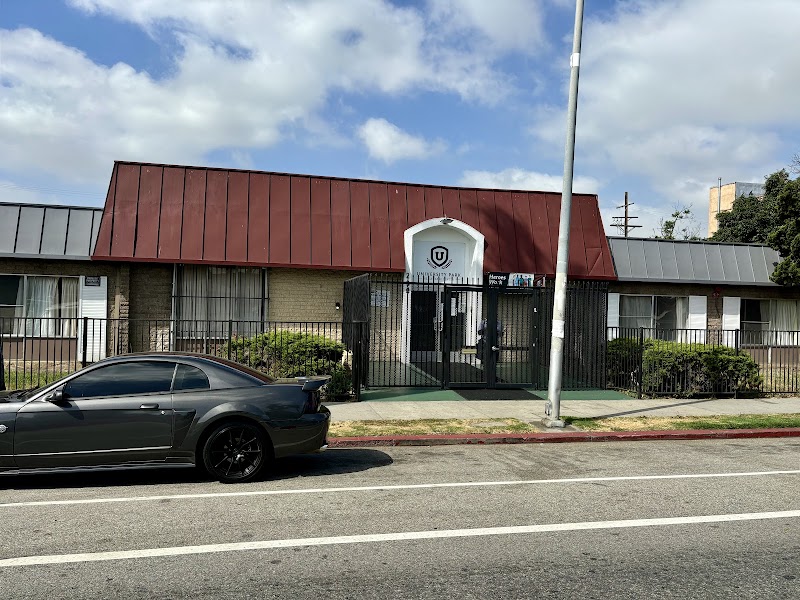
How Does University Park Healthcare Center Compare to Other California Nursing Homes?

Compared to the 100 nursing homes in California, UNIVERSITY PARK HEALTHCARE CENTER's overall rating (2 stars) is below the state average of 3.1, staff turnover (41%) is near the state average of 46%, and health inspection rating (1 stars) is much below the national benchmark.

What Should Families Ask When Visiting University Park Healthcare Center?

Based on this facility's data, families visiting should ask: "What changes have been made since the serious inspection findings, and how are you preventing similar issues?" "What safeguards and monitoring systems are in place to protect residents from abuse or neglect?" "Can I visit during a mealtime to observe dining assistance and food quality?" "How do you handle medical emergencies, and what is your hospital transfer rate?" These questions are particularly relevant given the facility's Immediate Jeopardy citations and the substantiated abuse finding on record.

Is University Park Healthcare Center Safe?

Based on CMS inspection data, UNIVERSITY PARK HEALTHCARE CENTER has documented safety concerns. The facility has 1 substantiated abuse finding (meaning confirmed case of resident harm by staff or other residents). Inspectors have issued 3 Immediate Jeopardy citations (the most serious violation level indicating risk of serious injury or death). The facility is currently on the Special Focus Facility watch list (a federal program monitoring the lowest-performing 1% of nursing homes nationwide). The facility has a 2-star overall rating and ranks #100 of 100 nursing homes in California. Families considering this facility should ask detailed questions about what corrective actions have been taken since these incidents.

Do Nurses at University Park Healthcare Center Stick Around?

UNIVERSITY PARK HEALTHCARE CENTER has a staff turnover rate of 41%, which is about average for California nursing homes (state average: 46%). Moderate turnover is common in nursing homes, but families should still ask about staff tenure and how the facility maintains care continuity when employees leave.

Was University Park Healthcare Center Ever Fined?

UNIVERSITY PARK HEALTHCARE CENTER has been fined $271,036 across 5 penalty actions. This is 7.6x the California average of $35,789. Fines at this level are uncommon and typically indicate a pattern of serious deficiencies, repeated violations, or failure to correct problems promptly. CMS reserves penalties of this magnitude for facilities that pose significant, documented risk to resident health or safety. Families should request specific documentation of what issues led to these fines and what systemic changes have been implemented.

Is University Park Healthcare Center on Any Federal Watch List?

UNIVERSITY PARK HEALTHCARE CENTER is currently an SFF Candidate, meaning CMS has identified it as potentially qualifying for the Special Focus Facility watch list. SFF Candidates have a history of serious deficiencies but haven't yet reached the threshold for full SFF designation. The facility is being monitored more closely — if problems continue, it may be added to the official watch list. Families should ask what the facility is doing to address the issues that led to this status.