VETERANS HOME OF CALIFORNIA - WEST LOS ANGELES
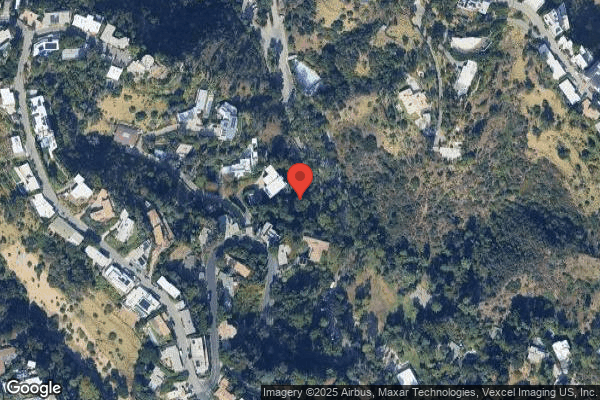
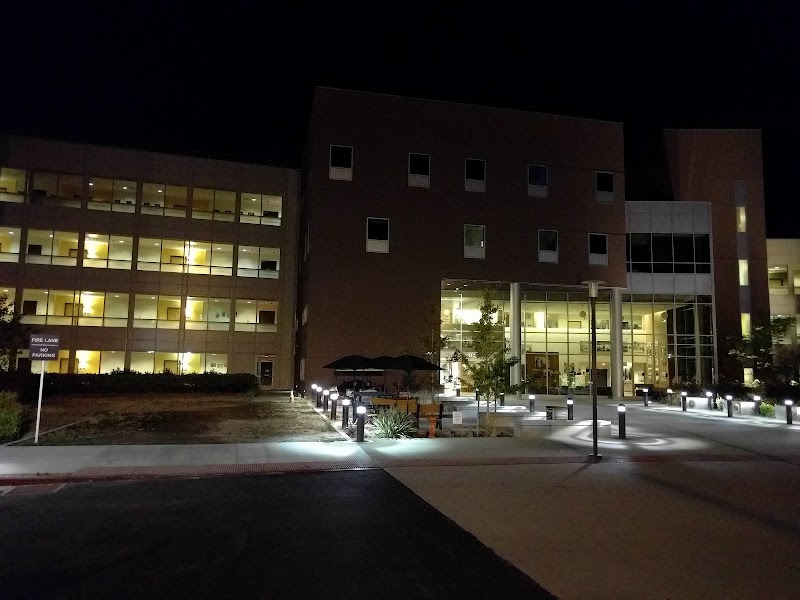
11500 NIMITZ AVENUE, LOS ANGELES, CA 90049 (424) 832-8200
Government - State 312 Beds Independent Data: November 2025
Trust Grade
75/100
#492 of 1155 in CA
Last Inspection: December 2024

Within standard 12-15 month inspection cycle. Federal law requires annual inspections.

Overview

The Veterans Home of California - West Los Angeles has a Trust Grade of B, indicating it is a good option for families, being solid but not top-tier. It ranks #492 out of 1,155 nursing homes in California, placing it in the top half of facilities in the state, and #78 out of 369 in Los Angeles County, meaning there are only a few local options that are better. The facility is improving, with issues decreasing from 34 in 2024 to just 3 in 2025. Staffing is a strong point, earning 5 out of 5 stars with a low turnover rate of 25%, far below the state average, and there is more RN coverage than 93% of California facilities, ensuring quality care. However, there have been concerns regarding food safety, such as staff not wearing hair restraints in the kitchen and dirty ice machines, as well as a lack of effective infection control training for staff, which could pose risks for residents. Overall, while the home shows strengths in staffing and improvement trends, families should be aware of the identified concerns that need addressing.

Trust Score
B
75/100
In California
#492/1155
Top 42%
Safety Record
Low Risk
No red flags
Inspections
Getting Better
34 → 3 violations
Staff Stability
✓ Good
25% annual turnover. Excellent stability, 23 points below California's 48% average. Staff who stay learn residents' needs.
Penalties
✓ Good
No fines on record. Clean compliance history, better than most California facilities.
Skilled Nurses
✓ Good
Each resident gets 83 minutes of Registered Nurse (RN) attention daily — more than 97% of California nursing homes. RNs are the most trained staff who catch health problems before they become serious.
Violations
⚠ Watch
45 deficiencies on record. Higher than average. Multiple issues found across inspections.
★★★★☆
4.0
Overall Rating
★★★★★
5.0
Staff Levels
★★★★☆
4.0
Care Quality
★★★☆☆
3.0
Inspection Score
Stable
2024: 34 issues
2025: 3 issues

The Good

  • 5-Star Staffing Rating · Excellent nurse staffing levels
  • 4-Star Quality Measures · Strong clinical quality outcomes
  • Low Staff Turnover (25%) · Staff stability means consistent care
  • Full Sprinkler Coverage · Fire safety systems throughout facility
  • No fines on record
  • Staff turnover is low (25%)

    23 points below California average of 48%

Facility shows strength in staffing levels, quality measures, staff retention, fire safety.

The Bad

No Significant Concerns Identified

This facility shows no red flags. Among California's 100 nursing homes, only 1% achieve this.

The Ugly 45 deficiencies on record

Aug 2025 1 deficiency
CONCERN (D) 📢 Someone Reported This

A family member, employee, or ombudsman was alarmed enough to file a formal complaint

Potential for Harm - no one hurt, but risky conditions existed

Dental Services (Tag F0791)

Could have caused harm · This affected 1 resident

**NOTE- TERMS IN BRACKETS HAVE BEEN EDITED TO PROTECT CONFIDENTIALITY** Based on observation, interviews, and record reviews, the facility failed to timely follow up on the dental treatment recommende...

Read full inspector narrative →
**NOTE- TERMS IN BRACKETS HAVE BEEN EDITED TO PROTECT CONFIDENTIALITY** Based on observation, interviews, and record reviews, the facility failed to timely follow up on the dental treatment recommended for one of two residents (Resident 1). On 9/17/2024, the dentist had recommended oral surgery for Resident 1. This failure had resulted in fluctuates of Resident 1's mood and potentially affecting his overall quality of life. The referral for the oral surgery was only sent again by the facility on 6/25/2025, which was a delay of 281 days, equivalent to 9 months and 8 days. During an observation and concurrent interview on 8/19/25 at 12:30 p.m. with Resident 1, a [AGE] year-old male with a history of dementia (progressive or persistent loss of intellectual functioning and memory), atrial fibrillation (abnormal heart rhythm), and poor dentition, was observed with upper front teeth (numbers 7-10) visibly missing or decayed, eating mashed potatoes. Resident 1 stated, he lost his front teeth years ago and stopped using his partial lower dentures due to pain. Resident 1 stated, the dentist had told him he needed oral surgery, but no follow-up occurred.During an interview on 8/19/25 at 12:45 p.m. with the Registered Dietitian (RD), RD stated, the facility had placed Resident 1 on a long-term soft diet due to dental issues. The RD stated, Resident 1 had requested dentures multiple times.During an interview on 8/19/25 at 2:55 p.m. with the Director of Nursing (DON), DON explained, Resident 1 experienced delays in care coordination because Resident 1 needed to have medical clearance before oral surgery, due to multiple comorbidities.During a telephone interview on 8/20/25 at 11:30 a.m. with Resident 1's Durable Power of Attorney (DPOA), DPOA stated, Resident 1 had been waiting nearly a year for extractions and dentures since the dentist referred Resident 1 for oral surgery in September 2024. Despite multiple follow-ups with the dentist and social worker, the DPOA observed Resident 1 had little to no progress with dental care.During a telephone interview on 8/20/25 at 3:42 p.m. with the dentist (DDS), DDS stated, Resident 1 had been evaluated emergently in September 2024, and referred Resident 1 for oral surgery and created a denture plan. DDS stated, a misunderstanding with the DPOA caused the delays in dental care and required the DDS to reinitiate the referral in June 2025.During an interview on 8/21/25 at 9:30 a.m. with a social worker (SW), SW stated, Resident 1's DPOA had been coordinating Resident 1's dental care and there was confusion regarding where Resident 1 was supposed to go for oral surgery. SW stated, Resident 1 had expressed he was feeling situational depression due to lack of dentures and the inability to eat solid food.Review of emergency dental note dated 9/17/2024 at 4:48 p.m. indicated, Resident 1 was evaluated as an emergency and was complaining of pain in the upper jaw with increasing severity over the previous few days and weeks. Grossly decayed anterior (front) teeth numbers 7,8,9,10. Dietary staff are informed of change in diet will be needed until lower appliance is made. Referral made to specialty clinic for multiple extractions. Treatment plan for full upper dentures (FUD) and partial lower dentures (PLD).Review of dental note dated 9/25/2024 3:41 p.m. indicated, Intra oral (in the mouth) and extra oral (outside the mouth) exams performed. Treatment plan was completed and presented to Resident 1 and DPOA. Prescription given: Resident 1 referred to outside oral surgeon for extraction of teeth, 2,3,6,7,8,9,10,11,14,15. Diet texture modifications needed: Dietary staff is aware of his dental condition and will be informed when change in diet will be needed when extractions are done and new appliance (dentures) are made.Review of social service note dated, 11/12/24 at 10:03 a.m. indicated, Social Work Quarterly Assessment: Resident 1's DPOA reported that Resident 1 had ongoing situational depression, and it primarily surrounded the difficulty and struggles of being wheelchair bound and being on a modified diet. Resident 1 stated, Yeah, if I could eat anything I want and walk my life would be a lot better. DPOA stated, We are currently working with the facility to get Resident 1 assigned to a dentist that has special equipment to care for him.There was no documentation Resident 1 received any further evaluation or follow-up regarding dental care between 11/12/24 and 5/12/25.Review of social service note dated 5/12/25 at 1:21 p.m. indicated, Resident 1's DPOA reported Resident 1's mood varied from day to day. DPOA stated, most of it had to do with Resident 1's situation with the dentist and needing teeth removed. The plan was to have Resident 1 go to an outside oral surgeon to get them removed and nothing had been done. Resident 1 stated to SW, Yes, If I can get my new dentures, my quality of life would be better, eating mushed up food is not as filling or satisfying.Review of Dental Note dated, 6/25/25 09:57 p.m. indicated, Prescription (for oral surgery) given referral to be sent again with diet texture modifications needed: Dietary staff will be informed if change in diet will be needed. Resident 1 has no dentures. Resident 1 had an appointment with oral surgery provider, for extractions and denture impressions.Review of Facility Policy titled, Dental Services for Residents dated, 7/17/25 indicated, .3. Emergency Dental Care: b. The Home will provide or make arrangement for the transportation of the Resident. c. Those Residents who have lost or damaged dentures will be promptly referred to a dentist within three days. During an interview on 9/1/25 at 11:00 a.m., with the Standards and Quality Manager (SCM), SCM stated, the above policy was reviewed with no revisions made on 7/17/25. SCM stated, the previous policy and procedure would have been the same.
May 2025 1 deficiency
CONCERN (D) 📢 Someone Reported This

A family member, employee, or ombudsman was alarmed enough to file a formal complaint

Potential for Harm - no one hurt, but risky conditions existed

Comprehensive Care Plan (Tag F0656)

Could have caused harm · This affected 1 resident

**NOTE- TERMS IN BRACKETS HAVE BEEN EDITED TO PROTECT CONFIDENTIALITY** Based on observation, interview and record review, the facility failed to develop and implement a resident centered comprehensiv...

Read full inspector narrative →
**NOTE- TERMS IN BRACKETS HAVE BEEN EDITED TO PROTECT CONFIDENTIALITY** Based on observation, interview and record review, the facility failed to develop and implement a resident centered comprehensive care plan with interventions for resident preferences including to be left alone in the shower room and aiding with showering, to meet the needs of one of three sampled residents, Resident 1. This failure resulted in Resident 1's unsupervised fall, fractured breastbone, breastbone bruise, fractures of thoracic spine (the mid-back section of the spine), scalp bruise and 2-day hospital stay. Findings: Resident 1 was a [AGE] year-old female admitted to the skilled nursing facility on [DATE], with a history of legal blindness and severe osteoarthritis (degeneration of joint cartilage and the underlying bone, causes pain and stiffness, especially in the hip, knee, and thumb joints. During an observation and interview on 4/22/25 at 2:40 p.m. Resident 1 was observed in bed laying face up, and stated she recalled the fall event on 4/15/25. Resident 1 stated she was legally blind but could see peripherally (the ability to see things to the side). Resident 1 stated she was alone in the shower, with the nursing assistant was outside the bathroom door when she lost balance, yelled out and fell. Resident 1 stated she suffered a bump on her head, hurt her neck and went out to the hospital emergency department after her fall. During an interview on 4/23/25 at 12:00 p.m. with Registered Nurse 3 (RN3), RN3 stated, on 4/15/25 at approximately 10:10 a.m. she responded to Resident 1's bathroom and found Resident 1 with a Certified Nurse's Aide (CNA1) sitting on the floor in the bathroom after a fall. RN3 further stated she assessed Resident 1 and notified Resident 1's doctor and family of the fall. RN3 stated Resident 1 initially denied pain but minutes later, started complaining of pain to her shoulder. RN3 stated the doctor ordered Resident 1 to go to the hospital emergency department for further evaluation. RN3 stated Resident 1 was legally blind and the fall could have been avoided if CNA1 had stayed in the shower and assisted Resident 1 with showering. During an interview on 4/23/25 at 3:02 p.m. with CNA1, she stated on 4/15/25 she assisted Resident 1 with shower preparation. CNA1 stated she waited outside the bathroom while Resident 1 showered. CNA1 further stated approximately 3 minutes later, she heard a yell and a boom from inside the bathroom. CNA1 stated she found Resident 1 laying on the bathroom floor halfway out of the shower. CNA1 stated this fall could have been avoided if someone was with Resident 1 to help during her shower. Review of Resident 1's admission History and Physical dated 3/18/25 indicated Resident 1 was a [AGE] year-old female with a history of blindness and severe osteoarthritis (OA), independent for her activities of daily living (ADL), however, her function level decreased to the point where she required more assistance with her ADLs. Review of Resident 1's care plan dated 3/18/25, indicated Resident 1 had a high risk for fall with injury, a history of falls, unsteady gait, poor vision and was prescribed opioid (medication used to reduce moderate to severe pain), hypnotic (medication tending to produce sleep), and diuretic (drugs that increase urine output, leading to the removal of excess water and salt from the body) medication. Review of Resident 1's fall risk assessment dated [DATE] indicated, Vision status: legally blind. Gait and balance: required use of assistive devices. Resident 1 was assessed as at high risk for fall. Review of Resident 1's resident assessment instrument/ minimum data set (RAI / MDS, a health status screening and assessment tool used for all residents of long-term care nursing facilities) Section GG: functional abilities-admission (self-care) dated 3/25/25 indicated, admission performance: E. Shower and bathe self: Resident 1 required supervision or touching assistance, helper provide verbal cues, steadying, contact guard assistance (caregiver places one or two hands on the patient's body to help with balance but provides no other assistance to perform the functional mobility task) as resident completed activity . Review of Resident 1's care plan dated 3/26/25 10:02 a.m. indicated, problem: at risk for falls related to, limited mobility due to severe macular degeneration with poor vision, unsteady gait, chronic pain, numbness of fingers/foot (right), occasional bladder incontinent, taking hypnotics/diuretic/opioid/ medications, diagnosis of osteoporosis/ Cervical compression fracture (one or more of the vertebrae in the spine collapses or breaks). Goals: resident will demonstrate the ability to ambulate/transfer without fall related injuries. Resident 1's care plan did not contain interventions addressing resident preferences including to be left alone in the shower room, assistance with showering, or refusal of supervision while in the shower room. Review of Resident 1's nurse note dated 4/15/25 at 1:06 p.m. indicated, unwitnessed fall without injury. At about 10:10 a.m., was notified that Resident 1 had a fall in the bathroom, on getting there 3 staff were assisting her already and she was noted sitting in the shower. Resident was still alert and verbally responsive, was able to narrate what happened, she said that she had just finished her shower and was trying to wear her robe when she lost her balance and fell on the bathroom floor, hit her back on the floor. Review of Resident 1's History and Physical dated 4/18/25 indicated, Hospitalization: 4/15/25-4/17/25 readmission Diagnosis: status post fall with acute (sudden) manubrial (breastbone) fracture with parasternal hematoma (breastbone bruise), multiple thoracic (mid back) fractures, scalp contusion (bruising). Patient endorses prior history of thoracic spine compression fractures. Also has prior history of left arm injury with resultant weakness . Review of facility policy and procedure titled, Accident / Fall Prevention dated, 5/30/24 indicated, The Home will routinely assess each Skilled Nursing Facility (SNF) Resident for risk of accidents and implement preventive measures to decrease modifiable risks, as able. If an incident occurs, pertinent data will be collected, appropriate care will be provided, and the preventive measures will be re-evaluated in attempt to provide the safest environment possible. A. Evaluation Frequency: Residents are minimally evaluated for risk of accidents or falls: 1. Upon admission, 2. Quarterly, 3. Annually, 4. As needed (PRN); after each fall, incident, or change of condition. Evaluation methods and prevention planning may include: 1. Physician Assessment, 2. The Fall Risk Assessment 3. RAI/MDS - Assessment Tool . Review of facility policy and procedure titled, Care Plans dated, 2/13/25 indicated, I. Resident Assessments & Care Plans A. The Resident Assessment Instrument. Minimum Data Set (RAI/MDS) is completed as the basis for care plan decision-making at the skilled nursing facility (SNF) levels of care. B. All components of the care plan must be individualized for the Resident. Baseline Care Plan A. The facility must develop and implement a baseline care plan for each Resident within 48 hours upon admission that includes the instructions needed to provide effective and person-centered care of the Resident. B. The baseline care plan must reflect the Resident's stated goals and objectives and include interventions that address his/her current needs .Comprehensive Care Plan: A. The facility must develop and implement a comprehensive person-centered care plan for each Resident, consist with the Resident rights and includes measurable objectives and timeframes to meet a Resident's medical, nursing, and mental and psychosocial needs that are identified in the comprehensive assessment .O. The comprehensive care plan will be reviewed and revised by the Interdisciplinary Team (IDT) within 7 days after each RAI/MDS assessment, including both the comprehensive and quarterly review RAI/MDS assessment.
Apr 2025 1 deficiency
CONCERN (E) 📢 Someone Reported This

A family member, employee, or ombudsman was alarmed enough to file a formal complaint

Potential for Harm - no one hurt, but risky conditions existed

Report Alleged Abuse (Tag F0609)

Could have caused harm · This affected multiple residents

**NOTE- TERMS IN BRACKETS HAVE BEEN EDITED TO PROTECT CONFIDENTIALITY** Based on interview and record review, the facility failed to ensure multiple allegations of sexual abuse involving residents dia...

Read full inspector narrative →
**NOTE- TERMS IN BRACKETS HAVE BEEN EDITED TO PROTECT CONFIDENTIALITY** Based on interview and record review, the facility failed to ensure multiple allegations of sexual abuse involving residents diagnosed with dementia were reported to the required authorities when: 1. The facility did not notify local law enforcement, the Ombudsman (independent advocate who protects the rights and ensures the well-being of patients in long-term care facilities), the state survey agency (CDPH, California Department of Public Health), and the facility's Administrator (ADMIN) immediately, but not later than 2 hours after the allegation was made, when one of five sampled residents (Resident 1) reported an allegation of rape. 2. The facility did not notify the state survey agency (CDPH, California Department of Public Health) immediately, but not later than 2 hours after the allegation was made, when one of five sampled residents (Resident 1) was sexually abused by Resident 2 in the common area, witnessed by staff. These findings resulted in the delay of the investigation process by local law enforcement, Ombudsman, and state survey agency and can result in the potential for all allegations of abuse involving residents with dementia to not be identified, investigated, and prevented from recurrence. Additionally, these findings had the potential to result in leaving all residents unprotected from abuse. The facility census was 141. Findings: 1. During a review of Resident 1's Face Sheet (demographics), dated 4/8/2025, the Face Sheet indicated Resident 1 was admitted with diagnoses including unspecified dementia (decline in mental ability) with behavioral disturbances (persistent and/or repetitive behaviors that differ significantly from social norms) and psychotic symptoms (psychotic symptoms such as delusions [a persistent, false belief held with absolute certainty despite evidence]). During an interview on 4/8/2025 at 4:27 PM with the Therapeutic Activities Staff ([NAME]), the [NAME] stated on the morning of 3/26/2025, Resident 1 verbalized being raped while out at [medical facility name]. The [NAME] stated Resident 1 verbalized that while she was unconscious at [medical facility name], she would get raped. The [NAME] stated he reported it to the Social Worker (SW) on 3/26/2025 and denied reporting it as an abuse allegation to the ombudsman, local law enforcement, and CDPH. During a concurrent interview and record review on 4/8/2025 at 4:59 PM with the SW, Resident 1's Clinical Notes, dated 3/26/2025 were reviewed. The note indicated, SW was informed by [[NAME]] that [Resident 1] has been verbalizing delusion of being pregnant recently, as well as making accusations of rape while at [medical facility name] for treatment. The SW stated Resident 1 did not bring up the rape allegation when the SW checked in with Resident 1. The SW stated she did not think the report from Resident 1 counted as an abuse allegation, so she did not fill out an SOC 341 (official state form used to report suspected dependent adult/elder abuse form). The SW confirmed she was made aware of the allegation on 3/26/2025 and that she did not report it as an abuse allegation to local law enforcement, the Ombudsman, CDPH, and the ADMIN. During an interview on 4/8/2025 at 5:28 PM with the Supervising Registered Nurse (SRN), the SRN stated Resident 1 had paranoid behavior (irrational and excessive distrust and suspicion of others, often with the belief that they are trying to harm or deceive them) and delusional thinking. The SRN stated Resident 1's accusations was not new behavior, but confirmed it was the first time Resident 1 reported being raped. The SRN stated if she had felt it was really true and that Resident 1 had really been raped, she would have reported it right away. The SRN confirmed that she did not report it as an abuse allegation to local law enforcement, the Ombudsman, CDPH, and the ADMIN. During an interview on 4/9/2025 at 8:44 AM with the Ombudsman, the Ombudsman confirmed she did not receive an SOC 341 or any type of verbal or written report regarding Resident 1 alleging being raped at [medical facility name]. During an interview on 4/9/2025 at 2:06 PM with the Director of Nursing (DON), the DON stated staff had to have reasonable suspicion before reporting. The DON stated, If an alert and oriented resident claimed rape at an outside hospital, I would have reported it right away. The DON stated staff had to take Resident 1's mental condition into account to determine reasonable suspicion. During an interview on 4/9/2025 at 3:44 PM with the Staff Nurse Instructor (NI), the NI stated staff needed to consider for dementia patients if there's a history of unfounded claims. The NI stated that for a resident with full capacity, a SOC 341 would be filled out and reported, but for a resident with dementia, it would be hard to know whether this really happened and you don't want to get somebody in trouble. During an interview on 4/9/2025 at 4:20 PM with the Nurse Practitioner (NP), the NP stated she evaluated Resident 1 on 3/26/2025 due to Resident 1's allegation of rape and determined it to be a delusion. The NP confirmed that she did not fill out an SOC 341 and report it as an abuse allegation to anyone. During a review of Resident 1's Clinical Notes, dated 3/26/2025, the note indicated, Resident 1 has been verbalizing delusion of being pregnant recently, as well as making accusations of rape while at [medical facility name] for treatment. The note also indicated, the NP visited the resident, she was walking in the hallway with her walker. When the [NP] asked [Resident 1] how is she doing. [Resident 1] appeared very paranoid and stated that some guys are after her. [Resident 1] became tearful and walked away, she did not want to engage. During a concurrent interview and record review on 4/10/2025 at 9:25 AM with the ADMIN, the facility's policy & procedure (P&P) titled, Elder Abuse Prevention and Response, dated 5/1/2024 was reviewed. The P&P indicated, Any mandated reporter, who, . is told by an elder or dependent adult that he/she has experienced behavior constituting abuse . shall report the known or suspected instances of abuse immediately. The ADMIN stated he was the abuse coordinator (responsible for ensuring staff are trained adequately regarding abuse prevention and reporting) for the facility. The ADMIN stated that he was not notified of every instance of abuse, and sometimes only found out abuse occurred once investigators were onsite. The ADMIN stated the staff needed to make sure the allegation was credible by investigation before reporting because Resident 1 had dementia with a history of delusions about being pregnant. The ADMIN was unable to provide documented evidence that he was notified of the allegation of rape made on 3/26/2025 within 2 hours after it was reported to staff. 2. During a review of Resident 1's Face Sheet (demographics), dated 4/8/2025, the Face Sheet indicated Resident 1 was admitted with diagnoses including unspecified dementia (decline in mental ability) with behavioral disturbances (persistent and/or repetitive behaviors that differ significantly from social norms) and severe recurrent major depressive disorder with psychotic symptoms (severe form of depression where a person experiences symptoms of major depression and psychotic symptoms such as delusions). During a review of Resident 2's Face Sheet (demographics), dated 4/8/2025, the Face Sheet indicated Resident 2 was admitted with a diagnosis of unspecified dementia with behavioral disturbances. During a review of Resident 1's Clinical Notes, dated 4/4/2025, the notes indicated, the Registered Nurse (RN) was notified on 4/4/2025 at approximately 1405 .by the activity staff and CNA that [Resident 1] was witnessed being sexually abused by [Resident 2] during activity in the common area. During an interview on 4/8/2025 at 11:14 AM with the RN. The RN stated she reported the incident to the Ombudsman and to local law enforcement on 4/4/2025 but not to CDPH because the facility trained the staff that reporting abuse to CDPH was not required when the abuse was caused by a resident with dementia and if there was no serious bodily injury. During an interview on 4/9/2025 at 9:51 AM with the Activities Coordinator (AC), the AC stated that on 4/4/2025, she witnessed Resident 2 was walking through the common area and stopped behind Resident 1 who was seated in a chair. The AC stated she witnessed Resident 2 lean down forward to kiss Resident 1, Resident 1 tried to move her head away, and Resident 2 ended up kissing Resident 1 on the right side of the face. During an interview on 4/9/2025 at 10:16 AM with the Certified Nursing Assistant (CNA), the CNA stated that on 4/4/2025 she was alerted by the AC that Resident 2 kissed Resident 1 and when she tried to redirect Resident 2 away from Resident 1, she witnessed Resident 2 grab Resident 1's right breast. During an interview on 4/9/2025 at 11:06 AM with the Supervising Registered Nurse (SRN), the SRN stated Resident 1 was not capable of consenting to a kiss or touch because she was very confused and has dementia. The SRN stated the incident counted as sexual abuse. The SRN confirmed the RN reported the sexual abuse to the Ombudsman and law enforcement on 4/4/2025, but not to CDPH. During a concurrent interview and record review on 4/10/2025 at 9:24 AM with the facility's Administrator (ADMIN), the facility's procedure form titled, Mandated Reporter [undated], was reviewed. The form indicated the facility's protocol for abuse reporting did not conform with the federal requirement to report allegations of abuse to the state survey agency, CDPH. The form indicated abuse incidents caused by a resident diagnosed with dementia and did not result in serious bodily injury did not need to be reported to CDPH. The ADMIN stated he was the abuse coordinator (responsible for ensuring staff are trained adequately regarding abuse prevention and reporting) for the facility. The ADMIN confirmed the facility's practice and staff training included not reporting to CDPH if the incident was caused by resident diagnosed with dementia and there were no serious bodily injury. During a review of the facility's policy & procedure (P&P) titled, Elder Abuse Prevention and Response, dated 5/1/2024, the P&P indicated, Any mandated reporter, who, . is told by an elder or dependent adult that he/she has experienced behavior constituting abuse . shall report the known or suspected instances of abuse immediately.
Dec 2024 9 deficiencies
CONCERN (D)

Potential for Harm - no one hurt, but risky conditions existed

Assessment Accuracy (Tag F0641)

Could have caused harm · This affected 1 resident

**NOTE- TERMS IN BRACKETS HAVE BEEN EDITED TO PROTECT CONFIDENTIALITY** Based on interview, and record review, the facility failed to ensure an accurate Minimum Data Set (MDS, federally mandated asses...

Read full inspector narrative →
**NOTE- TERMS IN BRACKETS HAVE BEEN EDITED TO PROTECT CONFIDENTIALITY** Based on interview, and record review, the facility failed to ensure an accurate Minimum Data Set (MDS, federally mandated assessment tool used to evaluate the health of nursing home residents) was completed for one of 29 sampled residents (Resident 119). This failure had the potential to result in negative outcomes for Resident 119 due to missed specialized services. Findings: During a review of Resident 119's Face Sheet (demographic), the Face Sheet indicated Resident 119 was admitted on [DATE] with diagnoses including schizotypal disorder (severe mental health condition), obsessive-compulsive personality disorder (mental disorder that can cause harmful thoughts and behaviors) and anxiety disorder. During a review of Resident 119's Preadmission Screening and Resident Review II (PASRR II, federally mandated review process that screens individuals seeking admission to Medicaid-certified nursing facilities for mental illness or intellectual and developmental disability), dated 2/24/23, the PASRR II indicated Resident 119 required specialized services due to a medical and/or mental health condition . During a review of the CMS's RAI Version 3.0 Manual (RAI manual, a tool used by skilled nursing facilities to gather information about a resident's needs), dated October 2024, the CMS's RAI Version 3.0 Manual indicated that code 0 meant that a resident does not have serious mental illness or a referral for PASSR II screening. The CMS's RAI Version 3.0 Manual indicated that code 1 meant that a resident had a serious mental illness. During a concurrent interview and record review on 12/5/24 at 12:00 p.m. with Registered Nurse (RN) 2, Resident 119's MDS, dated [DATE], was reviewed. The MDS indicated that item A1500 was coded 0 and that Resident 119 was not currently considered to have a serious mental illness or serious mental disability. RN 2 stated, I coded 0 [no mental illness]. During an interview on 12/5/24 at 2:03 p.m. with the Director of Nursing (DON), the DON stated RN 2 misinterpreted the PASSR II results and coded MDS item A1500 incorrectly. The DON stated A1500 should have been coded 1 by RN 2. During an interview on 12/6/24 at 10:00 a.m. with the Social Worker (SW), the SW stated that Resident 119 did not receive three out of seven PASSR II recommended specialized services. The SW confirmed Resident 119 did not receive mental health rehabilitation, activities of daily living training, and psychotherapy (a treatment to manage unhealthy thoughts, emotions, and behaviors) or counseling as recommended by the PASSR II Individualized Determination Report.
CONCERN (D)

Potential for Harm - no one hurt, but risky conditions existed

Comprehensive Care Plan (Tag F0656)

Could have caused harm · This affected 1 resident

**NOTE- TERMS IN BRACKETS HAVE BEEN EDITED TO PROTECT CONFIDENTIALITY** Based on observation, interview, and record review, the facility failed to implement the Safe Smoking Care Plans for two of 29 s...

Read full inspector narrative →
**NOTE- TERMS IN BRACKETS HAVE BEEN EDITED TO PROTECT CONFIDENTIALITY** Based on observation, interview, and record review, the facility failed to implement the Safe Smoking Care Plans for two of 29 sampled residents (Resident 89 and Resident 142) when: 1. a.Resident 89 was smoking in a non-smoking area without supervision. 1. b.Resident 89 was escorted by staff to smoke in a non-smoking area. 2. Resident 142 was not offered a smoking apron (protective apron to prevent burns and injuries from cigarettes and ash). These failures had the potential to cause severe injuries from fires and burns to Resident 89, Resident 142, other residents, staff, and visitors. Findings: 1. a. During a review of Resident 89's Face Sheet (demographics), the Face Sheet indicated Resident 89 was admitted on [DATE] with diagnoses including nicotine dependence and mild cognitive impairment (condition that causes memory or thinking difficulties). During a review of the facility provided document titled, SNF (skilled nursing facility) Resident Smokers- 2024, current as of 12/2/24, the document indicated Resident 89 could smoke in designated smoking locations . under supervision. During a concurrent observation and interview on 12/2/24 at 1:17 p.m. with Resident 89 by the Main Entrance , Resident 89 was smoking in a non-smoking area with no supervision. Resident 89 stated that he smoked by himself and denied being told that he had to be with a staff member. During an interview on 12/2/24 at 2:41 p.m. with Registered Nurse (RN) 1, RN 1 stated Resident 89 had to be supervised when he smoked for safety reasons because he needed to be directed where to smoke and needed to be reminded where to throw away his cigarette. During a concurrent interview and record review on 12/5/24 at 1:50 p.m. with Supervising Registered Nurse (SRN) 1, Resident 89's Safe Smoking Care Plan, effective 11/11/23 to present, was reviewed. The care plan indicated for staff to escort [Resident 89] to designated smoking area . SRN 1 stated Resident 89 should be taken to the designated smoking area by a supervising staff per Resident 89's Care Plan. During a review of Resident 89's Interdisciplinary Meeting (IDT) Notes, dated 8/13/24, the IDT notes indicated Resident 89 was not using designated area for smoking instead doing it in front of the building, not using smoking apron/jacket, burned part of the wheelchair cushion . During a review of the facility's policy and procedure (P&P) titled, Care Plans, dated 2/13/24, the P&P indicated, The (name of the facility) will develop and implement a person-centered care plan for each Resident. 1. b. During a concurrent observation and interview on 12/5/24 at 1:14 p.m. with Certified Nursing Assistant (CNA) 3 by the entrance to E building, Resident 89 was smoking in a non-smoking area with staff supervision. CNA 3 confirmed Resident 89 was smoking in a non-smoking area. CNA 3 stated she should not have given Resident 89 the cigarette and lighter until he was in the designated smoking area. During a concurrent interview and record review on 12/5/24 at 1:50 p.m. with Supervising Registered Nurse (SRN) 1, Resident 89's Safe Smoking Care Plan, effective 11/11/23 to present, was reviewed. The care plan indicated for staff to escort [Resident 89] to designated smoking area . SRN 1 stated Resident 89 should be taken to the designated smoking area by a supervising staff per Resident 89's Care Plan. During a review of the facility's policy and procedure (P&P) titled, Care Plans, dated 2/13/24, the P&P indicated, The (name of the facility) will develop and implement a person-centered care plan for each Resident. 2. During a review of Resident 142's Face Sheet (demographics), the Face Sheet indicated Resident 142 was admitted on [DATE] with diagnoses of high blood pressure, chronic kidney disease, and tobacco use. During an observation on 12/2/24 at 3:41 p.m. in the patio, Resident 142 was smoking a cigarette with staff present. Resident 142 was not wearing a smoking apron. During an interview with Resident 142 on 12/3/24 at 8:36 a.m., Resident 142 stated he was not offered a smoking apron. During an interview on 12/3/24 at 10:03 a.m. with the Charge Registered Nurse (CN), the CN stated Resident 142 should have been offered a smoking apron while smoking. During a review of Resident 142's Smoking Care Plan, effective 10/17/24 to present, the Care Plan Indicated, Offer apron while smoking to prevent injury. During a review of the facility's policy and procedure (P&P) titled, Care Plans, dated 2/13/24, the P&P indicated, The (name of the facility) will develop and implement a person-centered care plan for each Resident.
CONCERN (D)

Potential for Harm - no one hurt, but risky conditions existed

Accident Prevention (Tag F0689)

Could have caused harm · This affected 1 resident

**NOTE- TERMS IN BRACKETS HAVE BEEN EDITED TO PROTECT CONFIDENTIALITY** Based on observation, interview, and record review, the facility failed to ensure measures to prevent smoking accidents were imp...

Read full inspector narrative →
**NOTE- TERMS IN BRACKETS HAVE BEEN EDITED TO PROTECT CONFIDENTIALITY** Based on observation, interview, and record review, the facility failed to ensure measures to prevent smoking accidents were implemented for two of 29 sampled residents (Resident 89 and Resident 142) when: 1.a. Resident 89 was smoking in a non-smoking area without supervision. 1.b. Resident 89 was escorted by staff to smoke in a non-smoking area. 2. Resident 142 was not offered a smoking apron (protective apron to prevent burns and injuries from cigarettes and ash). These failures had the potential to cause fires and burns, endangering the health and safety of Resident 89, Resident 142, other residents, staff, and visitors. Findings: 1.a. During a review of Resident 89's Face Sheet (demographics), the Face Sheet indicated Resident 89 was admitted on [DATE] with diagnoses including nicotine dependence and mild cognitive impairment (condition that causes memory or thinking difficulties). During a concurrent observation and interview on 12/2/24 at 1:17 p.m. by the Main Entrance with Resident 89, Resident 89 was smoking in a non-smoking area with no supervision. Resident 89 stated that he smoked by himself and denied being told that he had to be with a staff member. During an interview on 12/2/24 at 2:41 p.m. with Registered Nurse (RN) 1, RN 1 stated Resident 89 had to be supervised when he smoked for safety because he needed to be directed where to smoke and needed to be reminded where to throw away his cigarette. During an observation on 12/5/24 at 1:31 p.m. at Area E Designated Smoking Area by the entrance to E building, there was a partly enclosed space with a bench, chairs, fire extinguisher, and red trash bins. The space was labeled with signage indicating, DESIGNATED SMOKING AREA . PLEASE USE CIGARETTE BINS. During a concurrent interview and record review on 12/5/24 at 1:50 p.m. with Supervising Registered Nurse (SRN) 1, Resident 89's Safe Smoking Care Plan, effective 11/11/23 to present, was reviewed. The care plan indicated for staff to escort [Resident 89] to designated smoking area . SRN 1 stated Resident 89 should be taken to a designated smoking area by a supervising staff per Resident 89's Care Plan. During a review of Resident 89's Interdisciplinary Meeting (IDT) Notes, dated 8/13/24, the IDT notes indicated Resident 89 was not using designated area for smoking instead doing it in front of the building, not using smoking apron/jacket, burned part of the wheelchair cushion . During a review of the facility provided document titled, SNF (skilled nursing facility) Resident Smokers-2024, current as of 12/2/24, the document indicated Resident 89 could smoke in designated smoking locations . under supervision. During a review of Resident 89's Safe Smoking Assessment, dated 10/1/24, the assessment indicated Resident 89 should not be allowed to smoke independently. During a review of the facility's policy and procedure (P&P) titled, Safe Smoking & Tobacco Use, dated 10/1/24, the P&P indicated, The (name of the facility) will . promote safe smoking practices and monitor for unsafe smoking for the protection of residents, staff, and visitors. The P&P indicated, Smoking is prohibited in the following areas: . in areas on the grounds not identified as an authorized smoking area . 1.b. During a concurrent observation and interview on 12/5/24 at 1:14 p.m. with Certified Nursing Assistant (CNA) 3 by the entrance to E building, Resident 89 was smoking in a non-smoking area with staff supervision. CNA 3 confirmed Resident 89 was smoking in a non-smoking area. CNA 3 stated she should not have given Resident 89 the cigarette and lighter until he was in the designated smoking area. During an observation on 12/5/24 at 1:31 p.m. at Area E Designated Smoking Area by the entrance to E building, there was a partly enclosed space with a bench, chairs, fire extinguisher, and red trash bins. The space was labeled with signage indicating, DESIGNATED SMOKING AREA . PLEASE USE CIGARETTE BINS. During a concurrent interview and record review on 12/5/24 at 1:50 p.m. with Supervising Registered Nurse (SRN) 1, Resident 89's Safe Smoking Care Plan, effective 11/11/23 to present, was reviewed. The care plan indicated for staff to escort [Resident 89] to designated smoking area . SRN 1 stated Resident 89 should be taken to a designated smoking area by a supervising staff per Resident 89's Care Plan. During a review of Resident 89's Interdisciplinary Meeting (IDT) Notes, dated 8/13/24, the IDT notes indicated Resident 89 was not using designated area for smoking instead doing it in front of the building, not using smoking apron/jacket, burned part of the wheelchair cushion . During a review of the facility provided document titled, SNF (skilled nursing facility) Resident Smokers-2024, current as of 12/2/24, the document indicated Resident 89 could smoke in designated smoking locations . under supervision. During a review of the facility's policy and procedure (P&P) titled, Safe Smoking & Tobacco Use, dated 10/1/24, the P&P indicated, The (name of the facility) will . promote safe smoking practices and monitor for unsafe smoking for the protection of residents, staff, and visitors. The P&P indicated, Smoking is prohibited in the following areas: . in areas on the grounds not identified as an authorized smoking area . 2. During a review of Resident 142's Face Sheet (demographics), the Face Sheet indicated Resident 142 was admitted on [DATE] with diagnoses of high blood pressure, chronic kidney disease, and tobacco use. During an observation on 12/2/24 at 3:41 p.m. in the patio, Resident 142 was smoking a cigarette with staff present. Resident 142 was not wearing a smoking apron. During an interview with Resident 142 on 12/3/24 at 8:36 a.m., Resident 142 stated he was not offered a smoking apron. During an interview on 12/3/24 at 10:03 a.m. with the Charge Registered Nurse (CN), the CN stated Resident 142 should have been offered a smoking apron while smoking. During a review of Resident 142's Smoking Care Plan, effective 10/17/24 to present, the Care Plan Indicated, Offer apron while smoking to prevent injury. The facility's policy and procedure (P&P) titled, Safe Smoking & Tobacco Use, dated 10/1/24, the P&P indicated, The (name of the facility) will follow applicable health and safety laws, promote safe smoking practices, and monitor for unsafe smoking for the protection of residents, staff and visitors.
CONCERN (D)

Potential for Harm - no one hurt, but risky conditions existed

Deficiency F0813 (Tag F0813)

Could have caused harm · This affected 1 resident

Based on observation, interview, and record review, the facility failed to follow safe food handling protocol for resident personal food when: 1. Food was not labeled or dated. 2. Expired food was no...

Read full inspector narrative →
Based on observation, interview, and record review, the facility failed to follow safe food handling protocol for resident personal food when: 1. Food was not labeled or dated. 2. Expired food was not disposed of and left in the refrigerator. This failure had the potential to result in residents consuming food that did not follow their dietary restrictions or allergies, and had gone past safe consumption window, leading to the increased risk of food borne illness (a sickness caused by consuming food, or drinks contaminated with harmful substances) . Findings: 1a. During a concurrent observation and interview on 12/2/24 at 4:01 p.m. with Registered Nurse (RN) 4 on Unit C2, there was an opened jar of pickles undated in the Residents' communal refrigerator. RN 4 stated, It should have an expiration date. RN 4 further stated if a food was found in the Residents' communal refrigerator without a name or date, then the food item should have been thrown away. During a review of the facility's policy and procedure (P&P) titled, Food & Nutrition Service- Outside Food for Residents, dated 12/2/24, the P&P indicated, . All prepared/perishable foods or beverages brought by resident, family or visitors for resident's use will be store in the unit refrigerator; labeled with the resident's name and date the item was stored . Any food or beverage that is not labeled with resident name and dated will be discarded immediately . 1b. During a concurrent observation and interview on 12/2/24 at 3:46 p.m. with Registered Nurse (RN) 5 on Unit C2, in the Residents' communal refrigerator there was an opened container of dairy free lemon ice cream unlabeled and undated. RN 5 stated it should have been thrown away. During a review of the facility's policy and procedure (P&P) titled, Food & Nutrition Service- Outside Food for Residents, dated 12/2/24, the P&P indicated, . All prepared/perishable foods or beverages brought by resident, family or visitors for resident's use will be store in the unit refrigerator; labeled with the resident's name and date the item was stored . Any food or beverage that is not labeled with resident name and dated will be discarded immediately . 2a. During a concurrent observation and interview on 12/2/24 at 3:53 p.m. with the Assistant Director of Nursing (ADON) in Unit C2, the ADON confirmed a container wrapped in plastic bag with date of 11/28, in the Residents' communal refrigerator, should have been thrown out. During a review of the facility's policy and procedure (P&P) titled, Food & Nutrition Service- Outside Food for Residents, dated 12/2/24, the P&P indicated, . All prepared/perishable foods or beverages brought by resident, family or visitors for resident's use will be store in the unit refrigerator; labeled with the resident's name and date the item was stored . Any food or beverage that is not labeled with resident name and dated will be discarded immediately . 2b. During a concurrent observation and interview on 12/2/24 at 4:03 p.m. with Registered Nurse (RN) 1 on Unit C2, in the Residents' communal refrigerator there were two brown plastic bags duct-taped closed with a date of 7/31/24. RN 1 stated she did not know what it was but staff should have thrown it away because it's very old. During a review of the facility's policy and procedure (P&P) titled, Food & Nutrition Service- Outside Food for Residents, dated 12/2/24, the P&P indicated, . All prepared/perishable foods or beverages brought by resident, family or visitors for resident's use will be store in the unit refrigerator; labeled with the resident's name and date the item was stored . Any food or beverage that is not labeled with resident name and dated will be discarded immediately .
CONCERN (D)

Potential for Harm - no one hurt, but risky conditions existed

Garbage Disposal (Tag F0814)

Could have caused harm · This affected 1 resident

Based on observation, interview, and record review, the facility failed to ensure two of four outside dumpsters' lids were closed. This failure had the potential to attract pests and/or rodents that c...

Read full inspector narrative →
Based on observation, interview, and record review, the facility failed to ensure two of four outside dumpsters' lids were closed. This failure had the potential to attract pests and/or rodents that carried diseases and could result in food borne illness (a sickness caused by consuming food, or drinks contaminated with harmful substances) in a medically fragile population of 144 residents. Findings: During a concurrent observation and interview on 12/3/24 at 10:21 a.m. with the Chief Engineer (CE) in the loading dock area, two of four large dumpsters did not have a lid to cover the garbage. The CE confirmed there were no lids for the dumpsters. During an interview on 12/4/24 at 3:22 p.m. with the Chief of Plant Operations (CPO), the CPO stated, I have never heard I need a lid for the dumpsters. During a review of the U.S [United States] Food and Drug Administration's (FDA) Food Code, dated 2022, the FDA Food Code indicated in Section 5-501.15 Outside Receptacles, (A) Receptacles and waste handling units for REFUSE, recyclables, and returnables used with materials containing FOOD residue and used outside the FOOD ESTABLISHMENT shall be designed and constructed to have tight-fitting lids, doors, or covers . During a review of the facility's policy and procedure (P&P) titled, Trash Removal, dated 3/7/24, the P&P indicated, Dumpster lids will remain closed .
CONCERN (E)

Potential for Harm - no one hurt, but risky conditions existed

Deficiency F0802 (Tag F0802)

Could have caused harm · This affected multiple residents

Based on observation, interview, and record review, the facility failed to ensure kitchen staff were routinely trained and evaluated for competency skills when kitchen staff were unable to effectively...

Read full inspector narrative →
Based on observation, interview, and record review, the facility failed to ensure kitchen staff were routinely trained and evaluated for competency skills when kitchen staff were unable to effectively operate the dishwasher in the satellite kitchens, B207-Food Prep and B307-Food Prep. This failure had the potential for residents to be served food on unclean dishes and result in food borne illnesses (a sickness caused by consuming food, or drinks contaminated with harmful substances) in a medically fragile population of 118 residents. Findings: During an observation on 12/2/24 at 11:39 a.m. in the B307-Food Prep satellite kitchen, the highest temperature the [brand name] dishwasher, a high temperature dishwasher (dishwasher that used high temperatures to clean and sanitize), reached during wash cycle was 148 degrees Fahrenheit (unit of measurement). During an interview on 12/2/24 at 11:41 a.m. with Food Service Technician (FST) 1, FST 1 stated he did not know if the dishwasher needed to maintain a minimum temperature of 150 degrees Fahrenheit during the wash cycle. During an interview on 12/2/24 at 11:46 a.m. with the Food Service Supervisor (FSS), the FSS stated it was normal for the dishwasher to not stay at 150 degrees Fahrenheit during the wash cycle, and it did not need to. During a concurrent observation and interview on 12/3/24 at 10:04 a.m. with FST 2 in the B207-Food Prep satellite kitchen, the [brand name] dishwasher completed a wash cycle and temperature read below 150 degrees Fahrenheit. FST 2 confirmed the wash cycle temperature read below 150 degrees Fahrenheit and stated he was unsure if the wash temperature needed to maintain 150 degrees Fahrenheit the entire time. During an interview on 12/3/24 at 2:35 p.m. with the Chief of Plant Operations (CPO), the CPO confirmed the Plant Operation Department was responsible for maintenance of [brand name] dishwashers and stated it was not normal for the [brand name] dishwasher to not maintain a temperature of 150 degrees Fahrenheit during the entire wash cycle. The CPO stated staff needed to give one minute between wash cycles to ensure dishwasher temperature had enough time to rise after each wash cycle. During an interview on 12/5/24 at 4:18 p.m. with the FSS, the FSS stated she did not get any formal training on the dishwashers. The FSS stated she observed others operating the dishwasher. The FSS stated that staff could go back-to-back washing multiple loads of dishes. During an interview on 12/5/24 at 1:38 p.m. with the Food Manager (FM), the FM stated he did not know if kitchen staff were trained on how to use the [brand name] dishwashers. During an interview on 12/5/24 at 2:34 p.m. with the Assistant Director of Dietetics (ADD), the ADD stated she never received training on how to use the [brand name] dishwashers and the Food Service Supervisors were responsible for training staff. The ADD further stated she did not oversee the Food Services Department which referred kitchen staff. The ADD stated she only oversaw the Dietetic Department which referred only to the Registered Dieticians. During a review of FST 1's Duty Statement, dated 4/8/24, the Duty Statement indicated, ESSENTIAL FUNCTIONS . operate dish washing machines . During a review of FST4's Food and Nutrition Services: Competency Checklist, dated 5/14/24, the Food and Nutrition Services: Competency Checklist indicated FST 4 was not evaluated on the ability to state proper procedure of testing dish machine. During a review of FST3's Food and Nutrition Services: Competency Checklist, dated 5/14/24, the Food and Nutrition Services: Competency Checklist indicated, FST 3 was evaluated on the ability to state proper procedure of testing dish machine and Not Met was checked. During a review of the FSS's Duty Statement, dated 5/1/24, the Duty Statement indicated, ESSENTIAL FUNCTIONS . organize, supervise, and lead . proper maintenance of equipment . identify training needs of employees and conduct in-service training . During a review of the facility's policy and procedure (P&P) titled, Food & Nutrition Services- Warewashing Manual & Mechanical, dated 6/14/24, the P&P indicated, The Food & Nutrition Services Director or designee is responsible for the training of employees in procedures . DISH MACHINES . Wash temperature will be between 150-160 degree Fahrenheit .
CONCERN (E)

Potential for Harm - no one hurt, but risky conditions existed

Deficiency F0805 (Tag F0805)

Could have caused harm · This affected multiple residents

**NOTE- TERMS IN BRACKETS HAVE BEEN EDITED TO PROTECT CONFIDENTIALITY** Based on observation, interview, and record review, the facility failed to ensure the therapeutic diet was served in accordance ...

Read full inspector narrative →
**NOTE- TERMS IN BRACKETS HAVE BEEN EDITED TO PROTECT CONFIDENTIALITY** Based on observation, interview, and record review, the facility failed to ensure the therapeutic diet was served in accordance with the diet order for three residents (Resident 61, 102, and 139). This failure had the potential for choking in medically fragile residents which can lead to aspiration (when secretions, food material or gastric secretions descend into the lungs) and death. Findings: 1a. During a review of Resident 102's Face Sheet (demographics), the Face Sheet indicated Resident 102 was admitted on [DATE] with a diagnosis of cerebral infarct (type of stroke that can cause brain injury). During a review of Resident 102's Diet Order dated 9/10/24, the Diet Order indicated, Resident 102 had an active order for mechanical soft, finely chopped diet (textured/modified diet that consists of moist and soft foods that were easier to chew and swallow). During an observation on 12/3/24 at 11:30 a.m. on Unit C3, a meal tray delivery cart, with a hot and cold side was parked by the nurse's station. Staff were pulling trays out to serve residents lunch in their rooms. During a concurrent observation and interview on 12/3/24 at 11:38 a.m. with Registered Nurse (RN) 3 on Unit C3, a snickerdoodle cookie, approximately 3-4 inches across, on the meal tray on the cold side of the delivery cart for Resident 102 was hard to touch and was cut in four unequal pieces, approximately 2 inches each piece, and labeled 'FS' (finely chopped-mechanical soft). RN 3 stated she reviewed all meal trays in the delivery cart against the meal tray ticket (printed out ticket with resident's name, diet order and food on tray), and the trays were approved to be delivered by nursing staff to the residents. RN 3 confirmed the meal tray ticket for Resident 102 stated mechanical soft, finely chopped diet. RN 3 confirmed the cookie did not follow the ordered texture modification. During an interview on 12/3/24 at 11:40 a.m. with Registered Dietitian (RD), the RD confirmed the cookie looked hard and not finely chopped per ordered diet. The RD removed cookie from meal tray. During an interview on 12/3/24 at 11:55 a.m. with the Assistant Director of Dietetics (ADD), the ADD confirmed cookie was not finely chopped per ordered diet. The ADD stated staff were working on getting a different cookie and providing better substitutions. During an interview on 12/4/24 at 9:38 a.m. with the ADD, the ADD confirmed all Residents with a mechanical soft diet, received a snickerdoodle cookie. During an interview on 12/4/24 at 1:27 p.m. with Food Service Technician (FST) 5, FST 5 stated the chopped cookie pieces were big, and she would have followed the pictures posted in the kitchen when cutting the cookie per the ordered diet. FST 5 described the two pictures in the kitchen, the chopped example of ¼ inch and the finely chopped example of 1/8 inch. During an interview on 12/5/24 at 2:34 p.m. with the ADD, the ADD stated the resources that were used for creating the Diet Manual included: the American Dietetic Association, the Nutritional Care Manual and the International Dysphagia (difficulty swallowing) Diet Standardization Initiative (IDDSI). During a review of 11 other Residents (14, 28, 51, 67, 71, 76, 99, 117, 125, 133, and 398) medical records and diet orders, the Face Sheets and diet orders all indicated mechanical soft- chopped was ordered due to diagnoses related to dysphagia. During a review of 13 other Residents (41, 43, 46, 54, 56, 61, 62, 73, 82, 102, 114, 127, and 139) medical records and diet orders, the Face Sheets and diet orders all indicated mechanical soft- finely chopped was ordered related to diagnoses related to dysphagia. During a review of the American Dietetic Association publication titled, Level 2 Dysphagia Mechanically Altered, dated 2002, the publication indicated, Avoid . dry cookies . Recommended . Slurried cookies or soft moist cookies that have been 'dunked' in milk, coffee or other liquid . During a review of facility's Diet Manual, dated 3/7/24, the Diet Manual indicated, 'Finely Chopped' Texture Modification . In general, hard, sticky and crunchy foods are allowed unless the finely chopped texture modification is used in conjunction with a mechanical soft diet order. When combined with a mechanical soft order, foods should be soft and moist . During a review of the facility's policy and procedure (P&P) titled, Food & Nutrition Services- Food Preparation Guidelines, dated 8/7/24, the P&P indicated, Food will be served . in a form to meet individual needs . 1b. During a review of Resident 61's Face Sheet (demographics), the Face Sheet indicated Resident 61 was admitted on [DATE] with diagnoses of Parkinson's Disease (degenerative condition effecting the nervous system that worsens over time), dysphagia (difficulty swallowing), disturbance of salivary secretions (excessive salivation or dry mouth) and hemiplegia following cerebral infarct (type of stroke that can cause brain injury). During a review of Resident 61's Diet Order dated 12/3/24, the Diet Order indicated, Resident 61 had an active order for mechanical soft, finely chopped diet (textured/modified diet that consists of moist and soft foods that were easier to chew and swallow), aspiration precautions, and to eat small amounts. During a concurrent observation and interview on 12/3/24 at 11:49 a.m. with the Food Service Supervisor (FSS) in the B307-Food Prep satellite kitchen, there was a meal tray on a delivery cart with a snickerdoodle cookie, approximately 3-4 inches across was cut in four, 2-3 pieces for Resident 61. The meal tray ticket (printed out ticket with resident's name, diet order and food on tray) indicated diet as mechanical soft- finely chopped. The FSS stated the snickerdoodle cookie did not follow the finely chopped diet order. During an interview on 12/3/24 at 11:55 a.m. with the Assistant Director of Dietetics (ADD), the ADD confirmed cookie was not finely chopped per ordered diet. The ADD stated staff were working on getting a different cookie and providing better substitutions. During an interview on 12/4/24 at 9:38 a.m. with the ADD, the ADD confirmed all Residents with a mechanical soft diet, received a snickerdoodle cookie. During an interview on 12/4/24 at 1:27 p.m. with Food Service Technician (FST) 5, FST 5 stated the chopped cookie pieces were big, and she would have followed the pictures posted in the kitchen when cutting the cookie per the ordered diet. FST 5 described the two pictures in the kitchen, the chopped example of ¼ inch and the finely chopped example of 1/8 inch. During an interview on 12/5/24 at 2:34 p.m. with the ADD, the ADD stated the resources that were used for creating the Diet Manual included: the American Dietetic Association, the Nutritional Care Manual and the International Dysphagia (difficulty swallowing) Diet Standardization Initiative (IDDSI). During a review of 11 other Residents (14, 28, 51, 67, 71, 76, 99, 117, 125, 133, and 398) medical records and diet orders, the Face Sheets and diet orders all indicated mechanical soft- chopped was ordered due to diagnoses related to dysphagia. During a review of 13 other Residents (41, 43, 46, 54, 56, 61, 62, 73, 82, 102, 114, 127, and 139) medical records and diet orders, the Face Sheets and diet orders all indicated mechanical soft- finely chopped was ordered related to diagnoses related to dysphagia. During a review of the American Dietetic Association publication titled, Level 2 Dysphagia Mechanically Altered, dated 2002, the publication indicated, Avoid . dry cookies . Recommended . Slurried cookies or soft moist cookies that have been 'dunked' in milk, coffee or other liquid . During a review of facility's Diet Manual, dated 3/7/24, the Diet Manual indicated, 'Finely Chopped' Texture Modification . In general, hard, sticky and crunchy foods are allowed unless the finely chopped texture modification is used in conjunction with a mechanical soft diet order. When combined with a mechanical soft order, foods should be soft and moist . During a review of the facility's policy and procedure (P&P) titled, Food & Nutrition Services- Food Preparation Guidelines, dated 8/7/24, the P&P indicated, Food will be served . in a form to meet individual needs . 1c. During a review of Resident 139's Face Sheet (demographics), the Face Sheet indicated Resident 139 was admitted on [DATE] with diagnoses of Esophageal obstruction (blocked or narrowed esophagus- preventing food or liquids from passing through to the stomach) and esophagitis (inflammation of the tube running from the throat to the stomach). During a review of Resident 139's Diet Order dated 11/22/24, the Diet Order indicated Resident 139 had an active order for mechanical soft, finely chopped diet (textured/modified diet that consists of moist and soft foods that were easier to chew and swallow). During a concurrent observation and interview on 12/3/24 at 11:49 a.m. with the Food Service Supervisor (FSS) in the B307-Food Prep satellite kitchen, there was a meal tray on a delivery cart with a snickerdoodle cookie, approximately 3-4 inches across was cut in four, 2-3 pieces for Resident 139. The meal tray ticket (printed out ticket with resident's name, diet order and food on tray) indicated diet-mechanical soft- finely chopped. The FSS stated the snickerdoodle cookie did not follow the finely chopped diet order. During an interview on 12/3/24 at 11:55 a.m. with the Assistant Director of Dietetics (ADD), the ADD confirmed cookie was not finely chopped per ordered diet. The ADD stated staff were working on getting a different cookie and providing better substitutions. During an interview on 12/4/24 at 9:38 a.m. with the ADD, the ADD confirmed all Residents with a mechanical soft diet, received a snickerdoodle cookie. During an interview on 12/4/24 at 1:27 p.m. with Food Service Technician (FST) 5, FST 5 stated the chopped cookie pieces were big, and she would have followed the pictures posted in the kitchen when cutting the cookie per the ordered diet. FST 5 described the two pictures in the kitchen, the chopped example of ¼ inch and the finely chopped example of 1/8 inch. During an interview on 12/5/24 at 2:34 p.m. with the ADD, the ADD stated the resources that were used for creating the Diet Manual included: the American Dietetic Association, the Nutritional Care Manual and the International Dysphagia (difficulty swallowing) Diet Standardization Initiative (IDDSI). During a review of 11 other Residents (14, 28, 51, 67, 71, 76, 99, 117, 125, 133, and 398) medical records and diet orders, the Face Sheets and diet orders all indicated mechanical soft- chopped was ordered due to diagnoses related to dysphagia. During a review of 13 other Residents (41, 43, 46, 54, 56, 61, 62, 73, 82, 102, 114, 127, and 139) medical records and diet orders, the Face Sheets and diet orders all indicated mechanical soft- finely chopped was ordered related to diagnoses related to dysphagia. During a review of the American Dietetic Association publication titled, Level 2 Dysphagia Mechanically Altered, dated 2002, the publication indicated, Avoid . dry cookies . Recommended . Slurried cookies or soft moist cookies that have been 'dunked' in milk, coffee or other liquid . During a review of facility's Diet Manual, dated 3/7/24, the Diet Manual indicated, 'Finely Chopped' Texture Modification . In general, hard, sticky and crunchy foods are allowed unless the finely chopped texture modification is used in conjunction with a mechanical soft diet order. When combined with a mechanical soft order, foods should be soft and moist . During a review of the facility's policy and procedure (P&P) titled, Food & Nutrition Services- Food Preparation Guidelines, dated 8/7/24, the P&P indicated, Food will be served . in a form to meet individual needs .
CONCERN (F)

Potential for Harm - no one hurt, but risky conditions existed

Food Safety (Tag F0812)

Could have caused harm · This affected most or all residents

Based on observation, interview, and record review, the facility failed to ensure food safety and sanitation guidelines were followed when: 1. Two kitchen staffs did not wear hair restraints while in...

Read full inspector narrative →
Based on observation, interview, and record review, the facility failed to ensure food safety and sanitation guidelines were followed when: 1. Two kitchen staffs did not wear hair restraints while in the kitchen. 2. Two of three ice machines were dirty. 3. Three of three water filters for the ice machine were expired. 4. Two of three dishwashers did not reach minimum temperature for wash cycle. 5. One bottle of expired rice wine vinegar in dry storage. 6. One kitchen staff did not wash hands between handling dirty to clean dishes These failures posed the risk for food borne illness (a sickness caused by consuming food, or drinks contaminated with harmful substances) in a medically fragile resident population of 144 facility residents who received food prepared in the kitchen. Findings: 1a. During an observation on 12/2/24 at 11:26 a.m. in the Main Kitchen, Food Service Technician (FST) 6 entered kitchen without hair net and took prepared meal trays from the [brand name] food warmer labeled SNF (skilled nursing facility) C2. During an interview on 12/2/24 at 11:46 a.m. with the Food Service Supervisor (FSS), the FSS stated hairnets are to be worn at all times in the kitchen. During a review of the facility's policy and procedure (P&P) titled, Dietary Services, Infection Control, dated 10/28/24, the P&P indicated, . Hairnets shall be worn before entering the kitchen to prevent food contamination from falling hair . 1b. During a concurrent observation and interview on 12/3/24 at 11:46 a.m. with the Food Service Supervisor (FSS) in the B307-Food Prep satellite kitchen, Food Service Technician (FST) 7 was not wearing a hair restraint. The FSS stated beard covers are necessary and yes he needs one. During a review of the facility's policy and procedure (P&P) titled, Dietary Services, Infection Control, dated 10/28/24, the P&P indicated, Hairnets shall be worn before entering the kitchen to prevent food contamination from falling hair . 2a. During a concurrent observation and interview on 12/3/24 at 9:22 a.m. with the Chief Engineer (CE) in Unit C3-common area, the CE instructed the Maintenance Engineer (ME) to take apart the [brand name] ice machine to visualize cleanliness. Observed ice shoot with thick white build up, metal grill and drain pan were visually dirty with unknown brown substance, and when the inside of the water dispenser tubing was wiped with paper towel there was an unknown pink and brown residue. The CE confirmed [brand name] ice machine was dirty and instructed the ME to notify nursing staff, the ice machine was out of use until it was properly cleaned. During a review of the facility's policy and procedure (P&P) titled, Ice Machine Cleaning, Sanitation and Maintenance Policy, dated 5/15/24, the P&P indicated, The [facility name] is responsible for cleaning, sanitizing and maintaining all ice machines in the licensed care area and in the kitchens every 3 months, and as needed . 2b. During a concurrent observation and interview on 12/3/24 at 9:53 a.m. with the Maintenance Engineer (ME) in Unit C2-common area, the ME took apart the [brand name] ice machine to visualize cleanliness. Observed ice shoot with thick white build up, and when the inside of the water dispenser tubing was wiped with paper towel there was an unknown pink and brown residue. The ME stated that is dirty. During a review of the facility's policy and procedure (P&P) titled, Ice Machine Cleaning, Sanitation and Maintenance Policy, dated 5/15/24, the P&P indicated, The [facility name] is responsible for cleaning, sanitizing and maintaining all ice machines in the licensed care area and in the kitchens every 3 months, and as needed . 3. During an observation on 12/2/24 at 10:02 a.m. in the Main Kitchen, three [brand name] water filters for the ice machine had an expiration date of 11/22/24. During an interview on 12/2/24 at 3:29 p.m. with the Maintenance Engineer (ME), the ME stated the maintenance for the water filters were annual and it was a hiccup. It got missed. During a review of the facility's policy and procedure (P&P) titled, Ice Machine Cleaning, Sanitation and Maintenance Policy, dated 5/15/24, the P&P indicated, The water filters will be changed annually or as needed . 4. During an observation on 12/2/24 at 11:39 a.m. in the B307-Food Prep satellite kitchen, the [brand name] dishwasher highest temperature, during wash cycle, was 147 degrees Fahrenheit. During a concurrent observation and interview on 12/3/24 at 10:04 a.m. with FST 2 in the B207-Food Prep satellite kitchen, [brand name] dishwasher completed a wash cycle and temperature read below 150 degrees Fahrenheit. FST 2 confirmed wash cycle temperature read below 150 degrees Fahrenheit and stated he was unsure if the wash temperature needed to maintain 150 degrees Fahrenheit. During an interview on 12/3/24 at 2:35 p.m. with the Chief of Plant Operations (CPO), the CPO confirmed plant operation department is responsible for maintenance of [brand name] dishwashers and stated, No, that's not normal. The CPO stated staff need to give one minute between wash cycles to ensure dishwasher temperature has enough time to rise after each cycle. During a review of the facility's policy and procedure (P&P) titled, Food & Nutrition Services- Warewashing Manual & Mechanical, dated 6/14/24, the P&P indicated, DISH MACHINES . Wash temperature will be between 150-160 degree Fahrenheit . 5. During an observation on 12/2/24 at 11:09 a.m. in the Main Kitchen, there was one bottle of rice wine vinegar with a use by date of 11/22/24. During an interview on 12/2/24 at 11:11 a.m. the [NAME] Specialist (CS) 2, the CS 2 confirmed rice wine vinegar was expired and stated, No, we need to throw this away. During a review U.S [United States] Food and Drug Administration (FDA) Food Code dated 2022, the U.S FDA Food Code indicated, . foods that exceed the use-by date . must be disposed of . 6. During a concurrent observation and interview on 12/2/24 at 10:33 a.m. with Food Service Technician (FST) 8 in the Main Kitchen, FST 8 was washing dishes with yellow rubber gloves overtop of blue disposable gloves. FST 8 removed the yellow rubber gloves and kept the blue disposable gloves on and picked up clean dishes. FST 8 stated she did not need to wash her hands because she wore two pairs of gloves. During an interview on 12/3/24 at 8:44 a.m. the Assistant Director of Dietetic (ADD), the ADD stated the expectation is for staff to take off both pairs of gloves and wash their hands between handling dirty and clean dishes. During a review of the facility's policy and procedure (P&P) titled, Dietary Services, Infection Control, dated 10/28/24, the P&P indicated, Proper hand washing shall be done . after removing gloves .
CONCERN (F)

Potential for Harm - no one hurt, but risky conditions existed

Deficiency F0865 (Tag F0865)

Could have caused harm · This affected most or all residents

Based on interview and record review, the facility's Quality Assurance Performance Improvement (QAPI, data-driven approach to improving quality in healthcare facilities) committee failed to identify, ...

Read full inspector narrative →
Based on interview and record review, the facility's Quality Assurance Performance Improvement (QAPI, data-driven approach to improving quality in healthcare facilities) committee failed to identify, prioritize, and address the staffing need for a Director of Dietetics to provide qualified oversight of all kitchen services. These failures resulted in compromising food safety and the potential to cause severe food borne illnesses and injuries in a medically fragile population of 144 residents. (Refer to F802, F805, F812) Findings: During a concurrent interview and record review on 12/6/24 at 10:00 a.m. with QAPI representatives including the Director of Nursing (DON) and the Standards and Compliance Manager (SCM), the QAPI Meeting Minutes, dated January to November 2024 were reviewed. The minutes indicated no focus on meeting the staffing need for a Director of Dietetics that would provide qualified oversight over dietary staff to deliver safe and sanitary food service and ensure kitchen staff was competent in performing their job duties safely and effectively. The DON and SCM confirmed the vacancy for a Director of Dietetics was not focused on as a staffing need during QAPI. During an interview on 12/6/24 at 10:44 a.m. with QAPI representatives including the DON, the SCM, and the Administrator (ADMIN), the ADMIN stated the current ADD was the defacto (default) person overseeing dietary services alongside two Food Service Managers. During a review of the QAPI Meeting Minutes, dated January to November 2024, the minutes indicated no mention of unmet kitchen staff competency evaluations being identified and addressed. During a review of the facility's policy and procedure (P&P) titled, Quality Assurance and Performance Improvement (QAPI) Plan, undated, the P&P indicated, The purpose of QAPI in our organization is to ensure that residents of [facility name] are provided a high quality of care and services through multi-disciplinary oversight and that regulatory and corporate compliance is achieved through the application of a systematic and comprehensive quality management approach.
Oct 2024 2 deficiencies
CONCERN (D) 📢 Someone Reported This

A family member, employee, or ombudsman was alarmed enough to file a formal complaint

Potential for Harm - no one hurt, but risky conditions existed

Pharmacy Services (Tag F0755)

Could have caused harm · This affected 1 resident

**NOTE- TERMS IN BRACKETS HAVE BEEN EDITED TO PROTECT CONFIDENTIALITY** Based on observation, interview, and record review, the facility failed to follow their policy and procedure for unusable drugs ...

Read full inspector narrative →
**NOTE- TERMS IN BRACKETS HAVE BEEN EDITED TO PROTECT CONFIDENTIALITY** Based on observation, interview, and record review, the facility failed to follow their policy and procedure for unusable drugs when morphine sulfate (a prescription narcotic pain medication) with no active Physician's Order was not removed from the medication cart. This failure resulted in the unauthorized administration of morphine sulfate without a physician's order to Resident 1. Findings: During a review of Resident 1's Face Sheet, the Face Sheet indicated, Resident 1 was admitted on [DATE] with diagnoses including osteoarthritis (chronic joint disease that can cause pain) of hip. During a review of Resident 1's Morphine Sulfate Inventory Log, current as of [DATE], the log indicated Licensed Vocational Nurse (LVN) signed out dose #13 on [DATE] at 00:00 a.m. During a review of Resident 1's Physician's Orders, dated [DATE], the orders indicated, Morphine sulfate 15 milligram tablet to be taken by mouth twice a day as needed for moderate to severe pain. The order indicated an end date of [DATE]. Facility unable to provide documentation of an active order for morphine sulfate on [DATE]. During an interview on [DATE] at 9:06 a.m. with Licensed Vocational Nurse (LVN) 2, LVN 2 stated that if a medication order for a narcotic expired the medication nurse would notify the Charge Nurse (CN). LVN 2 stated the CN would get a new order or would take the narcotics to the pharmacy to be destroyed. During an interview on [DATE] at 10:08 a.m. with Pharmacy Manager (PM), PM stated that medications with no active orders should not stay in the active medication stock. During a review of the facility's policy and procedure (P&P) titled, Expired-Unusable Meds, dated [DATE], the P&P indicated, Unusable drugs include those that are . Partially used by a patient and has been discontinued by the prescriber . Unusable drugs shall not be distributed or administered. Pharmacy, nursing, and other personnel who discover unusable drugs shall properly dispose of the drugs as listed below or keep the drugs segregated from usable stock in a separate, locked storage area until properly disposed of. In the case of controlled drugs, a zip lock bag labeled DO NOT USE may be utilized to segregate the unusable stock (along with its controlled drug record) from the active stock within the controlled drug storage compartment.
CONCERN (D) 📢 Someone Reported This

A family member, employee, or ombudsman was alarmed enough to file a formal complaint

Potential for Harm - no one hurt, but risky conditions existed

Deficiency F0760 (Tag F0760)

Could have caused harm · This affected 1 resident

**NOTE- TERMS IN BRACKETS HAVE BEEN EDITED TO PROTECT CONFIDENTIALITY** Based on interview and record review, the facility failed to ensure Resident 1 was free of any significant medication error when...

Read full inspector narrative →
**NOTE- TERMS IN BRACKETS HAVE BEEN EDITED TO PROTECT CONFIDENTIALITY** Based on interview and record review, the facility failed to ensure Resident 1 was free of any significant medication error when Resident 1 was administered morphine sulfate (a prescription pain medication) without a physician's order. This failure resulted in the unauthorized administration of morphine sulfate. Findings: During a review of Resident 1's Face Sheet, the Face Sheet indicated, Resident 1 was admitted on [DATE] with diagnoses including osteoarthritis (chronic joint disease that can cause pain) of hip. During a review of Resident 1's Morphine Sulfate Inventory Log, current as of 10/31/24, the log indicated Licensed Vocational Nurse (LVN) 1signed out dose #13 on 10/18/24 at 00:00 a.m. During a review of Resident 1's Physician's Orders, dated 7/15/24, the orders indicated, Morphine sulfate 15 milligram tablet to be taken by mouth twice a day as needed for moderate to severe pain. The order indicated an end date of 10/12/24. The facility was unable to provide documentation of an active physicians order for morphine sulfate on 10/18/24. During an observation and interview on 10/31/24 at 8:30 a.m. by room A311 with Registered Nurse (RN), RN was observed checking the Physician's Orders for the medications she was preparing to administer. RN stated that when preparing medications, the physician's order, medication's expiration date, and the medication's label must be checked. During an interview on 10/31/24 at 9:21 a.m. with Supervisor Registered Nurse (SRN), SRN stated the licensed nurse administering the medication was expected to check the Physician's Orders before administering the medication. The SRN stated the LVN 1 administered the morphine sulfate without a physician's order. During an interview on 10/31/24 at 10:26 a.m. with LVN 1, LVN 1 stated she remembered administering the morphine sulfate because the patient was complaining of pain, but she did not see the MD order. During a review of the facility's policy and procedure (P&P) titled, Medication, Administration Standards, dated 6/21/24, the P&P indicated, Medications and treatments are administered only on the order of a physician or other person legally authorized to give such orders. The P&P also indicated, The licensed nurse in responsible to ensure the Six rights of medication administration are followed at all times: 1. Right Resident, 2. Right Medication, 3. Right Dose, 4. Right Route, 5. Right Time, 6. Right Documentation .
Jul 2024 2 deficiencies
CONCERN (E)

Potential for Harm - no one hurt, but risky conditions existed

Infection Control (Tag F0880)

Could have caused harm · This affected multiple residents

2. During an observation on 7/30/24 at 10:10 a.m. in front of E3 Unit, the doors were labeled with signs stating, Yellow Zone and To prevent the spread of infection, ANYONE entering this room must wea...

Read full inspector narrative →
2. During an observation on 7/30/24 at 10:10 a.m. in front of E3 Unit, the doors were labeled with signs stating, Yellow Zone and To prevent the spread of infection, ANYONE entering this room must wear: N95 mask (type of filtered mask) + Gloves + Eye Protection + Gown. On the right side by the door, there was a cart of personal protective equipment (PPE, masks, gloves, gowns, goggles, and face shields) with signs on the wall instructing staff how to don (put on) PPE. During an interview on 7/30/24 at 10:21 a.m. with Registered Nurse 1, RN 1 stated E3 unit was designated as the Yellow Zone because of increased Covid-19 positive residents, which meant staff had to wear an N95 and eye protection like goggles or a face shield while in unit, but they have to don gown and gloves when in a resident's room. During a concurrent observation and interview on 7/30/24 at 10:25 a.m. with Laundry Staff 1 in the E3 hallway, LS 1 stocked clean linens and walked by the nursing station while not wearing an N95 mask or eye protection. LS 1 stated he should be wearing an N95 mask and a face shield or goggles if he was in the Yellow Zone. During an interview with the Director of Nursing on 7/30/24 at 10:28 a.m., the DON stated LS 1 was not wearing the proper PPE, and LS 1 should have been wearing an N95 mask and eye protector while in the Yellow Zone. During an interview on 7/30/24 at 2:17 p.m. with the Infection Preventionist (PI), IP stated all staff, even those not providing direct patient care, should be wearing an N95 mask and eye protector, when they were in the Yellow Zone to prevent the spread of COVID-19. During an observation on 7/31/2024 at 9:29 a.m. in front E3 Unit, a sign posted indicated, Exposed Yellow Zone Precautions: To prevent the spread of infection, ANYONE entering this unit must wear: N95 mask + eye protection. Must wear the following when having patient encounters: gloves + gown. During a review of the facility's policy and procedure (P&P) titled, Infection Control, Isolation Precautions, dated 7/22/24, the P&P indicated, Each staff member is responsible for compliance with infection control policies and procedures that include standard based precautions, and transmission-based precautions. All staff is responsible to assist in the prevention of the spread of infectious and communicable diseases . Based on observation, interview, and record review, the facility failed to ensure infection control and prevention measures were implemented when: 1. Multiple staff failed to implement Enhanced Barrier Precautions (EBP, an intervention to reduce the transmission from germs from one resident to the next) for 4 of 13 sampled residents. 2. Laundry staff in Yellow Zone (designated area with restrictions to limit spread of COVID-19, a highly contagious virus) was not wearing N95 mask (air-filter mask used to decrease spread of respiratory diseases) and eye protector. These failures had the potential to result in the spread of infection diseases among residents, staff, and visitors. Findings: 1. During an interview on 7/30/23 at 2:30 pm with the Infection Preventionist (IP), IP stated the facility implemented the guidance from the Centers of Medicare and Medicaid Services (CMS) related to Enhanced Barrier Precautions in April of 2024. IP stated residents who had wounds, indwelling devices, and residents colonized (having a high concentration of a specific micro-organism without causing illness) with Multidrug Resistant Organisms (MDRO- germ resistant to many antibiotics) should be placed on EBP. IP stated signage should be posted outside of the residents ' room directing staff to use a gown and gloves when providing direct patient care such as toileting, grooming, bathing, or changing linens for residents on EBP. A. During an interview on 7/31/24 at 9:10 am with Licensed Vocational Nurse (LVN) 2, LVN 2 stated Enhanced Barrier Precautions were used for residents who had MDRO to prevent the spread to other residents. LVN 2 stated staff should wear a gown and gloves when providing direct care to residents who are on EBP. During a concurrent observation and interview on 7/31/24 at 9:37 am with Licensed Vocational Nurse (LVN) 2, LVN 2 confirmed there was no signage on Resident 6 ' s door to alert staff that Resident 6 was on EBP. LVN 2 stated, He ' s not on EBP; he does not have MDRO. LVN 2 stated he did not wear a gown when providing direct care to Resident 6. During a concurrent observation and interview on 7/31/24 at 9:43 am with Registered Nurse (RN) 3, RN 3 stated there was a list of all residents who required EBP at the nursing station and signage should be placed outside of the residents ' door to alert staff of EBP requirements. RN 3 stated Resident 6 required EBP because he had MDRO. RN 3 confirmed there was no signage posted on Resident 6 ' s door to alert staff that a gown and gloves were required when providing direct patient care. During a review of Resident 6 ' s Laboratory Results, dated 12/29/23, the Laboratory Results indicated Resident 6 tested positive for MDRO in his nares. B. During a concurrent observation and interview on 7/30/24 at 1:18 pm with Certified Nursing Assistant (CNA) 4, CNA 4 was observed exiting Resident 7 ' s bathroom and was not wearing a gown. CNA 4 stated he assisted Resident 7 with toileting. CNA 4 was unaware of any special precautions required when assisting Resident 7 with toileting. There was no signage observed outside of Resident 7 ' s room to alert staff that Resident 7 required EBP. During a concurrent observation and interview with CNA 5 on 7/31/24 at 10:56 am, CNA 5 was observed exiting Resident 7 ' s bathroom after assisting the resident with toileting. CNA 5 was not wearing a gown. CNA 5 stated he was unaware if Resident 7 was on EBP and confirmed there was no signage posted on Resident 7 ' s door directing staff to use EBP with the resident. Resident 7 required EBP for wounds, and staff should wear a gown when assisting with toileting. During a review of the Wound Assessment, dated 7/16/24, the Wound Assessment indicated Resident 7 had a stage 2 pressure ulcer (shallow open wound) on his right thigh. C. During a concurrent observation and interview on 7/31/24 at 10:42 am with CNA 7, CNA 7 stated she knew when a resident was on EBP by observing the signage posted outside of that resident ' s door. CNA 7 stated Resident 9 was not on EBP and a gown was not required when providing care to the resident. CNA 7 confirmed, there was no signage posted on Resident 9 ' s door directing staff to use EBP with the resident. During a review of the Wound Assessment, dated 7/16/24, the Wound Assessment indicated Resident 9 had a vascular wound (wounds cause by problems with blood circulation) in his pelvic region. D. During an observation on 7/30/24 at 3:37 p.m. in front of room C237L, signage alerting staff that Resident 10 required EBP was observed posted outside of the resident ' s door and inside of his room. The signage directed staff to wear a gown and gloves for high-contact resident actives which included changing linens and providing hygiene. Certified Nursing Assistant (CNA) 9 and CNA 10 were observed changing Resident 10 ' s brief and completing perineal care (the process of cleaning the genitals) without wearing gowns. During an interview on 7/30/24 at 3:40 p.m. with CNA 10, CNA 10 stated Resident 1 was not on EBP and did not know why there was a sign posted. CNA 10 stated staff did not need to wear the PPE listed on the sign. During an interview on 7/30/24 at 3:43 p.m. with Registered Nurse (RN) 4, RN 4 stated Resident 1 was on EBP because he had wounds and staff needed to wear a gown when assisting Resident 10 with perineal care. RN 5 confirmed CNA 9 and CNA 10 should have worn a gown when providing care for Resident 10. RN 5 stated, It ' s obvious PPE is required, the sign is on the door. During a concurrent interview and record review on 7/30/24 at 4:20 p.m. with Quality Assurance Supervising Registered Nurse (QASRN), Resident 1 ' s Physician Orders, dated July 2024 were reviewed. The Physician ' s Orders indicated, weekly wound consultations and daily wound treatments to Resident 10 ' s coccyx (tailbone) and left heel. QASRN confirmed Resident 1 had multiple wounds and was on EBP. QASRN stated staff need to wear a gown when providing high contact direct care to the resident. During an interview with the Director of Nursing (DON) on 7/31/24 at 4:30 pm, the DON stated the Registered Nurses were responsible for ensuring signage is posted on the outside of resident ' s doors to alert staff when EBP is required. The DON stated staff should wear a gown and gloves when providing direct patient care to residents on EBP to prevent the spread of infection. The DON confirmed, Staff are trained to read the signage on the doors to determine the proper PPE required. The facility did not provide a policy related to the use of Enhanced Barrier Precautions during the survey. During a review of the CMS Quality and Safety & Oversight Group memo (QSO-24-08-NH) effective April 1, 2024, the QSO indicated, Enhanced Barrier Precautions (EBP) refer to an infection control intervention designed to reduce transmission of multidrug-resistant organisms that employs targeted gown and glove use during high contact resident care activities EBP are indicated for residents with any of the following: Infection or colonization with a CDC [Centers for Disease Control]-targeted MDRO when Contact Precautions do not otherwise apply; or Wounds and/or indwelling medical devices even if the resident is not known to be infected or colonized with a MDRO.
CONCERN (F)

Potential for Harm - no one hurt, but risky conditions existed

Deficiency F0945 (Tag F0945)

Could have caused harm · This affected most or all residents

Based on interview and record review, the facility failed to maintain an effective infection control training program when the facility did not develop a written policy and procedure, sufficiently tra...

Read full inspector narrative →
Based on interview and record review, the facility failed to maintain an effective infection control training program when the facility did not develop a written policy and procedure, sufficiently train, and track competency regarding Enhance Barrier Precautions (EBP, use of gown and gloves during high contact resident care activities, designed to reduce spread of infections) for all staff. This failure had the potential to negatively affect the facility's ability to maintain a safe environment to prevent the spread of infectious diseases and resulted in staff being unable to demonstrate infection control competency and safety in caring for a medically-compromised resident population of 143. Findings: During a review of Centers for Medicare and Medicaid Services (CMS)'s memorandum titled, QSO-24-08-NH: Enhanced Barrier Precautions in Nursing Homes, dated 3/20/24, the memorandum indicated, 'Enhanced Barrier Precautions' (EBP) refer to an infection control intervention designed to reduce transmission of multidrug-resistant organisms (MDRO- germ resistant to many antibiotics) that employs targeted gown and glove use during high contact resident care activities. The memorandum also indicated, EBP are indicated for residents with any of the following: Infection or colonization (having a high concentration of a specific micro-organism without causing illness) with a CDC [Centers for Disease Control]-targeted MDRO . or Wounds and/or indwelling medical devices even if the resident is not known to be infected or colonized with a MDRO. The memorandum indicated an effective date of 4/1/24. During the survey there were multiple instances of breaches in EBP observed. CNA 9 and CNA 10 were observed providing personal hygiene and changing linen without wearing gowns for Resident 10. CNA 5 and CNA 7 were observed providing toileting assistance for Resident 7 without wearing gowns. There was no signage on Resident 6, Resident 7, and Resident 9's doors to alert staff the residents were on EBP. When staff were interviewed regarding the breaches in EBP, CNA 10, CNA 7, CNA 5, and LVN 2 all stated they were unaware of residents' EBP status. During an interview on 7/31/24 at 8:50 a.m. with License Vocational Nurse (LVN) 4, LVN 4 stated she was not responsible with deciding who should be on EBP, but residents with respiratory infections and open wounds should be on EBP. During an interview on 7/31/24 at 9:10 am with Licensed Vocational Nurse (LVN) 2, LVN 2 stated the Nurse Supervisor provided an in-service related to EBP this morning at the beginning of his shift. LVN 2 stated, Prior to this morning, I had not received any training. During an interview on 7/31/24 at 9:16 a.m. with the Supervising Registered Nurse (SRN), SRN stated the Infection Preventionist (IP) decided which residents should be on EBP. During an interview on 7/31/24 at 10:42 am with Certified Nursing Assistant (CNA) 7, CNA 7 stated, EBP is new as of this week. We just received training on it this morning. During an interview on 7/31/24 at 12:21 p.m. with Nurse Instructor (NI) 1, NI 1 stated she and Nurse Instructor (NI) 2 were responsible for the infection control training provided during new employee orientation and required annual renewal. NI 1 stated the IP assisted in providing in-services to floor staff, but IP did not assist in developing the lesson content. NI 1 stated EBP referred to handwashing, PPE (personal protective equipment such as gown, gloves, and masks), and sanitizing equipment. When asked which residents should be placed on EBP, NI 1 stated, Everybody is on EBP. During an interview on 7/31/24 at 2:15 p.m. with Nurse Instructor (NI) 2, NI 2 stated he taught staff when to use PPE. NI 2 stated EBP should be used if a resident had symptoms such as stomachache, cough, and fever. NI 2 stated PPEs needed for EBP included an N95 mask (specialist filtered mask), face shield, and gloves. NI 2 stated he was responsible for educating staff to be up to date on new policies or procedures. During an interview on 7/31/24 at 2:47 p.m. with Infection Preventionist (IP), IP stated he notified the Unit Supervising Registered Nurse which residents had MDRO so floor staff could put the EBP sign on the door. IP stated deciding who should be on EBP was a shared responsibility. IP stated he relied on the floor staff and the wound care nurse to determine which residents should be on EBP. IP stated staff received an initial in-service regarding EBP on 4/25/24. IP stated the Nurse Instructors dictated the infection control training taught during new employee orientation training and required annual renewal without his input. IP stated it was up to the DON to direct the Nurse Instructors what to teach. During an interview on 7/31/24 at 4:30 pm with Director of Nursing (DON), DON stated the IP and the nurses should collaborate to determine which residents required EBP. DON stated the nurses on the floor were responsible for placing and taking down the EBP signs on the door, and staff were responsible to follow the signs posted on a resident's door. DON confirmed she was responsible for the infection prevention program and the education provided to staff. DON stated she directed IP to conduct in-services on implementing EBP in April 2024 and the plan was to educate all nursing staff and providers. DON stated the EBP training did not include environmental services staff or therapy/rehabilitation staff. DON stated she did not reconcile the number of staff who received training with the staff roster to ensure all staff nursing staff and providers were trained. DON stated new employees received infection prevention training as part of the new employee orientation program; however, EBP was not part of that training. DON confirmed any new employees trained after April 2024 would not have received training on EBP. During a review of the Course Sign in Sheets for EBP Training dated 4/19/24-5/1/24 and the Nursing Staff Roster dated 7/31/24, the documents indicated 82 out of 234 nursing staff and providers were trained in EBP 35% of nursing staff). During a review of the facility's Nurse Instructor's Duty Statement signed by NI 1, dated 9/22/14, the duty statement indicated, [NI 1's] essential functions included Plans and delivers all staff in services . using consultants where appropriate. Evaluates in-service training . makes regular check for competency of all nursing staff skills performances . During a review of the facility's Nurse Instructor's Duty Statement signed by NI 2, dated 2/5/13, the duty statement indicated, [NI 2's] essential functions included Plans and delivers all staff in services . using consultants where appropriate. Evaluates in-service training . makes regular check for competency of all nursing staff skills performances . During a review of the facility's Infection Preventionist's Duty Statement signed by IP, dated 10/2/17, the duty statement indicated, [IP's] essential functions included develop, implement, and administer facility wide systems for the prevention and control of infection and diseases; Assure compliance with regulations governing infection control . Instruct supervisory staff . Provide training programs as needed. During a review of the facility's Director of Nursing's Duty Statement signed by DON, dated 10/1/23, the duty statement indicated, [DON's essential functions] included Provide oversight for nursing education, Minimum Data Set (MDS) Nurse, QA (quality assurance), Infection Control, and Central Supply. During a review of the facility's policy and procedure (P&P) titled, Employee Training & Orientation (SNF & RCFE), dated 10/25/23, the P&P indicated, All personnel will participate in regularly scheduled in-service training (staff development) classes . classes are conducted to provide employees with information concerning their positions, methods and procedures to follow in implementing assigned duties, and up to date information that will assist employees, as well as the home, and providing quality health care. Each home will have an ongoing educational program planned and conducted for the development, improvement, and evaluation of necessary skills and knowledge for all home personnel. Each program will include, but not be limited to . B. Prevention and control of infections. During a review of the facility's policy and procedure (P&P) titled, Infection Prevention and Control Program, dated 3/6/24, the P&P indicated, The IP's primary duty and responsibility is overseeing the facilities ICP. The ICP's program components included, Prevention . infection prevention and control education is provided to residents and staff. During a review of the facility's policy and procedure (P&P) titled, Infection Control, Isolation Precautions, dated 7/22/24, the P&P indicated, All staff is responsible to assist in the prevention of the spread of infectious/communicable diseases . The facility did not provide a policy related to Enhanced Barrier Precautions during the survey.
Jul 2024 1 deficiency
CONCERN (D) 📢 Someone Reported This

A family member, employee, or ombudsman was alarmed enough to file a formal complaint

Potential for Harm - no one hurt, but risky conditions existed

Quality of Care (Tag F0684)

Could have caused harm · This affected 1 resident

**NOTE- TERMS IN BRACKETS HAVE BEEN EDITED TO PROTECT CONFIDENTIALITY** Based on observation, interview and record review, the facility failed to implement physician's orders for neurological assessme...

Read full inspector narrative →
**NOTE- TERMS IN BRACKETS HAVE BEEN EDITED TO PROTECT CONFIDENTIALITY** Based on observation, interview and record review, the facility failed to implement physician's orders for neurological assessments (frequent assessments to evaluate brain and nervous system functioning and changes) for two of three sampled residents (Resident 1 and Resident 2) after the residents sustained falls. These failures had the potential to delay identifying changes in the residents' neurological status which could result in the delay of necessary treatments. Findings: 1. a. On 7/30/24 at 1:52 p.m., a review of Resident 1's medical record was conducted. The medical record indicated Resident 1 was admitted to the facility on [DATE], with diagnoses which included generalized muscle weakness, and abnormalities of gait and mobility. During a review of Resident 1's IDT [interdisciplinary team] Meeting Notes, dated 7/16/24, the IDT Meeting Notes indicated, Resident 1 had a fall on 7/1/24. During a review of Resident 1's Physician Order, dated 7/1/24, the Physician Order indicated, .monitor neuro [neurological] check for 72-hours post fall . During a concurrent interview and record review on 7/30/24 at 3:22 p.m. with Charge Registered Nurse (CRN), Resident 1's Neurological Check Flow Sheet, dated 7/1/24 was reviewed. The Neurological Check Flow Sheet indicated Resident 1 did not receive three scheduled, physician ordered, neurological assessments during the 72-hour post fall period. CRN confirmed neurological assessments were not conducted on 7/4/24 at 3:30 a.m., 11:30 a.m., and 6:30 p.m. b.During a review of Resident 1's IDT Meeting Notes, dated 7/29/24, the IDT Meeting Notes, indicated Resident 1 has another unwitnessed fall on 7/27/24. During a concurrent interview and record review on 7/30/24 at 3:26 p.m. with CRN, Resident 1's Neurological Check Flow Sheet, dated 7/27/24 was reviewed. The Neurological Check Flow Sheet indicated Resident 1 did not receive 15 scheduled neurological assessments during the 72-hour post fall period. CRN confirmed neurological assessments were not conducted on 7/27/24 at 10:45 p.m., 11:00 p.m., 11:15 p.m., 11:45 p.m., and on 7/28/24 at 12:15 a.m., 12:45 a.m., 1:15 a.m., 2:15 a.m., 3:15 a.m., 4:15 a.m., 5:15 a.m., and on 7/29/24 5:15 a.m., 5:15 a.m., 1:15 a.m., and 9:15 p.m. During an interview on 7/30/24 at 3:20 p.m. with CRN, CRN stated the importance of neurological assessments were to ensure the resident's level of consciousness was not altered (changing, or getting worse) after sustaining a possible head injury. CRN further stated, neurological assessments were done to monitor vital signs, pupil responses, and neurological deficits (a change in the normal functioning of a body area due to damage to the brain, spinal cord, muscles, or nerves that supply the affected area). During a review of the facility's policy and procedure (P&P) titled, Accident/Fall Prevention, dated 4/10/24, the P&P indicated, For Residents with head injuries, unwitnessed falls, or those with impaired neurological response, staff will implement the Neurological Assessment #7321 policy . During a review of the facility's P&P titled, Neurological Assessment, dated 10/19/23, the P&P indicated, A Resident will be evaluated with a Neurological Assessment (Neuro Check) performed by a Registered Nurse or Physician as soon as possible if they have: an unobserved fall, or a suspected head injury . unless otherwise ordered by the physician, neuro checks are completed on the following time schedule: for the first hour the neurological checks should be done every 15 minutes (total time= one hour), then; every hour for 4 hours (total time = 4 hours) then; every four hours x2 (total time= 8 hours) then; every eight hours x3 (total time= 24 hours). The P&P further stated, Documentation . The licensed nurse will document in the health care record: 1. The initiation of the neuro check assessment period, 2. Assessment results, 3. Any changes from baseline and related physician notifications, 4. Each set of vitals, 5. Resident and/or representative notifications, the completion of the neuro check assessment period . 2. On 7/30/24 at 3:04 p.m., a review of Resident 2's medical record was conducted. The medical record indicated Resident 2 was admitted to the facility on [DATE], with diagnoses which included cognitive impairment (trouble remembering, making decisions, and learning new things). During a review of Resident 2's Physician Order, dated 6/26/24, the Physician Order indicated, .neuro [neurological] check per protocol x 72 hours . During a concurrent interview and record review on 7/30/24 at 3:04 p.m. with Quality Assurance Supervising Registered Nurse (QASRN), Resident 2's Neurological Check Flow Sheet, dated 6/26/24 was reviewed. The Neurological Check Flow Sheet indicated Resident 2 did not receive seven scheduled neurological assessments during the 72-hour post fall period. QASRN stated licensed staff should have conducted neurological checks as ordered on 6/26/24 at 6 p.m., on 6/28/24 at 12 a.m., 8 a.m., 4 p.m., and on 6/29/24 at 12 a.m., 8 a.m, and 4 p.m. During an interview on 7/30/24 at 3:20 p.m. with CRN, CRN stated the importance of neurological assessments were to ensure the resident's level of consciousness was not altered (changing, or getting worse) after sustaining a possible head injury. CRN further stated, neurological assessments were done to monitor vital signs, pupil responses, and neurological deficits (a change in the normal functioning of a body area due to damage to the brain, spinal cord, muscles, or nerves that supply the affected area). During a review of the facility's policy and procedure (P&P) titled, Accident/Fall Prevention, dated 4/10/24, the P&P indicated, .For Residents with head injuries, unwitnessed falls, or those with impaired neurological response, staff will implement the Neurological Assessment #7321 policy . During a review of the facility's P&P titled, Neurological Assessment, dated 10/19/23, the P&P indicated, A Resident will be evaluated with a Neurological Assessment (Neuro Check) performed by a Registered Nurse or Physician as soon as possible if they have: an unobserved fall, or a suspected head injury . unless otherwise ordered by the physician, neuro checks are completed on the following time schedule: for the first hour the neurological checks should be done every 15 minutes (total time= one hour), then; every hour for 4 hours (total time = 4 hours) then; every four hours x2 (total time= 8 hours) then; every eight hours x3 (total time= 24 hours). The P&P further stated, Documentation . The licensed nurse will document in the health care record: 1. The initiation of the neuro check assessment period, 2. Assessment results, 3. Any changes from baseline and related physician notifications, 4. Each set of vitals, 5. Resident and/or representative notifications, the completion of the neuro check assessment period .
Feb 2024 1 deficiency
CONCERN (D) 📢 Someone Reported This

A family member, employee, or ombudsman was alarmed enough to file a formal complaint

Potential for Harm - no one hurt, but risky conditions existed

Report Alleged Abuse (Tag F0609)

Could have caused harm · This affected 1 resident

**NOTE- TERMS IN BRACKETS HAVE BEEN EDITED TO PROTECT CONFIDENTIALITY** Based on observation, interview and record review, the facility failed to report abuse allegation to the State Survey Agency, fo...

Read full inspector narrative →
**NOTE- TERMS IN BRACKETS HAVE BEEN EDITED TO PROTECT CONFIDENTIALITY** Based on observation, interview and record review, the facility failed to report abuse allegation to the State Survey Agency, for one of four sampled residents (Resident 1) when Resident 2 displayed unwanted sexual actions in front of Resident 1. This failure resulted in undue emotional distress for Resident 1 and the potential for other residents to endure sexual abuse in a clinically vulnerable population. Findings: On 2/22/2024, an unanounced visit was made to the facility to investigate a complaint. The complaint involved Resident 2 masterbating in front of Resident 1 on 2/19/2024, at 7:40 A.M., while both residents were in the dining hall. This incident was witnessed by two facilty dining hall staff. During a review of Resident 1's History & Physical (H&P), dated 1/31/2024, the H&P indicated, Resident 1 was a [AGE] year old female, admitted on [DATE] with a history of major depressive disorder, dementia (memory loss), Chronic Obstructive Pulmonary Disease (COPD, a condition caused by damage to the airways, lungs), and a recent admission to the hospital. During a review of Resident 2's History and Physical (H&P), dated 11/17/2023, the H&P indicated Resident 2 was a [AGE] year old male with a history of dementia (memory loss), behavior disturbance, and senile degeneration of the brain. There was no history or documentation of sexual assault. During an interview on 2/22/2024 at 11:30 A.M. with the Standards and Compliance Manager (SCM), SCM stated, the witnessed incident where Resident 2 exposed himself to Resident 1 was reported to management, law enforcement and the Ombudsman office and an abuse report was filed to the agencies. SCM stated, the incident was not reported to CDPH Licensing and Certification because both residents had a diagnosis of dementia. SCM stated, the welfare and institutions code does not require reporting to CDPH Licensing and Certification if the residents both have a diagnosis of dementia. During a concurrent observation and interview on 2/22/2024 at 1:20 P.M. with Resident 1 in her room, Resident 1 was sitting in her room and stated, Yes, [Resident 2] told me his penis was hard, and asked me, 'Do I want to see it?' Resident 1 stated, she told him no, then [Resident 2] took his penis out and showed it to me. Resident 1 stated, it was witnessed by the staff in the dining room. During a telephone interview on 2/27/2024 at 9:37 A.M. with Food Service Technician II (FST 2), FST 2 stated, I witnessed Resident 2 with his genitals outside his pants standing in front of Resident 1. FST 2 further stated, Resident 2 then fixed his pants and walked out of the dining room. During a telephone interview on 2/27/2024 at 9:45 A.M. with Food Service Technician I (FST 1), FST 1 stated, I was in the dining room following breakfast service and helping FST 2, when I witnessed Resident 2 stand up from his table, walk over and stand in front of Resident 1. FST 1 stated, they had a verbal exchange and I saw Resident 2 with his genitals outside of his pants as he walked away from Resident 1. FST 1 further stated, Resident 2 fixed his pants and left the dining room. During a review of the facility ' s policy and procedure (P&P) titled, Elder Abuse Prevention and Response, dated 5/8/2023, the P&P indicated, Each Resident will be treated with dignity and respect. No Resident will be subjected to mental, physical, financial, sexual, or verbal abuse, neglect, corporal punishment, involuntary isolation/seclusion, or misappropriation of property .VI. Reporting .G. The Elder Abuse, Mandated Reporter form (SOC341) -Report of Suspected Dependent Adult/Elder Abuse will be used when reporting to Licensing and Certification, the Ombudsman, and/or local law enforcement.
Jan 2024 16 deficiencies
CONCERN (D)

Potential for Harm - no one hurt, but risky conditions existed

Deficiency F0554 (Tag F0554)

Could have caused harm · This affected 1 resident

**NOTE- TERMS IN BRACKETS HAVE BEEN EDITED TO PROTECT CONFIDENTIALITY** Based on observation, interview, and record review, the facility failed to ensure the resident was educated regarding his inhale...

Read full inspector narrative →
**NOTE- TERMS IN BRACKETS HAVE BEEN EDITED TO PROTECT CONFIDENTIALITY** Based on observation, interview, and record review, the facility failed to ensure the resident was educated regarding his inhaler including the expiration and beyond use date for one of 30 sampled residents (Resident 70). These failures had the potential to result in Resident 70 experiencing adverse effects by overdosing or underdosing the medication, acquiring an oral fungal infection, not having appropriate symptom relief, and using expired medication. Findings: During a review of Resident 70's Face Sheet, (demographics record) dated [DATE] indicated, Resident 70 was admitted to the facility on [DATE], with diagnoses which included other diseases of the respiratory system. During a concurrent observation and interview on [DATE] at 4:05 PM with Resident 70, in his bedroom a Symbicort inhaler (a metered dose inhaler which dispenses the drug that is inhaled to treat lung condition) was observed on Resident 70's bedside table. There was no expiration date labeled on the inhaler. Resident 70 stated, I take two puffs before exercise. I only use it when I go to physical therapy, that's once a week. I shake before using then I put it away. During an interview on [DATE] at 4:05 PM with Supervising Registered Nurse (SRN) 3, SRN 3 stated, The Resident requested to keep the medication at bedside because he goes to rehab (rehabilitation - physical therapy) and he gets short of breath during exercises. SRN 3 further stated, the medication should not be kept at bedside . He could be getting too much; we can't track it. SRN 3 further stated Resident 70 was not rinsing his mouth after using medication which could lead to oral thrush (a fungal infection in the mouth). During a concurrent observation and interview on [DATE] at 10:25 AM, with Resident 70, a Symbicort inhaler was observed on Resident 70's bedside table without the expiration date labeled. The medication packaging was observed in Resident 70's trash disposal bin. Resident 70 stated, I threw away the box. Resident 70 stated he did not know the expiration date of the medication. During an interview on [DATE] at 10:27 AM with Registered Nurse (RN) 2, RN 2 stated, There is no expiration date on the inhaler. During an interview on [DATE] at 2:12 PM with the Director of Nursing (DON), the DON stated the inhaler should have been dated with an open date and expiration date to avoid adverse effects. The DON further stated that Resident 70 should have been aware of the medication expiration date and to rinse his mouth after taking the medication to prevent oral thrush. During an interview on [DATE] at 1:47 PM with Pharmacy Manager (PM), the PM stated the expiration date should be on the medication. During a review of Resident 70's Physician's Orders dated [DATE], the Physician's Orders indicated, Symbicort 80 mcg (micrograms, a unit of measurement) - 4.5 mcg, 2 puff inhalation . As needed two times daily. Notes: Inhale two (2) puffs into the lungs twice a day, as needed for SOB (shortness of breath). May keep at bedside . During a review of Resident 70's Medication Administration Record (MAR), dated [DATE] to [DATE], the MAR did not indicate administered doses of Symbicort. During a review of Resident 70's Care Plan Report, dated [DATE]-Present, the Care Plan Report indicated, Problems: Potential for complications related to self-administration of medication, including but not limited to: breathing treatment . Goals: Resident will maintain ability to self-administer without complications . Interventions . Follow Policy and Procedure for self-administration, .demonstrate proper administration technique . During a review of the facility's P&P titled, Self-Administration of Medication, dated [DATE], the P&P indicated, Resident Instruction - The resident/non staff person shall be instructed on the self-administration of drugs. Instructions shall include . how to administer the drug . The resident's medical record shall include documentation of the education provided to the resident/ non staff person . Each dose of medication self-administered shall be charted as such . During a review of the facility's P&P titled, Medication, Administration Standards 1565v.2, dated [DATE], the P&P indicated, Bedside Medications - Self-Administration of Medication - .Number of doses of bedside medication used every day will be documented on 'Bedside Medication Record' once daily or as ordered by the physician . During a review of the facility's P&P titled, Labeling of Medications 4066v.3, dated [DATE], the P&P indicated, Label Requirements for Prepackaged Drugs Including Unit Dose - All labels should include at least . Beyond use date when not used within 24 hour and beyond use time if less than 24 hours. During a review of the facility's P&P titled, Storage of Medications, dated [DATE], the P&P indicated, .The quantity of each drug supplied to the patient for bedside storage shall be recorded in the health record each time the drug is so supplied. In addition, nursing shall record in the patient health record dose utilized by the patient based on observation and/or information supplied by the patient. During a review of Lexicomp (a nationally recognized drug reference), the manufacturer for Symbicort indicated, . Discard inhaler after the labeled number of inhalations have been used or within 3 months after removal from foil pouch. Rinse mouth with water (spit out without swallowing) after each use.
CONCERN (D)

Potential for Harm - no one hurt, but risky conditions existed

Safe Environment (Tag F0584)

Could have caused harm · This affected 1 resident

Based on observation, interview, and record review, the facility failed to provide a clean, and sanitary environment when: 1. Resident 141's windowsill and carpet were observed with an accumulation of...

Read full inspector narrative →
Based on observation, interview, and record review, the facility failed to provide a clean, and sanitary environment when: 1. Resident 141's windowsill and carpet were observed with an accumulation of grayish white colored substance and the carpet with unknown debris. 2. The base of two of six bedside tables were observed in the day room with dried brown colored residue. These failures had the potential to develop health problems that could potentially affect the wellbeing of the residents. Findings: 1. During a concurrent observation and interview on 1/23/24 at 9:49 AM, with Resident 141, the windowsill and the carpet were observed with an accumulation of grayish white colored substance in Resident 141's room. Resident 141 stated he already informed the staff, but it was not addressed. During an interview on 1/23/24 at 9:55 AM with the Supervising Registered Nurse (SRN) 4, SRN 4 stated Resident 141's room needed to be cleaned. During an interview on 1/23/24 at 9:57 AM with Custodian Supervisor (CS), CS stated, resident's rooms should be cleaned daily. 2. During a concurrent observation and interview on 1/23/24 at 10:19 AM, with Certified Nursing Assistant (CNA) 4, the base of two of six bedside tables were observed with dried brown colored residues in Unit A3 dayroom. CNA 4 stated the custodians sometimes do not regularly clean the bedside tables. During a concurrent interview 1/23/24 at 10:20 AM, with the Custodian (C) 1 and the SRN Supervising Registered Nurse (SRN) 4, C1 stated the bedside tables were cleaned on a weekly basis. SRN 4 stated custodians were responsible to clean the bedside tables. During a review of the facility's policy and procedure (P&P) titled, Cleaning and Disinfecting Non-Critical Resident Equipment, dated 3/20/23, the P&P indicated, . Non-critical items are those that come in contact with intact skin . Non-critical Resident equipment are cleaned on a regular basis.
CONCERN (D)

Potential for Harm - no one hurt, but risky conditions existed

Comprehensive Care Plan (Tag F0656)

Could have caused harm · This affected 1 resident

**NOTE- TERMS IN BRACKETS HAVE BEEN EDITED TO PROTECT CONFIDENTIALITY** Based on observation, interview, and record review, the facility failed to ensure, a comprehensive individualized plan of care f...

Read full inspector narrative →
**NOTE- TERMS IN BRACKETS HAVE BEEN EDITED TO PROTECT CONFIDENTIALITY** Based on observation, interview, and record review, the facility failed to ensure, a comprehensive individualized plan of care for dentition (missing teeth) was developed for Resident 56. This failure had the potential to affect Resident 56's health status by not receiving the necessary care and services for his changing needs. Findings: During a concurrent observation and interview on 1/25/24 at 8:29 AM with Resident 56's family member (FM) 2, in Resident 56's room, Resident 56 had missing upper and lower teeth. FM 2 stated Resident 56 did not wear his dentures because they no longer fit properly. FM 2 stated, We ended up having to grind his food to eat. A partial upper denture and full lower denture were observed in a container inside the bedside table drawer. During a review of Resident 56's clinical record, the clinical record indicated he was admitted to the facility on [DATE], with diagnoses that included disorders of the teeth and supporting structures. During a review of a Physician's order dated 12/28/23, the Physician's order indicated Resident 56, Prefers finely chopped meats and vegetables; (prefers softer items d/t [due to] dentition). During an interview on 1/25/24 at 8:43 AM with Certified Nursing Assistant (CNA) 1, CNA 1 stated Resident 56 used to eat a regular diet, but the diet was changed to puree (pudding-like consistency). CNA 1 stated, he had never seen Resident 56 wear dentures. During a concurrent interview and record review on 1/25/24 at 8:48 AM with Registered Nurse (RN), RN 1 stated, Resident 56 did not have dentures, but had difficulty swallowing his food. RN 1 was unable to locate a nursing care plan for dentition. RN 1 stated, there should have been a nursing care plan related to dental problems. During a review of the facility's policy and procedure (P&P) titled, Comprehensive SNF / ICF Care Plans (All Homes), Last Review 7/10/23, the P&P indicated, II. Care Planning Process A. The Care Plan process consists of defined, sequential steps: 1. Assessment 2. Nursing Diagnosis: Defines actual or potential problems and special needs for nursing care. 3. Care Plan Formulation 4. Implementation: Delivery of actual nursing care 5. Evaluation IV. Care Plan Development and Review 4. Care plans are reviewed and updated weekly along with the weekly summary, quarterly in correlation with Minimum Data Set (MDS) and IDT, and as needed (PRN) with any change in condition/treatment.
CONCERN (D)

Potential for Harm - no one hurt, but risky conditions existed

Deficiency F0657 (Tag F0657)

Could have caused harm · This affected 1 resident

**NOTE- TERMS IN BRACKETS HAVE BEEN EDITED TO PROTECT CONFIDENTIALITY** Based on interview and record review, the facility failed to update the nursing care plan (an individualized plan that provides ...

Read full inspector narrative →
**NOTE- TERMS IN BRACKETS HAVE BEEN EDITED TO PROTECT CONFIDENTIALITY** Based on interview and record review, the facility failed to update the nursing care plan (an individualized plan that provides direction for a resident's medical care) for one of 30 sampled residents (Resident 101). This failure had the potential to affect the provision of care for the resident. Findings: During a review of Resident 101's clinical record, the record indicated Resident 101 was admitted to the facility on [DATE] with diagnoses including: adult hypertrophic pyloric stenosis (narrowing of the pylorus, the opening from the stomach, into the small intestine), morbid (severe) obesity, esophagitis (inflammation that damages the tube running from the throat to the stomach), and type two diabetes mellitus (a chronic condition that affects the way the body processes sugar). During an interview on 1/24/24 at 9:59 AM with Registered Nurse (RN) 1, RN 1 stated that Resident 101 does not have or wear dentures. During an interview on 1/25/24 at 8:35 AM with Resident 101, Resident 101 stated that he had partial dentures but stopped wearing them years ago due to the wire pushing into his gums. Resident 101 stated he no longer owns dentures. During a concurrent interview and record review on 1/25/24 at 8:57 AM with Supervisor Registered Nurse (SRN) 1, Resident 101's Care Plan - Dental was reviewed. The Care Plan - Dental indicated that . Resident has upper and lower partial dentures. Status: Active (Current) . Goal Date: 11/30/2023. Interventions include, .Observe for mouth/gum irritation or pain daily with oral care. SRN1 stated, care plan should have been updated to reflect no dentures. SRN 1 stated that MDS (Minimum Data Set - a standardized assessment for nursing homes) nurses will update long term care plans, and floor nurses will update short term care plans. During an interview on 1/25/24 at 10:49 AM with MDS Registered Nurse (MDS RN ) 1, MDS RN 1 stated Everyone is responsible for updating care plans, staff RN could have updated care plan as needed. During a review of the facility's policy and procedure (P&P) titled, Comprehensive SNF/ICF Care Plans (All Homes), dated 7/10/23, the P&P indicated, .IV. Care Plan Development and Review . 4. Care plans are reviewed and updated weekly along with the weekly summary, quarterly in correlation with MDS and IDT, and as needed (PRN) with any change in condition/treatment.
CONCERN (D)

Potential for Harm - no one hurt, but risky conditions existed

Quality of Care (Tag F0684)

Could have caused harm · This affected 1 resident

**NOTE- TERMS IN BRACKETS HAVE BEEN EDITED TO PROTECT CONFIDENTIALITY** Based on observation, interview, and record review, the facility failed to ensure a Physician's order to avoid straws was follow...

Read full inspector narrative →
**NOTE- TERMS IN BRACKETS HAVE BEEN EDITED TO PROTECT CONFIDENTIALITY** Based on observation, interview, and record review, the facility failed to ensure a Physician's order to avoid straws was followed for one of 30 sampled residents (Resident 38). This failure had the potential to put Resident 38 at risk for aspiration (sucking liquid into the airway and lungs). Findings: During breakfast observation on 1/23/24 at 8:08 AM, in Resident 38's room, Resident 38 was feeding himself scrambled eggs and drinking a carton of milk with a straw. Resident 38 stated, I'm finished, thank you, but did not respond to questions. The meal ticket on Resident 38's breakfast tray indicated, No Straws. In addition, a straw was observed in the water pitcher on his bedside table. A sign on the wall indicated, STOP PLEASE REMEMBER TO . OPEN MILK AND PUT IN STRAW . During an interview on 1/23/24 at 8:29 AM, with Certified Nursing Assistant (CNA) 2, CNA 2 stated, the straw did not come on the meal tray. CNA 2 stated Resident 38, Demanded a straw so we have to go get it. During a review of Resident 38's face sheet, (demographics) the face sheet indicated, Resident 38 was admitted to the facility on [DATE], with diagnoses that included pneumonia (lung infection) and altered mental status. During a review of a Speech Pathologist's report, dated 12/26/23 at 3:51 PM, the report indicated Resident 38 had, Mild oropharyngeal dysphagia (difficulty swallowing food or liquids) . best managed with diet modification and adherence to aspiration precautions . The Speech Pathologist recommended aspiration precautions which included, NO Straws . During a review of a Physician's order, dated 12/27/23 at 11:19 AM, the Physician's order indicated, Avoid Straws. Aspiration precautions . single sips of liquids (avoid serial sips). During a review of Resident 38's Nutrition care plan, completed by a Registered Dietician, dated 11/18/22, the care plan indicated Resident 38 was on a mechanical soft texture (food blended or finely chopped), thin liquid diet. In addition, the care plan indicated, Avoid straws. During an interview on 1/24/24 at 1:46 PM, with Registered Nurse (RN) 9, RN 9 stated, Meal trays come on the cart and we check the cart to make sure the trays and meal ticket match. RN 9 stated, she did not know Resident 38 was not supposed to have straws. During an interview on 1/25/24 at 11:30 AM, with the Assistant Director of Dietetics (ADD) and Registered Dietician (RD), ADD stated Resident 38 was not supposed to have straws. ADD stated, avoid straws meant no straws. RD stated, there was a risk the resident might take a bigger sip through the straw and choke.
CONCERN (D)

Potential for Harm - no one hurt, but risky conditions existed

Accident Prevention (Tag F0689)

Could have caused harm · This affected 1 resident

Based on observation, interview, and record review, the facility failed to provide adequate supervision for one of 30 sampled residents (Resident 34) when Resident 34, who was at risk for elopement, e...

Read full inspector narrative →
Based on observation, interview, and record review, the facility failed to provide adequate supervision for one of 30 sampled residents (Resident 34) when Resident 34, who was at risk for elopement, exited the facility undetected by staff and was found in the employee parking lot. This failure had the potential to result in Resident at risk for injury. Findings: During an interview on 1/22/24 at 7:26 PM with family member (FM) 1, FM 1 stated, on 11/3/23, she was notified by the facility that Resident 34 was found outside in the employee parking lot. FM 1 stated she was surprised by this information since Resident 34 wore a wander guard bracelet and had a wander guard tag on his walker (wander guard is a system which tracks the location of residents who are at risk for elopement and triggers an alarm when the resident is in close proximity to exit doors). FM 1 further stated Resident 34 walked slowly and would have traveled past the Unit C 3 nursing station, out the Unit C 3 exit doors, down the elevator to the first floor, past the security desk, out the main lobby doors, and down the sidewalk for approximately a half block to reach the parking lot undetected by staff. During a concurrent observation and interview with Registered Nurse (RN) 9 on 1/24/24 at 11:05 AM, in Unit C 3, RN 9 stated residents who were at risk for elopement wore wander guard bracelets to alert staff when they were near an exit door to prevent the resident from exiting the facility undetected. RN 9 stated when a resident wearing a wander guard was near an exit, the wander guard alarm would activate. RN 9 stated, the wander guard alarm was audible from the nursing station and the wander guard monitor, which was located at the C 3 nursing station, would display the location of the resident. RN 9 stated, staff were expected to respond to the alarm immediately and locate the resident prior to silencing the alarm. Unit C 3 doors leading from the unit to the elevators were observed with wander guard locators above the doors. During a concurrent observation and interview with Security Guard (SG) 1 on 11/24/24 at 11:09 AM, the main lobby and exit doors were observed. The elevators were located behind the security desk and the main corridor and lobby exit were visible from the security desk. SG 1 stated, a list with all residents in the facility with wander guard monitoring was kept at the lobby security desk so that residents who were at risk for elopement were easily identified. SG 1 stated there were wander guard locators throughout the facility so that staff could easily locate and track residents with wander guard bracelets. SG 1 stated, when a resident wearing a wander guard bracelet went near the lobby exit doors, the alarm would sound and security would locate the resident and notify the nursing unit. SG 1 stated residents wearing wander guard bracelets should not leave the facility unaccompanied. During an interview with RN 2 on 1/24/24 at 2:35 PM, RN 2 stated, on 11/3/23, she was in the Unit C 3 charting room when Licensed Vocational Nurse (LVN 1) from Unit E 3 called and informed her that, while looking out the window, she saw Resident 34 walking unaccompanied outside of the facility. RN 2 stated she exited the charting room and checked the wander guard monitor; RN 2 confirmed the alarm was audible and alerting that Resident 34 had exited the unit; but stated she could not tell from the locator where Resident 34 was. RN 2 stated she was unaware how long the alarm had been sounding. RN 2 stated she went to Resident 34's room and he was not there; she then went to the elevators and saw an activities staff member who told her he saw Resident 34 outside. RN 2 stated she went downstairs and out the main exit but did not see the resident outside in front of the building. RN 2 stated she then notified security who used a golf cart to search for Resident 34 and found him in the employee parking lot. RN 2 stated Resident 34 used walker because he was sometimes unsteady when ambulating. RN 2 stated, He's not too fast, but able to ambulate independently. During an interview on 1/25/24 at 8:36 AM with Security Guard (SG) 2, SG 2 stated, on 11/3/23, he was at the security desk in the lobby when RN 2 told him Resident 34 was missing so they used the golf cart to look for him outside of the building and found him in the employee parking lot. SG 2 stated, We don't know every resident and we don't know who can go out unassisted. We rely on nursing staff to respond to wander guard alerts. During a review of the Wandering /Elopement Risk Assessment, dated 8/3/23, indicated Resident 34's diagnoses included delusions (fixed beliefs about something that is not based on reality) and hallucinations (seeing or hearing things that are not there), and Resident 34 ambulated independently. Interventions based on Resident 34's risk included Elopement deterrent device (wander guard). During a review of the Care Plan Report, dated 10/11/22, the care plan indicated, Resident 34 was at risk for elopement related to wandering episodes. Interventions included, wear wander guard at all times. The care plan was updated on 10/12/23 with interventions, On 1:1 nursing services for wandering. Provide continuous visual contact with a goal date of 10/26/23. During a review of the Progress Note, dated 10/12/23 at 3:17 PM, the Progress Note indicated, at 10 AM, Resident 34 was observed wandering on the unit and reported that he needed to go move his car before it was towed away. Staff redirected the resident and reminded him that he did not have a car. At 12:30 PM, [Resident 34] went downstairs again by himself but was brought back safely to the unit, resident keeps trying to leave the unit. During a review of the Progress Note, dated 10/15/23 at 3:51 PM, the Progress Note indicated, heard alarm sound from exit door next to [Resident 34's] room. He opened the exit door and tried to get out of the door, he walked there by himself without a walker. Resident 34 was found in the stairwell during this incident. During a review of the wander guard Event History dated 11/3/23- 11/4/23, the Event History indicated: 11/3/23 at 3:03 PM - Resident 34's wander guard alarmed when the resident was near the Unit C 3 exit doors. 11/3/23 at 3:09 PM - Resident 34's wander guard location was on the first-floor main lobby exiting the main lobby door (6 minutes after the alarm first alerted staff the resident was near the exit). 11/3/23 at 3:27 PM - Resident 34's wander guard location was at the main lobby door when security was escorting the resident back into the building (24 minutes after the alarm first alerted staff the resident was near an exit). During an interview with the Director of Nursing (DON) on 1/25/24 at 10:30 AM, DON stated Resident 34 had a history of wandering and was at risk for elopement. DON stated Resident 34 had multiple documented wandering episodes in October 2023 and the IDT met with Resident 34's family to address the issues and implement changes to the plan of care. DON stated, Resident 34's plan of care was updated to include frequent rounds after he was found in the stairwell on 10/15/23. DON stated staff were expected to document the resident's location every 30 minutes while he was on frequent rounds. DON confirmed Resident 34 was able to leave Unit C 3 and exited the facility undetected by staff and was found in the employee parking lot within the facility after a search on 11/3/23. DON stated, she expected staff to respond immediately to the wander guard alarms and staff should have responded to the alarm and located Resident 34 when he was near the exit door on Unit C 3. Resident 34 is currently at the Memory care unit (locked unit) The facility did not provide documentation that frequent rounds were conducted for Resident 34 during the survey. During a review of the facility's Policy and Procedure (P&P), titled Elopement- Missing Resident, dated 8/24/23, the P&P indicated, Staff will remain alert and use re-direction techniques if a wandering Resident gains access or attempts to gain access to exit areas . routine rounds will be made by staff .
CONCERN (D)

Potential for Harm - no one hurt, but risky conditions existed

Unnecessary Medications (Tag F0759)

Could have caused harm · This affected 1 resident

**NOTE- TERMS IN BRACKETS HAVE BEEN EDITED TO PROTECT CONFIDENTIALITY** Based on observation, interview, and record review, the facility failed to ensure their medication error rate did not exceed fiv...

Read full inspector narrative →
**NOTE- TERMS IN BRACKETS HAVE BEEN EDITED TO PROTECT CONFIDENTIALITY** Based on observation, interview, and record review, the facility failed to ensure their medication error rate did not exceed five percent or greater. There were 31 opportunities with two observed errors resulting in a medication error rate of 6.45%. These failures resulted in: 1. Placing Resident 9 at risk for anemia (low iron) when Registered Nurse (RN) 8 administered less than the ordered amount of ferrous sulfate (iron). 2. Placing Resident 9 at risk for adverse drug interactions (An action of a drug on the effectiveness or toxicity of another drug) and potentially causing a blockage in Resident 9's gastrostomy tube (a tube placed into the stomach to deliver nutrition directly to the stomach), when RN 8 failed to flush water in between each administration of medications into Resident 9's gastrostomy tube. Findings: 1. During a review of Resident 9's Face Sheet (demographics record) dated 1/24/24, indicated Resident 9 was admitted to the facility on [DATE], with diagnoses that included anemia. During an observation on 1/24/24 at 8:05 AM in Unit A 3 in Resident 9's room, RN 8 was observed administering 5 milliliters (ml- a unit of measurement) of liquid ferrous sulfate into Resident 9's gastrostomy tube. During a review of Resident 9's Physician Order, dated 1/25/23, indicated an order for ferrous sulfate with the amount to administer 7 ml. During an interview on 1/24/24 at 10:57 AM, with RN 8, RN 8 stated the dose to be given should be 7 ml. RN 8 further stated she only administered 5 ml into Resident 8's gastrostomy tube. During an interview on 01/25/24 at 12:55 PM with the Director of Nursing (DON), the DON stated, The expectation for nurses, is to follow the doctor's order. During an interview on 01/25/24 at 1:35 PM with Pharmacy Manager (PM), the PM stated only the doctor can prescribe, so the nurse needs to follow the order. During a review of the facility's policy and procedure (P&P) titled, Medication, Administration Standards 1565v.2, undated, the P&P indicated, Physician orders-The licensed nurse is responsible to ensure the Six rights of medication administration are followed at all times right resident, right medication, right dose, right route, right time, right documentation . 2. During an observation on 1/24/24 at 8:05 AM Registered Nurse (RN) 8 was observed administering medications into Resident 9's gastrostomy tube. RN 8 did not flush water in between each of the nine doses of medications administered into Resident 9's gastrostomy tube. During an interview on 1/24/24 at 9:02 AM in Unit A 3 with RN 8, RN 8 stated Yes, I should flush with 5 ml of water between medications to get the medication to go down [the gastrostomy tube] and for drug reactions. During an interview on 01/25/24 at 12:53 PM with the Director of Nursing (DON), the DON stated regarding flushing of the gastrostomy tube, We want to make sure we are clearing the line [gastrostomy tube] and looking for any adverse effects for the medication. During an interview on 01/25/24 at 1:37 PM with Pharmacy Manager (PM), the PM stated, There is an issue of clogging of the tubes, you want to flush to prevent clogging. We don't want the medications to be mixing in the [gastrostomy] tube, you do not want drug interactions in tubing. During a review of the facility's policy and procedure (P&P) titled, Enteral Therapy Guidelines 7476v.3, undated, the P&P indicated, . Tubing flushes . Before, between each, and after medications .
CONCERN (D)

Potential for Harm - no one hurt, but risky conditions existed

Deficiency F0761 (Tag F0761)

Could have caused harm · This affected 1 resident

**NOTE- TERMS IN BRACKETS HAVE BEEN EDITED TO PROTECT CONFIDENTIALITY** Based on observation, interview, and record review, the facility failed to ensure all drugs and biologicals used in the facility...

Read full inspector narrative →
**NOTE- TERMS IN BRACKETS HAVE BEEN EDITED TO PROTECT CONFIDENTIALITY** Based on observation, interview, and record review, the facility failed to ensure all drugs and biologicals used in the facility were properly labeled and discarded after the expiration date or discontinued date when: 1. Medications were found in treatment carts with missing or unreadable pharmacy labels, 2. Discontinued medications found inside both medication and treatment carts, 3. An expired open tuberculin vial was found in the medication storage room refrigerator. These failures had the potential for medications to be administered incorrectly causing an underdosing or overdosing of medications, or to be administered to the wrong residents causing harm to the resident, and inaccurate tuberculosis test results. Findings 1. During a concurrent observation and interview on [DATE] at 11:45 AM in Unit C3 Medication Storage Room, with Registered Nurse (RN) 2, an unlabeled Mupirocin ointment (medication that treats bacterial skin infections) was observed inside the treatment cart. RN 2 stated, the medication did not indicate for whom the medication was for and it was unlabeled. During a concurrent observation and interview on [DATE] at 12:46 PM with RN 4, in Unit A3 medication storage room, a bag of medications was found inside the treatment cart. The bag was labeled with Resident 6's name. Inside the bag there was multiple medications with unreadable pharmacy labels for two ketoconazole creams (antifungal medication), diclofenac gel (pain reliever), and terbinafine cream (antifungal medication). RN 4 stated, I can't read these labels [medications] should have been relabeled. During a concurrent observation and interview on [DATE] at 1:28 PM, with RN 7, in Unit C2 Medication Storage room, unlabeled mupirocin tube was observed inside the treatmetn cart. During an interview on [DATE] at 2:07 PM with Pharmacy Manager (PM), the PM stated when nursing staff identified unlabeled or unreadable labels, they need to notify the pharmacy so new labels can be provided. During an interview on [DATE] at 2:07 PM with the Director of Nursing (DON), the DON stated when nurses are not able to read medication labels, or there is no label, the nurse should contact pharmacy to get another label. During a review of the facility's Policy and Procedure (P&P) titled, Labeling of Medications 4066v.3, undated, the P&P indicated, . All labels will include at least: The proprietary and/or nonproprietary name of the drug. Drug strength. Drug quantity if not apparent from the container . 2. During a review of Resident 6's Physican Orders, dated [DATE] and [DATE], the Physician's Order indicated on [DATE] diclofenac gel (pain medicaiton) was discontinued and on [DATE] terbinafine cream (antifungal medication) were discontinued. During a review of Resident 14's Physician Orders, dated [DATE], indicated on [DATE] ketoconazole cream (antifungal medication) was discontinued. During a review of Resident 111's Physician Orders, dated [DATE], indicated on [DATE] diclofenac gel was discontinued. During a concurrent observation and interview on [DATE] at 12:58 PM with Registered Nurse (RN) 4, in Unit A3 medication storage room, the following discontinued medicaitons were observed: a. Diclifenac gel and terbinafine cream for Resdinet 6, b. Ketoconazole cream for Resdinet 14, c. Diclofenac gel fro Resdinet 111. RN 4 stated discontinued medications should have been promptly destroyed and witnessed by two nurses. During a review of Resident 7's Physican Orders, dated [DATE], indicated on [DATE] nystatin powder (antifungal medication) was discontinued. During a concurrent observation and interview on [DATE] at 1:28 PM, with RN 7, in Unit C2 Medication Storage room, a Nystatin powder for Resident 7 was observed in the treatment cart. RN 7 stated, Once medication is discontinued, it has to be out of the cart, so that no one can use it. During a concurrent observation and interview on [DATE] at 10:01 AM, with RN 6, in Unit C3, a quetiapine (medication that treats mental health conditions) was found inside the medication cart for Resident 82. The bubble pack (unit dose medication) indicated, end [DATE]. RN 6 stated the medication order for quetiapine was discontinued and should have been removed from the medication cart. During an interview on [DATE] at 2:07 PM with Pharmacy Manager (PM), the PM stated the expectation for nursing was to remove discontinued medications from active stock. During an interview on [DATE] at 2:07 PM with the Director of Nursing (DON), the DON stated for discontinued medications the nurse should have removed medications from the carts and medication rooms and destroyed medications per policy. During a review of the facility's policy and procedure (P&P) titled, Discontinued or Held Medications, dated [DATE], the P&P indicated, . When medications are discontinued by the prescriber, the medications are removed from active stock and placed in a secure, separate area for disposition . During a review of the P&P titled, Expired-Unusable Meds, dated [DATE], the P&P indicated, unusable drugs include those that are . partially used by a patient and has been discontinued by the prescriber . Pharmacy, nursing, and other personnel who discover unusable drugs shall properly dispose of the drugs . a nurse or pharmacist may destroy, with a witness present an unusable drug and dispose of it . 3. During a concurrent observation and interview on [DATE] at 12:36 PM, in Unit A3 medication storage room, with Registered Nurse (RN) 4, one opened expired tuberculin vial (fluid used for tuberculosis test) was observed in the medication storage refrigerator. The packaging indicated, once opened discard within 30 days. RN 4 stated the vial had been opened with expiration date of [DATE], and should have been discarded. During an interview on [DATE] at 2:07 PM with the Director of Nursing (DON), the DON stated the nurse should put the open and expiration dates on the vial. During an interview on [DATE] at 2:07 PM with Pharmacy Manager (PM), the PM stated the Tuberculin vial should have an open date and expiration date on the vial. The PM surther stated if expired the drug is not as effective as it should be. During a review of the Policy and Procedure (P&P) titled, Expired-Unusable Meds, dated [DATE], the P&P indicated, Unusable drugs include those that are: Expired Unusable drugs shall not be distributed or administered. Pharmacy, nursing, and other personnel who discover unusable drugs shall properly dispose of the drugs . a nurse or pharmacist may destroy, with a witness present an unusable drug and dispose of it.
CONCERN (D)

Potential for Harm - no one hurt, but risky conditions existed

Deficiency F0810 (Tag F0810)

Could have caused harm · This affected 1 resident

**NOTE- TERMS IN BRACKETS HAVE BEEN EDITED TO PROTECT CONFIDENTIALITY** Based on observation, interview and facility document and P&P review, the facility failed to ensure adaptive equipment was avail...

Read full inspector narrative →
**NOTE- TERMS IN BRACKETS HAVE BEEN EDITED TO PROTECT CONFIDENTIALITY** Based on observation, interview and facility document and P&P review, the facility failed to ensure adaptive equipment was available for one of 123 unsampled resident's (Resident 30). This failure posed the risk for Resident 30 to not reach his maximum level of independence. Findings: Review of the facility P&P titled Adaptive Equipment and Devices reviewed 3/7/23 showed in part, the facility shall provide special feeding devices/utensils for residents who need them to maintain or improve their ability to eat independently. Issuing adaptive equipment and devices: E. Adaptive feeding devices will be issues to a specific resident, labeled, and provided on their meal trays by the Food and Nutrition Services Department. Review of Resident 30's medical record showed he was admitted to the facility on [DATE] with diagnoses which included atrial fibrillation (an irregular, often rapid heart rate that commonly causes poor blood flow) and vascular dementia (a form of dementia caused by an impaired supply of blood to the brain). Review of Resident 30's physician orders showed on 12/29/23 a puree diet (food that did not require chewing), lip plate (a plate designed to prevent spills), two-handled provable small sips cup (a device to enable independence and prevent choking in a person with dysphagia; difficulty swallowing) and texture modification related to difficulty swallowing was ordered. During a dining observation in the 2nd floor dining room on 1/22/24 at 12:00 PM, an interview was conducted with RN 3 and Food Service Manager (FSM). Resident 30 was observed eating lunch independently and drinking a beverage from a two-handled small sips cup. Resident 30's meal ticket showed Resident 30 was to receive a pureed diet, lip plate and a mighty shake (nutritional supplement) in a cup. Resident 30's lunch meal did not include a mighty shake. RN 3 confirmed Resident 30 did not have a mighty shake with his lunch meal. RN 3 asked Food Service Technician (FST) 1 to obtain a mighty shake for Resident 30. FST 1 poured a mighty shake in a glass and gave it to Resident 30. RN 3 was asked if the mighty shake was ok for Resident 30 to have in a glass. RN 3 confirmed Resident 30 had an order for a two handled small sips cup and should have his beverages in a two handled small sips cup. RN 3 confirmed Resident 30's meal ticket did not show a two handled small sips cup and she added that all special adaptive devices should appear on the resident's meal ticket. The FSM was asked how the kitchen knew which Residents had orders for special adaptive devices. The FSM stated the Registered Dietitian was responsible to enter physician orders into the meal ticket system. During a dining observation in the 3rd floor dining room on 1/22/24 at 12:30 PM an interview was conducted with LVN 2. LVN 2 was asked how she checked the resident meal trays for accuracy. LVN 2 stated she checked the accuracy of the resident meal trays with the diet list and meal tickets. LVN 2 stated special adaptive equipment should be on the meal ticket. On 1/23/24 at 10:16 AM, a review of Resident 30's electronic medical record and concurrent interview was conducted with the Assistant Director of Dietetics (ADD). The ADD stated the Registered Dietitian (RD) obtained doctors' orders and entered the orders in the meal ticket system. The ADD confirmed Resident 30 had a physician order for a pureed diet, lip plate, and a two handled small sips cup for beverages. The ADD confirmed Resident 30 had these orders due to dysphagia. The ADD stated the meal ticket system had limited space to enter orders therefore the two handled small sips cup did not appear on Resident 30's the meal ticket.
CONCERN (D)

Potential for Harm - no one hurt, but risky conditions existed

Food Safety (Tag F0812)

Could have caused harm · This affected 1 resident

Based on observation, interview and facility Policy and Procedure and document review, the facility failed to ensure two of four ice machines were clean. This failure had the potential for ice contami...

Read full inspector narrative →
Based on observation, interview and facility Policy and Procedure and document review, the facility failed to ensure two of four ice machines were clean. This failure had the potential for ice contamination which could lead to mold and harmful bacteria in a facility population of 153 residents who received ice from the facility. Findings: Review of the facility P&P titled Ice Machine Cleaning, Sanitation and Maintenance Policy reviewed 9/14/23 showed, The Veterans Home is responsible for cleaning, sanitizing, and maintaining all ice machines in the licensed area and in the kitchen every three months, and as needed. Review of the ice machine manufacturer's guidelines located on the inside panel of the ice machine located in the main kitchen showed, Cleaning/Sanitizing Procedure Step Six: Remove parts for cleaning. Step Seven: Mix a solution of cleaner and warm water, depending upon the degree of mineral build up, a larger quantity of solution may be required. Mix enough solution to thoroughly clean all parts. On 1/23/24 at 8:29 AM an observation of the ice machine located in the main kitchen and concurrent interview was conducted with the Chief Engineer of Plant Operations (CEPO). Upon inspection of the ice machine interior components, the ice harvester (the portion of the ice machine that produced ice) curtain, a device designed to direct ice from the ice harvester into the ice storage bin, was observed with a grayish residue that was removed when wiped with a paper towel. The CEPO stated the ice machine manufacturer guidelines did not indicate to clean the internal ice machine parts. When shown the manufacturer guidelines which stated to remove internal ice machine parts for cleaning and thoroughly clean all parts of the ice machine, the CEPO stated it was difficult to clean the internal parts of the ice machine, but it was possible. The CEPO agreed the ice harvester curtain of the ice machine was not clean. On 1/23/24 at 9:02 AM an observation of the ice machine/water dispenser located in the C3 common room, and concurrent interview was conducted with the CEPO. The CEPO stated he had just cleaned the ice machine/water dispenser. The CEPO stated there was a bit of scale (mineral buildup), but he did not think that was bad. Upon inspection of the ice machine/water dispenser, a hard white residue was noted on the ice chute (the area where the ice was dispensed) and the waterspout (the spout where water was dispensed). The CEPO confirmed the findings and stated the ice machine/water dispenser was more than ten years old.
CONCERN (D)

Potential for Harm - no one hurt, but risky conditions existed

Deficiency F0813 (Tag F0813)

Could have caused harm · This affected 1 resident

Based on interview and facility P&P review, the facility failed to ensure the policy on outside food for residents was followed. This failure posed the risk for food borne illness in residents who rec...

Read full inspector narrative →
Based on interview and facility P&P review, the facility failed to ensure the policy on outside food for residents was followed. This failure posed the risk for food borne illness in residents who received food from outside sources. Findings: Review of the facility P&P titled Food and Nutrition Services- Outside Food for Residents reviewed 11/5/23 showed in part, The Veterans Homes of California allow visitors and family members to bring in food for residents. It is essential that any food brought in and served to residents is safe to consume i.e., home, restaurant or carryout and does not increase the risk of foodborne illness, conflict with critical dietary restrictions, allergies, sensitivities or increase the risk of choking or aspiration. Veteran's Home staff will follow safe food handling protocol when handling resident personal food. Residents, family and staff will be educated on standard food safety procedures, as needed. See attachment for educational handout for all to use .II. General food Safety Guidelines: e. The policy's handout attached, Food Safety Guidelines for Family and Visitors See attached handout will be shared with residents/families, when food is brought in, stored or other occasions and as needed. Review of the facility handout titled Food Safety Guidelines for Family and Visitors included the following, Seven Safety Steps for Successful Community Meals, 1. Store and Prepare Food Safely, 2. [NAME] Food to Safe Minimum Internal Temperatures, 3. Transport Food Safely, 4. Need to Reheat? 5. Keep Food Out of the Danger Zone and 6. When in Doubt, Throw it Out. On 1/23/24 at 11:14 AM, an interview was conducted with RN 1. When asked to describe the facility process for outside food for residents, RN 1 stated residents/families were informed of any diet restrictions and that outside food was stored in a separate refrigerator. RN 1 was asked if safe food handling was discussed with the residents/families. RN 1 stated safe food handling such as food must be dated was discussed verbally but nothing in writing on safe food handling was provided for the residents/families who brought outside food for the resident. On 1/24/24 at 9:04 AM, an interview regarding outside food for residents was conducted with RN 2. RN 2 stated outside food for residents must match the resident's diet order. When asked if RN 2 provided education on safe food handling for residents/families, RN 2 stated food from home for residents was not popular and she was not sure if it was allowed. RN 2 confirmed she did not recall safe food handling information or guidance for residents/families.
CONCERN (D)

Potential for Harm - no one hurt, but risky conditions existed

Infection Control (Tag F0880)

Could have caused harm · This affected 1 resident

Based on observation, interview and record review, the facility failed to follow infection control prevention measures when: 1. A paper ruler (disposable paper measuring ruler) and used gloves were fo...

Read full inspector narrative →
Based on observation, interview and record review, the facility failed to follow infection control prevention measures when: 1. A paper ruler (disposable paper measuring ruler) and used gloves were found next to the trash can in Resident 111's room. 2. Property Consultant (PC) was observed with a surgical mask worn under the chin while talking to Resident 98. These failures had the potential to spread and transmit communicable diseases and infections. Findings: 1. During a concurrent observation and interview on 1/23/24 at 9:49 AM, used gloves and a paper ruler were observed next to the trash can in Resident 111's room. The Supervising Registered Nurse (SRN) 4 stated, the gloves and the paper ruler should have been discarded in the trash can and not on the floor. During an interview on 1/23/24 at 11:04 AM, with the Certified Nursing Assistant (CNA) 3, CNA 3 stated the paper ruler was used to measure the wound during wound care. During an interview on 1/24/24 at 2:05 PM, with the Infection Preventionist (IP), the IP stated the used gloves and paper ruler should have been disposed of in the trash can. During a review of the facility's policy and procedure (P&P) titled, Infection Control, Isolation Precautions, dated 7/17/23, the P&P indicated, [Name of facility] will follow the Home's isolation Precaution protocols and the recommended Center for Disease Control (CDC) guidelines to prevent the spread of potentially infectious illness. During a review of the CDC updated guideline titled, CDC Coronavirus Disease 2019 (COVID - 19), dated 7/16/20, indicated, After using disposable gloves, throw them out in a lined trash can. 2. During a concurrent observation and interview on 1/24/24 at 10:40 AM in Unit C 3 nursing station, the PC was observed wearing the surgical mask below the chin while talking to Resident 98. The PC stated the mask should have been worn covering the nose and the mouth. During an interview on 1/24/24 at 2:05 PM with the Infection Preventionist (IP), the IP stated the mask should have been worn covering the nose and the mouth. During an interview on 1/25/24, at 4:10 PM with Standards Compliance Coordinator (SCC), SCC stated the facility followed the County of Los Angeles Department of Public Health Order of the Health Officer, with the use a mask. During a review of the updated guidelines of County of Los Angeles Department of Public Health Order No. 2023-04-02, dated 12/27/23, indicated, Licensed Healthcare Facilities that provide Inpatient Care are required to wear a Respiratory Mask while in contact with patients or working in Patient - Care Areas.
CONCERN (D)

Potential for Harm - no one hurt, but risky conditions existed

Deficiency F0883 (Tag F0883)

Could have caused harm · This affected 1 resident

Based on observation, interview, and record review, the facility failed to administer Physician' Ordered Prevnar (vaccine to protect against pneumococcal disease) for Resident 133. This failure had t...

Read full inspector narrative →
Based on observation, interview, and record review, the facility failed to administer Physician' Ordered Prevnar (vaccine to protect against pneumococcal disease) for Resident 133. This failure had the potential to result in Resident 133 to contract pneumococcal disease (pneumonia/ lung infection). Findings: During an observation on 1/23/24 at 2:15 PM in Unit C 2 medication storage room, an unopened vial of Prevnar labeled for Resident 133 was found in the refrigerator. The pharmacy label indicated an administer on date of 7/6/23. During an interview on 1/22/24 at 4:32 PM with Registered Nurse (RN) 5, RN 5 stated Prevnar was ordered on 7/6/23 to be administered for Resident 133. RN 5 further stated Prevnar was not administered to Resident 133 as ordered because there was no consent and no documentation of refusal. During a review of the facility's Policy and Procedure (P&P) titled, Medication, Administration Standards 1565v.2, undated, indicated, Notify MD & Document Missed Medication . The licensed nurse will notify the physician/ designee whenever medication is refused or held or missed . The nurse will document physician notification and the reason why the medication was not given . will be documented in the Nursing Notes. The responsible licensed nurse will document on the MAR any missed medications.
CONCERN (E)

Potential for Harm - no one hurt, but risky conditions existed

Pharmacy Services (Tag F0755)

Could have caused harm · This affected multiple residents

Based on observation, interview, and record review, the facility failed to: Follow medication manufacturer's specifications when the pharmacy labels indicated no dosage amount and when no dosing card...

Read full inspector narrative →
Based on observation, interview, and record review, the facility failed to: Follow medication manufacturer's specifications when the pharmacy labels indicated no dosage amount and when no dosing cards were present for the Diclofenac gel tubes (a medication for pain) ordered for Residents 24, 65, 98, 107, 114, 7, 12, 31, 37, 52, 60, 83, 86, 99, 101, and 136. These failures resulted in the potential for 16 residents to be inadequately treated for pain. Findings: During a review of Physician's Orders for Residents 24, 65, 98, 107, 114, 7, 12, 31, 37, 52, 60, 83, 86, 99, 101, and 136 showed no dosage or amount was specified for Diclofenac gel. During a review of Lexicomp (a nationally recognized drug reference), the manufacturer for Diclofenac indicated, . Apply up to 4 g ([gram] a unit of measurement) to each affected area up to 4 times daily; maximum dose per area: 16g/day; maximum total body dose (all areas combined): 32 g/day .Use dosing card to measure dose. During a concurrent observation and interview on 1/22/24 at 11:45 AM with Registered Nurse (RN) 2, at the treatment cart for Unit C3, there were multiple Diclofenac gel tubes with no dosage amount indicated on the pharmacy labels and no attached dosing cards. The Diclofenac gel tubes were ordered for Resident 24, 65, 98, 107, and 114. RN 2 read aloud the instructions on a Diclofenac gel tube and stated, use the dosing card inside carton. During a concurrent observation and interview on 1/22/24 at 1:49 PM with RN 7, at the treatment cart for Unit C 2, there were multiple Diclofenac gel tubes with no dosage amount indicated on the pharmacy labels and no attached dosing cards. The Diclofenac gel tubes were ordered for Resident 7, 12, 31, 37, 52, 60, 83, 86, 99, 101, and 136. When RN 7 was asked how Diclofenac dosage was measured, RN 7 stated, I read one application as 1 gram. I use the small part of the lid to measure. During an interview on 1/22/24 at 2:17 PM with RN 5, RN 5 stated, If no dose [on label] we have to call the doctor to clarify the order. Should use the dosing stick [dosing card. There is a small stick with the measurements. RN 5 stated, the dosing card was supposed to be in the treatment room and next to the medication, so the staff would know the medication needed to be used with the dosing card. RN 5 confirmed the medications were missing the dosing cards. During an interview on 1/23/24 at 2:18 PM with the Director of Nursing (DON), the DON stated the nurse was expected to clarify the order and get the appropriate dosing and the nurse was expected to use the dosing card. During an interview on 1/25/24 at 1:22 PM with the Pharmacy Manager (PM), the PM stated the nurses need to use the dosing card. During a review of the facility's Policy and Procedure (P&P) titled, Labeling of Medications 4066v.3, undated, indicated Each of the following items shall be clustered into one area of the label . The directions for the use of the drug . During a review of the facility's P&P titled, Medication, Administration Standards 1565v.2, undated, indicated, The licensed nurse is responsible to ensure the 'Six rights' of medication administration are followed at all times right resident, right medication, right dose, right route, right time, right documentation.
CONCERN (E)

Potential for Harm - no one hurt, but risky conditions existed

Medication Errors (Tag F0758)

Could have caused harm · This affected multiple residents

**NOTE- TERMS IN BRACKETS HAVE BEEN EDITED TO PROTECT CONFIDENTIALITY** Based on observation, interview, and record review, the facility failed to ensure two residents, Residents 85 and 40, were free ...

Read full inspector narrative →
**NOTE- TERMS IN BRACKETS HAVE BEEN EDITED TO PROTECT CONFIDENTIALITY** Based on observation, interview, and record review, the facility failed to ensure two residents, Residents 85 and 40, were free from unnecessary psychotropic medications (medications that affect the mind, emotions, and behavior) when: 1. Resident 85 was administered Seroquel (medication used to treat mental health conditions) and Doxepin (medication used to treat depression). a. There was no documented evidence that a gradual dose reduction (GDR) was attempted for Seroquel or Doxepin, b. There was inadequate side effect monitoring for Doxepin, c. The facility did not use a formalized rating scale for extrapyramidal symptoms (EPS - involuntary movement that can not be controlled) for Seroquel according to manufacturer specifications. 2. Resident 40 was administered risperidone (a medication used to treat mental health conditions) the facility did not use a formalized rating scale for extrapyramidal symptoms for risperidone use according to manufacturer specifications. These failures resulted in the potential for unnecessary psychotropic medications for Resident 85 and Resident 40, and increased the potential for medical interactions, adverse reactions, and unidentified risks associated with the use of psychotropic medications including but not limited to sedation, respiratory depression, constipation, anxiety, agitation, memory loss, and death. Findings: 1. During a record review of Resident 85's History and Physical (H&P), dated 7/21/21, the H&P indicated Resident 85 was admitted with diagnoses which included .Post-traumatic stress disorder, Anxiety, Insomnia, and Depression . During review of Resident 85's Physician's Orders, with a start date of 1/19/22 to present (1/25/24), indicated, Doxepin 3 mg (miligram - a unit of measurement) at night, and Physician's Orders, with a start date of 6/16/22 to present (1/25/24), indicated, Seroquel 25 mg TID (three times a day). a. During a concurrent interview and record review on 1/25/24 at 9:18 AM with Supervising Registered Nurse (SRN) 3, Resident 85's GDR IDT (Gradual Dose Reduction Interdisciplinary Team) notes, dated 11/02/23, indicated, Resident will be monitored for irritability added to restlessness secondary to quetiapine [Seroquel] use. SRN 3 stated, A GDR was not attempted for Doxepin . no GDR for Seroquel. During an interview on 1/25/24 at 1:27 PM with Pharmacy Manager (PM), the PM stated, When asked about GDR, .we go over each psychotropic medication . if we can do a GDR [of a medication] we do it, if we cannot there is a note to say why . It is up to the doctor to put in a note if [a GDR] is contraindicated, they should specify a clinical rationale. During an interview on 1/25/24 at 1:02 PM with the Director of Nursing (DON) when asked to confirm that no GDR was attempted for Doxepin and Seroquel, the DON confirmed that no GDR was attempted for Doxepin and Seroquel. During a record review of the facility's policy and procedure (P&P) titled, Psychotropic Drug Management, the P&P indicated, Antipsychotic . Antidepressants . GDR must be attempted gradually for this class of drugs; and, if not attempted, the medical and nursing staff will monitor and document behaviors and potential side effects to ensure the Resident is improving on the medication. b. During a concurrent interview and record review on 1/25/24 at 10:02 AM, with SRN 3, Resident 85's Care Plan dated 10/6/22 to present, was reviewed. The Care Plan indicated Monitor, Document and Report adverse effects of . headache, dizziness, tremor, insomnia, fatigue, anxiety, nausea, diarrhea, dyspepsia, anorexia, constipation, dry mouth, excessive sweating, fever. SRN 3 stated that staff on each shift monitors for Antidepressant Side Effects. When asked if nursing staff are monitoring for cardiac issues, blurred vision, urinary retention, SRN 3 stated There is no monitoring for cardiac issues, blurred vision, urinary retention. Additionally, SRN 3 stated the computer system has preset choices and does not allow to be customized to include other adverse effects and the nurse would not know to monitor for those side effects. During an interview on 1/25/24 at 1:27 PM with Pharmacist Manger (PM), the PM stated when asked about monitoring for antidepressant side effects by nursing staff, the PM stated that the nurses would not know to monitor for all the possible side effects unless they are listed for the nurses to monitor and document. When asked about additional side effect choices available for documentation, the PM stated the computer system does not allow for modifications of list of side effect monitoring, besides what is predetermined by the MyUnity computer program. c. During an interview on 1/25/24 at 1:02 PM with the Director of Nursing (DON), DON stated she was not aware of any formalized rating scale being used by the facility for EPS monitoring. During a review of Lexicomp (a nationally recognized drug reference), the manufacturer for Seroquel indicated, Monitoring parameters .annually Extrapyramidal symptoms .Use a formalized rating scale at least annually or every six months if high risk . 2. During a review of Resident 40's Face Sheet (a demographic record) dated 1/24/24, the Face Sheet indicated that Resident 40 was admitted to the facility on [DATE] with diagnoses which included post-traumatic stress disorder, Major Depressive Disorder, and panic disorder. During review of the Physician's Orders for Resident 40 showed an order for risperidone 0.25mg (miligram - unit of measurement) BID (twice a day) from 1/8/24 to present. During an interview on 1/25/24 at 1:02 PM with the Director of Nursing (DON) when asked if a formalized rating scale for Extrapyramidal symptoms (EPS- involuntary movements that you cannot control caused by medication use) being used by the facility, the DON stated she is not aware of any formalized rating scale being used by the facility for EPS. During an interview on 1/25/24 at 2:18pm with PM, PM stated there was no formalized rating scale being used by the facility for EPS monitoring. During a review of Lexicomp (a nationally recognized drug reference), the manufacturer for risperidone indicated, Monitoring parameters .Extrapyramidal symptoms .Use a formalized rating scale at least annually or every six months if high risk .
CONCERN (E)

Potential for Harm - no one hurt, but risky conditions existed

Deficiency F0790 (Tag F0790)

Could have caused harm · This affected multiple residents

**NOTE- TERMS IN BRACKETS HAVE BEEN EDITED TO PROTECT CONFIDENTIALITY** 2. During a concurrent observation and interview on 1/23/24 at 10:34 AM observed Resident 101 with missing teeth and the remaini...

Read full inspector narrative →
**NOTE- TERMS IN BRACKETS HAVE BEEN EDITED TO PROTECT CONFIDENTIALITY** 2. During a concurrent observation and interview on 1/23/24 at 10:34 AM observed Resident 101 with missing teeth and the remaining teeth appeared in poor condition, broken and dirty. Resident 101 stated, I have not been to the dentist since May 2023. I was supposed to have the rest of my teeth pulled and permanent dentures placed but the dentist quit. During an interview on 1/24/24 at 9:55 AM with Supervising Registered Nurse (SRN) 1, SRN 1 stated Resident 101's last dental appointment was on 5/22/23. SRN 1 stated she was unable to locate any referrals for follow-up dental care. During a review of Resident 101's Dental Notes, dated 5/23/23, indicated, Resident 101 .was seen by dental for periodic exam. Findings included Resident 101 .missing teeth 1,2,5,7,10,13,15,16,17,18,19,20,23,24,25,27,28,29,30,31 and 32. Poor oral hygiene. Moderate plaque and buildup on remaining teeth. End stage dentition 3,4,6,8,9,11,12,21,22,26. Plan: refer to oral surgeon for extraction of all remaining teeth 3,4,6,8,9,11,12,22,26 and new maxillary and mandibular full denture. During a concurrent interview and record review on 1/25/24 at 1:33 PM with SRN 1, Resident 101's Dental Referral, dated 11/13/23 was reviewed. The Dental Referral indicated that Resident 101 was referred for general dentistry appointment. SRN 1 stated she was unsure why a referral for oral surgeon was not entered after Resident 101's last dental appointment in May 2023. During a review of the facility's policy and procedure (P&P) titled, Dental Services for Residents, dated 4/17/23, indicated Emergency Dental Services - includes services needed to treat an episode of acute pain in teeth, gums, or palate; broken or otherwise damaged teeth, or any other problem of the oral cavity, appropriately treated by a dentist that requires immediate attention. Based on observation, interview, and record review, the facility failed to ensure dental services were provided to three out of 30 sampled residents (Resident 56, Resident 101, and Resident 40) when: 1. Resident 56 needed treatment for dentures that no longer fit. 2. Resident 101 did not have a referral for an oral surgeon. 3. Resident 40 had no dental examination since 2022. These failures had the potential for infection, pain or other oral complications. Findings: 1. During a concurrent observation and interview on 1/25/24 at 8:29 AM with Resident 56 and family member (FM) 2, in Resident 56's room, Resident 56 had missing upper and lower teeth. A partial upper denture and full lower denture were observed in a container inside the bedside table drawer. FM 2 stated Resident 56 did not wear his dentures, because they no longer fit properly. FM 2 stated, We ended up having to grind his food to eat. FM 2 stated, she arranged outside dental care for Resident 56, because the facility dentist had left a year and a half ago. FM 2 stated, after consultation and x-rays the dental office decided they would not be able to provide treatment, because the dental office did not have a lift (mechanical device to move a resident with limited mobility) to move Resident 56 from the wheelchair to the dental chair. FM 2 stated, she reported the issue with the lift at Resident 56's interdisciplinary team (IDT, a group of health care professionals who work together toward the goals of the resident) meeting. FM 2 stated, They had no suggestions to help. During a review of Resident 56's clinical record, the clinical record indicated he was admitted to the facility on [DATE], with diagnoses that included disorders of the teeth and supporting structures. During a review of the dental consultation notes dated 5/26/23, the notes indicated, Pt (patient) reports some tenderness buccal (cheek) to #14 (molar tooth) and bites his lower lip when he eats without his dentures in. The notes further indicated Resident 56 had a fistula (canal arising from oral infections) adjacent to #14 tooth, and gross caries (tooth decay) on the remaining molars. The recommendation was extraction of teeth #7-10 and #14. During a review of the follow up dental appointment notes dated 11/13/23, the notes indicated that Resident 56 transported from chair to bed with staff assistance using a lift. The notes further indicated, Expressed that it wouldn't be possible to transport patient without it as he cannot stand on his own. Informed wife to figure out if operator can transport patient at extraction visit. During a review of Resident 56's IDT meeting note dated 11/14/23, signed by Minimum Data Set (MDS, a resident assessment tool) Registered Nurse (MDS RN) 2, MDS RN 2 indicated, Resident 56 and FM 2 were present for the meeting. The MDS note further indicated, Concerns regarding . dental communicated. The MDS note did not indicate what dental concerns were communicated, and how the concerns were addressed by IDT for Resident 56. During an interview on 1/25/24 at 9:43 AM, with MDS RN 2, MDS RN 2 reviewed the IDT note dated 11/14/23. MDS RN 2 stated, she could not remember what dental concerns FM 2 had communicated. During an interview on 1/25/24 at 10:12 AM, with RN 1, RN 1 stated she thought Resident 56 was not wearing his dentures because it was painful and they were not fitting right. RN 1 stated, she did not know Resident 56 was not able to obtain dental treatment without a lift. During a review of the facility's policy and procedure (P&P) titled, Dental Services for Residents, Last Reviewed 4/17/23, the P&P indicated, It is the policy of the Home to provide necessary routine and emergency dental care to each of the Residents . Preventive and maintenance dental care will be evaluated at least annually . In the case of an emergency, the dentist will be notified and arrangements made to have a dentist evaluate the Resident at the Home or the dentist's office if necessary; within 24 hours . The Home will provide or make arrangement for the transportation of the Resident . Those Residents who have lost or damaged dentures will be promptly referred to a dentist within three days. 3. During an observation on 1/23/24 at 11:15 AM, Resident 40 was observed laying quietly in his bed. Resident 40 was observed without any teeth or dentures in his mouth. During a review of Resident 40's medical record, it indicated he was admitted to Unit E 4 on 5/11/23 with diagnoses which included Chronic Obstructive pulmonary Disease (COPD-a lung disease) and Depression. During a review of Resident 40's Progress Note, dated 2/10/22 at 16:02 [4:02 PM], it indicated .'DENTAL NOTES' Room visit for periodic oral evaluation. NOOC [no other chief complaint], No Pain. Resident is full edentulous (without teeth) and wearing his dentures occasionally when he wants to. During an interview with Supervising Registered Nurse (SRN) 2 on 1/23/24 at 1:38 PM, SRN 2 stated Resident 40 was refusing his dentures and confirmed he had not had a dental examination since 2/10/22. During a review of the facility policy and procedure (P&P) titled, Dental Services for Residents, dated Last reviewed 04/17/2023, it indicated, under the section titled Dental Screening and Exams . 2. Annual Dental Examination a. Preventative and maintenance dental care will be evaluated at least annually.
Jan 2024 2 deficiencies
CONCERN (D) 📢 Someone Reported This

A family member, employee, or ombudsman was alarmed enough to file a formal complaint

Potential for Harm - no one hurt, but risky conditions existed

Deficiency F0557 (Tag F0557)

Could have caused harm · This affected 1 resident

**NOTE- TERMS IN BRACKETS HAVE BEEN EDITED TO PROTECT CONFIDENTIALITY** Based on observation, interview, and record review the facility failed to treat one of three sampled residents, (Resident 1), wi...

Read full inspector narrative →
**NOTE- TERMS IN BRACKETS HAVE BEEN EDITED TO PROTECT CONFIDENTIALITY** Based on observation, interview, and record review the facility failed to treat one of three sampled residents, (Resident 1), with respect and dignity when Certified Nursing Assistant 1 (CNA 1) did not respect Resident 1's privacy and property, when she was seen on video rummaging through Resident 1's personal belongings. This failure resulted in Resident 1 feeling upset and angry. Findings: On 10/11/23, a facility visit was conducted to investigate an allegation from the facility and the California Highway Patrol (CHP) of CNA 1 seen on video looking through Resident 1's belongings and eating his food. During a review of Resident 1's medical record on 10/11/23, it indicated he was admitted to the facility on [DATE] with diagnoses which included congestive heart failure, dysphagia (difficulty swallowing), and kidney disease. On 10/11/23, at 11:08 a.m. during a review of Resident 1's Minimum Data Set [MDS], (MDS-a resident assessment tool used to develop a plan of care) dated 8/24/23, it indicated his Brief Interview for Mental Status score (BIMs- a tool to screen for mental cognition) was 15 out of 15. During a concurrent interview with Social Worker 1 (SW 1) she stated, Resident 1's memory was very good. During an interview on 10/11/23 at 11:20 a.m. with Supervising Registered Nurse 1 (SRN 1) she stated Resident 1 is Very alert. On 10/11/23 at 9:25 a.m. during an interview with Staff Services Manager 1 (SSM 1), she stated Resident 1's daughter had secretly placed a camera in Resident 1's room years ago. The facility was unaware the camera was placed there. SSM 1 stated Resident 1's daughter had notified the CHP that she had seen via live stream camera videos on different days in which CNA 1 was observed rummaging through Resident 1's belongings, allegedly eating his food and taking his items. SSM 1 stated the CNA's duty expectation was they [CNAs] shouldn't be lingering in resident rooms. During a review of the facility's Investigative Report, dated 8/18/23, it indicated under the section titled Interviews and Statements, Resident 1 stated My concern, she [CNA 1] is a thief .she was just moseying around. Not following me, just sticking around the room. The facility's Investigative Report, further indicated SSM 1 documented under the section titled, Camera Footage, that In the clip [dated 8/5/23 at 11:59 AM per DPOA durable power of attorney-daughter] .[CNA name here] can be seen rummaging through [resident's name here] room, without anyone else present . During an interview with Resident 1's daughter on 10/11/23 at 3:38 p.m., she stated CNA 1's routine of looking through her father's room was like clockwork. Resident 1's daughter stated CNA 1 would get him out of his room to go eat, pull his curtain closed and start rummaging. On 12/19/23 between approximately 8:50 a.m. and 9:04 a.m. four videos were watched with SSM 1 on her state issued lap top. In two of the videos CNA 1 was observed opening Resident 1's dresser drawers rummaging through them. CNA 1 was observed opening various cups, unscrewing the lids, looking in them and replacing them. CNA 1 was observed standing in his room just looking around as if looking for something. During an interview with Resident 1 on 10/11/23 at 10:48 a.m. Resident 1 appeared upset and raised his voice when asked about CNA 1's care. Resident 1 stated his daughter saw CNA 1 rummaging through his things on the videos, when he was not in his room often during meal hours. During an interview, 10/11/23 at 11:57 a.m. with Social Worker 1 (SW 1), she stated she felt CNA 1 had violated Resident 1's rights by going through his belongings without Resident 1 in his room. During a review of the facility policy and procedure titled, Residents Rights (All Homes, All Levels of Care), dated 7/12/23, it indicated The Home will observe, promote, and respect the personal rights of all Residents.
CONCERN (D) 📢 Someone Reported This

A family member, employee, or ombudsman was alarmed enough to file a formal complaint

Potential for Harm - no one hurt, but risky conditions existed

Deficiency F0761 (Tag F0761)

Could have caused harm · This affected 1 resident

**NOTE- TERMS IN BRACKETS HAVE BEEN EDITED TO PROTECT CONFIDENTIALITY** Based on observation, interview and record review the facility failed to follow their policy & procedure when Resident 1 had an ...

Read full inspector narrative →
**NOTE- TERMS IN BRACKETS HAVE BEEN EDITED TO PROTECT CONFIDENTIALITY** Based on observation, interview and record review the facility failed to follow their policy & procedure when Resident 1 had an over the counter (OTC) medication stored at his bedside. This failure had the potential for an adverse drug reaction and for other residents on Unit C-3 to have access to the drug. Findings: During an observation on 10/11/23 at 10:48 a.m., Resident 1 had a box of OTC Emergen-C 1000 mg [milligrams] Vitamin C tablets in an unlocked drawer near his bed. During a review of Resident 1's medical record on 10/11/23, it indicated he was admitted to the facility on [DATE] with diagnoses which included congestive heart failure, dysphagia (difficulty swallowing), and anemia (low red blood cell count). During a review of Resident 1's August 2023 Physician's Order Sheet, on 12/20/23, it indicated he was prescribed .Vitamin C 250 mg [milligram] tablet by mouth twice a day for clot prevention . There was no order from the Physician that this medication could be left in Resident 1's possession. During an interview on 12/19/23 at 9:14 a.m. with Supervising Nurse 1 (SRN 1), she stated residents should not have any over the counter medications in their possession without a physician's order. SRN 1 stated He [Resident 1] already had multi-vitamins ordered [by the physician]. During a review of the facility's policy and procedure titled, Storage of Medications, dated 10/26/23, indicated the following: STORAGE OF MEDICATIONS IN THE BEDSIDE THE SKILLED NURSING FACILITY, The manner of storage shall prevent access by other patients .The only legend drugs that may be stored at bedside are sublingual or inhalation forms of emergency medication which must be specially ordered as such by the prescriber.
Jan 2024 1 deficiency
CONCERN (D) 📢 Someone Reported This

A family member, employee, or ombudsman was alarmed enough to file a formal complaint

Potential for Harm - no one hurt, but risky conditions existed

Quality of Care (Tag F0684)

Could have caused harm · This affected 1 resident

**NOTE- TERMS IN BRACKETS HAVE BEEN EDITED TO PROTECT CONFIDENTIALITY** Based on observation, interview and record review, the facility failed to notify physician on duty after Resident 1's fall incid...

Read full inspector narrative →
**NOTE- TERMS IN BRACKETS HAVE BEEN EDITED TO PROTECT CONFIDENTIALITY** Based on observation, interview and record review, the facility failed to notify physician on duty after Resident 1's fall incident. This failure had the potential not to provide Resident 1's appropriate care, and services needed after the fall. Findings: An announced visit was conducted on 10/31/23 to investigate an incident regarding a fall. During a review of Resident 1's medical record, Resident 1 was admitted to the facility on [DATE] with diagnoses including cognitive impairment, blindness, and heart failure. A review of the Nursing note dated 10/27/23, at 12:18 a.m. indicated Resident 1 was found lying on the floor in his room. During a concurrent interview and record review on 12/20/23 at 4:36 p.m. with Supervising Registered Nurse (SRN) 1, SRN 1 stated the charge nurse on duty reported Resident 1 had an unwitnessed fall and there was no injury. The nursing note indicated on 10/27/23, multiple attempts to inform primary provider and also on-call provider; unable to reach via telephone as it keeps going to voicemail and the voicemail box is full. When asked regarding the notification to medical director, SRN 1 stated that the Medical Doctor was not notified, and she was not able to explain the reason. The SRN 1 stated Because we attempted to call the on-call provider, and the patient [Resident 1], it's our protocol to use our nursing judgement to continue to monitor his vital signs, neuro check [neurological examination]. During an interview on 12/21/23 at 9:24 a.m. with Assistant Director of Nurses (ADON), ADON stated the facility's policy that when there was an unwitnessed fall, nursing staff had to notify the primary physician. The ADON also stated if the primary physician was unavailable, nursing staff will notify the alternate on call physician on duty. The ADON confirmed that the facility's Chief Medical Officer was on medical leave and there was no physician to take over the position. In addition, the ADON stated that the facility had a protocol that when physician was unavailable after attempts of notification, and the resident has no injury and stable, the nursing staff will continue to monitor the resident's vital signs, and neurological check. However, there was no written protocol indicated that nursing judgment will supersede the need for MD notification. During a review of the facility ' s policy and procedure (P&P) titled, Skilled Nursing Facility Physician Services, dated 6/15/22, the P&P indicated Residents admitted to the Skilled nursing Facility (SNF) will be under the care of a primary care physician. The primary care physician is responsible for and supervises the medical care the Resident receives . G. There is a provision for alternate physician coverage in the event the Primary care Physician is not available to furnish emergency medical care. It is the responsibility of the Medical Director to ensure adequate coverage by another physician.
Jun 2023 1 deficiency
CONCERN (D) 📢 Someone Reported This

A family member, employee, or ombudsman was alarmed enough to file a formal complaint

Potential for Harm - no one hurt, but risky conditions existed

Deficiency F0730 (Tag F0730)

Could have caused harm · This affected 1 resident

Based on interview and record review, the facility failed to ensure performance evaluation (a formal and productive procedure to measure an employee's work and results based on his/her job responsibil...

Read full inspector narrative →
Based on interview and record review, the facility failed to ensure performance evaluation (a formal and productive procedure to measure an employee's work and results based on his/her job responsibilities) for Certified Nursing Assistant 1 (CNA 1) was completed annually. This failure had the potential for the facility to not properly evaluate the care that the staff provided to the residents. Findings: During a concurrent interview and record review on 5/9/2023, at 1:47 p.m., with Human Resources Manager (HR), CNA 1's employee personal record was reviewed. The employee personal record indicated, CNA 1's last performance evaluation was done in 2019. HR verified that CNA 1's last performance evaluation was done in 2019. HR stated, performance evaluations are done annually by the CNA's immediate supervisor. HR stated, CNA 1's immediate supervisor had recently resigned. During a review of CNA 1's Performance Appraisal Summary, dated 5/24/2019, the Performance Appraisal Summary indicated, it was signed and dated by CNA 1 on 5/24/2019. During a review of the facility's policy and procedure (P&P) titled, Employee, Evaluation and Performance Appraisal, dated 3/6/2023, the P&P indicated, A. Every employee is required to have an annual appraisal of his or her work performance. 1. This is given in writing and is accompanied by a discussion with the employee of objectives to be accomplished in the coming year.
Jun 2023 1 deficiency
CONCERN (D) 📢 Someone Reported This

A family member, employee, or ombudsman was alarmed enough to file a formal complaint

Potential for Harm - no one hurt, but risky conditions existed

Deficiency F0836 (Tag F0836)

Could have caused harm · This affected 1 resident

Deficiency Text Not Available

Read full inspector narrative →
Deficiency Text Not Available
Feb 2023 6 deficiencies
CONCERN (D)

Potential for Harm - no one hurt, but risky conditions existed

Resident Rights (Tag F0550)

Could have caused harm · This affected 1 resident

Based on dining observations, resident interview, infection control practitioner interview, and dietary management staff interview, the facility failed to ensure timely implementation of communal dini...

Read full inspector narrative →
Based on dining observations, resident interview, infection control practitioner interview, and dietary management staff interview, the facility failed to ensure timely implementation of communal dining activities as evidenced by one (1) unsampled Resident (Resident 126) in a census of 192 who felt isolated when he was not afforded the opportunity for communal dining. Findings: During an interview with Resident 126 on 2/7/23 at 1:51 PM, Resident 126 stated there was no social interaction and he would like to eat in the dining room. Resident 126 stated he did not want to eat in his room any longer. In an interview on 2/6/23 beginning at 11:15 AM, the Director of Food Services (DFS) stated the facility was not currently participating in communal dining activities, except for the two (2) memory care units. The DFS further stated the Infection Control Practitioner (IP) was the person who provided guidance as to when communal dining could take place. In an interview with the IP on 2/07/23 at 10:50 AM, the surveyor discussed Resident 126's concerns regarding the lack of communal dining in relationship to COVID-19. Resident 126 did not have a recent positive test or exposure to COVID-19. The IP stated, in the past, Los Angeles County prohibited health care facilities from conducting communal dining or activities. He further stated within the past ten (10) days, County guidance had changed where residents who had been exposed to COVID-19 could participate in activities with proper protection (i.e., wearing a mask), however, residents who had been exposed or tested positive for COVID-19 were not able to participate in communal dining. The IP stated the facility had consistently had at least one (1) positive COVID-19 resident on outbreak status. The IP further stated the unit Resident 126 resided on had been cleared to dine but may have been due to a lack of staffing. The IP stated as COVID-19 status changed, emails were sent to all leadership staff. As an example, if there had been a new admit or a resident exposed to COVID-19, he would have informed the staff and included the timeframe for the number of days until that resident would have been cleared. The IP further stated he had not provided infection control guidance with respect to communal dining for residents that had no known exposure to COVID-19 and no positive tests. In an interview with the DFS on 2/8/23 beginning at 9:15 AM, the DFS stated that during the summer months the facility had conducted communal dining, however, communal dining had been discontinued in November due to an increase of positive COVID-19 cases. The DFS further stated there had been some logistical issues, as well as challenges in dining room staffing, which affected the ability to implement the communal dining. A review of a facility document which listed the nursing units that had not had any COVID-19 positive residents or residents who had been exposed to COVID-19 (green cohort) from 12/1/22 through 2/4/23 indicated on any given week there were between one (1) and five (5) nursing units that could have potentially participated in communal dining activities. A review of the Los Angeles County guidance dated 10/5/22 indicated .Communal dining and group activities should be permitted for residents not in quarantine or isolation. These activities may take place indoors and outdoors regardless of the facility's outbreak status and regardless of the resident's vaccination status .
CONCERN (D)

Potential for Harm - no one hurt, but risky conditions existed

Comprehensive Care Plan (Tag F0656)

Could have caused harm · This affected 1 resident

Based on interview and record review, the facility failed to ensure the care plan for hospice care was updated for one (1) of 27 sampled residents (Resident 67). This failure had the potential to resu...

Read full inspector narrative →
Based on interview and record review, the facility failed to ensure the care plan for hospice care was updated for one (1) of 27 sampled residents (Resident 67). This failure had the potential to result in an inconsistency in providing care for Resident 67. Findings: A review of Resident 67's clinical record was conducted on 2/8/23. An order from the Hospice Interdisciplinary Plan of Care Revision dated 1/26/23 indicated to change the Certified Nursing Assistant (CNA) visits from one (1) to two (2) times per week. A review of Resident 67's care plan, with an effective date of 10/9/22, under interventions, it indicated a Hospice CNA was to visit the resident one (1) time per week. The care plan had not been updated to reflect the correct number of CNA visits (twice a week) until 2/6/23. During an interview with the Assistant Director of Nursing (ADON 1) on 2/9/23 at 2 PM, the ADON 1 confirmed the facility's care plan did not reflect the correct number of CNA visits from 1/26/23-2/5/23. She further stated the care plan should have been updated on 1/26/23. A review of the facility's policy and procedure titled, Comprehensive SNF/ICF [Skilled Nursing Facilities/Intermediate Care Facility] Care Plans All Homes, with a review of 6/15/22, indicated, Resident Care Plan- an individualized plan of care designated to ensure a systemic and comprehensive approach for meeting a Resident's specific needs. Further review of the facility's policy indicated, Describe of frequency and duration of care/treatment to be given. Based on interview and record review, the facility failed to ensure that the care plan for hospice care was updated for one of 27 sampled residents (Resident 67). This failure had the potential to result in inconsistency in providing care for Resident 67.
CONCERN (D)

Potential for Harm - no one hurt, but risky conditions existed

Accident Prevention (Tag F0689)

Could have caused harm · This affected 1 resident

Based on observation, interview, and record review, the facility failed to ensure a resident's room was free of fall hazards for one (1) of 35 sampled residents (Resident 9), when a paper mat was left...

Read full inspector narrative →
Based on observation, interview, and record review, the facility failed to ensure a resident's room was free of fall hazards for one (1) of 35 sampled residents (Resident 9), when a paper mat was left on the floor beside Resident 9's bed. This failure placed Resident 9 at risk for fall and injury. Findings: During an observation on 2/6/23 at 11:40 AM, a paper mat was found unsecured on the floor beside Resident 9's bed. One corner of the paper mat was observed to be partially lifted off the floor, creating a fall hazard. In a concurrent interview with Resident 9, he stated staff placed the piece of paper on the floor and told him it was to keep him from soiling the floor. Resident 9 further stated he had slipped on the paper and fallen before. During an interview on 2/7/23 at 1:25 PM with Supervising Registered Nurse (SRN 1), SRN 1 went in Resident 9's room and acknowledged the presence of the protective paper mat on the floor next to the resident's bed. SRN 1 stated she was unaware the Certified Nursing Assistants (CNA) had placed the mat on the floor and further stated it was a fall hazard. SRN 1 stated Resident 9 had a history of multiple falls in the facility. During an interview on 2/7/23 at 1:45 PM, CNA 1 stated they placed the paper mat on the floor at the Resident 9's bedside because Resident 9 misses the urinal causing a spill on the floor. A review of Resident 9's current Nursing Care Plan dated 9/20/22 indicated he was at risk for falls due to his limited mobility. A review of Resident 9's interdisciplinary notes indicated he had prior falls in his room on the following dates: 1/14/23, 11/4/22, 6/16/22, and 3/30/22. A review of the facility policy and procedure, Accident/Fall Prevention revised 5/31/22 indicated C. Communication of Accident/Fall Risks and Prevention 2. Identified risks for accidents or falls will be documented on the Resident's Care Plan and regularly updated. Interventions will be communicated to staff as appropriate, to promote accident prevention. Based on observation, interview, and record review, the facility failed to ensure a resident's room was free of fall hazards for one of 35 sampled residents (Resident 9), when a paper mat was left on the floor beside Resident 9's bed. This failure placed Resident 9 at risk for fall.
CONCERN (D)

Potential for Harm - no one hurt, but risky conditions existed

Pharmacy Services (Tag F0755)

Could have caused harm · This affected 1 resident

**NOTE- TERMS IN BRACKETS HAVE BEEN EDITED TO PROTECT CONFIDENTIALITY** Based on interview and record review the facility failed to ensure a Pharmacist and a Registered Nurse were present for the dest...

Read full inspector narrative →
**NOTE- TERMS IN BRACKETS HAVE BEEN EDITED TO PROTECT CONFIDENTIALITY** Based on interview and record review the facility failed to ensure a Pharmacist and a Registered Nurse were present for the destruction of controlled drugs (a drug that is regulated by the government because it has the potential to be abused or cause addiction) and to ensure the controlled drugs were rendered irretrievable. These failures had the potential for diversion of controlled drugs. Findings: During an interview with a Registered Nurse (RN 1) on [DATE] at 10:15 AM, RN 1 stated the process was to take the count sheet and the expired or discontinued controlled drugs to the pharmacy window. The RN and the pharmacist will reconciliate the controlled drugs and the RN will sign. RN 1 stated the controlled drugs will then be popped out of the blister pack and placed in a plastic bag and given to the pharmacist. The pharmacist will take the plastic bag containing the controlled drugs to the back of the pharmacy. RN 1 stated he does not witness the destruction of the controlled drugs. During an interview with a Charge Nurse (CN 2) on [DATE] at 10:25 AM, CN 2 stated the Registered Nurse will only complete the reconciliation of controlled drugs with the pharmacist and sign. CN 2 stated she does not witness the destruction of the controlled drugs with a pharmacist. During an interview with the Pharmacy Manager (PM) on [DATE] at 11:15 AM, the PM stated the process was for the Charge Nurse to bring the expired and or discontinued controlled dugs with the count sheet to the pharmacy window. The RN and the Pharmacist will reconciliate the controlled drugs. The PM stated once the reconciliation was complete, the controlled drugs are popped out of the blister pack and placed into a plastic bag and the RN will sign. The PM stated the signature signifies the witness of the destruction of the controlled drugs. The PM further stated the pharmacist will take the controlled drugs in its pill form in the plastic bag to the back and dispose of the controlled drugs in a biohazardous container without a witness. The PM stated there was not a witness of the destruction of the controlled drugs. The facility's policy and procedure titled, Expired-Unusable Meds, last reviewed on [DATE], indicated, Destruction or Disposition of Unusable Drugs (Title 22, Section 72371(c)) . 1B. If the drug is a controlled substance, a pharmacist and registered nurse must be present for the destruction . Process to Render Controlled Drugs Irretrievable 1. Tablets and Capsules A. Pulverization or B. Dissolution into a slurry.
CONCERN (D)

Potential for Harm - no one hurt, but risky conditions existed

Deficiency F0761 (Tag F0761)

Could have caused harm · This affected 1 resident

**NOTE- TERMS IN BRACKETS HAVE BEEN EDITED TO PROTECT CONFIDENTIALITY** Based on observation and interview, the facility failed to ensure an expired bottle of ultrasound gel was not stored, available ...

Read full inspector narrative →
**NOTE- TERMS IN BRACKETS HAVE BEEN EDITED TO PROTECT CONFIDENTIALITY** Based on observation and interview, the facility failed to ensure an expired bottle of ultrasound gel was not stored, available for use in the medication room. This failure had the potential to affect the efficacy of the ultrasound gel. Findings: During the medication room inspection conducted on [DATE] at 9:40 AM, a bottle of Ultrasound Gel was observed on top of the Bladder Ultrasound Machine. The Ultrasound Gel was noted with an expiration date of [DATE]. During a concurrent interview with Licensed Vocational Nurse (LVN 1), he stated the Ultrasound Gel was being used for the bladder ultrasound machine. LVN 1 confirmed the Ultrasound Gel was expired. During an interview conducted with Charge Nurse (CN 1) on [DATE] at 9:50 AM, she stated the licensed nurses were responsible for the use of the bladder ultrasound. She stated the licensed nurses were supposed to make sure the ultrasound gel was not expired.
CONCERN (D)

Potential for Harm - no one hurt, but risky conditions existed

Infection Control (Tag F0880)

Could have caused harm · This affected 1 resident

Based on observation, interview and record review, the facility failed to implement infection control practices for one of 35 sampled residents (Resident 127), when Licensed Vocational Nurse (LVN 2) w...

Read full inspector narrative →
Based on observation, interview and record review, the facility failed to implement infection control practices for one of 35 sampled residents (Resident 127), when Licensed Vocational Nurse (LVN 2) was observed to reach her gloved hand into multiple medication bottles during a medication administration observation. This failure had the potential for an increased risk of infection for the residents on Unit E4. Findings: During a medication pass administration on 2/7/23 at 8:51 AM, on Unit E4, LVN 2 washed her hands, applied gloves and began to prepare Resident 127's medications. LVN 2 was observed to reach into multiple bottles of floor stock medications (medications in bulk containers readily available) with a gloved hand. This created the potential for cross-contamination for the following medications: ASA (aspirin) 81 milligrams (mg) she opened the bottle reached into bottle with a gloved hand and pulled a tab (tablet) out. Vitamin D3 5000 U [units] 125 mcg (micrograms) reached into bottle with a gloved hand and pulled a tab out. Multivitamin with minerals reached into bottle with a gloved hand and pulled a capsule out. Vitamin C 250 mg reached into bottle with a gloved hand and pulled a tab out. During the observation of preparing the above floor stock medications, LVN 2 was observed to touch Resident 127's multiple blister pack medications (sealed individual compartments for medication) with her gloved hands. At no time during the preparation of Resident 127's medications, did LVN 2 change her gloves. During an interview with LVN 2 on 2/7/23, at 8:57 AM, she acknowledged she should not have reached into the medication bottles with gloved hands. During an interview with Registered Nurse (RN 2) on 2/7/23, at 9:35 AM, she stated LVN 2 should not have reached into the medication bottles with gloved hands. During a review of the facility's policy and procedure (P&P) titled, Infection Control, Standard Precautions, dated 02/06/23, the P&P indicated 4. Remove gloves promptly after use, before touching noncontaminated items and environmental surfaces .
Understanding Severity Codes (click to expand)
Life-Threatening (Immediate Jeopardy)
J - Isolated K - Pattern L - Widespread
Actual Harm
G - Isolated H - Pattern I - Widespread
Potential for Harm
D - Isolated E - Pattern F - Widespread
No Harm (Minor)
A - Isolated B - Pattern C - Widespread

Questions to Ask on Your Visit

  • "Can I speak with families of current residents?"
  • "What's your RN coverage like on weekends and overnight?"

Our Honest Assessment

Strengths
  • • No major safety red flags. No abuse findings, life-threatening violations, or SFF status.
  • • No fines on record. Clean compliance history, better than most California facilities.
  • • 25% annual turnover. Excellent stability, 23 points below California's 48% average. Staff who stay learn residents' needs.
Concerns
  • • 45 deficiencies on record. Higher than average. Multiple issues found across inspections.
Bottom line: Generally positive indicators. Standard due diligence and a personal visit recommended.

About This Facility

What is Veterans Home Of California - West Los Angeles's CMS Rating?

CMS assigns VETERANS HOME OF CALIFORNIA - WEST LOS ANGELES an overall rating of 4 out of 5 stars, which is considered above average nationally. Within California, this rating places the facility higher than 99% of the state's 100 nursing homes. This rating reflects solid performance across the metrics CMS uses to evaluate nursing home quality.
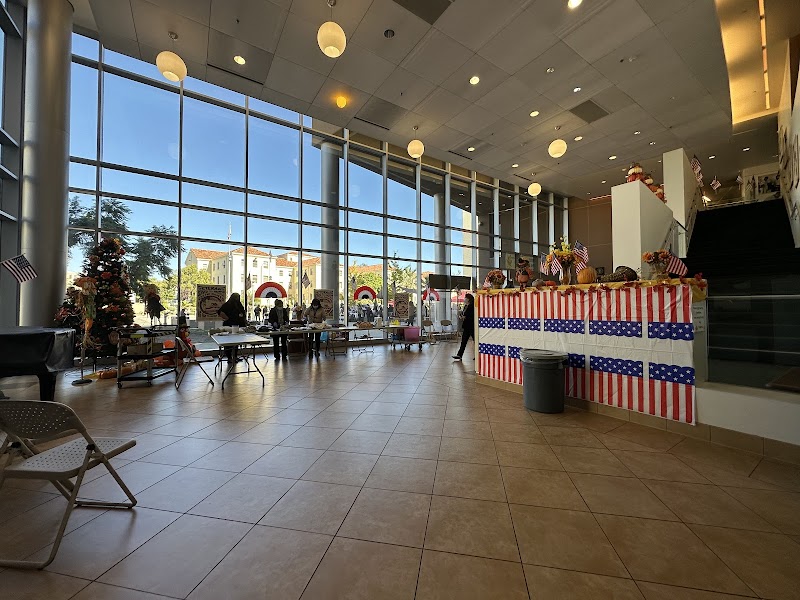
How is Veterans Home Of California - West Los Angeles Staffed?

CMS rates VETERANS HOME OF CALIFORNIA - WEST LOS ANGELES's staffing level at 5 out of 5 stars, which is much above average compared to other nursing homes. Staff turnover is 25%, compared to the California average of 46%. This relatively stable workforce can support continuity of care.

What Have Inspectors Found at Veterans Home Of California - West Los Angeles?

State health inspectors documented 45 deficiencies at VETERANS HOME OF CALIFORNIA - WEST LOS ANGELES during 2023 to 2025. These included: 45 with potential for harm.
Who Owns and Operates Veterans Home Of California - West Los Angeles?

VETERANS HOME OF CALIFORNIA - WEST LOS ANGELES is owned by a government entity. Government-operated facilities are typically run by state, county, or municipal agencies. The facility operates independently rather than as part of a larger chain. With 312 certified beds and approximately 144 residents (about 46% occupancy), it is a large facility located in LOS ANGELES, California.
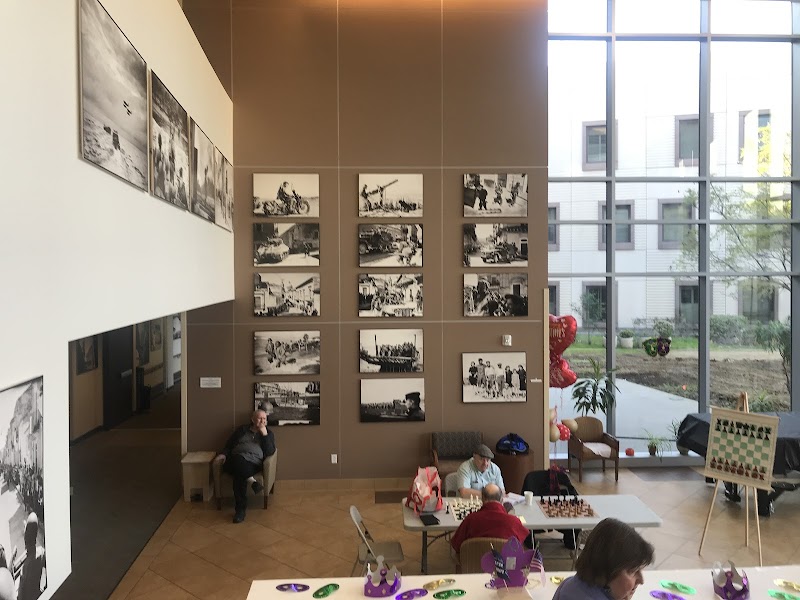
How Does Veterans Home Of California - West Los Angeles Compare to Other California Nursing Homes?

Compared to the 100 nursing homes in California, VETERANS HOME OF CALIFORNIA - WEST LOS ANGELES's overall rating (4 stars) is above the state average of 3.2, staff turnover (25%) is significantly lower than the state average of 46%, and health inspection rating (3 stars) is at the national benchmark.

What Should Families Ask When Visiting Veterans Home Of California - West Los Angeles?

Based on this facility's data, families visiting should ask: "Can I visit during a mealtime to observe dining assistance and food quality?" "How do you handle medical emergencies, and what is your hospital transfer rate?" "Can I speak with family members of current residents about their experience?"

Is Veterans Home Of California - West Los Angeles Safe?

Based on CMS inspection data, VETERANS HOME OF CALIFORNIA - WEST LOS ANGELES has a clean safety record: no substantiated abuse findings (meaning no confirmed cases of resident harm), no Immediate Jeopardy citations (the most serious violation level indicating risk of serious injury or death), and is not on the Special Focus Facility watch list (a federal program monitoring the lowest-performing 1% of nursing homes). The facility has a 4-star overall rating and ranks #1 of 100 nursing homes in California. While no facility is perfect, families should still ask about staff-to-resident ratios and recent inspection results during their visit.

Do Nurses at Veterans Home Of California - West Los Angeles Stick Around?

Staff at VETERANS HOME OF CALIFORNIA - WEST LOS ANGELES tend to stick around. With a turnover rate of 25%, the facility is 21 percentage points below the California average of 46%. Low turnover is a positive sign. It means caregivers have time to learn each resident's needs, medications, and personal preferences. Consistent staff also notice subtle changes in a resident's condition more quickly. Registered Nurse turnover is also low at 22%, meaning experienced RNs are available to handle complex medical needs.

Was Veterans Home Of California - West Los Angeles Ever Fined?

VETERANS HOME OF CALIFORNIA - WEST LOS ANGELES has no federal fines on record. CMS issues fines when nursing homes fail to meet care standards or don't correct problems found during inspections. The absence of fines suggests the facility has either maintained compliance or corrected any issues before penalties were assessed. This is a positive indicator, though families should still review recent inspection reports for the full picture.

Is Veterans Home Of California - West Los Angeles on Any Federal Watch List?

VETERANS HOME OF CALIFORNIA - WEST LOS ANGELES is not on any federal watch list. The most significant is the Special Focus Facility (SFF) program, which identifies the bottom 1% of nursing homes nationally based on persistent, serious quality problems. Not being on this list means the facility has avoided the pattern of deficiencies that triggers enhanced federal oversight. This is a positive indicator, though families should still review the facility's inspection history directly.