VIEW PARK CONVALESCENT CENTER
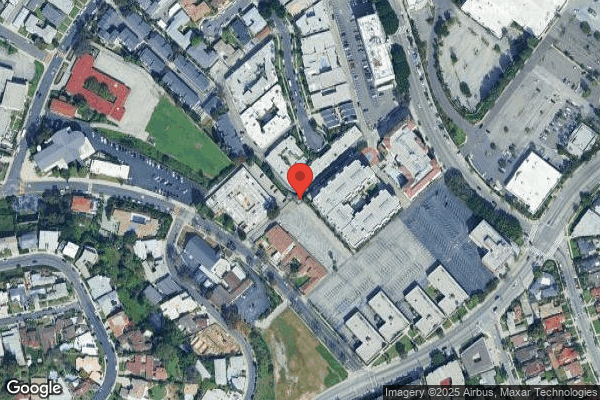
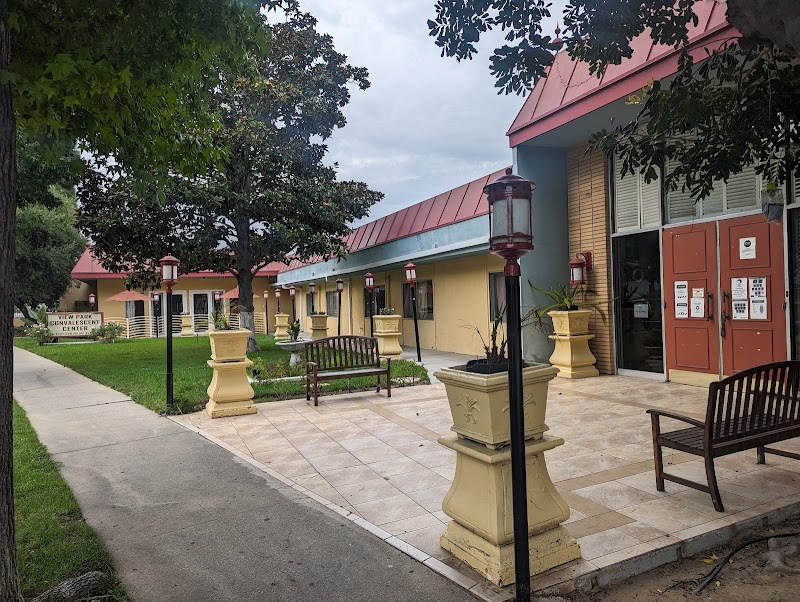
3737 DON FELIPE DRIVE, LOS ANGELES, CA 90008 (323) 295-7737
For profit - Corporation 99 Beds LONGWOOD MANAGEMENT CORPORATION Data: November 2025
Trust Grade
30/100
#941 of 1155 in CA
Last Inspection: April 2025

Within standard 12-15 month inspection cycle. Federal law requires annual inspections.

Overview

View Park Convalescent Center has received a Trust Grade of F, indicating significant concerns about its quality and care. Ranked #941 out of 1155 facilities in California, it falls within the bottom half of nursing homes in the state, and is #256 out of 369 in Los Angeles County, suggesting limited local options for better care. While the facility's issues have improved from 27 in 2024 to 13 in 2025, the total of 66 deficiencies remains high, with three serious incidents noted, including a resident suffering severe pain after slipping on a wet floor and another resident experiencing a significant delay in receiving emergency care for stroke symptoms. Staffing is a mixed bag, with a 3/5 rating but a concerning 54% turnover rate, above the state average, indicating potential instability, and RN coverage is low, being less than that of 86% of other facilities in California. Overall, while there are some strengths, such as recent improvements in care issues, there are serious weaknesses that families should consider carefully.

Trust Score
F
30/100
In California
#941/1155
Bottom 19%
Safety Record
High Risk
Review needed
Inspections
Getting Better
27 → 13 violations
Staff Stability
⚠ Watch
54% turnover. Above average. Higher turnover means staff may not know residents' routines.
Penalties
○ Average
$28,106 in fines. Higher than 58% of California facilities. Some compliance issues.
Skilled Nurses
⚠ Watch
Each resident gets only 17 minutes of Registered Nurse (RN) attention daily — below average for California. Fewer RN minutes means fewer trained eyes watching for problems.
Violations
⚠ Watch
66 deficiencies on record. Higher than average. Multiple issues found across inspections.
★★☆☆☆
2.0
Overall Rating
★★★☆☆
3.0
Staff Levels
★★★★☆
4.0
Care Quality
★★☆☆☆
2.0
Inspection Score
Stable
2024: 27 issues
2025: 13 issues

The Good

  • 4-Star Quality Measures · Strong clinical quality outcomes
  • Full Sprinkler Coverage · Fire safety systems throughout facility
  • No fines on record

Facility shows strength in quality measures, fire safety.

The Bad

2-Star Overall Rating

Below California average (3.1)

Below average - review inspection findings carefully

Staff Turnover: 54%

Near California avg (46%)

Higher turnover may affect care consistency

Federal Fines: $28,106

Below median ($33,413)

Moderate penalties - review what triggered them

Chain: LONGWOOD MANAGEMENT CORPORATION

Part of a multi-facility chain

Ask about local staffing decisions and management

The Ugly 66 deficiencies on record

3 actual harm
Jul 2025 1 deficiency
CONCERN (D) 📢 Someone Reported This

A family member, employee, or ombudsman was alarmed enough to file a formal complaint

Potential for Harm - no one hurt, but risky conditions existed

Deficiency F0774 (Tag F0774)

Could have caused harm · This affected 1 resident

**NOTE- TERMS IN BRACKETS HAVE BEEN EDITED TO PROTECT CONFIDENTIALITY** Based on observation, interview, and record review, the facility failed to ensure proper transportation arrangements were made f...

Read full inspector narrative →
**NOTE- TERMS IN BRACKETS HAVE BEEN EDITED TO PROTECT CONFIDENTIALITY** Based on observation, interview, and record review, the facility failed to ensure proper transportation arrangements were made for one of three sampled residents (Resident 3). This deficient practice resulted in the delay of necessary doctor's appointments and blood work appointments (a test used to look at overall health and find a wide range of conditions) for Resident 3. Resident 3 missed a doctor's appointment on 6/4/2025 due to the facility arranging a non-bariatric (extra-wide, and extra-comfortable chair) van and missed another doctor's appointment and bloodwork on 7/15/2025 due to the facility arranging a non-gurney van.Findings: A review of Resident 3's admission record indicated Resident 3 was initially admitted to the facility on [DATE] and readmitted on [DATE] with a diagnosis including acute embolism and thrombosis of unspecified deep veins of right lower extremity (a blood clot in a deep vein of the leg), peripheral vascular disease (PVD -a slow and progressive blood circulation disorder), schizophrenia (a disorder that affects a person's ability to think, feel, and behave clearly) long term (current) used of anticoagulants (Anticoagulants are medicines that prevent blood clots from forming in the bloodstream), human immunodeficiency virus (HIV) disease ( a viral infection that weakens the immune system and can lead to one getting life-threatening infections). During a review of Resident 3's Minimum Data Set (MDS, a resident assessment tool) dated 6/19/2025 indicated requires substantial/maximal assistance (helper does more than half the effort, helper lifts or holds trunk or limbs and provides more than half the effort) to move from lying on back to sitting on the side of the bed of the bed, with no back support. During a review of Resident 3's MDS dated [DATE] indicated is dependent (helper does all of the effort, resident does none of the effort to complete the activity, or the assistance of two or more helpers is required for the resident to complete the activity) to transfer to and from a bed to chair or wheelchair. During a review of Resident 3's Progress Notes dated 6/4/2025 at 3:20 PM indicated, Resident 3's doctor's appointment for 6/4/2025 was cancelled due to a non-bariatric transportation was sent, the resident needs a bariatric van for transportation for a doctor's and blood work appointments. During a review of Resident 3's Progress Notes dated 7/15/2025 at 2:33 PM indicated, Resident 3's doctor's appointment and blood work for 7/15/2025 was cancelled due to a non-gurney transportation was sent, the resident needs gurney transport for transportation for a doctor's and blood work appointments. During an interview on 7/25/2025 at 2:48 PM with Resident 3, Resident 3 stated I missed a doctor's appointment sometime this month. The resident also stated he missed his doctor's appointment and laboratory work because the wrong transportation was sent. During an interview with Licensed Vocational Nurse (LVN) 1, on 7/25/2025 at 3:18 PM LVN 1 stated, I am aware that Resident 3 has missed at least one doctor's appointment because the wrong transportation vehicle was brought. The resident uses a gurney for transportation. During an interview with Social Services director (SS), on 7/25/2025 at 3:50 PM SS stated, I know Resident 3 has missed at least two or three doctor's appointment in the last three months. SS stated, the transportation company sends the wrong vehicle which is not accommodating Resident 3's transport needs. Resident 3 requires a gurney or bariatric wheelchair for transportation. SS stated missing a doctor's appointment could lead to Resident 3's decline in health care and unwanted outcome. During an interview with the Director of Staffing Development (DSD), on 7/28/2025 at 11:43 AM, the DSD stated, Resident 3 has missed at least 2 doctor's and blood work appointments recently. DSD stated, I sometimes go to the doctor's appointments with Resident 3, he either needs a gurney or geriatric chair, he is not able to sit on a regular wheelchair.During an interview with the Director of Nursing (DON) on 7/28/2025 at 12:42 PM, the DON stated, the social services department requested for a gurney or geriatric chair, on two occasions the transportation company sent a small car as a result Resident 3 missed his doctors and blood work appointments. Missing the appointments is a deficiency, it will affect Resident 3's care resulting in decline or complications. A review of the facility's Policy and Procedures (P&P) titled Transportation, Social Services revised 3/21/2025, the P&P indicated, Social services will help the resident as needed to obtain transportation.
Jun 2025 4 deficiencies
CONCERN (D) 📢 Someone Reported This

A family member, employee, or ombudsman was alarmed enough to file a formal complaint

Potential for Harm - no one hurt, but risky conditions existed

Resident Rights (Tag F0550)

Could have caused harm · This affected 1 resident

**NOTE- TERMS IN BRACKETS HAVE BEEN EDITED TO PROTECT CONFIDENTIALITY** Based on interview and record review, facility failed to ensure dignity and respect for two of three sampled residents (Resident...

Read full inspector narrative →
**NOTE- TERMS IN BRACKETS HAVE BEEN EDITED TO PROTECT CONFIDENTIALITY** Based on interview and record review, facility failed to ensure dignity and respect for two of three sampled residents (Resident 1 and 3). This failure resulted in Resident 1 and 3 not being treated with dignity and respect when communicating with a mediation nurse and had the potential to affect the residents' self-esteem and self-worth. Cross reference with F558 Findings: During a review of Resident 1's admission Record dated 6/20/25, indicated Resident 1 was admitted to the facility on [DATE], with hypertension (HTN—high blood pressure), diabetes mellitus type two (DM—a condition were your body has trouble controlling the level of sugar in the blood), arthritis (inflammation in the joints causing pain, stiffness and reduced mobility), and acquired absence of left leg above the knee (AKA—above the knee amputation, surgical removal of limb). During a review of Resident 1's History and Physical (H&P), dated 5/17/25, indicated, Resident 1 had the capacity to understand and make decisions. During a review of Resident 1's Minimum Data Set (MDS—a resident assessment tool), dated 5/20/25 indicated Resident 1 was cognitively (thinking, reasoning, remembering, learning, and making decisions) intact and required substantial/maximal assistance with most activities of daily living (ADLs—routine tasks/activities such as bathing, dressing and toileting a person performs daily to care for themselves). The same MDS indicated the resident had a language preference other than English. During a review of Resident 3's admission Record dated 6/20/25, indicated Resident 3 was admitted to the facility on [DATE], with diagnoses including, hemiplegia (paralysis on one side) and hemiparesis (weakness on one side) following unspecified cerebrovascular (brain circulation) disease affecting the left dominant side, muscle weakness, HTN, and hyperlipidemia (HLD - a condition characterized by elevated levels of lipids (fats) in the bloodstream). During a review of Resident 3's H&P, dated 4/6/25, indicated, Resident 3 had the capacity to understand and make decisions. During a review of Resident 3's MDS, dated [DATE] indicated Resident 3 was cognitively intact and was independent to requiring supervision touching assistance with most ADLs. The same MDS indicated the resident had a language preference other than English. During an interview on 6/13/25 at 1:05 pm with Resident 1, the resident stated has been treated disrespectfully and talked to with an attitude by a medication nurse on the evening shift. The resident further stated she does not speak to me in a language that I can understand and will not take any steps to try and communicate with him in a way he can understand. During an interview on 6/13/25 at 2:16 pm with Resident 3, the resident stated he has witnessed the evening medication nurse get into arguments with Resident 1 and tried to step in to help with the miscommunications they were having since he can understand and speak a bit of English. He further stated his efforts to help were met with a dismissive mind your own business from the nurse. During an interview on 6/13/25 at 5:04 pm with the Director of Nursing (DON), the DON stated miscommunications could lead to frustration with the care for the residents and an intervention should be to obtain another staff to interpret for the residents so that can understand. During a review of the facility's policy and procedure (P&P) titled Resident rights , reviewed and revised on 3/21/25, indicated Employees shall treat all residents with kindness, respect and dignity . Federal and state laws guarantee certain basic rights to all residents of this facility. These rights include the resident's rights to be treated with respect, kindness, and dignity .
CONCERN (D) 📢 Someone Reported This

A family member, employee, or ombudsman was alarmed enough to file a formal complaint

Potential for Harm - no one hurt, but risky conditions existed

Deficiency F0558 (Tag F0558)

Could have caused harm · This affected 1 resident

**NOTE- TERMS IN BRACKETS HAVE BEEN EDITED TO PROTECT CONFIDENTIALITY** Based on interview and record review, facility failed to ensure (Resident 1 and 3) were communicated in their preferred language...

Read full inspector narrative →
**NOTE- TERMS IN BRACKETS HAVE BEEN EDITED TO PROTECT CONFIDENTIALITY** Based on interview and record review, facility failed to ensure (Resident 1 and 3) were communicated in their preferred language. This failure resulted in Resident 1 and 3 not being able to understand some of the nursing staff this failure had the potential to affect the residents' self-esteem and self-worth. Cross reference with F550 Findings: During a review of Resident 1's admission Record dated 6/20/25, indicated Resident 1 was admitted to the facility on [DATE], with hypertension (HTN—high blood pressure), diabetes mellitus type two (DM—a condition were your body has trouble controlling the level of sugar in the blood), arthritis (inflammation in the joints causing pain, stiffness and reduced mobility), and acquired absence of left leg above the knee (AKA—above the knee amputation, surgical removal of limb). During a review of Resident 1's History and Physical (H&P), dated 5/17/25, indicated, Resident 1 had the capacity to understand and make decisions. During a review of Resident 1's Minimum Data Set (MDS—a resident assessment tool), dated 5/20/25 indicated Resident 1 was cognitively (thinking, reasoning, remembering, learning, and making decisions) intact and required substantial/maximal assistance with most activities of daily living (ADLs—routine tasks/activities such as bathing, dressing and toileting a person performs daily to care for themselves). The same MDS indicated the resident had a language preference other than English. During a review of Resident 3's admission Record dated 6/20/25, indicated Resident 3 was admitted to the facility on [DATE], with diagnoses including, hemiplegia (paralysis on one side) and hemiparesis (weakness on one side) following unspecified cerebrovascular (brain circulation) disease affecting the left dominant side, muscle weakness, HTN, and hyperlipidemia (HLD - a condition characterized by elevated levels of lipids (fats) in the bloodstream). During a review of Resident 3's H&P, dated 4/6/25, indicated, Resident 3 had the capacity to understand and make decisions. During a review of Resident 3's MDS, dated [DATE] indicated Resident 3 was cognitively intact and was independent to requiring supervision touching assistance with most ADLs. The same MDS indicated the resident had a language preference other than English. During an interview on 6/13/25 at 1:05 pm with Resident 1 stated he often has trouble communicating with the medication nurses about this care, and they do not offer any way to help him communicate in his preferred language. During an interview on 6/13/25 at 5:04 pm with the DO, the DON stated if the resident does not understand the language the staff are using to communicate it could lead to frustration with the care for the residents and an intervention should be to obtain another staff to interpret for the residents so that can understand. During a review of the facility's P&P titled Accommodation of Needs Related to Communication Deficits , reviewed and revised on 3/21/25, indicated Communication needs with be identified and appropriate interventions, including care planning, will be developed in order to accommodate the needs of the resident .
CONCERN (D) 📢 Someone Reported This

A family member, employee, or ombudsman was alarmed enough to file a formal complaint

Potential for Harm - no one hurt, but risky conditions existed

Deficiency F0697 (Tag F0697)

Could have caused harm · This affected 1 resident

**NOTE- TERMS IN BRACKETS HAVE BEEN EDITED TO PROTECT CONFIDENTIALITY** Based on interview and record review, facility failed to ensure ordered pain medication was administered and the resident was ed...

Read full inspector narrative →
**NOTE- TERMS IN BRACKETS HAVE BEEN EDITED TO PROTECT CONFIDENTIALITY** Based on interview and record review, facility failed to ensure ordered pain medication was administered and the resident was educated on the ordered pain medications for one of three sampled residents (Resident 1). This failure resulted in Resident 1 being confused as to what the ordered pain medications were and therefore not receiving the as needed pain medications for two days. Cross reference with F558 Findings: During a review of Resident 1's admission Record dated 6/20/25, indicated Resident 1 was admitted to the facility on [DATE], with hypertension (HTN—high blood pressure), diabetes mellitus type two (DM—a condition were your body has trouble controlling the level of sugar in the blood), arthritis (inflammation in the joints causing pain, stiffness and reduced mobility), and acquired absence of left leg above the knee (AKA—above the knee amputation, surgical removal of limb). During a review of Resident 1's History and Physical (H&P), dated 5/17/25, indicated, Resident 1 had the capacity to understand and make decisions. During a review of Resident 1's Minimum Data Set (MDS—a resident assessment tool), dated 5/20/25 indicated Resident 1 was cognitively (thinking, reasoning, remembering, learning, and making decisions) intact and required substantial/maximal assistance with most activities of daily living (ADLs—routine tasks/activities such as bathing, dressing and toileting a person performs daily to care for themselves). The same MDS indicated the resident had a language preference other than English. During an interview on 6/13/25 at 1:05 pm with Resident 1, the resident stated he has not been receiving the other pain medications that he once was and stated he thinks he is getting Tylenol (over the counter pain medication) for pain now. During a concurrent interview and record review of the resident's medication list printed on 6/12/25 indicated ibuprofen (over the counter anti-inflammatory pain medication) 600 mg, give one tablet by mouth for mild pain, Percocet oral tablet 5-325 milligrams (mg – metric unit of measure) (Oxycodone [opioid pain medication] with Acetaminophen [Tylenol]) give 1 tablet by mouth every 6 hours as need for moderate pain 4-6 hold for drowsy or Respiratory Rate less than 12., and Percocet oral tablet 5-325 milligrams (Oxycodone with Acetaminophen) give 2 tablets by mouth every 6 hours as need for severe pain 7-10. There was a X hand drawn over each of the Percocet medications listed in blue pen and the resident stated a nurse had brought him this paperwork on yesterday and made a gesture with forearms crossed in front of her to indicate no more . The resident further stated he was not given the information or communicated anything related to pain medication in a language he could understand. During a review of Resident 1's Medication Administration Record (MAR), dated June 2025, indicated the resident had been receiving Ibuprofen for mild pain the last couple of days and the last time he received Percocet was at 4:44 am on 6/11/25. During an interview with concurrent record review on 6/13/25 at 5:04 pm with the DON, Resident 1's MAR dated June 2025 was reviewed. The DON verified the resident had not received the Percocet after 6/11/25 and stated if the Percocet's are still active in the orders they can be given is there is pain. During a review of the facility's P&P titled Pain Medication , reviewed and revised on 3/21/25, indicated Purpose: To provide guidelines for the consistent assessment, management, and documentation of pain for the resident, in order to provide maximum comfort and quality of life . General Guidelines . Effective pain control is an important part of a resident's treatment . health professionals are to respond quickly to a resident's reports of pain.
CONCERN (E) 📢 Someone Reported This

A family member, employee, or ombudsman was alarmed enough to file a formal complaint

Potential for Harm - no one hurt, but risky conditions existed

Food Safety (Tag F0812)

Could have caused harm · This affected multiple residents

Based on observation, interview and record review, the facility failed ensure proper sanitation and food handling practices by kitchen staff failing to ensure: 1. cilantro, lettuce and carrots were pr...

Read full inspector narrative →
Based on observation, interview and record review, the facility failed ensure proper sanitation and food handling practices by kitchen staff failing to ensure: 1. cilantro, lettuce and carrots were properly labeled with delivery date and use by date when stored in the fridge and disposed of when brown and wilted. 2. one out of three dietary staff failed to wash their hands upon entry to the kitchen, after use of hairnet and before touching food in the refrigerator. This deficient practice had the potential to result in unsafe food management, and foodborne illness. Findings: During an observation on 6/13/25 at 1:34 pm with Dietary Supervisor (DS), the DS was observed donning a hairnet and proceeding to the do the refrigerator review without washing their hands. During an observation with concurrent interview on 6/13/25 at 1:34 pm with Dietary Supervisor (DS) the kitchen refrigerators were reviewed. There were about 10 heads of lettuce in a large plastic bag sitting inside a bind labeled 6/3/25. The DS stated those came in this morning and have not been labeled yet, with the received date, this was confirmed with [NAME] 1, stating they were received today and they should have been labeled with today's date and the use by date. During further review of the same refrigerator, there was another bin with no label on it that had a variety of different vegetables sitting inside of it. One bag of cilantro was observed to have some browning and wetness inside a plastic bag. The DS stated he will throw it out, there were also some carrots and lettuce and various other vegetables and fruits, some of which were brown. The DS stated we are going to throw the ones out that are spoiled. During a further interview with DS, they stated when they should have washed their hands before entering the kitchen and touching the refrigerator. During a review of the facility's policy and procedures (P&P), titled Dating and labeling , revised 3/21/25, indicated, POLICY To ensure food safety and prevent contamination within the facility, all food items should be properly covered, dated and labeled in dry storage and refrigerator/freezer areas . All items should be properly covered, dated and labeled. Food items should have the appropriate dates: a. Delivery date – upon receipt b. Open date – opened containers . Expiration dates . Refrigerator/ Freezer area: dietary staff refer to the Refrigerator and freezer storage chart posted outside the refrigerator . During a review of the facility's P&P titled Preventing Foodborne Illness – Food Handling , revised 3/21/25, indicated, Food will be stored, prepared and handled and served so that the risk of foodborne illness is minimized . All employees who handle, prepare or serve food will be trained in the practices of safe food handling and preventing foodborne illness.
Apr 2025 7 deficiencies
CONCERN (D)

Potential for Harm - no one hurt, but risky conditions existed

Assessment Accuracy (Tag F0641)

Could have caused harm · This affected 1 resident

Based on interview, and record review, the facility failed to ensure the assessment entries on the Minimum Data Set (MDS- a resident assessment tool) related to insulin was accurately documented to re...

Read full inspector narrative →
Based on interview, and record review, the facility failed to ensure the assessment entries on the Minimum Data Set (MDS- a resident assessment tool) related to insulin was accurately documented to reflect the resident's insulin status for one of three sampled residents (Resident 80). This deficient practice had the potential to negatively affect Resident 80's plan of care and delivery of necessary care and services. Findings: During a record review, Resident 80's admission Record indicated the facility initially admitted Resident 80 on 11/15/2024 and readmitted Resident 80 on 2/7/2025 with diagnoses including congestive heart failure (CHF - a heart disorder which causes the heart to not pump the blood efficiently, sometimes resulting in leg swelling), hypertension (HTN - elevated blood pressure) and diabetes mellitus (DM-a disorder characterized by difficulty in blood sugar control and poor wound healing). During a record review, Resident 80's Minimum Data Set (MDS- a resident assessment tool), dated 2/19/2025, indicated Resident 80 was cognitively intact (when a person has no trouble remembering, learning new things, concentrating, or making decisions that affect their everyday life). The MDS indicated Resident 80 was dependent on staff for toileting, dressing, transfers and person hygiene. The MDS also indicated that Resident 80 was on insulin. During a concurrent interview and record review on 4/16/2025 at 12:30 PM, with Minimum Data Set Coordinator (MDSC), Resident 80's medical chart was reviewed. The MDSC stated MDSC coding is based on a seven look back period from the date the MDS was done. MDSC stated Resident 80's quarterly MDS was done on 2/19/2025, the look back period was between 2/12/2025 to 2/19/2025. MDSC stated the quarterly MDS for 2/19/2025 indicated that Resident 80 got one injection of insulin in the seven look back period however, this should not have been the case as the insulin order was discontinued on 2/6/2025. MDSC stated the MDS is done to provide a proper care plan for the resident and if not done accurately, the residents care plan will not be updated or accurate, this will ultimately cause the Center for Medicare and Medicaid (CMS) to not have an accurate assessment of the residents. During an interview on 4/18/2025, at 3:35 PM, with the Director of Nursing (DON), the DON stated the MDS is an overall assessment of the resident so that care plan can be implemented based on the assessment and if inaccurate may lead to altered overall care that is being given to the resident. During a record review, the facility's policy and procedures (P&P), titled, Comprehensive Assessments, revised 3/2023, indicated comprehensive assessments are conducted to assist in developing person-centered care plans. 1.Comprehensive assessments are conducted in accordance with criteria and timeframes established in the Resident Assessment Instrument (RAI) user manual.
CONCERN (D)

Potential for Harm - no one hurt, but risky conditions existed

Dental Services (Tag F0791)

Could have caused harm · This affected 1 resident

Based on observation, interview, and record review, the facility failed to assist one out of 19 sampled residents (Resident 3) in obtaining dentures. This failure had the potential to effect the resid...

Read full inspector narrative →
Based on observation, interview, and record review, the facility failed to assist one out of 19 sampled residents (Resident 3) in obtaining dentures. This failure had the potential to effect the resident's nutritional status and weight. Findings: During a record review, Resident 3's admission Record indicated the facility admitted the resident on 11/17/2019 and re-admitted the resident on 7/16/2022, with diagnoses including Diabetes Mellitus (DM-a disorder characterized by difficulty in blood sugar control and poor wound healing), muscle wasting (weakening, shrinking, and loss of muscle) and atrophy (decrease in size and strength of the muscle) and anemia (a condition where the body does not have enough healthy red blood cells During a record review, Resident 3's Minimum Data Set (MDS - a resident assessment tool) dated 2/5/2025, indicated the resident had moderately impaired cognition. The same MDS further indicated Resident 3 was independent with eating and required substantial to total assistance with toileting, dressing and personal hygiene. During a record review, Resident 3's alteration in nutritional status care plan, initiated 11/17/2019, indicated the resident was at risk for poor oral intake due to being edentulous (without teeth). A further review of the care plan indicated the goal indicated was to minimize the risk of weight loss. The care plan interventions included to provide good mouth care, notify physician of refusal of meals, and to offer food substitutes if resident refuses meal tray or has poor intake. During a record review, Resident 3's alteration in oral/dental status care plan, initiated 11/17/2029, indicated the resident was missing natural teeth and the resident's denture was at home. The care plant interventions indicated staff to assess dental condition and refer the resident to a dentist(s) as indicated and ensure good oral hygiene. During a concurrent interview and observation on 4/15/2025 at 9:10 AM, at Resident 3's bedside, Resident 3 Was observed with no teeth lying in bed. Resident 3 stated she has no teeth. Resident 3 also stated they previously had dentures and were in a bedside cup and one day upon waking they were gone. Resident 3 further stated the dentures have been gone (missing) for a long time (time frame not specified). Resident 3 continued that the meat at the facility was never tender enough and she cannot always chew it. Resident three further stated that they have requested dentures from the dentist and the request has gone nowhere. During a concurrent interview and record review on 4/16/2025 at 10:30 AM with the Social Services Director (SSD), Resident 3's Dental Notes, dated 8/15/2024 was reviewed. The SSD stated the dental consult indicated the resident had an interest in dentures. The SSD stated SSD sed residence threes request for dentures. The SSD stated a weight loss was a potential outcome of not having dentures. During an interview on 4/17/2025 at 10:06 AM Certified Nursing Assistant (CNA) 2 ated resident three had dentures a long time ago but she doesn't have now. CNA 2 stated Resident 3 doesn't like will not food that is hard to chew. CNA 2 stated it is very rare that Resident 3 eats 100% of her (Resident 3) meals. During a record review, Resident 3's Order Summary Report, dated 4/18/2025, indicated an order of dental consult and treatment as needed for dental problems. During an interview on 4/18/2025 at 12:46 PM, the Director of Nursing (DON) stated the dentist visits the facility regularly every three months and is available for ad hoc visits when needed. The DON also stated staff must follow up on a resident's request for dentures. The DON further stated not having dentures can lead to residents having a hard time chewing or weight loss. During a record review, the facility policy and procedure (P&P) titled Dental Services, reviewed 3/21/2025, indicated, social services representatives will assist residents with appointments, transportation arrangements, and for reimbursement of dental services under the state plan, if eligible. If dentures are damaged or lost, residents will be referred for dental services within three days. If the referral is not made within three days, documentation will be provided regarding what is being done to ensure that the resident is able to eat and drink adequately while awaiting the dental services; and the reason for the delay.
CONCERN (E)

Potential for Harm - no one hurt, but risky conditions existed

Menu Adequacy (Tag F0803)

Could have caused harm · This affected multiple residents

Based on observation, interview and record review, the facility failed to ensure the standardized recipes for lunch menu was followed on 4/17/2025 when the [NAME] (CK) failed to follow the recipe inst...

Read full inspector narrative →
Based on observation, interview and record review, the facility failed to ensure the standardized recipes for lunch menu was followed on 4/17/2025 when the [NAME] (CK) failed to follow the recipe instruction for the Szechwan pork by adding salt, pepper and garlic powder. This deficient practice had the potential to result in meal dissatisfaction, decreased nutritional intake, weight loss and increased risk hypertension (HTN - elevated blood pressure) for resident who were on a low sodium diet. Findings: A review of the facility recipe: Szechwan pork for week 3 Thursday indicated: Ingredients: pork, raw, cubed ¼ - ½ or cut in thin strips, oil, sauce: low sodium soy sauce, hoisin sauce, low sodium chicken broth, rice vinegar, sugar, cornstarch, water, garlic powder, ginger, jarred or fresh grated or ground, red pepper flakes. During an observation on 4/17/2025, at 10:15 AM, in the facility kitchen, the stove was on and a pot was on top of the stove. During a concurrent observation and interview on 4/17/2025, at 10:17 AM, with the CK, in the facility kitchen, the stove was on and a pot was on top of the stove. There was meat boiling inside the pot. The CK stated the meat in the pot was pork per the menu for today (4/17/2025). The CK stated the pork boiling in the pot, was seasoned with salt, garlic powder and pepper. The CK stated that the recipe that CK used, did not include adding salt, garlic powder and pepper. The CK stated she added salt to give flavor to the boiling pork. The CK stated that the facility recipe should be followed because adding salt to the recipe may cause residents to have high blood pressure. During an interview on 4/17/2025, at 11:35 AM, with the Registered dietician (RD), the RD stated the facility kitchen staff should follow the recipe when making resident meals. The RD stated the recipes provides specifications for therapeutic diet and textures, to meet taste and presentation. The RD stated recipe that does not include added salt should not have added salt to it as it as the residents may not be able to contend with the taste of the food with the added salt and can also have hypertension. During an interview on 4/18/2025, at 3:43 PM, with the Director of nursing (DON), the DON stated a therapeutic diet is based on what the doctors order and aslo based on the resident's diagnosis(es). The DON stated a recipe needs to be strictly followed based on the expert recommendation. The DON stated residents that have hypertension should not have added salt to their diet as this can cause high blood pressure. During a record review, the facility policy and procedures, titled, Transfer Menu, revised 3/21/2025, indicated The eight day cycle menus are prepared by the dietician and modifications of individual resident menus are made as necessary to comply with physician orders and/or resident preferences .The standard menu will ensure nutritional adequacy of all diets . 5. The menu will be prepared as written using standardized recipes. The dietary services supervisor and cooks are trained and responsible for the preparation and service of therapeutic diets prescribed.
CONCERN (E)

Potential for Harm - no one hurt, but risky conditions existed

Food Safety (Tag F0812)

Could have caused harm · This affected multiple residents

Based on observation, interview, and record review, the facility failed to ensure safe food handling practices when the container of Jelly in Refrigerator number one was dated 4/11/2024. This deficien...

Read full inspector narrative →
Based on observation, interview, and record review, the facility failed to ensure safe food handling practices when the container of Jelly in Refrigerator number one was dated 4/11/2024. This deficient practice had the potential to result in harmful bacteria growth and cross contamination (transfer of harmful bacteria from one place to another) that could lead to food borne illness in 90 out of 99 residents. Findings: During a concurrent observation and interview on 4/15/2025, at 8:41 A.M., with the Registered dietician (RD), the RD stated that once food items are opened and placed in the refrigerator, the items are good for 30 days after being opened. The RD stated food items that are past 30 days of being opened need to be discarded (trashed) as the food may cause foodborne illnesses such as nausea, vomiting. The RD stated the jelly container in the refrigerator number one had an open date of 4/11/2024 and should not be in the refrigerator as it is past it's use by date of 30 days. During an interview on 4/18/2025, at 3:43 P.M., with the Director of nursing (DON), the DON stated that, food with a label date of 4/11/2024 whether open or closed should not be in the refrigerator as it is dangerous, it is harmful to the body leading to diarrhea and vomiting. During a record review, the facility policy and procedures (P&P), titled, Story of canned and dry food, revised 3/21/2025, indicated Food and supplies will be stored properly and in a safe manner. During a record review, the facility P&P, titled, Dry food storage guidelines, revised 3/21/2025, indicated Jellies, opened and refrigerated 6 months.
CONCERN (E)

Potential for Harm - no one hurt, but risky conditions existed

Infection Control (Tag F0880)

Could have caused harm · This affected multiple residents

**NOTE- TERMS IN BRACKETS HAVE BEEN EDITED TO PROTECT CONFIDENTIALITY** Based on observation, interview, and record review, the facility failed to: maintain a sanitary environment by failing to adhere...

Read full inspector narrative →
**NOTE- TERMS IN BRACKETS HAVE BEEN EDITED TO PROTECT CONFIDENTIALITY** Based on observation, interview, and record review, the facility failed to: maintain a sanitary environment by failing to adhere to infection control measures in one out eight bathrooms (room [ROOM NUMBER]) These deficient practices had the potential to expose Residents in room [ROOM NUMBER] to to disease causing pathogens (germs) from bodily fluids and waste that could result in, poor patient outcomes, medical complications, and unnecessary hospitalization. During a facility tour on 4/15/25 at 8 AM room [ROOM NUMBER] bathroom was observed to have: 1. Three visibly soiled towels hanging on the towel rack. 2. A used coffee cup with residue inside and a water pitcher and cup place on a shelf above the bathroom sink. During an interview on 04/15/25 at 08:13 AM, Certified Nurse Assistant (CNA) 1 stated the dirty towels, coffee cup and, water pitcher are not supposed to be in the bathroom because of infection control, CNA1 stated she does not know who left the towels in the Resident's communal bathroom and proceeded to remove towels out of the bathroom. During an interview on 4/17/2025 at 01:57 PM, infection prevention nurse (IPN) stated dirty towels, coffee cups and water pitchers should never be in the bathroom. IPN stated, it is an infection control issue that can expose residents to disease causing micro-organisms and infection. During an interview on 04/18/25 at 01:07 PM, Director of Nnursing (DON) stated dirty towels, cups and water pitchers should not be in the bathroom. DON stated, it is an infection control issue that can expose the Residents to disease causing microorganisms from using dirty towels, drinking from a contaminated water pitcher and/or cup and contract an infection that lead to unnecessary hospitalization, poor health outcomes and/or untimely death. During a record review, the facility policy and procedure (P&P) titled infection prevention and control program dated 3/21/2025 indicated, infection prevention and control . is established to provide a safe, sanitary and comfortable environment and to help prevent the development and transmission of communicable diseases and infections. Facility's infection control policies and practices are intended to facilitate maintaining a safe, sanitary and comfortable environment and to help prevent and manage transmission of diseases and infections. Facility's infection control policies and procedures apply equally to all facility staff, staff are trained on the infection control policies and procedures upon hire and periodically thereafter including where and how to find and use pertinent procedures and equipment related to infection control.
CONCERN (E)

Potential for Harm - no one hurt, but risky conditions existed

Deficiency F0912 (Tag F0912)

Could have caused harm · This affected multiple residents

Based on observation, interview and record review, the facility failed to provide at least 80 square feet (sq. ft.) per resident in 20 of 40 resident rooms (rooms 101, 102, 103, 104, 105, 106,107,109,...

Read full inspector narrative →
Based on observation, interview and record review, the facility failed to provide at least 80 square feet (sq. ft.) per resident in 20 of 40 resident rooms (rooms 101, 102, 103, 104, 105, 106,107,109,110,114,116,118,120,121,122,134, 137, 138, 141). This deficient practice had the potential to result in inadequate space for nursing care and privacy and safety of residents. Findings: During a record review, the facility Request for Room Size Waiver letter submitted by the Administrator, dated 4/16/2025, indicated 20 resident rooms in the facility did not meet the requirement of at least 80 square feet per resident per federal regulation. The letter also indicated all rooms have more than adequate space for resident privacy. The letter further indicated the following rooms provided are less than 80 sq.ft. per resident: Room Room Sq. Footage # of beds 101 201.965 sq.ft. 3 102 201.965 sq.ft. 3 103 201.965 sq. ft. 3 104 206.4 sq.ft. 3 105 210.15 sq.ft. 3 106 204.44 sq.ft. 3 107 236.665 sq. ft. 3 109 204.25 sq.ft. 3 110 205.145 sq.ft. 3 114 204.25 sq.ft. 3 116 204.25 sq.ft. 3 118 204.25 sq.ft. 3 120 209.916 sq.ft. 3 121 204.25 sq.ft. 3 122 209.666 sq.ft. 3 134 221.01 sq.ft. 3 137 202.666 sq.ft. 3 138 205.145 sq. ft. 3 141 202.666 sq.ft. 3 142 203.76 sq.ft. 3 According to the federal regulation, the minimum square footage for a 2-bed room is at least 160 sq.ft. and the minimum square footage for a 3 bedroom is at least 240 sq. ft. During a resident council meeting on 4/16/2025 at 10:54 AM, Residents 17, 44, 49 and 72 all stated their room sizes were adequate. During multiple observations of the resident rooms from 4/15/2025 to 4/18/2025, residents were observed having ample space to move freely inside the rooms. There were sufficient spaces to provide freedom of movement for the residents and for nursing staff to provide care to the residents. There were also sufficient spaces for overbed/bedside tables, side tables and resident care equipment. During an interview on 4/16/2025, at 2:20 PM, the Administrator (ADM) stated the facility submitted a written request for the continued room waiver as the room sizes do not impede resident care.
CONCERN (F)

Potential for Harm - no one hurt, but risky conditions existed

Safe Environment (Tag F0921)

Could have caused harm · This affected most or all residents

Based on observation, interview, and record review, the facility failed to: 1. Maintain a clean, safe, and functional environment for 92 of 92 residents. 2. Maintain and repair leaking pipes. This fai...

Read full inspector narrative →
Based on observation, interview, and record review, the facility failed to: 1. Maintain a clean, safe, and functional environment for 92 of 92 residents. 2. Maintain and repair leaking pipes. This failure had the potential to cause harm to the residents. Findings: During an observation on and interview 4/17/25 at 9:19 a.m., Medication Room A was observed with Registered Nurse Supervisor. The Medication Room A was noted with leaking pipe underneath the sink cabinet with a grey wash basin catching the water. During an interview Registered Nurse Supervisor (RNS) stated none of the staff or the Maintenance Supervisor (MS) reported to RNS about the leaking pipe underneath the sink. RNS stated, if leaking pipes are not repaired it can cause mold that can make the residents and the staff very sick. During an observation and interview on 4/17/25 at 9:29 a.m., Medication Room B was observed with RNS. The Medication Room B was noted with multiple dead cockroaches under the sink cabinet. RNS stated none of the staff or MS reported to RNS that there was cockroach infestation in Medication Room B. RNS stated the multiple dead cockroaches should have been reported to the Administration and the Director of Nursing (DON) right away. RNS stated if the cockroaches get in to the residents room it could make the resident very sick or they could bite the residents. During an observation on 04/17/25 at 10:47 a.m., the cabinet under the sink in Medication Room B was observed with DON, Administrator, and MS. Multiple dead cockroaches were noted under the sink. During an interview on 04/17/25 at 10:57 a.m., Administrator stated the MS is responsible to clean under the sink cabinets and fix leaking pipes. The Administrator stated this roach infestation is not acceptable and should have been reported to the Administrator immediately so that the pest control company are notified immediately to prevent the cockroaches from getting into the resident's rooms. The Administrator stated the pest control comes into the facility twice a month to check for roaches. During an interview on 04/17/25 at 11:27 a.m., the DON stated the roach infestation is not acceptable. The DON stated MS is responsible to clean the medication storage rooms, drawers and cabinets, and is responsible to fix leaking pipes in the facility. DON stated if the facility is having a roach infestation the MS is supposed to report it immediately to the DON or the Administrator so that the pest control company can be notified to come in and treat the cockroaches. DON stated cockroaches can cause harm to the residents. During an interview on 04/18/25 at 11:57 a.m., MS stated if there is a water leak in the facility or if something needs to be repaired the staff is supposed to put in in the maintenance repair logs at nurses' station A and B. MS stated he checks the repair log daily. Maintenance Supervisor stated, if something is broken, he repairs it right away. MS stated he do not have any professional training or certifications in plumbing. MS stated he is responsible to check and clean under the sinks in nurses' station A and B. MS stated he last cleaned under the sink at station B two weeks ago. MS stated none of the staff reported to him that the facility had cockroaches. MS stated the cockroaches are very bad for the residents. to prevent the spread of the roaches. MS stated he do not have any invoices for plumbing repairs for the leaking pipe in the medication room on station A. MS stated leaking pipes can cause mold and the residents could get sick from that. MS stated if the cockroaches get into the residents rooms it can make the residents very sick. During a concurrent record review on 4/18/25 at 12:22 p.m., with MS of the documents titled 'Service Report, pest control invoices dated 1/9/25, 2/11/25, 3/14/24, 4/12/25, and 4/17/25, there was no indication that Medication Room B was treated for cockroaches. During a record review, the facility document titled Job Description Maintenance Supervisor with a revised date of 3/21/25, indicated: Summary: Responsible for the facility being maintained in good repair at all times, including interior and exterior surfaces, fixtures, and mechanical systems. Supervises and coordinates activities of workers engaged in maintaining and repairing physical structures of buildings and grounds. The Maintenance Supervisor assists in providing a clean, safe, dignified, happy and healthy environment for residents by performing the duties as described below. Able to work on-call to address maintenance and facility issues as they arise. Essential Duties and Responsibilities: Inspect the building and grounds daily looking for anything unusual, garbage, graffiti, ect., observing for any areas that need immediate attention and reporting to the Administrator on a daily basis. Maintains plumbing, electrical, heating, ventilation, and air conditioning systems according to established procedures, manufactured instructions and federal, Stated and local regulations. Troubleshoots failures in plumbing, electrical, heating, air conditioning, or appropriate systems and call the appropriate licensed service representative if unable to fix the system. ' During a record review, the facility document titled Homelike Environment with a revised date of 3/21/25, indicated: Policy Statement: Residents are provided with a safe, clean, comfortable and homelike environment and encouraged to use their personal belongings to the extent possible. Policy Interpretation and Implementation: 2a. Clean, sanitary and orderly environment. During a record review, the facility document titled Pest Control with a revised date of 3/21/25, indicated: Policy Statement: Our facility shall maintain an effective pest control program. Policy Interpretation and Implementation: 1. This facility maintains an on-going pest control program to ensure that the building is kept free of insects and rodents. 6. Maintenance services assist, when appropriate and necessary, in providing pest control services.
Jan 2025 1 deficiency
CONCERN (D) 📢 Someone Reported This

A family member, employee, or ombudsman was alarmed enough to file a formal complaint

Potential for Harm - no one hurt, but risky conditions existed

Infection Control (Tag F0880)

Could have caused harm · This affected 1 resident

**NOTE- TERMS IN BRACKETS HAVE BEEN EDITED TO PROTECT CONFIDENTIALITY** Based on observation, interview, and record review, the facility failed to ensure staff implemented infection prevention and con...

Read full inspector narrative →
**NOTE- TERMS IN BRACKETS HAVE BEEN EDITED TO PROTECT CONFIDENTIALITY** Based on observation, interview, and record review, the facility failed to ensure staff implemented infection prevention and control program by not wearing proper personal protective equipment (PPE - equipments including gloves, masks, gowns, face shields used to prevent spread of infection) when entering an isolation room (a type of hospital room that keeps patients with infectious illnesses away from other patients). There was an outbreak of influenza (Flu - is a contagious respiratory illness caused by influenza viruses) in the facility. This deficient practice had the potential for further spread of influenza risk of infections due to a break in infection control protocol during infectious disease outbreak. Findings: During record review, Resident 1's Minimum Data Set (MDS-a resident assessment tool) dated 1/3/2025 indicated Resident's cognitive function (the ability to think and make independent decisions) was severely impaired. Resident 1 was not able communicate needs or wants, in addition does not make any decisions concerning care. During record review, Resident 1's Care Plan initiated on 1/29/25, indicated the plan implemented included to monitor Resident 1 for respiratory symptoms such as, cough, congestion, runny nose, shortness of breath (SOB), fever, chills, headache, sore throat. During record review, Resident 1's Interdisciplinary Team (IDT - is a group of healthcare professionals from complementary fields who work in tandem to treat a patient) meeting record dated 1/29/25 at 2:05pm, indicated Resident 1 was placed on isolation for exposure to respiratory syncytial virus (RSV - is a common virus that infects the respiratory system that spreads through droplets from an infected person's cough, sneeze, or kiss). The IDT record indicated Isolation precautions that requires the use of PPE. During an observation on in the hallway outside Resident 1's room [ROOM NUMBER]/30/25 at 6:15 pm, there was a signage posted to the left side of the door which indicated droplet precautions (is an area designated as a quarantine zone, making it mandatory to wear PPE before entering). To the left of the Resident 1 room door, was a three-drawer cabinet containing PPE. During the same observation certified nursing assistant (CNA) 1 donned on (putting on) gloves, but did not donn on gowns, masks, and face shields) before entering Resident 1's room. During an interview on 1/30/25 at 6:18 pm CNA 1 stated he forgot to put on a gown, because he was only going to help the resident by getting some water for the resident. CNA 1 stated he just stopped to help because the resident was yelling out for some water. CNA 1 stated proper donning requires that he performs hand hygiene first then put on a gown, mask, goggles, then gloves before entering an isolation room. CNA 1 stated, when doffing, first remove the gloves, gown, goggles, mask, then wash hands before exiting the isolation room. CNA 1 stated he forgot to use proper donning and doffing (removing) technique because the resident was not his assigned resident, and he was just trying to help. During an interview on 1/30/25 at 8:32 pm RN Supervisor (RNS) 1 stated staff must always don and doff the proper personal protective equipment before entering a room that is on either contact or droplet precautions. During an interview on 1/31/25 at 1:05 pm the Director of Staff Development (DSD) stated the proper method for donning and doffing PPE. The DSD stated she has provided in-service training along with the infection preventionist (IP) to prepare staff to handle the current outbreak (influenza) and any future issues. The DSD stated, it is a break in infection control to enter a room without proper personal protective equipment. During an interview on 1/31/25 at 2:02 pm, IP was able to state the proper method for donning and doffing PPE during an outbreak. The IP stated staff are not permitted to use gowns to walk in the hallway. It is a break in infection control to use isolation gowns outside resident rooms. The IP stated the staff understand that before entering any isolation room, either droplet or contact, staff must perform hand hygiene and don on the appropriate PPE. In addition, the IP stated PPE must be doffed, and hand hygiene must be performed without exception before exiting any isolation room. During record review, the facility's policy, and procedures, revised 3/2022, titled, Influenza, Prevention and Control of Seasonal the Policy Statement indicated, This facility follows current guidelines and recommendations for the prevention and control of seasonal influenza. Policy Interpretation and Implementation: 1. The prevention of seasonal influenza outbreaks is a coordinated effort which is organized by the infection preventionist and overseen by the medical director. Training and Education 1. All staff receive job- or task-specific education and training on preventing transmission of infectious agents, including influenza, during orientation to the facility. 2. Key aspects of influenza prevention and control training include: e. review of standard and transmission-based precautions: f. appropriate use of personal protective equipment; and g. engineering controls, work practices and procedures to reduce exposure. 5. Staff employed by outside employers must meet these education and training requirements through programs offered by the outside employer or by participation in our programs.
Nov 2024 1 deficiency
CONCERN (D) 📢 Someone Reported This

A family member, employee, or ombudsman was alarmed enough to file a formal complaint

Potential for Harm - no one hurt, but risky conditions existed

Deficiency F0658 (Tag F0658)

Could have caused harm · This affected 1 resident

**NOTE- TERMS IN BRACKETS HAVE BEEN EDITED TO PROTECT CONFIDENTIALITY** Based on interview, and record review, the facility failed to ensure one of three sampled residents (Resident 1), had an order f...

Read full inspector narrative →
**NOTE- TERMS IN BRACKETS HAVE BEEN EDITED TO PROTECT CONFIDENTIALITY** Based on interview, and record review, the facility failed to ensure one of three sampled residents (Resident 1), had an order for nothing by mouth (NPO-an acronym for the Latin phrase nil per os, which translates to nothing by mouth) as well as fingerstick blood sugar checks every six hours for a resident that as a NPO order and is on a gastrostomy (Gtube-a surgical opening fitted with a device to allow feedings to be administered directly to the stomach common for people with swallowing problems) feeding. This failure had the potential to result in inaccurate blood sugar monitoring for someone that is not taking nutrition by mouth and affect the care and services received. Findings: A review of Resident 1 ' s admission Record dated 11/19/24, indicated Resident 1 was admitted to the facility on [DATE], with diagnoses including, type two diabetes (DM-a disorder characterized by difficulty in blood sugar control and poor wound healing) hypertension (high blood pressure), heart failure (a condition where the hear does not pump as well as it should), gastrostomy, dysphagia (problems swallowing) and muscle weakness. A review of Resident 1 ' s Minimum Data Set (MDS, a resident assessment tool), dated 11/12/24 indicated Resident 1 had severely impaired cognition (ability to think, understand and make daily decisions) and was dependent on staff for eating oral hygiene, toileting, bathing, dressing, personal hygiene, and bed mobility. A review of Resident 1 ' s Care plan for diabetes mellitus initiated on 10/17/24 indicated intervention of Accu-checks (brand of blood sugar monitoring system) as ordered. During a concurrent interview and record review on 11/15/24 at 2:26 pm with Licensed Vocational Nurse 1 (LVN 1) Resident 1 ' s physicians orders were reviewed on the computer charting system. The orders indicated no order for NPO or separate order for fingerstick blood glucose checks, separate from the insulin orders. The LVN verified the orders were not made and stated we know to check the sugars with the with the insulin orders. During a concurrent interview and record review on 11/15/24 at 3:00 pm with the Registered Nurse Supervisor 1 (RNS 1), the orders for insulin were reviewed. The RNS 1 verified the order for insulin is three times a day before meals and at bedtime the blood sugar would be checked before meals, and at bedtime. The RNS 1 further stated the if the resident is NPO blood sugar checks should be checked every six hours
Nov 2024 1 deficiency 1 Harm
SERIOUS (G) 📢 Someone Reported This

A family member, employee, or ombudsman was alarmed enough to file a formal complaint

Actual Harm - a resident was hurt due to facility failures

Accident Prevention (Tag F0689)

A resident was harmed · This affected 1 resident

**NOTE- TERMS IN BRACKETS HAVE BEEN EDITED TO PROTECT CONFIDENTIALITY** Based on observation, interview and record review, the facility (Skilled Nursing Facility-SNF) failed to provide a safe environm...

Read full inspector narrative →
**NOTE- TERMS IN BRACKETS HAVE BEEN EDITED TO PROTECT CONFIDENTIALITY** Based on observation, interview and record review, the facility (Skilled Nursing Facility-SNF) failed to provide a safe environment to prevent falling for one of two sampled residents (Resident 1), by failing to ensure: 1. Maintenance Worker 1 (MW 1) notified Resident 1 and the resident's roommate/s that the floor was wet after mopping Resident 1's room with a wet mop. 2. MW 1 placed a wet floor sign on the floor in Resident 1's room to alert Resident 1 that the floor was wet. 3. MW 1 supervised/monitored the wet floor and re-directed Resident 1 to avoid the wet floor. As a result, on 10/25/2024, Resident 1 slipped and fell, and suffered severe pain of 10 out of 10 (10/10- a numerical pain scale assessment tool where zero is no pain and 10 is severe pain) to the left knee treated with opioids (a class of drugs used to treat moderate to severe pain). Resident 1 was transferred to General Acute Care Hospital 2 (GACH 2) via 911 (a telephone number used to reach emergency medical, fire, and police services). GACH 2 diagnosed Resident 2 with a left femur fracture (broken thigh bone). On 10/29/2024, GACH 2 performed open reduction and internal fixation (ORIF - a type of surgery used to stabilize and repair broken bones, using screws, plates, sutures, or rods to hold the bone together and for healing) on Resident 1. Findings: During a review of Resident 1's General Acute Care Hospital 1 (GACH 1) History & Physical (H&P), dated 10/6/2024, the H&P indicated Resident 1 presented to GACH 1 Emergency Department (ED - The department of a hospital responsible for the provision of medical and surgical care to patients arriving at the hospital in need of immediate care) after having a mechanical fall at home. The H&P further indicated the resident was attempting to get out of bed, reached for a walker, tripped, and fell onto the left wrist with no injuries. During a review of Resident 1's admission Record, the admission Record indicated the SNF originally admitted Resident 1 on 10/11/2024 and re-admitted the resident on 10/31/2024. The admission Record indicated Resident 1's diagnoses included left femur fracture, left eye blindness, history of falling and history of healed traumatic fracture (occurs when significant or extreme force is applied to a bone). During a review of Resident 1's admission Assessment, dated 10/11/2024, the admission Assessment indicated Resident 1 was admitted to the facility from GACH 1. The admission Assessment further indicated Resident 1 was alert and oriented times four (person, place, time/date, and situation) with period of forgetfulness. The admission assessment indicated the resident was continent (the ability to voluntarily control) of bladder and bowel, generalized weakness, ambulated with assist, and was admitted for physical therapy (PT - treatment that uses physical activities and exercises to help improve movement, relieve pain, and strengthen muscles) and occupational therapy (OT -therapy that helps improve one's ability to perform everyday tasks, like eating and drinking). During a review of Resident 1's Fall Risk assessment dated [DATE], the Fall Risk Assessment indicated Resident 1 scored 16 for risk for fall (the resident was at low risk for falls). During a review of Resident 1's admission Rehabilitation Screening, dated 10/12/2024, the admission Rehabilitation Screening indicated Resident 1 did not have any impairment ( a significant difference or absence in a person's body structure or function or mental functioning) in functional range of motion (ROM -how far you can move a joint in any direction) to the lower extremities (hip, knee, ankle, and foot). During a review of Resident 1's care plan titled, At Risk for Falls/Injury, initiated on 10/14/2024, indicated Resident 1 was at risk for falls due to general weakness, history of falls, history of left ankle fracture, osteopenia (low bone density), and muscle weakness. The care plan goal was to reduce the risk of falls and injury to Resident 1. The care plan interventions indicated staff would visibly observe the resident frequently and provide resident with a safe and clutter-free environment. During a review of Resident 1's admission Minimum Data Set (MDS - a federally mandated resident assessment tool), dated 10/15/2024, indicated Resident 1's cognition (ability to think, understand, and reason) was intact. The MDS also indicated Resident 1 ' s vision was impaired, and the resident required substantial/maximal assistance (helper does more than half the effort) with toileting hygiene, showering, dressing, and personal hygiene. The MDS further indicated Resident 1 required partial/moderate assistance (helper does less than half the effort) with walking 10 feet. The MDS also indicated Resident 1 used a walker for mobility. During a review of Resident 1's Change of Condition (COC- clinically important deviation from a patient's baseline) form, dated 10/25/2024 timed at 9:45 AM, the COC indicated Resident 1 was observed lying on the floor on the left side by housekeeping staff and the charge nurse. The COC also indicated the resident reported 6/10 pain level to the left leg and Resident 1 was transferred to a General Acute Care Hospital 2 (GACH 2). During a review of Resident 1's Physician Order, dated 10/25/2024 timed at 10 AM, the Physician order indicated to transfer Resident 1 to GACH 2 via 911 for evaluation after a fall onto her left side with left leg pain. During a review of Resident 1's GACH 2 Note, dated 10/25/24, the note indicated Resident 1 came into the ED after a fall onto the resident's left side and suffered severe knee pain. The ED notes indicated that from 10:44 AM to 3:03 PM, Resident 1 received fentanyl (an opioid pain medication) 50 micrograms (mcg-unit of measurement) intravenously (IV -inside a vein), Dilaudid (an opioid pain medication) 0.5 milligrams (mg-unit of measurement) IV, Toradol (a medication is used to treat moderately severe pain and inflammation [A normal part of the body's response to injury or infection]) 30 mg IV, and Morphine (an opioid pain medication) 4 mg IV for pain control. During a review of Resident 1's GACH 2 H&P, dated 10/25/2024 timed at 10:55 AM, indicated Resident 1was transferred to GACH 2 ED after a ground level fall. GACH 2 H&P also indicated Resident 1 stated that while at the facility, she got up to go to the bathroom, that someone had mopped the floor, and that Resident 1 did not realize that the floor was wet. GACH 2 H&P notes indicated Resident 1 slipped and crashed onto her left knee. GACH 2 H&P indicated Resident 1 experienced 9/10 pain to the left knee during left knee on palpation (touch). GACH 2 H&P further indicated the plan was for Resident 1 to have ORIF. During a review of the Resident 1's GACH 2 Pelvis X-ray of the result, dated 10/25/2024, the X-ray result indicated Resident 1 had a femur. During a review of Resident 1's GACH 2 Orthopedic (branch of medicine that focuses on the diagnosis and treatment of bones, muscles, and ligaments) Surgery Trauma (severe physical injury or damage)/General Consult Note, dated 10/26/2024, indicated, Resident 1 presented to GACH 2 with pain (pain level not indicated) in the left knee and thigh after falling to the ground on her the way to the bathroom at the facility earlier that morning. The orthopedic surgery trauma/general consult note indicated Resident 1 noted immediate pain to the left knee and thigh that was worse with movement. The orthopedic surgery trauma/general consult note further indicated Resident 1 reported that the floor was wet, which caused the resident to slip and fall. Moreover, the orthopedic surgery trauma/general consult note indicated; the physician strongly recommended an ORIF surgery to treat the resident's left femur fracture. During a review of Resident 1's GACH 2 Operative Note, dated 10/31/2024, GACH 2 Operative Note indicated Resident 1 had an ORIF surgery on 10/29/2024 to treat the resident's left femoral fracture. During an interview on 11/8/2024 at 8:38 AM, Resident 1 stated, a couple of weeks ago, while walking out of the bathroom, I slipped because the floor was wet. Resident 1 stated no one notified Resident 1 that the floor was wet prior to entering the bathroom, that there was no wet floor sign on the floor, and that Resident 1 fell onto her knees and screamed in pain. Resident 1 stated the pain level at the time of the fall was 10/10. Resident 1 stated she was transferred to a GACH where she was told that her left thigh bone was broken. Resident 1 stated that currently, her pain level was 8/10 and that she could no longer ambulate and I just stay in bed. During an interview on 11/8/2024 at 12:15 PM, Resident 2 (Resident 1's roommate currently and at the time of the fall) stated Resident 2 did not see but heard a loud boom and Resident 1 screamed out at the time Resident 1 fell. Resident 2 stated the medication nurse left about five minutes prior to the fall because MW 1 was sweeping and mopping Resident 1's room with a wet mop. Resident 2 further stated MW 1 never notified Resident 2 that the floor was wet, and that Resident 2 did not see a wet floor sign posted/placed on the floor. During an interview on 11/8/2024 at 1:17 PM, the Director of Rehabilitation (DOR) stated prior to the fall on 10/25/2024, Resident 1 was able to walk with maximum assistance. The DOR stated maintenance usually places a wet floor sign down once they have mopped. The DOR stated that a wet floor is a fall risk for any person. The DOR further stated after the fall, Resident 1 was unable to walk because the resident is in a lot of pain. The DOR stated, we premedicate (the administration of medication before a treatment or procedure to prepare the patient) her for pain before her therapy sessions. During an interview with Treatment Nurse 1 on 11/12/2024 at 9:54 AM, Treatment Nurse 1 stated staff are monitoring Resident 1's incision for swelling. During a concurrent observation, Resident 1 was lying in bed with head of bed up. Resident 1 was observed in a full leg immobilizing brace (a device that completely restricts movement in the leg) on her left leg with straps securing the brace closed from her upper thigh to her ankle. Resident 1 has 3 incisions along her lateral (situated at or on the side) left leg that is closed with Stryker's zip skin closure system (a non-invasive skin closure device). During an interview on 11/12/2024 at 12:14 PM, Licensed Vocational Nurse 1 (LVN 1) stated on 10/25/2024, LVN 1 exited Resident 1's room because MW 1 was sweeping the floor. LVN 1 stated MW 1 came out of Resident 1's room and stated, your resident [Resident 1] is on the floor. LVN 1 stated LVN 1 found Resident 1 on floor and that the resident crying out in pain. LVN 1 stated Resident 1told LVN 1 that the floor was wet. LVN 1 stated LVN 1 could tell the floor was wet and that there was no Wet Floor sign posted. LVN 1 further stated, maintenance must make residents and staff aware that the floor is wet. Maintenance is to tell us verbally and should place a sign on the floor. LVN 1 stated she asked MW 1, where was your sign [wet floor sign], and then MW 1 placed a sign down. LVN 1 further stated, MW 1, should have placed a sign down and let the residents know the floor was wet because a wet floor is a fall hazard and that is just what happened. LVN 1 also stated Resident 1 was a fall risk because the resident already had problems with her leg before admission to the facility. During a phone interview on 11/12/2024 at 12:45 PM, MW 1 stated he started mopping Resident 1's room with a wet mop after Resident 1 went to the restroom and exited/left Resident 1's room after mopping the floor. MW 1 stated that Resident 1 fell after coming came out of the bathroom. MW 1 stated MW 1 did not tell Resident 1 or Resident 2 that the floor was wet, and MW 1 did not put down a wet floor sign and I should have place the wet floor sign MW 1 stated MW 1 exited Resident 1's room MW 1 stated MW 1 knew that the floor was wet and f a fall hazard. MW 1 stated MW 1 forgot to place the wet floor sign. MW 1 stated this was the first time in 37 years, MW 1 forgot to place the sign. MW1 also stated, I feel really bad because she was really yelling in pain. During an interview on 11/12/2024 at 2:34 PM, the Administrator (ADM) stated, I would say the wet floor promoted or assisted the fall. The ADM further stated ADM went to Resident 1's room at the time of the fall and observed that the floor was wet. During a review of the facility's policy and procedures (P&P) titled, Falls and Fall Risk, Managing, revised 3/23, the P&P indicated staff will identify interventions related to the resident's specific risks and causes to try to prevent the resident from falling and to try to minimize complications from falling. The P&P further indicated an environmental factor that contribute to the risk of falls included wet floors. During a review of the facility's P&P titled, Housekeeping Cleaning Sanitizing, Disinfecting, & Sterilizing, undated, the P&P indicated floor cleaning procedures are as follows: a. Vacuum or sweep floor thoroughly, paying close attention to corners and areas near or under furniture. b. Using a container of water with a detergent dash germicide added, wet mop one side of corridor or floor at a time, making sure that the first side is dry before mopping the other side. c. Obtain a fresh solution when water is dirty. d. Post a warning sign WET FLOOR on both ends of wet areas. Based on observation, interview and record review, the facility (Skilled Nursing Facility-SNF) failed to provide a safe environment to prevent falling for one of two sampled residents (Resident 1), by failing to ensure: 1. Maintenance Worker 1 (MW 1) notified Resident 1 and the resident's roommate/s that the floor was wet after mopping Resident 1's room with a wet mop. 2. MW 1 placed a wet floor sign on the floor in Resident 1's room to alert Resident 1 that the floor was wet. 3. MW 1 supervised/monitored the wet floor and re-directed Resident 1 to avoid the wet floor. As a result, on 10/25/2024, Resident 1 slipped and fell, and suffered severe pain of 10 out of 10 (10/10- a numerical pain scale assessment tool where zero is no pain and 10 is severe pain) to the left knee treated with opioids (a class of drugs used to treat moderate to severe pain). Resident 1 was transferred to General Acute Care Hospital 2 (GACH 2) via 911 (a telephone number used to reach emergency medical, fire, and police services). GACH 2 diagnosed Resident 2 with a left femur fracture (broken thigh bone). On 10/29/2024, GACH 2 performed open reduction and internal fixation (ORIF - a type of surgery used to stabilize and repair broken bones, using screws, plates, sutures, or rods to hold the bone together and for healing) on Resident 1. Findings: During a review of Resident 1's General Acute Care Hospital 1 (GACH 1) History & Physical (H&P), dated 10/6/2024, the H&P indicated Resident 1 presented to GACH 1 Emergency Department (ED - The department of a hospital responsible for the provision of medical and surgical care to patients arriving at the hospital in need of immediate care) after having a mechanical fall at home. The H&P further indicated the resident was attempting to get out of bed, reached for a walker, tripped, and fell onto the left wrist with no injuries. During a review of Resident 1's admission Record, the admission Record indicated the SNF originally admitted Resident 1 on 10/11/2024 and re-admitted the resident on 10/31/2024. The admission Record indicated Resident 1's diagnoses included left femur fracture, left eye blindness, history of falling and history of healed traumatic fracture (occurs when significant or extreme force is applied to a bone). During a review of Resident 1's admission Assessment, dated 10/11/2024, the admission Assessment indicated Resident 1 was admitted to the facility from GACH 1. The admission Assessment further indicated Resident 1 was alert and oriented times four (person, place, time/date, and situation) with period of forgetfulness. The admission assessment indicated the resident was continent (the ability to voluntarily control) of bladder and bowel, generalized weakness, ambulated with assist, and was admitted for physical therapy (PT - treatment that uses physical activities and exercises to help improve movement, relieve pain, and strengthen muscles) and occupational therapy (OT -therapy that helps improve one's ability to perform everyday tasks, like eating and drinking). During a review of Resident 1's Fall Risk assessment dated [DATE], the Fall Risk Assessment indicated Resident 1 scored 16 for risk for fall (the resident was at low risk for falls). During a review of Resident 1's admission Rehabilitation Screening, dated 10/12/2024, the admission Rehabilitation Screening indicated Resident 1 did not have any impairment ( a significant difference or absence in a person's body structure or function or mental functioning) in functional range of motion (ROM -how far you can move a joint in any direction) to the lower extremities (hip, knee, ankle, and foot). During a review of Resident 1's care plan titled, At Risk for Falls/Injury, initiated on 10/14/2024, indicated Resident 1 was at risk for falls due to general weakness, history of falls, history of left ankle fracture, osteopenia (low bone density), and muscle weakness. The care plan goal was to reduce the risk of falls and injury to Resident 1. The care plan interventions indicated staff would visibly observe the resident frequently and provide resident with a safe and clutter-free environment. During a review of Resident 1's admission Minimum Data Set (MDS - a federally mandated resident assessment tool), dated 10/15/2024, indicated Resident 1's cognition (ability to think, understand, and reason) was intact. The MDS also indicated Resident 1 ' s vision was impaired, and the resident required substantial/maximal assistance (helper does more than half the effort) with toileting hygiene, showering, dressing, and personal hygiene. The MDS further indicated Resident 1 required partial/moderate assistance (helper does less than half the effort) with walking 10 feet. The MDS also indicated Resident 1 used a walker for mobility. During a review of Resident 1's Change of Condition (COC- clinically important deviation from a patient's baseline) form, dated 10/25/2024 timed at 9:45 AM, the COC indicated Resident 1 was observed lying on the floor on the left side by housekeeping staff and the charge nurse. The COC also indicated the resident reported 6/10 pain level to the left leg and Resident 1 was transferred to a General Acute Care Hospital 2 (GACH 2). During a review of Resident 1's Physician Order, dated 10/25/2024 timed at 10 AM, the Physician order indicated to transfer Resident 1 to GACH 2 via 911 for evaluation after a fall onto her left side with left leg pain. During a review of Resident 1's GACH 2 Note, dated 10/25/24, the note indicated Resident 1 came into the ED after a fall onto the resident's left side and suffered severe knee pain. The ED notes indicated that from 10:44 AM to 3:03 PM, Resident 1 received fentanyl (an opioid pain medication) 50 micrograms (mcg-unit of measurement) intravenously (IV -inside a vein), Dilaudid (an opioid pain medication) 0.5 milligrams (mg-unit of measurement) IV, Toradol (a medication is used to treat moderately severe pain and inflammation [A normal part of the body's response to injury or infection]) 30 mg IV, and Morphine (an opioid pain medication) 4 mg IV for pain control. During a review of Resident 1's GACH 2 H&P, dated 10/25/2024 timed at 10:55 AM, indicated Resident 1was transferred to GACH 2 ED after a ground level fall. GACH 2 H&P also indicated Resident 1 stated that while at the facility, she got up to go to the bathroom, that someone had mopped the floor, and that Resident 1 did not realize that the floor was wet. GACH 2 H&P notes indicated Resident 1 slipped and crashed onto her left knee. GACH 2 H&P indicated Resident 1 experienced 9/10 pain to the left knee during left knee on palpation (touch). GACH 2 H&P further indicated the plan was for Resident 1 to have ORIF. During a review of the Resident 1's GACH 2 Pelvis X-ray of the result, dated 10/25/2024, the X-ray result indicated Resident 1 had a femur. During a review of Resident 1's GACH 2 Orthopedic (branch of medicine that focuses on the diagnosis and treatment of bones, muscles, and ligaments) Surgery Trauma (severe physical injury or damage)/General Consult Note, dated 10/26/2024, indicated, Resident 1 presented to GACH 2 with pain (pain level not indicated) in the left knee and thigh after falling to the ground on her the way to the bathroom at the facility earlier that morning. The orthopedic surgery trauma/general consult note indicated Resident 1 noted immediate pain to the left knee and thigh that was worse with movement. The orthopedic surgery trauma/general consult note further indicated Resident 1 reported that the floor was wet, which caused the resident to slip and fall. Moreover, the orthopedic surgery trauma/general consult note indicated; the physician strongly recommended an ORIF surgery to treat the resident's left femur fracture. During a review of Resident 1's GACH 2 Operative Note, dated 10/31/2024, GACH 2 Operative Note indicated Resident 1 had an ORIF surgery on 10/29/2024 to treat the resident's left femoral fracture. During an interview on 11/8/2024 at 8:38 AM, Resident 1 stated, a couple of weeks ago, while walking out of the bathroom, I slipped because the floor was wet. Resident 1 stated no one notified Resident 1 that the floor was wet prior to entering the bathroom, that there was no wet floor sign on the floor, and that Resident 1 fell onto her knees and screamed in pain. Resident 1 stated the pain level at the time of the fall was 10/10. Resident 1 stated she was transferred to a GACH where she was told that her left thigh bone was broken. Resident 1 stated that currently, her pain level was 8/10 and that she could no longer ambulate and I just stay in bed. During an interview on 11/8/2024 at 12:15 PM, Resident 2 (Resident 1's roommate currently and at the time of the fall) stated Resident 2 did not see but heard a loud boom and Resident 1 screamed out at the time Resident 1 fell. Resident 2 stated the medication nurse left about five minutes prior to the fall because MW 1 was sweeping and mopping Resident 1's room with a wet mop. Resident 2 further stated MW 1 never notified Resident 2 that the floor was wet, and that Resident 2 did not see a wet floor sign posted/placed on the floor. During an interview on 11/8/2024 at 1:17 PM, the Director of Rehabilitation (DOR) stated prior to the fall on 10/25/2024, Resident 1 was able to walk with maximum assistance. The DOR stated maintenance usually places a wet floor sign down once they have mopped. The DOR stated that a wet floor is a fall risk for any person. The DOR further stated after the fall, Resident 1 was unable to walk because the resident is in a lot of pain. The DOR stated, we premedicate (the administration of medication before a treatment or procedure to prepare the patient) her for pain before her therapy sessions. During an interview with Treatment Nurse 1 on 11/12/2024 at 9:54 AM, Treatment Nurse 1 stated staff are monitoring Resident 1's incision for swelling. During a concurrent observation, Resident 1 was lying in bed with head of bed up. Resident 1 was observed in a full leg immobilizing brace (a device that completely restricts movement in the leg) on her left leg with straps securing the brace closed from her upper thigh to her ankle. Resident 1 has 3 incisions along her lateral (situated at or on the side) left leg that is closed with Stryker's zip skin closure system (a non-invasive skin closure device). During an interview on 11/12/2024 at 12:14 PM, Licensed Vocational Nurse 1 (LVN 1) stated on 10/25/2024, LVN 1 exited Resident 1's room because MW 1 was sweeping the floor. LVN 1 stated MW 1 came out of Resident 1's room and stated, your resident [Resident 1] is on the floor. LVN 1 stated LVN 1 found Resident 1 on floor and that the resident crying out in pain. LVN 1 stated Resident 1told LVN 1 that the floor was wet. LVN 1 stated LVN 1 could tell the floor was wet and that there was no Wet Floor sign posted. LVN 1 further stated, maintenance must make residents and staff aware that the floor is wet. Maintenance is to tell us verbally and should place a sign on the floor. LVN 1 stated she asked MW 1, where was your sign [wet floor sign], and then MW 1 placed a sign down. LVN 1 further stated, MW 1, should have placed a sign down and let the residents know the floor was wet because a wet floor is a fall hazard and that is just what happened. LVN 1 also stated Resident 1 was a fall risk because the resident already had problems with her leg before admission to the facility. During a phone interview on 11/12/2024 at 12:45 PM, MW 1 stated he started mopping Resident 1's room with a wet mop after Resident 1 went to the restroom and exited/left Resident 1's room after mopping the floor. MW 1 stated that Resident 1 fell after coming came out of the bathroom. MW 1 stated MW 1 did not tell Resident 1 or Resident 2 that the floor was wet, and MW 1 did not put down a wet floor sign and I should have place the wet floor sign MW 1 stated MW 1 exited Resident 1's room MW 1 stated MW 1 knew that the floor was wet and f a fall hazard. MW 1 stated MW 1 forgot to place the wet floor sign. MW 1 stated this was the first time in 37 years, MW 1 forgot to place the sign. MW1 also stated, I feel really bad because she was really yelling in pain. During an interview on 11/12/2024 at 2:34 PM, the Administrator (ADM) stated, I would say the wet floor promoted or assisted the fall. The ADM further stated ADM went to Resident 1's room at the time of the fall and observed that the floor was wet. During a review of the facility's policy and procedures (P&P) titled, Falls and Fall Risk, Managing, revised 3/23, the P&P indicated staff will identify interventions related to the resident's specific risks and causes to try to prevent the resident from falling and to try to minimize complications from falling. The P&P further indicated an environmental factor that contribute to the risk of falls included wet floors. During a review of the facility's P&P titled, Housekeeping Cleaning Sanitizing, Disinfecting, & Sterilizing, undated, the P&P indicated floor cleaning procedures are as follows: a. Vacuum or sweep floor thoroughly, paying close attention to corners and areas near or under furniture. b. Using a container of water with a detergent dash germicide added, wet mop one side of corridor or floor at a time, making sure that the first side is dry before mopping the other side. c. Obtain a fresh solution when water is dirty. d. Post a warning sign WET FLOOR on both ends of wet areas.
Jul 2024 1 deficiency
CONCERN (D) 📢 Someone Reported This

A family member, employee, or ombudsman was alarmed enough to file a formal complaint

Potential for Harm - no one hurt, but risky conditions existed

Report Alleged Abuse (Tag F0609)

Could have caused harm · This affected 1 resident

**NOTE- TERMS IN BRACKETS HAVE BEEN EDITED TO PROTECT CONFIDENTIALITY** Based on interview and record review, the facility failed to report an allegation of abuse to (California Department of Public H...

Read full inspector narrative →
**NOTE- TERMS IN BRACKETS HAVE BEEN EDITED TO PROTECT CONFIDENTIALITY** Based on interview and record review, the facility failed to report an allegation of abuse to (California Department of Public Health (CDPH) within two hours for one of three sampled residents (Resident 1). This deficient practice resulted in a delayed onsite investigation of by CDPH with a potential of further altercation between Resident 1 and Resident 2 Findings During a review of Resident 1's Face sheet (admission Record), indicated Resident 1 was re-admitted to the facility on [DATE], with a diagnoses of acute kidney failure (when your kidneys suddenly stop working properly), and essential hypertension (a type of high blood pressure that occurs when there is no identifiable cause). During a review of Resident 1's History and Physical (H&P) dated 6/29/2024, indicated Resident 1 had the capacity for medical decision making. During a review of Resident 2's Face Sheet, indicated Resident 2 was admitted to the facility on [DATE] with diagnoses including dementia (impaired thinking, remembering, or reasoning that can affect a person's ability to function safely) and essential hypertension. During a review of Resident 2's H&P dated 7/16/2023, indicated Resident 2 did not have the capacity to understand and make decisions. During an interview on 7/30/2024 at 10:17 am, Resident 1 stated that on the day of the alleged incident with Resident 2, Resident 2 was attempting to unplug Resident 1's television (TV). Resident 1 stated she told Resident 2 to stop unplugging the TV and that's when Resident 2 hit Resident 1's left arm so hard that a blood vessel appeared and experienced pain on Resident 1's arm. Resident 1 stated she was mad (upset/angry) at the moment but felt okay now because Resident 2 was not in the right mind. Resident 1 stated the staff came in the room right away and separated her and Resident 2. Resident 1 stated she did not need pain medication. Resident 1 stated she did not want Resident 2 to get into any trouble because she is not in her right mind. Resident 1 stated she do not fear remaining in the facility. During an interview on 7-30-24 at 11:46 am with Administrator, the Administrator she was working on 7-19-24, at approximately 2 pm., the day of the alleged incident between Resident 1 and Resident 2. The Administrator stated Resident 1's Certified Nursing Assistant (CNA) informed that Administrator of the incident between Resident 1 and Resident 2. The Administrator Resident 2 reported to the incident with Resident 1 to the Director of Staff Development (DSD) and that the DSD informed the Administrator of the incident right away. The Administrator stated she should have reported the incident between Resident 1 and Resident 2 to CDPH within 2 hours. During an interview on 7-30-24 at 12:38 pm, with the Director of Nursing (DON), the DON stated the Administrator notified her of the incident between Resident 1 and Resident 2. The DON stated Resident 1 told the DON that Resident 2 was touching and changing the TV channel, and Resident 1 told Resident 2 to stop and that was when Resident 2 hit Resident 1. The DON stated she immediately moved Resident 2 to another room. The DON stated, abuse is supposed to be reported to CDPH within 2 hours. During an interview on 7-30-24 at 1:38 pm, with License Vocational Nurse 1 (LVN 1) stated the DSD reported to LVN 1 the alleged incident between Resident 1 and Resident 2 and instructed the DSD to report the incident to the Administrator right away. LVN 1 stated abuse, is supposed to be reported to CDPH within 2 hours. During a record review of the facility's policy and procedures titled Abuse, Neglect, Exploitation or Misappropriation-Reporting and Investigating revised on 3/2023, indicated, All reports of resident abuse (including injuries of unknown origin), neglect, exploitation, or theft/misappropriation of resident property are reported to local, state, and federal agencies (as required by current regulations) and thoroughly investigated by facility management. Findings of all investigations are documented and reported. Reporting allegations to the Administrator and Authorities: 3. Immediately is defined as a. Within two hours of an allegation involving abuse or result serious bodily injury; or f. Within 24 hours of an allegation that does not involve abuse or result in serious bodily injury.
Apr 2024 19 deficiencies
CONCERN (D)

Potential for Harm - no one hurt, but risky conditions existed

Deficiency F0554 (Tag F0554)

Could have caused harm · This affected 1 resident

**NOTE- TERMS IN BRACKETS HAVE BEEN EDITED TO PROTECT CONFIDENTIALITY** Based on observation, interview, and record review, the facility failed to ensure three medications were not left with the resid...

Read full inspector narrative →
**NOTE- TERMS IN BRACKETS HAVE BEEN EDITED TO PROTECT CONFIDENTIALITY** Based on observation, interview, and record review, the facility failed to ensure three medications were not left with the resident who was not capable to self-administer medications for one of 18 sample residents (Resident 77). This deficient practice had the potential to result in, 1. Harm through drug interactions and/or allergic reactions, unnecessary hospitalizations, and even death for Resident 77. 2. Access to the medication by unintended person/residents. Findings: A review of Resident 77's admission record indicated Resident 77 was initially admitted to the facility on [DATE], and was readmitted on [DATE], with diagnoses that included diabetes mellitus (high sugar in the blood) and traumatic subdural hemorrhage (bleeding in the area between the brain and the skull from a head injury), atrial fibrillation (afib - an irregular and often very rapid heart rhythm), and syncope and collapse (fainting or passing out). A review of Resident 77's Minimum Data Set (MDS - a standardized assessment and care screening tool) dated 1/22/2024, indicated Resident 77's cognition (the mental action or process of acquiring knowledge and understanding through thought, experience, and the senses) was severely impaired. The MDS indicated Resident 77 required supervision or touching assistance with eating and partial/moderate assistance with oral hygiene. During an observation of Resident 77's room on 4/24/2024, at 8:24 AM, Resident 77 was sitting on the edge of the bed with feet down to the floor. Three oval shaped pills were on top of Resident 77's bedside drawer. During a concurrent interview with Resident 77, Resident 77 stated the three pills were medications for headaches. Resident 77 further stated Resident 77's friend brought the medications for Resident 77 because the facility staff were not responding to Resident 77's requests for medication for headache. A review of Resident 77's medication administration record (MAR) for 4/2024, indicated Resident 77 had a pain medication order for Norco (pain reliever) 5-325 milligrams (mg-unit of measure) to be administered by mouth (PO) as needed. A review of Resident 77's clinical record titled Licensed Nurse Note, dated 4/2/2024, indicated there was no documented evidence Resident 77 was assessed to self-administer medication. During an interview with Licensed Vocational Nurse 6 (LVN 6) on 4/24/2024 at 8:53 AM, LVN 6 stated LVN 6 did not know why Resident 77 had the medications at bedside. LVN 6 stated LVN 6 did not know what condition Resident 77 was taking the medications for. LVN 6 further stated, Resident 77 did not have an order to self-administer medications and therefore, Resident 77 should not have any medications at bedside. During an interview with Director of Nursing (DON) on 4/4/2024, at 2:19 PM, DON stated, for a resident to self-administer medications, the resident must: Be awake, alert, and oriented to person, place, time, and events, Be determined by the Interdisciplinary team (IDT - a group of health care professionals with various areas of expertise who work together toward the goals of their clients), by skill assessment. Demonstrate the ability to safely self-administer medications. During the same interview, DON stated Resident 77 did not meet the criteria for self-medication administration. DON further stated the facility contacted Resident 77 friends and families regarding the medications at bedside, and all denied seeing and/or giving Resident 77 the medications found at bedside. DON also stated Resident 77 having possession of non-prescribed medications, placed Resident 77 at risk for potential harm through drug interactions such as overdose and/or allergic reactions that could result in unnecessary hospitalizations and even death. A review of the facility's policy and procedures (P&P) titled Self-Administration of Medications revised on 2/20/2024, indicated, the interdisciplinary team determines the resident's ability to self-administer medications by means of skill assessment conducted on a routine basis. 1. The resident is instructed in the use of the package, purpose of the medication, reading of the label, and scheduling of medication doses. 2. The resident is then requested to read the label on each package and indicate what time the medications should be taken and any other special instruction for use. 3. The resident is asked to demonstrate the removal of the medication from the package and ., to verbalize the steps involved in the administration. The P&P further indicated, the results of the interdisciplinary team assessment are recorded in the Resident's medical record, if the Resident demonstrates the ability to safely self-administer medications, a further assessment of the safety of the bedside medication storage is conducted.
CONCERN (D)

Potential for Harm - no one hurt, but risky conditions existed

Deficiency F0578 (Tag F0578)

Could have caused harm · This affected 1 resident

**NOTE- TERMS IN BRACKETS HAVE BEEN EDITED TO PROTECT CONFIDENTIALITY** Based on interview, and record review, the facility failed to ensure that advanced healthcare directive information was provided...

Read full inspector narrative →
**NOTE- TERMS IN BRACKETS HAVE BEEN EDITED TO PROTECT CONFIDENTIALITY** Based on interview, and record review, the facility failed to ensure that advanced healthcare directive information was provided to the resident's responsible party (RP) for two of eight sampled residents (Resident 1 and Resident 3). This deficient practice resulted in violation of Resident 1 and Resident 3's representative's rights to receive information on advanced healthcare directive and to formulate advanced healthcare directive for Resident 1 and Resident 3. Findings: A review of Resident 1's admission Record indicated the resident was admitted to the facility on [DATE] and was readmitted on [DATE] with diagnoses that included Alzheimer's disease (brain disorder that slowly destroys memory and thinking skills and, eventually, the ability to carry out the simplest tasks), schizophrenia (a serious mental illness that affects how a person thinks, feels, and behaves), and hypertension (HTN -elevated blood pressure). A review of Resident 1's History and Physical (H&P -complete assessment of the patient and the problem), dated 4/6/2023, indicated Resident 1 did not have capacity to make medical decision due to underlying psychiatric disorder ( significant disturbance in an individual's cognitive, emotional regulation, or behavior) and dementia (loss of cognitive function such as thinking, remembering, and reasoning to an extent that interferes with an individual's daily life and activities). A review of Resident 1's Minimum Data Set (MDS - a standardized assessment and care-screening tool), dated 1/23/2024, indicated Resident 1 had impaired cognition (when a person has trouble remembering, learning new things, concentrating, or making decisions that affect their everyday life) and was dependent on staff for activities of daily living (ADL - eating, toilet use, oral hygiene, and personal hygiene). During a concurrent interview and record review with Social Services Director (SSD) on 4/3/2024, at 3:30 PM, Resident 1's advanced directive acknowledgement (ADA) form dated 4/5/2023 and H&P dated 4/6/2023 were reviewed. SSD stated that upon admission, if the resident has capacity to make decisions, the resident is asked or assisted with completing an ADA form. SSD stated, if the resident does not have the capacity to make decisions, then the resident's RP is asked to complete ADA. SSD stated the RP needs to sign the ADA form in person. SSD stated Resident 1 did not have ADA and did not have the capacity to sign the ADA form. SSD stated Resident 1 has a power of attorney whom the facility should have contacted to complete the ADA form. SSD stated, It (ADA) was not done. I just sent out the email today. SSD stated not completing ADA form can be life threatening, and the resident's right wishes may not be in the chart. A review of Resident 3's admission Record indicated the resident was admitted to the facility on [DATE] and was readmitted on [DATE] with medical diagnoses that included adult failure to thrive, dementia (impaired ability to remember, think or make decisions that interferes with doing everyday activities), and hypertension (HTN -elevated blood pressure). A review of Resident 3's H&P, dated 6/29/2021, indicated Resident 3 did not have the capacity to understand and make decisions; however, the H&P indicated Resident 3 was able to make decisions for ADL. A review of Resident 3's MDS, dated [DATE], indicated Resident 3 had impaired cognition and was dependent on staff for ADL (feeding, toilet use, oral hygiene, and personal hygiene). During a concurrent interview and record review with SSD on 4/3/2024, at 4:32 PM, Resident 3's H&P dated 6/29/2021 and ADA form dated 12/6/2021, were reviewed. SSD stated that upon admission, if the resident has capacity to make decisions, the resident is asked or assisted with completing an ADA form. SSD stated, if the resident does not have the capacity to make decisions, then the resident's RP is asked to complete ADA. SSD stated the RP needs to sign the ADA form in person. SSD stated Resident 1 did not have ADA and did not have the capacity to sign the ADA form. SSD stated ADA form is completed to make the residents wishes known, nurses can make an informed decision based on the information if the resident if full code or no code. SSD stated the potential adverse outcome for not completing ADA form included, Maybe the residents wish regarding their health care may not be followed leading to the violation of their rights. During an interview with Director of Nursing (DON) on 4/3/2024, at 4:32 PM, DON stated that advanced healthcare directive is completed upon admission by the resident or the residents RP so the facility is aware and honors those wishes whether the resident is full code (if a person's heart stopped beating and/or they stopped breathing, all resuscitation procedures will be provided to keep them alive) or no code. DON stated, If the ADA form is not completed accurately then the residents' wishes may not be followed leading to the violation of their rights. A review of the facility's policy and procedures titled Advance Directive, Preferred Intensity of Treatment, revised 2/20/2024, indicated, A healthcare provider or institution must comply with the following: . comply with a healthcare decision for the patient made by a person then authorized to make healthcare decisions for the patient to the same extent as if the decision had been made by the patient while having capacity.
CONCERN (D)

Potential for Harm - no one hurt, but risky conditions existed

Safe Environment (Tag F0584)

Could have caused harm · This affected 1 resident

**NOTE- TERMS IN BRACKETS HAVE BEEN EDITED TO PROTECT CONFIDENTIALITY** Based on observation, interview, and record review, the facility failed to provide a safe environment by failing to secure/cover...

Read full inspector narrative →
**NOTE- TERMS IN BRACKETS HAVE BEEN EDITED TO PROTECT CONFIDENTIALITY** Based on observation, interview, and record review, the facility failed to provide a safe environment by failing to secure/cover multiple exposed sheathed wires and connectors on the bed side rail for one of six residents (Resident 29). This deficient practice had the potential to result in injury/harm to Resident 29. Findings: A review of Resident 29's admission Record indicated the resident was admitted to the facility on [DATE] with diagnoses that included unspecified dementia (loss of memory, language, problem-solving and other thinking abilities that are severe enough to interfere with daily life), psychotic disturbance (severe mental disorders that cause abnormal thinking and perceptions), and anxiety (persistent and excessive worry that interferes with daily activities). A review of Resident 29's History and Physical Examination dated 12/26/2023, indicated, Resident 29 did not have the capacity to understand and make decisions. A review of Resident 29's Minimum Data Set (MDS - a standardized assessment and care screening tool), dated 2/23/2024, indicated the resident did not have intact cognition (capacity to remember, learn new things, concentrate, or make decisions that affect everyday life) and required assistance from staff for eating, hygiene (oral and physical), and toileting. A review of Resident 29's care plans, indicated, Resident is at risk for behavioral or psychological symptoms of dementia manifested by: anxiety, fidgeting, indifference in surroundings, restlessness and uncooperativeness. During an observation in Resident 29's room on 4/1/2024 at 9:19 AM, Resident 29's bed side rail had multiple exposed sheathed wires and connectors on the bed side rail. During a concurrent observation, interview, and record review with Maintenance Supervisor (MS) on 4/1/2024 at 1:58 PM, Resident 29's bed side rails were observed, and Maintenance Log was reviewed. MS stated, no request order is found for [Resident 29's bed]. There are loose wires sticking out of [Resident 29's] bed without any cover. This is dangerous for the resident because they can pull on the wires and be exposed to electricity. They can be harmed by exposed wires. No one has reported this to me, so I don't know how long the bed has been like this. During an interview with Director of Nursing (DON) on 4/3/2024 at 11:42 AM, DON stated, CNAs (Certified Nursing Attendants) report if a bed is not working. CNA's or whoever identifies it reports it to the maintenance supervisor. It is not acceptable to have a resident be on a bed with wires sticking out, if there is electric current and resident is pulling on it, the patient can get electric shocked. A review of the facility's policy and procedures (P&P) titled, Avoidance of Environmental Hazards, dated 2/20/2024, indicated, items that pose harm to residents, due to accessibility by vulnerable residents will be removed. The direct care givers will randomly check the resident's unit, to identify and/or remove items that may present a risk to the resident's safety.
CONCERN (D)

Potential for Harm - no one hurt, but risky conditions existed

Deficiency F0604 (Tag F0604)

Could have caused harm · This affected 1 resident

**NOTE- TERMS IN BRACKETS HAVE BEEN EDITED TO PROTECT CONFIDENTIALITY** Based on observation, interview, and record review, the facility failed to ensure one of six Residents (Resident 288) was free f...

Read full inspector narrative →
**NOTE- TERMS IN BRACKETS HAVE BEEN EDITED TO PROTECT CONFIDENTIALITY** Based on observation, interview, and record review, the facility failed to ensure one of six Residents (Resident 288) was free from physical restraint. This deficient practice had the potential to result in lowered and or lost dignity and self-esteem and increased the risk for injury or death for Resident 288. Findings: A review of Resident 288's admission Record indicated the resident was admitted to the facility on [DATE] with diagnoses that included anxiety disorder (persistent and excessive worry that interferes with daily activities). A review of Resident 288's Minimum Data Set (MDS - a standardized assessment and care screening tool) dated 2/19/2024, indicated the resident had moderately intact cognition (capacity to remember, learn new things, concentrate, or make decisions that affect everyday life), required assistance from staff for eating, hygiene (oral and physical), and toileting. A review of Resident 288's care plans, indicated, Resident is at Risk of Falls/Injury related to impaired cognition, weakness, poor safety awareness/judgement. Goals: reduce risk of falls and injury. During a concurrent observation in Resident 288's room and interview with Certified Nursing Attendant 1 (CNA 1) on 4/3/2024 at 9:15 AM, Resident 288 was in bed and bilateral (both) full size bed side rails were pulled up. CNA 1 confirmed and stated, two elevated metal side rails are up on the bed, we are using them because the resident is a fall risk, to prevent the resident from falling, and keeps resident in bed. CNA 1 stated Resident 288, could get tangled in the side rails if the resident is not monitored. During an interview with Licensed Vocational Nurse 2 (LVN 2) on 4/3/2024 at 9:26 AM, LVN 2 stated, I've seen some residents get their legs or a body part stuck in these types of rails. During a concurrent interview and record review with LVN 3 on 4/3/2024 at 9:40 AM, Resident 288's physical medical chart was reviewed. LVN 3 stated, Resident 288, has bilateral side rails elevated. The side rails are physical restraints. LVN 3 stated, There is no order for restraints found in the resident chart. LVN 3 stated residents can injure themselves if residents are not assessed and do not have a consent or order to use bed side rails. LVN 3 stated residents can get tangled in the bed side rails. LVN 3 confirmed and stated Resident 1 did not have an order for restraints and no care plan for bedside rails. During a concurrent observation in Resident 288's room and interview with Director of Nursing (DON) on 4/3/2024 at 11:28 AM, Resident 288 was in bed and bilateral full size bed side rails were pulled up. DON stated, the side rails are elevated on the resident's bed, for protection, need consent, need doctors order, they are restraints, If there is no order for restraints it can result in disrespect of patients' rights. It's potentially dangerous because a resident can possibly get stuck in the rails. During a concurrent interview and record review with DON on 4/3/2024 at 11:33 AM, Resident 288's physical medical chart and electronic chart were reviewed. DON stated, there is no order found in chart for restraints, no consent found. There has to be an order and a consent. It is a dignity issue and can potentially harm the resident. DON stated confirmed and stated Resident 1 did not have an order for restraints and no care plan for bedside rails. A review of the facility's policy and procedures (P&P) titled, Physical Restraints, dated 2/20/2024, indicated, Physical Restraints are any mechanical device or equipment which restricts freedom of movement. The licensed nurse is responsible for obtaining an order from the attending physician which is to include: type of restraint, purpose of the restraint, time and place of application and informed consent. The Plan of Care shall specify the reason for the use of the restraint, the type, when and where it is to be used.
CONCERN (D)

Potential for Harm - no one hurt, but risky conditions existed

Deficiency F0635 (Tag F0635)

Could have caused harm · This affected 1 resident

**NOTE- TERMS IN BRACKETS HAVE BEEN EDITED TO PROTECT CONFIDENTIALITY** Based on observation, interview, and record review, the facility failed to obtain a physician's order for a low air loss mattres...

Read full inspector narrative →
**NOTE- TERMS IN BRACKETS HAVE BEEN EDITED TO PROTECT CONFIDENTIALITY** Based on observation, interview, and record review, the facility failed to obtain a physician's order for a low air loss mattress (LALM - a mattress designed to distribute the patient's body weight over a broad surface area and help prevent skin breakdown) for one of six sampled residents (Resident 9). This deficient practice had the potential to harm Resident 9 and for Resident 9 not to receive appropriate treatment and interventions. Findings: A review of Resident 9's admission Record indicated the resident was admitted to the facility on [DATE] with diagnoses that included Type 2 Diabetes (elevated blood sugar), abnormalities of mobility, and muscle weakness. A review of Resident 9's History and Physical Examination dated 7/16/2023 indicated, Resident 9 did not have the capacity to understand and make decisions. A review of Resident 9's Minimum Data Set (MDS - a standardized assessment and care screening tool), dated 3/12/2024, indicated the resident did not have intact cognition (capacity to remember, learn new things, concentrate, or make decisions that affect everyday life), required assistance from staff for eating, hygiene (oral and physical), and toileting. During a concurrent observation in Resident 9's room, interview, and record review with Licensed Vocational Nurse 1 (LVN 1) on 4/3/2024 at 2:37 PM, Resident 9 was observed in bed and on a LALM. Resident 9's Order Summary Report was reviewed. LVN 1 stated there was no physician's order for the LALM for Resident 9. LVN 1 stated, The resident can be harmed if there are no orders for treatments and may receive inappropriate treatments or interventions. The skin condition can get worse if they are using interventions without a doctor's order. During an interview with Director of Nursing (DON) on 4/3/2024 at 2:46 PM, DON stated, there needs to be an order for use of an air mattress. It is not professional nursing practice to do things without an order. Resident can be potentially harmed. A review of the facility's policy and procedures (P&P) titled, Physician Orders and Telephone Orders, dated 2/20/2024, indicated, Physician's orders shall be obtained prior to the initiation of any medication or treatment.
CONCERN (D)

Potential for Harm - no one hurt, but risky conditions existed

Comprehensive Care Plan (Tag F0656)

Could have caused harm · This affected 1 resident

**NOTE- TERMS IN BRACKETS HAVE BEEN EDITED TO PROTECT CONFIDENTIALITY** Based on observation, interview and record review, the facility failed to create a patient centered care plan (a plan of care th...

Read full inspector narrative →
**NOTE- TERMS IN BRACKETS HAVE BEEN EDITED TO PROTECT CONFIDENTIALITY** Based on observation, interview and record review, the facility failed to create a patient centered care plan (a plan of care that summarizes a resident's health conditions, specific care needs, and current treatments) for two of six sampled Residents (Residents 9 and 288) by failing to: 1. Develop and implement a care plan for Resident 9's low air loss mattress (LALM: special mattress designed to distribute the patient's body weight over a broad surface area and help prevent skin breakdown). 2. Develop and implement a care plan for Resident 288's full bed length side rails. These deficient practices: 1. Had the potential to delay healing, and placed Resident 9 at increased risk for developing new pressure injuries, worsening of existing ones, and complications resulting from untreated or improperly treated pressure injuries. 2. Placed Resident 288 at increased risk for unnecessary restraints, which could result in physical and emotional harm. Findings: 1. A review of Resident 9's admission Record indicated the resident was admitted to the facility on [DATE] with diagnoses that included Type 2 Diabetes (a disease in which your body does not produce enough insulin needed to control sugar levels in the blood), abnormalities of mobility, and muscle weakness. A review of Resident 9's History and Physical Examination dated 7/16/2023 indicated, Resident 9 did not have the capacity to understand and make decisions. A review of Resident 9's Minimum Data Set (MDS- standardized data collection tool used to assess cognitive and functional status, and care needs) dated 3/12/2024, indicated the resident did not have intact cognition (capacity to remember, learn new things, concentrate, or make decisions that affect everyday life), required assistance from facility staff for eating, hygiene (oral and physical), and toileting. A review of Resident 9's care plans, indicated a care plan for the LALM was not created or implemented. During an observation in Resident 9's room on 4/1/2024 at 10:34 AM, Resident 9 was observed lying in bed on a LALM which was set to 280 pounds. During a concurrent interview and record review on 4/3/2024 at 2:37 PM, Licensed Vocational Nurse 1 (LVN 1) reviewed Resident 9's care plans. LVN 1 stated, There is no care plan for Resident 9's low air loss mattress (LALM). If there is no care plan, we are not able to monitor the effectiveness of an interventions. There would not be a detailed report on the effectiveness of an intervention. During an interview with the Director of Nursing (DON) on 4/3/2024 at 2:46 PM, DON stated, If the resident is using an air mattress, they would need a care plan. Without a care plan you would not be able to see if a treatment is effective. 2. A review of Resident 288's admission Record indicated the resident was admitted to the facility on [DATE] with diagnoses that included anxiety disorder (persistent and excessive worry that interferes with daily activities). A review of Resident 288's MDS dated [DATE], indicated the resident had moderately intact cognition, required assistance from facility staff for eating, hygiene (oral and physical), and toileting. A review of Resident 288's care plans, indicated a care plan for the restraints was not created or implemented. During an observation of Resident 288's room on 4/2/2024 at 11:29 AM, the resident was observed lying in bed with metal side rails on each side of the bed that extended from the head of the bed to the foot of the bed (full size bedside rails). During a concurrent interview and record review on 4/3/2024 at 11:33 AM, DON reviewed Resident 288's comprehensive care plan and stated, no care plan for restraints is found in the chart or electronic chart for Resident 288. A review of the facility's policy and procedures (P&P) titled, The Resident Care Plan dated 2/20/2024, indicated, The Care Plan includes reassessment and change as needed to reflect current status. It is the responsibility of the DON to ensure that each professional involved in the care of the resident is aware of the written plan of care, including its location, the current problems of the resident, and the goals or objectives of the plan.
CONCERN (D)

Potential for Harm - no one hurt, but risky conditions existed

ADL Care (Tag F0677)

Could have caused harm · This affected 1 resident

**NOTE- TERMS IN BRACKETS HAVE BEEN EDITED TO PROTECT CONFIDENTIALITY** Based on interview and record review, the facility failed to provide activities of daily living (ADL-such as bathing, showering,...

Read full inspector narrative →
**NOTE- TERMS IN BRACKETS HAVE BEEN EDITED TO PROTECT CONFIDENTIALITY** Based on interview and record review, the facility failed to provide activities of daily living (ADL-such as bathing, showering, toileting, and mobility) for two of six sampled residents (Residents 6 and 54) This deficient practice resulted in Residents 6 and 54 feeling angry and also had the potential to develop skin infections, skin irritation, and foul odor. Findings: 1. A review of Resident 54's admission Record indicated the resident was admitted to the facility on [DATE], with diagnoses including muscle weakness (a decrease in muscle strength), and Type 2 diabetes mellitus (elevated blood sugar). A review of Resident 54's History and Physical (H&P) dated 2/18/2024, indicated Resident 54 had the capacity to understand and make decisions. A review of resident 54's Minimum Data Set (MDS- a standardized assessment and care screening tool) dated 2/23/2024, indicated Resident 54's cognitive skills (the core skills your brain uses to think, read, learn, remember, reason, and pay attention) for daily decision making were intact. The MDS further indicated Resident 54 needed extensive assistance with ADL's (bathing, showering, toileting, and mobility). During an observation on 4/2/2024 at 10:25 AM, Resident 54 sitting on the patio. Resident 54 was noted with unshaven facial hair. During an interview with Resident 54 on 4/2/2024 at 10:28 AM, Resident 54 stated Resident 54 usually shaves facial hair daily when Resident 54 is able to do it himself. Resident 54 stated, It makes me mad that the staff doesn't assist me with shaving daily. Resident 54 stated staff showers Resident 54 once a week. Resident 54 stated Resident 54 asked the resident's nurse for a shower, but the nurses would tell Resident 54, we don't have time to give you a shower. Resident 54 stated, I feel angry, unclean, and angry due to not getting showers twice a week. During an interview with Resident 54 on 4/2/2024 (scheduled shower day) at 2 PM, Resident 54 stated Resident 54 had not showered or receive a bed bath today (4/2/2024). Resident 54 stated Resident 54 did not refuse to shower and did not receive a bed bath. Resident 54 stated during the month of 3/2024 there were multiple days Resident 54 did not get shaved or take showers. Resident 54 stated Resident 54 shower days are on Tuesdays and Fridays on the day shift (7AM-3PM). Resident 54 stated Resident 54 never takes showers on the evening (3PM-11PM) or night shift (11PM-7AM). During an interview with Resident 54 on 4/4/2024 at 3:59 PM, Resident 54 stated Resident 54 had not showered or received a bed bath today (4/2/2024) and had not refused to shower or received a bed bath. A review of Resident 54's shower/bathe day shift record for the month of 3/2024, indicated Resident 54 did not receive showers/bathes on the following dates: 3/1/2024 (shower day), 3/5/2024 (shower day), 3/6/2024, 3/7/2024, 3/8/2024 (shower day), 3/9/2024, 3/12/2024 (shower day), 3/14/2024, 3/15/2024 (shower day), 3/16/2024, 3/17/2024, 3/19/2024 (shower day), 3/25/2024, 3/26/2024 (shower day), 3/27/2024, 3/28/2024, 3/29/2024 (shower day), and 3/30/2024. 2. A review of Resident 6's admission Record indicated the resident was re-admitted to the facility on [DATE], with diagnoses including morbid obesity (is weighing more than 80 to 100 pounds above their ideal body weight), muscle weakness (a decrease in muscle strength). A review of Resident 6's H&P dated 3/19/2024, indicated Resident 6 had the capacity to understand and make decisions. A review of Resident 6's MDS dated [DATE], indicated Resident 6's cognitive skills for daily decision making was intact. The MDS further indicated Resident 6 needed maximal assistance with ADL's (bathing, showering, toileting, and mobility). A review of Resident 6's shower/bathe for the month of 3/2024, indicated Resident 6 did not receive showers/bathes on day shift and evening shift on the following dates: 3/1/2024, 3/16/2024 (shower day), 3/20/2024 (shower day), 3/26/2024, and, 3/30/2024. During an observation on 4/2/2024 at 9:44 AM, Resident 6 was sitting up in bed in Resident 6's room wearing a hospital gown. During an interview with Resident 6 on 4/2/2024 at 9:46 AM, Resident 6 stated Resident 6 was not getting a shower twice a week. Resident 6 stated Resident 6 had not showered in about two weeks. Resident 6 stated when Resident 6 asked assigned nurses to give Resident 6 a shower on scheduled shower days, however, the nurses would tell Resident 6 they were too busy. Resident 6 stated, it makes me angry because of not feeling clean when I do not take a shower. Resident 6 stated Resident 6 does not like taking bed baths every day. During an interview with Director of Staff Development (DSD) on 4/2/2024 at 10:10 AM, DSD stated, No, when asked if there were any reasons why certified nurse assistants (CNAs) did not shower residents on scheduled shower days. DSD stated per the facilities policy, the residents are supposed to get a shower twice a week unless the resident is sick or refuses. DSD stated, if the resident is refusing a shower the staff tries to encourage the resident to take a shower. DSD stated the facility had adequate staffing. DSD stated residents shower schedule was as follows: A Bed showered on Mondays and Thursdays, B Bed showered on Tuesdays and Fridays, and C Bed on Wednesdays and Saturdays. DSD stated CNAs are supposed to report to licensed vocational nurses (LVNs) or to DSD if any residents did not get a shower. DSD stated residents could have an unpleasant body smell, develop skin breakdown, develop bed sores, and change the mood of the resident if they did not shower or bathe. During an interview with CNA 3 on 4/2/2024, at 2:26 PM, CNA 3 stated residents are supposed to shower two times a week. CNA 3 stated CNA 3 did not give Resident 54 a shower today (4/2/2024), because Resident 54 refused to shower. CNA 3 stated CNA 3 did not report to LVN Charge Nurse that Resident 54 refused to shower. CNA 3 stated the residents could get rashes, sores, and have a foul odor if they did not shower. During an interview with Treatment Nurse (TN) on 4/3/2024 at 12:43 PM, TN stated residents could develop skin breakdown and develop a foul odor if they did not shower. During an interview with LVN 4 on 4/3/2024 at 1:17 PM, LVN 4 stated there was no reason for residents not to shower unless there was a change in condition, or the resident refused. LVN 4 stated none of the CNA's reported to LVN 4 that any of the residents refused to take a shower. During an interview with CNA 2 on 4/3/2024 at 12:53 PM, CNA 2 stated, residents can be smelly, itchy, and get skin rashes if they did not shower/bathe. CNA 2 stated Resident 6 refused shower and reported to the LVN charge nurse that Resident 6 had refused to shower. During an interview with Resident 6 on 4/3/2024 at 4:37 PM, Resident 6 stated CNA 2 did not shower Resident 6 today (4/3/2024). A review of the facility's policy and procedures titled Assisting with shower, revised on 2/20/2024, indicated, The facility will assist resident in shower two times per week or per resident preferences.
CONCERN (D)

Potential for Harm - no one hurt, but risky conditions existed

Pressure Ulcer Prevention (Tag F0686)

Could have caused harm · This affected 1 resident

**NOTE- TERMS IN BRACKETS HAVE BEEN EDITED TO PROTECT CONFIDENTIALITY** Based on observation, interview, and record review, the facility failed to ensure that the settings for a Low Air Loss Mattresse...

Read full inspector narrative →
**NOTE- TERMS IN BRACKETS HAVE BEEN EDITED TO PROTECT CONFIDENTIALITY** Based on observation, interview, and record review, the facility failed to ensure that the settings for a Low Air Loss Mattresses (LALM - a pressure-relieving mattress used to prevent and treat pressure injuries) were correct and appropriate to the weight of one of six sampled residents (Resident 9). This deficient practice had the potential for Resident 9 to develop pressure injuries (injuries to the skin and underlying tissue, primarily caused by prolonged pressure on the skin). Findings: A review of Resident 9's admission Record indicated the resident was admitted to the facility on [DATE] with diagnoses that included Type 2 Diabetes (a disease in which your body does not produce enough insulin needed to control sugar levels in the blood), abnormalities of mobility, and muscle weakness. A review of Resident 9's History and Physical Examination dated 7/16/2023 indicated, Resident 9 did not have the capacity to understand and make decisions. A review of Resident 9's Minimum Data Set (MDS- standardized data collection tool used to assess cognitive and functional status, and care needs) dated 3/12/24, indicated the resident did not have intact cognition (capable of remembering, learning new things, concentrating, or making decisions that affect everyday life) and required assistance from facility staff for eating, hygiene (oral and physical), and toileting. A review of Resident 9's Care Plan titled Resident 9 is at risk for developing pressure sores and other types of skin breakdown related to: Aging process, and Diabetes initiated and revised on 6/15/2022, indicated the goal was to minimize the risk of skin breakdown/pressure sore daily. A review of Resident 9's care plans, indicated no care plan for the LALM was created. During an observation in Resident 9's room on 4/1/2024 at 10:34 AM, Resident 9 was lying in bed on a LALM and the LALM was set to 280 pounds (lbs- unit of measurement). During a concurrent observation, interview, and record review, with Registered Nurse Supervisor 1 (RNS 1) on 4/1/2024 at 2:17 PM, Resident 9's air mattress settings were observed, and electronic medical record (eMAR) was reviewed. RNS 1 stated, The air mattress is set at the weight of the patient, it's set at 280 lbs. right now. The resident's documented weight on her eMAR was 184 lbs. on 3/2/24. The mattress is not set at the correct setting. Residents will not get the correct amount of air flow that needs to be delivered if it's at the wrong setting. They can develop a pressure sore. If they already have a pressure ulcer it will not improve if it's at the wrong settings. During an interview with Director of Nursing (DON) on 4/3/2024 at 11:41 AM, DON stated, You can harm a resident if the air mattress is not set at the correct weight. It defeats the purpose of the air mattress. If they have a pressure issue it will not improve and may get worse. A review of [NAME] (LAL mattress) User's Manual, undated, indicated, Weight/Pressure set up: users can adjust air mattress firmness to a desired firmness according to patient's weight or the suggestion from a health care professional. A review of the facility's policy and procedures (P&P) titled, Pressure Reducing Mattress, dated 2/20/2024, indicated, Objective: to provide mattresses that will prevent and/or minimize pressure on the skin. Placement of the mattress is to be documented.
CONCERN (D)

Potential for Harm - no one hurt, but risky conditions existed

Tube Feeding (Tag F0693)

Could have caused harm · This affected 1 resident

**NOTE- TERMS IN BRACKETS HAVE BEEN EDITED TO PROTECT CONFIDENTIALITY** Based on observation, interview, and record review the facility failed to ensure the tube feeding product/formula was not hanged...

Read full inspector narrative →
**NOTE- TERMS IN BRACKETS HAVE BEEN EDITED TO PROTECT CONFIDENTIALITY** Based on observation, interview, and record review the facility failed to ensure the tube feeding product/formula was not hanged for more than 48 hours per manufacturer's instructions and facility's policy and procedures for one of two sampled residents (Resident 3), These deficient practices had the potential to result in abdominal pain, vomiting, and loose bowel movement because of bacteria growth for Resident 3. Findings: A review of Resident 3's admission Record indicated the resident was admitted to the facility on [DATE] and was readmitted on [DATE] with medical diagnoses that included, adult failure to thrive (syndrome of weight loss, decreased appetite and poor nutrition, and inactivity, often accompanied by dehydration), dementia (impaired ability to remember, think or make decisions that interferes with doing everyday activities), and hypertension (HTN -elevated blood pressure). A review of Resident 3's History and Physical (H&P- physician's examination of a resident, in which the physician obtains a thorough medical history from the resident or resident representative, performs a physical examination, and then documents the findings) dated 6/29/2021, indicated Resident 3 was able to make decisions for activities of daily living (ADL's: activities related to personal care. They include bathing or showering, dressing, getting in and out of bed or a chair, walking, using the toilet, and eating). A review of Resident 3's Minimum Data Set (MDS - a standardized assessment and care-screening tool) dated 1/12/2024, indicated Resident 3 had impaired cognition (when a person has trouble remembering, learning new things, concentrating, or making decisions that affect their everyday life) and was dependent on facility staff for feeding, toilet use, oral hygiene, and personal hygiene. During a concurrent observation in Resident 3's room and interview with Licensed Vocational Nurse 5 (LVN 5) on 4/1/2024, at 9:58 AM, a bottle of Glucerna (liquid nutrition designed to minimize blood sugar spikes) dated 3/26/2024, was turned off but was still connected to Resident 3's gastrostomy tube (G-tube: a tube surgically placed directly into the stomach that is attached to a machine that infuses fluid nutrition, water, and medicine). LVN 5 confirmed by stating the date on the feeding formula bottle was 3/26/2024. LVN 5 stated tube feeding is changed every day to make sure the resident did not get an upset stomach. LVN 5 stated, the feeding bottle is dated 3/26/2024, it has been the same bottle for 6 days. LVN 5 stated the Glucerna bottle should have been changed to prevent infection. During an interview Director of Nursing (DON) on 4/3/2024, at 4:32 PM, DON stated, tube feeding bottles should be changed every 24 to 48 hours. DON stated, tube feeding dated 3/26/2024, should have been changed on 3/28/2024 because the milk (Glucerna) might get bad and cause the resident abdominal pain, loose bowel movement because of bacteria growth in it. A review of the facility's policy and procedures titled Enteral Feeding, revised 11/2018 indicated, the purpose was to ensure the safe administration of enteral nutrition . Sterile formula in a closed system has a maximum hang time of 48 hours. A review of the Manufacturer's instructions for Glucerna, revised 11/14/2023, indicated, Unless a shorter hang time is specified by the set manufacturer, hang product for up to 48 hours after initial connection when clean technique and only one new set are used. Otherwise hang for no more than 24 hours.
CONCERN (D)

Potential for Harm - no one hurt, but risky conditions existed

Deficiency F0726 (Tag F0726)

Could have caused harm · This affected 1 resident

Based on interview and record review, the facility failed to ensure five of five staff were assessed for competency upon hire and annually. This deficient practice had the potential for a knowledge, ...

Read full inspector narrative →
Based on interview and record review, the facility failed to ensure five of five staff were assessed for competency upon hire and annually. This deficient practice had the potential for a knowledge, training, and certification deficit among staff, leading to inadequate or delayed resident care. Findings: During an interview with Treatment Nurse (TN) on 4/3/2024 at 12:43 PM, TN stated TN has been employed with the facility for seven years. TN stated TN did not remember the last time TN completed an annual skills competency training. TN stated staff could forget important tasks that can interfere with daily care of the residents, if an annual skills competency training was not performed. TN further stated nurses could forget how to complete certain tasks to help the residents. During an interview Certified Nurse Assistant 2 (CNA 2) on 4/3/2024 at 12:53 PM, CNA 2 stated CNA 2 has been employed with the facility for one year. CNA 2 stated CNA 2 completed annual skills competency two weeks ago with Director of Staff Development (DSD). During an interview with Registered Nurse Supervisor 2 (RNS 2) on 4/3/2024 at 1:25 PM, RNS 2 stated RNS 2 had only worked at facility two times. RNS 2 stated RNS 2 had never completed a competency check list with the facility or with the staffing registry. RNS 2 stated if staff do not have reinforcement of daily tasks, staff could forget how to perform certain tasks that could cause a delay with residents' care. During an interview LA (Laundry Aid) on 4/4/2024 at 9:11 AM, LA stated LA has been employed with the facility for 18 years. LA stated LA sometimes worked in housekeeping. LA further stated LA has always cleaned the facility and did the laundry since hired. LA stated LA had never completed an annual skills competency evaluation. During an interview with DSD on 4/4/2024 11:30 PM, DSD stated the facility does not keep employee files for registry nurses. DSD stated Director of Nursing (DON) keeps the employee files for the Registered Nurse staff. DSD further stated skills competency should be completed annually for all staff. During an interview with DON on 4/4/2024 12:48 PM, DON stated the facility does not keep registry nurses/employee files in the facility. DON confirmed and stated the registry nurses' credentials, background check, skills, and competencies are verified through a registry APP (could not remember the name of the APP). During an interview with DON on 4/4/2024 6:15 PM, DON confirmed and stated there was no way to identify the registry nurses or clarify if the nurses have valid nursing licenses, when asked what could happen if the facility do not keep registry nurses employee files in the facility. DON further stated the Registry Nurses are identified through a Registry APP. A review of Licensed Vocational Nurse/TN employee file, indicated there was no skills competency check list or a completed staff competency assessment in the employee file. A review of CNA 2 employee file, indicated there was no skills competency check list or a completed staff competency assessment in the employee file. A review of CNA 3 employee file, indicated there was no skills competency check list or a completed staff competency assessment in the employee file. A review of LA employee file, indicated there was no skills competency check list or a completed staff competency assessment in the employee file. A review of the facility's policy and procedures titled Competency Assessment, revised on 2/20/2024, indicated, employees will be assessed for competency upon hire and annually . Competencies will be utilized to identify areas that need to be incorporated into the in-service education for each department.
CONCERN (D)

Potential for Harm - no one hurt, but risky conditions existed

Pharmacy Services (Tag F0755)

Could have caused harm · This affected 1 resident

**NOTE- TERMS IN BRACKETS HAVE BEEN EDITED TO PROTECT CONFIDENTIALITY** Based on interview and record review, the facility failed to provide pharmaceutical services to meet the needs of residents by f...

Read full inspector narrative →
**NOTE- TERMS IN BRACKETS HAVE BEEN EDITED TO PROTECT CONFIDENTIALITY** Based on interview and record review, the facility failed to provide pharmaceutical services to meet the needs of residents by failing to ensure facility policy for multi-use medications in medication cart (Medication Cart B #2). This deficient practice had the potential to cause inability of the facility to readily identify medications that have a limited time for use once opened and had the potential for poor therapeutic outcomes due unintentional administration of expired medication. Findings: On [DATE], at 10:11 a.m., during a record review of the multi-use medication containers, and a concurrent interview with Licensed Vocational Nurse 4 (LVN 4), LVN4 counted 34 multi-use open medication containers in Medication Cart B, #2, that were in-use and did not have an open for use date per facility policy. During an interview, LVN 4 stated she did not know the facility's policy for labeling multi-use medication container's, LVN4 further stated she has been employed at the facility since [DATE]. On [DATE], at 2:40PM during an interview, Director of Nursing (DON) stated she did not know multi-use open medications containers or bottles must have an open for use date. DON also stated she did not know the facility policy for labeling of open medications in a bottle or container. A review of the facility's policies and procedures titled Labelling of Medication Containers, revised February 20, 2024, indicated for medications stored in a bottle or a container, Label the open date once the medication container is opened.
CONCERN (E)

Potential for Harm - no one hurt, but risky conditions existed

Deficiency F0658 (Tag F0658)

Could have caused harm · This affected multiple residents

**NOTE- TERMS IN BRACKETS HAVE BEEN EDITED TO PROTECT CONFIDENTIALITY** Based on observation, interview and record review, facility failed to meet professional standards of quality for one of four sam...

Read full inspector narrative →
**NOTE- TERMS IN BRACKETS HAVE BEEN EDITED TO PROTECT CONFIDENTIALITY** Based on observation, interview and record review, facility failed to meet professional standards of quality for one of four sampled residents (Resident 3). This deficient practice had the potential to cause underdosing, overdosing and hospitalization. A review of Resident 3's admission Record indicated the resident was admitted to the facility on [DATE] and was readmitted on [DATE] with medical diagnoses that included adult failure to thrive, dementia (impaired ability to remember, think or make decisions that interferes with doing everyday activities), and hypertension (HTN -elevated blood pressure). A review of Resident 3's physicians orders (doctors written instructions to be followed), dated 12/29/2023, indicated Aspirin (medication used to reduce the risk of blood clots) tablet (a drug in solid form taken by mouth) chewable, give 1 tablet via gastrointestinal tube (G-tube -a tube inserted through the belly that brings nutrition directly to the stomach) one time a day for cardiac (heart) prophylaxis(prevent something from happening). A review of Resident 3's Minimum Data Set (MDS - a standardized assessment and care-screening tool), dated 1/12/2024, indicated Resident 3 had impaired cognition (when a person has trouble remembering, learning new things, concentrating, or making decisions that affect their everyday life) and dependent on staff for feeding, toilet use, oral hygiene, and personal hygiene. During an interview on 4/3/2024, at 9:00 A.M., Licensed Vocation Nurse 1 (LVN 1), LVN 1 stated there was no dosage on the Aspirin in the computer, it just says chewable aspirin, so we give the 81miligrams (mg -unit of measure), that's just how we do it. LVN 1 further stated a complete medication order should have the name of the medication, dosage and route of administration. Potential adverse outcome of giving an incomplete order may lead to medication not having any effect at all or cause an overdose of the medication which may be fatal to the resident. During an interview on 4/4/2024, at 4:20 P.M., Director of Nursing (DON), The DON stated a completed medication order includes the medication dosage, route of administration and diagnosis. The aspirin order for the resident (Resident 3) should have mgs on it. Potential adverse outcome of not having a complete order may lead to facility staff not knowing the right dosage to give the resident and if resident is giving more than ordered it may lead to bleeding and if underdosed may lead to blood clots. A review of the facility's Medication Pass Tips, Revised 2/20/2024 indicated, remember the ten (10) rights of medication pass: .Right dose.
CONCERN (E) 📢 Someone Reported This

A family member, employee, or ombudsman was alarmed enough to file a formal complaint

Potential for Harm - no one hurt, but risky conditions existed

Deficiency F0760 (Tag F0760)

Could have caused harm · This affected multiple residents

**NOTE- TERMS IN BRACKETS HAVE BEEN EDITED TO PROTECT CONFIDENTIALITY** Based on observation, interview and record review, the facility failed to ensure one of three sampled residents (Resident 3) was...

Read full inspector narrative →
**NOTE- TERMS IN BRACKETS HAVE BEEN EDITED TO PROTECT CONFIDENTIALITY** Based on observation, interview and record review, the facility failed to ensure one of three sampled residents (Resident 3) was free of significant medication error. This deficient practice had the potential to lead ineffective medication therapy, and result overdose or underdose, which could be fatal to Resident 3. Findings: A review of Resident 3's admission Record indicated Resident 3 was initially admitted to the facility on [DATE] and was readmitted on [DATE] with diagnoses that included adult failure to thrive and dementia (impaired ability to remember, think or make decisions that interferes). A review of Resident 3's Physician Orders, dated 12/29/2023, indicated an active order for Aspirin (medication used to reduce the risk of blood clots) tablet (a drug in solid form taken by mouth) chewable, (to) give 1 tablet via gastrointestinal tube (G-tube -a tube inserted through the belly that brings nutrition directly to the stomach) one time a day for cardiac (heart) prophylaxis (prevent something from happening). A review of Resident 3's Minimum Data Set (MDS - a standardized assessment and care-screening tool), dated 1/12/2024, indicated Resident 3 had impaired cognition (when a person has trouble remembering, learning new things, concentrating, or making decisions that affect their everyday life) and dependent on staff for activities of daily living (ADLs - feeding, toilet use, oral hygiene, and personal hygiene). During a concurrent observation, interview, and record review with Licensed Vocation Nurse 1 (LVN 1) during medication administration on 4/3/2024, at 9 AM, Resident 3's physician's order for Aspirin dated 12/29/2023, was reviewed. LVN 1 stated, there was no dosage on the Aspirin in the computer, it just says chewable aspirin, so we give the 81miligrams (mg -unit of measure). That's just how we do it. LVN 1 further stated a complete medication order should have, the name of the medication, dosage and route of administration. LVN 1 stated, Potential adverse outcome of giving an incomplete order may lead to medication not having any effect at all or cause an overdose of the medication which may be fatal to the resident. During an interview with Director of Nursing (DON) on 4/4/2024 at 5:37 PM, DON the pharmacist did not complete the Medication Regimen Review (MRR) for Aspirin for Resident 3. DON stated the dosage for Aspirin should have been completed. DON stated adverse outcome for not having the dosage for Aspirin could result Aspirin overdose or under dose. DON stated the facility did not call Resident 3'sphysician to clarify the right order for Aspirin. DON stated, we just called today, someone should have called to get the right dose for the medication. A review of the facility's policy and procedures titled Labeling of Medication Containers, revised 2/20/2024 indicated, All medications maintained in the facility are properly labeled in accordance with current state and federal guidelines and regulations . Follow the manufacturer's instructions on the expiration date once opened.
CONCERN (E)

Potential for Harm - no one hurt, but risky conditions existed

Deficiency F0761 (Tag F0761)

Could have caused harm · This affected multiple residents

Based on observation, interview, and record review the facility failed to ensure medications were stored and or disposed per the facility's policy and procedures titled Disposal of Medications and Med...

Read full inspector narrative →
Based on observation, interview, and record review the facility failed to ensure medications were stored and or disposed per the facility's policy and procedures titled Disposal of Medications and Medication-Related Supplies, subtitled, Controlled Medication Disposal revised 2/20/2024, and Labelling of Medication Containers revised 2/20/2024, by failing to: 1. Safely dispose wasted medications in one of four medication carts (Medication Cart B #2). 2. Label 34 out of 36 multiuse (non-prescription medication/over the counter medication that can be used for more than one resident) with an open date (date indicating packaging opened; used to determine amount of time food can be safely consumed). These deficient practices had the potential to: 1. Result in medication diversion and access by unauthorized persons. 2. Affect medication efficacy (the power to produce the desired effect) and reduce the therapeutic (intended to treat diseases or disorders) effects of medications administered to all 84 residents in the facility. Findings: 1. During a concurrent observation of Medication Cart B, #2 and interview with Licensed Vocational Nurse 4 (LVN 4) on 4/3/2024 at 10:11AM, an undated clear plastic container with a closed lid labelled Disposal Medication All Refusal was observed to have 22 unidentifiable pills inside the container and four unidentifiable pills on the outside bottom of the container. LVN 4 could not identify the pills and stated LVN 4 did not know the types of medications in the container and/or whether the medications were controlled (medications which fall under United States (US) Drug Enforcement Agency (DEA) schedules II-V (medications that have a potential for abuse and may lead to physical or psychological dependence) or non-controlled. During an interview with Director of Nursing (DON) on 4/4/2024 at 2:19 PM, DON stated the facility had a container in a locked storage room where medications are discarded in a solution called a drug buster. DON stated medications refused by residents have to be discarded immediately in the container with the solution in the locked storage room. When asked what would happen if the medications were not immediately discarded, DON was unable to answer. DON stated DON would speak to the licensed nurses to ensure the licensed nurse followed the facility's policy and procedures for discarding medications. A review of the facility's policy and procedures (P&P) titled Disposal of Medications and Medication-Related Supplies, subtitled, Controlled Medication Disposal revised 2/20/2024, indicated, Medications included in the Drug Enforcement Administration (DEA) classification as controlled substances are subject to special handling, storage, disposal, and recordkeeping in the facility in accordance with federal and state laws and regulations. Policy further states, when a dose of controlled medication is removed from the container for administration but refused by the resident or not given for any reason, it is not placed back in the container. It is destroyed in the presences of two licensed nurses and the disposal is documented on the accountability record on the line representing the dose. A review of facility P&P titled Disposal of Medications and Medication-Related Supplies, subtitled, Controlled Medication Destruction revised 2/20/2024, indicated, Controlled substances are retained in a securely locked area using 'double lock' procedures, with restricted access until destroyed by the facility director on nursing of a registered nurse employed by the facility and a consultant pharmacist. The P&P further indicated, non-controlled medication destruction occurs in the presence of two licensed nurses. 2. During a concurrent observation of Medication Cart B, #2 and interview on 4/3/2024 at 10:11 AM, LVN4 counted 34 multi-use open medication containers in Medication Cart B, #2 that were in-use and did not have an open for use date per facility policy. LVN 4 stated LVN 4 did not know the facility's policy for labeling multi-use medication containers. LVN4 stated LVN 4 has been employed at the facility since July 2023. During an interview with DON on 4/4/2024 at 2:40 PM, DON stated DON did not know multi-use open medications containers or bottles had to have an open date. DON stated DON did not know the facility policy for labeling of open medications in a bottle or container. A review of the facility's P&P titled Labelling of Medication Containers revised 2/20/2024, indicated for medications stored in a bottle or a container, Label the open date once the medication container is opened.
CONCERN (F)

Potential for Harm - no one hurt, but risky conditions existed

Deficiency F0802 (Tag F0802)

Could have caused harm · This affected most or all residents

Based on observation, interview, and record review the facility failed to ensure kitchen staff were routinely trained and evaluated for competency skills when: 1. One of one staff was not following t...

Read full inspector narrative →
Based on observation, interview, and record review the facility failed to ensure kitchen staff were routinely trained and evaluated for competency skills when: 1. One of one staff was not following the manufacturer's guidelines when checking the concentration of the QUAT sanitizing (a chemical used for disinfection) solution. 2. Staff was not able to verbalize the facility Resident's food from home policy. These deficient practices had a potential to result to cross-contamination (a transfer of bacteria from one object to another), ineffective dish machine, and unsanitized dishes that could lead to food borne illness (an illness caused by contaminated food and beverages) for 77 of 77 medically compromised residents who received food and ice from the kitchen. Findings: 1. During a concurrent demonstration of the Quat sanitizer testing process and interview with DA 1 (Dietary Aid 1) on 4/3/2024 at 10:08 AM, DA 1 filled the red bucket with a premix (mixture of water and quat sanitizer) Quat sanitizer then pulled out a test strip and dipped the test strip in the solution for eight (8) seconds. DA 1 compared the test strips to the color chart and stated the test strip read 250 parts per million (ppm, a unit of measuring concentration). DA 1 did not dip the test strip for ten (10 seconds) and did not check the water temperature for Quat sanitizer testing. During a concurrent review of the Quat sanitizer manufacturer's guidelines and interview with DA 1 on 3/4/2024 at 10:15 AM, Quat sanitizer manufacturer's guidelines titled Quat-10 Test Paper Lot 202324 with expiry date of 1/15/2026, indicated: Dip paper in Quat solution. Not foam surface for 10 seconds. Do not shake. Compare color at once. Testing solution should be between 65-75°F. Testing solution should have a neutral pH. Follow manufacturer's dilution instructions carefully. During the same interview, DA 1 stated, DA 1 counted 1 Mississippi, 2 Mississippi while dipping the test strip in the red bucket Quat sanitizer solution but DA 1 was not aware that DA 1 was doing it fast. DA 1 stated DA 1 did not test the water before testing the Quat sanitizer solution because they were not trained to do that, and they have not done temperature testing. DA 1 stated it is important to follow manufacturer's guideline of the test strip to ensure accuracy of the sanitizer concentration otherwise if the concentration was not accurate, the sanitizer might not be effective sanitizing the kitchen surfaces. A review of the facility's job description titled Dietary Aide/Dishwasher dated and signed by DA 1 on 8/29/2022, indicated SUMMARY: Assists in preparation and delivery of meals and sanitation of the food services area. Assists in providing a clean, safe, dignified, happy and healthy environment for residents by performing the duties as described below. A review of the facility's competency checklist titled Dietary Infection Prevention Competency Checklist, dated and signed by DA 1 and supervisor on 1/4/2024, indicated, DA 1 was able to identify appropriate PPM for Quat and/or bleach. A review of Food Code 2017 indicated 4-501.116 Warewashing Equipment, Determining Chemical Sanitizer Concentration. Concentration of the sanitizing solution shall be accurately determined by using a test kit or other device. 2. During an interview with Licensed Vocational Nurse 4 (LVN 4) on 4/3/2024 at 11:03 AM, at Station B, LVN 4 stated they (facility) discouraged residents from bringing food from the outside, however, if food needed to be stored for the residents, there is a refrigerator in the activity room. LVN 4 further stated they (staff) need to label the resident's food with name and date and keep the food for two (2) days before the food expires, then the food gets disposed. During an interview with Activities Assistant (AA) on 4/3/2024 at 11:09 AM, AA stated the housekeeping is responsible for the cleanliness of the resident's refrigerator and activities staff maintains the food inside by labeling the food with the resident's name and room number. AA stated the facility could keep the food for one (1) day, and the staff would inform the residents that they could not keep their food for long. AA stated it is important to label the resident's food with a date to ensure resident's food was fresh and not spoiled. AA stated, if the food was spoiled it could get the residents sick with nausea, vomiting and other problems. During an interview with Activities Supervisor (AS) on 4/3/2024 at 1:52 PM, AS stated the resident's refrigerator was used for cooking class. AS stated, they maintain the resident's refrigerator by labeling and dating the foods with a received date and they could not keep the food for no more than three (3) days. AA stated she was not sure how long they could keep the food and the 3 days was just a common knowledge and that there was no policy regarding the refrigerator. AA stated it is important to label the resident's food so residents would not get sick and potentially got food poisoning from the food prepared from the outside. During an interview with Director of Staff Development (DSD), on 4/3/2024 at 2:09 PM, DSD stated they followed three days of food storage after the food was open. However, the policy was for two (2) days storage. The DSD further stated DSD provided 1:1 in-service during orientation to staff about food from home policy. During an interview with Director of Nursing (DON), on 4/3/2024 at 2:20 PM, DON stated the facility places residents' food from home in the refrigerator and labels the food with resident's name, room number, and received date. DON stated the policy to store prepared food was for one (1) day, however, DON did not look at the policy. DON stated it is important to know that expired food could cause tummy ache, loose bowel movement and vomiting to the residents. A review of the facility's job description titled Activities Director, dated and signed by AS on 1/27/2012, indicated SUMMARY: Assists in providing clean, safe, dignified, happy and healthy environment for residents by performing the following duties. A review of the facility's policy and procedures (P&P) titled Food from Outside Sources dated 2/20/2024, indicated, POLICY: Food from the outside sources is discouraged due to concerns with food safety and infection control and maintaining control of therapeutic diet orders. PROCEDURES: (1) While it is preferred that families and/or friends do not bring foods or beverages into the facility, it is within the resident's rights to allow the resident to eat outside food, especially if an individual is eating poorly. If outside food is brought in, the facility is not liable for any food safety and infection control concerns. (2) If a resident, family member, or friend wants to bring the resident an outside food or beverage, the resident, family member, or friend should first talk with the charge nurse and/or Dietary Service Supervisor and or food service manager to determine if the outside food or beverage is within the resident's prescribed diet. (3) The charge nurse must be notified if any outside food or beverage is brought in. It is recommended that only enough food/beverage be brought for the visit/meal with the resident. The staff will discard any leftovers.
CONCERN (F)

Potential for Harm - no one hurt, but risky conditions existed

Food Safety (Tag F0812)

Could have caused harm · This affected most or all residents

**NOTE- TERMS IN BRACKETS HAVE BEEN EDITED TO PROTECT CONFIDENTIALITY** Based on observation, interview, and record review, the facility failed to ensure safe and sanitary food storage and food prepar...

Read full inspector narrative →
**NOTE- TERMS IN BRACKETS HAVE BEEN EDITED TO PROTECT CONFIDENTIALITY** Based on observation, interview, and record review, the facility failed to ensure safe and sanitary food storage and food preparation practices in the kitchen failing by: 1. Improper Storage of Food A. Unlabeled, undated pasta, ranch dressing and expired cheese dated 2/12/2024. B. Uncovered, unlabeled and undated bacon slices. C. Unlabeled, undated, and expired food inside the resident's refrigerator. Staff's parmesan cheese, drink, and Italian dressing in the resident's refrigerator in the activity room 2. Poor air circulation for Freezer three (3) and four (4). 3. Equipment Cleanliness/Cross-contamination A. Dirt debris in the Freezer 3's bottom shelves. B. Refrigerator 2's vent had dust. C. Refrigerator 1's roof and bottom shelves had black dirt debris. D. Dry storage shelves had dust buildup. Crate used for scoop storage was on the floor in the dry storage. Cans stored in the dry storage area had dirty and food debris. Staff water bottle was stored in the dry storage area. Air-condition vent had dust buildup. Dry storage's floor with food debris. E. Ice machine's internal and external parts had dirt buildup and dust debris. 4. Two dented cans were stored along with undented cans in the dry storage area. 5. Seventeen (17) cracked and chipped resident's trays. These deficient practices had the potential to result in harmful bacteria growth and cross contamination (a transfer of harmful bacteria from one place to another or one object to another) that could lead to foodborne illness (illness caused by food contaminated with bacteria, viruses, and other toxins) among 77 of 77 medically compromised residents who received food and ice from the kitchen. Findings: 1.A. During an initial kitchen observation on 4/1/2024 at 8:03 AM, a container of pasta dish had a date of 3/27/2024 but the date was crossed out, individually portioned ranch dressing was labeled ranch with no date, and an expired sliced cheese was dated 2/12/2024. During an interview with Dietary Aide 1 (DA 1) on 4/1/2024 at 8:05 AM, DA 1 stated it was the kitchen staff responsibility to discard expired food in the kitchen. DA 1 stated residents could get very sick if they were served expired food. During an interview with the Registered Dietitian 1 (RD 1) on 4/1/2024 at 9:10 AM, RD 1 stated foods such as cheese and other open foods should only be stored in the refrigerator for seven (7) days. During an interview with Registered Dietitian 1 (RD 1) on 4/2/2024 at 9:31 AM, RD 1 stated kitchen staff should label everything that goes in and out of the kitchen. RD 1 stated their process of labeling included labeling the product with delivery date, open date, and expiration date. RD 1 stated staff follows the expiration date on the product when discarding food, however, if there was no date on the product, they followed the shelf-life chart. RD 1 stated it is important to label and date food to ensure resident's food do not go expired. B. During a concurrent observation of the resident's refrigerator in the activity room and interview with Activities Assistant (AA) on 4/3/2024 at 11:09 AM, Tajin spice (spice mix consisting of lime, chili peppers and salt), spicy mayonnaise, and chocolate syrup had no labels and dates. Prepared food labeled room [ROOM NUMBER] did not have any date. AA stated they would label food with name, room number and would keep the food for only a day in the refrigerator. AA stated the parmesan cheese, drink and Italian dressing were food belonging to staff. AA stated it is important to label and date the food in the refrigerator to ensure the food was not spoil as spoiled food could cause residents to get sick due to nausea, vomiting and other problems. During an interview with Activities Supervisor (AS) on 4/3/2024 at 1:52 PM, AS stated resident's refrigerator was used by cooking class, for staff drink storage and resident's food coming from the outside. AS stated they would label the food with name, room number, received date to keep the food from no more than three (3) days. AS stated, it is important to label resident's food from the outside so that resident would not get sick from potential food poisoning. During an interview with Director of Staff Development (DSD) on 4/3/2024 at 2:09 PM, DSD stated DSD provided 1:1 in-service and new employee orientation about food from home policy. DSD stated they stored the food for two (2) days and discarded it after 2 days if food was not consumed. DSD stated it is important to label and date food as resident could get sick from expired foods with mold and it [food] could be unhealthy to the residents. DSD stated it was not okay to mix resident's food and staff food due to safety, sanitation, and cross-contamination. During an interview with Director of Nursing (DON) on 4/3/2024 at 2:20 PM, DON stated resident's foods from home were stored in the activity's refrigerator labeled with name, room number, received date and the type of food. DON stated they stored prepared foods for one (1) day. DON stated it is important to label food, so they know who the food belongs to and to avoid giving the wrong food to the resident. DON stated, if the food was not labeled with date, staff would not know when the food would expire. DON stated the potential outcomes if resident consumed expired food were tummy ache, loose bowel movement and vomiting. DON stated it was not okay to mix residents' food with staff food due to potential cross contamination of allergies that would lead to abdominal pain and other allergic reactions to residents. A review of the facility's Policies and Procedures (P&P) titled Refrigerator and Freezer Storage, dated 2/20/2024, indicated PROCEDURE: (11) All items should be properly covered, dated, and labeled. Food items should have the following appropriate dates: -Delivery date-upon receipt -Open date-opened containers of PHF. -(13) Leftovers will be covered, dated, labeled, and discarded within 72 hours. (15) No food item that is expired or beyond the best buy date are in stock. A review of Food Code 2017 indicated 3-501.17 Commercially processed food, open and hold cold, (B) except specified in (E) - (G) of this section, refrigerated, ready-to-eat time/temperature control for food safety food prepared and packed by a food processing plant shall be clearly marked, at the time the original container is opened in a food establishment and if the food is held for more than 24 hours, to indicate the date or day by which the food shall be consumed on the premises, sold, or discarded, based on the temperature and time combinations specified in (A) of this section and (1) The day the original container is opened in the food establishment shall be counted as Day 1; and (2) The day or date marked by the food establishment may not exceed a manufacture's use-by- date if the manufacturer determined the use-by date based on food safety. 2. During an observation of the Freezer 3 on 4/2/2024 at 9:07 AM, Freezer 3 was full of food with poor air circulation and with temperature of twelve degrees Fahrenheit (12°F, a scale to measure temperature). During concurrent observation of the Freezer 4 and interview with RD 1 on 4/2/2024 at 9:37 AM, Freezer 4 was full of food without proper air circulation. RD 1 stated both Freezer 3 and Freezer 4 were full of food but RD 1was not sure of word per word policy on air circulation for freezer and refrigerator. A review of the facility's P&P titled Refrigerator and Freezer Storage, dated 2/20/2024, indicated (4) Food items should be stored to allow air circulation. Avoid overcrowding in the refrigerators and freezers. 3. A. During an observation of Freezer 3 on 4/2/2024 at 9:07 AM, Freezer 3's bottom shelves had dirt like debris. B. During an observation of Refrigerator 2 on 4/2/2024 at 9:10 AM, Refrigerator 2's vent had dust buildup. C. During an observation of Refrigerator 1 on 4/2/2024 at 9:13 AM, Refrigerator 1's roof and bottom selves had black dirt debris. During a concurrent observation of the Freezer 3, Refrigerator 2 and Refrigerator 1 and interview with RD 1 on 4/2/2024 at 9:26 AM, RD 1 stated staff cleaned the freezers and refrigerators last Wednesday, 3/27/2024. RD 1 stated there were dirt and dust debris in the freezer and refrigerators, and it is important to maintain the cleanliness to prevent cross contamination and infection. RD 1 stated they would clean the freezers and refrigerators today. D. During a concurrent observation of the dry storage area and interview with RD 1 on 4/2/2024 at 9:42 AM, storage shelves had dust buildup; one (1) crate used to store scoops was on the floor; canned goods were with dirt and food debris; there was a half-consumed gallon of water bottle; there were dust buildup on air-conditioned vent, and food debris on the floor. RD 1 stated the gallon of water belonged to kitchen staff as they drank water in the dry storage area. RD 1 stated the food debris on the canned goods were from an old container that could have fallen off. RD 1 stated it is important that dry storage area is clean, sanitized, and nothing should be on the floor. RD 1 also stated floor should be cleaned to prevent cross-contamination and for infection control. A review of the facility's P&P titled Cleaning Schedule, dated 2/20/2024, indicated, Policy: All areas and equipment in the kitchen should be cleaned daily. The assigned dietary personnel will deep clean the area equipment assigned for them that day using the dietary cleaning schedule. A review of the facility's log titled Dietary Cleaning Schedule, dated 2/20/2024, indicated, Task: Refrigerators, clean all shelves. Please keep all areas clean daily, and plan to deep clean on the days assigned to the dietary personnel above. All areas must be clean by the end of the shift. A review of the facility's P&P titled Storage of Canned and Dry Goods, dated 2/20/2024 indicated, POLICY Food and supplies will be stored properly and in a safe manner. PROCEDURE (1) The storage area will be clean, dry, well-ventilated at all times. (5) Food and supplies will be stored 12 inches of the floor to prevent cross-contamination and allow thorough cleaning. (8) Storage will be cleaned regularly and checked for any evidence of pests. E. During an observation of the Freezer 3 on 4/2/2024 at 9:07 AM, Freezer 3 was full of food without any ice stored. During an observation of Freezer 4 on 4/2/2024 at 9:37 A.M., Freezer 4 was full of food without any ice stored. During an interview with Dietary Aide 1 (DA 1) on 4/3/2024 at 10:20 AM, DA 1 stated they got ice outside the patio where the ice machine was located. DA 1 stated she needed to get ice from the ice machine to calibrate her thermometer prior to measuring temperatures. During a concurrent observation of the ice machine located outside of kitchen in the patio where residents smoke and interview with Licensed Vocational Nurse 6 (LVN 6) on 4/3/2024 at 10:28 AM, the outside parts of the ice machine had dirt buildup and internal parts had visible dust and black, white, and grey dirt buildup. The ice machine internal parts had dirt when wiped with a paper towel. The ice machine was on and produced ice. Cleaning log indicted the machine was cleaned by maintenance on 3/5/2024. LVN 6 stated this is the machine where they got the ice for residents to use. LVN 6 stated she did not know who the responsible person is to clean the ice machine. During a concurrent observation of the ice machine and interview with LVN 2 who also was the Infection Preventionist Nurse (IPN) on 4/3/2024 at 10:33 AM, LVN 2 stated, the ice machine is located outside as they do not have enough space inside the facility. LVN 2 stated maintenance staff cleaned the ice machine according to the log and she did not have concerns about the location of the machine because it was locked and covered. LVN 2 stated the ice machine did not look clean, it should not be dusty and needed to be cleaned daily. LVN 2 stated the ice was used for residents' drinks and the kitchen staff got ice from the ice machine for the kitchen's use. LVN 2 stated it is important to maintain the cleanliness of the ice machine to prevent cross-contamination from dirt to the ice, to prevent growth of salmonella (a bacteria causing infection) because residents could get infection from it. During a concurrent observation of the ice machine and interview with RD 1 on 4/3/2024 at 10:43 AM, RD 1 stated the ice machine internal parts were cleaned monthly by dietary staff and maintenance department and the exterior part also was cleaned every week. RD 1 stated the inside and outside part of the ice machine was dusty and this was because the machine is located outdoors. RD 1 stated they missed cleaning the ice machine last week. RD 1 stated it is important to maintain the cleanliness and sanitation of the ice machine for infection control. During a concurrent observation of the ice machine and interview with Maintenance Supervisor (MS) at 4/3/2024 at 10:52 AM, MS stated they deep cleaned the ice machine monthly and the outside part was cleaned daily because it accumulated dust and dirt easily and because the machine is located outside the facility. MS stated the dust inside the ice machine was from the dust coming from the outside environment. MS stated MS would not consume ice from the ice machine because the ice machine was dirty. During an interview with RD 1 on 4/3/2024 at 10:58 AM, RD 1 stated the plan was to shut down the ice machine and the facility would purchase ice from the outside for the residents' consumption moving forward until the ice machine was cleaned. During an interview with DON on 4/3/2024 at 2:31 PM, DON stated the ice machine was located outside the facility by the patio since she started working at the facility 30 years ago. DON stated the location of the ice machine was safe and accessible to staff. DON stated she had a discussion during standup meeting about the location of the ice machine especially when it was raining or there were strong winds on how staff could get the ice. DON stated DON would not consume ice from the ice machine because the ice machine was dirty and did not want to get sick. DON stated they started getting ice and buying the ice from outside today. During an interview with Administrator (ADM) on 4/3/2024 at 2:51 PM, ADM stated the ice machine is located outside by the patio and that she questioned the location of the ice machine when she saw it the first time. ADM stated they do not have enough space to relocate the machine, so they just planned to lock it to avoid residents from accessing it and cleaned it monthly. ADM stated they missed the cleaning the ice machine this month as the kitchen supervisor left last Friday. During an interview with RD 2 on 4/3/2024 at 3:00 PM, RD 2 stated they started buying ice from the outside for resident's use on 3/29/2024. RD 2 presented an invoice indicating ice invoice on 3/29/2024, 4/1/2024 and 4/2/2024. RD 2 stated they stopped using the ice from the ice machine since 3/29/2024. During the exit conference and interview with the RD 1, RD 2, ADM, and DON on 4/3/2024 at 3:30 PM, RD 1 stated they stored the ice they purchased from the store in the reach in Freezer 3 and Freezer 4. A review of the facility's P&P titled Cleaning Schedule, dated 2/20/2024, indicated, All areas and equipment in the kitchen should be cleaned daily. A review the facility's P&P titled Ice Machine Cleaning dated 2/20/2024, indicated POLICY The ice machine (bin) will be cleaned and sanitized once a month. Maintenance staff will clean and sanitize the motor (evaporator) every 3 to 6 months, depending on manufacturer's recommendation. A review of Food Code 2017 indicated 4-601.11 (A) Equipment Food Contact Surfaces and utensils shall be clean to sight and touch. (B) NonFood-Contact surfaces of equipment shall be kept free of an accumulation of dust, dirt, food residue and other debris. A review of Food Code 2017 indicated 4-601.11 (A) Equipment Food Contact Surfaces and utensils shall be clean to sight and touch. 4-701.10 Food Contact Surfaces and Utensils shall be sanitized. 4-702.11 Before use After cleaning. Utensils and Food-Contact Surfaces of Equipment shall be sanitized before use after cleaning. A review of Food Code 2017 indicated 4-602.13 Nonfood-contact surfaces of equipment shall be cleaned at a frequency necessary to preclude accumulation of soil residues. A review of Food Code 2017 indicated 3-307.11 Miscellaneous Sources of Contamination. Food shall be protected from contamination that may result from a factor or source not specified under Subparts 3-301-3-306. 4. During a concurrent observation of the storage area shelves and interview with RD 1 on 4/2/2024 at 9:42 AM, there were two (2) dented cans stored with the non-dented cans in the dry storage area. RD 1 stated they had a separate area to put dented cans from the non-dented cans to ensure staff would not use them. RD 1 stated dented cans could grow bacteria in them and if the food in cans was consumed by residents, the food would cause possible diarrhea, nausea, and vomiting. A review of the facility's P&P titled Storage of Canned and Dry Goods, dated 2/20/2024, indicated, (11) Canned items should be inspected for damage such as dented, leaking, or bulging cans. These items will be stored separately in the designated area-DENTED CANS for return to vendor or disposed of properly. A review of Food Code 2017 indicated 3-101.11 Safe Unadulterated, and Honestly Presented. Food shall be safe, unadulterated, and, as specified under 3-601.12, honestly presented. 3-201.11 Compliance with Food Law. A primary line of defense ensuring that food meets the requirements of §3-101.11 is to obtain food from approved sources, the implications of which are discussed below. However, it is also critical to monitor food products to ensure that, after harvesting, processing, they do not fail victim to conditions that endanger their safety, make them adulterated, or compromise their honest presentation. The regulatory community, industry, and consumers should exercise vigilance in controlling the conditions to which foods are subjected and be alert to signs of abuse. FDA considers food in hermetically sealed containers that are swelled or leaking to be adulterated and actionable under the Federal Food, Drug, and Cosmetic Act. Depending on the circumstances, rusted, and pitted or dented cans may also present a serious potential hazard. 5. A. During a concurrent observation of the resident's tray and interview with Regional Registered Dietitian (RD 2) on 4/2/2024, 17 out of 78 trays were chipped and cracked. RD 2 stated the staff used the wrong trays and there were new trays that were delivered today. RD 2 stated staff should not be using cracked or chipped trays due to cross-contamination. During an observation of the clean carts used for trayline (an area for food assembly) lunch service and a concurrent interview with RD 1 on 4/3/2024 at 11:24 AM, cracked and chipped trays were assembled for lunch service use. RD 1 stated RD 1 needed to follow-up with staff not to use cracked and chipped trays. A review of Food Code 2017 indicated 4-202.11 Food-Contact Surfaces. (A) Multiuse Food-contact surfaces shall be (1) Smooth (2) Free of breaks, open seams, cracks, chips, inclusions, pits, and similar imperfections.
CONCERN (F)

Potential for Harm - no one hurt, but risky conditions existed

Garbage Disposal (Tag F0814)

Could have caused harm · This affected most or all residents

Based on observation, interview, and record review, the facility failed to dispose garbage and refuse properly when: A. One (1) of two (2) black dumpster (a large trash container designed to be emptie...

Read full inspector narrative →
Based on observation, interview, and record review, the facility failed to dispose garbage and refuse properly when: A. One (1) of two (2) black dumpster (a large trash container designed to be emptied into a truck) and one (1) of one (1) blue dumpster were not covered for unknown amount of time. B. The trash area was not maintained free from trash, soiled gloves, and other dirt debris. This deficient practice had a potential for the trashes to attract flies, insects, rats, and other animals to the dumpster area, bringing diseases to 77 of 77 facility residents. Findings: During an observation of the garbage area located outside the facility's kitchen at 4/2/2024 2:05 PM, one (1) of two (2) black trash bin and one (1) of one (1) blue trash bin were not completely closed with covers/lids. The blue trash bin was overflowing with cardboard boxes. During a concurrent observation of the garbage area and interview with Maintenance Supervisor (MS) on 4/2/2024 at 2:08 PM, MS stated he was responsible of maintaining the cleanliness of the garbage areas. MS stated there were soiled gloves on the floor that would have fallen off the trash bins when staff was throwing the trash. MS stated the black trash bin was not closed all the way and the blue trash bin was overflowing with boxes as the staff did not break the boxes. MS stated the trash bins needed to be completely closed to prevent mice, flies, racoon (a gray-brown American mammal that has a foxlike face with a black mask and a ringed tail) and other insects from going to the garbage bins because animals could go and open the plastic of trash. MS stated animals could also go inside the facility and the food that could cause cross-contamination. MS stated residents could get sick due to cross-contamination. MS stated dirty gloves, dirt debris, paper, and plastic trashes in the outside area near the kitchen could attract pests. A review of the facility's policy and procedures (P&P) titled Waste Control and Disposal, dated 5/2023, indicated, POLICY: All waste will be disposed of daily and as needed throughout the day. PROCEDURES: (2) Trash bins should be covered at all times. (6) Outside garbage bins should be kept closed at all times and surrounding area must be kept clean. (8) All cardboard boxes will be broken down and disposed of timely. A review of the facility's P&P titled Pest Control, dated 2/20/2024, indicated, (5) Garbage and trash are not permitted to accumulate and are removed from the facility daily. A review of Food Code 2017, indicated, 5-501.113 Covering Receptacles and waste handling units for refuse, recyclables, and returnable shall be kept covered: (A) Inside food establishment if the receptacles and units: (1) Contain food residue and are not in continuous use; or (2) After they are filled; and 174 (B) With tight-fitting lids or doors if kept outside the food establishment.
CONCERN (F)

Potential for Harm - no one hurt, but risky conditions existed

Deficiency F0925 (Tag F0925)

Could have caused harm · This affected most or all residents

Based on observation, interview, and record review, the facility failed to maintain sanitary conditions in the food services department when: 1. Two (2) cockroaches (a type of insect) were observed in...

Read full inspector narrative →
Based on observation, interview, and record review, the facility failed to maintain sanitary conditions in the food services department when: 1. Two (2) cockroaches (a type of insect) were observed in the kitchen. 2. Multiple cockroaches (two cockroaches) were observed on the floor underneath the dish washing sink area. This deficient practice had the potential to result in food contamination, causing food borne illnesses (illness caused by consuming contaminated foods or beverages) among 77 of 77 residents who received food from the kitchen. Findings: During a concurrent observation of the facility's kitchen and interview with the Registered Dietitian 1 (RD 1) on 4/2/2024 at 11:34 AM, one (1) dead cockroach and one (1) crawling (live) baby cockroach were observed on the floor underneath the dishwashing sink. RD 1 stated RD 1 did not know what the baby one was, but it was a small insect, and it was moving. RD 1 stated the kitchen should be free of insect for food safety. During a concurrent observation of the dish machine area and interview with the Registered Dietitian 2 (RD 2) on 4/2/2024 at 11:56 AM, RD 2 stated RD 2 did not know what type of insect was crawling on the floor underneath the dishwashing sink area, but it was some type of pest (any insect or organism that has harmful effects on humans). RD 2 stated a pest control service (a service that controls and removes unwanted insects and other pests, from spaces occupied by people) came to the facility on 3/28/2024 and did a treatment and no cockroaches were found during their inspection. RD 1 stated the pest control company would come today to service the kitchen. During an observation of the kitchen exit door going to the trash area on 4/2/2024 at 12:20 PM, the screen door had half inch (1/2 in., unit of measurement) gap on top and bottom portion of the door. During an interview with Administrator (ADM) on 4/2/2024 at 1:47 PM, ADM reviewed a video clip of a cockroach crawling on the floor underneath the dishwashing area and stated ADM did not know what it was, but it was a pest. ADM stated she called the pest control service at 11:57 AM, and they (pest control service) would come at 1 AM to inspect the kitchen and would do a treatment. ADM stated a pest control company came to the facility monthly for inspection and treatment, and their last visit was on 3/28/2024. ADM stated the pest control company provided treatment for roaches and other pest; however, the pest control company did not notify her of any pest activities. ADM stated ADM did not look at the report whether any roaches were present in the kitchen. ADM stated it is important for the facility to be free of any pests as pests could affect the resident's food and could potentially cause infection. A review of the Official Inspection Report of Los Angeles Department of Public Health dated 4/2/2024, indicated Complaint investigation (one cockroach violation was observed/no closure). A review of the facility's pest control document titled Service Report, dated 3/28/2024, indicated, Live activity reported to customers, intensive roach treatment HIGHLY RECOMMENDED to prevent shut down of kitchen. Recommend to improve sanitation to kitchen areas to mitigate roach activity. Recommend to reduce cardboard in storage areas to prevent pest harborage. Recommend to keep doors closed when not in use to prevent invading pests into basement areas. The service report indicated, pest findings of 12 cockroaches in the kitchen interior. A review of the facility's pest control document titled Service Report, dated 4/3/2024, indicated, Inspected and serviced for pest activity. Intensive roach clean out completed. Liquid residual treatment applied to mitigate roach activity. Flushed out cracks and crevices in kitchen area to mitigate activity. Dust application to voids and electrical outlets. Treated all areas in kitchen to mitigate activity, customer will see activity due to treatment, customer to wash all kitchen ware used for cooking or handling food to remove any residual on items, customer to seal openings along wall linings in kitchen to prevent roach harborage. DO NOT ENTER KITCHEN FOR 3-4 hours after treatment to allow for ventilation. Technician will follow up by the end of week to follow up on activity in kitchen. The service report also indicated, pest findings of 30 German Cockroaches (a small active winged cockroach) in the kitchen interior. A review of the facility's Policy and Procedures (P&P) titled, Pest Control, revised 2/20/24, indicated, Policy Statement: Our facility shall maintain an effective pest control program. Policy Interpretation and implementation. (1) This facility maintains an on-going pest control program to ensure that the building is kept free of insects and rodents.
MINOR (B)

Minor Issue - procedural, no safety impact

Deficiency F0912 (Tag F0912)

Minor procedural issue · This affected multiple residents

**NOTE- TERMS IN BRACKETS HAVE BEEN EDITED TO PROTECT CONFIDENTIALITY** Based on observation, interview and record review, the facility failed to provide at least 80 square feet (sq. ft.) per resident...

Read full inspector narrative →
**NOTE- TERMS IN BRACKETS HAVE BEEN EDITED TO PROTECT CONFIDENTIALITY** Based on observation, interview and record review, the facility failed to provide at least 80 square feet (sq. ft.) per resident in 52 of 84 resident rooms (rooms 101, 102, 103, 104, 105, 106, 107, 109, 110, 114, 116, 118, 120, 121, 122, 134, 137, 138, 141). room [ROOM NUMBER] had one bed. Rooms 103, 109, 114, 134, 137, and 141 had two beds inside each room. Rooms 101, 104, 105, 106, 107, 110, 116, 118, 120, 121, 122, 138, 142 had three beds inside each room. This deficient practice had the potential to result in inadequate useable living space for the residents to ensure their freedom and safety and inadequate working space for the health caregivers to provide care to the residents. Findings: A review of the Request for Room Size Waiver letter submitted by the Administrator, dated 4/2/2024, indicated 52 resident rooms in the facility do not meet the requirement of at least 80 square feet per resident per federal regulation. The letter also indicated the resident beds are in accordance with the special needs of the residents and will not adversely affect residents' health and safety and do not impede the ability of the residents in the room to obtain their highest practicable well- being. The following rooms provided are less than 80 sq.ft. per resident: Room Room Size Floor Area Number of beds 101 19'1x10.7' 201.97 sq.ft. 3 102 19'1x10.7' 201.97 sq.ft. 3 103 19'1x10.9'' 201.97 sq. ft. 2 104 19'2x10.9'' 206.04 sq.ft. 3 105 19'3x10'11'' 210.15 sq.ft. 3 106 19'2x10.8'' 204.44 sq.ft. 3 107 19' x 11'3 x 2'8x8'7 x 236.66 sq. ft. 3 109 19'x10'7 204.25 sq.ft. 3 110 19'x10'9 206 sq.ft. 3 114 19'x10'9 204.25 sq.ft. 3 116 19 x10'7 204.25 sq.ft. 3 118 19'x10'9' 204.25 sq.ft. 3 120 19'1x11 209.92 sq.ft. 3 121 19' x 10'9 204.25 sq.ft. 3 122 18'11x11'1 209.66 sq.ft. 3 134 19'1x 10'7 x 2'4x8'7x 221.01 sq.ft. 3 137 19 x10'8 202.66 sq.ft. 3 138 19'1x10'9 205.145 sq. ft. 3 141 19 x10'8 202.66 sq.ft. 3 142 19'x10'10 x 9'5x2'6.5 x 203.76 sq.ft. 3 According to the federal regulation, the minimum square footage for a 2-bed room is at least 160 sq.ft. and the minimum square footage for a 3 bedroom is at least 240 sq. ft. During the recertification Survey on 4/4/2024, resident interviews indicated there were no concerns regarding the size of the rooms. During multiple observations of the resident rooms from 4/1/2024 to4/4/2024, the residents observed had ample space to move freely inside the rooms. There were sufficient spaces to provide freedom of movement for the residents and for nursing staff to provide care to the residents. There were also sufficient spaces for overbed/bedside tables, side tables and resident care equipment. During an interview on 4/2/2024, at 10:42 AM, with the administrator (ADM), ADM stated the facility submitted a written request for the continued room waiver as the room sizes do not impede resident care. During a concurrent observation and interview on 4/2/2024, at 1:47 PM, with Maintenance Supervisor (MS), in room [ROOM NUMBER]. MS measured the size of the room from the window to the door for the length, then measured from wall to wall horizontally for the width. The MS stated, I measure it like this, and I don't include anything that sticks out of the wall. Continued Room size waiver is recommended.
Mar 2024 2 deficiencies
CONCERN (D) 📢 Someone Reported This

A family member, employee, or ombudsman was alarmed enough to file a formal complaint

Potential for Harm - no one hurt, but risky conditions existed

Deficiency F0552 (Tag F0552)

Could have caused harm · This affected 1 resident

**NOTE- TERMS IN BRACKETS HAVE BEEN EDITED TO PROTECT CONFIDENTIALITY** Based on interview, and record review, the facility failed to implement it's policy and procedures (P &P) titled, Consent for Pr...

Read full inspector narrative →
**NOTE- TERMS IN BRACKETS HAVE BEEN EDITED TO PROTECT CONFIDENTIALITY** Based on interview, and record review, the facility failed to implement it's policy and procedures (P &P) titled, Consent for Procedures and Medical Treatment, by failing to ensure the resident representative (RP) consent was obtained prior to getting a debridement (is the medical removal of dead, damaged, or infected tissue to improve the healing potential of the remaining healthy tissue) done for one of three sample residents (Resident 1). This deficeint practice had the potential to place Resident 1 and the RP at risk for not being able to understand the benefits and reasonable risks associated with the procedure and make an informed decision. Findings: A review of Resident 1 ' s admission record indicated Resident 13 was initially admitted to the facility on [DATE], and was readmitted on [DATE], with diagnoses including, unstageable (a full thickness tissue loss where the depth of the wound is completely obscured by eschar [a dry, dark scab or falling away of dead skin, typically caused by a burn, or by the bite of a mite, or as a result of anthrax infection] in the wound bed) PU of the sacral region, diabetes mellitus type 2 (a condition that happens because of a problem in the way the body regulates and uses sugar as a fuel), and generalized anxiety (worrying constantly and can't control the worrying. Healthcare providers diagnose GAD when your worrying happens on most days and for at least 6 months). The admission record indicated; FM 2 was the primary decision maker. A review of Resident 1 ' s Minimum Data Set (MDS- standardized assessment and care screening tool) dated 1/12/2024, indicated Resident 1 had severe cognitive (a very hard time remembering things, making decisions, concentrating, or learning. Patients with severe impairment might have difficulty feeding themselves or swallowing, which can be life-threatening) impairment. The MDS indicated, Resident 1 was dependent for activities of daily living (ADL - bathing or showering, dressing, getting in and out of bed or a chair, walking, using the toilet, and eating). A review of the wound care specialist (a professional who has specialized in the care and treatment of acute, chronic, and non-healing wounds) note dated 11/6/2023, indicated, Resident 1 had an unstageable sacral coccyx wound measuring 4.4 cm in length x 4.8 cm in width. The note indicated, procedure called necrotic subcutaneous tissue debridement (this is a type of debridement [the process of removing dead skin and foreign material from a wound] where devitalized [dead] tissue (slough [nonviable tissue that occurs as a byproduct of the inflammatory process], necrotic, or eschar) in the presence of underlying infection is removed using sharp instruments such as a scalpel, Metzenbaum, and curettes, among others) because the wound was diagnosed as a non-healing chronic wound. During an interview with Family Member (FM) 1 on 3/28/24 at 9:30 a.m., FM 1 stated that the facility did not notify both FM 1 and FM 2 (primary decision maker) about the PU to Resident 1 ' s sacroccoyx (The sacrum is a large flat bone in the lower part of the spine, forming the rear section of the pelvis in humans. The coccyx, also known as the tailbone, is the very end of the spine, located right below the sacrum. Both are triangular and are composed of multiple vertebrae fused into a single bone) area. FM 1 stated that he (FM 1) had gone to visit Resident 1 one day (could not recall date), asked to see her bottom because FM 1 felt that she (Resident 1) was not being repositioned enough to prevent getting PUs. FM 1 stated that he was very shocked to see a very large and deep wound on Resident 1 ' s bottom. FM 1 stated that one of the nurses informed him that there was a procedure that was done to remove dead tissue which he (FM 1) was not aware about. During a concurrent interview and record review of the sacrococcyx care plan with the treatment nurse (TN) on 3/28/23 12:15 p.m., The TN stated that the purpose of having consent was to ensure that the resident and or the responsible party are fully informed before deciding to get a procedure done. TN stated that there was no consent for Resident 1 ' s debridement of the sacrococcyx PU. During a concurrent interview and record review of Resident 1 ' s chart with the Director of Nursing (DON on 3/28/24 at 1:40 p.m., the DON admitted that the process of debridement is considered invasive and therefore should have been consented. The DON stated that a consent gives the resident or the family the right to be well informed about the risks and benefits of the procedure. A review of the facility's P & P titled Consent for Procedures and Medical Treatment Related to Wound Care, revised 2/20/2024, indicated, THIS FACILITY WILL ALLOW THE PHYSICAN, NP (Nurse Practitioner), AND/OR PA (Physician Assistant) TO PERFORM WOUND DIBRIDEMENT IF INDICATED. THE FACILITY SHALL OBTAIN INFORMED CONSENT BEFORE INITIATING THE DEBRIDEMENT. The same P&P indicated under procedure the following: -A Consent for Procedures and Medical Treatment shall be prepared and acknowledged by the physician, NP, and/or PA, indicating that the appropriate information related to wound debridement has been disclosed to the resident/responsible party prior to obtaining consent. -The Consent for Procedure and Medical Treatment shall be kept in the clinical records.
CONCERN (D) 📢 Someone Reported This

A family member, employee, or ombudsman was alarmed enough to file a formal complaint

Potential for Harm - no one hurt, but risky conditions existed

Comprehensive Care Plan (Tag F0656)

Could have caused harm · This affected 1 resident

**NOTE- TERMS IN BRACKETS HAVE BEEN EDITED TO PROTECT CONFIDENTIALITY** Based on interview and record reviews, the facility failed to develop a comprehensive care plan for one of three sampled residen...

Read full inspector narrative →
**NOTE- TERMS IN BRACKETS HAVE BEEN EDITED TO PROTECT CONFIDENTIALITY** Based on interview and record reviews, the facility failed to develop a comprehensive care plan for one of three sampled residents (Resident 1) for the pressure ulcers (PU- Injury to skin and underlying tissue resulting from prolonged pressure on the skin) to Resident 1 ' s Sacral coccyx (bones that complete the lower spine and help provide stability and function to the lower back and legs) upon identification on 11/6/2023. This deficient practice had the potential to result in negative impact on Resident 1 ' s wounds healing thereby affecting health and safety, as well as the quality of care and services received. Findings: A review of Resident 1 ' s admission record indicated Resident 13 was initially admitted to the facility on [DATE], and was readmitted on [DATE], with diagnoses including, unstageable (a full thickness tissue loss where the depth of the wound is completely obscured by eschar [a dry, dark scab or falling away of dead skin, typically caused by a burn, or by the bite of a mite, or as a result of anthrax infection] in the wound bed) PU of the sacral region, diabetes mellitus type 2 (a condition that happens because of a problem in the way the body regulates and uses sugar as a fuel), and generalized anxiety (worrying constantly and can't control the worrying. Healthcare providers diagnose GAD when your worrying happens on most days and for at least 6 months). A review of Resident 1 ' s Minimum Data Set (MDS- standardized assessment and care screening tool) dated 1/12/2024, indicated Resident 1 had severe cognitive (a very hard time remembering things, making decisions, concentrating, or learning. Patients with severe impairment might have difficulty feeding themselves or swallowing, which can be life-threatening) impairment. The MDS indicated, Resident 1 was dependent for activities of daily living (ADL - bathing or showering, dressing, getting in and out of bed or a chair, walking, using the toilet, and eating). A review of the admission reassessment with an effective date of 8/6/2023 at 12:39 p.m., indicated, Resident 1 had an unstageable PU measuring 5 centimeters (cm) in length x 0.1 cm in width to the sacrococcyx area. A review of the wound care specialist (a professional who has specialized in the care and treatment of acute, chronic, and non-healing wounds) note dated 11/6/2023, indicated, Resident 1 had an unstageable sacral coccyx wound measuring 4.4 cm in length x 4.8 cm in width. The note indicated, procedure called necrotic subcutaneous tissue debridement (this is a type of debridement [the process of removing dead skin and foreign material from a wound] where devitalized [dead] tissue (slough [nonviable tissue that occurs as a byproduct of the inflammatory process], necrotic, or eschar) in the presence of underlying infection is removed using sharp instruments such as a scalpel, Metzenbaum, and curettes, among others) because the wound was diagnosed as a non-healing chronic wound. A review of the physician ' s order dated 3/24/2024, indicated, treatment-sacroccoyx extending to the right and left buttock with pressure wound cleanse with NS (Normal Saline- a mixture of sodium chloride and water. It has a several uses in medicine including cleaning wounds, removal, and storage of contact lenses, and help with dry eyes), pat dry, apply Santyl ointment (used to remove damaged tissue from chronic skin ulcers and severely burned areas), cover with bordered gauze every day shift for 30 days. During a concurrent interview and record review of the sacrococcyx care plan with the treatment nurse (TN) on 3/28/23 12:15 p.m., The TN confirmed and stated that there was no documented evidence of a care plan from when the PU was first discovered on 8/6/2023. The TN confirmed and stated that a care plan must be developed as soon as possible upon discovering a PU to ensure that interventions are being carried out upon. During a concurrent interview and record review of Resident 1 ' s medical record with the Director of Nursing (DON) on 3/28/24 at 1:40 p.m., the DON confirmed and stated that care plan should have been developed before 3/22/24 to know what type of care to provide to Resident 1. A review of the facility's policy and procedures titled Care Plans, Comprehensive Person-Centered, revised 3/2023 indicated, A comprehensive, person-centered care plan that includes measurable objectives and timetables to meet the resident's physical, psychosocial and functional needs is developed and implemented for each resident. The same P&P indicated; the care plan interventions are derived from a thorough analysis of the information gathered as part of the comprehensive assessment.
Jan 2024 3 deficiencies
CONCERN (D) 📢 Someone Reported This

A family member, employee, or ombudsman was alarmed enough to file a formal complaint

Potential for Harm - no one hurt, but risky conditions existed

Accident Prevention (Tag F0689)

Could have caused harm · This affected 1 resident

**NOTE- TERMS IN BRACKETS HAVE BEEN EDITED TO PROTECT CONFIDENTIALITY** Based on interview and record review, the facility failed to provide an environment that was free of accident hazards for one of...

Read full inspector narrative →
**NOTE- TERMS IN BRACKETS HAVE BEEN EDITED TO PROTECT CONFIDENTIALITY** Based on interview and record review, the facility failed to provide an environment that was free of accident hazards for one of six sampled residents (Resident 2), by failing to ensure resident had bed side rails as part of the resident ' s individualized care plan for preventing falls. This deficient practice resulted in Resident 2 falling on 1/7/24 requiring transfer to the GACH (General Acute Care Hospital). Cross reference with F700 Findings: A review of Resident 2's admission Record dated 1/18/24 indicated Resident 2 was admitted to the facility on [DATE], with diagnoses including muscle weakness, blindless in on eye, low vision in other eye, myocardial infarction (heart attack) and hypertension (high blood pressure). A review of Resident 2's Minimum Data Set (MDS a standardized assessment and care screening tool) dated 11/21/23 indicated Resident 2 had mildly impaired cognition (ability to think, understand and make daily decisions). The same MDS further indicated Resident 2, was dependent or required substantial maximal assistance from staff for eating, toileting, bathing, dressing, and bed mobility. A review of Resident 2 ' s Change of Condition (COC) form dated 1/7/24, the COC form indicated Resident 2 had an unwitnessed fall that morning, did no lose consciousness, was assessed then transferred to General Acute Care Hospital (GACH) for evaluation. The COC further indicated the resident stated I rolled out the bed. During an interview on 1/17/24 at 7:25 pm with Resident 2, Resident 2 stated the person that was helping me eat that morning (1/7/24) left the side rail down and I fell asleep then rolled over and out of the bed. Resident 2 stated they should have had the side rails up on the bed because he is blind. During an interview on 1/23/24 at 2:41 pm with Certified Nursing Assistant (CNA) 3, CNA 3 stated the side rails were not up when he helped Resident 2 back to bed after he fell on 1/7/24. A review of Resident 2 ' s care plan for risk for falls/ injury, dated 11/16/23, indicated no interventions to address the bed side rails the resident preferred for their sense of safety. A review of the facility's policy and procedures titled Resident rights, dated April 2018, indicated, Accidents. The facility must ensure that (1) the resident environment remains as free of accident hazards as possible.
CONCERN (D) 📢 Someone Reported This

A family member, employee, or ombudsman was alarmed enough to file a formal complaint

Potential for Harm - no one hurt, but risky conditions existed

Deficiency F0700 (Tag F0700)

Could have caused harm · This affected 1 resident

**NOTE- TERMS IN BRACKETS HAVE BEEN EDITED TO PROTECT CONFIDENTIALITY** Based on observation, interview and record review, the facility failed to follow it ' s policy and procedures for bed side rails...

Read full inspector narrative →
**NOTE- TERMS IN BRACKETS HAVE BEEN EDITED TO PROTECT CONFIDENTIALITY** Based on observation, interview and record review, the facility failed to follow it ' s policy and procedures for bed side rails for one of six sampled residents (Resident 2), by failing to ensure Resident 2 had and order for bed side rails and a care plan was developed for bed side rails. This deficient practice had the potential to result in risk of entrapment for Resident 2. Cross reference with F689. Findings: A review of Resident 2's admission Record dated 1/18/24 indicated Resident 2 was admitted to the facility on [DATE], with diagnoses including muscle weakness, blindless in on eye, low vision in other eye, myocardial infarction (heart attack) and hypertension (high blood pressure). A review of Resident 2's Minimum Data Set (MDS a standardized assessment and care screening tool) dated 11/21/23 indicated Resident 2 had mildly impaired cognition (ability to think, understand and make daily decisions). The same MDS further indicated Resident 2, was dependent or required substantial maximal assistance from staff for eating, toileting, bathing, dressing, and bed mobility. During an observation with concurrent interview on 1/17/24 at 7:25 pm, at Resident 2 ' s bedside, the side rails of the bed we in the up position, Resident 2 stated he wanted the side rails up because they had rolled out of the bed onto the floor once when they were left down. Resident 2 further stated he ended up having to go to the hospital to get x rays. A review of Resident 2 ' s Change of Condition (COC) form dated 1/7/24, the COC form indicated Resident 2 had an unwitnessed fall that morning, did no lose consciousness, was assessed then transferred to General Acute Care Hospital (GACH) for evaluation. The COC further indicated the resident stated, I rolled out the bed. During an interview with concurrent record review on 1/19/24 at 3:56 pm with Minimum Data Set Nurse (MDSN), Resident 2 ' s physician ' s orders, assessment for use of bed side rails and care plan for bed side rails were attempted to be reviewed. MDSN verified they were not in Resident 2 ' s chart, MDSN stated if the resident is using bed side rails, there must be an order, consent, and care plan developed for them. A review of the facility's policy and procedures titled Resident rights, dated April 2018, indicated, Bed rails. The facility must attempt to use appropriate alternatives prior to installing side or bed rail. If a bed or side rail is used, the facility must ensure correct installation, use and maintenance . (1) Assess the resident for risk of entrapment from bed rails prior to installation. (2) Review the risks and benefits of the bed rails with the resident. Further review of the same policy and procedures indicated Comprehensive care plans. (1) The facility must develop and implement comprehensive person-centered care plan for each resident.
CONCERN (E) 📢 Someone Reported This

A family member, employee, or ombudsman was alarmed enough to file a formal complaint

Potential for Harm - no one hurt, but risky conditions existed

Food Safety (Tag F0812)

Could have caused harm · This affected multiple residents

Based on observation, interview and record review, the facility failed to ensure two of two ice coolers in the hallways of the facility were locked. This deficient practice had the potential to result...

Read full inspector narrative →
Based on observation, interview and record review, the facility failed to ensure two of two ice coolers in the hallways of the facility were locked. This deficient practice had the potential to result in residents helping themselves to ice and possibly not following proper safety procedures. During an observation with concurrent interview on 1/17/24 with Registered Nurse Supervisor (RNS) 1 in front of nursing station B. An ice cooler with a padlock closure in the unlocked position was observed. The RNS stated the kitchen staff are responsible for the ice cooler. During an observation with concurrent interview on 1/17/24 with LVN 2 in the front hallway of the facility adjacent to Nursing station A. An ice cooler was observed to be unlocked. LVN 2 stated it is empty but should be locked. During an interview on 1/19/24 with MDSN, MDSN stated the ice coolers should be locked to prevent residents from helping themselves. A review of the facility's policy and procedures titled Avoidance of environmental Hazards reviewed 5/16/23, indicated This facility will strive to provide a hazard-free environment to ensure that the residents ' safety is maintained.
Sept 2023 1 deficiency 1 Harm
SERIOUS (G) 📢 Someone Reported This

A family member, employee, or ombudsman was alarmed enough to file a formal complaint

Actual Harm - a resident was hurt due to facility failures

Quality of Care (Tag F0684)

A resident was harmed · This affected 1 resident

Based on interview and record review, for one of six sampled residents (Resident 1), the facility failed to immediately transfer Resident 1 via 911 (telephone number used to reach emergency medical, f...

Read full inspector narrative →
Based on interview and record review, for one of six sampled residents (Resident 1), the facility failed to immediately transfer Resident 1 via 911 (telephone number used to reach emergency medical, fire, and police services) to a General Acute Care Hospital (GACH) in accordance with the American Heart Association (AHA- an organization that funds cardiovascular (cardio [heart] vascular [blood vessels]) medical research, educates consumers on healthy living and fosters appropriate cardiac (pertaining to the heart) care in an effort to reduce disability and deaths caused by cardiovascular disease and stroke) Stroke (a medical emergency due to loss of blood flow to part of the brain) guidelines dated 2023. Resident 1 experienced signs (something a doctor, or other person, notices) and symptoms (is what a person/patient feels) of stroke (when blood supply to part of the brain is briefly interrupted) on 8/28/2023 at 4:35 p.m. This failure resulted in five hours and thirteen minutes delay for the facility to transfer Resident 1 to GACH 1 for further evaluation and management. GACH 1 diagnosed Resident 1 with acute (sudden onset/abrupt) on subacute (rather recent onset or somewhat rapid change) left basal ganglia infarct (death of brain tissue resulting from a failure of blood supply) and was admitted in telemetry unit (area in a hospital for patients who require constant monitoring of various bodily functions) at GACH 1. Findings: A review of Resident 1's admission Record indicated the facility initially admitted Resident 1 on 8/8/2023 and readmitted Resident 1 on 9/12/2023 with diagnoses including personal history transient ischemic attack (TIA - a temporary blockage of blood flow to the brain) and cerebral vascular accident (CVA- Stroke) without residuals, hypertension (HTN - elevated blood pressure) and dementia (loss of memory, language, problem-solving and other thinking abilities that are severe enough) A review of Resident 1's Minimum Data Set (MDS - a standard assessment and care screening tool) dated 8/11/2023, indicated Resident 1 had cognitive impairment (when a person has trouble remembering, learning new things, concentrating, or making decisions that affect their everyday life). The MDS indicated Resident 1 required extensive two staff assist for bed mobility, dressing and transfers. The MDS further indicated Resident 1 had clear speech. A review of Resident 1's change of condition (COC -a sudden deviation from person/patient's baseline in physical, cognitive, behavioral or function) dated 8/28/2023 at 10:09 p.m., indicated Registered Nurse Supervisor 1 (RNS 1) documented that on 8/28/2023 at 4:35 p.m., Certified Nursing Assistant 1 (CNA 1) informed RNS 1 that Resident 1's family member (FM) reported that Resident 1 was not talking normally, and that Resident 1 was stuttering which was unusual for the resident. On 8/28/2023 at 6:46 p.m., RNS 1 relayed Resident 1's condition to Nurse Practitioner (NP) who gave an order to contact the case manager (CM) for Resident 1's Medical Doctor (MD) to make arrangements to transfer Resident 1 to GACH. RNS 1 documented that per the CM, the estimated time of arrival (ETA) for transport was 12 a.m. because GACH was on diversion and that MD and NP were aware. RNS 1 also documented that MD said, if [Resident 1] is having slurred speech, just call 911. A review of Resident 1's transfer/discharge summary notes dated 8/28/2023 at 6:40 p.m., indicated Resident 1 was transported to GACH 1 via 911 on 8/28/2023 at 9:48 p.m. A review of GACH 1 Neurology (branch of medicine concerned with the study and treatment of disorders of the nervous [brain and spinal cord} system)Consult Note for Resident 1 dated 8/29/2023, indicated Resident 1 was brought in on 8/28/2023 due to right sided weakness, numbness (loss of sensation or feeling in an area of the body) and slurred (difficulty saying words) speech. The Magnetic Resonance Imaging (MRI -a type of scan that uses strong magnetic fields and radio waves to produce detailed images of the inside of the body) brain performed at GACH 1, revealed acute on subacute left basal ganglia infarct (death of tissue resulting from a failure of blood supply). Resident 1 was examined in telemetry unit. Resident 1 was awake, alert, interactive, and oriented to person, place, and time. Resident 1 continued to complain of slow speech. Resident 1 was found with right (R) hemiparesis (muscle weakness or partial paralysis on one side of the body that can affect the arms, legs, and facial muscles) on exam but is unaware of these deficits and maintains that her deficits and their presentation were on the left (L) side. Resident 1 also said, that yesterday, I could not see my thoughts. A review of Resident 1's Licensed Nursing Note dated 9/6/2023 at 9:21 p.m., indicated that on 8/28/2023 at around 8:50 p.m., the facility called 911 and paramedics arrived at the facility at 9 p.m. FM at bedside wanted Resident 1 transferred to GACH. On 9/23/2023, at 8:30 a.m., during a telephone interview with Resident 1's FM, FM stated that on 8/28/2023 around 6 p.m., she was in Resident 1's room visiting Resident 1 when Resident 1 started to show signs of a stroke such as stuttering, confusion and change in speech. FM stated it took the facility three hours before calling 911 and to transfer Resident 1 to GACH. On 9/23/2023 at 9:06 a.m., during an interview with Licensed Vocational Nurse 1 (LVN 1), LVN 1 stated on 8/28/2023 around 5 p.m. to 5:30 p.m., Certified Nursing Assistant 1 (CNA 1) reported to her that Resident 1 was different and was stuttering when speaking. LVN 1 stated she noticed that Resident 1 was taking long to speak, and Resident 1, took longer for words to come out (speak) and that was different from usual. LVN 1 further stated some signs and symptoms (S/S) of a stroke included slurred speech. LVN 1 stated 911 must be called immediately for anyone experiencing S/S of stroke. LVN 1 stated she left RNS 1 to care for Resident 1 because she needed to go and administer medications to the other residents. On 9/23/2023 at 1:30 p.m., during an interview with CNA 1, CNA 1 stated that on 8/28/2023 around 4:45 p.m. to 5:30 p.m., FM was at Resident 1's bedside, and that FM asked her (CNA 1) to come into the Resident 1's room because Resident 1 did not look right. CNA 1 stated she went to Resident 1's room and observed that Resident 1's, face was droopy (falling to a position that is lower than normal), and Resident 1, was stuttering (significant problems with normal fluency and flow of speech). Not bringing out words at all. CNA 1 stated, this is not [Resident 1's] usual speech or appearance at all. I think she is having a stroke. CNA 1 immediately went to the nurses' station and notified RNS 1 and LVN 1 about Resident 1's condition. On 9/25/2023 at 3:44 p.m., during a concurrent interview and record review with RNS 1, Resident 1's COC dated 8/28/2023 was reviewed. RNS 1 stated that on 8/28/2023 at 6 p.m., CNA 1 informed her that FM was concerned that Resident 1's speech was stuttered which was unlike Resident 1. RNS 1 stated she assessed Resident 1, and the resident was no longer stuttering. RNS 1 stated FM requested Resident 1 be transferred to GACH. RNS 1 stated she telephoned Registered Nurse Practitioner (RNP), but RNP did not answer. RNS 1 stated she then texted RNP on 8/28/2023 at 6:46 p.m. and RNP texted back and instructed her to call the CM. RNS 1 stated she contacted the CM, but the CM did not answer. RNS 1 stated she then contacted MD on 8/28/2023 at 8:40 p.m., who instructed her to call 911 and transfer Resident 1 to GACH because Resident 1 was having slurred speech. RNS 1 stated she called 911 and Resident 1 was transported to GACH 1 on 8/28/2023 at 9 p.m. RNS 1 stated risk factors for stroke include heart diseases, HTN, and overweight. RNS 1 stated S/S of stroke include facial droop, confusion, weakness, unsteady gait (a manner of walking), speech alteration and to immediately call 911 if a resident/person had S/S of stroke. RNS 1 stated failure to immediately call 911 when a resident/person is experiencing S/S of stroke could result in stroke and death. On 9/26/2023 at 11:28 a.m., during an interview with MD, MD stated individuals at higher risk of stroke include and not limited to advanced age and history of a stroke. MD stated when RNS 1 notified him that Resident 1 had slurred speech on 8/28/2023, he instructed RNS 1 to call 911 and transfer Resident 1 to GACH for immediate evaluation particularly because FM was the one concerned about Resident 1's condition. MD further stated, the probability of getting another stroke increases for someone who has had a stroke as opposed to someone who has never had a stroke. MD further stated delaying immediate care for someone experiencing S/S of stroke could result in major neurological (involving the brain and spinal cord) deficits including paralysis (inability to move the affected body part/s), weakness, sensory impairment, right or left sided weakness and death. On 9/26/2023 at 4:39 p.m., during an interview with the Director of Staff Development (DSD), the DSD stated she was unable to find any documented evidence that facility staff were inserviced on S/S stroke/ TIA prior to 8/28/2023. The DSD further stated she uses the AHA guidelines when providing inservice on stroke/TIA to staff and that the last inservice was on 9/8/2023. On 9/26/2023 at 5:15 p.m., during an interview with the Director of Nursing (DON), the DON stated when a resident has S/S of a stroke, the immediate action is to call 911. The DON stated potential adverse outcomes due to delayed care for a person/resident experiencing S/S of stroke include death. On 9/27/2023 at 9:13 a.m., during an interview with RNP, RNP stated that on 8/28/2023, RNS 1 notified her via text message that Resident 1 was stuttering. RNP stated, I have seen [Resident 1] and she does not stutter. I was thinking [Resident 1] was having signs of a stroke. RNP stated she advised RNS 1 to call the MD's CM and arrange to transfer Resident 1 to GACH. RNP then stated the facility should have called 911 because regular ambulance transportation, takes time and, time is critical. RNP stated a person experiencing S/S of stroke have two hours to receive treatment and must be transferred to acute care facility (GACH). RNP stated the potential adverse outcome for delayed care could result in permanent neurological damage, paralysis, weakness, sensory impairment), and death. A review of facility's Registered Nurse (RN) Job Description approved 8/23/2011, indicated . the following: -Makes assessments and interventions related to changes in patient conditions: .acute changes in condition. -Identifies/assesses emergency medical situations. A review of the facility's policy and procedures, titled, Transfer or Discharge, Emergency, revised 8/2018, indicated Emergency transfers of discharges may be necessary to protect the health and/or wellbeing of the resident(s). Resident will not be transferred unless : the transfer or discharge is necessary for the resident's welfare and the resident's needs cannot be met in the facility. A review of the facility's policy and procedures, titled, Stroke/TIA clinical protocol, revised 11/2018, indicated signs and symptoms of acute ischemic stroke may include .difficulty speaking . many symptoms associated with stroke are not specific, and could represent other causes such as . infection. A review of the facility's policy and procedures, titled, Change of Condition, revised 3/2023, indicated to ensure proper assessment and follow through for any resident with a change in condition . a change of condition is a sudden or marked difference in residents: .level of functioning . in cases of emergency changes in the condition of a resident . the nurse may dial 911. A review of the American Heart Association (AHA) Stroke guidelines Heart attack, Stroke and Cardiac Arrest Symptoms dated 2023, indicated if these warning signs are present call 911 . Stroke symptoms . speech slurred, are they unable to speak, or are they hard to understand .if the person shows any of these symptoms, even if the symptoms go away, call 911 and get them to the hospital immediately.
Sept 2023 2 deficiencies
CONCERN (D) 📢 Someone Reported This

A family member, employee, or ombudsman was alarmed enough to file a formal complaint

Potential for Harm - no one hurt, but risky conditions existed

Incontinence Care (Tag F0690)

Could have caused harm · This affected 1 resident

**NOTE- TERMS IN BRACKETS HAVE BEEN EDITED TO PROTECT CONFIDENTIALITY** Based on observation, interview and record review the facility failed to 1. Ensure one of four sample residents (Resident 7) was...

Read full inspector narrative →
**NOTE- TERMS IN BRACKETS HAVE BEEN EDITED TO PROTECT CONFIDENTIALITY** Based on observation, interview and record review the facility failed to 1. Ensure one of four sample residents (Resident 7) was not left wet for extended periods. This failure resulted in Resident 7 being left wet for over 40 minutes. 2. Ensure one of four sample residents (Resident 5) urine was assessed as being abnormal in color and transparency and reported to the medical doctor. This failure had the potential to result in Resident 7 developing a urinary tract infection (UTI, an infection in any part of the urinary system) and delay treatment. Findings: 1. During a review of Resident 7's admission Record, dated 9/6/23, the admission record indicated, the resident was readmitted to the facility on [DATE] with diagnoses including hemiplegia (paralysis) and hemiparesis (muscle weakness) of right dominant side following stroke, dysphagia, hypertension, muscle weakness, difficulty in walking, and need for assistance in personal care. During a review of Resident 7 ' s Minimum Data Set (MDS, a standardized assessment and screening tool), dated 8/10/23, the MDS indicated, Resident 7 had memory problems, and required extensive assistance with one-person physical assist for bed mobility, transfers, dressing, toilet use and personal hygiene. During a review of Resident 7 ' s care plan for incontinence . bowel/bladder, revised on 11/29/22, the care plan indicated interventions included assist with toileting needs and / or provide incontinent care after incontinent episodes . monitor for bowel and bladder incontinent episodes . staff will treat me with respect and dignity. During an observation with concurrent interview on 9/8/23 at 9:40 am, with Resident 7 in Resident 7 ' s room, a strong urine like odor was noted. Resident 7 stated she had told Certified Nursing Assistant 4 (CNA 4) she would like to be cleaned after breakfast. Resident 7 further stated CNA 4 told her she would return but had not done so yet. During an interview on 9/8/23 at 10:14 am, the Director of Staff Development (DSD) stated she did not know where Resident 7 ' s CNA [CNA 4] was but that she could have CNA 4 paged. CNA 4 was overhead paged. During and observation on 9/8/23 at 10:28 am, CNA 4 was observed entering Resident 7 ' s room to attend to Resident 7 ' s needs. During a review of the facility ' s policy and procedures (P&P) titled, Incontinent Care, with review date of 1/19/23, the P&P indicated, Objective: To keep incontinent residents clean, dry, and free of odor and to prevent skin breakdown. During a review of the facility ' s policy and procedure (P&P) titled, Activities of Daily Living (ADLs), Supporting, with review date of March 2023, the P&P indicated Appropriate care and services will be provided for residents who are unable to carry out ADLs independently, with the consent of the reside t and in accordance with the plan of care, including appropriate support and assistance with : hygiene . elimination (toileting). 2. During a review of Resident 5's admission Record, dated 9/6/23, the admission record indicated, the resident was readmitted to the facility on [DATE] with diagnoses including diabetes mellitus type two, dysphagia, dementia, and pressure ulcer of the coccyx region. During a review of Resident 5 ' s MDS, dated [DATE], the MDS indicated, Resident 5 had major memory problems, and was totally dependent on staff for bed mobility, transfers, dressing, eating, toilet use and personal hygiene. During a review of Resident 5 ' s physician order summary dated 9/6/23, the order summary indicated, an active order started 8/23/23 Monitor . Catheter urinary drainage bag and document the following: color, consistency, odor, hematuria (blood in urine), bladder distention, burning sensation (+) = presence of s/s (signs/ symptoms) of UTI, (0) = absence of s/s of UTI, DOCUMENT: Y if monitored and any of the above observed. Notify MD & document in nurses ' progress notes. Every shift. During an observation with concurrent interview on 9/6/23 at 1 pm in Resident 5 ' s room with TXN 1, dark yellow urine was noted with sediment in the indwelling catheter (tube placed in the bladder via the urethra [a tube which urine travels through to get you ' re your bladder to the outside of your body] that is connected tubing and a collection bag for people that are unable to urinate on their own), collection bag and cloudy yellow urine was noted in the foley catheter tubing, and TXN 1 stated, that is an abnormal finding that should be reported to the doctor. During an interview with concurrent record review on 9/7/23 at 7:27 pm with RNS 2, Resident 5 ' s chart was reviewed for change in urine color and transparency from the day before with TXN 1, RNS 2 stated, there this no Change of Condition noted in chart. RNS 2 reviewed a picture of Resident 5 ' s taken on 9/6/23 at 12:41 pm of indwelling catheter collection bag with dark yellow urine and cloudy urine and sediment in the tubing, RNS 2 confirmed the findings as abnormal and stated a COC should have been done and doctor made aware. During a review of Resident 5 ' s Change of Condition COC/Interact Assessment form (SBAR, Situation, Background, Assessment, and Recommendation) dated 9/7/23 at 9:27 pm, the form indicated, Resident on 72-hour monitoring for urine drainage and coloration . MD ordered to continue observing resident. During a review of the facility ' s policy and procedures (P&P) titled, Change of Condition, with review date of 1/19/23, the P&P indicated Purpose: To ensure proper assessment and follow-through for any resident with a change of condition. All changes of condition in a resident shall be handled promptly. Upon a change in condition for any reason, nursing staff members are to take the following actions, Nursing 24-hour report form shall be completed. Physician shall be called promptly Documentation .COC/SBAR will be complete as indicated.
CONCERN (E) 📢 Someone Reported This

A family member, employee, or ombudsman was alarmed enough to file a formal complaint

Potential for Harm - no one hurt, but risky conditions existed

Pressure Ulcer Prevention (Tag F0686)

Could have caused harm · This affected multiple residents

**NOTE- TERMS IN BRACKETS HAVE BEEN EDITED TO PROTECT CONFIDENTIALITY** Based on observation, interview and record review, the facility failed to 1. Ensure one of four sampled residents (Resident 1), ...

Read full inspector narrative →
**NOTE- TERMS IN BRACKETS HAVE BEEN EDITED TO PROTECT CONFIDENTIALITY** Based on observation, interview and record review, the facility failed to 1. Ensure one of four sampled residents (Resident 1), had measures in place to prevent pressure sores (pressure ulcer/ injury or bed sore, an injury to the skin that develops over bony areas of the body from prolonged pressure to the area) from developing. This failure resulted in Resident 1 developing a new pressure sore on right heel and a re-ulceration (reopening) of previously healed pressure sore on sacrum (a triangular bone in the lower back). 2. Implement its policy and procedures for pressure sore management to take a picture of a pressure sore on admission available in the resident ' s medical chart for two of six sampled residents (Residents 2 and 5). This resulted in no pictures of pressure sores taken on admission and filed in the medical chart for review for two of two sampled residents (Residents 2 and 5). 3. Ensure Low Air Loss (LAL) mattresses (mattress designed for pressure reducing which is used to prevent and treat pressure wounds) were set up correctly according to weights for four of four sampled residents (Residents 2, 3, 4, and 5). This failure resulted in Residents 2, 3, 4, and 5 LAL mattresses set to 400 pounds (Ibs-unit of measurement) and had the potential to result in worsening of pressure wound and/or delay wound healing. Findings: 1. During a review of Resident 1's admission Record, dated 9/6/23, the admission record indicated, the resident was admitted to the facility on [DATE] with diagnoses including urinary tract infection, dementia (a group of conditions affecting brain functions such as memory loss and impaired judgement), hypertension (high blood pressure), muscle weakness, lack of coordination, and lower back pain. During a review of Resident 1 ' s Minimum Data Set (MDS, a standardized assessment and screening tool), dated 8/1/23, the MDS indicated, Resident 3 major memory problems, and required extensive assistance with one-person physical assist for bed mobility, transfer and dressing, while being totally dependent on staff for eating, toilet use and personal hygiene. The same MDS further indicated, Resident 1 to have a scar over a bony prominence and being at risk for pressure ulcers/ injuries. During a review of Resident 1 ' s Care plan for risk for developing pressure sore and other types of skin breakdown revised on 8/4/23, indicated interventions of assess risk using wound risk assessment on admission, quarterly, and as needed (PRN), provide good skin care every shift, handle gently and carefully during care, maintain adequate hydration and nutrition, explain the risk and benefit of being out of bed and turning/repositioning, clean after each episode of incontinence, monitor labs as ordered, monitor for signs and symptoms of discomfort/pain and medicate as ordered, notify MD of any changes. No intervention of skin barriers / protectors as tolerated noted. During a review of Resident 1 ' s care plan for sacrum with re-ulceration, initiation date 9/3/23, indicated interventions to administer treatment as ordered, other skin barriers / protectors as tolerated, turn and reposition resident every two hours as tolerated. No interventions of LAL mattress noted. During a concurrent interview and record review on 9/6/23 at 2:30 pm with Registered Nurse Supervisor 1 (RNS 1), Resident 1 ' s) COC (change of condition - a sudden clinically important deviation from a patient's baseline in physical, cognitive, behavioral, or functional domains) /Interact Assessment Form (SBAR- Situation Background Assessment Recommendation), dated 9/1/23 was reviewed. Resident 1 ' s SBAR form indicated Resident observed with wound on sacrum L (length) .6 (centimeters – unit of measurement) w (width) .5 TX (treatment) given medhoney (gel used for wound treatment) and dry dressing. Right heel TX given for pressure wound. RNS 1 stated this is what was documented, does not know of the pressure sores were present on admission. During a concurrent interview and records review on 9/6/23 at 3:00 pm with RNS 1, Resident 1 ' s admission Reassessment, dated 7/28/23 was reviewed. The record indicated Full head to toe assessment performed. Skin clear and intact. Patient [Resident 1] has a healed scar to the sacrococcyx (area of the lower back on the spine from top of the buttocks to the tail bone. RNS 1 stated it seems the resident had a healed wound on the sacrum (area of lower back on the spine which meets the top of the buttocks). During a review of the facility ' s policy and procedures (P&P) titled, Pressure Sore Management, with review date of 1/19/23, the P&P indicated All available measures shall be taken to reduce skin breakdown and pressure sores. 2. During a review of Resident 2's admission Record, dated 9/6/23, the admission record indicated, the resident was readmitted to the facility on [DATE] with diagnoses including diabetes mellitus type two (a condition in which the body has difficulty processing blood sugar leading to high blood sugar levels in the blood), essential hypertension (high blood pressure), dysphagia (difficulty swallowing), muscle weakness, lack of coordination, and pressure ulcer of the sacral region. During a review of Resident 2 ' s MDS, dated [DATE], the MDS indicated, Resident 2 had major memory problems, and was totally dependent on staff for bed mobility, transfers, dressing, eating, toilet use and personal hygiene. The same MDS further indicated, Resident 2 had scar over a bony prominence and being at risk for pressure ulcers/ injuries. During a review of Resident 2 ' s ' admission Reassessment form dated 8/6/23, the form indicated a pressure wound to the sacrococcyx area. During a review of Resident 5's admission Record, dated 9/6/23, the admission record indicated, the resident was readmitted to the facility on [DATE] with diagnoses including diabetes mellitus type two, dysphagia, dementia, and pressure ulcer of the coccyx region. During a review of Resident 5 ' s MDS, dated [DATE], the MDS indicated, Resident 5 had major memory problems, and was totally dependent on staff for bed mobility, transfers, dressing, eating, toilet use and personal hygiene. The same MDS further indicated, Resident 5 had a stage three (full thickness tissue loss) pressure sore and was at risk for pressure ulcers/ injuries. During a review of Resident 5 ' s ' admission Reassessment form dated 5/25/23, the form indicated a stage three pressure injury on the coccyx region. During an interview with Treatment Nurse (TXN) 2 on 9/6/23 the TXN 2 stated they should have taken pictures, they take them on admission and with any changes. During a review of the facility ' s policy and procedures (P&P) titled, Pressure Sore Management, with review date of 1/19/23, the P&P indicated, A photograph of the pressure sore(s) shall be taken at admission on ly and kept per facility policy. All photographs will be placed in resident ' s chart. 3. During a review of Resident 2's admission Record, dated 9/6/23, the admission record indicated, the resident was readmitted to the facility on [DATE] with diagnoses including diabetes mellitus type two (a condition in which the body has difficulty processing blood sugar leading to high blood sugar levels in the blood), essential hypertension (high blood pressure), dysphagia (difficulty swallowing), muscle weakness, lack of coordination, and pressure ulcer of the sacral region. During a review of Resident 2 ' s MDS, dated [DATE], the MDS indicated, Resident 2 major memory problems, and was totally dependent on staff for bed mobility, transfers, dressing, eating, toilet use and personal hygiene. The same MDS further indicated, Resident 2 had scar over a bony prominence and being at risk for pressure ulcers/ injuries. During a review of Resident 2 ' s ' admission Reassessment form dated 8/6/23, the form indicated a pressure wound to the sacrococcyx area. During a review of Resident 2 ' s care plan for risk for developing pressure sore, bruising and other types of skin breakdown ., revised on 10/18/22, the care plan indicated, pressure relieving devices as needed. During a review of Resident 2 ' s physician order summary dated 9/6/23, the order summary indicated, an active order started 8/12/23 of Low Air Loss Mattress for wound care and management. During a review of Resident 3's admission Record, dated 9/6/23, the admission record indicated, the resident was readmitted to the facility on [DATE] with diagnoses including diabetes mellitus type two, stroke, dysphagia, muscle weakness, hypertension, and failure to thrive. During a review of Resident 3 ' s MDS, dated [DATE], the MDS indicated, Resident 3 major memory problems, and required extensive assistance to total dependence on staff for bed mobility, transfers, dressing, eating toilet use and personal hygiene The same MDS further indicated, Resident 3 had a stage three pressure sore and was at risk for pressure ulcers/ injuries. During a review of Resident 3 ' s physician order summary dated 9/6/23, the order summary indicated, an active order started 2/12/23 of Low Air Loss Mattress for wound care and management. During a review of Resident 4's admission Record, dated 9/6/23, the admission record indicated, the resident was readmitted to the facility on [DATE] with diagnoses including diabetes mellitus type two, urinary tract infection (UTI), muscle weakness, hypertension, and pressure ulcer of the sacral region. During a review of Resident 4 ' s MDS, dated [DATE], the MDS indicated, Resident 4 major memory problems, and totally dependent on staff for bed mobility, transfers, dressing, eating, toilet use and personal hygiene. The same MDS further indicated, Resident 4 a treatment of pressure reducing device for bed. During a review of Resident 4 ' s physician order summary dated 9/6/23, no order for LAL mattress noted in order summary. During a review of Resident 5's admission Record, dated 9/6/23, the admission record indicated, the resident was readmitted to the facility on [DATE] with diagnoses including diabetes mellitus type two, dysphagia, dementia, and pressure ulcer of the coccyx region. During a review of Resident 5 ' s MDS, dated [DATE], the MDS indicated, Resident 5 major memory problems, and was totally dependent on staff for bed mobility, transfers, dressing, eating, toilet use and personal hygiene. The same MDS further indicated, Resident 5 had a stage three pressure sore and was at risk for pressure ulcers/ injuries. During a review of Resident 5 ' s ' admission Reassessment form dated 5/25/23, the form indicated a stage three pressure injury on the coccyx region. During a review of Resident 5 ' s physician order summary dated 9/6/23, the order summary indicated, an active order started 5/27/23 of Low Air Loss Mattress for wound care and management. During an observation with concurrent interview on 9/6/23 at 1:00 pm, with TXN 1, Resident 2, was observed laying on LAL mattress set to 400 lbs, Resident 3 was observed Laying on LAL mattress set to 400 lbs, Resident 4 was observed Laying on LAL mattress set to 400 lbs, and Resident 4 was observed Laying on LAL mattress set to 400 lbs. TXN 1 acknowledged the mattresses were set to the highest weight setting and stated while changing to the setting of the mattress to an appropriate setting the mattress should be set to resident ' s weight so that it can work. During a review of the facility ' s policy and procedures (P&P) titled, Pressure Sore Management, with review date of 1/19/23, the P&P indicated All available measures shall be taken to reduce skin breakdown and pressure sores. During a review of the facility ' s policy and procedures (P&P) titled, Pressure-Reducing Mattress, with review date of 1/19/23, the P&P indicated To provide mattresses that will prevent and/ or minimize pressure on skin . appropriate type of pressure-relieving mattress.
Jun 2023 2 deficiencies
CONCERN (D) 📢 Someone Reported This

A family member, employee, or ombudsman was alarmed enough to file a formal complaint

Potential for Harm - no one hurt, but risky conditions existed

Quality of Care (Tag F0684)

Could have caused harm · This affected 1 resident

**NOTE- TERMS IN BRACKETS HAVE BEEN EDITED TO PROTECT CONFIDENTIALITY** Based on observation, interview, and record review , the facility failed to ensure six staff members followed the employee handb...

Read full inspector narrative →
**NOTE- TERMS IN BRACKETS HAVE BEEN EDITED TO PROTECT CONFIDENTIALITY** Based on observation, interview, and record review , the facility failed to ensure six staff members followed the employee handbook rules of wearing name badge while on duty. This failure had the potential to affect the resident's feeling of safety at the facility. Findings: During a review of Resident 2's Face Sheet (first sheet of the medical record with detailed information about the resident), dated 6/27/2023, the Face Sheet indicated, the resident was admitted to the facility on [DATE], with diagnoses including history of falling, fracture of the left femur (large bone of the thigh), muscle weakness and difficulty walking. During a review of Resident 2's History and Physical (H&P), dated 6/23/2023, the H&P indicated, the patient has capacity for medical decision making. During an interview with Resident 2 on 6/26/2023, Resident 2 stated he did not know many of the staff's names because they don't introduce themselves or have name badges. During an observation with concurrent interview on 6/26/2023 at 2:58 pm, with Certified Nursing Assistant (CNA) 1, CNA 1 was observed speaking with Resident 2 and CNA 1 was observed not wearing a name badge. During an observation 6/26/2023 at 3:24 pm I the hallway in front of Station B, Licensed Vocational Nurse 2 and 3 were observed counting narcotics from the medication cart. LVN 3 was not wearing a name badge. During an observation with concurrent interview with RNA (Restorative Nurse Assistant) 1 on 6/26/2023 at 3:38 pm in Resident 2's room, CNA 3 was observed dropping off a cordless phone to Resident 2 and not wearing a name badge, RNA 1 stated she should be wearing one and would find out CNA 3's name. During an observation on 6/26/2023 in Resident 2's room CNA 2 was observed helping Resident 2 make a phone call, and Resident 2 mentioned he did not know CNA 2's name, CNA 2 was further observed not wearing a name badge. During an observation on 6/27/2023 at 6:30 am, CNA 4 was observed in front of nursing station A, not wearing a name badge. During an observation on 6/27/2023 at 7:03 am CNA 6 was observed in the hallway outside of Resident 2's room not wearing a name badge. During a concurrent interview and record review on 6/27/2023 at 3:55 pm with Director of Nursing (DON), the facility's policy and procedure (P&P) titled, Employee Handbook , dated October 2018, was reviewed. The P&P indicated, Company name badges must be worn at all times while on duty , the DON stated the staff should be wearing them.
CONCERN (D) 📢 Someone Reported This

A family member, employee, or ombudsman was alarmed enough to file a formal complaint

Potential for Harm - no one hurt, but risky conditions existed

Deficiency F0692 (Tag F0692)

Could have caused harm · This affected 1 resident

**NOTE- TERMS IN BRACKETS HAVE BEEN EDITED TO PROTECT CONFIDENTIALITY** Based on interview and record review the facility failed to ensure the policy and procedures for weight monitoring of at risk re...

Read full inspector narrative →
**NOTE- TERMS IN BRACKETS HAVE BEEN EDITED TO PROTECT CONFIDENTIALITY** Based on interview and record review the facility failed to ensure the policy and procedures for weight monitoring of at risk resident were followed for one of eight sample residents (Resident 1). This failure resulted in Resident 1 not being weighed on week four from admission as well as not reporting a weight loss of three pounds on week three from admission. Findings: During a review of Resident 1's Face Sheet (first sheet of the medical record with detailed information about the resident), dated 6/27/2023, the Face Sheet indicated, the resident was admitted to the facility on [DATE], with diagnoses including Alzheimer's disease (a brain disorder that causes progressive memory loss leading to difficulty doing simple tasks), dysphagia (difficulty swallowing), pressure ulcer (an injury to the skin that develops over bony areas of the body due to prolonged pressure), urinary tract infection (infection of the urinary system) and muscle weakness. During a review of Resident 1's History and Physical (H&P), dated 5/21/2023, the H&P indicated, the patient does not have capacity for medical decision making to Alzheimer's dementia. During a review of Resident 1's Minimum Data Set (MDS, a standardized assessment and screening tool), dated 4/14/2023, the MDS indicated, Resident 1 severe memory problems, and required total assistance with two-person physical assist (two staff provide guided maneuvering of limbs and non-weight-bearing assistance) with bed mobility, transfer and personal hygiene, toilet use, dressing and eating. During a concurrent interview and record review on 6/27/2023 at 3:45 pm with RNA (Restorative Nurse Assistant) 2, of RNA Monthly Weight Report , dated June 2023, the RNA Monthly Weight Report was reviewed. The RNA Monthly Weight Report indicated, entries for Resident 1 of 1stweek 114, 2nd week 112, 3rd week H (hospital), May 114, and June 100. The RNA stated I was weighing her weekly, I cannot find the records in my binder for her admission weights from April. RNA 2 further stated resident went to the hospital in May so, the weekly weights would have to restart after her readmission on [DATE]. During a record review of Resident 1's Care plan for alteration in nutritional status dated 4/20/2023, the Care Plan indicated, an intervention of monitor weight per policy . During a record review of Resident 1's Weekly Weights record, dated 4/7/2023, the Weekly Weights record indicated entries of Week 1, 4/20/2023, 112, Week 2, 4/28/2023, 110, Week 3, 5/8/2023, 106, week 4, hospital. Entry is missing for the first week of May 5/1-5/6/2023. During a record review of Resident 1's Progress Notes , dated 5/8/2023, the Progress Notes record indicated, a note by the Registered Dietician indicating acknowledgement of an eight pound weight loss, with new recommendations. During a concurrent interview and record review on 6/27/2023 at 3:55 pm with Director of Nursing (DON), the facility's policy and procedure (P&P) titled, Nutritional Risk , (undated), was reviewed. The P&P indicated, New admissions, weight weekly x4 weeks When a resident is found to be at nutritional risk .Weigh weekly for one month . The DON stated the weekly weight should have been recorded by the RNA. During a review of the facility's policy and procedure (P&P) titled, Weight Change , (undated), the P&P indicated, In cases of high-risk weight loss. All 3-pound weight losses or gains are to be reported to physician.
Apr 2023 1 deficiency 1 Harm
SERIOUS (G) 📢 Someone Reported This

A family member, employee, or ombudsman was alarmed enough to file a formal complaint

Actual Harm - a resident was hurt due to facility failures

Accident Prevention (Tag F0689)

A resident was harmed · This affected 1 resident

**NOTE- TERMS IN BRACKETS HAVE BEEN EDITED TO PROTECT CONFIDENTIALITY** Based on observation, interview, and record review, the facility failed to ensure one of two sampled residents (Resident 1) who ...

Read full inspector narrative →
**NOTE- TERMS IN BRACKETS HAVE BEEN EDITED TO PROTECT CONFIDENTIALITY** Based on observation, interview, and record review, the facility failed to ensure one of two sampled residents (Resident 1) who was a high risk for elopement (leaving the facility unsupervised and without staff knowledge) was visually observed frequently, re-orient to key places such as his room, and monitored at frequent intervals to prevent elopement. This deficient practice resulted in Resident 1 ' s elopement and sustained a nasal (nose) bone fracture (is a break, usually in a bone), fracture of the anterior wall of the right maxillary sinus (a hollow space in the bones around the nose), right maxillary sinus hematoma (a solid swelling of clotted blood within the tissues), bruise under his right eye, abrasion (the surface layers of the skin has been broken) on his right knee, and suffered pain to his nose and right knee. Findings: A review of Resident 1's admission Record dated 3/21/2023, indicated Resident 1 was admitted to the facility on [DATE], with diagnoses including dementia (for loss of memory, language, problem-solving and other thinking abilities that are severe enough to interfere with daily life), type II diabetes mellitus (a condition were your body has trouble controlling the level of sugar in the blood), lack of coordination, and muscle weakness. A review of Resident 1 ' s Minimum Data Set (MDS, a standardized assessment and screening tool), dated 1/10/2023, indicated Resident 1 had memory problems. The same MDS, indicated, Resident 1 required extensive assistance (resident involved in activity, staff provide weight-bearing support) with one-person physical assist, for walking in room, corridor, and locomotion (the ability to move from one place to another) on and off unit. A review of Resident 1 ' s Fall Risk Assessment, dated 1/3/2023, indicated Resident 1 was a high fall risk. A review of Resident 1 ' s Elopement Risk Evaluation, dated 1/3/2023, indicated Resident 1 was at risk for elopement/wandering. A review of Resident 1 ' s Fall Risk care plan, dated 1/14/2023, indicated Resident 1 was at risk for falls/injury related to dementia, generalized weakness, impaired cognition (ability to remember, understand, make decisions, and learn), poor body balance / control, poor safety awareness/judgement. Intervention includes monitor at frequent intervals. A review of Resident 1 ' s Elopement Risk care plan, dated 2/13/2023, indicated Resident 1 was at risk for wandering and leaving safe area without authorization because of his dementia diagnosis. Intervention includes visually observe resident frequently, re-orient to key places such as his room, and monitor at frequent intervals. A review of Resident 1 ' s Change of Condition (COC) Assessment Form with effective date of 3/18/2023, indicated: 6 pm resident walking around facility talking to everyone, 6:30 pm resident in the doorway of his room, 7 pm resident sitting in from lobby, 8 pm resident last seen sitting in lobby chair, 9:30 pm unable to find resident, looked in surrounding rooms, called a code for missing person, all staff looking for resident, 10:22 pm notified DON [Director of Nursing], Administrator, doctor, and responsible party. 10:45 pm called 911(universal telephone number the gives the public direct access to the Public Safety. Answering point where emergency services such as the fire department, police or paramedics can be dispatched to a location) Police Department (PD) for missing person, PD came to facility to gather information called additional units and helicopter for search. A review of Resident 1 ' s GACH emergency room record dated 3/19/2023, indicated Resident 1 was admitted to GACH on 3/19/2023 at 1:17 am with chief complaint of fall, nose pain and right knee pain. A review of Resident 1 ' s GACH Computed Tomography (a medical imaging technique used to obtain detailed internal images of the body) scan report, dated 3/19/23, indicated, acute bilateral (both side) nasal bone fractures, acute fracture of the anterior wall of the right maxillary sinus, and right maxillary sinus hematoma. A review of Resident 1 ' s GACH Discharge summary dated [DATE], indicated Resident 1 was discharge with Tylenol (pain medication) 500 milligrams (mg, unit for measurement) two tablets as needed for pain and Amoxicillin Clavulanate (Antibiotics) 875-125 mg oral tablet two times a day for 10 days. A review of Resident 1 ' s Physician Order dated 3/20/2023, indicated apply ice cold pack to nose for 20 minutes three times a day for five days. Treatment for nose with abrasion: Cleanse with normal saline, pat dry, apply A&D (skin protectant) ointment every day shift for 30 days. A review of Resident 1 ' s Medication Administration Record (MAR)for March 2023 indicated, Resident 1 received two Tylenol (pain medication) 325 mg oral tablets ordered for mild pain on 3/20/23 at 10:07 pm for a pain level of 5/10 (numerical pain assessment whereas zero is no pain and 10 as the worst pain). During an interview with the Receptionist, on 3/21/2023 at 2:15 pm, in the facility ' s front entrance lobby, the Receptionist stated she was working on Saturday (3/18/2023) the day Resident 1 eloped. The Receptionist stated she saw Resident 1 came and sat down frequently at the front lobby chairs. The Receptionist further stated when she left at 4:30 pm for the day, the front doors were locked from the outside, so no one comes in. The Receptionist further stated, one can still go out through the doors from inside the facility without a key or alarm. During an interview with the DON on 3/21/2023 at 2:22 pm, the DON stated Resident 1 was known to wander and the day he left the facility, he used the front lobby entrance doors which had no alarm system, around 9:30 pm. During an observation and a concurrent interview on 3/21/2023 at 2:45 pm with Resident 1, a small bruise was observed under his right eye, a minor scratch running down the right side of his nose and healing scabs (a dry, rough protective crust that forms over a cut or wound during healing) on his right knee. Upon Resident 1 touching his nose, he exclaimed ouch!. Resident 1 stated he was outside by a bus and on the corner where he fell over, started crying and was helped by a man in a passing car. Resident 1 stated, A man helped him and called an ambulance, there were a lot of sirens, then they took me to the hospital. Resident 1 was not able to remember the name of the facility where he resided. During a telephone interview with Licensed Vocational Nurse 1 (LVN 1), on 3/21/2023 at 3:14 pm, LVN 1 stated Resident 1 usually hangs around the facility ' s front area by the nursing station (across from the front entrance lobby). LVN 1 further stated she noticed Resident 1 to be missing on 3/18/2023 at around 9:30 pm, and he was found and returned to the facility the next day (3/19/2023) around 3 pm. LVN 1 stated, Resident 1 left the facility from the front doors of the building entrance because they are not alarmed. LVN 1 was not about to state how often Resident 1 was visually monitored. During an interview and a concurrent review of the facility ' s surveillance camera video footage from 3/18/2023, with the DON on 3/21/2023 at 4:41 pm, Resident 1 was observed sitting in a chair in the front entrance lobby at 7:54 pm. Resident 1 was observed getting up from the chair and leaving through the front entrance lobby doors at 8:08 pm. The DON confirmed and verified Resident 1 left at 8:08 pm on 3/18/2023. A request for the facility ' s policy and procedures (P &P) for elopement was made to the DON on 3/21/23 at 4:45 pm. The facility failed to provide a policy and procedures for elopement when requested. A second request was made to the DON for the facility ' s P &P for elopement on 4/6/2023 at 11:36 am. The facility was unable to provide the P &P for elopement as requested. A review of the facility ' s P &P titled Accident/Incident Prevention undated, indicated This facility strives to prevent accidents by providing an environment that is free from accident hazards over which the facility has control, as well as identification of each resident at risk for accidents/incidents. A review of the facility ' s P &P titled Care of Wandering Residents undated, indicated Wanderers are to be checked on a regular basis. Monitoring the resident ' s locations with visual checks as needed.
Mar 2023 1 deficiency
CONCERN (D) 📢 Someone Reported This

A family member, employee, or ombudsman was alarmed enough to file a formal complaint

Potential for Harm - no one hurt, but risky conditions existed

Deficiency F0558 (Tag F0558)

Could have caused harm · This affected 1 resident

**NOTE- TERMS IN BRACKETS HAVE BEEN EDITED TO PROTECT CONFIDENTIALITY** Based on observation, interview, and record review, the facility failed to ensure accommodation of resident's needs by failing t...

Read full inspector narrative →
**NOTE- TERMS IN BRACKETS HAVE BEEN EDITED TO PROTECT CONFIDENTIALITY** Based on observation, interview, and record review, the facility failed to ensure accommodation of resident's needs by failing to have the call light within reach for one of seven residents sampled (Resident 3). This deficient practice had the potential for Resident 3's needs not been met timely. A review of Resident 3's admission Record dated 3/15/2023, indicated Resident 3 was admitted to the facility on [DATE], with diagnoses including stroke, hemiplegia (paralysis) and hemiparesis (muscle weakness) affecting the left dominant side, and left hand contracture (a condition where the muscles, tendons and joints shorten becoming stiff and tight, with loss of mobility). A review of Resident 3's Minimum Data Set (MDS a standardized resident assessment and care screening tool) dated 1/27/2023 indicated Resident 3 had moderate cognitive (reasoning, thinking, understanding) problems and required extensive assistance with one-person physical assist for transfer, dressing, toilet use and personal hygiene. During an observation and concurrent interview with Residents 3 and 4, in their room, on 3/15/2023 at 12:08 pm, Resident 4 mentioned that he was always having to call the staff to assist Resident 3, because Resident 3 cannot move his left hand and he is in a wheelchair. Resident 3 stated he was unable to reach his call light and that his room was cold. Resident 3 then attempted to move his wheelchair closer to the call light which was located on his bed to his left side. Resident 3 was unable to move his wheelchair into position next to the bed to use the call light so Resident 4 called for assistance. During a observation on 3/15/2023 at 12:20 pm, in Resident 3's room, the Registered Nurse Supervisor (RNS) was observed positioning Resident 3's call light on his right side where he was able to reach the call light. RNS stated, Your call light is here so that you can reach it and call us if you need something. During an interview with Certified Nurse Assistant 4 (CNA 4), on 3/15/2023 at 12:24 pm, CNA 4 stated he was sorry about Resident 3's call light being out of reach. CNA 4 further stated it was important to have the call light within reach for the residents' safety. A review of the facility's policy and procedures titled Call Lights, undated, indicated Purpose:To assure resident receive prompt assistance. Content: All staff shall know how to place the call light for a resident and how to use the call light system. Nursing & Care duties: 2. Insuring that the call light is within the resident's reach when in his/her room or when on the toilet.
Jan 2023 1 deficiency
CONCERN (D) 📢 Someone Reported This

A family member, employee, or ombudsman was alarmed enough to file a formal complaint

Potential for Harm - no one hurt, but risky conditions existed

Free from Abuse/Neglect (Tag F0600)

Could have caused harm · This affected 1 resident

**NOTE- TERMS IN BRACKETS HAVE BEEN EDITED TO PROTECT CONFIDENTIALITY** Based on observation, interview, and record review, the facility failed to protect the resident ' s right to be free from verbal...

Read full inspector narrative →
**NOTE- TERMS IN BRACKETS HAVE BEEN EDITED TO PROTECT CONFIDENTIALITY** Based on observation, interview, and record review, the facility failed to protect the resident ' s right to be free from verbal and physical abuse by a resident (Resident 2) for two of three sample residents (Residents 1 and 3). Resident 2 had verbal abuse behavior for two months, kept telling Resident 3 she was ugly, and used his wheel chair to hit Resident 1. These deficient practices resulted in Resident 1 falling on the floor and sustained a small abrasion (superficial rub or wearing off of the skin) on the left arm, a near fight between Residents 1 and 2, and Resident 2 upsetting Resident 3. Findings: 1. A review of Resident 1's admission Record indicated the facility admitted Resident 1 on February 24, 2022, with diagnoses not limited to Generalized Muscle Weakness (feeling of weakness in most areas of your body), Lack of Coordination (prevents people from being able to control the position of their arms, legs, and posture). A review of Resident 1 ' s History and Physical dated March 1, 2022, indicated Resident 1 had the capacity to understand and make decisions. A review of Resident 1's Minimum Data Set (MDS - a standardized assessment and screening tool) dated December 1, 2022, indicated Resident 1 had intact cognition (mental ability to make decisions of daily living). The MDS further indicated Resident 1 needed limited staff assist for bed mobility, transfer, locomotion, dressing, personal hygiene, and bathing. The MDS also indicated resident 1 used a walker to ambulate. A review of Resident 1's Activities of Daily Living (ADL) care plan revised on September 9, 2022, indicated Resident 1 required limited staff assist with ADL care. 2. A review of Resident 2's admission Record indicated the facility readmitted Resident 2 on July 5, 2022, with a diagnosis of Cellulitis (infection of the skin and muscle that causes the affected area to be warm and tender [painful]). A review of Resident 2 ' s History and Physical dated July 6, 2022, indicated Resident 2 had the capacity to understand and make decisions. A review of Resident 2's MDS dated [DATE], indicated Resident 2 had intact cognition and that Resident 2 required limited staff assist with bed mobility, transfer, dressing, personal hygiene, bathing and toileting and used a wheelchair for mobility. A review of Resident 2 ' s care plan dated January 11, 2023, indicated Resident 2 had physical interaction with another resident. Interventions included Resident 2 will limit behavior episode daily. A review of Resident 2 ' s care plan dated January 18, 2023, indicated Resident 2 had altered behavior patterns related to racial slurs towards staff of certain race, and scared of staff and resident causing fear. A review of Resident 2 ' s IDT conference notes (Interdisciplinary team, professionals from various disciplines who work in collaboration to address a patient ' s needs) dated January 11, 2023, indicated Resident 2 . was very loud and aggressive in tone and used profanity and racial slurs. 3. A review of Resident 3's admission Record indicated the facility re-admitted Resident 3 on September 14, 2022, with diagnoses not limited to major depressive disorder (a mood disorder that causes a persistent feeling of sadness and loss of interest), suicidal ideations (contemplations and preoccupations with death and suicide), and hypertension (high blood pressure). A review of Resident 3's MDS dated [DATE], indicated Resident 3 had intact cognition. The MDS further indicated Resident 3 required staff assist with ambulating, bathing, and dressing. Resident 3 used a walker and a wheel chair for mobility. On January 18, 2023, at 12:58 p.m., during an interview, Resident 1 stated on January 11, 2023, Resident 2 returned from an outing, blocked him with his (Resident 2) wheel chair which prevented Resident 1 from passing/moving on. Resident 1 stated Resident 2 told him I will **!!** you up. Resident 1 further stated he told Resident 2 to get away from him or he will sock (hit) him. Resident 1 stated he tried to avoid Resident 2 but, Resident 2 snuck up behind him and hit him with his (Resident 2) wheel chair. Resident 1 stated Resident 2 balled up (closed) his fist like he was going to hit Resident 1. Resident 1stated he did not want any more problems and avoids Resident 2. Resident 1 stated he is not fearful of Resident 2, the police came and interviewed him, and did not want to press charges against Resident 2. On January 18, 2023, at 1:32 p.m., during an interview, Resident 2 stated he had just returned from out on pass and rolled up behind Resident 1 who was in a wheel chair. Resident 2 stated he yelled loud to scare Resident 1 and Resident 1 fell to the ground. On January 18, 2023, at 1:43 p.m., during an interview, Resident 3 stated each time Resident 2 sees her, Resident 2 calls her ugly and says things to her that upsets her. Resident 3 stated Resident 2 was only person that gives her a hard time. Resident 3 stated she wants Resident 2 out of the facility. On January 18, 2023, at 2:03 p.m., during an interview, License Vocational Nurse 1 (LVN 1) stated she was at the nurse ' s station on January 11, 2023, when she heard a commotion and what sounded like someone falling, and heard Resident 1 say why did you do that? LVN 1 stated she saw Resident 1 on the floor and Resident 1 was reluctant to explain what happened. LVN 1 stated Resident 2 told her Resident 1 fell. LVN 1 stated Resident 1 had a small abrasion on the left arm, refused care for the abrasion, and did not complain of pain. LVN 1 stated Resident 2 can be verbally aggressive to staff calling them **!!** and monkeys. LVN 1 stated she ignores Resident 2 and has never reported Resident 2 ' s verbal abuse behavior towards staff to the Director of Nursing (DON) or the Administrator. On January 18, 2023, at 2:25 p.m., during an interview, Certified Nursing Assistant 1 (CNA 1) stated both her and LVN 1 were sitting at Nurses ' Station B when she heard a loud scary holler (loud shout) which sounded like Resident 1. CNA 1 further stated she then heard a loud bump like sound, got up and saw Resident 1 on the floor by the medication room. CNA 1 stated she stood between the Residents 1 and 2 because they (Residents 1 and 2) were arguing. CNA 1 stated Resident 1 asked Resident 2 why did he do that? CNA 1 stated Resident 1 said Resident 2 hit him with his (Resident 2) wheel chair which made Resident 1 fall. CNA 1 stated Resident 1 had a small abrasion to left arm and did not complain of any pain. CNA 1 also stated Resident 3 told her that Resident 2 always called her (Resident 3) ugly. CNA 1 stated she has never witnessed Resident 2 physically hit any staff or resident but has witnessed Resident 2 verbally abuse other staff by calling them **!!** and monkeys and never reported to the DON or the Administrator that Resident 2 was verbally abusive to staff. On January 18, 2023, at 2:45 p.m., during an interview, the Social Service Director (SSD) stated on January 11, 2023, Resident 1 told her that him and Resident 2 had an interaction. The SSD stated she directed Resident 1 to report the alleged incident to the Administrator. The SSD stated Resident 2 can be verbally abusive by using racial slurs, cursed and aggressive with staff of a particular race. On January 18, 2023, at 2:58 p.m., during an interview, the Registered Nurse (RN) Supervisor stated no staff or resident reported verbal abuse by Resident 2. On January 23, 2023, at 11:00 a.m., during a telephone interview, the DON stated the police interviewed Resident 1 about the alleged incident, and Resident 1 did not want to make a big deal about Resident 2. The DON stated she was aware that Resident 2 verbally abused the staff. On February 16, 2023, at 3:52 p.m., during a telephone interview, LVN 1 stated Resident 2 verbal abuse behavior started about two months ago (December 2022). A review of the facility's policy and procedures titled Care of Physically Abusive Residents, revised on January 19, 2023, indicated the Objective was to resolve or limit physical abuse in residents. A review of the facility's policy and procedures titled Abuse & Mistreatment of Residents, revised on January 19, 2023, indicated the purpose was to uphold a Resident ' s right to be free from verbal, sexual and mental abuse, corporal punishment, and involuntary seclusion. A review of the facility's policy and procedures titled Monitoring Residents, revised on January 19, 2023, indicated the purpose was to identify ways in which our facility monitors Residents and Resident care. Those Residents identified to have behavioral symptoms potential for conflict and anger shall be monitored in accordance with plans of care developed to address such problems. Monitoring of such Residents shall be the responsibility of, but not limited to, direct caregivers, Charge Nurses, Nursing Supervisors, and members of the interdisciplinary team.
Nov 2021 18 deficiencies
CONCERN (D)

Potential for Harm - no one hurt, but risky conditions existed

Deficiency F0558 (Tag F0558)

Could have caused harm · This affected 1 resident

**NOTE- TERMS IN BRACKETS HAVE BEEN EDITED TO PROTECT CONFIDENTIALITY** Based on observation, interview and record review, the facility failed to accommodate the residents' needs as follows: 1) Ensur...

Read full inspector narrative →
**NOTE- TERMS IN BRACKETS HAVE BEEN EDITED TO PROTECT CONFIDENTIALITY** Based on observation, interview and record review, the facility failed to accommodate the residents' needs as follows: 1) Ensure the call light system (a device used by a resident to signal for assistance from the facility's staff) was within reach for 6 of 22 sampled residents (Residents 14, 27, 33, 51, 59, 79). 2) Ensure a wheelchair (WC) had a foot rest and leg rest (a device that is mounted on the lower frame of the WC to help the user rest his/her legs and feet/foot. Also, the foot/leg rest assists the user to achieve optimum sitting position, improves posture, and promote blood circulation) for one of 22 sampled residents (Resident 21). 3) Ensure that one of 22 sampled residents (Resident 21) used a WC assigned by therapy services. These deficient practices had the potential for delay by facility staff to respond to the necessary care and services, and increased the risk for skin breakdown, skin irritation, joint problems, lower extremity swelling and or falls for Residents 14, 21, 27, 33, 51, 59, 79. Findings: 1. A review of Resident 14's admission Record, indicated the facility admitted Resident 14 on 08/14/2020 with diagnoses that included seizures (sudden, uncontrolled electrical disturbance in the brain that can cause changed in behavior, movements, and levels of consciousness), hypertension (high blood pressure) and history of falling. A review of Resident 14's Minimum Data Set (MDS - a standardized care planning and assessment tool), dated 08/19/2021, indicated Resident 14 had moderately impaired cognition (ability to make decisions on daily living). The same MDS further indicated Resident 14 was totally dependent on staff for activities of daily living (ADL-bed mobility, transfer, dressing, eating, toilet use, and personal hygiene). During an observation and concurrent interview with Licensed Vocational Nurse 3 (LVN 3) on 11/16/2021 at 10:43 a.m., Resident 14 was in bed and the resident's call light was hanging down between the mattress and the upper right side bed rail. LVN 3 confirmed and stated the call light was not within reach and should be within Resident 14's reach. LVN 3 stated Resident 14 would not be able to call for help and the resident's needs would not met if the call light is not within reach. A review of Resident 14's Self Care Deficits care plan initiated on 8/14/2021 and revised on 09/22/2021, indicated Resident 14 had a self-care deficient. Intervention included to ensure the resident's call light was within reach and attend needs promptly. A review of Resident 14's Risk for falls/injury care plan, initiated 09/02/2021, indicated Resident 14 was at risk of falls/injury. Intervention included to keep the call light within easy reach for the resident, and to encourage the resident to use the call light to get assistance. 2. A record review of Resident 21's admission Record, indicated the facility originally admitted Resident 21 on 8/20/2020 and re-admitted the resident on 6/28/2021, with diagnoses that included chronic obstructive pulmonary disease (COPD- a chronic lung disease that makes it difficult to breath), schizophrenia (a mental disorder in which a person interprets reality abnormally), paraplegia (paralysis of the legs and lower body), and developmental disorder of scholastic skills ( impairment in the acquisition of reading, writing and mathematical skills). A review of Resident 21's MDS, dated [DATE], indicated Resident 21 had severe cognitive impairment for daily decision making. The MDS further indicated Resident 21 needed staff assist with bed mobility, transfer, walking, dressing, eating, eating, toilet use and personal hygiene. A review of Resident 21's Fall Risk Assessment, dated 8/26/2021, indicated Resident 21 was a high risk for fall. During an observation on 11/17/2021 at 4:05 p.m., Resident 21 was seated on WC. The back of the WC was tilted and the resident's feet were dangling. Resident 21's WC did not have a footrest. During an observation on 11/18/2021 at 2:26 p.m., Resident 21 was seated on WC. The back of the WC was tilted and the resident's feet were dangling. Resident 21's WC did not have a footrest. During a concurrent observation and interview with the Rehabilitation Director who was also the Physical Therapist (PT-Is a health specialist who evaluates and treats human body disorders. The PT may help manage illnesses or injuries) on 11/18/2021 at 2:28 p.m., the Rehabilitation Director stated and confirmed Resident 21's wheelchair did not have a footrest and needed one. The Rehabilitation Director further stated that a footrest would help a resident with better position, and was important for leg support. During a follow up interview on 11/19/2021 at 9:44 a.m., the Rehabilitation Director stated the WC was not specific for Resident 21, and that the WC was for a resident who was no longer at the facility. The Rehabilitation Director stated the WC Resident 21 was on was a Tilt-In-Space WC, and that Resuident 21 required a regular wheelchair with a reclining back. The Rehabilitation Director stated the tilt-in-space wheelchair was too big for Resident 21 and was meant for a taller person. The Rehabilitation Director stated the Tilt-In-Space WC placed Resident 21 at risk for fall. Furthermore, the Rehabilitation Director stated the use of incorrect WC and lack of footrest, placed Resident 21 at risk for skin irritation, joint problems and swelling due to gravity. A review of Resident 21's at risk for developing pressure sore (Injury to skin and underlying tissue resulting from prolonged pressure on the skin) care plan initiated on 8/20/2020 and revised on 9/22/2021, indicated Resident 21was at risk for developing pressure sore, and other types of skin breakdown related to immobility, impaired cognition, incontinence of bowel and bladder, reduced mobility, muscle weakness and lack of coordination. The goal was to minimize the risk of skin breakdown and pressure sore daily. The interventions included to turn and position Resident 21 as needed when in bed or wheelchair and pressure relieving devices as needed. A review of Resident 21's at risk for skin discolorations care plan initiated on 8/20/2020, indicated Resident 21 was at risk for skin discolorations and bruising secondary to fragile skin, anticoagulation (medication to prevent blood clot), therapy, locomotion impairment, behavior problems and cognitive impairment. The goal included to minimize the risk of skin discolorations and injury through appropriate interventions daily for Resident 21. The interventions included to ensure that equipment was in good repair and to assist the resident with mobility and locomotion as needed. A review of Resident 21's risk for falls/injury care plan initiated on 9/3/2020, indicated Resident 21 was at risk for falls/injury related to impaired cognition, poor safety awareness/judgement, developmental delay and paraplegia. The goal was to reduce risk of falls and injury daily. The interventions included to visibly observe the resident frequently, provide a safe and clutter-free environment, and physical therapy to assess Resident 21 quarterly and as needed for safety of gait, transfer, sitting balance and need for safety device. A review of Resident 27's admission Record, indicated the facility admitted Resident 27 on 06/01/2020 with diagnoses that included altered mental status (AMS- disruption in how the brain works that can cause a change in behavior), seizure (sudden, uncontrolled electrical disturbance in the brain that can cause changed in behavior, movements, and levels of consciousness), and dementia without behavioral disturbances (mental disorder in which a person loses the ability to think, remember, learn, make decisions, and solve problems. A review of Resident 27's MDS dated [DATE], indicated Resident 27 had severe impaired cognition. The MDS further indicated Resident 27 needed one to two staff extensive assistance with bed mobility, transfer, dressing, and personal hygiene and was totally depended with locomotion on and off the unit and toilet use. During an observation and concurrent interview with LVN 1 on 11/16/2021 at 10:10 a.m., Resident 27's call light was wrapped around a light cord and hanging down below the left side of the bed and was not within Resident 27's reach. LVN 1 stated the call light should be within Resident 27's reach, and was not. LVN 1 further stated Resident 21 was at risk for an accident. LVN 1 then untangled the call light cord and placed it within Resident 27's reach. A review of Resident 27's Self-Care Deficit care plan, initiated on 09/01/2020 and revised on 06/07/2021, the interventions indicated to place the call light within Resident 27's reach and attend to needs promptly. A review of Resident 27's at risk for falls/injury care plan, initiated on 09/01/2021 and revised 06/07/2021, the interventions indicated to keep Resident 27's call light within easy reach and encourage the resident to use the call light to get assistance. 3. A review Resident 33's admission Record indicated the facility originally admitted Resident 33 on 7/26/2017 with diagnoses that included cerebral infarction (stroke- brain tissue damage) and muscle weakness. A review of Resident 33's MDS dated [DATE], indicated Resident 33 had severe impaired cognition. The MDS also indicated Resident 33 needed extensive staff assist with dressing, toilet use and personal hygiene. During an observation on 11/16/2021 at 9:10 a.m., Resident's 33 was seated in a WC. The resident's call light was hanging on the bed and was far from the resident's reach. During a concurrent observation and interview with Certified Nursing Assistant 3 (CNA 3)on 11/16/2021 at 9:18 a.m., CNA 3 stated and confirmed Resident 33's call light was not within the resident's reach. CNA 3 further stated the call light should be within the resident's reach for the resident to use to call for help. 4. A review of Resident 51's admission Record indicated the facility originally admitted Resident 51 on 1/20/2021, with diagnoses that included bilateral above knee amputation (surgical removal of both legs above the knee) and dementia (brain disease causing memory problems). A review of Resident 51's MDS dated [DATE], indicated Resident 51 had severe impaired cognition. The MDS further indicated Resident 51 was totally dependent on staff for transfer, dressing, toilet us, and personal hygiene. During an observation on 11/16/2021 at 10:00 a.m., Resident 51 was in bed. The resident's call light was on the table and not within the resident's reach. During a concurrent observation and interview with CNA 6 on 11/16/2021 at 10:06 a.m., CNA 6 stated and confirmed Resident 51's call light was not within the resident's reach. CNA 6 further stated it was important for the call light to be within the resident's reach so the resident could use it to call for help. 5. A review of Resident 59's admission Record indicated the facility originally admitted Resident 59 on 9/28/2021, with diagnoses that included COPD and Parkinson's disease (a chronic disorder characterized by tremors and stiffness). A review of Resident 59's MDS dated [DATE], indicated Resident 59 had severe impaired cognition. The MDS ffurther indicated Resident 59 was totally dependent on staff for bed mobility, transfer, dressing, eating, toilet use and personal hygiene. During an observation on 11/16/2021 at 10:25 a.m., Resident 59's soft touch call pad (a call light that allows residents to signal or request assistance with a slight touch of the pad) was dangling at the side of the resident's bed and was not within the resident's reach. During a concurrent observation and interview with CNA 7 on 11/16/2021 at 10:25 a.m., CNA 7 stated and confirmed Resident 59's soft touch call pad is not within the resident's reach. CNA 7 stated the call pad should be close to Resident 59 so the could it to call for help in case of emergency or accidents. 6. A review of Resident 79's admission Record, indicated the facility originally admitted Resident 79 on 7/12/2017, with diagnoses the included metabolic encephalopathy (a condition in the brain caused by chemical imbalances in the blood that may lead to altered mental status) and generalized muscle weakness. A review of Resident 79's MDS dated [DATE], indicated Resident 79 needed extensive staff assist with bed mobility, transfer, dressing and eating. The MDS further indicated Resident 79 was totally dependent on staff for toilet use and personal hygiene. During an observation on 11/16/2021 at 9:14 a.m., Resident 79's call light was on the floor and was far from the resident's reach. During an interview on 11/16/2021 at 9:19 a.m., CNA 3 stated and confirmed Resident 79's call light was on the floor and was not within resident's reach. CNA 3 further stated the call light should be within the resident's reach so the resident could use it to call for help. A review of the facility's undated policy and procedures titled Call Lights, indicated nursing and care duties that included Insuring that the call light is within the resident's reach when in his/her room or when on the toilet and monitoring the lights and making sure that lights are answered promptly, regardless of who is assigned to each resident. A review of the facility's undated policy and procedures titled Promoting Safety, Reducing Falls, indicated Caregivers should keep frequently used items- .call-lights-within easy reach of residents. A review of the facility's undated policy and procedures titled Wheelchairs, indicated that wheelchairs will meet resident need and charge nurse, RNA, and rehab team, shall ensure that the correct wheelchair assignment is maintained. The policy also indicated that once a satisfactory seating device is suggested, the wheelchair is to be labeled. A review of the facility's undated policy and procedures titled Policy: Accommodation of Needs, indicated residents will receive services in this facility with reasonable accommodation of individual needs and preference. The policy also indicated the staff will assist the resident in maintaining and/or achieving independent functioning, dignity, and well-being to the extent possible in accordance with the resident's own needs and preference. A review of the facility's undated policy and procedures titled, Restorative Nursing Program, indicated Residents are to be assisted to maintain proper body alignment as often as possible . Wheelchair residents are encouraged to maintain good sitting posture . Pillows, cushions and other removal products are to be used as needed.
CONCERN (D)

Potential for Harm - no one hurt, but risky conditions existed

Deficiency F0645 (Tag F0645)

Could have caused harm · This affected 1 resident

**NOTE- TERMS IN BRACKETS HAVE BEEN EDITED TO PROTECT CONFIDENTIALITY** Based on observation, interview and record review, the facility failed to follow through with the Preadmission Screening and Res...

Read full inspector narrative →
**NOTE- TERMS IN BRACKETS HAVE BEEN EDITED TO PROTECT CONFIDENTIALITY** Based on observation, interview and record review, the facility failed to follow through with the Preadmission Screening and Resident Review (PASRR) recommendation to obtain a PASRR level II evaluation for one of six sampled residents (Resident 73). This deficient practice had the potential to result in inappropriate placement and unidentified specialized services for Resident 73. Findings: A review of Resident 73's admission record indicated Resident 73 was admitted to the facility on [DATE]. Resident 73's diagnoses included Schizophrenia (a chronic brain disorder. When schizophrenia is active, symptoms can include delusions, hallucinations, disorganized speech, trouble with thinking and lack of motivation), and Major Depressive Disorder (A mental health disorder characterized by persistently depressed mood or loss of interest in activities, causing significant impairment in daily life). A review of Resident 73's PASRR completed on 10/13/2021, indicated the resident needed for Level II PASRR evaluation (which determines if the mental retardation or other related condition needs of the individual can be met in a Nursing Facility or if the individual requires Specialized Services). A review of Minimum Data Set (MDS-a comprehensive assessment and screening tool), dated 10/19/2021, indicated Resident 73 had severe impairment of cognitive skills (thinking, reasoning and remembering) for daily decision making. The MDS also indicated Resident 73 was receiving antidepressant (used to alleviate depression) medications. On 11/16/2021 at 9:41 a.m., during an observation, Resident 73 was lying in bed, with eyes closed. On 11/16/2021 at 01:20 p.m., during an interview, the Minimum Data Set (MDS) Coordinator stated she was responsible for overseeing PASRR process. The MDS Coordinator acknowledged that she did not follow through with a PASRR representative regarding the need for Resident 73's Level II evaluation. The MDS Coordinator further stated that Level II evaluation was to determine appropriate placement and/or the need for specialized services. A review of the facility's undated policy and procedure titled Initial Preadmission Screening (PAS) indicated the facility will complete an Initial Preadmission Screening for all residents on admission and refer those with mental illness or intellectual disability to the state.
CONCERN (D)

Potential for Harm - no one hurt, but risky conditions existed

Comprehensive Care Plan (Tag F0656)

Could have caused harm · This affected 1 resident

**NOTE- TERMS IN BRACKETS HAVE BEEN EDITED TO PROTECT CONFIDENTIALITY** Based on observation, interview, and record review, the facility failed to develop and implement a comprehensive person-centered...

Read full inspector narrative →
**NOTE- TERMS IN BRACKETS HAVE BEEN EDITED TO PROTECT CONFIDENTIALITY** Based on observation, interview, and record review, the facility failed to develop and implement a comprehensive person-centered care plan (a process for identifying and documenting diagnoses, goals of care/treatment, and interventions needed for care/treatment of diagnoses) for one of one resident (Resident 27) for Resident 27's bed being against the wall. This deficient practice had the potential for Resident 27's needs not being met and placed the resident at risk for an injury. Findings: A review of Resident 27's admission Record, indicated Resident 27 was admitted to the facility on [DATE] with diagnoses including altered mental status (disruption in how the brain works that can cause a change in behavior), seizure (sudden, uncontrolled electrical disturbance in the brain that can cause changes in behavior, movements, and levels of consciousness), and dementia without behavioral disturbances (mental disorder in which a person loses the ability to think, remember, learn, make decisions, and solve problems. A review of Resident 27's Minimum Data Set (MDS - a standardized care planning and assessment tool), dated 09/08/2021 indicated severely impaired cognition (thought process). The same MDS indicated Resident 27 needed extensive assistance with bed mobility, transfer, dressing, and personal hygiene and was totally depended of locomotion on and off the unit and toilet use. During an observation and a concurrent interview with Licensed Vocational Nurse (LVN 1), on 11/16/2021 at 10:17 a.m., Resident 27's bed was against the wall. LVN 1 confirmed and stated Resident 27's bed against the wall was considered a restraint. LVN 1 further stated, there should be an order and care plan for the bed being against the wall. During an interview and a concurrent record review on 11/18/2021 at 10:34 a.m. Registered Nurse (RN 1) stated, a bed against the wall was considered a restraint. RN 1 confirmed and stated, Resident 27 does not have a care plan for the bed against the wall. RN 1 further stated, a negative outcome of having Resident 27's bed against the wall was an injury. During an interview with the Director of Nursing (DON), on 11/18/2021 at 3:52 p.m., the DON stated, having Resident 27s bed against the wall was a restraint, and there should be a care plan, doctor's order, and consent for the bed being against the wall. A review of the facility's policy and procedures titled, The Resident Care Plan, undated, indicated, The resident care plan shall be implemented for each resident on admission and developed throughout the assessment process .The Care Plan Generally Includes: 1. Identification of medical, nursing, and psychosocial needs; 2. Goals stated in measurable/observable terms; 3. Approaches (staff action) to meet the above goals: 4. Discipline/staff responsible for approaches; 5. Reassessment and changes as needed to reflect current status .It is the responsibility of the Licensed Nurse to ensure that the plan of care is initiated and evaluated .
CONCERN (D)

Potential for Harm - no one hurt, but risky conditions existed

Quality of Care (Tag F0684)

Could have caused harm · This affected 1 resident

**NOTE- TERMS IN BRACKETS HAVE BEEN EDITED TO PROTECT CONFIDENTIALITY** Based on observation, interview and record review the facility failed to follow their policy for performing a body check for one...

Read full inspector narrative →
**NOTE- TERMS IN BRACKETS HAVE BEEN EDITED TO PROTECT CONFIDENTIALITY** Based on observation, interview and record review the facility failed to follow their policy for performing a body check for one of one resident (Resident 5). This deficient practice had the potential to not identify a skin alteration (A change resulting in something that is different from the original) and delay treatment of the skin alteration. Findings: A review of Resident 5's admission Record indicated Resident 5 was admitted to the facility on [DATE] with diagnoses including muscle weakness (lack of strength in the muscles), schizophrenia (chronic brain disorder that can cause delusions, hallucinations, and disorganized speech), and dementia with behavior disturbance (mental disorder in which a person loses the ability to think, remember, learn, make decisions, and solve problems with behavioral abnormalities such as depression, anxiety, agitation). A review of Resident 5's Minimum Data Set (MDS - a standardized resident care planning and assessment tool) dated 07/29/2021, indicated severely impaired cognitive skills (thought process) for daily decision making. The same MDS indicated Resident 5 was totally dependent of bed mobility, transfer, locomotion on and off the unit, dressing, toilet use, and personal hygiene and needed extensive assistance with eating. During an observation and , on 11/17/2021 at 4:11 p.m., Resident 5 had a skin tear on her lower left arm. Licensed Vocational Nurse 2 (LVN 2) stated, Resident 5 had a skin tear. LVN 2 stated the Certified Nursing Assistants (CNAs) are supa concurrent interviewposed to do skin checks when they dress and bathe the residents and complete a Body Check sheet. During a record review and a concurrent interview, on 11/17/2021 at 4:28 p.m., LVN 2 confirmed and stated there was not a Body Check completed that documented Resident 5's skin tear. LVN 2 further stated, the Body Check Sheet, should have been completed for Resident 5 and should have been communicated to LVN 2 to follow-up. LVN 2 further stated, an adverse outcome of not conducting a body check was a skin alteration not being identified and treatment not being started. A review of Resident 5's Skin Care Plan (a process for identifying and documenting diagnoses, goals of care/treatment, and interventions needed for care/treatment of diagnoses), reviewed on 08/12/2021, indicated Resident 5 was at risk for developing pressure sore, bruising, and other types of skin breakdown and interventions to minimize the risk of skin breakdown/bruising/pressure sore was to provide good skin care every shift and assess skin integrity during care. A review of the facility's policy and procedures titled, Body Checks, undated, indicated To help reduce skin impairment in geriatric residents .Look for new changes (bruises, scratches, scrapes, cuts, burns, infections).
CONCERN (D)

Potential for Harm - no one hurt, but risky conditions existed

Deficiency F0688 (Tag F0688)

Could have caused harm · This affected 1 resident

**NOTE- TERMS IN BRACKETS HAVE BEEN EDITED TO PROTECT CONFIDENTIALITY** Based on observation, interview and record review, the facility failed to provide Restorative Nursing Assistance (RNA, a nursing...

Read full inspector narrative →
**NOTE- TERMS IN BRACKETS HAVE BEEN EDITED TO PROTECT CONFIDENTIALITY** Based on observation, interview and record review, the facility failed to provide Restorative Nursing Assistance (RNA, a nursing service that helps patients gain an improved quality of life by increasing their level of strength and mobility) as ordered to one of four sampled residents (Resident 25). This deficient practice had the potential to lead to decline in Resident 25's physical strength and mobility. Findings: A record review of Resident 25's admission Record, dated 11/16/2021 indicated Resident 25 was originally admitted to the facility on [DATE] and readmitted on [DATE] with diagnoses including hypoxic ischemic encephalopathy (a type of brain dysfunction that occurs when the brain doesn't receive enough oxygen or blood flow for a period of time), generalized muscle weakness and lack of coordination. A review of Resident 25's Minimum Data Set (MDS, is a powerful tool for implementing standardized resident assessment and for facilitating care management) dated 9/3/2021, indicated the resident had a severely impaired cognition. The MDS further indicated Resident 25 was totally dependent on staff for bed mobility, dressing, eating, toilet use and personal hygiene. A review of Resident 25's care plan, developed on 8/31/2020, indicated Resident 25 had an alteration in joint mobility as evidenced by limitations on both her hands. The goal of the care plan was to minimize the risk for further loss of range of motion (ROM, movement of joints and body parts) daily. Interventions included in the care plan were to provide ROM exercises if ordered and monitor for pain or stiffness. A review of Resident 25's care plan, developed on 3/11/2021, indicated Resident 25 is at risk for decline from current level of function. The care plan indicated one intervention of RNA to provide passive range of motion (PROM, movement of joints and body parts with the help of a person) on bilateral (both sides) lower extremities in all planes as tolerated by patient three times per week. A review of Resident 25's care plan, developed on 5/28/2021, indicated Resident 25 was a risk for functional decline. The care plan's goal was to maintain current level of function with an intervention of RNA to provide PROM to bilateral upper extremities on all planes as tolerated by patient three times per week. A review of Resident 25's Physician Orders, dated 5/28/2021, indicated an order for RNA to provide PROM on bilateral upper and lower extremities in all planes as tolerated by patient every day three times per week. During an observation and a concurrent interview with Resident 25, on 11/16/2021 at 8:37 a.m., Resident 25 was observed laying in bed. Resident 25 stated she would like to get out of the bed more because she feels she was becoming stiffer. During an interview on 11/17/2021 at 10:15 a.m., the Rehabilitation Director (RD), stated and confirmed Resident 25 was discharged from therapy services and was recommended to receive RNA exercises on 9/18/2020. During a concurrent interview and record review on 11/18/2021 at 9:18 a.m., the Restorative Nursing Assistant 1 (RNA 1) stated and confirmed Resident 25 had physician orders for PROM to bilateral upper and lower extremities three times a week. RNA 1 stated Resident 25 was receiving PROM versus active ROM (AROM, voluntary movement of joints and body parts without the help of a person) because her extremities are tight. RNA 1 stated and confirmed that she sometimes gives Resident 25 RNA treatments twice a week instead of three times a week as ordered because the facility was short staffed. RNA 1 further stated instead of performing her RNA duties, she was been pulled to the floor to be a Certified Nurse Assistant. A record review of Resident 25's RNA treatment records from 7/1/2021 to 11/17/2021 indicated there was no documented for RNA treatments on 7/28/2021, 8/6/2021, 8/9/2021, 8/16/2021, 8/23/2021, 8/30/2021, 9/6/2021, 9/13/2021, 9/20/2021, 10/4/2021, 10/11/2021, 10/18/2021, 10/25/2021, 11/1/2021, 11/8/2021 and 11/15/2021. A review of the facility's policy and procedures, titled Restorative Nursing Program, no date, indicated, The purpose of the RNA is to maintain resident's functional ability, and to reduce further decline. The nursing staff shall follow the direction of the physical therapist as noted in care plan and chart to provide non-skilled care in assisting residents with their prescribed rehabilitation program.
CONCERN (D)

Potential for Harm - no one hurt, but risky conditions existed

Accident Prevention (Tag F0689)

Could have caused harm · This affected 1 resident

**NOTE- TERMS IN BRACKETS HAVE BEEN EDITED TO PROTECT CONFIDENTIALITY** Based on observation, interview, and record review the facility failed to ensure an environment free of accidents and hazards wa...

Read full inspector narrative →
**NOTE- TERMS IN BRACKETS HAVE BEEN EDITED TO PROTECT CONFIDENTIALITY** Based on observation, interview, and record review the facility failed to ensure an environment free of accidents and hazards was provided for three of three residents (Residents 27, 14 and 5) as evidenced by: 1. Resident 27's bed was in a high position, against the wall, bilateral left siderails were up, call light was not within reach, bed wheels were not locked, and side rails (structural support attached to the side of a bed and intended to prevent a patient from falling) padded (filled or covered with a soft material for the purpose of protection). 2. Resident 14's call light was not within reach and bed side rails were not padded 3. Shower chair wheels were not locked before transferring Resident 5 from the bed to shower chair. These deficient practices could have resulted in an accident and injury to Residents 5, 14, and 27. Findings: 1. A review of Resident 27's admission Record, indicated Resident 27 was admitted to the facility on [DATE] with diagnoses including altered mental status (disruption in how the brain works that can cause a change in behavior), seizure (sudden, uncontrolled electrical disturbance in the brain that can cause changed in behavior, movements, and levels of consciousness), and dementia without behavioral disturbances (mental disorder in which a person loses the ability to think, remember, learn, make decisions, and solve problems). A review of Resident 27's Minimum Data Set (MDS - a standardized care planning and assessment tool), dated 09/08/2021 indicated Resident 27 had severely impaired cognition (thought process). The same MDS indicated Resident 27 needed extensive assistance with bed mobility, transfer, dressing, and personal hygiene and was totally depended of locomotion on and off the unit and toilet use. During an observation on 11/16/2021 at 10:10 a.m., Resident 27's bed was in a high position, bed was against the wall, bilateral left siderails were up, siderails were not padded, call light was not within reach, and bed wheels were not locked. During an interview on 11/16/2021 at 10:11 a.m., Licensed Vocational Nurse 1 (LVN 1) verified the findings and stated, Resident 27's bed was in a high position, bed wheels are not locked, and call light was not within reach. LVN 1 further stated Resident 5 was at risk for an accident or injury. During an interview on 11/18/2021, 10:00 a.m., Registered Nurse 1 (RN 1) confirmed and stated, Resident 27 was at risk for injury having her bed against the wall. During an observation and a concurrent interview with the MDS Coordinator (MDSC), on 11/18/2021, Resident 27's side rails were not padded. The MDSC confirmed and stated Resident 27's side rails are not padded and should be padded due to her having a history of seizures. A review of Resident 27's Self-Care Deficit Care Plan, dated 09/23/2021, indicated Resident 27 had self-care deficits with bed mobility, transfer, ambulation in room and corridor, wheelchair locomotion on and off unit, dressing ,eating, toileting, personal hygiene and interventions were to place call light within reach and attend needs promptly and provide a safe environment. A review of Resident 27's Falls/Injury Care Plan, reviewed 09/23/2021, indicated Resident 27 was at risk for falls/injury and interventions to reduce the risk of falls/injury were to keep call light within easy reach and encourage resident to use it to get assistance. A review of Resident 27's Seizure Care Plan, reviewed 09/23/2021, indicated Resident 27 was at risk for injury secondary to seizure activity and an intervention to reduce the risk of injury due to seizure activity was to provide padded side rails. A review of the facility's policy and procedures titled, Promoting Safety, Reducing Falls, undated, indicated, Caregivers should always make sure that beds are in the lowest position to the floor and wheels are locked. 2. A review of Resident 14's admission Record, indicated Resident 14 was admitted to the facility on [DATE] with diagnoses including seizures, hypertension (high blood pressure) and history of falling. A review of Resident 14's MDS, dated [DATE], indicated moderately impaired cognition. The same MDS indicated Resident 14 was totally dependent of bed mobility, transfer, dressing, eating, toilet use, and personal hygiene. During an observation on 11/16/2021 at 10:43 a.m., Resident 14 was resting in bed and his call light was hanging down between the mattress and the upper right side rail. During an interview with LVN 3, on 11/16/2021 at 10;43 a.m., LVN 3, stated, Resident 14's call light was not within reach and it should be. LVN 3 further stated Resident 14 won't be able to call for help and his needs will not be met if the call light was not within reach. During an observation and a concurrent interview with the MDSC, on 11/18/2021 at 12:32 p.m., Resident 14's bed side rails were not padded. The MDSC confirmed the findings and stated Resident 14's side rails should be padded due to a history of seizures. A review of Resident 14's Self-Care Deficit Care Plan, reviewed 09/02/2021, indicated Resident 14 had a self-care deficit with bed mobility, transfer, ambulation in room and corridor, wheelchair locomotion, dressing, eating, toileting, personal hygiene, bathing and interventions were to provide a safe environment and place call light within reach and attend needs promptly. A review of Resident 14's Risk for falls/injury care plan, reviewed 09/02/2021, indicated Resident 14 is at risk of falls/injury and interventions to reduce the risk of injury/falls were to keep call light within easy reach and encourage resident to use it to get assistance. A review of Resident 14's Seizure disorder care plan, reviewed 09/02/2021, indicated Resident 14 was at risk for injury secondary to seizure activity and to provide padded side rails. 3. A review of Resident 5's admission Record indicated Resident 5 was admitted to the facility on [DATE] with diagnoses including muscle weakness (lack of strength in the muscles), schizophrenia (chronic brain disorder that can cause delusions, hallucinations, and disorganized speech), and dementia with behavior disturbance. A review of Resident 5's MDS dated [DATE], indicated severely impaired cognitive skills for daily decision making. The same MDS indicated Resident 5 was totally dependent of bed mobility, transfer, locomotion on and off the unit, dressing, toilet use, and personal hygiene and needed extensive assistance with eating. During an observation on 11/18/2021 at 8:56 a.m., Certified Nursing Assistant (CNA 9) was preparing to take Resident 5 to the shower room. CNA 9 transferred Resident 5 from the bed to the shower chair, and the shower chair wheels were not locked. During an interview with CNA 9, on 111/82021 at 9:13 a.m., CNA 9 stated, the shower chair wheels should have been locked. CNA 9 further stated Resident 5 was at risk for an accident/fall not having the shower chair wheels locked. A review of Resident 5's Care Plan, dated 08/21/2021, indicated Resident 5 was at risk for unavoidable decline and to provide a safe environment. A review of the facility's policy and procedures titled, Promoting Safety, Reducing Falls, undated, indicated, Wheelchair wheels also must be locked before transferring a resident.
CONCERN (D)

Potential for Harm - no one hurt, but risky conditions existed

Tube Feeding (Tag F0693)

Could have caused harm · This affected 1 resident

**NOTE- TERMS IN BRACKETS HAVE BEEN EDITED TO PROTECT CONFIDENTIALITY** 2. A record review of Resident 59's admission Record, dated 11/19/2021, indicated Resident 59 was originally admitted to the fac...

Read full inspector narrative →
**NOTE- TERMS IN BRACKETS HAVE BEEN EDITED TO PROTECT CONFIDENTIALITY** 2. A record review of Resident 59's admission Record, dated 11/19/2021, indicated Resident 59 was originally admitted to the facility on [DATE]. Resident 59's diagnoses included chronic obstructive pulmonary disease (COPD, a chronic lung disease that makes it difficult to breath), Parkinson's disease (a chronic disorder characterized by tremors and stiffness), gastroesophageal reflux disease (GERD, occurs when stomach acid frequently flows back into the tube connecting your mouth and stomach causing indigestion and heartburn) and G-tube. A review of Resident 59's MDS, dated [DATE], indicated Resident 59 had a severely impaired cognition (the person has a very hard time remembering things, making decisions, concentrating, or learning. Severe levels of impairment can lead to losing the ability to understand the meaning or importance of something and the ability to talk or write, resulting in the inability to live independently). The MDS indicated Resident 59 was totally dependent on staff for bed mobility, transfer, dressing, eating, toilet use and personal hygiene. The MDS further indicated resident had a feeding tube and receives 51% or more of his calories through the tube feeding. A record review of Resident 59's care plan, developed on 9/28/2021, indicated Resident 59 was at risk for aspiration of food and liquids secondary to GT feeding (liquid nutrition going into the GT). Interventions included in the care plan were repositioning resident with the head of the bed elevated when in bed during mealtime and monitoring the resident for signs and symptoms of aspiration including coughing, shortness of breath and respiration changes. A record review of Resident 59's care plan, developed on 9/29/2021, indicated Resident 59 was at risk for aspiration related to dysphagia (difficulty swallowing). Intervention included in the care plan was keeping the head of bed elevated. A record review of Resident 59's Physician Order, dated 9/30/2021, indicated an order for Aspiration Precaution: Elevate HOB (head of bed) at 30-45 degrees at all times during GT feeding. A record review of Resident 59's Physician Order, dated 10/8/2021, indicated an order for GT feeding at 75 ml per hour for 20 hours via pump. During an observation on 11/16/21 at 2:39 p.m., Resident 59 was lying on his bed flat while connected to a gastric tube feeding infusing at 75 ml/hr. During a concurrent observation and interview with LVN 3, on 11/16/2021 at 2:43 p.m., LVN 3 stated and confirmed Resident 59's bed was flat while the resident is receiving tube feeding. LVN 3 stated the head of the Resident 59's bed should be at a 45-degree angle when the tube feeding was infusing. LVN 3 further stated it was important for the resident's head of the bed to be at least 45 degrees to prevent aspiration. A review of the facility's undated policy and procedures titled, Gravitational Enteral Feedings, indicated Head of bed should be elevated at least 30 degrees during the feeding and for 30-60 minutes after the feeding to prevent aspiration. Based on observation, interview, and record review, the facility failed to ensure that two of eight sampled residents (Residents 17 and 59) were provided appropriate gastrostomy tube (G-Tube - a flexible tube surgically inserted through the abdomen into the stomach for feeding, fluid, and medication administration), services by failing to: 1. Ensure a medically unnecessary G-Tube was removed timely for Resident 17. This placed Resident 17 at risk for developing avoidable complications of pain and possible infection. 2. Prevent aspiration by failing to ensure Resident 59's head of the bed was elevated during feeding. This failure placed Resident 59 at risk for aspiration (inhaling small particles of food or drops of liquid into the lungs) that can lead to lung problems such as pneumonia and placed the resident at risk for malnutrition. Findings: 1. A review of Resident 17's admission Record indicated Resident 17 was admitted to the facility on [DATE] with diagnoses including encounter for attention to gastrostomy, essential hypertension (or High blood pressure, a common condition in which the long-term force of the blood against artery walls is high enough that it may eventually cause health problems, such as heart disease), and sepsis (is a potentially life-threatening condition that occurs when the body's response to an infection damages its own tissues.) A review of Resident 17's Minimum Data Set (MDS - a standardized resident assessment and care screening tool), dated 08/06/2021, indicated Resident 17's cognitive skills (related to thinking, reasoning, decision-making, and problem solving) were significantly impaired. The same MDS indicated Resident 17's eating ability was Not attempted due to medical condition or safety concerns. During an observation on 11/16/2021 at 9:00 a.m., Resident 17 was observed to be oriented to person, place, and time - with intact cognition and speech was feeding himself, independently during meals. On 11/16/2021 at 9:14 a.m., during an observation and a concurrent interview, Resident 17 stated I have a feeding tube that has not been used for 5 weeks, because I am able to eat on my own. Resident 17 further stated, It is causing me severe pain, my pain level is 8. Resident 17 further stated I don't understand why I need it Resident 17 showed the surveyor his abdomen area, and G-tube was visually seen. During a lunch meal observation on 11/16/2021 at 12:21 p.m. Resident 17 was visually seen eating at bedside. Resident 17 was able to eat his food and feed self. Meal tray consisted of grilled fish, one slice of bread, baby carrots, and one scoop of rice. Beverages: one cup juice, and one cup milk. By end of lunch, Resident 17 ate 100% of meal. A review of Resident 17's diet orders verified he has been eating by mouth for over two months. Diet Order Date: 08/17/2021 at 9:26 a.m. Regular diet. Puree texture, Nectar consistency, 1 on 1 feeding assistance. Diet Order Date: 08/31/2021 at 8:46 a.m. Regular diet. Dysphagia Mechanical soft texture, Thin consistency. Record Review of Resident 17's Intake Log indicated that he began eating by mouth on 08/20/2021 (that date 100% of meals eaten for Day, Evening, and Nightshift). Resident 17 finished 100% of nearly every meal for the months of 09/2021, 10/2021, and 11/2021. During an interview with the Director of Nursing (DON), on 11/16/2021 at 12:07 p.m. the DON confirmed and stated that Resident 17 no longer needed his g-tube. During an interview and a concurrent record review of Resident 17's Physician's Orders from admission [DATE] to 11/16/2021, indicated there was no order to discontinue his G-Tube. On 11/17/2021 at 2:30 p.m. Licensed Vocational Nurse 3 (LVN) 3 verified and stated When I checked Resident 17's medical record I did not see an order for his g-tube to be removed. During an interview with LVN 3, on 11/17/2021 at 2:40 p.m., LVN 3 stated Resident 17 was able to eat meals independently and takes medications by mouth. LVN 3 ackbnowledged and stated Resident 17's G-tube was not medically necessary. LVN 3 further stated Resident 17 had been complaining that his Pain Level was 8, at the g-tube site. A review of the facility's undated policy and procedures, titled Gravitational Enteral Feedings, did not address the need to re-assess and notify physician of a Resident's discontinued need for gastrostomy tube.
CONCERN (D)

Potential for Harm - no one hurt, but risky conditions existed

Respiratory Care (Tag F0695)

Could have caused harm · This affected 1 resident

**NOTE- TERMS IN BRACKETS HAVE BEEN EDITED TO PROTECT CONFIDENTIALITY** Based on observation, interview, and record review, the facility failed to: 1. Label and date one of six sampled residents' (Res...

Read full inspector narrative →
**NOTE- TERMS IN BRACKETS HAVE BEEN EDITED TO PROTECT CONFIDENTIALITY** Based on observation, interview, and record review, the facility failed to: 1. Label and date one of six sampled residents' (Resident 63) nasal cannula (device used to deliver supplemental oxygen or increased airflow to a patient or person in need of respiratory) per facility's policies. 2. Ensure one of six sampled residents (Resident 78) received continuous oxygen therapy according to physician's order. This deficient practice had the potential to cause complications associated with oxygen therapy. Findings: 1. A review of Resident 63's admission Record indicated Resident 63 was admitted to the facility on [DATE], with diagnoses including chronic obstructive pulmonary disease (COPD, a group of diseases that cause airflow blockage and breathing related problems making it difficult to breathe), acute respiratory failure (a fluid build-up in the lung air sacs making it difficult for lungs to bring oxygen back to the body's organs to function), and diabetes mellitus (a disorder where the body does not produce enough or respond normally to insulin causing the blood sugar to be abnormally high). A review of Resident 63's Minimum Data Set (MDS- a standardized resident assessment and care-screening tool), dated October 1, 2021, indicated Resident 63 was moderately cognitively (the mental action or process of acquiring knowledge and understanding through thought, experience, and the senses) impaired and required limited assistance on staff with bed mobility, transfers, and dressing oneself. On 11/16/2021 8:40 a.m., observed Resident 63 sitting on a wheelchair with nasal cannula (an oxygen delivery to patients) tubing attached to the resident and oxygen set at 4 liters per minute (LPM) not dated or labeled. On 11/16/2021 12:07 p.m., during an interview and a concurrent observation with the Director of Staff Development (DSD), Resident 63 was sitting on a wheelchair and nasal cannula tubing not labeled or dated. The DSD confirmed the finding and stated nasal cannula and oxygen apparatus are not dated. The DSD stated nasal cannula tubing and oxygen apparatus should be changed weekly and as needed. The DSD further stated if nasal cannula and apparatus are not cleaned, it was a fire hazard and infection control issue. On 11/16/2021 2:40 p.m., during an interview, the Infection Control Nurse (IPN), stated nasal tubing are to be changed once a week and as needed. If nasal cannula was dropped or soiled, it needed to be changed. The IPN further stated nasal cannula needed to be labeled and dated. If nasal cannula was not changed, it was an infection control issues and a potential hazard to the resident. During a record review of Resident 63's Order Summary Report, dated 11/16/2021, the orders indicated, To Change oxygen tubing every night shift every Sunday and as needed. A review of the facility's policy and procedures, titled, Oxygen Administration, dated 11/18/2021, indicated The date, time and initials should be noted on oxygen equipment when it is initially used and when changed. 2. A review of Resident 78's admission Record indicated Resident 78 was originally admitted to the facility on [DATE] and was re-admitted on [DATE] with diagnoses including COPD, and Schizophrenia (a chronic brain disorder with symptoms that includes disorganized speech, trouble with thinking and lack of motivation). A record review of Resident 78's MDS, dated [DATE], indicated Resident 78 had moderately impaired cognition. The same MDS indicated Resident 78 required extensive assistance for bed mobility, transfer, toilet use, and personal hygiene. Resident 78 was totally dependent on staff for locomotion on/off unit, and bathing. On 11/16/2021 at 09:58 a.m. during an observation and a concurrent interview, Resident 78 was observed asleep in bed. The oxygen tubing and nasal cannula visually seen on the floor, and not placed on the resident. The oxygen machine at bedside noted to be turned off, as evidenced by non-illuminated lights. The meter reading was 0 L/min. The Certified Nursing Assistant 4 (CNA 4) stated she was unaware of Resident 78's need for oxygen therapy. CNA 4 stated I don't know if Resident 78 needs her oxygen on at all times. The medication nurse is in charge of putting oxygen on the residents. A review of Resident 78's physicians order dated 07/14/2021 (with no 'End Date' specified), indicated to administer oxygen at two liters per minute via nasal cannula continuously. May titrate up to 5 L/min, for oxygen saturation less than 92%. On 11/17/2021 at 10:22 a.m. during an observation and a concurrent interview, Resident 78 was observed asleep in bed. Oxygen machine at bedside turned 'off', as evidenced by non-illuminated lights. Meter reading is 0 L/min. Nasal cannula seen hanging in storage bag, on bedside cabinet hook. Cannula prongs not affixed to Resident 78's nares. The IPN placed a pulse oximeter (a device that uses light beams to estimate the oxygen saturation of the blood and the pulse rate) on Resident 78's left index finger. Resident 78's Oxygen saturation (O2 sat-gives information about the amount of oxygen carried in the blood) reading was 89%, on room air. The IPN turned on the oxygen machine, set to 3 L/min, and placed nasal cannula on Resident 78. The IPN verified visually observing that oxygen therapy was not delivered to Resident 78. The IPN stated An oxygen saturation of 89% is not acceptable. During an interview and a concurrent record review on 11/17/2021 at 10:33 a.m., the MDS Coordinator (MDSC) verified there was no Care Plan found in the medical record, addressing Resident 78's non-compliance with oxygen therapy. On 11/19/2021 at 07:23 a.m. during an observation and a concurrent interview, Resident 78 was observed asleep in bed. Oxygen tubing, and nasal cannula visually seen on the floor - not placed on Resident 78. The Licensed Vocational Nurse 2 (LVN 2), placed pulse oximeter on resident's left index finger. Resident 78's Oxygen saturation reading was 78%, on room air. LVN 2 turned on'machine, set to 2.5 L/min, and placed nasal cannula on Resident 78. LVN 2 verified that oxygen therapy should have been actively delivered and nasal cannula prongs secured to Resident 78. LVN 2 further stated there was a physician's order, for continuous oxygen therapy to be given to Resident 78. LVN 2 further stated it was vital that Resident 78 received O2 therapy, otherwise she may experience adverse effects including lower heartrate, lower respiratory rate. LNV 2 further stated Resident 78's breathing could have worsen, resulting in a medical emergency, the resident would need to be coded. A review of Care Plan dated 11/02/2021, indicated Resident 78 was at risk for respiratory distress related to diagnoses-COPD, and respiratory failure with hypoxia (an absence of enough oxygen in the tissues to sustain bodily functions). The goal was not to have signs and symptoms of respiratory distress. Interventions included to apply oxygen and monitor oxygen saturation as ordered. A review of the facility's undated policy and procedures titled, Oxygen Administration, indicated Oxygen will be administered to residents, per attending physician's orders by licensed personnel.
CONCERN (D)

Potential for Harm - no one hurt, but risky conditions existed

Deficiency F0730 (Tag F0730)

Could have caused harm · This affected 1 resident

Based on interview and record review, the facility failed to provide nurse aide in-services education as required at least once every 12 months. This deficient practice had the potential for a knowle...

Read full inspector narrative →
Based on interview and record review, the facility failed to provide nurse aide in-services education as required at least once every 12 months. This deficient practice had the potential for a knowledge, training, and certification deficit among the Certified Nurse Aide (CNA) staff, leading to inadequate resident care. Findings: During an interview with the Director of Staff Development (DSD), on 11/18/2021, at 12:23 p.m., the DSD acknowledged that records were not found of the past facility Staff In-Services conducted in previous years, addressing Dementia (A group of thinking and social symptoms that interferes with daily functioning) care training. The DSD provided documentation of nurse aide in-services held in 2012. A review of the 'Dementia Listening and Speaking' staff training sign-in sheet, dated 09/17/2021 did not indicate 'Length (in hours)' of the training. A review of the 'Special Needs of Residents and Socialization' staff training sign-in sheet, dated 11/02/2021 did not indicate 'Length (in hours)' of the training. During an interview with the DSD, on 11/18/2021 at 12:23 p.m., the DSD verified that no documentation of the nurse aide In-Services on Dementia Care was found and stated I looked in our staff in services binder, and there was no training on Dementia Care. A review of the facility's undated policy and procedures, titled Dementia Care, indicated Basic dementia training will be provided by the DSD .and will include at a minimum the basic, five-hour C.N.A. training module for dementia training that meets the state-mandated five-hour dementia training per year requirement.
CONCERN (D)

Potential for Harm - no one hurt, but risky conditions existed

Deficiency F0761 (Tag F0761)

Could have caused harm · This affected 1 resident

**NOTE- TERMS IN BRACKETS HAVE BEEN EDITED TO PROTECT CONFIDENTIALITY** Based on observation, interview and record review, the facility failed to maintain proper storage and labeling of medications as...

Read full inspector narrative →
**NOTE- TERMS IN BRACKETS HAVE BEEN EDITED TO PROTECT CONFIDENTIALITY** Based on observation, interview and record review, the facility failed to maintain proper storage and labeling of medications as evidenced by: 1. Resident 17 having medication at the bedside in an empty tissue box, 2. A Medication Cart left unattended and unlocked in a common hallway, 3. Medications on the treatment cart were not labeled with the open date. These deficient practices had the potential for medication contamination, dispensing errors, and unauthorized access to medications, which could result in harm and/or death of residents. Findings: 1. A review of the admission record indicated Resident 17 was admitted to the facility on [DATE]. Resident 17's diagnoses included, but were not limited to, encounter for attention to gastrostomy, essential hypertension (or high blood pressure, a common condition in which the long-term force of the blood against artery walls is high enough that it may eventually cause health problems, such as heart disease), and sepsis (a life-threatening complication of an infection. It happens when an existing infection triggers a chain reaction throughout one's body. Infections that lead to sepsis most often start in the lung, urinary tract, skin, or gastrointestinal tract). A review of the Minimum Data Set (MDS - an assessment and care screening tool), dated 08/06/2021, indicated Resident 17's cognitive skills (related to thinking, reasoning, decision-making, and problem solving) were significantly impaired. The MDS also indicated Resident 17's eating ability was Not attempted due to medical condition or safety concerns. However, during survey resident was observed to be oriented to person, place, and time - with intact cognition and speech. In addition, Resident 17 was observed feeding himself, independently - during meals. During a concurrent observation and interview on 11/16/2021 at 1:59 p.m., the Director of Nursing (DON) confirmed visually seeing six white circular tablets - stored inside a tissue box at the resident's bedside. The DON stated she was not aware that Resident 17 was hiding medications at the bedside. The DON also stated that this was not proper practice, as it could lead to adverse effects from medications taken inappropriately by the resident; the DON added Medicines should be stored securely in a facility's locked medication cart. This is to ensure medications are administered safely by a licensed nurse, to the residents. A review of the facility's policy and procedure titled, Medication Storage in the Facility , undated, indicated, The provider pharmacy dispenses medications in containers that meet legal requirements including standards set forth by the United States, Pharmacopeia (a book, especially an official publication, containing a list of medicinal drugs with their effects and directions for their use). Medications are kept in these containers. Transfer of medications from one container to another is done only by the pharmacy. 2. During an observation on 11/16/2021 at 4:16 p.m., a medication cart assigned near nurses' station B was observed not being locked and attended in a common hallway and keys to the medication cart were placed on top of the medication cart. During an interview on 11/16/2021 at 4:17 p.m., Licensed Vocational Nurse (LVN 4), confirmed the observation and stated, the medication cart was unlocked, and it should have been locked. LVN 4 further stated, the medication cart should be locked because it was a safety issue and residents could access the medications when the cart was unlocked and unattended. A review of the facility's policy and procedure titled, Medication Storage in the Facility, undated, indicated, Only licensed nurse, pharmacy personnel, and those lawfully authorized are allowed access to medications. Medication rooms, carts, and medication supplies are locked or attended by persons with authorized access. 3. During an observation on 11/17/2021 at 4:18 p.m., the opened containers/bottles of the following medications were observed: 1) Ammonium Lactate 12% (medication used to treat dry/scaly skin), 2) Gentamicin Sulfate 0.1% (medication used to treat skin conditions), 3) Ketoconazole Shampoo, 2% (antifungal medication), and 4) Diflorason Diacetate, 0.05% (medication used to treat skin conditions) . However, there were no open dates on containers/bottles of the medications. During an interview on 11/17/21 at 4:24 p.m., Licensed Vocational Nurse (LVN 2) stated there should be an open date on the medications, so we know how long they have been opened. We don't use the medications beyond thirty days after being opened. A review of the facility's policy and procedure titled, Medication Storage in the Facility, undated, indicated, Follow the open expiration date once the medication container/bottle is open. The common medications that require open dates are: a biologic product .
CONCERN (E)

Potential for Harm - no one hurt, but risky conditions existed

Deficiency F0578 (Tag F0578)

Could have caused harm · This affected multiple residents

**NOTE- TERMS IN BRACKETS HAVE BEEN EDITED TO PROTECT CONFIDENTIALITY** Based on interview and record review, the facility failed to ensure residents' medical records were updated to indicate that adv...

Read full inspector narrative →
**NOTE- TERMS IN BRACKETS HAVE BEEN EDITED TO PROTECT CONFIDENTIALITY** Based on interview and record review, the facility failed to ensure residents' medical records were updated to indicate that advance directives (written statement of a person's wishes regarding medical treatment made to ensure those wishes are carried out should the person be unable to communicate them to a doctor) information was discussed, and written information provided to residents and or with responsible parties for six of six sampled residents (Residents 56, 57, 59, 63, 73, 78). This deficient practice violated the residents' and/or the representatives' right to be fully informed of the option to formulate their advanced directives and had the potential to cause conflict with the residents' wishes regarding health care for Residents 56, 57, 59, 63, 73, 78. Findings: 1. A review of Resident 56's admission Record indicated the resident was admitted to the facility on [DATE], with diagnosis that included Diabetes Mellitus, Kidney Failure (a condition which the kidneys lose the ability to remove waste and balance fluids), and COPD. A review of Resident 56's Minimum Data Set (MDS- a standardized assessment and care-screening tool), dated September 24, 2021, indicated Resident 56 had severe impaired cognition (the mental action or process of acquiring knowledge and understanding through thought, experience, and the senses). The MDS further indicated Resident 56 was dependent on staff for bed mobility, transfers, dressing, eating, toilet use, and personal hygiene. During a review of Resident 56's medical chart with Social Services Director (SSD) on 11/17/2021 at 11:40 a.m., Resident 56's Advanced Directive was not found in the resident's medical chart. A review of Resident 56's Advanced Directive care plan initiated 12/18/2021 and revised on 07/09/2021, indicated to respect the resident's and or family's wishes. A review of Resident 56's Resident Medication Administration Record (MAR) dated 11/2021, under Advanced Directives, did not indicate Resident 56 had Advanced Directive. A record review of Resident 56's POLST form had no indicators checked if the facility discussed with the resident or representative about Advanced Directives. 2. A review of Resident 57's admission Record indicated the facility admitted Resident 57 on 03/29/2021, with diagnosis that included epilepsy (a disorder where brain activity becomes abnormal causing seizures or periods on unusual behavior, sensations, and loss of awareness), cerebral infarction (an disrupted blood flow to the brain due to problems with the blood vessels causing a lack of blood supply to brain cells and deprives them of oxygen and vital nutrients), and Heart Failure (when the heart does not pump enough blood for the body's needs). A review of Resident 57's Minimum Data Set (MDS- a assessment and care-screening tool) dated 10/01/2021, indicated Resident 57 had moderate cognitive (the mental action or process of acquiring knowledge and understanding through thought, experience, and the senses) impairment. The MDS further indicated Resident 57 required extensive staff assist with bed mobility, dressing and personal hygiene. During a review of Resident 57's medical chart with the Social Services Director (SSD) on 11/17/2021 11:40 a.m., neither Advanced Directive nor a POLST (Physician Orders for Life Sustaining Treatment) were found in Resident 57's medical chart. A review of Resident 57's MAR dated 11/2021, under Advanced Directives, did not indicate Resident 57 had Advanced Directive. During an interview on 11/18/2021 at 9:00 a.m., the SSD stated that the facility did not have a specific form to indicate residents were offered Advanced Directive information. The SSD stated that neither she nor the staff documented in the residents' chart if the resident was Advanced Directives. The SSD further stated that staff would read and go over Advanced Directive form with a resident and or resident representative and provide a copy if requested. During an interview with Licensed Vocational Nurse 2 (LVN 2) on 11/19/2021 at 8:08 a.m., LVN 2 stated the facility did not provide advanced Directive and or POLST training. LVN 2 stated it was a potential harm to a resident during an emergency if the Advanced Directive was not accurate. During an interview with Infection Prevention Nurse (IPN) on 11/19/2021 at 8:27 a.m., the IPN stated the facility did not provide Advanced Directive or POLST training. The IPN further stated both Advanced Directive or POLST forms represented a resident's wishes during an emergency, and for the facility not go against the resident's rights and wishes. During an interview with the Director of Staff Development (DSD)On 11/19/2021 at 8:53 a.m., the DSD stated the facility has not conducted any in-service (education) to staff on Advanced Directive or POLST since employed at the facility. The DSD stated it was important for staff to be competent regarding in both Advanced Directive or POLST, and will direct staff to ensure Advanced Directive or POLST forms were completed/residets and responsible parties were informed moving forward. The DSD further stated Advanced Directive or POLST forms guides paramedics on how to deliver a resident's care, resident's wishes, and whom to contact in an emergency. The facility was not able to provide the surveyor with recent staff in-services/education on Advanced Directive and/or POLST. 3. A review of Resident 59's admission Record, dated 11/19/2021, indicated the facility originally admitted Resident 59 on 09/28/2021, with diagnoses that included chronic obstructive pulmonary disease (COPD, a chronic lung disease that makes it difficult to breath) and Parkinson's disease (a chronic disorder characterized by tremors and stiffness). A review of Resident 59's MDS, dated [DATE], indicated Resident 59 had severely impaired cognition, and that the resident was totally dependent on staff for bed mobility, transfer, dressing, eating, toilet use and personal hygiene. During a concurrent interview and record review with SSD on 11/18/2021 at 7:52 a.m., the SSD stated and confirmed the facility did not complete Resident 59's Advanced Directive acknowledgement form. The SSD stated and confirmed the facility had five days to complete the advanced directive form from the day the facility admitted a resident. The SSD further stated Resident 59 was admitted on [DATE], and that the facility should have already completed the resident's advanced directive forms. The SSD stated it was important to complete the advanced directive form because the nurses needed to know how to proceed incase of an emergency with the resident. 4. A review of Resident 63's admission Record indicated the facility admitted Resident 63 on 03/25/2021, with diagnosis that included COPD, Acute Respiratory Failure (a fluid build-up in the lung air sacs making it difficult for lungs to bring oxygen back to the body's organs to function), and Diabetes Mellitus (a disorder where the body does not produce enough or respond normally to insulin causing the blood sugar to be abnormally high). A review of Resident 63's MDS dated [DATE], indicated Resident 57 had moderately impaired cognition and requires limited assistance from staff with bed mobility, transfers, and dressing oneself. A review of Resident 63's POLST form did not indicate the facility discussed with Resident 63 or the resident's representative about Advanced Directives. During a concurrent interview and record review with SSD, Medical Records (MR) staff, and Registered Nurse 1 (RN 1) on 11/18/2021 1:41 p.m., both the SSD and RN 1 stated they could not locate Resident 63's Advanced Directive in the resident's medical chart and that the document was missing. The MR staff stated Resident 63 did not have advanced directives and would search through the archives for the missing document. Concurrently, Resident 63's advanced directives was not located in the resident's chart during record review with the Director of Nursing (DON). During an interview with the MR on 11/19/2021 at 7:21 a.m., the MR stated that Resident 63's Advanced Directive could not be found and was potentially missing from the chart. The MR stated the facility's policy was to retain resident's medical records for 10 years. The MR stated it was a safety issue for residents if documents are missing from the medical chart because staff may or may not deliver care as per resident's Advanced Directives. During an interiew with the SSD on 11/19/2021 at 7:31 a.m., the SSD stated Resident 63 had POLST, however, the facility staff did not know the difference between a POLST and Advanced Directive, and the staff had documented that the resident had a POLST form instead. SSD stated that there is a problem when staff does not know the difference between Advanced Directives and POLST. The SSD stated this resulted in the staff to not document accurately in Resident 63's medical chart. SSD stated the facility would meet with Resident 63 to complete Advanced Directive. On 11/19/2021 at 1:35 p.m., the SSD provided the surveyor with a copy of Resident 63's Advanced Directive form dated on 11/19/2021. 5. A review of Resident 73's admission Record, indicated the facility admitted Resident 73 on 10/12/2021, with diagnoses that included metabolic encephalopathy (damage or disease that affects the brain. Occurs when there's been a change in the way one's brain works or a change in the body that affects the brain. Those changes lead to an altered mental state, leaving a person confused and not acting like they usually do) and Schizophrenia. A review of Resident 73's MDS, dated [DATE], indicated Resident 73 had severe impaired cognition. The MDS also indicated Resident 73 was totally dependent on staff for bed mobility, transfer, dressing, eating, toilet use, personal hygiene, and bathing. During a concurrent interview and record review with the SSD on 11/17/2021 at 10:01 a.m., the SSD confirmed and statee that the 'Advanced Directive/Surrogate Decision Maker' form was not completed for Resident 78. SSD stated, I should have printed and signed my name under Facility Representative, but I did not. There is a surrogate decision maker form for Resident 78 because she (Resident 78) is not self-responsible. During a concurrent interview and record rreview with the MDS Coordinator on 11/17/2021 at 10:50 a.m., the MDS Coordinator verified and stated 'Advanced Directive/Surrogate Decision Maker' form was not completed for Resident 73. She noted Facility Representative cell is 'blank' and it should be signed. The resident is cognitively impaired and cannot make decisions independently. 6. A review of Resident 78's admission Record, indicated the facility originally admitted Resident 78 on 10/14/2020, and re-admitted the resident on 07/13/2021, with diagnoses that included COPD, and Schizophrenia. A record review of Resident 78's MDS, dated [DATE], indicated Resident 78 had moderately impaired cognition. The MDS also indicated Resident 78 required extensive staff assist with bed mobility, transfer, toilet use, and personal hygiene. Resident 78 was totally dependent on staff for locomotion on/off unit, and bathing. A review of the facility's policy and procedures titled, Medical Records- Storage and Protection, dated 11/18/2021, indicated Report immediately to the Administrator and Director of Nursing if record is damaged, destroyed, or misplaced. The Administrator must report to the Department of Public Health in writing within three business days if a record is damaged, destroyed or lost. A review of the facility's policy and procedures titled Advanced Directive, Preferred Intensity of Treatment, dated 01/04 indicated, the facility shall provide written information to the resident at the time of admission regarding their right under State Law go accept or refuse medical treatment and the right to formulate an advanced directive, either an individual health care instruction or power of attorney for health care decision, in accordance with the Patient Self-Determination Act. Include documentation in the resident's health record at the time of admission that the resident has been provided with written information regarding advanced directive and whether the resident has executed such document. Under Duties of Health Care Providers, indicated that, a supervising health care provider who knows of the existence of an advanced directive, a revocation of an advanced directive, or a designation or disqualification of a surrogate, shall promptly record this information in the patient's health record. Under Procedures, it indicated, when an advanced directive IS completed, review the advanced directive for validity. A written advanced directive is legally sufficient if it contains all of the requirements as indicated in this section under Valid advanced directive. Under Chart Flagging System, it indicated, resident's health record with an advanced directive shall be identified through an internal facility system, place an Advanced Directive label and identify the advanced directive status on the resident's care plan.
CONCERN (E)

Potential for Harm - no one hurt, but risky conditions existed

Deficiency F0604 (Tag F0604)

Could have caused harm · This affected multiple residents

**NOTE- TERMS IN BRACKETS HAVE BEEN EDITED TO PROTECT CONFIDENTIALITY** Based on observation, interview and record review, the facility failed to ensure two of four sampled residents were free from ph...

Read full inspector narrative →
**NOTE- TERMS IN BRACKETS HAVE BEEN EDITED TO PROTECT CONFIDENTIALITY** Based on observation, interview and record review, the facility failed to ensure two of four sampled residents were free from physical restraints (any manual method, physical or mechanical device, equipment, or material that is attached or adjacent to the resident's body, cannot be removed easily by the resident, and restricts the resident's freedom of movement or normal access to his/her body) (Resident 21, Resident 59). a. For Resident 59, the facility failed to obtain a physician's order, implement a care plan, provide the evidence of that less restrictive interventions were attempted prior to application of restraint and the evidence of that the routinely re-assessed use of restraint was documented. b. For Resident 21, the facility failed to ensure there were an assessment, order, care plan, consent, and/or attempts of which less restrictive intervention were used prior to application of restraint. Resident 21 was sitting on her wheelchair with both her hands underneath her buttocks, with a white bed sheet wrapped around her waist and tied behind her wheelchair. These deficient practices had the potential for residents not being treated with respect and dignity with the use of restraints, which could result in residents' entrapment and injury. a. A review of Resident 59's admission Record, dated 11/19/2021, indicated Resident 59 was originally admitted to the facility on [DATE]. Resident 59's diagnoses included chronic obstructive pulmonary disease (COPD, a chronic lung disease that makes it difficult to breath) and Parkinson's disease (a chronic disorder characterized by tremors and stiffness). A review of Resident 59's MDS (Minimum Data Set- a standardized screening and assessment tool), dated 10/5/2021, indicated the resident had a severely impaired cognition (thinking, reasoning and remembering). The MDS also indicated Resident 59 was totally dependent on staff for bed mobility, transfer, dressing, eating, toilet use and personal hygiene. A review of Resident 59's active orders as of 11/16/2021, indicated there were no orders for use of restraints on the resident. During a concurrent observation and interview on 11/18/2021 at 10:09 a.m., the Minimum Data Set Licensed Vocational Nurse (MDS Coordinator) stated and confirmed Resident 59 had bilateral upper and lower side rails up. The MDS Coordinator confirmed there were no order, restraint assessment, care plan, or evidence of that less restrictive interventions were attempted prior to application of the four side rails for Resident 59, although, there was a consent from the family on 9/28/2021, the same day Resident 59 was admitted to the facility. The MDS Coordinator also confirmed there was no re-evaluation for the use of the restraint after initiation because there was no order. During a concurrent interview and record review on 11/18/2021 at 2:59 p.m., the Director of Nursing (DON) stated and confirmed Resident 59 had all four side rails up. The DON stated Resident 59 needed the bilateral upper half side rails up because the resident always leaned on one side of the bed. However, the DON stated she would start and monitor Resident 59 with bilateral upper half side rails first before implementing the lower half side rails up. The DON stated that, although Resident 59 might need four side rails, she would try less restrictive interventions first prior to initiating restraint use. During a follow up interview on 11/18/2021 at 3:15 p.m., the DON stated that, using both upper and lower side rails on a resident in bed is considered a restraint because normally there are no side rails in a normal bed. The DON stated that, having both upper and lower side rails up restricted function and movement. The DON stated that, prior to starting a restraint, it is expected to review the history and physical of the resident and do a fall risk assessment. The DON stated and confirmed that before implementing restraints, it is expected to first attempt less restrictive interventions first such as pillows. The DON stated, prior to starting a restraint, consent needed to be obtained from the resident, if alert, or the responsible party, if the resident was not alert. The DON also stated that those with restraints needed to be observed, monitored, and evaluated quarterly and as needed; if improvement is seen on evaluation, facility is expected to adjust and then reduce/implement less restrictive interventions. The DON stated that having both upper and lower side rails up imposed risks including entrapment and strangling. b. A review of Resident 21's admission record, dated 11/16/2021, indicated Resident 21 was originally admitted to the facility on [DATE] and re-admitted on [DATE]. Resident 21's diagnoses included chronic obstructive pulmonary disease (COPD, a chronic lung disease that makes it difficult to breath), schizophrenia (a mental disorder in which a person interprets reality abnormally), paraplegia (paralysis of the legs and lower body), and developmental disorder of scholastic skills ( impairment in the acquisition of reading, writing and mathematical skills). A review of Resident 21's MDS, dated [DATE], indicated Resident 21 had severe cognitive impairment for daily decision making. The MDS also indicated Resident 21 required staff's assistance in bed mobility, transfer, walking in the room, dressing, eating, eating, toilet use and personal hygiene. A review of Resident 21's Fall Risk Assessment, dated 8/26/2021, indicated Resident 21 was a high risk for fall. A review of Resident 21's care plan, developed on 8/20/2020 and revised on 9/22/2021, indicated Resident 21 was at risk for unidentified pain/discomfort due to resident's inability to communicate / cognitive impairment related to developmental delay and being non-verbal. The goal of the care plan was for resident to be free from pain as evidenced by use of non-verbal pain indications. Interventions included in the care plan were handling resident gently while providing care and providing non-pharmacological interventions such as hot pack, cold pack, massage, and positioning. A review of Resident 21's care plan, developed on 8/20/2020 and revised on 9/22/2021, indicated Resident 21 was at risk for respiratory distress related to her asthma (a long-term disease of the lungs that causes the airways to get inflamed and narrow which makes it hard to breath). The goal of the care plan was to have no unrecognized symptoms of respiratory distress daily. The interventions included in the care plan were to provide a calm and non-stressful environment and to encourage resident to be out of bed and to exercise as tolerated. A record review of Resident 21's care plan, developed on 8/20/2020 and revised on 9/22/2021, indicated Resident 21 was at risk for unavoidable declines related to paraplegia, developmental delay, asthma, colitis (chronic digestive disease characterized by inflammation of the inner lining of the colon) and COPD. One of the goals of the care plan was to minimize risk of decline daily. The interventions included in the care plan were: Encourage resident to do as much as possible to increase impudence; allow residents to be active in decision-making process involving care; provide a safe environment; and notify the medical doctor as indicated. A record review of Resident 21's care plan, developed on 9/3/2020, indicated Resident 21 was at risk for falls/injury related to impaired cognition, poor safety awareness/judgement, developmental delay and paraplegia. The goal of the care plan was to reduce risk of falls and injury daily. Interventions included in the care plan were to visibly observe resident frequently, to provide resident with a safe and clutter-free environment and for physical therapy to assess quarterly and as needed for safety of gait, transfer, sitting balance and need for safety device. A record review of Resident 21's care plan, developed on 11/18/2020 and revised on 9/9/2021, indicated Resident 21 had altered behavior pattern manifested by resident getting out of bed unassisted and touching roommates belongings. The goal of the care plan was to prevent resident from harm injury. Interventions included in the care plan were to monitor resident for safety, notify family of behavior, notify the resident's medical doctor if behavior worsened, and redirect and re-orient resident to her room. During an observation on 11/18/2021 at 3:58 p.m., Resident 21 was sitting on her wheelchair with both her hands underneath her buttocks, and a white bed sheet was wrapped around her waist and tied behind her wheelchair. During a concurrent observation and interview on 11/18/2021 at 4:03 p.m., the Director of Nursing (DON) stated and confirmed the white bed sheet was wrapped around Resident 21's waist, tied on the back of the wheelchair and was not within Resident 21's reach to untie. The DON stated and confirmed this was a form of a restraint because it prevented Resident 21 from moving. The DON stated having a bed sheet wrapped around the resident was not ok and it was not right because there is no order. The DON stated that, to apply a restraint, there must be a doctor's order and a consent from family representative. The DON stated the possible outcome of restraining a resident was preventing her from moving freely. While the DON was in the room, Licensed Vocational Nurse 5 (LVN 5) untied the knot of the sheet behind the wheelchair and removed the sheet around Resident 21's waist. During an interview on 11/18/2021 at 4:09 p.m., LVN 5 described what he witnessed by stating he saw Resident 21 being tied with a white bed sheet on her waist to the chair. LVN 5 stated he untied the resident and there was only one knot to untie. LVN 5 stated having a bed sheet wrapped around the resident and tied on the back of wheelchair was not an ok occurrence because there was no reason to do so. LVN 5 stated this was not endorsed to him so he did not know if there was a doctor's order or a care plan. LVN 5 stated and confirmed, having a bed sheet wrapped around the resident and tied on the back of wheelchair was a form of restraint because it prevented the resident from moving freely. LVN 5 stated it was not appropriate to place restraint without a doctor's order,. During a follow up interview on 11/18/2021 at 4:30 p.m., the DON stated she would find out who did it, find out the reason and inform them it was unacceptable. The DON stated she would create an incident report, inform the family and the doctor of what had happened and observe/monitor Resident 21. The DON stated she would ask Licensed Vocational Nurse 2 (LVN 2) to assess the resident. During an interview on 11/18/2021 at 4:50 p.m., the DON described what she witnessed to the Administrator as patient sitting on the wheelchair and we came and saw bed sheet tied on the resident with arms under her butt. I don't think it was tight. The administrator stated this was an unacceptable practice because resident needed to be assessed first prior to application of restraints. Furthermore, the administrator stated the doctor needed to be notified to obtain an order prior to application of restraints. During a follow up interview on 11/19/2021 at 10:38 a.m., the Administrator stated she was currently investigating what happened. The administrator stated she identified one staff who tied the white bed sheet around the resident and the staff was currently suspended until the investigation was completed. A review of Resident 21's Change of Condition Assessment Form, dated 11/18/2021, indicated Resident 21 was observed in wheelchair with bed sheet tied around her waist. A review of the facility's policy titled Physical Restraint, no date, indicated the following information and physical restraint management: 1) The policy defined physical restraints as any manual method or physical or mechanical device, material or equipment attached or adjacent to the resident's body that the individual cannot remove easily, and which restrict freedom of movement or normal access to the use of one's body. 2)The policy defined convenient as describes an action not in the resident's best interest, and taken by the facility to control a resident's behavior or to maintain control with a lesser amount of effort by the facility 3) If other interventions such as lowering bed, using pillows, alarms, wedge cushions, etc did not work, a physical restraint assessment shall be completed by the licensed nurse with input from the interdisciplinary team (IDT). 4) During the observation period, one or many less restrictive measures shall be attempted, such as lowering the bed, using pillows, alarms, trapeze, verbal cueing, non-skid mat, wedge cushion, etc. The duration of application resident's response, and effectiveness of less these restrictive measures is to be documented. 5) The IDT shall evaluate the outcome of all measures attempted and make recommendations accordingly. 6) The licensed nurse shall be responsible for obtaining an order from the attending physician, which is to include a. specific type of restraint; b. purpose of the restraint; c. time and place of application; d. approaches to prevent decreased functioning when applicable; and e. Informed consent obtained from resident or from surrogate decision-maker. 7) The licensed nurse shall complete the informed consent acknowledgement form. 8) The plan of care shall specify the reason for the use of the restraint, the type, when and where it is to be used. 9) Licensed nurses are to document weekly in the licensed nurse's notes the use and effectiveness of physical restraints. 10) The nursing assistant shall document the use of restraints on the CNA notes. 11) The facility is to engage in a systematic and gradual process toward reducing restraints. When there is a significant decline or improvement in resident's condition, and when physical restraint is no longer effective or appropriate, an attempt to discontinue, reduce or modify restraints shall be discussed at the Quarterly Car Plan Conference.
CONCERN (E)

Potential for Harm - no one hurt, but risky conditions existed

Menu Adequacy (Tag F0803)

Could have caused harm · This affected multiple residents

Based on observation, interview and record review, the facility failed to: 1) follow portion size as written on the menu for residents on pureed and regular diet. 2) follow menu as written for reside...

Read full inspector narrative →
Based on observation, interview and record review, the facility failed to: 1) follow portion size as written on the menu for residents on pureed and regular diet. 2) follow menu as written for residents on puree and mechanical soft diet. As a result, 49 of 73 residents on pureed and regular diet received inaccurate portion for their meals, and 36 of 73 residents on pureed and mechanical diet received meals with unapproved substituted menu. This deficient practice had the potential for residents to receive inadequate protein and caloric intake when not following the menu, which could result in undernutrition or overnutrition and further compromise their medical status. Findings: 1) A review of the facility's document titled, Cooks Spreadsheet Fall Menus, dated 9/21/2021, 10/19/2021, and 11/16/2021, indicated food portioning as follows: a) regular portion for pureed bread should be served with a #16 scoop providing 1/4 cup; b) regular portion for regular ginger carrots should be served with a #8 scoop providing 1/2 cup; c) regular portion for regular rice pilaf should be served with a #12 scoop providing 1/3 cup. During a concurrent observation and interview on 11/16/2021, at 12:10 p.m., with [NAME] 1, he was serving food with unmatching scoops as follows: a) pureed bread with a #12 scoop providing 1/3 cup; b) regular ginger carrots with a #10 scoop providing 3/8 cup; c) regular rice pilaf with a #8 scoop providing 1/2 cup. The [NAME] 1 stated he could not find the right scoops because the kitchen did not have enough scoops. A review of the facility's policy and procedures titled, Meal Service, dated 2019, indicated Foods are portioned using the proper utensil according to the menu spreadsheet. 2) During a concurrent observation and interview on 11/16/2021, at 12:37 p.m., with [NAME] 1, he stated he made a decision to substitute mechanical soft fish fillet, mechanical ginger carrots and pureed fish fillet without consulting with the Registered Dietician or his supervisor. He further stated he had previously substituted fish with turkey under his previous supervisor's supervision because he thought residents generally would prefer turkey to fish. [NAME] 1 also substituted mechanical soft ginger carrots with green beans due to time constraints. A review of the facility's policy and procedures titled, Menu, dated 2019, indicated, If any meal served varies from the planned menu, the change and the reason for the change shall be noted on the written menu. A copy of dated menu face sheet shall be kept on file for a period of one year, therapeutic breakdown for 30 days. and When changes in the menu are necessary, substitutions shall be of comparable nutritive value and the substituted food shall come from the same food group. Menu changes must be noted on the back of the menu. The reason for the change must also be noted. A review of the facility's policy and procedures titled, Food Substitution, dated 2019, indicated, 5. Dietary staff will fill out the Food Substitution Log, indicating the date, meal, food item omitted, food item substituted, reason for substitution, and dietary staff initial. 6. Log should be kept on file for a minimum of one year. A review of the facility's document titled, Food Substitution Log, dated 11/16, did not indicate substitution of mechanical soft fish fillet, mechanical ginger carrots, and pureed fish fillet. A review of the facility's document titled, Alternative Meal Request Lunch/Dinner, undated, did not indicate any turkey or green beans.
CONCERN (E)

Potential for Harm - no one hurt, but risky conditions existed

Infection Control (Tag F0880)

Could have caused harm · This affected multiple residents

Based on observation, interview and record review, the facility failed to implement its own policy and procedure related to a safe, sanitary environment and infection control to help prevent the devel...

Read full inspector narrative →
Based on observation, interview and record review, the facility failed to implement its own policy and procedure related to a safe, sanitary environment and infection control to help prevent the development and transmission of infection as evidenced by the following: 1. The facility failed to ensure proper concentration for the disinfecting product was papered and used to maintain sanitary interior surfaces in Resident 81's room against Candida auris (C. auris - a highly contagious fungal infection). 2. A pair of used disposable gloves were left in Resident 27's bed. 3. Certified Nursing Assistant 1 (CNA 1) did not perform hand hygiene before removing and delivering Resident 26's lunch tray. 4. CNA 5 removed a disposable gown from the package, placed it in her pocket, walked to the shower room, and put on the gown in the shower room before giving Resident 5 a shower. Findings: 1. During a concurrent observation and interview on 11/17/2021, at 1:15 p.m., with Housekeeping Supervisor (HS) in his office, he stated he prepared the bleach solution by mixing 1 gallon of water (i.e. 153.7 ounces) with 2 ounces of bleach. He further stated he measured bleach by filling a half of a 4-ounce measuring cup. A review of the label of the bleach product that the HS used indicated it was Pure Bright Germicidal Ultra Bleach (Environmental Protection Agency (EPA) registration number: 70271-13). During a concurrent interview and record review on 11/17/2021, at 3:14 p.m., with Infection Preventionist (IPN), she stated she requested the HS to use Micro-Kill Bleach Germicidal Bleach Wipes (EPA registration number 37549-1) because this product was listed on EPA's List P: Antimicrobial Products Registered with EPA for Claims Against Candida Auris to disinfect Resident 81's room. The IPN acknowledged that the HS did not use the right product after comparing the EPA registration numbers. A review of an article from the Centers for Disease Control and Prevention (CDC) titled, Infection Prevention and Control for Candida Auris, (https://www.cdc.gov/fungal/candida-auris/c-auris-infection-control.html), dated 7/19/2021, indicated under Environmental disinfection section that CDC recommends use of an Environmental Protection Agency (EPA)-registered hospital-grade disinfectant effective against C. auris . If the products on List P (EPA's List of disinfectants) are not accessible or otherwise suitable, interim guidance remains in place to permit use of an EPA-registered hospital-grade disinfectant effective against Clostridioides difficile (a bacterium that causes an infection of the large intestine [colon]) spores [EPA's List K] for the disinfection of C. auris. Regardless of the product selected, it is important to follow all manufacturer's directions for use, including applying the product for the correct contact time. A review of Environmental Protection Agency (EPA)'s document titled, List K: EPA's Registered Antimicrobial Products Effective against Clostridium difficile Spores, dated 2/22/2021, indicated the bleach product (i.e. Pure Bright Germicidal Ultra Bleach) that the facility used to disinfect C. auris was included in the List K. A review of the label of Pure Bright Germicidal Ultra Bleach, undated, indicated the following instructions for killing Clostridium difficile spores: Use 1 part bleach to 10 parts water to achieve a 1:10 dilution (~5,000 ppm available chlorine) before use. Clean hard, non-porous surfaces by removing gross filth. Apply 1:10 solution and let stand for 10 minutes. Rinse and air dry. Do not use on non-stainless steel, aluminum, silver or chipped baked enamel. 2. A review of Resident 27's admission Record, indicated the facility admitted Resident 27 on 06/01/2020. Resident 27's diagnoses included altered mental status (disruption in how the brain works that can cause a change in behavior), seizure (sudden, uncontrolled electrical disturbance in the brain that can cause changed in behavior, movements, and levels of consciousness), and dementia without behavioral disturbances (mental disorder in which a person loses the ability to think, remember, learn, make decisions, and solve problems). A review of Resident 27's Minimum Data Set (MDS - a care planning and assessment tool), dated 09/08/2021, indicated severely impaired cognition (thought process). The same MDS indicated Resident 27 needed extensive assistance with bed mobility, transfer, dressing, and personal hygiene and was totally depended with locomotion (movement or the ability to move from one place to another) and toilet use. During an observation on 11/16/21 at 10:10 a.m., a pair of worn disposable gloves were observed in Resident 27's bed. During an interview on 11/16/21 at 10:17 a.m., Licensed Vocational Nurse (LVN 1) stated, having dirty gloves in Resident 27's bed was an infection control issue. A review of the facility's policy and procedures titled, Policy for PPE (short for personal protective equipment, such as gloves, masks and gowns), undated, indicated, All staff will follow transmission-based precautions for each cohort including standard precautions and appropriate PPE while providing patient care as guided by the CDC (the Centers for Disease Control). The Centers for Disease Control (CDC), Sequence for putting on Personal Protective Equipment is to remove gloves and discard gloves in a waste container before exiting the patient's room. (https://www.cdc.gov/hai/pdfs/ppe/ppe-sequence.pdf). 3. A review of Resident 26's admission Record, indicated the facility admitted Resident 26 on 05/27/2020. Resident 26's diagnoses included personal history of COVID-19 (Coronavirus disease, a severe respiratory illness caused by a virus and spread from person to person), type 2 diabetes mellitus (high blood sugar) and hypertension (high blood pressure). A review of Resident 26's Minimum Data Set (MDS - a care planning and assessment tool), dated 09/03/2021, indicated moderately impaired cognition (thought process). The same MDS indicated Resident 26 needed extensive assistance with personal hygiene and was totally dependent of bed mobility, transfer, locomotion on and off the unit, dressing, and toilet use. During an observation on 11/16/2021 at 12:34 p.m., without first performing hand hygiene, Certified Nursing Assistant (CNA 1) removed Resident 26's meal tray from meal cart and delivered the meal tray to Resident 26. During an interview on 111/62021 at 12:34 p.m., CNA 1 stated, she did not perform hand hygiene before removing and delivering Resident 26's lunch tray and it was an infection control issue. A review of the facility's policy and procedures titled, Hand Washing, undated, indicated, Hand Hygiene continues to be primary means of preventing transmission of infection. The following is a list of some situations that require hand hygiene: .Before or after eating or handling food, Before and after assisting a resident with meal . 4. A review of Resident 5's admission Record indicated the facility admitted Resident 5 on 02/11/2020. Resident 5's diagnoses included muscle weakness (lack of strength in the muscles), schizophrenia (chronic brain disorder that can cause delusions, hallucinations, and disorganized speech), and dementia with behavior disturbance (mental disorder in which a person loses the ability to think, remember, learn, make decisions, and solve problems with behavioral abnormalities such as depression, anxiety, agitation). A review of Resident 5's Minimum Data Set (MDS - a care planning and assessment tool), dated 07/29/2021, indicated severely impaired cognitive skills (thought process) for daily decision making. The same MDS indicated Resident 5 was totally dependent with bed mobility, transfer, locomotion on and off the unit, dressing, toilet use, and personal hygiene and needed extensive assistance with eating. During an observation on 11/18/2021, CNA 9 was preparing Resident 5 for a shower. CNA 9 opened a package and removed a disposable gown and placed the gown in her pocket. CNA 9 transported Resident 5 to the shower room, removed the gown from her pocket and put on the disposable gown. During an interview on 11/18/2021 at 9:22 a.m., CNA 9 stated, she should have taken the gown unopened to the shower room and opened the gown in the shower room. CNA 9 stated, placing the gown in her pocket was an infection control issue. A review of the facility's policy and procedures titled, Policy for PPE, undated, indicated, Objective: All staff will follow transmission-based precautions for each cohort including standard precautions and appropriate use of PPE while providing patient care as guided by CDC.
CONCERN (E)

Potential for Harm - no one hurt, but risky conditions existed

Deficiency F0912 (Tag F0912)

Could have caused harm · This affected multiple residents

**NOTE- TERMS IN BRACKETS HAVE BEEN EDITED TO PROTECT CONFIDENTIALITY** Based on observation, interview and record review, the facility failed to ensure 20 of 40 rooms (101, 102, 103, 104, 105, 106, 1...

Read full inspector narrative →
**NOTE- TERMS IN BRACKETS HAVE BEEN EDITED TO PROTECT CONFIDENTIALITY** Based on observation, interview and record review, the facility failed to ensure 20 of 40 rooms (101, 102, 103, 104, 105, 106, 107, 109, 110, 114, 116, 118, 120, 121, 122, 134, 137, 138, 141, 142) met the square footage requirement of 80 square feet (sqft) per resident in multiple resident bedrooms for 47 of 80 residents. This deficient practice had the potential to negatively impact the resident's privacy and not to have adequate space for nursing care, which could impose a risk for the safety of the residents affected by the limited room space. Findings: A review of the facility's document titled, Client Accommodations Analysis, dated 11/18/2021, indicated that all rooms were compliant with the square footage requirement for multiple resident bedrooms. During an interview on 11/19/2021, at 9:00 a.m., with surveyors, they stated that space in 3-bed rooms looked too cramped. During an observation on 11/19/2021, between 9:07 a.m. and 9:18 a.m., with Maintenance Supervisor (MS), useable square footage for four sampled 3-resident rooms were calculated as follows: a) room [ROOM NUMBER]: 204.44 sqft; 68.15 sqft per person. b) room [ROOM NUMBER]: 209.92 sqft; 69.97 sqft per person. c) room [ROOM NUMBER]: 205.15 sqft; 68.38 sqft per person. d) room [ROOM NUMBER]: 205.15 sqft; 68.38 sqft per person. During a concurrent observation and interview on 11/19/2021, at 9:35 a.m., with Maintenance Supervisor (MS), he stated he did not know that he should have measured the useable space in resident rooms only. He further stated he included the built-in closet space into the calculation for the room footage presented on the Client Accommodations Analysis dated 11/18/2021. A review of the facility's revised document titled, Client Accommodations Analysis, dated 11/19/2021, indicated the following rooms were less than 80 square feet per resident: Room #Beds Square Feet Square Feet/Resident 101 3 201.97 67.32 102 3 201.97 67.32 103 3 201.97 67.32 104 3 206.04 68.68 105 3 210.15 70.05 106 3 204.44 68.15 107 3 236.66 78.89 109 3 204.25 68.08 110 3 205.15 68.38 114 3 204.25 68.08 116 3 204.25 68.08 118 3 204.25 68.08 120 3 209.92 69.97 121 3 204.25 68.08 122 3 209.66 69.89 134 3 221.01 73.67 137 3 202.67 67.56 138 3 205.15 68.38 141 3 202.67 67.56 142 3 203.76 67.92 A review of the room size waiver request letter, dated 11/19/2021, submitted by the Administrator for 20 of 40 rooms, indicated above rooms did not meet the room size requirement.
CONCERN (F)

Potential for Harm - no one hurt, but risky conditions existed

Deficiency F0800 (Tag F0800)

Could have caused harm · This affected most or all residents

**NOTE- TERMS IN BRACKETS HAVE BEEN EDITED TO PROTECT CONFIDENTIALITY** Based on observation, interview and record review, the facility failed to store, prepare, distribute, and serve food in accordan...

Read full inspector narrative →
**NOTE- TERMS IN BRACKETS HAVE BEEN EDITED TO PROTECT CONFIDENTIALITY** Based on observation, interview and record review, the facility failed to store, prepare, distribute, and serve food in accordance with professional standards for food service safety when: 1) Sanitizer concentration level in a sanitizer bucket in the kitchen was measured at 0 (zero) ppm (parts per million - Usually describes the concentration of something in water or soil). 2) Dishwasher 2 (DW 2) did not wash hands prior to handling cleaned dishes after touching soiled dishes. 3) DW 2 double-stacked dish racks while washing cups, dishes, and kitchen utensils with the dishwashing machine when the manufacturer of the dishwashing machine did not allow double-stacking of dish racks. 4) Breakfast food temperatures were not measured on 11/16/2021. 5) Roast pork was not cooled down properly and cooling temperatures were not logged on cooling log per policy. These deficient practices had the potential to result in food-borne illness (any illness resulting from the spoilage of contaminated food, bacteria-germs, viruses, or parasites that contaminate food, as well as toxins [poisons]) in 80 of 82 residents who consumed the food prepared by the facility kitchen. Findings: 1) During a concurrent observation and interview on 11/16/2021, at 10:01 a.m., with Dishwasher 1 (DW 1), in the kitchen, she stated she knew she should put some red solution in the sanitizer bucket, but she did not know how to use the newly installed sanitizer pump, so she only poured water in the bucket today. The DW 1 showed the sanitizer pump, and the pump was connected to a bottle of quaternary ammonium compound (potent disinfectant chemicals commonly found in disinfectant wipes, sprays and other household). Sanitizer concentration of the sanitizer bucket that the DW 1 prepared in the morning was measured with a test paper designed to measure quaternary ammonium compound, and the result came out as 0 (zero) ppm. A review of the facility's policy and procedures titled, Sanitizing Equipment and Surfaces with Quaternary Ammonia (Quat) Sanitizer, dated 2019, indicated under procedure, 1. Fill buckets with water and Quat solution per manufacturer guidelines, and 3. Test strip should read 200 - 400 ppm, refer to manufacturer's recommendation. 2) During a concurrent observation and interview on 11/17/2021, at 8:36 a.m., with Dishwasher 2 (DW 2), in the kitchen, DW 2 failed to wash his hands prior to unloading and putting away cleaned dishes and kitchen utensils after handling soiled dishes and kitchen utensils. The DW 2 stated he was not trained about hand washing requirement between handling soiled and cleaned dishes and utensils during dishwashing. During an observation on 11/17/2021, at 8:47 a.m., with Registered Dietician (RD) and Sister-Facility Dietary Supervisor (SFDS), in the kitchen, DW 2 was observed touching clean dishes after handling soiled dishes without washing hands. A review of the facility's policy and procedures titled, Dish Washing Procedures - Dish Machine, dated 2019, indicated under procedure, 12. To prevent cross contamination, it is recommended that two employees handle dish washing. One employee will handle soiled dishes and the other employee will handle clean dishes. and 13. If only one employee is available to wash and handle clean and soiled dishes, the employee MUST wash hands thoroughly before handling clean dishes. 3) During a concurrent observation and interview on 11/17/2021, at 8:36 a.m., with Dishwasher 2 (DW 2), in the kitchen, DW 2 double-stacked dish racks while washing cups, dishes, and kitchen utensils with the dishwashing machine. A review of the facility's policy and procedures titled, Dish Washing Procedures - Dish Machine, dated 2019, indicated under procedure that 14. Manufacturer's guidelines for the dish machine shall be posted. A review of the dish washing machine's Owner's Manual, undated, indicated under general operation section as follows: 7. Insert a rack of dishes into the machine and close the doors. The machine will automatically start when the doors are closed. During an interview on 11/17/2021, at 3:15 p.m., with Sister-Facility Dietary Supervisor (SFDS), she stated she had verified with the dishwashing machine company that double stacking of dish racks were not allowed for proper dishwashing with the dishwashing machine. 4) During a concurrent observation and interview on 11/16/2021, at 8:28 a.m., with Dishwasher 1 (DW 1), in the kitchen, DW 1 stated she worked as a cook for breakfast since no cooks were available. DW 1 was unable to show thermometers used to measure food temperature. DW 1 stated the thermometers were not available in the kitchen because her supervisor had kept them in his office. DW 1 further stated that she could not measure food temperatures before serving breakfast. A review of the facility's policy and procedures titled, Daily Food Temperature Control, dated 2019, indicated that Temperature of all hot and cold food shall be taken prior to every meal service and recorded on the Temperature Log. This is done to ensure that food is safe and is served within the appropriate temperature. and A thermometer will be available for use in the department to check the temperature of foods. It is recommended to have more than one working thermometer available. A review of the facility's document titled, Food Temperature Log Sheet, dated [DATE], indicated no temperature records of food being measured for breakfast on 11/16/2021. 5) During a concurrent observation and interview on 11/16/2021, at 9:43 a.m., with Registered Dietician (RD), in the kitchen, a container holding a chunk of roast pork (approximately 5 pounds) was observed with a label indicating that the item was prepared on 11/14/2021. The roast pork's core temperature was measured with two different temperatures as 43.0°F - 43.5°F. Kitchen staff could not find any cooling log in the kitchen. The RD stated he would look for one. During an interview on 11/17/2021, at 10:15 a.m., with the RD, he stated he could not find any cooling log. A review of the facility's policy and procedures titled, Safe Cooling Method, dated 2019, indicated under procedure that a Cooling Log will be maintained to ensure standards are met. and If food does not reach 40 degrees F [Fahrenheit] within the 6-hour period . discard food immediately when food is above 70 degrees F and more than 2 hours in the cooling process; or above 40 degrees F and more than 6 hours in the cooling process.
CONCERN (F)

Potential for Harm - no one hurt, but risky conditions existed

Deficiency F0802 (Tag F0802)

Could have caused harm · This affected most or all residents

Based on observation, interviews and record review, the facility failed to employ sufficient staff with the appropriate competencies and skills sets to carry out the functions of the food and nutritio...

Read full inspector narrative →
Based on observation, interviews and record review, the facility failed to employ sufficient staff with the appropriate competencies and skills sets to carry out the functions of the food and nutrition services as follows: 1) [NAME] 1 did not know when to discard ReadyCare (name brand) shakes. 2) Dishwasher 1 did not know which test paper to use to measure concentration of sanitizer used for sanitizer bucket. 3) Dishwasher 1 and Dishwasher 2 did not know how to manually wash dishes. These failures had the potential to result in unsafe and unsanitary food preparation and production, and a potential for food-borne illness affecting all residents who received foods from the kitchen. Findings: 1) During a concurrent observation and interview on 11/16/2021, at 8:57 a.m., with [NAME] 1, in the kitchen, [NAME] 1 stated he managed and handled the ReadyCare shakes in the 3-door upright refrigerator and labeled the shakes with the date he transferred the shakes from the freezer. He further stated he was not sure how long he could keep the shakes. A review of the ReadyCare shake label, undated, indicated the following: Storage and Handling: Store frozen. Thaw under refrigeration. After thawing keep refrigerated. Use within 14 days after thawing. 2) During a concurrent observation and interview on 11/16/2021, at 10:01 a.m., with Dishwasher 1 (DW 1) and Registered Dietician (RD), in the kitchen, DW 1 used a test strip designed to measure chlorine for measuring concentration of the sanitizer in the sanitizer bucket. The DW 1 stated she should have put some red solution in the sanitizer bucket. The red solution was observed to be quaternary ammonium compound (Quat-potent disinfectant chemicals commonly found in disinfectant wipes, sprays and other household). A review of the facility's policy and procedures titled, Sanitizing Equipment and Surfaces with Quaternary Ammonia (Quat) Sanitizer, dated 2019, indicated under procedure as follows: 1. Fill buckets with water and Quat solution per manufacturer guidelines, and 2. Dietary staff will check for appropriate Quat levels using the Quat test strip into the bucket of solution. 3) During a concurrent observation and interview on 11/17/2021, at 8:36 a.m., with Dishwasher 2 (DW 2), he stated he would soap and rinse at the spray sink by the dishwashing machine and air-dry for any pot and pans that would not fit in the dishwashing machine. He further stated he would not use the 2-compartment sink in the kitchen for dishwashing because that sink should be used for washing foods only. The 2-compartment sink in the kitchen had a metal barrier welded between the two compartments. During an interview on 11/17/2021, at 8:49 a.m., with Dishwasher 1 (DW 1), she stated he did not know how to manually wash dishes in case the dishwashing machine stopped working. She further stated she did not get any training on manual dishwashing. During an interview on 11/17/2021, at 9:00 a.m., Registered Dietician (RD) stated kitchen staff should use the 2-compartment sink for manual dishwashing. A review of the facility's policy and procedures titled, Dish Washing Procedures - Dish Machine, dated 2019, indicated under procedure that 9. Inform the Dietary Services Supervisor or Maintenance personnel if the dish machine is not reaching the proper temperature and chlorine levels. MANUAL DISH WASHING OR DISPOSABLES WILL BE USED IF THE DISH MACHINE IS NOT WORKING PROPERLY. A review of the facility's policy and procedures titled, Manual Dish Washing - 3 compartment sink, dated 2019, indicated as follows: a) Manual dish washing will be used in the event of dish machine failure. b) This can be used for pots and pans instead of the dish machine to ensure pots and pans are properly sanitized. c) 1. The 3-Compartments should be labeled as follows: 1 - Wash 2 - Rinse 3 - Sanitize. If only a 2 compartment sink is available, a third compartment will be necessary. Purchase a large bin specifically for dish washing. Clean, sanitize and label bins and work area. d) 5. The third compartment will be labeled SANITIZE. Sanitize dishes using one of the following methods: a. Immersion for at least 30 seconds in hot water temperature of at least 171 degrees F [Fahrenheit], or b. Immersion for at least 30 seconds in solution containing 100 ppm [parts per million] chlorine, or c. Immersion for at least 1 minute in solution containing 200 ppm quaternary ammonium.
CONCERN (F)

Potential for Harm - no one hurt, but risky conditions existed

Food Safety (Tag F0812)

Could have caused harm · This affected most or all residents

**NOTE- TERMS IN BRACKETS HAVE BEEN EDITED TO PROTECT CONFIDENTIALITY** Based on observation, interview and record review, the facility failed to store, prepare, distribute, and serve food in accordan...

Read full inspector narrative →
**NOTE- TERMS IN BRACKETS HAVE BEEN EDITED TO PROTECT CONFIDENTIALITY** Based on observation, interview and record review, the facility failed to store, prepare, distribute, and serve food in accordance with professional standards for food service safety when multiple food items in the refrigerators were not labeled or dated or kept beyond the use-by-date. These deficient practices had the potential to result in food-borne illness (any illness resulting from the spoilage of contaminated food, bacteria-germs, viruses, or parasites that contaminate food, as well as toxins [poisons]) among medically vulnerable residents who consumed the food prepared by the facility kitchen. Findings: During a concurrent observation and interview on 11/16/2021, at 8:35 a.m., with Registered Dietician (RD) in the kitchen, the following food items were observed either not being dated, labeled, or being kept beyond use-by-date marked on the container in the 3-door upright refrigerator: green and red bell peppers, celeries, zucchinis, garlics, wrapped cut onions, lettuces, and squashes. The RD stated cooks would have managed and maintained the labels for foods in the refrigerators. During an observation on 11/16/2021, at 9:20 a.m., with the RD in the kitchen, the following food items were observed either not being dated, labeled, or being kept beyond use-by-date marked on the container in the 2-door upright refrigerator: approximately 2 pounds of beef steak, approximately 3 pounds of shredded meat in juice, approximately 5 pounds of mac and cheese with ham, approximately 1 pound of tuna salad, and approximately 5 pounds of BBQ meat. A review of the facility's policy and procedures titled, Left-over Food, dated 2019, indicated that Leftover food shall be refrigerated, dated, labeled and properly covered after meal service. During a concurrent observation and interview on 11/18/2021, at 7:42 a.m., with Sister-Facility Dietary Supervisor (SFDS), she stated that emergency water bottles were stored in the dietary supervisor's office, where the following was observed: a) 114 gallons of bottled water from Kirkland (brand name) was labeled either exp 9/18/21 or exp 9/20/21. The manufacturer indicated on the packaging that BEST IF USED BY 18 SEP 2021 . or BEST IF USED BY 20 SEP 2021, respectively. b) 210 gallons of packaged water from [NAME] (brand name) was labeled exp 9/13/21. The manufacturer indicated on the bottle as follows: BTLD [bottled] 03/13/20 and BEST BY 09/13/21. During an interview on 11/18/2021, at 7:57 a.m., with Sister-Facility Dietary Supervisor (SFDS), she stated that it would be dietary supervisor's responsibility to oversee expiration dates of emergency water. A review of the facility's policy and procedures titled, Emergency and Disaster Procedures, dated 2019, indicated that A three day supply of water is maintained. Emergency water supply will be rotated per supplier's guidelines. During an interview on 11/18/2021, at 8:58 a.m., with Sister-Facility Dietary Supervisor (SFDS), she stated the supplier's guidelines indicated on the facility's policy and procedures titled, Emergency and Disaster Procedures would mean rotation/replacing emergency water by the use-by-date or best-by-date written on the packaging.
Understanding Severity Codes (click to expand)
Life-Threatening (Immediate Jeopardy)
J - Isolated K - Pattern L - Widespread
Actual Harm
G - Isolated H - Pattern I - Widespread
Potential for Harm
D - Isolated E - Pattern F - Widespread
No Harm (Minor)
A - Isolated B - Pattern C - Widespread

Questions to Ask on Your Visit

  • "Can I speak with families of current residents?"
  • "What's your RN coverage like on weekends and overnight?"

Our Honest Assessment

Strengths
  • • Licensed and certified facility. Meets minimum state requirements.
Concerns
  • • Multiple safety concerns identified: 3 harm violation(s), $28,106 in fines. Review inspection reports carefully.
  • • 66 deficiencies on record, including 3 serious (caused harm) violations. Ask about corrective actions taken.
  • • $28,106 in fines. Higher than 94% of California facilities, suggesting repeated compliance issues.
  • • Grade F (30/100). Below average facility with significant concerns.
Bottom line: Trust Score of 30/100 indicates significant concerns. Thoroughly evaluate alternatives.

About This Facility

What is View Park Convalescent Center's CMS Rating?

CMS assigns VIEW PARK CONVALESCENT CENTER an overall rating of 2 out of 5 stars, which is considered below average nationally. Within California, this rating places the facility higher than 0% of the state's 100 nursing homes. A rating at this level reflects concerns identified through health inspections, staffing assessments, or quality measures that families should carefully consider.

How is View Park Convalescent Center Staffed?

CMS rates VIEW PARK CONVALESCENT CENTER's staffing level at 3 out of 5 stars, which is average compared to other nursing homes. Staff turnover is 54%, compared to the California average of 46%.

What Have Inspectors Found at View Park Convalescent Center?

State health inspectors documented 66 deficiencies at VIEW PARK CONVALESCENT CENTER during 2021 to 2025. These included: 3 that caused actual resident harm, 62 with potential for harm, and 1 minor or isolated issues. Deficiencies causing actual harm indicate documented cases where residents experienced negative health consequences.

Who Owns and Operates View Park Convalescent Center?

VIEW PARK CONVALESCENT CENTER is owned by a for-profit company. For-profit facilities operate as businesses with obligations to shareholders or private owners. The facility is operated by LONGWOOD MANAGEMENT CORPORATION, a chain that manages multiple nursing homes. With 99 certified beds and approximately 94 residents (about 95% occupancy), it is a smaller facility located in LOS ANGELES, California.

How Does View Park Convalescent Center Compare to Other California Nursing Homes?

Compared to the 100 nursing homes in California, VIEW PARK CONVALESCENT CENTER's overall rating (2 stars) is below the state average of 3.1, staff turnover (54%) is near the state average of 46%, and health inspection rating (2 stars) is below the national benchmark.

What Should Families Ask When Visiting View Park Convalescent Center?

Based on this facility's data, families visiting should ask: "Can I visit during a mealtime to observe dining assistance and food quality?" "How do you handle medical emergencies, and what is your hospital transfer rate?" "Can I speak with family members of current residents about their experience?"

Is View Park Convalescent Center Safe?

Based on CMS inspection data, VIEW PARK CONVALESCENT CENTER has a clean safety record: no substantiated abuse findings (meaning no confirmed cases of resident harm), no Immediate Jeopardy citations (the most serious violation level indicating risk of serious injury or death), and is not on the Special Focus Facility watch list (a federal program monitoring the lowest-performing 1% of nursing homes). The facility has a 2-star overall rating and ranks #100 of 100 nursing homes in California. While no facility is perfect, families should still ask about staff-to-resident ratios and recent inspection results during their visit.

Do Nurses at View Park Convalescent Center Stick Around?

VIEW PARK CONVALESCENT CENTER has a staff turnover rate of 54%, which is 8 percentage points above the California average of 46%. Moderate turnover is common in nursing homes, but families should still ask about staff tenure and how the facility maintains care continuity when employees leave.

Was View Park Convalescent Center Ever Fined?

VIEW PARK CONVALESCENT CENTER has been fined $28,106 across 1 penalty action. This is below the California average of $33,360. While any fine indicates a compliance issue, fines under $50,000 are relatively common and typically reflect isolated problems that were subsequently corrected. Families should ask what specific issues led to these fines and confirm they've been resolved.

Is View Park Convalescent Center on Any Federal Watch List?

VIEW PARK CONVALESCENT CENTER is not on any federal watch list. The most significant is the Special Focus Facility (SFF) program, which identifies the bottom 1% of nursing homes nationally based on persistent, serious quality problems. Not being on this list means the facility has avoided the pattern of deficiencies that triggers enhanced federal oversight. This is a positive indicator, though families should still review the facility's inspection history directly.