WEST PICO TERRACE HEALTHCARE & WELLNESS CENTRE LP

6070 W. PICO BOULEVARD, LOS ANGELES, CA 90035 (323) 653-3980
For profit - Partnership 49 Beds COUNTRY VILLA HEALTH SERVICES Data: November 2025
Trust Grade
71/100
#507 of 1155 in CA
Last Inspection: February 2025

Within standard 12-15 month inspection cycle. Federal law requires annual inspections.

Overview

West Pico Terrace Healthcare & Wellness Centre LP has a Trust Grade of B, indicating it is a good facility and a solid choice for care. It ranks #507 out of 1155 in California, placing it in the top half of state facilities, and #83 out of 369 in Los Angeles County, meaning only a few local options are better. Unfortunately, the facility is worsening, with issues increasing from 15 in 2024 to 18 in 2025. While staffing is rated below average with a 2 out of 5 stars, the turnover rate is relatively low at 26%, which is better than the state average. However, the facility has incurred $15,172 in fines, which is concerning and suggests compliance problems. Specific incidents include a failure to store food items properly, risking contamination, and a mix-up where a resident who tested negative for COVID-19 was housed with a resident who tested positive, which could lead to the spread of infection. Overall, while the home has some strengths, such as decent food quality measures and a low turnover rate, these serious deficiencies regarding infection control and food safety are significant weaknesses to consider.

Trust Score
B
71/100
In California
#507/1155
Top 43%
Safety Record
Low Risk
No red flags
Inspections
Getting Worse
15 → 18 violations
Staff Stability
✓ Good
26% annual turnover. Excellent stability, 22 points below California's 48% average. Staff who stay learn residents' needs.
Penalties
✓ Good
$15,172 in fines. Lower than most California facilities. Relatively clean record.
Skilled Nurses
⚠ Watch
Each resident gets only 23 minutes of Registered Nurse (RN) attention daily — below average for California. Fewer RN minutes means fewer trained eyes watching for problems.
Violations
⚠ Watch
57 deficiencies on record. Higher than average. Multiple issues found across inspections.
★★★★☆
4.0
Overall Rating
★★☆☆☆
2.0
Staff Levels
★★★★★
5.0
Care Quality
★★★☆☆
3.0
Inspection Score
Stable
2024: 15 issues
2025: 18 issues

The Good

  • 5-Star Quality Measures · Strong clinical quality outcomes
  • Low Staff Turnover (26%) · Staff stability means consistent care
  • Full Sprinkler Coverage · Fire safety systems throughout facility
  • No fines on record
  • Staff turnover is low (26%)

    22 points below California average of 48%

Facility shows strength in quality measures, staff retention, fire safety.

The Bad

Federal Fines: $15,172

Below median ($33,413)

Minor penalties assessed

Chain: COUNTRY VILLA HEALTH SERVICES

Part of a multi-facility chain

Ask about local staffing decisions and management

The Ugly 57 deficiencies on record

Apr 2025 1 deficiency
CONCERN (D) 📢 Someone Reported This

A family member, employee, or ombudsman was alarmed enough to file a formal complaint

Potential for Harm - no one hurt, but risky conditions existed

Medical Records (Tag F0842)

Could have caused harm · This affected 1 resident

**NOTE- TERMS IN BRACKETS HAVE BEEN EDITED TO PROTECT CONFIDENTIALITY** Based on interview and record review the facility failed to ensure the medical records were complete and accurate for two of two...

Read full inspector narrative →
**NOTE- TERMS IN BRACKETS HAVE BEEN EDITED TO PROTECT CONFIDENTIALITY** Based on interview and record review the facility failed to ensure the medical records were complete and accurate for two of two sampled residents (Resident 1 and Resident 2). 1.For Resident 1, the facility failed to verify that the physician obtained the informed consent (voluntary agreement to accept treatment and/or procedures after receiving education regarding the risks, benefits, and alternatives offered) from Resident 1 on 4/1/25 before starting Resident 1 on Buspirone (medication that treats anxiety) 30 milligrams (mg. - metric unit of measurement, used for medication dosage and/or amount) two times a day. 2. For Resident 2, the facility failed to verify that the physician obtained informed consent from Resident 2 ' s responsible party on 4/9/25 before giving Resident 1 Mirtazapine (medication to treat depression) 15 mg., Quetiapine (medication that treats certain mental condition) 50 mg. and Buspirone 20 mg. This deficient practice resulted in inaccurate and incomplete medical records for Resident 1 and Resident 2. Findings: 1. During a review of the admission Record indicated the facility admitted Resident 1 on 3/14/25 with diagnoses including anxiety disorder and generalized muscle weakness. During a review of the Minimum Data Set (MDS, a resident assessment tool) dated 3/21/25, indicated Resident 1 had moderately impaired cognitive skills (the mental ability that enables a person to think, learn, remember, and solve problems). Resident 1 was dependent on toileting hygiene, needed maximal assistance (helper does more than half the effort) with shower/bathe self, lower body dressing, needed moderate assistance (helper does less than half the effort) with oral hygiene, upper body dressing, putting on/off footwear, personal hygiene and supervision with eating. During a review of Resident 1 ' s Verification of Informed Consent dated 4/1/25 indicated Resident 1 was on Buspirone 30 mg. two times a day for anxiety. The Verification of Informed Consent did not indicate the physician ' s name that prescribed the Buspirone. The same Verification was signed by Resident 1; however, the Verification did not indicate if the prescriber obtained informed consent from Resident 1. 2.During a review of the admission Record indicated the facility admitted Resident 2 on 4/9/25 with diagnoses including major depression and dementia (a progressive state of decline in mental abilities). During a review of the Minimum Data Set, dated [DATE] indicated Resident 2 had severe cognitive impairment. Resident 2 was dependent on shower/bathe self, lower body dressing, putting on/taking off footwear, maximal assistance with oral hygiene, toileting hygiene, personal hygiene and moderate assistance with eating and upper body dressing. During a review of Resident 2 ' s Verification of Informed Consent dated 4/9/25 indicated Resident 2 was on Mirtazapine 15 mg., Quetiapine 50 mg. and Buspirone 20 mg. The Verification of Informed Consent did not indicate the prescriber. The same Verification indicated Resident 2 ' s next of kin (NOK) signed the Verification, however the Verification did not indicate that the prescriber obtained informed consent from Resident 2 ' s NOK. During a concurrent interview and record review on 4/30/25 at 10:47 a.m., Resident 1 ' s Verification of Informed Consent dated 4/1/25 and Resident 2 ' s Verification of Informed Consent dated 4/9/25 were reviewed with the registered nurse supervisor (RNS) 1. RNS 1 stated Resident 1 and Resident 2 ' s Verification of Informed Consent did not indicate if the prescriber obtained consent from Resident 1 and from Resident 2 ' s NOK. RNS 1 stated the Verification Form was incomplete and RNS 1 stated this can lead to miscommunication. During a concurrent interview and record review on 4/30/25 at 1:39 pm., Resident 1 ' s Verification of Informed Consent dated 4/1/25 and Resident 2 ' s Verification of Informed Consent dated 4/9/25 were reviewed with the director of nursing (DON). DON confirmed that Resident 1 and Resident 2 ' s Verification of Informed Consent were incomplete. DON stated the Verification Forms should have a check mark to indicate that the physician obtained informed consent from Resident 1 and Resident 2's NOK. During a review of the facility Policy and Procedures (P&P) titled Completion & Correction reviewed on 6/20/24, indicate, entries will be recorded promptly as the events or observations occur. The same Policy indicated no blank spaces are to be left on forms. If something does not apply to the resident enter N/A so that is clear the category was purposely not answered. During a review of the facility P&P titled Informed Consent reviewed on 6/24, indicated, the facility will confirm that the resident ' s medical record contains documentation that the physician has obtained informed consent prior to initiating medical intervention.
Feb 2025 17 deficiencies
CONCERN (D)

Potential for Harm - no one hurt, but risky conditions existed

Deficiency F0578 (Tag F0578)

Could have caused harm · This affected 1 resident

**NOTE- TERMS IN BRACKETS HAVE BEEN EDITED TO PROTECT CONFIDENTIALITY** Based on interview and record review, the facility failed to ensure two of six sampled residents, (Resident 3 and Resident 29)'s...

Read full inspector narrative →
**NOTE- TERMS IN BRACKETS HAVE BEEN EDITED TO PROTECT CONFIDENTIALITY** Based on interview and record review, the facility failed to ensure two of six sampled residents, (Resident 3 and Resident 29)'s clinical record was updated per facility's policy and procedure by failing to: 1. Ensure Resident 3's Physician Orders for Life-Sustaining Treatment (POLST - is a form designed to improve patient care by creating a portable medical order form that records patients' treatment wishes so that emergency personnel know what treatments the patient wants in the event of a medical emergency) were complete and accurate. 2. Ensure Resident 29's Advance Healthcare Directives (AHCD - written statement of a person's wishes regarding medical treatment made to ensure those wishes are carried out should the person be unable to communicate them to a doctor) were followed up and discussed with the residents and/or responsible parties. These deficient practices had the potential to cause conflict with resident's wishes regarding health care decisions. Findings: I. During record review, the admission Record indicated Resident 3 was originally admitted to the facility on [DATE] and was readmitted on [DATE] with diagnoses including epilepsy (a disorder in which nerve cell activity in the brain is disturbed causing seizures), encephalopathy (a disease in which the functioning of the brain is affected by some agent or condition-such as viral infection or toxins in the blood) and aphasia (a disorder that makes it difficult to speak). During record review, the Minimum Data Set (MDS - resident assessment tool) dated [DATE], indicated Resident 3's cognitive (mental action or process of acquiring knowledge and understanding) skills for daily decisions were severely impaired. The MDS indicated Resident 10 required maximal assistance from staff for activities of daily living (ADLs- routine tasks/activities such as bathing, dressing and toileting a person performs daily to care for themselves). During record review, Resident 3's POLST, date prepared on [DATE], the POLST form was incomplete with no documentation regarding Resident 3's wishes such as cardiopulmonary resuscitation (CPR - medical procedure involving repeated compression of a patient's chest, performed in an attempt to restore the blood circulation and breathing of a person who has suffered cardiac arrest), medical interventions and artificially administered nutrition, the POLST does not have signatures of resident and/or legally recognized decisionmaker if the POLST was discussed and reviewed. II. During record review, the admission Record indicated Resident 29 was originally admitted to the facility on [DATE] and was readmitted on [DATE] with diagnoses including metabolic encephalopathy (a chemical imbalance in the blood affecting the brain), Alzheimer's Disease (a disease characterized by a progressive decline in mental abilities), and muscle wasting and atrophy (characterized by a significant shortening of the muscle fibers and a loss of overall muscle mass). During record review, the MDS dated [DATE], indicated Resident 29's cognitive skills for daily decisions were severely impaired. The MDS indicated Resident 10 was dependent from staff for ADLs. During record review, Resident 29's Advance Directive Acknowledgement (ADA) Form, dated [DATE], indicated, Yes, I (Resident 29) have executed an Advance Directive, the form did not indicate if facility requested a copy of the actual AHCD. During record review, Resident 29's electronic medical record and paper medical record as of [DATE], there are no ADHD recorded in the chart. During a concurrent interview and record review with Social Services Director Interim (SSDI) on [DATE] at 3:04 p.m., SSDI reviewed Resident 3's medical record and stated and confirmed, the POLST is incomplete and it does not have information if Resident 3 is a Full Code (if a person's heart stopped beating or breathing, the person will allow all medical measures to be taken to maintain and resuscitate life) or DNR (do not resuscitate- a medical order written by a doctor to instruct health care providers NOT to do cardiopulmonary resuscitation (CPR) if breathing stops or the heart stops beating). SSDI 1 also reviewed Resident 29's ADA form and stated and confirmed, Resident 29 has an AHCD but there was no indication if the facility followed up and requested the copy. During an interview with Director of Nursing (DON) on [DATE] at 6:10 p.m., DON stated, facility should have followed up with the actual copy of residents' AHCD they formulated one so they can honor their wishes. DON further stated, the POLST must be completed with information if they are Full Code or DNR. During record review, the facility's policy and procedure (P&P) titled, Advance Directive, reviewed on [DATE] indicated, The Facility will respect a resident's advance directive and will comply with the resident's wishes expressed in an advance directive . Upon admission, the admission Staff or designee will obtain a copy of a resident's advance directive. If the resident has an Advance Directive, the facility shall obtain a copy of the document and place it in the resident's medical record. During record review, the facility's P&P titled, Physician Orders for Life-Sustaining Treatment (POLST), reviewed [DATE], the P&P indicated, A completed and signed POLST form is a legal physician order that is immediately actionable . Completion of a POLST form will reflect a process of careful decision making by the resident, the resident's legally recognized health care decision maker if the resident lacks decision making capacity, and the attending physician, physician assistance or nurse practitioner, regarding the resident's medical condition and known treatment preferences.
CONCERN (D)

Potential for Harm - no one hurt, but risky conditions existed

Deficiency F0604 (Tag F0604)

Could have caused harm · This affected 1 resident

**NOTE- TERMS IN BRACKETS HAVE BEEN EDITED TO PROTECT CONFIDENTIALITY** Based on observation, interview, and record review, the facility failed to ensure that one out of three sampled residents (Resid...

Read full inspector narrative →
**NOTE- TERMS IN BRACKETS HAVE BEEN EDITED TO PROTECT CONFIDENTIALITY** Based on observation, interview, and record review, the facility failed to ensure that one out of three sampled residents (Resident 10) was free from physical restraint by failing to ensure the physician's order for bilateral bed siderails was in placed and the proper use of use rails are appropriate according to facility's policy and procedure. This deficient practice had the potential to result in entrapment and injury with the use of restraints. Cross Reference F656 Findings: During record review, the admission Record indicated Resident 10 was originally admitted to the facility on [DATE] and was readmitted on [DATE] with diagnoses including cerebral infarction (lack of blood flow resulting in severe damage to some of the brain tissue), Parkinson's disease (a chronic brain disorder that causes movement problems, and can also affect mental health, sleep, and pain), Type II Diabetes Mellitus (DM-a disorder characterized by difficulty in blood sugar control and poor wound healing) and muscle wasting and atrophy (characterized by a significant shortening of the muscle fibers and a loss of overall muscle mass). During record review, the Minimum Data Set (MDS - resident assessment tool) dated 2/6/2025, indicated Resident 10's cognitive (mental action or process of acquiring knowledge and understanding) skills for daily decisions was intact. The MDS indicated Resident 10 required maximal assistance from staff for activities of daily living (ADLs- routine tasks/activities such as bathing, dressing and toileting a person performs daily to care for themselves). During the initial tour of the facility and observation of Resident 10 on 2/7/2025 at 6:23 p.m., Resident 10 was observed in bed, lying on a bed with a bilateral (both) siderails up. Resident 10 was observed asking staff for assistance on opening food container. During record review of Resident 10's Order Summary Report as of 2/9/2025, indicated there was no physician order for the use of bilateral bed siderails. During record review of Resident 10's Care Plan (CP) as of 2/9/2025, indicated there are no CP developed for the use of bilateral siderails. During an interview with Director of Nursing (DON) on 2/9/2025 at 6:14 p.m., DON stated, the bed side rails are used as an enabler. DON stated there should be a physician's order and CP for the use of bed siderails as it limits resident movements and can be a restraint. During record review of the facility's policy and procedures (P&P) titled, Bed Rails, reviewed on 6/20/2024, the P&P indicated, A bed rail is an assistive device and must be used in accordance with the following regulations: . are classified as a physical restrain when bed rails are used to limit a Resident's freedom of movement . A detailed order by a healthcare provider is required before any restrains can be utilized.
CONCERN (D)

Potential for Harm - no one hurt, but risky conditions existed

Deficiency F0625 (Tag F0625)

Could have caused harm · This affected 1 resident

**NOTE- TERMS IN BRACKETS HAVE BEEN EDITED TO PROTECT CONFIDENTIALITY** Based on interview, and record review, the facility failed to provide a bed hold notification (holding or reserving a resident's...

Read full inspector narrative →
**NOTE- TERMS IN BRACKETS HAVE BEEN EDITED TO PROTECT CONFIDENTIALITY** Based on interview, and record review, the facility failed to provide a bed hold notification (holding or reserving a resident's bed while the resident is absent from the facility for therapeutic leave or hospitalization) in writing at the time of transfer to the hospital for one of three sampled residents (Resident 38). This deficient practice denied Resident 38 or the Responsible Party (RP) of being informed of resident's right to have the facility hold and reserve his bed while absent from the facility. Findings: During record review of Resident 38's admission Record (Face Sheet) indicated Resident 38 was initially admitted to the facility on [DATE], and was readmitted on [DATE], with diagnoses including metabolic encephalopathy (brain damage that causes severe confusion and forgetfulness), bladder cancer and chronic kidney failure (a condition in which the kidneys suddenly can't filter waste from the blood). During record review of Resident 38's Bed Hold Agreement form, dated 12/6/24 indicated the form had three sections, the first was To be Completed upon admission or Return to Facility, the second was Notification of Bed Hold option upon transfer/therapeutic leave and the third was 24 Hour Notification of Bed Hold Decision. A review of the Bed Hold Agreement form also indicated Under the section To be Completed upon Admission, indicated Resident 38's responsible party (RP) was informed that the resident or RP had the right to request the facility hold the bed for seven days should the resident be transferred to an acute hospital and the resident or RP must notify the facility within 24 hours of transfer/leave if the resident wished to have the bed held. This section of the form was signed by the RP on 12/6/24. A further review of Bed Hold Agreement form indicated the second and third sections were not filled out and were unsigned. During record review, Resident 38's Minimum Data Set (MDS- a resident assessment tool) dated 12/30/24, indicated the resident's cognitive skills (brain's ability to think, read, learn, remember, reason, express thoughts, and make decisions) for daily decision making was intact. The MDS indicated Resident 38 required substantial assistance (helper does less than half to more than half the effort) from staff for toileting hygiene, showering/bathing and lower body dressing. During record review, Resident 38's Physician Order, dated 2/5/25, indicated to transfer Resident 38 to the Emergency Department (ED) via 911 for further evaluation of hypotension (low blood pressure). During record review, Resident 38's Progress Note dated 2/5/25 indicated at 9:10 AM the resident had a blood pressure of 80/60 (normal 120/80) and the nurse practitioner ordered the resident transferred to General Acute Care Hospital (GACH) 1. The progress note also indicated Resident 38 was transferred via 911 (a telephone number used to reach emergency medical, fire, and police services) to GACH 2. During record review of Resident 38's Skilled Nursing Home/Nursing Home (SNF/NF) to Hospital Transfer Form, dated 2/5/25, indicated the resident was transferred to GACH 2. During a concurrent interview and record review on 2/9/25 at 12:38 PM with Registered Nurse Supervisor (RNS) 1, Resident 38's electronic health record was reviewed. RNS 1 stated Resident 38 was transferred to a general acute care hospital on 2/5/25 for low blood pressure and high heart rate. RNS 1 stated the facility did not notify Resident 38 or the responsible party of the resident's right to a bed hold during or after the transfer. RNS 1 stated a bed hold notification is required to be offered upon transfer in order to guarantee the resident has a bed to return to upon readmission. During an interview with on 2/09/25 at 5:59 PM, the Director of Nursing (DON) stated, the policy is to inform the resident of their right to a bed hold upon transfer. During record review, the facility's policy and procedures (P&P) titled, Bed Hold, revised 7/2017, indicated, the facility notifies the resident and/or representative, in writing, of the bed hold option, any time the resident is transferred to an acute care hospital or request therapeutic leave. During record review, the facility's P&P titled, Discharge and Transfer of Residents, revised 2/2018, indicated, the purpose of the policy was to ensure that discharge planning is complete and appropriate and that necessary information is communicated to the continuing care provider. The P&P also indicated upon transfer to the acute hospital the resident/resident representative will be given an opportunity to execute a bed hold.
CONCERN (D)

Potential for Harm - no one hurt, but risky conditions existed

Deficiency F0637 (Tag F0637)

Could have caused harm · This affected 1 resident

Based on interview and record review, the facility failed to complete a change of condition (COC -a sudden deviation from person/patient's baseline in physical, cognitive, behavioral or function) in a...

Read full inspector narrative →
Based on interview and record review, the facility failed to complete a change of condition (COC -a sudden deviation from person/patient's baseline in physical, cognitive, behavioral or function) in accordance with the facility's policy and procedures (P&P) titled Change of Condition Notification reviewed 6/20/2024 for one out of six residents (Resident 23) This deficiency practice had the potential to result in the delay of care for Resident 23. Findings: During record review, Resident 23's admission Record indicated the facility admitted Resident 23 on 7/3/2023 with diagnoses including dementia (loss of memory, language, problem-solving and other thinking abilities that are severe enough), personal history of transient ischemic attack (TIA - a temporary blockage of blood flow to the brain) and cerebral vascular accident (CVA- Stroke) without residuals, and hypertension (HTN - elevated blood pressure). During record review of Resident 23's Minimum Data Set (MDS - resident assessment tool) dated 1/10/2025, indicated Resident 23 had cognitive impairment (when a person has trouble remembering, learning new things, concentrating, or making decisions that affect their everyday life). The MDS indicated Resident 23 required extensive staff assistance with activities of daily living (ADL -tasks of everyday life). During a concurrent interview and record review, on 2/9/2025, at 8:45 a.m., with Registered Nurse Supervisor 1 (RNS 1), Resident 23's electronic chart was reviewed. RNS 1 stated there was no documented evidence that a COC was completed for Resident 23 on 9/15/2025. RNS 1 stated A COC is done to see if there is any new or continuous change in the resident's condition and since residents 23 continued to have aggressiveness, combativeness and continuously refused to allow staff to collect the urine sample ordered by the physician, a COC documentation should have been done. RNS 1 stated lack of completion of the coc leads to lack of recommendations needed on how to deal with the changes. During an interview, on 2/9/2025, at 4:04 p.m., with the Director of Nursing (DON), the DON stated that a COC is done to so residents can be monitored, and the Interdisciplinary team can be involved in providing resident with the care needed and if not done no one will know or monitor what is going on. During record review of the facility's P&P, titled, Change of Condition Notification reviewed 6/20/2024, indicated, Purpose: To ensure residents, family, legal representatives, and physicians are informed of changes in the resident's condition in a timely manner . A. A need to alter treatment significantly (e.g. based on labs/x-ray results, a need to discontinue an existing form of treatment due to change of condition).
CONCERN (D)

Potential for Harm - no one hurt, but risky conditions existed

Deficiency F0655 (Tag F0655)

Could have caused harm · This affected 1 resident

Based on interview and record review, the facility failed to immediately develop and implement a baseline care plan according to their Policy and Procedures (P&P) in accordance with the facility's pol...

Read full inspector narrative →
Based on interview and record review, the facility failed to immediately develop and implement a baseline care plan according to their Policy and Procedures (P&P) in accordance with the facility's policy and procedures (P&P) titled Comprehensive Person-Centered Care planning revised 11/2018 for one of four sampled residents (Resident 6), by failing to: 1. Address the inclusion of activity programs that are tailored to Resident 6's interests and to Resident 6's cognitive, physical/functional and social abilities to stimulate and facilitate Resident 6's social engagement. 2. Outline a personalized treatment strategy for Resident 6's hearing loss within 48 hours of admission. These deficient practices had the potential to negatively affect the delivery of necessary care and services for Resident 6. Findings: During record review, Resident 6's admission Record indicated the facility admitted Resident 6 on 11/23/2024 with diagnoses including dementia (loss of memory, language, problem-solving and other thinking abilities that are severe enough), generalized weakness (a feeling of weakness in most parts of the body), and adult failure to thrive (a noticeable decline in health). During record review, the physician order dated 11/23/2024, indicated audiology (a medical study of hearing and balance, and treatment of related disorders) consult with follow up treatment as indicated for Resident 6. During record review, the history and physical (H&P -a physician's examination of the patient) dated 11/25/2024 at 10:46 a.m., indicated .past medical history . hard of hearing for Resident 6. During record review, Resident 6's Minimum Data Set (MDS - resident assessment tool) dated 11/30/2024, indicated Resident 6 had mild cognitive impairment (when a person has trouble remembering, learning new things, concentrating, or making decisions that affect their everyday life). The MDS indicated Resident 6 required extensive staff assistance with activities of daily living (ADL -tasks of everyday life). The MDS further indicated Resident 6 had moderate difficulty with hearing and severely impaired vision. During an interview, on 2/8/2025, at 2:21 p.m., with Certified Nursing Assistant (CNA) 1, CNA 1 stated Resident 6 was hard of hearing, and that facility staff have to go very close to her ear and speak very loud for Resident 6 to hear. During a concurrent interview and record review, on 2/9/2025, at 10:04 a.m., with Registered Nurse Supervisor (RNS) 1, Resident 6's electronic chart was reviewed. RNS 1 stated a care plan for activities is for staff to know what interventions to take to achieve the goal for the resident to participate in the activities that the resident prefers. RNS 1 stated Resident 6 did not have documented evidence of an activity care plan in her chart. RNS 1 further stated that lack of an activity care plan for Resident 6, facility staff will not know her activity preference. During a concurrent interview and record review, on 2/9/2025, at 1:47 p.m., with Activities Director (AD), Resident 6's electronic chart was reviewed. AD stated, a care plan provides residents with the services that the residents needs and for other facility staff to know what activities needs the resident has before even meeting the resident. AD stated Resident 6 did not have a documented activity care plan and that and that Resident 6 needed to have one. AD further stated, if the resident does not have a care plan for activities, the team members will nots know how to handle the resident in regard to their activities which may lead to the residents feeling sad and neglected. During an interview, on 2/9/2025, at 4:14 p.m., with Director of Nursing (DON), DON stated base line care plans are supposed to be initiated within 48 hours of admission which includes a personalized activity care plan for the team to know how to take care of the resident. DON stated potential adverse outcome of not having an activity care plan is that the staff may not know the type of activities the Resident prefers and may lead resident to be sad and depressed (sadness, hopeless and loss of interest). During record review, the facility's policy and procedures, titled, Comprehensive Person-Centered Care Planning revised 11/2018, indicated, Purpose: To ensure that a comprehensive person-centered care plan is developed for each resident . 1. Baseline Care plan . b. The baseline care plan will be developed and implemented, using necessary combination of problem specific care plans, within 48 hours of the resident admission . c. The baseline care plan must reflect the resident's stated goals and objectives and include interventions that address his or her needs.
CONCERN (D)

Potential for Harm - no one hurt, but risky conditions existed

Comprehensive Care Plan (Tag F0656)

Could have caused harm · This affected 1 resident

**NOTE- TERMS IN BRACKETS HAVE BEEN EDITED TO PROTECT CONFIDENTIALITY** Based on interview and record review, the facility failed to implement a comprehensive care plan (CP) that met the care/services...

Read full inspector narrative →
**NOTE- TERMS IN BRACKETS HAVE BEEN EDITED TO PROTECT CONFIDENTIALITY** Based on interview and record review, the facility failed to implement a comprehensive care plan (CP) that met the care/services based on the resident's individual assessed needs for one of six sampled residents (Resident 10), by failing to ensure that a comprehensive CP was developed with the use of Resident 10's bilateral (both) bed siderails, when Resident 10 was hospitalized on [DATE], 7/22/2024, and 12/27/2024. This deficient practice had the potential to result in a negative impact on residents' health and safety, as well as the quality of care and services received. Findings: A review of the admission Record indicated Resident 10 was originally admitted to the facility on [DATE] and readmitted on [DATE] with diagnosis including cerebral infarction (lack of blood flow resulting in severe damage to some of the brain tissue), Parkinson's disease (a chronic brain disorder that causes movement problems, and can also affect mental health, sleep, and pain), Type II Diabetes Mellitus (DM-a disorder characterized by difficulty in blood sugar control and poor wound healing) and muscle wasting and atrophy (characterized by a significant shortening of the muscle fibers and a loss of overall muscle mass). A review of Resident 10's Minimum Data Set (MDS - resident assessment tool) dated 2/6/2025, indicated Resident 10's cognitive (mental action or process of acquiring knowledge and understanding) skills for daily decisions was intact. The MDS indicated Resident 10 required maximal assistance from staff for activities of daily living (ADLs- routine tasks/activities such as bathing, dressing and toileting a person performs daily to care for themselves). During the initial tour of the facility and observation of Resident 10 on 2/7/2025 at 6:23 p.m., observed resident 10 in bed, lying on a bed with a bilateral siderails up. Observed Resident 10 asking staff for assistance on opening food container. A review of Resident 10's CP as of 2/9/2025, indicated there are no CP developed for the use of bilateral siderails. Furthermore, there are no CP when Resident 10 was hospitalized due to altered mental status on 6/29/2024, chest pain on 7/22/2024 and productive cough and generalized weakness on 12/27/2024. During an interview with Registered Nurse (RN) 1 on 2/8/2025 at 3:39 p.m., RN 1 reviewed Resident 10's chart and stated and confirmed, there are no CP developed for the use of bilateral bed siderails. RN 1 further stated, there are also no CP when Resident 10 had a change of condition (COC) and was hospitalized on [DATE], 7/22/2024 and 12/27/2024. RN 1 stated, a CP should be developed when residents had COC, so that they can update the plan of care and manage the problems. During an interview with Director of Nursing (DON), on 2/9/2025 at 6:14 p.m., the DON stated, the bed side rails are used as an enabler. DON stated there should be a physician's order and CP for the use of bed siderails as it limits resident movements and can be a restraint. DON further stated, there should also be CP for each hospitalization and COC so that all staff are on the same page on managing resident's plan of care. A review of the facility's policy and procedure (P&P) titled, Comprehensive Person-Centered Care Planning, reviewed on 6/20/2024, the P&P indicated, Is it the policy of this facility to provide person-centered, comprehensive and interdisciplinary care that reflects best practice standards for meeting health, safety, psychosocial, behavioral, and environmental needs of residents in order to obtain or maintain the highest physical, mental, and psychosocial well-being . The comprehensive care plan will also be reviewed and revised at the following times: onset of new problems; change of condition.
CONCERN (D)

Potential for Harm - no one hurt, but risky conditions existed

Deficiency F0657 (Tag F0657)

Could have caused harm · This affected 1 resident

Based on observation, interview, and record review, the facility failed to revise the enteral feeding care plan to meet the individual needs for one of two sampled residents (Resident 22). This defici...

Read full inspector narrative →
Based on observation, interview, and record review, the facility failed to revise the enteral feeding care plan to meet the individual needs for one of two sampled residents (Resident 22). This deficient practice had the potential to prevent Resident 22 from receiving care to address specific needs, which could lead to a decline in her nutrition. Findings: A review of Resident 22's admission Record indicated the facility admitted Resident 22 on 10/9/24 with diagnoses including cerebrovascular accident (CVA-stroke, loss of blood flow to a part of the brain) dysphagia (difficulty swallowing) and heart failure (a disorder which causes the heart to not pump the blood efficiently, sometimes resulting in leg swelling). A review of Resident 22's Minimum Data Set [MDS - a resident assessment tool] dated 1/8/25 indicated the resident had severely impaired cognition (never/rarely made decisions) and was totally dependent upon staff for eating, oral hygiene, toileting hygiene, lower body dressing and personal hygiene. The MDS also indicated Resident 22 had a feeding tube. A review of Resident 22's physician order dated 1/16/25, indicated to give Jevity 1.5 at 65 milliliters (ml, unit of measurement) per hour (hr) via gastrostomy tube (GT - a surgical opening fitted with a device to allow feedings to be administered directly to the stomach common for people with swallowing problems) for dysphagia (difficulty swallowing). During an observation on 2/7/25 at 6:08 PM at Resident 22's bedside, Resident 22 was observed lying in bed awake with Jevity 1.5 calorie formula bottle infusing at 65 ml/hr. During a record review on 2/8/25 at 12:22 PM, Resident 22's Requires tube feeding care plan, initiated 10/9/24, was reviewed. The care plan indicated Resident 22's current enteral feeding order was for Jevity 1.5 to infuse at 40 ml/hr. The care plan indicated the goal was for the resident to maintain adequate nutritional and hydration status. A further review of the care plan indicated the care plan did not include the resident's current enteral feeding order. During a concurrent interview and record review on 2/8/25 at 1:08 PM, Resident 22's physician orders and care plans were reviewed with Registered Nurse Supervisor (RN) 1. RN 1 stated Resident 22's current enteral feeding order was Jevity 1.5 at 65 ml/hr. RN 1 stated Resident 22's enteral feeding care plan was not updated with the current physician order. RN 1 stated should have been updated in order for all staff to know the current interventions in place. RN 1 further stated not updating the care plan could lead to the Resident not receiving the proper care. During an interview on 2/9/25 at 5:57 PM, the Director of Nursing (DON) stated the staff update the care plan when the changes in the resident's care, medication or enteral feeding occurs. The DON confirmed the findings and stated the care plan should be updated so the resident receives appropriate care. A review of the facility's policy and procedure (P&P ) titled, Comprehensive Person-Centered Care Planning, revised 11/2018, the P&P indicated, the comprehensive care plan will the comprehensive care plan will be periodically reviewed and revised by the interdisciplinary team (IDT, - a group of healthcare professionals from different disciplines [nurses, social worker, therapist, physician, etc.] that provide care for the residents) after each assessment which means after each MDS assessments as required, accept discharge assessments. In addition, the comprehensive care plan will also be reviewed and revised at the following times: i. onset of new problems; ii. change of condition; iii. in preparation for discharge; iv. to address changes in behavior and care; v. other times as appropriate or necessary.
CONCERN (D)

Potential for Harm - no one hurt, but risky conditions existed

Quality of Care (Tag F0684)

Could have caused harm · This affected 1 resident

Based on interview and record review, the facility failed to notify the physician when they were unable to collect urine sample for urinalysis, culture and sensitivity (UA [a test to check if the urin...

Read full inspector narrative →
Based on interview and record review, the facility failed to notify the physician when they were unable to collect urine sample for urinalysis, culture and sensitivity (UA [a test to check if the urine has an infection, kidney problem, diabetes or liver disease] and C&S [test to find germs & the type of antibiotics they respond to]) for one of three sampled residents (Resident 23) per physician's orders. This deficient had the potential to result in the delay of the appropriate instructions needed from the physician to prevent infection and hospitalization. Findings: A review of Resident 23's admission Record indicated the facility admitted Resident 23 on 7/3/2023 with diagnoses including dementia (loss of memory, language, problem-solving and other thinking abilities that are severe enough), personal history of transient ischemic attack (TIA - a temporary blockage of blood flow to the brain), and cerebral vascular accident (CVA- Stroke) without residuals, and hypertension (HTN - elevated blood pressure). A review of Resident 23's Minimum Data Set (MDS - a resident assessment tool) dated 1/10/2025, indicated Resident 23 had cognitive impairment (when a person has trouble remembering, learning new things, concentrating, or making decisions that affect their everyday life). The MDS indicated Resident 23 required extensive staff assistance with activities of daily living (ADLs- routine tasks/activities such as bathing, dressing and toileting a person performs daily to care for themselves). A review of Resident 23's change of condition (COC -a sudden deviation from person/patient's baseline in physical, cognitive, behavioral or function) effective 9/12/2024 at 2:48 p.m., indicated Licensed Vocational Nurse (LVN) documented that on 9/12/2024 Certified Nursing Assistant (CNA) informed LVN that Resident 23 was aggressive/combative during ADL care. The COC indicated that on 9/12/2024 at 2:40 p.m., the LVN relayed Resident 23's condition to the physician who gave an order to collect a urine sample for UA, C&S via straight catheter. A review of the physician order dated 9/15/2024 at 11:04 a.m., indicated transfer to General Acute Care Hospital (GACH) for further evaluation and treatment possible Urinary Tract Infection (UTI-an infection of the urinary tract, which includes the kidneys, ureters, bladder, and urethra). During a concurrent interview and record review on 2/9/2025, at 8:45 a.m., with Registered Nurse Supervisor (RNS) 1, Resident 23's electronic chart was reviewed. RNS 1 stated that the facility's process for an order for a routine (a standard or regular way of doing something) urine sample collection, was that the facility needs to attempt collection of the urine sample three times and if not successful, then they need to notify the doctor. RNS 1 stated the COC on 9/12/2024 indicated that Resident 23 was aggressive and combative while performing ADL care. RNS 1 stated aggressiveness and combativeness maybe a sign (something a doctor, or other person, notices) and symptoms (is what a person/patient feels) of a UTI and if the urine sample was not collected, there would not be any lab results to treat the resident. RNS 1 further stated if the UTI was left untreated, it may lead to sepsis (a life threatening blood infection) and possibly prolonged hospitalization. RNS 1 stated there was no documented evidence that Resident 23's physician was notified when the facility failed to collect the urine sample after three attempts. During an interview with the Director of Nursing (DON), on 2/9/2025, at 4:04 p.m., the DON stated that the urine sample was supposed to be collected as soon as possible when the order was received. The DON stated if the urine sample was not able to be collected after trying three consecutive shifts, then the physician needs to be notified. The DON stated a UA, C&S is a urine sample that is ordered when a resident is suspected of having a UTI. The DON further stated if a UTI was left untreated, it could lead to sepsis. A review of the facility's policy and procedures (P&P), titled, Refusal of Treatment revised 1/1/2012, the P&P indicated, Procedure . IV. The attending Physician will be notified of refusal of treatment in a time frame determined by the resident's condition and potential serious consequences of the refusal. VI. When the residents refusal brings about a significant change in the resident's condition, a reassessment is made, and new information is incorporated into the residents care plan.
CONCERN (D)

Potential for Harm - no one hurt, but risky conditions existed

Deficiency F0685 (Tag F0685)

Could have caused harm · This affected 1 resident

Based on interview and record review, the facility failed to provide outside services as required by physician orders in accordance with the facility's policy and procedures (P&P) titled Referral to O...

Read full inspector narrative →
Based on interview and record review, the facility failed to provide outside services as required by physician orders in accordance with the facility's policy and procedures (P&P) titled Referral to Outside Services revised on 12/1/2013, by failing to refer one of four sampled residents (Resident 6) to an audiologist (a healthcare professional that specializes in evaluating and treating hearing problems, like hearing loss). This deficient practice had the potential to negatively affect the delivery of necessary care and services for Resident 6. Findings: A review of Resident 6's admission Record indicated the facility admitted Resident 6 on 11/23/2024 with diagnoses including dementia (loss of memory, language, problem-solving and other thinking abilities that are severe enough), generalized weakness (a feeling of weakness in most parts of the body), and adult failure to thrive (a noticeable decline in health). A review of Resident 6's physician order dated 11/23/2024, indicated audiology (a medical study of hearing and balance, and treatment of related disorders) consult with follow up treatment as indicated. A review of Resident 6's History and Physical (H&P -a physician's examination of the patient) dated 11/25/2024 at 10:46 a.m., indicated .past medical history . hard of hearing. A review of Resident 6's Minimum Data Set (MDS - a resident assessment tool) dated 11/30/2024, indicated Resident 6 had mild cognitive impairment (when a person has trouble remembering, learning new things, concentrating, or making decisions that affect their everyday life). The MDS indicated Resident 6 required extensive staff assistance with activities of daily living (ADLs- routine tasks/activities such as bathing, dressing and toileting a person performs daily to care for themselves). The same MDS further indicated Resident 6 had moderate difficulty with hearing and severely impaired vision. During an interview with Certified Nursing Assistant (CNA) 1, on 2/8/2025, at 2:21 p.m., CNA 1 stated Resident 6 was hard of hearing. CNA 1 further stated that the facility staff had to go very close to Resident 6's ear and speak very loud for Resident 6 to hear. During a concurrent interview and record review, on 2/9/2025, at 10:18 a.m., with Registered Nurse Supervisor (RNS) 1, Resident 6's electronic chart was reviewed. RNS 1 stated Resident 6 had a referral to audiology on 11/23/2024 however, there was no documented evidence in Resident 6's chart that the resident was seen by audiology. RNS 1 further stated that social services was responsible for making the appointment. During a concurrent interview and record review, on 2/9/2025, at 11:09 a.m., with the Social Services Director Interim (SSDI), Resident 6's electronic chart was reviewed. SSDI stated, facility process was that when there was a physician's order for referral to ancillary (extra or supporting services that are added onto the main service) services, the referral to the requested specialty was sent the day of admission or the day that the order was received. SSDI stated Resident 6 had an order for audiology consult on 11/23/2024 however, there was no documented evidence that a referral to audiology was made. SSDI stated Resident has hard of hearing and has a hard time hearing the staff which may lead her to get frustrated. The SSDI confirmed and stated that it had been 13 weeks since the order was given. During an interview with the Director of Nursing (DON), on 2/9/2025, at 4:14 p.m., the DON stated that the facility's process for an audiology or ancillary order, was that the social services was notified, the social services then notifies the audiologist of the order right away. The SSDI then puts the resident on the audiology or ancillary list and the resident will be seen when the audiologist comes into the facility. The DON further stated if the audiologist was not notified of the referral order, there will be a delay in the care and the evaluation of the resident. The DON further stated delaying the evaluation of Resident 6 would ultimately affect the overall communication with the resident, and the resident may end up feeling depressed (sadness, hopeless). A review of the facility's policy and procedures (P&P), titled, Referral to Outside Services revised 12/1/2013, the P&P indicated, To provide residents with outside services as required by physician orders or the care plan .The Director of Social Services coordinates the referral of residents to outside agencies/programs to fulfill resident needs for services not offered by the Facility .
CONCERN (D)

Potential for Harm - no one hurt, but risky conditions existed

Accident Prevention (Tag F0689)

Could have caused harm · This affected 1 resident

**NOTE- TERMS IN BRACKETS HAVE BEEN EDITED TO PROTECT CONFIDENTIALITY** Based on interview, observation, and record review, the facility failed to maintain a safe, functional and comfortable environme...

Read full inspector narrative →
**NOTE- TERMS IN BRACKETS HAVE BEEN EDITED TO PROTECT CONFIDENTIALITY** Based on interview, observation, and record review, the facility failed to maintain a safe, functional and comfortable environment for one of six sampled residents (Resident 4), by failing to ensure the exit pathway was clear of geriatric (relating to old people, especially with regard to their healthcare) recliner chairs (geri-chair - large, padded chairs with wheeled bases, and are designed to assist seniors with limited mobility) and clutter. This failure had the potential to place Resident 4 at risk of fire hazards injury and accidents. Findings: A review of the admission Record indicated Resident 4 was originally admitted to the facility on [DATE] and readmitted on [DATE] with diagnosis including pneumonia (lung infection that inflames air sacs with fluid or pus), acute respiratory failure (condition in which your blood does not get enough oxygen or has too much carbon dioxide), hemiplegia and hemiparesis (total paralysis of the arm, leg, and trunk on the same side of the body) following cerebral infarction (lack of blood flow resulting in severe damage to some of the brain tissue) affecting left dominant side. A review of Resident 4's Minimum Data Set (MDS - resident assessment tool) dated 12/20/2024, indicated Resident 4's cognitive (mental action or process of acquiring knowledge and understanding) skills for daily decisions was intact. The MDS indicated Resident 4 required maximal to total dependent from staff for activities of daily living (ADLs- routine tasks/activities such as bathing, dressing and toileting a person performs daily to care for themselves). During a concurrent observation and interview with Resident 4 on 2/7/2025 at 7:13 p.m., Resident 4 stated, her exit door pathway is obstructed with geri-chairs and it's blocking her view to the outside. Resident 4 stated, she asked the staff to have it move because she's scared that if they need to evacuate her due to fire, it will be blocking the way, and she also feels uncomfortable because she doesn't like how it's blocking her view. Observed six geri-chairs outside her door which completely blocked the exit pathway. During an interview with Maintenance Supervisor (MS) on 2/8/2025 at 11:40 a.m., MS stated, they put the geri-chair outside Resident 4's room because of the recent rains. MS stated, he was aware of Resident 4's complaint about the geri-chair and how it is blocking the pathway but he has not moved the equipment away. MS stated the exit pathway is not a storage area and it should be clear of any equipment. During an interview with Director of Nursing (DON) on 2/9/2025 at 6:01 p.m., DON stated, the exit pathway should be clear in case of fire, earthquake and any emergency. DON stated, resident might feel unsafe when the exit pathway is blocked and obstructed. A review of the facility's policy and procedure (P&P) titled, Resident Rooms and Environment, reviewed on 6/20/2024, the P&P indicated, The facility provides residents with a safe, clean, environment, and homelike environment. Facility Staff will provide residents with a pleasant environment and person-centered care that emphasizes the residents' comfort, independence, and personal needs and preferences. A review of the facility's P&P titled, Resident Safety, reviewed on 6/20/2024, the P&P indicated, Purpose: To provide a safe and hazard free environment . Any facility staff member who identifies an unsafe situation, practice or environment risk factor should immediately notify their supervisor or charge nurse.
CONCERN (D)

Potential for Harm - no one hurt, but risky conditions existed

Tube Feeding (Tag F0693)

Could have caused harm · This affected 1 resident

Based on observation, interview, and record review, the facility failed to ensure one of two sampled residents' (Resident 22) enteral feeding (refers to any method of feeding that uses the gastrointes...

Read full inspector narrative →
Based on observation, interview, and record review, the facility failed to ensure one of two sampled residents' (Resident 22) enteral feeding (refers to any method of feeding that uses the gastrointestinal (stomach/intestines) tract to deliver nutrition and calories) bottle was changed after 24 hours. This deficient practice had the potential for the residents to develop tube feeding associated complications such as infection. Findings: During record review, Resident 22's admission Record indicated the facility admitted Resident 22 on 10/9/24 with diagnoses including cerebrovascular accident (CVA-stroke, loss of blood flow to a part of the brain) dysphagia (difficulty swallowing), and heart failure (a disorder which causes the heart to not pump the blood efficiently, sometimes resulting in leg swelling). During record review, Resident 22's Requires Tube Feeding care plan, initiated 10/9/24, indicated the resident had dysphagia. The care plan indicated a goal was for the resident to not have side effects or complication related to tube feeding. The interventions indicated staff were to monitor for signs or symptoms of infection, assist/supervise/cue the resident with tube feeding and water flushes and to see physician orders for current feeding orders. During record review, Resident 22's Minimum Data Set (MDS - a resident assessment tool), dated 1/8/25, indicated the resident had severely impaired cognition (never/rarely made decisions) and was totally dependent upon staff for eating, oral hygiene, toileting hygiene, lower body dressing and personal hygiene. The MDS also indicated Resident 22 had a feeding tube. During record review, Resident 22's physician order dated 2/4/25, indicated to give Jevity 1.5 at 65 milliliters (ml-unit of measurement) per hour (ml/hr) via gastrostomy tube (GT - a surgical opening fitted with a device to allow feedings to be administered directly to the stomach common for people with swallowing problems) for dysphagia (difficulty swallowing) via pump for 20 hours for 20 hours to provide 1300 milliliters (ml) per day, and to start the infusion at 12 PM and turn off at 8 AM. During an observation on 2/7/25 at 6:08 PM at Resident 22's bedside, Resident 22 was observed lying in bed awake with Jevity 1.5 calorie formula bottle (1500cc) infusing at 65 ml/hr. Resident 22's tube feeding was dated 2/6/25 at 9 AM. During a concurrent observation and interview on 2/7/25 at 6:11 PM, Resident 22's tube feeding was observed with Licensed Vocational Nurse (LVN) 1. LVN 1 stated Resident 22's tube feeding was dated 2/6/25 at 9 AM. LVN stated the maximum hang time (amount of time formula can stay at room temperature before it's used) for an enteral feeding is 24 hours. LVN 1 stated leaving the tube feeding hanging for more than 24 hours cold lead to infection. During an interview on 2/9/25 at 5:55 PM, the Director of Nursing (DON) stated staff change entering feeding bottles every day for infection control. The DON further stated we follow manufacturer's instructions when administering tube feeding. During record review, the facility's policy and procedures titled, Enteral Feeding - Closed, revised 1/1/2012, indicated ,as part of the procedure staff should: VII. Connect container and tubing. Formula may 'hang' for 24-48 hours, depending on manufacturer guidelines. VIII. Label the formula container and tubing with date and time hung. XI. Change feeding formula and tubing every 24-48 hours or as required by manufacturer guidelines. According to the National Library of Medicine liquid ready to hang (RTH) formulas offer increased hang times of up to 48 hours. However, most closed containers are discarded after 24 hours due to current manufacturer recommendations to change enteral feeding sets every 24 hours and to spike each closed container only once https://pmc.ncbi.nlm.nih.gov/articles/PMC7519612/#:~:text=Sterile%20liquid%20RTH%20formulas%20offer,each%20closed%20container%20only%20once.
CONCERN (D)

Potential for Harm - no one hurt, but risky conditions existed

Respiratory Care (Tag F0695)

Could have caused harm · This affected 1 resident

**NOTE- TERMS IN BRACKETS HAVE BEEN EDITED TO PROTECT CONFIDENTIALITY** Based on observation, interview, and record review, the facility failed to provide necessary respiratory care services for one o...

Read full inspector narrative →
**NOTE- TERMS IN BRACKETS HAVE BEEN EDITED TO PROTECT CONFIDENTIALITY** Based on observation, interview, and record review, the facility failed to provide necessary respiratory care services for one of three sampled residents (Resident 30), by failing to ensure the nasal cannula (NC -a connector attached to oxygen) tubing and humidifier (a device used to make supplemental oxygen moist) for oxygen (O2) therapy was changed per facility's policy. This deficient practice had the potential to cause complications associated with oxygen therapy. Findings: During record review, the admission Record indicated Resident 30 was originally admitted to the facility on [DATE] and readmitted on [DATE] with diagnosis including acute bronchospasm (a sudden narrowing of the airways [bronchi] in the lungs, caused by the contraction of muscles lining the airways), pulmonary embolism (a blood clot gets stuck in an artery in the lung, blocking blood flow to part of the lung), Type II Diabetes Mellitus (DM-a disorder characterized by difficulty in blood sugar control and poor wound healing) and chronic kidney disease (CKD-a longstanding disease of the kidneys leading to renal failure). During record review, the Minimum Data Set (MDS - resident assessment tool) dated 12/13/2024, indicated Resident 30's cognitive (mental action or process of acquiring knowledge and understanding) skills for daily decisions was intact. The MDS indicated Resident 30 required set-up assistance from staff for activities of daily living (ADLs- routine tasks/activities such as bathing, dressing and toileting a person performs daily to care for themselves). During record review, Resident 30's Order Summary Report dated 11/7/2022, the physician ordered, Change O2 NC tubing and humidifier every Monday for oxygen use, label and date properly. During a concurrent observation and interview with Resident 30 on 2/7/2025 at 6:03 p.m., Resident 30 stated that he was having some shortness of breath (SOB) and on oxygen therapy. Resident 30 was observed with an oxygen concentrator machine connected to a NC tubing and humidifier at bedside. Resident 30's NC tubing and humidifier bottle did not have a written label with date attached. During a concurrent observation and interview with Licensed Vocational Nurse (LVN) 3 on 2/7/2024 at 6:10 p.m., LVN 3 observed Resident 30's NC tubing and humidifier bottle and stated and confirmed, there are no written date labeled on the NC tubing and humidifier. LVN 3 further stated, he did not know when the NC was last changed. During an interview with Registered Nurse (RN) 1 on 2/8/2025 at 4:04 p.m., RN 1 stated, the NC tubing and humidifier is to be changed every seven days, and it must be labeled with the date so they know when it was last changed. During an interview with Director of Nursing (DON) on 2/9/2025 at 6:04 p.m., DON stated, the NC tubing and humidifier is replaced once a week and as needed for infection control. DON stated, if the humidifier bottle and NC tubing does not have any label, it must be changed to a new set-up and dated. During record review, the facility's policy and procedures (P&P) titled, Oxygen Therapy, reviewed on 6/20/2024, the P&P indicated, Oxygen is administered under safe and sanitary conditions to meet resident needs . The humidifier and tubing should be changed no more than seven days and labeled with the date of change.
CONCERN (D)

Potential for Harm - no one hurt, but risky conditions existed

Pharmacy Services (Tag F0755)

Could have caused harm · This affected 1 resident

**NOTE- TERMS IN BRACKETS HAVE BEEN EDITED TO PROTECT CONFIDENTIALITY** Based on observation, interview and record review, the facility failed to: 1. Ensure to label an open date of one of five sample...

Read full inspector narrative →
**NOTE- TERMS IN BRACKETS HAVE BEEN EDITED TO PROTECT CONFIDENTIALITY** Based on observation, interview and record review, the facility failed to: 1. Ensure to label an open date of one of five sampled residents (Resident 19)'s ipratropium-albuterol inhalation solution (used to prevent and treat difficulty breathing, wheezing, shortness of breath, coughing, and chest tightness) inhalation solution that can expire once opened with an open date according to manufacturer guidelines. 2. Ensure Resident 30's medications were not left unattended at the bedside. These deficient practices had the potential to compromise the therapeutic effectiveness of the stored medications and cause unintended accident concerning medication use. Findings: 1. A review of the admission Record indicated Resident 19 was originally admitted to the facility on [DATE] and readmitted on [DATE] with diagnoses including metabolic encephalopathy (a chemical imbalance in the blood affecting the brain), type II Diabetes Mellitus (DM-a disorder characterized by difficulty in blood sugar control and poor wound healing) and muscle weakness (weakening, shrinking, and loss of muscle). A review of the Minimum Data Set (MDS - resident assessment tool) dated 12/12/2024, indicated Resident 19's cognitive (relating to mental action or process of acquiring knowledge and understanding) skills for daily decisions was moderately impaired. A review of Resident 19's Order Summary Report dated 12/9/2023 indicated, the physician ordered, ipratropium-Albuterol solution 0.5-2.5 milligram (mg)/3 millimeter (ml) - 1 vial inhale orally every 6 hours as needed for SOB (shortness of breath). During a concurrent observation and interview with Licensed Vocational Nurse (LVN 2) on 2/8/2025 at 11:49 a.m., Resident 19's ipratropium-albuterol medication was observed in Medication Cart 1 with an opened foil pouch while the unit-dose vials were visible; however, there were no labels of date to indicate when the medication was first opened. LVN 2 stated, the medication should be labeled when it was first opened. A review of The Ritedose Corporation (manufacturer) guidelines for Ipratropium Bromide and Albuterol Sulfate Inhalation Solution, indicated, Once removed from the foil pouch, the individual vials should be used within two weeks. A review of the facility's policy and procedure (P&P) titled, Medication Storage in the Facility, reviewed on 6/20/2024, indicated, The nurse shall place a date opened sticker on the medication and enter the date opened . The expiration date of the vial or container will be 30 days unless the manufacturer recommends another date or regulations/guidelines require different dating. 2. A review of the admission Record indicated Resident 30 was originally admitted to the facility on [DATE] and readmitted on [DATE] with diagnoses including acute bronchospasm (a sudden narrowing of the airways [bronchi] in the lungs, caused by the contraction of muscles lining the airways), pulmonary embolism (a blood clot gets stuck in an artery in the lung, blocking blood flow to part of the lung), DM, and chronic kidney disease (CKD-a longstanding disease of the kidneys leading to renal failure). A review of the MDS dated [DATE], indicated Resident 30's cognitive skills for daily decisions was intact. The MDS indicated Resident 30 required set-up assistance from staff for activities of daily living (ADLs- routine tasks/activities such as bathing, dressing and toileting a person performs daily to care for themselves). A review of Resident 30's Order Summary Report as of 2/8/2025 indicated, there was no physician's order that Resident 30 may self-administer own medications. During a concurrent observation and interview with Resident 30 on 2/7/2025 at 6:03 p.m., a medication cup full of medications was observed at Resident 30's bedside table. Resident 30 stated, the medications were protonix (used to treat heartburn and certain other conditions caused by too much acid in the stomach), fish oil supplements (protect the heart, ease inflammation, improve mental health, and lengthen life) vitamins and medications for his bowels. During an interview with Licensed Vocational Nurse (LVN 3) on 2/7/2025 at 6:10 p.m., LVN 3 confirmed Resident 30's medications was left at bedside and stated, it is not acceptable to leave medications at bedside. LVN 3 further stated Resident 30 sometimes refuses medications, but it is not acceptable to leave medications for residents to take them whenever they want to. During an interview with Director of Nursing (DON) on 2/9/2025 at 6:06 p.m., the DON stated, medications should not be left at bedside as other residents may take the medications and may cause accidents and interactions with other medications. The DON further stated, if residents refuse medications, they need to reoffer and document. The DON also stated, the manufacturer guidelines must be followed and the inhalation solution must be labeled when it was first opened so they know when the medication needs to be discarded. A review of the facility's P&P titled, Medication - Administration, reviewed on 6/20/2024, the P&P indicated, Medications may be administered one hour before or after the scheduled medication administration time . Medications must be given to the resident by the Licensed Nurse preparing the medication . If a resident is refusing to take medication, time of refusal must be documented in the MAR (Medication Administration Record) stating the reason for the refusal. The Licensed Nurse will attempt to give the medications, make more than one attempts, and if the resident continues to refuse, the refused medications will be destroyed. Licensed Nurse will notify Medical Doctor (MD) and document in the medical record.
CONCERN (D)

Potential for Harm - no one hurt, but risky conditions existed

Deficiency F0761 (Tag F0761)

Could have caused harm · This affected 1 resident

**NOTE- TERMS IN BRACKETS HAVE BEEN EDITED TO PROTECT CONFIDENTIALITY** Based on observation, interview and record review, the facility failed to properly store one of five sampled residents (Resident...

Read full inspector narrative →
**NOTE- TERMS IN BRACKETS HAVE BEEN EDITED TO PROTECT CONFIDENTIALITY** Based on observation, interview and record review, the facility failed to properly store one of five sampled residents (Resident 43)'s levalbuterol (used to prevent or relieve the wheezing, shortness of breath, coughing, and chest tightness caused by lung disease) inhalation solution medication that expires once opened according to manufacturer guidelines. This deficient practice had the potential to compromise the therapeutic effectiveness of the stored medications given to the residents because of inappropriate storage of medications. Findings: A review of the admission Record indicated Resident 43 was admitted to the facility on [DATE] with diagnoses including acute respiratory failure (condition in which your blood does not get enough oxygen or has too much carbon dioxide), congestive heart failure (CHF-a heart disorder which causes the heart to not pump the blood efficiently, sometimes resulting in leg swelling) and acute kidney failure (a condition in which the kidneys suddenly can't filter waste from the blood). A review of the Minimum Data Set (MDS - resident assessment tool) dated 12/16/2024, indicated Resident 43's cognitive (relating to mental action or process of acquiring knowledge and understanding) skills for daily decisions was mild impaired. The MDS indicated Resident 43 required moderate assistance from staff for activities of daily living (ADLs- routine tasks/activities such as bathing, dressing and toileting a person performs daily to care for themselves). A review of Resident 43's Order Summary Report, dated 12/11/2024, indicated, the physician ordered levalbuterol inhalation nebulization solution 1.25 milligram /3 millimeter (mg/ml - unit of measurement) - 1 vial inhale orally via nebulizer (a device for producing a fine spray of liquid, used for example for inhaling a medicinal drug) four times a day. During a concurrent observation and interview with Licensed Vocational Nurse (LVN 2) on 2/8/2025 at 11:49 a.m., Resident 43's levalbuterol inhalation solution medications was observed in Medication Cart 1 with the opened foil pouch while the medication box was labeled 1/11/2025. LVN 2 stated, the date labeled was when the medication was first opened. During an interview with Director of Nursing (DON) on 2/9/2025 at 6:25 p.m., the DON stated, the manufacturer guidelines must be followed, if the medications were being used after the date and time given by manufacturer guidelines, the medications might not be effective. A review of The Ritedose Corporation (manufacturer) guidelines Levalbuterol Inhalation Solution, indicated, Once the foil pouch is opened, the vials should be used within two weeks. Once removed from the foil pouch, the individual vials should be used within one week. A review of the facility's policy and procedure (P&P) titled, Medication - Administration, reviewed on 6/20/2024, indicated, Medications may be administered one hour before or after the scheduled medication administration time . Medications must be given to the resident by the Licensed Nurse preparing the medication . If a resident is refusing to take medication, time of refusal must be documented in the MAR (Medication Administration Record) stating the reason for the refusal. The Licensed Nurse will attempt to give the medications, make more than one attempts, and if the resident continues to refuse, the refused medications will be destroyed. Licensed Nurse will notify Medical Doctor (MD) and document in the medical record. A review of the facility's P&P titled, Medication Storage in the Facility, reviewed on 6/20/2024, indicated, The nurse shall place a date opened sticker on the medication and enter the date opened . The expiration date of the vial or container will be 30 days unless the manufacturer recommends another date or regulations/guidelines require different dating.
CONCERN (E)

Potential for Harm - no one hurt, but risky conditions existed

Food Safety (Tag F0812)

Could have caused harm · This affected multiple residents

Based on observation, interview and record review, the facility failed to ensure boxed food items were not stored directly on the floor. This deficient practice had a potential to cause food contamin...

Read full inspector narrative →
Based on observation, interview and record review, the facility failed to ensure boxed food items were not stored directly on the floor. This deficient practice had a potential to cause food contamination, which placed the residents of the facility at risk for foodborne illnesses (refers to illness caused by the ingestion of contaminated food or beverages). Findings: During a concurrent interview and observation in the dry storage on 2/5/25 at 5:32 PM with [NAME] 1 (CK1), the following food items were observed stacked directly on the floor: a. One box of Thickened dairy drink b. One box of thickened lemon-flavored water c. 25- pound bag of sugar CK1 stated these food items in boxes were delivered earlier in the day and were not placed on the racks. CK1 stated the boxes should be stored at least 6 inches off the floor to prevent contamination and not to spread infection to the residents. During an interview on 2/8/25 at 4:02 PM, the Dietary Supervisor (DS1) stated boxes are to be stored 6 inches off the floor for infection control. During an interview on 2/9/25 at 5:59 PM, the Director of Nursing (DON) stated food in the kitchen is to be stored in sanitary manner. A review of the facility provided storage guidelines, under Section A- Sanitary Conditions in Storage of Food, indicated shelving should be mounted at least 6 inches from the floor, preferably on castors for ease of cleaning and 18 inches from the ceiling and foods should be stored off the floor.
CONCERN (E)

Potential for Harm - no one hurt, but risky conditions existed

Infection Control (Tag F0880)

Could have caused harm · This affected multiple residents

**NOTE- TERMS IN BRACKETS HAVE BEEN EDITED TO PROTECT CONFIDENTIALITY** Based on observation, interview and record review, the facility failed to 1. Ensure one of 12 sampled residents (Resident 4) wh...

Read full inspector narrative →
**NOTE- TERMS IN BRACKETS HAVE BEEN EDITED TO PROTECT CONFIDENTIALITY** Based on observation, interview and record review, the facility failed to 1. Ensure one of 12 sampled residents (Resident 4) who tested negative for coronavirus (COVID-19 - an infectious disease that can cause respiratory illness in humans) was not cohorted with a resident who tested positive with COVID-19. 2. Ensure the Physician's order for transmission-based precaution was updated for Resident 30. These deficient practices had the potential to transmit infectious diseases and increase the risk of infection to the residents, staff, and visitors. Findings: 1a. A review of the admission Record indicated Resident 4 was originally admitted to the facility on [DATE] and readmitted on [DATE] with diagnoses including pneumonia (lung infection that inflames air sacs with fluid or pus), acute respiratory failure (condition in which your blood does not get enough oxygen or has too much carbon dioxide), hemiplegia and hemiparesis (total paralysis of the arm, leg, and trunk on the same side of the body) following cerebral infarction (lack of blood flow resulting in severe damage to some of the brain tissue) affecting left dominant side. A review of the Minimum Data Set (MDS - resident assessment tool) dated 12/20/2024, indicated Resident 4's cognitive (relating to mental action or process of acquiring knowledge and understanding) skills for daily decisions was intact. The MDS indicated Resident 4 required maximal to total dependent from staff for activities of daily living (ADLs- routine tasks/activities such as bathing, dressing and toileting a person performs daily to care for themselves). During a concurrent observation and interview with Resident 4 on 2/7/2025 at 7:13 p.m., Resident 4 was cohorted and placed in the same room with Resident 29. Resident 4 stated, she tested negative for COVID-19. 1b. A review of the admission Record indicated Resident 29 was originally admitted to the facility on [DATE] and readmitted on [DATE] with diagnoses including metabolic encephalopathy (a chemical imbalance in the blood affecting the brain), Alzheimer's Disease (a disease characterized by a progressive decline in mental abilities), and muscle wasting and atrophy (characterized by a significant shortening of the muscle fibers and a loss of overall muscle mass). A review of the MDS dated [DATE], indicated Resident 29's cognitive skills for daily decisions were severely impaired. A review of Resident 29's COVID-19 antigen (generally a protein on the surface of a virus) test dated 2/6/2025, indicated, Resident 29 tested positive for COVID-19 infection. A review of facility's census on 2/7/2025, 2/8/2025, 2/9/2025 indicated, Resident 4 had been placed in a room cohorted with Resident 29. During an interview with Registered Nurse 1 (RN 1) on 2/8/2025 at 4:23 p.m., RN 1 stated, Resident 29 tested positive for COVID-19 and Resident 4 tested negative. RN 1 stated, both residents (Resident 4 and Resident 29) were placed in the same room but there were no documentations to indicate the reason why they (facility) did not separate Resident 4 and Resident 29. RN 1 further stated, Resident 4 did not want to move to another room, but there were no documentations for explanation of the risk of Resident 29 refusing to be moved. RN 1 stated, if a resident with negative COVID test is placed with a resident who is tested positive for COVID-19, it places the resident at risk of transmitting the infection to another resident. During an interview with Infection Preventionist (IPN) on 2/9/2024 at 3:10 p.m., IPN stated Resident 4 was not moved to another room because the resident refused to be moved. IPN stated, there were no documentation that Resident 4 was offered to be moved as her roommate, Resident 29 who tested positive with COVID-19. IPN stated, this (practice) placed other residents at risk of contracting COVID-19 infection. A review of the facility's Public Health Letter titled, Viral Respiratory Illness Outbreak Notification Letter, dated 2/7/2025 indicated, Based on the preliminary investigation, the Department of Public Health required that the following control measures and actions be implemented, as applicable to the setting: identify symptomatic individuals so that they can be separated from those affected by the illness. A review of the facility's policy and procedure (P&P) titled, Management of COVID-19, reviewed date 6/20/2024 indicated, Centers will have a plan based on CDC/CMS/State/local recommendation to prevent transmission, such as having a dedicated space in the facility for cohorting and managing care for patients with COVID-19 . Cohorting of patient within the Center will be in accordance with the Cohorting Policies. A review of Centers for Disease Control and Prevention (CDC - national public health agency of the United States) titled, Infection Control Guidance: SARS-SoV-2, dated 12/2023, indicated, Placement of residents with suspected or confirmed SARS-CoV-2 infection: Ideally, residents should be placed in a single-person room as described. 2. A review of the admission Record indicated Resident 30 was originally admitted to the facility on [DATE] and readmitted on [DATE] with diagnoses including acute bronchospasm (a sudden narrowing of the airways [bronchi] in the lungs, caused by the contraction of muscles lining the airways), pulmonary embolism (a blood clot gets stuck in an artery in the lung, blocking blood flow to part of the lung), Type II Diabetes Mellitus (DM-a disorder characterized by difficulty in blood sugar control and poor wound healing) and chronic kidney disease (CKD-a longstanding disease of the kidneys leading to renal failure). A review of the MDS dated [DATE], indicated Resident 30's cognitive skills for daily decisions was intact. The MDS indicated Resident 30 required set-up assistance from staff for ADLs. A review of Resident 30's Order Summary Report dated 1/29/2025, indicated the physician ordered for the resident to be on, Contact/droplet precaution (contact precautions are used for patients with infections that can be transmitted by contact, while droplet precautions are used for patients with infections that can be transmitted by droplet). During a concurrent observation and interview with Resident 30 on 2/7/2025 at 6:03 p.m., Resident 30 stated, he was having some shortness of breath (SOB) and on oxygen therapy. Resident 30 was observed in a room with no transmission-based precaution (TBP) signage outside his door; there were no personal protective equipment (PPE-a barrier precaution which includes the use of gloves, gown, mask, face shield, when anticipating coming in contact with blood, body fluids or other communicable toxins or agents) observed outside the door for staff and visitors to use. During an interview with RN 1 on 2/8/2025 at 4:23 p.m., RN 1 stated, Resident 30 was on TBP room while he was taking antibiotic (ABX) for pneumonia. RN 1 reviewed Resident 30's medical record and confirmed, the Physician's order for contact/droplet precaution is still in place. RN 1 stated, it (the precaution) should have been discontinued as Resident 30 was done with ABX therapy. During an interview with IPN on 2/9/2024 at 9:16 a.m., IPN stated Resident 30 was no longer on TBP room, and they should have discontinued the order for precaution. IPN stated, she did not discontinue the order timely after physician had ordered to discontinue the TBP room. A review of the facility's P&P titled, Infection Control- Policies & Procedures, reviewed date 6/20/2024, indicated, The facility's infection control policies and procedures are intended to facilitate maintaining a safe, sanitary, and comfortable environment and to help prevent and manage transmission of diseases and infections.
MINOR (B)

Minor Issue - procedural, no safety impact

Deficiency F0912 (Tag F0912)

Minor procedural issue · This affected multiple residents

**NOTE- TERMS IN BRACKETS HAVE BEEN EDITED TO PROTECT CONFIDENTIALITY** Based on observation, interview and record review, the facility failed to provide at least 80 square feet (sq. ft. -unit of meas...

Read full inspector narrative →
**NOTE- TERMS IN BRACKETS HAVE BEEN EDITED TO PROTECT CONFIDENTIALITY** Based on observation, interview and record review, the facility failed to provide at least 80 square feet (sq. ft. -unit of measurement for space) per resident in multiple resident bedrooms for three (3) of 23 resident rooms (rooms [ROOM NUMBER]). This deficient practice had the potential to result in inadequate usable living space for all the residents and working space for the health caregivers, which could affect the quality of care and the quality of life for the residents. Findings: A review of the Request for Room Size Waiver letter submitted by the Administrator, dated 2/9/2025, indicated three (3) resident rooms in the facility do not meet the requirement of at least 80 square feet per resident per federal regulation. The letter also indicated the rooms do not pose any kind of risk to the care and services the facility provides to the residents. Each room has access to the outside and provides ample sunlight and ventilation. The following rooms provided are less than 80 sq.ft. pr resident: Room # Room Size Floor Area (sq.ft.) #of beds 7 19.1 x 10.91 217.21 3 14 20.1 x 10.83 217.68 3 15 20 x 11 220 3 According to the federal regulation, the minimum square footage for a two bedroom is at least 160 sq. ft and three bedroom is at least 240 sq. ft. During the recertification Survey on 2/9/2025, staff interviews indicated there were no concerns regarding the size of the rooms. During multiple observations of the resident's rooms from 2/7/2025 to 2/9/2025, the residents had ample space to move freely inside the rooms. There were sufficient spaces to provide freedom of movement for the residents and for nursing staff to provide care to the residents. There were also sufficient spaces for bedside tables, side tables and resident care equipment. During a concurrent observation and interview on 2/8/2025, at 4:26 p.m., the maintenance Supervisor (MS) used tape measurer to measure the size of the room from the window to the door for the length, then measured from wall to the start of the closet horizontally for the width to determine the room area. The MS stated, this is how I measure to verify the size of the rooms. During an interview on 2/8/2025 at 5:52 p.m., the [NAME] President of Operations (VPO) stated the facility submitted a written request for the continued room waiver although the room sizes do not impede resident care.
Nov 2024 1 deficiency
CONCERN (D) 📢 Someone Reported This

A family member, employee, or ombudsman was alarmed enough to file a formal complaint

Potential for Harm - no one hurt, but risky conditions existed

Pharmacy Services (Tag F0755)

Could have caused harm · This affected 1 resident

**NOTE- TERMS IN BRACKETS HAVE BEEN EDITED TO PROTECT CONFIDENTIALITY** Based on interviews and record review, the facility failed to provide pharmaceutical services, including the provision of routin...

Read full inspector narrative →
**NOTE- TERMS IN BRACKETS HAVE BEEN EDITED TO PROTECT CONFIDENTIALITY** Based on interviews and record review, the facility failed to provide pharmaceutical services, including the provision of routine antibiotics as ordered for one of the three sampled residents (Resident 1) as per physician ' s order dated 10/11/2024 at 9:48 pm for Ciprofloxacin HCI (hydrochloride) Otic (relating to or located in the region of the ear) Solution (Ciprofloxacin HCI - is a fluoroquinolone antibiotic that kills bacteria by blocking a protein they need to reproduce and repair themselves) due to suspected ear infection. for had swelling and discharge to the right ear on 10/11/2024. This failure resulted in Resident 1 not receiving the ordered antibiotic for 2 days resulting in redness, swelling, severe pain (right side of face), and a cream-colored wiggling foreign body in the right ear which required the resident be transfer to General Acute Care Hospital (GACH) on 10/20/2024. Findings: During a review of the admission record indicated Resident 1 was initially admitted to the facility on [DATE] and was readmitted on [DATE] with diagnoses cerebral (brain) palsy (weakness) [a group of neurological disorders that affect a person's ability to move, balance, and maintain posture], severe intellectual disabilities (a developmental delay that limits a person's ability to communicate and care for themselves), and aphasia (a disorder that makes it difficult to speak). During a review of the Minimum Data Set (MDS – a federally mandated resident assessment tool) dated 8/2/2024, indicated Resident 1 severe cognitive impairments (Problems with a person's ability to think, learn, remember, use judgement, and make decisions). The MDS indicated Resident 1 was dependent for all Activities of Daily Living (ADLs - ADLs- routine tasks/activities such as bathing, dressing and toileting a person performs daily to care for themselves). During a review of a change in condition dated 10/11/2024 at 9:39 pm indicated, Resident 1 was noted with swelling on ear with discharge. During a review of a physician ' s order dated 10/11/2024 at 9:48 pm indicated an order for Ciprofloxacin HCI Otic Solution due to suspected ear infection. The order indicated ok to administer when medication is available. During a review of a physician ' s order dated 10/11/2024 at 10:16 pm, the order indicated to collect a culture (collecting a sample of fluid from Resident 1 ' s ear discharge) from the right ear on 10/14/2024. During a review of a nursing progress note dated 10/14/2024 at 7:32 am indicated, Reported by charge nurse on 10/13/24 to MD that pharmacy informed facility Ciprofloxacin Otic solution currently not in stock. Charge nurse asked MD (Medical Doctor) if there is alternative recommended, response given 10/14/24@ 732 AM to try Ofloxacin Otic solution. During a review of a physician ' s order dated 10/14/2024 at 9:13 am indicated, Ofloxacin Otic Solution 0.3 % (Ofloxacin (Otic - used to treat infections of the ear canal) Instill 2 drop in right ear two times a day for Right ear infection for 7 Days Ok to administer when on hand. During a review of a nurse progress noted dated 10/18/2024 at 12:25 pm indicated, Culture from Right ear resulted today, results showing heavy growth of Gram-negative bacilli (a type of bacteria classified by the color they turn after a chemical process called Gram staining is used on them. they are among the world's most significant public health problems due to their high resistance to antibiotics). MD made aware of results. MD acknowledged to continue with current ATB therapy. Resident is currently afebrile. No noted discharge from right ear today. Plan of care ongoing. During a review of the change in condition dated 10/20/2024 indicated, Resident 1 noted with right ear has nut discharged , swelling and with foreign object. Vital signs are WNL (withing normal limits), no fever. MD was notified and order to send it to the hospital for further evaluation. he needs an ENT (Ear, Nose, and Throat- Specialized MD) evaluation. pick up time by the ambulance/APA will be 2230 to 2400. During a review of a physician ' s order dated 10/20/2024 at 9:40 pm, indicated to transfer to GACH for further evaluation on right ear infection. During an interview with Licensed Vocational Nurse 1 on 11/6/2024 at 5:20 pm, LVN 1 stated that doing rounds during his shift LVN 1 noted Resident 1 ' s right side of his face as well as right ear had swelling and redness. LVN 1 stated tried to touch his right arm to assess further, Resident 1 flinched and guarded the right side of his face as though he had severe pain. LVN 1 stated that that he noted upon inspection of the right ear while using an otoscope (a medical instrument that allows a clinician to examine the ear canal and eardrum by shining a light and magnifying the area) a cream-colored foreign body wiggling and moving. LVN1 stated that he informed the MD and was given orders to send Resident 1 to the GACH for further evaluation. During an interview with Resident ' s 1 Representative (RP) on 11/7/2024 at 8:58 am, RP stated that when she had contacted the GACH to check on Resident 1 ' s condition, RP was told that Resident 1 had maggots (a small, wormlike fly larva) in the right ear. RP stated the GACH stated that was not the first time that Resident 1 was sent to GACH with maggots in his ears. During an interview with the Director of Nursing on 11/8/2024 at 10:24 am, the DON confirmed that Resident had ear infections on 5/10/2024, 8/15/2024, and 10/11/2024. The DON stated that the ENT had seen Resident 1 in May after the first ear infection but was not contacted for the other two ear infections. The DON admitted that the ENT should have been informed for a better plan on preventing further ear infections. The DON admitted there was 2-day delay between the order of the ciprofloxacin ear drops and the alternative Ofloxacin ear drop that was ordered after the pharmacy had informed the facility staff that the ciprofloxacin ear drops were not available. The DON stated that it was important to follow up with pharmacy right away to confirm orders had been filled then notify MD right away if not available. The DON acknowledged that the nursing staff should have assessed and identified the increase in redness, swelling, and pain before it got worse on 10/20/2024. A review of a P&P titled UNAVAILABLE MEDICATIONS, updated 8/2019 indicated, Medications used by residents in the nursing facility may be unavailable for dispensing from the pharmacy on occasion. This situation may be due to the pharmacy being temporarily out of stock of a particular product, a drug recall, manufacturer's shortage of an ingredient, or the situation may be permanent because the drug is no longer being made. The facility must make every effort to ensure that medications are available to meet the needs of each resident. A review of a P&P titled Change of Condition Notification, revised 3/17/2022, indicated, To ensure residents, family, legal representatives, and physicians are informed of changes in the resident's condition in a timely manner. The same P&P indicated A need to alter treatment significantly (e.g. based on lab/x-ray results, a need to discontinue an existing form of treatment due to change of condition).
Oct 2024 1 deficiency
CONCERN (D) 📢 Someone Reported This

A family member, employee, or ombudsman was alarmed enough to file a formal complaint

Potential for Harm - no one hurt, but risky conditions existed

Safe Transfer (Tag F0626)

Could have caused harm · This affected 1 resident

**NOTE- TERMS IN BRACKETS HAVE BEEN EDITED TO PROTECT CONFIDENTIALITY** Based on interview and record review, the facility failed to follow their policy and procedure (P&P) by not allowing one of four...

Read full inspector narrative →
**NOTE- TERMS IN BRACKETS HAVE BEEN EDITED TO PROTECT CONFIDENTIALITY** Based on interview and record review, the facility failed to follow their policy and procedure (P&P) by not allowing one of four sampled residents (Resident 1) to return to the facility from [DATE] to [DATE] after hospitalization. This deficient practice resulted in Resident 1 remaining at the hospital longer than necessary and had the potential to affect the resident ' s psychosocial wellbeing. Findings: During a review of Resident 1 ' s admission Record indicated the resident was admitted to the facility on [DATE] with diagnoses that included acute respiratory failure (condition in which your blood does not get enough oxygen or has too much carbon dioxide), hypertension (HTN-high blood pressure), and dementia (a progressive state of decline in mental abilities). During a review of the history and physical (a term used to describe a physician's examination of a patient. In an H&P, the physician obtains a thorough medical history from the patient, performs a physical examination, and then documents their findings) dated [DATE] indicated Resident 1 did not have the capacity to understand and make decisions. During a review of the Minimum Data Set (MDS – a federally mandated resident assessment tool), dated [DATE], indicated Resident 1's short- and long-term memories were impaired. The MDS indicated Resident 1 was dependent the following Activities of Daily Living (ADL- toilet hygiene, shower/bathe self, upper and lower body dressing, putting on/taking off footwear, and personal hygiene). During an interview with Family Member (FM) 1 and FM 2 on [DATE] at 10:15 am, FM 1 stated that Resident 1 was transferred to the hospital on [DATE] and was ready for discharge on [DATE]. FM 2 stated that the facility admission ' s Coordinator (AC) informed her that the facility did not have any female beds available. AC stated that Resident 1 ' s bedhold (when a nursing home holds a bed for you when you go into the hospital) had expired on [DATE]. FM 1 stated that Resident 1 ended up staying in the hospital 7 days longer until the hospital were trying to find her another Skilled Nursing Facility (SNF) to be discharged to. Resident 1 was eventually discharged on [DATE]. During a concurrent interview and record of the facility census with the AC on [DATE] 1:02 pm, the AC stated that FM 1 had gone to the facility on [DATE] and informed her that Resident 1 was to be discharged on [DATE]. The AC stated that she informed FM 2 that there were no available female beds at that time. During a review of the facility census for [DATE], the AC admitted that there was a female bed available but that she was keeping it for another resident was hospitalized and had also passed her 7 day bedhold and was discharged on [DATE]. During a review of the facility's policy and procedure (P&P) titled Bed Hold, revised 7,2017, the P&P indicated the following: I. Upon admission, the Facility advises residents and /or their representatives in writing that the Facility has a bed hold policy and will hold the resident's bed for up to seven (7) days if the resident Is transferred to an acute care hospital or goes on therapeutic leave of no more than the state allowed overnights per calendar year, as long as the resident or his/her representative notifies the Facility within twenty-four (24) hours of the transfer/leave that they wish to have the Facility hold the resident's bed. Residents who are not eligible for Medi-Cal/Medicaid are responsible for the cost of the bed hold days not to exceed the patient's daily rate for care. II. When the resident's Attending Physician notifies the Facility in writing, that the resident's hospital stay is expected to exceed seven (7) days, the Facility is not required to maintain the bed hold. Ill. In the event that the resident is in the hospital for more than seven (7) days, meets the standards for skilled nursing care, and is Medi-Cal/Medicaid eligible, the Facility will readmit the resident to his/her previous room or the first available bed in a semi-private room.
Jan 2024 13 deficiencies
CONCERN (D)

Potential for Harm - no one hurt, but risky conditions existed

Deficiency F0558 (Tag F0558)

Could have caused harm · This affected 1 resident

**NOTE- TERMS IN BRACKETS HAVE BEEN EDITED TO PROTECT CONFIDENTIALITY** Based on observation, interview, and record review, the facility failed to ensure call light (also known as call cord, used in c...

Read full inspector narrative →
**NOTE- TERMS IN BRACKETS HAVE BEEN EDITED TO PROTECT CONFIDENTIALITY** Based on observation, interview, and record review, the facility failed to ensure call light (also known as call cord, used in communicating remotely with staff to alert a staff of the need for any type of assistance) was within reach for one (1) out of 15 sampled Residents (Resident 11). This deficient practice had the potential for the resident not being able to reach staff for assistance when needed for activities of daily living (ADLs) such as hydration and toileting, which could lead to delay of care and accidents including falls. Findings: A review of Resident 11's admission Record indicated the resident was originally admitted to the facility on [DATE], with diagnoses of, but not limited to, displaced fracture of second cervical vertebra (bone break in the neck portion of a person's spine), dysphagia (difficulty swallowing), muscle weakness, and a history of falling. A review of Resident 11's Quarterly Minimum Data Set (MDS- a standardized assessment and screening tool), dated 10/30/2023, indicated the resident had moderately impaired cognition (thought process involving in reasoning, understanding). The MDS indicated the resident was dependent on staff for eating, chair to bed transfer, lower body dressing, bathing, and personal hygiene. During the initial tour of the facility on 1/16/2024 at 8:37 a.m., Resident 11 was observed in her room, lying in her bed, awake, alert. When asked about her call cord, Resident 11 attempted to move her neck, which had been immobilized with a neck brace, from side to side and tried to touch the bed with her hand to find the call cord but was not able to locate it. During the same observation, the Infection Preventionist (IP) was in the vicinity. When asked where the call cord for Resident 11 could be found, the IP reached out and retrieved the call cord from under Resident 11's bed to the floor, then placed it within reach of Resident 11. During the concurrent interview, the IP stated call cords are the resident's way of calling for assistance and should be placed within reach of each Resident. The IP stated not placing call cord within reach for Residents can cause a delay in helping a resident in need of urgent care. During an interview on 1/17/2024 at 9:36 a.m., the Director of Nursing (DON) stated, call lights are a mechanism for residents to promptly communicate their needs with Nursing staff. The DON further stated all call cords should be placed within the residents reach and should be accessible to maintain necessary communication with all residents. A review of the facility's policy and procedure titled Communication -Call System, dated 01/01/2012, indicated the facility will provide call system to enable residents to alert the nursing staff from the rooms , call cords will be placed within the resident's reach in the resident's room.
CONCERN (D)

Potential for Harm - no one hurt, but risky conditions existed

Deficiency F0578 (Tag F0578)

Could have caused harm · This affected 1 resident

**NOTE- TERMS IN BRACKETS HAVE BEEN EDITED TO PROTECT CONFIDENTIALITY** A review of Resident 2's admission Record indicated Resident 2 was admitted to the facility on [DATE] and was readmitted on [DAT...

Read full inspector narrative →
**NOTE- TERMS IN BRACKETS HAVE BEEN EDITED TO PROTECT CONFIDENTIALITY** A review of Resident 2's admission Record indicated Resident 2 was admitted to the facility on [DATE] and was readmitted on [DATE] with diagnoses including aphasia (loss of ability to understand or express speech, caused by brain damage), anxiety disorder (feelings of tension, worried thoughts), and major depressive disorder. A review of Resident 2's MDS dated [DATE], indicated Resident 2 had impaired cognition and dependent on staff for eating, toilet use, oral hygiene, and personal hygiene. During a concurrent interview and record review, on 1/16/2024, at, 3:32 P.M., with the SW, Resident 2's Advanced Directive Acknowledgement Form was reviewed. The SW stated, Resident 2 did not have an Advanced Directive Acknowledgement Form completed or have an advanced directive form on file. SW stated, I should have done it [complete Advanced Directive Acknowledgement Form], so the facility can know [Resident 2's] healthcare wishes. The SW further stated, There is nowhere else it can be, it should be on [Resident 2's] chart. A review of Resident 30's admission Record indicated Resident 30 was admitted to the facility on [DATE] and was readmitted on [DATE] with diagnoses including diabetes mellitus (DM- a disorder in which the body does not produce enough or respond normally to insulin [a hormone that lowers the level of glucose) causing blood sugar [glucose] levels to be abnormally high), schizophrenia (serious mental illness that affects how a person thinks, feels and behaves), and hypertension (HTN -elevated blood pressure). A review of Resident 30's MDS dated [DATE], indicated Resident 30 das impaired cognition and was dependent on staff for eating, toilet use, oral hygiene, and personal hygiene. During a concurrent interview and record review, on 1/16/2024, at, 3:40 P.M., with the Social Worker (SW), Resident 30's Advanced Directive Acknowledgement Form was reviewed. The SW stated, Resident 30's Advanced Directive Acknowledgement form was not completed, it [advanced directive acknowledgement form] should have been completed, so the facility can know the president's healthcare wishes and mortuary of choice if needed. If not done, the facility may not know [Resident 30's] healthcare wishes and if the resident passed away, they may end up in the county morgue. During an interview on 1/19/2024 at 4:15 P.M., with the Director of Nurses (DON), DON stated, Residents need to have a copy of the advanced healthcare directive in their chart so staff may know what their health care wishes are, not know healthcare wishes of the residents may create discrepancy in the care of the Resident. A review of the facility's policy and procedures (P&P) titled, Advance Directives dated 7/2018, indicated, upon admission, the admission staff or designee will obtain a copy of the residents advance directive. A copy of the residents advance directive will be included in the residents' medical record. If the resident does not have an advanced directive, the facility will provide the resident and/or residents next of kin with information about advanced directive. Based on interview and record review, the facility failed to ensure residents' medical records were updated to show documentation that advance directives (Written statement of a person's wishes regarding medical treatment made to ensure those wishes are carried out should the person be unable to communicate them to a doctor) were discussed and written information were provided to the residents and/or responsible parties for four of 24 sampled residents (Residents 2, 24, 29, 30, and 95). This deficient practice violated the residents' and/or the representatives' right to be fully informed of the option to formulate their advance directives and had the potential to cause conflict with the residents' wishes regarding health care for Residents 2, 24, 29, 30, and 95. Findings: A review of Resident 29's admission Record, indicated Resident 29 was admitted to the facility on [DATE] and was readmitted on [DATE] with diagnoses including fracture of neck of left femur (a break in the thigh bone), acute kidney failure (a condition in which the kidneys can't filter waste from the blood) , gastrointestinal hemorrhage (bleeding in the stomach), acute posthemorrhagic anemia (low red blood cells), difficulty walking, muscle weakness, dysphagia (inability to swallow), thrombocytopenia (low platelet), anxiety disorder (mood disorder), and irritable bowel syndrome (an intestinal disorder causing pain in the stomach). A review of Resident 29's Minimum Data Set (MDS -a standardized assessment and care screening tool) dated 12/24/2023, indicated Resident 29 had moderately impaired cognition (when a person has trouble remembering, learning new things, concentrating, or making decisions that affect their everyday life) and that the resident required moderate assistance with eating, oral hygiene, and dressing. During an interview with the Social Worker (SW) on 1/16/2024 at 11:30 AM., the SW stated, Resident 29 was not provided with an advanced acknowledgment form. SW stated, it is important to provide all residents with an advance acknowledgment form because this is a resident's written preference regarding treatment options. A review of Resident 95's admission Record indicated Resident 95 was admitted to the facility on [DATE] with diagnoses including metabolic encephalopathy (An alteration in consciousness caused due to brain dysfunction) urinary tract infection, hyperlipidemia (elevated lipids/fats in the body), muscle weakness, major depressive disorder (A mood disorder that causes a persistent feeling of sadness and loss of interest), and acute poliomyelitis (a disease caused by a virus that can affect nerves and can lead to partial or full paralysis). A review of Resident 95's MDS dated [DATE] indicated Resident 95 had severely impaired cognition. Resident 29 required moderate assistance with eating, oral hygiene, and dressing. During a concurrent interview and record review with the Social Worker (SW) on 1/16/2025 at 11:35 AM., Resident 95's Advanced Healthcare Directive Acknowledgment Form dated 1/11/2023 was reviewed. The advanced healthcare directive acknowledgement form indicated Resident 95 received information regarding the right to make an Advance Healthcare Directive. The SW stated, the facility failed to check the boxes to indicating if the resident wanted to formulate advanced directive. The SW stated Resident 95's advanced healthcare directive acknowledgement was not filled out. A review of the facility's policy and procedures (P&P) titled, Advance Directives dated 7/2018, indicated, upon admission, the admission staff or designee will obtain a copy of the residents advance directive. A copy of the residents advance directive will be included in the residents' medical record. If the resident does not have an advanced directive, the facility will provide the resident and/or residents next of kin with information about advanced directive.
CONCERN (D)

Potential for Harm - no one hurt, but risky conditions existed

Deficiency F0645 (Tag F0645)

Could have caused harm · This affected 1 resident

**NOTE- TERMS IN BRACKETS HAVE BEEN EDITED TO PROTECT CONFIDENTIALITY** Based on interview, and record review, the facility failed to follow through with the Preadmission Screening and Resident Review...

Read full inspector narrative →
**NOTE- TERMS IN BRACKETS HAVE BEEN EDITED TO PROTECT CONFIDENTIALITY** Based on interview, and record review, the facility failed to follow through with the Preadmission Screening and Resident Review (PASARR- a federally required screening to help identify individuals with possible serious mental illnesses requiring a specialized follow up evaluation) recommendation to obtain a PASARR II (assessment that determines if resident's mental condition could be met in the nursing facility or if the individual requires specialized services) evaluation for one of three sampled residents (Resident 30). This deficient practice had the potential to result in inappropriate placement and unidentified specialized services for Resident 30. Findings: A review of Resident 30's admission Record indicated Resident 30 was admitted to the facility on [DATE] and was readmitted on [DATE] with diagnoses including diabetes mellitus (DM- a disorder in which the body does not produce enough or respond normally to insulin [a hormone that lowers the level of glucose) causing blood sugar [glucose] levels to be abnormally high), schizophrenia (mental illness that affects how a person thinks, feels and behaves), and hypertension (HTN -elevated blood pressure). A review of Resident 30's Minimum Data Set (MDS - a standardized assessment and care-screening tool), dated 10/18/2023, indicated Resident 30 had impaired cognition (When a person has trouble remembering, learning new things, concentrating, or making decisions that affect their everyday life). Resident 30 was dependent on staff for eating, toilet use, oral hygiene, and personal hygiene. A review of Resident 30's PASRR completed on 2/20/2023, indicated the need for Level II PASRR evaluation for Resident 30. During an interview on 1/17/2024, at, 2:34 P.M., with Minimum Data Set Nurse (MDSN), MDSN stated that level II PASRR was recommended for Resident 30, and that the facility did not follow up with the County for the PASRR level II. They [Facility] should have followed up. MDDSN stated PASRR level II should have been completed, so that we [] have the recommendations, care plan the recommendations and then have specific goals on how to care for [Resident 30]. During an interview with the Director of Nurses (DON) on 1/19/2024, at, 4:15 P.M., DON stated, PASRR level II for all residents needs to be completed so that the facility may know the mental care that needs to be provided to the resident. If not completed as recommended, then the right care may not be given to the resident for safety reasons. A review of the facility's policy and procedures titled, admission Screening Resident Review (PASRR) dated 9/1/2023, indicated, The facility staff will complete the PASSR when the resident is admitted from the community, as well as the level II if triggered.
CONCERN (D)

Potential for Harm - no one hurt, but risky conditions existed

Comprehensive Care Plan (Tag F0656)

Could have caused harm · This affected 1 resident

**NOTE- TERMS IN BRACKETS HAVE BEEN EDITED TO PROTECT CONFIDENTIALITY** Based on interview, and record review, the facility failed to develop and/or implement an individualized person-centered plan of...

Read full inspector narrative →
**NOTE- TERMS IN BRACKETS HAVE BEEN EDITED TO PROTECT CONFIDENTIALITY** Based on interview, and record review, the facility failed to develop and/or implement an individualized person-centered plan of care with measurable objectives, timeframe, and interventions to meet one of five sampled residents (Resident 29's) specific needs, by failing to: 1. Develop an individualized/person-centered care plan with goals and interventions for Resident 29's antidepressant (medication that helps calm the feelings of depression) medication. 2. Develop an individualized/person- centered care plan with goals and interventions to address Resident 29's risk for skin breakdown. These deficient practices had the potential to negatively affect the delivery of necessary care and services. Findings: A review of Resident 29's admission Record, indicated the resident was admitted on [DATE] and readmitted on [DATE] with medical history including fracture of neck and a fractur of the left femur (a break in the thigh bone), acute kidney failure (a condition in which the kidneys can't filter waste from the blood) , gastrointestinal hemorrhage (bleeding in the stomach), acute posthemorrhagic anemia (low red blood cells), difficulty walking, muscle weakness, dysphagia (inability to swallow), thrombocytopenia (low platelet), anxiety disorder (mood disorder), irritable bowel syndrome (an intestinal disorder causing pain in the stomach). A review of Resident 29's Minimum Data Set (a standardized tool and assessment form) dated 12/24/2023 indicated the resident's cognition (ability to make and understand thoughts) was moderately impaired. The MDS indicated Resident 29 required moderate assistance with eating, oral hygiene, and dressing. The MDS indicated the resident does not have any pressure ulcers (damage to the layers of the skin caused by prolonged pressure on a part of the body; stage 1: red, warm to touch, stays red when pushed down on, stage 2: break in top layer of skin, stage 3 crater-like appearance damage to top layers and fat layers, stage 4: damage to all layers of skin, including muscle, bone may be visible), however the resident was at risk for developing pressure ulcers A review of Resident 29's Physician orders dated 12/18/2023, indicated the resident had an order to receive Sertraline (medication used to treat depression) HCl 50 milligrams (mg) give 1 tablet by mouth one time a day for depression manifested by verbalization of sadness. During a concurrent interview and record review on 1/18/2023 at 1:00 PM, the Director of Nursing (DON) stated, the resident did not have a The DON stated it was important to have a care plan for antidepressants because it would guide the nurses on how to take care of residents and what behaviors to monitor for. The DON stated, the care plan could guide the nurses to see if the medication was effective. A review of Resident 29's Physician Orders dated 12/18/2023, indicated an order for wound management with low air mattress and daily bilateral heel protectors for skin management. A record review of Resident 29's Wound Healing Medical Group Notes dated 12/18/2023, indicated Resident 29 had scar tissue to sacrococcygeal (lower back and tailbone) area. The notes indicated the resident did not have any open areas of skin. The notes indicated recommendations that included applying heel protectors off load and keep dry. During an interview on 1/18/2023 a4 3:00 PM, the DON could not locate a care plan addressing Resident 29's at risk for skin breakdown with the recommendation that were given by the Wound Medical Group. The DON stated, it was important to initiate a care plan addressing the resident's skin condition with patient-centered interventions to prevent any skin breakdown. A review of the facility's policy and procedure titled, Comprehensive Person-Centered Care Planning dated November 2018, indicated to ensure that a comprehensive person-centered care plan is developed for each resident. It is the policy of the facility to provide person-centered, comprehensive and interdisciplinary care that reflets best practice standards for meeting health, safety, psychosocial, behavioral, and environmental needs of residents in order to obtain or maintain the highest physical, mental, and psychosocial well-being.
CONCERN (D)

Potential for Harm - no one hurt, but risky conditions existed

Pressure Ulcer Prevention (Tag F0686)

Could have caused harm · This affected 1 resident

**NOTE- TERMS IN BRACKETS HAVE BEEN EDITED TO PROTECT CONFIDENTIALITY** Based on observation, interview, and record review, the facility failed to provide pressure ulcers (PU: damage to the layers of ...

Read full inspector narrative →
**NOTE- TERMS IN BRACKETS HAVE BEEN EDITED TO PROTECT CONFIDENTIALITY** Based on observation, interview, and record review, the facility failed to provide pressure ulcers (PU: damage to the layers of the skin caused by prolonged pressure on a part of the body; stage 1: red, warm to touch, stays red when pushed down on, stage 2: break in top layer of skin, stage 3 crater-like appearance damage to top layers and fat layers, stage 4: damage to all layers of skin, including muscle, bone may be visible) care and treatments as per physician's order for two of five sampled residents (Resident 29 and Resident 33). These deficient practices placed Resident 29 and Resident 33 at risk for worsening skin conditions, delay in healing of existing and complications resulting from untreated or improperly treated pressure ulcers which could result in systemic infections that could lead to death. Findings: a. A review of Resident 29's admission Record, indicated the resident was admitted on [DATE] and readmitted on [DATE] with medical history including fracture of neck of left femur (a break in the thigh bone), acute kidney failure (a condition in which the kidneys can't filter waste from the blood) , gastrointestinal hemorrhage (bleeding in the stomach), acute posthemorrhagic anemia (low red blood cells), difficulty walking, muscle weakness, dysphagia (inability to swallow), thrombocytopenia (low platelet), anxiety disorder (mood disorder), irritable bowel syndrome (an intestinal disorder causing pain in the stomach). A review of Resident 29's Minimum Data Set (MDS -a standardized screening tool) dated 12/24/2023 indicated the resident's cognition was moderately impaired. The MDS indicated the resident required moderate assistance with eating, oral hygiene, and dressing. The MDS indicated the was at risk for developing pressure ulcers. A review of Resident 29's Physician Orders dated 12/18/2023, indicated the resident had an order for a low air loss mattress (LAL: special mattress designed to distribute the patient's body weight over a broad surface area and help prevent skin breakdown) to be set between 120-150 lbs. (pounds) . The physician's orders indicated the facility staff was to monitor every shift for proper functioning placement and settings of the LAL. A record review of Resident 29's care plan dated 1/15/2024, indicated the resident had a LAL for comfort with a setting of 120- 150lbs. The care plan indicated the goal for the use of the LAL was to prevent the resident from having a decline in skin condition. The care plan indicated interventions for facility staff included to monitor the resident's skin condition daily. During an observation in Resident 29's room on 1/16/2024 at 9:00 AM, Registered Nurse 1 (RN 1) stated the resident weighed 124 pounds and the LAL setting was observed set at 250 lbs. RN1 stated the LAL setting should have been between 120 and 150lbs. RN 1 stated it was important to follow physician's order for LAL settings to prevent any skin breakdown. b. A review of Resident 33's admission Record dated 3/9/2022, indicated the facility admitted the resident with diagnoses tha syncope (loss of consciousness), dementia (memory loss), protein-calorie malnutrition (poor dietary intake), legal blindness (vision impairment ), muscle wasting and atrophy (wasting of muscle tissue), muscle weakness, dysphagia (inability to swallow), anemia (low red blood cells), hypertension (elevated blood pressure), benign prostatic hyperplasia (enlarged prostate), and dementia (memory loss). A review of Resident 33's Minimum Data Set (MDS-a standardized screening tool) dated 11/19/2019, indicated resident's cognition was severely impaired. The MDS indicted the resident required moderate assistance with eating, oral hygiene, and dressing. The MDS indicated the resident was at risk for developing pressure injuries. A review of Resident 33's physician orders dated 1/16/2024, indicated the resident had an order for LAL mattress for preventative measures with the setting at number 200lbs. The physician's orders indicated the facility staff was to monitor every shift for proper functioning placement and settings of the LAL. During an observation in Resident 33's room on 1/16/2024 at 9:30 AM, RN 1 stated the Resident weighed 115.2 pounds, and the LAL setting was observed set at 175. RN 1 stated, the LAL setting should have been adjusted according to the resident's weight. RN 1 stated it was important to follow physician's order for LAL settings to prevent any skin breakdown. During an interview on 1/17/2024 at 2:30 PM, the treatment nurse (TN) stated, LAL mattresses had to be set according to the resident's weight and physician orders. The TN stated this was important the follow the physician's orders for LAL to prevent any skin breakdown especially since the residents (Resident 29 and Resident 33) were bed bound. During an interview on 1/19/204 at 3:00 PM, the Director of Nurses (DON) stated it was important to have the right settings on the LAL mattresses to prevent the residents from getting any skin breakdown. A review of the facility's policy and procedures (P&P) titled, Nursing Manual-Restorative Nursing Program revised on 5/4/2023, indicated a Licensed Nurse will assess and identify the need for rehabilitation involvement, for splint usage upon admission and change of condition, and will obtain a physician's order for referral to therapy as needed. An evaluation and treatment plan will be initiated by Rehabilitation (Rehab) Department prior to the referral to nursing staff for splint management. A record of the facility's policy and procedure titled, Mattresses dated January 2012, indicated the purpose is to provide a mattress appropriate to the resident's needs. An air mattress is used under the direction of an Attending Physician's order or when the resident's clinical condition warrants pressure reducing devices and be sure that mattress is inflating properly. A record review of the Operation Manual titled, Proactive Medical Products undated, indicated to determine the resident's weight and set the control knob to that weight setting on the control unit.
CONCERN (D)

Potential for Harm - no one hurt, but risky conditions existed

Deficiency F0688 (Tag F0688)

Could have caused harm · This affected 1 resident

**NOTE- TERMS IN BRACKETS HAVE BEEN EDITED TO PROTECT CONFIDENTIALITY** b. A review of Resident 30's admission Record indicated the resident was admitted to the facility on [DATE] and readmitted on [D...

Read full inspector narrative →
**NOTE- TERMS IN BRACKETS HAVE BEEN EDITED TO PROTECT CONFIDENTIALITY** b. A review of Resident 30's admission Record indicated the resident was admitted to the facility on [DATE] and readmitted on [DATE] with medical diagnoses that included diabetes mellitus (DM- a condition that happens when your blood sugar [glucose] is too high), schizophrenia (mental illness that affects how a person thinks, feels, and behaves), and hypertension (HTN -elevated blood pressure). A review of Resident 30's MDS, dated [DATE], indicated the resident had impaired cognition and was dependent on staff for eating, toilet use, oral hygiene, and personal hygiene. During an observation in Resident 30's room on 1/16/2024 at 8:20 a.m., a sign was observed on a wall by the head of the bed, the sign read Reminder: soft collar brace on except meals. Resident 30 was observed lying supine in bed, with the head of the bed slightly elevated with no soft collar brace pm the resident's neck. During a concurrent observation and interview on 1/16/2024 at 8:24 a.m., with CNA 2, in Resident 30's room, Resident 30 was observed without a soft collar brace on. CNA 2 stated Resident 30 needed to always have a neck pillow on except when eating. CNA 2 stated he (Resident 30) should have the neck pillow on; he (Resident 30) had finished eating his breakfast. CNA 2 stated facility placed the neck pillow on Resident 30 to prevent pain and not having it causes him (Resident 30) not to be aligned. A review of Resident 30's orders dated 8/30/2023 indicated the resident was to have a soft collar (on) in between meals. During an interview on 1/19/2024 at 4:15 a.m., the DON stated Resident 30 needed to have the soft collar neck on as ordered as this is to provide accurate care to the resident (Resident 30). The DON stated if the order was not followed, it may lead to Resident 30 having discomfort, aspiration and possibly contracture. Based on observation, interview, and record review, the facility failed to provide services to maintain mobility (ability to move) for two of five sampled residents (Resident 9 and Resident 30) with rehabilitation (restoring function) and mobility concerns, by failing to: 1. Apply Resident 9's left-hand splint (a long, firm object used as a support for a broken bone so that the bone stays in a particular position while it heals) as per physician's order. 2. Ensure a soft neck collar brace was applied to Resident 30 as per physician's order. This deficient practice placed Resident 9 and Resident 30 at risk for a decline in mobility and contractures (occurs when soft, connective tissue [skin, muscles, tendons, ligaments] in the body becomes very stiff and/or shortened). Findings: a. A review Resident 9's admission record indicated Resident 9 was admitted on [DATE] and readmitted on [DATE] with diagnoses including periorbital cellulitis (an infection of the eyelid), lack of coordination, muscle wasting and atrophy (muscle wasting), hypothyroidism (low thyroid hormone levels), hypertension (elevated blood pressure), urinary tract infection (bladder infection), protein calorie malnutrition (decrease dietary intake ), dementia (memory loss), and dysphagia (inability to swallow). A review of Resident 9's Minimum Data Set (MDS: a standardized tool and assessment form) dated 10/28/2023 indicated the resident was severely cognitively (the mental ability to make decisions of daily living) impaired. The MDS indicated the resident was dependent on staff for eating, oral hygiene, toilet hygiene, shower, and dressing. The MDS indicated the resident required the use of a left-hand splint. A review of Resident 9' Physician Orders dated 8/29/2022, indicated facility staff was to apply a left resting hand splint on the resident for 4 to 6 hours per day. During an observation in Resident 9's room on 1/16/2023 at 10:00 AM, the resident was observed lying in bed with no splint on the left hand. During a follow up observation on 1/17/2023, and 1/18/2023 at 10:00 AM, the resident was observed lying in bed with no splint on the left hand. During an interview on 1/18/2023 at 9:00 AM, Certified Nursing Assistant 1(CNA1) stated, she (CNA1) had not applied a splint to Resident 9's left hand because she (CNA1) did not know the resident had an order for the application of a left-hand splint. CNA1 did not believe any other facility staff had applied the left-hand splint on the resident. A record review of the facility's policy and procedure titled, Nursing Manual-Restorative Nursing Program revised on 5/4/2023, indicated a Licensed Nurse will assess and identify the need for Rehab involvement, for splint usage upon admission and change of condition, and will obtain a physician's order for referral to therapy as needed. An evaluation and treatment plan will be initiated by the Rehab department prior to the referral to nursing staff for splint management.
CONCERN (D)

Potential for Harm - no one hurt, but risky conditions existed

Staffing Information (Tag F0732)

Could have caused harm · This affected 1 resident

Based on observation, interview and record review, the facility failed to post in a visible and prominent place daily the actual hours worked by licensed and unlicensed nursing staffing directly respo...

Read full inspector narrative →
Based on observation, interview and record review, the facility failed to post in a visible and prominent place daily the actual hours worked by licensed and unlicensed nursing staffing directly responsible for resident care per shift. This deficient practice resulted in the actual staffing information not being readily accessible and available to residents and visitors. The deficient practice had the potential to cause inadequate staffing. Findings: During an observation on 1/16/2024 at 2:00 p.m., a projected, not an actual DHPPD (Direct Care Services Hours Per Patient Day) was observed posting in the main entrance of the facility. During an observation on 1/17/2024 at 2:00 p.m., a projected, not an actual DHPPD (Direct Care Services Hours Per Patient Day) was observed in posting the main entrance of the facility. During an observation on 1/18/2024 at 11:00 a.m., a projected, not an actual DHPPD (Direct Care Services Hours Per Patient Day was observed in posting the main entrance of the facility. During an interview with the director of nursing (DON) on 1/19/2024 at 2:00 a.m., the DON stated that the nurse staffing information had not been posted. The DON stated it is important to know how many nurses are available to care for each resident. The DON stated she did not know exactly what needed to be posted. A review of the facility's policy and procedure titled, Nursing Department-Staffing, Scheduling and Postings dated July 2018, indicated the facility will post the following information on a daily basis: facility name, the current date, the total number and the actual hours worked by the following categories of licensed and unlicensed nursing staff directly responsible for resident care per shift: Registered Nurse, Licensed Practical Nurses, Certified Nurse Aids, and resident census.
CONCERN (D)

Potential for Harm - no one hurt, but risky conditions existed

Deficiency F0883 (Tag F0883)

Could have caused harm · This affected 1 resident

**NOTE- TERMS IN BRACKETS HAVE BEEN EDITED TO PROTECT CONFIDENTIALITY** Based on interview and record review, the facility failed to ensure Pneumonia (PNA-lung infection) vaccine was offered and/or re...

Read full inspector narrative →
**NOTE- TERMS IN BRACKETS HAVE BEEN EDITED TO PROTECT CONFIDENTIALITY** Based on interview and record review, the facility failed to ensure Pneumonia (PNA-lung infection) vaccine was offered and/or re-offered to one (1) of six (6) sampled residents (Resident 6) per facility policy and as ordered. This deficient practice placed Resident 6 at risk of acquiring and transmitting pneumonia infection. Findings: A review of Resident 6's admission Record indicated the resident was admitted on [DATE] and readmitted on [DATE] with diagnoses including Parkinson's disease (a disorder of the central nervous system that affects movement), type 2 diabetes (a chronic condition that affects the way the body processes blood sugar), lack of coordination, muscle weakness, cognitive communication deficit (difficulty with thinking), dysphagia (inability to swallow), chronic kidney disease (is a condition in which the kidneys are damaged and cannot filter blood as well as they should), myopathy (muscle disease), protein-calorie malnutrition (decreased dietary intake), acute embolism (a blockage of a pulmonary artery) and thrombosis (a blood clot) of unspecified deep vein of left lower extremity, sarcopenia (loss of muscle and strength), hyperlipidemia (elevated cholesterol), adult failure to thrive (describes a syndrome of global decline), bradycardia (slow heart), syncope (loss of consciousness) and collapse, and chronic atrial fibrillation (is an irregular and often very rapid heart rhythm). A review of Resident 6's Minimum Data Set (MDS-a standardized assessment and care-screening tool), dated 11/8/2023, indicated Resident 6's cognitive (mental action or process of acquiring knowledge and understanding) skills for daily decision-making was intact. Resident 6 required moderate physical assistance from staff for activities of daily livings (ADLs-bed mobility, dressing, toilet use and personal hygiene). A review of Resident 6's Order Summary Report dated 10/25/2022, indicated an order for pneumococcal vaccine upon admission and as needed unless it had already been given/or was medically contraindicated. During an interview with Infection Preventionist (IP) on 1/18/2024 at 11:00 AM., the IP stated she had not offered the Pneumonia Vaccine to Resident 6 because right now she was only focusing on providing the residents with flu vaccine. A review of the facility's policy and procedure (P&P), titled, Pneumococcal Vaccine, revised on 4/27/2023, indicated that facility would offer PNA vaccination in accordance with current Centers for Disease Control (CDC) guidelines and recommendations.
CONCERN (D)

Potential for Harm - no one hurt, but risky conditions existed

Deficiency F0912 (Tag F0912)

Could have caused harm · This affected 1 resident

Based on observation, interview and record review, the facility failed to provide at least 80 square feet (sq. ft. -unit of measure) per resident in three (3) out of (23) resident rooms. Those three r...

Read full inspector narrative →
Based on observation, interview and record review, the facility failed to provide at least 80 square feet (sq. ft. -unit of measure) per resident in three (3) out of (23) resident rooms. Those three rooms consisted of two and/or three beds each. This deficient practice had the potential to result in inadequate useable living space for the residents and working space for the staff. Findings: A review of the Request for Room Size Waiver letter, dated 1/19/2024, submitted by the Administrator, indicated there are eight rooms not meeting the requirement of 80 square feet per resident according to federal regulation. The letter indicated that the room sizes would not interfere with the daily nursing care or safety of the residents. The letter also indicated there would be enough space to provide for each resident's care, dignity and privacy in those rooms which are in accordance with the special needs of the residents. The letter further indicated the spaces would not have an adverse effect on the residents' health and safety or impede the ability of any resident in the rooms to attain his or her highest practicable well-being. A review of the facility's undated Client Accommodations Analysis, indicated the following rooms with their corresponding measurements: Rooms Ft. Sq. Ft/Resident # Beds Floor Area Sq. Ft. 7 73 3 219 14 74 3 222.61 15 74 3 221.32 The minimum square footage for a multi-bedroom should be 80 sq. ft. per resident and a single (1)-bed room should be 100 sq. ft. according to federal regulation. During the Resident Council meeting on 1/18/2024 at 1:30 a.m., the residents reported not having issues with room space in relation to their care. During the general observations of the residents' rooms from 1/2/2024 to 1/3/2024, the residents had ample space to move freely inside the rooms. There were sufficient spaces to provide freedom of movement for the residents and for nursing staff to provide care to the residents. There were also sufficient spaces for beds, side tables and resident care equipment.
CONCERN (E)

Potential for Harm - no one hurt, but risky conditions existed

Quality of Care (Tag F0684)

Could have caused harm · This affected multiple residents

**NOTE- TERMS IN BRACKETS HAVE BEEN EDITED TO PROTECT CONFIDENTIALITY** a. A review of Resident 5's admission Record indicated Resident 5 was admitted to the facility on [DATE] and was readmitted on [...

Read full inspector narrative →
**NOTE- TERMS IN BRACKETS HAVE BEEN EDITED TO PROTECT CONFIDENTIALITY** a. A review of Resident 5's admission Record indicated Resident 5 was admitted to the facility on [DATE] and was readmitted on [DATE], with diagnoses that included encephalopathy (damage or disease that affects the brain), dysphagia (difficulty swallowing food or liquid), aphasia (loss of ability to understand or express speech, caused by brain damage) and cerebral palsy (a group of motor disorders [malfunction of the nervous system causing involuntary movements or actions of the body] that affect the ability to move, maintain balance and posture). A review of Resident 5's Minimum Data Set (MDS-a standardized and care screening tool) dated 11/3/2023, indicated Resident 30 had impaired cognition (when a person has trouble remembering, learning new things, concentrating, or making decisions that affect their everyday life) and was dependent on staff for eating, oral hygiene, toilet hygiene, and personal hygiene. A review of Resident 5's change of condition (COC- a deterioration in health, mental, or psychosocial status in either life-threatening circumstances or clinical complications) dated 12/11/2023 at 10:10 P.M., indicated Resident 5 was noted to have chest congestion (excess accumulation of body fluid), cough and a runny nose. The COC indicated the Primary Care Provider (PCP: physician) was notified on 12/11/2023 at 10 P.M., and recommendations given by the PCP included a CXR. A review of Resident 5's CXR report dated 12/11/2023, indicated evaluation hindered: poor positioning, impressions recommendations were recommended follow up with patient's hands out of the way. A review of Resident 5's LVN Nurses Note dated 12/13/2023 at 4:08 P.M., indicated the chest Xray was done, and the results were pending (not yet available). A review of Resident 5's complete medical record from 12/11/2023 to 12/13/2023 did not indicate a follow up chest Xray was ordered or completed. A review of Resident 5's complete blood count (CBC - blood test that checks for infection) report collected 12/12/2023, indicated Resident 5's monocytes (white blood cells [WBC -body cells that protect against illness and disease] that act the immune systems first line of defense from infection) were 17.6 percent (% -unit of measure. Reference range [RR] normal value was between 2.0 % to 8.0 %). A review of Resident 5's CXR report dated 12/25/2023, indicated Resident 5's had discoid (shaped like a half-moon) atelectasis (collapsed) right mid lung. A review of Resident 5's CBC report collected 12/26/2023 indicated Resident 5's monocytes (WBC) were 18.0 %. A review of Resident 5's Registered Nurse Note dated 12/27/2023 at 9:38 A.M., indicated CXR and lab results were relayed to the PCP with new orders received. A review of Resident 5's physician's order dated 12/29/2023, indicated the resident was to receive Levofloxacin 500 milligrams (mg - unit of measurement) give 1 tablet by mouth one time a day for cough for seven days, to be started on 12/29/2023. A review of Resident 5's medication administration record (MAR) for December 2023 indicated the resident did not receive the ordered Levofloxacin on 12/29/2023, 12/30/2023, or 12/31/2023. A review of Resident 5's COC dated 1/1/2024 at 12:30 P.M., indicated that on 1/1/2024 at 12:30 P.M., Resident 5 had rapid breathing, respiration rate (RR -number of breaths per minute) of 35 (normal rate 16-20), heart rate (HR - heart beat) 117 (normal rate 60-100), a temperature of 95 degrees Fahrenheit (F -unit of measure-normal 97.5 -99.1). The COC indicated Resident 5 was also noted to be diaphoretic (excessive sweating), pale (lacking color or lack colored) and shivering (shaking or trembling). The COC indicated the PCP was notified and the PCP ordered the facility to call 911(telephone number used to reach emergency medical, fire, and police services). The COC indicated paramedics (Healthcare professionals trained respond to emergency calls for medical help outside of a hospital) arrived on 1/1/2024 at 12:56 P.M., and Resident 5 was taken to GACH. A review of Resident 5's GACH History and Physical (H&P - a physician's examination of a patient) dated 1/1/2024 at 00:20 A.M., indicated Resident 5 was admitted from skilled nursing facility (SNF) for altered mental status (AMS - change in mental function that maybe as a result of illness or injuries). The H&P indicated Patient [Resident 5] not acting normal, Resident 5's heart rate (HR) was 120 beats per minute (BPM- Normal HR is 60 - 100 BPM) which improved with intravenous fluid (IVF), rectal temperature (temp) was 100.2 degrees Fahrenheit (F. Reference range [RR] is 96 degrees F - 99 degrees F). Resident 5 was reported as shaking/seizure like activity prior to Emergency Medical Services (EMS) arriving. CXR, indicated persistent linear/streaky opacities within the bilateral lung bases in which superimposed (above) consolidation (swelling or hardening of normally soft tissue) maybe present, blood UA indicated 2+ (normal range is less than 2) blood present. Lactic acid was 3.2 (Normal levels are 0.5 to 2.2 millimoles per liter [mmol/L]. An increase in lactic acid levels is usually caused by impaired tissue oxygenation) Resident 5 was admitted to GACH for AMS, dehydration, septic shock (A life-threatening condition that happens when your blood pressure drops to a dangerously low level after an infection), and successful cardiopulmonary arrest (CPR - Action to help save a life when the heart stops beating or beats too ineffectively to circulate blood to the brain and other vital organs). Resident 5 received IV 0.9 Normal Saline (to correct fluid volume in the body) one liter, IV Zosyn (antibiotics) 4.5 grams (gm - unit of measurement), IV doxycycline (Vibramycin [antibiotics]) 100 mg. During a concurrent interview and record review on 1/19/2023 at 10:13 A.M., the Director of Nursing (DON) reviewed Resident 5's CBC results for 12/12/2023 and 12/26/2023, the resident's CXR results for 12/11/2023 and 12/25/2023, and the nursing progress notes dated 12/13/2023 and 12/27/2023. The DON stated on 12/11/2023 Resident 5 had documented congestion, cough and runny nose, the PCP was notified, orders included a CXR. The DON stated a stat (immediately) CXR was done on 12/12/2023. The DON confirmed and stated there was no documented evidence anywhere in Resident 5's medical record that the resident's PCP was notified of the Lab/CXR results indicating evaluation hindered: poor positioning, impressions recommendations were recommend follow up with patient's hands out of the way. The DON stated the PCP should have been notified of the CBC on 12/11/2023 and CXR results on 12/11/2023. The DON stated the facility needed to relay the lab and CXR results to the PCP. The DON stated potential adverse (negative/unwanted) outcomes of Resident 5's results not being relayed to the PCP, May lead to delay in care of the infection which may lead to sepsis [a life-threatening infection of the blood that circulated through the entire body]. The DON stated the lack of reporting Resident 5's lab/CXR result to the PCP delayed Resident 5's antibiotic treatment by 18 days. b. A review of Resident 30's admission Record indicated the resident was admitted to the facility on [DATE] and was readmitted on [DATE] with medical diagnoses that included diabetes mellitus (DM- a disorder in which the body does not produce enough or respond normally to insulin [a hormone that lowers the level of glucose) causing blood sugar [glucose] levels to be abnormally high), schizophrenia (mental illness that affects how a person thinks, feels and behaves), and hypertension (HTN -elevated blood pressure). A review of Resident 30's MDS dated [DATE], indicated Resident 30 had impaired cognition and was dependent on staff for eating, toilet use, oral hygiene, and personal hygiene. A review of Resident 30's COC dated 12/17/2023 at 8:49 P.M., indicated a Licensed Vocational Nurse (LVN [unidentified]) documented that a Certified Nursing Assistant (CNA [unidentified]) informed the LVN that Resident 30 had blood in his urine. The COC indicated the PCP was notified. The COC indicated the PCP gave an order for a complete blood count (CBC -blood test that checks for infection) and UA and C&S for Resident 30. A review of Resident 30's LVN Nurses Note dated 12/18/2023 at 2:17 A.M., indicated laboratory results were pending for Resident 30. A review of Resident 30's LVN Nurses Note dated 12/18/2023 at 3:28 P.M., indicated that UA results were pending for Resident 30. A review of Resident 30's LVN Nurses Note dated 12/19/2023 at 4:38 P.M., indicated that laboratory UA results were pending for Resident 30. A review of Resident 30's LVN Nurses Note dated 12/20/2023 at 4:43 P.M., indicated that laboratory UA results were pending for Resident 30. A review of Resident 30's urinalysis report dated 12/20/2023, indicated Resident 30's urine sample was collected on 12/20/2023. The report indicated the urine specimen was slightly cloudy and a WBC level of 987 per high power field (HPF-number of cells seen at the highest power range in a microscope [normal reference range [RR] was between 0-2 WBCs/HBF]). The report indicated the urine sample had bacteria and mucus. A review of Resident 30's complete blood count report collected 12/20/2023, indicated Resident 30's eosinophils (a type of WBC that act as the immune systems first line of defense against infection) count was 5.6 percent (% -unit of measure. RR is 0.0 % to 5.0 %. A review of Resident 30's COC dated 12/25/2023 at 2:02 P.M., indicated the laboratory called the facility on 12/25/2023 to inform the facility the resident's UA results for Resident 30 tested positive for extended spectrum beta lactamases (ESBL -an enzyme [substance] produced by a germ that is very difficult to treat with antibiotics). The COC indicated the PCP was notified Ertapenem (used to treat certain serious infections) 1gm (gm -unit of measure) intravenously (IV - inside a vein [blood vessel]) daily for 10 days was ordered. A review of Resident 30's medication administration record (MAR) for December 2023 indicated the ertapenem 1gm IV daily that was ordered on 12/25/2023 was not started until 12/26/2023. During a concurrent interview and record review on 1/18/2023 at 4:54 P.M., the Infection Preventionist Nurse (IPN) reviewed Resident 30's urinalysis dated 12/20/2023 results, the COC dated 12/17/2023, the COC for 12/25/2023, and nursing progress notes dated 12/18/2023, 12/19/2023, and 12/20/2023. The IPN stated elevated eosinophils in the CBC and the elevated WBC in the urine sample are indicators of an infection which needed to be reported to the resident's PCP for possible treatment. The IPN stated a potential adverse outcome of not treating the infection could lead to worsening of the infection which may lead to sepsis. The IPN stated, There is no documented evidence that the urinalysis results for [Resident 30] were reported to the provider. There was no other place such information would be found other than in [Resident 30's] nursing progress notes. The IPN stated Resident 30 had hematuria (blood in hematuria) on 12/17/2023 and did not receive his prescribed antibiotic order until 12/29/2023. During a concurrent interview and record review on 1/19/2023 at 4:15 P.M. the DON reviewed Resident 30's urinalysis dated 12/20/2023 results, COC dated 12/17/2023, the COC for 12/25/2023, and nursing progress notes dated 12/18/2023, 12/19/2023, and 12/20/2023. The DON stated the facility documented that Resident 30 had hematuria on 12/17/2023 and had a physician's order to collect urine for UA and C&S. The DON stated the urine sample for Resident 30 was not collected until 12/19/2023 because the nurse that received the order did not know how to collect the urine sample from the (Resident 30's] indwelling catheter. It was not until 12/19/2023 that a nurse saw the order [UA and C&S] and collected the urine sample for Resident 30. The DON stated the urine should have been collected on the day it was ordered (12/17/2023), treatment needed to be given right way to prevent sepsis. DON stated that there was no Registered Nurse Supervisor (RNS) on duty on 12/25/2023, and that IV Ertapenem was later ordered for Resident 30 but was not administered to the resident until 12/29/2023 because there was no Registered Nurse Supervisor (RNS). The DON the LVN on duty did not call the company the facility utilizes to staff the facility with an RN whenever there is no RN in the facility and to start an IV line for Resident 30. DON stated Resident 30 had an IV line accessed on 12/26/2023. DON stated Resident 30 received the first dose of IV Ertapenem on 12/27/2023 resulting in a 10-day delay in care and treatment for UTI which had the potential lead to sepsis. A review of the facility's Job description manual titled, LVN (licensed vocational nurse) Staff Nurse Job Description undated, indicated, Provides nursing care as prescribed by physicians/health care professional in accordance with the legal scope of practice. A review of the facility's P&P titled, Laboratory -Critical values, revised 11/2018, indicated, . The purpose of the policy is to ensure the resident's attending physician/prescriber is promptly informed of critical laboratory values requiring immediate evaluation . Critical laboratory values are those that, if left untreated, could be threatening or could place the resident at serious risk. A review of the facility's P&P titled, Alert Charting Documentation, revised 1/1/2012, indicated, . The licensed nurse must note the change of condition that justifies alert charting when assessing the resident and thereafter: document the findings in the nursing notes; notify the physician and the responsible party. A review of the facility's P&P titled, Change of Condition Notification revised 4/1/2015, indicated, .Purpose is to ensure residents .physicians are informed of changes in the resident's condition in a timely manner .condition which is manifested by signs and symptoms different than usual. Based on interview and record review, the facility failed to provide care and services based on comprehensive (complete) individualized assessments and physician's orders necessary to maintain the highest practical well-being for two of five sampled residents (Resident 5 and Resident 30). By failing to: 1. Notify Resident 5's physician of the need for a follow up (repeat) Chest Xray (CXR - imaging test that looks at the lungs, heart, and ribcage) due to resident position on 12/11/2023. 2. Notify Resident 5's physician of abnormally high monocytes (white blood cells - [WBC] cells that help fight infections in the body) count of 17.6 percent (% -unit of measure. Reference range [RR] normal value was between 2.0 % to 8.0 %) on 12/12/2023. 3. Ensure Resident 5 received Levofloxacin (antibiotic - medication used to treat infection) 500 milligrams (mg - unit of measurement) give 1 tablet by mouth one time a day for cough for seven days, to be started on 12/29/2023 as per physician's order. The Levofloxacin was not administered to the resident while at the resident was at the facility (12/29/2023 to 1/01/2024). 4. Collect a urine sample from Resident 30 on 12/17/2023 for urinalysis (UA - urine test used to check for infection or kidney problems) and culture and sensitivity (C&S -a test to diagnose germs such as bacteria or fungus [yeast or mold] per physician's orders. The urine sample was not collected until 12/20/2023. 5. Notify Resident 30's physician of abnormal positive for bacteria UA & C&S results on 12/20/2023. The physician was not notified until 12/25/2023. 6. Ensure Resident 30 received Ertapenem (used to treat certain serious infections) 1gm (gm -unit of measure) intravenously (IV - inside a vein [blood vessel]) daily for 10 days for urinary tract infection (UTI, an infection in any part of the urinary system including the kidneys [organs in the body that filter waste materials out of the blood and pass them out of the body as urine, regulates blood pressure and the levels of water, salts, and minerals], and ureters [Tube/s that carry urine from the kidneys to the bladder and urethra]) starting 12/25/2023 as per physician's order. These deficient practices resulted in: 1. Resident 5 developed altered mental status (AMS - change in mental function that maybe as a result of illness or injuries) on 1/01/2024, requiring transfer to a General Acute Care Hospital (GACH) where the resident diagnosed with persistent linear/streaky opacities (fluid in the air spaces of the lungs) within the bilateral (both) lung bases, blood UA was 2+ (normal reference range less than 2), acute (new onset/sudden) kidney injury , septic shock (a life-threatening condition that happens when your blood pressure drops to a dangerously low level after an infection), breakthrough seizure (occurs when a person has a seizure after having controlled their condition with medication), and cardiopulmonary arrest (an emergency life-saving procedure that is done when someone's breathing or heartbeat has stopped) with successful resuscitation (able to restore heart beat and respirations). 2. Resident 30 not receiving treatment for a UTI for 6 days. Cross Reference: F690, F726, F727, F755 Findings:
CONCERN (E)

Potential for Harm - no one hurt, but risky conditions existed

Incontinence Care (Tag F0690)

Could have caused harm · This affected multiple residents

**NOTE- TERMS IN BRACKETS HAVE BEEN EDITED TO PROTECT CONFIDENTIALITY** Based on interview and record review, the facility failed to provide necessary care and treatment for urinary tract infection (U...

Read full inspector narrative →
**NOTE- TERMS IN BRACKETS HAVE BEEN EDITED TO PROTECT CONFIDENTIALITY** Based on interview and record review, the facility failed to provide necessary care and treatment for urinary tract infection (UTI, an infection in the drainage system for removing urine) for one of three sampled residents (Resident 30) by failing to: 1. Collect a urine sample from Resident 30 on 12/17/2023 for urinalysis (UA - urine test used to check for infection or kidney problems) and culture and sensitivity (C&S -a test to diagnose germs such as bacteria or fungus [yeast or mold] per physician's orders. The urine sample was not collected until 12/20/2023. 2. Notify Resident 30's physician of abnormal positive for bacteria UA & C&S results on 12/20/2023. The physician was not notified until 12/25/2023. 3. Ensure Resident 30 received Ertapenem (used to treat certain serious infections) 1gm (gm -unit of measure) intravenously (IV - inside a vein [blood vessel]) daily for 10 days, starting 12/25/2023 as per physician's order. These deficient practices resulted in Resident 30 not receiving treatment for a UTI for 6 days. Cross reference: F684, F726, F727, F755 Findings: A review of Resident 30's admission Record indicated the resident was admitted to the facility on [DATE] and was readmitted on [DATE] with medical diagnoses that included diabetes mellitus (DM- a disorder in which the body does not produce enough or respond normally to insulin [a hormone that lowers the level of glucose) causing blood sugar [glucose] levels to be abnormally high), schizophrenia (mental illness that affects how a person thinks, feels and behaves), and hypertension (HTN -elevated blood pressure). A review of Resident 30's MDS dated [DATE], indicated Resident 30 had impaired cognition and was dependent on staff for eating, toilet use, oral hygiene, and personal hygiene. A review of Resident 30's change in condition (COC) dated 12/17/2023 at 8:49 P.M., indicated a Licensed Vocational Nurse (LVN [unidentified]) documented that a Certified Nursing Assistant (CNA [unidentified]) informed the LVN that Resident 30 had blood in his urine. The COC indicated the PCP was notified. The COC indicated the PCP gave an order for a complete blood count (CBC -blood test that checks for infection) and UA and C&S for Resident 30. A review of Resident 30's LVN Nurses Note dated 12/18/2023 at 2:17 A.M., indicated laboratory results were pending for Resident 30. A review of Resident 30's LVN Nurses Note dated 12/18/2023 at 3:28 P.M., indicated that UA results were pending for Resident 30. A review of Resident 30's LVN Nurses Note dated 12/19/2023 at 4:38 P.M., indicated that laboratory UA results were pending for Resident 30. A review of Resident 30's LVN Nurses Note dated 12/20/2023 at 4:43 P.M., indicated that laboratory UA results were pending for Resident 30. A review of Resident 30's urinalysis report dated 12/20/2023, indicated Resident 30's urine sample was collected on 12/20/2023. The report indicated the urine specimen was slightly cloudy, had a WBC (WBC -body cells that protect against illness and disease) level of 987 per high power field (HPF-number of cells seen at the highest power range in a microscope [normal reference range [RR] was between 0-2 WBCs/HBF]). The report indicated the urine sample had bacteria and mucus. A review of Resident 30's complete blood count report collected 12/20/2023, indicated Resident 30's eosinophils (a type of WBC that act as the immune systems first line of defense against infection) count was 5.6 percent (% -unit of measure. RR is 0.0 % to 5.0 %. A review of Resident 30's COC dated 12/25/2023 at 2:02 P.M., indicated the laboratory called the facility on 12/25/2023 to inform the facility the resident's UA results for Resident 30 tested positive for extended spectrum beta lactamases (ESBL -an enzyme [substance] produced by a germ that is very difficult to treat with antibiotics). The COC indicated the PCP was notified Ertapenem (used to treat certain serious infections) 1gm (gm -unit of measure) intravenously (IV - inside a vein [blood vessel]) daily for 10 days was ordered. A review of Resident 30's medication administration record (MAR) for December 2023 indicated the ertapenem 1gm IV daily that was ordered on 12/25/2023 was not started until 12/26/2023. During a concurrent interview and record review on 1/18/2023 at 4:54 P.M., the Infection Preventionist Nurse (IPN) reviewed Resident 30's urinalysis results dated 12/20/2023, the COC dated 12/17/2023, the COC dated 12/25/2023, and nursing progress notes dated 12/18/2023, 12/19/2023, and 12/20/2023. The IPN stated elevated eosinophils in the CBC and the elevated WBC in the urine sample were indicators of an infection which needed to be reported to the resident's PCP for possible treatment. The IPN stated a potential adverse outcome of not treating the infection could lead to worsening of the infection which may lead to sepsis. The IPN stated, There is no documented evidence that the urinalysis results for [Resident 30] were reported to the provider. There was no other place such information would be found other than in [Resident 30's] nursing progress notes. The IPN stated Resident 30 had hematuria (blood in hematuria) on 12/17/2023 and the resident din received the prescribed ertapenem order. During a concurrent interview and record review on 1/19/2023 at 4:15 P.M. the DON reviewed Resident 30's urinalysis dated 12/20/2023 results, the COC dated 12/17/2023, the COC dated 12/25/2023, and nursing progress notes dated 12/18/2023, 12/19/2023, and 12/20/2023. The DON stated the facility documented that Resident 30 had hematuria on 12/17/2023 and had a physician's order to collect urine for UA and C&S. The DON stated the urine sample for Resident 30 was not collected until 12/20/2023 because the nurse that received the order did not know how to collect the urine sample from the (Resident 30's] indwelling catheter. It was not until the nurse on 12/19/2023 saw the order and collected the urine sample. The DON stated the urine should have been collected on the day it was ordered (12/17/2023). The DON stated treatment needed to be given right way to prevent sepsis. The DON stated that on 12/25/2023, IV Ertapenem was ordered for Resident 30 but was not administered because there was no Registered Nurse Supervisor (RNS) to administer IV Ertapenem, resulting in a 10-day delay in care which may lead to sepsis. A review of the facility's Job description manual titled, LVN (licensed vocational nurse) Staff Nurse Job Description undated, indicated, Provides nursing care as prescribed by physicians/health care professional in accordance with the legal scope of practice. A review of the facility's P&P titled, Alert Charting Documentation, revised 1/1/2012, indicated, . The licensed nurse must note the change of condition that justifies alert charting when assessing the resident and thereafter: document the findings in the nursing notes; notify the physician and the responsible party. A review of the facility's P&P titled, Change of Condition Notification revised 4/1/2015, indicated, .Purpose is to ensure residents .physicians are informed of changes in the resident's condition in a timely manner .condition which is manifested by signs and symptoms different than usual. A review of the facility's P&P titled, Laboratory -Critical values, revised 11/2018, indicated, . The purpose of the policy is to ensure the resident's attending physician/prescriber is promptly informed of critical laboratory values requiring immediate evaluation . Critical laboratory values are those that, if left untreated, could be threatening or could place the resident at serious risk.
CONCERN (E)

Potential for Harm - no one hurt, but risky conditions existed

Deficiency F0726 (Tag F0726)

Could have caused harm · This affected multiple residents

**NOTE- TERMS IN BRACKETS HAVE BEEN EDITED TO PROTECT CONFIDENTIALITY** Based on interview and record review, the facility failed to ensure that the licensed nurse had the skills and knowledge to coll...

Read full inspector narrative →
**NOTE- TERMS IN BRACKETS HAVE BEEN EDITED TO PROTECT CONFIDENTIALITY** Based on interview and record review, the facility failed to ensure that the licensed nurse had the skills and knowledge to collect a urine sample for one of three sampled residents (Resident 30). As a result, the facility delayed in collecting urine sample for urinary tract infection (UTI, an infection in any part of the urinary system [the kidneys (organs in the body that filter waste materials out of the blood and pass them out of the body as urine, regulates blood pressure and the levels of water, salts, and minerals), ureters (Tube/s that carry urine from the kidneys to the bladder [Hollow organ that stores urine]), bladder and urethra [The tube that leads from the bladder and transports and discharges urine outside the body]) by 3 days for Resident 30. Placing the resident at risk for sepsis (a life-threatening infection in the blood that travels throughout the entire body), organ failure, and death. Cross Reference F727, F755 & F684 Findings: A review of Resident 30's admission Record indicated the resident was admitted to the facility on [DATE] and was readmitted on [DATE] with medical diagnoses that included diabetes mellitus (DM- a disorder in which the body does not produce enough or respond normally to insulin [a hormone that lowers the level of glucose) causing blood sugar [glucose] levels to be abnormally high), schizophrenia (mental illness that affects how a person thinks, feels and behaves), and hypertension (HTN -elevated blood pressure). A review of Resident 30's MDS dated [DATE], indicated Resident 30 had impaired cognition and was dependent on staff for eating, toilet use, oral hygiene, and personal hygiene. A review of Resident 30's COC dated 12/17/2023 at 8:49 P.M., indicated a Licensed Vocational Nurse (LVN [unidentified]) documented that a Certified Nursing Assistant (CNA [unidentified]) informed the LVN that Resident 30 had blood in his urine. The COC indicated the PCP was notified. The COC indicated the PCP gave an order for a complete blood count (CBC -blood test that checks for infection) and UA and C&S for Resident 30. A review of Resident 30's urinalysis report dated 12/20/2023, indicated Resident 30's urine sample was collected on 12/20/2023 at 6:30 A.M. During a concurrent interview and record review on 1/19/2023 at 4:15 P.M. with Director of Nurses (DON), Resident 30's urinalysis results and nursing progress notes were reviewed. DON stated the facility documented that Resident 30 had hematuria on 12/17/2023 and had a physician's order to collect urine for UA and C&S. DON stated the urine sample for Resident 30 was not collected until 12/19/2023 because the nurse that received the order did not know how to collect the urine sample from the (Resident 30's] indwelling catheter. It was not until 12/19/2023 that a nurse saw the order [UA and C&S] and collected the urine sample for Resident 30. DON stated the urine should have been collected on the day it was ordered (12/17/2023), treatment needed to be given right way to prevent sepsis. DON stated that there was no Registered Nurse Supervisor (RNS) on duty on 12/25/2023. DON stated a delay in care and treatment for UTI which had the potential lead to sepsis. A review of the facility's P&P titled, Laboratory Services, revised 1/1/2012, indicated, The facility will provide laboratory services in an accurate and timely manner to meet the needs of residents per attending physician orders. A review of the facility's P&P titled, Staff Competency Assessment, revised 3/17/2022, indicated, competency assessment is completed in order to evaluate an individual's performance, evaluate group performance, meet standards set by regulatory agencies, address problematic issues and enhance performance review.
CONCERN (E)

Potential for Harm - no one hurt, but risky conditions existed

Deficiency F0727 (Tag F0727)

Could have caused harm · This affected multiple residents

**NOTE- TERMS IN BRACKETS HAVE BEEN EDITED TO PROTECT CONFIDENTIALITY** Based on interview and record review, the facility failed to a Registered Nurse for at least eight (8) consecutive hours a day, ...

Read full inspector narrative →
**NOTE- TERMS IN BRACKETS HAVE BEEN EDITED TO PROTECT CONFIDENTIALITY** Based on interview and record review, the facility failed to a Registered Nurse for at least eight (8) consecutive hours a day, seven (7) days a week to ensure that Resident 30's clinical needs were met. As a result, Resident 30 did not receive Ertapenem (Antibiotic - prevent bacterial infections) 1gram (gm - Unit of measure) intravenous (IV - inside a vein) to treat urinary tract infection (UTI, an infection in any part of the urinary system [the kidneys (organs in the body that filter waste materials out of the blood and pass them out of the body as urine, regulates blood pressure and the levels of water, salts, and minerals), ureters (Tube/s that carry urine from the kidneys to the bladder [Hollow organ that stores urine]), bladder and urethra[The tube that leads from the bladder and transports and discharges urine outside the body]). Cross Reference F684, F690, F755 Findings: A review of Resident 30's admission Record indicated the resident was admitted to the facility on [DATE] and was readmitted on [DATE] with medical diagnoses that included diabetes mellitus (DM- a disorder in which the body does not produce enough or respond normally to insulin [a hormone that lowers the level of glucose) causing blood sugar [glucose] levels to be abnormally high), schizophrenia (mental illness that affects how a person thinks, feels and behaves), and hypertension (HTN -elevated blood pressure). A review of Resident 30's MDS dated [DATE], indicated Resident 30 had impaired cognition and was dependent on staff for eating, toilet use, oral hygiene, and personal hygiene. A review of Resident 30's COC dated 12/17/2023 at 8:49 P.M., indicated a Licensed Vocational Nurse (LVN [unidentified]) documented that a Certified Nursing Assistant (CNA [unidentified]) informed the LVN that Resident 30 had blood in his urine. The COC indicated the PCP was notified. The COC indicated the PCP gave an order for a complete blood count (CBC -blood test that checks for infection) and UA and C&S for Resident 30. A review of Resident 30's urinalysis report dated 12/20/2023, indicated Resident 30's urine sample was collected on 12/20/2023. The report indicated the urine specimen was slightly cloudy and a WBC level of 987 per high power field (HPF-number of cells seen at the highest power range in a microscope [normal reference range [RR] was between 0-2 WBCs/HBF]). The report indicated the urine sample had bacteria and mucus. A review of Resident 30's COC dated 12/25/2023 at 2:02 P.M., indicated the laboratory called the facility on 12/25/2023 to inform the facility the resident's UA results for Resident 30 tested positive for extended spectrum beta lactamases (ESBL -an enzyme [substance] produced by a germ that is very difficult to treat with antibiotics). The COC indicated the PCP was notified Ertapenem (used to treat certain serious infections) 1gm (gm -unit of measure) intravenously (IV - inside a vein [blood vessel]) daily for 10 days was ordered. During a concurrent interview and record review on 1/19/2023 at 4:15 P.M. with Director of Nurses (DON), Resident 30's urinalysis results and nursing progress notes were reviewed. DON stated the facility documented that Resident 30 had hematuria on 12/17/2023 and had a physician's order to collect urine for UA and C&S. DON stated the urine sample for Resident 30 was not collected until 12/19/2023 because the nurse that received the order did not know how to collect the urine sample from the (Resident 30's] indwelling catheter. It was not until 12/19/2023 that a nurse saw the order [UA and C&S] and collected the urine sample for Resident 30. DON stated the urine should have been collected on the day it was ordered (12/17/2023), treatment needed to be given right way to prevent sepsis. DON stated that there was no Registered Nurse Supervisor (RNS) on duty on 12/25/2023, and that IV Ertapenem was later ordered for Resident 30 but was not administered to the resident until 12/29/2023 because there was no Registered Nurse Supervisor (RNS). The DON the LVN on duty did not call the company the facility utilizes to staff the facility with an RN whenever there is no RN in the facility and to start an IV line for Resident 30. DON stated Resident 30 had an IV line accessed on 12/26/2023. DON stated Resident 30 received the first dose of IV Ertapenem on 12/27/2023 resulting in a 10-day delay in care and treatment for UTI which had the potential lead to sepsis. A review of the facility's P&P titled, Nursing Department -Staffing, Scheduling & Postings, revised 7/2018, indicated, the purpose of the police is to ensure that adequate number of nursing personnel are available to meet resident needs . At least one Registered Nurse, awake and on duty, in the facility at all times, day and night, in addition to the Director of Nursing Services.
Oct 2023 1 deficiency
CONCERN (D) 📢 Someone Reported This

A family member, employee, or ombudsman was alarmed enough to file a formal complaint

Potential for Harm - no one hurt, but risky conditions existed

Transfer Notice (Tag F0623)

Could have caused harm · This affected 1 resident

**NOTE- TERMS IN BRACKETS HAVE BEEN EDITED TO PROTECT CONFIDENTIALITY** Based on interview and record review, the facility failed to ensure: 1.Residents' notice of proposed transfer/discharge's notifi...

Read full inspector narrative →
**NOTE- TERMS IN BRACKETS HAVE BEEN EDITED TO PROTECT CONFIDENTIALITY** Based on interview and record review, the facility failed to ensure: 1.Residents' notice of proposed transfer/discharge's notification was sent to the Office of the State Long-Term Care Ombudsman (public advocate) on a timely manner for one of four sampled residents, Resident 5 2. The documentation was completed and recorded the reasons for the transfer or discharge in the resident ' s medical record for one of four sampled residents, (Resident 7). This deficient practice denied the residents additional protections from being inappropriately discharged for Resident 5 and an incomplete documentation of the discharge process for Resident 7. Findings: A. A review of the admission Records indicated Resident 5 was admitted to the facility on [DATE] and was discharged to home on [DATE] with diagnoses including chronic obstructive pulmonary disease (COPD - a group of lung diseases that block airflow and make it difficult to breathe), fibromyalgia (a condition that causes pain all over the body, sleep problems, fatigue, and often emotional and mental distress), anxiety disorder, and difficulty in walking. During a review of the Minimum Data Set (MDS - a comprehensive assessment and care screening tool), dated 10/3/2023, MDS indicated Resident 5's cognitive (mental action or process of acquiring knowledge and understanding) skills for daily decision-making were intact and required assistance to supervision from staff for activities of daily living (ADL-walking, personal hygiene, toileting, dressing). During a review of Resident 5 ' s physician order summary report dated 10/3/2023 indicated, discharge home with home health. During a review of Resident 5's Notice of Proposed Transfer/Discharge indicated the notification was sent to Ombudsman via facsimile (fax) transmission dated 10/3/2023. During an interview with Licensed Vocational Nurse 2 (LVN 2) on 10/13/2023 at 10:46 a.m., LVN 2 stated, Resident 5 was discharged home on [DATE] with home health. LVN 2 stated, she sent a fax to the Ombudsman ' s regarding notice of proposed transfer and discharge on the day when she (Resident 5) was discharged which was on 10/3/2023. B. A review of the admission Records indicated Resident 7 was admitted to the facility on [DATE] and was transferred to a general acute care hospital (GACH 1) on 9/29/2023 with diagnoses including type II diabetes mellitus (DM-a chronic condition that affects the way the body processes blood sugar [glucose]), difficulty in walking, and anemia (a condition which the blood does not have enough health red blood cells). During a review of the MDS dated [DATE] MDS indicated Resident 7's cognitive skills for daily decision-making were modified independence (some difficulty in new situations only) and required extensive assistance t from staff for ADL-bed mobility, dressing, eating, personal hygiene, toileting. A review of the Progress Notes dated 9/29/2023 indicated, Resident sent to Emergency department (ED) by Medical Doctor 1 (MD 1). A review of the physician ' s order summary report indicated, no order from the physician regarding transferring Resident 1 to GACH 1. During a concurrent interview and record review with Director of Nursing (DON) on 10/13/2023 at 1:21 p.m., DON stated, the discharge notification for Resident 5 was sent via fax to Ombudsman ' s office on 10/3/2023 which is when Resident 5 was discharged home. DON reviewed their policy on Notice of transfer /discharge and stated and confirmed that according to their policy, the Ombudsman is to be notified of the planned discharge 30 days prior to the transfer or discharge. DON further stated, Resident 7 ' s discharge summary should have been documented in the progress notes and the order the physician to transfer Resident 7 to GACH 1 was put in the system. During a review of the facility ' s policy and procedures (P&P) titled, /Notice of Transfer/Discharge, revised on 4/20/2023 indicated, when a transfer or discharge is initiated by the facility, the facility will provide the resident responsible party, and the Ombudsman with a Notice of Transfer and Discharge 30 days prior to the transfer or discharge. During a review of the facility ' s P&P titled, Discharge and Transfer of Residents, revised on 4/20/2023 indicated, To ensure that discharge planning is complete and appropriate and that necessary information is communicated to the continuing care provider . When a resident is discharge, nursing staff must document the following information in the resident ' s medical record: a written statement of the reason for the discharge; the date, time and condition of the patient upon discharge, condition and diagnoses of the patient at time of discharge or final disposition; discharge planning notes when applicable, informed written or telephone acknowledgement of the resident .
Aug 2023 1 deficiency
CONCERN (D) 📢 Someone Reported This

A family member, employee, or ombudsman was alarmed enough to file a formal complaint

Potential for Harm - no one hurt, but risky conditions existed

Deficiency F0660 (Tag F0660)

Could have caused harm · This affected 1 resident

**NOTE- TERMS IN BRACKETS HAVE BEEN EDITED TO PROTECT CONFIDENTIALITY** Based on interview and record review the facility failed to provide a safe and effective discharge for one of four sampled resid...

Read full inspector narrative →
**NOTE- TERMS IN BRACKETS HAVE BEEN EDITED TO PROTECT CONFIDENTIALITY** Based on interview and record review the facility failed to provide a safe and effective discharge for one of four sampled residents (Resident 1). Resident 1 who was discharged home on 8/1/23, the facility failed to ensure home health services (medical care that can be provided at home) and durable medical equipment (DME, medical equipment and supplies ordered by a healthcare provided for routine and long-term use) were arranged as ordered by the physician. This deficient practice resulted in Resident 1 not provided the necessary care and health services needed after discharge from the facility. Findings: During a review of Resident 1 ' s admission Record indicated the facility admitted Resident 1 on 6/13/23 with diagnoses including fracture of the left femur (break in the thigh bone), osteoarthritis of the hip (inflammation of the hip causing pain, swelling) and difficulty in walking. During a review of Resident 1 ' s Minimum Data Set (MDS, standardized care and screening tool) dated 6/20/23 indicated Resident 1 was oriented to year, month, and day. Resident 1 needed setup (help only) with eating, one-person physical assistance with dressing, toilet use, personal hygiene, bathing and two or more persons physical assistance with bed mobility and transfer. During a review of Resident 1 ' s Physical Therapy (PT, healthcare professionals who improve quality of life through prescribed exercises, hands on care and patient education) Discharge summary dated [DATE] indicated discharge recommendations of 24-hour care and home health services. During a review of the Physician Order dated 7/31/23 at 12:34 p.m., indicated a physician order to discharge Resident 1 to home. The order indicated Resident 1 will have home health agency (HHA, a private of public organization that provides health care to people outside the hospital or doctor ' s office). The Order also indicated Resident 1 needed DME which included front wheel walker and wheelchair. At 12:37 p.m., the physician order indicated the DME needed to be updated. During a review of the Licensed Personnel Weekly Progress Notes dated 7/31/23 (late entry 8/2/23) indicated Resident 1 ' s information was sent to HHA. The Notes also indicated HHA was informed that Resident 1 was for discharge on [DATE]. During an interview on 8/10/23 at 9:54 a.m., the social service designee (SSD) stated Resident 1 was discharged home on 8/1/23. The SSD stated Resident 1 needed wheelchair, walker, and bedside commode (portable toilet). The SSD stated she does not know if Resident 1 received them when Resident 1 went home. During an interview on 8/10/23 at 1:01 p.m., and concurrent review of Resident 1 ' s PT Discharge Summary, the director of rehabilitation (DOR) and the physical therapist assistant (PTA), the DOR stated the PT recommendation when Resident 1 was discharged was for Resident 1 to have 24-hour care and home health services. The DOR stated Resident 1 needed assistance with activities of daily living (ADLs) such as when going to the bathroom because Resident 1 had the potential to fall. During a follow-up interview on 8/10/23 at 1:53 p.m., SSD stated, Resident 1 needed assistance with ADLs such as going to the bathroom and during the morning when Resident 1 ' s next of kin (NOK) goes to work. SSD stated HHA was supposed to see Resident 1 the next day on 8/2/23. SSD further stated she recommended home support service to the NOK, but SSD had no documentation. SSD stated she did not follow up with Resident 1 to find out how Resident 1 was doing at home after Resident 1 was discharged from the facility. During a telephone interview on 8/10/23 at 1:30 p.m., the HHA intake coordinator stated Resident 1 ' s referral was received on 8/3/23 at 12:30 p.m. During an interview on 8/11/23 at 9:44 a.m., the licensed vocational nurse (LVN 1) stated she faxed the referral to HHA on 7/31/23 but did not keep the fax confirmation. During an interview on 8/11/23 at 11:45 a.m. the director of staff developer (DSD) stated the HHA should have been arranged before Resident 1 was discharged to home. DSD stated HHA will follow Resident 1 and will continue the care for Resident 1 while Resident 1 was at home. During a telephone interview on 8/11/23 at 3:23 p.m., Resident 1 ' s NOK stated Resident 1 was discharged from the facility on 8/1/23. The NOK stated the facility informed him that the HHA will call the following day (8/2/23) but the HHA never called. NOK stated he had to call the HHA who informed him that the referral from the facility was not received. NOK stated he had to take time off from work to take care of Resident 1. The NOK further stated Resident 1 never received the wheelchair and the walker. A review of the facility ' s policy and procedures (P&P) titled Transfer and Discharge, reviewed on 4/20/23, indicated, adequate preparation and assistance is provided to residents prior to transfer or discharge from the facility. Referrals made to local contact agencies will be documented in the medical record. Preparations for and assistance with discharge planning will be documented in the medical record as well. The P&P indicated, social services staff will document the discharge planning, preparation, and the resident ' s post discharge needs. A review of the facility ' s undated Social Service Coordinator Job Description, indicated the social service principal responsibilities included: 1. Ensure the resident ' s psychosocial and concrete needs are identified and met in accordance with federal, state and company requirements. 2. Discharge Planning 3. Maintain records of outside referral. A review of the facility ' s P&P titled Progress Notes reviewed on 4/20/23, indicated all disciplines at the facility will document progress notes in the appropriate section of the resident ' s medical record according to professional standards and regulations. Progress notes will reflect the resident ' s status, progress or lack of progress, changes in condition, adjustment to the facility and other relevant information.
May 2023 1 deficiency
CONCERN (D) 📢 Someone Reported This

A family member, employee, or ombudsman was alarmed enough to file a formal complaint

Potential for Harm - no one hurt, but risky conditions existed

Deficiency F0725 (Tag F0725)

Could have caused harm · This affected 1 resident

**NOTE- TERMS IN BRACKETS HAVE BEEN EDITED TO PROTECT CONFIDENTIALITY** Based on interview and record review, the facility failed to meet the staffing plan outlined in their Facility Assessment and en...

Read full inspector narrative →
**NOTE- TERMS IN BRACKETS HAVE BEEN EDITED TO PROTECT CONFIDENTIALITY** Based on interview and record review, the facility failed to meet the staffing plan outlined in their Facility Assessment and ensure that sufficient staff were available to respond to a request for assistance for one of three sampled residents (Resident 3). This deficient practice had the potential to negatively affect Resident 3's quality of care, and resultant skin breakdown, infection, and loss of dignity. Findings: A review of Resident 3's admission Record (face sheet) indicated Resident 3 was admitted on [DATE] with diagnoses including generalized muscle weakness, difficulty in walking, and history of falling. A review of Resident 3's Minimum Data Set (MDS, a standardized care and assessment tool), dated 2/24/23, indicated Resident 3 had no cognitive impairments and did not exhibit any signs of disorganized thinking (e.g., unclear or illogical flow of ideas). Further review of the MDS indicated Resident 3 required extensive one-person staff assistance with cleansing of self after toileting/elimination. A review of Resident 3's care plan dated 2/17/23 indicated Resident 3 was at risk for skin breakdown and interventions for prevention included [keeping] the skin clean and dry. During an interview on 5/3/23 at 11:41 AM, Resident 3 stated he wore incontinence briefs and required staff assistance with brief changes and cleansing after voiding. Resident 3 stated he has waited more than an hour for staff to change his incontinence brief and provide perineal care (care of the external genitalia and the anal area), and further stated it occurred more in the evenings. Resident 3 stated, The other night I had to wait over two hours to get cleaned up, and he had monitored the time by looking at the clock on his cell phone after pressing his call button for help. Resident 3 further stated he felt staff were not cleaning him timely and he was concerned that he was at higher risk for developing skin breakdown. Resident 3 stated, I worked in [a hospital]. I know what can happen if these things are not addressed. During an interview on 5/3/23 at 12:07 PM, CNA 1 stated she primarily worked day shift from 7 AM to 3 PM and her typical assignment was eight to ten residents. During an interview on 5/3/23 at 12:13 PM, CNA 2 stated she primarily worked day shift and her typical assignment was nine to 11 residents. CNA 2 stated she is sometimes unable to provide all the care needed during her shift and works overtime to complete her work. CNA 2 further stated call buttons should be answered within five minutes to ensure needs are addressed timely. During an interview on 5/3/23 at 1:40 PM, CNA 1 stated she was familiar with Resident 3 and had worked with him regularly. CNA 1 stated Resident 3 was unable to reposition himself independently and required assistance with toileting and perineal care. CNA 1 stated that providing prompt perineal care is important because if delayed, residents could suffer from skin breakdown, infections, and pressure ulcers (localized damage to the skin and/or underlying soft tissue) from sitting in the same position for a prolonged period. During an interview on 5/3/23 at 2:40 PM, when asked about staffing, Licensed Vocational Nurse (LVN) 1 stated, Sometimes I have to pick up CNA tasks. If [CNAs] are short-staffed, I try to help out. LVN 1 stated the CNAs working the day shift sometimes told her that care such as incontinence brief changes and perineal care were not completed by the evening shifts. LVN 1 stated it is roughly every other week that CNAs are short-staffed. LVN 1 stated delays in provision of perineal care to residents when they are soiled creates a risk for skin breakdown and the potential for urinary tract infections (common infection that happens when bacteria, often from the skin or rectum, enter and infect the urinary tract). A review of facility document titled Facility Assessment Tool, dated 3/20/23, indicated the facility did not have any residents who could perform activities of daily living (ADLs), such as toileting and bathing, independently. The facility assessment further indicated all residents required one- to two-person staff assist or were totally dependent on staff. The section of the assessment titled Staffing Plan indicated that based on the census and level of assistance required by the facility's residents, each CNA should be assigned six residents during the day shift from 7 AM to 3 PM, and four residents during the evening shift from 3 PM to 11 PM. A review of facility document titled Assignment Sheet [7 AM to 3 PM] Shift, dated 5/2/23, indicated there were five CNAs working the day shift, and each CNA was assigned to provide care for nine residents. A review of facility document titled Assignment Sheet [3 PM to 11 PM] Shift, dated 5/2/23, indicated there were four CNAs working the evening shift, and each CNA was assigned to provide care for 11 residents. A review of facility document titled Assignment [7 AM to 3 PM] dated 5/3/23 indicated there were five CNAs working the day shift, and each CNA was assigned to provide care for eight to nine residents. During a concurrent interview and record review on 5/3/23 at 3:29 PM, the Director of Nursing (DON) stated she was involved in formulating the document titled Facility Assessment Tool dated 3/20/23. The DON stated the purpose of the facility assessment tool was to identify and summarize the care needs of the facility's residents, including the number of staff needed to provide that care. The DON verified that the section of the facility assessment titled Staffing Plan indicated the day shift CNAs were supposed to be assigned six residents, and the evening shift CNAs were supposed to be assigned four residents. The DON then reviewed the documents titled Assignment Sheet [7 AM to 3 PM] Shift, dated 5/2/23, Assignment Sheet [3 PM to 11 PM] Shift, dated 5/2/23, and Assignment [7 AM to 3 PM], dated 5/3/23. The DON verified the staffing for the day and evening shifts on 5/2/23, and the day shift on 5/3/23 did not meet the staffing plan as outlined in the facility assessment. The DON stated quality of care can be compromised when the facility's staffing plan is not met, and further stated that residents might have to wait a long time for perineal care when soiled, which can cause skin breakdown and possible infections. The DON further stated she had trained her staff to respond to call buttons as soon as possible, or within five minutes, and that an hour or more to respond to a call button was not acceptable. During an interview with the facility Administrator (ADM) on 5/3/23 at 4:33 PM, the ADM stated the purpose of the facility assessment was to provide an overview of the facility's residents and the services the facility provided. The ADM stated the staffing plan section of the facility assessment was based on the care needed by the residents. The ADM stated he, along with other administrative staff (i.e., the staff development nurse, DON, facility manager), would often assist staff to respond to call lights or provide care. The ADM confirmed registry nurses were not used to support facility staffing needs and stated he could not recall the last time it had been used, stating the facility had an active staffing waiver from the state. After reading the document titled Facility Assessment Tool, dated 3/20/23, and reviewing the staffing the day and evening shift on 5/2/23, and the day shift on 5/3/23, the ADM confirmed the staffing plan was not being met. The ADM stated the quality of care being provided can be affected when staffing needs are not met. A review of facility policy and procedure (P&P) titled Nursing Department - Staffing, Scheduling, & Postings, dated 7/2018, indicated The Director of Nursing Services (DONS) and the Administrator will establish nursing hours and make adjustments to meet resident needs A review of facility P&P titled Incontinence Care, dated 9/2014, indicated that the purpose of the P&P was to enable resident to retain their dignity and indicated residents .will be kept clean, dry and comfortable and incontinence care is provided when the resident is wet or soiled. A review of facility P&P titled Perineal Care, dated 1/2012, indicated the purpose of the P&P was to maintain cleanliness .and to prevent infection or skin breakdown, and further indicated, perineal care is provided as a part of a resident's hygienic program a minimum of once daily and per resident need. A review of facility P&P titled Resident Rights - Quality of Life, dated 3/2017, indicated the purpose of the P&P was to ensure that each resident receives the necessary care and services to attain or maintain the highest practicable physical, mental and psychosocial well-being and that each resident shall be care for in a manner that promotes and enhances the quality of life. The P&P further indicated facility staff promote dignity and assist residents as needed by promptly responding to the president's request for toileting assistance. A review of facility P&P titled Communication - Call System, dated 1/2012, indicated nursing staff will answer call bells promptly.
Mar 2023 4 deficiencies
CONCERN (D) 📢 Someone Reported This

A family member, employee, or ombudsman was alarmed enough to file a formal complaint

Potential for Harm - no one hurt, but risky conditions existed

Deficiency F0552 (Tag F0552)

Could have caused harm · This affected 1 resident

**NOTE- TERMS IN BRACKETS HAVE BEEN EDITED TO PROTECT CONFIDENTIALITY** Based on interview, and record review, the facility failed to implement its policy and procedures related to a resident's decisi...

Read full inspector narrative →
**NOTE- TERMS IN BRACKETS HAVE BEEN EDITED TO PROTECT CONFIDENTIALITY** Based on interview, and record review, the facility failed to implement its policy and procedures related to a resident's decision-making process for informed consent for one oof four sampled residents (Resident 5). Resident 5 had severe cognitive skills (mental action or process of acquiring knowledge and understanding) impairment for daily decision-making This deficient practice placed Resident 5 at risk to make health care decisions he was not able to understand based on the resident's medical condition, benefits and reasonable risks of medications and treatment provided by the facility. Findings: A review of Resident 5 ' s admission Record indicated the facility admitted Resident 5 on 12/26/2021 and readmitted on [DATE] with diagnoses including epilepsy (a seizure disorder), urinary tract infection (bladder infection), sepsis (a life threatening complication of an infection), atrial fibrillation (an irregular heart rate), hydronephrosis (a condition characterized by excess fluid in a kidney due to back up of urine ) with renal and ureteral calculous obstruction (a blockage in an ureter), muscle weakness, dysphagia (inability to swallow), heart failure (a chronic condition in which the heart does not pump blood well), schizophrenia (a disorder that affects a person ' s ability to think, feel, and behave clearly), acute embolism ( obstruction of an artery ) and thrombosis (clotting of the blood) , sacral pressure ulcer (a bed sore), deep tissue damage of left heel (an injury to underlying tissues below the skin ' s surface), and protein-calorie malnutrition (inadequate intake of food) . A review of Resident 5's Minimum Data Set (MDS - a standardized assessment and screening tool), dated 2/23/2023, indicated Resident 5 had severe cognitive skills impairment for daily decision-making. A review of Resident 5's physician's orders dated 2/20/2023, indicated Resident 5 to receive Risperdal (medication-used to treat mental illness) 1 milligram (mg), give one tablet by mouth two times a day for schizophrenia manifested by delusions, and seeing things. A review of Resident 5 ' s care plan dated 2/20/2023 indicated the resident uses psychotropic (medication used to treat mental disorders) medication (Risperdal) related to schizophrenia manifested by visual delusions and seeing things. The goal indicated, the resident will remain free of psychotropic drug related complications, including movement disorder, discomfort, hypotension (low blood pressure), gait disturbance, constipation (less than three bowel movements a week), or cognitively behavioral impairment (trouble remembering, learning new things). The interventions included to educate the resident, family, or caregivers about risk, benefits, and the side effects and/or toxic symptoms of psychotropic medications being given. A review of Resident 5's Consent to Treatment form dated 1/25/2023, indicated Resident 5 signed his own consent for Risperdal. On 3/10/2023 at 12:02 p.m., during an interview, Resident 5 ' s family member 2 (FM 2) stated Resident 5 is not capable to make his own decisions FM 2 stated he had a Durable Power of Attorney (DPA - a legal document that gives one person [such as a relative, lawyer, or friend] the authority to make legal, medical, or financial decisions for another person) for Resident 5. FM 2 stated the facility ' s social services have a copy of the DPA. FM 2 stated, they (facility) told me they were changing the Risperdal dose. FM 2 stated he was not sure when or the hospital or the facility called and informed him about Risperdal dosage change for Resident 5.
CONCERN (D) 📢 Someone Reported This

A family member, employee, or ombudsman was alarmed enough to file a formal complaint

Potential for Harm - no one hurt, but risky conditions existed

Accident Prevention (Tag F0689)

Could have caused harm · This affected 1 resident

Based on interview and record review, for one of three sampled residents (Resident 2), the facility failed to: 1. Provide behavioral management care and continuous 1:1 sitter (one person designated to...

Read full inspector narrative →
Based on interview and record review, for one of three sampled residents (Resident 2), the facility failed to: 1. Provide behavioral management care and continuous 1:1 sitter (one person designated to always remain with the resident while assigned) monitoring and supervision to prevent accident for Resident 2 who was on 5150 hold (a 72-hour long involuntary treatment hold in a hospital or mental health facility) for danger to others and gravely disabled a condition in which a person, as a result of a mental disorder, is unable to provide for his or her basic personal needs for food, clothing, or shelter). 2. Ensure Resident 2 received an accurate behavioral and mental evaluation after Resident 2 attempted to elope (a patient leaving a facility without notice), had aggressive behavior, and had a fall incident on 2/19/2023. 3. Notify the attending physician (MD 1-Medical Doctor), psychiatrist (MD 2), or the facility's medical director (MD) of Resident 2's aggressive and unmanageable behavior in a timely manner. Resident 2 was not admitted to any General Acute Care Hospital (GACH) due to 5150 hold on 2/17/2023 and returned to the facility on 2/17/2023. 4. Facilitate transfer of Resident 2 to a facility that could provide the appropriate level of care. 5. Conduct Interdisciplinary Team (IDT - a group of professionals with different functional expertise working toward a common goal) to discuss plan of care regarding Resident 2 on 5150 hold and the Resident 2's aggressive behavior. These deficient practices resulted in Resident 2 falling and hitting his head on the concrete (floor) at the facility, sustaining a head injury, and was transferred to GACH 3 for further evaluation on 2/19/2023, where Resident 2 was diagnosed with left side large subdural hematoma (a pool of blood collecting between the brain and its outermost covering), and an eight centimeter (cm- unit of measurement) right sided scalp (head) laceration (a pattern of injury in which blunt forces result in a tear in the skin and underlying tissue). Resident 2 was admitted in the intensive care unit (ICU- is a designated area of a hospital facility that is dedicated to the care of patients who are seriously ill), intubated (a tube inserted either through the mouth or nose and into the airway to aid with breathing), and connected to a ventilator (a respirator- a machine used to help a patient breathe). Findings A review of Resident 2's admission Record indicated the facility originally admitted Resident 2 on 1/10/2023 and re-admitted Resident 1 on 2/13/2023 with diagnoses including type 2 diabetes mellitus (a long term condition that causes an impairment in the way the body regulate and uses sugar), end stage renal disease (ESRD - a medical condition in which a person's kidneys stop functioning permanently), dependance on renal dialysis (a process of removing excess water solutes and toxins from the blood in people whose kidneys can no longer perform these functions naturally), history of falls, major depressive disorder( a mental condition characterized by a persistently depressed mood and long term loss of pleasure or interest in life), hemiplegia (muscle weakness or partial paralysis on one side of the body that can affect the arms, legs, and facial muscles) and hemiparesis (weakness or the inability to move on one side of the body), and cerebral infarction (brain tissue death as of lack of circulation to the brain tissue from a clotted blood vessel) affecting the left side. A review of Resident 2's history and physical (H&P) completed by MD 1 dated 1/16/2023, indicated the facility admitted Resident 2 after a fall that resulted in left knee pain and a left femur fracture (break of the thigh bone), and Resident 2 had left lower extremity (LLE - left leg) brace (a device that supports or holds in correct position a part of the body). The H&P indicated Resident 2 had the capacity to understand and make decisions and to monitor laboratory results and obtain psychiatry (medical specialty devoted to the diagnosis, prevention, and treatment of mental conditions) consult for Resident 2. A review of Resident 2's Minimum Data Set (MDS - a standardized assessment ability to make decisions of daily living) was moderately impaired. The MDS indicated Resident 2 did not have any physical or verbal behaviors directed towards staff and did not wander or attempt to leave the facility. The MDS indicated Resident 2 required extensive one person assist for bed mobility, dressing, toilet use and personal hygiene, used a wheelchair for mobility, and did not ambulate (walk). A review of Resident 2's at risk for fall secondary to generalized weakness, gait (a manner of walking) problem, . hemiplegia and hemiparesis, muscle weakness, and history of fall care plan initiated 2/7/2023, indicated Resident 2 had an actual fall on 2/6/2023 and 2/14/2023. The interventions included to determine and address causative factors of fall and monitor/document/report . change in mental status, new onset . agitation times 72 hours to MD (medical Doctor). A review of Resident 2's nursing progress notes dated 2/14/2023 timed at 9 p.m., indicated Licensed Vocational Nurse 1 (LVN 1) documented Resident 2 was agitated and attempted to hit staff members, was screaming and shouting get out of my way, I'm leaving the facility. Resident 2 was destructive, grabbed any available item to throw at staff, and did not listen to staff. A review of Resident 2's change in condition (COC) dated 2/14/2023 timed at 10:50 p.m., indicated Resident 2 had a witnessed fall, placed himself on the ground, was insisting to go home, . inability to walk and care for himself. The COC further indicated MD 1 notified and X-ray ordered for the right hip, right shoulder, sacrum (triangular bone in the lower back formed from fused bones between the two hip bones), coccyx (small triangular bone at the base of the spine) and Resident 2 to receive Ativan 0.5mg (milligrams- unit of measurement) one time only for aggressive behavior. A review of Resident 2's Xray request dated 2/14/2023, indicated Resident 2 refused Xray to the right hip, right shoulder, sacrum, and coccyx on 2/15/2023 at 12:37 a.m. A review of Resident 2's at risk for elopement care plan initiated 2/15/2023, indicated Resident 2 verbalized wanting to go home, was yelling, throwing things, and refusing medications. Interventions included to monitor Resident 2's location every two hours and document behavior of trying to leave the facility. A review of Resident 2's nursing progress notes dated 2/15/2023 timed at 10 a.m., indicated the Director of Social Services (DSS) documented Resident 2's family member 1 (FM 1) was notified of Resident 2's behavior and attempting to leave the facility. A review of Resident 2's physician order dated 2/15/2023 timed at 9:54 p.m., indicated to transfer Resident 2 to GACH 1 for aggressive behavior. A review of Resident 2's nursing progress note dated 2/15/2023 timed at 11:34 p.m., indicated LVN 1 documented Resident 2 was agitated, and the police was called because Resident 2 was attempting to hurt staff members. The nursing progress note indicated Resident 2 will be transferred to GACH 1 for mental evaluation per MD 1's order. A review of Resident 2's nursing progress note dated 2/16/2023 timed at 11:49 a.m., indicated MD 1 cancelled transfer to GACH 1 and stated MD 2 would go to the facility and evaluate Resident 2. A review of Resident 2's physician progress note dated 2/16/2023, indicated MD 1 documented Resident 2 gets easily agitated/anger/irritable, had poor coping skills, and paranoid ideations (thought processes involving persistent suspiciousness and beliefs of being persecuted, harassed, or treated unfairly by others) and to increase Lexapro (a medication used to treat certain mental/mood disorders) and start Seroquel (a medication used to treat certain mental/mood disorders). A review of Resident 2's COC evaluation form dated 2/17/2023 timed at 7:30 a.m., indicated Resident 2 displayed aggressive behaviors evidenced by yelling and throwing items towards staff members, refused to take insulin (a medication that lowers blood sugar level in the blood) and morning medications and MD 1 was notified on 2/17/2023 at 8:10 a.m. MD 1 ordered to transfer Resident 2 to an unnamed GACH/health facility. A review of Resident 2's Application for 72 hour Detention for Evaluation and Treatment completed by a police officer dated 2/17/2023, indicated at approximately 8:15 a.m., officers responded to a rapid call at . regarding a male patient (Resident 2) very aggressive, throwing items at nursing staff. Upon arrival we (officers) observed subject (Resident 2) yelling and throwing items inside his room. Subject yelled that it was no need for him to stay at the above facility . Subject must have dialysis x3 a week . suffers from depression and his condition has been deteriorating. Based on . mental condition, not realizing he needs . officers placed subject on 5150 hold for danger to others and gravely disabled adult. A review of Resident 2's nursing progress note dated 2/17/2023 timed at 8:25 a.m., indicated LVN 2 documented Resident 2 was agitated, cursing at staff, and throwing objects toward staff. MD 1 was notified and ordered to transfer Resident 2 to GACH 1 on a 5150 hold. The nursing progress note indicated police were called, arrived, wrote a 5150 hold for Resident 2, and remained with Resident 2 until transportation arrived on 2/17/2023 at 10:20 a.m. Resident 2 was transferred to GACH 2. A review of Resident 2's physician order dated 2/17/2023 timed at 8:52 a.m., indicated to transfer Resident 2 on 5150 hold due to danger to others and danger to self. A review of Resident 2's nursing progress note dated 2/17/2023 timed at 11:30 a.m., indicated LVN 3 documented, she called report to GACH 1 regarding Resident 2. However, during the report call, LVN 3 was informed by GACH 1 staff that GACH 1 could not accept Resident 2 because Resident 2 was on a 5150 hold and LVN 3 informed MD 1. The nursing progress note further indicated MD 1's case manager contacted/communicated with LVN 3 and confirmed that Resident 2 should be transferred to GACH 2. Resident 2 was transferred to GACH 2 on 2/17/2023. A review of Resident 2's nursing progress note dated 2/17/2023 timed at 1:33 p.m., indicated LVN 3 documented, GACH 2 contacted and informed the facility that GACH 2 was not expecting Resident 2 and that Resident 2 will be returning to the facility. Resident 2 returned to the facility on 2/17/2023 at 2:25 p.m., was agitated, yelling, and continued to throw items at staff. A review of Resident 2's nursing progress note dated 2/17/2023 at 8:36 p.m., indicated LVN 7 documented, that LVN 7 met with FM 1 regarding Resident 2's behavior and that the facility assigned Resident 2 a 1:1 sitter for safety and supervision to prevent accident for Resident 2 who was on 5150 hold. A review of Resident 2's nursing progress note dated 2/18/2023 at 10:28 a.m. and at 4:24 p.m., indicated LVN 4 documented, Resident 2 remained aggressive, tried to open the facility's hallway door but was stopped by staff. The Police was called because Resident 2 was a risk to harm self and others, and that MD 1 was informed. The nursing progress note did not indicate if MD 1 gave any orders or recommendations. A review of Resident 2's physician order dated 2/19/2023 timed at 1:29 p.m., indicated to transfer Resident 2 to GACH 4 due to severe backache and mental evaluation. However, Resident 2 refused to go. A review of Resident 2's nursing progress note dated 2/19/2023 timed at 6:57 a.m., indicated LVN 1 documented, AGAIN!!!! resident becomes more agitated trying to hurt staff screaming and shouting asking for the police. LVN 1 further documented the sitter (1:1) could not handle the situation and please have this resident (Resident 2) out of this facility. We are in great danger there are three of us trying to stop this resident from hurting staff. The nursing progress note did not indicate if LVN 1 notified MD 1 or MD 2 of Resident 2's aggressive and unmanageable behavior. A review of Resident 2's nursing progress note dated 2/19/2023 timed at 4:47 p.m., indicated LVN 5 documented Resident 2 was at the nursing station sitting in wheelchair yelling and throwing objects at staff. The nursing progress note further indicated Receptionist 1 (RCPT 1) left the facility through the front door and Resident 2 in his wheel chair, attempted to follow RCPT 1. Resident 2 began to kick the door and tried to exit the facility. Resident 2 threatened RCPT 1 and told RCPT 1 that he was going to kick RCPT 1 down the stairs when Resident 2 got up from his wheelchair. The nursing progress note indicated LVN 5 left to call 911 and upon return, found Resident 2 on the ground at the bottom of the steps outside the facility on 2/19/2023 at 4:53 p.m. LVN 5 documented Resident 2 was alert with moderate bleeding noted to the back side of his (Resident 2) head and LVN 3 applied a pressure (to stop bleeding) dressing. The paramedics arrived on 2/17/2023 at 4:59 p.m. and transported Resident 2 to GACH 3. A review of Resident 2's GACH Department of Emergency (ED) Medicine Treatment record dated 2/19/2023 timed at 7:49 p.m., indicated Resident 2 . sent over for trip and fall with confusion. He had a large bleeding laceration to his right occiput (back of head). Patient states he was in a bicycle accident. He is not clear as to what happened to him. He has no significant extremity (leg or arm) pain. Patient (Resident 2) sent over from the facility . He has been combative and assaulting staff over the past several days, disruptive, and . he fell down and hit his head . The ED notes indicated Resident 2's blood pressure (BP) on 2/19/2022 was recorded as follows: - 178/73 Mmhg (millimeters of mercury - unit to measure pressure). Reference range is between 90/60 Mmhg and 120/80 Mmhg) - 187/76 Mmhg at 7:22 p.m. The ED notes further indicated He (Resident 2) is in acute distress and has bleeding laceration eight cm long and five millimeters (mm- unit to measure distance) to the right occipital region . Patient (Resident 2) is awake and not oriented to date, time or place . The ED notes indicated emergent consent was obtained, skin repair (to laceration) was completed with sutures (stitches- is a medical device used to hold body tissues together and approximate wound edges after an injury or surgery) after administering bupivacaine 2.25% (anesthesia - medication causes a loss of feeling or awareness caused by drugs or other substances). The ED notes indicated computed tomography (CT- multiple x-rays of the head, including the skull, brain, eye sockets, and sinuses) brain result date of 2/19/2023, indicated post (after) traumatic hemorrhages (bleeding). The ED notes indicated Resident 2 received desmopressin (DDAVP - medication to treat diabetes insipidus [a rare disorder that causes the body to make too much urine]). The ED notes indicated Resident 2 was on Aspirin (medication that reduces pain, fever, inflammation, and blood clotting) and Plavix (medication that prevents platelets [blood cells] from sticking together to form an unwanted blood clot[s]). The ED notes indicated Resident 2 was admitted to neurosurgery ICU (unit devoted to the care of patients with immediately life-threatening neurological problems). The ED notes indicated the diagnostic impression included . subdural hematoma (a pool of blood between the brain and its outermost covering) with a midline shift (when something pushes this natural centerline of the brain to the right or to the left which may occur following traumatic brain injury) . A review of Resident 2's GACH CT Brain dated 2/19/2023 and timed at 7:13 p.m., indicated There is a Left frontoparietal subdural hemorrhage measuring 1.9 cm in thickness and with intraventricular (clear fluid filled cavity in the brain) extension. There is right lateral ventricular extension of hemorrhage involving the mid right lateral ventricle and occipital horn. Rightward midline shift measuring 3 mm. A review of Resident 2's GACH CT Brain dated 2/20/2023 and timed at 1;40 p.m., indicated Slight midline shift to the right is seen measuring 1-2 (one to two) mm . There is a slight increase in intraventricular blood products noted. On 2/22/2023 at 8:23 a.m., Resident 2's FM 1 stated Resident 1 has been very aggressive, cursing, tried to hit staff and was throwing objects. It just started this past week. He went to the hospital on 2/11/2023 and on 2/12/2023 he was different and was more agitated. FM 1 stated Resident 1 was never happy with the staff and did not want to be in the facility. FM 1 stated Resident 1 was super aggressive on 2/17/2023 and was throwing objects at staff and his roommate. They (facility) tried to place him on 5150 hold. On 2/22/2023 at 12:39 p.m., during an interview, LVN 3 stated the police were at the facility on 2/17/2023 because Resident 2 was aggressive and throwing things at staff. LVN 3 stated LVN 2 informed her there was an order dated 2/17/2023 timed at 8:52 a.m., to transfer Resident 2 to a GACH on a 5150 hold. On 2/22/2023 at 3:15 p.m., during an interview, LVN 2 confirmed and stated she received an order from MD 1 on 2/17/2023 to transfer Resident 2 to GACH 1 on a 5150 hold. LVN 2 stated she called GACH 1 to give report and GACH 1 case manager told her that GACH 1 did not accept patients (residents) on 5150 hold and suggested to LVN 2 to send Resident 2 to GACH 2. LVN 2 stated GACH 1 case manager told her and the DON that it was ok to send Resident 2 to GACH 2 without calling report about Resident 2. LVN 2 confirmed and stated she did not call report to GACH 2 prior to sending Resident 2. On 2/24/2023 at 10:58 a.m., during an interview, LVN 6 stated on 2/19/2023 at 4:40 p.m. he was passing (administering) medications when witnessed Resident 2 throw a cup of juice from his dinner tray near the facility's main entrance by the receptionist desk. Resident 2 had no 1:1 sitter at this time. LVN 6 stated he continued to pass medications and 10 minutes later, LVN 5 called him to help at the facility's front entrance. LVN 6 stated he witnessed a CNA leave through the facility's front door and Resident 2 attempted to exit as well. LVN 6 stated Resident 2 was in a wheelchair, had a leg brace on the left leg, was kicking the door, making verbal threats and attempting to hit LVN 6 by swinging his (Resident 2) elbows. LVN 6 stated he was behind Resident 2's wheelchair and was trying to stop Resident 2 from exiting the building. LVN 6 stated Resident 2 told the staff member who was outside the building, that he (Resident 2) was going to get up out of his chair and kick her down the stairs if she did not get out of his (Resident 2) way. LVN 6 stated he then instructed the staff member to move out of the way and LVN 5 simultaneously stepped away to call for help. LVN 6 further stated Resident 2's wheelchair was lodged (stuck) in the doorway and he could not get on the other side of the doorway. LVN 6 stated that within the next five to six seconds, Resident 2 stood up and grabbed the steps handrail outside the main door entrance, walked down six steps unassisted to the ground level, turned to the right, fell and hit his head on the concrete. LVN 6 stated Resident 2 was bleeding from the back of the head, was alert and answering questions, and the paramedics arrived three minutes later and transported Resident 2 to GACH 3. On 2/24/2023 at 5:01p.m., during an interview, LVN 5 stated Resident 2 had complained of back pain earlier in the day on 2/19/2023 and was supposed to transfer to GACH 1 for the back pain and a psychiatric evaluation. LVN 5 stated she witnessed Resident 2 attempt to go out of the facility after a staff member exited the building. LVN 5 stated Resident 2 was in his wheelchair and was kicking the door and she called LVN 6 to come and assist with Resident 2. LVN 5 stated she then went to the nursing station to call 911. LVN 5 stated by the time she got back to the front door; Resident 2 was on the ground at the bottom of the steps, and that everything happened quickly. On 2/25/2023 at 11a.m., during a telephone interview, MD 2 confirmed and stated that on 2/16/2023, she saw Resident 2 because the facility staff were concerned about Resident 2's behavior. MD 2 stated Resident 2 was showing paranoid behavior, was very aggressive and the staff were afraid of Resident 2 and thought Resident 2's behavior was a manifestation of depression. MD 2 further stated Resident 2 later agreed to take medication to control his (Resident 2) mood, increased the dose of Lexapro, and started Resident 2 on Seroquel. MD 2 further stated on 2/16/203, the facility's evening staff (unnamed) informed her that Resident 2 was aggressive again and was trying to hurt the staff members. MD 2 stated she asked the staff if Resident 2 was administered the aforementioned the medications but could not recall the staff member's response. MD 2 stated she remembered she told the facility's staff to send Resident 2 to GACH 1 because she was able to admit and visit patients there. MD 2 stated the facility contacted her on 2/17/2023 and reported that Resident 2 was agitated still and had refused to go to GACH 1. MD 2 stated the facility asked for her assistance to transfer Resident 2 to a GACH on a 5150 hold ordered by MD 1. MD 2 confirmed and stated she gave a nurse (unidentified) at the facility, phone numbers to four different GACHs to send a psychiatric evaluation team (PET - a unit that provides psychiatric evaluations of suspects who appear to be in some form of mental crisis) staff to evaluate and place Resident 2 on a 5150 hold. MD 2 stated a few hours later the facility contacted and informed her that GACH 2 was sending Resident 2 back to the facility. MD 2 stated she was unaware that the facility had transferred Resident 2 to GACH 2. MD 2 stated the order to transfer Resident 2 to GACH 2 was appropriate because Resident 2 was agitated and had other medical conditions including hemodialysis (a treatment to filter wastes and water from your blood). MD 2 stated she was unaware GACH 2 did not offer dialysis services, unaware a PET team did not evaluate Resident 2 at the facility and was also unaware the police placed Resident 2 on a 5150 hold. MD 2 stated she assumed GACH 2 accepted Resident 2 because Resident 2 was already on 5150 hold. On 2/27/2023 at 10:47 a.m., during an interview and record review with the DON, Resident 2's transfer order on 5150 dated 2/17/2023 was reviewed. The DON confirmed and stated the facility did not have a policy and procedures on 5150 hold. On 2/27/2023 at 1:31 p.m., during an interview, MD 1 confirmed and stated the facility notified him that Resident 2 was not transferred to GACH 1 on 2/17/2023 because GACH 1 did not accept residents on 5150 hold. MD 1 stated he then instructed the facility to contact MD 2 to assist with Resident 2's transfer. MD 1 also confirmed and stated the facility did not notify him of Resident 2's transfer to GACH 2 on 2/17/2023. MD 2 stated he was not familiar with GACH 2 and did not practice at GACH 2. MD 2 stated, I just saw him (Resident 2) in the hospital in Intensive Care Unit (ICU - a designated unit of a hospital dedicated to care for patients who are seriously ill) on a ventilator. On 3/9/2023 at 4:55 p.m. the DON confirmed, and stated Resident 2 returned to the facility on 2/17/2023 and had a copy of the 5150 hold. The DON stated she informed MD 2 of Resident 2's return and MD 2 instructed the DON to continue to encourage Resident 2 to take Seroquel and Lexapro. The DON stated she was not sure because they (the facility) have never been in this situation when asked what the facility should have done when Resident 2 returned still on 5150 hold. The DON confirmed and stated the facility's IDT team did not meet to discuss Resident 2's plan of care or how to manage Resident 2's behavior after Resident 2 returned from GACH 2 on a 5150 hold. The DON stated she informed only MD 2 that Resident 2 had returned to the facility and that MD 2 did not give further orders. On 3/10/2023 at 2:36 p.m., during an interview, the facility's MD stated the facility should have contacted him to assist with Resident 2's transfer because the MD is affiliated with GACH 3. The MD further stated, after reviewing the facility's documentation regarding Resident 2's incident, the facility needed to educate staff on 5150 hold, how to the manage residents with aggressive behavior, and revise some policies. The MD stated, This (Resident 2's incident) could have been avoided if the facility called (contacted) me. A review of the facility's policy and procedures titled Resident Safety, revised on 4/15/2021, indicated a resident will be evaluated on admission, quarterly and whenever there is a change in condition to identify circumstances that pose a risk for safety and wellbeing of the Resident. The IDT will establish a person-centered observation or monitoring systems for the resident to address the identified risk factors identified. A review of the facility's policy and procedures titled Behavior Management revised on 1/16/2022, indicated the facility will ensure that when a resident displays a mental disorder, psychosocial adjustment difficulties (e.g., crying, yelling, hitting, etc.) ., they will receive appropriate treatment to address the problem or attain the highest practicable mental and psychosocial wellbeing. Efforts will be made by the Interdisciplinary Team (IDT) to implement non-pharmacological interventions to alleviate behavior symptoms before initiating any psychoactive medications. B). The IDT will convene to discuss care plan interventions and document the IDT recommendations and interventions in the medical record. IV). Drug interventions: A). If the attending physician determines that the resident requires psychoactive medication(s), they will follow the facilities informed consent policy .
CONCERN (D) 📢 Someone Reported This

A family member, employee, or ombudsman was alarmed enough to file a formal complaint

Potential for Harm - no one hurt, but risky conditions existed

Medication Errors (Tag F0758)

Could have caused harm · This affected 1 resident

**NOTE- TERMS IN BRACKETS HAVE BEEN EDITED TO PROTECT CONFIDENTIALITY** Based on observation, interview, and record review the facility failed to ensure one of four sampled residents (Resident 4) drug...

Read full inspector narrative →
**NOTE- TERMS IN BRACKETS HAVE BEEN EDITED TO PROTECT CONFIDENTIALITY** Based on observation, interview, and record review the facility failed to ensure one of four sampled residents (Resident 4) drug regimen was free of unnecessary medications by failing to ensure Resident 4 did not receive Alprazolam (a medication used to treat anxiety and sleeping problems) 0.5 milligram (mg, unit of measurement) every 8 hours as needed for Anxiety (Intense, excessive, and persistent worry and fear about everyday situations) longer than 14 days. These deficient practice placed resident 4 at potential for Resident 4 at risk of receiving unnecessary medications. Findings: A review of Resident 4 ' s admission Record indicated, Resident 4 was admitted to the facility on [DATE] with diagnoses that including joint replacement surgery (removal of the worn cartilage from both sides of the joint ), left artificial knee joint (metal caps for the thighbone and shinbone), type 2 diabetes (a chronic condition that affects the way the body processes blood sugar), protein calorie malnutrition (inadequate intake of food), muscle weakness, hyperlipidemia (elevated cholesterol), neuropathy (weakness, numbness, and pain from nerve damage) , and hypertension (elevated blood pressure) . A review of the Minimum Data Set (MDS - a standardized assessment and care screening tool) dated 12/6/2022, indicated Resident 4 ' s Cognitive (Mental ability to acquire knowledge and understanding) for daily decision making was intact. The MDS indicated Resident 4 required extensive one-person physical assist with activities of daily living. A review of Resident 4's Physician Order Summary dated 3/3/2023, indicated Resident 4 to received Alprazolam Tablet 0.5mg, give 1 tablet by mouth as needed for anxiety daily. The physician order does not list a stop date. On 3/10/2023 at 2:30 p.m., during an interview, the Director of Nursing (DON) stated, as needed psychotropic medications orders should have a stop date. The DON stated the aforementioned physician's order should have included not to exceed14 days. The DON stated Resident 4 told her that she does not take this medication (Alprazolam). The DON stated she will call the physician to discontinue the medication (Alprazolam). A review of the facility ' s policy and procedures titled, Behavior/Psychoactive Drug Management dated November 2018, indicated any psychoactive medication ordered as a prn basis, must be ordered not to exceed days. If the physician feels the medication needs to be continued, he/she must document the reason for the continues usage and write the order for the medication; not to exceed the 14-day time frame.
CONCERN (D) 📢 Someone Reported This

A family member, employee, or ombudsman was alarmed enough to file a formal complaint

Potential for Harm - no one hurt, but risky conditions existed

Deficiency F0760 (Tag F0760)

Could have caused harm · This affected 1 resident

**NOTE- TERMS IN BRACKETS HAVE BEEN EDITED TO PROTECT CONFIDENTIALITY** Based on Interview and record review, for one of three sampled residents (Resident 2), the facility failed to administer prescri...

Read full inspector narrative →
**NOTE- TERMS IN BRACKETS HAVE BEEN EDITED TO PROTECT CONFIDENTIALITY** Based on Interview and record review, for one of three sampled residents (Resident 2), the facility failed to administer prescribed Seroquel (a medication used to treat certain mental/mood disorders), Ativan (medication to manage/treat anxiety [feeling of worry, nervousness or unease]), and Lexapro (medication to treat anxiety and depression) as per physician ' s order to Resident 2 This deficient practice resulted in Resident 2 missing aforementioned medications on 2/16/2023 and 2/17/2023. Findings A review of Resident 2 ' s admission Record indicated the facility originally admitted Resident 2 on 1/10/2023 and was re-admitted on [DATE] with diagnoses including type 2 diabetes mellitus (a long term condition that causes an impairment in the way the body regulate and uses sugar), end stage renal disease (ESRD - a medical condition in which a person ' s kidneys stop functioning permanently), dependance on renal dialysis (a process of removing excess water solutes and toxins from the blood in people whose kidneys can no longer perform these functions naturally), history of falls, major depressive disorder( a mental condition characterized by a persistently depressed mood and long term loss of pleasure or interest in life), hemiplegia (Muscle weakness or partial paralysis on one side of the body that can affect the arms, legs, and facial muscles)and hemiparesis (weakness or the inability to move on one side of the body), and cerebral infarction (brain tissue death as of lack of circulation to the brain tissue from a clotted blood vessel) affecting the left side. A review of Resident 2 ' s physician order dated 1/10/2023, indicated Resident 2 to receive Lexapro 5 mg (milligrams- a unit dose measurement) po (by mouth) give one tablet one time a day for depression manifested by verbalization of sadness. A review of Resident 2 ' s history and physical (H&P) completed by Medical Doctor 1 (MD 1) dated 1/16/2023, indicated the facility admitted Resident 2 after a fall that resulted in left knee pain and a left femur fracture (break of the thigh bone), and Resident 2 had left lower extremity (LLE – left leg) brace (a device that supports or holds in correct position a part of the body). The H&P indicated Resident 2 had the capacity to understand and make decisions and to monitor laboratory results and obtain psychiatry (medical specialty devoted to the diagnosis, prevention, and treatment of mental conditions) consult for Resident 2. A review of Resident 2 ' s Minimum Date Set (MDS - a standardized assessment care screening tool) dated 1/16/2023, indicated Resident 2 ' s cognition (mental ability to make decisions of daily living) was moderately impaired. The MDS indicated Resident 2 did not have any physical or verbal behaviors directed toward staff and did not wander or attempt to leave the facility. The MDS indicated Resident 2 required extensive one person assist for bed mobility, dressing, toilet use and personal hygiene, used a wheelchair for mobility, and did not ambulate (walk). A review of Resident 2 ' s physician order dated 2/14/2023 at 8:51 p.m., indicated Resident 2 to receive to Ativan agitation and restlessness) 0.5mg (milligrams – unit dose measurement) give 1 tablet by mouth one time only for anxiety. A review of Resident 2 ' s physician progress note dated 2/16/2023, indicated the MD 1 documented Resident 2 gets easily agitated/anger/irritable, had poor coping skills, and paranoid ideations (thought processes involving persistent suspiciousness and beliefs of being persecuted, harassed, or treated unfairly by others) and to increase Lexapro and start Seroquel. A review of Resident 2 ' s COC evaluation from dated 2/17/2023 at 7:30 a.m., indicated Resident 2 refused to take insulin (a medication that lowers blood sugar level in the blood) and morning medications and MD 1 was notified on 2/17/2023 at 8:10 a.m. A review of Resident 2 ' s nursing progress note dated 2/18/2023 at 10:28 a.m. and at 4:24 p.m., indicated LVN 4 documented Resident 2 remained aggressive, tried to open the facility ' s hallway door but was stopped by staff. A review of Resident 2 ' s physician order dated 2/18/2023 at 8:23 p.m., indicated Resident 2 to receive Escitalopram Oxalate (Lexapro) tablet 5 mg PO one time a day for depression manifested by (m/b) sadness. A review of Resident 2 ' s physician order dated 2/18/2023 at 8:23 p.m., indicated Resident 2 to receive Escitalopram Oxalate tablet 15 mg PO one time a day for depression manifested by (m/b) irritable mood/anger. A review of Resident 2 ' s physician order dated 2/18/2023 at 8:29 p.m., indicated Resident 2 to receive: -Escitalopram Oxalate tablet 15 mg PO one time a day for depression manifested by (m/b) irritable mood/anger I want to go home. -Seroquel 50 mg in the evening by mouth for paranoid ideation. On 2/25/2023 at 11:00 a.m., during a telephone interview, MD 2 confirmed and stated she saw Resident 2 at the facility on 2/16/2023 because the staff were concerned about Resident 2 ' s behavior. MD 2 stated Resident 2 was showing paranoid behavior, was very aggressive and the staff were afraid of Resident 2 and thought Resident 2 ' s behavior was a manifestation of depression. MD 2 further stated Resident 2 later agreed to take medication to control his (Resident 2) mood, increased the dose of Lexapro, and started Resident 2 on Seroquel. MD 2 further stated on 2/16/203, the facility ' s evening staff (unnamed) informed her that Resident 2 was aggressive again and was trying to hurt the staff members. MD 2 stated she asked the staff if Resident 2 was administered the aforementioned the medications but could not recall the staff member response. On 2/24/2023 at 10:58 a.m., during an interview, LVN 6 stated on 2/19/2023 at 4:40 p.m. he was passing medications when witnessed Resident 2 throw a cup of juice from his dinner tray near the facility ' s main entrance by the receptionist desk. LVN 6 stated he continued to pass medications and 10 minutes later, LVN 5 called him to help at the facility ' s front entrance. LVN 6 stated he witnessed a CNA leave through the facility ' s front door and Resident 2 attempted to exit as well. On 2/27/2023 at 10:35 a.m. during an interview and record review with the DON, MD 1 notes for Resident 2 dated 2/16/2023 were reviewed. The notes indicated MD 1 recommended to increase Lexapro and start Seroquel for Resident 2. The DON stated licensed nurse(s) should have clarified the dosage of Lexapro and Seroquel with MD 1. The DON stated Resident 2 refused to take the aforementioned medications on 2/16/2023 and 2/17/2023. The DON stated Resident 2 refused all of his medications when asked how the facility had obtained aforementioned medications without a specific dose and actual order. The DON stated there was no documented evidence in Resident 2 ' s medical records that Resident 2 refused medications. On 2/27/2023 at 10:45 a.m., during an interview and record review with the DON, MD 1 order for Seroquel 50mg and Lexapro 15mg dated 2/18/2023 for Resident 2 was reviewed. The DON stated the facility should have obtained an order for Lexapro and Seroquel on 2/16/2023 after MD 1 documented recommendations for aforementioned medications. On 2/27/2023 at 10:46 a.m., during an interview and concurrent review with the DON, Resident 2 ' s of the medication administration record (MAR) for 2/2023 was reviewed. The MAR indicated the following: - Lexapro 5mg was administered on 2/14/2023, 2/15/2023 and 2/16/2023, - X next to Seroquel on 2/16/2023 and number 6 on 2/17/2023, 2/18/2023 and 2/19/2023; and - X next to Lexapro 15mg on 2/17/2023 and 2/18/2023. The DON confirmed and stated X indicated medication was not administered, the number 2 indicated refused, and the number 6 indicated hospitalized . The DON confirmed and stated Resident 2 was not hospitalized on [DATE] and 2/18/2023 evening, and that Resident 2 refused all medications. The DON stated the licensed nurse should have documented that Resident 2 refused his medication and inform a physician. On 2/27/2023 at 10:35 a.m. during an interview the DON stated the facility notified MD 1 and or MD 2 when Resident 2 was agitated behavior on 2/14/2023, 2/1/20235, 2/16/2023 and 2/17/2023 and MD 1 ordered Ativan prn (as needed) and Lexapro and Seroquel to reduce Resident 2 ' s behaviors. The DON stated Resident 2 refused to sign informed consent (a form sign by the person to give permission before a resident/patient receives any type of antipsychotic [related to mental illness]) medications. On 2/27/2023 at 10:37 a.m. during an interview and concurrent record review with the DON, Resident 2 ' s nursing progress notes dated 2/142023 to 2/16/2023 were reviewed. The DON stated and confirmed there was no documented evidence that Resident 2 refused Ativan, Seroquel and Lexapro. The DON stated the licensed nurse should have obtained consent for the aforementioned medications and attempt to give Resident 2 the medications. The DON stated licensed nurses should have documented and reported to the physician that Resident 2 refused medications. A review of facility ' s policy and procedures titled, Physician orders revised 8/2020, indicated the licensed nurse will confirm that physician orders are clear, complete and accurate as needed. Other orders will include a clear and complete description to provide clarity on the physician ' s plan of care.
Dec 2022 1 deficiency
CONCERN (D) 📢 Someone Reported This

A family member, employee, or ombudsman was alarmed enough to file a formal complaint

Potential for Harm - no one hurt, but risky conditions existed

Free from Abuse/Neglect (Tag F0600)

Could have caused harm · This affected 1 resident

**NOTE- TERMS IN BRACKETS HAVE BEEN EDITED TO PROTECT CONFIDENTIALITY** Based on interview and record review, the facility failed to ensure one of two sampled residents (Resident 1) was free from phys...

Read full inspector narrative →
**NOTE- TERMS IN BRACKETS HAVE BEEN EDITED TO PROTECT CONFIDENTIALITY** Based on interview and record review, the facility failed to ensure one of two sampled residents (Resident 1) was free from physical abuse when the Resident 's roommate (Resident 2) attacked her while she was sleeping. This deficient practice resulted in Resident 1 express feelings of fear and not feeling safe while in the facility. Findings: A review of Resident 1 's admission Record indicated Resident 1 was admitted to the facility on [DATE] and readmitted on [DATE] with diagnoses including atherosclerotic heart disease (the buildup of fats and cholesterol on artery walls), idiopathic peripheral autonomic neuropathy (damage of the peripheral nerves ), post-polio syndrome (non-contagious condition that can affect polio survivors), hemiplegia (muscle weakness to one side of the body), major depressive disorder (a mood disorder), anemia (low red blood cells), muscle wasting and atrophy (wasting of muscle mass), contracture (shortening and hardening of muscles), morbid obesity, and lack of coordination. A review of Resident 1's Minimum Data Set (MDS-a standardized assessment and care screening tool) dated 9/2/2022, indicated Resident 1 had intact cognition and was able to make needs known. The same MDS indicated Resident 1 required extensive one-person physical assist with bed mobility, dressing, toilet use and personal hygiene. A review of Resident 1 's Nursing Progress notes dated 11/8/2022 at 05:04, indicated at around 1:25 AM, a Certified Nurse Assistant 1 (CNA 1) called the attention of a Licensed Vocational Nurse 1 (LVN 1) to the room. When LVN 1 came to the room, Resident 1 stated, remove 18A from this room, she tried to attack me. LVN 1 immediately looked for another room to transfer Resident 1. Resident 1 stated, My roommate came around the curtain and grabbed both of my hands and grabbed my call light. I pushed her back, screamed for my roommate to get away, and she did. I started screaming for help. A review of Resident 1's Plan of Care dated 11/08/2022, indicated Resident 1 had no complains of pain from alleged incident. Resident 1 claimed roommate grabbed her on both hands. Head to toe skin assessment done with slight brownish discoloration on right thigh the goal included to monitor the resident for pain. Intervention included to ensure safety in the facility, monitor for any change in condition, encourage verbalization of feelings, encourage to inform nurses if assistance needed, and monitor for pain is needed. A review of Resident 1's Interdisciplinary Team (IDT) Conference Review dated 11/8/2022, indicated Social Worker met with Resident 1 about what happened with her roommate. Resident 1 stated, her roommate woke her up from her sleep because she was standing over her holding her hands down and that is when she proceeded to scream for help, and the night nurse came and helped her roommate to her bed. A review of Resident 2's admission Record indicated Resident 2 was admitted [DATE] with diagnoses including systemic lupus (an inflammatory disease caused when the immune system attacks its own tissues), tachycardia (elevated heart rate), adult failure to thrive, anemia (low red blood cells), dysphagia (inability to swallow), cognitive communication deficit, hyperlipidemia (elevated cholesterol), epilepsy (a seizure disorder), and hypertension (elevated blood pressure). A review of Resident 2's MDS dated [DATE], indicated Resident 2 had moderate impaired cognition. Resident required limited one-person physical assist with bed mobility, dressing, toilet use and personal hygiene. A review of Resident 2's Progress Notes dated 11/7/2022 at 7:50 PM, indicated Resident 2 was on monitoring for an episode of visual hallucination. Resident 2 expressed being frustrated from seeing ants on her bed and room earlier in the day. A review of Resident 2's Plan of Care dated 11/8/2022, indicated Resident 2 had a behavioral problem of hallucinations related to see ants on the floor crawling from in the room to the hallways. The goal indicated the resident will have no evidence of behavior problems. Interventions included to intervene as necessary to protect the rights and safety of others. Approach and speak in a calm manner, remove from situation, and take to alternate location as needed. During an interview with Resident 1 on 11/10/2022 at 1:00 PM, Resident 1 stated, Resident 2 came to her bed while she was sleeping in the middle of the night. Resident 1 felt someone standing over her, then all the sudden the roommate sat down on her bed and grabbed her hands and held them down. Resident 1 stated, she got scared and pushed her off and she started screaming for a nurse. Resident 1 stated she called 911 because she didn ' t know her roommate 's state of mind. Resident 1 stated the charge nurse came to the room right away and took her away. Resident 1 stated the incident made her feel unsafe while in the facility. During an interview with Director of Nurses (DON), on 11/10/2020 at 1:20 PM, the DON stated, Resident 1 claimed she was attacked by her roommate. The DON stated, Resident 1 's roommate was newly admitted to the facility, and she was suffering from hallucinations. The DON further stated Resident 1 was transferred to acute hospital via ambulance on the same night. The DON further stated, Resident 1 was assessed and there was no injury to her hands, but she had right thigh discoloration. The DON confirmed and stated the incident was an abuse. During an interview with Social Worker (SW), on 11/10/2022 at 12:38 PM, the SW stated, Resident 1 stated, her roommate was standing over her in the middle of the night and was holding her hands down. Resident 1 felt attacked and called her husband and the police. SW stated, this was an abuse incident between the residents. A review of the facility 's policy and procedures titled, Abuse-Prevention, Screening, and Training Program, dated July, 2018, indicated the facility does not condone any form of resident abuse, neglect, misappropriation of resident property, exploitation, and/or mistreatment and develops facility policies, procedures, training programs, and screening and prevention systems to promote and environment free from abuse, neglect, misappropriation of resident property, exploitation, and mistreatment. The administrator as abuse prevention coordinator is responsible for the coordination and implementation of the Facility 's abuse prevention screening and training program policies. Screening residents the facility conducts pre-admission, admission and ongoing assessments (screening) and care planning for appropriate interventions and monitoring of resident with needs and behaviors which might lead to conflict or neglect.
May 2021 16 deficiencies
CONCERN (D)

Potential for Harm - no one hurt, but risky conditions existed

Resident Rights (Tag F0550)

Could have caused harm · This affected 1 resident

**NOTE- TERMS IN BRACKETS HAVE BEEN EDITED TO PROTECT CONFIDENTIALITY** Based on observation, interview and record review the facility failed to ensure indwelling catheter was placed in a privacy bag ...

Read full inspector narrative →
**NOTE- TERMS IN BRACKETS HAVE BEEN EDITED TO PROTECT CONFIDENTIALITY** Based on observation, interview and record review the facility failed to ensure indwelling catheter was placed in a privacy bag per its policy for one of two sampled residents (Resident 38). This deficient practice had a potential to result in Resident 38 being treated without dignity. Findings: A review of Resident 38's face sheet (admission record) indicated the resident was admitted to the facility on [DATE] and readmit date of 4/29/21 with diagnoses including obstructive uropathy (flow of urine is blocked) and lack of coordination. A review of Resident 38's Minimum Data Set (MDS - a standardized assessment and care screening tool) indicated a Brief Interview for Mental Status (BIMS - evaluation of resident cognition) score of 11. During an observation on 05/10/21 at 8:14 AM, Resident 38's indwelling catheter bag was observed not in a privacy bag. During an interview on 05/10/21 at 2:37 PM, with Licensed Vocational Nurse (LVN) 3 in Resident 38's, LVN 3 confirmed the indwelling catheter bag was not placed in a privacy bag. LVN 3 stated the indwelling catheter bag was supposed to be in a privacy bag. A review of facility's policy and procedures titled Indwelling Catheter, with revised date 09/01/14, indicated a cover was supposed to be placed over the indwelling catheter bag.
CONCERN (D)

Potential for Harm - no one hurt, but risky conditions existed

Deficiency F0582 (Tag F0582)

Could have caused harm · This affected 1 resident

Based on interview and record review, the facility failed to ensure one of three sampled residents (Resident 29) was provided the Notice of Medicare Non-Coverage (NOMNC) concerning changes in Medicare...

Read full inspector narrative →
Based on interview and record review, the facility failed to ensure one of three sampled residents (Resident 29) was provided the Notice of Medicare Non-Coverage (NOMNC) concerning changes in Medicare coverage. This deficient practice had the potential of resulting in the responsible party not being able to exercise their rights to file an appeal. Findings: A review of Resident 29's Skilled Nursing Facility (SNF) Beneficiary Protection Notification Review form indicated Resident 29's last covered day for Medicare Part A (covering inpatiant care in hospital or skilled nursing home) Skilled Services was on 3/6/2021. Further review of the SNF Beneficiary Protection Notification Review form indicated the Notice of Medicare Non-Coverage (NOMNC) had not been provided to Resident 29 because the former business office manager (BOM) did not issue the form. During an interview on 5/12/2021 at 9:15 a.m., the new BOM stated and confirmed Resident 29 had not received the NOMNC. The BOM stated she was new to the position and the former BOM did not issue the NOMNC. The BOM stated it was important to issue the NOMNC to the resident and family for them to have an opportunity to appeal.
CONCERN (D)

Potential for Harm - no one hurt, but risky conditions existed

Safe Environment (Tag F0584)

Could have caused harm · This affected 1 resident

**NOTE- TERMS IN BRACKETS HAVE BEEN EDITED TO PROTECT CONFIDENTIALITY** Based on observation, interview and record review, the facility failed to provide home like environment for two of four sampled ...

Read full inspector narrative →
**NOTE- TERMS IN BRACKETS HAVE BEEN EDITED TO PROTECT CONFIDENTIALITY** Based on observation, interview and record review, the facility failed to provide home like environment for two of four sampled residents (Residents 23 and 34). This deficient practice had a potential to result in negative psychosocial outcome for the affected residents. Findings: A review of Resident 23's face sheet (admission record) indicated resident was admitted to the facility on [DATE] with diagnoses including lack of coordination and generalized muscle weakness. A review of Resident 23's Minimum Data Set (MDS - a standardized assessment and care screening tool) indicated the resident had impaired cognition (thought process). A review of Resident 34's face sheet indicated resident was admitted to the facility on [DATE] and readmitted on [DATE] with diagnoses including lack of coordination and muscle weakness. A review of Resident 34's Minimum Data Set indicated the resident had impaired cognition (thought process). During a concurrent observation and interview on 5/10/21 at 08:04 AM, the peeling paint was observed on the wall behind Resident 23's bed. Resident 23 stated she would like the peeling paint on the wall to be fixed if possible, so the room could be more presentable when she had visitors. During an observation on 5/10/21 at 08:20 AM, the peeling paint was observed on the wall behind Resident 34's bed. During a concurrent observation and interview with Resident 34, on 5/12/21 at 8:00 AM, the peeling paint on the wall behind Resident 34's bed remained unchanged. Resident 34 stated she would like the paint on the wall to be fixed because it did not look nice. During an interview with Maintenance Supervisor (MS), on 5/12/21 at 9:01 AM, the MS stated he had been aware of the peeling paint behind Resident 34's and Resident 23's beds for the past two weeks. The MS stated, the entire facility would be renovated, but the corridors would be fixed first then the resident rooms. The MS also stated since it might take time to complete the corridors, he would fix the resident rooms within the next week. The MS further stated the facility is the resident's home and the facility should have reflected that. A review of facility's policy and procedures titled Resident Rooms and Environment, revised on 01/01/12, indicated the facility staff will provide residents with a pleasant environment .that emphasizes resident comfort .and preferences.
CONCERN (D)

Potential for Harm - no one hurt, but risky conditions existed

Assessment Accuracy (Tag F0641)

Could have caused harm · This affected 1 resident

**NOTE- TERMS IN BRACKETS HAVE BEEN EDITED TO PROTECT CONFIDENTIALITY** Based on interview and record review, the facility failed to accurately code the Minimum Data Set (MDS - a standardized assessme...

Read full inspector narrative →
**NOTE- TERMS IN BRACKETS HAVE BEEN EDITED TO PROTECT CONFIDENTIALITY** Based on interview and record review, the facility failed to accurately code the Minimum Data Set (MDS - a standardized assessment and screening tool) related to anticoagulant (medicine that help prevent blood clots) use for one of four sampled residents (Resident 15). This deficient practice had the potential to negatively affect Resident 15's plan of care and delivery of necessary care and services. Findings: A review of Resident 15's admission record, dated 5/10/2021, indicated Resident 15 readmitted to the facility on [DATE], with diagnoses including bipolar disorder (a mental condition marked by alternating periods of elation and depression) and major depressive disorder (a mood disorder that causes a persistent feeling of sadness and loss of interest). A review of Resident 15's Quarterly MDS, dated [DATE], indicated Resident 15 received anticoagulant medication. During an interview and concurrent review of the Physician Order List with the MDS Nurse, on 5/11/2021 at 7:33 a.m., the MDS Nurse stated and confirmed Resident 15 had no physician's order for an anticoagulant. During an interview with the MDS Nurse, on 5/12/2021 at 9:27 a.m., the MDS Nurse stated and confirmed the quarterly MDS assessment completed on 3/11/21coded Resident 15's receiving anticoagulant medication was not correct. The MDS Nurse further stated Resident 15 had not been receiving an anticoagulant medication. The MDS Nurse further stated it was important for the MDS assessment to be done accurately because the information was sent to the Centers for Medicare and Medicaid Services (CMS). During an interview with the Director of Nursing (DON), on 5/12/2021 at 9:34 a.m., the DON stated and confirmed the MDS assessment of coding anticoagulant was not correct. The DON stated and confirmed Resident 15 was not receiving an anticoagulant medication. The DON further stated it was important for the MDS assessment to be accurate. A review of the CMS's Long-Term Care Facility Resident Assessment Instrument (RAI) User's Manual Version 3.0, dated October 2019, indicated to record the number of days an anticoagulant medication was received by the resident during the 7-day look-back (time frame for observation) period .not to code antiplatelet medications such as aspirin.
CONCERN (D)

Potential for Harm - no one hurt, but risky conditions existed

ADL Care (Tag F0677)

Could have caused harm · This affected 1 resident

**NOTE- TERMS IN BRACKETS HAVE BEEN EDITED TO PROTECT CONFIDENTIALITY** Based on observation, interview and record review, the facility failed to provide assistance with activities of daily living (AD...

Read full inspector narrative →
**NOTE- TERMS IN BRACKETS HAVE BEEN EDITED TO PROTECT CONFIDENTIALITY** Based on observation, interview and record review, the facility failed to provide assistance with activities of daily living (ADLs) for 1 of 12 sampled residents (Resident 34). This deficient practice had the potential to result in Resident 34 feeling her needs are not being met. Findings: A review of Resident 34's face sheet (admission record) indicated resident was admitted to the facility on [DATE] and readmitted on [DATE]. Resident 34's diagnoses included lack of coordination and muscle weakness. A review of Resident 34's ADL care plan indicated the resident needed assistance with personal hygiene. A review of Resident 34's occupational therapy evaluation, dated 4/22/21, indicated the resident needed assistance with self-care. A review of Resident 34's Minimum Data Set (MDS - a standardized assessment and care screening tool), indicated the resident had impaired congition( thought process) and she required extensive assistance with personal hygiene. During a concurrent observation and interview with Resident 34, on 5/10/21 at 11:01AM, Resident 34 was observed with facial hair on her chin and uncombed hair. Resident 34 stated she did not like the facial hair and wanted it removed since she felt it was unsightly for when people entered her room. Resident 34 further stated she had already asked nursing staff to assist her with removing the facial hair but no one assisted and she was unable to do it on her own. Resident 34 further stated she felt her needs were not met when she informed nursing staff for assistance but they (staff) did nothing. During a concurrent observation and interview with resident 43, on 5/12/21 at 8:10AM, Resident 34 had facial hair on her chin. Resident 34 stated she had continued to ask nursing staff to assist in shaving her facial hair, but no one had come to assist. During an interview with Certified Nurse Assistant (CNA) 2, on 5/12/21 at 8:17AM, CNA 2 stated she was aware of Resident 34 needed assistance with shaving her facial hair. CNA 2 further stated Resident 34 would have her facial hair shaved during her shower tomorrow. CNA 2 further stated she shaved male residents' facial hair daily and shaved female residents' facial hair during their shower days if they requested. During an interview with the Director of Nursing (DON), on 5/12/21 at 8:35AM, the DON stated if resident requested to be shaved then the staff were supposed to provide the care on the same day it was requested and should not wait for the following day. A review of facility in-serve sign in sheet for ADLs grooming and oral care, dated 2/15/21, indicated CNA 2's name was included in the sign in sheet. A review of facility's policy and procedures titled Grooming, revised 01/01/12, indicated the facility will work with residents to improve their ability to groom themselves to promote independence, hygiene .with appropriate types of amount of assistance. A review of facility's policy and procedures titled Resident Rights - Quality of Life, revised on 03/17, indicated residents are groomed as they wish, including bathing, dressing and oral care.
CONCERN (D)

Potential for Harm - no one hurt, but risky conditions existed

Quality of Care (Tag F0684)

Could have caused harm · This affected 1 resident

**NOTE- TERMS IN BRACKETS HAVE BEEN EDITED TO PROTECT CONFIDENTIALITY** Based on observation, interview and record review the facility failed to ensure call lights were answered promptly according to ...

Read full inspector narrative →
**NOTE- TERMS IN BRACKETS HAVE BEEN EDITED TO PROTECT CONFIDENTIALITY** Based on observation, interview and record review the facility failed to ensure call lights were answered promptly according to its policy for three out of three sampled residents (Residents 35, 194, and 34). This deficient practice had the potential to result in delayed response to resident needs and affecting the quality of care. Findings: A review of Resident 34's Face sheet (admission record) indicated Resident was admitted to the facility on [DATE] and re-admitted [DATE], with diagnoses including lack of coordination and muscle weakness. A review of Resident 34's Minimum Data Set (MDS-a standardized assessment and care screening tool) indicated the resident's cognition (process of acquiring knowledge and understanding through thought, experience, and the senses) was impaired. The MDS also indicated Resident 34 required extensive assistance with toilet use and personal hygiene. A review of Resident 34's care plan indicated resident needed assistance with personal hygiene and was at risk for declining self-performance of activities of daily life related weakness. A review of Resident 35's Face Sheet indicated Resident 35 was admitted to the facility on [DATE] with diagnoses including sepsis (a life-threatening illness caused by your body's response to an infection) and peritonitis (inflammation of the peritoneum, the tissue that lines the inner wall of the abdomen and covers and supports most of your abdominal organs). A review of Resident 35's MDS indicated Resident 35 was moderately impairment in cognition. A review of Resident 194's Face Sheet indicated Resident 194 was admitted to the facility on [DATE] with diagnoses including to acute respiratory failure (occurs when fluid builds up in the air sacs of the lungs) and acquired absence of right leg below knee (when one or more limbs are amputated due to congenital factors). A review of Resident 194 MDS indicated Resident 194 was moderately impaired in cognition. During an interview with Resident 194, on 5/10/2021 at 8:10 AM, Resident 194 stated sometimes it took over an hour for staff to answer call light during the morning and evening shift. During an interview with Resident 34, on 05/10/21 at 11:09 AM, Resident 34 stated no one had responded to call lights. During an observation on 05/10/21 at 11:10 AM, Resident 34 pressed call light button in her room to call for assistance. Light outside the resident's room was lit. The Medical Record Staff (MR) came into Resident 34's room at 11:28 AM, stating she saw the call light and asking Resident 34 if she needed anything. During an interview on 05/10/21 at 11:30 AM, the MR stated they were supposed to answer the call light right away, less than 1 min. The MR stated any staff member could respond to a call light, not just nursing staff. The MR also stated it was important to answer call lights because the resident might end up falling on the floor or something. During an observation and concurrent interview with Resident 194, on 5/10/2021 at 12:38 PM, Resident 194 was lying on her bed. Resident 194 stated her incontinent brief was full. Resident 194 further stated that she pushed the call light for help and had been waiting for staff since early morning. During an interview on 5/10/2021 at 12:43 PM, Resident 35 stated she pushed the call light for help to empty her ostomy bag (a small, waterproof pouch used to collect waste from the body). Resident 35 further stated she already called and pushed the call light twice and staff told her they would come back but she was still waiting. During an interview with the Director of Nursing (DON), on 05/13/21 at 1:20 PM, the DON stated staff were supposed to respond to call lights promptly, under 5 mins. The DON also stated all call lights should be addressed. A review of the facility's policy and procedures titled Communication - Call System, revised 01/01/2012, indicated nursing staff will answer call bells promptly, in a courteous manner.
CONCERN (D)

Potential for Harm - no one hurt, but risky conditions existed

Pressure Ulcer Prevention (Tag F0686)

Could have caused harm · This affected 1 resident

**NOTE- TERMS IN BRACKETS HAVE BEEN EDITED TO PROTECT CONFIDENTIALITY** Based on interview and record review, the facility failed to ensure one of nine sampled residents (Resident 25) had a setting fo...

Read full inspector narrative →
**NOTE- TERMS IN BRACKETS HAVE BEEN EDITED TO PROTECT CONFIDENTIALITY** Based on interview and record review, the facility failed to ensure one of nine sampled residents (Resident 25) had a setting for the low air loss (LAL) mattress, used for pressure sore prevention and treatment, appropriate for the resident's weight. This deficient practice placed Resident 25 at risk for poor wound healing and deterioration of current wound. Findings: A review of Resident 25's Face Sheet (admission Record) dated 5/10/2021, indicated Resident 25 was admitted to the facility on [DATE] with diagnoses including stage 3 pressure sore (full thickness of tissue loss) of right and left buttock. A review of Resident 25's Minimum Data Set (MDS - a standardized assessment and screening tool), dated 4/5/2021, indicated Resident 25 had severe cognitive (thinking, reasoning, remembering) impairment and required extensive assistance with bed mobility, transfer, and dressing. Furthermore, Resident 25 needed total dependence on toilet use and personal hygiene. A review of the Physician Order List for Resident 25, dated 5/12/2021, indicated a physician's order for Low Air Loss Mattress for wound management. Check for placement and proper functioning every shift. A review of the Weight Change History, dated 5/11/2021, indicated Resident 25's weight was 105.8 lbs (pounds) on 5/5/2021. A review of the care plan, titled Care Plan: Low Air Loss mattress, dated 4/1/21, indicated Ensure LAL mattresses are inflated as recommended. During an observation on 5/10/2021 at 2:43 p.m., Resident 25's LAL mattress control knob setting was set at 320 lbs. During an observation on 5/11/2021 at 11:05 a.m., Resident 25's LAL mattress control knob setting was set at 180 lbs. During an observation and concurrent interview with the Treatment Licensed Vocational Nurse (TLVN), on 5/11/2021 at 11:06 a.m., the TLVN confirmed Resident 25's low air loss mattress was set at 180 lbs. During a subsequent interview on 5/11/2021 at 11:10 a.m., the TLVN stated and confirmed Resident 25 weight was 105.8 lbs and therefore, the LAL mattress control knob setting should have been set at this weight. The TLVN further stated it was important for the LAL mattress to be set appropriate to the resident's weight, so it functioned properly to prevent pressure sore development. A review of the facility's Air Loss Mattress' Operation Manual, no date, indicated operating instructions of determining the patient's weight and set the control knob to that weight setting on the control unit.
CONCERN (D)

Potential for Harm - no one hurt, but risky conditions existed

Deficiency F0692 (Tag F0692)

Could have caused harm · This affected 1 resident

**NOTE- TERMS IN BRACKETS HAVE BEEN EDITED TO PROTECT CONFIDENTIALITY** Based on observation, interview and record review, the facility failed to ensure one of two sampled residents (Resident 15) rece...

Read full inspector narrative →
**NOTE- TERMS IN BRACKETS HAVE BEEN EDITED TO PROTECT CONFIDENTIALITY** Based on observation, interview and record review, the facility failed to ensure one of two sampled residents (Resident 15) received the correct amount of water flush through her gastrostomy tube (G-tube -a tube inserted through the belly that brings nutrition and hydration directly to the stomach) as indicated in the orders. This deficient practice resulted in Resident 15 receiving less amount of water as ordered, leading to a potential for dehydration (a state that happens when the body does not have as much water as it needs). Findings: A review of Resident 15's Face Sheet (admission Record) dated 5/10/2021, indicated Resident 15 was readmitted to the facility on [DATE]. Resident 15's diagnoses included failure to thrive (a state of decline characterized by weight loss, decreased appetite, poor nutrition and inactivity), constipation, bipolar disorder (a mental condition marked by alternating periods of elation and depression) and major depressive disorder (a mood disorder that causes a persistent feeling of sadness and loss of interest). A review of Resident 15's Minimum Data Set (MDS, a standardized care screening and assessment tool), dated 3/11/2021, indicated Resident 15 had severe cognitive (thinking, reasoning, remembering) impairment and was totally dependent on staff for eating, toilet use and hand hygiene. The MDS also indicted Resident 15 had a feeding tube. A review of Resident 15's physician's orders for May 2021 indicated an order, with a start date of 4/28/2021, to flush gastrostomy tube with 200 ml of water every four hours. During an observation on 5/12/2021 at 7:55 a.m., Resident 15's gastrostomy tube water flush was infusing at 125 ml(milliliter) every four hours. During a concurrent interview and record review on 5/12/2021 at 8:00 a.m., registered nurse (RN) 1 stated and confirmed Resident 15 had a physician order to flush the gastrostomy tube with 200 ml of water every 4 hours. During a concurrent observation and interview on 5/12/2021 at 8:05 a.m while in Resident 15's room., RN 1 stated and confirmed Resident 15 was receiving a water flush of 125 ml every four hours. RN 1 stated Resident 15 should be receiving 200 ml of water every four hours per the physician's order. RN 1 stated and confirmed Resident 15 was receiving less water than what was ordered by the physician. RN 1 stated it was important to give the correct amount of water flush to provide adequate hydration and prevent dehydration. During a concurrent interview and record review on 5/12/2021 at 8:07 a.m., RN 1 stated and confirmed that for May 2021, Resident 15's Medication Administration Record (MAR) indicated an order to give the resident 200 ml of water every 6 hours. RN1 stated and confirmed the order indicated in the MAR was not correct since Resident 15 should be getting 200 ml of water every 4 hours. RN 1 stated she would clarify and change the MAR to the correct order of 200 ml every 4 hours. A review of Resident 15's Care Plan, titled Feeding tube, start date of 1/6/2021, indicated Resident 15 was at risk for dehydration. A review of Resident 15's Care Plan, titled Resident on Antibiotic (ATB) therapy ., start date 5/5/2021, indicated Resident 15 was on antibiotic therapy for a urinary infection. The care plan indicated a goal of Resident will maintain adequate hydration . and an intervention of Encourage increase in fluid intake. A review of the facility's policy and procedures titled Physician Orders, undated, indicated Whenever possible, the licensed nurse receiving the order will be responsible for documenting and carrying out the order. Medication and treatment orders will be transcribed on the appropriate resident administration record.
CONCERN (D)

Potential for Harm - no one hurt, but risky conditions existed

Tube Feeding (Tag F0693)

Could have caused harm · This affected 1 resident

**NOTE- TERMS IN BRACKETS HAVE BEEN EDITED TO PROTECT CONFIDENTIALITY** Based on observation, interview and record review, the facility failed to ensure gastrostomy tube (GT - a tube inserted through ...

Read full inspector narrative →
**NOTE- TERMS IN BRACKETS HAVE BEEN EDITED TO PROTECT CONFIDENTIALITY** Based on observation, interview and record review, the facility failed to ensure gastrostomy tube (GT - a tube inserted through the abdomen that delivers nutrition directly to the stomach) site was cleansed and dressed daily with dated label for one of two sampled residents (Resident 33) as ordered. This deficient practice had a potential to result in signs and sysmptoms of infection and skin condition at GT site not being assessed and treated. Findings: A review of Resident 33's Face sheet (admission Record) indicated Resident 33 was admitted to the facility on [DATE] with diagnoses including encephalopathy (damage or disease that affects the brain) and dysphagia (having difficulty swallowing). A review of the Minimum Data Set (MDS - a standardized assessment and care screening tool), dated 4/24/2021, indicated Resident 33 had severe impairment in cognition (process of acquiring knowledge and understanding through thought, experience, and the senses). A review of Resident 33's physician's order, dated 4/17/2021, indicated to cleanse GT daily and as needed with normal saline. Apply dry dressing daily. During an observation on 5/10/2021 at 8:35 AM, Resident 33 was receiving enteral feeding through GT. During an observation on 5/11/2021 at 7:21 AM, resident 33's GT dressing was observed having dated and labeled 5/9/2021. During a concurrent interview in Resident 33's room, licensed vocational nurse (LVN) 1 stated and acknowledged the GT dressing should have been changed everyday to properly assess the GT site. During an interview on 5/12/2021 at 8:48 AM, the Director of Staff Development (DSD) stated GT dressing should be changed daily or as needed if soiled or wet by the treatment nurse or by an LVN, dressing should be dated and labeled daily as well. A review of the facility's policy and procedures titled, Physician's Orders, undated, indicated the licensed nurse receiving the order would be responsible for documenting and carrying out the order.
CONCERN (D)

Potential for Harm - no one hurt, but risky conditions existed

Pharmacy Services (Tag F0755)

Could have caused harm · This affected 1 resident

**NOTE- TERMS IN BRACKETS HAVE BEEN EDITED TO PROTECT CONFIDENTIALITY** Based on interview and record review, the facility failed to document administered medications, and monitoring assessments in th...

Read full inspector narrative →
**NOTE- TERMS IN BRACKETS HAVE BEEN EDITED TO PROTECT CONFIDENTIALITY** Based on interview and record review, the facility failed to document administered medications, and monitoring assessments in the Medication Administration Record (MAR) for two of four sampled residents (Residents 1 and 26). This deficient practiced had the potential to result in a medication error. Findings: A review of Resident 1's admission Record, indicated Resident 1 was readmitted to the facility on [DATE], with diagnoses including urinary tract infection (UTI, urine infection), major depressive disorder (persistent depressed mood and long-term loss of pleasure or interest in life), anorexia (lack/loss of appetite), and dementia (a group of symptoms affecting memory, thinking and social abilities severely enough to interfere with daily life). A review of Resident 1's MAR dated 5/2021, indicated signatures/initials missing on 5/4/2021 for the following: Fortified (extra nutrients) cereals/soups/pudding custard in AM Pureed Diet Nectar Thickened Liquids at 7:15 AM and 1215 PM. Multivitamin-Mineral Supplement one tablet by mouth (PO) daily (QD) at 9:00 AM. Namenda (medication for dementia) XR 28 milligrams (mg, unit of dose) one capsule PO QD at 9:00 AM. A review of Resident 1's MAR dated 5/2021, indicated signatures/initials missing for Erythromycin (medication to treat infection) ophthalmic 5% apply to right eye on 5/7/2021 at 1:00 PM. A review of Resident 1's MAR dated 5/2021, indicated signatures/initials missing for Lexapro (medication for depression) 20 mg tablet, every (Q) 5PM PO on 5/10/2021 at 5:00 PM. A review of Resident 26's admission Record, indicated Resident 26 was readmitted to the facility on [DATE] with diagnoses including malignant neoplasm (cancer) of the prostate, anemia (lack of enough healthy red blood cells), muscle wasting and atrophy (decrease in muscle mass), benign prostatic hyperplasia (BPH, non-malignant enlarged prostate), and obstructive uropathy (flow of urine is blocked). A review of Resident 26's MAR dated 5/2021, indicated signatures/initials missing on 5/8/2021 for the following: Fortified Diet at 9:00 AM. Cardiac diet with two grams (g, unit of measurement) plus (+) Fortified at 9:00 AM. Ferrous Sulfate (medication for anemia) 325 mg one tablet PO daily at 9:00 AM. Golic Acid (supplement) one mg one tablet PD daily Tamsulosin (medication for enlarged prostate) 0.4 mg one capsule PO after breakfast at 9:00 AM. Amiodarone (medication for irregular heartbeat) 200 mg one tablet PO daily and, blood pressure and heartrate not documented at 9:00 AM. Amlodipine 5 mg one tablet PO daily and, blood pressure and heartrate not documented at 9:00 AM. Finasteride (Proscar, medication for BPH) 5 mg tablet PO daily at 9:00 AM Prostat (supplement) 30 milliliters (ml, unit of volume measurement) twice a day (BiD) PO at 9:00 AM Stavzor (medication for seizures) 250 mg four capsules (1000 mg) PO twice a day at 9:00 AM. Vitamin B-12 (supplement) 500 micrograms (mcg, unit of dose measurement) one tablet PO daily at 9:00 AM. Vitamin D3 (supplement) 1000 units (unit of dose measurement) PO daily at 9:00 AM. Vitamin C (supplement) 500 mg PO QD at 9:00 AM. Zinc (supplement) 50 mg PO QD at 9:00 AM. Oyster Shell Calcium (supplement) one tablet PO QD at 9:00 AM. Anti-convulsant 9S) monitor side effects: Drowsiness .skin rash and tally with hashmarks at 9:00 AM. Monitor blood pressure (BP) and heartrate (HR) on seven to three shift. Monitor for bruising (skin discoloration from an injury) and bleeding Q shift on seven to three shift. Monitor pain Q shift on seven to three shift. During a concurrent record review and interview with the Infection Preventionist (IP) on 5/13/2021 at 8:55 AM., the IP stated and confirmed he forgot to document medications he administered and monitoring assessments he performed on Resident 1 on the MAR on 5/4/2021. The IP stated further he was supposed to sign immediately after any medication is administered and or monitoring assessments performed to ensure accuracy, prevent double dosing/medication error and ensure continuity of care for residents. During an interview and a concurrent review with the Licensed Vocational Nurse 2 (LVN 2), on 5/13/2021 at 9:15 AM., LVN 2 stated and confirmed she forgot to document medications she administered and monitoring assessments she performed on Resident 26 on the MAR on 5/8/2021. LVN 2 stated she documented and signed on the resident's MAR on 5/11/2021, after she reviewed the MAR and saw gaps on the MAR. LVN 2 stated she must sign immediately as proof that the resident was administered medications and monitored as per physician's orders. A review of the facility's undated policy and procedures titled, Medication - Administration, indicated The Licensed Nurse will chart the drug, time administered and initial his/her name with each medication administration and sign full name and title on each page of the Medication Administration Record. A review of the facility's undated policy and procedures titled, Completion & Correction, indicated the facility must ensure medical records are complete and accurate. The policy further indicated Entries will be recorded promptly as the events or observations occur . When adding an entry later, the entry is to be clearly identified as a late entry. Late entries should be documented as soon as possible .No blank spaces are to be left on forms.
CONCERN (D)

Potential for Harm - no one hurt, but risky conditions existed

Deficiency F0800 (Tag F0800)

Could have caused harm · This affected 1 resident

Based on observation, interview, and record review, the facility failed to maintain a chicken entrée (alternative food choice of the day) at proper serving temperature on the steam table in the...

Read full inspector narrative →
Based on observation, interview, and record review, the facility failed to maintain a chicken entrée (alternative food choice of the day) at proper serving temperature on the steam table in the kitchen. This deficient practice had the potential to increase the potential of microorganism growth that could cause food borne illness. Findings: During a concurrent observation and interview on 5/10/2021, at 11:53 a.m., with Dietary Supervisor (DS), in the kitchen, the DS measured temperatures of all lunch food items on a steam table. The DS measured cooked chicken (alternative food choice of the day) and all 10 pieces (approximately 1 pound each) were measured between 110°F and 130°F. The DS stated the chicken was cooked today, not reheated. The DS further stated that the temperature issue with the chicken must be from either low water level in the steam table or shallow container used for the chicken. A review of the facility's policy and procedures titled, Food Temperatures, dated 7/1/2014, indicated that required temperature for meat or entrees would be above 140°F and preferable temperature would be between 160°F and 175°F under Section II. Acceptable Serving Temperatures.
CONCERN (E)

Potential for Harm - no one hurt, but risky conditions existed

Deficiency F0694 (Tag F0694)

Could have caused harm · This affected multiple residents

**NOTE- TERMS IN BRACKETS HAVE BEEN EDITED TO PROTECT CONFIDENTIALITY** Based on observation, interview and record review, the facility failed to ensure the: 1) Parenteral intravenous (IV) medication...

Read full inspector narrative →
**NOTE- TERMS IN BRACKETS HAVE BEEN EDITED TO PROTECT CONFIDENTIALITY** Based on observation, interview and record review, the facility failed to ensure the: 1) Parenteral intravenous (IV) medication tubing (used to infuse continuous or intermittent fluids or medication) was labeled as required by the facility's policy and procedures for three out of three sampled residents (Resident 191, 16, 29), 2) Dressing on peripheral intravenous (PIV - a small, short catheter inserted in the vein) site was labeled as required by the facility's policy and the IV fluid bag and IV antibiotic (medicine to fight infection) bag were labeled for one of three sampled residents (Resident 29) 3) Peripherally inserted central catheter (PICC) line dressing was labeled as required by the facility's policy and procedures for one out of two sampled residents (Resident 16) These deficient practices had the potential to result in care of the IV site not performed timely and at risk for infection at the IV site when not care for timely. Findings: 1. A review of Resident 16's Face Sheet (admission Record) indicated Resident 16 was admitted to the facility on [DATE] with diagnoses not limited to osteomyelitis (infection of the bone) and systemic lupus erythematosus (an autoimmune disease in which the immune system attacks its own tissues, causing widespread inflammation and tissue damage in the affected organs). A review of Resident 16's Minimum Data Set (MDS - a standardized assessment and care screening tool) dated 4/30/2021, indicated Resident 16 had severe cognitive impairment in cognition (process of acquiring knowledge and understanding through thought, experience, and the senses). A review of the Resident 191's Face Sheet indicated Resident 191 was admitted to the facility on [DATE] with diagnoses including osteomyelitis and difficulty in walking. A review of Resident 191's MDS indicated Resident 191 was moderately impairment in cognition. A review of Resident 29's Face Sheet indicated Resident 29 was readmitted [DATE] to the facility with diagnoses including hypothyroidism (a condition in which the thyroid gland doesn't produce enough hormones) and chronic kidney disease (a disease where kidneys are damaged and cant filter blood). A review of Resident 29's MDS indicated Resident 29 had severe cognitive impairment in cognition. A review of Resident 29's Physician's Order list indicated IV fluids were ordered on 4/23/2021 and Invanz (prescription medicine used to treat the symptoms of various bacterial infections) 1 gram IV every day via IV was ordered on 5/4/2021. During an observation on 5/10/2021 at 9:18 AM, in Resident 16's room, two IV medications tubing lines hanging from the IV pole had no label and date. During an observation on 5/10/2021 at 8:24 AM, in Resident 191's room, two IV medication tubing lines hanging from the IV pole had no label and date. 2. During an observation on 5/10/21 at 9:24 AM, the dressing of Resident 29's IV site to her left hand was not labeled, IV tubing connected to Resident with IV fluid infusing was not labeled, and IV bag was not dated to indicate the date IV fluid bag was started. During an interview with Registered Nurse (RN) 1, on 5/12/2021 at 9:20 AM, the RN 1 stated IV sites, both peripheral or PICC line dressings, and IV tubing should be labeled with date inserted or changed with nurse's initial. RN 1 further stated IV antibiotics and IV fluids bags should be labeled with date started and drops per minute (rate). 3. During an observation and concurrent interview with Resident 16, on 5/10/2021 at 12:18 PM, Resident 16 PICC line dressing was observed having not dated. Resident 16 stated she did not remember when last the dressing was changed. A review of the facility's policies and procedures titled, IV Therapy Policies and Procedures - Policy II-D, revised on 4/2015, indicated IV tubing used for intermittent therapy would be changed every 24 hours. A review of the facility's policies and procedures titled, IV Therapy Policies and Procedures - Policy III-A, revised on 4/2015, indicated to label dressing with date, time, catheter gauge and length, and initials of person who inserted catheter. A review of the facility's policies and procedures titled, IV Therapy Policies and Procedures - Policy III-A, revised on 4/2015, indicated to label dressing with date, time, catheter gauge and length, and initials of person who inserted catheter. A review of the facility's policies and procedures titled, IV Therapy Policies and Procedures - Policy V-C, revised on 4/2015, indicated transparent dressings are changed every 7 days and sooner if the integrity of the dressing has been compromised (wet, soiled, or loose).
CONCERN (E)

Potential for Harm - no one hurt, but risky conditions existed

Deficiency F0760 (Tag F0760)

Could have caused harm · This affected multiple residents

**NOTE- TERMS IN BRACKETS HAVE BEEN EDITED TO PROTECT CONFIDENTIALITY** Based on observation, interview and record review the facility failed to ensure one of five sampled residents (Resident 16) was ...

Read full inspector narrative →
**NOTE- TERMS IN BRACKETS HAVE BEEN EDITED TO PROTECT CONFIDENTIALITY** Based on observation, interview and record review the facility failed to ensure one of five sampled residents (Resident 16) was free from significant medication error as evidenced by failure to: 1. Administer the correct dose of lidocaine patch 5% (a prescription-only topical local anesthetic) as ordered by physician 2. Reorder lidocaine 5% patch timely 3. Remove lidocaine patch after 12 hours as per physician's order These deficient practices had the potential for inadequate pain control and, unwanted health and or medication complications related extended use and inadequate dosage of lidocaine 5% patch for Resident 16. Findings: A review of Resident 16's Face Sheet (admission Record) indicated Resident 16 was readmitted to the facility on [DATE] with diagnoses including osteomyelitis (infection of the bone) and polyneuropathy (a condition in which a person's peripheral nerves are damaged). A review of Resident 16's Minimum Data Set (MDS - a standardized assessment and care screening tool) dated 4/30/2021, indicated Resident 16 has severely impairment in cognition (process of acquiring knowledge and understanding through thought, experience, and the senses). During a medication cart inspection on 5/11/2021 at 10:10 AM., Licensed Vocational Nurse 1 (LVN 1) was not able to locate Resident 16's Lidocaine Patch 5% in the medication cart. LVN 1 then stated The lidocaine is missing. l will call pharmacy to request refill and inform the doctor. During a Medication Administration Observation on 5/11/2021 at 10:22 AM, Licensed Vocational Nurse 1 (LVN 1) was observed check a lidocaine patch on Resident 33's right knee. LVN 1 then stated, the lidocaine patch should have been removed last night 95/10/2021) because the direction on the prescription indicated to apply 1 patch to each knee for 12 hours: On at 9:00 AM., and Off at 9:00 PM. On a concurrent record review with LVN 1, Resident 33's Medication Administration Record (MAR) indicated lidocaine 5% patch was applied on the resident on 5/10/2021 at 9:00 AM. Duringa record review with the facility's contracted pharmacy staff member on 5/13/2021 at 10:35 AM., a medication delivery receipt from the facility's contracted Pharmacy, indicated 14 lidocaine 5% patches were delivered to the facility on 4/24/2021 for Resident 16. In a concurrent interview, the contracted Pharmacy staff acknowledged and stated 14 lidocaine 5% patches were delivered to the facility on 4/24/2021, and on 5/11/2021 for Resident 16. During an interview and concurrent record review with the Director of Nursing (DON), on 5/13/2021 at 10:55 AM, the DON acknowledged and state Resident 16's physician's order for lidocaine patch 5% indicated to apply one patch to each knee for 12 hours for pain management: On at 9:00 AM., and Off 9:00 PM. The DON stated she found additional two to three lidocaine patches with the same directions on Resident's 16 belongings and used it on the resident when asked how 14 lidocaine 5% patches for Resident 16 lasted 17 days if the physician's order was to apply to one patch to each knee. The DON further stated the nurses may have overlooked the Lidocaine 5% patch, missed doses, and signed the MAR as administered/applied. The DON further stated, the licensed nurses cut the lidocaine patches in half to apply on each knee multiple times from 4/23/2021 to current (5/13/2021). The DON stated No, orders are not being followed properly when asked if lidocaine 5% patch was administrated per physician's order. During an interview with Resident 16, on 5/13/2021 at 11:35 AM., Resident 16 stated this morning the nurse applied and administered one lidocaine patch on her right knee, and on other days the nurses cut the lidocaine patch in half and apply on both her knee. A review of the facility's policies and procedures titled, Medication - Administration, revised on 1/1/2012, indicated nursing staff will keep in mind the seven rights of medication when administering medication, the seven rights of medication are: the right medication, the right amount, the right resident, the right time, the right route, resident has right to know what the medication does, resident has the right to refuse the medication.
CONCERN (E)

Potential for Harm - no one hurt, but risky conditions existed

Food Safety (Tag F0812)

Could have caused harm · This affected multiple residents

Based on observation, interview, and record review, the facility failed to ensure temperatures for 10 of 10 pieces cooked chicken, were above 140 degrees Fahrenheit (°F, unit to measure temperatur...

Read full inspector narrative →
Based on observation, interview, and record review, the facility failed to ensure temperatures for 10 of 10 pieces cooked chicken, were above 140 degrees Fahrenheit (°F, unit to measure temperature) according the facility's policy titled Food Temperatures. The chicken was the alternative food choice of the day. This deficient practice had the potential for food borne illness among residents served the chicken. Findings: During a concurrent observation in the kitchen on 5/10/2021, at 11:53 a.m., the Dietary Supervisor (DS) measured temperatures of all lunch food items including 10 pieces of cooked chicken on a steam table. The cooked chicken weighed approximately one pound, and the temperatures measured between 110 °F, and 130°F. In a concurrent interview, the DS stated the pieces of chicken were cooked today and not reheated. The DS further stated that the chicken temperatures were due to either low water level in the steam table, or shallow container used for the chicken. A review of the facility's policy and procedures titled, Food Temperatures dated 7/1/2014, indicated foods prepared and served in the facility will be served at proper temperatures to ensure food safety. The policy further indicated acceptable serving temperatures for meat entrees should be above 140°F preferably between 160°F and 175°F.
CONCERN (E)

Potential for Harm - no one hurt, but risky conditions existed

Infection Control (Tag F0880)

Could have caused harm · This affected multiple residents

**NOTE- TERMS IN BRACKETS HAVE BEEN EDITED TO PROTECT CONFIDENTIALITY** Based observation, interview and record review, the facility failed to practice and maintain infection control measures to preve...

Read full inspector narrative →
**NOTE- TERMS IN BRACKETS HAVE BEEN EDITED TO PROTECT CONFIDENTIALITY** Based observation, interview and record review, the facility failed to practice and maintain infection control measures to prevent the development and transmission of communicable disease and infections by ensuring: 1) Resident 191's portable urinal (container to collect urine) was not placed and left next to the resident's water pitcher for one and a half hours. 2) Two Emergency Medical Technician (EMT) doffed (take off) personal protective equipment (PPE - protective clothing, goggles, mask, gown, gloves, head/show covers or other garments or equipment designed to protect the wearer's body from infection), perform hand hygiene and sanitize (make clean and free from bacteria) contaminated (infected/stained by contact) medical equipment (stethoscope and blood pressure cuff) before leaving Resident 29's room. 3) Certified Nursing Assistant 1 (CNA 1) performed hand hygiene when providing care to Resident 25. 4) Housekeeper 1 doffed of PPE and performed hand hygiene when cleaning Resident 15's room. These deficient practices had the potential to spread infectious disease in the facility to residents and staff. Findings: 1) During the initial tour on 5/10/2021 at 8:24 AM, Resident 191's portable urinal, was observed on top of the resident's bedside table, next to the resident's water pitcher. During an observation on 5/10/2021 at 10:05 AM, Resident 191's portable urinal was observed on top of the resident's bedside table, next to the resident's water pitcher. In a concurrent interview, Resident 191 stated, he was not able to get out of bed due to a recent surgery. Resident 191 stated he had called the staff and, had waited for more than an hour for staff to empty the urinal. During an interview on 5/13/2021 at 9:28 AM, the Infection Preventionist (IP) stated the resident's bedside table should be clean, and urinal placed in a bag away from clean supplies/water to prevent contamination. A review of Resident 191's admission Record indicated the facility admitted the resident on 5/7/2021, with diagnoses including osteomyelitis (infection of the bone) and difficulty in walking. A review of Resident 191's Minimum Data Set (MDS - a standardized assessment and care screening tool) dated 5/14/2021, indicated Resident 191 had moderately impaired cognition (the ability to acquire knowledge, remember, make decisions and understand, through thought, experience, and the senses). A review of the facility's policy and procedure titled, Cleaning & Disinfection of Resident Care Equipment, revised on 1/1/2012, indicated resident-care equipment, including reusable items and durable medical equipment are cleaned and disinfected according to Centers for Disease Control and Prevention (CDC, a Federal agency that protects the health and safety of people at home and abroad through health promotion, prevention and control of disease and injury, public health workforce development and training, and preparedness for new health threats) recommendations for disinfection 2) A review of Resident 29's admission Record indicated the facility admitted the resident on 1/9/2019, and was re-admitted on [DATE], with diagnoses including contact with and exposure to other viral communicable diseases. A review of Resident 29's Physician Orders dated 5/5/2021, indicated the resident was on contact isolation (precautions used to prevent the spread of disease that can be transmitted to a person that touches the infected individual or contaminated surface or equipment near the infected individual; requires the use of gown and gloves during individual contact) for Extended Spectrum Beta-Lactamase (ESBL, bacteria) of urine that requires contact precautions. During an observation on 5/10/2021 at 11:47 AM., Emergency Medical Technician 1 (EMT 1) and EMT 2 wearing gowns and gloves, entered Resident 29's room. EMT 1 and EMT 2 used the facility's blood pressure machine and blood pressure cuff (a medical device wrapped around a limb to obtain a blood pressure), and EMT 2's stethoscope (a medical instrument to listen a person's heart, breathing, and or blood pressure) to obtain Resident 29's blood pressure. EMT 1 and EMT 2 then left Resident 29's room wearing the same gown and gloves used on the resident. EMT 2 then walked down the hallway to the nursing station and handed the contaminated blood pressure cuff to LVN 1. EMT 2 did not sanitize her stethoscope, placed it around her neck, and did not perform hand hygiene. EMT 1 removed contaminated gown in the hallway and, did not remove contaminated gloves nor perform hand hygiene. EMT 2 then opened an isolation cart drawer (with clean PPE) with the contaminated gloves, removed and donned on a clean gown. The IP was observed approach and remind EMT 2 to always remove contaminated gown and gloves prior to exiting a resident's room on isolation. During an interview on 5/10/2021 at 11:57 AM., Licensed Vocational Nurse 1 (LVN 1) stated and confirmed EMT 2 handed her contaminated blood pressure cuff which she later sanitized. LVN 1 stated EMT 1 should not have removed the contaminated blood pressure cuff from Resident 29's room. LVN 1 stated EMT 2 should have cleaned and sanitized the blood pressure cuff after using it on Resident 29. During an interview on 5/10/2021 at 12:49 PM., the IP stated and confirmed he witnessed EMT 1 wearing gown and gloves in the hallway. The IP stated he informed EMT 1 that he and his team should not wear gown and gloves outside a residents' rooms especially if PPE were used to provide care to a resident. The IP stated and confirmed EMT 1 should have cleaned and sanitized the blood pressure cuff after using it on Resident 29. The IP stated and confirmed contaminated gown and gloves should be removed prior to exiting an isolation room, and that is very important to clean and sanitize medical equipments after use for infection control purposes and to prevent cross contamination. A review of the facility's undated policy titled, Infection Control - Policies & Procedures, indicated The Facility's infection control policies and procedures apply equally to all facility staff, consultants, contractors, residents, visitors, volunteer workers and the general public alike . 3) During an observation on 5/11/2021 at 10:50 AM., CNA 1 had gloves on and picked up contaminated gloves from the floor in Resident 25's room. CNA 1 then changed the gloves, did not perform hand hygiene, and proceeded to turn Resident 25 as Treatment LVN performed wound care on the resident. During an interview on 5/11/2021 at 11:15 AM., Treatment LVN stated and confirmed CNA 1 picked up contaminated gloves from the floor and did not perform hand hygiene. Treatment LVN stated it is important to perform hand hygiene to prevent spread of infection, would educate CNA 1 on infection control. 4) During an observation on 5/12/2021 at 10:45 AM., Housekeeper 1 wore a gown and gloves, and entered Resident 15's room. Housekeeper 1 touched and emptied a trash can and touched the resident's privacy curtain with the same contaminated gloves. During an interview on 5/12/2021 at 10:55 AM., Housekeeper 1 stated and confirmed she forgot to change gloves after emptying the trash and before touching the privacy curtain because the gloves were contaminated. Housekeeper 1 stated it is important to change gloves and perform hand hygiene because of infection control. A review of the facility's policy and procedures titled, COVID-19 Mitigation Plan revised 4/27/2021, indicated Use standard precautions in all resident care areas. Change gloves between every resident encounter and perform hand hygiene before donning and after doffing gloves .and cleaning of shared equipment after use.
MINOR (B)

Minor Issue - procedural, no safety impact

Deficiency F0912 (Tag F0912)

Minor procedural issue · This affected multiple residents

**NOTE- TERMS IN BRACKETS HAVE BEEN EDITED TO PROTECT CONFIDENTIALITY** Based on observation and record review, the facility failed to provide at least 80 square feet (sq. ft.) per resident, in multip...

Read full inspector narrative →
**NOTE- TERMS IN BRACKETS HAVE BEEN EDITED TO PROTECT CONFIDENTIALITY** Based on observation and record review, the facility failed to provide at least 80 square feet (sq. ft.) per resident, in multiple resident bedrooms for two of 18 resident rooms (rooms [ROOM NUMBERS]). rooms [ROOM NUMBERS] had three residents' beds each. This deficient practice had the potential to limit movement space for residents and staff, and interfere with care provided to the residents. Findings: During an observation of rooms [ROOM NUMBERS], n 5/11/2021, the residents had ample space to move freely inside the rooms, and there was sufficient space for residents' beds, side tables, and resident care equipment. The space was adequate for freedom of movement for the residents, and for nursing staff to provide care to the residents. A review of the Room Size Waiver letter, dated 5/10/2021, submitted by the Administrator for two rooms, indicated there was enough space to provide for each resident's care, dignity, and privacy. The letter further indicated the rooms were in accordance with the special needs of the residents and would not have an adverse effect on the residents' health and safety or impede the ability of any resident in the rooms to attain or maintain his or her highest practicable well-being. The following rooms provided less than 80 square feet per (/) resident: Rooms Beds Sq. Ft. Sq. Ft/bed 14 3 230 73.67 15 3 236 78.67 The minimum square footage for a three-bedded room is 240 sq. ft. The facility submitted a written request for continued waiver.
Understanding Severity Codes (click to expand)
Life-Threatening (Immediate Jeopardy)
J - Isolated K - Pattern L - Widespread
Actual Harm
G - Isolated H - Pattern I - Widespread
Potential for Harm
D - Isolated E - Pattern F - Widespread
No Harm (Minor)
A - Isolated B - Pattern C - Widespread

Questions to Ask on Your Visit

  • "Can I speak with families of current residents?"
  • "What's your RN coverage like on weekends and overnight?"

Our Honest Assessment

Strengths
  • • No major safety red flags. No abuse findings, life-threatening violations, or SFF status.
  • • 26% annual turnover. Excellent stability, 22 points below California's 48% average. Staff who stay learn residents' needs.
Concerns
  • • 57 deficiencies on record. Higher than average. Multiple issues found across inspections.
  • • $15,172 in fines. Above average for California. Some compliance problems on record.
Bottom line: Mixed indicators with Trust Score of 71/100. Visit in person and ask pointed questions.

About This Facility

What is West Pico Terrace Healthcare & Wellness Centre Lp's CMS Rating?

CMS assigns WEST PICO TERRACE HEALTHCARE & WELLNESS CENTRE LP an overall rating of 4 out of 5 stars, which is considered above average nationally. Within California, this rating places the facility higher than 99% of the state's 100 nursing homes. This rating reflects solid performance across the metrics CMS uses to evaluate nursing home quality.
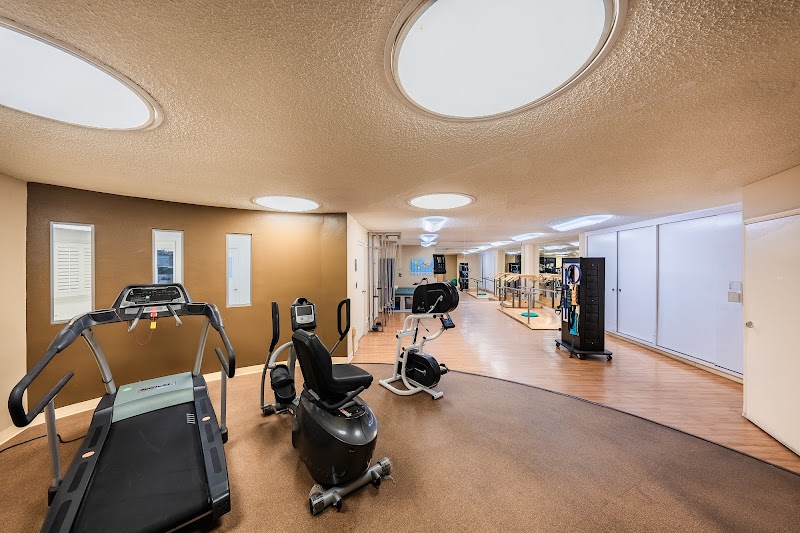
How is West Pico Terrace Healthcare & Wellness Centre Lp Staffed?

CMS rates WEST PICO TERRACE HEALTHCARE & WELLNESS CENTRE LP's staffing level at 2 out of 5 stars, which is below average compared to other nursing homes. Staff turnover is 26%, compared to the California average of 46%. This relatively stable workforce can support continuity of care.

What Have Inspectors Found at West Pico Terrace Healthcare & Wellness Centre Lp?

State health inspectors documented 57 deficiencies at WEST PICO TERRACE HEALTHCARE & WELLNESS CENTRE LP during 2021 to 2025. These included: 55 with potential for harm and 2 minor or isolated issues. While no single deficiency reached the most serious levels, the total volume warrants attention from prospective families.
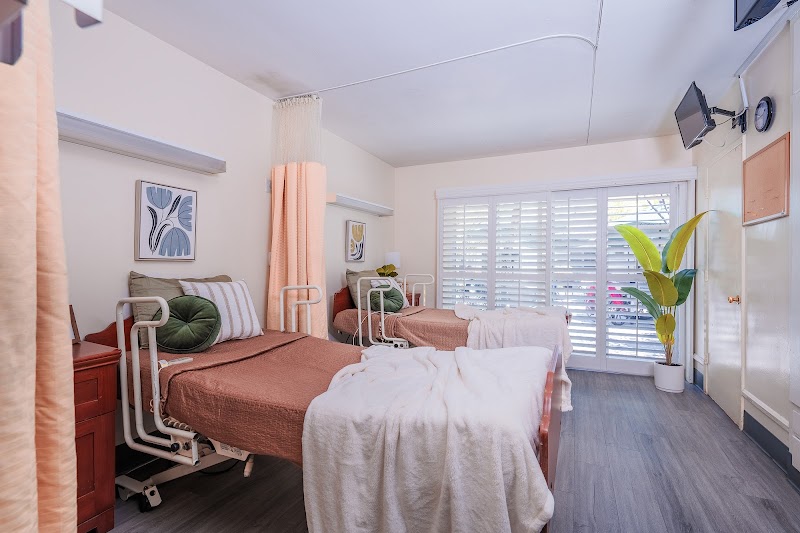
Who Owns and Operates West Pico Terrace Healthcare & Wellness Centre Lp?

WEST PICO TERRACE HEALTHCARE & WELLNESS CENTRE LP is owned by a for-profit company. For-profit facilities operate as businesses with obligations to shareholders or private owners. The facility is operated by COUNTRY VILLA HEALTH SERVICES, a chain that manages multiple nursing homes. With 49 certified beds and approximately 45 residents (about 92% occupancy), it is a smaller facility located in LOS ANGELES, California.

How Does West Pico Terrace Healthcare & Wellness Centre Lp Compare to Other California Nursing Homes?

Compared to the 100 nursing homes in California, WEST PICO TERRACE HEALTHCARE & WELLNESS CENTRE LP's overall rating (4 stars) is above the state average of 3.2, staff turnover (26%) is significantly lower than the state average of 46%, and health inspection rating (3 stars) is at the national benchmark.

What Should Families Ask When Visiting West Pico Terrace Healthcare & Wellness Centre Lp?

Based on this facility's data, families visiting should ask: "Can you walk me through typical staffing levels on day, evening, and night shifts?" "Can I visit during a mealtime to observe dining assistance and food quality?" "How do you handle medical emergencies, and what is your hospital transfer rate?" "Can I speak with family members of current residents about their experience?" These questions are particularly relevant given the below-average staffing rating.

Is West Pico Terrace Healthcare & Wellness Centre Lp Safe?

Based on CMS inspection data, WEST PICO TERRACE HEALTHCARE & WELLNESS CENTRE LP has a clean safety record: no substantiated abuse findings (meaning no confirmed cases of resident harm), no Immediate Jeopardy citations (the most serious violation level indicating risk of serious injury or death), and is not on the Special Focus Facility watch list (a federal program monitoring the lowest-performing 1% of nursing homes). The facility has a 4-star overall rating and ranks #1 of 100 nursing homes in California. While no facility is perfect, families should still ask about staff-to-resident ratios and recent inspection results during their visit.

Do Nurses at West Pico Terrace Healthcare & Wellness Centre Lp Stick Around?

Staff at WEST PICO TERRACE HEALTHCARE & WELLNESS CENTRE LP tend to stick around. With a turnover rate of 26%, the facility is 20 percentage points below the California average of 46%. Low turnover is a positive sign. It means caregivers have time to learn each resident's needs, medications, and personal preferences. Consistent staff also notice subtle changes in a resident's condition more quickly.

Was West Pico Terrace Healthcare & Wellness Centre Lp Ever Fined?

WEST PICO TERRACE HEALTHCARE & WELLNESS CENTRE LP has been fined $15,172 across 1 penalty action. This is below the California average of $33,231. While any fine indicates a compliance issue, fines under $50,000 are relatively common and typically reflect isolated problems that were subsequently corrected. Families should ask what specific issues led to these fines and confirm they've been resolved.

Is West Pico Terrace Healthcare & Wellness Centre Lp on Any Federal Watch List?

WEST PICO TERRACE HEALTHCARE & WELLNESS CENTRE LP is not on any federal watch list. The most significant is the Special Focus Facility (SFF) program, which identifies the bottom 1% of nursing homes nationally based on persistent, serious quality problems. Not being on this list means the facility has avoided the pattern of deficiencies that triggers enhanced federal oversight. This is a positive indicator, though families should still review the facility's inspection history directly.