WINDSOR GARDENS CONVALESCENT HOSPITAL
915 S. CRENSHAW BLVD., LOS ANGELES, CA 90019 (323) 937-5466
For profit - Individual 98 Beds WINDSOR Data: November 2025
Trust Grade
10/100
#1155 of 1155 in CA
Last Inspection: March 2025

Within standard 12-15 month inspection cycle. Federal law requires annual inspections.

Overview

Windsor Gardens Convalescent Hospital in Los Angeles has received a Trust Grade of F, indicating significant concerns about the quality of care provided. Ranked #1155 out of 1155 facilities in California and #369 out of 369 in Los Angeles County, it is clear they are in the bottom tier for care options. Although the facility's issues have improved from 39 in 2024 to 23 in 2025, the overall situation remains concerning, especially with a high staff turnover rate of 63%, which is well above the state average of 38%. The nursing home has incurred $37,882 in fines, which is troubling and suggests repeated compliance issues. Specific incidents included a serious failure to transfer a resident safely, resulting in a fall that caused significant injury, and neglect regarding another resident's ongoing discomfort and skin issues, which were not adequately addressed for months. While the facility has good quality measures rated at 4 out of 5, the overall staffing and health inspection ratings of 1 out of 5 highlight substantial weaknesses that families should consider carefully when making decisions about care.

Trust Score
F
10/100
In California
#1155/1155
Bottom 1%
Safety Record
High Risk
Review needed
Inspections
Getting Better
39 → 23 violations
Staff Stability
⚠ Watch
63% turnover. Above average. Higher turnover means staff may not know residents' routines.
Penalties
✓ Good
$37,882 in fines. Lower than most California facilities. Relatively clean record.
Skilled Nurses
⚠ Watch
Each resident gets only 14 minutes of Registered Nurse (RN) attention daily — below average for California. Fewer RN minutes means fewer trained eyes watching for problems.
Violations
⚠ Watch
101 deficiencies on record. Higher than average. Multiple issues found across inspections.
★☆☆☆☆
1.0
Overall Rating
★☆☆☆☆
1.0
Staff Levels
★★★★☆
4.0
Care Quality
★☆☆☆☆
1.0
Inspection Score
Stable
2024: 39 issues
2025: 23 issues

The Good

  • 4-Star Quality Measures · Strong clinical quality outcomes
  • Full Sprinkler Coverage · Fire safety systems throughout facility
  • No fines on record

Facility shows strength in quality measures, fire safety.

The Bad

1-Star Overall Rating

Below California average (3.1)

Significant quality concerns identified by CMS

Staff Turnover: 63%

17pts above California avg (46%)

Frequent staff changes - ask about care continuity

Federal Fines: $37,882

Above median ($33,413)

Moderate penalties - review what triggered them

Chain: WINDSOR

Part of a multi-facility chain

Ask about local staffing decisions and management

Staff turnover is elevated (63%)

15 points above California average of 48%

The Ugly 101 deficiencies on record

4 actual harm
Aug 2025 2 deficiencies
CONCERN (D) 📢 Someone Reported This

A family member, employee, or ombudsman was alarmed enough to file a formal complaint

Potential for Harm - no one hurt, but risky conditions existed

Deficiency F0658 (Tag F0658)

Could have caused harm · This affected 1 resident

Based on interview and record review, the facility failed to obtain a physician order for fingerstick to obtain the blood sugar level (BSL, measure of sugar in the blood by using a glucometer [medical...

Read full inspector narrative →
Based on interview and record review, the facility failed to obtain a physician order for fingerstick to obtain the blood sugar level (BSL, measure of sugar in the blood by using a glucometer [medical device that measures the blood glucose level in the body] for one of six sampled residents (Resident 1) according to the professional standards of quality. For Resident 1, the facility failed to:1.Obtain a physician order to obtain BSL by fingerstick from Resident 1's physician. The fingerstick were done on 7/24/25, 8/2/25, 8/8/25/ 8/9/25, 8/10/25 and 8/11/25.2.Notify the physician when Resident 1's BSL results were above 189 milligrams per deciliter (mg/dL, a unit of measurement for the concentration of glucose in the blood, normal range is between 60 mg./dL to 100 mg./dL).These deficient practices had the potential for Resident 1 to suffer from hyperglycemia (high blood sugar level) and not given appropriate treatment.During a review of the admission Record indicated the facility admitted Resident 1 on 7/24/25 with diagnoses including diabetes mellitus (DM-a disorder characterized by difficulty in blood sugar control and poor wound healing) and generalized muscle weakness. During a review of the Minimum Data Set (MDS, a resident assessment tool) dated 7/29/25 indicated Resident 1 was cognitively intact. Resident 1 was dependent on putting on/taking off footwear, substantial assistance with lower body dressing, supervision with oral hygiene, shower/bathe self, upper body dressing and set-up with eating and toileting hygiene. During a review of Resident 1's Care Plan initiated on 7/24/25, indicated Resident 1 was newly admitted to the facility. The care plan goal indicated Resident 1's needs will be met to address the primary reason for admission for rehabilitation and nursing care. The care plan interventions included administer medications, treatments and other services in accordance with physician orders. During a review of the Blood Sugar Summary Resident 1's had the following BSL results:7/24/25 at 3:38 p.m., 189 mg./dL8/2/25 at 10:32 am 395 mg./dL8/2/25 at 5:19 p.m. 395 mg./dL8/8/25 at 10:06 pm 400 mg./dL8/9/25 at 4:49 p.m. 238 mg./dL8/10/25 at 5:15 p.m. 236 mg./dL8/11/25 at 4:48 p.m. 372 mg./dL During an interview on 8/14/25 at 9 a.m., Resident 1 stated she is a diabetic and the nurse had been checking her blood sugar levels. Resident 1 stated her BSL was high, around 300 mg./dL to 400 mg./dL sometimes and the facility was not doing anything about the BSL. Resident 1 stated .they are not giving me anything, I don't know why. for the high blood sugar levels. During a concurrent interview and record review on 8/14/25 at 10:36 a.m., Resident 1's Blood Sugar Summary was reviewed with the licensed vocational nurse (LVN 1). LVN 1 stated Resident 1's blood sugar was obtained because Resident 1 was requesting to have her blood sugar checked. LVN 1 stated a physician's order is needed to check the blood sugar levels of Resident 1. During a telephone interview, on 8/14/25 at 4:30 p.m., LVN 2 stated there is no physician order to obtain Resident 1's blood sugar level. LVN 2 stated he obtains Resident 1's BSL because Resident 1 was requesting to have her BSL checked. LVN 2 stated the normal blood sugar was between 60 mg./dL to 100 mg./dL. LVN 2 further added Resident 1's BSL were elevated at times because the BSL were obtained right after Resident 1 had eaten. LVN 2 stated he notified Resident 1's physician about the BSL results, but LVN 2 stated he did not document that he notified the physician. During a review of the facility's policy and procedures titled Guidelines for Charting and Documentation reviewed on 3/13/25, the P&P indicated the purpose of charting and documentation is to provide a complete account of the resident's care, treatment, response to care, signs and symptoms, etc. and the progress of the resident's care. The Policy indicated the documentation should include any time the physician or family is called about the resident and their response. The same Policy indicated physician orders must be written and maintained in chronological order. Physician orders are needed for including diet, activity, laboratory work, transfers and discharges. Treatment orders should specify what is to be done, location and frequency and duration of the treatment.
CONCERN (E) 📢 Someone Reported This

A family member, employee, or ombudsman was alarmed enough to file a formal complaint

Potential for Harm - no one hurt, but risky conditions existed

Deficiency F0558 (Tag F0558)

Could have caused harm · This affected multiple residents

**NOTE- TERMS IN BRACKETS HAVE BEEN EDITED TO PROTECT CONFIDENTIALITY** Based on interview and record review the facility failed to meet the needs of the residents in a timely manner for three of six ...

Read full inspector narrative →
**NOTE- TERMS IN BRACKETS HAVE BEEN EDITED TO PROTECT CONFIDENTIALITY** Based on interview and record review the facility failed to meet the needs of the residents in a timely manner for three of six sampled residents (Resident 1, Resident 2 and Resident 3). For Resident 1, Resident 2 and Resident 3, the facility failed to respond to the call lights and requests for assistance timely.These deficient practices resulted in Resident 1 stating she felt irritated, Resident 2 stated he .was so upset and angry and Resident 3 stated she felt staff do not treat me with respect. 1. During a review of the admission Record indicated the facility admitted Resident 1 on 7/24/25 with diagnoses including diabetes mellitus (DM-a disorder characterized by difficulty in blood sugar control and poor wound healing) and generalized muscle weakness. During a review of the Minimum Data Set (MDS, a resident assessment tool) dated 7/29/25 indicated Resident 1 was cognitively intact. Resident 1 was dependent on putting on/taking off footwear, substantial assistance with lower body dressing, supervision with oral hygiene, shower/bathe self, upper body dressing and set-up with eating and toileting hygiene. The MDS indicated Resident 1 was occasionally incontinent or urine. 2. During a review of the admission Record indicated the facility admitted Resident 2 on 7/17/25 with diagnoses including diabetes mellitus and age-related physical debility.During a review of the MDS dated [DATE] indicated Resident 2 was cognitively intact. Resident 2 was dependent on toileting hygiene, shower, putting on/taking off footwear, substantial assistance with lower body dressing, partial assistance with upper body dressing, supervision with personal hygiene and set up with eating and oral hygiene. The MDS indicated Resident 2 was always incontinent of urine and bowel. 3. During a review of the admission Record indicated the facility admitted Resident 3 on 3/21/24 with diagnoses including cerebral infarction (disrupted blood flow to the brain) affecting the left side of the body and difficulty in walking.During a review of the MDS dated [DATE] indicated Resident 3 was cognitively intact. Resident 3 was independent with activities of daily living (ADLs). During an interview on 8/13/25 at 9:34 a.m., Resident 2 stated he requested to be changed on 8/4/25 at about 8 p.m. and the .nurse did not change me. Resident 2 stated he asked again during the night shift and the .nurse did not change me until 5 a.m. Resident 2 stated he saw the CNA who was supposed to change him sleeping in the nursing station. Resident 2 stated he felt very angry and upset when he saw the nurse sleeping instead of helping him. During an interview on 8/14/25 at 9 a.m., Resident 1 stated she called for assistance during the night shift (stated she does not remember the date) and no one came to help her. Resident 1 stated she had seen night shift staff sleeping in the nursing station. Resident 1 stated .it irritates me really bad when they are sleeping and no one gives her assistance when she needs it. During an interview on 8/14/25 at 10:09 a.m., Resident 3 stated during the night shift, last week, (Resident 3 unable to remember the exact date), Resident 3 called for assistance at around 3 a.m., and the nurse did not attend to her until 5 a.m., in the morning. Resident 3 stated .I feel the staff do not treat me with respect. During an interview on 8/14/25 at 7:14 a.m., Certified Nursing Assistant (CNA 1) stated during the night shift there are six CNAs. CNA 1 stated the CNAs take turns in taking their breaks for 30 minutes. CNA 1 stated the CNA who was not on their break would cover the floor while the other CNAs are on their breaks. CNA 1 stated no one should be sleeping in the nursing station. During an interview on 8/14/25 at 8:42 a.m., the director of nursing (DON) stated the nurses can do anything on their 30 minutes break. However, the DON stated the staff are not allowed to sleep in the nurses' station because this is a place of work. During an interview on 8/14/25 at 11:57 a.m., the director of staff development (DSD) stated staff can do what they want during their 30 minutes break. DSD further added for the staff who want to sleep during their 30-minute break should sleep in the break room and not in the nurses station. During a review of the facility Policy titled Accommodation of Needs revised on 3/13/25 the facility's environment and staff behaviors are directed toward assisting the resident in maintaining and/or achieving safe, independent functioning, dignity and well-being. The same Policy indicated the resident's individual needs and preferences will be accommodated to the extent possible except when the health and safety of the individual or other residents would be endangered. During a review of the facility's policy and procedures (P&P) titled Answering the Call Light revised on 3/13/25, indicated answer the resident call system immediately. When answering an auditory request for assistance, identify yourself and politely respond to the resident by his/her name. If the resident needs assistance, indicate the approximate time it will take to respond. If the resident's request is something you can fulfill, complete the task within five minutes if possible.
Jul 2025 1 deficiency
CONCERN (D) 📢 Someone Reported This

A family member, employee, or ombudsman was alarmed enough to file a formal complaint

Potential for Harm - no one hurt, but risky conditions existed

Accident Prevention (Tag F0689)

Could have caused harm · This affected 1 resident

**NOTE- TERMS IN BRACKETS HAVE BEEN EDITED TO PROTECT CONFIDENTIALITY** Based on observation, interview, and record review, the facility failed to ensure the safety of one of four sampled residents Re...

Read full inspector narrative →
**NOTE- TERMS IN BRACKETS HAVE BEEN EDITED TO PROTECT CONFIDENTIALITY** Based on observation, interview, and record review, the facility failed to ensure the safety of one of four sampled residents Resident 1. As a result of this deficient practice Resident 1 fell on 6/19/2025 at 4:40 AM and transferred to General Acute Care Hospital (GACH). Findings: A review of Resident 1's admission record indicated Resident 1 was initially admitted to the facility on [DATE] and readmitted on [DATE] with a diagnosis including metabolic encephalopathy (a problem in the brain caused by a chemical imbalance in the blood) chronic kidney disease (kidneys cannot filter blood as well as they should), weakness (a lack of strength in the muscles), Alzheimer's disease (a progressive disease that destroys memory and other important metal functions). During a revie of Resident 1's Minimum Data Set (MDS, a resident assessment tool), dated 4/22/2025 indicated brief interview for mental status (BIMS: a screen used to assist with identifying a resident's current cognition and to help determine if any interventions needed to occur) 1 out of 15, indicating the resident had severe cognitive (ability to acquire and understand knowledge) impairment. Impairment (weakness or loss of strength) on upper extremity (shoulder, elbow, wrist, hand) on lower extremity (hip, knee, ankle, foot).During a review of Resident 1's at risk for fall care plan dated 7/30/2025, related to cognitive loss, lack of safety awareness, impaired mobility and cognition, indicated the goal was resident will have no falls. The care plan interventions indicated to maintain a clutter-free environment in the resident's room, monitor and assist for toileting needs, place call lights within reach while in bed or close proximity to the bed. During a review of Resident 1's GACH record dated 6/19/2025, indicated Resident 1 was brought to GACH from the facility for abdominal discomfort and had a fall from bed. The reason for admission was a large amount of stool on the computerized tomography scans (CT scans - a series of X-ray images taken by computers to create more detailed images of bones, blood vessels, and tissues inside the body) on the abdomen.A review of Resident 1's Change of Condition (COC) dated 6/19/2025, indicated on 6/19/2025 at 4:40 AM Resident 1 was found on the floor on left bedside. The resident was transferred to GACH via 911 (emergency vehicle used to transport sick or injured people to a hospital or other medical facility, especially during emergencies) for evaluation status post fall. During an interview on 7/29/2025 at 12:40 PM, Certified Nursing Assistant (CAN) 1 stated, Resident 1 is very dependent on care, unable to fully turn or get up, it takes long for the resident to slide down. During an interview on 7/29/2025 at 1:02 PM, Licensed Vocational Nurse (LVN) 1 stated, Resident 1 is bed bound, requires full assistance for mobility. Fall is not a desired outcome, It can potentially cause physical harm to the resident and psychosocial decline.During an interview on 7/29/2025 at 2:57 PM with Director of Nursing (DON), the DON stated, Resident 1 has been in the facility for over a year. Resident 1 was found on the floor on 6/19/2025 during the night shift and was sent to GACH for evaluations. During an interview on 7/30/2025 at 12:45 PM with LVN 2, LVN 2 stated, on 6/19/2025 around 4:30 AM Resident 1's lower extremities and half of the body were down on the floor next to the bed. LVN 2 was unable to recall the last time he observed Resident 1 in bed. LVN 2 further stated, the primary physician for Resident 1 and family member were contacted, Resident 1 was transferred to GACH for evaluations. A review of the facility's Policy and Procedures (P&P) titled Fall Management revised 3/6/2025, the P&P indicated, Patients will be assessed for falls risk as part of the nursing assessment process. Those determined to be at risk will receive appropriate interventions to reduce risk and minimize injury. A review of the facility's P&P titled Resident Rights revied 3/6/2025, the P&P indicated Federal and state laws guarantee certain basic rights to all residents of this facility. These rights include the resident's right to: be free from abuse, neglect, misappropriation of property and exploitation.
Mar 2025 18 deficiencies
CONCERN (D)

Potential for Harm - no one hurt, but risky conditions existed

Deficiency F0552 (Tag F0552)

Could have caused harm · This affected 1 resident

**NOTE- TERMS IN BRACKETS HAVE BEEN EDITED TO PROTECT CONFIDENTIALITY** Based on interview and record review, the facility failed to: -Obtain informed consent (a process during which residents or care...

Read full inspector narrative →
**NOTE- TERMS IN BRACKETS HAVE BEEN EDITED TO PROTECT CONFIDENTIALITY** Based on interview and record review, the facility failed to: -Obtain informed consent (a process during which residents or caregivers are educated regarding the potential risks and benefits of medication therapy) from the resident or their responsible party (RP - a person delegated to make medical decisions for the resident in the event they are unable to do so) prior to treatment in two of five residents sampled for unnecessary medications (Resident 26 and Resident 10). -Obtain informed consent from the resident or RP after increasing the dose of aripiprazole (a medication used to treat mental illness) in one of five residents sampled for unnecessary medications (Resident 43). The deficient practices of failing to obtain informed consent prior to initiating treatment or increasing the dose of psychotropic (medications that affect brain activities associated with mental processed and behavior) medications could have prevented Residents 26, 10, and 43 from exercising their right to decline treatment with psychotropic medications. This increased the risk that Residents 26, 10 and 43 could have experienced adverse effects (unwanted, uncomfortable, or dangerous effects that a drug may have) related to psychotropic medications leading to impairment or decline in their mental or physical condition or functional or psychosocial status. Cross Reference F758 Findings: a. A review of Resident 26's admission Record dated 3/2/25, indicated he was admitted to the facility on [DATE] and most recently readmitted on [DATE] with diagnoses including schizophrenia (a mental illness characterized by hearing or seeing things that are not there) and bipolar disorder (a mental health condition that causes extreme mood swings from emotional highs [mania] to deep lows [depression]). A review of Resident 26's History and Physical (H&P - a record of a comprehensive physician's assessment) dated 1/22/25, did not indicate whether this resident had the capacity to understand and make decisions. A review of Resident 26's Order Summary Report (a summary of all current physician orders), dated 3/2/25 indicated Resident 26's attending physician prescribed divalproex (a medication used to treat mental illness) ER 250 milligram (mg - a unit of measure for mass) capsules to take three capsules by mouth two times a day for bipolar disorder manifested by rapid fluctuations of emotions ranging from calmness to anger on 12/27/24. A review of Resident 26's available informed consent documentation and clinical record indicated there was no documentation that Resident 26 or any responsible party received education regarding the risks and benefits of divalproex prior to its initiation on 12/27/24. A review of Resident 43's admission Record, dated 3/2/25, indicated she was admitted to the facility on [DATE] and most recently readmitted on [DATE] with diagnoses including schizoaffective disorder (a mental illness characterized by hearing or seeing things that are not there and extreme mood swings from emotional highs [mania] to deep lows [depression].) A review of Resident 43's H&P, dated 3/1/25, did not indicate whether this resident had the capacity to understand and make decisions. A review of Resident 43's psychiatric note (a medical progress assessment written by a psychiatric care provider) dated 1/21/25, indicated Resident 43's dose of aripiprazole was decreased from 10 mg twice daily to 10 mg at bedtime. A review of Resident 43's Medication Administration Record (MAR - a monthly record of medications administered and monitoring documented for a resident) for January and February 2025 indicated Resident 43 received aripiprazole 10 mg at bedtime between 1/21/25 and 2/16/25. Further review of the MAR indicated she was hospitalized between 2/17/25 and 2/20/25. A review of Resident 43's Order Summary Report dated 3/2/25 indicated Resident 43's attending physician prescribed aripiprazole 20 mg via gastrostomy tube (g-tube - a tube surgically implanted into the stomach for administration of medications and nutrition) at bedtime for schizoaffective disorder manifested by suspiciousness and auditory hallucinations on 2/20/25 when she was readmitted from the hospital. A review of Resident 43's available informed consent documentation and clinical record indicated there was no documentation that Resident 43 or any responsible party received education regarding the risks and benefits of the increased dose of aripiprazole on or after 2/20/25. During an interview on 3/02/25 at 11:36 AM with the Director of Nursing (DON), the DON stated Resident 43's psychiatrist decreased her dose of aripiprazole to 10 mg at bedtime in January, but she was currently receiving 20 mg at bedtime. The DON stated Resident 43 was recently readmitted from the hospital and upon readmission, the facility continued the 20 mg dose per a hospital discharge order instead of the 10 mg dose she was receiving earlier. The DON stated the February MAR indicated no increase in behaviors for this resident and the clinical record contained no other clinical justification for the increase in dosage, so the increase in dosage was likely unintentional. The DON stated this would also explain why the facility failed to obtain informed consent for the increased dose of aripiprazole. The DON stated, as a result, Resident 43 has been receiving more aripiprazole than intended since 2/20/25. The DON stated this increased Resident 43's risk of developing adverse effects related to antipsychotic medication including movement disorders, drowsiness, dizziness, or blurry vision which may contribute to a decline in her quality of life. During an interview on 3/2/25 at 11:52 AM, the DON stated the facility failed to obtain informed consent prior to initiating therapy with divalproex for Resident 26. The DON stated the facility was required to obtain informed consent prior to use for any medication used to treat behavioral issues, whether it is a psychotropic medication or not. The DON stated informed consent may have been missed for Resident 26's divalproex because it was not a traditional psychotropic medication. The DON stated this increased the risk that Resident 26 might not have been able to exercise his right to opt out of treatment with divalproex and its risk of adverse effects such as drowsiness and dizziness which could lead to a decline in his quality of life. A review of the facility's policy titled, Psychotropic medication Use, revised July 2022, indicated When determining whether to initiate, modify, or discontinue medication therapy, the IDT conducts an evaluation of the resident. The evaluation will attempt to clarify whether . the actual or intended benefit of the medication is understood by the resident/representative. Residents (and/or representatives) have the right to decline treatment with psychotropic medications. The staff and physician will review with the resident/representative the risks related to not taking the medication as well as appropriate alternatives. b. During a review of Resident 10's admission Record, the admission Record indicated Resident 10 was admitted to the facility on [DATE]. Resident 10's diagnoses included encephalopathy (brain disorder disease or damage that affects your brain's function or structure), schizoaffective disorder (a mental illness that can affect thoughts, mood, and behavior), and post-traumatic stress disorder ([PTSD]- a disorder in which a person has difficulty recovering after experiencing or witnessing a traumatic event). During a review of Resident 10's Minimum Data Set (MDS, a resident assessment tool), dated 1/7/2025, the MDS indicated Resident 10's cognition (ability to learn, reason, remember, understand, and make decisions) was intact. The MDS indicated Resident 10 required substantial assistance for showering, dressing, and toileting hygiene. During a review of the Physician's Orders titled, Order Summary Report, dated 2/3/2025, the orders indicated Resident 10 was to be given Aripiprazole Lauroxil ER (to treat mental conditions such as schizophrenia), 882 milligrams ([mg] -a unit of mass or weight in the metric system) to be injected intramuscularly on the 15th of every month. During an interview on 3/2/2025 at 10:23 a.m. with Registered Nurse (RN) 1, RN 1 stated Resident 10 had received the medication Aripiprazole without consent. RN 1 stated the facility protocol was to get a consent for antipsychotic medications prior to administration. During a concurrent interview and record review on 3/2/2024 at 10:55 a.m. with Director of Nursing (DON), Resident 10's consent titled, Psychotropic Medication Administration Disclosure, dated 2/15/2025 was reviewed. The consent was incomplete there was no signature by the resident. The DON stated the consent was not signed nor completed. The DON stated antipsychotics required a consent from the resident. The DON stated the purpose of the consent was to ensure Resident 10 was aware of the medication's risks and. The DON stated if Resident 10 knew the risks and benefits, the resident would be able to tell facility staff about side effects if the resident were to have them. During a review of facility's policy and procedures (P&P) titled, Behavior Management, dated 2/2023, the P&P indicated resident exhibiting behavioral symptoms will be individually evaluated to determine the behavior. The P&P indicated to obtain the psychotropic medication administration disclosure form and consent.
CONCERN (D)

Potential for Harm - no one hurt, but risky conditions existed

Deficiency F0558 (Tag F0558)

Could have caused harm · This affected 1 resident

**NOTE- TERMS IN BRACKETS HAVE BEEN EDITED TO PROTECT CONFIDENTIALITY** Based on observation, interview, and record review, the facility failed to ensure one of six sampled residents (Resident 27) had...

Read full inspector narrative →
**NOTE- TERMS IN BRACKETS HAVE BEEN EDITED TO PROTECT CONFIDENTIALITY** Based on observation, interview, and record review, the facility failed to ensure one of six sampled residents (Resident 27) had the call light within reach. This deficient practice placed the resident at risk for not receiving needed care and placed the resident at risk for falls. Findings: During a review of Resident 27's admission Record, the admission record indicated Resident 27 was initially admitted to the facility on [DATE] and was readmitted on [DATE]. Resident 27's diagnoses included chronic kidney disease (a long-term condition where the kidneys gradually lose their ability filter waste products and excess fluid from the blood), dementia (a progressive state of decline in mental abilities), and contractures (tightening of muscles, tendons, skin and other tissues that limits mobility) to left hand. During a review of Resident 27's History and Physical (H&P), dated 8/30/2024, the H&P indicated, Resident 27 could not make medical decision but could make needs known. During a review of Resident 27's Minimum Data Set (MDS, a resident assessment tool), dated 2/10/2025, the MDS indicated Resident 27's ability to understand ranged from rarely to never understood. The MDS indicated Resident 27 was dependent on staff for showering, dressing, and personal hygiene. During an observation on 2/28/2025 at 8:39 p.m. in Resident 27's room, the call light was observed hanging down from the rail towards the floor and was not within of the resident to call for assistance. During a concurrent observation in Resident 27's room and interview on 3/1/2025 at 4:02 p.m. with Certified Nursing Assistant (CNA) 3, CNA 3 stated the call light was not within reach. CNA 3 stated it was important to have the call light within reach incase Resident 27 needed assistance. During an interview on 3/1/2025 at 4:08 p.m. with Director of Staff Development (DSD), the DSD stated the call light had to be within reach for Resident 27. The DSD stated the call light was a form of communication for the resident. The DSD stated if the call light was not within reach and the Resident 27 wanted to get up without assistance it could place the resident at risk for falls. During a review of the facility's policy and procedures (P&P) titled, Answering the Call Light, dated 10/2024, the P&P indicated the purpose of this procedure was to ensure timely response to the resident's requests and needs. The P&P indicated be sure that the call light is plugged in and functioning at all times. The P&P indicated ensure the call light is accessible to the resident when in bed.
CONCERN (D)

Potential for Harm - no one hurt, but risky conditions existed

Comprehensive Assessments (Tag F0636)

Could have caused harm · This affected 1 resident

**NOTE- TERMS IN BRACKETS HAVE BEEN EDITED TO PROTECT CONFIDENTIALITY** Based interview and record review, the facility failed to document for one of six sampled residents (Resident 10) when the nicot...

Read full inspector narrative →
**NOTE- TERMS IN BRACKETS HAVE BEEN EDITED TO PROTECT CONFIDENTIALITY** Based interview and record review, the facility failed to document for one of six sampled residents (Resident 10) when the nicotine smoking patch (used to help people to stop smoking cigarettes) was removed after usage. This deficient practice had the potential to ineffectively give the proper dosage of medication to Resident 10. Findings: During a review of Resident 10's admission Record, the admission record indicated Resident 10 was admitted to the facility on [DATE]. Resident 10's diagnoses included encephalopathy (brain disorder disease or damage that affects your brain's function or structure), schizoaffective disorder (a mental illness that can affect thoughts, mood, and behavior), and post-traumatic stress disorder ([PTSD]- a disorder in which a person has difficulty recovering after experiencing or witnessing a traumatic event). During a review of Resident 10's Minimum Data Set (MDS, a resident assessment tool), dated 1/7/2025, the MDS indicated Resident 10's cognition (ability to learn, reason, remember, understand, and make decisions) was intact. The MDS indicated Resident 10 required substantial assistance for showering, dressing, and toileting hygiene. During a review of Resident 10's care plan titled, Patient may smoke independently per smoking assessment, dated 12/18/2024, the care plan had no indication of the smoking patch. During a review of the Physician's Orders titled, Order Summary Report, dated 1/14/2025, the orders indicated Nicotine Patch (worn on the skin bay a person trying to give up smoking) 21 milligrams ([mg]- a measurement of mass in the metric system) one patch to skin every 24 hours as needed. During a review of Resident 10's medical record administration ([MAR] -used to document medications taken by each individual), dated 2/1/2025 to 2/28/2025, the MAR indicated Resident 10 was given Nicotine Patch 21 mg on dates 2/1, 2/6, 2/9, 2/18, and 2/22/2025. The MAR did not indicate when the Nicotine Patch 21 mg was removed from the resident. During a concurrent review and record review on 3/2/2025 at 9:15 a.m. with Registered Nurse (RN) 1, Resident 10's MAR dated 2/1/2025 to 2/28/2025, was reviewed. The MAR indicated Resident 10 was given Nicotine Patch 21 mg on dates 2/1, 2/6, 2/9, 2/18, and 2/22/2025. The MAR did not indicate when the Nicotine Patch 21 mg was removed from the resident. RN 1 stated after 24 hours the Nicotine Patch should be removed from the resident. RN 1 was not able to locate the documentation that the Nicotine Patch 21 mg was removed and disposed after 24 hours of usage on the dates 2/1, 2/6, 2/9, 2/18, and 2/22/2025. RN 1 stated the removal of the Nicotine Patch should have been documented on the MAR. RN 1 stated it was important to document the removal of the Nicotine Patch to communicate to the next nurse the patch was removed. RN 1 stated the staff had no way of knowing if the Nicotine Patch was effective or ineffective for the resident. During a review of the facility's policy and procedures (P&P) titled, Nursing Documentation, dated 6/2022, the P&P indicated to communicate patient's status and provide complete, comprehensive, and accessible accounting of care and monitoring provided. The P&P indicated timely entry documentation must occur as soon as possible after the provision of care and conformance with time frames for completion.
CONCERN (D)

Potential for Harm - no one hurt, but risky conditions existed

Assessment Accuracy (Tag F0641)

Could have caused harm · This affected 1 resident

**NOTE- TERMS IN BRACKETS HAVE BEEN EDITED TO PROTECT CONFIDENTIALITY** Based on interview and record review, the facility failed to accurately complete the minimum data set (MDS - a comprehensive res...

Read full inspector narrative →
**NOTE- TERMS IN BRACKETS HAVE BEEN EDITED TO PROTECT CONFIDENTIALITY** Based on interview and record review, the facility failed to accurately complete the minimum data set (MDS - a comprehensive resident assessment tool) assessment Section I (active diagnoses), dated 11/21/24, by failing to include a diagnosis of schizophrenia (a mental illness characterized by hearing or seeing things that are not there), depression (a mental illness characterized by depressed mood, difficulty sleeping, or lack of interest in usually enjoyable activities), and bipolar disorder (a mental health condition that causes extreme mood swings from emotional highs [mania] to deep lows [depression]) per information in the medical record for one of five residents sampled for unnecessary medications (Resident 26.) The deficient practice of failing to accurately assess active diagnoses and complete MDS Section I increased the risk that Resident 26 may not have received care planning and treatment according to his needs possibly leading to a decline in his overall health and well-being. Findings: A review of Resident 26's admission Record dated 3/2/25, indicated he was admitted to the facility on [DATE] and most recently readmitted on [DATE] with diagnoses including schizophrenia and bipolar disorder A review of Resident 26's History and Physical (H&P - a record of a comprehensive physician's assessment) dated 1/22/25, did not indicate whether this resident had the capacity to understand and make decisions. A review of Resident 26's psychiatric note dated 9/25/24, indicated this resident had a history of schizophrenia manifested by visual and auditory hallucinations of a threatening nature. A review of Resident 26's psychiatric note dated 10/20/24, indicated Resident 26 had a history of bipolar disorder (manic type) manifested by paranoid delusions. A review of Resident 26's Order Summary Report (a summary of all current physician orders), dated 3/2/25 indicated Resident 26's attending physician prescribed: 1. Divalproex ER 250 milligram (mg - a unit of measure for mass) capsules to take three capsules by mouth two times a day for bipolar disorder manifested by rapid fluctuations of emotions ranging from calmness to anger on 12/27/24. 2. Xanomeline-Trospium (a medication used to treat schizophrenia) 100-20 mg by mouth two times a day for schizoaffective disorder manifested by paranoid delusions that gangsters are after him on 2/16/25. 3. Pimavanserin (a medication used to treat mental illness) 34 mg by mouth one time a day for Parkinson Disease Psychosis manifested by paranoid delusions that people are after him, visual hallucinations, auditory hallucinations, angry outbursts towards staff. A review of Resident 26's MDS assessment Section I, dated 11/21/24, indicated he did not have depression, bipolar disorder, schizophrenia or any psychotic disorder (other than schizophrenia). During an interview on 3/2/25 at 11:42 AM, the Director of Nursing (DON) stated section I of the MDS dated [DATE] was inaccurate compared to his medical records. The DON stated the psychiatric section of Section I (active diagnosis) indicated this resident did not have depression, bipolar disorder, or schizophrenia, when his clinical record indicated that he has all of these. The DON stated this may interfere with accurate care planning and cause Resident 26 to experience a decline in his quality of life due to potential unmet needs. A review of the facility's policy titled, Resident Assessments, revised October 2023, indicated Information in the MDS assessments will consistently reflect information in the progress notes, plans of care and resident observations / interviews.
CONCERN (D)

Potential for Harm - no one hurt, but risky conditions existed

Deficiency F0657 (Tag F0657)

Could have caused harm · This affected 1 resident

**NOTE- TERMS IN BRACKETS HAVE BEEN EDITED TO PROTECT CONFIDENTIALITY** Based on observation, interview, and record review, the facility failed to ensure two of six sampled residents (Resident 16 and ...

Read full inspector narrative →
**NOTE- TERMS IN BRACKETS HAVE BEEN EDITED TO PROTECT CONFIDENTIALITY** Based on observation, interview, and record review, the facility failed to ensure two of six sampled residents (Resident 16 and 10) care plans were revised for Resident 16 who refused to wear hearing aids and for Resident 10 regarding the interventions on when to remove and document the disposal of the smoking patch (skin patches are used to help people to stop smoking cigarettes). This deficient practice had the potential for Resident 16 and 10 to receive insufficient treatment and care. Findings: a. During a review of Resident 16's admission Record, the admission record indicated Resident 16 was admitted to the facility on [DATE]. Resident 16's diagnoses included chronic obstructive pulmonary disease (COPD - a chronic lung disease causing difficulty in breathing), dementia (a progressive state of decline in mental abilities), and heart failure (the heart is unable to pump sufficient blood to the tissues). During a review of Resident 16's Minimum Data Set (MDS, a resident assessment tool), dated 2/10/2025, the MDS indicated Resident 16's cognition (ability to learn, reason, remember, understand, and make decisions) was severely impaired. The MDS indicated Resident 16 required moderate assistance from staff for showering, dressing, and personal hygiene. The MDS indicated Resident 16 required hearing aids and was highly impaired with hearing. During an observation on 2/28/2025 at 8:15 p.m., Resident 16 did not have hearing aids in her ears and had trouble hearing staff while communicating. During an observation on 3/1/2025 at 10 a.m., Resident 16 did not have hearing aids in her ears and had trouble hearing while communicating with staff. During a review of Resident 16's care plan titled, The resident has a communication problem related to hearing deficit, dated 1/20/2024, the care plan indicated the interventions to ensure hearing aids were in place daily and licensed nurses were to assist the resident in applying hearing aids. During a concurrent interview and record review on 3/1/2025 at 5:07 p.m. with Director of Nursing (DON), Resident 16's care plan titled, The resident has a communication problem related to hearing deficit, dated 1/20/2024 was reviewed. The DON stated Resident 16 was refusing to wear her hearing aids. The DON stated when Resident 16 refused to wear her hearing aids, and the issue was identified the care plan should have been revised. The DON stated it was important to set in place interventions that would include to adjust the hearing aids for comfort and to inform the resident of the risk and benefits when using hearing aids. During a review of facility policy and procedure (P&P) titled, Care Plan Comprehensive, dated 8/2021, the P&P indicated a comprehensive person-centered care plan fore each resident, that includes measurable objectives and timeframes to measurable objectives and timeframes to meet a resident's medical, physical, mental, and psychosocial needs that are identified. The P&P indicated assessments of residents are ongoing and care plans are reviewed and revised as information about the resident change. The P&P indicated when the residents refuse appropriate documentation will be entered into the resident's clinical records. b. During a review of Resident 10's admission Record, the admission record indicated Resident 10 was admitted to the facility on [DATE]. Resident 10's diagnoses included encephalopathy (brain disorder disease or damage that affects your brain's function or structure), schizoaffective disorder (a mental illness that can affect thoughts, mood, and behavior), and post-traumatic stress disorder ([PTSD]- a disorder in which a person has difficulty recovering after experiencing or witnessing a traumatic event). During a review of Resident 10's MDS dated [DATE], the MDS indicated Resident 10's cognition was intact. The MDS indicated Resident 10 required substantial assistance from facility staff for showering, dressing, and toileting hygiene. During a review of Resident 10's care plan titled, Patient may smoke independently per smoking assessment, dated 12/18/2024, the care plan had no indication of the smoking patch. During a review of the Physician's Orders titled, Order Summary Report, dated 1/14/2025, the orders indicated Nicotine Patch (worn on the skin bay a person trying to give up smoking) 21 milligrams (mg - a measurement of mass in the metric system) one patch to skin every 24 hours as needed. During a concurrent interview and record review on 3/2/2024 at 10:23 a.m. with Registered Nurse (RN) 1, Resident 10's care plan titled, Patient may smoke independently per smoking assessment, dated 12/18/2024 was reviewed. The care plan had no indication of the smoking patch. RN 1 stated when the smoking patch was ordered the care plan for smoking should have been revised. RN 1 stated care plan interventions had to include to monitor the smoking patch and when to remove the smoking patch. RN 1 stated revising the care plan for monitoring would help to keep track the effectiveness of the smoking patch. During a review of facility P&P titled, Care Plan Comprehensive, dated 8/2021, the P&P indicated a comprehensive person-centered care plan for each resident, that includes measurable objectives and timeframes to measurable objectives and timeframes to meet a resident's medical, physical, mental, and psychosocial needs that are identified. The P&P indicated assessments of residents are ongoing and care plans are reviewed and revised as information about the resident change.
CONCERN (D)

Potential for Harm - no one hurt, but risky conditions existed

ADL Care (Tag F0677)

Could have caused harm · This affected 1 resident

**NOTE- TERMS IN BRACKETS HAVE BEEN EDITED TO PROTECT CONFIDENTIALITY** Based on observation, interview, and record review, the facility failed to ensure two of five sampled Residents (Resident 22, an...

Read full inspector narrative →
**NOTE- TERMS IN BRACKETS HAVE BEEN EDITED TO PROTECT CONFIDENTIALITY** Based on observation, interview, and record review, the facility failed to ensure two of five sampled Residents (Resident 22, and Resident 47) received professional standard of care and services to maintain clean fingernails with trim. This deficient practiced placed Resident 22, and Resident 47 at risk for a potential skin injury and bacteria growth of the fingernails. Findings: a. During a review of Resident 22's admission Record, the admission Record indicated Resident 22 was admitted to the facility on [DATE] with a diagnosis that included Dementia (a progressive state of decline in mental abilities), hypothyroidism (deficiency of thyroid hormones), and hypertension ((HTN-high blood pressure) During a review of Residents 22's Minimum Data Set (MDS - a resident assessment tool), dated 12/25/2024, the MDS indicated Resident 22 rarely/ never make self-understood and rarely/never understand others. The MDS indicated Resident 22 required dependent assistance with Activities of daily living (ADLs- activities such as bathing, dressing and toileting a person performs daily) transfer and bed mobility. During a review of Resident 22's ADL care plan, the ADL care plan indicated Resident 22 has an ADL self-care performance deficit related to dementia, disease process and limited mobility. The ADL care plan interventions indicated while bathing Resident 22 check nails length and trim and clean on bath day and as necessary. During a concurrent observation and interview on 3/1/2025 at 12:31 p.m. with Certified Nurse Assistance (CNA) 2 in Resident 22's room. Resident 22 was observed with long and uncleaned bilateral hands fingernails. CNA 2 stated, I assess and trim fingernails every two weeks. CNA 2 stated, I clean the nails every day when dirty. CNA 2 stated yes Resident 22 fingernails were long with some dirt. CNA 2 stated it was important to check fingernails length because Resident 22 can scratch herself and develop a skin breakdown. CNA 2 stated when fingernails were uncleaned it was a potential for microbes to get inside then fingernails and can cause skin infection. b. During a review of Resident 47's admission Record, the admission Record indicated Resident 47 was admitted to the facility on [DATE] with a diagnosis that included hypertension ((HTN-high blood pressure), major depressive disorder (a mood disorder that causes a persistent feeling of sadness and loss of interest), and other seizures (a sudden, uncontrolled electrical disturbance in the brain which can cause uncontrolled jerking, blank stares, and loss of consciousness.) During a review of Residents 47's MDS, dated [DATE], the MDS indicated Resident 47 could usually makes self-understood and the ability to usually understand others. The MDS indicated Resident 47 required dependent assistance with ADLs. During a review of Resident 47's ADL care plan, the ADL care plan indicated Resident 47 had an ADL self-care performance deficit related to disease process and impaired balance. The ADL care plan interventions indicated while bathing Resident 22 check nails length and trim and clean on bath day and as necessary. During a concurrent observation and interview on 3/1/2025 at 12:38 p.m. with CNA 2 in Resident 47's room, Resident 47 was laying on bed. Observed Resident 47's bilateral hand fingernails long and uncleaned. CNA 2 stated Yes, I need to trim Resident 47 fingernails. CNA 2 stated, I will do it after lunch. CNA 2 informed Resident 47 and Residents was agreed. During an interview on 3/1/2025 at 5:42 p.m. with Infection Preventionist (IP), IP stated ADL care was done every day by the CNAs. The IP stated CNAs should assess the fingernails every day. The IP stated if fingernails were long and uncleaned the CNAs must trim Residents fingernails. The IP stated it was important to do the assessment to keep the nails clean and free of any skin infection. During an interview on 3/2/2025 at 12:05 p.m. with the Director of Nursing (DON), the DON stated nurses oversee Residents fingernails everyday while providing ADL care. The CNAs were responsible to trim the fingernails. The DON stated the risk of living the fingernails dirty can be a source of contaminations. The DON stated if Residents scratch it can be at risk of skin breakdown. During a review of the facility's policies and procedures (P&P) titled, Fingernails/Toenails, care of, dated 2/6/2025, the P&P indicated nail care includes daily cleaning and regular trimming. Proper nail care can aid in the prevention of skin problems around the nail bed. Trimmed and smooth nails prevent the resident from accidentally scratching and injuring his or her skin.
CONCERN (D)

Potential for Harm - no one hurt, but risky conditions existed

Deficiency F0685 (Tag F0685)

Could have caused harm · This affected 1 resident

**NOTE- TERMS IN BRACKETS HAVE BEEN EDITED TO PROTECT CONFIDENTIALITY** Based on observation, interview, and record review, the facility failed to ensure facility staff assisted one of six sampled res...

Read full inspector narrative →
**NOTE- TERMS IN BRACKETS HAVE BEEN EDITED TO PROTECT CONFIDENTIALITY** Based on observation, interview, and record review, the facility failed to ensure facility staff assisted one of six sampled residents (Resident 16) with hearing aids (a device worn in or behind the ear designed to amplify sound for individuals who have difficulty hearing) place the hearing aid in the resident's ears daily. This deficient practice of not providing hearing aids to Resident 16 had the potential for the resident to not hear clearly and communicate needs to staff. Findings: During a review of Resident 16's admission Record, the admission record indicated Resident 16 was admitted to the facility on [DATE]. Resident 16's diagnoses included chronic obstructive pulmonary disease (COPD - a chronic lung disease causing difficulty in breathing), dementia (a progressive state of decline in mental abilities), and heart failure (the heart is unable to pump sufficient blood to the tissues). During a review of Resident 16's Minimum Data Set (MDS, a resident assessment tool), dated 2/10/2025, the MDS indicated Resident 16's cognition (ability to learn, reason, remember, understand, and make decisions) was severely impaired. The MDS indicated Resident 16 required moderate assistance from staff with showering, dressing, and personal hygiene. The MDS indicated Resident 16 required hearing aids and was highly impaired. During an observation on 2/28/2025 at 8:15 p.m. Resident 16 did not have hearing aids in her ears and had trouble hearing staff while communicating. During an observation on 3/1/2025 at 10 a.m. Resident 16 did not have hearing aids in her ears and had trouble hearing while communicating with staff. During a review of Resident 16's care plan titled, The resident has a communication problem related to hearing deficit, dated 1/20/2024, the care plan indicated the interventions to ensure hearing aids were in place daily and licensed nurses will assist resident to apply hearing aids. During a concurrent observation and interview on 3/1/2025 at 4:28 p.m. with Social Service Director (SSD), the SSD stated Resident 16 was not wearing her hearing aids. The SSD stated the hearing aids were in the medication cart. The SSD stated Resident 16 did not like wearing her hearing aids. The SSD stated the hearing aids had to be offered to Resident 16 daily. The SSD stated the use of the hearing aids would help Resident 16 to communicate needs with the staff. During an interview on 3/1/2025 at 5:07 p.m., the Director of Nursing (DON) stated the hearing aids had to be offered to Resident 16 daily and removed at night. The DON stated it was important to offer the hearing aids to Resident 16 so she could communicate effectively and ensure the resident's needs were met. During a review of facility's policy and procedures (P&P) titled, Hearing Impaired Resident, Care of, dated 2/2018, the P&P indicated staff would assist hearing impaired residents to maintain effective communication with clinicians, caregivers, other residents and visitors. The P&P indicated staff would assist residents with care and maintenance of hearing devices. The P&P indicated to evaluate resident's adaptive needs and progress at regular intervals.
CONCERN (D)

Potential for Harm - no one hurt, but risky conditions existed

Pressure Ulcer Prevention (Tag F0686)

Could have caused harm · This affected 1 resident

**NOTE- TERMS IN BRACKETS HAVE BEEN EDITED TO PROTECT CONFIDENTIALITY** Based on observation, interview, and record review, the facility failed to ensure one of six sampled residents (Resident 341), w...

Read full inspector narrative →
**NOTE- TERMS IN BRACKETS HAVE BEEN EDITED TO PROTECT CONFIDENTIALITY** Based on observation, interview, and record review, the facility failed to ensure one of six sampled residents (Resident 341), who was on a low air loss mattress ([LAL]- a medical device that helps prevent and treat pressure ulcers by distributing body weight and improving air circulation) had the correct setting to prevent skin breakdown (damage to the skin caused by prolonged pressure on bony areas of the body). This deficient practice had the potential to worsen skin breakdown. Findings: During a review of Resident 341's admission Record, the admission record indicated Resident 341 was admitted to the facility on [DATE]. Resident 341's diagnoses included malignant neoplasm (a cancerous tumor that can spread to other parts of the body), diabetes mellitus([DM]- a disorder characterized by difficulty in blood sugar control and poor wound healing), and parkinsonism (a progressive disease of the nervous system marked by tremor, muscular rigidity, and slow, imprecise movements). During a review of Resident 341's Minimum Data Set (MDS, a resident assessment tool), dated 2/23/2025, the MDS indicated Resident 341's cognition (ability to learn, reason, remember, understand, and make decisions) was severely impaired. The MDS indicated Resident 341 was dependent on staff for showering, dressing, and personal hygiene. During an observation on 2/28/2025 at 8:02 p.m., in Resident 341's room, the LAL mattress setting was set at 325 pounds (lbs). During a review of the Physician's Orders titled, Order Summary Report, dated 2/25/2025, the Order Summary Report indicated air loss mattress, control knob to be set at 113 (lbs.- a unit of measurement for weight). During a review of Resident 341's care plan titled, The resident has a pressure ulcer unstageable pressure ulcer (a full-thickness skin loss where the depth of the wound is covered by dead tissue), dated 2/24/2025, the care plan intervention indicated to provided treatment as ordered. During a concurrent observation and interview on 3/1/2025 at 4:10 p.m., with Director of Staff Development (DSD) was reviewed. The DSD stated Resident 341's LAL mattress settings was set at 325 lbs. The DSD stated the LAL mattress setting was not aligned with Resident weight of 113 lbs. The DSD stated Resident 341 was at risk for skin breakdown. The DSD stated not having the correct LAL mattress setting result in worsening skin breakdown. During a review of facility policy and procedure (P&P) titled. Skin Integrity Management, dated 5/2021, the P&P indicated to provide safe and effective care to prevent the occurrence of pressure ulcers, mange treatment, and promote healing of all wounds. The P&P indicated to identify patient's kin integrity status and need for prevention intervention or treatment modalities through review of all appropriate assessment information. The P&P indicated determine the need for support surface for bed and chair. The P&P indicated determine the need for offloading devices.
CONCERN (D)

Potential for Harm - no one hurt, but risky conditions existed

Incontinence Care (Tag F0690)

Could have caused harm · This affected 1 resident

**NOTE- TERMS IN BRACKETS HAVE BEEN EDITED TO PROTECT CONFIDENTIALITY** Based on observation, interviews, and record reviews, the facility staff failed to ensure resident received appropriate treatmen...

Read full inspector narrative →
**NOTE- TERMS IN BRACKETS HAVE BEEN EDITED TO PROTECT CONFIDENTIALITY** Based on observation, interviews, and record reviews, the facility staff failed to ensure resident received appropriate treatment and services to prevent urinary tract infections urinary tract infection (UTI- an infection in the bladder/urinary tract) for one of three sampled residents (Resident 46) by failing to ensure report to the resident's physician (MD) the presence of sediment (particles in liquid) in the indwelling urinary (foley) catheter (a hollow tube inserted into the bladder to drain or collect urine). This deficient practice had the potential to delay the healing of Resident 46's urinary tract infection (UTI; an infection in the bladder/urinary tract) or cause the infection to worsen. Findings: During a review of Resident 46's admission Record, the admission record indicated the resident was admitted to the facility on [DATE] with diagnoses that included benign prostatic hyperplasia (BPH; a condition in which the prostate gland [A gland in the male reproductive system] grows larger than normal). During a review of Resident 46's History and Physical (H&P) dated 4/25/2024, the H&P indicated Resident 46 did not have the capacity to make medical decisions. During a review of Resident 46's Minimum Data Set (MDS, a resident assessment tool) dated 1/31/2025, the MDS indicated the resident was assessed to have intact cognition (capable of remembering, learning new things, concentrating, or making decisions that affect everyday life) and was dependent (helper does all the effort) of facility staff for toileting, hygiene, showering, and dressing the lower have of the body. During a review of Resident 46's Care Plan (CP) titled Resident requires an Indwelling Catheter dated 9/10/2021, the CP indicated to monitor and report to MD if urine is cloudy. During a review of Resident 46's CP titled [Resident 46] has the potential for recurrence of UTI dated 2/13/2023, the CP indicated to monitor and report to MD cloudy urine. During a review of Resident 46's Order Summary Report (OSR) dated 4/22/2024, the OSR indicated Resident 46 had an order for monitoring for signs and symptoms of possible UTI (change in character of urine, foul smell, change in sediment) and to notify the resident's MD if signs were present. During a review of Resident 46's Order Summary Report (OSR) dated 1/21/2025, the OSR indicated Resident 46 had an order for Indwelling catheter. During a review of Resident 46's Progress Notes from 12/1/2024 to 3/1/2025, the Progress Notes indicated there was no documentation indicating Resident 46's MD was notified of sediment in urine. During an observation in Resident 46's room on 2/28/2025 at 8:01 PM, Resident 46's indwelling catheter was observed to have urine with cloudy sediment in the tubing. During a concurrent observation in Resident 46's room and interview on 2/28/2025 at 8:04 PM with Licensed Vocational Nurse (LVN) 2, Resident 46's indwelling catheter tubing was observed. LVN 2 stated, there's sediment in the tubing of the indwelling catheter, the MD should be notified. A resident can get a UTI if it's not addressed to the MD. During a concurrent record review and interview on 2/28/2025 at 8:12 PM with LVN 2, Resident 46's Progress Notes dated 12/1/2024 to 2/28/2025 were reviewed. LVN 2 stated, there's no documentation of notifying MD of sediment in urine. During a concurrent interview and record review on 3/2/2025 at 9:17 AM with the Director of Nursing (DON), the facility's P&P titled Urinary Tract Infections (Catheter-Associated), Guidelines for Preventing revised 9/2017 and Resident 46's Progress Notes dated 12/1/2024 to 3/1/2025 were reviewed. The P&P indicated: 1. The purpose of this procedure is to provide guidelines for the prevention of catheter associated UTIs. 2. Document any signs and symptoms of UTI. 3. Report signs or symptoms of UTI to the MD. The DON stated, The documentation does not show that the MD was notified of sediment in the urine, there's no documentation of specific symptoms of UTI. The MD must be notified of the specific symptoms of UTI such as blood in urine, bad smelling urine and sediment in urine so the appropriate treatment for can be ordered. He may get the incorrect treatment if the specific symptoms of UTI are not reported, and his condition can get worse.
CONCERN (D)

Potential for Harm - no one hurt, but risky conditions existed

Tube Feeding (Tag F0693)

Could have caused harm · This affected 1 resident

**NOTE- TERMS IN BRACKETS HAVE BEEN EDITED TO PROTECT CONFIDENTIALITY** Based on observation, interview, and record review, the facility failed to ensure one of eight sampled residents (Residents 52) ...

Read full inspector narrative →
**NOTE- TERMS IN BRACKETS HAVE BEEN EDITED TO PROTECT CONFIDENTIALITY** Based on observation, interview, and record review, the facility failed to ensure one of eight sampled residents (Residents 52) received the appropriate treatment and services needed to maintain and prevent gastrostomy tube (GT - a flexible tube surgically inserted through the abdomen into the stomach for feeding, fluid, and medication administration) complications. Resident 52's GT was not securely connected to prevent leakage. This deficient practice caused feeding to leak from the GT soaking the resident's skin and bed linen, placing the resident at risk for malnutrition and skin break down. Findings: During a review of Resident 52's admission Record, the admission Record indicated Resident 52 was originally admitted to the facility on [DATE], with diagnoses including major depressive disorder (a mental health disorder characterized by persistently depressed mood or loss of interest in activities, causing significant impairment in daily life), single episode, unspecified ( first time episode of depression ), unspecified protein- calorie malnutrition and dysphagia (difficulty swallowing). During a review of Resident 52's History and Physical (H&P), dated 10/15/2023, the H&P indicated, Resident 52 did not have the capacity to make decisions. During a review of Resident 52's Minimum Data Set (MDS, a comprehensive assessment tool) dated 6/28/2025, the MDS indicated, Resident 52 was dependent (helper does all the effort) on facility staff for rolling left and right, and chair/bed to chair transfers. During a record review of Resident 52's Order Summary Report (OSR) for 6/29/2024 the OSR indicated there was an order for Glucerna 1.5 (a nutritional product designed for people with diabetes) at 70 cc (the flow rate of fluid) /hour x 20 hours to provide 1400 cc / 2100 cc calorie by enteral feed to start at 12 p.m. and turn off at 8 a.m. or until dose limit was completed. During a record review of Resident 52's care plan initiated on 11/10/2022, the care plan indicated the resident required tube feeding related to dysphagia and to meet the resident's nutritional needs. The care plan indicated the resident was at risk for complications related to use of feeding tube such as aspiration (when something enters your airway or lungs by accident) and fluid imbalance. The interventions indicated to monitor / document / report to doctor and when necessary: aspiration, fever, shortness of breath, tube dislodged, infection at the tube site. During an observation in Resident 52's room on 3/1/2025 at 9:20 a.m., Resident 52 was observed lying in bed receiving tube feeding through the gastrostomy tube feeding with the head of the bed elevated. During an observation in Resident 52's room and interview on 3/1/2025 at 9:45 a.m., with the Certified Nurse Assistant 1 (CNA 1), CNA 1 observed the feeding was leaking into a towel and on Resident 52's skin. CNA 1 stated she did not know there was feeding spilling in the towel and on the resident's skin. CNA 1 stated the feeding had been infusing since 7 a.m. CNA 1 stated, I do not assess the resident's body. I assess the face to see if they are alive. CNA 1 stated it was night shifts responsibility to make sure the feeding tube was attached and infusing well. During an observation in Resident 52's room and interview on 3/1 2025 at 10 a.m., with Licensed Vocational Nurse (LVN 2), LVN 2 observed the resident's tube feeding formula leaking onto the resident's skin and soaking a towel. LVN 2 stated the process for assessing a resident when starting shift was to look at the feeding tube site to make sure it was in place and not leaking. LVN 2 stated because the feeding tube had been leaking and not going into the resident, there could be a potential the resident could lose weight or become dehydrated. LVN 2 stated because the formula feeding was wet the leaking feeding could cause the resident's skin break to down. LVN 2 stated when she started her shift, she relied on night shift to have everything in place the whole resident was not checked. During an interview on 3/2/3035 at 2:33 p.m., the Director of Nursing (DON) stated CNA's and LVN's need to make rounds at the beginning of the shift to see if the residents' needs were being met. The DON stated you must do your assessment to address the problem, if a resident's gastrostomy tube was not working they must report to the LVN. The outcome can be resident not getting the proper nutrition and skin breakdown because feeding was not going to the patient and running in the bed. During a review of the facility's Policy and Procedures (P&P) titled, Enteral tube Feeding via Gravity Bag, dated 2009, the P&P indicated, the purpose of this procedure is to provide nourishment to the resident who is unable to obtain nourishment orally. Verify placement of feedings tube. Report complications to the supervisor and the attending physician.
CONCERN (D)

Potential for Harm - no one hurt, but risky conditions existed

Deficiency F0757 (Tag F0757)

Could have caused harm · This affected 1 resident

**NOTE- TERMS IN BRACKETS HAVE BEEN EDITED TO PROTECT CONFIDENTIALITY** Based on interview and record review, the facility failed to ensure signs and symptoms of bleeding and bruising related to the u...

Read full inspector narrative →
**NOTE- TERMS IN BRACKETS HAVE BEEN EDITED TO PROTECT CONFIDENTIALITY** Based on interview and record review, the facility failed to ensure signs and symptoms of bleeding and bruising related to the use of aspirin (a medication used to prevent blood clots and Eliquis (a medication used to prevent blood clots) in one of five residents sampled for unnecessary medications (Resident 78). The deficient practice of failing to monitor for signs and symptoms of bleeding during aspirin and Eliquis therapy increased the risk that Resident 78 could have experienced adverse effects (unwanted and dangerous side effects of medication) such as bleeding and bruising leading to medical complications requiring hospitalization. Findings: A review of Resident 78 ' s admission Record dated 3/2/25, indicated he was admitted to the facility on [DATE] with diagnoses including unspecified sequelae of cerebral infarction (medical complications following a blood clot in the brain) and personal history of other venous thrombosis and embolism (a history of blood clots causing medical complications). A review of Resident 78 ' s History and Physical (H&P – a record of a comprehensive physician ' s assessment) dated 2/6/25, also indicated that Resident 78 was in end stage renal failure (advanced kidney disease) and received hemodialysis (a medical procedure that removes waste, toxins, and excess fluids from the blood when the kidneys can no longer do so effectively). A review of Resident 78 ' s Order Summary Report (a summary of all current physician orders), dated 3/2/25 indicated Resident 26 ' s attending physician prescribed: 1. Aspirin 81 milligram (mg - a unit of measure for mass) by mouth one time a day for blood clot prevention on 2/3/25. 2. Eliquis 5 mg by mouth two times a day for blood clot prevention on 2/3/25. A review of Resident 78 ' s available Care Plans dated 2/12/25, indicated Resident 78 was at high risk of bleeding, bruising, and skin discoloration due to his use of aspirin and Eliquis and facility staff should monitor for any signs of bleeding (unexplained bruising, nosebleeds, bleeding gums, signs of gastrointestinal bleeding, etc. A review of Resident 78 ' s Medication Administration Record (MAR – a monthly record of medications administered and monitoring documented for a resident) February 2025 indicated facility staff failed to monitor for signs and symptoms or bleeding and bruising as potential adverse effects of his therapy with aspirin and Eliquis between 2/3/25 and 2/28/25. During an interview on 3/02/25 at 11:19 AM with the Director of Nursing (DON), the DON stated the facility failed to monitor Resident 78 for bleeding and bruising in the MAR between 2/3/25 and 2/28/25. The DON stated Resident 78 was a dialysis resident and monitoring for bleeding and bruising was very important because his frequent dialysis port access further increases his risk for bleeding. The DON stated failing to monitor for bleeding and bruising increased Resident 78 ' s risk of bleeding-related adverse effects of aspirin and Eliquis which could lead to medical complications possibly resulting in hospitalization or death. A review of the facility ' s undated policy titled, Anticoagulation – Clinical Protocol, indicated The staff and physician will monitor for possible complications in individuals who are being anticoagulated, and will manage related problems. In an individual on anticoagulation therapy shows signs of excessive bruising, hematuria, hemoptysis, or other evidence of bleeding, the nurse will discuss the situation with the physician before giving the next scheduled dose of anticoagulant.
CONCERN (D)

Potential for Harm - no one hurt, but risky conditions existed

Medication Errors (Tag F0758)

Could have caused harm · This affected 1 resident

**NOTE- TERMS IN BRACKETS HAVE BEEN EDITED TO PROTECT CONFIDENTIALITY** Based on interview and record review, the facility failed to: -Ensure the antipsychotic medication (a class of medications used ...

Read full inspector narrative →
**NOTE- TERMS IN BRACKETS HAVE BEEN EDITED TO PROTECT CONFIDENTIALITY** Based on interview and record review, the facility failed to: -Ensure the antipsychotic medication (a class of medications used to treat mental illness), pimavanserin (an antipsychotic medication used to treat mental illness) was used for a clear indication or diagnosed condition as documented in the clinical record for one of five residents sampled for unnecessary medications (Resident 26). -Ensure the lowest possible dose of the antipsychotic medication, aripiprazole (an antipsychotic medication used to treat mental illness), was used for behavioral management in one of five residents sampled for unnecessary medications (Resident 43). The deficient practices of failing to use antipsychotics for a clear indication and at the lowest practicable dose increased the risk that Residents 26 and 43 could have experienced adverse effects related to antipsychotic medication therapy, such as drowsiness, dizziness, constipation, or increased risk of fall, possibly leading to impairment or decline in their mental or physical condition or functional or psychosocial status. Cross Refernce F552 Findings: A review of Resident 26 ' s admission Record dated 3/2/25, indicated he was admitted to the facility on [DATE] and most recently readmitted on [DATE] with diagnoses including schizophrenia and bipolar disorder. A review of Resident 26 ' s History and Physical (H&P - a record of a comprehensive physician ' s assessment) dated 1/22/25, did not indicate whether this resident had the capacity to understand and make decisions. A review of Resident 26 ' s psychiatric note (a medical progress assessment written by a psychiatric care provider) dated 9/25/24, indicated Resident 26 was taking pimavanserin 34 mg by mouth every day for schizophrenia manifested by visual/auditory hallucinations of a threatening nature. A review of Resident 26 ' s Order Summary Report (a summary of all current physician orders), dated 3/2/25 indicated Resident 26 ' s attending physician prescribed: 1. Pimavanserin (a medication used to treat mental illness) 34 mg by mouth one time a day for Parkinson Disease Psychosis (a psychotic disorder caused by medications used to treat Parkinson ' s disease [a neurological condition characterized by involuntary or slow movements, speech problems, sleep disturbances, and mood or thinking changes]) manifested by paranoid delusions that people are after him, visual hallucinations, auditory hallucinations, angry outbursts towards staff. Further review of the Order Summary Report indicated there were no active physician ' s orders related to treatment or monitoring of Parkinson ' s Disease. A review of Resident 26 ' s MDS assessment Section I, dated 11/21/24, indicated he did not have an active diagnosis of Parkinson ' s disease or Parkinson ' s Disease Psychosis. A review of the consultant pharmacist ' s (a medical professional responsible for a monthly review of all residents ' medication regimens) recommendation, dated 11/20/24, indicated the pharmacist asked the facility to clarify the diagnosis related to Resident 78 ' s pimavanserin as his medical record contains no documentation in support of a diagnosis of Parkinson ' s Disease Psychosis. Further review of the pharmacist ' s recommendation indicated that the facility documented diagnosis Parkinson ' s Disease Psychosis in the follow-through column. A review of Resident 43 ' s admission Record, dated 3/2/25, indicated she was admitted to the facility on [DATE] and most recently readmitted on [DATE] with diagnoses including schizoaffective disorder (a mental illness characterized by hearing or seeing things that are not there and extreme mood swings from emotional highs [mania] to deep lows [depression].) A review of Resident 43 ' s H&P, dated 3/1/25, did not indicate whether this resident had the capacity to understand and make decisions. A review of Resident 43 ' s psychiatric note (a medical progress assessment written by a psychiatric care provider) dated 1/21/25, indicated Resident 43 ' s dose of aripiprazole was decreased from 10 mg twice daily to 10 mg at bedtime. A review of Resident 43 ' s Medication Administration Record (MAR - a monthly record of medications administered and monitoring documented for a resident) for January and February 2025 indicated Resident 43 received aripiprazole 10 mg at bedtime between 1/21/25 and 2/16/25. Further review of the MAR indicated she was hospitalized between 2/17/25 and 2/20/25. A review of Resident 43 ' s Order Summary Report (a summary of all current physician orders), dated 3/2/25, indicated Resident 26 ' s attending physician prescribed aripiprazole 20 mg via gastrostomy tube (g-tube - a tube surgically implanted into the stomach for administration of medications and nutrition) at bedtime for schizoaffective disorder manifested by suspiciousness and auditory hallucinations on 2/20/25 when she was readmitted from the hospital. A review of Resident 43 ' s behavioral monitoring order in the January and February 2025 MAR indicated there were no behaviors of suspiciousness and auditory hallucinations documented between 1/21/25 and 2/25/25. A review of Resident 43 ' s hospital records between 2/17/25 and 2/20/25 indicated there was no medical or psychiatric discussion or rationale documented related to a dosage increase for aripiprazole. A review of Resident 43 ' s available informed consent documentation and clinical record indicated there was no documentation that Resident 43 or any responsible party received education regarding the risks and benefits of the increased dose of aripiprazole on or after 2/20/25. During an interview on 3/02/25 at 11:36 AM with the Director of Nursing (DON), the DON stated Resident 43's psychiatrist decreased her dose of aripiprazole to 10 mg at bedtime in January, but she is currently receiving 20 mg at bedtime. The DON stated, Resident 43 was recently readmitted from the hospital and upon readmission, the facility continued the 20 mg dose per a hospital discharge order instead of the 10 mg dose she was receiving earlier. The DON stated the February MAR indicated no increase in behaviors for this resident and the clinical record contained no other clinical justification for the increase in dosage, so the increase in dosage was likely unintentional. The DON stated this would also explain why the facility failed to obtain informed consent for the increased dose of aripiprazole. The DON stated, as a result, Resident 43 has been receiving more aripiprazole than intended since 2/20/25. The DON stated this increased Resident 43's risk of developing adverse effects related to antipsychotic medication including movement disorders, drowsiness, dizziness, or blurry vision which may contribute to a decline in her quality of life. During an interview on 3/02/25 at 11:42 AM with the Director of Nursing (DON), the DON stated all antipsychotic medications must have a clear, diagnosed indication documented in the clinical record prior to the medications being used for a resident. The DON stated this is important to ensure the medication is being used appropriately and periodically reevaluated for safety and efficacy. The DON stated the facility failed to ensure Resident 26 had a clear diagnosis documented in his clinical record for the use of pimavanserin. The DON stated the indication was for Parkinson's Disease-related Psychosis but the resident's clinical record, including psychiatric progress notes, did not indicate that Resident 26 had any such diagnosis. The DON stated this resident also has no apparent history of Parkinson's disease or treatment with medications used for Parkinson's disease. The DON stated this increased the risk that Resident 26 may have taken pimavanserin for longer than necessary or higher doses than necessary possibly leading to increased adverse effects such as movement disorders, drowsiness, or dizziness which could lead to a decline in his quality of life. A review of the facility ' s policy titled, Psychotropic Medication Use, revised July 2022, indicated Residents will not receive medications that are not clinically indicated to treat a specific condition . Residents who have not used psychotropic medications are not prescribed or given these medications unless the medication is determined to be necessary to treat a specific condition that is diagnosed and documented in the medical record . A review of the facility ' s policy titled, Tapering Medication and Gradual Drug Dose Reduction, revised July 2022, indicated The physician will review periodically whether current medications are still necessary in their current doses; for example, whether an individual ' s conditions or risk factors are sufficiently prominent or enduring that they require medication therapy to continue in the current dose, or whether those conditions and risks could potentially be equally well managed or controlled without certain medication, or with a lower dose . when a medication is tapered or stopped, the staff and practitioner shall document the rationale for any decisions to restart a medication or reverse a dose reduction; for example, because of a return of clinically significant symptoms.
CONCERN (D)

Potential for Harm - no one hurt, but risky conditions existed

Unnecessary Medications (Tag F0759)

Could have caused harm · This affected 1 resident

**NOTE- TERMS IN BRACKETS HAVE BEEN EDITED TO PROTECT CONFIDENTIALITY** Based on observation, interview, and record review, the facility failed to ensure that its medication error rate was less than f...

Read full inspector narrative →
**NOTE- TERMS IN BRACKETS HAVE BEEN EDITED TO PROTECT CONFIDENTIALITY** Based on observation, interview, and record review, the facility failed to ensure that its medication error rate was less than five percent (%). Two medication errors out of 26 total opportunities contributed to an overall medication error rate of 7.69 % affecting two of three residents observed for medication administration (Residents 19 and 48.) The medication errors noted were as follows: -Attempted to administer carbamazepine (a medication used to treat nerve pain) suspension (a liquid medication dosage form in which a solid is suspended, but not dissolved, in a liquid vehicle) without first shaking the bottle to Resident 48. -Administered the wrong formulation of multivitamins (a vitamin supplement) to Resident 19. The deficient practice of failing to administer medications in accordance with professional standards and the physician ' s orders increased the risk that Residents 19 and 48 may have experienced medical complications possibly resulting in hospitalization. Cross Reference F760 Findings: A review of Resident 48 ' s admission Record dated 3/1/25, indicated he was admitted to the facility on [DATE] with diagnoses including other chronic pain (pain lasting longer than three months.) A review of Resident 48 ' s History and Physical (H&P - a record of a comprehensive physician ' s assessment), dated 6/20/24, did not indicate whether he had the capacity to understand and make decisions. A review of Resident 48 ' s Order Summary Report (a monthly summary of all active physician orders), dated 3/1/25, indicated he was prescribed carbamazepine 100 milligrams (mg - a unit of measure for mass) per 5 milliliters (ml - a unit of measure for volume) suspension to take 2.5 ml by mouth two times a day for nerve pain, give with food, shake suspension well prior to use, use gloves to handle. During an observation on 3/1/25 at 8:08 AM with the Licensed Vocational Nurse (LVN) 2, LVN 2 was observed pouring out 2.5 ml of carbamazepine 100 mg/5 ml suspension from a pharmacy bottle for Resident 48 labeled shake well into a small plastic dosage cup without first shaking the bottle. During an observation on 3/1/25 at 8:25 AM, LVN 2 was observed attempting to administer the carbamazepine suspension to Resident 48 and was stopped by the surveyor and advised to discuss the medication preparation with the surveyor in the hallway. During a concurrent interview, LVN 2 stated she failed to shake the carbamazepine suspension prior to preparing the dose. LVN 2 stated all liquid medications in suspension form need to be shaken prior to preparing the dose because the medication separates from the vehicle and there is a risk that, if not shaken, the resident may get too much or too little of the medication when administered. LVN 2 stated Resident 48 used carbamazepine for nerve pain and failing to shake the bottle before administration may cause him to receive more or less medication than intended possibly leading to medical complications or a decreased quality of life from additional nerve pain. A review of Resident 19 ' s admission Record, dated 3/1/25, indicated she was admitted to the facility on [DATE] and most recently readmitted on [DATE] with diagnoses including muscle weakness. A review of Resident 19 ' s History and Physical, dated 2/15/25, did not indicate whether she had the capacity to understand and make decisions. A review of Resident 19 ' s Order Summary Report, dated 3/1/25, indicated she was prescribed multivitamins with minerals to take one tablets by mouth one time a day for supplement on 11/23/21. During an observation on 3/11/25 at 8:31 AM, LVN 3 was observed preparing one tablet of multivitamins (formulation without minerals) for Resident 19. During an observation on 3/1/25 at 8:38 AM, Resident 19 was observed taking the multivitamin tablet by mouth along with her other medications and water. During an interview on 3/1/25 at 9:19 AM with LVN 3, LVN 3 stated she administered the regular multivitamins (without minerals) to Resident 19 instead of the formulation with minerals. LVN 3 stated Resident 19 ' s order is specifically for the multivitamin with minerals formulation. LVN 3 stated usually she checks the product label against the order in the computer system prior to administering medications, but accidentally overlooked the vitamin formulation and administered the wrong product to Resident 19. LVN 3 stated the minerals component of the multivitamin formulation is used to prevent mineral deficiencies which could cause the resident to have medical complications if not given. A review of the facility ' s policy titled, Administering Medications, revised April 2019, indicated Medication are administered in a safe and timely manner, and as prescribed . Medications are administered in accordance with prescriber orders, including any time frame . The individual administering the medication checks to verify the right resident, right medication, right dosage, right time and right method (route) of administration before giving the medication.
CONCERN (D)

Potential for Harm - no one hurt, but risky conditions existed

Deficiency F0760 (Tag F0760)

Could have caused harm · This affected 1 resident

**NOTE- TERMS IN BRACKETS HAVE BEEN EDITED TO PROTECT CONFIDENTIALITY** Based on observation, interview, and record review, the facility failed to ensure its residents were free from significant medic...

Read full inspector narrative →
**NOTE- TERMS IN BRACKETS HAVE BEEN EDITED TO PROTECT CONFIDENTIALITY** Based on observation, interview, and record review, the facility failed to ensure its residents were free from significant medication errors by attempting to administer carbamazepine (a medication used to treat nerve pain) suspension (a liquid medication dosage form in which a solid is suspended, but not dissolved, in a liquid vehicle) without first shaking the bottle to one of three sampled residents observed for medication administration (Resident 48). The facility failed to ensure to follow the parameteres (fixed high and low limits in which the blood pressure must be to safely administer the medication) when administering antihypertensive (used to treat high blood pressure) medication for Resident 18. These deficient practices increased the risk that Resident 48 and Resident 18 may have experienced medical complications such as increased nerve pain or hypotension (low blood pressure) due to the improper administration possibly leading to a decline in quality of life. Cross Reference F759 Findings: a. A review of Resident 48's admission Record, dated 3/1/25, indicated he was admitted to the facility on [DATE] with diagnoses including other chronic pain (pain lasting longer than three months). A review of Resident 48's History and Physical (H&P - a record of a comprehensive physician's assessment), dated 6/20/24, did not indicate whether he had the capacity to understand and make decisions. A review of Resident 48's Order Summary Report (a monthly summary of all active physician orders), dated 3/1/25, indicated he was prescribed carbamazepine 100 milligrams (mg - a unit of measure for mass) per 5 milliliters (ml - a unit of measure for volume) suspension to take 2.5 ml by mouth two times a day for nerve pain, give with food, shake suspension well prior to use, use gloves to handle. During an observation on 3/1/25 at 8:08 AM with the Licensed Vocational Nurse (LVN) 2, LVN 2 was observed pouring out 2.5 ml of carbamazepine 100 mg/5 ml suspension from a pharmacy bottle for Resident 48 labeled shake well into a small plastic dosage cup without first shaking the bottle. During an observation on 3/1/25 at 8:25 AM, LVN 2 was observed attempting to administer the carbamazepine suspension to Resident 48 and was stopped by the surveyor and advised to discuss the medication preparation with the surveyor in the hallway. During a concurrent interview, LVN 2 stated she failed to shake the carbamazepine suspension prior to preparing the dose. LVN 2 stated all liquid medications in suspension form need to be shaken prior to preparing the dose because the medication separates from the vehicle and there is a risk that, if not shaken, the resident may get too much or too little of the medication when administered. LVN 2 stated Resident 48 uses carbamazepine for nerve pain and failing to shake the bottle before administration may cause him to receive more or less medication than intended possibly leading to medical complications or a decreased quality of life from additional nerve pain. A review of the facility's policy titled, Administering Medications, revised April 2019, indicated Medications are administered in a safe and timely manner, and as prescribed . Medications are administered in accordance with prescriber orders, including any time frame . The individual administering the medication checks to verify the right resident, right medication, right dosage, right time and right method (route) of administration before giving the medication . b. A review of admission Record indicated Resident 18 was originally admitted to the facility on [DATE] and readmitted on [DATE] with a diagnoses including hypotension (low blood pressure) unspecified, muscle weakness and Type II diabetes mellitus (the body h controlling blood sugar and using it for energy). A review of the MDS dated [DATE] indicated Resident 18 had the capacity to make decisions. The MDS indicated Resident 18 required supervision or touching assistant (helper provides verbal cues and or touching/steadying and or contact guard assistant as resident completes activity) when rolling left and right, sitting to lying, siting to standing, and walking 10 feet. During a record review of Resident 18's Order Summary Report (OSR), the OSR indicated a start date of 2/3/2025 to give Entresto oral tablet 24-26 mg (unit of measure) give 1 tablet by mouth two times a day for hypertension (high blood pressure and congestive heart failure (when the heart cannot pump enough blood to meet the body's needs, leading to fluid buildup in the lungs and other tissues ), related to unspecified systolic (when the heart contracts to pump blood out of the heart chambers) congestive heart failure. The OSR indicated parameters in place indicated to hold if systolic blood pressure (SBP) was below 110 and heart rate below 60. The OSR indicated a start date 2/3/2025 to give carvedilol (blood pressure medication) oral tablet 3.125 mg 1 tablet by mouth two times a day hold for SBP below 110 or heart rate below 60 administer with food to slow the rate of absorption and reduce the orthostatic effects. During a record review on 3/2/2025 at 9 p.m., with Licensed Vocational Nurse 5 (LVN), LVN 5 reviewed Resident 18's Medication Administration Record (MAR) and noted Entresto oral tablet 24-26 mg 1 tablet was administered as follows: 2/16/2025 at 9 a.m., blood pressure of 103/74. 2/24/2025 at 9 a.m., blood pressure 106/46. 2/24/2025 at 9 a.m., blood pressure 106/46. LVN 5 reviewed carvedilol 125 mg 1 tablet was administered as follows: 2/14/2025 at 9 a.m., blood pressure 109/70 2/16/2025 at 9 a.m., blood pressure 103/74 2/23/2025 at 5 p.m., blood pressure 106/46 2/24/2025 at 9 a.m., blood pressure 106/46 2/20/2024 at 5 p.m., blood pressure 106/47. LVN 5 stated if a blood pressure was below the parameters (<110 SBP) the nurses were to hold the medication and chart the reason why the medication was held. LVN 5 stated the nurses were to then call the doctor and notify family. LVN 5 stated this was unsafe to give medication that was not within the parameters. LVN 5 stated administering medication outside of the parameters could cause a resident to become hypotensive, syncope (fainting), or vertigo (spinning in the head) which could lead to a fall. LVN 5 stated it was important to follow the parameters and guidelines. During a record review and interview on 3/2/2025 at 2:40 p.m., with LVN 6, LVN 6 stated she gave Resident 18 the Carvedilol oral tablet on 2/16/2025, 2/24/2025, Entresto oral tablet 2/16/2025 and 2/24/2025. LVN 6 stated the process was to administer blood pressure medications as written by the doctor if blood pressure was too low the resident did not need the medication, it must be held because the resident's blood pressure could drop making the resident worse. LVN 6 stated we must chart the reason why the blood pressure medication was given or why it was held and notify the doctor. During a record review interview on 3/2/2025 at 3:30 p.m. with the Director of Nursing (DON), the DON stated there were options on what to document on MAR to indicate the reason blood pressure medication was held. The DON stated if blood pressure medication was given outside of parameters the outcome could be the residents blood pressure would decrease drastically. The DON stated it was important to be accurate when charting. During a review of the facility's policy and procedures (P&P) titled, Administering Medication, undated the P&P indicated, medications were administered in a safe and timely manner, and as prescribed. The P&P indicated medications were to be administered in accordance with the prescribed orders, including any required time frame.
CONCERN (D)

Potential for Harm - no one hurt, but risky conditions existed

Infection Control (Tag F0880)

Could have caused harm · This affected 1 resident

**NOTE- TERMS IN BRACKETS HAVE BEEN EDITED TO PROTECT CONFIDENTIALITY** Based on observation and interview, the facility failed to ensure the treatment nurse (TN) 1 changed gloves after removing a soi...

Read full inspector narrative →
**NOTE- TERMS IN BRACKETS HAVE BEEN EDITED TO PROTECT CONFIDENTIALITY** Based on observation and interview, the facility failed to ensure the treatment nurse (TN) 1 changed gloves after removing a soiled dressing from Resident 13 and applying a clean dressing. This deficient practice had the potential to result in spread of infection and can lead to a delay in wound healing process. Finding: During a concurrent observation and interview on 3/1/2025 at 9:48 a.m., TN 1 was observed applying gloves and removing a soiled dressing from the right foot of Resident 13. TN 1 proceeded to clean the wound with normal saline (NS- sterile, clear solution containing 0.9% sodium chloride (NaCl) without changing gloves. TN 1 pat dry the wound. TN 1 did not change her gloves and applied Betadine Solutions (topical antiseptic), and cover wound with dry gauze. TN 1 removed gloves, sanitized hands, and applied clean gloves. TN 1 then proceeded to change the dressing from the left heel wound. TN 1 removed soiled dressing, did not change gloves and cleaned the wound with NS. TN 1 applied Calcium Alginate External Miscellaneous (high absorption dressing for highly exuding wounds; creates moist wound environment conducive to healing) and applied clean dressing using the same gloves. TN 1 removed gloves, sanitized hands, applied clean gloves, and proceeded to change the right buttocks dressing of the resident. TN 1 cleaned the wound with NS did not change gloves and applied Medi honey gel (supports the removal of necrotic tissue and aids in wound healing), and cover with board dressing. The TN stated when providing wound care, We need to change gloves every time the wound was touched. TN 1 stated, When I removed the soiled dressing, I should change the gloves before cleaning the wound. TN 1 stated, I should sanitize hands, apply clean gloves and proceed to apply clean dressing. TN 1 stated it was important to do it to prevent cross contamination and the wound to get infected. TN 1 stated not following proper wound care can delay wound healing process. TN 1 stated the policy of the facility was to change gloves and follow infection control practices. During a review of Resident 13's admission Record, the admission Record indicated Resident 13 was admitted to the facility on [DATE] and re admitted on [DATE] with diagnoses including Alzheimer's disease, (a disease characterized by a progressive decline in mental abilities), muscle waste and atrophy (loss of muscle mass and strength), and lack of coordination (difficulty in controlling and coordinating muscle movements). During a review of Residents 13's Minimum Data Set (MDS - a resident assessment tool), dated 8/20/2024, the MDS indicated Resident 13 rarely/ never make self-understood and rarely/never understand others. The MDS indicated Resident 13 required dependent assistance with Activities of daily living (ADLs- activities such as bathing, dressing and toileting a person performs daily) transfer and bed mobility. During a review of the Physician's Orders (PO) indicated Resident 13 had an order for Betadine external solution 10% (povidone - iodine), apply to right 1st, right 4th toes topically everyday shift for arterial ulcer cleanse with NS, pat dry, paint with betadine. During a review of Resident 13's PO indicated Resident 13 has an order for Calcium Alginate External Miscellaneous, apply to left heel topically everyday for arterial ulcer. Cleanse with NS, pat dry, apply AG Alginate cover with gauze the dry dressing. During a review of Resident 13's PO indicated Resident 13 has an order for Medi honey external gel, apply to right buttocks topically every day shift for pressure ulcer. Cleanse with NS, pat dry, apply Medi honey cover with dry dressing. During an interview on 3/1/2025 at 5:49 p.m. with Infection Preventionist (IP) nurse, the IP stated TN 1 will remove soiled dressing sanitized hands and applied clean gloves. The IP stated after cleaning the wound, the gloves are changed and with clean gloves applied clean dressing. The IP stated nurses changed gloves for infection control. The IP stated nurses need to prevent any bacteria to growth in the wound. The IP stated it was important to keep the wound clean. The IP stated not changing gloves while providing wound care can contaminated the wound. The IP stated Resident 13 could be at risk for infection and delay in wound healing. During an interview on 3/2/2025 at 11:59 a.m. with the Director of Nursing (DON), the DON stated the TN 1 should check doctors' orders get all supplies and make sure the wound care was done correctly. The DON stated the TN 1 needed to wash hands and changed gloves. The DON stated with any dirty field, nurses must change gloves. The DON stated aseptic technical needs to be maintain, every time we removed soiled dressing the hands need to be sanitized and apply clean gloves. The DON stated we do it to prevent infection. The DON stated nurses responsibility is to avoid the wound to be expose for further infection. During a review of the facility's policies and procedures (P&P) titled, Hand washing/hand Hygiene dated 9/18/2023, the P&P indicated single -use disposable gloves should be used: before aseptic procedures; when anticipating contact with blood or body fluids; and when in contact with resident, or equipment or environment of a resident. The P&P Infection Prevention and control dated 2/6/2025, the P&P indicated to help maintain a safe, sanitary, and to help prevent and manage transmission of disease and infections. Provide evidence-based guidelines for infection prevention and control based on current best practice.
CONCERN (E)

Potential for Harm - no one hurt, but risky conditions existed

Menu Adequacy (Tag F0803)

Could have caused harm · This affected multiple residents

Based on observation, interview and record review, the facility failed to follow the menu and provide residents a variety of food options when: 1. Resident 25, who did not want fish, received boiled ...

Read full inspector narrative →
Based on observation, interview and record review, the facility failed to follow the menu and provide residents a variety of food options when: 1. Resident 25, who did not want fish, received boiled diced chicken instead of baked chicken per menu. 2. Resident 28, who was on vegan plant-based diet, did not receive vegan options and vegan menu was not prepared. 3. Six residents who were on the renal diet (a diet intended for residents with impaired kidney function. The purpose is to provide adequate nutrition, prevent protein loss and manage fluid and electrolyte balance) received peas instead of oven French fries per menu. These deficient practices had the potential to result in inadequate nutrition status and meal dissatisfaction when the menu was not followed and updated to reflect the needs of the residents. Findings: 1. During a review of the facility lunch menu for the regular diet on 3/1/2025, the menu indicated the following items would be served: Regular diet: Breaded fish fillet 1 each; oven French fries ½ cup; buttered carrots ½ cup; chocolate cake/icing 1square; Milk; water. Renal Diet: Baked fish fillet 1 each; oven French fries ¼ cup; buttered carrots ½ cup; chocolate cake/icing ½ square; beverages. Vegan Diet Pureed: pureed carrot cutlets; vegan mashed potatoes, buttered carrots; pureed fresh fruits, dairy free milk and water. Fish alternative: Baked chicken; oven French Fries; buttered carrots, chocolate cake and beverages. During a concurrent observation and interview with cook 1 on 3/1/2025, at 11:52 AM, there was a medium pan on the stove with chopped/diced chicken boiling in broth. [NAME] 1 stated she made the chicken for residents who do not want fish. She stated she boiled the chicken with water and seasonings. However, according to the lunch menu on 3/1/2025, for residents who do not want fish the alternative is baked chicken. During an observation of the tray line service for lunch on 3/1/2025 at 11:56 AM, Resident 25 who was on regular texture diet and according to diet order, dislikes fish, received chopped/diced chicken boiled in water, mashed potatoes and chopped buttered carrots instead of baked chicken and over French fries. During an interview with [NAME] 1 and the DS on 3/1/2025 at 12:45 PM, Cook1 stated she made chopped chicken for residents who did not like fish. [NAME] 1 stated the menu is to use baked chicken, but she only had the diced chicken in the freezer and not the chicken breast or thigh. The DS stated lately the facility was having delays in their delivery, and they just received the regular chicken order to be ready for lunch. During a dining observation on 3/1/2025 at 1:00 PM, Resident 25 received his tray in his room, the tray included boiled diced chicken with the liquid running on the plate, mashed potato and diced carrots while the resident's meal ticket indicated baked chicken and oven French fries. During a review of the facility baked chicken recipe, the recipe indicted to arrange chicken thighs or breast fillet on a sheet, add seasoning, pour melted margarine over and bake. For mechanical soft, chop or grind the baked chicken and serve with gravy. 2. During observation of tray line service for lunch (a system of food preparation, in which trays move along an assembly line) on 1/3/2025, at 11:56 AM, for Resident 28 who was vegan plant based, [NAME] 2 served pureed carrots and mashed potato. During an interview with [NAME] 1 and [NAME] 2 on 3/1/2025, at 12:45PM, [NAME] 2 stated they did not have veggie patty, or anything prepared for the vegan menu. [NAME] 1 stated when making the mashed potato she added chicken bouillon powder (a flavoring made from concentrated chicken broth), [NAME] 1 stated chicken is not on vegetarian diet. During the same interview with the DS on 3/1/2025 at 12:45 AM, the DS stated she didn't know there is a resident who is vegan. During a review of Resident 28's meal ticket, the ticket indicated the resident is vegan plant based and will receive vegan carrot cutlet, vegan mashed potato, carrots, fresh fruits and nondairy beverage. During a dining observation on 3/1/2025 at 1:10 PM, Resident 28 was in the dining room while certified nursing assistant (CNA 1) assisting Resident 28 with food. CNA 1 stated the resident received pureed carrots and mashed potato for lunch. CNA 1 stated Resident 28 also received almond milk, thickened water and desert. CNA 1 stated the resident ate 100% of the meal. CNA 1 stated Resident 28 is vegetarian, and she (Resident 28) did not eat the fish or chicken that was served today. During the same observation and interview with Resident 28, Resident 28 stated she has been vegan since 1953. Resident 28 stated she doesn't eat chicken, fish, beef, eggs or dairy. During a review of Resident 28's meal ticket indicated Residents 28 will receive vegie cutlets, vegan mashed potato, buttered carrots, desert and non-dairy almond milk. 3. During observation of tray line service for lunch on 3/1/2025, at 11:56 AM, residents who were on renal diet received peas instead of oven French fries. During a concurrent observation and interview with [NAME] 1 and [NAME] 2 at 11:56 AM, [NAME] 2 stated residents on renal diet received peas instead of the potato. [NAME] 2 stated potatoes are not allowed on the renal diet. During a concurrent interview and review of the menu with Cook1 and [NAME] 2 at 11:56 AM, both cooks stated they didn't check the menu, and they should have served French fries not the peas. During an interview with the DS on 3/1/2025 at 12:45PM, the DS stated the cooks should follow the menu. During a review of facility policy and procedure (P&P) titled Menus (revised 2017), the (P&P) indicated, If a food group is missing from a resident's daily diet (e.g. dairy products), the resident is provided an alternate means of meeting his or her nutritional needs (e.g., calcium supplementation or fortified non-dairy alternatives). During a review of facility P&P, titled Liberal Renal Diet (Revised 2025), the P&P indicated Renal diet restrictions are based on current recommendations. The nutritional needs of kidney patients are often specific to the individual, this diet may not fit the needs of every kidney patient .a Registered dietitian should be consulted foe an individualized assessment and recommendations. During a review of cook's job description (revised 2020), the job description indicated, Duties and responsibilities include: Inspect special diet trays to assure that the correct diet is served to the resident; review menus prior to preparation of food, prepare food in accordance with standardized recipe, planned menus and special diet orders, prepare and serve meals that are palatable and appetizing in appearance.
CONCERN (E)

Potential for Harm - no one hurt, but risky conditions existed

Deficiency F0805 (Tag F0805)

Could have caused harm · This affected multiple residents

Based on observation, interview and record review, the facility failed to ensure: 12 residents on pureed diet received the correct pureed diet texture (foods that do not require chewing and are easily...

Read full inspector narrative →
Based on observation, interview and record review, the facility failed to ensure: 12 residents on pureed diet received the correct pureed diet texture (foods that do not require chewing and are easily swallowed. Food should be smooth .consistency of pudding) as ordered when the cook served thin and soupy carrots instead of pureed carrots that was homogenous (of the same kind; alike), cohesive and had a pudding like consistency. This deficiency had the potential to result in meal dissatisfaction and increased choking and aspiration risk for residents on pureed diet. Findings: During an observation of the tray line service for lunch on 3/1/2025 at 11:56AM, residents who were on pureed diet received carrots that was soupy and thing liquid consistency. During a concurrent observation and interview with [NAME] (Cook 1), [NAME] 1 said she added liquid to the carrots and blended until smooth. During an interview with [NAME] 1 and Dietary Supervisor (DS) on 3/1/2025 at 12:45PM, [NAME] 1 stated she agreed that the carrots had liquid consistency. [NAME] 1 stated she should have used less water. The DS explained to [NAME] 1 to start with less water and slowly add water to the pureed mix. The DS stated pureed food consistency should be like pudding. The DS stated thin consistency pureed food is a risk for choking, especially for residents who are pureed and on thickened liquids. During a review of the recipe for buttered carrots, the recipe indicated for pureed, to take drained portions needed from the regular prepared recipe and process until fine .add thickener and liquid and process until smooth .final product should pass the spoon tilt test (where the pureed product fall from a spoon when tilted and on the plate, intact) During a review of facility policy and procedure (P&P) titled Dysphagia (difficulty swallowing) Diets Puree IDDSI Level 4 (revised 2025), the P&P indicated, Definition: food texture prepared lump-free, not firm or sticky and holds it shape on a plate .Any liquids must not separate from the food and the food can fall of a spoon intact .food is easily swallowed and prevents aspiration .Should have a pudding like smooth consistency without lumps.
CONCERN (E)

Potential for Harm - no one hurt, but risky conditions existed

Food Safety (Tag F0812)

Could have caused harm · This affected multiple residents

Based on observation, interview and record review, the facility failed to ensure safe and sanitary food preparation practices in the kitchen when one can opener blade was dented and stained with dried...

Read full inspector narrative →
Based on observation, interview and record review, the facility failed to ensure safe and sanitary food preparation practices in the kitchen when one can opener blade was dented and stained with dried brown residue. This deficient practice had the potential to result in harmful bacteria growth and cross contamination (transfer of harmful bacteria from one place to another) that could lead to food borne illness in out of residents who received food from the facility. Findings: During an observation in the kitchen food preparation area on 2/28/2025 at 6:30PM, one can opener blade was observed worn and dented. The blade was not smooth to touch, was stained, covered with brown residue and metal shavings. During a concurrent observation and interview with Dietary Supervisor (DS) on 2/28/2025 at 6:35PM, the DS verified that there were metal shavings around the blade and the blade had dents. DS stated can opener needs to be washed. The DS stated she was new and did not know when the last time the blade was changed. The DS stated she will immediately replace the blade to prevent cross contamination. During a review of facility policy and procedure (P&P) Sanitization (Revised 2022), the P&P indicated, All utensils .equipment are kept clean, maintained in good repair and are free from breaks, corrosions, open seams, cracks and chipped area that may affect their use or proper cleaning. During a review of the 2022 U.S. Food and Drug Administration Food Code titled Good Repair and proper Adjustment Code # 4-501.11(C), the Food Code indicated, Cutting or piercing parts of can openers shall be kept sharp to minimize the creation of metal fragments that can contaminate food when the container is opened. During a review of 2022 Food Code titled, Can Openers Code# 4-202.15, the Food Code indicated, Once can openers become pitted or the surface in any way becomes uncleanable, they must be replaced because they can no longer be adequately cleaned and sanitized.
Feb 2025 1 deficiency
CONCERN (D) 📢 Someone Reported This

A family member, employee, or ombudsman was alarmed enough to file a formal complaint

Potential for Harm - no one hurt, but risky conditions existed

Deficiency F0573 (Tag F0573)

Could have caused harm · This affected 1 resident

**NOTE- TERMS IN BRACKETS HAVE BEEN EDITED TO PROTECT CONFIDENTIALITY** Based on interview and record review, the facility failed to provide a copy of the records upon written request on 1/20/2025 fro...

Read full inspector narrative →
**NOTE- TERMS IN BRACKETS HAVE BEEN EDITED TO PROTECT CONFIDENTIALITY** Based on interview and record review, the facility failed to provide a copy of the records upon written request on 1/20/2025 from a legal representative of one of three sampled residents (Resident 1). This deficient practice had resulted in the violation of the rights of Resident 1's family member to obtain copy of the records. Findings: During a review of Resident 1's admission Record dated 2/12/2025, it indicated, Resident 1 was admitted to the facility on [DATE]. During a review of Resident 1's Order Summary dated 2/12/2025, it indicated, Resident 1 to transfer to General Acute Care Hospital (GACH) secondary to right shoulder pain for further evaluation. During a review of the Facsimile Transmission Cover Sheet, it indicated, Resident 1's legal representative faxed a record request to the facility on 1/20/2025 at 10:55 AM. The fax transmission result indicated OK for a 10 pages fax delivered to the facility on 1/20/2025 at 10:55 AM. During an interview with the facility's Administrator (ADM), on 2/11/2025 at 4:47PM, the ADM stated, the medical records director was currently on leave, ADM was the responsible person to handle medical record requests. Resident 1's representative faxed the request to a number not accessible by the ADM. The legal representative requested the record did not obtain the right fax number and did not ask to speak to the responsible person handling medical records. During an interview with the Director of Nursing (DON), on 2/12/2025 at 11:35 AM, the DON stated Resident 1 was admitted to the facility in January 2024 for few days and discharged to General Acute Care Hospital (GACH) and did not come back to the facility. The facility did not receive the record request. During a review of the facility's policy and procedure (P&P) titled, Authorization for release of information reviewed 2/12/2025, the P&P indicated, Provide access to view all records (including trust fund ledgers, contracts, and other documents between patient/resident and facility) pertaining to a patient/resident to the patient/resident/legal representative as soon as possible and no later than 24 hours from receipt of an oral or written request ( excluding weekends and facility holidays). Verify that the patient's/resident's legal representative has necessary authority to review or request the patient's/resident's record. Verification must be done in a timely manner so as not to delay a valid request.
Jan 2025 1 deficiency
CONCERN (D) 📢 Someone Reported This

A family member, employee, or ombudsman was alarmed enough to file a formal complaint

Potential for Harm - no one hurt, but risky conditions existed

Deficiency F0760 (Tag F0760)

Could have caused harm · This affected 1 resident

Based on interview and record review the facility failed to ensure the medications were given and skin treatment were done for one of three sampled residents (Resident 1). For Resident 1, the facility...

Read full inspector narrative →
Based on interview and record review the facility failed to ensure the medications were given and skin treatment were done for one of three sampled residents (Resident 1). For Resident 1, the facility failed to ensure: 1. Resident 1 ' s skin treatment was done and documented in the Treatment Administration Record (TAR, daily documentation record used by a licensed nurse to document treatments given to a resident) on 12/20/24 and 12/21/24. 2. Resident 1 ' s eyedrops Brimonidine Tartrate 0.2% solution (eye drops used to lower pressure in the eyes of residents who have glaucoma) was administered and documented in the Medication Administration Record (MAR, daily documentation record used by a licensed nurse to document medications given to a resident) on 12/22/24 and 12/23/24. These deficient practices resulted in Resident 1 not given his skin treatment and eye drops that may potentially affect skin healing and increase Resident 1 ' s eye pressure. Findings: During a review of the admission Record indicated the facility admitted Resident 1 on 12/18/24 with diagnoses including left above knee amputee (L AKA, surgical procedure that involved the removal of the left leg above the knee joint), muscle weakness and glaucoma (increased eye pressure that leads to permanent vision loss and blindness). During a review of the Minimum Data Set (MDS, resident assessment tool) dated 12/24/24 indicated Resident 1 was confused to year, month, and day. Resident 1 was dependent (helper does all the effort) with eating, oral hygiene, toileting hygiene, shower/bathe self, upper/lower body dressing and putting on/taking off footwear. During a review of Resident 1 ' s Treatment Administration Record for 12/24, indicated to apply betadine solution (applied on the skin to treat or prevent skin infection) to the L BKA scar with eschar (dead tissue) and then apply triple antibiotic ointment (three antibiotics bacitracin, neomycin and polymyxin B) after the betadine. The TAR was not signed on 12/20/24 and 12/21/24 to indicate that Resident 1 had treatment done on his L AKA site. During a review of Resident 1 ' s MAR for 12/24 indicated to instill one drop of Brimonidine Tartrate 0.2% solution (eye drops used to lower pressure in the eyes in residents who have glaucoma) to both eyes every eight hours for glaucoma. The MAR was not signed on 12/22/24 and 12/23/24 at 6 a.m., to indicate that the eyedrops were given to Resident 1. During a concurrent interview and record review Resident 1 ' s TAR dated 12/20/24 and 12/21/24 were reviewed with the director of nursing (DON). The DON confirmed and stated that the TAR was not signed on 12/20/24 and 12/21/24. The DON stated the nurse has to sign the TAR and the MAR to acknowledge that the treatment was done. During a review of the facility's policy and procedures (P&P) titled Administering Medications reviewed on 12/5/24 indicated the individual administering the medication initials the resident ' s MAR on the appropriate line after giving each medication and before administering the next ones. Topical medications used in treatments are recorded on the resident ' s treatment record (TAR). During a review of the facility's P&P titled Nursing Documentation reviewed on 12/5/24 indicated nursing documentation will follow the guidelines of good communication and be concise, clear, pertinent, and accurate based on the resident ' s condition, situation, and complexity. Timely entry of documentation must occur as soon as possible after the provision of care and in conformance with time frames for completion as outlined by other policies and procedures. The resident ' s record specifies what nursing interventions were performed by whom, when and where.
Nov 2024 1 deficiency
CONCERN (D) 📢 Someone Reported This

A family member, employee, or ombudsman was alarmed enough to file a formal complaint

Potential for Harm - no one hurt, but risky conditions existed

Deficiency F0578 (Tag F0578)

Could have caused harm · This affected 1 resident

**NOTE- TERMS IN BRACKETS HAVE BEEN EDITED TO PROTECT CONFIDENTIALITY** Based on interview and record review the facility failed to ensure resident ' s wishes for medical care and treatment were clari...

Read full inspector narrative →
**NOTE- TERMS IN BRACKETS HAVE BEEN EDITED TO PROTECT CONFIDENTIALITY** Based on interview and record review the facility failed to ensure resident ' s wishes for medical care and treatment were clarified with the resident and/or the representative for one of three sampled residents (Resident 1). For Resident 1 who had a do not resuscitate status (DNR, allow natural death) order at general acute hospital (GACH 1), the facility failed to clarify with the family and the physician the code status (designation that communicates the type of emergent healthcare a resident would want or would not want to receive if the heart or breathing stops), when Resident 1 was admitted to the facility on [DATE] and subsequent days. This deficient practice had the potential for the facility to deny and honor Resident 1 and Resident 1 ' s next of kin (NOK) of their right regarding Resident 1 ' s treatment preferences during emergency. Findings: During a review of the admission Record indicated the facility admitted Resident 1 on 7/12/24 and readmitted on [DATE] with diagnoses including metabolic encephalopathy (disorder of the brain that can be caused by disease, injury, drugs, or chemicals) and dementia (progressive state of decline in mental abilities). During a review of the Minimum Data Set (MDS, a federally mandated resident assessment tool) dated 10/10/24 indicated Resident 1 had short- and long-term memory problems. Resident 1 had severely impaired cognitive skills for daily decision making. Resident 1 was totally dependent (helper does all the effort) with oral hygiene, toileting hygiene, shower/bathe self, upper/lower body dressing, putting on/taking of footwear and personal hygiene. During a review of the GACH 1 record dated 7/12/24 indicated Resident 1 had a physician order of DNR. During a review of the undated hospital report given to the facility, indicated Resident 1 was DNR. During a review of the Social Services Assessment and Documentation dated 7/15/14 at 5:45 p.m., indicated the SSD spoke with Resident 1 ' s NOK and indicated the NOK was the decision maker for Resident 1. The SSD Notes indicated Resident 1 ' s NOK will come to the facility on 7/18/24 to sign the Physician Orders for Life-Sustaining Treatment (POLST – a form that contains written medical orders for healthcare professionals regarding specific medical treatments that can or cannot be done at the end of life). However, the Notes did not indicate if the SSD clarified with Resident 1 ' s NOK Resident 1 ' s DNR status. During an interview on 11/5/24 at 10:45 am., licensed vocational nurse (LVN 1) stated Resident 1 was admitted on [DATE]. LVN 1 stated the code status is verified on admission. LVN 1 stated Resident 1 ' s POLST was not filled out. LVN further added it is important to know if Resident 1 is a full code or not because in case Resident 1 was found unresponsive it would tell us how to proceed and we follow Resident 1 ' s wishes. LVN 1 stated she was unable to find documentation that the code status was verified on admission. During an interview on 11/5/24 at 11:42 a.m., the social services (SSD) stated she spoke with Resident 1 ' s NOK on 7/15/24 and the NOK will be coming to the facility to sign the POLST on 7/18/24. SSD stated the NOK did not come to the facility on 7/18/24 and Resident 1 was a full code. SSD stated she had no documentation that the DNR code status was verified with the NOK. During a concurrent interview and record review on 11/5/24 at 12:45 p.m. with the director of nursing (DON0, the GACH 1 record and nurse to nurse report was reviewed. DON stated Resident 1 was DNR at the GACH 1 but when Resident 1 was admitted to the facility on [DATE], Resident 1 was considered full code. DON stated she was unable to find documentation that the DNR code status of Resident 1 was verified with Resident 1 ' s NOK. During a review of the facility Policy and Procedure (P&P) titled Nursing Documentation reviewed on 12/14/23, the P&P indicated the purpose of the documentation is to communicate patient ' s status and provide complete., comprehensive and accessible accounting of care and monitoring provided. The same Policy indicated nursing documentation will follow the guideline of good communication and be concise, clear, pertinent, and accurate based on the resident ' s condition, situation and complexity. During a review of the facility P&P titled Resident Rights reviewed on 12/14/23, the P&P indicated federal and state laws guarantee certain basic rights to all residents of the facility. These rights include the resident ' s right to exercise his or her rights as a resident of the facility, the right to be supported by the facility in exercising his or her rights and be informed of and participate in his or her care planning and treatment.
Oct 2024 1 deficiency
CONCERN (D) 📢 Someone Reported This

A family member, employee, or ombudsman was alarmed enough to file a formal complaint

Potential for Harm - no one hurt, but risky conditions existed

Safe Transfer (Tag F0626)

Could have caused harm · This affected 1 resident

**NOTE- TERMS IN BRACKETS HAVE BEEN EDITED TO PROTECT CONFIDENTIALITY** Based on interview and record review, the facility failed to permit one of four residents (Resident 1) and implement their Bed-h...

Read full inspector narrative →
**NOTE- TERMS IN BRACKETS HAVE BEEN EDITED TO PROTECT CONFIDENTIALITY** Based on interview and record review, the facility failed to permit one of four residents (Resident 1) and implement their Bed-hold policy and procedures (P&P) after Resident 1 was transferred General Acute Care Hospital 1 (GACH 1) and was ready to be transferred back to the facility on [DATE]. The facility did not permit Resident 1 back to the facility. This deficient practice resulted in the Resident 1 remaining at GACH 1 and the potential to cause psychosocial harm. Findings: A review of Resident 1's admission Record indicated resident was admitted to the facility on [DATE] with diagnoses including chronic obstructive pulmonary disease (COPD - a group of lung diseases that block airflow and make it difficult to breathe), encephalopathy (a disease in which the functioning of the brain is affected by some agent or condition-such as viral infection or toxins in the blood) and respiratory failure (condition in which your blood does not get enough oxygen or has too much carbon dioxide). A review of the Minimum Data Set (MDS - a federally mandated resident assessment tool) dated [DATE], indicated Resident 1 ' s cognitive (mental action or process of acquiring knowledge and understanding) skills for daily decisions was severely impaired. The MDS indicated Resident 1 was total dependent from staffs for activities of daily living (ADLs- routine tasks/activities such as bathing, dressing and toileting a person performs daily to care for themselves). A review of Resident 1's Physician Order Report, dated [DATE] indicated if transferred to the acute hospital, seven-day bed hold if appropriate. A review of Resident 1's SBAR (situation, background, assessment, recommendation-a communication tool used by healthcare workers when there is a change of condition among the residents), dated [DATE] indicated the physician's recommendation to send Resident 1 to General Acute Care Hospital 2 (GACH 2) Emergency Department for her to be placed on intravenous hydration (IV -fluids given directly into the blood stream), have gastrostomy tube (a surgical opening fitted with a device to allow feedings to be administered directly to the stomach common for people with swallowing problems) taken out . A review of facility's License, effective [DATE] indicated, facility has a bed capacity of 98 residents for skilled nursing. A review of the facility ' s daily census indicated the following: i. On [DATE], facility has a census of 89. ii. On [DATE], facility has a census of 90. iii. On [DATE], facility has a census of 91. iv. On [DATE], facility has a census of 92. During an interview with GACH 1 ' s Case Manager Director (CMD) on [DATE] at 9:40 a.m., CMD stated, Resident 1 was ready to be discharged back to facility on [DATE], she sent the referral to the facility and contacted the facility, in which she was told that there was no bed available for Resident 1. CMD stated, they contacted the facility again on [DATE] at [DATE] in which she was told that there was no bed available, and Resident 1 has been discharged and no bed held. During an interview with admission Director (AD) on [DATE] at 12:17 p.m., AD stated, Resident 1 ' s referral from GACH 1 was sent to the facility in which she forwarded the information to clinical nurse for review. AD stated, she was notified that since Resident 1 is on contact isolation (residents with known or suspected infections that represent an increased risk for contact transmission), they don ' t have a bed available for Resident 1. When asked about the census on [DATE], [DATE], [DATE] and [DATE], AD stated and confirmed, according to their census, they have beds availability. AD further stated, Resident 1 is a custodial and she lived in the facility, therefore, they should be readmitting Resident 1. During an interview with the Director of Nursing (DON) on [DATE] at 12:6 a.m., DON stated Resident 1 lives in the facility, and she should be readmitted when ready to be discharge from GACH. DON stated, she was not aware that Resident 1 was ready to be discharged from GACH 1. DON further stated, they do have bed available on [DATE] and as of today, they also have available according to their census and they should make necessary room changes as needed to accommodate Resident 1. During a review of the facility ' s P&P titled, Bed-Holds and Returns, dated [DATE], the P&P indicated, all residents/representatives are provided written information regarding the facility and state bed-hold policies, which address holding or reserving a resident ' s bed during periods of absence (hospitalization or therapeutic leave). Residents, regardless of payer source, are provided written notice about these policies at least twice: well in advance of any transfer; and at the time of transfer (or, if the transfer was an emergency, within 24 hours) . The requirement that residents be permitted to return to the facility following hospitalization or therapeutic leave applies to all residents regardless of payer source . Residents who seek to return to the facility after the bed-hold period has expired are allowed to return to their previous room if available or immediately to the first available bed in a semi-private room provided that the resident: still requires the services provided by the facility; and is eligible for Medicare skilled nursing facility.
Aug 2024 1 deficiency
CONCERN (D) 📢 Someone Reported This

A family member, employee, or ombudsman was alarmed enough to file a formal complaint

Potential for Harm - no one hurt, but risky conditions existed

Respiratory Care (Tag F0695)

Could have caused harm · This affected 1 resident

**NOTE- TERMS IN BRACKETS HAVE BEEN EDITED TO PROTECT CONFIDENTIALITY** Based on observation, interview and record review, the facility failed to ensure one of the two sampled residents (Resident 1) w...

Read full inspector narrative →
**NOTE- TERMS IN BRACKETS HAVE BEEN EDITED TO PROTECT CONFIDENTIALITY** Based on observation, interview and record review, the facility failed to ensure one of the two sampled residents (Resident 1) who was on oxygen via nasal cannula (NC-a thin, flexible tube with two prongs at one end that are inserted into the patient's nostrils and provides oxygen through the nose) the tubing was changed weekly and off the ground per the facility's policy and procedures (P&P) titled Changing of Nasal Cannula/Oxygen Tubing, This deficiency practice had the potential to result in Resident 1 contracting pneumonia (an infection that inflames the air sacs in one or both lungs. The air sacs may fill with fluid or pus, causing cough with phlegm or pus, fever, chills, and difficulty breathing. A variety of organisms, including bacteria, viruses, and fungi, can cause pneumonia). Findings: A review of resident 1 ' s admission Record (FS) indicated Resident 1 was admitted to the facility on [DATE] sepsis (a life-threatening medical emergency that occurs when the body's immune system has an extreme response to an infection), diabetes type 2 (DM-a chronic condition that affects the way the body processes blood sugar [glucose]), and essential hypertension (HTN - elevated blood pressure). A review of Resident 1 ' s Minimum Date Set (MDS-a standardized assessment care screening tool), dated 7/16/2024, indicated Resident 1 was cognitively intact (a participant who has sufficient judgment, planning, organization, self-control, and the persistence needed to manage the normal demands of the participant's environment) and required set up assistance for oral hygiene, partial/moderate assistance for putting on/taking off footwear and personal hygiene. The MDS indicated Resident 1 substantial/maximal assistance for shower/bathe self and upper body dressing. Resident 1 was dependent for toilet hygiene and lower body dressing. A review of the physician ' s order dated 7/16/2024 at 4:16 pm indicated, Oxygen at 2-3 L/min (liters per minute) Via N/Cas (NC) needed for SOB (Shortness of Breath). During an observation of Resident 1 ' s oxygen tubing on 8/15/24 at 11:21 am, the oxygen tubing was dated 7/31/2024 and the nasal cannula end was on the floor. During a concurrent observation and interview with Licensed Vocational Nurse (LVN) 1 on 8/15 /24 at 11:44 am, LVN 1 verified the finding of the oxygen tubing (nasal cannula section was on the floor and that the tubing indicated that it was changed 7/31/24. She stated that the oxygen tubing must be changed at least weekly. LVN 1 stated that the potential effects of not changing the tubing, or being in contact with the floor would be an infection to the lungs. During an interview with the Director of Nursing (DON), on 8/15/2024 at 2:48 pm, the DON stated that oxygen tubing should be changed every 72-hours and must be off the floor. The DON stated that the potential effect of not changing the tubing as well as not keeping it off the floor could result in Resident 1 acquiring an infection. During a review of the facility's P&P titled Changing of Nasal Cannula/Oxygen Tubing, revised 10/2023 indicated, The purpose of this procedure is to provide guidelines for the management of nasal cannula for oxygen administration. The P&P indicated guidelines which included: It is the policy of this facility to change the nasal cannula and oxygen tubing weekly and as needed, if the nasal cannula is viability soiled or damaged.
Aug 2024 1 deficiency
CONCERN (D) 📢 Someone Reported This

A family member, employee, or ombudsman was alarmed enough to file a formal complaint

Potential for Harm - no one hurt, but risky conditions existed

Infection Control (Tag F0880)

Could have caused harm · This affected 1 resident

Based on observation, interview, and record review the facility failed to follow infection prevention and control practices needed to prevent/control the spread of infections, by failing to: a. Ensure...

Read full inspector narrative →
Based on observation, interview, and record review the facility failed to follow infection prevention and control practices needed to prevent/control the spread of infections, by failing to: a. Ensure Certified Nurse Assistant (CNA 1) wore gloves when entering a novel respiratory isolation precaution (isolation room that requires staff and visitors to wear a gown, gloves, face shield and a N-95 mask [disposable respirator mask]) room for one of three sampled residents (Resident 1). b. Ensure CNA 1 doffed (removed) her face shield and N-95 mask after leaving a novel respiratory isolation precaution room (Resident 1 ' s room). These deficient practices had the potential to result in an increased spread of infection to facility residents and staff. Findings: a. A review of Resident 1 ' s admission Record indicated the facility admitted the resident on12/18/2018 with diagnoses including hemiplegia (one-sided muscle paralysis or weakness) and hemiparesis (one-sided muscle weakness) following cerebral infraction (interrupted blood flow to the brain) affecting the right dominant side, difficulty walking, and type 2 diabetes mellitus (a disease in which your body does not produce enough insulin needed to control sugar levels in the blood). A review of Resident 1 ' s Minimum Data Set (MDS – a standardized resident assessment and care screening tool) dated 6/5/2024, indicated the resident had severe cognitive impairment (problems with a person ' s ability to think, learn, remember, use judgement, and make decisions). The MDS indicated the resident required partial/moderate assistance (helper does less than half the effort) with oral and toilet hygiene and substantial/maximal assistance (helper does more than half the effort) with personal hygiene. A review of Resident 1 ' s Change of Condition (COC, a sudden clinically important decline from a patient's baseline in physical, cognitive, behavioral, or functional abilities) dated 7/27/2024 at 12:39 PM, indicated the resident tested positive for COVID 19 on 7/27/2024 from an antigen test (Covid 19 rapid test). The COC indicated the physician and the resident ' s representative were notified. A review of Resident 1 ' s Positive for Covid-19 Care Plan dated 7/27/2024, indicated a goal of no signs and symptoms of respiratory distress. The interventions included novel respiratory precautions. A review of Resident 1's Order Summary Report dated 7/27/24, indicated a physician's order for droplet isolation (isolation room that requires staff and visitors to wear eye protection and a face mask) for Covid 19 one time only for 10 days. During an observation of Resident 1 ' s door on 7/31/24 at 10:58 AM, a purple Stop sign was observed outside Resident 1 ' s door. The sign indicated Resident 1 was on novel respiratory precautions that required hand hygiene on entry, wearing a N-95 and face shield or goggles, wearing gloves uponroom entry, and hand hygiene when exiting. During an observation of Resident 1 ' s room on 7/31/24 at 12:47 PM, CNA 1 was observed entering Resident 1 ' s room with no gloves when delivering Resident 1 ' s lunch tray. During a concurrent observation of the hallway outside Resident 1 ' s room and interview on 7/31/24 at 12:49 PM, CNA 1 was observed walking out of Resident 1 ' s room with a face shield and N-95 face mask on. CNA 1 stated she forgot to remove the face shield and N-95 mask. CNA 1 stated it was important to remove all personal protective equipment (PPE), (gown, mask, face shield, and gloves), to prevent the spread of infection like Covid 19. CNA 1 stated she should have worn gloves when providing the lunch tray to Resident 1. CNA 1 stated it was important to wear gloves to prevent the spread of infection. During an interview on 8/1/24 at 11:23 AM, the Infection Preventionist Nurse (IP Nurse 1) stated all staff were required to wear gloves when entering a Covid 19 isolation room. The IP Nurse 1 stated there was a high risk of transmission of Covid 19 to other residents and staff when staff did not wear gloves or perform hand hygiene. During an interview on 8/1/24 at 11:56 AM, the Director of Staff Development (DSD) stated staff were required to doff all PPE when exiting a Covid 19 isolation room and place the PPE in the trash. The DSD stated staff were required to remove the N-95 mask and perform hand hygiene before donning (wearing) a new N-95 mask. The DSD stated it was important to follow the doffing process because the PPE was contaminated and had the potential to spread the virus and increase infection amongst residents and staff. A review of the facility ' s undated policy and procedures (P&P) titled COVID-19 Management Care Plans, Comprehensive Person-Centered, indicated Covid-19 transmission-based precautions will use the following PPE: N95 respirator, gloves, gown, and eye protection. A review of the facility ' s undated nursing services policy and procedure manual titled Removing PPE, indicated remove PPE at doorway before leaving patient room or anteroom. The policy and procedure manual indicated goggles/face shield be placed in designated receptacle for processing or in waste container and the mask discarded in waste container.
Jul 2024 5 deficiencies
CONCERN (D) 📢 Someone Reported This

A family member, employee, or ombudsman was alarmed enough to file a formal complaint

Potential for Harm - no one hurt, but risky conditions existed

Comprehensive Care Plan (Tag F0656)

Could have caused harm · This affected 1 resident

**NOTE- TERMS IN BRACKETS HAVE BEEN EDITED TO PROTECT CONFIDENTIALITY** Based on observation, interview, and record review the facility failed to develop and implement and individualized and comprehen...

Read full inspector narrative →
**NOTE- TERMS IN BRACKETS HAVE BEEN EDITED TO PROTECT CONFIDENTIALITY** Based on observation, interview, and record review the facility failed to develop and implement and individualized and comprehensive care plan (CP) to meet individual needs for two of six sampled residents (Resident 1 and Resident 2) by failing to: a. Ensure a CP was developed timely for Resident 1 ' s indwelling urinary (foley) catheter (a flexible plastic tube inserted into the bladder that remains there to provide continuous urinary drainage). b. Ensure that a comprehensive CP was developed and implemented for Resident 2 ' s self-administration of medication. This deficient practice had the potential to result negative impact on residents ' health and safety, as well as the quality of care and services received. Cross Reference: F690, F755 Findings: 1. A review of Resident 1 ' s admission Record indicated the facility admitted the resident on 6/19/2024 with diagnoses including spinal stenosis (narrowing of the spaces within the spine, which can put pressure on the nerves that travel through the spine), fusion of spine (refers to various spinal surgery techniques that connect two or more vertebrae in the lumbar spine [lower back]), lumbar region (lower back), and hypertension (HTN - elevated blood pressure). A review of the Minimum Data Set (MDS - a comprehensive assessment and care screening tool), dated 6/26/2024, indicated Resident 1 ' s cognitive (mental action or process of acquiring knowledge and understanding) skills for daily decision-making were intact and required maximal assistance to dependence from staff for activities of daily living (ADLs- toileting hygiene, shower/bathe self, upper and lower body dressing, mobility/repositioning: sit to lying, sit to stand and rolling left to right). The MDS indicated, Resident 1 had an indwelling foley catheter. A review of Resident 1 ' s complete care plans indicated there no CP created or implemented upon admission which was on 6/19/2024. A review of Resident 1 ' s Care Plan for indwelling catheter for need of exact measurement of urine output, initiated on 7/18/2024, indicated a goal of the having minimized risk for complications from indwelling catheter, with interventions including to secure catheter to facilitate urine flow. During a concurrent interview with Licensed Vocational Nurse 1 (LVN 1) on 7/17/2024 at 2:35 p.m., and record review of Resident 1 ' s CP, LVN 1 reviewed Resident 1 ' s CP and stated, there was no CP developed for Resident 1 ' s foley catheter. LVN 1 further stated, the CP should have been developed regarding foley catheter care and treatment upon admission, as Resident 1 was admitted with a foley catheter. 2. A review of Resident 2 ' s admission Record indicated the resident was admitted on [DATE] with diagnoses including chronic obstructive pulmonary disease (COPD - a group of lung diseases that block airflow and make it difficult to breathe), dysphagia (difficulty swallowing food or liquid) and type two diabetes mellitus (DM II-a chronic condition that affects the way the body processes blood sugar [glucose]). A review of Resident 2's MDS dated [DATE], indicated Resident 2 ' s cognition was intact for daily decision-making and required maximal assistance from staff for activities of daily living. A review of Resident 2 ' s Medication Self-Administration Evaluation, dated 3/28/2024 indicated, Resident (2) was approved to administer oral, nasal, and inhaler medication only, as resident ' s range of motion (ROM) was too limited to administer other medication. A review of Resident 2 ' s CP for non-compliance manifested by keeping medication at bedside, initiated on 3/27/2024 indicated a goal that Resident (2) would comply with facility ' s policy/protocols, Medical Doctor (MD) ' s orders daily with interventions including document resident ' s response to specific non-compliance as needed, notify of any risk/consequences in result of non-compliance and provide redirection as needed. A further review of Resident 2 ' s CP indicated, there was no CP implemented regarding Resident 2 ' s self-administration of oral, nasal and inhaler medications. During a concurrent interview with Licensed Vocational Nurse 2 (LVN 2) on 7/17/2024 at 2:53 p.m., LVN 2 stated, there was no CP developed regarding Resident 2 ' s self-administration of medication and storing his own medications at bedside. A review of facility ' s policy and procedures (P&P), titled, Care Plan Comprehensive reviewed on 12/14/2023 indicated, An individualized comprehensive care plan that includes measurable objectives and timetables to meet the resident ' s medical, physical, mental, and psychosocial needs shall be developed for each resident . The resident ' s comprehensive care plan is developed within seven days of the completion of the resident ' s comprehensive assessment (MDS). Assessments of residents are ongoing and care plans are reviewed and revised as information about the resident and resident ' s condition change.
CONCERN (D) 📢 Someone Reported This

A family member, employee, or ombudsman was alarmed enough to file a formal complaint

Potential for Harm - no one hurt, but risky conditions existed

Quality of Care (Tag F0684)

Could have caused harm · This affected 1 resident

**NOTE- TERMS IN BRACKETS HAVE BEEN EDITED TO PROTECT CONFIDENTIALITY** Based on interview and record review, the facility failed to ensure that one of six sampled residents, (Resident 1) received tre...

Read full inspector narrative →
**NOTE- TERMS IN BRACKETS HAVE BEEN EDITED TO PROTECT CONFIDENTIALITY** Based on interview and record review, the facility failed to ensure that one of six sampled residents, (Resident 1) received treatment and care accordance with professional standards of practice to meet the resident's physical, mental, and psychosocial needs by failing to ensure a physician ' s order dated 6/21/2024 indicating Resident was to be seen by a Neurologist (a medical doctor who diagnoses, treats and manages disorders of the brain and nervous system) on 6/24/2024. Resident 1 was not seen by the Neurologist. This deficient practice resulted to failure in the delivery of necessary care and services for Resident 1. Findings: A review of Resident 1 ' s admission Record indicated resident was admitted to the facility on [DATE] with diagnoses including spinal stenosis (narrowing of the spaces within the spine, which can put pressure on the nerves that travel through the spine), fusion of spine (refers to various spinal surgery techniques that connect two or more vertebrae in the lumbar spine [lower back]), lumbar region (lower back), and hypertension (HTN - elevated blood pressure). A review of the Minimum Data Set (MDS - a comprehensive assessment and care screening tool), dated 6/26/2024, indicated Resident 1 ' s cognitive (mental action or process of acquiring knowledge and understanding) skills for daily decision-making were intact and required maximal assistance to dependence from staff for activities of daily living (ADLs- toileting hygiene, shower/bathe self, upper and lower body dressing, mobility/repositioning: sit to lying, sit to stand and rolling left to right). A review of Resident 1 ' s Physical Therapy Evaluation and Plan of Treatment dated 6/20/2024 indicated, Patient (Resident 1) demonstrated reduced ability to safely perform functional bed mobility and transfer tasks, reduced balance, and reduced functional activity tolerance, causing an increased need for assistance from others and reduced ADL participation. A review of Resident 1 ' s Order Summary Report dated 6/21/2024 indicated, physician ordered, appointment with Neurologist on 6/24/2024. A review of Resident 1 ' s Interdisciplinary Team (IDT - a group of dedicated healthcare professionals who work to bring knowledge together to help residents receive the care they need) Meeting Notes, as of 7/18/2024, indicated there was no IDT meeting notes conducted upon Resident 1 ' s admission. A review of Resident 1 ' s Progress Notes indicated the following: i. dated 6/24/2024 at 5:49 p.m., indicated, Resident (1) had appointment today with the Neurologist 1 (a medical doctor who diagnoses, treats, and manages disorders of the brain and nervous system [brain, spinal cord, and nerves]) for surgery follow-up . Resident (1) was attempted to transfer to wheelchair (w/c), but resident was in too much pain. Transfer was halted and requested for appointment to be rescheduled until gurney (a hospital bed with wheels that makes it easy to move patients around) transportation could be arranged. ii. dated 6/24/2024 at 5:42 p.m., indicated, Resident (1) was reported by nursing staff that resident is complaining about pain . recommended for Resident (1) to go with gurney, it was too late to get her gurney transportation and she may not tolerate being in w/c for over three hours. iii. dated 7/9/2024 at 1:7 p.m., Resident 1 had appointment with the Neurologist 1 . transport via gurney . transportation was no show with no explanation. iv. Dated 7/11/2024 at 8:16 p.m., Resident (1) was supposed to go for neurologist appointment on 7/9/2024, the transportation did not show up . rescheduled the neurologist appointment for 7/29/2024. During an interview with Licensed Vocational Nurse 1 (LVN 1) on 7/17/2024 at 2:40 p.m., LVN 1 stated, Resident 1 ' s neurologist appointment was rescheduled due to Resident 1 ' s inability to tolerate sitting in a w/c for a long period of time due to pain. LVN 1 stated she did not remember having to talk to the Social Services Department and Minimum Data Set Nurse Coordinator (MDSN) regarding setting-up the neurologist appointment. During an interview with Social Services Director (SSD) on 7/18/2024 at 2:00 p.m., SSD stated, when the initial transportation appointment was ordered, it did not indicate Resident 1 needed a gurney instead of a w/c. SSD stated, it was not communicated with her when she arranged the transportation on 6/24/2024. SSD further stated, there was no IDT meeting notes conducted upon admission and they were not aware that Resident 1 was unable to tolerate siting for a long period of time on a w/c due to recent surgery. During an interview with MDSN on 7/18/2024 at 1:44 p.m., MDSN stated, she coordinated Resident 1 ' s neurologist appointment and inputted the physician ' s order in the system. MDSN stated, she did not communicate with the clinical nursing department Resident 1 required a gurney transportation. During an interview with Director of Nursing (DON) on 7/18/2024 at 3:33 p.m., DON stated, the IDT meeting should have discussed Resident 1 ' s treatment so that everyone in the team was aware of Resident 1 ' s needs. DON stated, the facility should have provided the transportation for Resident 1 especially if they knew that there was an issue with transportation the second time it was arranged and especially if it pertained to a follow-up appointment with a surgeon after a surgery. DON stated, Resident 1 was placed at risk of infection, blood clots and the resident could decline since Resident 1 had not been seen by the surgeon regarding the resident ' s recent surgery. A review of the facility ' s policy and procedure (P&P) titled, Referrals, Social Services, reviewed on 12/14/2023 indicated, Social services will help arrange transportation to outside agencies, clinic appointments, etc., as appropriate.
CONCERN (D) 📢 Someone Reported This

A family member, employee, or ombudsman was alarmed enough to file a formal complaint

Potential for Harm - no one hurt, but risky conditions existed

Incontinence Care (Tag F0690)

Could have caused harm · This affected 1 resident

**NOTE- TERMS IN BRACKETS HAVE BEEN EDITED TO PROTECT CONFIDENTIALITY** Based on observation, interview and record review, the facility staff failed to ensure resident received appropriate treatment a...

Read full inspector narrative →
**NOTE- TERMS IN BRACKETS HAVE BEEN EDITED TO PROTECT CONFIDENTIALITY** Based on observation, interview and record review, the facility staff failed to ensure resident received appropriate treatment and services to prevent urinary tract infections (UTI-an infection in any part of your urinary system your kidneys, ureters, bladder and urethra) for one of one sampled resident (Resident 1) by failing to ensure Resident 1 ' s indwelling urinary (foley) catheter (a flexible plastic tube inserted into the bladder that remains there to provide continuous urinary drainage) was placed below the level of the bladder at all times. This deficient practice had the potential to result or resulted in urinary tract infections for Resident 1. Cross Reference F656 Findings: A review of Resident 1 ' s admission Record indicated resident was admitted to the facility on [DATE] with diagnoses including spinal stenosis (narrowing of the spaces within the spine, which can put pressure on the nerves that travel through the spine), fusion of spine (refers to various spinal surgery techniques that connect two or more vertebrae in the lumbar spine [lower back]), lumbar region (lower back), and hypertension (HTN - elevated blood pressure). A review of the Minimum Data Set (MDS - a comprehensive assessment and care screening tool), dated 6/26/2024, indicated Resident 1 ' s cognitive (mental action or process of acquiring knowledge and understanding) skills for daily decision-making were intact and required maximal assistance to dependence from staff for activities of daily living (ADLs- toileting hygiene, shower/bathe self, upper and lower body dressing, mobility/repositioning: sit to lying, sit to stand and rolling left to right). The MDS indicated, Resident 1 had an indwelling foley catheter. A review of Resident 1 ' s Care Plan for indwelling catheter for need of exact measurement of urine output, initiated on 7/18/2024, the care plan indicated a goal of the resident having minimized risk for complications from indwelling catheter, and an intervention including, to secure catheter to facilitate urine flow. During an observation of Resident 1 on 7/17/2024 at 2:27 p.m., Resident 1 ' s foley catheter was observed with the drainage bag hanging on the side of the bed, placed above level of Resident 1 ' s bladder and the yellow urine in the catheter tubing was not completely flowing and draining in the foley catheter drainage bag. Resident 1 ' s foley catheter tubing was also twisted. During a concurrent observation and interview with Licensed Vocational Nurse 1 (LVN 1) on 7/17/2024 at 2:35 p.m. in Resident 1 ' s room, LVN 1 observed Resident 1 ' s foley catheter and stated, the foley catheter drainage bag was placed above Resident 1 ' s bladder and the urine was not flowing and draining in the drainage bag. LVN 1 stated, the foley catheter drainage bag should have been placed below resident ' s bladder to prevent backflowing which could cause a UTI. During an interview with Director of Nursing (DON) on 7/18/2024 at 3:33 p.m., DON stated, the foley catheter drainage bag had to be placed by the foot of the bed, below resident ' s bladder, so that the urine would not have any feedback and the stream of the urine would drain into the drainage bag. A review of the facility ' s policy and procedure (P&P) titled, Providing Catheter Care, reviewed on 12/14/2023 indicated, Ensure the catheter is secured to the patient ' s upper thigh (female patient) or abdomen (male patient), with the tubing coiled and secured onto the bed linen without loops, kinds, or clamps. Confirm that the drainage bag is positioned below the patient ' s bladder level, with urine flowing freely into it.
CONCERN (D) 📢 Someone Reported This

A family member, employee, or ombudsman was alarmed enough to file a formal complaint

Potential for Harm - no one hurt, but risky conditions existed

Pharmacy Services (Tag F0755)

Could have caused harm · This affected 1 resident

**NOTE- TERMS IN BRACKETS HAVE BEEN EDITED TO PROTECT CONFIDENTIALITY** Based on observation, interview, and record review, the facility failed to provide pharmaceutical services for one of six sample...

Read full inspector narrative →
**NOTE- TERMS IN BRACKETS HAVE BEEN EDITED TO PROTECT CONFIDENTIALITY** Based on observation, interview, and record review, the facility failed to provide pharmaceutical services for one of six sampled residents (Resident 2) by failing to: a. Ensure that Resident 2 ' s medications were not left unattended at the bedside. b. Ensure a self-administration assessment was completed when Resident 2 was observed with own medications at bedside: calcium carbonate tablet (Tums – antacid used to relieve heartburn, sour stomach, acid indigestion, and upset stomach) and lactulose oral solution (treats constipation and liver disease). c. Ensure that a comprehensive care plan (CP) was developed and implemented as indicated in the facility ' s policy and procedure (P&P). This deficient practice had the potential to result in Resident 2 in unintended complications related to the management of medications. Cross Reference F656 Findings: A review of Resident 2 ' s admission Record indicated the resident was admitted on [DATE] with diagnoses including chronic obstructive pulmonary disease (COPD - a group of lung diseases that block airflow and make it difficult to breathe), dysphagia (difficulty swallowing food or liquid) and type two diabetes mellitus (DM II-a chronic condition that affects the way the body processes blood sugar [glucose]). A review of Resident 2's Minimum Data Set (MDS - a comprehensive standardized assessment and care-screening tool) dated 6/20/2024, indicated Resident 2 ' s cognition (the mental action or process of acquiring knowledge and understanding through thought, experience, and the senses) was intact for daily decision-making and required maximal assistance from staff for activities of daily living (ADL- oral hygiene, toileting hygiene, upper and lower body dressing and personal hygiene). A review of Resident 2 ' s Medication Self-Administration Evaluation, dated 3/28/2024 indicated, Resident (2) was approved to administer oral, nasal, and inhaler medication only, as resident range of motion (ROM) was too limited to administer other medication. A review of Resident 2 ' s Care Plan (CP) for non-compliance manifested by keeping medication at bedside, initiated on 3/27/2024 indicated a goal of Resident 2 complying with facility ' s policy/protocols, Medical Doctor (MD) ' s orders daily with interventions including documenting resident ' s response to specific non-compliance as needed, notifying of any risk/consequences in result of non-compliance and providing redirection as needed. A further review of Resident 2 ' s CP indicated, there was no CP implemented regarding Resident 2 ' s self-administration of oral, nasal and inhaler medications. A review of Resident 2 ' s Order Summary Report, as of 7/18/2024 indicated, there was no physician order for Tums and lactulose oral solution, there was also no physician ' s order that Resident 2 was allowed to keep and store personal medications at bedside. During a concurrent observation and interview with Resident 2 on 7/17/2024 at 2:44 p.m., Resident 2 was observed with a Tums bottle containing three tablets of Tums and a small green tablet on top of Resident 2 ' s bedside table, as well as a lactulose oral solution on another bedside tablet. Resident 2 stated, he took his Tums every two hours and nurses were aware that the resident kept his medications at bedside and self-administered medication. During a concurrent interview with Licensed Vocational Nurse 2 (LVN 2) on 7/17/2024 at 2:53 p.m. and observation of Resident 2, LVN 2 observed Resident 2 ' s Tums bottle with 4 tablets on top Resident 2 ' s bedside table and a lactulose bottle on another bedside tablet. LVN 2 stated Resident 2 was not allowed to take or keep his own medications at bedside. LVN 2 stated there had to be a self-administration assessment completed, a care plan and a physician ' s order when residents wished to take his/her own. LVN 2 reviewed Resident 2 ' s physician ' s orders and verified there was no physician ' s orders indicating Resident 2 could keep his own medications or self-administer them. During an interview with Director of Nursing (DON) on 7/18/2024 at 3:33 p.m., DON stated there had to be an order in place if resident wished to take his own medication at bedside. DON stated a care plan also had to be in place as the resident was at risk of complications due to medications. A review of the facility ' s P&P titled, Self-Administration of Medications, reviewed on 12/14/2023 indicated, The Interdisciplinary Team (IDT - a group of dedicated healthcare professionals who work to bring knowledge together to help residents receive the care they need) considers the following factors when determining whether self-administration of medications is safe and appropriate for the resident: the medication is appropriate for self-administration; the resident is able to read and understand medication labels; the resident can follow directions and tell times to know when to take the medication; the resident comprehends the medication ' s purpose, proper dosage, timing, signs of side effects and when to report these to the staff; the resident has the physical capacity to open medication bottles, remove medications from a container and to ingest and swallow the medications; and the resident is able to safely and securely store the medication . if it is deemed safe and appropriate for a resident to self-administer medications, this is documented in the medical record and the care plan . for self-administering residents, the nursing staff determines who is responsible (the resident or the nursing staff) for documenting that medications are taken. A review of the facility ' s P&P titled, Bedside Medication Storage, reviewed on 12/14/2023 indicated, Bedside medication storage is permitted for residents who are able to self-administer medications, upon the written order of the prescriber and when it is deemed appropriate in the judgment of the facility ' s interdisciplinary resident assessment team . bedside storage of medication is indicated on the resident medication administration record (MAR) and the medication label for the appropriate medications.
CONCERN (F) 📢 Someone Reported This

A family member, employee, or ombudsman was alarmed enough to file a formal complaint

Potential for Harm - no one hurt, but risky conditions existed

Deficiency F0727 (Tag F0727)

Could have caused harm · This affected most or all residents

Based on observation, interview,and record review the facility failed to ensurea Registered Nurse (RN) was available to work (excluding the DON) as federally required for at least 8 consecutive hours ...

Read full inspector narrative →
Based on observation, interview,and record review the facility failed to ensurea Registered Nurse (RN) was available to work (excluding the DON) as federally required for at least 8 consecutive hours a day from 7/1/2024 to 7/18/2024. This deficient practice placed all 85 residents in the facility at risk for delayed care and services, missed treatments and/or medications, and a potential delay in emergency care. Findings: A review of the Facility Assessment Tool (a tool to determine what resources are necessary to care for residents competently during both day-to-day operations and emergencies of the facility) indicated, the facility had a bed capacity of 98 with average daily census (a complete count of the residents in the facility) of 87. A review of the facility ' s Licensed Nurses Schedule from 7/1/2024 – 7/18/2024 indicated there was one staff RN in the facility which was also the Director of Nursing (DON). During an interview with Licensed Vocational Nurse 3 (LVN 3) on 7/17/2024 at 3:46 p.m., LVN 3 stated, she assisted with scheduling the licensed nurses staffing. LVN 3 stated, the facility only had one RN supervisor who was also the DON in the facility. During an interview with DON on 7/17/2024 at 3:33 p.m., DON confirmed by stating she was the only RN staffed in the facility since she started as a DON about a month prior. DON stated the current role was her first job as a DON. DON further stated she did the RN supervisor job, including administering intravenous (IV) medications, admission, etc., as well as the DON ' s responsibility. A review of facility ' s policy and procedure (P&P) titled, Director of Nursing Services (DNS) reviewed on 12/14/2023 indicated, the director is employed full-time (40 hours per week) and is responsible for, but is not necessarily limited to: . recruiting and retaining the number and levels of nursing personnel necessary to meet the nursing care needs of each resident . The DNS (DON) may serve as a charge nurse only when the facility has an average daily occupancy of 60 or fewer residents.
Jul 2024 2 deficiencies
CONCERN (D) 📢 Someone Reported This

A family member, employee, or ombudsman was alarmed enough to file a formal complaint

Potential for Harm - no one hurt, but risky conditions existed

Report Alleged Abuse (Tag F0609)

Could have caused harm · This affected 1 resident

Based on interview and record review, the facility failed to report an injury of unknown origin to the State Survey Agency (SSA) within two hours for one of two sampled residents (Resident 1). Residen...

Read full inspector narrative →
Based on interview and record review, the facility failed to report an injury of unknown origin to the State Survey Agency (SSA) within two hours for one of two sampled residents (Resident 1). Resident complained of pain to right upper leg which resulted in a fracture. This deficient practice resulted in a delay of an onsite inspection by the SSA and had potential for ongoing injuries for Resident 1. Findings: A review of Resident 1's admission Record indicated the facility re-admitted the resident on 1/5/2023 with diagnoses that included dementia, schizoaffective disorder (a mental health problem where you experience psychosis [a mental disorder characterized by a disconnection from reality] as well as mood symptoms), generalized anxiety disorder (a feeling of fear, dread, and uneasiness), and cognitive communication deficit (a disorder that affects a person's ability to communicate). A review of Resident 1's Minimum Data Set (MDS, a standardized assessment and care screening tool) dated 4/8/2024, indicated the resident had severely impaired cognition (problems with the ability to think, understand, and reason) and had behavioral symptoms not directed towards others (physical symptoms such as hitting or scratching self, pacing, rummaging, or verbal/vocal symptoms likes screaming, and disruptive sounds) that occurred one to three days per week. The MDS indicated Resident 1 required supervision or touching assistance with eating, required partial/moderate assistance with upper body dressing, and required substantial/moderate assistance with personal hygiene. The MDS indicated Resident 1 was always incontinent of urine and bowel, and Resident 1 was taking antipsychotic, antianxiety, and antidepressant medications. A review of Resident 1's Change of Condition form dated 6/18/2024 at 2 PM, indicated the Certified Nursing Assistant (CNA) reported to the Charge Nurse (CN) that while attempting to transfer the resident to the shower chair he said pain and rubbed his right leg. The COC form indicated with the CN at bedside, the CNA touched Resident 1's leg to help him sit up and the resident showed signs of mild pain. There was no discoloration, bruising, edema, or bleeding noted. Resident 1 received acetaminophen (Tylenol, a mediation used to treat mild pain) which was effective. A review of Resident 1's Physician's Order dated 6/18/2024, indicated the resident was to have an x-ray of the right femur due to pain. A review of Resident 1's Radiology Results Report reported 6/19/2024 at 9:52 AM, indicated the resident's right femur (thighbone) had an acute subcapital fracture. A review of the Physician's Order dated 6/19/2024 indicated to transfer Resident 1 to GACH 1 for further evaluation due to abnormal x-ray results. A review of GACH 1's History and Physical (H&P) Note dated 6/19/2024 at 4:27 PM, indicated Resident 1 was brought in from the facility secondary to acute hip pain. The note indicated on arrival Resident 1 was evaluated and noted to be agitated, confused, and unable to provide information. The note indicated multiple attempts to contact the facility were made for further information but were to no avail. The note indicated the x-ray was noted with displaced and angulated right femoral neck fracture (a broken neck of the right thighbone). The H&P note indicated Resident 1 was admitted for further management and follow-up. A review of GACH 1 ' s Operative Report dated 6/20/2024, indicated Resident 1 had a right hip bipolar replacement (a surgical procedure that replaces the head of a damaged femur with an implant designed to stabilize the femur and restore hip function) on 6/20/2024. A review of a letter from the facility to the Department of Public Health (DPH) dated 6/20/2024, indicated on 6/18/2024 at 2 PM, Certified Nursing Assistant (CNA) touched Resident 1 ' s right lower extremity to help them sit up and the resident started grimacing (having a look of pain). The CNA asked Resident 1 if they were in pain and the resident stated yes. The letter indicated Resident 1 was not able to rate his pain due to impaired cognition. Upon nurse assessment the resident started grimacing when their right lower extremity was touched. The letter indicated no bleeding, redness, edema, or skin discoloration was noted on Resident 1's right lower extremity. The letter indicated when the CN asked what happened, Resident 1 was unable to provide a description of how and when this happened. Acetaminophen was given to Resident 1 and was deemed effective. The MD was notified and ordered an x-ray of the right lower extremity due to pain. The letter indicated the x-ray result was received on 6/19/2024, indicating an acute fracture. The letter indicated Resident 1 ' s MD was notified of the results and ordered to transfer the resident to GACH 1 for further evaluation. The letter indicated the Administrator was notified on 6/19/2024 at 10:30 AM. The letter indicated the Administrator reported the incident to DPH on 6/20/2024 at 10:28 AM. The letter indicated Resident 1 ' s cause of injury was unknown and there were no known witnesses. The letter indicated the investigation was ongoing. A review of a fax confirmation of the letter from the facility to DPH dated 6/20/2024, indicated DPH received the reporting of Resident 1 ' s injury of unknown origin on 6/20/2024 at 11:57 AM. During a telephone interview on 7/2/2024 at 12:55 PM, LVN 2 stated on 6/19/2024 she was the desk nurse. LVN 2 stated Resident 1 stated he was having pain and was given Tylenol. LVN 2 stated she informed the Administrator, Director of Nursing (DON), and Resident 1 ' s MD of the resident ' s x-ray results when the results were received. LVN 2 stated the incident was so unexpected, they did not know how it happened. LVN 2 stated Resident 1 liked to walk around and wandered looking for food. During a concurrent interview and record review on 7/2/2024 at 4:25 PM, the COC form dated 6/19/2024 at 12:40 PM and the fax confirmation dated 6/20/2024 at 11:57 AM were reviewed with the DON. The DON stated it turned out Resident 1 had fracture. The DON stated Resident 1 was sent out the same day to GACH 1. The DON stated she was notified of Resident 1 ' s fracture and stated she could not recall when she was notified. The DON stated she did not know how Resident 1 developed the fracture and stated the resident ' s injury was of an unknown origin. The DON reviewed the COC form dated 6/19/2024 and stated staff knew of Resident 1 ' s fracture at 12:40 PM. The DON stated the fax confirmation indicated the Department of Public Health (DPH) was notified of Resident 1 ' s injury of unknown origin on 6/20/2024 at 11:57 AM. The DON stated there was a delay in reporting the injury to DPH, it was reported more than 2 hours later. The DON stated a delay in reporting could potentially cause a delay in investigating the injury which could lead to further injury to the resident. During an interview on 7/2/2024 at 5:09 PM, the COC form dated 6/19/2024 at 12:40 PM and the fax confirmation dated 6/20/2024 at 11:57 AM were reviewed with the Administrator (ADM). The ADM stated he was made aware of Resident 1 ' s fracture on 6/20/2024 but indicated the resident ' s fracture was found on 6/19/2024. The ADM stated a fracture was a serious bodily injury. The ADM stated injury of unknown origin should have been reported to DPH and the ombudsman (a representative who assist residents in long-term care facilities with issues related to day-to-day care, health, safety, and personal preferences) in two hours as indicated in the facility ' s policy. A review of the facility ' s policy and procedure titled, Abuse Prohibition Policy and Procedure, reviewed 2/23/2021, indicated Report allegations involving neglect, exploitation, or mistreatment (including injuries of unknown source), suspected criminal activity, and misappropriation of property no later than two (2) hours after the allegation is made if the vent results in serious bodily injury. Serious bodily injury is reportable. Only an investigation can rule out abuse, neglect, or mistreatment. Serious bodily injury is defined as an injury involving extreme physical pain, involving substantial risk of death, involving protracted loss or impairment of the function of a bodily member, organ, or mental faculty; or requiring medical intervention such as surgery, hospitalization, or physical rehabilitation .Notify local law enforcement, ombudsman, licensing district office, licensing boards, registries and other agencies as required.
CONCERN (D) 📢 Someone Reported This

A family member, employee, or ombudsman was alarmed enough to file a formal complaint

Potential for Harm - no one hurt, but risky conditions existed

Deficiency F0744 (Tag F0744)

Could have caused harm · This affected 1 resident

**NOTE- TERMS IN BRACKETS HAVE BEEN EDITED TO PROTECT CONFIDENTIALITY** Based on observation, interview, and record review, the facility failed to ensure one of two sampled residents (Resident 1), who...

Read full inspector narrative →
**NOTE- TERMS IN BRACKETS HAVE BEEN EDITED TO PROTECT CONFIDENTIALITY** Based on observation, interview, and record review, the facility failed to ensure one of two sampled residents (Resident 1), who had diagnosis of Dementia (loss of cognitive functioning - thinking, remembering, and reasoning - to such an extent that the loss interferes with a person's activities of daily living), had a history of wandering (a common behavior in those with dementia, walking aimlessly with no real place to go and becoming confused with their location), and was a risk for falls, was provided with the necessary care and services by failing to: -Develop a comprehensive care plan for Resident 1's diagnosis of Dementia, including supervision to prevent injury. -Complete a wandering assessment and fall risk assessment quarterly. As a result, on 6/19/2024, Resident 1 complained of pain to the right femur (thighbone), resulting in an acute subcapital fracture (a sudden broken neck of the right thighbone) of unknown origin. Resident 1 was transferred to the General Acute Care Hospital (GACH) where surgery was performed on 6/20/2024. Findings: A review of Resident 1's admission Record indicated the facility re-admitted the resident on 1/5/2023 with diagnoses that included dementia, schizoaffective disorder (a mental health problem where you experience psychosis [a mental disorder characterized by a disconnection from reality] as well as mood symptoms), generalized anxiety disorder (a feeling of fear, dread, and uneasiness), and cognitive communication deficit (a disorder that affects a person's ability to communicate). A review of Resident 1's Fall Risk assessment dated [DATE], indicated the resident was at moderate risk for falls, was taking psychotropic (medication used to treat psychosis, a collection of symptoms that affect the mind, where there has been some loss of contract with reality) and cathartic (medication that increases the passage of stool) medication. The assessment indicated Resident 1 had inadequate vision and was frequently incontinent (unable to control urine or stool). There were no further documented Fall Risk Assessments after 10/8/2023. A review of Resident 1's Wandering Risk assessment dated [DATE] indicated the resident was at high risk for wandering as resident was disoriented, exhibited/expressed fear and/or anxiety, did not understand their surroundings, and did not understand what was being said due to language or cognition. Resident 1 had a diagnosis of dementia with psychosis, was taking antipsychotics (medications to treat psychosis), antidepressants (medication to treat major depressive disorder), and anti-anxiety (medication to treat anxiety) medication. Resident 1 was a known wanderer and had a history of wandering. There were no further documented Wandering Risk Assessments after 10/8/2023. A review of Resident 1's Minimum Data Set (MDS, a standardized assessment and care screening tool) dated 4/8/2024, indicated the resident had severely impaired cognition (problems with the ability to think, understand, and reason) and had behavioral symptoms not directed towards others (physical symptoms such as hitting or scratching self, pacing, rummaging, or verbal/vocal symptoms likes screaming, and disruptive sounds) that occurred one to three days per week. The MDS indicated Resident 1 required supervision or touching assistance with eating, was always incontinent of urine and bowel, and Resident 1 was taking antipsychotic, antianxiety, and antidepressant medications. The MDS further indicated Resident 1 had a diagnosis of Non-Alzheimer's Dementia. A review of Resident 1's Impaired Cognitive Function care plan dated 4/20/2024, indicated this was related to impaired decision making. The care plan interventions indicated to administer medications as ordered, communicate with the resident/family/caregivers regarding the resident's capabilities and needs, engage the resident in simple structured activities that avoid overly demanding tasks and to keep the resident's routine consistent and try to provide consistent care givers as much as possible in order to decrease confusion. The care plan did not include monitoring the resident's whereabouts or supervision. A review of Resident 1's Care Plan dated 4/20/2024, indicated the resident was at risk for falls related to poor communication/comprehension (the capability to understand), use of medication such as psychotropics, impaired visual function, unsteady gait (unstable walking pattern), poor balance/body control, and confusion. The care plan interventions included to anticipate and meet Resident 1's needs, and to monitor the resident for behaviors due to multiple falls. A review of Resident 1's care plan reviewed 4/20/2024, indicated Resident 1 was noted to be ambulating without assistance in the hallways. The care plan interventions included to provide stand-by assistance whenever possible while the resident was ambulating. The interventions did not include supervision. There was no care plan for Dementia found in Resident 1's medical record. A review of Resident 1's Medication Administration Record dated 6/1/2024 - 6/30/2024, indicated the resident's behavior of wandering from room to room was monitored and the number of episodes were recorded every shift. The MAR indicated Resident 1 had a total of 87 episodes of wandering from 6/1 - 6/19/2024. The MAR further indicated Resident 1 received 37 doses of Namenda 10 mg (used to treat dementia). A review of Resident 1's Change of Condition form dated 6/18/2024 at 2 PM, indicated the Certified Nursing Assistant (CNA) reported to the Charge Nurse (CN) that while attempting to transfer the resident to the shower chair he said pain and rubbed his right leg. The COC form indicated with the CN at bedside, the CNA touched Resident 1's leg to help him sit up and the resident showed signs of mild pain. There was no discoloration, bruising, edema, or bleeding noted. Resident 1 received acetaminophen (Tylenol, a mediation used to treat mild pain) which was effective. A review of Resident 1's Physician's Order dated 6/18/2024, indicated the resident was to have an x-ray of the right femur due to pain. A review of Resident 1's Radiology Results Report reported 6/19/2024 at 9:52 AM, indicated the resident's right femur (thighbone) had an acute subcapital fracture. A review of the Physician's Order dated 6/19/2024 indicated to transfer Resident 1 to GACH 1 for further evaluation due to abnormal x-ray results. A review of GACH 1's Radiology Department Note dated 6/19/2024 at 3:13 PM, indicated Resident 1 had a Computed Tomography (CT - diagnostic imaging procedure that uses a computer linked x-ray machine to create detailed images of the inside of the body) of the abdomen and pelvis. The CT scan indicated a recent mildly displaced and impacted subcapital fracture of the right femoral neck with apex anterior angulation (a broken neck of the right thighbone). A review of GACH 1's History and Physical (H&P) Note dated 6/19/2024 at 4:27 PM, indicated Resident 1 was brought in from the facility secondary to acute hip pain. The note indicated on arrival Resident 1 was evaluated and noted to be agitated, confused, and unable to provide information. The note indicated multiple attempts to contact the facility were made for further information but were to no avail. The note indicated the x-ray was noted with displaced and angulated right femoral neck fracture (a broken neck of the right thighbone). The H&P note indicated Resident 1 was admitted for further management and follow-up. A review of GACH 1's emergency room Template Note dated 6/19/2024 at 5:19 PM, indicated Resident 1 was brought in by ambulance from the facility for injury of unknown origin of right hip fracture. The note indicated Resident 1 was to have an orthopedic consult (be seen by a physician who specializes in injuries of the musculoskeletal system) for surgical repair. A review of GACH 1's Operative Report dated 6/20/2024, indicated Resident 1 had a right hip bipolar replacement (a surgical procedure that replaces the head of a damaged femur with an implant designed to stabilize the femur and restore hip function) on 6/20/2024. During an interview on 7/1/2024 at 1:39 PM, Certified Nursing Assistant (CNA) 1 stated on 6/18/2024 at around 7:15 AM she came in and asked Resident 1 if they wanted to get ready for breakfast. CNA 1 stated she was trying to position Resident 1, but the resident was saying ouch pain and pointed to their right leg. CNA 1 stated Resident 1 was saying pain, so she did not move the resident and instead put the head of the bed up and gave him breakfast. CNA 1 stated at 8 AM that day she reported to her charge nurse (Licensed Vocational Nurse [LVN] 5) that Resident 1 was having pain. CNA 1 stated Resident 1 was not crying. CNA 1 stated the next day (6/19/2024), Resident 1 was screaming, and saying help me there's pain. CNA 1 stated, I asked him if anyone hit him and he said no, I asked him if he bumped into something he said no, he just kept saying he was in pain. CNA 1 stated she was not working on the Sunday or Monday before 6/18/2024 and did not know if anything happened to Resident 1 on those dates. CNA 1 stated Resident 1 can stand and walk, but indicated the resident needed some assistance with walking. CNA 1 stated sometimes Resident 1 liked to move fast around the facility in the wheelchair. CNA 1 stated Resident 1 wandered a lot. Phone interviews were attempted to contact LVN 5, who was assigned to Resident 1 on 6/18/2024, but the LVN could not be reached. During an interview on 7/2/2024 at 9:55 AM, the Activities Director (AD) stated she was very familiar with Resident 1, the resident was confused at times and stated the resident liked to go around the facility in his wheelchair. The AD stated sometimes Resident 1 liked to go fast in his wheelchair the staff would have to remind him to slow down. The AD stated Resident 1 would wander around the facility a lot. During an interview on 7/2/2024 at 10:59 AM, LVN 1 stated she was working on 6/16/2024 and 6/17/2024 and was taking care of Resident 1. LVN 1 stated Resident 1 would sometimes stand and get up on their own, wander and ambulate on their own. LVN 1 also stated Resident 1 liked to maneuver themselves around the facility in their wheelchair fast, was independent and did not need much supervision. During a telephone interview on 7/2/2024 at 12:55 PM, LVN 2 stated she was the desk nurse on 6/19/2024 and she informed the Administrator, Director of Nursing (DON), and Resident 1's MD of the resident's x-ray results indicating a fracture. LVN 2 stated Resident 1 did not require much supervision because he was independent and could walk without assistance. LVN 2 stated Resident 1 liked to walk around and wandered looking for food. During a telephone interview on 7/2/2024 at 1:18 PM, CNA 3 stated she was familiar with Resident 1. CNA 3 stated Resident 1 would frequently walk around the facility independently. During a telephone interview on 7/2/2024 at 1:27 PM, LVN 3 stated Resident 1 did not require supervision, was very independent, and could walk. LVN 3 stated Resident 1 liked to walk around the facility. During a concurrent interview and record review on 7/2/2024 at 3:39 PM, Resident 1's medical record was reviewed with Minimum Data Set Nurse (MDSN) 1. MDSN 1 stated she was familiar with Resident 1 and the resident was not that alert. MDSN 1 stated the MDS indicated Resident 1 had dementia and was taking Namenda for dementia. MDSN 1 stated Resident 1 did not have a care plan that focused on dementia and indicated there was also no care plan for Namenda. MDSN 1 stated a resident with dementia needs a lot of reminders, residents tend to wander so it was important to keep an eye on them. MDSN 1 stated it was important to have a care plan for dementia because care plans formulate a plan of care for addressing the needs of the resident. The MDSN 1 further stated the care plan guided staff on how to attend to those needs. MDSN 1 stated care plans should be resident specific. During a concurrent interview and record review on 7/2/2024 at 4:25 PM, Resident 1's care plan, fall risk assessment dated [DATE], and wandering risk assessment dated [DATE] were reviewed with the DON. The DON stated Resident 1 was always on the go pushing their wheelchair. The DON stated Resident 1 would get confused, had dementia, a cognitive communication deficit, and psychiatric issues. The DON verified Resident 1 did not have a care plan that focused on dementia and that the last fall and wandering risk assessments were completed on 10/8/2023. The DON stated the risk assessments help determine what interventions were needed to help prevent injuries from falls or wandering. The DON stated residents who are confused, or wander should have some supervision to ensure they do not injure themselves. The DON stated not having a care plan and not completing the risk assessment quarterly could have put the resident at risk for not getting the care they needed. The DON further stated Resident 1 should have had a care plan for dementia and should have a fall risk assessment and wandering risk assessment done quarterly. The DON stated care plans were important for staff to know what care to give residents and what type of outcomes they should be looking for. The DON stated Resident 1 approached things in a different manner than someone with a different mental status. During an interview on 7/2/2024 at 5:09 PM, the Administrator (ADM) stated the facility did not have a policy for fall risk assessments and wandering risk assessments. The ADM stated according to point click care (PCC, an electronic health record system used for documentation) the fall risk assessment and wandering risk assessment are to be done quarterly. A review of the facility's policy and procedure titled, Care Plan, Baseline and Comprehensive, revised 11/2017, indicated to develop, upon admission and following completion of the admission Nursing Assessment, and interim and comprehensive care plan for the resident. A comprehensive person-centered care plan consistent with residents rights will include measurable objectives and time frames to meet a resident's medical, nursing, and mental and psychosocial needs that are identified in the comprehensive assessment. The comprehensive assessment care plan must describe the following: Services that are to be furnished to attain or maintain the resident's highest practicable physical, mental, and psychosocial well-being. Any services that would otherwise be required but are not provided due to the resident's exercise of rights including the right to refuse treatment. If applicable, any services provided as a result of PASSAR recommendations as well as rationale if facility disagree with the findings of the PASSAR. Goals for admission and desired outcomes. Resident preferences and potential for future discharge including appropriate referrals. Discharge plans as appropriate. The comprehensive care plan will be completed per RAI guidelines. A review of the facility's policy and procedure titled, Care of a Resident with Dementia & Behavior Assessment, revised 6/2017, indicated the resident will be assessed, and care plan developed based on an individualized holistic approach. Resident's showing signs of problematic behavior will be identified and managed appropriately. Residents will have minimal complications associated with the management of problematic behavior. The staff will identify and discuss with the practitioner situations where non-pharmacologic approaches are indicated and will institute such measures to the extent possible. A review of the facility's policy and procedure titled, Fall management effective 5/26/2021, indicated patients will be assessed for falls risk as part of the nursing process. Those determined to be at risk will receive interventions to reduce risk and minimize injury.
Jun 2024 2 deficiencies
CONCERN (D) 📢 Someone Reported This

A family member, employee, or ombudsman was alarmed enough to file a formal complaint

Potential for Harm - no one hurt, but risky conditions existed

Deficiency F0658 (Tag F0658)

Could have caused harm · This affected 1 resident

Based on observation, interview and record review, the facility failed to meet professional standards of practice by failing to ensure three of four nursing staff (Licensed Vocational Nurse 1-LVN1, Li...

Read full inspector narrative →
Based on observation, interview and record review, the facility failed to meet professional standards of practice by failing to ensure three of four nursing staff (Licensed Vocational Nurse 1-LVN1, Licensed Vocational Nurse 2-LVN2) and Licensed Vocational Nurse 4-LVN4) was using the facility ' s vital signs (VS-clinical measurements, specifically heart rate, temperature, respiration rate and blood pressure that indicate the state of a patient ' s essential body functions) equipment provided to the staff. This deficient practice had the potential to negatively impact the delivery of care service provided to all the residents. Findings: During a concurrent observation and interview with LVN2 on 6/6/2024 at 12:25 p.m., LVN2 was observed using her own blood pressure equipment and thermometer. LVN2 stated that she (LVN2) prefers using her own VS equipment for convenience. During an interview with the Medical Director (MD) on 6/6/2024 at 12:34 p.m., MD stated that nursing staff should not be bringing their own VS equipment since facility should be providing it and calibrating the equipment to make sure they are working properly. During an interview with LVN1 on 6/6/2024 at 12:38 p.m., LVN1 stated that some staff prefers bringing and using their own VS equipment. During an interview with the Facility Administrator (FA) on 6/6/2024 at 4:10 pm., FA stated that since facility needs to calibrate their own VS equipment, nursing staff should not be using their own equipment. During an interview with the Interim Director of Nursing (IDON) on 6/7/2024 at 11:41 a.m., IDON stated that nursing staff are not supposed to use their own VS equipment. During an interview with LVN4 on 6/7/2024 at 1:01 p.m., LVN4 stated that she (LVN4) prefers using her own VS equipment when checking residents ' VS. A review of facility ' s policy and procedure (P&P), titled, Safety of Residents, reviewed on 12/14/2024, P&P indicated that facility will provide a safe environment for residents and facility staff. A review of facility ' s P&P, titled, Supplies and Equipment, reviewed on 12/14/2024, P&P indicated that facility personnel to use assigned equipment and supplies to promote safety. A review of facility ' s Job Description (JD), titled, Charge Nurse, reviewed on 12/14/2024, JD indicated that facility will ensure all nursing service personnel comply with established departmental policies and procedures.
CONCERN (D) 📢 Someone Reported This

A family member, employee, or ombudsman was alarmed enough to file a formal complaint

Potential for Harm - no one hurt, but risky conditions existed

Administration (Tag F0835)

Could have caused harm · This affected 1 resident

Based on observation, interview and record review, the facility failed to provide services in compliance with accepted professional standards of practice by failing to ensure three of four nursing sta...

Read full inspector narrative →
Based on observation, interview and record review, the facility failed to provide services in compliance with accepted professional standards of practice by failing to ensure three of four nursing staff (Licensed Vocational Nurse 1-LVN1, Licensed Vocational Nurse 2-LVN2) and Licensed Vocational Nurse 4-LVN4) was using the facility ' s vital signs (VS-clinical measurements, specifically heart rate, temperature, respiration rate and blood pressure that indicate the state of a patient ' s essential body functions) equipment provided to the staff. This deficient practice had the potential to negatively impact the delivery of care service provided to all the residents. Findings: During a concurrent observation and interview with LVN2 on 6/6/2024 at 12:25 p.m., LVN2 was observed using her own blood pressure equipment and thermometer. LVN2 stated that she (LVN2) prefers using her own VS equipment for convenience. During an interview with the Medical Director (MD) on 6/6/2024 at 12:34 p.m., MD stated that nursing staff should not be bringing their own VS equipment since facility should be providing it and calibrating the equipment to make sure they are working properly. During an interview with LVN1 on 6/6/2024 at 12:38 p.m., LVN1 stated that some staff prefers bringing and using their own VS equipment. During an interview with the Facility Administrator (FA) on 6/6/2024 at 4:10 pm., FA stated that since facility needs to calibrate their own VS equipment, nursing staff should not be using their own equipment. During an interview with the Interim Director of Nursing (IDON) on 6/7/2024 at 11:41 a.m., IDON stated that nursing staff are not supposed to use their own VS equipment. During an interview with LVN4 on 6/7/2024 at 1:01 p.m., LVN4 stated that she (LVN4) prefers using her own VS equipment when checking residents ' VS. A review of facility ' s policy and procedure (P&P), titled, Safety of Residents, reviewed on 12/14/2024, P&P indicated that facility will provide a safe environment for residents and facility staff. A review of facility ' s P&P, titled, Supplies and Equipment, reviewed on 12/14/2024, P&P indicated that facility personnel to use assigned equipment and supplies to promote safety. A review of facility ' s Job Description (JD), titled, Charge Nurse, reviewed on 12/14/2024, JD indicated that facility will ensure all nursing service personnel comply with established departmental policies and procedures.
Apr 2024 4 deficiencies
CONCERN (D) 📢 Someone Reported This

A family member, employee, or ombudsman was alarmed enough to file a formal complaint

Potential for Harm - no one hurt, but risky conditions existed

Grievances (Tag F0585)

Could have caused harm · This affected 1 resident

**NOTE- TERMS IN BRACKETS HAVE BEEN EDITED TO PROTECT CONFIDENTIALITY** Based on interview and record review, the facility failed to ensure prompt attempt was made to resolve grievances for one of two...

Read full inspector narrative →
**NOTE- TERMS IN BRACKETS HAVE BEEN EDITED TO PROTECT CONFIDENTIALITY** Based on interview and record review, the facility failed to ensure prompt attempt was made to resolve grievances for one of two sampled resident (Resident 4). This deficient practice violated Resident 4's right to have grievance addressed. Findings: A review of Resident 4's admission Record indicated Resident 4 was originally admitted to the facility on [DATE], and was re-admitted on [DATE] with diagnoses including neuropathy (weakness, numbness, and pain from nerve damage usually in the hands and feet), asthma (respiratory condition marked by spasms in the bronchi of the lungs, causing difficulty in breathing) and obesity (a disorder involving excessive body fat that increases the risk of health problems). A review of Resident 4's Minimum Data Set (MDS - a standardized assessment and care screening tool), dated 3/7/2024, indicated Resident 4's cognitive (relating to mental action or process of acquiring knowledge and understanding) skills for daily decision-making was intact. Resident 4 required supervision from staff for activities of daily living (ADLs- bed mobility, transfer, dressing, and toilet use). A review of Resident 4's Grievance/Complaint Investigation Report (GCIR) dated 3/23/2024, indicated Resident 4 had concerns on missing items, totaling $87.02., GCIR also indicated, on 3/25/2024, the cost of Resident 4's items would be reimbursed. During an interview with Resident 4 on 4/18/2024 at 1:02 p.m., Resident 4 stated she had missing items from her room and facility had notify her that facility would reimburse the missing items. Resident 4 stated that it had been more than 3 weeks and she [Resident 4] still had not received the reimbursement. During an interview with Social Service Department Staff (SSD) on 4/19/2024 at 12:25 p.m., SSD stated the facility was still waiting from the corporate to provide them the money. SSD also stated that it was unacceptable for Resident 4 to wait too long. During an interview with Interim Director of Nursing (IDON) on 4/19/2024 at 12:33 p.m., IDON stated that 3 weeks' worth of wait was too long for Resident 4 to get the reimbursement money. A review of facility's policy and procedures (P&P), titled, Grievances/Complaints, Recording and Investigating, reviewed on 12/14/2023, indicated that the grievance/complaint investigation report form will be filed within a timely manner.
CONCERN (D) 📢 Someone Reported This

A family member, employee, or ombudsman was alarmed enough to file a formal complaint

Potential for Harm - no one hurt, but risky conditions existed

Comprehensive Care Plan (Tag F0656)

Could have caused harm · This affected 1 resident

**NOTE- TERMS IN BRACKETS HAVE BEEN EDITED TO PROTECT CONFIDENTIALITY** Based on interview and record review, the facility staff failed to develop and implement a comprehensive care plan that met the ...

Read full inspector narrative →
**NOTE- TERMS IN BRACKETS HAVE BEEN EDITED TO PROTECT CONFIDENTIALITY** Based on interview and record review, the facility staff failed to develop and implement a comprehensive care plan that met the care/services based on the resident's individual assessed needs for one of 12 sampled residents (Resident 3) by failing to ensure Resident 3's episodes of refusing medications were care planned. This deficient practice had the potential to result negative impact on Resident 3's health and safety, as well as the quality of care and services Resident 3 received. Findings: A review of Resident 3's admission Record indicated Resident 3 was admitted to the facility on [DATE], with diagnoses including periprosthetic fracture (broken bone around the implants) around internal prosthetic (artificial device that replaces a missing body part) left hip joint, chronic obstructive pulmonary disease (COPD-group of lung diseases that block airflow and make it difficult to breathe) and diabetes mellitus (DM-a chronic condition that affects the way the body processes blood sugar [glucose]). A review of Resident 3's Minimum Data Set (MDS - a standardized assessment and care-screening tool), dated 3/13/2024, indicated Resident 3 has an intact cognition (mental action or process of acquiring knowledge and understanding) for daily decision-making and needing maximal assistance from staff for activities of daily living (ADL-bed mobility, surface transfer, eating, walk in room, dressing, toileting, and personal hygiene). A review of Resident 3's Medication Administration Record (MAR) dated from 4/1/2024 to 4/30/2024, indicated the following refusals of medications: · Amlodipine Besylate (blood pressure medication) 10 milligram (mg), one tablet by mouth (PO) one time a day (QD-daily), refused on 4/1/2024, 4/3/2024-4/6/2024, 4/8/2024-4/11/2024, 4/13/2024-4/18/2024. · Apixaban (anti-blood clot medication) 2.5 mg, one tablet PO twice a day (BID), refused on 4/1/2024 (morning and evening shifts), 4/3/2024-4/4/2024 (morning and evening shifts), 4/5/2024 (morning shift), 4/6/2024 (morning shift), 4/8/2024-4/10/2024 (morning shifts), 4/12/2024 (evening shift), 4/13/2024 (morning shift), 4/14/2024-4/17/2024 (morning and evening shifts), and 4/18/2024 (morning shift). · Fexofenadine hydrochloride (HCL) (anti-allergy medication) 180 mg, one tablet PO QD, refused on 4/1/2024, 4/3/2024- 4/6/2024, 4/8/2024-4/11/2024, 4/14/2024-4/18/2024. · Januvia (diabetic medication) 100 mg, one tablet PO QD, refused on 4/1/2024-4/4/2024, 4/6/2024-4/8/2024, 4/10/2024-4/17/2024. · Losartan Potassium (blood pressure medication), one tablet PO QD, refused on 4/1/2024-4/6/2024, 4/8/2024-4/11/2024, 4/13/2024-4/17/2024. A review of Resident 3's care plan, indicated missing care plans for Resident 3's refusal of medications. During an interview with Licensed Vocational Nurse 3 (LVN 3) on 4/18/2024 at 2:32 p.m., LVN 3 stated Resident 3 had been refusing most of her scheduled medications. LVN 3 stated she had not done any COC (change of condition) or MD notifications for Resident 3's refusals of medication. LVN3 stated they [nurses] are supposed to notify MD, complete a COC documentation, and do a care plan for the refusals of medication. During an interview with Interim Director of Nursing (IDON) on 4/19/2024 at 12:33 p.m., IDON stated the facility should monitor the refusals of medications and notify MD/start a COC documentation and care plan for the refusal. A review of facility's policy and procedures (P&P), titled, Care Plans, Comprehensive Person-Centered, reviewed on 12/14/2023, indicated that a comprehensive, person-centered care plan that includes measurable objectives and timetables to meet the resident's physical, psychosocial and functional needs is developed and implemented for each resident. P&P also indicated that refusals are also documented in the resident's clinical record in accordance with established policies. A review of facility's P&P, titled, Requesting, Refusing and/or Discontinuing Care or Treatment, reviewed on 12/14/2023, indicated that if the decision to refuse or discontinue treatments results in significant change in condition, an appropriate change will be made to the resident's care plan.
CONCERN (D) 📢 Someone Reported This

A family member, employee, or ombudsman was alarmed enough to file a formal complaint

Potential for Harm - no one hurt, but risky conditions existed

Pharmacy Services (Tag F0755)

Could have caused harm · This affected 1 resident

**NOTE- TERMS IN BRACKETS HAVE BEEN EDITED TO PROTECT CONFIDENTIALITY** Based on observation, interview and record review, the facility failed to timely administer medications per facility policy to o...

Read full inspector narrative →
**NOTE- TERMS IN BRACKETS HAVE BEEN EDITED TO PROTECT CONFIDENTIALITY** Based on observation, interview and record review, the facility failed to timely administer medications per facility policy to one of one sampled resident (Resident 11). This deficient practice had the potential to result in medication ineffectiveness and place Resident 11 at risk for unsafe, and improper medication administration use. Findings: A review of Resident 11's admission Record indicated Resident 11 was admitted originally admitted to the facility on [DATE] and was re-admitted on [DATE] with diagnoses including hemiplegia (paralysis on one side of the body), hemiparesis (weakness on one side of the body) and diabetes mellitus (DM-a chronic condition that affects the way the body processes blood sugar [glucose]). A review of Resident 11's Minimum Data Set (MDS - a standardized assessment and care screening tool), dated 2/27/2024, indicated Resident 11's cognitive (relating to mental action or process of acquiring knowledge and understanding) skills for daily decision-making was severely impaired and required maximal assistance from staff for activities of daily living (ADLs- bed mobility, transfer, dressing, and toilet use). A review of Resident 11's Medication Administration Audit Report, dated 4/19/2024, indicated a scheduled medication administration at 9:00 a.m. for the following medications: · Amlodipine Besylate (antihypertensive medication) 5 milligram (mg) one tablet by mouth (PO) one time a day (QD) · Carvedilol (antihypertensive medication) 6.26 mg one tablet PO twice a day (BID) · Irbesartan (antihypertensive medication) 300 mg one tablet PO QD · Namenda (anti-dementia [a chronic or persistent disorder of the mental processes caused by brain disease] medication) 10 mg one tablet PO QD · Heparin Sodium injection (anti-blood clot medication) 5000 unit/milliliter (unit/ml) inject 1 ml subcutaneously (insertion of medications beneath the skin) every 12 hours · Plavix (anti-blood clot medication) 75 mg 1 tablet PO QD · Multivitamin-Minerals (supplement) 1 tablet PO daily A review of Resident 11's Medication Administration Audit Report, dated 4/19/2024, indicated the medication administration was recorded at 10:35 to 10:38 a.m. for the following medications: · Amlodipine Besylate 5 mg one tablet by PO QD · Carvedilol 6.26 mg one tablet PO BID · Irbesartan 300 mg one tablet PO QD · Namenda 10 mg one tablet PO QD · Heparin Sodium injection 5000 unit/ml inject 1 ml subcutaneously every 12 hours · Plavix 75 mg 1 tablet PO QD · Multivitamin-Minerals 1 tablet PO daily During a concurrent medication administration observation and interview with Licensed Vocational Nurse 2 (LVN 2) on 4/19/2024 at 10:18 a.m., Resident 11 received all the ordered 9:00 a.m., scheduled medications from LVN2. LVN2 stated the medication administration should be done within one hour before and after of the prescribed time. LVN2 stated he was busy in the morning and was barely able to provide the medications to Resident 11. During an interview with Interim Director of Nursing (IDON) on 4/19/2024 at 12:33 p.m., IDON stated that scheduled medications should be administered an hour before and an hour after from the scheduled time. A review of facility's policy and procedures (P&P), titled, Administering Medications, reviewed on 12/14/2023, indicated that medications are administered within one hour before and after of their prescribed time.
CONCERN (E) 📢 Someone Reported This

A family member, employee, or ombudsman was alarmed enough to file a formal complaint

Potential for Harm - no one hurt, but risky conditions existed

Notification of Changes (Tag F0580)

Could have caused harm · This affected multiple residents

**NOTE- TERMS IN BRACKETS HAVE BEEN EDITED TO PROTECT CONFIDENTIALITY** Based on interview and record review, the facility staff failed to ensure physician (MD) was notified concerning the change of c...

Read full inspector narrative →
**NOTE- TERMS IN BRACKETS HAVE BEEN EDITED TO PROTECT CONFIDENTIALITY** Based on interview and record review, the facility staff failed to ensure physician (MD) was notified concerning the change of conditions (COC/CIC) for two of two sampled residents (Residents 3 and 6) when: 1. Resident 3 had multiple episodes of refusing medications. 2. Resident 6 complained of feeling weak. These deficient practices had the potential to result in possible delayed provision of necessary care and services to Resident 3 and 6. Findings: 1. A review of Resident 3's admission Record indicated Resident 3 was admitted to the facility on [DATE], with diagnoses including periprosthetic fracture (broken bone around the implants) around internal prosthetic (artificial device that replaces a missing body part) left hip joint, chronic obstructive pulmonary disease (COPD-group of lung diseases that block airflow and make it difficult to breathe) and diabetes mellitus (DM-a chronic condition that affects the way the body processes blood sugar [glucose]). A review of Resident 3's Minimum Data Set (MDS - a standardized assessment and care-screening tool), dated 3/13/2024, indicated Resident 3 had an intact cognition (mental action or process of acquiring knowledge and understanding) for daily decision-making and required maximal assistance from staff for activities of daily living (ADL-bed mobility, surface transfer, eating, walk in room, dressing, toileting, and personal hygiene). A review of Resident 3's Medication Administration Record (MAR) dated from 4/1/2024 to 4/30/2024, indicated the following refusals of medications: · Amlodipine Besylate (blood pressure medication) 10 milligram (mg), one tablet by mouth (PO) one time a day (QD-daily), refused on 4/1/2024, 4/3/2024-4/6/2024, 4/8/2024-4/11/2024, 4/13/2024-4/18/2024. · Apixaban (anti-blood clot medication) 2.5 mg, one tablet PO twice a day (BID), refused on 4/1/2024 (morning and evening shifts), 4/3/2024-4/4/2024 (morning and evening shifts), 4/5/2024 (morning shift), 4/6/2024 (morning shift), 4/8/2024-4/10/2024 (morning shifts), 4/12/2024 (evening shift), 4/13/2024 (morning shift), 4/14/2024-4/17/2024 (morning and evening shifts), and 4/18/2024 (morning shift). · Fexofenadine hydrochloride (HCL) (anti-allergy medication) 180 mg, one tablet PO QD, refused on 4/1/2024, 4/3/2024- 4/6/2024, 4/8/2024-4/11/2024, 4/14/2024-4/18/2024. · Januvia (diabetic medication) 100 mg, one tablet PO QD, refused on 4/1/2024-4/4/2024, 4/6/2024-4/8/2024, 4/10/2024-4/17/2024. · Losartan Potassium (blood pressure medication), one tablet PO QD, refused on 4/1/2024-4/6/2024, 4/8/2024-4/11/2024, 4/13/2024-4/17/2024. During an interview with Licensed Vocational Nurse 3 (LVN 3) on 4/18/2024 at 2:32 p.m., LVN 3 stated Resident 3 had been refusing most of her scheduled medications. LVN 3 stated she [LVN 3] had not completed any COC or MD notifications for Resident 3's refusals of medications. LVN3 stated they [nurses] are supposed to notify MD, do a COC documentation, and revise care plan for the refusals. During an interview with Interim Director of Nursing (IDON) on 4/19/2024 at 12:33 p.m., IDON stated the facility should monitor the refusals of medications and notify MD/start a COC documentation and care planning for the refusal. A review of facility's policy and procedures (P&P), titled, Change in Condition: Notification of, reviewed on 12/14/2023, indicated facility would ensure that residents, family, legal representatives, and physicians are informed of changes in resident's condition. A review of facility's P&P, titled, Requesting, Refusing and/or Discontinuing Care or Treatment, reviewed on 12/14/2023, indicated that a healthcare practitioner will be notified of refusal of treatment. 2. A review of Resident 6's admission Record indicated Resident 6 was originally admitted to the facility on [DATE], was re-admitted on [DATE], with diagnoses including diabetes mellitus (DM-a chronic condition that affects the way the body processes blood sugar [glucose]), protein calorie malnutrition (lack of sufficient nutrients in the body) and seizure (a sudden, uncontrolled electrical disturbance in the brain). A review of Resident 6's MDS, dated [DATE], indicated Resident 6 had an intact cognition for daily decision-making and required moderate to maximal assistance from staff for ADLs. During an interview with Resident 6 on 4/18/2024 at 1:27 p.m., Resident 6 stated she might have an episode of seizure or was feeling very weak on 4/15/2024. Resident 6 stated LVN 2 was assigned and made aware regarding the COC. During a concurrent interview and record review with LVN 2 on 4/19/2024 at 12:49 p.m., Resident 6's medical chart (COC/CIC, and progress notes) from 4/1/2024 to 4/18/2024 were reviewed. The record review indicated there were no documentations for Resident 6's complaint of feeling weak. LVN 2 stated he was working on 4/15/2024 and was assigned to Resident 6. LVN 2 also stated Resident 6 complained of feeling very weak on 4/15/2024. LVN 2 stated he was supposed to notify the MD, document the COC/CIC per facility policy. During an interview with IDON on 4/19/2024 at 12:33 p.m., IDON stated the facility should notify the MD with documentation properly done when a resident complains of weakness. A review of facility's P&P, titled, Change in Condition: Notification of, reviewed on 12/14/2023, indicated facility would ensure that residents, family, legal representatives, and physicians are informed of changes in resident's condition.
Mar 2024 3 deficiencies
CONCERN (D) 📢 Someone Reported This

A family member, employee, or ombudsman was alarmed enough to file a formal complaint

Potential for Harm - no one hurt, but risky conditions existed

Deficiency F0558 (Tag F0558)

Could have caused harm · This affected 1 resident

**NOTE- TERMS IN BRACKETS HAVE BEEN EDITED TO PROTECT CONFIDENTIALITY** Based on observation, interview, and record review, the facility failed to provide means of communication for a non-verbal resid...

Read full inspector narrative →
**NOTE- TERMS IN BRACKETS HAVE BEEN EDITED TO PROTECT CONFIDENTIALITY** Based on observation, interview, and record review, the facility failed to provide means of communication for a non-verbal resident, one (1) of 5 sampled residents (Resident 1). This deficiency had a potential to hinder the communication between the resident and facility staff, which may affect or cause a delay in care. Findings: A review of Resident 1 ' s admission Record indicated Resident 1 was admitted to the facility on [DATE] with diagnose including but not limited to: cerebral infarction (also known as stroke, a result of disrupted blood flow to the brain due to problems with the blood vessels that supply it), aphasia (loss of ability to understand or express speech, caused by brain damage), and hemiplegia (paralysis of one side of the body). On 3/7/2024 at 10:18 AM during an interview, the Licensed Vocational Nurse (LVN 1) stated Resident 1 was non-verbal, did not have a conservatorship, and the interdisciplinary team (IDT, a team of healthcare providers that plan, coordinate and deliver personalized health care to residents) made decisions for Resident 1. On 3/7/2024 at 11:15 AM during an interview, the Director of Social Services (SSD) stated Resident 1 was admitted to the facility without any known family member or representative. SSD stated the IDT team and the attending physician made decisions for Resident 1. DSS stated Resident 1 could respond to simple questions with body languages like nodding or shaking head, sometimes made some noises. DSS did not know if Resident could understand other languages. On 3/7/2024 at 1:42 PM during an interview, the surveyor asked LVN 1 how the facility staff communicated with non-verbal residents. LVN 1 stated Resident 1 would nod or shake his head, and sometime would say yes or no. LVN 1 agreed that those responses would require the staff to guess and ask what resident was thinking or wanted. LVN 1 stated the facility had communication boards for residents to point at pictures indicating what they want; however, Resident 1 did not have device with him while observed being in his wheelchair. On 3/7/2024 at 1:45 PM during an observation at Resident 1's room, the Director of Quality Assurance Nursing consultant (DQA) inspected the surroundings of Resident 1's bed. DQA could not find the communication board. On 3/7/2024 at 2:40 PM during an interview, the Administrator (ADM) stated the use of communication board could help non-verbal or non-English speaking residents to express what they want or need help with; otherwise, ADM continued, staff would have to guess and potentially aggravate residents' behavior when their needs were not met. On 3/7/2024 at 2:46 PM during an observation, DQA presented the new communication boards which were bundles of laminated papers containing various pictures of materials and activities, attached to Resident 1's wheelchair and at bedside. A review of the facility policy and procedures, Accommodation of needs (dated January 2020) indicated . The resident ' s individual needs and preferences will be accommodated to the extent possible . The resident ' s individual needs and preferences, including the need for adaptive devices and modifications to the physical environment, shall be evaluated upon admission and reviewed on an ongoing basis .
CONCERN (E) 📢 Someone Reported This

A family member, employee, or ombudsman was alarmed enough to file a formal complaint

Potential for Harm - no one hurt, but risky conditions existed

Pharmacy Services (Tag F0755)

Could have caused harm · This affected multiple residents

**NOTE- TERMS IN BRACKETS HAVE BEEN EDITED TO PROTECT CONFIDENTIALITY** Based on interviews and record review, the facility failed to ensure there was a facility policy developed and implemented to ve...

Read full inspector narrative →
**NOTE- TERMS IN BRACKETS HAVE BEEN EDITED TO PROTECT CONFIDENTIALITY** Based on interviews and record review, the facility failed to ensure there was a facility policy developed and implemented to verify whether residents had been provided informed consent or given refusal for the use of psychotropic medications. The facility had inconsistent procedures in documenting informed consent verification for five (5) of 5 sampled residents (Residents 1-5). The facility failed to ensure the interdisciplinary team (IDT, a team of healthcare providers that plan, coordinate and deliver personalized health care to residents) would meet periodically to conduct evaluation of residents on psychotherapeutic medication therapy as per policy and guidance, for 2 of 5 sampled residents (Residents 1 and 2). These deficient practices had the potentials of medication errors and unnecessary medications. Findings: A review of the facility policy and procedures, Psychotropic Medication Use (dated July 2022), indicated . A psychotropic medication is any medication that affects brain activity associated with mental processes and behavior . Drugs in the following categories are considered psychotropic medications .: Anti-psychotics . Anti-depressants . Anti-anxiety . Hypnotics . Consideration of the use of any psychotropic medication is based on comprehensive review of the resident. This includes evaluation of the resident ' s signs and symptoms in order to identify underlying causes . When determining whether to initiate, modify, or discontinue medication therapy, the IDT conducts an evaluation of the resident. The evaluation will attempt to clarify whether . other causes for symptoms . have been ruled out; signs and symptoms are clinically significant enough to warrant medication therapy . Resident (and/or representatives) have the right to decline treatment with psychotropic medications . The staff and physician will review with the resident/representative the risks related to not taking the medication as well as appropriate alternatives. 1. A review of Resident 1 ' s current medication orders indicated an order dated 2/28/2024 for Seroquel (aka quetiapine, an antipsychotic to treat certain behavioral and/or mental conditions) 175 milligrams (mg, an unit to measure mass) oral tablet to be given by mouth at bedtime for schizoaffective disorder depressive type manifested by combativeness MD obtained informed consent risk and benefits explained. A review of Resident 1 ' s Facility Verification – Informed Consent form dated 2/28/2024 indicated an area for signature of physician who obtained informed consent was blank. A review of Resident 2 ' s current medication orders indicated an order dated 1/31/2024 for sertraline (aka Zoloft, an anti-depressant to treat depression) 50 mg to be given 1.5 tablet by mouth one time a day for anxiety manifested by depression crying spells, agitation. MD Obtained informed consent risk and benefits explained. However, there were no consent form. A review of Resident 3 ' s current medication orders indicated an order dated 1/19/2024 for quetiapine 25 mg oral tablet to be given by mouth every 12 hours for psychosis manifested by visual hallucination, seeing people that are not there. A review of Resident 3 ' s Facility Verification – Informed Consent form dated 1/12/2024 indicated an area for signature of physician who obtained informed consent was blank. A review of Resident 4 ' s current medication orders indicated an order dated 2/12/2024 for aripiprazole lauroxil (aka Abilify, an antipsychotic to treat certain behavioral and/or mental conditions) ER (extended release) inject 441 mg intramuscularly (into the muscle) one time a day every 1 month starting on the 20th for 28 days for mood. A review of Resident 4 ' s Facility Verification – Informed Consent form, not dated, indicated an area for signature of physician who obtained informed consent was blank. A review of Resident 5 ' s current medication orders indicated an order dated 8/31/2023 for duloxetine (aka Cymbalta, an anti-depressant to treat depression and certain neurologic pain) 30 mg by mouth two times a day for depression manifested by somatization of pain. A review of Resident 5 ' s Facility Verification – Informed Consent form dated 8/5/2023, indicated an area for signature of physician who obtained informed consent was blank. On 3/7/2024 at 2:44 PM the director of quality assurance nursing consultant (DQA) stated the facility did not have a policy on informed consent for the use of psychotropic or psychotherapeutic medications. On 3/8/2024 at 12:55 PM the administrator (ADM) stated the facility did not have a policy pertaining to how the facility would verify that residents had provided informed consents or refused the administration of psychotropic medications. 2. A review of Resident 1 ' s admission Record indicated Resident 1 was admitted to the facility on [DATE] with diagnose including but not limited to: cerebral infarction (also known as stroke, a result of disrupted blood flow to the brain due to problems with the blood vessels that supply it), aphasia (loss of ability to understand or express speech, caused by brain damage), and hemiplegia (paralysis of one side of the body). On 3/7/2024 at 10:18 AM during an interview, the licensed vocational nurse (LVN 1) stated Resident 1 was non-verbal. On 3/7/2024 at 11:15 AM during an interview, the director of social services stated Resident 1 was admitted to the facility without any known family member or representative. DSS stated the IDT team and the attending physician made decisions for Resident 1. A review of Resident 1 ' s electronic progress notes, type: Interdisciplinary (IDT) dated 2/12/2024 at 5:50 PM, indicated the meeting attendees including SSD, DON, ADM, & a public guardian which stated they only come to sign consent for new order and/or increase of 10 mg and above. The IDT notes did not include an evaluation of the resident psychotherapy. Further review of last 6 months ' IDT notes did not include an evaluation of resident ' s behavior and the use of psychotropic medications. At 11:24 AM, SSD stated Resident 2 received dialysis procedures 3 times a week. SSD stated Resident 2 is a non-English speaker; Resident 2 used to scream out family member names and no other behavior. On 3/8/2024 at 1:59 PM during an interview, the medical record staff stated last the IDT on file for Resident 2 was on 8/18/2023. On 3/8/2024 at 2:02 PM during an interview, DQA stated IDT should be done every 3 months. On 3/8/2024 at 2:10 PM during a concurrent review of Resident 2's progress notes, DQA stated there was no IDT meeting note evaluating Resident 2 ' s psychotropic medication use and behavior management. The IDT notes in Resident 2 ' s electronic progress notes were discussion on Resident 2 ' s weight loss & nutrition, and skin condition.
CONCERN (E) 📢 Someone Reported This

A family member, employee, or ombudsman was alarmed enough to file a formal complaint

Potential for Harm - no one hurt, but risky conditions existed

Medication Errors (Tag F0758)

Could have caused harm · This affected multiple residents

Based on interviews and record review, the facility failed to ensure there were descriptive documentations of residents ' behavior episodes and significant specific behavior for one (1) of 5 sampled r...

Read full inspector narrative →
Based on interviews and record review, the facility failed to ensure there were descriptive documentations of residents ' behavior episodes and significant specific behavior for one (1) of 5 sampled residents (Resident 1). The facility failed to ensure there were documentations of clinical justifications to decline gradual dose reduction (GDR, a process of tapering) on the dosages of psychotherapeutic medications, for 3 of 5 sampled residents (Residents 1, 4, and 5). The facility failed to ensure there was an order to monitor behaviors being treated with psychotropics for 3 of 5 sampled residents (Residents 3, 4, and 5). These deficient practices had the potentials of unnecessary medications and/or medication error. (Refer to F558) Findings: A review of Resident 1 ' s current medication orders indicated an order dated 2/28/2024 for Seroquel (aka quetiapine, an antipsychotic to treat certain behavioral and/or mental conditions) 175 milligrams (mg, an unit to measure mass) oral tablet to be given by mouth at bedtime for schizoaffective disorder depressive type manifested by combativeness MD obtained informed consent risk and benefits explained. On 3/7/2024 at 11:26 AM during an interview, the director of social services (SSD) stated she heard nurses mentioned Resident 1 sometimes struck out at nurses while providing care but she had not witnessed that. On 3/7/2024 at 1:40 PM during an interview and concurrent review of Resident 1's electronic medication administration records (eMAR), the director of quality assurance nursing consultant (DQA) stated Resident 1's Seroquel (quetiapine, an antipsychotic to treat certain behavioral and/or mental conditions) was for combativeness, and the behavior monitoring indicated there were 4 episodes occurred on 3/2/2024. However, there was no nursing notes to describe what happened in those episodes. A review of Resident 1 ' s psychiatric progress note (dated 2/3/2024) indicated the psychiatrist wrote Same as before; GDR contraindicated as behaviors are likely to worsen, without providing clinical evidence. A review of Resident 4 ' s current medication orders indicated an order dated 2/12/2024 for aripiprazole lauroxil (aka Abilify, an antipsychotic to treat certain behavioral and/or mental conditions) ER (extended release) inject 441 mg intramuscularly (into the muscle) one time a day every 1 month starting on the 20th for 28 days for mood. A review of Resident 4 ' s medication regimen review (MRR) recommendation (dated 2/12/2024) indicated assure attending/psychiatry have documentation to support continued use of psychotropics. DQA presented the psychiatric progress note (dated 1/31/2024), the psychiatrist wrote GDR contraindicated as behaviors are likely to worse. However, the psychiatrist did not include clinical evidence to support how or why the behaviors would likely to worsen. A review of Resident 5 ' s current medication orders indicated an order dated 8/31/2023 for duloxetine (aka Cymbalta, an anti-depressant to treat depression and certain neurologic pain) 30 mg by mouth two times a day for depression manifested by somatization of pain. A review of Resident 5 ' s psychiatric progress note (dated 2/2/2024) indicated Same as before; GDR contraindicated as behaviors may worsen, without providing clinical evidence. On 3/7/2024 at 2:39 PM during an interview, and concurrent review of the aforementioned psychiatric progress notes, the administrator (ADM) acknowledged there is a lack of documented supportive evidence to decline GDR. On 3/7/2024 at 4 PM during an interview and a concurrent review of the physician orders and the February electronic medication administration records for Residents 3, 4, and 5, the medical record staff reviewed stated there were no physician order to monitor behavior for Residents 3, 4, and 5. On 3/8/2024 at 12:57 PM, during an interview, ADM stated nurses should leave a descriptive documentation related to resident's behavioral events to support the quantitative behavioral data. A review of the facility policy and procedures, Psychotropic Medication Use (dated July 2022), indicated Residents will not receive medications that are not clinically indicated to treat a specific condition . A psychotropic medication is any medication that affects brain activity associated with mental processes and behavior . Psychotropic medication management includes: . adequate monitoring for efficacy and consequences . Residents on psychotropic medications receive gradual dose reductions (coupled with non-pharmacological interventions), unless clinically contraindicated, .
Mar 2024 2 deficiencies 1 Harm
SERIOUS (G) 📢 Someone Reported This

A family member, employee, or ombudsman was alarmed enough to file a formal complaint

Actual Harm - a resident was hurt due to facility failures

Accident Prevention (Tag F0689)

A resident was harmed · This affected 1 resident

**NOTE- TERMS IN BRACKETS HAVE BEEN EDITED TO PROTECT CONFIDENTIALITY** Based on observation, interview, and record review the facility failed to provide the necessary assessments, care, and services ...

Read full inspector narrative →
**NOTE- TERMS IN BRACKETS HAVE BEEN EDITED TO PROTECT CONFIDENTIALITY** Based on observation, interview, and record review the facility failed to provide the necessary assessments, care, and services for one of three residents (Resident 1) to prevent falls, by failing to ensure two staff transferred Resident 1 from wheelchair (WC) to bed. On 2/25/2024, certified nurse assistant 1 (CNA 1) attempted to transfer Resident 1 from a WC to a bed without the assistance of another staff member. As a result, on 2/25/2024, Resident 1 fell from the WC onto the floor sustaining right eye injury. Resident 1 required emergent transfer to general acute care hospital 1 (GACH 1) via 911 (emergency response telephone number). GACH 1 diagnosed Resident 1 with right orbital (bony cavity that contains the eyeball) displaced fracture (two or more breaks in the bone surrounding the eye causing improper alignment), right retrobulbar hematoma (a collection of blood within the bony orbit and behind the eyeball) with proptosis (bulging) and right periorbital (around the eye) hematoma (clotted blood usually caused by broken blood vessel). On 2/25/2024 was transferred to GACH 2, a trauma center (higher level of care) for emergent ophthalmology (a branch of medicine that deals with the structure, functions, and diseases of the eye) consult. GACH 2 performed canthotomy (a surgical procedure where the lateral corner of the eye is cut to relive the fluid pressure inside or behind the eye) to Resident 1's right eye. Findings: A review of Resident 1's admission Record indicated the facility admitted Resident 1 on 2/2/2024 with diagnoses including dementia (progressive loss of memory, language, problem-solving and other thinking abilities that are severe enough to interfere with daily life), Parkinson's disease without dyskinesia (movement disorder), with fluctuations, open angle glaucoma of the left eye (ongoing progressive and irreversible increased pressure in the eye causing progressive visual loss), osteoarthritis (condition of the breakdown of joint cartilage and the underlying bone causing pain and stiffness especially to hips, knees and thumb joint), and history of falling. A review of Resident 1's Prior Stay Assessment- V2 form dated 2/2/2024, indicated Resident 1 had not been admitted to a skilled nursing facility (SNF) in the last 60 days and was authorized for respite care (short term) at the facility from 2/2/2024 to 2/23/2024. A review of Resident 1's Physician Order dated 2/2/2024, indicated physical therapy (PT - the care provided to a patient promote, maintain, or restore health through patient education, physical intervention, disease prevention, and health promotion) and occupational therapy (OT - the use of occupation and meaningful activities with specific goals to help people of all ages prevent, lessen, or adapt to disabilities) to evaluate Resident 1. A review of Resident 1's Lift Transfer Resposition-V2 form dated 2/3/2024, indicated Resident 1 was not able to transfer independently or without supervision. The Lift Transfer Reposition form indicated Resident 1 was not able to bear weight on both legs. The Lift Transfer Reposition form indicated Resident 1 required a total lift (machine used when a resident needs complete assistance to transfer between surfaces) and required two staff for repositioning in bed. A review of Resident 1's care plan titled Resident is at risk for fall/injury r/t (related to) poor balance, Parkinson's disease, hx (history) of fall, use of medications such as (psychotropic [medications that affect the nervous system], analgesic [medications that treat pain and inflammation]), initiated on 2/5/2024, indicated interventions included staff to prevent falls by anticipating and meeting Resident 1's needs. The care plan did not indicate Resident 1's specific needs. A review of Resident 1's MDS dated [DATE], indicated Resident 1's cognition (the mental ability to make decisions of daily living) was not intact. The MDS indicated Resident 1 had not attempted to move from sitting to lying position in bed, lying to sitting on side of the bed, and sitting to standing position due to medical condition or safety concerns. The MDS indicated Resident 1 was dependent on two or more staff to transfer from chair to bed and vice versa. The MDS indicated Resident 1 used a WC for mobility (movement). A review of Resident 1's care plan titled Resident is at risk for fall/injury r/t to poor balance, Parkinson's disease, hx of fall, use of medications such as (psychotropic, analgesic) revised on 2/12/2025, indicated Resident 1 was at risk for fall/injury. The care plan interventions included to ensure staff followed facility's fall protocol. However, the care plan did not include the facility's fall protocol. A review of Resident 1's Change in Condition (COC - a sudden clinically important deviation from a patient's baseline in physical, cognitive, behavioral, or functional domain that without intervention, the deviation could lead to significant complications including death) Evaluation form dated 2/25/2024 at 8 p.m., indicated that on 2/25/2024 at 7:40 p.m., Licensed Vocational Nurse 1 (LVN 1), CNA 1, and CNA 2 entered Resident 1's room and saw Resident 1 on the floor with the face down between a window and a bed. The COC indicated LVN 1 observed Resident 1's right eyebrow was cut and bleeding, and the resident's right eyelid was bruised and swollen. The COC indicated LVN 1 asked Resident 1, are you ok and Resident 1 stated, yes. The COC indicated LVN 1 called 911, Resident 1 was transported to GACH 1, and resident's family member 1 (FM 1) was notified. A review of Los Angeles Fire Department (LAFD) Patient Care Report (form emergency transport uses to document assessment and care) dated 2/25/2024 at 7:51 p.m., indicated Resident 1 was picked up and transported to a GACH after a mechanical (external force and or no underlying cause) fall while staff was assisting Resident 1 back to bed. The LAFD patient care report indicated Resident 1 was alert and stable for transport. A review of GACH 1 Emergency Department (ED) Summary Report dated 2/25/2024, indicated Resident 1 arrived with a large right periorbital hematoma. A review of GACH 1 Computerized Tomography Scan (CT - medical imaging technique used to obtain detailed internal images of the body) of maxillofacial (portion of the face from the upper jaw) structures dated 2/25/2024, indicated Resident 1 had, markedly displaced fracture of the right inferior (lower) orbital (eye socket) wall with protrusion of extraconal (sticking out of eye socket) fat through the orbital floor defect. Large right periorbital hematoma with retrobulbar (behind the eyeball) hemorrhage and severe proptosis (bulging from natural position) of the right globe (eye eyeball) and stretching of the right optic nerve (relays messages from your eyes to the brain to create visual images) and extraocular (outside the eye) muscles. Urgent surgical assessment recommended for further management. A review of Resident 1's ED (emergency department) Summary Report dated 2/26/2024 (no time), indicated a call was placed to GACH 2 trauma center on 2/25/2024 at 11:44 p.m., for immediate consultation with ophthalmology for possible lateral canthotomy and facial surgeons. Resident 1 was accepted and transferred to GACH 2 on 2/26/2024 at 12 a.m. The ED summary report under, medical decision making and documented by ED physician, indicated, After evaluation, it is my medical judgement that given patient's medical history, current needs, the medical predictability, and concern that something adverse (negative outcome) is going to happen to the patient given the results of his work up, if they (Resident 1) are not admitted . The complexity required for the (Resident 1's) care, the time requirement for diagnostic procedure and services needed for the patient [Resident 1], the patient will need at least two midnight stays. The ED summary report indicated Resident 1 was treated with Tylenol for pain, updated tetanus injection (vaccine to prevent lock jaw/painful muscle contractions), and ice packs applied to the right eye. Resident 1 received Unasyn (antibiotic - medication to prevent/treat infections)) intravenous (IV - inside a vein) for the facial fractures. During an interview on 2/27/2024 at 8:44 a.m., FM 1 stated the skilled nursing facility (SNF) admitted Resident 1 for respite care for three weeks. FM 1 stated, I was in shock when I got the call (telephone) Sunday night (2/25/2024) that [Resident 1] fell, had a lot of bleeding, and was taken by 911 to the hospital. FM 1 stated, FM 1 contacted the SNF for clarification about Resident 1's fall. FM 1 stated that a nurse (unidentified) told FM 1 that Resident 1 fell when the aid (CAN 1) was transferring Resident 1 from the WC to bed. FM 1 stated, we went to the hospital (GACH 1), and [Resident 1's] right eye was getting larger. The doctor told us they (GACH 1) needed to transfer [Resident 1] to a higher level of care trauma center stat (immediately). FM 1 stated GACH 1 transferred Resident 1 to GACH 2, a trauma center, on 2/25/2024. FM 1 stated, they had to drain blood from [Resident 1] eye and GACH 2 was deciding whether to proceed with reconstructive surgery Resident 1's right eye. FM 1 stated GACH 2 admitted Resident 1 to the intensive care unit (ICU - a unit in a hospital that provides critical care and life support for acutely ill and injured patients), and that Resident 1 received blood transfusion. FM 1 stated Resident 1, is unable to see out of the right eye and that GACH was trying to save the right eyeball. FM 1 stated Resident 1's eyeball detached and was on the side as opposed to being in the right eye socket. FM 1 stated Resident 1 was not able to remember what happened regarding the fall. A review of Resident 2 (Resident 1's roommate) admission record indicated the facility admitted Resident 2 on 2/23/2024 with diagnoses including lumbar vertebra fracture (broken lower back bone), abdominal aortic aneurysm (enlargement of the aorta, the main blood vessel that delivers blood to the body), hyponatremia (low sodium), hypertension (high blood pressure), difficulty walking, and generalized weakness. A review of Resident 2's MDS dated [DATE], indicated Resident 2's cognition was intact. During an interview on 2/27/2024 at 1:05 p.m. Resident 2 stated he recalled a nurse (did not state which nurse) was wheeling Resident 1 to the left side of the room next to the sliding glass door when all of sudden Resident 2 heard the nurse howl (loud cry) and saw Resident 1 lying on the floor. Resident 2 stated, [Resident 1] must have hit his head on the bedside table that was on that side of the bed. Resident 2 stated several staff came in and helped Resident 1 back into the WC. Resident 2 stated Resident 1, had a little bit of bleeding on the right eye. Resident 2 denied witnessing Resident 1's actual fall but did see the nurse behind Resident 1's WC. Resident 2 confirmed and stated there was only one nurse in the room at the time Resident 1 fell. During an interview on 2/27/2024 at 1:25 p.m. CNA 3 stated, CAN 3 was Resident 1's regular CNA I since Resident 1's admission. CNA 3 stated Resident 1 was alert and able to make needs known, could not walk and needed two people to transfer and because, I cannot do it [transfer Resident 1] myself. CNA 3 stated, I help [Resident 1] with transfers because the resident is not strong enough to help with transfers. I always call for help because the resident may fall. CNA 3 stated there were no fall pads (mats) on the floor for Resident 1. During an interview with CNA 4 on 2/27/2024 at 2:59 p.m. CNA 4 stated CNA 4 has provided cared to Resident 1, and that Resident 1 requires two staff for transfers because Resident 1 was stiff, had tremors, could not stand, and was a fall risk. During an interview with CNA 2 on 2/27/2024 at 3:14 p.m. CNA 2 stated, that on 2/25/2024, CNA 4 found Resident 1 already on the floor and did not witness the actual fall. CNA 4 stated Resident 1 was lying on the right side of the bed, facing the bed and was in between the sliding glass door and the bed. CNA 4 stated CNA 1 went to CNA 2 panicking and told CNA 2 that CNA 4 had someone (Resident 1) fall. CNA 2 followed CNA 4 to the room and saw Resident 1 on the floor. CNA 2 stated the WC was next to the foot of the bed, in between the bed and the sliding glass door and facing a dresser located straight ahead. CNA 2 stated the WC was next to the bed because CNA 4 was trying to get Resident 1 back in bed. CNA 2 stated Resident 1's right eyebrow was cut and dripping blood. CNA 2 stated CNA 2 always uses two people when transferring Resident 1 from bed to WC. CNA 2 stated Resident 1, was a fall risk that is why we always used two people to transfer the resident. CNA 2 stated Resident 1 had a yellow wrist band (fall risk band) and was total care (dependent). During an interview with assistant Director of Staff Development (ADSD) on 2/27/2024 at 4:04 p.m., ADSD stated, CNA 1 approached ADSD on 2/26/2024 (a day after the incident) and informed ADSD that on 2/25/2024 Resident 1 fell. ADSD stated CNA 1 said, the last time I transferred the resident alone, there was no problem but when I tried to transfer him yesterday, he fell. The ADSD stated CNA 1 was not Resident 1's regular CAN and that all the nurses in the facility know to call for help when transferring a resident including Resident 1. ADSD stated Resident 1's fall could have been prevented if CNA 1 called for help. ADSD stated Resident 1 was stiff and staff have to be careful. ADSD stated CNA 1 was not familiar with the resident and should have asked for help. During an interview with the physical therapist (PTS) on 2/27/2024 at 4:30 p.m. PTS stated on 2/5/2024, both the PTS and occupational therapist (OT- is a healthcare provider who helps you improve your ability to perform daily tasks) stated Resident was weak and needed a lot of help when sitting up and with transfers. PTS stated PTS had recommended that staff use a lifting device when transferring Resident 1, and for two people to assist when transferring Resident 1. PTS stated PTS further stated Resident 1 was a fall risk because of poor balance and strength. During an interview CNA 1 on 2/28/2024 at 1:30 p.m., CNA 1 stated that on 2/25/2024, CNA 1 was assigned Resident 1. CNA 1 stated that on 2/25/2024 at around 7 p.m., Resident 1 fell when CNA 1 was trying to transfer Resident 1 back to bed without assistance. CNA 1 stated, I saw [Resident 1's] eye towards me moving. I ran into the hallway to get help. CNA 1 stated CNA 2 and LVN 1 came into the room. CNA 1 stated Resident 1 had swelling around the right eye and LVN 1 called 911. CNA 1 stated that on one occasion, someone (unidentified) assisted CNA 1 to transfer Resident 1. CNA 1 stated CN 1 did not know Resident 1 was a fall risk and did not recall seeing a yellow band (fall risk band) on the resident. CNA 1 confirmed and stated two people are needed to transfer Resident because it was the facility's policy. During an interview on 2/28/2024 at 2:20 p.m., LVN 1 confirmed and stated LVN 1 was working on 2/25/2024 and at 7 p.m. LVN 1 stated Resident 1 was sitting in a WC and told CNA 1 that Resident 1 was ready to go back to bed and to get another CNA to help with transferring the resident back to bed. On 2/25/2024 at around 7:40 p.m., LVN 1 stated, I heard a CNA scream and immediately followed [CNA 1 and CNA 2] into [Resident 1's] room and saw [Resident 1] lying on floor, face down in between the bed and the sliding glass door. LVN 1 stated Resident 1 had some bleeding and swelling to the right eye and was not able to open the right eye. LVN 1 stated LVN 1 instructed CNA 1 to apply ice, the bleeding stopped, the paramedics (medical professionals who specialize in emergency treatment) arrived approximately 15 minutes after the fall and transported Resident 1 to GACH 1. LVN 1 stated the way Resident 1, was positioned on the floor, looked like [CNA 1] was attempting to put the resident back to bed. LVN 1 stated CNA 1 told LVN 1 that CNA 1 was trying to put Resident 1 back to bed. LVN 1 stated Resident 1 was dependent for transfers, required two people to assist at all times, and that it is our policy (two persons to assist with transfers). During an interview with the Director of Nursing (DON) on 2/28/2024 at 6:52 p.m., the DON confirmed and stated the facility did not perform/conduct fall risk assessment for Resident 1. The DON stated Resident 1's fall could have been avoided if two staff were present to assist with the transfer. A review of the facility's Inservice Attendance Record Sign in Sheet dated 2/29/2024, regarding the subject of the in-service, indicated, Transfer assist, fall management/prevention transfer assistance IE: 2 person for Hoyer lift (mechanical lifting device) . Staff to identify 1 (one) person or two persons assist and for Hoyer lift always two persons assist at all times. A review of the facility's Safe patient handling lesson plan (no date), regarding CNA- Safely Moving Residents-Lifting and Transferring, indicated, general lifting and transferring tips to help the residents safe included, use teamwork by asking your teammates for help and talking with them about what you do as you plan and while doing it. A review of the facility's policy and procedures (P&P), Fall Management effective 5/26/2021, indicated, patients will be assessed for fall risk as part of the nursing assessment process. This determined to be at risk will receive appropriate interventions to reduce risk and minimize injury. Procedure: · Identify patient's fall risk by reviewing the nursing documentation. · Communicate patient's fall risk status to care givers. · Develop individualized plan of care. · Review and revise care plan as indicated.
CONCERN (D) 📢 Someone Reported This

A family member, employee, or ombudsman was alarmed enough to file a formal complaint

Potential for Harm - no one hurt, but risky conditions existed

Deficiency F0760 (Tag F0760)

Could have caused harm · This affected 1 resident

Based on interview and record review the facility failed to give Carbidopa/Levodopa 25-100 mg (milligrams) po (by mouth) four times a day for Parkinson ' s disease without dyskinesia, with fluctuation...

Read full inspector narrative →
Based on interview and record review the facility failed to give Carbidopa/Levodopa 25-100 mg (milligrams) po (by mouth) four times a day for Parkinson ' s disease without dyskinesia, with fluctuations (a progressive disease of the nervous system marked by tremors, muscle stiffness, and slow, imprecise movements- without dyskinesia- unwanted movements such as rapid jerking, muscle spasms and rhythmic, dance like movements) on 2/22/2024 and 2/23/2024 for one of three sampled residents, Resident 1. This deficient practice may have placed Resident 1 at risk for falls. Findings: A review of Resident 1 ' s admission Record indicated the facility admitted the resident on 2/2/2024 with diagnoses including Unspecified Dementia (progressive loss of memory, language, problem-solving and other thinking abilities that are severe enough to interfere with daily life), Parkinson ' s disease without dyskinesia, with fluctuations, Open Angle Glaucoma of the left eye (a chronic progressive and irreversible buildup of increased pressure in the eye causing progressive loss of peripheral vision, followed by central visual field loss), Osteoarthritis (condition of the breakdown of joint cartilage and the underlying bone causing pain and stiffness especially to hips, knees and thumb joint), Atrial Fibrillation (irregular heart beat), Hypothyroidism (condition in which the thyroid gland does not produce enough thyroid hormone), Hypotension (low blood pressure), Benign Prostatic Hypertrophy (enlarged prostate gland), Dysphagia (difficulty swallowing), carpal tunnel syndrome of upper limbs (a numbness and tingling in the hands and arms caused by a pinched nerve in the wrist) and history of falling. A review of Resident 1 ' s Minimum Date Set (MDS - a standardized assessment care screening tool) dated 2/9/2024 indicated Resident 1 ' s cognition (the mental ability to make decisions of daily living) was not intact. The MDS indicated Resident 1 had not attempted to move from sitting to lying position in bed, lying to sitting on side of the bed, sit to stand and walking 10 feet due to medical condition or safety concerns. The MDS indicated Resident 1 was dependent on facility staff for chair to bed transfers (the ability to transfer to and from bed to chair or wheelchair) meaning helper does all the effort. The MDS indicated Resident 1 required the assistance of 2 or more helpers for mobility and transfers. The MDS indicated Resident 1 used a mobility device (Wheelchair). A review of Resident 1 ' s physician order dated 2/2/2024 indicated Carbidopa/Levodopa oral tablet 25-100mg give 1 tablet by mouth four times a day for movement disorder to be given at 6am, 10am 2pm, 5pm. A review of Resident 1 ' s Medication Administration Record (MAR) dated 2/22/2024 and 2/23/2024 timed at 6:00 a.m. indicated NN or see nurse ' s notes. A review of Resident 1 ' s nursing progress note dated 2/22/2024 indicated the medication was re-ordered. A review of Resident 1 ' s nursing progress note dated 2/23/2024 indicated the nurse was waiting for pharmacy to deliver the medication. During an interview on 2/27/2024 at 8:44 a.m. FM 1 stated, I questioned whether they were giving him his Parkinson ' s medication because that can have an impact on movement, and I was told they have some odd policy of two-hour window to give medication. He is supposed to receive carbidopa-levodopa (combination medication used to treat Parkinson-like symptoms such as shakiness, stiffness and difficulty moving) four times a day for Parkinson ' s. FM 1 was asked how this was related to the fall and stated, The medication could impact ability to control movements and if not taken the resident could not sense a fall and brace himself for impact. During an interview on 2/28/2024 at 3:30 pm the Licensed Vocational Nurse (LVN) 2 stated on 2/23/2024 Resident 1 did not receive the 6:00 a.m. dose of Carbidopa/Levodopa because she (LVN 2) was waiting on the medication to be delivered from pharmacy. LVN 2 stated, the facility process is to re-order medications when there are 5 pills left to ensure it is available to give. LVN 2 did not know why it was not re-ordered and stated it was important to make sure the medication was available to prevent any complications. During an interview on 2/28/2024 at 3:57 p.m. LVN 3 stated she remembered one day the week prior to interview date the Carbidopa/Levodopa was not available for the 6:00 a.m. dose. LVN 3 stated the medication was requested from pharmacy but did not know why it was not requested sooner. LVN 3 stated it was important to have the Carbidopa/Levodopa to ensure the resident received his proper medications. During an interview on 2/28/2024 at 4:35 p.m. the director of nursing (DON) stated Resident 1 ' s medications were supplied by a Government Agency, and they should have been available. The DON did not know the reason the medication was not available on 2/22/2024 and 2/23/2024 but stated, it should be ordered a head of time to ensure it is available. A review of the facility policy and procedure titled, Medication Administration Schedule dated 12/14/2023 indicated . scheduled medications are administered within one (1) hour of their prescribed time unless otherwise specified.
Feb 2024 1 deficiency
CONCERN (D) 📢 Someone Reported This

A family member, employee, or ombudsman was alarmed enough to file a formal complaint

Potential for Harm - no one hurt, but risky conditions existed

Report Alleged Abuse (Tag F0609)

Could have caused harm · This affected 1 resident

**NOTE- TERMS IN BRACKETS HAVE BEEN EDITED TO PROTECT CONFIDENTIALITY** Based on interview and record review, the facility failed to report an alleged abuse of a resident (Resident 1) to the Californi...

Read full inspector narrative →
**NOTE- TERMS IN BRACKETS HAVE BEEN EDITED TO PROTECT CONFIDENTIALITY** Based on interview and record review, the facility failed to report an alleged abuse of a resident (Resident 1) to the California Department of Public Health (CDPH) immediately or within 2 hours. This deficient practice placed Resident 1 and other residents at risk for potential repeated abuse. Findings: A review of Resident 1's admission Record indicated the facility readmitted the resident on 6/9/2023 with diagnoses including mild cognitive impairment of uncertain or unknown etiology, cognitive communication deficit, and peripheral vascular disease (slow and progressive circulation disorder caused by narrowed or blocked blood vessels). A review of Resident 1's Minimum Data Set (MDS, a comprehensive standardized assessment and care-screening tool), dated 1/23/2024, indicated Resident 1's cognition (ability to think and reason) was moderately impaired. The MDS indicated Resident 1 can be short-tempered, easily annoyed for several days at a time, and rejects care 1 to 3 days a week with worsening behavior since last MDS assessment. Furthermore, the MDS indicated Resident 1 needed partial assistance from another person to complete all activities including personal hygiene. According to the MDS, Resident 1 used a wheelchair for mobility. A review of Resident 2's admission Record indicated the facility readmitted the resident on 10/10/2023 with diagnoses including major depressive disorder (a mental health condition that causes a persistently low or depressed mood and a loss of interest in activities), dementia (a group of symptoms that affects memory, thinking and interfering with daily life), schizoaffective disorder (a combination of two mental illnesses- schizophrenia [a mental disorder in which people interpret reality abnormally] and mood disorder), and weakness. According to a review of Resident 2's MDS, dated [DATE], Resident 2 had a short- and long-term memory problem and was unable to complete the interview for mental status. The MDS indicated Resident 2 had no response to questions during mood assessment and no behavioral symptoms. A review of Resident 1's Change in Condition Evaluation (COC) dated 2/16/2024 indicated, the situation as interactive transfer to hospital due to allegedly got hit in the head by the roommate. A review of Resident 1's Progress Note, dated 2/17/2024 at 6:02 AM indicated Resident 1 returned from the general acute care hospital (GACH) and was in stable condition with no complaints of pain or distress at the time. There were no findings from the diagnostics completed at GACH. A review of the facility's documentation report sent to the Department indicated an alleged abuse incident between Resident 1 and Resident 2 and the date of completion for fax to the Department was 2/20/2024 at 8:34 AM (four days after the incident). During an interview on 2/23/2024 at 10:03 AM, Resident 1 stated he was sitting on the side of his bed, and another resident (Resident 2) tried to hit him on the head, but Resident 1 raised both his arms attempting to block the hit. Resident 1 stated he did not recall the name of the resident involved but had complaints of right-hand pain. During an interview on 2/23/2024 at 11 AM, Licensed Vocational Nurse (LVN) stated he was on shift on 2/16/2024 shortly after 7 PM when the alleged incident between Resident 1 and Resident 2 occurred. LVN 2 stated he heard screaming and when he entered the room Resident 1 and Resident 2 were both sitting on the side of Resident 1's bed. Resident 2 was escorted back to his bed and then transferred to a private room. Furthermore, LVN 1 stated an investigation had been completed by the facility. During an interview on 2/23/2024 at 2:21 PM, the Administrator (ADM) stated he was aware of the alleged abuse between Resident 1 and Resident 2, and that it was reported to him immediately the night of 2/16/2024. On 2/23/2024 at 3:56 PM, during an interview, the ADM stated the regulation for reporting to CDPH was as soon as possible or within 2 hours of abuse or alleged abuse. The ADM stated if the report was sent via fax, confirmation must be received to make sure that the fax went through. Furthermore, the ADM stated that if the report of abuse or alleged abuse was not submitted within 2 hours there was a potential for a delay in the investigation. During an interview on 2/23/2024 at 4:01 PM the social worker (SW) stated the process for reporting abuse or alleged abuse was to notify the Administrator immediately because he must report it to all the required authorities including CDPH. The SW stated the facility had a 2-hour window to report abuse or alleged abuse incidents and it was important to make sure the fax went through if reporting via fax. A review of the facility's policy and procedure (P&P) titled, Abuse, Neglect, Exploitation or Misappropriation-Reporting and Investigating, revised 2022, indicated the Administrator or the individual making the allegation immediately reports his or her suspicion to the following persons or agencies: The state licensing / certification agency responsible for surveying / licensing the facility immediately, defined as: Within two hours of an allegation involving abuse or results in serious bodily injury.
Feb 2024 10 deficiencies
CONCERN (D) 📢 Someone Reported This

A family member, employee, or ombudsman was alarmed enough to file a formal complaint

Potential for Harm - no one hurt, but risky conditions existed

Resident Rights (Tag F0550)

Could have caused harm · This affected 1 resident

Based on interview and record review, the facility failed to ensure staff provided showers to one sampled resident (Resident 58) according to his choices. This deficient practice had the potential to ...

Read full inspector narrative →
Based on interview and record review, the facility failed to ensure staff provided showers to one sampled resident (Resident 58) according to his choices. This deficient practice had the potential to affect resident's sense of self-worth and self-esteem. Findings: A review of Resident 58's admission Record indicated the facility admitted the resident on 8/5/2023 with diagnoses including quadriplegia (a form of paralysis that affects all four limbs, plus the torso), diabetes Type II (a long-term medical condition in which the body does not use insulin [a hormone that lowers the level of sugar in the blood] properly), and hyperlipidemia (an elevated level of lipids [fats] in the blood). A review of Resident 58's History and Physical, dated 8/7/2023, indicated the resident had the capacity to understand and make decisions. A review of the Minimum Data Set (MDS, a standardized assessment and care screening tool), dated 11/9/2023, indicated Resident 58 had intact cognition (undamaged mental abilities, including remembering things, making decisions, concentrating, or learning) and was totally dependent on two or more helpers for dressing, feeding, personal hygiene, and all other activities of daily living (ADLs - basic tasks that must be accomplished every day for an individual to thrive). During a concurrent observation and interview on 2/5/2024 at 11:25 AM, Resident 58 was observed in his room on his bed, covered with a blanket with his mother at his bedside. The resident stated that the last time he received a shower was on 1/24/2024 and that his shower days were every Wednesday and Saturday. Resident 58 stated Certified Nurse Assistant 2 (CNA 2) was usually the one providing him showers and the last time CNA 2 provided a shower to him was on 1/13/2024, when he had a syncope episode in the shower chair when she was adjusting the chair. Resident 58 stated he received showers provided by CNA 2 on 1/17/2024 and 1/24/2024, and since then he had been receiving only bed baths. Resident 58 stated that his preferred method of hygiene was showering, and he did not know why it was not provided to him anymore. During an interview on 2/6/2024 at 11:48 AM, CNA 2 stated the last time she provided a shower to Resident 58 was on 1/13/2024. CNA 2 stated that since then, when Resident 58 had syncope episode in the shower chair, she was scared to provide showers for him, so she provided bed baths instead. CNA 2 stated she did not inform the charge nurse that she was scared to take Resident 58 to the shower and now providing bed baths. During an interview on 2/6/2024 at 11:49 AM, CNA 5 stated the last time she provided showers to Resident 58 was on 1/17/2024 and 1/24/2024. CNA 5 stated she was not usually assigned to Resident 58 but was always helping since Resident 58 required 2-person assistance to be transferred to the shower chair and during showering. During concurrent interview and record review on 2/7/2024 at 10 AM with Licensed Vocational Nurse 2 (LVN 2), LVN 2 reviewed the Shower Flow Sheets for Resident 58 and stated the last time when Resident 58 was provided a shower was on 1/24/2024. LVN 2 reviewed the care plans for Resident 58 and stated a care plan addressing the syncope episode was not initiated for Resident 58. LVN 2 stated CNA 2 had to notify the charge nurse about not providing showers to Resident 58 and that a care plan had to be created to ensure the resident was receiving necessary care and services according to his needs and preferences. During an interview on 2/7/2024 at 1:07 PM, the Director of Nursing (DON) stated Resident 58 had the right to receive his care according to his preferences and that a care plan should be developed for Resident 58's syncope episode to address his specific needs. A review of the facility's policy and procedure titled, Resident Rights, last reviewed on 3/23/2022, indicated the employee should treat all residents with kindness, respect, and dignity. Federal and State laws guarantee certain basic rights to all residents of the facility. These rights include the resident's right to be informed of, and participate in, his or her care planning and treatment.
CONCERN (D) 📢 Someone Reported This

A family member, employee, or ombudsman was alarmed enough to file a formal complaint

Potential for Harm - no one hurt, but risky conditions existed

Deficiency F0552 (Tag F0552)

Could have caused harm · This affected 1 resident

**NOTE- TERMS IN BRACKETS HAVE BEEN EDITED TO PROTECT CONFIDENTIALITY** Based on interview and record review, the facility failed to ensure the Facility Verification Informed Consent (a principle in m...

Read full inspector narrative →
**NOTE- TERMS IN BRACKETS HAVE BEEN EDITED TO PROTECT CONFIDENTIALITY** Based on interview and record review, the facility failed to ensure the Facility Verification Informed Consent (a principle in medical ethics, medical law, and media studies, that a patient must have sufficient information and understanding before making decisions about their medical care) form was fully completed for psychotropic (medications that affect the mind, emotions, and behavior) medications for two sampled residents (Resident 20 and Resident 35). This deficient practice violated the resident's right to be informed regarding the risks and benefits of psychotropic medication therapy, possibly resulting in diminished overall physical, mental, and psychosocial well-being. Findings: a. A review of Resident 35's admission Record indicated the facility admitted the resident on 11/23/2023, with diagnoses including generalized anxiety disorder (GAD - exaggerated worry and tension that is much more severe than most people experience), major depressive disorder (mood disorder that causes a persistent feeling of sadness and loss of interest), and hypertension (HTN - elevated blood pressure). A review of the Minimum Data Set (MDS - a standardized assessment and care screening tool) dated 11/27/2023, indicated Resident 35 was moderately cognitively impaired (decisions poor; cues/supervision required) and was dependent on care for eating, toileting, and personal hygiene. A review of the Physician's Orders dated 1/31/2024, indicated Resident 35 to receive Sertraline HCl (an antidepressant medication that affects brain activities) 50 milligram (mg- a unit of measure) one time a day for anxiety. On 2/2/2024, the Physician's Order indicated the resident to receive Valproic Acid oral (medication used to treat seizures) solution 250 mg /5 ml every eight hours for anxiety. A review of the Medication Administration Record (MAR) indicated Resident 35 received Sertraline and Valproic Acid solution per the physician's orders on 2/3, 2/4, and 2/5/2024. During an interview on 2/8/2023 at 8:42 AM, Licensed Vocational Nurse 1 (LVN 1) stated there was no informed consent for Resident 35's Sertraline HCl and Valproic Acid in the resident's clinical chart. She stated the consent form for psychotropic medication was completely blank and not filled out. LVN 1 stated the informed consent was required for the resident or responsible party to be informed of the risk and benefits of the treatment or medication and that the facility was required to obtain an informed consent prior to providing treatment and medication to residents. During an interview on 2/8/2023 at 1:05 PM, the Director of Nursing (DON) stated there were no informed consents for Resident 35's Sertraline HCl and Valproic Acid. He stated the consent forms for Sertraline HCL and Valproic Acid medications were not filled out and that without an informed consent, there was a potential the resident and/or responsible party would not have the information required to make an informed decision regarding treatments and medications. b. A review of Resident 20's admission Record indicated the facility admitted the resident on 1/12/2024, with diagnoses including dementia (loss of memory, thinking and reasoning), psychosis (loss of contact with reality) and diabetes (high blood sugar). A review of the MDS dated [DATE], indicated Resident 20 had severely impaired cognition and required substantial assistance (the helper does more than half the effort) with toileting hygiene, bathing, and personal hygiene. A review of the Physician's Order Summary Report dated 1/12/2024, indicated Resident 20 was to receive Seroquel 25 mg one tablet every 12 hours as needed for psychosis and Escitalopram Oxalate Oral Tablet 5 mg one tablet once a day for mood. A review of Resident 20's January and February 2024 MAR, indicated Escitalopram 5 mg was administered to Resident 20 every day from 1/13/2024 to 2/7/2024. It also indicated the resident received Seroquel 25 mg one tablet every 12 hours as needed for psychosis on 1/19, 1/20, 1/22, 1/24 through 1/27 (four days in a row), 1/29 and 1/30/2024 and 2/1/2024. A review of Resident 20's Facility Verification of Informed Consent Form for Escitalopram / Quetiapine indicated it was not signed by a physician verifying informed consent was obtained and the two medications (Seroquel and Escitalopram) were both listed on the form but there was no dosage, no frequency or behavior specified on the form. During an interview on 2/6/2024 at 12:55 PM, LVN 1 stated Resident 20's Facility Verification of Informed Consent form was filled out incorrectly and did not contain a physician's signature verifying informed consent was obtained. LVN 1 stated there should be two separate forms for each medication and not listed together, as they were for Resident 20. LVN 1 also stated the form did not indicate the dosage for either medication nor did it indicate the behavior that was being treated. LVN 1 stated the physician was to obtain informed consent first prior to the nurses receiving verification from the resident or resident's responsible party. LVN 1 stated informed consent should be obtained prior to administering medication and indicated the facility representative should sign and complete the from after the MD obtains the informed consent. LVN 1 stated the purpose of obtaining informed consent before administering psychotropic medication was to ensure the resident was aware of the risks and benefits of the medication and the resident knew the possible side effects of the medication. During an interview on 2/8/2024 at 1:06 PM, the DON stated the resident must consent prior to receiving psychotropic medication and the consent must be complete. The DON stated Resident 20 should have received a separate consent form for each medication. The name of the medication, the dosage and frequency should be written on the consent and the physician needs to sign the consent to verify informed consent was given. A review of the facility's policy and procedure titled, Psychotropic Medication Use, dated 6/2021, indicated it was the responsibility of the attending health care practitioner to inform the resident and/or resident representative of the initiation, reason for use, and the risks associated with the use of psychotropic medications, per facility policy or applicable state regulation. The informed consent will be obtained by the prescriber prior to initiation of the psychotropic medication. A further review indicated the facility shall verify informed consent prior to the administration of a psychotropic medication for a resident.
CONCERN (D) 📢 Someone Reported This

A family member, employee, or ombudsman was alarmed enough to file a formal complaint

Potential for Harm - no one hurt, but risky conditions existed

PASARR Coordination (Tag F0644)

Could have caused harm · This affected 1 resident

Based on interview and record review, the facility failed to ensure one of six sampled residents (Resident 3) preadmission screening and annual resident review (PASARR) assessment form was completed t...

Read full inspector narrative →
Based on interview and record review, the facility failed to ensure one of six sampled residents (Resident 3) preadmission screening and annual resident review (PASARR) assessment form was completed to determine the facility's ability to provide the special need of the resident. This deficient practice placed the residents at risk of not receiving necessary care and services needed for a new mental illness diagnosis. Findings: A review of Resident 3's admission Record indicated the facility originally admitted the resident on 8/17/2020 with diagnoses including cerebral infarction due to unspecified occlusion or stenosis of left middle cerebral artery (one of the blood vessels supplying blood to the brain got blocked and brain tissue has been damaged as a result), aphasia following other nontraumatic intracranial hemorrhage (a language disorder that affects a person's ability to communicate, it can occur suddenly after a stroke or head injury), hemiplegia and hemiparesis following cerebral infarction affecting right dominant side (weakness and unable to move one side of body), and schizoaffective disorder, depressive type (a mental health condition that includes mood disorder at same or different time). A review of Resident 3's Minimum Data Set (MDS, a standardized assessment and care screening tool), indicated the resident's cognitive skills for daily decision-making was severely impaired, was unable to make needs known and required extensive assistance from staff in his activities of daily living. A review of Resident 3's PASARR Level l screening dated 8/17/2020 indicated the assessment was completed and Level 1 was negative. A review of Resident 3's progress notes indicated the resident had a change of condition on 12/9/2020, and was prescribed Haldol intramuscular one-time dose, Seroquel 100 mg in AM, 200 mg in PM, and psychiatric consult for aggressive behavior. A review of Resident 3's medical chart indicated the resident previously had a Level 1 pre-screen and was later identified with a new mental disorder but was not referred to the appropriate state - designated authority for Level II PASARR evaluation and determination. During a concurrent interview and record review, on 2/8/2024 at 1:39 PM with the Director of Nursing (DON), he stated if there was a change in mental capacity, the admission coordinator and Administrator had access to the PASARR portal. If a resident's mental status changed it was recommended to have a new assessment for PASSARR completed. I am unsure of who was responsible to complete PASARR at the time the resident had a change in condition. The facility failed to complete a reassessment after Resident 3 had a change in mental health status to ensure the resident received a new PASARR evaluation. A review of the facility's policy and procedure dated 2/1/2023 titled,Preadmission Screening and Annual Resident Review (PASARR), indicated the facility's PASARR designee would be responsible to access and ensure updates to the PASARR was done. The individual must have received a mental illness diagnosis within the past two years.
CONCERN (D) 📢 Someone Reported This

A family member, employee, or ombudsman was alarmed enough to file a formal complaint

Potential for Harm - no one hurt, but risky conditions existed

Deficiency F0676 (Tag F0676)

Could have caused harm · This affected 1 resident

Based on observation, interview, and record review, the facility failed to ensure residents were provided a communication device or communication board with the language that the resident was able to ...

Read full inspector narrative →
Based on observation, interview, and record review, the facility failed to ensure residents were provided a communication device or communication board with the language that the resident was able to understand for one sampled resident (Resident 40). This deficient practice prevented the resident from communicating with the staff and had a potential to delay receiving care/treatment the resident needed. Findings: A review of Resident 40's admission Record indicated the facility readmitted the resident on 3/1/2023, with diagnoses including aphasia (loss or impairment of the power to use or comprehend words usually resulting from brain damage) following cerebral infraction (lack of blood flow resulting in severe damage to some of the brain tissue), Type II diabetes mellitus (a chronic condition that affects the way the body processes blood sugar [glucose]), and schizoaffective disorder (mental disorder characterized by abnormal thought processes and an unstable mood). A review of Resident 40's Minimum Data Set (MDS- a standardized assessment and care planning tool) dated 12/11/2023, indicated the resident was cognitively severely impaired (never/rarely made decisions), speech clarity with no speech (absence of spoken words) and required substantial / maximal assistance for oral hygiene, upper body dressing, and personal hygiene. A review of Resident 40's Communication care plan revised 1/11/2024, indicated this was related to aphasia and the resident would maintain current level of communication function by using appropriate gestures, responding to yes/no questions appropriately, using communication board. During a concurrent observation and interview on 2/6/2024 at 11:50 AM, with Licensed Vocational Nurse 2 (LVN 2), in Resident 40's room, LVN 2 stated Resident 40 was alert and oriented and understands, but resident was unable to speak. LVN 2 stated there was no communication device or communication board in Resident 40's room. LVN 2 stated a communication device would make it more clear what the resident wanted, rather than him pointing or nodding. LVN 2 stated she was not aware there was any type of communication device for the resident to use to communicate. During a concurrent observation and interview on 2/7/2024 at 10 AM, with Social Services Director (SSD), in Resident 40's room, the SSD stated Resident 40 was unable to speak but understood everything people say to him. The SSD stated Resident 40 used to have a communication board attached to his bed, but the communication board was not there now. The SSD stated the communication board was for residents who had difficulty communicating to help residents communicate better with staff. During an interview on 2/8/2024 at 1:14 PM, the Director of Nursing (DON) stated Resident 40 was unable to speak and used a communication board according to his care plan for communication problem related to aphasia. The DON stated if Resident 40 was not provided a communication device or a communication board, there was a potential the resident would have difficulty communicating accurately with staff. A review of the facility's policy and procedure titled, Accommodation of Needs, revised 1/2020, indicated staff would interact with the residents in a way that accommodates the physical or sensory limitations of the residents, promotes communication, and maintains dignity.
CONCERN (D) 📢 Someone Reported This

A family member, employee, or ombudsman was alarmed enough to file a formal complaint

Potential for Harm - no one hurt, but risky conditions existed

Pressure Ulcer Prevention (Tag F0686)

Could have caused harm · This affected 1 resident

**NOTE- TERMS IN BRACKETS HAVE BEEN EDITED TO PROTECT CONFIDENTIALITY** Based on observation, interview, and record review, the facility failed to apply the correct setting for the resident's Low Air ...

Read full inspector narrative →
**NOTE- TERMS IN BRACKETS HAVE BEEN EDITED TO PROTECT CONFIDENTIALITY** Based on observation, interview, and record review, the facility failed to apply the correct setting for the resident's Low Air Loss Mattress (LALM - a pressure-relieving mattress used to prevent and treat pressure injuries) for two of two sampled residents (Resident 28 and 58). This deficient practice had the potential to place the resident at risk for discomfort and development of pressure ulcers/injuries (localized damage to the skin and/or underlying soft tissue usually over a bony prominence or related to a medical or other device). Findings: a. A review of Resident 28's admission record indicated the facility admitted the resident on 9/6/2023 with diagnoses including epilepsy (a broad term used for a brain disorder that causes seizures [may cause loss of consciousness, falls, or massive muscle spasms]), pressure induced deep tissue damage (purple or maroon area of discolored intact skin due to damage of underlying soft tissue) of sacral region (buttocks), and pressure induced deep tissue damage of left heel. A review of Resident 28's skin assessment, dated 11/29/2023, indicated the resident had a sacrum (buttocks) suspected deep tissue pressure injury and a left heel suspected deep tissue injury. According to a review of the Physician's Orders dated 11/30/2023, Resident 28 was to receive an air loss mattress for pressure injury management and prevention, control knob #5, every shift. A review of Resident 28's Minimum Data Set (MDS- a comprehensive assessment and care screening tool), dated 12/7/2023, indicated the resident was cognitively severely impaired (never/rarely made decisions) and dependent for oral hygiene, toileting, and shower/bathe self. A review of the Actual Skin Breakdown care plan dated 12/13/2023, the intervention indicated Resident 28 to receive a low air loss mattress, per doctors order. During a concurrent observation and interview on 2/5/2024 at 10:56 AM, with Treatment Nurse 1 (TN 1), in Resident 28's room, the resident's pressure reduction mattress was observed set at below 100 pounds (lbs - weight). TN 1 stated the low air loss mattress (LALM) was supposed to be set at number five or around 150 lbs, and that the LALM was an intervention to promote wound healing and prevent further pressure injuries. TN 1 stated if the LALM was not set at the correct setting, then it would not be effective and there was a potential the resident may develop further pressure injuries. b. A review of Resident 58's admission Record indicated the facility admitted the resident on 8/5/2023 with diagnoses including quadriplegia (a form of paralysis that affects all four limbs, plus the torso), diabetes Type II (a long-term medical condition in which the body does not use insulin [a hormone that lowers the level of sugar in the blood] properly), and hyperlipidemia (an elevated level of lipids [fats] in the blood). A review of Resident 58's History and Physical, dated 8/7/2023, indicated the resident had the capacity to understand and make decisions. According to a review of the Physician's Order Summary Report dated 8/7/2023, Resident 58 was to receive a LALM at setting four (4) for pressure injury prevention. A review of the At Risk for Pressure Ulcer Development Care Plan dated 8/7/2023, indicated this was related to quadriplegia and the intervention indicated that Resident 58 would have an LAL mattress to protect his skin. A review of Resident 58's MDS, dated [DATE], indicated the resident had intact cognition (undamaged mental abilities, including remembering things, making decisions, concentrating, or learning) and was totally dependent on two or more helpers for dressing, feeding, personal hygiene, and all other activities of daily living (ADLs - basic tasks that must be accomplished every day for an individual to thrive). During a concurrent observation and interview on 2/5/2024 at 11:25 AM, Resident 58 was observed in bed on an LAL mattress with a setting of five, which was indicated for residents with a weight of 250 lbs. LVN 5 stated the mattress was not at the correct setting, and that it had to be set at 4 because Resident 58's weight was 165 lb. LVN 5 stated the LALM was used to prevent pressure injuries. On 2/6/2024 at 2:15 PM, during an interview, Treatment Nurse (TN 1) stated it was important to keep the LAL mattresses on the correct setting to maintain the residents' skin integrity. During an interview on 2/8/2024 at 1:07 PM, the Director of Nursing (DON) stated it was important to follow the physician's order for the correct setting of LALM for each resident. The DON stated if the LALM was not set at the correct setting, then it would not be effective and there was a potential the resident may develop further skin injuries. A review of the facility's policy and procedure titled, Skin Integrity Management, dated 5/26/2021, indicated to develop a comprehensive, interdisciplinary plan of care including prevention and wound treatments, as indicated. Determine the need for offloading (any measures to eliminate pressure points to promote healing or prevent skin breakdown) devices. Implement special wound care treatments/techniques, as indicated and ordered.
CONCERN (D)

Potential for Harm - no one hurt, but risky conditions existed

Respiratory Care (Tag F0695)

Could have caused harm · This affected 1 resident

Based on observation, interview, and record review, the facility failed to provide necessary respiratory care services for one of one sampled resident (Resident 27) by failing to ensure Resident 27 ha...

Read full inspector narrative →
Based on observation, interview, and record review, the facility failed to provide necessary respiratory care services for one of one sampled resident (Resident 27) by failing to ensure Resident 27 had a date on the nasal cannula (device used to deliver supplemental oxygen placed directly on a resident's nostrils) to ensure prompt weekly changing of the nasal cannula. This deficient practice had the potential to cause complications associated with oxygen therapy, including infections or respiratory distress. Findings: A review of Resident 27's admission Record indicated the facility re-admitted the resident on 1/30/2023 with diagnoses including hypertension (HTN - elevated blood pressure), unspecified dementia (decline in mental ability severe enough to interfere with daily functioning/life), and dysphagia (difficulty swallowing). A review of the Minimum Data Set (MDS- a standardized assessment and care screening tool) dated 11/9/2023 indicated Resident 27 was cognitively moderately impaired (decisions poor; cues/supervision required) and was dependent on staff for oral hygiene, toileting, and personal hygiene. A review of the Altered Respiratory Status Care plan revised 12/11/2023 indicated Resident 27 was noted with labored breathing, decrease in saturation, elevated temperature. The care plan intervention indicated to provide oxygen as ordered. During a concurrent observation and interview on 2/5/2024 at 10:25 AM, with the Director of Staff Development (DSD), in Resident 27's room, Resident 27's nasal cannula was observed without a date that it was changed. The DSD stated the oxygen tubing was to be changed weekly on Sundays, and as needed. She stated Resident 27 was using oxygen via nasal cannula at 2 liters per minute. The DSD stated the oxygen tubing for Resident 27 did not have a date it was changed and that without a date it was difficult to know when the nasal cannula was last changed. A review of the Physician's Order, dated 2/8/2023 indicated Resident 27 to receive Oxygen at 2 liters (unit of measure) per minute via nasal cannula (NC - device used to deliver supplemental oxygen placed directly on a resident's nostrils) as needed for respiratory distress. During an interview on 2/8/2024 at 1:17 PM, with the Director of Nursing (DON), the DON stated facility staff were required to label oxygen tubing including nasal cannula with date of set up. He stated the facility protocol was to change the oxygen tubing once weekly on Sunday. The DON stated staff would verify the humidifiers and oxygen tubing was changed and the staff should write down the date the tubing and humidifier was changed. The DON stated if the oxygen tubing was not dated, the facility staff failed to properly document nasal cannula start date and there was a potential the resident would be at increased risk for infection. A review of the facility's policy and procedure (P&P) titled, Oxygen: Administration, revised 10/2010, indicated oxygen therapy was administered by way of oxygen mask, nasal cannula, and/or nasal catheter. After completing the oxygen setup or adjustment, the following information should be recorded with the date and time the procedure was performed.
CONCERN (D)

Potential for Harm - no one hurt, but risky conditions existed

Deficiency F0761 (Tag F0761)

Could have caused harm · This affected 1 resident

**NOTE- TERMS IN BRACKETS HAVE BEEN EDITED TO PROTECT CONFIDENTIALITY** Based on observation, interview, and record review, the facility failed to ensure opened medications were labeled with an open d...

Read full inspector narrative →
**NOTE- TERMS IN BRACKETS HAVE BEEN EDITED TO PROTECT CONFIDENTIALITY** Based on observation, interview, and record review, the facility failed to ensure opened medications were labeled with an open date, affecting Residents 5, 15 and 186 in two of three inspected medication carts (Medication Cart 1 and Medication Cart 3). This deficient practice caused an increased risk that the above listed residents could have received medication that had become ineffective or toxic due to improper labeling. Findings: During an observation on [DATE] at 10:43 AM, of Medication Cart 3, with the Licensed Vocational Nurse 5 (LVN 5), the following medications were not labeled with an open date as required by their respective manufacturer's specifications: - One Striverdi Respimat (a medication used to treat breathing problems) inhaler for Resident 5 was found opened but not labeled with an open date. According to the manufacturer's product labeling, after assembly, the Striverdi Respimat inhaler should be discarded at the latest 3 months after first use or when the locking mechanism is engaged, whichever comes first. - One foil package containing one ampule (small, sealed vial which is used to contain and preserve a sample, usually a solid or liquid) of Budesonide (a medication used to treat breathing problems) inhalation suspension for Resident 15 was found opened but not labeled with an open date. According to the manufacturer's product instructions on the box, Budesonide inhalant suspension should be stored upright at controlled room temperature 20 to 25°C (68 to 77°F), and protected from light. When an envelope was opened, the shelf life of the unused ampules was two weeks when protected. During an interview on [DATE] at 10:45 AM, LVN 5 stated Resident 5's inhaler and Resident 15's budesonide foil package should have been labeled with an open date. LVN 5 stated he did not know when the medications were opened and that the failure to label medications with an open date or remove them from the cart once expired could place the residents at risk for medical complications if administered after expired. During an observation on [DATE] at 11:05 AM of Medication Cart 1, with Licensed Vocational Nurse 4 (LVN 4), Resident 186's albuterol sulfate inhaler was found not labeled with an open date, as required by their respective manufacturer's specifications. A review of the manufacturers' product labeling of albuterol sulfate inhaler indicated to discard when the counter reads 000 or 12 months after removal from the moisture-protective foil pouch, whichever comes first. During an interview on [DATE] at 11:10 AM, LVN 4 stated Resident 186's inhaler should have been labeled with an opened date in order to know when it should be thrown out and that there was a risk for residents to receive medication that was expired and/or ineffective. A review of the facility's policy titled, Medication Storage in the Facility, dated 4/2008, indicated medications and biologicals were stored safely, securely, and properly, following manufacturer's recommendations or those of the supplier. Outdated, contaminated, or deteriorated medications and those in containers that were cracked, soiled, or without secure closures were immediately removed from stock, disposed of according to procedures for medication disposal, and reordered from the pharmacy if a current order exists. A review of the facility's policy titled, Administering Medications, revised 4/2019, indicated when opening a multi-dose container, the date opened was recorded on the container.
CONCERN (E) 📢 Someone Reported This

A family member, employee, or ombudsman was alarmed enough to file a formal complaint

Potential for Harm - no one hurt, but risky conditions existed

Deficiency F0578 (Tag F0578)

Could have caused harm · This affected multiple residents

**NOTE- TERMS IN BRACKETS HAVE BEEN EDITED TO PROTECT CONFIDENTIALITY** Based on interview and record review, the facility failed to ensure the residents' clinical records contained their advance dire...

Read full inspector narrative →
**NOTE- TERMS IN BRACKETS HAVE BEEN EDITED TO PROTECT CONFIDENTIALITY** Based on interview and record review, the facility failed to ensure the residents' clinical records contained their advance directive (written statements of a person's wishes regarding medical treatment made to ensure those wishes are carried out should the person be unable to communicate them to a doctor) acknowledgement forms for ten of ten sampled residents (Resident 3, 9,15, 28, 34, 39, 40, 55, 58, 59). This deficient practice had the potential to cause conflict with a resident's wishes regarding health care. Findings: a. A review of Resident 9's admission Record indicated the facility admitted Resident 9 on 11/20/2023 and readmitted the resident on 1/15/2024 with diagnoses including diabetes Type II (a long-term medical condition in which the body does not use insulin [a hormone that lowers the level of sugar in the blood] properly), peripheral vascular disease (a systemic disorder that involves the narrowing of peripheral blood vessels [vessels situated away from the heart of the brain]), and essential hypertension (a condition in which blood pressure is higher than normal). A review of the Physician's Progress Note, dated 1/9/2024, indicated Resident 9 had osteomyelitis (an inflammation or swelling of bone tissue that is usually the result of an infection). A review of the Minimum Data Set (MDS, a standardized assessment and care screening tool), dated 11/26/2023, indicated Resident 9 was cognitively intact (able to understand and make decisions) and required moderate assistance with bed mobility, transfer, locomotion on and off the unit, dressing, toilet use, and personal hygiene. During a concurrent interview and record review on 2/8/2024 at 12:10 P.M., the Social Service Director (SSD) stated the advance directive acknowledgement form was not found in Resident 9's clinical record. The SSD also stated the advance directive acknowledgement form should have been signed by Resident 9 upon admission. b. A review of Resident 15's admission Record indicated the resident was admitted to the facility on [DATE] and readmitted on [DATE] with diagnoses including multiple sclerosis (a disorder in which the body's immune system attacks the protective covering of the nerve cells in the brain and spinal cord), atrial fibrillation (a heart condition that causes an irregular and often abnormally fast heart rate), and encephalopathy (a group of conditions that causes brain dysfunction, which can appear as confusion, memory loss and personality change). A review of Resident 15's MDS, dated [DATE], indicated the resident had severely impaired cognition (mental action or process of acquiring knowledge and understanding), and was totally dependent on staff with all activities of daily living (ADLs - basic tasks that must be accomplished every day for an individual to thrive). During a concurrent interview and record review on 2/8/2024 at 12:10 P.M., the SSD stated the advance directive acknowledgement form was not found in Resident 15's clinical record. The SSD stated the advance directive acknowledgement form should have been signed by Resident 15's conservator upon admission. c. A review of Resident 58's admission Record indicated the facility admitted Resident 58 on 8/5/2023 with diagnoses including quadriplegia (a form of paralysis that affects all four limbs, plus the torso), diabetes Type II and hyperlipidemia (an elevated level of lipids [fats] in the blood). A review of Resident 58's History and Physical, dated 8/7/2023, indicated the resident had the capacity to understand and make decisions. A review of Resident 58's MDS dated [DATE], indicated the resident had intact cognition (undamaged mental abilities, including remembering things, making decisions, concentrating, or learning) and was totally dependent on two or more helpers for dressing, feeding, personal hygiene, and all other activities of daily living (ADLs - basic tasks that must be accomplished every day for an individual to thrive). During a concurrent interview and record review on 2/8/2024 at 12:10 P.M., the SSD stated the advance directive acknowledgement form was not found in Resident 58's clinical record. The SSD stated that the advance directive acknowledgement form should have been signed by Resident 58 on admission. d. A review of Resident 3's admission Record indicated the facility originally admitted the resident on 8/17/2020 with diagnoses including cerebral infarction due to unspecified occlusion or stenosis of left middle cerebral artery (one of the blood vessels supplying blood to the brain got blocked and brain tissue has been damaged as a result), aphasia following other nontraumatic intracranial hemorrhage (a language disorder that affects a person's ability to communicate, it can occur suddenly after a stroke or head injury), and hemiplegia and hemiparesis following cerebral infarction affecting right dominant side (weakness and unable to move one side of body). A review of Resident 3's MDS dated [DATE], indicated the resident had severe cognitive impairment, was totally dependent with transfer, and required extensive assistance for bed mobility, toilet use, dressing, and personal hygiene. A review of Resident 3's Physician's Orders for Life-Sustaining Treatment (POLST - a portable medical order form that records patients' treatment wishes so that emergency personnel know what treatments the patient wants in the event of a medical emergency, taking the patient's current medical condition into consideration). A POLST form was not an advance directive, prepared on 7/7/2023 and signed by resident's physician 7/19/2023. There was no indication of an advance directive, or a signature of resident or a responsible party. An advance directive was not found in Resident 3's clinical record neither was an Advanced Healthcare Directive Acknowledgement Form (AHCD). During a concurrent record review and interview with the SSD, on 2/8/2024, at 12:10 PM, a review of Resident 3's clinical chart was discussed about the missing forms. The SSD confirmed missing forms and signatures and stated the social service department was responsible for providing advance directives information. I communicate with the resident that they have a right to an advance directive. If the resident wants it, I conduct one. If they say yes, I will complete one with them or responsible party. The form is completed upon admission. Advance directive is important in case they have an emergency and have a wish. An advance directive should be completed in one to seven days after admission. The SSD stated this case was different. I have been emailing and speaking to people from long-term care patient representative and I'm waiting to hear back from California department of aging. I was informed the resident cannot have a resident representative right now because his condition was stable. An advance directive should be in the chart or in my documentation. The form should be kept in the active chart, and should be filled out completely. e. A review of Resident 59's admission record indicated the facility initially admitted the resident on 6/26/2023, readmitted [DATE], and last readmission was 11/28/2023 with diagnoses including asthma (a condition in which a person's airways become inflamed, narrow and swell, and produce extra mucus, which makes it difficult to breathe), anemia (a condition in which blood does not have enough healthy red blood cells to carry oxygen throughout the body), and essential hypertension. A review of the MDS dated [DATE], indicated the resident was cognitively intact and was independent in eating and oral hygiene. Resident 59 required partial or moderate assistance with toileting and shower. A review of Resident 59's physical chart on 2/5/2024 at 2:29 PM indicated there was no information readily available regarding the presence of an Advance Directive (a written instruction, recognized under State law, relating to the provision of health care when the individual is unable to make decisions for themselves). The advance healthcare directive acknowledgement form (AHCD) was not in Resident 59's physical chart. During a concurrent interview and record review, on 2/8/2024 at 12:10 PM, with SSD, Resident 59's Advance Healthcare Directive Acknowledgment Form (AHCD), dated 2/5/2024 was provided and reviewed. The SSD stated the advance healthcare directive acknowledgement form was given to resident by the SSD on 2/5/2024 and signed after record review of resident's chart. Resident 59 checked the box that indicated she had received information regarding her rights to make an advance healthcare directive. Also, resident checked the box that indicated she did not have an advance healthcare directive and did not want any information at this time. Resident 59 wrote, I am self-responsible and capable of making my own decisions. There was no signature or date completed by facility's staff. The SSD stated the AHCD was required to be completed upon admission in one to seven days and the form maintained in the active medical chart. During an interview on 2/8/2024 at 1:07 PM the DON stated the advance directive acknowledgement form was very important to have in the resident's clinical record because it contained information about the resident's right to accept or refuse medical treatment and the right to formulate an advanced directive. The DON stated the facility should provide written information regarding Advanced Directives to the resident or the resident's representative at the time of admission. A review of the medical records indicated Residents 28, 39, 34, 40, 55 also did not have an Advance Directive Form signed in the residents' clinical charts. A review of the facility's policies and procedures titled, Advance Directives, revised on 3/23/2023, indicated at the time of admission, admission Staff or designee will inquire about the existence of an Advance Directive. A copy of the Advance Directive was maintained as part of the resident's medical record. Each resident was informed that it was their choice to complete the Advance Directive. The choice not to complete the Advance Directive Form was recorded in the resident's medical record.
CONCERN (E) 📢 Someone Reported This

A family member, employee, or ombudsman was alarmed enough to file a formal complaint

Potential for Harm - no one hurt, but risky conditions existed

Comprehensive Care Plan (Tag F0656)

Could have caused harm · This affected multiple residents

**NOTE- TERMS IN BRACKETS HAVE BEEN EDITED TO PROTECT CONFIDENTIALITY** Based on observation, interview, and record review, the facility failed to develop and implement a comprehensive plan of care wi...

Read full inspector narrative →
**NOTE- TERMS IN BRACKETS HAVE BEEN EDITED TO PROTECT CONFIDENTIALITY** Based on observation, interview, and record review, the facility failed to develop and implement a comprehensive plan of care with measurable objectives and interventions for six of twenty sampled residents (Residents 9, 15, 39, 51, 58, 17) when the facility failed to: -Develop a plan of care that addressed the administration of insulin (a hormone that lowers the level of glucose[a type of sugar]in the blood) and antibiotics (a medicines that help stop infections caused by bacteria) for Resident 9. -Implement Resident 15's plan of care for pain management and notify the physician. -Develop a plan of care that addressed the administration of insulin (a hormone that lowers the level of glucose[a type of sugar]in the blood) and anticoagulants (a medication that is used to prevent and treat blood clots in blood vessels and the [NAME]) for Resident 51. -Develop a plan of care addressing the change in condition due to a syncope episode (temporary loss of consciousness, but become conscious and alert again after a few second or minutes) for Resident 58. -Develop a person-centered (individualized) plan of care for Resident 39 to address the resident's use of Heparin Sodium (an anticoagulant medication injection-used to treat and prevent harmful blood clots). -Develop and implement a comprehensive person-centered nutrition risk plan of care for Resident 17. These deficient practices had the potential to result in a the potential delay of delivery of the necessary care and services to the residents. Findings: a. A review of Resident 9's admission Record indicated the facility admitted the resident on 11/20/2023 and readmitted the resident on 1/15/2024 with diagnoses including diabetes Type II(a long-term medical condition in which the body does not use insulin [a hormone that lowers the level of sugar in the blood] properly), peripheral vascular disease (a systemic disorder that involves the narrowing of peripheral blood vessels [vessels situated away from the heart of the brain]), and essential hypertension (a condition in which blood pressure is higher than normal). A review of the Physician's Progress Note dated 1/9/2024, indicated Resident 9 had osteomyelitis (an inflammation or swelling of bone tissue that is usually the result of an infection). A review of the Minimum Data Set (MDS, a standardized assessment and care screening tool), dated 11/26/2023, indicated Resident 9 was cognitively intact (able to understand and make decisions) and required moderate assistance with bed mobility, transfer, locomotion on and off the unit, dressing, toilet use, and personal hygiene. A review of the Physician's Order Summary Report, dated 2/7/2024, indicated Resident 9 had an order for Vancomycin 1.5 milligram (mg. - unit of measurement) intravenously every 24 hours for osteomyelitis. During a concurrent interview and record review of Resident 9's care plans on 2/7/2024 at 8:07 AM, Minimum Data Set Coordinator 1 (MDSC 1) stated there were no care plans developed to address Resident 9's diagnoses of diabetes Type II, osteomyelitis, or the administration of antibiotics. MDSC 1 stated when the care plans were not developed, the facility staff can overlook the needs and safety of the residents. During an interview on 2/7/2024 at 1:07 PM, the Director of Nursing (DON) stated the antibiotic and insulin care plans were important to monitor for the effectiveness and possible side effects of the medication. The DON stated the antibiotic care plan needs to be revised each time a new antibiotic was prescribed, or the dose of the antibiotic was changed. b. A review of Resident 15's admission Record indicated the resident was readmitted on [DATE] with diagnoses including multiple sclerosis (a disorder in which the body's immune system attacks the protective covering of the nerve cells in the brain and spinal cord), atrial fibrillation (a heart condition that causes an irregular and often abnormally fast heart rate), and encephalopathy (a group of conditions that causes brain dysfunction, which can appear as confusion, memory loss and personality change). A review of the MDS, dated [DATE], indicated Resident 15 had severely impaired cognition (mental action or process of acquiring knowledge and understanding), and was totally dependent on staff with all activities of daily living (ADLs - basic tasks that must be accomplished every day for an individual to thrive). A review of the Physician's Order Summary Report dated 2/2/2024, indicated Resident 15 was to receive Acetaminophen (a pain medication) 325 milligram (mg. -unit of measurement) for mild pain every six hours as needed on 10/30/2023. A review of Resident 15's Care Plan revised 6/21/2022, indicated Resident 15 was at risk for pain and discomfort related to poor mobility and multiple pressure injuries and arterial ulcers. The interventions of the care plan included monitoring for pain, administer medication for pain, and reporting occurrence of pain to the physician. During a concurrent treatment observation and interview with Treatment Nurse 1 (TN 1), on 2/6/2024 at 2:29 PM, Resident 15 was observed vocalizing that she was in pain during treatment when her legs were repositioned. TN 1 stated the resident had a physician's order for pain medication and was usually premedicated for treatment. During a concurrent interview and record review with Licensed Vocational Nurse 1 (LVN 1), on 2/7/2024 at 12:42 PM, LVN 1 reviewed Resident 15's Medication Administration Record (MAR) and stated that according to the resident's MAR, the resident had not received any Acetaminophen from 2/1/2024 to 2/7/2024. LVN 1 stated it was good practice to premedicate Resident 15 before the treatment. During an interview on 2/7/2024 at 1:07 PM, the DON stated that licensed nurses had to implement interventions according to the resident's care plan: administer the pain medication and notify the physician about the pain. c. A review of Resident 51's admission Record indicated the facility admitted the resident on 11/24/2023 with diagnoses including diabetes Type II, muscle weakness (difficulty with activities such as getting up from your chair, brushing your hair, and lifting objects off of high shelves), and long term using of anticoagulants (a medication that is used to prevent and treat blood clots in blood vessels and the heart, also called a blood thinner). A review of Resident 51's MDS, dated [DATE], indicated the resident was cognitively intact and required moderate assistance with bed mobility, transfer, locomotion on and off the unit, dressing, and toilet use. The MDS also indicated Resident 51 was totally dependent on staff for showering and bathing. A review of the Physician's Order Summary Report, dated 2/7/2024, indicated Resident 51 was to receive Rivaroxaban (a blood thinner medication) 20 milligram (mg. - unit of measurement) orally once a day on 11/24/2023 for Deep Vein Thrombosis (DVT) prophylaxis. During a concurrent interview and record review of Resident 51's care plans on 2/7/2024 at 8:07 AM, MDSC 1 stated there were no care plans developed to address Resident 51's diagnoses of diabetes Type II or the administration of anticoagulants. MDSN 1 stated when the care plans were not developed, the facility staff can overlook the needs and safety of the residents. During an interview on 2/7/2024 at 1:07 PM, the DON stated the anticoagulant and insulin care plans were important to monitor for the effectiveness and possible side effects of the medication. The DON stated the care plans should be person-centered and specific to Resident 51's needs. d. A review of Resident 58's admission Record indicated the facility admitted the resident on 8/5/2023 with diagnoses including quadriplegia (a form of paralysis that affects all four limbs, plus the torso), diabetes Type II (a long-term medical condition in which the body does not use insulin [a hormone that lowers the level of sugar in the blood] properly), and hyperlipidemia (an elevated level of lipids [fats] in the blood). A review of Resident 58's History and Physical, dated 8/7/2023, indicated the resident had the capacity to understand and make decisions. A review of Resident 58's MDS dated [DATE], indicated the resident had intact cognition and was totally dependent on two or more helpers for dressing, feeding, personal hygiene, and all other activities of daily living (ADLs - basic tasks that must be accomplished every day for an individual to thrive). A review of Resident 58's Change in Condition dated 1/13/2024 indicated the resident had a syncope episode, dated 1/13/2024, when the resident was in a shower chair and Certified Nurse Assistant 2 (CNA 2) adjusted the headrest of shower chair. During a concurrent interview and record review of Resident 58's care plans on 2/7/2024 at 8:07 AM, MDSC 1 stated there were no care plans developed to address Resident 58's change in condition due to the syncope episode. MDSC 1 stated that when the care plans were not developed, the facility staff can overlook the needs and safety of the residents. During an interview on 2/7/2024 at 1:07 PM, the DON stated that a care plan should have been developed for Resident 58's syncope episode to address his specific needs, the physician's orders, and any new interventions. e. A review of Resident 39's admission record indicated the facility admitted the resident on 1/10/2024 with diagnoses including osteomyelitis (a bone infection), diabetes (high blood sugar) and Stage IV pressure ulcer (deep wound reaching the muscles, ligaments, or bones). A review of Resident 39's MDS dated [DATE], indicated the resident had intact cognition, was able to make self-understood, and was able to understand others. The MDS indicated Resident 39 was dependent upon staff for eating with dressing, eating, and personal hygiene. The MDS also indicated the resident stayed in bed. A review of the Physician's Orders dated 1/10/2024, indicated to administer Heparin Sodium 5000 units per one (ml) solution subcutaneously (applied under the skin) every 12 hours for deep vein thrombosis (DVT - a blood clot in a deep vein, usually in the legs) prophylaxis (action taken to prevent disease) to Resident 39. During an interview on 2/6/2024 at 1:04 PM, Licensed Vocational Nurse 1 (LVN 1) stated Resident 39's heparin was not care planned and it should have been. LVN 1 stated a heparin care plan would include interventions to monitor for bleeding or bruising. LVN 1 further stated heparin should be care planned to ensure it was effective and monitor for side effects. During an interview on 2/7/2024 at 3:30 PM, MDSC 2 stated there was no care plan for Resident 39's heparin. MDSC 2 further stated anticoagulant should automatically be care planned in order to monitor for adverse reactions that could be life threatening. MDSC 2 stated the type of interventions that would be in place for heparin include monitoring the resident's labs, making sure the resident was free of skin disorders because heparin can cause and because Resident 39 was bedbound making sure you handle her gently. During an interview on 2/8/2024 at 1:22 PM, the DON stated heparin should be care planned in order to monitor for side effects and to ensure the medication was effective. f. A review of Resident 17's admission record indicated the resident was originally admitted [DATE] and then on 10/18/2023 with diagnoses including metabolic encephalopathy (a problem in the brain caused by a chemical imbalance in the blood), hyperlipidemia (abnormally high levels of any fats in the blood), and weakness (lacking strength or energy). A review of Resident 17's MDS dated [DATE], indicated the resident had severe cognitive impairment. and was dependent upon staff for toileting, dressing, showering, and putting on shoes. The MDS also indicated the resident required supervision with eating and moderate assistance for oral hygiene. A review of Resident 17's care plan dated 8/18/2023, indicated the resident was at nutrition risk secondary to increased needs related to open lesion, hypertension (high blood pressure), and overweight. The goal indicated the resident will consume at least 75% of each mealtime three months. The interventions indicated to assist with meals as needed, encourage compliance with diet restriction - eats outside foods. Non-compliant with nursing diet plan. Provide and honor food preferences, request grilled cheese sandwich, dislikes facility food. During a concurrent record review and interview on 2/7/2024 at 3:30 PM with the Dietary Supervisor (DS), the DS stated, I did not review the care plan in January or update to make changes. I only made necessary changes in progress notes. By me not completing care plan this can hinder resident care to add or remove supplements based on weight gain or lost. The DS stated Resident 17 could suffer from malnutrition, weight loss, dry skin, urine infection, dehydration, or delay wound healing. A review of the facility's recent policy and procedure titled, Care Plans, Comprehensive Person Centered, last reviewed on 8/25/2021, indicated that a comprehensive, person-centered care plan that includes measurable objectives and timetables to meet the resident's physical, psychosocial, and functional needs was to be developed and implemented for each resident.
CONCERN (E) 📢 Someone Reported This

A family member, employee, or ombudsman was alarmed enough to file a formal complaint

Potential for Harm - no one hurt, but risky conditions existed

Staffing Information (Tag F0732)

Could have caused harm · This affected multiple residents

Based on observation, interview, and record review, the facility failed to post daily the Direct Care Service Hours Per Patient Day (DHPPD - refers to the actual hours of work performed per patient da...

Read full inspector narrative →
Based on observation, interview, and record review, the facility failed to post daily the Direct Care Service Hours Per Patient Day (DHPPD - refers to the actual hours of work performed per patient day by a direct caregiver) actual hours worked by licensed staff providing direct care to the residents per shift. As a result, residents and visitors did not know the accurate number of hours of staff working. Findings: During an observation on 2/5/2024 at 1:41 PM, the facility's posting of their DHPPD was observed. The facility did not have DHPPD posted to indicate the actual direct care service hours for 2/4/2024. During a concurrent observation and interview on 2/5/2024 at 1:45 PM, with the Director of Staff Development (DSD), the DHPPD posting was observed at nursing station one. The DSD stated she was responsible for calculating the DHPPD hours and she was informed to put the DHPPD projected hours at nursing station one. The DSD stated she did not post any actual DHPPD hours and was not aware the actual DHPPD hours were needed to be posted for residents and visitors to see. The DSD stated there was no calculated actual DHPPD hours for 2/1, 2/2, 2/3, and 2/4/2024. During an observation on 2/6/2024 at 9:30 AM, the facility's posting of their DHPPD was observed. The facility did not have DHPPD posted to indicate the actual direct care service hours for 2/5/2024. During an interview on 2/7/2024 at 12:10 PM, the DSD stated the facility policy and procedure indicated to post within two hours of the beginning of each shift, the actual time worked during that shift for each category, type of nursing staff and total number of licensed and non-licensed nursing staff working for the posted shift. The DSD stated she had not been posting the actual hours worked by staff providing direct care to residents and had only been posting the projected direct care hours. During an interview on 2/8/2024 at 2:11 PM, the Administrator stated the facility policy and procedure indicated the facility would post on a daily basis the total number and actual hours worked by the licensed and unlicensed nursing staff directly responsible for resident care per shift. He stated the facility staff had not posted the actual DHPPD hours for 1/2024 and 2/2024. The Administrator stated facility staff were required to post the actual DHPPD staffing hours daily to allow residents and visitors to see the accurate hours staff worked in the facility. A review of the facility's policy and procedure titled, Posting Direct Care Daily Staffing Numbers, revised 8/2022, indicated the facility would post on a daily basis for each shift nurse staffing data, including the number of nursing personnel responsible for providing care to residents. Shift staffing information was recorded on a form for each shift. The information included on the form shall include the following: a. The name of the facility. b. The current date (the date for which the information is posted). c. The resident census at the beginning of the shift for which the information is posted. d. Twenty-four hour shift schedule operated by the facility. e. The shift for which the information is posted. f. The type of nursing staff working. g. The actual time worked during that shift for each category and type of nursing staff, and h. Total number of licensed and non-licensed nursing staff working for the posted shift. The previous shift's forms were maintained with the current shift form for a total of 24 hours of staffing information in a single location.
Jan 2024 4 deficiencies
CONCERN (D) 📢 Someone Reported This

A family member, employee, or ombudsman was alarmed enough to file a formal complaint

Potential for Harm - no one hurt, but risky conditions existed

Deficiency F0658 (Tag F0658)

Could have caused harm · This affected 1 resident

**NOTE- TERMS IN BRACKETS HAVE BEEN EDITED TO PROTECT CONFIDENTIALITY** Based on interview and record review, the facility failed to meet professional standards of quality for one of four sampled resi...

Read full inspector narrative →
**NOTE- TERMS IN BRACKETS HAVE BEEN EDITED TO PROTECT CONFIDENTIALITY** Based on interview and record review, the facility failed to meet professional standards of quality for one of four sampled residents (Resident 1) by failing to ensure documentation after wound care treatment was performed. This deficient practice had the potential to result in miscommunication among staff about Resident 1 ' s wound care treatment. Findings: A review of Resident 1 ' s admission Record (Face Sheet) indicated Resident 1, a [AGE] year-old male, was originally admitted to the facility on [DATE] with diagnoses that included types 2 diabetes mellitus (a chronic condition that affects the way the body processes blood sugar), peripheral neuropathy (weakness, numbness, and pain from nerve damage usually in the hands and feet), and anemia (a condition that develops when the blood produces lower-than-normal amount of healthy red blood cells so the body does not get enough oxygen-rich blood). A review of the Admit / Readmit Assessment, dated 3/29/2023, identified Resident 1 with 1st to 5th digits arterial ulcers (a sore or wound in the skin caused by reduced blood supply to the legs) with dry gangrene (death of body tissue due to a lack of blood flow or infection) and the gangrene is advancing proximally (spreading) on right foot. A review of the Health & Physical, dated 3/30/2023, indicated Resident 1 had 1st to 5th digits arterial ulcers with dry gangrene and the gangrene is advancing proximally on right foot. A review of the Physician Orders, dated 3/30/2023, indicated a wound care treatment order for the right 1st, 2nd, 3rd, 4th, and 5th digit arterial ulcers with dry gangrene to apply iodine (an antiseptic agent) and cover with dry dressing. A review of the Treatment Administration Record on the 1st, 2nd, 3rd, 4th and 5th digits arterial ulcer with gangrene wound care treatment indicated there was no documented treatment for 7/7/2023 and 7/8/2023. During an interview on 1/23/2024 at 11:57 am, Licensed Vocational Nurse 4 (LVN 4) stated and confirmed she was Resident 1 ' s LVN on 7/8/2023. LVN 4 stated she performed the wound care treatment but was busy that day so she forgot to document the wound treatment. LVN 4 stated it is important to document after performing a wound care treatment because it is evidence that treatment was done. A review of the care plan, initiated on 12/20/2022, indicated Resident 1 had an arterial / ischemic ulcer of the right foot on 1st, 2nd, 3rd, 4th and 5th digits on the right foot related to arteriosclerosis (thickening and hardening of the walls of the arteries), history of ulcers (sores or wound in the skin), limited joint mobility, peripheral arterial disease (build up of fatty deposits in the arteries causing a narrowing or blockage of the vessels that carry blood from the heart to the legs) and vascular insufficiency (when leg veins become damaged and struggle to send blood back up to the heart). One of the interventions included in the care plan was to monitor and document the progress of the wound and give treatment as ordered.
CONCERN (D) 📢 Someone Reported This

A family member, employee, or ombudsman was alarmed enough to file a formal complaint

Potential for Harm - no one hurt, but risky conditions existed

Quality of Care (Tag F0684)

Could have caused harm · This affected 1 resident

**NOTE- TERMS IN BRACKETS HAVE BEEN EDITED TO PROTECT CONFIDENTIALITY** Based on interview and record review, the facility failed to assist one of four sampled residents (Resident 2) in ensuring she g...

Read full inspector narrative →
**NOTE- TERMS IN BRACKETS HAVE BEEN EDITED TO PROTECT CONFIDENTIALITY** Based on interview and record review, the facility failed to assist one of four sampled residents (Resident 2) in ensuring she goes to her appointments. This deficient practice resulted to Resident 2 missing two doctor appointments, which had the potential to negatively affect the resident ' s physical wellbeing. Findings: A review of Resident 2 ' s admission Record (Face Sheet) indicated Resident 2 was admitted to the facility on [DATE] with diagnoses that included rheumatoid arthritis (an inflammatory, autoimmune condition that can affect a person ' s joints and organs), hemiplegia and hemiparesis (paralysis or weakness on one side of the body) following cerebral infarction (stroke; occurs as a result of disrupted blood flow to the brain due to problems with the blood vessels that supply it. A lack of adequate blood supply to brain cells deprives them of oxygen and vital nutrients which can cause parts of the brain to die off) and muscle weakness. A review of the Minimum Data Set (MDS, a comprehensive assessment), dated 12/25/2023, indicated Resident 2 had memory problems and had some difficulty in making decisions regarding tasks of daily life. The MDS also indicated Resident 2 needed substantial / maximal assistance (helper does more than half the effort) in eating, oral hygiene, toileting, upper body dressing, lower body dressing, and personal hygiene. A health status note in Resident 2 ' s chart, dated 9/29/2023, indicated Resident appointment was cancelled today d/t (due to) no escort because 3 staff called off this morning and family member can ' t go also. A review of the Social Service Note, dated 10/12/2023, indicated Resident 2 was supposed to have a rheumatology (a doctor with specialized training in inflammatory (rheumatic) disease) appointment on 10/9/2023 at 10:40 am but the appointment was missed by the social services assistant so Resident 2 was not able to go. During an interview on 1/23/2024 at 11:10 am, the Social Services Director (SSD) stated and confirmed Resident 2 missed multiple appointments last year. SSD stated Resident 2 missed a doctor ' s appointment on 9/29/2023 and 10/9/2023. SSD stated that on 9/29/2023, there was no escort to accompany Resident 2 so Resident 2 was not able to go to her appointment. The SSD stated that on 10/9/2023, Resident 2 also missed her appointment because either the nurses or the social services assistant (SSA) did not follow the facility ' s system and did not place the appointment order in the appointment binder and/or schedule the transportation for Resident 2. The SSD stated it is important for the staff to follow the facility ' s system in making appointments and transportation to ensure residents go to their appointments. A review of the facility ' s policy and procedures (P & P) titled Transportation, Social Services, reviewed on 12/14/2023, indicated that the facility shall help arrange transportation for residents as needed. The policy also indicated that inquiries concerning transportation should be referred to social services and social services will help the resident as needed to obtain transportation. A review of the facility ' s P & P titled Resident Rights, reviewed on 12/14/2023, indicated that a resident has the right to communication with and access to people and services, both inside and outside the facility.
CONCERN (D) 📢 Someone Reported This

A family member, employee, or ombudsman was alarmed enough to file a formal complaint

Potential for Harm - no one hurt, but risky conditions existed

Deficiency F0806 (Tag F0806)

Could have caused harm · This affected 1 resident

**NOTE- TERMS IN BRACKETS HAVE BEEN EDITED TO PROTECT CONFIDENTIALITY** Based on observation, interview and record review, the facility failed to ensure the food preferences were met for two of three ...

Read full inspector narrative →
**NOTE- TERMS IN BRACKETS HAVE BEEN EDITED TO PROTECT CONFIDENTIALITY** Based on observation, interview and record review, the facility failed to ensure the food preferences were met for two of three sampled residents (Residents 2 and 4). This deficient practice had the potential for the residents consuming less food than their body needed, which could lead to weight loss and malnutrition. Findings: A review of Resident 2 ' s admission Record (Face Sheet) indicated Resident 2 was admitted to the facility on [DATE] with diagnoses that included rheumatoid arthritis (an inflammatory, autoimmune condition that can affect a person ' s joints and organs), hemiplegia and hemiparesis (paralysis or weakness on one side of the body) following cerebral infarction (stroke; occurs as a result of disrupted blood flow to the brain due to problems with the blood vessels that supply it. A lack of adequate blood supply to brain cells deprives them of oxygen and vital nutrients which can cause parts of the brain to die off) and muscle weakness. A review of the Minimum Data Set (MDS, a comprehensive assessment), dated 12/25/2023, indicated Resident 2 has memory problems and has some difficulty in making decisions regarding tasks of daily life. The MDS also indicated Resident 2 needed substantial / maximal assistance (helper does more than half the effort) in eating, oral hygiene, toileting, upper body dressing, lower body dressing, and personal hygiene. A review of Resident 4 ' s admission Record (Face Sheet) indicated Resident 4 was admitted to the facility on [DATE] with diagnoses that included quadriplegia (a symptom of paralysis that affects all a person's limbs [arms and legs] and body from the neck down. A review of the Minimum Data Set (MDS, comprehensive assessment, dated 1/17/2024, indicated Resident 4 had an intact cognition (thought process). The MDS indicated Resident 4 was dependent (helper does all of the effort) on staff for eating, oral hygiene, toileting hygiene, shower, upper body dressing, lower body dressing, and personal hygiene. During an interview on 1/22/2024, Resident 2 stated she often receives all her meals cold and prefers them to be warm. Resident 2 stated she needed help to eat and it sometimes takes a while for someone to come to help feed her causing her food to become cold. During a concurrent observation and interview on 1/22/2024 at 5:30 pm, a plate with hamburger is observed on Resident 2 ' s bedside table. Resident 2 stated the food was not warm and arrived cold. During an interview on 1/22/2024 at 5:33 pm, the Director of Staff Development (DSD) stated and confirmed that the food Resident 2 received was not warm. The DSD stated the food should be served warm and not cold to the residents. During an interview on 1/23/2024 at 7:12 am, Resident 4 stated she needed help when eating and she often receives her meals cold. During an interview on 1/23/2024 at 10:46 am, Licensed Vocational Nurse 3 (LVN 3) stated that food can potentially arrive to the resident cold especially when the facility is short staffed because food is not given as fast. LVN 3 stated when this happens, a microwave is available to microwave the food. A review of the facility ' s policy titled Resident Food Preferences, reviewed on 12/14/2023, indicated that individual food preferences will be assessed upon admission and communicated to the interdisciplinary team. A review of the facility ' s policy titled Resident Rights, reviewed on 12/14/2023, indicated each resident has the right to be treated with kindness, respect and dignity. The policy indicated the resident has the right to exercise his or her rights as a resident of the facility and be informed of, and participate in, his or her care planning and treatment A review of the facility ' s policy and procedures titled Staffing, Sufficient and Competent Nursing, reviewed on 12/14/2023, indicated that licensed nurses and certified nursing assistants are available 24 hours a day and seven days a week to provide competent resident care services including responding to resident needs. The policy indicated staffing numbers and skill requirements of direct care staff are determined by the needs of the residents based on each resident ' s plan of care, the resident assessments and the facility assessment.
CONCERN (D) 📢 Someone Reported This

A family member, employee, or ombudsman was alarmed enough to file a formal complaint

Potential for Harm - no one hurt, but risky conditions existed

Deficiency F0919 (Tag F0919)

Could have caused harm · This affected 1 resident

**NOTE- TERMS IN BRACKETS HAVE BEEN EDITED TO PROTECT CONFIDENTIALITY** Based on interview and record review, the facility failed to ensure that the call light (a device used by a resident to call for...

Read full inspector narrative →
**NOTE- TERMS IN BRACKETS HAVE BEEN EDITED TO PROTECT CONFIDENTIALITY** Based on interview and record review, the facility failed to ensure that the call light (a device used by a resident to call for help) is within reach for one of three sampled residents (Resident 4) who had a history of quadriplegia (a symptom of paralysis that affects all a person's limbs [arms and legs] and body from the neck down). This deficient practice had the potential to delay staff from responding to Resident 4 ' s request for help. Findings: A review of Resident 4 ' s admission Record (Face Sheet) indicated Resident 4 was admitted to the facility on [DATE] with diagnoses that included quadriplegia and diabetes mellitus (a chronic condition that affects the way the body processes blood sugar). A review of the Minimum Data Set (MDS, a comprehensive assessment), dated 1/17/2024, indicated Resident 4 had an intact cognition (thought process). The MDS indicated Resident 4 was dependent (helper does all of the effort) on staff for eating, oral hygiene, toileting hygiene, shower, upper body dressing, lower body dressing, and personal hygiene. During an observation on 1/23/2024 at 7:12 am, Resident 4 was turned to the left but her soft touch call light was on top of her bedside drawer and not within her reach on the right. During an interview on 1/23/2024 at 7:18 am, Resident 4 stated and confirmed she cannot reach her call light and preferred for it to be closer to her so she can call for help when needed. During a follow up observation and interview on 1/23/2024 at 8:10 am, Resident 4 ' s call light was still on top of her bedside drawer and not within her reach. Resident 4 stated and confirmed Certified Nursing Assistant 4 (CNA 4) just finished feeding her breakfast this morning but failed to place her call light next to her. Licensed Vocational Nurse 3 (LVN 3) entered the room at 8:14 am and stated the CNA must have forgotten to move the call light next to Resident 4 after feeding her. During an interview on 1/23/2024 at 10:46 am, LVN 3 stated and confirmed Resident 4 was quadriplegic. LVN 3 stated it was important for the call light to be close to residents, so they are able to call for help when needed. A review of the facility ' s policy and procedures titled Answering the Call Light, reviewed on 12/14/2023, indicated that the facility staff must ensure the call light is accessible to the resident when in bed, from the toilet, from the shower or bating facility and from the floor.
Jan 2024 2 deficiencies
CONCERN (D) 📢 Someone Reported This

A family member, employee, or ombudsman was alarmed enough to file a formal complaint

Potential for Harm - no one hurt, but risky conditions existed

Pharmacy Services (Tag F0755)

Could have caused harm · This affected 1 resident

**NOTE- TERMS IN BRACKETS HAVE BEEN EDITED TO PROTECT CONFIDENTIALITY** Based on observation, interview and record review, the facility failed to ensure safe provision of pharmaceutical services to on...

Read full inspector narrative →
**NOTE- TERMS IN BRACKETS HAVE BEEN EDITED TO PROTECT CONFIDENTIALITY** Based on observation, interview and record review, the facility failed to ensure safe provision of pharmaceutical services to one of four sampled residents (Resident 1) by failing to ensure Resident 1 ' s baclofen (muscle relaxant medication) was ordered by a physician and accurately dispensed and administered per facility policy. This deficient practice had the potential for medication errors which can possibly compromise Resident 1's safety if taken too much. Findings: A review of Resident 1's admission Record indicated resident was admitted to the facility on [DATE], with diagnoses including protein calorie malnutrition (lack of sufficient nutrients in the body), peripheral vascular disease (PVD-condition in which narrowed blood vessels that reduce blood flow to the limb [arms/legs]) and uropathy (condition in which the flow of urine is blocked). A review of the Minimum Data Set (MDS - a comprehensive assessment and care screening tool), dated 11/25/2023, indicated Resident 1's cognitive (mental action or process of acquiring knowledge and understanding) skills for daily decision-making were intact and required moderate assistance from staff for activities of daily living (ADLs- oral hygiene, toileting, shower/bathing, personal hygiene). A review of Resident 1's Physician Order Summary Report from 12/1/2023 to 12/21/2023, indicated no active baclofen order for Resident 1. A review of Resident 1's right to self-administer medications care plan, dated 1/30/2023, indicated that facility will monitor administration of medications daily. A review of Resident 1's self-administration of medication assessment dated [DATE], indicated that Resident 1 has an ability to self-administer medications and with plan of care for facility staff to monitor area of medication of storage, and to coordinate with Resident 1 for any changes of medication. During a concurrent observation and interview with Resident 1 and Registered Nurse 1 (RN 1), on 12/21/2023 at 12:28 p.m., located at Resident 1's room, observed Resident 1 took a dose of baclofen 10 milligrams (mg, unit of measurement) 1 tab by mouth. Resident 1 stated that his (Resident 1 ' s) other doctor ordered the medication and the nurses were aware of it. RN 1 stated that baclofen was not on Resident 1 ' s list of ordered medications. RN 1 also stated that all medications should be ordered and reconciled in the resident ' s chart for safe administration. During an interview with the Director of Nursing (DON), on 12/21/2023 at 1:15 p.m., DON stated that facility should be aware of all medications taken by residents. A review of the facility 's policy and procedures (P&P), titled, Bedside Medication Storage, dated 4/2008, indicated that all nurses and aides are required to report to the charge nurse on duty any medications found at the bedside not authorized for bedside storage and to give unauthorized medications to the charge nurse for return to the family or responsible party. P&P also indicated that families or responsible parties are reminded of the procedure.
CONCERN (D) 📢 Someone Reported This

A family member, employee, or ombudsman was alarmed enough to file a formal complaint

Potential for Harm - no one hurt, but risky conditions existed

Deficiency F0761 (Tag F0761)

Could have caused harm · This affected 1 resident

**NOTE- TERMS IN BRACKETS HAVE BEEN EDITED TO PROTECT CONFIDENTIALITY** Based on observation, interview and record review, the facility failed to ensure safe provision of pharmaceutical services to on...

Read full inspector narrative →
**NOTE- TERMS IN BRACKETS HAVE BEEN EDITED TO PROTECT CONFIDENTIALITY** Based on observation, interview and record review, the facility failed to ensure safe provision of pharmaceutical services to one of four sampled residents (Resident 1) by failing to ensure Resident 1 ' s self-administered medications were properly stored and secured inside the room. This deficient practice had the potential to compromise securement of Resident 1's medication and possible safety issues to other residents when left unsecured. Findings: A review of Resident 1's admission Record indicated resident was admitted to the facility on [DATE], with diagnoses including protein calorie malnutrition (lack of sufficient nutrients in the body), peripheral vascular disease (PVD-condition in which narrowed blood vessels that reduce blood flow to the limb [arms/legs]) and uropathy (condition in which the flow of urine is blocked). A review of the Minimum Data Set (MDS - a comprehensive assessment and care screening tool), dated 11/25/2023, indicated Resident 1 ' s cognitive (mental action or process of acquiring knowledge and understanding) skills for daily decision-making were intact and required moderate assistance from staff for activities of daily living (ADLs- oral hygiene, toileting, shower/bathing, personal hygiene). A review of Resident 1's Physician Order Summary Report from 12/1/2023 to 12/21/2023, indicated the following ordered medications: · Cranberry (supplement medication) tablet 450 milligram (mg) by mouth daily · Detrol LA (bladder relaxant medication) extended release 4 mg by mouth daily · Docusate Sodium (stool softener) 100 mg by mouth daily · Flomax (urinary retention medication) 0.4 mg by mouth two times daily. A review of Resident 1's self-administration of medication assessment dated [DATE], indicated that Resident 1 has an ability to self-administer medications and with plan of care for facility staff to monitor area of medication of storage and to provide education regarding keeping medication in a dry and room temperature area. During a concurrent observation and interview with Resident 1 on 12/21/2023 at 10:13 a.m., located at Resident 1's room, observed self-administered medications at bedside opened box. Resident 1 stated that he (Resident 1) left the medications in the box unsecured with no storage area or a lock. During an interview with the Director of Nursing (DON) on 12/21/2023 at 1:15 p.m., DON stated that all self-administered medications must be secured for safety issues. A review of the facility 's policy and procedures (P&P), titled, Medication Storage in the facility, dated 4/2008, indicated that medications are stored safely, securely and properly. A review of facility 's P&P, titled, Bedside Medication Storage, dated 4/2008, indicated that that manner of storage prevents access by other residents and lockable drawers or cabinets are required to meet bedside storage to occur.
Dec 2023 1 deficiency
CONCERN (D) 📢 Someone Reported This

A family member, employee, or ombudsman was alarmed enough to file a formal complaint

Potential for Harm - no one hurt, but risky conditions existed

Investigate Abuse (Tag F0610)

Could have caused harm · This affected 1 resident

Based on interview and record review the facility failed to a. investigate an allegation of financial abuse. b. submit 5-day investigation summary to the California Department of Public Health (CDPH) ...

Read full inspector narrative →
Based on interview and record review the facility failed to a. investigate an allegation of financial abuse. b. submit 5-day investigation summary to the California Department of Public Health (CDPH) for one of three sampled Residents, Resident 1. These deficient practices could have led to continued alleged abuse. Findings A review of Resident 1's admission record indicated the facility originally admitted Resident 1 on 1/10/2020 and readmitted the resident on 4/21/2023 with diagnoses including Guillain-Barre Syndrome (GBS- a condition that presents with weakness in the lower extremities that spreads to the upper body and may cause paralysis), Diabetes Mellitus (a chronic, metabolic disease characterized by elevated levels of blood sugar), muscle wasting, hypothyroidism (abnormally low activity of the thyroid gland) A review of Resident 1 ' s history and physical (H&P- the formal and complete assessment of the patient and the problems produced through the interview and physical exam of the patient) dated 5/5/2023, indicated Resident 1 ' s cognition (the mental ability to make decisions of daily living) was intact. On 9/28/2023 at 3:15 p.m. the California Department of Public Health (CDPH) received a Facility reported incident alleging financial abuse for Resident 1 by family member FM1). During an interview on 12/4/2023 at 1:01p.m. the Administrator (Adm) stated, this was our first time reporting alleged financial abuse, so we were told by the Ombudsman to report to CDPH. The Adm stated several calls were placed to FM 1to make arrangement to pay Resident 1 ' s share of cost (SOC- the amount of money an individual is responsible to pay towards their medical related services, supplies, or equipment before Medi-Cal will begin to pay), however FM 1 paid for two months and did not pay anything further despite several attempt to collect. During a concurrent interview and record review with the business office manager (BOM) on 12/4/2023 at 1:25 p.m., the facility's transaction report dated 6/2023-10/22023 was reviewed. The transaction report indicated an unpaid balance on the SOC in the amount of $1644.00 for each month. The BOM stated Resident 1 was informed of the outstanding balance and would always refer BOM/facility to speak with FM 1. The BOM stated Resident 1 did not seem surprised or upset that the balance was due and just referred the facility to speak with FM 1. The BOM further stated, I was not designated to conduct any investigations into alleged financial abuse for this resident instead I consulted the Ombudsman because this was my first-time reporting something like this and was instructed to report to CDPH for further investigation. During an interview on with the Director of Social Services (DSS)12/4/2023 at 1:45 p.m., the DSS stated, I am very familiar with resident and FM1 and they seemed to have a loving relationship. I was surprised [FM 1] did not pay the balance for [Resident 1] but I did not suspect any type of abuse and did not notice a change in [Resident 1 ' s] behavior when [FM 1] visited. The BOM stated, I was not instructed by the Adm to investigate potential financial abuse by [FM 1]. During an interview on 12/4/2023 at 2:35 p.m. The Adm stated, we did not investigate this per say because it was a gray area because the alleged Perpetrator was [FM 1]. I have never reported anything like this before, so we were not really sure what to do. The Adm stated when any kind of abuse is alleged the facility should investigate to ensure the resident is safe but was not sure how to do it in this case. The Adm further confirmed, we did not send a 5 day investigation summary to CDPH because we did not investigate. A review of the facility's policy and procedures titled, Abuse Prohibition, reviewed 2/23/2021, indicated, upon receiving information concerning a report of suspected or alleged abuse, mistreatment, or neglect, the CED or designees will perform the following: initiate an investigation within 2 hours of an allegation that focuses on: whether abuse or neglect occurred and to what extent; clinical examination for signs of injuries, causative factors and interventions to prevent further injury. The investigation will be thoroughly documented. Report findings of all completed investigations within five (5) working days to the Licensing District Office.
Nov 2023 2 deficiencies 2 Harm
SERIOUS (G) 📢 Someone Reported This

A family member, employee, or ombudsman was alarmed enough to file a formal complaint

Actual Harm - a resident was hurt due to facility failures

Free from Abuse/Neglect (Tag F0600)

A resident was harmed · This affected 1 resident

**NOTE- TERMS IN BRACKETS HAVE BEEN EDITED TO PROTECT CONFIDENTIALITY** Based on interview and record review, the facility failed to protect the resident's right to be free from neglect (the failure o...

Read full inspector narrative →
**NOTE- TERMS IN BRACKETS HAVE BEEN EDITED TO PROTECT CONFIDENTIALITY** Based on interview and record review, the facility failed to protect the resident's right to be free from neglect (the failure of the facility, its employees or service providers to provide goods and services to a resident that are necessary to avoid physical harm, pain, mental anguish or emotional distress) for one out of seven sampled residents (Resident 1) after Resident 1 and family members 1 and 2 (FM 1 and FM 2) complained of itching and discomfort since 7/2023. The facility was aware Resident 1 was continuously itching and scratching for four months despite being treated with hydrocortisone (medication used to treat redness, itching, swelling, or other discomfort caused by skin conditions) and Atarax (medication to treat itching). This failure resulted in Resident 1 experiencing flaky scalp (the skin on top of the head), bleeding scalp, hair loss, painful bump to the back of the head, screamed, cried and saying, help me, and was anxious (worry, unease, or nervousness, typically about an imminent event or something with an uncertain outcome) and depressed (a mental health condition that causes a persistently low or depressed mood and a loss of interest in activities that once brought joy) because of not sleeping. Findings: A review of Resident 1's admission record indicated Resident 1 was originally admitted to the facility on [DATE] with diagnoses including type 2 diabetes (a condition that happens because of a problem in the way the body regulates and uses sugar as a fuel), hypothyroidism (underactive thyroid [a small, butterfly-shaped gland in the front of the neck]) is when the thyroid gland does not produce adequate thyroid hormones to meet the body's needs), and end stage renal disease (a medical condition in which a person's kidneys (organs in the body that remove waste products from the blood and produce urine) cease to function permanently requiring dialysis [a procedure to remove waste products and excess fluid from the blood when the kidneys stop functioning] or a kidney transplant to maintain/sustain life). A review of the Interdisciplinary Team Meeting (IDT- an approach to healthcare that integrates multiple disciplines through collaboration) dated 7/6/2023, indicated for behavior management and Gradual Dose Reduction (GDR- is a method used to reduce the dosage of a specific medication while closely monitoring the Resident 1's progress and potentially incorporating alternative intervention strategies) indicated. The IDT notes indicated Resident 1 was on: 1. Lorazepam (medication used to treat anxiety and sleeping problems related to anxiety) 1 (one) milligram (mg - unit measurement) by mouth (PO) every 12 hours as needed (PRN) for anxiety manifested by (m/b) screaming. 2. Trazodone HCL (an antidepressant used to treat depression, anxiety, and insomnia [lack of sleep]) 100mg, po at bedtime for depression m/b crying spells, agitation, and insomnia. A review of Resident 1's Physician's Order dated 9/22/2023, indicated, to apply Hydrocortisone 2.5 percent (% - unit of measurement) to affected area twice a day as needed for itching and dermatology consult for Resident 1. A review of Resident 1's COC dated 10/18/2023, indicated Resident 1 was observed and evaluated for itchy, flaky scalp with hair loss and painful bump to the right side back of the head. There was no documented evidence that a physician was notified. A review of GACH history and physical (H&P) for Resident 1 dated 10/25/2023, indicated the plan included the following: -Scabies . treated with Elimite (medication used to treat head lice and scabies) previous admission between 7/19/2023 and 7/24/2023. -Status post (S/P) another course of Elimite, we will repeat another course in 72hours from first dose. -S/P one dose of ivermectin (a broad spectrum anti-parasitic agent). -Contact isolation (intended to prevent transmission of infectious agents, including epidemiologically important microorganisms, which are spread by direct or indirect contact with the patient or the patient's environment). - Infectious disease consult (Infectious disease doctors are experts in infections that happen due to bacteria, viruses, fungi, or parasites). A review of Resident 1's Minimum Data Set (MDS- a standardized assessment and care screening tool), dated 10/10/2023, indicated Resident 1 was cognitively intact (mental ability to make decisions of daily living) and required one-person physical assist with bed mobility, dressing, toileting, and personal hygiene. The MDS further indicated Resident 1 required two-person physical assistance for surface transfer. During an interview with a Certified Nursing Assistant 1 (CNA) 1 on 11/3/2023 at 10:30 a.m., CNA 1 confirmed that for two months, Resident 1 had been complaining of itching and skin discomfort and that she had reported to the charge nurses as well as the treatment nurses. CNA 1 stated the charge nurse and the treatment nurses told CNA 1 that they had been applying some type of a cream that did not really provide relief for Resident 1. CNA 1 stated the rash was everywhere (the rash- torso, arms, hands, groin, thighs, leg) on Resident 1. CNA 1 stated Resident 1 was so uncomfortable, and that Resident 1 would often cry and say, help me! while Resident 1 was scratching herself. During an interview with the Admissions Coordinator (AC) on 11/3/2023 at 11:40 a.m., the AC stated that on 11/2/2023 afternoon, she received a call from GACH's social worker (SW) who informed her that Resident 1 was being treated for scabies (is contagious and spreads quickly through close physical contact in a family, school, or nursing home) and also to notify the dialysis center (a hospital-based or independent unit approved and licensed to provide dialysis services) where Resident 1 receives dialysis treatment. During an interview and record review with the Director of Nursing (DON) on 11/3/2023 at 11:36 a.m., Resident 1's medical chart was reviewed. The DON confirmed and stated there was no documented evidence of the dermatology consult for Resident 1. During an interview and record review with Licensed Vocational Nurse 1 (LVN) 1 on 11/3/2023 at 11:46 a.m., Resident 1's Change in Condition (COC- a deterioration in a resident's physical or mental condition that causes the resident's need for direct care to be re-evaluate) completed by LVN 1, was reviewed. LVN 1 stated he was unaware that Resident 1 had scabies or that she had a history of scabies. LVN 1 confirmed and stated since the mid of 9/2023 (about a month and half), Resident 1 had been scratching herself hard. LVN 1 stated that since 10/18/2023, Resident 1 lost her hair (had a bald spot) from itching and scratching hard. LVN 1 stated the facility was treating Resident 1 with hydrocortisone ointment and Atarax but never got any relief. LVN 1 further stated that a dermatology (a physician trained to diagnose and treat skin, hair, and nail conditions) consult was ordered around mid of 9/2023. LVN 1 stated he was unable to find any documented evidence that the facility contacted a dermatologist to consult with Resident 1. During an interview and record review with the Infection Preventionist Nurse (IPN) on 11/3/2023 at 12:32 p.m., Resident 1's H&P from GACH was reviewed. The IPN stated she was unaware that Resident 1 had a history of scabies. The IPN stated she should have been aware about the scabies diagnosis when Resident 1 was readmitted to the facility on [DATE]. The IPN stated the DON should have informed her that Resident 1 had a history of scabies. The IPN stated the H&P indicated that Resident 1 had possible scabies versus bed bugs. The IPN further stated GACH diagnosed Resident 1 with scabies on 10/25/2023. When asked if the facility has informed the dialysis center that GACH had treated Resident 1 for scabies, the IPN stated it was GACH duty to inform the dialysis center because Resident 1 was not under the facility custody (no longer in the facility). The IPN further stated that she assessed Resident 1 on 11/2/2023 and Resident 1 did not have signs (something that can be observed/measured) and symptoms (evidence of a disease/medical condition) of infection (rash anywhere on her body especially in the webs of her fingers and toes, no burrowing [a tunnel made in or under the skin caused by scabies mite]). During a phone interview with the Medical Doctor- Dermatologist 1 (MD1) on 11/3/2023 at 1:36 p.m., The MD1 stated that he did not recall getting a consult request for Resident 1 and therefore did not see Resident 1. MD1 stated the protocol for any resident presenting with symptoms such as for Resident 1, included physical exam. MD1 stated identified concerns would be discussed with the DON or licensed nurses. MD1 stated if ordered treatments such as topical ointments did not help/relieve a resident, then skin scraping, or biopsy is performed to test for scabies. MD1 stated that a negative skin scraping does not rule out scabies. During an interview with Resident 1's family members 1 and 2 (FM 1 and FM2) on 11/3/2023 at 1:52 p.m., FM 1 stated Resident 1 had been scratching and complaining of discomfort since 7/2023. FM 1 further stated that she had been reporting to the nurses that Resident 1 itching and that the creams ordered were not helpful at all. FM 2 stated that whenever he visited Resident 1, Resident 1 would be always scratching, crying and that saying that she [Resident 1] could not get the itching to stop. FM 1 further stated that Resident 1 told her that the itching was so bad that she could not sleep which then made her feel anxious and depressed. During an interview with Resident 1's primary physician (MD2) on 11/4/2023 at 4:08 p.m., MD2 stated he was not aware that Resident 1 was unable to sleep because of scratching/itching. MD2 also stated he not aware that Resident 1 was losing her scalp hair from scratching. MD2 stated he had noticed Resident 1 was bleeding on her scalp but did not give/write any orders. A review of the facility's policy and procedures (P&P) titled Guidelines for Notifying Physicians of Clinical Problems revised 2/2014 indicated, the guidelines are to help ensure that: 1. Medical care problems are communicated to the medical staff in a timely, efficient and effective manner. 2. All significant changes in resident status are assessed and documented in the medical record. The immediate (acute) and non-immediate (sub-acute) problems listed below are not meant to be all-inclusive. The charge nurse or supervisor should contact the attending physician at any time if they feel a clinical situation requires immediate discussion and management. When contacting the practitioner, especially at night and on weekends ( when physicians not familiar with the residents may be on call), the nurse should have the following information available: 1. Detailed description of current issue or problem, including a chronological story of symptoms and treatment to date, vital signs, and results of physical assessment. 2. Active medical problems (problem list). 3. Pertinent information from any recent hospitalizations (hospital discharge summary or admission history and physical form). 4. Current medications (orders). The same P&P also indicated, symptoms, signs, and laboratory values (which are not all-inclusive) should prompt immediate notification of the physician, after an appropriate nursing evaluation. Immediate implies that the physician should be notified as soon as possible, either by phone, pager, text messaging, or other means. These situations include unrelieved by measures which have already been prescribed. A review of the facility's policy and procedures titled Abuse Prohibition Policy and Procedure reviewed on 2/21/2021, indicated, HealthCare Centers prohibit abuse, mistreatment, neglect, misappropriation of resident property, and exploitation for all residents. This includes, but is not limited to, freedom from corporal punishment, involuntary seclusion, and any physical or chemical restraint not required to treat the patient's medical symptoms. Neglect is defined as the failure of the Center, its employees, or service providers to provide goods and services to a patient that are necessary to avoid physical harm, pain, mental anguish, or emotional distress. The actions to prevent abuse, neglect, exploitation, or mistreatment, including injuries of unknown source and misappropriation of resident property, will include: Identifying, correcting, and intervening in situations in which abuse, neglect, and/or misappropriation of patient property is more likely to occur.
SERIOUS (G) 📢 Someone Reported This

A family member, employee, or ombudsman was alarmed enough to file a formal complaint

Actual Harm - a resident was hurt due to facility failures

Quality of Care (Tag F0684)

A resident was harmed · This affected 1 resident

**NOTE- TERMS IN BRACKETS HAVE BEEN EDITED TO PROTECT CONFIDENTIALITY** Based on interview and record review, the facility failed to ensure one of five sampled residents (Resident 1) remained comforta...

Read full inspector narrative →
**NOTE- TERMS IN BRACKETS HAVE BEEN EDITED TO PROTECT CONFIDENTIALITY** Based on interview and record review, the facility failed to ensure one of five sampled residents (Resident 1) remained comfortable and free of itching by failing to notify a physician and follow up on a dermatology consult after the facility was aware that Resident 1 continued to itch and that family members 1 and 2 (FM 1 and FM 2) had complained that Resident 1 had been scratching and complaining of discomfort since 7/2023. The facility was aware Resident 1 was continuously itching and scratching for four months despite being treated with hydrocortisone (medication used to treat redness, itching, swelling, or other discomfort caused by skin conditions) and Atarax (medication to treat itching). This failure resulted in Resident 1 experienced flaky scalp (the skin on top of the head), bleeding scalp, hair loss, pain bump to the back of the head, screamed, cried and saying, help me, and was anxious (worry, unease, or nervousness, typically about an imminent event or something with an uncertain outcome) and depressed (a mental health condition that causes a persistently low or depressed mood and a loss of interest in activities that once brought joy) because of not sleeping. Cross Reference F600 Findings: A review of Resident 1's admission record indicated Resident 1 was originally admitted to the facility on [DATE] with diagnoses including type 2 diabetes (a condition that happens because of a problem in the way the body regulates and uses sugar as a fuel), hypothyroidism (underactive thyroid [a small, butterfly-shaped gland in the front of the neck]) is when the thyroid gland does not produce adequate thyroid hormones to meet the body's needs), and end stage renal disease (a medical condition in which a person's kidneys (organs in the body that remove waste products from the blood and produce urine) cease to function permanently requiring dialysis [a procedure to remove waste products and excess fluid from the blood when the kidneys stop functioning] or a kidney transplant to maintain/sustain life). A review of Resident 1's Minimum Data Set (MDS- a standardized assessment and care screening tool), dated 10/10/2023, indicated Resident 1 was cognitively intact (mental ability to make decisions of daily living) and required one-person physical assist with bed mobility, dressing, toileting, and personal hygiene. The MDS further indicated Resident 1 required two-person physical assistance for surface transfer. During an interview with a Certified Nursing Assistant 1 (CNA) 1 on 11/3/2023 at 10:30 a.m., CNA 1 confirmed that for two months, Resident 1 had been complaining of itching and skin discomfort and that she had reported to the charge nurses as well as the treatment nurses. CNA 1 stated the charge nurse and the treatment nurses told CNA 1 that they had been applying some type of a cream that did not really provide relief for Resident 1. CNA 1 stated the rash was everywhere (the rash- torso, arms, hands, groin, thighs, leg) on Resident 1. CNA 1 stated Resident 1 was so uncomfortable, and that Resident 1 would often cry and say, help me! while Resident 1 was scratching herself. During an interview and record review with Licensed Vocational Nurse 1 (LVN) 1 on 11/3/2023 at 11:46 a.m., Resident 1's Change in Condition (COC- a deterioration in a resident's physical or mental condition that causes the resident's need for direct care to be re-evaluate) completed by LVN 1 was reviewed. LVN 1 was unaware that Resident 1 had scabies or that she had a history of scabies. LVN 1 confirmed and stated since the mid of 9/2023 (about a month and half), Resident 1 had been scratching herself hard. LVN 1 stated that since 10/18/2023, Resident 1 lost her hair (had a bald spot) from itching and scratching hard. LVN 1 stated the facility was treating Resident 1 with hydrocortisone ointment and Atarax but never got any relief. LVN 1 further stated that a dermatology (a physician trained to diagnose and treat skin, hair, and nail conditions) consult was ordered around mid of 9/2023. LVN 1 stated he was unable to find any documented evidence that the facility contacted a dermatologist to consult with Resident 1. A review of Resident 1's Physician's Order dated 9/22/2023, indicated, to apply Hydrocortisone 2.5 percent (% - unit of measurement) to affected area twice a day as needed for itching and dermatology consult for Resident 1. During an interview with Resident 1's FM 1 and FM2 on 11/3/23 at 1:52 p.m., FM 1 stated Resident 1 had been scratching and complaining of discomfort since 7/2023. FM 1 further stated that she had been reporting to the nurses that Resident 1 itching and that the creams ordered were not helpful at all. FM 2 stated that whenever he visited Resident 1, Resident 1 would be always scratching, crying and that saying that she [Resident 1] could not get the itching to stop. FM 1 further stated that Resident 1 told her that the itching was so bad that she could not sleep which then made her feel anxious and depressed. A review of the Interdisciplinary Team Meeting (IDT- an approach to healthcare that integrates multiple disciplines through collaboration) dated 7/6/2023, indicated for behavior management and Gradual Dose Reduction (GDR- is a method used to reduce the dosage of a specific medication while closely monitoring the Resident 1's progress and potentially incorporating alternative intervention strategies) indicated. The IDT notes indicated Resident 1 was on: 1. Lorazepam (medication used to treat anxiety and sleeping problems related to anxiety) 1 (one) milligram (mg - unit measurement) by mouth (PO) every 12 hours as needed (PRN) for anxiety manifested by (m/b) screaming. 2. Trazodone HCL (an antidepressant used to treat depression, anxiety, and insomnia [lack of sleep]) 100mg, po at bedtime for depression m/b crying spells, agitation, and insomnia. During an interview and record review with the Infection Preventionist Nurse (IPN) on 11/3/2023 at 12:32 p.m., Resident 1's H&P from GACH was reviewed. The IPN stated she was unaware that Resident 1 had a history of scabies. The IPN stated she should have been aware about the scabies diagnosis when Resident 1 was readmitted to the facility on [DATE]. The IPN stated the DON should have informed her that Resident 1 had a history of scabies. The IPN stated the H&P indicated that Resident 1 had possible scabies versus bed bugs. The IPN further stated GACH diagnosed Resident 1 with scabies on 10/25/2023. When asked if the facility has informed the dialysis center that GACH had treated Resident 1 for scabies, the IPN stated it was GACH duty to inform the dialysis center because Resident 1 was not under the facility custody (no longer in the facility). The IPN further stated that she assessed Resident 1 on 11/2/2023 and Resident 1 did not have signs (something that can be observed/measured) and symptoms (evidence of a disease/medical condition) of infection (rash anywhere on her body especially in the webs of her fingers and toes, no burrowing [a tunnel made in or under the skin caused by scabies mite]). During an interview with the DON on 11/3/23 at 4:38 p.m., the DON stated pain assessment for Resident 1 should be documented every shift and pain medication administered as per physician's order. The DON stated any interventions performed on Resident 1, whether pharmacological (relating to the branch of medicine concerned with the uses, effects, and modes of action of drug) or non-pharmacological (therapies that do not involve drugs) must be documented. The DON confirmed and stated that there was documented evidence on pain interventions for Resident 1. During an interview with Resident 1's primary physician (MD2) on 11/4/23 at 4:08 p.m., MD2 stated he was not aware that Resident 1 was unable to sleep because of scratching/itching. MD2 also stated he not aware that Resident 1 was losing her scalp hair from scratching. MD2 stated he had noticed Resident 1 was bleeding on her scalp but did not give/write any orders. A review of the facility's policy and procedures (P&P) titled General Policy Guidelines: Pain Management, effective 8/25/2021 indicated, .: o Maintain the highest possible level of comfort for Residents by providing a system to identify, assess, treat, and evaluate pain. o Design a plan of care to achieve an optimal balance between pain relief and preservation of function, in accordance with Resident directed goals. o Residents will be evaluated as part of the nursing assessment process for the presence of pain upon admission/re- admission, quarterly, with change in condition or change in pain status, and as required by the state thereafter. o Pain management that is consistent with professional standards of practice, the comprehensive person-centered care plan, and the Resident's goals and preferences is provided to Residents who require such services. A review of the facility's P&P titled Guidelines for Notifying Physicians of Clinical Problems revised 2/2014 indicated, the guidelines are to help ensure that medical care problems are communicated to the medical staff in a timely, efficient and effective manner and that all significant changes in resident status are assessed and documented in the medical record. The immediate (acute) and non-immediate (sub-acute) problems listed below are not meant to be all-inclusive. The charge nurse or supervisor should contact the attending physician at any time if they feel a clinical situation requires immediate discussion and management. When contacting the practitioner, especially at night and on weekends ( when physicians not familiar with the residents may be on call), the nurse should have the following information available: 1. Detailed description of current issue or problem, including a chronological story of symptoms and treatment to date, vital signs (blood pressure, heart rate, temperature, and respirations) and results of physical assessment. 2. Active medical problems (problem list). 3. Pertinent information from any recent hospitalizations (hospital discharge summary or admission history and physical form). 4. Current medications (orders). The same P&P indicated, symptoms, signs, and laboratory values (which are not all-inclusive) should prompt immediate notification of the physician, after an appropriate nursing evaluation. Immediate implies that the physician should be notified as soon as possible, either by phone, pager, text messaging, or other means. These situations include unrelieved by measures which have already been prescribed. A review of online Centers for Disease Control and Prevention article, titled Parasites-Scabies dated 6/6/2023, indicated, human scabies is caused by an infestation of the skin by the human itch mite that burrows into the upper layer of the skin where it lives and lays its eggs. The most common symptoms of scabies are intense itching and a pimple-like skin rash. The scabies mite usually is spread by direct, prolonged; skin-to-skin contact with a person who has scabies. Scabies can spread rapidly under crowded conditions where close body contact is frequent. Complications of scabies include intense itching of scabies leads to scratching that can lead to skin sores. The sores sometimes become infected with bacteria on the skin (https://www.cdc.gov/parasites/scabies/index.html).
Aug 2023 1 deficiency
CONCERN (D) 📢 Someone Reported This

A family member, employee, or ombudsman was alarmed enough to file a formal complaint

Potential for Harm - no one hurt, but risky conditions existed

Medical Records (Tag F0842)

Could have caused harm · This affected 1 resident

**NOTE- TERMS IN BRACKETS HAVE BEEN EDITED TO PROTECT CONFIDENTIALITY** Based on observation, interview and record review the facility failed to ensure one of three residents (Resident 1) had accurate...

Read full inspector narrative →
**NOTE- TERMS IN BRACKETS HAVE BEEN EDITED TO PROTECT CONFIDENTIALITY** Based on observation, interview and record review the facility failed to ensure one of three residents (Resident 1) had accurate documentation of scattered hyperpigmentation (patches of darker skin) in the sacral (tailbone) area. This deficient practice resulted in an inaccurate representation of Resident 1 ' s skin condition, which could potentially delay the identification of worsening condition and delay necessary care and treatment. Findings: A review of the admission Record indicated the facility re-admitted Resident 1 on 4/21/23 with diagnoses including Guillain Barre Syndrome (GBS, a condition where the person ' s own immune system [body ' s defense against infections] harms their body ' s nerves [carry electrical impulses between the brain and the rest of the body]), muscle weakness and diabetes mellitus (an impairment in the way the body regulates and uses sugar [glucose] as a fuel). A review of Resident 1 ' s Minimum Data Set (MDS- standardized data collection tool used to assess cognitive (ability to understand and express thoughts) and functional status) dated 7/27/2023, indicated the resident was totally dependent on facility staff for all care including turning in bed, hygiene, and toileting. The MDS indicated Resident 1 was able to verbalize and communicate needs. A review of Resident 1 ' s comprehensive care plan dated 05/16/2023, indicated the resident was at risk for developing pressure ulcers. The care plan indicated staff was to identify and provide treatment to new skin issues. A review of the Admit/Readmit assessment dated [DATE], at 4:10 p.m., indicated Resident 1 had a scar in the sacrum (bottom of the spine), moisture associated skin damage (MASD, inflammation of the skin caused by prolonged exposure to various sources of moisture, including urine or stool) in the sacrum extending to the perineal area (part of the body between the thighs). A review of the Interdisciplinary Team (Interdisciplinary Team (IDT, a team of health care professions, who work together to establish plans of care for residents) Progress Notes dated 8/14/23 at 2:46 p.m., indicated Resident 1 .has had the hyperpigmentation on her sacral and bottom area since admission. A review of the Wound Assessment done by the wound care specialist, dated 8/21/23, indicated Resident 1 had hyperpigmentation to the gluteal cleft. During an interview on 08/25/2023 at 8:52 AM, Resident 1 denied being in pain but did report occasional itching sensation in the buttocks area. During an observation and concurrent interview on 8/25/23 at 8:56 a.m., licensed vocational nurse (LVN 1) treatment nurse was observed providing skin care to Resident 1. The resident had scattered hyperpigmentation in the sacral area. LVN 1 stated the hyperpigmentation was present when Resident 1 was admitted on [DATE]. During an interview on 8/30/23 at 2:28 p.m., the director of nursing (DON) stated when Resident 1 was admitted to the facility on [DATE], the resident had MASD in the sacral area. The DON was unable to find documentation indicating the resident had hyperpigmentation in the sacral area upon admission. During an interview on 8/30/23 at 2:50 p.m., LVN 2 (treatment nurse) stated Resident 1 had hyperpigmentation in the sacral area upon admission. LVN2 stated he did not document the skin assessment. A review of a facility policy and procedures titled Documentation review with a review date of 4/01/2022, indicated It is the policy of [facility] nursing personnel will maintain complete and accurate documentation, in accordance with State and Federal Guidelines. The policy also indicated, Documentation entries will be factual and specific.
Jun 2023 3 deficiencies
CONCERN (D) 📢 Someone Reported This

A family member, employee, or ombudsman was alarmed enough to file a formal complaint

Potential for Harm - no one hurt, but risky conditions existed

ADL Care (Tag F0677)

Could have caused harm · This affected 1 resident

**NOTE- TERMS IN BRACKETS HAVE BEEN EDITED TO PROTECT CONFIDENTIALITY** Based on observation, interview, and record review, the facility failed to ensure adequate supplies of incontinent (inability to...

Read full inspector narrative →
**NOTE- TERMS IN BRACKETS HAVE BEEN EDITED TO PROTECT CONFIDENTIALITY** Based on observation, interview, and record review, the facility failed to ensure adequate supplies of incontinent (inability to voluntarily control the passage of urine and bowel [stool/feces]) briefs (protective underwear worn when a person is experiencing incontinence) for five of six sampled residents (Residents 1, 2, 3, 4, and 5). This failure had the potential to result in compromised skin integrity for Residents 1, 2, 3, 4, and 5 and other incontinent residents in the facility. Findings: A review of Resident 1 ' s admission record indicated the facility admitted Resident 1 on 4/21/2023, with diagnoses that included Guillain-Barre Syndrome (a rare disorder in which your body ' s immune system attacks the nerves). A review of Resident 1 ' s Minimum Data Set (MDS - a standardized assessment and care screening tool) dated 4/27/2023, indicated Resident 1's cognitive (mental action or process of acquiring knowledge and understanding) skills for daily decisions were intact. The MDS further indicated Resident 1 was totally dependent on staff for activities of daily living (ADL-bed mobility, locomotion, eating, toileting, surface transfer, and personal hygiene) care. A review of Resident 1 ' s Care Plan dated 4/21/2023, indicated Resident 1 was incontinent of bowel (stool/feces) related to total dependent for ADL due to Guillain-Barre Syndrome. During and observation on 6/8/2023 at 10:19 AM., Resident 1 was observed sitting up in a wheelchair (WC) and was well groomed and dressed appropriately for the weather. During an interview on 6/8/2023 at 10:22 AM. Resident 1 stated the facility admitted her on 4/24/2023. Resident 1 stated she has her own incontinent briefs, because the facility is always running out of incontinent briefs. Resident 1stated the facility ran out of incontinent briefs two days ago [6/6/2023] and did not offer to re-imburse her family for purchasing incontinent briefs. A review of Resident 2 ' s admission record indicated the facility admitted Resident 2 on 11/4/2022, with diagnoses weakness (decreased strength in the muscles), anemia unspecified (a condition in which the blood doesn ' t have enough healthy red blood cells). A review of Resident 2 ' s MDS dated [DATE], indicated Resident 2's cognitive skills for daily decisions were intact. The MDS further indicated that Resident 2 requires limited assistance with ADL ' s During and observation and concurrent interview on 6/8/2023 at 10:49 AM., Resident 2 was lying in bed watching and was well groomed. Resident 2 stated the facility was out of incontinent briefs over the last week. Resident 2 stated that when the facility receives the supplies for briefs, he would ask and keep extra incontinent briefs because he did not want to remain in wet incontinent briefs. A review of Resident 3 ' s admission record indicated the facility admitted Resident 3 on 11/23/2021, with diagnoses that included heart failure (severe failure of the heart to function properly), muscle weakness (decrease strength in the muscles) A review of Resident 3 ' s MDS dated [DATE], indicated Resident 3's cognitive skills for daily decisions were intact. The MDS further indicated Resident 3 was totally dependent on staff for ADL ' s. During and observation on 6/8/2023 at 11:15 AM., Resident 3 was observed sitting up in bed watching television (TV). Resident was well groomed clean and dressed appropriately for the weather. During an interview on 6/8/2023 at 11:18 AM., Resident 3 stated that two days ago [6/6/2023] facility ran out of incontinent briefs and wipes. A review of Resident 4 ' s admission record indicated the facility admitted Resident 4 on 11/28/2022, with diagnoses that included essential hypertension (abnormal high blood pressure that ' s not the result of a medical condition). A review of Resident 4 ' s MDS dated [DATE], indicated Resident 4's cognitive skills for daily decisions were intact. The MDS further indicated Resident 4 was totally dependent upon staff for ADL. During and observation on 6/9/2023 at 11:29 AM., Resident 4 was observed sitting up in a WC dressed appropriately for the weather. During an interview on 6/9/2023 at 11:33 AM., Resident 4 stated the facility has been running out of incontinent briefs the last few days. A review of Resident 5 ' s admission record indicated the facility admitted Resident 5 on 11/14/2022, with diagnoses that included essential hypertension. A review of Resident 5 ' s MDS dated [DATE], indicated Resident 5's cognitive skills for daily decisions were intact. The MDS further indicated Resident 5 was dependent on staff for ADL. During an interview on 6/8/2023 at 8:03 AM., Family Member 1 (FM1) stated Resident 5 has been at the facility for two months. FM1 stated had a small rash in middle of the buttocks upon admission from a general acute care hospital (GACH). FM1 but the rash got worse at the facility because the facility did not have incontinent briefs and that certified nursing assistants (CNAs) would leave Resident 5 in soiled incontinent briefs for over six hours. FM1 stated the facility did not provide care for Resident 1 ' s rash. FM1 stated the facility did not have the cream to apply on the rash and that the rash got worse. FM1 stated she purchased A&D ointment to apply on Resident 1 ' s rash. FM1 stated she had a meeting (unknow date) with the facility ' s DON, charge nurse, Administrator and social worker and herself and FM1 significant other. FM1 stated that during the meeting FM1 discussed concerns about the facility running out of incontinent briefs. FM1 stated the facility ran out of incontinent briefs on 5/23/202 and 5/24/2023. FM1 stated she purchased and brought two boxes of incontinent briefs for Resident 1 and brought them to the facility on 6/5/2023 midnight because the facility ran out of diapers. During an interview on 6/ 8/2023 at 1:38 PM., licensed vocational nurse 2 (LVN 2) stated, the facility is not ordering enough diapers for the residents. LVN 2 stated, the residents could get bed sores or infections if they already have bedsores when asked what could happen if Residents are left soiled for extended period of time. During an interview 6/8/2023 at 2:10 PM., Central Supply (CS) stated he orders 12 cases of incontinent briefs for the residents on Mondays and Thursdays. CS stated, the facility is running out of diapers before Thursday and the last time staff informed him that the facility was running out incontinent briefs was a week ago. CS stated one of the CNA ' s informed him around 8 AM., on 6/8/2023 that the facility had run out of incontinent briefs. CS stated the Administrator went to another facility and borrowed four cases of incontinent briefs for the residents. During and observation on 6/9/2023 at 12:03 PM., Resident 5 was observed sitting up in a WC. Resident 5 was clean and well groomed. During an interview on 6/9/2023 at 12:06 PM., Resident 5 stated the facility was low or completely ran on incontinent briefs last week. During an interview on 6/9/2023 at 12:30 PM., Registered Nurse 1 (RN 1) stated not changing incontinent residents timely could cause skin breakdown, or cause wounds to get worse, and was a potential to result infection or urinary tract infections (UTIs). During an interview on 6/9/2023 at 1:15 PM., the director of nursing (DON), if we don ' t not have enough diapers, residents will develop pressure injuries, including moisture associated skin damage (MASD - inflammation and erosion of the skin resulting from prolonged exposure to various sources of moisture and potential irritants), infection, or complaints. The DON stated she, is not sure if we are reimbursing family if they purchase diapers. A review of the facility's policy and procedures titled, Resident Care, Routine, with a revised on 11/2012, indicated, Procedure: 3. Assist residents requiring help with toileting. Intervals shall be set per the resident ' s care plan or routine facility schedules, if applicable, and as needed. Provide incontinent care to each resident after each incontinent episode. Incontinent care shall include washing the resident with soap and water, using pre-moistened disposal cloths or perineal cleansing solution, and changing any soiled clothing and/or linens.
CONCERN (D) 📢 Someone Reported This

A family member, employee, or ombudsman was alarmed enough to file a formal complaint

Potential for Harm - no one hurt, but risky conditions existed

Deficiency F0804 (Tag F0804)

Could have caused harm · This affected 1 resident

**NOTE- TERMS IN BRACKETS HAVE BEEN EDITED TO PROTECT CONFIDENTIALITY** Based on observations, interviews, and record review, the facility failed to prepare food by methods that conserved flavor, text...

Read full inspector narrative →
**NOTE- TERMS IN BRACKETS HAVE BEEN EDITED TO PROTECT CONFIDENTIALITY** Based on observations, interviews, and record review, the facility failed to prepare food by methods that conserved flavor, texture, and appearance when: 1. Thirty seven out of eighty-five residents on a regular (diet with no food restriction), no added salt (NAS - diet same as regular with no salt packets on the tray) and consistent carbohydrate (diet with same amount of food containing carbohydrate for blood sugar maintenance) diet received dry, tough crab cakes and the macaroni and cheese (mac and cheese) with no flavor. 2. Twelve out of eight-five residents on soft and bite-sized diet (diet that is chopped and moist for easy chewing and swallowing), received dry, tough crab cakes, the mac and cheese was not chopped with no flavor and vegetables was not chopped which can be choking hazard for the residents. 3. Thirteen out of eighty-five residents on a puree diet (food that are pureed using a blender to a smooth consistency), received mac and cheese with no flavor. This deficient practice placed facility residents on regular, NAS, soft, consistent carbohydrate diet, bite-sized and puree diets, at risk of potential choking, unplanned weight loss, as a consequence of poor food intake. Findings: A review of Resident 1 ' s admission Record indicated the facility admitted Resident 1 on 11/28/2022 with diagnoses including protein-calorie malnutrition (condition resulting from not eating enough calories and protein), essential hypertension (increase of blood pressure), and gastro-esophageal reflux disease without esophagitis (stomach acid repeatedly flow from stomach to mouth). A review of Resident 1 ' s Minimum Data Set (MDS – a standardized assessment and care screening tool) dated 5/1/2023, indicated Resident 1 ' s cognitive (mental ability to make decisions of daily living) skills were moderately impaired, and Resident 1 was able to eat with limited staff assist. A review of the facility ' s Diet Roster, dated 6/9/2023, indicated Resident 1 was on a regular, NAS, and thin liquid consistency diet. During an interview with Resident 1 on 6/8/2023 at 9:55 AM, Resident 1 stated, I don ' t eat their [facility] food. The taste is not good. I wish they can have tastier food. It has no flavor. A review of Resident 2 ' s admission Record, dated 6/9/2023, indicated the facility admitted Resident 2 on 11/14/2023 with diagnoses including type 2 diabetes mellitus (a condition in which the body has a problem in regulating and using sugar as a fuel) unspecified severe protein-calorie malnutrition, essential hypertension, and dysphagia. A review of Resident 2 ' s MDS dated [DATE], indicated Resident 2 ' s cognitive skills was intact, and that Resident 2 was able to eat with limited staff assist. During an interview with Resident 2 on 6/8/2023 at 10:28 AM, Resident 2 stated, I don ' t eat their [facility] breakfast because the egg looks like it came from a box. I cannot tolerate the fish. The food presentation is lousy. They slop food around the plate, and they use ice cream scoop to serve us. The staff do not offer me alternative food if I don ' t like the food. They run out of cold cereal, and I had to eat hot cereal. My preference is cold cereal. Please do something about the meal here to make it[food] appetizing to eat. Sometimes, it ' s [food] hard and tough and I cannot eat it. A review of facility ' s Diet Roster dated 6/9/2023, indicated Resident 2 was on consistent carbohydrate, NAS, and thin liquid diet. A review of Resident 3 ' s admission Record, indicated the facility admitted Resident 1 on 4/21/2023 with diagnoses including Guillain-Barre Syndrome (a disorder of the surrounding nerves often followed by a virus infection), type 2 diabetes mellitus, hyperlipidemia (increased lipids in the blood), age-related osteoporosis (brittle bones), hypertension (increased blood pressure) and constipation (unable to completely empty the bowel/stool). A review of Resident 3 ' s MDS dated [DATE], indicated Resident 3 ' s cognitively skills were intact. The MDS indicated Resident 3 was able to eat with limited staff assist and that Resident 3 did not have swallowing disorder. A review of Resident 3 ' s Care Plan, initiated on 4/22/2023, indicated Resident 3 was encouraged good nutrition and hydration to promote healthier skin due to skin impairment of sacrum (a triangular bone in the lower back). A review of Resident 3 ' s Physician ' s order initiated on 5/24/2023, indicated Resident 3 was on consistent carbohydrate diet, NAS, thin liquid, and boost oral supplement three times a day. During an interview with Resident 3 on 6/9/2023 at 1:09 PM, Resident 3 stated, Food is often a mystery, for example, the hamburger was served with no bun. I don ' t recognize what kind of food is that. Today we have crab cakes that is so salty, and the noodles have no taste or any seasoning. The mac [macaroni] and cheese looked like noodles with something on it, but it doesn ' t look like mac and cheese. They [facility] served pizza with an amount of something on top of the dough. I wasn ' t sure what is on top of the pizza as I cannot recognize it. My daughter orders something when I don ' t eat the food here [facility]. The alternate food they offer us, is mostly sandwiches lacking variety. During an observation on 6/9/2023 at 12 PM, the lunch tray line (a place where staff assemble foods to be served) service included regular diet, consistent carbohydrate diet, NAS diet, and soft bite-sized diet receive crab cakes, macaroni and cheese, and capri (underground stems or rootstocks) mixed vegetables. The puree diet included puree crab cakes, puree macaroni and cheese, and puree capri mixed vegetables. During a concurrent observation, interview, and three test trays testing (a process of testing the taste, temperature, and presentation of the food) with the Dietary Supervisor (DS) on 6/9/2023 at 12:49 PM. The DS tasted and checked the temperature for all foods on the three meal trays. The first test meal tray for regular diet, included crab cakes, mac and cheese, capri mixed vegetables, milk, and lemon square crunch for dessert. The DS tasted all foods on all three test trays. The DS stated for regular diet for the first test tray, that the regular diet and the crab cakes are dry. The mac and cheese needs salt, pepper, and garlic for flavor, and that all foods presented looked yellow. The DS stated for second test tray, that the soft bite-sized diet had crab cake instead of fish for the main entrée. The capri mixed vegetables and mac and cheese needs to be chopped to bite sizes and that the mac and cheese needed flavor. The DS stated for the third tray, that the puree mac and cheese and puree vegetables needed more flavor. The DS stated, If the residents did not eat our food, they can lose weight and have malnutrition. The soft bite sized diet needed to be chopped as the residents can choke and die. I was so disappointed with the tray that we served today. This was not my expectation. During an interview with Certified Nursing Assistant 1 (CNA 1) on 6/9/2023 at 1:22 PM, CNA 1 stated, Some of my residents ' state that the food does not taste good and end up not eating. There was an issue with food texture and taste. Sometimes they complain that the food is cold. I have observed that breakfast is already placed on the meal tray and ready to be served to the residents before 7:30 AM. By the time we serve, the breakfast is already cold. This is probably the reason why there is a food temperature problem. CNA 1 stated, if the residents don ' t eat their food, they will starve and lose weight. A review of the facility ' s, Cycle 2023 Menu Spreadsheet dated 6/9/2023, indicated that residents should receive the following for lunch: Regular/NAS/Consistent Carbohydrate Diets included the following foods: 1 each Krabby cake ½ cup macaroni and cheese ½ cup capri blend 1 pc Roll 1 pc margarine 1 square lemon crunch 8 oz whole milk 8 oz beverage Soft Bite-Sized Diet 1 slice soft bite sized baked fish fillet ½ cup soft bite sized macaroni and cheese ½ cup soft bite sized capri blend 1 pc puree bread 1 pc margarine #16 scoop puree lemon crunch 8 oz whole milk 8 oz beverage Puree Diet ½ cup puree Krabby cakes ½ cup puree macaroni and cheese #10 scoop capri blend 1 pc puree bread 1 pc margarine #16 puree lemon crunch 8 oz whole milk 8 oz beverage A review of the facility ' s undated policy and procedures titled Menus, indicated, the Purpose: Menus are written and approved by Registered Dietitian to: · Meet the nutritional needs of the residents. · Achieve the dietary standards stated in the Diet Manual. · Incorporate regional taste, seasonal changes, and dietary modifications. · Incorporate residents likes and preferences. A review of the facility ' s diet manual titled Soft and Bite Sized diet (IDDSI LEVEL -SB6), revised on 1/2022 indicated, Definition: a diet used in the dietary management of dysphagia with the food texture to be prepared as soft, tender, moist with no separate thin liquid. The particle size of the food should be no greater than 15 millimeters (mm) by (x) 15 mm (approximately ½ x ½ pieces) for adults. Biting is not required, but chewing is required. The diet does require the resident to have adequate tongue force to move the bolus to prevent aspiration. Meat/Fish- cooked, chopped, tender meat no bigger than · No greater than 15 mm x)15 mm (approximately 1/2 x ½ pieces) · If texture cannot be served soft and tender at 15 mm x 15 mm serve minced and moist. Vegetables · Serve finely minced, mashed, or pureed based on the type of vegetables · Steamed or boiled vegetables with final cooked size of -No greater than 15 mm x 15 mm A review of the facility ' s document titled Macaroni and Cheese Category: Starch recipe #11485, indicated the following: 1. Separate water needed for Salt free (SF) Macaroni. Add salt to remaining water. 2. [NAME] macaroni in boiling water (salted or unsalted) 12-15 minutes or until tender. For soft bite size 6: chop regular portions. Make sure all particles are no more than 15 millimeters x 15 millimeters (1/2) in size. A review of the facility ' s undated document titled Alternate Menu, indicated the following foods are offered when a resident does not like the food on their tray: cheese quesadilla, fruit plate with cottage cheese, grilled cheese sandwich, cold cuts (choice of ham, turkey or tuna sandwiches) with cheese, lettuce and tomato, omelet with cheese sandwich, hamburger on bun with lettuce and tomato.
CONCERN (E) 📢 Someone Reported This

A family member, employee, or ombudsman was alarmed enough to file a formal complaint

Potential for Harm - no one hurt, but risky conditions existed

Infection Control (Tag F0880)

Could have caused harm · This affected multiple residents

Based on observation, interview, and record review, in accordance with the facility ' s the policy and procedures titled Management of the Laundry, revised on 1/2016, the facility failed to ensure: 1....

Read full inspector narrative →
Based on observation, interview, and record review, in accordance with the facility ' s the policy and procedures titled Management of the Laundry, revised on 1/2016, the facility failed to ensure: 1. The clean linen laundry room was free of clutter, 2. Clean linen was covered or stored away in sealed bags, 3. Clean linen was not stored and did not rest directly on housekeeping equipments; and 4. The clean linen laundry room was not used to store housekeeping equipments/solutions, electrical equipments, boxes, office supplies, hand hygiene product, and water hose. These failures had the potential to result in contamination of clean linen and spread of infection(s)/diseases among residents and staff. Findings: During an observation on 6/8/2023 at 10:45 AM., the facility ' s clean linen laundry room noted was observed with the following: 1. Two of two yellow housekeeping buckets were on the floor. One of the yellow buckets with white solution, a blue material attached to a pole was inside the white solution. 2. One electric fan with a yellow cord was observed on a shelf and was in between several boxes. 3. Several folded clean bed/bath blankets/residents ' gowns were uncovered and were observed in direct contact with a printer and several loose documents/papers. 4. Uncovered folded bed cover/comforter was observed in between clean linen stored away in clear plastic bags. 5. Several mop heads in clear plastic bags were observed next to bedcovers/comforters inside opened plastic bags with holes. One bed cover/comforter was not covered or stored in a sealed bag. 6. Six hand held poles were stored in the clean linen laundry room and were resting on clean linen not covered completely with clear plastic bags. 7. Several clear plastic bags with clean linen rested directly on one of the yellow housekeeping buckets. 8. A black water hose was secured with a piece of plastic onto a shelf with clean linen. 9. One white and blue colored plastic container was observed on the floor. 10. A water bottle was on a shelf next to the clean linen. 11. The clean linen laundry room floor and shelves did not look clean. 12. 10 colored plastic binders, one aqua/black paper hole puncher, four bottles with clear liquid, and one electric iron were observed on a shelf. The four bottles with clear liquid were in direct contact with the residents supplies and linen. During an interview on 6/8/2023 at 10:53 AM., the facility ' s Housekeeping Supervisor stated that clean linen could get contaminated, and the residents could get an infection if not clean was not stored per facility ' s policy and procedure. The Housekeeping Supervisor did not know if the clean linen laundry room was cleaned today [6/8/2023]. The Housekeeping Supervisor was not able to provide the clean linen laundry room cleaning logs upon request by the State Agency. During an observation with the director of nursing (DON) on 6/9/2023 at 2:40 PM., the clean linen laundry room was observed. did not look cleaned. The DON stated the clean linen floor was not clean and the clean linen was not stored properly. The DON stated that bags with clean linen should not be torn or opened. The DON stated, I saw the linen and laundry room today and I was not expecting it to be this dirty. The overflow-tissue is open. the blankets and other linen open with no plastic is not acceptable. Housekeeping supervisor ' s personal water bottle sitting on the shelf with the clean linen. The DON stated she would not want to sleep on the linen in the clean linen laundry room. A review of the facility ' s policy and procedures titled Management of the Laundry with a revised date of 1/2016, indicated, Ground rules: At no time should there be eating and or drinking in the clean or soiled sides of laundry.
Jun 2023 1 deficiency
CONCERN (D) 📢 Someone Reported This

A family member, employee, or ombudsman was alarmed enough to file a formal complaint

Potential for Harm - no one hurt, but risky conditions existed

Resident Rights (Tag F0550)

Could have caused harm · This affected 1 resident

Based on observation, interview, and record review, the facility's nursing staff failed to ensure residents were free of abuse for two of three sampled residents (Residents 1 and 2), by failing to ens...

Read full inspector narrative →
Based on observation, interview, and record review, the facility's nursing staff failed to ensure residents were free of abuse for two of three sampled residents (Residents 1 and 2), by failing to ensure: 1.Residents 1 and 2 were not tucked in bed with a sheet over their mid-section of the bed by Certified Nurse Assistant 2 (CNA 2). This deficient practice resulted in Residents 1 and 2 being restrained in their beds unable to get up, which had the potential to cause anger, embarrassment, lowered self-esteem, and depression. 2.Resident 1 and his family was not subjected to verbal abuse by Resident 2, who told them to go back to their country, and cursed and yelled racial slurs to Resident 1 and his family. This deficient practice resulted in Resident 1 and his family being upset and angry when in the facility, which had the potential to cause anger, embarrassment, lowered self-esteem, and depression. Findings: A review of Resident 1's admission Records indicated Resident 1 was admitted to the facility, on 1/13/23, with diagnoses including encephalopathy (swelling of the brain), schizophrenia (mental disorder), anxiety disorder, hemiplegia and hemiparesis, muscle weakness, abnormal gait and mobility. A review of Resident 2's admission Records indicated Resident 2 was admitted to the facility, on 1/11/18, with diagnoses including subdural hematoma (bleed in the brain), history of falls, muscle weakness, difficulty walking and dysphagia (difficulty swallowing). 1.During an interview on 3/20/23, at 1:08 p.m., CNA 2 confirmed the findings and stated on 1/31/23 between 8:30 a.m. and 9 a.m., during rounds checking on the residents, Residents 1 and 2 were observed with a sheet over their abdomen tucked under the mattress on both sides of the bed. CNA 2 further stated she took a picture of the restraint on Resident 1 and sent the picture to the director of staff development (DSD) and called the registered nurse supervisor (RNS) to assess the residents in the restraints. CNA 2 further stated residents should not be restrained. During an interview on 5/30/18, at 4 p.m., the Director of Nursing (DON) stated Resident 2 was very restless. 2.On 5/30/18, at 1:30 p.m., during an interview, Resident 1's Family Members 1 and 2 (FM 1 and 2) stated Resident 2 cursed, yelled, and called them racial names and told them to go back to the country they came from. FM 1 further stated, Resident 2 also turned up his music very loud so they could not hear each other talking. FM 2 stated Resident 2 should not speak to people like that and I had never dealt with anyone like that in my life. During an interview, on 5/30/18, at 3:45 p.m., Resident 2 stated he did call Resident 1 and her family some racial names and that the family was taking advantage of taxpayer ' s money, Crawling over our borders. Resident 2 stated he regretted nothing. A review of the facility's policy and procedures titled, Abuse Prevention Program, dated August 2006, indicated the facility was committed to protecting the residents from abuse by anyone including, but not necessarily limited to facility staff, other residents, consultants, volunteers, staff from other agencies providing services, family members, legal guardians, surrogates, visitors, or any other individuals.
Apr 2023 1 deficiency
CONCERN (D) 📢 Someone Reported This

A family member, employee, or ombudsman was alarmed enough to file a formal complaint

Potential for Harm - no one hurt, but risky conditions existed

Incontinence Care (Tag F0690)

Could have caused harm · This affected 1 resident

Based on observation, interview and record review, for one of the three sampled residents (Resident 1), the facility failed to ensure: 1. Resident 1 received appropriate treatment and services to pre...

Read full inspector narrative →
Based on observation, interview and record review, for one of the three sampled residents (Resident 1), the facility failed to ensure: 1. Resident 1 received appropriate treatment and services to prevent urinary tract infections (UTI - an infection involving any part of the urinary system, including urethra, bladder, ureters, and kidney) by failing to ensure Resident 1 was 2. Resident 1 was assessed and educated about safely and appropriately performing self-flushing. Resident 1 had an indwelling catheter (a flexible plastic tube inserted into the bladder that remains there to provide continuous urinary drainage). These deficient practices had the potential to result in recurrent urinary tract infection (UTI- and with the potential for urosepsis (a potentially life-threatening complication of UTI). Findings: A review of Resident 1's admissions record indicated the facility admitted Resident 1 on 8/20/21 with diagnoses that included mild protein -calorie malnutrition (state of inadequate intake of food (as a source of protein, calories, and other essential nutrients) occurring in the absence of significant inflammation, injury, or another condition that elicits a systemic inflammatory response), neuromuscular dysfunction of bladder (when a person lacks bladder control due to brain, spinal cord or nerve problems), and benign prostatic hyperplasia (enlarged prostate (small gland in men found below the bladder which helps make semen). A review of Resident 1's Minimum Data Set (MDS- a standardized assessment and care screening tool), dated 2/25/2023 indicated Resident 1 was cognitively intact and required 1 person physical assist for the following activities of daily living (ADL bed mobility, transfer, dressing, toilet use, and personal hygiene). Resident 1 was independent for eating. A review of Resident 1's physician's order dated 1/30/2023 at 1:20 pm, indicated, may administer own medication per resident request for Resident 1. A review of Resident 1's Interdisciplinary Team (IDT-a team consisting of different specialties who review and discuss information and make recommendations that are relevant to the patient's needs) team meeting dated 1/30/23 timed at 1:24 p.m., indicated Resident 1 requested to self-medicate and self-irrigate (process of cleaning an indwelling catheter to clear it of any clogs with normal saline [salt water]) his indwelling catheter. A review of Resident 1's care plan for the right to self-administers all medications and self-irrigation of foley catheter, initiated 1/30/2023, the goal indicated for Resident 1 to be able to self-administer own medications safely daily for (x) 90 days. The interventions included to, explain the risks and benefits of medications and self-administration, monitor medication administration daily, re-evaluate resident's ability to self-administrate medications at least quarterly and as needed (PRN). During an observation and concurrent interview on 4/15/23 at 12:00 pm, Resident 1 was observed lying in his bed with the head of the bed slightly elevated working on his getting some hygiene products ready. Resident 1 stated that he had been irrigating his own catheter and that the nurse's had not educated on how to self-irrigate his indwelling catheter. Resident 1 stated, I just know how to do it myself. During an interview and concurrent record review on 4/15/23 2:58 with the Treatment Licensed Vocational Nurse (Tx LVN), Resident 1's medical chart was reviewed. Tx LVN stated Resident 1 must be educated and the resident's skills competency is assessed on how to self-irrigate his indwelling catheter before the facility deems Resident 1 as competent in indwelling catheter irrigation. Tx LVN further stated education is provided to the resident every shift before, during, and after the self-irrigate indwelling catheter procedure. However, Tx LVN was unable to provide any documented evidence to indicate Resident 1 was assessed or educated on how to self-irrigate indwelling catheter. Tx LVN confirmed and stated Resident 1, is at a risk of having a UTI because he is self-flushing the catheter. If he does not perform the procedure the right way such as not performing hand hygiene, then he would get an infection. Tx LVN confirmed and stated that she had not seen Resident 1 yet and had not witnessed or supervised Resident 1 perform self-irrigation on 4/15/2023 during the morning shift. During an interview and concurrent record review on 4/17/2023 at 10:18 am, the Assistant Director of Nursing (ADON) stated, per the facility's policy, resident that perform self-flushes [irrigate catheter] must perform a return demonstration. Retraining is performed whenever there is a change to the physician's order, a change in condition. The ADON further stated, the treatment nurse must should observe a resident who performs any self-administered treatment even if the resident is independent and documented in the resident's medical chart. The ADON confirmed and stated that Resident 1, is at a risk for infection because he, self performs foley irrigation because there may be a break in infection control such as not performing handwashing. A review of the facility's policy and procedures titled, Self-administration of medication, dated 11/2012, indicated, Residents who request to self-administer medication are permitted to do so if the facility Interdisciplinary Team has determined the resident is capable of doing so in a safe manner, that does not present a risk to other residents of the facility, and where the medication is limited to eye drops, sublingual and inhalant forms of emergency drugs per Title 22 regulations. If the resident expresses a desire to self-administer their medications, or a physician orders self-administration, the facility will not allow the resident to self-administer meds until the following procedures are one: Licensed Nurse will complete the Self-Administration Assessment which includes the resident's physical and cognitive ability to safely administer and store their medication(s).
Apr 2023 1 deficiency
CONCERN (D) 📢 Someone Reported This

A family member, employee, or ombudsman was alarmed enough to file a formal complaint

Potential for Harm - no one hurt, but risky conditions existed

Notification of Changes (Tag F0580)

Could have caused harm · This affected 1 resident

Based on interview and record review, the facility failed to notify residents responsible party (RP) including, Resident 3 ' s RP, of a Clostridium Difficile (C-Diff-is a germ that causes serious diar...

Read full inspector narrative →
Based on interview and record review, the facility failed to notify residents responsible party (RP) including, Resident 3 ' s RP, of a Clostridium Difficile (C-Diff-is a germ that causes serious diarrhea) outbreak (A sudden or violent start of something such as disease) within the facility. Four residents were in isolation 9keep apart/separate) for Clostridium Difficile. This deficient practice had the potential for residents to have a further decline in health and psychosocial wellbeing due to unknown changes within the facility. Findings: On 4/5/2023 at 10:30 AM, during an unannounced compliant investigation at the facility regarding concerns with notification to RP of a Closterium Difficile outbreak on 4/15/2022. A review of Resident 3 ' s admission record dated 1/3/2022, indicated the facility initially admitted Resident 3 on 3/6/2015 and readmitted Resident 3 on 1/3/2022 with diagnoses including hemiplegia (the inability to move one side of your body) following a cerebrovascular disease (an injury to the brain) affecting left, non-dominant side, contracture of the right knee (the inability to fully straighten or extend the knee), hypertension (high blood pressure), dementia (impaired ability to remember, think, or make decisions that interferes with doing everyday activities), and age-related osteoporosis (weaking bones). A review of Resident 3 ' s History and Physical dated 1/5/2023, indicated Resident 3 had fluctuating capacity to understand and make decisions. A review of Resident 3 ' s Minimum Data Set (MDS- A standardized assessment and care screening tool), dated 12/2/2022, indicated Resident 3 had severe cognitive impairment (To have a very hard time remembering things, making decisions, concentrating, or learning). Resident 3 required one person assist with bed mobility, dressing, eating, toilet use and personal hygiene. During an interview on 4/5/2023 at 9:15 AM, Resident 3 ' s RP stated that on 4/18/2022, she went to the facility to visit Resident 3 and a facility staff told her that she [RP] was not allowed to enter the facility because the facility was closed due to an outbreak. Resident 3 ' s RP stated a facility told her to look at the posted sign on the facility ' s front door. The RP stated that she was not aware the facility had an outbreak. The RP stated the facility sent out a voice notification about the outbreak on 4/19/2022. A review of the facility ' s letter posted on the facility ' s front door, dated 4/15/2022, indicated three resident of the facility developed Clostridium Difficile infection .Los Angeles County Department of Public Health is working closely with the facility to investigate the cause of this infection and prevent new infections. A review of the facility notification letter to residents ' responsible parties, dated 4/19/2022, indicated, Our facility would like to inform that over the weekend Public Health placed us on an outbreak for 4 [four] of our residents that have confirmed Clostridium Difficile that are in isolation. Residents are in isolation and doing well within the facility. Responsible parties have been notified for those individuals affected. My apology for the delay on conveying the restriction improved from public health. At the current moment visitations, and group resident activities are on hold for further monitoring and to minimize exposure to other visitors or residents. During an interview on 4/11/2023 at 12:10 PM, the current facility ' s Administrator (ADM) stated that residents ' responsible parties were notified via the facility groupcast system (facility messaging system) on 4/19/2022. The ADM stated the residents ' responsible parties should be notified as soon as possible. A review of the facility ' s policy and procedures titled Change of Condition, Resident dated 11/2017, indicated, It is the policy of this facility to identify, inform the physician and resident or resident representative, and intervene to provide medical or nursing care for a resident experiencing an acute medial change of condition in a timely and effective manner .Keep the resident notified (if cognitively able to understand), and notify the resident representative of change of condition, new physician orders, and/or the need to seek acute medical intervention.
Mar 2023 3 deficiencies 1 Harm
SERIOUS (G) 📢 Someone Reported This

A family member, employee, or ombudsman was alarmed enough to file a formal complaint

Actual Harm - a resident was hurt due to facility failures

Quality of Care (Tag F0684)

A resident was harmed · This affected 1 resident

**NOTE- TERMS IN BRACKETS HAVE BEEN EDITED TO PROTECT CONFIDENTIALITY** Based on interview and record review for one of three sampled residents (Resident 1), the facility failed to: 1. Monitor Residen...

Read full inspector narrative →
**NOTE- TERMS IN BRACKETS HAVE BEEN EDITED TO PROTECT CONFIDENTIALITY** Based on interview and record review for one of three sampled residents (Resident 1), the facility failed to: 1. Monitor Resident 1 every four hours for Change of Condition (COC - a deterioration in a resident's physical or mental condition) and the check vital signs (temperature, blood pressure, heart rate, pulse, and oxygen saturation [amount of oxygen in the blood]), and immediately provide necessary medical services when Resident 1 had an acute medical COC on 5/22/2021 between 8 a.m. and 8:52 p.m. 2. Implement a physician's order to monitor Resident 1 every four hours for COC. Resident 1 was identified with increased drowsiness/sleepiness on 5/22/2021 between 8 a.m. and 8:52 p.m. 3. Administer intravenous (IV- into a vein [blood vessel]) fluids timely following a physician's order on 5/22/2021 at 11:12 a.m. These deficient practices resulted in Resident 1 being found not breathing and non-responsive to verbal or painful stimuli (a technique used by medical personnel for assessing the consciousness level of a person who is not responding to normal interaction, voice commands or gentle physical stimuli such as shaking of the shoulders) on 5/22/2021 at 8:52 p.m. Resident 1 was transferred to a general acute care hospital (GACH) for evaluation and further care. Findings: A review of Resident 1's admission Record indicated the facility initially admitted Resident 1 on 10/23/2015 and readmitted Resident 1 on 7/18/2019 with diagnoses including hypothyroidism (a condition when the thyroid gland doesn't make enough thyroid hormone), dementia (loss of memory, language, problem-solving and other thinking abilities that are severe enough) and bipolar disorder (a disorder associated with episodes of mood swings ranging from depressive lows to manic highs). A review of Resident 1's Minimum Data Set (MDS - a standard assessment and care screening tool) dated 4/26/2021, indicated Resident 1 had cognitive impairment (when a person has trouble remembering, learning new things, concentrating, or making decisions that affect their everyday life). The MDS indicated Resident 1 required extensive two staff assist for bed mobility, dressing and total dependence for transfers. A review of Resident 1's COC document dated 5/22/2021 timed at 11:50 a.m., indicated Licensed Vocational Nurse 1 (LVN 1) documented Resident 1 had gradual (slow progress) altered level of consciousness (AMS - change in mental function that can quickly become life-threatening), and was groaning (deep suffering), weak, drowsy, and responded to verbal and tactile (having to touch) stimuli by moving hands. The COC indicated Resident 1 was offered but pushed away medication, food, and water. LVN 1 documented he (LVN 1) left a message for a physician to call him back and notified Resident 1's family member on 5/22/2021, at 11 a.m. The COC indicated MD (medical doctor) called back (unspecified time) and ordered unspecified IV hydration (fluid) and unspecified blood work to be collected on 5/24/2021 for Resident 1. The COC indicated Resident 1's blood pressure (BP) was 145/90 millimeters of mercury (mmHg, normal BP -120/80 mmHg. A review of Resident 1's Order Listing Report dated 5/20/2020 to 6/20221, indicated to monitor abnormal signs/symptoms every shift for . AMS. The order listing report further indicated if . including AMS . increase monitoring to every four hours for Resident 1. A review of Resident 1's physician order dated 5/22/2021 timed at 11:12 a.m., indicated to administer D51/2NS (Dextrose and Salt - IV replacement fluid/blood volume expander), at 50 cubic centimeter (cc- unit of measurement) per hour times two liters today (5/22/2021) and tomorrow (5/23/2021) every shift for hydration until 5/23/2021 . 400 cc per shift (eight hours in a shift). A review of Resident 1's IV Administration Treatment Record for 5/2021, indicated to start D51/2NS at 50 cc per hour times two liters today (5/22/2021) and tomorrow (5/23/2021) for increase in sleepiness every shift for hydration until 5/23/2021 . 400 cc per shift to start on 5/22/2021 at 3 p.m. for Resident 1. The IV administration treatment record indicated X on 5/22/2021 for the day shift (7 a.m. to 3 p.m.) and indicated number 6 and X on 5/22/2021 for the evening shift (3 p.m. to 11 p.m.). The IV administration treatment record chart code X indicated not administered or not ordered for that time frame and number 6 indicated hospitalized for Resident 1. A review of Resident 1's Health Status Note dated 5/22/2021 timed at 3:53 p.m., indicated a RN (Registered Nurse) started new peripheral IV (PIV- away from the center of the body IV) after three attempts to right forearm . with good venous (vein blood) return. The health status note indicated flushed (clear out) IV access with 10 milliliters (ml - unit of measurement) . The health status note did not indicate when and if the IV fluid (D51/2NS) was started/administered to Resident 1 or if the RN assessed and recorded Resident 1's vital signs (temperature, blood pressure, pulse, respiration, and oxygen saturation [amount of oxygen in the blood]). A review of Resident 1's Health Status Note dated 5/22/2021 timed at 4 p.m., indicated a RN documented unspecified IV fluid was started at 4 p.m., was infusing (administer into a vein) well for Resident 1. The health status note did not indicate if the RN assessed Resident 1 for COC and recorded Resident 1's vital signs. A review of Resident 1's Health Status Note dated 5/22/2021, did not indicate if a RN assessed Resident 1 or recorded the vital signs for Resident 1 from between 8 a.m. to 8:52 p.m. A review of Resident 1's medical chart, did not indicate if an RN assessed Resident 1 for COC and Resident 1's vital signs on 5/22/2021 between 8 a.m. and 8:52 p.m. A review of Resident 1's Health Status Note dated 5/22/2021 at 8:52 p.m., indicated an RN documented that an unnamed Certified Nursing Assistant (CNA) called the aforementioned RN to check on Resident 1 on 5/22/2021 at 8:30 p.m. The health status note indicated Resident 1 was not breathing and was non-responsive (unconscious, and possibly dead or dying) to verbal or painful stimuli (a technique used by medical personnel for assessing the consciousness level of a person who is not responding to normal interaction, voice commands or gentle physical touch), BP 95/48 mmHg and paramedics (a trained staff to give emergency medical care to people who are injured or ill, typically in a setting outside of a hospital) called . The health status note further indicated the paramedics arrived on 5/22/ 2021at 8:45 p.m. and assessed Resident 1. The health status note indicated Resident 1 was transported to GACH on 5/22/2022 at 8:45 p.m. A review of Resident 1's GACH ED Notes signed by a Registered Nurse (RN) dated 5/22/2021 timed at 9:38 p.m., indicated Resident 1 Is altered, bradycardic (slow heart rate [pulse]), and hypotensive (low blood pressure) . Left pupil (the center eye through which the light passes through) blown (largely dilated and unresponsive to light) and right pupil pinpoint (remain very small even in bright light). A review of Resident 1's GACH Department of Emergency (ED) Medicine Treatment record dated 5/23/2021 timed at 4:58 a.m., indicated Resident 1 was brought to the ED with complaint of AMS since 6 p.m. The ED medicine treatment note indicated that per Emergency Medical Services (EMS - emergency services that provide urgent pre-hospital treatment and stabilization for serious illness/injuries and transport a person to further care). Resident 1 was bradycardic as low as 35 beats per minute (bpm). The ED medical treatment record further indicated the following interventions were implemented for Resident 1 on 5/22/2021: -Two (2) liters IV bolus (free flowing) 0.9% NaCL (Sodium Chloride- salt and water) at 9:15 p.m. and 10:32 p.m., -Zosyn (medication to treat infection) IVPB (Intravenous Piggy Bag) 3.375 grams (gm - unit of measurement); and -Vancomycin (medication to treat infection) IVPB 1000 mg at 10:05 p.m. A review of Resident 1's GACH Neurology Consultation Note dated 5/22/2021, indicated Resident 1 was brought in by EMS on 5/22/2021 at 6 p.m. Resident 1 was hypotensive (low blood pressure), obtunded (diminished responsiveness to stimuli), not following commands and a concern for sepsis (the body's extreme response to an infection and is a life-threatening medical emergency) of unknown source and the physician was unable to obtain Resident 1's mental status. Resident 1 was diagnosed with AMS. A review of Resident 1's GACH Neurology Consultation Note dated 5/22/2021, indicated Resident 1 was discharged [DATE] and discharge disposition was Resident 1 expired (died). On 2/14/2023 at 10:30 a.m., during an interview, the facility's Assistant Medical Records Director (AMRD) stated the facility did not create a care plan for drowsiness/sleepiness based on Resident 1's COC dated 5/22/2021. The AMRD stated care plans are important for directing and revising care for a resident as needed. On 3/2/2023 at 2 p.m., during a concurrent interview and record review with Licensed Vocational Nurse 1 (LVN 1), Resident 1's COC document dated 5/22/2021 at 11:50 a.m. was reviewed. LVN 1 stated Resident 1 was usually alert, oriented time two to three (name, date/year/ location), was able to feed herself, and enjoyed coloring activity. LVN 1 stated on 5/22/2021 between 8 a.m. and 9 a.m., Certified Nursing Assistant 1 (CNA 1) notified him (LVN 1) that Resident 1 did not eat breakfast and was very sleepy. LVN 1 stated he assessed Resident 1, and Resident 1 was drowsy (sleepy and lethargic- lack of mental alertness), was responding to tactile and verbal stimuli but kept going back to sleep. LVN 1 stated Resident 2 was raising her hands to push food away. LVN 1 stated he did not call 911 (a phone number used to contact the emergency service) to transfer Resident 1 to a GACH because Resident 1 was still responding to tactile and verbal stimuli but kept going back to sleep. LVN 1 stated he contacted and I left a message for Medical Doctor 2 (MD 2 - the on call physician) on 5/22/2021. LVN 1 stated he informed a supervisor (unidentified) to expect a call back from MD 2. On 3/6/2023 at 10:40 a.m., during a concurrent interview and record review with Assistant Director of Nursing (ADON)., Resident 1's COC dated 5/22/2021 timed at 11:50 a.m., was reviewed. The ADON stated the facility should record vital signs as soon as a resident is identified with COC. The ADON stated the facility's medical director should be contacted and notified of a resident's COC if the primary physician does not call back within 30 minutes. The ADON stated, with a significant change in condition like this (Resident 1's COC), I would immediately send the resident out with paramedics to the hospital. The ADON further stated IV fluids should be started right away as soon as the order is received. The ADON stated Resident 1's COC was identified between 8 a.m., and 9 a.m. on 5/22/2021, after Resident 1 was found collapsed (loss of consciousness) in bed. The ADON stated Resident 1's delayed quality of care was avoidable. The ADON stated Resident 1's progress notes did not indicate if the facility notified the Medical Director that Resident 1 had a COC. The ADON stated, I don't see much documentation. There is no telling what could have happened. There should have been more frequency in documentation for Resident 1. On 3/7/2023 at 2:30 p.m., during an interview, Registered Nurse Supervisor (RNS) stated, IV fluids should be started as soon as I get the order. RNS stated when a resident has COC for AMS we (facility) must call 911 immediately. We don't have to wait for the doctor. A review of facility's Registered Nurse (RN) Job Description revised 8/2011, indicated . the following: 6. Evaluates and monitors residents' condition and provides professional nursing care . 8. Initiates emergency support measures . and physician orders 10. Performs assessment functions including identification changes in the resident's physical or psychological condition (i.e., changes in lab data, vital signs, mental status). 14. Administers medications ordered by the physician. A review of the facility's LVN Job Description updated 8/2021, indicated . Performs interventions and treatments in a timely manner. A review of the facility's policy and procedures (P&P), titled Change of Condition, Resident, revised 11/2017, indicated it is the policy of this facility to identify, inform the physician and resident or resident representative, and intervene to provide medical or nursing care for a resident experiencing an acute medical change of condition in a timely and effective manner. The P&P procedure included: 1. Upon noting or receiving report of a change a resident's physical, mental or psycho social status, the licensed nurse will evaluate the resident's condition. 2. In the event of a life-threatening situation or serious injury, the charge nurse may elect to contact personnel services to assist with care and possible transport to an acute hospital . 6. Continue to monitor and document resident's condition at a minimum of every shift for 72 hours and as needed, until the acute episode has subsided, and the resident is stable.
CONCERN (D) 📢 Someone Reported This

A family member, employee, or ombudsman was alarmed enough to file a formal complaint

Potential for Harm - no one hurt, but risky conditions existed

Comprehensive Care Plan (Tag F0656)

Could have caused harm · This affected 1 resident

**NOTE- TERMS IN BRACKETS HAVE BEEN EDITED TO PROTECT CONFIDENTIALITY** Based on interview, and record review, the facility failed to initiate and implement a comprehensive centered care plan for Levo...

Read full inspector narrative →
**NOTE- TERMS IN BRACKETS HAVE BEEN EDITED TO PROTECT CONFIDENTIALITY** Based on interview, and record review, the facility failed to initiate and implement a comprehensive centered care plan for Levothyroxine (a medicine used to treat an underactive thyroid gland [a small, butterfly-shaped gland in the front of the neck ]) for one of three sampled Residents (Resident 1). This deficient practice had the potential to result for unidentified concerns and delayed interventions for Resident 1. Findings: A review of Resident 1 ' s admission Record indicated the facility initially admitted Resident 1 on 10/23/2015 and was readmitted on [DATE] with diagnoses including hypothyroidism (a condition when the thyroid gland doesn't make enough thyroid hormone), dementia (loss of memory, language, problem-solving and other thinking abilities that are severe enough) and bipolar disorder (a disorder associated with episodes of mood swings ranging from depressive lows to manic highs). A review of Resident 1 ' s Minimum Data Set (MDS - a standard assessment and care screening tool) dated 4/26/2021, indicated Resident 1 was cognitively (mental ability to make decisions of daily living) impaired. The MDS indicated Resident 1 required extensive two staff assist for bed mobility, dressing and total dependence for transfers. A review of Resident 1 ' s care plans in Point click care (PCC – electronic charting system) from 10/1/2015 to 5/22/2021, did not indicate a care plan was developed on Levothyroxine. On 2/14/2023 at 10:30 a.m., during a concurrent interview and record review with Assistant Medical Records Director (AMRD), all Resident 1's care plans were reviewed. AMRD 1 stated Resident 1 did not have a care plan on Levothyroxine and that the admitting RN should initiate the baseline care plan and there is no care plan for levothyroxine. All medications should have a care plan. On 2/16/2023 at 1:55 p.m., during a concurrent interview and record review with the Medical Records Director (MRD), all Resident 1's care plans were reviewed. MRD stated that Resident had no care plan for Levothyroxine and that every medication must be care planned, there is none for the levothyroxine. It is needed for them to know how to care for the resident on that medication. On 2/16/2023 at 2:10 p.m., during an interview, the Director of Nursing (DON) stated he confirmed with MRD and there was no care plan for Levothyroxine for Resident 1. The DON further stated, yes there should have been a care plan, because this is part of the comprehensive care for the resident. This is also a way of communicating with the care team on the residents care. A review of the facility ' s policy and procedures titled care plan, baseline and comprehensive revised on 11/2017, indicated it is the policy of this facility to develop, upon admission and following completion of the admission nursing assessment an interim and comprehensive care plan for the resident. A baseline care plan will be implemented within 48 hours of admission.
CONCERN (D) 📢 Someone Reported This

A family member, employee, or ombudsman was alarmed enough to file a formal complaint

Potential for Harm - no one hurt, but risky conditions existed

Laboratory Services (Tag F0770)

Could have caused harm · This affected 1 resident

**NOTE- TERMS IN BRACKETS HAVE BEEN EDITED TO PROTECT CONFIDENTIALITY** Based on interview, and record review the facility failed to meet the needs of residents with regard to the quality and timeline...

Read full inspector narrative →
**NOTE- TERMS IN BRACKETS HAVE BEEN EDITED TO PROTECT CONFIDENTIALITY** Based on interview, and record review the facility failed to meet the needs of residents with regard to the quality and timeliness of providing laboratory services by failing to ensure thyroid stimulating hormone (TSH- a stimulus for thyroid hormone production by the thyroid gland) test ordered on 5/3/2021, was collected and resulted for one of three sampled residents (Resident 1). This deficient practice had the potential to delay necessary care and treatment for Resident 1. Findings: A review of Resident 1 ' s admission Record indicated the facility initially admitted Resident 1 on 10/23/2015 and was readmitted on [DATE] with diagnoses including hypothyroidism (a condition when the thyroid gland doesn't make enough thyroid hormone) and dementia (loss of memory, language, problem-solving and other thinking abilities that are severe enough). A review of Resident 1 ' s History and Physical (H&P) dated 7/18/2019, indicated Resident 1 did not have the capacity to understand and make decisions. A review of Resident 1 ' s Minimum Data Set (MDS - a standard assessment and care screening tool) dated 4/26/2021, indicated Resident 1 was cognitively (mental ability to make decisions of daily living) impaired. The MDS indicated Resident 1 required extensive two staff assist for bed mobility, dressing and total dependence for transfers. A review of Resident 1 ' s TSH Lab Results Report dated 7/6/2020, indicated the final TSH level result was 0.19 micro-international units per milliliter (uIU/ml- reference range: 0.45 to 5.33). A review of Resident 1 ' s physician`s order, dated 5/3/2021 at 11:45 a.m. indicated to draw TSH laboratory one time only for Resident 1. A review of the facility ' s lab and diagnostic audit report dated 5/4/2021, did not indicate blood was collected for complete blood count (CBC - a measure of the number of red blood cells, white blood cells, and platelets in the blood) and TSH for Resident 1. On 2/16/2023 at 1:55 p.m., during a concurrent interview and record review with the Medical Records Director (MRD), Resident 1 ' s medical chart was reviewed. The MRD stated Resident 1 ' s TSH draw was not done and that lab (laboratory) results on 5/4/2021 only showed comprehensive metabolic panel (CMP -a blood test on well the kidneys and liver are working), phosphorous and magnesium results but not CBC or TSH. On 2/14/2023 at 10:30 a.m., during a concurrent interview and record review with the Assistant Medical Records Director (AMRD), the facility ' s laboratory (lab) and diagnostic audit report dated 5/4/2023 was reviewed. The facility ' s lab and diagnostics audit report indicated zero and a line was drawn across the audit the report. The AMRD stated zero with a line across means not completed/not done and a plus sign means done. The AMRD stated CBC and TSH were not done for Resident 1 and there was no documented evidence that indicated the physician was notified that the aforementioned were not done. The AMRD stated, it is the responsibility of the nurses to notify the doctor of the labs results and whether they were done. The AMRD stated Resident 1 ' s TSH was not done when she audited the resident ' s chart on 5/4/2021. On 2/16/2023 at 2:10 p.m., during an interview, the Director of Nursing (DON) stated there is no specific lab results or progress notes that TSH was collected as ordered. It is important to notify the doctor so that repeat labs can be ordered if labs were missed. A review of the facility`s policy and procedures, titled Lab (laboratory) Work, Ordering and Reporting, revised 11/2012, indicated it is the policy of this facility to obtain lab (laboratory) work and report lab results in a manner to ensure resident health care needs are met and addressed timely.
Nov 2022 1 deficiency
CONCERN (D) 📢 Someone Reported This

A family member, employee, or ombudsman was alarmed enough to file a formal complaint

Potential for Harm - no one hurt, but risky conditions existed

Pharmacy Services (Tag F0755)

Could have caused harm · This affected 1 resident

Based on interview, and record review, for one of three sampled residents (Resident 1), the facility failed to ensure licensed staff administered Resident 1 ' s ordered medication Xarelto (blood thinn...

Read full inspector narrative →
Based on interview, and record review, for one of three sampled residents (Resident 1), the facility failed to ensure licensed staff administered Resident 1 ' s ordered medication Xarelto (blood thinner) medication as per physician ' s order between 11/6/2022 and 11/10/2022 when medication was not available in the facility. As a result Resident 1 missed five doses of Xarelto between 11/6/2022 and 11/10/2022. This deficient practice placed Resident 1 at risk for increased for blood clots, hospitalization, or death. Findings: On 11/15/2022, the California Department of Public Health (CDPH) made an unannounced visit to the facility to investigate a complaint related to missed medication Resident 1 not receiving blood thinner medication. A review of Resident 1's admission Record indicated the facility admitted Resident 1 on 5/11/2022 with medical diagnoses including incomplete paraplegia (paralysis of the legs and lower body), chronic embolism (a sudden blocking of an artery [ blood vessels that deliver oxygen rich blood from the heart to the tissues of the body] or veins [blood vessels located throughout your body that collect oxygen-poor blood and return it to your heart]) and embolism (blood clot in the deep vein, usually in the legs). A review of Resident 1's Minimum Data Set (MDS - a standard assessment and care screening tool) dated 8/15/2022, indicated Resident 1 was cognitively (mental ability to make decisions of daily living) intact. The saame MDS indicated Resident 1 required extensive assistance with bed mobility, dressing, personal hygiene and total dependance on staff for toilet use. A review of Resident 1's Physician orders dated 6/21/2022 indicated Resident 1 to receive the following medication: Xarelto (medication used to treat and prevent blood clots) 10milligram (mg) give 1 tablet by mouth one time a day for deep vein thrombosis (A blood clot in a deep vein, usually in the legs.) A review of Resident 1's Medication Administration Record (MAR) dated from 11/1/2022 through 11/15/2022, indicated Resident 1 did not receive Xarelto 10mg give 1 tablet by mouth on the following dates: 11/6/2022 at 9:00 AM, 11/7/22 at 9:00 AM, 11/8/22 at 9:00 AM, 11/9/22 at 9:00 AM; and 11/18/22 at 9:00 AM. On 11/15/2022 at 1:00 p.m., during an interview, Resident 1 stated she had not taken her blooder thinner medication for about five days. Resident 1 stated the facility staff told her that the pharmacy did not have it, that 's why. On 11/23/2022 at 12:05 p.m., during a telephone interview with Licensed Vocational Nurse 2 (LVN 2), she stated she has been working for the facility for two months as an Infection Prevention Nurse, and was familiar with Resident 1. LVN 2 stated on 11/7/2022 I worked on the cart and gave her Resident 1 her medications. LVN 2 further stated the facility process for missing medication was to call the pharmacy to see where the medication was and if it had been ordered, ask pharmacy to see if medication can be accessed from the emergency kit (ekit) and call the doctor to notify them which was part of the correction action because of a similar incident that happened, and we all got in serviced on it. LVN 2 further stated when she worked with R1 on 11/7/2022 Xarelto 10 mg by mouth once daily was not available, she called the pharmacy to request for a refill, however states no I did not call the doctor. LVN 2 stated adverse effects that can happen when resident misses their blood thinning medication is that they could have a blood clot and stroke out. On 11/27/2022 at 11:29 a.m., during a telephone interview with Licensed Vocational Nurse 4 (LVN 4), she stated she had been working with the facility for eight months and had been a LVN for one year. LVN 4 stated facility process when there was medication missing, document in the eMAR why the medication was not given, call the pharmacy to find out the status of the medication or if it can be accessed from the ekit and notify the doctor. LVN 4 stated that in the case of Resident 1's missed Xarelto dose on 11/6/2022 she documented that the Xarelto was missing, she called the pharmacy to find out what was going on with the Xarelto however, she did not call the doctor regarding the missing Xarelto medication. LVN 4 further stated adverse effects of not taking blood thinning medication was Resident 1 may have a blood clot that can cause a stroke or heart attack. On 11/28/2022 at 11:35 a.m., during a telephone interview with Director of Nursing (DON), he stated he was not aware that Resident 1 missed her Xarelto doses on 11/6/2022 through 11/10/2022. The DON stated he just started working at the facility on 11/14/2022. The DON stated adverse effects that can happen to a resident when they miss their blood thinners was that they can have a deep vein thrombosis (DVT) which can cause cardiopulmonary (ranges of conditions that can affect the heart and lungs) complications. On 11/29/2022 at 11:26 a.m., during an incoming telephone call interview with attending medical doctor (MD), the MD stated she was not aware Resident 1 missed her Xarelto doses for 11/6/2022 through 11/10/2022. The MD stated, generally the medication Xarelto is used as a prophylaxis for DVT, if not taken, can potentially cause complications such as stroke (a blood clot that develops in a blood vessel on the body) or PE (pulmonary embolism -a sudden blockage in the lung artery). A review of the facility's policy and procedures titled, Medication Administration-General Guidelines, dated April 2008 indicated medications are administered as prescribed . Medications are administered in accordance with written orders of the attending physician. Medications are administered within 60 minutes of schedules time (1 hour before and 1 hour after), except before or after meal orders, which are administered based on mealtimes. Unless otherwise specified by a prescriber, routine medications are administered according to the established medication administration for the facility. Residents are allowed to self-administer medications when specifically authorized by the attending physician and in accordance with procedures for self-administration of medications. If a dose of regularly scheduled medication is withheld, refused, or given at other than the schedules time (e.g., the resident is not in the facility at scheduled dose time), the space provided on the front of the MAR for that dosage administration is initialed and circled. An explanatory note is entered on the reverse side of the record provided for PRN documentation.
May 2021 25 deficiencies
CONCERN (D)

Potential for Harm - no one hurt, but risky conditions existed

Deficiency F0558 (Tag F0558)

Could have caused harm · This affected 1 resident

**NOTE- TERMS IN BRACKETS HAVE BEEN EDITED TO PROTECT CONFIDENTIALITY** Based on observation, interview and record review, the facility failed to ensure a resident's call was within reach for one of 3...

Read full inspector narrative →
**NOTE- TERMS IN BRACKETS HAVE BEEN EDITED TO PROTECT CONFIDENTIALITY** Based on observation, interview and record review, the facility failed to ensure a resident's call was within reach for one of 39 sampled residents (Resident 34). This deficient practice had the potential to result in the resident's inability to call for assistance if needed. Findings: A review of Resident 34's admission record indicated that he was re-admitted on [DATE], with the diagnoses including severe sepsis (a life-threatening condition that arises when the body's response to infection causes injury to its own tissues and organs), diabetes mellitus (DM-a chronic condition that affects the way the body processes blood sugar [glucose]), multiple sclerosis (a disease in which the immune system eats away at the protective covering of nerves), protein calorie malnutrition (nutritional status in which reduced availability of nutrients leads to changes in body composition and function), and generalized muscle weakness. A review of Resident 34's Minimum Data Set (MDS-standardized screening and assessment tool for all residents of long term care facilities) dated 3/11/2021, indicated under Brief Interview for Mental Status (BIMS), Resident 34 has severely impaired cognition (a person has trouble remembering, learning new things, concentrating or making decisions that affect everyday life) and a total dependence on functional status (individual's ability to perform normal daily activities required to meet basic needs). During a concurrent observation and interview on 5/6/2021 at 10:21 a.m., Resident 34's call light was observed in the floor. Licensed vocational nurse 2 (LVN2) stated that Resident 34's call light should be reachable for him, should be clipped to the bedspread so it will not fall, and paddle-type call light should be used specific for the resident. She also added it is very important that call light is always in resident's reach due to possibility for resident's inability to get an assistance. A review of Resident 34's care plan intervention for risk of falls, initiated on 7/8/2015, indicated that facility needs to be sure that resident's call light is within reach and resident needs prompt response to all request for assistance. A review of the facility's policy and procedure, titled, Call light, Answering, revised on 4/1/2019, indicated that the facility will make sure call cords are placed within the resident's reach at all times and to place the call light within reach of the resident.
CONCERN (D)

Potential for Harm - no one hurt, but risky conditions existed

Deficiency F0572 (Tag F0572)

Could have caused harm · This affected 1 resident

Based on interview and record review the facility failed to provide information about the rules and regulations governing resident conduct and responsibilities during their stay for three of four resi...

Read full inspector narrative →
Based on interview and record review the facility failed to provide information about the rules and regulations governing resident conduct and responsibilities during their stay for three of four residents during the resident council meeting (Resident 10, Resident 32 and Resident 56). Resident 10, Resident 32 and Resident 56 stated they were not given information regarding resident rights. This deficient practice had the potential for residents not to know their rights as residents while in the facility. Findings: During an interview on 5/4/21 at 2:10 pm, four residents (Resident 10, Resident 12, Resident 32 and Resident 56) were present during the resident council meeting held by surveyors. Resident 10, Resident 32 and Resident 56 stated resident rights were not discussed during their stay or during the resident council meetings. During interview and concurrent review with the activity director (ACTD) on 5/4/21 at 3:11 pm , the resident council minutes dated 11/24/20, 10/28/20, 12/24/20, 1/11/21, 2/8/21, 3/8/21 and 4/26/21 were reviewed. ACTD was unable to find documentation that resident rights were reviewed and discussed with the residents during the resident council meetings. Review of the Resident [NAME] of Rights indicated residents have the right to be fully informed, as evidenced by the patient's written acknowledgement prior to or at the time of admission and during stay of these rights and of all rules and regulations governing patient conduct.
CONCERN (D)

Potential for Harm - no one hurt, but risky conditions existed

Deficiency F0574 (Tag F0574)

Could have caused harm · This affected 1 resident

Based on interview and record review, the facility failed to ensure residents were informed of the name of the current Ombudsman and were given information on how to file a complaint to the state agen...

Read full inspector narrative →
Based on interview and record review, the facility failed to ensure residents were informed of the name of the current Ombudsman and were given information on how to file a complaint to the state agency about the care they received for three of four residents during the resident council meeting. This deficient practice resulted in residents not knowing who to contact about the care they received. Findings: During an interview on 5/4/21 at 2:10 pm, four residents (Resident 10, Resident 12, Resident 32 and Resident 56) were present during the resident council meeting held by surveyors. Residents 10, Resident 32 and Resident 56 stated they were not aware how to contact the ombudsman and the state agency if needed. During interview and concurrent review with the activity director (ACTD) on 5/4/21 at 3:11 pm, the resident council minutes dated 11/24/20, 10/28/20, 12/24/20, 1/11/21, 2/8/21, 3/8/21 and 4/26/21 were reviewed. ACTD was unable to find documentation that residents were given information on how to contact the ombudsman or the state agency when needed. Review of the Resident [NAME] of Rights indicated a resident has the right to receive information from agencies acting as client advocates and be afforded the opportunity to contact these agencies.
CONCERN (D)

Potential for Harm - no one hurt, but risky conditions existed

Deficiency F0577 (Tag F0577)

Could have caused harm · This affected 1 resident

Based on observation and interview, the facility failed to post the most recent survey results in an area that was readily accessible to residents, families and the general public. During the resident...

Read full inspector narrative →
Based on observation and interview, the facility failed to post the most recent survey results in an area that was readily accessible to residents, families and the general public. During the resident council meeting, Resident 10, Resident 32 and Resident 56 stated they do not know where the most recent survey results were. This deficient practice had the potential to affect all residents, staff and visitors who wished to review the information. Findings: During an interview on 5/4/21 at 2:10 pm, four residents (Resident 10, Resident 12, Resident 32 and Resident 56) were present during the resident council meeting held by surveyors. Residents 10, Resident 32 and Resident 56 stated they do not know where the most recent survey results were posted. During observation and concurrent interview on 5/4/21 at 3:20 p.m., the most recent survey result binder was in the corner wall near the front desk (FD). FD stated the survey results binder have been in the corner for three weeks and agreed that the binder could not be seen by the residents, staff and visitors. During an interview on 5/4/21 at 3:22p.m., the activity director (ATCD) stated the survey result binder should be on top of the receptionist's counter where residents, families and staff can see readily. Review of the Resident [NAME] of Rights stated residents have the right to examine the results of the most recent survey of the facility conducted by federal or state surveyors and any plan of correction in effect with respect to the facility. The facility must make the results available for examination in a place readily accessible to residents and must post a notice of their availability.
CONCERN (D)

Potential for Harm - no one hurt, but risky conditions existed

Deficiency F0583 (Tag F0583)

Could have caused harm · This affected 1 resident

**NOTE- TERMS IN BRACKETS HAVE BEEN EDITED TO PROTECT CONFIDENTIALITY** Based on observation, interview and record review, the facility failed to protect resident's medical record for one of 39 sample...

Read full inspector narrative →
**NOTE- TERMS IN BRACKETS HAVE BEEN EDITED TO PROTECT CONFIDENTIALITY** Based on observation, interview and record review, the facility failed to protect resident's medical record for one of 39 sampled residents (Resident 1). This deficient practice violated Resident 1's right to confidentiality. Findings: During a concurrent observation and interview on 5/3/2021 at 9:30 a.m., Resident 1's medical record information was observed open, unattended in the wall mounted computer screen in the hallway under certified nursing assistant 2's (CNA2) log-in access. Certified nursing assistant 3 (CNA3) stated that CNA2 worked the 3-11 shift and might have been unaware that it was still on. CNA 2 added that all staff must log off once done charting for confidentiality issue since there will be a risk in unauthorized exposure of resident's information. During an interview on 5/3/2021 at 10:36 a.m., the director of nursing (DON), stated that all staff must log off once they are done to protect residents' information. A review of Resident 1's admission record indicated that she was admitted on [DATE], with the diagnoses including hypertension (high blood pressure), End stage renal disease(ESRD-a condition in which a person's kidneys cease functioning on a permanent basis leading to the need for a regular course of long-term dialysis [treatment for kidney failure that rids your body or unwanted toxins] or kidney transplant to maintain life), and anemia (decrease in the total amount of red blood cells). A review of Resident 1's admission packet given to the resident, under Notice of Privacy Practices, signed by Resident 1 on 4/17/2020, indicated that the facility is required by law to make sure that medical information that identifies the resident is kept private. A review of the facility's policy and procedure, titled, Electronic Data Security, dated 11/2017, indicated that under work station security, facility should place the display screens and keyboard devices in the work station in such a way that access is limited/ restricted and not in public view and log-off when leaving the terminal. A review of CNA2's employee data, titled, New Employee Orientation Checklist, dated 4/8/2002, CNA2 was trained in resident rights and confidentiality. A review of facility's job description for certified nursing assistant (CNA), updated on 8/2011, indicated that the duties and responsibilities of the CNA is to adhere to state and federal regulations and company policies and procedures; HIPAA (Health Insurance Portability and Accountability Act- a federal law that required the national standards to protect sensitive patient health information from being disclosed without the patient's consent or knowledge) confidentiality standards of resident and facility information.
CONCERN (D)

Potential for Harm - no one hurt, but risky conditions existed

Assessment Accuracy (Tag F0641)

Could have caused harm · This affected 1 resident

**NOTE- TERMS IN BRACKETS HAVE BEEN EDITED TO PROTECT CONFIDENTIALITY** Based on observation, interview, and record review, the facility failed to accurately code Section G0400 for functional limitati...

Read full inspector narrative →
**NOTE- TERMS IN BRACKETS HAVE BEEN EDITED TO PROTECT CONFIDENTIALITY** Based on observation, interview, and record review, the facility failed to accurately code Section G0400 for functional limitations in range of motion (ROM, full movement potential of a joint) on the Minimum Data Set (MDS, a standardized assessment and care-screening tool) for one of six sampled residents (Resident 34). This deficient practice had the potential to cause inaccurate care planning and inadequate provision of rehabilitation and restorative nursing aide (RNA) program (nursing aide program that help residents to maintain their function and joint mobility) services for Resident 34. Findings: A review of Resident 34's admission record indicated the resident originally admitted to the facility on [DATE], readmitted to the facility on [DATE] and 4/9/21 with diagnoses including multiple sclerosis (a disease in which the immune system attacks the protective covering of the nerves causing nerve damage, it can lead to a variety of symptoms including vision loss, pain, fatigue, impaired coordination), Parkinson's disease (progressive disease of the nervous system marked by tremor, muscular rigidity, and slow, imprecise movement), and contracture (loss of motion of a joint) of muscle multiple sites. A review of the Minimum Data Set (MDS, a standardized assessment and care-screening tool) dated 4/4/21 indicated the resident had severe impairment in the ability to make daily decisions. A review of Resident 34's MDS dated [DATE] indicated that the resident was not ambulatory and required total dependence with activities of daily living (ADL) including dressing, personal hygiene, and toileting. Section G0400A was coded as zero which indicated the upper extremity (UE/shoulder, elbow, wrist, hand) had no impairments. A review of Resident 34's MDS dated [DATE] indicated that the resident was not ambulatory and required total dependence with activities of daily living including dressing, personal hygiene, and toileting. Section G0400A was coded as two which indicated the upper extremity had impairments on both sides (left and right side). During an observation on 5/3/21 at 12:14pm, Resident 34 was lying in bed with his eyes and mouth and had a white bed sheet covering his torso and legs. Resident 34 was not able to answer any questions or respond physically to any questions. His left elbow was bent and his left fifth finger was straight, his right arm was underneath the cover and not observable. On 5/5/21 at 8:40am, during an interview and record review, Occupational Therapist 2 (OTR 2) stated Resident 34 had been at this facility for more than seven years. Currently the resident required total assistance with all activities of daily living and he was not able to use either arm to assist in any functional activities. OTR 2 reviewed Occupational Therapy Evaluation dated 1/20/21 and stated Resident 34 had impairments in both left and right upper extremities including a right hand contracture. OTR 2 stated the resident required total assistance with all ADLs and could not use his arms to assist with any activities. OTR 2 reviewed Occupational Therapy Evaluation dated 3/6/21 and stated the resident impairments in both left and right upper extremities including a right hand contracture and required total assistance with all ADLs. On 5/6/21 at 9:52 am during an interview and record review, Minimum Data Set Coordinator 1 (MDS 1) reviewed the MDS dated [DATE] Section G0400 and stated the resident was coded as zero for UE impairment. MDS 1 stated that was not correct, because Resident 34 had upper extremity contractures at that time and he could not use his arms functionally. MDS 1 stated it was crucial that the MDS assessments were coded and completed correctly because it affected the care and services that the resident receives and also affected the reports the facility used from the data in the MDS assessments. A review of the facility's policy and procedures dated 11/17 titled, Minimum Data Set (MDS) - Resident Assessment Instrument (RAI), indicated the facility shall complete a comprehensive assessment of the resident's needs, strengths, goals, life history and preferences, using the resident assessment instrument .following the timeframes and instructions specified in the current Centers for Medicare and Medicaid Services RAI Manual. A review of the facility's policy and procedure revised 11/12 titled, Documentation, indicated that facility staff will maintain complete and accurate documentation, in accordance with State and Federal Guidelines.
CONCERN (D)

Potential for Harm - no one hurt, but risky conditions existed

Deficiency F0655 (Tag F0655)

Could have caused harm · This affected 1 resident

**NOTE- TERMS IN BRACKETS HAVE BEEN EDITED TO PROTECT CONFIDENTIALITY** Based on observation, interview and record review, the facility failed to develop and implement a baseline care plan that identi...

Read full inspector narrative →
**NOTE- TERMS IN BRACKETS HAVE BEEN EDITED TO PROTECT CONFIDENTIALITY** Based on observation, interview and record review, the facility failed to develop and implement a baseline care plan that identified resident-specific interventions regarding resident's needs for two of 39 sampled residents (Resident 34 and Resident 222). Facility failed to ensure: a.Resident 34's enteral feeding (refers to intake of food via the gastrointestinal [GI] tract) care plan was developed since admission b.Resident 222's pain care plan was developed since admission These deficient practices placed the residents at risk for not having goals and interventions to fulfill their medical needs. Findings: a.A review of Resident 34's admission record indicated that Resident 34 was re-admitted on [DATE], with the diagnoses including severe sepsis (a life-threatening condition that arises when the body's response to infection causes injury to its own tissues and organs), diabetes mellitus (DM-a chronic condition that affects the way the body processes blood sugar [glucose]), multiple sclerosis (a disease in which the immune system eats away at the protective covering of nerves), protein calorie malnutrition (nutritional status in which reduced availability of nutrients leads to changes in body composition and function), generalized muscle weakness and gastrostomy tube (GT- a flexible tube surgically inserted through the abdomen into the stomach for feeding, fluid, and medication administration) A review of Resident 34's Minimum Data Set (MDS-standardized screening and assessment tool for all residents of long term care facilities) dated 3/11/2021, indicated under Brief Interview for Mental Status (BIMS), Resident 34 has severely impaired cognition (a person has trouble remembering, learning new things, concentrating or making decisions that affect everyday life), total dependence on functional status (individual's ability to perform normal daily activities required to meet basic needs) and with a feeding tube under nutritional status. During an observation on 5/3/2021 at 10:06 a.m., Resident 34 was lying in bed with the enteral feeding being administered. A review of Resident 34's Physician Progress notes, dated 4/10/2021, indicated that Resident 34 has dysphagia (difficulty in swallowing) with malnutrition and poor oral intake and status post GT placement. It further indicated that the plan for Resident 34 includes a GT protocol. A review of Resident 34's Order Summary Report, dated 4/10/2021, indicated that Resident 34 has an enteral feeding order. During a concurrent interview and record review, on 5/12/2021 at 11:44 a.m., with the director of nursing (DON), Resident 34's care plan was reviewed since admission, indicated that no baseline care plan regarding enteral feeding was addressed on Resident 34's chart. b.A review of Resident 222's admission record indicated that Resident 222 was admitted on [DATE], with the diagnoses including surgical aftercare following surgery, status post coronary artery bypass surgery (CABG-a surgical procedure to restore normal blood flow to an obstructed coronary artery [supplies blood to the heart muscle]), Chronic obstructive pulmonary disease (COPD-a group of lung disease that block airflow and make it difficult to breathe), congestive heart failure (CHF-a condition in which the heart does not pump blood as well as it should) and diabetes mellitus (DM-a chronic condition that affects the way the body processes blood sugar [glucose]). A review of Resident 222's MDS, dated [DATE], indicated that Resident 222 was cognitively intact, with an active diagnoses of surgical aftercare and status post CABG, had received as needed pain medication or was offered and declined, able to vocalize pain and was observed in pain for 1 to 2 days. A review of Resident 222's Order Summary Report, indicated that on 4/18/2021, physician ordered Acetaminophen (analgesic) tablet to give 650 mg by mouth every 4 hours as needed for mild pain and on 4/23/2021, physician ordered Hydrocodone-Acetaminophen (opioid used to treat severe pain) tablet to give 5/325 by mouth every 4 hours as needed for pain. A review of Resident 222's Weights and Vitals Summary and Medication Administration Record (MAR), indicated that Resident 222 had some pain on 4/18/21, 4/19/21, 4/20/21, 4/21/21, 4/22/21, 4/23/21, and 4/24/21. A review of Resident 222's MAR indicated that Resident 222 was given some pain medication on 4/18/21, 4/19/21, 4/21/21, 4/22/21, 4/23/21, and 4/24/21. During a concurrent interview and record review, on 5/11/2021 at 3:30 p.m., with the DON, Resident 222's care plan was reviewed since admission, indicated that no baseline care plan regarding pain was addressed on Resident 222's chart. She stated that it was important to add a care plan relating to Resident 222's pain since admission due to Resident 222's main diagnosis of surgery. During an interview on 5/12/2021 at 11:22 a.m., with the registered nurse supervisor 3 (RNS 3) who admitted the resident stated that care plan regarding pain should have been added with Resident 222's identified concerns to be able to provide an intervention and change it accordingly specific to her needs. A review of facility's policy and procedure, titled, Care Plan, Baseline and Comprehensive, revised on 11/2017, indicated that it is the facility's policy to develop, upon admission and following completion of the admission nursing assessment, an interim and comprehensive care plan for the resident. It further explained that a baseline care plan will be implemented within 48 hours of admission and addressing immediate resident needs including: initial goals based on admission orders, physician orders, dietary orders, therapy services, social services and PASARR (Pre-admission Screening and Resident Review) recommendations, if applicable
CONCERN (D)

Potential for Harm - no one hurt, but risky conditions existed

ADL Care (Tag F0677)

Could have caused harm · This affected 1 resident

**NOTE- TERMS IN BRACKETS HAVE BEEN EDITED TO PROTECT CONFIDENTIALITY** Based on observation and interview, the facility failed to provide the necessary services to maintain oral hygiene for one of 3 ...

Read full inspector narrative →
**NOTE- TERMS IN BRACKETS HAVE BEEN EDITED TO PROTECT CONFIDENTIALITY** Based on observation and interview, the facility failed to provide the necessary services to maintain oral hygiene for one of 3 residents (Resident 4). For Resident 4, the facility failed to provide oral care regularly as evidenced by Resident 4's tongue was covered with white film. This deficient practice had the potential to cause infection. Findings: Review of the admission Record indicated the facility admitted Resident 4 on 9/1/20 with diagnoses including dementia (impaired ability to remember, think, or make decisions that interferes with doing everyday activities), cerebrovascular accident (CVA, damage to tissues in the brain due to loss of oxygen) with right side weakness and gastrostomy (a surgically placed device placed through the abdomen that delivers nutrition directly to the stomach). Review of the MDS, dated [DATE], indicated Resident 4 was disoriented to year, month and day. Resident 4 was totally dependent (full staff performance) with staff on bed mobility, transfer, dressing, eating, toilet use, personal hygiene and bathing. Review of Resident 4's History and Physical dated 9/2/20 indicated Resident 4 does not have the capacity to understand and make decisions. Review of Resident 4's Care Plan dated 6/24/19, indicated Resident 4 had ADL self- care deficit due to dementia.The Care Plan goal indicated Resident 4 will improve the current level of function in bed mobility, transfers, eating, dressing, toilet use and personal hygiene. The Care Plan interventions indicated Resident 4 was totally dependent on one to two staff for ADLs. During observation on 5/3/21 at 9:26 a.m., the top of Resident 4's tongue was coated with white film. During observation and concurrent interview on 5/6/21 at 11:32 a.m., LVN 3 stated the white film on Resident 4's tongue indicated that mouth care was not done regularly. LVN 3 stated Resident 4's mouth care should be done regularly. Review of the facility Policy titled Resident Care, Routine with a revised date 11/2012 indicated provide oral care to each resident at least twice daily, unless otherwise specified by the resident's care plan. Oral care shall usually be given to resident as part of morning and bedtime care. Residents with intact dentition shall have teeth brushed. Residents with dentures shall have these removed at bedtime to soak overnight unless the resident's routine and preference indicates other care measures. Residents with a feeding tube shall have oral care performed at least once per shift. Oral care for such residents shall include swabbing of the mouth, gums with oral swabs moistened with mouthwash, water or a similar or appropriate solution. Lips shall be protected with petroleum jelly or another appropriate ointment as indicated.
CONCERN (D)

Potential for Harm - no one hurt, but risky conditions existed

Incontinence Care (Tag F0690)

Could have caused harm · This affected 1 resident

Based on interview and record review, the facility failed to provide the necessary care and services for one of 2 sampled residents (Resident 36). For Resident 36, who had an indwelling catheter (holl...

Read full inspector narrative →
Based on interview and record review, the facility failed to provide the necessary care and services for one of 2 sampled residents (Resident 36). For Resident 36, who had an indwelling catheter (hollow tube inserted into the bladder to drain urine) the facility failed to apply a securement device to prevent tension on the catheter. This deficient practice had the potential to cause trauma to the urethra (the tube that leads from the bladder [hollow organ in the lower abdomen that stores urine] and transports and discharges urine outside the body. Findings: A review of the admission Record indicated the facility admitted Resident 36 on 1/22/21 with diagnoses including diabetes, hypertension and disorder of the kidney and ureter. Review of the Initial History and Physical, dated 1/24/21, indicated Resident 39 had fluctuating capacity to understand and make decisions. Review of the Minimum Data Set (MDS, standardized care and screening tool) dated 3/16/21, indicated Resident 36, had short and long term memory problems. Resident 36 needed one person physical assistance with transfer, locomotion, eating and bathing. Resident 36 needed two and more physical assistance with bed mobility, dressing, toilet use, personal hygiene. Review of the Physician Order dated 1/22/21, indicated Resident 36 needed an indwelling catheter due to urinary retention. During observation and concurrent interview on 5/6/21 at 3:21 pm, Resident 36 was lying on his bed, licensed vocational nurse stated Resident 36 did not have a securement device. LVN 1 stated the securement device was important to prevent trauma to the urethra. During a review of the facility Policy titled Indwelling Catheters, with a revised date of 11/2012, indicated to secure the catheter drainage bag with leg band. Secure drainage tubing to bottom of bed sheet with clip from drainage set.
CONCERN (D)

Potential for Harm - no one hurt, but risky conditions existed

Deficiency F0692 (Tag F0692)

Could have caused harm · This affected 1 resident

**NOTE- TERMS IN BRACKETS HAVE BEEN EDITED TO PROTECT CONFIDENTIALITY** Based on observation, interview and record review, the facility failed to ensure residents' weight status were re-evaluated as i...

Read full inspector narrative →
**NOTE- TERMS IN BRACKETS HAVE BEEN EDITED TO PROTECT CONFIDENTIALITY** Based on observation, interview and record review, the facility failed to ensure residents' weight status were re-evaluated as indicated per policy by the registered dietitian (RD) and the interdisplinary team (IDT) for two out of three sampled residents ( Resident 18 and Resident 40). This failure had to potential result in continued undesirable weight loss and negatively impact residents' nutrition status. Findings: a. During a concurrent interview and record review on 5/4/21, at 2:16 p.m., with the Registered Dietitian (RD), Resident 18 weights (wt) on the Vitals: Weight screen in the electronic health record (EHR) indicated severe weight loss of 15 % from 146 pounds (lbs) on 1/4/21 to 124 lbs on 4/2/21 in a 3-month time frame. RD stated Resident 18 weight and nutrition was last assessed by her on 2/26/21 and re-evaluated by her and the IDT team on weight variance assessment on 3/10/21. RD stated she did not assess Resident 18 again in April 2021 as resident did not trigger monthly significant weight change. She did not see the overall 3 months weight change from January to April as Resident 18 did not trigger on the weight exception report (report generated by the EHR to identify significant weight changes) at the time of her review. During a concurrent interview and record review on 5/4/21, at 2:48 p.m., with the Director of Nursing (DON), DON stated nursing had completed a change of condition (COC) assessment for Resident 18 on 3/22/21 to notify primary physician and responsible party and more interventions were ordered by the primary physician. IDT did not assess again or do another COC in April for 3-month weight change as resident was still monitored. However, DON stated she agreed if policy indicated a review was needed for 3-month time frame, the team should have evaluated the resident again when weight loss was greater than 7.5% in 3 months in weight variance committee. b. During a concurrent interview and record review on 5/4/21, at 2:23 p.m., with the RD, Resident 40 weights on the Vitals: Weight screen in the electronic health record (EHR) indicated a weight loss of 5lbs (2.3%) from 209 lbs on 3/17/21 to 204 lbs on 4/1/21. RD stated she reassessed Resident 40 upon readmission on [DATE]; however, she did not re-evaluate weight status again and IDT did not have an weight committee meeting in April as Resident 40's weight did not show up as triggered for significant weight change on the weight change exception report. RD stated she relied on the weight exception report generated from the HER that showed which residents triggered for significant weight changes, and she did not manually calculate weight change as corporate instructed her to use the report. RD state if resident was triggered on the weight exception report, she would have re-evaluated Resident 40 weight status because it was a 5lb weight change in a month, which was considered significant per policy. During a concurrent interview and record review on Resident 40 EHR on 5/4/21, at 2:42 p.m., with the DON, she stated Resident 40 had 5lbs weight loss from March to April 2021 and should have been reviewed by the IDT in weight committee meeting in April 2021. A review of facility's policy titled Weight Committee, revised 1/2013, indicated Residents identified with significant weight changes .will be reviewed at the Weight committee meeting to help maintain acceptable parameters of nutritional status. The procedure indicated . to review residents identified to be at nutrition risk due to weight changes of: .ii. 5 lbs weight change in resident who weighs greater than or equal to 100 lbs in 30 days.v. 7.5% weight loss or gain in 90 days. A review of facility's policy titled Dietetic Services for All Residents, revised 7/2013, indicated 4 .The Dietary Service Supervisor/ Registered Dietitian will also document on any resident with significant changes in weights, eating habits or skin problems, as these problems arise.
CONCERN (D)

Potential for Harm - no one hurt, but risky conditions existed

Tube Feeding (Tag F0693)

Could have caused harm · This affected 1 resident

**NOTE- TERMS IN BRACKETS HAVE BEEN EDITED TO PROTECT CONFIDENTIALITY** Based on observation, interview and record review, the facility failed to ensure a resident with gastrostomy tube (GT- a flexibl...

Read full inspector narrative →
**NOTE- TERMS IN BRACKETS HAVE BEEN EDITED TO PROTECT CONFIDENTIALITY** Based on observation, interview and record review, the facility failed to ensure a resident with gastrostomy tube (GT- a flexible tube surgically inserted through the abdomen into the stomach for feeding, fluid, and medication administration) was positioned with head of the bed elevated when enteral feeding (refers to intake of food via the gastrointestinal [GI] tract) was being administered to one of 3 sampled residents (Resident 34). This deficient practice can place Resident 34 at risk for aspiration (inhaling small particles into the lungs) which can lead to lung problems such as pneumonia (infection that inflames air sacs in one or both lungs, which may fill with fluid) Findings: A review of Resident 34's admission record indicated that he was admitted on [DATE], with the diagnoses including severe sepsis (a life-threatening condition that arises when the body's response to infection causes injury to its own tissues and organs), diabetes mellitus (DM-a chronic condition that affects the way the body processes blood sugar [glucose]), multiple sclerosis (a disease in which the immune system eats away at the protective covering of nerves), protein calorie malnutrition (nutritional status in which reduced availability of nutrients leads to changes in body composition and function), and generalized muscle weakness. A review of Resident 34's Minimum Data Set (MDS-standardized screening and assessment tool for all residents of long term care facilities) dated 3/11/2021, indicated under Brief Interview for Mental Status (BIMS), Resident 34 has severely impaired cognition (a person has trouble remembering, learning new things, concentrating or making decisions that affect everyday life), total dependence on functional status (individual's ability to perform normal daily activities required to meet basic needs) and on a feeding tube. During a concurrent observation and interview, on 5/4/2021 at 9:39 a.m., Resident 34 was observed with lowered head of the bed. Licensed vocational nurse 2 (LVN2) verbalized that the head of the bed was at around 15-20 degrees and added that resident should be elevated at least 30-45 degrees due to high risk of aspiration. A review of Resident 34's Order Summary Report, dated 4/10/2021, indicated that under enteral feeding order, head of the bed should be at 30-45 degrees during feedings and 1 hour after feeding. A review of Resident 34's care plans, indicated that there was no care plan done regarding enteral feeding. A review of facility's policy and procedure (P&P) titled, Enteral Nutrition, revised 11/2012, the P&P indicated, To maintain head of the bed 30-45 degrees elevation during feeding, and for at least 30-45 minutes after the feeding.
CONCERN (D)

Potential for Harm - no one hurt, but risky conditions existed

Deficiency F0694 (Tag F0694)

Could have caused harm · This affected 1 resident

Based on observation and interview, the facility failed to ensure care and services were provided consistent with professional standards of practice for one of 39 sampled residents (Resident 29). Resi...

Read full inspector narrative →
Based on observation and interview, the facility failed to ensure care and services were provided consistent with professional standards of practice for one of 39 sampled residents (Resident 29). Resident 29 who had a peripheral intravenous catheter (PIV) facility failed to write the date on the dressing of the PIV when inserted. This deficient practice had the potential to leave the PIV longer than necessary. Findings: Review of the admission Record indicated the facility admitted Resident 29 on 9/19/20 with diagnoses including urinary tract infection (UTI, infection in any part of the kidneys [remove wastes and extra fluid from the body], ureters [carries the urine from the kidney to bladder], bladder [stores urine] and urethra [transmits urine from the bladder to the exterior of the body during urination] and multiple sclerosis (chronic condition involving the brain and the spinal cord). Review of the Minimum Data Set (MDS-standardized screening and assessment tool for all residents of long term care facilities) dated 3/1/21, indicated Resident 29 was oriented to year, month and day. Resident 29 needed one to two and more person assistance with ADLs. Review of the Physician Order dated 4/27/21, at 3:41 p.m., indicated an order for ciprofloxacin 400 milligrams (mg) to be given intravenously (given directly into the vein) every 12 hours for UTI every 12 hours for seven days. During observation and interview on 5/3/21 at 9:09 a.m., RNS 1 stated Resident 29 has a PIV and there was no date written on the IV site dressing. RNS 1 stated the PIV should be dated. During telephone interview on 5/13/21 at 12:13 p.m., RNS 2 stated the PIV once inserted should be dated to know when the PIV needed to be changed. During telephone interview on 5/13/21 at 12:15 p.m., DON stated the date should be written on the PIV site dressing. Review of the facility Policy titled Peripheral Venous Catheter dated 6/2018, indicated PIV catheter sites will be changed every 96 hours or more frequently if catheter related complications develop. Obtain a physician's order if the peripheral IV is left in place longer than 96 hours. The extension is not recommended to exceed seven days. The Policy indicated once the PIV was inserted to write date, time and initials on the dressing label.
CONCERN (D)

Potential for Harm - no one hurt, but risky conditions existed

Staffing Information (Tag F0732)

Could have caused harm · This affected 1 resident

Based on observation, interview and record review, the facility failed to ensure that staffing information posted was correct, updated and with the actual hours daily per state guidelines on five of f...

Read full inspector narrative →
Based on observation, interview and record review, the facility failed to ensure that staffing information posted was correct, updated and with the actual hours daily per state guidelines on five of five sampled days from 5/3/2021 to 5/7/2021. As a result, the accurate and final Direct Care Services Hours Per Patient Day (DHPPD) was not readily accessible to the residents and visitors. Findings: During an observation on 5/3/2021 at 8:19 a.m., the facility's Nurse Staffing Information was posted in the nursing station 1, dated 4/27/2021 and with no actual DHPPD. The actual California Department of Public Health (CDPH)-612 form was not posted. During an observation on 5/3/2021 at 11:01 a.m., the facility's Nurse Staffing Information was posted in the nursing station 1, dated 5/3/2021 and with no actual DHPPD. The actual CDPH-612 form was not posted. During a concurrent interview on 5/3/2021 at 11:30 a.m., the director of staff development (DSD) stated that her assistant director of staff development (ADSD) was the one who updates the nurse staff posting daily and using the facility's Nurse Staffing Information form. During an interview with the ADSD on 5/3/2021 at 11:39 a.m., the ADSD stated that she comes in the morning, checks the assignment, updates the nurse staffing hours and post it only once daily. She added that only the estimated total hours were being posted and that the actual hours were not needed to be posted. A review of facility's Nurse Staffing Policy and Procedure, revised on 7/1/2019, indicated that required nurse staffing information will be posted and available to the public for review. A review of facility's instruction form under Nurse Staffing Information, undated, indicated that at the beginning of each shift enter the census and the number of nursing staff present to work the full shift . Calculate the Actual Hours Worked by category and add all together for Total Nursing Hours then post the staffing in a prominent place during the shift and make amendments to staffing information as needed. A review of All Facilities Letter (AFL) 21-11 dated 3/17/2021, indicated that facilities are mandated to use the CDPH 612 to record daily census and The Administrator, DON, or designee must sign the census form verifying that the information is true and accurate and unacceptable documentation includes, but is not limited to: substantially similar or modified versions of CDPH 530 or CDPH 612. In addition, in determining time, the actual time will be based upon the calculation of the actual (not scheduled/projected) time worked by direct caregivers while providing skilled nursing care to residents.
CONCERN (D)

Potential for Harm - no one hurt, but risky conditions existed

Deficiency F0805 (Tag F0805)

Could have caused harm · This affected 1 resident

Based on observations, interviews and records review, the facility failed to ensure one of two sampled residents (Resident 40) received meat texture in forms that meet his needs when he received chopp...

Read full inspector narrative →
Based on observations, interviews and records review, the facility failed to ensure one of two sampled residents (Resident 40) received meat texture in forms that meet his needs when he received chopped meatballs instead of ground meatballs according to the mechanical soft diet (food textures modified for people who have difficulty chewing and swallowing) spreadsheet. This failure had the potential to result in increased choking risk for Resident 40. Findings: During a dining observation on 5/3/2021, at 12:50 p.m., observed Resident 40's tray on the tray cart outside of his room with chopped meats left in the plate. A review of Resident 40's tray ticket indicated his diet was fortified mechanical soft texture diet. A review of Resident 40's diagnosis indicated Resident had oropharyngeal phase dysphagia (swallowing problems occurring in the mouth and/or the throat). During an interview with the Dietary Service Supervisor (DSS) on 5/3/2021, at 1:05 p.m., DSS stated Resident 40 should have received ground meats, she was not sure why Resident 40 received chopped meats. During an interview with the treatment nurse (TX 1) on 5/3/2021, at 3:00 p.m., TX 1 stated she checked lunch trays to make sure foods on the tray match residents' diet orders printed on the tray ticket. She stated she did not receive in-services in the pat regarding food diet texture and consistency, but she knew the diets and what textures should look like on puree and mechanical soft diet. A review of facility's lunch diet spreadsheet dated 5/3/2021, the mechanical soft diet indicated to serve ground BBQ meatball. A review of facility's undated standards of profession practices pertaining to mechanical soft diet, the guideline indicated menu modifications would allow all ground meats including hot dogs and sausage. A review of facility's diet manual titled Diet Tray Card, revised 7/2013, indicated .2. Ensure that food items served are consistent with tray card information and the planned menu.
CONCERN (D)

Potential for Harm - no one hurt, but risky conditions existed

Deficiency F0810 (Tag F0810)

Could have caused harm · This affected 1 resident

**NOTE- TERMS IN BRACKETS HAVE BEEN EDITED TO PROTECT CONFIDENTIALITY** Based on observation, interview, and record review, the facility failed to provide a weighted built up utensil for all meals as ...

Read full inspector narrative →
**NOTE- TERMS IN BRACKETS HAVE BEEN EDITED TO PROTECT CONFIDENTIALITY** Based on observation, interview, and record review, the facility failed to provide a weighted built up utensil for all meals as ordered for one of 18 sampled residents (Resident 221). This deficient practice caused the resident to have difficulty grasping the utensils and using it to eat independently and had the potential to lead to weight loss and frustration due to a decreased ability to eat by herself without spilling. Findings: During an observation and interview on 5/3/21 at 12:50pm, Resident 221 stated she received three removable red foam handles around each of her utensils (fork, knife, and spoon). Resident 221 stated these foam handles were not weighted. She stated she needed weighted utensils because of her tremors. She stated the foam handles she received did not work for her tremors while eating and was not what she was supposed to get. During an observation and interview on 5/4/21 at 12:58pm, Resident 221 received three blue foam handles around her utensils on her lunch tray. Resident 221 stated these were the wrong utensils again and were not weighted utensils. Certified Nursing Assistant 1 (CNA 1) stated the resident dietary card (a sheet of paper indicating dietary needs) read built up utensils. CNA 1 stated she was not sure what the blue handles were and was not sure if they were what the resident should receive. The Registered Dietician (RD) confirmed Resident 221 received blue foam handles and the handles were considered built up utensils. RD stated if Resident 221 needed weighted utensils, then these foam handles were not weighted. During an observation and interview on 5/4/21 at 11:45am in the kitchen during meal preparation service, Dietary Aide (DA) stated all the special utensils they have in the kitchen were all the same and they were all built up utensils. During an observation and interview on 5/4/21 at 1:16pm, Occupational Therapist 1 (OTR 1) looked at the blue foam handles on Resident 221's tray and stated these were not weighted utensils, these were built up handles only. OTR 1 stated she ordered weighted built up utensils and the utensils provided were not what she ordered. A review of Resident 221's admission records indicated the resident admitted to the facility on [DATE] with diagnoses including but not limited to rheumatoid arthritis (a chronic autoimmune inflammatory disease that affects the joints) and essential tremors (shaking of limbs). A review of the Initial History and Physical physician's notes indicated the resident had the capacity to understand and make decisions. A review of the resident's active order summary report indicated an order dated 4/27/21, patient to have weighted built up utensils with all meals. During an interview on 5/4/21 at 10:43am, OTR 1 stated weighted utensils were different from built up utensils because they were heavier, and the handle was also built up with a bigger diameter. OTR 1 stated it was important for Resident 221 to have the weighted utensil because she had tremors and the special utensils helped her to eat by herself more easily. A review of the facility's policy titled, Self Feeding Device, revised 1/2013, indicated residents will receive self-feeding devices as needed to maintain eating independence. It also indicated residents needing devices will receive them each meal on their meal trays. Tray cards system will record such devices.
CONCERN (D)

Potential for Harm - no one hurt, but risky conditions existed

Medical Records (Tag F0842)

Could have caused harm · This affected 1 resident

**NOTE- TERMS IN BRACKETS HAVE BEEN EDITED TO PROTECT CONFIDENTIALITY** Based on interview and record review the facility failed to maintain medical records on each resident that are complete and accu...

Read full inspector narrative →
**NOTE- TERMS IN BRACKETS HAVE BEEN EDITED TO PROTECT CONFIDENTIALITY** Based on interview and record review the facility failed to maintain medical records on each resident that are complete and accurately documented for one of 39 residents (Resident 69). For Resident 69, the facility failed to accurately document the time sequence when Resident 69 was found unresponsive on [DATE] at around 3:30 a.m. This deficient practice failed to provide an accurate representation of the events when Resident 69 was found unresponsive and later expired. Findings: Review of the admission Record indicated facility admitted Resident 69 on [DATE] with diagnoses including muscle weakness and dementia (impaired ability to remember, think, or make decisions that interferes with doing everyday activities). Review of the Minimum Data Set (MDS-standardized screening and assessment tool for all residents of long term care facilities), dated [DATE], indicated Resident 69 was disoriented to year, month and day. Resident 69 needed one person physical assistance with bed mobility, eating, personal hygiene and two or more person physical assistance with transfer, dressing toilet use and bathing. Review of Resident 69's Progress Notes, dated [DATE] at 9:33 a.m., indicated on [DATE] at around 3:30 a.m., the CNA went to change resident's briefs and found Resident 69 unresponsive. The CNA notified the charge nurse immediately. The charge nurse was unable to obtain pulse, respiration and blood pressure. The Notes indicated the charge nurse called for help, initiated cardiopulmonary resuscitation (CPR, emergency lifesaving procedure performed when the heart stops beating) immediately and called the paramedics. The paramedics arrived at the facility at around 4:20 a.m. and continued the CPR for 20 minutes. The paramedics were unable to resuscitate Resident 69 and Resident 69 expired at 4:40 a.m. On [DATE] at 7:43 a.m., during an interview and concurrent record review, Resident 69's Progress Notes was reviewed with LVN 4. LVN 4 stated on [DATE] at around 3:30 a.m., the CNA found Resident 69 unresponsive. LVN 4 stated she was unable to obtain vital signs (clinical measurements including pulse rate, respiration, blood pressure, temperature that indicate the state of a patient's essential body functions), called for help from other nurses, started CPR and administered oxygen. LVN 4 stated she asked CNA 9 to continue CPR while LVN 4 left to call the paramedics. LVN 4 stated the paramedics arrived at 4:20 a.m. LVN 4 stated she made a mistake with her documentation because when Resident 69 was found unresponsive at around 3:30 am and when the paramedics arrived at 4:20 a.m., LVN 4 agreed that the interval was too long. LVN 4 stated she may have called the paramedics earlier than what she documented. LVN 4 stated her documentation was poor. LVN 4 stated once she found Resident 69 unresponsive the paramedics were called immediately and arrived immediately there after. LVN 4 also agreed that the oxygen administered to resident 69 was not documented. On [DATE] at 9:38 am, during an interview, the director of nursing (DON) stated on [DATE] at around 3:30 a.m., Resident 69 was found unresponsive and the paramedics arrived at 4:20 a.m., DON stated the documentation indicated that it was almost an hour before the paramedics arrived. DON stated paramedics usually arrive within five to seven minutes once notified. On [DATE] at 10:25 am during a telephone interview, CNA 9 stated she found Resident 69 unresponsive and notified LVN 4 immediately. CNA 9 stated she performed CPR while LVN 4 immediately called the paramedics. CNA 9 stated the paramedics arrived within 5 minutes. CNA 9 stated she did not remember what time LVN 4 called the paramedics. On [DATE] at 2:35 p.m., during a telephone interview the DON, agreed that the documentation was not accurate. Review of the facility Policy titled Charting Guidelines with a revised date of 11/2012 indicated it is the policy of the facility that included the following: 1. All documentation will be completed as required for each resident 2. Charting should include all assessments of resident conditions, all interventions taken to resolve a problem and the progress/lack of progress with the written care plan. 3. All charting should be done as soon as possible after a given event. 4. When making a late entry, write the current date, time and late entry for DATE. Late entries will be written as soon as possible. 5. Keep entries factual and specific. They must be accurate and informative, Document any changes in resident condition as well as steps taken in response to the change. Continue to chart on a resident as often as condition warrants until the condition is resolved. 6. Document normal findings as well as abnormal findings as this shows that the resident was being assessed.
CONCERN (D)

Potential for Harm - no one hurt, but risky conditions existed

Infection Control (Tag F0880)

Could have caused harm · This affected 1 resident

**NOTE- TERMS IN BRACKETS HAVE BEEN EDITED TO PROTECT CONFIDENTIALITY** c. During an observation on 5/3/2021 at 10:06 a.m., Resident 34's indwelling catheter bag was touching the floor. During a conc...

Read full inspector narrative →
**NOTE- TERMS IN BRACKETS HAVE BEEN EDITED TO PROTECT CONFIDENTIALITY** c. During an observation on 5/3/2021 at 10:06 a.m., Resident 34's indwelling catheter bag was touching the floor. During a concurrent observation and interview with the infection preventionist nurse (IP) on 5/3/2021, at 10:21 a.m., stated that indwelling catheter bags are not supposed to be touching the floor at any time due to high risk of infection. During a concurrent observation and interview on 5/4/2021, at 9:39 a.m., with the licensed vocational nurse 2 (LVN2), Resident 34's indwelling catheter bag was touching the floor. LVN2 stated that the indwelling catheter bag should not be touching the floor for risk of infection. A review of Resident 34's admission record indicated that he was re-admitted on [DATE], with the diagnoses including severe sepsis (a life-threatening condition that arises when the body's response to infection causes injury to its own tissues and organs), diabetes mellitus (DM-a chronic condition that affects the way the body processes blood sugar [glucose]), multiple sclerosis (a disease in which the immune system eats away at the protective covering of nerves), protein calorie malnutrition (nutritional status in which reduced availability of nutrients leads to changes in body composition and function), and generalized muscle weakness. A review of Resident 34's Minimum Data Set (MDS-standardized screening and assessment tool for all residents of long term care facilities) dated 3/11/2021, indicated under Brief Interview for Mental Status (BIMS), Resident 34 has severely impaired cognition (a person has trouble remembering, learning new things, concentrating or making decisions that affect everyday life) and had an indwelling catheter. d. During a concurrent interview and observation on 5/3/2021 at 10:24 a.m., Resident 32 was observed scooping some ice in facility's ice box container unassisted. Resident 32 stated that she was not allowed to do it, but there are no other staff that will help her. During a concurrent interview on 5/3/2021 at 10:27 a.m., certified nursing assistant 4 (CNA 4) stated that staff were the only ones that can get some ice in the ice box container and that residents were not allowed per policy due to infection control. During an interview with the director of nursing (DON) on 5/3/2021 at 10:36 a.m., stated that residents were not supposed to touch the ice scooper and staff should be assisting the resident getting the ice due to possible risk of infection. A review of Resident 32's admission record indicated that she was admitted on [DATE], with the diagnoses including osteomyelitis (inflammation of bone caused by infection), anemia (a condition in which the blood doesn't have enough healthy red blood cells-red cells, type of blood cell that delivers oxygen to the body tissues), diabetes mellitus, and protein calorie malnutrition. Based on observation, interview, and record review, the facility failed to implement the following infection control practices: a. A physical therapist did not disinfect a front-wheeled walker after leaving a room with droplet and contact precautions or before entering another resident's room with the same front-wheeled walker. b. Staff did not properly disinfect cloth gait belts after each resident use. c. Resident 34's indwelling catheter (a flexible tube that passes thru the urethra [a duct that transmits urine from the bladder to the exterior of the body during urination] and into the bladder to drain urine) bag was not touching the floor for two out of four sampled days. d. None of the resident was able to scoop out their own ice in the ice container chest. These deficient practices had the potential to spread infections, including but not limited to Coronavirus-19 [COVID-19, (a new infectious virus disease that can cause respiratory illness)] and other transmissible diseases. Findings: a. During an observation and interview with Physical Therapist 1 (PT 1) on 5/5/21 at 10:05am, PT 1 brought a front-wheeled walker (FWW) with a pink-colored cloth gait belt draped over the FWW into a resident's room in the yellow cohort (for residents that are in quarantine or with suspected COVID-19 symptoms that have not tested positive) with contact transmission-based precautions (isolation precautions for those with suspected infections that represent an increased risk for contact transmission) and droplet transmission-based precautions (isolation precautions for those suspected to be infected with pathogens transmitted by respiratory droplets that are generated by a person who is coughing, sneezing, or talking) and set it on the wall inside the room. Upon completion of the therapy session, PT 1 exited the room without disinfecting the FWW and gait belt. PT 1 entered another resident's room in the yellow zone with contact and droplet precautions and did not disinfect the same FWW and gait belt. PT 1 stated he should have cleaned and disinfected the FWW and gait belt when he exited the first resident's room and/or before he entered the next resident's room because he had the potential to use the FWW and gait belt with the next resident without disinfecting the items first. During an interview on 5/6/21 at 12:14pm, Infection Preventionist Nurse 1 (IPN 1) and Director of Staff Development (DSD) who also shares the IPN role, stated any reusable resident equipment such as FWW that was brought into a yellow cohort room should be disinfected because it can cause cross contamination. For example, if the first resident had a disease, then the second resident could potentially get the disease too because the equipment was shared without being disinfected first. The organism that the yellow cohort rooms were protecting against was COVID-19. b. During an observation and interview with Physical Therapist 1 (PT 1) on 5/5/21 at 10:05am, PT 1 brought a front-wheeled walker (FWW) with a pink-colored cloth gait belt draped over the FWW into a resident's room in the yellow zone with contact and droplet transmission-based precautions and set it on the wall inside the room. Upon completion of the therapy session, PT 1 exited the room without disinfecting the FWW and gait belt. PT 1 entered another resident's room in the yellow zone with contact and droplet precautions and did not disinfect the same FWW and gait belt. PT 1 stated he should have cleaned and disinfected the FWW and gait belt when he exited the first resident's room and/or before he entered the next resident's room because he had the potential to use the FWW and gait belt with the next resident without disinfecting the items first. PT 1 stated the method he used to disinfect the cloth gait belt was by using disinfectant wipes or using a bleach spray. PT 1 stated the rehabilitation department did not launder the gait belts. During an interview and record review on 5/6/21 at 12:14pm, Infection Preventionist Nurse 1 (IPN 1) and Director of Staff Development (DSD) who also shares the IPN role, stated the proper way to clean and disinfect cloth gait belts was to launder them. IPN 1 stated if cloth gait belts were used, then it should be only with one resident and it would need to be washed after use or when soiled. IPN 1 read the manufacturer's label on the disinfectant wipes and it indicated the product to be used on hard, nonporous surfaces. IPN 1 stated that gait belts were not hard, nonporous surfaces and if these products were used on cloth gait belts, they would not disinfect soft, porous items properly and had the potential for cross contamination of infectious organisms including COVID-19. A review of the facility's policy titled, Equipment Cleaning and Disinfecting, revised 1/10/19 indicated, shared patient care equipment will be cleaned and disinfected according to current infection prevention guidelines. A review of the Los Angeles County Department of Public Health's Infection Prevention Guidance (LAC | DPH | COVID-19 Infection Control & PPE (lacounty.gov)) indicated environmental cleaning recommendations should be followed where applicable before and after patient care. This includes properly disinfecting shared equipment. It also indicated, ensure shared or non-dedicated equipment is cleaned and disinfected after use according to the manufacturer's recommendations.
CONCERN (E)

Potential for Harm - no one hurt, but risky conditions existed

Safe Environment (Tag F0584)

Could have caused harm · This affected multiple residents

Based on observation, interview, and record review, the facility failed to provide three of 18 sampled residents (Resident 61, Resident 270, and Resident 272) a clean and homelike environment. This fa...

Read full inspector narrative →
Based on observation, interview, and record review, the facility failed to provide three of 18 sampled residents (Resident 61, Resident 270, and Resident 272) a clean and homelike environment. This failure had the potential for the residents' level of discomfort to increase and to negatively impact the residents' quality of life. Findings: During a review of Resident 270's Progress Notes, dated 4/29/2021, the progress notes indicated, Resident 270 was alert and oriented and is able to understand and be understood when speaking. During a review of Resident 272's Progress Notes, dated 4/21/2021, the progress notes indicated, Resident 272 was alert and oriented and is able to understand and be understood when speaking. During concurrent observation and interview on 5/3/2021, at 9:16 AM, in Resident 270's room, Resident 270 stated, the facility needs to clean up more and the facility does not mop the floor enough. Resident 270 further stated, she was given a commode that belonged to another resident. A commode was observed at Resident 270's bedside labeled with a name that was not Resident 270's. During an observation on 5/3/2021, at 9:35 AM, in Resident 270 and Resident 272's bathroom, an unlabeled bedpan was observed on top of the toilet and foul-smelling yellow liquid was observed inside the toilet bowl. During concurrent observation and interview on 5/3/2021, at 9:37 AM, in Resident 270 and Resident 272's bathroom, with Licensed Vocational Nurse (LVN) 6, an unlabeled bedpan was observed on top of the toilet and foul-smelling yellow liquid was observed inside the toilet bowl. LVN 6 stated, the bedpan was not labeled, and it should not be on top of the toilet. LVN 6 stated, there should not be urine in the toilet after use. LVN 6 further stated, bedpans should be labeled and in the resident closet or next to the bedside. During concurrent observation and interview on 5/3/2021, at 9:45 AM, in Resident 272's room, with Resident 272, Resident 272 stated, her room Doesn't feel like it's home and the room feels dirty. Unfolded bed sheets and hospital gowns were observed on a chair in the corner of the room. Resident 272 stated, the bed sheets and hospital gowns do not belong to her. During an observation on 5/3/2021, at 10:57 AM, in Resident 61's bathroom, an unlabeled specimen cup containing greenish-brown liquid was observed on top the sink. During concurrent observation and interview on 5/3/2021, at 11:11 AM, in Resident 61's bathroom, with the Director of Staff Development (DSD), an unlabeled specimen cup containing greenish-brown liquid was observed on top the sink. DSD stated, she did not know what is in the specimen collection cup. DSD further stated, the specimen cup is not supposed to be placed on the top of the sink and it should be placed in a biohazard bag and stored in the fridge in station 1. During a review of the facility's policy and procedure titled, Accommodation of Needs, dated 11/2012, indicated, Reasonable accommodations are those adaptations of the facility's physical environment and staff behaviors to assist residents in maintaining independent functioning, dignity, and well being. During a review of the facility's policy and procedure titled, Privacy/Dignity, dated 10/24/2017, indicated, Always ensure privacy and/or dignity of resident is respected during care . ensuring that closets and drawers are organized according to resident's wishes . During a review of the facility's policy and procedure titled, Quality of Life Policy, dated 10/2018, indicated, It is the policy of this facility that residents will be cared for in a manner and in an environment that promotes maintenance or enhancement of each resident's quality of life. During a review of the facility's policy and procedure titled, Medical Waste Management Waste Minimization, dated 1/10/2019, indicated, To containerize or store medical waste, employees shall do the following: Medical waste shall be contained separately from other waste at the point of origin. Biohazardous waste shall be contained in a red biohazard bag conspicuously labeled with the words 'Biohazardous waste' or with the international biohazard symbol and the work 'Biohazard'. During a review of the facility's policy and procedure titled, Environmental Services Infection Prevention & Control, dated 1/10/2019, indicated, the occupied room daily routine included dust mop floors in room and bathroom.
CONCERN (E)

Potential for Harm - no one hurt, but risky conditions existed

Comprehensive Care Plan (Tag F0656)

Could have caused harm · This affected multiple residents

**NOTE- TERMS IN BRACKETS HAVE BEEN EDITED TO PROTECT CONFIDENTIALITY** b. During a review of Resident 11's Minimum Data Set (MDS - a comprehensive, standardized assessment and care screening tool), d...

Read full inspector narrative →
**NOTE- TERMS IN BRACKETS HAVE BEEN EDITED TO PROTECT CONFIDENTIALITY** b. During a review of Resident 11's Minimum Data Set (MDS - a comprehensive, standardized assessment and care screening tool), dated 4/4/2021, the MDS indicated Resident 11 was cognitively intact. During a review of Resident 11's Care Plan, dated 3/29/2021, the care plan indicated, Resident 11 smokes and needs to be assisted while smoking and needs supervision. The care plan further indicated, Resident 11's interventions included assisting Resident 11 while smoking. During a review of Resident 11's Smoking Assessment, dated 3/29/2021, the smoking assessment indicated, Resident 11 smokes five to 10 times a day, is unable to light his own cigarette, requires one-on-one assistance, needs a smoking apron while smoking, and the facility needs to store the lighter and cigarettes. During a review of Resident 32's MDS, dated [DATE], the MDS indicated, Resident 32 was cognitively intact and used tobacco. During a review of Resident 32's Smoking Assessment, dated 3/19/2021, the smoking assessment indicated, Resident 32 smokes two to five cigarettes a day, requires one-on-one assistance, and the facility needs to store the lighter and cigarettes. During a review of Resident 32's Care Plan, dated 4/1/2021, the care plan indicated, Resident 32 was identified as a smoker. Resident 32's care plan interventions included providing constant and/or frequent supervision when resident is smoking and providing other smoking equipment for resident use for safety. During a review of Resident 41's MDS, dated [DATE], the MDS indicated, Resident 41 was cognitively intact and used tobacco. During a review of Resident 41's Smoking Assessment, dated 3/17/2021, the smoking assessment indicated, Resident 41 smokes five to 10 times a day and the facility needs to store the lighter and cigarettes. During a review of Resident 41's Care Plan, dated 4/5/2021, the care plan indicated, Resident 41 smokes and smokes anytime he wants. Resident 41's care plan interventions included Resident 41 not keeping a lighter and cigarettes, provide a smoking apron for safety, and provide some supervision when he smokes. During an observation on 5/3/2021, at 2:15 PM, Resident 11 was observed lighting his own cigarette and smoking in the patio unsupervised by the facility staff. During an interview on 5/3/2021, at 2:16 PM, with Infection Preventionist Nurse (IPN) 1, IPN 1 stated, residents should have someone supervising them while smoking. During an interview on 5/3/2021, at 2:17 PM, with the Activities Director (ACTD), ACTD stated, residents are okay to smoke unattended. During an observation on 5/3/2021, at 3:14 PM, Resident 41 was observed lighting up a cigarette, with a lighter Resident 41 took out from his pocket and started smoking. Resident 41 was further observed unsupervised by staff, not wearing a smoking apron, and carrying a pack of cigarettes. During an observation on 5/3/2021, at 3:17 PM, Resident 41 was observed moving himself into the activities room on his wheelchair, carrying a red lighter and cigarette on his lap. During an observation on 5/3/2021, at 4:13 PM, Resident 32 was observed, unsupervised by the facility staff, lighting her own cigarette. During an observation on 5/4/2021, at 9:34 AM, Resident 32 was observed smoking in the patio. During an observation on 5/4/2021, at 10:47 AM, Resident 41 was observed smoking in the patio with no smoking apron on or facility staff present. During an observation on 5/4/2021, at 10:53 AM, Resident 32 was observed giving Resident 41 a cigarette. During an observation on 5/4/2021, at 10:58 AM, Resident 32 was observed pulling a cigarette out of a bag and lighting the cigarette with a lighter. Resident 32 was further observed without a smoking apron and no facility staff present. Based on interview and record review, the facility failed to develop a person-centered comprehensive care plan for four of 18 sampled residents (Resident 36, 11, 32 and 41): a. Resident 36 who was on a restorative nursing aide (RNA) program (nursing aide program that help residents to maintain their function and joint mobility) did not have a care plan for RNA for both upper extremities (BUE, shoulder, elbow, wrist, hand) passive range of motion (PROM, movement at a given joint with full assistance from another person) and don (put on)/doff (take off) left resting hand splint (rigid material or apparatus used to support and immobilize a broken bone or impaired joint) and right hand roll (device to keep fingers open). This deficient practice had the potential to prevent a review of interventions and goals for RNA for Resident 36, hindering the resident's progress and adjustment of services and treatments as needed. b. No smoking care plans was implemented for Resident 11, Resident 32, and Resident 41. Resident 11, Resident 32, and Resident 41 were observed smoking unsupervised, smoking without a smoking apron (fire resistant apron to protect the user from dropped cigarettes and hot ashes), and lighting their own cigarettes. This failure had the potential to place the residents at risk for injury from burns while smoking. Findings: A review of Resident 36's admission record indicated the resident originally admitted to the facility on [DATE] and was readmitted on [DATE] with diagnoses including, hemiplegia (weakness to one side of the body) and hemiparesis (inability to move one side of the body) following unspecified cerebrovascular disease (disease of the blood vessels, especially blood vessels to the brain) affecting unspecified side. A review of Resident 36's Minimum Data Set (MDS, a standardized assessment and care-screening tool) dated 3/16/21 indicated that the resident was severely impaired in the ability to make decisions. It also indicated the resident required total dependence on staff to complete activities of dressing, toileting, transferring, and hygiene. It also indicated the resident had functional range of motion limitations in both sides of the upper extremity and both sides of the lower extremity. A review of the resident's active order summary report indicated an order for RNA program for PROM on BUE and don/doff left resting hand splint and right hand roll for four hours or as tolerated every day shift every Monday, Tuesday, Wednesday, Thursday, and Friday. During an interview and record review on 5/6/21 at 11:37am, the Director of Nurses reviewed the resident's records and care plan and confirmed there was no care plan for the RNA program for PROM on BUE and don/doff left resting hand splint and right hand roll. DON stated there should be a care plan. DON stated it was important to have a care plan because it should be tailored for the specific services the resident was receiving. Care plans also give the staff guidelines on how to provide care and prevent further deterioration of the functionality of the resident. For example, if there was a decline in range of motion, the care plan would tell the staff what to do such as report it to the supervisor. The care plan would also tell staff if a resident needed to have pain medication before the RNA treatment. DON stated without the care plan it could affect the quality of care and type of treatments a resident received. A review of the facility's undated policy titled, Rehabilitation and Restorative Nursing Program, indicated each resident enrolled in a rehabilitation/restorative program has measurable objectives and interventions documented in their care plan. The rehabilitation therapist assists nursing in developing and writing measurable objectives/goals and interventions where appropriate.
CONCERN (E)

Potential for Harm - no one hurt, but risky conditions existed

Deficiency F0688 (Tag F0688)

Could have caused harm · This affected multiple residents

**NOTE- TERMS IN BRACKETS HAVE BEEN EDITED TO PROTECT CONFIDENTIALITY** Based on observation, interview, and record review, the facility failed to ensure that three out of five sampled residents (Resi...

Read full inspector narrative →
**NOTE- TERMS IN BRACKETS HAVE BEEN EDITED TO PROTECT CONFIDENTIALITY** Based on observation, interview, and record review, the facility failed to ensure that three out of five sampled residents (Residents 1, 18, and 36) who had limited range of motion received restorative nursing aide (RNA) program (nursing aide program that help residents to maintain their function and joint mobility) treatments and services as ordered. a. For Resident 1, the facility failed to provide RNA program for left upper extremity (LUE, shoulder, elbow, wrist, hand) passive range of motion (PROM, movement at a given joint with full assistance from another person) and don (put on)/doff (take off) left resting hand splint (rigid material or apparatus used to support and immobilize a broken bone or impaired joint) for four hours as tolerated on Monday, Tuesday, Wednesday, Thursday, and Friday and RNA program for PROM on both lower extremities (BLE, hip, knee, ankle, foot) as tolerated on Monday, Tuesday, Wednesday, Thursday, and Friday, as ordered. b. For Resident 18, the facility failed to provide RNA program for active assistive range of motion (AAROM, movement at a given joint with a person's own effort and assistance from an external force or another person) on both lower extremities as tolerated on Monday, Tuesday, Wednesday, Thursday, and Friday, as ordered. c. For Resident 36, the facility failed to provide RNA program for PROM on BUE and don/doff left resting hand splint and right hand roll (device to keep fingers open) for four hours or as tolerated on Monday, Tuesday, Wednesday, Thursday, and Friday and RNA program for PROM on BLE as tolerated on Monday, Tuesday, Wednesday, Thursday, and Friday, as ordered. These deficient practices had the potential to put the residents at further risk for range of motion decline and development of contractures (condition of shortening and hardening of muscles, tendons, or other tissue, often leading to deformity and rigidity of joints), which can lead to skin breakdown and a decline in the resident's ability to participate in daily and important activities. Findings: a. During an observation on 5/6/21 at 8:13 am, Resident 1 was observed in bed with the head of bed up slightly. Resident 1 stated she just finished her breakfast and moved her bed back down. Resident 1 was able to move her right arm to grab items on the tray in front of her and eat on her own. Resident 1 stated her left arm was weak and she could not move it. Resident 1 tried to move her left arm with minimal movement and was unable to move her fingers in her left hand. Her left hand was closed fist position. She was able to lift her right arm up but unable to move it past her shoulder. A review of Resident 1's admission records indicated the resident originally admitted to the facility on [DATE] and was readmitted on [DATE] with diagnoses including end stage renal disease (kidneys lose the ability to remove waste and balance fluids), and muscle weakness (decrease in muscle mass and strength). The resident's history and physical dated 4/22/21 indicated the resident had the capacity to understand and make decisions. A review of Resident's Minimum Data Set (MDS, a standardized assessment and care-screening tool) dated 1/23/21 indicated the resident had impairments in functional range of motion on one side of the body on the upper extremity and impairments on one side of the lower extremity. It also indicated the resident was not able to walk and required extensive assistance (resident involved in part of activity with staff providing assistance with most of task) with bed mobility dressing, and hygiene and limited assistance (resident highly involved in activity, staff assisting minimally) with eating. A review of Resident's active physician's orders indicated an order dated 10/5/20 for a RNA program for left upper extremity passive range of motion and don/doff left resting hand splint for four hours as tolerated to be performed on Monday, Tuesday, Wednesday, Thursday, and Friday. It also indicated an order dated 2/9/21 for RNA program for PROM on BLE as tolerated to be performed on Monday, Tuesday, Wednesday, Thursday, and Friday. A review of the January 2021 documentation survey report for RNA program for LUE PROM and don/doff left resting hand splint for four hours as tolerated indicated the following RNA treatments were blank and not completed: 1/1/21, 1/4/21, 1/5/21, 1/6/21, 1/7/21, 1/8/21, 1/11/21, 1/12/21, 1/13/21, 1/14/21, 1/15/21, 1/18/21, 1/19/21, 1/20/21, 1/22/21, 1/26/21, 1/27/21, 1/28/21, 1/28/21, 1/29/21. A review of the February 2021 documentation survey report for RNA program for LUE PROM and don/doff left resting hand splint for four hours as tolerated indicated the following RNA treatments were blank and not completed: 2/1/21, 2/2/21, 2/3/21, 2/4/21, 2/8/21, 2/19/21, 2/23/21, 2/25/21, 2/26/21. A review of the February 2021 documentation survey report for RNA program for PROM on BLE as tolerated indicated the following RNA treatments were blank and not completed: 2/19/21, 2/23/21, 2/25/21, 2/26/21. A review of the April 2021 documentation survey report for RNA program for LUE PROM and don/doff left resting hand splint for four hours as tolerated and RNA program for PROM on BLE as tolerated indicated the following RNA treatments were blank and not completed: 4/2/21, 4/5/21, 4/8/21, 4/9/21, 4/14/21, 4/15/21, 4/20/21, 4/21/21, 4/23/21, 4/26/21, 4/30/21. A review of the May 2021 documentation survey report for RNA program for LUE PROM and don/doff left resting hand splint for four hours as tolerated and RNA program for PROM on BLE as tolerated indicated the following RNA treatments were blank and not completed: 5/4/21, 5/5/21. During an interview and record review on 5/6/21 at 11:29am, the Director of Nurses (DON) reviewed the RNA treatment documentation for the months of January 2021, February 2021, April 2021, and May 2021 and verified the RNA treatments were blank and not completed as ordered. DON stated the RNA orders should be completed as ordered because RNA treatments help residents maintain their current function and prevent deterioration and put the residents at risk for further decline. b. During an observation on 5/5/21 at 10:01am, Resident 18 was observed sitting up in bed with the head of the bed up. The resident was able to move the television screen attached to an adjustable arm from the middle of the bed to right side of the bed using his left arm. Resident 18 was nonverbal but able to follow simple verbal and visual cues to move his arms and legs. Resident 18 was able to bring his right arm up but unable to move it above the shoulder. He was able to move his left arm up and above his shoulder level. Resident 18 had minimal movement in both his legs. A review of Resident 18's admission record indicated the resident originally admitted to the facility on [DATE] and was readmitted on [DATE] with diagnoses including cerebral palsy (a group of disorders that affect a person's ability to move and maintain balance and posture) and lack of coordination (decreased ability to use different parts of the body together smoothly and efficiently). A review of Resident 18's MDS dated [DATE] indicated the resident had moderate impairments in cognition (mental processes involved in gaining knowledge and comprehension, includes thinking, knowing, remembering, judging, problem-solving), required extensive assistance with dressing, eating, and personal hygiene, and did not walk. It also indicated the resident had no impairments in functional range of motion on the upper extremity and had impairments on both sides of the lower extremity. A review of Resident 18's active physician's orders indicated an order dated 1/18/21 for RNA program for active assistive range of motion on both lower extremities as tolerated to be performed on Monday, Tuesday, Wednesday, Thursday, and Friday. A review of the February 2021 documentation survey report for RNA program for AAROM on BLE as tolerated indicated the following RNA treatments were blank and not completed: 2/4/21, 2/8/21. A review of the March 2021 documentation survey report for RNA program for AAROM on BLE as tolerated indicated the following RNA treatments were blank and not completed: 3/1/21, 3/4/21, 3/12/21, 3/16/21, 3/19/21, 3/25/21. A review of the April 2021 documentation survey report for RNA program for AAROM on BLE as tolerated indicated the following RNA treatments were blank and not completed: 4/5/21, 4/8/21, 4/19/21, 4/23/21, 4/27/21. During an interview and record review on 5/6/21 at 11:37am, the Director of Nurses (DON) reviewed the RNA documentation for February 2021, March 2021 and, April 2021 and verified the RNA treatments were blank and not completed as ordered. DON stated the RNA orders should be completed as ordered because RNA treatments help residents maintain their current function and prevent deterioration and put the residents at risk for further decline. c. During an observation of an RNA treatment with Resident 36 on 5/4/21 at 11:08am, Restorative Nursing Aide 1 (RNA 1) performed passive range of motion exercises to Resident 36's upper extremities and lower extremities. Resident 36 required assistance in moving all extremities. Resident 36 did not have full range of motion in all joints and RNA 1 could not fully straighten the resident's fingers, elbows, and knees. RNA 1 put on a left hand and wrist splint and a rolled-up face towel inside the right hand. A review of Resident 36's admission record indicated the resident originally admitted to the facility on [DATE] and was readmitted on [DATE] with diagnoses including, hemiplegia (weakness to one side of the body) and hemiparesis (inability to move one side of the body) following unspecified cerebrovascular disease (disease of the blood vessels, especially blood vessels to the brain) affecting unspecified side. A review of Resident 36's MDS dated [DATE] indicated that the resident was severely impaired in the ability to make decisions. It also indicated the resident required total dependence on staff to complete activities of dressing, toileting, transferring, and hygiene. It also indicated the resident had functional range of motion limitations in both sides of the upper extremity and both sides of the lower extremity. A review of the resident's active order summary report indicated an order dated 3/11/21 for RNA program for PROM on BUE and don/doff left resting hand splint and right hand roll for four hours or as tolerated every day shift every Monday, Tuesday, Wednesday, Thursday, and Friday. It also indicated an order dated 3/11/21 for RNA program for PROM on BLE as tolerated every day shift every Monday, Tuesday, Wednesday, Thursday, and Friday. A review of the March 2021 documentation survey report for RNA program for PROM on BLE as tolerated and RNA program for PROM on BUE and don/doff left resting hand splint and right hand roll for four hours as tolerated indicated the following RNA treatments were blank and not completed: 3/12/21, 3/26/21, 3/31/21. A review of the April 2021 documentation survey report for RNA program for PROM on BLE as tolerated and RNA program for PROM on BUE and don/doff left resting hand splint and right hand roll for four hours as tolerated indicated the following RNA treatments were blank and not completed: 4/5/21, 4/6/21, 4/7/21, 4/12/21, 4/19/21, 4/27/21. During an interview and record review on 5/6/21 at 11:37am, DON reviewed the RNA documentation for March 2021 and April 2021 and verified the blank and missing RNA treatments and stated the RNA treatments were not completed as ordered. DON stated the RNA orders should be completed as ordered because RNA treatments help residents to maintain their current function and prevent deterioration and put the residents at risk for further decline. During an interview on 5/4/21 at 10:07am, RNA 1 stated the blank documentation on the RNA treatment documentation meant that the treatment was not completed. RNA 1 stated that sometimes she did not have time to document even though she completed the treatment, but stated she could not verify that those treatments were completed since it was not documented. During an interview on 5/5/21 at 8:40am, Occupational Therapist 2 (OTR 2) stated that it was important that residents received the RNA treatments therapy ordered because the residents had joint limitations and were not able to move their extremities on their own. The RNA program helped the residents to make sure the joints maintain their range of motion so no contractures develop and can develop skin breakdown. A review of the facility's policy and procedure dated 10/08 titled, Restorative Nursing Program, indicated the RNA is assigned to assist residents with specific restorative interventions. These approaches are primarily utilized to improve or maintain the resident's self-performance with mobility and activities of daily living, which enhances the resident's safety and over-all quality of life. Each restorative activity is planned by licensed professional (Nurse and/or Therapist) and is scheduled and documented in the clinical record. A review of the facility's undated policy titled, Rehabilitation and Restorative Nursing Program, indicated it is the responsibility of the RNA to, on a daily basis, document the specific tasks completed and to document weekly a summary of each resident's progress, functional status/goal achievement, assistive devices used and the resident's response to treatment.
CONCERN (E)

Potential for Harm - no one hurt, but risky conditions existed

Accident Prevention (Tag F0689)

Could have caused harm · This affected multiple residents

**NOTE- TERMS IN BRACKETS HAVE BEEN EDITED TO PROTECT CONFIDENTIALITY** Based on observation, interview, and record review, the facility failed to ensure the following: a. Three of 18 sampled residen...

Read full inspector narrative →
**NOTE- TERMS IN BRACKETS HAVE BEEN EDITED TO PROTECT CONFIDENTIALITY** Based on observation, interview, and record review, the facility failed to ensure the following: a. Three of 18 sampled residents (Resident 11, Resident 32, and Resident 41) environment were free from accident hazards and received supervision to prevent accidents while smoking when Resident 11, Resident 32, and Resident 41 were observed smoking in the patio unsupervised and outside scheduled smoking times, smoking without a smoking apron (fire resistant apron to protect the user from dropped cigarettes and hot ashes), and lighting their own cigarettes. b. One of 18 sampled residents (Resident 270) who had a history of a fall in the facility had fall mats in place. These failures had the potential to result in resident injury from burns while smoking or injury from falls. Findings: a. During a review of Resident 11's Minimum Data Set (MDS - a comprehensive, standardized assessment and care screening tool), dated 4/4/2021, the MDS indicated Resident 11 was cognitively intact. During a review of Resident 11's Care Plan, dated 3/29/2021, the care plan indicated, Resident 11 smokes and needs to be assisted while smoking and needs supervision. The care plan further indicated, Resident 11's interventions included assisting Resident 11 while smoking. During a review of Resident 11's Smoking Assessment, dated 3/29/2021, the smoking assessment indicated, Resident 11 smokes five to 10 times a day, is unable to light his own cigarette, requires one-on-one assistance, needs a smoking apron while smoking, and the facility needs to store the lighter and cigarettes. During a review of Resident 32's MDS, dated [DATE], the MDS indicated, Resident 32 was cognitively intact and used tobacco. During a review of Resident 32's Smoking Assessment, dated 3/19/2021, the smoking assessment indicated, Resident 32 smokes two to five cigarettes a day, requires one-on-one assistance, and the facility needs to store the lighter and cigarettes. During a review of Resident 32's Care Plan, dated 4/1/2021, the care plan indicated, Resident 32 was identified as a smoker. Resident 32's care plan interventions included providing constant and/or frequent supervision when resident is smoking and providing other smoking equipment for resident use for safety. During a review of Resident 41's MDS, dated [DATE], the MDS indicated, Resident 41 was cognitively intact and used tobacco. During a review of Resident 41's Smoking Assessment, dated 3/17/2021, the smoking assessment indicated, Resident 41 smokes five to 10 times a day and the facility needs to store the lighter and cigarettes. During a review of Resident 41's Care Plan, dated 4/5/2021, the care plan indicated, Resident 41 smokes and smokes anytime he wants. Resident 41's care plan interventions included Resident 41 not keeping a lighter and cigarettes, provide a smoking apron for safety, and provide some supervision when he smokes. During an observation on 5/3/2021, at 2:15 PM, Resident 11 was observed lighting his own cigarette and smoking in the patio unsupervised by the facility staff. During an interview on 5/3/2021, at 2:16 PM, with Infection Preventionist Nurse (IPN) 1, IPN 1 stated, residents should have someone supervising them while smoking. During an interview on 5/3/2021, at 2:17 PM, with the Activities Director (ACTD), ACTD stated, residents are okay to smoke unattended. During an observation on 5/3/2021, at 3:14 PM, Resident 41 was observed lighting up a cigarette, with a lighter Resident 41 took out from his pocket and started smoking. Resident 41 was further observed unsupervised by staff, not wearing a smoking apron, and carrying a pack of cigarettes. During an observation on 5/3/2021, at 3:17 PM, Resident 41 was observed moving himself into the activities room on his wheelchair, carrying a red lighter and cigarette on his lap. During an observation on 5/3/2021, at 4:13 PM, Resident 32 was observed, unsupervised by the facility staff, lighting her own cigarette. During an observation on 5/4/2021, at 9:34 AM, Resident 32 was observed smoking in the patio. During an observation on 5/4/2021, at 10:47 AM, Resident 41 was observed smoking in the patio with no smoking apron on or facility staff present. During an observation on 5/4/2021, at 10:53 AM, Resident 32 was observed giving Resident 41 a cigarette. During an observation on 5/4/2021, at 10:58 AM, Resident 32 was observed pulling a cigarette out of a bag and lighting the cigarette with a lighter. Resident 32 was further observed without a smoking apron and no facility staff present. During a review of the facility's policy and procedure titled, Smoking Policy, dated 10/24/2017, the policy and procedure indicated, Resident smoking is only allowed during scheduled times, All smoking sessions will be supervised by Facility Staff members only, Residents are not permitted to keep smoking materials such as lighters, matches or any other related items in their possession. Matches, lighters, and other smoking materials will be kept by the designated staff of the facility, and Residents who smoke shall wear a 'smoking apron' designated to retard combustion if they are found not be safe. The smoking policy was signed by Resident 11's conservator on 2/24/2021, Resident 32 on 3/29/2021, and Resident 41 on 3/16/2021. b. During a review of Resident 270's Fall Risk Assessment, dated 4/28/2021, the fall risk assessment indicated, Resident 270 gait (a person's manner of walking) analysis indicated decrease in muscle coordination. During a review of Resident 270's Progress Notes, dated 4/29/2021, the progress note indicated, Resident 270 was alert and oriented, is able to understand and be understood when speaking, had unsteady gait, poor balance, and impaired lower extremity range of motion. During a review of Resident 270's Progress Notes, dated 4/30/2021, the progress note indicated, Around 5:20 PM, [Charge Nurse] went to [Resident 270's room] to administer PM routine medications for the resident. The curtain was closed around bed except foot board area. There was nobody in the bed when the [Charge Nurse] checked. The resident was kneeling down next to the right side of the bed and facing to the wall and urinating in the bedpan. As soon as [Charge Nurse] saw her on the floor [Charge Nurse] asked the resident, 'What are you doing there?' When the resident heard [Charge Nurse's] voice, the resident became startled and spilled own urine on the floor. [Charge Nurse] and [Certified Nursing Assistant (CNA)] assisted resident back to bed. [Charge nurse] asked resident, 'Did you fall?' The resident replied, 'No, I was urinating. This is how I always urinate.' During a review of Resident 270's Social Services Progress Notes, dated 5/3/2021, the social services progress notes indicated, [Resident] expressed concern [related to] nursing staff and how she fell on 4/30/2021. During a review of Resident 270's Care Plan, dated 5/3/2021, the care plan indicated, Resident 270 had alteration in musculoskeletal status related to fracture of the spine thoracic 11 to thoracic 12 pain. The care plan further indicated, the interventions included monitor/document for risk of falls and educate the resident and family/caregivers on safety measures that need to be taken in order to reduce risk of falls. During concurrent observation and interview on 5/3/2021, at 9:16 AM, with Resident 270, in Resident 270's room, Resident 270 stated, she fell on 4/30/2021. Resident 270 further stated, she was sitting on the edge of the bed, was scared by staff, was holding on to the table and side rail and fell from the bed. Resident 270 stated, she is unable to move her right leg well. Resident 270 was observed moving her right foot. Resident 270's environment was observed, no fall mats were in place and no visual identifier for falls observed. During a review of the facility policy and procedure titled, Fall Management, dated 11/2021, indicated, Residents, who have sustained a fall, will be placed on the facility's heightened awareness program, which includes a visual identifier, (i.e. Falling Star), designed to alert staff of a resident who has actively fall in the presence of standard fall prevention interventions that have been outlines on the care plan. Visual identifiers will be used to identify residents on the program. The identifiers will be placed on the nameplate outside the resident's room, on resident's wheelchair, or other frequently used chair, and on any walker or assistive device used by the resident. A special care needs list form or facility special needs identifier is used for increased awareness from all staff.
CONCERN (E)

Potential for Harm - no one hurt, but risky conditions existed

Menu Adequacy (Tag F0803)

Could have caused harm · This affected multiple residents

**NOTE- TERMS IN BRACKETS HAVE BEEN EDITED TO PROTECT CONFIDENTIALITY** Based on observation, interview, and record review, the facility failed to ensure the standardized recipes for lunch menu was fo...

Read full inspector narrative →
**NOTE- TERMS IN BRACKETS HAVE BEEN EDITED TO PROTECT CONFIDENTIALITY** Based on observation, interview, and record review, the facility failed to ensure the standardized recipes for lunch menu was followed on 5/4/21 when: a. Cook added water to puree fish without following the recipe to use broth or gravy for thinning. b. Cook made puree carrot without measuring the portion of carrots needed and did not check if puree carrot required thinning before adding water. c. Cook added water to cornflake fish when the recipe did not indicate to add water in the instruction. This deficient practice had the potential to affect nutrient adequacy of the residents on a pureed diet and had the potential to result in decreased food intakes for residents who consumed cornflake fish on 5/4/21 lunch meal service. Findings: a. During a concurrent observation and interview with the [NAME] on 5/4/21 at 9:05 a.m., the [NAME] made puree fish in the blender and stated he added hot water from the coffee machine into the blender. He stated he did not measure how much water was added because he had done it for a while. He said it was probably about two cups of water. During an observation on 5/4/21 at 9:19 a.m., the [NAME] made puree carrots by pouring one pan of carrots with water into the blender without measuring portion of the carrots required for all pureed diets. He did not check to see if pureed carrots required more thinning before adding water to the puree carrots. An interview with the [NAME] at 9:20 a.m., he stated he used one to two bags of frozen carrots and did not need to measure out the amount of carrots or the amount of water used in the pan. He stated he did not need to use measuring cups because he had been cooking for 20 years and stated that he knows it by heart. During an interview with Registered Dietitian (RD) on 5/4/21 at 9:30 a.m., RD stated if the recipe indicated for to add water to the puree then they could. b & c. During a test tray sampled on a regular diet on 5/4/21 at 12:31 p.m., the sampled cornflake fish tasted soggy and mushy. During an interview with the [NAME] on 5/4/21 at 12:51 p.m., he stated the fish tasted soggy and mushy because he added water to the pan with the fish during baking so the fish would not get too hard for residents who need softer foods. A review of the undated recipe of Fish Cornflake indicated the ingredients were cornflakes, ground black pepper, salt, Spanish paprika, mayonnaise, and [NAME], and it did not indicate to add water during the baking process. A review of the undated recipe of Pureed Fish Cornflake, the recipe indicated to add broth or gravy if product needs thinning. A review of the undated recipe of Pureed Carrots Sliced, the recipe indicated to measure desired number of servings into food processor and blend until smooth. The recipe indicated water may be added if thinning is required.
CONCERN (E)

Potential for Harm - no one hurt, but risky conditions existed

Deficiency F0806 (Tag F0806)

Could have caused harm · This affected multiple residents

**NOTE- TERMS IN BRACKETS HAVE BEEN EDITED TO PROTECT CONFIDENTIALITY** Based on interviews and record review, the facility failed to honor and update food preferences for three of three sampled resid...

Read full inspector narrative →
**NOTE- TERMS IN BRACKETS HAVE BEEN EDITED TO PROTECT CONFIDENTIALITY** Based on interviews and record review, the facility failed to honor and update food preferences for three of three sampled residents (Resident 21, 32, 56) as evidenced by: a. Resident 21 was not provided iced tea as requested and was told the facility does not make ice tea but can provide hot tea and ice cubes so the resident can make it. b. Resident 32 food preferences was not updated to reflect her preferences to include pancakes for breakfast and when pancake was the on the menu, she did not receive it. c. Resident 56 food preferences was not updated on the dietary profile and tray card, he received the same food for breakfast every day, when he wanted a variety. These failures had the potential to result in decreased meal satisfaction and overall caloric intakes. Findings: a. During an interview with Resident 21 on 5/3/21 at 12:47 p.m., Resident 21 stated she requested iced tea with her meals, but the Dietary Service Supervisor (DSS) told her they cannot make it for her because they only have hot tea and she could make it by herself by adding ice into the hot tea. She stated she did not want hot tea with ice and that she wanted the tea already chilled when it was served to her. During a review of Resident 21 tray ticket, dated 5/5/2021, beverages listed on the ticket were 8oz milk and 4 oz juice. It did not include ice tea as her preference. During a review of Resident 21 dietary profile, dated 4/23/21, indicated Resident 21 likes sausage, tea, and grilled sausage. During an interview with the DSS on 5/4/21 at 9:06 a.m. regarding process of updating resident's food preferences, DSS stated she would obtain residents' food preferences, likes and dislikes and input it in residents' dietary profiles within 7 days of admission, and she would update dietary profiles quarterly. During an interview with DSS on 5/4/21 at 9:09 a.m. regarding iced tea request from residents, DSS stated they don't usually make iced tea because they only have hot tea. She stated residents could make iced tea by adding ice into the hot tea. b. During an interview with Resident 32 on 5/5/21 at 11:16 a.m., Resident 32 stated she got grilled cheese and oatmeal in the morning and she dislikes oatmeal. She also stated she likes pancakes but did not get it even if it was on the menu. Resident 32 stated she talked to the dietary manager a long time ago about food preferences, but she had not come to update preferences again. She stated dietary manager usually talked to her neighbor but not her. During a review of Resident 32 tray ticket, dated 5/5/21, indicated for breakfast Resident 32 dislikes eggs, yogurt, oatmeal, and pork. She likes grilled cheese, turkey sausage, and cold cereal. Pancake was not listed on the tray ticket. During a review of Resident 32 dietary profile, dated 3/8/21, indicated Resident 32 likes cold cereal, plain bread, turkey sausage and dislikes eggs and toast. A review of facility's 4-week cycle menus dated 2020 to 2021, indicated pancake was on the menu once a week on 4/2, 4/9, 4/16, 4/20 and 5/7. c. During an interview with Resident 56 on 5/5/21 at 8:27 a.m., Resident 56 stated every morning he got scrambled eggs, oatmeal, and sausage. He would like to have more variety and not the same things every day. When asked if anyone updated his food preferences, he stated DSS came to talk to him a long time ago, and stated up to years when asked for clarification on when was the last time he talked to the DSS about his preferences. He stated DSS came to visit a few times during his stay but did not update his food preferences for breakfast. During an interview with Certified Nursing Assistant 4 (CNA4) on 5/5/21 at 8:32 a.m., CNA 4 stated Resident 56 did complain to her sometimes that he got the same foods every day. She stated this morning Resident 56 said he got the same breakfast again, but he still ate it. She said she did not talk to the DSS about it, if Resident 56 disliked the meal and did not eat, she would tell the charge nurse and would ask Resident 56 if he wanted any alternatives. During a review of Resident 56 admission record indicated Resident 56 was originally admitted to the facility on [DATE] and readmitted on [DATE]. The Minimum Data Set (MDS, a standardized assessment and care planning tool) indicated Resident 56 was alert and oriented. During a review of Resident 56 tray ticket, dated 5/5/21, indicated Resident 56 liked 2 scrambled eggs and dislikes milk at breakfast. A review of Resident 56 dietary profile dated 3/30/21 and 1/10/21, both indicated Resident 56 liked scrambled eggs, bacon, sausage, and bread. During an interview with DSS on 5/4/21 at 3:33 p.m., DSS stated if a resident told her they prefer a specific food items at breakfast, they would get it every day instead of what was on the menu. When asked how often she updates food preferences, she stated she would update preference quarterly and would ask residents if they still want it. A review of facility's policy and procedure, revised July 2013, titled Dietetic Services for All Residents, indicated that The resident's nutrition status and their nutritional needs will be assessed. A nutritional program specific to their needs will be planned and implemented and then reassessed periodically for progress. The procedure indicated Residents will be reviewed quarterly .follow-up documentation will be done in the section indicated for Dietary/Nutrition, the Dietary Progress Notes or Dietary Quarterly Notes.
CONCERN (F)

Potential for Harm - no one hurt, but risky conditions existed

Deficiency F0802 (Tag F0802)

Could have caused harm · This affected most or all residents

**NOTE- TERMS IN BRACKETS HAVE BEEN EDITED TO PROTECT CONFIDENTIALITY** Based on observations, interviews, and records review, the facility failed to ensure there were sufficient and competent staffs ...

Read full inspector narrative →
**NOTE- TERMS IN BRACKETS HAVE BEEN EDITED TO PROTECT CONFIDENTIALITY** Based on observations, interviews, and records review, the facility failed to ensure there were sufficient and competent staffs to carry out position related duties when: a. Kitchen had a staffing shortage on one dietary aide position since 4/29/21. [NAME] stated kitchen was short staffed as a contributing factor to inconsistent dating and labeling practices. b. Dietary service supervisor (DSS) failed to conduct annual competency evaluation for one diet aide (DA). DA was observed stacking washed pot and meal trays without air drying and stored personal belonging in the dry storage area. c. [NAME] prepared cornflake fish, pureed cornflake fish and pureed carrots without following recipes, and there were no documented in-services on puree preparation or documented monitoring of food production accuracy from the dietary service supervisor (DSS) or registered dietitian (RD) in the past six months. d. Both DSS and DA do not know Comet bleach cleaner spray manufacture's instruction and DA had been cleaning food carts without following manufacture's procedure or facility's cart cleaning policy and procedure. These failures had the potential to result in unsafe and unsanitary food production that may place facility's 59 out of 67 residents who received foods at risk for foodborne illnesses, and had the potential to affect nutrient intakes for residents who consumed fish and pureed diet when [NAME] did not follow recipes. Findings: a. During an observation on 5/3/21, at 8:25 a.m., observed one bottle of green food coloring without a date on the food preparation counter shelf, one box of cranberry juice cocktail base, one box of nectar thick water without a date on the juice machine counter shelf. One crate of onion, potatoes, cantaloupe, and melons without dates under the coffee machine counter. On 5/3/21, at 8:46 a.m., observed one bag of tomatoes in the walk-in refrigerator not dated or labeled. Three containers of sour cream without dates when they were received. One tray of milk and juice did not have dates indicating when it was prepared or when to use it by. During an interview with the [NAME] on 5/3/21, 2021, at 8:51 a.m., he stated they were short staffed, foods were supposed to be dated when they came in but because they were short on trayline staff, they missed the dates on some items. During an observation in the dry storage area on 5/3/21, at 9 a.m., observed one bag of raisin bran received on 11/30/20 but did not have an opened date or a date when it should be used by. One tray of dry cereal bowls dated 4/1/21. There were no label indicating what type of cereals were in the bowls. There was a box of banana in the dry storeroom without a date indicating when it was received or to be used by. One bag of dry cereal on the shelf did not have a label indicating its content and did not have a date of when it was opened or when to use it by. An interview with the [NAME] on 5/3/21, at 9:04 a.m., he stated they did not date produce or fruits and that it would be the trayline diet aide's responsibility to check date and labels of the foods in the dry storeroom, but because they were short staffed today, foods in the dry storeroom were not checked. During an interview and schedule review with the DSS on 5/3/21, at 11:30 a.m., DSS stated one diet aide had been calling off then did not show to work since 4/29/21 so he was taken off the schedule starting 5/1/21. DSS stated the black circles on the schedule indicated when staff called off or did not show up to work and there were a total of eight days in April and one day in May with at least one staff not showing to work. A follow up interview with the DSS on 5/5/21, at 9:38 a.m., DSS stated she had not hired a new staff to replace the one diet aide who did not show since 4/29/21, so May 2021 schedule was affected. She stated she agreed short staffing would potentially affect kitchen operation such as dating, labeling and putting away deliveries. b. During an observation on 5/3/2021, at 8:36 a.m., observed cooking pans under the food preparation counter was stacked wet. A separate observation on 5/3/2021 , at 9:20 a.m., meal trays were stacked wet on the cart by the food preparation counter. There were water droplets in between the trays. During an observation at 9:21 a.m., observed diet aide (DA) took a stack of meal trays directly from the dishwashing machine after washing and walked towards the cart. DSS stopped DA before he set the trays down. During an interview with the DSS on 5/3/2021, at 9:22 a.m., DSS stated trays were supposed to be air dried before stacking. At 9:23 a.m., DA stated he put plates, pans, and trays away after washing. He stated he should have air dried first before stacking them. During a concurrent observation and interview with the [NAME] on 5/3/2021, at 8:59 a.m., observed a black bag stored next to the cereals on the shelf inside the dry food storage area. [NAME] stated the bag should be stored in the locker, the diet aide (DA) was new so he probably forgot. During an interview with the DSS on 5/3/2021, at 10:47 a.m., DSS stated she would do competency skills check during annual evaluation for staff, but she missed the competency skills check for this DA when she did annual evaluation. During an interview with the RD on 5/3/2021, at 10:48 a.m., RD stated she does not review staff competency, it would be DSS's responsibility. RD also stated she did not do routine monthly audits; she did kitchen spot checks as needed. c. During a concurrent observation and interview with the [NAME] on 5/4/21 at 9:05 a.m., the [NAME] made puree fish in the blender and stated he added hot water from the coffee machine into the blender. He stated he did not measure how much water was added because he had done it for a while. He said it was probably about two cups of water. During an observation on 5/4/21 at 9:19 a.m., the [NAME] made puree carrots by pouring one pan of carrots with water into the blender without measuring portion of the carrots required for all pureed diets. He did not check to see if pureed carrots required more thinning before adding water to the puree carrots. An interview with the [NAME] at 9:20 a.m., he stated he used one to two bags of frozen carrots and did not need to measure out the amount of carrots or the amount of water used in the pan. He stated he did not need to use measuring cups because he had been cooking for 20 years and stated that he knows it by heart. During an interview with Registered Dietitian (RD) on 5/4/21 at 9:30 a.m., RD stated if the recipe indicated to add water to the puree then they could. During a test tray sampled on a regular diet on 5/4/21 at 12:31 p.m., the sampled cornflake fish tasted soggy and mushy. During an interview with the [NAME] on 5/4/21 at 12:51 p.m., he stated the fish tasted soggy and mushy because he added water to the pan with the fish during baking so the fish would not get too hard. A review of the undated recipe of Fish Cornflake indicated the ingredients were cornflakes, ground black pepper, salt, Spanish paprika, mayonnaise, and [NAME], and it did not indicate to add water during the baking process. During a review of the undated recipe of Pureed Fish Cornflake, the recipe indicated to add broth or gravy if product needs thinning. During a review of the undated recipe of Pureed Carrots Sliced, the recipe indicated to measure desired number of servings into food processor and blend until smooth. The recipe indicated water may be added if thinning is required. During an interview with the RD on 5/4/2021, at 9:30 a.m., RD stated DSS would be the one providing in-services. A follow up interview with the RD on 5/4/2021, at 2:35 p.m. regarding puree preparation monitoring, RD stated she had done puree demonstration with the cooks in the past but could not remember the exact time, she stated it was probably two years ago. d. During an observation on 5/4/2021, at 9:20 a.m., observed diet aide (DA) started cleaning food cart with a spray bottle labeled Comet cleaner with bleach. During an interview with the DA on 5/4/2021, at 9:27 a.m., DA stated he sprays comet cleaner and let it dry out before putting on the trays. During an interview with the DSS on 5/4/2021, at 9:29 a.m., DSS stated they spray the Comet bleach spray and wipe down the cart with it, they do not rinse or sanitize afterwards. A review of the Comet cleaner with bleach instruction label with the DSS on 5/4/2021, at 9:29 a.m., the label indicated instructions: .3. Food contact surfaces: can be washed with comet cleaner bleach as long as they are rinsed thoroughly with potable water and sanitized with a properly concentrated sanitizer and allowed to air dry as part of a 3- step cleaning process. After the review of the instruction label, DSS stated she did not know they need to sanitize again after used bleach spray at 9:33 a.m. on 5/4/2021. A review of facility's policy and procedure titled Food Carts, revised 7/2013, indicated Procedure: .5. Then rinse with clean warm water. 6. Prepare sanitizing solution in a spray bottle. 6.A. Wipe with a clean cloth. A review of facility's policy and procedure titled Knowledge and Skills Competency Evaluation, revised 5/7/2015, indicated Knowledge and skill competencies are evaluated upon hire, annually thereafter and as needed . A review of facility's Skills Performance Check List, revised 5/2017, indicated skill checks would be done on policies related to food storage and handling, sanitation of equipment and utensils, handling and storage of clean equipment and utensils and the usage of chemical and cleaning agents. A review of facility's DSS job description, updated 7/2011, indicated the duties and responsibilities included .16. Routinely inspects the dietary area for compliance with current applicable regulations and standards. 17. Checks food production and food service to ensure proper safety and sanitation procedures and precautions are maintained at all times. A review of facility's RD job description, updated 10/2010, indicated the duties and responsibilities included .18. Inspects food storage/ supply rooms, food prep/service and dining no less than monthly and makes recommendations to Dietary Services Director.26. Participates in and /or leads on the job training, in-services education and orientation programs;
CONCERN (F)

Potential for Harm - no one hurt, but risky conditions existed

Food Safety (Tag F0812)

Could have caused harm · This affected most or all residents

Based on observation, interview, and record review, the facility failed to ensure safe and sanitary food storage and effective cleaning and sanitization practices in the kitchen when: a. Failed to c...

Read full inspector narrative →
Based on observation, interview, and record review, the facility failed to ensure safe and sanitary food storage and effective cleaning and sanitization practices in the kitchen when: a. Failed to consistently date and label foods in the kitchen such as fruits and produces, trays of prepared milk, juice, bowls of cereals, dialysis sack lunch, juice concentrate and nectar thickened water. b. Stored bottle waters directly on the floor in the dry storeroom and bread delivery were left on the kitchen floor. c. Failed to air dry cooking pans and meal trays after washing. Pans and meal trays were stacked wet. d. There was ice buildup on the walk-in freezer floor, ceiling, and on the food boxes under the condenser. e. Stored personal belongings on the shelf next to cereals in the dry food storage area. f. Failed to remove expired foods from the walk-in freezer and emergency supply room g. Used expired quaternary ammonium (QUAT) sanitizer and chlorine sanitizer test strips to check sanitizer concentration. h. Failed to maintain nursing unit resident refrigerator temperatures with a functional thermometer and a temperature monitoring system. i. Failed to follow Comet bleach cleaner spray manufacture's instruction during meal cart cleaning. These failures had the potential to result in compromised food qualities, harmful bacteria growth and cross contamination that could lead to foodborne illness in 59 out of 67 medically compromised residents who received food and water from the kitchen and the unit refrigerator. Findings: a. During a kitchen tour observation on 5/3/21, at 8:25am, observed one bottle of green food coloring without a date on the food preparation counter shelf, one box of cranberry juice cocktail base, one box of nectar thick water without a date on the juice machine counter shelf. One crate of onion, potatoes, cantaloupes, and melons without dates under the coffee machine counter. On 5/3/21, at 8:46 a.m., observed 1 bag of tomatoes in the walk-in refrigerator not dated or labeled. Three containers of sour cream without dates when they were received. One tray of milk and juice did not have dates indicating when it was prepared or when to use it by. During an interview with the [NAME] on 5/3/21, at 8:48 a.m., regarding dating and labeling procedure, he stated depending on what item it is, they would put a date when they receive it and date again when it's opened. He stated the prepared milk and juice should have today's date on it, and further stated they do not always put label or date on produces, sometimes he would put it but sometimes not. At 8:51 a.m., [NAME] stated they were short staffed, foods were supposed to be dated when they came in but because they were short on trayline staff, they missed the dates on some items. During an observation in the dry storage area on 5/3/21, at 9 a.m., observed one bag of raisin bran received on 11/3/20 but did not have an opened date or a date when it should be used by. One tray of dry cereal bowls dated 4/1/21. There were no label indicating what type of cereals were in the bowls. There was a box of banana in the dry storeroom without a date indicating when it was received or to be used by. One bag of dry cereal on the shelf did not have a label indicating its content and did not have a date of when it was opened or when to use it by. An interview with the [NAME] on 5/3/21, at 9:04 a.m., [NAME] stated they did not date produce or fruits and that it would be the trayline diet aide's responsibility to check date and labels of the foods in the dry storeroom, but because they were short staffed today, foods in the dry storeroom were not checked. He stated cereals were prepared this morning and he did not know why it was dated 4/1/21. During a follow up interview with the dietary service supervisor (DSS) on 5/3/21, at 9:05 a.m., DSS stated they should date and label everything, date when foods were received and when foods were opened. During a concurrent observation and interview with the DSS on 5/3/21, at 9: 13 a.m., observed three bags contained sandwich and juice but the bag did not have dates or label indicating what type of sandwich it was. DSS stated the bags were used for dialysis sack lunch and it should be dated with today's date. A review of facility's policy titled Labeling and dating of food, indicated All food will be dated, labeled, and prepared for storage to prevent contamination, deterioration and dehydration. Food will be rotated and used in first in, first out basis (FIFO). b. During a concurrent observation and interview with the [NAME] on 5/3/21, at 8:30 a.m., observed breads in bread racks were placed directly on the kitchen floor without six inch clearance from the floor. [NAME] stated breads were delivered at 5AM this morning and he didn't have a chance to put it away. During a concurrent observation and interview with the [NAME] in the dry storage area on 5/3/21, at 9:02 a.m., observed bottled waters stored directly on the floor. [NAME] stated bottled water should be stored off the floor but they did not have enough room in the dry storage area. He stated the room was filled to the maximum already and he had no other place to put bottled water. During an interview with the DSS on 5/3/21, at 9:10 a.m., DSS stated one staff went home early so they did not put delivery away this morning. c. During an observation on 5/3/21, at 8:36 a.m., observed cooking pans under the food preparation counter was stacked wet. A separate observation on 5/3/21 , at 9:20 a.m., observed meal trays were stacked wet on the cart by the food preparation counter. There were water droplets in between the trays. During an observation at 9:21 a.m., diet aide (DA) took a stack of meal trays directly from the dishwashing machine after washing and walked towards the cart. DSS stopped DA before he set the trays down. During an interview with the DSS on 5/3/21, at 9:22AM, DSS stated trays were supposed to be air dried before stacking. At 9:23 a.m., DA stated he put plates, pans and trays away after washing. He stated he should have air dried first before stacking them. d. During a concurrent observation and interview with the [NAME] on 5/3/21, at 8:53 a.m., there were ice buildup on the walk-in freezer entrance floor, ceiling and heavy ice build up on top of a box labeled frozen tator tots. [NAME] stated it had been like this, first started about a year ago and it was fixed two to three times. During an interview with the DSS on 5/3/21, at 9:15 a.m., DSS stated it had been like this, she told the maintenance supervisor (MS) about a month ago verbally, she did not write it down on the maintenance log. During an interview with the MS on 5/3/21, at 9:35 a.m., MS stated ice build up had been happening for about one and a half month ago, he stated he cleaned the ice build up once a week and he was waiting for approval to replace the freezer door. e. During a concurrent observation and interview with the [NAME] on 5/3/21, at 8:59 a.m., observed a staff personel black bag stored next to the cereals on the shelf inside the dry food storage area. [NAME] stated the bag should be stored in the locker, the diet aide (DA) was new so he probably forgot. f. During an observation on 5/3/21, at 8:53 a.m., observed one box of frozen tator tots dated 1/11/20. The box was opened, and it had heavy ice build up on the exterior. During an interview with the [NAME] on 5/3/21, at 8:58 a.m., [NAME] stated the box should have been discarded because it was in a bad shape with ice build up on top and the date was not right. During a concurrent observation and interview with the DSS on the emergency food stocks on 5/4/21, at 8:40 a.m., DSS stated emergency food supplies were not up to date as she did not have a chance to rotate them. There was four cans of navy beans with printed expiration date of 3/30/20, five cans of green beans with printed expiration date of 9/20/20. There were three cans of bean salad with received dates on 9/7/18 with unknown used by date and one can of vanilla pudding with a received date on 7/19/19 with unknown used by date. One box of Corn flakes with printed expiration date of 8/27/20 g. During an observation on 5/3/21, at 9:27AM, observed DA tested dishmachine sanitizer strength using chlorine test strip and at 9:28 a.m., DA tested QUAT (quaternary ammonium) sanitizer using QUAT test strip. Upon inspection of the test strips, observed the QUAT test strips had a printed expiration date of 2/15/21 and the Chlorine test trips had a printed expiration month of February 2021. An interview with the DSS on 5/3/21, at 9:29 a.m., DSS stated she was not aware there was expiration dates on the test strips. h. During an observation on the unit resident food refrigerator in Station 2 on 5/3/2021, at 10:54 a.m., observed the thermometer in the refrigerator was broken and it could not register the temperature in the refrigerator. A sample of the carton milk inside the unit refrigerator was taken on 5/3/21, at 10:56 a.m., and it registered 52.7-degrees Fahrenheit (F) on the digital thermometer. A review of refrigerator's temperature log on top of the unit refrigerator indicated, the last temperature recording was on July 31, 2020. There was no other temperature documentation on the logs after July 31, 2020. An interview with the LN on 5/3/21, at 10:58 a.m., LVN stated she was not sure who was supposed to check and record the unit resident food refrigerator temperature. LN stated she was never told she needs to check it. During an interview with the DON on 5/3/21, at 11:04 a.m., DON stated LVN should take temperature and record it on the log daily. DON stated she was not aware the thermometer was broken. A sample of carton juice inside the refrigerator was taken at 11:05 a.m., and it registered 53.4-degrees F on the ditrigonal thermometer. DON stated food inside the refrigerator should be below 40-degrees F. During a concurrent observation and interview with the DON on 5/3/21, at 11:06 a.m., observed a plastic water bottle with lemon inside the unit refrigerator, DON stated she did not know if it belonged to the staff or residents, but all food inside should be dated and labeled with resident's room number if it belonged to a resident. DON stated she agreed the condition in the unit refrigerator was not acceptable because temperature was out of range, and she stated resident could have stomach ace and there might be a potential for foodborne illness. The items were discarded. A review of facility's policy titled Personal Food Storage, reviewed and revised 4/2017, indicated food or beverage brought in from outside source for storage in facility, refrigeration unit , or personal food refrigeration units will be monitored by designated facility staff for food safety. The procedure indicated .4. All refrigeration unit will have an internal thermometer and temperature log to monitor for safe food storage temperature Staff will monitor and document unit refrigerator temperature daily. i. During an observation on 5/4/21, at 9:20 a.m., observed diet aide (DA) started cleaning food cart with a spray bottle labeled Comet cleaner with bleach. During an interview with the DA on 5/4/21, at 9:27 a.m., DA stated he sprays comet cleaner and let it dry out before putting on the trays. During an interview with the DSS on 5/4/21, at 9:29 a.m., DSS stated they spray the Comet bleach spray and wipe down the cart with it, they do not rinse or sanitize afterwards. A review of the Comet cleaner with bleach instruction label with DSS on 5/4/21, at 9:29 a.m., the label indicated instructions: .3. Food contact surfaces: can be washed with comet cleaner bleach as long as they are rinsed thoroughly with potable water and sanitized with a properly concentrated sanitizer and allowed to air dry as part of a 3- step cleaning process. A review of facility's policy and procedure titled Food Carts, revised 7/2013, indicated Procedure: .5. Then rinse with clean warm water. 6. Prepare sanitizing solution in a spray bottle. A. wipe with a clean cloth.
Understanding Severity Codes (click to expand)
Life-Threatening (Immediate Jeopardy)
J - Isolated K - Pattern L - Widespread
Actual Harm
G - Isolated H - Pattern I - Widespread
Potential for Harm
D - Isolated E - Pattern F - Widespread
No Harm (Minor)
A - Isolated B - Pattern C - Widespread

Questions to Ask on Your Visit

  • "Why is there high staff turnover? How do you retain staff?"
  • "Can I speak with families of current residents?"
  • "What's your RN coverage like on weekends and overnight?"

Our Honest Assessment

Strengths
  • • Licensed and certified facility. Meets minimum state requirements.
Concerns
  • • Multiple safety concerns identified: 4 harm violation(s), $37,882 in fines, Payment denial on record. Review inspection reports carefully.
  • • 101 deficiencies on record, including 4 serious (caused harm) violations. Ask about corrective actions taken.
  • • $37,882 in fines. Higher than 94% of California facilities, suggesting repeated compliance issues.
  • • Grade F (10/100). Below average facility with significant concerns.
Bottom line: Trust Score of 10/100 indicates significant concerns. Thoroughly evaluate alternatives.

About This Facility

What is Windsor Gardens Convalescent Hospital's CMS Rating?

CMS assigns WINDSOR GARDENS CONVALESCENT HOSPITAL an overall rating of 1 out of 5 stars, which is considered much below average nationally. Within California, this rating places the facility higher than 0% of the state's 100 nursing homes. A rating at this level reflects concerns identified through health inspections, staffing assessments, or quality measures that families should carefully consider.
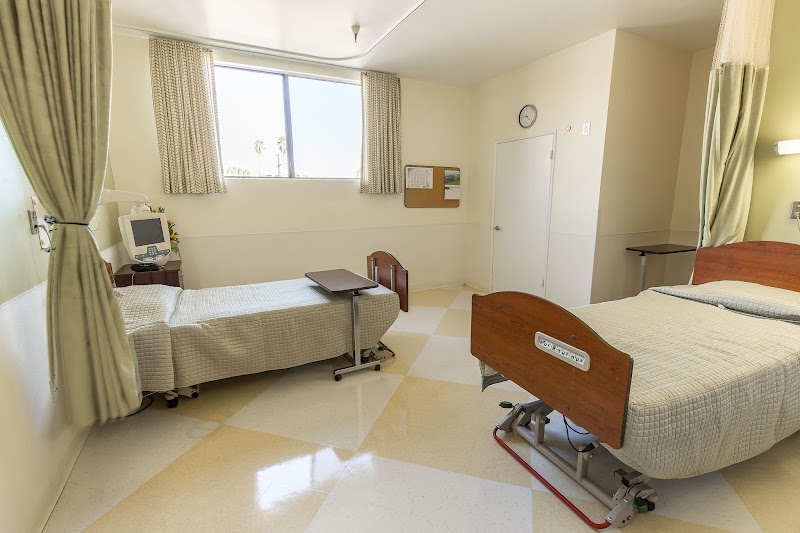
How is Windsor Gardens Convalescent Hospital Staffed?

CMS rates WINDSOR GARDENS CONVALESCENT HOSPITAL's staffing level at 1 out of 5 stars, which is much below average compared to other nursing homes. Staff turnover is 63%, which is 17 percentage points above the California average of 46%. High turnover can affect care consistency as new staff learn residents' individual needs. RN turnover specifically is 71%, which is notably high. RNs provide skilled clinical oversight, so turnover in this role can affect medical care quality.

What Have Inspectors Found at Windsor Gardens Convalescent Hospital?

State health inspectors documented 101 deficiencies at WINDSOR GARDENS CONVALESCENT HOSPITAL during 2021 to 2025. These included: 4 that caused actual resident harm and 97 with potential for harm. Deficiencies causing actual harm indicate documented cases where residents experienced negative health consequences.

Who Owns and Operates Windsor Gardens Convalescent Hospital?

WINDSOR GARDENS CONVALESCENT HOSPITAL is owned by a for-profit company. For-profit facilities operate as businesses with obligations to shareholders or private owners. The facility is operated by WINDSOR, a chain that manages multiple nursing homes. With 98 certified beds and approximately 87 residents (about 89% occupancy), it is a smaller facility located in LOS ANGELES, California.
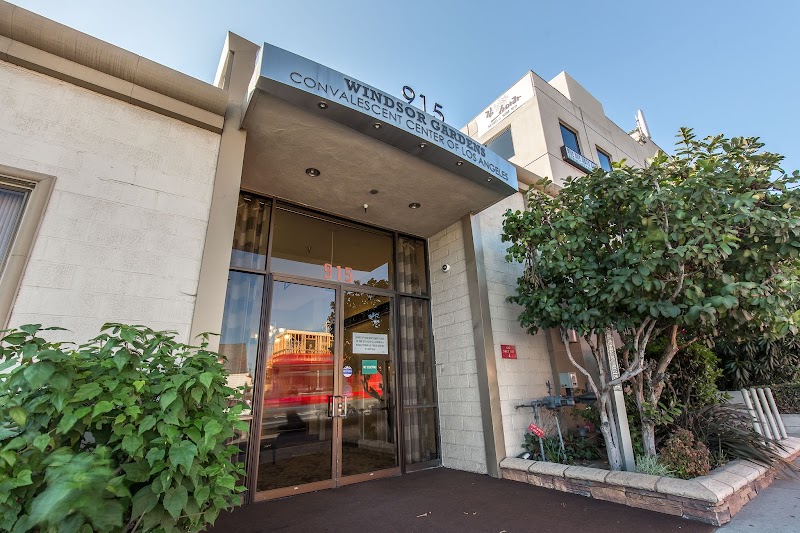
How Does Windsor Gardens Convalescent Hospital Compare to Other California Nursing Homes?

Compared to the 100 nursing homes in California, WINDSOR GARDENS CONVALESCENT HOSPITAL's overall rating (1 stars) is below the state average of 3.1, staff turnover (63%) is significantly higher than the state average of 46%, and health inspection rating (1 stars) is much below the national benchmark.

What Should Families Ask When Visiting Windsor Gardens Convalescent Hospital?

Based on this facility's data, families visiting should ask: "How do you ensure continuity of care given staff turnover, and what is your staff retention strategy?" "Can you walk me through typical staffing levels on day, evening, and night shifts?" "Can I visit during a mealtime to observe dining assistance and food quality?" "How do you handle medical emergencies, and what is your hospital transfer rate?" These questions are particularly relevant given the facility's high staff turnover rate and the below-average staffing rating.

Is Windsor Gardens Convalescent Hospital Safe?

Based on CMS inspection data, WINDSOR GARDENS CONVALESCENT HOSPITAL has a clean safety record: no substantiated abuse findings (meaning no confirmed cases of resident harm), no Immediate Jeopardy citations (the most serious violation level indicating risk of serious injury or death), and is not on the Special Focus Facility watch list (a federal program monitoring the lowest-performing 1% of nursing homes). The facility has a 1-star overall rating and ranks #100 of 100 nursing homes in California. While no facility is perfect, families should still ask about staff-to-resident ratios and recent inspection results during their visit.

Do Nurses at Windsor Gardens Convalescent Hospital Stick Around?

Staff turnover at WINDSOR GARDENS CONVALESCENT HOSPITAL is high. At 63%, the facility is 17 percentage points above the California average of 46%. Registered Nurse turnover is particularly concerning at 71%. RNs handle complex medical decisions and coordinate care — frequent RN changes can directly impact care quality. High turnover means new staff may not know residents' individual needs, medications, or preferences. It can also be disorienting for residents, especially those with dementia who rely on familiar faces. Families should ask: What is causing the turnover? What retention programs are in place? How do you ensure care continuity during staff transitions?

Was Windsor Gardens Convalescent Hospital Ever Fined?

WINDSOR GARDENS CONVALESCENT HOSPITAL has been fined $37,882 across 1 penalty action. The California average is $33,458. While any fine indicates a compliance issue, fines under $50,000 are relatively common and typically reflect isolated problems that were subsequently corrected. Families should ask what specific issues led to these fines and confirm they've been resolved.

Is Windsor Gardens Convalescent Hospital on Any Federal Watch List?

WINDSOR GARDENS CONVALESCENT HOSPITAL is not on any federal watch list. The most significant is the Special Focus Facility (SFF) program, which identifies the bottom 1% of nursing homes nationally based on persistent, serious quality problems. Not being on this list means the facility has avoided the pattern of deficiencies that triggers enhanced federal oversight. This is a positive indicator, though families should still review the facility's inspection history directly.