MAYWOOD SKILLED NURSING & WELLNESS CENTRE
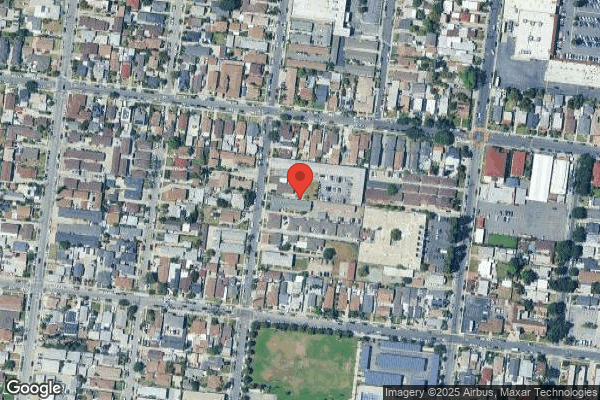
6025 PINE AVE, MAYWOOD, CA 90270 (323) 560-0720
For profit - Limited Liability company 133 Beds PACIFIC HEALTHCARE HOLDINGS Data: November 2025 2 Immediate Jeopardy citations
Trust Grade
11/100
#849 of 1155 in CA
Last Inspection: December 2024

Within standard 12-15 month inspection cycle. Federal law requires annual inspections.

Overview

Maywood Skilled Nursing & Wellness Centre has received a Trust Grade of F, indicating poor performance with significant concerns about care quality. It ranks #849 out of 1155 facilities in California, placing it in the bottom half, and #209 out of 369 in Los Angeles County, suggesting limited local options are better. While the facility is improving, with issues decreasing from 19 in 2023 to 17 in 2024, it still faces major challenges, including troubling incidents. Staffing rates 2 out of 5 stars, but turnover is lower than average at 25%, indicating some staff stability. There are concerning fines totaling $80,673, which are higher than 84% of California facilities, signaling potential ongoing compliance issues. Specific incidents include a critical failure to follow a resident's care plan for swallowing, resulting in choking and a tragic death, and another case where CPR was delayed for an unresponsive resident, highlighting serious lapses in emergency response. While there are strengths such as a lower turnover rate, the facility's significant issues and past incidents raise serious questions for families considering care for their loved ones.

Trust Score
F
11/100
In California
#849/1155
Bottom 27%
Safety Record
High Risk
Review needed
Inspections
Getting Better
19 → 17 violations
Staff Stability
✓ Good
25% annual turnover. Excellent stability, 23 points below California's 48% average. Staff who stay learn residents' needs.
Penalties
○ Average
$80,673 in fines. Higher than 61% of California facilities. Some compliance issues.
Skilled Nurses
⚠ Watch
Each resident gets only 29 minutes of Registered Nurse (RN) attention daily — below average for California. Fewer RN minutes means fewer trained eyes watching for problems.
Violations
⚠ Watch
49 deficiencies on record. Higher than average. Multiple issues found across inspections.
★★☆☆☆
2.0
Overall Rating
★★☆☆☆
2.0
Staff Levels
★★★★☆
4.0
Care Quality
★★☆☆☆
2.0
Inspection Score
Stable
2023: 19 issues
2024: 17 issues

The Good

  • 4-Star Quality Measures · Strong clinical quality outcomes
  • Low Staff Turnover (25%) · Staff stability means consistent care
  • Full Sprinkler Coverage · Fire safety systems throughout facility
  • No fines on record
  • Staff turnover is low (25%)

    23 points below California average of 48%

Facility shows strength in quality measures, staff retention, fire safety.

The Bad

2-Star Overall Rating

Below California average (3.1)

Below average - review inspection findings carefully

Federal Fines: $80,673

Well above median ($33,413)

Moderate penalties - review what triggered them

Chain: PACIFIC HEALTHCARE HOLDINGS

Part of a multi-facility chain

Ask about local staffing decisions and management

The Ugly 49 deficiencies on record

2 life-threatening 2 actual harm
Dec 2024 14 deficiencies 1 Harm
SERIOUS (G)

Actual Harm - a resident was hurt due to facility failures

Incontinence Care (Tag F0690)

A resident was harmed · This affected 1 resident

**NOTE- TERMS IN BRACKETS HAVE BEEN EDITED TO PROTECT CONFIDENTIALITY** 2. During a review of Resident 95's admission Record, dated 12/18/2024, the admission record indicated Resident 95 was admitted ...

Read full inspector narrative →
**NOTE- TERMS IN BRACKETS HAVE BEEN EDITED TO PROTECT CONFIDENTIALITY** 2. During a review of Resident 95's admission Record, dated 12/18/2024, the admission record indicated Resident 95 was admitted on [DATE] and readmitted on [DATE] with the following diagnoses which included chronic kidney disease (CKD - a longstanding disease in which the kidneys are damaged and cannot filter blood as well as they should leading to renal failure), acute kidney failure (the sudden and rapid loss of the kidney's ability to filter waste and balance fluid in blood), hydronephrosis (a condition where one or both kidneys swell due to a buildup of urine), malignant neoplasm of the bladder (bladder cancer), and retention of urine definition (a condition that makes it difficult to empty the bladder). During a review of Resident 95's History and Physical (H&P), dated 8/9/2024, the H&P indicated Resident 95 had the capacity to understand and make decisions. During a review of Resident 95's MDS, dated [DATE], the MDS indicated Resident 95's cognition was intact. The MDS indicated Resident 95 had an indwelling catheter and required supervision with eating, toileting and personal hygiene, and toileting. During a review of Resident 95's Order Summary Report, dated 10/10/2024, the order summary report indicated and active order to monitor Resident 95's nephrostomy bag for signs and symptoms of infection, noting cloudiness, sediment, blood, and odor and notify if any signs and symptoms were present every shift. During a review of Resident 95's MAR, dated 12/1/2024 through 12/16/2024. The MAR indicated to monitor Resident 95's nephrostomy bag for signs and symptoms of infection, noting cloudiness, sediment, blood, and odor and notify if any signs and symptoms were present every shift. The MAR indicated there were no signs of cloudiness, sediment, blood, or odor from 12/1/2024 through 12/16/2024 for all shifts. During a review of Resident 95's Care Plan titled Nephrostomy Placement Bilateral (both sides) Surgery, initiated on 10/10/2024 and revised on 11/13/2024, the care plan indicated Resident 95's bladder would be adequately emptied without complication as evidenced by no bladder distention, pain/discomfort and no signs and symptoms UTI The care plan interventions indicated to monitor nephrostomy bag for signs and symptoms of infection and notify physician if an signs and symptoms present and provide nephrostomy care per protocol daily and as needed. During a review of Resident 95's Care Plan titled UTI, initiated on 12/8/2024, the care plan indicated Resident 95's would have no complaints of pain or bladder discomfort and would resolve after treatment interventions. The care plan indicated interventions to monitor urine for sediment, cloudiness, odor, blood tinge and amount and report any signs and symptoms to the physician. m bladder would be adequately emptied without complication as evidenced by no bladder distention, pain/discomfort and no signs and symptoms of UTI. The care plan interventions indicated to monitor nephrostomy bag for signs and symptoms of infection and notify physician if an signs and symptoms present and provide nephrostomy care per protocol daily and as needed. During a review of Resident 95's Nursing Progress Notes, dated 2/9/2024, the progress note indicated Resident 95 was started on Rocephin (a medication to treat infections) until 12/15/2024 due to UTI. During an observation on 12/16/2024 at 2:44 p.m., in Resident 95's room, Resident 95 was sitting in a wheelchair with both left and right nephrostomy bags lying on his bed which was positioned higher than his wheelchair. The right nephrostomy tubing contained an off-white, thick milky sediment. During an observation on 12/17/2024 at 1:44 p.m., in Resident 95's room, Resident 95 was sitting in his wheelchair with both left and right nephrostomy bags rolled up into his pants pocket. Resident 95's pocket on the right side was wet from urine leaking from the nephrostomy bag. Resident 95's nephrostomy tubing on the right side showed an off-white, thick, milky sediment. During a concurrent observation, interview, and record review on 12/17/2024 at 1:47 p.m., with Licensed Vocational Nurse (LVN) 2, LVN 2 observed Resident 95's nephrostomy bag and nephrostomy tubing. LVN 2 also reviewed Resident 95's monitoring log on the MAR, and the nursing progress notes. LVN 2 noted that there was sediment in Resident 95's nephrostomy tubing on the right side and the nephrostomy bags on the left and right side were rolled up and placed inside of Resident 95's pants pockets as he sat in his wheelchair. LVN 2 also noted Resident 95's right pants pocket was saturated with urine leaking from the right nephrostomy bag. LVN 2 stated Resident 95 was recently treated for a UTI and the sediment in the tubing was due to the recent UTI. LVN 2 stated it was her responsibility to monitor the tubing for signs of infection, which included cloudiness, sediment, or blood and document the findings on Resident 95's nephrostomy monitoring log and nursing progress notes during her shift. LVN 2 admitted she had not monitored Resident 95's nephrostomy for sediment in the tubing on 12/16/2024 and this observation was her first time seeing the sedimentation in the right tubing. LVN 2 stated she would notify the doctor immediately since she had been made aware of the sedimentation. LVN 2 reviewed Resident 95's nephrostomy monitoring log. LVN 2 acknowledged that she had been marking N for no sedimentation on Resident 95's nephrostomy monitoring log even though she had not been checking it daily. LVN 2 acknowledged she placed an N for no sediment on Resident 95's nephrostomy monitoring log on 12/16/2024 although she had not checked for sedimentation on that day. LVN 2 stated it was important to monitor Resident 95's nephrostomy tubing and urine output every shift and to call the doctor if sediment was observed in the tubing so that the doctor would be aware of Resident 95's status and write orders if needed. LVN 2 stated it was also important to document the finding in the nursing progress notes and the nephrostomy monitoring log. LVN 2 acknowledged she had not made any notes regarding Resident 95's nephrostomy bags or tubing in the nursing progress notes. LVN 2 also admitted it was inappropriate for Resident 95 to keep his nephrostomy bags and tubing rolled up inside of his pockets. LVN 2 stated the nephrostomy bags should have been positioned to gravity so the urine in the tubing could flow freely into the bags and not back flow into the kidneys. LVN 2 stated if urine flowed backwards into the kidneys, it could lead to further urinary tract infections. During a concurrent interview and record review with LVN 1, Resident 95's nursing progress notes and nephrostomy care plan were reviewed for the month of November and December. LVN 1 stated that Resident 95's primary care physician informed the nurses that it was normal for Resident 95 to have sediment in the tubing because he had bladder cancer. LVN 1 viewed the nursing progress notes and stated he could not find the notes regarding sediment in the nephrostomy tubing to be normal for Resident 95. LVN 1 reviewed Resident 95's nephrostomy care plan and acknowledged the care plan indicated to notify the physician if there was sedimentation in the nephrostomy tubing. LVN 1 stated the physician should have been notified if sedimentation was present in the tubing. During a concurrent interview and record review on 12/17/2024 at 3:09 p.m., with TXN 1, Resident 95's nursing care plan and nephrostomy monitoring log on the MAR was reviewed. TXN 1 stated she was responsible for Resident 95's daily nephrostomy dressings change. TXN 1 stated she had observed sedimentation in Resident 95's tubing every day for the month of December 2024 when performing nephrostomy dressing changes. TXN 1 stated she did not document the sedimentation or call the physician because she had heard from nurses that it was okay for Resident 95 to have sedimentation in his nephrostomy tubing. TXN 1 acknowledged there was no documentation in the nursing progress notes to indicate it was okay for resident to have sedimentation in his tubing. TXN 1 stated Resident 95's nephrostomy instructions should have been documented in the nursing progress notes when the resident returned from his nephrology appointment so that the nursing staff would have something to follow regarding the nephrostomy tubing. TXN 1 reviewed Resident 95's nephrostomy care plan and stated she was not following the care plan interventions for monitoring the nephrostomy bags for signs and symptoms of infection, including monitoring for sediment as indicated because Resident 95 was already on antibiotics for a UTI. TXN 1 admitted she should have followed Resident 95's nephrostomy care plan to ensure Resident 95 did not continue to develop UTIs. During a concurrent observation and interview on 12/19/2024 at 8:04 a.m., with TXN 1 and Resident 95, the nephrostomy dressing changes were observed by TXN 1. Resident 95 was sitting on the edge of his bed with both nephrostomy bags lying on his bed. TXN 1 stated she put Resident 95's nephrostomy bags on the bed to prepare for his nephrostomy dressing changes. Resident 95 stated wanted his nephrostomy bags lying out on the bed or in his pockets because it was easier to get to the bags when he needed to urinate. TXN 1 stated Resident 95 needed more education regarding the care of his nephrostomy bags because he should not have to bother the bags when he needed to urinate. TXN 1 stated, since Resident 95 could also urinate from his penis, he only needed to use the bedside urinal when he had the urge to urinate. TXN 1 stated there was a urinal at his bedside. TXN 1 proceeded to educate Resident 95 in Spanish regarding the care of his nephrostomy bags. TXN 1 stated that she educated Resident 95 that he should not touch the nephrostomy bags when he had an urge to urinate. TXN 1 stated she also explained to Resident 95 the importance of keeping the bags to gravity and not in his pocket to prevent infection. TXN 1 explained that the dignity bag was for his protection and privacy. TXN 1 showed the dignity bag to Resident 95 and how they were to be placed inside of the dignity bag. Resident 95 shook his head in agreement and did not refuse the dignity bags. During a telephone interview on 12/19/2024 at 10:17 a.m., with Physician 1, Physician 1 stated that the white slimy sedimentation noted in Resident 95's nephrostomy tubing was normal for Resident 95, however the sedimentation should have been documented and monitored by the nurse to ensure any changes could be noted for comparisons. Physician 1 stated he would educate the nurses on the proper care of Resident 95's nephrostomies because the nurses are not familiar with the caring for nephrostomies. Physician 1 state he would also educate the nurses on Resident 95's nephrostomy baseline (an initial measurement of a resident's condition and used for comparison over time to look for changes) and inform the nurses that the baseline should be documented. Physician 1 stated the nurses must then notify him (Physician 1) if there were any changes from the baseline. During an interview on 12/19/2024 at 10:42 a.m. with the DON, the DON stated it was important to ensure Resident 95's nephrostomy tubing was at gravity level and not rolled up in his pockets to prevent back flow to the kidneys which would cause an infection. The DON stated Resident 95 was preparing for surgery and could not afford to keep getting UTIs. The DON stated once Resident 95's immune system was compromised, and frequent infections would delay his radiation treatments and upcoming surgery. During review of the facility's policy and procedure (P&P) titled, Catheter - Care of, revised on 6/10/2021, the P&P indicated the purpose of the policy was to prevent catheter associated urinary tract infections while ensuring that residents are not given indwelling catheters unless medically necessary. The P&P also indicated the following: 1. Nursing staff would assess urinary drainage for signs and symptoms of infection, noting cloudiness, color, sediment, blood, odor, and amount of urine. 2. Licensed nurse would notify the attending physician of any signs and symptoms of infection for clinical interventions. 3. Anyone manipulating the catheter site or apparatus must wash their hands thoroughly immediately before and after touching the site or apparatus. 4. The catheter and collecting tube would be kept free from kinking and the collection bag would be kept below the level of the bladder. 5. The catheter will be anchored to prevent excessive tension on the catheter. 6. Documentation of catheter care will be maintained in the resident's medical record. 7. The resident's privacy and dignity will be protected by placing a cover over the drainage bag when the resident is out of bed. Based on observation, interview, and record review, the facility failed to: 1. Provide services to prevent the development of septic shock for one out of six sampled residents (Resident 259), who had long-term usage of an indwelling urinary catheter (a hollow tube inserted into the bladder to drain or collect urine) by failing to ensure the following: 1a. Ensure Resident 259's the urinary drainage was monitored for the presence of sediment (a buildup of particles within the catheter tubing, often caused by factors like dehydration, urinary tract infection [UTI- an infection in the bladder/urinary tract], improper catheter care, or the presence of certain bacteria that promote crystal formation), abnormal color, and foul odor, per the facility's P&P and Resident 259's care plan, for a total of six months. 1b. Ensure a urine culture (a lab test that checks for bacteria in a urine sample) was performed after Resident 259's urine analysis (a lab test that provides information about the appearance, chemical composition, and microscopic contents of a urine sample) results indicated Resident 259 had a urinary tract infection on 10/7/2024. These deficient practices led to the delay in UTI identification, delayed treatment, and a three-day admission to the intensive care unit for a diagnosis of septic shock secondary to a UTI for Resident 259. 2. Provide adequate nephrostomy (a tube that lets urine drain from the kidney through an opening in the skin on the back) care for one of six sampled residents (Resident 95) when: 2a. The nephrostomy bags (a bag that collects urine that drains from a nephrostomy tube) were not placed to gravity (where the urine flows downhill from the nephrostomy tube [inserted in the kidneys] and into the nephrostomy bag and must be positioned below the resident's bladder to allow urine to drain properly) by nursing staff. 2b. Sediment (crystals, bacteria, or blood exited through the urine) was present in the right nephrostomy tubing was not documented by the licensed nurses and the physician was not notified of the sediment as ordered. This failure had the potential to cause avoidable urinary tract infections (UTI - an infection in the bladder/urinary tract) and delay in treatment for Resident 95. Findings: 1. During a review of Resident 259's admission Record, the admission Record indicated Resident 259 was originally admitted to the facility on [DATE]. Resident 259's diagnoses included UTI, sepsis, extended spectrum beta lactamase resistance ([ESBL]- a bacterial infection that can occur in the blood, skin and other parts of the body, which can cause frequent urination, burning when urinating, and reddened skin) , hydronephrosis (kidney swelling) with ureteropelvic junction (the area where the ureter [urine tube] connects to the renal pelvis [inner curve of the kidney]) obstruction (a blockage preventing urine from draining properly and causing the kidney to enlarge), renal and ureteral calculus obstruction (a condition where the kidneys swell due to a blockage in the urinary tract caused by kidney stones and ureteral stones), and neuromuscular dysfunction of the bladder (lack of bladder control). During a review of Resident 259's Minimum Data Set ([MDS], a resident assessment tool), dated 9/26/2024, the MDS indicated Resident 259's cognitive skills (mental action or process of acquiring knowledge and understanding) for daily decision making was moderately impaired. The MDS indicated Resident 259 was entirely dependent on staff for activities of daily living (ADLs- routine tasks/activities such as bathing, dressing and toileting a person performs daily to care for themselves). During a review of Resident 259's care plan titled, Urinary Catheter Care Plan, initiated 6/4/2024, the Care Plan indicated the facility was to monitor Resident 259's urine for color, sediments, amount, and hematuria (blood in the urine), and order laboratory tests, if indicated. During a review of Resident 259's Situation, Background, Assessment, Recommendation (SBAR -a communication tool used by healthcare workers when there is a change of condition among the residents), dated 12/4/2024, the SBAR indicated Resident 259 exhibited generalized weakness, an elevated heart rate of 147 beats per minutes (bpm, normal range 60 -100 bpm), and rapid breathing with the use of accessory muscles (additional muscles used when a resident exhibits difficulty breathing). The SBAR indicated an unspecified licensed nurse elevated Resident 259's head of the bed and administered oxygen via nasal cannula (tubing used to deliver oxygen) at three liters per minute (LPM). The SBAR indicated Resident 259's oxygen saturation (the percentage of oxygen in a person's blood) increased from 88 percent (%) to 98%, (normal range 93-100%). The SBAR indicated Resident 259 was provided cooling measures and administered acetaminophen (fever-reducing medication). The SBAR indicated Resident 259's indwelling urinary catheter drainage bag had large amounts of sediments present. The SBAR indicated Resident 259's physician was notified and the resident was transferred to the general acute care hospital (GACH). The SBAR indicated Resident 259 had the following vital signs (measurements of the body's most basic functions): 1. Respiratory (breathing) Rate of 25 breaths per minute (RR, normal RR 12 to 20 breaths per minute). 2. Blood Pressure was 100/64 millimeters of mercury ([MM HG]- unit of measurement that describes the amount of force blood uses to get through the vessels of the body [normal range of 120-129 [top number] and 80-84 [bottom number]). 3. Temperature of 101.1 Fahrenheit (normal range 97 to 99 degrees Fahrenheit [a unit of measurement]). During a review of Resident 259's Urine Analysis (UA), dated 10/7/2024, the UA indicated Resident 259's urine appearance was cloudy, positive for nitrites (byproducts found in urine when bacteria like Escherichia coli [[E. Coli] - a type of bacteria] are present), and positive for the presence of leukocytes (white blood cells that help your body fight an infection). The UA also indicated Resident 259's physician did not order a urine culture. During a review of Resident 259's GACH Emergency Department (ED) Medical Doctor (MD) Progress Notes, dated 12/4/2024, the notes indicated Resident 259 was brought into the emergency department, on 12/4/2024 at 10:54 a.m. with the following vital signs: blood pressure of 78/54 MM HG, temperature of 102.4 F, heart rate of 145 bpm, respiratory rate of 42 (RR, breaths per minute), and oxygen saturation of 84 percent (%) and was placed on 15 liters per minute via non-rebreather mask (oxygen mask that delivers high concentrations of oxygen). The notes indicated Resident 259 was disoriented and repeatedly asked about the reason for his visit. The notes indicated Resident 259's computed tomography ([CT]- a noninvasive imaging procedure that uses X-rays to create cross-sectional images of the body) scan indicated Resident 259 had a 2.5 centimeter ([CM]- a unit of measurement) left ureter stone (a crystal-like hard stone that gets lodged into ureter [the tube that connects your kidneys to your bladder]) with hydronephrosis and perinephric stranding (a sign of inflammation or obstruction in the kidney or collecting system). The notes indicated Resident 259 was given intravenous (IV, through the veins) fluid, placed on a Levophed (a medication used to maintain blood pressure) and Amiodarone (a medication used to stabilize and control the heart rate) drip, and admitted to the Intensive Care Unit (ICU, a specialized hospital ward that provides critical care and life support to patients who are very ill or injured), on 12/4/2024, for stabilization. The note indicated Resident 259 was diagnosed with sepsis (a life-threatening medical emergency that occurs when the body's immune system has an extreme response to an infection or injury) due to UTI with hypotension (low blood pressure). During a review of Resident 259's GACH UA Laboratory Results, dated 12/4/2024, the results indicated Resident 259's urine appearance was turbid (not clear or transparent because of stirred-up sediment). During a review of Resident 259's GACH Blood Laboratory Results, dated 12/4/2024, the results indicated Resident 259's lactic acid level (a blood test that is used to help diagnose sepsis) was critically high at a value of 4.1 (normal: 0.7-1.9) millimoles per liter ([MMOL/L]- a unit of measurement). The results indicated Resident 259's white blood cell count ([WBC]-a blood test used to indicate the presence of inflammation or an infection) was abnormally high at a value of 15.5 (normal WBC count: 4.5 and 11.0 microliters) microliter ([X10^3/Ul]- a unit of measurement used to report WBC counts). During a review of Resident 259's GACH Urine Culture Laboratory Results, dated 12/4/2024, the results indicated Resident 259 had greater than 100,000 colony forming units per milliliter ([CFU/ML]- a unit of measurement) of E. Coli and Proteus Mirabilis (a type of bacteria). During a review of Resident 259's GACH Progress Notes, dated 12/5/2024, the notes indicated Resident 259 was treated with a Levophed drip 4 milligram (mg, unit of measurement) per 250 milliliters (ML]- a unit of measurement, Amiodarone drip 900 MG /18 ML, and Ceftriaxone (an antibiotic) 1 gram ([GM]- a unit of measurement) IV every 24 hours. During a review of Resident 259's GACH MD Progress Notes, dated 12/10/2024, the notes indicated Resident 259 was downgraded from the ICU to the telemetry unit (a unit that enables continuous tracking of the resident's heartbeat). During a review of Resident 259's GACH Discharge Summary Note, dated 12/11/2024, the note indicated Resident 259 was diagnosed with septic shock secondary to pyelonephritis (kidney infection) and bacteremia (bacteria in the blood) with ESBL E. coli. During an interview on 12/18/2024, at 9:35 a.m., with the facility's Treatment Nurse (TXN) 1, TXN 1 stated she was familiar with Resident 259 and noticed Resident 259's indwelling urinary catheter always had sediments since his initial admission into the facility. TXN 1 stated she did not notify the charge nurse or Resident 259's physician because Resident 259 always had sediments in his urine. During a concurrent record review and interview, on 12/18/2024, at 10:30 a.m., with Registered Nurse (RN) 2, Resident 259's Physician Orders, dated 6/2024 to 12/4/2024, and Medication Administration Record (MAR), dated 6/2024 to 12/4/2024, were reviewed. RN 2 stated the Physician Orders indicated Resident 259 was ordered to have an indwelling urinary catheter from 6/3/2024 to 12/4/2024. RN 2 stated the Physician Orders did not indicate any orders to monitor Resident 259's urine output appearance (presence of sediment, color, foul odor) from 6/3/2024 to 12/4/2024. RN 2 stated the MAR indicated Resident 259's urine output appearance was not documented from 6/3/2024 to 12/4/2024. RN 2 stated it was important for the licensed nursing staff to monitor the appearance of Resident 259's urine output to prevent Resident 259 from developing an infection and sepsis. RN 2 stated the order to monitor the indwelling urinary catheter's urine output was missed, and all licensed nurses were responsible with ensuring the order was inputted and carried out. RN 2 stated the facility may have delayed the treatment of Resident 259's UTI because the licensed nurses did not effectively monitor Resident 259's urine output appearance. During a concurrent record review and interview, on 12/18/2024 2:00 p.m., with RN 2, Resident 259's UA, dated 10/7/2024, was reviewed. RN 2 stated it was important to order a urine culture if a UA was positive so the resident could receive the proper antibiotics for treatment of the UTI. RN 2 stated MD 1 was made aware of the positive UA. RN 2 stated MD 1 did not order a urine culture because MD 1 was conservative when it came to prescribing antibiotics for Resident 259. RN 2 stated because Resident 259 did not present with any other signs and symptoms of a UTI antibiotics were not prescribed. During an interview, on 12/18/2024, at 3:31 p.m., with Certified Nursing Assistant (CNA) 1, CNA 1 stated Resident 259's urine output appeared foggy at various times (CNA 1 could not recall the dates). CNA 1 stated she did not notify the charge nurses because she believed the charge nurses already knew Resident 259's urine output normally appeared that way. During an interview, on 12/19/2024, at 10:06 a.m., with Physician 1, Physician 1 stated that he was Resident 259's attending physician, a urologist (a medical doctor who specializes in the diagnosis and treatment of diseases and conditions of the urinary tract system) and the facility's Medical Director. Physician 1 stated that the expectation of the licensed nurses regarding the care of a resident with an indwelling urinary catheter was to monitor for the signs and symptoms of an infection. Physician 1 stated that it was important to monitor the urine output appearance to identify the signs of an active urinary infection and to avoid sepsis. Physician 1 stated that the order to assess the qualities of the urine output was a part of the order set for all residents who had an indwelling foley catheter. Physician 1 stated that he met with the nursing staff to educate them on the importance of monitoring the appearance of the urine output and always reminded the staff not to underestimate the presence of precipitate (a buildup of particles), and cloudiness of the urine. Physician 1 expected that he would have been notified of these kinds of changes for Resident 259. During an interview, on 12/19/2024, at 11:53 a.m., with the Director of Nursing (DON), the DON stated it was important that the licensed nurses assessed the qualities and characteristics of a resident's urine output for cloudiness, presence of sediment and odor every shift so that the care of the resident was not delayed and to decrease the potential for sepsis. The DON stated Resident 259's order to assess the urine output was missed and there was no documentation of a baseline assessment to verify that Resident 259's urinary output improved or worsened over time. The DON stated a urine culture should have been ordered so that Resident 259 could have received treatment in a timely manner even if Resident 259 was asymptomatic (exhibiting no signs and symptoms of a medical condition). The DON stated the lack of assessment of Resident 259's urinary output and advocacy for a urine culture led to a delay in treatment, diagnosis of septic shock, and harm for Resident 259.
CONCERN (D)

Potential for Harm - no one hurt, but risky conditions existed

Resident Rights (Tag F0550)

Could have caused harm · This affected 1 resident

**NOTE- TERMS IN BRACKETS HAVE BEEN EDITED TO PROTECT CONFIDENTIALITY** b. During a review of Resident 95's admission Record, dated 12/18/2024, the admission record indicated Resident 95 was admitted ...

Read full inspector narrative →
**NOTE- TERMS IN BRACKETS HAVE BEEN EDITED TO PROTECT CONFIDENTIALITY** b. During a review of Resident 95's admission Record, dated 12/18/2024, the admission record indicated Resident 95 was admitted to the facility on [DATE] and readmitted on [DATE]. Resident 95's diagnoses included chronic kidney disease (CKD - a longstanding disease in which the kidneys are damaged and cannot filter blood as well as they should leading to renal failure), acute kidney failure (the sudden and rapid loss of the kidney's ability to filter waste and balance fluid in blood), hydronephrosis (a condition where one or both kidneys swell due to a buildup of urine), malignant neoplasm of the bladder (bladder cancer), and retention of urine definition (a condition that makes it difficult to empty the bladder). During a review of Resident 95's H&P, dated 8/9/2024, the H&P indicated Resident 95 had the capacity to understand and make decisions. During a review of Resident 95's MDS dated [DATE], the MDS indicated Resident 95's cognition was intact. The MDS indicated Resident 95 had an indwelling catheter and required supervision with eating, toileting and personal hygiene, and toileting. During a review of Resident 95's Care Plan titled Nephrostomy Placement Bilateral (both sides) Surgery, initiated on 10/10/2024 and revised on 11/13/2024, the care plan indicated Resident 95's bladder would be adequately emptied without complication as evidenced by no bladder distention, pain/discomfort and no signs and symptoms of urinary tract infection (UTI - an infection in the bladder/urinary tract). The care plan interventions indicated to provide nephrostomy care per protocol daily and as needed. During an observation on 12/16/2024 at 2:44 p.m., in Resident 95's room, Resident 95 was observed sitting in a wheelchair with both left and right nephrostomy bags lying on his bed, uncovered by a dignity bag. During a concurrent observation, and interview on 12/17/2024 at 1:47 p.m., with Licensed Vocational Nurse (LVN) 2, LVN 2 observed Resident 95's nephrostomy bag and nephrostomy tubing. LVN 2 acknowledged Resident 95's nephrostomy tubing was rolled up in the resident's pants pockets and the right pocket was saturated from urine leaking from the right nephrostomy bag. LVN 2 agreed it was inappropriate for Resident 95 to keep his nephrostomy bags and tubing rolled up inside of his pockets. LVN 2 stated the nephrostomy bags should be positioned to gravity and covered with a dignity bag to maintain the resident's dignity. During a concurrent interview and record review on 12/17/2024 at 3:09 p.m., with Treatment Nurse (TN) 1, Resident 95's nursing care plan and nephrostomy monitoring log was reviewed. TN 1 stated she was under the impression Resident 95 refused a dignity bag. TN 1 stated if Resident 95 did refuse a dignity bag, it should have been documented and care planned. TN 1 stated she could not find any documentation in the nursing progress note or a care plan that indicated Resident 95 refused a dignity bag. TN 1 stated she would make sure Resident 95 received a dignity bag for both nephrostomy bags. During a concurrent observation and interview on 12/19/2024 at 8:04 a.m., with TN 1 and Resident 95, Resident 95's nephrostomy dressing changes were observed by TN1. Resident 95 had both nephrostomy bags lying on his bed, uncovered by a dignity bag, while he (Resident 95) sat at the edge of his bed. TN 1 stated the bags were uncovered because she was in the process of setting Resident 95 up for his nephrostomy dressing changes. Resident 95 stated he did not use the dignity bags because when he needed to urinate because it took too long to get the bags out of the dignity bag. Resident 95 stated if he waited on a nurse to remove the nephrostomy bags, it was usually too late. TN 1 stated Resident 95 needed more education regarding his nephrostomy bags because he did not have to touch the bags when he urinated. TN 1 stated, since Resident 95 could urinate from his penis, he only needed to use the urinal (container used to collect urine for people who are unable to use a bathroom toilet) to urinate. TN 1 was observed providing education to Resident 95 in Spanish that he did not need to do touch his nephrostomy bags when he needed to urinate. TN 1 also explained to Resident 95 the importance of keeping the bags to gravity and not in his pocket to prevent infection. TN 1 explained that the dignity bag was for his protection and dignity. TN 1 was observed placing both nephrostomy bags into a dignity bag. Resident 95 shook his head in agreement and did not refuse the dignity bags. During an interview on 12/19/2024 at 10:36 a.m., with the Director of Nursing, the DON stated there should be a dignity bag to protect the resident and if someone saw the urine in Resident 95's bag they might find it gross. The DON stated Resident 95 would be embarrassed and cause a negative body image for the resident. During review of the facility's P&P titled, Catheter - Care of, revised on 6/10/2021, the P&P indicated the resident's dignity would be protected by placing a cover over the drainage bag when the resident is out of bed. Based on interview and record review, the facility failed to respect the rights and provide dignity to two of six sampled residents (Resident 95 and Resident 75) by failing to: 1. Obtain a public guardian (a legally appointed person who manages the care and finances of individuals who are unable to do so for themselves) or conduct an interdisciplinary team (IDT, group of different disciplines working together towards a common goal for a resident) meeting to facilitate the care and medical treatments provided for Resident 75. 2. Follow its policy and procedure (P&P) titled Catheter - Care of, to provide a dignity bag (a bag used to cover and hold the catheter drainage/collection bag, so it is not visible) for Resident 95 who had both a left and right nephrostomy (a tube that lets urine drain from the kidney through an opening in the skin on the back) bag. This failure resulted in Resident 75 receiving medical treatment and antipsychotics (medications that affect the mind, emotions, and behavior) that had not been explained to nor consented by an appointed decision-maker on Resident 75's behalf. This failure also had the potential to affect Resident 95's self-worth and self-esteem. Cross Reference F552. Findings: a. During a review of Resident 75's admission Record, the admission Record indicated Resident 75 was originally admitted to the facility on [DATE] and readmitted on [DATE], with diagnoses including schizophrenia disorder (a mental illness that can affect thoughts, mood, and behavior), depressive disorder (low mood and loss of interest in activities for a long period of time), and anxiety (feeling of uneasiness). During a review of Resident 75's Minimum Data Set ([MDS], a resident assessment tool), dated 11/1/2024, the MDS indicated Resident 75's cognitive skills (mental action or process of acquiring knowledge and understanding) for daily decision making was severely impaired. The MDS indicated Resident 75 was dependent on staff for activities for daily living (ADLs- routine tasks/activities such as bathing, dressing and toileting a person performs daily to care for themselves). During a review of Resident 75's History and Physical (H&P), dated 10/26/2024, the H&P indicated Resident 75 had the capacity to make needs known, but not make medical decisions. During a review of Resident 75's Social Services Progress Notes, dated 2024, there was a lack of documentation to indicate that the facility made a good-faith attempt to find surrogate (is a person who makes medical decisions for a patient when the resident is unable to do so themselves) family members, held an IDT meeting to establish the IDT as surrogate decisionmakers, nor applied for public guardianship for Resident 75. During a concurrent interview and record review, on 12/17/2024, at 1:33 p.m., with the Social Services Director (SSD), all of Resident 75's Social Services Progress Notes, dated 2024, were reviewed. The SSD stated a resident would need a public guardian if the resident did not have the capacity to make medical decisions. The SSD stated she would typically refer to the resident's H&P to determine if the resident had the capacity to make medical decisions. The SSD stated that it was important to obtain a public guardian right away, especially if the resident did not have any family members. The SSD stated she did not know that Resident 75 did not have any family members to act as a responsible party. The SSD stated that she was not aware that there had been a change in Resident 75's medical decision-making capacity [after Resident 75 was readmitted ] but was aware that his cognition had been worsening throughout his stay at the facility. The SSD stated that she should have checked Resident 75's H&P or should have been made aware by the licensed nursing staff so that she could proceed to apply for public guardianship for Resident 75 in a timely manner. The SSD stated that it was Resident 75's right to have a public guardian so that his medical care and services could be handled by an appropriate designee. During a review of the facility's Policy and Procedure (P&P), titled, Locating a Resident's Surrogate Decision Maker, dated 6/27/2024, the P&P indicated the following: a. Efforts to locate the Resident's surrogate decision-maker should be completed within the first thirty days of admission. b. The IDT would act as the Resident's surrogate decision-maker until the resident's representatlve(s) were located. c. The IDT should include the Resident's attending physician, the registered nurse responsible for the Resident and other appropriate disciplines as determined by the resident's needs. d. A referral would be made to the Public Guardian for evaluation for conservatorship.
CONCERN (D)

Potential for Harm - no one hurt, but risky conditions existed

Deficiency F0552 (Tag F0552)

Could have caused harm · This affected 1 resident

**NOTE- TERMS IN BRACKETS HAVE BEEN EDITED TO PROTECT CONFIDENTIALITY** Based on interview and record review, the facility failed to obtain updated informed consents (a voluntary agreement to accept t...

Read full inspector narrative →
**NOTE- TERMS IN BRACKETS HAVE BEEN EDITED TO PROTECT CONFIDENTIALITY** Based on interview and record review, the facility failed to obtain updated informed consents (a voluntary agreement to accept treatment and/or procedures after receiving education regarding the risks, benefits, and alternatives offered) prior to the administration of psychotropic (medications that affect the mind, emotions, and behavior) medications for one out of six sampled residents (Resident 75). This failure had the potential to place Resident 75 at risk for avoidable harm from unwanted adverse effects (a harmful and undesired effect resulting from a medication or intervention) related to psychotropic medication use during the two months he was deemed to unable to make medical decisions. Cross Reference F550. Findings: During a review of Resident 75's admission Record, the admission Record indicated Resident 75 was originally admitted to the facility on [DATE] and readmitted on [DATE] with diagnoses including schizophrenia (a mental illness that can affect thoughts, mood, and behavior), depressive disorder (low mood and loss of interest in activities for a long period of time), and anxiety (feeling of uneasiness). During a review of Resident 75's Minimum Data Set ([MDS], a resident assessment tool), dated 11/1/2024, the MDS indicated Resident 75's cognitive skills (mental action or process of acquiring knowledge and understanding) for daily decision making was severely impaired. The MDS indicated Resident 75 was dependent on staff for activities for daily living (ADLs- routine tasks/activities such as bathing, dressing and toileting a person performs daily to care for themselves). During a review of Resident 75's History and Physical (H&P), dated 10/26/2024, the H&P indicated Resident 75 had the capacity to make needs known, but not make medical decisions. During a review of Resident 75's Order Summary Report, dated 12/2024, the report indicated Resident 75 was ordered the following psychotropic medications on the following dates: 1. Haloperidol Oral Tablet (Haloperidol) 10 milligrams ([MG]-a unit of measurement), two times a day, for schizophrenia manifested by command auditory hallucinations as evidenced by hearing voices to harm himself on 10/26/2024. 2. Buspirone Hydrochloride Oral Tablet 20 MG, two times a day, for anxiety manifested by increased worry on 10/26/2024. 3. Sertraline Hydrochloride Oral Tablet 125 MG, one time a day, for depression manifested by verbalization of constant worries about health on 10/26/2024. During a review of Resident 75's Medication Administration Record (MAR), dated 10/1/2024 to 12/17/2024, the MAR indicated Resident 75 was administered Haloperidol Oral Tablet twice a day, Buspirone Hydrochloride Oral Tablet 20 MG twice a day, and Sertraline Hydrochloride Oral Tablet 125 MG by mouth once a day every day from 10/2/2024 to 12/17/2024. During a review of Resident 75's Informed Consents, dated 2024, the following consent forms indicated verification of informed consent was obtained from Resident 75 on the following dates for the following medications: 1. Haloperidol - on 10/25/2024. 2. Buspirone Hydrochloride - on 10/28/2024 (two days after Resident 75 was deemed unable to make medical decisions). 3. Sertraline Hydrochloride - on 10/25/2024. There was no documentation to indicate the facility obtained consent from a responsible party, public guardian (a legally appointed person who manages the care and finances of individuals who are unable to do so for themselves), nor the facility's interdisciplinary team (IDT, group of different disciplines working together towards a common goal for a resident). During a concurrent interview and record review, on 12/17/2024, at 2:45 p.m., with Licensed Vocational Nurse (LVN) 4, Resident 75's H&P, dated 10/26/2024, informed consents, dated 10/2024, and Physician Orders, dated 12/2024, were reviewed. LVN 4 stated that the facility's process was to obtain verification of informed consent from the responsible party or public guardian if a resident was unable to make medical decisions for him or herself. LVN 4 stated that it was important to obtain verification of informed consent because it was the resident's right to be made aware of the risks and benefits of a treatment. LVN 4 stated the facility should have acted immediately in obtaining a public guardian for Resident 75 or conducting an IDT meeting regarding the medical decision making process for Resident 75. LVN 4 state this was important so that the risks and benefits and the medical necessity of the three psychotropics that Resident 75 was prescribed could be relayed to an individual who would be able to make sound and just medical decisions on the behalf of Resident 75. During a review of the facility's Policy and Procedure (P&P), titled, Informed Consent, dated 6/27/2024, the P&P indicated the following: a. The resident's physician would determine the resident's capacity to make decisions. b. If the Resident was determined to have capacity, the Resident would be able to provide informed consent. c. If the resident lacked capacity to provide informed consent, the surrogate decision- maker will provide informed consent. d. If the resident lacked capacity to provide informed consent and did not have a surrogate decision-maker, the facility would convene a surrogate interdisciplinary team.
CONCERN (D) 📢 Someone Reported This

A family member, employee, or ombudsman was alarmed enough to file a formal complaint

Potential for Harm - no one hurt, but risky conditions existed

Notification of Changes (Tag F0580)

Could have caused harm · This affected 1 resident

**NOTE- TERMS IN BRACKETS HAVE BEEN EDITED TO PROTECT CONFIDENTIALITY** Based on interview and record review, the facility failed to notify the physician of one of 24 sampled residents' (Resident 259)...

Read full inspector narrative →
**NOTE- TERMS IN BRACKETS HAVE BEEN EDITED TO PROTECT CONFIDENTIALITY** Based on interview and record review, the facility failed to notify the physician of one of 24 sampled residents' (Resident 259) abuse allegation when Resident 259 felt uncomfortable by Certified Nursing Assistant (CNA) 2 during a bed bath. This deficient practice resulted in Resident 259's physician being unaware of the abuse allegation and delayed any necessary care to be provided to Resident 259. Findings: During a review of Resident 259's admission Record (Face Sheet), the Face Sheet indicated Resident 259 was initially admitted to the facility on [DATE] and on 12/11/2024 with diagnoses the included urinary tract infection (UTI, an infection in the bladder/urinary tract), sepsis (a life-threatening blood infection), and ), type two diabetes mellitus (a disorder characterized by difficulty in blood sugar control and poor wound healing). During a review of Resident 259's Minimum Data Set ([MDS], a resident assessment tool), dated 9/26/2024, the MDS indicated Resident 259's cognition (process of thinking) was moderately impaired. The MDS indicated Resident 259 required supervision with eating and oral hygiene and required substantial assistance (helper does more than half the effort) with dressing and personal hygiene. During a review of Resident 259's History and Physical Examination (H&P), dated 12/13/2024, the H&P indicated Resident 259 had the capacity to understand and make decisions. During an interview on 12/18/2024 at 10 a.m., with Resident 259, Resident 259 stated he felt uncomfortable with CNA 2 when CNA 2 gave him a bath. Resident 259 stated [CNA 2] touched me inappropriately, it felt like [CNA 2] was masturbating (stimulating genitals for sexual pleasure) me. Resident 259 stated he recalled telling another nurse of the incident. During an interview on 12/18/2024 at 1:25 p.m., with Licensed Vocational Nurse (LVN) 3, LVN 3 stated Resident 259 felt uncomfortable with the way CNA 2 gave him (Resident 259) a bed bath. LVN 3 stated when she went to Resident 259's room, Resident 259 told her that he did not want CNA 2 touching him down there and that [CNA 2] is jacking me off (stimulating genitals for sexual pleasure). LVN 3 stated she took the initiative to reassign CNA 2 to another resident and for a different CNA to be assigned to Resident 259. LVN 3 stated, I had it under control and I solved the concern of [Resident 259]. LVN 3 stated, I did not feel like I needed to take it to the physician because I solved the problem. During an interview on 12/18/2024 at 2:03 p.m., with Registered Nurse (RN) 2, RN 2 stated any abuse allegation was considered a change of condition because interventions would need be to be implemented to care for the resident. RN 2 stated Resident 259 made an abuse allegation against CNA 2 and Resident 259's physician should have been notified of the abuse allegation. RN 2 stated there would be monitoring for emotional distress and they would have to carry out any orders the physician may give them. During an interview on 12/18/2024 at 3:14 p.m., with the Director of Nursing (DON), the DON stated Resident 259's physician should have been informed of Resident 259's abuse allegation so the physician could determine what assessments and further interventions needed to be put in place. The DON stated Resident 259's physician would want to know if there was any physical or emotional trauma from the alleged incident and would refer Resident 259 to a psychiatrist or psychologist. During a review of the facility's policy and procedure (P&P) titled, Abuse- Reporting & Investigations, revised 3/2018, the P&P indicated, Upon receiving allegations of sexual abuse, the Administrator or designated representative will notify the Attending Physician to promptly examine the resident. During a review of the facility's P&P titled, Change of Condition Notification, undated, the P&P indicated, The licensed nurse in charge of resident's care shall be responsible for immediate notification of resident (as applicable), resident's primary care physician, family member(s), and/or legal representative of any change in a resident's status and condition [such as] any incident or accident involving the resident which results in injury and/or has the potential for requiring physician intervention.
CONCERN (D) 📢 Someone Reported This

A family member, employee, or ombudsman was alarmed enough to file a formal complaint

Potential for Harm - no one hurt, but risky conditions existed

Comprehensive Care Plan (Tag F0656)

Could have caused harm · This affected 1 resident

**NOTE- TERMS IN BRACKETS HAVE BEEN EDITED TO PROTECT CONFIDENTIALITY** Based on interview and record review, the facility failed to develop a person-centered care plan (document that helps nurses and...

Read full inspector narrative →
**NOTE- TERMS IN BRACKETS HAVE BEEN EDITED TO PROTECT CONFIDENTIALITY** Based on interview and record review, the facility failed to develop a person-centered care plan (document that helps nurses and other team care members organize aspects of resident care) with interventions (actions a nurse takes to implement a care plan, intend to improve the resident's comfort and health) for two of 24 sampled residents (Residents 88 and 259) by failing to: 1. Develop a care plan for Resident 88 after Responsible Party (RP) 1 informed Registered Nurse (RN) 1 that Certified Nursing Assistant (CNA) 2 said hurtful things to Resident 88. 2. Develop a care plan for Resident 259 after Resident 259 informed Licensed Vocational Nurse (LVN) 3 that CNA 2 had made him feel uncomfortable during a bed bath. These deficient practices had the potential to negatively affect Residents 88 and 259's physical, mental, and psychosocial well-being and had the potential to delay the delivery of necessary care and services. Findings: a. During a review of Resident 88's admission Record (Face Sheet), the Face Sheet indicated Resident 88 was initially admitted to the facility on [DATE] and readmitted on [DATE]. Resident 88's diagnoses included urinary tract infection (UTI, an infection in the bladder/urinary tract), type two diabetes mellitus (a disorder characterized by difficulty in blood sugar control and poor wound healing), and major depressive disorder (a mood disorder that causes persistent feeling of sadness and loss of interest). During a review of Resident 88's Minimum Data Set ([MDS], a resident assessment tool), dated 10/13/2024, the MDS indicated Resident 88's cognition (process of thinking) was moderately impaired. The MDS indicated Resident 88 was dependent on staff's assistance with eating, oral hygiene, toileting, bathing, and dressing. During a review of Resident 88's History and Physical Examination (H&P), dated 10/8/2024, the H&P indicated Resident 88 could make needs known but could not make medical decisions. During a review of Resident 88's Progress Notes, dated 9/3/2024 and timed at 5:31 p.m., the Progress Note indicated, At 5:30 p.m., [RP 1] called the facility to report that her mother was confused and claimed that [CNA 2] was saying hurtful things to her, which made her upset and affected her eating. A supervisor and nurse went to [Resident 88]'s room to speak with her, and [Resident 88] repeated the same concerns. The Director of Staff Development (DSD) was consulted, and it was confirmed that [CNA 2] was not assigned to [Resident 88] for over a month. The Progress Note indicated Resident 88's physician was informed, and RP 1 was informed of the situation. During an interview on 12/16/2024 at 11:10 a.m., with RP 1, RP 1 stated Resident 88 had a CNA that did not treat the resident well. RP 1 stated she called the facility to inquire if that specific CNA was still taking care of Resident 88. RP 1 stated she spoke to someone at the facility and was informed that an investigation was initiated and the CNA described did not care of Resident 88 for some time. During an interview on 12/18/2024 at 9:41 a.m., with Registered Nurse (RN) 1, RN 1 stated RP 1 was at the facility during dinner time on 9/3/2024. RN 1 stated RP 1 told her that Resident 88 stated CNA 2 was saying hurtful things to her a few days prior. RN 1 stated Resident 88 told her and another nurse the same story. RN 1 stated RP 1 raised the concern and wanted to know if the allegation was true. RN 1 stated she initiated the investigation of the allegation by speaking to the DSD to find out that CNA 2 was not assigned to Resident 88 for a month. RN 1 stated she called RP 1 and explained that CNA 2 was not assigned to Resident 88, therefore probably did not interact with Resident 88. During a concurrent interview and record review on 12/18/2024 at 2:11 p.m., with RN 2, Resident 88's Care Plans were reviewed. The Care Plans did not indicate there was an abuse allegation involving Resident 88. RN 2 stated a care plan should have been developed for Resident 88 after RP 1 made the allegation against CNA 2. RN 2 stated a care plan included the problem, a goal, and interventions that needed to be implemented. RN 2 stated due to the abuse allegation, interventions would include monitoring Resident 88 for any psychosocial issues and/or orders from the physician. b. During a review of Resident 259's admission Record (Face Sheet), the Face Sheet indicated Resident 259 was initially admitted to the facility on [DATE] and readmitted to the facility on [DATE] with diagnoses the included UTI, sepsis (a life-threatening blood infection), and type two diabetes mellitus. During a review of Resident 259's MDS, dated [DATE], the MDS indicated Resident 259's cognition was moderately impaired. The MDS indicated Resident 259 required supervision with eating and oral hygiene and required substantial assistance (helper does more than half the effort) with dressing and personal hygiene. During a review of Resident 259's H&P, dated 12/13/2024, the H&P indicated Resident 259 had the capacity to understand and make decisions. During an interview on 12/18/2024 at 10 a.m., with Resident 259, Resident 259 stated he felt uncomfortable with CNA 2 when CNA 2 gave him a bath. Resident 259 stated [CNA 2] touched me inappropriately, it felt like [CNA 2] was masturbating (stimulating genitals for sexual pleasure) me. Resident 259 stated he recalled telling another nurse of the incident. During an interview on 12/18/2024 at 1:28 p.m., with LVN 3, LVN 3 stated Resident 259 felt uncomfortable with the way CNA 2 gave him (Resident 259) a bed bath. LVN 3 stated when she went to Resident 259's room, Resident 259 told her that he did not want CNA 2 touching him down there and that [CNA 2] is jacking me off (stimulating genitals for sexual pleasure). LVN 3 stated she took the initiative to reassign CNA 2 to another resident and for a different CNA to be assigned to Resident 259. LVN 3 stated care plans were developed when a resident has a problem or was at risk for a problem to occur. LVN 3 stated care plans were developed when there was a change of condition, and the physician was notified. LVN 3 stated, I do not know if they do care plans for that kind of things pertaining to abuse allegations. LVN 3 stated Resident 259 no longer had any other concerns after CNA 2 was removed from his care. LVN 3 stated the alleged incident was not a continuous problem and a care plan was not needed. During an interview on 12/18/2024 at 3:14 p.m., with the Director of Nursing (DON), the DON stated for any abuse allegation, a care plan needed to be developed. The DON stated the care plan would outline the care Residents 88 and 259 would need to receive based on the problem and specific alleged incident they experienced. During a review of the facility's policy and procedure (P&P) titled, Comprehensive Person-Centered Care Planning, revised 8/24/2023, the P&P indicated, Additional changes or updates to the resident's comprehensive care plan will be made based on the assessed needs of the resident.
CONCERN (D)

Potential for Harm - no one hurt, but risky conditions existed

Deficiency F0676 (Tag F0676)

Could have caused harm · This affected 1 resident

**NOTE- TERMS IN BRACKETS HAVE BEEN EDITED TO PROTECT CONFIDENTIALITY** Based on observation, interview, and record review, the facility failed to provide a communication device at the bedside for one...

Read full inspector narrative →
**NOTE- TERMS IN BRACKETS HAVE BEEN EDITED TO PROTECT CONFIDENTIALITY** Based on observation, interview, and record review, the facility failed to provide a communication device at the bedside for one of six residents (Resident 17) who had aphasia (a disorder that makes it difficult to speak). This deficient practice prevented Resident 17 from communicating effectively and had the potential to delay appropriate care and treatment the resident needed. Findings: During a review of Resident 17's admission Record, dated 12/18/2024, the admission record indicated Resident 17 was initially admitted to the facility on [DATE] and readmitted on [DATE]. Resident 17's diagnoses included end stage renal disease (ESDR - irreversible kidney failure), chronic obstructive pulmonary disease (COPD-a chronic lung disease causing difficulty in breathing), schizophrenia (a mental illness that is characterized by disturbances in thought), paraplegia (loss of movement and/or sensation, to some degree, of the legs), dysphasia (difficulty swallowing) and aphasia. During a review of Resident 17's History and Physical (H&P), dated 8/21/2024, the H&P indicated Resident 17 did not have the capacity to understand and make decisions. During a review of Resident 17's Minimum Data Set (MDS - a resident assessment tool), dated 8/27/2024, the MDS indicated Resident 17's cognition (ability to think, remember, and reason) was intact. The MDS indicated Resident 17 had unclear speech and mumbled words. The MDS indicated Resident 17 required moderate assistance (helper does half of the effort) with eating and was dependent (helper does all of the effort) for toileting and bathing. During a review of Resident 17's Care Plan titled Impaired verbal communication related to Speech Difficult to Understand, initiated on 8/20/2024, the care plan indicated Resident 17's speech difficulty was related to her aphasia. The care plan indicated Resident 17 would have improved ability to communicate within the next three months. The care plan interventions included to allow Resident 17 enough time to talk, use the communication board much as possible and give a pencil and paper to the resident for better communication. During an observation on 12/16/2024 at 10:04 a.m., in Resident 17's room, Resident 17 was observed sitting in her wheelchair applying make-up. Resident 17 was alert and oriented but was unable to orally communicate. Resident 17 did not have a communication board or communication device at the bedside to assist with communication. During a concurrent observation and interview on 12/17/2024 at 1:17 p.m., with Certified Nursing Assistant (CNA) 4, CNA 4 stated Resident 17 did not have a communication board in her room because she wrote down what she wanted. CNA 4 stated Resident 17 pointed to her nose to for yes and pointed to her forehead for no. CNA 4 asked Resident 17 to demonstrate how she gestured to answer yes or no and how she was able to write things down to communicate. Resident 17 slowly raised her arm to point to her forehead. Resident 17 then proceeded to pick up a pencil and slowly write on a piece of paper. Resident 17's handwriting was not legible (clear enough to read). CNA 4 stated since Resident 17 moved very slowly, there should have been a sign posted to inform visitors that Resident 17 communicated by writing things down or the resident should have had a communication board at the bedside. During an interview on 12/17/2024 at 1:29 p.m., with Licensed Vocational Nurse (LVN) 2, LVN 2 stated not everyone was aware that Resident 17 could write things down or touch her nose or forehead to answer yes or no. LVN 2 stated it was important to have a communication device at Resident 17's bedside so that her needs could be communicated. LVN 2 stated that even though the nurses were aware of how Resident 17 communicated, some things could be miscommunicated without a communication board. LVN 2 stated Resident 17 not having a way to communicate effectively could affect her mentally and socially if she was unable to make her needs known. During an interview on 12/19/2024 at 10:51 a.m., with the Director of Nursing (DON), the DON stated he would notify social services to place a communication board at Resident 17's bedside and on the resident's wheelchair. The DON stated not all people know how to communicate with Resident 17 and she may have visitors that did not know the resident could write. During a review of the facility's policy and procedure (P&P), titled, Accommodation of Residents' Communication Needs, dated March 2017, the P&P indicated, the staff would observe the residents' interactions with others in different settings (group activity, one-on-one) and in different circumstances. The P&P indicated staff would provide adaptive devices as needed to enable the resident to communicate as effectively as possible. The P&P indicated a communication board/chart was an example of adaptive devices that staff could provide the resident.
CONCERN (D)

Potential for Harm - no one hurt, but risky conditions existed

Pressure Ulcer Prevention (Tag F0686)

Could have caused harm · This affected 1 resident

**NOTE- TERMS IN BRACKETS HAVE BEEN EDITED TO PROTECT CONFIDENTIALITY** Based on observation, interview, and record review, the facility failed to implement interventions to prevent the formation and/...

Read full inspector narrative →
**NOTE- TERMS IN BRACKETS HAVE BEEN EDITED TO PROTECT CONFIDENTIALITY** Based on observation, interview, and record review, the facility failed to implement interventions to prevent the formation and/ or worsening of pressure ulcers/ injuries (localized, pressure-related damage to the skin and/or underlying tissue usually over a bony prominence) for three of three residents (Resident 15, 36, and 94) when the follow occurred: 1. Resident 15's low air loss mattress (LALM, a mattress designed to distribute body weight over a broad surface area to help prevent skin breakdown) did not reflect resident's weight on 12/16/2024. 2. Resident 36's LALM did not reflect resident's weight on 12/16/2024. 3. Resident 94's LALM did not reflect resident's weight on 12/16/2024. These deficient practices placed Resident 15, 36, and 94 at risk for worsening condition of their exiting pressure injuries, and/ or the development of new pressure injuries. Findings: 1. During an observation on 12/16/2024 at 9:30 a.m., in Resident 15's room, Resident 15 was observed lying on a LALM. The LALM was set for weight of 300 pounds (lbs., a unit of measuring mass). During a review of Resident 15's admission Record, the admission record indicated Resident 15 was originally admitted to the facility on [DATE] and readmitted on [DATE], with diagnosis of chronic obstructive pulmonary disease (COPD- a chronic lung disease causing difficulty in breathing), generalized muscle weakness, Stage III pressure ulcer (full-thickness loss of skin, dead and black tissue might be visible), and schizophrenia (a mental illness that was characterized by disturbances in thought). During a review of Resident 15's History and Physical (H&P), dated 10/24/2024, the H&P indicated Resident 15 could make needs known but could not make medical decisions. During a review of Resident 15's Minimum Data Set (MDS - a resident assessment tool), dated 10/29/2024, the MDS indicated Resident 15's cognitive (ability to think, remember, and reason) skills for daily decision making was severely impaired. The MDS indicated Resident 15 was dependent (helper did all the effort) for self-care (eating, oral hygiene, toileting hygiene, and shower/ bathe self). The MDS indicated Resident 15 was at risk of developing pressure injuries and had a pressure reducing device for the bed. During a review of Resident 15's Order Summary Report as of 10/22/2024, the report indicated to provide a LALM for skin maintenance and wound management. The orders indicated to monitor the settings and verify functioning every shift. During a review of Resident 15's care plan titled, Risk for development of pressure injury, initiated on 10/22/2024, the care plan indicated the goal was for Resident 15 to not develop pressure injury or any skin condition. During a review of Resident 15's Weight Summary Report, dated 12/18/2024, the report indicated Resident 15 weighed 170 lbs. on 12/11/2024. During a concurrent interview and picture review on 12/17/2024 at 1:27 p.m. with Treatment Nurse (TN) 1, the picture taken on 12/16/2024 at 9:33 a.m. was reviewed, the picture indicated the LALM was set up for a weight of 300 lbs. TN 1 stated the LALM was not set properly for Resident 15 because the resident weighted 170 lbs. TN 1 stated Resident 15's LALM was for skin maintenance and Resident 15 had a resolved Stage III pressure ulcer. 2. During an observation on 12/16/2024 at 9:48 a.m., in Resident 94's room, Resident 94 was observed lying on a LALM. The LALM was set for 200 lbs. During a review of Resident 94's admission Record, the record indicated Resident 94 was admitted to the facility on [DATE] with diagnosis of COPD, malnutrition (a serious condition that occurred when the body did not get enough nutrients or calories, or the right balance of nutrients), generalized muscle weakness, diabetes mellitus (DM- a disorder characterized by difficulty in blood sugar control and poor wound healing), and anemia (a condition where the body did not have enough healthy red blood cells). During a review of Resident 94's H&P, dated 6/8/2024, the H&P indicated Resident 94 had the capacity to understand and make decisions. During a review of Resident 94's MDS, dated [DATE], the MDS indicated Resident 94's cognitive skills for daily decision making was intact. The MDS indicated Resident 94 required partial assistance (helper did less than half the effort) to shower/ bathe and supervision for eating, oral hygiene, toileting hygiene, and personal hygiene The MDS indicated Resident 94 was at risk of developing pressure injuries and had surgical wounds. The MDS indicated Resident 94 had a pressure reducing device for the bed. During a review of Resident 94's physician order on 6/13/2024, the order indicated to provide a LALM for wound management and to monitor and verify functioning every shift. During a review of Resident 94's Weight Summary Report, dated 12/19/2024, the report indicated Resident 94 weighed 147.8 lbs. on 12/12/2024. During a concurrent interview and picture review on 12/17/2024 at 1:29 p.m. with TN 1, the picture taken on 12/16/2024 at 9:56 a.m. was reviewed, the picture indicated the LALM was set for 200 lbs. TN 1 stated the LALM was not inflated properly for Resident 94 because the resident weighed 147.8 lbs. TN 1 stated Resident 94 had a big surgical wound on the lower back which extended to the buttock and thighs. TN 1 stated lower back, buttocks and thighs were pressure points and would benefit from the use of a LALM. 3. During an observation on 12/16/2024 at 11:31 a.m., in Resident 36's room, Resident 36 was observed lying on a LALM. The LALM was set for 550 lbs. During a review of Resident 36's admission Record, the record indicated Resident 36 was originally admitted to the facility on [DATE] and readmitted on [DATE], with Stage II (partial-thickness loss of skin, presenting as a shallow open sore or wound) pressure ulcer, generalized muscle weakness, COPD, and obesity (a chronic disease that occurred when a person had too much body fat, or more than was considered healthy for their heights). During a review of Resident 36's H&P, dated 5/25/2024, the H&P indicated Resident 36 had the capacity to understand and make decisions. During a review of Resident 36's MDS, dated [DATE], the MDS indicated Resident 36's cognitive skills for daily decision making was moderately impaired. The MDS indicated Resident 36 required partial assistance with eating and oral hygiene; and substantial assistance (helper did more than half the effort) for toileting hygiene and shower/ bathe self. The MDS indicated Resident 36 was at risk of developing pressure injuries and had one Stage II pressure ulcer. The MDS further indicated Resident 36 had a pressure reducing device for the bed and chair. During a review of Resident 36's physician order on 11/5/2024, the order indicated to verify functioning of the LALM every shift. During a review of Resident 36's care plan titled, Risk for development of pressure injury, initiated on 5/25/2024, the care plan indicated the goal was for Resident 36 to not develop a pressure injury or any skin condition. During a review of Resident 36's Weight Summary Report, dated 12/18/2024, the report indicated Resident 36 weighed 190.2 lbs. on 12/11/2024. During a concurrent interview and picture review on 12/17/2024 at 1:25 p.m. with Licensed Vocational Nurse (LVN) 1, the picture taken on 12/16/2024 at 11:34 a.m. was reviewed, the picture indicated the LALM was set for 550 lbs. LVN 1 stated the LALM was not a correct setting for Resident 36 and the LALM should indicate Resident 36's accurate weight. LVN 1 stated the license nurse and/ or treatment nurse should check the LALM setting every shift, when passing medication, and when providing treatment to make sure the right setting of the LALM matched the resident's weight. LVN 1 stated it was important to have the proper LALM setting that matched the resident's weight for wound healing, prevention, and management purposes. LVN 1 stated an incorrect LALM setting would delay the wound healing process. During a review of the facility's Policy and Procedure (P&P), titled Mattresses, revised on 1/1/2012, the P&P indicated staff were to make sure the air mattress was inflating properly and to check the air mattress routinely to ensure that it was working properly.
CONCERN (D)

Potential for Harm - no one hurt, but risky conditions existed

Tube Feeding (Tag F0693)

Could have caused harm · This affected 1 resident

**NOTE- TERMS IN BRACKETS HAVE BEEN EDITED TO PROTECT CONFIDENTIALITY** Based on observation, interview, and record review, the facility failed to check the gastrostomy tube (GT, a surgical opening fi...

Read full inspector narrative →
**NOTE- TERMS IN BRACKETS HAVE BEEN EDITED TO PROTECT CONFIDENTIALITY** Based on observation, interview, and record review, the facility failed to check the gastrostomy tube (GT, a surgical opening fitted with a device to allow feedings to be administered directly to the stomach common for people with swallowing problems) placement and gastric residual volume (GRV - the amount of liquid remaining in the stomach after an enteral feeding [method of feeding that uses the gastrointestinal [GI - stomach and intestines tract to deliver nutrition and calories]) for one of six residents (Resident 12). This deficient practice had the potential to cause aspiration (feeding entering the lungs), stomach irritation, vomiting, and malnutrition for Resident 12 . Findings: During a review of Resident 12's admission Record, dated 12/18/2024, the admission record indicated Resident 12 was initially admitted to the facility on [DATE] and readmitted on [DATE]. Resident 12's diagnoses included type 2 diabetes mellitus (DM-a disorder characterized by difficulty in blood sugar control and poor wound healing), chronic kidney disease (CKD - a longstanding disease in which the kidneys are damaged and cannot filter blood as well as they should leading to renal failure), dysphagia (difficulty swallowing), Alzheimer's disease (a disease characterized by a progressive decline in mental abilities) and dementia (a progressive state of decline in mental abilities). During a review of Resident 12's History and Physical (H&P), dated 4/2/2024, the H&P indicated Resident 12 did not have the capacity to understand and make decisions. During a review of Resident 12's Minimum Data Set (MDS - a resident assessment tool), dated 12/3/2024, the MDS indicated Resident 12's cognition (ability to think, remember, and reason) was severely impaired. The MDS indicated Resident 12 required substantial assistance (helper does more than half the effort) with eating and toileting and was dependent (helper does all of the effort) on staff with bathing and personal hygiene. During a review of Resident 12's Order Summary Report, dated 6/2/2024, the order summary report indicated to check Resident 12's residuals every shift and hold tube feeding if the residual was above 100 milliliters (ml - a metric unit of measurement, used for liquid/fluids). During a review of Resident 12's Care Plan titled Needs GT Tube feeding initiated on 6/2/2024 and revised on 9/4/2024, the care plan indicated Resident 12 would have no signs and symptoms of aspiration or infection at the GT site for three months. The care plan interventions included to check placement and patency of GT every shift, check residual prior to restarting feeding and hold if residual is above 100 ml. The care plan indicated to monitor for tolerance of the prescribed GT feeding and monitor for complications of non-tolerance of feeding such as nausea, vomiting, abdominal distention, pain diarrhea and constipation. During a concurrent observation and interview on 12/18/2024 at 12:06 p.m., with Licensed Vocational Nurse (LVN) 5, in Resident 12's room, observed LVN 5 connect Resident 12's tube feeding and start the feeding pump at 75 ml per hour. LVN 5 did not check for residuals or the placement of the g-tube before starting the tube feeding. LVN 5 acknowledged Resident 12's residual and g-tube placement should have been checked before starting the tube feeding. LVN 5 stated it was important to know if Resident 12 was digesting the food properly. LVN 5 stated if Resident 12's residual was more than 100 mls, she should stop the tube feeding and call the doctor. LVN 5 stated Resident 12 could have started vomiting or have abdominal discomfort if the tube feeding was given with a residual greater than 100 mls. During an interview on 12/19/2024 at 10:55 a.m., with the Director of Nursing (DON), the DON stated it was important to check Resident 12's g-tube placement because the g-tube may not have been properly placed in the stoma (a surgically created opening in the body that connects an internal organ to the outside of the body). The DON stated if the g-tube was not in the stoma, the tube feeding would go inside the lining of the stomach and could cause peritonitis (inflammation of the peritoneum, the tissue that lines the abdominal wall and covers most of the abdominal organs). During a review of the facility's policy and procedure (P&P), titled, Enteral Tube Management: Gastrostomy Tube - Jejunostomy Tube, revised 9/28/2023, the P&P indicated: Enteral tubes should be verified for placement and patency prior to intermittent feeding, at every shift, and prior to administering medications, hydration, and nutrition via enteral feeding tubes. The P&P indicated to check for correct placement of gastrostomy feeding tube by using the following method: 1. Connect the syringe to the end of tube. 2. Slowly pull back the syringe to aspirate contents. 3. Not the characteristics of syringe contents: amount, color, and texture 4. Return aspirate contents to the stomach. 5. If correct placement is not completely assured, do not administer feeding or medication. Contact physician for further instruction.
CONCERN (D)

Potential for Harm - no one hurt, but risky conditions existed

Infection Control (Tag F0880)

Could have caused harm · This affected 1 resident

**NOTE- TERMS IN BRACKETS HAVE BEEN EDITED TO PROTECT CONFIDENTIALITY** Based on observation, interview, and record review, the facility failed to implement infection control practices for two of two ...

Read full inspector narrative →
**NOTE- TERMS IN BRACKETS HAVE BEEN EDITED TO PROTECT CONFIDENTIALITY** Based on observation, interview, and record review, the facility failed to implement infection control practices for two of two resident (Resident 52 and 310) when the following occurred: 1. Resident 52's nebulizer mask (a plastic cup that fit over the mouth and nose to deliver liquid medication as a mist into the lungs) was unlabeled. 2. Resident 310's nebulizer mask was unlabeled. These deficient practices placed Resident 52 and Resident 310 at risk for infection which could increase the morbidity (the amount of disease in a population) and mortality (the state of being subject to death) among residents. Findings: 1. During an observation on 12/16/2024 at 10:37 a.m., in Resident 52's room, observed an opened, unlabeled nebulizer mask at the bedside. The mask did not indicate the resident's name or date. During an observation on 12/16/2024 at 3:58 p.m., in Resident 52's room, observed an opened, unlabeled nebulizer mask at the bedside. The mask did not indicate the resident's name or date. During a review of Resident 52's admission Record, the admission record indicated Resident 52 was admitted to the facility on [DATE]. Resident 52's diagnoses included chronic obstructive pulmonary disease (COPD- a chronic lung disease causing difficulty in breathing), diabetes mellitus (DM- a disorder characterized by difficulty in blood sugar control and poor wound healing), generalized muscle weakness, schizophrenia (a mental illness that was characterized by disturbances in thought), and dementia (a progressive state of decline in mental abilities). During a review of Resident 52's History and Physical (H&P), dated 12/15/2024, the H&P indicated Resident 52 could make needs known but could not make medical decisions. During a review of Resident 52's Minimum Data Set (MDS - a resident assessment tool), dated 7/5/2024, the MDS indicated Resident 52's cognition (ability to think, remember, and reason) was intact. The MDS indicated Resident 52 required supervision with eating and oral hygiene; and partial assistance (helper did less than half the effort) with toileting hygiene, showering, bathing, and personal hygiene. During a review of Resident 52's Oder Summary Report, dated 12/14/2024, the order summary report indicated an order, dated 12/14/2024, to administer albuterol sulfate (a liquid medicine, typically used with a nebulizer machine [a small, electrically-powered machine that turned liquid medication into a mist for inhalation] that helped people with lung conditions to breathe easier) 0.63 milligram (mg, a unit of mass or weight) via nebulizer at bedtime. During a concurrent interview and picture review on 12/17/2024 at 1:19 p.m. with Licensed Vocational Nurse (LVN) 1, the picture taken on 12/16/2024 at 10:37 a.m. was reviewed. The picture indicated an opened, unlabeled nebulizer mask without the resident's name or date. LVN 1 stated the nebulizer mask should have the resident's name or date labeled. 2. During an observation on 12/16/2024 at 10:53 a.m., in Resident 310's room, observed an opened, unlabeled nebulizer mask at the bedside. The mask did not indicate the resident's name or date. During an observation on 12/16/2024 at 3:59 p.m., in Resident 310's room, observed an opened, unlabeled nebulizer mask at the bedside. The mask did not indicate the resident's name or date. During a review of Resident 310's admission Record, the admission record indicated Resident 310 was originally admitted to the facility on [DATE] and readmitted on [DATE]. Resident 310's diagnoses included COPD, generalized muscle weakness, schizophrenia, and dementia. During a review of Resident 310's H&P, dated 12/14/2024, the H&P indicated Resident 310 could make needs known but could not make medical decisions. During a review of Resident 310's MDS, dated [DATE], the MDS indicated Resident 310's cognition was severely impaired. The MDS indicated Resident 310 required setup or clean-up assistance (helper set up or cleaned up; resident completed activity) with eating; partial assistance with oral and toileting hygiene; and substantial assistance (helper did more than half the effort) with showering and bathing. During a review of Resident 310's Oder Summary Report, dated 12/13/2024, the order summary report indicated an order, dated 12/13/2024, to administer albuterol sulfate 0.63 mg via nebulizer at bedtime. During a concurrent of interview and picture review on 12/17/2024 at 1:15 p.m. with LVN 1, a picture of Resident 310's bedside taken on 12/16/2024 at 10:53 a.m. was reviewed. The picture indicated an opened, unlabeled nebulizer mask. The mask did not indicated the resident's name or date. LVN 1 stated the nebulizer mask was for breathing treatments (a medical procedure that delivered medication directly into the lungs to help people with respiratory conditions breathe more easily) and needed to be dated by the nurse who opened it. LVN 1 stated the nebulizer mask should have a date, so staff knew when it was opened. LVN 1 stated it could potentially cause infections for the resident. LVN 1 stated staff should change the nebulizer mask every week, every 7days, and/or as needed. During a concurrent interview and picture review on 12/19/2024 at 11:27 a.m. with the Infection Preventionist Nurse (IPN), a picture taken on 12/16/2024 at 3:59 p.m. was reviewed. The picture indicated an opened , unlabeled nebulizer mask. The mask did not indicate the resident's name or date. The IPN stated the nebulizer mask did not have indicated the resident's name or date. The IPN stated when the nebulizer mask became old, it would have dust and debris that caused germs and make residents sick. During a concurrent interview and record review on 12/19/2024 at 11:29 a.m. with the IPN, the facility's Policy and Procedure (P&P) titled Oxygen therapy, revised on 11/2017, was reviewed. The P&P indicated Oxygen tubing, mask, and cannulas will be changed no more than every seven days and as needed. The supplies will be dated each time they are changed. The IPN stated the facility utilized the Oxygen therapy P&P for nebulizer masks, and staff should change the nebulizer mask every seven days and label it with the resident's name and date once opened. During a review of the facility's P&P titled, Nebulizer (small volume), revised on 10/15/2020, the P&P indicated, If new, label the set-up bag with the resident's name and date.
CONCERN (E) 📢 Someone Reported This

A family member, employee, or ombudsman was alarmed enough to file a formal complaint

Potential for Harm - no one hurt, but risky conditions existed

Report Alleged Abuse (Tag F0609)

Could have caused harm · This affected multiple residents

**NOTE- TERMS IN BRACKETS HAVE BEEN EDITED TO PROTECT CONFIDENTIALITY** Based on interview and record review, the facility failed to report abuse allegations to the State Agency (Department of Public ...

Read full inspector narrative →
**NOTE- TERMS IN BRACKETS HAVE BEEN EDITED TO PROTECT CONFIDENTIALITY** Based on interview and record review, the facility failed to report abuse allegations to the State Agency (Department of Public Health), ombudsman (an advocate for residents of nursing homes, board and care centers, and assisted living facilities), and the police department for two of 24 sampled residents (Residents 88 and 259) when: 1. Responsible Party (RP) 1 informed Registered Nurse (RN) 1 that Certified Nursing Assistant (CNA) 2 said hurtful things to Resident 88. 2. Resident 259 informed Licensed Vocational Nurse (LVN) 3 that CNA 2 had made him feel uncomfortable during a bed bath. These deficient practices resulted in a delay of an onsite inspection by the State Agency and had the potential for potential ongoing abuse. Cross Reference F610. Findings: a. During a review of Resident 88's admission Record (Face Sheet), the Face Sheet indicated Resident 88 was initially admitted to the facility on [DATE] and readmitted on [DATE]. Resident 88's diagnoses included urinary tract infection (UTI, an infection in the bladder/urinary tract), type two diabetes mellitus (a disorder characterized by difficulty in blood sugar control and poor wound healing), and major depressive disorder (a mood disorder that causes persistent feeling of sadness and loss of interest). During a review of Resident 88's Minimum Data Set ([MDS], a resident assessment tool), dated 10/13/2024, the MDS indicated Resident 88's cognition (process of thinking) was moderately impaired. The MDS indicated Resident 88 was dependent on staff's assistance with eating, oral hygiene, toileting, bathing, and dressing. During a review of Resident 88's History and Physical Examination (H&P), dated 10/8/2024, the H&P indicated Resident 88 could make needs known but could not make medical decisions. During a review of Resident 88's Progress Notes, dated 9/3/2024 and timed at 5:31 p.m., the Progress Note indicated, on 9/3/2025 at 5:30 p.m., Resident 88's Responsible Party (RP 1) called the facility to report that Resident 88 was confused and claimed that CNA 2 had been saying hurtful things to the resident, which made Resident 88 upset and affected her eating. The Progress Note indicated a supervisor and nurse went to Resident 88's room to speak with the resident, and Resident 88 repeated the same concerns. The Progress Note indicated the Director of Staff Development (DSD) was consulted, and it was confirmed that CNA 2 had not been assigned to Resident 88 for over a month. The Progress Note indicated Resident 88's physician was informed and RP 1 was informed of the situation. During an interview on 12/16/2024 at 11:10 a.m., with RP 1, RP 1 stated Resident 88 had a CNA that did not treat the resident well. RP 1 stated she called the facility to inquire if that CNA was still taking care of Resident 88. RP 1 stated she had spoken to someone at the facility and was informed that an investigation had been initiated and the CNA described had not taken care of Resident 88 for some time. During an interview on 12/18/2024 at 9:41 a.m., with Registered Nurse (RN) 1, RN 1 stated RP 1 was at the facility during dinner time on 9/3/2024, and RP 1 had told her that Resident 88 stated CNA 2 was saying hurtful things to her a few days prior. RN 1 stated Resident 88 told her and another nurse the same story. RN 1 stated RP 1 raised the concern and wanted to know if the allegation was true. RN 1 stated she initiated the investigation by speaking to the DSD to find out that CNA 2 had not been assigned to Resident 88 for a month. RN 1 stated she called RP 1 and explained that CNA 2 had not been assigned to Resident 88, therefore probably did not interact with Resident 88. RN 1 stated her role as a mandated reporter was to report to the Administrator (ADM) and the Director of Nursing (DON), however, she was also mandated to report to the outside agencies that included the police department, ombudsman, and the State Agency. RN 1 stated she did not report to the three outside agencies because she recalled reporting to the DON and thought it would be handled from there. RN 1 stated reporting to the three agencies ensured that the allegation, whether it was real or not, was investigated within the facility, but also by another entity to ensure the residents involved were safe and no other potential abuse occurred. During an interview on 12/18/2024 at 11:34 a.m., with the DSD, the DSD stated an abuse allegation needed to be reported to the ADM and to the three outside agencies, whether those with knowledge of the allegation believe it to be true or not. The DSD stated any staff member had the ability to report to the police department, ombudsman, and the State Agency if they had any knowledge of an abuse allegation. The DSD stated any abuse allegation needed to be reported within two hours and an internal investigation by the ADM would begin. The DSD stated reporting abuse allegations to the outside agencies would ensure the initiation of another investigation to validate whether the allegation was true or not and to determine if the facility acted correctly. The DSD stated she was consulted whether CNA 2 had been assigned to Resident 88 during the alleged time frame. The DSD stated she was unaware whether the allegation was reported to the ADM or the three outside agencies. The DSD stated the lack of reporting had the potential to subject other residents to abuse by CNA 2. b. During a review of Resident 259's admission Record (Face Sheet), the Face Sheet indicated Resident 259 was initially admitted to the facility on [DATE] and readmitted on [DATE]. Resident 259's diagnoses included UTI, sepsis (a life-threatening blood infection), and type two diabetes mellitus. During a review of Resident 259's MDS, dated [DATE], the MDS indicated Resident 259's cognition was moderately impaired. The MDS indicated Resident 259 required supervision with eating and oral hygiene and required substantial assistance (helper does more than half the effort) with dressing and personal hygiene. During a review of Resident 259's H&P, dated 12/13/2024, the H&P indicated Resident 259 had the capacity to understand and make decisions. During an interview on 12/18/2024 at 9:05 a.m., with CNA 3, CNA 3 stated Resident 259 refused to have CNA 2 assigned to him and stated Resident 259 stated he (Resident 259) did not want to see CNA 2 and to get CNA 2 out of his room. CNA 3 stated she informed LVN 3 and the DSD. During an interview on 12/18/2024 at 10 a.m., with Resident 259, Resident 259 stated he felt uncomfortable with CNA 2 when CNA 2 gave him a bath. Resident 259 stated [CNA 2] touched me inappropriately, it felt like [CNA 2] was masturbating (stimulating genitals for sexual pleasure) me. Resident 259 stated he recalled telling another nurse of the incident. During an interview on 12/18/2024 at 10:26 a.m., with LVN 3, LVN 3 stated Resident 259 had an issue with CNA 2 and that Resident 259 stated, Get [CNA 2] out of my room. LVN 3 stated the alleged incident occurred on Resident 259's shower day and Resident 259 preferred a bed bath than going to the shower room. LVN 3 stated when she went to Resident 259's room, Resident 259 had told her that he did not want CNA 2 touching him down there and that [CNA 2] is jacking me off (stimulating genitals for sexual pleasure). LVN 3 stated due to Resident 259 being uncomfortable with the care CNA 2 provided to him, LVN 3 informed the DSD and switched the CNA assignment. LVN 3 stated she informed the DSD and assumed the DSD would inform the superiors such as the DON and ADM. LVN 3 stated abuse allegations were reported to the ADM, then to the police department, ombudsman, and the State Agency. LVN 3 stated she did not report to the three outside agencies because she felt that she reported to her superiors and they would handle the rest of the reporting. During an interview on 12/18/2024 at 11:48 a.m., with the DSD, the DSD stated she and LVN 3 decided to change CNA 2's assignment so Resident 259 would be more comfortable. The DS stated after she and LVN 3 changed the CNA assignment for Resident 259, Resident 259 no longer had any concerns regarding his care. The DSD stated Resident 259's allegations were not reported. The DSD stated Resident 259's allegation against CNA 2 should have been reported to the police department, ombudsman, and the State Agency due to Resident 259's statements of possible sexual abuse. During an interview on 12/18/2024 at 3:14 p.m., with the DON, the DON stated if a staff member were to have knowledge of any kind of abuse allegation, they were responsible for informing the ADM, the DON, and the three outside agencies. The DON stated immediate reporting would ensure proper investigation was conducted and to protect the residents during and after the investigation. During an interview on 12/18/2024 at 3:41 p.m., the ADM stated once a staff member had knowledge of an abuse allegation, they were expected to report it to him. The ADM stated everyone had the ability to report any abuse allegations to the police department, ombudsman, and the State Agency. The ADM stated an allegation could be true or false, however, the allegation needed to be reported so a thorough investigation could be conducted internally and by the State Agency. During a review of the facility's policy and procedure (P&P) titled, Abuse- Reporting & Investigations, revised 3/2018, the P&P indicated regarding allegations of abuse with no serious bodily injury, the Administrator or designated representative would notify, via telephone and written form, the State Agency, ombudsman, and the police department within two hours.
CONCERN (E) 📢 Someone Reported This

A family member, employee, or ombudsman was alarmed enough to file a formal complaint

Potential for Harm - no one hurt, but risky conditions existed

Investigate Abuse (Tag F0610)

Could have caused harm · This affected multiple residents

**NOTE- TERMS IN BRACKETS HAVE BEEN EDITED TO PROTECT CONFIDENTIALITY** Based on interview and record review, the facility failed to thoroughly investigate abuse allegations and implement intervention...

Read full inspector narrative →
**NOTE- TERMS IN BRACKETS HAVE BEEN EDITED TO PROTECT CONFIDENTIALITY** Based on interview and record review, the facility failed to thoroughly investigate abuse allegations and implement interventions to prevent further potential abuse for two of 24 sampled residents (Residents 88 and 259) when: 1. Responsible Party (RP) 1 informed Registered Nurse (RN) 1 that Certified Nursing Assistant (CNA) 2 had said hurtful things to Resident 88. 2. Resident 259 informed Licensed Vocational Nurse (LVN) 3 that CNA 2 made him feel uncomfortable during a bed bath. These deficient practices had the potential to result in unidentified abuse in the facility and failure to protect residents from further potential abuse. Cross Reference F609. Findings: a. During a review of Resident 88's admission Record (Face Sheet), the Face Sheet indicated Resident 88 was initially admitted to the facility on [DATE] and readmitted on [DATE]. Resident 88's diagnoses included urinary tract infection (UTI, an infection in the bladder/urinary tract), type two diabetes mellitus (a disorder characterized by difficulty in blood sugar control and poor wound healing), and major depressive disorder (a mood disorder that causes persistent feeling of sadness and loss of interest). During a review of Resident 88's Minimum Data Set ([MDS], a resident assessment tool), dated 10/13/2024, the MDS indicated Resident 88's cognition (process of thinking) was moderately impaired. The MDS indicated Resident 88 was dependent on staff's assistance with eating, oral hygiene, toileting, bathing, and dressing. During a review of Resident 88's History and Physical Examination (H&P), dated 10/8/2024, the H&P indicated Resident 88 could make needs known but could not make medical decisions. During a review of Resident 88's Progress Notes, dated 9/3/2024 and timed at 5:31 p.m., the Progress Note indicated, on 9/3/2025 at 5:30 p.m., Resident 88's Responsible Party (RP 1) called the facility to report that Resident 88 was confused and claimed CNA 2 was saying hurtful things to the resident, which made Resident 88 upset and affected her eating. The Progress Note indicated a supervisor and nurse went to Resident 88's room to speak with the resident, and Resident 88 repeated the same concerns. The Progress Note indicated the Director of Staff Development (DSD) was consulted, and it was confirmed that CNA 2 was not assigned to Resident 88 for over a month. The Progress Note indicated Resident 88's physician was informed, and RP 1 was informed of the situation. During an interview on 12/16/2024 at 11:10 a.m., with RP 1, RP 1 stated Resident 88 had a CNA that did not treat the resident well. RP 1 stated she called the facility to inquire if that CNA was still taking care of Resident 88. RP 1 stated she spoke to someone at the facility and was informed that an investigation was initiated and the CNA described had not taken care of Resident 88 for some time. During an interview on 12/18/2024 at 9:41 a.m., with Registered Nurse (RN) 1, RN 1 stated RP 1 was at the facility during dinner time on 9/3/2024. RN 1 stated RP 1 told her that Resident 88 stated CNA 2 was saying hurtful things to her a few days prior. RN 1 stated Resident 88 told her and another nurse the same story. RN 1 stated RP 1 raised the concern and wanted to know if the allegation was true. RN 1 stated she initiated the investigation by speaking to the DSD to find out that CNA 2 was not assigned to Resident 88 for a month. RN 1 stated she called RP 1 and explained that CNA 2 was not assigned to Resident 88, therefore probably did not interact with Resident 88. RN 1 stated after the incident, she did not recall if any other actions were taken after she spoke to RP 1. During an interview on 12/18/2024 at 11:34 a.m., with the DSD, the DSD stated an abuse allegation needed to be reported within two hours and an internal investigation by the Administrator (ADM) would begin. The DSD stated she was consulted whether CNA 2 was assigned to Resident 88 during the alleged time frame. The DSD stated after they confirmed CNA 2 was not assigned to Resident 88, no further investigation took place. The DSD stated for a thorough investigation to occur, the alleged perpetrator, if an employee, would be suspended until the investigation was concluded. The DSD stated CNA 2 was not suspended after the alleged incident and continued to work in the facility until CNA 2 took a leave of absence. The DSD stated without a thorough investigation and suspending CNA 2, other residents could have been subject to potential abuse. b. During a review of Resident 259's admission Record (Face Sheet), the Face Sheet indicated Resident 259 was initially admitted to the facility on [DATE] and readmitted on [DATE] with diagnoses the included UTI, sepsis (a life-threatening blood infection), and type two diabetes mellitus. During a review of Resident 259's MDS, dated [DATE], the MDS indicated Resident 259's cognition was moderately impaired. The MDS indicated Resident 259 required supervision with eating and oral hygiene and required substantial assistance (helper does more than half the effort) with dressing and personal hygiene. During a review of Resident 259's H&P, dated 12/13/2024, the H&P indicated Resident 259 had the capacity to understand and make decisions. During an interview on 12/18/2024 at 9:05 a.m., with CNA 3, CNA 3 stated Resident 259 refused to have CNA 2 assigned to him and stated Resident 259 stated he (Resident 259) did not want to see CNA 2 and to get CNA 2 out of his room. CNA 3 stated she informed LVN 3 and the DSD. During an interview on 12/18/2024 at 10 a.m., with Resident 259, Resident 259 stated he felt uncomfortable with CNA 2 when CNA 2 gave him a bath. Resident 259 stated [CNA 2] touched me inappropriately, it felt like [CNA 2] was masturbating (stimulating genitals for sexual pleasure) me. Resident 259 stated he recalled telling another nurse of the incident. During an interview on 12/18/2024 at 10:26 a.m., with LVN 3, LVN 3 stated Resident 259 had an issue with CNA 2 and that Resident 259 stated, get [CNA 2] out of my room. LVN 3 stated the alleged incident occurred on Resident 259's shower day and Resident 259 preferred a bed bath than going to the shower room. LVN 3 stated when she went to Resident 259's room, Resident 259 told her that he did not want CNA 2 touching him down there and that [CNA 2] is jacking me off (stimulating genitals for sexual pleasure). LVN 3 stated due to Resident 259 being uncomfortable with the care CNA 2 provided to him, LVN 3 informed the DSD and switched the CNA assignment. LVN 3 stated she because she informed the DSD, she assumed the DSD would inform the superiors such as the DON and ADM. During an interview on 121/8/2024 at 11:48 a.m., with the DSD, the DSD stated she and LVN 3 decided to change CNA 2's assignment so Resident 259 would be more comfortable. The DS stated after she and LVN 3 changed the CNA assignment for Resident 259, Resident 259 no longer had any concerns regarding his care. The DSD stated Resident 259's allegations were not reported. The DSD stated a thorough investigation was not completed regarding Resident 259's allegation because they fixed the problem and Resident 259 was happy with the assignment change. The DSD stated CNA 2 was not suspended after the alleged incident but should have been to protect other residents from the same treatment. During an interview on 12/18/2024 at 3:14 p.m., with the DON, the DON stated if a staff member were to have knowledge of any kind of abuse allegation, they were responsible for informing the ADM, who was the abuse coordinator for the facility. The DON stated immediate reporting would ensure a thorough investigation was initiated. The DON stated an abuse allegation investigation included interviewing all the staff members who had knowledge of the alleged incident, interview the resident involved, and review any pertinent documents. The DON stated if an abuse allegation involved an employee of the facility, the employee would immediately be suspended pending the conclusion of the investigation. The DON stated suspending the employee was necessary to prevent potential further abuse on the involved resident and to the other residents in the facility. The DON stated a thorough investigation was not done regarding CNA 2's alleged incidents with Residents 88 and 259. The DON stated CNA 2 was not suspended after the alleged incidents and there were no disciplinary actions towards CNA 2. During an interview on 12/18/2024 at 3:41 p.m., the ADM stated once a staff member had knowledge of an abuse allegation, they were expected to report it to him. The ADM stated an allegation could be true or false, however, the allegation needed to be reported so a thorough investigation could be conducted. The ADM stated the facility did not tolerate any kind of abuse and the proper steps should have been taken. The ADM stated CNA 2 should have been suspended while an investigation took place, however, the staff members who had knowledge of the alleged incidents failed to go up the chain of command. The ADM stated the process of reporting and investigating abuse allegations was to protect all residents in the facility. During a review of the facility's policy and procedure (P&P) titled, Abuse- Reporting & Investigations, revised 3/2018, the P&P indicated when the Administrator received a report of an incident or suspected incident of resident abuse, an investigation would be initiated immediately. The P&P indicated, If the suspected perpetrator is an employee, remove the employee immediately from the care of the resident(s) and immediately suspend the employee pending the outcome of the investigation in accordance with facilities policies.
CONCERN (F)

Potential for Harm - no one hurt, but risky conditions existed

Deficiency F0804 (Tag F0804)

Could have caused harm · This affected most or all residents

Based on observation, interview, and record review, the facility failed to prepare food by methods that conserved temperatures when the lunch tray line food temperatures were as follows: 1. Quesadill...

Read full inspector narrative →
Based on observation, interview, and record review, the facility failed to prepare food by methods that conserved temperatures when the lunch tray line food temperatures were as follows: 1. Quesadillas temperature measurement indicated 120 degrees Fahrenheit (°F, a degree of temperature). 2. Lasagna temperature measurement indicated 126°F . This deficient practice had the potential to place 112 of 115 facility residents who received food from the kitchen at risk of unplanned weight loss, a consequence of poor food intake from food in the kitchen. Cross reference to F812. Findings: During an observation on 12/17/2024 at 11:50 a.m., the dietary staff were observed starting the tray line service for lunch. During a concurrent observation and interview on 12/17/2024 at 12:05 p.m., in the kitchen, with [NAME] 1, a tray of quesadillas and lasagna was observed placed on the shelf away from the stove and steam table (a large metal table or container with openings that held smaller metal pans of food over hot water or steam). [NAME] 1 was observed taking the temperature of the food items using the facility's food thermometer. The food item temperatures were as follows: 1. Quesadillas - 120 °F. 2. Lasagna - 126°F. Cook 1 stated the quesadillas were for the alternative menu and the lasagna was for residents receiving a liquid diet. [NAME] 1 stated he placed the quesadillas and lasagna on the shelf because there was no more space on the stove or the steam table. During a concurrent interview and record review on 12/17/2024 at 12:40 p.m. with the Dietary Supervisor (DS), the facility's Policy and Procedure (P&P) titled, Food temperatures, revised on 7/1/2024, was reviewed. The P&P indicated the required temperature for hot food was greater than 140 °F. The DS stated the temperature for hot food should be above 140 °F. The DS a temperature of 120°F for quesadillas and 126°F for lasagna were unacceptable. The DS stated the quesadillas could be provided to residents with regular and mechanical soft diet (a diet of soft foods that were easy to chew and swallow), and the lasagna was provided to residents who were unable to tolerate a pureed diet (a texture-modified eating plan where all foods were blended, mixed, or processed into a smooth, pudding-like consistency). The DS stated the food would not be palatable for resident because it was cold, and it could potentially increase the risk of poor food intake and unplanned weight lost. During an interview on 12/18/24 at 2:30 p.m. with the DS, the DS stated there was no policy for food palatability or menu planning, and the facility should have a policy addressing the food palatability if there was a concern.
CONCERN (F)

Potential for Harm - no one hurt, but risky conditions existed

Food Safety (Tag F0812)

Could have caused harm · This affected most or all residents

Based on observation, interview, and record review, the facility failed to ensure safe and sanitary food storage and food preparation practices in the kitchen when food temperatures were out of range ...

Read full inspector narrative →
Based on observation, interview, and record review, the facility failed to ensure safe and sanitary food storage and food preparation practices in the kitchen when food temperatures were out of range as follows: 1. Quesadillas measurement indicated 120 degrees Fahrenheit (°F, a degree of temperature). 2. Lasagna measurement indicated 126°F. This deficient practice had the potential to result in harmful bacteria growth and cross contamination (transfer of harmful bacteria from one place to another) that could lead to foodborne illness (transfer of bacteria from one object to another) in 112 of 115 medically compromised residents who received food from the kitchen. Cross reference to F804. Findings: During an observation on 12/17/2024 at 11:50 a.m., the dietary staff were observed starting the tray line service for lunch. During a concurrent observation and interview on 12/17/2024 at 12:05 p.m., in the kitchen, with [NAME] 1, a tray of quesadillas and lasagna was observed placed on the shelf away from the stove and steam table (a large metal table or container with openings that held smaller metal pans of food over hot water or steam). [NAME] 1 was observed taking the temperature of the food items using the facility's food thermometer. The food item temperatures were as follows: 1. Quesadillas - 120 °F. 2. Lasagna - 126°F. Cook 1 stated the quesadillas were for the alternative menu and the lasagna was for residents receiving a liquid diet. [NAME] 1 stated he placed the quesadillas and lasagna on the shelf because there was no more space on the stove or the steam table. During a concurrent interview and record review on 12/17/2024 at 12:40 p.m. with the Dietary Supervisor (DS), the facility's Policy and Procedure (P&P) titled, Food temperatures, revised on 7/1/2024, was reviewed. The P&P indicated the required temperature for hot food was greater than 140 °F. The DS stated the temperature for hot food should be above 140 °F, and 120°F for quesadillas and 126°F for lasagna were unacceptable. The DS stated the quesadillas could be provided to residents with regular and mechanical soft diet (a diet of soft foods that were easy to chew and swallow), and the liquid lasagna was provided to residents who were unable to tolerate a pureed diet. During an interview on 12/19/2024 at 11:30 a.m. with the Infection Preventionist Nurse (IPN), the IPN stated hot food cold have bacteria growth if it was less than 140 °F. The IPN stated residents might become sick and develop stomach issues from eating hot food outside of the appropriate temperature range.
CONCERN (F)

Potential for Harm - no one hurt, but risky conditions existed

Garbage Disposal (Tag F0814)

Could have caused harm · This affected most or all residents

Based on observation, interview, and record review, the facility failed to ensure the garbage storage area was maintained in a sanitary manner to prevent the harborage and feeding of pests when the ou...

Read full inspector narrative →
Based on observation, interview, and record review, the facility failed to ensure the garbage storage area was maintained in a sanitary manner to prevent the harborage and feeding of pests when the outside trash dumpster lids were not closed. This deficient practice had the potential to result in creating harborage and feeding of pests which could lead to diseases and increase the morbidity (the amount of disease in a population) and mortality (the state of being subject to death) among facility residents. Findings: During a concurrent observation and interview on 12/17/2024 at 9:58 a.m., of the outdoor garbage storage area, with the Dietary Supervisor (DS), two trash dumpster lids were observed not closed completely. The DS stated the trash dumpster lids should be closed completely to keep flies away. The DS stated flies transported bacteria and residents might catch bacteria and get sick. During an interview on 12/17/2024 at 1:40 p.m. with the Infection Preventionist Nurse (IPN), the IPN stated the outside trash dumpster lids should be closed completely for infection control prevention. During an interview on 12/18/2024 at 10:40 a.m. with the Administrator (ADM), the ADM stated the facility did not have a policy that specified the outside trash dumpster lids needed to be closed completely, but would formulate one. During a review of the facility's Policy and Procedure (P&P) titled, Garbage and trash can use and cleaning, revised on 10/1/2014, the P&P indicated Food waste will be placed in covered garbage and trash cans.
Jul 2024 2 deficiencies
CONCERN (D) 📢 Someone Reported This

A family member, employee, or ombudsman was alarmed enough to file a formal complaint

Potential for Harm - no one hurt, but risky conditions existed

Comprehensive Care Plan (Tag F0656)

Could have caused harm · This affected 1 resident

**NOTE- TERMS IN BRACKETS HAVE BEEN EDITED TO PROTECT CONFIDENTIALITY** Based on interview and record review, the facility failed to develop a comprehensive plan of care for one of three sampled resid...

Read full inspector narrative →
**NOTE- TERMS IN BRACKETS HAVE BEEN EDITED TO PROTECT CONFIDENTIALITY** Based on interview and record review, the facility failed to develop a comprehensive plan of care for one of three sampled residents (Resident 1) by failing to: 1. Develop a plan of care for a resident's known behavior of biting. 2. Develop a care plan for a resident at risk for elopement (when a resident leaves or wanders in a healthcare facility against medical advice). These failures resulted in Resident 1 wandering into Resident 2's room, hitting Resident 2 on the face, attempted to bite Resident 2 on the arm, and throwing a pitcher full of water on Resident 2. Findings: A. A review of Resident 1's admission Record, indicated Resident 1 was originally admitted to the facility on [DATE], with diagnoses that included dementia (impaired ability to remember, think, or make decisions), anxiety (a feeling of fear, dread, and uneasiness), and abnormalities of gait (ability to walk) and mobility. A review of Resident 1's Minimum Data Set ([MDS]- a standardized resident assessment and care planning tool), dated 5/21/2024, indicated Resident 1's cognitive skills (mental action or process of acquiring knowledge and understanding) for daily decision making was severely impaired. The MDS indicated Resident 1 required supervision when putting on clothes, performing personal hygiene, bathing, putting on footwear, and required partial assistance when showering. B. A review of Resident 2's admission Record, indicated Resident 2 was originally admitted to the facility on [DATE] and readmitted on [DATE], with diagnoses that included diabetes (poor blood sugar control), muscle weakness, and abnormalities of gait and mobility. A review of Resident 2's MDS, dated [DATE], indicated Resident 2's cognitive skills was intact. The MDS indicated Resident 2 required supervision when putting on clothes, performing personal hygiene, bathing, putting on footwear, and required partial assistance (helper performs less than half of the effort) when showering. The MDS indicated Resident 2 did not have behavioral problems or symptoms. During an interview, on 7/9/2024, at 11:38 a.m., with Resident 2, Resident 2 stated that he had altercation with Resident 1 one week ago. Resident 2 stated that he was folding his clothes in his room when Resident 1 walked in and grabbed one of his shirts. Resident 2 stated Resident 1 hit the left side of his face, poured water on his shirt, and then attempted to bite Resident 2. During a concurrent record review and interview, on 7/9/2024, at 3:39 p.m., with Registered Nurse (RN) 1, Resident 1's Progress Notes dated 6/2024 were reviewed. The progress notes indicated Resident 1 was being monitored for biting. RN 1 stated Resident 1 was known to bite people. During a concurrent record review and interview on 7/9/2024, at 3:39 p.m., with RN 1, Resident 1's Elopement Risk Assessment, dated 5/21/2024, was reviewed. The 1's Elopement Risk Assessment indicated Resident 1's Elopement Risk score was one (1). The Elopement Risk Assessment indicated a score of one (1) or higher indicated a risk for elopement. During a concurrent record review and interview, on 7/9/2024, at 3:39 p.m., with RN 1, Resident 1's care plans, dated 2024, were reviewed. There was no care plan implemented for Resident 1's known behavior of biting. There was an Elopement Risk Care Plan initiated on 7/2/2024. RN 1 stated that the care plans were important to develop to guide the plan of care for Resident 1. RN 1 stated that a care plan should have been started for Resident 1's behavior of biting to prevent staff and resident harm. RN 1 stated that Resident 1 should have had the Elopement Risk Care Plan initiated on 5/21/2024 when Resident 1 was assessed and identified as an elopement risk on 5/21/2024. RN 1 stated that if there were no care plans implemented for Resident 1's behavior of biting and Resident 1's risk for elopement, there would be a potential for harm for Resident 1, staff, or other residents. A review of the facility's Policy and Procedure (P&P), titled, Comprehensive Person-Centered Care Planning, dated 11/2018, indicated the facility was to ensure a comprehensive person-centered care plan was developed for each resident to reflect the best standards for meeting health, safety, psychosocial, behavioral, and environmental needs for residents. A review of the facility's P&P, titled, Wandering and Elopement, dated 7/2017, indicated that the Interdisciplinary Team would develop a plan of care considering the individual risk factors of the resident.
CONCERN (D) 📢 Someone Reported This

A family member, employee, or ombudsman was alarmed enough to file a formal complaint

Potential for Harm - no one hurt, but risky conditions existed

Accident Prevention (Tag F0689)

Could have caused harm · This affected 1 resident

**NOTE- TERMS IN BRACKETS HAVE BEEN EDITED TO PROTECT CONFIDENTIALITY** Based on observation, interview, and record review, the facility failed to closely monitor a resident with a known history of wa...

Read full inspector narrative →
**NOTE- TERMS IN BRACKETS HAVE BEEN EDITED TO PROTECT CONFIDENTIALITY** Based on observation, interview, and record review, the facility failed to closely monitor a resident with a known history of wandering, aggression, throwing items at staff, and biting for one out of three sampled residents (Resident 1). These failures resulted in Resident 1 wandering into Resident 2's room, hitting Resident 2's face, attempted to bite Resident 2's arm, and throw a pitcher full of water at Resident 2. Findings: A. A review of Resident 1's admission Record, indicated Resident 1 was originally admitted to the facility on [DATE], with diagnoses that included dementia (impaired ability to remember, think, or make decisions), anxiety (a feeling of fear, dread, and uneasiness), and abnormalities of gait (ability to walk) and mobility. A review of Resident 1's Minimum Data Set ([MDS]- a standardized resident assessment and care planning tool), dated 5/21/2024, indicated Resident 1's cognitive skills (mental action or process of acquiring knowledge and understanding) for daily decision making was severely impaired. The MDS indicated Resident 1 required supervision when walking, putting on clothes, performing personal hygiene, bathing, putting on footwear, and required partial assistance (helper performs less than half of the effort) when showering. A review of Resident 1's Fall Care Plan, initiated 1/27/2024, indicated the nursing staff interventions were to ensure Resident 1's was monitored, and frequent visual checks were conducted. The care plan indicated nursing staff were to assist and observe when Resident 1 walked throughout the unit and ensure Resident 1's safety awareness was monitored. A review of Resident 1's Wandering Care Plan, dated 1/29/2024, the care plan indicated nursing staff were to provide one to one supervision, monitor the resident as often as possible , and record staff rounds . B. A review of Resident 2's admission Record, indicated Resident 2 was originally admitted to the facility on [DATE] and readmitted on [DATE], with diagnoses that included diabetes (poor blood sugar control), muscle weakness, and abnormalities of gait and mobility. A review of Resident 2's MDS, dated [DATE], indicated Resident 2's cognitive skills was intact. The MDS indicated Resident 2 required supervision when walking, putting on clothes, performing personal hygiene, bathing, putting on footwear, and required partial assistance when showering. The MDS indicated Resident 2 did not have behavioral problems or symptoms. During an interview, on 7/9/2024, at 11:38 a.m., with Resident 2, Resident 2 stated that he had altercation with Resident 1 one week ago. Resident 2 stated that he was folding his clothes in his room when Resident 1 walked in and grabbed one of his t-shirts. Resident 2 stated Resident 1 proceeded to hit the left side of his face, threw water at Resident 2, and attempted to bite Resident 2. During an interview, on 7/9/2024, at 2:06 p.m., with CNA 1, CNA 1 stated Resident 1 would go into other patient's rooms and grab items that did not belong to Resident 1. CNA 1 stated that Resident 1 should be monitored every 15 minutes because Resident 1 was known to wander. CNA 1 stated there was a possibility staff membersdid not notice Resident 1 walk into Resident 2's room because the CNAs were usually busy caring for many residents. CNA 1 stated if Resident 1 was not supervised adequately, there was a potential Resident 1 could have an unwitnessed fall or have an altercation with another resident. CNA 1 stated if Resident 1 had been assigned to one-on-one supervision, or was monitored more often, the altercation between Resident 1 and Resident 2 may have been prevented. During a concurrent record review and interview, on 7/9/2024 at 3:39 p.m., with Registered Nurse (RN) 1, the facility's Policy, and Procedure (P&P), titled, Resident Safety , dated 4/15/2021, was reviewed. The P&P indicated the facility was to conduct a resident check at least every two hours around the clock by using service personnel, and the person-centered care plan may require more frequent safety checks. RN 1 stated that if supervision was not performed every two hours for Resident 1, there was a possibility that Resident 1 could have eloped, fallen, or gotten into an altercation with another resident. A review of the facility's Policy and Procedure (P&P), titled, Resident Safety , dated 4/15/2021, indicated that the facility was to conduct a resident check at least every two hours around the clock by using service personnel, and the person-centered care plan may require more frequent safety checks. A review of the facility's P&P, titled, Comprehensive Person-Centered Care Planning, dated 11/2018, indicated that the facility was to ensure a comprehensive person-centered care plan was developed for each resident to reflect the best standards for meeting health, safety, psychosocial, behavioral, and environmental needs for residents. A review of the facility's P&P, titled, Elopement Risk Reduction Approaches (undated), indicated the facility was to ensure that residents are free to move about freely, are monitored, and remain safe.
Jan 2024 1 deficiency
CONCERN (D) 📢 Someone Reported This

A family member, employee, or ombudsman was alarmed enough to file a formal complaint

Potential for Harm - no one hurt, but risky conditions existed

Safe Transfer (Tag F0626)

Could have caused harm · This affected 1 resident

**NOTE- TERMS IN BRACKETS HAVE BEEN EDITED TO PROTECT CONFIDENTIALITY** Based on interview and record review, the facility failed to readmit one of three sampled residents (Resident 1) from the genera...

Read full inspector narrative →
**NOTE- TERMS IN BRACKETS HAVE BEEN EDITED TO PROTECT CONFIDENTIALITY** Based on interview and record review, the facility failed to readmit one of three sampled residents (Resident 1) from the general acute care hospital (GACH) after Resident 1 was cleared by the GACH to return to the facility on 1/25/2024. This resulted in the denial of Resident 1 ' s right to return to the facility. Finding: During a review of Resident 1 ' s admission Record (Face Sheet), the Face Sheet indicated Resident 1 was initially admitted to the facility on [DATE] and readmitted on [DATE] with diagnoses including diabetes (high blood sugar), muscle weakness (a lack of strength in the muscles), dysphagia (swallowing difficulties), chronic kidney disease ([CKD] a condition in which the kidneys are damaged and cannot filter blood), and heart failure (a condition when heart doesn ' t pump enough blood for body ' s needs). During a review of Resident 1 ' s History and Physical (H&P) dated 11/27/2023. The H& P indicated Resident 1 had the capacity to make medical decisions. During a review of Resident 1 ' s Minimum Data Set ([MDS] a standardized assessment and care screening tool), dated 11/29/2203, the MDS indicated Resident 1 was able to make self-understood and understand others. The MDS inidcated Resident 1's cognitiion was intact (ability to think and reason). The MDS inidcated Resident 1 required maximal assistance from staff for showering, grooming, bed mobility, and transfer. During a review of Resident 1 ' s Progress Note dated 12/17/2023 at 11 AM, the progress note indicated Resident 1 was admitted to the GACH due to acute kidney injury (when kidneys have stopped working well enough for you to survive), and pneumonia (an infection that effects one or both lungs). During a telephone interview on 1/26/2024 at 11:10 AM with the GACH Case Manager, the GACH CM stated the facility would not re-admit Resident 1 back to the facility because Resident 1 was positive for Candida auris (C. Auris, a type of fungus that grows as yeast that can cause severe illness and spreads easily among patients in healthcare facilities). The CM stated she was told by the facility ' s Director of Nursing (DON) Resident 1 could not return to the facility because of the isolation status. During an interview on 1/26/2024 at 12:57 PM with the DON, the DON stated the facility would not readmit Resident 1 back to the facility because Resident 1 was positive for C. Auris. The DON stated Resident 1 would require isolation and that the facility did not have an isolation room available. During a concurrent interview and record review on 1/26/2024 at 3:33 PM with the DON, the facility ' s census dated 1/25/2024 was reviewed. The census indicated on 1/25/2024, there was a total of 112 in-house residents with eight residents on bed hold. The total in-house residents including bed holds was 120. The DON stated the facility's bed capacity was 133. The DON stated there was available room to readmit Resident 1 back to the facility. During a telephone interview on 1/30/2024 at 9:48 AM with the admission Coordinator (AC), the AC stated she stopped the readmission of Resident 1 back to the facility because Resident 1 was positive for C. Auris. The AC stated the facility did not currently have any other residents on C. Auris isolation. The AC stated Resident 1 would require isolation for an extensive period and the facility did not currently have a C. Auris isolation room available. During a review of the facility ' s Policy and Procedure (P&P) titled, Bedhold, undated, the P&P indicated the facility shall allow residents, who, because of medical necessity, are transferred to the acute hospital, to have the option of having the facility hold their bed open for up to seven (7) days or more, upon request. The facility shall allow a resident, whose hospitalization or therapeutic leave exceeds the bed-hold period (7 days), to be readmitted to the facility immediately upon the first availability of a bed in a semi-private room. During a review of the facility ' s P&P titled, Readmission, revised 10/1/2013, the P&P indicated the facility will provide readmission of residents who require services provided by the facility. During a review of the All Facilities Letter 23-37 (AFL, a letter from the Center for Health Care Quality [CHCQ], Licensing and Certification [L&C] Program to health facilities that are licensed or certified by L&C which contain information that include changes in requirements) dated 12/22/2023, AFL 23-37 indicated skilled nursing facilities (SNFs) must provide residents with equal access to quality care regardless of diagnosis, severity of condition, or payment source.
Dec 2023 11 deficiencies
CONCERN (D)

Potential for Harm - no one hurt, but risky conditions existed

Assessment Accuracy (Tag F0641)

Could have caused harm · This affected 1 resident

**NOTE- TERMS IN BRACKETS HAVE BEEN EDITED TO PROTECT CONFIDENTIALITY** Based on observation, interview, and record review, the facility failed to accurately document behavior monitoring on the Medica...

Read full inspector narrative →
**NOTE- TERMS IN BRACKETS HAVE BEEN EDITED TO PROTECT CONFIDENTIALITY** Based on observation, interview, and record review, the facility failed to accurately document behavior monitoring on the Medication Administration Record (MAR) for one out of three residents (Resident 50). As a result, this deficient practice had the potential to affect the evaluation of psychiatric treatment and contribute to unnecessary medications. Findings: During a review of Resident 50's admission Record, the admission record indicated Resident 50 was admitted to the facility on [DATE] with diagnoses including psychosis (a severe mental condition in which thought and emotions are so affected that contact is lost with external reality), dementia (a group of thinking and social symptoms that interferes with daily functioning) with behavioral disturbance (a pattern of disruptive behaviors), and Parkinson's disease (a progressive disorder that affects the nervous system and the parts of the body controlled by the nerves). During a review of Resident 50's History and Physical (H&P), dated 8/15/2023, the H&P indicated Resident 50 had the capacity to understand and make decisions. During a review of Resident 50's Minimum Data Set ([MDS]- a comprehensive resident assessment and care-screening tool), dated 11/20/2023, the MDS indicated Resident 50 was severely cognitively impaired (ability to think and reason). During a review of Resident 50's Order Summary Report (Physician's Orders), dated 3/2/2023, the Order Summary Report indicated Resident 50 had an order for 5 milligrams ([mg]- a unit of measurement) of Zyprexa (an antipsychotic medication) by mouth daily, at bedtime, to treat Parkinson's psychosis (characterized by visual hallucinations and/or other psychotic symptoms, including auditory hallucinations, delusions, or illusions) manifested by distressing hallucinations (seeing or hearing stimuli internally that others cannot see or hear). During a review of Resident 50's Physician's Orders, dated 9/1/2023, the Physician's Orders indicated Resident 50's Zyprexa order had increased from 5 mg to 10 mg by mouth, daily, at bedtime to treat Parkinson's psychosis manifested by distressing hallucinations. During a review of Resident 50's Physician's Orders, dated 9/1/2023, the Physician's Orders indicated staff was to monitor and document Resident 50 for hallucinations every shift, and to document yes with a Y indicating the behavior did occur, or no with an N indicating the behavior did not occur. During a review of Resident 50's MAR, dated 11/2023, the MAR indicated Resident 50 had five episodes of hallucinations on 11/12/2023, 11/17/2023, 11/24/2023, 11/25/2023, and 11/28/2023 as documented by Licensed Vocational Nurse (LVN) 1. During a review of Resident 50's MAR, dated 12/2023, the MAR indicated Resident 50 had three episodes of hallucinations during the month of December, on 12/1/2023, 12/7/2023, an 12/10/2023, as documented by LVN 1. During a review of Resident 50's care plan titled, Psychotropic Medication, initiated on 8/14/2023, the care plan indicated the staff's interventions included to monitor and record episodes of behavior as ordered. During an interview on 12/13/2023, at 10:46 a.m., with LVN 1, LVN 1 stated she monitored Resident 50's behavior and never witnessed Resident 50 hallucinate. LVN 1 stated if she documented that Resident 50 hallucinated in the MAR, she must have documented it by accident. LVN 1 stated inaccurately documenting hallucinations on Resident 50's chart could affect the psychiatric evaluation and treatment. During an interview on 12/13/2023, at 1:47 p.m., with the Director of Nursing (DON), the DON stated he had not heard from staff or witnessed Resident 50 ever hallucinating since she was admitted to the facility over 6 months ago. The DON stated if residents receiving antipsychotics had not exhibited behaviors for which they were being medicated he would confer with the interdisciplinary team (IDT, group of different disciplines working together towards a common goal of a resident) and suggest the resident as a candidate for a gradual dose reduction (decreasing the dose of the medication and weening off completely if possible), but Resident 50 was never posed as a candidate. The DON stated the problem with inaccurately documenting Resident 50 hallucinated when she had not for at least a few months is it could affect Nurse Practitioner (NP) 1's treatment plan, Resident 50's eligibility for a dose reduction, and could contribute to unnecessarily medicating Resident 50. During an observation and interview on 12/13/2023, at 3:52 P.M., with Resident 50, Resident 50 was awake, alert, lying in bed, mild tremors noted. Resident 50 stated she believed observed she is on Zyprexa because she had been schizophrenic since 1976 but denied ever hallucinating. During a review of the facility's policy & procedure (P&P) titled, Behavior/Psychoactive Drug Management, dated 11/2018, the P&P indicated the purpose of the policy is to provide care that reflects best practice standards for meeting health, safety, psychosocial, behavioral, and environmental needs of residents to obtain or maintain he highest physical, mental, and psychosocial well-being. The P&P indicated antipsychotic medications are the most powerful and dangerous of the psychotropic medications. The P&P indicated medication treatment should be at the lowest possible dose to improve the target symptoms being monitored for conditions included hallucinations. Symptoms must be present to justify antipsychotic use. Evaluation includes effectiveness of psychotropic medication. Behaviors for which psychoactive medications are in use will be entered into the MAR every shift.
CONCERN (D)

Potential for Harm - no one hurt, but risky conditions existed

Deficiency F0658 (Tag F0658)

Could have caused harm · This affected 1 resident

**NOTE- TERMS IN BRACKETS HAVE BEEN EDITED TO PROTECT CONFIDENTIALITY** Based on observation, interview, and record review, the facility failed to ensure licensed nurses followed their own Policy and ...

Read full inspector narrative →
**NOTE- TERMS IN BRACKETS HAVE BEEN EDITED TO PROTECT CONFIDENTIALITY** Based on observation, interview, and record review, the facility failed to ensure licensed nurses followed their own Policy and Procedures (P&P) titled, Blood Pressure, when measuring one of four residents' (Resident 55) blood pressure (BP, the force of blood pushing against the walls of blood vessels). This failure placed Resident 55 at risk for incorrect blood pressure monitoring which could lead to adverse reactions, hospitalization, and/or death. Findings: During a review of Resident 55's admission Record, the admission record indicated Resident 55 was originally admitted to the facility on [DATE] and was readmitted on [DATE]. Resident 55's diagnoses included hypertension (HTN - high blood pressure) and heart failure (an ongoing condition in which the heart does not pump blood as well as it should). During a review of Resident 55's Minimum Data Set (MDS, a standardized assessment and care screening tool) dated 9/26/2023, the MDS indicated Resident 55 had coronary artery disease (damage or disease to the heart's major blood vessels) and heart failure. During a medication pass observation with Licensed Vocational Nurse (LVN) 3 on 12/13/2023 at 8:40 a.m., LVN 3 was observed placing a blood pressure cuff (a medical device used to help measure blood pressure) on Resident 55's right arm. LVN 3 placed the diaphragm (transmits sounds) of the stethoscope (a medical instrument for detecting sounds produced in the body that are conveyed to the ears of the listener) under the blood pressure cuff. During an interview with LVN 3 on 12/13/2023 at 12:38 p.m., LVN 3 explained the process for taking BP and stated, the BP cuff must be an inch above the elbow and the diaphragm of the stethoscope was placed on the brachial artery (a major blood vessel in the upper arm) under the BP cuff. During an interview with the Director of Nursing (DON) on 12/13/2023 at 2:38 p.m., the DON stated the licensed nurses must check residents' BP every shift to establish a baseline and check to make sure the residents' BP was not too low or too high. The DON stated there was a parameter to follow to determine when to give the BP medication. The DON stated there could be false readings if the BP was not taken correctly. The DON stated the BP cuff should be placed above the bend in the arm exposing the antecubital, which was the artery located at the bend of the arm in front of the elbow. The DON stated the diaphragm of the stethoscope should not be under the BP cuff it should be placed on the brachial artery in the antecubital space. The DON stated the nurses may not get an accurate BP reading if the stethoscope was placed under the BP cuff as it may give a false reading which could negatively affect the resident's overall care. During a review of the facility's policy and procedure (P&P) titled, Blood Pressure, dated 12/2008 indicated, the P&P indicated, A blood pressure is taken to accurately determine the blood pressure, to assist in diagnosis and to show progress and change in resident's condition. Instructions included: 1. Wrap the cuff snugly and smoothly around the extremity, with the center of the inflatable bladder directly over the brachial artery and the lower edge of the cuff one inch above the antecubital space (the space inside the crook of the elbow). 2. Place the earpieces of the stethoscope in your ears, keeping the diaphragm of the stethoscope (circular piece on the opposite end of the earpiece, used to listen to body noises) where it will be readily available. 3. Locate the arterial pulsations (throbbing sensations) of the brachial artery in the antecubital space with the index, second, and third fingertips of your non-dominant hand. 4. Close the central valve of the sphygmomanometer (blood pressure gauge) with your dominant hand and inflate the cuff by squeezing the bulb until the arterial pulsations cannot be felt. Continue to inflate the cuff 30 mm Hg (millimeter of mercury, a unit to measure pressure) beyond this point. 5. Quickly place the diaphragm of the stethoscope over the palpated (examined by touch) brachial artery and lower the arm to heart level. The entire surface of the diaphragm should be applied.
CONCERN (D)

Potential for Harm - no one hurt, but risky conditions existed

ADL Care (Tag F0677)

Could have caused harm · This affected 1 resident

**NOTE- TERMS IN BRACKETS HAVE BEEN EDITED TO PROTECT CONFIDENTIALITY** Based on observation, interviews, and record review, the facility failed to assist a resident who is unable to carry out ADLs (a...

Read full inspector narrative →
**NOTE- TERMS IN BRACKETS HAVE BEEN EDITED TO PROTECT CONFIDENTIALITY** Based on observation, interviews, and record review, the facility failed to assist a resident who is unable to carry out ADLs (activities of daily living) for one of 32 sampled residents (Resident 53) by: 1. Not providing oral care to Resident 53 in the last 3 consecutive days. 2. Not changing Resident 53's clothes in the last 3 consecutive days. 3. Not offering Resident 53 to get out of bed or to change his position for 3 consecutive days. 4. Not offering Resident 53 a shower on his scheduled shower day. 5. No cutting Resident 53 fingernails after the resident requested help. These deficient practices resulted in a negative impact on Resident 53's quality of life and self-esteem. Findings: a. During a review of Resident 53's admission Record (face-sheet), the admission Record indicated the resident was admitted to the facility on [DATE] and readmitted on [DATE] with diagnosis of hemiplegia (a condition caused by a brain injury, that results in a varying degree of weakness, stiffness and lack of control in one side of the body) affecting the left side, and glaucoma (a condition where the eye's optic nerve is damaged). During a review of Resident 53's History and Physical (H&P), the H&P indicated the resident had the capacity to understand and make decisions. The H&P also indicated Resident 53 had diagnoses of bilateral knee osteoarthritis (a type of degenerative joint disease that results from breakdown of joint cartilage and underlying bone) and peripheral neuropathy (a disease affecting peripheral nerves that causes weakness, numbness and pain in feet and hands). During a review of Resident 53's Minimum Data Set (MDS, a standardized assessment and care planning tool) dated 9/7/2023, the MDS indicated Resident 53's cognitive skills (mental action or process of acquiring knowledge and understanding) for daily decision making was intact. The MDS indicated Resident 53 required extensive assistance from staff for bed mobility, dressing, toilet use, and personal hygiene. The MDS indicated Resident 53 also had a history of generalized muscle weakness (loss of muscle strength may affect a few or many muscles and develop suddenly or gradually). During a review of Resident 53's MDS, Section GG for activities of daily living (ADL) Flowsheet, dated December 2023, the MDS indicated 12/13/2023 was the only day in December Certified Nursing Assistant (CNA) initialed that they assisted the resident with oral hygiene. The flowsheets also indicated Resident 53 received a sponge bath on 12/11/2023, 12/12/2023 and 12/13/2023. CNA 3 offered a bed bath to Resident 53 on 12/13/2023 and the resident refused three times. The flowsheet indicated Resident 53 was totally dependent on staff for upper body dressing on 12/11/2023, 12/12/2023 and 12/13/2023. During an interview on 12/11/2023 at 10:02 a.m. with Resident 53, in Resident 53's room, Resident 53 stated the CNAs did not provide care as they should. Resident 53 stated the CNAs took a long time to provide care and they always made him wait. Resident 53 stated he felt unimportant because the CNAs refused to help him. Resident 53 stated CNA 3 told him if he needed any care to push his call light and ask for help. Resident 53 stated CNA 3 knew he needed to be changed every day and she did not change him. Resident 53 stated asked CNA 3 why she had not changed his clothes. CNA 3 replied she did not know the resident wanted his clothes changed because he did not ask her. Resident 53 stated he asked CNA 3 to cut his nails because they were long. CNA 3 told him she would, but she never did. Resident 53 stated he wanted to be shaved but CNA 3 did not assist him with shaving. Resident 53 stated if he could do all these things for himself, he would not have to bother the CNAs but unfortunately that was not the case, and he was tired of constantly asking for help and not getting it. Resident 53 stated he felt unimportant because he has never been a priority and has never received the attention he needed. Resident 53 stated he should not have to tell the CNA 3 that this is part of their job. During an interview on 12/13/2023 at 9:49 a.m. with Resident 53, in Resident 53's room, Resident 53 stated it was his shower day and CNA 3 had not offered him a shower. Resident 53 stated the CNAs had not asked if he wanted to brush his teeth and he had not brushed his teeth in a long time. Resident 53 stated CNA 3 had not offered to help him shave. Resident 53 also stated he has been wearing the same clothes since Saturday 12/9/2023 because CNA 3 would not change him. Resident 53 stated this was the reason why he got upset and the staff thinks he was demanding and rude. Resident 53 stated he could not rely on the CNAs to assist him with his needs. Resident 53 stated he felt powerless and unimportant in this facility. During an interview on 12/13/2023 at 10:03 a.m. with CNA 3, in Resident 53's room, CNA 3 stated she did not offer Resident 53 care because he always said no or refused care. CNA 3 stated she did not ask Resident 53 if he wanted to brush his teeth that day (12/132023) or the last 3 days because he usually refused. CNA 3 stated it was important to provide oral care every day to prevent oral infections. CNA 3 stated she did not ask Resident 53 if he wanted to take a shower because he usually declined showers but indicated residents should be offered to take showers on their two scheduled shower days. CNA 3 stated she did not take Resident 53 out of bed because he did not like to get out of bed. CNA 3 added she did not change Resident 53's position in bed because he liked to lay in the same position all the time. CNA 3 stated all residents must be taken out of bed every day, and bed bound residents must be repositioned in bed, at least every 2 hours. CNA 3 also stated it was important to reposition bedbound residents to prevent skin sores and discomfort. CNA 3 stated she did not change Resident 53's clothes for the last three days because the resident did not like to change his clothes, but she was supposed to offer to change his clothes every day. CNA 3 stated she did not clip Resident 53's nails after Resident 53 asked her to clip his nails. CNA 3 stated she did not ask Resident 53 if he wanted to shave even though his facial hair had grown out. CNA 3 stated it was her responsibility to provide care to Resident 53 and to continuously check on him, but she had not done so. CNA 3 stated Resident 53 did not receive the care he needed. During an interview on 11/14/2023 at 1:12 p.m. with the Director of Staff Development (DSD), the DSD stated she expected all CNAs to provide morning care to all residents. The DSD stated the CNAs must do oral care as part of morning care, as needed, and at nighttime. The DSD stated oral care must be done every day to prevent teeth complications, prevent cavities, and for proper oral hygiene. The DSD stated resident's clothes/gowns must be changed every day during morning care. The DSD stated it was important to change residents clothes every day for cleanliness and good hygiene. The DSD stated during morning care the CNA must check on residents' fingernails and offer to cut them if they were long. The DSD also stated if a resident asks a CNA to cut their fingernails the CNA must cut the resident's nails as soon as possible. The DSD stated her expectation for bed bound residents was for staff to move the residents' position every 2 hours to prevent pressure injuries to the skin. The DSD stated it was important to provide proper care to the residents because they rely on staff to do things, they cannot do for themselves. During an interview on 12/14/2023 at 1:55 p.m. with the Director of Nursing (DON), the DON stated all CNAs must provide morning care to all residents and must offer care to residents that usually refuse. The DON stated CNAs were expected to provide all residents with assistance in changing their clothes, oral care, brushing of hair, shaving, and getting out of bed every day. The DON stated it was important to provide Resident 53 assistance with ADLs to enhance the resident's way of life. During a review of the facility's job description for Certified Nursing Assistants, the job description indicated a nursing assistant was responsible for providing routine nursing care in accordance with established policies and procedures and may be directed by the Charge Nurse, RN Supervisor, Director of Nurses, or Administrator, to always assure that the highest degree of quality resident care is maintained. The job description indicated CNAs would make resident rounds at the beginning of each shift and every two hours thereafter to administer quality nursing care. During a review of the facility's policy and procedure (P&P) titled, Oral Care, dated 1/2012, the P&P indicated all residents were to receive appropriate oral care, including denture care daily. The P&P indicated It was the responsibility of each staff member within the nursing department is to ensure good oral care for each resident.
CONCERN (D)

Potential for Harm - no one hurt, but risky conditions existed

Deficiency F0685 (Tag F0685)

Could have caused harm · This affected 1 resident

**NOTE- TERMS IN BRACKETS HAVE BEEN EDITED TO PROTECT CONFIDENTIALITY** Based on observation, interview, and record review, the facility failed to ensure one out of two sampled residents (Resident 82)...

Read full inspector narrative →
**NOTE- TERMS IN BRACKETS HAVE BEEN EDITED TO PROTECT CONFIDENTIALITY** Based on observation, interview, and record review, the facility failed to ensure one out of two sampled residents (Resident 82) received a hearing aid to effectively communicate with staff. This failure had the potential to affect Resident 82's dignity, communication with staff, and prevent the resident's needs from being met. Findings: During a concurrent observation and interview on 12/11/2023 at 10:05 a.m., in Resident 82's room, Resident 82 stated, I can't hear you! upon initial interview while pointing to his right ear. When Resident 82 was asked if he could hear better with his other ear, the resident responded, I can't hear you! My hearing is bad. You have to speak louder. No hearing aid was observed in either of Resident 82's ears. Resident 82 stated that he was not sure where the hearing aid was. There was no communication board observed in Resident 82's room. During a record review of Resident 82's admission Record, the admission record indicated Resident 82 was initially admitted to the facility on [DATE] with diagnoses that included anxiety disorder (mental disorder characterized by feelings of worry, or fear that are strong enough to interfere with one's daily activities) and dementia (a condition characterized by progressive loss of memory and abstract thinking). During a record review of Resident 82's Audiogram (a chart that shows results of a hearing test) results conducted on 11/6/2023, the results revealed, Patient has hearing loss sufficient to qualify for hearing aids but does appear to have insurance coverage. Please ensure Medi-Cal # and DOB (date of birth ) on facesheet is correct. During a telephone interview on 12/11/2023 at 3:30 p.m. with Resident 82's Public Guardian (PG), the PG stated they had no concerns regarding Resident 82's care other than medical insurance, eligibility, and billing. When asked if they (PG) were aware Resident 82 was hard of hearing, the PG stated the resident needed a new hearing aid but it had been difficult due to the resident's current situation with insurance. The PG stated they had been in contact with the facility's business office. During an interview with CNA 4 on 12/14/2023 at 11:07 a.m., CNA 4 stated Resident 82 had resided in the facility for nearly one year. CNA 4 stated when communicating with Resident 82, she listened. CNA 4 stated Resident 82 was hard of hearing and had no other forms of communication. During an interview with LVN 6 on 12/14/2023 at 11:24 a.m., LVN 6 stated when communicating with Resident 82, staff would lean in and speak louder. LVN 6 stated for residents who were hard of hearing, it would be brought to the attention of the physician and ensure that it was care planned because that was how nurses and other staff addressed how to take care of the resident. During an interview with the Social Services Director (SSD) on 12/14/2023 at 11:50 a.m., the SSD stated Resident 82 had a hearing test conducted but was not able to receive a hearing aid because the resident did not have medical coverage at that time. The SSD stated she had been working closely with the Business Office Manager (BOM) and resident's PG. During an interview with the BOM on 12/14/2023 at 3:06 p.m., the BOM stated Resident 82 lost eligibility for Medi-Cal (State of California's Medicaid, a program to provide health coverage) in 8/2023 and it had been difficult for the resident to get reinstated due to the resident's PG. The BOM stated if a PG was not deemed fit, the business office would proceed to escalate to the Medi-Cal office. The BOM stated there was a possibility that a hearing aid would have been delivered sooner for the resident. During an interview with the SSD and Social Services Worker (SSW) 1 on 12/14/2023 at 3:31 p.m., the SSD stated if the facility was unable to get a hold of the resident's PG, the next step would be to leave a voicemail, and if unsuccessful, proceed to contact a Deputy of the Day to relay any messages to the assigned PG. SSW 1 stated they could have attempted to use the resident's Medicare (a federal insurance for people 65 and older) to provide a hearing aid for Resident 82 and if unsuccessful, they would have initiated Retroactive Medicare coverage (a type of health insurance coverage that allows individuals to receive benefits for medical services that were provided before enrolled in Medicare). SSW 1 stated that this was a process that was done for other residents and something that they could have done for Resident 82 but did not do.
CONCERN (D)

Potential for Harm - no one hurt, but risky conditions existed

Deficiency F0694 (Tag F0694)

Could have caused harm · This affected 1 resident

**NOTE- TERMS IN BRACKETS HAVE BEEN EDITED TO PROTECT CONFIDENTIALITY** Based on observation, interview, and record review, the facility failed to follow the physician's order for the removal of an in...

Read full inspector narrative →
**NOTE- TERMS IN BRACKETS HAVE BEEN EDITED TO PROTECT CONFIDENTIALITY** Based on observation, interview, and record review, the facility failed to follow the physician's order for the removal of an intravenous catheter (IV; a soft, flexible tube placed inside a vein to administer medications or fluids) that was inserted more than 48 hours for one of one sampled resident (Resident 46). This deficient practice increased the risk for Resident 46 to develop complications and/or infection. Findings: During the review of Resident 46's admission Record (face sheet), the admission record indicated Resident 46 was admitted to the facility on [DATE] with diagnoses that included dysphasia (difficulty or discomfort in swallowing) and dementia (the loss of cognitive functioning, thinking, remembering, and reasoning, to such an extent that it interferes with a person's daily life and activities). During a review of Resident 46's History and Physical (H&P), the H&P indicated Resident 46 was able to make needs known but could not make medical decisions. The H&P indicated Resident 46 had a history of hypertension (high blood pressure) and a urinary tract infection (UTI, an infection in any part of the urinary system). During a review of Resident 46's Minimum Data Sheet (MDS, a standardized assessment and care planning tool), dated 10/26/2023, the MDS indicated Resident 46's cognitive skills (mental actions or process of acquiring knowledge and understanding for daily decision making) was not intact. The MDS indicated Resident 46 required maximal assistance with toileting, personal hygiene, showering, and personal hygiene. During a review of Resident 46's Physician's Order dated 12/9/2023, the Physician's Order indicated to change Resident 46's peripheral (away from the center of the body) IV dressing and IV line every 48 hours. During a review of Resident 46's IV Therapy Administration Record, dated 12/2023, the administration record indicated to change the resident's peripheral IV line and dressing every 48 hours until 12/15/2023. The administration record indicated on 12/9/2023, 12/11/2023, and 12/13/2023, Resident 46's peripheral IV line was changed. The administration record indicated Resident 46's IV site was checked from 12/11/2023 to 12//14/2023 by Licensed Vocational Nurse (LVN) 4. During an observation on 12/11/2023 at 8:32 a.m., in Resident 46's room, observed Resident 46 had a right peripheral IV that was labeled with the date of 12/11/2023. During an observation on 12/12/2023 at 10:27 a.m., in Resident 46's room, observed Resident 46 had a right peripheral IV that was labeled with date of 12/11/2023. During an observation on 12/13/2023 at 9:17 a.m., in Resident 46's room, observed Resident 46's right peripheral IV. The IV label was dated 12/11/2023. During an observation on 12/14/2023 at 8:45 a.m., in Resident 46's room, observed Resident 46's right peripheral IV. The IV label was dated 12/11/2023. Observed redness at the IV site. During an interview with Resident 46 on 12/14/2023 at 8:47 a.m., in Resident 46's room, Resident 46 stated his IV had not been changed since 12/11/2023. Resident 46 stated his IV site began to hurt that day (12/14/2023) and the resident did not know why it was red. During an interview with LVN 4 on 12/14/2023 at 9:07 a.m., LVN 4 stated Resident 46 had an order to change the IV every 48 hours. LVN 4 stated she thought the IV was changed on 12/13/2023. LVN 4 stated she assessed Resident 46's IV site on 12/14/2023 and the IV site looked good. LVN 4 stated during her IV assessment she did not notice the IV site was red nor did she know Resident 46 had pain at the IV site. LVN 4 stated when she assessed Resident 46's IV site, she did not notice the IV site was dated 12/11/2023. LVN 4 stated the IV site was dated with the date the IV was started and if it was dated 12/11/2023 that meant that was the last time it was changed. LVN 4 stated based on the physician's order, the IV had to be changed on 12/13/2023. LVN 4 stated it was important to change the IV to prevent infection, infiltration (a complication of the IV therapy, with the administered medication infiltrating into the surrounding tissues) and phlebitis (condition of inflammation of veins causing pain, discomfort and swelling). During an interview with the Director of Nursing (DON) on 12/14/2023 at 2:05 p.m., the DON stated all nursing staff must follow the physician's order. The DON stated licensed nurses must check the resident's IV site every day, and must check for patency (unobstructed, unblocked), infiltration, and any signs of infection. The DON stated the licensed staff should have caught that Resident 46's IV site was dated 12/11/2023 and that it needed to be changed on 12/13/2023. The DON stated licensed must have followed the physician's order to change the IV every 48 hours to prevent Resident 46 from getting an infection or phlebitis. During a review of the facility's Policy and Procedure (P&P) titled, Infusion Guidelines and Procedures, undated, the P&P indicated licensed nurses must label the dressing with the date and time the IV was inserted.
CONCERN (D)

Potential for Harm - no one hurt, but risky conditions existed

Pharmacy Services (Tag F0755)

Could have caused harm · This affected 1 resident

**NOTE- TERMS IN BRACKETS HAVE BEEN EDITED TO PROTECT CONFIDENTIALITY** Based on interview and record review, the facility failed to accurately document controlled medications (medications that can ca...

Read full inspector narrative →
**NOTE- TERMS IN BRACKETS HAVE BEEN EDITED TO PROTECT CONFIDENTIALITY** Based on interview and record review, the facility failed to accurately document controlled medications (medications that can cause physical and mental dependence) for one out of three sampled residents (Resident 50). This failure had the potential for Resident 50 to not receive the prescribed medication which would affect his wellbeing and increase potential for drug diversion (the illegal distribution or abuse of prescription drugs or their use for purposes not intended by the prescriber). Findings: During a review of Resident 50's admission Record, the admission record indicated the resident was originally admitted to the facility on [DATE] and readmitted on [DATE] with diagnoses that included anxiety (a feeling of worry, nervousness, or unease). During a review of Resident 50's care plan, the care plan indicated Resident 50 had episodes of being anxious manifested by unprovoked (not caused by anything done or said) crying. The staff's interventions indicated to administer Ativan (brand name for lorazepam, a controlled medication that can treat seizures and anxiety) 0.5 mg (milligrams, unit of measurement) tablet by mouth, every six hours as needed, for anxiety manifested by unprovoked crying; monitor target behaviors every shift, and attempt behavioral interventions if resident becomes anxious such as encouraging to express feelings. During a record review of Resident 50's electronic Medication Administration Record (eMAR) on 12/14/2023 at 9:48 a.m., the eMAR indicated there were four discrepancies on the removal and administration of Lorazepam 0.5 mg noted between the eMAR and the Narcotic Drug Control Sheets for 9/2023 and 10/2023. There was no documentation indicating Lorazepam administration to Resident 50 that matched with the Narcotic Count sheet (a facility document used to monitor distribution and count of prescribed controlled substances) on the following dates and times: 9/17/2023 at 1:00 p.m., 9/23/2023 at 7:00 a.m., 9/25/2023, and 10/24/2023 at 2:00 p.m. During an interview with the Director of Nursing (DON) on 12/14/2023 at 1:54 p.m., the DON stated nurses were to sign in on the eMAR and indicate on the Narcotic Count sheet when a medication was removed from its bubble pack (packaging) along when the medication was administered. The DON stated the date and time of administration on the eMAR should match with the Narcotic Record book. During a concurrent interview and record review with the DON on 12/14/2023 at 2:00 p.m., the Narcotic Count sheet and Resident 50's eMAR was reviewed. The Narcotic Count sheet indicated a dose of Lorazepam was documented as administered on 9/17/2023 but there was no documentation of the medication being administered on Resident 50's eMAR for the same date and dose. The DON stated the administration dose on 9/17/2023 should have been documented on the eMAR as well. On 9/23/2023, the 7 a.m. dose was documented on the narcotic count sheet but was not documented for the same time and dose on the eMAR. The DON proceeded to review the Narcotic Record and eMAR for 10/24/2023. The DON stated that there was no documentation on the Narcotic Count sheet that matched the administration date and time on the eMAR. The DON stated that if the records between the narcotic sheet and eMAR did not match, there was a potential for the resident to not receive the medication and increase potential for drug diversion. The DON stated that nurses should also document on the eMAR as indicated, to determine if the resident exhibited the behavior for which Lorazepam was prescribed. The DON stated the combination of discrepancies in the documentation of controlled medication receipt, administration, and disposition could cause confusion to the nurses, along with potential for medication errors, and drug diversion of controlled medications.
CONCERN (D)

Potential for Harm - no one hurt, but risky conditions existed

Deficiency F0761 (Tag F0761)

Could have caused harm · This affected 1 resident

Based on observation, interview, and record review, the facility failed to ensure all medications were properly stored and disposed of by: 1. Not following proper storing instructions of Humulin R ins...

Read full inspector narrative →
Based on observation, interview, and record review, the facility failed to ensure all medications were properly stored and disposed of by: 1. Not following proper storing instructions of Humulin R insulin (a short-acting medication that starts to work 30 minutes after injection to treat high blood sugar also known as diabetes) for one out of three sampled residents (Resident 75). 2. Not abiding by its policy when disposing non-controlled medications by 2 licensed nurses. These failures had the potential to cause resident medications to be diverted (the illegal distribution or abuse of prescription drugs or their use for purposes not intended by the prescriber), misused, and can cause harm, hospitalization or even death to Resident 75 due of loss of medication efficacy (the ability for a medication to produce a desired or intended result). Findings: During a record review of Resident 75's admission Record, the admission record indicated Resident 75's diagnoses included Type 2 Diabetes Mellitus (a chronic condition that affects the way the body processes blood sugar). During a record review of Resident 75's Order Summary Report with active orders as of 12/13/2023, the order summary report indicated Resident 75 had medication orders to receive Humulin R Insulin. During a concurrent observation and interview on 12/12/2023 at 1:39 p.m., in South 2, with Licensed Vocational Nurse (LVN) 5, an unopened vial of Humulin R was observed in Med Cart 2 without an indication of a first storage at room temperature date or open date. Prescription label on the vial indicated with a blue sticker, Refrigerate until opened. LVN 5 stated the insulin should have been refrigerated until it was ready to be opened and it should have been marked with the first date it was stored at room temperature. LVN 5 stated that effectiveness of medication would decrease if not stored correctly and that it was important to date insulin properly. LVN 5 stated a resident might experience hyperglycemia (high blood sugar) which could send a resident to the hospital. LVN 5 stated, I overlooked this medication. During an interview with the Director of Nursing (DON) on 12/13/2023 at 2:35 p.m., the DON stated unopened insulin should be stored in the refrigerator until opened to maintain the efficacy of the medication and not lose its potency (power). The DON stated insulin may not work for the resident if stored incorrectly and could cause the resident's blood sugar to not be stable or uncontrolled. The DON stated uncontrolled blood sugar could lead to hyperglycemia which could cause harm such as Diabetic Ketoacidosis (DKA, a serious diabetic complication where the body produces excess blood acids) and may lead to altered mental status or even death. It is important to store the insulin appropriately. During a concurrent interview and record review with Registered Nurse (RN) 1, on 12/12/2023 at 2:41 p.m., the Drug Disposition form was reviewed. The Drug Disposition form showed a table with columns for Witness 1 and another column for Witness 2. Witness 1 was logged for 12/10/2023 but no signatures were shown under Witness 2. RN 1 stated non-controlled substances were to be discarded by the DON and pharmacist. Instructions on the Drug Disposition form indicated two witnesses were needed for non-controlled substances. RN 1 stated there should have been two licensed nurses performing the drug disposal to make sure the medications were disposed of correctly. RN 1 stated it was important for witnesses to be documented to ensure medications were being disposed of and staff were not taking the medications for themselves. During a record review of the facility's policy and procedure (P&P) titled, Storage of Insulin, the P&P stated that all insulin vials, cartridge, and pen of insulin must be dated when opened. The P&P indicated the term, 'in use' means the first time the stopper of the insulin vial is penetrated with a needle. The P&P indicated any unopened vial, cartridge, and pen of Humulin R insulin should be stored in the refrigerator to prevent the loss of potency of the product.
CONCERN (D)

Potential for Harm - no one hurt, but risky conditions existed

Infection Control (Tag F0880)

Could have caused harm · This affected 1 resident

**NOTE- TERMS IN BRACKETS HAVE BEEN EDITED TO PROTECT CONFIDENTIALITY** Based on observation, interview, and record review, the facility failed to label one of 24 sampled residents' (Resident 369) per...

Read full inspector narrative →
**NOTE- TERMS IN BRACKETS HAVE BEEN EDITED TO PROTECT CONFIDENTIALITY** Based on observation, interview, and record review, the facility failed to label one of 24 sampled residents' (Resident 369) peripheral intravenous line (IV; a soft, flexible tube placed inside a vein to administer medications or fluids) dressing with the date and time of insertion and the signature of the inserting nurse. This failure had the potential to result in Resident 369 developing an infection. Findings: During a review of Resident 369's admission Record (Face Sheet), the admission Record indicated Resident 369 was admitted to the facility on [DATE] with diagnoses included but not limited to cellulitis of the right and lower limb, chronic obstructive pulmonary disease (COPD, a group of diseases that cause airflow blockage and breathing-related problems), and type 2 diabetes mellitus. During a review of Resident 369's Minimum Data Set (MDS), dated [DATE], the MDS indicated Resident 369's cognition (ability to think and reason) was severely impaired. The MDS indicated Resident 369 usually made himself understood and usually understood others. The MDS indicated Resident 369 had an infection of the foot. The MDS indicated Resident 369 received IV antibiotics (medication to treat an infection) on admission and while residing in the facility. During a review of Resident 369's History and Physical (H&P), dated 12/1/2023, the H&P indicated Resident 369 had the capacity to understand and make decisions. During a review of Resident 369's Order Summary Report, dated 11/30/2023, the Order Summary Report indicated to administer Vancomycin hydrochloride (medication to treat an infection) 1000 milligrams (mg, unit of measurement) intravenously (through the vein) one time a day for bilateral (both) foot cellulitis for ten days, until 12/10/2023. The Order Summary Report indicated to change the peripheral IV line and dressing every 48 hours until 12/10/2023. During a concurrent observation and interview on 12/11/2023 at 9:29 a.m., in Resident 369's room, observed Resident 369's peripheral IV that was inserted in the left antecubital fossa (area on the inner fold of the arm and elbow) with the dressing dry and intact on the skin without a date or signature. During a concurrent interview and record review on 12/13/2023 at 10:34 a.m., with Registered Nurse (RN) 1, the facility's P&P titled, Infusion Guidelines and Procedures- Insertion of a Peripheral I.V. Device, undated, was reviewed. RN 1 stated the P&P should have been followed but it was not. RN 1 stated the inserting nurse should have labeled the dressing after the insertion of the IV and it was not done. RN 1 stated IV sites are routinely changed to prevent the growth of bacteria and infection. RN 1 stated IV dressings are labeled so the nurses were aware when the dressing had to be changed next. RN 1 stated without the dressing labeled, there was a possibility that the change date for the IV could be missed and the IV could remain in the resident longer than it should have been. During an interview on 12/14/2023 at 7:52 a.m., with the DON, the DON stated the IV dressing was supposed to be labeled with the date and the signature of the nurse who inserted it. The DON stated labeling the dressing was crucial because the nurses would need to know whether the site needed to be changed. The DON stated labeling and changing the IV sites on time were done to prevent phlebitis (inflammation of the vein) and other infection. During a review of the facility's policy and procedure (P&P) titled, Infusion Guidelines and Procedures- Insertion of a Peripheral I.V. Device, undated, the P&P indicated, Label the dressing with the date and time the site was inserted, the gauge and length of the catheter inserted, and the initials of the inserting nurse.
CONCERN (E)

Potential for Harm - no one hurt, but risky conditions existed

Resident Rights (Tag F0550)

Could have caused harm · This affected multiple residents

**NOTE- TERMS IN BRACKETS HAVE BEEN EDITED TO PROTECT CONFIDENTIALITY** Based on observation, interview, and record review, the facility failed to provide respect and dignity to three residents out of...

Read full inspector narrative →
**NOTE- TERMS IN BRACKETS HAVE BEEN EDITED TO PROTECT CONFIDENTIALITY** Based on observation, interview, and record review, the facility failed to provide respect and dignity to three residents out of 32 sampled residents (Resident 53, 84, 107) when: 1. A certified Nurse Attendant (CNA) answered Resident 53's call light from the hallway, screaming out loud to the resident and asking Resident 53 what he wanted. 2. Resident 84 alleged she was treated in a bad manner when the CNAs entered the resident's room to answer the call light. 3. Resident 107 felt disrespected by nursing staff. These deficient practices resulted in Residents 53, 84, and 107 to not be treated in a manner that did not promote and enhance a sense of well-being, self-worth, and dignity. Findings: a. During a review of Resident 53's admission Record (face-sheet), the admission record indicated Resident 53 was admitted to the facility on [DATE] and readmitted on [DATE] with diagnoses that included hemiplegia (a condition caused by a brain injury, that results in a varying degree of weakness, stiffness and lack of control in one side of the body) affecting the left non-dominant side and glaucoma (a condition where the eye's optic nerve, which provides information to the brain, is damaged with or without raised intraocular pressure. If untreated, this will cause gradual vision loss). During a review of Resident 53's History and Physical (H&P), the H&P indicated Resident 53 had the capacity to understand and make decisions. The H&P indicated Resident 53 had a diagnosis of bilateral knee osteoarthritis (a type of degenerative joint disease that results from breakdown of joint cartilage and underlying bone) and peripheral neuropathy (a disease affecting peripheral nerves that causes weakness, numbness and pain in feet and hands). During a review of Resident 53's Minimum Data Sheet (MDS, a standardized assessment and care planning tool), dated 9/7/2023, the MDS indicated Resident 53 cognitive skills (mental action or process of acquiring knowledge and understanding) for daily decision making was intact. The MDS indicated Resident 53 required extensive assistance from staff for bed mobility, dressing, toilet use, and personal hygiene. The MDS indicated Resident 53 had a history of generalized muscle weakness. During an interview with Resident 53 on 12/11/2023 at 10:02 a.m., in Resident 53's room, Resident 53 stated the CNAs are rude towards him and they treated him badly. Resident 53 stated the CNAs took a long time to answer call lights and that sometimes the CNAs did not answer the call light. Resident 53 stated the CNAs were unprofessional and during perineal (genital region) care the CNAs giggle and rubbed him very hard. Resident 53 stated he felt embarrassed because he thought they were making fun of his private part. Resident 53 stated he got upset due to the lack of care he received and the CNAs accused him of being mean and moody. Resident 53 stated it was only human to be upset with the CNA that had made him wait over an hour. Resident 53 stated he did not feel important because the CNAs were never available and the resident never received the attention he needed because he has never been a priority. Resident 53 stated he was human and deserved to be respected and cared for. b. During a review of Resident 84's admission Record (face-sheet), the admission record indicated Resident 84 was admitted to the facility on [DATE] with diagnoses that included end stage of renal disease (ESRD, kidneys cease functioning on a permanent basis) and hepatitis C (a viral infection that causes inflammation of the liver). During a review of Resident 84's H&P, the H&P indicated Resident 84 was able to make decisions for activities of daily living (self-care activities performed daily such as dressing, grooming, and toileting). During a review of Resident 84's MDS dated [DATE], the MDS indicated Resident 84 cognitive skills for daily decision making was intact. The MDS indicated Resident 84 required moderate assistance with upper dressing and personal hygiene. The MDS indicated Resident 84 required maximal assistance for toileting hygiene and lower body dressing. The MDS indicated Resident 84 had a diagnosis of diabetes mellitus (a disease in which the body's ability to produce or respond to the hormone insulin is impaired, resulting in abnormal metabolism of carbohydrates and elevated levels of glucose in the blood and urine). During an interview with Resident 84 on 12/11/2023 at 11:05 a.m., in Resident 84's room, Resident 84 indicated that CNAs were never available to help her. Resident 84 stated call lights did not work because the CNAs did not answer them. Resident 84 indicated the way she got assistance was by screaming the top of her lungs out and that she screamed until foam was coming out of her mouth. Resident 84 stated the CNAs were rude and they had no mercy on the sick. Resident 84 stated the way the CNAs talk to the residents was very disrespectful. Resident 84 stated this treatment made her feel bad and unimportant. c. During a review of Resident 107's admission Record (face-sheet), the admission record indicated Resident 107 was admitted to the facility on [DATE] with diagnoses that included diabetic neuropathy (nerve damage associated with diabetes mellitus), and prostatic hyperplasia (prostate enlargement, a noncancerous increase in size of the prostate gland). During a review of Resident 107's H&P, the H&P indicated Resident 107 had the capacity to make medical decisions. During a review of Resident 107's MDS, dated [DATE], the MDS indicated Resident 107 cognitive for daily decision making was intact. The MDS indicated Resident 107 required supervision for activities of daily living. The MDS indicated Resident 107 had a diagnosis of dysphagia (difficulty or discomfort in swallowing). During an interview with Resident 107 on 12/11/2023 at 9:31 a.m., in Resident 107's room, Resident 107 stated many CNAs were rude towards him. Resident 107 stated he asked for help from the CNA's and told the resident they would be back to help him because they were busy. Resident 107 stated he waited for the CNAs to return to his room but they did not. Resident 107 stated it was not only one CNA, it was also almost all of the CNA's that acted unprofessional towards the resident. Resident 107 stated he had previously requested a sandwich from a CNA and the CNA questioned the resident why he was still hungry. Resident 107 stated the CNA returned to his room with the sandwich. Resident 107 stated the CNA threw the sandwich at him and it landed on the floor but the CNA did not pick it up. Resident 107 stated he had to get out of bed to pick up the sandwich. Resident 107 stated him getting out of bed was a very painful process. During an interview with the Director of Staff Development (DSD) on 12/14/2023 at 1:12 p.m., the DSD stated that staff must answer resident call lights by entering the residents' room and asking the resident what they could help them with. The DSD stated staff cannot ask a resident what he/she needs from the hallway. The DSD stated staff must enter residents' room and make eye contact. The DSD stated staff was there to help the residents and to provide care to residents while providing dignity and professionalism. During an interview with the Director of Nursing (DON) on 11/14/2023 at 1:53 p.m., the DON stated staff must not answer call lights from the hallway. The DON stated staff must go into residents' room and check what the resident needs. The DON stated he expected all staff to be respectful towards all residents at all times. During a review of the facility's Policy and Procedure (P&P) titled, Residents Rights, dated 1/1/2012, the P&P indicated that employees are to treat all residents with kindness, respect, and dignity and honor the exercise of resident's rights.
CONCERN (E) 📢 Someone Reported This

A family member, employee, or ombudsman was alarmed enough to file a formal complaint

Potential for Harm - no one hurt, but risky conditions existed

Deficiency F0558 (Tag F0558)

Could have caused harm · This affected multiple residents

**NOTE- TERMS IN BRACKETS HAVE BEEN EDITED TO PROTECT CONFIDENTIALITY** a. During a review of Resident 46's admission Record (face sheet), the admission record indicated the resident was admitted to t...

Read full inspector narrative →
**NOTE- TERMS IN BRACKETS HAVE BEEN EDITED TO PROTECT CONFIDENTIALITY** a. During a review of Resident 46's admission Record (face sheet), the admission record indicated the resident was admitted to the facility on [DATE] with diagnosis that included dysphasia (difficulty or discomfort in swallowing) and dementia (the loss of cognitive functioning, thinking, remembering, and reasoning, to such an extent that it interferes with a person's daily life and activities). During a review of Resident 46's History and Physical (H&P), the H&P indicated Resident 46 could make needs known but cannot make medical decisions. The H&P also indicated Resident 46 had a history of high blood pressure (high pressure in the arteries [vessels that carry blood from the heart to the rest of the body]). During a review of Resident 46's Minimum Data Sheet (MDS, a standardized assessment and care planning tool), dated 10/26/2023, the MDS indicated the resident lacked cognitive skills (mental actions or process of acquiring knowledge and understanding) for daily decision making and required maximum assistance with toileting hygiene, showering, and personal hygiene. During a review of Resident 46's Physician's Orders, dated 10/19/2023, the Physician's Orders indicated Resident 46's head of bed must be elevated 30 to 45 degrees every shift to prevent shortness of breath while lying flat. During an observation on 12/11/2023 at 9:10 a.m., in Resident 46's room, Resident 46 was observed lying down in bed with the head of the bed at a 25-degree angle. Resident 46 had a food tray on top of the over bedside table. Resident 46 attempted to eat by bringing the fork to his mouth, but the food fell on top of his stomach. During an interview with Resident 46 on 12/11/2023 at 9:17 a.m., in Resident 46's room, Resident 46 stated he could not put the back of his bed up. Resident 46 stated he tried to put his back up to eat but it did not work. Resident 46 stated it was hard to eat while laying down. During a concurrent observation and interview with Licensed Vocational Nurse (LVN) 2 on 12/11/2023 at 9:30 a.m., in Resident 46's room, LVN 2 stated Resident 46's head of the bed did not go higher. LVN 2 stated that Resident 46's position was not appropriate for eating because the head of the bed was too low. During an interview on 12/14/2023 at 8:30 a.m., with the Maintenance Supervisor (MS), the MDS stated he checked all beds in the facility, but he was not aware that Resident 46's bed was not working. The MS stated Resident 46's head of bed did not go higher because that was the way that bed was made. The MS stated that bed was not efficient and would not be safe in an emergency. During an interview on 12/14/2023 at 8:47 a.m., with LVN 2, LVN 2 stated he was notified about Resident 46's bed not working that day (12/14/2023). LVN 2 stated it was not appropriate to have a resident in a non-working bed. LVN 2 stated Resident 46 was at risk for aspiration because he could not sit up when eating. During an interview on 12/14/2023 at 2:02 p.m., with the Director of Nursing (DON), the DON stated Resident 46's bed was not broken and that was the way the bed was made. The DON stated the bed was not safe for any resident when eating. The DON also stated his staff should have known that there was a possibility of Resident 46 aspiration during mealtime. During a review of the facility's policy and procedure (P&P) titled, Maintenance Service, dated 1/2012, the P&P indicated the maintenance department is responsible for maintaining the buildings, grounds, and equipment in a safe and operable manner always. b. During a review of Resident 102's admission Record, the admission Record indicated Resident 102 was admitted to the facility on [DATE] and readmitted on [DATE] with diagnoses that included but not limited to osteomyelitis (bone infection), chronic obstructive pulmonary disease (COPD, lung disease), muscle weakness, and a history of falling. During a review of Resident 102's MDS dated [DATE], the MDS indicated Resident 102's cognition was intact. The MDS indicated Resident 102 required assistance for eating and oral hygiene, moderate assistance for toileting, and substantial assistance for showering and dressing. During a concurrent observation and interview on 12/11/2023 at 9:27 a.m., in Resident 102's room, Resident 102's call light was observed wrapped around the bed rail and was out of the resident's reach. Resident 102 stated he was visually impaired and usually used his call light to ask for help. Resident 102 stated he did not know where his call light was located. During a concurrent observation and interview on 12/13/2023 at 7:58 a.m., with Resident 102, in Resident 102's room, Resident 102's call light was observed wrapped around the bed rail and was out of the resident's reach. Resident 102 stated he did not know where his call light was located. During a concurrent observation and interview on 12/13/2023 at 7:59 a.m., with Certified Nursing Assistant (CNA) 1, in Resident 102's room, the call light was wrapped around the bed rail and was out of reach for Resident 102. CNA 1 stated, The other CNA was just feeding him (Resident 102) and forgot to place the call light within reach. CNA 1 stated the call light should have been in reach and stated the resident would not be able to make his needs known if the call light was out of reach. During an interview on 12/13/2023 at 2:34 p.m., with the DON, the DON stated, If a resident does not have his call light in reach, then he or she cannot make her needs known. The DON stated it was important to have Resident 102's call light within reach because he was visually impaired and so that he could make his needs known. During a review of Resident 102's Care Plan titled, At risk for falls/ potential for injury or further falls secondary to impaired mobility and transfer[s], fall risk assessment score, ambulation (walking) status for physical therapy (PT) and occupational therapy (OT) evaluation and gait (manner of walking) for PT and OT evaluation, the care plan indicated the facility was to place call light within reach . c. During a concurrent observation and interview on 12/11/2023 at 9:27 a.m., in Resident 28's room, Resident 28 was observed lying flat in bed. Resident 28's call light was observed with the cord wrapped around the resident's right-bed side rail with the call light button hanging away from the resident. Resident 28 stated she would call out, Help! whenever needing assistance or would use her call light. Resident 28 was able to state that her call light was on her right-hand side but was unable to reach it. During a review of Resident 28's Active Physician's Orders dated 12/14/2023, the orders indicated Resident 28's diagnosis included hemiplegia (complete inability to move in part or most of the body as a result from an illness), hemiparesis (muscle weakness or partial inability to move one side of the body), and generalized weakness (feeling weak in most areas of the body) as a result from a prior nontraumatic intracranial hemorrhage (bleeding into the substance of the brain without the cause of trauma or surgery) affecting the resident's left dominant side. During a review of Resident 28's MDS dated [DATE], the MDS indicated Resident 28 had upper extremity impairment on one side and required assistance when rolling left to right. During a review of Resident 28's At risk for falls/potential injury care plan dated 11/29/2023, the care plan indicated the resident was at risk for falls/potential for injury for further falls due to having impaired mobility and transfer. The staff's interventions indicated to keep the call light within reach, answer the call light promptly, and to aid with bed mobility and transfer. During an interview with CNA 2 on 12/14/2023 at 12:26 p.m., CNA 2 stated it was important for the call light to be within reach because its purpose was for residents to call staff and without the call light, this could be neglect. CNA 2 stated, It's not good for the call light to be on the other side of the bed even if the resident knows where it is. During an interview with LVN 2 on 12/14/2023 at 12:31 p.m., LVN 2 stated it was important for the call light to be within reach for assistance. LVN 2 stated if the call light was not within reach the resident was unable to receive help. During an interview with the DON on 12/14/2023 at 2:32 p.m., the DON stated the call light needed to be next to the resident so they could call nurses right away for interventions. The DON stated if a resident was unable to move and the call light was not within reach, staff could not attend to the resident's needs. During a review of the facility's Policy and Procedure (P&P) titled, Communication- Call Light System, dated 1/1/2012, the P&P indicated all cords will be placed within the resident's reach in the resident's room. Based on observation, interview, and record review the facility failed to accommodate the needs for one of 32 sampled residents (Resident 46), who had a diagnosis of dysphagia (difficult swallowing) and was at risk for aspiration (when food, drink, or foreign objects are breathed into the lungs), and by not ensuring the call light was within reach for two of 32 sampled residents (Resident 102 and 28) by: 1. Not providing Resident 46 with a proper functioning bed. The head of the resident's bed did not go higher than 25 degrees. 2. Not following the physician's order to raise the head of the bed to 30 to 45 degrees to prevent the resident from being short of breath. 3. Not placing Resident 102's and Resident 28's call light within reach. These failures hindered Resident 46 from eating in bed, the possibility of causing Resident 46 to aspirate his food and prevent the resident from being short of breath and had the potential for Resident 102 and Resident 28 to not make their needs known in a timely manner. Findings:
CONCERN (F)

Potential for Harm - no one hurt, but risky conditions existed

Deficiency F0576 (Tag F0576)

Could have caused harm · This affected most or all residents

Based on interview and record review, the facility failed to distribute incoming mail on Saturdays for nine of nine residents (Residents 27, 32, 52, 55, 65, 74, 111, 116, and 119). This failure result...

Read full inspector narrative →
Based on interview and record review, the facility failed to distribute incoming mail on Saturdays for nine of nine residents (Residents 27, 32, 52, 55, 65, 74, 111, 116, and 119). This failure resulted in residents waiting an extra two days for their mail received by the facility. Findings: During a group interview on 12/12/2023 at 10:50 a.m., with Residents 27, 32, 52, 55, 65, 74, 111, 116, and 119, all nine residents stated the staff in charge of distributing the mail did not work on Saturdays and Sundays, therefore, any mail that arrived on Saturday would be distributed on the following Monday. During an interview on 12/13/2023 at 11:20 a.m., with Activities Aid (AA) 1, AA 1 stated when mail arrived at the facility on Saturdays, the staff member who received it at the entrance would lock it in the cupboard. AA 1 stated once the Business Office Manager (BOM) arrived on Monday, the mail would be given to them. AA 1 stated when a resident would ask about mail on the weekend, she would let the resident know that the BOM was not there and would receive their mail on the following Monday. During an interview on 12/13/2023 at 11:24 a.m., with the BOM, the BOM stated when mail was received at the facility, she would separate the residents' mail and give the mail to the Social Services Department. The BOM stated when mail came on Saturdays, the Activities staff would hold onto it until Monday. During an interview on 12/13/2023 at 11:26 a.m., with the Social Services Director (SSD), the SSD stated the normal process was to receive mail from the BOM after the mail had been sorted. The SSD stated the mail was then delivered to the residents, unopened. The SSD stated the incoming mail on Saturday was left in the front and would be given to the residents on Monday. The SSD stated the residents had the right to receive their mail the day the facility received it. The SSD stated some residents looked forward to their mail and there was the potential for them to be disappointed if they had to wait longer to receive their mail. During an interview on 12/14/2023 at 8:26 a.m., with the Administrator (ADM), the ADM stated incoming mail on Saturdays would be given to the residents the following Monday. The ADM stated residents had their right to receive their mail the day it was delivered and should not have to wait until the following Monday. During a review of the facility's policy and procedure (P&P) titled, Resident Rights- Mail, revised on 1/1/2012, the P&P indicated, Mail is delivered to the resident within twenty-four (24) hours of delivery to premises or to the Facility's post office box (including Saturday deliveries).
Nov 2023 1 deficiency
CONCERN (D) 📢 Someone Reported This

A family member, employee, or ombudsman was alarmed enough to file a formal complaint

Potential for Harm - no one hurt, but risky conditions existed

Report Alleged Abuse (Tag F0609)

Could have caused harm · This affected 1 resident

**NOTE- TERMS IN BRACKETS HAVE BEEN EDITED TO PROTECT CONFIDENTIALITY** Based on observation, interview, and record review, the facility failed to report an abuse allegation within 2 hours for one of ...

Read full inspector narrative →
**NOTE- TERMS IN BRACKETS HAVE BEEN EDITED TO PROTECT CONFIDENTIALITY** Based on observation, interview, and record review, the facility failed to report an abuse allegation within 2 hours for one of three residents (Resident 2). This deficient practice had the potential to result in additional harm to Resident 2 as evidenced by a bruise to the resident's left upper cheek (below the eye). Findings: During a record review of Resident 2 ' s admission Record, dated 10/31/2022, the admission Record indicated Resident 2 was admitted to the facility on [DATE]. Resident 2 ' s diagnoses included dementia (a condition characterized by progressive or persistent loss of intellectual functioning, especially with impairment of memory and abstract thinking, and often with personality change, resulting from organic disease of the brain). During a record review of Resident 2 ' s Minimum Data Set ([MDS] a standardized assessment and care screening tool), dated 7/29/2023, the MDS indicated Resident 2 was severely cognitively impaired (ability to think and reason). The MDS indicated Resident 2 required extensive assistance (resident involved in activity; staff provide weight-bearing support) for eating, toilet use, personal hygiene, and total dependence (full staff performance every time) for dressing. During a record review of Resident 2 ' s History and Physical (H&P), dated 10/7/2023, the H&P indicated Resident 2 did not have the capacity to understand and make decisions. During a record review of Resident 1 ' s admission Record, dated 10/31/2023, the admission Record indicated Resident 1 was admitted to the facility on [DATE]. Resident 1 ' s diagnoses included dementia. During a record review of Resident 1 ' s MDS, dated [DATE], the MDS indicated Resident 1 was severely cognitively impaired. The MDS indicated Resident 1 required extensive assistance for dressing, eating, toileting, and personal hygiene. During a record review of Resident 1 ' s H&P, dated 6/9/2023, the H&P indicated Resident 1 could make his needs known but could not make medical decisions. During a record review of the facility's e-mail to state agency, dated 11/1/2023, sent at 10:07 a.m., the e-mail indicated the facility reported abuse to state agency 3 hours and 15 minutes after the incident (incident occurred at 6:52 a.m.) between Resident 1 and Resident 2. During an observation on 11/7/2023, at 10:25 a.m., in Resident 1 ' s room, Resident 1 was observed awake, lying down in bed with his eyes closed. Resident 1 did not respond to questions or verbal stimuli. Resident 1 had a 4x4 centimeter ([cm] a unit of measurement) bruise noted on his upper left cheek, and had a small thin 0.5x2 cm bandage below his eye. During an interview on 11/7/2023, at 11:20 a.m., with Registered Nurse (RN) 1, RN 1 stated any resident abuse had to be reported to the state agency within 2 hours. During an interview on 11/7/2023, at 12:00 p.m., with the Director of Nursing (DON), the DON stated the incident between Resident 1 and Resident 2 occurred on 11/1/2023 6:52 a.m. during the 11:00 p.m. to 7:00 a.m. shift. Certified Nursing Assistant (CNA) 1 witnessed Resident 1 hovering over Resident 2 ' s bed, holding the bed control remote. The DON stated RN 2 who was in charge on 11/1/2023 during the 11:00 p.m. to 7:00 a.m. shift called him (DON) to inform the DON of the incident between Resident 1 and Resident 2. The DON stated he did not know what time the facility Administrators reported Resident 2 ' s abuse to the state agency, but knew it had to be reported within 2 hours. During an interview on 11/7/2023, at 12:56 p.m., with the Assistant Administrator (AADMIN), the AADMIN stated sometime during the previous week (11/1/2023) at 7 a.m., he received a phone call from the DON about the incident between Resident 1 and Resident 2, which he then reported to the Administrator (ADMIN). The AADMIN stated he was the one who was assigned to sending the report to state agency on 11/1/2023 for the incident between Resident 1 and Resident 2. The AADMIN stated any suspected resident abuse should have been reported within 2 hours to the state agency, but the e-mail report to state agency was sent around 10:00 a.m. due to technical difficulties with the facility's fax machine. The AADMIN stated he was unable to produce fax receipts of failed attempts to the state agency because the fax machine did not produce any. During a record review of the facility ' s policy and procedure (P&P) titled, Abuse – Reporting & Investigations, dated 3/2018, the P&P indicated the Administrator or designated representative will send a written SOC 341 (abuse reporting document) to the appropriate government agencies within 2 hours of suspected abuse.
Oct 2023 1 deficiency
CONCERN (E) 📢 Someone Reported This

A family member, employee, or ombudsman was alarmed enough to file a formal complaint

Potential for Harm - no one hurt, but risky conditions existed

Infection Control (Tag F0880)

Could have caused harm · This affected multiple residents

**NOTE- TERMS IN BRACKETS HAVE BEEN EDITED TO PROTECT CONFIDENTIALITY** Based on observation, interview, and record review, the facility failed to implement their Infection prevention and control poli...

Read full inspector narrative →
**NOTE- TERMS IN BRACKETS HAVE BEEN EDITED TO PROTECT CONFIDENTIALITY** Based on observation, interview, and record review, the facility failed to implement their Infection prevention and control policy and procedures (P&P) by failing to: a. Ensure staff doffed (removed) personal protective equipment ([PPE] specialized clothing or equipment such as a gown, respirator and face shield worn to minimize exposure to serious illness) prior to exiting a Coronavirus Disease ([Covid 19] a highly contagious respiratory infection caused by a virus that could easily spread from person to person) isolation room (designated room to separate sick resident with a contagious illness). b. Ensure nurses maintained short and well-trimmed fingernails. c. Report the facility's Covid-19 outbreak (at least one confirmed case of Covid-19 who had resided in the facility for at least 7 days) to the California Department of Public Health (CDPH) District Office. These deficient practices had the potential to result in the spread of covid-19 and infections to residents, staff and visitors. Findings: a. During a concurrent observation and interview on 10/25/2023 at 12:45 p.m. with Certified Nurse Assistant (CNA) 1, CNA 1 was observed exiting a covid-19 isolation room into the hallway with a yellow isolation gown on. CNA 1 stated she was removing a lunch tray from the room and made a mistake of not removing her PPE. CNA 1 also stated wearing the gown into the hallway could spread infection to others. b.During a concurrent observation and interview on 10/25/2023 at 3:20 p.m. with CNA 2, CNA 2 was observed with long fingernails (approximately greater than ¼ inch beyond the fingertips). During a concurrent observation on 10/25/2023 at 4 p.m. with Registered Nurse (RN) 1, RN 1 was observed with long fingernails. RN 1 stated having long fingernails could contribute to the spread of infection. During an interview on 10/26/2023 at 10 a.m. with the infection preventionist (IP), IP stated staff should not have long fingernails in the resident's care area because long fingernails could harbor dirt and bacteria which could contribute to the transmission of infection to the residents. c.During a review of Resident 6's admission Record (Face Sheet), the Face Sheet indicated Resident 6 was initially admitted on [DATE] and readmitted on [DATE] with diagnoses including covid-19, chronic obstructive pulmonary disease ([COPD] lung disease that block airflow and made it difficult to breathe) and diabetes (high blood sugar). During a review of Resident 6's Minimum Data Set ([MDS], a standardized assessment and care planning tool) dated 8/21/2023, the MDS indicated Resident 6 had severely impaired cognition (ability to think and reason). The MDS also indicated Resident 6 required limited (resident involved in activity, staff provide weight-bearing support) to extensive (resident involved in activity, staff provide weight-bearing support) assistance for Activities of Daily Living (ADL's) including bed mobility, transfer, walking, dressing, eating, toilet use and personal hygiene. During a review of Resident 6's Lab Results Report dated 10/22/2023, the Report indicated Resident 6 tested positive for covid-19. During an interview on 10/26/2023 at 10 a.m. with IP, IP stated there were 18 residents positive for Covid-19 in the facility. During an interview on 10/26/2023 at 11 a.m. with the Administrator (ADM), the ADM stated that the facility COVID-19 outbreak was not reported to state licensing district office because he was not aware that it needed to be reported. During a review of the facility's P&P titled, Infection Control 1/1/2012, the P&P indicated the facility would maintain a safe, sanitary, and comfortable environment and help prevent and manage transmission of diseases and infections. During a review of the facility's P&P titled, Personal Protective Equipment Infection Control Manual dated 1/1/2012, the PPE indicated, when gowns were used, they were used only once and discarded into appropriate receptacles located in the room. During a review of the facility's undated P&P titled, Standard Operating Procedure: COVID-19 Enhanced Droplet & Contact Precautions, the P&P indicated doffing procedure as follows: ensure all doffing materials were available and in place (i.e. hand sanitizer, waste supplies), doff gloves, doff gown by gently removing gown forward and placing into appropriate container, sanitize hands, doff face shield, sanitize hands and exit resident's room. During a review of the facility's P&P titled, Covid 19 (coronavirus disease 2019) Infection Control Manual dated 9/16/2020, the P&P indicated the purpose was to identify and report immediately to the required agencies any case of diagnosed Covid-19 or Person Under Investigation (PUI) for Covid-19 infection. The P&P also indicated to immediately report any residents or staff members suspected of or diagnosed with covid-19 to the local health department (LHD) and the CDPH. During a review of Centers for Disease Control and Prevention (CDC) guidelines titled, Hand hygiene in Healthcare Settings, dated 1/8/2021, the guidelines indicated healthcare workers should keep natural nail tips less than 1/4 inch long. During a review of the CDC's Recommendation titled Interim Infection Prevention and Control Recommendations for Healthcare Personnel During the (COVID-19) Pandemic, dated 5/8/2023, the recommendation indicated healthcare facilities responding to COVID-19 transmission within the facility should always notify and follow the recommendations of public health authorities.
Aug 2023 1 deficiency
CONCERN (E) 📢 Someone Reported This

A family member, employee, or ombudsman was alarmed enough to file a formal complaint

Potential for Harm - no one hurt, but risky conditions existed

Safe Transfer (Tag F0626)

Could have caused harm · This affected multiple residents

**NOTE- TERMS IN BRACKETS HAVE BEEN EDITED TO PROTECT CONFIDENTIALITY** Based on interview and record review, the facility failed to ensure two of three sampled residents (Resident 1 and Resident 2) w...

Read full inspector narrative →
**NOTE- TERMS IN BRACKETS HAVE BEEN EDITED TO PROTECT CONFIDENTIALITY** Based on interview and record review, the facility failed to ensure two of three sampled residents (Resident 1 and Resident 2) were allowed to return to the facility where they both had been living. Residents 1 and 2 were not provided the first available bed after Resident 1 and Resident 2 were cleared to return to the facility following their stay at a General Acute Care Hospital (GACH). This deficient practice resulted in Residents 1 and 2 being transferred to another facility and had the potential to negatively affect the resident ' s psychosocial well-being. Findings: During a review of Resident 1 ' s admission Record (Face Sheet), the Face Sheet indicated Resident 1 was originally admitted to the facility on [DATE] and readmitted on [DATE] with diagnoses that included chronic obstructive pulmonary disease [(COPD], lung disease that causes blocked airflow from the lungs), Parkinson ' s disease (a brain disorder that causes unintended or uncontrollable movements, such as shaking, stiffness, and difficulty with balance and coordination) and chronic kidney disease ([CKD], condition which the kidneys are damaged and cannot filter blood as well as they should). During a review of Resident 1 ' s Minimum Data Set ([MDS] a standardized assessment and care screening tool) dated 5/21/2023, The MDS indicated Resident 1 was rarely/never understood and never/rarely made decisions. The MDS indicated Resident 1 was totally dependent on staff for toileting and needed extensive assistance for personal hygiene and dressing. During a review of Resident 1 ' s History and Physical (H&P), dated 6/17/2023, the H&P indicated Resident 1 did not have the capacity to understand and make decisions. During a review of Resident 1 ' s Change of Condition (COC) note dated 7/5/2023 at 11:10 p.m., the COC indicated Resident 1 was found to have shortness of breath, altered level of consciousness and a low oxygen saturation of 88% on room air. The COC indicated the paramedics were called and arrived at the bedside within minutes and Resident 1 was taken to GACH 1. The COC indicated Resident 1 ' s physician (MD1) ordered to transfer Resident 1 to GACH 1 and a bed hold (hold the resident ' s bed for 7 days). The Conservator was to be notified of the changes. During a review of Resident 1 ' s GACH inquiry packet, dated 8/2/2023, the GACH inquiry packet indicated the packet was sent to the facility on 8/2/2023. The GACH inquiry packet indicated Resident 1 was admitted to the GACH on 7/18/2023 and Resident 1 tested positive for C. auris on 6/14/2023. The GACH inquiry packet indicated Resident 1 ' s attending physician started discharge planning to the facility on 7/31/2023. During an interview on 8/8/2023 at 2:58 p.m. with the Admissions Coordinator (AC), AC stated Resident 1 was discharged from the facility after his seven-day bed hold on 7/12/2023. AC received an inquiry from the GACH to readmit Resident 1 on 8/2/2023. AC stated a referral was given to the DON to review the clinical portion to determine if Resident 1 could be readmitted . AC stated the DON determined that Resident 1 could not be readmitted due to testing positive for Candida auris ([C.auris], a type of fungus that can cause severe illness and spreads easily in healthcare facilities). AC stated C. Auris needed long term isolation and the facility did not have an available private room to accommodate his needs. During an interview on 8/8/2023 at 3:35 p.m. with the Director of Nursing (DON), the DON stated, he reviewed the referral for Resident 1 and denied readmission to the facility, due to Resident 1 testing positive for C. auris. The DON stated, the facility could not risk the staff or residents getting this disease. The DON stated he received the referral packet on 8/2/2023 and denied readmission due to Resident 1 having C. auris. During a concurrent interview and record review on 8/8/2023 at 3:45 p.m. with the DON, the facility Census for the month of 8/2023, was reviewed. The census indicated that room [ROOM NUMBER]F was empty the month of 8/2023. The DON stated this room was kept empty, as it was their room, for possible covid residents. The DON stated there was no covid in the facility at this time. During a review of the facility ' s undated policy and procedure (P&P) titled, Bed Hold, the P&P indicated, The facility shall allow residents, who, because of medical necessity, are transferred to an acute hospital, to have the option of having the facility hold their bed open for up to seven (7) days or more, upon request. During a review of the facility ' s undated P&P titled, Permitting a Resident to Return to facility the P&P indicated, the facility should allow a resident, whose hospitalization or therapeutic leave exceeded the bed-hold period (7 days), to be readmitted to the facility immediately upon the first availability of a bed in a semi-private room provided. During a review of the facility ' s P&P titled, Enhanced Standard Precautions, dated 8/22/2019, the P&P indicated, Admissions would be based on whether or not the facility can provide appropriate care for the medical/surgical condition and denial of admission should not be based on positive MDRO (Multidrug-resistant bacteria, bacteria[tiny, single-celled living organisms] that are resistant to one or more classes of antimicrobial) test results. B. During a review of Resident 2 ' s Face Sheet dated 8/14/2023, the Face Sheet indicated Resident 2 was originally admitted to the facility on [DATE] and readmitted on [DATE] with diagnoses including Tourette ' s disorder (a nervous system disorder involving repetitive movements or unwanted sounds), dysphagia (difficulty swallowing foods or liquids), and dementia (a condition that causes progressive loss of memory). The face sheet indicated Resident 2 was discharged to the GACH on 6/28/2023. During a review of Resident 2 ' s H&P, dated 2/26/2023, the H&P indicated Resident 2 could make needs known but could not make medical decisions. During a review of Resident 2 ' s MDS dated [DATE], the MDS indicated Resident 2 could sometimes understand and be understood by others. The MDS indicated Resident 2 was totally dependent on staff for moving around and off the unit and extensively dependent on staff for moving in bed, moving between surfaces, dressing, eating, toilet use, and personal hygiene. During a review of Resident 2 ' s Bedhold Notification (a consent form informing about holding or reserving a resident ' s bed while the resident is absent from the facility for therapeutic leave or hospitalization), dated 6/5/2023, the Bedhold Notification indicated Resident 2 was transferred to the GACH on 6/5/2023 with a desire for a bedhold. During a review of Resident 2 ' s GACH inquiry packet, undated, the GACH inquiry packet indicated Resident 2 tested positive for C. auris in the axilla (armpit) and groin on 8/3/2023. The inquiry packet indicated Resident 2 was admitted to the GACH on 6/28/2023. During an interview on 8/14/2023 at 3:40 p.m. with the Infection Preventionist (IP), the IP stated residents with C.auris required long term contact isolation precautions (precautions intended to prevent spread of infectious agents, which are spread by direct or indirect contact with the patient or the patient ' s environment) and a private bathroom. The IP stated staff were able to take care of a resident with C. auris but the director of staff development (DSD) would have to arrange for specific staff to work with C. auris. The IP stated there was one room available with a private bathroom but it is saved for covid positive residents. The IP stated, as of 8/14/2023 there were no residents with covid in the facility. During an interview on 8/14/2023 at 4:00 p.m. with the AC, the AC stated when she received an admission referral from a hospital, she would give it to the DON for review. The AC stated she did not receive a referral for Resident 2 until 8/14/2023 but since Resident 2 was a former resident, the AC kept in touch to see Resident 2 ' s status. The AC stated the case manager from the hospital had let her know Resident 2 was positive for C. auris on 8/7/2023. The AC stated on 8/7/2023 she told the case manager that the facility was unable to accept Resident 2 in the facility due to not having an available room. During an interview on 8/14/2023 at 4:28 p.m. with the DON, the DON stated he did not want to take the risk of having C. auris in the building and spreading it to other residents. The DON stated there was currently one available room with a private bathroom and it was saved for covid positive residents. The DON stated no residents in the facility were covid positive. The DON stated staff were able to take care of residents on contact isolation precautions. During a subsequent interview on 8/17/2023 at 10:27 a.m. with the DON, the DON stated he was unable to accept Resident 2 back to the facility due to C. auris. During a review of the facility ' s P&P titled, Bedhold, undated, the P&P indicated the facility shall allow a resident whose hospitalization exceeded the bed hold period to be readmitted to the facility immediately upon the first availability of a bed in a semi-private room provided the facility could provide adequate care
Aug 2023 3 deficiencies 2 IJ
CRITICAL (J) 📢 Someone Reported This

A family member, employee, or ombudsman was alarmed enough to file a formal complaint

Immediate Jeopardy (IJ) - the most serious Medicare violation

Comprehensive Care Plan (Tag F0656)

Someone could have died · This affected 1 resident

**NOTE- TERMS IN BRACKETS HAVE BEEN EDITED TO PROTECT CONFIDENTIALITY** Based on interview and record review, the facility failed to implement a care plan titled, At Risk/Potential for Aspiration (bre...

Read full inspector narrative →
**NOTE- TERMS IN BRACKETS HAVE BEEN EDITED TO PROTECT CONFIDENTIALITY** Based on interview and record review, the facility failed to implement a care plan titled, At Risk/Potential for Aspiration (breathing in a foreign object such as sucking food into the airway) and Choking for one of three sampled residents (Resident 1). According to the care plan interventions, staff will allow enough time for Resident 1 to eat meals, staff should instruct resident to chin tuck (tilt chin down when swallowing to prevent choking), swallow after each bite, swallow to clear throat, and alternate liquid (drinking fluids) and solid. On 8/6/2023, Certified Nurse Assistant (CNA) 1 gave Resident 1 a tamale without following Resident 1's care plan interventions which indicated to instruct resident to chin tuck, swallow after each bite, swallow to clear throat, and alternate liquid and solid. As a result of not implementing the care plan, Resident 1 choked on the tamale and was pronounced dead on 8/6/2023 at 3:28 p.m. On 8/10/2023 at 5:45 p.m., the Assistant Administrator (AADM) and the Director of Nursing (DON) were notified of an Immediate Jeopardy ([IJ] a situation in which the facility's noncompliance with one or more requirements of participation has caused, or is likely to cause serious injury, harm, impairment, or death to a resident) was called for the facility's failure to follow and implement Resident 1's care plan, At risk/potential for aspiration/choking. The facility's AADM and the DON were notified of the seriousness of all residents' health and safety being threatened by staff not implementing Resident 1's care plan. An IJ removal plan ([IJRP], an intervention to immediately correct the deficient practices) was requested. On 8/14/2023 at 10:54 a.m., the AADM submitted an acceptable IJRP. After onsite verification if the IJRP was implemented through observation, interview, and record reviews, the IJ was removed on 8/14/2023 at 3:22 p.m., in the presence of the AADM and the DON. The IJRP included the following: 1. On 8/10/23 and 8/11/23, the DON/Designees conducted an audit of current residents' care plans and reviewed the most recent ST Evaluations and Discharge Summaries to identify residents at risk for aspiration/choking, to ensure that a care plans for risk for aspiration/choking are developed and implemented accordingly. 48 residents out of total current census of 103 were identified to be at risk for aspiration/choking based on their current diagnoses, diet orders, recent changes of condition, and/or speech therapy evaluation and discharge summary to ensure that residents have a care plan developed and implemented to prevent aspiration/choking. a. 49 residents out of 103 have mechanically altered diets (foods that can be safely and successfully swallowed) who are currently tolerating prescribed diet and care plans have been reviewed and updated. b. 67 residents out of 103 require assistance with eating care plans have been reviewed and updated. c. 72 residents out of 103 have already been evaluated and/or treated by speech therapist within the last 90 days, and recommendations for care plans for safe swallowing were developed and implemented. d. 19 residents out of 103 have a new order for speech therapy evaluation as of 8/10/23 and recommendations for swallowing safety strategies to minimize or prevent choking or aspiration will be developed and implemented upon receipt of recommendations from the Speech Therapist 2. On 8/10/23, the DON/Designee developed a Special Needs List Binder at each Nursing Unit. a. A list of 48 residents that were identified to be at risk for aspiration/choking and require supervision during meals were placed in the Special Needs List Binder at each Nursing Unit and Dining Room for Licensed Vocational Nurse (LVNs), CNAs, Registered Nurse (RNs), and other staff to refer to all throughout the shift. a. The Special Needs List Binder at each unit will also contain the CNA Assignments which will show the patients that are assigned to be cared for by each CNA per shift. b. The Special Needs list will contain the list of current residents with their current diets and the required level of feeding assistance. c. During change of shift huddles together with the RN Supervisor, LVN Charge Nurse and CNAs, residents' special needs list will be reviewed and Licensed Nurses will provide guidance and directions to the CNAs on how to care for the patients and to refer to the list to provide the CNAs guide on the aspiration risk and feeding assistance needs of the patients assigned to the CNAs. d. The Licensed Nurses and CNAs including registry staff (staff personnel provided by a placement service on a temporary or on a day-to-day basis, in a facility) will have access to the special needs list binder for all shifts and will use this for reference as a guide on the feeding assistance and supervision needs of the residents for care. e. The Special Needs list will be reviewed and updated by the DON/RNs as resident's level of assistance changes according to the residents' assessments and care plans. 3. Meal Supervisions were provided by the DON, Licensed Nurses, and Department Managers on 8/11/23 and 8/12/23 and current residents requiring assistance with meals and/or supervision were provided assistance as per their assessment and care plan. 4.On 8/11/23, the DON conducted rounds and observation to validate that supervision is provided during mealtimes for the 48 residents identified to be at risk for aspiration/choking. 5.On 8/10/23 and 8/11/23, the DON provided an in - service education to the Nursing Staff regarding the facility's policy and procedures for Comprehensive Care Planning, with emphasis on development and implementation of care plan goal and interventions, such as aspiration and choking precautions as recommended by the Speech Therapists to minimize episodes of aspiration and/or choking and ensure safety of residents during meals. 6. On 8/6/23 and 8/7/23, the DON/Designee immediately provided an in - service education to the Nursing Staff regarding Aspiration/Choking Precautions. 7. On 8/7/23, the DON provided an in - service education to the Nursing Staff regarding the policy and procedures for Food Brought in by Visitors, with emphasis on the process of visitors bringing outside food to the nurses first prior to giving to the residents, to minimize/prevent choking/aspiration, and to ensure care plan of residents are implemented safely 8. On 8/11/23, the Speech Therapist (ST) will initiate an in - service education to the Nursing Staff regarding aspiration precautions and interventions so these interventions can be added to the care plan of residents for staff to refer to on how to care for patients. This in-service will be completed on 8/13/23. 9. On 8/11/23, the DON conducted rounds and observation to validate that supervision is provided during mealtimes for the 48 residents identified to be at risk for aspiration/choking. 10. All the education above will be completed by 8/13/23 and staff who are unscheduled will be provided in-service of Care Plans upon return to work. 11. Admissions/Readmissions and New Orders for ST Evaluation will be communicated to the Rehabilitation Department; ST will complete the Evaluation as ordered. a. During Saturdays and Sundays- The RN Supervisors assigned at each shift will review new admissions/readmissions, changes of condition, and new orders, to ensure that residents at risk for choking/aspiration and residents newly added to the dining program (program that offers residents choices, assistance and makes mealtimes enjoyable) have a care plan developed and implemented and the diet provided to the residents are appropriate. b.The IDT will review current residents on a dining program, and residents at risk for aspiration/choking weekly and as needed to ensure that Nursing Staff are aware of residents requiring set up and monitoring with meals and to ensure their care plan interventions are implemented as written. A list of these residents will be updated by the DON/Designee weekly and as needed and will be available in the Special Needs List binder at the nurses' station and dining room. 12. The DON/Designee, ST or licensed nurse will conduct observations of 10 residents on a dining program requiring set up and monitoring with meals, and residents at risk for choking/aspiration, daily 7 days/week for 4 weeks then weekly for 2 months, to ensure that assistance is provided by Certified Nursing Assistants and care plan interventions are implemented as written. Any issues identified will be addressed by the DON immediately. 13. The DON or designee will also do a weekly check for 2 months to ensure all active care plans accurately reflect the status of the resident based on the most recent assessments. 14. The DON will present the results of the Dining Program Observation and Choking/Aspiration Care Plan Interventions Implementation to the Quality Assurance and Performance Improvement for review and recommendations monthly for 3 months or until substantial compliance is achieved. 15. The DON will be responsible for monitoring and sustaining compliance. Findings: During a review of Resident 1's face sheet (admission record), dated 8/8/2023, the face sheet indicated Resident 1 was originally admitted to the facility on [DATE] and readmitted on [DATE], with diagnoses including chronic obstructive pulmonary disease ([COPD], a group of lung diseases that block airflow and make it difficult to breathe), anxiety (mental disorder that causes excessive fear and or worry, feeling nervous and breathing rapidly), dementia (a condition characterized by progressive or persistent loss of intellectual functioning that interferes with daily functioning) and obesity (excessive fat accumulation that presents a risk to health). The face sheet indicated Resident 1 expired on 8/6/2023. During a review of Resident 1's history and physical (H&P), dated 3/25/2023, the H&P indicated Resident 1 could make needs known but could not make medical decisions. During a review of Resident 1's Minimum Data Set ([MDS], a standardized assessment and care planning tool), dated 6/30/2023, the MDS indicated Resident 1 usually understood and was usually able to be understood by others. The MDS indicated Resident 1 required supervision and setup for eating and locomotion (how the resident moves around). The MDS indicated Resident 1 required limited assistance from staff for all other activities of daily living (daily self-care activities) such as bathing, dressing and eating. During a review of Resident 1's care plan titled At risk/potential for aspiration/choking related to Dysphagia (difficulty swallowing), Gastroesophageal reflux disease ([GERD] a condition in which the stomach contents leak backward from the stomach into the food pipe), COPD, and behavior affecting swallowing, initiated 3/23/2023, the care plan interventions indicated allow enough time for Resident 1 to eat meals. The interventions also indicated instruct resident to chin tuck, swallow after each bite, swallow to clear throat, and alternate liquid and solid. During a review of Resident 1's Speech Therapy (ST) Discharge Summary (discharge summary), dated 4/17/2023, the discharge summary indicated for safety, Resident 1's should alternate liquid and solids, and clear her throat by swallowing while eating. The discharge summary indicated Resident 1's prognosis to maintain current level of function was good with consistent staff follow-through. During a review of Resident 1's Situation Background Assessment and Recommendation (SBAR) report, dated 8/6/2023, the SBAR indicated Resident 1 was a full code (if a person's heart stopped beating and/or they stopped breathing, all resuscitation procedures will be provided to keep them alive). The SBAR indicated Resident 1 came out of her room on 8/6/2023, choking and after the nurse performed the Heimlich maneuver (a method for forcing an object out the airway of a choking person), Resident 1 became unconscious (a person is unable to respond to people). The SBAR indicated the nurse transferred Resident 1 to her bedroom before assessing and implementing CPR ([CPR] an emergency procedure to restart a person's heart and breathing after one or both suddenly stop). During an interview with Licensed Vocational Nurse (LVN) 2 on 8/8/2023 at 1:59 p.m., LVN 2 stated on 8/6/2023, she (LVN 2) and LVN 1 observed Resident 1 come out of her room to the hallway in her wheelchair, and was having problems breathing, coughing and could not speak. Resident 1 was pointing to her throat. LVN 2 stated, LVN 1 performed the Heimlich maneuver about five times on Resident 1, afterwards Resident 1 became unconscious (a person is unable to respond to people). During a phone interview with Registered Nurse (RN 1) on 8/9/2023 at 1:03 p.m., RN 1 stated when Resident 1 was choking on 8/6/2023, RN 1 saw food particles in Resident 1's mouth that appeared to be a tamale. RN 1 stated she observed a tamale with a bite mark on Resident 1's bedside table. During a phone interview with Certified Nurse Assistant (CNA 2) on 8/9/2023 at 1:30 p.m., regarding Resident 1's care plan, At Risk/Potential for Aspiration/Choking, CNA 2 stated Resident 1 had severe anxiety that caused her (Resident 1) to eat very fast. CNA 2 stated she used to instruct Resident 1 to slow down while Resident 1 ate. CNA 2 stated Resident 1 was to be supervised because Resident 1 ate fast and needed reminders to slow down. CNA 2 did not speak to other interventions listed in the care plan. During a phone interview with Licensed Vocational Nurse (LVN 1) on 8/9/2023 at 3:08 p.m., LVN 1 stated Resident 1 was able to eat independently and did not require supervision while eating. LVN 1 stated Resident 1 usually ate out in the hallway in front of her room and did not have a choking risk. LVN 1 stated he would remind Resident 1 to eat slowly. LVN 1 was not aware of Resident's I care plan, At Risk/Potential for Aspiration/Choking. During a phone interview with CNA 3 on 8/10/2023 at 10:12 a.m., regarding Resident 1's care plan, CNA 3 stated Resident 1 was able to eat independently but tended to eat very quickly and lost her breath while eating, therefore CNA 3 would tell Resident 1 to slow down and breathe. CNA 3 stated she went to the door to grab supplies and Resident 1 came out behind CNA 3 and Resident 1 stated she was choking. CNA 3 stated she alerted other nurses for assistance. During an interview with CNA 4 on 8/10/2023 at 10:39 a.m., CNA 4 stated she often reminded Resident 1 to drink while Resident 1 ate. During an interview with the Speech Language Pathologist ([SLP] a person who prevents, assess, diagnoses, and treats speech, language, and swallowing problems) on 8/10/2023 at 1:03 p.m., the SLP stated Resident 1 had behavior that impacted safe swallowing. The SLP stated Resident 1 had behavior such as eating too fast and taking big bites of food and Resident 1 needed reminders to slow down while eating. The SLP stated when Resident 1 was discharged from ST, Resident 1 had issues with her behavior and impulsivity, eating quickly and needed education and reminders to slow down while eating. The SLP stated Resident 1 required reminders and cueing on safe swallowing strategies such as instructing Resident 1 to chew slowly and swallow after each bite of food. The SLP stated he discussed with nurses about safety and what assistance Resident 1 needed. The SLP stated upon Resident 1's discharge from ST, the SLP informed the nurses Resident 1 ate too fast and required cueing and if not supervised, the resident could cough or choke on food. During a concurrent interview and record review with the DON on 8/10/2023 at 5:05 p.m., Resident 1's care plans were reviewed. Resident 1's care plans indicated Resident 1 was at risk for choking and the interventions included instructing resident to chin tuck, to swallow after each bite, to swallow to clear throat, and to alternate liquid and solid. The DON stated the care plan was developed upon admission by nurse assessments and Resident 1 no longer needed cues or reminders while eating. The DON stated Resident 1 was able to remember the interventions. The DON stated Resident 1 was on the dining program and the purpose of the dining program was to provide residents who were highly functional additional cueing while eating. During a review of the facility ' s policy and procedure (P&P) titled Comprehensive Person-Centered Care Planning dated November 2018, the P&P indicated the facility will develop and implement each resident ' s care plan. The P&P indicated the care plan will address resident-specific health and safety concerns to prevent decline or injury ,and identify needs for supervision, behavioral interventions, and assistance with activities of daily living, as necessary. During a review of the facility ' s P&P titled Care Planning, dated 1/1/2012, the P&P indicated a care plan was developed for each resident to meet their medical, nursing, mental and psychosocial needs. The P&P indicated the care plan served as a course of action where a resident, resident ' s family and or guardian, resident ' s attending physician, and the interdisciplinary team work to help the resident move toward resident-specific goals that addressed their medical, nursing, mental, and psychosocial needs.
CRITICAL (J) 📢 Someone Reported This

A family member, employee, or ombudsman was alarmed enough to file a formal complaint

Immediate Jeopardy (IJ) - the most serious Medicare violation

Deficiency F0678 (Tag F0678)

Someone could have died · This affected 1 resident

**NOTE- TERMS IN BRACKETS HAVE BEEN EDITED TO PROTECT CONFIDENTIALITY** Based on observation, interview, and record review, the facility failed to ensure one of three sampled residents (Resident 1) re...

Read full inspector narrative →
**NOTE- TERMS IN BRACKETS HAVE BEEN EDITED TO PROTECT CONFIDENTIALITY** Based on observation, interview, and record review, the facility failed to ensure one of three sampled residents (Resident 1) received immediate basic life support ([BLS] care healthcare professionals provide to anyone who's heart stops beating suddenly), including cardiopulmonary resuscitation ([CPR] an emergency procedure to restart a person's heart and breathing after one or both suddenly stop), when the resident became unresponsive. On [DATE], Resident 1 came out of her room in her wheelchair choking and to seek help. Licensed Vocational Nurse (LVN 1) performed the Heimlich maneuver (a method for forcing an object out the airway of a choking person) and Resident 1 became unresponsive. LVN 1 put Resident 1 into her wheelchair and wheeled the resident into her room and placed the resident on the bed before starting CPR. As a result, Resident 1 received delay in receiving CPR and Resident 1 was pronounced dead on [DATE], at 3:38 p.m. These deficient practices had the potential to affect other residents in the facility in need of timely life saving measures. This failure placed 58 residents residing in the facility, who had a Full Code status, at risk for not receiving CPR timely. On [DATE] at 2:28 p.m., the Assistant Administrator (AADM) and the Director of Nursing (DON) were notified an Immediate Jeopardy ([IJ] a situation in which the facility's noncompliance with one or more requirements of participation has caused, or is likely to cause serious injury, harm, impairment, or death to a resident) was called for the facility's failure to ensure basic life support (BLS) was provided to Resident 1, including CPR, immediately. The facility's AADM and the DON were notified of the seriousness of all residents' health and safety being threatened by staff not performing CPR immediately. An IJ removal plan ([IJRP], an intervention to immediately correct the deficient practices) was requested. On [DATE] at 10:54 a.m., the AADM submitted an acceptable IJRP. After onsite verification if the IJRP was implemented through observation, interview, and record reviews, the IJ was removed on [DATE] at 3:22 p.m., in the presence of the AADM and the DON. The IJRP included the following: 1. On [DATE], LVN 1 was educated on how to perform the Heimlich Maneuver. 2. On [DATE]/12/23, LVN 1 was provided education on emergency response and CPR. 3.On [DATE], an American Heart Association accredited outside vendor for CPR Classes provided an in - service education and competency assessment to 19 Licensed Nurses on Heimlich Maneuver. 4.On [DATE] and [DATE], Licensed Nurses were provided BLS/CPR training by an approved outside vendor accredited by the American Heart Association. 5.On [DATE], the Clinical Education Specialist provided education to the Licensed Nurses on Emergency Response, including but not limited to: a.When one should and should not initiate CPR b.How to conduct an organized code with assigned roles and effective communication c.Documentation requirement during and after a Code d.How to determine irreversible death e.How to conduct high quality CPR going over basics from basic life support training 6.In-services were completed by [DATE] and those licensed nurses who are unscheduled to work, on leave of absence, will receive education upon return to work. 7.On [DATE], the DON and Director of Staff Development (DSD)/Designee conducted an audit of the licensed nursing staff for current certifications of BLS. There were no licensed nurses who did not have current certifications available in their employee files, for a total of 12 RNs, and 24 LVNs. 52 CNAs had CPR certification. 8.There are a total of 58 residents out of 103 who are FULL CODE upon review. 9.As of [DATE], the facility has available BLS Certified Staff 24/7 to provide CPR in the event of a CODE BLUE Emergency. 10.EMERGENCY RESPONSE: a.Responding to Cardiopulmonary Emergency i.Check the victim for responsiveness, respirations, and pulse. 1.If the victim responds but is injured, follow the facility protocol for first aid or call 911. 2.Verify, or instruct a staff member to verify the code status of the individual. 3.If the resident shows signs of irreversible death, cardiopulmonary resuscitation may be withheld. The physician shall be contacted immediately. 4.If the victim is unresponsive (no movement or response to stimuli, and no pulse or respirations, activate the Emergency response team). 5.Call for help and send someone to contact the EMS or 911 for emergency medical assistance. 6.Send someone for the emergency cart and supplies, and to announce your facility code for medical emergencies. 7.Initiate CPR in accordance with AHA guidelines (see below) immediately at the scene. Residents will not be moved to a different area if the area of emergency has been verified for safety. 8.Continue CPR until the EMS arrives and assumes care of the resident. 11.The DON/DSD will conduct Code Blue Drills every 3 months to ensure that staff are aware and trained in all emergency procedures, administering CPR, and responding to Residents who are choking and who become unresponsive. 12. Registered Nurses (RN) and Licensed Nurses as part of their responsibilities will continue to monitor the safety of our residents and will continue to supervise the care of the residents during mealtimes and will be available 24/7 to provide Basic Life Support/CPR in the event of a Code Blue Emergency. The DON will also be immediately notified. 13. The DON/Designee will conduct a review of residents weekly for 4 weeks then bimonthly for 2 months who had code blue emergencies and became unresponsive after choking to ensure that Registered Nurses and Licensed Vocational Nurses initiated CPR immediately without delay. Identified concerns will be immediately addressed and reported to DON for follow-up and resolution as warranted. 14.The DON will present the results of Code Blue Emergency Response audits to the Quality Assurance and Performance Improvement for review and recommendations monthly for 3 months or until substantial compliance is achieved. 15.The DON will be responsible for monitoring and sustaining compliance. Findings During a review of Resident 1's face sheet (admission record), dated [DATE], the face sheet indicated Resident 1 was originally admitted to the facility on [DATE] and readmitted on [DATE], with diagnoses including chronic obstructive pulmonary disease ([COPD], a group of lung diseases that block airflow and make it difficult to breathe), anxiety (mental disorder that causes excessive fear and or worry, feeling nervous and breathing rapidly), dementia (a condition characterized by progressive or persistent loss of intellectual functioning that interferes with daily functioning) and obesity (excessive fat accumulation that presents a risk to health). The face sheet indicated Resident 1 expired on [DATE]. During a review of Resident 1's history and physical (H&P), dated [DATE], the H&P indicated Resident 1 could make needs known but could not make medical decisions. During a review of Resident 1's Minimum Data Set ([MDS], a standardized assessment and care planning tool), dated [DATE], the MDS indicated Resident 1 usually understood and was usually able to be understood by others. The MDS indicated Resident 1 required supervision and setup for eating and locomotion. The MDS indicated Resident 1 required limited assistance from staff for all other activities of daily living. During a review of Resident 1's order summary report (Medical Doctor (MD) orders), dated [DATE], the MD orders indicated CPR. During a review of Resident 1's Situation Background Assessment and Recommendation (SBAR) report, dated [DATE], the SBAR indicated Resident 1 was a full code. The SBAR indicated Resident 1 came out of her room choking and after the nurse performed the Heimlich maneuver, Resident 1 became unconscious (a person is unable to respond to people). The SBAR indicated the nurse transferred Resident 1 to her bedroom before assessing and implementing CPR. During an interview with Licensed Vocational Nurse (LVN) 2 on [DATE] at 1:59 p.m., LVN 2 stated on [DATE], she (LVN 2) and LVN 1 observed Resident 1 come out of her room to the hallway in her wheelchair, and was having problems breathing, coughing and could not speak. Resident 1 was pointing to her throat. LVN 2 stated, LVN 1 performed the Heimlich maneuver about five times on Resident 1, after which Resident 1 became unconscious. LVN 2 stated Resident 1 was placed in her wheelchair and pushed back to her room. LVN 2 stated Resident 1 was placed on her bed, and assessed before CPR was started on the resident. During a phone interview with Registered Nurse (RN 1) on [DATE] at 1:03 p.m., RN 1 stated on [DATE] at approximately 3 p.m., RN 1 saw staff performing the Heimlich maneuver on Resident 1. RN 1 stated when Resident 1 became unconscious, RN 1 assisted LVN 1 with placing Resident 1 in her bed. RN 1 stated she assessed Resident 1 in her bed and determined Resident 1 did not have a pulse, placed the resident on a back board and started CPR in Resident 1's bed. During a phone interview with LVN 1 on [DATE] at 3:08 p.m., LVN 1 stated on [DATE] at approximately 3 p.m., he performed the Heimlich maneuver on Resident 1 in the hallway because the resident was choking. LVN 1 stated while he was performing abdominal thrust on Resident 1, Resident 1 lost consciousness. LVN 1 stated he sat Resident 1 in her wheelchair, pushed Resident 1 back to her room and carried Resident 1 to her bed. LVN 1 stated RN 1 assessed Resident 1 and determined Resident 1 did not have a pulse and initiated CPR. LVN 1 stated he did not start CPR on the floor because Resident 1's room was a few steps away and he moved Resident 1 to her room out of concern for the resident's privacy. During an interview with RN 1 on [DATE] at 2:03 p.m., RN 1 stated on [DATE] during the incident, staff, including RN 1, did not start CPR in the hallway because the staff felt CPR could be properly done with the resident in bed. During a concurrent interview and record review on [DATE] at 2:15 p.m., with the DON, the facility's policy, and procedure (P/P) titled Choking-Heimlich Maneuver dated [DATE] was reviewed. The DON stated per the P/P, if a resident became unconscious in the hallway, CPR was supposed to be initiated in the hallway right away. The DON stated the nurses should not have taken Resident 1 to her room and place Resident 1 in bed before starting CPR. During a review of an online article titled, American Heart Association 2020 CPR and Emergency Cardiovascular Care Committee Guidelines, per the article, the adult basic life support algorithm for healthcare providers indicated to verify for scene safety, check for responsiveness, shout for nearby help, look for no breathing or only gasping and check pulse simultaneously (at the same time). The guidelines further indicated if there was no breathing, or only gasping, with no pulse, to immediately begin CPR and perform cycles of thirty chest compressions (the act of applying pressure to someone's chest to help blood flow) and two breaths. https://cpr.heart.org/en/resuscitation-science/cpr-and-ecc-guidelines. During a review of the facility's P/P titled Choking-Heimlich Maneuver, dated [DATE], the P&P indicated if a victim became unresponsive or if staff encountered an unconscious choking victim, the victim should be lowered to the ground and start CPR immediately. The P/P indicated to not check for a pulse and perform compressions to relieve the obstruction. During a review of the facility's P/P titled Cardiopulmonary Resuscitation, dated [DATE], the P&P indicated the facility shall ensure properly trained personnel in CPR were available immediately to provide basic life support, including CPR.
CONCERN (D) 📢 Someone Reported This

A family member, employee, or ombudsman was alarmed enough to file a formal complaint

Potential for Harm - no one hurt, but risky conditions existed

Deficiency F0813 (Tag F0813)

Could have caused harm · This affected 1 resident

**NOTE- TERMS IN BRACKETS HAVE BEEN EDITED TO PROTECT CONFIDENTIALITY** Based on interview and record review, the facility failed to follow its Outside Food Monitoring log which indicated hot food wil...

Read full inspector narrative →
**NOTE- TERMS IN BRACKETS HAVE BEEN EDITED TO PROTECT CONFIDENTIALITY** Based on interview and record review, the facility failed to follow its Outside Food Monitoring log which indicated hot food will be checked by Licensed Nurses for appropriateness of the temperature prior to serving to the resident, for one of three sampled residents (Resident 1). This failure had the potential to cause food borne illnesses, allergic reactions and choking to Resident 1. Findings: During a review of Resident 1's face sheet (admission record), dated 8/8/2023, the face sheet indicated Resident 1 was originally admitted to the facility on [DATE] and readmitted on [DATE], with diagnoses including chronic obstructive pulmonary disease ([COPD], a group of lung diseases that block airflow and make it difficult to breathe), anxiety (mental disorder that causes excessive fear and or worry, feeling nervous and breathing rapidly), dementia (a condition characterized by progressive or persistent loss of intellectual functioning that interferes with daily functioning) and obesity (excessive fat accumulation that presents a risk to health). The face sheet indicated Resident 1 expired on 8/6/2023. During a review of Resident 1's history and physical (H&P), dated 3/25/2023, the H&P indicated Resident 1 could make needs known but could not make medical decisions. During a review of Resident 1's Minimum Data Set ([MDS], a standardized assessment and care planning tool), dated 6/30/2023, the MDS indicated Resident 1 usually understood and was usually able to be understood by others. The MDS indicated Resident 1 required supervision and setup for eating and locomotion. The MDS indicated Resident 1 required limited assistance from staff for all other activities of daily living. During a review of Resident 1's care plan titled At risk/potential for aspiration/choking related to Dysphagia (difficulty swallowing), Gastroesophageal reflux disease ([GERD] a condition in which the stomach contents leak backward from the stomach into the food pipe), COPD, and behavior affecting swallowing, initiated 3/23/2023, the care plan interventions indicated allow enough time for Resident 1 to eat meals. The interventions also indicated instruct resident to chin tuck, swallow after each bite, swallow to clear throat, and alternate liquid and solid. During a review of facility's investigative summary report titled Unusual Occurrence of Choking, dated 8/7/23, the report indicated, Resident 1 told a Certified Nursing Assistant (CNA) 2 that CNA 1 gave her (Resident 1) tamale. The summary report indicated CNA 2 saw the tamale on a plate in Resident 1's room. During an interview with the Dietary Supervisor (DS) on 8/10/23 at 9:10 a.m., the DS stated nursing staff was responsible to receive and check food brought to residents from visitors to ensure the texture was appropriate for residents to eat. The DS stated there was no refrigerator to store residents' food brought from out of the facility. The DS stated residents with food from outside sources were expected to consume all perishable food to prevent infections. During a concurrent interview and record review with Registered Nurse Supervisor (RN) 1, on 8/10/23 at 9:15AM, the facility's Outside Food Monitoring Log dated June to August 2023, was reviewed. RN 1 stated the outside food monitoring log was supposed to indicate all food brought from outside, including the nurse who checked the food item, to make sure the food was appropriate per the resident's plan of care. During an interview with CNA 4 on 8/10/23 at 9:40 a.m., CNA 4 stated licensed nurses checked food brought in by family members for residents. CNA 4 stated she (CNA 4) did not know if Resident 1's tamale was checked by a licensed nurse, before CNAA 1 served the tamale to Resident 1. During an interview with the Director of Nursing (DON) on 8/10/23 at 9:50 a.m., the DON stated per the facility's protocol regarding food brought by visitors, nurses were responsible for checking if the food was safe for residents to consume including safe temperatures, appropriate texture and consistency per the resident's diet and care plan. The DON stated all outside food was documented on the food monitoring log for communication purposes. During a concurrent interview and review with the Assistant Director of staff Development (ADSD) on 8/10/23 at 10:00 a.m., the facility's Outside Food Monitoring log was reviewed. The ADSD stated per the log, hot food will be checked by Licensed Nurses for appropriateness of the temperature prior to serving to the resident. there was no indication the tamale CNA 1 gave Resident 1 was checked by a licensed staff because it was not documented on the log. The ADSD stated food brought from outside the facility was supposed to be checked and documented by nurses. A review of the facility's P/P titled Food Brought in by Visitors dated 6/2018, indicated, Food may be brought to a resident by visitors if the food is compatible with the resident's plan of care. The P/P indicated licensed staff will review the diet order with the resident and representative and provide education regarding the diet orders. The P/P indicated the nurse assigned to the resident will also account for the resident's intake of food from sources outside the facility, ensuring safe food handling once the food was brought to the facility, safe reheating and hot/cold holding and handling of leftovers.
Jun 2023 1 deficiency
CONCERN (D) 📢 Someone Reported This

A family member, employee, or ombudsman was alarmed enough to file a formal complaint

Potential for Harm - no one hurt, but risky conditions existed

Resident Rights (Tag F0550)

Could have caused harm · This affected 1 resident

Based on observation, interview, and record review the facility failed to ensure one of three sampled residents (Resident 2) had no identification wrist band. This deficient practice had the potential...

Read full inspector narrative →
Based on observation, interview, and record review the facility failed to ensure one of three sampled residents (Resident 2) had no identification wrist band. This deficient practice had the potential for Resident 2 to receive medications or care intended for another resident because of staff ' s inability to correctly identify him. Findings: A review of Resident 2's admission record indicated the facility admitted Resident 2 on 8/22/2022 with diagnosis which included muscle weakness, history of falling, and osteoarthritis of the left hip (tissues in the joint break down over time). A review of Resident 2's Minimum Data Set (MDS, standardized care and screening tool), dated 5/14/2023, indicated Resident 2 was severely impaired with cognitive (processes of thinking and reasoning) skills for daily decision making. The MDS indicated Resident 2 required extensive assistance (resident involved in activity, staff provide weight bearing support) with bed mobility, transfer, dressing, eating, toilet use and personal hygiene. During a concurrent observation and interview on 6/29/2023 at 10:44 AM with Licensed Vocational Nurse (LVN) 1 and Resident 2, in Resident 2's room, Resident 2 was observed without an identification wrist band. Resident 2 stated he was receiving medication for pain. LVN 1 stated it was important for Resident 2 to have a wrist identification band to prevent Resident 2 from undergoing the wrong procedure or receiving the wrong medication. During an interview on 6/30/2023 at 12:00 PM with the Director of Nursing (DON), the DON stated all residents should have an identification wrist band for staff to identify residents prior to administering medications or performing medical procedures. The DON also stated that identification wrist bands were important for preventing errors during provision of care to residents. During a review of the facility's policy and procedure (P&P) titled, Identification of a Resident & Staff, reviewed 6/2023, the P&P indicated: a) It shall be this facility policy to provide identification band (ID band) to residents admitted in the facility b) I.D band shall be used as means of resident identification. c) at minimum, the I.D band must contain the resident's name, room number facility name and telephone #. d) The facility administrator, Director of Nurses, Director of staff development, RN supervisor, charge nurse, cna, and other non-nursing department supervisor should include in their daily and as needed monitoring, checking of the I.D band to ensure each resident admitted in the facility have proper means of identification.
May 2023 1 deficiency 1 Harm
SERIOUS (G) 📢 Someone Reported This

A family member, employee, or ombudsman was alarmed enough to file a formal complaint

Actual Harm - a resident was hurt due to facility failures

Accident Prevention (Tag F0689)

A resident was harmed · This affected 1 resident

**NOTE- TERMS IN BRACKETS HAVE BEEN EDITED TO PROTECT CONFIDENTIALITY** Based on interview and record review, the facility failed to provide supervision (oversight, encouragement, or cueing) from staf...

Read full inspector narrative →
**NOTE- TERMS IN BRACKETS HAVE BEEN EDITED TO PROTECT CONFIDENTIALITY** Based on interview and record review, the facility failed to provide supervision (oversight, encouragement, or cueing) from staff for one of four sampled residents (Residents 4). Resident 4 was given a hot cup of noodle soup and left unsupervised. This deficient practice resulted in Resident 4 spilling hot noodle soup on herself and sustained third (3rd), ([full thickness], a burn that cause damage to the top layer, middle layer, and layer of fat underneath the skin) ) to fourth (4th) degree ([full thickness] burns, that affect all layers of the skin and also structures below the skin, such as the bone, and muscles) to the left inner arm and left breast. Findings: During a review of Resident 4's admission Record (Face Sheet), the Face Sheet indicated Resident 4 was originally admitted to the facility on [DATE] and re-admitted on [DATE] with diagnoses including Parkinson's disease (a brain disorder that affects movement, often including tremors.), chronic obstructive pulmonary disease (COPD, a group of diseases that cause airflow blockage and breathing-related problems), hemiplegia (paralysis of one side of the body) and hemiparesis (partial paralysis) affecting left dominant side, muscle weakness and dysphagia (difficulty swallowing). During a review of Resident 4's history and physical (H/P) dated 11/12/2022, the H/P indicated Resident 4 had the capacity to understand and make decisions. During a review of Residents 4's Minimum Data Set ([MDS], a standardized assessment and care screening tool) dated 2/7/2023, the MDS indicated Resident 4 was able to understand, and be understood by others. The MDS indicated Resident 4 required a one-person physical assist and supervision by staff when eating. The MDS also indicated Resident 4 required extensive assistance (resident involved in activity, staff provide weight-bearing support) for bed mobility, dressing and personal hygiene, and was totally dependent on staff for transfer and toileting. During a review of Resident 4's Care Plan titled, Resident requires assistance with bed mobility, transfer and eating initiated on 11/11/2022. The care plan was related to lack of upper body coordination and control, limitation of joint mobility, presence of mood/behavioral issues and lack of safety awareness and judgment. The interventions included nursing staff will assist Resident 4 with activities of daily living (ADLs, essential tasks that each person needs to perform, on a regular basis, to sustain basic survival and well-being, such as bathing, eating, toileting, dressing). During a review of Resident 4's Care Plan titled Potential for injury from tremors and individual movements due to Parkinson's disease initiated on 11/11/2022, the interventions indicated staff should invite Resident 4 to activities which do not depend on dexterity (skill in performing tasks, especially with the hands), listen to resident when verbalizing concerns over disease symptoms and address issues raised, monitor the environment for possible padding of side rails and special chair needs if involuntary movements put resident at risk for injury. During a review of Resident 4's Investigation Summary for Change of Condition (COC) dated 4/28/2023, the Investigation Summary indicated on 4/27/2023 at approximately 10:20 p.m., Certified Nurse Assistant (CNA) 3, heated up a cup of noodle soup and left it on Resident 4's bedside table for the resident to eat. The Investigation Summary indicated CNA 3 informed Resident 4 to allow the noodle soup to cool down before eating and CNA 3 left the resident unattended. The Summary also indicated Resident 3 spilled the soup on her gown onto her left chest and left arm when she tried to grab the cup of noodle soup to feed herself. The Investigation Summary indicated Resident 4 was found to have open blisters on her left chest and left arm. During a review of Resident 4's COC Evaluation dated 4/28/2023, the COC indicated Resident 4 complained of itchiness and burning sensation to the left chest and left arm. The COC indicated Resident 4 was assessed to have redness and blisters to the left chest and left arm. During a review of Resident 4's Physician Orders dated 4/28/2023, the orders indicated the following: 1. Left chest open blister: cleanse with Normal Saline ([NS], solution with salt and water), pat dry, apply Silvadene cream (medication to prevent and treat wound infections in residents with serious burns) and leave open to air daily for 21 days. 2. Left upper arm open blister: cleanse with NS, pat dry, apply Silvadene cream and cover with a dry dressing daily for 21 days. During a review of Resident 4's Wound Assessment and Plan dated 5/4/2023, the Wound Assessment and Plan indicated Resident 4 had the following 3rd degree burns: 1. Left inner arm full thickness with fat layer exposed; wound measured at 8 centimeters ([cm], unit of measurement) length x 13 cm. width x 0.2 cm. depth with large amount of exudate (drainage). 2. Left breast full thickness with fat layer exposed; Wound measured at 8 cm. length x 17 cm. width x 0.2 cm. depth with large amount of exudate. The Wound Assessment and Plan also indicated treatment orders included xeroform (mesh occlusive dressing), cleanse wound with NS or sterile water, cover with dry clean dressing, abdominal pad and gauze wrap and change as indicated and as needed. Additional treatment included Silvadene to wound bed daily. During a review of Resident 4's GACH emergency room (ER) Records dated 5/9/2023 and 5/10/2023, the Records indicated Resident 4 had increased tremors and presented to the ER with left upper arm and left breast burns that occurred as a result of spilling a hot cup of noodles onto the left upper body. During a review of Resident 4's GACH Physician Progress notes dated 5/10/2023, the progress notes indicated Resident 4 had a left axillary 3rd degree burn, due to scalding water two weeks ago from instant noodle soup. During a review of Resident 4's Nursing Narrative Note dated 5/9/2023, at 10:19 p.m., the notes indicated Resident 4 had a left upper arm and left breast thermal burns that occurred as a result of spilling a hot cup of noodles onto the left upper body. During a review of Resident 4's Nursing Narrative Note (GACH) dated 5/10/2023 at 6:18 pm, the notes indicated Resident 4 was observed with two large burn wounds located at left breast and left upper arm (medial presentation), and the wounds appeared to have slough (dead tissue that needs to be removed from the wound for healing to take place) on both areas suggesting 3rd to 4th degree burns , with the left breast leaning towards 4th degree and possibly higher. The notes also indicated Resident 4 had weakness and tremors in both hands which may be contributory to spillage of the soup. During an interview on 5/11/2023 at 12:55 p.m., with CNA 1, in the facility, CNA 1 stated, Resident 4 needed supervision such as observing how the resident ate, and not leave the resident unattended, while eating. Resident 4 was on aspiration (when food or liquid enters resident's airway and lungs) precautions and Resident 4's hands would shake while eating. CNA 1 stated she observed Resident 4 with redness to the left chest area and blister on the left arm on 4/28/2023 in the morning while she was repositioning the resident. CNA 1 stated Resident 4 informed CNA 1 that she spilled soup on herself. During a concurrent interview and record review on 5/11/2023 at 4:00 p.m., with Registered Nurse (RN) 1, Resident 4's Progress Notes (PN) dated 4/2023 were reviewed. RN 1 stated, Resident 4's PN indicated Resident 4 required visual monitoring during mealtimes, and the resident should not be left unattended for safety. RN 1 stated it was the nurses' responsibility to prevent Resident 4 from accidents and injuries including choking, aspirating, and spilling food on herself which could cause hospitalization and health deterioration for Resident 4. During a telephone interview on 5/19/2023 at 10:45 a.m. with CNA 3, CNA 3 stated on 4/27/2023 at approximately 10 p.m., Resident 4 asked her (CNA 3) for a cup of noddle soup. CNA 3 stated after preparing the noodle soup, she (CNA 3) elevated Resident 4's head of the bed and put the soup at the resident's bedside table. Resident 4 was instructed to throw the empty noddle cup in the trash, after the resident finished eating. CNA 3 stated she was not aware Resident 4 was on precautions for aspirations and it did not occur to her that Resident 4 would get burned because there was only a little amount of liquid in the noodle soup. CNA 3 stated she left Resident 4's room and when she returned 15 minutes later, Resident 4 was asleep and CNA 3, did not see the cup of noodles on the resident's table. CNA 3 stated she did not see any wetness, or noodles on Resident 4's gown. During a telephone interview on 5/19/2023 at 11 a.m. with CNA 4, CNA 4 stated on 4/28/2023, at approximately 4:30 a.m., during care, Resident 4 stated she felt a burning sensation on her left arm and left breast. CNA 4 stated she observed the resident's left breast and left arm were very red and looked like a big blister popped out. CNA 4 stated Resident 4 did not complain of pain. CNA 4 stated she notified the charge nurse (LVN 1) of the blisters on Resident 4's left breast and arm. During a review of the facility's policy and procedure (P/P) titled, Assistance with ADL Care undated, the P/P indicated it was the policy of the facility to provide assistance to residents with performance of their ADLs, taking into consideration each resident's needs. During a review of the facility's P/P titled, Resident Safety dated 4/15/2021, the P/P indicated the purpose was to provide a safe and hazard free environment. The P/P indicated any facility staff member who identified an unsafe situation, practice or environmental risk factors should immediately notify the supervisor or charge nurse.
Dec 2022 1 deficiency
CONCERN (D) 📢 Someone Reported This

A family member, employee, or ombudsman was alarmed enough to file a formal complaint

Potential for Harm - no one hurt, but risky conditions existed

Free from Abuse/Neglect (Tag F0600)

Could have caused harm · This affected 1 resident

**NOTE- TERMS IN BRACKETS HAVE BEEN EDITED TO PROTECT CONFIDENTIALITY** Based on observation, interview, and record review, the facility failed to protect two of two residents (Resident 2 and 3) from ...

Read full inspector narrative →
**NOTE- TERMS IN BRACKETS HAVE BEEN EDITED TO PROTECT CONFIDENTIALITY** Based on observation, interview, and record review, the facility failed to protect two of two residents (Resident 2 and 3) from abuse (the willful infliction of injury, unreasonable confinement, intimidation, or punishment with resulting physical harm, pain, or mental anguish) by failing to ensure Resident 2 and 3 did not have a verbal and physical altercation on 10/28/2022. This deficient practice resulted in Resident 3 sustaining a mid-abdominal abrasion and Resident 2 sustaining a scratch on the right knee. Findings: a. During a review of Resident 2's admission record dated 11/10/2022, the admission record indicated Resident 2 was admitted to the facility on [DATE] with diagnosis that included alcoholic (alcohol-induced)cirrhosis (scarring) of liver (organ that removes toxins from the body), abnormalities of gait and mobility, muscle weakness, deaf (impaired hearing) nonspeaking, legal blindness (the persons best corrected vision while wearing glasses or contact lens is 20/200 which means they need to be 20 feet away to see something that a person with normal vision can see from 200 feet away), and encephalopathy (diffuse brain disease that alters its structure and function). During a review of Resident 2's History and physical (H&P), dated 6/20/2022, the H&P indicated Resident 2 had the capacity to understand and make decisions. During a review of Resident 2's Minimum Data Set (MDS), a standardized assessment and care screening tool, dated 8/8/2022, the MDS indicated Resident 2's cognitive skills for daily decisions making was moderately impaired and the resident was able to understand and be understood by others. The MDS also indicated that Resident 2 required supervision with eating, bed mobility, and transfer. Resident 2 also needed limited assistance from one person with toilet use and personal hygiene. b. During a review of Resident 3's admission record dated 11/10/2022, the admission record indicated Resident 3 was admitted to the facility on [DATE] with diagnosis including abnormalities of gait and mobility, muscle weakness, schizophrenia (serious mental disorder in which people interpret reality abnormally), dementia (impaired ability to thing, remember, or make decisions that interferes with doing everyday activities), and major depressive disorder (persistent feeling of sadness and loss of interest and can interfere with daily life). During a review of Resident 3's History and physical (H&P), dated 4/5/2022, the H&P indicated Resident 3 can make needs known but cannot make medical decisions. During a review of Resident 3's Minimum Data Set (MDS), a standardized assessment and care screening tool, dated 10/12/2022, the MDS indicated Resident 3's cognitive skills for daily decisions making was moderately impaired and the resident was able to understand and be understood by others. The MDS also indicated that Resident 2 required supervision with eating and bed mobility. Resident 2 also needed limited assistance from one person with transfers, walking, toilet use and personal hygiene. During a review of Resident 2's Change of condition (COC) evaluation note, dated 10/28/2022at 1:05 a.m., note indicated shouting incident prompted certified nurse assistant (CNA) to go to room [ROOM NUMBER] where the CNA witnessed Resident 2 and 3 both speaking in Spanish pushing each other. The CNA separated the two residents. Per note, the witnessed physical altercation resulted in Resident 3's first degree abrasion in the abdominal area with no apparent injury to Resident 2. During an observation of Resident 2's right knee and interview with Resident 2 on 11/10/2022at 10:22 a.m., Resident 2 stated Resident 3 voided on the bathroom floor and disposed of his dirty adult briefs on the floor. Per Resident 2, he asked Resident 3 multiple times not to do that and when Resident 2 confronted him again, Resident 3 hit me in my face and pushed me into the end of bed. I hit my knee. Resident 2 pointed to a healed scratch on right knee. During an interview with Resident 3 on 11/10/2022 at 10:44 a.m., Resident 3 stated that Resident 2 accused him of dirtying the restroom. Per Resident 3, Resident 2 wouldn't get away from Resident 3's face. Per Resident 3, We kind of hit each other and I lost. I hit him first and he hit me in the left side of my face. Resident 3 stated he sustained a small scratch on his stomach. During a review of Resident 3's COC, dated 10/28/2022 at 1:00 a.m., note indicated Resident 3 had a mid-abdominal superficial scratch with minimal bleeding after a physical altercation occurred between Resident 2 and 3. According to the progress notes dated 10/28/22, on 10/28/2022 at 7:15 a.m., during an interview with the Deputy Police Officer, Resident 2 stated he was frustrated with the dirty restroom and had been complaining about it and at that time it was Resident 3 who used it. During a phone interview with Registered Nurse 1 (RN 1) on 12/19/2022 at 10:38 a.m., RN 1 stated she was summoned to room [ROOM NUMBER] after the registry CNA (RN 1 cannot recall CNA's name) heard shouting in the room. Per RN 1, the physical altercation of Resident 2 and 3 was witnessed and resulted in Resident 3 sustaining scratches in the abdominal area. Per RN 1, incident should not have happened. During a phone interview with the Director of Nursing (DON) on 12/19/2022 at 10:43 a.m., DON stated the physical altercation that occurred on 10/28/2022 between Resident 2 and 3 should not have happened. Per DON, the facility attempts to prevent abuse cases but sometimes it's beyond their control. During a review of facility's policy and procedure (P&P) titled, Abuse- prevention, Screening, & Training Program (Revised 7/2018), P&P indicated the facility does not condone any form of resident abuse, neglect, misappropriation of resident property, exploitation, and/or mistreatment and developed facility policies, procedures, training programs, and screening and prevention systems to promote an environment free from abuse, neglect, misappropriation of resident property, exploitation, and mistreatment. Per P&P, Verbal abuse was defined as any use of oral, written, gestured communication, or sounds that willfully includes disparaging and derogatory terms directed to residents within their hearing distance, regardless of age, ability to comprehend, or disability. Per P&P, Physical abuse was defined as, but not limited to, hitting, slapping, punching, and/or kicking.
Dec 2022 12 deficiencies
CONCERN (D)

Potential for Harm - no one hurt, but risky conditions existed

Resident Rights (Tag F0550)

Could have caused harm · This affected 1 resident

**NOTE- TERMS IN BRACKETS HAVE BEEN EDITED TO PROTECT CONFIDENTIALITY** Based on observation, interview, and record review, the facility failed to provide dignity and respect for one of one sampled re...

Read full inspector narrative →
**NOTE- TERMS IN BRACKETS HAVE BEEN EDITED TO PROTECT CONFIDENTIALITY** Based on observation, interview, and record review, the facility failed to provide dignity and respect for one of one sampled resident (Resident 86) when Resident 86 was observed sleeping on an unmade bed with no mattress cover, bed sheet and pillow cover. This failure had the potential to affect Resident 86's self-worth and dignity. Findings: During a review of Resident 86's admission Record (face sheet), the face sheet indicated Resident 86 was admitted to the facility on [DATE] with diagnoses which included generalized muscle weakness and Alzheimer's disease (brain disorder that slowly destroys memory and thinking skills). During a review of Resident 86's Minimum Data Set ([MDS], a standardized assessment and care planning tool), dated 8/26/2022, the MDS indicated Resident 86 had severely impaired cognition (the ability to think and process information). The MDS indicated Resident 86 required extensive assistance with two or more-person physical assist for transfer to or from the bed, chair, wheelchair, and standing position. During a concurrent observation and interview with Registered Nurse (RN) 1 on 12/7/2022 at 12:05 p.m., in Resident 86's room, Resident 86 was observed sleeping on the bed with no mattress cover, bed sheet/blanket and pillow cover. RN 1 stated Resident 86's room was recently cleaned, and the mattress should have been covered with the bed sheet. Interview with Resident 86 was attempted on 12/7/2022 but Resident 86 was non-interviewable. During an interview with Housekeeping Staff 1 on 12/7/2022 at 12:10 p.m., Housekeeping Staff 1 stated Resident 86's room was deep cleaned, including the mattress, around 10 a.m. on 12/7/2022. Housekeeping Staff 1 stated she informed one of the certified nursing assistants (CNAs) after she completed the deep cleaning. During an interview with CNA 2 on 12/7/2022 at 12:50 p.m., CNA 2 stated she did not have the time to put the mattress cover and make the bed for Resident 86. During a review of the facility's policy and procedure (P&P) titled, Resident Rights, revised 1/1/2012, the P&P indicated employees are to treat all residents with kindness, respect, and dignity and honor the exercise of residents' rights.
CONCERN (D) 📢 Someone Reported This

A family member, employee, or ombudsman was alarmed enough to file a formal complaint

Potential for Harm - no one hurt, but risky conditions existed

Deficiency F0561 (Tag F0561)

Could have caused harm · This affected 1 resident

**NOTE- TERMS IN BRACKETS HAVE BEEN EDITED TO PROTECT CONFIDENTIALITY** During an interview and record review, the facility failed to support the residents right to participate in religious community ...

Read full inspector narrative →
**NOTE- TERMS IN BRACKETS HAVE BEEN EDITED TO PROTECT CONFIDENTIALITY** During an interview and record review, the facility failed to support the residents right to participate in religious community activities for one of 25 sampled residents (Resident 104), by not allowing Resident 104 to go out on pass to attend mass (act of worship in the Catholic Church). This deficient practice had the potential to cause a negative impact on the Resident 104's psychosocial well-being. Findings: During a review of Resident 104's admission record (face-sheet), the admission record indicated Resident 104 was admitted to the facility on [DATE] and readmitted on [DATE], with diagnoses which included chronic kidney disease (impairment of kidney function, causing kidney damage to worsen over several months or years) and diabetes mellitus (a disease in which the body's ability to produce or respond to the hormone insulin is impaired, resulting in abnormal metabolism of carbohydrates and elevated levels of glucose in the blood and urine). During a review of Resident 104's Minimum Data Set (MDS, a standardized assessment and care planning tool) dated 9/26/2022, the MDS indicated Resident's 104 cognitive skills (mental action or process of acquiring knowledge and understanding) for daily decision making was intact. The MDS indicated Resident 104 required extensive assistance for his activities of daily living. During a review of Resident 104's physician's orders, an Out on Pass order was unable to locate for Resident 104. During a review of Resident 104's progress notes, unable to locate an entry stating Resident 104 refused to go out on pass. During an interview with Resident 104 on 12/12/5/2022 at 11:05 a.m., Resident 104 stated his request for an out on pass order was not approved. Resident 104 stated the Director of Nursing (DON) told the resident if he approved his out on pass order then he would have to approve it for everyone else. Resident 104 stated he was sad because he wanted to attend mass. During an interview with the Social Services Director (SSD) on 12/7/2022 at 1:01 p.m., the SSD stated residents were allowed to leave on a pass if approved by their physician. The SSD stated when she received an out on pass request, she informed the DON of the request and if he approved the request, the charge nurse would call the resident's physician to get an out on pass order. The SSD stated she was not aware Resident 104 requested an out on pass order. During an interview with the DON on 12/8/2022 at 2:00 p.m., the DON stated he remembered Resident 104 requested an out on pass order but did not remember when. The DON stated the process to get an out on pass order was to get an order from the physician, assess and evaluate the resident to see if they were safe to go out and notify the resident and family if it was approved. The DON stated Resident 104's physician approved the resident's out on a pass order request. The DON stated when transportation showed up to pick up Resident 104, the resident refused to go out. During an interview with the DON on 12/08/2022 at 3:28 p.m., the DON stated he did not have any documentation of the physician's order for out on pass. The DON stated he did not have documentation which indicated Resident 104 refused to go out on pass. The DON stated the problem was that no one did any documentation. The DON stated staff was supposed to document the physician order for out on pass and document the resident refused to go out, but there was no documentation. During a review of the facility's policy and procedure (P&P) titled, Out on Pass, dated 1/11/2026, the P&P indicated that the purpose for an out on pass is to provide residents with the opportunity to participate in family and community life in ways that support well-being and optimal functioning. P&P indicated that doctor will write/give an order for a resident to go out pass on the physician order sheet.
CONCERN (D) 📢 Someone Reported This

A family member, employee, or ombudsman was alarmed enough to file a formal complaint

Potential for Harm - no one hurt, but risky conditions existed

Deficiency F0604 (Tag F0604)

Could have caused harm · This affected 1 resident

**NOTE- TERMS IN BRACKETS HAVE BEEN EDITED TO PROTECT CONFIDENTIALITY** Based on observation, interview, and record review, the facility failed to ensure one of one sampled resident (Resident 18) was ...

Read full inspector narrative →
**NOTE- TERMS IN BRACKETS HAVE BEEN EDITED TO PROTECT CONFIDENTIALITY** Based on observation, interview, and record review, the facility failed to ensure one of one sampled resident (Resident 18) was assessed for the need of the use of an abdominal binder (wide compression belt that encircles the belly) as a physical restraint (any manual method, physical or mechanical device, equipment, or material that meets all of the following criteria: is attached or adjacent to the resident's body, cannot be removed easily by the resident, and restricts the resident's freedom of movement or normal access to his/her body) and failed to obtain physician's order for the use of the abdominal binder. This deficient practice had the potential to prevent Resident 18 from moving freely. Findings: During a review of Resident 18's admission Record (Face sheet), dated 12/6/2022, the face sheet indicated Resident 18 was admitted to the facility on [DATE], and re-admitted on [DATE] with diagnoses which included dysphagia (difficulty swallowing) following unspecified cerebrovascular disease (group of conditions, diseases, and disorders that affect the blood vessels and blood supply to the brain), hemiplegia (paralysis [inability to move] one side of the body) and hemiparesis (weakness on one side of body) following cerebrovascular disease affecting left non-dominant side, encounter for attention to gastrostomy (opening into the stomach from the abdominal wall, made surgically for the introduction of food), and generalized muscle weakness. During a review of Resident 18's Minimum Data Set ([MDS], a standardized assessment and care planning tool), dated 11/22/2022, the MDS indicated Resident 18 had severely impaired cognition (the ability to think and process information). The MDS indicated Resident 18 required total dependence with two or more-person physical assist for bed mobility and transfer. The MDS also indicated a trunk restraint was not in use while Resident 18 was in bed or in a wheelchair. During an observation on 12/5/2022 at 9:33 a.m., in Resident 18's room, Resident 18 was observed lying in the bed with tube feeding running at 65 cubic centimeter per hour (cc/hr). Resident 18 was observed to have an abdominal binder, which covered the gastrostomy tube (g-tube) site. During a review of Resident 18's physician's order, there was no documented evidence a physician order was obtained, and a device assessment was done for the use of Resident 18's abdominal binder. During an interview with Licensed Vocational Nurse (LVN) 1 on 12/6/2022 at 12:10 p.m., LVN 1 stated the abdominal binder was placed on Resident 18 due to the resident's history of pulling out the g-tube. LVN 1 stated a physician order should be obtained for the use of the abdominal binder. During a review of Resident 18's physician's order dated 12/6/22 at 12:33 p.m., the order indicated to monitor placement of Resident 18's abdominal binder every shift. During a review of Resident 18's device assessment, dated 12/6/22, the assessment indicated Resident 18's physician agreed with the use of the abdominal binder as a preventive measure to stop Resident 18 from pulling out the g-tube. During an interview with Certified Nursing Assistant (CNA) 1 on 12/7/2022 at 12 p.m., CNA 1 stated Resident 18 had an abdominal binder because he would move his arm around to scratch and the g-tube may get pulled out. CNA 1 stated Resident 18 had an abdominal binder on ever since he returned to the facility from the hospital in October 2022. During an interview with the Director of Nursing (DON), on 12/8/22 at 2:15 p.m., the DON stated the device assessment and physician order needed to be obtained before placing the abdominal binder and the resident's responsible party needed to be informed. During a review of the facility's policy and procedure (P&P) titled, Restraints, revised 1/1/2012, the P&P indicated, Restraints require a physician order and are used as a last resort measure to be used only when deemed necessary by the Interdisciplinary Team (IDT, group of different disciplines working together towards a common goal of a resident) and in accordance with the resident's assessment and plan of care.
CONCERN (D)

Potential for Harm - no one hurt, but risky conditions existed

Pharmacy Services (Tag F0755)

Could have caused harm · This affected 1 resident

Based on observation, interview, and record review, the facility failed to properly store medications to be destroyed in the medication destruction container in one of one medication storage rooms in ...

Read full inspector narrative →
Based on observation, interview, and record review, the facility failed to properly store medications to be destroyed in the medication destruction container in one of one medication storage rooms in the North Nursing Station. This deficient practice had the potential risk for the diversion (the transfer of a controlled substance or other medication from a lawful to an unlawful channel of distribution or use) and/or inappropriate use of medications that could potentially cause harm to an individual(s). Findings: During an inspection of the medication storage room located in the North Nursing Station on 12/5/2022, at 11:43 a.m., observed a plastic bag with medications in their original containers stored in an unlocked cabinet. During an interview on 12/5/2022, at 11:50 a.m., with Registered Nurse (RN) 1, RN 1 stated medications should not be stored in the cabinet because the medications were to be destroyed and should have been placed in a covered plastic bin. RN 1 stated there was no bin in the storage room and she would go get one. RN 1 stated the process of the facility was for two licensed nurses to destroy the medications. RN 1 stated when medications were destroyed, it was logged into the Medication Return Record-Destroyed Meds Log binder and was co-signed by two licensed nurses. During an observation on 12/5/2022, at 11:55 a.m., in the North Station medication storage room, observed RN 1 place the plastic bag of medications found in the cabinet into a covered plastic bin and medications in their original package. RN 1 stated medications were not usually placed in a plastic bin, but placed in the incineration container, but the containers were full. RN 1 stated the incineration company would bring new containers today after they picked up the full containers and the medications to be destroyed would then be placed in the incineration container. RN 1 stated placing the medications in the covered bin, in their original packages, increased the risk of diversion and should be stored in a manner that was not easily accessible to individual(s). During an interview on 12/5/2022, at 1:06 p.m., with the Director of Nursing (DON), the DON stated medications should not be left in the cabinet and were supposed to be placed in the incineration container in the medication room to prevent the diversion of the medications which may lead to potential harm to an individual(s). During a review of the facility's policy and procedure (P&P) titled, Disposal of Medications and Medication-Related Supplies, dated 2/23/2015, the P&P indicated, Discontinued medications and medications left in the facility after a resident's discharge, which do not qualify for return to the pharmacy for credit, are destroyed. During a review of the facility's P&P titled, Medication Storage in the Facility-Storage of Medications, dated 2/23/2015, the P&P indicated, Medications and biologicals are stored safely, securely, and properly, following manufacturer's recommendations or those of the supplier.
CONCERN (D)

Potential for Harm - no one hurt, but risky conditions existed

Deficiency F0761 (Tag F0761)

Could have caused harm · This affected 1 resident

**NOTE- TERMS IN BRACKETS HAVE BEEN EDITED TO PROTECT CONFIDENTIALITY** Based on observation, interview, and record review, the facility failed to remove an expired Basaglar insulin (medication used t...

Read full inspector narrative →
**NOTE- TERMS IN BRACKETS HAVE BEEN EDITED TO PROTECT CONFIDENTIALITY** Based on observation, interview, and record review, the facility failed to remove an expired Basaglar insulin (medication used to treat high blood sugar) pen for one of two inspected medication carts. This deficient practice resulted in Resident 5 being administered expired insulin on six occasions and may have resulted in Resident 5's blood sugar not being managed effectively due to receiving insulin that may have become ineffective or toxic and may have potentially resulted in harmful side effects, hospitalization, and death. Findings: During a review of Resident 5's admission Record (facesheet), the facesheet indicated Resident 5 was originally admitted to the facility on [DATE] and was readmitted on [DATE] with diagnoses which included type 2 diabetes mellitus (a long-term condition that impairs the way the body regulates and uses sugar as a fuel). During a review of Resident 5's Minimum Data Set (MDS, a standardized resident assessment and care screening tool), dated [DATE], the MDS indicated Resident 5 had the capacity to make understand and make decisions. The MDS indicated Resident 5 required limited assistance with bed mobility and dressing, required extensive assistance for toilet use and personal hygiene, and required supervision with eating and locomotion on and off the unit. During a review of Resident 5's Order Summary Report, dated [DATE], the report indicated Resident 5 had an order for Basaglar 100 unit/milliliter Kwik Pen (disposable pre-filled pen with insulin) to inject 45 units subcutaneously (beneath the skin, the layer of skin directly below the dermis and epidermis) one time a day for diabetes mellitus. During a review of Resident 5's Medication Administration Record (MAR), for the month of [DATE], the MAR indicated Resident 5 was administered Basaglar 100 unit/milliliter 45 units on six occasions from [DATE] to [DATE]. During an interview on [DATE], at 10:48 a.m., with Licensed Vocational Nurse (LVN) 2, LVN 2 stated the Basaglar insulin pen was good for 28 days. LVN 2 verified the Basaglar insulin pen for Resident 5 was opened on [DATE] and was good until [DATE]. LVN 2 stated she would discard the expired insulin pen. LVN 2 stated she had administered a dose of 45 units of expired insulin on [DATE] and [DATE]. LVN 2 stated Resident 5 had the potential to develop hyperglycemia (high blood sugar level) because the expired insulin may be ineffective and may lead to resident developing negative signs and symptoms and hospitalization. During an interview on [DATE] at 2:25 p.m., with the Director of Nursing (DON), the DON stated Basaglar insulin pen was good for 28 days once it was opened and stored at room temperature. The DON stated the Basaglar insulin pen should be discarded after 28 days according to facility's policy and the manufacturer's guidelines. The DON stated expired insulin may not be effective and resident may experience hyperglycemia which may lead to an altered level of consciousness (a state of reduced alertness), ketoacidosis (a serious diabetes complication where the body produces excess blood acids), and hospitalization. During a review of the facility's policy and procedure (P&P) titled, Specific Medication Administration Procedures- Insulin Injection, dated [DATE], the P&P indicated, Check the insulin expiration date and date opened. Do not use if opened over 28 days with the exception of Levemir and Novolin (R, N, 70/30) which is 42 days.
CONCERN (D) 📢 Someone Reported This

A family member, employee, or ombudsman was alarmed enough to file a formal complaint

Potential for Harm - no one hurt, but risky conditions existed

Menu Adequacy (Tag F0803)

Could have caused harm · This affected 1 resident

**NOTE- TERMS IN BRACKETS HAVE BEEN EDITED TO PROTECT CONFIDENTIALITY** Based on observation, interview and record review, the facility failed to honor the dietary preference for one of 25 sampled res...

Read full inspector narrative →
**NOTE- TERMS IN BRACKETS HAVE BEEN EDITED TO PROTECT CONFIDENTIALITY** Based on observation, interview and record review, the facility failed to honor the dietary preference for one of 25 sampled residents (Resident 85), by not serving Resident 85 her preference of cooked rice with tomatoes and onions. Dietary staff served Resident 85 rice with corn. This deficient practice had the potential to negatively affect Resident 85's nutritional/dietary status. Findings: During a review of Resident 85's admission record (face sheet), the admission record indicated Resident 85 was originally admitted to the facility on [DATE] and readmitted on [DATE], with diagnoses which included chronic obstructive pulmonary disease (COPD, group of chronic lung diseases that make it harder to breathe air out of the lungs) and cardiomyopathy (acquired or hereditary disease of heart muscle, this condition makes it hard for the heart to deliver blood to the body, and can lead to heart failure). During a review of Resident 85's Minimum Data Set (MDS, a standardized assessment and care planning tool) dated 10/24/2022, the MDS indicated Resident 85's cognitive skills (mental action or process of acquiring knowledge and understanding) for daily decision making was intact. The MDS indicated Resident 85 was totally dependent on staff for bed mobility and transfer and required supervision with eating. During a review of Resident 85's menu tray card dated 12/5/2022, the tray card indicated Resident 85's dietary preference was rice with tomato and onions. During a review of the resident council meeting notes, dated 9/21/2022, the notes indicated a resident stated her diet card stated her dislikes but was still being served her dislikes. During an interview with Resident 85 on 12/5/2022 at 12:31 p.m., Resident 85 stated she did not eat the rice because it was not the way she liked her rice. Resident 85 stated she informed dietary services that she preferred to eat rice cooked with tomatoes and onions. Resident 85 stated she never eats the rice because they did not cook it the way she liked it. Resident 85 stated dietary services did not care if she eats or not. During an interview with the Dietary Services Supervisor (DSS) on 12/5/2022 at 4:03 p.m., the DSS stated he was not sure why Resident 85 received rice with corn. The DSS stated dietary services must honor resident food choices and the rice was not prepared according to her food choice. During an interview with the Director of Nursing (DON) on 12/8/2022 at 2:25 p.m., the DON stated residents' food preferences were honored as much as possible. During a review of the facility's policy and procedure (P&P) titled, Dietary profile and Resident preference Interview, dated 4/21/2022, the P&P indicated the dietary department would provide residents with meals consistent with their food preferences. The P&P indicated if a preferred item is not available, a suitable substitute should be provided.
CONCERN (D)

Potential for Harm - no one hurt, but risky conditions existed

Deficiency F0919 (Tag F0919)

Could have caused harm · This affected 1 resident

**NOTE- TERMS IN BRACKETS HAVE BEEN EDITED TO PROTECT CONFIDENTIALITY** Based on observation, interview, and record review, the facility failed to provide a functioning call light for one of 25 sample...

Read full inspector narrative →
**NOTE- TERMS IN BRACKETS HAVE BEEN EDITED TO PROTECT CONFIDENTIALITY** Based on observation, interview, and record review, the facility failed to provide a functioning call light for one of 25 sampled residents (Resident 49). This deficient practice had the potential to result in a delay in meeting the resident's needs for assistance and can lead to falls and accidents. Findings: During a review of Resident 49's admission Record (Face sheet), dated 12/7/2022, the face sheet indicated Resident 49 was admitted [DATE], with diagnoses which included chronic obstructive pulmonary disease with acute exacerbation (COPD, group of lung diseases that block airflow and make it difficult to breathe), elevated white blood cell count (an increase in the making of white blood cells related to an infection, a reaction to a medicine or bone marrow disease), pneumonia (an infection that inflames the air sacs in one or both lungs, where the air sacs may fill with fluid or pus (wound drainage), causing cough with phlegm or pus, fever, chills, and difficulty breathing), and muscle weakness (causes difficulty performing normal muscular contractions, resulting in decreased strength and compromised ability to perform active movements). During a review of Resident 49's History and Physical (H/P), dated 2/7/2022, the H&P indicated Resident 49 had the mental capacity to understand and make decisions. During a review of Resident 49's Minimum Data Set (MDS, a standardized assessment and care planning tool), dated 2/12/2022, the MDS indicated Resident 49 required extensive assistance with bed mobility, dressing, toilet use and total dependence on staff for personal hygiene. During a review of Resident 49's care plan titled, At risk for falls/potential for injury or further falls secondary to history of fall, impaired mobility and fall risk assessment score of 13, initiated on 2/5/2022 and revised on 11/17/2022, the care plan indicated the goal was Resident 49 resident would be free from fall or injury for three months. The staff's approach interventions included to maintain the call light within reach and staff answer the call light promptly. During an observation on 12/5/2022, at 11:55 a.m., in Resident 49's room, Resident 49 was observed alert, oriented and lying in bed. Resident 49's call light was observed off to the side on the bedside dresser drawer out of the resident's reach. Resident 49 was observed pressing the call light button three times and the light outside of the room did not light or flash and no staff member came to the room to speak with Resident 49. Resident 49 stated he must yell for help if he needs anything. Resident 49 stated the call light has not worked for months, but he was not able to state which date the call light stopped working. During an interview on 12/5/2022, at 12:12 p.m., with Certified Nursing Assistant (CNA) 6, CNA 6 stated she checked the call light cord, and the wall plug was broken. CNA 6 stated she could not plug the cord into the wall. CNA 6 stated it was important for the call light to work because if a resident needed help (for emergency, not feeling well) the resident needed to use the call light to notify the staff. During a review of the facility's policy and procedure (P&P) titled, Communication - Call System, revised 1/1/2012, the P&P indicated, Call cords will be placed within the resident's reach in the resident's room. Nursing Staff will answer call bells promptly, in a courteous manner. If call bell is defective, it will be reported immediately to maintenance and replaced immediately.
CONCERN (E) 📢 Someone Reported This

A family member, employee, or ombudsman was alarmed enough to file a formal complaint

Potential for Harm - no one hurt, but risky conditions existed

Deficiency F0557 (Tag F0557)

Could have caused harm · This affected multiple residents

**NOTE- TERMS IN BRACKETS HAVE BEEN EDITED TO PROTECT CONFIDENTIALITY** Based on observation, interview, and record review, the facility failed to provide respect and dignity to 3 of 25 sampled reside...

Read full inspector narrative →
**NOTE- TERMS IN BRACKETS HAVE BEEN EDITED TO PROTECT CONFIDENTIALITY** Based on observation, interview, and record review, the facility failed to provide respect and dignity to 3 of 25 sampled residents (Resident 34, Resident 66, Resident 104) by: 1. Failing to ensure nursing staff fed Resident 34 at eye level and was not standing over the resident while assisting the resident with his meal. 2. Failing to ensure Resident 66 and Resident 104 clothes were returned from laundry services. These deficient practices had the potential to negatively impact Resident's 34, 66, and 104 psychosocial well being. Findings: a. During a review of Resident 34's admission record (face sheet), the admission record indicated Resident 34 was admitted to the facility on [DATE] and readmitted on [DATE] with diagnoses which included hemiplegia (condition caused by a brain injury, that results in a varying degree of weakness, stiffness, and lack of control in one side of the body) and epilepsy (burst of uncontrolled electrical activity between brain cells that causes temporary abnormalities in muscle tone or movements (stiffness, twitching or limpness), behaviors, sensations, or states of awareness). During a review of Resident 34's Minimum Data Set (MDS, a standardized assessment and care planning tool) dated 10/16/2022, the MDS indicated Resident 34's cognitive skills (mental action or process of acquiring knowledge and understanding) for daily decision making was not intact. The MDS indicated Resident 34 required extensive assistance to total dependence for his activities of daily living. The MDS indicated Resident 34 required extensive assistance with eating. During a review of Resident 34's care plan dated 8/26/2022, the care plan indicated Resident 34 required assistance with eating and assistance must maintain privacy and dignity during care. During a review of the facility's undated in-service training notes titled, Assisting resident during meals, the notes indicated staff must be positioned at eye level with the resident and promote dignity during meals. During a concurrent observation and interview with Certified Nurse Assistant (CNA) 7 on 12/5/2022 at 12:45 p.m., CNA 7 was observed standing while feeding Resident 34. CNA 7 indicated Resident 34 needed assistance with eating for lunch because he was slightly confused. CNA 7 stated he has been trained on how to feed bedridden residents. CNA 7 stated he understood he must sit while feeding a resident and confirmed he was standing because there were no chairs. CNA 7 stated it was important to feed residents while sitting to be at eye level and make residents feel comfortable. During an interview with the Director of Staff Development (DSD) on 12/8/2022 at 11:42 a.m., the DSD stated staff must be sitting while feeding a resident and must be at the same as eye level as the resident. During a review of the facility's policy and procedure (P&P) titled, Residents Rights, dated 1/1/2012, the P&P indicated employees are to treat all residents with kindness, respect, and dignity and honor the exercise of residents rights. b. During a review of Resident 66's admission record (face-sheet), the admission record indicated Resident 66 was admitted to the facility on [DATE] and readmitted on [DATE], with diagnoses which included chronic obstructive pulmonary disease (COPD, group of chronic lung diseases that make it harder to breathe air out of the lungs) and myocardial infarction (MI, deadly medical emergency where your heart muscle begins to die because it is not getting enough blood flow). During a review of Resident 66's MDS dated [DATE], the indicated Resident 66's cognitive skills for daily decision making was intact. The MDS indicated Resident 66 required extensive assistance with her activities of daily living. During an interview with Resident 66 on 12/5/2022 at 10;50 a.m., Resident 66 stated she had missing clothes that did not return from laundry services. Resident 66 stated that a few weeks prior she lost her shawl and blanket. Resident 66 stated her underwear and bra were missing because they never returned from laundry. Resident 66 stated she reported her missing items, but nothing was done. Resident 66 stated she wished laundry services could be better. c. During a review of Resident 104's admission record (face-sheet), the admission record indicated Resident 104 was admitted to the facility on [DATE] and readmitted on [DATE], with diagnoses which included chronic kidney disease (impairment of kidney function, causing kidney damage to worsen over several months or years) and diabetes mellitus (a disease in which the body's ability to produce or respond to the hormone insulin is impaired, resulting in abnormal metabolism of carbohydrates and elevated levels of glucose in the blood and urine). During a review of Resident 104's MDS dated [DATE], the MDS indicated Resident 104's cognitive skills for daily decision making was intact. The MDS indicated Resident 104 required extensive assistance with his activities of daily living. During an interview with Resident 104 on 12/8/2022 at 11:05 a.m., Resident 104 stated he had missing laundry. Resident 104 stated a sweatshirt, and a pair of shorts did not return after they left to get washed. Resident 104 stated he did not inform anyone about his missing items because the staff would not do anything about it, and it happened often. Resident 104 stated he had hopes they would find his clothes even though it has been weeks. During an interview with the Maintenance Supervisor (MS) on 12/5/2022 at 3:17 p.m., the MS stated residents clothes did get lost after getting washed. The MS stated sometimes residents clothes get delivered to another resident because laundry staff were unaware that residents have moved rooms. The MS stated residents clothes get labeled with the residents name and room number but after a couple of washes it fades away. The MS stated he knows that was the problem and was working on finding another system to label residents clothes. During an interview with CNA 5 on 12/7/2022 at 12:35 p.m., CNA 5 stated residents have told her that laundry have lost their clothes. CNA 5 stated she helped residents look for lost items and informed the nurse supervisor and social services. CNA 5 stated clothes go missing after going to laundry because resident's names get worn out. CNA 5 stated residents got mad because their clothes get lost and the facility provided monetary compensation. During an interview with the Social Services Director (SSD) on 12/7/2022 at 1:01 p.m., the SSD stated clothing was the most common item that got lost in the facility. The SSD stated residents clothes get labeled with the resident's name. The SSD stated the problem was that after a while the name fades away. The SSD stated the facility replaced the missing items with a new item or with monetary compensation. The SSD stated she was not aware Residents 66 and 104 had missing items that did not return from the laundry room. During a review of the facility's P&P tiled, Theft and Loss, dated 7/11/2017, the P&P indicated its purpose is to assist resident in safeguarding their personal property. The P&P indicate that staff will begin a search for missing property and that social services staff will conduct further investigation and resolution.
CONCERN (E) 📢 Someone Reported This

A family member, employee, or ombudsman was alarmed enough to file a formal complaint

Potential for Harm - no one hurt, but risky conditions existed

Deficiency F0558 (Tag F0558)

Could have caused harm · This affected multiple residents

**NOTE- TERMS IN BRACKETS HAVE BEEN EDITED TO PROTECT CONFIDENTIALITY** Based on observation, interview, and record review, the nursing staff failed to ensure two residents of 25 sampled residents (Re...

Read full inspector narrative →
**NOTE- TERMS IN BRACKETS HAVE BEEN EDITED TO PROTECT CONFIDENTIALITY** Based on observation, interview, and record review, the nursing staff failed to ensure two residents of 25 sampled residents (Residents 34 and Resident 76) were given call lights to use for assistance. This deficient practice had the potential not to meet residents' needs. a. During a review of Resident 76's admission record (face-sheet), the admission record indicated Resident 76 was admitted to the facility on [DATE] with diagnoses which included deafness (cannot understand speech (with or without hearing aids or other devices) using sound alone (i.e., no visual cues such as lip-reading), and diabetes mellitus (disease in which the body's ability to produce or respond to the hormone insulin is impaired, resulting in abnormal metabolism of carbohydrates and elevated levels of glucose in the blood and urine). During a concurrent observation and interview with Resident 76 on 12/5/2022 at 9:28 a.m., Resident 76 was lying on his bed watching television. Resident 76's call light was observed attached to another resident's bed (Bed B) and not within Resident 76's reach. Resident 76 stated he did have a call light. Resident 76 stated if he needed help he needed to walk outside his room and ask for help. Resident 76 stated he did know why he did have a call light and that it did make him feel safe. Resident 76 stated if he had an emergency, he would not have been able to call for help. During an observation in Resident 76's room on 12/5/2022 at 10:22 a.m., Resident 76's call light was attached to another resident's bed (Bed B). b. During a review of Resident 34's admission record (face sheet), the admission record indicated Resident 34 was admitted to the facility on [DATE] and readmitted on [DATE] with diagnoses which included hemiplegia (condition caused by a brain injury, that results in a varying degree of weakness, stiffness, and lack of control in one side of the body) and epilepsy (burst of uncontrolled electrical activity between brain cells that causes temporary abnormalities in muscle tone or movements (stiffness, twitching or limpness), behaviors, sensations, or states of awareness). During a review of Resident 34's Minimum Data Set (MDS, a standardized assessment and care planning tool), dated 10/16/2022, the MDS indicated Resident 34's cognitive skills (mental action or process of acquiring knowledge and understanding) for daily decision making was not intact. The MDS indicated Resident 34 required extensive assistance to total dependence for his activities of daily living. During an observation in Resident 34's room on 12/5/2022 at 10:57 a.m., observed the call light unplugged from the wall. The call light plug was observed laying on the floor. During an interview with Certified Nurse Assistant (CNA) 4 on 12/5/2022 at 11:47 a.m., CNA 4 stated it was her responsibility to check the residents call lights. CNA 4 stated she must ensure the call lights were within the residents reach and if the call lights were working. CNA 4 stated it was important for residents to have access to a call light because it was the way residents could communicate their needs to staff. CNA 4 stated she checked the residents call lights at the start of her shift and throughout the day when she cares for residents. CNA 4 stated she did not know why Resident 34's call light was not plugged into the wall but that it should be plugged in, otherwise the resident cannot communicate their needs. During an interview with CNA 5 on 12/5/2022 at 12:35 p.m., CNA 5 stated she checked if her residents call lights were within reach and if they were working. CNA 5 stated she checked call lights every time she entered her residents room. CNA 5 stated residents must have an assessable and working call light to communicate their needs to staff. During an interview with the Director of Staff Development (DSD) on 12/8/2022 at 11:23 a.m., the DSD stated CNAs were trained to check residents call lights. The DSD stated CNAs must check if call lights were assessable to residents and if they were working. The DSD stated checking on residents call lights was part of their room rounds. During a review of the facility's policy and procedure (P&P) titled, Communication-call system, dated 1/1/2012, the P&P indicated the facility would provide a call system to enable residents to alert the nursing staff from their rooms and toileting/bathing facilities. The P&P indicated call cords will be placed within the resident's reach in the resident room.
CONCERN (E)

Potential for Harm - no one hurt, but risky conditions existed

Safe Environment (Tag F0584)

Could have caused harm · This affected multiple residents

**NOTE- TERMS IN BRACKETS HAVE BEEN EDITED TO PROTECT CONFIDENTIALITY** Based on observation, interview, and record review, the facility failed to ensure residents were provided a safe, clean, and hom...

Read full inspector narrative →
**NOTE- TERMS IN BRACKETS HAVE BEEN EDITED TO PROTECT CONFIDENTIALITY** Based on observation, interview, and record review, the facility failed to ensure residents were provided a safe, clean, and homelike environment for three of 25 sampled residents (Resident 22, 53, and 368) and six residents' rooms by failing to: a. Provide a room that did not have peeling paint on the walls for Residents 22, 53 and 368. b. Address areas of disrepair in Rooms 3, 5, 6, 7, 8 and 9. This deficient practice had the potential for residents to be exposed to dirt, harsh chemicals, and accidents. Findings: a. During a review of Resident 53's admission Record (Face sheet), the face sheet indicated Resident 53 was admitted to the facility on [DATE], and re-admitted on [DATE], with diagnoses which included chronic obstructive pulmonary disease ([COPD], group of lung diseases that block airflow and make it difficult to breathe), sepsis (body's extreme response to infection), and muscle weakness. During a review of Resident 53's Minimum Data Set ([MDS], a standardized assessment and care planning tool), dated 11/4/2022, the MDS indicated Resident 53 had moderately impaired cognition (the ability to think and process information). The MDS indicated Resident 53 required extensive assistance with two or more-person physical assist for activities of daily living ([ADL] daily self-care activities). During an observation on 12/5/2022 at 10:02 a.m., in the Resident 53's room, Resident 53 was observed lying down in the bed. The wall behind Resident 53's head of the bed was observed to have peeling paint and its particles collected on the floor. During an interview with the Maintenance Supervisor (MS) on 12/7/2022 at 12:28 p.m., the MS stated when the staff would notice any issues in the room, it would be reported to him verbally. The MS stated there was a maintenance book at the nursing station, but it was rarely used. During an interview with Registered Nurse (RN) 2 on 12/8/2022 at 12:40 p.m., RN 2 stated staff would inform the MS verbally if there were any issues with the resident's room or equipment. RN 2 stated the maintenance log was usually used during the weekend shift. During a review of the facility's Maintenance Repair Log, there was no documented record of any issues reported for Resident 53's room. b. During a review of Resident 22's admission Record (Face sheet), the face sheet indicated Resident 22 was admitted to the facility on [DATE], and re-admitted on [DATE], with diagnoses which included COPD, hypothyroidism (underactive thyroid is a condition in which your thyroid gland does not produce enough of certain crucial hormones), thrombocytopenia (a condition where abnormally low level of platelets are observed, which causes nosebleeds, bleeding gums, blood in urine, heavy menstrual periods, and bruising), and muscle weakness (causes difficulty performing normal muscular contractions, resulting in decreased strength and compromised ability to perform active movements). During a review of Resident 22's History and Physical (H&P), dated 8/23/2022, the H&P indicated Resident 22 had the mental capacity to make medical decisions. During a review of Resident 22's MDS, dated [DATE], the MDS indicated Resident 22 required supervision and limited assistance with ADLs. During an observation on 12/5/2022 at 11:50 a.m., in Resident 22's room, Resident 22 was observed sitting up in the bed. The adjacent space to Resident 22's bed was observed to be empty with no bed present. Visible wall damage was observed (peeling paint and dents in the wall plaster) in an area where the head of bed is usually located. During an observation on 12/5/2022 at 1:12 p.m., in Resident 22's room, Resident 22 was observed sitting at the edge of the bed. Resident 22's room wall behind the head of the bed was observed with a 3 feet wide by 2 feet high piece of wood mounted to the wall. The wood had multiple dents and was chipped and peeling. c. During a review of Resident 368's admission Record (Face sheet), the face sheet indicated Resident 368 was admitted to the facility on [DATE], and re-admitted on [DATE] and 5/10/2022, with diagnoses which included COPD, hypertensive heart disease (refers to heart problems that occur because of high blood pressure that is present over a long time), chronic kidney disease-Stage 3 (kidneys have mild to moderate damage, and they are less able to filter waste and fluid out of your blood), and muscle weakness (causes difficulty performing normal muscular contractions, resulting in decreased strength and compromised ability to perform active movements). During a review of Resident 368's H&P, dated 5/12/2022, the H&P indicated Resident 368 was able to make needs known, but cannot make medical decisions. During a review of Resident 368's MDS, dated [DATE], the MDS indicated Resident 368 required extensive assistance with ADLs and total dependence on staff for locomotion on and off unit locations. During an observation on 12/5/2022 at 12:52 p.m., Rooms 3, 5, 6, 7, and 8 were observed with chipped paint around the door trim and areas around the door were patched, but not painted. During an interview with the MS on 12/6/2022 at 4:11 p.m., the MS stated the chipped paint around the door trims of Rooms 3, 5, 6, 7, and 8 was due to the rooms being designated as a red and yellow zone. The MS stated he had to separate the area from the other rooms and moving the barriers caused the chipped paint on the door trims as the barriers banged against those areas. The MS stated the rooms would be repaired in a few weeks because it was time to repair those areas since COVID-19 (highly contagious respiratory virus passed from person to person) was decreasing at that time, and the red zone was only designated as rooms [ROOM NUMBERS]F at the end of the hallway. During a review of the facility's policy and procedure (P&P) titled, Resident Rooms and Environment, revised 1/1/2012, the P&P indicated the facility staff aim to create a personalized, homelike atmosphere, paying close attention to the following: cleanliness and order, lighting that is comfortable yet adequate, personalized furniture and room arrangements, pleasant neutral scents, comfortable levels of ventilation, comfortable temperatures, and comfortable noise levels.
CONCERN (E)

Potential for Harm - no one hurt, but risky conditions existed

Comprehensive Care Plan (Tag F0656)

Could have caused harm · This affected multiple residents

**NOTE- TERMS IN BRACKETS HAVE BEEN EDITED TO PROTECT CONFIDENTIALITY** Based on observation, interview, and record review, the facility failed to develop and/or implement an individualized person-cen...

Read full inspector narrative →
**NOTE- TERMS IN BRACKETS HAVE BEEN EDITED TO PROTECT CONFIDENTIALITY** Based on observation, interview, and record review, the facility failed to develop and/or implement an individualized person-centered plan of care with measurable objectives, timeframe, and interventions to meet the residents' needs for three of 25 sampled residents (Resident 18, 19, and 76) by failing to: 1. Develop an individualized plan of care for Resident 18's use of an abdominal binder (wide compression belt that encircles the belly) in a timely manner. 2. Develop a comprehensive plan of care for Resident 19's use of an indwelling urinary catheter (a flexible tube that drains urine from the bladder into a bag outside of the body). 3. Develop an individualized plan of care for Resident 76 diagnosis of deafness (cannot understand speech (with or without hearing aids or other devices) using sound alone (i.e., no visual cues such as lip-reading). These deficient practices had the potential to negatively affect the delivery of necessary care and services for Resident 18, 19, and 76. Findings: a. During a review of Resident 18's admission Record (Face sheet), the face sheet indicated Resident 18 was admitted to the facility on [DATE], and re-admitted on [DATE] with diagnoses which included dysphagia (difficulty swallowing) following unspecified cerebrovascular disease (group of conditions, diseases, and disorders that affect the blood vessels and blood supply to the brain), hemiplegia (paralysis [inability to move] on one side of the body) and hemiparesis (weakness on one side of body) following cerebrovascular disease affecting left non-dominant side, encounter for attention to gastrostomy (opening into the stomach from the abdominal wall, made surgically for the introduction of food), and generalized muscle weakness. During a review of Resident 18's Minimum Data Set ([MDS], a standardized assessment and care planning tool), dated 11/22/2022, the MDS indicated Resident 18 had severely impaired cognition (the ability to think and process information). The MDS indicated Resident 18 required total dependence with two or more-person physical assist for bed mobility and transfer. During an observation on 12/5/2022 at 9:33 a.m., in Resident 18's room, Resident 18 was observed lying in the bed with tube feeding running. Resident 18 was observed to have an abdominal binder on that covered the gastrostomy tube (g-tube) site. During an interview with Certified Nursing Assistant (CNA ) 1 on 12/7/2022 at 12 p.m., CNA 1 stated Resident 18 had an abdominal binder because he would move his arm around to scratch and the g-tube may get pulled out. CNA 1 stated Resident 18 had abdominal binder on ever since he returned to the facility from the hospital in October 2022. During a review of Resident 18's physician's order, dated 12/6/22 at 12:33 p.m., the order indicated to monitor for placement of Resident 18's abdominal binder every shift. During a review of Resident 18's plan of care titled, Abdominal Binder due to resident pulling of g-tube, initiated on 12/6/2022, the care plan indicated the identified goals were for Resident 18 to remain safe and his skin to remain intact without signs of infection. The staff's interventions were to monitor for placement of the abdominal binder and skin breakdown around Resident 18's abdominal area every shift. b. During a review of Resident 19's face sheet, the face sheet indicated Resident 19 was admitted to the facility on [DATE], and re-admitted on [DATE] with diagnoses which included urinary tract infection ([UTI] infections that can affect the bladder, the kidneys and the tubes connected to them), and type 2 diabetes mellitus (high blood sugar) with diabetic chronic kidney disease. During a review of Resident 19's MDS, dated [DATE], the MDS indicated Resident 19 had moderately impaired cognition. The MDS indicated Resident 19 required extensive assistance with two or more-person physical assist for toilet use, personal hygiene and had an indwelling urinary catheter (a flexible tube that drains urine from the bladder into a bag outside of the body). During an observation on 12/5/2022 at 10:08 a.m., in Resident 19's room, Resident 19 was observed lying down in bed, and the indwelling urinary catheter (Foley catheter) was observed draining clear yellow urine. During a review of Resident 19's physician's order, dated 8/6/2022, the order indicated Foley catheter 18 French (Fr)/30 milliliter (ml) for urinary retention (inability to voluntarily void urine). During a review of Resident 19's care plans, there was no documented evidence that the facility developed a person-centered care plan for Resident 1's indwelling urinary catheter. During an interview with the Director of Nursing (DON) on 12/8/2022 at 2:15 p.m., the DON stated a care plan should be developed according to the resident's needs and medical conditions and if the care plan was not developed, the needs of the resident would not be met. During a review of the facility's policy and procedure (P&P) titled, Comprehensive Person-Centered Care Planning, revised November 2018, the P&P indicated within 7 days from the completion of the comprehensive MDS assessment, the comprehensive care plan will be developed. All goals, objectives, interventions, etc. from the current baseline care plan will be included in the resident's comprehensive care plan. c. During a review of Resident 76's face-sheet, the face sheet indicated Resident 76 was admitted to the facility on [DATE] with diagnoses which included deafness (cannot understand speech (with or without hearing aids or other devices) using sound alone (i.e., no visual cues such as lip-reading), and diabetes mellitus (disease in which the body's ability to produce or respond to the hormone insulin is impaired, resulting in abnormal metabolism of carbohydrates and elevated levels of glucose in the blood and urine). During a review of Resident 76's history and physical (H&P) dated 6/20/2022, the H&P indicated Resident 76 was clinically deaf. During a review of Resident 76's MDS dated [DATE], the MDS indicated Resident 76's cognitive skills for daily decision making was intact. The MDS indicated Resident 76 required supervision to limited assistance with his activities of daily living. The MDS indicated Resident 76's hearing was highly impaired, and the resident's ability to hear was highly impaired. The MDS indicated Resident 76 had an active diagnosis of sensorineural hearing loss, bilateral (hearing loss caused by damage to the inner ear or the nerve from the ear to the brain. Sensorineural hearing loss is permanent). During an interview with Resident 76 on 12/5/2022 at 9:28 a.m., Resident 76 gestured that he could not hear me speaking. Resident 76 stated he reads questions, and answers verbally. During an interview with Licensed Vocational Nurse (LVN) 3 on 12/6/2022 at 12:50 p.m., LVN 3 stated she communicated with Resident 76 by talking to him. LVN 3 stated Resident 76 could hear when she talks to him. LVN 3 stated sometimes she has written things down for him. During an interview with the MDS Nurse on 12/7/2022 at 11:39 a.m., the MDS Nurse stated residents care plans were developed upon admission to the facility and were reviewed quarterly and yearly. The MDS Nurse stated she used the physician notes and the residents diagnoses to develop a care plan. The MDS Nurse stated Resident 76 was not deaf, however the resident was hard of hearing. The MDS Nurse stated Resident 76 could read lips, even when staff were wearing a mask. The MDS Nurse stated a care plan should have been developed for Resident 76's deafness. The MDS Nurse stated it was important to develop a care plan for Resident 76's deafness to have better communication with the resident and to provide better care for him. During an interview with the Social Services Director (SSD) on 12/7/2022 at 1:01 p.m., the SSD stated Resident 76 did have a communication barrier due to his deafness. The SSD stated she communicated with Resident 76 through pen and paper. The SSD stated she was not sure if Resident 76 had a care plan for his deafness. During an interview with CNA 3 on 12/8/2022 at 10:25 a.m., CNA 3 stated Resident 76 could not hear from both ears. CNA 3 stated she communicated with Resident 76 by writing things down for him. During an interview with the Director of Nursing (DON) on 12/8/2022 at 2:00 p.m., the DON stated care plans were developed according to residents needs and diagnosis. The DON stated a resident that had a diagnosis of deafness should have a care plan developed addressing the resident's hearing needs. The DON stated without a care plan it would be difficult to care for the resident and the resident's needs would not be met, and staff would not know how to take care of the resident. During a review of the facility's policy and procedure (P&P) titled, Comprehensive Person-Centered Care Planning, revised November 2018, the P&P indicated, Within 7 days from the completion of the comprehensive MDS assessment, the comprehensive care plan will be developed. All goals, objectives, interventions, etc. from the current baseline care plan will be included in the resident's comprehensive care plan.
CONCERN (E)

Potential for Harm - no one hurt, but risky conditions existed

Food Safety (Tag F0812)

Could have caused harm · This affected multiple residents

Based on observation, interview, and record review, the facility failed to ensure foods were handled, prepared, and stored in a manner that prevented foodborne illness (food poisoning) in one (1) of 1...

Read full inspector narrative →
Based on observation, interview, and record review, the facility failed to ensure foods were handled, prepared, and stored in a manner that prevented foodborne illness (food poisoning) in one (1) of 1 kitchen, by failing to: 1. Provide a designated area for personal items/drinks for the kitchen staff. 2. Ensure expired items were removed from the walk-in refrigerator. 3. Replace the ice machine filters every six months per manufacturer guidelines. These deficient practices had the potential to result in the transmission of infectious agents that could lead to illness. Findings: a. On 12/5/2022 at 8:48 a.m., during an initial Kitchen tour, the Dietary Staff Supervisor's desk/office area was observed to be located in middle of the dry food storage room. One bottle of water, one red container with liquid, one coffee mug, and two orange color drinks were observed on the desk. The desk was cluttered with 6 binders stacked upon each other. The central processing unit (CPU) was placed directly on the floor adjacent to an electrical surge protector and the computer monitor was on top of the desk next to the drinks. Next to the desk against the wall were pink and black sweaters hanging from hooks. Adjacent to the sweaters was a metal food rack with food cans. A pink sweater was observed hanging from the food rack and in contact with the food cans. A cleaning supply container with a red top was observed across from the desk on the opposite side of the storage room on a metal shelf rack with foods can below it. b. During an observation on 12/5/2022 at 9 a.m. in the walk-in refrigerator, three packages (2 lbs each) of boned and rolled sliced ham were observed with an expired label. The white paper tag indicated the ham was pulled out on 11/28/2022 and had a Use by Date of 12/2/2022. During an interview with the Dietary Staff Supervisor (DSS) on 12/5/2022 at 9:10 a.m., DSS stated staff forgot to change the Use by Date tag. The DSS stated the current tag of 12/2/2022 was probably not correct. The DSS was unable to determine when the ham was pulled out and he asked other kitchen staff when the ham was pulled out, but the staff did not know the date. After speaking with the staff, DSS was observed throwing the 3 packages of ham in the trash. During a review of the facility's policy and procedure (P&P) titled, Food Storage, revised 7/25/2019, the P&P indicated, Frozen Meat/Poultry and Food Guidelines: Thawing: Thaw foods at 41 F or below in covered container in refrigerator. Thaw meat by placing in deep pans and setting it on lowest shelf in refrigerator. Date meat when taken out of freezer and with date of meal service. Follow meat-pull schedule on menus. The P&P further indicated, Dry Storage Guidelines: Storage area should be easily accessible for receiving and production. Cleaning supplies must be stored in a separate area away from food. During a review of the 2017 U.S. Food and Drug Administration Food Code 2017: 6-403.11, Designated Areas - Employee Accommodations indicated, (A) Areas designated for EMPLOYEES to eat, drink, and use tobacco shall be located so that FOOD, EQUIPMENT, LINENS, and SINGLESERVICE and SINGLE-USE ARTICLES are protected from contamination. (B) Lockers or other suitable facilities shall be located in a designated room or area where contamination of FOOD, EQUIPMENT, UTENSILS, LINENS, and SINGLE-SERVICE and SINGLE-USE ARTICLES cannot occur. c. During a concurrent interview and observation on 12/7/2022, at 12:11 p.m., with the Maintenance Supervisor (MS), the MS stated the ice machine had a three-filter set that were replaced every six months. Observed, along with the MS, the Ice-O-Matic ice machine in the South dining room had three filters dated 3/2022. The MS confirmed the filters were last changed 3/2022 and should have been changed. The MS stated he was behind in changing the filters and stated he usually changes the filters every six months. During an interview on 12/7/2022, at 1:20 p.m., with the MS, the MS stated he did not find the manual for the ice machine, but he will look for it online. The MS stated he did not keep a written schedule to change the ice maker filters and stated if he had kept a schedule, he would not have missed changing the filters. The MS stated the risk of not changing the filters for the ice machine was it may lead to disease developing in the water producing the ice and may cause illness in residents who consume the ice. During a review of the facility's policy and procedure (P&P) titled, Ice Machine-Operation and Cleaning, dated 10/1/2014, the P&P indicated, The dietary staff will operate the ice machine according to the manufacturer's guidelines. The ice machine will be cleaned routinely. Maintenance staff will clean the ice making mechanism according to manufacturer's guidelines. During a review of the online Ice-O-Matic Cleaning Instructions provided by the MS, the instructions indicated, Swap out the old filter for a new one every six months. This is the bare minimum required to qualify for Ice-O-Matic's seven-year parts and labor warranty. Your water filter may need changing more often based on the quality of your municipal supply.
Understanding Severity Codes (click to expand)
Life-Threatening (Immediate Jeopardy)
J - Isolated K - Pattern L - Widespread
Actual Harm
G - Isolated H - Pattern I - Widespread
Potential for Harm
D - Isolated E - Pattern F - Widespread
No Harm (Minor)
A - Isolated B - Pattern C - Widespread

Questions to Ask on Your Visit

  • "What changes have you made since the serious inspection findings?"
  • "Can I speak with families of current residents?"
  • "What's your RN coverage like on weekends and overnight?"

Our Honest Assessment

Strengths
  • • 25% annual turnover. Excellent stability, 23 points below California's 48% average. Staff who stay learn residents' needs.
Concerns
  • • Multiple safety concerns identified: 2 life-threatening violation(s), 2 harm violation(s), $80,673 in fines. Review inspection reports carefully.
  • • 49 deficiencies on record, including 2 critical (life-threatening) violations. These warrant careful review before choosing this facility.
  • • $80,673 in fines. Extremely high, among the most fined facilities in California. Major compliance failures.
  • • Grade F (11/100). Below average facility with significant concerns.
Bottom line: Trust Score of 11/100 indicates significant concerns. Thoroughly evaluate alternatives.

About This Facility

What is Maywood Skilled Nursing & Wellness Centre's CMS Rating?

CMS assigns MAYWOOD SKILLED NURSING & WELLNESS CENTRE an overall rating of 2 out of 5 stars, which is considered below average nationally. Within California, this rating places the facility higher than 0% of the state's 100 nursing homes. A rating at this level reflects concerns identified through health inspections, staffing assessments, or quality measures that families should carefully consider.

How is Maywood Skilled Nursing & Wellness Centre Staffed?

CMS rates MAYWOOD SKILLED NURSING & WELLNESS CENTRE's staffing level at 2 out of 5 stars, which is below average compared to other nursing homes. Staff turnover is 25%, compared to the California average of 46%. This relatively stable workforce can support continuity of care.

What Have Inspectors Found at Maywood Skilled Nursing & Wellness Centre?

State health inspectors documented 49 deficiencies at MAYWOOD SKILLED NURSING & WELLNESS CENTRE during 2022 to 2024. These included: 2 Immediate Jeopardy (the most serious level, indicating potential for serious harm or death), 2 that caused actual resident harm, and 45 with potential for harm. Immediate Jeopardy findings are rare and represent the most serious regulatory concerns. They require immediate corrective action.
Who Owns and Operates Maywood Skilled Nursing & Wellness Centre?

MAYWOOD SKILLED NURSING & WELLNESS CENTRE is owned by a for-profit company. For-profit facilities operate as businesses with obligations to shareholders or private owners. The facility is operated by PACIFIC HEALTHCARE HOLDINGS, a chain that manages multiple nursing homes. With 133 certified beds and approximately 116 residents (about 87% occupancy), it is a mid-sized facility located in MAYWOOD, California.

How Does Maywood Skilled Nursing & Wellness Centre Compare to Other California Nursing Homes?

Compared to the 100 nursing homes in California, MAYWOOD SKILLED NURSING & WELLNESS CENTRE's overall rating (2 stars) is below the state average of 3.1, staff turnover (25%) is significantly lower than the state average of 46%, and health inspection rating (2 stars) is below the national benchmark.

What Should Families Ask When Visiting Maywood Skilled Nursing & Wellness Centre?

Based on this facility's data, families visiting should ask: "What changes have been made since the serious inspection findings, and how are you preventing similar issues?" "Can you walk me through typical staffing levels on day, evening, and night shifts?" "Can I visit during a mealtime to observe dining assistance and food quality?" "How do you handle medical emergencies, and what is your hospital transfer rate?" These questions are particularly relevant given the facility's Immediate Jeopardy citations and the below-average staffing rating.

Is Maywood Skilled Nursing & Wellness Centre Safe?

Based on CMS inspection data, MAYWOOD SKILLED NURSING & WELLNESS CENTRE has documented safety concerns. Inspectors have issued 2 Immediate Jeopardy citations (the most serious violation level indicating risk of serious injury or death). The facility has a 2-star overall rating and ranks #100 of 100 nursing homes in California. Families considering this facility should ask detailed questions about what corrective actions have been taken since these incidents.

Do Nurses at Maywood Skilled Nursing & Wellness Centre Stick Around?

Staff at MAYWOOD SKILLED NURSING & WELLNESS CENTRE tend to stick around. With a turnover rate of 25%, the facility is 21 percentage points below the California average of 46%. Low turnover is a positive sign. It means caregivers have time to learn each resident's needs, medications, and personal preferences. Consistent staff also notice subtle changes in a resident's condition more quickly.

Was Maywood Skilled Nursing & Wellness Centre Ever Fined?

MAYWOOD SKILLED NURSING & WELLNESS CENTRE has been fined $80,673 across 2 penalty actions. This is above the California average of $33,886. Fines in this range indicate compliance issues significant enough for CMS to impose meaningful financial consequences. Common causes include delayed correction of deficiencies, repeat violations, or care failures affecting resident safety. Families should ask facility leadership what changes have been made since these penalties.

Is Maywood Skilled Nursing & Wellness Centre on Any Federal Watch List?

MAYWOOD SKILLED NURSING & WELLNESS CENTRE is not on any federal watch list. The most significant is the Special Focus Facility (SFF) program, which identifies the bottom 1% of nursing homes nationally based on persistent, serious quality problems. Not being on this list means the facility has avoided the pattern of deficiencies that triggers enhanced federal oversight. This is a positive indicator, though families should still review the facility's inspection history directly.