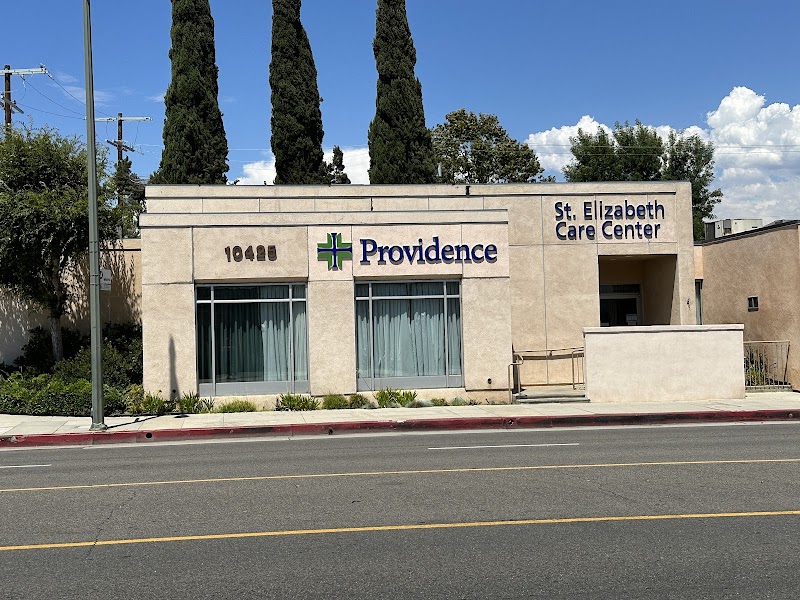
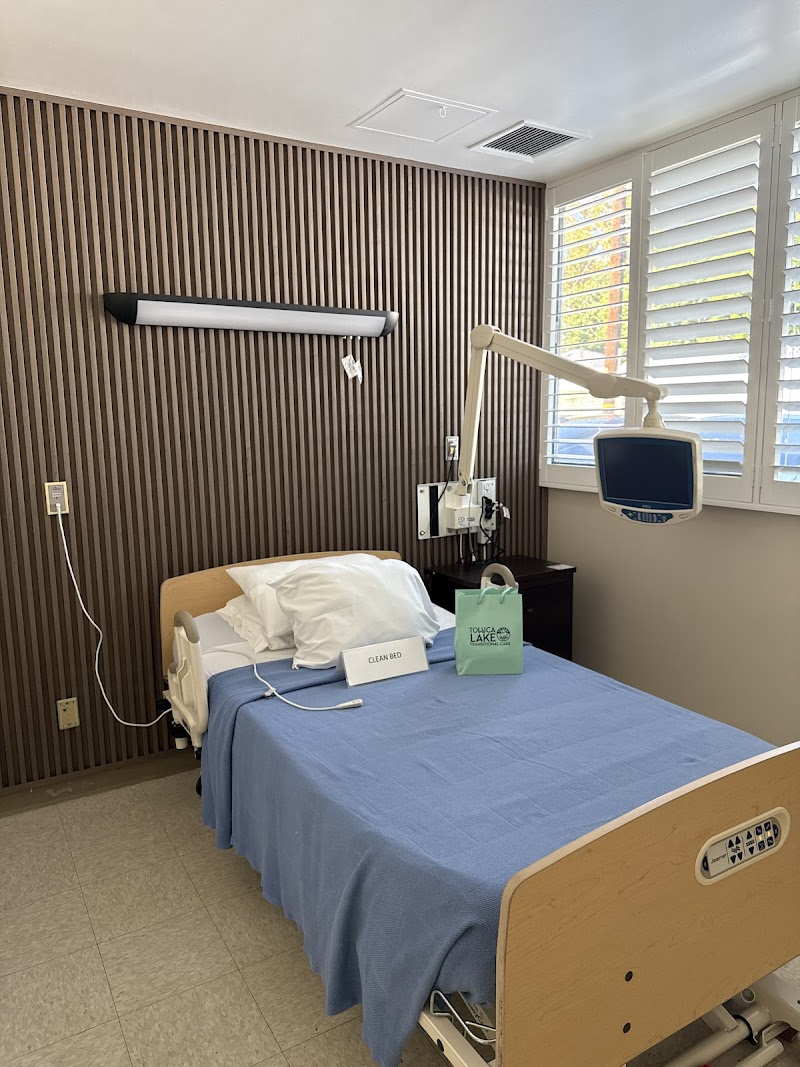
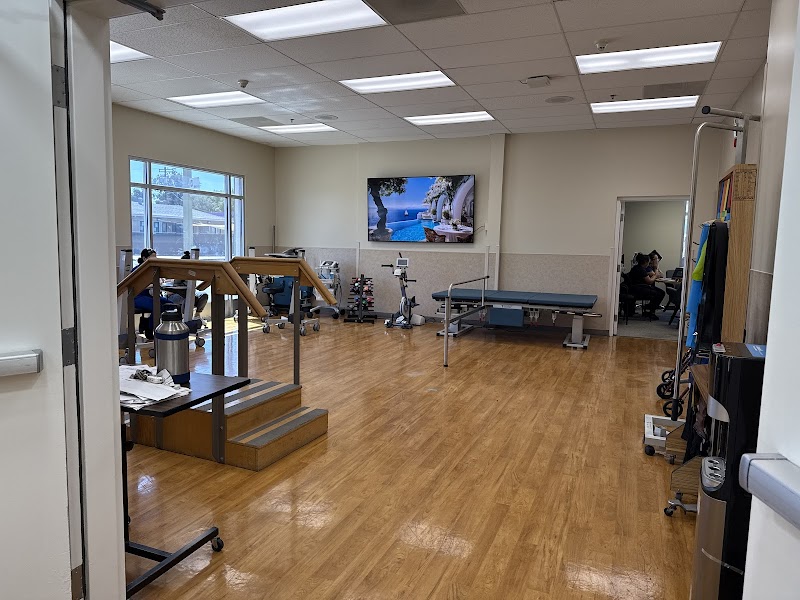
PROVIDENCE ST ELIZABETH CARE CENTER

10425 MAGNOLIA BLVD, NORTH HOLLYWOOD, CA 91601 (818) 980-3872
Non profit - Church related 52 Beds PROVIDENCE HEALTH & SERVICES Data: November 2025 2 Immediate Jeopardy citations
Trust Grade
26/100
#886 of 1155 in CA
Last Inspection: October 2024

Within standard 12-15 month inspection cycle. Federal law requires annual inspections.

Overview

Providence St. Elizabeth Care Center has received a Trust Grade of F, indicating significant concerns about the quality of care provided. This facility ranks #886 out of 1155 in California, placing it in the bottom half of nursing homes in the state, and #230 out of 369 in Los Angeles County, meaning there are only a few better options nearby. Although the facility is improving, with issues decreasing from 28 to 26 over the past year, it still faces serious challenges, including 65 total deficiencies, with critical incidents related to medication errors. For example, residents have not received their medications as prescribed, and there were instances of using another resident's medication without proper procedure, which raises red flags about safety. Staffing appears to be a relative strength, with a turnover rate of 17%, significantly lower than the California average, but the concerning fines of $33,540 suggest ongoing compliance issues.

Trust Score
F
26/100
In California
#886/1155
Bottom 24%
Safety Record
High Risk
Review needed
Inspections
Getting Better
28 → 26 violations
Staff Stability
✓ Good
17% annual turnover. Excellent stability, 31 points below California's 48% average. Staff who stay learn residents' needs.
Penalties
✓ Good
$33,540 in fines. Lower than most California facilities. Relatively clean record.
Skilled Nurses
⚠ Watch
Each resident gets only 22 minutes of Registered Nurse (RN) attention daily — below average for California. Fewer RN minutes means fewer trained eyes watching for problems.
Violations
⚠ Watch
65 deficiencies on record. Higher than average. Multiple issues found across inspections.
★★☆☆☆
2.0
Overall Rating
★★★☆☆
3.0
Staff Levels
★★★★★
5.0
Care Quality
★☆☆☆☆
1.0
Inspection Score
Stable
2023: 28 issues
2024: 26 issues

The Good

  • 5-Star Quality Measures · Strong clinical quality outcomes
  • Low Staff Turnover (17%) · Staff stability means consistent care
  • Full Sprinkler Coverage · Fire safety systems throughout facility
  • No fines on record
  • Staff turnover is low (17%)

    31 points below California average of 48%

Facility shows strength in quality measures, staff retention, fire safety.

The Bad

2-Star Overall Rating

Below California average (3.1)

Below average - review inspection findings carefully

Federal Fines: $33,540

Above median ($33,413)

Moderate penalties - review what triggered them

Chain: PROVIDENCE HEALTH & SERVICES

Part of a multi-facility chain

Ask about local staffing decisions and management

The Ugly 65 deficiencies on record

2 life-threatening
Oct 2024 22 deficiencies 2 IJ
CRITICAL (J)

Immediate Jeopardy (IJ) - the most serious Medicare violation

Pharmacy Services (Tag F0755)

Someone could have died · This affected 1 resident

**NOTE- TERMS IN BRACKETS HAVE BEEN EDITED TO PROTECT CONFIDENTIALITY** Based on observation, interview, and record review, the facility failed to: 1. Reorder medications five (5) days in advance of ...

Read full inspector narrative →
**NOTE- TERMS IN BRACKETS HAVE BEEN EDITED TO PROTECT CONFIDENTIALITY** Based on observation, interview, and record review, the facility failed to: 1. Reorder medications five (5) days in advance of need to assure an adequate supply was on hand (current availability) as per facility policy for two (2) of four (4) sampled residents (Resident 5 and 31) observed during the Medication Administration facility task. 2. Follow-up for delivery and availability of medications for two (2) of four (4) sampled residents (Resident 5 and 31) observed during the Medication Administration facility task. 3. Remove and destroy and not use another resident's medication (Resident 18, a discharged resident) to provide Eliquis (a medication used for cerebrovascular accidents [CVA, also known as stroke, a loss of blood flow to part of the brain, which damages brain tissue]) to Resident 31 from [DATE] to [DATE]. These deficient practices resulted in: 1. Resident 5 not receiving two (2) doses on [DATE] at 9 a.m. and 5 p.m. of metoprolol (a medication used to treat hypertension [a condition in which the blood vessels have persistently raised pressure]) and one (1) dose on [DATE] at 8 a.m. of bumetanide (a medication used to treat edema [swelling of feet, ankles, legs, and other parts of the body, such as the face, hands, and abdomen caused by fluid retention]) on [DATE], increasing the potential to cause Resident 5 serious harm, serious impairment, and serious complications, potentially resulting in elevated blood pressure, hospitalization, and/or death. 2. Resident 31 not receiving two (2) doses on [DATE] at 9 a.m. and 5 p.m. of Eliquis, two (2) doses on [DATE] at 9 a.m. and 5 p.m. of brimonidine (a medication used for glaucoma [a condition of increased pressure in the eyeball]), one (1) dose on [DATE] at 9 a.m. of finasteride (a medication used for benign prostatic hyperplasia [BPH] - a condition in men where the prostate gland - a small gland located inside the groin - is enlarged]), one (1) dose on [DATE] at 9 a.m. of folic acid (a medication used for anemia [a condition with lower-than-normal number of red blood cells]), and one (1) dose on [DATE] at 9 a.m. of tamsulosin (a medication used for BPH) increasing the potential to cause Resident 31 serious harm, serious impairment, and serious complications, potentially resulting in blood clots, blindness, stroke, hospitalization, and/or death. 3. Resident 31 receiving 60 doses of Eliquis between [DATE] and [DATE] from Resident 18's medication supply. On [DATE] at 3:36 p.m. the State Survey Agency (SSA) called an Immediate Jeopardy (IJ - a situation in which the facility's noncompliance with one or more requirements of participation has caused, or is likely to cause, serious injury, harm, impairment, or death to a resident) for the facility's failure to provide routine and emergency medications to its residents, and the facility's failure to acquire medications to meet the needs of the residents. The Administrator (ADMIN) and the Director of Nursing (DON) were notified of the IJ from the failure to ensure Residents 5 and 31 had medication available for administration at the scheduled times per physician orders. On [DATE] at 3:47 p.m., the IJ was removed in the presence of the ADMIN and the DON while onsite, after verifying through observation, interview, and record review the implementation of the facility's submitted and accepted IJ Removal Plan which included the following summarized actions: 1. Under the direction and leadership of the DON, all necessary medications for Residents 5 and 31 were reordered on [DATE]. 2. Licensed Vocational Nurse 1 (LVN 1) completed Situation, Background, Assessment, Recommendation (SBAR - a communication framework used to share information about a resident that needs attention tool) for Resident 5 for the potential change of condition related to the unavailability of medications and notified Physician 1 (P 1). 3. LVN 1 completed SBAR tool for Resident 31 for the potential change of condition related to the unavailability of medications and notified Medical Director 1 (MD 1). 4. P 1 ordered laboratory (lab) tests for Resident 5 and MD 1 ordered stat (emergent) lab tests for Resident 31. 5. Resident 5 and Family Representative 1 (FR 1) were made aware by The Interdisciplinary Team (IDT - a team of health care professionals from different disciplines who work together to provide personalized care for residents) and MD 1 of the medication omissions (not giving/skipping), lab tests ordered by P 1, and updated plan of care related to the medication omissions. Resident 31 was made aware by the IDT and MD 1 of the medication omissions, lab tests ordered by MD 1, and updated plan of care related to the medication omissions. 6. The IDT conducted a meeting to review SBAR tool for the potential change of condition related to the unavailability of medications, ordered lab tests, and updated plan of care related to the medication omissions for Resident 5. The IDT conducted meeting to review SBAR tool for the potential change of condition related to the unavailability of medications, ordered stat lab tests, and updated plan of care related to the medication omissions for Resident 31. 7. The Consulting Pharmacist (CP) and Consulting Pharmacy Registered Nurse 1 (CPRN 1) conducted an audit of Medication Cart 1 on [DATE] to reconcile (the process of identifying the most accurate list of all medications that the resident is taking) medications on hand against the physician orders for Residents 5 and 31, and all medications were on hand. 8. MD 1 conducted physical assessments and provided progress notes for Residents 5 and 31 on [DATE]. As of [DATE], no untoward (unexpected) findings or side effects related to medication omission have been noted for either Resident 5 or 31. 9. The DON, the Director of Staff Development (DSD), and LVN 2 conducted an audit of Medication Carts 1 and 2 on [DATE] to reconcile medications on hand and medication administration record against the physician orders and identified 12 residents with total of 17 medications with less than 5 days' supply on hand and re-ordered the medications. 10. The CP and CPRN 1 conducted audits of Medication Carts 1 and 2 on [DATE] to reconcile medications on hand against the physician orders for all residents and identified nine remaining residents each with one medication with less than five-day supply on hand that was already re-ordered. 11. A Root Cause Analysis (RCA - a structured process for identifying the underlying cause of a problem and developing solutions to prevent it from happening again) was initiated on [DATE] by the ADMIN and the DON to determine causative factors for the systemic breakdown. 12. The DON conducted in-service (a type of training that takes place while an employee is on the job, and is designed to improve their skills and knowledge to enhance their performance) for the licensed nursing staff on [DATE] regarding the following: - Daily review of resident medication supply for availability, - Ensuring residents receive mediations as prescribed by the physician and administered at the scheduled times, - Ensuring all licensed nurses are following facility policy and procedures (P&P) on Ordering and Receiving medications from the Dispensing Pharmacy, indicating that medications are re-ordered five days in advance, - Following through daily with the dispensing pharmacy for timely delivery of all ordered medications, - How to utilize the Medication Refill Audit Tool. 13. The DON or designee will track the following during the Daily Nursing Huddles (short, regular meeting where a healthcare team discusses resident safety and care, and plans for the day ahead) Monday through Sunday: - Timely (5 days) Ordering of Medications - Timely Delivery of Medication - Timely Administration of Medication 14. The DON or designee will present findings at the Daily Stand-Up Meeting (short, daily meeting where healthcare team members share updates on their work and discuss progress) Monday through Friday for immediate intervention as warranted by the ADMIN and/or IDT. Trends will be discussed with MD 1, the IDT, and any relevant parties such as vendor pharmacy to support process improvement until 100% compliance is achieved. 15. The CP and CPRN 1 will conduct critical medication pass audits with randomly selected licensed nurse monthly. The DON or designee will conduct medication pass audits with selected licensed nurse weekly. Trends will be discussed with MD 1, the IDT, and/or any relevant parties such as vendor pharmacy weekly or as often as necessary to support process improvement until 100% compliance is achieved. 16. The ADMIN will monitor the outcomes of the systemic change. Any trends noted shall be discussed at monthly Quality Assurance Performance Improvement (QAPI - a systematic, comprehensive, and data-driven approach conducted by the facility to improve the quality of care and services provided to the residents) meetings for three months with modifications to the process as warranted. Cross references: F759 and F760 Findings: a. During a review of Resident 5's admission Record (a document containing demographic and diagnostic information), the admission Record indicated Resident 5 was originally admitted to the facility on [DATE] and was re-admitted on [DATE] with diagnoses including cerebral infarction (a serious condition that occurs when blood flow to the brain is blocked, causing brain tissue to die,) atrial fibrillation (irregular heartbeat,) essential hypertension (high blood pressure that develops over time), and heart disease (a general term for conditions that affect the heart or blood vessels, and how they function which can lead to edema.) During a review of Resident 5's Minimum Data Set (MDS - a federally mandated resident assessment tool) dated [DATE], the MDS indicated Resident 5 had moderately impaired cognition (mental action or process of acquiring knowledge and understanding). The MDS indicated Resident 5 needed partial/moderate assistance (helper does less than half the effort; helper lifts, holds, or supports the trunk or limbs, but provides less than half the effort) with rolling from left and right, sitting to lying, and lying to sitting on side of bed. The MDS also indicated Resident 5 needed substantial/maximal assistance (helper does more than half the effort; helper lifts or holds the trunk or limbs and provides more than half the effort) with chair/bed-to-chair transfers. During a review of Resident 5's IDT Care Plan Conference Summary dated [DATE], the IDT Care Plan Conference Summary indicated Resident 5 is forgetful, able to express (make self understood), and able to understand others. During a review of Resident 5's Physician Orders (a report listing the physician order for the resident) from [DATE] to [DATE], the Physician Orders indicated Resident 5 was prescribed the following: 1. bumetanide 0.5 milligrams (mg - a measure of unit of mass) tablet by mouth once a day at 8 a.m. for fluid retention, starting [DATE], 2. metoprolol 25 mg tablet by mouth twice a day at 9 a.m. and 5 p.m. for hypertension, starting [DATE]. During a review of Resident 5's Medication Administration Record ([MAR] - a document of the medications administered to a resident that is part of the resident's permanent medical record], for [DATE], the MAR indicated the following: 1. For [DATE], there was no documentation noted in the MAR that Resident 5 was administered bumetanide 0.5 mg at 8 a.m. 2. For [DATE], there was no documentation noted in the MAR that Resident 5 was administered metoprolol 25 mg at 9 a.m. and 5 p.m. During a medication administration observation on [DATE] at 9:18 a.m. by Medication Cart 1, LVN 1 was observed not administering the following medications to Resident 5: 1. metoprolol 25 mg 2. bumetanide 0.5 mg LVN 1 informed Resident 5 that the metoprolol and bumetanide were not available that morning (9:18 a.m.) and that Resident 5 would have to wait for the pharmacy to deliver the medication to administer later that day. During an interview on [DATE] at 9:20 a.m. with LVN 1, LVN 1 stated that he (LVN 1) did not administer metoprolol 25 mg on [DATE] at 9 a.m. and bumetanide 0.5 mg on [DATE] at 8 a.m. to Resident 5, since the medications were not available in the medication carts, in the facility or in the emergency kits ([eKIT] - a kit with limited supply of medications needed during emergent situations). LVN 1 stated that medications should be re-ordered from the pharmacy three (3) to five (5) days prior to the last available dose and followed up as needed, to ensure timely availability of medications to all residents. LVN 1 stated that by missing doses of those critical medications (such as metoprolol) it increased the risk that Residents 5 could experience high blood pressure and stroke possibly resulting in hospitalization and/or death. During an interview on [DATE] at 2:01 p.m. with the DON, the DON stated that Resident 5 was not administered metoprolol 25 mg on [DATE] at 9 a.m. and 5 p.m. and bumetanide 0.5 mg on [DATE] at 8 a.m. due to the medications not being available. The DON stated those (metoprolol and bumetanide) medications were not available in the medication carts and not available in the eKIT. The DON stated Resident 5 was prescribed metoprolol for high blood pressure and bumetanide for edema. The DON stated missing the administrations of those critical medications (such as metoprolol) can cause elevated blood pressure by not maintaining normal pressures leading to potential stroke resulting in hospitalization and/or death. The DON stated that several licensed nurses failed to reorder those medications within the three (3) to five (5) day timeframe and that the DON failed to follow-up on the status of the re-ordered medications from pharmacy to prevent the unavailability of medications and interruption of medication therapy and continuity of care for Residents 5. The DON stated there was no consistent system in place to ensure timely reordering and follow-up of medications. The DON stated there needed to be a more proactive approach and better communications put in place to prevent those system failures from affecting other residents in the future. The DON stated she (DON) sees the immediacy of those deficient practices and why the facility needed to have immediate actions taken to prevent further harm to its residents. During an interview on [DATE] at 3:19 p.m. with LVN 1, LVN 1 stated that he (LVN 1) was not able to administer the 5 p.m. dose of metoprolol 25 mg for Resident 5 on [DATE] since the medication was not available. During an interview on [DATE] at 8:44 a.m. with the CP, the CP stated that the physician should be informed when medications are skipped and not administered to a resident as alternate medications and assessments may need to be ordered to prevent resident harm. The CP stated not administering critical medications like metoprolol can potentially increase the risk of elevated heart rate and elevated blood pressure resulting in hospitalization. During a review of the facility's pharmacy delivery manifests (detailed statement or invoice for shipment of medications) faxed to the facility on [DATE], the pharmacy delivery manifest indicated the facility received a 30-day supply of Resident 5's bumetanide 0.5 mg tablets on [DATE] and did not receive an additional supply until [DATE]. During a review of the facility's pharmacy Consolidated Delivery Sheets (record that includes the medications delivered to the facility from the dispensing pharmacy) faxed to the facility on [DATE], the Consolidated Delivery Sheets indicated the facility received a 30-day supply of Resident 5's metoprolol 25 mg tablets on [DATE] and did not receive an additional supply until [DATE]. b. During a review of Resident 31's admission Record, the admission Record indicated Resident 31 was originally admitted to the facility on [DATE] with diagnoses including myocardial infarction (heart attack,) atrial fibrillation (irregular heartbeat,) BPH, hypertensive heart disease (heart disease caused by constant high blood pressure). During a review of Resident 31's MDS dated [DATE], the MDS indicated Resident 31 had intact cognition (mental action or process of acquiring knowledge and understanding). The MDS indicated Resident 31 needed partial/moderate assistance (helper does less than half the effort; helper lifts, holds, or supports the trunk or limbs, but provides less than half the effort) with rolling from left and right, sitting to lying, lying to sitting on side of bed, sitting to standing, and chair/bed-to-chair transfers. During a review of Resident 31's Physician Orders, from [DATE] to [DATE], the Physician Orders indicated Resident 31 was prescribed the following: 1. Eliquis 2.5 mg tablet by mouth twice a day at 9 a.m. and 5 p.m. for CVA prophylaxis (the prevention of disease or the measures taken to maintain health), starting [DATE], 2. brimonidine 0.2% one (1) drop each eye twice a day at 9 a.m. and 5 p.m. for glaucoma, starting [DATE], 3. finasteride five (5) mg tablet by mouth once a day at 9 a.m. for BPH, starting [DATE], 4. folic acid one (1) mg tablet by mouth once a day at 9 a.m. for anemia, starting [DATE], 5. tamsulosin 0.4 mg capsule by mouth once a day at 9 a.m. for BPH, starting [DATE]. During a review of Resident 31's MAR for [DATE], the MAR indicated the following: 1. For [DATE], there was no documentation noted in the MAR that Resident 31 was administered Eliquis 2.5 mg at 9 a.m. and 5 p.m. 2. For [DATE], there was no documentation noted in the MAR that Resident 31 was administered brimonidine 0.2% at 9 a.m. and 5 p.m. 3. For [DATE], there was no documentation noted in the MAR that Resident 31 was administered finasteride five (5) mg at 9 a.m. 4. For [DATE], there was no documentation noted in the MAR that Resident 31 was administered folic acid one (1) mg at 9 a.m. 5. For [DATE], there was no documentation noted in the MAR that Resident 31 was administered tamsulosin 0.4 mg at 9 a.m. During a medication administration observation on [DATE] at 8:49 a.m. with LVN 1 at Medication Cart 1, LVN 1 was observed not administering the following medications to Resident 31: 1. Eliquis 2.5 mg tablet 2. Brimonidine 0.2% eye drops 3. finasteride five (5) mg tablet 4. folic acid one (1) mg tablet 5. Tamsulosin 0.4 mg tablet LVN 1 informed Resident 31 that the Eliquis, Brimonidine, finasteride, folic acid, and Tamsulosin were not available and that Resident 31 would have to wait for pharmacy to deliver the medications to administer later that day. During an interview on [DATE] at 9:20 a.m. with LVN 1, LVN 1 stated that he (LVN 1) did not administer Eliquis 2.5 mg and brimonidine 0.2%, finasteride five (5 mg), folic acid one (1) mg, and tamsulosin 0.4 mg on [DATE] at 9 a.m. to Resident 31, since the medications were not available in the medication carts or in the facility. LVN 1 stated that those medications were not available in the eKIT either. LVN 1 stated that he (LVN 1) will follow-up with the pharmacy for the refill of those (Eliquis, brimonidine, finasteride, folic acid, tamsulosin) medications and inform the physicians that the morning doses on [DATE] were not administered to Resident 31. LVN 1 stated that medications should be re-ordered from the pharmacy three (3) to five (5) days prior to the last available dose and followed up as needed, to ensure timely availability of medications to all residents. LVN 1 stated missing doses of those critical medications (such as Eliquis, brimonidine,) can harm Resident 31 by causing increased eye pressures, another CVA, and stroke resulting in hospitalization and/or death. During a concurrent observation and interview on [DATE] at 1:35 p.m. by Medication Cart 1 with LVN 1 and the DON, LVN 1 stated that due to the unavailability of Eliquis 2.5 mg from [DATE] to [DATE], LVN 1 used Resident 18's supply of Eliquis 2.5 mg to ensure that Resident 31 did not miss any doses of the critical medication. LVN 1 stated that he (LVN 1) should not have used another resident's medication supply. LVN 1 stated that according to facility policy, discharged resident's medications should be destroyed. LVN 1 stated that he (LVN 1) did not administer Eliquis 2.5 mg and brimonidine 0.2%, finasteride five (5 mg), folic acid one (1) mg and tamsulosin 0.4 mg on [DATE] at 9 a.m. to Resident 31, since the medications were not available in the medication carts or in the facility. LVN 1 stated that those medications were not available in the eKIT either, and LVN 1 pulled out Resident 18's medication bubble pack (medication packaging system that contains individual doses of medication per bubble) from the bottom drawer of Medication Cart 1. The medication bubble pack indicated Resident 18 was prescribed Eliquis 2.5 mg tablet to be given by mouth twice a day. LVN 1 stated that he (LVN 1) will follow-up with the pharmacy for the refill of those (Eliquis, brimonidine, finasteride, folic acid, tamsulosin) medications and inform the physicians that the morning doses on [DATE] were not administered to Resident 31. LVN 1 stated that medications should be re-ordered from the pharmacy three (3) to five (5) days prior to the last available dose and followed up as needed, to ensure timely availability of medications to all residents. LVN 1 stated missing doses of those critical medications (such as Eliquis, brimonidine,) can harm Resident 31 by causing increased eye pressures, another CVA, and stroke resulting in hospitalization and/or death. The DON stated per facility policy, medication refills should be re-ordered from the pharmacy about three (3) to five (5) days before the last dose to prevent medications from not being available to the residents at their scheduled times. The DON stated licensed nurses were expected to re-order medications timely (5 days) and follow-up on the refills to ensure medications were available to residents. The DON also stated that licensed nurses should ensure physician orders are followed and medications are administered at the scheduled times. The DON stated per facility policy, medications supplied for one resident should not be used for another resident, and when a resident was discharged the medications should have been destroyed or returned to the resident. During an interview on [DATE] at 2:01 p.m. with the DON, the DON stated that Resident 31 was not administered Eliquis 2.5 mg, brimonidine 0.2% drops, finasteride five (5) mg, folic acid one (1) mg, and tamsulosin 0.4 mg for the 9 a.m. and 5 p.m. doses on [DATE] due to the medications not being available. The DON stated those medications (Eliquis, brimonidine, finasteride, folic acid, tamsulosin) were not available in the medication carts and not available in the eKITS. The DON stated Resident 31 was prescribed Eliquis for CVA prophylaxis, finasteride and Tamsulosin for BPH, Brimonidine for glaucoma, and folic acid for anemia management. The DON stated missing the administrations of those critical medications (Eliquis, brimonidine, finasteride, folic acid, tamsulosin) can cause clotting (sticky lump that forms when blood dries up or becomes thick) of blood due to the blood not being properly thinned, the clot traveling the heart and brain forming an embolism (obstruction caused by clots) potentially causing a heart attack and stroke, elevated eye pressure by not maintaining normal pressures leading to potential stroke and vision impairment such as blindness, all resulting in potential hospitalization and/or death. The DON stated that several licensed nurses failed to reorder those medications (Eliquis, brimonidine, finasteride, folic acid, tamsulosin) within the three (3) to five (5) day timeframe and that the DON failed to follow-up on the status of the re-ordered medications from pharmacy to prevent the unavailability of medications and interruption of medication therapy and continuity of care for Residents 31. The DON stated there was no consistent system in place to ensure timely reordering and follow-up of medications. The DON stated there needed to be a more proactive approach and better communications put in place to prevent those system failures from affecting other residents in the future. The DON stated she (DON) sees the immediacy of those deficient practices and why the facility needed to have immediate actions taken to prevent further harm to its residents. During an interview on [DATE] at 2:10 p.m. with LVN 3, LVN 3 stated that medications should be re-ordered from the pharmacy five (5) to six (6) days in advance of using the last available dose to ensure timely delivery by pharmacy. LVN 3 stated that she (LVN 3) informed the DON that the Eliquis 2.5 mg for Resident 31 was not available (unable to recall the date). LVN 3 stated it was important for Resident 31 to receive Eliquis to prevent blood clots, heart attack, stroke, hospitalization, and/or death. LVN 3 stated she (LVN 3) used Resident 18's supply of Eliquis 2.5 mg from [DATE] to [DATE] nsure that Resident 31 did not miss any doses. LVN 3 stated that she (LVN 3) knew not to use another resident's medication supply but used it in desperation, and that it was wrong to do so. LVN 3 stated that she (LVN 3) did not inform anyone that she (LVN 3) was using another resident's Eliquis supply, and that discharged resident's medications should be destroyed according to facility policy. During an interview on [DATE] at 2:25 p.m. with the DON, in the presence of LVN 3, the DON stated that on [DATE] was the first day the DON followed up with pharmacy regarding the refill and delivery of Eliquis 2.5 mg for Resident 31. The DON stated she (DON) had not called or communicated with pharmacy personnel prior to [DATE] and only faxed Eliquis refill requests to the pharmacy on [DATE] and [DATE] and assumed the medication was delivered. The DON stated she (DON) failed to follow-up with the requests and that going forward there needs to be a system put in place for following up on medication refills. During an interview on [DATE] at 3:19 p.m. with LVN 1, LVN 1 stated that he (LVN 1) was not able to administer the 5 p.m. doses of Eliquis 2.5 mg and brimonidine 0.2% for Resident 31 on [DATE] since the medications were not available. During an interview on [DATE] at 8:44 a.m. with the CP, the CP stated that medications supplied for one resident should not be used for another resident. The CP stated that the physician should be informed when medications are skipped and not administered to a resident as alternate medications and assessments may need to be ordered to prevent resident harm. The CP stated not administering critical medications like Eliquis and brimonidine for Resident 31 can potentially increase the risk of blood clotting, CVA, and elevated internal pressure of the eye resulting in hospitalization and/or death. During a review of the facility's P&P, titled Medication Administration - General Guidelines, dated [DATE], the P&P indicated: B. Administration 2) Medications are administered in accordance with written orders of the attending physician. 10) Medications are administered within 60 minutes of scheduled time (1 hour before and 1 hour after) . routine medications are administered according to the established medication administration schedule for the facility. 12) Medications supplied for one resident are never administered to another resident. During a review of the facility's P&P, titled Ordering and Receiving Medications from The Dispensing Pharmacy, dated [DATE], the P&P indicated that Medications and related products are received from the dispensing pharmacy on a timely basis. 2.a. Reorder medications five days in advance of need to assure adequate supply is on hand. c. The refill is called in, faxed, or otherwise transmitted to the pharmacy. 3.a. If needed before the next regular delivery, inform pharmacy of the need for prompt delivery. During a review of the facility's P&P, titled Emergency Pharmacy Service and Emergency Kits, dated [DATE], the P&P indicated: D. Medications are not borrowed from other residents. The ordered medication is obtained either from the emergency supply or from the provider pharmacy. During a review of the facility's P&P, titled Medication Error Reporting, dated 1/2023, the P&P indicated: Medication errors will include but not be limited to: d. dose skipped t. wrong Resident's card used to give medication. During a review of facility's P&P titled, Discontinued Medications, dated [DATE], the P&P indicated that When medications are expired, discontinued by a prescriber, a resident is transferred or discharged and does not take medications with him/her, or in the event of a resident's death, the medications are marked as discontinued or stored in a separate location and later destroyed. A. If a medication expires, or a prescriber discontinues a medication, the discontinued drug container shall be marked or otherwise identified or shall be stored in a separate location designated solely for this purpose. The date the medication was discontinued shall be indicated on the medication container. B. Medications awaiting disposal or return are stored in a locked secure area designated for that purpose until destroyed. Medications are removed from the medication cart or storage area prior to expiration, and immediately upon receipt of an order to discontinue. During a review of facility's P&P titled, Medication Destruction, dated [DATE], the P&P indicated that Discontinued medications and medications left in the facility after a resident's discharge .are destroyed. A. All medications are placed in the proper waste container per facility policy.
CRITICAL (J)

Immediate Jeopardy (IJ) - the most serious Medicare violation

Unnecessary Medications (Tag F0759)

Someone could have died · This affected 1 resident

**NOTE- TERMS IN BRACKETS HAVE BEEN EDITED TO PROTECT CONFIDENTIALITY** Based on observation, interview, and record review, the facility failed to maintain a medication error rate below five (5) perce...

Read full inspector narrative →
**NOTE- TERMS IN BRACKETS HAVE BEEN EDITED TO PROTECT CONFIDENTIALITY** Based on observation, interview, and record review, the facility failed to maintain a medication error rate below five (5) percent (% - unit of measure) by having seven (7) medication errors out of 26 medication administration opportunities contributing to an overall error rate of 26.92% affecting two (2) of four (4) sampled residents (Resident 5 and 31) observed during the Medication Administration facility task. The medication errors were as follows: 1. Resident 5 did not receive the following medications as ordered by Resident 5's physician: - two (2) doses on [DATE] at 9 a.m. and 5 p.m. of metoprolol (a medication used to for hypertension [a condition in which the blood vessels have persistently raised pressure]) - one (1) dose on [DATE] at 8 a.m. of bumetanide (a medication used for edema [swelling of feet, ankles, legs, and other parts of the body, such as the face, hands, and abdomen caused by fluid retention]) 2. Resident 31 did not receive the following medications, as ordered by Resident 31's physician: - two (2) doses on [DATE] at 9 a.m. and 5 p.m. of Eliquis (a medication used for cerebrovascular accidents [CVA, also known as stroke] - an interruption in the flow of blood to cells in the brain caused by blood clots and high blood pressure]), - two (2) doses on [DATE] at 9 a.m. and 5 p.m. of brimonidine (a medication used for glaucoma [a condition of increased pressure in the eyeball]), - one (1) dose on [DATE] at 9 a.m. of finasteride (a medication used for benign prostatic hyperplasia ([BPH] - a condition in men where the prostate gland - a small gland located inside the groin - is enlarged), - one (1) dose on [DATE] at 9 a.m. of folic acid (a medication used for anemia [a condition with lower-than-normal number of red blood cells]), - one (1) dose on [DATE] at 9 a.m. of tamsulosin (a medication used for BPH) On [DATE] at 3:36 p.m. the State Survey Agency (SSA) called an Immediate Jeopardy (IJ - a situation in which the facility's noncompliance with one or more requirements of participation has caused, or is likely to cause, serious injury, harm, impairment, or death to a resident) in the presence of the Administrator (ADMIN) and the Director of Nursing (DON) under 42 Code of Federal Regulations (CFR) §483.45(f)(1) Medication error rates are not 5 percent or greater. The facility had seven (7) medication errors out of 26 medication administration opportunities contributing to an overall error rate of 26.92 %. These deficient practices had the potential to cause Resident 5 serious harm, serious impairment, and serious complications, potentially resulting in elevated blood pressure, hospitalization, and/or death; and had the potential to cause Resident 31 serious harm, serious impairment, and serious complications, potentially resulting in blood clots, blindness, stroke, hospitalization, and/or death. On [DATE] at 3:47 p.m., the IJ was removed in the presence of the ADMIN and the DON while onsite, after verifying through observation, interview, and record review the implementation of the facility's submitted and accepted IJ Removal Plan which included the following summarized actions: 1. Under the direction and leadership of the DON, all necessary medications for Residents 5 and 31 were reordered on [DATE]. 2. Licensed Vocational Nurse 1 (LVN 1) completed Situation, Background, Assessment, Recommendation (SBAR - a communication framework used to share information about a resident that needs attention tool) for Resident 5 for the potential change of condition related to the unavailability of medications and notified Physician 1 (P 1). 3. LVN 1 completed SBAR tool for Resident 31 for the potential change of condition related to the unavailability of medications and notified Medical Director 1 (MD 1). 4. P 1 ordered laboratory (lab) tests for Resident 5 and MD 1 ordered stat (emergent) lab tests for Resident 31. 5. Resident 5 and Family Representative 1 (FR 1) were made aware by The Interdisciplinary Team (IDT - a team of health care professionals from different disciplines who work together to provide personalized care for residents) and MD 1 of the medication omissions, lab tests ordered by P 1, and updated plan of care related to the medication omissions. Resident 31 was made aware by the IDT and MD 1 of the medication omissions, lab tests ordered by MD 1, and updated plan of care related to the medication omissions. 6. The IDT conducted a meeting to review SBAR tool for the potential change of condition related to the unavailability of medications, ordered lab tests, and updated plan of care related to the medication omissions for Resident 5. The IDT conducted meeting to review SBAR tool for the potential change of condition related to the unavailability of medications, ordered stat lab tests, and updated plan of care related to the medication omissions for Resident 31. 7. The Consulting Pharmacist (CP) and Consulting Pharmacy Registered Nurse 1 (CPRN 1) conducted an audit of Medication Cart 1 on [DATE] to reconcile (the process of identifying the most accurate list of all medications that the resident is taking) medications on hand against the physician orders for Residents 5 and 31, and all medications were on hand. 8. MD 1 conducted physical assessments and provided progress notes for Residents 5 and 31 on [DATE]. As of [DATE], no untoward (unexpected) findings or side effects related to medication omission have been noted for either Resident 5 or 31. 9. The DON, the Director of Staff Development (DSD), and LVN 2 conducted an audit of Medication Carts 1 and 2 on [DATE] to reconcile medications on hand and medication administration record against the physician orders and identified 12 residents with total of 17 medications with less than 5 days' supply on hand and re-ordered the medications. 10. The CP and CPRN 1 conducted audits of Medication Carts 1 and 2 on [DATE] to reconcile medications on hand against the physician orders for all residents and identified nine remaining residents each with one medication with less than five-day supply on hand that was already re-ordered. 11. A Root Cause Analysis (RCA - a structured process for identifying the underlying cause of a problem and developing solutions to prevent it from happening again) was initiated on [DATE] by the ADMIN and the DON to determine causative factors for the systemic breakdown. 12. The DON conducted in-service (a type of training that takes place while an employee is on the job, and is designed to improve their skills and knowledge to enhance their performance) for the licensed nursing staff on [DATE] regarding the following: - Daily review of resident medication supply for availability, - Ensuring residents receive mediations as prescribed by the physician and administered at the scheduled times, Ensuring all licensed nurses are following facility policy and procedures (P&P) on Ordering and Receiving medications from the Dispensing Pharmacy, indicating that medications are re-ordered five days in advance, - Following through daily with the dispensing pharmacy for timely delivery of all ordered medications, - How to utilize the Medication Refill Audit Tool. 13. The DON or designee will track the following during the Daily Nursing Huddles (short, regular meeting where a healthcare team discusses resident safety and care, and plans for the day ahead) Monday through Sunday: - Timely (5 days) Ordering of Medications - Timely Delivery of Medication - Timely Administration of Medication 14. The DON or designee will present findings at the Daily Stand-Up Meeting (short, daily meeting where healthcare team members share updates on their work and discuss progress) Monday through Friday for immediate intervention as warranted by the ADMIN and/or IDT. Trends will be discussed with MD 1, the IDT, and any relevant parties such as vendor pharmacy to support process improvement until 100% compliance is achieved. 15. The CP and CPRN 1 will conduct critical medication pass audits with randomly selected licensed nurse monthly. The DON or designee will conduct medication pass audits with selected licensed nurse weekly. Trends will be discussed with MD 1, the IDT, and/or any relevant parties such as vendor pharmacy weekly or as often as necessary to support process improvement until 100% compliance is achieved. 16. The ADMIN will monitor the outcomes of the systemic change. Any trends noted shall be discussed at monthly Quality Assurance Performance Improvement (QAPI - a systematic, comprehensive, and data-driven approach conducted by the facility to improve the quality of care and services provided to the residents) meetings for three months with modifications to the process as warranted. Cross references: F755 and F760 Findings: a. During a review of Resident 5's admission Record (a document containing demographic and diagnostic information), the admission Record indicated Resident 5 was originally admitted to the facility on [DATE] and was re-admitted on [DATE] with diagnoses including cerebral infarction (a serious condition that occurs when blood flow to the brain is blocked, causing brain tissue to die,) atrial fibrillation (irregular heartbeat,) essential hypertension (high blood pressure that develops over time), and heart disease (a general term for conditions that affect the heart or blood vessels, and how they function which can lead to edema.) During a review of Resident 5's Minimum Data Set (MDS - a federally mandated resident assessment tool) dated [DATE], the MDS indicated Resident 5 had moderately impaired cognition (mental action or process of acquiring knowledge and understanding). The MDS indicated Resident 5 needed partial/moderate assistance (helper does less than half the effort; helper lifts, holds, or supports the trunk or limbs, but provides less than half the effort) with rolling from left and right, sitting to lying, and lying to sitting on side of bed. The MDS also indicated Resident 5 needed substantial/maximal assistance (helper does more than half the effort; helper lifts or holds the trunk or limbs and provides more than half the effort) with chair/bed-to-chair transfers. During a review of Resident 5's IDT Care Plan Conference Summary dated [DATE], the IDT Care Plan Conference Summary indicated Resident 5 is forgetful, able to express (make self understood), and able to understand others. During a review of Resident 5's Physician Orders (a report listing the physician order for the resident) from [DATE] to [DATE], the Physician Orders indicated Resident 5 was prescribed the following: 1. bumetanide 0.5 milligrams (mg - a measure of unit of mass) tablet by mouth once a day at 8 a.m. for fluid retention, starting [DATE], 2. metoprolol 25 mg tablet by mouth twice a day at 9 a.m. and 5 p.m. for hypertension, starting [DATE]. During a review of Resident 5's Medication Administration Record ([MAR] - a document of the medications administered to a resident that is part of the resident's permanent medical record], for [DATE], the MAR indicated the following: 1. For [DATE], there was no documentation noted in the MAR that Resident 5 was administered bumetanide 0.5 mg at 8 a.m. 2. For [DATE], there was no documentation noted in the MAR that Resident 5 was administered metoprolol 25 mg at 9 a.m. and 5 p.m. During a medication administration observation on [DATE] at 9:18 a.m. by Medication Cart 1, LVN 1 was observed not administering the following medications to Resident 5: 1. metoprolol 25 mg 2. bumetanide 0.5 mg LVN 1 informed Resident 5 that the metoprolol and bumetanide were not available that morning (9:18 a.m.) and that Resident 5 would have to wait for the pharmacy to deliver the medication to administer later that day. During an interview on [DATE] at 9:20 a.m. with LVN 1, LVN 1 stated that he (LVN 1) did not administer metoprolol 25 mg on [DATE] at 9 a.m. and bumetanide 0.5 mg on [DATE] at 8 a.m. to Resident 5, since the medications were not available in the medication carts or in the facility. LVN 1 stated that medications should be re-ordered from the pharmacy three (3) to five (5) days prior to the last available dose and followed up as needed, to ensure timely availability of medications to all residents. LVN 1 stated that by missing doses of those critical medications (such as metoprolol) it increased the risk that Residents 5 could experience high blood pressure and stroke possibly resulting in hospitalization and/or death. During an interview on [DATE] at 1:35 p.m. with the DON, the DON stated that licensed nurses should ensure physician orders are followed and medications are administered at the scheduled times by following the five (5) rights of medication administration, which includes: right patient, right drug, right dose, right time, right route. During an interview on [DATE] at 2:01 p.m. with the DON, the DON stated that Resident 5 was not administered metoprolol 25 mg on [DATE] at 9 a.m. and 5 p.m. and bumetanide 0.5 mg on [DATE] at 8 a.m. due to the medications not being available. The DON stated those (metoprolol and bumetanide) medications were not available in the medication carts and not available in the emergency kits ([eKIT] - a kit with limited supply of medications needed during emergent situations). The DON stated Resident 5 was prescribed metoprolol for high blood pressure and bumetanide for edema. The DON stated missing the administrations of those critical medications (such as metoprolol) can cause elevated blood pressure by not maintaining normal pressures leading to potential stroke resulting in hospitalization and/or death. The DON stated that several licensed nurses failed to reorder those medications within the three (3) to five (5) day timeframe and that the DON failed to follow-up on the status of the re-ordered medications from pharmacy to prevent the unavailability of medications and interruption of medication therapy and continuity of care for Residents 5. The DON stated there was no consistent system in place to ensure timely reordering and follow-up of medications. The DON stated there needed to be a more proactive approach and better communications put in place to prevent those system failures from affecting other residents in the future. The DON stated she (DON) sees the immediacy of those deficient practices and why the facility needed to have immediate actions taken to prevent further harm to its residents. During an interview on [DATE] at 3:19 p.m. with LVN 1, LVN 1 stated that he (LVN 1) was not able to administer the 5 p.m. dose of metoprolol 25 mg for Resident 5 on [DATE] since the medication was not available. During an interview on [DATE] at 8:44 a.m. with the CP, the CP stated that the physician should be informed when medications are skipped and not administered to a resident as alternate medications and assessments may need to be ordered to prevent resident harm. The CP stated not administering critical medications like metoprolol can potentially increase the risk of elevated heart rate and elevated blood pressure resulting in hospitalization. During a review of the facility's pharmacy delivery manifests (detailed statement or invoice for shipment of medications) faxed to the facility on [DATE], the pharmacy delivery manifest indicated the facility received a 30-day supply of Resident 5's bumetanide 0.5 mg tablets on [DATE] and did not receive an additional supply until [DATE]. During a review of the facility's pharmacy Consolidated Delivery Sheets (record that includes the medications delivered to the facility from the dispensing pharmacy) faxed to the facility on [DATE], the Consolidated Delivery Sheets indicated the facility received a 30-day supply of Resident 5's metoprolol 25 mg tablets on [DATE] and did not receive an additional supply until [DATE]. b. During a review of Resident 31's admission Record, the admission Record indicated Resident 31 was originally admitted to the facility on [DATE] with diagnoses including myocardial infarction (heart attack,) atrial fibrillation (irregular heartbeat,) BPH, hypertensive heart disease (heart disease caused by constant high blood pressure). During a review of Resident 31's MDS dated [DATE], the MDS indicated Resident 31 had intact cognition (mental action or process of acquiring knowledge and understanding). The MDS indicated Resident 31 needed partial/moderate assistance (helper does less than half the effort; helper lifts, holds, or supports the trunk or limbs, but provides less than half the effort) with rolling from left and right, sitting to lying, lying to sitting on side of bed, sitting to standing, and chair/bed-to-chair transfers. During a review of Resident 31's Physician Orders, from [DATE] to [DATE], the Physician Orders indicated Resident 31 was prescribed the following: 1. Eliquis 2.5 mg tablet by mouth twice a day at 9 a.m. and 5 p.m. for CVA prophylaxis (the prevention of disease or the measures taken to maintain health), starting [DATE], 2. brimonidine 0.2% one (1) drop each eye twice a day at 9 a.m. and 5 p.m. for glaucoma, starting [DATE], 3. finasteride five (5) mg tablet by mouth once a day at 9 a.m. for BPH, starting [DATE], 4. folic acid one (1) mg tablet by mouth once a day at 9 a.m. for anemia, starting [DATE], 5. tamsulosin 0.4 mg capsule by mouth once a day at 9 a.m. for BPH, starting [DATE]. During a review of Resident 31's MAR for [DATE], the MAR indicated the following: 1. For [DATE], there was no documentation noted in the MAR that Resident 31 was administered Eliquis 2.5 mg at 9 a.m. and 5 p.m. 2. For [DATE], there was no documentation noted in the MAR that Resident 31 was administered brimonidine 0.2% at 9 a.m. and 5 p.m. 3. For [DATE], there was no documentation noted in the MAR that Resident 31 was administered finasteride five (5) mg at 9 a.m. 4. For [DATE], there was no documentation noted in the MAR that Resident 31 was administered folic acid one (1) mg at 9 a.m. 5. For [DATE], there was no documentation noted in the MAR that Resident 31 was administered tamsulosin 0.4 mg at 9 a.m. During a medication administration observation on [DATE] at 8:49 a.m., with LVN 1 by Medication Cart 1, LVN 1 was observed not administering the following medications to Resident 31: 1. Eliquis 2.5 mg tablet 2. brimonidine 0.2% eye drops 3. finasteride five (5) mg tablet 4. folic acid one (1) mg tablet 5. tamsulosin 0.4 mg tablet LVN 1 informed Resident 31 that the Eliquis, brimonidine, finasteride, folic acid and tamsulosin were not available and that Resident 31 would have to wait for pharmacy to deliver the medications to administer later that day. During an interview on [DATE] at 9:20 a.m. with LVN 1, LVN 1 stated that he (LVN 1) did not administer Eliquis 2.5 mg and brimonidine 0.2%, finasteride five (5 mg), folic acid one (1) mg and tamsulosin 0.4 mg on [DATE] at 9 a.m. to Resident 31, since the medications were not available in the medication carts or in the facility. LVN 1 stated that those medications were not available in the eKIT either. LVN 1 stated that he (LVN 1) will follow-up with the pharmacy for the refill of those (Eliquis, brimonidine, finasteride, folic acid, tamsulosin) medications and inform the physicians that the morning doses on [DATE] were not administered to Resident 31. LVN 1 stated that medications should be re-ordered from the pharmacy three (3) to five (5) days prior to the last available dose and followed up as needed, to ensure timely availability of medications to all residents. LVN 1 stated missing doses of those critical medications (such as Eliquis, brimonidine,) can harm Resident 31 by causing increased eye pressures, another CVA, and stroke resulting in hospitalization and/or death. During an interview, on [DATE] at 1:35 p.m. with the DON, the DON stated per facility policy, medication refills should be re-ordered from the pharmacy three (3) to five (5) days before the last dose to prevent medications from not being available to the residents at their scheduled times. The DON stated licensed nurses are expected to re-order residents' medications timely (5 days) and follow-up on the refills to ensure medications are available to residents. The DON also stated that licensed nurses should ensure physician orders are followed and medications are administered at the scheduled times. During an interview on [DATE] at 2:01 p.m. with the DON, the DON stated Eliquis, brimonidine, finasteride, folic acid, and tamsulosin were not available in the medication carts and not available in the eKITS. The DON stated Resident 31 was prescribed Eliquis for CVA prophylaxis, finasteride and Tamsulosin for BPH, Brimonidine for glaucoma, and folic acid for anemia management. The DON stated missing the administrations of those critical medications (Eliquis, brimonidine, finasteride, folic acid, tamsulosin) can cause clotting (sticky lump that forms when blood dries up or becomes thick) of blood due to the blood not being properly thinned, the clot traveling the heart and brain forming an embolism (obstruction caused by clots) potentially causing a heart attack and stroke, elevated eye pressure by not maintaining normal pressures leading to potential stroke and vision impairment such as blindness, all resulting in potential hospitalization and/or death. The DON stated that several licensed nurses failed to reorder those medications (Eliquis, brimonidine, finasteride, folic acid, tamsulosin) within the three (3) to five (5) day timeframe and that the DON failed to follow-up on the status of the re-ordered medications from pharmacy to prevent the unavailability of medications and interruption of medication therapy and continuity of care for Residents 31. The DON stated there was no consistent system in place to ensure timely reordering and follow-up of medications. The DON stated there needed to be a more proactive approach and better communications put in place to prevent those system failures from affecting other residents in the future. The DON stated she (DON) sees the immediacy of those deficient practices and why the facility needed to have immediate actions taken to prevent further harm to its residents. During an interview on [DATE] at 2:10 p.m. with LVN 3, LVN 3 stated that medications should be re-ordered from the pharmacy five (5) to six (6) days in advance of using the last available dose to ensure timely delivery by pharmacy. LVN 3 stated that she (LVN 3) informed the DON that the Eliquis 2.5 mg for Resident 31 was not available (unable to recall the date). LVN 3 stated it was important for Resident 31 to receive Eliquis to prevent blood clots, heart attack, stroke, hospitalization, and/or death. During an interview on [DATE] at 2:25 p.m. with the DON, in the presence of LVN 3, the DON stated that on [DATE] was the first day the DON followed up with pharmacy regarding the refill and delivery of Eliquis 2.5 mg for Resident 31. The DON stated she (DON) had not called or communicated with pharmacy personnel prior to [DATE] and only faxed Eliquis refill requests to the pharmacy on [DATE] and [DATE] and assumed the medication was delivered. The DON stated she (DON) failed to follow-up with the requests and that going forward there needs to be a system put in place for following up on medication refills. During an interview on [DATE] at 8:44 a.m. with the CP, the CP stated that the physician should be informed when medications are skipped and not administered to a resident as alternate medications and assessments may need to be ordered to prevent resident harm. The CP stated not administering critical medications like Eliquis and brimonidine for Resident 31 can potentially increase the risk of blood clotting, CVA, and elevated internal pressure of the eye resulting in hospitalization and/or death. During a review of the facility's pharmacy delivery manifests to the facility on [DATE], the pharmacy delivery manifests indicated the facility received a 30-day supply of Resident 31's brimonidine 0.2% drops on [DATE] and did not receive an additional supply until [DATE]. During a review of the facility's pharmacy delivery manifests faxed to the facility on [DATE], indicated the facility received 14-day supply (28 tablets) of Resident 31's Eliquis 2.5 mg tablets on [DATE] and did not receive an additional supply until [DATE]. During a review of the facility's pharmacy Consolidated Delivery Sheets faxed to the facility on [DATE], the Consolidated Delivery Sheets indicated the facility received a 30-day supply of Resident 31's finasteride five (5) mg tablets, folic acid one (1) mg tablets, and tamsulosin 0.4 mg tablets on [DATE] and did not receive an additional supply until [DATE]. During a review of the facility's P&P, titled Medication Administration - General Guidelines, dated [DATE], the P&P indicated: B. Administration 2) Medications are administered in accordance with written orders of the attending physician. 10) Medications are administered within 60 minutes of scheduled time (1 hour before and 1 hour after) . routine medications are administered according to the established medication administration schedule for the facility. During a review of the facility's P&P, titled Ordering and Receiving Medications from The Dispensing Pharmacy, dated [DATE], the P&P indicated that Medications and related products are received from the dispensing pharmacy on a timely basis. 2.a. Reorder medications five days in advance of need to assure adequate supply is on hand. c. The refill is called in, faxed, or otherwise transmitted to the pharmacy. 3.a. If needed before the next regular delivery, inform pharmacy of the need for prompt delivery. During a review of the facility's P&P, titled Emergency Pharmacy Service and Emergency Kits, dated [DATE], the P&P indicated: D. The ordered medication is obtained either from the emergency supply or from the provider pharmacy. During a review of the facility's P&P, titled Medication Error Reporting, dated 1/2023, the P&P indicated: Medication errors will include but not be limited to: d. dose skipped.
CONCERN (D)

Potential for Harm - no one hurt, but risky conditions existed

Deficiency F0577 (Tag F0577)

Could have caused harm · This affected 1 resident

Based on observation, interview, and record review, the facility failed to promote the resident rights to examine the results of the most recent survey (a survey to determine compliance with state and...

Read full inspector narrative →
Based on observation, interview, and record review, the facility failed to promote the resident rights to examine the results of the most recent survey (a survey to determine compliance with state and federal regulations) of the facility by failing to: 1. Ensure three of three (Residents 20, 26, and 24) residents knew where to locate the most recent survey results. 2. Post the most recent survey results in a place that are prominent and accessible (a place where individuals wishing to examine surveys results do not have to ask staff to see them) to residents, family members, and legal representatives of residents. These deficient practices had the potential to impede the resident's rights. Findings: During an interview on 10/1/2024 at 2:50 p.m., three of three resident council group attendees (Residents 20, 26, and 24), stated they do not know where to find the state inspection results. During an observation on 10/2/2024 at 10:43 a.m., observed a survey binder posted on a wall-mounted holder by the information board. During a concurrent interview and record review on 10/2/2024 at 10:48 a.m., with the Minimum Data Nurse (MDSN), the facility's survey binder was reviewed. The MDSN stated the most recent survey results in 2023 were not posted. The MDSN stated the survey results information is posted for public view, so the public have information on what is going on in the facility and what the findings were during the inspection visit. During an interview on 10/4/2024 at 4:09 p.m., with the Administrator (ADM), the ADM stated the purpose of posting the survey results is to make the public aware of the facility's operations clinically and to alert the public of any complaints related to the care provided to the residents so they can look out for their loved ones. The ADM stated survey results during the three preceding years should be available for any one to review upon request. During a review of the facility's policy and procedure titled, Resident Rights, last approved 7/2024, indicated the residents have the right to examine facility survey results.
CONCERN (D)

Potential for Harm - no one hurt, but risky conditions existed

Safe Environment (Tag F0584)

Could have caused harm · This affected 1 resident

Based on observation, interview, and record review, the facility failed to ensure one of one sampled resident (Resident 97) was provided a homelike environment by failing to: 1. Properly secure the ce...

Read full inspector narrative →
Based on observation, interview, and record review, the facility failed to ensure one of one sampled resident (Resident 97) was provided a homelike environment by failing to: 1. Properly secure the ceiling light's screen, leaving the screen not fully clipped in place. 2. Ensure that a chain/cord is attached to the wall light to enable Resident 97 to turn the light on and off. These deficient practices had the potential to violate the resident's right to living in a safe, comfortable, and homelike environment. Findings: During a review of Resident 97's Record of Admission, the Record of admission indicated the facility admitted the resident on 9/17/2024 with diagnoses including left hand acute (sudden onset) osteomyelitis (inflammation of bone or bone marrow, usually due to infection) and cellulitis (a skin infection that causes swelling and redness) of left finger. During a review of Resident 97's History and Physical (H&P) dated 9/21/2024, the H&P, indicated the resident has the capacity to understand and make decisions. During a review of Resident 97's Minimum Data Set (MDS - a federally mandated resident assessment tool), dated 9/27/2024, indicated the resident intact cognition. The MDS indicated the resident required supervision or touching assistance with walking. During a concurrent observation and interview on 10/1/2024 at 8:19 a.m., at Resident 97's bedside, observed the resident's ceiling light screen not properly secure and there was no cord or chain attached to the wall light located at the head of the bed. Resident 97 stated she is afraid the screen might fall off onto her. Resident 97 stated she could not turn the light on and off without a chain or cord. During a concurrent observation and interview on 10/1/2024 at 11:26 a.m., at Resident 97's bedside with the Maintenance Supervisor (MS), the MS stated the ceiling light screen was not clipped in place. Observed the MS used a ladder to access the ceiling light and secured the screen i n place by adjusting the screen to fully cover the ceiling light. The MS stated the ceiling light screen is to prevent dust from accumulating and in case the bulb blows out, the cover would prevent the glass from falling. The MS stated the chain, or the cord is missing from the resident's overhead light. The MS stated a chain or cord should be attached to the light so the resident can turn the light on and off. During an interview on 10/4/2024 at 4:12 p.m., with the Director of Nursing (DON), the resident should be able to turn the light on and off and would need a chain to access the wall light. The DON stated if the ceiling light screen is not fully clipped it can fall. The DON stated allowing the resident to control when to turn the light on and off promotes resident safety and provides the resident with a dignified existence. During a review of the facility's policy and procedure (P&P) titled, SNF Homelike Environment, last approved 8/2024, the P&P indicated it is the facility's policy to provide a homelike environment that promotes comfort, dignity and well-being for all residents. The P&P indicated comfortable and adequate lighting is provided in all areas of the facility to promote a safe, comfortable, and homelike environment. The P&P indicated the lighting design emphasizes sufficient general lighting in resident-use areas.
CONCERN (D)

Potential for Harm - no one hurt, but risky conditions existed

Transfer Notice (Tag F0623)

Could have caused harm · This affected 1 resident

Based on interview and record review, the facility failed to send a copy of the notification of discharge to the ombudsman (a long-term care resident advocate) for one of three sampled residents revie...

Read full inspector narrative →
Based on interview and record review, the facility failed to send a copy of the notification of discharge to the ombudsman (a long-term care resident advocate) for one of three sampled residents reviewed under closed record review (Resident 46). This deficient practice had the potential for Resident 46 to have an unsafe discharge. Cross-reference F625 and F641 Findings: During a review of Resident 46's Record of Admission, the Record of admission indicated the facility admitted the resident on 8/15/2024 with diagnoses including, but not limited to, encounter for orthopedic (relating to the branch of medicine dealing with the correction of deformities of bones or muscles) after care and generalized weakness and was discharged to the hospital on 8/18/2024. During a review of Resident 46's Minimum Data Set (MDS, a federally mandated resident assessment tool), dated 8/18/2024, the MDS indicated Resident 46 was able to understand and make decisions, was independent with eating and required supervision to maximal assistance with activities of daily living including hygiene, showering/bathing, dressing, and surface-to-surface transfers. During a review of Resident 46's Internal Medicine Initial Evaluation, dated 8/16/2024, the Internal Medicine Initial Evaluation indicated Resident 46 had the capacity to understand and make decisions. During a review of Resident 46's Progress Note, dated 8/18/2024, the Progress Note indicated ambulance services took Resident 46 and family member to the GACH for further evaluation related to altered mental status condition. During a review of Resident 46's Physician Orders, dated 8/18/2024, the Physician Orders indicated an order to transfer Resident 46 to the GACH for altered mental status. During a review of Resident 46's Notice of Transfer/Discharge, dated 8/18/2024, the Notice of Transfer/Discharge indicated Resident 46 was transferred/discharged to the general acute care hospital (GACH) for the resident's welfare and the resident's needs cannot be met in the facility. The notice of transfer/discharge did not indicate if a copy was sent to the state long term care ombudsman office. During a concurrent interview and record review with the Social Services Director (SSD), on 10/3/2024, at 1:29 p.m., Resident 46's Notice of Transfer/Discharge, dated 8/18/2024, was reviewed and the SSD confirmed the checkbox to send to the ombudsman was left unchecked and a fax transmittal was not attached to the notice. The SSD stated Resident 46 was discharged on a weekend and the licensed vocational nurses (LVN) or the registered nurses (RN) are responsible for sending the notification on the weekends. The SSD stated if the notice was sent to the ombudsman's office, the fax transmittal would be attached to the form to indicate when the notice was sent. The SSD stated the checkbox for notifying the ombudsman should be checked after faxing the notice. The SSD stated it is important to send the notice of transfer/discharge to the ombudsman to inform the ombudsman that the resident is no longer under the facility's care. The SSD further stated if the ombudsman was not notified of the resident's transfer/discharge, the ombudsman would not know if the discharge was appropriate or not. During an interview with the Administrator, on 10/4/2024, at 3:47 p.m., the Administrator stated upon discharge or discharge, the facility should notify the ombudsman that the resident was discharged home, the community, or the hospital. The Administrator further stated if the ombudsman is not made aware, the resident's rights would not be protected regarding a safe discharge. During a review of the facility's policy and procedure (P&P) titled, SNF Transfer or Discharge and Ombudsman Notification, last revised 1/2022, the P&P indicated ombudsman notification should occur during unplanned hospitalizations and sent when practical, but not less than monthly.
CONCERN (D)

Potential for Harm - no one hurt, but risky conditions existed

Deficiency F0625 (Tag F0625)

Could have caused harm · This affected 1 resident

Based on interview and record review, the facility failed to ensure residents were made aware of the facility's bed-hold policy upon transfer to a general acute care hospital (GACH) for one of three s...

Read full inspector narrative →
Based on interview and record review, the facility failed to ensure residents were made aware of the facility's bed-hold policy upon transfer to a general acute care hospital (GACH) for one of three sampled residents (Resident 46) investigated during closed record review when the facility failed to complete and provide the seven (7) day bed hold agreement to Resident 46. This deficient practice had the potential for the resident and/or the resident's resident representatives to not know if the resident have a room to return to after going to the GACH. Cross-reference F623 and F641. Findings: During a review of Resident 46's Record of Admission, the Record of admission indicated the facility admitted the resident on 8/15/2024 with diagnoses including, but not limited to, encounter for orthopedic (relating to the branch of medicine dealing with the correction of deformities of bones or muscles) after care and generalized weakness and was discharged to the hospital on 8/18/2024. During a review of Resident 46's Minimum Data Set (MDS, a federally mandated resident assessment tool), dated 8/18/2024, the MDS indicated Resident 46 was able to understand and make decisions, was independent with eating and required supervision to maximal assistance with activities of daily living including hygiene, showering/bathing, dressing, and surface-to-surface transfers. During a review of Resident 46's Internal Medicine Initial Evaluation, dated 8/16/2024, the Internal Medicine Initial Evaluation indicated Resident 46 had the capacity to understand and make decisions. During a review of Resident 46's Progress Note, dated 8/18/2024, the Progress Note indicated ambulance services took Resident 46 and family member to the GACH for further evaluation related to altered mental status condition. During a review of Resident 46's Physician Orders, dated 8/18/2024, the physician orders indicated an order to transfer Resident 46 to the GACH for altered mental status. During a review of Resident 46's Notice of Transfer/Discharge, dated 8/18/2024, the Notice of Transfer/Discharge indicated Resident 46 was transferred/discharged to the GACH for the resident's welfare and the resident's needs cannot be met in the facility. During a concurrent interview and record review with the Medical Record Director (MRD), on 10/3/2024, at 11:37 a.m., Resident 46's medical record, current as of 10/3/2024, was reviewed and the MRD confirmed Resident 46's Bed Hold Agreement was not in the medical record. During a concurrent interview and record review with the Social Services Director (SSD), on 10/3/2024, at 12:29 p.m., Resident 46's medical record, current as of 10/3/2024, was reviewed and the SSD confirmed Resident 46's medical record did not have a bed hold agreement and stated Resident 46 should have a bed hold agreement from her admission to the facility and when she was transferred to the GACH. The SSD stated the facility's process for bed hold agreements is that the resident and/or responsible party is informed of the bed hold agreement upon admission to the facility. The SSD stated the bed hold agreement has two sections with the first part completed upon admission and the second part is completed when the resident is transferred out of the facility. The SSD stated the bed hold agreement form should be completed to indicate if the resident wants or does not want a bed hold. The SSD further stated if a bed hold is not offered to a resident or the resident's responsible party, the resident might think they might not have a place to return to after their stay in the GACH and could potentially make the resident and responsible party feel frustrated from not know if they have a place to return to. During an interview with the Administrator, on 10/4/2024, at 3:47 p.m., the Administrator stated upon admission, the facility discusses with the resident about their right a bed hold, which is typically seven days, and confirm receipt of the bed hold by signing the form. The Administrator stated the second part of the bed hold is used when a resident is transferred and to inform them of their option to have a bed hold. The Administrator stated if a bed hold is not provided, the resident can potentially lose their bed in the facility. The Administrator stated a bed hold safeguards the resident's rights to their home. The Administrator further stated not providing a bed hold for residents can cause possible distress from not knowing if residents have a place to return to. During a review of the facility's policy and procedure (P&P) titled, SNF (Skilled Nursing Facility) Bed Hold and Return To Facility, last revised 2/2022, the P&P indicated residents and their representatives, regardless of payer will be provided with bed hold and return information at admission and before a hospital transfer or therapeutic leave.
CONCERN (D)

Potential for Harm - no one hurt, but risky conditions existed

Comprehensive Care Plan (Tag F0656)

Could have caused harm · This affected 1 resident

Based on observation, interview, and record review, the facility failed to develop and implement a comprehensive person-centered care plan for one of five sampled residents (Resident 3) investigated u...

Read full inspector narrative →
Based on observation, interview, and record review, the facility failed to develop and implement a comprehensive person-centered care plan for one of five sampled residents (Resident 3) investigated under the unnecessary medication care area and one of one sampled residents (Resident 148) investigated under the urinary catheter (a hollow tube inserted into the bladder to drain or collect urine) or Urinary Tract Infection (UTI, an infection in the bladder/urinary tract) care area when: 1. The facility failed to develop a care plan for Resident 3's use of Eliquis (also known as apixaban, an anticoagulant medication used to prevent blood clots). 2. The facility failed to implement Resident 148's care plan for the resident's urinary catheter. These deficient practices had the potential cause a delay in care. Cross-reference F757 and F880. Findings: 1. During a review of Resident 3's Record of Admission, the Record of admission indicated the facility originally admitted Resident 3 on 3/11/2015 and readmitted the resident on 5/1/2024 with diagnoses including, but not limited to, acute respiratory failure with hypoxia (a condition when the body does not have enough oxygen in the tissues in the body) and generalized muscle weakness. During a review of Resident 3's Minimum Data Set (MDS, a federally mandated resident assessment tool), dated 8/14/2024, the MDS indicated Resident 3 did not have the capacity to understand and make decisions, required maximal assistance to setup assistance with activities of daily living such as eating, hygiene, showering/bathing herself, dressing, and surface-to-surface transfers, and is taking anticoagulant medication. During a review of Resident 3's History and Physical (H&P), dated 5/11/2024, the H&P indicated Resident 3 does not have the capacity to understand and make decisions. During a review of Resident 3's Physician Orders, dated 5/1/2024, the physician orders indicated Resident 3 was ordered Eliquis five milligrams (mg, a unit of measure for mass), one tablet by mouth twice a day for anticoagulant. During a concurrent interview and record review with the MDS Nurse (MDSN), on 10/4/2024, at 10:27 a.m., Resident 3's care plans, current as of 10/4/2024, were reviewed and the MDSN confirmed the facility did not create a care plan for Resident 3's order for Eliquis. The MDSN stated the facility should have developed a care plan for Eliquis to provide the staff interventions and things to observe for signs of significant changes of condition and adverse side effects of medications. The MDSN further stated if care plans were not in place, the facility staff would not know what to do for the resident and what interventions to perform for the resident. During an interview with the Administrator, on 10/4/2204, at 3:47 p.m., the Administrator stated the importance of care plans is to guide the resident's healthcare team and to look for signs and symptoms for the team to catch. The Administrator stated care plans are a way of communication and can be used to improve interventions for the resident. 2. During a review of Resident 148's Record of Admission, the Record of admission indicated the facility admitted Resident 148 on 9/20/2024 with diagnoses including, but not limited to, fusion of spine (surgery to connect two or more bones in any part of the spine), cervical (relating to the neck) region, generalized muscle weakness, and history of falling. During a review of Resident 148's Internal Medicine Initial Evaluation, dated 9/23/2024, the Internal Medicine Initial Evaluation indicated Resident 148 has the capacity to understand and make decisions. During a review of Resident 148's Physician Order, dated 9/27/2024, the Physician Order indicated an order for bladder scan (a noninvasive procedure that uses ultrasound to measure the volume of urine in the bladder) every six hours and if urinary retention (a condition that makes it difficult to empty the bladder, either partially or completely) is more than 350 milliliters (ml, a unit of measure for volume) for two consecutive six hours (two shifts), reinsert urinary catheter 16 French (Fr, a unit of measure for the diameter of a catheter tube) with 10 ml and contact the physician for further orders. During a review of Resident 148's Care Plan, dated 9/20/2024, the care plan indicated Resident 148 had a urinary catheter related to urinary retention with a goal for the resident to not develop infection or injury related to catheter use. The care plan further indicated interventions included following the standard of care and/or policy for catheter care and documentation. During a concurrent observation and interview with Resident 148, on 10/1/2024, at 8:57 a.m., inside Resident 148's room, Resident 148 was lying down in bed with a urinary catheter bag hanging at the side of the foot of the bed. Resident 148's urinary catheter bag was touching the floor. Resident 148 confirmed his urinary catheter bag was touching the floor and stated he has a urinary catheter due to having urinary retention. During a concurrent observation and interview with the Director of Staff Development (DSD), on 10/1/2024, at 9:13 a.m., inside Resident 148's room, the DSD confirmed Resident 148's urinary catheter bag was hanging at the side of the foot of the bed and was touching the floor. The DSD stated Resident 148's urinary catheter bag should not be touching the floor due to infection control. During an interview with the Administrator, on 10/4/2024, at 3:47 p.m., the Administrator stated Resident 148's care plan should be implemented so that proper care is rendered to the resident. During a review of the facility's policy and procedure (P&P) titled, Resident Care Plan, last approved 4/2024, the P&P indicated resident care plans are a communication tool for staff, providing consistency and continuity in resident care and effective appropriate nursing care based on resident needs, values, and preferences.
CONCERN (D)

Potential for Harm - no one hurt, but risky conditions existed

Deficiency F0657 (Tag F0657)

Could have caused harm · This affected 1 resident

Based on interview and record review, the facility failed to revise one of three sampled residents investigated under the nutrition care area when Resident 34's care plan was not updated to reflect cu...

Read full inspector narrative →
Based on interview and record review, the facility failed to revise one of three sampled residents investigated under the nutrition care area when Resident 34's care plan was not updated to reflect current nutritional interventions addressing the resident's risk for further weight loss. This deficient practice had the potential to result in inconsistent implementation of the care plan that may lead to a delay in or lack of delivery of care and services. Cross reference F692 Findings: During a review of Resident 34's Record of Admission, the Record of admission indicated the facility admitted the resident on 8/20/2024 with diagnoses including unilateral primary osteoarthritis (a progressive disorder of the joints, caused by a gradual loss of cartilage) and gastro-esophageal reflux disease (GERD - a common condition in which the stomach contents move up into the esophagus). During a review of Resident 34's Minimum Data Set (MDS - a federally mandated resident assessment tool), dated 8/30/2024, the MDS indicated the resident made self-understood and understood others. The MDS indicated the resident is independent with eating and had a weight loss of 5 percent (% - a unit of measure), was not on a physician-prescribed weight-loss program. During a review of Resident 34's History and Physical (H&P), dated 8/30/2024, the H&P indicated the resident has the capacity to understand and make decisions. During a review of Resident 34's Physician Orders, the Physician Orders indicated the following diet order: Regular Diet Texture: Regular Bland Diet; liquid consistency; give health shake 4 ounce (oz - a unit of measure) with lunch and dinner, snack twice a day 10 a.m. and 2 p.m., dated 9/16/2024. During a review of Resident 34's nutrition care plan (CP), dated 9/13/2024, the CP indicated a goal of the resident will be gaining one to two pounds (lbs - a unit of measure) per month with interventions including adhere to food preferences, weekly weights as ordered, and registered dietitian consult as needed. During a review of Resident 34's Nutrition/Dietary RD Note: Weight Review, dated 9/23/2024, the Nutrition/Dietary RD Note indicated the following: - Provide soup with lunch and dinner per preference. - Reminded resident of her ability to have family/friends bring in food. - Snack options updated (cottage cheese/fruit plate or yogurt and graham crackers) - Prune juice with breakfast. - Healthshake 4 ounces (oz - a unit of measure) - Medications: B-12 (vitamin), D3 (vitamin), Marinol (appetite stimulant), Escitalopram (antidepressant), Ferrous Sulfate (supplement), Folic Acid (supplement), Linzess (increases fluid in the intestine which may help move stool), Magnesium Oxide (supplement), multivitamins (vitamin), potassium chloride (supplement), and sucralfate (forms a barrier over the stomach ulcer). During an observation on 10/1/2024 at 12:32 p.m., observed Resident 34's lunch meal tray on the overbed table, with regular chopped potatoes, chicken, and green beans. Observed Resident 34 eating by herself. During a concurrent observation and interview on 10/1/2024 at 12:55 p.m., observed Resident 34 in bed, did not eat lunch, meal plate untouched. Resident 34 stated she tried her lunch, and she did not like it and she does not want anything else. During a concurrent observation and interview on 10/2/2024 at 1:28 p.m., at Resident 34's bedside, Certified Nursing Assistant 1 (CNA 1) stated Resident 34 did not like her food, so she offered milk and soup, and sandwich but she declined the sandwich. Resident 34 stated resident ate 40% and only ate the pasta on the plate. During a concurrent observation and interview on 10/3/2024 at 1:26 p.m., at Resident 34's bedside, observed lunch meal tray untouched. Resident 34 stated she does not want her lunch. Resident 34 stated she has soup, but she only likes to drink the broth. During a concurrent interview and record review of Resident 34's nutrition care plan on 10/3/2024 at 4:32 p.m., with the MDSN, the MDSN stated the care plan does not reflect the current interventions recommended by the RD on 9/23/2024. The MDSN stated not revising the resident's care plan with the RD's recommended interventions placed the resident at risk for further weight loss. The MDSN stated the family should have been contacted and relayed the resident's food preferences to resident's MD and resident representatives and included them (food preferences) in the plan of care. During an interview on 10/4/2024 at 4:21 p.m., the Director of Nursing (DON) stated Resident 34's care plan should have been revised to reflect the current interventions recommended by the RD on 9/23/2024. The DON stated the resident's weight loss of 8 lbs. in one week on 8/28/2024 and 20 lbs. in approximately one month, on 9/17/2024 were significant and the IDT care plan team should have had a meeting to discuss the residents' weight loss. During a review of the facility's policy and procedure titled, Weight Change Protocol, 2023, indicated the following criteria define significant or insidious weight changes: 3 LB weight loss in one week 5 lbs. or 5% weight loss in one month. The protocol indicated interventions to correct the identified problem such as allowing for food preferences (cultural, customary) using selections, foods from home, weekly weights, or more often, and referral to social services or IDT to meet with resident and decision maker to discuss resident's weight and general decline. The protocol indicated the care plan must be revised as the goals and interventions change and is reviewed in all areas and changes made, as needed. During a review of the facility's policy and procedure (P&P) titled, Resident Care Plan Review, last approved 7/2024, indicated the nursing staff initiate, review, and update the resident care plans on admission and as needed.
CONCERN (D)

Potential for Harm - no one hurt, but risky conditions existed

Accident Prevention (Tag F0689)

Could have caused harm · This affected 1 resident

Based on observation, interview, and record review, the facility failed to provide an environment free from accidents and hazards for one of one sampled residents (Resident 10) reviewed under the Acci...

Read full inspector narrative →
Based on observation, interview, and record review, the facility failed to provide an environment free from accidents and hazards for one of one sampled residents (Resident 10) reviewed under the Accidents care area by failing to ensure Resident 10 did not have a bottle of Refresh eyedrops (a medication to relieve dry, burning, irritated eyes) and a bottle of clindamycin phosphate topical solution (an antibiotic, a medication that stops the growth of bacteria) readily available for self-administration and accessible by other residents while in the dining room. This deficient practice had the potential to result in resident's self-administering medications without staff knowledge potentially resulting in resident illness. Findings: During a review of Resident 10's Record of Admission, the Record of admission indicated the facility admitted the resident on 5/24/2022 and most recently readmitted the resident on 6/16/2022. During a review of Resident 10's Client Diagnosis Report, undated, the Client Diagnosis Report indicated diagnoses that included sepsis (a life-threatening blood infection), metabolic encephalopathy (a general term that describes brain disease, damage, or malfunction usually related to inflammation within the body), dysphagia (difficulty swallowing), anxiety disorder (a mental health condition that may result in restlessness, irritability, feelings of nervousness, panic, and fear), and unspecified dementia (a progressive state of decline in mental abilities). During a review of Resident 10's History and Physical, dated 3/1/2024, the History and Physical indicated the resident had the capacity to understand and make decisions. During a review of Resident 10's Minimum Data Set (MDS - a federally mandated resident assessment tool) dated 11/23/2023, indicated the resident was able to understand others and was able to make himself understood. The MDS further indicated the resident required partial / moderate staff assistance with bathing, dressing, and mobility; and required substantial staff assistance for toileting and putting on / taking off footwear. During a review of Resident 10's Physician's Orders, the Physician's Orders indicated an order for Refresh solution, one drop ophthalmic every four hours for prevention of dryness, dated 7/2/2024. During a review of Resident 10's Care Plan titled, Non-Alzheimer's Dementia ., initiated 5/24/2023, indicated (Resident 10) has periods of confusion, disorientation, and is at risk for decline in cognition and decision making. During a concurrent observation and interview on 10/1/2024 at 9 a.m., Resident 10 sat in the main activities room and no staff were present. Observe a bottle of Refresh eyedrops and a bottle of clindamycin phosphate topical solution on the table in front of the resident. Resident 10 stated both medications were his and he takes them himself. During a concurrent observation and interview on 10/1/2024 at 9:15 a.m., with the Minimum Data Set Nurse (MDSN), observed Resident 10 in the activities room and stated the resident had two medications on the table in the dining room. Observed the MDSN walk into the activities room to speak with Resident 10. During an observation on 10/1/2024 at 9:20 a.m., observe Resident 10 in the activities room and the bottle of Refresh eye drops and bottle of clindamycin remained on the table in front of the resident. During a concurrent observation, interview, and record review on 10/2/2024 at 12:54 p.m., with the MDSN, reviewed Resident 10's Self-Administration Assessment form dated 6/16/2022 and physician orders. The MDSN stated Resident 10 was assessed as not capable to self-administer medications. The MDSN stated the resident had an order for the eye drops but not the clindamycin. The MDSN stated a staff member should have noticed the medication on the table and taken the medications because residents should not have medications on the table in the activities room. The MDSN stated she tried to remove the residents eye drops and bottle of clindamycin, but he refused to give them to her. The MDSN stated she told the Director of Nursing (DON) that the resident had medication and refused to give it to her. The MDSN stated she did not follow up with the DON and she is not sure what happened to the medication. During a concurrent observation and interview on 10/2/2024 at 12:54 p.m., with the DON, the DON stated the MDSN told her that Resident 10 had medications in the activities room, but she did not follow up. The DON stated she would follow up now. Observed the DON state to the MDNS to please follow up. During a concurrent observation and interview on 10/2/2024 at 12:56 p.m., observed the MDSN enter Resident 10's room. Observed the Refresh eye drops and bottle of clindamycin on the resident's rolling bedside table. During an interview on 10/2/2024 at 1:04 p.m., with the MDSN, the MDSN stated it was a safety issue when the resident had medications. The MDSN stated the resident may overuse the medication causing skin issues. The MDSN stated there was also a risk that other residents would get the medication and use it which could possibly result in an adverse reaction. During an interview on 10/3/2024 at 7:32 a.m., with the DON, the DON stated medications should not be left unattended with residents in the activities room because there was a risk that other residents would gain access to them. The DON stated the medications should have been removed by the MDSN from the resident on the day it was discovered, but they were not. The DON stated when medications are left with a resident it could potentially lead to improper handling and other resident's ingesting medication not meant for ingestion causing gastrointestinal distress. During a review of the facility policy and procedure titled, Self-Administration of Medications effective 4/2008, the policy indicated residents who desire to self-administer medications are permitted to do so if the facility's interdisciplinary team has determined that the practice would be safe for the resident and other residents of the facility. If the resident desires to self-administer medications, an assessment is conducted by the interdisciplinary team of the resident's cognitive, physical, and visual ability to carry out this responsibility, during the care planning process. The results of the interdisciplinary teams are recorded in the resident's medical record. All nurses and aides are required to report to the charge nurse on duty any medications found that are not authorized.
CONCERN (D)

Potential for Harm - no one hurt, but risky conditions existed

Deficiency F0692 (Tag F0692)

Could have caused harm · This affected 1 resident

**NOTE- TERMS IN BRACKETS HAVE BEEN EDITED TO PROTECT CONFIDENTIALITY** Based on observation, interview, and record review, the facility failed to provide nutritional care and services consistent with...

Read full inspector narrative →
**NOTE- TERMS IN BRACKETS HAVE BEEN EDITED TO PROTECT CONFIDENTIALITY** Based on observation, interview, and record review, the facility failed to provide nutritional care and services consistent with resident's nutritional assessment and care plan for one of three sampled residents (Resident 34) by: 1. Failing to continue obtaining the resident's weight weekly as ordered by the physician. 2. Failing to revise the resident's care plan to address the resident's weight loss. 3. Failing to complete an SBAR (Situation, Background, Assessment, Recommendation - an assessment used to facilitate prompt and appropriate communication) form for weight loss on 8/28/2024 and 9/17/2024. 4. Failing to ensure the Interdisciplinary (IDT-group of experts from various disciplines working together to treat ailment, injury, or chronic health conditions) care plan meeting was done to address the resident's weight loss. These deficient practices had the potential to result in further risk of weight loss for Resident 34. Findings: During a review of Resident 34's Record of Admission, the Record of admission indicated the facility admitted the resident on 8/20/2024 with diagnoses including unilateral primary osteoarthritis (a progressive disorder of the joints, caused by a gradual loss of cartilage) and gastroesophageal reflux disease (GERD - a common condition in which the stomach contents move up into the esophagus [hollow, muscular tube that carries food and liquid from your throat to your stomach]). During a review of Resident 34's Minimum Data Set (MDS - a federally mandated resident assessment tool) dated 8/30/2024, the MDS indicated the resident had severe impaired cognition (the ability to maintain a relatively high level of mental functioning, including thinking, learning, memory, and perception). The MDS indicated the resident was able to make self understood and understood others. The MDS indicated the resident was independent with eating and required partial/moderate assistance (helper lifts, holds trunk or limbs, but provides less than half the effort) with lying to sitting on side of bed and rolling left and right on the bed. During a review of Resident 34's History and Physical dated 8/30/2024, the History and Physical indicated the resident has the capacity to understand and make decisions. During a review of Resident 34's Physician Orders, the Physician Orders indicated the following: - Diet: Regular Bland Diet; liquid consistency; give health shake 4 ounce (oz - a unit of measure) with lunch and dinner, snack twice a day 10 a.m. and 2 p.m., order dated 9/16/2024. - Weight: Document weight difference during day shift on Tuesdays for four weeks. Restorative Nursing Aide (RNA) to document weights in Point of Care (POC - electronic health record), order date 9/24/2024, discontinue date 10/28/2024. - Weight: Document weight difference during day shift on Tuesdays for four weeks. RNA to document weights in POC, order date 8/20/2024, discontinue date 9/24/2024. During a review of Resident 34's nutrition care plan dated 9/13/2024, the nutrition care plan indicated the resident goals of gaining one to two pounds (lbs - a unit of measure) per month. The interventions included: adhere to food preferences, weekly weights as ordered, and registered dietitian (RD) consult as needed. During a review of Resident 34's Vital Signs: Weights, the Vital Signs: Weights indicated the following: 8/22/2024 - 163 lbs 8/28/2024 - 155 lbs 9/3/2024 - 156 lbs 9/9/2024 - 156 lbs 9/10/2024 - 152 lbs 9/17/2024 - 143 lbs During a review of Resident 34's POC History Report, the POC History Report indicated the following: - 10/1/2024 = Breakfast Amount: 25 % (out of 100 percentage of meals consumed) - 10/1/2024 = Lunch Amount: 45 % - 10/2/2024 = Lunch Amount: 40 % - 10/3/2024 =Lunch Amount: 30 % During an observation in Resident 34's room on 10/1/2024 at 8:15 a.m., observed Resident 34 asleep with the breakfast plate untouched. During an observation in Resident 34's room on 10/1/2024 at 12:32 p.m., observed the resident's lunch meal tray on the overbed table with regular chopped potatoes, chicken, and green beans. Observed Resident 34 was able to feed self. During a concurrent observation and interview on 10/1/2024 at 12:55 p.m., observed Resident 34 in bed, with lunch meal plate untouched. Resident 34 stated she tried her lunch but she did not like it and she did not want anything else. During a concurrent observation and interview on 10/2/2024 at 1:28 p.m., at Resident 34's bedside, Certified Nursing Assistant 1 (CNA 1) stated Resident 34 did not like her (Resident 34) food, so she (CNA 1) offered milk, soup, and sandwich but the resident declined the sandwich. Resident 34 stated resident ate 40%. During a concurrent interview and record review of Resident 34's clinical records on 10/3/2024 at 11:22 a.m., with the MDS Nurse (MDSN), Resident 34's weight was not recorded for the week of 9/23/2024. The MDSN stated she does not know Resident 34's weight was not recorded, but if there was a physician's order, the resident should have been weighed. During an observation on 10/3/2024 at 12:47 p.m., observed CNA 1 brought soup for Resident 34. During a concurrent observation and interview on 10/3/2024 at 1:26 p.m., at Resident 34's bedside, observed lunch meal tray untouched. Resident 34 stated she did not want her lunch. Resident 34 stated she has soup, but she only likes to drink the broth. During a concurrent observation and interview on 10/3/2024 at 1:35 p.m., at Resident 34's bedside, with CNA 2, CNA 2 stated she is the regular CNA for Resident 34. CNA 2 stated the resident only drank the broth of the soup and currently was eating cheesecake. CNA 2 stated the resident did not drink her (Resident 34's) milkshake that morning and did not drink the health shake (nutritional supplement) for lunch. CNA 2 stated the resident does refuse lunch sometimes when she (Resident 34) eats breakfast. During an interview 10/3/2024 at 4 p.m., the Dietary Supervisor (DS) stated he and the MDSN attend the weight variance meetings and if there were any changes, they would relay it to the RD. The DS stated Resident 34 did have a weight loss, but because Resident 34 was within her ideal body weight, they did not think this was significant change and continued the plan of care and monitored the resident. During a concurrent interview and record review of Resident 34's nutrition care plan on 10/3/2024 at 4:32 p.m., with the MDSN, the MDSN stated the care plan did not reflect the current interventions recommended by the RD. The MDSN stated not revising the resident's care plan with the RD's recommended interventions placed the resident at risk for further weight loss. The MDSN stated the family should have been contacted and relayed the resident's food preferences to the resident's physician and resident representatives and should have included them in the plan of care. During a concurrent interview and record review of Resident 34's Nutrition/Dietary RD Note: Weight Review dated 9/23/2024, on 10/4/2024 at 9:52 a.m., the RD stated the Nutrition/Dietary RD Note: Weight Review indicated the resident's food preference included of soup, lobster, and Chinese food. The RD stated catering to Chinese food is a difficult request. The RD stated there are Asian recipes that are available and within reason to offer and liberalize (making it less restrictive and allowing a wider variety of foods) their diet. The RD stated they can attempt to offer Chinese food and talk to resident's family to bring food from home. During an interview on 10/4/2024 at 4:21 p.m., the Director of Nursing (DON) stated the weight protocol is implemented by checking the resident's weight upon admission and weekly for four weeks, and if the resident's weight is stable, they would check the weight at least monthly. The DON stated if there was a change in the resident's weekly weights, they will need to notify the resident's physician. The DON stated weight variance meetings are done weekly. The DON stated the SBAR was not done when Resident 34 had an eight-lb weight loss in one week on 8/28/2024 and a 20-lb weight loss in about 30 days on 9/17/2024. The DON stated they should have contacted the resident's physician and the RD. The DON stated the care plans should have been revised to reflect the current interventions. The DON stated the 8/28/2024 and 9/17/2024 weight loss are significant change and the IDT care plan team should have reconvened. During an interview on 10/4/2024 at 4:24 p.m., the DON stated the purpose of doing the SBAR was a way of communicating to the physician to make sure immediate care can be rendered to the resident. The DON stated conducting the IDT meeting allows an oversight of care from the IDT at a more expert level and allows discussion for interventions for the resident. The DON stated revision of the care plan is done to prevent the further deterioration of the resident. During an interview on 10/4/2024 at 4:30 p.m., the DON stated the purpose of following the physician's order was to ensure continuous care for the resident. The DON stated Resident 34 had weight fluctuations and they would not know if she (Resident 34) improved or not which was why they check the resident's weight weekly and they determine the variance. The DON stated the nursing staff would communicate the outcome of the weight variance meetings to the RD. During a review of the facility's policy and procedure (P&P) titled, Weight Change Protocol, dated 2023, the P&P indicated the following criteria define significant or insidious (gradual and often unnoticed weight loss) weight changes: 3 lb weight loss in one week, 5 lb or 5% weight loss in one month, the protocol indicated the facility RD will assess, nutritionally diagnosed, suggest interventions, monitor, and evaluate the success of the interventions. The protocol indicated interventions to correct the identified problem included allowing for food preferences (cultural, customary) using selections, foods from home, weekly weights, or more often, and referral to social services or IDT to meet with resident and decision maker to discuss resident's weight and general decline. The protocol indicated the care plan must be revised as the goals and interventions change and is reviewed in all areas and changes made, as needed. During a review of the facility's P&P titled, Providence St [NAME] Care Center (PSECC) Weight and Nutrition Monitoring, last approved in 12/2023, the P&P indicated the purpose of the policy is to monitor and maintain the optimal nutritional status of residents, preventing malnutrition and addressing weight-related concerns promptly. The P&P indicated the medical team to collaborate with dining services staff (like the Dietitian) to adjust nutritional interventions based on resident's changing needs and involve residents and resident representatives to provide information on residents' dietary preferences, cultural considerations, and specific needs. The P&P indicated the facility maintains and updates records of residents' weights, nutritional assessments, dietary plans, and modifications made to address their nutritional needs.
CONCERN (D)

Potential for Harm - no one hurt, but risky conditions existed

Deficiency F0757 (Tag F0757)

Could have caused harm · This affected 1 resident

Based on interview and record review, the facility failed to ensure a resident's drug regimen was free from unnecessary drugs for one of five sampled residents (Resident 3) investigated under the unne...

Read full inspector narrative →
Based on interview and record review, the facility failed to ensure a resident's drug regimen was free from unnecessary drugs for one of five sampled residents (Resident 3) investigated under the unnecessary medication care area when the facility failed to ensure Resident 3's order for Eliquis (also known as apixaban, an anticoagulant [blood thinner] medication used to prevent blood clots) did not specify an indication (valid reason) for use. This deficient practice had the potential for Resident 3 to experience errors in treatment. Findings: During a review of Resident 3's Record of Admission, the Record of admission indicated the facility originally admitted Resident 3 on 3/11/2015 and readmitted the resident on 5/1/2024 with diagnoses including acute respiratory failure with hypoxia (a condition when the body does not have enough oxygen in the tissues in the body) and generalized muscle weakness. During a review of Resident 3's Minimum Data Set (MDS, a federally mandated resident assessment tool), dated 8/14/2024, the MDS indicated Resident 3 did not have the capacity to understand and make decisions, required maximal assistance to set-up assistance with activities of daily living such as eating, hygiene, showering/bathing herself, dressing, and surface-to-surface transfers, and is taking anticoagulant medication. During a review of Resident 3's History and Physical (H&P), dated 5/11/2024, the H&P indicated Resident 3 does not have the capacity to understand and make decisions. During a review of Resident 3's Physician Orders, dated 5/1/2024, the physician orders indicated Resident 3 was ordered Eliquis five milligrams (mg, a unit of measure for mass), one tablet by mouth twice a day for anticoagulant. During a concurrent interview and record review with the MDS Nurse (MDSN), on 10/4/2024 at 10:27 a.m., Resident 3's Physician Orders dated 5/1/2024, was reviewed and the MDSN confirmed Resident 3's order for Eliquis five mg, one tablet by mouth twice a day for anticoagulant did not indicate what the medication is being used for or for what diagnosis. The MDSN further stated if the indication for use is not included in the physician order, the facility staff would not know what the medication is being used for and cause a potential delay in care. During a review of the facility's policy and procedure (P&P) titled, Medication Orders, last approved 10/2024, the P&P indicated medication orders specify the diagnosis or indication for use.
CONCERN (E)

Potential for Harm - no one hurt, but risky conditions existed

Deficiency F0578 (Tag F0578)

Could have caused harm · This affected multiple residents

**NOTE- TERMS IN BRACKETS HAVE BEEN EDITED TO PROTECT CONFIDENTIALITY** c. During a review of Resident 1's Record of Admission, the Record of admission indicated the facility admitted the resident on ...

Read full inspector narrative →
**NOTE- TERMS IN BRACKETS HAVE BEEN EDITED TO PROTECT CONFIDENTIALITY** c. During a review of Resident 1's Record of Admission, the Record of admission indicated the facility admitted the resident on 5/22/2014 and most recently readmitted the resident on 10/19/2023. During a review of Resident 1's Client Diagnosis Report, undated, the Client Diagnosis Report indicated diagnoses that included unspecified dementia (a progressive state of decline in mental abilities), spinal stenosis (a narrowing of the spinal canal in your lower back that may cause pain or numbness in your legs) cervical region (the neck), encounter for gastrostomy (a surgical opening fitted with a device to allow feedings to be administered directly to the stomach common for people with swallowing problems), and acquired absence of unspecified parts of the digestive tract. During a review of Resident 1's H&P, dated 11/8/2023, the H&P indicated the resident did not have the capacity to understand and make decisions. During a review of Resident 1's MDS, dated [DATE], the MDS indicated the resident was usually able to understand others and sometimes was able to make herself understood. The MDS further indicated the resident was dependent on staff for oral hygiene, toileting, dressing, and mobility. During a review of Resident 1's Physician Orders for Life-Sustaining Treatment (POLST - a form that contains written medical orders for healthcare professionals regarding specific medical treatments that can or cannot be done at the end-of life), dated 5/16/2022, the POLST form indicated the resident had a legally recognized decisionmaker that the AD was discussed with. The POLST check boxes (a small box on a form in which to place a check mark to make a selection) were not completed for the following: -AD dated__, and available and reviewed, Health Care Agent if named in AD__. -AD not available -No AD During an interview on 10/3/2024 at 11:06 a.m., with the SSD, the SSD stated Resident 1 had an AD, but it was not located in the resident's chart. The SSD stated every time a resident is readmitted a new chart is created, and the old chart is filed as a closed chart. The AD stated when the new chart is created an AD should be removed from the closed chart and placed in the new chart, but that was not done for Resident 1's AD. The SSD stated the Family Member 1 was made aware the AD was not available, and FM 1 stated they would look to see if they could find a copy to provide the facility. The SSD stated the importance of maintaining the AD in the resident's chart is so that it is accessible for staff to be aware and able to follow the resident's medical wishes. The AD stated when a resident has an AD and it is not available, then there is the potential that the resident's wishes would not be followed. During an interview and record review on 10/4/2024 at 8:12 a.m., with the Minimum Data Set Nurse (MDSN) reviewed Resident 1's admission documents. The MDSN stated there was no documented evidence that the AD was discussed during the resident's admission to the facility. During an interview on 10/4/2024 at 11:06 a.m., with FM 1, FM 1 stated she completed an AD at the facility a very long time ago. FM 1 stated she was looking for a copy of the AD to provide to the facility, but she was not sure if she would be able to find it. During an interview on 10/4/2024 at 11:34 a.m., with the MDSN, the MDSN stated the AD includes the resident's health care wishes and their assigned decision maker, in the event that they would not be able to make decisions for themselves. The MDSN stated the AD must be offered at admission and education provided regarding the formulation of an AD. The MDSN stated if an AD is formulated it must be maintained in the legal section of the resident's chart for staff to refer to in the event of an emergency. The MDSN stated if an AD was formulated and not available then there was a potential to not know what the resident's wishes are. During an interview on 10/4/2024 at 3:50 p.m., with the ADM, the ADM stated the AD is part of the admission packet. The ADM stated if a resident has an AD, it should be in the chart. The ADM stated the importance of maintaining the AD in the chart was to be able to provide and carry out the resident's right to a dignified existence and to be able to honor their wishes with regard to medical treatment. During a review of the facility's P&P titled, SNF/AL Advanced Directives, last reviewed 1/2022, the P&P indicated the purpose of the policy was to establish a standard for determining and carrying out residents' or resident representatives' health care decision-making including participation in experimental research. AD is a written instruction, such as a living will or durable power of attorney for health care, recognized under State law, relating to the provision of health care when the individual is incapacitated. Skilled Nursing Facility residents have the right to request, refuse and / or discontinue treatment, to participate in or decline to participate in experimental research and to formulate an AD. Determine on admission whether the resident has an AD and, if not, determine whether the resident wishes to formulate one. Obtain a copy of the resident's active / current AD and maintain the copy for all care team members to access in the resident's medical record. During a review of the facility's P&P titled, Resident Rights, last reviewed 7/2024, the P&P indicated procedures are implemented to ensure that the rights of the resident are protected and promoted and not violated. Residents have the right to refuse any treatment or procedure and to be treated with consideration, respect, and full recognition of dignity and individuality. Based on interview and record review, the facility failed to inform and provide written information to residents concerning their right to accept or refuse medical or surgical treatment and formulate an advance directive (AD, a written instruction, such as a living will or durable power of attorney for health care, recognized under State law [whether statutory or as recognized by the courts of the State], relating to the provision of health care when the individual is incapacitated) for three of five sampled residents (Resident 3, 11, and 1) reviewed under the advance directive care area when the facility failed to provide Residents 3, 11, and 1 and their responsible persons information regarding creation of an advance healthcare directive and maintained a current copy of Resident 1's AD in the clinical record. These deficient practices had the potential for the residents and their responsible persons to not be informed of their right to formulate an advance directive and not honor the resident's wishes regarding end-of-life care. Findings: a. During a review of Resident 3's Record of Admission, the record of admission indicated the facility originally admitted Resident 3 on 3/11/2015 and readmitted the resident on 5/1/2024 with diagnoses including, but not limited to, acute respiratory failure with hypoxia (a condition when the body does not have enough oxygen in the tissues in the body) and generalized muscle weakness. During a review of Resident 3's Minimum Data Set (MDS, a federally mandated resident assessment tool), dated 8/14/2024, the MDS indicated Resident 3 did not have the capacity to understand and make decisions and required maximal assistance to setup assistance with activities of daily living such as eating, hygiene, showering/bathing herself, dressing, and surface-to-surface transfers. During a review of Resident 3's History and Physical (H&P), dated 5/11/2024, the H&P indicated Resident 3 does not have the capacity to understand and make decisions. During a concurrent interview and record review with the Social Services Director (SSD), on 10/3/2024, at 1:23 p.m., Resident 3's Consent to Treatment, undated, was reviewed and the SSD confirmed the resident, or the responsible party did not sign the form. The consent to treatment form indicated following admission, the facility encourages the resident to provide the facility with an advance health care directive specifying the wishes of the resident as to the care and services the resident wants to receive in certain circumstances. The consent to treatment form indicated if the resident does not know how to prepare and advance directive and wishes to prepare one, the facility will help the resident find someone to assist in doing so. The SSD stated it is important to have the residents or their responsible persons sign the consent to treatment form to provide information about advance directives. The SSD further stated if residents are not provided the opportunity to create an advance directive, there is a potential that the resident's wishes will not be respected. b. During a review of Resident 11's Record of Admission, the record of admission indicated the facility originally admitted Resident 11 on 8/13/2020, and readmitted the resident on 9/13/2024, with diagnoses including, but not limited to, polyneuropathy (the simultaneous malfunction of many peripheral nerves throughout the body) and generalized muscle weakness. During a review of Resident 11's MDS, dated [DATE], the MDS indicated Resident 11 had difficulty understanding and making decisions, and had impairment on both upper and lower extremities. During a concurrent interview and record review with the SSD, on 10/3/2024, at 1:23 p.m., Resident 11's medical record, current as of 10/3/2024, was reviewed and the SSD confirmed Resident 11's Consent to Treatment form was not signed by the resident's responsible person. The SSD stated she sent an email on 9/25/2024 to Resident 11's responsible person and attached Resident 11's Consent to Treatment form and did not receive a returned signed form from Resident 11's responsible person. The SSD stated she did not follow up with Resident 11's responsible person. The SSD stated it is important to have the residents or their responsible persons sign the consent to treatment form to provide information about advance directives. The SSD further stated if residents are not provided the opportunity to create an advance directive, there is a potential that the resident's wishes will not be respected. During an interview with the Administrator (ADM), on 10/4/2024, at 3:47 p.m., the ADM stated the Consent to Treatment form should be a part of the admission packet and offer information on how to form an advance directive to carry the residents' right to a dignified existence and honor their wishes regarding medical treatment. During a review of the facility's policy and procedure (P&P) titled, SNF (Skilled Nursing Facility)/AL (Assisted Living) Advance Directives, last revised 1/2022, the P&P indicated to determine on admission whether the resident has an advance directive and, if not, determine whether the resident wishes to formulate one.
CONCERN (E)

Potential for Harm - no one hurt, but risky conditions existed

Respiratory Care (Tag F0695)

Could have caused harm · This affected multiple residents

Based on observation, interview, and record review, the facility failed to ensure residents who need respiratory care are provided care consistent with professional standards of practice for one of on...

Read full inspector narrative →
Based on observation, interview, and record review, the facility failed to ensure residents who need respiratory care are provided care consistent with professional standards of practice for one of one sampled residents (Resident 26) reviewed under the respiratory care area by failing to ensure supplemental oxygen (O2) was administered per physicians orders, was documented in the Medication Record (MAR, - a daily documentation record used by a licensed nurse to document medications and treatments given to a resident), and was monitored while in use. This deficient practice had the potential to result in undetected changes in the resident's respiratory status resulting in a delay in care and services. Findings: During a review of Resident 26's Record of Admission, the Record of admission indicated the facility admitted the resident on 8/13/2024. During a review of Resident 26's Client Diagnosis Report, undated, the Client Diagnosis Report indicated diagnoses that included heart failure (HF-a heart disorder which causes the heart to not pump the blood efficiently, sometimes resulting in leg swelling), emphysema (also called chronic obstructive pulmonary disease, COPD - a chronic lung disease that damages the air sacs in the lungs, making it difficult to breathe), and anxiety disorder (a mental health condition that may result in restlessness, irritability, feelings of nervousness, panic, and fear. During a review of Resident 26's History and Physical, dated 8/16/2024, the History and Physical indicated the resident did not have the capacity to understand and make decisions. During a review of Resident 26's Minimum Data Set (MDS - a federally mandated resident assessment tool) dated 8/21/2024, indicated the resident was able to understand others and was able to make herself understood. The MDS further indicated the resident required partial / moderate staff assistance for toileting, bathing, dressing, and mobility. During a review of Resident 26's Physician's Orders for October, the Physician's Orders indicated: As needed (PRN) oxygen, monitor SpO2 (oxygen saturation level, O2 sat - a measurement of how much oxygen the blood is carrying as a percentage) and administer oxygen at 2 to 4 liters per minute (a unit of measurement) via NC during each shift as needed for O2 sat less than 92 %, dated 8/13/2024. During a review of Resident 26's Care Plan titled, Oxygen - (Resident 26) is on oxygen therapy of 2-4 LPM via NC as needed for oxygen saturation below 92%, initiated 8/14/2024, indicated assess oxygen saturation every shift and as needed, administer oxygen as ordered, observe for alteration in breathing patterns, and call the physician for any change of condition. During a review of the Medication Record for 9/2024 and 10/2024, the MAR indicated no documentation that O2 was administered to Resident 26. During an observation on 10/1/2024 at 10:35 a.m., observed Resident 26 sitting up in bed and was on O2 via NC at 3 LPM. The resident stated she uses the oxygen on and off. During a concurrent observation and interview on 10/1/2024 at 10:40 a.m., Certified Nursing Assistant 3 (CNA 3) entered Resident 26's room and stated the resident was using O2 via NC. During a concurrent observation, interview, and record review on 10/2/2024 at 1:08 p.m., the Minimum Data Set Nurse (MDSN) reviewed Resident 26's physician orders and MAR. The MDSN observed Resident 26 in the Dining Room and stated the resident was currently administered O2 via NC at 2 LPM. The MDSN stated the resident is not always administered O2, but she had seen her wearing the NC at least a couple of times. The MDSN reviewed Resident 26's physician orders and stated the resident had an order for as needed O2 for an O2 Sat less than 92%. The MDSN reviewed the MAR and stated there was no documentation that O2 was administered to the resident. The MDSN stated oxygen is considered a medication that is used for respiratory enhancement for problems with breathing. The MDSN stated the MAR is used for the documentation of medication and should show the frequency of the usage and need for O2 by Resident 26. The MDSN reviewed Resident 26's O2 Sats Report for 9/2024 and 10/2024, and MAR for 9/2024 and 10/2024, and noted the resident was documented as receiving O2 via NC with no documented evidence of administration in the MAR and no documented evidence of monitoring on the following date and times: -On 9/2/2024 at 1:34 p.m., Resident 26 was on 2 LPM O2 via NC. -On 9/3/2024 at 1:24 a.m., Resident 26 was on 2 LPM O2 via NC. -On 9/6/2024 at 9:48 a.m., Resident 26 was on 2 LPM O2 via NC. -On 9/7/2024 at 6:48 a.m., Resident 26 was on 2 LPM O2 via NC. -On 9/7/2024 at 8:45 p.m., Resident 26 was on 2 LPM O2 via NC. -On 9/8/2024 at 6:21 a.m., Resident 26 was on 2 LPM O2 via NC. -On 9/8/2024 at 9:27 a.m., Resident 26 was on 2 LPM O2 via NC. -On 9/11/2024 at 1:47 a.m., Resident 26 was on 2 LPM O2 via NC. -On 9/13/2024 at 11:11 a.m., Resident 26 was on 2 LPM O2 via NC. -On 9/13/2024 at 8:12 a.m., Resident 26 was on 2 LPM O2 via NC. -On 9/14/2024 at 2:13 a.m., Resident 26 was on 2 LPM O2 via NC. -On 9/14/2024 at 8:32 a.m., Resident 26 was on 2 LPM O2 via NC. -On 9/15/2024 at 6:21 a.m., Resident 26 was on 2 LPM O2 via NC. -On 9/16/2024 at 3:08 a.m., Resident 26 was on 2 LPM O2 via NC. -On 9/20/2024 at 9:06 a.m., Resident 26 was on 2 LPM O2 via NC. -On 9/20/2024 at 10:08 p.m., Resident 26 was on 2 LPM O2 via NC. -On 9/21/2024 at 9:08 a.m., Resident 26 was on 2 LPM O2 via NC. -On 9/21/2024 at 11:46 p.m., Resident 26 was on 2 LPM O2 via NC. -On 9/22/2024 at 2:35 p.m., Resident 26 was on 2 LPM O2 via NC. -On 9/24/2024 at 10:33 a.m., Resident 26 was on 2 LPM O2 via NC. -On 9/26/2024 at 10:09 p.m., Resident 26 was on 2 LPM O2 via NC. -On 9/27/2024 at 4:47 p.m., Resident 26 was on 2 LPM O2 via NC. -On 9/28/2024 at 8:45 a.m., Resident 26 was on 2 LPM O2 via NC. -On 9/29/2024 at 10:16 p.m., Resident 26 was on 2 LPM O2 via NC. -On 9/30/2024 at 11 a.m., Resident 26 was on 2 LPM O2 via NC. -On 10/1/2024 at 10:27 a.m., Resident 26 was on room air. -On 10/1/2024 at 9:53 p.m., Resident 26 was on 2 LPM O2 via NC. During an interview on 10/2/2024 at 2:09 p.m., the Director of Staff Development (DSD) stated he was caring for Resident 26 during the day shift on 10/1/2024 and the resident was administered O2 via NC. The DSD stated he did not remember documenting the resident's administration of O2 in the MAR. The DSD stated O2 use should be documented in the MAR. The DSD stated he thought the resident was on continuous O2, not as needed. The DSD stated he should have checked the resident's orders and documented the usage of the O2 in the MAR, but he did not. The DSD stated when Resident 26's O2 use was not documented in the MAR, it could lead to a delay in care for the resident. During an interview on 10/3/2024 at 7:32 a.m. with the Director of Nursing (DON), the DON stated when oxygen is used as needed it should be documented and monitored to assess the resident's need for oxygen. The DON stated if the resident needs O2 all the time, then staff can request for an order for the continuous use of oxygen that includes an indication for the need. The DON stated it was important to document the use of oxygen in the MAR based on the physician's order. The DON stated when O2 use is not documented in the MAR, it could potentially lead to a change of condition and delay in care for the resident. During a review of the facility policy and procedure titled, Oxygen Therapy, last approved 9/2024, the policy indicated the objective of the policy was to administer oxygen in conditions in which insufficient oxygen is carried by the blood to the tissues. Record oxygen therapy on the designated form, rate of flow, concentration, and tolerance. Chart pertinent observations. During a review of the facility policy and procedure titled, Chart Documentation, last approved 10/2024, indicated charting will be completed as applicable on all residents to maintain a complete and accurate medical record. Documenting information on the resident in the medical record provides: 1.A means of communication between the physician and other professionals contributing to the resident's care. 2.A basis for planning an interdisciplinary plan of care for the resident. 3. A way to record the care the resident received while at the facility. Record care given, including but not limited to, medications and treatments. Document responses to medications and treatments. Example: if a resident complains of shortness of breath, document the assessment and the treatment given and the results of the treatment.
CONCERN (E)

Potential for Harm - no one hurt, but risky conditions existed

Deficiency F0760 (Tag F0760)

Could have caused harm · This affected multiple residents

**NOTE- TERMS IN BRACKETS HAVE BEEN EDITED TO PROTECT CONFIDENTIALITY** Based on observation, interview, and record review, the facility failed to ensure residents were free of any significant medicat...

Read full inspector narrative →
**NOTE- TERMS IN BRACKETS HAVE BEEN EDITED TO PROTECT CONFIDENTIALITY** Based on observation, interview, and record review, the facility failed to ensure residents were free of any significant medication errors (means the observed or identified preparation or administration of medications or biologicals which is not in accordance with the prescriber's order, manufacturer's specifications, and accepted professional standards) by not: 1. administering two (2) doses on [DATE] at 9 a.m. and 5 p.m. of metoprolol (a medication used to for hypertension [a condition in which the blood vessels have persistently raised pressure]) to one of four residents (Resident 5) observed during the Medication Administration facility task. 2. administering 24 doses of expired insulin (a medication used to regular blood sugar levels) from [DATE] to [DATE] by six different licensed nursing staff (Licensed Vocational Nurse [LVN]- 2, 3, 4, 5, 6, and Director of Nursing [DON]) to Resident 19 in one of two observed medications carts (Medication Cart 2). 3. administering two (2) doses on [DATE] at 9 a.m. and 5 p.m. of Eliquis (a medication used for cerebrovascular accidents [CVA, also known as stroke - an interruption in the flow of blood to cells in the brain caused by blood clots and high blood pressure,]) and two (2) doses on [DATE] at 9 a.m. and 5 p.m. of brimonidine (a medication used for glaucoma [a condition of increased pressure in the eyeball,]) to one of four residents (Residents 31) observed during the Medication Administration facility task. As a result, Resident 19 received a total of 24 doses of expired insulin from [DATE] to [DATE], Resident 5 did not receive metoprolol, and Resident 31 did not receive Eliquis and brimonidine on [DATE] in accordance with the physician's orders and standards of practice. These deficient practices had the potential to cause Resident 5 complications like elevated blood pressures; to cause Resident 31 complications like blood clots, blindness, and stroke; and to cause Resident 19 complications like diabetic ketoacidosis [a condition that develops when the body doesn't have enough insulin resulting in the buildup of acid in the blood to levels that can be life threatening] which may result in hospitalization and/or death. Cross Reference F759, F761 Findings: a. During a review of Resident 5's admission Record (a document containing demographic and diagnostic information), the admission Record indicated Resident 5 was originally admitted to the facility on [DATE] and was re-admitted on [DATE] with diagnoses including cerebral infarction (a serious condition that occurs when blood flow to the brain is blocked, causing brain tissue to die,) atrial fibrillation (irregular heartbeat,) essential hypertension (high blood pressure that develops over time), and heart disease (a general term for conditions that affect the heart or blood vessels, and how they function which can lead to edema.) During a review of Resident 5's Minimum Data Set (MDS - a federally mandated resident assessment tool) dated [DATE], the MDS indicated Resident 5 had moderately impaired cognition (mental action or process of acquiring knowledge and understanding). The MDS indicated Resident 5 needed partial/moderate assistance (helper does less than half the effort; helper lifts, holds, or supports the trunk or limbs, but provides less than half the effort) with rolling from left and right, sitting to lying, and lying to sitting on side of bed. The MDS also indicated Resident 5 needed substantial/maximal assistance (helper does more than half the effort; helper lifts or holds the trunk or limbs and provides more than half the effort) with chair/bed-to-chair transfers. During a review of Resident 5's Physician Orders (a report listing the physician order for the resident) from [DATE] to [DATE], the Physician Orders indicated Resident 5 was prescribed metoprolol 25 miligram ([mg]-a measure of unit of mass) tablet by mouth twice a day at 9 a.m. and 5 p.m. for hypertension, starting [DATE]. During a review of Resident 5's Medication Administration Record ([MAR] - a document of the medications administered to a resident that is part of the resident's permanent medical record], for [DATE], the MAR indicated for [DATE], there was no documentation noted in the MAR that Resident 5 was administered metoprolol 25 mg at 9 a.m. and 5 p.m. There was also no documentation that the metoprolol was held (not administered) due to the medication not being available. During a medication administration observation on [DATE] at 9:18 a.m. in Medication Cart 1, LVN 1 was observed not administering metoprolol 25 mg to Resident 5. LVN 1 informed Resident 5 that the metoprolol was not available that morning (9:18 a.m.) and that Resident 5 would have to wait for the pharmacy to deliver the medication to administer later that day. During an interview on [DATE] at 9:20 a.m. with LVN 1, LVN 1 stated that he (LVN 1) did not administer metoprolol 25 mg on [DATE] at 9 a.m. to Resident 5 since the medication was not available in the medication carts or in the facility. LVN 1 stated that medications should be re-ordered from the pharmacy three (3) to five (5) days prior to the last available dose and followed up as needed, to ensure timely availability of medications to all residents. LVN 1 stated that by missing doses of those critical medications (such as metoprolol) it increased the risk that Residents 5 could experience high blood pressure and stroke possibly resulting in hospitalization and/or death. During an interview on [DATE] at 1:35 p.m. with the DON, the DON stated per facility policy, medication refills should be re-ordered from the pharmacy three (3) to five (5) days before the last dose to prevent medications from not being available to the residents at their scheduled times. The DON stated licensed nurses are expected to re-order residents' medications timely (5 days) and follow-up on the refills to ensure medications are available to residents. The DON also stated that licensed nurses should ensure physician orders are followed and medications are administered at the scheduled times. During an interview on [DATE] at 2:01 p.m. with the DON, the DON stated that Resident 5 was not administered metoprolol 25 mg on [DATE] at 9 a.m. and 5 p.m. and bumetanide 0.5 mg on [DATE] at 8 a.m. due to the medications not being available. The DON stated those (metoprolol and bumetanide) medications were not available in the medication carts and not available in the emergency kits ([eKIT] - a kit with limited supply of medications needed during emergent situations). The DON stated Resident 5 was prescribed metoprolol for high blood pressure. The DON stated missing the administrations of those critical medications (such as metoprolol) can cause elevated blood pressure by not maintaining normal pressures leading to potential stroke resulting in hospitalization and/or death. The DON stated that several licensed nurses failed to reorder those medications within the three (3) to five (5) day timeframe and that the DON failed to follow-up on the status of the re-ordered medications from pharmacy to prevent the unavailability of medications and interruption of medication therapy and continuity of care for Residents 5. The DON stated there was no consistent system in place to ensure timely reordering and follow-up of medications. The DON stated there needed to be a more proactive approach and better communications put in place to prevent those system failures from affecting other residents in the future. The DON stated she (DON) sees the immediacy of those deficient practices and why the facility needed to have immediate actions taken to prevent further harm to its residents. During an interview on [DATE] at 8:44 a.m. with the CP, the CP stated that the physician should be informed when medications are skipped and not administered to a resident as alternate medications and assessments may need to be ordered to prevent resident harm. The CP stated not administering critical medications like metoprolol can potentially increase the risk of elevated heart rate and elevated blood pressure resulting in hospitalization. b. During a review of Resident 19's admission Record, the admission Record indicated the resident was originally admitted to the facility on [DATE] with diagnosis including type 2 diabetes mellitus 2 (DM2 - a condition that affects how the body processes blood sugar.) During a review of Resident 19's Physician's Orders from [DATE] to [DATE], the Physician's Orders indicated Resident 19 was prescribed Lispro (short-acting insulin) to inject 6 units ([un] - a measure of dosage for insulin) subcutaneous ([SQ] - under the skin) before each meal for DM, and hold (do not administer) for blood glucose less than 130, starting [DATE]. During a review of Resident 19's MAR for September and [DATE], the MARs indicated Resident 19 was prescribed insulin Lispro to give 6 un SQ before each meal for DM, at 6:30 a.m., 11:30 a.m., and 4:30 p.m., and that Resident 19 received 24 doses of expired insulin Lispro from the following nurses on the following dates and times: - LVN 2 - 9 doses at 6:30 a.m. (on [DATE], [DATE], [DATE], [DATE], [DATE], [DATE], [DATE], [DATE], [DATE]) - LVN 3 - 1 dose at 6:30 a.m. (on [DATE]), 3 doses on 11:30 AM (on [DATE], [DATE], [DATE]), and 3 doses on 4:30 PM (on [DATE], [DATE], [DATE]) - LVN 4 - 3 doses at 6:30 a.m. (on [DATE], [DATE], [DATE]) - LVN 5 - 1 dose at 11:30 a.m. (on [DATE]), 1 dose at 4:30 PM (on [DATE]) and 1 dose at 6:30 AM (on [DATE]) - LVN 6 - 1 dose at 6:30 a.m. (on [DATE]) - DON - 1 dose at 6:30 a.m. (on [DATE]) During an observation and concurrent interview on [DATE] at 3 p.m., in Medication Cart 2, with the Director of Staff Development (DSD), one open insulin Lispro Kwikpen (an injection device containing Lispro) for Resident 19 was found stored at room temperature with a label indicating that storage at room temperature began on [DATE], and to discard unused portion after 28 days. According to the manufacturer's product labeling, opened Lispro Kwikpen should be stored at room temperature below 86 degrees Fahrenheit (°F - scale for measuring temperature) and used or discarded within 28 days of opening or once storage at room temperature began. The DSD stated that the insulin Lispro Kwikpen for Resident 19 was opened on [DATE] and expired on [DATE] and needed to be removed from the medication cart 28 days after opening and replaced with a new pen from pharmacy immediately. The DSD stated there was no new Lispro pen in the facility for Resident 19, and that several licensed nurses administered several doses of expired Lispro from [DATE] to [DATE] to Resident 19. The DSD stated that administering expired insulin will not be effective in keeping the blood sugar levels stable and can harm Resident 19 by causing high blood sugar levels leading to diabetic ketoacidosis, hospitalization, and death. During an interview on [DATE] at 3:43 p.m., with the DON and in the presence of the Administrator, the DON stated that the insulin Lispro Kwikpen for Resident 19 was expired and should have been removed from the medication cart and replaced with a new pen from pharmacy. The DON acknowledged that several LVNs failed to remove the expired insulin Lispro Kwikpen from the medication cart, which lead to the administration of expired insulin from [DATE] to [DATE] to Resident 19 resulting in significant medication error. The DON stated administering expired insulin to Resident 19 will not be effective in controlling the blood sugar levels and can harm the resident by causing high blood sugar levels, leading to coma, hospitalization and death. c. During a review of Resident 31's admission Record, the admission Record indicated Resident 31 was originally admitted to the facility on [DATE] with diagnoses including myocardial infarction (heart attack,) atrial fibrillation (irregular heartbeat,) benign prostatic hyperplasia [BPH] - a condition in men where the prostate gland - a small gland located inside the groin - is enlarged]), hypertensive heart disease (heart disease caused by constant high blood pressure.) During a review of Resident 31's Physician Orders, from [DATE] to [DATE], the Physician Orders indicated Resident 31 was prescribed the following: 1. Eliquis 2.5 mg tablet by mouth twice a day at 9 a.m. and 5 p.m. for CVA prophylaxis (the prevention of disease or the measures taken to maintain health), starting [DATE] and 2. brimonidine 0.2% one (1) drop each eye twice a day at 9 a.m. and 5 p.m. for glaucoma, starting [DATE]. During a review of Resident 31's MAR for [DATE], the MAR indicated the following: 1. For [DATE], there was no documentation noted in the MAR that Resident 31 was administered Eliquis 2.5 mg at 9 a.m. and 5 p.m. 2. For [DATE], there was no documentation noted in the MAR that Resident 31 was administered brimonidine 0.2% at 9 a.m. and 5 p.m. During a medication administration observation on [DATE] at 8:49 a.m., in Medication Cart 1, Licensed Vocational Nurse (LVN) 1 was observed not administering Eliquis 2.5 mg tablet and brimonidine eye drops to Resident 31. LVN 1 informed Resident 31 that the Eliquis and brimonidine were not available that morning and will have to wait for pharmacy to deliver the medications to administer later that day. During an interview on [DATE] at 9:20 a.m., with LVN 1, LVN 1 stated that he (LVN 1) did not administer Eliquis 5mg and brimonidine 0.2% drops to Resident 31 at the scheduled times on [DATE] since the medications were not available in the medication cart or in the facility. LVN 1 stated that these (metoprolol and brimonidine) medications were not available in eKITs. LVN 1 stated he (LVN 1) will follow-up with the pharmacy for the refill of these medications and inform the physicians that the morning doses on [DATE] were not administered to Resident 31. LVN 1 stated that medications should be re-ordered from the pharmacy three (3) to five (5) days prior to the last available dose and followed up as needed, to ensure timely availability of medications to all residents. LVN 1 stated it was important to receive these (metoprolol and brimonidine) medications as ordered by the physicians for preventing CVA, high blood pressure and worsening glaucoma. During an interview on [DATE] at 2:01 p.m. with the DON, the DON stated that Resident 31 was not administered Eliquis 2.5 mg and brimonidine 0.2% drops for the 9 a.m. and 5 p.m. doses on [DATE] due to the medications not being available. The DON stated those medications (Eliquis, brimonidine) were not available in the medication carts and not available in the eKITS. The DON stated Resident 31 was prescribed Eliquis for CVA prophylaxis and brimonidine for glaucoma. The DON stated missing the administrations of those critical medications (Eliquis, brimonidine) can cause clotting (sticky lump that forms when blood dries up or becomes thick) of blood due to the blood not being properly thinned, the clot traveling the heart and brain forming an embolism (obstruction caused by clots) potentially causing a heart attack and stroke, elevated eye pressure by not maintaining normal pressures leading to potential stroke and vision impairment such as blindness, all resulting in potential hospitalization and/or death. The DON stated that several licensed nurses failed to reorder those medications (Eliquis, brimonidine) within the three (3) to five (5) day timeframe and that the DON failed to follow-up on the status of the re-ordered medications from pharmacy to prevent the unavailability of medications and interruption of medication therapy and continuity of care for Residents 31. The DON stated there was no consistent system in place to ensure timely reordering and follow-up of medications. The DON stated there needed to be a more proactive approach and better communications put in place to prevent those system failures from affecting other residents in the future. The DON stated she (DON) sees the immediacy of those deficient practices and why the facility needed to have immediate actions taken to prevent further harm to its residents. During an interview on [DATE] at 2:10 p.m., with LVN 3, LVN 3 stated it was important for Resident 31 to receive Eliquis to prevent blood clots, heart attack, stroke, hospitalization and/or death. During an interview on [DATE] at 2:25 p.m., with the DON, in the presence of LVN 3, the DON stated that on [DATE] was the first day the DON followed up with pharmacy regarding the refill and delivery of Eliquis 2.5 mg for Resident 31. The DON stated the she (DON) failed to follow-up with the requests and that going forward there needs to be a system put in place for following up on medication refills. During an interview on [DATE] at 3:19 p.m., with LVN 1, LVN 1 stated that he (LVN 1) was not able to administer the 5 PM doses of metoprolol 25 mg for Resident 5, and Eliquis 2.5 mg and Brimonidine 0.2% for Resident 31 on [DATE] since the medications were not available. During an interview on [DATE] at 8:44 a.m., with the Consultant Pharmacist (CP,) the CP stated that the physician should be informed when medications are skipped and not administered as alternate medications and assessments may need to be ordered to prevent resident harm. The CP stated not administering critical medications like Eliquis and brimonidine can potentially increase the risk of blood clotting, CVA, and elevated internal pressure of the eye resulting in hospitalization and/or death. During a review of the facility's policy and procedures (P&P), titled Medication Administration - General Guidelines, dated [DATE], the P&P indicated: B. Administration 2) Medications are administered in accordance with written orders of the attending physician. 10) Medications are administered within 60 minutes of scheduled time (1 hour before and 1 hour after), .routine medications are administered according to the established medication administration schedule for the facility. During a review of the facility's P&P, titled Ordering and Receiving Medications from The Dispensing Pharmacy, dated [DATE], the P&P indicated that Medications and related products are received from the dispensing pharmacy on a timely basis. 2.a. Reorder medications five days in advance of need to assure adequate supply is on hand. c. The refill is called in, faxed, or otherwise transmitted to the pharmacy. 3.a. If needed before the next regular delivery, inform pharmacy of the need for prompt delivery. During a review of the facility's P&P, titled Medication Error Reporting, dated 1/2023, the P&P indicated: Medication errors will include but not be limited to: d. dose skipped. During a review of the facility's P&P, titled Storage of Medications, dated [DATE], the P&P indicated that Medications and biologicals are stored safely, securely, and properly, following manufacturer's recommendations or those of the supplier. M. Outdated, contaminated, or deteriorated medications and those in containers that are are immediately removed from stock, disposed of according to procedures for medication disposal, and reordered from the pharmacy if a current order exists. During a review of facility's P&P, titled Vials and Ampules of Injectable Medications, dated [DATE], the P&P indicated that Vials and ampules of injectable medications are used in accordance with the manufacturer's recommendations or the provider pharmacy's directions for storage, use, and disposal. F. Medication in multi-dose vials may be used until the manufacturer's expiration date or 6 months after opening unless otherwise specified. During a review of the facility's P&P, titled Procedures for All Medications, dated [DATE], the P&P indicated To administer medications in a safe and effective manner. E. Check expiration date on package/container. During a review of facility's P&P titled, Discontinued Medications, dated [DATE], the P&P indicated that When medications are expired, discontinued by a prescriber, a resident is transferred or discharged and does not take medications with him/her, or in the event of a resident's death, the medications are marked as discontinued or stored in a separate location and later destroyed. A. If a medication expires, or a prescriber discontinues a medication, the discontinued drug container shall be marked or otherwise identified or shall be stored in a separate location designated solely for this purpose. The date the medication was discontinued shall be indicated on the medication container. B. Medications awaiting disposal or return are stored in a locked secure area designated for that purpose until destroyed. Medications are removed from the medication cart or storage area prior to expiration, and immediately upon receipt of an order to discontinue.
CONCERN (E)

Potential for Harm - no one hurt, but risky conditions existed

Deficiency F0761 (Tag F0761)

Could have caused harm · This affected multiple residents

**NOTE- TERMS IN BRACKETS HAVE BEEN EDITED TO PROTECT CONFIDENTIALITY** Based on observation, interview, and record review the facility failed to: 1. Remove and discard from use one expired insulin (...

Read full inspector narrative →
**NOTE- TERMS IN BRACKETS HAVE BEEN EDITED TO PROTECT CONFIDENTIALITY** Based on observation, interview, and record review the facility failed to: 1. Remove and discard from use one expired insulin (medication used to regulate blood sugar levels) Lispro (fast-acting insulin) Kwikpen (type of injection device) for Resident 19, in accordance with manufacturer's requirements in one of two inspected medication carts (Medication Cart 2). 2. Remove and discard from use one open Aplisol (medication used to diagnose tuberculosis [a contagious infection in the lungs that is usually spread through the air]) vial for facility stock, in accordance with manufacturer's requirements and facility policy and procedures in one of one inspected medication rooms (Medication room [ROOM NUMBER]). These deficient practices increased the risk that Resident 19 and other residents in the facility could receive medication that had become ineffective or toxic due to improper storage or labeling, possibly leading to health complications (like diabetic ketoacidosis [a condition that develops when the body doesn't have enough insulin resulting in the buildup of acid in the blood to levels that can be life threatening] and inaccurate treatment of tuberculosis which may result in hospitalization or death. Findings: a. During a review of Resident 19's admission Record, the admission Record indicated the resident was originally admitted to the facility on [DATE] with diagnosis including type 2 diabetes mellitus 2 (DM2 - a condition that affects how the body processes blood sugars). During a review of Resident 19's Physician's Orders from [DATE] to [DATE], the Physician's Orders indicated Resident 19 was prescribed Lispro to inject 6 units ([un] - a measure of dosage for insulin) subcutaneous ([SQ] - under the skin) before each meal for DM, and hold (do not administer) for blood glucose less than 130, starting [DATE]. During a review of Resident 19's Medication Administration Records ([MARs] - a document of the medications administered to a resident that is part of the resident's permanent medical record] for September and [DATE], the MARs indicated Resident 19 was prescribed insulin Lispro to give 6 un SQ before each meal for DM at 6:30 a.m, 11:30 a.m, and 4:30 p.m. During an observation and concurrent interview on [DATE] at 3 p.m., in Medication Cart 2, with the Director of Staff Development (DSD), one open insulin Lispro Kwikpen for Resident 19 was found stored at room temperature with a label indicating that storage at room temperature began on [DATE] and to discard unused portion after 28 days. According to the manufacturer's product labeling, opened Lispro Kwikpen should be stored at room temperature below 86 degrees Fahrenheit (°F - scale for measuring temperature) and used or discarded within 28 days of opening or once storage at room temperature began. The DSD stated that the insulin Lispro Kwikpen for Resident 19 was opened on [DATE] and expired on [DATE] and needed to be removed from the medication cart 28 days after opening and replaced with a new pen from pharmacy immediately. The DSD stated there was no new Lispro pen in the facility for Resident 19, and that several licensed nurses administered several doses of expired Lispro from [DATE] to [DATE] to Resident 19. The DSD stated that administering expired insulin will not be effective in keeping the blood sugar levels stable and can harm Resident 19 by causing high blood sugar levels leading to diabetic ketoacidosis, hospitalization, and death. During an observation and concurrent interview, on [DATE] at 3:15 p.m., with the DSD, in Medication room [ROOM NUMBER], one opened Aplisol multi-dose vial for facility stock was found stored in the refrigerator without a label indicating when storage or use began. According to the manufacturer's product storage and labeling, Aplisol vials should be stored in the refrigerator between 36 and 46 degrees Fahrenheit and used or discarded from use within 30 days of opening the vial. The DSD stated that the Aplisol vial in the refrigerator in Medication room [ROOM NUMBER] was open and did not have a label indicating when the vial was opened. The DSD stated without a label indicating when the vial was opened it would be unknown when the Aplisol would expire. The DSD stated the vial was considered expired and should be removed from the refrigerator and placed in the expired medication bin to be disposed of and not accidentally used for residents. The DSD stated administering expired Aplisol to residents may result in inaccurate results (either false negative or false positive) and therefore lead to providing the incorrect treatment to the residents. During an interview on [DATE] at 3:43 p.m., with the Director of Nursing (DON) and in the presence of the Administrator, the DON stated that the insulin Lispro Kwikpen for Resident 19 was expired and should have been removed from the medication cart and replaced with a new pen from pharmacy. The DON stated several LVNs failed to remove the expired insulin Lispro Kwikpen from the medication cart, which lead to the administration of expired insulin from [DATE] to [DATE] to Resident 19 resulting in significant medication error. The DON stated administering expired insulin to Resident 19 will not be effective in controlling the blood sugar levels and can harm the resident by causing high blood sugar levels, leading to coma, hospitalization, and death. During the same interview, the DON stated that the Aplisol vial for facility stock was not labeled with a date indicating when use began. The DON stated multi-dose products should be labeled with a date opened to know when they expire and not to be used beyond that date as the sterility and potency (amount of drug needed to produce a certain response) of the medication will be affected. The DON stated using Aplisol vials beyond the expiration date in error may potentially provide inaccurate results for tuberculosis leading to inaccurate treatment for residents. The DON stated the Aplisol vial was considered expired and needed to be removed from the medication room and be discarded to prevent accidental use. During a review of the facility's policy and procedures (P&P), titled Storage of Medications, dated [DATE], the P&P indicated that Medications and biologicals are stored safely, securely, and properly, following manufacturer's recommendations or those of the supplier. M. Outdated, contaminated, or deteriorated medications and those in containers that are are immediately removed from stock, disposed of according to procedures for medication disposal, and reordered from the pharmacy if a current order exists. During a review of facility's P&P, titled Vials and Ampules of Injectable Medications, dated [DATE], the P&P indicated that Vials and ampules of injectable medications are used in accordance with the manufacturer's recommendations or the provider pharmacy's directions for storage, use, and disposal. B. The date opened and the initials of the first person to use the vial are recorded on multi-dose vials. F. Medication in multi-dose vials may be used until the manufacturer's expiration date or six (6) months after opening unless otherwise specified. During a review of the facility's P&P, titled Procedures for All Medications, dated [DATE], the P&P indicated To administer medications in a safe and effective manner. E. Check expiration date on package/container. When opening a multi-dose container, place the date on the container. During a review of facility's P&P titled, Discontinued Medications, dated [DATE], the P&P indicated that When medications are expired, discontinued by a prescriber, a resident is transferred or discharged and does not take medications with him/her, or in the event of a resident's death, the medications are marked as discontinued or stored in a separate location and later destroyed. A. If a medication expires, or a prescriber discontinues a medication, the discontinued drug container shall be marked or otherwise identified or shall be stored in a separate location designated solely for this purpose. The date the medication was discontinued shall be indicated on the medication container. B. Medications awaiting disposal or return are stored in a locked secure area designated for that purpose until destroyed. Medications are removed from the medication cart or storage area prior to expiration, and immediately upon receipt of an order to discontinue.
CONCERN (E)

Potential for Harm - no one hurt, but risky conditions existed

Menu Adequacy (Tag F0803)

Could have caused harm · This affected multiple residents

Based on observation, interview, and record review, the facility failed to follow the established menu to meet nutritional needs by failing to follow the 10/1/2024 lunch menu when corn bread was omitt...

Read full inspector narrative →
Based on observation, interview, and record review, the facility failed to follow the established menu to meet nutritional needs by failing to follow the 10/1/2024 lunch menu when corn bread was omitted, and green beans were substituted for seasoned peas for 42 of 45 facility residents including one of one sampled residents (Resident 10) reviewed under the Food care area. This deficient practice had the potential to result in unwanted resident weight loss. Findings: During a review of Resident 10's Record of Admission, the Record of admission indicated the facility admitted the resident on 5/24/2022 and most recently readmitted the resident on 6/16/2022. During a review of Resident 10's Client Diagnosis Report, undated, the Client Diagnosis Report indicated diagnoses that included sepsis (a life-threatening blood infection), metabolic encephalopathy (a general term that describes brain disease, damage, or malfunction usually related to inflammation within the body), dysphagia (difficulty swallowing), anxiety disorder (a mental health condition that may result in restlessness, irritability, feelings of nervousness, panic, and fear), and unspecified dementia (a progressive state of decline in mental abilities). During a review of Resident 10's History and Physical, dated 3/1/2024, the History and Physical indicated the resident had the capacity to understand and make decisions. During a review of Resident 10's Minimum Data Set (MDS - a federally mandated resident assessment tool) dated 11/23/2023, indicated the resident was able to understand others and was able to make himself understood. The MDS further indicated the resident required partial / moderate staff assistance with bathing, dressing, and mobility; and required substantial staff assistance for toileting and putting on / taking off footwear. During a review of Resident 10's Nutrition Screen, dated 8/20/2024, the Nutrition Screen indicated during the last three months the resident had a weight loss greater than 6.6 pounds (lbs - a unit of measurement) and the resident was at risk for malnutrition (an imbalance between the nutrients your body needs to function and the nutrients it gets). During an observation of the kitchen tray line preparation on 10/1/2024 at 11:40 a.m., observed green beans were prepared for all diet type trays and there was no corn bread prepared or served. During a concurrent observation, interview, and record review on 10/1/2024 at 12:45 p.m., the Dietary Supervisor (DS) reviewed the facility Good for Your Health Menu, dated 9/30/2024 to 10/6/2024. The DS stated the menu indicated that lunch on 10/1/2024 included seasoned peas and cornbread. The DS stated the facility kitchen substituted the seasoned peas with green beans for all resident diets and did not serve cornbread. The DS stated the cornbread was omitted for all resident diets and was not substituted. The DS stated the kitchen should follow the facility menu to meet the nutritional needs of the residents and for resident expectations. During a concurrent observation and interview on 10/1/2024 at 12:55 p.m., Resident 10 sat in bed while eating lunch. Resident 10 stated he was not served peas or cornbread. Resident 10 stated he didn't have a menu for the day, but it didn't matter because the facility kitchen never followed the menu. Resident 10 stated it would be nice to be provided a menu that was followed. During a follow-up interview on 10/2/2024 at 10:59 a.m., the DS stated the facility residents were not notified on 10/1/2024 that the seasoned peas would be substituted with green beans. The DS stated there was cornbread mix in the kitchen, but the cook forgot to make it. During an interview on 10/4/2024 at 9:53 a.m., the Registered Dietician (RD) stated the menus are planned to meet the recommended daily nutritional allowances for residents. The RD stated the menus are suggested by the menu company and there are planned alternatives offered. The RD stated cornbread is a grain and is included on the fall menu that provides residents with starch and additional calories. The RD stated when the cornbread was left off the menu, there should have been a substitute food provided. The RD stated it was appropriate to substitute peas with green beans. The RD stated it would have been nice to notify the residents of the change, but she wasn't sure who would have the time to go around and tell the residents and they might not even notice. The RD stated when the menu is not followed there is a potential that there may be resident satisfaction issues that may result in residents complaining. The RD stated when residents are not satisfied, they may eat less, and it could eventually result in weight loss. During an interview on 10/3/2024 at 7:32 a.m., the Director of Nursing (DON) stated the facility menu should be followed because residents are given a menu and have expectations for their nutrition. During a review of the facility policy and procedures (P&P) titled, Menu Planning, last reviewed on 6/6/2024, the (P&P) indicated menus with corresponding recipes will be provided to the facility at least two weeks in advance. All daily menu changes, with the reason for the change, are to be noted and only the RD or cook can make these changes. Menu changes should also be noted on menus on the consumers' board and any other menus which may be posted. The menus are planned to meet nutritional needs of residents in accordance with established national guidelines. Physician's orders and, to the extent medically possible, in accordance with the most recent recommended dietary allowances of the Food and Nutrition Board of the National Research Council National Academy of Sciences. During a review of the facility (P&P) titled, Menu Planning to Meet Recommended Daily Dietary Allowances, last reviewed on 6/6/2024, the (P&P) indicated a variety of food selection is the key to good nutrition. Include foods from each of the food groups each day. Serve four or more servings daily of the grain group. If all foods are served in recommended amounts and a extra servings of these foods plus other foods round out the menu, and enough food is provided to satisfy calorie needs, then the menu will meet the recommended daily dietary allowances.
CONCERN (E)

Potential for Harm - no one hurt, but risky conditions existed

Food Safety (Tag F0812)

Could have caused harm · This affected multiple residents

Based on observation, interview, and record review, the facility failed to ensure safe and sanitary food storage and food preparation practices in the kitchen for 42 of 45 facility residents by failin...

Read full inspector narrative →
Based on observation, interview, and record review, the facility failed to ensure safe and sanitary food storage and food preparation practices in the kitchen for 42 of 45 facility residents by failing to ensure: 1. Food items in the kitchen refrigerator, in the dry storage area, and in the resident refrigerator were labeled according to facility policy. 2. Ensure two large, plastic food storage bin lids were secured in the dry storage area. 3. Ensure an open carton of almond milk, in the kitchen refrigerator, had a cap closure and was not left open. 4. Ensure a staff member's personal cup was not located in the kitchen prep area. 5. Ensure a zucchini with a mold-appearing substance was not readily available to be served in the outside Fridge #3. These failures had the potential to result in harmful bacteria growth and cross contamination (transfer of harmful bacteria from one place to another) that could lead to foodborne illness (transfer of bacteria from one object to another) in 42 of 45 medically-compromised residents who received food from the kitchen. Findings: 1.During a kitchen observation tour and concurrent interview on 10/1/2024 at 7:50 a.m. with the Dietary Supervisor (DS), the DS stated the kitchen staff labels opened and prepared food items with the opened or prepared date, the contents, and the expiration date. The DS stated food items are labeled to ensure staff know what they are serving and to ensure old or expired food items are not served to residents because it may make them sick. The DS noted the following in the facility kitchen and food storage areas: -In the kitchen fridge, there was an unlabeled metal bowl containing a prepared whipped cream-like food item. - In the kitchen fridge, there was bowl containing prepared chocolate pudding with no prepared date. - In the kitchen fridge, there was an unlabeled plastic bin containing an apple sauce-like food item. - In the kitchen fridge, there was an unlabeled large bowl and one small bowl containing prepared salad-like food items. - In the kitchen fridge, there was an unlabeled small bowl containing a watermelon-like food item. - In the kitchen fridge, there was an unlabeled container of a yellow food item. The DS stated the item was egg salad or prepared garlic butter. - In the kitchen fridge, there were six unlabeled cups containing cut fruit-like food items. - In the kitchen fridge, there was an unlabeled bag containing a white opened bin of a tofu-like food item. - In the kitchen fridge, there were 26 margarine cubes removed from the original box with no open date. - In the kitchen fridge, there was an opened jar of strawberry jam with no open date. - In the kitchen fridge, there was one opened container of beef base with no open date. - In the kitchen fridge, there was one opened container of vegetable base with no open date. - In the kitchen fridge, there was one opened container of whipped cream cheese with no open date. - In the kitchen fridge, there was one opened container of cottage cheese with no open date. - In the kitchen fridge, there was one opened container of sour cream with no open date. - In the kitchen fridge, there was one opened carton of almond milk missing a cap and left open with no open date. The DS stated the milk should always have a cap to ensure nothing gets into the carton. - In the kitchen fridge, there was one bowl labeled chocolate pudding and dated 9/17/2024 and no labeled expiration date. The DS stated he thinks the pudding is good for two weeks, but he would have to check. - In the outside Fridge #3, there was one zucchini with a white mold-like substance. The DS stated the zucchini should have been discarded to ensure that it was not served because there was a potential it could cause illness in residents. - In the dry storage area, there were two opened boxes of biscuit mix with no open date. - In the dry storage area, there was one large opened box of chocolate cake mix with no open date. -In the dry storage area, there was one opened bag of muffin mix with no open date. -In the dry storage area, there was one food storage bin containing dry macaroni with the lid pushed to the side and the contents open to the room. -In the dry storage area, there was one food storage bin containing dry pinto beans with no lid and the contents open to the room. The DS stated staff should ensure all food storage bin lids are secured to ensure no dirt, debris, or pests have access to the food and to prevent cross contamination (the process by which bacteria or other microorganisms are unintentionally transferred from one substance or object to another, with harmful effect). -In the kitchen preparation area there was one staff member's pink cup. The DS stated staff personal items should not be in the kitchen preparation area to prevent cross contamination. The DS further stated all improperly labeled and stored food items would need to be thrown out to prevent potential illness in residents. During a follow-up interview and record review on 10/2/2024 at 10:59 p.m. with the DS, the DS reviewed the facility policy for food storage. The DS stated the facility policies were not followed when the food items were not labeled and stored per facility policy. During an interview on 10/3/2024 at 7:32 a.m. with the Director of Nursing (DON), the DON stated food should be labeled and stored properly because food is consumed by residents and it should be clean, well cooked, and not expired. The DON stated when contaminated food is served to residents it can potentially result in a change of condition like gastrointestinal upset. During an interview on 10/4/2024 at 9:53 a.m., the Registered Dietician (RD) stated the RD oversees the kitchen and provides monthly audits and in-services for kitchen staff. The RD stated it was important to label opened and prepared food with the contents, so it is clear what it is, ensure residents with allergies are served the correct food, and to ensure the correct shelf life of the food is determined. The RD stated once any food item is removed from its original container it must be labeled with a date. The RD stated the food in the kitchen is labeled for safety and should not be served after the expiration date because there was a potential for food born illnesses in residents. The RD stated when residents' get a foodborne illness they generally do not feel well and it may result in nausea, diarrhea, and may affect their ability to eat adequately. During a review of the facility policy and procedures (P&P) titled, Labeling and Dating of Foods, last reviewed on 6/6/2024, the (P&P) indicated all food items in the storeroom, refrigerator, and freezer will be labeled and dated. Newly opened food items will need to be closed and labeled with an open date and used by date that follows the various storage guidelines. All prepared foods need to be covered, labeled, and dated. Leftovers will be covered, labeled, and dated. During a review of the facility (P&P) titled, Leftovers, last reviewed on 6/6/2024, indicated leftover foods will be stored and served in a safe manner. Leftover foods are those that have been prepared for a meal and not served. Leftovers will be stored with the label and date. Use refrigerator leftovers within 72 hours. During a review of the facility (P&P) titled, Storage of Food and Supplies, last reviewed on 6/6/2024, the (P&P) indicated food and supplies will be stored properly and in a safe manner. All food containers are to be stored in a manner that protects it from contamination. Dry bulk foods (dry beans, etc) should be stored in metal or plastic containers with tight covers. Food stores should be arranged in food groups. Labels should be visible, and the arrangement should permit rotation of supplies so that the oldest items will be used first. Dry food items that have been opened will be tightly closed and labeled and dated. These items are to be used per times specified in the Dry Storage Guidelines. 2.During a follow-up kitchen observation tour on 10/2/2024 at 10:59 p.m. with the DS, the DS stated the facility has a small fridge located in the employee lounge for the storage of resident food items. The DS stated resident food items should be labeled with the resident name and the date the food was placed in the refrigerator. The DS noted the following food items not labeled per facility policy in the resident refrigerator: - Two water bottles labeled with a room number only. - One bottle of cultured low-fat milk with no resident identifier label or date. - One bottle of organic carrot juice with no resident identifier label or date. - One carton of yogurt with no resident identifier label or date. - Two soda bottles with no resident identifier label or date. - Two take out meals labeled with room numbers only. - One container of gumbo (stew) labeled with resident name only and no date. - One container of lobster bisque (soup) labeled with resident name only and no date. - One container of cooked rice labeled with a room number only. - One can of pears labeled with a room number only. - One container of fruit mix labeled with resident name only and no open date. - One package of rice pudding, labeled with a room number only. The DS further stated none of the food items in the resident refrigerator were properly labeled and all food items would need to be thrown out to prevent resident illness because there was no way to know how long they were stored in the refrigerator. During an interview on 10/2/2024 at 11:47 a.m., with the facility Infection Preventionist (IP), the IP stated the resident refrigerator was the responsibility of the nursing staff to monitor daily because the nursing staff places the items in the refrigerator. The IP stated food brought by residents was to be labeled with the resident name, room number, and the date placed in the fridge. The IP stated food brought by residents was thrown out after three days. The IP stated when resident food items are not properly labeled, expired food may be served causing food poisoning in residents. During an interview on 10/3/2024 at 7:32 a.m. with the DON, the DON stated food should be labeled and stored properly because food is consumed by residents and it should be clean, well cooked, and not expired. The DON stated the nursing staff is responsible for ensuring food brought by residents is properly labeled and not served past the expiration of three days. The DON stated when contaminated food is served to residents it can potentially result in a change of condition like gastrointestinal upset. During an interview on 10/4/2024 at 9:53 a.m., the RD stated nursing staff should oversee the resident refrigerator and ensure food is labeled with the date and the resident name. The RD stated it was important to label the resident's name and not just the room number because residents can move rooms. The RD stated the food in the kitchen and resident refrigerator is labeled for safety and should not be served after the expiration date because there was a potential for food born illnesses in residents. The RD stated when residents' get a food born illness they generally do not feel well and it may result in nausea, diarrhea, and may affect their ability to adequately eat. During a review of the facility (P&P) titled, Food for Residents from Outside Sources, last reviewed on 6/6/2024, the (P&P) indicated food brought in from outside the facility kitchen for residents consumption will be monitored. Prepared foods, beverages, or perishable food that requires refrigeration, can be stored for the resident in the kitchen facility, the refrigerator within the nurses' station, or in the resident's personal refrigerator. In the Food and Nutrition Services Department, the policy of food storage will apply. Otherwise, if unopened, refrigerated or frozen items will be disposed of by the expiration date on the container. If opened, the food must be sealed, dated to date opened and disposed of in two days after opening.
CONCERN (E)

Potential for Harm - no one hurt, but risky conditions existed

Infection Control (Tag F0880)

Could have caused harm · This affected multiple residents

**NOTE- TERMS IN BRACKETS HAVE BEEN EDITED TO PROTECT CONFIDENTIALITY** Based on observation, interview, and record review the facility failed to maintain an infection prevention and control program d...

Read full inspector narrative →
**NOTE- TERMS IN BRACKETS HAVE BEEN EDITED TO PROTECT CONFIDENTIALITY** Based on observation, interview, and record review the facility failed to maintain an infection prevention and control program designed to provide a safe, sanitary, and comfortable environment and to help prevent the development and transmission of communicable diseases and infections by failing to: 1.Implement Enhanced Barrier Precautions (EBP, an infection control intervention designed to reduce transmission of multidrug-resistant organisms [MDRO, microorganisms, mainly bacteria, that are resistant to one or more classes of antibiotics] that uses targeted gown and glove use during high contact resident care activities) when Licensed Vocational Nurse 7 (LVN 7) did not don (put on) a gown while providing gastrostomy (GT, a surgical opening fitted with a device to allow feedings to be administered directly to the stomach, common for people with swallowing problems) care for one of one sampled residents (Resident 1) reviewed under the Tube Feeding care area. 2.Ensure the facility EBP policy and procedure was reviewed annually and updated to reflect current standards of practice. 3.Ensure the nasal cannula (NC - tubing connected to a device that gives additional oxygen [O2] through the nose) and humidification bottled (water is combined with the normal flow of O2, reducing sensations of dryness in the upper airways) were changed weekly and labeled with the date last changed for one of one sampled residents (Resident 26) reviewed under the Respiratory care area. 4 Ensure the urinary catheter bag was not touching the floor for one of one sampled residents (Resident 148) investigated under the urinary catheter (a hollow tube inserted into the bladder to drain or collect urine) or Urinary Tract Infection (UTI, an infection in the bladder/urinary tract) care area. These deficient practices had the potential to spread infections and illnesses among residents and staff. Findings: 1.During a review of Resident 1's Record of Admission, the Record of admission indicated the facility admitted the resident on 5/22/2014 and most recently readmitted the resident on 10/19/2023. During a review of Resident 1's Client Diagnosis Report, undated, the Client Diagnosis Report indicated diagnoses that included unspecified dementia (a progressive state of decline in mental abilities), spinal stenosis (a narrowing of the spinal canal in the lower back that may cause pain or numbness in the legs) cervical region (the neck), encounter for GT, and acquired absence of unspecified parts of the digestive tract. During a review of Resident 1's History and Physical, dated 11/8/2023, the History and Physical indicated the resident did not have the capacity to understand and make decisions. During a review of Resident 1's Minimum Data Set (MDS - a federally mandated resident assessment tool) dated 5/3/2024, the MDS indicated the resident was usually able to understand others and sometimes was able to make herself understood. The MDS further indicated the resident was dependent on staff for oral hygiene, toileting, dressing, and mobility. During a review of Resident 1's Physician's Orders, the Physician's Orders indicated a treatment order for the GT site during the day shift, to cleanse the GT site with normal saline, pat dry, apply a dry dressing every day, and may do as needed treatment if GT dressing is soiled/dislodged, dated 12/16/2024. During a review of Resident 1's Care Plan (CP) titled, (Resident 1) requires tube feeding, GT related dysphagia (difficulty swallowing), .potential for, . tube site infection initiated 5/5/2023, indicated a goal that the resident would have no GT site infections. During a concurrent observation and interview on 10/2/2024 at 8 a.m., observed Licensed Vocational Nurse 7 (LVN 7) provide GT care for Resident 1. Observed no EBP indication signs posted outside or inside the room. Observed LVN 7 enter the resident's room wearing a surgical mask, perform hand hygiene, and then placed gloves on her hands. LVN 7 accessed Resident 1's GT, removed the dressing, cleansed the skin surrounding the entrance site of the GT, then placed a new dressing. LVN 7 then exited the resident's room and stated she wore gloves and a mask to provide GT care to the resident and no other PPE is needed to provide GT care to residents. During an interview on 10/2/2024 at 11:32 a.m., with the Infection Preventionist (IP), the IP stated EBP are precautions taken for resident with Multidrug-Resistant Organisms (MDROs, bacteria that have become resistant to certain antibiotics). The IP stated when a resident has an MDRO, then they are placed on EBP and staff must wear a gown and gloves while providing direct care to the resident. The IP stated there were currently no residents in the facility that required EBP. The IP stated the facility has an EBP policy. During a follow up concurrent interview and record review on 10/2/2024 at 11:47 a.m., the IP reviewed the facility policy and procedure regarding EBP and the Centers for Disease Control and Prevention (CDC, a federal government agency charged with the investigation and control of contagious disease in the nation) website regarding EBP. The IP stated the facility policy was provided by the company that owns the facility and indicates to use targeted gown and gloves during high contact resident care activities for residents with MDRO infections or MDRO colonization. The IP stated based on the policy a resident with a GT would not need EBP if they did not have an MDRO infection or colonization. The IP stated the CDC provides guidance for EBP. The IP referred to the CDC website and noted the following: - EBP are an infection control intervention for residents known to be infected, or those that are at increased risk of infection from an MDRO. - Residents with increased risk of infection from MDROs include residents with wounds and indwelling devices. The IP further stated the facility policy was not correct because residents with wounds or indwelling devices need to be placed on EBP because they are at increased risk of infections. The IP stated Resident 1 has a GT, and a GT is an indwelling device. The IP stated the LVN should have donned a gown for EBP while providing GT care to Resident 1, but she did not. The IP stated she wasn't aware of the CDC guidance, but she is responsible for implementing EBP in the facility and she is involved with ensuring that the facility policy reflects current guidance. The IP stated when the facility policy was not correct and EBP were not implemented for Resident 1, there was an increased risk for infection with the potential of resulting in the death of the resident. During a concurrent interview and record review on 10/4/2024 at 9 a.m., the Administrator (ADM) reviewed the facility policy and procedure titled, SNF Enhanced Barrier Precautions. The ADM stated policies and procedures are reviewed and/or revised annually. The ADM stated policy review is an administrative duty and it was the ADM responsibility to ensure the facility policy and procedures were reviewed annually. The ADM stated he had been the facility ADM for three months and the EBP policy was last revised 4/2023 and was not reviewed and updated to reflect current practice annually, but it should have been. During a review of the facility policy and procedure titled, SNF Enhanced Barrier Precautions, last revised and approved 4/2023, indicated EBP are an infection control intervention designed to reduce transmission of resistant organisms that employs targeted gown and glove use during high contact resident care activities. EBP are designed to reduce the transmission of Multidrug-Resistant Organisms (MDROs, bacteria that have become resistant to certain antibiotics). EBP are indicated for residents and patients with MDRO infections and/or colonization. The policy indicates it follows the Centers for Disease Control (CDC)'s recommendations described on Implementation of Personal Protective Equipment (PPE) Use in Nursing Homes to Prevent Spread of Multidrug resistant Organisms (MDROs) webpage. During a review of the CDC Implementation of Personal Protective Equipment (PPE) Use in Nursing Homes to Prevent Spread of Multidrug resistant Organisms (MDROs) pdf, dated 7/12/2022, the CDC indicates MDRO transmission is common in skilled nursing facilities, contributing to substantial resident morbidity and mortality and increased healthcare costs. EBP may be indicated for residents with any of the following: o Wounds or indwelling medical devices, regardless of MDRO colonization status o Infection or colonization with an MDRO. EBP expands the use of PPE and refers to the use of gown and gloves during high-contact resident care activities that provide opportunities for transfer of MDROs to staff hands and clothing. MDROs may be indirectly transferred from resident-to-resident during these high-contact care activities. Nursing home residents with wounds and indwelling medical devices are at especially high risk of both acquisition of and colonization with MDROs. The use of gown and gloves for high-contact resident care activities is indicated for nursing home residents with wounds and/or indwelling medical devices regardless of MDRO colonization as well as for residents with MDRO infection or colonization. Examples of high-contact resident care activities requiring gown and glove use for EBP include device care or use of feeding tubes. During a review of the facility policy and procedure titled, Infection Prevention and Control Program, last approved 11/2023, the policy indicated the facility maintains an infection prevention and control program to prevent the development and transmission of infectious disease. Infection control policy and practices are guided by recommendations of national, state, and local public health authorities, applied in or adapted for the long-term care setting. Every employee is accountable for knowing and implementing parts of the infection prevention program applicable to their job. During a review of the Administrator Job Description, dated 9/7/2011, the Job Description indicated the ADM assures adherence to all policies, procedures and regulatory requirements with regard to infection control and ensures effective direction of all nursing services and appropriate training and development of clinical staff. The ADM implements standards of service for care and ensures regulatory guidelines are met. During a review of the facility policy titled, Policy Management, last approved 5/2024, the policy indicated the purpose of the policy was to establish a framework and best standard of practice for the creation, structure, and organization of facility policies. Existing policies will be revised when there are changes in procedures, regulatory standards, or evidence-based standards. All documents must be reviewed as defined by service specific regulatory requirements. 2. During a review of Resident 26's Record of Admission, the Record of admission indicated the facility admitted the resident on 8/13/2024. During a review of Resident 26's Client Diagnosis Report, undated, the Client Diagnosis Report indicated diagnoses that included heart failure (HF-a heart disorder which causes the heart to not pump the blood efficiently, sometimes resulting in leg swelling), emphysema (also called chronic obstructive pulmonary disease, COPD - a chronic lung disease that damages the air sacs in the lungs, making it difficult to breathe), and anxiety disorder (a mental health condition that may result in restlessness, irritability, feelings of nervousness, panic, and fear. During a review of Resident 26's History and Physical, dated 8/16/2024, the History and Physical indicated the resident did not have the capacity to understand and make decisions. During a review of Resident 26's MDS dated [DATE], indicated the resident was able to understand others and was able to make herself understood. The MDS further indicated the resident required partial / moderate staff assistance with toileting, bathing, dressing, and mobility. During a review of Resident 26's Physician's Orders for October, the Physician's Orders indicated an order for as needed (PRN) O2, monitor SpO2 (oxygen saturation level, O2 sat - a measurement of how much oxygen the blood is carrying as a percentage) and administer oxygen at 2 to 4 liters per minute (a unit of measurement) via NC during each shift as needed for O2 Sat less than 92 %, dated 8/13/2024. During an observation on 10/1/2024 at 10:35 a.m., observe Resident 26 sitting up in bed while administered O2 Via NC at 3 LPM. The resident stated she uses the oxygen on and off. Observe the NC and humidifier bottle was not labeled. During a concurrent observation and interview on 10/1/2024 at 10:40 a.m., Certified Nursing Assistant 3 (CNA 3) entered Resident 26's room and stated the resident was administered O2 via NC. CNA 3 state the NC and humidifier bottle were not labeled with the date. CNA 3 stated the resident was provided the NC and humidifier bottles by the hospice (compassionate care for people who are near the end of life provided at the person's home or within a health care facility) and the hospice staff are supposed to label them, but they didn't. During an interview on 10/02/2024 at 11:47 a.m., with the IP, the IP stated oxygen tubing and humidifier bottles are changed weekly and as needed. The IP stated there are stickers that are placed on the NC and bottle that indicate the date they were changed. The IP stated the hospice nurses change the tubing and bottles when they are at the facility and the facility nurses make rounds to check the NC and humidifier bottles. The IP stated facility nurses ensure that the NC and humidifier bottles are labeled. The IP stated the importance of changing the NC and humidifier bottles weekly is to prevent the growth of bacteria that could potentially lead to a respiratory infection in the resident. During an interview on 10/3/2024 at 7:32 a.m. with the Director of Nursing (DON), the DON stated facility nurses are responsible for ensuring the NC and humidifier bottles are labeled. The DON stated the label indicates when the tubing was last changed. The DON stated oxygen tubing and humidifier bottles should be labeled because if they are used for longer than a week it could potentially cause an infection in the resident. During a review of the facility policy and procedure titled, Oxygen Equipment Cleaning, last reviewed 10/2024, the policy indicated to use disposable pre-filled humidifiers, tubing, masks, and cannulas for residents who need oxygen therapy. This equipment is discarded after use and per policy. It is the responsibility of the night shift licensed nurse to ensure the following infection control and maintenance measures occur weekly: pre-filled humidifiers and cannulas are to be dated and replaced every seven days. During a review of the facility policy and procedure titled, Oxygen Therapy, last approved 9/2024, the policy indicated the objective of the policy was to administer oxygen in conditions in which insufficient oxygen is carried by the blood to the tissues. Discard disposable cannulas and humidifier bottles every seven days. During a review of the facility policy and procedure titled, Infection Prevention and Control Program, last approved 11/2023, the policy indicated the facility maintains an infection prevention and control program to prevent the development and transmission of infectious disease. 3. During a review of Resident 148's Record of Admission, the Record of admission indicated the facility admitted Resident 148 on 9/20/2024 with diagnoses including, but not limited to, fusion of spine (surgery to connect two or more bones in any part of the spine), cervical region, generalized muscle weakness, and history of falling. During a review of Resident 148's Internal Medicine Initial Evaluation, dated 9/23/2024, the Internal Medicine Initial Evaluation indicated Resident 148 has the capacity to understand and make decisions. During a review of Resident 148's Physician Order, dated 9/27/2024, the Physician Order indicated an order for bladder scan (a noninvasive procedure that uses ultrasound to measure the volume of urine in the bladder) every six hours and if urinary retention (a condition that makes it difficult to empty the bladder, either partially or completely) is more than 350 milliliters (ml, a unit of measure for volume) for two consecutive six hours (two shifts), reinsert urinary catheter 16 French (Fr, a unit of measure for the diameter of a catheter tube) with 10 ml and contact the physician for further orders. During a review of Resident 148's Care Plan, dated 9/20/2024, the care plan indicated Resident 148 had a urinary catheter related to urinary retention with a goal for the resident to not develop infection or injury related to catheter use. The care plan further indicated interventions included following the standard of care and/or policy for catheter care and documentation. During a concurrent observation and interview with Resident 148, on 10/1/2024, at 8:57 a.m., inside Resident 148's room, Resident 148 was lying down in bed with a urinary catheter bag hanging at the side of the foot of the bed. Resident 148's urinary catheter bag was touching the floor. Resident 148 confirmed his urinary catheter bag was touching the floor and stated he has a urinary catheter due to having urinary retention. During a concurrent observation and interview with the Director of Staff Development (DSD), on 10/1/2024, at 9:13 a.m., inside Resident 148's room, the DSD confirmed Resident 148's urinary catheter bag was hanging at the side of the foot of the bed and was touching the floor. The DSD stated Resident 148's urinary catheter bag should not be touching the floor due to infection control. During an interview with the Administrator, on 10/4/2024, at 3:47 p.m., the Administrator stated urinary catheters should not be touching the floor because of the transmission process of germs and can potentially cause an infection in residents. During a review of the facility's policy and procedure (P&P) titled, Indwelling Urinary Catheter (Foley) Care and Management, last revised 12/10/2023, the P&P indicated to not place the drainage bag on the floor to reduce the risk of contamination and subsequent catheter associated urinary tract infection (CAUTI).
MINOR (B)

Minor Issue - procedural, no safety impact

Deficiency F0582 (Tag F0582)

Minor procedural issue · This affected multiple residents

Based on interview and record review, the facility failed to inform the beneficiary (resident) about potential non-coverage and the option to continue services with the beneficiary accepting financial...

Read full inspector narrative →
Based on interview and record review, the facility failed to inform the beneficiary (resident) about potential non-coverage and the option to continue services with the beneficiary accepting financial liability for those services for one of three sampled residents (Resident 3) investigated during the beneficiary notification task when Resident 3 or Resident 3' representative did not receive the Skilled Nursing Facility Advance Beneficiary Notice of Non-coverage (SNFABN, form that provides information to beneficiaries so that they can decide if they wish to continue receiving the skilled services that may not be paid for by Medicare and assume financial responsibility). This deficient practice had the potential for a delay in care related to coverage and medical needs. Findings: During a review of Resident 3's Record of Admission, the Record of admission indicated the facility originally admitted Resident 3 on 3/11/2015 and readmitted the resident on 5/1/2024 with diagnoses including, but not limited to, acute respiratory failure with hypoxia (a condition when the body does not have enough oxygen in the tissues in the body) and generalized muscle weakness. During a review of Resident 3's Minimum Data Set (MDS, a federally mandated resident assessment tool), dated 8/14/2024, the MDS indicated Resident 3 did not have the capacity to understand and make decisions and required maximal assistance to setup assistance with activities of daily living such as eating, hygiene, showering/bathing herself, dressing, and surface-to-surface transfers. During a review of Resident 3's History and Physical (H&P), dated 5/11/2024, the H&P indicated Resident 3 does not have the capacity to understand and make decisions. During a review of Resident 3's SNFABN, dated 7/19/2024, the SNFABN indicated beginning on 7/24/2024, Resident 3 may have to pay out of pocket for care if the resident does not have other insurance that may cover the cost. The SNFABN indicated the following options: -Option 1: [The resident wants] the care listed above. [The resident wants] Medicare to be billed for an official decision on payment, which will be sent to [the resident] on a Medicare Summary Notice (MSN). [The resident understands] that if Medicare [does not] pay, [the resident] is responsible for paying, but can appeal to Medicare by following the directions on the MSN. -Option 2: [The resident wants] the care listed above, but [do not] bill Medicare. [The resident understands] that [the resident] may be billed now because [the resident is] responsible for payment of the care. [The resident] cannot appeal because Medicare [will not] be billed. -Option 3: [The resident does not] want the care listed. [The resident understands] that [the resident is] not responsible for paying, and [the resident cannot] appeal to see if Medicare would pay. The SNFABN does not indicate which option Resident 3 chose. The SNFABN further indicated no signature of the resident or authorized representative. During a concurrent interview and record review with the Social Services Director (SSD), on 10/3/2024, at 12:50 p.m., Resident 3's SNFABN, dated 7/19/2024, was reviewed and the SSD confirmed the Resident 3's SNFABN was not signed, and an option was not indicated. The SSD stated Resident 3's family member was notified regarding the form over the phone. The SSD stated Resident 3's family visits at least two to three times a week and it was possible for the resident's family to sign the form. The SSD further stated if the SNFABN is not signed or if the resident or family did not receive the form, the resident and/or the family would not be aware they are responsible for payment and what their options are. During an interview with the Administrator, on 10/4/2024, at 3:47 p.m., the Administrator stated the SNFABN should be given 48 hours prior to non-coverage so that residents have the right to appeal. The Administrator stated after the resident is made aware, the facility should have proof that the resident was made aware. The Administrator further stated if the resident is not made aware, there can be gaps in care, specifically in coverage and medical needs. During a review of the facility's policy and procedure (P&P) titled, Notice of Medicare Non Coverage, last approved 10/2024, the P&P indicated to provide verbal and written notice to residents or their legal representatives whenever furnished services are non-covered and that no claim for Medicare reimbursement will be submitted.
MINOR (B)

Minor Issue - procedural, no safety impact

Assessment Accuracy (Tag F0641)

Minor procedural issue · This affected multiple residents

**NOTE- TERMS IN BRACKETS HAVE BEEN EDITED TO PROTECT CONFIDENTIALITY** Based on interview and record review, the facility failed to ensure residents receive an accurate assessment for one of three sa...

Read full inspector narrative →
**NOTE- TERMS IN BRACKETS HAVE BEEN EDITED TO PROTECT CONFIDENTIALITY** Based on interview and record review, the facility failed to ensure residents receive an accurate assessment for one of three sampled residents (Resident 46) investigated during closed record review when Resident 46's Minimum Data Set (MDS, a federally mandated resident assessment tool) indicated Resident 46 was discharged to home or the community when the resident was discharged to the hospital. This deficient practice resulted in inaccurate tracking of Resident 46 and create a communication error between the facility and the Centers for Medicare and Medicaid Services (CMS). Cross-reference F623 and F625. Findings: During a review of Resident 46's Record of Admission, the record of admission indicated the facility admitted the resident on 8/15/2024 with diagnoses including, but not limited to, encounter for orthopedic (relating to the branch of medicine dealing with the correction of deformities of bones or muscles) after care and generalized weakness and was discharged to the hospital on 8/18/2024. During a review of Resident 46's MDS, dated [DATE], the MDS indicated Resident 46 was able to understand and make decisions, was independent with eating and required supervision to maximal assistance with activities of daily living including hygiene, showering/bathing, dressing, and surface-to-surface transfers. The MDS further indicated Resident 46's discharge status was to home or the community. During a review of Resident 46's Internal Medicine Initial Evaluation, dated 8/16/2024, the Internal Medicine Initial Evaluation indicated Resident 46 had the capacity to understand and make decisions. During a review of Resident 46's Progress Note, dated 8/18/2024, the Progress Note indicated ambulance services took Resident 46 and family member to the GACH for further evaluation related to altered mental status condition. During a review of Resident 46's Physician Orders, dated 8/18/2024, the physician orders indicated an order to transfer Resident 46 to the GACH for altered mental status. During a review of Resident 46's Notice of Transfer/Discharge, dated 8/18/2024, the Notice of Transfer/Discharge indicated Resident 46 was transferred/discharged to the GACH for the resident's welfare and the resident's needs cannot be met in the facility. During a concurrent interview and record review with the MDS Nurse (MDSN), on 10/3/2024, at 3:19 p.m., Resident 46's MDS, dated [DATE], was reviewed and the MDSN confirmed the MDS indicated Resident 46 was discharged home or to the community. The MDSN stated Resident 46 was discharged to the GACH on 8/18/2024 and Resident 46's MDS should have indicated the resident was discharged to the GACH. The MDSN further stated it is important to have an accurate assessment to know what is going on with the resident and to make sure the facility knows where the resident went and the status of the resident. During an interview with the Administrator, on 10/4/2024, at 3:47 p.m., the Administrator stated the importance of an accurate MDS is for accurate importing to CMS and for tracking. The Administrator stated home, and community are very different discharge settings from acute care. The Administrator further stated when the facility inputs an error in the MDS, the error can create a communication error between the facility and CMS. During a review of the facility's policy and procedure (P&P) titled, SNF (Skilled Nursing Facility) MDS Accuracy, last revised 10/2024, the P&P indicated to ensure that all residents receive an accurate assessment, reflective of the resident's status at the time of assessment, by staff qualified to assess relevant care areas especially entry tracking, accurate capture of current diagnosis and activities preferences.
MINOR (B)

Minor Issue - procedural, no safety impact

Staffing Information (Tag F0732)

Minor procedural issue · This affected multiple residents

Based on observation, interview, and record review, the facility failed to post the total number and the actual hours worked by the licensed nurses (including registered nurses and licensed vocational...

Read full inspector narrative →
Based on observation, interview, and record review, the facility failed to post the total number and the actual hours worked by the licensed nurses (including registered nurses and licensed vocational nurses) and Certified Nursing Assistants directly responsible for resident care per shift on 10/1/2024 to 10/2/2024 at the nursing station. This deficient practice had the potential to keep residents and visitors unaware of the total number of staff and the actual hours worked by staff in the facility. During an observation on 10/1/2024 at 8:05 a.m., observed posting titled Census and Direct Care Service Hours Per Patient Day (DHPPD - a form which indicates the calculated total hours of the scheduled and total actual hours of work performed by a direct caregiver) outside the nursing station dated 10/1/2024, indicated a census 45 but did not indicate the hours worked by the Registered Nurses, Licensed Vocational Nurses and Certified Nursing Assistants (CNA) per shift. During an interview on 10/2/2024 at 11:05 AM, the DSD stated the nurse staffing information posted on 10/1/2024 and 10/2/2024 did not indicate the total number and the actual hours worked by licensed nurses (RN and LVNs ) and CNAs per shift. The DSD stated the nursing station is the only place in the facility where the staffing information is posted. During an interview on 10/4/2024 at 4:18 p.m., the Administrator (ADM), the ADM stated the daily nurse staffing posting should include the total number and the actual hours worked by the licensed nurses and CNAs per shift in addition to the census, so the facility staff, family, and residents are aware of the facility's staffing. The ADM stated it is important to post nurse staffing information maintain safe staffing and alert the public what the facility's staffing is. The ADM stated the nurse staffing information provides the resident and family information on the number of staff that they can reach out to meet the residents' needs. During a review of the facility's policy and procedure (P&P) titled , Daily Nurse Staffing, last approved 9/2022, indicated the purpose of this facility in accordance with health and safety code regulations, skilled nursing facilities and nursing facilities are required to post daily, for each shift, the number of licensed and certified nursing staff directly responsible for resident care in the facility. The P&P indicated this information should be displayed in a place where residents and public can easily view it.
MINOR (B)

Minor Issue - procedural, no safety impact

Deficiency F0912 (Tag F0912)

Minor procedural issue · This affected multiple residents

Based on observation, interview, and record review, the facility failed to ensure that 16 of 25 resident rooms (Rooms 1, 2, 3, 4, 5, 12, 13, 14, 15, 16, 17, 18, 19, 22, 23, and 28) met the square foot...

Read full inspector narrative →
Based on observation, interview, and record review, the facility failed to ensure that 16 of 25 resident rooms (Rooms 1, 2, 3, 4, 5, 12, 13, 14, 15, 16, 17, 18, 19, 22, 23, and 28) met the square footage requirement of 80 square feet (sq. ft.) per resident in multiple resident rooms. The room sizes for these rooms had the potential to have inadequate space for resident care and mobility. Findings: During the Resident Council Meeting, on 10/1/2024, at 2:32 p.m., the residents did not bring up concerns or issues regarding the space in their rooms. During an observation from 10/1/2024 to 10/4/2024, residents residing in rooms with an application for variance had enough space for residents to move freely inside the rooms. There was adequate room for the operation and use of wheelchairs, walkers, or canes. The room variance did not affect the care and services provided by nursing staff for the residents. During a review of the letter titled, Re: Room Size Variance Waiver, dated 10/1/2024, the letter indicated the Administrator submitted the application for the Room Variance Waiver for 16 resident rooms. The room variance letter indicated the following rooms did not meet the 80 square feet per resident requirement per federal regulation: Room Beds #Square Footage Number of Beds 1 154 2 2 154 2 3 154 2 4 154 2 5 22.63 3 12 154 2 13 154 2 14 154 2 15 154 2 16 154 2 17 154 2 18 154 2 19 154 2 22 151.9 2 23 296.3 4 26 286.2 4 The minimum requirement for a 2 bedroom should be at least 180 sq. ft. The minimum requirement for a 3 bedroom should be at least 240 sq. ft. The minimum requirement for a 4 bedroom should be at least 320 sq. ft. The letter further indicated There is enough space to provide for each resident`s care dignity, and privacy. The rooms are in accordance with the special needs of the resident and would not have an adverse effect on the residents' health and safety or impede the ability of any resident in the rooms to attain his or her highest practicable well-being. During a review of the facility's policy and procedure (P&P) titled, Accommodations Assessment, effective as of 4/2024, the P&P indicated a distance of at least three feet between all beds must be maintained to provide adequate space for residents to get in and out of bed or into wheelchairs or to ambulate/negotiate the area between the bed and bathroom and to provide adequate space for nursing care.
Aug 2024 3 deficiencies
CONCERN (D) 📢 Someone Reported This

A family member, employee, or ombudsman was alarmed enough to file a formal complaint

Potential for Harm - no one hurt, but risky conditions existed

Safe Environment (Tag F0584)

Could have caused harm · This affected 1 resident

**NOTE- TERMS IN BRACKETS HAVE BEEN EDITED TO PROTECT CONFIDENTIALITY** Based on observation, interview, and record review, the facility failed to provide a safe, comfortable, and homelike environment...

Read full inspector narrative →
**NOTE- TERMS IN BRACKETS HAVE BEEN EDITED TO PROTECT CONFIDENTIALITY** Based on observation, interview, and record review, the facility failed to provide a safe, comfortable, and homelike environment to two of four sampled residents (Residents 1 and 2) by failing to ensure Resident 1 and 2 ' s room temperature was not above 81 degrees Fahrenheit (a unit of measure). This deficient practice had the potential to affect the comfort of residents and placed the residents at risk for dehydration. Findings: a. During a review of Resident 1 ' s admission Record, the Admidion Record indicated the facility admitted the resident on 8/9/2024 with diagnoses including aftercare following joint replacement and lack of coordination. During a review of Resident 1 ' s History and Physical (H&P), dated 8/10/2024, the H&P indicated the resident has the capacity to understand and make decisions. During a review of Resident 1 ' s Minimum Data Set (MDS, a standardized assessment and care screening tool), dated 8/13/2024, the MDS indicated resident with intact cognitive status and required partial/moderate assistance (helper does less than half the effort) with sit to stand, lying to sitting on the edge of bed, sit to lying, and roll left and right. b. During a review of Resident 2 ' s admission Record, the admission Record indicated the facility readmitted the resident on 5/2/2023 with diagnoses including metabolic encephalopathy (an alteration in consciousness caused due to brain dysfunction [due to impaired cerebral metabolism]), generalized muscle weakness, and cerebral infarction (damage to tissues in the brain due to a loss of oxygen to the area). During a review of Resident 2 ' s History and Physical, dated 7/23/2024, the H&P indicated the resident does not have the capacity to understand and make decisions. During a review of Resident 2 ' s MDS, dated [DATE], the MDS indicated the resident can make self understood and understand others. The MDS indicated substantial/maximal assistance (helper does more than half the effort) with chair/bed-to-chair transfer, sit to stand, lying to sitting on side of bed, sit to lying, and rolling left to right on back on the bed. During a review of Resident 2 ' s ADL plan of care, dated 5/6/2024, it indicated the resident with goals of appropriate assistance during ADL cares while maintaining independence as able with interventions including the resident obtains the needed nutrition and hydration. During an observation on 8/21/2024 at 10:05 a.m., outside of Resident 1 and 2 ' s room, observed Restorative Nursing Assistant 1 (RNA 1) inside the room. Resident 1 asked RNA 1 to open the window. RNA 1 responded to Resident 1 and stated Resident 2 does not want the window open because it is too hot. Resident 2 asked RNA 1 to not open the window. RNA 1 exited room. During an observation on 8/21/2024 at 10:08 a.m., inside Resident 1 and 2 ' s room, observed window partially open and there was a standing fan in the room. Observed RNA 1 bring cups of ice water for Resident 2. Resident 2 was lying in bed, and was observed with sweat on the resident's face. During an interview on 8/21/2024 at 10:10 a.m., with Resident 1, Resident 1 stated stated yesterday (8/20/2024), the room was so hot, it felt like the air conditioning (AC) was not working. Resident 1 stated the fan was on, but it was not helping. When asked about the window being open, Resident 1 stated she prefers the window open all day because she wants the air to circulate and get fresh air from the outside. During an interview on 8/21/2024 at 10:50 a.m., with the Maintenance Supervisor (MS), the MS stated yesterday, 8/20/2024, he noticed the window was wide open and the room temperature was at 82 degrees Fahrenheit (a unit of measure). The MS stated he noticed the roommate, Resident 2, looked a little red and was sweating so he called the nurse to check on the resident. The MS stated he explained to Resident 1 that when the window is wide open the hot air comes in and for the AC to work, the window needed to be closed. During an interview on 8/22/2024 at 7:16 a.m., with Restorative Nursing Aide 1 (RNA 1), RNA 1 stated Resident 1 and 2 ' s room gets hot after 10 a.m. because Resident 1 likes to have the window open. RNA 1 stated yesterday, 8/21/2024, she was in the room assisting Resident 2 and the resident's CNA. Resident 2 told RNA 1 that she feels hot, and she noticed the resident was sweating, and was about to close the window when Resident 1 told RNA 1 to not to close the window. RNA 1 stated she explained to Resident 1 that Resident 2 felt hot and the window needed to be closed. RNA 1 stated Resident 1 started screaming profanity at RNA 1and Resident 2 asked RNA 1 to not close the window. RNA 1 stated she told Resident 2 she will be back and would bring her cup of ice water to help her cool down. RNA 1 stated there was a fan in the room, but the room remains hot when the windows are open. During an interview on 8/23/2024 at 11:45 a.m. with the Director of Nursing (DON), the DON stated she encouraged Resident 1 to close the window to keep the room cool. The DON stated the facility should ensure the residents are hydrated and maintenance personnel should check the room temperatures. The DON stated when the room is not within, 71 degrees Fahrenheit to 81 degrees Fahrenheit, the residents could potentially get dehydrated and have increased body temperatures. During a review of the facility ' s policy and procedure (P&P) titled, SNF Homelike Environment, last revised 8/2024, the P&P indicated that it is the facility ' s policy to provide residents with a safe, clean, comfortable, and homelike environment and encouraged to use their personal belongings and include characteristics of comfortable temperatures.
CONCERN (D) 📢 Someone Reported This

A family member, employee, or ombudsman was alarmed enough to file a formal complaint

Potential for Harm - no one hurt, but risky conditions existed

Grievances (Tag F0585)

Could have caused harm · This affected 1 resident

Based on interview and record review, the facility failed to maintain written grievance documentation and outcome of investigation/course of action taken for one of three sampled residents (Resident 1...

Read full inspector narrative →
Based on interview and record review, the facility failed to maintain written grievance documentation and outcome of investigation/course of action taken for one of three sampled residents (Resident 1) by failing to address Resident 1 ' s grievances related to room being hot and increased noise levels at night. This deficient practice had the potential for Resident 1 ' s grievances to go unnoticed causing frustration and distress to the resident; and had the potential to result in a delay of care and services. Findings: During review of Resident 1 ' s admission Record, indicated the facility admitted the resident on 8/9/2024 with diagnoses including aftercare following joint replacement and lack of coordination. During a review of Resident 1 ' s History and Physical (H&P), dated 8/10/2024, the H&P indicated resident has the capacity to understand and make decisions. During a review of Resident 1 ' s Minimum Data Set (MDS), a standardized assessment and care screening tool), dated 8/13/2024, the MDS indicated the resident with intact cognitive status and required partial/moderate assistance (helper does less than half the effort) with sit to stand, lying to sitting on the edge of bed, sit to lying, and roll left and right. During an interview on 8/21/2024 at 10:10 a.m., with Resident 1, the resident stated yesterday, 8/20/2024, the room was so hot, it felt like the AC was not working The resident stated the fan was on, but it was not helping. Resident 1 stated she prefers the window open all day because she wants the air to circulate and get fresh air from the outside. Resident 1 further stated she has filed a grievance against the facility related to residents yelling and screaming and increased noise levels at night. Resident 1 stated the Director of Nursing (DON) and the Administrator (ADM) are aware of the resident ' s concerns and was told her concerns had been addressed but the resident stated her concerns remain unresolved. During an interview on 8/21/2024 at 10:50 a.m., with the Maintenance Supervisor (MS), the MS stated yesterday, 8/20/2024, he noticed the window was wide open and the room temperature was at 82 degrees Fahrenheit (a unit of measure). The MS stated he noticed the roommate, Resident 2, looked a little red on the face and was sweating so he called the nurse to check on the resident. The MS stated he explained to Resident 1 that when the window is wide open the hot air comes in and for the AC to work, the window needed to be closed. During a concurrent interview and record review on 8/21/2024 at 1:45 p.m., with the Social Services Designee (SSD), the facility ' s grievance log was reviewed. The SSD stated the last grievance on file was on1/8/2024 and there were no grievances reported or filed in 7/2024 and 8/2024. The SSD stated she does not fill out the grievance log. During an interview on 8/22/2024 at 7:11 a.m. with Licensed Vocational Nurse 2 (LVN 2) stated at night Resident 1 complained to him about Resident 2 talking to herself. LVN 2 stated they had offered headphones, but the resident refuses to wear one. During an interview on 8/23/2024 at 10:49 a.m., the DON stated she was not aware of Resident 1 ' s concerns of noise about her roommate. During a concurrent interview and record review on 8/23/2024 at 10:40 a.m., with the DON, facility ' s grievance log was reviewed. The DON stated the Grievance/Concern form is filled out by any staff when a resident files for a grievance and once the form is completed it is submitted to SSD. The DON stated the SSD will then forward the form to the appropriate department to address the residents ' concerns. The DON stated a response action should be taken immediately and resolved in five working days. During an interview on 8/23/2024 at 11:50 a.m., with the DON, the DON stated it is important that the resident ' s concerns are addressed and receive timely resolution. A review of the facility ' s policy and procedure titled, Resident Grievance Policy, last revised 7/2022, indicated the purpose of this policy is to ensure the prompt resolution of all resident grievances. The policy defined grievance as verbal or written expression of a problem, concern or dissatisfaction with service delivery or the quality of care furnished. The policy indicated the Grievance Official with whom a grievance can be filed is with Social Services/Admissions Coordinator. The policy indicated that all written grievance decisions must include: - The date the grievance was received; - A summary statement of the resident ' s grievance; - The steps taken to investigate the grievance; - A summary of the pertinent findings or conclusions regarding the resident ' s concerns; - A statement as to whether the grievance was confirmed or not confirmed; - Any corrective action taken or to be taken by the facility as a result of the grievance; and - The date the written decision was issued.
CONCERN (D) 📢 Someone Reported This

A family member, employee, or ombudsman was alarmed enough to file a formal complaint

Potential for Harm - no one hurt, but risky conditions existed

Respiratory Care (Tag F0695)

Could have caused harm · This affected 1 resident

Based on observation, interview, and record review, the facility failed to obtain a physician order for oxygen therapy for one of three sampled residents (Resident 1), who was receiving oxygen therapy...

Read full inspector narrative →
Based on observation, interview, and record review, the facility failed to obtain a physician order for oxygen therapy for one of three sampled residents (Resident 1), who was receiving oxygen therapy. This deficient practice placed the resident at risk for adverse effects due to unnecessary oxygen administration. Findings: During a review of Resident 1 ' s admission Record, the admission Record indicated the facility admitted the resident on 8/9/2024 with diagnoses including aftercare following joint replacement and lack of coordination. During a review of Resident 1 ' s History and Physical (H&P), dated 8/10/2024, the H&P indicated the resident has the capacity to understand and make decisions. During a review of Resident 1 ' s Minimum Data Set (MDS, a standardized assessment and care screening tool), dated 8/13/2024, the MDS indicated the resident with intact cognitive status and required partial/moderate assistance (helper does less than half the effort) with sit to stand, lying to sitting on the edge of bed, sit to lying, and roll left and right. During an observation on 8/21/2024 at 10:10 a.m., at Resident 1 ' s bedside, observed Resident 1 receiving oxygen at 5 liters per minute (LPM) via nasal cannula (a device that provides additional oxygen through the nose). Resident 1 stated she told the nurses she needed oxygen because sometimes she feels out of breath and the oxygen helped. During a concurrent interview and record review on 8/23/2024 at 10:16 a.m., with Licensed Vocational Nurse 1 (LVN 1), Resident 1 ' s physician orders were reviewed. LVN 1 stated Resident 1 has been on oxygen therapy since the resident's initial admission and readmission but the resident did not have a physician's order for oxygen therapy. During an interview on 8/23/2024 at 10:29 a.m., with LVN 2, LVN 2 stated Resident 1 likes to have the oxygen on for sense of security. LVN 2 stated she has spoken to Resident 1 ' s physician this morning and received an order for oxygen therapy. During an interview on 8/23/2024 at 11:13 a.m., with the Director of Nursing (DON), the DON stated there should be a physician's order and care plan for administration and monitoring of oxygen use before before a resident is placed on oxygen therapy to ensure the resident does not experience adverse effects from oxygen use. During a review of the facility ' s policy and procedure (P&P) titled, Physician Orders, last approved 9/2021, the P&P indicated the purpose of this policy to assure that care, treatment and services administered by facility licensed nurses are in conformance with the orders of the physician, ensure accuracy of physician ' s orders when taken verbally, define the required elements of an order, ensure adequate and timely documentation of physician orders.
Jan 2024 1 deficiency
CONCERN (D) 📢 Someone Reported This

A family member, employee, or ombudsman was alarmed enough to file a formal complaint

Potential for Harm - no one hurt, but risky conditions existed

Infection Control (Tag F0880)

Could have caused harm · This affected 1 resident

Based on observation, interview, and record review, the facility failed to implement its infection control policy by failing to ensure nasal cannula (oxygen [a colorless, odorless, and tasteless gas] ...

Read full inspector narrative →
Based on observation, interview, and record review, the facility failed to implement its infection control policy by failing to ensure nasal cannula (oxygen [a colorless, odorless, and tasteless gas] tubing - a medical device to provide supplemental oxygen therapy to people who have lower oxygen levels) and humidifier (medical devices used to humidify supplemental oxygen) was changed and labeled with the date of change for one of four sampled residents (Resident 1). This deficient practice had placed Resident 1 at risk for infection. Findings: A review of Resident 1 ' s admission Record indicated the facility admitted Resident 1 on 4/22/2021 with diagnoses including hemiplegia (paralysis that affects only one side of your body), sequelae (an aftereffect of a disease, condition, or injury) of cerebral infarction (occurs because of disrupted blood flow to the brain due to problems with the blood vessels that supply it), and difficulty in walking. A review of Resident 1 ' s Minimum Data Set (MDS, a standardized assessment and care-planning tool), dated 1/3/2024, indicated Resident 1 was severely impaired and could not make decisions. A review of the Physician ' s Order for Resident 1, dated 5/8/2021, indicated the following: - Oxygen during each shift oxygen (O2) 2 liters per minute (LPM- the flow of oxygen you receive from your oxygen delivery device) via nasal canula continuously to keep O2 greater than 92%. - Oxygen Tubing: Clean filter and change tubing during night shift weekly on Mondays. A review of Resident 1 ' s Care Plan, developed on 4/4/2023, for Resident 1 ' use of continuous oxygen therapy of 2 LPM via nasal canula indicated interventions including assess status and response to oxygen therapy and administer oxygen as ordered. During a concurrent observation and interview on 1/11/2024 at 10:15 a.m., with Certified Nursing Assistant 1 (CNA 1) at the bedside of Resident 1. CNA 1 stated nursing is the one that changes the oxygen tubing and humidifier. CNA1 verified date on Resident 1 ' s nasal canula tubing as 12/31/2023 and CNA 1 stated humidifier did not have a date on it. During an interview on 1/11/2024 at 3 p.m. with the Director of Nursing (DON) stated nasal cannulas are changed weekly and as needed, and the humidifiers as needed. The DON stated both the nasal canula and the humidifier must have documentation of the date it was changed, it is for safety, and the continuity of care. The DON stated canula not being changed weekly can be a risk for infection. The DON stated the tubing for Resident 1 is overdue, should be changed weekly, and the humidifier did not have a date, would not know when it was changed last, also a risk for infection. A review of facility ' s policy and procedure titled, Oxygen Therapy, last revised on 1/2024, indicated discard disposable masks, cannulas, tubing and humidifier bottles every 7 day, between residents or when soiled.
Oct 2023 19 deficiencies
CONCERN (D)

Potential for Harm - no one hurt, but risky conditions existed

Resident Rights (Tag F0550)

Could have caused harm · This affected 1 resident

Based on observation, interview, and record review, the facility failed to provide care in a manner that maintained or enhance a resident's dignity and respect by failing to ensure Certified Nurse Ass...

Read full inspector narrative →
Based on observation, interview, and record review, the facility failed to provide care in a manner that maintained or enhance a resident's dignity and respect by failing to ensure Certified Nurse Assistant 3 (CNA 3) knocked and asked permission from the resident before entering the room for one (Resident 6) of one sampled resident reviewed for dignity. This deficient practice had the potential to affect the resident`s sense of self-worth and self-esteem. Findings: A review of Resident 6's admission Record indicated the facility admitted the resident on 05/02/2023, with diagnoses including muscle weakness, cerebral infarction (disrupted blood flow to the brain), and metabolic encephalopathy (a general term that describes brain disease, damage, or malfunction usually related to inflammation [the body's natural reaction against injury and infection] within the body). A review of the Minimum Data Set (MDS - a standardized assessment and care screening tool) dated 08/03/2023, indicated Resident 6 had the ability to make self-understood and had the ability to understand others. The MDS indicated Resident 6 required extensive assistance with dressing, toilet use, personal hygiene and bathing. During a concurrent observation and interview on 10/14/23 at 08:50 a.m., observed Certified Nursing Assistant 3 (CNA 3) entering Resident 6`s room without knocking and asking permission from the resident to come in. During an interview, CNA 3 stated that she should have knocked and asked permission from the resident before entering the room to show respect to the resident. During an interview on 10/15/23 at 8:52 a.m., the Director of Staff Development (DSD) stated that staff must first knock and ask permission to come in before entering a resident's room. DSD stated respecting and promoting the resident`s dignity is part of customer service and protocol of the facility. A review of the facility`s policy and procedures titled Resident Rights, last revised on 8/2021 indicated that Residents shall have the following rights: .to be treated with consideration, respect and full recognition of dignity and individuality, including privacy in treatment and in care of personal needs. A nursing home resident has the right to personal privacy of not only his/her own physical body, but also of his/her personal space, including accommodations and personal care .
CONCERN (D)

Potential for Harm - no one hurt, but risky conditions existed

Deficiency F0554 (Tag F0554)

Could have caused harm · This affected 1 resident

**NOTE- TERMS IN BRACKETS HAVE BEEN EDITED TO PROTECT CONFIDENTIALITY** Based on observation, interview and record review, the facility failed to ensure a medication was not left with a resident who w...

Read full inspector narrative →
**NOTE- TERMS IN BRACKETS HAVE BEEN EDITED TO PROTECT CONFIDENTIALITY** Based on observation, interview and record review, the facility failed to ensure a medication was not left with a resident who was not capable of self-administering eye medication for one of three sampled residents (Resident 18). This deficient practice placed the resident at risk for unsafe medication administration and or receiving unnecessary medications. Findings: A review of Resident 18's admission Record indicated the facility admitted the resident on 8/12/2023 with diagnoses including COVID 19 (a severe respiratory infection), congestive heart failure (heart does not pump blood as well as it should) and atrial fibrillation (irregular heart rate). A review of Resident 18's Minimum Data Set (MDS-a standardized assessment and care screening tool) dated 8/24/2023, indicated resident's cognition (the mental action or process of acquiring knowledge and understanding through thought, experience, and the senses) was intact. A review of Resident 18's self-administration of medication assessment dated [DATE], indicated the resident was not mentally able, as documented by physician, to self-administer medications. The assessment indicated the licensed nurses are to administer prescribed medications for accuracy and safety. During a concurrent observation and interview on 10/13/2023 at 6:30 p.m., observed Systane (medication used to relieve dry, irritated eyes) eye drops in Resident 18's bed. Resident 18 stated he uses the eyes drop frequently for his dry eyes. During a concurrent observation and interview on 10/13/2023 at 6:33 p.m. with Licensed Vocational Nurse 1 (LVN 1), in Resident 18's room, observed Systane eye drops at the resident's bedside. LVN 1 stated there was no physician order for Resident 18 to self-administer medications. During a concurrent interview and record review on 10/13/2023 at 6:35 pm with LVN 1, Resident 18's Medication Administration Record for 10/2023 was reviewed. LVN 1 stated there was no physician order indicated in the MAR for the resident to self-administer Systane eyedrops. During a concurrent interview and record review on 10/14/2023 at 9:20 a.m., with the Director of Staff Development (DSD), Resident 18's self-administration assessment dated [DATE] was reviewed. The DSD stated that according to the self-administration assessment form, the resident is not allowed to have any medication at the bedside for self-administration. A review of the facility's policy and procedure titled Self-Administration of Medications reviewed on 1/5/2023, indicated that residents who desires to self-administer medications are permitted to do so if the facility's interdisciplinary team has determined that the practice would be safe for the residents and other residents of the facility.
CONCERN (D)

Potential for Harm - no one hurt, but risky conditions existed

Notification of Changes (Tag F0580)

Could have caused harm · This affected 1 resident

Based on interview and record review, the facility failed to notify the resident's physician (MD 1) and their representative (RP 1) when the resident had a significant weight loss of 11% within six mo...

Read full inspector narrative →
Based on interview and record review, the facility failed to notify the resident's physician (MD 1) and their representative (RP 1) when the resident had a significant weight loss of 11% within six months for one (Resident 34) of three residents reviewed under the nutrition care area. On 03/03/2023, Resident 34 weighed 126 pounds (lbs.) On 09/28/2023, the resident weighed 112 pounds which is a -11.11 % weight loss. This deficient practice violated the resident's rights and/or representative's right to be fully informed of Resident 34's weight loss and had the potential for delay in care to address the resident's weight loss. Findings: A review of Resident 34's admission Record indicated the facility admitted the resident on 12/21/2022 with diagnoses including Parkinson's disease (a disorder of the central nervous system that affects movement), muscle weakness and hearing loss. A review of Resident 34's Minimum Data Set (MDS-a standardized assessment and care screening tool) dated 9/28/2023, indicated the resident had severely impaired cognition (the mental action or process of acquiring knowledge and understanding through thought, experience, and the senses. The MDS indicated the resident required limited assistance with staff for eating. A review of Resident 34's health record indicated the resident weight was 112 lbs. on 9/28/2023. A review of Resident 34's health record indicated the resident weight was 126 lbs. on 3/3/2023. A review of Resident 34's Care plan (CP) dated 7/7/2023, indicated the resident has a weight loss of six lbs. in one month. The CP also indicated the resident had the potential for dehydration, malnutrition related to her diagnosis. The CP interventions indicate the following: -Encourage resident over 75% of diet intake as ordered and offer alternative food choices for food items refused or left untouched. -Weekly weights as ordered. A review of Resident 34's physician order dated 10/14/2023, indicated an order for pureed (soft, pudding like consistency) diet, liquid consistency, thin liquid, with health shake four ounce daily with lunch. During a concurrent interview and record review on 10/15/2023 at 8:53 a.m. with MDS coordinator (MDSC), Resident 34's health record, change of condition forms, nurses notes, and progress notes were reviewed. The MDSC stated the health record indicated the resident had a total weight loss of 14 lbs. from 3/3/2023-9/28/2023. The MDSC stated the physician and the resident's representative should have been notified and a change of condition was documented. The MDSC stated there was no documented evidence that a COC was completed, and the physician was notified of the resident's weight loss. During a concurrent interview and record review on 10/15/2023 at 4:12 p.m. with the Registered Dietitian (RD), Resident 34's health record was reviewed. The RD stated the resident had a weight loss of 11% in six months. The RD stated that she does not call the physician to obtain orders or recommendations. The RD stated that the nurses are the ones that notify the physician of the residents' weight loss and the RD's recommendations. The RD stated not notifying the physician of the resident's weight loss can delay care and cause the resident additional weight loss. During an interview on 10/15/2023 at 12:13 p.m. with the Director of Nursing (DON), the DON stated that weight loss of 5% within a month and more than 10% weight loss within six months should be reported to the physician and the resident representative as soon as possible. The DON stated not notifying the physician and the resident's representative had the potential to delay care and cause the resident further weight loss. A review of the Resident [NAME] of Rights, dated 05/2011, indicated the residents have the right to be fully informed by a physician of his or her total health status and to be afforded the opportunity to participate on an immediate and ongoing basis in the total plan of care including the identification of medical, nursing, and psychosocial needs and the planning of related services. A review of the facility's policy and procedure titled Change of Condition reviewed on 1/5/2023, indicated that a change in condition is defined as a significant clinical symptom or development that requires prompt identification, assessment, and/or intervention. It also indicated that weight changes per policy constitute as a change of condition. It also indicated that assessment is to include complete head to toe assessment, full set of vitals ., review of all pertinent lab work, vital signs and medications and have all information available before calling the physician. It also indicated to document all information in the resident's medical chart. A review of the facility's policy and procedure titled Weight and Nutrition Monitoring, reviewed on 10/2023, indicated that the purpose of the policy is to monitor and maintain the optimal nutritional status of residents, preventing malnutrition and addressing weight-related concerns promptly.
CONCERN (D)

Potential for Harm - no one hurt, but risky conditions existed

Safe Environment (Tag F0584)

Could have caused harm · This affected 1 resident

Based on observation, interview, and record review, the facility failed to ensure one (Resident 28) of three sampled residents was provided a homelike environment when Resident 28's low air loss (LAL-...

Read full inspector narrative →
Based on observation, interview, and record review, the facility failed to ensure one (Resident 28) of three sampled residents was provided a homelike environment when Resident 28's low air loss (LAL-specialty mattress) was secured to the foot of the bed with duct tape. This deficient practice had the potential to violate residents' right to living in a safe, comfortable, and homelike environment. Findings: A review of the Resident 28's Record of admission indicated the facility readmitted the resident on 7/14/2023 with diagnoses including sepsis (a life-threatening complication of an infection), pneumonitis (inflammation of lung tissue), muscle weakness, and dysphagia (difficulty swallowing). A review of Resident 28's Minimum Data Set (MDS - a standardized assessment and care-screening tool), dated 7/19/2023 indicated the resident had clear speech, usually makes self-understood, and usually understand others. The MDS indicated Resident 28 required extensive assistance with bed mobility, dressing, and personal hygiene. The MDS also indicated Resident 28 was totally dependent on staff with transfer and toilet use. During separate observations on 10/13/2023 at 6:55 p.m., and on 10/14/2023 at 9:59 a.m., in Resident 28's room, observed resident on a low air loss (LAL) mattress. Observed LAL mattress device secured to the foot of the bed with duct tape. During an observation of Resident 28 on 10/15/2023 at 11:35 a.m., in Resident 28's room, with Licensed Vocational Nurse 2 (LVN 2), observed resident on a LAL mattress. LVN 2 stated Resident 28's duct tape is wrapped around the LAL mattress device and around the foot of the bed. LVN 2 stated that it looks like the duct tape is holding the device up onto the foot of the bed. When LVN 2 was asked if using duct tape to hold a device in place is homelike, LVN 2 stated no this is not homelike, I would not use duct tape in my home to fix anything. LVN 2 further stated the LAL mattress device should not be duct taped around the foot of the bed because it is not safe for residents or staff. During an interview with the Medical Records Director (MRD) on 10/15/2023 at 4:54 p.m., the MRD stated the facility does not have a policy specific to homelike environment. A review of Resident [NAME] of Rights, dated 05/2011, indicated the facility shall be clean, sanitary and in good repair at all times.
CONCERN (D)

Potential for Harm - no one hurt, but risky conditions existed

MDS Data Transmission (Tag F0640)

Could have caused harm · This affected 1 resident

**NOTE- TERMS IN BRACKETS HAVE BEEN EDITED TO PROTECT CONFIDENTIALITY** Based on interview and record review, the facility failed to complete the Minimum Data Set (MDS- an assessment and care screenin...

Read full inspector narrative →
**NOTE- TERMS IN BRACKETS HAVE BEEN EDITED TO PROTECT CONFIDENTIALITY** Based on interview and record review, the facility failed to complete the Minimum Data Set (MDS- an assessment and care screening tool) within 14 days of the Assessment Reference Date (ARD) for two (Resident 10 and 31) of two sampled residents. This deficient practice had the potential to negatively affect the residents' plan of care and the delivery of necessary care and services. Findings: a. A review of Resident 10's Face Sheet (Record of Admission) indicated that the facility admitted the resident on 05/09/2023, with diagnoses including muscle weakness and fracture of shaft (break of the thigh bone between the hip and the knee). A review of Resident 10's MDS dated [DATE], indicated the resident had the ability to make self-understood and the ability to understand others. During a concurrent interview and record review on 10/15/2023 at 01:35 p.m., reviewed Resident 10's Discharge MDS dated [DATE] (type of MDS) with the MDS Nurse Coordinator (MDS NC). The MDS NC stated that the resident's MDS had an Assessment Reference Date (ARD) of 07/01/2023 and Section Z0500B (MDS Completion Date) was completed on 10/14/2023. A review of the Minimum Data Set (MDS)- Resident Assessment Instrument (RAI), indicated Section Z0500B should be completed 14 calendar days after the ARD. The MDS Nurse stated the completion of the assessment was late. b. A review of Resident 31's Face Sheet (Record of Admission) indicated that the facility admitted the resident on 05/13/2023, with diagnoses including muscle weakness and displaced intertrochanteric fracture (a type of hip fracture or broken hip). A review of Resident 31's MDS dated [DATE], indicated the resident had the ability to make self-understood and the ability to understand others. During a concurrent interview and record review on 10/15/2023 at 01:45 p.m., reviewed Resident 31's Discharge MDS dated [DATE] (type of MDS) with the MDS Nurse Coordinator (MDS NC). The MDS NC stated the resident's MDS had an Assessment Reference Date (ARD) of 06/28/2023 and Section Z0500B (MDS Completion Date) was completed on 10/14/2023. During a review of the Minimum Data Set (MDS)- Resident Assessment Instrument (RAI), indicated that Section Z0500B should be completed 14 calendar days after the ARD. The MDS Nurse stated that the completion of the assessment was late. A review of the facility's policy and procedure titled, Minimum Data Set (MDS)- Resident Assessment Instrument (RAI), dated October 2023, indicated, A Registered Nurse shall be responsible for coordinating the input from the appropriate health disciplines to complete the Minimum Data Set timely. The RN shall sign and certify the completion of the assessment.
CONCERN (D)

Potential for Harm - no one hurt, but risky conditions existed

Deficiency F0657 (Tag F0657)

Could have caused harm · This affected 1 resident

b. A review of Resident 34's admission Record indicated the facility admitted the resident on 12/21/2022 with diagnoses including Parkinson's disease (a disorder of the central nervous system that aff...

Read full inspector narrative →
b. A review of Resident 34's admission Record indicated the facility admitted the resident on 12/21/2022 with diagnoses including Parkinson's disease (a disorder of the central nervous system that affects movement), muscle weakness and hearing loss. A review of Resident 34's Minimum Data Set (MDS-a standardized assessment and care screening tool) dated 9/28/2023, indicated the resident had severely impaired cognition (the mental action or process of acquiring knowledge and understanding through thought, experience, and the senses. The MDS indicated the resident required limited assistance with staff for eating. The MDS indicated the resident's weight was 119 pounds (lbs., measure of weight). A review of Resident 34's health record indicated the following weights: On 3/3/2023, the resident's weight was 126 lbs. On 7/6/2023, the resident's weight was 118 lbs. On 10/5/2023, resident's weight was 112 lbs. A review of Resident 34's Notice of significant weight change report dated 7/5/2023, indicated, the resident had a s weight loss of six pounds. A review of Resident 34's care plan (CP) dated 7/7/2023, indicated the resident had a weight loss of six lbs. in one month. The CP indicated the resident had the potential for dehydration, malnutrition related to her diagnosis. The interventions were to encourage resident over 75% of diet intake as ordered and offer alternative food choices for food items refused or left untouched and weekly weight as ordered. A review of Resident 34's Interdisciplinary Care Plan Conference Summary, dated 7/25/2023, indicated the resident's weight was 118 lbs. but there was no documentation addressing the resident's weight loss. A review of Resident 34's Registered Dietitian progress notes dated 9/21/2023, indicated the resident's current weight was 119 lbs. and indicated two lbs. weight loss in one month, five lbs. weight loss in three months and seven pounds weight loss in six months. A review of Resident 34's weight variance progress note dated 10/5/2023, indicated the resident's weight was 112 lbs. A review of Resident 34's RD progress notes, dated 10/6/2023, indicated the resident's weight was 112 lbs. and has a BMI of 21.2. The progress note also indicated the resident had significant weight loss. During a concurrent interview and record review on 10/15/2023 at 8:53 a.m. with the Minimum Data Set Coordinator (MDSC), Resident 34's care plans were reviewed. The MDSC stated the care plan for nutrition risk dated 7/7/2023, was not revised to address the resident's weight loss. During an interview on 10/15/2023 at 12:19 p.m., with the Director of Nursing (DON), the DON stated the Resident 34's care plan should have been revised and updated when the resident had a weight loss. The DON also stated that if the resident continued to lose weight, then that means that the interventions were not working. The DON further stated that if the care plan is not updated and/or revised, it can potentially delay the necessary care and services for the resident and may lead to further weight loss. A review of facility's policy and procedure titled Resident Care Plan reviewed on 4/2023, indicated, Resident care plans are a communication tool for staff, providing consistency and continuity in resident care and effective and appropriate nursing care based on resident needs, values, and preferences. Care plans are kept current through a regular review process. It further indicated that the IDT revises the care plans quarterly and as needed. It also indicated that the care plan is reviewed and updated at least quarterly and in the event of a significant change of condition. It further indicated that the initial and/or updated care plan shall be as follows: A. Problems, risk factors, strengths and lifestyle choices are identified based on medical diagnoses, multidisciplinary assessments, and input from the residents, significant others, case managers or other resident representative. Problem statements include the name of the problem and underlying cause of risk factors. B. Measurable, specific, realistic and with achievable goals C. Dates for goal achievement are revised at each MDS review. D. A specific plan that reflects resident preferences and care needs are identified to each goal. The discipline responsible for each of the approaches is noted as needed. Based on interview and record review, the facility failed to update and or revise a resident's comprehensive care plan for two (Resident 28 and Resident 34) of three sampled residents by: 1. Failing to update Resident 28's care plan related to dementia (A group of thinking and social symptoms that interferes with daily functioning) 2. Failing to update and revise Resident 34's care plan with specific interventions after the resident had a significant weight loss. These deficient practices had the potential to result in inconsistent implementation of the care plan that may lead to a delay in or lack of delivery of care and services. Findings: a. A review of the Resident 28's Record of admission indicated the facility readmitted the resident on 7/14/2023 with diagnosis including sepsis (a life-threatening complication of an infection), pneumonitis (inflammation of lung tissue), muscle weakness, and dysphagia (difficulty swallowing). A review of Resident 28's Minimum Data Set (MDS - a standardized assessment and care-screening tool), dated 7/19/2023 indicated the resident had clear speech, usually makes self-understood, and usually understand others. The MDS indicated the resident required extensive assistance with bed mobility, dressing, and personal hygiene. The MDS also indicated Resident 28 was totally dependent on staff with transfer and toilet use. During a concurrent interview and record review with the Director of Staff Development (DSD) on 10/14/2023 at 4:41 p.m., reviewed Resident 28's care plan related to dementia, dated 4/7/2023. The care plan indicated Resident 28 has short- and long-term memory problem with impaired decision making related to dementia. The DSD stated the goals in the care plan have not been updated since 4/7/2023. The DSD stated care plans are important because it states the goal of the resident, what staff need to do for the resident, and the interventions towards a specific problem. The DSD stated care plans should be updated quarterly (every 3 months) or as needed to see if the interventions that the facility have in place are effective and if the interventions are not working, the interventions need to be revised or updated. During a review of the facility's policy and procedure titled Resident Care Plan, dated 4/2023, indicated, the resident care plans are a communication tool for staff, providing consistent and continuity in resident care effective and appropriate nursing care based on resident needs, values, and preferences. Care plans are kept current through a regular review process. The initial and/or updated care plan shall be as follows: dates for goal achievement are revised at each MDS review. A specific plan that reflects resident preferences and care needs are identified to reach each goal. Under care plan reviews: The Interdisciplinary Team (IDT) revises the care plans quarterly and as needed. The care plan is reviewed and updated at least quarterly and in the event of a significant change in condition.
CONCERN (D)

Potential for Harm - no one hurt, but risky conditions existed

Deficiency F0676 (Tag F0676)

Could have caused harm · This affected 1 resident

**NOTE- TERMS IN BRACKETS HAVE BEEN EDITED TO PROTECT CONFIDENTIALITY** b. A review of Resident 30's Record of admission indicated the resident was readmitted to the facility on [DATE] with diagnoses ...

Read full inspector narrative →
**NOTE- TERMS IN BRACKETS HAVE BEEN EDITED TO PROTECT CONFIDENTIALITY** b. A review of Resident 30's Record of admission indicated the resident was readmitted to the facility on [DATE] with diagnoses that included cerebral infarction (obstruction in blood flow to the brain can lead to permanent damage) and urinary tract infection (an infection in any part of the urinary system). The Record of admission indicated the resident's primary language is English. A review of Resident 30's Minimum Data Set (MDS-a standardized assessment and screening tool) dated 9/29/2023, indicated the resident's cognition was severely impaired. The resident had unclear speech (slurred or mumbled words), sometimes makes self-understood (ability is limited to making concrete requests), and sometimes understands others (responds adequately to simple, direct communication only). The MDS indicated Resident 30 required extensive assistance with bed mobility, dressing, and person al hygiene and was totally dependent with transfer, eating, and toilet use. A review of Resident 30's Care Plan titled Communication, dated 9/19/2023, indicated the resident is nonverbal, has poor ability to understand other and make self-understood, at risk for unmet needs, understands little English, speaks Vietnamese. Interventions included: utilize interpreter if applicable; Activities to assist in scheduled zoom, facetime, calls with family. A review of Resident 30's Care Plan titled Communication Deficit, dated 9/19/2023, indicated communication deficit related to language barrier- primary language: Vietnamese. Interventions included: use communication device. During an interview with Licensed Vocational Nurse 2 (LVN 2) on 10/14/2023 at 5:57 p.m., LVN 2 stated Resident 30 understand and speaks Vietnamese, English, and Tagalog. LVN 2 stated Resident 30 would respond yes or no when asked a question in English. LVN further stated that LVN 2 can tell what Resident 30 is trying to communicate based on the resident's facial expressions, nods, and hand gestures. LVN 2 stated that the facility does not use a communication device nor use a translation service for the resident. During an interview with Resident 30's Family Member (FM) on 10/14/2023 at 6:10 p.m., the FM stated that Vietnamese is the resident's primary language, and the resident is unable to communicate her needs in English. The FM stated the resident does not speak Tagalog. During an interview with LVN 2 on 10/14/2023 at 6:16 p.m., LVN 2 stated that staff should communicate with Resident 30 using a translator so that staff can communicate effectively with the resident and meet the resident's needs. A review of the facility`s policy and procedures titled PHCC Interpreter Services, last reviewed on 1/05/2023, indicated that, All persons with Limited English Proficiency have meaningful access and an equal opportunity to participate in our services, activities, and programs. Each ministry, service and program provide meaningful communication with LEP patients/participants/residents, their authorized representatives and family and friends who are an essential part of their health care team. All interpreters, translators and other aids needed to comply with this policy shall be provided without cost to the person being served and patients/participants/residents and their families will be informed of the availability of such assistance at point of ministry or program access and that it is available free of charge. A review of the facility`s policy and procedures titled Resident Care Plan, last reviewed on 1/05/2023, indicated that Resident care plans are a communication tool for staff, providing consistency and continuity in resident care and effective and appropriate nursing care based on resident needs, values, and preferences. Care plans are kept current through a regular review process. Based on observation, interview, and record review, the facility failed to ensure residents were provided a communication device to allow communication between staff and residents for two of two (Resident 23 and Resident 30) sampled residents. This deficient practice had the potential to delay Resident 23 and Resident 30's delivery of care and services due the residents not being able to communicate their needs. Findings: a. A review of Resident 23's admission Record indicated the facility admitted the resident on 09/01/2023, with diagnoses including muscle weakness and intertrochanteric fracture (a type of hip fracture or broken hip). A review of the Minimum Data Set (MDS - a standardized assessment and care screening tool) dated 09/13/2023, indicated Resident 23`s preferred language was not English and needed an interpreter to communicate with a doctor or health care staff. The MDS indicated Resident 23 had the ability to make self-understood and had the ability to understand others. The MDS indicated Resident 23 required extensive assistance with dressing, toilet use, personal hygiene, and bathing. On 10/14/23 at 09:38 a.m., during a concurrent observation and interview with Certified Nurse Assistant 3 (CNA3), in Resident 23's room, observed the resident shaking her head and not responding to CNA 3 while CNA 3 was speaking to the resident. CNA 3 stated the staff use a form of communication aide when talking to residents who do not speak English. CNA 3 stated the resident was provided with communication board that is kept at bedside. However, CNA 3 was not able to locate the resident's communication board. CNA 3 stated the communication board should be available at bedside in order for the resident to communicate her needs such as going to the bathroom. A review of Resident 23's Care Plan titled Impaired Communication Secondary to Language Barrier, dated 9/01/2023, indicated the resident`s primary language is Iranian. The care plan included interventions to provide and encourage use of communication board. On 10/15/23 at 10:06 a.m., during a concurrent interview and record review of Resident 23`s MDS with the DSD, the DSD stated Resident 23's preferred language is not English. The DSD stated the staff use a communication board to communicate with the resident if the resident`s primary language is not English. The DSD stated that a communication board is a tool used for communicating with a resident who has a language barrier, so it is easier for the resident to communicate their needs. A review of the facility`s policy and procedures titled PHCC Interpreter Services, last reviewed on 1/05/2023, indicated that, All persons with Limited English Proficiency have meaningful access and an equal opportunity to participate in our services, activities, and programs. Each ministry, service and program provide meaningful communication with LEP patients/participants/residents, their authorized representatives and family and friends who are an essential part of their health care team. All interpreters, translators and other aids needed to comply with this policy shall be provided without cost to the person being served and patients/participants/residents and their families will be informed of the availability of such assistance at point of ministry or program access and that it is available free of charge.
CONCERN (D)

Potential for Harm - no one hurt, but risky conditions existed

Deficiency F0692 (Tag F0692)

Could have caused harm · This affected 1 resident

Based on observation, interview and record review, the facility failed to provide nutritional and care and services for one of three sampled residents (Resident 34), consistent with resident's nutriti...

Read full inspector narrative →
Based on observation, interview and record review, the facility failed to provide nutritional and care and services for one of three sampled residents (Resident 34), consistent with resident's nutritional assessment and care plan by: 1. Failing to obtain the resident's the resident's weight weekly as ordered by the physician. 2. Failing to revise the resident's care plan to address the resident's weight loss. 3. Failing to ensure an accurate nutrition screening was done on 9/28/2023. 4. Failing to complete an SBAR (situation, background, assessment, recommendation; a technique that can be used to facilitate prompt and appropriate communication) form for weight loss on 7/7/2023 and 10/5/2023. 5. Failing to ensure the Interdisciplinary (IDT-group of experts from various disciplines working together to treat ailment, injury, or chronic health conditions) Care meeting was done on 10/7/2023 to address the resident's weight loss. Findings: A review of Resident 34's admission Record indicated the facility admitted the resident on 12/21/2022 with diagnoses including Parkinson's disease (a disorder of the central nervous system that affects movement), muscle weakness and hearing loss. A review of Resident 34's Minimum Data Set (MDS-a standardized assessment and care screening tool) dated 9/28/2023, indicated the resident had severely impaired cognition (the mental action or process of acquiring knowledge and understanding through thought, experience, and the senses. The MDS indicated the resident required limited assistance with staff for eating. The MDS indicated the resident's weight was 119 pounds (lbs., measure of weight). A review of Resident 34's health record indicated the following weights: On 3/3/2023, the resident's weight was 126 lbs. On 7/6/2023, the resident's weight was 118 lbs. On 10/5/2023, resident's weight was 112 lbs. A review of Resident 34's Notice of significant weight change report dated 7/5/2023, indicated, the resident had a weight loss of six pounds. A review of Resident 34's care plan (CP) dated 7/7/2023, indicated the resident had a weight loss of six lbs. in one month. The CP indicated the resident had the potential for dehydration, malnutrition related to her diagnosis. The interventions were to encourage resident over 75% of diet intake as ordered and offer alternative food choices for food items refused or left untouched and weekly weight as ordered. A review of Resident 34's Interdisciplinary Care Plan Conference Summary, dated 7/25/2023, indicated the resident's weight was 118 lbs. but there was no documentation addressing the resident's weight loss. A review of Resident 34's Registered Dietitian progress notes dated 9/21/2023, indicated the resident's current weight was 119 lbs. and indicated a weight loss of two lbs. in one month, five lbs. in three months and seven pounds in six months. The progress notes indicated the resident's body mass index was 22.5. A review of Resident 34's Nutrition Screen dated 9/28/2023, indicated Resident 34's weight was 119 lbs. The Nutrition Screen indicated the resident did not have any weight loss and the resident had normal nutritional status. A review of Resident 34's weight variance progress note dated 10/5/2023, indicated the resident's weight was 112 lbs. A review of Resident 34's RD progress notes, dated 10/6/2023, indicated the resident's weight was 112 lbs. and has a BMI of 21.2. The progress notes also indicated the resident had significant weight loss. A review of Resident 34's physician order dated 10/7/2023 indicated an order for document weight difference during day shift on Tuesdays for four weeks and the Restorative Nursing Assistant (RNA) to document weights in point of care. During a concurrent interview and record review on 10/14/2023 at 5:26 p.m. Resident 34's medical record was reviewed with MDS coordinator (MDSC). The MDSC stated that there was an order on 10/7/2023 to obtain the resident's weights weekly, every Tuesday for four weeks. The MDSC stated that she was unable to find a weight for Resident 34 for the week of 10/7/2023 to 10/15/2023. The MDSC stated the resident's weight should have been obtained weekly per the physician orders. During a concurrent interview and record review on 10/15/2023 at 8:53 a.m. Resident 34's medical record that included weights, nutrition screen, care plans, IDT Care Plan Conference Summary, progress notes and SBAR were reviewed with the MDSC. The MDSC stated the nutrition screen dated 9/28/2023, indicating the resident did not have weight loss was wrong because the resident had a documented weight loss. The MDSC stated an inaccurate nutrition screen can placed the resident at risk for malnutrition (lack of sufficient nutrition in the body). The MDSC stated the care plan for nutrition risk dated 7/7/2023, was not revised to address the resident's weight loss. The MDSC stated that Resident 34's IDT Care Plan Conference Summary dated 7/25/2023, indicated there was no documentation the resident's weight loss was discussed. The MDSC also stated there was no IDT care plan done in October 2023 when resident had continued weight loss on 10/5/2023. The MDSC stated that there was no documentation or any SBAR communication form for the month of July 2023 and October 2023 regarding the resident's weight loss. During a concurrent interview and record review on 10/15/2023 at 11:13 a.m. with the Dietary Supervisor (DS), Resident 34's weight variance progress note was reviewed. The DS stated on 10/5/2023, he noted that the resident had a weight loss of seven lbs. in 30 days. During an interview on 10/15/2023 at 12:19 p.m., with the Director of Nursing (DON), the DON stated the physician should be notified for any weight loss of five percent or more within a month or 10% weight loss in six months. The DON also stated that IDT conference should have been done on 10/7/2023, when the resident continued to lose weight, for a total of 14 lbs. The DON further stated the SBAR form should have been completed to address the weight loss to make sure resident is being assessed and monitored. The DON further stated not notifying the physician about the weight loss had the potential to delay care for the resident and cause resident to have further weight loss. During a concurrent interview and record review on 10/15/2023 at 4:12 p.m., Resident 34's medical record was reviewed with the Registered Dietitian (RD). The RD stated that she started working in the facility on July 2023 and started RD started seeing the resident in September 2023. The RD stated the resident had a weight loss of 11% in six months. The RD stated that she does not call the physician to obtain orders or recommendations. The RD stated that the nurses are the ones that notify the physician of the residents' weight loss and the RD's recommendations. The RD stated that she does not about the IDT care plan meeting, nor does she not meet or talk to the resident's family. The RD stated the residents' weight loss should be reported to the physician as soon as possible so there is no delay in care and to prevent additional weight loss. A review of the facility's policy and procedure titled Weight and Nutrition Monitoring, reviewed on 10/2023, indicated that the purpose of the policy is to monitor and maintain the optimal nutritional status of residents, preventing malnutrition and addressing weight-related concerns promptly. It also indicated to regularly record and monitor the weight of each resident upon admission and as part of routine health assessments. It further indicated to implement a standardized nutrition screening tool during admission and periodically thereafter to identify residents at risk for malnutrition and report any significant changes in weight or signs of malnutrition to the resident's provider promptly for follow up. A review of the facility's policy and procedure titled Change of Condition reviewed on 1/5/2023, indicated that a change in condition is defined as a significant clinical symptom or development that requires prompt identification, assessment, and/or intervention. It also indicated that weight changes per policy constitute as a change of condition. It also indicated that assessment is to include complete head to toe assessment, full set of vitals ., review of all pertinent lab work, vital signs and medications and have all information available before calling the physician. It also indicated to document all information in the resident's medical chart. A review of facility's policy and procedure titled Resident Care Plan reviewed on 4/2023, indicated, Resident care plans are a communication tool for staff, providing consistency and continuity in resident care and effective and appropriate nursing care based on resident needs, values, and preferences. Care plans are kept current through a regular review process. It further indicated that the IDT revises the care plans quarterly and as needed. It also indicated that the care plan is reviewed and updated at least quarterly and in the event of a significant change of condition. A review of the facility's policy and procedure titled Resident Care Plan Review reviewed on 7/2023, indicated that the IDT initiates and/or reviews each resident plan of care as part of admission, quarterly and annual MDS process. It also indicated that the resident and family (or resident representative) are invited to the admission and quarterly care conference. It further indicated that during IDT care conference, the IDT review the resident's diagnoses, general clinical update from last year to current, current concerns, and give a brief overview of the goals and approaches defined in the care plan.
CONCERN (D)

Potential for Harm - no one hurt, but risky conditions existed

Pharmacy Services (Tag F0755)

Could have caused harm · This affected 1 resident

Based on observation, interview and record review, the facility failed to: 1. Ensure the Controlled Drug Record (CDR- accountability record of medications that are considered to have a strong potentia...

Read full inspector narrative →
Based on observation, interview and record review, the facility failed to: 1. Ensure the Controlled Drug Record (CDR- accountability record of medications that are considered to have a strong potential for abuse) coincided with the Medication Administration Records (MAR) for one of three sampled residents (Resident 45). This deficient practice had the potential to result in medication error and/or drug diversion. 2. Ensure the Xarelto (can treat and prevent blood clots) 20 milligrams (mg - unit of measurement) was available during the medication administration observation on 10/04/2023 for one of seven sampled residents (Resident 200). This deficient practice had the potential to result in unintended complications related to the management of atrial fibrillation (an irregular and often very rapid heart rhythm) such as increased risk of stroke and death. Cross reference to F760 Findings: a. A review of Resident 45's admission Record (face sheet) indicated the facility admitted the resident on 9/20/2023 with diagnoses including cellulitis (skin infection) of the right lower leg and arthritis of the right hip and bilateral (both) knees. A review of Resident 45's Minimum Data Set (MDS-a standardized assessment and care screening tool) dated 10/2/2023, indicated the resident's cognition (the mental action or process of acquiring knowledge and understanding through thought, experience, and the senses) was intact. A review of Resident 45's physician order dated 9/22/2023, indicated an order for tramadol hydrochloride 50 milligram (mg) tablet by mouth every six hours as needed for pain level 4/10 (numerical scale used to measure pain with 0 being no pain and 10 being the worst pain). A review of Resident 45's care plan dated 9/20/2023, indicated resident was at risk for alteration in comfort and pain related to cellulitis of the right hip, and one of the interventions was to administer medications as ordered. A review of Resident 45's CDR for Tramadol 50 mg, give one tablet by mouth every six hours as needed for pain, indicated the medications were removed on the following days: 9/29/2023 at 10:49 p.m. 9/30/2023 at 12:15 p.m. 10/1/2023 at 9:50 a.m. 10/1/2023 at 5:28 p.m. 10/2/2023 at 5:48 p.m. 10/3/2023 at 9:45 a.m. 10/3/2023 at 10:09 p.m. 10/4/2023 at 1:42 p.m. 10/6/2023 at 12:00 p.m. 10/7/2023 at 7:20 p.m. 10/9/2023 at 12:22 p.m. 10/10/2023 at 1:00 p.m. 10/11/2023 at 9:00 a.m. 10/12/2023 at 12:15 p.m. 10/13/2023 at 2:15 p.m. A review of Resident 45's MAR for the month of September and October 2023, indicated the following administration of Tramadol 50 mg, give one tablet by mouth every six hours as needed for pain: 9/29/2023 at 10:49 a.m. 9/30/2023 no time documented. 10/1/2023 at 9:58 a.m. 10/1/2023 at 5:28 p.m. 10/2/2023 at 5:48 p.m. 10/3/2023 at 10:09 p.m. 10/4/2023 at 1:46 p.m. 10/6/2023 at 11:47 a.m. 10/7/2023 at 7:20 p.m. 10/9/2023 at 12:22 p.m. 10/10/2023 at 1:02 p.m. 10/12/2023 at 12:27 p.m. During a concurrent interview and record review with Licensed Vocational Nurse 1 (LVN 1), on 10/13/2023 at 7:15 p.m., Resident 45's both electronic and paper MAR for the months of September and October 2023 and CDR report for tramadol were reviewed. LVN 1 stated that tramadol was one of controlled medications. LVN 1 stated that there was missing documentation in MAR for the following dates: 10/3/2023 at 9:45 a.m. 10/11/2023 at 9:00 a.m. 10/13/2023 at 2:15 p.m. LVN 1 stated that the CDR and MAR should match. LVN 1 stated that if the CDR and the MAR do not match, then there was a potential that it can cause medication error, or the medication not being given to the resident. During an interview on 10/14/2023 at 8:20 a.m., the Director of Staff Development (DSD) stated that the CDR and MAR should match because when they removed the medication from the locked drawer, the staff need to document when it was administered to the resident. The DSD stated that there was a potential for drug diversion for all controlled medications. A review of the facility's policy and procedure titled Controlled Medications, reviewed on 1/5/2023, indicated that the medications included in the drug enforcement administration (DEA) classification as controlled substances are subject to special handling, storage, disposal and recordkeeping in the facility, in accordance with federal and state laws and regulations. It also indicated that when a controlled medication is administered, the licensed nurse administering the medication immediately enters the following information on the accountability record and the MAR: 1. Date and time of administration 2. Amount administered. 3. Signature of the nurse administering the dose on the accountability record at the time the medication is removed from the supply. 4. Initials of the nurse administering the dose on the MAR after the medication is administered. b. A review of Resident 200`s Record of admission indicated the facility admitted the resident on 01/06/2022 and readmitted the resident on 10/06/2023, with diagnoses that included muscle weakness, congestive heart failure (a serious condition in which the heart doesn't pump blood as efficiently as it should) and acute respiratory failure (occurs when the air sacs of the lungs cannot release enough oxygen into the blood). A review of Resident 200`s History and Physical (H&P- a term used to describe a physician's examination of a patient), dated 10/07/2023, indicated that the resident had the capacity to understand and make decisions. A review of Resident 200`s physician`s orders, dated 10/06/2023, included Xarelto 20 milligrams (mg - unit of measurement) tablet daily at 5 p.m. for atrial fibrillation. On 10/14/2023 at 4:37 p.m., during a medication pass observation with Licensed Vocational Nurse 1 (LVN 1), observed LVN 1 preparing the medications of Resident 200. LVN 1 took out several bubble packs (individually sealed compartments that hold medication) of medication from Medication Cart 1 (Med Cart1) with the Xarelto 20 mg bubble pack observed to be empty. LVN 1 stated that Xarelto was a non-cycled (not automatically refilled by the pharmacy) medication and that they should have ordered when there were still three doses left and they should have called the pharmacy to follow-up. LVN 1 stated she did not call the pharmacy to follow-up on the refill for Xarelto. On 10/15/2023 at 4:30 p.m., during a concurrent interview and record review of Resident 200`s Medication Administration Record (MAR- a report detailing the drugs administered to a patient by a healthcare professional) with the Director of Nursing (DON), the MAR indicated that Xarelto was not administered on 10/14/2023 due to non-availability of the medication. The DON stated that if Xarelto is not administered, it could potentially increase the risk of stroke for Resident 200 which could lead to death. A review of the facility`s policy and procedure titled Medication Ordering and Receiving from Pharmacy, last reviewed on 1/05/2023, indicated that, if not automatically refilled by the pharmacy, repeat medications (refills) are written on a medication order form/ordered by peeling the bottom part of the pharmacy label and placing the appropriate area on the order form provided by the pharmacy for that purpose and ordered as follows .reorder medication five days in advance of need to assure an adequate supply is on hand .
CONCERN (D)

Potential for Harm - no one hurt, but risky conditions existed

Deficiency F0760 (Tag F0760)

Could have caused harm · This affected 1 resident

Based on observation, interview, and record review, the facility failed to ensure the resident is free from significant medication error by failing to administer Xarelto (can treat and prevent blood c...

Read full inspector narrative →
Based on observation, interview, and record review, the facility failed to ensure the resident is free from significant medication error by failing to administer Xarelto (can treat and prevent blood clots) during the medication administration observation on 10/14/2023 for one of seven sampled residents (Resident 200). Xarelto was not delivered timely resulting in Resident 200 missing the dose. This deficient practice had the potential to result in unintended complications related to the management of atrial fibrillation (an irregular and often very rapid heart rhythm) such as increased risk of stroke (occurs when a blood vessel that carries oxygen and nutrients to the brain is either blocked by a clot or bursts) and death. Cross reference to F755 Findings: A review of Resident 200`s Record of admission (face sheet) indicated the facility admitted the resident on 01/06/2022 and readmitted the resident on 10/06/2023, with diagnoses that included muscle weakness, congestive heart failure ( a serious condition in which the heart doesn't pump blood as efficiently as it should) and acute respiratory failure (occurs when the air sacs of the lungs cannot release enough oxygen into the blood). A review of Resident 200`s History and Physical (H&P- a term used to describe a physician's examination of a patient), dated 10/07/2023, indicated that the resident had the capacity to understand and make decisions. A review of Resident 200`s physician`s orders, dated 10/06/2023, included Xarelto 20 milligrams (mg - unit of measurement) tablet daily at 5 p.m. for atrial fibrillation. On 10/14/2023 at 4:37 p.m., during a medication pass observation with Licensed Vocational Nurse 1 (LVN 1), observed LVN 1 preparing the medications of Resident 200. LVN 1 took out several bubble packs (individually sealed compartments that hold medication) of medication from Medication Cart 1 (Med Cart1) with the Xarelto 20 mg bubble pack observed to be empty. LVN 1 stated that Xarelto was a non-cycled (not automatically refilled by the pharmacy) medication and that they should have ordered when there were still three doses left and they should have called the pharmacy to follow-up. LVN 1 stated she did not call the pharmacy to follow-up on the refill for Xarelto. On 10/15/2023 at 4:30 p.m., during a concurrent interview and record review of Resident 200`s Medication Administration Record (MAR- a report detailing the drugs administered to a patient by a healthcare professional) with the Director of Nursing (DON), the MAR indicated that Xarelto was not administered on 10/14/2023 due to non-availability of the medication. The DON stated that if Xarelto is not administered, it could potentially increase the risk of stroke for Resident 200 which could lead to death. A review of the facility`s policy and procedure titled Medication Ordering and Receiving from Pharmacy, last reviewed on 1/05/2023, indicated that, if not automatically refilled by the pharmacy, repeat medications (refills) are written on a medication order form/ordered by peeling the bottom part of the pharmacy label and placing the appropriate area on the order form provided by the pharmacy for that purpose and ordered as follows .reorder medication five days in advance of need to assure an adequate supply is on hand .
CONCERN (D)

Potential for Harm - no one hurt, but risky conditions existed

Deficiency F0773 (Tag F0773)

Could have caused harm · This affected 1 resident

Based on interview and record review, the facility failed to ensure laboratory results were communicated with the medical doctor (MD) timely for one of three sampled residents (Resident 30). This defi...

Read full inspector narrative →
Based on interview and record review, the facility failed to ensure laboratory results were communicated with the medical doctor (MD) timely for one of three sampled residents (Resident 30). This deficient practice had the potential to delay necessary care and services for Resident 30. Findings: A review of Resident 30's Record of admission indicated the facility admitted the resident on 9/11/20203 and readmitted the resident on 9/19/2023 with diagnoses that included sequelae of cerebral infarction (obstruction in blood flow to the brain can lead to permanent damage) and urinary tract infection (an infection in any part of the urinary system [the purpose of the urinary system is to eliminate waste from the body]). A review of Resident 30's Minimum Data Set (MDS-a standardized assessment and screening tool) dated 9/29/2023, indicated the resident's cognition (mental action or process of acquiring knowledge and understanding) was severely impaired. The resident had unclear speech (slurred or mumbled words), sometimes makes self-understood (ability is limited to making concrete requests), and sometimes understands others (responds adequately to simple, direct communication only). The MDS indicated Resident 30 required extensive assistance with bed mobility, dressing, and personal hygiene, and was totally dependent with transfer, eating, and toilet use. A review of Resident 30's physician's order dated 10/6/2023 indicated order date: 10/6/2023, laboratory (lab) tests: complete metabolic panel (CMP- a test that measures 14 different substances in the blood) and complete blood count (CBC- blood test that measures many different parts of the blood). A review of Resident 30's lab results dated 10/10/2023, indicated blood urea nitrogen (BUN - test measuring the amount of urea nitrogen [a waste product made when the liver breaks down protein]in the blood) out of range: 39 milligrams per decilitre (mg/dL- a unit of measure that shows the concentration of a substance in a specific amount of fluid). A review of Resident 30's Care Plan titled Dehydration (a condition that results when the body loses more water than it takes in) Potential, dated 9/19/2023, indicated the resident was at risk for significant weight changes and dehydration secondary to dependence on staff for nutrition and hydration. Under interventions: Monitor lab work as ordered and report abnormal findings to the MD. A review of Resident 30's Interdisciplinary Progress Notes dated 10/6/2023, indicated CMP and CBC orders were noted and carried out. During an interview and concurrent record review with Licensed Vocational Nurse 1 (LVN 1), on 10/14/2023 at 6:47 p.m., LVN 1 stated that the MD ordered a CMP and CBC on 10/6/2023. LVN 1 stated that the facility received the lab results on 10/10/2023 which indicated abnormal lab results. LVN 1 stated that there was no documented evidence that the MD was made aware of the lab results. LVN 1 continued to state that after receiving a lab result licensed nurses are to fax the lab results to the MD and licensed nurses document that it was done. LVN 1 stated it is important to document that the MD was made aware so that the proper interventions can be done to the residents. LVN 1 further stated if it was not documented, it was not done. During an interview with the Medical Records Director (MRD) on 10/15/2023 at 4:32 p.m., the MRD stated that the facility did not have a specific policy on reporting abnormal labs to the MD. The MRD stated that the facility uses the policy on change of condition. A review of the current facility-provided policy and procedure titled, Change in Condition, dated 7/2023, indicated it is the policy of the facility to identify changes in the residents' condition and initiate assessment & interventions to provide adequate care. Under what constitutes a change of condition: 8. Abnormal lab values. Under how to handle a change in condition: Notify family and physician. Under follow-up: Document all information in the resident's medical chart.
CONCERN (D)

Potential for Harm - no one hurt, but risky conditions existed

Deficiency F0813 (Tag F0813)

Could have caused harm · This affected 1 resident

Based on observation, interview, and record review, the facility failed to ensure left over food brought from outside was stored in the refrigerator or discarded for one of one sampled resident (Resid...

Read full inspector narrative →
Based on observation, interview, and record review, the facility failed to ensure left over food brought from outside was stored in the refrigerator or discarded for one of one sampled resident (Resident 99). The same left-over food observed on 10/13/2023 at 7:25 p.m. was observed again on 10/14/2023 at 9:30 a.m. This deficient practice had the potential to result in foodborne illness (also called food poisoning, illness caused by eating contaminated food) for Resident 99. Findings: A review of Resident 99`s Record of admission indicated the facility admitted the resident on 10/09/2022 with diagnoses that included muscle weakness, urinary tract infection (an infection in any part of the urinary system, the kidneys, bladder, or urethra), and acute kidney failure (a condition in which the kidneys suddenly can't filter waste from the blood). A review of Resident 99's History and Physical (H&P- a term used to describe a physician's examination of a patient obtained by doing a thorough medical history from the patient, performing a physical examination, and documenting findings), dated 10/11/2023, indicated that the resident had the capacity to understand and make decisions. On 10/13/2023 at 7:25 p.m., during an observation, Resident 99 was lying in bed and watching television and observed a compostable take-out food container on top of a bedside drawer. When Resident 99 was asked who brought the take-out food container, Resident 99 did not respond and just shook her head. On 10/14/2023 at 9:30 a.m., during a concurrent observation and interview with Director of Nursing (DON), observed in Resident 99`s room the same compostable take-out food container observed on 10/13/2023 at 7:25 p.m. on top of the bedside drawer. The DON asked permission from the resident to look into the content of the food container and observed a partially eaten steamed turkey with brown sauce on top, a chicken noodle soup, and mashed potato. The DON asked permission from the resident that he is going to discard the take-out food container along with the content. The DON stated that they allow food to be brought by family members, but it must be discarded based on the facility policy which at this time he needs to verify the guidelines. The DON stated that Resident 99`s partially eaten food from outside needs to be discarded because it was not refrigerated and if it had been there since last night, it may cause foodborne illnesses. A review of the current facility-provided policy and procedure titled, Non-Facility Prepared Food, last reviewed on 1/05/2023, indicated that, The food item must be consumed within the same day, within 2 hours. Any leftovers will be discarded or taken back by the family.
CONCERN (D)

Potential for Harm - no one hurt, but risky conditions existed

Medical Records (Tag F0842)

Could have caused harm · This affected 1 resident

**NOTE- TERMS IN BRACKETS HAVE BEEN EDITED TO PROTECT CONFIDENTIALITY** Based on interview and record review, the facility failed to ensure three of four sampled (Resident 12, 24, and 27) residents' m...

Read full inspector narrative →
**NOTE- TERMS IN BRACKETS HAVE BEEN EDITED TO PROTECT CONFIDENTIALITY** Based on interview and record review, the facility failed to ensure three of four sampled (Resident 12, 24, and 27) residents' medical records were readily accessible. This deficient practice had the potential to result in confusion among interdisciplinary team IDT-a group of experts from various disciplines working together to treat a resident's ailment, injury or chronic health condition) regarding the residents' condition and what care and services were provided to the residents. Cross reference F881. Findings: A review of Resident 12's admission record indicated that facility admitted resident on 1/18/2018, with diagnoses including dysphagia (difficulty swallowing), atrial fibrillation (irregular heart rate) and depression (mental health disorder characterized by persistently depressed mood or loss of interest in activities causing significant impairment in daily life). A review of Resident 12's Minimum Data Set (MDS-a standardized assessment and care screening tool), dated 9/1/2023, indicated resident's cognition (the mental action or process of acquiring knowledge and understanding through thought, experience, and the senses) was severely impaired. A review of Resident 12's physician order, dated 8/16/2023, indicated an order for Sulfamethoxazole/Trimethoprim (Bactrim-antibiotic) 800 milligram (mg - unit of measurement) one tablet by mouth twice daily for testicular (male genitalia that produce sperm) boil (a painful, pus-filled bump under the skin caused by infected, inflamed hair follicles). A review of Resident 24's admission Record indicated the facility originally admitted the resident on 9/4/2019 and readmitted on [DATE], with diagnoses including aphasia (unable to speak), muscle weakness and stroke (damage to the brain from interruption of its blood supply). A review of Resident 24's MDS, dated [DATE], indicated resident's cognition was severely impaired. A review of Resident 24's physician order dated 10/13/2023, indicated resident had an order for gentamicin (antibiotic) eye drop, two drops three times a day for seven days due to redness of the eye. A review of Resident 27's admission Record indicated the facility originally admitted the resident on 8/15/2022 and readmitted on [DATE], with diagnoses including heart failure (condition when heart doesn't pump blood as well as it should), and muscle weakness. A review of Resident 27's MDS, dated [DATE], indicated resident's cognition was intact. A review of Resident 27's physician order, dated 9/17/2023, indicated an order for Cephalexin (antibiotic) 500 mg, give one capsule by mouth four times a day for seven days for dysuria (difficulty urinating). A review of Resident 27's physician order, dated 10/2/2023, indicated an order for Cefuromine axetil (antibiotic), 500 mg by mouth twice daily for seven days. During a telephone interview on 10/14/2023 at 11:47 a.m., Infection Preventionist Nurse (IPN) stated that she was off for 10/10/2023 and will be back next week. IPN stated that she was assigned for antibiotic stewardship program, and she had all the document on her computer. IPN stated that when the resident had an order for antibiotic, the nurse or IPN will fill out the surveillance form and that they use the McGreer's criteria to see if the resident will meet the criteria for the antibiotic. IPN stated that if the criteria were not met, the doctor will need to be notified as soon as possible so they can decide whether to discontinue the antibiotic. IPN stated that nurses can start to fill out the McGreer's criteria form once antibiotic was ordered. During an interview on 10/14/2023 at 2:35 p.m., the Director of Nursing (DON) stated that he did not have the access for the antibiotic stewardship log and form for year 2023. The DON stated that all medical records should be easily accessible for the staff. During an interview on 10/15/2023 at 3:06 p.m., the Director of Staff Development (DSD) stated that he was the back up IPN. DSD stated that he did not have access to the antibiotic stewardship binder/log at this time. The DSD stated that the antibiotic stewardship program information should be readily and easily accessible for all staff in the facility. The DSD stated there was no documented evidence that antibiotic stewardship program was done. The DSD stated that not doing the antibiotic stewardship program placed residents at risk on overuse of antibiotic, leading to antibiotic resistance and unnecessary medications. During an interview on 10/15/2023 at 4:54 p.m., the Medical Records Director (MRD) stated that all residents' medical information and record should be readily accessible for all staff in the facility. The MRD also stated that it can cause confusion for staff if they were unable to find the medical records. A review of the current facility-provided policy and procedure titled, Antibiotic Stewardship/ Infection Prevention and Control Program, reviewed on 1/2024, indicated that the facility shall have established policies and procedures in accordance with State and Federal Regulation to maintain a sanitary comfortable environment, and to help prevent the development and transmission of infection. It also indicated that IPN and DNS will monitor reported infections of all residents and personnel. It also indicated that the facility will utilize McGreer's criteria for all infectious disease processes. It further indicated that the IPN will use the current Long Term Care Core Elements of Antibiotic Stewardship framework provided by CDC to tract the amount of antibiotic use and monitor clinical outcomes. A review of the facility's policy and procedure titled, Resident Health Information reviewed on 12/2024, indicated a health record will be maintained on each patient/resident in accordance with federal and state regulations and accepted professional standards and practices.
CONCERN (D)

Potential for Harm - no one hurt, but risky conditions existed

Infection Control (Tag F0880)

Could have caused harm · This affected 1 resident

Based on observation, interview, and record review, the facility failed to observe infection control measures for one of three sampled residents (Resident 200) by failing to ensure oxygen nasal cannul...

Read full inspector narrative →
Based on observation, interview, and record review, the facility failed to observe infection control measures for one of three sampled residents (Resident 200) by failing to ensure oxygen nasal cannula tubing (device used to deliver supplemental oxygen placed directly on a resident's nostrils) was not touching the floor. This deficient practice had the potential to result in contamination of Resident 200's care equipment and risk of transmission of bacteria that can lead to infection. Findings: A review of Resident 200 admission Record indicated the facility admitted the resident on 10/6/2023 with diagnoses including heart failure (heart does not pump blood as well as it should), acute respiratory failure (a condition where there's not enough oxygen or too much carbon dioxide in the body), and atrial fibrillation (irregular heart rate). A review of Resident 200's history and physical, dated 10/7/2023, indicated resident had the capacity to understand and make decisions. A review of Resident 200's physician orders, dated 10/6/2023, indicated resident had an order for continuous oxygen administration at five Liters per minute (lpm) via nasal cannula during each shift. During an observation interview on 10/14/2023 at 8:03 a.m. with Resident 200, inside the room, Resident 200 oxygen was on five Liters/Minute (L/min) via nasal cannula and the nasal cannula was touching the floor. During a concurrent observation and interview on 10/14/2023 at 8:05 a.m. with Certified Nursing Assistant 1 (CNA 1), Resident 200's nasal cannula was observed touching the floor. CNA 1 stated that she needed to change the nasal cannula tubing right away since the nasal cannula tubing should not be touching the floor. During an interview on 10/14/2023 at 9:25 a.m. with Director of Staff Development (DSD), nasal cannula tubing should not be touching the floor. A review of the current facility-provided policy and procedure titled, Oxygen Therapy, reviewed on 8/2023, indicated to discard cannulas, tubing . every seven days, between residents or when soiled. A review of the Centers for Disease Control (CDC) source material, Guidelines for Environmental Infection Control in Health-Care Facilities, 2003, indicated floors can become rapidly contaminated from airborne microorganisms and those transferred from shoes, equipment wheels, and body substances.
CONCERN (E)

Potential for Harm - no one hurt, but risky conditions existed

Deficiency F0578 (Tag F0578)

Could have caused harm · This affected multiple residents

**NOTE- TERMS IN BRACKETS HAVE BEEN EDITED TO PROTECT CONFIDENTIALITY** Based on interview and record review, the facility failed to: 1. Ensure the resident's medical record was updated to show docum...

Read full inspector narrative →
**NOTE- TERMS IN BRACKETS HAVE BEEN EDITED TO PROTECT CONFIDENTIALITY** Based on interview and record review, the facility failed to: 1. Ensure the resident's medical record was updated to show documentation the resident and/or their responsible party was provided with written information regarding the right to formulate an advance directive (written statement of a person's wishes regarding medical treatment made to ensure those wishes are carried out should the person be unable to communicate them to a doctor) for one (Resident 34) of five sampled residents. 2. Ensure a current copy of the advance directive was in the resident's medical record for three (Resident 18, 199 and 200) of five sampled residents. These deficient practices violated the residents' and/or their representatives' right to be fully informed of the option to formulate advanced directives and had the potential to cause conflict with health care wishes for Resident 18, 34, 199 and 200. Findings: 1. A review of Resident 34's admission Record indicated the facility admitted the resident on 12/21/2022 with diagnoses including Parkinson's disease (a disorder of the central nervous system that affects movement), muscle weakness and hearing loss. A review of Resident 34's Minimum Data Set (MDS-a standardized assessment and care screening tool) dated 9/28/2023, indicated the resident had a severely impaired cognition (the mental action or process of acquiring knowledge and understanding through thought, experience, and the senses). During a concurrent interview and record review on 10/14/2023 at 11:38 a.m., with the Medical Record Director (MRD), Resident 34's medical record was reviewed. The MRD stated that the advance directive acknowledgement form was not in the chart. The MRD stated the advance directive acknowledgement form was provided to the resident's representative when the resident was admitted . The MRD stated the RR did not return the completed form to the facility. The MRD stated that somebody should have followed up with the resident's representative to make sure the form was completed. 2a. A review of Resident 18's admission Record indicated the facility admitted the resident on 8/12/2023 with diagnoses including coronavirus disease 2019 (COVID-19, a severe respiratory infection), congestive heart failure (the heart does not pump blood as well as it should) and atrial fibrillation (irregular heart rate). A review of Resident 18's MDS dated [DATE], indicated the resident's cognition was intact. During a concurrent interview and record review on 10/14/2023 at 11:13 a.m., with the Medical Record Director (MRD), Resident 18's chart was reviewed. The MRD stated the resident should have had an acknowledgement form for advance directive in the physical chart on admission. 2b. A review of Resident 199's admission Record indicated the facility admitted the resident on 9//28/2023, with diagnoses including fracture (broken bone) of the back, bacteremia (infection of the blood) and cancer of the breast. A review of Resident 199's MDS dated [DATE], indicated resident's cognition was intact. A review of Resident 199's Advance Directive Acknowledgement dated 10/4/2023, indicated the resident executed an advance directive. During a concurrent interview and record review on 10/14/2023 at 11:38 a.m., with the MRD, Resident 199's medical record was reviewed. The MRD stated the resident indicated that she had executed an advance directive, but the MRD was unable to find the copy of the advance directive in the resident's medical record. 2c. A review of Resident 200's admission Record indicated the facility admitted the resident on 10/6/2023 with diagnoses including heart failure (heart does not pump blood as well as it should), acute respiratory failure (a condition where there is not enough oxygen or too much carbon dioxide in the body) and atrial fibrillation (irregular heart rate). A review of Resident 200's history and physical dated 10/7/2023, indicated the resident has the capacity to understand and make decisions. A review of Resident 200's Advance Directive Acknowledgement form dated 5/27/2022, indicated that resident had executed an advance directive. During a concurrent interview and record review on 10/14/2023 at 11:38 a.m. with the MRD, Resident 200's medical record was reviewed. Resident 200's advance directive acknowledgement indicated that the resident had executed an advance directive. The MRD stated that they were unable to find the advance directive in the resident's medical record. During an interview on 10/14/2023 at 4:59 p.m. with Social Services (SS), the SS stated all newly admitted residents should be screened for existence of an advance directive. The SS also stated that if the resident does not an advance directive, she provides the resident and or their representative information on how to execute one. The SS stated if the resident has an advance directive, a copy is placed in the resident's medical record. A review of the facility's policy and procedure titled Advance Directive reviewed on 1/5/2023, indicated Skilled Nursing Facility (SNF) residents have the right to request, refuse and/or discontinue treatment, to participate in or decline to participate in experimental research and to formulate an advance directive (s). it also indicated to determine on admission whether the resident has an advance directive and, if not, determine whether the resident wishes to formulate one. It also indicated obtain a copy of the resident's active/current advance directive and maintain a copy for all care team members to access in the resident's medical record.
CONCERN (E)

Potential for Harm - no one hurt, but risky conditions existed

Comprehensive Care Plan (Tag F0656)

Could have caused harm · This affected multiple residents

Based on observation, interview and record review, the facility failed to ensure the resident care plans (a document or agreement that lays out a resident's individual care needs and how these will be...

Read full inspector narrative →
Based on observation, interview and record review, the facility failed to ensure the resident care plans (a document or agreement that lays out a resident's individual care needs and how these will be met) are implemented for three out of four (Resident 33, 23, and 6) by failing to: 1. Ensure Resident 33 and Resident 6's fingernails' free edges were free of dirt. 2. Ensure Resident 23 was provided with a communication board at bedside to facilitate ease of communication. These deficient practices resulted in failure to deliver the necessary care and services which had the potential to affect the resident`s sense of self-worth and self-esteem. Findings: a. A review of Resident 33's admission Record indicated the facility admitted the resident on 07/22/2021, with diagnoses including anxiety disorder (persistent and excessive worry that interferes with daily activities), cardiomyopathy (a disease of the heart muscle that makes it harder for the heart to pump blood to the rest of the body), and hypertension (high blood pressure). A review of the Minimum Data Set (MDS - a standardized assessment and care screening tool) dated 08/01/2023, indicated Resident 33 had the ability to make self-understood and had the ability to understand others. The MDS indicated Resident 33 required extensive assistance with dressing, toilet use, personal hygiene and bathing. A review of Resident 33's Self-Deficit Care Plan on 10/14/2023 created on 5/01/2023 indicated interventions including keeping the fingernails trimmed and clean, assist with toileting as needed and making sure the resident gets regular bath and shower. On 10/14/23 09:03 a.m., during a concurrent observation and interview with the Director of Staff Development (DSD), in Resident 33's room, observed resident having long fingernails long with dirt under the free edges of the fingernails. The DSD stated the Certified Nursing Assistants provide grooming to the residents which include nail care. The DSD stated Resident 33's care plan indicated an intervention to keep the resident's fingernails trimmed and clean. The DSD stated having a clean appearance promotes the resident's dignity. A review of the facility`s policy and procedures titled Resident Care Plan, last reviewed on 1/05/2023, indicated that Resident care plans are a communication tool for staff, providing consistency and continuity in resident care and effective and appropriate nursing care based on resident needs, values, and preferences. Care plans are kept current through a regular review process. On admission: 1. The Baseline care plan: o The admitting nurse will initiate the baseline care plan on admission (within 48 hours) o The MDS coordinator will assist with completing the baseline care plan along with the Interdisciplinary Care Plan Team and will discuss with the resident or responsible party. 2. The Resident's long term Care Plan is initiated on the day of admission and updated as necessary. 3. The care plan for residents is completed within 7 days after completion of the RAI assessment, no later than day 21 of the resident's stay . b. A review of Resident 6's admission Record indicated the facility admitted the resident on 05/02/2023, with diagnoses including muscle weakness, cerebral infarction (disrupted blood flow to the brain), and metabolic encephalopathy (a general term that describes brain disease, damage, or malfunction usually related to inflammation [the body's natural reaction against injury and infection] within the body). A review of the Minimum Data Set (MDS - a standardized assessment and care screening tool) dated 08/03/2023, indicated Resident 6 had the ability to make self-understood and had the ability to understand others. The MDS indicated Resident 6 required extensive assistance with dressing, toilet use, personal hygiene and bathing. On 10/15/23 at 11:04 a.m., during a concurrent observation and interview with the Director of Staff Development, in Resident 6's room, observed resident having long fingernails with dirt under the free edges of the fingernails. The DSD stated cleaning the residents' hands and trimming the fingernails is part of grooming provided to the residents. The DSD stated having dirty fingernails may affect the resident`s dignity. During a concurrent interview and record review on 10/15/23 at 11:15 a.m., reviewed with the DSD the Resident 6`s Care Plan for Self-Care Deficit, indicated several interventions that included to keep fingernails trimmed and clean. The DSD stated that this intervention was not provided to the resident since her fingernails are dirty. A review of the facility`s policy and procedures titled Resident Care Plan, last reviewed on 1/05/2023, indicated that Resident care plans are a communication tool for staff, providing consistency and continuity in resident care and effective and appropriate nursing care based on resident needs, values, and preferences. Care plans are kept current through a regular review process. On admission: 4. The Baseline care plan: o The admitting nurse will initiate the baseline care plan on admission (within 48 hours) o The MDS coordinator will assist with completing the baseline care plan along with the Interdisciplinary Care Plan Team and will discuss with the resident or responsible party. 4. The Resident's long term Care Plan is initiated on the day of admission and updated as necessary. 5. The care plan for residents is completed within 7 days after completion of the RAI assessment, no later than day 21 of the resident's stay . c. A review of Resident 23's admission Record indicated the facility admitted the resident on 09/01/2023, with diagnoses including muscle weakness and intertrochanteric fracture (a type of hip fracture or broken hip). A review of the Minimum Data Set (MDS - a standardized assessment and care screening tool) dated 09/13/2023, indicated Resident 23`s preferred language was not English and needed an interpreter to communicate with a doctor or health care staff. The MDS indicated Resident 23 had the ability to make self-understood and had the ability to understand others. The MDS indicated Resident 23 required extensive assistance with dressing, toilet use, personal hygiene, and bathing. On 10/14/23 at 09:38 a.m., during a concurrent observation and interview with Certified Nurse Assistant 3 (CNA3), in Resident 23's room, observed the resident shaking her head and not responding to CNA 3 while CNA3 was speaking to the resident. CNA 3 stated the staff use a form of communication aide when talking to residents who do not speak English. CNA 3 stated the resident was provided with communication board that is kept at bedside. However, CNA 3 was not able to locate the resident's communication board. CNA 3 stated the communication board should be available at bedside in order for the resident to communicate her needs such as going to the bathroom. On 10/15/23 at 10:06 a.m., during a concurrent interview and record review of Resident 23`s MDS with the DSD, the DSD stated Resident 23's preferred language is not English. The DSD stated the staff use a communication board to communicate with the resident if the resident`s primary language is not English. The DSD stated that a communication board is a tool used for communicating with a resident who has a language barrier, so it is easier for the resident to communicate their needs. A review of the facility`s policy and procedures titled PHCC Interpreter Services, last reviewed on 1/05/2023, indicated that, All persons with Limited English Proficiency have meaningful access and an equal opportunity to participate in our services, activities, and programs. Each ministry, service and program provide meaningful communication with LEP patients/participants/residents, their authorized representatives and family and friends who are an essential part of their health care team. All interpreters, translators and other aids needed to comply with this policy shall be provided without cost to the person being served and patients/participants/residents and their families will be informed of the availability of such assistance at point of ministry or program access and that it is available free of charge. A review of the facility`s policy and procedures titled Resident Care Plan, last reviewed on 1/05/2023, indicated that Resident care plans are a communication tool for staff, providing consistency and continuity in resident care and effective and appropriate nursing care based on resident needs, values, and preferences. Care plans are kept current through a regular review process. On admission: 1. The Baseline care plan: o The admitting nurse will initiate the baseline care plan on admission (within 48 hours) o The MDS coordinator will assist with completing the baseline care plan along with the Interdisciplinary Care Plan Team and will discuss with the resident or responsible party. 2. The Resident's long term Care Plan is initiated on the day of admission and updated as necessary. 3. The care plan for residents is completed within 7 days after completion of the RAI assessment, no later than day 21 of the resident's stay .
CONCERN (E)

Potential for Harm - no one hurt, but risky conditions existed

Food Safety (Tag F0812)

Could have caused harm · This affected multiple residents

Based on observation, interview, and record review, the facility failed to follow proper sanitation and food handling practices by: 1. Failing to ensure food items not in their original containers we...

Read full inspector narrative →
Based on observation, interview, and record review, the facility failed to follow proper sanitation and food handling practices by: 1. Failing to ensure food items not in their original containers were labeled and dated. 2. Failing to clean and disinfect a can opener after use. 3. Failing to document on the facility's dish machine temperature and sanitizing log for 10/13/2023 at lunch. 4. Failing to ensure refrigerator and freezer temperatures were documented for the months of August 2023, September 2023, and October 2023 for Refrigerator 1 (R#1), Refrigerator 2 (R#2), and Freezer 1 (FR#1). These deficient practices had the potential to place 42 out of 46 residents living in the facility at risk for foodborne illnesses (refers to illness caused by the ingestion of contaminated food or beverages). Findings: a. During an observation of the kitchen and a concurrent interview with the Dietary Supervisor (DS), on 10/13/2023 at 5:51 p.m., the DS stated there were eight cups of milk, seven cups of juice, and five cups of lactaid (dietary supplement) on a metal baking dish. The DS stated that there were no labels or date labels on the mentioned cups. The DS stated that a label should have been placed on the eight cups of milk, seven cups of juice, and five cups of lactaid to ensure staff knew when the beverages were poured and when to discard them. A review of the facility-provided undated policy and procedure titled, Procedure for Refrigerated Storage, indicated individual packages of refrigerated food taken from the original packing box need to be labeled and dated. b. During an observation of the kitchen and a concurrent interview with the DS, on 10/13/2023 at 6:03 p.m., observed a can opener in the food preparation area with debris on it. The DS stated that the can opener was dirty. The DS continued to state that staff need to scrub the can opener thoroughly and run it through the dish washer. The DS further stated the can opener should be cleaned and washed after each use. A review of the facility-provided policy and procedure titled, Can Opener and Base, dated 2023, indicated proper sanitation and maintenance of the can opener and base is important to sanitary food preparation. The can opener must be thoroughly cleaned each work shift and, when necessary, more frequently. c. During an interview and concurrent record review with the DS on10/13/2023, at 6:05 p.m., the DS reviewed the facility's document titled, Dishmachine Temperature and Sanitizing Log. The DS stated that there was no documentation of wash temperature, rinse temperature, parts per million (PPM- the measure of concentration of a solution) and initials on 10/13/2023 at lunch. When asked to review the Dishmachine Temperature and Sanitizing Logs for the month of August 2023 and September 2023, the DS was unable to provide documented evidence of the Dishmachine Temperature and Sanitizing Logs for August 2023 and September 2023. The DS stated that temperatures of the dishmachine and PPMs of the sanitizing agent are important to check and document to ensure that the dishmachine and the sanitizing solution were working properly. A review of the facility's document titled Dishmachine Temperature and Sanitizing Agent Log, for the month of October 2023, indicated dietary staff will check water temperatures and sanitizing agents, and record results after each meal. A review of the facility-provided undated policy and procedure titled, Dishwashing, indicated a temperature log will be kept and maintained by the dishwashers to assure that the dish machine is working correctly. This log will be completed each meal prior to dishwashing. d. A record review of the facility's document titled, Refrigerator/Freezer Temperature Log (R/FTL) for October 2023 indicated the following: PM [NAME] - R#1 temperatures and initial: 10/12/2023- Blank PM Cook- R#2 temperatures and initial: 10/12/2023- Blank PM Cook- FR#1 temperatures and initial 10/12/2023- Blank A record review of the facility's R/FTL for September 2023 indicated the following: AM Cook- R#1 temperatures and initials: 9/20/2023- Blank 9/21/2023- Blank 9/28/2023- Blank 9/29/2023- Blank 9/30/2023- Blank AM Cook- R#2 temperatures and initials: 9/20/2023- Blank 9/21/2023- Blank 9/28/2023- Blank 9/29/2023- Blank 9/30/2023- Blank AM Cook- FR#1 temperatures and initials: 9/20/2023- Blank 9/21/2023- Blank 9/28/2023- Blank 9/29/2023- Blank 9/30/2023- Blank PM Cook- R#1 temperatures and initials: 9/24/2023- Blank 9/25/2023- Blank 9/27/2023- Blank 9/28/2023- Blank 9/29/2023- Blank PM Cook- R#2 temperatures and initials: 9/24/2023- Blank 9/25/2023- Blank 9/27/2023- Blank 9/28/2023- Blank 9/29/2023- Blank PM Cook- FR#1 temperatures and initials: 9/24/2023- Blank 9/25/2023- Blank 9/27/2023- Blank 9/28/2023- Blank 9/29/2023- Blank A record review of the facility's R/FTL for August 2023 indicated the following: AM Cook- R#1 temperatures and initials: 8/9/2023- Blank 8/10/2023- Blank 8/16/2023- Blank 8/17/2023- Blank AM Cook- R#2 temperatures and initials: 8/9/2023- Blank 8/10/2023- Blank 8/16/2023- Blank 8/17/2023- Blank AM Cook- FR#1 temperatures and initials: 8/9/2023- Blank 8/10/2023- Blank 8/16/2023- Blank 8/17/2023- Blank PM Cook- R#1 temperatures and initials: 8/11/2023- Blank 8/31/2023- Blank PM Cook- R#2 temperatures and initials: 8/13/2023- Blank 8/31/2023- Blank PM Cook- FR#1 temperatures and initials: 8/31/2023- Blank 8/31/2023- Blank During an interview and record review with the DS, on 10/13/2023 at 6:06 p.m., the DS reviewed the R/FTL for the months of August 2023, September 2023, and October 2023. The DS stated there were multiple blanks on the R/FTL for the months of August 2023, September 2023, and October 2023. The DS continued to state the refrigerator and freezer temperatures should be checked and documented on the R/FTL in the beginning of the cooks' shifts. The DS stated checking and documenting temperatures ensures the food that will be prepared is safe for the residents. A review of the facility-provided undated policy and procedure titled, Cold Storage Temperature Monitoring and record Keeping, Food & Nutrition Services staff shall review and record temperatures of all refrigerators and freezers to ensure they are at the correct temperature for food storage and handling. Food & Nutrition staff will check the inside temperatures of refrigerators and freezers. Food & Nutrition staff will record and initial the temperatures on the Cold Storage Temperature Log at the beginning of the AM and PM shifts. A review of the facility-provided undated policy and procedure titled, Procedure for Refrigerated Storage, indicated temperature will be logged twice daily by a designated employee upon opening of the kitchen and upon closing of the kitchen. A review of the facility-provided undated policy and procedure titled, Procedure for Freezer, indicated freezer temperatures should be recorded twice daily. Temperatures are to be recorded upon opening and closing of the kitchen by a designated employee and logged in the Cold Storage Temperature Log.
CONCERN (E)

Potential for Harm - no one hurt, but risky conditions existed

Antibiotic Stewardship (Tag F0881)

Could have caused harm · This affected multiple residents

**NOTE- TERMS IN BRACKETS HAVE BEEN EDITED TO PROTECT CONFIDENTIALITY** Based on interview and record review, the facility failed to follow its policy and procedure regarding antibiotic (medication to...

Read full inspector narrative →
**NOTE- TERMS IN BRACKETS HAVE BEEN EDITED TO PROTECT CONFIDENTIALITY** Based on interview and record review, the facility failed to follow its policy and procedure regarding antibiotic (medication to fight infection) stewardship (program to ensure that antibiotics are used only when necessary and appropriate to prevent unnecessary antibiotic use and combat antibiotic resistance [not effective to treat infection]) protocol for three of four sampled residents (Resident 12, 24 and 27) by failing to: 1. Ensure to complete the McGreer's (the criteria used by the facility to count true infections) criteria form once antibiotic was ordered. 2. Ensure the antibiotic stewardship surveillance form was easily and readily accessible. These deficient practices had the potential for residents to develop antibiotic resistance from unnecessary or inappropriate antibiotic use. Cross reference F842 Findings: A review of Resident 12's admission record indicated that facility admitted resident on 1/18/2018, with diagnoses including dysphagia (difficulty swallowing), atrial fibrillation (irregular heart rate), and depression (mental health disorder characterized by persistently depressed mood or loss of interest in activities causing significant impairment in daily life). A review of Resident 12's Minimum Data Set (MDS-a standardized assessment and care screening tool), dated 9/1/2023, indicated resident's cognition (the mental action or process of acquiring knowledge and understanding through thought, experience, and the senses) was severely impaired. A review of Resident 12's physician order, dated 8/16/2023, indicated an order for Sulfamethoxazole/Trimethoprim (antibiotic) 800 milligram (mg - unit of measurement) one tablet by mouth twice daily for testicular (male genitalia that produce sperm) boil (a painful, pus-filled bump under the skin caused by infected, inflamed hair follicles). A review of Resident 24's admission Record indicated the facility originally admitted the resident on 9/4/2019 and readmitted on [DATE], with diagnoses including aphasia (unable to speak), muscle weakness, and stroke (damage to the brain from interruption of its blood supply). A review of Resident 24's MDS, dated [DATE], indicated resident's cognition was severely impaired. A review of Resident 24's physician order, dated 10/13/2023, indicated resident had an order for gentamicin (antibiotic) eye drop, two drops three times a day for seven days due to redness of the eye. A review of Resident 27's admission Record indicated the facility originally admitted the resident on 8/15/2022 and readmitted on [DATE], with diagnoses including heart failure (condition when heart doesn't pump blood as well as it should) and muscle weakness. A review of Resident 27's MDS, dated [DATE], indicated resident's cognition was intact. A review of Resident 27's physician order, dated 9/17/2023, indicated an order for Cephalexin (antibiotic) 500 mg, give one capsule by mouth four times a day for seven days for dysuria (difficulty urinating). A review of Resident 27's physician order, dated 10/2/2023, indicated an order for cefuromine axetil (antibiotic), 500 mg by mouth twice daily for seven days. During a telephone interview on 10/14/2023 at 11:47 a.m., the Infection Preventionist Nurse (IPN) stated that she was off for 10/10/2023 and will be back next week. IPN stated that she was assigned for antibiotic stewardship program, and she had all the documents on her computer. IPN stated that when the resident had an order for antibiotic, the nurse or IPN will fill out the surveillance form and that they use the McGreer's criteria to see if the resident will meet the criteria for the antibiotic. IPN stated that if the criteria were not met, the doctor will need to be notified as soon as possible so they can decide whether to discontinue the antibiotic. IPN stated that nurses can start to fill out the McGreer's criteria form once antibiotic was ordered. During an interview on 10/14/2023 at 2:35 p.m., the Director of Nursing (DON) stated that he did not have the access for the antibiotic stewardship log and form for year 2023. The DON also stated that the antibiotic stewardship program log and information should be in the facility. The DON stated that all medical records should be easily accessible for the staff. During an interview on 10/15/2023 at 3:06 p.m., the Director of Staff Development (DSD) stated that he was the back up IPN. DSD stated that he did not have access to the antibiotic stewardship binder/log at this time. The DSD stated that the antibiotic stewardship program information should be readily and easily accessible for all staff in the facility. The DSD stated there was no documented evidence that antibiotic stewardship program was done. The DSD stated that not doing the antibiotic stewardship program placed residents at risk on overuse of antibiotic, leading to antibiotic resistance and unnecessary medications. During an interview on 10/15/2023 at 4:54 p.m., the Medical Records Director (MRD) stated that all residents' medical information and record should be readily accessible for all staff in the facility. The MRD also stated that it can cause confusion for staff if they were unable to find the medical records. A review of the current facility-provided policy and procedure titled, Antibiotic Stewardship/ Infection Prevention and Control Program, reviewed on 1/2024, indicated that the facility shall have established policies and procedures in accordance with State and Federal Regulation to maintain a sanitary comfortable environment, and to help prevent the development and transmission of infection. It also indicated that the IPN and DNS will monitor reported infections of all residents and personnel. It also indicated that the facility would utilize McGreer's criteria for all infectious disease processes. It further indicated that the IPN will use the current Long Term Care Core Elements of Antibiotic Stewardship framework provided by CDC to tract the amount of antibiotic use and monitor clinical outcomes.
MINOR (B)

Minor Issue - procedural, no safety impact

Deficiency F0912 (Tag F0912)

Minor procedural issue · This affected multiple residents

Based on observation, interview, and record review, the facility failed to ensure that 16 of 25 resident rooms (Rooms 1, 2, 3, 4, 5, 12, 13, 14, 15, 16, 17, 18, 19, 22, 23, and 28) met the square foot...

Read full inspector narrative →
Based on observation, interview, and record review, the facility failed to ensure that 16 of 25 resident rooms (Rooms 1, 2, 3, 4, 5, 12, 13, 14, 15, 16, 17, 18, 19, 22, 23, and 28) met the square footage requirement of 80 square feet (sq. ft.) per resident in multiple resident rooms. The room sizes for these rooms had the potential to have inadequate space for resident care and mobility. Findings: During the Resident Council Meeting on 10/15/2023 at 10:02 a.m., when the residents were asked about their room space, there were no concerns or issues brought up. During an observation from 10/13/2023 to 10/14/2023, it was observed that the residents residing in the rooms with an application for variance had enough space for residents to move freely inside the rooms. There was adequate room for the operation and use of wheelchairs, walkers, or canes. The room variance did not affect the care and services provided by nursing staff for the residents. A review of the letter, dated 10/13/2023, indicated the Administrator submitted the application for the Room Variance Waiver for 16 resident rooms. The room variance letter indicated the following rooms did not meet the 80 square feet per resident requirement per federal regulation: Room #Square Footage Number of Beds 1 154 2 2 154 2 3 154 2 4 154 2 5 226.2 3 12 154 2 13 154 2 14 154 2 15 154 2 18 154 2 17 154 2 18 154 2 19 154 2 22 151.9 2 23 296.3 4 26 286.2 4 The minimum requirement for a 2 bedroom should be at least 180 sq. ft. The minimum requirement for a 3 bedroom should be at least 240 sq. ft. The minimum requirement for a 4 bedroom should be at least 320 sq. ft. A review of the room waiver letter, dated 10/13/2023, indicated, There is enough space to provide for each resident`s care dignity, and privacy. The rooms are in accordance with the special needs of the resident and would not have an adverse effect on the resident's health and safety or impede the ability of any resident in the rooms to attain his or her highest practicable well-being.
Sept 2023 1 deficiency
MINOR (B) 📢 Someone Reported This

A family member, employee, or ombudsman was alarmed enough to file a formal complaint

Minor Issue - procedural, no safety impact

Comprehensive Care Plan (Tag F0656)

Minor procedural issue · This affected multiple residents

**NOTE- TERMS IN BRACKETS HAVE BEEN EDITED TO PROTECT CONFIDENTIALITY** Based on observation, interview and record review, the facility failed to update and revise the residents ' care plan (a documen...

Read full inspector narrative →
**NOTE- TERMS IN BRACKETS HAVE BEEN EDITED TO PROTECT CONFIDENTIALITY** Based on observation, interview and record review, the facility failed to update and revise the residents ' care plan (a document outlining a detailed approach to care customized to an individual resident ' s need) after a fall by failing to include physician ordered interventions for one of two sampled residents (Residents 1). These deficient practices had the potential to result in inconsistent implementation of the care plan that may lead to a delay in or lack of delivery of care and services. Findings: A review of Resident 1 ' s admission Record indicated, Resident 1 was admitted to the facility on [DATE] with diagnoses including CVA (stroke) with hemiplegia (paralysis of one side of the body), aphagia (a disorder that results from damage to portions of the brain that are responsible for language), and muscle weakness. A review of Resident 1 ' s Minimum Data Set (MDS - a standardized assessment and care screening tool), dated 8/30/23, indicated the resident had the ability to make self-understood and understand others. The MDS indicated the resident required extensive assistance with bed mobility, transfer, dressing, and personal hygiene and was totally dependent on staff with locomotion on & off unit, toilet use, and bathing. The MDS indicated the resident did not have any history of falls. A review of Resident 1 ' s Physician Orders (a document containing orders prescribed by the doctor), dated 9/10/23 indicated the following orders: -Toapply right and left floor mats during each shift to prevent injury from falls. -Initiate falling star program: during each shift bed alarm sensor to alert staff when/if resident tries to get out of bed without assist. A review of the Progress Note dated 9/02/23, indicated Resident 1 was confused. A review of Resident 1 ' s Care plan created on 8/18/23 and revised on 9/07/23, indicated the resident is at risk for falls related to activity intolerance, balance concerns, compounding co morbid conditions. The interventions included the following: -To evaluate for unmet needs causing restlessness (sleep pattern different than is used to, full bladder, hunger, cold) -To Provide/assist ADLs/tasks. -To keep the bed in position appropriate for height to allow for safe transfer. To encourage resident to attend activities. -Frequent observation for safety and comfort -PT/OT evaluation related to recent fall -Monitor left occipital hematoma and notify MD and family for significant changes of condition -To initiate neuro checks for 72 hours A review of the Fall Risk assessment dated [DATE] indicated Resident 1 ' s fall risk score was 6 (at risk for falls, a score above 8 represented high fall risk). A review of the Fall Risk assessment dated [DATE] indicated Resident 1 ' s fall risk score was 7 (at risk for falls, a score above 8 represented high fall risk). During a concurrent record review and interview with the DON on 9/25/23, at 9:27 am, the DON stated, on 9/07/23, at 8:29 pm, Resident 1 was found lying on the floor at the foot of his bed in his room. A hematoma was noted to the occipital region of his head according to the incident report and IDT record. He was transferred to GACH right away for further evaluation and returned to the facility on 9/08/23. Per Generalized Acute Care Hospital (GACH) ' s report, R 1 needed no interventions for recovery other than monitoring. Upon readmission to the facility on 9/08/23, the DON did body check and found out there was no hematoma or laceration. The occipital bone area was flat with some discoloration. During an interview on 9/25/23, at 2:04 pm with RN 1 (Registered Nurse 1), RN 1stated the resident has a pad alarm and landing mat after the fall. RN 1 stated that Resident 1 ' s care plan should have been updated so that the staff will be able to evaluate if the interventions were effective or needed to be revised to prevent repeated falls. A review of review facility ' s Policy and Procedures titled, Resident Care Plan, dated 09/2023, the Policy and Procedures indicated, The initial and/or updated care plan shall be measurable, specific, realistic, and with achievable goals. Other disciplines coordinate care plan goals, changes, and updates with nursing staff. Another Policy titled, Fall prevention and intervention, revised 5/2018, indicated to assess risk of falling, prevent, or reduce occurrences of falls, and implement interventions.
Aug 2023 2 deficiencies
CONCERN (D) 📢 Someone Reported This

A family member, employee, or ombudsman was alarmed enough to file a formal complaint

Potential for Harm - no one hurt, but risky conditions existed

Deficiency F0838 (Tag F0838)

Could have caused harm · This affected 1 resident

Based on interview and record review, the facility failed to ensure the facility assessment (an examination of the resident population to determine the resources necessary to care for its residents co...

Read full inspector narrative →
Based on interview and record review, the facility failed to ensure the facility assessment (an examination of the resident population to determine the resources necessary to care for its residents competently during day-to-day operations and emergencies) included the number of qualified facility staff to meet the residents ' needs. This deficient practice had the potential to place residents at risk for functional, physical, mental, and psychosocial needs to not be met. Findings: A review of the facility ' s Facility Assessment, dated 10/2022, did not indicate the overall staff needed to meet the residents ' needs. On 8/21/2023 at 3:28 p.m., during a concurrent interview and record review, the Facility Assessment were reviewed with the Administrator (ADM), and he stated that the facility assessment did not include the facility staffing information needed to provide care to the residents. The facility-provided document titled, Facility Assessment: From Start to Finish were reviewed with the ADM, indicated the regulation requirement for creating a facility assessment which included staffing. The ADM stated the document were used by the facility administration as a guide in creating the facility assessment. The ADM further stated that the facility assessment should indicate the services the facility provides but he was not aware that facility staffing was part of the facility assessment. The ADM stated that the facility did not have a policy and procedure on facility assessment.
CONCERN (E) 📢 Someone Reported This

A family member, employee, or ombudsman was alarmed enough to file a formal complaint

Potential for Harm - no one hurt, but risky conditions existed

Deficiency F0727 (Tag F0727)

Could have caused harm · This affected multiple residents

Based on interview and record review, the facility failed to ensure that a Registered Nurse (RN) was on duty for at least eight consecutive hours a day, seven days a week on the following dates: 6/3/2...

Read full inspector narrative →
Based on interview and record review, the facility failed to ensure that a Registered Nurse (RN) was on duty for at least eight consecutive hours a day, seven days a week on the following dates: 6/3/2023, 6/4/2023, 6/11/2023, 6/17/2023, and 6/25/2023. This deficient practice had the potential for residents to not be provided with the adequate nursing services that only a RN could perform. Findings: A review of the facility ' s RN and Licensed Vocational Nurse (LVN) monthly schedule, dated June 2023, indicated that the facility did not have RN coverage for at least 8 hours a day on 6/3/2023, 6/4/2023, 6/11/2023, 6/17/2023, and 6/25/2023. A review of the facility ' s Nursing Staffing Assignment and Sign-In Sheet, dated 6/1/2023 to 6/30/2023, indicated that there were no RNs signed-in on 6/11/2023, 6/17/2023, 6/20/2023, and 6/25/2023. The sign-in sheet indicated that RN 1 ' s shift started at 11:45 a.m. and ended at 4:05 p.m. on 6/3/2023. The sign-in sheet indicated that RN 1 ' s shift started at 2 p.m. and there was no end of shift time indicated on 6/4/2023. There were no sign-in sheets for the 7 a.m. to 3 p.m. shift provided for 6/20/2023. A review of RN 1 ' s timecard, dated 6/1/2023 to 6/30/2023, indicated that RN 1 worked for 4.37 hours on 6/3/2023 and 3.57 hours on 6/4/2023. RN 1 did not have a timecard data from 6/20/2023 to 6/30/2023. On 8/21/2023 at 3:23 p.m., during a concurrent interview and record review, the RN and LVN monthly schedule for 6/2023 to 8/2023 were reviewed and the Director of Nursing (DON) stated there were no RNs on schedule or worked for at least 8 hours a day on 6/3/2023, 6/4/2023, 6/11/2023, 6/17/2023, and 6/25/2023. The DON stated that on shifts without a RN, the LVN gathers the data and report to the resident ' s attending physician. The DON stated that he started working in the facility as the DON on 7/2023. On 8/21/2023 at 3:28 p.m., during an interview, the Administrator (ADM) stated that he was not aware that there were days without RN coverage for 6/2023. The ADM stated that the previous DON was no longer with the facility since 6/2023. The previous DON ' s timecard was not provided. The ADM stated that they did not have a policy and procedure on nursing staffing and services. The ADM further stated that the documents, policies, and procedures given to the surveyor were all that the facility had on staffing. A review of the policy and procedures provided by the facility indicated that the facility did not have a nursing staffing and services policy and procedure.
Jul 2023 2 deficiencies
CONCERN (E) 📢 Someone Reported This

A family member, employee, or ombudsman was alarmed enough to file a formal complaint

Potential for Harm - no one hurt, but risky conditions existed

Deficiency F0726 (Tag F0726)

Could have caused harm · This affected multiple residents

**NOTE- TERMS IN BRACKETS HAVE BEEN EDITED TO PROTECT CONFIDENTIALITY** Based on interview and record review, Licensed Vocational Nurse 2 (LVN 2) failed to ensure the Controlled Drug Record form (CDR/...

Read full inspector narrative →
**NOTE- TERMS IN BRACKETS HAVE BEEN EDITED TO PROTECT CONFIDENTIALITY** Based on interview and record review, Licensed Vocational Nurse 2 (LVN 2) failed to ensure the Controlled Drug Record form (CDR/Narcotic run sheet- accountability record of medications that are considered to have a strong potential for abuse) coincided with the Medication Administration Record (MAR) for two of four sampled residents (Resident 1 and 4). LVN 2 failed to show competency (a set of demonstrable characteristics and skills that enable, and improve the efficiency of, performance of a job) in administering medications. This deficient practice resulted in inaccurate reconciliation of the controlled medication and placed the facility at potential for inability to readily identify loss and drug diversion (illegal distribution of abuse of prescription drugs or their use for unintended purposes) of controlled medications. Cross reference to F755. Findings: A review of Licensed Vocational Nurse 2's (LVN 2) Employment Date Form dated 1/17/2023, indicated LVN 2 was hired on 1/17/2023. A review of LVN 2's Orientation Competency Training Checklist (a form that ensures that staff are competent and received full orientation before providing care to residents in the facility), dated 1/17/2023, indicated LVN 2 completed a training on Controlled Substance Abuse Management (a training for nurses on how to appropriately administer, discard, and document-controlled substance medications). There was no documented evidence of what the course was about or that LVN 2 received medication administration and documentation training during orientation. A review of in-services (staff mandatory training) titled, Medication Administration Quick Review, dated 3/29/2023, indicated the training included Electronic Medication Administration Record (EMAR) initiated and controlled substance record. The training also included to sign when administered. The training further indicated that as needed (PRN) administration and results appropriately documented. On 7/18/2023 at 12:29 p.m., during an interview, Director of Staff Development (DSD) stated the last in-service she had provided was in 7/2023 regarding medication administration. The DSD stated she reviewed with the nurses the importance of documenting in the Medication Administration Record (MAR) and on the Controlled Drug Record (CDR/Narcotic run sheet- accountability record of medications that are considered to have a strong potential for abuse). The DSD stated she reminded the nurses this is very important for resident safety and for their own licenses. She stated that she went over with them that if a medication administration is not documented, it was not given. The DSD stated that she will make sure to review with LVN 2 the importance of documenting in both the MAR and on the Controlled Drug Record immediately after giving the medication. 1a. A review of Resident 1's admission Record indicated the facility initially admitted Resident 1 on 5/5/2022 and readmitted the resident on 4/28/2023 with diagnoses including cellulitis (a common bacterial skin infection that causes redness, swelling, and pain in the infected area of the skin) of the right and left lower limbs, age-related osteoporosis (a medical condition in which the bones become brittle and fragile from loss of tissue, typically as a result of hormonal changes, or deficiency of calcium or Vitamin D), generalized edema (swelling), collapsed vertebra (fractures [broken bones] in the spine) of the thoracic region (middle portion of the spine), and muscle weakness. A review of Resident 1's Minimum Data Set (MDS-a standardized screening and assessment tool), dated 5/10/2023, indicated Resident 1 was cognitively (mental ability to make decisions of daily living) intact for making decisions regarding tasks of daily living and required extensive assistance with bed mobility, transfers, dressing, and personal hygiene with two-person physical assistance; was totally dependent with locomotion on unit and toilet use with two-person physical assistance. A review of Resident 1's physician orders, ordered on 6/1/2023, indicated an order for tramadol (medication used to treat moderate to severe pain) 50 milligrams (mg- a unit of measure) give one tablet every eight hours as needed for mid back pain secondary to collapsed vertebra severe pain, 4-10/10 (from numerical pain scale used to measure pain with 0 being no pain and 10 being the worst pain). During a concurrent interview and record review on 7/14/2023 at 12:55 p.m., with Licensed Vocational Nurse 1 (LVN 1), reviewed Resident 1's CDR form and MAR. LVN 1 verified the following: - One dose of tramadol 50 mg documented on the CDR form for 6/3/2023 was not documented on the MAR. - Two doses of tramadol 50 mg documented on the CDR form for 6/6/2023 was not documented on the MAR. - One dose of tramadol 50 mg documented on the CDR form for 6/12/2023 was not documented on the MAR. - One dose of tramadol 50 mg documented on the CDR form for 6/13/2023 was not documented on the MAR. -One dose of tramadol 50 mg documented on the CDR form for 6/14/2023 was not documented on the MAR. -Two doses of tramadol 50 mg documented on the CDR form for 6/15/2023 was not documented on the MAR. - One dose of tramadol 50 mg documented on the CDR form for 6/19/2023 was not documented on the MAR. On 7/14/2023 at 12:55 p.m., during an interview, LVN 1 stated that part of the medication administration process is to document in the MAR at the same time as the CDR form because other staff can see what medication the resident was given. LVN 1 stated that she should have documented the pain scale for Resident 1 as well. LVN 1 stated that it is dangerous not to chart in both places because the next person could come along and not know what medication the resident received and give the medication again before it is time for the resident to receive the medication. LVN 1 stated that if the medication is not documented it shows the resident did not receive the medication. LVN 1 stated that LVN 2 is a new graduate and sometimes he gets behind at night because he is the only nurse working on the floor. On 7/18/2023 at 12:56 p.m., during an interview, LVN 2 stated that it is important for him to document on both the MAR and the CDR form because this is the safest thing for the resident. LVN 2 also stated that when he does not document on the MAR it could look like he took the medication and did not give it to the resident. LVN 2 stated that the resident would not receive the medication. LVN 2 stated that he forgot to document in the MAR multiple times for Resident 1 and Resident 4 when giving them both pain medication. He stated that he always documented on the CDR form and thought that was the most important. LVN 2 stated that he received an in-service last night and that morning on medication administration. LVN 2 stated that he had an in-service on MAR documentation during his orientation in January 2023. LVN 2 stated the staff could have told him that he needed to document in both places, he might have just forgotten. LVN 2 stated that he did not know that he was supposed to document in both places, he felt a little embarrassed that he did not know. On 7/18/2023 at 1:31 p.m., during an interview, the Director of Nursing (DON) stated documentation of medication administration is important because it traces when it was given to the resident and its effectiveness on the patient. The DON stated that all nurses need to document on the MAR whether medication is effective and when it has been given to a resident. The DON stated this is the standard of practice and all medications should be documented on the MAR. The DON stated this is so that other staff can see what medication was given and not to give a double dose. 2a. A review of Resident 4's admission Record indicated the facility initially admitted the resident on 3/11/2015 and readmitted the resident on 5/20/2022 with diagnoses including leukemia (cancer of the blood), osteoarthritis (OA- (condition that causes the joints to become very painful and stiff), muscle weakness, and difficulty walking. A review of Resident 4's MDS dated [DATE], indicated Resident 4 was cognitively intact for making decisions regarding tasks of daily living and required extensive assistance with locomotion on and off unit with two-person physical assistance; required limited assistance with bed mobility, transfers, walking in room and corridor, dressing, toilet use, and personal hygiene with two-person physical assistance. A review of Resident 4's physician orders indicated an order for hydrocodone bitartrate-acetaminophen (medication used to treat moderate to severe pain) 325 mg-7.5 mg give one tablet by mouth every six hours as needed for osteoarthritis pain level 4-10/10 for severe pain, ordered on 3/29/2023. During a concurrent interview and record review on 7/18/2023 at 11:49 a.m., with Registered Nurse 1 (RN 1), reviewed Resident 4's CDR form and MAR. RN 1 verified the following: - One dose of hydrocodone bitartrate-acetaminophen 325 mg-7.5 mg documented on the CDR form for 6/16/2023 was not documented on the MAR. - One dose of hydrocodone bitartrate-acetaminophen 325 mg-7.5 mg documented on the CDR form for 6/21/2023 was not documented on the MAR. RN 1 stated that the medication process includes documenting on both the CDR form and the MAR. RN 1 stated that the medication should have been documented in both areas. RN 1 stated that the resident could have received the medication again because it was not documented, and if something is not documented it did not happen. RN 1 stated it looks as though Resident 4 did not receive the medication. A review of the facility's policy and procedure (P&P) titled, Preparation and General Guidelines, last reviewed on 1/5/2023, indicated, when a controlled medication is administered, the licensed nurse administering the medication immediately enters the following information on the accountability record and the medication administration record: date and time of administration, amount administered, signature of the nurse administering the dose on the accountability record at the time the medication is removed from the supply, initials of the nurse administering the dose on the MAR after the medication is administered. A review of the facility's P&P titled, Specific Medication Administration Procedures, last reviewed on 1/5/2023, indicated, after administration, return to cart and document administration on the (MAR or Treatment Administration Record [TAR]). When administering an as needed'' (PRN) medication, observe for medication actions/reactions and record on the PRN documentation record. If there are any discrepancies in any of the procedures noted between this manual and that the Nursing Policy and Procedure Manual, the Nursing Manual takes precedence.
CONCERN (E) 📢 Someone Reported This

A family member, employee, or ombudsman was alarmed enough to file a formal complaint

Potential for Harm - no one hurt, but risky conditions existed

Pharmacy Services (Tag F0755)

Could have caused harm · This affected multiple residents

**NOTE- TERMS IN BRACKETS HAVE BEEN EDITED TO PROTECT CONFIDENTIALITY** Based on interview and record review, the facility failed to ensure the Controlled Drug Record form (CDR/Narcotic run sheet- acc...

Read full inspector narrative →
**NOTE- TERMS IN BRACKETS HAVE BEEN EDITED TO PROTECT CONFIDENTIALITY** Based on interview and record review, the facility failed to ensure the Controlled Drug Record form (CDR/Narcotic run sheet- accountability record of medications that are considered to have a strong potential for abuse) coincided with the Medication Administration Record (MAR) for two of four sampled residents (Resident 1 and 4). This deficient practice resulted in inaccurate reconciliation of the controlled medication and placed the facility at potential for inability to readily identify loss and drug diversion (illegal distribution of abuse of prescription drugs or their use for unintended purposes) of controlled medications. Cross reference to F726. Findings: 1a. A review of Resident 1's admission Record indicated the facility initially admitted Resident 1 on 5/5/2022 and readmitted the resident on 4/28/2023 with diagnoses including cellulitis (a common bacterial skin infection that causes redness, swelling, and pain in the infected area of the skin) of the right and left lower limbs, age-related osteoporosis (a medical condition in which the bones become brittle and fragile from loss of tissue, typically as a result of hormonal changes, or deficiency of calcium or Vitamin D), generalized edema (swelling), collapsed vertebra (fractures [broken bones] in the spine) of the thoracic region (middle portion of the spine), and muscle weakness. A review of Resident 1's Minimum Data Set (MDS-a standardized screening and assessment tool), dated 5/10/2023, indicated Resident 1 was cognitively (mental ability to make decisions of daily living) intact for making decisions regarding tasks of daily living and required extensive assistance with bed mobility, transfers, dressing, and personal hygiene with two-person physical assistance; was totally dependent with locomotion on unit and toilet use with two-person physical assistance. A review of Resident 1's physician orders, ordered on 6/1/2023, indicated an order for tramadol (medication used to treat moderate to severe pain) 50 milligrams (mg- a unit of measure) give one tablet every eight hours as needed for mid back pain secondary to collapsed vertebra severe pain, 4-10/10 (from numerical pain scale used to measure pain with 0 being no pain and 10 being the worst pain). During a concurrent interview and record review on 7/14/2023 at 12:55 p.m., with Licensed Vocational Nurse 1 (LVN 1), reviewed Resident 1's CDR form and MAR. LVN 1 verified the following: - One dose of tramadol 50 mg documented on the CDR form for 6/3/2023 was not documented on the MAR. - Two doses of tramadol 50 mg documented on the CDR form for 6/6/2023 was not documented on the MAR. - One dose of tramadol 50 mg documented on the CDR form for 6/12/2023 was not documented on the MAR. - One dose of tramadol 50 mg documented on the CDR form for 6/13/2023 was not documented on the MAR. -One dose of tramadol 50 mg documented on the CDR form for 6/14/2023 was not documented on the MAR. -Two doses of tramadol 50 mg documented on the CDR form for 6/15/2023 was not documented on the MAR. - One dose of tramadol 50 mg documented on the CDR form for 6/19/2023 was not documented on the MAR. On 7/14/2023 at 12:55 p.m., during an interview, LVN 1 stated that part of the medication administration process is to document in the MAR at the same time as the CDR form because other staff can see what medication the resident was given. LVN 1 stated that she should have documented the pain scale for Resident 1 as well. LVN 1 stated that it is dangerous not to chart in both places because the next person could come along and not know what medication the resident received and give the medication again before it is time for the resident to receive the medication. LVN 1 stated that if the medication is not documented it shows the resident did not receive the medication. LVN 1 stated that LVN 2 is a new graduate and sometimes he gets behind at night because he is the only nurse working on the floor. On 7/18/2023 at 12:56 p.m., during an interview, LVN 2 stated that it is important for him to document on both the MAR and the CDR form because this is the safest thing for the resident. LVN 2 also stated that when he does not document on the MAR it could look like he took the medication and did not give it to the resident. LVN 2 stated that the resident would not receive the medication. LVN 2 stated that he forgot to document in the MAR multiple times for Resident 1 and Resident 4 when giving them both pain medication. He stated that he always documented on the CDR form and thought that was the most important. LVN 2 stated that he received an in-service last night and that morning on medication administration. LVN 2 stated that he had an in-service on MAR documentation during his orientation in January 2023. LVN 2 stated the staff could have told him that he needed to document in both places, he might have just forgotten. LVN 2 stated that he did not know that he was supposed to document in both places, he felt a little embarrassed that he did not know. On 7/18/2023 at 1:31 p.m., during an interview, the Director of Nursing (DON) stated documentation of medication administration is important because it traces when it was given to the resident and its effectiveness on the patient. The DON stated that all nurses need to document on the MAR whether medication is effective and when it has been given to a resident. The DON stated this is the standard of practice and all medications should be documented on the MAR. The DON stated this is so that other staff can see what medication was given and not to give a double dose. 2a. A review of Resident 4's admission Record indicated the facility initially admitted the resident on 3/11/2015 and readmitted the resident on 5/20/2022 with diagnoses including leukemia (cancer of the blood), osteoarthritis (OA- (condition that causes the joints to become very painful and stiff), muscle weakness, and difficulty walking. A review of Resident 4's MDS dated [DATE], indicated Resident 4 was cognitively intact for making decisions regarding tasks of daily living and required extensive assistance with locomotion on and off unit with two-person physical assistance; required limited assistance with bed mobility, transfers, walking in room and corridor, dressing, toilet use, and personal hygiene with two-person physical assistance. A review of Resident 4's physician orders indicated an order for hydrocodone bitartrate-acetaminophen (medication used to treat moderate to severe pain) 325 mg-7.5 mg give one tablet by mouth every six hours as needed for osteoarthritis pain level 4-10/10 for severe pain, ordered on 3/29/2023. During a concurrent interview and record review on 7/18/2023 at 11:49 a.m., with Registered Nurse 1 (RN 1), reviewed Resident 4's CDR form and MAR. RN 1 verified the following: - One dose of hydrocodone bitartrate-acetaminophen 325 mg-7.5 mg documented on the CDR form for 6/16/2023 was not documented on the MAR. - One dose of hydrocodone bitartrate-acetaminophen 325 mg-7.5 mg documented on the CDR form for 6/21/2023 was not documented on the MAR. RN 1 stated that the medication process includes documenting on both the CDR form and the MAR. RN 1 stated that the medication should have been documented in both areas. RN 1 stated that the resident could have received the medication again because it was not documented, and if something is not documented it did not happen. RN 1 stated it looks as though Resident 4 did not receive the medication. A review of the facility's policy and procedure (P&P) titled, Preparation and General Guidelines, last reviewed on 1/5/2023, indicated, when a controlled medication is administered, the licensed nurse administering the medication immediately enters the following information on the accountability record and the medication administration record: date and time of administration, amount administered, signature of the nurse administering the dose on the accountability record at the time the medication is removed from the supply, initials of the nurse administering the dose on the MAR after the medication is administered. A review of the facility's P&P titled, Specific Medication Administration Procedures, last reviewed on 1/5/2023, indicated, After administration, return to cart and document administration on the (MAR or TAR). When administering an as needed'' (PRN) medication, observe for medication actions/reactions and record on the PRN documentation record. If there are any discrepancies in any of the procedures noted between this manual and that the Nursing Policy and Procedure Manual, the Nursing Manual takes precedence.
Jun 2023 2 deficiencies
CONCERN (D) 📢 Someone Reported This

A family member, employee, or ombudsman was alarmed enough to file a formal complaint

Potential for Harm - no one hurt, but risky conditions existed

Comprehensive Care Plan (Tag F0656)

Could have caused harm · This affected 1 resident

**NOTE- TERMS IN BRACKETS HAVE BEEN EDITED TO PROTECT CONFIDENTIALITY** Based on interview and record review, the facility failed to implement residents' care plan interventions on transfer with two-p...

Read full inspector narrative →
**NOTE- TERMS IN BRACKETS HAVE BEEN EDITED TO PROTECT CONFIDENTIALITY** Based on interview and record review, the facility failed to implement residents' care plan interventions on transfer with two-person assist using a mechanical lift (an assistive device that allows residents to be transferred between a bed and a chair, by the use of electrical or hydraulic power) when Certified Nursing Assistant 1 (CNA 1) transfered the resident from the bed to the shower chair without a second staff assisting during the transfer for one of three sampled residnets (Resident 1). This deficient practice resulted in Resident 1 sustaining a skin tear to the Resident ' s right knee and ankle and placed the resident at risk for further injuries. Findings: A review of Resident 1 ' s admission Record indicated the facility initially admitted Resident 1 on 5/5/2022 and was readmitted on [DATE] with diagnosis including cellulitis (a common bacterial skin infection that causes redness, swelling, and pain in the infected area of the skin) of the right and left lower limbs, age related osteoporosis (a medical condition in which the bones become brittle and fragile from loss of tissue, typically as a result of hormonal changes, or deficiency of calcium or Vitamin D), generalized edema (swelling), collapsed vertebra (fractures in the spine) of the thoracic region (middle portion of the spine), and muscle weakness. A review of Resident 1 ' s Minimum Data Set (MDS-a standardized screening and assessment tool) dated 5/10/2023, indicated Resident 1 was cognitively (mental ability to make decisions of daily living) intact for making decisions regarding tasks of daily living and required extensive assistance from staff to total dependence on staff with activities of daily living (ADLs - bed mobility, transfers from bed, eating, dressing, and toilet use) and was totally dependent on staff for transfer from bed to wheelchair. Resident 1 required two-person assistance in transfers from bed to wheelchair. A review of Resident 1's Care Plan titled, Resident 1 requires extensive assistance assist during transfers and utilizes Hoyer (a type of a mechanical lift) lift with two-person assist, initiated on 5/1/2023, indicated a goal that the resident will be comfortable during transfers and will have no complications using Hoyer lift. One of the interventions indicated to ensure to have two-person assist when using a device for safety. A review of Resident 1's Care Plan titled, ADLs, Resident 1 requires assistance with ADLs, non-ambulatory, extensive on bed mobility, transfer with two-person assist using Hoyer lift, initiated on 5/10/2023, indicated a goal that the resident will receive appropriate level of assistance during ADL cares while maintaining Independence as able. One of the interventions indicated the resident requires extensive assist with transfers with two-person for transfers using Hoyer lift. A review of Resident 1 ' s IDT (Interdisciplinary Team - a team of professionals from different health care disciplines who provide care to the resident), dated 6/5/2023, indicated the IDT meeting discussed the use of the Hoyer lift incident and Resident 1 requires extensive assistance to total assistance with ADLs. A review of the facility ' s Investigation Final Report, titled, Laceration Right Lower Extremity and Fracture, dated, 6/8/2023, indicated that Resident 1's leg appeared to have inadvertently hit the Hoyer frame during transfer causing laceration that possibly could have been avoided if there was a second person to assist with the transfer. The Report also indicated that upon investigation it was noted that Certified Nursing Assistant 1 (CNA 1) willfully admitted she neglected to follow the resident's care plan contributing to the laceration to patient's right leg. On 6/7/2023, at 10:08 am, during an interview, CNA 1 stated she did not know how Resident 1 ' s leg started bleeding or how she got the skin tear, but Resident 1 did not have any bleeding or a skin tear before she was transferred from the bed to the shower chair. CNA 1 stated when she uses the Hoyer lift, she should always have another staff with her and there should always be two people working the machine because it is not safe with only one person using the Hoyer lift. CNA 1 stated this is the first time she has ever used the Hoyer lift for a resident by herself and she always has had another staff assist her when she has operated the machine in the past, but no staff was available to help her. On 6/7/2023, at 12:05 pm, during an interview, the Director of Rehab (DOR) stated that she has told nursing staff that Resident 1 needs to have two-person assistance when she is ambulating and during transfers. On 6/7/2023, at 12:45 pm, during a telephone interview, Licensed Vocational Nurse 1 (LVN 1) stated that she was giving medications to the resident across from Resident 1 ' s room and saw CNA 1 go into Resident 1 ' s room with the Hoyer lift and close the door. LVN 1 stated CNA 1 came up to her a few minutes later and told LVN 1 she needed to come into Resident 1 ' s room immediately. LVN 1 stated she went into Resident 1 ' s room and CNA 1 had already transferred Resident 1 into the shower chair. LVN 1 stated that Resident 1 had a large skin tear on her right knee area. LVN 1 stated CNA 1 stated that she did not know what happened. On 6/7/2023, at 1:07 pm, during an interview, the Director of Staff Development (DSD) stated that during her in-services she instructed the staff to use two people while transferring residents with a Hoyer lift. On 6/7/2023, at 1:45 pm, during an interview, the Administrator (ADMIN) stated that there should be two people to transfer a resident using the Hoyer lift. He stated having two people transfer a resident is important for resident safety and prevent residents from potentially getting hurt. A review of the facility ' s in-service (required staff training) titled Hoyer lift Policy-two-person transfer dated 6/5/2023, indicated all residents who require physical lifting will be evaluated for the use of a mechanical lift, the therapy and nursing staffs will combine assessment skills and decide which type of mechanical lift would be most effective for each resident's plan of care; resident safety and an injury free workplace for staff are the goals of the no lift program. A review of the facility ' s policy and procedure (P&P) titled, Lift Policy for Hoyers and Sit-to-Stands -No Lift Program revised 8/2022, indicated Residents Maxi-lift or who Hoyer lift, which always requires two persons to operate, will be used for Residents who are assessed to be any of the following: unable to bear weight and unable to lock their knees to support their body weight. A review of the facility ' s P&P titled, Mechanical List Use revised 4/2023, indicated resident care will be provided in a safe, appropriate and timely manner in accordance with each resident's individual care plan and to protect Caregivers from potential injury. The policy further indicated residents using the Total Mechanical Lift (includes Maxi and Hoyer lifts) requires two (2) persons to operate and will be used for residents who are assessed to be any of the following: unable to lock knees, unable to partially bear leg weight, and has sitting and standing balance.
CONCERN (D) 📢 Someone Reported This

A family member, employee, or ombudsman was alarmed enough to file a formal complaint

Potential for Harm - no one hurt, but risky conditions existed

Accident Prevention (Tag F0689)

Could have caused harm · This affected 1 resident

**NOTE- TERMS IN BRACKETS HAVE BEEN EDITED TO PROTECT CONFIDENTIALITY** Based on interview and record review, the nursing staff failed to follow the facility's policy and procedure on Mechanical Lift ...

Read full inspector narrative →
**NOTE- TERMS IN BRACKETS HAVE BEEN EDITED TO PROTECT CONFIDENTIALITY** Based on interview and record review, the nursing staff failed to follow the facility's policy and procedure on Mechanical Lift Use (a Hoyer [mechanical] lift (sling lift, an assistive device that allows residents to be transferred between a bed and a chair, by the use of electrical or hydraulic power) when Certified Nursing Assistant 1 (CNA 1) transferred one of three sampled residents (Resident 1) from the bed to the shower chair without a second staff assisting during the transfer. This deficient practice resulted in Resident 1 sustaining a skin tear to the Resident ' s right knee and ankle. Findings: A review of Resident 1 ' s admission Record indicated the facility initially admitted Resident 1 on 5/5/2022 and was readmitted on [DATE] with diagnosis including cellulitis (a common bacterial skin infection that causes redness, swelling, and pain in the infected area of the skin) of the right and left lower limbs, age related osteoporosis (a medical condition in which the bones become brittle and fragile from loss of tissue, typically as a result of hormonal changes, or deficiency of calcium or Vitamin D), generalized edema (swelling), collapsed vertebra (fractures in the spine) of the thoracic region (middle portion of the spine), and muscle weakness. A review of Resident 1 ' s Minimum Data Set (MDS-a standardized screening and assessment tool) dated 5/10/2023, indicated Resident 1 was cognitively (mental ability to make decisions of daily living) intact for making decisions regarding tasks of daily living and required extensive assistance from staff to total dependence on staff with activities of daily living (ADLs - bed mobility, transfers from bed, eating, dressing, and toilet use) and was totally dependent on staff for transfer from bed to wheelchair. Resident 1 required two-person assistance in transfers from bed to wheelchair. A review of Resident 1's Care Plan titled, Resident 1 requires extensive assistance assist during transfers and utilizes Hoyer (a type of mechanical lift) lift with two-person assist, initiated on 5/1/2023, indicated a goal the resident will be comfortable during transfers and will have no complications using Hoyer lift. One of the interventions indicated ensure to have two-person assist when using a device for safety. A review of Resident 1's Care Plan titled, ADLs, Resident 1 requires assistance with ADLs, non-ambulatory, extensive on bed mobility, transfer with two-person assist using Hoyer lift, initiated on 5/10/2023, indicated a goal that the resident will receive appropriate level of assistanceduring ADL cares while maintaining Independence as able. One of the interventions indicated the resident requires extensive assist with 2-person for transfers with using Hoyer lift. A review of Resident 1 ' s IDT (Interdisciplinary Team - a team of professionals from different health care disciplines who provide care to the resident), dated 6/5/2023, indicated the IDT meeting discussed the use of the Hoyer lift incident and Resident 1 requires extensive assistance to total assistance with ADLs. A review of the facility ' s Investigation Final Report, titled, Laceration Right Lower Extremity and Fracture, dated, 6/8/2023, indicated that Resident 1's leg appeared to have inadvertently hit the Hoyer frame during transfer causing laceration that possibly could have been avoided if there was a second person to assist with the transfer. The Report also indicated that upon investigation it was noted that Certified Nursing Assistant 1 (CNA 1) willfully admitted she neglected to follow the resident's care plan contributing to the laceration to patient's right leg. On 6/7/2023, at 10:08 am, during an interview, CNA 1 stated she did not know how Resident 1 ' s leg started bleeding or how she got the skin tear. CNA 1 stated Resident 1 did not have any bleeding or a skin tear before she was transferred from the bed to the shower chair. CNA 1 stated when she uses the Hoyer lift, she always has another staff with her and there should always be two people working the machine because it is not safe with only one person using the Hoyer lift. CNA 1 stated this is the first time she has ever used the Hoyer lift for a resident by herself and she always has had another staff assist her when she has operated the machine in the past, but no staff was available to help her. On 6/7/2023, at 12:05 pm, during an interview, the Director of Rehab (DOR) stated that she has told nursing staff that Resident 1 needs to have 2-person assistance when she is ambulating and during transfers. On 6/7/2023, at 12:45 pm, during a telephone interview, Licensed Vocational Nurse 1 (LVN 1) stated that she was giving medications to the resident across from Resident 1 ' s room and saw CNA 1 go into Resident 1 ' s room with the Hoyer lift and close the door. LVN 1 stated CNA 1 came up to her a few minutes later and told LVN 1 she needed to come into Resident 1 ' s room immediately. LVN 1 stated she went into Resident 1 ' s room and CNA 1 had already transferred Resident 1 into the shower chair. LVN 1 stated that Resident 1 had a large skin tear on her right knee area. LVN 1 stated CNA 1 stated that she did not know what happened. On 6/7/2023, at 1:07 pm, during an interview, the Director of Staff Development (DSD) stated that during her in-services she instructed the staff to use two people while transferring residents with a Hoyer lift. On 6/7/2023, at 1:45 pm, during an interview, the Administrator (ADMIN) stated that there should be two people to transfer a resident using the Hoyer lift. The ADMIN stated having two people transfer a resident is important for resident safety and prevent the resident from potentially getting hurt. A review of the facility ' s in-service (required staff training) titled Hoyer lift Policy-two-person transfer dated 6/5/2023, indicated residents Maxi-lift or who Hoyer lift, which always requires two persons to operate, will be used for residents who are assessed to be any of the following: unable to bear weight and unable to lock their knees to support their body weight. A review of the facility ' s policy and procedure (P&P) titled, Lift Policy for Hoyers and Sit-to-Stands -No Lift Program revised 8/2022, indicated residents Maxi-lift or who Hoyer lift, which always requires two persons to operate, will be used for residents who are assessed to be any of the following: unable to bear weight and unable to lock their knees to support their body weight. A review of the facility ' s P&P titled, Mechanical List Use revised 4/2023, indicated resident care will be provided in a safe, appropriate and timely manner in accordance with each resident's individual care plan and to protect caregivers from potential injury; the policy further indicated, residents using the Total Mechanical Lift (includes Maxi and Hoyer lifts) requires two persons to operate and will be used for residents who are assessed to be any of the following: unable to lock knees, unable to partially bear leg weight, and has sitting and standing balance. The policy further indicated, one caregiver will stabilize the resident while a second caregiver (when applicable) guides the resident to the transfer destination, gently lowering the resident into a resting position.
Mar 2023 2 deficiencies
CONCERN (D) 📢 Someone Reported This

A family member, employee, or ombudsman was alarmed enough to file a formal complaint

Potential for Harm - no one hurt, but risky conditions existed

Staffing Information (Tag F0732)

Could have caused harm · This affected 1 resident

**NOTE- TERMS IN BRACKETS HAVE BEEN EDITED TO PROTECT CONFIDENTIALITY** Based on observation, interview and record review, the facility failed to ensure staffing information was posted and placed in a...

Read full inspector narrative →
**NOTE- TERMS IN BRACKETS HAVE BEEN EDITED TO PROTECT CONFIDENTIALITY** Based on observation, interview and record review, the facility failed to ensure staffing information was posted and placed in a visible and prominent place daily. As a result, the total number of staff and the actual hours worked by the staff was not readily accessible to residents and visitors. Findings: During a concurrent observation and interview on 3/13/2023, at 12:58 p.m., with Minimum Data Set Staff (MDSS), observed old posting of staffing with MDS dated [DATE]. MDSS stated that they should have posted the latest staffing to be transparent to staff and family members going inside the facility. The Administrator (ADM) came and saw the old posting. The MDSS stated that the ADM is in-charge of the posting. During an interview on 3/13/2023, at 2:14 p.m., the ADM stated that the 11-7 p.m. on 3/12/2023 nurse should have posted the schedule for 3/13/2023. The ADM stated that it is important to post the staffing so that everyone in the facility knows what the staffing is for that day. A review of the facility ' s recent policy and procedure titled, Daily Nurse Staffing, revised in 9/2022, indicated that on a daily basis, at the beginning of the shift, the facility must post the following data: · Facility Name · Current Date · Resident Census · Facility-specific shifts for the 24-hour period (i.e. 7-3, 3-11, 11-7) · Categories of nursing staff employed or contracted by the facility per shift · Actual time worked for each category of nursing staff, including split shifts · Number of nursing staff working per shift
CONCERN (D) 📢 Someone Reported This

A family member, employee, or ombudsman was alarmed enough to file a formal complaint

Potential for Harm - no one hurt, but risky conditions existed

Infection Control (Tag F0880)

Could have caused harm · This affected 1 resident

Based on observation, interview, and record review the facility staff failed to implement the infection control Coronavirus Disease 2019 (COVID-19 -a highly contagious disease spread from person to pe...

Read full inspector narrative →
Based on observation, interview, and record review the facility staff failed to implement the infection control Coronavirus Disease 2019 (COVID-19 -a highly contagious disease spread from person to person through droplets released when an infected person coughs, sneezes, or talks) program to by failing to ensure: 1. Linen cart near Room A was covered to prevent the linen from contaminants in the environment. 2. Resident 4 was transported to the shower room with a face mask (a covering for the mouth and nose that is worn specially to reduce the spread of infectious agents [such as viruses and bacteria]). 3. Activity Coordinator (AC) washed her hands before serving coffee, tea, and pastries to residents. The deficient practices had to potential to spread infection among residents. Findings: a. During a concurrent observation and interview on 3/13/2023, at 9:34 a.m., with Certified Nursing Assistant 5 (CNA 5), observed an open and unattended linen cart near Room A. CNA 5 stated that she should have replaced the cover after taking the needed linen supply to prevent contamination of the linen with contaminants such as dust. CNA 5 stated that it has the potential of transmitting infection to residents. During an interview on 3/13/2023, at 12:35 p.m., with Laundry Staff (LS), LS stated that the linen cart should always be closed when not in use to keep the linen clean and free from dust. During an interview on 3/13/2023, at 1:40 p.m., with the Infection Preventionist (IP), the IP stated that the staff should have covered the linen cart after obtaining needed linen. The IP stated that there was a potential for microorganisms to get in the linen if left uncovered and cause infection to residents. A review of the facility ' s recent policy and procedure titled Laundry Services, revised in 3/2023, indicated that carts that are going to be used to store linens on patient-care areas (hallways) must have covers on them during transportation and storage time. The covers shall protect the linens at all times during storage. They cannot be removed or adjusted in a manner that will expose linens to common traffic. b. A review of Resident 4 ' s Record of admission indicated that the facility admitted the resident on 7/9/2019, with diagnoses including contact with and (suspected) exposure to COVID-19, non-Alzheimer ' s dementia (a mental disorder in which a person loses the ability to think, remember, learn, make decisions, and solve problems), and difficulty in walking. A review of Resident 4 ' s Minimum Data Set (MDS - a standardized assessment and care screening tool, dated 3/6/2023, indicated that the resident had the ability to make self-understood and understand others. A review of Resident 4 ' s Care Plan, dated 3/6/2023, indicated the resident was at risk for COVID-19 infection while in the facility. The care plan had an intervention to always practice universal precaution (refers to the practice of wearing non-porous medical articles such as gloves, goggles, gowns, face masks, and face shields). During a concurrent observation and interview on 3/13/2023, at 10:02 a.m., with Certified Nursing Assistant 1 (CNA 1), observed CNA 1 transporting Resident 4 in the shower room without a mask on. CNA 1 stated that she should have transported Resident 4 in the shower room with a mask to prevent the resident from infection such as COVID-19. During an interview on 3/13/2023, at 1:40 p.m., the IP stated that the resident should wear a face mask when being transported to the shower room to prevent the resident from getting COVID-19 or other respiratory illnesses. A review of the facility ' s recent policy and procedure titled Isolation for Transmission Based Precautions (used to help stop the spread of germs from one person to another), revised in 4/2022, indicated if transport or movement is necessary, patient/resident dispersal of droplet nuclei (cells) will be minimized by placing a surgical mask on the patient/resident, if possible. c. During a concurrent observation and interview on 3/13/2023, at 10:20 a.m., with Licensed Vocational Nurse 2 (LVN 2), observed the Activity Coordinator (AC) serving coffee, tea and pastries going inside Room B without washing her hands. The AC stated that she should have washed her hands to kill the bacteria in her hand and to prevent infection. LVN 2 also stated that the AC should have washed her hands or used a hand sanitizer before offering and entering each residents ' rooms. LVN 2 stated that the deficient practice can cause spread of infection to residents. During an interview on 3/13/2023, at 1:40 p.m., the IP stated that the AC should have performed hand hygiene prior to giving snacks to residents because the deficient practice had the potential to cause illness to the resident. A review of the facility ' s recent policy and procedure titled Hand Hygiene, revised in 4/2022, indicated that handwashing or hand hygiene using an alcohol-based hand rub are used under the following conditions: a. Before caring for a resident. b. Before preparing medications. c. Before and after treatments or procedures (e.g., inserting a urinary catheter [a flexible tube used to empty the bladder and collect urine in a drainage bag], wound care). d. After contact with resident ' s mucous membranes or non-intact skin. e. When moving from a contaminated to a non-contaminated body site during care. f. After handling items in the resident ' s environment. g. Before donning (putting on) sterile or clean gloves; and after removing gloves. h. Before assisting with resident dining.
Dec 2022 1 deficiency
CONCERN (D) 📢 Someone Reported This

A family member, employee, or ombudsman was alarmed enough to file a formal complaint

Potential for Harm - no one hurt, but risky conditions existed

Infection Control (Tag F0880)

Could have caused harm · This affected 1 resident

Based on observation, interview, and record review, the facility failed to implement infection control practices to prevent and control the spread of infection in accordance with the facility ' s infe...

Read full inspector narrative →
Based on observation, interview, and record review, the facility failed to implement infection control practices to prevent and control the spread of infection in accordance with the facility ' s infection control policy and the facility ' s mitigation plan (a plan to reduce loss of life and impact of COVID-19 [a contagious disease caused by severe acute respiratory syndrome coronavirus 2 [SARS-CoV-2] in the facility) by failing to ensure staff wore appropriate PPEs (Personal Protective Equipment - clothing used to provide protection from infection) while in a red zoned room (unit that houses COVID-10 positive residents). This deficient practice had the potential to result in the spread of infection and placed the residents, staff, and visitors at risk for infection with COVID-19 and becoming seriously ill, leading to hospitalization and/or death. Findings: During an interview with the Infection Preventionist (IP), on 11/15/2022 at 10:09 a.m., IP stated that in red zoned rooms staff should be wearing full PPEs while in red zoned rooms. IP stated staff should wear an N95 mask (type of mask that filters out both large and small particles when the wearer inhales), face shield (used to protect eyes), gown, and gloves. IP stated PPEs were to be worn regardless of what they were doing in the room. During an observation of Certified Nursing Assistant 1 (CNA 1), on 11/15/2022 at 12:57 p.m., observed CNA 1 in a red zoned room wearing an N95 mask and a face shield. Observed CNA 1 in the red zoned room touching innate objects at resident ' s bedside without a gown and gloves. Observed CNA 1 exit room and performed hand hygiene. During an interview with CNA 1, on 11/15/2022 at 1:05 p.m., CNA 1 stated that she wore a gown and gloves when she first entered the red zoned room. CNA 1 stated she removed her gown and gloves before she exited the room. However, the resident called her and asked for assistance and she went to help the resident and did not donn a new gown and gloves prior to assisting the resident. CNA 1 stated that she should have worn a gown and gloves before assisting the resident but did not because assisting the resident would not take long. A review of the facility provided policy and procedure titled Transmission Based Precautions and Personal Protective Equipment (PPE), undated, indicated Health care professionals (HCP) should follow transmission-based precautions for each cohort including standard precautions and wearing of appropriate PPE while providing resident care. Under standard precautions for all resident care: Gloves should be changed between every resident encounter including in multi-occupancy rooms. Under gown use: a. Gowns should be used for each resident encounter in Yellow and Red cohorts for Covid-19 precautions including in residents rooms, shower rooms, rehab gyms, and other areas where close contact may occur during resident care. B. Gown should be donned prior to entering and doffed (removed) prior to exiting resident care areas, which includes but are not limited to resident rooms and shared shower rooms. Gowns should be changed (donned and doffed) between every resident encounter in multi-occupancy rooms.
Nov 2022 2 deficiencies
CONCERN (D) 📢 Someone Reported This

A family member, employee, or ombudsman was alarmed enough to file a formal complaint

Potential for Harm - no one hurt, but risky conditions existed

Notification of Changes (Tag F0580)

Could have caused harm · This affected 1 resident

**NOTE- TERMS IN BRACKETS HAVE BEEN EDITED TO PROTECT CONFIDENTIALITY** Based on interview and record review, the facility failed to ensure Licensed Vocational Nurse 1 (LVN 1) immediately notified the...

Read full inspector narrative →
**NOTE- TERMS IN BRACKETS HAVE BEEN EDITED TO PROTECT CONFIDENTIALITY** Based on interview and record review, the facility failed to ensure Licensed Vocational Nurse 1 (LVN 1) immediately notified the physician of a fall incident for one out of four sampled residents (Resident 1). Resident 1 fell on [DATE] at around 3 a.m. and LVN 1 did not call the physician. This deficient practice resulted in delayed medical interventions. Findings: A review of Resident 1's admission Record indicated the facility admitted the resident on 10/10/2022 with diagnoses including sequelae (a condition which is the consequence of a previous disease or injury) of cerebral infarction (damage to the brain from interruption of its blood supply) and generalized muscle weakness. A review of Resident 1 ' s History and Physical Examination, dated 10/11/2022, indicated Resident 1 could make needs known but could not make medical decisions. A review of Resident 1's Minimum Data Set (MDS-a standardized assessment and screening tool) dated on 10/20/2022, indicated Resident 1 ' s cognition (the mental process of acquiring knowledge and understanding through thought, experience, and the senses) for daily decision making was intact (not affected). Resident 1 needed one-person extensive physical with bed mobility, transfer, dressing, and toilet use. A review of Physician ' s Orders for Resident 1 dated 11/7/2022, indicated to check bilateral (both) ankle X-rays (a type of medical imaging that creates pictures of your bones and soft tissues). On 11/18/2022 at 4:57 p.m., during an interview the with Director of Nursing (DON) and a concurrent review of Resident 1 ' s clinical records, the DON stated on 11/7/2022, she received a report that Resident 1 complained of swelling and pain on her left ankle and Resident 1 stated she had slid from the wheelchair onto the floor during the night. The DON stated an investigation confirmed Resident 1 fell around 3 a.m. Certified Nursing Assistant 1 (CNA 1) stated she assisted the resident to bed after the fall and immediately informed LVN 1 who then checked Resident 1 from head to toe and did not find any injuries. The DON stated LVN 1 did not notify the physician as per policy. On 11/21/2022 at 9:15 a.m., during an interview, CNA 1 stated on the night of the incident, she informed LVN 1 that Resident 1 slid down the wheelchair and LVN 1 checked the resident for injury. A review of the facility ' s revised 05/2018 policy and procedure titled, Fall Prevention and Intervention indicated, To assess risk of falling, prevent or reduce occurrences of falls, and implement interventions If no injuries are found during the nursing assessment, the resident is assisted to the chair or bed If the resident is stable and has no injuries, the Attending Physician is notified of a non-injury fall. A review of the facility ' s revised 08/2018 policy and procedure titled, Change in Condition indicated, To establish guidelines for notifying appropriate persons regarding a Resident ' s Change in Condition. A change in condition is defined as a significant clinical symptoms or development that requires prompt identification, assessment, and/or intervention What constitutes a change of condition: 1. Vital sign changes . 2. Accident/Incidents or emergency situations.
CONCERN (D) 📢 Someone Reported This

A family member, employee, or ombudsman was alarmed enough to file a formal complaint

Potential for Harm - no one hurt, but risky conditions existed

Medical Records (Tag F0842)

Could have caused harm · This affected 1 resident

Based on interview and record review, the facility failed to ensure Licensed Vocational Nurse 1 (LVN 1) maintained the clinical record complete in accordance with accepted professional standards for o...

Read full inspector narrative →
Based on interview and record review, the facility failed to ensure Licensed Vocational Nurse 1 (LVN 1) maintained the clinical record complete in accordance with accepted professional standards for one out of four sampled residents (Resident 1). LVN 1 fail to document in Resident 1 ' s an incident of fall occurred during her shift (11 p.m. to 7 a.m.) on 11/7/2022. This deficient practice resulted in an incomplete record and had the potential to result in not monitoring the resident ' s change of condition related to the fall. Findings: A review of Resident 1's admission Record indicated the facility admitted the resident on 10/10/2022 with diagnoses including sequelae (a condition which is the consequence of a previous disease or injury) of cerebral infarction (damage to the brain from interruption of its blood supply) and generalized muscle weakness. A review of Resident 1 ' s History and Physical Examination, dated 10/11/2022, indicated Resident 1 could make needs known but could not make medical decisions. A review of Resident 1's Minimum Data Set (MDS - a standardized assessment and care-screening tool) dated 10/20/2022, indicated Resident 1 ' s cognition (the mental process of acquiring knowledge and understanding through thought, experience, and the senses) for daily decision-making was intact (not affected). Resident 1 needed one-person extensive assistance for bed mobility, transfer, dressing, and toilet use. A review of Physician ' s Orders for Resident 1, dated 11/7/2022, indicated to check bilateral (both) ankle X-rays (a type of medical imaging that creates pictures of your bones and soft tissues). On 11/18/2022 at 4:57 p.m., during an interview the with Director of Nursing (DON) and a concurrent review of Resident 1 ' s clinical record, the DON stated on 11/7/2022 she received a report that Resident 1 complained of swelling and pain on the left ankle. The DON checked the clinical record and could not find documentation Resident 1 sustained any injury. Resident 1 informed nurses she slid down from the chair onto the floor. The DON stated she started an investigation and found out Resident 1 skid down the chair on 11/7/2022 around 3 a.m. and Certified Nursing Assistant 1 (CNA 1) assisted the resident back to the bed and informed LVN 1. LVN 1 checked Resident 1 for injuries and did not find any. The DON stated that LVN 1 should have documented Resident 1 ' s fall incident. A review of the facility ' s revised 05/2018 policy and procedure titled, Fall Prevention and Intervention indicated, To assess risk of falling, prevent or reduce occurrences of falls, and implement interventions Post-fall documentation: 1. All falls are documented in the Nurse ' s Progress Note. 2. Alert charting is started and continues until nursing assessment indicates the resident is stable.
Dec 2021 8 deficiencies
CONCERN (D)

Potential for Harm - no one hurt, but risky conditions existed

Resident Rights (Tag F0550)

Could have caused harm · This affected 1 resident

**NOTE- TERMS IN BRACKETS HAVE BEEN EDITED TO PROTECT CONFIDENTIALITY** Based on observation, interview, and record review, the facility failed to provide care in a manner that maintained or enhance a...

Read full inspector narrative →
**NOTE- TERMS IN BRACKETS HAVE BEEN EDITED TO PROTECT CONFIDENTIALITY** Based on observation, interview, and record review, the facility failed to provide care in a manner that maintained or enhance a resident's dignity for one of two sampled residents (Resident 24) investigated for dignity when Certified Nurses Assistant1 (CNA 1) was standing over the resident while assisting her to eat. This deficient practice has the potential to affect the resident's sense of self-esteem and self-worth. Findings: A review of the admission indicated Resident 24 was admitted to the facility, on 9/04/2019 and was readmitted on [DATE], with diagnosis that included Alzheimer's disease (progressive disease that destroys memory and other important mental functions), dysphagia (difficulty or discomfort in swallowing), gastrostomy tube (G-tube - a tube placed in the stomach to provide nutrition and medication for patients unable to feed themselves), depression (mood disorder that causes a persistent feeling of sadness and loss of interest and can interfere with your daily functioning), and adult failure to thrive (decline seen in older adults resulting in a downward spiral of poor nutrition, weight loss, inactivity, depression and decreasing functional ability). A review of the History and Physical examination, dated 2/1/2021, indicated Resident 24 did not have the capacity to understand and make decisions. A review of the Minimum Data Set (MDS - a standardized assessment and care screening tool), dated 10/25/2021, indicated Resident 24 rarely/never make herself understood and understood others and had severely impaired cognition (mental process of acquiring knowledge and understanding through thought, experience, and the senses). The MDS indicated Resident 24 required extensive assistance from staff with mobility, dressing, and eating, and is totally dependent on staff with transfers, locomotion on and off unit, toileting, personal hygiene, and bathing. During a concurrent observation and interview, on 12/14/2021 at 12:30 p.m., the Certified Nursing Assistant 1 (CNA 1) was observed standing over Resident 24 while assisting her to eat. CNA 1 stated that she should have been sitting while assisting residents to eat. CNA 1 further stated she was trained to sit down when assisting residents at mealtimes to maintain resident dignity and respect. During an interview, on 12/14/2021 at 12:40 p.m., Licensed Vocational Nurse (LVN 1) stated CNA 1 should have been sitting down while assisting Resident 24 to eat. LVN 1 stated standing over a resident while assisting to eat was a dignity issue. During an interview, on 12/14/2021 at 12:47 p.m., the Director of Nursing (DON) stated that CNA 1 should be have been sitting down while assisting the resident to eat to maintain eye contact and maintain her dignity. A review of facility's undated policy titled, Feeding, long-term care, indicated to position a chair next to the resident's bed to sit comfortably to provide cues or maximal assistance with feeding.
CONCERN (D)

Potential for Harm - no one hurt, but risky conditions existed

Comprehensive Care Plan (Tag F0656)

Could have caused harm · This affected 1 resident

**NOTE- TERMS IN BRACKETS HAVE BEEN EDITED TO PROTECT CONFIDENTIALITY** Based on observation, interview, and record review, the facility failed to ensure Resident 26 had a care plan that addressed the...

Read full inspector narrative →
**NOTE- TERMS IN BRACKETS HAVE BEEN EDITED TO PROTECT CONFIDENTIALITY** Based on observation, interview, and record review, the facility failed to ensure Resident 26 had a care plan that addressed the resident's left and right buttock moisture associated skin damage (MASD - a skin condition causing irritation and redness of the skin due to constant contact with a source of moisture), for one of four sampled residents. This deficient practice had the potential for failure of the delivery of necessary care and services to Resident 26. Findings: A review of the admission Record indicated Resident 26 was originally admitted to the facility, on 08/26/2019 and was readmitted on [DATE], with diagnoses including dementia (group of thinking and social symptoms that interferes with daily functioning), congestive heart failure (CHF - a condition in which the heart muscle is weakened and can't pump as well as it usually does), dysphagia (difficulty or discomfort in swallowing), acute kidney failure (condition in which the kidneys suddenly can't filter waste from the blood), cerebrovascular accident (CVA - also known as stroke, when blood flow to a part of your brain is stopped either by a blockage or the rupture of a blood vessel{a tube through which the blood circulates in the body}). A review of the History and Physical Examination, dated 09/23/2021, indicated Resident 26 did not have the capacity to understand and make decisions. A review of the Minimum Data Set (MDS - a standardized assessment and care screening tool), dated 11/01/2021 indicated Resident 26 did not have the ability to understand and make herself understood and had severely impaired cognition (mental action or process of acquiring knowledge and understanding). The MDS indicated Resident 26 was totally dependent on staff on most areas of Activities of Daily Living (ADLs). The MDS indicated Resident 26 was at risk of developing pressure ulcers. During a concurrent interview and record review of Resident 26's Care Plan on 12/15/2021 at 11:49 a.m., in the presence of Minimum Data Set Nurse (MDSN), there was no documented evidence of a care plan addressing the resident's MASD and stage 2 pressure ulcer on the left and right buttocks. MDSN stated that there should have been a care plan to ensure that resident care and necessary services are communicated well with all members of the team. During a concurrent interview and record review, on 12/16/2021 at 11:43 a.m., Licensed Vocational Nurse 2 (LVN 2) stated she did not initiate a care plan for Resident 26's MASD turned to stage 2 pressure ulcer and that it was important to initiate a care plan to be able to communicate well with other staff regarding the proper care. During an interview, on 12/16/2021 at 12:02 p.m., the Director of Nursing (DON) stated that there should have been a care plan to ensure communication between members of the team for resident to receive the necessary care and services she required.
CONCERN (D)

Potential for Harm - no one hurt, but risky conditions existed

Deficiency F0658 (Tag F0658)

Could have caused harm · This affected 1 resident

**NOTE- TERMS IN BRACKETS HAVE BEEN EDITED TO PROTECT CONFIDENTIALITY** Based on observation, interview, and record review the facility failed to meet professional standards of quality for one of two ...

Read full inspector narrative →
**NOTE- TERMS IN BRACKETS HAVE BEEN EDITED TO PROTECT CONFIDENTIALITY** Based on observation, interview, and record review the facility failed to meet professional standards of quality for one of two sampled residents (Resident 17) when Certified Nursing Assistant 2 (CNA 2) disconnected the enteral feeding tubing (delivering nutrition directly to your stomach or small intestine) from the resident's gastrostomy tube (G-tube - a tube placed in the stomach to provide nutrition and medication for patients unable to feed themselves) while getting her out of bed to wheelchair instead of a licensed nurse. This deficient practice had the potential to result in unintended complications related to the management of enteral feedings such as accidental displacement or pulling out of the G-tube. Findings: A review of the admission record indicated Resident 17 was originally admitted to the facility, on 12/21/2018 and was readmitted on [DATE], with diagnosis that included dementia (term used to describe a group of symptoms affecting memory, thinking and social abilities severely enough to interfere with your daily life), aphasia (loss of ability to understand or express speech, caused by brain damage), hemiplegia (paralysis of one side of the body), hemiparesis (muscle weakness or partial paralysis on one side of the body), and cerebrovascular accident (CVA - also known as stroke; happens when there is a loss of blood flow to part of the brain). A review of the History and Physical Examination, dated 10/29/2020, indicated Resident 17 did not have the capacity to understand and make decisions. A review of the Minimum Data Set (MDS - a standardized assessment and care screening tool), dated 10/13/2021, indicated Resident 17 was able to sometimes understand and make herself understood and had severely impaired cognition (mental process of acquiring knowledge and understanding through thought, experience, and the senses). The MDS indicated Resident 17 required extensive assistance from staff with mobility, dressing, and personal hygiene, and was totally dependent to staff with transfers, locomotion on and off unit, eating, toileting, and bathing. During an observation, on 12/14/2021 at 9:50 a.m., Certified Nursing Assistant 2 (CNA 2) disconnected Resident 17's enteral feeding tubing from the resident's G-tube before assisting her from the bed to the wheelchair. During an interview, on 12/13/2021 at 9:55 a.m., CNA 2 stated only licensed nurses were supposed to disconnect enteral feeding tubing from Resident's G-tube and she should have called Licensed Vocational Nurse 1 (LVN 1) to do it. CNA 2 stated disconnecting Resident 17's enteral feeding tubing was not within the scope of her practice and doing so may cause complications such as accidental pulling out of the G-tube. During an interview, on 12/14/2021 at 10:02 a.m., LVN 1 stated Certified Nursing Assistants CNAs) were not supposed to disconnect a resident's enteral feeding tubing and CNA 2 should have called her to disconnect. LVN 1 further stated that it was not within the CNAs scope of practice to disconnect the enteral feeding tubing and it had the potential to cause complications such as accidental displacement or pulling out of the G-tube. During an interview, on 12/14/2021 at 10:38 a.m., the Director of Staff Development (DSD) stated that disconnecting Resident's enteral feeding tubing the G-tube was not part of the CNAs competency and scope of practice. During an interview, on 12/14/2021 at 10:40 a.m., the Director of Nursing (DON) stated disconnecting the enteral feeding tubing from Resident 17's G-tube was not within the CNAs scope of practice. DON further stated,CNA 2 should have called LVN 1 to disconnect the tubing. A review of facility's undated policy titled Unsafe Practices, recognizing and reporting, indicated staff should be alert and recognize unsafe practices when they occur to protect the patient and maintain a culture of safety. A review of facility's CNA job description, revised 5/6/2020, indicated CNAs maintain a safe environment for residents and families in accordance with established standards. CNAs also provided appropriate direct resident care hygiene, positioning, lifting and turning, applying and utilizing special equipment, changing bed linen, straightening room, other general care, and transportation assistance.
CONCERN (D)

Potential for Harm - no one hurt, but risky conditions existed

Quality of Care (Tag F0684)

Could have caused harm · This affected 1 resident

**NOTE- TERMS IN BRACKETS HAVE BEEN EDITED TO PROTECT CONFIDENTIALITY** Based on observation, interview and record review, the facility failed to ensure one of four sampled residents (Resident 26) rec...

Read full inspector narrative →
**NOTE- TERMS IN BRACKETS HAVE BEEN EDITED TO PROTECT CONFIDENTIALITY** Based on observation, interview and record review, the facility failed to ensure one of four sampled residents (Resident 26) received treatment and care in accordance with professional standards of practice as evidenced by: 1. Failure to document SBAR (Situation, Background, Assessment, Recommendation- a form used for communication with doctors) and ensure an Interdisciplinary Team Meeting (IDT-communication among healthcare team) regarding resident's left and right buttock moisture associated skin damage (MASD - a skin condition causing irritation and redness of the skin due to constant contact with a source of moisture). This deficient practice had the potential to result in a lack of communication among healthcare staff of the change of condition. Findings: A review of the admission record indicated Resident 26 was originally admitted to the facility, on 08/26/2019 and was readmitted on [DATE], with diagnoses including dementia (group of thinking and social symptoms that interferes with daily functioning), congestive heart failure (CHF - a condition in which the heart muscle is weakened and can't pump as well as it usually does), dysphagia (difficulty or discomfort in swallowing), acute kidney failure (condition in which the kidneys suddenly can't filter waste from the blood), and cerebrovascular accident (CVA - also known as stroke, when blood flow to a part of your brain is stopped either by a blockage or the rupture of a blood vessel{a tube through which the blood circulates in the body}). A review of the History and Physical Examination, dated 09/23/2021, indicated Resident 26 did not have the capacity to understand and make decisions. A review of the Minimum Data Set (MDS - a standardized assessment and care screening tool), dated 11/01/2021, indicated Resident 26 did not have the ability to understand and make herself understood and had severely impaired cognition (mental action or process of acquiring knowledge and understanding). The MDS indicated Resident 26 was totally dependent on staff on most areas of Activities of Daily Living (ADLs). The MDS indicated Resident 26 was at risk of developing pressure ulcers (bed sores). A review of nursing progress notes, dated 11/27/2021 at 2:54 p.m., indicated Resident 26 had left and right buttocks MASD that turned to stage 2 pressure ulcer and physician/responsible party were notified. During a record review of Skilled Wound Care Provider Communication Log for Daily Rounds, dated 11/19/2021, indicated the wound doctor assessed Resident 26 for MASD on the sacrococcyx area (area between the bottom of the spine and the tailbone) with faint erythema (redness of the skin caused by injury or another inflammation-causing condition) intact skin. The resident was assessed again by the wound doctor on 12/03/2021 indicating a healing stage 2 pressure ulcer on the sacrococcyx with intact skin and mild erythema. During a concurrent record review and interview, on 12/15/2021 at 11:49 p.m., Licensed Vocational Nurse 2 (LVN 2) stated there was no documented evidence of SBAR or Change of Condition. LVN 2 further stated it was important to have an SBAR to be able to communicate resident's current status with the rest of the team and provide the resident with the services she required. During a concurrent interview and record review, on 12/15/2021 at 11:49 p.m., the Minimum Data Set Nurse (MDSN) stated there was no documented evidence SBAR or Change of Condition completed and there was no IDT meeting held addressing Resident 26's stage 2 pressure ulcer on the left and right buttocks. MDSN stated there should have been an SBAR and IDT meeting to ensure everyone involved in the care are aware of resident's current status. During a concurrent interview and record review, on 12/16/2021 at 12:02 p.m., the Director of Nursing (DON) stated there was no documented evidence of SBAR and IDT meeting addressing the Stage 2 pressure ulcer on the left and right buttocks. The DON further stated the licensed nurses should have documented an SBAR and there should have been an IDT meeting. DON stated the IDT meeting was important to properly communicate resident's current skin status between members of the team and provide the necessary services and care Resident 26 required. A review of facility's policy, last revised 01/2018, titled Change of Condition, indicated staff are to document when a new situation or change in resident's condition occurs that could impact the resident's well-being.
CONCERN (D)

Potential for Harm - no one hurt, but risky conditions existed

Deficiency F0760 (Tag F0760)

Could have caused harm · This affected 1 resident

**NOTE- TERMS IN BRACKETS HAVE BEEN EDITED TO PROTECT CONFIDENTIALITY** Based on observation, interview, and record review, the facility failed to ensure a resident was free from significant error by ...

Read full inspector narrative →
**NOTE- TERMS IN BRACKETS HAVE BEEN EDITED TO PROTECT CONFIDENTIALITY** Based on observation, interview, and record review, the facility failed to ensure a resident was free from significant error by failing to administer midodrine (medication used for treatment of symptomatic orthostatic hypotension [low blood pressure - dizziness and fainting leading to falls]) as ordered by the physician for one out of five residents (Resident 36). This deficient practice had the potential to cause complications of hypotension. Findings: A review of Resident 36's Record of Admission, indicated the resident was admitted on [DATE] with the diagnoses of aftercare following joint replacement, presence of left artificial shoulder (removal of portions of the shoulder joint and replaces with artificial implants to reduce pain and restore range of rotation and mobility), and difficult in walking. A review of the Minimum Data Set (MDS - a standardized assessment and care screening tool), dated 09/10/2021, indicated Resident 36 had intact cognition (the mental action or process of acquiring knowledge and understanding through thought, experience, and the senses). The MDS further indicated the resident required extensive assistance with bed mobility, transfer, locomotion on and off unit, dressing, and personal hygiene. A review of Resident 36's Physician Order, dated 12/10/2021, indicated to give the resident midodrine hydrochloride (medication used for treatment of symptomatic orthostatic hypotension [form of low blood pressure from the position of laying down to sitting or standing]) 5 milligrams (mg - unit of measurement) tablet, give 1 tablet by mouth twice daily. A review of the facility delivery manifest (used to capture the details of pharmacy deliveries) dated 12/09/2021, indicated Resident 36's midodrine hydrochloride 5 mg tablet, quantity 14, was delivered on 12/09/2021. A review of Resident 36's care plan for the use of midodrine, dated 12/10/2021, indicated resident is on midodrine for hypotension with care planned intervention documented as administer medications as ordered. A concurrent interview and record review, on 12/16/2021, at 2:04 p.m., of Resident 36's Medication Record and midodrine hydrochloride bubble pack (individually sealed compartments that hold medication), with the Director of Nursing (DON), the DON confirmed and stated Midodrine 5 mg tablet was documented as given for a total of 12 doses between 12/10/2021 to 12/15/2021. The DON stated the bubble pack label indicated Midodrine 5 mg tablet by mouth one time a day for hypotension, hold (do not administer) for systolic blood pressure (SBP - measures the pressure the blood is exerting against the artery walls when the heart beats) greater than 140, with fill date (date when the prescription was either first issued or last refilled) of 12/09/2021, and expiration dated of 09/09/2022. The DON confirmed and stated there were six tablets left in the bubble pack and further stated there should be two left since there are 12 doses documented in the Medication Record with a quantity of 14 delivered. The DON stated nurses should administer medication as documented and further stated nurses should verify that the order on the bubble pack label is the correct order as the physician order, the correct dosage, route, and frequency. The DON stated the five medication rights must be verified before giving medication. The DON confirmed Resident 36's vital signs on the Medication Record for 12/15/2021, the blood pressure was documented as 90/60. The DON states the risk of not administering midodrine as ordered is hypotension and further states midodrine assists the heart to pump, and the blood pressure will go up. A review of the facility policy and procedures titled Medication Administration - General Guidelines, dated 04/2008, indicated medications are administered as prescribed in accordance with good nursing principles and practices and only by persons legally authorized to do so. Medications are administered within 60 minutes or scheduled time (1 hour before and 1 hour after), except before or after meal orders, which are administered based on mealtimes. Unless otherwise specified by the prescriber, routine medications are administered according to the established medication administration schedule for the facility.
CONCERN (D)

Potential for Harm - no one hurt, but risky conditions existed

Antibiotic Stewardship (Tag F0881)

Could have caused harm · This affected 1 resident

Based on interview and record review, the facility failed to ensure that the attending physician document in the resident's medical record that an identified drug regimen irregularity has been reviewe...

Read full inspector narrative →
Based on interview and record review, the facility failed to ensure that the attending physician document in the resident's medical record that an identified drug regimen irregularity has been reviewed and what, if any, action has been taken to address the irregularity for one of three sampled residents (Resident 33). For Resident 33, who had been on Macrodantin (medication used to treat or prevent a urinary tract infection (UTI - an infection in any part of the urinary system [kidneys, bladder or urethra]) since 11/02/2021, the physician did not indicate to agree or disagree with the pharmacist recommendation for stop date clarification and to ensure infection treated by antibiotics meets the McGeer's criteria (guidelines used to assess antibiotic initiation appropriateness) on 11/02/2021. This deficient practice had the potential to result in adverse medication outcome for potential unnecessary medications to the resident. Findings: A review of Resident 33's Record of admission indicated the facility admitted resident on 11/02/2021 with a diagnoses that included aftercare following joint replacement (removing part or all a damaged joint and installing hardware to allow the limb to move without pain or limitation), unspecified sequelae (condition which is the consequence of a previous disease or injury) of cerebral infarction (also known as a stroke, refers to damage to tissues in the brain due to a loss of oxygen to the area), and difficulty in walking. A review of the Minimum Data Set (MDS - a comprehensive assessment and care-screening tool) dated 11/12/2021 indicated Resident 33 was rarely or never understood. Resident 33 required extensive assistance with bed mobility, transfer, walk in corridor, locomotion on and off unit, dressing, eating; and was dependent on staff for toilet use and personal hygiene. A review of Resident 33's History and Physician Examination, dated 11/18/2021, indicated the resident does not have capacity to understand and make decisions. A review of the physician's order, dated 11/03/2021, indicated an order for Macrodantin (nitrofurantoin, macrocrystals - used to treat or prevent a urinary tract infection [UTI - an infection in any part of the urinary system - kidneys, bladder or urethra]) 50 milligrams (mg - unit of measurement) capsule, 1 capsule by mouth daily for UTI, with a start date of 12/02/2021. A review of Resident 33's care plan for antibiotic therapy, dated 11/03/2021, indicated resident is on antibiotic therapy Macrodantin 50 mg 1 capsule daily related to simple UTI with goals reflected as resident infection be resolved as evidenced by stable vital signs in 14 days following antibiotic therapy. A review of Resident 33's Medication Record, for 11/2021, indicated Macrodantin 50 mg, capsule, take 1 capsule daily for simple UTI, dated 11/03/2021 with stop date of 11/24/2021. The Medication Record indicated the resident received Macrodantin for 21 days between 11/03/2021 to 11/24/2021. A review of the physician's order, dated 11/13/2021, indicated an order for Bactrim DS (sulfamethoxazole/trimethoprim - medication used to treat or prevent bacterial infections) 800-160 mg tablets, 1 tablet by mouth twice daily for 10 days for cellulitis (skin infection that happens when bacteria spread through the skin to deeper tissues) with a start date of 11/13/2021 and discontinue date of 11/22/2021. A review of Resident 33's Medication Record, for 11/2021, indicated Bactrim DS 800-160 mg tablets, 1 tablet by mouth twice daily for 10 days for cellulitis with a start date of 11/13/2021 and discontinue date of 11/22/2021. The Medication Record indicated the resident received 20 doses of Bactrim between 11/13/2021 to 11/22/2021. A review of Resident 33's care plan for antibiotic therapy, dated 11/13/2021, indicated resident is on antibiotic therapy Right Hip Surgical Infection, with goals reflected as resident infection will be resolved as evidenced by stable vital signs in 10 days following antibiotic therapy. The care planned interventions indicated Bactrim DS 1 tablet oral (by mouth) twice a day until 11/22/2021. A review of the physician's order dated 12/06/2021 indicated an order for Valtrex (valacyclovir hydrochloride - medication used to treat shingles [viral infection that causes a painful rash]) 1 gram (gm - unit of measurement) tablet, 1 gm by mouth twice daily at 8 a.m. and 8 p.m. for 10 days for shingles, with a start date of 12/06/2021. A review of Resident 33's Medication Record, for 12/2021, indicated Valtrex, 1 gm tablet by mouth twice daily at 8 a.m. and 8 p.m. dated 12/06/2021 with stop date 12/16/2021. The Medication Record indicated the resident received Valtrex for 17 doses and refused twice between 12/03/2021 to 12/16/2021. A review of Resident 33's care plan for antibiotic therapy, dated 12/06/2021, indicated resident is on antibiotic therapy Valtrex, with goals reflected as resident infection will be resolved as evidenced by stable vital signs in 10 days following antibiotic therapy, dated 12/16/2021. A review of Resident 33's Medication Record, for 12/2021, indicated Macrodantin 50 mg, capsule, take 1 capsule daily, indefinite (lasting for an unknown or unstated length of time) for UTI, dated 12/03/2021 with no stop date. The Medication Record indicated the resident received Macrodantin for 11 days and refused three days between 12/03/2021 to 12/16/2021. A review of the Consultant Pharmacist's Medication Regimen Review (MRR - a thorough evaluation of the medication regimen of a resident, with the goal of promoting positive outcomes and minimizing adverse consequences and potential risks associated with medication), dated 11/15/2021, indicated Resident 33 was receiving Macrodantin 50 mg daily, dated 11/03/2021. The pharmacist recommended to clarify stop date and to be sure infections treated with antibiotics meet the McGeer's criteria (guidelines used to assess antibiotic initiation appropriateness).
CONCERN (E)

Potential for Harm - no one hurt, but risky conditions existed

Drug Regimen Review (Tag F0756)

Could have caused harm · This affected multiple residents

**NOTE- TERMS IN BRACKETS HAVE BEEN EDITED TO PROTECT CONFIDENTIALITY** b. A review of Resident 1's Record of admission indicated the facility originally admitted resident on 05/22/2014 and readmitted...

Read full inspector narrative →
**NOTE- TERMS IN BRACKETS HAVE BEEN EDITED TO PROTECT CONFIDENTIALITY** b. A review of Resident 1's Record of admission indicated the facility originally admitted resident on 05/22/2014 and readmitted on [DATE] with a diagnoses that included metabolic encephalopathy (damage or disease that affects the brain), other persistent atrial fibrillation (irregular and often very rapid heart rhythm that can lead to blood clots in the heart), and encounter for attention to gastrostomy (gastrostomy tube, [often called G-tube,] is a tube that is placed directly into the stomach through an abdominal wall incision for administration of food, fluids, and medications). A review of the Minimum Data Set (MDS - a comprehensive assessment and care-screening tool) dated 11/24/2021 indicated Resident 1 had severely impaired cognition (the mental action or process of acquiring knowledge and understanding through thought, experience, and the senses). Resident 1 was dependent on staff for bed mobility, transfer, locomotion on and off unit, dressing, eating, toilet use, and personal hygiene. A review of the physician's order, dated 10/04/2021, indicated an order for Seroquel (quetiapine fumarate - antipsychotic medication used to manage abnormal condition of the mind described as involving a loss of contact with reality) 50 milligrams (mg - unit of measurement) tablet (tab), give 1 tab via enteral tube (the delivery of nutrients through a feeding tube directly into the stomach) at bedtime for psychosis (a severe mental disorder in which thought and emotions are so impaired that contact is lost with external reality) manifested by behavioral disturbance. A review of the Consultant Pharmacist's Medication Regimen Review (MRR - a thorough evaluation of the medication regimen of a resident, with the goal of promoting positive outcomes and minimizing adverse consequences and potential risks associated with medication), dated 08/31/2021, indicated monitor for orthostatic hypotension (a drop in blood pressure that occurs when moving from a laying down position to a standing position) once a week, due to use of current antipsychotic medication. The MRR also included a recommendation to add to the order to, Call medical doctor if there is 20 millimeters of mercury (mmHg - a unit measurement of pressure) drop in systolic blood pressure (SBP - measures the pressure the blood is exerting against the artery walls when the heart beats) or a drop of 10 mmHg in diastolic blood pressure (DBP - measures the force of blood against the artery walls as the heart relaxes and refills with blood) between the two readings. A review of the Consultant Pharmacist's MRR, dated 09/23/2021, indicated monitor for orthostatic hypotension, once a week, due to use of current antipsychotic medication. Also, add to the order to, Call medical doctor if there is 20 millimeters of mercury (mmHg) drop in systolic blood pressure or a drop of 10 mmHg in diastolic blood pressure between the two readings. A review of the Consultant Pharmacist's report titled potentially unnecessary psychotropic and sedative/hypnotic utilization by resident, dated 10/20/2021, indicated Resident 1's antipsychotic Seroquel (quetiapine) 50 mg at bedtime, ordered on 07/21/2021, and next evaluation on 01/2022. A review of the Consultant Pharmacist's report titled potentially unnecessary psychotropic and sedative/hypnotic utilization by resident, dated 11/15/2021, indicated Resident 1's antipsychotic Seroquel (quetiapine) 50 mg at bedtime, ordered on 07/21/2021, and next evaluation on 01/2022. During a concurrent interview and record review, on 12/16/2021, at 4 p.m., of the Consultant Pharmacist's MRR from 08/2021 to 11/2021, with Licensed Vocational Nurse (LVN 2), LVN 2 confirmed and stated the pharmacist's recommendation from 08/2021 to 09/2021, was not implemented and further stated it should have followed up with the physician to accept or decline the pharmacist recommendation. During a concurrent interview and record review, on 12/16/2021, at 4:22 p.m., of the Consultant Pharmacist's MRR from 08/2021 to 11/2021, with the Director of Nursing (DON), the DON confirmed and stated the pharmacist recommendations were not done and should have been followed. The DON further stated it should be documented that the recommendations were communicated to the physician whether he was agreeable or not. A review of the facility's policy and procedures, dated 12/2016, titled Medication Regimen Review, indicated recommendations are acted upon and documented by the facility staff and or the prescriber. Physician accepts and acts upon suggestion or rejects and provides an explanation for disagreeing by the next physician visit. The director of nursing or designated licensed nurse addresses and documents recommendations that do not require a physician intervention. c. A review of Resident 33's Record of admission indicated the facility admitted resident on 11/02/2021 with a diagnoses that included aftercare following joint replacement (removing part or all a damaged joint and installing hardware to allow the limb to move without pain or limitation), unspecified sequelae (condition which is the consequence of a previous disease or injury) of cerebral infarction (also known as a stroke, refers to damage to tissues in the brain due to a loss of oxygen to the area), and difficulty in walking. A review of the Minimum Data Set (MDS - a comprehensive assessment and care-screening tool) dated 11/12/2021 indicated Resident 33 was rarely or never understood. Resident 33 required extensive assistance with bed mobility, transfer, walk in corridor, locomotion on and off unit, dressing, eating; and was dependent on staff for toilet use and personal hygiene. A review of Resident 33's History and Physician Examination, dated 11/18/2021, indicated the resident does not have capacity to understand and make decisions. A review of the physician's order, dated 11/03/2021, indicated an order for Macrodantin (nitrofurantoin, macrocrystals - used to treat or prevent a urinary tract infection [UTI - an infection in any part of the urinary system - kidneys, bladder or urethra]) 50 milligrams (mg - unit of measurement) capsule, 1 capsule by mouth daily for UTI, with a start date of 12/02/2021. A review of Resident 33's Physician's Order, dated 11/2021, indicated Macrodantin 50 mg, capsule, take 1 capsule daily for simple UTI, dated 11/03/2021with stop date of 11/24/2021. A review of Resident 33's Medication Record, dated 11/2021, indicated Macrodantin 50 mg, capsule, take 1 capsule daily for simple UTI, dated 11/03/2021with stop date of 11/24/2021. A review of Resident 33's Medication Record, dated 12/2021, indicated Macrodantin 50 mg, capsule, take 1 capsule daily, indefinite for UTI, dated 12/02/2021 with no stop date. A review of the Consultant Pharmacist's Medication Regimen Review (MRR - a thorough evaluation of the medication regimen of a resident, with the goal of promoting positive outcomes and minimizing adverse consequences and potential risks associated with medication), dated 11/15/2021, indicated Resident 33 was receiving Macrodantin 50 mg daily, dated 11/03/2021. The pharmacist recommended to clarify stop date and to be sure infections treated with antibiotics meet the McGeer's criteria (guidelines used to assess antibiotic initiation appropriateness). During a concurrent interview and record review of the Consultant Pharmacist's MRR dated 11/15/2021, on 12/16/2021 at 9 a.m., with Infection Control Preventionist (IP), the IP confirmed and stated the recommendations were not followed up and further stated there was no documented evidence that the physician was made aware of the report or reviewed the report. The IP stated the physician should have been notified of the pharmacist recommendations. The IP stated the McGreer's criteria was not used for the use of Macrodantin and further stated Resident 33 is still receiving Macrodantin. During a concurrent interview and record review, on 12/17/2021, at 10:15 a.m., of the Consultant Pharmacist's MRR, with the Director of Nursing (DON), the DON confirmed and stated the stop date was not clarified for Macrodantin. The DON further stated the pharmacist recommendation was not communicated to the physician and there was no documentation that the physician reviewed the MRR. The DON stated the IP should have communicated the consultant pharmacist's recommendation to the physician and further stated the MRR should be followed up with the physician regarding the recommendations of the pharmacist. A review of the facility's policy and procedure, dated 12/2016, titled Medication Regimen Review, indicated recommendations are acted upon and documented by the facility staff and or the prescriber. Physician accepts and acts upon suggestion or rejects and provides an explanation for disagreeing by the next physician visit. The director of nursing or designated licensed nurse addresses and documents recommendations that do not require a physician intervention. Based on interview and record review, the facility failed to communicate the consultant pharmacist's recommendation in the Medication Regimen Review (MRR - a thorough evaluation of the medication regimen of a resident, with the goal of promoting positive outcomes and minimizing adverse consequences and potential risks associated with medication) to the physician for three of three sampled residents (Residents 1, 9, 33) investigated for unnecessary medications review. 1. For Residents 1 and 9, who were taking the medication quetiapine (Seroquel - an antipsychotic medication used to manage abnormal condition of the mind described as involving a loss of contact with reality), pharmacist recommendations were not acted upon followed regarding monitoring for low blood pressure. 2. For Resident 33, who had been on Macrodantin (medication used to treat or prevent a urinary tract infection (UTI - an infection in any part of the urinary system [kidneys, bladder or urethra]) since 11/02/2021, the physician did not indicate to agree or disagree with the pharmacist recommendation for stop date clarification and to ensure infection treated by antibiotics meets the McGeer's criteria (guidelines used to assess antibiotic initiation appropriateness) on 11/02/2021. These deficient practices had the potential to result in adverse medication outcomes (unwanted, uncomfortable, or dangerous effects that a drug may have) for potential unnecessary medications to the residents. Findings: a. A review of Resident 9's Record of admission (face sheet) indicated an original admission date of 8/13/2020 and readmission date of 3/17/2021 with diagnoses which included metabolic encephalopathy (when the brain is affected by a chemicals or toxins that build up in the blood causing confused, sleepy, or other problems), difficulty in walking, and muscle weakness. A review of Minimum Data Set (MDS, a standardized assessment and care screening tool), dated 9/23/2021 indicated Resident 9 was able to be understood and understand others. It also indicated the active diagnoses including psychotic disorder other than schizophrenia (brain disorder that keeps a person from thinking clearly) and non-Alzheimer's dementia (brain disorders that cause memory problems and make it hard to think clearly). A review of History and Physical dated 3/18/2021 indicated Resident 9 had a medical history which included dementia, hypertension (high blood pressure), acute encephalopathy, anxiety (state of excessive worry or fear), depression (mood disorder that causes a persistent feeling of sadness and loss of interest), panic attacks. It also indicated Resident 9 does not have the capacity to understand and make decisions. A review of physician orders indicated an order date of 7/12/2021 for quetiapine fumarate (Seroquel - an antipsychotic medication used to manage abnormal condition of the mind described as involving a loss of contact with reality) 25 milligrams (mg - unit of measurement) tablet give 1 tablet by mouth at bedtime for agitation manifested by (m/b) inability to sleep. A review of Resident Care Plan: Behavioral Pattern/Use of Psychotropic Medication, created 6/25/2021 and revised 9/23/2021, indicated that Resident 9 was on medication quetiapine which included side effect of postural hypotension. One of the interventions indicated to monitor the resident for any side effect. A review of Consultant Pharmacist Medication Regimen Review (MRR - a thorough evaluation of the medication regimen of a resident, with the goal of promoting positive outcomes and minimizing adverse consequences and potential risks associated with medication), dated 7/14/2021 for 7/1/2021-7/14/2021, indicated a recommendation for Resident 9 to monitor for all the following antipsychotic side effects each shift for the use of quetiapine which included orthostatic hypotension (a drop in blood pressure that occurs when moving from a laying down position to a standing position). A review of Consultant Pharmacist Medication Regimen Review (MRR) dated 9/23/2021 for 9/1/2021-9/23/2021, and of another MRR dated 11/15/2021 for 11/1/2021-11/15/2021, indicated a recommendation for Resident 9 to monitor for orthostatic hypotension, once a week, due to use of current antipsychotic medication. The recommendation included to call the doctor if there is 20 millimeters of mercury (mmHg-a unit measurement of pressure) drop in systolic blood pressure (SBP - measures the pressure the blood is exerting against the artery walls when the heart beats) or a drop of 10 mmHg in diastolic blood pressure (DBP - measures the force of blood against the artery walls as the heart relaxes and refills with blood) between the two readings. During a concurrent interview and record review of Resident 9's MRR and physician orders, on 12/16/2021 at 10:17 a.m., with the Director of Nursing (DON), the physician orders did not include monitoring for orthostatic hypotension. The DON stated that the usual process of reviewing pharmacist recommendations was the charge nurses or Registered Nurse (RN) supervisors review them first then they notify the doctor about the pharmacist's recommendations The DON also stated that when the MRR is received once a month, nurses review them, and they will ask the doctor if agreeable to recommendations, and will obtain orders (if any). The DON stated she did not see the pharmacist's recommendations for Resident 9. During a concurrent interview and record review on 12/16/2021 at 10:53 a.m., with Licensed Vocational Nurse (LVN 2), LVN 2 stated that she did not see the pharmacist's recommendations for the resident. LVN 2 stated the psychiatric doctor had come 2 weeks ago to see Resident 9. LVN 2 also stated she would usually check the MRR when the pharmacist comes but for Resident 9, she did not see the recommendation regarding monitoring for orthostatic hypotension. During a concurrent interview and record review on 12/16/2021 at 11:03 a.m., with the DON, the DON stated the importance of reviewing pharmacy recommendations is for the nurse to review and do follow-up calls with the physician about the recommendations. Because residents are elderly, their cardiac (heart) circulation is low, Seroquel can aggravate side effects and may cause hypotension (abnormally low blood pressure). The DON also stated taking many medications including blood pressure medications can increase those side effect of hypotension on a resident. A review of facility policy and procedure titled, Medication Regimen Review (Monthly Report), dated 12/2016, indicated that recommendations are acted upon and documented by the facility staff and or prescriber. Physician accepts and acts upon suggestion or rejects and provides an explanation for disagreeing by the next physician visit. The DON or designated licensed nurse addresses and documents recommendations that do not require a physician intervention, e.g. monitor blood pressure. A review of facility policy and procedure titled, Psychotropic Medication Use: Antipsychotic Medication Use, dated 2/2017, indicated the facility assures that residents are being adequately monitored for the adverse consequences such as orthostatic hypotension, and when antipsychotics are used without monitoring, they may be considered unnecessary medications because of inadequate monitoring.
MINOR (B)

Minor Issue - procedural, no safety impact

Deficiency F0912 (Tag F0912)

Minor procedural issue · This affected multiple residents

Based on observation, interview and record review, the facility failed to ensure that 16 of 25 resident rooms (Rooms 1, 2, 3, 4, 5, 12, 13, 14, 15, 16, 17, 18, 19, 22, 23, and 26) met the square foota...

Read full inspector narrative →
Based on observation, interview and record review, the facility failed to ensure that 16 of 25 resident rooms (Rooms 1, 2, 3, 4, 5, 12, 13, 14, 15, 16, 17, 18, 19, 22, 23, and 26) met the square footage requirement of 80 square feet (sq. ft.) per resident in multiple resident rooms. The room size for these rooms had the potential to have inadequate space for resident care and mobility. Findings: During the Resident Council Meeting on 12/14/2021 at 2 p.m., when the residents were asked about their room space, there were no concerns or issues brought up. During the recertification survey from 12/14/2021 to 12/17/2021, it was observed that the residents residing in the rooms with an application for variance had sufficient amount of space for residents to move freely inside the rooms. There is adequate room for the operation and use of wheelchairs, walkers, or canes. The room variance did not affect the care and services provided by nursing staff for the residents. A review of the letter dated 09/16/2021 indicated the Administrator submitted the application for the Room Variance Waiver for 16 resident rooms. The room variance letter indicated that these rooms did not meet the 80 square feet per resident requirement per federal regulation. The room waiver request showed the following: Room # Square Footage Number of Beds 1 154 2 2 154 2 3 154 2 4 154 2 5 226.2 3 12 154 2 13 154 2 14 154 2 15 154 2 16 154 2 17 154 2 18 154 2 19 154 2 22 151.9 2 23 296.3 4 26 286.2 4 The minimum requirement for a 2 bedroom should be at least 160 sq. ft. The minimum requirement for a 3 bedroom should be at least 240 sq. ft. The minimum requirement for a 4 bedroom should be at least 320 sq. ft. A review of the room waiver letter dated 09/16/2021 indicated, There is enough space to provide for each resident care, dignity, and privacy. The rooms are in accordance with the special needs of the resident and would not have an adverse effect on the resident's health and safety or impede the ability of any resident in the rooms to attain his or her highest practicable well-being.
Understanding Severity Codes (click to expand)
Life-Threatening (Immediate Jeopardy)
J - Isolated K - Pattern L - Widespread
Actual Harm
G - Isolated H - Pattern I - Widespread
Potential for Harm
D - Isolated E - Pattern F - Widespread
No Harm (Minor)
A - Isolated B - Pattern C - Widespread

Questions to Ask on Your Visit

  • "What changes have you made since the serious inspection findings?"
  • "Can I speak with families of current residents?"
  • "What's your RN coverage like on weekends and overnight?"

Our Honest Assessment

Strengths
  • • 17% annual turnover. Excellent stability, 31 points below California's 48% average. Staff who stay learn residents' needs.
Concerns
  • • Multiple safety concerns identified: 2 life-threatening violation(s), $33,540 in fines. Review inspection reports carefully.
  • • 65 deficiencies on record, including 2 critical (life-threatening) violations. These warrant careful review before choosing this facility.
  • • $33,540 in fines. Higher than 94% of California facilities, suggesting repeated compliance issues.
  • • Grade F (26/100). Below average facility with significant concerns.
Bottom line: Trust Score of 26/100 indicates significant concerns. Thoroughly evaluate alternatives.

About This Facility

What is Providence St Elizabeth's CMS Rating?

CMS assigns PROVIDENCE ST ELIZABETH CARE CENTER an overall rating of 2 out of 5 stars, which is considered below average nationally. Within California, this rating places the facility higher than 0% of the state's 100 nursing homes. A rating at this level reflects concerns identified through health inspections, staffing assessments, or quality measures that families should carefully consider.

How is Providence St Elizabeth Staffed?

CMS rates PROVIDENCE ST ELIZABETH CARE CENTER's staffing level at 3 out of 5 stars, which is average compared to other nursing homes. Staff turnover is 17%, compared to the California average of 46%. This relatively stable workforce can support continuity of care.

What Have Inspectors Found at Providence St Elizabeth?

State health inspectors documented 65 deficiencies at PROVIDENCE ST ELIZABETH CARE CENTER during 2021 to 2024. These included: 2 Immediate Jeopardy (the most serious level, indicating potential for serious harm or death), 56 with potential for harm, and 7 minor or isolated issues. Immediate Jeopardy findings are rare and represent the most serious regulatory concerns. They require immediate corrective action.

Who Owns and Operates Providence St Elizabeth?

PROVIDENCE ST ELIZABETH CARE CENTER is owned by a non-profit organization. Non-profit facilities reinvest revenue into operations rather than distributing to shareholders. The facility is operated by PROVIDENCE HEALTH & SERVICES, a chain that manages multiple nursing homes. With 52 certified beds and approximately 37 residents (about 71% occupancy), it is a smaller facility located in NORTH HOLLYWOOD, California.

How Does Providence St Elizabeth Compare to Other California Nursing Homes?

Compared to the 100 nursing homes in California, PROVIDENCE ST ELIZABETH CARE CENTER's overall rating (2 stars) is below the state average of 3.1, staff turnover (17%) is significantly lower than the state average of 46%, and health inspection rating (1 stars) is much below the national benchmark.

What Should Families Ask When Visiting Providence St Elizabeth?

Based on this facility's data, families visiting should ask: "What changes have been made since the serious inspection findings, and how are you preventing similar issues?" "Can I visit during a mealtime to observe dining assistance and food quality?" "How do you handle medical emergencies, and what is your hospital transfer rate?" "Can I speak with family members of current residents about their experience?" These questions are particularly relevant given the facility's Immediate Jeopardy citations.

Is Providence St Elizabeth Safe?

Based on CMS inspection data, PROVIDENCE ST ELIZABETH CARE CENTER has documented safety concerns. Inspectors have issued 2 Immediate Jeopardy citations (the most serious violation level indicating risk of serious injury or death). The facility has a 2-star overall rating and ranks #100 of 100 nursing homes in California. Families considering this facility should ask detailed questions about what corrective actions have been taken since these incidents.

Do Nurses at Providence St Elizabeth Stick Around?

Staff at PROVIDENCE ST ELIZABETH CARE CENTER tend to stick around. With a turnover rate of 17%, the facility is 29 percentage points below the California average of 46%. Low turnover is a positive sign. It means caregivers have time to learn each resident's needs, medications, and personal preferences. Consistent staff also notice subtle changes in a resident's condition more quickly.

Was Providence St Elizabeth Ever Fined?

PROVIDENCE ST ELIZABETH CARE CENTER has been fined $33,540 across 2 penalty actions. The California average is $33,414. While any fine indicates a compliance issue, fines under $50,000 are relatively common and typically reflect isolated problems that were subsequently corrected. Families should ask what specific issues led to these fines and confirm they've been resolved.

Is Providence St Elizabeth on Any Federal Watch List?

PROVIDENCE ST ELIZABETH CARE CENTER is not on any federal watch list. The most significant is the Special Focus Facility (SFF) program, which identifies the bottom 1% of nursing homes nationally based on persistent, serious quality problems. Not being on this list means the facility has avoided the pattern of deficiencies that triggers enhanced federal oversight. This is a positive indicator, though families should still review the facility's inspection history directly.