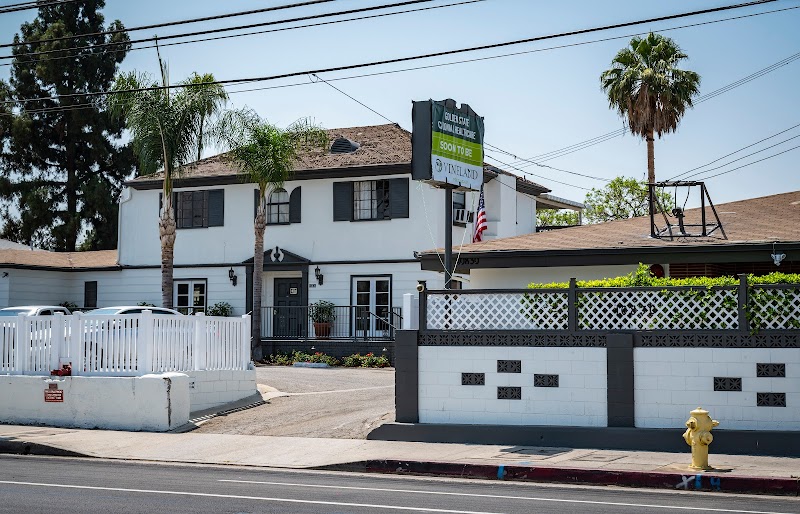
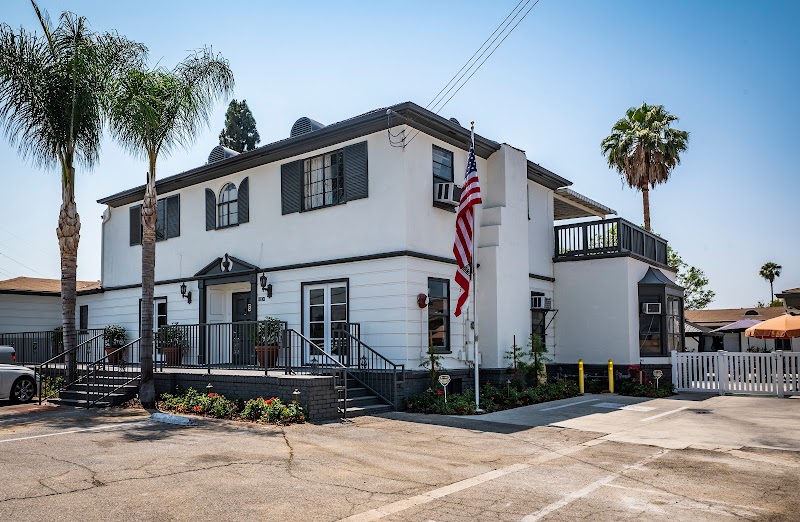
VINELAND POST ACUTE

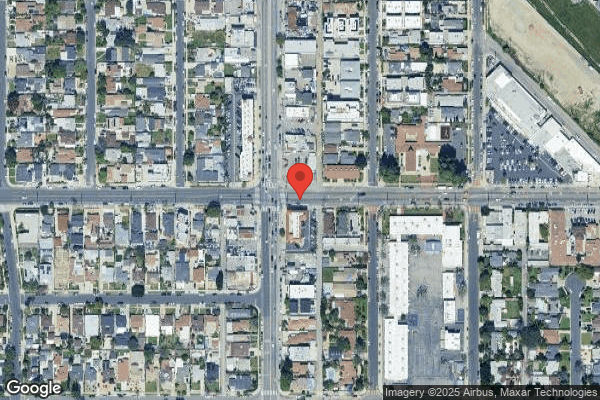
10830 OXNARD STREET, NORTH HOLLYWOOD, CA 91606 (818) 763-8247
For profit - Limited Liability company 49 Beds DAVID & FRANK JOHNSON Data: November 2025
Trust Grade
75/100
#500 of 1155 in CA
Last Inspection: October 2024

Within standard 12-15 month inspection cycle. Federal law requires annual inspections.

Overview

Vineland Post Acute in North Hollywood, California, has a Trust Grade of B, indicating it is a good choice for families, though there are some areas for improvement. It ranks #500 out of 1,155 facilities in California, placing it in the top half, and #80 out of 369 in Los Angeles County, suggesting only 79 local options are better. The facility is improving, with a significant drop in issues from 16 in 2024 to just 1 in 2025. Staffing is a strength, with a 4/5 star rating and only 19% turnover, much lower than the state average, which means the staff are likely familiar with the residents' needs. On the downside, there were recent concerns about the facility's infection control practices, as they failed to monitor water safety for nearly a year, which could expose residents to harmful bacteria. Additionally, the facility did not properly document its quality improvement efforts, which could lead to unaddressed care issues. However, it is worth noting that there have been no fines reported, demonstrating a commitment to compliance.

Trust Score
B
75/100
In California
#500/1155
Top 43%
Safety Record
Low Risk
No red flags
Inspections
Getting Better
16 → 1 violations
Staff Stability
✓ Good
19% annual turnover. Excellent stability, 29 points below California's 48% average. Staff who stay learn residents' needs.
Penalties
✓ Good
No fines on record. Clean compliance history, better than most California facilities.
Skilled Nurses
⚠ Watch
Each resident gets only 25 minutes of Registered Nurse (RN) attention daily — below average for California. Fewer RN minutes means fewer trained eyes watching for problems.
Violations
⚠ Watch
47 deficiencies on record. Higher than average. Multiple issues found across inspections.
★★★★☆
4.0
Overall Rating
★★★★☆
4.0
Staff Levels
★★★★★
5.0
Care Quality
★★★☆☆
3.0
Inspection Score
Stable
2024: 16 issues
2025: 1 issues

The Good

  • 4-Star Staffing Rating · Above-average nurse staffing levels
  • 5-Star Quality Measures · Strong clinical quality outcomes
  • Low Staff Turnover (19%) · Staff stability means consistent care
  • Full Sprinkler Coverage · Fire safety systems throughout facility
  • No fines on record
  • Staff turnover is low (19%)

    29 points below California average of 48%

Facility shows strength in staffing levels, quality measures, staff retention, fire safety.

The Bad

Chain: DAVID & FRANK JOHNSON

Part of a multi-facility chain

Ask about local staffing decisions and management

The Ugly 47 deficiencies on record

Jan 2025 1 deficiency
CONCERN (D) 📢 Someone Reported This

A family member, employee, or ombudsman was alarmed enough to file a formal complaint

Potential for Harm - no one hurt, but risky conditions existed

Infection Control (Tag F0880)

Could have caused harm · This affected 1 resident

**NOTE- TERMS IN BRACKETS HAVE BEEN EDITED TO PROTECT CONFIDENTIALITY** Based on observation, interview, and record review, the facility failed to enforce its own policy related to a safe, sanitary en...

Read full inspector narrative →
**NOTE- TERMS IN BRACKETS HAVE BEEN EDITED TO PROTECT CONFIDENTIALITY** Based on observation, interview, and record review, the facility failed to enforce its own policy related to a safe, sanitary environment and infection control when a shared bathroom was noted with overflowing toilet paper in the trash, stool and urine noted inside the toilet bowl for one of three sampled residents (Resident 1). This deficient practice had the potential to transmit infectious microorganisms and increase the risk of infection for the residents. Findings: A record review of Resident 1's admission Record indicated the resident was admitted on [DATE] with medical history including Parkinson's disease (a disorder of the central nervous system that affects movement), metabolic encephalopathy (a brain dysfunction caused by a chemical imbalance in the blood that affects the brain), acute pancreatitis (inflammation of the pancreas), urinary tract infection (bladder infection), dementia (memory loss), hypertension (elevated blood pressure), asthma (inflammation of airways), and Alzheimer's disease (a progressive disease that destroys memory). A record review of Resident 1's Minimum Data Set (resident assessment tool), dated 4/13/2024, indicated Resident 1 was severely cognitively (refers to conscious mental activities including thinking, reasoning, understanding, learning, and remembering) impaired and required moderate assistance with activities of daily living. During an observation and interview with Resident 1 on 1/2/2024 at 8:00 a.m., Resident 1 stated, she gets up the bathroom and the bathroom needed no be cleaned. Bathroom noted with toilet paper overflowing from the trash can and noted toilet bowl with urine and feces inside. During an interview with Certified Nurse Assistant (CNA 1) on 1/2/2024 at 8:10 a.m., CNA 1 stated, the bathroom needs to be cleaned and sanitized right away. CNA 1 stated the bathroom is shared between two rooms and other residents use the bathroom. CNA 1 stated, not sanitizing the bathroom poses the residents at risk for infections. During an interview with the Infection Preventionist (IP) on 1/2/2025 at 9:20 am, the IP nurse stated, the trash was overflowing, and toilet was not flushed. IP stated, this had the potential risk for the spread of infections to all the residents using the shared bathroom. IP stated, she does not know the exact times when house keeping is supposed to clean the bathrooms. During an interview with Director of Nurses (DON) on 1/2/25 at 9:25 am, DON stated, the room needs to be cleaned right away. DON stated, because the bathroom is shared between other residents, it needs to be sanitized because it poses other residents to high risk of infection. Record review of facility's policy and procedure titled, Routine Bathroom Cleaning, dated 1219/2022, indicated it is the policy of this facility to establish policies, procedures and guidelines to provide a a clean and sanitary environment for residents, staff and visitors to prevent cross contamination and transmission of healthcare associated infections.
Dec 2024 1 deficiency
CONCERN (E) 📢 Someone Reported This

A family member, employee, or ombudsman was alarmed enough to file a formal complaint

Potential for Harm - no one hurt, but risky conditions existed

Safe Environment (Tag F0584)

Could have caused harm · This affected multiple residents

**NOTE- TERMS IN BRACKETS HAVE BEEN EDITED TO PROTECT CONFIDENTIALITY** Based on observation, interview, and record review, the facility failed to provide a safe and homelike environment by failing to...

Read full inspector narrative →
**NOTE- TERMS IN BRACKETS HAVE BEEN EDITED TO PROTECT CONFIDENTIALITY** Based on observation, interview, and record review, the facility failed to provide a safe and homelike environment by failing to provide room temperatures between 71 degrees Fahrenheit (°F - unit of measure) to 81 °F for seven of 38 sampled residents (Residents 1, 2, 3, 4, 5, 6, and 7). This deficient practice had the potential to result in uncomfortable temperatures related to cold weather compromising the health and safety of Residents 1, 2, 3, 4, 5, 6, and 7. Findings: During an observation on 12/19/2024 at 11:45 a.m., the Maintenance Director (MD) got room [ROOM NUMBER]'s temperature reading of 67.8 °F. During an observation on 12/19/2024 at 11:46 a.m., the MD got room [ROOM NUMBER]'s temperature reading of 65.1 °F. During an observation on 12/19/2024 at 11:47 a.m., the MD got room [ROOM NUMBER]'s temperature reading of 66 °F. During an observation on 12/19/2024 at 11:48 a.m., the MD got room [ROOM NUMBER]'s temperature reading of 68.5 °F. During an observation on 12/19/2024 at 11:49 a.m., the MD got room [ROOM NUMBER]'s temperature reading of 68.1 °F. During an observation on 12/19/2024 at 11:50 a.m., the MD got room [ROOM NUMBER]'s temperature reading of 70.3 °F. During an observation on 12/19/2024 at 11:51 a.m., the MD got room [ROOM NUMBER]'s temperature reading of 67.2 °F. During an observation on 12/19/2024 at 11:52 a.m., the MD got room [ROOM NUMBER]'s temperature reading of 69 °F. During an observation on 12/19/2024 at 11:53 a.m., the MD got room [ROOM NUMBER]'s temperature reading of 69 °F. During an observation on 12/19/2024 at 11:54 a.m., the MD got room [ROOM NUMBER]'s temperature reading of 68.5 °F. During an observation on 12/19/2024 at 11:55 a.m., the MD got room [ROOM NUMBER]'s temperature reading of 68.8 °F. During an interview on 12/19/2024 at 11:59 a.m., the MD stated it is important that residents rooms are in normal temperature ranges between 71 °F to 81 °F for residents' comfort because this facility is their home. During an interview on 12/19/2024 at 1:29 p.m., the Administrator stated it is important to make sure room temperatures are within 71 °F to 81 °F range for residents' safety. The Administrator stated the residents whould not be exposed to too much heat or cold weather for the residents' well-being. During an interview on 12/19/2024 at 1:53 p.m., the Director of Nursing stated that if the room temperatures were too cold the residents will be uncomfortable and will not be able to rest properly. The DON stated that it is important to make sure that residents' rooms had comfortable temperature ranges for the residents' comfort and safety. During a review of the facility's policy and procedure titled, Safe and Homelike Environment, last reviewed date of 4/17/2024, the policy indicated that the facility will provide and maintain comfortable and safe temperature levels. The facility should strive to keep the temperature in common resident areas between 71 °F to 81 °F.
Dec 2024 1 deficiency
CONCERN (D) 📢 Someone Reported This

A family member, employee, or ombudsman was alarmed enough to file a formal complaint

Potential for Harm - no one hurt, but risky conditions existed

Free from Abuse/Neglect (Tag F0600)

Could have caused harm · This affected 1 resident

**NOTE- TERMS IN BRACKETS HAVE BEEN EDITED TO PROTECT CONFIDENTIALITY** Based on interview and record review, the facility failed to protect one of three sampled residents (Resident 1) from physical a...

Read full inspector narrative →
**NOTE- TERMS IN BRACKETS HAVE BEEN EDITED TO PROTECT CONFIDENTIALITY** Based on interview and record review, the facility failed to protect one of three sampled residents (Resident 1) from physical abuse (deliberately aggressive or violent behavior with the intention to cause harm by one resident towards another that results in bodily injury) and verbal abuse (harsh and insulting language directed at a person) when on 11/17/2024 at 7 a.m. Resident 2 struck Resident 1, pushed the bedside table towards Resident 1 causing him (Resident 1) to fall on the floor as he attempted to get up from the bed to move out of his (Resident 2) way, and yelling profanities (a type of language that includes dirty words and ideas) at Resident 1. This deficient practice resulted in Resident 1 sustaining injuries including abrasion (a minor injury where the top layer of your skin is scraped off, usually caused by rubbing against a rough surface) to Resident 1's left forearm (the part of the human arm between the elbow and the wrist), abrasion to Resident 1's lower back, bruise to Resident 1's right thigh, abrasions to Resident 1's left posterior (the back side of things) leg, and scattered discoloration on Resident 1's right thigh. On 11/18/2024, the facility sent Resident 2 to the General Acute Care Hospital (GACH) for psychiatric evaluation (a mental health assessment that helps diagnose and treat mental health issues). Findings: a. During a review of Resident 1's admission Record, the admission Record indicated the facility admitted the resident on 11/7/2014 with diagnoses that included metabolic encephalopathy (a brain disorder that occurs when an underlying condition causes a chemical imbalance in the blood, which affects brain function), bipolar disorder (a mental health condition that causes extreme mood swings, or episodes, that can affect a person's energy, mood, and ability to function), and muscle weakness. During a review of Resident 1's Minimum Data Set (MDS - a resident assessment tool), dated 2/4/2024, the MDS indicated Resident 1 had the ability to understand and be understood. The MDS indicated Resident 1 required substantial assistance (helper does more than half the effort) with toileting, showering, lower body dressing and putting on and taking off footwear and required partial assistance (helper does less than half the effort) with oral (mouth) hygiene, upper body dressing, and personal hygiene. During a review of Resident 1's Change in Condition (COC - a significant change in resident's health status) Evaluation, dated 11/17/2024 at 7 a.m., the COC indicated Licensed Vocational Nurse 1 (LVN 1) heard Resident 1 yelling for help and, upon entering the room, LVN 1 observed Resident 1 lying on the floor his right side. LVN 1 saw Resident 2 standing in front of Resident 1 yelling and attempting to strike Resident 1. The COC indicated Resident 1 said that Resident 2 physically assaulted him (Resident 1) using the bedside table. The COC indicated the physician ordered to transfer Resident 1 to the GACH, however Resident 1 refused. The COC Evaluation indicated Resident 1's skin changes that included the following: 1. Abrasion of the upper mid-vertebrae (small circular bones that form the spine of a human being) 2. Discoloration of the front right thigh 3. Scattered discoloration of the front left lower leg (front) with 2 lumps (pieces or masses of solid matter without regular shape or of no particular shape) 4. Abrasions of the rear left lower leg (Sites 1 and 2) During a review of Resident 1's Progress Notes, dated 11/17/2024 at 8 a.m., the progress notes indicated LVN 1 responded to Resident 1's call for help and observed Resident 1 on the floor in a right-side lying position near his (Resident 1) bed. The progress notes indicated LVN 1 observed Resident 2, who was near Resident 1, saying profanities and making attempts to strike at Resident 1. The progress notes indicated Resident 1 stated that Resident 2 started striking him for no reason. The progress notes indicated Resident 1 sustained the following injuries: 1. Abrasion on the left forearm. 2. Abrasion on the lower back. 3. Bruise/discoloration on the right thigh. 4. Scattered discoloration on the right thigh. 5. Abrasion on the left posterior leg (Site 1). 6. Abrasion on the left posterior leg (Site 2). During a review of Resident 1's care plan, created on 11/17/2024, titled, Victim of resident altercation, the care plan indicated interventions that included maintaining safety by keeping aggressor (a person who attacks first) away from resident and assure resident that staff members are available to help and department heads. During a review of the facility's five-day follow up report, dated 11/21/2024, the report indicated that on 11/17/2024 at 7 a.m., LVN 1 responded to Resident 1's call for help and found Resident 1 on the floor lying on his right side near his (Resident 1) bed with Resident 2 saying profanities and making attempts to strike at Resident 1. The report indicated Resident 1 stated that Resident 2 started striking him (Resident 1) for no reason and pushed the bedside table towards him (Resident 1) causing him (Resident 1) to fall as he (Resident 1) attempted to get up from bed and move out of his (Resident 2) way. The report indicated Resident 1 sustained injuries. The report indicated Resident 2 was in agitated (angry) state and continued to say profanities. The report indicated Resident 2 was not able to give an explanation as to what provoked the incident but admitted that he was physically aggressive towards Resident 1. The report indicated the physician ordered to send Resident 2 to the GACH for psychiatric evaluation. b. A review of Resident 2's admission Record, the admission Record indicated the facility admitted Resident 2 on 7/6/2021 and readmitted on [DATE] with diagnoses including encephalopathy (any disorder or damage that affects the brain's structure or function which can be cause by a number of things, including injury, disease, drugs, or chemicals), schizophrenia (a mental illness that is characterized by disturbances in thought), and muscle weakness (general). During a review of Resident 2's MDS, dated [DATE], the MDS indicated Resident 2 had the ability to understand and be understood. The MDS indicated Resident 2 required substantial assistance with lower body dressing and putting on and taking off footwear, required partial assistance with toileting, showering, and upper body dressing. During a review of Resident 2's COC, dated 11/17/2024 at 7 a.m., the COC indicated LVN 1 upon entering the room observed Resident 2, standing over Resident 1 who was lying on the floor, being verbally aggressive and attempting to strike Resident 1. The COC indicated Resident 2 continued to say profanities to Resident 1. During a review of Resident 2's Progress Notes, dated 11/17/2024 at 8:30 a.m., the Progress Notes indicated that on 11/17/2024 at 7:05 a.m. Resident 2 was asked and was not able to give a reason as to what provoked him (Resident 2) to strike and yell at Resident 1. The Progress Notes indicated Resident 2 admitted he was physically aggressive (using physical actions like hitting, kicking, pushing, or otherwise causing bodily harm to someone else) towards Resident 1. During a review of Resident 2's Physician Orders, dated 11/17/2024 at 1:02 p.m., the Physician Orders indicated Resident 2 may be transferred to the GACH 1 due to resident-to-resident altercation. During a review of Resident 2's Skilled Nursing Facility (SNF) to Hospital Transfer Form, dated 11/18/2024 at 9 a.m., the transfer form indicated the facility transferred Resident 2 to the GACH because of behavioral symptoms like agitation (a feeling of irritability, restlessness, or mental distress) and psychosis (a mental health condition that causes a person to lose touch with reality, making it difficult to tell what is real and what is not). The transfer form indicated Resident 2 was transferred to GACH for monitoring of behavioral change due to aggressive behavior with another resident (Resident 1). During an interview on 12/2/2024 at 10:16 a.m. Resident 1 stated he cannot recall the day of the incident but said it happened in the morning when his roommate (Resident 2) physically hit him (Resident 1) with his (Resident 2) fists like in a boxing manner. Resident 1 stated he dropped to the floor. Resident 1 stated he had bruises due to the hits Resident 2 gave him (Resident 1) in the arms and legs. Resident 1 stated Resident 2, who was crazy and was fuming (to be very angry), attacked him (Resident 1) in a mad state. During an interview on 12/2/2024 at 11:14 a.m., Resident 2 stated he had an argument with Resident 1 but cannot recall what it was all about. Resident 2 stated, I handled it and I took care of it. During an interview on 12/2/2024 at 1p.m., Restorative Nursing Assistant 1 (RNA 1) stated she cannot recall the exact date, was like about 2 weeks ago, around 7 a.m., when she overhead LVN 1 saying something happened in Resident 1 and Resident 2's room. RNA 1 stated when she walked into Resident 1's room she observed Resident 1 on the floor, with his hand on the siderail head facing the head of the bed and Resident 2 was sitting in his bed. RNA 1 stated LVN 1 had already separated Resident 1 and Resident 2 when RNA 1 entered the room. RNA 1 stated Resident 1 had a bump on his left leg, a scratch on his back, and another scratch on his right arm. During an interview on 12/2/2024 at 1:43 p.m., LVN 1 stated the altercation between Resident 1 and Resident 2 occurred at 7 a.m. but cannot recall the exact date. LVN 1 stated she heard Resident 1 screaming for help, so she ran to Resident 1's room and observed Resident 1 lying on his right side and Resident 2 standing over Resident 1 with Resident 2 trying to strike at Resident 1. LVN 1 stated that after she separated the residents (Resident 1 and Resident 2), she assessed Resident 1 who had several lesions (an area of abnormal or damaged tissue caused by injury) on the leg (did not indicate which leg) that were bleeding, scratch on the arm, and scratch on the back was bleeding. LVN 1 stated Resident 1 said his back was hurting but said he was fine and refused pain medication. LVN 1 stated Resident 1 said he (Resident 1) was physically attacked by Resident 2. LVN 1 stated she asked Resident 2 what occurred, and Resident 2 said a lot of profanities and stated Resident 1 deserved it (the attack). LVN 1 stated Resident 2 confirmed he hit Resident 1 but did not specify. LVN 1 stated this would be considered a resident-to-resident abuse. During an interview on 12/2/2024 at 2:30 p.m., the Director of Nursing (DON) stated LVN 1 notified her (DON) on 11/17/2024 at around 7:15 a.m. that there was an altercation between Resident 1 and Resident 2. The DON stated she interviewed Resident 1 who stated the incident occurred out of nowhere. The DON stated Resident 2 did not want to talk about it but said he (Resident 2) hit Resident 1 and got into a fight. The DON stated Resident 1 had injuries and abrasions on the arm and legs (did not give details). The DON stated that based on the facility's policy this incident was considered a resident-to-resident altercation between Resident 1 and Resident 2. The DON stated this is considered abuse. A review of the Facility's policy and procedure titled, Abuse, Neglect (failed to care for properly) and Exploitation (illegal or improper use of a person's resources), last reviewed on 4/17/2024 indicated it is the policy of this facility to provide protection for the health, welfare, and rights of each resident by developing and implementing written policies and procedures that prohibit and prevent abuse, neglect, exploitation, and misappropriation (unauthorized, improper, or unlawful use) of resident property. Abuse means the willful infliction of injury, unreasonable confinement, intimidation, or punishment with resulting physical harm, pain, or mental anguish, which can include staff to resident abuse and certain resident to resident altercations. Willful means the individual must have acted deliberately, not that the individual must have intended
Oct 2024 14 deficiencies
CONCERN (D)

Potential for Harm - no one hurt, but risky conditions existed

Deficiency F0554 (Tag F0554)

Could have caused harm · This affected 1 resident

**NOTE- TERMS IN BRACKETS HAVE BEEN EDITED TO PROTECT CONFIDENTIALITY** Based on interview and record review, the facility failed to assess residents' ability to self-administer medication for one of ...

Read full inspector narrative →
**NOTE- TERMS IN BRACKETS HAVE BEEN EDITED TO PROTECT CONFIDENTIALITY** Based on interview and record review, the facility failed to assess residents' ability to self-administer medication for one of four sampled residents (Resident 36) investigated under the accidents care area when Resident 36 was not reassessed for medication self-administration upon re-admission to the facility and quarterly according to Resident 36's care plan. This deficient practice had the potential for medications errors during self-administration of medication for Resident 36. Findings: During a review of Resident 36's admission Record, the admission Record indicated Resident 36 was originally admitted to the facility on [DATE] and readmitted to the facility on [DATE] with diagnoses including type two diabetes mellitus (DM, a disorder characterized by difficulty in blood sugar control and poor wound healing) with diabetic polyneuropathy (nerve damage that affects people with diabetes) and encounter for attention to colostomy (a surgical procedure that brings one end of the large intestine out through the abdominal wall to allow waste to leave the body). During a review of Resident 36's Minimum Data Set (MDS, a federally mandated resident assessment tool), dated 7/19/2024, the MDS indicated Resident 36 was able to understand and make decisions, required set-up assistance with eating, supervision or touching assistance with upper body dressing, moderate assistance with oral hygiene, lower boy dressing, personal hygiene, rolling left and right, sitting to lying, lying to sitting on the side of the bed, and sit to stand, and needed maximal assistance with toileting hygiene, showering or bathing himself, putting on or taking off footwear, chair or bed-to-chair transfers, and tub or shower transfers. During a review of Resident 36's History and Physical (H&P), dated 9/22/2024, the H&P indicated Resident 36 has the capacity to understand and make decisions. During a review of Resident 36's Self-Administration of Medication, dated 9/7/2023, the Self-Administration of Medication indicated Resident 36 was capable of self-administration of medication. During a review of Resident 36's Care Plan titled, . is able to self administer medication, dated 9/23/2024, the care plan indicated interventions including to assess Resident 36's ability to safely self-administer medications specified on admission, re-admission, quarterly, with change in medication orders and with significant changes in condition. During a concurrent interview and record review with the Minimum Data Set Nurse (MDSN), on 10/25/2024, at 1:58 p.m., Resident 36's Medication Self Administration, dated 9/7/2023, was reviewed and indicated Resident 36 was capable of medication self-administration. The MDSN confirmed Resident 36 did not have additional Medication Self- Administration assessments performed after the assessment conducted on 9/7/2023. The MDSN reviewed Resident 36's Care Plan, dated 9/23/2024, and confirmed Resident 36 is able to self-administer medication and has interventions including assessing Resident 36's ability to safely self-administer medications specified on admission, re-admission, quarterly, with changes in medication orders and with significant changes in condition. The MDSN stated based on the interventions in Resident 36's care plan, the resident should have had another assessment performed for medication self-administration. The MDSN stated it is important to perform another assessment because there is a possibility that the resident's status could have changed. The MDSN further stated if the resident assessments are not conducted timely, there is potential for the resident to take extra doses of medications or not taking the medications at the right time. During an interview with the Director of Nursing (DON), on 10/25/2024, at 4:45 p.m., the DON stated residents are reassessed as needed, if there is a medication error, and should be reassessed per the resident's care plan for medication self-administration. During a review of the facility's policy and procedure (P&P) titled, Resident Self-Administration of Medication, last reviewed 4/17/2024, the P&P indicated a resident may only self-administer medications after the facility's interdisciplinary team has determined which medications may be self-administered safely. The P&P further indicated a reassessment for safety at a minimum should be considered by the interdisciplinary team for the following: a. Significant change in resident's status. b. Medication errors occur.
CONCERN (D)

Potential for Harm - no one hurt, but risky conditions existed

Deficiency F0583 (Tag F0583)

Could have caused harm · This affected 1 resident

Based on observation, interview, and record review, the facility failed to maintain privacy of confidential information for one of one sampled resident (Resident 42) when Licensed Vocational Nurse (LV...

Read full inspector narrative →
Based on observation, interview, and record review, the facility failed to maintain privacy of confidential information for one of one sampled resident (Resident 42) when Licensed Vocational Nurse (LVN 2) left Resident 42's electronic health record (EHR-a digital version of a patient's paper chart) open, unattended, and out of sight of LVN 2. This deficient practice violated Resident 42's right to privacy and confidentiality of their medical records. Findings: During a review of Resident 42's admission Record (AR), the AR indicated the facility admitted the resident on 8/14/2024 with diagnoses including dementia (a progressive state of decline in mental abilities) and generalized muscle weakness. During a review of Resident 42's History and Physical (H&P), dated 8/15/2024, the HP indicated the resident has fluctuating capacity to understand and make decisions. During a review of Resident 42's Minimum Data Set (MDS-a federally required resident assessment tool), dated 10/23/2024, the MDS indicated the resident had severe cognitive impairment. During an observation on 10/23/2024 at 3:13 p.m., outside the nursing station, observed the computer on top of the medication care unattended with Resident 42's electronic chart open. During an interview on 10/23/2024 at 3:14 p.m., with LVN 2, LVN 2 stated he left the computer on top of the medication cart open and unattended when he stepped away from the medication cart to assist a resident's family member. LVN 2 stated he should have clicked the lock icon on the screen before he walked away so the screen would be hidden. LVN 2 stated when he stepped away without locking the electronic chart's screen, unauthorized persons might be able to view the resident's confidential information. During an interview on 10/25/2024 at 4:49 p.m., with the Director of Nursing (DON), the DON stated the importance of safeguarding the medical information of residents is to prevent unauthorized individuals from accessing confidential information and compromising the resident's medical information. During a review of the facility's policy and procedure (P&P) titled Safeguarding of Resident Identifiable Information, last reviewed 4/17/2024, the P&P indicated the medical records shall not be left in open areas where unauthorized persons could access identifiable resident information.
CONCERN (D)

Potential for Harm - no one hurt, but risky conditions existed

Comprehensive Care Plan (Tag F0656)

Could have caused harm · This affected 1 resident

**NOTE- TERMS IN BRACKETS HAVE BEEN EDITED TO PROTECT CONFIDENTIALITY** Based on observation, interview, and record review, the facility failed to develop and implement a comprehensive person-centered...

Read full inspector narrative →
**NOTE- TERMS IN BRACKETS HAVE BEEN EDITED TO PROTECT CONFIDENTIALITY** Based on observation, interview, and record review, the facility failed to develop and implement a comprehensive person-centered care plan for two of five sampled residents (Residents 21 and 33) investigated during review of the physical restraints (any manual method, physical or mechanical device, equipment, or material that is attached or adjacent to the resident's body, cannot be removed easily by the resident, and restricts the resident's freedom of movement or normal access to his/her body) care area when Residents 21 and 33 did not have a care plan for placing the bed against the wall. This deficient practice had the potential to result in inconsistent implementation of the care plan that may lead to a delay in care or lack of delivery of care and services for the residents. Findings: During a review of Resident 21's admission Record, the admission Record indicated Resident 21 was admitted to the facility on [DATE] with diagnoses including Parkinson's disease with dyskinesia and fluctuations (a progressive disease of the nervous system marked by tremor, muscular rigidity, and slow, imprecise movements), fracture (broken bone) of the lower end of the right femur (thighbone), and generalized muscle weakness. During a review of Resident 21's Minimum Data Set (MDS, a federally mandated resident assessment tool), dated 10/6/2024, the MDS indicated Resident 21 has difficulty understanding and making decisions, required moderate or was completely dependent on facility staff for activities of daily living including eating, hygiene, showering or bathing themselves, dressing, and surface-to-surface transfers. During a review of Resident 21's History and Physical (H&P), dated 10/4/2024, the H&P indicated Resident 21 had fluctuating capacity to understand and make decisions. During an observation on 10/23/2024, at 9:41 a.m., inside Resident 21's room, Resident 21 was sleeping in the bed placed in the upper left most corner of the room from the doorway, with the left side of the bed placed against the wall and two quarter bedrails (also known as side rails, adjustable metal or rigid plastic bars that attach to the bed and are available in a variety of types, shapes, and sizes ranging from full to one-half, one-quarter, or one-eighth lengths and may be positioned in various locations on the bed; upper or lower, either or both sides) at both sides of the head of the bed. During a concurrent observation and interview with the Infection Preventionist (IP) on 10/25/2024, at 9:05 a.m., inside Resident 21's room, the IP stated Resident 21 was sleeping in a bed placed in the upper left most corner of the room from the doorway, with the left side of the bed against the wall, and two quarter bed rails on both sides of the head of the bed. During a concurrent interview and record review with the IP on 10/25/2024, at 9:38 a.m., Resident 21's care plans, current as of 10/25/2024, were reviewed and the IP confirmed Resident 21 did not have a care plan addressing Resident 21's bed placement against the wall. The IP stated Resident 21 should have a care plan for having his bed placed against the wall so that the facility staff know what interventions are in place for the resident. The IP further stated without the care plans, Resident 21 would be at risk for injury. During an interview with the Director of Nursing on 10/25/2024, at 4:45 p.m., the DON stated care plans should be developed so that facility staff can follow the plan of care for the resident. The DON stated care plan interventions include checking for risks and potential safety hazards. The DON further stated placing a bed against the wall with a bed rail places residents at risk for entrapment (an event in which a resident is caught, trapped, or entangled in the spaces in or about the bed rail, mattress, or hospital bed frame). During a review of the facility's policy and procedure (P&P) titled, Comprehensive Care Plans, last reviewed 4/17/2024, the P&P indicated the facility develops and implements a comprehensive person-centered care plan for each resident, consistent with resident rights, that includes measurable objectives and timeframes to meet a resident's medical, nursing, and mental and psychosocial needs that are identified in the resident's comprehensive assessment. b. During a review of Resident 33's admission Record, the admission Record indicated the facility admitted the resident on 8/13/2023 with diagnoses including chronic obstructive pulmonary disease (COPD-a chronic lung disease causing difficulty in breathing) with acute (sudden) exacerbation (worsening of symptoms), unspecified cataract (a cloudy area in the lens of the eye that can make it difficult to see), and generalized muscle weakness. During a review of Resident 33's H&P dated 10/1/2024, the H&P indicated the resident did not have the capacity to understand and make decisions. During a review of Resident 33's MDS, dated [DATE], the MDS indicated the resident sometimes had the ability to make self-understood and rarely to never understood others. The MDS indicated the resident normally used a wheelchair and a walker. The MDS indicated the resident required partial/moderate assistance on facility staff for bed mobility, sitting to lying, lying to sitting on side of bed, sit to stand, and chair/bed-to-chair transfers. During an observation on 10/23/2024 at 10:13 a.m., inside Resident 33's room, observed Resident 33 asleep in bed with right side of bed up against the wall, head of bed facing towards the restroom and left side of bed facing the entry door to the room. Observed Resident 33's bed with bilateral side rails up. During a concurrent observation and interview on 10/25/2024 at 8:46 a.m., inside Resident 33's room with the MDS Nurse (MDSN), the MDSN stated Resident 33's right side of the bed was up against the wall with bilateral side rails up. The MDSN stated Resident 33 is unable to put the side rails down. During a concurrent interview and record review on 10/25/202 at 9:08 a.m., with MDSN, the MDSN stated there was no care plan developed addressing Resident 33's bed up against the wall. During an interview on 10/25/2024 at 9:21 a.m., with the DON, the DON stated the use of the side rail and the bed up against the wall is a potential for entrapment (an event in which a resident is caught, trapped, or entangled in the spaces in or about the bed rail, mattress, or hospital bed frame) because Resident 33 is not able to move the side rails down and requires assistance with mobility. The DON stated there should have been a care plan developed addressing the bed against the wall. During an interview on 10/25/2024 at 4:20 p.m., with the DON, the DON stated care plans should be developed so that facility staff can follow the plan of care for the resident. The DON stated care plan interventions include checking for risks and potential safety hazards. During a review of the facility's policy and procedure (P&P) titled, Comprehensive Care Plans, last reviewed 4/17/2024, the P&P indicated the facility develops and implements a comprehensive person-centered care plan for each resident, consistent with resident rights, that includes measurable objectives and timeframes to meet a resident's medical, nursing, and mental and psychosocial needs that are identified in the resident's comprehensive assessment.
CONCERN (D)

Potential for Harm - no one hurt, but risky conditions existed

Deficiency F0660 (Tag F0660)

Could have caused harm · This affected 1 resident

Based on interview and record review, the facility failed to address the resident's needs for a home health agency referral prior to discharge for one of one sampled resident (Resident 48) reviewed un...

Read full inspector narrative →
Based on interview and record review, the facility failed to address the resident's needs for a home health agency referral prior to discharge for one of one sampled resident (Resident 48) reviewed under discharge care area. This deficient practice placed the resident at risk for not receiving the necessary care and services related to the resident's discharge goals and needs. Findings: During a review of Resident 48's admission Record (AR), the AR indicated the facility admitted the resident on 8/5/2024 with diagnoses including dementia (a progressive state of decline in mental abilities), Alzheimer's disease (a disease characterized by progressive decline in mental abilities, type II diabetes mellitus (DM-a disorder characterized by difficulty in blood sugar control and poor wound healing) and repeated falls. During a review of Resident 48's Clinical Admission, dated 8/5/2024, the clinical admission indicated the resident had chronic confusion, orientation to person only, and had moderate cognitive impairment (memory loss). During a review of Resident 48's Cognitive Assessment and Care Plan Service, dated 8/7/2024, the cognitive assessment and care plan service indicated the resident had cognitive impairment and functional limitation (restrictions that prevent one from fully performing activities of daily living (ADL-routine tasks/activities such as bathing, dressing and toileting a person and performs daily to care for themselves). During a review of Resident 48's Progress Notes titled GG Data Collection Tool (section required in the completion of the Minimum Data Set [MDS-a federally required assessment tool]), dated 8/7/2024, indicated the resident required assistance from facility staff on ADLs including oral hygiene, toileting hygiene, shower/bathe self, upper and lower body dressing, putting on/taking off footwear, and with personal hygiene. During a concurrent interview and record review of Resident 48's Post Discharge (PD) Plan of Care and Summary, dated 8/7/2024, on 10/25/2024, at 3:10 p.m., with the Social Services Director (SSD), the SSD stated he carried out the home health orders and will be referred by the board and care. The SSD stated this referral is for the board and care to follow through. The SSD stated the discharge order indicated home health services including nursing and home health aide, physical therapy, and occupational therapy services and did not indicate the name of the agency because the board and care will be the one to refer the resident to the home health agency (HHA-an agency (clinical care services provided to residents at their home for an illness or injury). During a concurrent interview and record review of the facility's policy and procedure titled, Discharge Planning, last reviewed 4/17/2024, with the SSD, the P&P indicated the facility will assist residents and their resident representatives in choosing an appropriate post-acute care provider including HHA that will meet the resident's needs, goals, and preferences. The P&P indicated the SSD, or designee, shall compile available data on other post-acute care options to present to the resident including data on providers within the resident's desired geographic area, where available. When the SSD was asked if these lines in the policy was done for Resident 48, the SSD failed to answer the question. During a follow-up interview on 10/25/2024 at 3:41 p.m., the SSD stated he did not document his conversation with the family member about the home health referral. The SSD stated he should have documented so he can assure that the resident will be followed up by a home health agency and prevent rehospitalization. During an interview on 10/25/2024 at 4:02 p.m., the Director of Nursing (DON) stated the purpose of documentation is to prove that staff made the referral. During a review of the facility's policy and procedure (P&P) titled, Documentation in Medical Record, last reviewed 4/17/2024, the P&P indicated licensed and interdisciplinary team members shall document all assessments, observations, and services provided in the resident's medical record in accordance with the state law and facility policy.
CONCERN (D)

Potential for Harm - no one hurt, but risky conditions existed

Incontinence Care (Tag F0690)

Could have caused harm · This affected 1 resident

Based on observation, interview, and record review the facility failed to ensure a resident who was incontinent of bladder received the appropriate treatment and services to prevent urinary tract infe...

Read full inspector narrative →
Based on observation, interview, and record review the facility failed to ensure a resident who was incontinent of bladder received the appropriate treatment and services to prevent urinary tract infections (UTI, an infection in the bladder/urinary tract) for one of two sampled residents (Resident 41) being investigated under urinary catheters (a hollow tube inserted into the bladder to drain or collect urine) by failing to ensure the resident's urinary drainage bag was not lying flat on the floor. This deficient practice had the potential to result in Resident 41 to develop a catheter associated urinary tract infection (CAUTI, an infection of the urinary tract caused by a tube [urinary catheter] that has been placed to drain urine from the bladder [an organ inside the body that stores urine until it can be excreted]). Findings: During a review of Resident 41's admission Record (AR), the AR indicated the facility originally admitted the resident on 3/1/2024 and readmitted the resident on 8/9/2024 with di indwelling urethral catheter, UTI, and sepsis (a life-threatening blood infection). During a review of Resident 41's History and Physical (H&P), dated 8/9/2024, the H&P indicated Resident 41 had cognitive (mental action or process of acquiring knowledge and understanding) impairment. During a review of Resident 41's Minimum Data Set (MDS-a federally required assessment tool), dated 8/16/2024, the MDS indicated the resident had the ability to make self-understand and to understand others. The MDS indicated the resident required assistance from facility staff for personal hygiene. The MDS indicated the resident had an indwelling catheter appliance. During a review of Resident 41's Care Plan (CP) addressing the resident's indwelling urinary catheter, dated 8/27/2024, the CP included interventions for positioning of the urinary drainage catheter bag and tubing below the level of the bladder and away from the entrance room door. During an observation and interview on 10/24/2024 at 9:34 a.m., inside Resident 41's room, Resident 41 stated he does not know why he has a urinary catheter. Observed Resident 41's indwelling urinary catheter drainage bag laying flat on the floor placed at the resident's left side of the bed. During an observation on 10/24/2024 at 9:37 a.m., inside Resident 41's room, Certified Nursing Assistant 1 (CNA 1) stated Resident 41's urinary drainage bag is inside a privacy bag which is lying flat on the floor. CNA 1 stated it should not be placed on the floor, as it may come into contact with floor contaminants such as dirt and bacteria, particularly if the floor has not been cleaned. During an interview on 10/24/2024 at 4:29 p.m., with the Director of Nursing (DON), the DON stated the urinary indwelling catheter drainage bag should not be lying flat on the floor. The DON stated it should be hanging and inside a privacy bag. The DON stated there is a potential for infection control and should not be exposed on the floor. During a review of the facility's policy and procedure (P&P) titled, Indwelling Cather Use and Removal, last reviewed 4/17/2024, the P&P indicated care practices include securement of the catheter to facilitate flow of urine, prevention of kinks in the tubing and positioning below the level of the bladder.
CONCERN (D)

Potential for Harm - no one hurt, but risky conditions existed

Deficiency F0698 (Tag F0698)

Could have caused harm · This affected 1 resident

**NOTE- TERMS IN BRACKETS HAVE BEEN EDITED TO PROTECT CONFIDENTIALITY** Based on interview and record review, the facility failed to ensure a resident who received hemodialysis (a treatment to cleanse...

Read full inspector narrative →
**NOTE- TERMS IN BRACKETS HAVE BEEN EDITED TO PROTECT CONFIDENTIALITY** Based on interview and record review, the facility failed to ensure a resident who received hemodialysis (a treatment to cleanse the blood of wastes and extra fluids artificially through a machine when the kidney(s) have failed) was assessed after dialysis treatment and to document the assessment for one of one sampled resident (Resident 18) investigated during a review of dialysis care area. This deficient practice had the potential for unidentified complications such as swelling, pain, bleeding, and bruising and had the potential to result in lack of provision of necessary treatment and services after dialysis treatment. Findings: During a review of Resident 18's admission Record (AR), the AR indicated the facility originally admitted the resident on 12/13/2023 and readmitted on [DATE] with diagnoses including dependence on renal dialysis and end-stage renal disease (ESRD- irreversible kidney failure). During a review of Resident 18's History and Physical, dated 7/15/2024, indicated the resident did have the capacity to understand and make decisions. During a review of Resident 18's Minimum Data Set (MDS-a federally required assessment tool), dated 7/26/2024, indicated the resident had the ability to make self-understood and understood others. The MDS indicated Resident 63 received dialysis on admission and while a resident. The MDS indicated the resident received hemodialysis while a resident in the facility. During a review of Resident 18's telephone/verbal order signature details indicated the following orders: - Hemodialysis access site monitoring type: arterio-venous (AV-connection of blood vessels) fistula (dialysis access point) left forearm every shift for bruit (a whooshing sound heard near the fistula) and thrill (vibration felt through the dialysis access site), P=present, A=absent. Notify physician if absent, dated 7/19/2024. During a concurrent interview and record review of Resident 18's Treatment Administration Record for the month of 10/2024, on 10/25/2024, at 4:05 p.m., with the Director of Nursing (DON), the DON stated the licensed nurse did not document on 10/18/2024 and 10/21/2024 during the 11 p.m. to 7 a.m. shift. The DON stated the dialysis access site monitoring should be documented every shift as ordered. The DON stated when the licensed nurses assessed the site, they then document to show that it was done. The DON stated when the licensed nurses do not document they can potentially miss a problem with the resident's dialysis access site. During a review of the facility's policy and procedure (P&P) titled, Hemodialysis, last reviewed on 4/17/2024, the P&P indicated the nurse will monitor and document the status of the resident's access site upon return from the dialysis treatment to observe for bleeding or other complications. During a review of the facility's P&P titled, Documentation in Medical Record, last reviewed 4/17/2024, the P&P indicated licensed and interdisciplinary team members shall document all assessments, observations, and services provided in the resident's medical record in accordance with the state law and facility policy.
CONCERN (D)

Potential for Harm - no one hurt, but risky conditions existed

Pharmacy Services (Tag F0755)

Could have caused harm · This affected 1 resident

**NOTE- TERMS IN BRACKETS HAVE BEEN EDITED TO PROTECT CONFIDENTIALITY** Based on observation, interview and record review, the facility failed to provide pharmaceutical services to meet the needs of r...

Read full inspector narrative →
**NOTE- TERMS IN BRACKETS HAVE BEEN EDITED TO PROTECT CONFIDENTIALITY** Based on observation, interview and record review, the facility failed to provide pharmaceutical services to meet the needs of residents for one of five sampled residents (Resident 21) reviewed under the unnecessary medications care area and one of four sampled residents (Resident 15) reviewed under medication administration facility task by: 1. Failing to monitor side effects related to the use of psychotropic medications (a broad class of drugs that affect the mind, emotions, and behaviors) and for signs of bleeding were not conducted on 10/18/2024 for Resident 21. These deficient practices had the potential for side effects to be missed and cause a delay in care for Resident 21. 2. Failing to indicate the aspirin (used as a pain reliever or blood thinner) dosage for Resident 15. This deficient practice had the potential to result in effective treatment in treating the resident's condition. Findings: 1. During a review of Resident 21's admission Record, the admission Record indicated Resident 21 was admitted to the facility on [DATE] with diagnoses including Parkinson's disease with dyskinesia and fluctuations (a progressive disease of the nervous system marked by tremor, muscular rigidity, and slow, imprecise movements), fracture (broken bone) of the lower end of the right femur (thighbone), dementia (a progressive state of decline in mental abilities), and generalized muscle weakness. During a review of Resident 21's Minimum Data Set (MDS - a federally mandated resident assessment tool) dated 10/6/2024, the MDS indicated Resident 21 has difficulty understanding and making decisions, required moderate assistance or was completely dependent on facility staff for activities of daily living including eating, hygiene, showering or bathing themselves, dressing, and surface-to-surface transfers. During a review of Resident 21's History and Physical (H&P), dated 10/4/2024, the H&P indicated Resident 21 had fluctuating capacity to understand and make decisions. During a review of Resident 21's Order Summary Report, the Order Summary Report indicated Resident 21 was ordered the following: - On 10/3/2024, quetiapine fumarate (antipsychotic medication [used to manage abnormal condition of the mind described as involving a loss of contact with reality]) 100 milligrams (mg, a unit of measure for mass) oral tablet, give one tablet by mouth at bedtime for dementia manifested by yelling at staff for no apparent reason, informed consent obtained by physician from responsible person. - On 10/3/2024, memantine hydrochloride (a type of medication used to treat dementia) 10 mg give one tablet by mouth one time a day for dementia. - On 10/3/2024, Aspirin (a medication used to reduce pain, fever, inflammation, and blood clotting) 81 mg oral tablet, give one tablet by mouth twice a day for cerebrovascular accident (CVA, also known as stroke, loss of blood flow to a part of the brain) prophylaxis (action taken to prevent disease, especially by specified means or against a specified disease). - On 10/3/2024, monitor for side effects related to use of psychotropic medications every shift. - On 10/3/2024, monitor behavior manifested by yelling at staff for no apparent reason and record the number of times the behaviors has manifested every shift. - On 10/3/2024, monitor for blood in the urine, blood in the stool, unusual bleeding after shaving, bleeding from the gums, bleeding from the nose, excessive bleeding from wounds, large hemorrhagic (escape of blood from a ruptured blood vessel) area, and petechiae (small red or purple spots caused by bleeding into the skin). During a review of Resident 21's Care Plan titled, . uses psychotropic medications related to Behavior Management, dated 10/3/2024, the care plan indicated Resident 21 uses quetiapine fumarate with interventions including to monitor and record occurrences for target behavior symptoms and document per facility protocol. During a review of Resident 21's Care Plan titled, . has impaired cognitive function/dementia or impaired thought process related to Dementia, dated 10/3/2024, the care plan indicated Resident 21 takes memantine hydrochloride with interventions including to administer medications as ordered and to monitor and document for side effects and effectiveness. During a review of Resident 21's Care Plan titled, . has an alteration in hematological (related to blood) status related to Anticoagulant side effects, dated 10/3/2024, the care plan indicated Resident 21 uses aspirin with interventions including to give medications as ordered and monitor for side effects and effectiveness. During a concurrent interview and record review with Registered Nurse 2 (RN 2), on 10/24/2024, at 4:32 p.m., Resident 21's Monitor Record, dated 10/18/2024, was reviewed and RN 2 stated the following were not documented: - Monitor behavior manifested by agitation and irritability with difficulty to redirect. - Monitor behavior manifested by yelling at staff for no apparent reason. - Monitor for any signs of blood in the urine, blood in the stool, unusual bleeding from the gums, bleeding from the nose, excessive bleeding from wounds, large hemorrhagic wounds, and petechiae. RN 2 stated the monitoring should have been documented because if it was not documented, the facility would not know if the monitoring was performed or not and there could be a potential for a missed behavior. RN 2 stated it is important to monitor the residents because if monitoring is missed, it possible a behavior or adverse effect might be missed, and the facility staff would not know to notify the physician for possible changes in orders. During an interview with the Director of Nursing (DON), on 10/25/2024, at 4:45 p.m., the DON stated it is important for the facility to monitor for signs of bleeding and to monitor changes in the resident's condition. The DON further stated if the resident is not monitored, the potential changes could be missed and the facility staff would not be able to notify the physician, responsible person, or update the plan of care, which would cause a potential delay in care. During a review of the facility's policy and procedure (P&P) titled, Documentation in Medical Record, last reviewed 4/17/2024, the P&P indicated licensed and interdisciplinary team members shall document all assessments, observations, and services provided in the resident's medical record in accordance with the State law and facility policy. During a review of the facility's P&P titled, Use of Psychotropic Medication, last reviewed 4/17/2024, the P&P indicated the effects of psychotropic medications on a resident's physical, mental, and psychosocial well-being will be evaluated on an ongoing basis such as but not limited to in accordance with nurse assessments and medication monitoring parameters consistent with clinical standards of practice, manufacturer's specifications, and resident's comprehensive plan of care. 2. During a review of Resident 15's admission Record, the admission Record indicated the facility originally admitted the resident on 6/11/2024 and readmitted the resident on 7/15/2024 with diagnoses including hemiplegia (total paralysis of the arm, leg, and trunk on the same side of the body) and hemiparesis (one-sided muscle weakness) following other cerebrovascular disease (a group of conditions that affect the blood vessels and blood supply to the brain) affecting the right dominant side and acute (sudden) myocardial infarction (MI-heart attack). During a review of Resident 15's H&P, dated 7/17/2024, the H&P indicated the resident did not have the capacity to understand and make decisions. During a review of Resident 15's MDS, dated [DATE], the MDS indicated the resident had the ability to sometimes make self-understand and understand others. The MDS indicated the resident was dependent on facility staff on activities of daily living including oral hygiene, shower/bathing, upper and lower body dressing, putting on/taking off footwear, and personal hygiene. During a review of Resident 15's Order Review History Report (ORHR), the ORHR indicated a physician's order aspirin oral (by mouth) tablet chewable, give one tablet via gastrostomy (a surgical opening fitted with a device to allow feedings to be administered directly to the stomach common for people with swallowing problems) tube (GT) one time a day for cerebrovascular accident (CVA-stroke) prophylaxis (prevention), dated 9/9/2024. During an observation on 10/24/2024 at 8:16 a.m., Licensed Vocational Nurse 1 (LVN 1) prepared Resident 15's morning medication including aspirin 81 mg chewable, one tablet, expiration date 9/2025. Observed LVN 1 crushed the aspirin tablet and placed in a medicine cup. During an observation on 10/24/2024 at 8:52 a.m., LVN 1 administered the resident's medications via GT including aspirin. During a concurrent interview and record review of Resident 15's ORHR, on 10/25/2024, at 4:03 p.m., the DON stated the aspirin dose was not indicated. The DON stated it should be indicated because it is part of the medication rights. The DON stated the medication rights include the right medication, route, dose, patient, and time. The DON stated the purpose of the medication rights is to ensure administration of the correct dose. The DON stated when the dose is missing the licensed nurse could potentially give the wrong medication dose. During a review of the facility's P&P titled, Medication Administration, last reviewed 4/17/2024, the P&P indicated the licensed nurse will compare medication source with the medication administration record to verify resident name, medication name, form, dose, route, and time.
CONCERN (D)

Potential for Harm - no one hurt, but risky conditions existed

Infection Control (Tag F0880)

Could have caused harm · This affected 1 resident

Based on observation, interview, and record review the facility failed to maintain an infection prevention and control program designed to provide a safe, sanitary, and comfortable environment and to ...

Read full inspector narrative →
Based on observation, interview, and record review the facility failed to maintain an infection prevention and control program designed to provide a safe, sanitary, and comfortable environment and to help prevent the development and transmission of communicable diseases and infections for one of four sampled residents (Resident 19) observed during medication administration facility task by failing to implement Enhanced Barrier Precautions (EBP, an infection control intervention designed to reduce transmission of multidrug-resistant organisms [MDRO, microorganisms, mainly bacteria, that are resistant to one or more classes of antibiotics] that uses targeted isolation gown and glove use during high contact resident care activities) when: 1. Licensed Vocational Nurse (LVN) 2 did not don (put on) an isolation gown while administering medications through a gastrostomy tube (GT, a surgical opening fitted with a device to allow feedings to be administered directly to the stomach, common for people with swallowing problems) to Resident 19. 2. LVN 2 and Certified Nursing Assistant (CNA) 1 did not don an isolation gown while repositioning Resident 19 in bed. These deficient practices had the potential to spread infections and illnesses among residents and staff. Findings: During a review of Resident 19's admission Record, the admission Record indicated the facility originally admitted Resident 19 on 9/23/2024 and readmitted the resident on 10/9/2024 with diagnoses including encounter for gastrostomy, dysphagia (difficulty swallowing), and generalized weakness. During a review of Resident 19's Minimum Data Set (MDS, a federally mandated resident assessment tool), dated 9/30/2024, the MDS indicated Resident 19 was rarely or never understood, was dependent on facility staff for activities of daily living such as eating, toileting, hygiene, dressing, and surface-to-surface transfers, and receives nutrition by a feeding tube. During a review of Resident 19's History and Physical (H&P), dated 9/25/2024, the H&P indicated Resident 19 does not have the capacity to understand and make decisions and has a GT. During a review of Resident 19's Order Summary Report, dated 9/25/2024, the Order Summary Report indicated an order for enhanced barrier precautions related to indwelling device and to apply enhanced barrier to prevent the spread of infections for specific care activities such as morning and evening care, toileting and changing incontinence briefs, care for devices and giving medical treatments, wound care, mobility assistance and preparing to leave the room and cleaning and disinfecting environment. During a review of Resident 19's Care Plan titled, Resident on Enhanced Barrier Precaution Gastrostomy Tube use, dated 9/25/2024, the care plan indicated interventions to apply EBP to prevent the spread of infections for specific care activities such as morning and evening care, toileting and changing incontinence briefs, care for devices and giving medical treatments, wound care, mobility assistance and preparing to leave the room and cleaning and disinfecting environment. During an observation on 10/24/2024, at 8:11 a.m., outside of Resident 19's room, above the room number placard, an EBP signage indicated providers and staff must also wear gloves and a gown for transferring and device care or use of feeding tubes. During a concurrent observation and interview with LVN 2, on 10/24/2024, at 8:22 a.m., inside Resident 19's room, LVN 2 administered medications to Resident 19 through the GT wearing gloves. LVN 2 did not wear an isolation gown while administering medications to Resident 19. At 8:41 a.m., LVN 2 and CNA 1 entered Resident 19's room, wearing gloves and no isolation gown, and repositioned Resident 19 higher up in bed. LVN 2 stated he was not wearing a gown while administering medication through Resident 19's GT and stated he should have worn a gown while administering medications to prevent infections from occurring. During an interview with CNA 1 on 10/24/2024, at 9:18 a.m., CNA 1 stated he was not wearing an isolation gown while repositioning Resident 19 with LVN 2. CNA 1 further stated he should have worn an isolation gown because Resident 19 has a GT and there is a potential for cross-contamination (the process by which bacteria or other microorganisms are unintentionally transferred from one substance or object to another, with harmful effect) and the potential for the resident to get an infection. During an interview with the Director of Nursing (DON) on 10/25/2024, at 4:45 p.m., the DON stated staff should wear an isolation gown when administering medications through a GT and when repositioning a resident with a GT because resident with GT are more vulnerable. The DON further stated when an isolation gown is not worn while providing care to residents with a GT, there is a potential exposure to microorganisms and lack of infection control. During a review of the facility's policy and procedure (P&P) titled, Enhanced Barrier Precautions, last reviewed 4/17/2024, the P&P indicated EBP is indicated for residents with indwelling medical devices such as feeding tubes. The P&P indicated personal protective equipment (PPE, clothing and equipment that is worn or used to provide protection against hazardous substances and/or environments) is only necessary when performing high-contact care activities. The P&P indicated high-contact resident care activities include transferring and device care or use. The P&P further indicated it may be acceptable to use gloves alone for passing medications through a GT and is only appropriate if the activity is not bundled together with other high-contact care activities and there is no evidence of ongoing transmission in the facility.
CONCERN (E)

Potential for Harm - no one hurt, but risky conditions existed

Safe Environment (Tag F0584)

Could have caused harm · This affected multiple residents

**NOTE- TERMS IN BRACKETS HAVE BEEN EDITED TO PROTECT CONFIDENTIALITY** Based on observation, interview, and record review, the facility failed to ensure one of one sampled resident (Resident 97) was ...

Read full inspector narrative →
**NOTE- TERMS IN BRACKETS HAVE BEEN EDITED TO PROTECT CONFIDENTIALITY** Based on observation, interview, and record review, the facility failed to ensure one of one sampled resident (Resident 97) was provided a homelike environment by failing to: 1. Ensure the residents' overhead lamp with a pull-on cord had lamp covers on for Residents 42 and 149. 2. Maintain two of two shower rooms when shower floors were observed with peeling paint. 3. Ensure Resident 33's floor mats were in good condition and did not have a torn segment. These deficient practices had the potential to violate the resident's right to living in a safe, comfortable, and homelike environment. Findings: 1a. During a review of Resident 42's admission Record (AR), the AR indicated the facility admitted the resident on 8/14/2024 with diagnoses including dementia (a progressive state of decline in mental abilities) and generalized muscle weakness. During a review of Resident 42's History and Physical (H&P), dated 8/15/2024, indicated Resident 42 did have fluctuating capacity to understand and make decisions. During a review of Resident 42's Minimum Data Set (MDS-a federally required resident assessment tool), dated 10/23/2024, indicated the resident had severe cognitive impairment. 1b. During a review of Resident 149's AR, the AR indicated the facility admitted the resident on 8/14/2024 with diagnoses including metabolic encephalopathy (a disorder that affects brain function due to a chemical imbalance in the blood), dementia, and generalized muscle weakness. During a review of Resident 149's H&P, dated 8/15/2024, indicated the resident did have fluctuating capacity to understand and make decisions. During a review of Resident 149's MDS, dated [DATE], indicated Resident 149 had the ability to rarely or never makes self-understood and to understand others. The MDS indicated the resident was dependent on facility staff for activities of daily living including oral hygiene, toileting hygiene, shower/bathe self, upper and lower body dressing, putting on and taking off footwear, and personal hygiene. During an observation on 10/24/2024 at 4:13 p.m., inside Residents 42 and 149's room, with the Maintenance Supervisor (MS), the MS stated both lamp fixtures had a missing lamp cover. The MS stated he does not know if the lamp cover is made of plastic or glass. The MS stated the residents lamp fixture has a pull-on overhead lamp. The MS stated there should be a cover, but he does not know when it was missing. The MS stated this issue has not been brought to his attention. The MS stated he does not know what the potential cause as to why the residents were missing their overhead lamp cover. During an interview on 10/25/2024 at 3:58 p.m., with the Director of Nursing (DON), the DON stated the glass cover for the overhead lamp is used for appropriate lighting in the resident's room. The DON stated if not having the overhead lamp cover would cause it to be too bright then it would not be not homelike setting for the residents. The DON stated there should not be missing parts. The DON stated if the lamp fixture came with a cover, then it should have a cover. 2. During an observation on 10/23/2024 at 9:55 a.m., Shower room [ROOM NUMBER]'s floors were observed with peeling paint. During an observation on 10/23/2024 at 11:36 a.m., Shower room [ROOM NUMBER]'s floors were observed with peeling paint. During a record review of the resident shower list of residents who were showered on 10/23/2024, the list indicated a total of seven residents were showered in the shower room. During an observation on 10/24/2024 at 4:05 p.m., with the MS, the MS stated Shower room [ROOM NUMBER] had a topcoat that was peeling off. The MS stated he just noticed it today. The MS stated the topcoat is peeling most likely because the housekeeping uses disinfectant, and it would peel the topcoat. The MS stated when the topcoat is peeling there is a potential for mold growth. The MS stated he would check on the cracks on the tiles but would need a professional to diagnose the extent of the topcoat peeling off. During an interview on 10/25/2024 at 4:14 p.m., the DON stated the residents could be potentially exposed to mold. The DON stated would probably need to re-tile and have a type of coat. The DON stated would need to refer this to maintenance. The DON stated shower rooms should not have peeling paint. 3. During a review of Resident 33's AR, the AR indicated the facility admitted the resident on 8/13/2023 with diagnoses including chronic obstructive pulmonary disease (COPD-a chronic lung disease causing difficulty in breathing) with acute (sudden) exacerbation (worsening of symptoms), unspecified cataract (a cloudy area in the lens of the eye that can make it difficult to see), and generalized muscle weakness. During a review of Resident 33's H&P, dated 10/1/2024, the H&P indicated the resident did not have the capacity to understand and make decisions. During a review of Resident 33's MDS, dated [DATE], the MDS indicated the resident sometimes had the ability to make self-understood and rarely or never understood others. The MDS indicated the resident normally used a wheelchair and a walker. The MDS indicated the resident required partial to moderate assistance on facility staff for bed mobility, sitting to lying, lying to sitting on side of bed, sit to stand, and chair/bed-to-chair transfers. During a concurrent observation and interview on 10/25/2024 at 8:46 a.m., while inside Resident 33's room, with the MDS Coordinator (MDSC), the MDSC stated Resident 33's floor mat placed located on the left side of the bed had a tear on the left corner towards the foot of the bed. The MDSC stated they would need to replace this one. During an interview on 10/25/2024 at 4:19 p.m., the DON stated Resident 33's floor mat was replaced right away. The DON stated this was done so no one would trip on the floor mat. During a review of the facility's policy and procedure (P&P) titled Residents Rights, last reviewed 4/17/2024, the P&P indicated the resident has a right to a safe, clean, comfortable, and homelike environment including receiving treatment and supports for daily living safely. During a review of the facility's P&P titled Safe and Homelike Environment, last reviewed 4/17/2024, the P&P indicated the facility will provide and maintain adequate and comfortable lighting levels in all areas. The P&P indicated housekeeping and maintenance services will be provided as necessary to maintain a sanitary, orderly, comfortable environment. The P&P indicated any unresolved environmental concerns are to be reported to the Administrator.
CONCERN (E)

Potential for Harm - no one hurt, but risky conditions existed

Deficiency F0604 (Tag F0604)

Could have caused harm · This affected multiple residents

**NOTE- TERMS IN BRACKETS HAVE BEEN EDITED TO PROTECT CONFIDENTIALITY** Based on observation, interview, and record review, the facility failed to ensure residents were treated with respect and dignit...

Read full inspector narrative →
**NOTE- TERMS IN BRACKETS HAVE BEEN EDITED TO PROTECT CONFIDENTIALITY** Based on observation, interview, and record review, the facility failed to ensure residents were treated with respect and dignity including the right to be free from physical restraints (any manual method, physical or mechanical device, equipment, or material that is attached or adjacent to the resident's body, cannot be removed easily by the resident, and restricts the resident's freedom of movement or normal access to his/her body) for three of four sampled residents (Residents 25, 21, and 33) investigated during review of the physical restraints care area when the facility failed to: 1. Obtain a physician's order and informed consent (voluntary agreement to accept treatment and/or procedure after receiving education regarding the risks, benefits, and alternatives offered) and perform an entrapment risk assessment for Resident 25's use of bed rails (also known as side rails, adjustable metal or rigid plastic bars that attach to the bed and are available in a variety of types, shapes, and sizes ranging from full to one-half, one-quarter, or one-eighth lengths and may be positioned in various locations on the bed; upper or lower, either or both sides) and placing the bed against the wall. 2. Obtain a physician's order and informed consent for placing Residents 21 and 33's bed against the wall. These deficient practices had the potential to place the residents at risk for entrapment (an event in which a resident is caught, trapped, or entangled in the spaces in or about the bed rail, mattress, or hospital bed frame) and to be unaware of the risks and benefits of using bed rails or placing the bed against the wall. Findings: 1. During a review of Resident 25's admission Record, the admission Record indicated the facility originally admitted Resident 25 on 5/31/2024 and readmitted the resident on 4/5/2024 with diagnoses including metabolic encephalopathy (a disorder that affects brain function due to a chemical imbalance in the blood) and generalized muscle weakness. During a review of Resident 25's Minimum Data Set (MDS, a federally mandated resident assessment tool), dated 4/8/2024, the MDS indicated Resident 25 had difficulty understanding and making decisions and required moderate assistance to maximal assistance with activities of daily living such as eating, hygiene, showering or bathing, dressing, and surface-to-surface transfers. During a review of Resident 25's History and Physical (H&P), dated 4/5/2024, the H&P indicated Resident 25 has the capacity to understand and make decisions. During an observation on 10/23/2024, at 9:51 a.m., inside Resident 25's room, Resident 25 was sleeping in bed. Resident 25's bed was placed against the wall, with the left side of the bed touching the wall. Resident 25's bed had quarter rails at both sides of the head of the bed. During an observation on 10/25/2024, at 8:24 a.m., inside Resident 25's room, Resident 25 was sleeping in bed with her bed against the wall, with the left side of the bed touching the wall. Resident 25's bed had quarter rails at both sides of the head of the bed. During a concurrent observation and interview with the Infection Preventionist (IP), on 10/25/2024, at 8:59 a.m., the IP confirmed Resident 25 had quarter rails on both sides of the head of the bed and Resident 25's bed was placed against the wall, with the left side of the bed touching the wall. The IP stated there should be an informed consent for the use of bed rails and she was unsure if there should be an informed consent for placing Resident 25's bed against the wall. During a concurrent interview and record review with the IP, on 10/25/2024, at 9:21 a.m., Resident 25's Order Summary Report was reviewed, and the IP confirmed Resident 25 did not have a physician's order for the use of bed rails or placing the resident's bed against the wall and stated Resident 25 should have an order for bed rails for the safety of the resident and because bed rails can be considered a form of restraint. The IP reviewed Resident 25's medical record, current as of 10/25/2024, and confirmed Resident 25 did not have a consent for the use of bed rails and stated Resident 25 should have a consent for the use of bed rails because the consent would provide education to the resident for treatment options and if not provided with an informed consent, it would go against the resident's rights and the resident would not be aware of what they are being treated with. The IP further reviewed Resident 25's medical record and confirmed Resident 25 did not have an entrapment risk assessment and stated the bed rail assessment is used to check for entrapment for use of the bed rail but does not address the risk of entrapment from placing the bed against the wall. The IP stated placing the bed against the wall can be considered a restraint because it limits the resident's mobility to exit out of the bed. The IP further stated residents should be provided an informed consent for placing the bed against the wall so that there is proof that the resident was informed of the risks and benefits of placing the bed against the wall. During an interview with the Director of Nursing (DON), on 10/25/2024 at 4:45 p.m., the DON stated an informed consent discussing the risks and benefits and a physician's order for use of bed rails and placing the bed against the wall should be obtained. The DON further stated when the bed rails are in place and the bed is placed against the wall, residents have the potential for entrapment due to the gap created by the bed rails. During a review of the facility's policy and procedure (P&P) titled, Restraint Free Environment, last reviewed 4/17/2024, the P&P indicated each resident shall attain and maintain his or her highest practicable well-being in an environment that prohibits the use of restraints for discipline or convenience and limits restraint use to circumstances in which the resident has medical symptoms that warrant use of restraints. The P&P indicated physical restraints may include using bed rails to keep the residents from voluntarily getting out of bed and placing a bed close enough to a wall that the resident is prevented from voluntarily getting out of bed. The P&P further indicated a resident or resident representative may request the use of a physical restraint; however, the facility is responsible for evaluating the appropriateness of the request and the facility shall explain to the resident and or representative the potential risks and benefits of using a restraint, not using a restraint, and alternatives to restraint use. During a review of the facility's P&P titled, Proper Use of Bed Rails, last reviewed 4/17/2024, the P&P indicated informed consent from the resident or resident representative must be obtained after appropriate alternatives have been attempted prior to installation and use of bed rails. During a review of the facility's P&P titled, Informed Consent, last reviewed 4/17/2024, the P&P indicated when situations arise that involve complex decisions, the facility will verify that informed consent has been obtained prior to any medical intervention or treatment is initiated, including, but not limited to, application of a physical restraint. 2a. During a review of Resident 21's admission Record, the admission Record indicated Resident 21 was admitted to the facility on [DATE] with diagnoses including Parkinson's disease with dyskinesia and fluctuations (a progressive disease of the nervous system marked by tremor, muscular rigidity, and slow, imprecise movements), fracture (broken bone) of the lower end of the right femur (thighbone), and generalized muscle weakness. During a review of Resident 21's MDS, dated [DATE], the MDS indicated Resident 21 has difficulty understanding and making decisions, required moderate or was completely dependent on facility staff for activities of daily living including eating, hygiene, showering or bathing themselves, dressing, and surface-to-surface transfers. During a review of Resident 21's H&P, dated 10/4/2024, the H&P indicated Resident 21 had fluctuating capacity to understand and make decisions. During an observation on 10/23/2024, at 9:41 a.m., inside Resident 21's room, Resident 21 was sleeping in the bed placed in the upper left most corner of the room from the doorway, with the left side of the bed placed against the wall and two quarter bedrails at both sides of the head of the bed. During a concurrent observation and interview with the IP on 10/25/2024, at 9:05 a.m., inside Resident 21's room, the IP confirmed and stated Resident 21 was sleeping in a bed placed in the upper left most corner of the room from the doorway, with the left side of the bed against the wall, and two quarter bed rails on both sides of the head of the bed. During a concurrent interview and record review with the IP on 10/25/2024, at 9:38 a.m., Resident 21's Order Summary Report was reviewed, and the IP confirmed Resident 21 did not have a physician's order for placing the bed against the wall and stated the resident should have a physician's order to place the bed against the wall. The IP reviewed Resident 21's medical record, current as of 10/25/2024, and confirmed Resident 21 did not have an informed consent for placing the resident's bed against the wall. The IP stated placing the bed against the wall can be considered a restraint because it limits the resident's mobility to exit from the bed. The IP stated residents should be informed of the risks and benefits of placing the bed against the wall and an informed consent would provide documentation that the risks and benefits were discussed with the resident. The IP further stated there is a potential risk for entrapment when placing a resident's bed against the wall. During an interview with the DON, on 10/25/2024, at 4:45 p.m., the DON stated a consent informing the resident of the risks and benefits of placing the bed against the wall should be discussed and obtained from the resident. The DON stated for residents who are not cognitively intact, a physician's order should be obtained for placing the bed against the wall. The DON further stated when the bed rails are in place and the bed is placed against the wall, residents have the potential for entrapment due to the gap created by the bed rails. During a review of the facility's P&P titled, Restraint Free Environment, last reviewed 4/17/2024, the P&P indicated each resident shall attain and maintain his or her highest practicable well-being in an environment that prohibits the use of restraints for discipline or convenience and limits restraint use to circumstances in which the resident has medical symptoms that warrant use of restraints. The P&P indicated physical restraints may include placing a bed close enough to a wall that the resident is prevented from voluntarily getting out of bed. The P&P further indicated a resident or resident representative may request the use of a physical restraint, however the facility is responsible for evaluating the appropriateness of the request and the facility shall explain to the resident and or representative the potential risks and benefits of using a restraint, not using a restraint, and alternatives to restraint use. During a review of the facility's P&P titled, Informed Consent, last reviewed 4/17/2024, the P&P indicated when situations arise that involve complex decisions, the facility will verify that informed consent has been obtained prior to any medical intervention or treatment is initiated, including, but not limited to, application of a physical restraint. 2b. During a review of Resident 33's admission Record, the admission Record indicated the facility admitted the resident on 8/13/2023 with diagnoses including chronic obstructive pulmonary disease (COPD-a chronic lung disease causing difficulty in breathing) with acute (sudden) exacerbation (worsening of symptoms), unspecified cataract (a cloudy area in the lens of the eye that can make it difficult to see), and generalized muscle weakness. During a review of Resident 33's H&P dated 10/1/2024, the H&P indicated the resident did not have the capacity to understand and make decisions. During a review of Resident 33's MDS dated [DATE], the MDS indicated the resident sometimes had the ability to make self-understood and rarely to never understood others. The MDS indicated the resident normally used a wheelchair and a walker. The MDS indicated the resident required partial/moderate assistance on facility staff for bed mobility, sitting to lying, lying to sitting on side of bed, sit to stand, and chair/bed-to-chair transfers. During an observation on 10/23/2024 at 10:13 a.m., inside Resident 33's room, observed Resident 33 asleep in bed with right side of bed up against the wall, head of bed facing towards the restroom and left side of bed facing the entry door to the room. Observed Resident 33's bed with bilateral (both) side rails up. During a concurrent observation and interview on 10/25/2024 at 8:46 a.m., inside Resident 33's room with the MDS Nurse (MDSN), the MDSN stated Resident 33's right side of the bed was up against the wall with bilateral side rails up. The MDSN stated Resident 33 is unable to put the side rails down because the resident requires assistance from staff and has cognitive impairment. During an interview on 10/25/2024 at 9:21 a.m., with the DON, the DON stated the use of the side rail and the bed up against the wall is a potential for entrapment because Resident 33 is not able to move the side rails down and requires assistance with mobility. During an interview on 10/25/2024 at 9:35 a.m., with the MDSN, the MDSN stated there is no informed consent done of bed up against the wall for Resident 33. The MDSN stated she does not know if the resident would need to have an informed consent for bed against the wall. The MDSN stated they do not have a form specifically about the bed against the wall. The MDSN stated she would need to ask the Director of Nursing (DON). During an interview on 10/25/2024 at 4:20 p.m., with the Director of Nursing (DON) stated DON stated they should have an informed consents informing the residents and their family of the risks and benefits of having the bed against the wall. The DON stated for not cognitively intact residents a physician order would need to be obtained. The DON stated Resident 33 does not have the capacity and family representative makes the decision for him. During a review of the facility's P&P titled, Restraint Free Environment, last reviewed 4/17/2024, the P&P indicated each resident shall attain and maintain his or her highest practicable well-being in an environment that prohibits the use of restraints for discipline or convenience and limits restraint use to circumstances in which the resident has medical symptoms that warrant use of restraints. The P&P indicated physical restraints may include using bed rails to keep the residents from voluntarily getting out of bed and placing a bed close enough to a wall that the resident is prevented from voluntarily getting out of bed. The P&P further indicated a resident or resident representative may request the use of a physical restraint; however the facility is responsible for evaluating the appropriateness of the request and the facility shall explain to the resident and or representative the potential risks and benefits of using a restraint, not using a restraint, and alternatives to restraint use. During a review of the facility's P&P titled, Informed Consent, last reviewed 4/17/2024, the P&P indicated when situations arise that involve complex decisions, the facility will verify that informed consent has been obtained prior to any medical intervention or treatment is initiated, including, but not limited to, application of a physical restraint.
CONCERN (E)

Potential for Harm - no one hurt, but risky conditions existed

Deficiency F0726 (Tag F0726)

Could have caused harm · This affected multiple residents

**NOTE- TERMS IN BRACKETS HAVE BEEN EDITED TO PROTECT CONFIDENTIALITY** Based on interview and record review, the facility failed to provide in-services regarding the use of physical restraints. This...

Read full inspector narrative →
**NOTE- TERMS IN BRACKETS HAVE BEEN EDITED TO PROTECT CONFIDENTIALITY** Based on interview and record review, the facility failed to provide in-services regarding the use of physical restraints. This deficient practice placed the residents are risk for the inappropriate use of physical restraints. Cross reference F604 Findings: a. During a review of Resident 33's admission Record (AR), the AR indicated the facility admitted the resident on 8/13/2023 with diagnoses including chronic obstructive pulmonary disease (COPD-a chronic lung disease causing difficulty in breathing) with acute (sudden) exacerbation (worsening of symptoms), unspecified cataract (a cloudy area in the lens of the eye that can make it difficult to see), and generalized muscle weakness. During a review of Resident 33's History and Physical Examination (H&P), dated 10/1/2024, the H&P indicated the resident did not have the capacity to understand and make decisions. During a review of Resident 33's Minimum Data Set (MDS-a federally mandated resident assessment tool), dated 10/16/2024, the MDS indicated the resident sometimes had the ability to make self-understood and rarely to never understood others. The MDS indicated the resident normally used a wheelchair and a walker. The MDS indicated the resident required partial/moderate assistance on facility staff for bed mobility, sitting to lying, lying to sitting on side of bed, sit to stand, and chair/bed-to-chair transfers. During an observation on 10/23/2024 at 10:13 a.m., inside Resident 33's room, observed Resident 33 asleep in bed with right side of bed up against, head of bed facing towards the restroom and left side of bed facing the entry door to the room. Observed Resident 33's bed with bilateral side rails up. During a concurrent observation and interview on 10/25/2024 at 8:46 a.m., inside Resident 33's room with the MDS Nurse (MDSN), the MDSN stated Resident 33's right side of the bed was up against the wall with bilateral side rails up. The MDSN stated Resident 33 is unable to put the side rails down. b. During a review of Resident 14's admission Record (AR), the AR indicated the facility originally admitted the resident on 5/16/2021 and readmitted on [DATE] with diagnoses including COPD, spinal stenosis (when the space in the backbone is too small which can cause pain), bilateral (both) osteoarthritis (a progressive disorder of the joints, caused by a gradual loss of cartilage) of the knees, pain in right shoulder, chronic pain syndrome, and abnormalities of gait and mobility. During a review of Resident 14's History and Physical Examination (H&P), dated 8/1/2024, the H&P indicated the resident have the capacity to understand and make decisions. During a review of Resident 14's MDS, dated [DATE], the MDS indicated the resident had the ability to make self-understood and understood others. The MDS indicated the resident required supervision from facility on activities of daily living including oral hygiene, shower/bathing, upper and lower body dressing, putting on/taking off footwear, and personal hygiene. During a concurrent observation and interview on 10/25/2025 at 8:25 a.m., inside Resident 14's room, observed Resident 14 sitting up in bed with left side of bed against the wall and right side of bed facing towards the entry door to the room. Resident 14 stated his bed was against the wall. Resident 14 stated he needed the space in his room to maneuver his wheelchair to get around. Resident 14 stated he does not remember how long his bed had been against the wall, but his had it like this for a while. During a concurrent observation and interview on 10/25/2024 at 8:31 a.m., inside Resident 14's room, with Certified Nursing Assistant 2 (CNA 2), CNA 2 stated Resident 14's bed was up against the wall. During an interview with the Director of Staff Development (DSD) on 10/24/2024 at 3:00 p.m., DSD stated, a bed against the wall in considered a form of restraint. DSD stated, she could not locate and competencies or in services regarding the use of physical restraints in the facility. The DSD stated, it is the responsibility of the facility to provide education regarding the use of physical restraints to prevent inappropriate use and for the safety of the residents. During an interview with the Director of Nurses (DON) on 10/25/2024 at 3:30 p.m., the DON stated they will provide in services to the staff regarding the use of physical restraints. The DON stated, it is important for the nurses to conduct the appropriate assessments, obtain and evaluate the form of physical restraints. During a review of the facility's policy titled, Competency Evaluation dated 12/9/2023, it indicated, it is the policy of this facility to evaluate each employee to assure they meet appropriate competencies and skills for performing their job. Competency is measurable pattern of knowledge, skills, abilities, behaviors, and other characteristics that an individual need to perform work roles or occupational functions successfully. During a review of the facility's policy and procedure (P&P) titled, Restraint Free Environment, last reviewed 4/17/2024, the P&P indicated each resident shall attain and maintain his or her highest practicable well-being in an environment that prohibits the use of restraints for discipline or convenience and limits restraint use to circumstances in which the resident has medical symptoms that warrant use of restraints. The P&P indicated physical restraints may include using bed rails to keep the residents from voluntarily getting out of bed and placing a bed close enough to a wall that the resident is prevented from voluntarily getting out of bed. The P&P further indicated a resident or resident representative may request the use of a physical restraint; however, the facility is responsible for evaluating the appropriateness of the request and the facility shall explain to the resident and or representative the potential risks and benefits of using a restraint, not using a restraint, and alternatives to restraint use.
CONCERN (E)

Potential for Harm - no one hurt, but risky conditions existed

Staffing Information (Tag F0732)

Could have caused harm · This affected multiple residents

Based on observation, interview and record review, the facility failed to post in a visible and prominent place daily the actual hours worked by licensed and unlicensed nursing staffing directly respo...

Read full inspector narrative →
Based on observation, interview and record review, the facility failed to post in a visible and prominent place daily the actual hours worked by licensed and unlicensed nursing staffing directly responsible for resident care per shift. This deficient practice resulted in the actual staffing information not being readily accessible and available to residents and visitors. The deficient practice had the potential to cause inadequate staffing. Findings: During a tour of the facility on 10/25/2024 at 10:00 a.m., did not observe staff posting in a visible and prominent place of the facility. During an interview with the Staff Developer (DSD) on 10/25/2024 at 10:30 a.m., DSD stated the posting is located inside the nursing station. The DSD stated, she was not aware that it needs to be posted in a visible area of the facility. The DSD stated, she will make sure to post the actual hours worked by the staff in a visible area. During an interview with the DON on 10/24/2024 at 3:00 p.m., the DON stated, the staffing information was not posted in a visible area, however it is now updated and placed next to where the staff clock in. The DON stated, the staffing information should be visible to residents and visitors for the facility staffing information. During a review of the facility's policy and procedure (P&P) titled, Nursing Department-Staffing, Scheduling and Postings dated 9/16/24, the P&P indicated the facility will post the following information on a daily basis: Facility name, the current date. The total number and the actual hours worked by the following categories of licensed and unlicensed nursing staff directly responsible for resident care per shift: Registered Nurse, Licensed Practical Nurses, Certified Nurse Aids, and resident census.
MINOR (B)

Minor Issue - procedural, no safety impact

Deficiency F0577 (Tag F0577)

Minor procedural issue · This affected multiple residents

Based on observation, interview, and record review, the facility failed to promote the resident rights to examine the results of the state inspection results (a survey to determine compliance with sta...

Read full inspector narrative →
Based on observation, interview, and record review, the facility failed to promote the resident rights to examine the results of the state inspection results (a survey to determine compliance with state and federal regulations) of the facility by failing to post survey results in a place that is prominent and accessible (a place where individuals wishing to examine survey results do not have to ask to see them) to residents, family members, and legal representatives of residents. This deficient practice had the potential for residents' and their representatives to not have access to the most recent survey results. Findings: During a general observation conducted between 10/23/2024 to 10/25/2024, around the facility, the results of the state inspection results were not observed in readily accessible areas in the facility. During an observation on 10/25/2024, at 3:20 p.m., a posting on the consumer information board indicated the most recent survey results/licensing visit report supported by the related follow-up plan of correction report are located at the nurse's station and to ask an employee to review them. During a concurrent observation and interview with Registered Nurse (RN) 1, on 10/25/024, at 3:35 p.m., inside the nursing station, RN 1 confirmed the state inspection results were kept in the nursing station inside closed cabinets. RN 1 stated residents and visitors are not allowed inside the nursing station. RN 1 further stated if a resident or a visitor wanted to the state inspection results, they would have to request it from a facility staff member. During an interview with the Director of Nursing (DON), on 10/25/2024, at 4:45 p.m., the DON stated the state inspection results are available at the nursing station. The DON stated residents and visitors are not allowed in the nursing station, but they can request to see the state inspection results at any time. The DON further stated the state inspection results should be readily available for residents and visitors to review so that they have access to seeing how the facility is doing. During a review of the facility's policy and procedure (P&P) titled, Availability of Survey Results, last reviewed 4/17/2024, the P&P indicated the survey binder is located in the main lobby and is available for review by interested persons who wish to review information relative the company's compliance with federal or state rules, regulations, and guidelines governing the company's operation.
MINOR (B)

Minor Issue - procedural, no safety impact

Deficiency F0912 (Tag F0912)

Minor procedural issue · This affected multiple residents

Based on observation, interview, and record review, the facility failed to ensure residents' bedrooms meet the requirement of 80 square feet (a unit of measure for length) per resident in multiple res...

Read full inspector narrative →
Based on observation, interview, and record review, the facility failed to ensure residents' bedrooms meet the requirement of 80 square feet (a unit of measure for length) per resident in multiple resident bedrooms for 18 of 20 rooms (Rooms 1, 2, 3, 4, 5, 6, 7, 8, 9, 11, 12, 13, 14, 16, 17, 18, 19, and 20). This deficient practice had the potential to result in inadequate space to provide safe nursing care, privacy for the residents, and limit the residents' ability to maneuver personal care devices. Findings: During a general observation of the facility, between 10/23/2024 to 10/25/2024, observed residents in multiple resident bedrooms. The residents had adequate space to move about freely inside the rooms and nursing staff had enough space to safely provide care to these residents, with space for the beds, side tables, dressers, and resident care equipment. During a group interview with residents, on 10/23/2024, at 10:31 a.m., during Resident Council meeting, Residents 44, 10, 35, 46, and 24 stated they did not have any issues with lack of space in their rooms and the facility staff are able to provide care for the residents safely. During a review of the facility's Client Accommodations Analysis, dated 10/23/2024, the Client Accommodations Analysis indicated the following: Room Number Number of Beds Total Square Feet 1 2 148.5 2 2 148.5 3 2 148.5 4 2 148.5 5 2 148.5 6 2 148.5 7 2 148.5 8 2 148.5 9 2 148.5 10 1 148.5 11 2 148.5 12 2 148.5 13 2 148.5 14 2 148.5 15 2 212.5 16 4 300 17 4 300 18 4 300 19 4 300 20 4 300 During a review of the facility's document titled, RE: Requirement 483.70(d)(3), dated 10/25/2024, the document indicated a request for an ongoing waiver for all resident rooms with less than 80 square feet per bed in the facility. The document indicated the square footage will not have an adverse effect on resident's health and safety or impede the ability of any resident in the room to attain his or her highest practicable wellbeing. The document indicated resident, staff and visitor safety is not compromised by the existing room size footage. The document indicated the issue was addressed with the resident council and the resident council did not feel the room size negatively impacts their care of safety. The document further indicated the following measurements: Room Number Beds Square Feet Square Feet Per Resident 1 2 148.5 74.25 2 2 148.5 74.25 3 2 148.5 74.25 4 2 148.5 74.25 5 2 148.5 74.25 6 2 148.5 74.25 7 2 148.5 74.25 8 2 148.5 74.25 9 2 148.5 74.25 11 2 148.5 74.25 12 2 148.5 74.25 13 2 148.5 74.25 14 2 148.5 74.25 15 4 300 75 16 4 300 75 17 4 300 75 18 4 300 75 19 4 300 75 20 4 300 75 During an interview with the Director of Nursing (DON) on 10/25/2024, at 4:45 p.m., the DON stated the facility has enough space to provide care for the residents in their rooms and the residents have enough space to receive care in their rooms. During a review of the facility's policy and procedure (P&P) titled, Resident Rooms, last reviewed 4/17/2024, the P&P indicated resident bedrooms will measure at least 80 square feet per resident in multiple resident bedrooms and at least 100 square feet in single resident bedrooms. The P&P further indicated the facility shall request and/or maintain variances from the survey agency if the room variances are in accordance with the special needs of the resident and will not adversely affect the residents' health and safety.
Nov 2023 20 deficiencies
CONCERN (D)

Potential for Harm - no one hurt, but risky conditions existed

Resident Rights (Tag F0550)

Could have caused harm · This affected 1 resident

Based on observation, interview, and record review, the facility failed to provide care in a manner that maintained or enhanced a resident's dignity and respect for one of two sampled residents (Resid...

Read full inspector narrative →
Based on observation, interview, and record review, the facility failed to provide care in a manner that maintained or enhanced a resident's dignity and respect for one of two sampled residents (Resident 20) by failing to ensure Resident 20's indwelling urinary catheter bag (also known as Foley catheter, is a hollow flexible tube inserted in the bladder through the urethra to drain urine) was covered with a privacy bag. This deficient practice had the potential to affect resident's sense of self-worth and self-esteem. Findings: A review of Resident 20's admission Record indicated the facility admitted the resident on 6/2/2022 and readmitted the resident on 2/26/2023 with diagnoses including metabolic encephalopathy (an alteration in consciousness caused due to brain dysfunction [due to impaired cerebral metabolism]), hepatic failure (is loss of liver function that occurs quickly, in days or weeks, usually in a person who has no preexisting liver disease), neuromuscular dysfunction of bladder (when a person lacks bladder control due to brain, spinal cord or nerve problems), and type 2 diabetes mellitus (a disease that occurs when your blood glucose, also called blood sugar, is too high). A review of Resident 20's Minimum Data Set (MDS - a standardized assessment and care screening tool) dated 6/8/2023 indicated Resident 20 sometimes understood and was sometimes able to be understood. The MDS indicated Resident 20 required extensive assistance with bed mobility, transfer, locomotion on and off unit, dressing, eating, toilet use and personal hygiene. A review of the Physician's Orders for Resident 20 dated 2/26/2023 indicated an order for indwelling foley catheter to be in privacy bag every shift. During an observation on 11/10/2023 at 9:34 a.m., in Resident 20's room, observed the resident's catheter bag hanging on the side of bed with the privacy bag behind the catheter bag, allowing visibility of the urine. During a concurrent observation and interview on 11/10/2023 at 9:48 a.m. with Certified Nursing Assistant 4 (CNA 4), observed catheter bag without not covered with privacy bag. CNA 4 stated the dignity bag is to provide respect and dignity to the resident because without the bag, staff and residents can see the urine. CNA 4 stated not providing the dignity bag can cause the resident embarrassment. During an interview on 11/12/2023 at 5:04 p.m. with the Director of Nursing (DON), the DON stated a privacy bag should be used to provide privacy and dignity to residents who have indwelling urinary catheter bag. The DON stated not having the dignity bag on Resident 20's catheter bag could cause the resident embarrassment because the urine is visible to others. A review of facility's policy and procedures titled, Promoting/Maintaining Resident Dignity, last revised on 12/19/2022 indicated facility to protect and promote resident rights and treat each resident with respect and dignity as well as care for each resident in a manner and in an environment, that maintains or enhances residents quality of life by recognizing each resident's individuality.
CONCERN (D)

Potential for Harm - no one hurt, but risky conditions existed

Deficiency F0558 (Tag F0558)

Could have caused harm · This affected 1 resident

Based on observation, interview, and record review, the facility failed to ensure the call light was within reach of the resident for two of three sampled residents (Resident 4 and Resident 21). This...

Read full inspector narrative →
Based on observation, interview, and record review, the facility failed to ensure the call light was within reach of the resident for two of three sampled residents (Resident 4 and Resident 21). This deficient practice had the potential to result in the residents not being able to call for facility staff assistance and had the potential to result in a delay in or lack of necessary care and services that can negatively affect the resident's comfort and well-being. Findings: a. A review of Resident 4's admission Record indicated the facility admitted the resident on 12/4/2005 and readmitted the resident on 11/1/2023 with diagnoses including metabolic encephalopathy (an alteration in consciousness caused due to brain dysfunction [due to impaired cerebral (brain) metabolism]), functional quadriplegia (a form of paralysis that affects all four limbs, plus the torso), and contracture of muscles (occurs when your muscles, tendons, joints, or other tissues tighten or shorten causing a deformity) right lower leg, left lower leg, right upper arm, left upper arm. A review of Resident 4's Care plan for resident Activity of Daily Living (ADLs) self-care performance deficit developed on 11/30/2021, indicated an intervention to encourage the resident to participate to the fullest extent possible with each interaction, encourage the resident to use bell to call for assistance, and praise all effort at self-care. A review of Resident 4's Minimum Data Set (MDS - a standardized assessment and care screening tool) dated 11/15/2022, indicated Resident 4 had the ability to understand others and was usually understood. The MDS indicated Resident 4 required limited assistance with eating and personal hygiene, required extensive assistance with bed mobility, and was totally dependent on transfer, dressing, and toilet use. A review of the Physician's Orders for Resident 4 indicated Restorative Nurse Assistant (RNA) and or Certified Nursing Assistant (CNA) to provide assistance during all meals. During a concurrent observation and interview on 11/10/2023 at 8:54 a.m., in Resident 4's room with, observed call light attached to left side handrail blocked by a pillow. Resident 4 stated she wanted the call light button and pointed to the pillow to her left side. Resident 4 stated she cannot reach the call light. During a concurrent observation and interview on 11/10/2023 at 8:56 a.m. with Certified Nursing Assistant 3 (CNA 3), CNA 3 stated that Resident 4's call light was strung around the bedside rail covered by pillow and out of the resident's reach. CNA 3 stated Resident 4's call light should be within reach because the resident can fall trying to get help. During an interview on 11/11/2023 at 11:26 a.m. with Restorative Nursing Assistant (RNA 1), RNA 1 stated that Resident 4 can use the call light as long the resident has it within reach. During an interview on 11/12/2023 at 5:06 p.m. with the Director of Nursing (DON) stated all residents should have a call light within reach. The DON stated if residents are not given the call light, they may not be able to call for assistance. A review of the facility's policies and procedures, titled Call lights: Accessibility and Timely Response, last revised on 12/19/2022 indicated staff will ensure the call light is within reach of resident and secured, as needed. The call system will be accessible to resident while in their bed or other sleeping accommodations within the resident's room. b. A review of Resident 21's admission Record indicated the facility admitted the resident on 6/24/2021 and readmitted resident on 9/28/2023 with diagnosis including metabolic encephalopathy (an alteration in consciousness caused due to brain dysfunction [due to impaired cerebral (brain) metabolism]), abnormalities of gait and mobility and lack of coordination. A review of Resident 21's Care plan developed on 8/25/2021 for Activity of Daily Living (ADLs) self-care performance deficit indicated an intervention to encourage the resident to participate to the fullest extent possible with each interaction, encourage the resident to use bell to call for assistance, and praise all effort at self-care. A review of Resident 21's Minimum Data Set (MDS - a standardized assessment and care screening tool) dated 10/2/2023 indicated Resident 21 had the ability to understand other and was able to be understood. During a concurrent observation and interview on 11/10/2023 at 9:13 a.m. with Resident 21, observed call light strung around the bedside dresser blocked by the resident's walker and out of the resident's reach. Resident 21 stated she is not aware of where her call light is. During a concurrent observation and interview on 11/10/2023 at 9:14 a.m. with Certified Nursing Assistant 4 (CNA 4), CNA 4 stated Resident 21's call light is not within the resident's reach. CNA 4 stated the call light is strung around the bedside dresser and is blocked by the walker. CNA 4 stated Resident 21 can push the call light button. CNA 4 stated not having the call light within reach places the resident at risk for fall for not being able to get help when needed. During an interview on 11/12/2023 at 5:06 p.m. with the Director of Nursing (DON), the DON stated all residents should have a call light within reach. The DON stated if residents are not given the call light, they may not be able to call for assistance. A review of the facility's policies and procedures, titled Call lights: Accessibility and Timely Response, last revised on 12/19/2022 indicated staff will ensure the call light is within reach of resident and secured, as needed. The call system will be accessible to resident while in their bed or other sleeping accommodations within the resident's room.
CONCERN (D)

Potential for Harm - no one hurt, but risky conditions existed

Deficiency F0578 (Tag F0578)

Could have caused harm · This affected 1 resident

Based on interview and record review, the facility failed to provide documented evidence that information regarding advance directives (AD - written statement of a person's wishes regarding medical tr...

Read full inspector narrative →
Based on interview and record review, the facility failed to provide documented evidence that information regarding advance directives (AD - written statement of a person's wishes regarding medical treatment made to ensure those wishes were carried out should the person be unable to communicate to a doctor) was discussed to the resident and/or the resident's representative for one of five sampled residents (Resident 28) investigated under advance directives. This deficient practice had the potential to delay emergency treatment or the potential to force emergency, life-sustaining procedures against the resident's personal preferences and or violate the resident's rights and/or representative's right to be fully informed of the option to formulate their advance directives. Findings: A review of Resident 28's admission Record indicated the facility originally admitted the resident on 8/13/2023, and readmitted the resident on 10/31/2023, with diagnoses including chronic obstructive pulmonary disease with acute exacerbation (COPD, a common lung disease causing restricted airflow and breathing problems) and unspecified encephalopathy (a broad term for any brain disease that alters brain function or structure). A review of Resident 28's History and Physical, dated 10/26/2023, indicated the resident had fluctuating capacity to understand and make decisions. A review of Resident 28's Minimum Data Set (MDS, a standardized assessment and care screening tool), dated 10/29/2023, indicated the resident did not have an advance directive. During a concurrent interview and record review on 11/12/2023 at 11:37 a.m., with the Director of Social Services Director (DSS), Resident 28's Advance Directive Acknowledgement, dated 8/15/2023, was reviewed. The DSS stated the resident's responsible party (RP) did not execute an advance directive for health care. The DSS stated he did not ask the resident's RP if they would like more information regarding formulating an advance directive. The DSS stated he would need to follow-up with the resident's RP. The DSS stated the importance of ensuring the form is completed is to ensure the resident's and the resident's RP's wishes are being followed. A review of the facility's policy and procedure titled, Resident's Rights Regarding Treatment and Advance Directive, revised/revised 12/19/2022, indicated that it is the policy of the facility to support and facilitate a resident's right to request, refuse and slash or discontinue medical or surgical treatment and to formulate an advanced directive. The policy indicated that on admission, the facility will determine if the resident has executed an advanced directive, and if not, determine whether the resident, if cognitively able to, would like to formulate an advanced directive. The policy indicated in the invent the resident is unable to formulate an advanced directive due to cognitive impairment or deemed by the medical director that the resident is incapable of making decisions on his or her own, the facility will provide information and education to the resident representative.
CONCERN (D)

Potential for Harm - no one hurt, but risky conditions existed

Deficiency F0645 (Tag F0645)

Could have caused harm · This affected 1 resident

Based on interview and record review the facility failed to refer one out of five sampled residents (Resident 11), who had a positive Preadmission Screening and Resident Review I (PASRR- a federal req...

Read full inspector narrative →
Based on interview and record review the facility failed to refer one out of five sampled residents (Resident 11), who had a positive Preadmission Screening and Resident Review I (PASRR- a federal requirement to help ensure that individuals are not inappropriately placed in nursing homes for long term care) to the appropriate state designated authority for a level II PASRR (a person-centered evaluation that is completed for anyone identified by the Level 1 Screening as having, or suspected of having, a PASRR condition, i.e., serious mental illness [SMI], intellectual disability [ID], developmental disability [DD], or related condition [RC]) evaluation. This deficient practice had the potential to result in inappropriate placement and unidentified specialized services for Resident 11. Findings: A review of Resident 11's admission Record indicated the facility admitted the resident on 3/10/2009 and readmitted the resident on 7/29/2023, with diagnoses including bipolar disorder (a mental illness that causes unusual shifts in a person's mood, energy, activity levels, and concentration), major depressive disorder (a mood disorder that causes a persistent feeling of sadness and loss of interest), and schizophrenia (a mental disorder characterized by disruptions in thought processes, perceptions, emotional responsiveness, and social interactions). A review of Resident 11's PASRR, completed on 12/29/2021, indicated the resident was positive for suspected mental illness and a level II mental health evaluation is required. A review of Resident 11's Care Plan for the use of psychotropic medication Clozaril for schizophrenia, hearing voices, developed on 10/21/2021, indicated the following interventions: administering psychotropic medications as ordered by physician, monitor for side effects and consult with pharmacy, doctor to consider dosage reduction when clinically appropriate at least quarterly. A review of Resident 11's Care Plan addressing the resident's mood problem, developed on 11/10/2022, indicated the resident is receiving Depakote for bipolar recurrent behavior fluctuation from labile to hyperverbal and vice versa. The care plan intervention included to administer medications as ordered, monitor for side effects and effectiveness. A review of Resident 11's Minimum Data Set (MDS - a standardized assessment and care screening tool) dated 4/29/2023, indicated Resident 11 was able to understand and be understood. The MDS indicated Resident 11 required supervision with transfer, walking in room, eating, toilet use, and personal hygiene and required limited assistance with dressing. A review of the Physician's Orders for Resident 11 dated 7/29/2023, indicated an order for Depakote ER oral tablet 500 milligram (mg- a unit of measurement) give 1 tablet by mouth at bedtime for bipolar disorder for recurrent behavior fluctuations from labile to hyperverbal and vice versa. A review of the Physician's Orders for Resident 11 dated 10/15/2023, indicated an order for Clozaril oral 200 mg 1 tablet by mouth at bedtime for schizophrenia for verbalization of hearing voices. During a concurrent record review and interview on 11/11/2023 at 9:52 a.m. with the Director Social Services (DSS), the DSS stated the hospitals do the initial PASSR and the clinical or admissions coordinator will follow up if needed. The DSS stated PASSR I for Resident 11 was done on 12/29/2021 and indicated a positive level I PASSR. During a concurrent record review and interview on 11/11/2023 with the Admissions Coordinator (AC), the AC stated Resident 11's PASSR I was done on 12/29/2021 and indicated a positive level 1 PASSR. The AC stated she was not aware that a PASSR II was required. During an interview on 11/12/2023 at 5:08 p.m. with the Director of Nursing (DON), the DON stated PASSR is done to determine if the resident has any serious mental illnesses. The DON stated PASSR I is positive, a level II PASSR evaluation must be done right away. The DON stated not completing PASSR II evaluation had the potential for not knowing the resident's diagnosis resulting in inadequate services. A review of facility's policy and procedures titled, Resident Assessment Coordination with PASARR Program, revised on 12/19/2022 indicated the facility coordinates assessment with the preadmission screening and resident review (PASARR) program under Medicaid to ensure that individuals with mental disorder, intellectual disability, or a related condition receives care and services in the most integrated setting appropriate to their needs. Positive Level I screen necessitates a PASARR Level II evaluation prior to admission. The facility must screen the individual using the State's Level I screening process and refer any resident who has or may have MD, ID or related condition to the appropriate state designated authority for level II PASARR evaluation and determination. The Level II resident review must be completed within 40 calendar days of admission.
CONCERN (D)

Potential for Harm - no one hurt, but risky conditions existed

ADL Care (Tag F0677)

Could have caused harm · This affected 1 resident

Based on interview, and record review the facility failed to ensure a resident who was not able to carry out activities of daily living (ADLs) received the necessary services to maintain good personal...

Read full inspector narrative →
Based on interview, and record review the facility failed to ensure a resident who was not able to carry out activities of daily living (ADLs) received the necessary services to maintain good personal hygiene for one of three sampled resident (Resident 21). This deficient practice had the potential for Resident 27 having poor grooming and personal hygiene and could negatively impact the resident`s quality of life and self-esteem. Findings: A review of Resident 21's admission Record indicated the facility admitted the resident on 6/24/2021 and readmitted the resident on 9/28/2023 with diagnosis including metabolic encephalopathy (an alteration in consciousness caused due to brain dysfunction [due to impaired cerebral (brain) metabolism]), abnormalities of gait and mobility and lack of coordination. A review of Resident 21's Care plan for resident Activity of Daily Living (ADLs) self-care performance deficit, developed on 8/25/2021, indicated interventions to encourage the resident to participate to the fullest extent possible with each interaction, with bathing and showering, provide sponge bath when a full bath or shower cannot be tolerated. A review of Resident 21's Minimum Data Set (MDS - a standardized assessment and care screening tool) dated 10/2/2023 indicated Resident 21 had the ability to understand other and was able to be understood. A review of Resident 21's ADL- Bathing from October 2023 to November 11, 2023, indicated Resident 21 had a shower on the following dates: 10/6/2023, 10/13/2023, 10/27/2023, 10/31/2023 and 11/7/ 2023. A review of the facility's document titled Shower Schedule, indicated Resident 21's shower days are Tuesdays and Fridays on 3 p.m. to 11:00 p.m. shift. During an interview on 11/10/2023 at 9:25 a.m. with Resident 21, the resident stated she only gets a shower every 8th or 9th day. During an interview on 11/11/2023 at 11:01 a.m. with Certified Nursing Assistant 4 (CNA 4), CNA 4 stated Resident 21 gets showers on Tuesdays and Fridays in the evening. CNA 4 stated she is aware Resident 21 complains she does not get showers. CNA 4 stated she is not sure if Resident 21 forgets or if she in fact does not get showers. During an interview on 11/11/2023 at 4:33 p.m. with Certified Nursing Assistant 5 (CNA 5), CNA 5 stated Resident 21 gets showers on Tuesdays and Fridays. CNA 5 stated Resident 21 sometimes refuses to shower. CNA 5 stated when Resident 21 refuses to have a shower, CNA 5 gives the resident a bed bath. CNA 5 stated if the resident refuses to shower, it will be documented and reported to the charge nurse. During an interview on 11/11/2023 at 4:37 p.m. with Licensed Vocational Nurse 2 (LVN 2), LVN 2 stated she is not aware of Resident 21 refusing showers. LVN 2 stated she has never been notified of Resident 21 refusing showers. LVN 2 stated when residents refuse showers, they are offered bed baths and it is documented. During an interview on 11/11/2023 at 5:25 p.m. with Resident 21, the resident stated she does not refuse showers. The resident stated why would she if she only gets offered one every 8th and or 9th day. During an interview on 11/11/2023 at 6:38 p.m. with the Medical Records Director (MRD), the MRD stated the facility does not have a policy for refusing care, but it is the facility's standard of practice to offer care to the resident three times and if the resident still refused, the refusal will be documented, and the doctor notified. The MRD stated if the resident is refusing it will be documented as RR resident refusing. The MRD stated there is no documentation of Resident 21 refusing showers. During an interview on 11/12/2023 at 5:11 p.m. with the Director of Nursing (DON), the DON stated all residents are scheduled for a shower two times a week. The DON stated if a resident is refusing showers, it will be documented on task. The DON stated if the resident is regularly refusing showers there should be a stop and watch, a communication to charge nurses that the resident is doing something out of the ordinary. The DON stated she is not aware of Resident 21 refusing showers. The DON stated if the resident is not provided showers, the resident's skin integrity is at risk and may also negatively affect how the resident feels. A review of the facility's policies and procedures, titled Resident Showers, last revised on 12/19/2023 indicated it is the practice of this facility to assist residents with bathing to maintain proper hygiene, stimulate circulation and help prevent skin issues as per current standards of practice. Residents will be provided showers as per request or per facility schedule protocol and based upon resident safety. A review of the facility's policies and procedures, titled Activities of Daily Living (ADLs) last revised on 12/19/2022 indicated the facility will be based on the resident's comprehensive assessment and consistent with the resident's needs and choices, ensure a resident abilities in ADLs do not deteriorate unless deterioration is unavoidable. A resident who is unable to car out activities of daily living will receive the necessary services to maintain good nutrition, grooming and personal and oral hygiene.
CONCERN (D)

Potential for Harm - no one hurt, but risky conditions existed

Quality of Care (Tag F0684)

Could have caused harm · This affected 1 resident

Based on interview and record review the facility failed to ensure one of three sampled resident (Resident 20) received treatment and care in accordance with professional standards of practice to meet...

Read full inspector narrative →
Based on interview and record review the facility failed to ensure one of three sampled resident (Resident 20) received treatment and care in accordance with professional standards of practice to meet the resident's physical, mental, and psychosocial needs by failing to monitor ammonia levels for Resident 20, who was receiving lactulose (a synthetic sugar used to treat constipation) three times a day for hyper ammonia (a metabolic condition characterized by raised levels of ammonia [a waste product that's normally processed in your liver and is removed through your urine]). This deficient practice had the potential for Resident 20 to have an abnormal ammonia level. Findings: A review of Resident 20's admission Record indicated the facility admitted the resident on 6/2/2022 and readmitted the resident on 2/26/2023, with diagnoses including metabolic encephalopathy (an alteration in consciousness caused due to brain dysfunction [due to impaired cerebral metabolism]), hepatic failure (is loss of liver function that occurs quickly, in days or weeks, usually in a person who has no preexisting liver disease), neuromuscular dysfunction of bladder (when a person lacks bladder control due to brain, spinal cord or nerve problems), and type 2 diabetes mellitus (a disease that occurs when your blood glucose, also called blood sugar, is too high). A review of Resident 20's Care Plan for potential for dehydration fluid deficit related to multiple medications developed on 6/6/2023, indicated interventions that included to monitor, document frequency of bowel movements, notify doctor if persistent symptoms of diarrhea, nausea/vomiting unresolve past 48 hours, and obtain and monitor lab/diagnostic work as ordered. A review of Resident 20's Care Plan for bowel incontinence related to immobility and impaired cognition, developed on 7/12/2022 indicated interventions that included to provide and encourage, assist with adequate hydration and provide peri care after each incontinence episode. A review of Resident 20's Minimum Data Set (MDS - a standardized assessment and care screening tool) dated 6/8/2023, indicated Resident 20 sometimes understood and was sometimes able to be understood. The MDS indicated Resident 20 required extensive assistance with bed mobility, transfer, locomotion on and off unit, dressing, eating, toilet use and personal hygiene. A review of the Physician's Orders for Resident 20 dated 3/1/2023, indicated an order for lactulose solution 10 grams (gm- a unit of measurement) give 45 milliliters (ml- a unit of measurement) via gastrointestinal tube (G-tube- a tube inserted through the stomach that brings supplemental feeding, hydration, or medicine directly to the stomach) three times a day for hyper ammonia hold for loose stool. During an interview on 11/11/2023 at 12:16 p.m. with the Director of Nursing (DON), the DON stated lactulose was ordered for Resident 20 on 3/23/2023 for hyper ammonia. The DON stated there is no physician order to chcek the the residemt's ammonia level. The DON stated the facility should have been monitoring the resident's ammonia levels because the resident is at risk for having abnormal ammonia levels. During an interview on 11/11/2023 at 5:27 p.m. with the Pharmacist Consultant (PC), the PC stated the facility should be checking the ammonia level, based on how often the doctor orders for labs. The PC stated Resident 20's ammonia level should have been checked before starting the medication to ensure the ammonia level is within range. A review of the facility document titled Integrated Patient Education- Medication Leaflets, indicated lactulose solution had the potential to dehydrate and have an electrolyte problem, with people who have diarrhea. A review of facility's policy and procedures titled, Diagnostic Test Services, last revised on 12/19/2022 indicated the facility will coordinate with external sources to provide the appropriate diagnostic services (laboratory and radiology) required to maintain the overall health of its residents and in accordance with State and Federal guidelines.
CONCERN (D)

Potential for Harm - no one hurt, but risky conditions existed

Deficiency F0697 (Tag F0697)

Could have caused harm · This affected 1 resident

Based on observation, interview, and record review, the facility failed to ensure licensed nurses documented nonpharmacological interventions (interventions that do not directly involve medication) at...

Read full inspector narrative →
Based on observation, interview, and record review, the facility failed to ensure licensed nurses documented nonpharmacological interventions (interventions that do not directly involve medication) attempted prior to administering an opioid (class of drugs used to reduce pain) to treat a resident's pain for one (Resident 89) out of one sampled resident investigated for pain management. This deficient practice had the potential to increase Resident 89's risk of experiencing side effects and adverse reaction (an unexpected or unintended effect suspected to be caused by a medicine) to the use of an opioid. Findings: A review of Resident 89's admission Record indicated the facility originally admitted the resident on 11/19/2022, and readmitted the resident on 11/2/2023, with diagnoses including non-pressure chronic (something that continues over an extended period of time) ulcer (an open sore or lesion) of right heel and midfoot and non-pressure chronic ulcer of other part of left foot. A review of Resident 89's Minimum Data Set (MDS - a standardized assessment and care screening tool), dated 10/15/2023, indicated the resident had moderately impaired cognition (the mental action or process of acquiring knowledge and understanding through thought, experience, and the senses). On 11/10/2023 at 8:58 a.m., during an observation and interview, observed Resident 89 awake in bed. The resident stated he has pain on his feet and would like medication. On 11/11/2023 at 2:33 p.m., during a concurrent interview and record review, with Licensed Vocational Nurse 1 (LVN 1), Resident 89's physician's orders and Medication Administration Record (MAR - a report detailing the drugs administered to a patient by a healthcare professional) for 11/2023 were reviewed. LVN 1 stated the resident had an order for tramadol hydrochloride (an opioid pain-relief medicine used for severe pain) 50 milligrams (mg - unit of measurement), give one tablet by mouth every 6 hours as needed for moderate to severe pain (pain scale 4-10/10), ordered on 11/3/2023. LVN 1 stated the resident received tramadol 50 mg on 11/4/2023 and 11/10/2023. LVN 1 stated she could not find any documentation indicating that nonpharmacological interventions were provided to the resident prior to administering the opioid medication. LVN 1 stated that nurses should be attempting nonpharmacological interventions prior to giving pain medication because it would be better for the resident if their pain was relieved without having to give them medication. LVN 1 stated that when residents are on medications, they can possibly experience side effects and have an adverse reaction to the medication. On 11/12/2023 at 8:53 a.m., during an interview with the Director of Nursing (DON), the DON stated the nurses should be providing nonpharmacological interventions prior to administering as needed pain medication. The DON stated it was important not to administer opioid medication unnecessarily because medications can affect the resident's functioning. A review of the facility's policy and procedure titled, Pain Management, last reviewed/revised on 12/19/2022, indicated that nonpharmacological interventions will include but are not limited to: a. Environmental comfort measures (e.g., adjusting room temperature, smoothing linens, comfortable seating, assistive devices or pressure redistributing mattress and positioning) b. Loosening any constrictive bandage, clothing or device c. Applying splinting (e.g., pillow or folded blanket) d. Physical modalities (e.g., cold compress, warm shower/bath, massage, turning and repositioning) e. Exercises to address stiffness and prevent contractures as well as restorative nursing programs to maintain joint mobility f. Cognitive/Behavioral interventions (e.g., music, relaxation techniques, activities, diversions, spiritual and comfort support, teaching the resident coping techniques
CONCERN (D)

Potential for Harm - no one hurt, but risky conditions existed

Deficiency F0726 (Tag F0726)

Could have caused harm · This affected 1 resident

Based on observation, interview and record review the facility failed to ensure Licensed Vocational Nurse 3 (LVN 3) had the competency skills to care for one out of three sampled resident (Resident 20...

Read full inspector narrative →
Based on observation, interview and record review the facility failed to ensure Licensed Vocational Nurse 3 (LVN 3) had the competency skills to care for one out of three sampled resident (Resident 20) when LVN 3 was observed during medication pass administering docusate sodium (a stool softener) and lactulose (a synthetic sugar used to treat constipation) without checking if the resident had loose stools. This deficient practice had the potential for Resident 20 to continue to have loose stools and placed the resident at risk for dehydration. Findings: A review of Resident 20's admission Record indicated the facility admitted the resident on 6/2/2022 and readmitted the resident on 2/26/2023, with diagnoses including metabolic encephalopathy (an alteration in consciousness caused due to brain dysfunction [due to impaired cerebral metabolism]), hepatic failure (is loss of liver function that occurs quickly, in days or weeks, usually in a person who has no preexisting liver disease), neuromuscular dysfunction of bladder (when a person lacks bladder control due to brain, spinal cord or nerve problems), and type 2 diabetes mellitus (a disease that occurs when your blood glucose, also called blood sugar, is too high). A review of Resident 20's Care Plan for potential for dehydration fluid deficit related to multiple medications developed on 6/6/2023, indicated interventions that included to monitor, document frequency of bowel movements, notify doctor if persistent symptoms of diarrhea, nausea/vomiting unresolve past 48 hours, and obtain and monitor lab/diagnostic work as ordered. A review of Resident 20's Care Plan for bowel incontinence related to immobility and impaired cognition, developed on 7/12/2022 indicated interventions that included to provide and encourage, assist with adequate hydration and provide peri care after each incontinence episode. A review of Resident 20's Minimum Data Set (MDS - a standardized assessment and care screening tool) dated 6/8/2023 indicated Resident 20 sometimes understood and was sometimes able to be understood. The MDS indicated Resident 20 required extensive assistance with bed mobility, transfer, locomotion on and off unit, dressing, eating, toilet use and personal hygiene. A review of the Physician's Orders for Resident 20 dated 2/28/2023 indicated an order for docusate sodium 100 milligram (mg- a unit of measurement) give 1 tablet via gastrointestinal tube (G-tube- a tube inserted through the belly that brings supplemental feeding, hydration, or medicine directly to the stomach) two mites a day for bowel management, hold for loose stools. A review of the Physician's Orders for Resident 20 dated 3/1/2023 indicated an order for lactulose solution 10 grams (gm- a unit of measurement) give 45 milliliters (ml- a unit of measurement) via G-tube three times a day for hyper ammonia hold for loose stool. A review of Resident 20's Bowel Elimination for November 2023 indicated resident was having loose/diarrhea on: 11/1/2023 at 9:20 a.m. 1 time. 11/5/2023 at 9:51 p.m. 1 time. 11/8/2023 at 10:21 p.m. 1 time. 11/9/2023 at 4 a.m. and 10:07 p.m. 2 times. 11/10/2023 at 4:18 p.m. 1 time. A total of 6 days with loose/diarrhea stool. During a concurrent observation and interview of the Medication pass on 11/11/2023 at 8:03 a.m. with Licensed Vocational Nurse 3 (LVN 3) observed LVN 3 administer lactulose 45 ml and docusate sodium 100 milligram (1 tablet) via g-tube to Resident 20. LVN 3 stated he did not receive report of Resident 20 having any loose stools. LVN 3 stated he should have checked if Resident 20 had loose stools prior to administration of lactulose and docusate sodium because it placed the resident at risk for having continued loose stools and dehydration. LVN 3 stated he did not review the resident's bowel task prior to administering the medication. LVN 3 stated he is not aware where to look for the bowel task that indicates consistency of bowel movement. During a concurrent record review and interview on 11/11/2023 at 12:6 p.m. with the Director of Nursing (DON), Resident 16's Medication Administration Record was reviewed. The DON stated the licensed nurse should have checked if the resident was having loose stools prior to administering lactulose and docusate sodium. The DON reviewed the resident's bowel elimination for November 2023 and stated Resident 20 had a total of 6 loose/diarrhea bowel movements. The DON stated MAR for November 2023 indicated docusate sodium and lactulose were given for all ordered times. The DON stated when the resident was having loose stools, the licensed nurse should have held the medications and notify the doctor. The DON stated not monitoring for loose stools, placed the resident at risk for having continued loose stools, and result in fluid imbalance. During an interview on 11/11/2023 at 5:27 p.m. with the Pharmacist Consultant (PC), the PC stated docusate sodium was prescribed for constipation, usually for bowel management. The PC stated if the resident was having loose stools, the medication should be held for 24 hours. The PC stated the licensed nurses should be checking the if the resident was having loose stools prior to administering any stool softener. The PC stated giving a resident who was having loose stools, lactulose can place the resident at risk for dehydration that can result in electrolyte imbalance. A review of the facility document titled Integrated Patient Education- Medication Leaflets, indicated lactulose solution had the potential to dehydrate and have an electrolyte problem, with people who have diarrhea. A review of the facility document titled Integrated Patient Education- Medication Leaflets, indicated docusate may cause side effects stomach cramps, and diarrhea. A review of facility's policy and procedures titled, Provision of Physician Order Services, last revised on 12/19/2022 indicated professional standards of quality means that care and services are provided according to accepted standard of clinical practice. Medication administration and therapeutic treatments: Qualified nursing personnel will administer medications as ordered by the physician.
CONCERN (D)

Potential for Harm - no one hurt, but risky conditions existed

Unnecessary Medications (Tag F0759)

Could have caused harm · This affected 1 resident

Based on observation, interview and record review the facility failed to ensure a medication error rate of less than five percent. There were two medication errors during medication observation pass o...

Read full inspector narrative →
Based on observation, interview and record review the facility failed to ensure a medication error rate of less than five percent. There were two medication errors during medication observation pass out of 28 opportunities resulting in a 7.14% error rate. This deficient practice placed the resident at risk for potential adverse effects of the medication due to not administering as ordered by the physician. Findings: A review of Resident 20's admission Record indicated the facility admitted the resident on 6/2/2022 and readmitted the resident on 2/26/2023, with diagnoses including metabolic encephalopathy (an alteration in consciousness caused due to brain dysfunction [due to impaired cerebral metabolism]), hepatic failure (is loss of liver function that occurs quickly, in days or weeks, usually in a person who has no preexisting liver disease), neuromuscular dysfunction of bladder (when a person lacks bladder control due to brain, spinal cord or nerve problems), and type 2 diabetes mellitus (a disease that occurs when your blood glucose, also called blood sugar, is too high). A review of Resident 20's Care Plan for potential for dehydration fluid deficit related to multiple medications developed on 6/6/2023, indicated interventions that included to monitor, document frequency of bowel movements, notify doctor if persistent symptoms of diarrhea, nausea/vomiting unresolve past 48 hours, and obtain and monitor lab/diagnostic work as ordered. A review of Resident 20's Care Plan for bowel incontinence related to immobility and impaired cognition, developed on 7/12/2022 indicated interventions that included to provide and encourage, assist with adequate hydration and provide peri care after each incontinence episode. A review of Resident 20's Minimum Data Set (MDS - a standardized assessment and care screening tool) dated 6/8/2023, indicated Resident 20 sometimes understood and was sometimes able to be understood. The MDS indicated Resident 20 required extensive assistance with bed mobility, transfer, locomotion on and off unit, dressing, eating, toilet use and personal hygiene. A review of the Physician's Orders for Resident 20 dated 3/1/2023, indicated an order for lactulose solution 10 grams (gm- a unit of measurement) give 45 milliliters (ml- a unit of measurement) via gastrointestinal tube (G-tube- a tube inserted through the stomach that brings supplemental feeding, hydration, or medicine directly to the stomach) three times a day for hyper ammonia hold for loose stool. A review of the Physician's Orders for Resident 20 dated 2/28/2023 indicated an order for docusate sodium 100 milligram (mg- a unit of measurement) give 1 tablet via gastrointestinal tube (G-tube- a tube inserted through the belly that brings supplemental feeding, hydration, or medicine directly to the stomach) two times a day for bowel management, hold for loose stools. A review of Resident 20's Bowel Elimination for November 2023 indicated resident was having loose/diarrhea on: 11/1/2023 at 9:20 a.m. 1 time. 11/5/2023 at 9:51 p.m. 1 time. 11/8/2023 at 10:21 p.m. 1 time. 11/9/2023 at 4 a.m. and 10:07 p.m. 2 times. 11/10/2023 at 4:18 p.m. 1 time. A total of 6 days with loose/diarrhea stool. During a concurrent observation and interview with Licensed Vocational Nurse 3 (LVN 3) during the medication pass on 11/11/2023 at 8:03 a.m., observed LVN 3 administer lactulose 45 ml and docusate sodium 1 tab 100 mg via g-tube to Resident 20. LVN 3 stated he did not receive report of Resident 20 having any loose stools. LVN 3 stated he should have checked if Resident 20 had loose stools prior to administration of lactulose and docusate sodium because it placed the resident at risk for having continued loose stools and dehydration. LVN 3 stated he did not review the resident's bowel task prior to administering the medication. LVN 3 stated he is not aware where to look for the bowel task that indicates consistency of bowel movement. During a concurrent record review and interview on 11/11/2023 at 12:6 p.m. with the Director of Nursing (DON), Resident 16's Medication Administration Record was reviewed. The DON stated the licensed nurse should have checked if the resident was having loose stools prior to administering lactulose and docusate sodium. The DON reviewed the resident's bowel elimination for November 2023 and stated Resident 20 had a total of 6 loose/diarrhea bowel movements. The DON stated MAR for November 2023 indicated docusate sodium and lactulose were given for all ordered times. The DON stated when the resident was having loose stools, the licensed nurse should have held the medications and notify the doctor. The DON stated not monitoring for loose stools, placed the resident at risk for having continued loose stools, and result in fluid imbalance. During an interview on 11/11/2023 at 5:27 p.m. with the Pharmacist Consultant (PC), the PC stated docusate sodium was prescribed for constipation, usually for bowel management. The PC stated if the resident was having loose stools, the medication should be held for 24 hours. The PC stated the licensed nurses should be checking the if the resident was having loose stools prior to administering any stool softener. The PC stated giving a resident who was having loose stools, lactulose can place the resident at risk for dehydration that can result in electrolyte imbalance. A review of the facility document titled Integrated Patient Education- Medication Leaflets, indicated lactulose solution had the potential to dehydrate and have an electrolyte problem, with people who have diarrhea. A review of the facility document titled Integrated Patient Education- Medication Leaflets, indicated docusate may cause side effects stomach cramps, and diarrhea. A review of facility's policy and procedures titled, Provision of Physician Order Services, last revised on 12/19/2022 indicated professional standards of quality means that care and services are provided according to accepted standard of clinical practice. Medication administration and therapeutic treatments: Qualified nursing personnel will administer medications as ordered by the physician.
CONCERN (E)

Potential for Harm - no one hurt, but risky conditions existed

Comprehensive Care Plan (Tag F0656)

Could have caused harm · This affected multiple residents

**NOTE- TERMS IN BRACKETS HAVE BEEN EDITED TO PROTECT CONFIDENTIALITY** b. A review of Resident 36's admission Record indicated the facility admitted the resident on 10/20/2023 with diagnoses includin...

Read full inspector narrative →
**NOTE- TERMS IN BRACKETS HAVE BEEN EDITED TO PROTECT CONFIDENTIALITY** b. A review of Resident 36's admission Record indicated the facility admitted the resident on 10/20/2023 with diagnoses including cerebral infarction (also known as an ischemic stroke - the disrupted blood flow to the brain due to problems with the blood vessels that supply it) and paroxysmal atrial fibrillation (a type of abnormal heartbeat that occurs intermittently and stops on its own within seven days). A review of Resident 36's History and Physical, dated 10/23/2023, indicated the resident had fluctuating capacity to understand and make decisions. A review of Resident 36's MDS, dated [DATE], indicated the resident had the ability to usually understand others and usually make self-understood. The MDS the resident an anticoagulant used during the last seven days since admission. A review of Resident 36's Order Summary Report, dated 10/20/2023, indicated an order for apixaban (an anticoagulant) oral tablet 2.5 mg, give one tablet, by mouth two times a day for deep vein thrombosis (DVT, a blood clot in a deep vein of the leg, pelvis, and sometimes arm) prophylaxis (prevention). During a concurrent interview and record review on 11/12/2023 at 9:04 a.m., with the MDS Nurse, reviewed Resident 36's care plans. The MDS Nurse stated there is no care plan developed for the resident's use of apixaban. The MDS Nurse stated a care plan addressing the resident's use of apixaban should have been developed when the MDS Assessment was completed. During an interview on 11/12/2023 at 4:36 p.m., with the DON, the DON stated there should have been a care plan for Resident 36's anticoagulant use. The DON stated the care plan for anticoagulant use should have interventions including monitoring adverse reactions such as bruising. A review of the facility's policy and procedure titled, High Risk Medications - Anticoagulants, reviewed/revised 12/19/2022, indicated that the policy addresses the facility's collaborative, systematic approach to managing anticoagulant therapy for efficacy and safety. The policy explanation and compliance guidelines indicated that the resident's plan of care shall alert staff to monitor for adverse consequences with risks associated with anticoagulants include: bleeding and hemorrhage (bleeding gums, nosebleed, unusual bruising, blood in urine or stool), fall in hematocrit (measures the red blood cells in the blood) or blood pressure (a measure of the force that the heart uses to pump blood around the body), and thromboembolism (obstruction of a blood vessel by a blood clot that has become dislodged from another site in the circulation). The policy indicated the resident's care plan shall include interventions to minimize risk of adverse consequences. c. A review of Resident 139's admission Record indicated the facility originally admitted the resident on 8/17/2023 and readmitted the resident on 11/8/2023. A review of Resident 139's History and Physical (H&P), dated 11/10/2023, indicated the resident does not have the capacity to understand and make decisions. The H&P indicated the resident a diagnosis of colitis (swelling [inflammation] of the large intestine [colon]) and chronic kidney disease (a disease characterized by progressive damage and loss of function in the kidneys). A review of Resident 139's Orders, dated 11/11/2023, indicated an order for indwelling catheter, French (catheter size, a unit of measure) 16, and 10 millimeter (ml, a unit of measure) balloon size. During a concurrent interview and record review on 11/12/2023 at 8:55 a.m., with the MDS Nurse, Resident 139's Physician Orders and care plans were reviewed. The MDS Nurse stated there was no care plan developed for the use of indwelling catheter for Resident 139. A review of the facility's policy and procedure titled, Appropriate Use of Indwelling Catheters, reviewed/revised 12/19/2022, indicated that the plan of care will address the use of an indwelling urinary catheter, including strategies to prevent complications. Based on observation, interview, and record review, the facility failed to develop and implement a comprehensive person-centered care plan for two of five sampled residents (Resident 14 and 36) by: 1. Failing to ensure non-pharmacological interventions (any type of health intervention which is not primarily based on medication) were included in the care plan (a written document that outlines a patient's needs, goals, and care and treatment) for Resident 14, who was taking lorazepam (Ativan - medication used to treat anxiety) as needed (PRN). 2. Failing to develop a care plan for Resident 36's anticoagulant (commonly known as blood thinners, are chemical substances that prevent or reduce coagulation of blood, prolonging the clotting time) medication use. 3. Failing to develop a care plan for Resident 139's indwelling urinary catheter (a procedure used to drain the bladder and collect urine, through a flexible tube called a catheter). These deficient practices had the potential to result in failure to deliver necessary care and services. Findings: a. A review of Resident 14's admission Record indicated the facility originally admitted the resident on 6/18/2013 and readmitted the resident on 5/16/2021 with diagnoses including anxiety disorder (a type of mental health condition that can affect a person's ability to function in their daily life). A review of Resident 14's Minimum Data Set (MDS - a standardized assessment and care screening tool), dated 9/1/2023, indicated the resident had intact cognition (the mental action or process of acquiring knowledge and understanding through thought, experience, and the senses) and required supervision from staff for transfers, walking in the room and in the corridor, dressing, and personal hygiene. On 11/11/2023 at 10:27 a.m., during a concurrent interview and record review, reviewed Resident 14's physician's orders with Licensed Vocational Nurse 1 (LVN 1). LVN 1 stated the resident had an order to receive lorazepam 1 milligram (mg - unit of measurement) every 12 hours as needed for anxiety manifested by constant worrying about current health condition. On 11/11/2023 at 2:23 p.m., during a concurrent interview and record review, reviewed Resident 14's care plan with LVN 1. The resident's care plan, initiated on 8/24/2021, indicated that the resident uses anti-anxiety medications (Ativan) related to anxiety manifested by excessive worrying of himself. The goals of the care plan indicated that the resident will be free from discomfort or adverse reactions (an unexpected or unintended effect suspected to be caused by a medicine) to anti-anxiety therapy through the review date, and the resident will show a decreased number of episodes of anxiety through the review date. During a review of the listed interventions, LVN 1 stated there were no nonpharmacological interventions included in the care plan. LVN 1 stated the care plan should have included nonpharmacological interventions. LVN 1 stated it was important to include nonpharmacological interventions because, if the resident's symptoms can be relieved without first using a psychotropic drug (medications that affect the mind, emotions, and behavior), then it would be better for the resident because they will not become reliant on the drug or become susceptible to side effects or adverse drug reactions. On 11/12/2023 at 8:53 a.m., during an interview, the Director of Nursing (DON) stated that nonpharmacological interventions should also be included in the resident's care plan. The DON stated the purpose of a care plan was to develop a plan of care for a resident's specific health condition. The DON stated it was important to include nonpharmacological interventions in the care plan so that all staff were aware of what nonpharmacological interventions are effective specifically for that resident. A review of the facility's policy and procedure titled, Comprehensive Care Plans, last reviewed/revised on 12/19/2022, indicated it is the policy of the facility to develop and implement a comprehensive person-centered care plan for each resident, consistent with resident rights, that includes measurable objectives and timeframes to meet a resident's medical, nursing, and mental and psychosocial (relating to the influence of social factors on an individual's mind or behavior) needs that are identified in the resident's comprehensive assessment. The comprehensive care plan will describe, at a minimum, the following .resident specific interventions that reflect the resident's needs and preferences and align with the resident's cultural identity, as indicated. A review of the facility's policy and procedure titled, Use of Psychotropic Medication, last reviewed/revised on 12/19/2022, indicated that residents who use psychotropic drugs shall also receive nonpharmacological interventions to facilitate reduction or discontinuation of the psychotropic drugs.
CONCERN (E)

Potential for Harm - no one hurt, but risky conditions existed

Pressure Ulcer Prevention (Tag F0686)

Could have caused harm · This affected multiple residents

**NOTE- TERMS IN BRACKETS HAVE BEEN EDITED TO PROTECT CONFIDENTIALITY** b. A review of Resident 139's admission Record indicated the facility originally admitted the resident on 8/17/2023 and readmitt...

Read full inspector narrative →
**NOTE- TERMS IN BRACKETS HAVE BEEN EDITED TO PROTECT CONFIDENTIALITY** b. A review of Resident 139's admission Record indicated the facility originally admitted the resident on 8/17/2023 and readmitted the resident on 11/8/2023. A review of Resident 139's History and Physical, dated 11/10/2023, indicated the resident did not have the capacity to understand and make decisions. The H&P indicated the resident with a diagnosis of Clostridium difficile (C.diff - a highly contagious bacterial infection) colitis (swelling [inflammation] of the large intestine [colon]) and chronic kidney disease (a disease characterized by progressive damage and loss of function in the kidneys). A review of Resident 139's MDS, dated [DATE], indicated the resident required partial or moderate (helper does more than half the effort) with roll left and right side, and return to lying on back of the bed, sit to lying, lying to sitting on side of bed, and sit to stand. A review of Resident 139's Baseline Care Plan and Summary, dated 11/8/2023, indicated the resident with UTD on the sacral coccyx. A review of Resident 139's Braden Scale for Predicting Pressure Ulcer Risk, dated 11/8/2023, indicated the resident at risk for pressure ulcer with clinical suggestions including: utilizing draw sheet and obtain order for pressure redistribution surface for wheelchair and/or bed. During an observation on 11/11/2023 11:00 a.m., at Resident 139's bed side, Treatment Nurse 1 (TN 1) provided wound treatment to the resident's sacral coccyx. During a concurrent observation and interview, on 11/11/2023 at 11:39 a.m., with TN 1 at Resident 139's bed side, TN 1 stated the resident is lying on a med aire mattress (pressure redistribution device) with setting at 4.2. TN 1 stated the mattress is covered with a fitted sheet, draw sheet, chux (protective bed under pads), and the resident was wearing briefs. TN 1 stated the resident's mattress should only have a draw sheet and chux. During a concurrent interview and record review on 11/12/2023 at 8:42 a.m., with MDS Nurse 1 (MDSN 1), Resident 139's physician orders and care plans were reviewed. MDSN 1 stated no physician order for the use of med aire cushion/redistribution device and no care plan was developed for the use of the med aire cushion. During an interview on 11/12/2023 at 2:11 p.m., TN 1 stated the supervisor completes the Braden Scale Assessment, writes in the order, and the clinical suggestions that should indicated in the care plan. TN 1 stated the resident had a cushion mattress to redistribute the pressure because of the resident's sacral coccyx unstageable pressure injury. During an interview on 11/12/2023 4:16 p.m., with the DON stated DON stated the pressure mattress is for the comfort of the resident and needs a physician order. The DON stated the use of the pressure mattress should be indicated in the pressure injury (ulcer) plan of care. A review of the facility's policy and procedure titled, Pressure Injury Prevention and Management, last revised on 9/12/2023, indicated that the facility is committed to the prevention of avoidable pressure injuries, unless clinically unavoidable, and to provide treatment and services to heal the pressure ulcer/injury, prevent infection and the development of additional pressure ulcers/injuries. Evidence-based interventions for prevention will be implemented for all residents who are assessed at risk or who have a pressure injury present. Basic or routine care interventions could include but are not limited to redistribute pressure (such as repositioning, protecting and/or offloading heels, etc.). Based on observation, interview, and record review, the facility failed to ensure residents receive care consistent with professional standards of practice to prevent pressure ulcers (a skin injury that breaks down the skin and underlying tissue) from developing for two of two sampled residents (Resident 12 and 139), by: 1. Failing to offload (minimizing or removing weight placed on the foot to help prevent and heal ulcers) a resident's heels while the resident was in bed as ordered by the physician for Resident 12. 2. Failing to develop and implement an individualized plan of care for Resident 139 who had an unstageable full thickness skin or tissue loss - depth unknown (UTD, when the stage is unclear) on the sacral coccyx (tailbone). These deficient practices placed the resident at risk of discomfort and development of new pressure ulcers. Findings: a. A review of Resident 12's admission Record indicated the facility admitted the resident on 10/17/2023 with diagnoses including generalized muscle weakness, moderate protein-calorie malnutrition (lack of proper nutrition caused by not having enough to eat, not eating enough of the right things, or being unable to use the food that one does eat), and dementia (a general term for a decline in cognitive abilities). A review of Resident 12's Minimum Data Set (MDS - a standardized assessment and care screening tool), dated 10/22/2023, indicated the resident had severely impaired cognition (the mental process of acquiring knowledge and understanding through thought, experience, and the senses). On 11/10/2023 at 11 a.m., during a concurrent observation and interview with Nursing Assistant 1 (CNA 1), observed Resident 12 asleep in bed. The resident's heels were not offloaded with pillows. CNA 1 verified that the resident's heels were not offloaded with pillows. On 11/10/2023 at 8:53 a.m., during a concurrent observation and interview, with Certified Nursing Assistant 2 (CNA 2), observed Resident 12 asleep in bed. The resident's heels were not offloaded with pillows. CNA 2 verified that the resident's heels were not offloaded with pillows. On 11/11/2023 at 6:08 p.m., during a concurrent interview and record review, with Licensed Vocational Nurse 1 (LVN 1), Resident 12's Braden Scale for Predicting Pressure Ulcer Risk, dated 11/7/2023 and physician orders were reviewed. LVN 1 stated the resident was at risk for developing a pressure ulcer. LVN 1 stated the resident had a physician's order on 10/18/2023 to offload both heels at all times while in bed on all shifts. LVN 1 stated it was important for the resident's heels to be offloaded while in bed in order to prevent skin breakdown because the heels are areas of pressure. LVN 1 stated the resident can possibly develop a pressure ulcer if the heels were not offloaded. On 11/12/2023 at 8:53 a.m., during an interview, the Director of Nursing (DON), the DON stated it was important to offload Resident 12's heels while the resident was in bed in order to minimize pressure and to prevent injury. The DON stated, if the resident's heels were not offloaded, the resident was at risk for developing a pressure ulcer. A review of the facility's policy and procedure titled, Pressure Injury Prevention and Management, last revised on 9/12/2023, indicated that the facility is committed to the prevention of avoidable pressure injuries, unless clinically unavoidable, and to provide treatment and services to heal the pressure ulcer/injury, prevent infection and the development of additional pressure ulcers/injuries. Evidence-based interventions for prevention will be implemented for all residents who are assessed at risk or who have a pressure injury present. Basic or routine care interventions could include but are not limited to redistribute pressure (such as repositioning, protecting and/or offloading heels, etc.).
CONCERN (E)

Potential for Harm - no one hurt, but risky conditions existed

Incontinence Care (Tag F0690)

Could have caused harm · This affected multiple residents

**NOTE- TERMS IN BRACKETS HAVE BEEN EDITED TO PROTECT CONFIDENTIALITY** Based on observation, interview, and record review, the facility failed to ensure a resident who was incontinent of bladder and ...

Read full inspector narrative →
**NOTE- TERMS IN BRACKETS HAVE BEEN EDITED TO PROTECT CONFIDENTIALITY** Based on observation, interview, and record review, the facility failed to ensure a resident who was incontinent of bladder and admitted with an indwelling urinary catheter, will be assessed for removal of the catheter as soon as possible unless the resident's clinical condition demonstrates that catheterization was necessary to prevent urinary tract infections (UTI, common infections that happen when bacteria, often from the skin or rectum, enter the urethra [duct that transmits urine from the bladder to the exterior of the body during urination], and infect the urinary tract) for one of four sampled residents (Resident 36) by failing to: 1. Complete indwelling urinary catheter assessment timely for Resident 36. 2. Accurately assess the genitourinary system for Resident 36, who had an indwelling urinary catheter. 3. Ensure a physician order was in place for the use of an indwelling catheter for Resident 36. These deficient practices had the potential for residents to develop catheter associated urinary tract infection (CAUTI, an infection of the urinary tract caused by a tube [urinary catheter] that has been placed to drain urine from the bladder [an organ inside the body that stores urine until it is can be excreted]). Findings: a. A review of Resident 36's admission Record indicated the facility admitted the resident on 10/20/2023, with diagnoses including cerebral infarction (also known as an ischemic stroke - the disrupted blood flow to the brain due to problems with the blood vessels that supply it) and paroxysmal atrial fibrillation (a type of abnormal heartbeat that occurs intermittently and stops on its own within seven days). A review of Resident 36's History and Physical, dated 10/23/2023, indicated the resident had fluctuating capacity to understand and make decisions. A review of Resident 36's MDS, dated [DATE] indicated the resident had the ability to usually understand others and usually make self-understood. The MDS the resident had an indwelling urinary catheter. A review of Resident 36's Long Term Care Evaluation, dated 10/25/2023, indicated the resident's urinary catheter was intact, chronic foley (type) 16 French (Fr, a unit of measure) in place due to urinary retention. During a concurrent observation and interview, on 11/10/2023 at 9:20 a.m., with Resident 36 at the resident's bed side, observed resident's urinary drainage bag on the right side of the resident's bed. Resident 36 stated he has a urinary catheter that was inserted when he got admitted to the facility. Resident 36 stated he does not recall the reason what the urinary catheter was for. Resident 36 stated he hopes to have the urinary catheter removed before he gets discharge. During a concurrent interview and record review, on 11/12/2023 at 11:53 a.m., with Treatment Nurse (TN 2), Resident 36's indwelling catheter assessment and physician orders were reviewed. TN 2 stated Resident 36' indwelling catheter assessment was not completed and it should have been completed upon admission. TN 2 stated she completed the indwelling catheter assessment for Resident 36 today, 11/12/2023. TN 2 stated the following physician order: indwelling catheter 16 Fr, 10 ml balloon, change catheter drainage bag as needed and with every change of indwelling catheter as needed for urinary retention obstructive uropathy (a blockage in your urinary tract) was only ordered yesterday, 11/11/2023. During an interview on 11/12/2023 at 4:10 p.m., with the Director of Nursing (DON), the DON stated the assessments should be done accurately so a plan of care can be developed. The DON stated if the assessments are done inaccurately the care plan can be missed. During a concurrent interview and record review on 11/12/2023 at 4:14 p.m., with the DON, Resident 36's Clinical admission Evaluation, dated 10/20/2023, was reviewed. The DON stated the resident was coded as continent of bladder. The DON stated there should have been a physician order for the resident's indwelling urinary catheter use. The DON stated it is important to have an order in order assess the need for catheter use and to monitor urine output. A review of the facility's policy and procedure titled, Appropriate Use of Indwelling Catheters, reviewed/revised 12/19/2022, indicated that it is the policy of the facility to ensure each resident with urinary incontinence, who is admitted with an indwelling catheter, or each resident who subsequently receives an indwelling catheter, will be assessed for removal of the catheter as soon as possible unless the resident's clinical condition demonstrates the catheterization is necessary. The policy indicated that each resident will be assessed at admission regarding continence status and whenever there is a change in urinary tract function. The policy indicated the use of indwelling catheter will be in accordance with physician orders which will include the diagnosis or clinical condition making the use of catheter necessary, size of the catheter, and frequency of change.
CONCERN (E)

Potential for Harm - no one hurt, but risky conditions existed

Deficiency F0727 (Tag F0727)

Could have caused harm · This affected multiple residents

Based on interview and record review, the facility failed to ensure a presence of a registered nurse (RN) onsite at least 8 hours a day, 7 days a week. This deficient practice had the potential to res...

Read full inspector narrative →
Based on interview and record review, the facility failed to ensure a presence of a registered nurse (RN) onsite at least 8 hours a day, 7 days a week. This deficient practice had the potential to result in the provision of substandard quality of care. Findings: During an interview on 11/12/2023 at 4:03 p.m., the Director of Nursing (DON) stated she started the position as DON on 9/1/2023. The DON stated she is full-time, and her work schedule is from Mondays to Fridays. The DON stated there is an RN on the weekends. During an interview on 11/12/2023 at 5:18 p.m., the ADM stated RN 1 resigned from the DON position effective 3/21/2023. The ADM stated RN 2 replaced RN 1 as DON on 4/1/2023. During a concurrent interview and record review, on 11/12/2023 at 5:25 p.m., reviewed with the Payroll Coordinator the following documents: - RN 1's Payroll Action Form, dated 2/1/2023. - RN 1's Resignation Letter, dated 3/20/2023, indicated last day as DON on 3/21/2023. - RN 1's employment status, indicated return to work on 4/1/2023 and voluntary-retired on 9/1/2023. The PC stated that on 3/21/2023 (Tuesday), 3/22/2023 (Wednesday), 3/23/2023 (Thursday), 3/26/2023 (Sunday), the facility did not have an RN and a Director of Nursing (DON) on duty. During an interview on 11/12/2023 at 5:29 p.m., the Medical Records Director (MRD) stated they do not have policy and procedure for staffing. The MRD stated they follow the required staffing requirements according to the state and federal requirements.
CONCERN (E)

Potential for Harm - no one hurt, but risky conditions existed

Deficiency F0757 (Tag F0757)

Could have caused harm · This affected multiple residents

Based on observation, interview, and record review, the facility failed to ensure one of two sampled residents (Resident 20) was free from unnecessary medication when Licensed Vocational Nurse 3 (LVN ...

Read full inspector narrative →
Based on observation, interview, and record review, the facility failed to ensure one of two sampled residents (Resident 20) was free from unnecessary medication when Licensed Vocational Nurse 3 (LVN 3) was observed during medication pass administering docusate sodium (a stool softener) and lactulose (a synthetic sugar used to treat constipation) without verifying if the resident had loose stool per doctors' orders. On 11/1/2023, 11/5/2023, 11/8/2023, 11/9/2023, and 11/10/2023, Resident 20 had loose stool or diarrhea. This deficient practice resulted in Resident 20 to continue to have loose stools and had the potential of dehydrating (cause a person to lose a large amount of water) the resident. Findings: A review of Resident 20's admission Record indicated the facility admitted the resident on 6/2/2022 and readmitted the resident on 2/26/2023 with diagnoses including metabolic encephalopathy (an alteration in consciousness caused due to brain dysfunction [due to impaired cerebral metabolism]), hepatic failure (is loss of liver function that occurs quickly, in days or weeks, usually in a person who has no preexisting liver disease), neuromuscular dysfunction of bladder (when a person lacks bladder control due to brain, spinal cord or nerve problems), and type 2 diabetes mellitus (a disease that occurs when your blood glucose, also called blood sugar, is too high). A review of Resident 20's Care Plan, developed on 6/6/2023, indicated a potential for dehydration fluid deficit related to multiple medications. The interventions included monitor document frequency of bowel movements, notify doctor id persistent symptoms of diarrhea, nausea/vomiting unresolve past 48 hours, and obtain and monitor lab/diagnostic work as ordered. A review of Resident 20's Care Plan, developed on 7/12/2022, indicated bowel incontinence related to immobility and impaired cognition. The interventions included to provide and encourage assist with adequate hydration and provide peri care after each incontinence episode. A review of Resident 20's Minimum Data Set (MDS - a standardized assessment and care screening tool), dated 6/8/2023, indicated Resident 20 sometimes understood and was sometimes able to be understood. The MDS indicated Resident 20 required extensive assistance with bed mobility, transfer, locomotion on and off unit, dressing, eating, toilet use and personal hygiene. A review of the Physician's Orders for Resident 20, dated 2/28/2023, indicated docusate sodium 100 milligram (mg- a unit of measurement) give 1 tablet via gastrointestinal tube (G-tube- a tube inserted through the belly that brings supplemental feeding, hydration, or medicine directly to the stomach) two times a day for bowel management and hold for loose stools. A review of the Physician's Orders for Resident 20, dated 3/1/2023, indicated lactulose solution 10 grams (gm- a unit of measurement) give 45 milliliters (ml- a unit of measurement) via G-tube three times a day for hyper ammonia and hold for loose stool. A review of Resident 20's Bowel Elimination for 11/2023 indicated resident was having loose stool/diarrhea on: 11/1/2023 at 9:20 a.m. 1 time. 11/5/2023 at 9:51 p.m. 1 time. 11/8/2023 at 10:21 p.m. 1 time. 11/9/2023 at 4 a.m. and 10:07 p.m. 2 times. 11/10/2023 at 4:18 p.m. 1 time. A review of Resident 20's Medication Administration Record (MAR- is a report detailing the drugs administered to a patient by a healthcare professional at a treatment facility) for 11/2023 indicated Docusate Sodium 100 mg 2 times a day for bowel management hold for loose stools was given at 9 a.m. and 5 p.m. from 11/1/2023 through 11/10/2023 and 11/11/2023 at 9 a.m. without being held. A review of Resident 20's MAR for 11/2023 indicated lactulose solution give 45 ml via g-tube 3 times a day for hyper ammonia hold for loose stools was given at 9 a.m., 1 p.m., and 5 p.m. from 11/1/2023 through 11/10/2023 and 11/11/2023 at 9 a.m. without being held. During a concurrent observation and interview of the Medication pass on 11/11/2023 at 8:03 a.m. with Licensed Vocational Nurse 3 (LVN 3), observed LVN 3 administer lactulose 45 ml and docusate sodium 100 mg (1 tablet) via g-tube to Resident 20. LVN 3 stated he was not told upon hand off report if Resident 20 had any loose bowel movements. LVN 3 stated must check if Resident 20 is having loose stools prior to administration of lactulose, if not can place the resident, who is having loose stools, at risk to continue to have loose stool and risk for dehydration. LVN 3 stated did not review bowel task prior to administering medications. LVN 3 stated he is not aware where to look for the bowel task that indicates consistency of bowel movement. During a concurrent record review and interview on 11/11/2023 at 12:6 p.m. with the Director of Nursing (DON) stated staff should be verifying if resident is having loose stools prior to administering a stool softener when ordered. The DON reviewed bowel elimination for November 2023 and stated Resident 20 had a total of 6 loose/diarrhea bowel movements. The DON stated for the MAR of November all medications for docusate sodium and lactulose were given for all ordered times, was not held. The DON stated the resident was having loose stool and the nursing staff should have held the medication and notify the doctor. The DON stated if staff are not monitoring for loose stools, it's a risk for continued loose stool, can affect fluid imbalance and staff are not following the doctors' orders. During an interview on 11/11/2023 at 5:27 p.m., the Pharmacist Consultant (PC) stated docusate sodium is for constipation, usually for bowel management. The PC stated if the resident is having loose stools, the medication should be held for 24 hours. The PC stated licensed nurses should be verifying loose stools prior to administering any stool softener. The PC stated if the resident is having loose stools and is given lactulose it is a risk for dehydration. The PC stated with dehydration can also lead to an electrolyte imbalance. A review of the facility document titled, Integrated Patient Education- Medication Leaflets, indicated lactulose solution had the potential to dehydrate and have an electrolyte problem, with people who have diarrhea. A review of the facility document titled, Integrated Patient Education- Medication Leaflets, indicated docusate may cause side effects stomach cramps, and diarrhea. A review of facility's policy and procedures titled, Provision of Physician Order Services, last revised on 12/19/2022, indicated professional standards of quality means that care and services are provided according to accepted standard of clinical practice. Medication administration and therapeutic treatments: Qualified nursing personnel will administer medications as ordered by the physician.
CONCERN (E)

Potential for Harm - no one hurt, but risky conditions existed

Medication Errors (Tag F0758)

Could have caused harm · This affected multiple residents

b. A review of Resident 16's admission Record indicated the facility admitted the resident on 9/7/2023 with diagnoses including Parkinson's disease (a disorder of the central nervous system that affec...

Read full inspector narrative →
b. A review of Resident 16's admission Record indicated the facility admitted the resident on 9/7/2023 with diagnoses including Parkinson's disease (a disorder of the central nervous system that affects movement) without dyskinesia (involuntary, erratic, writhing movements of the face, arms, legs or trunk), without mention of fluctuations and unspecified dementia (a loss of mental ability severe enough to interfere with normal activities of daily living), unspecified severity, with other behavioral disturbance. A review of Resident 16's History and Physical, dated 9/10/2023, indicated the resident had the capacity to understand and make decisions. A review of Resident 16's physician orders, indicated the following orders: - Risperdal give 0.75 mg by mouth one time a day for dementia with behavioral symptoms manifested by persistent whistling, dated 10/27/2023. During a concurrent interview and record review on 11/12/2023 at 4:25 p.m., with the DON, Resident 16's physician orders and Behavior Monitoring and Interventions Report from 9/1/2023 to 11/12/2023, were reviewed. The DON stated the nurses, Certified Nursing Assistants (CNAs), are signing off on the resident's behavior monitoring. The DON stated the resident exhibited disruptive sounds on 10/31/2023 at 12:46 p.m. and was documented by the DON. When asked what disruptive sounds mean, the DON stated socially inappropriate behaviors are disruptive sounds, that are ongoing or persistent and loud including persistent whistling. When asked how the facility is monitoring the specific target behavior occurrence for Resident 16 for persistent whistling, the DON stated it will be documented under disruptive sounds and if the resident is exhibiting other behaviors, then they would do a change in condition. During a concurrent interview and record review on 11/12/2023 at 5:22 p.m., with the Medical Records Director (MRD), Resident 16's Behavior Monitoring and Interventions Report from 9/1/2023 to 11/12/2023, were reviewed. The MRD stated the documentation of the resident's behaviors is inconsistent because the CNAs are only documenting the monitoring as needed and not every shift. A review of the facility's policy and procedure titled, Use of Psychotropic Medication, last reviewed/revised on 12/19/2022, indicated the effects of the psychotropic medications on a resident's physical, mental, and psychosocial well-being will be evaluated on an ongoing basis, such as but not limited to in accordance with nurse assessments and medication monitoring parameters consistent with clinical standards of practice, manufacturer's specifications, and the resident's comprehensive plan of care. The policy indicated the resident's response to the medication, including progress towards goals and presence/absence of adverse consequences shall be documented in the resident's medical record. Based on interview and record review, the facility failed to ensure a resident was free from unnecessary drugs for two of five sampled residents (Residents 14 and 16) investigated under unnecessary medications by failing to: 1. Provide nonpharmacological interventions (any type of health intervention which is not primarily based on medication) prior to administering as needed (prn) lorazepam (used to treat anxiety) to Resident 14. 2. Monitor an objective and measurable behavioral manifestation for the use of Risperdal for Resident 16. These deficient practices had the potential to result in adverse reaction or impairment in the resident's mental and/or physical condition. Findings: a. A review of Resident 14's admission Record indicated the facility originally admitted the resident on 6/18/2013 and readmitted the resident on 5/16/2021 with diagnoses including anxiety disorder (a type of mental health condition that can affect a person's ability to function in their daily life). A review of Resident 14's Minimum Data Set (MDS - a standardized assessment and care screening tool), dated 9/1/2023, indicated the resident had intact cognition (the mental action or process of acquiring knowledge and understanding through thought, experience, and the senses) and required supervision from staff for transfers, walking in the room and in the corridor, dressing, and personal hygiene. On 11/11/2023 at 10:27 a.m., during a concurrent interview and record review, with Licensed Vocational Nurse 1 (LVN 1), reviewed Resident 14's physician's orders. LVN 1 stated the resident had an order to receive lorazepam 1 milligram (mg - unit of measurement) every 12 hours as needed for anxiety manifested by constant worrying about current health condition. On 11/11/2023 at 2:23 p.m., during a concurrent interview and record review, with Licensed Vocational Nurse 1 (LVN 1), reviewed Resident 14's September, October, and November 2023 Medication Administration Records (a report detailing the drugs administered to a patient by a healthcare professional). LVN 1 stated that the resident received lorazepam 10 times in September, 12 times in October, and five times in November. LVN 1 stated she could not find any documentation indicating that nurses had provided the resident with nonpharmacological interventions prior to administering the medication. LVN 1 stated the nurses should document nonpharmacological interventions attempted prior to administering the medication. LVN 1 stated that if symptoms can be relieved without first resorting to using a psychotropic medication (medications that affect the mind, emotions, and behavior), it would be better for the resident. LVN 1 stated that, when on medications, residents can become reliant on the drug or become more susceptible to side effects and adverse drug reactions. On 11/12/2023 at 8:53 a.m., during an interview, the Director of Nursing (DON) stated that nurses should be attempting nonpharmacological interventions along with a medication. The DON stated it was important to use nonpharmacological interventions first in order to see if it can help relieve the resident's symptoms without using the medication first. The DON stated we want to avoid administering medications unnecessarily because medications can affect the resident's functioning. A review of the facility's policy and procedure titled, Use of Psychotropic Medication, last reviewed/revised on 12/19/2022, indicated that residents who use psychotropic drugs shall also receive nonpharmacological interventions to facilitate reduction or discontinuation of the psychotropic drugs.
CONCERN (E)

Potential for Harm - no one hurt, but risky conditions existed

Deficiency F0761 (Tag F0761)

Could have caused harm · This affected multiple residents

Based on observation, interview, and record review, the facility failed to ensure safe storage and handling of medications by failing to: 1. Destroy disposed medications in an unusable form when dispo...

Read full inspector narrative →
Based on observation, interview, and record review, the facility failed to ensure safe storage and handling of medications by failing to: 1. Destroy disposed medications in an unusable form when disposed medications were observed in one of two medication carts (Med Cart 1). This deficient practice had the potential to result in loss, diversion, or accidental exposure. 2. Label influenza medication vial (a multi-use vial) with date it was opened inside one of one medication refrigerator (Med Ref 1). This deficient practice had the potential to result in administration of ineffective medication. Findings: a. During a concurrent observation and interview on 11/11/2023 at 2:06 p.m., observed Med Cart 1 with Licensed Vocational Nurse 3 (LVN 3), LVN 3 stated the red medication disposal was kept inside the medication cart. LVN 3 stated their practice was to place the disposed medications inside the red disposal container and destroyed using a liquid. LVN 3 stated because it was creating a mess inside their medication carts, they were supposed to dispose it in a bigger disposal bin. LVN 3 stated these medications were probably before his shift because he did not have any residents with discontinued medications. LVN 3 stated the medications were still in a usable form. LVN 3 stated it should not look like that, it should have been destroyed. During an interview on 11/12/2023 at 6:00 p.m., the Director of Nursing (DON) stated for non-narcotic medication it requires two licensed nurses, going to document what medication is being destroyed, the resident name, the quantity and the nurse sign who are present. The DON stated medication should not be whole usually put water to dilute and to make medication unusable. The DON stated if resident refuses medication there is a container in med cart that staff can place the medication in and once they are done with medication pass they will go into medication destruction bin biohazard bin and destroy the medications. The DON stated, based on the image, the amount of medications was excessive and may have been expired medications that licensed nurses discarded. A review of the facility's policy and procedure titled, Destruction of Unused Drugs, reviewed/revised on 8/3/2023, indicated that drugs will be destroyed in a manner that renders the drugs unfit for human consumption and disposed of in compliance with all current and applicable state and federal requirements. b. During a concurrent observation and interview on 11/11/2023 at 2:48 p.m., observed Med Ref 1 with LVN 4, LVN 4 stated the influenza vial was opened, with no date of when it was opened. LVN 4 stated it should be dated because it is only good for certain period once opened. LVN 4 stated the risk for administering ineffective medication to the resident may have adverse consequences. During an interview on 11/12/2023 at 5:57 p.m., the DON stated for multi-use vials when opening should be dated when it was opened. The DON stated if no date indicated, this can be a risk for not knowing the amount of time that it has been opened. Medications have shelf lives and giving after a shelf life can be a risk with the potential for resident to have a contraindicated reaction. A review of the facility's policy and procedure titled, Labeling of Medication and Biologicals, revised/revised 12/19/2022, indicated that labels for multi-use vials must include that date the vial was initially opened or accessed (needle-punctured). The policy indicated all opened or accessed vials should be discarded within 28 days unless the manufacturer specified a different (shorter or longer) date for that opened vial.
CONCERN (E)

Potential for Harm - no one hurt, but risky conditions existed

Food Safety (Tag F0812)

Could have caused harm · This affected multiple residents

**NOTE- TERMS IN BRACKETS HAVE BEEN EDITED TO PROTECT CONFIDENTIALITY** Based on observation, interview, and record review, the kitchen staff failed to ensure the proper storage of food in accordance ...

Read full inspector narrative →
**NOTE- TERMS IN BRACKETS HAVE BEEN EDITED TO PROTECT CONFIDENTIALITY** Based on observation, interview, and record review, the kitchen staff failed to ensure the proper storage of food in accordance with professional standards for food service safety for 35 out of 38 residents by: 1. Failing to label an opened container of oatmeal found in the dry storage area with the date it was opened. 2. Failing to label the following food items found inside the designated resident refrigerator with the date it was received, the date it was opened, and a resident identifier: a. Bottle of ketchup b. Container of strawberry Activia yogurt c. Bottle of Ensure (a meal replacement powder providing complete, balanced nutrition) d. Yema e. Container of [NAME] ice cream f. Box of [NAME]-Dazs ice cream g. Box of vanilla milk chocolate ice cream These deficient practices had the potential to place residents at increased risk of experiencing foodborne illness (an illness that comes from eating contaminated food or drinks). Findings: On 11/10/2023 at 7:49 a.m., during a concurrent observation and interview, observed the dry storage room with the Dietary Supervisor (DS). Observed an opened container of oatmeal that had no label indicating the date it was opened. DS stated it should have been labeled with the date it was opened so that staff were aware of how long it could be kept on the shelf. On 11/10/2023 at 8:08 a.m., during a concurrent observation and interview, observed the designated resident refrigerator inside the utility room with DS. Observed the following items inside the refrigerator not labeled with the received date, open date, and resident identifier: 1. Ketchup 2. Strawberry Activia yogurt 3. Ensure 4. Yema 5. [NAME] ice cream 6. [NAME]-Dazs ice cream 7. Vanilla milk chocolate ice cream The DS stated that staff should have labeled the items with the date they were received, date they were opened, and indicated a resident identifier. On 11/11/2023 at 3:44 p.m., during an interview, the DS stated it was the facility's policy to label stored food with the date it was received and the date it was opened because it should only be stored for 72 hours. The DS stated that food stored inside the shared residents' refrigerator should be labeled with the residents' names and room numbers because residents often move to another room. The DS stated that any food stored without a label on open date, receive date, and resident identifier should be thrown away because staff do not know how long it was stored. On 11/11/2023 at 3:44 p.m., during an interview, the Dietary Supervisor Assistant (DSA) stated that if residents were to consume food that had been stored past 72 hours because it was not properly labeled, they can possibly get a food-borne illness. The DSA stated that if a resident were to also consume another resident's food because it was not labeled with an identifier, he/she can possibly experience adverse effects due to the food not being consistent with his/her prescribed diet. A review of the facility's policy and procedure titled, Use and Storage of Food Brought in by Family or Visitors, indicated that it is the right of the residents to have food brought in by family or visitors, however, the food must be handled in a way to ensure the safety of the resident. All food items that are already prepared by the family or visitor brought in must be approved per Nursing to ensure it is in accordance with the Diet Order and labeled with content and dated. The facility may refrigerate labeled and dated prepared items in the nourishment refrigerator. The prepared food must be consumed by the resident within 3 days. If not consumed within 3 days, food will be thrown away by facility staff. A review of the facility's policy and procedure titled, Date Marking for Food Safety, indicated that the facility adheres to a date marking system to ensure the safety of ready-to-eat, time/temperature control for safety food. The marking system shall include the date of opening, and the date the item must be consumed or discarded or may refer to the food storage charts posted as the use by dates if manufacturer expiration dates are not present.
CONCERN (F)

Potential for Harm - no one hurt, but risky conditions existed

Deficiency F0865 (Tag F0865)

Could have caused harm · This affected most or all residents

Based on interview and record review, the facility failed to maintain documentation and demonstrate evidence of ongoing Quality Assurance and Performance Improvement (QAPI - is a data driven and proac...

Read full inspector narrative →
Based on interview and record review, the facility failed to maintain documentation and demonstrate evidence of ongoing Quality Assurance and Performance Improvement (QAPI - is a data driven and proactive approach to quality improvement) program by: 1. Failing to provide documentation of the written QAPI plan (guides the nursing home's quality efforts and serves as the main document to support implementation of QAPI). 2. Failing to provide documentation of data collection and analysis at regular intervals to include care plan, weights, and narcotics, which were identified by the facility as a problem issue in the facility. These deficient practices had the potential for systemic failures to go uncorrected and no improvement to the facility's delivery of care for all residents. Findings: On 11/10/2023 at 7:52 a.m., Entrance Conference done with Minimum Data Set Nurse 1 (MDSN 1) and provided the Entrance Conference Worksheet (information needed from the facility) during the facility's recertification survey. During a concurrent interview and record review of the Entrance Conference Worksheet on 11/11/2023 at 7:00 p.m., MDSN 1 stated still waiting on item number 30 which is the Quality Assurance Assessment (QAA) Committee Information and item number 31 which is the QAPI Plan. On 11/12/2023 at 8:20 a.m., informed MDSN 1 that QAA Committee Information and QAPI Plan were still not received. During an interview on 11/12/2023 at 7:06 p.m., the Administrator (ADM) stated the QA reports were internal records. ADM stated he can only show it with no touching of the document. ADM stated the facility was working on care plans, weights, and narcotics. ADM stated the QA committee looked at the trends that were subpar and initiate, get the data, looked at how many were missing and how many were executed. When asked what the numbers were and where the facility was with their goals/target, the ADM stated he will get back to the Evaluator. During an interview on 11/12/2023 at 7:28 p.m., the Medical Records (MR) and the ADM, the MR stated she did the audits for the care plans and sent them by email to the ADM and the Director of Nursing (DON). When asked to present the data collection for care plans, the ADM stated they do not attach the audit records on their QAPI committee meeting minutes. The MR stated the information was on her laptop. During an interview on 11/12/2023 at 7:42 p.m., the ADM stated he could not show the QAPI data because it is an internal record. The ADM stated he could not allow the surveyor to hold it. During a concurrent interview and record review on 11/12/2023 at 7:48 p.m., observed the ADM holding up one (1) name of a resident information. When asked where the rest of the data and information, ADM stated he already showed everything. The ADM stated they were not allowed to provide QAPI report copies to the surveyors. On 11/12/2023 at 8:01 p.m., requested copy of the facility's QAPI Plan from the MR as indicated in the Entrance Conference Worksheet provided to the facility on first day of survey. On 11/12/2023 at 8:12 p.m., the Director of Nursing (DON) provided a copy of the facility's policy and procedure (P&P) titled, QAPI reviewed/revised 12/19/2022. The ADM stated he was not able to provide the QAPI plan because it is an internal record. During an interview on 11/12/2023 at 8:27 p.m., the ADM stated that he already showed to me the QAPI plan, but he cannot provide a copy. The ADM stated he already showed me all the data he has. Clarified with ADM, one resident represents one data in a licensed bed capacity of 49 and does not represent the whole data collection. Requested ADM to provide the data collection and analysis to demonstrate evidence of ongoing QAPI program. During an interview on 11/12/2023 at 8:28 p.m., the ADM stated he did not have a QAPI plan. The ADM stated he did not have the data collection and data analysis needed to do the QAPI plan. The ADM stated they do not have the data to show the analysis. The ADM stated they will do better. A record review of the facility's policy and procedure (P&P) titled, QAPI, revised on 12/19/2022, indicated the facility will maintain documentation and demonstrate evidence of its ongoing QAPI program. Documentation may include, but is not limited to: a. The written QAPI plan b. Systems and reports demonstrating systematic identification, reporting, investigation, analysis, and prevention of adverse events. c. Data Collection and analysis at regular intervals. d. Documentation demonstrating the development, implementation, and evaluation of corrective actions or performance improvement activities.
CONCERN (F)

Potential for Harm - no one hurt, but risky conditions existed

Infection Control (Tag F0880)

Could have caused harm · This affected most or all residents

**NOTE- TERMS IN BRACKETS HAVE BEEN EDITED TO PROTECT CONFIDENTIALITY** Based on interview, and record review, the facility failed to implement infection control policy and procedure by failing to imp...

Read full inspector narrative →
**NOTE- TERMS IN BRACKETS HAVE BEEN EDITED TO PROTECT CONFIDENTIALITY** Based on interview, and record review, the facility failed to implement infection control policy and procedure by failing to implement and monitor the measures the facility had in place for water testing and monitoring of water management plan (identify hazardous conditions and take steps to minimize the growth and transmission of Legionella [a bacteria that can cause Legionnaire's disease (a serious type of pneumonia [an infection that inflames the air sacs in one or both lungs]) and Pontiac fever (a mild flu-like illness caused by exposure to Legionella bacteria)] and other waterborne pathogens in building water system) for 11 out of 11 months (12/19/2022 to 11/12/2023). This deficient practice had the potential to spread infectious microorganisms and placed all the residents and staff at risk for Legionella exposure and other water borne pathogens resulting in serious illnesses including severe pneumonia requiring hospitalization. Findings: During an interview on 11/12/2023 at 8:12 a.m., the Infection Preventionist (IP) stated the Administrator (Adm) is the one that oversees the water management program. During a concurrent interview and record review on 11/12/2023 at 9:51 a.m., the Adm stated he is the team leader for the water management program, has a partnership with a company that comes out to test the water annually. The Adm stated the program for water management started on December 2022 and facility has yet to test the water. The Adm stated water system should be tested annually and will be tested on [DATE]. In a concurrent record review of the facility's Legionella Water Management Program, it indicated that Centers for Disease Control and Prevention (CDC) elite Legionella testing will be performed quarterly. The Adm stated facility is not testing the water quarterly. During an interview on 11/12/2023 at 11:12 a.m., Maintenance Supervisor (MS) stated that, as far as he was aware, facility had not tested the water for Legionella. During a concurrent record review and interview on 11/12/2023 at 1 p.m., the Adm provided documentation of residents with Legionella since 12/1/2022 to current date. The Adm stated the record indicated no cases of Legionella in the facility. During an interview on 11/12/2023 at 5:18 p.m., the Director of Nursing (DON) stated Legionella testing will be done at the end of the survey. The DON stated Legionella testing is done annually but is not aware if it has been done prior. The DON stated if the ware is not being tested for Legionella it is a risk for facility to have an outbreak of Legionella. A review of the facility's documents titled, Control Points, indicated CDC elite Legionella testing will be performed quarterly. A review of the facility's policy and procedure titled, Water Management Program, implemented on 12/19/2022 indicated it is the policy of this facility to establish water management plan for reducing the risk of legionellosis and other opportunistic pathogens in the facility's water system based on national accepted standards. A variety of measurements may be used, including physical control, temperature management, disinfectant level control, visual inspection, or environmental testing for pathogens. A review of the Centers for Disease Control and Prevention reference material titled, Legionnaire's disease Prevention and Control: Legionella Water Management Program Fact Sheet, last reviewed 4/30/2018, indicated the program monitoring includes: water quality parameters such as disinfectant and temperature levels should be monitored regularly to ensure that building water systems are operating in a way to minimize hazardous conditions that can promote growth of Legionella and other germs that grow well in drinking water distribution systems. The fact sheet further indicated the facility's team may determine how to validate the effectiveness of their program (confirm that the program is working as intended) one option is to perform environmental sampling for Legionella.
MINOR (B)

Minor Issue - procedural, no safety impact

Deficiency F0912 (Tag F0912)

Minor procedural issue · This affected multiple residents

**NOTE- TERMS IN BRACKETS HAVE BEEN EDITED TO PROTECT CONFIDENTIALITY** Based on observation, interview, and record review, the facility failed to ensure residents' bedrooms meet the requirement of 80...

Read full inspector narrative →
**NOTE- TERMS IN BRACKETS HAVE BEEN EDITED TO PROTECT CONFIDENTIALITY** Based on observation, interview, and record review, the facility failed to ensure residents' bedrooms meet the requirement of 80 square feet (a unit of measure) per resident in multiple resident bedrooms for 18 of 20 rooms (Rooms 1, 2, 3, 4, 5, 6, 7, 8, 9, 11, 12, 13, 14, 16, 17, 18, 19, and 20). This deficient practice had the potential to result in inadequate space to provide safe nursing care, privacy for the residents, and limit the residents' ability to maneuver personal care devices. Findings: During a general observation tour of the facility, on 11/10/2023 at 8:58 a.m., observed residents in multiple resident bedrooms. The residents had adequate space to move about freely inside the rooms and nursing staff had enough space to safely provide care to these residents, with space for the beds, side tables, dressers, and resident care equipment. During an interview on 11/10/2023 at 8:58 a.m., Certified Nursing Assistant 3 (CNA 3) stated room [ROOM NUMBER] has 4 beds with 4 residents. CNA 3 stated there were no issues with room space and can safely perform all care and Activities of Daily Living (ADLs) for residents without any issue. During a concurrent interview and record review on 11/12/2023 at 5:39 p.m., a letter dated 11/12/2023 indicating a request for a waiver for room size and beds per room was reviewed. The Administrator (Adm) stated a request for room waiver was made for all rooms except rooms [ROOM NUMBERS]. The Adm stated there was no clutter and all residents were happy. The Adm stated if the residents had any concerns, they would try to accommodate their needs. Room # No. # of beds Total Square feet Per Resident Required SQ. Feet 1 2 138.88 69.45 160 2 2 141.38 70.69 160 3 2 141.55 70.78 160 4 2 138.06 69.03 160 5 2 138.97 69.48 160 6 2 138.90 69.45 160 7 2 139.28 69.64 160 8 2 138.28 69.14 160 9 2 136.88 68.88 160 11 2 136.60 68.30 160 12 2 138.90 69.45 160 13 2 139.66 69.83 160 14 2 139.65 69.82 160 16 4 275.55 68.88 320 17 4 276.8 69.2 320 18 4 272.43 68.1 320 19 4 277.76 69.44 320 20 4 281.89 70.47 320 During the recertification survey between 11/10/2023 and 11/12/2023, the evaluator observed that the above listed rooms had sufficient space for the residents' freedom of movement. The evaluator also noted that the nursing staff had enough space to provide nursing care, privacy during care, and ability to maneuver residents' care equipment within the room. The room size did not present any adverse effect on the residents' personal space, nursing care, and comfort. A review of the facility's policy and procedure titled, Resident Rooms, revised on 12/19/2022 indicated resident bedrooms must be designed and equipped for adequate nursing care, comfort, and privacy of residents. Residents' bedrooms will measure at least 80 square feet per resident in multiple resident bedrooms and at least 100 square feet in single resident bedrooms.
Jul 2023 1 deficiency
CONCERN (D) 📢 Someone Reported This

A family member, employee, or ombudsman was alarmed enough to file a formal complaint

Potential for Harm - no one hurt, but risky conditions existed

Report Alleged Abuse (Tag F0609)

Could have caused harm · This affected 1 resident

**NOTE- TERMS IN BRACKETS HAVE BEEN EDITED TO PROTECT CONFIDENTIALITY** Based on interview and record review, the facility failed to report within two hours the allegation of resident-to-resident abus...

Read full inspector narrative →
**NOTE- TERMS IN BRACKETS HAVE BEEN EDITED TO PROTECT CONFIDENTIALITY** Based on interview and record review, the facility failed to report within two hours the allegation of resident-to-resident abuse to the State Survey Agency (SSA) for two of four sampled residents (Resident 1 and Resident 2). Resident 1's Family Member 1 (FM 1) reported the alleged abuse allegation to the Administrator (ADM) on 6/29/2023 at 2:20 p.m. The ADM reported the alleged abuse to the SSA on 6/30/2023 at 1 p.m. This deficient practice had the potential to result in unidentified abuse and failure to protect other residents from abuse. Findings: A review of Resident 1 ' s admission Record indicated the facility initially admitted the resident on 5/6/2022 and readmitted on [DATE] with diagnoses including cerebrovascular disease (a reduction of blood flow to the brain or bleeding in a part of the brain) with hemiplegia (paralysis that affects one side of the body) and epilepsy (a group of disorders marked by problems in the normal functioning of the brain). A review of Resident 1 ' s Minimum Data Set (MDS - a standardized assessment and care screening tool), dated 5/14/2023, indicated the resident was cognitively (conscious mental activities including thinking, reasoning, understanding, learning, and remembering) impaired. The MDS indicated Resident 1 required extensive assistance (resident involved in activity and staff provide weight bearing support) on bed mobility, eating, and toilet use. Resident 3 required total dependence (full staff performance every time during entire 7-day period) on transfer and dressing. A review of Resident 1 ' s Interdisciplinary Care Conference, dated 7/3/2023, indicated the Administrator (ADM) discussed the allegation of verbal abuse with Resident 1 ' s responsible party and the actions the facility had taken. A review of Resident 2 ' s admission Record indicated the facility admitted the resident on 4/20/203 with diagnoses including type two diabetes mellitus (a disease that occurs when the blood sugar levels were too high) and essential hypertension (an abnormally high blood pressure that were not the result of a medical condition). A review of Resident 2 ' s Minimum Data Set (MDS - a standardized assessment and care screening tool), dated 4/24/2023, indicated the resident was cognitively (conscious mental activities including thinking, reasoning, understanding, learning, and remembering) impaired. Resident 2 required limited assistance (resident highly involved in activity and staff provide guided maneuvering of limbs or other non-weight bearing assistance) on bed mobility, transfer, and personal hygiene. A review of Resident 2 ' s Care Plan on behavior, dated 4/25/2023, indicated the resident had behavior problems manifested by verbally abusive to staff related to dementia. The care plan interventions indicated remove from situation and take to alternate location as needed. A review of Resident 2 ' s Notification of Room /Bed/Roommate Change, dated 6/29/2023, indicated the resident and the resident representative agreed to transfer rooms. On 7/6/2023 at 12:10 p.m., during an interview, the Director of Nursing (DON) stated that Resident 1 ' s family member emailed the ADM on 6/29/2023 regarding the alleged verbal abuse towards Resident 1. The DON stated that investigation was conducted immediately, and Resident 2 was transferred to another room. Resident 1 and Resident 2 were monitored for 72 hours. On 7/6/2023 at 1:40 p.m., during an interview, the ADM stated he was the facility ' s abuse coordinator. The ADM stated that Resident 1 ' s family member sent an email on 6/29/2023 at 2:20 p.m. indicating that Resident 2 had verbally abused Resident 1 on 6/28/2023. The ADM stated that the investigation started immediately. The ADM stated that he reported the allegation of abuse to the SSA within 24 hours. The ADM reported the alleged abuse to the SSA on 6/30/2023 at 1 p.m. A review of the facility ' s policy and procedure titled Abuse, Neglect, and Exploitation, dated 5/17/2023, indicated that reporting of all alleged violation to the ADM, SSA, adult protective services, and to all other required agencies immediately, but not later than two hours after the allegation was made, if the events that cause the allegation involve abuse, or result in serious bodily injury. Based on interview and record review, the facility failed to report within two hours the allegation of resident-to-resident abuse to the State Survey Agency (SSA) for two of four sampled residents (Resident 1 and Resident 2). Resident 1's Family Member 1 (FM 1) reported the alleged abuse allegation to the Administrator (ADM) on 6/29/2023 at 2:20 p.m. The ADM reported the alleged abuse to the SSA on 6/30/2023 at 1 p.m. This deficient practice had the potential to result in unidentified abuse and failure to protect other residents from abuse. Findings: A review of Resident 1's admission Record indicated the facility initially admitted the resident on 5/6/2022 and readmitted on [DATE] with diagnoses including cerebrovascular disease (a reduction of blood flow to the brain or bleeding in a part of the brain) with hemiplegia (paralysis that affects one side of the body) and epilepsy (a group of disorders marked by problems in the normal functioning of the brain). A review of Resident 1's Minimum Data Set (MDS – a standardized assessment and care screening tool), dated 5/14/2023, indicated the resident was cognitively (conscious mental activities including thinking, reasoning, understanding, learning, and remembering) impaired. The MDS indicated Resident 1 required extensive assistance (resident involved in activity and staff provide weight bearing support) on bed mobility, eating, and toilet use. Resident 3 required total dependence (full staff performance every time during entire 7-day period) on transfer and dressing. A review of Resident 1's Interdisciplinary Care Conference, dated 7/3/2023, indicated the Administrator (ADM) discussed the allegation of verbal abuse with Resident 1's responsible party and the actions the facility had taken. A review of Resident 2's admission Record indicated the facility admitted the resident on 4/20/203 with diagnoses including type two diabetes mellitus (a disease that occurs when the blood sugar levels were too high) and essential hypertension (an abnormally high blood pressure that were not the result of a medical condition). A review of Resident 2's Minimum Data Set (MDS – a standardized assessment and care screening tool), dated 4/24/2023, indicated the resident was cognitively (conscious mental activities including thinking, reasoning, understanding, learning, and remembering) impaired. Resident 2 required limited assistance (resident highly involved in activity and staff provide guided maneuvering of limbs or other non-weight bearing assistance) on bed mobility, transfer, and personal hygiene. A review of Resident 2's Care Plan on behavior, dated 4/25/2023, indicated the resident had behavior problems manifested by verbally abusive to staff related to dementia. The care plan interventions indicated remove from situation and take to alternate location as needed. A review of Resident 2's Notification of Room /Bed/Roommate Change, dated 6/29/2023, indicated the resident and the resident representative agreed to transfer rooms. On 7/6/2023 at 12:10 p.m., during an interview, the Director of Nursing (DON) stated that Resident 1's family member emailed the ADM on 6/29/2023 regarding the alleged verbal abuse towards Resident 1. The DON stated that investigation was conducted immediately, and Resident 2 was transferred to another room. Resident 1 and Resident 2 were monitored for 72 hours. On 7/6/2023 at 1:40 p.m., during an interview, the ADM stated he was the facility's abuse coordinator. The ADM stated that Resident 1's family member sent an email on 6/29/2023 at 2:20 p.m. indicating that Resident 2 had verbally abused Resident 1 on 6/28/2023. The ADM stated that the investigation started immediately. The ADM stated that he reported the allegation of abuse to the SSA within 24 hours. The ADM reported the alleged abuse to the SSA on 6/30/2023 at 1 p.m. A review of the facility's policy and procedure titled Abuse, Neglect, and Exploitation, dated 5/17/2023, indicated that reporting of all alleged violation to the ADM, SSA, adult protective services, and to all other required agencies immediately, but not later than two hours after the allegation was made, if the events that cause the allegation involve abuse, or result in serious bodily injury.
Jun 2023 1 deficiency
CONCERN (D) 📢 Someone Reported This

A family member, employee, or ombudsman was alarmed enough to file a formal complaint

Potential for Harm - no one hurt, but risky conditions existed

Deficiency F0844 (Tag F0844)

Could have caused harm · This affected 1 resident

Based on interview and record review, the facility failed to provide written notice to the State Agency (SA) when there was a change of Administrator (ADM) and Director of Nursing (DON). This deficien...

Read full inspector narrative →
Based on interview and record review, the facility failed to provide written notice to the State Agency (SA) when there was a change of Administrator (ADM) and Director of Nursing (DON). This deficient practice had the potential to cause confusion in regard to the communication between the SA and the leadership of the facility. Findings: A review of facility ' s, Director of Nursing Service (job description), indicated the Director of Nursing (DON) was hired on 4/1/2021. During an interview on 6/13/2023 at 8:24 a.m., the DON stated the facility went through a change of ownership on 4/1/2021 and the corporate office brought her in as the new DON. The DON stated that on 1/31/2023 she resigned as the DON and step down to become a Registered Nurse 1 (RN 1) Supervisor, and the Assistant Director of Nursing (ADON) was promoted to DON. The DON stated corporate is in charge of notifying the State Agency (SA) and she doesn ' t know anything about it. During an interview on 6/13/2023 at 9:30 a.m., the Director of Staff Development (DSD) stated RN 2 became the DON from 2/1/2023 until 4/9/2023. A review of Facility Information Sheet indicated the Administrator (ADM) start date was 3/16/2023. During an interview on 6/13/2023 at 10:21 a.m., the ADM stated he started on 3/16/2023. ADM stated he filled up his application and forwarded it to the corporate and he would contact the corporate office to find out the status of his application to State Agency (SA). ADM stated RN 2 worked as DON and should have filed an application to SA. ADM stated that sending a written notice of change of ADM and DON is important for the review of facility certification and record keeping. During an interview on 6/13/2023 at 10:47 a.m., the Medical Records Director (MRD) stated they don ' t have a policy for notification of SA. During an interview on 6/3/2023 at 11:03 a.m., the ADM stated that after speaking with the corporate office, he discovered the change of ADM was never reported to the State Agency. During an interview on 6/13/2023 at 4:15 p.m., RN 2 stated he became the DON from 2/1/2023 until 4/9/2023. RN 2 stated he completed and signed the application form as DON but did not send it to SA. RN 2 stated notification of SA about the change of DON is important for communication purposes. A review of an electronic mail (email) from the Centralized Applications Branch (CAB- the department responsible for reviewing applicants regarding state licenses and federal certifications) dated 6/15/2023 at 7:59 a.m., indicated CAB did not received any applications from Skilled Nursing Facility 1 (SNF 1) for the year 2023.
Dec 2021 8 deficiencies
CONCERN (D)

Potential for Harm - no one hurt, but risky conditions existed

Assessment Accuracy (Tag F0641)

Could have caused harm · This affected 1 resident

**NOTE- TERMS IN BRACKETS HAVE BEEN EDITED TO PROTECT CONFIDENTIALITY** Based on interview and record review, the facility failed to ensure the Minimum Data Set (MDS- an assessment and care screening ...

Read full inspector narrative →
**NOTE- TERMS IN BRACKETS HAVE BEEN EDITED TO PROTECT CONFIDENTIALITY** Based on interview and record review, the facility failed to ensure the Minimum Data Set (MDS- an assessment and care screening tool) accurately reflected the resident's discharge status, for one resident (Resident 47) investigated for closed record review. This deficient practice had the potential to inaccurately reflect Resident 47's assessment and care. Findings: A review of Residents 47's admission record indicated the resident was admitted to the facility, on 11/03/2021, with a diagnosis that included fracture (break in the bone) of left femur (hip), encounter for closed fracture with routine healing, fracture of orbit (eye structures), unspecified subsequent encounter for fracture with routine healing and laceration of liver, subsequent encounter (physical injury to the liver, the organ located below the right ribs). A review of the Physician's Discharge summary, dated [DATE], indicated Resident 47 was discharged AMA (against medical advice) on 11/04/2021. A review of the Leaving Against Medical Advice, dated 11/04/2021, indicated Resident 47 left the facility against medical advice (AMA). A review of the physician's order indicated Resident 47 may be discharged against medical advice to return back to (acute care hospital name). A review of Resident 47's Minimum Data Set (MDS), dated [DATE], indicated resident was discharged to acute hospital. A review of the Progress Notes, dated on 11/04/2021 at 10:01 a.m. indicated Resident 47 however stated that he never agreed to come to this facility because this was too far or him and he had no family close by. Resident wanted to be sent back to (acute care hospital name). Administrator also tried speaking to resident but he was adamant about leaving. Resident refused to sign AMA form. (Doctor's name) notified and gave order to discharge against medical advice. Ambulance set up and resident notified. During concurrent interview and record review, on 12/09/2021 at 09:04 a.m., Medical Record Director (MRD) stated Resident 47 left AMA because he did not want to be discharged . MRD stated Resident 47 left AMA and wanted to go back to hospital. MRD stated she attempted to arrange transportation but Resident 47 refused and left using a transportation service. MRD states she would need to look at MDS in computer to find the coding for the discharge. MRD states she was not sure would need to speak to Minimum Data Set Coordinator (MDSC) to determine the coding accuracy. During a concurrent interview and record review, on 12/09/2021 at 09:14 a.m., MDSC stated the assessment indicated Resident 47 left to acute care hospital. MDSC stated the discharge coding status should have been under community. MDSC stated if the coding was incorrect it's miscommunication needed a follow up. MDSC stated the coding was her mistake. During a concurrent record review and interview on 12/09/2021 at 09:35 a.m., the Director of Nursing (DON) stated Resident 47 was discharged via AMA but used (transport company) to transfer back to the hospital. DON stated Resident 47 was not a direct transfer from facility to hospital. DON stated it should have not been coded as Acute hospital but did not know what it should have been coded as. During an interview, on 12/0920/2021 at 09:54 a.m., the MDSC stated it should have been coded as other not Acute hospital. A review of the CMS's RAI Version 3.0 indicated Code 03, acute hospital: if discharge location is an institution that is engaged in providing, by or under the supervision of physicians for inpatient, diagnostics services, therapeutic services for medical diagnosis, and the treatment and care of injured, disabled, or sick persons.Code 01, community (private home/apt.,board/care, assisted living, group home): if discharge location is a private home, apartment board and care, assisted living facility, or group home.
CONCERN (D)

Potential for Harm - no one hurt, but risky conditions existed

Comprehensive Care Plan (Tag F0656)

Could have caused harm · This affected 1 resident

Based on interview and record review, the facility failed to ensure the Restorative Nursing Program (RNP-refers to nursing interventions that promote the resident's ability to adapt and adjust to livi...

Read full inspector narrative →
Based on interview and record review, the facility failed to ensure the Restorative Nursing Program (RNP-refers to nursing interventions that promote the resident's ability to adapt and adjust to living as independently) care plan (CP- helps nurses and other care team members organize aspects of patient care according to a timeline) included a timetable/target and re-evaluation date, for one of two sampled resident (Resident 3) investigated under the care area of comprehensive care plans. This deficient practice has the potential for facility staff to not be able to evaluate the effectiveness of the care plan and the goals for the resident. Findings: A review of Resident 3's admission record indicated the resident was admitted to the facility, on 05/27/2021, with diagnoses that included heart failure (chronic condition in which the heart doesn't pump blood as well as it should) and quadriplegia (paralysis from the neck down, including the trunk, legs and arms). A review of Resident 3's Minimum Data Set (MDS- a standardized assessment and screening tool), dated 06/02/2021, indicated Resident 3'scognitive skills (cognition refers to conscious mental activities, and include thinking, reasoning, understanding, learning, and remembering) for daily decision making was severely impaired. The MDS indicated that Resident 3 was totally dependent on staff for transfer, dressing, eating, toilet use, and bathing. During a concurrent interview and record review, on 12/08/21 at 10:41 a.m., the Director of Nursing (DON) stated Resident 3's RNP Dining care plan had no start date and re-evaluation date. DON stated Resident 3's care plan initiated on 11/17/2021 had no target date. DON stated that care plans should be time bounded and if there was no target date then the nurses were unable to evaluate if there was an improvement. DON stated that without a target date or re-evaluation date the nurses were unable to identify new problems and determine if the interventions were effective. DON stated if they were not then the nurses could revise the CP. A review of the facility`s policy, titled Care Plan- Comprehensive, dated 05/10/2021, indicated that an individualized comprehensive care plan includes measurable objectives and timetables to meet the resident`s medical, physical, mental, and psychosocial needs shall be developed for each resident. Each resident`s comprehensive care plan is designed to reflect treatment goals, timetables, and objectives in measurable outcomes.
CONCERN (D)

Potential for Harm - no one hurt, but risky conditions existed

ADL Care (Tag F0677)

Could have caused harm · This affected 1 resident

Based on observation, interview, and record review, the facility failed to ensure one out of two residents (Resident 24) was provided care and services to maintain good grooming and personal hygiene. ...

Read full inspector narrative →
Based on observation, interview, and record review, the facility failed to ensure one out of two residents (Resident 24) was provided care and services to maintain good grooming and personal hygiene. This deficient practice resulted in Resident 24 having long and dirty fingernails that had the potential to result in a negative impact on the resident`s self-esteem and self-worth. Findings: A review of Resident 24's admission record indicated the resident was admitted to the facility, on 08/05/2021, with diagnoses including diabetes mellitus (group of diseases that result in too much sugar in the blood) and gastroesophageal reflux disease (digestive disease in which stomach acid or bile irritates the food pipe lining). A review of Resident 24's Minimum Data Set (MDS- a standardized assessment and screening tool), dated 08/11/2021, indicated Resident 24's cognitive skills (conscious mental activities, and include thinking, reasoning, understanding, learning, and remembering) for daily decision making was severely impaired. The MDS indicated Resident 24 required extensive assistance on staff for bed mobility, transfer, dressing, toilet use, bathing. During a concurrent interview and record review, on 12/06/2021 at 11:15 a.m., the Infection Preventionist Nurse (IPN) stated Resident 24`s fingernails were long and dirty. The IPN stated trimming the resident`s nails were part of grooming and was a dignity issue. The IPN stated that long and dirty fingernails could harbor microorganism that could be source of infection. During an interview, on 12/08/2021 at 10:29 a.m., the Director of Nursing (DON) stated that long nails could compromise the resident`s skin integrity was unhygienic. DON stated this could lead to infection if the nails were dirty. A review of the facility`s policy and procedure, last reviewed on 05/19/2021, titled Care of Fingernails/Toenails, indicated that the purpose of this policy and procedure are to clean the nail bed, to keep nails trimmed, and to prevent infections. Nail Care includes daily cleaning and regular trimming.
CONCERN (D)

Potential for Harm - no one hurt, but risky conditions existed

Deficiency F0697 (Tag F0697)

Could have caused harm · This affected 1 resident

**NOTE- TERMS IN BRACKETS HAVE BEEN EDITED TO PROTECT CONFIDENTIALITY** Based on interview and record review, the facility failed to ensure Resident 4 receives medication for pain when needed and corr...

Read full inspector narrative →
**NOTE- TERMS IN BRACKETS HAVE BEEN EDITED TO PROTECT CONFIDENTIALITY** Based on interview and record review, the facility failed to ensure Resident 4 receives medication for pain when needed and correct dosage of neuropathic pain (caused by damage or injury to the nerves that transfer information between the brain and spinal cord from the skin, muscles and other parts of the body) medication are administered based on physician`s order for one of one resident (Resident 4) investigated under the care area Pain Management. This deficient practice resulted to Resident 4 enduring and suffering from unrelieved pain due to incorrect dosage (a quantity of medicine prescribed to be taken) administration of Gabapentin (Neurontin - nerve pain medication) 300 milligrams (mg - unit of measurement) and from not receiving hydrocodone/acetaminophen 10-325 mg (Norco - used to relieve moderate to severe pain) when needed. Findings: A review of Resident 4's admission Record indicated the resident was admitted to the facility on [DATE] with diagnoses including but not limited to, diabetes mellitus (a group of diseases that result in too much sugar in the blood), major depressive disorder (a group of diseases that result in too much sugar in the blood), and polyneuropathy (a condition in which a person's peripheral nerves are damaged; can cause pain, discomfort, and mobility difficulties). A review of Resident 4's Minimum Data Set (MDS- a standardized assessment and screening tool) dated 06/17/2021, indicated that Resident 4's cognitive skills (cognition refers to conscious mental activities, and include thinking, reasoning, understanding, learning, and remembering) for daily decision making is intact. The MDS also indicated that Resident 4 required extensive assistance on staff for toilet use and bathing. On 12/07/2021 at 09:24 a.m., during the facility tour and room visit observations,, interviewed Resident 4 in his room. According to Resident 4, he had an amputation (removal of a limb by trauma, medical illness, or surgery) and was at the hospital prior to being admitted in the facility. Resident 4 stated that for five days after his admission, he was not getting any pain medications and what he had was an order for low dose Norco for pain. Per Resident 4, the facility had a problem with their pharmacy; hence, his medications were not delivered timely. Resident 4 added that he was in pain when he was admitted but was not receiving any pain medications. A review of Resident 4`s physician`s admission orders dated 6/11/2021 included but not limited to the following: 1. Hydrocodone/Acetaminophen 10-325 milligrams (mg - unit of measurement) 1 tablet by mouth every 6 hours as needed not to exceed 3 grams per 24 hours for severe pain 7/10 ( numeric pain rating scale is an 11 point scale from 0-10 with 0= no pain, and 10 = most intense pain imaginable). 2. Neurontin 300 mg tablet 1 tablet by mouth three time a day for neuropathy. A review of the Delivery Manifest of Resident 4`s medications, indicated the following: 1. On 6/12/2021, 21 capsules of Gabapentin 300 mg were delivered to the facility. 2. On 6/15/2021, 30 tablets of Hydrocodone/Acetaminophen 10-325 mg were delivered to the facility. A review of Resident 4`s Medication Administration Record (MAR- is where medications given to a client are documented) for the month of June 2021 indicated the following medications were transcribed and documented: 1. Norco10-325 mg tablet- give 1 tablet by mouth every 6 hours as needed. No medications were given on 6/11/2021, 6/12/2021, and 6/13/2021. 2. Neurontin 300 mg tablet-give 1 tablet by mouth three times a day for neuropathy. Only 1 tablet of Neurontin 300 mg by mouth were given each day from 6/12/2021 to 6/16/2021. On 12/07/21 at 3:18 p.m., during a record review and concurrent interview, the Director of Nursing (DON) stated for new admits, the nurse will fax the order and inform the physician that all orders are already faxed to the pharmacy and the doctor has to authorize the narcotic medication. According to the DON if it's a stat (immediately) order, they will call the pharmacy to get authorization to open the emergency medication kit. The DON added that they had a problem with the doctor who did not sign yet the prescription at that time and authorize the pharmacy to release the Norco 10-325 mg. Per DON, if a resident is in pain and is not medicated, they would be angry or pain can make the resident agitated. The DON explained that the MAR was incorrectly transcribed, and that Neurontin should have been given three times a day to alleviate neuropathic pain due to Resident 4`s diagnosis of neuropathy. A review of the facility`s policy and procedure dated 05/19/2021, titled Pain Management, indicated that it is the policy of the facility to alleviate the resident`s pain to a level that is acceptable to the resident while minimizing negative effects on the resident to the extent possible.
CONCERN (D)

Potential for Harm - no one hurt, but risky conditions existed

Infection Control (Tag F0880)

Could have caused harm · This affected 1 resident

**NOTE- TERMS IN BRACKETS HAVE BEEN EDITED TO PROTECT CONFIDENTIALITY** Based on observation, interview, and record review, the facility failed to implement infection prevention control measures by fa...

Read full inspector narrative →
**NOTE- TERMS IN BRACKETS HAVE BEEN EDITED TO PROTECT CONFIDENTIALITY** Based on observation, interview, and record review, the facility failed to implement infection prevention control measures by failing to label male plastic urinal with the resident's bed and room number for one of one sampled resident (Resident 145). This deficient practice had the potential to result in the spread of infections. Findings: A review of Resident 145`s History and Physical (often called the H&P is the starting point of the patient's story as to why they sought medical attention or are now receiving medical attention), indicated the resident was admitted on [DATE] with diagnoses that included but not limited to, fracture of left metatarsal bone (metatarsal fracture is a break or a thin, hairline crack to one of the metatarsal bones of the foot) and acute cholecystitis (inflammation of the gallbladder, a small, digestive organ beneath the liver). The H&P indicated that Resident 145 had the capacity to understand and make decisions. On 12/06/2021 at 11:04 a.m., observed Resident 145 in bed sleeping and at the bedside hanging by the bed side rail was an empty plastic urinal with no label of the resident`s bed and room number. During this observation, requested Infection Preventionist Nurse (IPN) who was in the hallway to inspect the plastic urinal and confirm if the urinal was labeled. IPN verified that indeed the urinal had no label and stated that the urinal should also be dated and labeled with room and bed number to prevent it from being used by another resident as a good infection control practice. On 12/08/2021 at 11:25 a.m., during an interview, the Director of Nursing (DON) stated that urinals and bedpans are for single resident use only and the urinals and bedpans should be labeled with the resident`s room and bed number to identify the which resident it belongs to. The DON added that it's a protocol to label the bedpans and urinals to prevent infection among residents. According to the DON, bedpans and urinals must be cleaned every after use and to be changed every Thursday regardless if dirty or not. A review of the facility`s policy and procedures, titled Bedpan/Urinal, Offering/Removing, last reviewed on 05/19/2021, indicated that the purpose of this procedure is to provide the resident who is unable to ambulate an opportunity to urinate or defecate. A review of the facility's undated Facility Assessment Tool indicated prevention of infections is one of the services and care the facility offer based on the residents' needs.
CONCERN (D)

Potential for Harm - no one hurt, but risky conditions existed

Safe Environment (Tag F0921)

Could have caused harm · This affected 1 resident

Based on observation, interview, and record review, the facility failed to provide a safe environment for residents and staff members as evidenced by Resident 10's room was observed to have multiple e...

Read full inspector narrative →
Based on observation, interview, and record review, the facility failed to provide a safe environment for residents and staff members as evidenced by Resident 10's room was observed to have multiple extension cords taped to dresser and around resident's side rail with rubber bands. This deficient practice had the potential to place the residents at risk for a fire hazard. Findings: A review of Residents 10's admission record indicated the resident was admitted to the facility, on 07/02/2021, with the diagnoses of hypertension (high blood pressure), diabetes mellitus with diabetic neuropathy (chronic condition that affects the way the body processes blood sugar), hypothyroidism (common condition where the thyroid does not create and release enough thyroid hormone into your bloodstream) and hyperlipidemia (blood has too much cholesterol and fats). A review of Resident 10's Minimum Data Set (MDS-a comprehensive screening tool), dated 07/08/2021, indicated the resident had the ability to make himself understood and understand others. The record indicated Resident 10's cognition level was intact. The MDS indicated Resident 10 was totally dependent with self-performing with transfer, bed mobility, locomotion on unit and off unit, dressing, and toilet use. During an observation and interview, on 12/06/2021 at 02:14 p.m., Resident 10 was sitting up in bed with an extension cord taped down to the dresser on the left side. There were multiple outlets with extension cords observed hung on the right of the side rail held by a pink rubber band. Resident 10 stated he has had this set up for quite some time now not aware of how long. During and observation and interview, on 12/06/2021 at 02:26 p.m., ADM stated that the cables and extension cords were a fire hazard and needed to be removed. A review of facility's policy and procedures, titled Environment of Care, dated 03/01/2016, indicated it is the policy of Facility Health Services to maintain a safe, accessible, effective, and efficient environment of care consistent with our mission, services, and regulatory mandates.
CONCERN (F)

Potential for Harm - no one hurt, but risky conditions existed

Food Safety (Tag F0812)

Could have caused harm · This affected most or all residents

Based on observation, interview, and record review, the facility failed to ensure to store food in a freezer at a temperature of zero or below degree Fahrenheit (F-a scale of temperature measurement )...

Read full inspector narrative →
Based on observation, interview, and record review, the facility failed to ensure to store food in a freezer at a temperature of zero or below degree Fahrenheit (F-a scale of temperature measurement ) to prevent growth of microorganisms. This deficient practice had the potential to result in pathogen (germ) exposure to residents and placed residents at risk for developing foodborne illness (food poisoning: any illness resulting from the food spoilage of contaminated food, pathogenic bacteria, viruses, or parasites that contaminate food, as well as toxins) with symptoms including upset stomach, stomach cramps, nausea, vomiting, diarrhea, and fever which can lead to other serious medical complications and hospitalization for 44 out of the 44 residents in the facility. The facility did not have any residents who receive nutrition through feeding tubes. Findings: On 12/06/2021, at 08:26 a.m., initial kitchen tour observation was done in the presence of the Dietary Supervisor (DS). One of one freezer temperature was 24 degrees Fahrenheit (F-a scale of temperature measurement ) when checked, DDS stated, the temperature went up, because the facility just received food deliveries. Checked items inside the freezer and they were as follows: 1. One box of individual ice cream containers, open date of 11/06/2021 2. Two bags of beef patties, delivery date of 12/06/2021; another opened bag with open date of 12/04/21; and a bag of patties with open date of 11/30/2021 3. One bag of dinner rolls, open date of 11/29/2021 4. One bag of chicken nuggets with open date 11/29/2021 5. One bag of French toasts with delivery date of 12/06/2021 6. One bag of cut off chicken meat, dated 12/06/2021 7. One bag of diced chicken, open date of 12/01/2021 8. One bag of hot dogs, open date of 11/09/2021 So, there were three items - beef patties, French toasts, and chicken meats delivered on 12/06/2021. On 12/07/2021, at 10:30 a.m., rechecked the freezer temperature and it was zero (0) degree F. On 12/07/2021, at 02:30 p.m., checked the freezer's temperature in the presence of DS and it was 30 degrees F. She was asked why temperature was higher than 0 degrees. She stated because she has been opening the door; however, it should have remained below zero at all times and she will make sure the temperature was below zero all the time by monitoring temperature every 30 minutes. On 12/07/2021, at 4:55 p.m., during an interview with the Administrator, he stated, the freezer was alright yesterday, because staff were able to fix the temperature right away; however, they were not able to fix the temperature today, so the facility discarded all the items inside the freezer immediately and will change a freezer immediately. A review of the facility's policy and procedures undated and titled, Procedure for Freezer for Freezer storage, indicated frozen foods should be immediately stored in the freezer upon delivery. The freezer should be maintained at a temperature of zero (0) degree F or lower.
MINOR (B)

Minor Issue - procedural, no safety impact

Deficiency F0912 (Tag F0912)

Minor procedural issue · This affected multiple residents

Based on observation and record review, the facility failed to ensure residents' bedroom measured at least 80 square feet (sq. ft. - unit of measurement) per resident in a multiple resident bedrooms. ...

Read full inspector narrative →
Based on observation and record review, the facility failed to ensure residents' bedroom measured at least 80 square feet (sq. ft. - unit of measurement) per resident in a multiple resident bedrooms. Five resident rooms (Rooms 16, 17, 18, 19, 20) contained 4 residents in each room, and 13 resident rooms (Rooms 1, 2, 3, 4, 5, 7, 8, 9, 10, 11, 12, 13, and 14) contained 2 residents in each room. These rooms measured less than 80 sq. ft. per resident. This deficient practice had the potential to not afford the residents enough space for nursing care and limit the residents' ability to maneuver personal care devices. Findings: On 12/06/2021 at 08:18 a.m., during the Entrance Conference with the Director of Nursing (DON), and according to the facility's variance request, dated 12/06/2021, 18 residents' bedrooms did not measure 80 square feet (sq. ft. - unit of measurement) per resident. On 12/07/2021 at 10:15 a.m., during a Group Interview, the residents when asked did not voice concerns about the space in their room. A review of the facility's waiver request letter dated 12/06/2021, indicated that the rooms were in accordance with the special needs of the residents, and will not have an adverse effect on the residents' health and safety or impedes the ability of any resident in the rooms to attain his or her highest practicable well-being. According to the facility's Client Accommodation Analysis provided on 12/06/2021, the following rooms were less than 80 square feet per resident: Rooms: No. of Beds: Square Feet: Required Square Footage Square Feet per Resident 1 2 148.5 160 74.25 2 2 148.5 160 74.25 3 2 148.5 160 74.25 4 2 148.5 160 74.25 5 2 148.5 160 74.25 7 2 148.5 160 74.25 8 2 148.5 160 74.25 9 2 148.5 160 74.25 10 2 148.5 160 74.25 11 2 148.5 160 74.25 12 2 148.5 160 74.25 13 2 148.5 160 74.25 14 2 148.5 160 74.25 16 4 300 320 75.00 17 4 300 320 75.00 18 4 300 320 75.00 19 4 300 320 75.00 20 4 300 320 75.00 During the course of the re-certification survey between 12/06/2021 and 12/09/2021, the evaluator observed that the above listed rooms had sufficient space for the residents' freedom of movement. The evaluator also noted that the nursing staff had enough space to provide nursing care, privacy during care, and ability to maneuver resident care equipment within the room. The room size did not present any adverse effect on the residents' personal space, nursing care, and comfort.
Understanding Severity Codes (click to expand)
Life-Threatening (Immediate Jeopardy)
J - Isolated K - Pattern L - Widespread
Actual Harm
G - Isolated H - Pattern I - Widespread
Potential for Harm
D - Isolated E - Pattern F - Widespread
No Harm (Minor)
A - Isolated B - Pattern C - Widespread

Questions to Ask on Your Visit

  • "Can I speak with families of current residents?"
  • "What's your RN coverage like on weekends and overnight?"

Our Honest Assessment

Strengths
  • • No major safety red flags. No abuse findings, life-threatening violations, or SFF status.
  • • No fines on record. Clean compliance history, better than most California facilities.
  • • 19% annual turnover. Excellent stability, 29 points below California's 48% average. Staff who stay learn residents' needs.
Concerns
  • • 47 deficiencies on record. Higher than average. Multiple issues found across inspections.
Bottom line: Generally positive indicators. Standard due diligence and a personal visit recommended.

About This Facility

What is Vineland Post Acute's CMS Rating?

CMS assigns VINELAND POST ACUTE an overall rating of 4 out of 5 stars, which is considered above average nationally. Within California, this rating places the facility higher than 99% of the state's 100 nursing homes. This rating reflects solid performance across the metrics CMS uses to evaluate nursing home quality.

How is Vineland Post Acute Staffed?

CMS rates VINELAND POST ACUTE's staffing level at 4 out of 5 stars, which is above average compared to other nursing homes. Staff turnover is 19%, compared to the California average of 46%. This relatively stable workforce can support continuity of care.

What Have Inspectors Found at Vineland Post Acute?

State health inspectors documented 47 deficiencies at VINELAND POST ACUTE during 2021 to 2025. These included: 43 with potential for harm and 4 minor or isolated issues.

Who Owns and Operates Vineland Post Acute?

VINELAND POST ACUTE is owned by a for-profit company. For-profit facilities operate as businesses with obligations to shareholders or private owners. The facility is operated by DAVID & FRANK JOHNSON, a chain that manages multiple nursing homes. With 49 certified beds and approximately 42 residents (about 86% occupancy), it is a smaller facility located in NORTH HOLLYWOOD, California.

How Does Vineland Post Acute Compare to Other California Nursing Homes?

Compared to the 100 nursing homes in California, VINELAND POST ACUTE's overall rating (4 stars) is above the state average of 3.2, staff turnover (19%) is significantly lower than the state average of 46%, and health inspection rating (3 stars) is at the national benchmark.

What Should Families Ask When Visiting Vineland Post Acute?

Based on this facility's data, families visiting should ask: "Can I visit during a mealtime to observe dining assistance and food quality?" "How do you handle medical emergencies, and what is your hospital transfer rate?" "Can I speak with family members of current residents about their experience?"

Is Vineland Post Acute Safe?

Based on CMS inspection data, VINELAND POST ACUTE has a clean safety record: no substantiated abuse findings (meaning no confirmed cases of resident harm), no Immediate Jeopardy citations (the most serious violation level indicating risk of serious injury or death), and is not on the Special Focus Facility watch list (a federal program monitoring the lowest-performing 1% of nursing homes). The facility has a 4-star overall rating and ranks #1 of 100 nursing homes in California. While no facility is perfect, families should still ask about staff-to-resident ratios and recent inspection results during their visit.

Do Nurses at Vineland Post Acute Stick Around?

Staff at VINELAND POST ACUTE tend to stick around. With a turnover rate of 19%, the facility is 27 percentage points below the California average of 46%. Low turnover is a positive sign. It means caregivers have time to learn each resident's needs, medications, and personal preferences. Consistent staff also notice subtle changes in a resident's condition more quickly.

Was Vineland Post Acute Ever Fined?

VINELAND POST ACUTE has no federal fines on record. CMS issues fines when nursing homes fail to meet care standards or don't correct problems found during inspections. The absence of fines suggests the facility has either maintained compliance or corrected any issues before penalties were assessed. This is a positive indicator, though families should still review recent inspection reports for the full picture.

Is Vineland Post Acute on Any Federal Watch List?

VINELAND POST ACUTE is not on any federal watch list. The most significant is the Special Focus Facility (SFF) program, which identifies the bottom 1% of nursing homes nationally based on persistent, serious quality problems. Not being on this list means the facility has avoided the pattern of deficiencies that triggers enhanced federal oversight. This is a positive indicator, though families should still review the facility's inspection history directly.