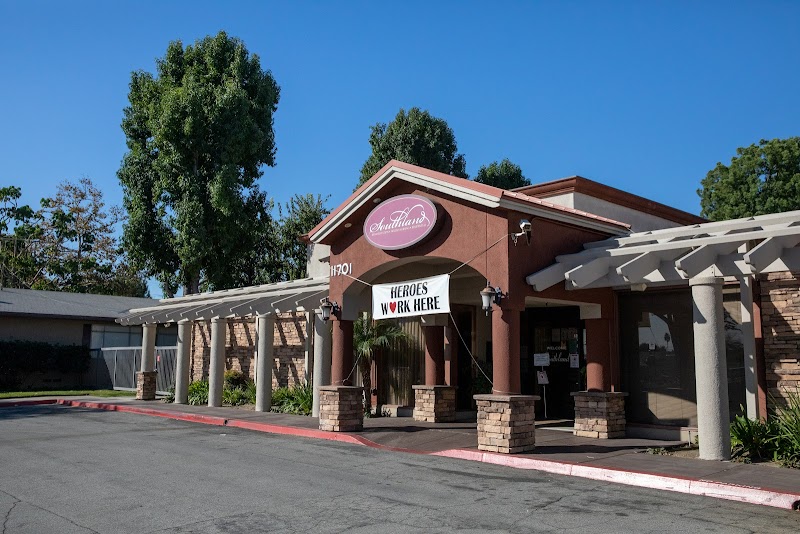
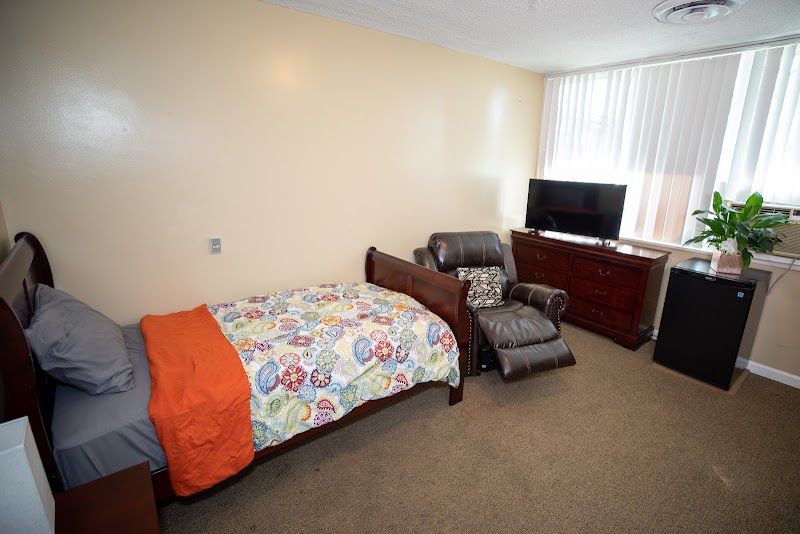
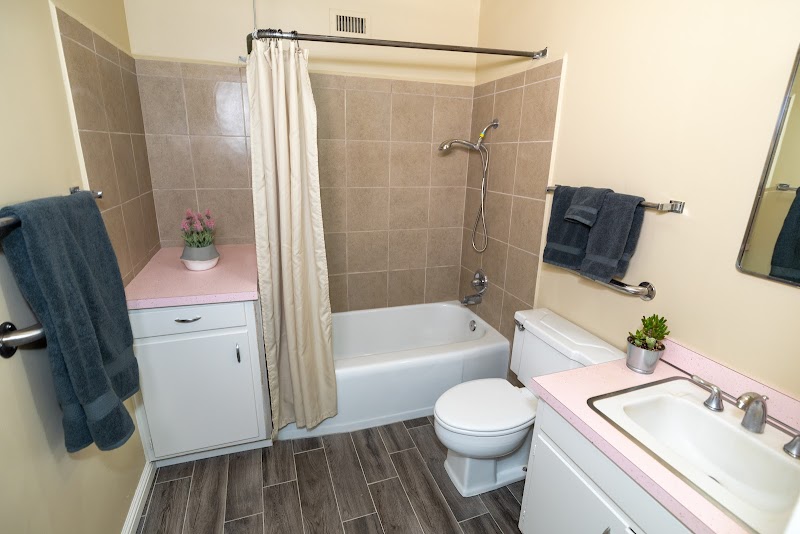
SOUTHLAND

11701 STUDEBAKER ROAD, NORWALK, CA 90650 (562) 868-9761
For profit - Limited Liability company 120 Beds THE ENSIGN GROUP Data: November 2025
Trust Grade
30/100
#912 of 1155 in CA
Last Inspection: March 2025

Within standard 12-15 month inspection cycle. Federal law requires annual inspections.

Overview

Families considering Southland Nursing Home in Norwalk, California should be aware that it has received a Trust Grade of F, indicating significant concerns about its care quality. Ranking #912 out of 1155 facilities in California places it in the bottom half, and #243 out of 369 in Los Angeles County means there are only a few local options that are better. The facility's trend is worsening, with issues increasing from 22 in 2024 to 37 in 2025. Staffing is a relative strength, with a 4 out of 5-star rating and a turnover rate of 38%, which is on par with the state average. However, the facility has concerning fines of nearly $38,376, higher than 75% of other California facilities, suggesting ongoing compliance issues. Specific incidents highlight serious deficiencies, such as a resident with diabetes not receiving proper blood sugar monitoring, a resident being injured in a van accident due to lack of seatbelt use, and another resident falling due to inadequate assistance during personal care. While there are some strengths in staffing, these critical incidents raise alarms about the overall quality of care.

Trust Score
F
30/100
In California
#912/1155
Bottom 22%
Safety Record
High Risk
Review needed
Inspections
Getting Worse
22 → 37 violations
Staff Stability
○ Average
38% turnover. Near California's 48% average. Typical for the industry.
Penalties
○ Average
$38,376 in fines. Higher than 58% of California facilities. Some compliance issues.
Skilled Nurses
⚠ Watch
Each resident gets only 27 minutes of Registered Nurse (RN) attention daily — below average for California. Fewer RN minutes means fewer trained eyes watching for problems.
Violations
⚠ Watch
80 deficiencies on record. Higher than average. Multiple issues found across inspections.
★★☆☆☆
2.0
Overall Rating
★★★★☆
4.0
Staff Levels
★★★★★
5.0
Care Quality
★☆☆☆☆
1.0
Inspection Score
Stable
2024: 22 issues
2025: 37 issues

The Good

  • 4-Star Staffing Rating · Above-average nurse staffing levels
  • 5-Star Quality Measures · Strong clinical quality outcomes
  • Full Sprinkler Coverage · Fire safety systems throughout facility
  • No fines on record
  • Staff turnover below average (38%)

    10 points below California average of 48%

Facility shows strength in staffing levels, quality measures, fire safety.

The Bad

2-Star Overall Rating

Below California average (3.1)

Below average - review inspection findings carefully

Staff Turnover: 38%

Near California avg (46%)

Typical for the industry

Federal Fines: $38,376

Above median ($33,413)

Moderate penalties - review what triggered them

Chain: THE ENSIGN GROUP

Part of a multi-facility chain

Ask about local staffing decisions and management

The Ugly 80 deficiencies on record

3 actual harm
Jul 2025 2 deficiencies
CONCERN (D) 📢 Someone Reported This

A family member, employee, or ombudsman was alarmed enough to file a formal complaint

Potential for Harm - no one hurt, but risky conditions existed

Quality of Care (Tag F0684)

Could have caused harm · This affected 1 resident

**NOTE- TERMS IN BRACKETS HAVE BEEN EDITED TO PROTECT CONFIDENTIALITY** Based on interview, and record review, the facility failed to ensure that the resident received treatment and care in accordance...

Read full inspector narrative →
**NOTE- TERMS IN BRACKETS HAVE BEEN EDITED TO PROTECT CONFIDENTIALITY** Based on interview, and record review, the facility failed to ensure that the resident received treatment and care in accordance with professional standards of practice for one of three sampled residents (Resident 1) by failing to notify the physician and responsible party regarding Resident 1's Computed Tomography (CT- a medical imaging procedure that uses X-rays to create detailed cross-sectional images of the body) scan result which indicated multiple kidney stones (hard objects made of minerals and salts in urine lodged in the kidney, very painful).This failure resulted in a delay in care and treatment to prevent urinary tract infection (UTI- an infection in the bladder/urinary tract) and abdominal pain.During a review of Resident 1's admission Record, the admission Record indicated, Resident 1 was initially admitted to the facility on [DATE] and last re-admission was on 6/25/2024 with diagnoses including Diabetes Mellitus (DM-a disorder characterized by difficulty in blood sugar control and poor wound healing) and elevated white blood cell counts (the immune system produced more white blood cells to destroy an infection).During a review of Resident 1's Nurse Practitioner Progress Note, dated 6/28/2024, the Nurse Practitioner Progress Note indicated, Resident 1 had the capacity (ability) to understand and make decisions.During a review of Resident 1's Minimum Data Set ([MDS]-a resident assessment tool), dated 6/15/2025, the MDS indicated Resident 1 required dependent assistance (Helper does all of the effort) from two or more staff for transfer, hygiene, dressing, maximal assistance (Helper does more than half the effort) from one staff for bed mobility, and independent for eating.During an interview on 7/2/2025, at 11:29 a.m., with Resident 1 in Resident 1's room, Resident 1 stated, she had a CT scan in early June, but staff did not inform her of the results. Resident 1 stated, she had abdominal pains frequently and was hospitalized recently for abdominal pain and a UTI. Resident 1 stated, the hospital doctor told her that she had multiple kidney stones that might cause the UTI and pain, but she did not receive any treatment during hospitalization. Resident 1 stated, she would like to know how to treat the kidney stones.During a concurrent interview and record review on 7/2/2025, at 11:51 a.m., with Registered Nurse Supervisor (RNS) 1, Resident 1's Nursing Progress Notes, dated from 6/9/2025 to 7/2/2025 were reviewed. The Nursing Progress indicated, Resident 1 left the facility for a CT scan, but there were no follow up notes and no documentation indicating the facility staff notified the physician and Resident 1's responsible party regarding the CT scan result. RNS 1 stated, any findings from a medical test are considered a change of condition and the physician should be notified, for further treatment orders. RNS 1 stated the facility staff need to update Resident 1's responsible party as well. RNS 1 stated, there was no documentation regarding notification or follow-up.During a phone interview on 7/2/2025, at 12:56 p.m., with Resident 1's Responsible Party (RP)1, RP 1 stated, staff did not inform him regarding CT scan result. RP 1 stated, he found out later that Resident 1's physician and Nurse Practitioner (NP) were not informed about the result until Resident 1 was transferred to the General Acute Care Hospital (GACH) emergency room (ER) on 6/24/2025. RP 1 stated, Resident 1 was getting some pain medication, but it was not effective. RP 1 stated, he was very upset after talking to GACH doctor because Resident 1's UTI and pain were possibly caused by the kidney stones. RP 1 stated, Resident 1's kidney stones were not treated in ER and the GACH sent her back to the facility. RP1 stated, the facility staff did not know why Resident 1 was not treated. RP1 stated, he got frustrated, because the nurses could not tell him the treatment plan. RP 1 stated, he did not want Resident 1 to suffer from UTI and pain again.During a concurrent interview and record review on 7/2/2025, at 1:29 p.m., with Social Service Director (SSD), Resident 1's Grievance Resolution Form, dated 6/24/2025 was reviewed. The Grievance Resolution Form indicated, RP 1 complained Resident 1's CT scan results were not communicated to her attending physician. The SSD stated, the Director of Nursing (DON) spoke to responsible staff including Registered Nurse (RN) 2 regarding the importance of clear communication. The SSD stated, she confirmed that attending physician and NP did not notify Resident 1's physician and Responsible party regarding Resident 1's CT scan results.During an interview on 7/2/2025, at 1:46 p.m., with the Case Manager (CM), the CM stated, she received the CT scan results on 6/12/2025 and handed it to RN 2 with other documents. The CM stated, she flagged the CT scan result and believed this was the nursing responsibility to notify the attending clinician and RP.During an interview on 7/2/2025 at 2:59 p.m., with RN 2, RN 2 stated, the CM gave her a bunch of documents while she was passing the medications. RN 2 stated, the CM did not mention anything about CT scan results. RN 2 stated, the CM only asked her to re-check the appointment date. RN 2 stated, if she knew there were CT scan result, she would notify physician, NP and RP 1 as soon as she knew about it because it was considered a change of condition for further orders and treatment.During an interview on 7/2/2025, at 3:15 p.m., with the DON, the DON stated, the CM should have communicated clearly when she gave the documents including the CT result to RN 2. The DON stated, RN 2 should have reviewed all the documents the CM handed to her thoroughly before she placed them in the chart. The DON stated, nursing staff should have followed through with CT scan results, but no one did unfortunately. The DON stated, Resident 1 ended up not getting the treatment and care she needed in a timely manner and was transferred to GACH ER for abdominal pain and UTI. The DON stated, the attending physician, and the NP should be notified of any findings in laboratory result and diagnostic tests. The DON stated Resident 1's RP should have also been notified. The DON stated, Resident 1 should get a referral for Urologist (a medical specialist who diagnoses and treats conditions related to the urinary tract and reproductive system) and Nephrologist (a medical specialist who focuses on the diagnosis, treatment, and management of kidney diseases) consult to manage the kidney stones. During a review of Resident 1's CT abdomen and Pelvis without Contrast Result, faxed 6/12/2025, the CT abdomen and Pelvis without Contrast Result indicated, multiple non-obstructing renal (kidney) stones measuring up to seven millimeters (mm) on the right and five mm on left.During a review of Resident 1's Change in Condition Evaluation, dated 6/24/2025, the Change in Condition Evaluation indicated, Resident 1 had uncontrollable abdominal pain.During a review of Resident 1's Transfer Form, dated 6/24/2025, the Transfer Form indicated, Resident 1 complained pain level of 10 out of 10 and the attending physician ordered to transfer to GACH ER.During a review of the facility's Policy and Procedure (P&P) titled, Diagnostic Test Results Notification, revised 4/2025, the P&P indicated, Policy: It is the policy of this facility to obtain laboratory and radiology services when ordered by a physician to promptly notify the ordering provider of test results. Procedure:2. Results of laboratory, radiological, and diagnostic tests outside the clinical reference ranges shall be promptly reported to the resident's attending physician. 3. Notification of test results will be documented in the resident's clinical record.During a review of the facility's Policy and Procedure (P&P) titled, Change in Condition, revised 4/2025, the P&P indicated, Policy: it is the policy of this facility to ensure each resident receives quality of care and services to attain and maintain the highest practicable physical , mental, and psychosocial well-being in accordance with the interdisciplinary comprehensive assessment and plan of care. Procedure: 1. If, at any time, it is recognized by any one of the team members that the condition or care needs of the resident have changed, the Licensed Nurse or Nurse Supervisor should be made aware.5. There will be certain circumstances where immediate attention will be warranted, and nursing will be responsible for notifying the appropriate department for evaluation. The nurse shall contact the physician based on the urgency of the situation. The resident/resident representative will be notified of the change of condition. During to the National Institute of Health ([NIH] a U.S. government agency that is responsible for conducting and supporting biomedical and behavioral research) titled, Association of Kidney Stones and Recurrent UTIs, published 7/25/2022, indicated, UTI and Kidney Stones are mutually coexisting, and reciprocally causal and such patients should be counselled for proactive intervention by stone removal especially when UTIs are recurrent or additional risk factors are present irrespective of stone composition. To prevent further UTI episodes, if possible, a stone culture must be obtained for an effectively targeted antibiotic treatment regime. (https://pmc.ncbi.nlm.nih.gov/articles/PMC9492590/)
CONCERN (D) 📢 Someone Reported This

A family member, employee, or ombudsman was alarmed enough to file a formal complaint

Potential for Harm - no one hurt, but risky conditions existed

Deficiency F0697 (Tag F0697)

Could have caused harm · This affected 1 resident

**NOTE- TERMS IN BRACKETS HAVE BEEN EDITED TO PROTECT CONFIDENTIALITY** Based on observation, interview, and record reviews, the facility failed to ensure effective pain management measures for one of...

Read full inspector narrative →
**NOTE- TERMS IN BRACKETS HAVE BEEN EDITED TO PROTECT CONFIDENTIALITY** Based on observation, interview, and record reviews, the facility failed to ensure effective pain management measures for one of three sampled resident (Resident 1), by failing to ensure Resident 1 had pain medication for moderate pain (pain scale [a tool used to assess pain intensity, with a scale of 0 to 10, where 0 represents no pain and 10 represents the worst pain imaginable] level of 4-7) and routine and breakthrough pain (a transient exacerbation of pain that occurs in individuals who are already experiencing chronic pain).This failure had the potential to result in social isolation and worsening of depression (a mood disorder that causes a persistent feeling of sadness and loss of interest).During a review of Resident 1's admission Record, the admission Record indicated Resident 1 was initially admitted to the facility on [DATE] and last re-admission was on 6/25/2024 with diagnoses including recurrent major depressive disorder and chronic pain syndrome (persistent pain lasting longer than three months, significantly impacting a person's physical and mental well-being).During a review of Resident 1's Nurse Practitioner Progress Note, dated 6/28/2024, the Nurse Practitioner Progress Note indicated, Resident 1 had the capacity (ability) to understand and make decisions.During a review of Resident 1's Minimum Data Set ([MDS]-a resident assessment tool), dated 6/15/2025, the MDS indicated Resident 1 required dependent assistance (Helper does all of the effort) from two or more staff for transfer, hygiene, dressing, maximal assistance (Helper does more than half the effort) from one staff for bed mobility, and independent for eating.During a concurrent observation and interview on 7/2/2025, at 11:29 a.m., with Resident 1 in Resident 1's room, Resident 1 was grimacing, and her hands were on the mid-section of her abdomen (belly). Resident 1 stated, she was having intermittent pain on her mid abdominal area with a pain level of 10 out of 10. Resident 1 stated, she did not receive pain medication routinely and the pain medication she received was not very effective. Resident 1 stated, she had to get a hold of the nurse to get her pain medication, and her pain level reached eight or nine out of 10 when the nurse brought the pain medication. Resident 1 stated, she had to go to the General Acute Care Hospital (GACH) emergency room (ER) recently for the abdominal pain.During a concurrent interview and record review on 7/2/2025, at 12:34 p.m., with Licensed Vocational Nurse (LVN) 1, Resident 1's Order Summary Report (OSR), dated 7/2/2025 was reviewed. The OSR indicated, an order to give Tylenol (a pain medication to relieve mild pain) 325 milligram(mg) two tablets by mouth every six hours as needed for mild pain (pain scale of 1-3) was ordered on 6/27/2025. The OSR indicated, an order to give Percocet (a pain medication to relieve severe pain) 5-325mg one tablet by mouth every six hours as needed for severe pain (pain scale of 8-10) was ordered on 2/11/2025. There was no pain medication coverage for moderate pain (pain scale of 4-7). LVN 1 stated, she should have asked the physician for moderate pain coverage. LVN 1 stated, last time Percocet was given to Resident 1 was on 7/2/2025, at 1:25 a.m., and did not know that Resident 1 had pain level of eight out of 10. LVN 1 stated, Resident 1's pain level usually stayed at eight or nine and was not very effective. LVN 1 stated, she asked the Nurse Practitioner (NP) who was working with the attending physician regarding the ineffective pain management for Resident 1, but NP declined to change the medication order. LVN 1 stated she should have contacted the Medical Director (MD) to get better coverage for pain management, but she did not.During an interview on 7/2/2025, at 1:29 p.m., with the Social Service Director (SSD), the SSD stated that Resident 1 did not want to participate in group activities and to get out of the bed recently. The SSD stated, during a room visit she asked Resident 1about her pain, and Resident 1 stated that she was in pain constantly and did not feel good enough to get out of bed for activities.During an interview on 7/2/2025, at 3:15 p.m., with the Director of Nursing (DON), the DON stated, effective pain management should cover all levels of pain. The DON stated, if the administer-as-needed pain medication did not relieve the pain, the nursing staff should have asked the attending physician or covering NP for routine and breakthrough pain medications to manage the pain more effectively. The DON stated, if the attending physician or NP did not agree with suggested pain management, the staff could reach out to the Medical Director. The DON stated, Resident 1 was already suffering from depression, chronic pain from multiple previous fractures (broken bones), and kidney stones. The DON stated, if the pain was not controlled effectively, Resident 1 might suffer from insomnia, social isolation, and worsening of depression.During a review of Resident 1's Medication Administration Record (MAR), dated on 7/1/2025 and 7/2/2025, the MAR indicated, Resident 1 received one tablet of Percocet 5-325 mg by mouth for pain level of eight out of ten on 7/1/2025, at 8:32 a.m. The MAR indicated, Resident 1 received one tablet of Percocet 5-325mg by mouth for pain level of eight out of ten on 7/2/2025, at 1:25 a.m. and 12:35 p.m. The MAR indicated, Tylenol was not given on either 7/1/2025 and 7/2/2025.During a review of Resident 1's untitled Care Plan (CP), revised on 6/26/2025, the CP Focus indicated, Resident 1 had acute and chronic pain. The CP Goal indicated, Resident 1 will verbalize adequate relief of pain. The CP Interventions indicated, follow pain scale to medicate as ordered and monitor/document pain characteristics such as quality, location, onset, duration, aggravating factors and relieving factors.During a review of the facility's Policy and Procedure (P&P) titled, Pain Recognition and Management, revised 4/2025, the P&P indicated, Policy: it is the policy of this to ensure that pain management is provided to residents who require such services, consistent with professional standards of practice, comprehensive and routine assessments, person-centered care plan, and residents' goals and preferences.Procedure: 1. The resident will be interviewed and evaluated for pain upon admission, quarterly, and with any change in their status. 2. Staff will recognize when a resident is experiencing pain and identify circumstances when pain can be anticipated; evaluate existing pain and the causes; manages or prevents pain, consistent with the comprehensive assessment and plan of care, current professional standards of practice, and the resident's goals and preferences.4. Management: c. if the pain management program is not effective, the licensed nurse will contact the resident's physician. 5. Monitoring: b. monitor for effectiveness of interventions and /or adverse consequences. C. consult physician for additional interventions if pain is not relieved by current orders.
Mar 2025 31 deficiencies
CONCERN (D)

Potential for Harm - no one hurt, but risky conditions existed

Deficiency F0553 (Tag F0553)

Could have caused harm · This affected 1 resident

**NOTE- TERMS IN BRACKETS HAVE BEEN EDITED TO PROTECT CONFIDENTIALITY** Based on interview and record review, the facility failed to involve one of three sampled resident's (Resident 76) in an Interdi...

Read full inspector narrative →
**NOTE- TERMS IN BRACKETS HAVE BEEN EDITED TO PROTECT CONFIDENTIALITY** Based on interview and record review, the facility failed to involve one of three sampled resident's (Resident 76) in an Interdisciplinary Team (IDT-team of health care professionals that work together toward and prioritize the resident 's needs) care conference. This deficient practice violated Resident 76's rights to be informed and the right to participate in resident's plan of care. Findings: During a review of Resident 76's admission Record, the admission Record indicated Resident 76 was originally admitted to the facility on [DATE] with diagnoses including metabolic encephalopathy (problem in the brain), colostomy status (a surgical procedure that brings one end of the large intestine out through the abdominal wall to allow waste to leave the body), and bilateral primary osteoarthritis of the knee (a type of arthritis on both knees that occurs when the cartilage on the ends of bones wears down, causing the bones to rub against one another). During a review of Resident 76's Minimum Data Set ({MDS}- a resident assessment ), dated 10/30/2024, the MDS indicated Resident 's cognition was severely impaired. The MDS indicated Resident 76 needed set up assistance when eating, supervision (helper provides verbal cues and assistance may be given during activity) with oral hygiene, upper body dressing, personal hygiene, and moderate assistance with toileting hygiene, showering, lower body dressing, and putting on/taking off footwear. During an interview on 3/13/2025 at 3:25 p.m., with Registered Nurse (RN) 3, and record review of Resident 76's Interdisciplinary Team Conference Record, dated 10/15/2024. RN 1 stated according to the IDT record, Nursing, Social Services, and therapist attended the meeting, but the resident or family member was not in attendance during the quarterly IDT care conference. RN 3 stated Resident 76 and the family member should have participated in the IDT care plan meeting. During an interview on 3/14/2025 at 11:18 a.m. with the Director of Nursing (DON), the DON stated IDT care conferences were completed on admission and quarterly. The DON stated the resident, or representative should always be part of the IDT. During a review of the facility's policy and procedure (P&P) titled, Comprehensive Person-Centered Care Planning, revised 12/2023, the P&P indicated to the extent possible the resident, resident's family and/or responsible party should participate in the development of the care plan. The P&P indicated every effort will be made to schedule care plan meetings to accommodate the availability of the resident and family or responsible party.
CONCERN (D) 📢 Someone Reported This

A family member, employee, or ombudsman was alarmed enough to file a formal complaint

Potential for Harm - no one hurt, but risky conditions existed

Deficiency F0557 (Tag F0557)

Could have caused harm · This affected 1 resident

**NOTE- TERMS IN BRACKETS HAVE BEEN EDITED TO PROTECT CONFIDENTIALITY** Based on observation, interview and record review, the facility failed to account for one of two resident's (Resident 76) person...

Read full inspector narrative →
**NOTE- TERMS IN BRACKETS HAVE BEEN EDITED TO PROTECT CONFIDENTIALITY** Based on observation, interview and record review, the facility failed to account for one of two resident's (Resident 76) personal belongings. This deficient practice violated Resident 76's rights to retain and use personal possessions and resulted in missing belongings. Findings: During a review of Resident 76's admission Record, the admission Record indicated Resident 76 was originally admitted to the facility on [DATE] with diagnoses including metabolic encephalopathy (problem in the brain), colostomy status (a surgical procedure that brings one end of the large intestine out through the abdominal wall to allow waste to leave the body), and bilateral primary osteoarthritis of the knee (a type of arthritis on both knees that occurs when the cartilage on the ends of bones wears down, causing the bones to rub against one another). During a review of Resident 76's Minimum Data Set (MDS), a resident assessment tool, dated 10/30/2024, the MDS indicated Resident 76's cognition was severely impaired. The MDS indicated Resident 76 needed set up assistance when eating, supervision (helper provides verbal cues and assistance may be given during activity) with oral hygiene, upper body dressing, personal hygiene, and moderate assistance with toileting hygiene, showering, lower body dressing, and putting on/taking off footwear. During a phone interview with family member 2 (FM 2) on 3/11/2025 12 noon, FM 2 stated Resident 76 has missing articles of clothing and hospital pads. During an interview and record review on 3/12/2025 at 10:23 a.m., with the Licensed Vocational Nurse (LVN) 7, Resident 76's medical records were reviewed and there was no belonging list in the chart. LVN 7 stated there's no tracking of what the resident posses in her room and no way to keep track the belongings. During an interview on 3/14/2025 at 11:18 a.m. with the Director of Nursing (DON), the DON stated all residents need a belonging list to track and ensure there's no loss of personal belongings. During a review of the facility's policy and procedure (P&P) titled, Personal Effects, Inventory of, revised 5/2019, the P&P indicated the facility will take reasonable steps to protect the personal property of residents. The P&P indicated upon readmission the resident's personal effects will be inventoried by a staff member. The inventory should include the recording of all personal clothing, valuable articles and items brought into the facility with the resident and retained by the resident.
CONCERN (D)

Potential for Harm - no one hurt, but risky conditions existed

Notification of Changes (Tag F0580)

Could have caused harm · This affected 1 resident

**NOTE- TERMS IN BRACKETS HAVE BEEN EDITED TO PROTECT CONFIDENTIALITY** Based on observation, interview, and record review, the facility failed to ensure the Case Manager (CM) reported one of eleven s...

Read full inspector narrative →
**NOTE- TERMS IN BRACKETS HAVE BEEN EDITED TO PROTECT CONFIDENTIALITY** Based on observation, interview, and record review, the facility failed to ensure the Case Manager (CM) reported one of eleven sampled resident's (Resident 23) continuous refusals for Orthopedic (specialty area in medicine referring to the management of the muscles, bones, and their connective structures) follow up appointments to the physician. This deficient practice resulted in Resident 23 not receiving necessary treatment and services to improve left arm range of motion (ROM, full movement potential of a joint), unnecessary weightbearing restrictions (guidance from a physician limiting the amount of weight a person can put through a specific arm and/or leg after surgery) of the left arm, a delay of therapy and restorative services, and had the potential to result in a decline in Resident 23's overall mobility and physical functioning. Findings: During a review of Resident 23's admission Record, the admission Record indicated Resident 23 was admitted to the facility on [DATE] with diagnoses including a displaced fracture of the greater tuberosity of the left humerus (upper arm bone fracture where broken pieces of the bone are out of alignment) and difficulty walking. During a review of Resident 23's Physician History and Physical (H&P), dated 3/29/2024, the H&P indicated Resident 23 initially presented to an outside hospital after sustaining a left humerus fracture, underwent an open reduction internal fixation (ORIF, surgical procedure for repairing broken bones using either plates, screws, or rods) on 3/20/2024 and was transferred to the facility for continued care and rehabilitation with a plan to follow up with orthopedics on 4/3/2024. The H&P indicated Resident 23 was to be non-weight bearing (restriction in which a person is not allowed to put any weight through the operated body part) on the left arm, receive rehabilitation, obtain post-operative care, and follow up with orthopedics on 4/3/2024. During a review of Resident 23's Occupational Therapy (OT, profession that provides services to increase and/or maintain a person's capability to participate in everyday life activities) Evaluation and Plan of Treatment (OT Eval), dated 3/28/2024, the OT Eval indicated Resident 23's left arm was not assessed due to Resident 23's diagnosis of a left humerus fracture and non-weightbearing (NWB, restriction in which a person is not allowed to put any weight through the operated body part) restrictions. During a review of Resident 23's Order Summary Report, the Order Summary Report indicated a physician's order, dated 4/3/2024, to follow up with orthopedics regarding left humerus. During a review of Resident 23's Progress Notes, dated 4/3/2024, the Nursing Progress Notes indicated Resident 23 left the facility for an orthopedic follow appointment and returned the same day with instruction to follow up with orthopedics in five (5) weeks. During a review of Resident 23's Order Summary Report, the Order Summary report indicated a physician's order, dated 4/3/2024, for Resident 23 to be NWB on the left arm. During a review of Resident 23's Order Summary Report, the Order Summary Report indicated a physician's order, dated 4/3/2024, for Physical Therapy (PT, profession aimed in the restoration, maintenance, and promotion of optimal physical function) and Occupational Therapy (OT, profession that provides services to increase and/or maintain a person's capability to participate in everyday life activities) to provide ROM exercises to Resident 23's left shoulder and left elbow and keep Resident 23's left arm NWB. During a review of Resident 23's OT Discharge summary, dated [DATE], the OT Discharge Summary indicated Resident 23 was discharged from OT services per physician or case manager. The OT Discharge Summary indicated Resident 23 showed fluctuating levels of participation in therapy due to pain and fatigue and required maximal cueing for motivation and engagement. During a review of Resident 23's Order Summary Report, the Order Summary Report indicated a physician's order, dated 5/1/2025, for an x-ray (image of the internal body, produced by X-rays being passed through it and being absorbed to different degrees by different materials) of the left humerus for a follow up ortho appointment. During a review of Resident 23's clinical record, the clinical record did not indicate Resident 23 was scheduled for a follow up orthopedics appointment. During a review of Resident 23's Order Summary Report, the Order Summary Report indicated a physician's order, dated 11/21/2024, for Resident 23 to follow up with orthopedics on 12/10/2024 (eight months after consulting physician's recommendations). During a review of Resident 23's Orthopedic Consultation note (Ortho Note), dated 12/10/2024, the Ortho Note indicated Resident 23 presented to the orthopedic appointment to follow up for her left humerus fracture and was last seen in the office on 4/3/2024. The Ortho Note indicated Resident 23's left shoulder had an abnormal strength test in the position of external rotation (rotational movement of the shoulder away from the body), crepitus (sensation or noise when you move a joint), and pain with ROM. The Ortho Note indicated Resident 23 had a complete rotator cuff tear (rip or tear in one of the tendons that stabilize the shoulder joint and allow for joint movement) and received a steroid injection. The Ortho Note indicated Resident 23's left arm could be weightbearing as tolerated (WBAT, a person is medically cleared to place as much weight through the affected arm or leg to the point of comfort or tolerance). During a review of Resident 23's Minimum Data Set (MDS, a resident assessment), dated 1/4/2025, indicated Resident 23 was cognitively (ability to think, understand, learn, and remember) intact. The MDS indicated Resident 23 required set up/clean up assistance for eating and oral hygiene and partial/moderate assistance for toileting hygiene, bathing, dressing, personal hygiene, rolling to both sides, and transfers. The MDS indicated Resident 23 had functional limitations in range of motion (limited ability to move a joint that interferes with daily functioning, including activities of daily living, or places the resident at risk of injury) in one arm (shoulder, elbow, wrist, hand). During a concurrent observation and interview on 3/12/2025 at 3:18 pm, the Director of Rehabilitation (DOR) reviewed Resident 23's clinical record. The DOR confirmed Resident 23 was discharged from OT services on 4/25/2024 due to reaching the highest practicable level of function with the left arm NWB restrictions. The DOR confirmed Resident 23 was seen by Orthopedics on 4/3/2024 and 12/10/2024 but was unsure what the recommendations were and why there was a delay in Resident 23's follow-up appointment. The DOR stated the facility should have notified the physician and followed up sooner to determine Resident 23's plan of care for the management of the left arm as it also affected Resident 23's ability to progress in therapy with mobility, ADLs, and ROM. During an observation of an RNA session on 3/13/2025 at 10:38 am, Resident 23 was sitting in a wheelchair. Restorative Nursing Aide 1 (RNA 1) wheeled Resident 23 into the hallway and placed a gait belt (safety device worn around the waist that can be used help safely transfer a person from one surface to another or while walking) around Resident 23's waist. Resident 23 leaned forward and used both arms to push off the wheelchair armrests to stand. RNA 1 held onto Resident 23's right arm while walking and Restorative Nursing Aide 2 (RNA 2) followed behind with a wheelchair. Resident 23 walked about 15 feet and stated she needed to rest. Resident 23 sat down and stood back up again after 30 seconds by leaning forward and pushing up from the wheelchair armrests with both arms. RNA 1 held onto Resident 23's right arm to assist with walking. Resident 23 walked over to the left of the hallway and grabbed onto the left handrail, grabbing and pushing onto the left handrail with the left arm for support while walking for about 15 feet. Resident 23 sat down in the wheelchair after walking exercises and requested to be wheeled back to the room. Resident 23 raised the left arm to shoulder height and the right arm overhead. RNA 2 assisted Resident 23 back to bed. During an interview on 3/13/2024 at 2:06 pm, Restorative Nursing Aide 1 (RNA 1) and Restorative Nursing Aide 2 (RNA 2) stated Resident 23 had limited ROM and fluctuating levels of pain in the left shoulder and required cueing to use the left arm during everyday activities. RNA 1 and RNA 2 stated they notified the DOR directly about Resident 23's left arm ROM limitations, non-compliance with left arm NWB precautions during walking exercises, and progress in RNA, but the DOR stated therapy was waiting for Resident 23 to follow up with Orthopedics to progress Resident 23's RNA or therapy program and did not know if other team members were aware. During a concurrent interview and record review on 3/13/2025 at 3:25 pm, the Case Manager (CM) stated she was responsible for scheduling appointments and arranging transportation for any follow up care the residents needed. The CM stated if a follow up appointment was missed, the CM must attempt to re-schedule the appointment right away, document the reason for missed appointments in the clinical record, notify the physician, and continue to follow up with the resident if a follow up appointment was missed and/or if a resident refused. The CM reviewed Resident 23's clinical record and confirmed Resident 23 was supposed to follow up with Orthopedics five weeks from 4/3/2025 but did not. The CM stated she scheduled a follow up Orthopedic appointment for Resident 23 on 5/8/2025 but Resident 23 refused to go and the CM did not document the refusal in the clinical record. The CM stated she tried to schedule additional follow up Orthopedic appointments multiple times with Resident 23, but Resident 23 refused each time and the CM did not document and/or notify nursing or the physician of Resident 23's continuous refusals. The CM stated it was important the doctor was notified of Resident 23's refusals to follow up with Orthopedics because the doctor could have re-assessed the situation and directed the team in the management of Resident 23's care. During a concurrent interview and record review on 3/14/2025 at 10:27 am, the CM and MDSN stated Interdisciplinary Team Meetings (IDT, team of health care professionals that work together with the resident and or resident's representative to prioritize the resident 's needs and goals) were conducted upon admission, quarterly, upon discharge, and as needed to discuss a resident's plan of care. The CM and MDSN reviewed Resident 23's clinical record and confirmed the facility had not conducted an IDT for Resident 23 since 4/9/2024. The CM stated Resident 23 should have had quarterly IDTs on 7/2024, 10/2024, and 1/2024 but did not. The CM and MDSN stated an IDT should have been conducted when Resident 23 refused to follow up with orthopedics but was not. The CM and MDSN stated if Resident 23 had IDTs as indicated, the physician would have been notified and the entire team would have been aware of Resident 23's refusals and lack of follow up with orthopedics. During an interview on 3/14/2025 at 1:27 pm, the Director of Nursing (DON) stated any resident refusals for follow up appointments should be documented in the clinical record, care planned, and reported to the physician, nursing, and the resident's family. The DON stated all follow up care or need for clarification of orders should be addressed in IDT meetings which were conducted upon admission, quarterly, and upon a change of condition. The DON stated if IDT meetings were conducted quarterly as indicated, the facility would have been made aware of Resident 23's lack of Orthopedic follow up and constant refusals, notified the physician and family, and addressed the resident's concerns timely. The DON stated if the Orthopedic follow up appointment was done as recommended, Resident 23 would have likely been able to bear weight through the left arm earlier and therapy services could have been re-consulted earlier to progress the resident's function. The DON stated if the physician was not informed of a resident's refusal to follow up with orthopedics, the physician would be unable to follow up with the resident's care potentially resulting in a functional decline and lack of necessary treatment and services. During a review of the facility's Policy and Procedure (P/P) titled, Significant Change of Condition, Response, revied 12/2023, the P/P indicated it was the policy of the facility to ensure each resident received quality of care and services to attain and maintain the highest practicable physical, mental, and psychological well-being in accordance with the interdisciplinary comprehensive assessment and plan of care. The P/P indicated there would be circumstances where immediate attention would be warranted and nursing would be responsible for notifying the appropriate department for evaluation and contact the physician based on the urgency of the situation. The P/P indicated the IDT shall collaborate with the attending physician, resident, and/or resident representative to review risk indicator and the plan of care and document this collaboration in the electronic medical record in the next scheduled Comprehensive Care Plan Meeting or sooner if deemed necessary by the IDT.
CONCERN (D)

Potential for Harm - no one hurt, but risky conditions existed

Deficiency F0691 (Tag F0691)

Could have caused harm · This affected 1 resident

**NOTE- TERMS IN BRACKETS HAVE BEEN EDITED TO PROTECT CONFIDENTIALITY** Based on interview and record review the facility failed to ensure one of one sampled resident (Resident 76) with a colostomy (s...

Read full inspector narrative →
**NOTE- TERMS IN BRACKETS HAVE BEEN EDITED TO PROTECT CONFIDENTIALITY** Based on interview and record review the facility failed to ensure one of one sampled resident (Resident 76) with a colostomy (surgery to create an opening for the colon through the belly) received the correct colostomy bag (pouch that attaches to the stoma [small opening in the abdomen] to collect the waste). This deficient practice resulted in Resident 76's colostomy to leak which had a negative impact in the resident's physical and mental wellbeing. Findings: During a review of Resident 76's admission Record, the admission Record indicated Resident 76 was originally admitted to the facility on [DATE] with diagnoses including metabolic encephalopathy (problem in the brain), colostomy status (a surgical procedure that brings one end of the large intestine out through the abdominal wall to allow waste to leave the body), and bilateral primary osteoarthritis of the knee (a type of arthritis on both knees that occurs when the cartilage on the ends of bones wears down, causing the bones to rub against one another). During a review of Resident 76's Minimum Data Set (MDS), resident assessment tool, dated 10/30/2024, the MDS indicated Resident 76's cognition was severely impaired. The MDS indicated Resident 76 needed set up assistance when eating, supervision (helper provides verbal cues and assistance may be given during activity) with oral hygiene, upper body dressing, personal hygiene, and moderate assistance with toileting hygiene, showering, lower body dressing, and putting on/taking off footwear. During a review of an email correspondence addressed to the Administrator (ADMIN) and the Director of Nursing (DON) from family member (FM)2, dated 1/29/2025 at 2:59 p.m., the email indicated Resident 76's colostomy bags were not the same ones the Wound Clinic providers ordered. During a review of Resident 76's Wound Clinic Progress notes, dated 3/5/2025 at 3:34 p.m., the progress notes indicated the colostomy bags on 1/28/2025 and 2/12/2025 (as noted with a photograph) were different brand from the ones ordered by the Wound specialist. During a phone interview on 3/11/2025 at 12 noon, with family member (FM) 2, FM 2 stated Resident 76 had the wrong colostomy bag, and the facility waited a long time before ordering the correct one. During an interview on 3/11/2025 at 3:27 p.m., with Certified Nurse Assistant (CNA) 1, CNA 1 stated there was a time the colostomy bag was dripping it was a mess for a couple days then the staff finally ordered the correct ones. During an interview on 3/12/2025 at 1:39 p.m., with the Treatment nurse (TXN)1, TXN 1 stated the colostomy bag should not leak for a couple days. During an interview on 3/14/2025 at 11:18 a.m., with the Director of Nursing (DON), the DON stated the colostomy supplies should be the correct ones so there is no leaking or problems. During a review of the facility's P&P titled, Colostomy and Ileostomy Care, revised 5/2017, the P&P indicated colostomy care will be provided to residents.
CONCERN (D)

Potential for Harm - no one hurt, but risky conditions existed

Pharmacy Services (Tag F0755)

Could have caused harm · This affected 1 resident

Based on observation, interview, and record review, the facility failed to clarify and administer medications in accordance with physician orders and manufacturer specifications for two of four sample...

Read full inspector narrative →
Based on observation, interview, and record review, the facility failed to clarify and administer medications in accordance with physician orders and manufacturer specifications for two of four sampled residents (Residents 90 and 68) by failing to: 1. Administer Resident 90's Vitamin B12 (a vitamin used to treat low level of vitamin B12 and help with red blood cell formation) and Vitamin B1 (a vitamin used to treat low level of vitamin B1) in accordance with physician orders. This deficient practice failed to provide medications in accordance with the physician's orders or professional standards of practice that can increase the risk to result in medical complications due to choking, constipation and nerve dysfunction for Residents 68 and 90. Findings: 1. During a review of Resident 90's admission Record (a document containing demographic and diagnostic information), dated 3/11/2025, the admission record indicated, Resident 90 was admitted to facility on 9/5/2024 with diagnoses including, but not limited to, difficulty in walking, abnormal posture and acute respiratory failure (lack of oxygen in body tissues), unspecified with hypoxia (a term used for low levels of oxygen in body tissues) or hypercapnia (a term used to describe too much carbon dioxide in blood). During a review of Resident 90's Minimum Data Set (MDS - a resident assessment ), dated 12/13/2024, the MDS indicated, Resident 90 needed supervision assistance from the facility staff in performing activities of daily living (ADLs - routine tasks/activities such as bathing, dressing and toileting a person performs daily to care for themselves) such as eating and oral hygiene, moderate assistance for upper body dressing, maximal assistance for personal hygiene and dependent on facility staff for toileting hygiene, showering, lower body dressing and putting on/taking off footwear. During a concurrent observation and interview of medication administration on 3/11/2025 at 8:51 a.m. with Licensed Vocational Nurse (LVN) 3, LVN 3 stated she prepared 11 medications to be administered for Resident 90 that included, but not limited to, the following: a. One tablet of vitamin B12 500 microgram (mcg - a unit of measurement for mass). LVN 3 did not administer vitamin B1 50 milligram (mg - a unit of measurement for mass) during medication pass observation, per physician order. During a review of Resident 90's Order Summary Report (a document containing a summary of all active physician orders), dated 3/11/2025, the order summary report indicated, but not limited to the following omitted and/or incorrectly administered physician orders: Vitamin B12 oral tablet extended release 1000 mcg (Cyanocobalamin), give 1 tablet by mouth one time a day for supplement, order date 12/19/2024, start date 12/19/2024 Vitamin B1 oral tablet (thiamine hydrochloride [HCl]), give 50 mg by mouth one time a day for supplement, order date 12/19/2024, start date 12/19/2024 During a concurrent observation and interview on 3/11/2025 at 1:51 p.m. with LVN 3, manufacturer bottles of vitamin B12 500 mcg and vitamin B1 100 mg. LVN 3 stated she gave one tablet of vitamin B12 500 mcg, but physician order indicated to give two tablets of vitamin B12 500 mcg to make up 1000 mcg dose. LVN 3 showed vitamin B1 100 mg bottle and stated, I thought I gave vitamin B1 during med pass and realized that she would have caused a medication error by not administering vitamin B1 50 mg, per physician order. LVN 3 stated it was important to follow physician orders to prevent medication errors and to ensure Resident 90 received proper doses to treat lack of vitamin B12 and vitamin B1. During an interview on 3/12/2025 at 4:31 p.m. with the Director of Nursing (DON), DON stated facility nurses should have checked the eMAR to ensure right dose, right medication name and instructions were followed. DON stated by not providing vitamin B in accordance with physician orders, it increased risk for vitamin B deficiencies. During a review of the facility's policy and procedure (P&P) titled, Medication Administration, dated 09/2010, the P&P indicated, Medications are administered as prescribed in accordance with manufacturer's specifications, good nursing principles and practices do so. Prior to administration, the medication and dosage schedule on the resident's MAR is compared with the medication label. If the label and MAR are different and the container is not flagged indicating a change in directions, or if there is the physician orders are checked for the correct dosage schedule. The P&P indicated, Medications are administered in accordance with written orders of the attending physician.
CONCERN (D)

Potential for Harm - no one hurt, but risky conditions existed

Safe Environment (Tag F0921)

Could have caused harm · This affected 1 resident

**NOTE- TERMS IN BRACKETS HAVE BEEN EDITED TO PROTECT CONFIDENTIALITY** Based on interview and record review the facility failed to ensure one of two sampled residents (Resident 76) was not in Residen...

Read full inspector narrative →
**NOTE- TERMS IN BRACKETS HAVE BEEN EDITED TO PROTECT CONFIDENTIALITY** Based on interview and record review the facility failed to ensure one of two sampled residents (Resident 76) was not in Resident 76's room while workers (unnamed) were sanding and painting a patch on the wall. This deficient practice had the potential to result in an unsafe environment which can negatively affect Resident 76. Findings: During a review of Resident 76's admission Record, the admission Record indicated Resident 76 was originally admitted to the facility on [DATE] with diagnoses including metabolic encephalopathy (problem in the brain), colostomy status (a surgical procedure that brings one end of the large intestine out through the abdominal wall to allow waste to leave the body), and bilateral primary osteoarthritis of the knee (a type of arthritis on both knees that occurs when the cartilage on the ends of bones wears down, causing the bones to rub against one another). During a review of Resident 76's Minimum Data Set (MDS), resident assessment tool, dated 10/30/2024, the MDS indicated Resident 76's cognition was severely impaired. The MDS indicated Resident 76 needed set up assistance when eating, supervision (helper provides verbal cues and assistance may be given during activity) with oral hygiene, upper body dressing, personal hygiene, and moderate assistance with toileting hygiene, showering, lower body dressing, and putting on/taking off footwear. During a review of an email correspondence between Family Member (FM) 2, the Administrator (ADMIN), and the Director of Nursing (DON), dated 1/22/2025, the email indicated there was painting in Resident 76's room while Resident 76 was in the room. During an interview on 3/12/2025 at 3:48 p.m., with Certified Nurse Assistant (CNA) 6, CNA 6 stated the workers were painting while the Resident 76 was in the room. During an interview on 3/14/2025 at 11:18 a.m., with the Director of Nursing (DON), the DON stated workers should not paint while the residents are in the room for residents' safety and so the residents won't have a problem breathing or be uncomfortable. The DON stated the facility did not have a policy addressing providing residents with a safe homelike environment.
CONCERN (E)

Potential for Harm - no one hurt, but risky conditions existed

Resident Rights (Tag F0550)

Could have caused harm · This affected multiple residents

**NOTE- TERMS IN BRACKETS HAVE BEEN EDITED TO PROTECT CONFIDENTIALITY** Based on observation, interview, and record reviews the facility failed to ensure five of ten sampled residents (Resident 36, 42...

Read full inspector narrative →
**NOTE- TERMS IN BRACKETS HAVE BEEN EDITED TO PROTECT CONFIDENTIALITY** Based on observation, interview, and record reviews the facility failed to ensure five of ten sampled residents (Resident 36, 42, 76, and 98) were treated with dignity and respect when the facility failed to ensure: a) Resident 98's foley catheter bag (medical device that helps drain urine from the bladder) was covered with a dignity bag (a bag used to the cover and hold the catheter drainage/collection bag, so it is not visible). b) Resident 42 was groomed and was not wearing a hospital gown. c) Resident 76's teeth were cleaned, and clothes were not soiled with feces. d) Resident 36 had a dignified dining experience. e) Resident 33 was assisted to the toilet and not instructed to defecate or void in the adult disposable underwear. These deficient practices resulted in residents not treated with dignity and respect and does not promote enhancement of quality of life. Findings: a) During a review of Resident 98's admission Record, the admission Record indicated Resident 98 was admitted to the facility on [DATE] with diagnoses including hydronephrosis (condition of the urinary tract where one or both kidneys swell) with renal and ureteral calculous obstruction (condition where there is blockage caused by kidney stones. During a review of Resident 98's Minimum Data Set (MDS - a resident assessment tool), dated 1/17/2025, the MDS indicated Resident 98's cognition (thought process) was intact. The MDS indicated Resident 98 needed substantial assistance (helper does more than half the effort to complete the task) with toileting hygiene, and supervision with personal hygiene. During a record review of Resident 98's Order summary report, as of 3/12/2025, the report indicated, starting 2/8/2025, Resident 98 had an indwelling catheter. During an observation and interview on 3/10/2025 at 2:19 p.m., with Licensed Vocational Nurse (LVN) 6, Resident 98's catheter drainage bag was not concealed with a dignity bag. LVN 6 stated resident 98 did not have a catheter dignity bag . b) During a review of Resident 42's admission Record, the admission Record indicated Resident 42 was originally admitted to the facility on [DATE] with diagnoses including major depressive disorder (a mood disorder that causes a persistent feeling of sadness and loss of interest), difficulty walking, and rheumatoid arthritis (a chronic progressive disease-causing inflammation in the joints and resulting in painful deformity and immobility). During a review of Resident 42's MDS, dated [DATE], the MDS indicated Resident 42's cognition was moderately impaired. The MDS indicated Resident 42 needed moderate assistance (helper does less than half the effort to complete task) with eating, oral hygiene, and personal hygiene, needed substantial assistance with upper body dressing, and was dependent (helper does all the effort) on staff with toileting hygiene, showering, lower body dressing, and putting on or taking off footwear. During a concurrent observation and interview on 3/10/2025 at 2:23 p.m., with Resident 42, Resident 42 was wearing a hospital gown, and hair was tangled and unkept. Resident 42 stated Do you think I want to wear this ugly thing? Resident 42 stated she has been wearing a hospital gown for 2 months and preferred to wear personal clothes. Resident 42 stated her hair was unbrushed she doesn't have supplies to brush her hair. During an observation and interview on 3/10/2024 at 2:29 p.m., with the Treatment Nurse (TXN) 1, in Resident 42's room, TXN 1 stated Resident 42's hair was not groomed, Resident 42 was wearing a hospital gown, Resident 42's bedside table had drink stains and was dirty, and Resident 42 needed help with grooming and getting dressed. c) During a review of Resident 76's admission Record, the admission Record indicated Resident 76 was originally admitted to the facility on [DATE] with diagnoses including metabolic encephalopathy (problem in the brain), colostomy status (a surgical procedure that brings one end of the large intestine out through the abdominal wall to allow waste to leave the body), and bilateral primary osteoarthritis of the knee (a type of arthritis on both knees that occurs when the cartilage on the ends of bones wears down, causing the bones to rub against one another). During a review of Resident 76's MDS, dated [DATE], the MDS indicated Resident 's cognition was severely impaired. The MDS indicated Resident 76 needed set up assistance when eating, supervision (helper provides verbal cues and assistance may be given during activity) with oral hygiene, upper body dressing, personal hygiene, and moderate assistance with toileting hygiene, showering, lower body dressing, and putting on/taking off footwear. During an interview and record review on 3/12/2025 at 1:30 p.m. with the Social Services Director (SSD), Resident 76's Grievance Resolution Form, dated 12/20/2024 and 1/8/2025, were reviewed and the forms indicated on 12/20/2024 Resident 76 was noted with soiled clothes in the closet. The form indicated Resident 76'd colostomy bag was left opened, and stool spilled over Resident 76's pants. The SSD stated feces were on Resident 76's clothing on several occasions. During an observation and interview on 3/12/2025 at 10:30 a.m., in Resident 76's room, with Resident 76 Resident 76 was observed with dirty teeth. Resident 76 stated she was not assisted with toothbrushing this morning. During an observation and interview on 3/12/2025 at 10:30 a.m. with Licensed Vocational Nurse (LVN) 7, in Resident 76's room, Resident 76 was noted with dirty teeth and LVN 7 stated staff should help with resident dental hygiene. During an interview on 3/14/2025 at 11:18 a.m. with the Director of Nursing (DON), the DON stated the residents deserve respect and the facility need to preserve their dignity and treat residents with respect. The DON stated residents should not wear a hospital gown if it was not their preference. The DON stated staff need to ensure residents were groomed and teeth brushed. The DON stated foley drainage bags need to be concealed with a dignity bag. During a review of the facility's policy and procedure (P&P) titled, Resident Rights, dated 2/2023, the P&P indicated residents will be treated with kindness, respect, and dignity. Residents' individual preference will be respected. Residents will be appropriately dressed in clean clothes and will be well groomed. Residents will be treated with a manner that maintains privacy.
CONCERN (E)

Potential for Harm - no one hurt, but risky conditions existed

Deficiency F0554 (Tag F0554)

Could have caused harm · This affected multiple residents

**NOTE- TERMS IN BRACKETS HAVE BEEN EDITED TO PROTECT CONFIDENTIALITY** Based on observation, interview and record review, the facility failed to ensure one out of three sampled resident's (Resident 3...

Read full inspector narrative →
**NOTE- TERMS IN BRACKETS HAVE BEEN EDITED TO PROTECT CONFIDENTIALITY** Based on observation, interview and record review, the facility failed to ensure one out of three sampled resident's (Resident 30 ) would not be allowed to keep medications at the bedside without a physician's order and without being assessed to determine if the resident is capable to self-administer her own medications . This deficient practice had a potential for resident to over or under medicate herself which can lead to further complications. Findings: During a record review of Resident 30's admission Record ( Face Sheet), the admission Record indicated Resident 30 was originally admitted to the facility on [DATE] then re-admitted on [DATE], with diagnoses including unspecified dementia ( a decline in cognitive function that cannot be attributed to a specific known cause) unspecified severity, without behavioral disturbance (wide range of changes in behavior like thoughts and mood ), During a review of Resident 30's Minimum Data Set ([MDS], a comprehensive assessment and care screening tool]) dated 12/2/2024, the MDS indicated, Resident 30 has the capacity to understand and make decisions. The MDS indicated Resident 30 requires supervision or touching assistance- helper provides verbal cues and or touching /steadying and /or contact guard assistance as resident completes activity with sit to lying , sit to stand, toilet transfer and roll left and right. During a record review of Resident 30's Order Summary Report OSR (OSR), as of 3/11/2025 the OSR indicates as follows : 1.Ketoconazole External Shampoo1% (ketoconazole topical -treats fungal or yeast infections in your skin) apply to head topically one time a day every Monday, Wednesday, Friday for atopic dermatitis ( an itchy inflammation of the skin) leave for 3 to 5 minutes then rinse. 2.Fluocinonide External Solution 0.05% ( Fluocinonide- a topical corticosteroid medication ( a drug used to treat inflammation) used to treat scalp conditions ) apply to scalp topically as needed for itching daily . 3.Triamicinolone Acetate External Cream 0.1% a (triamcinolone acetate topical- a corticosteroid medication that treats a variety of skin conditions allergies and certain cancers ) apply to both arms and legs topically as needed for itchiness twice daily two weeks on and then 1 week off. 4.Ammonium Lactate External Lotion 12% ( Lactic Acid Ammonium Lactate - a class of medication used to treat dry or scaly skin) apply to affected area topically at bedtime for dry, itchy skin apply after bathing while skin is moist. During an initial observation and interview on 3/10/2025 at 10:40 a.m., in Resident 30's room , on the bedside table was one box of Ammonium Lactate cream 12%, one 1-pound jar of Triamcinolone Acetonide Cream 01% , one bottle of Ketoconazole shampoo 2%, two boxes of fluocinonide topical solution 0.05%. During an interview Resident 30 stated the medications on her bedside table were for her dry itchy skin. Resident 30 stated she applies some of the medication creams. During an observation and interview on 3/10/2025 at 2:27 p.m., with Licensed Vocational Nurse 3 (LVN 3), LVN 3 stated the medications at Resident 3's bedside are for her dry skin,. LVN 3 stated Resident 3 should have been assessed for the ability to administer her own medications but did not have a self-assessment, she stated the doctor must be called ,it should be care planed and we must monitor the resident while administering the medications. LVN 3 stated Resident 3 should not have been able the have these medications at the bedside because there was no order , she stated the medications must be kept locked in the treatment cart. During an interview and record review with LVN 3 on 3/10/2025 at 2:27 p.m., of Resident 30's clinical record, LVN 3 stated there was no documented evidence the resident was assessed for self-administration of topical medication cream and no doctor's orders indication Resident 30 can administer her medications. During an interview on 3/12/2025 at 9:29 a.m., with the Registered Nurse 1 (RN1), RN 1 stated when a resident wants to have their medications at the bedside there needs to be an assessment done by myself and the doctor to determine if the resident is alert and oriented and capable of administering her medications. RN 1 stated you cannot leave medications at the bedside if there are no doctors order indicating Resident 3 can administer her medications . RN stated the reason we cannot keep medications at the bedside is the resident can use the medication many times and get overdose or could miss a dose. RN 1 stated Resident 3's medications should have been a in a locked treatment cart. During an interview on 3/14/2025 at 11:20 a.m. with the Director of Nursing (DON) , the DON stated an assessment must be done to see if the resident will be safe taking her own medication. DON stated the resident must tell us what the medication is used for, demonstrate how to use the medication and we must also monitor the resident taking the medication. DON stated if a resident does not pass the assessment the medications cannot be left at the bedside, they should be in a medication cart. During a review of the facility's Policy and Procedures (P&P) titled, Self-Administration of Medications Revised 05/2019, the P&P indicates it is the policy of this facility to respect the wishes of alert, competent residents to self-administer prescribed as allowable under state regulations. To determine the ability of alert residents to participate in self-administration of medications. To maintain the safety and accuracy of medication administration. The P &P indicated if a resident desires to participate in self-administration, the interdisciplinary team will assess and periodically re-evaluate the resident based on change in the resident's status with the LN-Self Administration of Medications UDA. If the resident is a candidate for self-administration of medications, this will be indicated in the chart. Resident will be instructed regarding proper administration of medication by the nurse.
CONCERN (E)

Potential for Harm - no one hurt, but risky conditions existed

Deficiency F0558 (Tag F0558)

Could have caused harm · This affected multiple residents

**NOTE- TERMS IN BRACKETS HAVE BEEN EDITED TO PROTECT CONFIDENTIALITY** Based on observation, interview, and record review the facility failed to ensure two of four sampled residents (Residents 8 and ...

Read full inspector narrative →
**NOTE- TERMS IN BRACKETS HAVE BEEN EDITED TO PROTECT CONFIDENTIALITY** Based on observation, interview, and record review the facility failed to ensure two of four sampled residents (Residents 8 and 58) call lights (device that allows residents to request assistance from nursing staff) were accessible and within reach. This deficient practice resulted in a delay of care and services. Findings: During a review of Resident 8's admission Record, the admission Record indicated the facility initially admitted Resident 8 on 6/29/2010 and readmitted Resident 8 on 11/18/210 with diagnoses including urinary tract infection (UTI, an infection in the bladder/urinary tract) and cervical radiculopathy (condition caused by compression and inflammation of nerve roots in the neck which usually leads to pain, numbness, and weakness of the arms). During a review of Resident 8's Minimum Data Set (MDS, a federally mandated assessment tool), dated 11/29/2024, the MDS indicated Resident 8 had moderately impaired cognition (mental processes involved in gaining knowledge and comprehension, includes thinking, knowing, remembering, judging, problem-solving). The MDS indicated Resident 8 required supervision/touching assistance for eating, substantial/maximal assistance (helper does more than half the effort) for oral hygiene and rolling to both sides, and was dependent in toileting hygiene, bathing, dressing, and bed mobility. During a review of Resident 8's Fall Risk Evaluation, dated 3/1/2025, the Fall Risk Evaluation indicated Resident 8 received a total score of 13, indicating Resident 8 was a high fall risk. During a review of Resident 58's admission Record, the admission Record indicated Resident 58 was admitted to the facility on [DATE] with diagnoses including encephalitis (swelling of the brain) and encephalomyelitis (swelling of brain and spinal cord, end stage renal Disease (ESRD -irreversible kidney failure) , dependence on renal dialysis (a treatment to cleanse the blood of wastes and extra fluids artificially through a machine when the kidney[s] have failed), dementia (a progressive state of decline in mental abilities), and anxiety disorder (a group of mental health conditions characterized by excessive and persistent fear, worry, and nervousness that can interfere with daily life). During a review of Resident 58's MDS, dated [DATE], the MDS indicated Resident 58's cognition was severely impaired. The MDS indicated Resident 58 needed set up assistance with eating, supervision with oral and personal hygiene, and substantial assist with toileting hygiene and showering. During an observation and interview on 3/11/2025 at 9:33 a.m., with Registered Nurse (RN) 5, in Resident 58's room, Resident 58's call light was on the floor close to the back of the bed, which was out of reach. RN 5 stated the call light need to be within the residents' reach. During an observation on 3/11/2025 at 10:14 a.m., Resident 8 was lying in bed. Resident 8 minimally bent and straightened the right elbow and lifted both arms to less than shoulder height. Resident 8's left elbow was bent, and the left hand was positioned in a fist. Resident 8's call light was on the top right corner of the bed. Resident 8 stated she needed nursing assistance due to pain but was unable to reach the call light because it was placed too high, and her arms were too weak to reach it. During a concurrent interview and observation on 3/11/2025 at 10:24 a.m., Certified Nursing Assistant 5 (CNA 5) confirmed Resident 8's call light was out of reach. CNA 5 stated the call light should always be within Resident 8's reach and should have been clipped to Resident 8's gown or placed in her hand to ensure she was able to obtain nursing assistance when needed. During an interview on 3/14/2025 at 11:18 a.m., with the Director of Nursing (DON), the DON stated all residents must have an accessible call light that is within reach to ensure residents can call for help and verbalize their individual needs. During a review of the facility's policy and procedure (P&P) titled, Call Light/Bell, revised 5/2007, the P&P indicated the facility will provide the residents a means of communication with the nursing staff. The P&P indicated the call light need to be within the residents' reach before the staff leaves the room.
CONCERN (E)

Potential for Harm - no one hurt, but risky conditions existed

Grievances (Tag F0585)

Could have caused harm · This affected multiple residents

**NOTE- TERMS IN BRACKETS HAVE BEEN EDITED TO PROTECT CONFIDENTIALITY** Based on interview and record review the facility failed to ensure one of two sampled residents (Resident 76) family member (FM)...

Read full inspector narrative →
**NOTE- TERMS IN BRACKETS HAVE BEEN EDITED TO PROTECT CONFIDENTIALITY** Based on interview and record review the facility failed to ensure one of two sampled residents (Resident 76) family member (FM) 2's grievance (complaints regarding treatment, care, management of funds, lost clothing, or violation of rights) involving an unidentified Certified Nurse Aide (CNA) was addressed, investigated, and resolved in a timely manner. This deficient practice placed Resident 76's at risk for mistreatment can negatively affect Resident 76. Findings: During a review of Resident 76's admission Record, the admission Record indicated Resident 76 was originally admitted to the facility on [DATE] with diagnoses including metabolic encephalopathy (problem in the brain), colostomy status (a surgical procedure that brings one end of the large intestine out through the abdominal wall to allow waste to leave the body), and bilateral primary osteoarthritis of the knee (a type of arthritis on both knees that occurs when the cartilage on the ends of bones wears down, causing the bones to rub against one another). During a review of Resident 76's Minimum Data Set (MDS), resident assessment tool, dated 10/30/2024, the MDS indicated Resident 76's cognition was severely impaired. The MDS indicated Resident 76 needed set up assistance when eating, supervision (helper provides verbal cues and assistance may be given during activity) with oral hygiene, upper body dressing, personal hygiene, and moderate assistance with toileting hygiene, showering, lower body dressing, and putting on/taking off footwear. During a review of Resident 76's FM 2's Grievance Resolution Form', dated 11/15/2024, indicated a grievance was made regarding an unnamed CNA taking Resident 76's phone, closing the door on Resident 76, and turning the television loud. During an interview and record review on 3/13/2025 at 11:32 a.m. with the Social Services Director (SSD), FM 2's email correspondence between the Administrator (ADMIN) and FM 2, dated 1/8/2025 indicated FM 2's grievance placed on 11/15/2024 has not been addressed as of 1/8/2024, 54 days after the original grievance was filed. The SSD stated that the SSD was the Grievance official, and she was not made aware of the grievance that was brought to the attention of the ADMIN by the family in 1/2025. The SSD also stated she never got the original grievance on 11/15/2024. The SSD stated policy dictated she need to know status of all grievance so the SSD can follow up appropriately. The SSD stated the grievance filed 11/15/2024 should have been immediately addressed and resolved because it was residents' rights. During an interview on 3/14/2025 at 11:18 a.m., with the Director of Nursing (DON), the DON stated all grievances need to be addressed, investigated, and filed in the log. The DON stated the facility need to ensure there was immediate action and resolution for residents right and safety. During a review of the facility's policy, and procedure (P/P) titled, Grievances revised 12/2023, the P/P indicated the facility would ensure the grievance process would address resident concerns without fear of discrimination or reprisal. The facility's Grievance Official was responsible for overseeing the grievance process and for receiving and tracking grievances, leading any necessary investigations by the facility, maintaining the confidentiality of all information associated with grievances, issuing a written grievance decisions to the resident if requested, and coordinating with state and federal agencies as necessary. The grievance official evaluates and investigates the concern and takes immediate action to resolve the concern. The grievance official or designee responds to the individual expressing the concern within three working days of the initial concern to acknowledge receipt and describe steps taken toward resolution. The grievance log is maintained by the grievance official and reviewed by the quality assessment and assurance committee and shall not become part of the medical record Cross Reference F600, F609, F610
CONCERN (E) 📢 Someone Reported This

A family member, employee, or ombudsman was alarmed enough to file a formal complaint

Potential for Harm - no one hurt, but risky conditions existed

Free from Abuse/Neglect (Tag F0600)

Could have caused harm · This affected multiple residents

**NOTE- TERMS IN BRACKETS HAVE BEEN EDITED TO PROTECT CONFIDENTIALITY** Based on interview and record review the facility did not protect one of three sampled residents (Resident 76) from abuse when t...

Read full inspector narrative →
**NOTE- TERMS IN BRACKETS HAVE BEEN EDITED TO PROTECT CONFIDENTIALITY** Based on interview and record review the facility did not protect one of three sampled residents (Resident 76) from abuse when the facility failed to: a) Ensure Resident 167, who was only wearing a hospital gown and adult disposable underwear, did not enter Resident 76's room and kiss Resident 76 in the arm without Resident 76's consent on 2/23/2025 at around 7:30 a.m. b) Ensure Resident 76 was assessed, monitored and provided with emotional support after allegations of abuse were made on 2/23/2025 that Resident 167 entered Resident 76's room and kissed Resident 76's arm without Resident 76's consent. c) Ensure Resident 76 was assessed, monitored, and provided with emotional support after allegations of abuse were made on 11/15/2024 by Family Member (FM)2 that an unidentified Certified Nurse Assistant (CNA), took Resident 76's cell phone, closed Resident 76's door, and turned the television on loud and Resident 76 felt isolated due to the CNA's actions. These deficient practices resulted in Resident 76 being subject to a nonconsensual kiss, isolation and had the potential to result in a negative psychosocial wellbeing from re-occurring abuse incidents. Findings: During a review of Resident 76's admission Record, the admission Record indicated Resident 76 was originally admitted to the facility on [DATE] with diagnoses including metabolic encephalopathy (change of how brain works due to an underlying condition), colostomy status (a surgical procedure that brings one end of the large intestine out through the abdominal wall to allow waste to leave the body), and bilateral primary osteoarthritis of the knee (a type of arthritis on both knees that occurs when the cartilage on the ends of bones wears down, causing the bones to rub against one another). During a review of Resident 76's Minimum Data Set (MDS), resident assessment tool, dated 10/30/2024, the MDS indicated Resident 76's cognition (thought process) was severely impaired. The MDS indicated Resident 76 needed set up assistance when eating, supervision (helper provides verbal cues and assistance may be given during activity) with oral hygiene, upper body dressing, personal hygiene, and moderate assistance (helper does less than half the effort) with toileting hygiene, showering, lower body dressing, and putting on/taking off footwear. During a review of Resident 167's admission Record, the admission record indicated Resident 167 was admitted to the facility on [DATE] with diagnoses including metabolic encephalopathy, cognitive communication deficit, and multiple myeloma (blood cancer). During a review of Resident 167's MDS, dated [DATE], the MDS indicated Resident 167's cognition was severely impaired. The MDS indicated the resident needed supervision with eating and oral hygiene, moderate assistance with dressing, and maximal assistance (helper does more than half the effort) with toileting hygiene and showering. During a phone interview on 3/11/2025 at 12 p.m., with FM 2, FM 2 stated on 2/23/2025 (no time of day given) a man (Resident 167) was kissing Resident 76's arm. FM2 stated Resident 167 had no pants on. During an interview on 3/11/2025 at 3:34 p.m., with CNA 1, CNA 1 stated CNA 9 informed CNA 1 to watch Resident 167 closely because she heard Resident 167 went into Resident 76's room and gave Resident 76 a kiss. CNA 1 stated she asked Resident 167 what happened and according to CNA 1, Resident 167 told CNA 1 that he (Resident 167) kissed his girlfriend (Resident 76), and they made a big deal about it. During a phone interview on 3/11/2025 at 3:49 p.m., with Registered Nurse (RN)2, RN 2 stated on 2/23/2025 at around 7:30 a.m. Resident 167 was found sitting on a chair inside Resident 76's room just wearing a hospital gown and disposable underwear. RN 2 stated Resident's 76 and 167 were immediately separated. RN 2 stated she was not aware that Resident 167 had just kissed Resident 76 without consent prior to her finding him in Resident 76's room. RN 2 stated one-week later FM 2 informed RN 2 that a man went in Resident 76's room and kissed Resident 76. RN 2 stated RN 2 should have reported the incident to the administrator and Resident 76 should have been assessed, monitored, provided with emotional support, and the physician should have been notified of the allegations of abuse. During an interview on 3/12/2025 at 10:30 a.m., with Resident 76, Resident 76 stated a man (later identified as Resident 167) went in her room held her hand and kissed her arm. Resident 76 stated the man (Resident 167) stated, I finally found you, and then sat down in the chair. Resident 75 stated Resident 167 did not have pants on. During an interview on 3/12/2025 at 12:03 p.m. with the Social Services Director (SSD), the SSD stated the incident should have been reported to the SSD, administrator, or the Director of Nursing. The SSD stated the following interventions should have been implemented: a) SSD would've made room visits to ensure Resident 76 was emotionally and psychosocially stable. b) The Interdisciplinary Team (IDT Resident's health care team consisting of various specialties) would have met and discussed the incident. c) Other residents should have been interviewed to make sure no one else was affected. d) Psychological consult would have been requested for Resident 76. e) The physician should have been notified of the incident. f) The incident should have been reported to state agency, ombudsman, and local law enforcement. During a review of a document titled, Grievance Resolution Form, dated 11/15/2024, the Grievance Resolution Form completed by Resident 76's FM 2 indicated a grievance was made regarding an unnamed CNA taking Resident 76's phone, closing the door on Resident76, and turning the television in Resident 76's room loud. During an interview on 3/13/2025 at 11:32 a.m., with the Social Services Director (SSD), the SSD stated the grievance filed on 11/15/2024 should have been immediately addressed and resolved because it was residents' rights to be free from abuse. Resident 76 should have been monitored and assessed to make sure the resident was stable as soon as the staff received the allegations of abuse. The CNA's should have been interviewed to see what happened. During an interview on 3/14/2025 at 11:18 a.m., with the Director of Nursing (DON), the DON stated residents have the right to be free from abuse and should be prevented. A thorough investigation should be done to protect the residents. During a review of the facility's policy and procedure (P&P) titled, Abuse, Prevention and Prohibition Against, revised 12/2023, the P&P indicated residents have the right to be free from abuse. The facility has zero tolerance for abuse and staff must not permit anyone to engage in verbal, mental, or physical abuse or mistreatment. The facility was committed to protecting residents from abuse by anyone including other residents. The facility will identify, correct, and intervene in situations which abuse is likely to occur. The facility will establish a safe environment. A licensed nurse will immediately assess the resident upon receiving reports of abuse. Findings of the examination will be recorded in the medical record. The facility will increase supervision of the residents and provide emotional support and counseling to the resident during investigation and as needed. If the allegation of abuse involves an employee the facility will immediately remove the employee from the care of the resident. The care plans will be reviewed and revised because of the allegations of abuse. Cross reference F585, F609, F610
CONCERN (E) 📢 Someone Reported This

A family member, employee, or ombudsman was alarmed enough to file a formal complaint

Potential for Harm - no one hurt, but risky conditions existed

Report Alleged Abuse (Tag F0609)

Could have caused harm · This affected multiple residents

**NOTE- TERMS IN BRACKETS HAVE BEEN EDITED TO PROTECT CONFIDENTIALITY** Based on interview and record review, the facility failed to report allegations of abuse to the California Department of Public ...

Read full inspector narrative →
**NOTE- TERMS IN BRACKETS HAVE BEEN EDITED TO PROTECT CONFIDENTIALITY** Based on interview and record review, the facility failed to report allegations of abuse to the California Department of Public Health (CDPH) within the regulated time frame of two hours. a) The facility failed to report to CDPH when an allegation of abuse was made on 11/15/2024 by Family Member (FM)2 that an unidentified Certified Nurse Assistant (CNA) took Resident 76's cell phone, closed Resident 76's door, and turned the television on loud and Resident 76 felt isolated. b) The facility failed to report to CDPH when an allegation of abuse was made, about an incident that occured on 2/23/2025, by FM 2 that a male resident (Resident 167), without pants on, entered Resident 76's room and allegedly kissed Resident 76's arm without Resident 76's consent. This deficient practice resulted in CDPH's inability to investigate the allegation of abuse timely and had the potential for other allegations of abuse to go unreported. Findings: During a review of Resident 76's admission Record, the admission Record indicated Resident 76 was originally admitted to the facility on [DATE], with diagnoses including metabolic encephalopathy (change of how brain works due to an underlying condition), colostomy status (a surgical procedure that brings one end of the large intestine out through the abdominal wall to allow waste to leave the body), and bilateral primary osteoarthritis of the knee (a type of arthritis on both knees that occurs when the cartilage on the ends of bones wears down, causing the bones to rub against one another). During a review of Resident 76's Minimum Data Set (MDS), resident assessment tool, dated 10/30/2024, the MDS indicated Resident 76's cognition (thought process) was severely impaired. The MDS indicated Resident 76 needed set up assistance when eating, supervision (helper provides verbal cues and assistance may be given during activity) with oral hygiene, upper body dressing, personal hygiene, and moderate assistance (helper does less than half the effort) with toileting hygiene, showering, lower body dressing, and putting on/taking off footwear. During a review of Resident 167's admission Record, the admission record indicated the resident was admitted to the facility on [DATE] with diagnoses including metabolic encephalopathy, cognitive communication deficit, and multiple myeloma (blood cancer). During a review of Resident 167's MDS, dated [DATE], the MDS indicated Resident 167's cognition was severely impaired. The MDS indicated the resident needed supervision with eating and oral hygiene, moderate assistance with dressing, and maximal assistance (helper does more than half the effort) with toileting hygiene and showering. During a phone interview on 3/11/2025 at 12 p.m., with FM 2, FM 2 stated on 2/23/2025 (no time of day specified) a man (Resident 167) was kissing Resident 76's arm. FM 21 stated Resident 167 did not have pants on. FM 2 stated she informed Registered Nurse 2 about the incident and CNA 1 knew about the incident. During an interview on 3/11/2025 at 3:34 p.m. with CNA 1, CNA 1 stated, on 2/23/2025, CNA 9 informed CNA 1 to watch Resident 167 closely because she heard Resident 167 went into Resident 76's room and gave Resident 76 a kiss. During a phone interview on 3/11/2025 at 3:49 p.m., with Registered Nurse (RN) 2, RN 2 stated on 2/23/2025 at around 7:30 a.m., Resident 167 was found sitting on a chair inside Resident 76's room just wearing a hospital gown and disposable underwear. RN 2 stated approximately one-week later, FM 2 informed RN 2 that a man (Resident 167) went in Resident 76's room and kissed Resident 76. RN 2 stated that she was not aware of the nonconsensual kiss until FM 2's complaint a week later. RN 2 stated RN 2 should have reported the incident to the administrator. During an interview on 3/12/2025 at 12:03 p.m., with the Social Services Director (SSD), the SSD stated the incident that allegedly occurred on 2/23/2025 should have been reported to the SSD, administrator, or the Director of Nursing. The SSD stated the incident should have been reported to state agency, ombudsman, and local law enforcement. During a review of a document titled, Grievance Resolution Form, dated 11/15/2024, the Grievance Resolution Form completed by Resident 76's FM 2 indicated a grievance was made regarding an unnamed CNA taking Resident 76's phone, closing the door on Resident76, and turning the television in Resident 76's room loud. During an interview on 3/13/2025 at 11:32 a.m., with the Social Services Director (SSD), the SSD stated the grievance filed 11/15/2024 should have been reported to CDPH, ombudsman, and local law enforcement within 2 hours of the incident and investigated thoroughly and reports submitted within 5 days of the incident.The SSD stated the grievance filed 11/15/2024 should have been reported to CDPH, ombudsman, and local law enforcement within 2 hours. During an interview on 3/14/2025 at 11:18 a.m., with the Director of Nursing (DON), the DON stated all allegations of abuse need to re reported to CDPH, ombudsman, and the police. During an interview on 3/14/2025 at 1:44 p.m., with the Administrator (ADMIN), the ADMIN stated all allegations of abuse need to be reported as soon as possible and preventative measures implemented. The investigation needs to be thorough and submitted to the agencies involved. During a review of the facility's policy and procedure (P&P) titled, Reporting Alleged Violations of Abuse, Neglect, Exploitation or Mistreatment, revised 10/2022, the P&P indicated: 1) All reports of resident abuse and neglect shall be promptly reported to local, state, and federal agencies (as defined by current regulations) and thoroughly investigated by facility management. Findings of abuse investigations will also be reported. 2) An alleged violation of abuse, neglect, will be reported immediately, but not later than: a. Two (2) hours if the alleged violation involves abuse OR has resulted in serious bodily injury; or b. Twenty-four (24) hours if the alleged violation does not involve abuse AND has not resulted in serious bodily injury. Cross reference F585, F600, F610
CONCERN (E) 📢 Someone Reported This

A family member, employee, or ombudsman was alarmed enough to file a formal complaint

Potential for Harm - no one hurt, but risky conditions existed

Investigate Abuse (Tag F0610)

Could have caused harm · This affected multiple residents

**NOTE- TERMS IN BRACKETS HAVE BEEN EDITED TO PROTECT CONFIDENTIALITY** Based on interview and record review, the facility failed to thoroughly investigate and submit the investigation report of all a...

Read full inspector narrative →
**NOTE- TERMS IN BRACKETS HAVE BEEN EDITED TO PROTECT CONFIDENTIALITY** Based on interview and record review, the facility failed to thoroughly investigate and submit the investigation report of all allegations of abuse to the California Department of Public Health (CDPH) within five days of the incident. a) The facility failed to thoroughly investigate and submit investigative reports to CDPH when an allegation of abuse was made on 11/15/2024 by Family Member (FM)2 that an unidentified Certified Nurse Assistant (CNA), unidentified, took Resident 76's cell phone, closed Resident 76's door, and turned the television on loud and Resident 76 felt isolated. b) The facility failed to thoroughly investigate and submit investigative reports to CDPH when an allegation of abuse was made, approximately one week (unspecified date) after an incident that occured on 2/23/2025, by FM 2 that a male resident (Resident 167), who did not have pants on, entered Resident 76's room and allegedly kissed Resident 76's arm without Resident 76's consent. This deficient practice resulted in CDPH's inability to investigate the allegation of abuse timely and had the potential for other allegations of abuse to go unreported. Findings: During a review of Resident 76's admission Record, the admission Record indicated Resident 76 was originally admitted to the facility on [DATE] with diagnoses including metabolic encephalopathy (change of how brain works due to an underlying condition), colostomy status (a surgical procedure that brings one end of the large intestine out through the abdominal wall to allow waste to leave the body), and bilateral primary osteoarthritis of the knee (a type of arthritis on both knees that occurs when the cartilage on the ends of bones wears down, causing the bones to rub against one another). During a review of Resident 76's Minimum Data Set (MDS), resident assessment tool, dated 10/30/2024, the MDS indicated Resident 76's cognition (thought process) was severely impaired. The MDS indicated Resident 76 needed set up assistance when eating, supervision (helper provides verbal cues and assistance may be given during activity) with oral hygiene, upper body dressing, personal hygiene, and moderate assistance (helper does less than half the effort) with toileting hygiene, showering, lower body dressing, and putting on/taking off footwear. During a review of Resident 167's admission Record, the admission record indicated Resident 167 was admitted to the facility on [DATE] with diagnoses including metabolic encephalopathy, cognitive communication deficit, and multiple myeloma (blood cancer). During a review of Resident 167's MDS, dated [DATE], the MDS indicated Resident 167's cognition was severely impaired. The MDS indicated the resident needed supervision with eating and oral hygiene, moderate assistance with dressing, and maximal assistance (helper does more than half the effort) with toileting hygiene and showering. During a phone interview on 3/11/2025 at 12 p.m., with FM 2, FM 2 stated on 2/23/2025 (no time of day given) a man (Resident 167) was kissing Resident 76's arm. FM2 stated Resident 167 had no pants on. During an interview on 3/11/2025 at 3:34 p.m. with CNA 1, CNA 1 stated, on 2/23/2025, CNA 9 informed CNA 1 to watch Resident 167 closely because she heard Resident 167 went into Resident 76's room and gave Resident 76 a kiss. During a phone interview on 3/11/2025 at 3:49 p.m., with Registered Nurse (RN)2, RN 2 stated on 2/23/2025 at around 7:30 a.m. Resident 167 was found sitting on a chair inside Resident 76's room just wearing a hospital gown and disposable underwear. RN 2 stated Resident's 76 and 167 were immediately separated. RN 2 stated she was not aware that Resident 167 had just kissed Resident 76 without consent prior to her finding him in Resident 76's room. RN 2 stated one-week later FM 2 informed RN 2 that a man went in Resident 76's room and kissed Resident 76. RN 2 stated RN 2 should have reported the incident to the administrator and Resident 76 should have been assessed, monitored, provided with emotional support, and the physician should have been notified of the allegations of abuse. During an interview on 3/12/2025 at 12:03 p.m., with the Social Services Director (SSD), the SSD stated the incident that allegedly occurred on 2/23/2025 should have been reported to the SSD, administrator, or the Director of Nursing. The SSD stated the incident should have been thoroughly investigated then results submitted to the agencies. During a review of a document titled, Grievance Resolution Form, dated 11/15/2024, the Grievance Resolution Form completed by Resident 76's FM 2 indicated a grievance was made regarding an unnamed CNA taking Resident 76's phone, closing the door on Resident76, and turning the television in Resident 76's room loud. During an interview on 3/13/2025 at 11:32 a.m., with the Social Services Director (SSD), the SSD stated the grievance filed 11/15/2024 should have been reported to CDPH, ombudsman, and local law enforcement within 2 hours of the incident and investigated thoroughly and reports submitted within 5 days of the incident. During an interview on 3/14/2025 at 11:18 a.m., with the Director of Nursing (DON), the DON stated all allegations of abuse need to re reported to CDPH, ombudsman, and the police and thoroughly investigated and submitted to the agencies. During an interview on 3/14/2025 at 1:44 p.m., with the Administrator (ADMIN), the ADMIN stated all allegations of abuse need to be reported as soon as possible and preventative measures implemented. The investigation needs to be thorough and submitted to the agencies involved. During a review of the facility's policy and procedure (P&P) titled, Reporting Alleged Violations of Abuse, Neglect, Exploitation or Mistreatment, revised 10/2022, the P&P indicated All reports of resident abuse and neglect shall be promptly reported to local, state, and federal agencies (as defined by current regulations) and thoroughly investigated by facility management. Findings of abuse investigations will also be reported to the state agency within five working days of the incident. Cross reference F585, F600, F609
CONCERN (E)

Potential for Harm - no one hurt, but risky conditions existed

Comprehensive Care Plan (Tag F0656)

Could have caused harm · This affected multiple residents

**NOTE- TERMS IN BRACKETS HAVE BEEN EDITED TO PROTECT CONFIDENTIALITY** Based on interview and record review the facility did not develop and implement a comprehensive person-centered care plan for tw...

Read full inspector narrative →
**NOTE- TERMS IN BRACKETS HAVE BEEN EDITED TO PROTECT CONFIDENTIALITY** Based on interview and record review the facility did not develop and implement a comprehensive person-centered care plan for two of four sampled residents (Resident 23 and 74) when the facility failed to: 1. Develop a care plan and interventions to improve, prevent, and limit a decline in range of motion (ROM - the extent and direction of movement at a joint or series of joints) for Resident 23 who was identified as having left upper extremity ROM limitations. 2. Develop a comprehensive care plan and conduct interdisciplinary team (IDT, team of health care professionals that work together with the resident and or resident's representative to prioritize the resident 's needs and goals) care conferences for Resident 23 who had a left shoulder fracture (broken bone) and refused multiple times to follow up with orthopedic (branch of surgery concerned with conditions involving the muscles and bones) appointments. 3. Develop and implement a care plan addressing Resident 74's edema (swelling caused by fluid building up in body tissues). These deficient practices had the potential to result in poor quality of care and a delay of care and services. Findings: During a review of Resident 23's admission Record, the admission Record indicated Resident 23 was admitted to the facility on [DATE] with diagnoses including a displaced fracture of the greater tuberosity of the left humerus (upper arm bone fracture where broken pieces of the bone are out of alignment) and difficulty walking. During a review of Resident 23's Physician History and Physical (H&P), dated 3/29/2024, the H&P indicated Resident 23 initially presented to an outside hospital after sustaining a left humerus fracture, underwent an open reduction internal fixation (ORIF, surgical procedure for repairing broken bones using either plates, screws, or rods) on 3/20/2024 and was transferred to the facility for continued care and rehabilitation with a plan to follow up with orthopedics on 4/3/2024. The H&P indicated Resident 23 was to be non-weight bearing (restriction in which a person is not allowed to put any weight through the operated body part) on the left arm, receive rehabilitation, obtain post-operative care, and follow up with orthopedics on 4/3/2024. During a review of Resident 23's Occupational Therapy (OT, profession that provides services to increase and/or maintain a person's capability to participate in everyday life activities) Evaluation and Plan of Treatment (OT Eval), dated 3/28/2024, the OT Eval indicated Resident 23's left arm was not assessed due to Resident 23's diagnosis of a left humerus fracture and non-weightbearing (NWB, restriction in which a person is not allowed to put any weight through the operated body part) restrictions. During a review of Resident 23's Order Summary Report, the Order Summary Report indicated a physician's order, dated 4/3/2024, for Physical Therapy (PT, profession aimed in the restoration, maintenance, and promotion of optimal physical function) and Occupational Therapy (OT, profession that provides services to increase and/or maintain a person's capability to participate in everyday life activities) to provide range of motion (ROM, movement ability of a joint) exercises to Resident 23's left shoulder and left elbow and keep Resident 23's left arm NWB. During a review of Resident 23's Order Summary Report, the Order Summary Report indicated a physician's order, dated 4/3/2024, to follow up with orthopedics regarding left humerus. During a review of Resident 23's Progress Notes, dated 4/3/2024, the Nursing Progress Notes indicated Resident 23 left the facility for an orthopedic follow appointment and returned the same day with instruction to follow up with orthopedics in five (5) weeks. During a review of Resident 23's clinical record, the clinical record did not indicate Resident 23 was scheduled for a follow up orthopedics appointment. During a review of Resident 23's OT Discharge summary, dated [DATE], the OT Discharge Summary indicated Resident 23 was discharged from OT services per physician or case manager. The OT Discharge Summary indicated Resident 23 showed fluctuating levels of participation in therapy due to pain and fatigue and required maximal cueing for motivation and engagement. During a review of Resident 23's Minimum Data Set (MDS, a resident assessment), dated 1/4/2025, indicated Resident 23 was cognitively (ability to think, understand, learn, and remember) intact. The MDS indicated Resident 23 required set up/clean up assistance for eating and oral hygiene and partial/moderate assistance for toileting hygiene, bathing, dressing, personal hygiene, rolling to both sides, and transfers. The MDS indicated Resident 23 had functional limitations in range of motion (limited ability to move a joint that interferes with daily functioning, including activities of daily living, or places the resident at risk of injury) in one arm (shoulder, elbow, wrist, hand). During a review of Resident 23's care plan, the care plan did not indicate a care plan addressing Resident 23's left shoulder ROM limitations and NWB status of the left arm. During a review of Resident 23's care plan, the care plan did not indicate a care plan addressing Resident 23's refusals to follow up with orthopedics for her left shoulder fracture. During a concurrent interview and record review on 3/13/2025 at 2:31 pm, the Minimum Data Set Nurse (MDSN) reviewed Resident 23's care plan, MDS dated [DATE], RNA orders, and therapy notes. The MDSN stated a comprehensive (inclusive, including everything necessary) care plan was developed for every resident and used as a guideline to ensure proper care was provided for each resident. The MDSN confirmed the facility did not develop a care plan addressing Resident 23's limited left shoulder ROM. The MDSN confirmed no interventions were developed and implemented to maintain and prevent a decline in ROM of Resident 23's left arm since Resident 23 was no longer on skilled therapy services and was on RNA for walking exercises only. The MDSN stated it was important care plans were accurate to ensure goals and interventions were developed to address areas of concern and prevent complications. During a concurrent interview and record review on 3/13/2025 at 3:25 pm, the Case Manager (CM) stated she was responsible for scheduling appointments and arranging transportation for any follow up care the residents needed. The CM stated if a follow up appointment was missed, the CM must attempt to re-schedule the appointment right away, document the reason for missed appointments in the clinical record, notify the physician, and continue to follow up with the resident if a follow up appointment was missed and/or if a resident refused. The CM stated she supposed to follow up with Orthopedics five weeks from 4/3/2025 but did not. The CM did not document and/or notify nursing or the physician of Resident 23's continuous refusals. During an observation on 3/13/2025 at 3:58 pm, in Resident 23's room, Resident 23 was lying in bed. Resident 23 stated staff did not assist her with exercises. Resident 23 continuously moved the right arm when asked to move both arms. Resident 23 raised the left arm to less than shoulder height and fully bent and straightened the left elbow, left wrist, and hand. During a concurrent interview and record review on 3/14/2025 at 10:27 am, the CM and MDSN stated IDTs were conducted upon admission, quarterly, upon discharge, and as needed to discuss a resident's plan of care. The CM and MDSN reviewed Resident 23's clinical record and stated the facility had not conducted an IDT for Resident 23 since 4/9/2024. The CM stated Resident 23 should have had quarterly IDTs on 7/2024, 10/2024, and 1/2024 but did not. The CM and MDSN stated if Resident 23 had IDTs as indicated, the physician would have been notified, the care plan would have been updated, and the entire team would have been aware of Resident 23's refusals and lack of follow up with orthopedics. During an interview on 3/14/2025 at 1:27 pm, the Director of Nursing (DON) stated comprehensive care plans were used as a guide to ensure the appropriate care and services were provided for each resident. The DON stated care plans were used to ensure problem areas were accurately identified, goals were created, and interventions were implemented to address a resident's areas of concerns. The DON stated it was important care plans were accurate to ensure the staff was aware of the resident's status and the appropriate care and services were provided. The DON stated fractures, restricted weightbearing statuses, and limited ROM should be care planned to ensure safety measures and the appropriate services were in place to prevent any harm, a functional decline, and contracture (loss of motion of a joint associated with stiffness and joint deformity) development. The DON stated any resident refusals for follow up appointments should be documented in the clinical record, care planned, and reported to the physician, nursing, and the resident's family. The DON stated if IDT meetings were conducted quarterly as indicated, the facility would have been made aware of Resident 23's lack of Orthopedic follow up, constant refusals, and limited ROM, notified the physician and family, and addressed the resident's concerns timely. b. During a review of Resident 74's admission Record, the admission record indicated Resident 74 was originally admitted to the facility on [DATE] with diagnosis including acute embolism (obstruction of blood vessel) and thrombosis (blood clot) of unspecified deep veins of right lower extremity. During a review of Resident 74's MDS, dated [DATE], the MDS indicated Resident 74's cognition (ability to think and reason) was moderately impaired. The MDS indicated Resident 74 needed supervision with eating, oral hygiene, moderate assistance (helper does less than half the effort) with personal hygiene, and substantial assistance (helper does more than half the effort) with toileting hygiene, and showering. During an observation and interview on 3/10/2025 at 3:18 p.m. with Resident 74, Resident 74 was observed with an edematous right leg that was elevated on pillows. Resident 74 stated his only complaint was his right leg has been swollen for 5 months. During an observation and interview on 3/12/2025 at 9:10 a.m. with Registered Nurse (RN) 5, in Resident 74's room, RN 5 stated Resident 74's leg was swollen. During an interview and record review on 3/12/2025 at 9:10 a.m. with RN 5, Resident 74's care plans were reviewed and there was no care plan addressing Resident 74's edema. RN 5 stated Resident 74 should have a care plan addressing edema. During an interview on 3/14/2025 at 11:18 a.m. with the Director of Nursing (DON), the DON stated residents need a care plan for everything addressing all care and services rendered to the resident. care plans were needed for everything to monitor progress, and it guides care rendered. During a review of the facility's policy and procedure (P&P) titled, Comprehensive Person-Centered Care Planning, revised 12/2023, the P&P indicated the IDT shall develop a comprehensive, person-centered care plan that includes measurable objectives and timetables to meet the resident's physical, psychosocial and functional needs is developed and implemented for each resident. The care plan describes the services that are to be furnished to attain or maintain the resident's highest practicable physical, mental, and psychosocial well-being. The care plan builds on the resident's strengths; and reflects currently recognized standards of practice for problem areas and conditions.
CONCERN (E)

Potential for Harm - no one hurt, but risky conditions existed

ADL Care (Tag F0677)

Could have caused harm · This affected multiple residents

**NOTE- TERMS IN BRACKETS HAVE BEEN EDITED TO PROTECT CONFIDENTIALITY** Based on observation, interview, and record reviews the facility failed to ensure one of three sampled resident (Resident 42) wa...

Read full inspector narrative →
**NOTE- TERMS IN BRACKETS HAVE BEEN EDITED TO PROTECT CONFIDENTIALITY** Based on observation, interview, and record reviews the facility failed to ensure one of three sampled resident (Resident 42) was groomed and was not wearing a hospital gown and one of three resident's (Resident 76) teeth were brushed at least twice a day. This deficient practices resulted in residents' poor hygiene which can increase the risk of poor physical and mental wellness. Findings: During a review of Resident 42's admission Record, the admission Record indicated Resident 42 was originally admitted to the facility on [DATE] with diagnoses including major depressive disorder (a mood disorder that causes a persistent feeling of sadness and loss of interest), difficulty walking, and rheumatoid arthritis (a chronic progressive disease-causing inflammation in the joints and resulting in painful deformity and immobility). During a review of Resident 42's Minimum Data Set (MDS), a resident assessment tool, dated 12/20/2024, the MDS indicated Resident 42's cognition (thought process) was moderately impaired. The MDS indicated Resident 42 needed moderate assistance (helper does less than half the effort to complete task) with eating, oral hygiene, and personal hygiene, needed substantial assistance with upper body dressing, and was dependent (helper does all the effort) on staff with toileting hygiene, showering, lower body dressing, and putting on or taking off footwear. During a review of Resident 76's admission Record, the admission Record indicated Resident 76 was originally admitted to the facility on [DATE] with diagnoses including metabolic encephalopathy (problem in the brain), colostomy status (a surgical procedure that brings one end of the large intestine out through the abdominal wall to allow waste to leave the body), and bilateral primary osteoarthritis of the knee (a type of arthritis on both knees that occurs when the cartilage on the ends of bones wears down, causing the bones to rub against one another). During a review of Resident 76's MDS, dated [DATE], the MDS indicated Resident 's cognition was severely impaired. The MDS indicated Resident 76 needed set up assistance when eating, supervision (helper provides verbal cues and assistance may be given during activity) with oral hygiene, upper body dressing, personal hygiene, and moderate assistance with toileting hygiene, showering, lower body dressing, and putting on/taking off footwear. During a concurrent observation and interview on 3/10/2025 at 2:23 p.m., with Resident 42, Resident 42 was wearing a hospital gown, and hair was tangled and unkept. Resident 42 stated Do you think I want to wear this ugly thing? Resident 42 stated she has been wearing a hospital gown for 2 months and preferred to wear personal clothes. Resident 42 stated her hair was unbrushed she doesn't have supplies to brush her hair. During an observation and interview on 3/10/2024 at 2:29 p.m., with the Treatment Nurse (TXN) 1, in Resident 42's room, TXN 1 stated Resident 42's hair was not groomed, Resident 42 was wearing a hospital gown, and Resident 42 needed help with grooming and getting dressed. During an observation and interview on 3/12/2025 at 10:30 a.m., in Resident 76's room, with Resident 76, Resident 76 was observed with dirty teeth. Resident 76 stated she was not assisted with toothbrushing this morning. During an observation and interview on 3/12/2025 at 10:30 a.m. with Licensed Vocational Nurse (LVN) 7, in Resident 76's room, Resident 76 was noted with dirty teeth and LVN 7 stated staff should help the resident with dental hygiene. During an interview and record review on 3/13/2025 with LVN 7, Resident 76's Documentation Survey report for Oral hygiene, 10/2024 to 3/2025 were reviewed. The documentation indicated Resident 76 did not receive oral hygiene twice a day as indicated from 10/2024 to 3/2025. LVN 7 stated if it was not documented it was not done. During an interview on 3/14/2025 at 11:18 a.m. with the Director of Nursing (DON), the DON stated staff need to ensure residents were groomed and teeth brushed daily. During a review of the facility's policy and procedure (P&P) titled, ADL Care, revised 11/2019, the P&P indicated residents who are unable to carry out activities of daily living will receive assistance as needed.
CONCERN (E)

Potential for Harm - no one hurt, but risky conditions existed

Quality of Care (Tag F0684)

Could have caused harm · This affected multiple residents

**NOTE- TERMS IN BRACKETS HAVE BEEN EDITED TO PROTECT CONFIDENTIALITY** Based on observation, interview and record review the facility did not provide quality care and services for five out of eight r...

Read full inspector narrative →
**NOTE- TERMS IN BRACKETS HAVE BEEN EDITED TO PROTECT CONFIDENTIALITY** Based on observation, interview and record review the facility did not provide quality care and services for five out of eight residents (Resident 23, 51, and 74) when:. a.The facility failed to ensure Resident 51's self-administration of insulin (hormone produced by the pancreas that regulates blood sugar levels) via an insulin pump (a small, wearable device that delivers rapid-acting insulin continuously, mimicking the function of a healthy pancreas (organ that produces hormones which regulate blood sugar levels), and allowing individuals with diabetes (DM-a disorder characterized by difficulty in blood sugar control and poor wound healing) to manage their blood glucose levels more effectively than with injections) was monitored per facility's policy and procedure, titled Self-Administration of Medications dated 5/2019 which indicated nursing would be responsible for recording self-administration doses of insulin in the resident's medication administration record (MAR). These deficient practices resulted in Resident 51 experiencing five episodes of hyperglycemia (high blood sugar with a risk of short-term complications like diabetic ketoacidosis [a buildup of harmful substances in the blood] and long-term complications like nerve damage, vision problems, heart and kidney disease), one of those episodes required transfer to the General Acute Care Hospital (GACH) on 2/17/2025, resulting in a diagnosis of diabetic hyperglycemia. b. The facility failed to follow up with an orthopedic (specialty area in medicine referring to the management of the muscles, bones, and their connective structures) consultation appointment for Resident 23 ' s left humerus (upper arm bone) fracture (broken bone) per consulting physician ' s recommendations. This deficient practice resulted in a delay of care and had the potential for worsening of the fracture, delayed healing, and a decline in Resident 23 ' s mobility, range of motion (ROM, full movement potential of a joint), physical comfort and psychosocial well-being. c. The facility failed to monitor and assess Resident 74's edema (swelling caused by fluid building up in body tissues). The deficient practices had the potential to result in poor quality of care and a delay of care and services. Findings: a. During a review of Resident 51's admission Record, the admission Record indicated Resident 51 was admitted on [DATE] with diagnoses including Type one diabetes mellitus (pancreas does not produce insulin), end stage renal disease (ESRD -irreversible kidney failure), and dependence on hemodialysis. During a review of Resident 51's Minimum Data Set (MDS - a resident assessment tool) dated 2/23/2025, the MDS indicated Resident 51's cognition (ability to make decisions of daily living) was intact, and Resident 51 required partial/ moderate physical assistance (helper does less than half the effort) to complete activities of daily living (ADLs- activities such as bathing, dressing and toileting). During a review of Resident 51's physician order dated 2/16/2025, the physician order indicated Resident 51 was to receive 50 units of Humalog (rapid acting insulin) once a day via insulin pump. During a review of Resident 51's nursing notes dated 2/17/2025 and timed at 8:55 a.m., the nursing note indicated Resident 51 had a physician order dated 2/16/2025 for Humalog 50 units (a quantity of measure of insulin) via pump daily. The nursing notes indicated the pump was unavailable, and the physician was notified, and the Humalog order was discontinued. During a review of Resident 51's nursing note dated 2/17/2025 and timed at 12:06 p.m., the nursing note indicated Resident 51's blood sugar was reading HIGH (severe hyperglycemia exceeding 600 milligrams per deciliter (mg/dl - unit of measurement [reference range of blood sugar 70-99]), the physician was notified, and orders received. The nursing note indicated Resident 51 was transferred to the GACH via emergency medical transportation services due to uncontrolled blood sugar levels, episodes of lethargy (tired and lack of energy), and diaphoresis (excessive sweating due to a secondary condition). During a review of Resident 51's GACH Emergency Department (ED) note dated 2/17/2025, the ED Note indicated Resident 51 was brought into the ED with a complaint of elevated blood sugar levels with a malfunction of an insulin pump. The ED note indicated Resident 51's blood sugar was 549 and he was given 20 units of regular insulin. During a review of Resident 51's nursing note dated 2/17/2025 and timed at 7:03 p.m., the nursing noted indicated Resident 51 returned from the GACH. During a review of Resident 51's nursing noted dated 2/18/2025 and timed at 8:24 a.m., the nursing note indicated Resident 51's blood sugar reading was 426, physician notified, and orders received. During a review of Resident 51's nursing note dated 2/18/2025 and timed at 10 a.m., the nursing note indicated Resident 51's blood sugar was still elevated, and additional units of insulin were ordered by the physician. During a review of Resident 51's nursing note dated 2/18/2025 and timed at 12 p.m., the nursing note indicated Resident 51's blood sugar was still elevated at 450, the physician was notified, and additional units of insulin were ordered. The nursing note indicated; Resident 51 left the facility for his dialysis appointment. During a review of Resident 51's untitled care plan dated 2/18/2025, the care plan indicated Resident 51 had diabetes mellitus and was at risk for hypoglycemia and hyperglycemia. The care plan goals were for Resident 51 to be free from any signs and symptoms of hyperglycemia and hypoglycemia (low blood sugar levels that can result in mild symptoms like shakiness and confusion to severe complications like seizures [sudden involuntary movements], coma, and even death), and having no complications related to diabetes through the review date (3/10/2025). The care plan indicated interventions which included diabetes medication as ordered by doctor, monitoring and documenting for side effects and effectiveness. During a review of Resident 51's physician order dated 2/18/2025, the physician order indicated Resident 51 was to have his insulin pump with a basal (continuous supply) rate (the amount of insulin units/hour) with regular insulin on sliding scale ([NAME]- the amount of insulin to be administered changes or slides up or down based on the person's blood sugar). During a review of Resident 51's physician order dated 2/18/2025, the physician order indicated Resident 51's insulin pump was not functional. The physician order indicated to start a high dose insulin sliding scale (ISS) every two hours, see orders for regular insulin sliding scale dosing. During a review of Resident 51's physician order dated 2/20/2025, the physician order indicated Resident 51 may self-administer insulin via insulin pump, refill insulin and change sensor (a small device, typically worn on the body, that measures glucose levels in the fluid between the cells and transmits this data to a connected insulin pump or receiver)/tubing every seven days. During a review of Resident 51's Interdisciplinary Team (IDT-a group of professionals from different disciplines who collaborate to provide comprehensive and coordinated patient care, focusing on shared goals and patient outcomes) note dated 2/19/2025, the IDT note indicated the IDT team discussed Resident 51's use of an insulin pump, how Resident 51 had been managing his insulin pump responsibilities and ordering the refills of insulin and ordering pump supplies. The IDT note indicated; facility staff observed Resident 51 during application of the sensor. The IDT note indicated Resident 51's physician was aware of Resident 51's self-administration of insulin with the insulin pump. During a review of Resident 51's nursing note dated 2/23/2025 and timed at 2:30 p.m., the nursing note indicated Resident 51's blood sugar was 588 at 1:20 p.m., and Resident 51 stated to staff (unknown) that he self-administered 60 units of insulin through his insulin pump. The nursing note indicated Resident 51 informed the facility staff that he ran out of supplies for the sensor that monitors his blood sugar levels. The nursing note indicated at 2:15 p.m., facility staff tested Resident 51's blood sugar level and it was reading HIGH, the physician was notified and ordered to administer 40 units of insulin. During a review of Resident 51's physician order dated 2/23/2025, the physician order indicated Insulin Lispro (rapid acting insulin) 40 units subcutaneously (under the skin) one time only for hyperglycemia for one day. During a review of Resident 51's nursing note dated 2/23/2025 and timed at 3:35 p.m., the nursing note indicated Resident 51's blood sugar was rechecked and still indicated a HIGH reading. The nursing note indicated the physician was notified and additional units of insulin were ordered. During a review of Resident 51's physician order dated 2/23/2025, the physician order indicated: Insulin Lispro 30 units inject subcutaneously one time only for hyperglycemia for one day. Humulin 70/30 Insulin (intermediate acting insulin) 50 units inject subcutaneously on time only for hyperglycemia for one day. During a review of Resident 51's nursing note dated 2/24/2025 and timed at 4:52 p.m., the nursing note indicated Resident 51's physician wanted to discontinue the use of his insulin pump while in the facility and he wanted to continue checking blood sugar before meals and at bedtime, Resident 51 and daughter aware. During a review of Resident 51's nursing note dated 2/28/2025 and timed at 4:43 p.m., the nursing note indicated Resident 51's blood sugar was 54, he was diaphoretic, weak and flushed. The nursing note indicated Resident 51 was administered glucose gel (medication used to treat low blood sugar) and blood sugar became 110. During a review of Resident 51's nursing note dated 3/6/2025 and timed at 8:31 a.m., the nursing note indicated Resident 51's blood sugar at 5 a.m. was HIGH, orders were received from physician and carried out. During a review of Resident 51's nursing note dated 3/10/2025 and timed at 12 a.m., the nursing note indicated Resident 51 was hypoglycemic with blood sugar reading at 46. The nursing note indicated Resident 51's physician was notified, and glucose gel was administered. During a review of Resident 51's nursing note dated 3/10/2025 and timed at 1:49 p.m., the nursing note indicated to discontinue Lispro insulin and [NAME] as soon as Resident 51 had insulin pump set up. The nursing note indicated Resident 51 was assisted with pump set up and the order to discontinue insulin administration per [NAME] was verified with the physician. The nursing note indicated to continue monitoring blood glucose and notify physician if Resident 51's blood sugar was above 400. During a review of Resident 51's nursing note dated 3/11/2025 and timed at 7:30 a.m., the nursing note indicated Resident 51's was not wearing his insulin pump was and Resident 51 reported to facility staff and he did not have all the parts to get his pump orking. The nursing note indicated Resident 51's physician was notified and insulin sliding scale was ordered until Resident 51's insulin pump was functioning. During a review of Resident 51's nursing note dated 3/11/2025 and timed at 10:30 a.m., the nursing note indicated Resident 51's blood sugar was 479, physician was notified, and insulin orders were received. During an interview on 3/13/2025 at 1:34 p.m., with Licensed Vocational Nurse 4 (LVN 4), LVN 4 stated Resident 51 did not use the insulin pump while at the facility. LVN 4 stated Resident 51 told her the insulin pump was incomplete and it was missing parts. LVN 4 stated she did not physically see the resident with the pump. LVN 4 stated the insulin pump would detect if the blood sugar is high and will administer the insulin to the resident. LVN 4 stated if a resident has an insulin pump, the facility staff would monitor the blood sugar and would be checking if the insulin pump is providing the right dose of insulin to the resident. During an interview on 3/13/2025 at 2:10 p.m., and a subsequent interview on 3/14/2025 at 1:08 p.m., with LVN 7, LVN 7 stated Resident 51 did not have an insulin pump nor did he use one while at the facility. LVN 7 stated during the month of March 2025, there was no administration of insulin from the pump. LVN 7 stated the insulin was never documented to be administered through the insulin pump. LVN 7 stated the facility staff administered insulin through the sliding scale. LVN 7 stated even if the resident is alert enough to work with the insulin pump, the facility staff should be aware of the type of pump used by the resident, assess and monitor the resident on the use of insulin pump. LVN 7 stated monitoring should have been started upon admission. LVN 7 stated Resident 51's noncompliance with his diabetes care, the presence or absence of his insulin pump, and the blood sugars being erratic and Resident 51 being on dialysis, placed Resident 51 at risk of hyperglycemia and hypoglycemia, ketoacidosis, hospitalization and death. During an interview on 3/13/2025 at 4:27 p.m., with the Assistant Director of Nursing (ADON), the ADON stated as long as resident passes the self-administration assessment and they are capable of self-administering medication, the facility staff only monitors the resident for hyperglycemia or hypoglycemia. The ADON stated Resident 51 self-administers the insulin on his own and the insulin pump reads his blood sugar automatically and determines how much insulin he should be getting. The ADON stated after reviewing the facility's policy for self-administration of medication, the facility staff should be documenting the self-administered doses in the resident's administration record. During an interview on 3/14/2025 at 10:11a.m., Resident 51 stated that he has not used the insulin pump since he has been at the facility because it has not been working. Resident 51 stated he knew the pump was not working because the level of the insulin was not going down, the pump was not showing any numbers. Resident 51 stated, and he was unsure when it stopped working. During an interview on 3/14/2025 at 11:05 a.m., Medical Doctor 1 (MD 1) stated if the use of Resident 51's insulin pump is not monitored it could result in bad outcomes such as repeated hospitalization, hyperglycemia and hypoglycemia. MD 1 stated Resident 51's diabetes and dialysis had been difficult for the facility to manage which has resulted in repeated hospitalizations. MD 1 stated Resident 51 was non complaint with his diabetes. During a review of the American Diabetes Association (a non-profit organization dedicated to preventing, curing, and improving the lives of people with diabetes) website titled Insulin Pumps: Relief and Choice, the American Diabetes Association website indicated an insulin pump will warn the user if the pump stops working right or if the insulin infusion set stops working. The American Diabetes Association website indicated if the pump stops working it can cause high blood glucose levels and cause diabetic ketoacidosis (DKA- a serious complication of diabetes that occurs when the body doesn't have enough insulin, leading to a buildup of harmful substances called ketones in the blood) which is very serious and dangerous. https://diabetes.org/about-diabetes/devices-technology/insulin-pumps-relief-and-choice During a review of facility's policy and procedure (P/P) titled Self-Administration of Medications dated 5/2019, the P/P indicated nursing will be responsible for recording self-administration doses in the resident's medication administration record (MAR). During a review of the facility's job description for a Licensed Vocational/ Practical Nurse (LVN) dated 12/2021, the job description indicated one of the essential duties and responsibilities of a LVN included observing medication passes and treatments to ensure quality. b.During a review of Resident 23 ' s admission Record, the admission Record indicated Resident 23 was admitted to the facility on [DATE] with diagnoses including a displaced fracture of the greater tuberosity of the left humerus (upper arm bone fracture where broken pieces of the bone are out of alignment) and difficulty walking. During a review of Resident 23 ' s Physician History and Physical (H&P), dated 3/29/2024, the H&P indicated Resident 23 initially presented to an outside hospital after sustaining a left humerus fracture, underwent an open reduction internal fixation (ORIF, surgical procedure for repairing broken bones using either plates, screws, or rods) on 3/20/2024 and was transferred to the facility for continued care and rehabilitation with a plan to follow up with orthopedics on 4/3/2024. The H&P indicated Resident 23 was to be non-weight bearing (restriction in which a person is not allowed to put any weight through the operated body part) on the left arm, receive rehabilitation, obtain post-operative care, and follow up with orthopedics on 4/3/2024. During a review of Resident 23 ' s Occupational Therapy (OT, profession that provides services to increase and/or maintain a person ' s capability to participate in everyday life activities) Evaluation and Plan of Treatment (OT Eval), dated 3/28/2024, the OT Eval indicated Resident 23 ' s left arm was not assessed due to Resident 23 ' s diagnosis of a left humerus fracture and non-weightbearing (NWB, restriction in which a person is not allowed to put any weight through the operated body part) restrictions. During a review of Resident 23 ' s Order Summary Report, the Order Summary Report indicated a physician ' s order, dated 4/3/2024, to follow up with orthopedics regarding left humerus. During a review of Resident 23 ' s Progress Notes, dated 4/3/2024, the Nursing Progress Notes indicated Resident 23 left the facility for an orthopedic follow appointment and returned the same day with instruction to follow up with orthopedics in five (5) weeks. During a review of Resident 23 ' s Order Summary Report, the Order Summary Report indicated a physician ' s order, dated 4/3/2024, for Physical Therapy (PT, profession aimed in the restoration, maintenance, and promotion of optimal physical function) and Occupational Therapy (OT, profession that provides services to increase and/or maintain a person ' s capability to participate in everyday life activities) to provide range of motion (ROM, movement ability of a joint) exercises to Resident 23 ' s left shoulder and left elbow and keep Resident 23 ' s left arm NWB. During a review of Resident 23 ' s OT Discharge summary, dated [DATE], the OT Discharge Summary indicated Resident 23 was discharged from OT services per physician or case manager. The OT Discharge Summary indicated Resident 23 showed fluctuating levels of participation in therapy due to pain and fatigue and required maximal cueing for motivation and engagement. During a review of Resident 23 ' s Order Summary Report, the Order Summary Report indicated a physician ' s order, dated 5/1/2025, for an x-ray (image of the internal body, produced by X-rays being passed through it and being absorbed to different degrees by different materials) of the left humerus for a follow up ortho appointment. During a review of Resident 23 ' s clinical record, the clinical record did not indicate Resident 23 was scheduled for a follow up orthopedics appointment. During a review of Resident 23 ' s Order Summary Report, the Order Summary Report indicated a physician ' s order, dated 11/21/2024, for Resident 23 to follow up with orthopedics on 12/10/2024 (eight months after consulting physician ' s recommendations). During a review of Resident 23 ' s Orthopedic Consultation note (Ortho Note), dated 12/10/2024, the Ortho Note indicated Resident 23 presented to the orthopedic appointment to follow up for her left humerus fracture and was last seen in the office on 4/3/2024. The Ortho Note indicated Resident 23 ' s left shoulder had an abnormal strength test in the position of external rotation (rotational movement of the shoulder away from the body), crepitus (sensation or noise when you move a joint), and pain with ROM. The Ortho Note indicated Resident 23 had a complete rotator cuff tear (rip or tear in one of the tendons that stabilize the shoulder joint and allow for joint movement) and received a steroid injection. The Ortho Note indicated Resident 23 ' s left arm could be weightbearing as tolerated (WBAT, a person is medically cleared to place as much weight through the affected arm or leg to the point of comfort or tolerance). During a review of Resident 23 ' s Minimum Data Set (MDS, a federally mandated assessment), dated 1/4/2025, indicated Resident 23 was cognitively (ability to think, understand, learn, and remember) intact. The MDS indicated Resident 23 required set up/clean up assistance for eating and oral hygiene and partial/moderate assistance for toileting hygiene, bathing, dressing, personal hygiene, rolling to both sides, and transfers. The MDS indicated Resident 23 had functional limitations in range of motion (limited ability to move a joint that interferes with daily functioning, including activities of daily living, or places the resident at risk of injury) in one arm (shoulder, elbow, wrist, hand). During a concurrent interview and record review on 3/12/2025 at 2:33 pm, Occupational Therapist 1 (OT 1) reviewed Resident 23 ' s clinical record. OT 1 stated Resident 23 was initially evaluated by OT on 3/28/2024 and discharged from OT services on 4/25/2024 due to plateauing (state of little or no change) in therapy with NWB restrictions of the left arm. OT 1 stated OT 1 assisted Resident 23 with ROM of the left arm once cleared by the physician on 4/3/2024. OT 1 stated Resident 23 had limited left shoulder ROM, was very fearful of moving the left arm, had left shoulder pain, and required maximal cueing and encouragement to use the left arm in activities of daily living (ADL, basic activities such as eating, dressing, toileting). OT 1 stated Restorative Nursing Aide (RNA, nursing aide program that helps residents maintain their function and joint mobility) services were not recommended for the left arm at the time because the goal was to focus on walking until the weightbearing status of the left arm was changed by the physician and/or if a decline was noted in ROM on the quarterly JMAs. OT 1 reviewed Resident 23 ' s physician orders, dated 4/3/2024, and confirmed Resident 23 still had active physician orders to remain NWB on the left arm. OT 1 stated he was unsure why Resident 23 was still NWB on the left arm since Resident 23 ' s fracture occurred over one year ago. OT 1 reviewed Resident 1 ' s clinical record and stated he could not locate the orthopedic follow up notes and recommendations from 4/3/2024 and 12/10/2024. OT 1 stated the therapy department was waiting for Resident 23 ' s weightbearing status to be upgraded by the physician during follow up orthopedic appointments to progress Resident 23 functionally in mobility and ADLs but was unsure what happened since Resident 23 ' s weightbearing status never changed and he was unable to determine if and/or when Resident 23 followed up with Orthopedics. During a concurrent observation and interview on 3/12/2025 at 3:18 pm, the Director of Rehabilitation (DOR) reviewed Resident 23 ' s clinical record. The DOR confirmed Resident 23 was discharged from OT services on 4/25/2024 due to reaching the highest practicable level of function with the left arm NWB restrictions. The DOR stated the therapy department was waiting for Orthopedics to lift Resident 23 ' s left arm weightbearing restrictions before re-assessing for therapy but was unsure what happened since Resident 23 had been NWB on the left arm for over one year, which was uncommon and a very long length of time to be NWB. The DOR confirmed Resident 23 was seen by Orthopedics on 4/3/2024 and 12/10/2024 but was unsure what the recommendations were and why there was a delay in Resident 23 ' s follow-up appointment. The DOR stated the facility should have followed up sooner to determine Resident 23 ' s plan of care for the management of the left arm. The DOR stated if Orthopedics was consulted earlier for follow up, therapy would have re-assessed and progressed Resident 23 in mobility, ADLs, and ROM. During an observation on 3/13/2025 at 3:58 pm, in Resident 23 ' s room, Resident 23 was lying in bed. Resident 23 stated staff did not assist her with exercises. Resident 23 continuously moved the right arm when asked to move both arms. Resident 23 raised the left arm to less than shoulder height and fully bent and straightened the left elbow, left wrist, and hand. During an observation of an RNA session on 3/13/2025 at 10:38 am, Resident 23 was sitting in a wheelchair. Restorative Nursing Aide 1 (RNA 1) wheeled Resident 23 into the hallway and placed a gait belt (safety device worn around the waist that can be used help safely transfer a person from one surface to another or while walking) around Resident 23 ' s waist. Resident 23 leaned forward and used both arms to push off the wheelchair armrests to stand. RNA 1 held onto Resident 23 ' s right arm while walking and Restorative Nursing Aide 2 (RNA 2) followed behind with a wheelchair. Resident 23 walked about 15 feet and stated she needed to rest. Resident 23 sat down and stood back up again after 30 seconds by leaning forward and pushing up from the wheelchair armrests with both arms. RNA 1 held onto Resident 23 ' s right arm to assist with walking. Resident 23 walked over to the left of the hallway and grabbed onto the left handrail, grabbing and pushing onto the left handrail with the left arm for support while walking for about 15 feet. Resident 23 sat down in the wheelchair after walking exercises and requested to be wheeled back to the room. Resident 23 raised the left arm to shoulder height and the right arm overhead. RNA 2 assisted Resident 23 back to bed. During an interview on 3/13/2024 at 2:06 pm, Restorative Nursing Aide 1 (RNA 1) and Restorative Nursing Aide 2 (RNA 2) stated RNA did not assist Resident 23 with ROM exercises for the arms because there was no RNA order for ROM exercises. RNA 2 stated Resident 23 had limited ROM and fluctuating levels of pain in the left shoulder, required cueing to use the left arm during everyday activities, and was non-compliant with NWB status of the left arm because she pushed through the left arm to stand and to walk. RNA 1 and RNA 2 stated Resident 23 would benefit from ROM exercises to the left arm since she required encouragement to use the left arm functionally and had limited ROM. RNA 1 and RNA 2 stated they notified the DOR directly about Resident 23 ' s left arm ROM limitations, non-compliance with left arm NWB precautions, and progress in RNA, but the DOR stated therapy was waiting for Resident 23 to follow up with Orthopedics to progress Resident 23 ' s RNA or therapy program and did not know if other team members were aware. During a concurrent interview and record review on 3/13/2025 at 2:49 pm, the Minimum Data Set Nurse (MDSN) and Licensed Vocational Nurse 2 (LVN 2) stated the charge nurse was responsible for accepting a resident ' s paperwork and implementing new physician orders and recommendations when a resident returned to the facility from a consultation appointment. LVN 2 stated if follow up appointments were recommended by the physician, the charge nurse contacted social services to schedule the follow up appointment based on the physician recommendations and arranged transportation. The MDSN and LVN 2 reviewed Resident 23 ' s clinical record and confirmed Resident 23 was supposed to follow up with Orthopedics five weeks from 4/3/2025 but did not. The MDSN stated Resident 23 was scheduled for a follow up Orthopedic appointment on 5/8/2024, but never went for unknown reasons. The MDSN stated the next follow up Orthopedic appointment was done on 12/10/2024, eight months later, and did not know why there was a delay. The MDSN stated the facility should have followed up with Orthopedics as recommended to determine if Resident 23 ' s left shoulder fracture was healing, if the weightbearing status of the left arm was still appropriate, and if the plan of care needed to be modified. The MDSN stated the lack of Orthopedic follow up as recommended could have potentially resulted in a worsening or non-healing fracture, harm, unnecessary weightbearing restrictions, pain, decline in ADLs, and a delay of necessary treatments and services such as therapy. During a concurrent interview and record review on 3/13/2025 at 3:25 pm, the Case Manager (CM) stated she was responsible for scheduling appointments an arranging transportation for any follow up care the residents needed. The CM stated if a follow up appointment was missed, the CM must attempt to re-schedule the appointment right away, document the reason for missed appointments in the clinical record, notify the physician, and continue to follow up with the resident if a follow up appointment was missed and/or if a resident refused. The CM reviewed Resident 23 ' s clinical record and confirmed Resident 23 was supposed to follow up with Orthopedics five weeks from 4/3/2025 but did not. The CM stated she scheduled a follow up Orthopedic appointment for Resident 23 on 5/8/2025 but Resident 23 refused to go and the CM did not document the refusal in the clinical record. The CM stated she tried to schedule additional follow up Orthopedic appointments multiple times with Resident 23, but Resident 23 refused each time and the CM did not document and/or notify nursing or the physician of Resident 23 ' s continuous refusals. The CM stated Resident 23 refused all follow up appointments because she was uncomfortable riding in the transportation with a stranger and preferred family to accompany her. The CM stated Resident 23 agreed to go to an Orthopedic appointment on 12/10/2024 because Resident 23 ' s family member agreed to accompany or remain on the phone with her during transport. The CM stated the facility could have easily resolved and addressed Resident 23 ' s concerns regarding appointment refusals but did not because she never documented the refusals and did not notify nursing and the physician. The CM stated it was important residents went to follow up appointments as recommended or ordered to ensure the staff was able to provide the appropriate type of care and services the resident needed. During a concurrent interview and record review on 3/14/2025 at 10:27 am, the MDSN and CM stated Interdisciplinary Team meetings (IDT, team of health care professionals that work together with the resident and or resident's representative to prioritize the resident 's needs and goals) were conducted upon admission, quarterly, upon discharge, and as needed to discuss and develop a resident ' s comprehensive plan of care. The MDSN and CM reviewed Resident 23 ' s clinical record and stated no quarterly IDTs were done for Resident 23. The MDSN and CM stated if IDTs were done quarterly, the interdisciplinary staff would have been made aware of Resident 23 ' s lack of Orthopedic follow up and constant refusals, notified the physician and family, and developed a comprehensive care plan to address all areas of concern. During an interview on 3/14/2025 at 1:27 pm, the Director of Nursing (DON) stated the charge nurse was responsible for accepting a resident ' s paperwork and implementing new physician orders and recommendations when a resident returned to the facility from a consultation appointment. The DON stated if follow up appointments were recommended by the physician, the charge nurse contacted social services to schedule the follow up appointment based on the physician recommendations and arranged transportation. The DON stated any resident refusals for follow up appointments should be documented in the clinical record, care planned, and reported to the physician, nursing, and the resident ' s family. The DON stated all follow up care or need for clarification of orders [TRUNCATED]
CONCERN (E)

Potential for Harm - no one hurt, but risky conditions existed

Deficiency F0688 (Tag F0688)

Could have caused harm · This affected multiple residents

**NOTE- TERMS IN BRACKETS HAVE BEEN EDITED TO PROTECT CONFIDENTIALITY** Based on observation, interview, and record review, the facility failed to provide treatments and services to one of eleven samp...

Read full inspector narrative →
**NOTE- TERMS IN BRACKETS HAVE BEEN EDITED TO PROTECT CONFIDENTIALITY** Based on observation, interview, and record review, the facility failed to provide treatments and services to one of eleven sampled residents (Resident 23) to improve, prevent and/or limit a decline in joint (where two bones meet) range of motion (ROM, full movement potential of a joint) by failing to: 1. Provide ROM services to improve, maintain, and prevent a decline of Resident 23's left shoulder 2. Ensure Resident 23's Joint Mobility Assessments (JMA, a brief assessment of a resident's ROM in both arms and both legs), dated 7/4/2024 and 10/4/2024, included the assessment of Resident 23's left shoulder ROM These deficient practices had the potential to cause Resident 23 to have a decline in ROM leading to contracture (loss of motion of a joint associated with stiffness and joint deformity) and have a decline in physical functioning such as the ability to eat, dress, and walk. Findings: During a review of Resident 23's admission Record, the admission Record indicated Resident 23 was admitted to the facility on [DATE] with diagnoses including a displaced fracture of the greater tuberosity of the left humerus (upper arm bone fracture where broken pieces of the bone are out of alignment) and difficulty walking. During a review of Resident 23's Physician History and Physical (H&P), dated 3/29/2024, the H&P indicated Resident 23 initially presented to an outside hospital after sustaining a left humerus fracture, underwent an open reduction internal fixation (ORIF, surgical procedure for repairing broken bones using either plates, screws, or rods) on 3/20/2024 and was transferred to the facility for continued care and rehabilitation with a plan to follow up with orthopedics on 4/3/2024. The H&P indicated Resident 23 was to be non-weight bearing (restriction in which a person is not allowed to put any weight through the operated body part) on the left arm, receive rehabilitation, obtain post-operative care, and follow up with orthopedics on 4/3/2024. During a review of Resident 23's Occupational Therapy (OT, profession that provides services to increase and/or maintain a person's capability to participate in everyday life activities) Evaluation and Plan of Treatment (OT Eval), dated 3/28/2024, the OT Eval indicated Resident 23's left arm was not assessed due to Resident 23's diagnosis of a left humerus fracture and non-weightbearing (NWB, restriction in which a person is not allowed to put any weight through the operated body part) restrictions. During a review of Resident 23's Order Summary Report, the Order Summary Report indicated a physician's order, dated 4/3/2024, for Physical Therapy (PT, profession aimed in the restoration, maintenance, and promotion of optimal physical function) and OT to provide ROM exercises to Resident 23's left shoulder and left elbow and keep Resident 23's left arm NWB. During a review of Resident 23's OT Discharge summary, dated [DATE], the OT Discharge Summary indicated Resident 23 was discharged from OT services per physician or case manager. The OT Discharge Summary indicated Resident 23 showed fluctuating levels of participation in therapy due to pain and fatigue and required maximal cueing for motivation and engagement. During a review of Resident 23's Order Summary Report, the Order Summary Report indicated a physician's order, dated 4/26/2024 with start date of 4/27/2024, for RNA to assist Resident 23 with walking exercises using a hemi-walker (assistive device that allows a person to lean on one side while walking for support), three times a week. During a review of Resident 23's Quarterly JMA, dated 7/4/2024, the JMA indicated no ROM was assessed for Resident 23's left shoulder. The comment section of the JMA indicated to continue plan of care. During a review of Resident 23's Quarterly JMA, dated 10/4/2024, the JMA indicated no ROM was assessed for Resident 23's left shoulder. The comment section of the JMA indicated to continue Restorative Nursing Aide program ((RNA, nursing aide program that helps residents maintain their function and joint mobility). During a review of Resident 23's Minimum Data Set (MDS, a resident assessment), dated 1/4/2025, indicated Resident 23 was cognitively (ability to think, understand, learn, and remember) intact. The MDS indicated Resident 23 required set up/clean up assistance for eating and oral hygiene and partial/moderate assistance for toileting hygiene, bathing, dressing, personal hygiene, rolling to both sides, and transfers. The MDS indicated Resident 23 had functional limitations in range of motion (limited ability to move a joint that interferes with daily functioning, including activities of daily living, or places the resident at risk of injury) in one arm (shoulder, elbow, wrist, hand). During a concurrent interview and record review on 3/12/2025 at 2:33 pm, Occupational Therapist 1 (OT 1) reviewed Resident 23's clinical record. OT 1 stated Resident 23 was initially evaluated by OT on 3/28/2024 and discharged from OT services on 4/25/2024 due to plateauing (state of little or no change) in therapy with NWB restrictions of the left arm. OT 1 stated OT 1 assisted Resident 23 with ROM of the left arm once cleared by the physician on 4/3/2024. OT 1 stated Resident 23 had limited left shoulder ROM, was very fearful of moving the left arm, had left shoulder pain, and required maximal cueing and encouragement to use the left arm in activities of daily living (ADL, basic activities such as eating, dressing, toileting). OT 1 stated RNA services were not recommended for the left arm at the time because the goal was to focus on walking until the weightbearing status of the left arm was changed by the physician and/or if a decline was noted in ROM on the quarterly JMAs. OT 1 stated if the JMAs were not done, the therapy department would not know if a resident's ROM changed, improved, or declined. OT 1 stated all residents in the facility would benefit from RNA services for exercises, particularly residents who were identified as having ROM limitations. During an interview on 3/13/2024 at 2:06 pm, Restorative Nursing Aide 1 (RNA 1) and Restorative Nursing Aide 2 (RNA 2) stated RNA did not assist Resident 23 with ROM exercises for the arms because there was no RNA order for ROM exercises. RNA 2 stated Resident 23 had limited ROM and fluctuating levels of pain in the left shoulder and required cueing to use the left arm during everyday activities. RNA 1 and RNA 2 stated Resident 23 would benefit from ROM exercises to the left arm since she required encouragement to use the left arm functionally and had limited ROM. During a concurrent interview and record review on 3/13/2025 at 2:31 pm, the Minimum Data Set Nurse (MDSN) reviewed Resident 23's MDS, dated [DATE], and confirmed Resident 23 was identified as having functional ROM limitations in the left arm. The MDSN stated the facility referred residents identified as having ROM limitations to RNA and/or therapy services to improve, maintain, and prevent declines in ROM. The MDSN reviewed Resident 23's clinical record and confirmed there were no interventions in place to address Resident 23's identified left shoulder ROM limitations. The MDSN stated if residents who required services for ROM maintenance did not receive them, it could lead to medical complications and a functional decline. During an observation on 3/13/2025 at 3:58 pm, in Resident 23's room, Resident 23 was lying in bed. Resident 23 stated staff did not assist her with arm exercises. Resident 23 continuously moved the right arm when asked to move both arms. Resident 23 raised the left arm to less than shoulder height and fully bent and straightened the left elbow, left wrist, and hand. During a concurrent interview and record review on 3/14/2025 at 9:10 am, the DOR stated the facility monitored for changes in a resident's joint ROM by JMAs which were done by the therapy department upon admission, quarterly, annually, and as needed along with any reports from RNA during the routine RNA meetings. The DOR reviewed Resident 23's JMAs, dated 7/4/2024 and 10/4/2024, and confirmed the JMAs did not include an assessment of Resident 23's left shoulder. The DOR stated it was important JMAs were completed quarterly to reflect the resident's current ROM for each joint, to avoid missed declines in ROM, and to ensure the residents received the treatment and services they needed. The DOR stated she not aware Resident 23 had left shoulder ROM limitations, pain, and decreased use of the left arm in ADLs during RNA sessions. The DOR stated if she was aware, she would have contacted the doctor, re-evaluated Resident 23 for therapy services, and/or ordered RNA exercises for the left arm. The DOR stated Resident 23 could have benefitted from RNA or therapy services if she continued to have ROM limitations and was not using the left arm functionally during ADLs. During an interview on 3/14/2025 at 1:27 pm, the Director of Nursing (DON) stated the facility maintained and prevented declines in ROM by providing RNA and/or therapy services. The DON stated JMAs were completed by the therapy department upon admission, quarterly, annually, and as needed to identify any changes in joint ROM. The DON stated it was important JMAs were completed as indicated to ensure the residents were receiving the appropriate services to maintain or improve ROM and to detect any ROM declines. The DON stated if residents who were identified as having ROM limitations were not receiving services to maintain or improve ROM, it could lead to a functional decline. During a review of the facility's Policy and Procedure (P/P) titled, ROM and Contracture Prevention, revised 5/2019, the P/P indicated the facility would ensure that management of resident joint mobility was provided by an interdisciplinary team approach of assessment, care planning, and preventative or rehabilitative measures. The P/P indicated it was the policy of the facility to ensure residents received services, care, and equipment to assure that every resident maintained and/or improved to his/her highest level of ROM and mobility, unless clinically unavoidable. The P/P indicated an interdisciplinary care plan would be developed to maintain or increase joint mobility, and the implementation of the program was carried out by the appropriate personnel in skilled rehab, routine therapy, restorative nursing, or Certified Nursing Assistant staff. During a review of the facility's P/P titled, Joint Mobility Assessment, revised 2/2023, the P/P indicated JMAs were completed upon admission and at a minimum of every three months thereafter to assess for joint mobility limitations. The P/P indicated the purpose of the JMAs was to determine a resident's ROM for all major joints and to implement plans of care to increase, maintain, or prevent deterioration of joint mobility.
CONCERN (E)

Potential for Harm - no one hurt, but risky conditions existed

Incontinence Care (Tag F0690)

Could have caused harm · This affected multiple residents

**NOTE- TERMS IN BRACKETS HAVE BEEN EDITED TO PROTECT CONFIDENTIALITY** Based on interview and record review, the facility failed to ensure one of two sampled residents (Resident 98) who had a foley c...

Read full inspector narrative →
**NOTE- TERMS IN BRACKETS HAVE BEEN EDITED TO PROTECT CONFIDENTIALITY** Based on interview and record review, the facility failed to ensure one of two sampled residents (Resident 98) who had a foley catheter (device that drains urine into a collection bag) was monitored and assessed for signs and symptoms of a urinary tract infection. The deficient practices had the potential to result in a urinary tract infection. Findings: During a review of Resident 98's admission Record, the admission Record indicated Resident 98 was admitted to the facility on [DATE] with diagnoses including hydronephrosis (condition of the urinary tract where one or both kidneys swell) with renal and ureteral calculous obstruction (condition where there is blockage caused by kidney stones. During a review of Resident 98's Minimum Data Set (MDS - a resident assessment tool), dated 1/17/2025, the MDS indicated Resident 98's cognition (thought process) was intact. The MDS indicated Resident 98 needed substantial assistance (helper does more than half the effort to complete the task) with toileting hygiene, and supervision with personal hygiene. During a record review of Resident 98's Order summary report, as of 3/12/2025, the report indicated, starting 2/8/2025, Resident 98 had an indwelling catheter. During a review of Resident 98's Care plan report, A care plan focused on indwelling catheter, created on 1/10/2025, indicated resident will show no signs and symptoms of urinary infection. A care plan intervention indicated Resident 98 will be monitored / record/ report to the physician for signs and symptoms of urinary tract infection: pain, burning, blood-tinged urine, cloudiness, foul smelling urine. During an interview and record review on 3/12/2025 at 9:59 a.m., with Licensed Vocational Nurse (LVN) 7, Resident 98's medical records were reviewed and there was no documentation of a foley catheter urine assessment and for signs and symptoms of infection. During an interview on 3/14/2025 at 11:18 a.m. with the Director of Nursing (DON), the DON stated residents with a foley catheter need to be monitored and assessed for signs and symptoms of infection. During a review of the facility's Job Description for Registered Nurse, 12/17/2021, the job description indicated the Registered nurse back assists in the development of preliminary and comprehensive assessments of the nursing needs of each residence. During a review of the facility's P&P titled, Catheter, Indwelling Care of, revised 4/2023, the P&P indicated it was the policy of this facility to reduce infection.
CONCERN (E)

Potential for Harm - no one hurt, but risky conditions existed

Deficiency F0698 (Tag F0698)

Could have caused harm · This affected multiple residents

**NOTE- TERMS IN BRACKETS HAVE BEEN EDITED TO PROTECT CONFIDENTIALITY** Based on observation, interview and record review, the facility failed to ensure three of four hemodialysis ([HD]a treatment to ...

Read full inspector narrative →
**NOTE- TERMS IN BRACKETS HAVE BEEN EDITED TO PROTECT CONFIDENTIALITY** Based on observation, interview and record review, the facility failed to ensure three of four hemodialysis ([HD]a treatment to cleanse the blood of wastes and extra fluids artificially through a machine when the kidney(s) have failed) residents (Resident 58,98, and 103) received dialysis care and services based on professional standards. The facility failed to: a. Ensure Resident 51 received HD as scheduled on Tuesday, Thursday, and Saturday. b. Ensure Resident 58 had a dressing on the site of the dialysis catheter (medical device used to do HD). c. Ensure Resident 98 was assessed prior to sending Resident 98 to HD after Resident 98 returned from the dialysis center. d. Ensure Resident 103 had equipment and supplies necessary to manage emergencies such as bleeding at the bedside. These deficient practices had the potential to result in complications from HD for Residents 58, 98, and 103. The deficient practice of Resident 51 not receiving dialysis resulted in experiencing facial swelling, requiring admission to the GACH, and resulting in the diagnosis of fluid overload (excessive amount of fluid in the body, beyond what is considered normal for a healthy individual) due to a missed hemodialysis session. Findings: a. During a review of Resident 51's admission Record, the admission Record indicated Resident 51 was admitted on [DATE] with the diagnosis including Type one diabetes mellitus (pancreas does not produce enough insulin), end stage renal disease (ESRD -irreversible kidney failure), and dependence on renal dialysis (dependent on the dialysis machine to stay alive because the kidneys are no longer able to function adequately). During a review of Resident 51's Minimum Data Set (MDS - a resident assessment tool) dated [DATE], the MDS indicated Resident 51's cognition was intact and required partial/ moderate assistance (helper does less than half the effort) to complete activities of daily living (ADLs- activities such as bathing, dressing and toileting a person performs daily). During a review of Resident 51's physician order dated [DATE], the physician order indicated Resident 51 was to have hemodialysis on Tuesday, Thursday, and Saturday at 9:15 a.m. During a review of Resident 51's physician order dated [DATE], the physician order indicated Resident 51 was to have hemodialysis on Tuesday, Thursday, and Saturday at 12:15 a.m. During a review of Resident 51's care plan dated [DATE] indicated Resident 51 required hemodialysis due to ESRD and Resident 51 was at risk for cardiac overload (too much fluid in the body), edema (swelling caused by a collection of fluid) and congestion (an excessive or abnormal accumulation of blood or other fluid in a body part). The care plan's intervention included hemodialysis Tuesday, Thursday, and Saturday at 12:15 p.m. and resident will be encouraged to go to scheduled dialysis appointment. During a review of Resident 51's nursing note dated [DATE], the nursing note indicated Resident 51 went to the dialysis center on [DATE] (Friday) and could not receive dialysis that day. The nursing note indicated Resident 51 went to GACH 2 ED due to facial swelling. During a review of Resident 51's GACH 2 ED note dated [DATE], the ED note indicated Resident 51 chief complaint was facial swelling for one day and Resident 51 stated he missed dialysis yesterday ([DATE]). During an interview on [DATE] at 9:18 a.m. with LVN 7, LVN 7 stated if a resident misses their scheduled dialysis day and requires dialysis on a different day, the resident should return to their normal schedule. LVN 7 stated Resident 51 received dialysis on [DATE] (Wednesday) and should have maintained his normal schedule of dialysis on [DATE] (Thursday) but there is no documentation regarding Resident 51 going to dialysis on [DATE]. LVN 7 stated if Resident 51 does not maintain his normal dialysis schedule, he is at risk for fluid overload. During an interview on [DATE] at 9:53 a.m. with the Dialysis Clinical Coordinator (DCC), the DCC stated if the resident misses their normal scheduled day and requires an additional day of dialysis, the resident should return to dialysis on their next scheduled day. The DCC stated Resident 51 missed his normal scheduled dialysis time on [DATE]. During an interview on [DATE] at 2:27 p.m. with the Director of Nursing (DON), the DON stated if a resident misses a scheduled dialysis day, the physician should be called and ask if the dialysis day should be rescheduled. The DON stated Resident 51 is non-complaint and the facility staff should ensure Resident 51 is receiving dialysis on his scheduled days. The DON stated if Resident 51 does not receive dialysis as scheduled, it can result in fluid overload. b. During a review of Resident 58's admission Record, the admission Record indicated Resident 58 was admitted to the facility on [DATE] with diagnoses including encephalitis (swelling of the brain) and encephalomyelitis (swelling of brain and spinal cord, ESRD , dependence on renal dialysis. During a review of Resident 58's MDS dated [DATE], the MDS indicated Resident 58's cognition was severely impaired. The MDS indicated Resident 58 needed set up assistance with eating, supervision with oral and personal hygiene, and substantial assist with toileting hygiene and showering. During a review of Resident 58's Physician Order Report: active orders as of [DATE], the report indicated, starting [DATE], dressing on access site right chest Permacath (a catheter inserted into a blood vessel used for dialysis treatment) to be changed at dialysis center and as needed at the facility. During an observation and interview on [DATE] at 9:33 a.m. with Registered Nurse (RN) 5, in Resident 58's room, Resident 58 was noted with a Permacath on the right side of Resident 58's chest and there was no dressing covering the site, RN 5 stated there should be a dressing to cover the site to prevent infection. c. During a review of Resident 98's admission Record, the admission Record indicated Resident 98 was admitted to the facility on [DATE] with diagnoses including ESRD and dependence on renal dialysis. During a review of Resident 98's MDS, dated [DATE], the MDS indicated Resident 98's cognition was intact. The MDS indicated Resident 98 needed substantial assistance with toileting hygiene, and supervision with personal hygiene. During a record review of Resident 98's Order summary report, as of [DATE], the report indicated, starting [DATE], HD on Tuesdays, Thursdays, and Saturdays at a dialysis center. During an interview and record review on [DATE] at 9:50 a.m. with the Assistant Director of Nursing (ADON), Resident 98's Dialysis forms, from [DATE] to [DATE] and Resident 98's medical records. The ADON stated although Resident 98 went to dialysis on scheduled days, the pre and post assessment section to be completed by the facility was blank indicating it was not completed for 8 dialysis days. The ADON stated it should have been filled out for continuity of care. The ADON stated it was important to monitor residents for changes and complications of dialysis therapy. d.During a record review of Resident 103's admission Record, the admission Record indicated Resident 103 was originally admitted to the facility on [DATE], with diagnoses including chronic kidney disease stage 3 ( mild to moderate damage , impacting the ability to filter waste and fluid from the blood ), dependence on renal dialysis. During a record review of Resident 103's MDS dated [DATE], the MDS indicated Resident 103's cognition was severely impaired. The MDS indicated Resident 103 needed Partial/moderate assistance. Helper lifts, holds, or supports trunk or limbs, but provides less than half the effort with eating , oral hygiene, upper body dressing and substantial/maximal assistance ( Helper does MORE THAN HALF the effort). Helper lifts or holds trunk or limbs and provides more than half the effort with toilet hygiene and shower/ bathe self. During a record review of Resident 103's Order Summary Report OSR, the OSR dated [DATE], indicated an order for hemodialysis on Monday, Wednesday Friday chair time ( where a resident sits in a dialysis chair for the duration of the treatment ) at 1:15 p.m. During a record review of Resident 103's OSR, the OSR dated [DATE] indicated an order to monitor dialysis access site (left upper arm ) AV ( arteriovenous shunt -a vascular access in patients receiving dialysis ) for signs and symptoms of infection, swelling, bleeding every shift. During a record review of resident 103's Care Plan Report (CPR) dated [DATE], the CPR indicated hemodialysis due to end stage disease ( kidney disease). The goal will have immediate intervention should any signs or symptoms complications from dialysis occur through the review date . Interventions are dressing on access site to be changed at dialysis center and whenever necessary at the facility and monitor dialysis access site ( left upper arteriovenous shunt ) for signs and symptoms of infection, swelling, bleeding every shift. During an observation and interview on [DATE] at 10:40 a.m., with Licensed Vocational Nurse 3, LVN 3 arrived in Resident 103's room and stated Resident 103 did not have a dialysis e-kit at his bedside and stated she did not know where to find one after searching . LVN 3 stated by not having an e-kit at the bedside it becomes difficult for us if the residents left arm shunt becomes dislodged the dressing comes off and the shunt starts to bleed the resident can bleed out and this can bad. During an interview on [DATE] at 3:12 p.m., with the Registered Nurse 1 (RN 1), RN 1 Stated it is important to have an e-kit readily assessable at the bedside in case there is bleeding from a resident's shunt which can be stopped immediately. RN 1 stated by not having an e kit at the beside the outcome can be bad the resident could become hypovolemic ( low volume of blood) they may be rushed to the hospital to stop the bleeding. During an interview on [DATE] at 11:18 a.m. with the Director of Nursing (DON), the DON stated staff need to assess the dialysis residents before sending residents to dialysis and the staff need to fill up the form to send to the dialysis center for report, so the dialysis center knows what's going on with the resident. The DON stated the dialysis resident should be assessed post dialysis to make sure there are no complications or problems. The DON stated there should be a dressing on dialysis catheter to prevent infection. The DON stated dialysis residents need an emergency kit at the bedside in case of bleeding it can be fatal. During a review of the facility's policy and procedure (P&P) titled, Dialysis (Renal), Pre- and Post- Care revised 12/2023, the P&P indicated the following: 1. It was the policy of the facility to assist residents in maintaining homeostasis pre and post renal dialysis. 2, The facility will participate in ongoing communication and collaboration with the dialysis facility regarding dialysis care and services. 3. Pre- dialysis a. Assessed the residents' blood pressure prior to being transported to the dialysis unit. b. Any staff concerns. About residents' condition that may influence the dialysis treatment should be addressed prior leaving skilled nursing resident may need to be in an emergency 4. Post dialysis Care a. The dialysis access should be assessed upon return to the facility for patency and any unusual redness or swelling b. Any problems with the resident's access should be addressed immediately. Excessive bleeding from the graft site, redness, swelling, pain or nonfunctioning graft requires medical attention. c. Report any significant change in residence behavior including violent mood swings loss of consciousness or listlessness d. Any significant changes in medical condition should be reported immediately. 5. Documentation related to pre- and post- dialysis care will be placed in the clinical record which will include residence assessments, interventions and any provided education. Documentation will be completed for assessments of renal dialysis exit site to include presence or absence and quality of a bruit (sound) and thrill (vibratory movement) for residents with an arteriovenous fistula (an abnormal connection between an artery and a vein). Documentation will be done for any communication between facility and the dialysis staff or medical provider period. During a review of the facility's P/P titled Dialysis (Renal), Pre- and Post Care dated 3/2009, the P/P indicated the care of the resident receiving dialysis services will reflect ongoing communication, coordination and collaboration between the nursing home and dialysis staff.
CONCERN (E)

Potential for Harm - no one hurt, but risky conditions existed

Deficiency F0726 (Tag F0726)

Could have caused harm · This affected multiple residents

Based on observation, interview, and record review, the facility failed to ensure Restorative Nursing Aide 1 (RNA 1) and Restorative Nursing Aide 2 (RNA 2) were competent in locating personal protecti...

Read full inspector narrative →
Based on observation, interview, and record review, the facility failed to ensure Restorative Nursing Aide 1 (RNA 1) and Restorative Nursing Aide 2 (RNA 2) were competent in locating personal protective equipment (PPE, equipment worn to minimize exposure to hazards that can cause serious injuries and illnesses) for one of eleven sampled residents (Resident 8) who was on EBP precautions (EBP, infection control intervention using gown and gloves during high contact resident care activities designed to reduce the transmission of multi-drug resistant organisms). This deficient practice had the potential to transmit infectious microorganisms and increase the risk of infection among the residents and staff members. Findings: During a review of Resident 8's admission Record, the admission Record indicated the facility initially admitted Resident 8 on 6/29/2010 and readmitted Resident 8 on 11/18/210 with diagnoses including urinary tract infection (UTI, an infection in the bladder/urinary tract) and cervical radiculopathy (condition caused by compression and inflammation of nerve roots in the neck which usually leads to pain, numbness, and weakness of the arms). During a review of Resident 8's Order Summary Report, the Order Summary Report indicated a physician's order, dated 2/25/2025, for Resident 8 to be on EBP precautions due to the presence of a foley catheter (thin, flexible rube inserted into the bladder to drain urine). During a review of RNA 1's Certified Nursing Assistant (CNA) Skills Fair checklist for Donning and Doffing of PPE, dated on 3/6/2025, the CNA Skills Fair Checklist did not include a competency training for location of PPE for residents on EBP precautions. During a review of RNA 2's 2025 Certified Nursing Assistant (CNA) Skills Fair checklist for Donning and Doffing of PPE, dated on 3/6/2025, the CNA Skills Fair Checklist did not include a competency training for location of PPE for residents on EBP precautions. During an observation of a Restorative Nursing Aide program (nursing aide program that help residents maintain any progress made after therapy intervention to maintain their function) session on 3/12/2025 at 9:34 am, in Resident 8's room, Resident 8 was lying in bed. RNA 1 and RNA 2 entered Resident 8's room, put on gloves and did not put on isolation gowns. RNA 1 assisted Resident 8 with range of motion (ROM, full movement potential of a joint) exercises to the right arm and RNA 2 assisted Resident 8 with ROM exercises to the left arm. Once RNA 1 and RNA 2 completed exercises to Resident 8's both arms, RNA 1 and RNA 2 removed both gloves, washed hands, and exited the room. During an interview on 3/12/2025 at 9:43 am, RNA 1 and RNA 2 stated they did not wear isolation gowns while assisting Resident 8 with ROM exercises because they did not know Resident 8 was on EBP precautions. RNA 1 and RNA 2 stated they did not see the sign indicating Resident 8 was on EBP precautions and did not see a PPE storage container upon entrance to Resident 8's room. RNA 1 and RNA 2 stated they thought all PPE for residents on EBP precautions were stored in a container in front of the resident's room and did not know where to locate the PPE if a PPE container was not in front of a resident's room. RNA 1 and RNA 2 stated they were never instructed in where to locate PPE for residents on EBP other than in front of a resident's room in a PPE container. During a concurrent interview and record review on 3/12/2025 at 10:14 am, the IPN stated the PPE for residents on EBP precautions were located inside the resident's closet in the resident's room. The IPN stated the facility used to, but no longer put PPE in a storage container in front of a resident's room. The IPN reviewed RNA 1 and RNA 2's CNA Skills Fair checklist for Donning and Doffing of PPE, dated on 3/6/2025, and confirmed RNA 1 and RNA 2 did not have competency training for location of PPE for residents on EBP. The IPN stated she thought the RNAs were in-serviced about location of PPE for EBP residents but had no documented evidence to support the education provided and stated staff must by in-serviced, retain, and implement the information provided during in-services to be effective. The IPN stated it was important for staff to know where to locate PPE to prevent the spread of infection. During an interview on 3/14/2025 at 1:27 pm, the DON stated it was important staff were competent in infection control protocols and location of PPE to prevent the spread of infection. During a review of the facility's Policy and Procedure (P/P) titled, Nursing Staff Competency, revised 2/2023, the P/P indicated it was the policy of the facility to have sufficient nursing staff with the appropriate competencies and skill sets to provide nursing and related services to assure resident safety and attain or maintain the highest practicable physical, mental, and psychological well-being of each resident. CROSS REFERENCE TO 880
CONCERN (E)

Potential for Harm - no one hurt, but risky conditions existed

Unnecessary Medications (Tag F0759)

Could have caused harm · This affected multiple residents

**NOTE- TERMS IN BRACKETS HAVE BEEN EDITED TO PROTECT CONFIDENTIALITY** Based on observation, interview, and record review, the facility failed to maintain a medication error rate of less than 5 perce...

Read full inspector narrative →
**NOTE- TERMS IN BRACKETS HAVE BEEN EDITED TO PROTECT CONFIDENTIALITY** Based on observation, interview, and record review, the facility failed to maintain a medication error rate of less than 5 percent (%) during medication pass for two of four sampled residents (Residents 68 and 90) by failing to: a. Administer Resident 90's Vitamin B12 (a vitamin used to treat low level of vitamin B12 and help with red blood cell formation) and Vitamin B1 (a vitamin used to treat low level of vitamin B1) in accordance with physician orders. b. Clarify Resident 68's MiraLAX ([generic name - polyethylene glycol], a medication used to treat constipation) order before administration and failed to administer MiraLAX in accordance with medication label and manufacturer specifications. These deficient practices of medication administration error rate of 11.54 percent (%) exceeded the five (5) percent (%) threshold. Findings: a. During a review of Resident 90's admission Record (a document containing demographic and diagnostic information), dated 3/11/2025, the admission record indicated, Resident 90 was admitted to facility on 9/5/2024 with diagnoses including, but not limited to, difficulty in walking, abnormal posture and acute respiratory failure (lack of oxygen in body tissues), unspecified with hypoxia (a term used for low level of oxygen in body tissues) or hypercapnia (a term used to describe too much carbon dioxide in blood). During a review of Resident 90's Minimum Data Set (MDS - a federally mandated resident assessment tool), dated 12/13/2024, the MDS indicated, Resident 90 needed supervision assistance from the facility staff in performing activities of daily living (ADLs - routine tasks/activities such as bathing, dressing and toileting a person performs daily to care for themselves) such as eating and oral hygiene, moderate assistance for upper body dressing, maximal assistance for personal hygiene and dependent on facility staff for toileting hygiene, showering, lower body dressing and putting on/taking off footwear. During a concurrent observation and interview of medication administration on 3/11/2025 at 8:51 a.m. with Licensed Vocational Nurse (LVN) 3, LVN 3 stated she prepared the following 11 medications to be administered for Resident 90 which did not include vitamin B1: 1. One tablet of hydralazine (a medication used to treat high blood pressure) 100 milligrams (mg - a unit of measurement for mass) 2. One tablet of losartan (a medication used to treat high blood pressure) 50 mg 3. One tablet of clonidine (a medication used to treat high blood pressure) 0.3 mg 4. One tablet of amlodipine (a medication used to treat high blood pressure) 10 mg 5. One tablet of vitamin C (a vitamin used to treat low level of vitamin C) 500 mg 6. Five milliliters (mL - a unit of measurement for volume) of levetiracetam (a medication used to prevent seizures [a sudden, uncontrolled electrical disturbance in the brain which can cause uncontrolled jerking, blank stares, and loss of consciousness]) 100 mg/mL 7. One tablet of vitamin B12 500 microgram (mcg - a unit of measurement for mass) 8. Two tablets of senna-plus ([docusate sodium 50 mg plus sennosides 8.6 mg] a combination medication used to treat constipation) 9. Two tablets of magnesium oxide (a medication used to treat low level of magnesium) 400 mg 10. One capsule of vitamin E (a vitamin supplement used to treat low level of vitamin E) 450 mg 11. Two tablets of vitamin B2 50 mg LVN 3 did not administer vitamin B1 50 mg during medication pass observation, per physician order. During a review of Resident 90's Order Summary Report (a document containing a summary of all active physician orders), dated 3/11/2025, the order summary report indicated, but not limited to the following omitted and/or incorrectly administered physician orders: Vitamin B12 oral tablet extended release 1000 mcg (Cyanocobalamin), give 1 tablet by mouth one time a day for supplement, order date 12/19/2024, start date 12/19/2024 Vitamin B1 oral tablet (thiamine hydrochloride [HCl]), give 50 mg by mouth one time a day for supplement, order date 12/19/2024, start date 12/19/2024 During a concurrent observation and interview on 3/11/2025 at 1:51 p.m. with LVN 3, manufacturer bottles of vitamin B12 500 mcg and vitamin B1 100 mg were reviewed. LVN 3 stated she gave one tablet of vitamin B12 500 mcg, but physician order indicated to give two tablets of vitamin B12 500 mcg to make up 1000 mcg dose. LVN 3 showed vitamin B1 100 mg bottle and stated, I thought I gave vitamin B1 during med pass and realized that she would have caused a medication error by not administering vitamin B1 50 mg, per physician order. LVN 3 stated it was important to follow physician orders to prevent medication errors and to ensure Resident 90 received proper doses to treat lack of vitamin B12 and vitamin B1. b. During a review of Resident 68's admission record, dated 3/11/2025, the admission record indicated, Resident 68 was originally admitted to the facility on [DATE] and readmitted on [DATE] with diagnoses including, but not limited to, atherosclerosis (buildup of fat in and around blood vessels) of coronary artery (major blood vessel supplying blood to the heart) bypass graft(s) without angina pectoris (a medical term used to describe chest pain when heart lacks blood flow and oxygen). During a review of Resident 68's MDS, dated [DATE], the MDS indicated, Resident 68's cognition (mental action or process of acquiring knowledge and understanding through thought and the senses) was intact. The MDS indicated Resident 68 was independent for ADLs such as eating, oral hygiene and personal hygiene, needed supervision assistance from the facility staff for upper body dressing, moderate assistance for lower body dressing and putting on/taking off footwear, and maximal assistance for toileting and showering. During a concurrent observation and interview of medication administration on 3/11/2025 at 9:56 a.m. with LVN 4, LVN 4 prepared the following eight medications to be administered for Resident 68. LVN 4 showed the pharmacy label for polyethylene glycol 3350 packets that indicated, Mix one packet with eight-ounce (oz - a unit of measurement for volume) water once daily, hold for loose stool. LVN 4 used the facility's water cup to measure water volume and stated the water was measured to be 240 mL in which she mixed 17 gm polyethylene glycol powder. 1. One tablet of aspirin (a medication used to prevent stroke [a loss of blood flow to a part of the brain]) 81 mg enteric coated 2. One tablet of vitamin C 500 mg 3. One tablet of calcium 600 mg plus vitamin D 10 mcg (400 International units [IU]) 4. Two tablets of vitamin D 25 mcg (1000 IU) 5. One tablet of lisinopril (a medication used to treat high blood pressure) 5 mg 6. One tablet of Eliquis (a medication used to prevent stroke and blood clots) 2.5 mg 7. One tablet of levetiracetam (a medication used to prevent seizures) 1000 mg 8. One packet (17 gm) of polyethylene glycol powder mixed with 4 oz of water in the facility's water cup During a review of Resident 68's order summary report, dated 3/11/2025, the order summary report indicated, but not limited to, the following physician orders: MiraLAX (generic name - polyethylene glycol) Oral Powder 17 gram (gm - a unit of measurement for mass) per scoop, give 17 grams by mouth one time a day for constipation hold for loose stool, order date 11/7/2024, start date 11/8/2024. During a concurrent observation and interview on 3/11/2025 at 2:53 p.m. with LVN 4, LVN 4 measured water in the facility's water cup during medication administration. LVN 4 stated the water volume in facility's water cup was eight oz (240 mL), but the water cup did not have measurements to confirm that. LVN 4 was observed measuring water volume by using small medicine cup to verify the 240 mL volume she thought she used to dissolve polyethylene glycol powder during medication pass. LVN 4 stated the small medicine cup measured one oz (30 mL) and then after measuring water in it five times, LVN 4 confirmed that the facility's water cup could only measure up to five oz (150 mL) of water volume. LVN 4 stated she did not measure the water volume per physician's orders to dissolve polyethylene glycol powder during medication administration. LVN 4 stated it was important to follow physician's orders to prevent medication errors. LVN 4 stated Resident 68 would not get an appropriate dose and would be at risk for constipation. During a concurrent interview and record review on 3/13/2025 at 1:22 p.m. with LVN 4, the physician's order instructions for MiraLAX in electronic medication administration record (eMAR) and instructions on MiraLAX powder packets' pharmacy label were reviewed. The physician's order indicated, MiraLAX Oral Powder 17 gram (gm - a unit of measurement for mass) per scoop, give 17 grams by mouth one time a day for constipation hold for loose stool. The pharmacy label indicated, Polyethylene Glycol Powder 3350, generic for: MiraLAX, mix 1 packet with 8 oz water once daily, hold for loose stool. LVN 4 stated the pharmacy label instructed to dissolve packet's powder in 8 oz water, but the physician order did not instruct to dissolve packet in water and only indicated to take the 17-gm powder by mouth daily. LVN 4 stated the order should have been clarified and ensured that it aligned with pharmacy label to prevent choking, medication errors and hospitalization for Resident 68. During an interview on 3/12/2025 at 4:31 p.m. with the Director of Nursing (DON), DON stated facility nurses should have checked the eMAR to ensure right dose, right medication name and instructions were followed. DON stated by not providing vitamin B in accordance with physician orders, it increased risk for vitamin B deficiencies. DON stated facility nurse should have measured the water volume accurately with the use of small medicine cups to measure eight oz (240 mL) water to dissolve MiraLAX powder. DON stated if MiraLAX powder was not dissolved in appropriate volume of water, it would not help with resident's bowel management, would not treat constipation and increased the risk for aspiration if powder was not properly dissolved. During a review of the facility's policy and procedure (P&P) titled, Medication Administration, dated 09/2010, the P&P indicated, Medications are administered as prescribed in accordance with manufacturer's specifications, good nursing principles and practices do so. Prior to administration, the medication and dosage schedule on the resident's MAR is compared with the medication label. If the label and MAR are different and the container is not flagged indicating a change in directions, or if there is the physician orders are checked for the correct dosage schedule. The P&P indicated, Medications are administered in accordance with written orders of the attending physician.
CONCERN (E)

Potential for Harm - no one hurt, but risky conditions existed

Deficiency F0760 (Tag F0760)

Could have caused harm · This affected multiple residents

**NOTE- TERMS IN BRACKETS HAVE BEEN EDITED TO PROTECT CONFIDENTIALITY** Based on interview and record review, the facility failed to administer two of three residents' (Resident 58 and 76) medication ...

Read full inspector narrative →
**NOTE- TERMS IN BRACKETS HAVE BEEN EDITED TO PROTECT CONFIDENTIALITY** Based on interview and record review, the facility failed to administer two of three residents' (Resident 58 and 76) medication as ordered. The facility failed to administer Resident 58's Eliquis (medication used to treat and prevent blood clots) twice a day and Resident 76's Levothyroxine Sodium Oral Tablet (medication to treat hypothyroidism - condition in which the thyroid gland doesn't produce enough thyroid hormone) once a day in the morning. This deficient practice had the potential to result in decreased efficacy of medication treatment which can negatively impact the residents' health and wellbeing. Findings: During a review of Resident 58's admission Record, the admission Record indicated Resident 58 was admitted to the facility on [DATE] with diagnoses including encephalitis (swelling of the brain) and encephalomyelitis (swelling of brain and spinal cord, end stage renal Disease (ESRD -irreversible kidney failure) , dependence on renal dialysis (a treatment to cleanse the blood of wastes and extra fluids artificially through a machine when the kidney[s] have failed), dementia (a progressive state of decline in mental abilities), and anxiety disorder( a group of mental health conditions characterized by excessive and persistent fear, worry, and nervousness that can interfere with daily life). During a review of Resident 58's Minimum data Set (MDS), a resident assessment tool, dated 1/28/2025, the MDS indicated Resident 58's cognition was severely impaired. The MDS indicated Resident 58 needed set up assistance with eating, supervision with oral and personal hygiene, and substantial assist (helper does more than half the effort) with toileting hygiene and showering. During a record review of Resident 58's Order Details, the report indicated, start date 9/17/2024, to give Eliquis tablet 2.5 milligrams by mouth two times a day for atrial fibrillation (irregular heartbeat). During an interview and record review on 3/12/2025 at 8:49 a.m., with the Assistant Director of Nursing (ADON), Resident 58's Medication Administration Record for 2/2025 and 3/2025 were reviewed. The MAR indicated the Eliquis was not administered two times a day as ordered; there were seven missed opportunities in February and three missed opportunities in March because the resident went to dialysis. The ADON stated the administration times for Eliquis should have been clarified with the physician on the days Resident 58 went to dialysis to see if it was ok to hold the medication or administer the medication at a different time. During a review of Resident 76's admission Record, the admission Record indicated Resident 76 was originally admitted to the facility on [DATE] with diagnoses including metabolic encephalopathy (problem in the brain), colostomy status (a surgical procedure that brings one end of the large intestine out through the abdominal wall to allow waste to leave the body), and bilateral primary osteoarthritis of the knee (a type of arthritis on both knees that occurs when the cartilage on the ends of bones wears down, causing the bones to rub against one another). During a review of Resident 76's Minimum Data Set (MDS), resident assessment tool, dated 10/30/2024, the MDS indicated Resident 76's cognition was severely impaired. The MDS indicated Resident 76 needed set up assistance when eating, supervision (helper provides verbal cues and assistance may be given during activity) with oral hygiene, upper body dressing, personal hygiene, and moderate assistance with toileting hygiene, showering, lower body dressing, and putting on/taking off footwear. During an interview and record review on 3/12/2025 at 10:14 a.m., with Licensed Vocational Nurse (LVN) 7, Resident 76's Medication administration record (MAR), 9/2024, was reviewed. The MAR indicated an order to administer Levothyroxine Sodium Oral Tablet 88 micrograms one tablet by mouth, in the morning. LVN 7 stated from 9/13/2024 to 9/18/2025 the levothyroxine was not administered to Resident 76, and it should have been administered. LVN 7 stated medication should be administered so Resident 76's thyroid levels will be normal. During an interview on 3/14/2025 at 11:18 a.m., with the Director of Nursing (DON) the DON stated medications should be administered as ordered to ensure efficacy of treatment. During a review of the facility's P&P titled, Medication Administration - General Guidelines, effective 9/2010, the P&P indicated, medications are administered as prescribed in accordance with manufacturers specifications and good nursing principles and practices.
CONCERN (E)

Potential for Harm - no one hurt, but risky conditions existed

Deficiency F0761 (Tag F0761)

Could have caused harm · This affected multiple residents

**NOTE- TERMS IN BRACKETS HAVE BEEN EDITED TO PROTECT CONFIDENTIALITY** Based on observation, interview, and record review, the facility failed to store and label medications in accordance with manufa...

Read full inspector narrative →
**NOTE- TERMS IN BRACKETS HAVE BEEN EDITED TO PROTECT CONFIDENTIALITY** Based on observation, interview, and record review, the facility failed to store and label medications in accordance with manufacturer specifications and professional principles in two of three medication carts (Station 1 Medication Cart 2 and Station 3 Medication Cart 3A) and two of two medication rooms (Station 1 Medication Room Refrigerator and Station 2 Medication Room Refrigerator) by failing to: 1. Maintain storage of Resident 18's rectal suppositories separately from Resident 18's eye drops and/or an orally administered medication, per facility's policy and procedure (P&P) titled, Storage of Medication, dated 09/2010, and ensure Resident 57's latanoprost ophthalmic solution (a medication in form of eye drops used to treat high pressure in the eyes) were stored and/or labeled in accordance with manufacturer's specifications, affecting two of three inspected medication carts (Station 1 Medication Cart 2 and Station 3 Medication Cart 3A). 2. Ensure medications requiring refrigeration were stored and labeled in accordance with manufacturer specifications and per facility's P&P titled, Storage of Medication, dated 09/2010 at temperatures between 2° Celsius [(°C) is a unit of temperature] (36° Fahrenheit [°F] is a unit of temperature) and 8°C (46°F), affecting one of two facility's medication room refrigerators (Station 1 Medication Room Refrigerator). 3. Ensure Resident 266's prednisolone eye drops (a medication used to treat eye irritation and redness) found in Station 2 Medication Room Refrigerator was stored in accordance with manufacturer specifications. These deficient practices had the potential to result in Residents 18, 57, 266 and other facility residents receiving medications that had become expired, ineffective, or toxic due to improper storage and labeling possibly leading to adverse health consequences such as abnormal blood glucose levels, eye complications and hospitalization. Findings: 1a. During a concurrent inspection and interview on [DATE] at 2:12 p.m. with Licensed Vocational Nurse (LVN) 3 of the Station 1 Medication Cart 2, the following medications were stored in a manner contrary to the facility's P&P: a. One vial of atropine sulfate ophthalmic solution (a medication in form of eye drops used to treat eye condition) 1 percent (%) for Resident 18 with instructions to use under the tongue, stored with acetaminophen 650 milligram ([mg] a unit of measurement for mass) rectal suppositories in the same bin of the medication cart. LVN 3 stated the rectal suppositories should have been separated from eye drops or oral medications to prevent infection. During an interview on [DATE] at 11:26 a.m. with LVN 7, LVN 7 stated oral meds, eye drops, and suppositories should be stored separately in their own section, not together, to prevent infection and contamination. 1b. During a concurrent inspection and interview on [DATE] at 3:51 p.m. with LVN 2 of the Station 3 Medication Cart 3A, the following medication was stored in a manner contrary to the manufacturer's requirements or not labeled with an open date as required by their respective manufacturer's specifications: One unopened bottle of latanoprost ophthalmic solution 0.005% for Resident 57 with no label of open date. According to the manufacturer's product labeling, unopened bottle(s) should be stored under refrigeration at 2°C to 8°C (36°F to 46°F) and open or in-use bottle may be stored at room temperature up to 25°C (77°F) for six weeks. LVN 2 stated latanoprost eye drops should have had an open date because it was supposed to be stored in a refrigerator per manufacturer and it was stored in medication cart. LVN 2 stated without an open date on the eye drops, it would not be possible to determine its expiration date and if the medication was safe and effective to be given to the resident. 2. During a concurrent inspection and interview on [DATE] at 10:22 a.m. with Registered Nurse (RN) 1 of the Station 1 Medication Room Refrigerator, the following medications were stored at temperature of 35°F, which was in a manner contrary to its manufacturer's requirements and facility's P&P: a. One Emergency Kit (E-Kit) containing one vial of Humalog (a type of insulin used to treat high blood glucose) and one vial of Humulin (a type of insulin used to treat high blood glucose) b. One bottle of Tubersol ([generic name: tuberculin] a solution to test for infection) house supply c. Three vials of acetylcysteine (a medication used to treat acetaminophen [a medication used to treat pain and fever] overdose and to treat mucus secretions) solution 20% d. Three syringes of Dupixent (a medication used to treat skin problems and breathing difficulty) subcutaneous (under the skin) solution auto-injector 300 mg / 2 milliliters ([mL] a unit of measurement for volume) According to the manufacturer's product labeling, medications requiring refrigeration should be stored in refrigerator at 36°F to 46°F. RN 1 stated the temperature reading on the thermometer inside medication refrigerator was 35°F which was not within the manufacturer recommended temperature range. RN 1 stated the refrigerator had some buildup of ice which was also not appropriate storage conditions for refrigerator medications. RN 1 stated when medications were stored at lower than the manufacturer required temperature requirements, it increased the risk for medications to freeze and they would not be safe or effective to be administered for residents. 3. During a concurrent inspection and interview on [DATE] at 11:26 a.m. with LVN 7 of the Station 2 Medication Room Refrigerator, the following medication was found stored in a manner contrary to the manufacturer's requirements: One bottle of prednisolone acetate ophthalmic suspension 1% for Resident 266 stored in refrigerator According to the manufacturer's product labeling, opened and unopened prednisolone acetate ophthalmic suspension 1% should be stored at up to 25°C (77°F) and protect from freezing. LVN 7 stated Resident 266's prednisolone eye drops were not supposed to be stored in refrigerator. LVN 7 stated the prednisolone eye drops would not be safe or effective and increased the risk for eye complications for Resident 266. During an interview on [DATE] at 4:02 p.m. with the Director of Nursing (DON), DON stated the latanoprost eye drops should have been stored in refrigerator if not in use and if outside of refrigerator, it should have been labeled with an open date because the medication would expire at a certain point with the recommended time frame of 28 days after it is opened. DON stated latanoprost would lose its potency and would not be safe to be given to residents. DON stated prednisolone eye drops were not supposed to be stored in refrigerator and would not be effective for the resident's diagnosis and would not be safe for the resident with a possible risk for eye irritation. During an interview on [DATE] at 4:13 p.m. with DON, DON stated the medication refrigerator should not have any buildup of ice, and the temperature range should have been between 36°F and 46°F otherwise the medications stored in refrigerator would not be safe or effective. DON stated the rectal suppositories should have been stored separately from oral medications and eye drops in the medication cart to prevent infection and contamination. During a review of the facility's P&P titled, Medication Storage - Storage of Medication, dated 09/2010, the P&P indicated, Medications and biologicals are stored properly, following manufacturer's recommendations or those of the supplier to maintain their integrity and to support safe administration. The P&P indicated, internally administered medications are kept separate from externally used medications, such as lotions, creams, ointments, and suppositories.
CONCERN (E)

Potential for Harm - no one hurt, but risky conditions existed

Food Safety (Tag F0812)

Could have caused harm · This affected multiple residents

Based on observation, interview and record review, the facility failed to: a. dispose of expired Italian dressing, barbeque and caramel sauce. b. properly stores and label coffee creamers and a peanut...

Read full inspector narrative →
Based on observation, interview and record review, the facility failed to: a. dispose of expired Italian dressing, barbeque and caramel sauce. b. properly stores and label coffee creamers and a peanut butter sandwich in the resident's food refrigerator per facility policy. These deficient practices placed the residents at risk for foodborne illness. Findings: a. During an observation on 3/10/2025 at 8:43 a.m. of Refrigerator 2, Italian salad dressing and Barbeque sauce were labeled with a best by date of 3/1/2025, and Caramel sauce was labeled with an open date of 11/19/2024. The Caramel sauce bottle indicated the sauce should be used within three weeks of opening. During an interview on 3/10/2025 at 8:45 a.m. with the Cook, the [NAME] stated the dressing should not be stored after the best by date and should be thrown away. The [NAME] stated the kitchen staff will follow the instructions on the packaging in regard to expiration date. The [NAME] stated residents are at risk of getting sick if they were to consume food past the expiration date. During an interview on 3/10/2025 at 9:00 a.m. with the Dietary Supervisor (DS), the DS stated expired food or food past the best by date should be thrown away and not stored in the refrigerator. The DS stated residents could get sick if they are served expired food. b. During an observation on 3/12/2025 at 3:35 p.m. of the resident's food refrigerator #2, four bottles of coffee creamer and a peanut butter sandwich were not labeled with resident's name, date and room number. During an interview on 3/12/2025 at 3:35 p.m. with Certified Nursing Assistant 8 (CNA 8), CNA 8 stated the refrigerator is intended for resident's food which should be labeled with the resident's room number. CNA 8 stated the peanut butter sandwich was labeled with a staff member's name and should not be stored in the refrigerator. During an interview on 3/14/2025 at 3:45 p.m. with the Director of Nursing (DON), the DON stated the refrigerators should only be used for storing resident's food which should be labeled with their name, date, and their room number. The DON stated staff food should not be stored in the refrigerator with resident's food. The DON stated without the proper labeling, it is unsure how long the food has been in the refrigerator, and residents may get sick if they eat expired food. During a review of the facility's policy and procedure (P/P) titled Storage of Food and Supplies: Procedure for Refrigerated Storage, dated 2023, the P/P indicated food items should be arranged so that older items will be used first, dates should be placed on packages and containers in order to facilitate this practice. The P/P indicated all refrigerated foods are to be kept the amount of time per the Refrigerated Storage Guidelines. During a review of the facility's P/P titled Foods Brought by Family or Visitor dated 5/9/2018, the P/P indicated resident food shall be stored in the facility in the refrigerators designated for residents. The P/P indicated all food shall be labeled with the resident's name, location and date.
CONCERN (E)

Potential for Harm - no one hurt, but risky conditions existed

Medical Records (Tag F0842)

Could have caused harm · This affected multiple residents

**NOTE- TERMS IN BRACKETS HAVE BEEN EDITED TO PROTECT CONFIDENTIALITY** Based on interview and record review, the facility failed to ensure medical records for one of eleven sampled residents (Residen...

Read full inspector narrative →
**NOTE- TERMS IN BRACKETS HAVE BEEN EDITED TO PROTECT CONFIDENTIALITY** Based on interview and record review, the facility failed to ensure medical records for one of eleven sampled residents (Resident 23) were accurately documented and readily accessible by failing to: 1. Ensure Resident 23's Joint Mobility Assessment (JMA, a brief assessment of a resident's ROM in both arms and both legs), dated 1/5/2025, was accurately completed to indicate the severity of range of motion (ROM, full movement potential of a joint) loss of Resident 23's left shoulder. 2. Ensure Resident 23's Orthopedic (specialty area in medicine referring to the management of the muscles, bones, and their connective structures) Consultation Progress Note, dated 4/3/2024, was readily accessible. These deficient practices had the potential to delay and negatively affect the delivery of necessary care and services. Findings: During a review of Resident 23's admission Record, the admission Record indicated Resident 23 was admitted to the facility on [DATE] with diagnoses including a displaced fracture of the greater tuberosity of the left humerus (upper arm bone fracture where broken pieces of the bone are out of alignment) and difficulty walking. During a review of Resident 23's Physician History and Physical (H&P), dated 3/29/2024, the H&P indicated Resident 23 initially presented to an outside hospital after sustaining a left humerus fracture, underwent an open reduction internal fixation (ORIF, surgical procedure for repairing broken bones using either plates, screws, or rods) on 3/20/2024 and was transferred to the facility for continued care and rehabilitation with a plan to follow up with orthopedics on 4/3/2024. The H&P indicated Resident 23 was to be non-weight bearing (restriction in which a person is not allowed to put any weight through the operated body part) on the left arm, receive rehabilitation, obtain post-operative care, and follow up with orthopedics on 4/3/2024. During a review of Resident 23's Order Summary Report, the Order Summary Report indicated a physician's order, dated 4/3/2024, to follow up with orthopedics regarding left humerus. During a review of Resident 23's Progress Notes, dated 4/3/2024, the Progress Notes indicated Resident 23 left the facility for an orthopedic follow appointment and returned the same day with instruction to follow up with orthopedics in five weeks. During a review of Resident 23's Order Summary Report, the Order Summary Report indicated a physician's order, dated 4/3/2024, for Physical Therapy (PT, profession aimed in the restoration, maintenance, and promotion of optimal physical function) and Occupational Therapy (OT, profession that provides services to increase and/or maintain a person's capability to participate in everyday life activities) to provide range of motion (ROM, movement ability of a joint) exercises to Resident 23's left shoulder and left elbow and keep Resident 23's left arm NWB. During a review of Resident 23's clinical record and physical chart, there were no Orthopedic Consultation Progress Notes from 4/3/2024. During a review of Resident 23's Minimum Data Set (MDS, a federally mandated assessment), dated 1/4/2025, indicated Resident 23 was cognitively (ability to think, understand, learn, and remember) intact. The MDS indicated Resident 23 required set up/clean up assistance for eating and oral hygiene and partial/moderate assistance for toileting hygiene, bathing, dressing, personal hygiene, rolling to both sides, and transfers. The MDS indicated Resident 23 had functional limitations in range of motion (limited ability to move a joint that interferes with daily functioning, including activities of daily living, or places the resident at risk of injury) in one arm (shoulder, elbow, wrist, hand). During a review of Resident 23's Quarterly JMA, dated 1/5/2025, the JMA indicated no ROM was observed for Resident 23's left shoulder. The JMA indicated, under the Adjustments to Program section, to continue the Restorative Nursing Aide Program (nursing aide program that help residents maintain any progress made after therapy intervention to maintain their function) and indicated Resident 23 actively performed ROM to both arms and both legs. 1. During a concurrent interview and record review on 3/14/2025 at 9:10 am, the Director of Rehabilitation (DOR) stated the facility monitored for changes in a resident's joint ROM by JMAs which were done by the therapy department upon admission, quarterly, and as needed. The DOR stated the front part of the JMA included a diagram of the resident's joints of both arms and both legs and indicated the level of severity of ROM loss for each joint. The DOR stated the back side of the JMA documentation included a section where the evaluating therapist indicated any changes to the joints, adjustments or effectiveness of the current ROM program, and/or any comments observed regarding the JMA. The DOR reviewed Resident 23's JMA, dated 1/5/2025, and physician's orders, dated 4/3/2024, and confirmed the JMA indicated no ROM was observed or assessed for Resident 23's left shoulder despite being cleared for ROM by the physician on 4/3/2024. The DOR stated the illustrated portion of the document was inaccurate because she remembered assessing Resident 23's left shoulder ROM but forgot to change the documentation on the diagram and did not recall the severity of ROM loss since it was not documented. The DOR stated she wrote Resident 23 actively moved both arms and both legs on the back of the JMA but did not and should have indicated the level of severity of ROM loss to determine if there were any changes in ROM since the previous JMA. The DOR stated it was important the JMA was accurately documented to ensure the resident's current ROM was properly documented to avoid missed declines or changes in ROM. 2. During a concurrent interview and record review on 3/13/2025 at 9:49 am, the DOR stated she was not sure why Resident 23 was still NWB on the left arm since 4/3/2024. The DOR stated she checked Resident 23's physical chart and electronic record and was unable to locate the Orthopedic Consultation Progress Note from 4/3/2024. The DOR stated she was unsure why Resident 23 was still NWB on the left arm and did not know the orthopedic recommendations and plan of care because she was unable to locate the Orthopedic Consultation Progress Notes from 4/3/2024. During an interview on 3/13/2025 at 4:45 pm, the Medical Records Director (MDR) and Medical Records Assistant (MDA) stated they checked Resident 23's physical chart and the electronic clinical record and was unable to locate the Orthopedic Consultation Progress Notes, dated 4/3/2024. The MDR stated all consultation notes should be placed and located in the resident's physical chart under the Progress Note tab. The MDR stated it was important the medical records were readily accessible to ensure all team members were aware of the resident's plan of care. The MDR stated if medical records were not readily accessible, it could lead to missed or delayed care. During an interview on 3/14/2025 at 1:27 pm, the Director of Nursing (DON) stated inaccurate resident assessments and inaccessible medical records could negatively impact a resident's care and result in potential functional declines. During a review of the facility's Policy and Procedure (P/P) titled Resident Assessment and Associated Processes, revised 12/2023, the P/P indicated residents would be assessed and the findings documented in the clinical health record. The P/P indicated these would be comprehensive, accurate, standardized reproducible assessment of each resident and would be conducted initially and periodically as part of an ongoing process through which each resident's preferences and goals of care, functional and health status, and strengths and needs would be identified. The P/P indicated assessment information would be used to develop, review, and revise the resident's comprehensive care plan and each individual who completed portions of the assessment would electronically sign and certify the accuracy of that portion of the assessment. During a review of the facility's P/P titled Filing of Miscellaneous Papers and Forms, revised 11/2024, the P/P indicated all documents and formed would be timely and currently filed in the resident's health records.
CONCERN (E)

Potential for Harm - no one hurt, but risky conditions existed

Antibiotic Stewardship (Tag F0881)

Could have caused harm · This affected multiple residents

**NOTE- TERMS IN BRACKETS HAVE BEEN EDITED TO PROTECT CONFIDENTIALITY** Based on interview and record review, the facility failed to implement the antibiotic stewardship program policy for two of thre...

Read full inspector narrative →
**NOTE- TERMS IN BRACKETS HAVE BEEN EDITED TO PROTECT CONFIDENTIALITY** Based on interview and record review, the facility failed to implement the antibiotic stewardship program policy for two of three sampled residents (Resident 53 and 106) by not completing the Mc Geer's Criteria (criteria used to determine appropriate use of antibiotics). This deficient practice had the potential to increase antibiotic resistance and provide antibiotics without justification. Findings: During a review of Resident 53's admission Record, the admission record indicated Resident 53 was admitted on [DATE] with the diagnosis of cellulitis (a skin infection that causes swelling and redness) of left lower limb. During a review of Resident 53's Minimum Data Set (MDS - a resident assessment tool) dated 2/17/2025, the MDS indicated Resident 53's cognition was intact, and Resident 53 required partial/moderate assistance (helper does less than half the effort) to complete activities of daily living (ADLs- activities such as bathing, dressing and toileting a person performs daily). During a review of Resident 53's physician order dated 2/10/2025, the physician order indicated Resident 53 was to receive Ceftriaxone (medication used to treat infection) 2 grams (unit of measurement) intravenously (given directly into the blood stream) once a day for bacteremia (the presence of bacteria in the blood) until 3/18/2025. During a review of Resident 53's Infection Surveillance form dated 2/12/2025, the Infection Surveillance form indicated no documentation regarding if the antibiotic order met Mc Geer's Criteria, there were blank spaces in the boxes next to does not meet criteria and meets criteria for infection. During a review of Resident 106's admission record, the admission Record indicated Resident 106 was admitted on [DATE] with the diagnosis including sepsis (a life-threatening blood infection) and bacteremia. During a review of Resident 106's MDS dated [DATE], the MDS indicated Resident 106's cognition was intact, and Resident 106 required substantial/maximal assistance (helper does more than half the effort) to complete ADLs. During a review of Resident 106's physician order dated 2/4/2025, the physician order indicated Ceftriaxone 2 gm intravenously every 12 hours for GBS Bacteremia (a serious infection where the bacteria Streptococcus agalactiae (also known as GBS) enters the bloodstream, potentially leading to sepsis, meningitis, or other severe complications) until 3/14/2025. During a review of Resident 106's Infection Surveillance form dated 2/05/2025, the Infection Surveillance form indicated no documentation regarding if the antibiotic order met Mc Geer's Criteria, there were blank spaces in the boxes next to does not meet criteria and meets criteria for infection. During an interview on 3/12/2025 at 4:09 p.m. with the Infection Prevention Nurse (IPN), the IPN stated when there is an order for antibiotics, she will verify if it meets Mc Geer's criteria, and if it does not meet, she will inform the physician. The IPN stated since Residents 53 and 106 had the orders from the hospital, she did not verify if the ordered antibiotics met Mc Geer's criteria. During an interview on 3/14/2025 at 3:50 p.m. with the Director of Nursing (DON), the DON stated Mc Geer's criteria should be considered when verifying the order for antibiotics. The DON stated the purpose of antibiotic stewardship is to decrease the overuse of antibiotics and ensure the antibiotics are prescribed appropriately. During a review of the facility's policy and procedure (P/P) titled Antibiotic Stewardship dated 9/2017, the P/P indicated the Antibiotic Stewardship Team will optimize the use of diagnostic testing and implement an antibiotic review process, also known as an antibiotic time out for all antibiotics prescribed in the facility.
CONCERN (E)

Potential for Harm - no one hurt, but risky conditions existed

Deficiency F0883 (Tag F0883)

Could have caused harm · This affected multiple residents

**NOTE- TERMS IN BRACKETS HAVE BEEN EDITED TO PROTECT CONFIDENTIALITY** Based on observation, interview, and record review the facility failed to document education provided regarding the benefits and...

Read full inspector narrative →
**NOTE- TERMS IN BRACKETS HAVE BEEN EDITED TO PROTECT CONFIDENTIALITY** Based on observation, interview, and record review the facility failed to document education provided regarding the benefits and risks of immunization and administration of the influenza (Flu-a contagious respiratory illness) and pneumonia (PNA -an infection of the lungs ) vaccinations (medication to prevent a particular disease) for three of 21 sampled residents ( Resident 11, 75 and 93) . This deficient practice had a potential for residents to who are unvaccinated with influenza, pneumonia and no record of being vaccinated. Findings: a. During a record review of Resident 11's admission Record ( Face Sheet), the admission Record indicated Resident 11 was admitted to the facility on [DATE] with diagnoses including adult failure to thrive (a syndrome of weight loss , decreased appetite and poor nutrition and decreased activity), and personal history of covid 19 . During review of Resident 11's history and physical (H&P), the H&P dated 2/27/2025, indicated Resident 11 has dementia (general term for loss of memory) and aphasic ( inability to communicate). During a review of Resident 11's Minimum Data Set ([MDS- a resident assessment) dated 1/15/2025, the MDS indicates Resident 11 is dependent (resident does none of the effort to complete the activity or the assistance of two or more helpers required for the resident to complete the activity) on sit to lying, oral hygiene, upper and lower body dressing. During a record review of Resident 11's medical records (MR), the MR indicated a pneumococcal Vaccine Consent dated October 2/24/2025, was signed by Resident 11's daughter to receive the pneumococcal vaccine. b. During a record review of Resident 75's admission Record ( Face Sheet), the admission Record indicates Resident 75 was admitted to the facility on [DATE] with a diagnosis including malignant neoplasm ( a cancerous tumor ), hypertensive heart disease without heart failure (heart issues that develop because of long term high blood pressure) and anemia (low blood volume ). During a review of Resident 75's MDS dated [DATE], the MDS indicates Resident 75 has severe cognitive impairment . The MDS indicated Resident 74 required partial/ moderate assistance ( helper lifts, holds or supports trunk or limbs and provide less than half the effort ) with lower body dressing, toileting hygiene , shower/ bath self. During a record review of Resident 75's medical records the Influenza and Pneumonia Vaccine consent was not found. c. During a record review of Resident 93's admission Record ( Face Sheet), the admission Record indicates Resident 93 was admitted to the facility on [DATE] with diagnoses including Cerebral infarction unspecified ( a condition where blood flow to the brain is interrupted, causing brain cells to die ) , muscle weakness and prediabetes ( higher than normal blood sugar levels). During a review of Resident 93's MDS dated [DATE], the MDS indicated Resident 93 has moderate cognitive impairment. The MDS indicated Resident 93 required partial/moderate assistance with toileting hygiene, upper and lower body dressing, and personal hygiene. During a record review of Resident 93's Care Plan (CP) dated 10/5/2025,it indicated that to ensure all immunizations are up to date , follow facility policy and procedures for line listing ( used during a disease outbreak to record suspected cases individually ) and to summarizing and report infections. During a record review and interview on 3/12/2025 at 11:00 a.m., with the Infection Preventionist Nurse (IP), IP Nurse stated there was a consent signed by Resident 11's daughter giving permission to give the pneumonia vaccine, IP Nurse stated the vaccine was never given. The IP Nurse stated Resident 75's and 93 was not offered the influenza and the pneumonia vaccine and not provided the consent for Influenza and Pneumococcal form to sign. IP Nurse stated when a Resident is admitted to the facility the resident and or family is offered and educated on the risks and benefits of the pneumonia and influenza vaccination . IP Nurse stated Pneumonia Influenza and Covid-19 the form is signed, and the resident is vaccinated immediately. The IP nurse stated the resident is then added to a spread sheet so we can keep track of the resident's immunizations. IP Nurse stated she was not able to provide documented evidence of the vaccinations the residents received or of residents' refusal. IP Nurse stated if there is no way to track vaccinations there is no system in place this is important because residents will miss their vaccinations. During an interview on 3/14/2025 at 11:20 a.m., with the Director of nursing (DON), the DON stated influenza, and pneumonia should be provided and offered all residents. DON stated you must be able to track the ones who want the vaccines and the ones who refused . DON stated staff must document the residents who refused the vaccine. We must keep track to prevent spread of infection. During a review of the facility's policies and procedures (P&P) titled, Immunizations- Residents , revision review dates 6/2021; 1/2022 ; 10/2022 ; 7/2023. The P&P indicated it is the policy of this facility to offer and administer influenza, pneumococcal and Covid -19 immunization to eligible residents after providing education on the risks and potential side effects of the vaccine (S) and obtaining consent . Eligibility to receive the vaccine may include , but is not limited to current vaccine status , season/time of year , medical contra indications , or residents' preference/ choice. Residents will be screened at the time of admission to determine vaccine status and eligibility, using current CDC/ACIP guidelines , to receive the influenza, pneumonia and/ or Covid-19 vaccine(s).Residents will be screened annually during flu season (based on local health department /CDC timeframes ) for eligibility to receive annual influenza vaccination.
CONCERN (E)

Potential for Harm - no one hurt, but risky conditions existed

Deficiency F0887 (Tag F0887)

Could have caused harm · This affected multiple residents

**NOTE- TERMS IN BRACKETS HAVE BEEN EDITED TO PROTECT CONFIDENTIALITY** Based on observation, interview, and record review the facility failed to document education provided regarding the benefits and...

Read full inspector narrative →
**NOTE- TERMS IN BRACKETS HAVE BEEN EDITED TO PROTECT CONFIDENTIALITY** Based on observation, interview, and record review the facility failed to document education provided regarding the benefits and risks of immunization and administration of Covid-19 (an infectious respiratory illness) for two of three sampled residents ( 11 and 74) This deficient practice had a potential for residents to become unvaccinated with Covid and no record of being vaccinated. Findings: During a record review of Resident 11's admission Record ( Face Sheet), the admission Record indicated Resident 11 was admitted to the facility on [DATE] with diagnoses including adult failure to thrive (a syndrome of weight loss , decreased appetite and poor nutrition and decreased activity), muscle weakness and personal history of covid 19 . During review of Resident 11's history and physical (H&P), the H&P dated 2/27/2025, indicated Resident 11 has dementia (general term for loss of memory) and aphasic ( inability to communicate). During a review of Resident 11's Minimum Data Set ([MDS- a resident assessment tool) dated 1/15/2025, the MDS indicates Resident 11 is dependent (resident does none of the effort to complete the activity or the assistance of two or more helpers required for the resident to complete the activity) on sit to lying, oral hygiene, upper and lower body dressing. b. During a record review of Resident 74's admission Record ( Face Sheet), the admission Record indicates Resident 74 was originally admitted to the facility on [DATE] with diagnoses including Anemia ( low blood volume), Hyperlipidemia ( Fat in the blood ) and hypertensive heart disease ( damage or disease in the hearts major blood vessel) without heart failure. During a review of Resident 74's MDS dated [DATE] , the MDS indicated Resident 74 has moderate cognitive impairment requires substantial/ maximal assistance ( helper lifts or hold trunk or limbs and provides more than half the effort with toilet hygiene, shower/bath self and lower body dressing . During an interview and record review on 3/13/2025 at 10:45 a.m. with the Infection preventionist Nurse (IP), the IP Nurse stated she did not give Resident 74 his Covid vaccine because the daughter wanted it later. IP nurse stated she had no documentation of daughter wanting the vaccine given later IP Nurse stated it is my fault I should have charted the reason not given. IP nurse stated she did not order the Covid vaccine for the resident. IP Nurse stated it is important to give the Covid vaccine in a timely manner to prevent the spread of infection. During an interview on 3/13/2025 at 12:47 p.m. with the RN 1, RN 1 stated residents are offered the Covid vaccine every year and if a resident wants the vaccine, it should be given. During an interview on 3/14/2025 at 11:20 a.m. with the Director of Nursing (DON), DON stated if resident of family requests the Covid vaccine it should be ordered and given right away to prevent the spread of infection. During a review of the facility's policies and procedures (P&P) titled, Immunizations- Residents , revision review dates 6/2021; 1/2022 ; 10/2022 ; 7/2023. The P&P indicated it is the policy of this facility to offer and administer influenza, pneumococcal and Covid -19 immunization to eligible residents after providing education on the risks and potential side effects of the vaccine (S) and obtaining consent . Eligibility to receive the vaccine may include, but is not limited to current vaccine status, season/time of year, medical contraindications , or residents' preference/ choice. Receipt of vaccination is essential to the health and well-being of long-term care residents. Establishing an immunization program against influenza , pneumococcal disease, and Covid-19 facilitates achievement of this objective. Influenza or Covid-19 outbreaks place both residents and staff at risk of infection. Residents will be screened at the time of admission to determine vaccine status and eligibility, using current CDC/ACIP guidelines, to receive the influenza, pneumonia and/ or Covid-19 vaccine(s).
CONCERN (F)

Potential for Harm - no one hurt, but risky conditions existed

QAPI Program (Tag F0867)

Could have caused harm · This affected most or all residents

Based on interview and record review the facility's Quality Assessment and Assurance (QAA) Committee, thereby affecting 114 of 114 residents, failed to identify and implement corrective action to syst...

Read full inspector narrative →
Based on interview and record review the facility's Quality Assessment and Assurance (QAA) Committee, thereby affecting 114 of 114 residents, failed to identify and implement corrective action to systemic problems identified: a. Ensure infection control program was implemented to mitigate the Coronavirus disease (Covid-19 - contagious disease) outbreak. b. Ensure dialysis (a treatment to cleanse the blood of wastes and extra fluids artificially through a machine when the kidney(s) have failed) residents were assessed before departing for dialysis and after residents returned from outpatient dialysis. c. Ensure all allegations of abuse were prevented, reported, and investigated. The deficient practices placed the residents at risk for not receiving the quality treatment necessary to adequately meet their highest practicable well-being. Findings: During an interview on 3/14/2025 at 1:14 p.m., with the Administrator (ADM), the ADM stated the following systemic issues identified were not identified by the QAA committee: a. Ensure infection control program was implemented to mitigate the Covid-19 outbreak. b. Ensure dialysis (a treatment to cleanse the blood of wastes and extra fluids artificially through a machine when the kidney(s) have failed) residents are assessed before departing for dialysis and after residents return from outpatient dialysis. c. Ensure any allegations of abuse were prevented, reported, and investigated. During a record review of the facility's policy and procedure (P&P) titled, 2025 Quality assurance performance Improvement (QAPI) Plan, undated, the QAPI plan indicated the facility was committed to providing quality care and services through a collaborative facility wide effort; the facility will proactively identify issues or concerns, openly discuss them, and put together a plan to fix them. The design and scope of the QAPI plan is ongoing and comprehensive its purpose is to correct identified deficiencies in quality of services and put mechanisms in place so that our performance can consistently be improved Cross Reference F600, F609, F610, F698, F880
CONCERN (F) 📢 Someone Reported This

A family member, employee, or ombudsman was alarmed enough to file a formal complaint

Potential for Harm - no one hurt, but risky conditions existed

Infection Control (Tag F0880)

Could have caused harm · This affected most or all residents

**NOTE- TERMS IN BRACKETS HAVE BEEN EDITED TO PROTECT CONFIDENTIALITY** Based on observation, interview, and record review, the facility failed to observe infection control measures on 3 of 5 sampled ...

Read full inspector narrative →
**NOTE- TERMS IN BRACKETS HAVE BEEN EDITED TO PROTECT CONFIDENTIALITY** Based on observation, interview, and record review, the facility failed to observe infection control measures on 3 of 5 sampled residents Resident 7, 8, 268 and 7 by failing to: a. Ensure Certified Nursing Assistant 5 (CNA 5) wore an isolation gown (protective apparel used to protect the wearer from the transfer of microorganisms and body fluids) while addressing Resident 8's pain concerns which required direct contact with Resident 8 who was on Enhanced Barrier Precautions (EBP, infection control intervention using gown and gloves during high contact resident care activities designed to reduce the transmission of multi-drug resistant organisms). b. Ensure Restorative Nursing Aide 1 (RNA 1) and Restorative Nursing Aide 2 (RNA 2) wore isolation gowns while providing RNA exercises to Resident 8 who was on EBP precautions. c. ensure Resident 268's, peripheral venous catheter (a thin flexible tube inserted into a vein to provide access for giving medications ) hub ( the external part of the catheter that allows for infusing medications and fluids ) was covered with a pressure cap ( a sterile cap placed on the end of an intravenous tubing to minimize the risk of infection entering the blood stream). d. Donning and doffing properly when Certified Nurse Assistant (CNA) 2, CNA 3, CNA 4, Housekeeping staff (HK) 1, HK 3 entered and exited Resident 26's room, a COVID precaution Room (a special room to isolate patients with COVID-19 minimizing the risk of spreading the virus).Wearing proper personal protective equipment (PPE- such as gloves, masks, or safety glasses) while LVN 1 changing the tube feeding (a method of delivering nutrients directly to the digestive system through a tube) for Resident 7 who had Enhanced Standard Precautions (known as Enhanced Barrier Precautions, EBP, are extra infection control measures, like wearing gowns and gloves, used in addition to standard precautions, to reduce the spread of multidrug -resistant organisms). e. Put EBP signage in the entrance door of Resident 7's room. f. Isolate Resident 26 when scabies was identified. These failures had the potential to transmit infectious microorganisms and increase the risk of infection among the residents and staff members. Findings: a. During a review of Resident 8's admission Record, the admission Record indicated the facility initially admitted Resident 8 on 6/29/2010 and readmitted Resident 8 on 11/18/210 with diagnoses including urinary tract infection (UTI, an infection in the bladder/urinary tract) and cervical radiculopathy (condition caused by compression and inflammation of nerve roots in the neck which usually leads to pain, numbness, and weakness of the arms). During a review of Resident 8's Order Summary Report, the Order Summary Report indicated a physician's order, dated 2/25/2025, for Resident 8 to be on EBP precautions due to the presence of a foley catheter (thin, flexible rube inserted into the bladder to drain urine). During an observation on 3/11/2025 at 10:14 am, in Resident 8's room, Resident 8 was lying in bed. Resident 8 stated she had pain in the abdominal and buttock area and asked CNA 5 for assistance. CNA 5 put on gloves and did not put on an isolation gown. CNA 5 walked to Resident 8's bed, removed the blankets, touched Resident 8's abdomen and legs, replaced the blankets over Resident 8's body, moved the foley catheter, repositioned Resident 8's call light, removed both gloves, performed hand hygiene, and exited the room. During an interview on 3/11/2025 at 10:24 am, CNA 5 stated she did not wear an isolation gown while providing direct care to Resident 8. CNA 5 stated she should have worn an isolation gown while assisting Resident 8 with care because she had direct contact with Resident 8 who was on EBP precautions. CNA 5 stated it was important to follow infection control protocols to prevent the spread of infection. During an interview on 3/12/2025 at 10:14 am, the Infection Preventionist Nurse (IPN) stated the purpose of EBP was to reduce the transmission of Multi-Drug Resistant Organisms (MRDO, bacteria resistant to many antibiotics). The IPN stated all staff providing direct patient care for residents on EBP precautions must wear the appropriate personal protective equipment (PPE, equipment worn to minimize exposure to hazards that can cause serious injuries and illnesses) which included an isolation gown and gloves to prevent the spread of infection and reduce the transmission of MRDO. During an interview on 3/14/2025 at 1:27 pm, the Director of Nursing (DON) stated it was important all staff followed the proper infection control protocols to prevent the spread of infection. b. During a review of Resident 8's admission Record, the admission Record indicated the facility initially admitted Resident 8 on 6/29/2010 and readmitted Resident 8 on 11/18/210 with diagnoses including UTI and cervical radiculopathy. During a review of Resident 8's Order Summary Report, the Order Summary Report indicated a physician's order, dated 2/25/2025, for Resident 8 to be on EBP precautions due to the presence of a foley catheter. During an observation of a Restorative Nursing Aide program (nursing aide program that help residents maintain any progress made after therapy intervention to maintain their function) session on 3/12/2025 at 9:34 am, in Resident 8's room, Resident 8 was lying in bed. RNA 1 and RNA 2 entered Resident 8's room, put on gloves and did not put on isolation gowns. RNA 1 assisted Resident 8 with range of motion (ROM, full movement potential of a joint) exercises to the right arm and RNA 2 assisted Resident 8 with ROM exercises to the left arm. Once RNA 1 and RNA 2 completed exercises to Resident 8's both arms, RNA 1 and RNA 2 removed both gloves, washed hands, and exited the room. During an interview on 3/12/2025 at 9:43 pm, RNA 1 and RNA 2 stated they did not wear isolation gowns while assisting Resident 8 with ROM exercises because they did not know Resident 8 was on EBP precautions. RNA 1 and RNA 2 stated they did not see the sign indicating Resident 8 was on EBP precautions and did not see a PPE storage container upon entrance to Resident 8's room. RNA 1 and RNA 2 stated they should have worn isolation gowns while assisting Resident 8 with ROM exercises to both arms because they had direct contact with Resident 8 who was on EBP precautions. RNA 1 and RNA 2 stated it was important to follow infection control protocols to prevent the spread of infection. During an interview on 3/12/2025 at 10:14 am, the IPN stated the purpose of EBP was to reduce the transmission of MDRO. The IPN stated all staff providing direct patient care for residents on EBP precautions must wear the appropriate PPE which included an isolation gown and gloves to prevent the spread of infection and reduce the transmission of MRDO. During an interview on 3/14/2025 at 1:27 pm, the DON stated it was important all staff followed the proper infection control protocols to prevent the spread of infection. c. During a review of Resident 268's admission Record (AR), the admission Record indicated Resident 268 was admitted to the facility on [DATE] with diagnoses including hyperlipidemia ( elevated level of fat in the blood), anxiety disorder ( feeling of worry anxiety and fear ) and difficulty in walking not elsewhere classified. During a review of Resident 268's Minimum data Set (MDS- a resident assessment tool) dated 1/28/2025, the MDS indicated Resident 268's cognition (thought process) was intact. The MDS indicated Resident 268 needs partial/moderate assistance ( helper lifts holds or supports trunk or limbs but provides less than half the effort) with sit to lying, roll left to right and lying to sitting on side of bed and substantial /maximum assistance (helper lifts or holds trunk or limbs and provides more than half the effort) with toileting. During a review of Resident 268's Order Summary Report(OSR), the OSR indicated active orders as of 3/4/2025, for a peripheral venous catheter . During an observation and interview on 3/11/2025 at 11:46 a.m., with the Licensed Vocational Nurse 8 (LVN 8) in Resident 268' room , Resident 268 was noted with a peripheral venous catheter on her right hand with no pressure cap covering the hub, LVN 8 stated there should have been a pressure cap to cover the hub of the catheter for infection control preventing pathogens from entering the hub. During an interview on 3/12/2025 at 8:12 a.m., with the Registered Nurse 1 (RN 1) , RN 1 stated peripheral venous catheter needs to have a pressure cap at the end of the hub to prevent infection from going into the hub. During an interview on 3/14/2025 at 11:20 a.m., with Director of Nursing (DON), the DON stated the peripheral venous catheter needs a pressure cap to prevent infection. d. During a review of Resident 26's admission Record, the admission Record indicated the facility admitted Resident 26 on 5/13/2022, and readmitted on [DATE] with diagnoses including acute pulmonary edema (a condition where fluid accumulate in the lungs, leading to difficulty breathing) and COVID-19 (a respirator illness caused by a virus, SARS-CoV-2, that spreads through droplets when infected people cough, sneeze, or talk, and can cause symptoms like fever, cough, and trouble breathing) added on 11/26/2024. During a review of Resident 26's MDS dated [DATE], indicated Resident 26 had moderately impaired cognitive (functions your brain uses to think, pay attention, process information, and remember things). The MDS indicated Resident 26 required setup or clean-up assistance (helper assists only prior to or following the activity) with eating, oral hygiene, hygiene, moderate assistance (helper does less than half the effort to complete the task) with toileting hygiene, and showering. During a review of Resident 26's Order Summary Report, orders as of 3/11/2025, the Order Summary Report indicated the resident had diagnosis of COVID-19 again on 3/10/2025 and an order to place the transmission-based precaution (TBP- extra safety measures, used in addition to standard precautions, to prevent the spread of infections that can be transmitted): respiratory (measures taken to prevent the spread of diseases transmitted through the air by using PPE and special ventilation required prior to enter the room, such as a disposable gown, eye protection such as goggles or face shield, fit-tested respirator and gloves), droplet precautions (measures to prevent the spread of germs through tiny droplets released when someone coughs, sneezes, or talks) and contact precautions (measures takes to prevent the spread of germs though direct and indirect contact with a person or their environment) on 3/11/2025. During a concurrent observation and interview on 3/11/2025 at 7:53 a.m. with Housekeeping Staff (HK) 1, at the door of Resident 26's room, observed HK 1 entering the COVID precaution room wearing a mask and gloves but not wearing a gown and eye protection. HK 1 stated that wearing mask without other PPE is acceptable practice while bring supplies in without touching anything inside the COVID precaution room. During a concurrent observation and interview on 3/11/2025 at 8:25 a.m. at the door of Resident 26's room, observed a Certified Nurse Assistant (CNA) 2 entering the room with mask and gloves holding the breakfast tray but not wearing a gown and eye protection. CNA 2 stated that she supposed to wear proper PPE prior to enter the COVID precaution room. During a concurrent observation and interview on 3/12/2025 at 8:04 a.m. by Resident 26's room, observed HK 3 entering the room wearing a mask and gloves, HK 3 was observe touching the curtains inside the room before exiting . HK 3 stated that wearing a mask and gloves without wearing a gown or eye protection was an acceptable practice when entering the Covid precaution room. HK 3 stated that she forgot to sanitize hands prior to entering and leaving the room. During a concurrent observation and interview on 3/12/2025 at 2:12 p.m. inside the Resident 26's room, CNA 3 and CNA 4 observed entering the room without wearing an eye protection. CNA 3 observed leaving the room and walked away from the room without sanitizing hands. CNA 3 stated that she did not sanitize her hand upon leaving the room. CNA 4 observed not changing mask upon leaving the room. During an interview on 3/13/2025 at 12:43 a.m. with the Director of Nursing (DON), the DON stated that facility place contact, droplet and respiratory precautions upon identifying a COVID-19 resident to prevent the spread of infections. The DON stated that the proper donning (the act of putting on a garment or piece of equipment) PPE included wearing face shield or goggles, gown, gloves, and proper doffing (taking off or removing something, especially clothing or protective gear, like a hat or gloves) PPE included changing the mask upon leaving the room. The DON also stated hand sanitizing required prior to entering and upon leaving the precaution room. e. During a review of Resident 7's admission Record, the admission Record indicated the facility admitted Resident 7 on 8/2/2024 , and readmitted on [DATE] with diagnoses including dysphagia (swallowing difficulties), gastrostomy status (having a surgical opening made into the stomach, often to allow for feeding or medication delivery though a tube, known as a gastrostomy tube or G-tube) and chronic viral hepatitis C (a long-term liver infection). During a review of Resident 7's MDS, dated [DATE], indicated Resident 7 had severe impairment cognitive (functions your brain uses to think, pay attention, process information, and remember things). The MDS indicated Resident 7 was dependent (helper does all the effort) with oral hygiene, toileting hygiene, showering, dressings, and required maximal assistance (helper does more than half the effort to complete task) with personal hygiene. During a review of Resident 7's Order Summary Report, orders as of 3/11/2025, the Order Summary Report indicated Enhanced Standard Precautions (know at Enhanced Barrier Precautions), for gastrostomy-tube (G-tube, a feeding tube inserted directly into the stomach) on 2/27/2025. During an observation on 3/10/2025 at 2:26 p.m., in Resident 7's room, observed Licensed Vocational Nurse (LVN) 1 hung new Nepro (therapeutic nutrition) tube feeding at the pole and connecting it to Resident 7's G-tube. LVN 1 was wearing gloves, mask, but not wearing a gown on. During an interview on 3/10/2025 at 2:41 a.m. with LVN 1, LVN 1 stated that she touched Resident 7 and changed the tube feeding without wearing a gown, although she supposed to wear one to prevent the spread of infections. During a concurrent observation and interview on 3/10/2025 at 2:41 p.m. with Licensed Vocational Nurse (LVN) 1, at the door of Resident 7's room, no EBP sign on the door observed. LVN 1 stated that Resident 7 had a G-tube, the EBP sign should be posted but missing. f. During a review of Resident 26's admission Record, the admission Record indicated the facility admitted Resident 26 on 5/13/2022 and readmitted on [DATE] with diagnosis including acute pulmonary edema and COVID-19. During a review of Resident 26's MDS dated [DATE], indicated Resident 26 had moderately impaired. The MDS indicated Resident 26 required setup or clean-up with eating, oral hygiene, hygiene, moderate assistance with toileting hygiene, and showering. During a review of Resident 26's Dermatopathology report, dated 2/3/2025, the report indicated that Resident 26' had scabies. The report also indicated the dermatologist will send topical permethrin (a medication used to treat treating scabies and lice). During a review of Resident 26's Order Summary Report, orders as of 3/11/2025, the Order Summary Report indicated there was an order to place contact isolation related to scabies on 2/21/2025. During an interview on 3/12/2025 at 11:50 a.m. with Registered Nurse (RN) 4 at Resident 26's dermatology office, RN 4 stated that Resident 26 had itchiness over her body, so the dermatologist took the sample from the resident on 1/27/2025, got scabies report on 2/3/2025. RN 4 stated that the dermatologist sent a prescription regarding the scabies to the pharmacy on the same day, 2/3/2025. RN 4 also stated that she talked with Licensed Vocational Nurse (LVN) 7 regarding the positive result of scabies on 12/14/2025 to remind the facility. During a review of the facility's pharmacy's prescription history, dated 1/31/2025 through 3/12/2025, the history indicated that the pharmacy dispensed permethrin (on 2/3/2025, 2/20/2025 and 2/26/2025. During a concurrent interview and record review on 3/13/2025 at 9:15 a.m. with LVN 7, Resident 26's progress notes, for the month of January, February, and March were reviewed. The LVN 7 stated that Dermatologist progress note indicated that Resident 26 had rashes on the legs on 1/27/2025, RN 4 informed LVN 7 regarding scabies result on 2/14/2025, and LVN 7 informed the result to the Infection Prevention Nurse (IPN). The LVN 7 stated that scabies are contagious through contact, the facility should had placed the resident on contact isolation on 2/3/2025 when the physician diagnosed the resident with scabies and ordered permethrin to prevent the spread of the disease, not only for the resident but also for the staff, visitors, and anyone who made contact with her or her linens. However, the facility placed the contact insolation on 2/17/2025. During an interview on 3/13/2025 at 12:43 a.m. with the Director of Nursing (DON), the DON stated if scabies identified, it required to put contact isolation on the resident to prevent the spread of infection. g. During a concurrent observation and interview on 3/12/2025 at 3:07 p.m. with the Housekeeping Supervisor (HKS), in clean linen area in the laundry room, multiple non-laundry items found on the shelves. During an interview on 3/14/2025 at 11:18 a.m. with the Director of Nursing (DON), the DON stated that those items should not be there, the laundry area should be clean. During a review of the facility's Policy and Procedure (P/P) titled, IPCP Standard and Transmission-Based Precautions, revised 3/2024, the P/P indicated it was the policy of the facility to implement infection control measures to prevent the spread of communicable diseases and conditions. The P/P indicated the use of gown and gloves for high contact resident care activities for residents on EBP precautions was indicated for residents with wounds and/or indwelling medical devices regardless of known MDRO infection or colonization and MDRO infection or colonization. During a review of the facility's Policy and Procedure (P/P) titled, Dressing change and Care of Central Venous Catheter, undated indicates to reduce the risk of infection to the insertion or exit site and surrounding area of central venous catheters, including [NAME] , Broviac, [NAME] and percutaneous CVA. Quickly remove the old cap and attach the new cap to the catheter hub. During a review of the facility's policy and procedure (P&P) titled, IPCP standard and transmission-based Precautions (TBP), revised 3/2024, the P&P indicated, the policy was to implement infection control measures to prevent the spread of communicable diseases and conditions. The P&P indicated 1. Standard precautions apply to the care of all residents including hand hygiene, 2. Contact precautions required for patient who has ongoing transmission, staff must wear a gown and gloves for all interactions that may involve contact with the patient or the patient's environment, 3. EBP include the use of gown and gloves during high-contact resident care activities, such as device care or use: feeding tube, 4. Droplet Precautions include using PPE appropriately including donning mask (and eye protection if indicated) upon entry into the patient room, 6. Implementation include posting clear signage on the door or wall outside of the resident room indicating the type of precautions and required PPE.
CONCERN (F) 📢 Someone Reported This

A family member, employee, or ombudsman was alarmed enough to file a formal complaint

Potential for Harm - no one hurt, but risky conditions existed

Deficiency F0925 (Tag F0925)

Could have caused harm · This affected most or all residents

Based on observation, interview and record review the facility failed to maintain a pest-free environment when a cockroach appeared in one of one sample resident's room (Resident 48's) . This failure ...

Read full inspector narrative →
Based on observation, interview and record review the facility failed to maintain a pest-free environment when a cockroach appeared in one of one sample resident's room (Resident 48's) . This failure had the potential to compromise the provision of a clean and homelike environment to residents. Findings: During a concurrent observation and interview on 3/10/2025 at 2:15 p.m. with Housekeeping Staff (HS) 2, in Resident 48's room, observed a bug crawling in the room. HS 2 entered and found the bug in the resident's rest room. HS 2 stated that she had observed it before; sometimes it comes from window, and sometimes from the sink. During an interview on 3/12/2025 at 7:45 a.m. with the Administrator (Admin), the Admin stated that the bug was a type of cockroach and it should not be there. During an interview on 3/14/2025 at 11:18 a.m. with the Director of Nursing (DON), the DON stated that no pest should be inside the room, it was not clean or safe environment, residents' room should be kept clean and homelike. During a review of the facility's policy and procedure (P&P) titled, Pest Control, reviewed 7/2023, the P&P indicated, the facility to provide a clean environment and take all reasonable efforts to control pests.
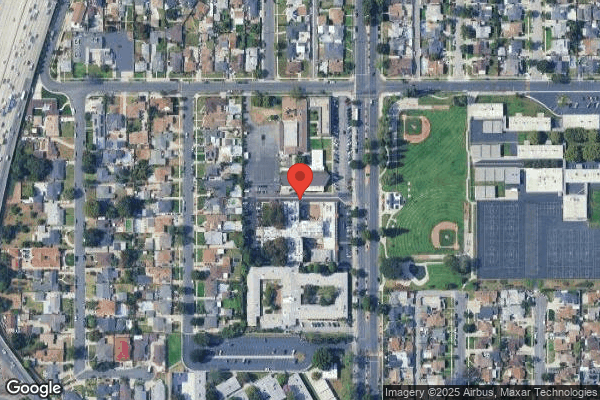
Jan 2025 3 deficiencies 1 Harm
SERIOUS (G) 📢 Someone Reported This

A family member, employee, or ombudsman was alarmed enough to file a formal complaint

Actual Harm - a resident was hurt due to facility failures

Quality of Care (Tag F0684)

A resident was harmed · This affected 1 resident

**NOTE- TERMS IN BRACKETS HAVE BEEN EDITED TO PROTECT CONFIDENTIALITY** Based on interview, and record review, the facility failed to ensure the resident, who had diagnosis of type 2 diabetes [a disor...

Read full inspector narrative →
**NOTE- TERMS IN BRACKETS HAVE BEEN EDITED TO PROTECT CONFIDENTIALITY** Based on interview, and record review, the facility failed to ensure the resident, who had diagnosis of type 2 diabetes [a disorder characterized by difficulty in blood sugar control and poor wound healing]) and was receiving blood sugar lowering medication, had blood sugar monitoring to ensure the effectiveness of Empagliflozin (medication to lower blood sugar) and to prevent the resident from having hyperglycemia (level of glucose (blood sugar) in the blood is abnormally high) leading to diabetic ketoacidosis (life-threatening complication of diabetes that occurs when the blood sugar levels are too high and untreated for a prolonged length of time) for one of 3 sampled residents (Resident 1). The facility failed to: 1. Ensure Resident 1 ' s Medical Doctor (MD) ordered Resident 1 ' s blood glucose monitoring to ensure the Empagliflozin (blood sugar level regulating medication) was effective and to prevent Resident 1 from developing hyperglycemia or hypoglycemia (occurs when the blood glucose [simple sugar-body ' s primary source of energy/food] level drops below the level the body can function with normally). 2. Ensure the Nurse Practitioner (NP) had knowledge of Resident 1 ' s diagnosis of type 2 diabetes (diabetes mellitus) and ordered Resident 1 ' s blood glucose (sugar) monitoring. 3. Ensure Licensed Vocational Nurse (LVN) 3 was aware of Resident 1 ' s diagnosis of type 2 diabetes to deliver care, accordingly, including monitoring the resident for signs and symptoms of hyperglycemia or hypoglycemia. 4. Ensure LVN 1 and LVN 3 contacted Resident 1 ' s MD to alert the MD of the lack of an order for Resident1 ' s blood glucose monitoring. 5. Ensure the Director of Nursing (DON) clarified Resident 1 ' s orders with Resident 1 ' s MD and NP to ensure Resident 1 was properly monitored for blood glucose level to prevent the resident from developing hyperglycemia or hypoglycemia. 6. Ensure the licensed nurses developed a plan of care for Resident 1 ' s diagnosis of diabetes and intake of Empagliflozin, blood glucose lowering medication, to have interventions in place for resident ' s glucose monitoring and signs and symptoms of hyperglycemia or hypoglycemia. 7. Ensure staff followed the facility ' s policy and procedure (P&P) titled, Diabetes Mellitus, Resident, Nursing Care of revised November 2017, which indicated the policy of the facility was to recognize and assist in the treatment of complications commonly associated with diabetes. The policy indicated the facility will document pertinent laboratory studies including blood sugar. On 12/17/2024, Resident 1 was transferred via 911 (emergency medical transportation) due to altered level of consciousness (not fully responsive to environment) to the General Acute Care Hospital (GACH) where he was found to have a blood sugar level of 595 milligrams per deciliter ([mg/dl -unit of measurement]; reference range 70 mg/dl to 99 mg/dl) upon admission with the diagnosis of diabetic ketoacidosis (life-threatening complication of diabetes that occurs when the blood sugar levels are too high and untreated for a prolonged length of time). This deficient practice resulted in Resident 1 having an altered level of consciousness due to very high blood sugar levels leading to diabetic ketoacidosis which had the potential to lead to a diabetic coma (a condition when the body is overwhelmed with the amount of blood sugar levels, and the resident cannot wake up or respond purposefully to the environment) and death. Findings: During a review of Resident 1's admission Record (Face Sheet), the Face Sheet indicated Resident 1 was admitted to the facility on [DATE] with diagnoses including type 2 diabetes mellitus, occlusion and stenosis (blockage) of left carotid artery (vessel that supplies head and neck with blood) and atherosclerotic heart disease (blockages in vessels that supply the heart with blood). During a review of Resident 1's Minimum Data Set ([MDS] –resident assessment tool), dated 12/17/2024, the MDS indicated Resident 1 ' s cognitive (the mental process of thinking, learning, remembering, and using judgement) skills for daily decision-making were moderately impaired. During a review of Resident 1's Order Summary Report (physician ' s orders), dated 12/12/2024, the Order Summary Report indicated an order for Empagliflozin Oral Tablet 10 milligrams ([mg]-unit of measurement) one tablet daily for diabetes mellitus. During a review of Resident 1 ' s Medication Administration Record (MAR) dated from 12/1/2024 through 12/31/2024, the MAR indicated Empagliflozin 10 mg was administered on 12/12/2024, 12/13/2024, 12/15/2024, 12/16/2024 and 12/17/2024 as ordered. During a review of Resident 1 ' s Change of Condition (COC), dated 12/17/2024 and timed at 1:54 p.m., the COC indicated Resident 1 had signs and symptoms of altered mental status (a significant change in mental function), hypotension (low blood pressure [force exerted by your blood pushing against the walls of your arteries as your heart pumps blood throughout your body]) and hyperglycemia . The COC indicated Resident 1 ' s systolic blood pressure [pressure of blood in your arteries when the heart beats] was 90 millimeters of mercury ( [mmHg – unit of measure] reference range 90 -120mm Hg). The COC indicated the facility staff notified Resident 1 ' s NP and the NP ordered for Resident 1 to be transferred to the GACH via 911. During a review of Resident 1 ' s MAR dated 12/17/2024, the MAR indicated a physician ' s order dated 12/17/2024 and timed at 2:04 p.m. to give Lispro Insulin (quick acting medicine used to lower blood sugar) 15 Units (unit of measurement) STAT (immediately) for hyperglycemia one time only. During a review of Resident 1 ' s Follow up Skilled NP Progress Notes, dated 12/17/2024 and timed at 1 p.m., the Skilled NP ' s Progress Notes indicated Resident 1 was hyperglycemic, when the residents ' blood sugar level was checked and 15 units of Lispro insulin was administered but Resident 1 ' s blood sugar remained high (unspecified) after administration and Resident 1 was lethargic (a state of being drowsy and dull, listless, unenergetic, indifferent, sluggish and inactive) with blood pressure at 71/56 mmHg. The Skilled NP Progress Notes indicated nursing staff was advised to transfer Resident 1 via 911 to the GACH. During a review of Resident 1 ' s GACH emergency room Note, dated 12/17/2024 and timed at 2:08 p.m., the GACH emergency room Note indicated Resident 1 was sent to the GACH from the facility due to high blood sugar (unspecified), causing diabetic ketoacidosis and low blood pressure of 81/45. The GACH emergency room Note indicated Resident 1 ' s blood glucose level on 12/17/2024 at 2:30 p.m., was 595 mg/dl (reference range 70 mg/dl to 99 mg/dl). The note indicated Resident 1 was admitted with the diagnosis of diabetic ketoacidosis. During an interview on 1/28/2025 at 11:50 a.m., Licensed Vocational Nurse (LVN) 3 stated, on 12/17/2025 she was assigned to care for Resident 1. LVN 3 stated on 12/17/2024 Resident 1 ' s caregiver called her to Resident 1 ' s bedside. LVN 3 stated upon arrival to Resident 1 ' s room, Resident 1 appeared to have a decreased level of consciousness. LVN 3 stated, the care giver asked her (LVN 3) what Resident 1 ' s blood sugar readings were. LVN 3 stated, she informed the care giver she did not know Resident 1 was diabetic needing blood sugar checks. LVN 3 stated, she told Resident 1 ' s caregiver that the resident ' s blood sugar had not been monitored (since admission on [DATE] [eight days]) because there was no physician ' s order to monitor Resident 1 ' s blood sugar. LVN 3 stated Resident 1 was transferred to the GACH via 911 on 12/17/2024. During an interview on 1/28/2025 at 11:30 p.m., the facility consultant pharmacist (Pharm) stated Empagliflozin is medication used to lower the sugar level in the blood. The Pharm stated residents should have their blood sugar levels monitored regularly (not specified)to determine the residents ' response to Empagliflozin. The Pharm stated failure to monitor resident ' s blood sugar level places residents at risk of having undetected hyperglycemia and hypoglycemia. The Pharm stated without blood glucose monitoring, we cannot adequately assess the effectiveness of blood sugar lowering medication. During an interview on 1/28/2025 at 2 p.m., Resident 1 ' s NP stated she did not order Resident 1 ' s blood glucose monitoring because she did not know he had type 2 diabetes. The NP stated she had limited clinical documentation to review upon Resident 1 ' s arrival and may have missed important information pertaining to Resident 1 ' s medical history. The NP stated the facility nursing staff did not call her to clarify the need for blood sugar checks since Resident 1 was a diabetic. The NP stated she would have ordered blood glucose checks if they had. The NP stated she only found out of Resident 1 ' s diagnosis of diabetes from Resident 1 ' s home care giver, who was at Resident 1 ' s bedside at the time Resident 1 was already hyperglycemic. During an interview on 1/29/2025 at 8:45 a.m., Resident 1 ' s Medical Doctor (MD) stated he did not assess Resident 1 during Resident 1 ' s stay at the facility. The MD stated he delegated Resident 1 ' s care to his NP. The MD stated, on 12/17/2024 upon learning Resident 1 was receiving Empagliflozin he would have ordered blood glucose monitoring to ensure the medication was effective for Resident 1. The MD stated Resident 1 was at risk for hyperglycemia and hypoglycemia which the nursing staff should be assessing for in addition to regular blood glucose level testing. The MD stated failure to monitor for signs and symptoms of hyperglycemia and hypoglycemia placed Resident 1 at risk for a decline of health, diabetic ketoacidosis, diabetic coma, and possible death. During an interview on 1/29/2025 at 11:55 a.m., LVN 1 stated on 12/12/2024 and 12/13/2024, she administered Empagliflozin to Resident 1. LVN 1 stated Empagliflozin is a medication to lower blood sugar. LVN 1 stated it is important to know the resident ' s blood sugar level prior to administering Empagliflozin to ensure the resident is not hypoglycemic or hyperglycemic. LVN 1 stated although it is important to assess Resident 1 ' s blood sugar prior to administrating Empagliflozin, she did not see a physician ' s order to check Resident 1 ' s blood sugar level and did not think to question the lack of physician ' s order for blood sugar testing. During an interview on 1/29/2025 at 4 p.m., the DON stated it was her responsibility to ensure all newly admitted residents ' clinical documents were reviewed to ensure residents receive the appropriate care and treatments. The DON stated she was aware Resident 1 had diabetes and did not have a physician ' s order for blood glucose monitoring. The DON stated, she assumed the physician care team (MD and NP) knew Resident 1 had type 2 diabetes. The DON stated she should have clarified the orders with Resident 1 ' s care team to ensure Resident 1 was properly monitored for complications of hypoglycemia and hyperglycemia. The DON stated upon review of Resident 1 ' s clinical documentation, there was no care plan developed to address Resident 1 ' s diabetic care. The DON stated a diabetic care plan would address monitoring resident ' s blood sugar as directed by the physician, appropriate diabetic diet, monitoring signs and symptoms of hyperglycemia and or hypoglycemia. The DON stated Resident 1 should have had a care plan in place to ensure Resident 1 was being monitored for complications of diabetes. During a review of the Medication Guide for Empagliflozin, undated, the Medication Guide indicated Empagliflozin can cause serious side effects including diabetic ketoacidosis. During a review of the online article from American Diabetic Association (a nonprofit organization the funds research to prevent, cure and manage diabetes) website titled Diabetes and Diabetic Ketoacidosis (DKA), the article indicated DKA is a life-threatening condition that can lead to diabetic coma and even death. The article indicated treatment for DKA takes place in the hospital, but it can be prevented by learning the warning signs and by checking blood glucose regularly. The early symptoms include thirst, frequent urination and high blood sugar level. https://diabetes.org/ During a review of the online article from American Diabetic Association website titled Treatment and Care, check your Blood Glucose (sugar), Diabetic Testing and Monitoring the article indicated blood sugar monitoring is the primary tool used to find out if blood glucose levels are within range. https://diabetes.org/ During a review of the facility ' s policy and procedure (P&P) titled, Diabetes Mellitus, Resident, Nursing Care of revised November 2017, the P&P indicated the policy of the facility is to recognize and assist in the treatment of complications commonly associated with diabetes. The policy indicated the facility will document pertinent laboratory studies including blood sugar. During a review of the facility ' s Job Description Director of Nursing Revised October 2021, the job description indicated the DON would assist in the management and direction of the Nursing Department in accordance with federal, state and local standards, guidelines and regulations that govern the facility and as may be directed by the Administrator and Medical Director, to ensure the highest degree of quality of care is always maintained. The job description indicated the DON would communicate information to nursing personnel regarding new resident admissions and resident discharges and provide oversight. The job description indicated the DON would develop a written plan of care (preliminary and comprehensive) for each resident with identified problems/needs, which indicates the care to be given, goals to be accomplished and which professional service is responsible for each element of care.
CONCERN (E) 📢 Someone Reported This

A family member, employee, or ombudsman was alarmed enough to file a formal complaint

Potential for Harm - no one hurt, but risky conditions existed

Pharmacy Services (Tag F0755)

Could have caused harm · This affected multiple residents

**NOTE- TERMS IN BRACKETS HAVE BEEN EDITED TO PROTECT CONFIDENTIALITY** Based on interview and record review, the facility failed to ensure the residents ' ordered medications were available for admin...

Read full inspector narrative →
**NOTE- TERMS IN BRACKETS HAVE BEEN EDITED TO PROTECT CONFIDENTIALITY** Based on interview and record review, the facility failed to ensure the residents ' ordered medications were available for administration and were administered to residents as prescribed by the physician for one of three sampled residents (Resident 1). The facility failed to: A. Ensure Resident 1, who had a history of Coronary Artery Disease ( CAD-disease in which there is a narrowing or blockage of the blood vessels that carry blood and oxygen [gas needed for survival] to the heart) , received Ticagrelor (medication used for the prevention of stroke [blood flow to the brain is interrupted] , heart attack [blood flow to heart interrupted]) as directed by the physician. B.Ensure Resident 1 ' s physician care team was notified when Ticagrelor was not available for administration. These deficient practices resulted in; 1.Resident 1 missing 7 doses of Ticagrelor on 12/12/2024, 12/13/2024, 12/14/2024 and 12/15/2024, which put Resident 1 at risk for heart attack and stroke, leading to a decline in health and death. 2. Resident 1 ' s physician care team not having the opportunity to order potential alternative treatments or services because the Ticagrelor was not available. Findings: During a review of Resident 1's admission Record (Face Sheet), the Face Sheet indicated Resident 1 was admitted to the facility on [DATE] and with diagnoses including type 2 diabetes mellitus ( a disorder characterized by difficulty in blood sugar control and poor wound healing) , occlusion and stenosis (blockage) of left carotid artery (vessel that supplies head and neck with blood) and atherosclerotic heart disease (blockages in vessels that supply the heart with blood). During a review of Resident 1's Minimum Data Set (MDS -resident assessment tool), dated 12/17/2024, the MDS indicated Resident 1 ' s cognitive skills for daily decision-making were impaired. During a review of Resident 1's Order Summary Report (physician ' s orders), dated 12/12/2024, the orders indicated Ticagrelor oral tablet 90 milligrams ( mg-unit of measurement) give one tablet by mouth twice a day to prevent heart attack and stroke to start on 12/12/2024. During a review of Resident 1 ' s Medication Administration Record (MAR) dated 12/1/2024 through 12/31/2024, the MAR indicated give Ticagrelor oral tablet 90 mg give one tablet by mouth twice a day to prevent heart attack and stroke. The MAR indicated the following : on 12/12/2024 in the box to document the 9am Ticagrelor 90 mg administration, there was a 2 documented and initialed by Licensed Vocational Nurse (LVN) 1, on 12/13/2024 in the box to document the at9am and 5pm Ticagrelor 90 mg administration there was a 7 in the box initialed by LVN 1, on 12/14/2024 in the box to document the Ticagrelor 90 mg 9am and 5pm administration there was a ,7 in the box initialed by LVN 2, and on 12/15/2024 in the box to document 9am and 5pm the Ticagrelor 90 mg there was a 7 in box initialed by LVN 3. During a review of Resident 1 ' s electronic Medication Administration (electronic -MAR) note dated 12/12/2024 at 10:48 am, the electronic-MAR indicated give Ticagrelor oral tablet 90 mg give one tablet by mouth twice a day to prevent heart attack and stroke waiting for medication to be supplied. During a review of Resident 1 ' s e-MAR note dated 12/13/2024 at 11:37 am, the electronic-MAR indicated give Ticagrelor oral tablet 90 mg give one tablet by mouth twice to prevent heart attack and stroke waiting for medication to be supplied. During a review of Resident 1 ' s e-MAR note dated 12/13/2024 at 4:43 p.m., the electronic-MAR indicated give Ticagrelor oral tablet 90 mg give one tablet by mouth twice to prevent heart attack and stroke waiting for medication to be supplied. During a review of Resident 1 ' s e-MAR note dated 12/14/2024 at 10:40 a.m., the electronic-MAR indicated give Ticagrelor oral tablet 90 milligrams (mg-unit of measurement) give one tablet by mouth twice to prevent heart attack and stroke waiting for medication to be supplied. During a review of Resident 1 ' s e-MAR note dated 12/14/2024 at 10:40 a.m., the electronic-MAR indicated give Ticagrelor oral tablet 90 mg give one tablet by mouth twice to prevent heart attack and stroke waiting for medication to be supplied. During a review of Resident 1 ' s e-MAR note dated 12/15/2024 at 10:33 a.m., the electronic-MAR indicated give Ticagrelor oral tablet 90 mg give one tablet by mouth twice to prevent heart attack and stroke waiting for medication to be supplied. During a review of Resident 1 ' s e-MAR note dated 12/15/2024 at 6:03 p.m., the electronic-MAR indicated give Ticagrelor oral tablet 90 mg give one tablet by mouth twice to prevent heart attack and stroke waiting for medication to be supplied. During an interview on 1/28/2025 at 11:50 a.m., LVN 3 stated on 12/15/2024 she cared for Resident 1 and remembered his medication, Ticagrelor was not available during the 9am administration and the 5pm administration. LVN 3 stated she did not inform the physician that Resident 1 missed the 9am and 5pm doses. LVN 3 stated, she indicated in the eMAR note that the medication was missing. LVN 3 stated she was not trained to write a Change of Condition or notify the physician of missing medications. LVN 3 stated, Resident 1 was at risk of having a heart attack or stroke due to not receiving Ticagrelor as ordered by the physician. During an interview on 1/28/2025 at 11:30 p.m., the facility consultant pharmacist (Pharm) stated Ticagrelor was a medication used to prevent heart attack or stroke. The Pharm stated it was important for the medication to be given as directed by the physician and missed doses should be reported to the physician so the resident can be monitored or treated appropriately. The Pharm stated if the medication was not available the physician may order another treatment or order additional areas of monitoring for the resident. The Pharm stated Resident 1 is at risk for heart attack, stroke or death if Ticagrelor is not administered as prescribed. During an interview on 1/29/2025 at 11:55 a.m., LVN 1 stated on 12/12/2024 and 12/13/2024, she cared for Resident 1 and remembers his medication, Ticagrelor was not available during the 9am administration and the 5pm administration. LVN 3 stated she did not remember calling the physician to inform the physician of the missing medication. LVN 1 stated when a prescribed medication is not available to administer the facility process is to notify the supervisor and the supervisor will contact the physician. LVN 1 stated the facility kept a binder to track medications that were unavailable and needed to be refilled. LVN 3 stated, Resident 1 required Ticagrelor to prevent heart attack and stroke. During an interview on 1/28/2025 at 2:15p.m., the Nurse Practitioner (NP) stated she was not informed by the nursing staff that Resident 1 ' s Ticagrelor was not being administered as ordered due to the medication not being available. The NP stated, had she been notified she may have changed Resident 1 ' s medication regimen to another antiplatelet (prevent blood clots from forming) medication. The NP stated Resident 1 was put at higher risk for heart attack and stroke, due to the medication not being administered as ordered. During a concurrent interview and record review on 1/28/2025 at 3:30 pm, with the Director of Nursing (DON), Resident 1 ' s clinical documents were reviewed. The DON stated upon her review, there were no COC notes to indicate Resident 1 was missing Ticagrelor. The DON stated the clinical documents did not indicate facility staff informed Resident 1 ' s physician or NP that Ticagrelor was not being administrated as ordered. The DON stated, I do not know what happened, the nurses knew to call the physician whenever a medication is not available. The DON stated facility staff should have notified Resident ' s 1 physician so additional interventions can be implemented or new orders could be placed. The DON stated failure to administer Ticagrelor as ordered by the physician and failure to notify Resident 1 ' s physician team placed Resident 1 at higher risk of heart attack, stroke and death. During a review of the facility ' s policy and procedure (P&P) titled, Medication Orders, Prescriber medication orders revised September 2010, the P&P indicated the prescriber shall be contacted for direction when the delivery of a medication will be delayed, or the medication is not available. During a review of the facility ' s Job Description Direction of Nursing Revised October 2021, the job description indicated the DON will assist in the management and direction of the Nursing Department in accordance with federal, state and local standards, guidelines and regulations that govern the facility and as may be directed by the Administrator and Medical Director, to ensure the highest degree of quality of care is maintained at all times. The job description indicates the DON will manage and direct all aspects of the nursing services department. The job description indicated the DON will observe medication passes and treatments to ensure quality
CONCERN (E) 📢 Someone Reported This

A family member, employee, or ombudsman was alarmed enough to file a formal complaint

Potential for Harm - no one hurt, but risky conditions existed

Deficiency F0865 (Tag F0865)

Could have caused harm · This affected multiple residents

Based on interview and record review the facility's Quality Assessment and Assurance (QAA- committees established for the purpose of improving the safety and quality of health services) and Quality As...

Read full inspector narrative →
Based on interview and record review the facility's Quality Assessment and Assurance (QAA- committees established for the purpose of improving the safety and quality of health services) and Quality Assurance Performance Improvement (QAPI- approach to maintaining and improving safety and quality in nursing homes ) committee failed to establish monitoring systems such as fedback to ensure the corrective actions implemented to address the deficiencies of the recent abbreviated survey conducted on 9/30/2024 were maintained. These deficient practices placed the facility residents at risk for not receiving appropriate care needs and services to adequately afford their highest practicable well-being. Findings: During a concurrent interview and record review on 1/29/2025 at 3 p.m., with the Director of Nursing (DON), the CMS 2567 (document that lists deficiencies found in a health care facility during a survey) issued to the facility dated 9/30/2024 was reviewed. The DON stated, during the recent abbreviated survey conducted on 9/30/2024, the facility was found deficient in the following areas: ensuring medications were available for the residents and ensuring all residents had appropriate care plans. The DON stated the facility ' s date of completion, or date the facility was expected to fully correct the deficiencies and comply with regulations was 10/2/2024. During an interview with the DON and the Administrator (ADM) on 1/30/2024 at 3:30 p.m., the Administrator stated once the QAA has identified a systemic issue and corrected the issue, the QAA must ensure the corrective actions continue to be implemented and are sustained. The Administrator acknowledged the facility had opportunities for continue to monitor and to ensure improvement of all mentioned deficient practices but failed to do so effectively. During a record review of the facility's policy Quality Assurance and Performance Improvement (QAPI) revised 12/ 2023, the policy indicated: the facility will establish and implement a Quality Assessment and Assurance committee, develop a written Quality Assurance and Performance Plan, which will be used to continually assess the facility ' s performance using systemic interdisciplinary , comprehensive and data driven approach to maintaining and improving safety and quality. The policy indicated the Quality Assessment and Assurance Committee (QAA) functions include QAPI plan, identifying and prioritizing Process Improvement Plans, implementing actions to correct quality issues, and monitoring to ensure the corrective action implemented is being sustained. The policy indicated the QAPI plan components will include establishing goals and thresholds for performance improvement, feedback, data systems and monitoring demonstrating evidence of identification, reporting, investigating, analysis and prevention of adverse events.
Jan 2025 1 deficiency
CONCERN (D) 📢 Someone Reported This

A family member, employee, or ombudsman was alarmed enough to file a formal complaint

Potential for Harm - no one hurt, but risky conditions existed

Respiratory Care (Tag F0695)

Could have caused harm · This affected 1 resident

Based on observation, interview, and record review, the facility failed to ensure oxygen tanks were safely stored in the oxygen storage room for one of three sampled residents (Resident 1). This defic...

Read full inspector narrative →
Based on observation, interview, and record review, the facility failed to ensure oxygen tanks were safely stored in the oxygen storage room for one of three sampled residents (Resident 1). This deficient practice had the potential to place the resident at risk for injury due to a fire hazard. Findings: During a review of Resident 1 ' s admission Record, the admission Record indicated Resident 1 was admitted to the facility 7/30/2024 with diagnoses including pulmonary fibrosis (a lung disease that causes scarring in the lungs, making it difficult to breathe) and hemiplegia (paralysis on one side of the body). During a review of Resident 1 ' s Minimum Data Set ([MDS] a resident assessment tool) dated 11/7/2024, the MDS indicated Resident 1 was cognitively (ability to think, understand, learn, and remember) intact. The MDS indicated Resident 1 required substantial/maximal assistance (helper does more than half the effort) with bathing and dressing. During a concurrent observation and interview on 1/8/2025 at 9:02 a.m., with Resident 1 in Resident 1 ' s room, Resident 1 had two oxygen tanks standing upright next to his chair. Resident 1 stated he did not feel comfortable with the oxygen tanks sitting in his room because he has seen them fall over and shoot through a wall in the past. During an interview on 1/8/2025 at 9:52 a.m. with Licensed Vocational Nurse (LVN) 1, LVN 1 stated when oxygen tanks are no longer being used, they are put back in the oxygen storage room. LVN 1 stated if the oxygen tanks are not put back in the oxygen storage room, it can be unsafe for the residents and staff if they fall over. During an interview on 1/8/2025 at 10:01 a.m. with Certified Nurse Assistant (CNA), the CNA verbally confirmed there were two oxygen tanks sitting up in Resident 1 ' s room. The CNA stated she was busy and did not tell her charge nurse about the oxygen tanks in Resident 1 ' s room but should have done so because it was dangerous. The CNA stated the oxygen tanks can fall over and explode. During an interview on 1/8/2025 at 10:39 a.m. with Registered Nurse Supervisor (RNS), the RNS stated oxygen tanks should be placed in the oxygen storage room when not in use and not in a residents room. The RNS stated leaving an oxygen tank in a residents room was unsafe because it was a fire hazard and can fall over and explode. During an interview on 1/8/2025 at 11:02 a.m. with the Assistant Director of Nursing (ADON), the ADON stated oxygen tanks should not be sitting up in a residents room and should be placed in the oxygen storage room. The ADON stated if oxygen tanks were left in a residents room, it could cause a fire, injury to a resident, or explode if it falls over. During a review of the facility ' s policy and procedure (P&P) titled, Oxygen Handling and Storage, undated, the P&P indicated, Storage of oxygen tanks must be accomplished in a safe manner. All tanks must be secured either in the storage rack, secured to the wall, or on the oxygen cart.
Sept 2024 1 deficiency
CONCERN (E) 📢 Someone Reported This

A family member, employee, or ombudsman was alarmed enough to file a formal complaint

Potential for Harm - no one hurt, but risky conditions existed

Deficiency F0726 (Tag F0726)

Could have caused harm · This affected multiple residents

**NOTE- TERMS IN BRACKETS HAVE BEEN EDITED TO PROTECT CONFIDENTIALITY** Based on interview and record review, the facility failed to ensure Licensed Vocational Nurse (LVN 1) had the competency skills ...

Read full inspector narrative →
**NOTE- TERMS IN BRACKETS HAVE BEEN EDITED TO PROTECT CONFIDENTIALITY** Based on interview and record review, the facility failed to ensure Licensed Vocational Nurse (LVN 1) had the competency skills to care for two of three sampled residents (Residents 1 and 2) by failing to: 1. Provide Cyclosporine Ophthalmic Emulsion 0.05% ([eye drops] medication used to increase tear production in people with dry eyes) to Resident 1 according to the facility ' s policy and procedure (P&P) titled, Medication Administration. 2. Notify Resident 2 ' s physician when Resident 2 had a change of condition (COC) and required oxygen through a non-rebreather mask (a mask that delivers a high concentration of oxygen to a patient in an emergency). 3. Document Resident 2 ' s COC in the medical record. These deficient practices resulted in: 1. Resident 1 receiving her eye medication two hours past the administration time and had the potential for Resident 1 to have eye pain because of the late administration. 2. Resident 2 ' s COC not being reported to the physician and not documented in the medical record. Findings: a. During a review of Resident 1 ' s admission Record (Face Sheet), the Face Sheet indicated Resident 1 was admitted to the facility on [DATE] with the diagnoses including major depressive disorder (a mood disorder that causes a persistent feeling of sadness and loss of interest). During a review of Resident 1 ' s Minimum Data Set (MDS - a federally mandated assessment tool) dated 8/5/2024, the MDS indicated Resident 1 ' s cognition (mental process of knowing, learning, and understanding things) was moderately impaired. During a review of Resident 1 ' s Order Summary Report (physician order) dated 9/5/2024, the physicians order indicated Cyclosporine Ophthalmic Emulsion 0.05% one drop in both eyes twice a day for eye pain management was ordered on 9/5/2024. During a review of Resident 1 ' s Clinical Record (Care Plan section) dated 9/5/2024, the Care Plan indicated Resident 1 had pain in both eyes due to dry eyes. Under this Care Plan, the Care Plan goal indicated Resident 1 ' s pain would be resolved after the administration of medication. The Care Plan ' s interventions included to administer Cyclosporine Ophthalmic Emulsion 0.05% one drop in both eyes twice a day for eye pain management. During an interview on 9/24/2024 at 3:09 p.m., with Resident 1, Resident 1 stated on 9/10/2024 LVN 1 administered the eye drops to her at 11:30 p.m. when the eye drops were due at to be administered at 9 p.m. (over one and a half hours after the scheduled dose). During an interview on 9/24/2024 at 3:47 p.m., with LVN 1, LVN 1 stated Resident 1 ' s eye drops were administered late because he was busy with Resident 2. LVN 1 stated there were no negative outcomes for Resident 1 because of the late administration, since only the eye drops that were late. LVN 1 stated the facility ' s policy is to administer medication one hour before and one hour after the time indicated on the physician order. b. During a review of Resident 2 ' s admission Record (Face Sheet), the Face Sheet indicated Resident 2 was admitted to the facility on [DATE] with diagnoses including chronic congestive heart failure (CHF – a long term condition which causes the heart to not pump the blood efficiently, sometimes resulting in leg swelling) and pulmonary fibrosis (a serious lung disease that causes the lungs to become scarred, making it difficult to breathe). During a review of Resident 2 ' s Minimum Data Set (MDS - a federally mandated resident assessment tool) dated 8/6/2024, the MDS indicated Resident 1 ' s cognition (mental process of knowing, learning, and understanding things) was moderately impaired. During a review of Resident 2 ' s Order Summary Report (physician order) dated 8/9/2024, the physicians order indicated to administer oxygen 5 liters per minute (LPM) via a nasal cannula (tubing that delivers oxygen to a person through the nose) every shift was ordered on 8/9/2024. During an interview on 9/24/2024 at 3:47 p.m., LVN 1 stated on 9/10/2024, Resident 2 experienced an anxiety attack (an episode of mild to severe worry, distress that may last for hours or days, which is typically preceded by a period of gradually increasing levels of fear and worry), and his blood oxygenation (level of oxygen in the blood) reading was at 80% (normal reading between 95%-100%) while receiving oxygen at 5 LPM through the nasal cannula. LVN 1 stated he provided a non-rebreather mask (a mask that delivers a high concentration of oxygen to a patient in an emergency situation) with oxygen at 5 LPM, encouraged Resident 2 to perform deep breathing exercises, placed him (Resident 2) in the dorsal recumbent position (where the person is laying on their back with their legs bent at the knees and their feet spread out to the sides about shoulder width apart) and elevated the head of the bed. LVN 1 stated he did not document Resident 2 ' s COC nor any of interventions provided because he forgot. LVN 1 stated he did not inform Resident 2 ' s physician of the COC. LVN 1 stated he should have informed the physician to receive any further interventions Resident 2 required. During an interview on 9/24/2024 at 4:22 p.m., with the Director of Nursing (DON), the DON stated, LVN 1 should have asked for help from other facility staff such as the Registered Nurse Supervisor (RNS) when Resident 2 had a COC and Resident 1 ' s medication was going to be administered late. The DON stated the stated the facility ' s policy allows one hour before and after ordered time for medication administration and LVN 1 could have asked for help with Resident 2, then he could have proceeded with medication administration or ask another nurse to administer the medication on time. The DON stated LVN 1 should have notified Resident 2 ' s physician to obtain additional orders or provide other interventions. During a review of the facility ' s P&P titled Significant Change of condition, Response, dated 12/2023, the P&P indicated the nurse will perform and document an assessment of the resident and identify the need for additional interventions, considering implementation of existing orders or nursing interventions or through communication with the resident ' s provider using SBAR (situation, background, assessment and recommendation - a structed communication tool that helps share information in a concise and clear way) or similar process to obtain new orders or interventions. During a review of the facility ' s P&P titled Medication Administration, dated 9/2010, the P&P indicated medications should be administered within sixty minutes of the scheduled time. During a review of the facility ' s Licensed Vocational (LVN)/Practical Nurse Job Description, dated 12/17/2021, the Job Description indicated a LVN ' s essential duties and responsibilities include making written and oral reports to the attending physician concerning the status and care of the assigned resident and preparing and administering medications as ordered by the physician. The Job Description indicated a LVN should chart nurses ' notes in a professional and appropriate manner that is timely, accurate and thoroughly reflects the care provided to the resident, as well as the resident ' s response to the care.
Sept 2024 2 deficiencies
CONCERN (D) 📢 Someone Reported This

A family member, employee, or ombudsman was alarmed enough to file a formal complaint

Potential for Harm - no one hurt, but risky conditions existed

Comprehensive Care Plan (Tag F0656)

Could have caused harm · This affected 1 resident

**NOTE- TERMS IN BRACKETS HAVE BEEN EDITED TO PROTECT CONFIDENTIALITY** Based on interview and record review, the facility failed to ensure a Care Plan was developed for one sampled resident (Resident...

Read full inspector narrative →
**NOTE- TERMS IN BRACKETS HAVE BEEN EDITED TO PROTECT CONFIDENTIALITY** Based on interview and record review, the facility failed to ensure a Care Plan was developed for one sampled resident (Resident 1), who had dry eyes. This failure resulted in Resident 1 not receiving Lubricant PM Ophthalmic ointment (an eye lubricant for the temporary relief of burning, irritation, and discomfort due to dryness of the eye) in a timely manner. Findings: During a review of Resident 1 ' s admission record ([Face Sheet] a document that summarizes a patient ' s personal and medical information), the Face Sheet indicated Resident 1 was admitted to the facility on [DATE] with diagnoses including Transient Ischemic Attack ([TIA] a temporary disruption in the blood supply to part of the brain that results in lack of oxygen to the brain) and anxiety disorder (a mental illness causing persistent fear and worry). During a review of Resident 1 ' s History and Physical (H&P), dated 7/31/2024, the H&P indicated Resident 1 had the capacity to understand and make decisions. During a review of Resident 1 ' s Minimum Data Set ([MDS] a standardized assessment and care screening tool), dated 8/6/2024, indicated Resident 1 had the ability to understand and be understood by others. During a review of Resident 1 ' s Physician Orders, dated 8/28/2024, the Physician Orders indicated Resident 1 was to receive Lubricant PM Ophthalmic Ointment (white Petrolatum- mineral oil) one strip in both eyes at bedtime for dry eyes. During a concurrent interview and record review on 9/5/2024, at 12:22 p.m., with Licensed Vocational Nurse (LVN 1), Resident 1 ' s Clinical Record (Care Plan section) was reviewed. LVN 1 stated, there was no Care Plan developed addressing Resident 1 ' s dry eyes. LVN 1 stated a Care Plan should have been developed which included interventions addressing Resident 1 ' s dry eyes. LVN 1 stated the purpose of the Care Plan is to help guide the nurse on how to care for the resident and if the interventions in place were effective. During a review of the facility ' s policy and procedure (P/P) dated 1/2022 and titled, Comprehensive Person-Centered Care Planning, the P/P indicated the interdisciplinary team (IDT) shall develop a comprehensive person-centered care plan for each resident that includes measurable objectives and timeframes to meet a resident ' s medical, nursing, mental and psychosocial needs.
CONCERN (D) 📢 Someone Reported This

A family member, employee, or ombudsman was alarmed enough to file a formal complaint

Potential for Harm - no one hurt, but risky conditions existed

Pharmacy Services (Tag F0755)

Could have caused harm · This affected 1 resident

**NOTE- TERMS IN BRACKETS HAVE BEEN EDITED TO PROTECT CONFIDENTIALITY** Based on interview and record review, the facility failed to ensure the residents ' ordered medications were available for admin...

Read full inspector narrative →
**NOTE- TERMS IN BRACKETS HAVE BEEN EDITED TO PROTECT CONFIDENTIALITY** Based on interview and record review, the facility failed to ensure the residents ' ordered medications were available for administration and were administered to residents as prescribed by the physician for one of three sampled residents (Resident 1). The facility failed to: 1. Ensure Resident 1 received Lubricant PM Ophthalmic Ointment (an eye lubricant for the temporary relief of burning, irritation, and discomfort due to dryness of the eye) one strip in both eyes at bedtime as ordered for dry eyes. 2. Ensure the licensed nurses followed-up with the pharmacy when Resident 1 ' s medication was not available for administration. This deficient practice resulted in Resident 1 not receiving her prescribed medication as ordered and resulted in Resident 1 having dry eyes and eye pain. Findings: During a review of Resident 1 ' s admission record ([Face sheet] a document that summarizes a patient ' s personal and medical information), the face sheet indicated Resident 1 was admitted to the facility on [DATE] with diagnosis including Transient Ischemic Attack (a temporary disruption in the blood supply to part of the brain that results in lack of oxygen to the brain) and anxiety disorder (mental illness causing persistent fear and worry). During a review of Resident 1 ' s History and Physical (H&P), dated 7/31/2024, indicated, Resident 1 had the capacity to understand and make decisions. During a review of Resident 1 ' s Minimum Data Set ([MDS] a standardized assessment and care screening tool), dated 8/6/2024, the MDS indicated Resident 1 had the ability to understand and be understood by others. During a review of Resident 1 ' s Order Summary Report (Physician Orders), dated 8/28/2024, the Physician Orders indicated an order for Lubricant PM Ophthalmic Ointment (white Petrolatum- mineral oil) one strip in both eyes at bedtime for dry eyes was ordered on 8/28/2024. During an interview on 9/5/2024, at 11 a.m., Resident 1 stated on 8/29/2024 she had reported to the licensed nurses that she was experiencing dry eyes and eye pain and inquired why she hadn ' t received her eye ointment on 8/28/2024. Resident 1 stated the licensed nurses told her it had not arrived from the pharmacy but should be arriving on 8/29/2204. Resident 1 stated the licensed nurses did not administer they eye ointment to her again on 8/29/2024 and she had informed the licensed nurse that her eye pain was getting worse from not receiving her eye drops yet the licensed nurses did not do anything about it and told her that they eye drops had yet to arrive from the pharmacy. During an interview on 9/5/2024, at 12:07 p.m., with Certified Nurse Assistant (CNA 1), stated on 8/28/2024, Resident 1 was complaining of burning and eye pain from not receiving her eye ointment. CNA 1 stated she reported it to the Licensed Vocational Nurse (LVN 1). CNA 1 stated LVN 1 told her they would follow-up with the pharmacy as the eye ointment had not arrived. During an interview on 9/5/2024, at 12:22 p.m., with LVN 1, LVN 1 stated, on 8/28/2024, he faxed the medication order for Lubricant Ointment to the pharmacy but did not follow-up nor did he inform the oncoming shift that the Lubricant Ointment had not arrived from the pharmacy. LVN 1 stated on 8/29/2024, Resident 1 reported to him that she had missed her eye ointment dose on 8/28/2024. LVN 1 stated he followed-up with the pharmacy and endorsed to the oncoming shift that eye medication had not arrived, that pharmacy was called, and the eye medication order was faxed to the pharmacy for the second time. LVN 1 stated LVN 2 notified the Assistant Director of Nursing (ADON) regarding the eye medication not arriving yet and the ADON called the pharmacy around 3 p.m., to follow up for the delivery of the eye medication but the medication was not delivered on 8/30/2024 at 9 p.m. During an interview on 9/5/2024, at 2:33 p.m., the Pharmacy Technician Supervisor stated, there are stat, or emergency runs and scheduled runs. The turnaround time for stat runs is two hours and for scheduled runs, it depends if the medication is in stock or not. For Resident 1, the medication order was received via fax on 8/28/2024 at 11:19 p.m. The wholesaler closes at 7p.m., so any orders received after 7p.m., the medication will be delivered the following business day however the eye ointment was not in stock, so he had to order the medication from the wholesaler which added an additional day in delivering the eye ointment to the facility. The Pharmacy Technician stated the licensed nurses should have informed Resident 1 ' s physician to have an alternative eye ointment ordered so Resident 1 would not have to wait until 8/30/2024 to receive her medication. During an interview on 9/5/2024, at 3:17 p.m., with LVN 2, LVN 2 stated Resident 1 was complaining of eyes feeling dry, inflamed, and had eye pain. LVN 2 stated she followed-up with the pharmacy on 8/29/2024 but the medication was never delivered. During an interview on 9/5/2024, at 4:02 p.m., the Director of Nursing (DON) stated, she was not aware that the eye medication was not available or received. The DON stated if the medication had not been received or available, the doctor and the resident should be notified so additional interventions can be implemented or new orders can be placed for the resident to receive an alternative eye ointment. During a review of the facility ' s policy and procedure (P/P) dated 2010 and titled, Medication Ordering and Receiving from Pharmacy Provider, the P/P indicated if the medication is needed before the next regular delivery, fax/ phone the medication orders to the pharmacy immediately upon receipt and inform the pharmacy of the need for prompt delivery. The P/P indicated timely delivery of new orders is required so that medications administration is not delayed.
Jun 2024 1 deficiency
CONCERN (E) 📢 Someone Reported This

A family member, employee, or ombudsman was alarmed enough to file a formal complaint

Potential for Harm - no one hurt, but risky conditions existed

Deficiency F0740 (Tag F0740)

Could have caused harm · This affected multiple residents

**NOTE- TERMS IN BRACKETS HAVE BEEN EDITED TO PROTECT CONFIDENTIALITY** Based on interview and record review, the facility failed to ensure one of three sampled residents (Resident 1) who had a histor...

Read full inspector narrative →
**NOTE- TERMS IN BRACKETS HAVE BEEN EDITED TO PROTECT CONFIDENTIALITY** Based on interview and record review, the facility failed to ensure one of three sampled residents (Resident 1) who had a history of dementia (impaired ability to remember, think, make decisions that interferes with everyday activities) received necessary behavioral health care and services. The facility failed to A. Provide psychiatric (medical specialty that addresses the diagnosis and treatment of a mental illness) follow up after Resident 1 demonstrated increased aggressive behaviors and a change of behaviors was reflected in Resident 1's Minimum Data Set assessment ([MDS] a standardized assessment and care-screening tool) dated 3/4/2024 and progress notes. B. Conduct an interdisciplinary team (IDT- team of healthcare professionals from different disciplines, including the resident and or resident's responsible party [RP] who work together toward meeting Resident 1's healthcare goals) meeting to discuss poor safety awareness, aggressive behaviors, and noncompliance in care. This deficient practice violated residents' rights and resulted in a delay and care and services leading to the decline in Resident 1 mental and physical health and increased risk for injury to self and others. Findings: During a review of Resident 1's admission Record (Face Sheet), the Face Sheet indicated Resident 1 was admitted to the facility on [DATE] with diagnoses including bipolar disorder (periodic, intense emotional states affecting a person's mood, energy, and ability to function), dementia and aftercare following joint replacement (procedure where a damaged part of the body is replaced with an artificial part) surgery. During a review of Resident 1's MDS, dated [DATE], the MDS indicated Resident 1's cognitive skills for daily decision-making were severely impaired. The MDS indicated the following: Resident 1 did not demonstrate physical behavioral symptoms directed toward others ( hitting, kicking, scratching, grabbing or abusing other sexually), verbal behavioral symptoms directed toward others ( threatening others, screaming at others, cursing at others) or other behavioral symptoms not directed toward others ( physical symptoms, such as hitting, scratching, self, pacing, rummaging, public sexual acts, disrobing in public, throwing or smearing food or bodily wastes, or verbal/vocal symptoms like screaming or disruptive sounds). The MDS indicated Resident 1 required partial/moderate assistance (helper does less than half the effort) for chair to bed transfer (ability to transfer to and from bed to chair), toilet transfer and tub/ shower transfer (ability to get on and off the toilet). During a review of Resident 1's psychiatric follow up evaluation, dated 2/19/2024, the note indicated Resident 1 had a diagnosis of psychosis (mental disorder where person loses the ability to recognize reality or relate to others), bipolar disorder, major depressive disorder (persistent feeling of sadness and loss of interest), insomnia (trouble sleeping), and generalized anxiety disorder (feelings of dread, fear, uneasiness). The note indicated Resident 1 was receiving Lexapro (medication to treat mental / mood disorders) 10milligrams (mg- unit of measurement) every day for depression, Depakote (medication used to treat bipolar disorder) 250 mg twice a day for psychosis, Quetiapine (medication used to treat bipolar disorders) 12.5mg at bedtime for bipolar disorder, and Donepezil (medication to treat memory loss and confusion) 10 mg at bedside for dementia. The note indicated Resident 1 was not currently a danger to herself and to others at the time of the visit, no need for psychiatric evaluation at this time but will reassess for any worsening behavioral symptoms, the plan for follow up was in two to four weeks and as needed. During a review of Resident 1's progress note, dated 2/29/2024 at 6:36 a.m. the note indicated Resident 1 was so agitated Resident 1 punched a CNA and threw a washcloth at the CNA. The note indicated Resident 1 refused medications and threw the medications on the floor. During a review of Resident 1's progress note, dated 3/3/2024 at 4:33 p.m. the note indicated Resident 1 removed her peripheral intravenous line (PIV- a flexible tube used to administer medications or fluids into the body) and during an attempt to insert another PIV. Resident 1 became agitated, punched, and choked LVN 1 's neck and grabbed at LVN 1's clothes. During a review of Resident 1's progress note, dated 3/3/2024 at 11:42 p.m., the note indicated Resident 1 had a period of aggressive behavior demonstrated by tossing food, utensils, and call light at staff. During a review of Resident 1's progress note, dated 3/8/2024 at 6:48 a.m., the note indicated Resident 1 was combative with staff and refused to apply the abductor pillow (device used to prevent hip from moving out of the joint) as ordered by physician. During a review of Resident 1's progress note, dated 3/25/2024 at 6:47 a.m., the note indicated Resident 1 was agitated and did not allow staff into her room. During a review of Resident 1's progress note, dated 3/29/2024 at 7:27 a.m., the note indicated Resident 1 refused care and was combative with staff as Resident 1 removed her abductor pillow), removed diaper and tried to hit staff. During a review of Resident 1's progress note, dated 5/3/2024 at 8:44 a.m., the note indicated Resident 1 refused to wear her brace due to behavior problem, Resident 1 at risk of dislocation due to noncompliance and behavior problem. During a review of Resident 1's progress note, dated 5/3/2024 at 8:00 p.m., the note indicated Resident 1 was agitated, verbally abusive and striking at staff. During a review of Resident 1's progress note, dated 5/6/2024 at 5:30 p.m., the note indicated Resident 1 had violent behavior during staff. During a review of Resident 1's progress note, dated 5/20/2024 at 2:57 p.m., the note indicated Resident 1 took off her leg brace and threw it. Resident 1 cannot be redirected. During a review of Resident 1's progress note, dated 5/26/2024 at 12:50 pm, the note indicated at 12 noon Resident 1 had a witnessed fall. The note indicated Resident 1 was found standing at the door holding onto a bedside table, when Certified Nurse Assistant (CNA) 3 tried to assist Resident 1, Resident 1 became verbally and physically aggressive toward CNA 3. Resident 1 lost her balance and fell to the floor. During an interview on 6/13/2024 at 1:04 p.m., CNA 3 stated she witnessed Resident 1's fall on 5/26/2024. CNA 3 stated Resident 1 was frequently aggressive to staff as demonstrated by hitting and swinging at staff and does not like to listen to staff or ask for help. CNA 3 stated the nursing staff was aware of Resident 1's behaviors and it was hard to take care of her because of her behavior. During an interview on 6/14/2024 at 11:17 p.m., the Director of Rehabilitation (DOR) stated Resident 1 was receiving physical therapy and occupational therapy which terminated on 3/15/2024. The DOR stated Resident 1's behavior was a factor in terminating Resident 1's therapy. The DOR stated Resident 1 was combative with staff and did not want to participate in therapy. The DOR stated, Resident 1 had thrown a diaper at her during a session. The DOR stated an IDT was not conducted address Resident 1's behaviors. During an interview on 6/14/2024 at 12:33 p.m., the Assistant Director of Nursing (ADON) stated Resident 1 was often aggressive and noncompliant with treatments. The ADON stated Resident 2 had poor safety awareness and had been more difficult to redirect and had become increasingly more aggressive with staff. The ADON stated during her review of Resident 1's electronic health records (EHR) and paper records up until 6/14/2024, the records do not indicate a follow up appointment with the psychiatrist after 2/19/2024 nor an IDT to discuss Resident 1's noncompliance and aggressive behaviors toward staff. The ADON stated, failure to follow up with the psychiatrist and conduct an IDT led to a delay in behavioral care and services for Resident 1 and was a violation of Resident 1's and Resident 1 's RP rights. During a concurrent interview and record review, on 6/14/2024, at 12:40 p.m., with the ADON, Resident 1's MDS, dated [DATE] was reviewed. The MDS indicated Resident 1 demonstrated the following : physical behavioral symptoms directed toward others ( hitting, kicking, scratching, grabbing or abusing other sexually), verbal behavioral symptoms directed toward others ( threatening others, screaming at others, cursing at others) and other behavioral symptoms not directed toward others ( physical symptoms, such as hitting, scratching, self, pacing, rummaging, public sexual acts, disrobing in public, throwing or smearing food or bodily wastes, or verbal/vocal symptoms like screaming or disruptive sounds). The ADON stated this was significant change from the previous MDS assessment dated [DATE]. The ADON stated the facility should have held an IDT and called the psychiatrist to ensure Resident 1 behaviors needs were being met. During an interview on 6/17/2024 at 11:30 a.m., the Resident 1's Responsible Party (RP) 1 stated the facility did not include him in meetings to discuss Resident 1's aggressive behaviors. RP 1 stated, the facility informed RP 1 about Resident 1's aggressive behavior with staff, but thought the facility had everything under control. RP 1 was not informed or included in any care plans meetings to discuss Resident 1's behaviors to ensure that Resident 1 was safe. RP 1 stated it appears the facility could not keep my mother safe due to her behaviors and had I known, I could have made a choice to transfer my mom to a higher level of care. RP 1 stated he was not informed and felt angry. During an interview on 6/17/2024 at 12:45 p.m., the Director of Nursing (DON) stated nursing staff should have ensured Resident 1 received a follow up psychiatric appointment and an IDT should have been conducted to address Resident 1's behaviors as reflected in Resident 1's progress notes and the significant change in Resident 1's MDS assessment from 12/3/2023 to 3/4/2024. The DON stated the facility did not meet Resident 1' behavioral needs due to the lack psychiatric follow up. The DON stated Resident 1 and RP 1's rights were violated due to the lack of IDT meeting to discuss Resident 1'd behaviors. During a review of the facility's Policy and Procedure (P/P) titled, Behavioral Health Services dated 8/9/2017, the P/P indicated the facility will provide residents with necessary behavioral health care and services to attain or maintain the highest practicable physical, mental, and psychosocial well-being in accordance with the comprehensive assessment and plan of care. Behavioral health encompasses a resident's whole emotional and mental well-being, which includes the prevention and treatment of mental and substance use disorders as well as psychosocial adjustment difficulty or those with history of trauma or post-traumatic stress disorder. The P/P indicated the IDT will ensure that resident who display or are diagnosed with mental disorder receives the appropriate treatment and services to attain the highest practicable mental or psychosocial well-being and have an individual person -centered plan of care that addresses the needs of the resident based on the MDS assessment of the resident.
May 2024 1 deficiency
CONCERN (E) 📢 Someone Reported This

A family member, employee, or ombudsman was alarmed enough to file a formal complaint

Potential for Harm - no one hurt, but risky conditions existed

ADL Care (Tag F0677)

Could have caused harm · This affected multiple residents

**NOTE- TERMS IN BRACKETS HAVE BEEN EDITED TO PROTECT CONFIDENTIALITY** Based on observation, interview, and record review, the facility failed to ensure two of three sampled residents (Residents 1 an...

Read full inspector narrative →
**NOTE- TERMS IN BRACKETS HAVE BEEN EDITED TO PROTECT CONFIDENTIALITY** Based on observation, interview, and record review, the facility failed to ensure two of three sampled residents (Residents 1 and 2) fingernails were kept clean and neat. This deficient practice resulted in a black/brown substance being observed underneath Resident 1 ' s fingernails and Resident 2 ' s right hand fingernails and had the potential to cause infections to Resident ' s 1 and 2 and to have feelings of low self-worth and self-esteem. Findings: A. During a review of Resident 1 ' s admission Record (Face Sheet), the Face Sheet indicated Resident 1 was admitted to the facility on [DATE] with diagnosis including left humerus (upper arm) fracture (broken bone). A review of Resident 1 ' s History and Physical (H&P), dated 3/28/2024, the H&P indicated Resident 1 had the ability to make medical decisions. A review of Resident 1 ' s Minimum Data Set ([MDS] a standardized assessment and care screening tool), dated 4/3/2024, the MDS indicated Resident 1 required partial/moderate assistance from staff for personal hygiene (washing and drying hands) and was totally dependent and required two or more person ' s physical assistance from staff for showering. During a concurrent observation and interview with Resident 1 on 5/13/2024 at 9:07 a.m., Resident 1 was observed holding a bag of popcorn with her left hand and grabbing popcorn with her right hand then putting the popcorn in her mouth. Resident 1 ' s fingernails of both right and left hands had a black/brown substance underneath them. Resident 1 stated she can ' t get out of bed to wash her hands and feels disgusted that she must eat her food without being able to wash her hands or clean her nails. Resident 1 stated she had not had her hands washed since her shower on 5/12/2024. During a concurrent observation and interview on 5/13/2024 at 1:46 p.m., with Certified Nursing Assistant (CNA) 1, Resident 1 ' s right- and left-hand fingernails were observed having a black/brown substance underneath them. CNA 1 stated, she had seen Resident 1 ' s nails were dirty during her first morning rounds but did not have a chance to clean Resident 1 ' s nails. CNA 1 stated she should have cleaned Resident 1 ' s nails immediately after noticing Resident 1 ' s nails were dirty. B. During a review of Resident 2 ' s Face Sheet, the Face Sheet indicated Resident 2 was admitted to the facility on [DATE] with diagnosis including unspecified dementia (impaired ability to remember, think or make decisions that interferes with doing everyday activities), and need for assistance with personal care. During a review of Resident 2 ' s H&P dated 5/11/2024, the H&P indicated Resident 2 did not have the capacity to understand and make decisions. During a review of Resident 2 ' s MDS dated [DATE], the MDS indicated Resident 2 was totally dependent and required two or more physical assistance from staff for showering and personal hygiene. During an observation on 5/13/2024 at 9:53 a.m. in Resident 2 ' s room, Resident 2 fingernails on her right hand had a black/brown substance underneath them. During a concurrent observation and interview on 5/13/2024 at 3:47 p.m., with Registered Nurse (RN) 1, Resident 2 ' s right hand fingernails were observed having a black/brown substance underneath them. RN 1 stated all residents fingernails should be cleaned daily and as needed. During an interview on 5/13/2024 at 4:01 p.m. with the Director of Staff Development (DSD), the DSD stated all staff were responsible for ensuring the resident ' s hands and fingernails remain clean. The DSD stated, if a staff member notices a resident ' s nails are dirty, the staff member is to clean the resident ' s fingernails immediately. The DSD stated it is a standard of practice to wash our hands and nails when they are dirty and before meals, we (nursing staff) should be ensuring our residents are being provided the same care, especially for the residents who feed themselves. During an interview on 5/13/2024 at 4:43 p.m. with the Director of Nursing (DON), the DON stated all resident ' s fingernails should be checked and cleaned daily as it is a part of routine ADL care and as needed, especially before each meal. During a review of the Hygiene, Activities of Daily Living (ADL) and Nail Care In-Service, dated 4/24/2024, the in-service indicated nail care should be performed on shower days and as needed. The in-service indicated the facility staff are responsible for ensuring the resident ' s hands and fingernails are clean before meals. During a review of the facility ' s undated policy and procedure (P&P) titled, Personal Care to Residents, indicated all residents admitted in the facility should be provided with nail care. The P/P indicated the CNA or activity staff will provide nail care as needed. During a review of the facility ' s CNA Job Description dated 12/17/2021, the CNA Job Description indicated the CNAs essential duties and responsibility include assisting residents with personal care.
Mar 2024 15 deficiencies 1 Harm
SERIOUS (G) 📢 Someone Reported This

A family member, employee, or ombudsman was alarmed enough to file a formal complaint

Actual Harm - a resident was hurt due to facility failures

Accident Prevention (Tag F0689)

A resident was harmed · This affected 1 resident

**NOTE- TERMS IN BRACKETS HAVE BEEN EDITED TO PROTECT CONFIDENTIALITY** , Based on observation, interview, and record review, the facility failed to ensure the resident, who was riding in the facility...

Read full inspector narrative →
**NOTE- TERMS IN BRACKETS HAVE BEEN EDITED TO PROTECT CONFIDENTIALITY** , Based on observation, interview, and record review, the facility failed to ensure the resident, who was riding in the facility's van while sitting in a wheelchair, had a shoulder seat belt strap on to secure upper body for one of 23 sampled residents (Resident 32). This deficient practice resulted in Resident 32 thrown forward with a wheelchair landing on top of the resident when Driver 1 abruptly stops the vehicle on a yellow light. Resident 32 was admitted to general acute care hospital (GACH) on 3/19/2024 and hospitalized for six days with multiple fractures (broken bone) including fracture to both arms, both legs and neck. On 3/27/2024 Resident 32 was sent back to GACH for anxiety ( a feeling of worry, nervousness, or unease) related to the accident on 3/19/2024. Findings: During a review of Resident 32's admission Record, the admission Record indicated Resident 32 was admitted to the facility on [DATE] with diagnoses including right femur ( thigh bone) pathological fracture (a break in a bone that happens without the force of an impact), age-related osteoporosis (causes bones to become weak and brittle) fibromyalgia (a chronic condition that causes pain in muscles and soft tissue all over the body), and dorsalgia (back pain). During a review of Resident 32's Minimum Data Set ([MDS] a standardized assessment and care-screening tool) dated 3/9/2024, the MDS indicated Resident 32 had the ability to understand others and the ability to express wants and thoughts. The MDS indicated Resident 32 was dependent on staff for toileting, showering, dressing, sitting, lying, and rolling from left to right. The MDS indicated Resident 32 required moderate assistance from staff with washing the face and combing the hair. The MDS indicated Resident 32 required setup and clean up assistance from staff with eating. The MDS indicated Resident 32 did not attempt to walk prior to current illness and did not attempt to use the wheelchair due to medical condition and safety. During a concurrent observation and interview on 3/26/2024 at 11:29 a.m. with Resident 32, the resident was observed to have splints (a removable device that temporarily immobilizes a joint after injury) on both legs wrapped with ace wrap bandages (a compression bandage, a long strip of stretchable cloth that can wrap around) and a cervical collar (used to support spinal cord [a column of nerve tissue that runs from the base of the skull down the center of the back] and head) on her neck. Resident 32 was observed receiving physical therapy (therapy used to preserve, enhance, or restore movement and physical function). During the interview Resident 32 started crying, stated when she was coming back from a doctor's appointment, in the facility's van, she was not strapped in well and when Driver 1 abruptly stopped at a yellow light she flipped forward, and the wheelchair landed on top of her. Resident 32 stated she was on the van's floor for 30 minutes. Resident 32 stated she was wearing a lap belt strap but not the shoulder strap. Resident 32 stated the Administrator (ADMN) had the seatbelts replaced with new equipment and added a seatbelt to go over the stomach and shoulder after her accident on 3/19/2024. Resident 32 stated she came to the facility to get better and get assistance and she end up getting hurt. During an interview on 3/28/2024 at 9:59 a.m. Certified Nurse Assistant (CNA 4) stated Resident 32 called her on 3/19/2024 to informed her she was admitted to GACH due to the accident happened on 3/19/2024 at 7 p.m. going back to the facility after her doctor's appointment. CNA 4 stated Driver 1 made an abrupt stop at a yellow light causing Resident 32 to thrown over from her wheelchair and was on her knees for 30 minutes. CNA 4 stated Resident 32 told her she was going to be admitted to the hospital for broken legs and broken neck. CNA 4 stated Resident 32 currently needed two-persons assistance for bathing, dressing, toileting, and transfer between surfaces, and care must be very slow because Resident 32 was in a lot of pain. During an interview on 3/28/2024 at 10:15 a.m. Licensed Vocational Nurse (LVN 1) stated on 3/19/2024 during the evening shift (3 p.m. to 11 p.m. shift) Resident 32 was riding in the facility van returning from a doctor's appointment when the driver had an abrupt stop, Resident 32 flew from her wheelchair and the wheelchair landed on top of the resident. LVN 1 stated as a result Resident 32 sustained a fracture on both hips, and neck. LVN 1 stated Resident 32 now use a cervical collar and has the splints on both legs wrapped with ace bandages. During an interview on 3/29/2024 at 10:10 a.m. the Assistant Director of Nursing (ADON), stated on 3/19/2024 Resident 32 had an accident while being transported from her doctor's appointment by a van back to the facility and was sent to GACH for further evaluation. ADON stated Resident 32 sustained a displaced fracture (when the bone breaks into two or more parts and moves out of alignment) of fifth (5th) cervical (the neck region of the spine) spine, displaced fracture of the femur non-displaced fracture of the right tibia (shin bone), fractured shaft of the right fibula (leg bone on the lateral side of the tibia), fracture to the upper and lower left fibula, non-displaced fracture (a force causes a bone to crack or break but maintains its alignment) of the left tibia tuberosity (bony part on the upper part of the shin [front part of the leg] ), fracture of the right and left humerus (the long bone in the arm that runs from the shoulder to the elbow), fracture of left femur, and fracture of the right rib. ADON stated Resident 32 has a hard cervical collar brace (a medical device used to support and immobilize the neck) which she must wear while out of bed and soft cervical collar brace to wear while in bed. ADON stated Resident 32 has splints on the left and right leg and non-weight bearing activity (physical exercise or movement that do not put any pressure or load on the joints) on the lower extremities. During an interview on 3/29/2024 at 11:02 a.m. Driver 1 stated on 3/19/2023 at 5 p.m. he went to pick up Resident 32 from the doctor's appointment. Driver 1 stated he parked the van pulled down the ramp, pushed Resident 32 up the ramp, and positioned the wheelchair facing the front of the vehicle. Driver 1 stated he put the brakes on the wheelchair and connected the straps to floor of the vehicle and connected the straps to the frame, then created tension using tensioner (device used for maintaining tension) and connected both back straps and front straps to frame of vehicle and connected the seatbelt. Driver 1 stated he was driving 45 miles per hour and when the traffic light turned yellow, he abruptly stepped on the brakes resulted in Resident 32's wheelchair to tip over. Driver 1 stated when coming to a stop he heard Resident 32 yelling calling for help as her wheelchair tip over and she was on the floor. Driver 1 stated Resident 32 was on the floor of the van still connected to wheelchair on top of her yelling and crying. Driver 1 stated the wheelchair was on top of Resident 32, so he unhooked the straps and unhooked her seatbelt then disconnected the wheelchair. Driver 1 stated he sat Resident 32 up and a bystander called 911 (number used to reach emergency medical, fire, and police services). Driver 1 stated the paramedics (a person trained to give emergency medical care) arrived within 10 minutes and when Resident 32 was on the gurney (a wheeled stretcher used for transporting residents) he noticed Resident 32's left leg was dislocated. Driver 1 stated the facility has started implementing shoulder straps after the accident. Driver 1 stated he was not trained to use the shoulder straps during transport of the residents. Driver 1 stated he have not used the shoulder strap available in the van. Driver 1 stated the shoulder strap could have prevented Resident 32 from being thrown forward, especially on during sudden or abrupt stop. Driver 1 stated the shoulder strap was an extra safety precaution and would have secured Resident 32's upper body. During an interview on 3/29/2024 at 11:49 a.m.the vehicle inspection technician (Tech 1) stated he inspected the facility van on 3/21/2024 and recommended to replace the straps used to secure the wheelchairs. Tech 1 stated the straps were beginning to wear out and there were newer updated straps and updated models. Tech 1 stated the facility followed the recommendation and purchased new straps that were installed on 3/21/2024, after Resident 32's accident on 3/19/2024. During an interview on 3/29/2024 at 12:28 p.m. the Director of Nursing (DON) stated Resident 32 fell forward while sitting in the wheelchair coming back from an appointment with Resident 32's medical doctor on 3/19/2024. DON stated Resident 32 was admitted to the facility with a pathological fracture and after the accident Resident 32 sustained more fractures to the cervical spine, femur, humerus, tibia, and scapula (shoulder blade). During an interview on 3/29/2024 at 1:42 p.m. the Administrator (ADMN) stated he received a text message on 3/20/2024 from the housekeeping supervisor about Resident 32's being transported to the hospital due to the accident on 3/19/2024. The ADMN stated when Driver 1 stopped at the yellow light Resident 32's wheelchair tipped forward. The ADMN stated Resident 32 only had a lap strap on. Driver 1 was not able to get Resident 32 back in the wheelchair. ADMN stated a vehicle inspection was done on 3/21/2024 after the accident and followed Tech 1 recommendations to upgrade and replaced all the straps in the facility's transportation van. ADMN stated the shoulder strap were implemented after the accident to give additional support and more added safety. During a review of Resident 32's GACH records titled, History and Physical (H&P), dated 3/19/2024 indicated Resident 32 presented to emergency department with complain of pain in arm, legs, and back after a fall in a transportation van. The H&P indicated Resident 32 was in her wheelchair in a transport van when the van stopped abruptly, and she fell forward with her wheelchair. Resident 32 was found to have multiple fractures including cervical thoracic spine fracture, bilateral tibia fibula fractures (broken bones in the lower leg), bilateral humeral neck fracture (broken bone in the upper arm), displaced left femur fracture, left elbow fracture, left and right shoulder fracture. During a review of Resident 32's GACH records titled, Neurosurgery Consult dated 3/20/2024, indicated Resident 32 had a diagnosis of osteoporosis and came to the emergency room after not being strapped into a vehicle and falling, hitting her face. During a review of Resident 32's GACH records titled, Physical Therapy Screen, dated 3/22/2024, indicated Resident 32's plan of care was no surgical intervention, soft collar while in bed, hard collar when out of bed for eight weeks, pain control, physical therapy, and occupational therapy (health care provider who helps resident learn or regain skills of activities of daily living) evaluations. During a review of Resident 32's GACH records titled, Physical Therapy Consult, dated 3/23/2024, indicated Resident 32 may benefit from bilateral knee immobilizers (device that does not allow movement of the knee) to stabilize her legs .and non-weight bearing activity to both lower extremities. During a review of Resident 32's Nursing Progress Notes, dated 3/27/2024 at 8:42 a.m., the Nursing Progress Notes indicated, Resident 32 was requesting Ativan (medication used to treat anxiety) for anxiety and verbalizing being anxious. The Nursing Progress Notes indicated Resident 32 received a one-time order for Ativan 0.5 milligrams ([mg]- unit of measurement) for anxiety. During a review of Resident 32's Nursing Progress Notes, dated 3/27/2024 at 8:57 a.m., the Nursing Progress Notes indicated, Resident 32 verbalized feeling anxious and nauseated (feel sick) related to the recent car accident. The Nursing Progress Notes indicated Resident 32 had a physician's orders to receive a psychiatric evaluation (an examination to determine whether an individual has a mental health condition) and Hydroxyzine (medication used to treat anxiety and nausea) 25 mg every 12 hours for anxiety and Zofran (medication to treat nausea and vomiting) 4.0 mg every six hours as needed for nausea. During a review of the facility's vehicle Inspection Invoice (from a company that specializes in servicing wheelchair vans), dated 3/21/2024, the vehicle Inspection Invoice indicated, a recommendation for replacing the old straps with the latest version of straps. The vehicle Inspection Invoice indicated the facility purchased four retractors with four studs fitting flat brackets with the tongue for lap and shoulder belts (strap). During a review of the facility's Investigation Report titled, Final Investigation of Unusual Occurrence, undated, the Investigation Report (IR) indicated, a recommendation was made to upgrade the securing straps to the latest version. The IR indicated the new straps were purchased at that time. The IR indicated, as a measure of increased security to prevent an incident such as this from occurring in the future an additional shoulder restraint seat belt will be used when securing a patient in the van. During a review of facility's policy and procedure (P&P) titled, Wheelchair Securement, the P&P indicated Residents must be secured in their wheelchair and secured in the vehicle before any movements of the vehicle or transportation of any kind was to occur. Most all passenger transportation vehicles will have a securement system. According to the manufacturer recommendations for a wheelchair securements and occupant restraints for transporting individual website article, Always secure the occupant in the vehicle with a complete Occupant Restraint System, consisting of lap and shoulder belts. Secure the wheelchair in the vehicle with a Wheelchair Tie-Down System. https://sure-lok.com/products/occupant-restraints/ During a review of the facility's job description for drivers titled, Job Description: Driver, revised on 10/2017, the driver job description indicated, the primary purpose of your job position is to transport residents to and from appointments and activities in a safe and courteous manner .Secure passengers 'wheelchairs to restraining devices to stabilize wheelchairs during trip. During a review of the facility's Van Driver Skills Checklist dated 1/11 indicated Drives defensively and avoids making abrupt course change.
CONCERN (D)

Potential for Harm - no one hurt, but risky conditions existed

Deficiency F0558 (Tag F0558)

Could have caused harm · This affected 1 resident

**NOTE- TERMS IN BRACKETS HAVE BEEN EDITED TO PROTECT CONFIDENTIALITY** Based on observation, interview, and record review, the facility failed to ensure resident call light was within reach for one o...

Read full inspector narrative →
**NOTE- TERMS IN BRACKETS HAVE BEEN EDITED TO PROTECT CONFIDENTIALITY** Based on observation, interview, and record review, the facility failed to ensure resident call light was within reach for one of three sampled resident (Resident 1) meeting reasonable accommodation or resident needs by: This deficient practice resulted in Resident 1 unable to call facility staff for help when needed and may lead to feelings of low self-esteem. Findings: During a review of Resident 1's admission Record indicated Resident 1 was admitted to the facility on [DATE] with diagnose including cerebral palsy (a group of disorders that affect a person's ability to move and maintain balance and posture), chronic obstructive pulmonary disease ([COPD], diseases that cause airflow blockage and breathing-related problems), and type 2 diabetes mellitus (elevated, irregular blood glucose levels). During a review of Resident 1's History and Physical (H&P), dated 9/20/2023, the H&P indicated, Resident 1 did not have the capacity to understand and make decisions. During a review of Resident 1's Minimum Data Set ([MDS], a standardized assessment and care screening tool), dated 3/2/2024, the MDS indicated, Resident 1 had severe impairment with cognitive (ability to learn, remember, understand, and make decision) skills. The MDS indicated, Resident 1 required dependent (helper does all the effort) for toileting hygiene, shower/bathe self, and personal hygiene. During a concurrent observation and interview on 3/26/2024, at 11:27 a.m., with Certified Nurse Assistant (CNA) 2, in the Resident 1's room, observed the call light had fallen off the bed and was on the floor. CNA 2 stated facility staff should make rounds every hour or half-hour to ensure sure that the call light was within resident's reach. CNA 2 stated, the resident's call light should always be within reach because it was their communication tool with the nurse. During an interview on 3/29/2024, at 10:53 a.m., with the Assistant Director of Nursing Service (ADON), stated Resident 1 might require a flapped gray call light that she can easily tap to call for help because she cannot push the call light button for herself. The ADON stated, all call lights should be within reach to accommodate resident's need and in case of emergent situations. During a review of the facility's policy and procedure (P&P) titled, Routine procedures, Call light/bell, revised 05/2007 indicated it was The policy of this facility to provide the resident a means of communicating with nursing staff. Place the call device within resident's reach before leaving room.
CONCERN (D) 📢 Someone Reported This

A family member, employee, or ombudsman was alarmed enough to file a formal complaint

Potential for Harm - no one hurt, but risky conditions existed

Comprehensive Care Plan (Tag F0656)

Could have caused harm · This affected 1 resident

**NOTE- TERMS IN BRACKETS HAVE BEEN EDITED TO PROTECT CONFIDENTIALITY** During observation, interview, and record review, the facility failed to implement comprehensive plan of care for three of six s...

Read full inspector narrative →
**NOTE- TERMS IN BRACKETS HAVE BEEN EDITED TO PROTECT CONFIDENTIALITY** During observation, interview, and record review, the facility failed to implement comprehensive plan of care for three of six sampled residents when: 1. Resident 61 who was assessed for high risk for falls had a rectangle wooden piece of wood on the floor next to the bed on the left side. This deficient practice had the potential to result in injury related to fall. 2. Residents 27 and 71 have cigarettes and smoking paraphernalia stored on the bedside table. This deficient practice had the potential to result in an accidental fire. Findings: 1.During a review of Resident 61's admission Record, the admission Record indicated Resident 61 was admitted to the facility on [DATE] and re-admitted on [DATE] with diagnoses including history of falling, atrial fibrillation (irregular and very rapid heart rhythm), unilateral (one-sided) primary osteoarthritis (degenerative joint disease) right knee, and difficulty in walking. During a review of Resident 61's History and Physical (H&P), dated 2/17/2024, the H&P indicated, Resident 61 has the capacity to understand and make decisions. During a review of Resident 61's Minimum Data Set ([MDS], standardized assessment and care screening tool) dated 2/23/2024, the MDS indicated Resident 61 had moderately impaired cognitive (ability to learn, remember, understand, and make decision) skills and required dependent (helper does all the effort) to complete the activity for toileting hygiene and shower/bathe self. The MDS indicated Resident 61 had a fall in the last month prior to admission to the facility. During a review of Resident 61's Fall Risk Evaluation (tool used to assess risk of falls) dated 2/16/2024, the Fall Risk Evaluation indicated Resident 61 had a score of 14 (a score of 10 or greater indicated the resident was high risk for fall). During a review of Resident 61's Care Plan titled, At risk for falls related to post removal of hardware right foot, limited mobility, admitted with the cast on the right foot, and history of fall initiated on 2/16/2024, and revised on 2/26/2024. The Care Plan goals indicated will not sustain serious injury through the review date (5/16/2024). The Care Plan interventions included anticipate and meet needs, avoid rearranging furniture, and maintain a clear pathway, free of obstacles. During an observation on 3/26/2024, at 10:33 a.m., in Resident 61's room, observed a rectangle wooden piece on the floor next to the bed of Resident 61 on the left side. During a concurrent observation and interview on 3/28/2024, at 10:40 a.m. with Certified Nursing Assistant (CNA) 3, CNA 3 stated the rectangle wooden piece on the floor might be placed to prevent scratches on the wall. CNA 3 stated the rectangle wooden piece on the floor can pose a high risk for injury to Resident 61 in the event of fall. During an interview on 3/29/2024, at 10:27 a.m. with Assistant Director of Nursing Services (ADON), the ADON stated Resident 61 had a history of fall two months ago and was considered a high risk for falls. ADON stated the rectangle wooden piece should never be placed on the floor to the resident's left side. The ADON stated the facility did not implement the plan of care for Resident 61's risk for falls that includes maintain a clear pathway and free of obstacles. ADON stated she would discuss with Resident 61 placing landing pads and removing the rectangle wooden piece on the floor immediately because there was a potential risk resident may fall and sustain serious injuries. During a review of the facility's policy and procedure (P&P) titled, Fall Management System, revised 12/2023, the P&P indicated, it was the policy of this facility to provide an environment that remains as free of accident hazards as possible. It is also the policy of this facility to provide each resident with appropriate assessment and intervention to prevent falls and minimize complications if a fall occurs. 2. a. During a review of Resident 27's admission Record, indicated Resident 27 was admitted to the facility on [DATE] and readmitted on [DATE] with diagnoses including hepatic encephalopathy (loss of brain function due to damaged liver unable to remove toxins in the blood), cirrhosis (severe scarring) of liver, type II diabetes mellitus (condition in which the body has difficulty controlling blood sugar), epilepsy (nerve cell activity in the brain is disturbed causing seizures), anxiety disorder (feelings of worry, or fear that is strong enough to interfere with daily activities), and hypertension (high blood pressure) During a review of Resident 27's MDS dated [DATE], indicated Resident 79 had a moderate cognitively (ability to learn, remember, understand, and make decision) impairment and required maximal assistance in bathing, moderate assistance in toilet hygiene and dressing the lower body, and required supervision on performing majority of activities of daily living (ADL: personal hygiene, ambulating, transferring). The MDS indicated Resident 27 had functional limitation on both right and left upper (arms, shoulders) extremities. During a review of Resident 27's untitled Care Plan initiated on 1/1/2024 indicated to maintain smoking materials at nurses' station or other designated area, monitor to assess compliance with facility smoking policy/individual plan, observe smoking while in designated area, and provide one to one (1:1) observation while smoking. During a review of Resident 27's Smoking and Safety Measure's acknowledgement signed on 3/1/2024, the policy indicated smoking materials will be secured at the nurse's station when not in use. During a review of Resident 27's Interdisciplinary Team (IDT a group of health care professionals with various areas of expertise who work together toward the goals of their residents) Conference Record on 3/11/2024 indicated Resident 27 understood and agreed with the facilities policy and procedure regarding smoking. During a concurrent observation and interview on 3/28/2024 at 9:34 a.m. with Resident 27, Resident 27 stated he goes smoking whenever he wants, the facility normally supplies the cigarettes, and there were people around him when he smokes. Resident 27 had a cigarette pack that was open in his bedside drawer. Resident 27 stated he forgot to return his cigarettes back to the nurse's station on the first floor and proceeded to place the cigarette packet into his right pocket of his jacket. Resident 27 stated he will give the cigarette pack back to the nurses. During an interview on 3/28/2024 at 11:42 a.m. with Activities Director (AD), AD stated the smokers at the facility are independent and they will come to the nurse's station on the first floor to request for their cigarettes. AD stated it was not acceptable for residents to keep cigarettes in their room for their safety as they may fall asleep and burn themselves. During an interview on 3/28/2024 at 1:04 p.m. with Social Service Director (SSD), SSD stated resident's cigarettes are in a locked box on the first floor and if the residents were alert and oriented, they will go on the smoking area and smoke on their own. During a concurrent observation and interview on 3/28/2024 at 1:07 p.m. with Licensed Vocational Nurse 1 (LVN) 1, LVN 1 stated all cigarettes and lighters have resident's names on them. LVN 1 stated cigarettes were not allowed in the residents' room as you do not want resident to smoke in the room. During an interview on 3/28/2024 at 1:14 p.m. with Infection Preventionist Nurse (IPN), IPN stated there was a smoking blanket (prevent burns in clothing and keep hot ashes from burning the skin ) for emergency outside the smoking area , and based on the smoking assessment for Resident 27, Resident can smoke on his own and does not need supervision, however Resident 27 can still injure himself if no one was supervising him during smoking. During a concurrent interview and record review 3/28/2024 at 4:46p.m. with SSD, SSD documented on the progress note that the smoking policy was explained to Resident 27 on 3/11/2024 and he had agreed and signed the document indicating compliance. SSD stated Resident 27 is self-responsible and he keeps his cigarettes and lighter in Nursing Station 1. SSD stated residents cannot keep their smoking paraphernalia in their room for safety, it was unsanitary, the smoke may bother other residents, and can potentially cause a fire. SSD stated occasionally activities will observe the residents to ensure they do not play with their cigarettes, but the staffs are not with the residents while they smoke. SSD stated on Resident 27's care plan intervention which indicated for him to be observed while smoking. SSD stated residents should be e supervised and observed as needed during smoking time as indicated as interventions on the care plans, some of the interventions were being implemented, but not all. b. During a review of Resident 72's admission Record, indicated the Resident 72 was admitted to the facility on [DATE] and readmitted on [DATE] with diagnoses including polyneuropathies (multiple peripheral nerves that affect skin, muscles, and organs are damaged), orthostatic hypotension (low blood pressure that occurs when standing up from sitting or lying down), difficulty walking, abnormal posture, and generalized muscle weakness. During a review of Resident 72's MDS dated [DATE], indicated Resident 72 was cognitively intact and required moderate assistance to ambulate 10 feet, required supervision in transferring from toilet, chair/bed-to-chair, sit to stand, required set up for toileting, dressing, personal hygiene, and is independent eating and performing oral hygiene. The MDS indicated Resident 72 had no functional limitations on both side of the upper (arms, shoulders) and lower (legs, hip) extremities and utilizes a wheelchair. During a review of Resident 72's untitled Care Plan (CP) initiated on 9/21/2023 indicated to maintain smoking materials at nurses' station or other designated area and observe smoking while in designated area. During a concurrent interview and record review on 3/28/2024 at 4:27p.m. with SSD, SSD stated on 3/20/2024, she spoke with Resident 72 regarding the smoking policy and read to him the safety procedure. SSD stated Resident 72 wants to keep his cigarettes on his own and refused to sign the acknowledgement form for the smoking policy and will not surrender his cigarettes to the nursing station. SSD stated having a lighter in the resident's room was a safety concern. During an interview on 3/29/2024 with Licensed Vocational Nurse 3 (LVN 3), LVN 3 stated residents who smoke should be supervised. LVN 3 stated lighters and cigarettes are kept on the first floor in the medication room, and sometimes the Activity staff or Certified Nursing Assistant (CNA) will go outside with the resident during designated smoking time. LVN 3 stated the staffs do not simply give the cigarettes and lighters to the residents for them to smoke for safety precautions. LVN 3 stated residents should not have lighters and cigarettes in their rooms and if she saw them in the residents' room, she will remove it right away. LVN 3 stated if the resident refuses, their smoking privileges' may be revoked as they would have to follow the facility's smoking policy. LVN 3 stated some of the residents may leave the facility since they do not want to surrender their smoking paraphernalia, and if that was the case, it should be care planned to indicate Resident 72 refused to follow facility's smoking policy. During a concurrent interview and record review on 3/29/2024 at 12:42 p.m. with the Director of Nursing (DON), stated cigarettes were stored at Nursing Station 1, and if the resident wants to smoke, they will have to go to the first floor to get a cigarette and lighter. DON stated the resident was not allowed to have cigarettes and lighters in the room for safety as they have a designated area for smoking. DON stated on the SSD progress note indicated Resident 72 did not want to sign the smoking policy and procedure but was not aware Resident 72 wanted to keep his smoking paraphernalia to himself. DON stated cigarettes were in Nursing Station 1 and if the resident refused to comply with the facilities smoking policy, it should be care planned. DON state she would have talked Resident 72 regarding smoking policy and cannot allow him to keep his smoking paraphernalia. During a review of the facility's P&P titled, Smoking and Safety Measures, revised 12/2023, the P&P indicated smoking materials will be secured at the nurse's station when not in use.
CONCERN (D) 📢 Someone Reported This

A family member, employee, or ombudsman was alarmed enough to file a formal complaint

Potential for Harm - no one hurt, but risky conditions existed

Drug Regimen Review (Tag F0756)

Could have caused harm · This affected 1 resident

**NOTE- TERMS IN BRACKETS HAVE BEEN EDITED TO PROTECT CONFIDENTIALITY** Based on observation, interview, and record review the facility failed to ensure one of one sampled resident (Resident 40) Depak...

Read full inspector narrative →
**NOTE- TERMS IN BRACKETS HAVE BEEN EDITED TO PROTECT CONFIDENTIALITY** Based on observation, interview, and record review the facility failed to ensure one of one sampled resident (Resident 40) Depakote (medication used to treat certain mental conditions) level was measured per psychiatric nurse practitioner (a nurse who has advanced clinical education and training) order. This deficient practice resulted in Resident 40 not having her Depakote levels checked, while continuing to use the medication, which could potentially lead to toxic levels. Findings: During a review of Resident 40's admission Record indicated Resident 40 was admitted to the facility on [DATE] with diagnoses including dementia (condition characterized by progressive or persistent loss of intellectual functioning) and coronary obstructive pulmonary disorder ([COPD] a chronic inflammatory lung disease that causes obstructed airflow from the lungs.). During a review of Resident 40 Minimum Data Set (MDS a comprehensive assessment and care-screening tool) dated 3/4/2024, the MDS indicated the resident had severe cognitive (ability to learn, remember, understand, and make decision) impairment. During a review of Residents 40 Psychiatric Nurse Practitioner's orders dated 2/19/2024 indicated an order to increase Depakote 250 milligram ([mg] unit of weight), twice a day (BID) to Depakote 375 mg BID. Complete Blood Count ([CBC]- blood test that measures many different parts and features of your blood), Comprehensive Metabolic Panel ([CMP] evaluates liver and kidney functions), and Depakote level on 2/19/2024. During a review of Resident 40 History and Physical (H&P) examination dated 3/3/2024 indicated diagnosis of bipolar disorder (a mental illness that causes unusual shifts in a person's mood, energy, activity levels, and concentration. During an interview on 3/29/2024 at 1:52 p.m. the Director of Nursing (DON) stated Resident had a pending order from the Nurse Practitioner in March. Staff should follow pending orders if the resident was discharged from facility and came back, they should have carried over. The DON stated if the Depakote level was not checked it will be difficult to make adjustments on the medication based on the Depakote level because there were no labs. During an interview on 3/29/2024 at 2:04 p.m. with the facility's consultant pharmacist stated once a month gradual dose reduction ([ GDR] tapering of a dose to determine if symptoms, conditions, or risks can be managed by a lower dose or if the dose or medication can be discontinued) was done when clinically indicated. The consultant pharmacist stated the facility staff should report low levels, or high levels of Depakote to ensure correct dosing of the medication and prevent toxic levels. During a review of the facility's policy and procedure (P&P) titled Physician Orders dated 10/18, the P&P indicated It is the policy of this facility that drugs shall be administered only upon the written order of a person duly licensed and authorized to prescribe such drugs.
CONCERN (D)

Potential for Harm - no one hurt, but risky conditions existed

Infection Control (Tag F0880)

Could have caused harm · This affected 1 resident

**NOTE- TERMS IN BRACKETS HAVE BEEN EDITED TO PROTECT CONFIDENTIALITY** Based on observation, interview, and record review, the facility failed to remove old oxygen tubing and kept the tubing off the ...

Read full inspector narrative →
**NOTE- TERMS IN BRACKETS HAVE BEEN EDITED TO PROTECT CONFIDENTIALITY** Based on observation, interview, and record review, the facility failed to remove old oxygen tubing and kept the tubing off the floor for one of one sampled resident (Resident 13). This deficient practice had the potential to spread respiratory infection or other diseases to Resident 13. Findings: During a review of Resident 13's admission Record, indicated, Resident 13 was admitted to the facility on [DATE] with diagnoses including respiratory disorders (lung disease), type 2 diabetes mellitus (inappropriately elevated blood glucose levels), and chronic kidney disease (progressive damage and loss of function in the kidneys). During a review of Resident 13's History and Physical (H&P), the H&P dated 1/11/2023, indicated, Resident 13 was self-responsible and able to express needs. During a review of Resident 13's Minimum Data Set ([MDS]-a standardized assessment and care screening tool), dated 1/6/2023, the MDS indicated Resident 13 had intact cognitive (ability to learn, remember, understand, and make decision) skills. During a concurrent observation and interview on 3/26/2024, at 11:05 a.m. in Resident 13's room with Licensed Vocational Nurse (LVN) 4, observed Resident 13 in bed, with oxygen tubing dated 2/26/2024 and the oxygen tubing tip was dropped on the floor. LVN 4 stated, nurse maybe did not remove old oxygen tubing. LVN 4 stated, Resident 13 does not have a physician order to start oxygen therapy. LVN 4 stated, oxygen tubing should be changed every 7 days to prevent any respiratory infection. During an interview on 3/29/2024, at 10:50 a.m., with the Assistant Director of Nursing Service (ADON), the ADON stated, oxygen tubing needs to be changed every week. The ADON stated, if order for oxygen therapy was discontinue, licensed nurse should remove the oxygen tubing immediately. The ADON stated, licensed nurse should keep the oxygen tubing in a plastic bag when not used because it was infection control and may bring respiratory infection to the resident. During a review of Resident 13's order summary report from 1/1/2024 to 3/26/2024, there was no documented physician order to administer oxygen therapy. During a review of the facility's policy and procedure (P&P) titled, Resident Care, Oxygen, Use of, revised 03/2019, the P&P indicated, 1. The Oxygen (O2) cannula or mask will be changed at least every 7-10 days, as well as the disposable humidifier. Tubing, masks, humidifiers, and other disposables used for oxygen administration will be dated. The 2. The tubing should be kept off the floor. Labeled and dated bags should be provided for cannulas and masks to be placed in when not in use.
CONCERN (D) 📢 Someone Reported This

A family member, employee, or ombudsman was alarmed enough to file a formal complaint

Potential for Harm - no one hurt, but risky conditions existed

Safe Environment (Tag F0921)

Could have caused harm · This affected 1 resident

**NOTE- TERMS IN BRACKETS HAVE BEEN EDITED TO PROTECT CONFIDENTIALITY** Based on observation, interview, and record review, the facility failed to provide a safe environment for two of three sampled r...

Read full inspector narrative →
**NOTE- TERMS IN BRACKETS HAVE BEEN EDITED TO PROTECT CONFIDENTIALITY** Based on observation, interview, and record review, the facility failed to provide a safe environment for two of three sampled residents (Resident 72 and 90) when: 1.The gate that led to the outside of the facility was opened during smoking times for Resident 72. This deficient practice had the potential elopement risks for Resident 72. 2. Oxygen concentrator (a medical device that gives you extra oxygen) was not turned off when not in use. This deficient practice had the potential to cause the oxygen concentrator cause fire, placing the residents' safety in jeopardy. Findings: 1. During a review of Resident 72's admission Record, indicated the Resident 72 was admitted to the facility on [DATE] and readmitted on [DATE] with diagnoses including polyneuropathies (multiple peripheral nerves that affect skin, muscles, and organs are damaged), orthostatic hypotension (low blood pressure that occurs when standing up from sitting or lying down), difficulty walking, abnormal posture, and generalized muscle weakness. During a review of Resident 72's MDS dated [DATE], indicated Resident 72 was cognitively intact and required moderate assistance to ambulate 10 feet, required supervision in transferring from toilet, chair/bed-to-chair, sit to stand, required set up for toileting, dressing, personal hygiene, and is independent eating and performing oral hygiene. The MDS indicated Resident 72 had no functional limitations on both side of the upper (arms, shoulders) and lower (legs, hip) extremities and utilizes a wheelchair. During a review of Resident 72's Elopement/Wandering Evaluation dated 3/10/2024 indicated Resident 72 was a high-risk for elopement/wandering with a score of 11 (low risk 0-9, high risk 10-55). During a concurrent interview and record review on 3/28/2024 at 4:27p.m. with Social Service Director (SSD) stated the gate that leads to the outside of the facility has a lock and was locked at nighttime but open during the daytime. SSD stated if Resident 72 was smoking alone and the gate that leads to the outside of the facility was open, Resident 72 can go out on his own. During an interview on 3/29/2024 with Licensed Vocational Nurse 3 (LVN 3), LVN 3 stated residents who smoke should be supervised. LVN 3 stated despite a resident being alert and oriented, they should still be supervised as Resident 72 may leave the facility and a risk for elopement. During a concurrent observation and interview on 3/29/2024 at 11:08a.m. with Assistant Director of Nursing (ADON), ADON identified the resident smoking outside was Resident 72. ADON stated no facility staff outside the smoking area with Resident 72. ADON stated Resident 72 can take his wheelchair and go outside the facility because the gate was wide open. ADON stated the street in front of the facility was a main street and Resident 72 can go outside and harm himself, and a possibility he can get hit by a car. During a review of the facility's Policy and Procedures (P&P) titled, Elopement/Unsafe Wandering, revised 12/2023, the P&P indicated residents with high risk factors will be identified as at risk and will have an individualized care plan developed that includes measurable objectives and timeframes. Interventions will address the individualized level of supervision needed to prevent elopement/unsafe wandering. 2. During a review of Resident 90's admission Record indicated Resident 90 was admitted to the facility on [DATE], with diagnoses including dysphagia (difficulty of swallowing), hypertensive heart disease without heart failure (unmanaged high blood pressure for a long time), and acute respiratory failure with hypoxia (a condition where you don't have enough oxygen in the tissues of your body). During a review of Resident's 90's Minimum Data Set ([MDS] a standardized assessment and care screening tool), dated 3/14/2024, the MDS indicated Resident 90 had no cognitive impairment (ability to learn, understand, and make decisions) and dependent for toilet hygiene, shower, lower body dressing and putting on/taking off footwear. During a review of Resident 90's Physician Order Summary report dated 3/8/2024 indicated oxygen administration via nasal cannula (device that gives oxygen therapy through the nose) at two liters per minute as needed. During an observation on 3/28/2024 at 9:47 a.m., observed Licensed Vocational Nurse (LVN 3) took the nasal cannula from Resident 90's nose and left it at Resident 90's leg and did not turn the oxygen concentrator off. During an interview on 03/29/2024 at 10:08 a.m., the LVN 3 stated when taking the nasal cannula out from the resident's nostril, oxygen concentrator must be turn off because of the potential for combustion or if someone lights a lighter that will lead to facility fire and residents' injury. LVN 3 stated the facility practice must turn off the oxygen concentrator when a licensed nurse takes the nasal cannula away from the resident nostril to apply a breathing treatment. During an interview on 03/29/2024 at 10:17 a.m., the Assistant Director of Nursing (ADON) stated not turning the oxygen concentrator off when not in use predisposes to fire and injury that can be so disastrous to the facility. The ADON stated the safest practice was oxygen concentrator must be turn off when not in use. During a review of the Policy and Procedure (P&P) titled, Use of Oxygen, revised 3/2019, the P&P indicated, it is the policy of this facility to promote resident safety in administering oxygen
CONCERN (E)

Potential for Harm - no one hurt, but risky conditions existed

Resident Rights (Tag F0550)

Could have caused harm · This affected multiple residents

**NOTE- TERMS IN BRACKETS HAVE BEEN EDITED TO PROTECT CONFIDENTIALITY** Based on observation, interview, and record review, the facility failed to ensure two out of two sampled residents (Resident 70 ...

Read full inspector narrative →
**NOTE- TERMS IN BRACKETS HAVE BEEN EDITED TO PROTECT CONFIDENTIALITY** Based on observation, interview, and record review, the facility failed to ensure two out of two sampled residents (Resident 70 and 75) are treated with respect and dignity by failing to feed the resident at eye level. This deficient practice has the potential to affect resident's sense of self-worth and self-esteem. a. During a review of Resident 70's admission Record indicated Resident 70 was admitted on [DATE] with diagnoses including cerebral palsy (condition that affect movement and posture often before birth) schizoaffective disorder (a combined disorder that causes hallucinations and mood), major depressive disorder (decreased or loss of interest in pleasurable activities), anxiety disorder (feelings of worry or fear), dysphagia (difficulty swallowing),muscle weakness, and down syndrome (wide range of developmental delays and physical disabilities caused by a genetic disorder). During a review of Resident 70's Minimum Data Set ([MDS] a standardize assessment and care screening tool) dated 2/4/2024, indicated Resident 70 had severe cognitive (mental action or process of acquiring knowledge and understanding ability) impairment and dependent on all aspects of activities of daily living (ADL: personal hygiene, toileting, bathing, dressing). During a concurrent observation and interview on 3/27/2024 at 12:24 p.m. Certified Nursing Assistant 1 (CNA 1) was feeding Resident 70 while standing up while Resident 70 was sitting in his wheelchair. CNA 1 stated she usually feeds residents while standing up and at times would sit down to feed the resident, but it would depend on the resident. CNA 1 stated she just came back from break and since she was sitting during break time, she wants to stand while feeding Resident 70. b. During a review of Resident 75's admission Record, indicated Resident 75 was admitted to the facility on [DATE] and readmitted on [DATE] with diagnoses including metabolic encephalopathy (chemical imbalance in the blood causing issue in the brain), dementia (loss of cognitive functioning such as thinking, remembering), Alzheimer's (progressive disease that destroys memory and other mental functions), dysphagia (difficulty swallowing), gastrostomy (g-tube: surgical opening into the stomach to provide nutritional support or decompression), and muscle weakness. During a review of Resident 75's MDS dated [DATE], indicated Resident 75 had moderate cognitive impairment and does not have any functional impairments on both the right and left upper (arms, shoulders) and lower (hip, legs) extremities. The MDS indicated Resident 75 was dependent on most of the activities of daily living and required maximal assistance on eating and oral hygiene. During a review of the Physician Order Summary Report indicated Resident 75 has a regular diet puree texture, thin liquids consistency for oral gratification only. During a concurrent observation and interview on 3/28/2024 at 8:45a.m. with CNA 1, CNA 1 stated Resident 75 was being fed for oral gratification. CNA 1 stated she will stand while feeding him because she does not have a chair. CNA 1 elevated the bed and raised the head of the bed but was not meeting the resident at eye level. During an interview on 3/28/2024 at 11:21a.m. with Licensed Vocational Nurse 2 (LVN 2), LVN 2 stated when feeding a resident, you should be sitting face to face and would never feed the resident while standing. LVN 2 stated making eye to eye contact was important and the feeding angle can cause risk for aspiration if the resident was looking up. During an interview on 3/29/2024 at 10:36 a.m. LVN 3 stated when feeding a resident, you grab a chair as it was not acceptable to feed the resident while standing as not having eye contact was not respectful. LVN 3 stated whether the resident was alert or confused, it was important to make the resident feel relaxed and not alarmed. LVN 3 stated if the resident was being fed while standing up, they may feel ashamed or feel slow, and the resident can potentially choke as you cannot see them swallow properly since you will see their face and not their mouth. During an interview on 3/29/2024 at 12:58 p.m. with the Director of Nursing (DON), stated the resident should be positioned appropriately and the feeder should be sitting at the same level as the resident and talk to them at eye level. The DON stated it may be hard for the resident to know what the staff was doing to them and understand question if they are not talking to them directly. The DON stated the resident may not follow instructions and feeding the resident at eye level provides comfort and compassion while engaging with them. During a review of the facility's Policy and Procedure (P&P) titled, Feeding the Dependent Resident, revised on 5/2007, the P&P indicated sit at eye level of the resident. This allows social interaction and better observation if any swallowing difficulty arises. During a review of the facility's P&P titled, Dignity and Respect, dated 9/2019, the P&P indicated the staff shall display respect for Resident when speaking with, caring for, or talking about them, as constant affirmation of their individuality and dignity as human beings.
CONCERN (E)

Potential for Harm - no one hurt, but risky conditions existed

PASARR Coordination (Tag F0644)

Could have caused harm · This affected multiple residents

**NOTE- TERMS IN BRACKETS HAVE BEEN EDITED TO PROTECT CONFIDENTIALITY** Based on interview and record review, the facility failed to accurately assess and follow through with the Preadmission Screenin...

Read full inspector narrative →
**NOTE- TERMS IN BRACKETS HAVE BEEN EDITED TO PROTECT CONFIDENTIALITY** Based on interview and record review, the facility failed to accurately assess and follow through with the Preadmission Screening and Resident Review ([PASARR]- a comprehensive evaluation that ensures people who have been diagnosed with serious mental illness, intellectual, and/or developmental disabilities are able to live in the most independent settings while receiving the recommended care and interventions to improve their quality of life) Level I for three of six sampled residents (Resident 45, 21, and 40) to determine the facility's ability to provide the special need of the resident. This deficient practice placed Resident 45, 21, and 40 at risk of not receiving necessary care and services needed. Findings: a. During a review of Resident 45's admission Record, indicated, Resident 45 was admitted to the facility on [DATE] with diagnoses including unspecified psychosis (refers to symptoms that happen when a person is disconnected from reality), acute kidney failure (when kidneys suddenly become unable to filter waste products from your blood), and hypertensive (high blood pressure) heart disease with heart failure (heart does not pump enough blood for the body's needs). During a review of Resident 45's History and Physical (H&P), dated 9/14/2023, the H&P indicate Resident 45 did not have the capacity to understand and make decisions. During a review of Resident 45's Minimum Data Set ([MDS]-a standardized assessment and care screening tool), dated 12/21/2023, the MDS indicated Resident 45 had severe impairment with cognitive (ability to learn, remember, understand, and make decision) skills. The MDS indicated Resident 45 required partial/moderate assistance (helper does more than half the effort) for eating, and oral hygiene. During a review of Resident 45's PASARR dated on 9/8/2023, the PASARR' indicated negative Level I screening, and Level II mental health evaluation was not required. During an interview on 3/29/2024, at 11:01 a.m., with the Assistant Director of Nursing Service (ADON), the ADON stated, Resident 45's PASARR I was not completed accurately. The ADON stated, if resident has any mental illness and was on medication to treat mental illnesses, it should re-evaluate PASARR screening upon the admission. The ADON stated, PASARR screening should be conducted correctly because if it was not done accurately, the resident might not get specialized treatment or resources they need. b. During a review of Resident 21's admission Record, indicated, Resident 21 was admitted to the facility 4/20/2012 and readmitted in 12/30/2020 with diagnoses including dementia ( a group of symptoms affecting memory, thinking and social abilities), psychosis (condition of the mind that results in difficulties in determining what is real and what is not real), epilepsy (a brain condition that causes recurring seizures[uncontrolled body movements]), and hemiplegia (paralysis of one side of the body). During a review of Resident 21's Physician Progress Notes dated 12/27/2022, indicated Resident 21 did not have the capacity to understand and make decisions. During a review of Resident 21's MDS dated [DATE], the MDS indicated Resident 21 required maximal assistance from staff with oral hygiene, toileting, showering, dressing, putting on and taking off footwear, personal hygiene, rolling from left to right, sitting, lying, standing, and transferring from chair and toilet. During a concurrent interview and record review on 3/29/2024 at 8:44 am with the ADON, Resident 21's PASARR dated 12/24/2022 was reviewed. The PASARR indicated Resident 21 did not have an intellectual or developmental disability and did not have a serious mental illness. ADON stated she should have completed a new PASARR for Resident 21 because Resident 21 was diagnosed with psychosis and behavioral disturbances. ADON stated if a new PASARR was not completed it could delay the needed psychiatric services for Resident 21. c. During a review of Resident 40's admission Record, indicated, Resident was admitted to the facility on [DATE] and re-admitted to the facility on [DATE] with diagnoses including bipolar (mental illness that causes unusual shifts in resident mood, energy, activity levels, and concentration.), dementia, and depression (persistent feeling of sadness and loss of interest). During a review of Resident 40's History and Physical (H&P) dated 3/1/2024. The H&P indicated Resident 40 did not have the capacity to understand and make decisions. During a review of Resident 40's MDS dated [DATE] indicated Resident 40 was dependent on staff for toileting, showering, lower body dressing, personal hygiene, sitting, lying, and transferring to a chair. The MDS indicated Resident 40 required maximal assistance with upper body dressing and rolling from left to right. During a concurrent interview and record review on 3/29/2024 at 9:03 am with ADON Resident 40's PASARR dated 3/15/2020 was reviewed. The PASARR indicated Resident 40 did not have an intellectual or developmental disability. The ADON stated Resident 40 was admitted to the facility with dementia, bipolar, and depression and a new PASARR should have been completed. The ADON stated Resident 40 should have a referral to receive the needed services for his condition. During a review of the facility's policy and procedure (P&P) titled, PASARR, dated 12/2021, the P&P indicated, It is the policy of this facility to ensure that each resident is properly screened using the PASARR specified by the state. A PASARR shall be completed on every resident upon admission. Based upon the assessment, the facility will ensure proper referral to appropriate state agencies for the provision of specialized services to residents with Intellectual Disability or Related Condition or Serious Mental Illness. Social Services shall contact the appropriate State Agency for referral of specialized care and services the resident may require.
CONCERN (E)

Potential for Harm - no one hurt, but risky conditions existed

Deficiency F0688 (Tag F0688)

Could have caused harm · This affected multiple residents

**NOTE- TERMS IN BRACKETS HAVE BEEN EDITED TO PROTECT CONFIDENTIALITY** Based on observation, interview, and record review the facility failed to ensure two of 23 sampled residents (Resident 40 and 79...

Read full inspector narrative →
**NOTE- TERMS IN BRACKETS HAVE BEEN EDITED TO PROTECT CONFIDENTIALITY** Based on observation, interview, and record review the facility failed to ensure two of 23 sampled residents (Resident 40 and 79) received restorative nurse aide (RNA, certified nursing aide program that helps residents to maintain their function and joint mobility) (restorative nurse aide) services and treatment to prevent the further decrease in range of motion [ROM, full movement potential of a joint (where two bones meet)] and contractures (chronic joint stiffness associated with joint deformities and pain). This failure resulted in Resident 40 and 79 not receiving the needed RNA services placing Resident 40 and 79 at risk for further decline in the range of motion and at risk for developing contractures. Findings: a.During a review of Resident 40's admission Record, indicated, Resident was admitted to the facility on [DATE] and re-admitted to the facility on [DATE] with diagnoses including dislocated (when a bone slips out of a joint) right hip, right hip prosthesis (an artificial device that replaces a body part), right artificial hip joint replacement surgery, difficulty walking, and history of falling. During a review of Resident 40's History and Physical (H&P) dated 3/1/2024. The H&P indicated Resident 40 did not have the capacity to understand and make decisions. During a review of Resident 40's MDS dated [DATE] indicated Resident 40 was dependent on staff for toileting, showering, lower body dressing, personal hygiene, sitting, lying, and transferring to a chair. The MDS indicated Resident 40 required maximal assistance with upper body dressing and rolling from left to right. During a review of Resident 40's Physician Order Summary Report, dated 3/13/2024 indicated Resident 40 was back to custodial care (a form of long-term care that provides non-medical care to individuals who cannot perform activities of daily living on their own due to illness, accident, dementia, or some other impairment) with RNA. During a review of Resident 40's Care Plan titled Risk for a decline in ROM dated 3/25/2024 indicated the goal was to maintain ROM with RNA services. During a review of Resident 40's Physician Order Summary Report, dated 3/25/2024, indicated Resident 40 was to start RNA on 3/26/2024 for Active Assistive Range of Motion ([AAROM ] therapeutic exercises used to increase joint flexibility, muscular strength, and joint mobility) to the bilateral lower extremities (both legs) while adhering to right hip precautions (precautions to keep you from dislocating the hip) everyday three times a week as tolerated. During a concurrent interview and record review on 3/28/2024 at 9:11 a.m. with RNA 1, Resident 40's Restorative Nursing Record, dated 3/2024 was reviewed. The Restorative Nursing Record indicated, on 3/26/2024, 3/27/2024, 3/28/2024 there were no staff initials in the box for Resident 40's RNA services to demonstrate RNA services were administered. RNA 1 stated there was no documentation on the Restorative Nursing Record dated 3/2024 that indicated Resident 40 received RNA services on 3/26/2024, 3/27/2024 and 3/28/2024. RNA stated these are new RNA orders that were supposed to start on 3/26/2024. RNA stated she did not receive the orders from the physical therapist ( a healthcare provider who helps you improve how your body performs physical movements ) or any licensed staff. RNA 1 stated Resident 40 missed three days of RNA services. RNA stated its very important for Resident 40 to receive RNA services because we do not want the resident to get contracted or stiff. During an interview on 3/28/2024 at 12:17 pm with the Director of Rehabilitation (DOR), stated Resident 40's physical therapy was discontinued on 3/15 /2024 and a recommendation to continue RNA program was made. The DOR stated AAROM to bilateral lower extremities while adhering to right hip precautions while wearing a brace everyday three times a week was to be started on 3/26/2024. The DOR stated the physical therapist delivers the new orders to the RNA or nursing staff and explains the orders. The DOR stated the new orders are communicated to nursing staff on the same day the order was written. The DOR stated RNA program orders need to be started to prevent atrophy (decrease in size or wasting away of a body part) and contractures. DOR stated if RNA was not started the resident could have a decline in mobility. b.During a review of Resident 79's admission Record, indicated Resident 79 was admitted to the facility on [DATE] and readmitted on [DATE] with diagnoses including fracture (broken bone) of lateral orbital wall (outer bone of the eye) on the left side with routine healing, fall, hemiplegia ( paralysis of partial or total body function on one side of the body) and hemiparesis (one?sided weakness without complete paralysis) following cerebral infarction (result of disrupted blood flow to the brain due to problems with blood vessels) type diabetes mellitus (condition in which the body has difficulty controlling blood sugar), and hypertensive heart disease (high blood pressure). During a review of Resident 79's MDS dated [DATE], indicated Resident 79 had mild cognitive (mental action or process of acquiring knowledge and understanding ability) impairment. The MDS indicated Resident 79 was dependent on putting/taking off footwear, required maximal assistance bathing and performing toileting hygiene, and required moderate assistance on transferring from chair/bed to chair transfer, sit to lying, and personal hygiene. The MDS indicated Resident 79 had functional limitation on one side of the upper (arms, shoulders) and lower (legs, hip) extremities and utilizes a wheelchair. During a review of Resident 79's Care Plan titled risk for decline in range of motion (ROM) in left wrist/hand and left ankle/foot initiated on 1/12/2024 with intervention initiated on 3/13/2024 indicated for Restorative Nursing Assistant (RNA: provides skill practice in activities (walking/grooming) to improve or maintain functional ability) to apply left resting hand splint for six to eight hours three times a day as tolerated on Monday, Wednesday, and Friday. During a review of the Physician Order Summary Report dated 12/20/2023 indicated Resident 79 with order for RNA to apply left ankle foot orthosis (brace) for up to four (4) hours three times a week as tolerated on Monday, Wednesday, and Friday and an order on 3/13/2024 for RNA to apply left resting hand splint for six to eight (6-8) hours three times a week as tolerated on Monday, Wednesday, and Friday. During a review of Resident 79's Restorative Nursing (RN) document for March, Resident 79 had received RNA service to apply left ankle foot orthosis three times a week as tolerated Monday, Wednesday, and Friday on 3/25/2024 Monday, 3/26/2024 Tuesday, and 3/27/2024 Wednesday with Thursday and Friday axed out. The RN document indicated Resident 79 had received RNA services to apply left resident hand splint three times a week as tolerated Monday, Wednesday, and Friday no 3/25/2024 Monday, 3/26/2024 Tuesday, and 3/27/2024 Wednesday with Thursday and Friday axed out. Additionally, the RN document for February indicated resident received RNA service for the left ankle foot orthosis on 2/5/2024 Monday, 2/6/2024 Tuesday, 2/7/2024 Wednesday, 2/12/2024 Monday, 2/13/2024 Tuesday, 2/15/2024 Thursday, 2/20/2024 Tuesday, 2/21/2024 Wednesday, 2/22/2024 Thursday, 2/26/2024 Monday, 2/27/2024 Tuesday, and 2/28/2024 Wednesday instead of Monday, Wednesday, and Friday. During a concurrent interview and record review on 3/28/2024 at 9:51a.m. with Restorative Nursing Assistant 1 (RNA 1), RNA 1 stated she does not know why Resident 79 has a splint on his arm and provides RNA services three times a week. RNA 1 stated she works from Monday to Thursday and at times is assigned to be on the floor, so she tries to provide RNA services to Resident 79 on the days she works. RNA 1 stated there are other staff that covers, but if she works with Resident 79 for three days, then the other staffs does not have to provide RNA services. RNA 1 stated the order to place the brace on Resident 79's left leg is on Monday, Wednesday, and Friday, but indicated the RNA services can be provided on Monday, Tuesday, and Wednesday. RNA 1 stated this was a normal practice to provide RNA services on Monday, Tuesday, and Wednesday and as long as the services are provided three times a week, it was acceptable. RNA 1 stated they usually document on paper weekly and these orders to provide RNA services was received after the resident has completed their physical therapy to prevent contracture or stiffness, and if these services are not provided, the resident will become contracted. RNA 1 stated she was not sure whether Resident 79 received physical therapy, but if the order for RNA indicated Monday, Wednesday, Friday, she will assume that Resident 79 has physical therapy on other days. RNA 1 stated since Resident 79 received RNA services on Monday, Tuesday, Wednesday, he will not get the splint for Thursday and Friday and indicated the four-day gap between Thursday to the following Monday was big. During a concurrent interview and record review on 3/28/2024 at 12:12 p.m. with the Director of Rehabilitation (DOR) stated the RNA order for Resident 79 indicated to wear the left ankle foot brace on Monday, Wednesday, and Friday to distinguish between physical therapy and RNA services and do not switch the days to make sure Resident 79's needs are met. During an interview on 3/29/2024 at 10:39 a.m. with Licensed Vocational Nurse 3 (LVN 3) stated physician orders should be followed exactly as ordered and was not acceptable to not follow directions based on whether or not you will be working and change the schedule as resident care was twenty-four seven. During a concurrent interview and record review on 3/29/2024 at 12:58 p.m. with the Director of Nursing (DON) stated Resident 79's RNA order was to apply the brace on his left ankle three times a week as tolerated on Monday, Wednesday, and Friday. DON stated that there was a signature indicating the RNA services were provided on Monday, Tuesday, and Wednesday. The DON stated it was not acceptable to provide care on Monday, Tuesday, and Wednesday when the order indicates Monday, Wednesday, and Friday. DON stated that was not how the order was reflected, and despite Resident 79 receiving RNA services three times a week, they did not follow the doctors' orders. During a review of the facility's policy and procedures (P&P) titled, Restorative Care Program Overview, revised date 11/2007, the P&P indicated to, Develop a plan of nursing care services based upon nursing assessment, physical therapy occupational therapy, or speech recommendations of resident needs. During a review of the facility's job description for Restorative Nursing Assistant, (undated), the Restorative Nursing Assistant job description indicated to, Perform restorative and rehabilitation procedures as instructed. During a review of the facility's job description for Physical Therapist, (undated), the Physical Therapist job description indicated to, Effectively communicates with supervisor and other health team members regarding patient progress, barriers, and treatment plans. During a review of the facility's P&P titled, Job Description: Certified Nursing Assistant, dated 12/17/2021, the P&P indicated perform restorative and rehabilitative procedures as instructed.
CONCERN (E)

Potential for Harm - no one hurt, but risky conditions existed

Pharmacy Services (Tag F0755)

Could have caused harm · This affected multiple residents

**NOTE- TERMS IN BRACKETS HAVE BEEN EDITED TO PROTECT CONFIDENTIALITY** Based on observation, interview, and record review, the facility staff failed to label medications with open date and discard me...

Read full inspector narrative →
**NOTE- TERMS IN BRACKETS HAVE BEEN EDITED TO PROTECT CONFIDENTIALITY** Based on observation, interview, and record review, the facility staff failed to label medications with open date and discard medications after 28 days for four out of 20 sampled residents (Resident 41,75,77 and 169). This deficient practice had the potential for Resident 41, 75, 77 and 169 medications to lose effectiveness and or therapeutic effect. Findings: During a review of Resident 41's admission Record, indicated Resident 41 was admitted to the facility on [DATE] and re-admitted on [DATE], with diagnoses including dysphagia (difficulty of swallowing), parkinsonism (a disorder of the central nervous system that affects movement, including tremors), hypertensive heart disease without heart failure (problems with the heart that can develop with high blood pressure). During a review of Resident's 41's Minimum Data Set ([MDS] a standardized assessment and care screening tool), dated 2/27/2024, the MDS indicated Resident 41 had severe cognitive (ability to learn, understand, and make decisions) impairment and dependent with staff for all activities of daily living. During a review of Resident 41's Physician Order Summary report dated 3/9/2024 indicated an order for one drop of maxitrol ophthalmic suspension 0.1% (used to treat conditions involving swelling of the eyes and to treat or prevent bacterial eye infections) to both eyes every 12 hours as needed and Albuterol Sulfate HFA (medication used to treat prevent and treat difficulty breathing and shortness of breath). During a review of Resident 75's admission Record, the admission Record indicated Resident 75 was admitted to the facility on [DATE] and re-admitted on [DATE], with diagnoses including chronic obstructive pulmonary disease ([COPD] refers to a group of diseases that cause airflow blockage and breathing-related problems), hypertensive heart disease with heart failure, and dysphagia (difficulty swallowing). During a review of Resident's 75's MDS dated [DATE], the MDS indicated Resident 75 had severe cognitive impairment and requires dependent assistance for all activities of daily living. During a review of Resident 75's Physician Order Summary report dated 3/9/2024 indicated an order for Albuterol Sulfate HFA aerosol solution two puff inhale orally every six hours as needed for shortness of breath and wheezing (a high-pitched whistling sound made while breathing). During a review of Resident 77's admission Record, the admission Record indicated Resident 77 was admitted to the facility on [DATE] and re-admitted on [DATE], with diagnoses including unspecified asthma (a chronic disease in which the bronchial airways in the lungs become narrowed and swollen, making it difficult to breathe), hypertensive heart disease without heart failure. During a review of Resident's 77's MDS, dated [DATE], the MDS indicated Resident 77 had no cognitive impairment and requires partial assistance for all activities of daily living. During a review of Resident 77's Physician Order Summary report indicated an order for fluticasone propionate (medication used treat allergy symptoms like sneezing, itching and a runny or stuffy nose) suspension 50 microgram ([ mcg] unit of measurement) two sprays in each nostril two times a day for allergy symptoms. During a review of Resident 169's admission Record, the admission Record indicated Resident 169 was admitted to the facility on [DATE], with diagnoses including COPD, hypertensive heart disease without heart failure and alcohol abuse. During a review of Resident 169's Physician Order Summary report active as of 3/26/2024 indicated an order for trelegy ellipta inhalation aerosol powder (medication used to relieve sudden breathing problems) breath activated 100-62.5-25 mcg one puff inhale orally one time a day for COPD. During medication storage observation on (Medication Cart 2) with Licensed Vocational Nurse (LVN) 2 on 3/28/2024 at 8:41 a.m., observed medication Trelegy ellipta 62.5-25 diskus inhaler without open date label for Resident 169, albuterol HFA with open date label of 2/19/2024 and Maxitrol opened on 2/1/2024 remained in the medication cart and was not discarded after 28 days for Resident 41, albuterol sulfate HFA without open date label for Resident 75, Fluticasone SPR 50 mcg with open date label of 2/11/2024 for Resident 77 remained in the medication cart and was not discarded after 28 days. During an interview on 3/28/2024 at 2:38 p.m. with LVN 2, LVN 2 stated medication should have an open date label to know when it will be discarded. LVN 2 stated medications such as inhalers should be discarded within 28 days after opening. LVN 2 stated that when giving medication that beyond the used date were like giving residents medication with no therapeutic value. During an interview on 3/29/2024 at 2:24 p.m., with the Pharmacy consultant stated that inhalation medication should have an open date label must be discarded after 28 days after being opened. Pharmacy consultant stated medications used beyond recommended used date had the potential to lose effectiveness and therapeutic effects. During a review of the Policy and Procedure (P&P) titled, Medication Labels, dated 2010, the P&P indicated, Medications are labeled in accordance with care center requirements and state and federal laws to promote safe medication administration. Only the dispensing pharmacy can modify or change prescription labels. Each prescription medication label includes Resident's name, Specific directions for use, including route of administration, medication name, Prescriber's name, Date medication is dispensed, Quantity dispensed and expiration date.
CONCERN (E)

Potential for Harm - no one hurt, but risky conditions existed

Deficiency F0761 (Tag F0761)

Could have caused harm · This affected multiple residents

**NOTE- TERMS IN BRACKETS HAVE BEEN EDITED TO PROTECT CONFIDENTIALITY** Based on observation, interview, and record review, the facility failed to maintain safe proper storage of medications by: 1. Fa...

Read full inspector narrative →
**NOTE- TERMS IN BRACKETS HAVE BEEN EDITED TO PROTECT CONFIDENTIALITY** Based on observation, interview, and record review, the facility failed to maintain safe proper storage of medications by: 1. Failing to ensure open date label on Tuberculin test solution (solution used to aid in the detection of with tuberculosis [lung infection]) and Influenza (respiratory illness) vaccine (medication used to stimulate the body's response against diseases) five (5) milliliter (ml-unit of measurement) multi-dose vial 9 contain more than one dose of medication). 2. Failing to ensure open date label on insulin (medication allows your body to use glucose for energy) multi-dose vial for Resident 99. 3. Failing to ensure open date label on morphine sulfate solution (medication for moderate to seven pain) for Resident 22. These deficient practices had the potential to placed Resident 22, 99, and other 108 resident at risk to received expired medication and result in altered effectiveness of the medication and worsening of the residents' symptoms. Findings: 1. During a concurrent observation and interview on [DATE], at 3:21 p.m., with Infection Prevention Nurse (IPN) in the medication storage room, observed no opened dates labeled on Tuberculin test solution and Influenza vaccine 5 millimeter (mL) multi-dose vial. The IPN stated, if the multi-dose medication had opened, nurse should label all medications with opened date. The IPN stated, it was important to label opened date to know when to discard the medication. 2. During a review of Resident 99's admission Record indicated Resident 99 was admitted to the facility on [DATE] with diagnoses including type 2 diabetes mellitus (irregular elevated blood glucose), and urinary tract infection (infections in part of urinary system). During a review of Resident 99's History and Physical (H&P) dated [DATE], the H&P indicated Resident 99 has decision making capacity. During a review of Resident 99's Physician Order Summary Report, indicated Resident 99 has the following physician orders: a. Administer Humulin N (insulin-medication to treat diabetes mellitus) subcutaneous injection (injection given in the fatty tissue, under the skin) suspension 100 unit/ml inject 46 unit in the morning for diabetes mellitus (DM), dated [DATE]. b. Administer Humulin R (insulin-medication to treat diabetes mellitus) Solution 100 unit/ml inject 10 unit subcutaneously in the morning for DM, dated [DATE]. During a concurrent observation and interview on [DATE], at 3:46 p.m., of the medication cart B, with Licensed Vocational Nurse (LVN) 5, observed there were no opened dates on Humulin N and Humulin R solution in multi-vial insulin. The LVN 5 stated, if the multi-dose insulin was opened, licensed nurses must label with opened dates on the box of the medication. The LVN 5 stated, once the insulin was opened, it was good for 28 days. 3. During a review of Resident 22's admission Records, indicated Resident 22 was admitted to the facility on [DATE] with diagnoses including urinary tract infection (infections in part of urinary system), acute pulmonary edema (condition caused by too much fluid in the lungs), and type 2 diabetes mellitus. During a review of Resident 22's History and Physical (H&P) dated [DATE], the H&P indicated Resident 22 has the capacity to understand and make decisions. During a review of Resident 22's Physician Order Summary Report dated [DATE] indicated to give morphine sulfate (Concentrate) Oral Solution 20 mg/mL 0.25ml sublingually every 2 hours as needed for pain management. During a concurrent observation and interview on [DATE], at 11:21 a.m., of the medication cart 1 in Station 3, with Registered Nurse Supervisor (RNS) 1, there was no opened date on morphine sulfate solution 20 mg/ml. RNS 1 stated, licensed nurse who opened the medication should label it with an opened date. RNS 1 stated it was important to put an open date label because the expiration date dependent on opened date to ensure the medication effectiveness was maintained. During an interview on [DATE] at 10:55 a.m., with the Assistant Director of Nursing Service (ADON), stated, it was essential to put an opened date label for each medication because we need to know when to discard the medication. The ADON stated, if residents receive expired medication, it had the potential for residents to receive ineffective medications and possible adverse reaction. During a review of facility's policy and procedure (P&P) titled, Medication Administration, Injectable Vials and Ampules (undated) the P&P indicated The date opened and the initials of the first person to use the vial are recorded on multi-dose vials (on the vial label or an accessory label affixed for that purpose). During a review of facility's P&P titled, Medication Ordering and Receiving From Pharmacy Provider, (undated) the P&P indicated Multi-dose vials shall be labeled to assure product integrity, considering the manufacturers' specifications (Examples: modified expiration dates upon opening the multi-dose vial).
CONCERN (E)

Potential for Harm - no one hurt, but risky conditions existed

Deficiency F0802 (Tag F0802)

Could have caused harm · This affected multiple residents

Based on observations, interviews, and record review the facility failed to ensure kitchen staff were routinely trained and evaluated for competency skills as: 1.Two (2) of 2 staff were not following...

Read full inspector narrative →
Based on observations, interviews, and record review the facility failed to ensure kitchen staff were routinely trained and evaluated for competency skills as: 1.Two (2) of 2 staff were not following the manufacturer's guidelines of the test strip when checking the concentration of the Quat Sanitizer (a chemical use for disinfection) solution used in the two (2) compartment sink and sanitation of food preparation surfaces. This failure had a potential to result to potential cross-contamination (a transfer of bacteria from one object to another), ineffective dish machine, and unsanitized dishes that could lead to food borne illness (an illness caused by contaminated food and beverages) in 107 of 108 medically compromised residents who received food and ice from the kitchen. Findings: 1.During a concurrent demonstration of the Quat sanitizer concentration testing and interview on 3/28/2024 at 10:20 a.m. with [NAME] 1, [NAME] 1 filled the red bucket with a premix sanitizer from the dispenser, got one test strip out from the vial, dipped the test strip into the red bucket with foamy sanitizer solution for five (5) seconds and immediately compared the test strip color with the color chart. [NAME] 1 stated the reading of the test strip was at 200 parts per million (ppm, a unit of measurement indicating the strength of the solution). During concurrent demonstration of the Quat sanitizer concentration testing and interview on 3/28/2024 at 10:24 a.m. with Dietary Supervisor (DS), DS got one test strip inside the vial then dipped the test strip to the red bucket with foamy sanitizer solution for eight (8) seconds while shaking the test strip three (3) times. DS immediately compared the test strip to the color chart. DS stated the test kit reading was at 200 ppm. During a concurrent interview and record review on 3/28/2024 at 10:32 a.m. with [NAME] 1 and DS and review of the manufacturer's guidelines of Quat sanitizer test strips titled Quat-10 Test Paper Lot number 215723 with expiry date of 6/2025, indicated: Dip paper in Quat solution, Not foam surface for 10 seconds. Do not shake. Compare color a once. Testing solution should be between 65-75°F. Testing solution should have a neutral pH. Follow manufacturer's instructions carefully. Cook 1 stated, she did not follow the manufacturer's guidelines by not dipping the test strip in a non-foamy sanitizer solution for 10 seconds. [NAME] 1 stated she did not test the temperature of the sanitizing solution. [NAME] 1 stated it was important to follow manufacturer's guidelines to ensure the right sanitizer concentration levels and not following the manufacturer's guidelines would not read an accurate concentration level resulting to ineffective sanitizing of surfaces. DS stated he did not follow the test strips manufacturer's guidelines as he shook the test strip while dipping in the sanitizer and did not dip the testing paper for 10 seconds. DS stated he did not check the water temperature as it was in the right temperature however, it was always good to double check. DS stated it was important to follow the Quat sanitizer test strips manufacturer's guidelines to ensure that the sanitizer was effectively killing the bacteria from food preparation surfaces, carts, and dishes. During a review of [NAME] 1's job description titled Position: [NAME] B dated 2023 and signed by [NAME] 1, indicated DUTIES AND RESPONSIBILITIES: (4) Keep work area clean. During a review of [NAME] 1's competency checklist titled Verification of Job Competency Demonstration- Cooks dated and signed by [NAME] 1 and DS in 2024, indicated Cook 1 demonstrated and verbalized sanitizing solution, test concentration and record results; when to replace solution. During a review of Dietary Supervisor's job description titled POSITION: FNS Director dated and signed by DS on 2024, indicated DUTIES AND RESPONSIBILITIES (2) Schedule and supervise the Food and Nutrition Services Staff providing in-service training. Assure all Food and Nutrition services staff are oriented per policy. (6) Is responsible for maintaining cleanliness of kitchen equipment and follows all department of health regulations. During a review of DS's competency checklist titled Food and Nutrition Services Competency Assessment Tool dated and signed by DS on 8/3/2023, did not indicate any validations for sanitation, use of chemicals and test strips competencies. During a review of facility's policies and procedures (P&P), titled Quaternary Ammonium Log Policy dated 2023 indicated, Read instructions on Quaternary container and test strips for proper concentration length of time the strip need to be in contact with the solution, and if the temperature of the solution is to be considered when testing for concentration. This may differ per policy. Follow container and test strip instructions. During a review of Food Code 2017 indicated 4-501.114 Manual and Mechanical Warewashing Equipment, Chemical Sanitation- Temperature, pH, Concentration, and Hardness. Verifying the adequacy of chlorine-based solutions can be accomplished on an on-going basis by confirming that the concentration, temperature, and pH of the sanitizing solutions comply with paragraphs 4-501.114 (A) using acceptable test methods and equipment. The manufacturer should provide methods (e.g., test strips, kits, etc.) to verify that the equipment consistently generates solution on-site at the necessary concentration to achieve sanitation.
CONCERN (E)

Potential for Harm - no one hurt, but risky conditions existed

Menu Adequacy (Tag F0803)

Could have caused harm · This affected multiple residents

Based on observation, interview, and record review the facility failed to follow the menu for 53 out of 108 residents on Regular texture diet (diet that has no restriction in texture and consistency) ...

Read full inspector narrative →
Based on observation, interview, and record review the facility failed to follow the menu for 53 out of 108 residents on Regular texture diet (diet that has no restriction in texture and consistency) by not following the portion for beef barbeque based on the facility's menu spread sheet. This deficient practice had the potential to cause unintended (not done on purpose) weight gain. Findings: During a review of the facility's menu spreadsheet dated 3/27/2024 indicated a regular consistency diet included the following foods on the tray: Oven BBQ Beef 3 ounces (oz., a unit of measurement) Mashed sweet potatoes half cup (c., household measurement) Fresh zucchini and carrots ½ c Parsley Garnish 1 piece (pc) Cheddar biscuit 1 piece (pc) Ice Cream 12 scoop Milk 4 ounce ([oz] unit of measurement) During an observation on 3/28/2024 at 11:25 a.m. of trayline (an area where resident's food was assembled) for lunch service, staff were using tongs to transfer the BBQ beef to resident's plate without measuring the size of the beef. During an interview on 3/27/2024 at 12 p.m.with Dietary Supervisor (DS), DS stated staff were using tongs in trayline and they knew the portion for the meat was 3 oz as they weigh the individual meats earlier before the trayline started. During a test tray observation and interview on 3/27/2024 at 12:14 p.m. with DS, DS weigh the BBQ meat using a facility weighing scale and it read 4 oz. DS stated the portion sizes of BBQ meats for regular diet texture was 3 oz. DS stated they gave bigger portion of beef compared to what was on spreadsheets. DS stated the potential outcome for serving more meat was unintentional (not done on purpose) weight gain for the residents. During a review of facilities' policies and procedures (P&P) titled Menu planning dated 2023 indicated Menus are planned to meet nutritional needs of residents in accordance with the established nutritional guidelines, Physician's orders and to the extent medically possible, in accordance with the most recent recommended dietary allowances of the Food and Nutrition Board of National Research Council National Academy of Sciences. During a review of the facilities' P&P titled Portion Sizes dated, 2023 indicated Various portion sizes of the food served will be available to better meet the need
CONCERN (E)

Potential for Harm - no one hurt, but risky conditions existed

Food Safety (Tag F0812)

Could have caused harm · This affected multiple residents

Based on observation, interview, and record review, the facility failed to ensure safe and sanitary food storage and food preparation practices in the kitchen when: 1.Refrigerator gaskets (a piece of...

Read full inspector narrative →
Based on observation, interview, and record review, the facility failed to ensure safe and sanitary food storage and food preparation practices in the kitchen when: 1.Refrigerator gaskets (a piece of rubber used for sealing) were torn. 2.Equipment Cleanliness A. Dirt debris in the refrigerator bottom shelves and gaskets. B. Over the counter pill was found on the floor of the walk-in-refrigerator. C. Storage rack of condiments had dust and oil buildup. D. Dusty/Sticky knife storage box. E Rusty carts and refrigerator shelves. F. Hot water dispenser had a hard water buildup. G. Cambro containers had white sticker sticky residue. H. Plate warmers had food and dirt debris. 3.Cross-contamination A. Scoop was found inside the oatmeal container. B. Scoop handle was not stored in one direction. C. Bottom portion of the preparation table was cracked and had white and black residue. 4.Cracked resident's tray. 5.Proper Storage of Food A. Yogurt was held at 44°F and cottage cheese was at 47°F. B. Expired oral supplements in Station one (1) and three (3) C. Unlabeled resident's food in Station 1, two (2) and 3. D. Refrigerator had no thermometer in Station 2. E. Staff's coffee creamer in Refrigerator 2. 6.Staff was not wearing beard guard. These failures had the potential to result in harmful bacteria growth and cross contamination (a transfer of harmful bacteria from one place to another or one object to another) that could lead to foodborne illness (illness caused by food contaminated with bacteria, viruses, and other toxins) in 107 of 108 medically compromised residents who received food and ice from the kitchen. Findings: 1.During kitchen observation on 3/27/2024 at 8:19 a.m., refrigerator gasket was torn. During a concurrent observation of the refrigerator and interview on 3/27/2024 at 8:35 a.m. with Dietary Supervisor (DS), DS stated he was not aware the refrigerator gasket was broken. DS stated gasket prevents air from going in the refrigerator to help control the temperature.DS stated it was important to have gaskets in good condition for temperature control to prevent food from getting spoiled resulting food such as dairy, milk to get bad and spoiled. DS stated spoiled food could get residents sick of vomiting (throwing up) and diarrhea (loose stool). During a review of the facility's policies and procedures (P&P) titled Refrigerator and Freezer, dated 2023, indicated How to keep your refrigerator and freezer working efficiently: (2) Periodically, check door gasket and replace, if damaged. 2.A. During a concurrent kitchen observation of the refrigerator and interview 3/27/2024 at 8:24 a.m. with DS, there was dirt residue at the bottom shelves of the refrigerator. DS stated the last time staff deep cleaned the freezer was on 3/6/2024. DS stated it was important to maintain the refrigerator clean to prevent cross-contamination and residents could vomit, had diarrhea, and get sick. During a concurrent observation and interview on 3/27/2024 at 8:53 a.m. with DS, DS stated the freezer's door gasket had dirt buildup. During a review of facility's P&P titled Refrigerator and Freezer, dated, 2023, indicated, Maintaining a clean refrigerator and freezer can improve the safety and quality of your foods. For the best cleaning results, always refer to the owner's manual. (5) Wipe down gaskets with soapy water. B. During a concurrent observation and interview on 3/27/2024 at 8:42 a.m. with DS in the walk-in refrigerator there was a white pill on the floor. DS sated it was Tylenol and it came from staff as they carry it with them sometimes. DS stated the potential outcome for having a physical contaminant in the refrigerator was that it could fall in the food, and it could be dangerous to the residents.DS stated residents could get sick and die due to allergic reaction to it. DS stated walk-in refrigerator was cleaned monthly and the last time it was cleaned was on 3/6/2024. During a review of the facility's P&P titled Refrigerator and Freezer, dated 2023, indicated (7) Sweep freezer floor and mop with a freezer cleaner product obtained from your chemical company. C. During a concurrent observation and interview on 3/27/2024 at 9:07 a.m. with DS, observed storage racks for condiments had dust and oil buildup. DS stated it was important to have the racks cleaned so it looked nice. DS stated dirt could go to the food and residents could get sick from contaminated food. D. During a concurrent observation and interview on 3/27/24 at 9:09 a.m. with DS on the kitchen preparation area, the knife storage box was dusty to touch. DS stated the knife box must be clean to prevent getting dust to knives. DS stated dust could go to the food that could make the residents sick. During a review of the facility's P&P titled Sanitation, dated 2023, indicated, All utensils, counters, shelves, and equipment shall be kept clean, maintained in good repair and shall be free from breaks, corrosions, open seams, cracks and chipped areas. E. During concurrent observation and interview on 3/27/2024 at 8:56 a.m. with DS in the walk-in refrigerator three shelves were rusty, chipped and cracked. DS stated it was important to have a cracked, chipped, and rust-free shelves because it was dangerous for the residents, and they could get sick if the selves touch the food. During a concurrent observation and interview on 3/27/2024 at 9:15 a.m. with DS, the cart parked in the preparation area had rust. DS stated he would throw the cart to prevent cross contamination to food. During a review of the facility's P&P titled Refrigerator and Freezer, dated 2023, indicated, (9) Periodically inspect shelves if coating is chipped away exposing metal shelves. F. During a concurrent observation and interview on 3/27/2024 at 9:15 a.m. with DS, the hot water dispenser spout had hard water buildup.DS stated the last time the staff cleaned the hot water dispenser was on 3/14/2024 however there was still hard water debris. DS stated hard water debris could fall on the resident's coffee and hot tea that could get them sick due to cross-contamination. G. During an observation of the preparation area on 3/27/2024 at 3:13 p.m., six (6) Cambro clear container had tape residues. During a concurrent observation and interview on 3/27/2024 at 9:39 a.m. with DS, on the drink preparation area DS stated the clear containers were used for drinks and water storage. DS stated the clear container had white sticky debris from the stickers. DS stated they tried removing them but was hard. DS stated it was not an issue because the sticky debris was in the outside part of the container, and it was not touching to food. DS stated the clear container was clean as it was run through the dish machine. H. During an observation on 3/28/2024 at 9:31 a.m. on the trayline area observed the plate warmers where plates were stored had food and dirt debris. During a concurrent observation and interview on 3/28/2024 at 9:50 a.m. with DS, DS stated the plate warmers were used to store clean plates and it had food debris. DS stated the food debris could contaminate the food and could attract pest. During a review of the facility's P&P titled Sanitation, dated 2023, indicated (11). All utensils, counters, shelves, and equipment shall be kept clean, maintained in good repair. During a review of the facility's dietary staff cleaning schedule dated 3/24 indicated, plate warmer was cleaned after use by AM/PM cooks. During a review of Food Code 2017 indicated 4-601.11 (A) Equipment Food Contact Surfaces and utensils shall be clean to sight and touch. (B) Nonfood-Contact surfaces of equipment shall be kept free of an accumulation of dust, dirt, food residue and other debris. During a review of Food Code 2017 indicated 4-601.11 (A) Equipment Food Contact Surfaces and utensils shall be clean to sight and touch. 4-701.10 Food Contact Surfaces and Utensils shall be sanitized. 4-702.11 Before use After cleaning. Utensils and Food-Contact Surfaces of Equipment shall be sanitized before use after cleaning. During a review of Food Code 2017 indicated 4-602.13 Nonfood-contact surfaces of equipment shall be cleaned at a frequency necessary to preclude accumulation of soil residues. 3A. During a concurrent observation and interview on 3/27/2024 at 8:38 a.m. with DS, there was scoop inside the oatmeal container. DS stated the scoop should not be left inside the oatmeal container touching the food because it was not part of the cereal, and it could be a physical contaminant. DS stated it could get residents' sick. DS stated they wash the scoop every use. During a review of the facility's P&P titled Storage of Food and Supplies, dated 2023, indicated, Food and supplies will be stored properly and in a safe manner. Procedures for Dry Storage: (6) Dry bulk (flour, sugar, dry beans, food thickener, spices, etc.) should be stored in seamless metal or plastic containers with tight covers, or in bins which are easily sanitized. If using plastic bags for dry bulk food storage, food grade bags must be used. Scoops should not be left in the containers. During a review of the Food Code 2017, indicated, 3-304.12 In-Use, Between Use Storage. During pauses in Food Preparation or dispensing, food preparation and dispensing utensils shall be stored: (B) In food that is not time/temperature control for safety food with their handles above the top of the food within containers or equipment that can be closed, such as bins of sugar, flour, or cinnamon. B. During an observation of the scoop's storage area on 3/28/2024 at 9:18 a.m., the scoops handle was not stored in the same direction. During a concurrent observation and interview on 3/28/2024 at 9:45 a.m. with DS, DS stated the scoop's handle were not stored in the same direction. DS stated the scoop handle should be in the same direction as they are easier to grab by the handle and not the scoop part itself due to possible cross-contamination. DS stated residents could get sick if there was cross-contamination. During a review of Food Code 2017 indicated 4-904.11 Kitchenware and Tableware (A) Single-service and Single-use articles and cleaned and sanitized utensils shall be handled, displayed, and dispensed so that contamination of food-and lip-contact surfaces is prevented. C. During an observation of the bottom of the stainless-steel preparation table where pans were stored on 3/28/2024 at 9:21 a.m., the bottom of the preparation table were chipped, not smooth and white and black debris coming off. During concurrent observation and interview on 3/28/2024 at 9:59 a.m. with DS stated the bottom portion of the stainless-steel preparation table was not smooth and had a color black and white dirt debris and build up that could fall into the clean pots and pans. DS stated it was important to have a smooth preparation table to avoid bacteria from growing in it. During a review of the facility's P&P titled, Storage of Food and Supplies, dated 2023, indicated, All shelves and storage racks or platforms should be in accordance with state and federal regulations to facilitate air circulation and promote easy and regular cleaning. During a review of Food Code 2017 indicated 3-307.11 Miscellaneous Sources of Contamination. Food shall be protected from contamination that may result from a factor or source not specified under Subparts 3-301-3-306. 4.During a concurrent observation and interview on 3/27/2024 at 9:15 a.m. with DS, observed three (3) resident's trays were cracked. DS stated it was important not to have cracked trays as residents could injured themselves and it could serve as a contaminant in the food. During a review of the facility's P&P titled Sanitation, dated 2023, indicated, (12) Plastic ware, china, and glassware that becomes unsightly, unsanitary, or hazardous because of chips, cracks, or loss of glaze shall be discarded. During a review of Food Code 2017 indicated 4-202.11 Food-Contact Surfaces. (A) Multiuse Food-contact surfaces shall be (1) Smooth (2) Free of breaks, open seams, cracks, chips, inclusions, pits, and similar imperfections. 5.A. During a concurrent observation and interview on 3/27/2024 at 11:43 a.m. with DS observed yogurt was out on trayline (assembly area for resident's food) and was at 44 degrees Farenheight (°F unit of temperature) and cottage cheese was at 47°F. DS stated the yogurt and cottage cheese was just scooped and it was not in the acceptable temperature. DS stated the yogurt and cottage cheese needed to be thrown away because it was not safe for resident's consumption. DS stated serving high temperature foods was not good for the residents because it could make them sick. During a review of the facility's P&P titled Sanitation, dated 2023, indicated, Correct temperatures for the storage and handling of foods are used. During a review of the facility's P&P titled Meal Service, dated 2024, indicated (3) The food will be served in trayline at a recommended temperatures as below and recorded on the daily therapeutic menu in the temperature column of the regular food and next to the food items under the therapeutic column of each food served. The temperature of the foods should be periodically monitored throughout the meal service to ensure proper hot or cold holding temperature. Food item: Milk, Puddings, Salad, and Juice: 41°F or below. (4) Cold food items will be placed on the trays as close to serving time as possible to assure the temperature is below 41°F. To accomplish this, all cold foods will be pre-poured and kept in the refrigerator or freezer and pulled out in small quantities at a time. During a review of Food Code 2017 indicated 3-202.11 Temperature (A) Except as specified in (B) of this section, refrigerated, time temperature control for safety food shall be at a temperature of 5°C (45°F) or less. (D) Time/Temperature control for safety food that is cooked to a temperature and for a time specified under 3-401.11 -3-401.13 and received hot shall be at temperature of 57°C) (135°F) or above. During a review of Food Code 2017 indicated 3-202.11 Temperature (A) Except as specified in (B) of this section, refrigerated, time temperature control for safety food shall be at a temperature of 5°C (45°F) or less. B. During a concurrent observation and interview on 3/28/20224 at 10:38 a.m. with Director of Staff Development (DSD) on first floor Refrigerator 1 observed a can of Resource 2.0 (a high protein, high calorie oral supplementation) had an expiration date of 3/21/2024 and Ensure clear (a high kcal, high protein oral supplementation) had an expiration date of 1/1/2024. DSD stated, the possible outcome if residents consumed expired drinks was that they could get sick from stomach issues, vomiting and nausea. During a concurrent observation and interview on 3/28/2024 at 11:19 a.m. with DSD on the third (3rd) floor Refrigerator, a resident food from outside was labeled 3/24/ 2024. DSD stated the food was expired and needed to be thrown away because food from outside source should be stored for 48-72 hours only. The food should have been thrown on 3/27/2024 to prevent residents from getting sick. During a review of the facility's P&P titled, Food Brought by Family or Visitor, dated, 7/21/2021, indicated, (6) Perishable prepared food will be checked by the facility designee and discarded after three days of storage. Perishable manufactured food stored in the manufacturer packing will be discarded as per the best buy or use by date. If no date, follow facility refrigerated storage guidelines. C. During an observation of Refrigerator 1 on the first floor with DSD, there were two food items not labeled and dated. During a concurrent observation and interview on 3/28/2024 at 11:20 a.m. with DSD on the second floor Refrigerator 2 observed popsicle, rigatoni pasta launchable and two (2) yogurts had no labels, brownie ice cream sandwich had no expiration date label. DSD stated it was important to label the resident's food to prevent giving the food to other residents who might be allergic to food or ingredients. During an observation on 3/28/2024 at 11:11 a.m. with DSD on the third (3rd) floor Refrigerator 3, observed a ready care shake was not labeled and dated. During a review of the facility's P&P titled, Labeling and Dating Foods, dated 2023, indicated, All food items in the storeroom, refrigerator, and freezer need to be labeled and dated based on established procedures for either food safety or product rotation (FIFO-First In-First Out). During a review of the facility's P&P titled, Food Brought from Family or Visitor, dated 7/21/2021, indicated, (5) Resident food shall be stored in the facility in the refrigerator designated for residents. All foods shall be labeled with the resident name, location, and date. During a review of Food Code 2017 indicated 3-501.17 Commercially processed food, open and hold cold, (B) except specified in (E) - (G) of this section, refrigerated, ready-to-eat time/temperature control for food safety food prepared and packed by a food processing plant shall be clearly marked, at the time the original container is opened in a food establishment and if the food is held for more than 24 hours, to indicate the date or day by which the food shall be consumed on the premises, sold, or discarded, based on the temperature and time combinations specified in (A) of this section and (1) The day the original container is opened in the food establishment shall be counted as Day 1; and (2) The day or date marked by the food establishment may not exceed a manufacture's use-by- date if the manufacturer determined the use-by date based on food safety. D. During concurrent observation and interview on 3/28/2024 at 10:59 a.m. with DSD on the second (2nd) floor Refrigerator, there was no thermometer inside the refrigerator. DSD stated the thermometer was missing but there should be a thermometer inside as the afternoon and night shift checked the temperature of the resident's refrigerator. DSD stated, it was important to check the temperature of food to prevent food from spoiling and residents could get sick from eating spoiled food. During a review of the facility's P&P titled, Food Brought from Family or Visitor, dated 7/21/2021, indicated, (8) The temperature of the refrigerator and freezer will be monitored and logged by the designee in accordance with the facility professional food safety standards. During a review of Food Code 2017 indicated, 4-204.112 Temperature Measuring Devices. (A) In a mechanically refrigerated or hot Food Storage unit, the sensor of a temperature Measuring Device shall be located to measurer the air temperature or a simulated product temperature in the warmest part of the mechanical refrigerated unit and in the coolest part of a hot food storage unit. E. During a concurrent observation and interview on 3/28/2024 at 10:59 a.m. with DSD of the Refrigerator 2 on the 2nd floor Refrigerator 2, DSD stated the coffee creamer inside the resident's refrigerator belong to the staff. DSD stated staff were not allowed to place their food on the resident's refrigerator due to cross-contamination. DSD stated staff food should be placed in the employee breakroom. 6.During an observation on 3/27/2024 at 3:15 p.m. observed of Dietary Aide 2's (DA 2) long beard was not covered and sticking out of the face mask while preparing food. During a concurrent observation and interview on 3/27/2024 at 3:22 p.m. with DS, DS stated all the dietary workers should be wearing hair nets in the kitchen to avoid hair from falling in the food. DS stated all employee who had beard must wear a beard guard since Corona Virus (COVID-19- respiratory disease) started. DS stated DA 2's beard sticking out of his face mask was not okay as it should be 100% covered. DS stated it was okay for the staff to use mask instead of the beard guard for as long as the beard was covered all the way, however, it was not part of their facility policy to do that. During a review of the facility's P&P titled Dress Code for Women or Men, dated 2023, indicated, PURPOSE: Appropriate dress in the Food and Nutrition Department personal hygiene and appropriate dress are a very important part of the total appearance of the Food and Nutrition Services Department. All clothing should be in good repair. Appearance is very important in maintaining a high standards of food service. The following recommendations are made Men: (7) Beards and mustaches (any facial hair) must wear beard restraint. During a review of Food Code 2017 indicated -2-402.11 Effectiveness. (A) Except as provided in (B) of this section, food employees shall wear hair restraints such as hats, hair coverings, or nets, beard restraints, and clothing that covers body hair, that are designed and worn to effectively keep their hair from contacting exposed food; clean equipment, utensils, and linens; and unwrapped singles service and single-use articles.
CONCERN (E)

Potential for Harm - no one hurt, but risky conditions existed

Garbage Disposal (Tag F0814)

Could have caused harm · This affected multiple residents

Based on observation, interview, and record review, the facility failed to dispose garbage and refuse properly by not covering the one (1) of three (3) dumpster (a large trash container designed to be...

Read full inspector narrative →
Based on observation, interview, and record review, the facility failed to dispose garbage and refuse properly by not covering the one (1) of three (3) dumpster (a large trash container designed to be emptied into a truck) for unknown amount of time. This deficient practice had a potential to attract flies, insects, cats, and other animals to the dumpster area placing 107 of 108 facility residents getting food from the kitchen cross-contamination (a transfer of harmful bacteria from one place to another). Findings: During concurrent observation and interview on 3/29/2024 at 10:09 a.m. with Dietary Supervisor (DS) of the garbage area located outside the assisted living facility there was one (1) trash bin not covered. DS stated it was not good that trash bin was not covered because it could attract flies and other insects to get in the trash and take the trash out resulting to spread of infection. DS stated all facility staff were responsible in ensuring the trash bins were always closed. During a concurrent observation and interview on 3/29/2024 at 10:10 a.m. with Laundry Director (HKLD) of the garbage area, there were two cats near the trash bins. HKLD stated the facility does not own the cats and they were stray cats. HKLD stated one of three trash bin's lid was not closed and it was supposed to be closed however, the gardener was getting some trash and throwing the trash away. HKLD stated he was not sure if it was the gardener who opened the lid and how long it was left opened. HKLD stated the garbage bin lids must be always closed to avoid flies and cats to pick up the trash and avoid the spread of diseases. During a record review of the facility's policy and procedure (P&P) titled Garbage disposal dated 5/2023, indicated This policy of this facility to dispose of garbage in a sanitary manner. PROCEDURES: (1) Garbage is taken from the facility as needed and placed in the dumpster bins. (2) Dumpster lids are to remain closed at all times. During a review of Food Code 2017, indicated, 5-501.113 Covering Receptacles and waste handling units for refuse, recyclables, and returnable shall be kept covered: (A) Inside food establishment if the receptacles and units: (1) Contain food residue and are not in continuous use; or (2) After they are filled; and 174 (B) With tight-fitting lids or doors if kept outside the food establishment.
Jan 2024 1 deficiency
CONCERN (D) 📢 Someone Reported This

A family member, employee, or ombudsman was alarmed enough to file a formal complaint

Potential for Harm - no one hurt, but risky conditions existed

Infection Control (Tag F0880)

Could have caused harm · This affected 1 resident

**NOTE- TERMS IN BRACKETS HAVE BEEN EDITED TO PROTECT CONFIDENTIALITY** Based on observation and interview, the facility failed to implement its Infection Prevention and Control Program by failing to:...

Read full inspector narrative →
**NOTE- TERMS IN BRACKETS HAVE BEEN EDITED TO PROTECT CONFIDENTIALITY** Based on observation and interview, the facility failed to implement its Infection Prevention and Control Program by failing to: 1. Ensure Certified Nurse Assistant (CNA 1) wore a face shield (a type of personal protective equipment [PPE, protective equipment designed to protect the wearer from injury or the spread of infection or illness]) which is worn for protection of the facial area including the eyes, nose, and mouth from splashes, sprays and spatter of body fluids) and N95 respirator mask (a mask designed to achieve a very close facial fit and very efficient filtration of airborne particles) while providing care to one of three sampled residents (Resident 1) who tested positive for COVID-19 (a contagious and potentially severe respiratory illness) and who was on contact (intended to prevent transmission of germs which are spread by direct or indirect contact with a person or the person's environment) and droplet (used to prevent the spread of germs which are transmitted from one person to another during coughing, sneezing, and talking) precautions. 2. Ensure Licensed Vocational Nurse (LVN 1) wore an N95 respirator mask, face shield, and medical isolation gown (a covering worn by healthcare workers used to protect healthcare patients and personnel from the transfer of potentially infectious material, body, fluids, and particulate matter) while handling dirty linen in Resident 1's room. These failures placed residents, staff, and the community at higher risk for cross contamination, and an increased spread of COVID-19 infection in the facility and the community. Findings: A review of Resident 1's admission Record (Face Sheet) indicated Resident 1 was admitted to the facility on [DATE] with diagnosis including epilepsy (a disorder of the brain characterized by repeated seizures [a sudden alteration of behavior due to a temporary change in the electrical functioning of the brain]), type 2 diabetes mellitus (DM) type 2 [a chronic disease characterized by elevated levels of blood glucose (or blood sugar) in a bloodstream] and end stage renal disease (a medical condition in which a person's kidneys [organs which filter waste materials out of the blood] stop functioning on a permanent basis. A review Resident 1's History and Physical (H&P) dated 1/24/2024 indicated Resident 1 had fluctuating capacity to understand and make decisions. A review of the Minimum Data Set ([MDS] a standardized assessment and care screening tool), dated 1/29/2024, indicated Resident 1 had severe cognitive impairment, always understood verbal content, and always understood when trying to express ideas and wants. A review of Resident 1's Situation, Background, Assessment, and Recommendation Communication Form ([SBAR] a communication tool used to promote and simplify communicating important patient information to other members of the healthcare team), dated 1/172024, indicated Resident 1 tested positive for COVID-19. A review of Resident 1's Physician Orders, dated 1/17/2024, indicated a physician's order was placed for contact and droplet precautions. A review of Resident 1's Care Plan (untitled), dated 1/23/2024, indicated Resident 1 was at risk for severe acute respiratory infection due to resident testing positive for COVID-19. The Care Plan indicated the goal for Resident 1 was to be free of signs and symptoms of infection through the review date of 4/21/2024. The Care Plan interventions included contact and droplet isolation precautions. During an observation on 1/26/2024, at 10:58 a.m., in Resident 1's room, CNA 1 was observed wearing a surgical mask and gloves. CNA 1 was not wearing a face shield, nor an N95 respirator mask while in Resident 1's room. During a continued observation on 1/26/2024, at 10:59 a.m., in Resident 1's room, LVN 1 was observed picking up linens off the floor. LVN 1 was observed wearing a surgical mask and gloves. LVN 1 was not wearing a face shield, N95 respirator mask, nor an isolation gown. During an interview on 1/26/2024, at 11:02 a.m., with CNA 1, CNA 1 confirmed she was only wearing a surgical mask and gloves while she provided care to Resident 1. CNA 1 stated, I know I am supposed to wear an N95, face shield, and isolation gown while caring for a resident who has COVID-19, but I thought because I had already had COVID-19 in the past, I wouldn't get COVID-19 again. During an interview on 1/26/2024, at 11:05 a.m., with LVN 1, LVN 1 stated while she was in Resident 1's room, she was wearing the surgical mask underneath her N95 then removed her N95, gown, and face shield then proceeded to pick up the dirty linen off the floor and dispose of it. LVN 1 stated she shouldn't have removed her N95, face shield, and gown until she completed her tasks in Resident 1's room. During an interview on 1/26/2024, at 11:39 a.m., with the Infection Prevention Control Nurse (IP), the IP stated when a staff member is providing care for a resident who is on contact and droplet isolation for a COVID-19 infection, the appropriate PPE includes: N95, face shield, gown, and gloves. The IP stated all staff should remove and discard gloves, gown, and face shield prior to exiting the resident's room, then once the staff exits, they then remove and discard the N95, perform hand hygiene, and apply a clean surgical mask. The IP stated, if staff are not wearing the appropriate PPE while caring for a resident who has a COVID-19 infection, there is a potential for COVID-19 transmission to other residents, staff, and visitors in the facility. A review of the California Department of Public Health all Facilities Letter (AFL) 23-12, dated 1/24/2023, indicated COVID-19 PPE includes an N95 respirator, eye protection (face shield and/or goggles), gown, and gloves. A review of the Centers for Disease Control and Prevention (CDC), Interim Infections Prevention and Control Recommendations for Healthcare Personnel During the COVID-19 Pandemic, updated 5/8/2023, indicated healthcare professionals who enter the room of a patient a suspected or confirmed COVID-19 infection should adhere to standard precautions (gown, gloves, face masks) and use an N95 respirator or higher. A review of Centers for Medicare & Medicaid Services Quality, Safety, and Oversight (QSO) 20-39-NH, revised 5/8/2023, indicated core principles and best practices to reduce the risk of COVID-19 transmission include appropriate staff use of PPE. A review of the California COVID-19 Procedural Guidance for DPH Staff (B73), updated 8/17/2023, indicated staff wears full PPE (gloves, gown, face shield and/or goggles, and N95 respirator mask) prior to entering the care area or when providing care. A review of the facility's Mitigation Plan, updated 9/29/2023, indicated prior to entering a COVID-19 positive room or providing direct care to a resident, the following PPE is required: N95 respirator, eye protection (goggles or a face shield) and gloves.
Jan 2024 1 deficiency
CONCERN (D) 📢 Someone Reported This

A family member, employee, or ombudsman was alarmed enough to file a formal complaint

Potential for Harm - no one hurt, but risky conditions existed

Accident Prevention (Tag F0689)

Could have caused harm · This affected 1 resident

**NOTE- TERMS IN BRACKETS HAVE BEEN EDITED TO PROTECT CONFIDENTIALITY** Based on observation, interview, and record review the facility failed to ensure one of two sampled residents (Resident 1) who h...

Read full inspector narrative →
**NOTE- TERMS IN BRACKETS HAVE BEEN EDITED TO PROTECT CONFIDENTIALITY** Based on observation, interview, and record review the facility failed to ensure one of two sampled residents (Resident 1) who had a fall from bed in the facility on 12/23/2023: a. had a physician's order for a mattress on the floor next to Resident 1's bed b. fall care plan was implemented, and the facility followed the nursing interventions. These deficient practices placed Resident 1 in danger of sustaining another fall in the facility. Findings: During a review of Resident 1's admission Record, the admission Record indicated Resident 1 was admitted to the facility on [DATE] with diagnoses of urinary tract infection (UTI, common infection when bacteria, often from the skin or rectum, enter the urinary tract) and muscle weakness. During a review of Resident 1's Minimum Data Set (MDS, a standardized assessment and care screening tool) dated 12/25/2023, the MDS indicated Resident 1 was modified independence- some difficulty in new situations only for making decisions regarding tasks of daily life. During a review of Resident 1's Order Summary Report (OSR) dated 12/2023, there was no order in Resident 1's medical record for a mattress on the floor next to the bed. During a review of Resident 1's Fall care plan initiated on 12/2/2023 and revised 12/26/2023, the care plan indicated Resident 1 was at risk for falls related to limited mobility, weakness, unsteady gait (off balance) and history of falls by sliding from the bed on 12/23/2023. The care plan goals for Resident 1 included Resident 1 to be free from falls and Resident 1 was not to sustain serious injury. The care plan interventions included to maintain a clear pathway in the room and Resident 1's room was to remain free of obstacles. The care plan did not include an intervention pertaining to a mattress on the floor next to Resident 1's bed. During a review of Resident 1's Incident Note dated 12/23/2023 at 10:15 p.m., the Incident Note indicated Resident 1 was found on her back next to her bed, screaming for help. The Incident Note indicated Resident 1 sustained a bump on the left side of her head that measured 5.0 centimeters (cm, a unit of measurement of length) by 4.0 cm and was sent to a general acute care hospital (GACH) for further evaluation. During an observation on 1/10/2024 at 12:54 p.m., Resident 1 was sleeping in her bed and there was a blue, bed mattress on the floor pushed up against Resident 1's bed. During an interview on 1/10/2024 at 1:34 p.m., Resident 1 stated she was unsure what really happened when she fell out of bed on 12/23/2023 but she must have been confused because she felt like someone pushed her out of bed. Resident 1 stated she did not use to have the mattress on the floor next to her bed but after she came back to the facility after the fall, they put it there. During an interview on 1/10/2024 at 1:47 p.m., Certified Nursing Assistant (CNA1) stated Resident 1 has had the mattress next to her bed for about two weeks now and the staff just move the mattress to the side if they need to get next to her bed or provide care to Resident 1. During an interview and concurrent record review on 1/10/2024 at 3:11 p.m., the assistant director of nursing (ADON) confirmed there was no physician's order to have a mattress on the floor next to Resident 1's bed and there were no care plan interventions for Resident 1 pertaining to the mattress on the floor. The ADON stated if any new interventions are placed the physician needed to be informed and all interventions placed by the facility needed to have a physician's order. The ADON was unable to find documentation in the chart that Resident 1's physician was informed of the mattress being placed on the floor next to Resident 1's bed. The ADON stated there was a care plan in place that stated to keep a clear pathway on the floor and the mattress may be considered an obstacle not a clear pathway. The ADON stated it was important to have a physician's order for interventions because it keeps the physician informed and physician's orders tell the staff what interventions should be in place. The ADON stated the floor mattress should have been added on Resident 1's care plan interventions. During a review of the facility's policy and procedure P/P titled Fall Prevention undated, the P/P indicated if a fall occurs, the care plan will be updated, and the facility was to implement actions to reduce the incidence of additional falls and minimize potential for injury. The P/P indicated if there was an existing plan of care in the resident's medical record pertaining to falls it should be updated to reflect newly identified risk factors and approaches. The P/P indicated significant information obtained as a result of the post fall assessment should be reported to the physician and documented in the medical records.Based on observation, interview, and record review the facility failed to ensure one of two sampled residents (Resident 1) who had a fall from bed in the facility on 12/23/2023: a. had a physician's order for a mattress on the floor next to Resident 1's bed b. fall care plan was implemented, and the facility followed the nursing interventions This deficient practice placed Resident 1 in danger of sustaining another fall in the facility. Findings: During a review of Resident 1's admission Record, the admission Record indicated Resident 1 was admitted to the facility on [DATE] with diagnosis of urinary tract infection (UTI, common infections that happen when bacteria, often from the skin or rectum, enter the urethra, and infect the urinary tract) and muscle weakness. During a review of Resident 1's Modified Data Set (MDS, a standardized assessment and screening tool) dated 12/25/2023, the MDS indicated Resident 1 was modified independence- some difficulty in new situations only for making decisions regarding tasks of daily life. During a review of Resident 1's Order Summary Report (OSR) dated 12/2023, there was no order in Resident 1's record for a mattress on the floor next to the bed. During a review of Resident 1's care plan initiated 12/2/2023 and revised 12/26/2023, the care plan indicated Resident 1 was at risk for falls related to limited mobility, weakness, unsteady gait (off balance) and history of fall from sliding from the bed on 12/23/2023. The care plan goals for Resident 1 included Resident 1 were to be free from falls and Resident 1 was not to sustain serious injury. The care plan interventions included maintain a clear pathway in the room and Resident 1's room was to remain free of obstacles. The care plan did not include an intervention pertaining to a mattress on the floor next to Resident 1's bed. During a review of Resident 1's Incident Note dated 12/23/2023 at 10;15 p.m., the Incident Note indicated Resident 1 was found on her back next to her bed, screaming for help. The Incident Note indicated Resident 1 sustained a bump on the left side of her head that measured 5.0 centimeters (cm, a unit of measurement) by 4.0 cm and was sent of to a general acute care hospital (GACH) for further evaluation. During an observation on 1/10/2024 at 12:54 p.m., Resident 1 was sleeping in her bed and there was a blue bed mattress on the floor pushed up against Resident 1's bed. During an interview on 1/10/2024 at 1:34 p.m., Resident 1 stated she was unsure what really happened when she fell out of bed on 12/23/2023 but she must have been confused because she felt like someone pushed her out of bed. Resident 1 stated she did not use to have the mattress on the floor next to her bed but after she came back to the facility after the fall, they put it there. During an interview on 1/10/2024 at 1:47 p.m., Certified Nursing Assistant (CNA1) stated Resident 1 has had the mattress next to her bed for about two weeks now and the staff just move's the mattress to the side if they need to get next to her bed or provide care to Resident 1. During an interview and concurrent record review on 1/10/2024 at 3:11 p.m., the assistant director of nursing (ADON) confirmed there was no physician's order to have a mattress on the floor next to Resident 1's bed and there were no care plan interventions for Resident 1 pertaining to the mattress on the floor. The ADON stated if any new interventions are placed the physician needed to be informed and all interventions placed by the facility needed to have a physician's order. The ADON was unable to find documentation in the chart that Resident 1's physician was informed of the mattress being placed on the floor next to Resident 1's bed. The ADON stated there was a care plan in place that stated to keep a clear pathway on the floor and the mattress may be considered not a clear pathway. The ADON stated it was important to have physician's order for interventions because it keeps the physician informed and physician's orders tell the staff what interventions should be in place. The ADON stated the floor mattress should have been added on Resident 1's care plan interventions. During a review of the facility's policy and procedure P/P titled Fall Prevention undated, the P/P indicated if a fall occurs, the care plan will be updated, and the facility was to implement actions to reduce the incidence of additional falls and minimize potential for injury. The P/P indicated if there was an existing plan of care in the resident's medical record pertaining to falls it should be updated to reflect newly identified risk factors and approaches. The P/P indicated significant information obtained as a result of the post fall assessment should be reported to the physician and documented in the medical records.
Dec 2023 1 deficiency
CONCERN (D) 📢 Someone Reported This

A family member, employee, or ombudsman was alarmed enough to file a formal complaint

Potential for Harm - no one hurt, but risky conditions existed

Grievances (Tag F0585)

Could have caused harm · This affected 1 resident

**NOTE- TERMS IN BRACKETS HAVE BEEN EDITED TO PROTECT CONFIDENTIALITY** Based on interview and record review the facility failed to ensure one of two sampled residents (Resident 1) responsible party's...

Read full inspector narrative →
**NOTE- TERMS IN BRACKETS HAVE BEEN EDITED TO PROTECT CONFIDENTIALITY** Based on interview and record review the facility failed to ensure one of two sampled residents (Resident 1) responsible party's (RP1) grievance (complaints regarding treatment, care, management of funds, lost clothing, or violation of rights) involving Certified Nurse Aide (CNA) 1 was addressed without with fear of discrimination or reprisal (negative actions, retaliation). RP 1 filed a grievance regarding quality-of-care concerns for Resident 1, and the grievance was investigated by the Director of Staff Development (DSD- licensed nurse who oversees the training and scheduling of CNAs) who was CNA 1's family member. This deficient practice resulted in RP1 and Resident 1's anxiety and worry that CNA 1 and the DSD would retaliate against Resident 1. Findings: During a review of Resident 1's the admission Record, the admission Record indicated Resident 1 was admitted to the facility on [DATE] with diagnoses including hemiplegia and hemiparesis (unable to move one side of body), spina bifida (birth defect affecting person's ability to move) and type 2 diabetes mellitus (condition that affects how body uses blood sugar). During a review of Resident 1's Minimum Data Set (MDS), a standardized assessment and care-screening tool, dated 9/7/2023, the MDS indicated Resident 1 always understood verbal content and always understood when trying to express ideas and wants. According to the MDS, Resident 1 required limited assistance (staff providing guided maneuvering of limbs) from staff and at least one person to assist her in bed mobility, dressing, eating and personal hygiene. During an interview on 12/1/2023, at 9:21 a.m., with Resident 1's RP (RP1), RP1 stated she made several complaints to the Social Services Director (SSD) and to the facility regarding the care Resident 1 received from CNA 1 during the month of November 2023. RP1 stated she received a call from the DSD who was the daughter of CNA 1. RP1 stated she felt uneasy and anxious speaking with the DSD regarding CNA 1. RP1 stated she was afraid that Resident 1 may suffer retaliation from the CNA 1 and DSD due to the complaint. RP1 stated, the complaint should have been handled by someone other than the DSD because of the close relationship between the DSD and CNA 1. During an interview on 12/1/2023, at 12:30 p.m., with the SSD, the SSD stated she was the facility's grievance official. The SSD stated any staff member can initiate the facility form Resident Grievance/complaint form (form that describes the complaint, how it is being resolved and involved people), when a complaint arises. The SSD stated it was the SSD's responsibility to enter the complaint in the facility's grievance log and follow up on grievances. The SSD stated the purpose of logging the grievance was to track the issue, delegate the complaint to the department head manager, ensure proper investigation, follow up and resolution. The SSD stated she was made aware of the complaints from RP1 on November 3, 2023, and November 30,2023. The SSD stated the grievances involving CNA 1 were to be addressed by the DSD as the CNA 1 reports to the DSD. During a concurrent interview and record review, on 12/1/2023, at 12:40 p.m., with the SSD, the facility's Grievance Log Binder (binder that contains all grievances made known to the facility) dated 2023 was reviewed. The SSD stated the binder contained grievances from RP1 dated November 3, 2023, and November 30,2023. The SSD stated the grievances involved CNA 1 was addressed by the DSD. The SSD stated Resident 1 and RP1 were aware the DSD was the daughter of CNA 1. The SSD stated there was a potential for the Resident 1 and RP1 to feel anxious when discussing the grievance with the DSD. During an interview on 12/1/2023, at 1:00 p.m., with the Administrator (ADM), the ADM stated any issues involving grievances pertaining to CNA 1 should not be handled by the DSD due to the nature of their relationship. During an interview on 12/1/2023, at 1:30 p.m., with Resident 1, Resident 1 stated she did not feel CNA 1 treated her with dignity and respect. Resident 1 stated she and her responsibility party, filed several grievances. Resident 1 stated after the grievances were filed, the DSD whom she understood to be CNA 1's daughter discussed the issue with Resident 1. Resident 1 stated she felt anxious discussing the issue with the DSD and the conversation was not helpful. During an interview on 12/4/2023, at 10:00 a.m., with the DSD, the DSD stated she was aware of the grievance made by Resident 1 and RP1 about CNA 1. The DSD stated she addressed the concern with CNA 1 by giving her a verbal warning. The DSD stated she followed up with Resident 1 regarding Resident 1's grievance directed at CNA 1. The DSD stated in the future, she will endorse all grievances to the Director of Nursing (DON) and the ADM because CNA 1 was her mother. During an interview on 12/1/2023, at 10:45 a.m., with the DON, the DON stated per policy the facility must ensure the residents' rights to address their grievances without feeling anxious of being retaliated against by the staff. The DON stated, the DSD should not have handled the grievance involving CNA 1 and Resident 1. The DON stated the situation put Resident 1 and RP1 in an uncomfortable position causing Resident 1 uneasiness and worry. The DON stated further grievances pertaining to CNA 1 will be addressed by the DON and ADM and not the DSD. During a review of the facility's policy, and procedure (P/P) titled, Grievances revised 11/23/2016, the P/P indicated the facility would ensure the grievance process would address resident concerns without fear of discrimination or reprisal.
Nov 2023 2 deficiencies 1 Harm
SERIOUS (G) 📢 Someone Reported This

A family member, employee, or ombudsman was alarmed enough to file a formal complaint

Actual Harm - a resident was hurt due to facility failures

Accident Prevention (Tag F0689)

A resident was harmed · This affected 1 resident

**NOTE- TERMS IN BRACKETS HAVE BEEN EDITED TO PROTECT CONFIDENTIALITY** Based on interview and record review, the facility failed to ensure a certified nursing assistant (CNA 1) did not provide perine...

Read full inspector narrative →
**NOTE- TERMS IN BRACKETS HAVE BEEN EDITED TO PROTECT CONFIDENTIALITY** Based on interview and record review, the facility failed to ensure a certified nursing assistant (CNA 1) did not provide perineal care (washing the genital [reproductive organs located on the outside of the body] and rectal [area where a person holds stool before excreting it from the body] areas of the body) by himself without the assistance of another staff to a resident who required a two-persons physical assistance with toileting and personal hygiene for one of two sampled residents (Resident 1). This deficient practice resulted in Resident 1 falling from the bed and sustaining an inner lower lip laceration (a deep cut or tear in the skin or flesh) and a head injury resulting in an acute scalp contusion (any damage to the body that does not break the skin but ruptures (burst suddenly) the capillaries [any of the fine branching blood vessels that form a network between the arterioles [a small branch of an artery leading into capillaries] and venules [a very small vein that collects blood from the capillaries] resulting in discoloration; a bruise). This deficient practice placed Resident 1 at risk to sustain more serious consequences such as brain injury, fractures (a partial or complete break in the bone) and/or death. On 11/2/2023, Resident 1 was transferred to a General Acute Care Hospital (GACH) for evaluation of her lip wound. Findings: A review of Resident 1's admission Record (Face Sheet) indicated Resident 1 was admitted to the facility on [DATE] with diagnosis including epilepsy (a brain disorder which causes recurring, unprovoked seizures [a burst of uncontrolled electrical activity between brain cells which causes temporary abnormalities in muscle tone or movements, behaviors, sensations, or states of awareness]), difficulty in walking, and muscle weakness. A review of Resident 1's ([MDS] a standardized assessment and care screening tool), dated 10/29/2023, indicated Resident 1 had severely impaired cognitive (thinking process) skill for daily decision-making. The MDS indicated Resident 1 required maximum assistance for rolling left to right in bed and required a two or more persons physical assistance with toileting, bathing, upper and lower body dressing, and personal hygiene. The MDS indicated Resident 1 had functional limitations in range of motion ([ROM] the distance and direction a joint can move to its full potential) to both upper and lower extremities. The MDS indicated Resident 1 was frequently incontinent (having no or insufficient ability in holding in urine or stool) of bowel (stool) and bladder (urine). A review of Resident 1's Situation, Background, Assessment, and Recommendation ([SBAR] documentation technique which is used to facilitate prompt and appropriate communication within the care team) form, dated 11/2/2023, and timed at 5:35 a.m., indicated Resident 1 fell from the bed and landed on the floor while CNA 1 was changing Resident 1's incontinence brief by himself. The SBAR indicated Resident 1 sustained a small cut with minimal bleeding on her lower lip. A review of Resident 1's Transfer Form dated 11/2/2023, and timed at 7:51 a.m., indicated Resident 1 was transferred to a GACH on 11/2/2023 for evaluation and treatment related to her fall and injury. A review of the GACH's Emergency Department (ED) Visit Record, indicated Resident 1 was admitted to the ED on 11/2/2023 at 9:52 a.m. A review of the GACH's ED's History and Physical (H&P), dated 11/2/2023, indicated Resident 1 sustained a head injury resulting in an acute scalp contusion. A review of the GACH's Computed Tomography ([CT] an imaging test used to detect internal injuries) scan, of Resident 1's head, dated 11/2/2023, indicated Resident 1 had a left peripheral (area away from the center of the body) cerebellum (back of the head) lesion (an injury to the skin). During a concurrent interview and record review with the MDS Nurse on 11/28/2023 at 1:13 p.m., Resident 1's MDS dated [DATE], was reviewed. The MDS indicated Resident 1 was totally dependent on staff for toileting and required two plus persons physical assistance from staff to complete the task. The MDS nurse stated, when Resident 1 was being repositioned from left to right during perineal care, there should always be another staff member assisting to prevent Resident 1 from falling from the side of the bed. During an interview on 11/2/2023 at 2:33 p.m., Restorative Nursing Assistant 1 ([RNA 1] staff that assist patients in performing tasks which restore or maintain physical function) stated, Resident 1 was not able to get up by herself or move from side to side on her own and required two people to assist when she was turned and repositioned. RNA 1 stated Resident 1 has right side paralysis (the loss of ability to move and sometimes to feel anything, in part or most of the body) from a past stroke. RNA 1 stated when two people are required to turn and reposition a resident, a staff member should stand on each side of the resident's bed to prevent the resident from falling off the bed. During an interview on 11/28/2023, at 2:49 p.m., CNA 1 stated, he raised Resident 1's bed to the level between his (CNA 1) waist and knees (approximately two feet from the ground), to provide perineal care to Resident 1 and change her incontinence brief. CNA 1 stated he was standing behind Resident 1, on the left side of Resident 1's bed, with Resident 1's backside facing him (CNA 1), when Resident 1 leaned to her right side and attempted to grab the frame of the bed with her left arm. CNA 1 stated Resident 1 rolled off the bed and fell to the floor. CNA 1 stated he was not able to prevent Resident 1 from falling from the bed because he was on the opposite side of the bed, and he did not have enough time to prevent Resident 1 from falling. CNA 1 stated it would have been helpful if another staff had assisted him when he was providing perineal care to Resident 1 to prevent Resident 1 from rolling off the bed and falling to the floor. CNA 1 stated he was not aware Resident 1 required two people to assist with perineal care. During an interview on 11/28/2023, at 3:20 p.m., the Director of Staff Development (DSD) stated when a resident requires two or more people to assist with perineal care, there should always be another staff member assisting to prevent the resident from falling from the side of the bed. During a telephone interview on 11/29/2023 at 8:51 a.m., Physical Therapist 1 (PT 1) stated Resident 1 required two-persons assistance for all movements and there should have been two staff members assisting Resident 1 while providing perineal care and repositioning to prevent Resident 1 from falling from the bed. During a concurrent telephone interview and record review with the Assistant Director of Nursing (ADON) on 11/29/2023 at 10:02 a.m., Resident 1's Interdisciplinary Team ([IDT] team members from different departments working together with a common purpose to set goals and make decisions that ensure residents receive the best care) note dated 11/2/2023, and timed at 3:35 p.m., was reviewed. Resident 1's IDT note indicated Resident 1 rolled from the bed to the floor while being changed and sustained a skin tear under her right lip. The IDT note indicated Resident 1 should have been turned by two staff members. The ADON stated CNA 1 reported to her that he was providing perineal care and changing Resident 1's incontinence brief without assistance when the incident occurred. The ADON stated upon assessing Resident 1, she noticed Resident 1 sustained a 0.1 millimeter ([mm] a unit of measurement) laceration to her inner lower lip. The ADON stated Resident 1's fall could have been avoided if there was another staff member standing with Resident 1 and assisting while he (CNA 1) provided perineal care and changed Resident 1's incontinence brief. A review of the facility's undated policy and procedure (P/P) titled, Fall Management System, indicated the facility is committed to providing an environment that remains free of accident hazards as possible. Each resident is assisted in attaining or maintaining their highest practicable level of function through providing the resident adequate supervision as appropriate to prevent accidents. It is the policy of this facility to provide each resident with appropriate assessment and interventions to prevent falls. A review of the facility's P/P titled, Activities of Daily Living (ADL) Care, revised 11/2007, indicated maintenance and restorative programs are available to residents in accordance with the resident's comprehensive assessment. The P/P indicated residents who are unable to carry out activities of daily living will receive assistance as needed.
CONCERN (D) 📢 Someone Reported This

A family member, employee, or ombudsman was alarmed enough to file a formal complaint

Potential for Harm - no one hurt, but risky conditions existed

Comprehensive Care Plan (Tag F0656)

Could have caused harm · This affected 1 resident

**NOTE- TERMS IN BRACKETS HAVE BEEN EDITED TO PROTECT CONFIDENTIALITY** Based on interview and record review, the facility failed to ensure a care plan was created for one of two sampled residents (Re...

Read full inspector narrative →
**NOTE- TERMS IN BRACKETS HAVE BEEN EDITED TO PROTECT CONFIDENTIALITY** Based on interview and record review, the facility failed to ensure a care plan was created for one of two sampled residents (Resident 1), whose Minimum Data Set ([MDS] a standardized assessment and care screening tool) assessment indicated Resident 1 required a two-person physical assist with toileting and personal hygiene. This deficient practice resulted in the care needs of Resident 1 being unknown to staff and contributing to Resident 1 falling from the bed and sustaining an inner lower lip laceration (a deep cut or tear in the skin or flesh) with a potential for Resident 1 to sustain more serious consequences such as a brain injury, fractures (a partial or complete break in the bone) and death. Findings: A review of Resident 1's admission Record (Face Sheet) indicated Resident 1 was admitted to the facility on [DATE] with diagnosis including epilepsy (a brain disorder which causes recurring, unprovoked seizures [a burst of uncontrolled electrical activity between brain cells which causes temporary abnormalities in muscle tone or movements, behaviors, sensations, or states of awareness]), difficulty in walking, and muscle weakness. A review of Resident 1's History and Physical (H&P) dated 10/26/2023 and timed at 6:08 p.m., indicated Resident 1 had limited range of motion (ROM) and right hemiplegia (paralysis [complete or partial loss of muscle function] of one side of the body). A review of Resident 1's ([MDS] a standardized assessment and care screening tool), dated 10/29/2023, indicated Resident 1 had severely impaired cognitive skill for daily decision-making. The MDS indicated Resident 1 required maximum assistance for rolling left to right in bed and required a two or more persons physical assistance with toileting, bathing, upper and lower body dressing, and personal hygiene. The MDS indicated Resident 1 had functional limitations in range of motion ([ROM] the distance and direction a joint can move to its full potential) to both upper and lower extremities. The MDS indicated Resident 1 was frequently incontinent (having no or insufficient ability in holding in urine or stool) of bowel (stool) and bladder (urine). A review of Resident 1's Fall Risk Evaluation, dated 10/15/2023 and timed at 8:54 p.m., indicated Resident 1 had a fall score of 13, indicating a high fall risk. A review of Resident 1's Situation, Background, Assessment, and Recommendation ([SBAR] documentation technique which is used to facilitate prompt and appropriate communication within the care team) form, dated 11/2/2023, and timed at 5:35 a.m., indicated Resident 1 fell from the bed and landed on the floor while CNA 1 was changing Resident 1's incontinence brief by himself. The SBAR indicated Resident 1 sustained a small cut with minimal bleeding on her lower lip. During a concurrent interview and record review with the MDS Nurse on 11/28/2023 at 1:13 p.m., the care plan section of Resident 1's clinical record was reviewed. Resident 1's care plan section indicated there was no care plan created that was related to Resident 1 requiring a two-person physical assist for toileting and personal hygiene. The MDS nurse stated a care plan was important to ensure a resident would receive the correct care, monitoring and interventions to prevent incidents from occurring. A review of the facility's P/P titled, Comprehensive Person-Centered Care Planning, revised 1/2022, indicated the facility interdisciplinary team (IDT) shall develop a comprehensive person-centered care plan for each resident which includes measurable objectives and timeframes to meet a resident's medical, nursing, mental and psychosocial needs which are identified in the comprehensive assessment
Nov 2023 1 deficiency
CONCERN (D) 📢 Someone Reported This

A family member, employee, or ombudsman was alarmed enough to file a formal complaint

Potential for Harm - no one hurt, but risky conditions existed

Resident Rights (Tag F0550)

Could have caused harm · This affected 1 resident

**NOTE- TERMS IN BRACKETS HAVE BEEN EDITED TO PROTECT CONFIDENTIALITY** Based on observation, interview, and record review, the facility failed to ensure one out of three sample residents (Resident 1)...

Read full inspector narrative →
**NOTE- TERMS IN BRACKETS HAVE BEEN EDITED TO PROTECT CONFIDENTIALITY** Based on observation, interview, and record review, the facility failed to ensure one out of three sample residents (Resident 1) was treated with respect and dignity by failing to dress Resident 1 in his own clothes before discharge. This deficient practice has the potential to affect resident 1 ' s sense of self-worth and self-esteem. Findings : During a review of Resident 1 ' s admission record (face sheet), the face sheet indicated Resident 1 was admitted to the facility on [DATE] with diagnosis of unspecified hearing loss (hearing loss that affects both ears ), diabetes mellitus ( a chronic condition that affects the way the body processes blood sugar ) and , functional quadriplegia (complete immobility due to severe disability from another medical condition without injury to the brain or spinal cord ). During a review of Resident 1 ' s history and physical (H&P) report dated 10/2/2023, the H&P indicated resident 1 does not have decision making capacity. During an interview on 11/21/2023 at 12:15 p.m. with the LVN 1 Licensed Vocational Nurse 1) LVN 1 stated when residents are discharged home, they should be wearing their own clothes. LVN 1 stated transportation came early and there was no time to dress Resident 1, LVN stated that Resident 1 went home wearing the hospital gown. During an interview on 11/21/2023 at 4:00 p.m. with the DON (Director of Nursing) stated when residents are discharged from the facility, they are wearing their personal clothing. The DON stated Resident 1 did not have his personal clothing since the family took the clothing home 2 days before discharge. DON stated that Resident 1 was wearing a hospital gown when discharged . During a review of the facilities policies and procedures (P&P)titled Dignity and Respect dated 2023, the P &P indicated Residents will be appropriately dressed in clean clothes arranged comfortably on their persons, and be well groomed.
Nov 2023 2 deficiencies
CONCERN (D) 📢 Someone Reported This

A family member, employee, or ombudsman was alarmed enough to file a formal complaint

Potential for Harm - no one hurt, but risky conditions existed

ADL Care (Tag F0677)

Could have caused harm · This affected 1 resident

**NOTE- TERMS IN BRACKETS HAVE BEEN EDITED TO PROTECT CONFIDENTIALITY** Based on observation, interview and record review, the facility failed ensure one of 12 sampled residents (Resident 1) fingernai...

Read full inspector narrative →
**NOTE- TERMS IN BRACKETS HAVE BEEN EDITED TO PROTECT CONFIDENTIALITY** Based on observation, interview and record review, the facility failed ensure one of 12 sampled residents (Resident 1) fingernails were kept clean and neat. This deficient practice resulted in a black/brown substance being observed underneath Resident 1's fingernails and had the potential to cause infections and for Resident 1 to have feelings of low self-worth and self-esteem. Findings: A review of Resident 1's admission Record (Face Sheet), indicated Resident 1 was admitted to the facility on [DATE] with a diagnosis of dementia (impaired ability to remember, think, or make decisions that interferes with doing everyday activities), and muscle weakness. A review of Resident 1's History and Physical (H/P), dated 10/6/2023, indicated Resident 1 did not have the capacity to understand and make decisions. A review of Resident 1's Minimum Data Set ([MDS] a standardized assessment and care screening tool), dated 11/3/2023, indicated Resident 1 was totally dependent and required two or more person's physical assistance for showering and personal hygiene. During concurrent observation of Resident 1 and interview with Certified Nursing Assistant 1 (CNA 1) on 11/3/2023 at 12:17 p.m., Resident 1's fingernails on his right and left hands had a black/brown substance underneath them. CNA 1 stated, she had already showered Resident 1 but forgot to clean Resident 1's fingernails. During an interview on 11/3/2023 at 4:25 p.m., the Director of Staff Development (DSD 1) stated residents'fingernails should be checked and cleaned daily and there was no reason why any resident should have dirty nails. The DSD stated if the residents aren't being cleaned appropriately, the residents could feel disgusted and ashamed of how they looked, and the residents' family members would most likely think the residents weren't being taken care of. During an interview on 11/7/2023 at 11:01 a.m., Licensed Vocational Nurse 1 (LVN 1) stated it was her responsibility to oversee if residents were kept clean. LVN 1 stated she did not check to see if CNA 1 provided fingernail care to Resident 1 on 11/3/2023 and stated all resident's fingernails should be checked and cleaned daily, PRN, and especially before meals. A review of Resident 1's Point of Care History, dated 10/3/2023 to 11/3/2023, indicated there was no documentation Resident 1's nails were cleaned. A review of the facility's undated policy and procedure (P/P) titled, Personal Care to Residents, indicated all residents admitted in the facility should be provided with nail care. The P/P indicated the CNA or activity staff will provide nail care as needed.
CONCERN (E) 📢 Someone Reported This

A family member, employee, or ombudsman was alarmed enough to file a formal complaint

Potential for Harm - no one hurt, but risky conditions existed

Infection Control (Tag F0880)

Could have caused harm · This affected multiple residents

**NOTE- TERMS IN BRACKETS HAVE BEEN EDITED TO PROTECT CONFIDENTIALITY** Based on observation, interview, and record review, the facility failed to practice infection control measures to prevent a scab...

Read full inspector narrative →
**NOTE- TERMS IN BRACKETS HAVE BEEN EDITED TO PROTECT CONFIDENTIALITY** Based on observation, interview, and record review, the facility failed to practice infection control measures to prevent a scabies (a contagious skin condition caused by tiny insects called mites which infest and irritate the skin causing intense itching, red patches, and inflammation [the immune system's response to harmful stimuli]) outbreak (two or more clinically suspect or confirmed cases of scabies identified in patients/residents, healthcare workers, volunteers and/or visitors during a six week time period) for seven of 12 sampled residents (Resident 2, 3, 4, 5, 6, 7, and 8). By failing to: 1. Recognize a possible scabies outbreak when two residents with suspected scabies were treated prophylactically (a medication or action used to prevent disease or a recurrence of a condition) for scabies, followed by three additional residents with suspected scabies who were treated prophylactically for scabies. Resident 2 was treated for scabies on 10/12/2023, Resident 3 was treated for scabies on 10/24/2023, Resident 4 was treated for scabies on 10/25/2023, Resident 5 was treated for scabies on 10/27/2023, and Resident 6 was treated for scabies on 10/30/2023. 2. Report a suspected scabies outbreak to the local Health Department, per the Acute Communicable Disease Control's ([ACDC] the lead program for the surveillance and investigation of most communicable diseases) Scabies Prevention and Control Guidelines, and per the Centers for Disease Control's ([CDC] the nation's leading science-based, data-driven, service organization that protects the public's health) Prevention Guidelines, when Residents 2, 3, 4, 5, and 6 with signs and symptoms (s/s) of scabies, including a rash and itching, were treated prophylactically for scabies. . 3. Place Residents 2, 3, 4, 5, 6, and 7 on contact isolation (used when a patient has an infectious disease that may be spread by touching either the patient or other objects the patient has handled. Usually requires medical staff and visitors to wear gowns and gloves when entering the patient's room) while receiving prophylactic treatment for scabies, per ACDC's Scabies Prevention and Control Guidelines for Healthcare Settings and per CDC Prevention guidelines. 4. Place Resident 8, on contact isolation, when Resident 8's roommate (Resident 6) was exposed to family members who were positive for scabies. 5. Provide prophylactic treatment to Resident 8 following exposure to her roommate (Resident 6), who was exposed to family members who were positive for scabies. 6. Track the skin rashes of affected residents by creating an infection control surveillance (close observation or monitoring) log and/or completing a line listing (a table which contains key information about each case in an outbreak, such as potential exposure, symptomatic [showing signs of infection], asymptomatic [not showing signs of infection] for residents who were assessed, exposed and/or suspected of having scabies. 7. Create a scabies prevention program to include written policies and procedures per ACDC's Scabies Prevention and Control Guidelines. This deficient practice resulted in the CDPH being unaware of a possible scabies outbreak and a delay in their investigation. This deficient practice placed residents, staff, and visitors at risk of acquiring and spreading scabies. Findings: a. A review of Resident 2's admission Record (Face Sheet), indicated Resident 2 was admitted to the facility on [DATE] with diagnosis including heart failure (a condition that develops when your heart doesn't pump enough blood for your body's needs) and muscle weakness. A review of Resident 2's History and Physical (H&P) dated 3/3/2023, indicated Resident 2 did not have the capacity to understand and make decisions. A review of Resident 2's Minimum Data Set ([MDS] a standardized assessment and care screening tool) dated 9/4/2023, indicated Resident 2's cognitive skills for daily decision-making were severely impaired. A review of Resident 2's Change of Condition (COC), dated 9/28/2023 and timed at 4:17 p.m., indicated Resident 2 had generalized skin eruptions on his chest, abdomen, and upper and lower extremities (arms and legs) which was unrelieved by topical (on the skin) treatment. A review of Resident 2's Order Summary Report, dated 10/12/2023, indicated Resident 2 to receive Permethrin ([Elimite] a medicated cream applied to the skin used for the treatment of scabies) external cream 5%, apply to affected area, one time for prophylaxis (an action used to prevent disease or a recurrence of a condition) on 10/13/2023, shower after Elimite cream application. A review of Resident 2's Order Summary Report, dated 10/2023 to 11/2023, indicated there were no orders to place Resident 2 on contact isolation. A review of Resident 2's clinical record dated 10/2023 indicated no documentation to place Resident 2 on contact isolation while receiving prophylactic treatment for scabies. During an interview on 11/7/2023 at 11:01 a.m., Licensed Vocational Nurse 1 (LVN 1) stated, Resident 1 was never placed on contact isolation while receiving prophylactic treatment for scabies in 10/2023. LVN 1 stated she was not aware of any other residents on isolation due to scabies and Infection Preventionist Nurse (IPN) and Director of Nursing (DON) did not think it was necessary to place Resident 2 on isolation. During an observation on 11/7/2023 at 1:28 p.m., of the outside of Resident 2's room, there was no signage indicating Resident 2 was on contact isolation, there was no signage with instructions to see nursing staff before entering Resident 2's room and there was no cart outside Resident 2's room with PPEs ([PPE] protective clothing, helmets, gloves, face shields, goggles, facemasks and/or respirators or other equipment designed to protect the wearer from injury or the spread of infection or illness) to put on before entering Resident 2's room. b. A review of Resident 3's admission Record, I (Face Sheet) indicated Resident 3 was admitted to the facility on [DATE] with a diagnosis of tinea ([ringworm] contagious skin infection). A review of Resident 3's MDS, dated [DATE], indicated Resident 3 was able to make independent decisions that were reasonable and consistent. A review of Resident 3's Order Summary Report, dated 10/24/2023 indicated for Resident 3 to receive Ivermectin 3 mg, seven tablets by mouth one time for scabies. and to wash all of Resident 3's clothes and sheets after Ivermectin was administered and to place Resident 3 on contact isolation for Norwegian Scabies (a severe form of scabies. During a concurrent interview and record review with the Director of Nursing (DON) on 11/7/2023 at 3:07 p.m., Resident 3's Nursing Progress Notes, dated 10/24/2023 and timed at 4:10 p.m., was reviewed. The Nursing Progress Notes indicated Resident 3 returned from a dermatology appointment with orders to receive Ivermectin due to Resident 3's chronic skin rashes from a history of scabies. The DON stated Resident 3 had a history of skin rashes and scabies, so she did not think Resident 3 had an actual diagnosis of scabies because Resident 3 had a diagnosis of scabies in the past. The DON stated because of Resident 3's history of having scabies she did not think it was necessary to place Resident 3 on contact isolation but felt it was necessary to have Resident 3's clothes washed after Resident 3's Ivermectin administration just in case Resident 3 did in fact have scabies. The DON stated in hindsight, she should have placed Resident 3 on contact isolation to protect the staff, other residents, and visitors. c. A review of Resident 4's admission Record (Face Sheet), indicated Resident 4 was admitted to the facility on [DATE] with a diagnosis of dementia (a condition in which a person loses the ability to think, remember, learn, make decisions, and solve problems). A review of Resident 4's MDS, dated [DATE], indicated Resident 4 was able to make independent decisions that were reasonable and consistent. A review of Resident 4's COC, dated 9/4/2023 and timed at 10:26 p.m., indicated Resident 4 had a rash on the back of her neck and under her right breast. A review of Resident 4's Skin/Wound Note dated 9/27/2023 and timed at 10:45 a.m., indicated Resident 4 complained of skin eruptions and itching on the back of her head, on her right forearm (the part of the arm extending from the elbow to the wrist or the fingertips), and the right side of abdomen. A review of Resident 4's Order Summary Report, dated 10/24/2023 indicated Resident 4 to receive Elimite external cream 5%, apply to Resident 4's body one time for rash and wash off after 14 hours. A review of Resident 4's Care Plan, dated 10/30/2023, indicated Resident 4 had skin eruptions. The Care Plan's goal indicated Resident 4 would verbalize an acceptable level of comfort from itching and would follow recommended treatment for the alleviation of scabies. The Care Plan's interventions indicated to educate the resident/family/caregivers to wash all clothing, bedding, and towels in hot water and dry in a hot dryer, to apply Elimite cream as prophylaxis, give anti-pruritic medication (medication used to reduce itching) as ordered, to monitor/document/report to physician as needed s/s of scabies, to shower after Elimite treatment, and to conduct terminal room cleaning (thoroughly cleaned and vacuumed). A review of Resident 4's clinical record indicated no documentation placing Resident 4 on contact isolation from 10/2023 to 11/2023. During an observation on 11/7/2023 at 1:16 p.m., of the outside of Resident 4's room, there was no signage indicating Resident 4 was on contact isolation, there was no signage with instructions to see nursing staff before entering Resident 4's room and there was no cart outside of Resident 4 room with Personal Protective Equipment ([PPE] protective clothing, helmets, gloves, face shields, goggles, facemasks and/or respirators or other equipment designed to protect the wearer from injury or the spread of infection or illness) to DON before entering Resident 4's room. During a concurrent interview and record review with the IPN on 11/8/2023 at 2:27 p.m., Resident 4's Infection Note, dated 10/30/2023 and timed at 4:53 p.m., was reviewed. The Infection Note indicated Resident 4 was post Elimite treatment for skin eruptions to her bilateral trochanters (the hips) and her lateral (the outer side of) malleolus (the bony part on each side of the ankle). The IPN stated she did not think it was necessary to place Resident 4 on contact isolation because Resident 4 received prophylactic treatment for scabies, and she thought only residents who had an active diagnosis of scabies required contact isolation. d. A review of Resident 5's admission Record (Face Sheet), indicated Resident 5 was admitted to the facility on [DATE] with diagnoses including cerebral palsy (a group of disorders which affect a person's ability to move and maintain balance and posture) and muscle weakness. A review of Resident 5's MDS, dated [DATE], indicated Resident 5 was able to make independent decisions that were reasonable and consistent. A review of Resident 5's Care Plan, dated 10/30/2023 indicated Resident 5 had skin eruptions. The Care Plan's goal indicated Resident 5 would verbalize an acceptable level of comfort from itching and would follow recommended treatment for the alleviation of scabies. The Care Plan's interventions indicated to educate resident, family and caregivers to wash all of Resident 5's clothing, bedding and towels in hot water and dry them in a hot dryer, to give Resident 5 prescribed lotions to treat scabies as ordered by the physician, to monitor, document and report to Resident 5's physician s/s of scabies, to shower post Elimite treatment, and to conduct terminal cleaning of Resident 5's room including vacuuming of Resident 5's mattress, changing the privacy and window curtains, and to bag and wash all belongings. A review of Resident 5's Order Summary Report, dated 11/6/2023 indicated Resident 5 to receive Elimite external cream 5%, apply to Resident 5's body one time for prophylaxis, leave on for 12 hours and repeat after seven days. During an observation on 11/7/2023 at 1:16 p.m., of the outside of Resident 5's room, there was no signage indicating Resident 5 was on contact isolation, there was no signage with instructions to see the nursing staff before entering Resident 5's room and there was no cart with PPEs to DON before entering Resident 5's room. A review of Resident 5's clinical record indicated no documentation placing Resident 5 on contact isolation dated 10/2023 to 11/2023. During a interview on 11/7/2023 at 1:13 p.m., Certified Nurse Assistant 4 (CNA 4) stated she was told by a charge nurse Resident's 4 and 5 were currently being treated for scabies. CNA 4 stated Residents' 4 and 5 were not on contact isolation. CNA 4 stated she was not aware Residents 4 and 5 needed to be on contact isolation while receiving treatment for scabies. During a concurrent interview and record review with the IPN on 11/8/2023 at 2:27 p.m., Resident 5's Infection Note, dated 10/30/2023 and timed at 4:53 p.m. was reviewed. The Infection Note indicated Resident 5 was post Elimite treatment for skin eruptions on his lower back and chest. The IPN stated she did not think it was necessary to place Resident 5 on contact isolation since Resident 5 was receiving prophylactic treatment for scabies. e. A review of Resident 6's admission Record (Face Sheet), indicated Resident 6 was admitted to the facility on [DATE] with diagnosis of Alzheimer's disease (a progressive disease beginning with mild memory loss and possibly leading to loss of the ability to carry on a conversation and respond to the environment). A review of Resident 6's MDS, dated [DATE] indicated Resident 6's cognitive skills for daily decision-making were severely impaired. A review of Resident 6's Infection Note, dated 10/30/2023 and timed at 3:11 p.m., indicated the IPN received a call from the Public Health Nurse indicating Resident 6's family member was diagnosed with scabies. A review of Resident 6's Order Summary Report, dated 10/30/2023 indicated to apply Elimite external cream 5% once for prophylaxis to Resident 6's body then shower Resident 6 12 hours later. A review of Resident 6's Contact Isolation for Scabies Care Plan, dated 10/30/2023 indicated Resident 6 would verbalize an acceptable level of comfort from itching and would follow the recommended treatment for the alleviation of scabies. The Care Plan's interventions indicated to educate the resident, family and caregivers who were in close contact with the infected person to seek medical treatment and that the infestation may occur by direct skin contact with an infected person, to educate the resident, family and caregivers to wash all clothing, bedding, and towels in hot water and to dry them in a hot dryer, and to give prescribed lotions to treat scabies as ordered by the physician. f. A review of Resident 7's admission Record (Face Sheet), indicated Resident 7 was admitted to the facility on [DATE] with a diagnosis of dementia. A review of Resident 7's MDS, dated [DATE] indicated Resident 7's cognitive skills for daily decision-making were severely impaired. A review of Resident 7's H&P, dated 9/29/2023 indicated Resident 7 did not have the capacity to understand and make decisions. A review of Resident 7's COC, dated 9/10/2023 and timed at 2:25 p.m., indicated Resident 7 had pruritis. During a concurrent observation and interview on 11/3/2023 at 1:53 p.m., with Resident 7, in Resident 7's room, Resident 7 was observed with raised red bumps on his right and left hands and patches of dry skin in between Resident 7's fingers. Resident 7 stated she had uncontrollable itching on her hands and in between her fingers. Resident 7 was not on contact isolation. During a concurrent interview and record review of Resident 7's Order Summary Report on 11/3/2023 at 2:05 p.m., with the Treatment Nurse (TN 1), the Order Summary Report was reviewed. The Order Summary Report indicated Resident 7 had an order to receive Elimite external cream 5%, apply to Resident 7's neck and toes daily for 4 weeks, for unspecified dermatitis, ordered on 11/7/2023. TN 1 stated Elimite cream was ordered to treat Resident 7 prophylactically for scabies. During an observation on 11/7/2023 at 1:28 p.m., of the outside of Resident 7's room, there was no signage indicating Resident 7 was on contact isolation, there was no signage with instructions to see nursing staff before entering Resident 7's room and there was no cart outside of Resident 7's room with PPEs to DON before entering Resident 7's room. g. A review of Resident 8's admission Record (Face Sheet), indicated Resident 8 was admitted to the facility on [DATE] with a diagnosis of epilepsy (a disorder of the brain characterized by repeated seizures [a sudden alteration of behavior due to a temporary change in the electrical functioning of the brain that causes temporary abnormalities in muscle tone or body movements]. A review of Resident 8's MDS dated [DATE], indicated Resident 8's cognitive skills for daily decision-making were severely impaired. During an interview on 11/3/2023 at 11:43 p.m., the DON stated the facility does not have a specific policy for scabies and follows the ACDC Program's Scabies Prevention and Control Guidelines for Healthcare Settings from the DPH. During an interview on 11/7/2023 at 3:07 p.m., the DON stated Resident 8 was not prophylactically treated for scabies after she found out Resident 8's roommate (Resident 6), was exposed to a family member who was diagnosed with scabies. The DON stated she didn't think Resident 7 needed prophylactic treatment for scabies because Resident 7's roommate (Resident 6) did not have an actual diagnosis of scabies. The DON stated Resident 7 was not placed on contact isolation because she did not think it was necessary at the time. During a telephone interview on 11/7/2023 at 2:05 p.m., the facility's Dermatologist (a medical doctor who specializes in conditions which affect the skin, hair, and nails), stated he evaluated Residents 2, 4, 5, and 7 on 11/6/2023 after receiving a call from the DON to evaluate all residents in the facility for possible scabies. The Dermatologist stated he decided to treat Residents 2, 4, 5, and 7 for scabies because there was a possibility the residents could have scabies. The Dermatologist stated he ordered that Residents 2, 4, 5, and 7 be placed on contact isolation since the residents were being treated for possible scabies. The Dermatologist stated if a resident was exposed to scabies, the resident should receive prophylactic treatment for scabies, have close observation and monitoring of their skin, conduct general cleaning of linens and clothes, and be placed on contact isolation. The Dermatologist stated if a resident was treated for scabies, the roommate should be placed on contact isolation, receive one dose of Elimite and have their skin closely monitored. The Dermatologist stated it's imperative to mitigate (procedures implemented to control and minimize the way an infection spreads) scabies because scabies is very contagious and if not treated appropriately, there is a potential for scabies to spread to other residents, staff, and visitors. During an interview on 11/8/2023 at 12 p.m., the DON stated she did not report the possible scabies outbreak to the DPH because she did not think the facility had a scabies outbreak. During an interview on 11/8/2023 at 2:27 p.m., the IPN stated she did not create a line list of staff and residents until 11/7/2023 because she did not think she had to create one if residents did not have an actual diagnosis of scabies. The IPN stated she did not report the possible scabies outbreak to the DPH because she thought she only needed to report to the DPH when residents had an actual diagnosis of scabies, and she was not aware of the multiple residents who received prophylactic treatment for scabies. The IPN stated all residents with suspected scabies and who are receiving prophylactic treatment for scabies should have been placed on contact isolation and staff should have been wearing gowns and gloves when they had direct contact with symptomatic (with rashes) residents. According to an undated CDC Scabies Prevention and Control website, the website indicated, when a person is infested with scabies/mites the first time, symptoms typically take 4-8 weeks to develop after being infected. However, an infected person can transmit scabies, even if they do not have symptoms. Scabies usually is passed by a direct, prolonged skin-to-skin contact with an infected person. However, a person with crusted scabies can spread the infestation by brief skin-to-skin contact or by exposure to bedding, clothing, or even furniture that he/she has used. https://www.cdc.gov/parasites/scabies/prevent.html According to an undated CDC Scabies Prevention website, the website indicated, early detection, treatment, and implementation of appropriate isolation and infection control practices are essential in preventing scabies outbreaks. Institutions should maintain a high index of suspicion that undiagnosed skin rashes and conditions may be scabies, even if characteristic signs or symptoms of scabies are absent (e.g. no itching). https://www.cdc.gov/parasites/scabies/health_professionals/prevent.html A review of the ACDC Program's Scabies Prevention and Control Guidelines for Healthcare Settings, dated 7/2019, the ACDC guidelines indicated the following: 1. An outbreak is identified as two or more clinically suspected or confirmed cases of scabies identified in patient/residents, healthcare workers, volunteers and/or visitors during a six-week time period. 2. Evaluate patients/residents on affected units and immediately place patients/residents with suspected scabies on contact precautions. 3. Prepare a line listing of symptomatic patients/residents and healthcare workers with a separate line list of their contacts and evaluate contacts for scabies. 4. Treat symptomatic patients/residents and healthcare workers with an approved scabicide (medication used for treatment of scabies), provide prophylactic scabicide to all contacts of symptomatic cases, and perform environmental cleaning of affected units. 5. Provide training to all staff on scabies signs and symptoms. 6. Immediately place any patient/resident with suspected scabies infestation on contact precautions and maintain contact precautions until treatment is completed. 7. All outbreaks of scabies are required to be reported to the County of Los Angeles Department of Public Health. Outbreaks are also reported to LAC Department of Public Health, Health Facilities Inspection Division, Licensing and Certification.
Jul 2023 1 deficiency
CONCERN (D) 📢 Someone Reported This

A family member, employee, or ombudsman was alarmed enough to file a formal complaint

Potential for Harm - no one hurt, but risky conditions existed

Quality of Care (Tag F0684)

Could have caused harm · This affected 1 resident

Based on observation, interview and record review, the facility failed to ensure one of four sampled residents (Resident 1) call light was answered promptly and Resident 1 ' s needs were inquired and ...

Read full inspector narrative →
Based on observation, interview and record review, the facility failed to ensure one of four sampled residents (Resident 1) call light was answered promptly and Resident 1 ' s needs were inquired and identified before the staff turned off the call light and left the room of Resident 1. This failure has resulted to Resident 1 to feel ignored and/ or frustrated and has the potential to inadvertently disregard a resident ' s change in condition and need for assistance and subsequently delay the residents ' provision of care and services. Findings: During a review of Resident 1 ' s admission Record (face sheet), the face sheet indicated Resident 1 was admitted at the facility on 5/22/2023 with a diagnosis that included congestive heart failure (a chronic condition in which the heart does not pump blood as well as it should), end stage renal disease (kidneys no longer work as they should to meet the body ' s needs), diabetes mellitus (a condition that happens when the blood sugar level is too high) and major depression (an illness characterized by persistent sadness and a loss of interest in the daily activities of life). During a review of Resident 1 ' s Minimum Data Set (MDS), a standardized assessment and care screening tool, dated 6/24/2023, the MDS indicated Resident 1 was able to make independent decisions that were reasonable despite periods of disorientation and required extensive one-person assist to complete her activities of daily living (ADL) such as bed mobility, transfer, and locomotion (the ability to move from one place to another) on and off the unit. During a review of Resident 1 ' s care plan titled, ADL Self Care Performance Deficit initiated 6/8/2023, the goal of the care plan is for Resident 1 to safely perform bed mobility and transfers with interventions that included encouragement of Resident 1 to discuss feelings of self-care deficit (loss), participation to fullest extent with each interaction and conversing (talking) with Resident 1 while providing care. During a review of Resident 1 ' s care plan titled, At risk for falls revised 6/9/2023, interventions included anticipation and meeting Resident 1 ' s needs, call light and needed items such as water provided and within reach. During an observation on 7/28/2022 at 10:20 a.m., at the facility ' s 2nd level resident care area, the call light sound was audible all over the unit and hallways, and the call light was lighted above Resident 1 ' s doorway. Licensed vocational nurse 1 (LVN 1) and Quality assurance licensed nurse (QA) was in the nursing station and can hear the call lights and certified nurse assistant (CNA 1) passed by the room of Resident 1. LVN 1, QA and CNA 1 did not acknowledge the sound of call light nor inquire where the call light was coming from. During an observation on 7/28/2023 at 10:25 a.m., at the facility ' s 2nd level resident care area, the call light sound was audible in the nursing unit and hallways, and the call light was lighted above Resident 1 ' s doorway. A nursing staff (CNA 2) went inside Resident 1 ' s room, turned off the call light and left the room without asking Resident 1 what the resident needed. During an observation on 7/28/2023 at 10:26 a.m., at the facility ' s 2nd level resident care area, the call light above Resident 1 ' s doorway lighted again, the sound was audible in the nursing unit and hallways, and Resident 1 was heard saying in a frustrated voice, Nurse, please come. During an observation 7/28/2023 at 10: 29 a.m., at the facility ' s 2nd level resident care area, the call light above Resident 1 ' s doorway was on, and the sound of call light was audible in the nursing unit and hallways. LVN 1, QA and Registered Nurse Supervisor 1 (RNS 1) were still at the nursing station charting while the desktop/ call light panel indicating Resident 1 ' s call light has been unattended for 9 minutes and none of them (LVN 1, QA and RNS 1) responded to the call lights. During an observation and interview on 7/28/2023 at 10:32 a.m., with Resident 1, Resident 1 stated she had pressed her call light and been waiting for more than 15 minutes for a nurse to assist her. Resident 1, with a frustrated expression on her face, stated she only needed ice and for staff to help her reposition because she felt uncomfortable in the position she was. Resident 1 stated a nurse came in to turn off her call light, did not ask her what she needed and just left her room. Resident 1 stated in exasperation (feeling of intense irritation and annoyance), What kind of a nurse is that? During an interview on 7/28/2023 at 10:37 a.m., with CNA 1, CNA 1 stated CNA 1 heard a call light and that should be enough for staff to look around, answer the call light and check what the residents ' need. CNA 1 further stated it was important for the staff to answer the residents ' call lights because the residents forget that they are weak, and they can fall. During an interview on 7/28/2023 at 11:00 a.m., with Certified Nursing Assistant 2 (CNA 2), CNA 2 stated she turned off the call light of Resident 1 and did not ask Resident 1 what she needed because she thought Resident 1 was asleep. CNA 2 stated Resident 1 ' s call light turned on immediately as soon as she left. CNA 2 further stated the residents can be unwell and if the staff do not answer their call lights immediately, the residents can get in distress, and it might be too late. During an interview on 7/28/2023 at 11:06 a.m., with Licensed Vocational Nurse 1 (LVN 1), LVN 1 stated if staff could not answer the call light of Resident 1 she should have delegated the task at the least. LVN 1 further stated answering the call lights was everyone ' s responsibility to ensure assistance and provision of needs of the residents. During an observation and interview on 7/28/2023 at 11:24 a.m., with Registered Nurse Supervisor 1 (RNS 1), RNS 1 stated she did not answer Resident 1 ' s call light. RNS 1 stated she should have delegated the task or just stop what she was doing and check what was happening. RNS 1 showed how the call light monitor/ desktop works and confirmed it is visible to the staff and the call light sound is audible all throughout the facility. During an interview on 7/28/2023 at 2:05 p.m., with the Director of Nursing (DON), the DON stated the residents ' calls are important, all staff are supposed to answer the call lights timely and while answering, the staff should ask the residents about their needs, provide an answer and/or inform the staff needed to provide care and assistance to the residents. During an interview on 7/28/2023 at 2:18 p.m., with the Administrator (ADM), the ADM stated the call lights must be answered diligently as it is everyone ' s responsibility. The ADM stated he and the DON will in service the staff to ensure compliance. During a review of the facility ' s Policy and Procedure (P/P) titled, Call light/Bell undated, the P/P indicated the facility must provide the resident a means of communication, which is the call light system. The P/P indicated the staff has to answer the residents ' call light within a reasonable time (3 to 5 minutes), listen to the residents ' need and or/ request, respond to the request and subsequently inform the resident if his/her needs are not immediately provided that the Charge Nurse will be duly informed and/ or expected to provide further instructions, if not, immediately provide the care and assistance to the residents.
Apr 2022 14 deficiencies
CONCERN (D)

Potential for Harm - no one hurt, but risky conditions existed

Deficiency F0558 (Tag F0558)

Could have caused harm · This affected 1 resident

**NOTE- TERMS IN BRACKETS HAVE BEEN EDITED TO PROTECT CONFIDENTIALITY** Based on observation, interview, and record review, the facility failed to: 1. Ensure the call light was within reach for two of...

Read full inspector narrative →
**NOTE- TERMS IN BRACKETS HAVE BEEN EDITED TO PROTECT CONFIDENTIALITY** Based on observation, interview, and record review, the facility failed to: 1. Ensure the call light was within reach for two of twenty-two sampled residents (Residents 56 and 60). 2. Provide the appropriate call light for one of twenty-two sampled residents (Resident 60). These deficient practices had the potential to result in the residents needs not being met, an accident, injury and/or a delay in care. Findings: a. During a review of Resident 56's admission Record (face sheet), the face sheet record indicated Resident 56 was originally admitted to the facility on [DATE] and last readmitted on [DATE]. According to the face sheet, Resident 56's diagnoses included epilepsy (a disorder in which nerve cell activity in the brain is disturbed, causing sudden, irregular movement of a limb or of the body) and a history of transient ischemic attack ([TIA] a brief stroke; when a blood vessel that carries oxygen nutrients to the brain is either blocked by a clot or ruptures, causing damage to the brain; that resolves within minutes to hours, also known as a mini-stroke). During a review of Resident 56's history and physical (H/P), dated 10/25/2021, the H/P indicated Resident 56 was able to follow simple commands but was aphasic (a language disorder that affects a person's ability to express and understand written and spoken language). During a review of Resident 56's Minimum Data Set (MDS), a standardized resident assessment and care-screening tool, dated 1/25/2022, the MDS indicated Resident 56 was usually able to make herself understood and understood others. The MDS indicated Resident 56 required extensive, one-person assistance with bed mobility, toilet use, and personal hygiene. The MDS indicated Resident 56 required limited, one-person assistance with eating and was completely dependent on one-person physical assistance for dressing and locomotion on and off the unit. During a review of Resident 56's care plan, dated 10/12/2021, the care plan indicated one of the staff's interventions was to be sure the call light was within reach and to encourage the resident to use it to call for assistance as needed. b. During a review of Resident 60's admission Record, the admission record indicated Resident 60 was admitted to the facility on [DATE] with a diagnoses of Alzheimer's disease (a progressive disease that destroys memory and other important mental functions), end-stage heart failure (disease where the body can no longer compensate for the reduced amount of blood the heart can pump. Symptoms include trouble breathing, exhaustion, and weight loss), and a Stage IV pressure ulcer (skin damage to the skin and/or underlying tissue that occurs because of long-term pressure [Stage IV pressure injury is very deep, reaching into the muscle and bone]) of the sacral (area between the bottom of the spine and the tailbone) region. During a review of Resident 60's H/P, dated 11/11/2021, the H/P indicated Resident 60 did not have the capacity to understand and make decisions. During a review of Resident 60's MDS, dated [DATE], the MDS indicated Resident 60 usually had the ability to make herself understood and usually understood others. The MDS indicated Resident 60 was completely dependent and required one-person assistance for bed mobility, transfers out of bed, dressing, and personal hygiene. The MDS indicated Resident 60 required one-person, extensive assistance for eating and toilet use. During a review of Resident 60's care plan, dated 11/9/2021, the care plan indicated one of the interventions was to be sure the call light was within reach and to encourage the resident to use it to call for assistance as needed. During an observation on 4/5/2022, at 11:08 a.m., in Resident 56's room, the call light pad was out of reach for Resident 56. During an observation on 4/5/2022, at 11:10 a.m., in Resident 60's room, the call light was on the floor. During a concurrent observation and interview on 4/2/2022 at 3:33 p.m., with Certified Nurse Assistant (CNA) 2 in the residents' room, the call lights of Residents 56 and Resident 60 were located on the floor. CNA 2 stated Residents 56 and 60 could not reach the call light. CNA 2 stated it was important for the call lights to be in reach so the residents could call for help as needed. During an observation on 4/6/2022 at 8:56 a.m., the call light for Resident 56 was on the floor. Resident 60 was asleep and was turned on her right side, and the call light was out of reach on the left side of the bed. During a concurrent observation and interview on 4/6/2022 at 9:20 a.m., with CNA 4, in the residents' room, CNA 4 stated the purpose of the call light was for the resident to call for help. Resident 56's call light was on the floor and the call light for Resident 60 was not in reach, as acknowledged by CNA 4. CNA 4 stated it was important for the call light to be in reach so the residents could call for help. CNA 4 stated the call light for Residents 56 and 60 should be kept within their reach. During a concurrent observation and interview on 4/6/2022 at 9:25 a.m., CNA 4 handed Resident 60 the call light and asked her to press the button. Resident 60 was unable to press the call light button to activate it. CNA 4 stated there was another type of call light that was flat, and it was placed near an area where the resident could just lean on it to activate the call light. CNA 4 stated Resident 60's arms and hands were contracted and she was not able to press the call light button. CNA 4 stated Resident 60 would benefit from having a flat call light so she could lean on to activate it. CNA 4 stated it was important for Resident 60 to have the appropriate call light so she could call for help when needed. During an interview on 4/6/2022 at 9:35 a.m., with the Assistant Director of Nursing (ADON), the ADON stated the purpose of a call light was for residents to call for help and the staff can meet their needs. The ADON stated the call light should always be kept within the resident's reach. The ADON stated, for residents who cannot press the call light button, the facility offers a pad call light which the resident can press or lean on it to turn it on. The ADON stated the licensed nurse completing the initial assessment would assess what call light would be best for the resident. The ADON stated Resident 60 would be best suited with the flat call light because she cannot press the call light button. The ADON stated Resident 60 should have the flat call light so she could call for help. A review of the facility's policy and procedure (P/P) titled, Call Light/Bell, dated 5/2007, the P/P indicated it was the policy of the facility to provide the resident a means of communicating with nursing staff. According to the P/P, the staff should place the call device within resident's reach before leaving the room.
CONCERN (D)

Potential for Harm - no one hurt, but risky conditions existed

Deficiency F0694 (Tag F0694)

Could have caused harm · This affected 1 resident

**NOTE- TERMS IN BRACKETS HAVE BEEN EDITED TO PROTECT CONFIDENTIALITY** Based on observation, interview and record review, the facility failed to ensure: a. Resident 22's intravenous (IV) bag of 0.9%...

Read full inspector narrative →
**NOTE- TERMS IN BRACKETS HAVE BEEN EDITED TO PROTECT CONFIDENTIALITY** Based on observation, interview and record review, the facility failed to ensure: a. Resident 22's intravenous (IV) bag of 0.9% saline and tubing were labeled with the correct name and date. This deficient practice had the potential to result in Resident 22 receiving incorrect intravenous fluids. b. Resident 12's intravenous catheter ([heparin lock] is a thin tube inserted into a vein for administration of medications, fluids and/or blood products) was assess, dressing changed, and flush per facility policy and procedure. This deficient practice had the potential to result in an infection at the insertion site. Findings: a. During a review of Resident 22's admission Record indicated an original admission date of 06/22/2021 with a recent readmission date of 08/20/2021. Resident 22's diagnoses included an acute renal failure (the kidney reaches advanced state of loss of function) and hydronephrosis (abnormal enlargement of a kidney due to a blockage) with renal and ureteral calculus obstruction (a blockage in one or both of the tubes (ureters) that carry urine from the kidneys to the bladder). During a review of Resident 22's Minimum Data Set (MDS) a standardized assessment and care screening tool, dated 12/30/2021, the MDS indicated Resident 22 cognition was intact and required limited to extensive assistance with activities of daily living (eating, dressing, and personal hygiene). During a review of Resident 22's Intravenous (IV) Medication Administration Record indicated Resident 22 received IV sodium chloride solution 0.9% (used to supply water and salt to the body) at 60 ml per hour every shift for hydration. During an observation on 4/5/2022 at 10:00 a.m., in Resident 22's room, Resident 22 was receiving IV fluids which included 0.90% sodium chloride at a rate of 60 ml per hour by a pump. The IV fluids was labeled with another resident's name and room number, a rate of 60 ml/hr., and an expiration date of 4/4/2022. The IV tubing was dated 4/6/2022 to 4/9/2022 with Registered Nurse 1(RN 1) initials. During a concurrent observation and interview on 4/5/2022 at 12:51 p.m., with RN 1 in Resident 22's room, RN 1 looked at the IV bag hanging on the IV pole at Resident 22's bedside and stated it had the wrong resident's name, wrong room number, and the date on the IV tubing was wrong. RN 1 stated the IV bag label should have the correct resident's name, the room number, the rate, and the initials of the RN who hung the IV fluids. RN 1 also stated that the IV tubing should be labeled with the date it was changed and should be changed every 72 hours. RN 1 stated that it was important to follow the 5 rights of medication administration to ensure the correct medication, resident, dose, time, and date. During an interview on 4/8/2022 at 08:38 a.m., with the Director of Nursing (DON), the DON stated the IV fluids should be labeled with the correct resident name, correct dose/rate, and correct medication name. The DON stated the IV fluids should be changed every 72 hours and the IV tubing change every 24 hours. During a review of the facility's policy titled I.V. Policies-Peripheral and Central, dated 3/1/1997, indicated all IV solutions should be dated, time and initialed when hung. Also, all continuous infusions of IV solutions should be changed at least every 24 hours. Regarding IV tubing, the policy directed that all IV tubing must be dated and timed when hung and continuous peripheral infusions should be changed every 48 hours. During a review of the facility's policy titled Medication Administration dated 09/10 indicated that prior to administering a medication, the resident's identity should be verified using at least two resident identifiers which may include: the identification band, a picture on the medical record, and if necessary, the resident's identification can be verified by other care center personnel. b. During a review of Resident 12's admission record (Face Sheet), the face sheet indicated Resident 12 was admitted to the facility on [DATE]. Resident 12 diagnoses included cerebrovascular disease (damage to the brain from interruption of its blood supply), malignant neoplasm of brain (cancer of brain ), and type 2 diabetes mellitus (a condition in which the body fails to metabolize (process) glucose (sugar) correctly). During a review of Resident 12's Minimum Data Set (MDS), a standardized assessment and care screening tool, dated 3/22/2022, the MDS indicated Resident 12 had severe cognitive (ability to learn, remember, understand, and make decision) skills for daily decision making. Required extensive assistance with bed mobility, transfer, dressing, toilet use, personal hygiene and total dependence with bathing. During an observation on 4/5/2022, at 12:14 p.m., in Resident 12's room, Resident 12 had a intravenous catheter in the right arm. There was blood inside of the catheter, a dry dark red stain on the dressing and the dressing was dated 3/23/2022. During an interview on 4/5/2022 at 2:15 p.m., with Registered Nurse (RN) 1, RN 1 stated, Resident 12 had no physician order for the peripheral catheter and the catheter was not assessed. RN 1 stated peripheral catheters should be monitored every shift and flush two times a day to keep it patent. RN 1 confirmed there was blood in the tubing and the dressing had not been change. During a review of the facility's policy and procedure (P&P) titled, I.V. Policies-Peripheral and Central, (undated), the P&P indicated, all peripheral I.V. dressing changes will be labeled (time, date, and initials) and documented in medical record or on I.V. medication record.
CONCERN (D)

Potential for Harm - no one hurt, but risky conditions existed

Deficiency F0698 (Tag F0698)

Could have caused harm · This affected 1 resident

**NOTE- TERMS IN BRACKETS HAVE BEEN EDITED TO PROTECT CONFIDENTIALITY** Based on observation, interivew and record review, the facility failed to ensure a dialysis (a treatment done to remove waste pr...

Read full inspector narrative →
**NOTE- TERMS IN BRACKETS HAVE BEEN EDITED TO PROTECT CONFIDENTIALITY** Based on observation, interivew and record review, the facility failed to ensure a dialysis (a treatment done to remove waste products and excess fluid from the blood when the kidneys stop working properly) emergency kit (supplies to care for renal dialysis residents in case of an emergency that included adhesive and paper tape, alcohol wipes blood pressure cuffs, band-aids, betadine, biohazard red plastic bags, catheter caps, clamps, cold packs, dextrose intravenous 50% (percent), fistula needles, gauze rolls, gloves, glucose strips, heparin, hydrogen peroxide, hand sanitizer, intravenous lines, normal saline 0.9 %, plastic sharps container, scissors, sterile gauze pads, stethoscope, syringes and needles and thermometer) at the bedside for the dialysis access point for one of three sampled residents (Resident 42). Resident 42, who received dialysis treatment, did not have a kit at the bedside in case of an emergency yo prevent the resident from bleeding out. This deficient practice increased the potential risk for a delay in immediate care to stop potential excessive bleeding from the dialysis port of Resident 42 which may have led to a negative outcome for the residents, including hospitalization and death. Findings: During a review of Resident 42's admission Record, the record indicated Resident 42 was admitted to the facility on [DATE] with a diagnoses of Type 1 diabetes mellitus (a long-term condition in which the pancreas [an organ of the digestive system] produces little to no insulin [a hormone that control blood sugar]), end stage renal disease (the final permanent stage of long-term kidney disease, where the kidneys can no longer function on their own), dependence on dialysis, and left foot transmetatarsal amputation (a surgery that involves removal of a part of the foot including the five toes). During a review of the History and Physical (H/P), dated 2/11/2022, the H/P indicated Resident 42 had the capacity to understand and make decisions. During a review of the Minimum Data Set (MDS), a standardized resident assessment and care-screening tool, dated 3/10/2022, the MDS indicated Resident 42 had the ability to understand and be understood. The MDS indicated Resident 42 required extensive assistance with bed mobility, dressing, and personal hygiene. The MDS indicated Resident 42 required supervision for transfers out of bed and eating and was completely dependent on staff for toilet use. During a review of Resident 42's care plan, dated 4/5/2022, the care plan indicated the intervention for a dialysis emergency kit to be kept at the bedside. During an observation on 4/5/2022 at 12:49 p.m., while in Resident 42's room, there was no dialysis emergency kit at the bedside. During an observation on 4/5/2022 at 3:11 p.m., while in Resident 42's room, Resident 42 did not have a dialysis emergency kit at the bedside. During an interview on 4/5/2022 at 3:25 p.m., with LVN 7, LVN 7 stated residents on dialysis should have a dialysis emergency kit at the bedside in case of an emergency, such as if the resident starts to bleed from the dialysis port. LVN 7 stated the emergency kit has the supplies you need to stop the bleeding. LVN 7 stated if you cannot stop the bleeding it may lead to serious harm to the resident such as hospitalization and/or death. LVN 7 stated Resident 42 was receiving dialysis and should have a dialysis emergency kit at the bedside. During a concurrent observation and interview on 4/5/2022 at 3:52 p.m., with the Assistant Director of Nursing (ADON) in Resident 42's room, there was no dialysis emergency kit located at the bedside of Resident 42. The ADON verified there was no emergency dialysis kit for Resident 42. The ADON stated it was important to have a dialysis emergency kit readily available at the bedside of the resident to stop any bleeding from the dialysis port. The ADON stated if bleeding was not stopped it may lead to serious harm to the resident including hospitalization and death. A review of the facility's policy and procedure (P/P) titled, Renal Dialysis, Care of Resident, Hemodialysis Access site, Plan of Care, dated 5/2019, the P/P indicated it was the policy of the facility to provide standards in the care of the residents on renal dialysis and the care of the vascular access site for hemodialysis. The P/P indicated the facility provided standards to prevent, identify, and manage complications. The policy indicated if bleeding was apparent, to apply direct pressure over the hemodialysis access site and call physician immediately.
CONCERN (D)

Potential for Harm - no one hurt, but risky conditions existed

Deficiency F0726 (Tag F0726)

Could have caused harm · This affected 1 resident

Based on interview and record review, the facility failed to ensure a competency skill (a measurable pattern of knowledge, skills, abilities, behaviors, and other characteristics in performing that an...

Read full inspector narrative →
Based on interview and record review, the facility failed to ensure a competency skill (a measurable pattern of knowledge, skills, abilities, behaviors, and other characteristics in performing that an individual need to perform work roles or occupational functions successfully) checks for one registry employee were performed prior to start of her shift. This deficient practice had the potential for the facility not be able to assess the skills necessary to provide nursing services to assure resident safety and to attain or maintain the highest practicable physical, mental, and psychosocial well-being of each resident will not be performed within the acceptable standards of practice. Findings: During an interview on 4/6/2022, at 1:17 p.m., with Director of Staff Development (DSD), DSD stated, all registry staff will be given an orientation by charge nurse and Certified Nurse Assistant (CNA) working on the unit prior to start of work shift. Charge nurse and CNA will complete a Registry Nursing Orientation checklist and will have the registry staff sign to acknowledge completion of the orientation. DSD stated, CNA 2 Registry Nursing Orientation was not done. DSD stated, it is important to have all registry staff received orientation prior to providing resident care and need to be familiar with facility's policies and procedures. During an interview on 4/8/2022, at 10:53 a.m., with, Licensed Vocational Nurse (LVN) 3 and Director of Nursing (DON), DON stated, DSD will review all Registry staff credentials and have orientation and skills checklist completed prior to start of work shift. DON stated it is important to have the competency checklist completed so Registry staff knows the policies and procedures of the facility, so they can provide care for the residents. During a review of the facility's policy and procedure (P&P) titled, Registry Nursing Orientation, (revised 8/2021), the P&P indicated, It is the policy of this facility to conduct an orientation for Registry Staff on their first day of work at this facility, and prior to providing resident care. The Registry Nurse will acknowledge the completion of the orientation with her/his signature.
CONCERN (D)

Potential for Harm - no one hurt, but risky conditions existed

Safe Environment (Tag F0921)

Could have caused harm · This affected 1 resident

**NOTE- TERMS IN BRACKETS HAVE BEEN EDITED TO PROTECT CONFIDENTIALITY** Based on observation and interview, the facility staff failed to provide a safe environment for one of 22 sampled residents (Res...

Read full inspector narrative →
**NOTE- TERMS IN BRACKETS HAVE BEEN EDITED TO PROTECT CONFIDENTIALITY** Based on observation and interview, the facility staff failed to provide a safe environment for one of 22 sampled residents (Resident 84). Resident 84's footboard bed frame was in the resident's bathroom and there were loose bathroom tiles on the floor. This deficient practice had the potential for Resident 84, who had difficulties in walking, to fall and result in injuries. Findings: During a review of the Resident's 84 admission record (Face Sheet), the face sheet indicated Resident 84 was admitted to the facility on [DATE]. Resident 84 diagnoses included Parkinson's disease (brain disorder that leads to shaking, stiffness, and difficulty with walking, balance, and coordination), Type 2 diabetes mellitus (a condition in which the body fails to metabolize (process) glucose (sugar) correctly), unspecified dementia (loss of memory, language, problem-solving and other thinking abilities). During a review of Resident 84's Minimum Data Set (MDS), a standardized assessment and care-screening tool, dated 3/3/2022, the MDS indicated Resident 84 had severe cognitive (ability to learn, remember, understand, and make decision) impairment for daily decision making. According to the MDS, Resident 84 required extensive assistance with bed mobility, walk in corridor, limited assistance in eating, supervision in dressing, toilet use, transfer, and personal hygiene. During an observation on 4/5/2022 at 10:35 a.m., while in Resident 84's room, the footboard bed frame was stored in the resident's bathroom and there was a loose bathroom tile on the floor. During a concurrent observation and interview on 4/7/2022 at 10:02 a.m., with Certified Nurse Assistant (CNA) 1, while in Resident 84's bathroom, CNA 1 stated the footboard should not be stored in the resident's bathroom. CNA 1 stated maintenance should have been called to fix the footboard and loose tiles. CNA 1 stated Resident 84 had the potential to step on the loose tile and fall. During a concurrent observation and interview on 4/7/2022 at 10:40 a.m. with the Assistant Maintenance Supervisor (AMS) and Housekeeping Director (HD), the HD stated the footboard frame that was not connected and loose tile in the bathroom was not reported to their department nd should have been. A review of the facility's policy and procedure (P/P), dated 5/2016 and titled, Equipment Maintenance, the P/P indicated Facility establish procedures for routine and non-routine care of equipment and to ensure that equipment remains in good working order for resident and staff safety.
CONCERN (E)

Potential for Harm - no one hurt, but risky conditions existed

Comprehensive Care Plan (Tag F0656)

Could have caused harm · This affected multiple residents

**NOTE- TERMS IN BRACKETS HAVE BEEN EDITED TO PROTECT CONFIDENTIALITY** Based on observation, interview, and record review, the facility failed to develop and/or implement an individualized person-cen...

Read full inspector narrative →
**NOTE- TERMS IN BRACKETS HAVE BEEN EDITED TO PROTECT CONFIDENTIALITY** Based on observation, interview, and record review, the facility failed to develop and/or implement an individualized person-centered care plan with measurable objectives, timeframe, and interventions to meet the residents' needs for three of twenty-two sampled residents (Residents 33, 42, and Resident 77), by failing to: a. Implement an individualized/person-centered care plan with goals and interventions for Resident 33 on renal dialysis (the process of removing waste products and excess fluid from the body). b. Develop an individualized/person- centered care plan with goals and intervention for Resident 77 with missing teeth and dental issues. c. Develop an individualized/person- centered care plan with goals and interventions for Resident 42's to self-administer of medication. These deficient practices had the potential to result in a delay in care and interventions for the residents. Findings: a. During a review of Resident 33's admission Record (face sheet), the face sheet indicated, Resident 33 was originally admitted to the facility on [DATE], and readmitted on [DATE], with diagnoses that included end stage renal disease (the kidney reaches advanced state of loss of function) and dependence on renal dialysis (a mechanical process of removing toxins from the blood). During a review of Resident 33's History and Physical (H/P), dated 2/7/2022, the H/P indicated Resident 33 had the mental capacity to understand and make decisions. During a review of Resident 33's Care Plan, dated 4/5/2022, the care plan indicated Resident 33 to have an emergency dialysis kit (supplies to care for renal dialysis residents in case of an emergency that included adhesive and paper tape, alcohol wipes blood pressure cuffs, band-aids, betadine, biohazard red plastic bags, catheter caps, clamps, cold packs, dextrose, intravenous 50% (percentage), fistula needles, gauze rolls, gloves, glucose strips, heparin, hydrogen peroxide, hand sanitizer, intravenous lines, normal saline 0.9 %, plastic sharps container, scissors, sterile gauze pads, stethoscope, syringes and needles and thermometer) at the bedside. During an observation and interview with Resident 33 on 4/6/2022 at 12:15 p.m., Resident 33 was observed sitting up in bed fully dressed, clean and well groomed. There was no emergency kit observed at the bedside. Resident 33 stated she received renal dialysis on Monday, Wednesday and Friday. Resident 33 stated there was no emergency kit at the bed side but had seen one at the dialysis center where she receives dialysis. During an interview on 4/6/2022 at 12:23 p.m., with Licensed Vocational Nurse (LVN 6), LVN 6 stated Resident 33 had end stage renal disease, and received renal dialysis on Monday, Wednesdays, and Fridays. LVN 6 stated she had never seen an emergency dialysis kit in the facility and if a renal dialysis resident started to bleed LVN 6 would find the treatment cart and get supplies to apply pressure to stop the bleeding. During an interview on 4/8/2022 at 1:41 p.m., with the Director of Staff Development (DSD), the DSD stated emergency kits should be at every resident's bedside who is receiving renal dialysis. DSD stated renal dialysis residents are at risk for injury related to bleeding and can bleed profusely. During an interview on 4/8/2022 at 1:55 p.m., with the Director of Nursing (DON), the DON stated baseline care plans are initiated by the Supervisor or the Charge Nurse (CN). The DON stated care plans should be done upon admission. The DON stated anything pertaining to a problem of the resident should be care planned. b. During a review of Resident 77's admission record (Face Sheet), the face sheet indicated Resident 77 was admitted to the facility on [DATE]. Resident 77 diagnoses included fracture of of left humerus (broken bone on the upper arm), Parkinson's disease (brain disorder that leads to shaking, stiffness, and difficulty with walking, balance, and coordination), Type 2 diabetes mellitus (a condition in which the body fails to metabolize (process) glucose (sugar) correctly). During a review of Resident 77's Minimum Data Set (MDS), a standardized assessment and care screening tool, dated 11/29/2021, the MDS indicated Resident 77 had intact cognitive (ability to learn, remember, understand, and make decision). Resident 77 required extensive assistance with bed mobility, toilet use, transfer, dressing, personal hygiene, and limited assistance with eating. During a concurrent observation and interview on 4/5/2022, at 8:28 a.m., with Resident 77, the resident was observed without upper and lower teeth. Resident 77 stated her dentures were at her home in Norwalk. Resident 77 stated she was not on a mechanically altered diet (meals that do not require chewing). During a concurrent interview and record review on 4/7/2022 at 9:36 a.m. with the Minimum Data Set nurse (MDS), the MDS nurse verified Resident 77 had no care plan to address missing teeth or dentures. The MDS nurse stated the care plan should be individualized and addresses resident's condition, goals, and interventions. The care plan provides interventions of the resident's needs, and a understand of their preferences. During an interview on 4/8/2022 at 11:17 a.m., with Director of Nursing (DON), the DON stated all residents should have a personalized care plan to meet their needs. The DON stated if residents does not have a care plan, it indicate the residents care needs were not addressed. b. During a review of Resident 42's admission Record, the admission record indicated Resident 42 was admitted to the facility on [DATE], with a diagnoses of Type 1 diabetes mellitus (a long-term condition in which the pancreas [an organ of the digestive system] produces little to no insulin [a hormone that control blood sugar]), end stage renal disease ([ESRD] the kidney reaches advanced state of loss of function) with dependence on dialysis (a treatment done to remove waste products and excess fluid from the blood when the kidneys stop working properly), and a left foot transmetatarsal amputation (a surgical removal of a part of the foot including the five toes). During a review of the History and Physical (H/P), dated 2/11/2022, the H/P indicated Resident 42 had the capacity to understand and make decisions. During a review of the Minimum Data Set (MDS), a standardized assessment and care screening tool, dated 3/10/2022, the MDS indicated Resident 42 had the ability to understand and be understood. The MDS indicated Resident 42 required extensive assistance with bed mobility, dressing, personal hygiene, and required supervision for transfers out of bed, eating, and was completely dependent on staff for toilet use. During a review of the Skin Ulcer Non-Pressure Weekly form, dated 2/9/2022, the form indicated Resident 42 had moisture associated skin damage ([MASD] a general term for inflammation or skin erosion caused by prolonged exposure to a source of moisture such as urine or stool). The form indicated the intervention was to apply zinc oxide. During a review of the Order Summary Report, dated 4/7/2022, the report indicated a physician order, dated 4/7/2022, to apply A&D plus zinc with dimethicone (medication used to treat a skin rash and helps seal out wetness) to the coccyx (tailbone) area as needed for skin maintenance. The order indicated the medicine may be kept at the bedside and Resident 42 may self-administer the medication as needed. During a review of Resident 42's care plans, there was no plan of care to address self-administering of A&D plus zinc with dimethicone medicated cream. During an interview on 4/8/2022, at 11:29 a.m., Licensed Vocational Nurse 1 (LVN 1), stated he did not initiate a care plan for Resident 42 to self-administer the A&D with zinc oxide cream. LVN 1 stated it was important to have a care plan to guide the care provided to the resident. During a concurrent record review and interview on 4/8/2022, at 1:43 p.m., with the Director of Nursing (DON) in the conference room, the DON was not able to locate a care plan for self administration of medication in the clinical chart. The DON stated it was necessary to have a care plan if resident chose to self-administer a medication. The DON stated it was important to have a care plan for self-administration to guide the care and staff to ensure the resident received appropriate monitoring. During a review of the facility's policy and procedures (P/P) titled,Care Planning, dated 5/2019, the P/P indicated the facility interdisciplinary team shall develop a comprehensive care plan for each resident. The policy indicated a comprehensive care plan shall be developed within seven days of completion of the Resident Minimum Data Set and would be updated as needed.
CONCERN (E)

Potential for Harm - no one hurt, but risky conditions existed

Deficiency F0658 (Tag F0658)

Could have caused harm · This affected multiple residents

**NOTE- TERMS IN BRACKETS HAVE BEEN EDITED TO PROTECT CONFIDENTIALITY** Based on observation, interview, and record review the facility failed to; a. Meet professional standards of practice for one of...

Read full inspector narrative →
**NOTE- TERMS IN BRACKETS HAVE BEEN EDITED TO PROTECT CONFIDENTIALITY** Based on observation, interview, and record review the facility failed to; a. Meet professional standards of practice for one of one resident (Resident 22) by failing to verify the intravenous ([IV into the vein] - a small, flexible tube placed into a small vein for intravenous therapy such as medication solutions) solution label was correct for Resident 22 prior to administering the IV solution. This deficient practice resulted in Resident 22 receiving an IV solution which was expired and labeled with another resident's name and room number. b. Follow the physician's order to change the peripherally inserted central catheter ([PICC] a thin, soft, long catheter (tube) that is inserted into a vein in the arm, leg, or neck) line dressing within seven days for one of one sampled resident (Resident 57). These deficient practices increased the possible risk of infection of the PICC line insertion site for Resident 57. c. Ensure Certified Nurse Assistant (CNA) 4 did not administer A&D plus zinc with dimethicone (medication used to treat a skin rash and helps seal out wetness) to one of one sampled resident (Resident 42). This deficient practice increased the risk of possible negative effects to Resident 42 due to a non-licensed staff who was not trained to assess and safely administer medication; administering medication. Findings: a. During a review of Resident 22's admission Record indicated the resident was originally admitted on [DATE] with a readmission date of [DATE]. Resident 22's diagnoses included, but were not limited to, acute renal failure (kidneys are unable to filter waste products from the blood) and hydronephrosis (abnormal enlargement of a kidney due to a blockage) with renal and ureteral calculous obstruction (a blockage in one or both of the tubes (ureters) that carry urine from the kidneys to the bladder). During a review of Resident 22's Minimum Data Set (MDS), a standardized assessment and care-screening tool, dated [DATE], the MDS indicated Resident 22's cognition (thinking, learning, and memory) was intact and required limited to extensive assistance with activities of daily living (eating, dressing, and personal hygiene). During a review of Resident 22's IV Medication Administration Record indicated Resident 22 received sodium chloride solution 0.9% (used to supply water and salt to the body) at 60 milliliters (ml) per hour (hr) intravenously every shift for hydration. During an observation on [DATE] at 10 a.m., while in Resident 22's room, Resident 22 was receiving an IV solution which included 0.90% sodium chloride at a rate of 60 ml per hour via pump (a device used to deliver controlled doses of medications or nutrtion to residents). The IV solution was labeled with another resident's name and room number, a rate of 60 ml/hr., and an expiration date of [DATE]. The IV tubing was dated [DATE]-[DATE] with Registered Nurse (RN) 1 initials. During a concurrent observation and interview on [DATE] at 12:51 PM with RN 1 in Resident 22's room, RN 1 looked at the IV solution hanging on the IV pole at Resident 22's bedside and stated it had the wrong resident's name and room number. RN 1 stated they had labeled the IV tubing with the wrong date. RN 1 stated the IV solution label should have the correct resident's name, room number, rate, and the initials of the RN who hung the IV solution. RN 1 also stated the IV tubing should be labeled with the date it was changed and should be changed every 72 hours. RN 1 stated it was important to follow the 5 (five) rights of medication administration to ensure it was the correct 1.medication, 2.resident, 3.dose, 4.time, and 5.date. During an interview on [DATE] at 8:38 AM with the Director of Nursing (DON), the DON stated the IV solutions should be labeled with the correct resident name, correct dose/rate, and correct medication name. The DON stated the IV solution bag should be changed every 72 hours. The DON stated if the IV solutions are labeled incorrectly, the resident was at risk for infection and possibly receiving the wrong medication. During an interview on [DATE] at 1:51 PM with the DON, the DON stated the frequency of changing the IV solution bag is dependent on the infusion rate of the IV fluid. The DON stated the IV tubing should be changed every 24 hours according to the facility's policy and procedure (P/P). During a review of the facility's P/P titled I.V. Policies-Peripheral and Central dated [DATE], the P/P indicated all IV solutions should be dated, time and initialed when hung. According to the P/P, all continuous infusions of IV solutions should be changed at least every 24 hours; all IV tubing must be dated and timed when hung and continuous peripheral infusion tubing should be changed every 48 hours. During a review of the facility's P/P, titled Medication Administration dated 9/2010, the P/P indicated that prior to administering a medication, the resident's identity should be verified using at least two resident identifiers which may include: the identification band, a picture on the medical record, and if necessary, the resident's identification can be verified by other care center personnel. During a review of the 8 Rights of Medication Administration from the Lippincott Nursing Center website dated [DATE] indicated that the first right of medication administration is right patient. The nurse should verify the name on the order and the patient. The nurse should verify the patient's identity by using two identifiers, also if able to, they can ask the patient to identify themselves. During a review of American Nurses Association's Code of Ethics for nurses dated 2015 indicated that nurses must adhere to policies that promote patient health and safety, reduce errors, and waste, and establish and sustain a culture of safety. b. During a review of Resident 57's admission Record, the admission Record indicated Resident 57 was originally admitted to the facility on [DATE] and was last readmitted on [DATE]. According to the admission record, Resident 57's diagnoses included osteomyelitis (swelling and redness of bone caused by infection) and cellulitis (an infection of the skin caused by a bacteria) of the right lower limb. During a review of Resident 57's History and Physical (H/P), dated [DATE], the H/P indicated Resident 57 had the capacity to understand and make decisions. During a review of Resident 57's MDS, dated [DATE], the MDS indicated Resident 57 had the ability to express ideas and wants, understand and be understood. The MDS indicated Resident 57 required extensive assistance for bed mobility, dressing, and toilet use, required limited assistance for personal hygiene, was completely dependent on staff for transfers out of bed, and required supervision for eating. During a review of Resident 57's Order Summary Report, dated [DATE], the report indicated Resident 57's physician ordered on [DATE] to change PICC line dressings as needed if wet, loose, soiled, and every day shift every seven days until [DATE]. During a review of Resident 57's care plan, dated [DATE], the care plan indicated the intervention to change the PICC line dressing as needed if wet, loose, soiled, and every seven days. During an observation on [DATE], at 11:22 a.m., in Resident 57's room, Resident 57's right upper arm PICC line dressing was dated [DATE]. During an interview on [DATE], at 9:08 a.m., with Registered Nurse (RN) 2 , RN 2 stated a PICC line dressing was changed every seven days. RN 2 stated a PICC line dressing dated [DATE] should have been changed on [DATE]. RN 2 stated it was important to change the PICC dressing timely to prevent the risk of infection. During an interview on [DATE], at 9:44 a.m., with the Assistant Director of Nursing (ADON) , the ADON stated a PICC line dressing should be changed weekly, every seven days. The ADON stated it was important to change the PICC line dressing timely to assess the insertion site for signs of infection and to prevent infection. The ADON stated a PICC line dressing dated [DATE] should have been changed on [DATE]. During a review of the facility's undated P/P titled I.V. Policies- Peripheral and Central, the P/P indicated central venous dressings with transparent film dressings would be changed weekly and as needed. c. During a review of Resident 42's admission Record, the record indicated Resident 42 was admitted to the facility on [DATE] with a diagnosis of Type 1 diabetes mellitus (a long-term condition in which the pancreas [an organ of the digestive system] produces little to no insulin [a hormone that control blood sugar]), end stage renal disease (the final permanent stage of long-term kidney disease, where the kidneys can no longer function on their own), dependence on dialysis (a treatment done to remove waste products and excess fluid from the blood when the kidneys stop working properly), and left foot transmetatarsal amputation (a surgery that involves removal of a part of the foot including the five toes). During a review of Resident 42's H/P, dated [DATE], the H/P indicated Resident 42 had the capacity to understand and make decisions. During a review of Resident 42's MDS, dated [DATE], the MDS indicated Resident 42 had the ability to understand and be understood. The MDS indicated Resident 42 required extensive assistance with bed mobility, dressing, and personal hygiene. The MDS indicated Resident 42 required supervision for transfers out of bed and eating and was completely dependent on staff for toilet use. During a review of Resident 42's Order Summary Report, dated [DATE], the report indicated Resident 42's physician ordered on [DATE] to cleanse coccyx (tailbone area) with soap and water, pat dry, and apply zinc every day shift for skin maintenance of moisture-associated skin damage ([MASD] a general term for inflammation or skin erosion caused by prolonged exposure to a source of moisture such as urine or stool) on coccyx area. During a concurrent observation and interview on [DATE] at 1:45 p.m., with CNA 4, CNA 4 stated Resident 42's buttocks area appeared raw (irritated, red skin). CNA 4 stated he applied A&D rash cream after he changed Resident 42's soiled briefs. Observed the A&D with zinc oxide medicated cream located on the bedside table of Resident 42 with CNA 4. CNA 4 stated he assumed it was okay to apply the medicated rash cream. CNA 4 stated he should have asked the licensed nurse and/or treatment nurse to make sure it was okay and safe to apply the medicated cream himself. CNA 4 stated it was important not to give medications to residents for their safety. During an interview on [DATE] at 1:55 p.m., with Licensed Vocational Nurse (LVN), LVN 1 stated he was not aware Resident 42 had A&D medicated cream with zinc oxide at the bedside. LVN 1 stated the medicated A&D cream with zinc should be applied by a licensed nurse. LVN 1 stated it was important for a licensed nurse to apply the topical medication to assess the skin for changes in condition. During an interview on [DATE], at 1:28 p.m., with the Director of Staff Development (DSD), the DSD stated a CNA was not allowed to apply any type of medicated ointment or cream. The DSD stated a CNA cannot apply A&D with zinc oxide cream because it was considered a medication and a CNA was not trained to administer medications. The DSD stated a licensed nurse was trained to assess the reaction to a medication and stated that a CNA was not trained to apply and assess the reaction to a medicated cream. The DSD stated the potential harm to resident may include irritation if not applied correctly, may cause build up and lead to infection, and may lead to hospitalization. During a review of the facility P/P titled Medication Administration General Guidelines, dated 2010, the P/P indicated medications are administered as prescribed in accordance with .good nursing principles and practices and only by persons legally authorized to do so. The policy indicated medications are prepared only by licensed nursing, medical, pharmacy or other personnel authorized by state regulations to prepare medications.
CONCERN (E)

Potential for Harm - no one hurt, but risky conditions existed

Pharmacy Services (Tag F0755)

Could have caused harm · This affected multiple residents

Based on observations, interviews, and record reviews, the facility failed to: 1. Ensure that a licensed nurse administered one (1) medication with food, per physician's order, to one (1) resident out...

Read full inspector narrative →
Based on observations, interviews, and record reviews, the facility failed to: 1. Ensure that a licensed nurse administered one (1) medication with food, per physician's order, to one (1) resident out of two (2) total residents observed during the morning medication administration. This deficient practice had the potential for harm to the resident due to potential adverse effects of the medication. 2. Ensure that a licensed nurse administered the correct formulation of one (1) medication, per physician's order, to one (1) resident out of two (2) total residents observed during the morning medication administration. This deficient practice had the potential for harm to the resident receiving a medication formulation not ordered by the physician. 3. Ensure that a change of shift narcotics reconciliation record, for one (1) out of three (3) sampled medication carts, out of six (6) total medication carts at the facility, did not have one (1) pre-filled licensed nurse signature in a designated signature box for a future narcotics reconciliation verification to be conducted by two (2) licensed nurses. This deficient practice had the potential for loss of accountability, which affected the controls against drug loss, diversion, or theft. Findings: 1. During an observation, on 4/5/22, at 9:24 a.m., at Station 2 Medication Cart A, of Resident 80's morning medication administration (med pass), the licensed vocational nurse, LVN 4, administered one (1) tablet of Ferrous Sulfate (Iron) Tablet, 325 mg (equivalent to 65 mg of elemental iron), one (1) tablet my mouth. LVN 4 did not give it with food. A review of Resident 80's list of medications, titled, Order Summary Sheet, dated 4/25/22 at 9:12 a.m., indicated an order for, Ferrous Sulfate Tablet 325 mg [65 mg Iron], Give 1 (one) tablet by mouth two (2) times a day for supplement take with food. During an interview, on 4/5/22, at 12:13 p.m., LVN 4, regarding the physician's order for taking the ferrous sulfate with food, stated, Take with food, she had breakfast at 8 to 8:30 (a.m.), but she was asleep. Normally, she is my first patient. I wake her up to give her insulin, around 8:10 to 8:15 (a.m.) A review of Resident 80's admission Record or face sheet (document that gives a resident's information at a quick glance. Face sheets can include contact details, a brief medical history and the patient's level of functioning, along with patient preferences and wishes), indicated the original admission date 12/1/18 and a diagnosis of anemia (a condition in which the blood does not enough healthy red blood cells, which leads to reduced oxygen flow to the body's organs. The most common cause of anemia is low levels of iron in the body), among other diagnoses. A review of the facility's pharmacy policy and procedures, titled, Medication Administration General Guidelines, effective date September 2010, indicated, Medication Administration .medications are administered in accordance with written orders of the attending physician . 2. During an observation, on 4/5/22, at 11:12 a.m., of Resident 65's morning medication administration (med pass) at the Station 3 Medication Cart 20 & 60, the licensed vocational nurse, LVN 2, administered Glucosamine (a natural compound found in cartilage, the tough tissue that cushions joints. Glucosamine sulfate supplements are taken orally to treat a painful condition caused by inflammation, breakdown, and eventual loss of cartilage or osteoarthritis) 500 mg (strength in milligram units) Capsule, two (2) capsules, a total of 1,000 mg, by mouth. A review of Resident 65's medication list, titled, Order Summary Report, date 3/12/22, indicated, order date 2/26/22, Glucosamine-Chondroitin (chondroitin, a naturally occurring molecule that makes up a large part of cartilage. Chondroitin helps maintain the health of the tissue by absorbing water, blocking certain enzymes that break down cartilage, and providing the building blocks for the production of new cartilage) Capsule ., Give 2 capsule by mouth one time a day for supplement. During an observation, on 4/5/22, at 11:21 a.m., of the Station 3 Medication Cart 20 & 60, the inspection of the over-the-counter medication drawer indicated one (1) bottle of Glucosamine Sulfate 500 mg capsules present, but no bottle of the Glucosamine-Chondroitin combination product. During an interview, on 4/5/22, at 11:35 a.m., LVN 2 acknowledged the difference between glucosamine and glucosamine with chondroitin, and stated, Let me call the doctor right now. During an observation, on 4/5/22, at 11:39 a.m., of the Station 3 medication storage room, the inspection of the over-the-counter medications indicated no bottles of glucosamine tablets and no bottles of glucosamine with chondroitin tablets in stock. During an interview, on 4/5/22, at 11:41 a.m., the assistant director of nursing, ADON, stated, I can order from pharmacy, we can order. A review of Resident 65's, admission Record, or face sheet, indicated the original admission date 12/1/18, and diagnoses of low back pain, morbid (severe) obesity due to excess calories, difficulty in walking, and abnormal posture, among other diagnoses. A review of the facility's pharmacy policy and procedures, titled, Medication Administration General Guidelines, effective date September 2010, indicated, Medication Administration .medications are administered in accordance with written orders of the attending physician . 3. During an observation, on 4/7/22, at 2:53 p.m., of the Station 3 Medication Cart 20-60, the shift change narcotic reconciliation record, titles, Narcotic / Hypnotic Record, starting 4/4/22, indicated a pre-filled licensed nurse signature representing the date 4/7/22, status Out (out-going nurse), and shift change 3 p.m., which had not occurred yet. The signature box for In (in-coming nurse) was blank. During an interview, on 4/7/22, at 3:54 p.m., the licensed vocational nurse, LVN 3, regarding the pre-filled licensed signature, stated, It's my fault. Sorry about that. Regarding the proper procedure for shift change narcotics reconciliation, stated, We count together and sign together. I forgot, sorry. A review of the facility's pharmacy policy and procedures, titled, Controlled Medication Storage, dated September 2010, indicated, Policy .Medications included in the state and federal Drug Enforcement Administration (DEA) classification as controlled substances are subject to special handling, storage, disposal and record keeping in the care center in accordance with federal, state and other applicable laws and regulations .Procedures .At each shift change or when keys are rendered; a physical inventory of all controlled medications is conducted by two licensed nurses or per state regulation and is documented on the controlled substances accountability record or verification of controlled substances count report.
CONCERN (E)

Potential for Harm - no one hurt, but risky conditions existed

Unnecessary Medications (Tag F0759)

Could have caused harm · This affected multiple residents

Based on observations, interviews, and record reviews, the facility failed to ensure a medication error rate of less than five (5) percent, due to three (3) medication administration errors out of twe...

Read full inspector narrative →
Based on observations, interviews, and record reviews, the facility failed to ensure a medication error rate of less than five (5) percent, due to three (3) medication administration errors out of twenty-six (26) opportunities involving two (2) of two (2) residents observed during medication administration out of one hundred six (106) total residents at the facility and two (2) licensed nurses observed during medication administration out of thirty-one (31) total licensed nurses at the facility. This deficient practice of the medication administration error rate of eleven and fifty-four hundredths percent (11.54 %) exceeded the five percent (5%) threshold. Findings: 1a. During an observation on 4/5/2022 at 9:24 a.m., on Station 2's Medication Cart A of Resident 80's morning medication administration (med pass), the licensed vocational nurse, LVN 4, administered one (1) tablet of Ferrous Sulfate (Iron) Tablet, 325 mg (equivalent to 65 mg of elemental iron), one (1) tablet my mouth. LVN 4 did not give it with food. During a review of Resident 80's list of medications, titled, Order Summary Sheet, dated 4/25/2022 at 9:12 a.m., the Summary Sheet indicated an order for, Ferrous Sulfate Tablet 325 mg [65 mg Iron], Give 1 (one) tablet by mouth two (2) times a day for supplement, take with food. During an interview on 4/5/2022 at 12:13 p.m. with LVN 4, regarding the physician's order for taking the ferrous sulfate with food, LVN 4 stated, Take with food, she had breakfast at 8 to 8:30 (a.m.), but she was asleep. Normally, she is my first patient. I wake her up to give her insulin, around 8:10 to 8:15 (a.m.). During a review of Resident 80's admission Record (face sheet) (document that gives a resident's information at a quick glance and can include contact details, a brief medical history and the patient's level of functioning, along with patient preferences and wishes), the face sheet indicated an original admission date of 12/1/18. It indicated Resident 80 had diagnosis of anemia (a condition in which the blood does not enough healthy red blood cells, which leads to reduced oxygen flow to the body's organs [most common cause islow levels of iron in the body]), among other diagnoses. During a review of the facility's pharmacy policy and procedures (P/P), titled, Medication Administration General Guidelines, effective date of September 2010, the P/P indicated, Medication Administration .medications are administered in accordance with written orders of the attending physician . 1b. During an observation on 4/5/2022 at 11:12 a.m., of Resident 65's morning medication administration (med pass) on Station 3 Medication Cart 20 & 60, LVN 2 administered Glucosamine (a natural compound found in cartilage, the tough tissue that cushions joints [taken orally to treat a painful condition caused by inflammation, breakdown, and eventual loss of cartilage or osteoarthritis]) 500 milligram ([mg] unit of measurements) capsule, two (2) capsules, a total of 1,000 mg, by mouth. During a review of Resident 65's medication list, titled, Order Summary Report, dated 3/12/2022, the Summary report indicated an order date of 2/26/2022, Glucosamine-Chondroitin (chondroitin, a naturally occurring molecule that makes up a large part of cartilage [helps maintain the health of the tissue by absorbing water, blocking certain enzymes that break down cartilage, and providing the building blocks for production of new cartilage]) Capsule ., Give 2 capsule by mouth one time a day for supplement. During an observation on 4/5/2022 at 11:21 a.m., on Station 3's Medication Cart 20 and 60, the inspection of the over-the-counter medication drawer indicated one (1) bottle of Glucosamine Sulfate 500 mg capsules present, but no bottle of the Glucosamine-Chondroitin combination product. During an interview, on 4/5/22, at 11:35 a.m., LVN 2 acknowledged the difference between glucosamine and glucosamine with chondroitin, and stated, Let me call the doctor right now. During an observation, on 4/5/22, at 11:39 a.m., of the Station 3 medication storage room, the inspection of the over-the-counter medications indicated no stock bottles of glucosamine tablets and no stock bottles of glucosamine with chondroitin tablets. During an interview on 4/5/2022 at 11:41 a.m., the assistant director of nursing (ADON) stated, I can order from pharmacy, we can order. During a review of Resident 65's admission Record (face sheet), the face sheet indicated the resident's original admission date was 12/1/18 and the resident's diagnoses included low back pain, morbid (severe) obesity due to excess calories, difficulty in walking, and abnormal posture, among other diagnoses. A review of the facility's pharmacy P/P titled, Medication Administration General Guidelines, with an effective date of September 2010, the P/P indicated, Medication Administration .medications are administered in accordance with written orders of the attending physician . 1c. During an observation on 4/5/2022 at 10:09 a.m., of Resident 65's morning medication administration (med pass) on Station 3's Medication Cart 20 and 60, LVN 2, showed the surveyor a tube of Diclofenac Sodium ([Voltaren], used to treat pain and inflammation of muscles, joints, tendons and ligaments, due to sprains and strains, sports injuries and soft tissue rheumatism) Topical Gel 1% (strength in percentage). The label affixed to the tube did not indicate the amount to apply to the resident. The box containing the medication indicated the instructions, Use Dosing Card Attached Inside Carton. Inside of the carton indicated a package insert glued to the inside wall, but no dosing card was visible. The tube was new and sealed. During an interview on 4/5/2022 at 10:09 a.m., with LVN 2 regarding how much gel to apply, LVN 2 stated, Nahh, just apply. During an interview on 4/5/2022 at 10:19 a.m., after the surveyor intervened, LVN 2 found the dosing card and stated, I'm going to clarify with the doctor. LVN 2 stated she will clarify the order with the physician after passing the oral medications. A review of the handwritten resident's physician orders, titled, Physician and Telephone Orders (T/O), ordered 3/3/2022, the T/O indicated, Voltaren 1 % gel, apply to left knee and posterior neck tid (three times a day), but did not indicate a measured amount based on the dosing card calibrations. During a review of a printout of the updated order summary sheet, created on 4/5/2022 and timed at 10:41 a.m., the summary sheet indicated the original order was discontinued, indicated by, Voltaren Gel 1% (Diclofenac Sodium) Apply to knees, neck, shoulders topically three times a day for pain management, and Discontinue, dated 4/5/2022 at 9 a.m. During an interview on 4/5/2022 at 10:44 a.m., LVN 2 stated she clarified the order with the physician to include the measured amount. A review of Resident 65's admission Record (face sheet), the face sheet indicated the resident's original admission date was 12/1/18 and diagnoses included low back pain, morbid (severe) obesity due to excess calories, difficulty in walking, and abnormal posture, among other diagnoses.
CONCERN (E)

Potential for Harm - no one hurt, but risky conditions existed

Deficiency F0761 (Tag F0761)

Could have caused harm · This affected multiple residents

**NOTE- TERMS IN BRACKETS HAVE BEEN EDITED TO PROTECT CONFIDENTIALITY** Based on observations, interviews, and record reviews, the facility failed to: 1. Ensure the amounts of a topical medication for...

Read full inspector narrative →
**NOTE- TERMS IN BRACKETS HAVE BEEN EDITED TO PROTECT CONFIDENTIALITY** Based on observations, interviews, and record reviews, the facility failed to: 1. Ensure the amounts of a topical medication for three (3) residents were ordered consistently by the prescribing physicians, verified by the licensed nurses, printed on the medication labels, documented in the medication administration records, and accurately measured by licensed nurses when applied to the residents. These deficient practices had the potential for harm to residents due to potential underdosing or overdosing as a result of unknown amounts of a topical medication being administered. 2. Ensure the room thermometer was in place for routine monitoring of medications requiring storage at room temperature, in one (1) of four (4) total medication storage rooms at the facility. This deficient practice had the potential for harm to residents due to the potential for loss of strength of the medications and the residents to receive ineffective medication dosages. 3. Ensure one (1) medication expiration date on the printed label did not differ from the product expiration date on the unit dose packaging. This deficient practice had the potential for harm to a resident due to the potential loss of strength of the medication, and the potential for the resident to receive ineffective medication dosages due to an incorrectly labelled expiration date. 4. Ensure that four (4) medications were not expired, in one (1) out of four (4) total medication storage rooms, two (2) out of six (6) total medication carts, and one (1) out of three (3) total treatment carts at the facility. This deficient practice had the potential for harm to residents due to the potential loss of strength of the medications, and the potential for the residents to receive ineffective medication dosages. Findings: 1a. During an observation on [DATE], at 10:09 a.m., of Resident 65's morning medication administration (med pass) on Station 3's Medication Cart 20 and 60, the licensed vocational nurse, LVN 2, showed the surveyor a tube of Diclofenac Sodium ([Voltaren], used to treat pain and inflammation of muscles, joints, tendons and ligaments, due to sprains and strains and soft tissue rheumatism) Topical Gel 1% (strength in percentage). The label affixed to the tube did not indicate the amount to apply to the resident. The box containing the medication indicated the instructions, Use Dosing Card Attached Inside Carton. The inside of the carton indicated a package insert glued to the inside wall, but no dosing card was visible. The tube was new and sealed. During an interview on [DATE] at 10:09 a.m. with LVN 2, regarding how much gel to apply, LVN 2 stated, Nahh, just apply. During an interview on [DATE] at 10:19 a.m., after the surveyor intervened, LVN 2 found the dosing card and stated, I'm going to clarify with the doctor. LVN 2 stated she will clarify the order with the physician after passing the oral medications. A review of the handwritten resident's physician orders titled, Physician and Telephone Orders (T/O), date ordered on [DATE], the T/O indicated Voltaren 1 % gel, apply to left knee and posterior neck tid (three times a day), but did not indicate a measured amount based on the dosing card calibrations. A review of a printout of Resident 65's updated order summary sheet, created on [DATE] at 10:41 a.m., the summary sheet indicated the original order was discontinued after LVN 2 was questioned about the amount to be applied. During a subsequent interview on [DATE] at 10:44 a.m. with LVN 2, LVN 2 stated she called the physician and clarified the order amount to be applied. A review of Resident 65's admission Record (face sheet) the face sheet indicated the resident's original admission date was [DATE] and diagnoses included low back pain, morbid (severe) obesity due to excess calories, difficulty in walking, and abnormal posture, among other diagnoses. 1b. During an observation on [DATE] at 11:39 a.m. of the Station 2's Medication Cart 40 and 80, an inspection of the medications indicated for Residents 39 and 35 one (1) tube each, a total of two (2) tubes. The medication labels for Sodium (Voltaren) Topical Gel, 1%, 100 gram net weight, indicated no dosage on the directions on the prescription label. For Resident 35, the label indicated Apply to bilateral knees 3 times a day, and for Resident 39, the label indicated, Apply to affected area 2 times a day as needed for pain management. An inspection of the container package for each resident indicated one (1) dosing card affixed to the package insert that was affixed to the inside of the box. The dosing cards were unused in both boxes. The manufacturer's directions on the outside of each box indicated, Usual Dosage: Apply to skin over the affected area four times daily. Use the dosing card provided to measure the amount of diclofenac sodium topical gel to be applied. See accompanying prescribing information. During a review of the manufacturer's package insert, it indicated Voltaren Gel has not been evaluated for use on the spine, hip, or shoulder. 2 DOSAGE AND ADMINISTRATION 2.1 Dosing Card [See the Medication Guide - Patient Instructions for Use] The proper amount of Voltaren® Gel should be measured using the dosing card supplied in the drug product carton. The dosing card is made of polypropylene, like the tube cap containing Voltaren Gel, but without the white colorant. The dosing card should be used for each application of drug product. The gel should be applied within the oblong area of the dosing card up to the 2 gram or 4 gram line (2 g for each elbow, wrist, or hand, and 4 g for each knee, ankle, or foot). The dosing card containing Voltaren Gel can be used to apply the gel. The hands should then be used to gently rub the gel into the skin. After using the dosing card, hold with fingertips, rinse, and dry. It treatment site is the hands, patients should wait at least one (1) hour to wash their hands. 2.2 Lower extremities, including the knees, ankles, and feet Apply the gel (4 g) to the affected foot or knee or ankle, 4 times daily. Voltaren Gel should be gently massaged into the skin ensuring application to the entire affected foot or knee or ankle. The entire foot includes the sole, top of the foot and the toes. Do not apply more than 16 g daily to any single joint of the lower extremities. 2.3 Upper extremities including the elbows, wrists and hands Apply the gel (2 g) to the affected hand or elbow or wrist, 4 times daily. Voltaren Gel should be gently massaged into the skin ensuring application to the entire affected hand or elbow or wrist. The entire hand includes the palm, back of the hands, and the fingers. Do not apply more than 8 g daily to any single joint of the upper extremities. Total dose should not exceed 32 g per day, over all affected joints. During a review of Resident 39's Order Summary Report, dated [DATE] and timed at 7:52 a.m., the summary report indicated an order date of [DATE], and directions, Voltaren Gel 1% (Diclofenac Sodium) Apply to bilateral (both) knees topically three times a day for wound management. During a review of Resident 39's admission Record (face sheet), the face sheet indicated Resident 39 was originally admitted to the facility on [DATE]with diagnoses of calculus of gall bladder (gall stones that block the passageways to the gallbladder and bile ducts), and abnormal posture, among other diagnoses. During a review of Resident 35's Order Summary Report, dated [DATE] and timed at 9:12 a.m., the summary report indicated an order date of [DATE] with directions as follow: Diclofenac Sodium Gel 1% Apply to affected area topically as needed for pain mgmt. (management) BID (two times a day) 2-3 Gram (2 to 3 gram dose). A review of Resident 35's admission Record (face sheet), the face sheet indicated the resident was originally admitted on [DATE] with diagnoses of osteoarthritis (degeneration of joint cartilage and the underlying bone, most common from middle age onward. It causes pain and stiffness, especially in the hip, knee, and thumb joints) of knee, and gout among other diagnoses. During an interview on [DATE] at 1:57 p.m. with a licensed vocational nurse (LVN 5), regarding if she ever used the dosing card, as the unused dosing cards were in the boxes, and how she determined the amount of medication to administer without a dosing card, LVN 5 stated, Yes I do. I don't usually have [Resident 39], but when I ask him, he usually doesn't want to take it. The tube is unused. For [Resident 35], its a PRN (as needed), 2 to 3 grams, while looking through the electronic medication administration record (eMAR). LVN 5 was asked how she determined how much topical gel to give to Resident 35 and she stated she does not use the dosing card to measure the dose. For Resident 39, regarding not having a dose in the physician's orders and how she knew how much medication to give him, LVN 5 did not answer the question and remained silent. Total time of silence was fourteen (14) minutes. During an interview on [DATE] at 3:25 p.m., the director of nursing (DON), regarding the proper procedure if the licensed nurses did not see the strength of Diclofenac topical gel on the label and did not use the dosing card to administer the gel, stated the nurses should have called the physician for clarification on the dose of medication and the pharmacist for instructions on how to use the dosing card. The DON stated she would contact the pharmacist to conduct an in-service to the licensed nurses. A review of the facility's pharmacy policy and procedures (P/P) titled, Medication Administration General Guidelines, with an effective date of [DATE], the P/P indicated, Policy .Medications are administered as prescribed in accordance with manufacturers' specifications .Medication Preparation .Prior to administration, the medication and dosage schedule on the resident's MAR (medication administration record) is compared to the medication label. If the label and MAR are different and the container is not flagged indicating a change of directions, or if there is any other reason to question the dosage or directions, the physician's orders are checked for the correct dosage schedule .Medication Administration .medications are administered in accordance with written orders of the attending physician .the nurse calls the provider pharmacy for clarification prior to the administration of the medication. If necessary, the provider pharmacy contacts the physician for clarification . 2. During an observation on [DATE] at 9:53 a.m. of the Central Supply Room, there was no room thermometer and temperature monitoring log. The storage area contained IV (intravenous [given through the vein]) fluids and an ointment. The label for Vitamins A&D Ointment (used as a moisturizer to treat or prevent dry, rough, scaly, itchy skin and minor skin irritations, such as diaper rash, skin burns from radiation therapy), 4 ounce (113 grams) size tube, indicated Store at room temperature 15 degrees to 30 degrees C (59 degrees to 86 degrees F), and, Avoid excessive heat. During an observation on [DATE] at 9:59 a.m. of the Central Supply Room, there was no refrigerator in the room. During an interview on [DATE] at 9:59 a.m., the Central Supply Manager (CSM), the CSM stated oral medications are ordered and delivered to the nursing station and stated, Sometimes I get it (oral medications) but are delivered to the station. The e CSM was informed that some oral medications have room temperature storage requirements on the manufacturer's label or container. A review of the facility's pharmacy P/P, titled, Storage of Medications, dated [DATE], the P/P indicated, Procedure .Medications requiring storage at 'room temperature' are kept at temperatures ranging from .59 degrees F .to 86 degrees F . 3. During an observation on [DATE] at 2:30 p.m.,of the Station 3's Medication Carts 20 and 60, the pharmacy label for Resident 94's Bisacodyl (Dulcolax, a stimulant laxative that works by increasing the amount of fluid and salts in the intestines [usually results in a bowel movement within 15 to 60 minutes]). The 10 mg (unit of measurment) suppository indicated a lot number A2AKT003 and an expiration date of 5/2023 ([DATE]). The six suppositories had the identical lot number A2AKT003 but the expiration date of Exp 03/23 ([DATE]) was embossed on each suppository package. During an interview on [DATE] at 3:57 p.m. with LVN 3 regarding the discrepancy between the pharmacy label expiration date and product expiration date, LVN 3 stated, 3/23, the month is different. I'm gonna call hospice. A review of the facility's P/P titled, Storage of Medication, dated [DATE], the P/P indicated, Policy .Medications .are stored properly following manufacturer's recommendations or those of the supplier . A review of California Code of Regulations, Title 22, Section 72357(b) indicated, All drugs obtained by prescription shall be labelled in compliance with state and federal laws governing prescription dispensing 4a. During an observation on [DATE] at 10:14 a.m. of the Central Supply Room, an inspection of the storage carts indicated one (1) unused, expired tube of the over-the-counter (OTC) medication Vitamins A&D Ointment, 4 ounce (113 grams) size, with an expiration date of, 02/20 (February 2020) stamped on the tube crimp by the manufacturer. During an interview on [DATE] at 10:17 a.m., the Central Supply Manager (CSM), acknowledged the expired medication and stated, I never ordered that one. I don't know why it's there (on cart where medication was stored). The CSM confirmed the expiration date and stated, 2/20. 4b. During an observation on [DATE] at 2:46 p.m. of Station 3's Medication Cart 20 and 60, an inspection of the medication containers indicated one (1) used, expired bottle of the OTC (over the counter) medication Guaifenesin (Adult Tussin, Robitussin, an expectorant which works by thinning the mucus in the air passages to make it easier to cough up the mucus and clear the airways), 8 fluid ounce (237 milliliter) size. The label indicated a printed expiration date 02/2022 (February 2022). During an interview on [DATE] at 3:41 p.m. with LVN 3 regarding the expired bottle of Guaifenesin oral liquid and LVN 3 stated, It's [DATE], expired two months ago. I will go ahead and reorder a new one. 4c. During an observation on [DATE] at 12:09 p.m. of Station 3's Medication Carts 40 and 80, an inspection of the medication cards indicated one (1) expired medication card for Resident 48's Meclizine ([Antivert], a prescription medication used to treat vertigo, a sensation of whirling and loss of balance, associated particularly with looking down from a great height, or caused by disease affecting the inner ear or the vestibular nerve) 25 mg (strength in milligram units) tablets. The labelled directions indicated, Take 1/2 (one-half) tablet (12.5 mg) by mouth every 8 hours as needed for vertigo. The labelled expiration date indicated, Expires: 04-04-2022 ([DATE]). Four (4) half (1/2) tablets were removed from the medication card, as indicated by four bubbles punched out. A review of Resident 48's Medication Administration Records (MAR) indicated the last four doses were administered on [DATE] at 1:38 p.m., [DATE] at 2:35 p.m., [DATE] at 10:49 a.m., and [DATE] at 3:09 p.m., approximately one year before the expiration date of [DATE]. During an interview, on [DATE] at 1:05 p.m. with LVN 2, regarding the expired medication card for Meclizine tablets, LVN 2 stated, Expired 4/4 ([DATE]), this should be destructed already. A review of Resident 48's admission Record (face sheet), the face sheet indicated the resident was originally admiiited on [DATE] with diagnoses of fusion of spine lumbar region (lower part of back), intervertebral disc (a layer of cartilage separating adjacent vertebrae in the spine) degeneration, spinal stenosis (narrowing of one or more spaces within your spine, can compress the spinal cord and nerve roots exiting each vertebrae), among other diagnoses. 4d. During a review of the Resident 40's admission record (Face Sheet), the face sheet indicated Resident 40 was admitted to the facility on [DATE]. Resident 40 diagnoses included fracture right femur (broken thigh bone), fracture right humerus (broken bone upper arm), atrial fibrillation (irregular heartbeat), type 2 diabetes mellitus (a condition in which the body fails to metabolize (process) glucose (sugar) correctly). During a review of Resident 40's Minimum Data Set (MDS), a standardized assessment and care screening tool, dated [DATE], the MDS indicated Resident 40 had intact cognitive (ability to learn, remember, understand, and make decision) skills for daily decision making. Resident 40 needs extensive assistance with bed mobility, transfer, dressing, toilet use, and total dependence with bathing. During a concurrent observation and interview on [DATE] at 9:40 a.m., an inspection of the facility's treatment cart, two Triamcinolone ointment 0.1 % (used to treat a variety of skin conditions, a prescription medication) expired [DATE], still on the treatment cart. LVN 1, stated the medication was discontinued on [DATE]. LVN 1 stated any discontinued medications should be removed from the treatment cart, to prevent mistakenly giving it to another resident and for infection control. During an interview on [DATE] at 10:53 a.m. with the Director of Nursing (DON), the DON stated any discontinued medications should be removed from the treatment cart to prevent staff giving it to other residents and prevent medication error. A review of the facility's pharmacy P/P titled, Storage of Medication, dated [DATE], the P/P indicated, Procedures .Outdated .medications .are immediately removed from stock, disposed of according to procedures for medication disposal .
CONCERN (E)

Potential for Harm - no one hurt, but risky conditions existed

Food Safety (Tag F0812)

Could have caused harm · This affected multiple residents

Based on observations, interviews, and record reviews, the facility failed to ensure that hazardous materials were stored separately from food products, in one (1) of three (3) sampled medication cart...

Read full inspector narrative →
Based on observations, interviews, and record reviews, the facility failed to ensure that hazardous materials were stored separately from food products, in one (1) of three (3) sampled medication carts, out of six (6) total medication carts at the facility. This deficient practice had the potential for cross contamination of hazardous materials with food products, and for the potential for the residents to receive contaminated food products. Findings: During an observation, on 4/8/2022 at 11:07 a.m., of an inspection of the Station 3's Medication Cart 40-80, one (1) container of Clorox Bleach Germicidal Wipes (chlorine, a chemical irritating to the skin, lungs, and eyes) Wipes was co-located and was in direct contact with one bottle of Pro-Stat Sugar Free liquid protein (dietary supplement), 30 fluid ounces, and one (1) bottle of Pro-Stat Sugar Free AWC (Advanced Wound Care) liquid protein, 30 fluid ounces, stored together and touching each other in same section of the drawer in the medication cart. During an interview on 4/8/2022 at 1:06 p.m., the licensed vocational nurse (LVN 2) acknowledged the co-location and direct contact of a container of bleach disinfectant with two bottles of food products and stated, Not to be in here, it should not be together. The facility did not provide a policy and procedure (P/P) regarding separate storage of food products with potentially harmful substances such as chemical disinfectants, by the end of the exit conference. The Administrator and Director of Nursing both stated that they could not locate the P/P.
CONCERN (E)

Potential for Harm - no one hurt, but risky conditions existed

Infection Control (Tag F0880)

Could have caused harm · This affected multiple residents

**NOTE- TERMS IN BRACKETS HAVE BEEN EDITED TO PROTECT CONFIDENTIALITY** c. During a review of Resident 453's admission Record (face sheet), the face sheet indicated the resident was admitted to th efa...

Read full inspector narrative →
**NOTE- TERMS IN BRACKETS HAVE BEEN EDITED TO PROTECT CONFIDENTIALITY** c. During a review of Resident 453's admission Record (face sheet), the face sheet indicated the resident was admitted to th efacility on 4/2/2022. Resident 453's diagnoses included but was not limited to hemiplegia (paralysis of one side of the body), epilepsy (seizure disorder) and diabetes (high blood sugar). During a review of Resident 453's History and Physical (H/P), dated 4/3/2022 and timed at 4:50 PM, the H/P indicated Resident 453 was able to understand and make decisions. During a review of the County of Los Angeles Public Health Department's Guidelines for Preventing and Managing COVID-19 (severe acute respiratory syndrome coronavirus 2) in Skilled Nursing Facilities recent changes dated 3/31/2022, the guidelines indicated new admissions, who are up to date (fully vaccinated and have received a booster dose or fully vaccinated but not yet eligible for a booster dose) with COVID-19 vaccines, required PCR (polymerase chain reaction-a test which detects the presence of a virus) testing a total of two times, immediately on admission (less than 72 hours) and on day 5-7 after admission. During a review of the Infection Preventionist's line listing of residents' COVID-19 vaccination status, the list indicated Resident 453 was up to date with COVID-19 vaccines with first dose administered on 3/2/2021, second dose administered on 4/11/2021, and the booster administered on 11/11/2021. During a review of Resident 453's antigen test (test for COVID-19) result from another facility, dated 4/2/2022 indicated the test results were negative. During a review of Resident 453's Laboratory Summary Report for SARS-CoV-2 qPCR dated 3/29/2022, the results indicated not detected. During an interview on 4/8/2022 at 09:26 a.m. with IP 1, IP 1 stated they were not aware of the new testing requirement and there was no PCR test on admission for Resident 453. IP 1 stated that it was important to complete the testing on admission because the facility should be aware of the resident's test results and failure to complete the test may result in an outbreak. Based on observation, interview, and record review, the facility failed to follow infection prevention control interventions in accordance with facility's policy and procedures when: a. Certified Nurse Assistant (CNA) 2 wore surgical face mask below her nose when she was within six feet of Resident 56 and 60 and placed a dirty nasal cannula on the pillow of Resident 56. b. CNA 5 did not wear a face shield and did not perform hand hygiene between residents when she provided feeding assistance to two of 22 sampled residents (Residents 56 and 60). c. The facility failed to follow the County of Los Angeles Public Health Department testing regulations for new admissions for one of five residents (Resident 453). These deficient practices increased the risk of the spread of infection including the spread of coronavirus ([COVID-19] a severe respiratory illness caused by a virus and spread from person to person) disease to residents and staff which may have led to illness, hospitalization, and death. Findings: a. During a review of Resident 56's admission Record, the admission Record indicated Resident 56 was originally admitted to the facility on [DATE] and was last readmitted on [DATE]. Resident 56's diagnoses included epilepsy (a disorder in which nerve cell activity in the brain is disturbed, causing sudden, irregular movement of a limb or of the body) and history of transient ischemic attack ([TIA] a brief stroke when a blood vessel that carries oxygen nutrients to the brain is either blocked by a clot or ruptures, causing damage to the brain) that resolves within minutes to hours, also known as a mini-stroke). During a review of Resident 56's History and Physical (H/P), dated 10/25/2021, the H/P indicated Resident 56 was able to follow simple commands but was aphasic (a language disorder that affects a person's ability to express and understand written and spoken language). During a review of Resident 56's Minimum Data Set (MDS), a standardized resident assessment and care screening tool, dated 1/25/2022, the MDS indicated Resident 56 was usually able to make herself understand and understood others. The MDS indicated Resident 56 required extensive one-person physical assistance with bed mobility, toilet use, and personal hygiene. The MDS indicated Resident 56 required limited, one-person assistance with eating and was completely dependent for dressing and locomotion on and off the unit. a2. During a review of Resident 60's admission Record, the admission Record indicated Resident 60 was admitted to the facility on [DATE] with diagnoses of Alzheimer's disease (a progressive disease that destroys memory and other important mental functions), end-stage heart failure (disease where the body can no longer compensate for the reduced amount of blood the heart can pump [symptoms include trouble breathing, exhaustion, and weight loss]), and Stage IV pressure ulcer (skin damage to the skin and/or underlying tissue that occurs because of long-term pressure [pressure injury is very deep, reaching into the muscle and bone]) of sacral (area between the bottom of the spine and the tailbone) region. During a review of Resident 60's H/P, dated 11/11/2021, the H/P indicated Resident 60 did not have the capacity to understand and make decisions. During a review of Resident 60's MDS, dated [DATE], the MDS indicated Resident 60 usually had the ability to make herself understood and usually understood others. The MDS indicated Resident 60 was completely dependent and required one-person assistance for bed mobility, transfers out of bed, dressing, and personal hygiene. The MDS indicated Resident 60 required one-person extensive assistance for eating and toilet use. During a concurrent observation and interview on 4/5/2022 at 3:33 p.m. with CNA 2 while in the residents' room (Residents 56 and 60), CNA 2 was wearing a surgical mask below her nose. CNA 2 was within six feet of Residents 56 and 60 when she placed their call lights within their reach. CNA 2 found Resident 56's nasal cannula on the floor and placed the dirty nasal cannula on Resident 56's pillow. CNA 2 stated the proper way to wear a face mask was for the mask to cover her nose, mouth, and chin. CNA 2 stated she was not wearing the mask correctly because it was under her nose. CNA 2 stated it was important to wear the face mask the correct way to prevent the spread of infection and COVID-19 ([Coronavirus] a severe respiratory illness caused by a virus and spread from person to person). CNA 2 stated the nasal cannula was dirty because it was on the floor and the floor was dirty. CNA 2 stated she should have not placed the dirty nasal cannula on the pillow of Resident 56 because it was dirty and could spread infection to the resident. b. During an observation on 4/8/2022 at 12:03 p.m., CNA 5 was observed performing hand hygiene and entered the room of Residents 56 and 60, located in the green cohort (non-COVID area). CNA 5 placed gloves on, but was not wearing a face shield. CNA 5 assisted Resident 56 with setting up her lunch tray. CNA 5 removed her gloves and did not perform hand hygiene. CNA 5 proceeded to assist Resident 60 with feeding her lunch and CNA 5 did not perform hand hygiene. CNA 5 cut up the cake for Resident 56 with a fork and handed the fork to Resident 56. CNA 5 did not perform hand hygiene between assisting Resident 56 and feeding Resident 60. During an interview on 4/8/2022 at 12:17 p.m., with CNA 5 in the residents' room, CNA 5 stated she was required to wear an N95 (a respiratory protective device designed to achieve efficient filtration of airborne particles, including those from COVID-19) mask and a face shield in the green cohort rooms. CNA 5 stated she forgot her face shield in the break room. CNA 5 stated she was not vaccinated for COVID-19 so it was important to wear an N95 mask and face shield to prevent the spread of COVID-19. CNA 5 stated she should perform hand hygiene before and after patient care, and when she removed her gloves. CNA 5 stated she should have done hand hygiene between Residents 56 and 60. CNA 5 stated she forgot to perform hand hygiene and stated hand hygiene was important to prevent the spread of infection. During an interview on 4/8/2022 at 12:21 p.m., with the Infection Preventionist (IP) 1 in the conference room, IP 1 stated hand hygiene should be done before and after any task for example when applying and removing gloves, and when providing resident care. IP 1 stated face shields or goggles and surgical masks are required in the green cohort. IP 1 stated the proper way to wear a face mask was for the mask to cover the nose and mouth area up to the chin. IP 1 stated the importance of wearing a face mask correctly was to reduce the spread of infection, including COVID-19 to staff and residents which can lead to an outbreak (a sudden rise in the incidence of a disease), hospitalization, and death. During a review of facility's policy and procedures (P/P) titled, dated 9/29/2017 and titled, Infection Prevention and Control Program- Transmission Based Precaution and Isolation, the P/P indicated handwashing before and after resident contact, and after removing gloves was the single most effective infection control measure known to reduce the potential for transmission of microorganisms. A review of the facility's Mitigation Plan (a plan to mitigate infection), dated 3/28/2022, the plan indicated the facility's measures for appropriate infection control and prevention precautions and required personal protective equipment ([PPE] equipment designed to protect the wearer's body from injury or infection) were in accordance with the California Department of Public Health (CDPH) guidance. A review of the CDPH Coronavirus Disease 2019- Guidelines for Preventing & managing COVID-19 in Skilled Nursing Facilities, updated on 2/14/2022, the guidance indicated a medical-grade surgical mask and eye protection, which could be goggles or face shields, should be worn when staff are providing resident care, within 6 ft of residents, or while in resident rooms in the green cohort. During a review of the Center for Disease Control document titled, Facemask Do's and Don'ts for Healthcare Personnel, dated 6/2/2020, the document indicated when wearing a facemask, to not wear the facemask under the nose or mouth.
CONCERN (E)

Potential for Harm - no one hurt, but risky conditions existed

Deficiency F0883 (Tag F0883)

Could have caused harm · This affected multiple residents

**NOTE- TERMS IN BRACKETS HAVE BEEN EDITED TO PROTECT CONFIDENTIALITY** Based on interview and record review the facility failed to offer influenza ([flu] viral respiratory infection) vaccination (med...

Read full inspector narrative →
**NOTE- TERMS IN BRACKETS HAVE BEEN EDITED TO PROTECT CONFIDENTIALITY** Based on interview and record review the facility failed to offer influenza ([flu] viral respiratory infection) vaccination (medication to prevent a particular disease) when re-admitted to the facility for two of five sampled residents (Residents 1 and 45) and the revaccination of pneumonia (PNA) (an infection of the lungs) vaccinations for four of five sampled residents (Residents 1, 83, 353, 354) This deficient practice placed Residents 1, 45, 83, 353 and 354 at a higher risk of acquiring and transmitting influenza and pneumonia to other residents and staff in the facility. Findings: a. During a review of the Resident 1's admission record (Face Sheet), the face sheet indicated Resident 1 was admitted to the facility on [DATE]. Resident 1's diagnoses included pneumonia, atrial fibrillation (irregular heartbeat), cellulitis (skin infection). During a review of Resident 1's Minimum Data Set (MDS), a standardized assessment and care screening tool, dated 3/28/2022, the MDS indicated Resident 1 had moderate cognitive (ability to learn, remember, understand, and make decision) impairment for daily decision-making. According to the MDS, Resident 1 required extensive assistance with bed mobility, dressing and personal hygiene, and was totally dependence with transfer, toilet use, and bathing. During a review of Resident 1's 'Immunization Record', the record indicated Resident 1 received Prevnar 13 (pneumonia vaccine) on 11/2/2017 and Pneumococcal 23 (pneumonia vaccine) on 7/24/2014. b. During a review of the Resident's 45 admission record (Face Sheet), the face sheet indicated Resident 45 was admitted to the facility on [DATE]. Resident 45's diagnoses included gout (type of arthritis [swelling and tenderness of one or more joints]), end stage renal disease ([ERSD] kidney failure ) with dependence on hemodialysis (process of purifying the blood of a person whose kidneys are not working normally). During a review of Resident 45's Minimum Data Set (MDS), a standardized assessment and care-screening tool, dated 2/16/2022, the MDS indicated Resident 45 had severe cognitive (ability to learn, remember, understand, and make decision) impairment for daily decision making. According to the MDS, Resident 45 required limited assistance with bed mobility, transfer, toilet use, transfer, dressing and personal hygiene, and supervision with eating, total dependence with bathing. During a review of Resident 45's 'Immunization Record,' the record indicated Resident 45 refused influenza vaccine on 2/24/2021 and it was not offer when Resident 45 was readmitted on [DATE]. c. During a review of the Resident's 83 admission record (Face Sheet), the face sheet indicated Resident 83 was admitted to the facility on [DATE]. Resident 83's diagnoses included hypertensive heart disease (heart problems related to high blood pressure), rhabdomyolysis (breakdown of muscle tissue that releases a damaging protein into the blood), unspecified dementia (loss of memory, language, problem-solving and other thinking abilities). During a review of Resident 83's Minimum Data Set (MDS), a standardized assessment and care-screening tool, dated 3/3/2022, the MDS indicated Resident 83 had severe cognitive (ability to learn, remember, understand, and make decision) impairment for daily decision making. Resident 83 needs extensive assistance with bed mobility, transfer, toilet use, dressing and personal hygiene, limited assistance with eating, total dependence with bathing. During a review of Resident 83's 'Immunization Record', the record indicated Resident 83 received Prevnar 13 on 10/1/2016, but no re-vaccination was offered. d. During a review of the Resident's 353 admission record (Face Sheet), the face sheet indicated Resident 353 was admitted to the facility on [DATE]. Resident 353's diagnoses included cellulitis (skin infection) left upper limb, Type 2 diabetes mellitus (a condition in which the body fails to metabolize (process) glucose (sugar) correctly), sepsis (presence of harmful microorganisms in the blood). During a review of Resident 353's Minimum Data Set (MDS), a standardized assessment and care screening tool, dated 2/10/2022, the MDS indicated Resident 353 had moderate cognitive (ability to learn, remember, understand, and make decision) impairment for daily decision-making. According to the MDS, Resident 353 required extensive assistance with bed mobility, toilet use, and dressing, limited assistance with transfer, personal hygiene, and supervision with eating, but was totally dependence with bathing. During a review of Resident 353's 'Immunization Record,' the record indicated Resident 353 did not receive pneumonia vaccine, and there was no documented evidence it was offered. e. During a review of the Resident's 354 admission record (Face Sheet), the face sheet indicated Resident 354 was admitted to the facility on [DATE]. Resident 354's diagnoses included non-displaced fracture right tibia (broken leg), fracture right middle finger, and anxiety disorder. During a review of Resident 354's 'Immunization Record,' the record indicated Resident 354 had no record of receiving influenza vaccine and any documentation it was offered. Prevnar 13 was given 10/1/2016 and was not offered by the facility for re-vaccination. During an interview on 4/7/2022 at 2:22 p.m. with the Infection Preventionist (IP), the IP stated that revaccination of influenza was not offered to Residents 1 and 35 and pneumonia vaccine was not offered to Residents 1, 83, 353, 354 based on the Centers of Disease Control and Prevention (CDC) recommendations/guidelines and the facility's policy and procedure (P/P). The IP stated influenza should be offered yearly and residents should be educated of the risks and benefits of vaccinations. The IP stated it was important for residents to be revaccinated to prevent from getting sick and acquiring influenza and pneumonia. During an interview on 4/8/2022 at 10:53 a.m. with the Director of Nursing (DON), the DON stated influenza vaccines should be offered yearly, and every five years for the pneumonia vaccine based on CDC recommendations. The DON stated, There was a potential for residents to get sick and end up in the hospital. During a review of the facility's undated P/P titled, Immunization, Influenza and Pneumococcal, the P&P indicated, Each resident is offered an influenza immunization October 1 through March 1 annually. Pneumococcal immunization will be offered in accordance with Centers for Disease Control and Prevention (CDC) immunization algorithm 9 set of rules to be followed) for PCV 13 and PPS23. A review of the CDC's recommendations dated 4/1/2022 was as follow: CDC recommends pneumococcal vaccination for all adults 65 years or older. Once the patient turns [AGE] years old and at least 5 years have passed since PPSV23 ( type of pneumonia vaccine) was last given, administer a final dose of PPSV23 to complete their pneumococcal vaccinations.
MINOR (B)

Minor Issue - procedural, no safety impact

MDS Data Transmission (Tag F0640)

Minor procedural issue · This affected multiple residents

**NOTE- TERMS IN BRACKETS HAVE BEEN EDITED TO PROTECT CONFIDENTIALITY** Based on interview and record review, the facility failed to electronically transmit Resident 4's assessment data to Center for ...

Read full inspector narrative →
**NOTE- TERMS IN BRACKETS HAVE BEEN EDITED TO PROTECT CONFIDENTIALITY** Based on interview and record review, the facility failed to electronically transmit Resident 4's assessment data to Center for Medicare and Medicaid Services (CMS). This deficient practice had the potential to result in a delay in services for Resident 4. Findings: During a review of Resident's 4 admission record (Face Sheet), the face sheet indicated Resident 4 was admitted to the facility on [DATE]. Resident 4 diagnoses included fracture of the upper end of the left humerus (broken bone on the upper arm), Alzheimer's disease (a progressive disease that destroys memory and other important mental functions), hypertensive heart disease (heart problems related to high blood pressure). During a review of Resident 4's Minimum Data Set (MDS), a standardized assessment and care-screening tool, dated 11/29/2021, the MDS indicated Resident 4 had severe cognitive (ability to learn, remember, understand, and make decision) impairment for daily decision making. Resident 4 required extensive assistance with bed mobility, toilet use, transfer, dressing, personal hygiene, and supervision with eating. During an interview on 4/7/2022 at 9:02 a.m., with the Minimum Data Set (MDS)nurse, the MDS nurse stated she did complete the 14-day MDS assessment for Resident 4 on 11/29/2021. However, she did not submit the MDS per CMS regulation. During an interview on 4/8/2022 at 10:53 a.m., with the Director of Nursing (DON), the DON stated the MDS should be transmitted within 14 days per CMS guidelines. During a review of the facility's policy and procedure (P/P) titled, Resident Assessment Instrument, dated 10/1/2019, the P/P indicated, the MDS nurse will transmit all MDS' electronically within 14 days. A review of the Centers for Medicare and Medicaid Services (CMS) Long-Term Care Facility Resident Assessment Instrument (RAI) User's Manual, Version 1.15 dated October 2017, indicated all Medicare and/or Medicaid-certified nursing homes and swing beds, or agents of those facilities, must transmit required MDS data records to CMS' Quality Improvement and Evaluation System (QIES) Assessment Submission and Processing (ASAP) system. Comprehensive assessments must be transmitted electronically within 14 days of the Care Plan Completion Date. All other MDS assessments must be submitted within 14 days of the MDS Completion Date.
Understanding Severity Codes (click to expand)
Life-Threatening (Immediate Jeopardy)
J - Isolated K - Pattern L - Widespread
Actual Harm
G - Isolated H - Pattern I - Widespread
Potential for Harm
D - Isolated E - Pattern F - Widespread
No Harm (Minor)
A - Isolated B - Pattern C - Widespread

Questions to Ask on Your Visit

  • "Can I speak with families of current residents?"
  • "What's your RN coverage like on weekends and overnight?"

Our Honest Assessment

Strengths
  • • 38% turnover. Below California's 48% average. Good staff retention means consistent care.
Concerns
  • • Multiple safety concerns identified: 3 harm violation(s), $38,376 in fines. Review inspection reports carefully.
  • • 80 deficiencies on record, including 3 serious (caused harm) violations. Ask about corrective actions taken.
  • • $38,376 in fines. Higher than 94% of California facilities, suggesting repeated compliance issues.
  • • Grade F (30/100). Below average facility with significant concerns.
Bottom line: Trust Score of 30/100 indicates significant concerns. Thoroughly evaluate alternatives.

About This Facility

What is Southland's CMS Rating?

CMS assigns SOUTHLAND an overall rating of 2 out of 5 stars, which is considered below average nationally. Within California, this rating places the facility higher than 0% of the state's 100 nursing homes. A rating at this level reflects concerns identified through health inspections, staffing assessments, or quality measures that families should carefully consider.

How is Southland Staffed?

CMS rates SOUTHLAND's staffing level at 4 out of 5 stars, which is above average compared to other nursing homes. Staff turnover is 38%, compared to the California average of 46%. This relatively stable workforce can support continuity of care.

What Have Inspectors Found at Southland?

State health inspectors documented 80 deficiencies at SOUTHLAND during 2022 to 2025. These included: 3 that caused actual resident harm, 76 with potential for harm, and 1 minor or isolated issues. Deficiencies causing actual harm indicate documented cases where residents experienced negative health consequences.

Who Owns and Operates Southland?

SOUTHLAND is owned by a for-profit company. For-profit facilities operate as businesses with obligations to shareholders or private owners. The facility is operated by THE ENSIGN GROUP, a chain that manages multiple nursing homes. With 120 certified beds and approximately 115 residents (about 96% occupancy), it is a mid-sized facility located in NORWALK, California.

How Does Southland Compare to Other California Nursing Homes?

Compared to the 100 nursing homes in California, SOUTHLAND's overall rating (2 stars) is below the state average of 3.1, staff turnover (38%) is near the state average of 46%, and health inspection rating (1 stars) is much below the national benchmark.

What Should Families Ask When Visiting Southland?

Based on this facility's data, families visiting should ask: "Can I visit during a mealtime to observe dining assistance and food quality?" "How do you handle medical emergencies, and what is your hospital transfer rate?" "Can I speak with family members of current residents about their experience?"

Is Southland Safe?

Based on CMS inspection data, SOUTHLAND has a clean safety record: no substantiated abuse findings (meaning no confirmed cases of resident harm), no Immediate Jeopardy citations (the most serious violation level indicating risk of serious injury or death), and is not on the Special Focus Facility watch list (a federal program monitoring the lowest-performing 1% of nursing homes). The facility has a 2-star overall rating and ranks #100 of 100 nursing homes in California. While no facility is perfect, families should still ask about staff-to-resident ratios and recent inspection results during their visit.

Do Nurses at Southland Stick Around?

SOUTHLAND has a staff turnover rate of 38%, which is about average for California nursing homes (state average: 46%). Moderate turnover is common in nursing homes, but families should still ask about staff tenure and how the facility maintains care continuity when employees leave.

Was Southland Ever Fined?

SOUTHLAND has been fined $38,376 across 2 penalty actions. The California average is $33,463. While any fine indicates a compliance issue, fines under $50,000 are relatively common and typically reflect isolated problems that were subsequently corrected. Families should ask what specific issues led to these fines and confirm they've been resolved.

Is Southland on Any Federal Watch List?

SOUTHLAND is not on any federal watch list. The most significant is the Special Focus Facility (SFF) program, which identifies the bottom 1% of nursing homes nationally based on persistent, serious quality problems. Not being on this list means the facility has avoided the pattern of deficiencies that triggers enhanced federal oversight. This is a positive indicator, though families should still review the facility's inspection history directly.