FRUITVALE HEALTHCARE CENTER
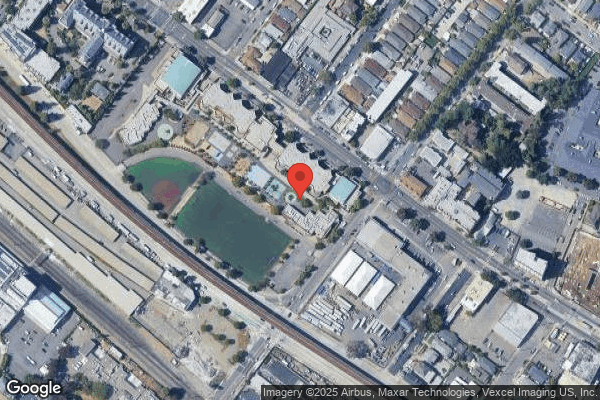
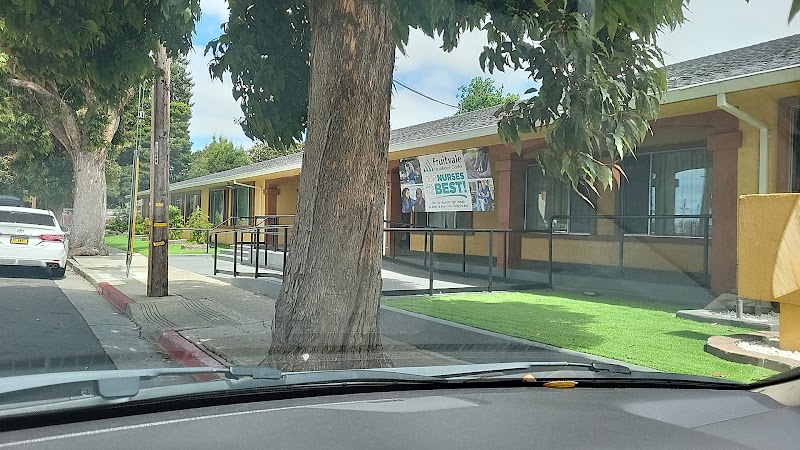
3020 EAST 15TH STREET, OAKLAND, CA 94601 (510) 261-5613
For profit - Partnership 140 Beds MARINER HEALTH CARE Data: November 2025
Trust Grade
10/100
#800 of 1155 in CA
Last Inspection: October 2024

Within standard 12-15 month inspection cycle. Federal law requires annual inspections.

Overview

Fruitvale Healthcare Center in Oakland, California, has received a Trust Grade of F, indicating significant concerns and a poor overall performance. Ranking #800 out of 1155 facilities statewide places it in the bottom half of California, and it is #64 out of 69 in Alameda County, meaning only a few local options are worse. While the facility's trend is improving, having reduced issues from 8 in 2024 to just 1 in 2025, the overall score of 2 out of 5 stars for health inspections and quality measures is below average. Staffing is a relative strength with a rating of 4 out of 5 stars and a turnover rate at 38%, which is on par with the state average. However, the facility's $169,823 in fines raises red flags about compliance issues, being higher than 93% of California facilities. Recent incidents include a serious failure to follow safety protocol during resident transfers, resulting in a resident's hospitalization for a fractured femur, and another case where a diabetic resident's untreated foot wound led to amputation due to gangrene. Additionally, there were concerns about maintaining sanitary conditions in the kitchen, which could pose food safety risks. While there are strengths in staffing and a trend toward improvement, families should be aware of these serious incidents and compliance issues when considering care for their loved ones.

Trust Score
F
10/100
In California
#800/1155
Bottom 31%
Safety Record
High Risk
Review needed
Inspections
Getting Better
8 → 1 violations
Staff Stability
○ Average
38% turnover. Near California's 48% average. Typical for the industry.
Penalties
○ Average
$169,823 in fines. Higher than 72% of California facilities. Some compliance issues.
Skilled Nurses
⚠ Watch
Each resident gets only 24 minutes of Registered Nurse (RN) attention daily — below average for California. Fewer RN minutes means fewer trained eyes watching for problems.
Violations
⚠ Watch
26 deficiencies on record. Higher than average. Multiple issues found across inspections.
★★☆☆☆
2.0
Overall Rating
★★★★☆
4.0
Staff Levels
★★★★☆
4.0
Care Quality
★★☆☆☆
2.0
Inspection Score
Stable
2024: 8 issues
2025: 1 issues

The Good

  • 4-Star Staffing Rating · Above-average nurse staffing levels
  • 4-Star Quality Measures · Strong clinical quality outcomes
  • Full Sprinkler Coverage · Fire safety systems throughout facility
  • No fines on record
  • Staff turnover below average (38%)

    10 points below California average of 48%

Facility shows strength in staffing levels, quality measures, fire safety.

The Bad

2-Star Overall Rating

Below California average (3.1)

Below average - review inspection findings carefully

Staff Turnover: 38%

Near California avg (46%)

Typical for the industry

Federal Fines: $169,823

Well above median ($33,413)

Significant penalties indicating serious issues

Chain: MARINER HEALTH CARE

Part of a multi-facility chain

Ask about local staffing decisions and management

The Ugly 26 deficiencies on record

2 actual harm
May 2025 1 deficiency
CONCERN (D) 📢 Someone Reported This

A family member, employee, or ombudsman was alarmed enough to file a formal complaint

Potential for Harm - no one hurt, but risky conditions existed

Free from Abuse/Neglect (Tag F0600)

Could have caused harm · This affected 1 resident

**NOTE- TERMS IN BRACKETS HAVE BEEN EDITED TO PROTECT CONFIDENTIALITY** Based on observation, interview and record review, the facility failed to protect one of two sampled residents (Resident 1) from...

Read full inspector narrative →
**NOTE- TERMS IN BRACKETS HAVE BEEN EDITED TO PROTECT CONFIDENTIALITY** Based on observation, interview and record review, the facility failed to protect one of two sampled residents (Resident 1) from physical abuse when Resident 2 hit Resident 1 ' s right shin with a front wheel walker (a walker is an assistive device used to aid in walking, providing stability and reducing weight bearing on the lower extremities of an individual). This failure resulted in Resident 1 sustaining redness on his right leg, pain, and a transfer to Acute Care Hospital (ACH 1) for follow-up care. Findings: During a record review of Resident 1 ' s Face Sheet (A Face Sheet is a summary document that provides essential resident information), the record showed Resident 1 was admitted to the facility in November 2021. The record indicated Resident 1 had diagnosis of Major Depressive Disorder (a mood disorder that causes a persistent feeling of sadness and loss of interest), unspecified Dementia (a condition that affects memory, thinking, and reasoning, interfering with daily life). During a record review of Resident 1 ' s Minimum Data Set (MDS is an assessment tool used to evaluate residents' health, functional status, and care) assessment dated [DATE], the assessment indicated Resident 1 had BIMS Score of 9 (nine) out of 15, indicating the moderate cognitive impairment. During a record review of Resident 2 ' s Face Sheet, the record showed Resident 2 was admitted to the facility in January 2024. The record indicated Resident 2 had multiple medical diagnosis including Alcohol dependence with withdrawal (a condition falls within substance use disorders. The characteristics of Alcohol dependence include loss of control over drinking and strong cravings or urges to drink). During a record review of Resident 2 ' s MDS dated [DATE] the assessment indicated, Resident 2 had BIMS score of 15 out of 15, indicating intact cognition. During an observation and interview on 04/17/25 at 09:58 a.m. with Resident 1, Resident 1 was sitting in his bed. Resident 1 stated on the day of the incident he was sitting in the smoking area at the back of the facility, Resident 2 was drunk, walked towards him, grabbed Resident 1 ' s walker and threw it across the table. Resident 1 stated he got hurt in his leg with the walker and that incident made him feel very sad. During an interview on 04/17/25 at 10:10 a.m. with Resident 2, Resident 2 stated, he did not want to talk about the incident on 3/25/2025 or anything. During an interview on 04/17/25 at 10:16 a.m. with Licensed Vocational Nurse (LVN) 1, LVN 1 stated on 3/25/25 around lunch time, Certified Nursing Assistant (CNA) 1 came to the nursing station to inform her that there was a noisy argument between Resident 1 and Resident 2 in the smoking area. LVN 1 saw Resident 1 and Resident 2 were separated by the staff. LVN 1 saw the alcohol bottle in a plastic bag on the floor. Resident 2 became agitated when LVN 1 wanted to confiscate the alcohol bottle. The staff notified the Administrator (Admin) and Oakland Police. Resident 2 became pleasant when the police arrived. During an interview on 04/17/25 at 10:57 a.m. with CNA 1, CNA 1 stated she heard the yelling in the smoking area at the back of the facility. When she arrived at the smoking area, she saw Resident 2 was in front of Resident 1 and Resident 2 picked up the walker and smashed Resident 1 ' s legs. CNA 1 asked the other staff to separate both residents and called for help. CNA 1 said this was not the first time that she saw Resident 2 drunk and become combative and aggressive. During an interview on 04/17/25 at 11:19 a.m. with Director of Nursing (DON), DON stated Resident 1 refused assessment after the altercation between Resident 1 and Resident 2. The DON stated he observed the redness on Resident 1 ' s right shin related to the altercation. During a record review of Resident 1 ' s, Progress notes dated 3/25/25 at 1:22 pm, the Progress notes indicated, Resident 1 was noted at the smoking area in the parking lot when an altercation between Resident 1 and Resident 2 occurred. Staff witnessed that Resident 1 was arguing with Resident 2 and Resident 2 striking and kicking Resident 1 in his right shin. Skin assessment noted the redness on Resident 1 ' s right shin. Resident 1 complained of moderate pain and wanted to transfer to the hospital. During a review of Resident 1 ' s, Emergency Department After Visit Summary from Acute Care Hospital (ACH 1), dated 3/25/25, the summary indicated Resident 1 ' s reason for visit was fall with the diagnosis of right leg pain. Resident 1 was given acetaminophen and Flexeril (Flexeril is a muscle relaxant to relieve pain). During a record review of Resident 1 ' s Progress Note, dated 3/25/25, the notes indicated, Resident 1 came back from emergency room (ED) with new medication orders for cyclobenzaprine for muscle spasm up to 10 days, and lidocaine patch 5% on right lower leg to relieve pain. During a review of Resident 2 ' s Emergency Department After Visit Summary, from Acute Care Hospital, dated 3/25/25, the summary indicated, Resident 2 was evaluated for Violent behavior with the diagnosis of Agitation. During a review of facility's Policy and Procedure (P&P) titled, Abuse Prevention Program, the P&P documented, the administration will protect the residents from abuse by anyone including, but not necessarily limited to facility staff, other residents, consultants, volunteers, staff from other agencies, family members, legal representatives, friends, visitors or any other individual.
Dec 2024 1 deficiency 1 Harm
SERIOUS (G) 📢 Someone Reported This

A family member, employee, or ombudsman was alarmed enough to file a formal complaint

Actual Harm - a resident was hurt due to facility failures

Accident Prevention (Tag F0689)

A resident was harmed · This affected 1 resident

**NOTE- TERMS IN BRACKETS HAVE BEEN EDITED TO PROTECT CONFIDENTIALITY** Based on interview and record review the facility failed to ensure one of three sampled residents (Resident 2) received adequate...

Read full inspector narrative →
**NOTE- TERMS IN BRACKETS HAVE BEEN EDITED TO PROTECT CONFIDENTIALITY** Based on interview and record review the facility failed to ensure one of three sampled residents (Resident 2) received adequate supervision and assistance device to prevent falls when Certified Nursing Assistant (CNA) 1 transferred Resident 2, who was totally dependent on staff for activities of daily living, from wheelchair to bed without another staff present and without using a Hoyer lift (interchangeably used with mechanical lift, uniquely designed electronically operated patient lift to transfer patients between two surfaces, for example from their bed to another surface such as a wheelchair or couch). This failure resulted in Resident 2's fall and transfer to the hospital for a four-day hospitalization for closed displaced subtrochanteric fracture of the right femur (broken bone specifically in the area just below the hip joint, where the fractured pieces are significantly out of alignment, but the skin over the fracture site remains intact, making it a non-open wound). Findings: During a review of Resident 2's Resident Face Sheet, the Resident Face Sheet indicated Resident 2 was admitted to the facility in February 2023 with diagnoses that included polyneuropathy (a disease that damages the peripheral nerves, causing weakness, numbness, and burning pain), chronic pain syndrome (a condition characterized by persistent pain that lasts for more than three months and does not respond to conventional treatments), abnormalities of gait and mobility and osteoarthritis (a degenerative joint disease that occurs when the cartilage and bone in a joint break down over time). During a review of Resident 2's Minimum Data Set (MDS, an assessment tool used to direct resident care) dated 11/10/24, the MDS indicated a Brief Interview for Mental Status (BIMS, a scoring system used to determine the resident's mental status in regard to attention, orientation, and ability to register and recall information) score of 13 (A BIMS score of 13-15 is an indication of intact cognitive status). The MDS also indicated Resident 2's functional ability with everyday activities was impaired on both sides of the upper and lower extremities. The MDS indicated, Resident 2 was dependent (helper does all of the effort, or the assistance of two or more helpers is required for the resident to complete the activity) on staff with everyday activities that included; rolling from left and right side while in bed, sitting on the side of the bed to lying flat, lying on the back to sitting on the side of the bed, transferring to and from a bed to a chair or wheelchair. The MDS indicated, Resident 2's ability to come to a standing position from sitting in a chair was not attempted during the assessment due to medical condition or safety concern. During an interview and concurrent record review on 12/11/24 at 1:02 p.m. with Director of Nursing (DON), Resident 2's ADL (activities of daily living) care plan dated 2/22/23 was reviewed. The ADL care plan indicated for staff to provide Resident 2 with needed assistance in ADL to maintain comfort and dignity, multiple approaches that included Establish patient's physical function and capabilities and provide approaches to assist patient but did not indicate a specific approach to transfer Resident 2. DON stated Resident 2 needed a Hoyer lift for transfers. During a review of the facility's undated policy and procedure (P&P) titled Resident Transfers, the P&P indicated for staff to assess resident's functional ability and type of assist needed, and to document the type of transfer and assistance device needed on the resident's comprehensive care plan, in the electronic health record system and progress notes. During an interview on 12/11/24 at 1:08 p.m., Resident 2 stated while she was up in a wheelchair, CNA 1 picked her up and dropped her. During an interview on 12/11/24 at 1:12 p.m. CNA 2, who was Resident 2's regular CNA for almost six months, stated, Resident 2 needed a Hoyer lift and help of another CNA, to transfer Resident 2 to and from the wheelchair to bed. During an interview on 12/11/24 at 1:16 p.m. with Nurse Supervisor (NS), NS stated Resident 2 was not able to move both legs and not able to stand up even with help from staff. NS stated Resident 2 always required Hoyer lift, with two staff assisting, for transfers. During an interview and concurrent record review on 12/11/24 at 1:28 p.m. with Director of Nursing (DON) Resident 2's Care Plan Essentials (a communication tool with specific details about the resident's care needs) initiated 3/4/24 was reviewed. The Care Plan Essentials indicated Resident 2 needed Hoyer lift with assistance of two staff for transfers to and from a bed to a wheelchair. During a telephone interview on 12/11/24 at 1:59 p.m. with CNA 1, CNA 1 stated working her first shift at the facility on 11/19/24. CNA 1 stated she received report from a regular staff that Resident 2, who was in a wheelchair at the start of the shift, would not go back to bed around 8:00 p.m. to 9:00 p.m. CNA 1 stated, around 9:00 p.m., CNA 1 went to the room to transfer Resident 2 back to bed. CNA 1 stated placing Resident 2's both arms around her while CNA 1 grabbed Resident 2's waistband on the back in a hugging position. CNA 1 stated, during the transfer, Resident 2 told CNA 1 Don't drop me. CNA 1 stated reassuring Resident 2 everything was going to be okay as the bed and the wheelchair had already been locked. CNA 1 stated attempting to lift Resident 2 to a standing position towards the bed when CNA 1 noticed Resident 2 was dead weight, did not have good function on both legs, and started to slide down. CNA 1 stated she asked Resident 3 (Resident 2's roommate) to lower the bed so CNA 1 could sit Resident 2 on the side of the bed. CNA 1 stated then she thought, Resident 3 was demented (one who has impaired memory and decision-making) and could not understand CNA 1's instruction, so CNA 1 eased Resident 2 down to the floor. CNA 1 stated she needed to be told at the start of the shift that a Hoyer lift and another CNA were needed to transfer Resident 2. CNA 1 stated she left the room to call Registered Nurse Supervisor (RNS) for help while Resident 2 sat on the floor. During a review of Resident 3's MDS dated [DATE], the MDS indicated a BIMS score of 14 (A score of 13-15 indicates intact cognitive status). During an interview on 12/11/24 at 1:42 p.m., Resident 3 stated CNA 1 came to the room to get Resident 2 back to bed. Resident 3 stated she offered help to CNA 1 to transfer Resident 2 from wheelchair to bed as she thought to herself how did she think she could pick [Resident 2] up by herself? Resident 3 stated CNA 1 just picked up Resident 2 then dropped her. During a telephone interview on 12/11/24 at 1:55 p.m. with Registered Nurse Supervisor (RNS), RNS stated CNA 1 came out of the room saying she needed help with Resident 2. RNS stated, upon entering the room, Resident 2 was sitting on the floor with back against the bed. During a follow-up telephone interview on 12/13/24 at 9:47 a.m. with RNS, RNS stated Resident 2 could not bear weight at all and had always used a Hoyer lift for transfers. RNS also stated Resident 2 was not a high risk for fall as Resident 2 had no history of attempting to get out of bed unassisted. During an interview on 12/11/24 at 3:05 p.m. with DON, DON stated, for residents who are dependent on staff with transfers, a Hoyer lift should be used. During a review of Resident 2's SBAR (Situation, Background, Assessment, Recommendation, written communication tool that helps provide essential, concise information, usually during crucial situations) dated 11/19/24, the SBAR indicated, Resident 2 had an assisted fall. The SBAR indicated, when Resident 2 slid off the bed, CNA 1 eased Resident 2 down to the floor. During a review of Resident 2's Risk Meeting Notes Initial Week One dated 11/25/24 created by DON, the Risk Meeting Notes Initial Week One indicated the following: - On 11/19/24, Resident 2 had a Guided (assisted) fall while transferring from wheelchair to bed. - On 11/22/24, Resident 2 complained of pain on the right thigh and right knee, a STAT (suggests a possible emergency condition, one where treatment must immediately be undertaken) x-ray was ordered by the Nurse Practitioner (NP). - On 11/23/24, STAT x-ray result came back. Resident 2 had a right proximal femur fracture .Resident 2 was transferred to the hospital for further evaluation and management per Nurse Practitioner's order. During a review of Resident 2's Radiology (imaging) Report dated 11/23/24, the Radiology Report indicated Resident 2 had a Proximal right femur fracture. as described. The findings are new compared to 23JUN2023. During a review of Resident 2's Physician's Order dated 11/23/24, the Physician's Order indicated an order to transfer Resident 2 to the hospital for management of fractured femur. During a review of Resident 2's hospital Internal Medicine Discharge Summary dated 11/27/24, the Internal Medicine Discharge Summary indicated Resident 2 was admitted to the hospital after a fall that resulted in right subtrochanteric femur fracture. Resident 2 was sent back to the facility after IMN (Intermedullary Nailing, a surgical procedure used to treat bone fractures by inserting a metal rod [nail] into the hollow center [medullary canal] of the bone) and an order to receive Lovenox (an injectable blood thinner that helps prevent the formation of blood clots) for 30 days. During a review of Resident 2's Progress Notes dated 11/27/24, the Progress Notes indicated Resident 2 returned to the facility from the hospital, on 11/27/24, with a 4 centimeter (cm) right upper hip incision with six staples, 5 cm right hip incision with seven staples, and 2 x 5 cm incision behind the right knee with six staples.
Oct 2024 2 deficiencies
CONCERN (D)

Potential for Harm - no one hurt, but risky conditions existed

Deficiency F0804 (Tag F0804)

Could have caused harm · This affected 1 resident

Based on observation, interview, record review, and facility policy review, the facility failed to provide food at an appetizing temperature, which affected 1 (Resident #32) of 4 residents reviewed fo...

Read full inspector narrative →
Based on observation, interview, record review, and facility policy review, the facility failed to provide food at an appetizing temperature, which affected 1 (Resident #32) of 4 residents reviewed for food. Findings included: An undated facility policy titled, Meal Service, indicated, Residents will receive their food at appropriate temperatures and an appetizing appearance; therefore, trays may be set up ahead of time with non-perishable items only. A Resident Face Sheet revealed the facility admitted Resident #32 on 11/04/2014. An annual Minimum Data Set (MDS), with an Assessment Reference Date (ARD) of 09/01/2024, revealed Resident #32 had a Brief Interview for Mental Status (BIMS) score of 15, which indicated the resident had intact cognition. Resident #32 was interviewed on 10/21/2024 at 11:42 AM. Resident #32 stated the food at the facility was not always served hot, and if they were the last one served, the food was cold. During an observation on 10/23/2024 at 8:19 AM, staff passed meal trays on Station 4. The last tray on the food cart was removed from the meal cart at 8:27 AM. The last tray was taken to the dining room. The following temperatures were observed, scrambled eggs were 102 degrees Fahrenheit (F), the sausage patty was 102 degrees F, and the oatmeal was 122 degrees F. The Registered Dietitian (RD) and the Dietary Supervisor (DS) confirmed the temperatures of the eggs, sausage, and oatmeal. The scrambled eggs and sausage patty were lukewarm, and the oatmeal was warm. Resident #32 was interviewed on 10/23/2024 at 9:12 AM. Resident #32 stated that the scrambled eggs served that morning were not hot; they were lukewarm. Resident #32 then stated the scrambled eggs were usually served lukewarm. The Director of Nursing (DON) was interviewed on 10/24/2024 at 8:28 AM. The DON stated the facility followed federal and state requirements for food temperatures. He stated that the food should be served warm to the residents and at the correct internal temperature. The Administrator was interviewed on 10/24/2024 at 9:44 AM about food temperatures. The Administrator stated the food served to residents should be served hot.
CONCERN (D)

Potential for Harm - no one hurt, but risky conditions existed

Infection Control (Tag F0880)

Could have caused harm · This affected 1 resident

2. A facility policy titled, Hand Hygiene, implemented February 2017, indicated, This facility considers hand hygiene the primary means to prevent the spread of infections. The policy revealed, Fundam...

Read full inspector narrative →
2. A facility policy titled, Hand Hygiene, implemented February 2017, indicated, This facility considers hand hygiene the primary means to prevent the spread of infections. The policy revealed, Fundamental Information included 7. Use an alcohol-based hand rub containing at least 62% alcohol; or, alternatively, soap (antimicrobial or non-microbial) and water for the following situations, to include h. Before moving from a contaminated body site to a clean body site during resident care, j. After contact with blood or bodily fluids, and m. After removing gloves. A Resident Face Sheet indicated the facility admitted Resident #14 on 03/30/2016. According to the Resident Face Sheet, the resident had a medical history that included diagnoses of hemiplegia, acquired absence of unspecified leg above knee, and an overactive bladder. A quarterly Minimum Data Set (MDS), with an Assessment Reference Date (ARD) of 07/23/2024, revealed Resident #14 had a Brief Interview for Mental Status (BIMS) score of 15, which indicated the resident had intact cognition. The MDS indicated the resident was frequently incontinent of urine and required substantial/maximal assistance from staff with toileting hygiene. Resident #14's Care Plan, included a problem statement initiated on 12/24/2017, that indicated the resident was occasionally incontinent of urine due to an overactive bladder. Interventions directed staff to clean and dry the resident after each incontinence episode (initiated 02/11/2018). During an observation on 10/23/2024 at 3:58 PM, Certified Nurse Aide (CNA) #7 provided incontinence care to Resident #14. CNA #7 donned gloves and cleansed Resident #14's buttocks and anal area with disposable wipes. Without removing his gloves and without sanitizing or washing his hands, CNA #7 placed a clean incontinence brief under Resident #14, folded the resident's pillow, placed the pillow under the resident's back, and removed the resident's socks and pants. CNA #7 then removed his gloves and washed his hands. CNA #7 was interviewed on 10/23/2024 at 4:13 PM. CNA #7 stated he did not wash or sanitize his hands when going from a dirty task to a clean task while providing incontinence care to Resident #14. The Director of Nursing (DON) was interviewed on 10/24/2024 at 8:53 AM. The DON stated staff were expected to wear gloves and follow standard precautions, including washing hands. He stated that after cleansing a resident, staff were expected to remove their gloves and wash their hands. The Director of Staff Development (DSD) was interviewed on 10/24/2024 at 9:11 AM. The DSD stated that staff were expected to remove their gloves and sanitize their hands, as staff were considered dirty after cleansing a resident, then put on new gloves. The Administrator was interviewed on 10/24/2024 at 9:59 AM. The Administrator stated that staff were expected to wear gloves when providing resident care. He stated that staff were expected to change gloves when going from a dirty task to a clean task when providing care. Based on observation, interview, record review, and facility policy review, the facility failed to ensure staff implemented enhanced barrier precautions (EBP) for 1 (Resident #17) of 4 residents reviewed for pressure ulcers. The facility also failed to ensure staff changed gloves and performed hand hygiene between dirty and clean tasks for 1 (Resident #14) of 1 resident observed during incontinence care. Findings included: 1. An undated facility policy titled, Enhanced Barrier Precautions (EBP) revealed, 1. EBP shall be used in conjunction with standard precautions and expand the use of personal protective equipment (PPE) to donning of gown and gloves during high-contact resident care activities that may result in transfer of MRDOs [multidrug-resistant organisms] to staff hands and clothing. 2. EBP are indicated for residents with any of the following, to include b. Wounds and/or indwelling medical devices even if the resident is not known to be infected or colonized with an MDRO. Wounds generally include chronic wounds, not shorter-lasting wounds, such as skin breaks or skin tears covered with an adhesive bandage (e.g. [exempli gratia, for example] adhesive bandages) or similar dressing. Examples of chronic wounds include, but are not limited to, pressure injuries, diabetes foot ulcers, unhealed surgical wounds, and venous stasis ulcers. The policy revealed, 6. For residents for whom EBP are indicated, EBP shall also be used when performing the following high-contact resident care activities, to include Providing hygiene, and Changing briefs or assisting with toileting. A Resident Face Sheet indicated the facility admitted Resident #17 on 12/09/2016. According to the Resident Face Sheet, the resident had a medical history that included a diagnosis of functional quadriplegia. A quarterly Minimum Data Set (MDS), with an Assessment Reference Date (ARD) of 08/31/2024, revealed Resident #17 had severe impairment in cognitive skills for daily decision-making and had a short-term and long-term memory problem per a Staff Assessment of Mental Status (SAMS). According to the MDS, the resident was dependent on staff with toileting hygiene and personal hygiene. The MDS revealed the resident was always incontinent of bowel and bladder. The MDS indicated Resident #17 had one unhealed Stage 2 pressure ulcer at the time of the assessment. Resident #17's Care Plan, included problem statements dated 10/22/2024, that indicated the resident had pressure ulcers to the right heel, right fifth toe, and right lateral foot. The Care Plan revealed a problem statement dated 10/23/2024, that indicated the resident was on EBP. Interventions directed staff to follow EBP (initiated 10/23/2024). An observation on 10/23/2024 at 3:35 PM revealed no EBP signage posted outside of Resident #17's room. There was no PPE located inside Resident #17's room. During an interview on 10/23/2024 at 3:46 PM, Certified Nurse Aide (CNA) #5 revealed she was the assigned CNA for Resident #17 and stated that the resident was not on EBP. During an observation on 10/23/2024 at 3:59 PM, CNA #5 and CNA #6 washed their hands and put gloves on before providing incontinence care to Resident #17. CNA #5 and CNA #6 did not wear a gown. The observation ended when CNA #5 and CNA #6 started to undress the resident. During an interview on 10/23/2024 at 4:54 PM, CNA #5 confirmed no additional PPE was worn during the incontinence care by either CNA. CNA #5 stated that there was no signage on the resident's door and that Resident #17 was not on EBP. During an interview on 10/23/2023 at 8:22 AM, CNA #4 revealed that if a resident was on EBP, the staff must wear a gown and gloves when proving care to the resident. CNA #4 stated that residents must have signage outside the door to indicate EBP. During an interview on 10/23/2024 at 7:41 AM, the Infection Preventionist (IP) stated Resident #17 should be on EBP. During a follow-up interview on 10/23/2024 at 4:04 PM, the IP revealed that if a resident had an open wound, then the resident should be placed on EBP. She stated that the CNAs should wear PPE when providing incontinence care to Resident #17. She stated that she had not placed any signage or PPE in Resident #17's room. During an interview on 10/24/2024 at 9:05 AM, the Wound Nurse revealed Resident #17 had four open wounds and the resident was on EBP. During an interview at 10/24/2024 at 10:19 AM, the Director of Nursing (DON) revealed that he expected any resident with open wounds to be placed on EBP and that there should be signage on the resident's door. He stated that the staff should wear a gown and gloves when providing care. During an interview on 10/24/2024 at 11:56 AM, the Administrator revealed that residents with open wounds should be placed on EBP. He stated that staff should wear gowns and gloves when providing care.
Aug 2024 1 deficiency
CONCERN (D) 📢 Someone Reported This

A family member, employee, or ombudsman was alarmed enough to file a formal complaint

Potential for Harm - no one hurt, but risky conditions existed

Deficiency F0740 (Tag F0740)

Could have caused harm · This affected 1 resident

Based on interview and record review, for one of two sampled residents (Resident 1), the facility failed to provide the necessary behavioral health care and services to attain or maintain the highest ...

Read full inspector narrative →
Based on interview and record review, for one of two sampled residents (Resident 1), the facility failed to provide the necessary behavioral health care and services to attain or maintain the highest practicable mental and psychosocial well-being when psychiatric and mental health services were not provided to treat mental and substance use disorders. This failure had the potential to result in significant distress from unresolved psychosocial and mental health issues. Findings: During a review of Resident 1's Resident Face Sheet, the Resident Face Sheet indicated Resident 1 was admitted to the facility in January 2024 with diagnoses that included schizophrenia (serious mental health condition that affects how people think, feel and behave), auditory hallucinations (sensory perceptions of hearing in the absence of an external stimulus) and psychoactive substance abuse (strong desire or sense of compulsion to take psychoactive substance, various natural or synthetic compounds that cause changes in thoughts, emotions and behavior). During a review of Resident 1's Hospitalists SNF/Rehab Discharge Summary (Hospital DC Summary), dated 1/10/24, the Hospital DC Summary indicated Resident 1 admitted to using methamphetamine (a powerful, highly addictive stimulant that affects the central nervous system) earlier on 1/7/24. The summary also indicated urine toxicology was done and Resident 1 tested positive for methamphetamine and cocaine (also a highly addictive stimulant, a stimulant speeds up the messages traveling between the brain and the rest of the body). During a review of Resident 1's Minimum Data Set (MDS, , a resident assessment instrument used to identify resident care problems to be addressed in an individualized care plan), dated 1/17/24, the MDS indicated Resident 1 had the following active diagnoses: schizophrenia, other psychoactive substance abuse, and auditory hallucinations. During a review of Resident 1's Physician Order Report, dated 1/10/24 – 7/7/24, the Physician Order Report indicated the following: 1. A physician's order, dated 1/10/24, to refer Resident 1 to Mental Health. 2. A physician's order, dated 2/21/24, for psychiatric evaluation. 3. Physician's orders for Out On Pass on 6/13/24, 6/20/24 and 7/3/24. During an interview on 7/26/24 at 1:52 p.m. with Director of Nursing (DON), DON stated Resident 1's clinical record did not indicate psychiatric or mental health consults were done on Resident 1 as ordered. During a review of Resident 1's Situation, Background, Assessment, and Recommendation/Request (SBAR, a structured communication framework that can help teams share information about the condition of a patient), the SBAR indicated the following incidents: 1. On 4/28/24, the SBAR indicated a CNA saw Resident 1 dropped used drug paraphernalia on the floor. 2. On 5/12/24, a staff witnessed Resident 1 stealing another resident's belongings. 3. On 5/26/24, Resident 1 stole another resident's cell phone. During an interview and concurrent review of the clinical record on 7/26/24 at 3:10 p.m. with DON, the physician's orders and nurse progress notes were reviewed. DON stated Resident 1 went out on pass on 6/13/24, 6/20/24 and 7/3/24, but the clinical records did not indicate any documentation of Resident 1 going out of the facility and Resident 1's status upon returning to the facility. During a review of Resident 1's clinical record, the clinical record indicated the following incidents and care plans: 1. Antipsychotic (medication that treats psychosis) care plan, dated 1/10/24, to address Resident 1's schizophrenia, interventions included identifying changes in behavioral patterns and inform attending physician of any, inform family/responsible party of any changes and updates through care conference meetings, refer to psychiatric and psychological services if needed. Set limits on inappropriate /unacceptable behavior. All the interventions were dated 1/10/24. 2. Non-compliance care plan, dated 1/10/24, to address Resident 1's refusal of head to toe skin assessment and signing of admission papers. Interventions included encouraging Resident 1 to interact with others, explain importance of procedure, monitor for untoward manifestations due to non-compliance and inform attending physician for possible interventions, provide information regarding risk and complications resulting from non-compliance. All interventions were dated 1/10/24. The care plan indicated another non-compliance problem was identified when Resident 1 refused urine toxicology on 4/30/24. The care plan did not indicate any addition or revision to the interventions outlined. 3. Behavioral care plan, to address diagnosis of substance abuse, dated 1/10/24. Interventions included encouraging resident to attend activities of choice, encouraging resident to verbalize feelings and offer understanding and empathy, identify situations causing behavioral problem and assist resident in resolving identified issues, monitor behavior not easily altered and refer to attending physician, observe for pain or discomfort that might trigger negative behavior, psychiatric consult if needed, and psychosocial management as ordered. All interventions were dated 1/11/24. The care plan indicated two more problems were identified when, on 4/28/24, Resident 1 dropped a used drug paraphernalia on the floor, and on 5/12/24, when Resident 1 was caught stealing other resident's belongings. The care plan did not indicate any revisions or added interventions after the two incidents were identified. During a review of Resident 1's Monthly IDT (a group composed of individuals from different departments in the facility) Pain/Psychotropic (any drug that affects brain activities associated with mental processes and behavior; psychotropic drugs include, but are not limited to the following categories: anti-psychotics, anti-depressants, anti-anxiety, and hypnotics) Review, dated 5/29/24, the Monthly IDT Pain/Psychotropic Review indicated to continue current acetaminophen order for pain and olanzapine (an antipsychotic) for management of schizophrenia. The review indicated the current care plan was not reviewed. During a review of Resident 1's Care Conference Notes, dated 4/18/24, the Care Conference Notes indicated current care plans were appropriate. The clinical record indicated there were no care conferences/meetings done to address Resident 1's behavior on 4/28/24, 5/12/24 and 5/26/24. During an interview on 7/26/24 at 12:02 p.m. with DON, DON stated he did not have knowledge of the type of drug paraphernalia found in Resident 1's possession on 4/28/24. During a review of Resident 1's Social Services (SS) Progress Notes, dated 1/12/24, the SS Progress Notes indicated an initial interview with Resident 1 about Resident 1's prior living arrangement and previous drug use. Another SS Progress Notes, dated 7/10/24, indicated efforts to reach Resident 1's family members after Resident 1 was transferred out to the hospital and passed. The clinical record did not indicate any other SS Progress Notes to address incidents on 4/28/24, 5/12/24 and 5/26/24. The clinical record did not indicate any interventions or Social Service visits with Resident 1 after 1/12/24, despite multiple behavior issues identified on 4/28/24, 5/12/24 and 5/26/24. During an interview on 7/26/24 at 1:52 p.m. with Administrator (Adm), Adm stated there were only two SS Progress Notes found in Resident 1's clinical record. Adm stated keeping a Social Services Director (SSD) and having complete documentation of Social Services Notes have been challenging. During an interview on 7/26/24 at 2:20 p.m. with Social Services Assistant (SSA), SSA stated meeting with Resident 1 to discuss financial issues and on how to get Resident 1 Social Security Income benefits. SSA stated she did not give Resident 1 counseling after the incidents on 4/28/24, 5/12/24 and 5/26/24. During a review of the facility's Facility Assessment, last revised 7/16/24, the Facility Assessment indicated the facility's current residents included those with psychiatric/mood disorder (psychosis [hallucinations, delusions], schizophrenia, and opioid dependence) which is the fifth most prevalent in the facility. During an interview on 7/26/24 at 12:38 p.m. with Adm, Adm stated the facility's policy and procedure (P&P) to address Substance Use Disorder and Opioid Overdose Response were not in place at the time Resident 1 was a resident at the facility. During a telephone interview on 8/5/24 at 8:34 a.m. with Certified Nursing Assistant (CNA) 1, CNA 1 stated, on 7/7/24, Resident 1 was found unresponsive with no pulse and no spontaneous breathing and was foaming at the mouth. During a review of Resident 1's Resident Progress Notes, dated 7/7/24, the Resident Progress Notes indicated, on 7/7/24 at 8:00 a.m., Resident 1 was found unresponsive, was taken to the hospital by paramedics who responded to the emergency call. During a review of Resident 1's ED (Emergency Department) Provider Notes, dated 7/7/24, the ED Provider Notes indicated Resident 1 presented to the ED in cardiac arrest, Resident 1 passed at 9:04 a.m
Apr 2024 1 deficiency
CONCERN (D) 📢 Someone Reported This

A family member, employee, or ombudsman was alarmed enough to file a formal complaint

Potential for Harm - no one hurt, but risky conditions existed

Free from Abuse/Neglect (Tag F0600)

Could have caused harm · This affected 1 resident

Based on observation, interview, and record review, the facility failed to ensure the right to be free from verbal abuse for one of three sampled residents (Resident 1) when a staff member used profan...

Read full inspector narrative →
Based on observation, interview, and record review, the facility failed to ensure the right to be free from verbal abuse for one of three sampled residents (Resident 1) when a staff member used profanity while providing toileting care to Resident 1. This failure resulted in Resident 1 feeling disrespected by the facility staff. Findings: During a review of the Face Sheet (a document used to communicate basic information about a resident) for Resident 1, undated, the record indicated Resident 1 was admitted to the facility in May 2022 with generalized weakness and hemiplegia (the loss of muscle function on one side of the body) affecting the dominant side of the body. During a review of the Minimum Data Set (MDS, a resident assessment instrument used to identify resident care problems to be addressed in an individualized care plan) for Resident 1, dated 2/27/24, the record indicated Resident 1 had a score of 15 on the Brief Interview for Mental Status (BIMS, is a scoring system used to determine the resident ' s cognitive status in regard to attention, orientation, and ability to register and recall information. A BIMS score of thirteen to fifteen is an indication of intact cognitive status). The record indicated that Resident 1 was always incontinent of both bowel and bladder and required substantial/maximal assistance (a term used to describe when the person assisting the resident does more than half the effort) for toileting hygiene. During a concurrent observation and interview on 4/29/24 at 9:55 a.m., Resident 1 was lying in bed with the head of bed elevated. Resident 1 stated on 4/14/24, Resident 1 was waiting in bed for toileting hygiene care to be provided. Resident 1 had an incident of diarrhea after receiving a laxative and wore adult briefs, which required Resident 1 to have the brief changed when toileting hygiene was provided. Resident 1 stated Certified Nursing Assistant 1 (CNA 1) came to provide the requested care. Resident 1 stated she heard CNA 1, cursing every other word, saying the F-word and S-word under his breath while CNA 1 changed Resident 1 ' s brief. Resident 1 spoke with the Licensed Vocational Nurse (LVN) the next morning during their daily check-in about the incident. Resident 1 stated when CNA 1 used profanity while providing care, it made me feel like they did not respect me. During a phone interview with CNA 1 on 4/29/24 at 11:38 a.m., CNA 1 stated on 4/14/24, he worked during evening shift (3:00 pm until 11:30 pm). CNA 1 stated Resident 1 received toileting hygiene care at the start of the shift. CAN 1 stated right as dinner trays came out for the evening, Resident 1 requested toileting hygiene care again. CNA 1 stated since there was no other staff available, he then stopped passing trays and entered Resident 1 ' s room to provide care. During the provision of care, CNA 1 stated I was cursing under my breath a little . I was frustrated because I had been getting her in and out of bed all day already. CNA 1 stated Resident 1 asked the CNA to stop cursing at her, and CNA 1 informed Resident 1 that it was not directed at Resident 1. CNA 1 then left the room after providing care to Resident 1. During an interview with LVN 1 on 4/29/24 at 11:01 a.m., LVN 1 stated Resident 1 reported the incident with CNA 1 the next morning on 4/15/24. Resident 1 informed LVN 1 that the CNA was cursing every other word, using the F-word. Resident 1 stated it was inappropriate for a CNA to talk to a resident like this and that Resident 1 no longer wanted to work with CNA 1 anymore. During a concurrent interview and record review with the Director of Nursing (DON) on 4/29/2024 at 12:21 p.m., Resident 1 ' s Progress Notes, dated 4/15/24 were reviewed. The record indicated Resident 1 spoke to the LVN caring for her, stating, the CNA kept using the F word while taking care of her. DON stated that it was not acceptable for a CNA to curse or use profanity while providing care because, it would be derogatory and very inappropriate and would of course be potential verbal abuse. A review of the facility policy titled, Abuse Prevention Program, dated 5/28/2019, indicated Our residents have the right to be free from abuse, neglect, misappropriation of resident property and exploitation. This includes but is not limited to freedom from . verbal abuse.
Mar 2024 1 deficiency
CONCERN (D) 📢 Someone Reported This

A family member, employee, or ombudsman was alarmed enough to file a formal complaint

Potential for Harm - no one hurt, but risky conditions existed

Free from Abuse/Neglect (Tag F0600)

Could have caused harm · This affected 1 resident

Based on interview and record review, the facility failed to ensure one of four sampled residents (Resident 1) was free from verbal abuse when Certified Nursing Assistant (CNA) yelled at Resident 1 I ...

Read full inspector narrative →
Based on interview and record review, the facility failed to ensure one of four sampled residents (Resident 1) was free from verbal abuse when Certified Nursing Assistant (CNA) yelled at Resident 1 I will knock you the 'F' out during a verbal altercation. This failure had the potential to result in psychosocial harm. Findings: During a review of Resident 1's Face Sheet, undated, the Face Sheet indicated Resident 1 was admitted to the facility in January 2024 with diagnoses that included vascular dementia (a loss of brain function that occurs with certain diseases, affecting one or more brain functions such as memory, thinking, language, judgment, or behavior) with behavioral disturbance, adult failure to thrive and opioid dependence (Physical and psychological reliance on opioids, a substance found in certain prescription pain medications and illegal drugs like heroin). During a review of Resident 1's Minimum Data Set (MDS, a resident assessment instrument used to identify resident care problems to be addressed in an individualized care plan.), dated 1/19/24, the MDS indicated Resident 1 had a Brief Interview of Mental Status (BIMS, a scoring system used to determine the resident's cognitive status in regard to attention, orientation, and ability to register and recall information) score of 13 (A BIMS score of 13-15 is an indication of intact cognitive status). The MDS also indicated Resident 1 did not have any behaviors that were potential indicators of psychosis (a severe mental condition in which thoughts and emotions are so affected that contact is lost with external reality) and had no behavioral symptoms directed toward others. During a review of Resident 1's dementia Care Plan, with start date 1/12/24, the Care Plan indicated for staff to offer choices appropriate for resident's cognition and provide verbal cues to resident. During a review of the Investigation Summary, dated 3/8/24, the Investigation Summary indicated CNA was having a verbal altercation with Resident 1. The Investigation Summary indicated Resident 1 requested for extra cups of coffee. When CNA delivered coffee and went to remove the other coffee mug from Resident 1's table, Resident 1 started to yell and threw coffee at CNA, CNA responded in a manner that was not appropriate, which was witnessed and heard by facility staff. During an interview on 3/8/24 at 10 a.m. with Receptionist (REC), REC stated hearing a loud verbal altercation coming from Resident 1's room with Resident 1 saying No, you're not! REC stated hearing a man's voice that said, I'll knock you the f out!. REC stated Restorative Nursing Assistant (RNA) stood by Resident 1's door and said, You can't talk to a resident like that! to someone inside Resident 1's room. REC stated after a few moments, CNA walked out of Resident 1's room saying Ok, ok. and walked away. During an interview on 3/8/24 at 10:21 a.m. with RNA, RNA stated hearing an argument coming from Resident 1's room. RNA stated going to the room and stood by the door, where CNA and Resident 1 could be seen and heard yelling at each other. RNA stated CNA had just brought two cups of coffee for Resident 1 and was going to take a previously used coffee mug from Resident 1's table, but Resident 1 wanted to keep it. RNA stated Resident 1 told CNA to Get the f .out of my room!, to which CNA yelled back I'll knock you the f . out! to Resident 1. RNA stated telling CNA to not talk to Resident 1 like that and CNA said a few words before leaving the room. RNA stated CNA was in a fighting stance during the altercation like going into a street fight. RNA stated staff should never talk to any resident like CNA did, it was inappropriate and very unprofessional.
Feb 2024 1 deficiency
CONCERN (D) 📢 Someone Reported This

A family member, employee, or ombudsman was alarmed enough to file a formal complaint

Potential for Harm - no one hurt, but risky conditions existed

Infection Control (Tag F0880)

Could have caused harm · This affected 1 resident

**NOTE- TERMS IN BRACKETS HAVE BEEN EDITED TO PROTECT CONFIDENTIALITY** Based on observation, interview, and record review, the facility failed to maintain infection control practices when a Certified...

Read full inspector narrative →
**NOTE- TERMS IN BRACKETS HAVE BEEN EDITED TO PROTECT CONFIDENTIALITY** Based on observation, interview, and record review, the facility failed to maintain infection control practices when a Certified Nursing Assistant (CNA) did not wear gloves and a gown before entering a positive COVID room and did not perform hand hygiene after exiting the room. This failure had the potential for the spread of germs and infection. Findings: During an observation on 2/15/24 at 1:12 p.m. in station 1, there was a transparent plastic shield with a zipper at the door of room [ROOM NUMBER]. The door was wide open behind the shield. There was signage on the door indicating transmission-based precautions for COVID. On the left, attached to the door, were Personal Protective Equipment (PPE - disposable protective gowns, gloves, etc.,). room [ROOM NUMBER] had two residents who were in isolation for COVID 19. CNA 1 was entering room [ROOM NUMBER]. CNA 1 unzipped the transparent plastic shield, entered the room, and did not wear gloves and a gown. CNA 1 proceeded to Bed B, delivered a food tray to Resident 1, talked to Resident 1 briefly, and proceeded to exit. CNA 1 picked up a dark cloth from the floor by Resident 1 ' s bed and placed it on the bed. CNA 1 came outside, did not perform hand hygiene, and opened the food cart stationed in the hallway opposite room [ROOM NUMBER]. During an interview on 2/15/24 at 1:15 p.m. with CNA 1, CNA1 stated she just went to drop off the tray. CNA 1 stated she thought those residents were cleared from isolation. CNA 1 later acknowledged she was supposed to follow the infection precautions instructions, wear gloves and a gown before entering the room; and perform hand hygiene after exiting the room before opening the food cart. CNA1 stated, it ' s my mistake. CNA 1 confirmed it was Resident 1 ' s bed cover that she picked up from the floor. CNA 1 stated again it ' s my mistake. During an interview on 2/15/24 at 4:20 p.m. with Director of Nursing (DON), DON stated staff is required to follow the infection precautions protocol including hand hygiene. DON stated, for a COVID positive room, staff must wear PPE including a gown, N95 mask, and gloves before they go in, even if taking in or removing the meal tray. During a review of the facility ' s policy and procedure (P&P) titled, Covid-19 Infection Control Measure, undated, the P&P indicated the company follows infection prevention and control practices . to prevent the transmission of COVID-19 within the facility .standard precautions (hand hygiene and respiratory hygiene); transmission-based precautions, where indicated .appropriate use of PPE . During a review of the P& P titled, Transmission Precautions: Contact, undated, the P&P indicated, . for residents known or suspected to be infected . with epidemiologically important microorganisms that can be transmitted by direct contact with the resident, or indirect contact (touching) with environmental surfaces or resident care items in the resident ' s environment .Wear clean, non-sterile gloves when entering the room .remove gloves before leaving room, discard in the garbage receptacle, and perform hand hygiene .do this to avoid transfer of microorganisms to other residents or environments .Wear a clean, non-sterile gown upon entering the resident ' s room .Remove the gown before leaving the resident ' s environment.
Jan 2024 1 deficiency
CONCERN (D) 📢 Someone Reported This

A family member, employee, or ombudsman was alarmed enough to file a formal complaint

Potential for Harm - no one hurt, but risky conditions existed

Free from Abuse/Neglect (Tag F0600)

Could have caused harm · This affected 1 resident

Deficiency Text Not Available

Read full inspector narrative →
Deficiency Text Not Available
Nov 2022 1 deficiency 1 Harm
SERIOUS (G) 📢 Someone Reported This

A family member, employee, or ombudsman was alarmed enough to file a formal complaint

Actual Harm - a resident was hurt due to facility failures

Quality of Care (Tag F0684)

A resident was harmed · This affected 1 resident

**NOTE- TERMS IN BRACKETS HAVE BEEN EDITED TO PROTECT CONFIDENTIALITY** Based on interview and record review, the facility failed to ensure one of three sampled residents (Resident 1) who had a diagno...

Read full inspector narrative →
**NOTE- TERMS IN BRACKETS HAVE BEEN EDITED TO PROTECT CONFIDENTIALITY** Based on interview and record review, the facility failed to ensure one of three sampled residents (Resident 1) who had a diagnosis of Type 2 Diabetes (an impairment in the way the body regulates and uses sugar (glucose) as a fuel) received comprehensive skin monitoring and assessment, when Resident 1's left foot wound with infection was not monitored, assessed and evaluated. This failure resulted in Resident 1 ' s left foot developing gangrene (localized death and decomposition of body tissue, resulting from either obstructed circulation or bacterial infection) and Resident 1 ' s left foot being amputated (the action of surgically cutting off a limb). Findings: A review of Resident 1 ' s face sheet, indicated, Resident 1 was admitted to the facility on [DATE] with multiple diagnosis including Type 2 Diabetes. Resident 1 was full code (if a person's heart stopped beating and/or they stopped breathing, all reviving procedures will be provided to keep them alive). A review of Resident 1 ' s Minimum Data Set (MDS, a comprehensive assessment tool to guide resident care) Section G, dated 11/12/21, indicated Resident 1 needed supervision for walking. During an interview on 9/13/22 at 11:11 a.m., with Resident 1 ' s family member (FM) 1, FM 1 stated the family was not able to see Resident 1 due to COVID-19 (a respiratory infection) outbreak at the facility. FM 1 stated, FM 2 visited Resident 1 on 12/28/21 and informed FM 1 and facility nurses that Resident 1 ' s left foot had a cut and bad odor. FM 1 stated she went to the facility and requested the facility to send Resident 1 to the hospital. FM 1 stated Resident 1 ' s left foot was amputated at the hospital on [DATE]. FM 1 further stated she was very frustrated and angry at the facility ' s care because Resident 1 would still have his foot if the facility monitored and evaluated Resident 1 ' s foot. A review of Resident 1 ' s acute care hospital (ACH) document titled, Podiatric [branch of medicine treating disorders of the foot, ankle, and lower legs] surgery consult note, dated 12/29/21, indicated . left forefoot [front part of the foot] global gangrene, wet with sloughing epithelium (a break or loose area of corneal epithelium ( the outermost layer of the cornea, whose functions include transparency, and protection from the external environment) larger than 2.0 mm [millimeter, unit of measurement] x 2.0 mm.), left 1st met head full thickness ulcer (damage extends below the epidermis and dermis (all layers of the skin) into the subcutaneous tissue or beyond (into muscle, bone, tendons, etc) 3x3 cm (centimeter) . Patient has severe pain with probing but this tracks past the level of the ankle joint and had 10cc (cubic centimeters ) of easily expressible pus (a thick yellowish or greenish opaque liquid produced in infected tissue ) and air . A review of Resident 1 ' s ACH document titled, Triage Note, dated 12/29/21, indicated . PT (Patient) coming from Fruitvale Nursing Facility with a chief complaint of failure to thrive- according to staff PT has become non-verbal over the last several days, refusing to ambulate, eat and drink. Per EMS (Emergency Medical Services) a left wound noted-foul smelling, decaying tissue . A review of Resident 1 ' s ACH document titled, Operative note, dated 12/29/21, indicated Resident 1 ' s left foot was amputated by general surgeon. A review of Resident 1 ' s Point of Care History . ADLs (Activities of Daily living), How did the resident walk in his /her room? indicated, Resident 1 was walking with assistant and supervision until 12/25/21. The ADL record further indicated Resident 1 stopped walking from 12/25/21 through 12/29/21, when Resident 1 was transferred to ACH 1 on 12/29/21. A review of Resident 1 ' s Nursing weekly summary indicated Resident 1 was assessed by the nurses on 11/9/21, 11/30/21 and 12/14/21 and it indicated Resident 1 had no skin issue or wound. During a concurrent interview and record review on 9/13/22 at 1:20 p.m., with Regional Director of Clinical Operation (RDCO), Resident 1 ' s nurses weekly skin assessments were reviewed. RDCO confirmed weekly nurse skin assessments were completed for dates 11/9/21, 11/30/21 and 12/14/21. RDCO stated nurses should do weekly skin assessment for residents to identify early issues or wounds and report any abnormality. During a concurrent interview and record review on 9/14/22 at 10:30 a.m. with the Director of Nursing (DON), Resident 1 ' s Braden Scale (for predicting pressure sore risk) assessment, dated 11/5/21 was reviewed and the score was 18 which means at risk for pressure sore. DON stated Braden Scale needed to be checked upon admission and weekly for four weeks. DON further stated it was important to check the residents ' skin weekly to assess, monitor, and address residents' skin situation and skin issues immediately. DON confirmed the nurses did not provide skin assessment for Resident 1 on a weekly basis. DON stated Resident 1 ' s Braden Scale assessment was assessed once only. During an interview on 9/14/22 at 11:46 a.m. with Certified Nurse Assistant (CNA) 1, CNA 1 stated she did not remember anything about Resident 1. During an interview on 9/14/22 at 11:58 a.m. with DON, DON stated the licensed nurse who was in charge at the time of discharge was not available for interview, and she was out of country. During an interview on 9/14/22 at 12:30 p.m., with Treatment Nurse (TN), TN stated no nurses reported any wound or skin issue for Resident 1. TN stated was he responsible for completing resident Braden Scale assessments for all residents upon admission and once a weekfor up to four weeks, and as needed. TN stated nurses usually complete weekly resident skin assessments. TN confirmed he completed a Braden Scale assessment for Resident 1 one time. A review of Resident 1 ' s Resident Progress Notes, dated 12/29/21, indicated, Resident noted declining in ADL ' s generalized body weakness, used to walk, not walking anymore, poor po (Per Oral) intake. Fluids encouraged. Family requesting to send out to [Acute Care Hospital 1] for evaluation . A review of Resident 1 ' s care plan for skin care, dated 11/6/21, indicated . Goal: Decrease skin dryness and fragility . Approach: Monitor skin during care for bruises, swelling, skin tears, redness, irritation and breakdown, inform MD (Medical Doctor) for interventions, weekly skin check. A review of Resident 1 ' s Braden Scale, dated 11/6/21, indicated Resident 1 ' s Braden Scale was 18 which indicated Resident 1 was at risk for pressure ulcer. A review of the facility ' s policy and procedure titled, Skin Care Management, effective date 12/1/2005 and updated 9/2009 and 5/2020, indicated . 3. The initial admission and weekly for 3 weeks screens for patient risk are completed using the Braden Scale . 5. All patients will be checked from head to toe, weekly by a licensed nurse to identify any new pressure ulcer or any other type of skin breakdown .
Dec 2021 6 deficiencies
CONCERN (D)

Potential for Harm - no one hurt, but risky conditions existed

Safe Environment (Tag F0584)

Could have caused harm · This affected 1 resident

**NOTE- TERMS IN BRACKETS HAVE BEEN EDITED TO PROTECT CONFIDENTIALITY** Based on observation, interview, and record review the facility failed to provide housekeeping services and linen services to ma...

Read full inspector narrative →
**NOTE- TERMS IN BRACKETS HAVE BEEN EDITED TO PROTECT CONFIDENTIALITY** Based on observation, interview, and record review the facility failed to provide housekeeping services and linen services to maintain a clean home-like environment for two of 36 sampled residents (Resident 110 and Resident 128). The wall and ceiling in Resident 128's room was dirty with a reddish-brown splatter stain, and the sheets on Resident 110's bed were thin and full of holes. This deficient practice resulted in Resident 110 and Resident 128 not living in a homelike environment. Findings: 1. During a review of the Minimum Data Set (MDS - a resident assessment tool used to guide care), for Resident 110, dated 11/15/21, the MDS indicated Resident 110 was admitted to the facility on [DATE]. During a review of Section C 0500 of the MDS, the MDS indicated Resident 110 had a Brief Interview for Mental Status (BIMS, a cognitive assessment tool) of 12 (moderate cognitive impairment). During an interview with concurrent observation with Resident 110 on 12/6/21 at 10:16 a.m., Resident 110 stated they rarely change her sheets and the sheets have holes in them. Resident 110 got out of bed and sheets were very thin with multiple holes. During an interview with Social Worker (SW) on 12/7/21 at 11:00 a.m., stated no one's sheets should have holes in them. 2. During a review of the MDS, for Resident 128, dated 11/22/21, the MDS indicated Resident 128 was admitted to the facility on [DATE]. During a review of Section C 0500 of the MDS, the MDS indicated Resident 128 had a BIMS of 15 (cognitively intact). During an observation with concurrent interview on 12/6/21 at 9:00 a.m., reddish-brown dried splatter noticed on wall and ceiling across from Resident 128's bed. During an interview with Resident 128 stated she did not know what the substance was and stated it had been there for a while.
CONCERN (D)

Potential for Harm - no one hurt, but risky conditions existed

Deficiency F0688 (Tag F0688)

Could have caused harm · This affected 1 resident

**NOTE- TERMS IN BRACKETS HAVE BEEN EDITED TO PROTECT CONFIDENTIALITY** Based on observation, interview, and record review the facility failed to provide services to prevent contractures from worsenin...

Read full inspector narrative →
**NOTE- TERMS IN BRACKETS HAVE BEEN EDITED TO PROTECT CONFIDENTIALITY** Based on observation, interview, and record review the facility failed to provide services to prevent contractures from worsening for one (Resident 111) of 16 sampled residents. This failure had the potential for Resident 111 to develop limitations in range of motion and decrease theability to participate in activities of daily living. Findings: During a review of the Minimum Data Set (MDS - a resident assessment tool used to guide care) for Resident 111, dated 8/16/21, the MDS indicated Resident 111 was admitted to the facility on [DATE] with diagnoses to include high blood pressure, diabetes, stroke, dementia, and chronic kidney disease. During a review of Section C 0500 of the MDS, the MDS indicated Resident 111 had a Brief Interview for Mental Status (BIMS, a cognitive assessment tool) of 03 (severe cognitive impairment). Section O 0500 of the MDS indicated Resident 11 did not receive passive or active range of motion during the assessment period. Resident 111 also did not use a brace or splint. During an observation on 12/6/21 at 9:30 a.m., Resident 111 was observed in the hall with his left arm bent at the elbow and held against his chest. He was unable to straighten his arm when asked. During an interview with the Licensed Vocational Nurse 1 (LVN 1) on 12/8/21 at 12:50 p.m., LVN 1 stated the Certified Nursing Assistant (CNA) does range of motion exercises when providing his care. During an interview with CNA 1 on 12/8/21 at 12:55 p.m., CNA 1 stated he does not provide range of motion exercises with Resident 111 because Resident 111 was in the RNA program. During an interview with Restorative Nursing Aid (RNA) on 12/8/21 at 12:45 p.m., RNA stated Resident 111 was not in the RNA program because he does not have an order.
CONCERN (D)

Potential for Harm - no one hurt, but risky conditions existed

Incontinence Care (Tag F0690)

Could have caused harm · This affected 1 resident

**NOTE- TERMS IN BRACKETS HAVE BEEN EDITED TO PROTECT CONFIDENTIALITY** Based on interview and record review, the facility failed to ensure one of 36 sampled residents (Resident 231), was given foley ...

Read full inspector narrative →
**NOTE- TERMS IN BRACKETS HAVE BEEN EDITED TO PROTECT CONFIDENTIALITY** Based on interview and record review, the facility failed to ensure one of 36 sampled residents (Resident 231), was given foley catheter care every eight hours according to Medical Doctor (MD) orders. This deficient practice had the potential to result in urinary tract infections for Resident 231. Findings During a review of Resident 231's undated facesheet (a document that gives a resident's information at a quick glance), the facesheet indicated Resident 231 was admitted on [DATE] with multiple diagnoses including, neuromuscular dysfunction of the bladder (a lack of bladder control due to brain, spinal cord, or nerve problems), urinary tract infection (UTI), paraplegia (paralysis of the lower legs and body), and encephalopathy (any brain disease that alters brain function or structure). During a review of Resident 231's Physician orders, dated 11/24/2021, the Physician orders indicated, Indwelling Foley catheter care q (every) shift with soap and water, and, Monitor urine output for signs and symptoms of infection every shift and notify Medical Doctor (MD) if any. During a concurrent interview and record review on 12/10/2021, at 9:43 a.m., with the Director of Nursing (DON), Resident 231's Treatments Administration Record (TAR), dated 12/01/2021-12/10/2021, was reviewed. DON stated, there was no documentation on the TAR, dated 12/01/2021-12/10/2021, that indicated Resident 231 had received indwelling Foley catheter care or that urine output had been monitored for signs and symptoms of infection on 12/1/2021 AM shift, PM shift and Night shift, 12/2/2021 Night shift, 12/4/2021 Night shift, 12/5/2021 AM shift, PM shift and Night shift, 12/6/2021 PM shift and Night shift, 12/7/2021 PM shift, 12/8/2021 PM shift, and 12/9/2021 AM shift. DON stated it is important that indwelling Foley catheter care was given as ordered by the physician, and urine output is monitored for signs and symptoms of infection every shift because they were measures taken to prevent, or identify as early as possible, UTI's, and clogging of the Foley catheter. DON stated it was especially important for Resident 231 because Resident 231 has a history of urinary tract infection. During a review of Resident 231's Indwelling Catheter care plan, dated 11/24/2021, the care plan indicated, Long term goals .to decrease risk of complications due to indwelling catheter use such as urinary tract infection (UTI), irritated urethra and discomfort or pain; Maintain adequate urine output. Approaches .indwelling Foley catheter care every shift with soap and water .empty drainage bag at least every shift .observe for adequate urine output. Observe for signs/symptoms of infection .refer to MD accordingly. During a review of the facility's policy and procedure (P&P) titled, Indwelling Catheter Care, dated 3/2000, the P&P indicated, Routine catheter care helps prevent infections and other complications .
CONCERN (D)

Potential for Harm - no one hurt, but risky conditions existed

Deficiency F0745 (Tag F0745)

Could have caused harm · This affected 1 resident

Based on observation, interview and record review, the facility to assist two (Resident 55 and 117) out of 36 sampled residents in obtaining prescription glasses. This failure had the potential to re...

Read full inspector narrative →
Based on observation, interview and record review, the facility to assist two (Resident 55 and 117) out of 36 sampled residents in obtaining prescription glasses. This failure had the potential to result in Resident 55 and Resident 117's limitation in performing their activities of daily living due to their inability to see their surroundings clearly. Findings: During an interview on 12/6/21, at 9:14 a.m. with Resident 117, Resident 117 stated that she had been waiting for her eyeglasses. Resident 117 was told it would take 6-8 weeks, but she has been waiting for three and a half months. During an interview on 12/13/21, at 7:55 a.m., with Resident 117, Resident 117 stated that she can see but she can't read without her eyeglasses and that they have not updated her about the status of her eyeglasses. During an interview on 12/6/21, at 11:42 a.m. with Resident 55, Resident 55 stated that he had seen an eye doctor while he was in the facility, he was prescribed an eyeglass to which they said would arrive in 2-3 weeks and it has been four months already and it still has not been received. Resident 55 stated that he was not updated of the status of the eyeglasses. During a review of Resident 117's Care Plan, dated 8/24/21, Care Plan indicated that Resident 117 has visual deficit due to decreased visual acuity. During a review of Resident 55's Care Plan, dated 3/16/21, Care Plan indicated that Resident 55 has visual deficit due to decreased visual acuity. During a review of Resident 117 and 55's medical record indicated Residents 117 and 55 were seen on 9/20/21 and were prescribed eyeglasses. During a concurrent interview and record review, on 12/7/21, at 12:01 p.m., with Social Service Director (SSD), SSD stated that an outside company comes in the facility and they would prescribe eyeglasses for the residents, order it and have it delivered to the facility. SSD stated that turn around time for eyeglasses was six to eight weeks or longer and that she follows up with them if they have not received it yet. SSD stated that she did not have the chance to follow-up on the eyeglasses for Resident 117 and Resident 55.
CONCERN (D)

Potential for Harm - no one hurt, but risky conditions existed

Deficiency F0757 (Tag F0757)

Could have caused harm · This affected 1 resident

Based on interview and record review, the facility failed to monitor the signs and symptoms of bleeding for one of one sampled residents (Resident 43) that received heparin (anticoagulant-a medicine u...

Read full inspector narrative →
Based on interview and record review, the facility failed to monitor the signs and symptoms of bleeding for one of one sampled residents (Resident 43) that received heparin (anticoagulant-a medicine used to decrease the clotting ability of the blood). This deficient practice had the potential to result in Resident 43's care needs not being addressed and delay initiation of appropriate treatment in a timely manner. Findings: Review of Resident 43's undated Facesheet (a document that provides resident specific information at a quick glance), indicated Resident 43 was admitted to the facility on 9/16//21 with multiple diagnoses that included end stage renal disease (the gradual loss of kidney function) and dependence on renal dialysis (a blood purifying treatment given when kidney function is not optimum. This treatment is sometimes given via a arteriovenous [AV-a connection between an artery and vein] shunt). Review of Resident 43's physician's orders dated 9/1/21-9/30/21, indicated Resident 43 had an order from 9/16/21 to 11/18/21 for heparin (porcine) solution; 5,000 unit/ml; amt: 1 ML; injection every 12 hours. During an interview and concurrent record review with the Director of Nursing on 12/09/21 at 11:54 a.m., DON stated Resident 43 was not monitored for signs and symptoms of bleeding and bruising while on heparin from 9/16/21-11/18/21. DON stated due to Resident 43's heparin use , Resident 43 should have have been monitored for signs and symptoms of bleeding and bruising because adverse reaction of bleeding could be prevented and detected early, especially since Resident 43 had an AV shunt. DON stated he could not find documentation in Resident 43's medical record that Resident 43 was monitored for signs and symptoms of bleeding. Review of the facility's policy and procedure titled Anticoagulant Therapy release date 7/31/03, indicated .9. Throughout anticoagulant therapy monitor the resident for signs and symptoms of bleeding . If signs and symptoms of bleeding are noted., Hold anticoagulant medication and notify physician immediately .
CONCERN (E)

Potential for Harm - no one hurt, but risky conditions existed

Food Safety (Tag F0812)

Could have caused harm · This affected multiple residents

Based on observation, interview and record review, the facility failed to ensure sanitary conditions in the kitchen when the solution in two red buckets that contained quaternary ammonium (Quat-a disi...

Read full inspector narrative →
Based on observation, interview and record review, the facility failed to ensure sanitary conditions in the kitchen when the solution in two red buckets that contained quaternary ammonium (Quat-a disinfectant) had not been checked and changed for two days. This deficient practice had the potential to spread food borne illnesses. Findings: During the initial kitchen tour observation on 12/6/21 at 8:29 a.m., two red buckets that contained a dark, cloudy liquid were observed on the stainless steel counter top near the three way sink. During an interview and concurrent record review with the Dietary Manager (DM) on 12/6/21 at 8:33 a.m., DM stated the red buckets were sanitation buckets that contained quaternary ammonium solution. DM reviewed the Quat sanitizer log for the red sanitation buckets and stated the log indicated the Quat sanitizer were last checked and changed on 12/4/21 at 6:30 p.m. DM stated the Quat sanitizer in the red buckets should be checked and changed every four hours to prevent the spread of germs. DM stated the Quat solution in the red buckets was used to wipe down surfaces in the kitchen. Review of a facility document titled QUAT SANITIZER SPRAY BOTTLES/BUCKETS dated December 2021, indicated the time prepared and concentration check were last done on 12/4/21 between 6:00 p.m. and 6:30 p.m. Review of the facility's policy and procedure titled SANITATION AND INFECTION CONTROL dated 2018, indicated .Quat levels will be checked and recorded every two hours. 5. If water in the bucket appears turbid or cloudy or has food particles, it may be necessary to discard and refresh for appropriate concentration of Quat solution .
Mar 2019 10 deficiencies
CONCERN (D)

Potential for Harm - no one hurt, but risky conditions existed

Safe Environment (Tag F0584)

Could have caused harm · This affected 1 resident

**NOTE- TERMS IN BRACKETS HAVE BEEN EDITED TO PROTECT CONFIDENTIALITY** Based on observation, interview, and record review, the facility failed to ensure the personal care equipment (wash basin) for r...

Read full inspector narrative →
**NOTE- TERMS IN BRACKETS HAVE BEEN EDITED TO PROTECT CONFIDENTIALITY** Based on observation, interview, and record review, the facility failed to ensure the personal care equipment (wash basin) for residents in three rooms (room [ROOM NUMBER], 106 and 107) were labeled and stored at the resident's bedside cabinet. This failure resulted in residents at risk for contacting disease-causing organism. Findings: During the initial tour of the facility on 3/3/19 between 8:10 a.m. and 8;30 a.m., the following were observed: A. In room [ROOM NUMBER]'s bathroom, the wash basin was on the floor underneath the sink. B. In room [ROOM NUMBER]'s bathroom, the wash basin was on the floor underneath the sink. C. In room [ROOM NUMBER]'s bathroom, the wash basin was on the floor underneath the sink. During an interview with Certified Nursing Assistant (CNA1) on 3/6/19 at 1:30 p.m., CNA 1 stated, We don't put bedpans, wash basins, and urinals on the floor, we should label these items with the resident's name, after we are done with the care, we rinse, dry and store them in the drawer at bedside table. Review of facility's policy and procedure titled Disposable Resident Care Items dated 11/15/2002 indicated ensure that multiple-use disposable items are easily identified as belonging to the resident using the items by labeling with resident's name, and by geographic location where the items are stored.
CONCERN (D)

Potential for Harm - no one hurt, but risky conditions existed

Free from Abuse/Neglect (Tag F0600)

Could have caused harm · This affected 1 resident

**NOTE- TERMS IN BRACKETS HAVE BEEN EDITED TO PROTECT CONFIDENTIALITY** Based on interview and record review, for one of one sampled resident (Resident 49) who complained of abuse, the facility failed...

Read full inspector narrative →
**NOTE- TERMS IN BRACKETS HAVE BEEN EDITED TO PROTECT CONFIDENTIALITY** Based on interview and record review, for one of one sampled resident (Resident 49) who complained of abuse, the facility failed to ensure Resident 49 was free from physical abuse when Resident 100 threw water at Resident 49. Resident 49 had behavioral issues, that potentially provokes physical retaliation from other residents, that were not addressed appropriately by the facility. This failure had the potential to result in Resident 49's emotional distress and future incidents of abuse from other residents in reaction to Resident 49's verbal aggression. Findings: Review of the clinical record indicated Resident 100 was admitted to the facility on [DATE]. Resident 100's Minimum Data Set (MDS, an assessment tool used to direct resident care) dated 2/4/19 indicated Resident 100 had good recall of spoken words and knew the year, month and day during the assessment with intact cognition. The MDS also indicated Resident 100 had verbal behavior symptoms i.e. threatening others, screaming and cursing at others that occurred one to three days (out of the seven days look back period). Review of the clinical record indicated Resident 49 was admitted to the facility on [DATE] with history of alcohol abuse. Resident 49's MDS dated [DATE] indicated moderate cognition impairment and was able to recall three spoken words with cueing. Resident 49 also knew the year, month and day during the assessment. The MDS also indicated Resident 49 had physical behavioral symptoms directed toward others (i.e. hitting, kicking, scratching, grabbing, pushing) that occurred 1 to 3 days (out of seven day look back period) and also had verbal behavioral symptoms (e.g. threatening, cursing, screaming at others) that occurred 1 to 3 days during the seven day look back period. The MDS also indicated Resident 49 had severely impaired vision. During an interview with Resident 49 on 3/5/19 at 12:35 p.m., Resident 49 stated there were two incidents when another resident threw water at him while at the smoking area. Resident 49 stated, he asked a staff about his cigarettes that went missing and a resident suddenly talked back at him and threw water at him. Resident 49 stated he was blind and did not know who threw water at him. Review of Resident 49's Progress Notes dated 2/3/19 indicated, Resident had an altercation while in the smoking patio with the other resident, to the point of calling the other resident inappropriately i.e. bitch and that made the other resident [throw] a pitcher of water on him in return. Noted with aggressiveness in gestures and words as well as when talking to staff and other resident . Review of Resident 49's care plan dated 2/3/19, after the incident on 2/3/19 with Resident 100, indicated interventions that included Will refer for Psyche [psychiatrist] eval [evaluation] and treatment if indicated. Review of another Progress Notes for Resident 49 dated 2/20/19 (second incident that involved Resident 100) indicated, At 2:30 p.m., [Resident 49] was still outside the smoking area and [Resident 100] went to the smoking area and staff witnessed [Resident 100] pouring a pitcher of water at [Resident 49] .Resident 49 was also noted with verbally abusive behavior towards staff calling staff pigs . During a joint interview with Director of Nursing (DON) and Social Services Director (SSD) on 3/5/19 at 12:40 p.m., DON and SSD both stated on 2/20/19 around 2:10 p.m., Resident 49 was in front of the SSD office as Resident 100 backed out of the SSD office in a motorized wheelchair. SSD stated as Resident 100 went past Resident 49, Resident 49 said some expletive words directed at Resident 100 and the two residents went into a verbal altercation. SSD stated both residents were separated, Resident 100 went to his room while SSD took Resident 49 to the smoking area and left him there to smoke with other residents. Resident 100, after retreating to his room, went to the smoking area where Resident 49 was and the two residents continued to have verbal altercation. Resident 100 picked up a pitcher of water and threw it at Resident 49. DON stated a staff witnessed the altercation but could not get to both residents fast enough to intervene. During an interview with Resident 100 on 3/6/19 at 11:13 a.m., Resident 100 stated Resident 49 was verbally aggressive towards other residents at the facility especially when out at the smoking area. Resident 100 stated, while at the smoking area, Resident 49 repeatedly called him bitch. Resident 100 stated he threw water at Resident 49 to make stop the behavior. Resident 100 stated he thought of a way To get to him[Resident 49]. Resident 100 stated facility staff knew about Resident 49 being verbally offensive and paranoid but the management did not do anything about it. Resident 100 also stated he felt like he was the bad guy because staff always ushered him out of the smoking area if Resident 49 was seen coming and was prevented from going out to the smoking area if Resident 49 was already there. Review of Resident 49's clinical record showed a level I PASSR (Preadmission, Screening and Resident Review, a state-required screening to identify what specialized services a resident may need) screen was done on 9/11/17 and indicated that level II PASSR was required. Review of Resident 49's PASSR II evaluation provided by UM 1 dated 9/22/17 indicated recommendations made by the evaluator that included the following: - Mental Health Rehabilitation Activities that included therapeutic community, dance, music, art, exercise, leisure, recreation, orientation, skill building activities. - Supportive Services that include interactions with facility staff that will encourage problem solving. - Substance Rehabilitation Services. - Behavior Modification Program to help reduce physical and verbal aggression. - Psychiatric Consultation. - Psychology Consultation. During an interview with Social Service Director (SSD) on 3/6/19 at 1:52 p.m., SSD stated she did not know that there were recommendations from the PASSR II evaluation. SSD also stated Resident 49 did not have psychiatric consult, mental health rehabilitation activities, behavior modification program or substance rehabilitation services as stated in the recommendation. During an interview with Licensed Vocational Nurse (LVN) 1 on 3/6/19 at 12:55 p.m., LVN 1 stated Resident 49 had verbal and physical behavioral symptoms calling staff pigs and other residents bitch that went on for a while. LVN 1 stated she was not certain if Resident 49 was seen for psychiatric consult. During another interview with Certified Nursing Assistant (CNA) 2 on 3/6/19 at 12:58 p.m., CNA 2 stated Resident 49 got upset very easily and would scream loudly at other residents. Review of the facility's policy and procedure titled Abuse and Neglect Prohibition last revised October 2004 indicated, under Prevention, Residents identified by staff as being self-injurious or exhibiting abusive behavior which require professional services not provided in the facility will be reviewed by the physician and treatment plans modified as appropriate.
CONCERN (D)

Potential for Harm - no one hurt, but risky conditions existed

Transfer Notice (Tag F0623)

Could have caused harm · This affected 1 resident

**NOTE- TERMS IN BRACKETS HAVE BEEN EDITED TO PROTECT CONFIDENTIALITY** Based on interview and record review the facility failed to notify the Ombudsman of residents discharges for three of 27 sampled...

Read full inspector narrative →
**NOTE- TERMS IN BRACKETS HAVE BEEN EDITED TO PROTECT CONFIDENTIALITY** Based on interview and record review the facility failed to notify the Ombudsman of residents discharges for three of 27 sampled residents (19, 35 and 129). This failure had the potential to result in residents 19, 35 and 129 not being afforded the services of the Ombudsman. Findings: Review of the admission Record indicated Resident 19 was admitted to the facility with multiple diagnoses that included acute ischemic heart disease (heart problems caused by narrowed heart arteries). Further review indicated Resident 19 was discharged to the hospital on 1/23/19. Review of Resident 19's notes indicated the facility did not notify the ombudsman's office of Resident 19's discharge to the hospital. Review of the admission Record indicated Resident 35 was admitted to the facility with multiple diagnoses that included anemia (the blood lacks enough healthy red blood cells or hemoglobin). Further review indicated Resident 35 was discharged to the hospital on 2/19/19. Review of Resident 35's notes indicated the facility did not notify the ombudsman's office of Resident 35's discharge to the hospital. Review of the admission Record indicated Resident 129 was admitted to the facility with multiple diagnoses that included anemia. Further review indicated Resident 129 was discharged to the hospital on [DATE]. Review of Resident 129's notes indicated the facility did not notify the ombudsman's office of Resident 129's discharge to the hospital. During an interview with the Director of Nursing (DON) on 3/5/19 at 11:43 a.m., the DON stated they don't notify the ombudsman of Residents transfer to acute hospital. She further stated it was the Social Service Director's (SSD) responsibility to notify the ombudsman of residents discharges. During an interview with SSD on 3/5/19 at 12:27 p.m., the SSD stated she was not aware that she needed to notify the Ombudsman of residents that were tranferred to acute hospital. Review of Review of the facility's Policy and Procedure titled Transfer and Discharge, Emergency dated 10/2017, indicated: Should it become necessary to make an emergency transfer or discharge to a hospital or other related institution, our facility will inplement the following procedures: Notify the resident's attending physician, notify the representative or other family member, notify the Office of the Ombudsman as per agreement with facility.
CONCERN (D)

Potential for Harm - no one hurt, but risky conditions existed

Deficiency F0658 (Tag F0658)

Could have caused harm · This affected 1 resident

**NOTE- TERMS IN BRACKETS HAVE BEEN EDITED TO PROTECT CONFIDENTIALITY** Based on observation, interview and record review the facility failed to ensure one of 27 sampled residents (Resident 133) recei...

Read full inspector narrative →
**NOTE- TERMS IN BRACKETS HAVE BEEN EDITED TO PROTECT CONFIDENTIALITY** Based on observation, interview and record review the facility failed to ensure one of 27 sampled residents (Resident 133) received treatment and care as the physician's order when Resident 133 was taking oxygen four liter per minute per nasal [NAME] and the physician's order was for two liters per minute. As a result of this deficient practice Resident 133 was at risk for physical damage due to oxygen toxicity. Findings: Review of Resident 133's face sheet indicated Resident 133 was admitted to the facility on [DATE] with multiple diagnosis including COPD (chronic obstructive pulmonary disease - obstruction of lung airflow that interferes normal breathing). During an observation on 3/4/19 at 10:02 a.m. Resident 133 was taking four-liter oxygen per minute per nasal [NAME]. During an interview with RN (Registered Nurse)1 on 3/4/19 at 10:02 a.m. RN 1 confirmed that the oxygen was on 4 liters and stated Resident 133 had COPD and high oxygen can make Resident 133's breathing situation worse. A review of Physician Order Report dated 1/7/19 showed O2 (oxygen) at 2 lPM (Liter Per Minute) via NC (Nasal Cannula) at bed time for obstructive sleep apnea at bed time; 09:00 p.m. -07:00 a.m. Review of Care Plan dated 1/7/19 indicated Administer oxygen as ordered. O2 @ (at) 2 L/min/NC (Liter/Minute/Nasal Cannula) .
CONCERN (D)

Potential for Harm - no one hurt, but risky conditions existed

Deficiency F0697 (Tag F0697)

Could have caused harm · This affected 1 resident

**NOTE- TERMS IN BRACKETS HAVE BEEN EDITED TO PROTECT CONFIDENTIALITY** Based on observation, interviews and record review, the facility failed to provide pain management for one (Resident 105) of 27 ...

Read full inspector narrative →
**NOTE- TERMS IN BRACKETS HAVE BEEN EDITED TO PROTECT CONFIDENTIALITY** Based on observation, interviews and record review, the facility failed to provide pain management for one (Resident 105) of 27 sampled residents, when: 1. a routine pain medication was not reordered; 2. a pain medication available at the facility was not used. These failures resulted in unnecessary pain and suffering which affected Resident 105's ability in maintaining his highest practicable physical, mental, and psychosocial well-being. Findings: 1. Review of the admission record indicated that Resident 105 was admitted on [DATE] with multiple diagnosis including pressure ulcer and chronic pain. In an interview with the Director of Nurses (DON) on 3/5/19 at 9:30 a.m., DON stated that Resident 105 was consistently complaining of generalized body pain. DON added that Resident 105 was on a routine dose of morphine. Review of the Pain administration history dated February 2019 indicated that Resident 105's pain was between 3 to 7. According to the facility's pain Scale: (0-10) Behavior indicators: 1 - Crying, 2 - Whining, 3 - Gasping, 4 - Moaning/Groaning, 5 - Screaming/Yelling, 6 - Grimacing, 7 - Wrinkled forehead. Review of the physician's order dated 12/30/18 indicated, Morphine (a narcotic pain reliever to treat moderate to severe pain) - tablet extended release (ER); 30 milligrams (mg); oral, Take 1 tab by mouth every 12 hours for pain management. Review of the Medication Administration Record (MAR) dated, February 2019 indicated that Resident 105 did not receive his routine dose of Morphine on 2/17/19 at 6:00 p.m. and 2/18/19 at 6:00 a.m. The reason indicated was that the drug was not available. In a separate interview with DON on 3/5/19 at 10:00 a.m., DON was unable to show documentation when the medication was reordered. DON stated that the drug should be ordered seven days before it runs out or call the physician if a prescription renewal was needed. 2. In an observation and concurrent interviews on 3/5/19 at 10:45 a.m., DON showed the inventory on the controlled substance Emergency Kit (E-kit) containing eight 15 mg Morphine ER tablets. Review of the E-Kit showed there were eight 15 mg Morphine Sulfate ER tablets. Review of Progress notes, dated 2/17/19 showed, the nurse asked for E-Kit authorization for morphine ER but access was denied. In an interview with the DON on 3/5/19 at 11:00 a.m., DON stated that the pharmacist was not able to give authorization to open the E-Kit unless there was an order from the Nurse Practitioner (NP). DON added that the NP was not available during that time. According to the National Institute of Health, Journal of Pain Research publication titled, Extended-release morphine sulfate in treatment of severe acute and chronic pain, dated 9/21/10, An extended-release analgesic should provide around-the-clock efficacy, result in fewer changes in drug plasma concentrations when compared with short-acting analgesics, provide maximal tolerability, and have minimal long-term adverse events with prolonged use. [Reference: https://www.ncbi.nlm.nih.gov/pmc/articles/PMC3004644/] Review of the facility's policy titled, Pain Management, dated 12/1/05 indicated, Non-verbal behaviors, which might be expressions of pain that need to be included in an evaluation, include: Crying, whining, gasping, moaning, groaning Administer a therapeutic intervention for pain if ordered.
CONCERN (E)

Potential for Harm - no one hurt, but risky conditions existed

Accident Prevention (Tag F0689)

Could have caused harm · This affected multiple residents

**NOTE- TERMS IN BRACKETS HAVE BEEN EDITED TO PROTECT CONFIDENTIALITY** Based on observation, interview and record review, for three of four sampled residents who were smokers (Residents 6, 73 and 126...

Read full inspector narrative →
**NOTE- TERMS IN BRACKETS HAVE BEEN EDITED TO PROTECT CONFIDENTIALITY** Based on observation, interview and record review, for three of four sampled residents who were smokers (Residents 6, 73 and 126), the facility failed to ensure residents' environment were free from accident hazard when smoking materials were not stored securely. This failure had the potential to result in accidents such as cigarette burns and fire hazard in resident rooms where smoking materials were stored. Findings: 1. During an observation and interview with Resident 126 on 3/4/19 at 12:30 p.m., Resident 126 stated facility allowed for cigarettes and lighters to be stored at the bedside or in residents' pockets. Resident 126 pulled out a disposable cigarette lighter tucked inside an empty cigarette box from his pocket and stated he had always kept his cigarettes and lighters on him and that the facility knew about it since admission. Review of Resident 126's clinical record indicated Resident 126 was admitted on [DATE]. Resident 126's Minimum Data Set (MDS, an assessment tool used to direct resident care) dated 2/22/19 indicated Resident 126 was able to repeat three spoken words on the first attempt, knew the correct year, month and day and had good recall of three spoken words. Review of Resident 126's Safe Smoking assessment dated [DATE] indicated Resident 126 required supervision with smoking and the care plan will include approaches where smoking materials will be stored. Review of Resident 126's smoking care dated 3/4/19 indicated for Smoking materials to be stored securely as per protocol. During another interview with Resident 126 on 3/7/19 at 8:41 a.m., Resident 126 stated he kept his cigarette and his lighter on him just like everybody else. During an observation and concurrent interview with Unit Manager (UM) 1 on 3/7/19 at 8:43 a.m., UM 1 stated smoking materials were kept by Activities Director (AD) in a plastic box. UM 1 showed the plastic box that contained two opened cartons of cigarettes and a disposable lighter that had Resident 73's name. UM 1 stated the box was the only one that facility used to store smoking materials for residents. During an interview with AD on 3/7/19 at 8:49 a.m., AD stated Resident 73 was the only resident who agreed to have his smoking materials kept inside the facility's box and all the other smokers kept their smoking materials on them. During an interview with Director of Nursing (DON) on 3/7/19 at 9:10 a.m., DON stated the residents' smoking care plans were not updated to reflect residents' refusal to keep the smoking materials inside the facility's box and to determine what measures the facility needed to ensure safety of residents and roommates where smoking materials were stored. During an interview with UM 1 on 3/7/19 at 9:45 a.m., UM 1 stated residents were only allowed to keep the cigarettes on themselves but not the lighters. UM 1 stated lighters are accident hazards if residents decided to light their cigarettes whenever and wherever they preferred. UM 1 stated Certified Nursing Assistants (CNAs) made sure residents did not keep lighters at the bedside and would report to DON if lighters were found at the bedside. A list of residents who were smokers was provided by the facility, a total of 38 smokers were on the list. The facility also provided a list of smokers who refused to have the facility keep the smoking materials in the facility's cigarette box, a total of 19 residents were on the list. 2. During an observation and concurrent interviews on 3/7/19 at 10:48 a.m., CNA 1 stated Resident 6 was a smoker and kept his cigarettes and lighter at the bedside. Resident 6 was in his room and pulled out a box of cigarettes out of his shirt pocket and a disposable lighter out of his jacket. Resident 6 stated he had always kept his smoking materials on him. Resident 6 had several holes on his shirt, his jacket and pants. CNA 1 and Resident 6 both confirmed the holes were from cigarette burns. Resident 6 stated he did not always wear apron while out smoking. Review of the list of smokers who refused to give up smoking materials to the facility staff did not have Resident 6's name. Review of Resident 6's Safe Smoking assessment dated [DATE] indicated Resident 6 was a safe independent smoker. During an observation and concurrent interview with DON on 3/7/19 at 11:45 a.m., DON stated she did not know Resident 6 kept his smoking materials in his pocket, DON also stated she was not aware of the cigarette burns on Resident 6's clothes.
CONCERN (E)

Potential for Harm - no one hurt, but risky conditions existed

Unnecessary Medications (Tag F0759)

Could have caused harm · This affected multiple residents

**NOTE- TERMS IN BRACKETS HAVE BEEN EDITED TO PROTECT CONFIDENTIALITY** Based on observation, interview and record review, for two of 27 sampled residents (Resident 133 and 128), facility failed to en...

Read full inspector narrative →
**NOTE- TERMS IN BRACKETS HAVE BEEN EDITED TO PROTECT CONFIDENTIALITY** Based on observation, interview and record review, for two of 27 sampled residents (Resident 133 and 128), facility failed to ensure its medication error rate did not exceed five percent. There were two medication errors out of 24 opportunities for error that totaled 8.33%. 1. For Resident 133, Licensed Vocational Nurse (LVN) 2 did not give instructions on how to use budesonide formoterol (an inhaled medication used to treat asthma) inhalation prior to administration of the medication. 2. For Resident 128, LVN 1 did not give instructions for use prior to administration of Incruse Ellipta (an inhaled medication that relaxes muscles of the airways making it easier for an individual to breathe). This failure had the potential to result in Residents 133 and 128 not getting the maximum therapeutic benefits of the medication. Findings: 1. Review of the clinical record indicated Resident 133 was admitted to the facility on [DATE] with diagnoses that included acute and chronic respiratory failure (not able to take in enough oxygen causing low levels of oxygen in the blood). Resident 133's Minimum Data Set (MDS, an assessment tool used to direct resident care) dated 2/25/19 indicated Resident 133 was cognitively intact. Review of Resident 133's Physician Order Report from 3/1/19-3/31/19 indicated for Resident 133 to receive budesonide-formoterol fumarate aerosol inhaler 80-4.5 microgram (mcg.)/actuation two puffs twice daily. During medication pass observation and concurrent interview with LVN 2 on 3/5/19 at 8:30 a.m., LVN 2 administered several oral medications to Resident 133. LVN 2 handed the canister of budesonide to Resident 133. Resident 133 held the mouthpiece to her mouth closing her lips around it and one puff was administered. A visible white mist came out of Resident 133 as she opened her mouth right after the puff was administered, LVN 2 administered the second puff then removed the inhaler from Resident 133's mouth. LVN 2 stated she did not give any instructions to Resident 133 before she even handed the medication. LVN 2 stated an instruction to inhale and hold breath should be given to make sure the medication stayed in the lungs. During an interview with Resident 133 on 3/5/19 at 9:00 a.m., Resident 133 stated the licensed nurses have given her instructions to clean the mouthpiece with tissue, inhale the puff, take it away from the face, wait for one full minute before taking another puff before the medication was given back to the licensed nurse. Resident 133 stated they have done it so many times that it was automatic to do just that without instructions. Resident 133 stated she was not told to do deep inhalation as the puff is administered or to hold the medication in after taking the puff. According to the Food and Drug Administration (FDA)- approved manufacturer prescribing information for budesonide formoterol, instructions for use of the inhaler included the following: - Shake the inhaler well for 5 seconds right before each use, remove the mouthpiece cover. - Breathe out fully, holding the inhaler up to your mouth and close the lips around the mouthpiece. - Breathe in deeply and slowly through your mouth, press down the top of the inhaler to release the medication. - Continue to breathe in and hold your breathe for about 10 seconds, or for as long as comfortable, exhale while releasing the finger from the top of the inhaler and remove from your mouth. - Shake the inhaler again for 5 seconds and repeat the process for another puff/inhalation. [Reference:https://www.drugs.com/pro/symbicort.html#s-34076-0]. 2. Review of the clinical record indicated Resident 128 was admitted to the facility on [DATE] with diagnoses that included acute respiratory failure. Resident 128's MDS dated [DATE] indicated a moderate cognition impairment. Review of Resident 128's Physician Order Report for 3/1/19-3/31/19 indicated an order for Resident 128 to receive Incruse Ellipta 62.5 mcg./actuation one inhalation once a day. During medication pass observation and concurrent interview with LVN 1 on 3/5/19 at 9:42 a.m., LVN 1 administered the inhaler Incruse Ellipta one puff to Resident 128. Resident 128 made one brief and shallow inhalation while the medication was released. Resident 128 immediately removed the mouthpiece from his mouth. LVN 1 stated she did not give instructions to make deep inhalation while the medication was administered. LVN 1 stated if deep inhalation and holding breath for few seconds was not done, the medication might not be effective. According to the Food and Drug Administration (FDA)- approved manufacturer prescribing information for Incruse Ellipta, instructions for use of the inhaler included the following: - Step 1, Open the cover of the inhaler by sliding the cover down to expose the mouthpiece. - Step 2, Breathe out fully while holding the mouthpiece away from your mouth, do not breathe out into the mouthpiece. - Step 3, Inhale the medication by closing the lips around the mouthpiece. Take a long, steady, and deep breath through your mouth. Remove the inhaler from your mouth and hold breath for 3 to 4 seconds or as long as comfortable for you. - Step 4, Breathe out slowly and gently. [Reference:https://www.drugs.com/pro/incruse-ellipta.html#s-34068-7].
CONCERN (E)

Potential for Harm - no one hurt, but risky conditions existed

Deficiency F0800 (Tag F0800)

Could have caused harm · This affected multiple residents

Based on observation, interview and record review, the facility failed to provide residents with palatable meals when hot meals were served warm and cold meals were served warm. This failure resulted ...

Read full inspector narrative →
Based on observation, interview and record review, the facility failed to provide residents with palatable meals when hot meals were served warm and cold meals were served warm. This failure resulted in residents not receiving their meal preferences, lost appetite and not wanting to eat their meal. Findings: In a group interview on 3/4/19 at 10:00 a.m. Residents 7, 17, 21, 23, 30, 53, 71, and 103 all stated that the meals were usually served cold. Resident 30 stated that his meals were always chicken and it was always cold. Resident 30 stated that he had diabetes (high blood sugar) and because the meal was cold he did not want to eat it. Resident 53 stated that sometimes the juices were warm. Resident 53 stated when they served him cold food he would lose appetite and not wanting to eat his meal. During a food serving observation and concurrent interview with the Dietary Aide (DA2) on 03/03/19 at 10:09 a.m., DA2 checked the temperature in a tray just taken out from the food cart. DA2 confirmed the temperature of the following food items as follows: In Resident 82's tray, Coffee 139 degrees Farenheit (F); Oatmeal 115.6F; Eggs 90.5F; Cold Milk 53F. In Resident 130's tray, Thickened coffee 147F; Eggs 92.5F; Pureed bread 91F; Milk 62.6F. In an interview on 3/3/19 at 10:25 a.m., Resident 82 stated that breakfast was cold and late. Resident 82 added that his milk was warm. Review of the facility's policy titled, Serving Foods, dated 4/15/01 indicated, Serve foods at the proper temperatures, attractively, and under sanitary condtions These guidelines are: American Hospital Association Point of Delivery Temperatures: Hot foods 110F or above; Hot liquids 150F or above; Hot Cereals 150F or above; Soups 130F or above; Cold liquids/milk-based foods 50F or below; Other cold foods 65F or below. Further review of the facility's policy titled, Food Service Policy, dated 4/15/01 indicated, The facility provides and each resident receives food that is: . palatable, attractive, and at the proper temperature .
CONCERN (E)

Potential for Harm - no one hurt, but risky conditions existed

Deficiency F0809 (Tag F0809)

Could have caused harm · This affected multiple residents

**NOTE- TERMS IN BRACKETS HAVE BEEN EDITED TO PROTECT CONFIDENTIALITY** Review of residents' face-sheets indicated: Resident 38 was admitted to the facility on [DATE] with multiple diagnosis including...

Read full inspector narrative →
**NOTE- TERMS IN BRACKETS HAVE BEEN EDITED TO PROTECT CONFIDENTIALITY** Review of residents' face-sheets indicated: Resident 38 was admitted to the facility on [DATE] with multiple diagnosis including multiple fractures. Resident 90 was admitted to the facility on [DATE] with multiple diagnosis including end stage renal (kidney) disease. Resident 30 was admitted to the facility on [DATE] with multiple diagnosis including diabetes. During an observation on 3/3/19 at 09:30 a.m.-10:00 a.m., the facility's staff were serving the last breakfast cart at 10:00 a.m. During an interview on 3/3/19 at 9:30 a.m., Resident 90 stated, the facility's staff were always late for breakfast on every Sunday and she always fell hungry every Sunday. During an interview on 3/3/19 at 9:30 a.m., Resident 38 stated the facility's staff served the breakfast late on 3/3/19 and he was very hungry. During an interview on 3/3/19 at 9:30 a.m., Resident 30 stated last few days the facility's staff served the breakfast late and he was very hungry. During an interview with RD (Registered Dietitian) 1 on 3/4/19 at 10 a.m., RD stated he was aware of that issue for last few weeks. Based on observation, interview, and record review, the facility failed to follow their policy on the times they serve meals to their residents. This failure resulted in hungry residents not having a substantial meal on time. Findings: During a Kitchen tour observation on 3/3/19 at 9:35 a.m., the cook and two Dietary Aides were plating food for resident's breakfast. Dietary Aide (DA1) stated that breakfast was being served late today. In a separate observation on 3/3/19 at 10:09 a.m., the last cart came out of the kitchen. In an interview on 3/3/19 at 10:30 a.m., Dietician (RD1) stated that the facility was aware of the late meals and that it has been a quality assurance issue the facility's been trying to resolve. In a group interview on 3/4/19 at 10:00 a.m. Residents 7, 17, 21, 23, 30, 53, 71, and 103 all stated that breakfast, lunch and dinner were constantly served late. The group added that breakfast was served mostly around 10:00 a.m. Resident 30 stated that he was tired of the facility serving them late meals. Resident 30 added that when they served the meal two hours late he felt very hungry. Resident 30 stated that he has diabetes (high blood sugar) and he has to have his meals on time. Resident 53 stated that when they serve the meal late he doesn't feel like eating anymore. Review of the meal hours posted in the dining rooms and on the bulletin boards showed, Breakfast 7:00-8:30 A.M., Lunch 12:00-1:30 PM, Dinner 5:00-6:30 PM. According to the facility's policy titled, Meal Service, dated 2012 indicated, Meals will be delivered to residents/patients in a timely manner . Meals will be served with no more than 14 hours between dinner and breakfast the following day. In an interview with the Administrator (ADM) on 3/6/19 at 10:25 a.m., ADM stated that the Kitchen was adequately staffed. ADM added that the issue with late meals was because the employees were slow in the process. ADM added that they were currently working to resolve the issue of late meals.
CONCERN (E)

Potential for Harm - no one hurt, but risky conditions existed

Food Safety (Tag F0812)

Could have caused harm · This affected multiple residents

**NOTE- TERMS IN BRACKETS HAVE BEEN EDITED TO PROTECT CONFIDENTIALITY** Based on observation, interview, and record review, the facility failed to store, prepare, and serve food under sanitary conditi...

Read full inspector narrative →
**NOTE- TERMS IN BRACKETS HAVE BEEN EDITED TO PROTECT CONFIDENTIALITY** Based on observation, interview, and record review, the facility failed to store, prepare, and serve food under sanitary conditions when: 1. several food items were expired, unlabeled, and undated; 2. two of two ice machines were not cleaned and maintained per facility's policy; 3. staff were not monitoring freezer temperature; 4. Dishwasher (DW1) did not wear hair net while working inside the kitchen; 5. staff were using dishwasher sanitizer test strips with no expiration dates. These failures had the potential to cause food contamination or food borne illness. Findings: 1. During an observation and concurrent interview on 3/3/19 at 8:37 a.m. the following were observed: a. In the kitchen refrigerator, eleven bars of [NAME] Margarine did not have a used by dates or expiration dates. Two dozen eggs did not have a used by date or expiration date. b. In the dry storage room, a bin of flour had a prep date of 1/24/19, no used by date; a bin of brown sugar had no label and no used by date; a bin of barley had a used by date of 2/28/19; a bin of pinto beans had a used by date of 11/25/18 and a bin of white beans had no label and no used by date. Review of the facility's policy titled, Food Storage Principles, dated 4/15/01 indicated, Label each package, box, can, etc. with the expiration date, date of receipt, or when the item was stored after preparation. (a) Discard foods that have exceeded their expiration date. In an interview with Dietary Aide (DA1) on 3/3/19 at 8:39 a.m., DA1 confirmed the above findings. 2. During a facility observation on 3/3/19 at 11:09 a.m., the ice machine located outside of Nursing Station 1 had dust and white powdery substance lining the right side panel of the ice machine. There were brown residues on the cover and the rim lining the opening of the ice machine. The brown residues were easily removed when wiped using a washcloth. In an interview with the Maintenance Supervisor (MS) on 3/3/19 at 11:10 a.m., MS stated that the white powdery residue must be dried lotion and the brown residue must be from streaks and scratches. MS added that Maintenance was responsible for cleaning the ice machines monthly. MS was not able to provide a maintenance log for the ice machines. In a separate ice machine inspection in the Kitchen on 3/3/19 at 11:15 a.m., the Kitchen's ice machine had brown residue around the case of the ice machine. [NAME] and red residues were found in the ice spout inside the ice machine. In an interview with the MS on 3/3/19 at 11:20 a.m., MS confirmed the brown and red residue in the ice machine spout. MS stated, that it should be cleaned. Review of the facility's policy titled, Water Appliances Inspection & Maintenance, dated 4/15/01 indicated, Check ice machines at least weekly. 3. In an observation of the resident's refrigerator in Nursing Station 1, on 3/4/19 at 10:00 a.m. a half-gallon tub of Ice cream belonging to a resident was stored in the freezer compartment of the refrigerator. The freezer compartment did not have a thermometer and there was no temperature monitoring log. In an interview with the Unit Manager (UM2) on 3/4/19 at 10:01 a.m., UM2 confirmed that there was no thermometer and no temperature monitoring in the freezer compartment of the resident's refrigerator. Review of the facility's policy titled, Food Storage Principles, dated 4/15/01 indicated, Freezers are used to maintain foods at internal temperatures of 0 degrees Farenheit or lower. Record the internal temperature of the freezer(s) on a Temperature Log . 4. During an observation on 3/5/19, at 11:45 a.m., DA4 did not wear his hairnet while working inside the kitchen washing dishes. In an interview on 3/5/19, at 11:46 a.m., DA4 stated that he must have accidentally thrown his hairnet in the garbage. In an interview with the Dietician (RD2) on 3/5/19 at 11:50 a.m. RD2 stated that the staff was just inserviced about the proper kitchen attire. 5. kitchen staff were using dishwasher sanitizer test strips with no expiration dates. In an observation on 3/5/19 at 11:55 a.m., DA3 demonstrated how to test for dishwasher sanitation by using one of three remaining strips in the Hydrion Sanitizer test kits. DA3 was not able to show the expiration date on the bottle of the test container. The Dietary Manager (DM) had 4 bottles of the test kits left in the office drawer. DM was not able to show the test bottle's expiration dates. According to Micro Essential Laboratory, makers of Hydrion Sanitizer test kits instructions, Shelf life is 2 years from the date of manufacture. The applicable expiration date is printed at the top of the chart. Once opened, return cap to vial and store at normal room temperature and control conditions. Shelf life is not affected when stored in this fashion.
Understanding Severity Codes (click to expand)
Life-Threatening (Immediate Jeopardy)
J - Isolated K - Pattern L - Widespread
Actual Harm
G - Isolated H - Pattern I - Widespread
Potential for Harm
D - Isolated E - Pattern F - Widespread
No Harm (Minor)
A - Isolated B - Pattern C - Widespread

Questions to Ask on Your Visit

  • "What safeguards are in place to prevent abuse and neglect?"
  • "Can I speak with families of current residents?"
  • "What's your RN coverage like on weekends and overnight?"

Our Honest Assessment

Strengths
  • • 38% turnover. Below California's 48% average. Good staff retention means consistent care.
Concerns
  • • Multiple safety concerns identified: Federal abuse finding, 2 harm violation(s), $169,823 in fines. Review inspection reports carefully.
  • • 26 deficiencies on record, including 2 serious (caused harm) violations. Ask about corrective actions taken.
  • • $169,823 in fines. Extremely high, among the most fined facilities in California. Major compliance failures.
  • • Grade F (10/100). Below average facility with significant concerns.
Bottom line: This facility has a substantiated abuse finding. Extreme caution advised. Explore alternatives.

About This Facility

What is Fruitvale Healthcare Center's CMS Rating?

CMS assigns FRUITVALE HEALTHCARE CENTER an overall rating of 2 out of 5 stars, which is considered below average nationally. Within California, this rating places the facility higher than 0% of the state's 100 nursing homes. A rating at this level reflects concerns identified through health inspections, staffing assessments, or quality measures that families should carefully consider.

How is Fruitvale Healthcare Center Staffed?

CMS rates FRUITVALE HEALTHCARE CENTER's staffing level at 4 out of 5 stars, which is above average compared to other nursing homes. Staff turnover is 38%, compared to the California average of 46%. This relatively stable workforce can support continuity of care.

What Have Inspectors Found at Fruitvale Healthcare Center?

State health inspectors documented 26 deficiencies at FRUITVALE HEALTHCARE CENTER during 2019 to 2025. These included: 2 that caused actual resident harm and 24 with potential for harm. Deficiencies causing actual harm indicate documented cases where residents experienced negative health consequences.
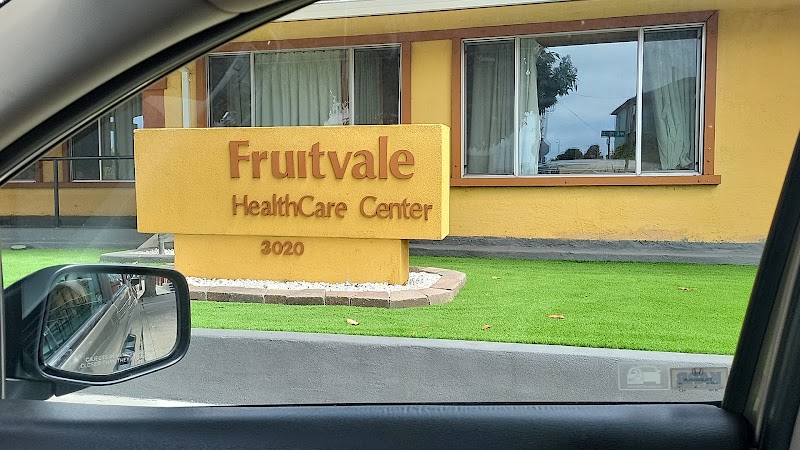
Who Owns and Operates Fruitvale Healthcare Center?

FRUITVALE HEALTHCARE CENTER is owned by a for-profit company. For-profit facilities operate as businesses with obligations to shareholders or private owners. The facility is operated by MARINER HEALTH CARE, a chain that manages multiple nursing homes. With 140 certified beds and approximately 130 residents (about 93% occupancy), it is a mid-sized facility located in OAKLAND, California.
How Does Fruitvale Healthcare Center Compare to Other California Nursing Homes?

Compared to the 100 nursing homes in California, FRUITVALE HEALTHCARE CENTER's overall rating (2 stars) is below the state average of 3.1, staff turnover (38%) is near the state average of 46%, and health inspection rating (2 stars) is below the national benchmark.

What Should Families Ask When Visiting Fruitvale Healthcare Center?

Based on this facility's data, families visiting should ask: "What safeguards and monitoring systems are in place to protect residents from abuse or neglect?" "Can I visit during a mealtime to observe dining assistance and food quality?" "How do you handle medical emergencies, and what is your hospital transfer rate?" "Can I speak with family members of current residents about their experience?" These questions are particularly relevant given the substantiated abuse finding on record.

Is Fruitvale Healthcare Center Safe?

Based on CMS inspection data, FRUITVALE HEALTHCARE CENTER has documented safety concerns. The facility has 1 substantiated abuse finding (meaning confirmed case of resident harm by staff or other residents). The facility has a 2-star overall rating and ranks #100 of 100 nursing homes in California. Families considering this facility should ask detailed questions about what corrective actions have been taken since these incidents.

Do Nurses at Fruitvale Healthcare Center Stick Around?

FRUITVALE HEALTHCARE CENTER has a staff turnover rate of 38%, which is about average for California nursing homes (state average: 46%). Moderate turnover is common in nursing homes, but families should still ask about staff tenure and how the facility maintains care continuity when employees leave.

Was Fruitvale Healthcare Center Ever Fined?

FRUITVALE HEALTHCARE CENTER has been fined $169,823 across 28 penalty actions. This is 4.9x the California average of $34,777. Fines at this level are uncommon and typically indicate a pattern of serious deficiencies, repeated violations, or failure to correct problems promptly. CMS reserves penalties of this magnitude for facilities that pose significant, documented risk to resident health or safety. Families should request specific documentation of what issues led to these fines and what systemic changes have been implemented.

Is Fruitvale Healthcare Center on Any Federal Watch List?

FRUITVALE HEALTHCARE CENTER is not on any federal watch list. The most significant is the Special Focus Facility (SFF) program, which identifies the bottom 1% of nursing homes nationally based on persistent, serious quality problems. Not being on this list means the facility has avoided the pattern of deficiencies that triggers enhanced federal oversight. This is a positive indicator, though families should still review the facility's inspection history directly.