LAKE MERRITT HEALTHCARE CENTER LLC
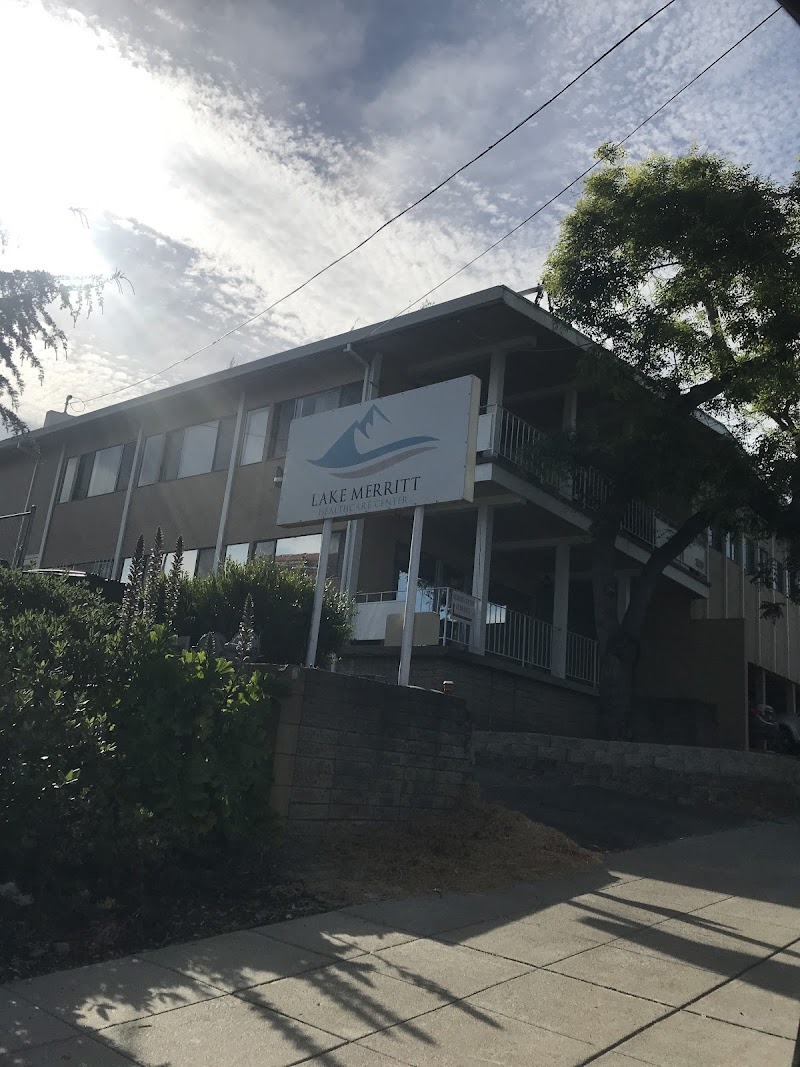
309 MACARTHUR BOULEVARD, OAKLAND, CA 94610 (510) 836-3777
For profit - Limited Liability company 53 Beds CRYSTAL SOLORZANO Data: November 2025
Trust Grade
58/100
#614 of 1155 in CA
Last Inspection: October 2024

Within standard 12-15 month inspection cycle. Federal law requires annual inspections.

Overview

Lake Merritt Healthcare Center LLC has a Trust Grade of C, which means it is average and falls in the middle of the pack among nursing facilities. It ranks #614 out of 1,155 in California, placing it in the bottom half of all facilities, and #55 out of 69 in Alameda County, indicating there are better local options available. The facility’s situation is improving, with the number of reported issues decreasing from 17 in 2024 to just 1 in 2025. Staffing is rated as average with a turnover rate of 47%, which is close to the state average, and they have a reasonable level of RN coverage. However, the facility has faced some concerns, including failure to address residents' complaints about missing personal items, ongoing maintenance issues like broken floor tiles and furniture that could pose safety risks, and deficiencies in required mental health evaluations for residents, highlighting both strengths and areas needing improvement.

Trust Score
C
58/100
In California
#614/1155
Bottom 47%
Safety Record
Low Risk
No red flags
Inspections
Getting Better
17 → 1 violations
Staff Stability
⚠ Watch
47% turnover. Above average. Higher turnover means staff may not know residents' routines.
Penalties
✓ Good
$3,250 in fines. Lower than most California facilities. Relatively clean record.
Skilled Nurses
⚠ Watch
Each resident gets only 22 minutes of Registered Nurse (RN) attention daily — below average for California. Fewer RN minutes means fewer trained eyes watching for problems.
Violations
⚠ Watch
40 deficiencies on record. Higher than average. Multiple issues found across inspections.
★★★☆☆
3.0
Overall Rating
★★★☆☆
3.0
Staff Levels
★★☆☆☆
2.0
Care Quality
★★★☆☆
3.0
Inspection Score
Stable
2024: 17 issues
2025: 1 issues

The Good

  • Full Sprinkler Coverage · Fire safety systems throughout facility
  • No fines on record

Facility shows strength in fire safety.

The Bad

3-Star Overall Rating

Near California average (3.1)

Meets federal standards, typical of most facilities

Staff Turnover: 47%

Near California avg (46%)

Higher turnover may affect care consistency

Federal Fines: $3,250

Below median ($33,413)

Minor penalties assessed

Chain: CRYSTAL SOLORZANO

Part of a multi-facility chain

Ask about local staffing decisions and management

The Ugly 40 deficiencies on record

Jan 2025 1 deficiency
CONCERN (D) 📢 Someone Reported This

A family member, employee, or ombudsman was alarmed enough to file a formal complaint

Potential for Harm - no one hurt, but risky conditions existed

Deficiency F0742 (Tag F0742)

Could have caused harm · This affected 1 resident

Based on observation, interview and record review the facility failed to ensure one ( Resident 1) of 3 sample residents with diagnosis of schizophrenia, a mental health condition, received appropriate...

Read full inspector narrative →
Based on observation, interview and record review the facility failed to ensure one ( Resident 1) of 3 sample residents with diagnosis of schizophrenia, a mental health condition, received appropriate treatment to address Resident 1 ' s paranoid delusions when Resident 1 ' s psychiatry recommendation to increase Olanzapine (antipsychotic medication) dosage was not implemented. {Paranoid delusions are fixed, false beliefs that others are intentionally trying to harm, deceive, or persecute the individual} This failure had the potential to cause Resident 1 increased emotional distress, decline in mental and psychosocial well-being. Findings: During a review of Resident 1's Minimum Data Set (MDS – a federally mandated resident assessment and care guide tool), dated 12/9/24, the MDS indicated Resident 1's Basic Interview of Mental status (BIMS, a scoring system used to determine the resident's cognitive status regarding attention, orientation, and ability to register and recall information. A BIMS score of thirteen to fifteen is an indication of intact cognitive status.) Resident 1 ' s score was 13. Resident 1 had clear speech, able to express ideas and wants, make self-understood and understood others. Resident 1 ' s diagnoses included schizophrenia a disorder that affects a person ' s ability to think, feel and behave clearly. During a review of Resident 1 ' s Level I Preadmission Screening and Resident Review (PASRR, a federal requirement to ensure that residents are not inappropriately placed in nursing homes for long term care), dated 8/31/23, the PASRR indicated, Resident 1 ' s Level I screening result was positive for suspected MI (mental illness) and indicated a Level II mental health evaluation was required. During a review of Resident 1 ' s progress notes, dated 1/16/25, the progress notes indicated , Resident 1 alleged that staff were calling her names. During a concurrent observation and interview on 1/28/25 at 10:20 a.m. Resident 1 laid in bed, awake and verbally responsive. Resident 1 stated she did not want to discuss her allegation regarding staff calling her names. Resident 1 suddenly became upset, agitated and started yelling. During an interview on 1/28/25 at 10:28 a.m. with Certified Nursing Assistant (CNA1), CNA1 stated she was Resident 1 ' s care giver. CNA1 said Resident 1 got easily agitated, screamed and sometimes aggressive with staff. During a review of Resident 1 ' s Order Summary Report dated 6/3/24, the report indicated physician prescribed Resident 1 to receive Olanzapine tablet 10mg give one tablet by mouth one time a day for schizoaffective disorder bipolar type, manifested by paranoid delusion as exhibited by constant screaming to the point of exhaustion. During a review of Resident 1 ' s psychiatry follow up note and recommendations, dated 10/14/24, the psychiatry recommended to increase Resident 1 ' s Zydis (Olanzapine) to 15 mg by mouth every day for schizoaffective disorder, uncooperative with care, irritable, paranoid delusions, yelling. During a concurrent interview and record review on 1/28/25 at 11:40 a.m. with DON, Resident 1's positive PASRR Level 1 screening dated 8/31/23 and psychiatry recommendation dated 10/14/24 were reviewed. DON stated Resident 1's was not refered for Level II mental health evaluation. DON stated she was hired in December 2024 and was not aware of Resident 1 ' s psychiatry recommendation to increase Resident 1 ' s Olanzapine dose to 15 mg daily. DON stated the facility ' s process was that the medical record department received psychiatry consult reports , medical records gives copies of residents ' psychiatry reports to Licensed Nurses, who call the physician to approve or decline residents ' psychiatry recommendation and DON was primarily responsible for the follow-ups. During a concurrent interview and record review on 1/28/25 at 12:03 p.m. with Licensed Vocational Nurse (LVN1), Resident 1 ' s psychiatry recommendation dated 10/14/24 was reviewed. LVN1 stated she was a charge nurse. LVN 1 stated she was not aware of Resident 1 ' s psychiatry recommendation. LVN 1 stated the Director of Nursing (DON) followed up with residents psychiatry recommendations. During a concurrent interview and record review on 1/28/25 at 12:30 p.m. with DON, Resident 1 ' s Psychiatry recommendations report dated 10/14/24, physician orders, medication administration records, progress notes were reviewed with DON. DON stated there was no indication that Resident 1 ' s psychiatry recommendation dated 10/14/24 to increase Resident 1 ' s Olanzapine to 15 mg by mouth every day was followed up. The DON stated she was unable to find documentation if facility notified physician of Resident 1 ' s psychiatry recommendations.
Oct 2024 17 deficiencies
CONCERN (D)

Potential for Harm - no one hurt, but risky conditions existed

Deficiency F0676 (Tag F0676)

Could have caused harm · This affected 1 resident

Based on observation, interview and record review, the facility failed to ensure staff attempted to use appropriate measures to communicate with one of three sampled non-English speaking residents (Re...

Read full inspector narrative →
Based on observation, interview and record review, the facility failed to ensure staff attempted to use appropriate measures to communicate with one of three sampled non-English speaking residents (Resident 43) when; Resident 43's communication tool/binder was not used. This failure placed Resident 43 at risk for not feeling understood, unmet needs and decline in health. Findings: During a review of Resident 43's Admission-Minimum Data Set (MDS - Resident assessment and care guide tool), dated 7/10/24, the MDS indicated Resident 43's preferred language was Chinese. MDS indicated Resident 43 needed and wanted an interpreter to communicate with doctor or health care staff. Resident 43's diagnoses included Depression (a mental health condition that causes a persitent low mood and loss of interest in activities). During a concurrent observation and interview on 10/23/24 at 8:36 a.m. with CNA 5, Resident 43's laid in bed in her room, Resident 43 spoke in her native language. A communication binder laid on Resident 43's bedside table. CNA 5 stated she could only communicate with Resident 43 through gestures and pointing. CNA 5 stated she did not know that Resident 43 had a communication binder. During an interview on 10/23/24 at 10:09 a.m. with Director of Staff Development (DSD), DSD stated the expectation was for CNAs to use communication binder for non English speaking residents. DSD stated she had not provided CNAs in-service training about use of communication tools for non English speaking residents. During an interview on 10/23/24 at 2:26 p.m. through a language line interpreter (ITP), via telephone, Resident 43 stated she spoke cantoneese. Resident 43 stated facility staff did not understand her native language. Resident 43 stated it appeared there was missing messages. Resident 43 stated she did not understand staff when they communicate with her. Resident 43 stated she would like to transfer to a place where residents spoke Resident 43's native language. During an interview on 10/23/24 at 10:54 a.m. with Admininistrator (Admin), Admin stated facility did not have an interpreter access phone line. Admin stated facility was working on getting a translator phone line and staff could use google to translate. During a review of the facility's policy and procedure (P&P) titled Translation and/ or Interpretation of Facility Services, revised November 2020, the P&P indicated, This facility's language access program will ensure that individuals with limited English proficiency (LEP) shall have meaningful access to information and services provided by the facility.
CONCERN (D)

Potential for Harm - no one hurt, but risky conditions existed

Deficiency F0679 (Tag F0679)

Could have caused harm · This affected 1 resident

**NOTE- TERMS IN BRACKETS HAVE BEEN EDITED TO PROTECT CONFIDENTIALITY** Based on observation, interview, and record review the facility failed to provide an ongoing and effective activity program to m...

Read full inspector narrative →
**NOTE- TERMS IN BRACKETS HAVE BEEN EDITED TO PROTECT CONFIDENTIALITY** Based on observation, interview, and record review the facility failed to provide an ongoing and effective activity program to meet resident activity preferences, physical and psychosocial goals for one of 15 sampled residents (Resident 37). This failure placed Resident 37 at risk for mental and psychosocial decline. Findings: During a record review of Resident 37's admission Record printed on 10/22/24, the record indicated Resident 37 was admitted to the facility on [DATE] A review of Resident 37's admission Minimum Data Set (MDS, an assessment used to plan care) dated 3/10/24 indicated, it was very important for Resident 37 to do his favorite activities. During a record review of Resident 37's discharge planning review completed on 9/16/24, the assessment indicated Resident 37 enjoys activities including drawing and painting. During a record review of Resident 37's activity care plan dated 03/2024, the care plan indicated to, allow resident choices and provide resident with outdoor activities. During an observation on 10/21/24 at 11:00 a.m. Resident 37 was lying in the bed with both legs flexed, with a linen on top of his legs. Resident 37 stated he was mostly just lying in bed because he did not have a proper wheelchair to go around the facility. (Cross Reference F684). Resident 37 stated he enjoyed drawing and painting, but facility did not provide him enough materials like paper for him to do his activity. During an observation on 10/23/24 at 11:14 a.m., Resident 37 was lying in his bed, not engaged in any activity. During an observation and interview on 10/24/24 at 9:22 a.m. Resident 37 was lying in bed and stated he felt worthless sitting in bed all day. During interview on 10/22/24 at 10:48 a.m. with activity assistant (AA), the AA stated Resident 37 received three visits per week for art and games at bedside. AA stated Resident 37 was given some art supplies but he had requested more frequent visits to meet his activity needs. AA stated Resident 37 comes to the activity room only twice a month. During a concurrent interview and record review with AA on 10/22/24 at 11:00 a.m. Resident 37's Activity participation logs were reviewed. AA stated activities staff was supposed to use the log to indicate date, type of activity and residents' response to activity on the log for each visit. AA stated she was unable to find any documentation of one-on-one activity participation in activity log since 07/07/2024. During a record review of facility's Policy and Procedure (P&P) titled Activity Programs revised 6/2018, the P&P indicated, Activity programs are designed to meet the interests of and support the physical, mental and psychological well-being of each resident.
CONCERN (D)

Potential for Harm - no one hurt, but risky conditions existed

Quality of Care (Tag F0684)

Could have caused harm · This affected 1 resident

**NOTE- TERMS IN BRACKETS HAVE BEEN EDITED TO PROTECT CONFIDENTIALITY** Based on observation, interview and record review, the facility failed to assess and provide an appropriate wheelchair to one of...

Read full inspector narrative →
**NOTE- TERMS IN BRACKETS HAVE BEEN EDITED TO PROTECT CONFIDENTIALITY** Based on observation, interview and record review, the facility failed to assess and provide an appropriate wheelchair to one of 15 sampled residents (Resident 37), for seven months, since admission to the facility. This deficiency placed Resident 37 at risk for physical decline and resulted in Resident 37 feeling worthless, and hopeless about his personal goals of discharge from the facility. Findings: During a record review of Resident 37's admission Record printed on 10/22/24, the record indicated Resident 37 was admitted to the facility on [DATE] with left hip contracture (a medical condition with hardening of muscles leading to deformity and rigidity in joints). During a record review of Resident 37's contracture care plan, initiated on 3/4/24, the care plan indicated to, use assistive device as/if ordered. During a record review of Resident 37's discharge planning review dated 6/25/24 and 9/16/24, the assessments indicated Resident 37's goal was to go back to the community with home health services. During observation and concurrent interview on 10/21/24 at 11:54 a.m. Resident 37 was lying in bed with linen covers on his both legs. Resident 37 stated he needed help with wheelchair as he stayed in bed most of the time. Resident 37 stated he got out of bed once or twice a week using a Geri-chair (a large, padded, reclining wheelchair with adjustable back). Resident 37 stated he needed a bigger wheelchair appropriate for his size. During an interview on 10/21/24 at 12:04 p.m. with Licensed vocational nurse (LVN 1) stated Resident 37, does fit in geri-chair, but was unaware of geri-chair weight limit. LVN 1 stated facility had only one geri-chair and residents took turns to use it. During an observation and interview with the Social Worker (SW) on 10/21/24 at 12:28 p.m. in Resident 37's room, Resident 37 was lying SW stated Resident 37 was bedbound and she had never seen him up in a wheelchair. During an interview and concurrent observation on 10/21/24 at 12:46 p.m. in Resident 37's room, a black colored manual wheelchair was observed at Resident 37's bedside. Social worker (SW) stated manual wheelchair at Resident 37's bedside was not suitable in size and had no working brakes. During an observation on 10/22/24 at 11:46 a.m. Resident 37 requested to leave resident council meeting in the middle of it. Resident 37 stated geri-chair he was using was too small and uncomfortable to sit in. During an interview on 10/24/24 at 11:03 a.m. with Regional Social Services Director (RSS) stated Rehab Department was responsible for evaluating the need of medical equipment. During an interview and record review on 10/22/24 12:03 p.m. with Director of Rehab (ST 1), Resident 37's therapy progress notes were reviewed. ST 1 stated therapist was responsible for completing the wheelchair evaluation upon admission, at the facility. ST 1 stated there was no documentation of wheelchair evaluation in Resident 37's therapy treatment records since his admission to the facility. During another observation on 10/23/24 at 8:32 a.m. Resident 37 stated geri-chair was too small and made his knees hurt. During observation and concurrent interview on 10/24/24 at 9:22 a.m. Resident 37 was found lying on right side in his bed. Resident 37 stated staying in bed most of the time, made him feel like he was never going home and never getting his children back. Resident 37 stated him and his family were very sad about him missing the birth of first grandchild. Resident 37 stated he felt worthless in bed all day and he felt so separated from his whole family. Resident 37 stated It was important for him to be able to get into a car when discharged from the facility, but he was often left in the bed. During a review of facility's Policy and Procedure (P&P) dated Quality of Life-Dignity revised 8/2009, the P&P indicated, Each resident shall be care for in a manner that promotes and enhances quality of life .
CONCERN (D)

Potential for Harm - no one hurt, but risky conditions existed

Pharmacy Services (Tag F0755)

Could have caused harm · This affected 1 resident

Based on observation, interview and record review, the facility failed to administer medication as ordered by the physician for one of five sampled residents (Resident 20) when Registered Nurse (RN) 2...

Read full inspector narrative →
Based on observation, interview and record review, the facility failed to administer medication as ordered by the physician for one of five sampled residents (Resident 20) when Registered Nurse (RN) 2 thought Resident 20's eye drop medication was not available. This failure had the potential for Resident 20 to experience adverse effect from missed eye drop dose. Findings: During a concurrent medication administration and interview on 10/22/24 at 8:31 a.m. with RN 2, RN 2 took out Resident 20's one eye drop bottle labeled Simbrinza (a combination eye drop containing two medications: brinzolamide and brimonidine, a medication used to treat glaucoma and high pressure in the eye) and one eye drop bottle labeled Artificial Tears (eye drops used to lubricate dry eyes and help keep moisture on the outer surface of your eyes) from the first left medication drawer of the medication cart. RN 2 stated Resident 20 had an order for Brinzolamide (medication used to treat glaucoma and high pressure in the eye) eye drop but the eye drop bottle was not inside the medication cart after looking. RN 2 stated she doesn't know how long the Brinzolamide eye drop was not available but will re-order from the pharmacy. RN 2 proceeded to administer Resident 20's Artificial Tears eye drops. During a review of Resident 20's Order Summary Report, dated 10/27/23, the Order Summary Report indicated, Resident 20 had an order for Artificial Tears one drop to both eyes three times a day for dry eyes and Brinzolamide-Brimonidine Tartrate 0.2% one drop in left eye three times a day for Glaucoma (group of eye diseases that can damage the optic nerve and lead to vision loss or blindness). During a review of Resident 20's Progress Notes, dated 10/22/24, the Progress Notes indicated, RN 2 documented the Brinzolamide eye drop will be administered once available. During a review of Resident 20's Visual Function Care Plan, dated 5/4/21, the Visual Function Care Plan indicated, Resident 20 had a diagnosis of Glaucoma and one of the plan of care was to instill eye medicine as ordered. During an observation and interview on 10/23/24 at 12:49 a.m. with RN 2, RN 2 took out Resident 20's two eye drop bottle of Simbrinza from the medication cart drawer. RN 2 stated one eye drop bottle of Simbrinza was the old supply and the other one eye drop bottle of Simbrinza was refilled by the pharmacy. RN 2 stated she thought the Simbrinza and Brinzolamide were two different eye drops. RN 2 stated the Brinzolamide eye drop was in the medication cart drawer all along. During a review of facility's policy and procedure (P&P) titled, Administering Medication, dated 12/12, the P&P indicated, Medications shall be administered as prescribed.
CONCERN (D)

Potential for Harm - no one hurt, but risky conditions existed

Deficiency F0761 (Tag F0761)

Could have caused harm · This affected 1 resident

Based on observation, interview, and record review the facility failed to ensure proper medication storage for one of one sampled medication room and one of one sampled resident (Resident 31) when: 1....

Read full inspector narrative →
Based on observation, interview, and record review the facility failed to ensure proper medication storage for one of one sampled medication room and one of one sampled resident (Resident 31) when: 1. An unauthorized staff had access to the medication room. 2. Unlabeled, undated medication cup filled with white creamy substance was left unattended on top of Resident 31's overhead light fixture for over 24 hours. This failure had the potential for loss or diversion of medications and residents' accidental access to unknown substance. Findings: 1. During a concurrent observation and interview on 10/23/24 at 8:36 a.m. with the CSS, the CSS unlocked the medication room door with a key from a set of keys he was holding. The CSS stated the key to the medication room was given when he started working at the facility. The CSS stated he ordered over the counter medication for the facility and stored in the medication room. During an interview on 10/23/24 at 10:16 a.m. with the DON, the DON stated, the CSS can open the medication room to access over the counter medication even without a nurse. During a follow up interview on 10/23/24 at 12:59 p.m. with the DON, the DON stated, the CSS was not a person authorized to prepare and administer medication. During a review of the facility's policy and procedure (P&P) titled, Storage of medication, dated 4/07, the P&P indicated, Only persons authorized to prepare and administer medications shall have access to the medication room. 2. During an observation on 10/21/24 at 9:53 a.m., a clear plastic 30 milliliter (ml) medication cup, filled with white creamy substance was on the overhead light fixture for Resident 31, while Resident 31 was lying in bed. The medication cup was unlabeled and undated. During an observation on 10/22/24 at 8:30 a.m., the unlabeled and undated medication cup with white creamy substance was still on top of the overhead light fixture for Resident 31. During an observation and interview on 10/22/24 at 11:40 a.m. with Registered Nurse 2 (RN 2), in Resident 31's room, the medication cup with white creamy substance was on top of Resident 31's overhead light fixture. RN 2 stated based on the texture of the substance, she thought it was Eucerin (a moisturizer) cream in the medication cup, however she was not sure because cup was not labeled. RN 2 stated medication cups must be discarded after use. RN 2 stated facility had confused and ambulatory residents who could easily access the medication cup and eat the creamy substance.
CONCERN (D)

Potential for Harm - no one hurt, but risky conditions existed

Deficiency F0801 (Tag F0801)

Could have caused harm · This affected 1 resident

Based on interview and record review, the facility failed to ensure that when it did not hire a full-time registered dietitian, the person designated to serve as the director of food and nutrition ser...

Read full inspector narrative →
Based on interview and record review, the facility failed to ensure that when it did not hire a full-time registered dietitian, the person designated to serve as the director of food and nutrition services met both the federal and/or state educational qualifications for the position. The lack of full-time, competent oversight of food and nutrition staff placed residents who received food from the kitchen at risk for food borne illness (illness caused by food contaminated with bacteria, viruses, parasites, or toxins) and/or decreased nutrient intake which had the potential to result in death and/or nutritional related medical complications Finding: During an interview on 10/21/24 at 1:45 p.m. with Dietary Manager (DM), DM stated she worked full time. DM stated she was not a certified director of food and nutrition. DM stated she was still in school. DM said facility has a Registered Dietician (RD) that visit weekly to complete new admission assessment of residents. During an interview on 10/21/24 at 1:17 p.m. with Registered Dietician (RD), RD stated she visited weekly to support facility with assessment and evaluation of residents. During an interview on 10/24/24 at 9:06 a.m. with Administrator (Admin), Admin stated he was aware DM did not have the educational qualification for the position of director of food and nutrition services. Admin said DM was in school.
CONCERN (D)

Potential for Harm - no one hurt, but risky conditions existed

Medical Records (Tag F0842)

Could have caused harm · This affected 1 resident

**NOTE- TERMS IN BRACKETS HAVE BEEN EDITED TO PROTECT CONFIDENTIALITY** Based on observation, interview, and record review the facility failed to accurately complete functional status in discharge pla...

Read full inspector narrative →
**NOTE- TERMS IN BRACKETS HAVE BEEN EDITED TO PROTECT CONFIDENTIALITY** Based on observation, interview, and record review the facility failed to accurately complete functional status in discharge planning assessment (an evaluation of residents' clinical and functional condition to arrange resources to help them prepare for a smooth discharge from the facility) for one of 15 sampled residents (Resident 37). This failure resulted in an inaccurate reflection of Resident 37's clinical condition, and placed him at risk for receiving inappropriate care upon discharge from the facility. Findings: During a record review of Resident 37's admission Record printed on 10/22/24, the record indicated Resident 37 was admitted to the facility on [DATE]. During a review of Resident 37's Minimum Data Set (MDS, an assessment used to plan care) dated 9/9/24, the assessment indicated Resident 37 was able to understand others and was able to make his needs known. The assessment indicated Resident 37 was dependent on staff for toilet hygiene, shower/bathing, lower body dressing, personal hygiene, and wheelchair mobility. During an observation on 10/21/24 at 11:00 a.m. Resident 37 was lying in the bed with both legs flexed, with a linen on top of his legs. Resident 37 was unable to fully extend both his legs. During an observation and interview with the Social Worker (SW) on 10/21/24 at 12:28 p.m. in Resident 37's room, SW stated Resident 37 was bedbound with amputation of both legs. SW asked Resident 37 which leg is amputated? Resident 37 stated I don't have no amputation. SW removed the linen from Resident 37's legs and stated since she always seen Resident 37 with the cover on his legs, she thought he had amputations done. SW stated she talked to Resident 37 when she completed his discharge assessments. During an interview and record review on 10/22/24 at 12:36 p.m. with SW and Regional Social Services Director (RSS), Resident 37's discharge planning review dated 6/25/24 and 9/16/24 were reviewed. SW stated she completed Resident 37's initial and ongoing discharge planning reviews using her observations, interviews with the staff and clinical chart review. SW stated the discharge planning review indicated Resident 37's goal was to go back to the community with home health services. SW stated the review indicated Resident 37 was independent in using wheelchair, however she had never observed Resident 37 using a wheelchair. SW stated assessment indicated Resident 37 was independent for bathing, dressing, preparing meals. SW stated however, she never observed and/or consulted with Resident 37's direct care staff to evaluate these activities and used her assumptions to complete the assessment. RSS stated she had trained SW to conduct these assessments and get an input from all disciplines working with the residents. RSS stated using assumptions to complete the discharge planning reviews could adversely affect in reflection of residents' actual clinical condition, psychosocial and overall health and could cause delays in provide care and services to meet residents' needs. During an interview with CNA 1 on 10/23/24 at 12:39 p.m. CNA 1 stated Resident 37 was totally dependent on staff for activities of daily living since his admission to the facility. During a record review of facility's Policy and Procedure (P&P) titled Charting and Documentation revised 7/2017, the P&P indicated, Documentation in the medical record will be objective (not opinionated or speculative), complete and accurate.
CONCERN (D)

Potential for Harm - no one hurt, but risky conditions existed

Deficiency F0849 (Tag F0849)

Could have caused harm · This affected 1 resident

Based on interview and record review, the facility failed to follow a written hospice agreement that included joint responsibilities to develop and implement a coordinated plan of care (POC) for one s...

Read full inspector narrative →
Based on interview and record review, the facility failed to follow a written hospice agreement that included joint responsibilities to develop and implement a coordinated plan of care (POC) for one sampled resident (Resident 3) admitted into hospice program, when Resident 3's hospice POC did not reflect the participation of facility staff, Resident 3 and Resident 3's representative (FM 1). {POC means a written plan of care established, maintained, reviewed, and modified as necessary, for an individual that reflects the participation of hospice, facility, the patient and patient's family, as appropriate and complies applicable to federal and state laws and regulations}. {Hospice- a program that gives special care to people who are near the end of life and have stopped treatment to cure or control their disease}. Findings: During a review of Resident 3's Significant change in status-Minimum Data Set (MDS - an assessment screening tool used to guide care), dated 10/1/24, MDS indicated Resident 3 was on hospice care. Resident 3's diagnoses included Non-Alzheimer's Dementia (a group of diseases characterized by progressive deficits in behavior, executive function or language). MDS indicated Resident 3 had short-term and long-term memory problem. Resident 3 had a clear speech, usually understood and understood others. During a review of Resident 3's order summary report dated 9/15/24, order report indicated, the physician admitted Resident 3 into hospice for senile degeneration of the brain. During a telephone interview on 10/21/24 at 10: 38 a.m. with Resident 3's daughter/responsible party (FM 1), FM 1 stated Resident 3's family had not had a care plan conference with the facility and hospice agency. FM 1 stated Resident 3 had dementia and was forgetful. FM 1 stated facility had not invited Resident 3 and FM 1 to participate in Resident 3's hospice POC. FM 1 stated Resident 3's family had not had a coordinated POC between the facility, hospice agency and Resident 3. During an interview on 10/22/24 at 11:21 a.m. with Director of Nursing (DON), DON stated she was hired in October 2024 and was not aware whether care plan conference with Resident 3, family and hospice agency had taken place . DON stated the Social Services and her self are designated contacts for hospice care. During an interview on 10/24/24 at 10:45 a.m. with Registered Nurse/Hospice Nurse (HN), HN stated she was assigned to care for Resident 3 . HN stated facility had not met with Hospice Agency to coordinate and collaborate with Resident 3 and family representatives for care planning conference. During an interview on 10/22/24 at 2:55 p.m. with MDS coordinator/Licensed Vocational Nurse (MDS) MDS stated she participated in care planning conference for residents on hospice care. MDS stated facility had not met with Resident 3, FM 1 and hospice agency for a care planning conference. During a concurrent interview and record review on 10/22/24 at 1:52 p.m. with Regional Social Services Director (RSS), Resident 3's Multidisciplinary Care Conference (interdisciplinary team) care conferences records dated 10/16/24 was reviewed. RSS stated social services was designated to coordinated care plan conference with hospice agency and Resident 3's family members. RSS stated Resident 3 and FM 1 had not been invited to participate in development of Resident 3's hospice care plan in collaboration with hospice agency. {IDT/Interdisciplinary team is a group of people with different functional expertise working collaboratively with a common purpose, to set goals, make decisions and share responsibilities}. During a review of Resident 3's The Nursing Facility Services Agreement (Agreement), dated 3rd of September 2024, the Agreement indicated, Plan of Care means a written care plan established, maintained, reviewed and modified, if necessary, at intervals identified by IDT. The plan of care must reflect Hospice patient and family goals and interventions based on the problems identified in hospice patient assessments. The plan of care will reflect the participation of hospice, facility and hospice patient and family to the extent possible.
CONCERN (E)

Potential for Harm - no one hurt, but risky conditions existed

Deficiency F0565 (Tag F0565)

Could have caused harm · This affected multiple residents

**NOTE- TERMS IN BRACKETS HAVE BEEN EDITED TO PROTECT CONFIDENTIALITY** Based on interview and record review, the facility failed to follow its Grievance/Complaints, Filing policy and procedure to mak...

Read full inspector narrative →
**NOTE- TERMS IN BRACKETS HAVE BEEN EDITED TO PROTECT CONFIDENTIALITY** Based on interview and record review, the facility failed to follow its Grievance/Complaints, Filing policy and procedure to make prompt efforts to respond and resolve grievances/complaints for two (Resident 5 and 26) sampled residents when; the facility did not follow up with Resident 5 and 26's complaint of missing personal items made during the resident council meeting. This deficient practice had the potential to cause residents emotional distress. Findings: During a review of the facility's record titled, Resident Council Minutes, dated 9/27/24, the document indicated, Resident 5 complained of missing purple colored brassiere with stars symbols and Resident 26 complained of missing two [NAME] spots shirts. During a review of Resident 5's Minimum Data Set (MDS - Resident assessment and care guide tool), dated 9/14/24, the MDS indicated Resident 5's Basic Interview of Mental status (BIMS, a scoring system used to determine the resident's cognitive status regarding attention, orientation, and ability to register and recall information. A BIMS score of thirteen to fifteen is an indication of intact cognitive status.) score was 13 and indicated intact mental status. The MDS indicated Resident 5 was able to recall the correct year and month. MDS indicated Resident 5 had clear speech, able to express her ideas and wants, and understood what others said to her. During a review of Resident 26's Minimum Data Set (MDS - Resident assessment and care guide tool), dated 8/8/24, the MDS indicated Resident 26's Basic Interview of Mental status (BIMS, a scoring system used to determine the resident's cognitive status regarding attention, orientation, and ability to register and recall information. A BIMS score of thirteen to fifteen is an indication of intact cognitive status.) score was 15 and indicated intact mental status. The MDS indicated Resident 26 was able to recall the correct year, month and day of the week. The MDS indicated Resident 26 had clear speech, able to express his ideas and wants, and understood what others said to him. During an interview on 10/23/24 at 8:47 a.m. with Resident 26, Resident 26 stated he was missing two [NAME] sport shirts about three months ago. Resident 26 stated he reported to staff and at the resident council meeting. Resident 26 stated no one assisted him to look for the tee shirts. Resident 26 said he would like to have his shirts back. During an interview on 10/23/24 at 9:01 a.m. with Activity Director (AD), AD stated Resident 26 complained of missing two [NAME] shirts and Resident 5 missing purple colored brassiere during resident council meeting that was held on 9/27/24. AD stated she informed staff with a referral for response form but they have not returned it. AD stated she left referral for response in the social services mailbox. During an interview on 10/23/24 at 9:53 a.m. with Social Services (SW), SW stated she was not informed of residents missing items and had not followed up with Resident 5 and 26 complaints. SW stated she did not received referral related to missing items in her mail box. During an interview on 10/23/24 at 12:43 p.m. with Administrator (Admin), Admin stated he was not aware of Resident 5 and 26 complaints/ grievances regarding missing personal items. Admin stated that he will follow up with AD. Admin stated the expectation was for complaints/grievance from resident council meetings to go to appropriate department and completed in a week. Admin stated he reviewed for completion. Admin said he will follow up with September 2024 complaints/grievances from resident council meeting. During a review of the facility's policy and procedure (P&P) titled, Grievances/Complaints, Filing, revised April 2017, the P&P indicated, Residents and their representatives have the rights to file grievances, either orally or in writing, to the facility staff or to the agency designated to hear grievances. The Administrator and staff will make prompt efforts to resolve grievances to the satisfaction of the resident and/or representatives.
CONCERN (E)

Potential for Harm - no one hurt, but risky conditions existed

Safe Environment (Tag F0584)

Could have caused harm · This affected multiple residents

Based on observation, interview, and record review, the facility failed to ensure a system to perform ongoing repairs and maintenance work when three of three sampled areas of the facility were affect...

Read full inspector narrative →
Based on observation, interview, and record review, the facility failed to ensure a system to perform ongoing repairs and maintenance work when three of three sampled areas of the facility were affected by the following: 1. Floor tiles in resident care hallway were broken and coming off. 2. a. Baseboard on the walls for Room A and Room B was missing and broken at places, with broken dry wall and plaster pieces sticking out of the wall. b. The overbed tables for Resident 42 and Resident 31 were chipped and unfurnished with rough edges, posing a potential risk for them getting scratched and hurting themselves. c. Screen door for Room A shared among Residents 42, 31 and 17 was broken and off the track. d. Electric cable cord for the television and Resident 37's call light cord in Room B were taped to the wall. e. The wall clock in Room B displayed an inaccurate time, with a potential to cause confusion and disorientation of time. f. Shared bathroom between two residents' rooms (Room A and Room B) did not have soap for more than two consecutive days. 3. Smoking patio had broken, rusty metallic table and chairs with sharp edges coming out placing the residents visiting that area at risk of hurting themselves. Findings: 1. During an observation on 10/21/24 at 12:23 p.m. in the hallways, there were several cracked, broken, opened floor tiles in disrepair opposite residents' activity/dining room. During an interview on 10/23/24 at 9:56 a.m. with Administrator (Admin), Admin stated the opened floor tile located next to residents' activity/dining room had been there for sometime. Admin stated facility planned to make over all the floors in the residents' care area hallways. 2. a. During a concurrent observation and interview with Maintenance Supervisor (MS) on 10/22/24 at 11:06 a.m., two adjacent rooms (Room A and Room B) were observed. MS stated baseboard in Room A and Room B were broken, the dry wall and plaster was off and sticking out. MS stated he conducted room rounds every Friday; however, he did not notice the damaged baseboards on Friday, 10/18/24. When asked if it looked like a new damage to the baseboards, MS stated no. MS stated both rooms needed new baseboards because facility was old and constructions was done long time ago. b. During an observation and interview on 10/21/24 at 9:37 a.m. Resident 42 was sitting at the edge of the bed with his overbed table in front of him. The overbed table had rough and chipped all four sides of the top tray. Resident 42 stated facility staff was aware, and they could see his damaged overbed table. Resident 42 stated it made him feel that staff did not care about his damaged overbed table. During a concurrent observation and interview on 10/22/24 at 11:08 a.m. with MS, Resident 31 and Resident 42's overbed tables were observed. MS stated both tables had chipped and rough edges, and the rubber that goes around all four sides of the top tray that protects the residents from hurting themselves, was completely off. MS stated the top tray was made of compression wood and residents could easily stick their fingers/hands and could get splinters and hurt themselves easily. MS stated he did not identify need to repair/replace the overbed tables for Resident 31 and 42 on 10/18/24 during his room rounds. MS stated both tables needed to be replaced. c. During an observation and interview with MS on 10/22/24 at 11:10 a.m., Room A's screen door was half open, off the track, not latching, and MS was not able to close it all the way. MS stated he was aware that the screen door for Room A needed a replacement for last three weeks. MS stated he called a company from Google one week ago but was unable to provide the details. MS stated it was important to replace the screen door in a timely manner to prevent animals and bugs coming into the room. d. During an observation on 10/21/24 at 10:24 a.m., electrical cord for the television was taped with a blue scotch tape to the wall; and Resident 37's call light cord was taped with a yellow-colored scotch tape to the call light outlet. During an observation and interview with MS on 10/22/24 at 11:12 a.m., in Room B, two back colored television cords were taped onto the wall, additionally the call light cord for Resident 37 was taped to the call light outlet. MS stated he noticed the cable cords taped up to the walls on Friday 10/18/24, during his rounds but he did not remove the tape. MS stated taping the electric cords was not safe and he needed to staple the cords to affix them to the walls. MS stated he did not have a staple in the facility and needed to buy one. e. During an observation on interview on 10/22/24 at 11:12 a.m. with MS, the wall clock in Room B was off. MS stated the clock displayed 9:05 at that time. MS stated he was responsible for changing the battery for the clock. During another observation and interview on 10/23/24 at 12:32 p.m., the wall clock in Room B still displayed 9:05. Resident 37 was lying in the bed and stated the time on the clock made him confused because his cell phone and wall clock in the room did not match. During an interview and record review with MS on 10/22/24 at 11:21 a.m. at nursing station, facility's maintenance logbook from 7/2024 through 10/2024 was reviewed. MS stated staff used the maintenance logbook to report the need of repairs and maintenance in the facility/resident care areas. MS stated he was unable to find above issues being reported in the logbook. f. During an observation on 10/21/24 at 10:04 a.m. in shared bathroom between Room A and Room B, there was no soap in the soap dispenser. During an observation on 10/21/24 at 10:20 a.m., Resident 42 used the bathroom, walked out of the bathroom, when asked if there was any soap, Resident 42 stated what can you do? During a concurrent observation and interview on 10/21/24 at 10:26 a.m., Regional Registered Nurse 3 (RN 3) entered the shared bathroom between Room A and Room B. RN 3 turned the tap on to wash his hands and stated there was no soap in the liquid soap dispenser. RN 3 stated it was unusual to not have soap in residents' bathroom. During a concurrent observation and interview on 10/21/24 at 10:35 a.m. Janitor 1 walked into the shared bathroom and started refilling the soap dispenser. Janitor 1 stated housekeeping staff 1 (HSKP 1) told him around 1:30 pm on 10/18/24 that this bathroom needed soap replacement, but he forgot to replace it at that time, indicating the bathroom was out of soap for more than two (2) consecutive days. During an interview with HSKP 1 on 10/22/24 at 8:47 a.m. in hallway outside Room A and Room B, HSKP 1 stated she told Janitor 1 to replace the soap in the bathroom on 10/18/24 because she did not have the keys to the supply room where liquid soap supply was kept in the facility. 3.During a concurrent observation and interview with Director of Staff Development (DSD) on 10/22/24 at 9:09 a.m., in facility's smoking patio, a white colored round metal table and two white metal chairs were worn out. The DSD stated the furniture was rusty and had rough edges and sharp metallic meshy edges were coming out on the table and chairs. The DSD stated that area was dedicated for smoking residents, and they could cut their hands and get injured if they ever used that furniture. During an interview with Maintenance Supervisor (MS) on 10/22/24 at 11:06 a.m., MS stated he had to threw away the broken and rusty furniture that was kept in the smoking patio as it was not good anymore. During a review of facility's policy and procedure (P&P) titled Maintenance Service revised 12/2009, the P&P indicated, The Maintenance Department is responsible for maintaining the buildings, grounds and equipment in a safe and operable manner at all times .
CONCERN (E)

Potential for Harm - no one hurt, but risky conditions existed

PASARR Coordination (Tag F0644)

Could have caused harm · This affected multiple residents

**NOTE- TERMS IN BRACKETS HAVE BEEN EDITED TO PROTECT CONFIDENTIALITY** Based on interview and record review, the facility failed to ensure two of two sampled resident's (Resident 44 and 37) Preadmiss...

Read full inspector narrative →
**NOTE- TERMS IN BRACKETS HAVE BEEN EDITED TO PROTECT CONFIDENTIALITY** Based on interview and record review, the facility failed to ensure two of two sampled resident's (Resident 44 and 37) Preadmission Screening and Resident Review (PASRR is a federal requirement to help ensure that individuals who have a mental disorder or intellectual disabilities are not inappropriately placed in nursing homes for long term care. PASARR requires that 1) all applicants to a Medicaid-certified nursing facility be evaluated for a serious mental disorder and/or intellectual disability; 2) be offered the most appropriate setting for their needs (in the community, a nursing facility, or acute care setting); and 3) receive the services they need in those settings.) was completed and referred to the appropriate state mental authority for Level II evaluation and determination when: 1. Resident 44's PASRR Level 1 Screening was not resubmitted when Resident 44 remained in the facility longer than 30 days. 2. Resident 37 PASRR Level 1 Screening completed inaccurately. This failure placed Resident 44 and 37 at risk for inappropriate placement in the facility and prevent Resident 44 and 37 from receiving appropriate required mental health services. Findings: 1. During a review of Resident 44's undated admission Record, printed on 10/21/24, the admission Record indicated, Resident 44 was admitted to the facility on [DATE]. The record also indicated; Resident 44 had diagnoses that included Unspecified Dementia with Psychotic Disturbance (a medical condition that can include psychotic symptoms like hallucinations, delusions, paranoia, and suspiciousness), Anxiety Disorder (a mental health condition that involves persistent and uncontrollable feelings of fear and anxiety that can significantly impact a person's life), Paranoid Personality Disorder (a psychiatric disorder distinguished by a pervasive pattern of distrust and suspiciousness of others, leading to impairments in psychosocial functioning), Depression (a mental health condition that causes a long-lasting low mood and a loss of interest in activities that used to be enjoyable) and Auditory Hallucinations (hear voices or noises that don't exist in reality). During a review of Resident 44's Minimum Data Set (MDS - an assessment screening tool used to guide care), dated 5/8/24, The MDS indicated the PASRR was coded zero-meaning, Resident 44 was not considered by the State Level II PASRR process to have a serious mental illness. However, Resident 44's diagnoses included Unspecified Dementia with Psychotic Disturbance, Anxiety Disorder, Paranoid Personality Disorder, Depression and Auditory Hallucinations. During a concurrent interview and record review on 10/24/24 at 8:17 a.m. with the DON, Resident 44's PASRR Level I Screening, dated 4/30/24 was reviewed. The PASRR Level 1 Screening indicated, Resident 44's PASRR Level 1 screening was completed at the acute care hospital prior to admission to the facility. The DON stated PASRR Level I Screening doesn't need to be completed again once it was done. During a review of Resident 44's Department of Health Care Services letter, dated 4/30/24, the Department of Health Care Services letter indicated, Resident 44's PASRR Level 1 Screening did not identify Resident 44 as an individual with suspected mental illness. The letter also indicated; Resident 44 does not require a Level II mental health evaluation. The letter further indicated; the facility should resubmit a new Level 1 Screening for individuals remaining in the nursing facility longer than 30 days. During a review of the facility's policy and procedure (P&P) titled, Pre-admission Screening and Resident Review (PASRR), dated 12/17, the P&P indicated, If the individual's facility stay lasts longer than thirty (30) days, a Level 1 Screening must be performed within forty (40) days of admission. 2. During a record review of Resident 37's admission Record printed on 10/22/24, the record indicated Resident 37 was admitted to the facility on [DATE]. During a review of Resident 37's physician orders dated 3/4/24, the order indicated Resident 37 was receiving Trazadone, a psychotropic medication (any drug that affects brain activities associated with mental processes and behavior; psychotropic drugs include, but are not limited to the following categories: anti-depressants, anti-anxiety, and hypnotics) HCI 50 milligrams (mg) for Depression (a state with persistent depressed mood or loss of interest in activities causing impairment in daily life) manifested by inability to sleep. During a review of Resident 37's Minimum Data Set (MDS, a resident assessment instrument used to identify resident care problems to be addressed in an individualized care plan) dated 9/9/24, the assessment indicated Resident 37 had an active diagnosis of Depression and Schizophrenia (a mental condition which makes it difficult to think clearly, have normal emotional responses, act normally in social situations, and tell the difference between what is real and what is not real). During a review of Resident 37's Preadmission Screening and Resident Review (PASARR) Level 1 screening assessment dated [DATE], the assessment indicated it was marked as No to Question 10. Does the individual have a serious diagnosed mental disorder such as Depressive Disorder .Schizophrenia/Schizoaffective mental disorder .? and No for Question 12. [if] the individual has been prescribed psychotropic medications for mental illness. The assessment indicated Resident 37 did not require further Level II mental health evaluation. During a concurrent interview and record review with Director of Nursing (DON) on 10/23/24 at 9:32 a.m., Resident 37's PASARR assessment dated [DATE] was reviewed. The DON stated she did not think the assessment was inaccurate because even though Resident 37 had Schizophrenia, but he was not receiving any medications for that disorder. The DON also stated Trazadone medication was not a psychotropic medication and did not need to be reflected on Resident 37's PASARR. During a concurrent interview and record review with MDS Coordinator (MDSC) on 10/23/24 at 9:54 a.m., Resident 37's PASARR assessment dated [DATE] was reviewed. The MDSC stated Resident 37's PASARR assessment was inaccurate in terms of reflecting the mental illness and use of psychotropic medications. The MDSC stated even though Acute Care Hospitals were responsible for completing the PASARR assessment prior to the facility admitting the residents, it was facility's responsibility to review the assessment for accuracy. The MDSC stated accurate completion of Level 1 screening could have prompted Resident 37 to receive mental/behavior health help such as psyche referrals. During another interview and record review with MDSC on 10/23/24 at 10:23 a.m., the MDSC stated she was unable to find any records for psyche referrals or consults in Resident 37's electronic or paper chart.
CONCERN (E)

Potential for Harm - no one hurt, but risky conditions existed

Accident Prevention (Tag F0689)

Could have caused harm · This affected multiple residents

**NOTE- TERMS IN BRACKETS HAVE BEEN EDITED TO PROTECT CONFIDENTIALITY** Based on observation, interview and record review, the facility failed to follow it's smoking policy and procedure to prevent ac...

Read full inspector narrative →
**NOTE- TERMS IN BRACKETS HAVE BEEN EDITED TO PROTECT CONFIDENTIALITY** Based on observation, interview and record review, the facility failed to follow it's smoking policy and procedure to prevent accidents hazards, complete smoking/safety evaluation, develop and implement care plan that promote smoking safety for three (Resident 19, 37 and 41) of three sampled residents when: 1. Resident 19 with amputated fingers, bilateral hands and non-compliance with smoking policy and procedure kept cigarettes and lighter in her possession. 2.Facility did not assess and complete a care plan for Resident 41 for safe smoking practices. Resident 41's charge nurses were unaware if Resident 41 smoked cigarettes, when direct care staff including Certified Nursing Assistants (CNA 1 and CNA 3) were aware that Resident 41 had always smoked at the facility. 3. Resident 37 did not receive smoking aprons, and cigarette holder per plan of care during smoking. 4. Facility staff (Janitor 1) smoked in the smoking patio when door to all rooms adjacent to smoking patio were left open with residents in the rooms. 5. Multiple smoking buds were disposed off in the flower planters instead of designated ash holders kept the smoking patio. This failure had the potential to cause residents to suffer accidents and injuries. Findings: 1. During a review of Resident 19's Annual-Minimum Data Set (MDS - Resident assessment and care guide tool), dated 5/24/24, the MDS indicated Resident 19's Basic Interview of Mental status (BIMS, a scoring system used to determine the resident's cognitive status regarding attention, orientation, and ability to register and recall information. A BIMS score of thirteen to fifteen is an indication of intact cognitive status.) score was 15 and indicated intact mental status. MDS indicated Resident 19 was able to recall the correct year, month and day of the week. Resident 19 had clear speech, able to express her ideas and wants, and understood what others said to her. Resident 19 needed substantial maximal assistance with personal hygiene, helpers lifts or holds trunk or limbs more than half the effort. Resident 19 currently used tobacco. Resident 19 diagnoses included schizophrenia (a disorder that affects a person's ability to think, feel, and behave clearly). During a concurrent observation and interview on 10/22/24 at 10:15 a.m. with Resident 19 in her room, Resident 19 was seated up in wheelchair, amputated fingers on right hand, left hand bandaged. Resident 19 stated she had been smoking at the facility for 5 years with no problems. Resident 19 stated she had cigarette and lighter in her possession. Resident 19 stated facility staff had not checked her for safety for many years. Resident 19 stated she did not smoke in her room. During a review of Resident 19's admission Record (AR), the AR indicated, Resident 19 initial admitted to the facility on [DATE]. During a concurrent interview and record review on 10/23/24 9:29 a.m. with MDS coordinator (MDS)1, Resident 19's Smoking and Safetyevaluation dated 7/3/24 was reviewed. The smoking and safety evaluation indicated Resident 19 was non compliance (failing to act in accordance with a wish or command). Further review of Resident 19's Smoking and Safety evaluation dated 10/22/24, indicated Resident 19 had balance problems while sitting or standing. Resident 19 had limited or no ROM range of motion in arms or hands. Resident 19 had insufficient fine motor skills needed to securely hold tobacco. Resident 19 unable to light, hold and extinguish tobacco safely. During a review of Resident 19's 'Tobacco Use care plan, dated 7/10/24, the care plan indicated, Resident 19 was non adherence with smoking policy, refused to wear smoking apron, does not smoke in designated smoking area, does not follow smoking schedule, refused to be supervised by staff. Resident 19 kept smoking paraphernalia. During an interview on 10/24/24 at 3:23 p.m. with Activity Assistant (AA), AA stated Resident 19's sister sent money to facility. AA stated when Resident 19 request store run for cigarette AA said she goes as requested and bought cigarette for Resident 19. AA said Resident 19 keep her cigarette and lighter on herself. During an interview on 10/24/24 at 3:45 p.m. with Licensed Vocational Nurse (LVN4), LVN 4 stated Resident 19 was a long term resident at the facility. LVN 4 stated Resident 19 keeps her cigarette and lighter on herself. LVN 4 stated Resident 19 goes out to smoke by her self. LVN 4 stated Resident 19 will not give up her cigarette and lighter. LVN 4 stated resident was non compliance with smoking policy. During an interview on 10/24/24 at 4:05 p.m. with MDS 1, MDS 1 stated resident was assessed as unable to light, hold and extinguish tobacco and need to be supervised when smoking. 2. During a record review of Resident 41's admission Record printed on 10/23/24, the record indicated Resident 41 was admitted to the facility on [DATE]. During an observation on 10/23/24 at 11:14 a.m., Room B (shared room between Resident 37 and Resident 41, adjacent to the smoking patio) had smell of cigarette smoke. Resident 41 was outside in the smoking patio by himself, sitting in a wheelchair, smoking a cigarette, without any staff's supervision. During an observation and interview on 10/23/24 at 12:31 p.m. in Resident 41's room, Resident 41 was sitting at the edge of the bed. Resident 41 stated he had always smoked since he had been there, though he was in process of quitting smoking. Resident 41 stated he kept the cigarettes with him, pointing at the pouch on his nightstand. Resident 41 stated staff did not supervise him, but they assisted to take him to the smoking patio. Resident 41stated Certified Nursing Assistant 1 (CNA 1) assisted him to go outside by opening the door to the smoking patio earlier that day. During an interview with CNA 1 on 10/23/24 at 12:39 p.m. outside the activity room, CNA 1 stated she was the assigned nursing assistant for Resident 41 that day and knew that he was a smoker since his admission to the facility. CNA 1 stated she was aware that he kept the cigarettes with himself but borrowed the lighter from the charge nurses. CNA 1 stated staff did not need to stay with Resident 41 when he smoked because he was alert and oriented. CNA 1 stated Resident 41's family brought his smoking supplies. During a concurrent interview and record review with Licensed Vocational Nurse 1 (LVN 1) on 10/23/24 at 12:26 p.m., Resident 41's Smoking Evaluation dated 9/2/24 was reviewed. LVN 1 stated she had been working with Resident 41 since his admission to the facility, but she was not aware if he was a smoker. LVN 1 stated she had not seen him smoking. LVN 1 stated the smoking assessment dated [DATE] indicated Resident 41 was a nonsmoker. During an interview with Minimum Data Set Coordinator (MDSC), accompanied by CNA 1 on 10/23/24 at 12:51 p.m., MDSC stated she did not know if Resident 41 was a smoker; while CNA 1 stated Resident 41 smoked at least two cigarettes during her morning shift (usual time- 7:00 am till 3:00 pm). During an interview with Certified Nursing Assistant 3 (CNA 3) on 10/24/24 at 3:23 p.m., CNA 3 stated she had observed Resident 41 smoking cigarettes in the smoking patio sometime last week. During a concurrent interview and record review with Licensed Vocational Nurse 2 (LVN 2) on 10/24/24 at 3:25 p.m., Resident 41's Smoking Evaluation and Smoking Care Plan dated 10/23/24 was reviewed. LVN 2 stated she assessed Resident 41 for smoking safety on 10/23/24 after facility's management discovered that Resident 41 was a Smoker. LVN 2 stated she did not review smoking policy, and/or share facility's smoking schedule with Resident 41. LVN 2 stated Resident 41's smoking evaluation indicated Resident 41 used Tobacco. The evaluation had following areas to assess: Poor vision or blindness, balance problems while sitting or standing, limited or no [Range of Motion] in arms or hands, insufficient fine motor skills needed to securely hold tobacco .lethargic/falls asleep easily during tasks or activities; Burned skin, clothing, furniture or other; Drops ashes on self; Follows the facility's policy on location and time of smoking. LVN 2 stated she marked 'yes' for balance problems while sitting or standing as she knew the resident, but she did not assess all other areas. LVN 2 also stated she did not assess Resident 41 if he was unable to light, hold, extinguish tobacco, and use ashtray safely. LVN 2 stated she did not alert Resident 41's attending physician and/or all direct care staff who took care of Resident 41, that he was a smoker. LVN 2 further stated the Registered Nurse who created the Non-Compliance with smoking policies and procedures care plan for Resident 41 on 10/23/24, was not even a nurse who worked at this facility, rather she was a director of nursing at a sister facility, indicating no actual oversight and/or knowledge of Resident 41. During an interview on 10/24/24 at 3:54 p.m., Registered Nurse 1 (RN 1) stated she worked with Resident 41 on 10/23/24 evening but was not made aware of him being a smoker. 3. During a record review of Resident 37's admission Record printed on 10/22/24, the record indicated Resident 37 was admitted to the facility on [DATE]. During a review of Resident 37's Minimum Data Set (MDS, an assessment used to guide plan of care) dated 3/10/24, the assessment indicated Resident 37 used Tobacco; and had diagnosis of Schizophrenia and opioid dependence, in remission. During a review of Resident 37's Smoking Evaluation dated 10/21/24, the assessment indicated Resident 37 used Tobacco, had balance problems while sitting or standing; Resident 37 was to use Cigarette holder, and a smoking apron while smoking. During a concurrent interview and record review with MDS Coordinator (MDSC) on 10/23/24 at 12:24 p.m., Resident 37's Smoking Evaluations in electronic and paper chart were reviewed. MDSC stated Resident 37 was not assessed for safe smoking until 10/21/24. MDSC stated facility should conduct smoking evaluation upon admission. During an observation with Director of Staff Development (DSD) on 10/22/24 at 9:09 a.m., in facility's smoking patio, there were no smoking aprons observed in the smoking patio at that time. During an observation on 10/23/24 at 11:14 a.m., in facility's smoking patio, there were no smoking aprons. During an interview with Resident 37 on 10/23/24 at 12:56 p.m., Resident 37 stated he had never used a smoking apron and/or a cigarette holder and was unsure of what they looked like. During an interview with Certified Nursing Assistant 3 (CNA 3) on 10/24/24 at 3:47 p.m., CNA 3 stated she had seen a smoking apron one time in the past eight months. CNA 3 stated she was aware that Resident 37 was a smoker, however he never used a smoking apron and/or a cigarette holder. During an interview with Registered Nurse 1 (RN 1) on 10/24/24 at 3:54 p.m., RN 1 stated she was aware that Resident 37 was a smoker but had never seen a smoking apron in the facility. RN 1 stated she was not aware where to find smoking aprons in the facility. During an observation of the smoking patio on 10/24/24 at 4:10 p.m., there were still no smoking aprons available for use. During a review of facility's policy and procedures (P&P) titled Smoking Policy- Residents titled 07/2017, the P&P indicated, This facility shall establish and maintain safe resident smoking practices .6. The resident will be evaluated on admission to determine if he or she is a smoker or non-smoker. If smoker, the evaluation will include a. Current level of tobacco consumption; b. Method of tobacco consumption; c. Desire to quit smoking, if a current smoker; and d. Ability to smoke safely with or without supervision .7. The staff shall consult with the Attending Physician and the Director of Nursing Services to determine safety restrictions need to be placed on a resident's smoking privileges based on the Safe Smoking Evaluation 14. Residents without independent smoking privileges may not have or keep any smoking articles, including cigarettes, tobacco, etc., except when they are under direct supervision . During an observation on 10/22/24 at 11:31 a.m. in Room A, with Registered Nurse 2 (RN 2) screen door was open and the room had smell of cigarette smoke. RN 2 peeked through the door and stated it was Janitor 1 smoking in the smoking patio. During an observation and interview with Janitor 1, accompanied by RN 2 on 10/22/24 at 11:35 a.m. Janitor 1 standing in the smoking patio, actively smoking a cigarette. Janitor 1 stated he smoked in that patio sometimes indicating it was not the first time he was smoking there. Glass door to all six adjacent rooms to the smoking patio were open with residents in the rooms. Janitor 1 stated he did not pay attention to residents' rooms being open while he smoked in the patio because residents wanted the doors to be left open. Janitor 1 stated when I see the smoke going to the side, I know where the wind is blowing. RN 2 stated residents rooms' doors adjacent to the smoking patio should be closed when staff/residents smoked in the patio. RN 2 stated secondhand smoke was not good for residents; or some residents did not want to smell the smoke; the smoke could get into their respiratory track; could cause upto and including lung cancer. RN 2 stated secondhand smoke was more serious than firsthand smoke. 5. During an observation with Director of Staff Development (DSD) on 10/22/24 at 9:09 a.m., in facility's smoking patio, there were multiple smoking butts were in large sized flower planter next to stand-alone ash holder. The DSD stated cigarette butts should not be disposed off in the flower planters as it posed a risk for fire and hurt vulnerable residents at the facility.
CONCERN (E)

Potential for Harm - no one hurt, but risky conditions existed

Deficiency F0726 (Tag F0726)

Could have caused harm · This affected multiple residents

Based on observation, interview, and record review, the facility failed to complete performance review and maintain competency/skills records for three of three sampled licensed nurses (LVN 1, RN 2, a...

Read full inspector narrative →
Based on observation, interview, and record review, the facility failed to complete performance review and maintain competency/skills records for three of three sampled licensed nurses (LVN 1, RN 2, and RN 4). A Licensed Nurse is a healthcare professional who has met requirements by state board of nursing to practice nursing skills within defined scope. This failure placed facility to be unaware and address training needs for LVN 1, RN 2 and RN 4 and placed all residents receiving care from LVN 1, RN 2 and RN 4 for receiving care from incompetent licensed nurses. Findings: During an interview and record review with Director of Staff Development (DSD) and Licensed Vocational Nurse 1 (LVN 1) on 10/24/24 at 9:36 a.m., personnel file for LVN 1 was reviewed. The DSD stated LVN 1 was hired on 6/17/24 and she was only able to find background information, hiring application etc. in LVN 1's file. LVN 1 stated she never received an orientation/ training and/or a competency evaluation upon hire and/or after hire. During an interview and record review with the DSD on 10/23/24 at 2:40 p.m. a documented titled Licensed Nurse Clinical Checklist was reviewed. The DSD stated facility utilized this checklist to assess licensed nurses' competency upon orientation and on an annual basis. The checklist indicated to add S for satisfactory and U for unsatisfactory performance. The checklist indicated to assess licensed nurses in: 1. Comprehensive assessment 2. Resident plan of care 3. Validation of care 4. Resident outcome/delivery of care 5. Medication administration 6. Medication security 7. Nursing environment 8. Routine treatments 9. Feeding tubes 10. [Intravenous] therapy 11. Nursing management 12. Supervision role .in a. communicates resident status to [certified nursing assistants] & other staff b. coaches and praises for work performance and work habits c. conducts performance evaluations when applicable d. takes progressive disciplinary action when applicable. [13]. Discard used materials, dispose equipment used to appropriate trash bin, according to facility's policy, perform handwashing, clean/disinfect medical equipment used for the procedure using appropriate/ germicidal wipe. [14] Sign and document medication administration procedure accordingly. The checklist indicated to add licensed nurses' signature, title, date and Reviewer's signature, title and date. During an interview and concurrent record review with the DSD on 10/23/24 at 2:41 p.m. Registered Nurse 2 (RN 2)'s personnel file was reviewed. The DSD stated RN 2 was hired on 5/5/23, and she was unable to find any documentation to indicate if she received a competency evaluation since hire. (Cross Reference F880 and F755) During an interview and concurrent record review with the DSD on 10/23/24 at 2:47 p.m. Registered Nurse 4 (RN 4)'s personnel file was reviewed. DSD stated RN 4 was hired on 8/23/23, but did not have any documentation of training or competency evaluations. During an interview on 10/23/24 at 2:51 p.m. the DSD stated skills and competency evaluations were needed to ensure resident safety, prevent resident harm, reduce errors in providing care, prevent falls and injury, risk of wrong treatment, decline in skin health etc. DSD stated she was unsure of how to anticipate staff's training needs. The DSD stated the Director of Nursing (DON) was responsible for conducting licensed nurses' competency/skills evaluations because DSD herself was an LVN. DSD stated if licensed nurses received competency/skills evaluations, they must be kept and maintained in their personnel files. During an interview on 10/24/24 at 9:17 a.m., the DON stated she was responsible for competency evaluations for licensed nurses, however she had not completed any since she started working at the facility. The DON stated it was important to evaluate nurses' performance to best nursing practices in proving residents' care. During an interview on 10/24/24 at 9:53 a.m. at facility's nursing station, the Administrator (ADM) stated the DON was responsible for evaluated performance for licensed nurses working at the facility, however to knowledge this task was probably not happening. The ADM stated there was an issue with this requirement during previous annual recertification survey as well. During a record review of the Competency of Nursing staff policy and procedure (P&P) revised 05/2019, the P&P indicated , facility and resident-specific competency evaluations will be conducted upon hire, annually and as deemed necessary based on the facility assessment, and The staff development and training program . is designed to train nursing staff to deliver individualized, safe, quality care and services for residents.
CONCERN (E)

Potential for Harm - no one hurt, but risky conditions existed

Deficiency F0730 (Tag F0730)

Could have caused harm · This affected multiple residents

Based on interview and record review facility failed to complete an annual performance review, commonly known as competency/skills checks for one of three sampled Certified Nursing Assistants (CNA 7)....

Read full inspector narrative →
Based on interview and record review facility failed to complete an annual performance review, commonly known as competency/skills checks for one of three sampled Certified Nursing Assistants (CNA 7). Facility did not complete and maintain records for competency/skills checks completed upon hire/orientation for two of three sampled CNAs (CNA 4 and CNA 6). CNA is an unlicensed health professional providing nursing or nursing-related services to residents in the facility. This failure placed facility's residents residing at the facility at risk for not receiving need-based care, compromised safety, and receiving care from incompetent CNAs. Findings: During a review of facility's undated and untitled Staff list, the list indicated CNA 4 was an active, on-call CNA since 5/3/24; CNA 6 was an active, full-time CNA since 1/26/24 ; and CNA 7 was facility's active and full-time employee as a CNA since 11/1/20. During an interview and record review on 10/23/24 at 3:27 p.m. with Director of Staff Development (DSD), in DSD's office, an electronic Excel spreadsheet with facility's staff names was reviewed. The DSD stated she created the spreadsheet for all staff to track their annual competency reviews, however she did not start using it yet. The DSD stated she was responsible for completing the orientation and annual performance reviews for CNAs. The DSD stated she did not complete anyone's competency/skills checks in the past two months, since she started working as a DSD. During an interview and record review on 10/23/24 at 3:30 p.m. with DSD, CNA 4's personnel file was reviewed. CNA 4's personnel file had a document titled Nursing Assistant Orientation and Competency Evaluation dated 5/3/24 with CNA 4's name written on it. The document indicated to fill in the Date and Result of skills check next to each Skills column, Comments section and Evaluator's signature section. The DSD stated document was not completed at all by anyone. The DSD then pulled another undated document titled Performance Evaluation with CNA's name and title written on it. The DSD stated facility used this document to evaluate CNA's performance during probation, quarterly and on an annual basis. The document had following sections: Goals, Specific areas of improvement needs, Comments, Date performance was discussed on; Employee and Supervisors' name, title, and signatures. The DSD stated CNA 4's performance evaluation document was left blank and only had CNA's printed name and signatures. During an interview and record review on 10/23/24 at 3:33 p.m. with DSD, personnel file for CNA 6 was reviewed. DSD stated CNA 6's file had a document titled Competency Evaluation and Performance Satisfactory Completion for Turning and Repositioning dated 2/1/24 signed by CNA 6 and the Evaluator indicated, there were no results documented if CNA 6 was competent or incompetent for that task. DSD stated rest of the competency/skills checks documents for adult brief application, Ambulation with Assistance, Hair and Scalp care, Gait belt application, Foot Care, Fingernail Care, Filling Liquid Oxygen, feeding a Resident, Emptying Urinary Drainage Bags, dressing a Resident, Perineal care, Blood Pressure, and Bed making had CNA 6's name written on them. DSD stated she was unable to find any documentation if CNA 6 was ever trained and/or evaluated for above skills. During an interview and record review on 10/23/24 at 3:37 p.m. with DSD, CNA 7's personnel file was reviewed. The DSD stated the file had a document undated titled CNA Core Clinical Competencies which indicated CNA 7 had an annual performance review completed on 6/20/23 and 6/23/23. The DSD stated she was unable to find any other/annual performance review for CNA 7 after 6/23/23. The DSD stated training, orientation to required procedures and annual performance reviews must be conducted to ensure residents' safety, to prevent harm, reduce errors in providing care, prevent falls, injuries, decline in residents' skin health. The DSD stated she was unsure how to anticipate staff's training needs. During an interview on 10/24/24 at 9:53 a.m. at facility's nursing station, the Administrator (ADM) stated all CNA's working at the facility needed to go through standard orientation upon hire. The ADM stated it was facility's policy that the DSD was responsible to assess CNA's competency upon hire, after 90 days of their date of hire and then on an annual basis, however, it was probably not happening. The ADM stated once DSD completed the competency evaluation for CNA's, he received a copy of the evaluation for review; however, he had not been receiving any evaluations for almost a year. The ADM stated they were in non-compliance with this requirement during previous annual recertification survey as well. During a review of facility's policy and procedure (P&P) titled Competency of Nursing Staff revised 05/2019, the P&P indicated, Competency in skills and techniques necessary to care for residents needs includes but is not limited to competencies in areas such as: Preventing abuse, neglect and exploitation of resident property; Dementia management; Resident rights; Person centered care . Facility and resident-specific competency evaluations will be conducted upon hire, annually and as deemed necessary based on the facility assessment.
CONCERN (E)

Potential for Harm - no one hurt, but risky conditions existed

Food Safety (Tag F0812)

Could have caused harm · This affected multiple residents

Based on observation, interview, and record review the facility failed to store and prepare foods in a sanitary manner that prevented foodborne illness when: - One bag of sliced ham unlabeled and unda...

Read full inspector narrative →
Based on observation, interview, and record review the facility failed to store and prepare foods in a sanitary manner that prevented foodborne illness when: - One bag of sliced ham unlabeled and undated was stored in the refrigerator. - Kitchen vents, fans and window screens with dusty areas. These failures had the potential for residents to be exposed to food borne illness. Findings: During the initial tour of the kitchen on 10/21/24 at 9:22 a.m. accompanied by Dietary Aide (DA) and Dietary Manager (DM) one opened bag of sliced ham not labeled with use-by date was observed in the refrigerator. During a concurrent observation and interview on 10/22/24 at 8:47 a.m. with Maintenance Supervisor (MS) and DM in the Kitchen, vents, fans and window screens were dusty. MS stated he cleaned monthly. MS stated he did not have a record or documentation of the cleaning. During an interview on 10/22/24 at 9:02 a.m. with DA, DA stated she received training on labeling and dating food items. DA stated it was important to label with use-by date food items stored in the refrigerators. During a review of the facility's policy and procedure (P&P) titled, Food Receiving and Storage, revised July 2014, the P&P indicated, All foods stored in the refrigerator or freezer will be covered, labeled and dated (use by date). During a review of the facility's policy and procedure (P&P) titled, Sanitation, dated 2023, the P&P indicated, The Maintenance Department will assist Food & Nutrition Services as necessary in maintaining equipment and in doing janitorial duties which the food & nutrition services employees cannot do and maintain maintenance records on all equipment.
CONCERN (E)

Potential for Harm - no one hurt, but risky conditions existed

Infection Control (Tag F0880)

Could have caused harm · This affected multiple residents

Based on observation, interview, and record review, the facility failed to maintain and observe infection control practices when: 1. Registered Nurse (RN) 2 did not perform hand hygiene during medicat...

Read full inspector narrative →
Based on observation, interview, and record review, the facility failed to maintain and observe infection control practices when: 1. Registered Nurse (RN) 2 did not perform hand hygiene during medication administration. 2. Nutritional feeding pole in Resident 33's had multiple dried light brown stains. These failures had the potential for cross contamination and spread of infections among residents at the facility. Findings: 1. During medication preparation observation on 10/22/24 at 8:21 a.m. with RN 2, RN 2 was preparing Resident 17's nine medications, poured the tablets and capsule in a medication cup and mixed the laxative powder with 4 ounces (oz) of orange juice in a plastic cup. During medication administration observation on 10/22/24 at 8:28 a.m. with RN 2 in Resident 17's room, RN 2 handed Resident 17 the medication cup and the 4 oz of orange juice placed on the medication tray, Resident 17 poured the tablets and capsules into his mouth and drank the 4 oz of orange juice. RN 2 took the empty medication cup and 4 oz plastic cup from Resident 17's hands and discarded the cups in the garbage can attached to the left lower side of the medication cart located by Resident 17's room door. RN 2 donned a pair of gloves without performing hand hygiene and sanitized the medication tray. During medication preparation observation on 10/22/24 at 8:31 a.m. with RN 2, RN 2 took out Resident 20's one bottle of eye drops from the first left medication drawer of the medication cart. RN 2 donned a pair of gloves without performing hand hygiene and pushed in the medication cart lock with her right gloved hand. During medication administration observation on 10/22/24 at 8:35 a.m. with RN 2 in Resident 20's room, RN 2 pulled Resident 20's left and right lower eyelids with the same gloved hands to administer the eye drops. RN 2 proceeded to screw the white eye drop cap into the bottle with the same gloved hands. RN 2 removed and discarded the gloves in the garbage can and returned the eye drops bottled inside the first left medication drawer of the medication cart. During medication preparation observation on 10/22/24 at 8:39 a.m. with RN 2, RN 2 prepared Resident 302's inhaler medication. RN 2 donned a pair of gloves without performing hand hygiene, pushed in the medication cart lock and proceeded to walk into Resident 302's room. During medication administration observation on 10/22/24 at 8:41 a.m. with RN 2 in Resident 302's room, RN 2 handed Resident 302's inhaler medication, Resident 302 shook the inhaler and inhaled two puffs. Resident 302 rinsed his mouth after inhaling the medication. RN 2 took the inhaler from Resident 302's hand and took the medication cart key from her pocket with the same gloved hands. RN 2 returned Resident 302's inhaler in the medication drawer while wearing the gloves. RN 2 then pulled the bottom medication drawer and took disinfecting wipes and disinfected the medication tray using the same gloved hands. During an interview on 10/22/24 at 8:44 a.m. with RN 2, RN 2 stated hand hygiene should be performed before and after glove use to prevent the transfer of bacteria and virus to other residents. During an interview on 10/23/24 at 10:52 a.m. with the Infection Preventionist (IP), the IP stated, gloves should be removed before leaving resident's room and hand hygiene should be performed after removing gloves to prevent transmission of infections among residents and staff. During a review of the facility's policy and procedure (P&P) titled, Handwashing/Hand Hygiene, dated 8/19, the P&P indicated, The facility considers hand hygiene the primary means to prevent the spread of infections . Use an alcohol-based hand rub containing at least 62% alcohol; or, alternatively, soap (antimicrobial or non-antimicrobial) and water for the following situations: Before and after direct contact with residents; Before preparing or handling medications; After contact with resident's intact skin; After contact with objects in the immediate vicinity of the resident; After removing gloves. 2. During an observation on 10/21/24 at 10:46 a.m. in Resident 33's room, the IV pole (a medical device that holds bags of fluids or medicine in place while they are administered to a patient) where Resident 33's nutritional feeding machine was attached was observed with multiple dried light brown stains. During a concurrent observation and interview on 10/21/24 at 10:48 a.m. with Licensed Vocational Nurse (LVN) 1 in Resident 33's room, the IV pole in Resident 33's had multiple dried light brown stains. LVN 1 stated the IV pole was cleaned daily by the IP. LVN 1 stated the IV pole needed to be cleaned and doesn't look like it had been cleaned daily. During a concurrent observation and interview on 10/21/24 at 10:56 a.m. with the IP in Resident 33's room, the IV pole in Resident 33's had multiple dried light brown stains. The IP stated the IV pole was cleaned either by her or the housekeeping. The IP stated there was no documentation of when the IV pole was cleaned. The IP stated the IV pole doesn't look like it had been cleaned daily. During a review of the facility's P&P titled, Cleaning and Disinfection of Environmental Surfaces, dated 6/09, the P&P indicated, Environmental surfaces will be cleaned and disinfected according to current Center for Disease Control and Prevention) CDC recommendation for disinfection of healthcare facilities .Non-critical surfaces will be disinfected with an Environmental Protection Agency (EPA - protects people and the environment from significant health risks, sponsors and conducts research, and develops and enforces environmental regulations)-registered disinfectant according to the label's safety precautions and use direction. During a review of an online publication by the CDC titled, Environmental Cleaning Procedures, dated 3/24, indicated, Common high-touch surfaces included IV poles . Portable or stationary noncritical patient care equipment incudes IV poles. (https://www.cdc.gov/healthcare-associated-infections/hcp/cleaning-global/procedures.html)
MINOR (B)

Minor Issue - procedural, no safety impact

Deficiency F0912 (Tag F0912)

Minor procedural issue · This affected multiple residents

**NOTE- TERMS IN BRACKETS HAVE BEEN EDITED TO PROTECT CONFIDENTIALITY** Based on observation, interview and record review, the facility had seven resident rooms (Rooms 8, 9, 12, 14, 15, 16, 21) with m...

Read full inspector narrative →
**NOTE- TERMS IN BRACKETS HAVE BEEN EDITED TO PROTECT CONFIDENTIALITY** Based on observation, interview and record review, the facility had seven resident rooms (Rooms 8, 9, 12, 14, 15, 16, 21) with multiple beds that provide less than 80 square feet (sq. ft.) per resident who occupy these rooms. The deficient practice had the potential to result in inadequate space for the delivery of care to each of the residents in each room or for storage of the residents' belongings. Findings: room [ROOM NUMBER] had three beds, total sq. ft. is 238 and 79.33 sq. ft. per bed. room [ROOM NUMBER] had three beds, total sq. ft. is 238 and 79.33 sq. ft. per bed. room [ROOM NUMBER] had three beds, total sq. ft. is 238 and 79.33 sq. ft. per bed. room [ROOM NUMBER] had three beds, total sq. ft. is 238 and 79.33 sq. ft. per bed. room [ROOM NUMBER] had three beds, total sq. ft. is 238 and 79.33 sq. ft. per bed. room [ROOM NUMBER] had three beds, total sq. ft. is 238 and 79.33 sq. ft. per bed. room [ROOM NUMBER] had three beds, total sq. ft. is 238 and 79.33 sq. ft. per bed. During random observations of care and services from 10/21/24 through 10/24/24, there was sufficient space for the provision of care for the residents in all rooms. There was no heavy equipment kept in the rooms that might interfere with resident care and each resident had adequate personal space and privacy. There were no complaints from the residents regarding insufficient space for their belongings. There were no negative consequences attributed to the decreased space and/ or safety concerns in the seven rooms. Granting of room size waiver recommended.
Nov 2023 14 deficiencies
CONCERN (D)

Potential for Harm - no one hurt, but risky conditions existed

Deficiency F0688 (Tag F0688)

Could have caused harm · This affected 1 resident

Based on observation, interview and record review, the facility failed to provide restorative nursing services (RNS, exercises or activities designed to maintain or improve residents' abilities to the...

Read full inspector narrative →
Based on observation, interview and record review, the facility failed to provide restorative nursing services (RNS, exercises or activities designed to maintain or improve residents' abilities to the highest practicable level such as: range of motion exercises, splint or brace assistance, etc.) for two of 13 residents (Resident 24 and Resident 40) when physician's orders were not followed consistently. These failures had the potential for residents to decline or not maintain their highest practicable physical, mental, and psychosocial well-being. Findings: 1. Resident 24 was admitted to the facility with diagnoses that included paraplegia (inability to voluntarily move the lower parts of the body), muscle wasting and atrophy (decrease in size and wasting of muscle tissue), and mild cognitive impairment (decline in memory and thinking). During an observation on 11/13/23, at 10:06 a.m., Resident 24 was in bed, awake and verbal. Resident 24 was observed moving his right arm and using the bed remote control with his right hand. When asked how his left arm was, Resident 24 stated that he cannot move his left arm. During a review of Resident 24's physician order for November 2023, the order indicated, RNA (Restorative Nursing Assistant) to don left resting hand splint in AM for 3 hours as tolerated with PROM/ (Passive Range of Motion, movement or exercises performed by someone else since the patient is unable to move the body part or joint) gentle stretching exercises for left hand . Start Date - 2/06/23 . Interval Code - MWF (Monday, Wednesday, Friday). During a concurrent interview and record review on 11/14/23, at 3:39 p.m., with RNA 1 present, Resident 24's Restorative Records (RP), for September 2023, October 2023, and November 1-13, 2023, were reviewed. The RP records indicated: Restorative - RNA to don left resting hand splint in AM for 3 hours as tolerated with PROM/gentle stretching exercises for left hand 10 REPS (repetitions) x 2 sets. September 2023 9/1/23 - F (Friday) - Blank (no RNA staff initials) 9/4/23 - M (Monday) - Blank (no RNA staff initials) 9/8/23 - F (Friday) - Blank (no RNA staff initials) 9/11/23 - M (Monday) - Blank (no RNA staff initials) 9/15/23 - F (Friday) - Blank (no RNA staff initials) 9/18/23 - M (Monday - Blank (no RNA staff initials) 9/22/23 - F (Friday) - Blank (no RNA staff initials) 9/27/23 - W (Wednesday) - Blank (no RNA staff initials) 9/29/23 - F (Friday) - Blank (no RNA staff initials) October 2023 10/18/23 - W (Wednesday) - Blank (no RNA staff initials) 10/23/23 - M (Monday) - Blank (no RNA staff initials) 10/25/23 - W (Wednesday) - Blank (no RNA staff initials) 10/30/23 - M (Monday) - Blank (no RNA staff initials) November 2023 11/10/23 - F (Friday) - Blank (no RNA staff initials) 11/13/23 - M (Monday) - Blank (no RNA staff initials) During a concurrent interview and record review on 11/14/23, at 3:48 p.m., with RNA 1 present, RNA 1 stated the blanks or empty spaces corresponding with the dates on Resident 24's records indicated that the RNS were not done. RNA 1 confirmed there were no resident refusals recorded on Resident 24's RPs from 9/1/23 through 11/13/23. 2. Resident 40 was admitted to the facility with diagnoses that included spastic quadriplegic cerebral palsy (abnormal development or damage to the brain that affects movement, posture, and coordination), severe intellectual disability, and contracture of muscle, multiple sites (a condition wherein muscles, tendons, joints, or other tissues tighten or shorten causing a deformity). During an observation on 11/13/23, at 11:25 a.m., Resident 40 was in bed, eyes open and unable to speak. Resident 40's hands were both contracted and rested on the chest. During a review of Resident 40's physician order for November 2023, the order indicated: Restorative Nursing Assistant to continue PROM to right upper extremity 10 REPS (repetitions) x 2 sets 3x/week . Start Date - 8/11/23 . Restorative Nursing Assistant to continue PROM to right lower extremity 10 REPS (repetitions) x 2 sets 3x/week . Start Date - 8/11/23 . Restorative Nursing Assistant to continue PROM to left lower extremity 10 REPS (repetitions) x 2 sets 3x/week . Start Date 3/9/23 . During a concurrent interview and record review on 11/16/23, at 9:52 a.m, with the Director of Nursing (DON), present, Resident 40's Restorative Records (RP), for September 2023 and October 2023 were reviewed. The RP records indicated: Restorative Nursing Assistant to continue PROM to right upper extremity 10 REPS (repetitions) x 2 sets 3x/week. Restorative Nursing Assistant to continue PROM to right lower extremity 10 REPS (repetitions) x 2 sets 3x/week. Restorative Nursing Assistant to continue PROM to left lower extremity 10 REPS (repetitions) x 2 sets 3x/week. September 2023 Week of 9/15/23 to 9/21/23 - Two RNS sessions (9/19/23 and 9/21/23) for each extremity were recorded. There was no record a third RNS session for each extremity, was provided to Resident 40, as ordered by the physician. Week of 9/22/23 to 9/28/23 - Two RNS sessions (9/25/23 and 9/27/23) for each extremity were recorded. There was no record a third RNS session for each extremity, was provided to Resident 40, as ordered by the physician. October 2023 Week of 10/22/23 to 10/28/23 - Two RNS sessions (10/24/23 and 10/26/23) for each extremity were recorded. There was no record a third RNS session for each extremity, was provided to Resident 40, as ordered by the physician. During a concurrent interview and record review on 11/16/23, at 9:55 a.m, with the DON, DON acknowledged Resident 40's had missed RNS sessions for September 2023 and October 2023. DON also stated that both Resident 40 and Resident 24's physician orders for RNS were not implemented consistently. Review of the facility's Policy and Procedures (P&P), titled, Restorative Nursing Services, revision 7/2017, the P&P indicated, Policy Statement - Residents will receive restorative nursing care as needed to help promote optimal safety and independence. Policy Interpretation and Implementation - 1. Restorative nursing care consists of nursing interventions that may or may not be accompanied by formalized rehabilitative services . Review of the facility's Policy and Procedures (P&P), titled, Charting and Documentation, revision dated 7/2017, the P&P indicated, Policy Statement - All services provided to the resident . shall be documented in the resident's medical record. The medical record should facilitate communication between the interdisciplinary team regarding the resident's condition and response to care. Policy Interpretation and Implementation . The following information is to be documented in the resident medical record . c. Treatments or services performed . Documentation of procedures and treatments will include care-specific details, including: a. The date and time the procedure/treatment was provided; b. The name and title of the individual(s) who provided the care; c. The assessment data and/or any unusual findings obtained during the procedure/treatment; d. How the resident tolerated the procedure/treatment; e. Whether the resident refused the procedure/treatment; f. Notification of family, physician or other staff, if indicated; and g. The signature and title of the individual documenting .
CONCERN (D)

Potential for Harm - no one hurt, but risky conditions existed

Tube Feeding (Tag F0693)

Could have caused harm · This affected 1 resident

Based on observation, interview, and record review, the facility failed to provide care according to professional standards of practice for one of one sampled residents (Resident 40), when Licensed Vo...

Read full inspector narrative →
Based on observation, interview, and record review, the facility failed to provide care according to professional standards of practice for one of one sampled residents (Resident 40), when Licensed Vocational Nurse (LVN) 2 did not check the placement of Resident 40's enteral feeding tube (a tube placed through the skin of the abdomen directly into the stomach to deliver medication) and did not check the amount of residual (undigested stomach contents) in the stomach before medications were administered through the feeding tube. This failure placed Resident 40 at risk of aspiration (the intake of foreign matter into the lungs) and medications not being administered into the stomach. Findings: During medication pass observation and concurrent interview on 11/14/2023, at 12:20 p.m,. with LVN 2, LVN 2 administered medication through Resident 40's feeding tube. LVN 2 confirmed, she did not check placement and did not check residual content remaining in Resident 40's stomach. LVN 2 further added, she should have checked the placement using stethoscope (a medical instrument for listening to sound) so medication does not go in the wrong place that could result in aspiration. During an interview on 11/14/2023, at 2:46 p.m., with Director Of Nursing (DON), DON stated, it was important to check for placement of the feeding tube by listening to sound before administration of medication due to potential for aspiration. DON further added, if placement was not checked, medication might go to lungs instead of stomach. During a review of Resident 40's face sheet, dated 11/14/23, the face sheet indicated Resident 40 was admitted to the facility in August 2022. During a review of Resident 40's Physician Order, dated 8/4/23, the physician order showed, GTube feeding; . check for placement and patency . During a review of the facility's policy and procedure (P&P), titled Administering Medications through an Enteral Tube, dated, November 2018, the P&P indicated under Equipment and Supplies: .12. Stethoscope. Under steps in the procedure: .6. Verify placement of feeding tube. a. If you suspect improper tub positioning, do not administer feeding or medication. Notify the Charge Nurse or Physician.
CONCERN (D)

Potential for Harm - no one hurt, but risky conditions existed

Deficiency F0726 (Tag F0726)

Could have caused harm · This affected 1 resident

Based on interview and record review, the facility failed to ensure two of five sampled nursing staffs (Registered Nurse (RN) 1 and Certified Nursing Assistant (CNA) 2 were provided with competencies ...

Read full inspector narrative →
Based on interview and record review, the facility failed to ensure two of five sampled nursing staffs (Registered Nurse (RN) 1 and Certified Nursing Assistant (CNA) 2 were provided with competencies and skills necessary to perform their work roles safely and successfully. This failure had the potential to not provide appropriate nursing services to meet the needs of residents and promote the residents' physical, mental and psychosocial well-being. Findings: 1. During an interview on 11/15/23, at 7:36 a.m, with RN 1, RN 1 stated she worked the night shift on 11/14/23 beginning at 11 PM to 11/15/23 ending at 7:30 AM. RN 1 stated she was hired as a full-time nurse recently and had completed a two-week training with two nurses on different work shifts. During a concurrent interview and record review on 11/15/23, at 7:38 a.m, with RN 1, Resident 48's medical records were reviewed. When asked, RN 1 stated she was not aware Resident 48 had an indwelling urinary catheter (a device that is inserted into the bladder to drain the urine). RN 1 confirmed she had not checked Resident 48's urinary catheter. When asked to verify if there was a physician or treatment order on Resident 48's urinary catheter, RN 1 was unable to show the surveyor how to look up Resident 48's treatment order in the electronic record system. RN 1 said, the facility's electronic record system was a little complicated. RN 1 added, she was not super familiar with the electronic system for the resident's TAR [Treatment Administration Record]. During a concurrent interview and record review on 11/15/23, at 7:54 a.m, with RN 1 and the Director of Nursing (DON) present, the DON confirmed Resident 48 had treatment orders indicated in the electronic record system. Review of Resident 48's Treatment Record, as reflected in the facility's electronic record system, for November 2023, indicated, Indwelling Catheter: Cleanse with Normal Saline, Pat Dry, Cover with Dry Dressing QD (daily), Start Date - 9/29/23. Review of Resident 48's Treatment Record, as reflected in the facility's electronic record system, for November 2023, indicated, Indwelling Catheter: Monitor Peri-Area and Bag for cleanliness and placement of tubing with security strap, Start Date - 9/29/23. During an interview on 11/15/23, at 8:01 a.m, the DON stated it was unfortunate that resident TARs in the electronic record system was not captured in RN 1's training. DON stated this training was important so that nurses were aware on how to provide care and carry out treatment orders for the residents. 2. During a concurrent interview and record review on 11/16/23, at 12:50 p.m., with the DON and the Acting Director of Staff Development (DSD) present, CNA 2's personnel records were reviewed. CNA 2's Nursing Assistant Orientation & Competency Evaluation Nursing Skills Performance Satisfactory Completion, record was last evaluated on 6/3/22. DON and DSD confirmed CNA 2's Competency and Skills Evaluation was due in June 2023 and was not completed. Review of the facility's Policy and Procedures (P&P), titled, Competency of Nursing Staff, revision dated 5/2019, the P&P indicated, Policy Statement - 1. All nursing staff must meet the specific competency requirements of their respective licensure and certification requirements defined by State law. 2. In addition, licensed nurses and nursing assistants employed (or contracted) by the facility will: a. participate in a facility-specific, competency-based staff development and training program; and b. demonstrate specific competencies and skill sets deemed necessary to care for the needs of residents, as identified through resident assessments and described in the plans of care. Policy Interpretation and Implementation . Facility and resident-specific competency evaluations will be conducted upon hire, annually and as deemed necessary on the facility assessment .
CONCERN (D)

Potential for Harm - no one hurt, but risky conditions existed

Deficiency F0730 (Tag F0730)

Could have caused harm · This affected 1 resident

Based on interview and record review, the facility failed to ensure an employee performance review was conducted at least every 12 months for one of five sampled nursing staffs (Certified Nursing Assi...

Read full inspector narrative →
Based on interview and record review, the facility failed to ensure an employee performance review was conducted at least every 12 months for one of five sampled nursing staffs (Certified Nursing Assistant (CNA) 2). This failure had the potential to affect the quality of nursing services rendered to residents in the facility when staff performance reviews remain unchecked. Finding: During a concurrent interview and record review on 11/16/23, at 12:27 p.m., with the Director of Nursing (DON) and the Acting Director of Staff Development (DSD) present, CNA 2's personnel records were reviewed. CNA 2's personnel records indicated a hire date of 5/9/16. CNA 2's Employee Performance Review, record was last completed on 6/3/22. DSD confirmed CNA 2's performance review was not completed within the past 12 months. Review of the facility's Policy and Procedures (P&P), titled, Performance Evaluations, revision dated 6/2020, the P&P indicated, Policy Statement - The job performance of each employee shall be reviewed and evaluated at least annually. Policy Interpretation and Implementation - 1. A performance evaluation will be completed on each employee at the conclusion of his/her 90-day probationary period, and at least annually thereafter .
CONCERN (D)

Potential for Harm - no one hurt, but risky conditions existed

Staffing Information (Tag F0732)

Could have caused harm · This affected 1 resident

Based on observation, interview and record review, the facility failed to post the daily nurse staffing information on 11/13/23. This failure resulted in nurse staffing information and posting require...

Read full inspector narrative →
Based on observation, interview and record review, the facility failed to post the daily nurse staffing information on 11/13/23. This failure resulted in nurse staffing information and posting requirements that were not readily available to residents and visitors. Findings: During a concurrent observation and interview on 11/13/23, at 12:12 p.m., with the Director of Nursing (DON) present, the DON confirmed the required nurse staffing data information for 11/13/23, was not posted on the clear poster board by the nursing station. The Daily Nurse Staffing Information sheet posted on 11/13/23 was for 11/9/23. It was also noted that several sheets filed on the clear poster board included Nurse Staffing Information for 11/8/23, 11/7/23, 11/6/23, 11/2/23, 11/1/23 and 10/27/23. When asked, the DON stated there was no nurse staffing information sheets for the past three days. The DON stated nurse staffing information should be posted daily. Review of the facility's Policy and Procedures (P&P), titled, Staff Posting Requirements, dated 2/2017, the P&P indicated, Policy - It is the policy of the Facility that residents, prospective residents, employees, visitors and job applicants are provided the information about staffing daily for direct patient care according to State and Federal guidelines. Fundamental Information - To implement this policy, the postings will be visible and available for review for public information. Responsible Discipline: The Director of Nurses is responsible for implementation of the policy .
CONCERN (D)

Potential for Harm - no one hurt, but risky conditions existed

Deficiency F0760 (Tag F0760)

Could have caused harm · This affected 1 resident

Based on observation, interview, and record review, the facility failed to ensure one resident of 26 sampled residents observed during medication administration pass (Resident 44) was free from signif...

Read full inspector narrative →
Based on observation, interview, and record review, the facility failed to ensure one resident of 26 sampled residents observed during medication administration pass (Resident 44) was free from significant medication error when: Losartan (medication to treat high blood pressure) was not administered as prescribed by the physician. This deficient practice had the potential for increased blood pressure and possible for stroke. Findings: During a review of Resident 44's face sheet, dated 11/14/23, it indicated, Resident 44 was admitted to the facility in November 2023 with multiple diagnoses that included Essential Primary Hypertension (high blood pressure). During a concurrent interview and medication administration observation on 11/13/23, at 11:33 a. m., with RN 1, RN 1 did not give Losartan 50 milligrams (mg) to Resident 44. RN 1 stated, there was no available medicine to give. RN 1 also stated, she will contact the pharmacy for order. During a review of Resident 44's Administration Record, dated 11/15/23, it indicated, Losartan 50mg tablet: .scheduled for 11/13/23 9:00 a.m., was not administered . During a review of Resident 44's Medication Administration Record (MAR) dated 11/13/23, the MAR showed, Losartan 50mg tablet: Take 1 tablet by mouth 9AM every very day for Hypertension. The MAR also showed, Losartan was not given. During a review of Resident 44's Care Plan dated 11/2/23, it indicated Resident 44 was at risk for Hypertension. One of the approaches was to give medication as ordered (Losartan) . During an interview on 11/15/23, at 1:41 p.m., with the DON, DON indicated she was not aware Resident 44 missed Losartan due to unavailability of the medication. DON further added, the risk for Resident 44 was possibly stroke or heart attack. During a review of facility's P&P titled, Medication and Treatment Orders, dated July 2016, it indicated, Drugs and biologicals that are required to be refilled must be reordered from the issuing pharmacy not less than three (3) days prior to the last dosage being administered to ensure that refills are readily available.
CONCERN (D)

Potential for Harm - no one hurt, but risky conditions existed

Deficiency F0761 (Tag F0761)

Could have caused harm · This affected 1 resident

Based on observation, interview, and record review, the facility failed to properly secure medications when two of two Licensed Staff did not keep medication cart 2 locked or under direct observation ...

Read full inspector narrative →
Based on observation, interview, and record review, the facility failed to properly secure medications when two of two Licensed Staff did not keep medication cart 2 locked or under direct observation of authorized staff. This failure had the potential for residents, unauthorized staff, and visitors to have access to medications. Findings: During medication administration observation, on 11/13/23, at 10:26 a.m., with Registered Nurse (RN) 1, RN 1 left medication cart two unlocked and unattended, with medication drawers facing the hallway. RN 1 entered resident room, and the left unlocked medication cart out of her view. An unauthorized staff was observed walking by the medication cart twice. During a concurrent observation and interview on 11/13/23, at 11:28 a.m., Licensed Vocational Nurse (LVN) 1, LVN 1 left medication cart two drawer unlocked and unattended in the hallway outside a resident room and across from activity room. LVN 1 entered the activity room leaving medication cart out of her view. One resident walked pass the unlocked medication cart two. LVN 1 acknowledged, she had left medication cart one unlocked. LVN 1 further stated, it was important to keep medication cart locked at all times so that residents will not take medications that did not belong to them. During an interview on 11/14/2023, at 10:50 a.m., with the Director Of Nursing (DON), DON stated, medication carts must be kept locked at all times when not attended by a licensed nurse. DON further added, it was especially important due to frequency of residents walking around unattended. DON also added, this was potential for unauthorized individuals to take medications from the unlocked medication carts. During a review of the facility's policy and procedure (P&P) titled, Security of Medication Cart, dated April 2007, the P&P indicated under policy statement, The medication cart shall be secured during medication passes. 1. The nurse must secure the medication cart during the medication pass to prevent unauthorized entry. 2. The medication cart should be parked in the doorway of the resident's room during the medication pass. The cart doors and drawers should be facing the resident's room. 3.the cart should be parked in the hallway against the wall with doors and drawers facing the wall. The cart must be locked before the nurse enters the resident's room. 4. Medication carts must be securely locked at all times when out of the nurses' view. During a review of the facility's P&P titled, Storage of Medications, dated April 2019, the P&P indicated, .8. Compartments . containing drugs and biologicals are locked when not in use. 9. Unlocked medication carts are not left unattended.
CONCERN (D)

Potential for Harm - no one hurt, but risky conditions existed

Infection Control (Tag F0880)

Could have caused harm · This affected 1 resident

Based on observation, interview, and record review, the facility failed to implement their infection prevention and control program when: 1. Licensed staff did not sanitize portable blood pressure mac...

Read full inspector narrative →
Based on observation, interview, and record review, the facility failed to implement their infection prevention and control program when: 1. Licensed staff did not sanitize portable blood pressure machine before and after each resident use. 2. Two licensed staff did not sanitize tray used to deliver medications to residents during medication administration. 3. Two licensed staff touched a resident's medication with bare hands. 4. Licensed staff touched inside resident's right eye twice with dropper tip during medication administration. 5. Licensed staff did not wash hands before administration of medication via gastronomy tube (G-tube, a tube inserted through the belly that brings nutrition or medications directly to the stomach). 6. Nasal cannulas (a device used to deliver supplemental oxygen) worn by 2 residents (Resident 2 and Resident 12) were not labeled with dates when it was initially used or with date of replacement. 7. There was no appropriate water management program and control measures to prevent the growth of Legionella (a type of bacteria), and other opportunistic waterborne pathogens (bacteria, virus or other microorganism that can cause disease) in the facility's building water systems. 8. The trash bin in the laundry room had no lid cover. 9. Laundered mopheads, cleaning towels and dusters were not properly air dried and stored in a sanitary manner. 10. Soiled and unlabeled clothes were not placed in a covered laundry hamper. These failures have the potential to not prevent the development and transmission of communicable diseases and infections among residents, staff, and visitors. Findings: 1. During a concurrent observation and interview on 11/13/2,3 at 10:38 a.m., with Registered Nurse (RN) 1, RN 1did not sanitize blood pressure machine before taking Resident 255's blood pressure reading. RN 1 acknowledged, she did not sanitize shared equipment and stated she was supposed to sanitize shared equipment before and after resident use for infection prevention. 2. a. During a concurrent medication administration observation and interview on 11/13/23, at 10:45 a.m,. with RN 1, RN 1 came out of a Resident room with medication tray. RN 1 did not sanitize medication tray then proceeded to prepare medications. RN 1 then used the same unsanitized tray to deliver medications to Resident 26. When asked regarding infection control practices, RN 1 stated, she knew she was supposed to sanitize the shared try for each Resident. RN 1 further stated, there was no sanitizing wipes available. 2. b. During medication administration observation on 11/13/23, at 12:20 p.m., RN 2 placed insulin filled syringe with needle attached and alcohol wipes on tray. RN 2 entered dining room, placed tray on dining table, administered insulin to Resident 27. RN 2 returned to medication cart, did not sanitize tray. RN 2 then placed insulin filled syringe and alcohol pads to the same unsanitized tray. RN 2 entered the dining room, placed the tray on the dining table and administered insulin to Resident 35. When asked regarding infection control practices, RN 2 acknowledged she did not sanitize shared medication tray between Residents during insulin administration. 3. a. During medication administration observation on 11/13/23, at 10:46 a.m., RN 1 dropped calcium tablet on shared medication tray used to deliver medications. RN 1 picked up tablet with bare hands then placed the tablet inside medication cup. RN 1 then administered the tablet to Resident 26. 3. b. During medication administration observation on 11/14/23, at 12:20 p.m, LVN 2 held the medication capsule dispensed from the medication pack with bare hands. LVN 2 opened the capsule with bare hands, poured the content into medication cup for reconstitution. LVN 2 then administered the medication to Resident 40 via g-tube. 4. During concurrent medication administration observation and interview on 11/13/23, at 11:11 a.m., with RN 1, RN 1 instilled Dorzolamide (eye drop to treat eye pressure) to Resident 13's right eye. The dropper tip touched Resident 13's right eye. RN 1 the proceeded to instill Maxifloxacine (medication to treat eye infection) to Resident 13's right eye. Maxifloxacine dropper tip also touched inside Resident 13's right eye. RN 1 acknowledged, each of the dropper tip touched Resident 13's eye surface and stated she made mistakes. RN 1 further added, the dropper tip should not have touched Resident 13's eye due to infection risk. 5. During a concurrent observation and interview on 11/14/23, at 12:20 p.m., with LVN 2, LVN 2 did not wash hands, prepared Resident 40's medication, donned pair of gloves, touched the computer mouse and medication cart surface with gloved hands. LVN 2 then administered Resident 40's medication via G-tube.When asked about hand hygiene practices during medication treatment for G-tube, LVN 2 stated, wore gloves. During review of facility's policy and procedure (P&P) titled, Administering Medications through an Enteral Tube dated, 11/2018, indicated under steps in procedure 1. Wash your hands .20. Wash hands. During a review of facility's P&P titled, SPECIFIC MEDICATION ADMINISTRATION PROCEDURES, dated, 4/2008, the P&P indicated under procedures G. Hold the dropper tip directly over the eye, taking care to avoid touching the eye or eyelid. During a review of facility's P&P titled, Administering Medications, dated, 4/2019, the P&P indicated, .25. Staff follows established facility infection control procedures (e.g., handwashing, antiseptic technique) for the administration of medications, as applicable. Influenza and Pneumococcal Immunizations 6. During an observation on 11/13/23, at 10:52 a.m., Resident 2 was in bed and wore a nasal cannula that was attached to an oxygen source. The nasal cannula did not indicate date of initial use or date of replacement. During an interview on 11/13/23, at 11:18 a.m., with the facility's Infection Preventionist (IP), IP stated nasal cannulas worn by residents had to be replaced once a week by the treatment nurse or charge nurse. IP was unable to provide information when Resident 2's nasal cannula was last replaced. During a concurrent observation and interview on 11/13/23, at 11:48 a.m., with the IP, inside Resident 12's room, IP confirmed the nasal cannula worn by Resident 12 had no label indicating when it was replaced. IP stated the nasal cannula should be labeled so that staff will know when to replace it. IP explained nasal cannulas worn by residents had to be replaced for infection control purposes. Review of the facility's Policy and Procedures (P&P), titled, Oxygen Equipment, undated, the P&P indicated, .PROCEDURE FOR OXYGEN EQUIPMENT - The following is the procedure for oxygen equipment .Tubing should be replaced every Sunday 11:00 pm - 7:00 am and/or PRN by Charge Nurse . Cannulas should be replaced every Sunday 11:00 pm - 7:00 am and/or PRN by Charge Nurse . 7. During a concurrent interview and record review on 11/15/23 at 3:13 p.m., with the Infection Preventionist (IP) and Maintenance Director (MD), the Centers for Disease and Control Prevention (CDC) Legionella Environmental Assessment Form (LEAF), was reviewed. When asked, the MD stated he filled out the LEAF for the facility on 11/6/23. MD stated the LEAF was to be done once a year. MD stated the LEAF was not done last year because he did not receive the form. When asked about the purpose of the LEAF, the MD stated he did not know. MD explained he did not know exactly what the LEAF was for. When asked how the LEAF was to be used and who should perform the assessment, the MD and the IP confirmed the LEAF was not properly completed and done by an appropriate person. During a concurrent interview and record review on 11/15/23 at 4:59 p.m., with the Infection Preventionist (IP), the facility's Legionella Risk Assessment (LRA), undated document, was reviewed. The IP stated the LRA was signed by the Maintenance Director (MD). IP confirmed the responses to the LRA were not accurate. IP stated he will discuss the matter with the MD. IP acknowledged the facility did not have a water management program to prevent Legionnaire's Disease (a type of pneumonia [lung inflammation] usually caused by infection from Legionella bacteria. During an interview on 11/16/23 at 1:37 p.m., with the Administrator (ADM) and Infection Preventionist (IP), the ADM and IP did not know the nationally accepted standards, used by the facility in their water management program, to reduce the risk of growth and spread of Legionella. Review of the facility's Policy and Procedures (P&P), titled, Policy for Legionnaire's Disease (Legionella Pneumophila, dated 06/2017, the P&P indicated, Policy: It is the policy of the facility to have a plan for the prevention of Legionnaire's disease .Process to Develop a Water Management Program - The facility will complete a Legionella Risk Assessment to determine their risk for Legionella outbreaks. This assessment will be completed annually. The facility will develop a Water Management Program which will be reviewed annually . Review of the facility's Policy and Procedures (P&P), titled, Legionella Water Management Program, revision dated 7/2017, the P&P indicated, .Policy Interpretation and Implementation .The water management program used by our facility is based on the Centers for Disease Control and Prevention and ASHRAE recommendations for developing a Legionella water management program .The Water Management Program will be reviewed at least once a year, or sooner . 8. During a concurrent observation and interview on 11/15/23, at 10:48 a.m., with the Housekeeping Manager (HMR) present, inside facility's laundry room, there was a white trash bin, in between a washing machine and covered linen cart. The trash bin had trash inside and was not covered. The HMR stated the trash bin had to be covered. 9. During a concurrent observation and interview on 11/15/23, at 10:53 a.m., with the HMR present, inside facility's laundry room, there was an uncovered bin that contained mopheads, cleaning towels and dusters. There were mopheads hanging from the edges of the uncovered bin. When asked, HMR stated the mopheads were laundered and had to be air dried. When asked if all the other items inside the bin were dry, HMR stated some mopheads, cleaning towels and dusters inside the bin were still wet while some were completely dry. HMR confirmed the items were laundered but were not properly dried and stored. 10. During a concurrent observation and interview on 11/15/23, at 11:40 a.m., with the HMR present, inside facility's soiled linen room, there was a pile of clothing on top of a box. The HMR confirmed the items were soiled and unlabeled. The HMR stated soiled clothing items should be placed in a designated soiled bin container and covered. Review of the facility's Policy and Procedures (P&P), titled, Laundry and Linen Handling, revision dated 12/8/22, the P&P indicated, Purpose: To provide a process for safe handling, washing and storage of linen and laundry. Policy: All linen in a skilled nursing facility is considered potentially infectious and should be handled at the highest level of protection . All soiled linen must be placed directly into a covered hamper which can contain moisture .
CONCERN (D)

Potential for Harm - no one hurt, but risky conditions existed

Deficiency F0883 (Tag F0883)

Could have caused harm · This affected 1 resident

Based on interview and record review, the facility failed to offer pneumococcal immunization for one of five sampled residents (Resident 31). This failure had the potential to not help protect Residen...

Read full inspector narrative →
Based on interview and record review, the facility failed to offer pneumococcal immunization for one of five sampled residents (Resident 31). This failure had the potential to not help protect Resident 31 against serious illnesses like pneumonia (lung infection). Findings: During a concurrent interview and record review on 11/15/23 at 4:31 p.m., with the Infection Preventionist (IP), Resident 31's medical records were reviewed. Resident 31's Facesheet indicated an admission date of 9/10/23. IP confirmed Resident 31's Informed Consent for Pneumococcal Polysaccharide Vaccine, was not filled out. IP was unable to provide the status of Resident 31's pneumococcal immunization. IP stated informed consent for pneumococcal vaccinations should be done on admission of the resident into the facility. Review of the facility's Policy and Procedures (P&P), titled, Pneumococcal Vaccine, revision dated 10/2019, the P&P indicated, Policy Statement - All residents will be offered pneumococcal vaccines to aid in preventing pneumonia/pneumococcal infections. Policy Interpretation and Implementation - 1. Prior to or upon admission, residents will be assessed for eligibility to receive the pneumococcal vaccine series, and when indicated, will be offered the vaccine series within thirty (30) days of admission to the facility unless medically contraindicated or the resident has already been vaccinated. 2. Assessments of pneumococcal vaccination status will be conducted within five (5) working days of the resident's admission if not conducted prior to admission .
CONCERN (D)

Potential for Harm - no one hurt, but risky conditions existed

Room Equipment (Tag F0908)

Could have caused harm · This affected 1 resident

Based on observation, interview, and record review, the facility failed to ensure one of two washing machines in the laundry room was in operable condition. This failure had the potential to disrupt l...

Read full inspector narrative →
Based on observation, interview, and record review, the facility failed to ensure one of two washing machines in the laundry room was in operable condition. This failure had the potential to disrupt laundry services provided to residents and staff in the facility. Findings: During an observation on 11/15/23, at 10:49 a.m., with the Housekeeping Manager (HMR) present, inside facility's laundry room, a washing machine had a white paper attached indicating OUT OF SERVICE. During an interview on 11/15/23, at 11:03 a.m., with the HMR, HMR stated the Maintenance Director (MD) was informed about a year ago, that the washing machine was not working. HMR stated she had not received an update about the washing machine from the Maintenance Department. During an interview on 11/15/23, at 11:28 a.m., with the MD, MD confirmed he was aware that one of the washing machines in the laundry room was out of service. MD stated he had called a vendor for a price quote but had not placed an order. Review of the facility's Daily Maintenance Reporting Log, dated 11/23/22, indicated a work request was made for one of washing machines in the laundry room. During an interview on 11/15/23, at 3:43 p.m., with the MD, MD stated it was not acceptable that the washing machine was not repaired or replaced for one year. MD stated the equipment should be repaired or replaced immediately or in one month. Review of the facility's Policy and Procedures (P&P), titled, Maintenance Service, revision dated 12/2009, the P&P indicated, Policy Statement - Maintenance service shall be provided to all areas of the building, grounds, and equipment. Policy Interpretation and Implementation - 1. The Maintenance Department is responsible for maintaining the buildings, grounds, and equipment in a safe and operable manner at all times. 2. Functions of maintenance personnel include, but are not limited to . Establishing priorities in providing repair service . Providing routinely scheduled maintenance service to all areas . 3. The Maintenance Director is responsible for developing and maintaining a schedule of maintenance service to assure that the buildings, grounds, and equipment are maintained in a safe and operable manner. 4. A copy of the maintenance schedule shall be provided to each department director so that appropriate scheduling can be made without interruption of services to residents .
CONCERN (D)

Potential for Harm - no one hurt, but risky conditions existed

Deficiency F0919 (Tag F0919)

Could have caused harm · This affected 1 resident

Based on observation, interview, and record review, the facility failed to ensure one of 13 sampled residents (Resident 23), had a call light that was easily accessible. This failure had the potential...

Read full inspector narrative →
Based on observation, interview, and record review, the facility failed to ensure one of 13 sampled residents (Resident 23), had a call light that was easily accessible. This failure had the potential to neglect Resident 23's call for help in an emergency. Findings: During a review of Resident 23's admission Record, dated 11/14/23, the record indicated Resident 23 was admitted 06/2023 with a diagnosis of Quadriplegia (partial or complete paralysis of both the arms and legs), unspecified. During a review of Resident 23's Minimum Data Set (MDS, a resident assessment instrument used to identify resident care problems to be addressed in an individualized care plan.), dated 8/14/23, the MDS indicated Resident 23's Brief Interview for Mental Status (BIMS, is a scoring system used to determine the resident's cognitive status in regard to attention, orientation, and ability to register and recall information. A BIMS score of thirteen to fifteen is an indication of intact cognitive status.) score was 15. During a concurrent observation and interview on 11/13/23, at 2:35 p.m., with Resident 23, in Resident 23's room, their call light was observed under the bed. Resident 23 stated they couldn't reach the call light. Furthermore, Resident 23 stated they couldn't use the call light because they had to keep pressure on the call light button with their head and neck or it would shut off. Resident 23 stated he couldn't hold it long enough for staff to see it because it made him tired. Resident 23 stated he used his personal cell phone to call the front desk when he needed help since he couldn't use his call light. During a concurrent observation and interview on 11/13/23, at 2:41 p.m., with Certified Nursing Assistant 1 (CNA), in Resident 23's room, Resident 23's call light was observed hanging under the bed. CNA 1 stated the call light was not reachable and clipped it on Resident 23's pillow. CNA 1 stated the call light only came on with pressure, and when the pressure was released, the light went off. CNA 1 stated staff wouldn't know if Resident 23 needed help, unless Resident 23 applied pressure to the call light with his head and left it there till staff saw the light. CNA 1 stated Resident 23 didn't want to use the call light because he didn't want to constantly lean on it. CNA 1 stated call lights were important when residents needed help and for emergencies. During an interview on 11/14/23, at 11:14 a.m., with Director of Nursing (DON), DON stated Resident 23's call light was replaced. DON stated call lights should be easily accessible and were important because it allowed residents to call for help. During a concurrent observation and interview on 11/16/23, at 8:38 a.m., with Resident 23, in their Resident 23's room, Resident 23's call light was observed next to them on their pillow. The call light turned on and remained on with one tap and turned off after staff reset it. Resident 23 stated the new call light was ok. During an interview on 11/16/23, at 8:48 a.m., with Licensed Vocational Nurse 3 (LVN), LVN 3 stated Resident 23 used their cell phone to call the front desk when they needed help. LVN 3 stated their cell phone may not have been effective to call for help because the phone line could have been busy. LVN 3 stated call lights should have been easily accessible so residents could have called for help in an emergency. LVN 3 stated Resident 23 had a hard time with his old call light because he was a quadriplegic. During a review of Residents 23's care plan Fall Risk Prevention & Management, revised 09/2023, the care plan indicated Resident 23 was a fall risk and interventions included Call light within reach . Remind resident to use call light. During a review of the facility's policy and procedure (P&P) titled, Answering the Call Light, revised October 2010, the P&P indicated The purpose of this procedure is to respond to the resident's requests and needs . When the resident is in bed or confined to a chair be sure the call light is within easy reach of the resident.
CONCERN (E)

Potential for Harm - no one hurt, but risky conditions existed

Unnecessary Medications (Tag F0759)

Could have caused harm · This affected multiple residents

Based on observation, interview and record review, the facility failed to ensure medication error rate was below five percent (%). When: 1. Registered Nurse (RN) 1 administered medication late to (Re...

Read full inspector narrative →
Based on observation, interview and record review, the facility failed to ensure medication error rate was below five percent (%). When: 1. Registered Nurse (RN) 1 administered medication late to (Residents 255, 26, 13 and 44). 2. Losartan (medication to treat high blood pressure) was not given to Resident 44. 3. RN 1 did not wait five minutes in between administration of eye drop treatment as ordered by the physician. These deficient practices placed Residents 255, 26, 13 and 44 at risk of developing complications related to error in medication administration. Findings: 1. During concurrent medication administration observation and interview on 11/13/23, at 10:26 a.m., with RN 1, RN 1 was doing morning medication pass. RN 1 stated, she was delayed passing medications for Residents 255, 26, 13 and 44. When asked regarding the standards of practice. RN 1 stated, 10:00 a.m. was supposed to be the latest she can administer morning medications. RN 1 also stated, any time after 10:00 a.m. was considered late because it would be too close to next dose if Residents had same medications. RN 1 further added, Residents will end up with more medications in their system. During a concurrent interview and review of Medication Pass Hours on 11/14/23, at 10:23 a.m., with the Director Of Nursing (DON), DON stated, medication administration schedule in the morning was from 8:00 a.m - 10:00 a.m. DON further added, medication pass after 10:00 a.m., was considered late. DON acknowledged RN 1 was delayed with morning medication pass on 11/13/23. DON further added, there should have been no reason acceptable for delayed medication pass. 2. During a concurrent interview and medication administration observation on 11/13/23, at 11:33 a.m., with RN 1, RN 1 did not give Losartan 50 milligrams (mg) to Resident 44. RN 1 stated, there was no available medicine to give. RN 1 also stated, she will contact the pharmacy for order. During a review of Resident 44's Administration Record, dated 11/15/23, it indicated, Losartan 50mg tablet: .scheduled for 11/13/23 9:00 a.m., was not administered . During a review of Resident 44's Medication Administration Record (MAR) dated 11/13/23, the MAR showed, Losartan 50mg tablet: Take 1 tablet by mouth 9AM every very day for Hypertension (HTN, high blood pressure) day .The MAR also showed, Losartan was not given. During a review of Resident 44's Care Plan dated 11/2/23, it indicated Resident 44 was at risk for Hypertension. One of the approaches was to give medication as ordered (Losartan) . 3. During a concurrent medication observation and interview on 11/13/23, at 11:11 a.m., with RN 1, RN 1 instilled Dorzolamide (eye drop to treat eye pressure to Resident 13's right eye. RN 1, then instilled Maxifloxacine (medication to treat eye infection) immediately without waiting for five minutes to Resident 13's eye. RN 1 stated, she was not aware she had to wait 5 minutes in between. During a review of Resident 13's Physician Orders, dated 11/11/23, it indicated Dorzolamize 2% eye drops: Instill 1 drop to right eye . Wait 5 minutes before instilling other ophthalmic agents. During a review of Resident 13's MAR for November 2023, it indicated Dorzolamide 2% eye drops: instill 1 drop to right eye 3x daily. Wait 5 minutes before instilling other ophthalmic agents. During a review of facility's Policy and Procedure (P&P) titled, Administering Medications, dated April 2019, it indicated .7. Medications are administered within one (1) hour of their prescribed time . During a review of facility's P&P titled, Medication and Treatment Orders, dated July 2016, it indicated, Drugs and biologicals that are required to be refilled must be reordered from the issuing pharmacy not less than three (3) days prior to the last dosage being administered to ensure that refills are readily available.
CONCERN (E)

Potential for Harm - no one hurt, but risky conditions existed

Food Safety (Tag F0812)

Could have caused harm · This affected multiple residents

Based on observation, interview and record review, the facility failed store food and maintain the ice machine and ice scooper in a sanitary manner when: 1. Unlabeled, and outdated food were available...

Read full inspector narrative →
Based on observation, interview and record review, the facility failed store food and maintain the ice machine and ice scooper in a sanitary manner when: 1. Unlabeled, and outdated food were available for use in the kitchen freezer and dry storage. 2. Unlabeled, and expired food were available for use in the resident refrigerator. 3. Ice machine and ice scooper were not sanitized after the ice scooper was left in the ice machine. These failures had the potential to put residents at risk for infection and food borne illnesses. Findings: 1. During a concurrent observation and interview on 11/13/23, at 9:35 a.m., with Dietary Manager (DM), freezer 3 was observed. DM verified an opened package of sliced ham and 12 pie crusts out of its original package, were not labeled with received, opened, or used by dates, were in freezer 3. DM verified an opened plastic bag with 3 waffles had a use by date of 11/6/23 and an opened plastic bag with 5 French toasts had a use by date of 11/7/23, were found in freezer 3. DM removed the food items and stated they shouldn't be there, and they needed to be thrown away. During a concurrent observation and interview on 11/13/23, at 9:44 a.m., with DM, the dry food storage area was observed. DM verified an opened bag of dry gravy mix with a use by date of 10/12/23 and an opened bag of dry mashed potatoes mix without a received, opened or used by date, were in the dry storage area. DM removed the food items and stated they shouldn't be there, and they needed to be thrown away. During an interview on 11/16/23 , at 1:22 p.m., with DM, DM stated their policy was to label all food in the refrigerator, freezer, and dry food storage area with the date it was received, when it was opened and when is should be used by. DM stated they should not have kept unlabeled, incorrectly labeled, outdated and expired food in the freezer or dry food storage. DM stated labeling food was important so they could have identified food that was old or bad. DM stated residents were elderly and weaker and old or outdated food had the potential to cause them food sickness. During a review of the facility's policy and procedure (P&P) titled, Refrigerators and Freezers, revised December 2014, the P&P indicated, All food shall be appropriately dated to ensure proper rotation by expiration dates. Received dates (dates of delivery) will be marked on cases and on individual items removed form cases for storage . Expiration dates on unopened food will be observed and 'use by dates indicated once food is opened. 2. During a review of Resident 23's admission Record, dated 11/14/23, the record indicated Resident 23 was admitted 06/2023 with a diagnosis of Quadriplegia (partial or complete paralysis of both the arms and legs), unspecified. During a review of Resident 22's admission Record, dated 11/16/23, the record indicated Resident 22 was admitted 02/2021 with a diagnosis of Hemiplegia (complete paralysis) and hemiparesis (partial weakness) following cerebral infarction (death of an area of brain tissue when a blocked blood vessel prevents delivery of an adequate blood and oxygen supply to the brain) affecting right dominant side. During a review of Resident 31's admission Record, dated 11/16/23, the record indicated Resident 31 was admitted 09/2023 with a diagnosis of Cerebral infarction due to thrombosis (a condition where one or more blood clots form in your blood vessels or heart) of right posterior cerebral artery (one of a pair of arteries that supply oxygenated blood to part of the back of the human brain). During a concurrent observation and interview on 11/13/23, at 1:02 p.m., with Certified Nursing Assistant 1 (CNA), the resident refrigerator was observed. CNA 1 verified left over pizza, French fries, and an opened can of partially consumed expresso were not labeled with resident name or received or use by dates. CNA 1 verified left over Chinese food, an opened package of sliced cheese, and an opened package of sliced turkey meat were labeled with Resident 23's room number but did not have a received or use by date. CNA 1 verified a bottle of strawberry milk labeled with Resident 22's room number, had a manufacturer's expiration date of 9/4/23. CNA 1 verified a papaya labeled Resident 31, did not have a received or use by date. CNA 1 stated the papaya was mushy, old and rotten. CNA 1 stated all food should be labeled with resident name, received, and use by dates. CNA 1 stated unlabeled, undated, expired, and rotten food items could have caused the residents to get sick. During an observation on 11/13/23, on 1:35 p.m., the resident refrigerator was observed with a document posted on the refrigerator door titled, Food Safety Guide For Food And Beverages brought In From Outside And Stored In Facility Pantry/Refrigerator, undated, the document indicated, All food and beverage items being stored in the facility pantry or refrigerator must be: .Labeled with the resident's name . Labeled with the date brought in . The document also indicated, All food and beverage items stored in the facility pantry / refrigerator must be thrown out: . On the manufacturer's expiration date . 72 hours after the date it was brought in . Upon spoiling. During an interview on 11/16/23, at 11:28 p.m., with DM, DM stated their policy was to label all food and beverages in the resident refrigerator with resident name, received date and opened date. DM stated opened foods and beverages should have been thrown out after 3 days, when it expired or when it became rotten. DM stated the importance of labeling food and throwing away old or expired food was to prevent residents from getting food poisoning. During an interview on 11/16/23 , at 11:50 a.m., with Director of Nursing (DON), DON stated their policy was to label all food and beverages in the resident refrigerator with resident name, received date and opened date. DON stated all opened food and drinks should have been thrown out after 72 hours. DON stated incorrectly labeled, unlabeled and expired food and beverages could have caused residents to get food poisoning. During a review of the facility's policy and procedure (P&P) titled, Food Receiving and Storage, revised July 2014, the P&P indicated, Food items and snacks kept on the nursing units must be maintained as indicated below: . All foods belonging to residents must be labeled with the resident's name, the item and the use by date . Beverages must be dated when opened and discarded after twenty-four (24) hours . Partially eaten food may not be kept in the refrigerator. 3. During a concurrent observation and interview on 11/14/23 at 3:00 p.m., with Maintenance Director (MD), the ice machine was observed with the ice scooper inside the ice machine, laying on top of ice and unattended. MD stated the ice scooper should never be left in the ice machine, after use staff should have placed it in the ice scoop container with cover. During an observation on 11/14/23, at 3:10 p.m., the ice scooper was observed inside the ice scoop container. During an interview on 11/14/23, at 3:14 p.m., with CNA 2, CNA 2 stated they found the ice scooper inside the ice machine, laying on top of ice, but didn't know who left it there or how long it was there. CNA 2 stated they removed the ice scooper from inside the ice machine, rinsed it with water, then placed it into the ice scoop container and left it without telling anyone. CNA 2 stated it was a mistake and they should have notified kitchen staff that the ice scooper was left inside the ice machine so they could have sanitized the ice scooper and clean out the ice machine. CNA 2 stated they put the residents at risk for infection when the ice scooper and ice machine was not properly cleaned after they found the ice scooper inside the ice machine. CNA 2 stated they would notify the kitchen immediately. During an interview on 11/15/23, at 2:00 p.m., with DM, DM stated it was their policy to place the ice scooper in the closed ice scoop container when not in use. DM stated that the kitchen should have been notified when the ice scooper was left in the ice machine so they could have sanitized the ice scooper and cleaned the ice machine. DM stated they cleaned and sanitized the ice scoop and ice machine yesterday after they were aware the ice scoop was left in the ice machine. DM stated the residents were placed at risk for infection and cross contamination when the ice scooper and ice machine were not properly cleaned and sanitized after the ice scooper was left inside the ice machine. During an interview on 11/15/23, at 2:13 p.m., with DON, DON stated the ice scoop should have never been left in the ice machine because it was a risk for infection. DON stated staff should have reported to the kitchen that the ice scooper was left inside the ice machine so they could have cleaned and sanitized the ice scooper and ice machine. During a review of the facility's policy and procedure (P&P) titled, Ice Machines and Ice Storage Chests, revised January 2012, the P&P indicated, To help prevent contamination of ice machines, ice storage chests/containers or ice, staff shall follow these precautions: . Keep the ice scoop/bin in a covered container when not in use.
MINOR (C)

Minor Issue - procedural, no safety impact

Deficiency F0912 (Tag F0912)

Minor procedural issue · This affected most or all residents

**NOTE- TERMS IN BRACKETS HAVE BEEN EDITED TO PROTECT CONFIDENTIALITY** Based on observation, interview and record review, the facility had seven resident rooms (Rooms 8, 9, 10, 11, 12, 14, and 15) wi...

Read full inspector narrative →
**NOTE- TERMS IN BRACKETS HAVE BEEN EDITED TO PROTECT CONFIDENTIALITY** Based on observation, interview and record review, the facility had seven resident rooms (Rooms 8, 9, 10, 11, 12, 14, and 15) with multiple beds that provide less than 80 square feet (sq. ft.) per resident who occupy these rooms. The deficient practice had the potential to result in inadequate space for the delivery of care to each of the residents in each room or for storage of the residents' belongings. Findings: During observations of care and services from 11/13/23 through 11/16/23, the following rooms and corresponding square footage per bed were identified: room [ROOM NUMBER] has three beds, total sq. ft. is 209.84 and 69.9 sq. ft. per bed. room [ROOM NUMBER] has three beds, total sq. ft. is 206.4 and 68.8 sq. ft. per bed. room [ROOM NUMBER] has two beds, total sq. ft. is 159.46 and 79.7 sq. ft. per bed. room [ROOM NUMBER] has two beds, total sq. ft. is 148.74 and 74.4 sq. ft. per bed. room [ROOM NUMBER] has three beds, total sq. ft. is 211.06 and 70.3 sq. ft. per bed. room [ROOM NUMBER] has three beds, total sq. ft. is 209.33 and 69.8 sq. ft. per bed. room [ROOM NUMBER] has three beds, total sq. ft. is 208.12 and 69.4 sq. ft. per bed. During random observations of care and services from 11/13/23 through 11/16/23, there was sufficient space for the provision of care for the residents in all rooms. There was no heavy equipment kept in the rooms that might interfere with resident care and each resident had adequate personal space and privacy. There were no complaints from the residents regarding insufficient space for their belongings. There were no negative consequences attributed to the decreased space and/ or safety concerns in the seven rooms. Granting of room size waiver recommended.
Jan 2023 2 deficiencies
CONCERN (E)

Potential for Harm - no one hurt, but risky conditions existed

Infection Control (Tag F0880)

Could have caused harm · This affected multiple residents

Based on observation, interview, and record review, the facility failed to follow infection control practices to prevent spread of novel Coronavirus Disease (commonly known as COVID-19, a disease caus...

Read full inspector narrative →
Based on observation, interview, and record review, the facility failed to follow infection control practices to prevent spread of novel Coronavirus Disease (commonly known as COVID-19, a disease caused by a novel or new) coronavirus, and other infections in the facility. The following failures to prevent spread of infection were observed: 1. Licensed Vocational Nurse 1 (LVN 1) failed to utilize appropriate standard precautions and hand hygiene when she wore contaminated gloves while providing direct care to one of one sampled resident (Resident 1) and did not perform hand hygiene. 2. Facility failed to screen all healthcare personnel for COVID-19 prior to entering the facility when five of eight staff members did not perform and document self-screening upon entering the facility to work. These failures to follow standard and COVID-19 precautions placed residents at risk for infection or an outbreak of COVID-19. Findings: 1. During an observation on 1/12/23, at 11:19 a.m., at the medication cart, Licensed Vocational Nurse 1 (LVN 1) poured an amber-colored liquid into a cup with gloved hands and placed the cup onto a tray on top of the cart. With the same gloved hands, LVN 1 reached into the left pocket of her scrub top and removed keys that were used to open the medication cart. LVN 1 removed medications from the drawer and placed them on top of the cart. LVN 1 placed her left hand into the pocket of her scrub top and replaced the keys. LVN 1 picked up the tray on the cart and walked to Resident 1's room. LVN 1 did not perform hand hygiene prior to entering the room and the gloves remained on her hands. LVN 1 gave the drink to Resident 1and asked Resident 1 to sit up. LVN 1 took the drink, placed it on the bedside table and moved the wheelchair that was right next to Resident 1's bed by touching both handles of the wheelchair. LVN 1 then touched the bed control with her gloved right hand to raise the head of the bed. LVN 1 then gave Resident 1 the drink without removing the gloves or performing hand hygiene. LVN 1 went to the bathroom and washed only the left hand with soap and water while leaving the glove on her right hand. LVN 1 came out of the bathroom and walked straight to the medication cart located in another hallway by the nursing station. During an interview with LVN 1 on 1/12/23, at 11:25 a.m., LVN 1 stated her gloved hands were contaminated when she put them into her pocket and the medication cart. LVN 1 stated the wheelchair and bed control were considered contaminated and posed an infection risk to Resident 1. Review of facility's policy and procedure titled Handwashing/Hand Hygiene revised August 2019 showed, Use an alcohol-based hand rub containing at least 62% alcohol; or, alternatively, soap (antimicrobial or non-antimicrobial) and water for the following situations: .before and after direct contact with residents . 2. During a record review on 1/12/23, at 1:15 p.m., facility's document titled Staff/Visitor screening log was kept in a binder at the facility entrance. The document showed, the staff and visitors were to answer the following questions before beginning work each shift: a. Have you traveled internationally within the last 14 days to a restricted country .? b. Do you have loss of taste or smell? c. Do you have any fever, sore throat, cough, chills, or other respiratory symptoms? d. Have you had contact with someone with or under investigation for COVD-19? e. Do you have headache or confusion? f. Do you have muscle pain or joint pain? g. Do you have nausea, vomiting, diarrhea? h. Do you have weakness or fatigue? i. Temperature j. Cough (+/ -) k. SOB [shortness of breath] (+/-) l. Washed hands (+/-) m. Do you work elsewhere n. If working elsewhere, does the building have COVID-19 positive? o. Proof of COVID-19 vaccination record card . During an interview and record review of staff self-screening logs with Registered Nurse 1 (RN 1) on 1/12/23, at 1:18 p.m., RN 1 stated self-screening entries were missing for Certified Nurse Assistant 1 (CNA 1), CNA 2, LVN 1, Consultant 1 (CONS 1), and Infection Preventionist (IP) for 1/12/23, who were present in the facility at that time. RN 1 stated all staff, consultants, and visitors needed to sign in, and screen themselves for COVID-19 symptoms prior to entering the resident care areas. RN 1 stated COVID-19 screening was needed for contact tracing (the action or process of identifying people who have been in a contact with a person diagnosed with an infectious disease, in order to isolate, test, or treat them .) During an interview and record review with IP on 1/12/23, at 3:12 p.m., IP stated facility expected all staff and visitors should perform self-screening and take temperature upon entry. IP stated the facility followed the Coronavirus Disease (COVID-19) Infection Prevention and Control Measures policy instead of the COVID-19 Mitigation Plan November 2022 policy which waived the COVID-19 screening prior to entering the facility. Review of facility's policy and procedure titled Coronavirus Disease (COVID-19) - Infection Prevention and Control Measures revised April 2020 showed Anyone arriving at the facility (including staff) is screened for fever and symptoms of COVID-19 before entering. (Fever is either measured temperature ? 100?F or subjective fever. Anyone with a fever or signs/symptoms of illness is not allowed to enter the facility.
CONCERN (E)

Potential for Harm - no one hurt, but risky conditions existed

Deficiency F0888 (Tag F0888)

Could have caused harm · This affected multiple residents

Based on interview and record review, the facility failed to implement its COVID-19 [Coronavirus disease] Vaccination policy and procedures to ensure 12 of 12 sampled direct care staff including Certi...

Read full inspector narrative →
Based on interview and record review, the facility failed to implement its COVID-19 [Coronavirus disease] Vaccination policy and procedures to ensure 12 of 12 sampled direct care staff including Certified Nursing Assistant (CNA3, CNA4, CNA5, CNA6), Licensed Vocational Nurse (LVN 2), Registered Nurse (RN 2), Minimum Data Set Coordinator (MDSC 1, MDSC 2, & MDSC 3), Dietary Aide (DA 1 and DA 2), and [NAME] (Cook 1) were fully vaccinated for Coronavirus Disease-19 (an acute respiratory illness with fever, cough, and capable of progressing upto and including death). This failure placed 51 facility residents at risk for contracting COVID-19 virus and avoidable complications. Findings During an interview and record review on 01/12/23, at 10:10 a.m., the Director of Staff Development (DSD) was asked to complete and provide a form dated 10/2022, titled COVID-19 Staff Vaccination Status for Providers. The form required the facility staff to provide: Total number of Staff on Day 1 of the survey [1/12/23], number of partially vaccinated staff, completely vaccinated staff, staff with pending exemptions, staff with granted exemptions, new hires/ staff with temporary delays and number of staff who are not vaccinated without exemption/ delay. The form had 11 following columns to be completed for each Staff: Direct facility hire/other, Title, Position, Assigned work area, Partially vaccinated, Completely vaccinated, Booster dose, Pending or Granted medical exemption, Pending or Granted non-medical exemption, Temporary delay per CDC [Centers for Disease Control]/ New hire, and Not vaccinated without exemption/ delay. During a concurrent interview and record review on 1/12/23, at 4:15 p.m., with Infection Preventionist (IP), Facility's completed COVID-19 Staff Vaccination for Providers dated 10/2022 was reviewed. IP stated the facility had a total of 53 Staff and all were completely vaccinated. IP stated no staff had pending or granted exemptions for COVID-19 vaccination. The document further showed a total of 12 staff including CNA3, MDSC1, MDSC 2, DA1, DA2, MDSC2, [NAME] 1 were missing primary, secondary and booster dose of COVID-19 vaccine; and CNA4, CNA5, CNA6, LVN2, RN2, and MDSC3 were missing first dose and second dose of COVID-19 vaccination. IP stated facility was not able to complete the vaccination status for above 12 staff members in the past six (6) hours since they received the form at 10:10 a.m. that day. During a concurrent interview and record review on 01/12/23, at 4:34 p.m., with DSD and IP, facility's Staff vaccination Binder and Employees Personnel files were reviewed. The DSD stated that she was unable to locate COVID-19 vaccination record for 12 staff including CNA3, CNA4, CNA5, CNA6, LVN2, RN2, MDSC 1, MDSC 2, MDSC 3, DA1, DA2, and [NAME] 1. IP stated at times he kept staff's COVID-19 vaccination records on his personal phone. When asked to provide evidence for above staff's vaccination record, the IP stated he recently switched his personal phone and lost the information he had on his older personal phone. IP also stated he did not maintain a secure record of all employees COVID-19 vaccination status including a copy of vaccination card, type of vaccine, date of administration, etc. at the facility. IP stated facility did not have any evidence of above mentioned 12 employee's vaccination records and was unable to confirm if he validated COVID-19 vaccination status of all 12 employees as mentioned above. During a review of Center of Disease Control (CDC) National Health Safety Network (NSHN) data for week 01/01/23 through 01/07/2023, the data showed the facility reported 100 percentage of their staff were fully vaccinated, whereas COVID-19 Staff Vaccination for Providers form showed 77.35 percent of staff were fully vaccinated. During a record review of facility's undated policy titled COVID-19 VACCINATION showed, Fully Vaccinated is defined as being two (2) weeks or more since completion of a primary vaccination series of COVID-19 .Facility staff is required to have received either their single dose of a one-dose COVID-19 vaccine regimen or their second dose of two-dose COVID-19 vaccine regimen by September 20, 2021 .Vaccinated employees are required to provide proof of COVID-19 vaccination .Acceptable proof of vaccination status is: The record of immunization from health care provider or pharmacy, A copy of COVID-19 vaccination card; A copy of healthcare medical records documenting the vaccination; A copy of Immunization from a public health, state, or tribal immunization information system; or A copy of any other official documentation.
Jul 2021 6 deficiencies
CONCERN (D)

Potential for Harm - no one hurt, but risky conditions existed

Deficiency F0698 (Tag F0698)

Could have caused harm · This affected 1 resident

**NOTE- TERMS IN BRACKETS HAVE BEEN EDITED TO PROTECT CONFIDENTIALITY** Based on interview and record review, the facility failed to provide assessment of dialysis (artificial means of filtering the b...

Read full inspector narrative →
**NOTE- TERMS IN BRACKETS HAVE BEEN EDITED TO PROTECT CONFIDENTIALITY** Based on interview and record review, the facility failed to provide assessment of dialysis (artificial means of filtering the blood when the kidneys fail) access site on the arm of one (Resident 10) in a sample of 16 residents who received dialysis when, the facility did not have a complete and accurate monitoring of Resident 10's dialysis access site. This failure had the potential for Resident 10 to have a clogged access site which would prevent Resident 10 from receiving dialysis without surgical intervention to replace the access site. Findings: During a review of Resident 10's Face Sheet, dated 7/14/21, the face sheet indicated Resident 10 was admitted to the facility on [DATE] with diagnoses that included end-stage renal disease (ESRD, a condition in which the kidneys no longer function normally) and was dependent on hemodialysis (artificial means of filtering the blood when the kidneys fail) treatment. During a review of Resident 10's Physician Orders (PO), dated July 2021, the PO indicated an order on 6/2/20, Dialysis days every Tuesdays, Thursdays, and Saturdays 6-11 a.m., and on Mondays at 2:15-5:45 p.m. Further review of the PO indicated, Monitor for thrill (a rumbling sound that you can feel) on left arm by palpation (feeling with hand) every shift and monitor for bruit (a rumbling sound that you can hear) on left arm using stethoscope every shift. During a review of Resident 10's Nurses Dialysis Communication Record, dated 7/13/21, the post dialysis section of the communication record was left unanswered. During a review of Resident 10's Medication Administration Record (MAR), dated July 2021, the MAR on 7/13/21, am shift, had no indication that there was a licensed staff initial on the boxes for the bruit and thrill access site monitoring upon resident's return from dialysis treatment. During a concurrent interview and record review on 7/15/21, at 8:25 a.m., with the Director of Nursing (DON), Resident 10's Nurses Dialysis Communication Record and MAR were reviewed. DON confirmed Resident's 10's post dialysis monitoring on both the Nurses Dialysis Communication Record and MAR, on 7/13/21, were left unanswered During an interview on 7/14/21, at 1:57 p.m., with the Licensed Vocational Nurse (LVN) 1, LVN 1 confirmed she forgot to fill out and sign Resident 10's Nurses Dialysis Communication Record and MAR on 7/13/21. LVN 1 stated she checked the resident upon return from dialysis, but confirmed she was unsure of how to accurately assess the access site for bruit and thrill.
CONCERN (D)

Potential for Harm - no one hurt, but risky conditions existed

Room Equipment (Tag F0908)

Could have caused harm · This affected 1 resident

**NOTE- TERMS IN BRACKETS HAVE BEEN EDITED TO PROTECT CONFIDENTIALITY** Based on observation, interview and record review the facility failed to keep two (Resident 7 and 15) of 44 sampled resident's b...

Read full inspector narrative →
**NOTE- TERMS IN BRACKETS HAVE BEEN EDITED TO PROTECT CONFIDENTIALITY** Based on observation, interview and record review the facility failed to keep two (Resident 7 and 15) of 44 sampled resident's beds in working condition when: 1. The remote bed control for Resident 7's bed was not functional, to raise or lower the head of the bed. 2 The remote bed control for Resident 15's bed was not functional to raise or lower the head and foot of the bed. The failure to maintain the bed controls in working condition resulted in increased back pain for Resident 7 and placed Resident 15 at risk for discomfort and back pain. Findings 1 During a record review of Resident 7's Facesheet dated 7/14/21, the Facesheet indicated Resident 7 was admitted to the facility on [DATE] with diagnosis of Spina bifida ( A medical condition which can cause back pain and loss of sensation in lower extremities). During a record review of Resident 7's Minimum Data Set (MDS- An assessment used to plan and guide care) dated 7/7/21, the MDS assessment showed Resident 7's Brief Interview for Mental Status (BIMS) score was 13 out 15, indicating Resident 7's cognition was intact. During a concurrent observation and interview, on 7/12/21, at 12:39 p.m., in Resident 7's room, Resident 7 was in a motorized wheelchair. A wired remote bed control (A remote control with buttons to raise and lower the head, foot of the bed) was on Resident 7's bed. Resident 7 stated she was not able to raise or lower the head of the bed because the bed control had not worked since she was admitted to the facility. Resident 7 stated she had to lay flat on her back it made her back hurt. During a concurrent observation and interview with Certified Nursing Assistant (CNA 1), on 7/12/21, at 12:45 p.m., at Resident 7's bedside, CNA 1 pressed the bed control buttons to raise and lower the head of Resident 7's bed multiple times and stated the control did not work to move, or lower the head of the bed. 2 During a record review of Resident 15's Facesheet dated 7/14/21, the Facesheet showed Resident 15 was admitted to the facility on [DATE] with diagnosis of Low back pain. During a concurrent observation and interview, on 7/12/21, at 11:55 a.m.,, Resident 15 stated her bed controls did not work to raise or lower the bed. Resident 15 pressed all the buttons on bed control to raise, lower the head and foot of the bed and the bed did not move. During a concurrent observation, interview on 7/13/21, at 9:45 a.m., CNA 1 pushed the bed control buttons to raise/ lower the head, foot of the bed and stated the bed control buttons were not functional. During an interview and record review with Maintenance Supervisor (MS), on 7/12/21, at 12:35 p.m., facility's Maintenance Logbook was reviewed. The MS stated the staff was responsible for maintaining a log for need of repairs in resident care areas. The MS stated he reviewed the maintenance requests every time he was at the facility. During an interview and record review with CNA 1, on 7/13/21, at 9:50 a.m., facility's maintenance logbook from 05/2021 till 7/11/2021 was reviewed. The logbook did not have a maintenance request logged in for Resident 7 and 15's bed control malfunction. During an interview with MS, on 7/15/21, at 12:45 p.m., the MS stated if the staff did not log the maintenance request in facility's maintenance logbook, he would not know the need of repairs at the facility. MS also stated he was not aware of malfunction of Resident 7 and 15's bed control until 7/12/21.
CONCERN (E)

Potential for Harm - no one hurt, but risky conditions existed

Food Safety (Tag F0812)

Could have caused harm · This affected multiple residents

Based on observation, interview, and record review, the facility failed to label and store food and maintain sanitary conditions in the kitchen when: 1. The following outdated food was available for u...

Read full inspector narrative →
Based on observation, interview, and record review, the facility failed to label and store food and maintain sanitary conditions in the kitchen when: 1. The following outdated food was available for use: A. Gallon of milk B. Beef Base C. Five gallon of dill pickles D Sauerkraut 2. Cleaning procedures were not followed . These failures had the potential to cause food contamination and food borne illness in residents. Findings: 1. On 07/12/21, at 10:30 a.m., during the initial tour and interview of the kitchen, with the Dietary Manager (DM) , DM verified a gallon of milk had expired on 7/10/21, beef base had expired on 5/21/21, and a five gallon container of dill pickles and gallon of sauerkraut were expired on 3/21/21, in refrigerator one. The DM stated the expired items should have been removed from the refrigerator. Review of the facility's undated P&P titled General Receiving of Delivery of Food indicated all items should be labeled with the delivery date or a use by date. 2. During an observation and concurrent interview on 7/12/21, at 12:30 a.m with DM in the kitchen, a metal shelving unit in the dry storage room had accumulated gray fuzz on it. The (DM) acknowledged the gray fuzz buildup on the cabinet. During observation and concurrent interview on 07/13/21, 11:32 a.m., with DM, a can opener with black sticky residue and brown spots was observed. DM stated It needs a good cleaning. A stand mixer had paint peeling off and brown spots all over the stand mixer. DM stated it is an old mixer and it looks like it is rust. DM stated this needs to be cleaned. DM further stated the afternoon shift staff is assigned to clean the kitchen before they close the kitchen for the day. During an interview with Dietary Aide (DA )1 7/13/21, at 1:00 p.m., DA 1 stated the afternoon shift staff is assigned to clean the whole kitchen before they close the kitchen for the day.
CONCERN (E)

Potential for Harm - no one hurt, but risky conditions existed

Infection Control (Tag F0880)

Could have caused harm · This affected multiple residents

Based on observation, interview and record review, the facility failed to follow it's policy and procedure for infection contol for one (Resident 23) of six sampled residents when: 1. Licensed Vocati...

Read full inspector narrative →
Based on observation, interview and record review, the facility failed to follow it's policy and procedure for infection contol for one (Resident 23) of six sampled residents when: 1. Licensed Vocational Nurse (LVN 1) did not perform hand hygiene and don (to put on) a new pair of gloves before administering eye drops to Resident 23. 2. LVN 1 personal belongings were found in the medication storage room. 3. [NAME] (Cook)1 was observed not wearing a face mask while preparing the lunch trays. These failures had the potential to result in the spread of infectious organisms not only to Resident 23, but to other residents, staff, and visitors at the facility. Findings: 1. During an observation on 7/13/21, at 8:53 a.m., in Resident 23's room, LVN 1 was observed wearing gloves while administering oral medications to Resident 23. LVN 1 was observed adjusting Resident 23's head of the bed with the bed remote control. LVN 1 was observed wearing the same pair of gloves while administering eye drops to Resident 23's left eye. LVN 1 after administering the eye drops proceeded to place their gloved fingers on Resident 23's eye lid and held it closed for 10 seconds. LVN 1 patted Resident 23's left cheek with a tissue paper. LVN 1 was not observed performing hand hygiene and donning a new pair of gloves before touching Resident 23's face. During an interview with LVN 1 outside Resident 23's room on 7/13/21, at 9:15 a.m., LVN 1 stated she should have performed hand hygiene and donned a new pair of gloves before passing the eye medication to Resident 23. LVN 1 also stated she needed to perform hand hygiene before administering eye drops to prevent transferring any bacteria into the resident's eye. During a review of the facility's policy and procedure (P&P) titled, Handwashing/Hand Hygiene, revised 8/2019, the P&P indicated to use an alcohol based hand rub or soap and water for the following situations: before and after direct contact with residents; before preparing or handling medications; and after contact with objects in the immediate vicinity of the resident. During a review of the facility's P&P titled, Administering Medications, revised 4/2019, the P&P indicated, Staff follows established facility infection control procedures (e.g. handwashing, antiseptic technique, gloves, isolation precautions, etc.) for the administration of medications, as applicable. 2. During a medication storage room observation on 7/13/21, at 12:45 p.m., LVN 1 personal belongings including: a green water bottle, a black jacket, a gray purse, and an eyeglasses case were found stored in the medication storage room. During an interview with LVN 2 in the medication storage room on 7/13/21, at 12:46 p.m., LVN 2 stated personal belongings should not be stored in the medication storage room, and personal belongings should be stored in the staff locker room. It is an infection control issue. During an interview with the Director of Staff Development (DSD) on 7/15/21, at 7:55 a.m., the DSD stated staff were provided an in-service (a training) about storing staff personal belongings in the break room. The DSD also stated staff personal belongings can be dirty, and it is an infection control issue if staff personal belongings are not stored in the staff break room. During a concurrent observation of the medication storage room entry door and an interview with the DSD on 7/15/21, at 8:00 a.m., the DSD pointed to the sign on the door, and the DSD stated the signage reminds staff to store personal belongings in the breakroom at all times. The sign on the door indicated, All staff, please keep all your personal belongings in the locker at breakroom all the time. During a review of the facility's in-service log titled, No Staff Belongings in Resident Rooms or Medication Room, dated 7/12/21, the in-service log indicated, LVN 1 attended the in-service to not store personal belongings in the medication storage room and LVN 1 printed and signed their name on the in-service log. During a review of the facility's P&P titled, Employee Lockers, revised 1/2008, the P&P indicated, Our facility provides a locker for each employee, at no cost to the employee, for safekeeping his/her personal effects. During a review of the facility's P&P titled, Section 4-Safety Policies, (undated), the P&P indicated, employee property must be maintained according to the facility rules and regulation. It also indicated, employees are expected to keep their work areas clean and organized. 3. During an observation 0n 7/12/21, at 11:50 a.m., during trayline , [NAME] (Cook1) had a face shield on and no mask while preparing lunch trays. During an interview with [NAME] 1,on 7/12/21, at 11:52 a.m., [NAME] 1 stated I am wearing a face shield. The face mask is too hot while near the hot tray line. During an interview with Dietary Manager (DM) on 7/12/21, at 11:55a.m., DM stated, We all should be wearing a mask all the time. During an interview and concurrent review of Infection Control Policy and Procedure, with Infection Preventionist (IP) on 7/13/21, at 12:30 p .m., IP stated Any body entering the facility either staff or visitors must wear a mask at all times. IP further stated It is our policy during COVID and it is a droplet precaution.
CONCERN (E)

Potential for Harm - no one hurt, but risky conditions existed

Deficiency F0912 (Tag F0912)

Could have caused harm · This affected multiple residents

Based on observation and record review, the facility had eighteen residents (Rt) rooms (Rooms 8, 9, 10, 11, 12, 14, and 15) with multiple beds that provide less than 80 square feet (sq. ft.) per resid...

Read full inspector narrative →
Based on observation and record review, the facility had eighteen residents (Rt) rooms (Rooms 8, 9, 10, 11, 12, 14, and 15) with multiple beds that provide less than 80 square feet (sq. ft.) per resident who occupy these rooms. The deficient practice had the potential to result in inadequate space for the delivery of care to each of the residents in each room, or for storage of the residents' belongings. Findings: During observations between 7/12/21 through 7/15/21, the following rooms and corresponding square footage per bed were identified. Room Activity Room size Floor Area 8 Rt 209.84 69.9 8 Rt 209.84 69.9 8 Rt 209.84 69.9 9 Rt 206.4 68.8 9 Rt 206.4 68.8 9 Rt 206.4 68.8 10 Rt 159.46 79.3 10 Rt 159.46 79.3 11 Rt 148.74 74.4 11 Rt 148.74 74.4 12 Rt 211.06 69.8 12 Rt 211.06 69.8 12 Rt 211.06 69.8 14 Rt 209.33 69.8 14 Rt 209.33 69.8 14 Rt 209.33 69.8 15 Rt 208.12 69.4 15 Rt 208.12 68.4 During observations of care and services from 7/12/21 through 7/15/21 there was sufficient space for the provision of care for the residents in all rooms. There was no heavy equipment kept in the rooms that might interfere with resident care and each resident had adequate personal space and privacy. There were no complaints from the residents regarding insufficient space for their belongings. There were no negative consequences attributed to the decreased space and/ or safety concerns in the 7 rooms. Granting of room size waiver recommended.
MINOR (B)

Minor Issue - procedural, no safety impact

Safe Environment (Tag F0584)

Minor procedural issue · This affected multiple residents

Based on observation, interview, and record review, the facility failed to ensure one (Resident 34,) of 2 sampled residents received a safe, clean and comfortable environment when staff did not empty ...

Read full inspector narrative →
Based on observation, interview, and record review, the facility failed to ensure one (Resident 34,) of 2 sampled residents received a safe, clean and comfortable environment when staff did not empty urine from Resident 34's bedside commode for more than two hours. The failure to empty urine from Resident 34's bedside commode resulted in strong odor in Resident 34's room. Findings: During an observation and interview with Licensed Vocational Nurse (LVN 2), on 7/15/21, at 8:16 a.m., in Resident 34's room, Resident 34 was lying in bed. Resident 34's room had a strong foul odor. LVN 2 opened the lid of the bedside commode kept by the bathroom door. LVN 2 stated there was urine in the bedside commode, and closed the lid. LVN 2 asked Resident 34, when did you use the commode? Resident 34 replied, before breakfast. LVN 2 stated the facility served breakfast at 7:30 a.m. During an observation and interview, on 7/15/21, at 8:24 a.m., with LVN 2 and Certified Nursing Assistant (CNA 2), CNA 2 stated she was not aware if Resident 34 used the bedside commode that morning. CNA 2 checked Resident 34's bedside commode filled with urine and left. During another observation and interview with Director of Staff Development (DSD), on 7/15/21, at 8:49 a.m., Resident 34's room still had strong foul odor. DSD stated she could smell urine in Resident 34's room. DSD opened the lid of the bedside commode kept by the bathroom door, and the commode still had urine in it. DSD stated staff was expected to empty the bedside commode right after Resident 34 used it to prevent risk for infection and to maintain safety and cleanliness of the room. During an interview with the Director of Nursing (DON), on 7/15/21, at 8:56 a.m., the DON stated the bedside commodes were expected to be emptied and cleaned right after use to maintain residents' dignity and to control the spread of infections.
Understanding Severity Codes (click to expand)
Life-Threatening (Immediate Jeopardy)
J - Isolated K - Pattern L - Widespread
Actual Harm
G - Isolated H - Pattern I - Widespread
Potential for Harm
D - Isolated E - Pattern F - Widespread
No Harm (Minor)
A - Isolated B - Pattern C - Widespread

Questions to Ask on Your Visit

  • "Can I speak with families of current residents?"
  • "What's your RN coverage like on weekends and overnight?"

Our Honest Assessment

Strengths
  • • No major safety red flags. No abuse findings, life-threatening violations, or SFF status.
  • • $3,250 in fines. Lower than most California facilities. Relatively clean record.
Concerns
  • • 40 deficiencies on record. Higher than average. Multiple issues found across inspections.
  • • Grade C (58/100). Below average facility with significant concerns.
Bottom line: Mixed indicators with Trust Score of 58/100. Visit in person and ask pointed questions.

About This Facility

What is Lake Merritt Healthcare Center Llc's CMS Rating?

CMS assigns LAKE MERRITT HEALTHCARE CENTER LLC an overall rating of 3 out of 5 stars, which is considered average nationally. Within California, this rating places the facility higher than 0% of the state's 100 nursing homes. This mid-range rating indicates the facility meets federal standards but may have areas for improvement.

How is Lake Merritt Healthcare Center Llc Staffed?

CMS rates LAKE MERRITT HEALTHCARE CENTER LLC's staffing level at 3 out of 5 stars, which is average compared to other nursing homes. Staff turnover is 47%, compared to the California average of 46%. RN turnover specifically is 80%, which is notably high. RNs provide skilled clinical oversight, so turnover in this role can affect medical care quality.

What Have Inspectors Found at Lake Merritt Healthcare Center Llc?

State health inspectors documented 40 deficiencies at LAKE MERRITT HEALTHCARE CENTER LLC during 2021 to 2025. These included: 37 with potential for harm and 3 minor or isolated issues.

Who Owns and Operates Lake Merritt Healthcare Center Llc?

LAKE MERRITT HEALTHCARE CENTER LLC is owned by a for-profit company. For-profit facilities operate as businesses with obligations to shareholders or private owners. The facility is operated by CRYSTAL SOLORZANO, a chain that manages multiple nursing homes. With 53 certified beds and approximately 47 residents (about 89% occupancy), it is a smaller facility located in OAKLAND, California.

How Does Lake Merritt Healthcare Center Llc Compare to Other California Nursing Homes?

Compared to the 100 nursing homes in California, LAKE MERRITT HEALTHCARE CENTER LLC's overall rating (3 stars) is below the state average of 3.1, staff turnover (47%) is near the state average of 46%, and health inspection rating (3 stars) is at the national benchmark.

What Should Families Ask When Visiting Lake Merritt Healthcare Center Llc?

Based on this facility's data, families visiting should ask: "Can I visit during a mealtime to observe dining assistance and food quality?" "How do you handle medical emergencies, and what is your hospital transfer rate?" "Can I speak with family members of current residents about their experience?"

Is Lake Merritt Healthcare Center Llc Safe?

Based on CMS inspection data, LAKE MERRITT HEALTHCARE CENTER LLC has a clean safety record: no substantiated abuse findings (meaning no confirmed cases of resident harm), no Immediate Jeopardy citations (the most serious violation level indicating risk of serious injury or death), and is not on the Special Focus Facility watch list (a federal program monitoring the lowest-performing 1% of nursing homes). The facility has a 3-star overall rating and ranks #100 of 100 nursing homes in California. While no facility is perfect, families should still ask about staff-to-resident ratios and recent inspection results during their visit.

Do Nurses at Lake Merritt Healthcare Center Llc Stick Around?

LAKE MERRITT HEALTHCARE CENTER LLC has a staff turnover rate of 47%, which is about average for California nursing homes (state average: 46%). Moderate turnover is common in nursing homes, but families should still ask about staff tenure and how the facility maintains care continuity when employees leave.

Was Lake Merritt Healthcare Center Llc Ever Fined?

LAKE MERRITT HEALTHCARE CENTER LLC has been fined $3,250 across 1 penalty action. This is below the California average of $33,111. While any fine indicates a compliance issue, fines under $50,000 are relatively common and typically reflect isolated problems that were subsequently corrected. Families should ask what specific issues led to these fines and confirm they've been resolved.

Is Lake Merritt Healthcare Center Llc on Any Federal Watch List?

LAKE MERRITT HEALTHCARE CENTER LLC is not on any federal watch list. The most significant is the Special Focus Facility (SFF) program, which identifies the bottom 1% of nursing homes nationally based on persistent, serious quality problems. Not being on this list means the facility has avoided the pattern of deficiencies that triggers enhanced federal oversight. This is a positive indicator, though families should still review the facility's inspection history directly.