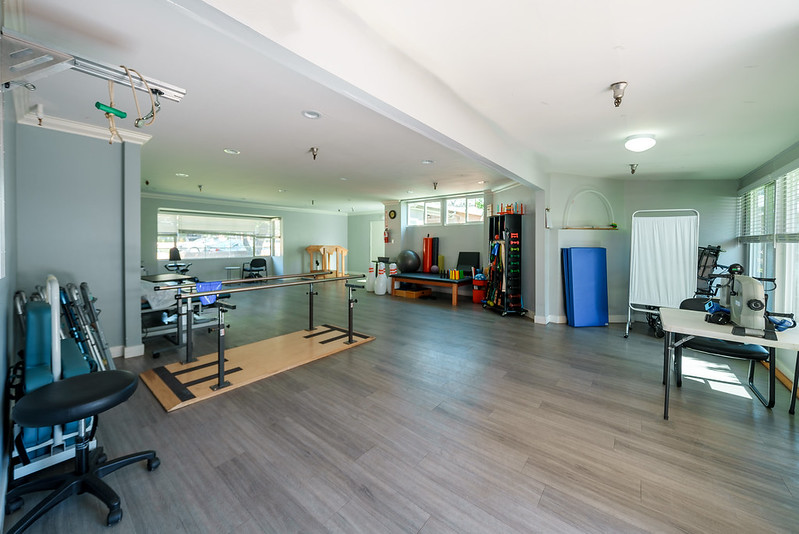
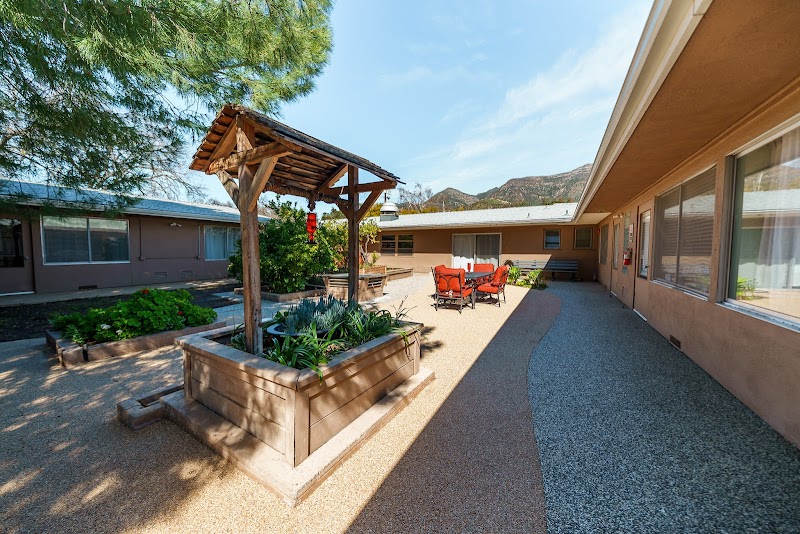
Ojai Health & Rehabilitation
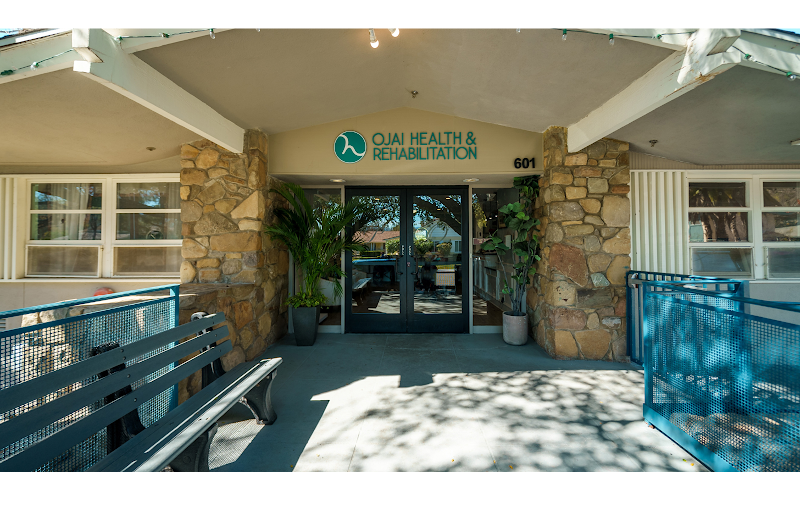
601 North Montgomery Street, Ojai, CA 93023 (805) 646-8124
For profit - Limited Liability company 74 Beds PACS GROUP Data: November 2025
Trust Grade
65/100
#426 of 1155 in CA
Last Inspection: February 2025

Within standard 12-15 month inspection cycle. Federal law requires annual inspections.

Overview

Ojai Health & Rehabilitation has a Trust Grade of C+, which indicates it is slightly above average, reflecting decent care standards. Ranking #426 out of 1,155 facilities in California places it in the top half, while its #12 out of 19 rank in Ventura County means only a few local options are better. The facility is showing an improving trend, with issues decreasing from 12 in 2024 to 10 in 2025, though it still has 38 total issues, including one serious incident where a resident fell and sustained multiple injuries. Staffing is a concern, with a low 2/5 star rating and a 54% turnover rate, which is higher than the state average. On the positive side, Ojai Health has no fines on record, and while RN coverage is below average, the facility has excellent quality measures. However, specific incidents like a failure to secure an unlocked gate leading to a serious fall highlight some weaknesses in safety practices.
Trust Score
C+
65/100
In California
#426/1155
Top 36%
Safety Record
Moderate
Needs review
Inspections
Getting Better
12 → 10 violations
Staff Stability
⚠ Watch
54% turnover. Above average. Higher turnover means staff may not know residents' routines.
Penalties
✓ Good
No fines on record. Clean compliance history, better than most California facilities.
Skilled Nurses
⚠ Watch
Each resident gets only 20 minutes of Registered Nurse (RN) attention daily — below average for California. Fewer RN minutes means fewer trained eyes watching for problems.
Violations
⚠ Watch
38 deficiencies on record. Higher than average. Multiple issues found across inspections.
★★★★☆
4.0
Overall Rating
★★☆☆☆
2.0
Staff Levels
★★★★★
5.0
Care Quality
★★★☆☆
3.0
Inspection Score
Stable
2024: 12 issues
2025: 10 issues

The Good

  • 5-Star Quality Measures · Strong clinical quality outcomes
  • Full Sprinkler Coverage · Fire safety systems throughout facility
  • No fines on record

Facility shows strength in quality measures, fire safety.

The Bad

Staff Turnover: 54%

Near California avg (46%)

Higher turnover may affect care consistency

Chain: PACS GROUP

Part of a multi-facility chain

Ask about local staffing decisions and management

The Ugly 38 deficiencies on record

1 actual harm
Jul 2025 1 deficiency
CONCERN (E) 📢 Someone Reported This

A family member, employee, or ombudsman was alarmed enough to file a formal complaint

Potential for Harm - no one hurt, but risky conditions existed

Deficiency F0728 (Tag F0728)

Could have caused harm · This affected multiple residents

**NOTE- TERMS IN BRACKETS HAVE BEEN EDITED TO PROTECT CONFIDENTIALITY** Based on interview and record review, the facility failed to: 1. Ensure four employees working as Certified Nursing Assistants (...

Read full inspector narrative →
**NOTE- TERMS IN BRACKETS HAVE BEEN EDITED TO PROTECT CONFIDENTIALITY** Based on interview and record review, the facility failed to: 1. Ensure four employees working as Certified Nursing Assistants (CNAs 1, 2, 3, and 4) had valid and up-to-date CNA certifications. 2. Ensure two employee personnel files (CNAs 1and 3) were complete and up to date.These failures resulted in unlicensed CNAs providing direct care to residents without proper certification and placed residents' safety at risk.1. During an interview on [DATE] at 10:05 a.m. with the Director of Staff Development (DSD), DSD stated the CNA is responsible for maintaining up to date certification and I double check with the files. DSD further stated we had to check three or four months ago and knew the CNAs who were about to expire and reminded them to get it done and that they can't be on the schedule, it's paper tracking and we keep a schedule of who is due. We will let them know when it will expire and prompt them again and when they get the certification, they will bring it in. We only go online to verify if it's expiring or if they don't have the certification handy with them, we will check it. All new CNAs certifications are checked upon hire. During a concurrent interview and record review on [DATE] at 12:40 p.m. with the Director of Nursing (DON), CNA 1's personnel file was reviewed and indicated, Application for employment, dated [DATE]. DON verbalized was unable to locate verification of CNA 1's CNA certification from the California Department of Public Health (CDPH) Licensing and Certification (L&C) website in CNA 1's personnel file.During a concurrent interview and record review on [DATE] at 1:58 p.m. with the DSD, CNA 1's personnel file was reviewed. DSD was unable to locate CNA 1's CNA certification and stated, We tried to look online and it's not showing. It's not in the file from when (CNA 1) was hired .We usually print it out, but we didn't for this one.At the moment there's no proof CNA 1 has a CNA license.We should have printed it out, and I'm not sure if we just verified it and didn't put it in the file.During a review of CNA 1's Human Resources Workday (HRWD), print outs (work hours clocked for payroll), the HRWD indicated, Worker (CNA 1). Job Profile CNA-H and dates worked indicated, CNA 1 worked the following days, 14 days in [DATE] days in [DATE] days in May, 19 days in [DATE], and 7 days in [DATE], for a total of 67 days worked without a CNA certification.During a review of CNA 1's Application for employment, dated [DATE], the Application for employment, indicated, Job Applied to CNA/FT (full time), Question - If applying for a position that requires a medical license or certification, please enter the license number and state. If not, enter NA, Answer is blank, and Offer details - Hire Date [DATE]. Job Profile CNA-H. Business Title CNA. Scheduled Weekly Hours 40.During a concurrent interview and record review on [DATE] at 3:03 p.m. with the DON and Administrator (ADM), the facility's policies and procedures (P&P) titled, Compliance Risks - Resident Quality of Care and Quality of Life, dated [DATE], and Staffing, Sufficient and Competent Nursing, dated [DATE], were reviewed. In addition, Job Description: Certified Nursing Assistant, dated 02/2024 and (facility) CNA schedule dated [DATE] through [DATE] were also reviewed. P&P titled, Compliance Risks - Resident Quality of Care and Quality of Life, indicated, .Sufficient staffing (1) Staffing is provided in sufficient numbers and with staff who have appropriate clinical training, licensure, and/or expertise to meet the needs of residents.Staff screening (1) Background screening and investigations are conducted prior to employment or engagement to ensure that staff, contractors, and/or volunteers meet at least the following criteria: (a) current licensure (if applicable) is in good standing in the state of practice; (b) education, certifications, and training have been verified. P&P titled, Staffing, Sufficient and Competent Nursing, indicated, .Competent staff (2) All nursing staff must meet the specific competency requirements of their respective licensure and certification requirements defined by state law. The Job Description: Certified Nursing Assistant, indicated, .Must be a licensed Certified Nursing Assistant in accordance with laws of the state. DON and ADM confirmed both P&Ps and CNA Job Description were not followed. DON and ADM confirmed CNA 1 was listed on (facility) CNA schedule, and worked multiple days each month from [DATE] through [DATE], CNA 1's CNA certification was not in CNA 1's personnel file, and CNA 1 worked these shifts without verification of CNA certification.During a concurrent interview and record review on [DATE] at 2:55 p.m. with the ADM, CNA 2's personnel file and CNA schedules, dated October and [DATE] were reviewed. CNA 2's personnel file indicated, CNA 2's certification date of [DATE], expiration date [DATE], and a second certification, effective date [DATE], expiration date [DATE], verified by the CDPH L&C website. CNA 2 did not have a valid CNA certification from [DATE] through [DATE]. Review of the CNA schedules indicated, CNA 2 worked 5 days in [DATE] from [DATE] to [DATE] and 12 days in [DATE] from [DATE] through [DATE]. ADM was unable to locate CNA 2's valid CNA certification from [DATE] through [DATE]. The ADM confirmed CNA 2 worked the dates as noted above without a valid CNA certificate.During a concurrent interview and record review on [DATE] at 3 p.m. with the DON, CNA 2's personnel file was reviewed. DON verbalized CNAs would not be here at that time while CNA certification is processing and further stated, We are supposed to check each staff to make sure their CNA certification is current and valid and make sure that everything is current. DON confirmed CNA 2's CNA certification was expired from [DATE] through [DATE], and CNA 2 was not certified while working as a CNA during that timeframe.During an interview on [DATE] at 3:51 p.m. with the DSD, DSD stated, We didn't have a process in place to ensure (CNA 1) renewed their CNA certification. We didn't have the right process.During a concurrent interview and record review on [DATE] at 4:34 p.m. with the DSD, CNA 3's personnel file undated, and Nursing Staff Daily Assignment & Sign-In Sheet, dated 2/16 and [DATE], and HRWD print outs were reviewed. CNA 3's personnel file indicated, Certified Nursing Assistant Certification.Effective Date [DATE]. Expiration Date [DATE], and Effective Date [DATE]. Expiration Date [DATE]. Verified by the CDPH L&C website. Nursing Staff Daily Assignment & Sign-In Sheet, dated [DATE] and [DATE] indicated, CNA 3's signature next to CNA 3's name. HRWD print outs indicated, CNA 3 worked 2/16 and [DATE]. DSD confirmed CNA 3 worked on [DATE] and [DATE] without an active CNA certification.During a concurrent telephone interview and record review on [DATE] at 3:25 p.m. with the ADM, CNA 4's personnel file and CNA 4's HRWD print outs were reviewed. CNA 4's personnel file indicated, Certified Nursing Assistant Certification Effective Date [DATE]. Expiration Date [DATE], and Effective Date [DATE]. Expiration Date [DATE], verified by CDPH L&C website. HRWD print outs indicated, CNA 4 worked four days in July from [DATE], through [DATE] and ten days in August from [DATE] through [DATE]. ADM confirmed accuracy of all records reviewed and stated, According to these documents (CNA 4) was not actively certified while working these dates.During a review of the facility's Policy and Procedure (P&P) titled, Credentialing of Nursing Service Personnel, dated [DATE], the P&P indicated, Nursing service personnel who require a license or certification to provide resident care or treatment without direction or supervision within the scope of the individual's license or certification must present verification of such license or certification prior to or upon employment. 1) Nursing personnel who require a license or certification to perform resident care or treatment without direction or supervision must present verification of such license/certification to the director of nursing services prior to or upon employment. 2) Nursing personnel requiring a license/certification are not permitted to perform direct resident care until all licensing/background checks have been completed. 3)a) contact the appropriate state licensing board(s) to obtain a letter of verification/computer printout of such license/certification.4) A copy of all documents obtained during the verification and background check are filed in the employee's personnel file.6) Should the investigation reveal the applicant does not hold a valid license or certification, appropriate state licensing boards and authorities will be notified of the applicant's attempt to practice without a license/certification .9) Inquiries concerning credentialing should be referred to the administrator or the director of nursing services.2. During a concurrent interview and record review on [DATE] at 3:25 p.m. with the DON and Administrator (ADM), CNA 1's personnel file was reviewed. The DON and ADM verbalized they were unable to locate CNA 1's signed job description and CNA 1's personnel file was incomplete.During a concurrent interview and record review on [DATE] at 2:40 p.m. with the DSD, CNA 3's personnel file was reviewed. DSD verbalized CNA 3's start date was [DATE]. When asked if CNA 3's personnel file contained verification of CNA 3's CNA certification back in 2023, DSD stated we don't have the old one, just the most recent, we should get a printed copy and put it in their file, but this file was created before me. DSD further stated we can't search online for previous CNA certifications, and it's missing from when CNA 3 was hired.During a review of the facility's Policy and Procedure (P&P) titled, Personnel Records, dated [DATE], P&P indicated, 1. Federal and state regulations require that our facility maintain an individual personnel record for each employee. However, it shall be the employee's responsibility to provide the HR director with the required data. This responsibility also entails notifying, in writing, the HR director of any change in the required data.3) Personnel records contain, as each may apply, the following data.(c) Job description(s).(l) Copy of current licenses (as applicable).15) Personnel records shall be retained for a period of not less than five (5) years unless otherwise required by federal or state laws.During a review of the facility's Personnel File - Required Checklist - Physical and Workday, dated [DATE], Personnel File - Required Checklist - Physical and Workday, indicated, Employment/Onboarding Items.Education verification (licensure uploaded to in Workday under Career, for monthly monitoring).License required for position (Upload copy into Workday).Job description (it needs to be employee acknowledged; it is assigned in Workday).
Jun 2025 1 deficiency
CONCERN (D) 📢 Someone Reported This

A family member, employee, or ombudsman was alarmed enough to file a formal complaint

Potential for Harm - no one hurt, but risky conditions existed

Accident Prevention (Tag F0689)

Could have caused harm · This affected 1 resident

Based on observation, interview, and record review, the facility failed to provide adequate supervision to prevent accidents while smoking for one of four sampled residents (Resident 2). This failure ...

Read full inspector narrative →
Based on observation, interview, and record review, the facility failed to provide adequate supervision to prevent accidents while smoking for one of four sampled residents (Resident 2). This failure had the potential for residents to suffer significant injuries. During an observation on 5/30/25 at 8:35 a.m. while walking up to the front entrance of the facility, Resident 2 was observed lying in the street after sustaining a fall from his wheelchair after going off the curb of the sidewalk while alone in the front of the facility to smoke a cigarette. The surveyor walked into the facility to look for staff to get assistance but was unable to locate any staff members. The surveyor walked down the hall to the nurse's station and alerted Charge Nurse (CN) of Resident 2 lying in the street next to his wheelchair. Observed multiple staff running out of the facility to assist the resident back into his wheelchair and assess Resident 2 for injuries. Followed staff outside to the front of the facility to observe. Resident 2 was yelling at staff to leave him alone and not to call an ambulance as Resident 2 stated, I am not going to the hospital. Resident 2 was found to have 2 packs of cigarettes and a lighter in his possession. During an interview on 5/30/25 at 8:45 a.m. with Resident 2, Resident 2 stated he went out at the front to smoke. Resident 2 stated he keeps his own cigarettes in his room and goes outside to smoke whenever he wants to. Resident 2 stated he does not use the facilities smoking area and does not wear that stupid bib. Resident 2 stated that nobody watches him when he smokes. During a review of Resident 2's Medical Record (MR), the MR indicated, Resident 2 had a past medical history of Alcohol Abuse, Unspecified Dementia, Alcoholic Cirrhosis of the Liver without Ascites (a condition where the liver is scarred due to excessive alcohol consumption, but fluid buildup in the abdomen (ascites) is not present), Bipolar Disorder (mental health condition characterized by extreme shifts in mood, energy, and activity levels), Chronic Obstructive Pulmonary Disease (COPD- a group of lung diseases that cause long-term breathing problems), Malignant Neoplasm of Prostate with urinary catheter for bladder obstruction, absence of right great toe and other right toes, and difficulty in ambulation (walking). Resident 2 had a BIMS score of 8 (Brief Interview for Mental Status. The BIMS test is used to get a quick snapshot of how well a person is functioning cognitively at the moment. Score of 8 to 12 indicates Moderate cognitive impairment). During a concurrent interview and record review on 5/30/25 at 10:10 a.m. with Director of Nurses (DON), DON stated Resident 2 fell on 5/28/25 without sustaining any injuries. DON stated the fall was similar to the one this morning [5/30/25] where Resident 2 went out in front of the facility to smoke and fell out of his wheelchair. The DON stated the smoking assessment is done at time of admission and indicated that Resident 2 should be supervised when he smokes. Review of Interdisciplinary Team (IDT) meeting notes dated 5/28/25 with DON, DON stated, Resident 2 consistently refuses to wear flame retardant smoking apron. IDT meeting notes indicated, Plan of Care: Continue to supervise all smoking sessions as per facility policy. DON stated that Resident 2 should be supervised when he smokes but he has not been. During a record review of Resident 2's Smoking Observation Assessment, dated 2/5/25, the Assessment indicated, in part, Resident 2 is a smoker. Resident does not have cognitive impairment. Resident does not have visual impairment. Smoking adaptive equipment needed: smoking apron. Level of assistance: Supervision required IDT Decision: May smoke with supervision. During a review of facility's policy and procedure (P&P) titled, Smoking Policy-Residents dated October 2023, the P&P indicated in part, The resident's ability to smoke safely is re-evaluated quarterly, upon significant change (physical or cognitive) and as determined by the staff. Residents are not allowed to keep smoking items, including cigarettes, tobacco, etc. except under direct supervision.
May 2025 1 deficiency
CONCERN (D) 📢 Someone Reported This

A family member, employee, or ombudsman was alarmed enough to file a formal complaint

Potential for Harm - no one hurt, but risky conditions existed

Medical Records (Tag F0842)

Could have caused harm · This affected 1 resident

Based on record review and interview, the facility failed to ensure staff observations of resident skin issues and/or conditions were consistently and accurately documented in the skin monitoring form...

Read full inspector narrative →
Based on record review and interview, the facility failed to ensure staff observations of resident skin issues and/or conditions were consistently and accurately documented in the skin monitoring form for two of two sampled residents (Residents 1 and 2). These failures had the potential to result in inaccuracies of information which could affect the delivery of care and services for these residents affecting health and safety. Findings: During a concurrent interview and record review on 5/14/25 at 11:55 a.m., with the facility's (Interim) Director of Nursing (DON), the facility form titled, Skin Monitoring (SM): CNA (Certified Nursing Assistant) Shower Review, was reviewed. DON verbalized that the SM form is used by CNAs to document skin observations of their assigned residents during bed baths/showers. The SM form included a list of skin issues/conditions and a body chart to graph the exact location of the skin issue/condition. DON further verbalized the CNA will report the observed skin issues/conditions to the charge nurse. During a review of Resident 1's Nursing - Comprehensive Skin Evaluation/Assessment, dated 4/8/25, the assessment indicated in part, Section B. Skin Assessment . Noted wound on right medial malleolus (area located on the inner side of the ankle) with light serous drainage (a clear to yellow fluid that leaks out of the wound) During a review of Resident 1's Skin and Wound Evaluation (SWE), report dated 5/12/25, the report indicated in part, Resident 1's wound on his right medial malleolus area persists. During a review of Resident 1's SM forms dated 5/2/25, 5/6/25, and 5/10/25, the forms failed to indicate documentation of Resident 1's existing wound on his right medial malleolus area. During a review of Resident 2's Nursing - Comprehensive Skin Evaluation/Assessment, dated 10/13/24, the assessment indicated in part, Section B. Skin Assessment . Left Heel Pressure, Suspected Deep Tissue Injury (DTI - a type of pressure ulcer where underlying tissue damage occurs without an open wound) . Right Toe(s), Pressure, Suspected DTI . left Toe(s), Pressure, Suspected DTI . Sacrum (area at the base of the spine just above the buttock), Pressure, Stage IV (a stage of pressure ulcer with full thickness skin and tissue loss with exposed bone, tendon or muscle). During a review of Resident 2's SWE report dated 5/5/25, the report indicated in part, Resident 2's Stage IV pressure ulcer on the sacrum area persists. During a review of Resident 2's SM forms dated 12/29/24, 2/2/25, 2/5/25, 2/9/25, 2/23/25, 2/26/25, 5/9/25, and 5/12/25, the forms failed to indicate documentation of Resident 2's existing Stage IV pressure ulcer on the sacrum. During a concurrent interview and record review, on 5/14/25 at 12:30 p.m., with DON, the SM forms for Residents 1 and 2 on the specified dates noted above were reviewed. DON verified the staff's failures to document on the form accurate observations of existing skin issues/conditions for these residents. DON was not able to provide a specific policy for CNA documentation of resident skin observations.
Mar 2025 1 deficiency
CONCERN (D) 📢 Someone Reported This

A family member, employee, or ombudsman was alarmed enough to file a formal complaint

Potential for Harm - no one hurt, but risky conditions existed

Report Alleged Abuse (Tag F0609)

Could have caused harm · This affected 1 resident

Based on interview and record review, the facility failed to report to the California Department of Public Health (CDPH) suspicion of abuse for one resident (Resident 1). This failure had the potentia...

Read full inspector narrative →
Based on interview and record review, the facility failed to report to the California Department of Public Health (CDPH) suspicion of abuse for one resident (Resident 1). This failure had the potential to delay investigation and affect physical and psychosocial well-being of Resident 1. Findings: During an interview on 3/25/25 at 11:35 a.m. with licensed nurse (LN) 3, LN 3 verbalized heard rumors of the abuse, reported it to the former Operations Manager (FOM). The FOM requested LN 3 write a statement regarding the alleged abuse. LN 3 provided a written statement and did not report the alleged abuse further. During an interview on 3/25/25 at 1:10 p.m. with Human Resources (HR), HR verbalized FOM knew about the allegations, an investigation was conducted. The employee was terminated. they used evidence of text messages and information gathered from a phone to terminate the employee. HR thought the FOM was to notify the CDPH. During an interview on 3/25/25 at 1:30 p.m. with Director of Staff Development (DSD), DSD verbalized the information was given to the FOM and believed the FOM was the one to notify police, CDPH or ombudsman and was not able to explain policy and procedure for reporting abuse to surveyor. During an interview on 3/25/25 at 1:50 p.m. with facility receptionist (REC), REC verbalized, had heard rumors of the alleged sexual misconduct between the staff member and the resident. The DSD informed the FOM and provided a written statement. The REC stated they did not report the alleged sexual misconduct to anyone but the FOM. During a concurrent interview and record review on 3/25/25 at 2:10 p.m. with Director of Nursing (DON) and Operations Manager (OM), the facility's policy and procedure (P&P) titled, Abuse, Neglect, Exploitation or Misappropriation - Reporting and Investigating, dated September 2022 was reviewed. The P&P indicated, If resident abuse, neglect, exploitation, misappropriation of resident property or injury of unknown source is suspected, the suspicion must be reported immediately to the administrator and to other officials according to state law. OM confirmed staff did not follow the P&P. The DON confirmed the policy indicated if suspected abuse the person must report it to appropriate agencies, and it was not done.
Mar 2025 1 deficiency
CONCERN (D) 📢 Someone Reported This

A family member, employee, or ombudsman was alarmed enough to file a formal complaint

Potential for Harm - no one hurt, but risky conditions existed

Abuse Prevention Policies (Tag F0607)

Could have caused harm · This affected 1 resident

Based on observation, interview, and record review, the facility failed to follow its policies and procedure when a Certified Nurse Assistant (CNA 1) reported an alleged incident of sexual abuse for o...

Read full inspector narrative →
Based on observation, interview, and record review, the facility failed to follow its policies and procedure when a Certified Nurse Assistant (CNA 1) reported an alleged incident of sexual abuse for one of three sampled residents (Resident 1) to a nurse, who did not report the allegation to the administration. This failure resulted in a delay in the investigation of the alleged sexual abuse. Findings: During a review of the facility's policy and procedure (P&P) titled, Abuse, Neglect, Exploitation or Misappropriation - Reporting and Investigating, dated 2001, the P&P indicated: If resident abuse, neglect, exploitation, misappropriation of resident property, or injury of unknown source is suspected, the suspicion must be reported immediately to the administrator and to other officials according to state law. During an interview on 3/13/25 at 2:11 p.m. with CNA 1, CNA 1 stated that during rounds at 6:30 a.m., Resident 1 reported that her roommate was fondled by a male staff member during a brief change last night. CNA 1 stated that she immediately reported Resident 1's allegation to the night shift Licensed Nurse (LN 1). During an interview on 3/13/25 at 12:15 p.m. with Licensed Nurse (LN 2), LN 2 stated that was unaware of the allegations. LN 2 further stated that LN 1 did not mention the alleged sexual abuse reported by Resident 1 during the change-of-shift report that morning. During an interview on 3/13/25 at 2:34 p.m. with LN 1, LN 1 stated before leaving her shift, she checked on Resident 1, but was sleeping. LN 1 stated that she did not follow up on the allegation and did not report it to anyone. During an interview on 3/13/25 at 3:30 p.m. with the Director of Nursing (DON), the DON stated any allegations made by a resident must be investigated. The DON stated LN 1 should have reported the allegation immediately and that the failure to do so delayed the investigation process.
Feb 2025 5 deficiencies
CONCERN (D)

Potential for Harm - no one hurt, but risky conditions existed

Deficiency F0552 (Tag F0552)

Could have caused harm · This affected 1 resident

Based on observation, interview, and record review, the facility failed to ensure there was an informed consent for the use of bed rails for one of five sampled residents (Resident 4). This failure ha...

Read full inspector narrative →
Based on observation, interview, and record review, the facility failed to ensure there was an informed consent for the use of bed rails for one of five sampled residents (Resident 4). This failure had the potential to result in Resident 4 or representative not to be given the information needed to make an informed decision. Findings: During an observation on 02/24/25 at 10:47 a.m. in Resident 4's room, Resident 4 was sleeping in bed with two full-length bed rails up. During a concurrent interview and record review on 02/26/25 at 10:48 a.m. with a Licensed Nurse (LN 1), Resident 4's electronic and paper records were reviewed. There was no evidence of an informed consent for the use of bed rails in Resident 4's electronic or paper record. LN 1 confirmed that no informed consent on the explanation of risks and benefits regarding the use of bed rails was in Resident 4's records. During a review of facility's policy and procedure (P&P) titled, Bed Safety and Bed Rails, dated May 2024, the P&P indicated, Before using bed rails for any reason, the staff shall inform the resident or representative about the benefits and potential hazards associated with bed rails and obtain informed consent.
CONCERN (D)

Potential for Harm - no one hurt, but risky conditions existed

Deficiency F0578 (Tag F0578)

Could have caused harm · This affected 1 resident

Based on interview and record review, the facility failed to provide information about the right to formulate an advanced directive (a legal document that states a person's wishes for medical care if ...

Read full inspector narrative →
Based on interview and record review, the facility failed to provide information about the right to formulate an advanced directive (a legal document that states a person's wishes for medical care if they are unable to communicate them) for four of four sampled residents (Residents 4, 18, 20, and 42). In addition, the facility failed to establish, maintain, and implement written policies and procedures regarding the residents right to formulate an advanced directive. These failures had the potential for the residents' decisions regarding their health care and treatment not being honored. Findings: During a review of Residents 4, 18, 20, and 42's admission Packet Forms, the Packets did not contain any written form indicating, a review of the process in the formulation of an advanced directive was discussed with and acknowledged by the resident or resident's representative. During an interview on 02/26/25 at 10:30 a.m. with Licensed Nurse (LN 1), LN 1 confirmed there was no written evidence regarding a discussion about advanced directives during or anytime after admission present in Residents 4, 18, 20, and 42 electronic and paper records. During an interview on 02/26/25 at 10:45 a.m. with the Social Services Director (SSD), SSD stated there was no policy pertaining to the documentation about advanced directive discussion during resident's admission.
CONCERN (D)

Potential for Harm - no one hurt, but risky conditions existed

Safe Environment (Tag F0584)

Could have caused harm · This affected 1 resident

**NOTE- TERMS IN BRACKETS HAVE BEEN EDITED TO PROTECT CONFIDENTIALITY** Based on observation, interview and record review, the facility failed to ensure: 1. The toilet grab bar in room [ROOM NUMBER] w...

Read full inspector narrative →
**NOTE- TERMS IN BRACKETS HAVE BEEN EDITED TO PROTECT CONFIDENTIALITY** Based on observation, interview and record review, the facility failed to ensure: 1. The toilet grab bar in room [ROOM NUMBER] was present. 2. room [ROOM NUMBER]'s room temperature was within ideal temperature range, as per facility policy. These failures had the potential to compromise resident safety and comfort. Findings: 1. During an observation on 02/24/25 at 10:59 a.m. in room [ROOM NUMBER]'s restroom, the restroom was observed without a grab bar next to the toilet seat and on the wall were holes where the grab bar should have been. During an interview on 02/24/25 at 11:05 a.m. with Resident 42 in room [ROOM NUMBER], the resident stated using the toilet in room [ROOM NUMBER] because the bathroom in room [ROOM NUMBER] does not have a grab bar next to the toilet, making it hard to move from sitting to standing and stated mentioning the concern to the maintenance supervisor (MS) about three weeks ago. During an interview on 02/26/25 at 10:30 a.m. with the MS, MS stated not being aware of the missing grab bar in room [ROOM NUMBER] because nobody informed maintenance of the issue. During an interview on 02/26/25 at 10:41 a.m. with the Activity Director (AD), AD stated the maintenance log was checked and the missing grab bar in room [ROOM NUMBER] was not documented in the report. During a review of the facility's policy and procedure (P&P) titled, Maintenance Service, dated December 2009, the P&P indicated, Functions of maintenance personnel include maintaining the building in good repair and free from hazard. 2. During a concurrent observation and interview on 2/24/25 at 4:30 p.m. with Resident 58 in room [ROOM NUMBER], Resident 58 was observed wearing a sweatshirt and hat while in bed, with a blanket covering the lower half of body. Resident 58 stated there has been issues with the cold temperature in the room since October 2024 and has communicated this multiple times to staff. The outside temperature was 83 degrees Farenheit (F). During a concurrent observation and interview on 2/27/25 at 3 p.m. with MS in room [ROOM NUMBER], MS checked the temperature and stated the reading was 65 degrees F. During an interview on 02/27/25 at 3:10 p.m. with Director of Nursing (DON), DON stated, It's everybody's responsibility to make sure the environment feels comfortable. During review of the facility's policy and procedure (P&P) titled, Heating, Cooling, Air Conditioning and Ventilation Systems, dated 12/31/15, the P&P indicated, .Check thermostats to ensure that they are set at correct temperature (ideal temperature ranges from 72 degrees to 74 degrees depending on Center and weather conditions) .
CONCERN (D)

Potential for Harm - no one hurt, but risky conditions existed

Deficiency F0645 (Tag F0645)

Could have caused harm · This affected 1 resident

**NOTE- TERMS IN BRACKETS HAVE BEEN EDITED TO PROTECT CONFIDENTIALITY** Based on record review and interview, the facility failed to ensure a Pre-admission Screening and Resident Review (PASRR - scree...

Read full inspector narrative →
**NOTE- TERMS IN BRACKETS HAVE BEEN EDITED TO PROTECT CONFIDENTIALITY** Based on record review and interview, the facility failed to ensure a Pre-admission Screening and Resident Review (PASRR - screening for individuals with a mental disorder and individuals with intellectual disability) Level II Evaluation (a person-centered evaluation that is completed for anyone identified as positive for Level I screening or as having or suspected of having serious mental illness, intellectual disability, developmental disability or related condition) was completed for one of four sampled residents (Resident 51). This failure had the potential to result in the resident not receiving appropriate care and services. Findings: During a review of Resident 51's admission Record (AR), dated 2/27/25, the AR indicated, Resident 51 is a [AGE] year-old male who was admitted to the facility on [DATE], with diagnoses including, disorganized schizophrenia (a mental disorder characterized by disorganized thinking, speech, and behavior), unspecified psychosis (a collection of symptoms that involves a disconnection from reality and the world around you), and suicidal ideations. During a review of Resident 51's PASRR Level I Screening, dated 4/26/24, the Screening result indicated, Result of Level I Screening: Level I - Positive. The screening result indicated further, Re: Positive Level I Screening indicates a Level II Mental Health Evaluation is Required During a review of Resident 51's PASRR Determination Letter, dated 5/1/24, the Letter indicated, Unable to Complete Level II Evaluation . After reviewing the Positive Level I Screening and speaking with staff, a Level II Mental Health Evaluation was not scheduled for the following reason: The individual was unable to participate in the evaluation. The case is now closed. To reopen, please submit a new Level I Screening. The letter indicated further, Please note this letter is a courtesy notice for administrative purpose only and does not comprise a completed individualized determination. During a concurrent interview and record review on 2/27/25 at 2:15 p.m. with the Director of Nursing (DON), Resident 51's PASRR records were reviewed. DON verified Resident 1 had a positive Level I screening but has not completed a Level II evaluation and verbalized that the case was closed. After thoroughly reviewing Resident 51's PASRR Determination Letter, dated 5/1/24, DON acknowledged that the resident required a Level II evaluation and should have undergone a new Level I screening. During a review of the facility's policy and procedures (P&P) titled, PASARR, revised 3/21, the P&P indicated in part, 1) All new admissions and readmissions are screened for mental disorders (MD), intellectual disabilities (ID) or related disorders (RD) per the Medicaid Pre-admission Screening and Resident Review (PASARR) process. The P&P indicated further, . b) If the level I screen indicates the individual may meet the criteria for a MD, ID, or RD, he or she is referred to the state PASARR representative for the Level II (evaluation and determination) screening process .
CONCERN (D)

Potential for Harm - no one hurt, but risky conditions existed

Deficiency F0657 (Tag F0657)

Could have caused harm · This affected 1 resident

**NOTE- TERMS IN BRACKETS HAVE BEEN EDITED TO PROTECT CONFIDENTIALITY** Based on record review and interview, the facility failed to ensure the care plan of one of four sampled residents (Resident 46)...

Read full inspector narrative →
**NOTE- TERMS IN BRACKETS HAVE BEEN EDITED TO PROTECT CONFIDENTIALITY** Based on record review and interview, the facility failed to ensure the care plan of one of four sampled residents (Resident 46) was revised to address the significant decline of the Brief Interview for Mental Status (BIMS - a 15-point cognitive screening measure that evaluates memory and orientation impairments in older adults; 0-7 points suggests severe cognitive impairment, 8-12 points suggests moderate cognitive impairment, 13-15 points suggests cognition is intact) scores of the resident. This failure had the potential to result in appropriate care and services not being provided to the resident. Findings: During a review of Resident 46's, admission Record (AR), dated 2/27/25, the AR indicated in part, Resident 46 is a [AGE] year-old male who was admitted to the facility on [DATE] with diagnoses including, Wernicke's encephalopathy (a brain and memory disorder due to a lack of Vitamin B1 requiring immediate treatment) and major depressive disorder (a mood disorder that affects how a person feels, thinks, and handles daily activities). During a review of Resident 46's, BIMS reports, Resident 46's BIMS scores were as follows: - Quarterly Assessment (10/25/23) - Score = 11 (Moderately Impaired) - Quarterly Assessments (1/14/24 - 1/10/25) - Score = 3 (Severe Impairment) - Annual Assessment (4/12/24) - Score = 3 (Severe Impairment) During a review of Resident 46's, Care Plan Report, dated 5/2/23, the Report indicated, Focus . Cognition: Resident has impaired cognitive function/impaired thought processes r/t (related to) Wernicke's encephalopathy, memory loss. The report indicated further, Interventions/Tasks . Monitor/document/report to MD any changes in cognitive function specifically changes in decision-making ability, memory, recall and general awareness, difficulty expressing self, difficulty understanding others, level of consciousness, mental status. During a concurrent interview and record review on 2/27/24 at 10:15 a.m. with the Director of Nursing (DON), Resident 46's Care Plan Report, dated 5/2/23 and BIMS Score reports, conducted on various dates, were reviewed. DON confirmed there was a significant decline in Resident 46's BIMS scores which should have been addressed in the resident's care plan. DON acknowledged that Resident 46's care plan should have been revised to reflect appropriate care and interventions that will need to be implemented to address this decline. During a review of the facility's policy and procedures (P&P) titled, Comprehensive Person-Centered Care Plan, revised 5/2024, the P&P indicated in part, Policy Statement . A comprehensive person-centered care plan that includes measurable objectives and timetables to meet the resident's physical, psychosocial and functional needs is developed and implemented for each resident. The P&P indicated further, Policy Interpretation and Implementation . 11) Assessment of residents are ongoing and care plans are revised as information about the residents and residents' condition change .
Nov 2024 1 deficiency
CONCERN (D) 📢 Someone Reported This

A family member, employee, or ombudsman was alarmed enough to file a formal complaint

Potential for Harm - no one hurt, but risky conditions existed

Deficiency F0602 (Tag F0602)

Could have caused harm · This affected 1 resident

**NOTE- TERMS IN BRACKETS HAVE BEEN EDITED TO PROTECT CONFIDENTIALITY** Based on observation, interview, and record review, the facility failed to ensure one of two sampled residents (Resident 1) was ...

Read full inspector narrative →
**NOTE- TERMS IN BRACKETS HAVE BEEN EDITED TO PROTECT CONFIDENTIALITY** Based on observation, interview, and record review, the facility failed to ensure one of two sampled residents (Resident 1) was protected from misappropriation of property when a package received was open with missing items. This failure resulted in violating Resident 1's rights to receive unopened, intact packages, and right to privacy. Findings: During a review of Resident 1's admission Record (AR), dated 11/27/24, the AR indicated, Resident 1 was admitted with diagnoses including, below the knee amputation (missing their left leg from the knee downwards), acute respiratory failure (difficulty breathing), and depression (feeling of sadness and low energy that affects quality of life.) During a review of Resident 1's, MDS (Minimum Data Sheet - a federally mandated process of clinical assessment for nursing home patients) Assessment, dated 11/5/24, the MDS indicated, Section C - Brief Interview of Mental Status (BIMS) assessment indicated, Resident 1 had a BIMS Score of 15 (The BIMS assessment uses a points system that ranges from 0 to 15 points: 0 to 7 points suggests severe cognitive impairment. 8 to 12 points suggests moderate cognitive impairment. 13 to 15 points suggests that cognition is intact.) During an interview on 11/27/24 at 11 a.m. with Resident 1, Resident 1 verbalized had an order of a six pack of ginger ale from Amazon that was delivered to the facility on [DATE]. Resident 1 stated notification was received from amazon confirming that the six-pack of ginger ale ordered had been delivered and it was signed by [name of staff]. Resident 1 inquired about the package at the front desk staff, it was nowhere to be found. Days later, a night staff employee gave Resident 1 the package, informing the resident the nurse was keeping it in the nursing station, and two ginger [NAME] were missing. During an interview on 11/27/24 at 11:10 a.m. with Licensed Nurse (LN 2), LN 2 confirmed they found Resident 1's package in the nursing station. It was opened, and two bottles of ginger ale were missing. LN 2 further stated they had kept the opened package at the nursing station with the intention of informing administration to replace it, but due to a busy day, they forgot about it. During an interview on 11/27/24 at 12 p.m. with Director of Nursing (DON), DON verbalized that mail and packages should be delivered to residents right away and unopened. During a review of the facility's policy and procedure (P&P) titled, Mail and Electronic Communication, (undated), the P&P indicated, Mail will be delivered to the resident unopened . mail and packages will be delivered to the resident within -four (24) hours of delivered to the postal service within twenty - four (24) hours of deposit of such mail with the facility. During a review of the facility's policy and procedure (P&P) titled, Resident Rights, dated 8/2009, the P&P indicated, Federal and state laws guarantee certain basic rights to all residents of this facility. These rights include privacy and confidentiality, privacy in sending and receiving mail.
Nov 2024 1 deficiency
CONCERN (D) 📢 Someone Reported This

A family member, employee, or ombudsman was alarmed enough to file a formal complaint

Potential for Harm - no one hurt, but risky conditions existed

Quality of Care (Tag F0684)

Could have caused harm · This affected 1 resident

Based on interview and record review, the facility failed to follow physician orders for one of three sampled residents (Resident 1), when a pain medication was not available within 24 hours from orde...

Read full inspector narrative →
Based on interview and record review, the facility failed to follow physician orders for one of three sampled residents (Resident 1), when a pain medication was not available within 24 hours from order date. This failure had the potential for Resident 1 to have untreated pain and hinder recovery. Findings: During a review of Resident 1's Order Summary Report (Orders), dated 10/14/24, the Orders indicated, Oxycodone HCl 20 mg tablet (controlled substance, pain medication). Give 1 tablet by mouth every 6 hours as needed for pain management. During a review of Resident 1's Medication and Administration Record (MAR), dated October 2024, the MAR indicated, the order start date was 10/15/24, but first dose of Oxycodone HCl 20 mg tablet was not given until 10/19/24. During a review of Resident 1's Controlled Drug Record, with administration dates from 10/19/24-10/30/24, the Drug Record label indicated, the fill date for the Oxycodone was 10/18/24 with first dose given on 10/19/24 at 9:50 a.m. During a concurrent interview and record review on 11/15/24 at 4:40 p.m. with Director of Nursing (DON), Resident 1's Orders, MAR, and Controlled Drug Record were reviewed. DON confirmed medication was not received and given per order, it is expected within 1 day from the order. No explanation was able to be given as to what exactly happened here but stated it shouldn't have happened. During a review of the facility's policy and procedure (P&P) titled, Administering Medications, dated 2001, the P&P indicated, Medications are administered in accordance with prescriber orders, including any required time frame.
Nov 2024 2 deficiencies
CONCERN (E) 📢 Someone Reported This

A family member, employee, or ombudsman was alarmed enough to file a formal complaint

Potential for Harm - no one hurt, but risky conditions existed

Safe Environment (Tag F0584)

Could have caused harm · This affected multiple residents

**NOTE- TERMS IN BRACKETS HAVE BEEN EDITED TO PROTECT CONFIDENTIALITY** Based on observation and interview the facility failed to maintain a temperature range of 71-81 degrees Fahrenheit in the facili...

Read full inspector narrative →
**NOTE- TERMS IN BRACKETS HAVE BEEN EDITED TO PROTECT CONFIDENTIALITY** Based on observation and interview the facility failed to maintain a temperature range of 71-81 degrees Fahrenheit in the facility when temperatures throughout the facility measured between 64.9 and 65.2-degrees Fahrenheit, and one resident (Resident 1) was found with a plugged in space heater in their shared room. These facility failures violated all 72 resident's rights to have comfortable and safe temperatures within the facility and posed a risk for fire with a space heater in a resident ' s shared room. Findings: During a tour of the facility on 11/09/24 at 2:45 AM, the facility temperature felt cold throughout the facility even with a warm jacket on. Residents were observed with multiple blankets on sleeping. Staff were awake and were using blankets and all were wearing jackets. The resident in room [ROOM NUMBER] B had a space heater in their room. It was plugged in and the light was on, but the heater itself was off. Resident 1 was asleep in bed. During an interview on 11/09/24 at 2:55 AM with a certified nursing assistant (CNA 1), CNA 1 indicated the residents complained to her often the facility was too cold at night. She indicated the residents were always given extra blankets and the facility had enough extra blankets on hand. During an interview on 11/09/24 at 3:07 AM with another CNA (CNA 2), CNA 2 indicated he was really cold and he felt bad for the residents because it was so cold in the facility. He stated that he gave all of the residents he was caring for extra blankets every night he was working. During an interview on 11/09/24 at 3:27 AM with a licensed nurse (LVN 1), LN 1 indicated the facility was cold at night, and sometimes to warm during the day. She indicated the residents had complained about the facility being cold and that she had instructed the CNA's to make sure the residents all had extra blankets. During an interview on 11/09/24 at 3:41 AM with another licensed nurse, (LVN 2), LN 2 indicated she was new to the facility, but felt it was cold in the facility compared to other facilities she had previously worked in. During an interview on 11/09/24 at 3:56 AM with the charge nurse, the charge nurse indicated the facility was often cold at night and that she had been working at the facility since April, 2024. The charge nurse was made aware of the space heater in room [ROOM NUMBER] B and immediately went to the room and unplugged and removed the space heater. The resident did not awaken. The following temperatures were recorded between 3:55 AM and 4:05 AM on 11/09/24: 1. the facility temperature at nursing station one was measured at 65.2 degrees Fahrenheit. 2. the facility temperature at nursing station two was measured at 64.9 degrees Fahrenheit. 3. the facility temperature in resident room [ROOM NUMBER] was measured at 64.9 degrees Fahrenheit. 4. The facility temperature in all facility hallways was measured at 64.9 degrees Fahrenheit. LVN 1 confirmed the temperature reading at station one. The charge nurse confirmed the temperature reading at station one. CNA 1 confirmed the reading in the hallways. CNA 4 confirmed the temperature reading in resident room [ROOM NUMBER]. During an interview on 11/10/24 at 10:44 AM with the Director of Nursing (DON), the DON agreed the facility temperature was too cold and mentioned the regulations regarding temperatures being no less than 71 degrees Farenheit at all times.
CONCERN (E) 📢 Someone Reported This

A family member, employee, or ombudsman was alarmed enough to file a formal complaint

Potential for Harm - no one hurt, but risky conditions existed

Deficiency F0839 (Tag F0839)

Could have caused harm · This affected multiple residents

Based on observation and interview, the facility failed to follow state laws regarding name badges for employees working in the facility actively caring for residents when 6 of 7 employees working did...

Read full inspector narrative →
Based on observation and interview, the facility failed to follow state laws regarding name badges for employees working in the facility actively caring for residents when 6 of 7 employees working did not have name badges. This facility failure had the potential for unauthorized people to act like employees in the facility, and also prevents residents knowing who is caring for them. Findings: According to the California Business & Professional Code, under Section 680 a) except as otherwise provided in this section, a health care practitioner shall disclose, while working his or her name and practitioner ' s license status, as granted by this state, on a name tag in at least 18-point type. A health care practitioner in a practice or an office, whose license is prominently displayed, may opt to not wear a name tag. If a health care practitioner or a licensed clinical social worker is working in a psychiatric setting or in a setting that is not licensed by the state, the employing entity or agency shall have the discretion to make an exception from the name tag requirement for individual safety or therapeutic concerns. In the interest of public safety and consumer awareness, it shall be unlawful for any person to use the title nurse in reference to himself or herself and in any capacity, except for an individual who is a registered nurse or a licensed vocational nurse, or as otherwise provided in Section 2800. Nothing in this section shall prohibit a certified nurse assistant from using his or her title. (b) Facilities licensed by the State Department of Social Services, the State Department of Public Health, or the State Department of Health Care Services shall develop and implement policies to ensure that health care practitioners providing care in those facilities are in compliance with subdivision (a). The State Department of Social Services, the State Department of Public Health, and the State Department of Health Care Services shall verify through periodic inspections that the policies required pursuant to subdivision (a) have been developed and implemented by the respective licensed facilities. During a tour of the facility on 11/09/24 at 2:45 AM, six of the seven employees working were observed without name tags. During an interview on 11/09/24 at 2:55 AM with a certified nursing assistant (CNA 1), CNA 1 indicated she did not have a name tag and also indicated she was from an outside registry. CNA 1 indicated it was her first night on shift at the facility. During an interview on 11/09/2024 at 3:07 AM with CNA 2, CNA 2 stated he was never given a name badge. CNA 2 stated he had been working at the facility since last August doing fill in shifts and that he was also from an outside registry. CNA 2 named the same Registry that CNA 1 was from. During an interview on 11/09/24 at 03:15 AM with CNA 3, CNA 3 indicated she had been working at the facility since the first week of September and she was never given a name tag. CNA 3 stated she was an employee of the facility. During an interview on 11/09/24 at 0327 AM, with CNA 4, CNA 4 indicated she was from a registry and named the same registry that CNA 1, and CNA 2, are from. CNA 4 indicated she was never given a name tag. During an interview on 11/09/24 at 3:41 AM, with a registered nurse (RN 1) and a licensed vocational nurse (LVN 2), LVN 2 indicated it was her third night on orientation and that she was new to the facility. RN 1 indicated she was hired as an employee by the facility. LVN 2 indicated she was never given a name tag by the HR department. During an interview on 11/09/24 at 0341 AM with LVN 1, LVN 1 indicated she worked for a registry. LVN 1 named the same registry that CNA's 1, 2, and 4 were from. LVN 1 indicated she was never given a name tag. During an interview on 11/09/24 at 3:56 AM with RN 1, RN 1 indicated she was aware that staff working the shift did not have name tags. She further indicated it took her many months to get her name tag. RN 1 confirmed the findings and agreed the staff was supposed to have name tags. During an interview on 11/10/24 at 10:44 AM with the Director of Nursing (DON), the DON agreed that staff need to wear name badges and stated, My HR person is onsite now and is making badges for all staff.
Nov 2024 1 deficiency
CONCERN (D) 📢 Someone Reported This

A family member, employee, or ombudsman was alarmed enough to file a formal complaint

Potential for Harm - no one hurt, but risky conditions existed

Deficiency F0837 (Tag F0837)

Could have caused harm · This affected 1 resident

**NOTE- TERMS IN BRACKETS HAVE BEEN EDITED TO PROTECT CONFIDENTIALITY** Based on observation, interview, and record review, the facility failed to follow facility polices and procedures for unusual oc...

Read full inspector narrative →
**NOTE- TERMS IN BRACKETS HAVE BEEN EDITED TO PROTECT CONFIDENTIALITY** Based on observation, interview, and record review, the facility failed to follow facility polices and procedures for unusual occurrence when Resident 1 was brought to the hospital for an alleged overdose of medication. This failure resulted in the facility failing to report the unusual occurrence to the California Department of Public Health. Findings: During a review of Resident 1's admission Record, the admission Record indicated, Resdient 1 was a [AGE] year-old female admitted to the facility on [DATE] with a diagnoses including, DM II (high blood sugar levels), thrombocytopenia (a condition with low number of platelets or blood component that help form clots to stop bleeding), lymphedema (a condition that causes swelling due to accumulation of watery fluid that carries nutrients, white blood cells throughout the body), repeated falls, contusion (bruise) of the knee, acute respiratory (lung) infection, history of psychoactive (a drug that causes changes in mood, awareness, thoughts, feelings or behavior) substance abuse. During a review of Resident 1's Change of Condition (COC) Report, dated 10/25/24, the COC indicated in part, Resident 1 was lethargic and unable to follow commands, assessed by a physician and suspected opioid (a drug used to reduce moderate to severe pain) abuse and was immediately administered Naloxone/Narcan (a medicine that rapidly reverses opioid overdose) which provided relief. Resident 1 was sent out to the acute care hospital for further evaluation and management. During a review of Resident 1's Emergency Department Physician Report, dated 10/25/24, the Report indicated, . took some methadone shortly prior to arrival . not prescribed to her . patient had 2 episodes of loss of consciousness since this happened . During an interview on 10/04/24 at 11:26 a.m. with Resident 1, Resident 1 verbalized she does not take any medication that was not prescribed by the facility. Resident 1 also verbalized that to her knowledge, she had an overdose of Naloxone. During an interview on 10/05/24 at 1 p.m. with the Director of Nurses (DON), the DON verbalized she was not aware this unusual occurrence was reportable to the Department. During a review of the facility's policy and procedure (P&P) titled, Unusual Occurrence Reporting, revision date 12/07, the P&P indicated in part, 2. Unusual occurrence shall be reported via telephone to appropriate agencies as required by current law and/or regulations within twenty-four 24-hours of such incident or as otherwise required by federal and state regulations.
Aug 2024 1 deficiency
CONCERN (D) 📢 Someone Reported This

A family member, employee, or ombudsman was alarmed enough to file a formal complaint

Potential for Harm - no one hurt, but risky conditions existed

Safe Environment (Tag F0584)

Could have caused harm · This affected 1 resident

Based on observation and interview, the facility failed to ensure a resident ' s room was free from a cracked window for one out of five sampled residents (Resident 5). This failure has the potential ...

Read full inspector narrative →
Based on observation and interview, the facility failed to ensure a resident ' s room was free from a cracked window for one out of five sampled residents (Resident 5). This failure has the potential to be a safety risk to Resident 5. Findings: During a concurrent observation and interview on 8/21/2024 at 3:31 p.m. with Resident 5 and the Director of Maintenance (DOM) in Resident 5 ' s room, a rectangular shaped window next to Resident 5 ' s bed was noted to have a crack in the glass. The crack had a starburst type pattern (small chip with several cracks radiating out of the center) and approximately 20 cracked lines which extended from the central point to three boarders of the window frame. Resident 5 verbalized they had been at the facility for about five weeks, and the window had been like that since they arrived. The DOM verbalized the window had the crack for a couple of months and it needed to be taken care of. During a concurrent interview and record review on 8/21/2024 at 3:35 p.m., with the DOM, the facility ' s policy and procedure (P&P) titled, Maintenance Service, revised December 2009, and the facility ' s maintenance logs dated 6/26/24 – 8/16/24 were reviewed. The P&P indicated, 1) The maintenance department is responsible for maintaining the buildings, grounds and equipment in a safe and operable manner at all time. 2) Functions of maintenance and personnel include, but are not limited to: b) Maintaining the building in good repair and free from hazards. The DOM verbalized this P&P was not followed. Resident 5 ' s cracked window was not documented in the maintenance logs, to indicate in need of repair, as confirmed by the DOM. The DOM verbalized the window needs to be repaired or replaced and further stated, I didn ' t put it on there.
Jun 2024 1 deficiency
CONCERN (D) 📢 Someone Reported This

A family member, employee, or ombudsman was alarmed enough to file a formal complaint

Potential for Harm - no one hurt, but risky conditions existed

Quality of Care (Tag F0684)

Could have caused harm · This affected 1 resident

**NOTE- TERMS IN BRACKETS HAVE BEEN EDITED TO PROTECT CONFIDENTIALITY** Based on interview and record review, the facility failed to follow physician orders for one of two sampled residents (Resident ...

Read full inspector narrative →
**NOTE- TERMS IN BRACKETS HAVE BEEN EDITED TO PROTECT CONFIDENTIALITY** Based on interview and record review, the facility failed to follow physician orders for one of two sampled residents (Resident 1), as evidenced by no documentation of the following physician orders: 1. COVID-19 testing on days 3 and 5 after admission. 2. Check Temperature every shift. This failure had the potential for facility missing changes in Resident 1's health condition and a delay in treatment. Findings: 1. During a review of Resident 1's Order Summary Report (Orders), dated 3/15/24, the Orders indicated, Perform COVID-19 tests on days 1, 3, and 5 after admission. During a review of Resident 1's Medication and Administration Record (MAR), dated March 2024, the MAR indicated, only one COVID-19 test performed on 3/16/24 for day one. No licensed staff initials for days three and five. 2. During a review of Resident 1's Order Summary Report (Orders), dated 3/15/24, the Orders indicated, Check Temperature every shift. During a review of Resident 1's Temperature Summary for the month of April 2024, the Temperature Summary indicated, for the period from 4/17/24-4/24/24, there were three missing entries from day shift (7A-7P) and seven missing entries from night shift (7P-7A) During an interview on 6/3/24 at 1:15 p.m. with Director of Nursing (DON), DON confirmed the physician orders were not followed when two of three COVID-19 tests after admission were not performed and temperature checks every shift from 4/17/24-4/24/24 had three missing entries from day shift, and seven missing entries from night shift. A review of [NAME] and [NAME], 7th Edition, Mosby's Fundamentals of Nursing, page 419 in the section titled, Legal Implications in Nursing Practice indicates, Nurses are obligated to follow physician order unless they believe the orders are in error or would harm clients.
May 2024 3 deficiencies
CONCERN (D) 📢 Someone Reported This

A family member, employee, or ombudsman was alarmed enough to file a formal complaint

Potential for Harm - no one hurt, but risky conditions existed

Safe Environment (Tag F0584)

Could have caused harm · This affected 1 resident

Based on observation, interview, and record review, the facility failed to maintain a safe and sanitary environment for 61 of 61 residents when: 1. The residents' drinking water dispenser contained se...

Read full inspector narrative →
Based on observation, interview, and record review, the facility failed to maintain a safe and sanitary environment for 61 of 61 residents when: 1. The residents' drinking water dispenser contained several areas of a brown slimy substance in the drip tray. 2. The air gap vent on the ice machine had a brown grime substance and broken drain pipe. These failures had the potential to cause waterborne illness, from drinking contaminated water, in a vulnerable resident population. Findings: During an observation on 4/25/24 at 10:23 a.m. in First Hall, the residents' drinking water dispenser (a hospital-grade machine that provides safe drinking water) was observed to have a brown slimy substance in several areas of the drip tray. During a concurrent observation and interview on 4/25/24 at 10:24 a.m. with Certified Nursing Assistant (CNA), CNA stated, the water dispenser in First Hall was used by all residents was observed. CNA acknowledged the residents' drinking water dispenser was dirty and had a brown slimy substance in several areas of the drip tray. During an observation and interview on 4/25/24 at 10:24 a.m. with the facility's director of operations (DOO), in First Hall, the residents' drinking water dispenser was observed. The DOO confirmed the residents' drinking water dispenser had a brown slimy substance in several areas of the drip tray. DOO stated, It looks dirty. During an interview on 4/25/24 at 10:40 a.m. with housekeeping staff (HS), HS confirmed the drinking water dispenser had a brown slimy substance in the drip tray. HS indicated, there was no way to tell when the drinking water dispenser was last cleaned or sanitized. HS stated, It should be cleaned every day, or whenever it is dirty. During a concurrent observation and interview on 4/25/24 at 10:45 a.m. with HS, a Daily Cleaning Log, was observed posted on the wall to the right of the residents' drinking water dispenser. HS indicated the daily cleaning log should be dated each time the water dispenser is cleaned and sanitized. HS confirmed the logs were incomplete and the last date entered on the daily cleaning log was 1/31/24. During an interview on 4/25/24 at 11:25 a.m., with the facility's maintenance supervisor (MSV), the current daily cleaning logs for the resident's drinking water dispensers, and the ice machine were requested. MSV was not able to provide daily cleaning logs. MSV stated, If there is a log, I don't know if it's kept up. During a concurrent observation and interview on 4/25/24 at 10:34 a.m., with the DOO, the air gap vent on the facility's ice machine was observed and had a brown grime substance, hair, and broken drain pipe. DOO acknowledged the dirty air gap vent and broken drain pipe. DOO indicated the air gap vent should be clean and sanitary. During an interview on 4/25/24 at 12:50 p.m. with DOO, the facility's policy and procedure (P&P) on cleaning and maintenance of the residents' drinking water dispenser was requested. DOO was not able to provide a P&P for cleaning and maintenance of the drinking water dispenser. During a review of the facility's policy and procedure (P&P) titled, Infection Control, last revised October 2018, the P&P indicated, This facility's infection control policies and practices are intended to facilitate maintaining a safe, sanitary, comfortable environment to help prevent and manage transmission of diseases and infections . the objectives of our infection control policies and practices are to: (a.) Prevent, detect, investigate, and control infections in the facility; (b.) Maintain a safe, sanitary, and comfortable environment for personnel, residents, visitors, and the general public. Based on observation, interview, and record review, the facility failed to maintain a safe and sanitary environment for 61 of 61 residents when; 1. The residents' drinking water dispenser contained several areas of a brown slimy substance in the drip tray. 2. The air gap vent on the ice machine had a brown grime substance and broken drain pipe. These failures had the potential to cause waterborne illness, from drinking contaminated water, in a vulnerable resident population. Findings: During an observation on 4/25/24 at 10:23 a.m., in First Hall , the residents' drinking water dispenser (a hospital-grade machine that provides safe drinking water) was observed to have a brown slimy substance in several areas of the drip tray. During a concurrent observation and interview on 4/25/24 at 10:24 a.m. with Certified Nursing Assistant (CNA), CNA stated, the water dispenser in First Hall that was used by all the residents was observed. CNA acknowledged the residents' drinking water dispenser was dirty and had a brown slimy substance in several areas of the drip tray. During an observation and interview on 4/25/24 at 10:24 a.m. with the facility's director of operations (DOO), in First Hall, the residents' drinking water dispenser was observed. The DOO confirmed the residents' drinking water dispenser had a brown slimy substance in several areas of the drip tray. DOO stated, It looks dirty. During an interview on 4/25/24 at 10:40 a.m. with housekeeping staff (HS), HS confirmed the drinking water dispenser had a brown slimy substance in the drip tray. HS indicated, there was no way to tell when the drinking water dispenser was last cleaned or sanitized. HS stated, It should be cleaned every day, or whenever it is dirty. During a concurrent observation and interview on 4/25/24 at 10:45 a.m. with HS, a Daily Cleaning Log, was observed posted on the wall to the right of the residents' drinking water dispenser. HS indicated the daily cleaning log should be dated each time the water dispenser is cleaned and sanitized. HS confirmed the logs were incomplete and the last date entered on the daily cleaning log was 1/31/24. During an interview on 4/25/24 at 11:25 a.m., with the facility's maintenance supervisor (MSV), the current daily cleaning logs for the resident's drinking water dispensers, and the ice machine were requested. MSV was not able to provide daily cleaning logs. MSV stated, If there is a log, I don't know if it's kept up. During a concurrent observation and interview on 4/25/24 at 10:34 a.m., with the DOO, the air gap vent on the facility's ice machine was observed and had a brown grime substance, hair, and broken drain pipe. DOO acknowledged the dirty air gap vent and broken drain pipe. DOO indicated the air gap vent should be clean and sanitary. During an interview on 4/25/24 at 12:50 p.m. with DOO, the facility's policy and procedure (P&P) on cleaning and maintenance of the residents' drinking water dispenser was requested. DOO was not able to provide a P&P for cleaning and maintenance of the drinking water dispenser. During a review of the facility's policy and procedure (P&P) titled, Infection Control, last revised October 2018, the P&P indicated, This facility's infection control policies and practices are intended to facilitate maintaining a safe, sanitary, comfortable environment to help prevent and manage transmission of diseases and infections . the objectives of our infection control policies and practices are to: (a.) Prevent, detect, investigate, and control infections in the facility; (b.) Maintain a safe, sanitary, and comfortable environment for personnel, residents, visitors, and the general public.
CONCERN (F) 📢 Someone Reported This

A family member, employee, or ombudsman was alarmed enough to file a formal complaint

Potential for Harm - no one hurt, but risky conditions existed

Deficiency F0575 (Tag F0575)

Could have caused harm · This affected most or all residents

**NOTE- TERMS IN BRACKETS HAVE BEEN EDITED TO PROTECT CONFIDENTIALITY** Based on observation and interview, the facility failed to accurately post contact information with the name, addresses, and pho...

Read full inspector narrative →
**NOTE- TERMS IN BRACKETS HAVE BEEN EDITED TO PROTECT CONFIDENTIALITY** Based on observation and interview, the facility failed to accurately post contact information with the name, addresses, and phone number for the State agency (California Department of Public Health [CDPH]) in an accessible and understandable manner and failed to ensure the posting included a statement that the resident may file a complaint with the State Survey Agency. These failures had the potential that residents rights to be informed of these agencies and services would not be supported. Findings: During an interview on 4/25/24 at 10:24 a.m. with Resident 1, Resident 1 stated, I asked the administrator for the phone number to file a complaint and they wouldn't give it to me. Resident 1 further stated, I know it's supposed to be posted somewhere. During a concurrent observation and interview on 4/25/24 at 1 p.m. with the director of nursing (DON), the Important Facility Information was observed posted in a glass display case on the wall beside the First Hall nurses station. The posted information in the display case did not accurately include the names, addresses (mailing and email), and telephone numbers of all pertinent State agencies. In addition, the signage did not accurately reflect the current name of the State Survey Agency. Listed on the sign was, Department of Public Health, Licensing and Certification, [NAME] District Office, 1889 North [NAME] Avenue, Suite 200. Further inspection of the required posting indicated the font size of the print was very small and difficult to read for someone in a wheelchair. There was no statement that a resident may file a complaint with the State Survey Agency concerning any suspected violation of state or federal nursing facility regulation. The DON agreed the information required to be posted was incomplete and the font size utilized for the sign was too small. During a concurrent observation and interview on 4/25/24 at 1:11 p.m. with the facility's director of operations (DOO), DOO was shown a small (approximately 3 x 1 ½) white piece of paper in the large glass display case on the wall beside the First Hall nurses station that indicated, Department of Public Health, Licensing and Certification, [NAME] District Office, 1889 North [NAME] Avenue, Suite 200. DOO acknowledged the names, addresses (mailing and email), and telephone numbers of all pertinent State agencies was missing from the posting. DOO was asked where residents and visitors could find contact information for the CDPH. DOO stated, I don't know. Based on observation and interview, the facility failed to accurately post contact information with the name, addresses, and phone number for the State agency (California Department of Public Health (CDPH)) in an accessible and understandable manner and failed to ensure the posting included a statement that the resident may file a complaint with the State Survey Agency. These failures had the potential that residents rights to be informed of these agencies and services would not be supported. Findings: During an interview on 4/25/24 at 10:24 a.m. with Resident 1, Resident 1 stated, I asked the administrator for the phone number to file a complaint and they wouldn't give it to me. Resident 1 further stated, I know it's supposed to be posted somewhere. During a concurrent observation and interview on 4/25/24 at 1 p.m. with the director of nursing (DON), the Important Facility Information was observed posted in a glass display case on the wall beside the First Hall nurses station. The posted information in the display case did not accurately include the names, addresses (mailing and email), and telephone numbers of all pertinent State agencies. In addition, the signage did not accurately reflect the current name of the State Survey Agency. Listed on the sign was, Department of Public Health, Licensing and Certification, [NAME] District Office, 1889 North [NAME] Avenue, Suite 200. Further inspection of the required posting showed that the font size of the print was very small and difficult to read for someone in a wheelchair. There was no statement that a resident may file a complaint with the State Survey Agency concerning any suspected violation of state or federal nursing facility regulation. The DON agreed the information required to be posted was incomplete and the font size utilized for the sign was too small. During a concurrent observation and interview on 4/25/24 at 1:11 p.m. with the facility's director of operations (DOO), DOO was shown a small (approximately 3 x 1 ½ ) white piece of paper in the large glass display case on the wall beside the First Hall nurses station that indicated, Department of Public Health, Licensing and Certification, [NAME] District Office, 1889 North [NAME] Avenue, Suite 200. DOO acknowledged the names, addresses (mailing and email), and telephone numbers of all pertinent State agencies was missing from the posting. DOO was asked where residents and visitors could find contact information for the CDPH. DOO stated, I don't know.
CONCERN (F) 📢 Someone Reported This

A family member, employee, or ombudsman was alarmed enough to file a formal complaint

Potential for Harm - no one hurt, but risky conditions existed

Safe Environment (Tag F0921)

Could have caused harm · This affected most or all residents

Based on interview, observation, and record review, the facility failed to provide a safe, functional, and sanitary environment for residents, staff, and the public when the maintenance department was...

Read full inspector narrative →
Based on interview, observation, and record review, the facility failed to provide a safe, functional, and sanitary environment for residents, staff, and the public when the maintenance department was cluttered and trash bins were overflowing. This failure had the potential to create an unsafe environment for the residents and visitors due to possible pest infestation, spread of diseases in the facility, and exposure to hazardous materials. Findings: During an interview on 4/25/24 at 11:05 a.m. with the facility ' s maintenance staff (MS), MS indicated the maintenance department is responsible for providing services to all areas of the facility. During an observation on 4/25/24 at 11:08 a.m. MS opened a door to the maintenance department. Observations of the maintenance department and the facility ' s grounds revealed the following: 1. Multiple large cardboard boxes were piled up and overflowing with trash. 2. A broken closet door leaning against a wall, covering an open doorway. 3. Air conditioner vent covered with a black organic substance. 4. Trash bins overflowing with yard waste. 5. Trash cans overflowing with trash. 6. Harzardous items left out in the open: a one-gallon can of paint, a one-gallon container of Spectracide Bug Stop Home Barrier. During a concurrent observation and interview on 4/25/24 at 11:10 a.m. with MS, MS acknowledged the clutter and trash in the maintenance department. MS also acknowledged trash bins overflowing with yard waste. MS stated that the maintenance department always looks like this. During a review of the facility ' s policy and procedure (P&P) titled, Maintenance Service, dated December 2009, the P&P indicated in part, Maintenance service shall be provided to all areas of the building, grounds, and equipment. 1. The Maintenance Director is responsible for developing and maintaining a schedule of maintenance service to assure that the buildings, grounds, and equipment are maintained in a safe and operable manner. 7. Maintenance personnel shall follow established infection control precautions in the performance of their daily work assignments. 10. Maintenance personnel shall follow established safety regulations to ensure the safety and well-being of all concerned. Based on interview, observation, and record review, the facility failed to provide a safe, functional, and sanitary environment for residents, staff, and the public when the maintenance department was cluttered and trash bins were overflowing. This failure had the potential to create an unsafe environment for the residents and visitors due to possible pest infestation and spread of diseases in the facility. Findings: During an interview on 4/25/24 at 11:05 a.m. with the facility's maintenance staff (MS), MS indicated the maintenance department is responsible for providing services to all areas of the facility. During an observation on 4/25/24 at 11:08 a.m. MS opened a door to the maintenance department. Observations of the maintenance department and the facility's grounds revealed the following: 1. Multiple large cardboard boxes were piled up and overflowing with trash. 2. A broken closet door leaning against a wall, covering an open doorway. 3. Air conditioner vent covered with a black organic substance. 4. Trash bins overflowing with yard waste. 5. Trash cans overflowing with trash. 6. Harzardous items left out in the open: a one-gallon can of paint, a one-gallon container of Spectracide Bug Stop Home Barrier. During a concurrent observation and interview on 4/25/24 at 11:10 a.m. with MS, MS acknowledged the clutter and trash in the maintenance department. MS also acknowledged trash bins overflowing with yard waste. MS stated that the maintenance department always looks like this. During a review of the facility's policy and procedure (P&P) titled, Maintenance Service, dated December 2009, the P&P indicated in part, Maintenance service shall be provided to all areas of the building, grounds, and equipment. 1. The Maintenance Director is responsible for developing and maintaining a schedule of maintenance service to assure that the buildings, grounds, and equipment are maintained in a safe and operable manner. 7. Maintenance personnel shall follow established infection control precautions in the performance of their daily work assignments. 10. Maintenance personnel shall follow established safety regulations to ensure the safety and well-being of all concerned.
Apr 2024 1 deficiency
CONCERN (D) 📢 Someone Reported This

A family member, employee, or ombudsman was alarmed enough to file a formal complaint

Potential for Harm - no one hurt, but risky conditions existed

Accident Prevention (Tag F0689)

Could have caused harm · This affected 1 resident

**NOTE- TERMS IN BRACKETS HAVE BEEN EDITED TO PROTECT CONFIDENTIALITY** Based on observation, interview, and record review, the facility failed to provide supervision and assistance for one of two sam...

Read full inspector narrative →
**NOTE- TERMS IN BRACKETS HAVE BEEN EDITED TO PROTECT CONFIDENTIALITY** Based on observation, interview, and record review, the facility failed to provide supervision and assistance for one of two sampled residents (Resident 1) during transportation to and from an appointment outside of the facility. This failure resulted in Resident 1 not waiting for transportation and leaving the appointment. Resident 1 subsequently fell out of their wheelchair near a road with heavy traffic and verbalized they did not know where they were or how to return to the facility. Findings: During a review of Resident 1's Order Summary Report (OSR), dated 2/28/24, the OSR indicated, Resident 1 was admitted to the facility on [DATE] with diagnoses including, major traumatic brain injury (TBI) with concussion (a brain injury caused by a blow to the head), subdural hematoma (a pool of blood between the brain and its outermost covering), fractures to the mandible (Jawbone) and zygomatic arch (a bone that runs alongside of the head). Resident 1 was left with reduced mental acuity (a person's ability to make decisions and execute regular functions in life has been impaired and diminished), dependency (a situation in which you need something or someone and are unable to continue normally without them), and major depressive disorder (Persistently low or depressed mood). During review of Resident 1's Care Plan (CP), dated 1/8/24, the CP indicated, Resident 1 was a high risk for fall and injuries. Resident 1 was non-ambulatory (unable to walk), totally dependent on staff for locomotion (movement or the ability to move from one place to another), used a wheelchair, had poor trunk control, sitting control and balance, with a tendency to slide down in the wheelchair. Residents 1's CP further indicated, Resident 1 had poor safety awareness and judgment, paranoid delusions, (profound fear and anxiety along with the loss of the ability to tell what is real and what is not real), behavior problems, with episodes of inappropriate, disruptive behaviors thoughts of harming self. During a review of Resident 1's Minimum Data Set ([MDS] a standardized assessment tool that measures health status), dated 11/30/23, the MDS indicated, Section C - Cognitive Patterns, Brief Interview for Mental Status, (BIMS) Score of 7 (the BIMS assessment uses a points system that ranges from 0 to 15 points. 0 to 7 points suggests severe cognitive impairment. 8 to 12 points suggest moderate cognitive impairment.) During a review of the facility's policy and procedure (P&P) titled, Resident Self-Determination and Participation, dated August 2022, the P&P indicated, Residents are provided assistance as needed to engage in their preferred activities on a routine basis. Facility has no P&P regarding accompanying Residents to appointments.
Jan 2024 1 deficiency
CONCERN (E) 📢 Someone Reported This

A family member, employee, or ombudsman was alarmed enough to file a formal complaint

Potential for Harm - no one hurt, but risky conditions existed

Deficiency F0725 (Tag F0725)

Could have caused harm · This affected multiple residents

Based on interview and record review, the facility failed to ensure adequate staffing to meet the resident's needs for seven of eight sampled residents (Residents 4, 9, 10, 11, 6, 7, and 8), when: 1. ...

Read full inspector narrative →
Based on interview and record review, the facility failed to ensure adequate staffing to meet the resident's needs for seven of eight sampled residents (Residents 4, 9, 10, 11, 6, 7, and 8), when: 1. The facility did not meet required direct care service hours 15 days from 11/1/23 through 12/13/23. 2. Residents 4, 9, 10, and 11 were not given their prescribed medications for one or more shifts/days. 3. Residents 6, 7, and 8 tested positive for COVID and nursing was not documenting their progress and/or response to treatment for a minimum of 72 hours. This failure had the potential of physical or psychosocial harm due to missed medications or no documentation of residents' response to treatment. Findings: 1. During a review of the facility's Census and Direct Care Service Hours Per Patient Day (DHPPD-Document providing information on actual total direct care service hours provided to residents,) dated 11/1/2023 through 12/13/2023, the DHPPD indicated, the following dates the facility did not meet the required minimum Direct Care Service Hours of 3.5: 11/5/23, 11/11/23, 11/12/23, 11/16/23, 11/18/23, 11/19/23, 11/25/23, 11/27/23, 11/28/23, 12/2/23, 12/3/23, 12/4/23, 12/5/23, 12/9/23, and 12/10/23. 2. During a review of the facility's policy and procedure (P&P) titled, Documentation of Medication Administration, dated November 2022, the P&P indicated, A nurse or certified medication aide (where applicable) documents all medications administered to each resident on the resident's administration record (MAR). Furthermore, Administration of medication is documented immediately after it is given. During a review of Resident 4's Face Sheet, the Face Sheet indicated, Resident 4's diagnoses included but not limited to, Heart failure, Parkinson's disease (a progressive disorder that affects the nervous system and the parts of the body controlled by the nerves), and Alzheimer's disease (type of dementia that affects memory, thinking and behavior). During a review of Resident 4's Medication Administration Record (MAR), dated December 2023, the MAR indicated, on 12/9/23, at 9 a.m., there were no licensed staff initials in the box for Resident 4's temperature check and monitoring for symptoms of COVID 19. On 12/9/23 at 1 p.m., the MAR indicated, there were no licensed staff initials indicating the following medications were administered to Resident 4, Ferrous Sulfate Tab 325 mg (iron for anemia), fish oil capsule 500 mg (omega 3 supplement), Namenda Tab 10 mg (for Alzheimer's) and Carbidopa-Levodopa (for Parkinson's disease). There were no licensed staff initials for Carbidopa-Levodopa at 5 p.m. There was no evidence house shakes were given at 12 p.m. and 5 p.m. and ice cream as preferred snack at 2 p.m. MAR dated 12/10/23 at 9 a.m. there were no licensed staff initials for Resident 4's 9 a.m. medication administration for Cholecalciferol Tablet (supplement), Losartan Potassium (for high blood pressure), Magnesium (supplement), Super B-Complex+Vitamin C (supplement), Verapamil ER Tablet (for high blood pressure), Ferrous Sulfate, Fish Oil, Namenda, Carbidopa-Levadopa, temperature check, Monitoring for symptoms of COVID 19, house shakes, and ice cream. During a review of Resident 9's Face Sheet, the Face Sheet indicated, Resident 9's diagnoses included but not limited to, Systolic (Congestive) Heart Failure (The left ventricle loses its ability to contract normally), Asthma, and Type 2 Diabetes (High Blood Sugar). During a review of Resident 9's MAR, dated December 2023, the MAR indicated, on 12/9/23 and 12/10/23, at 9 a.m. there were no licensed staff initials indicating the following medications were administered to Resident 9, Aspirin 81 mg (for heart attack), Clopidogrel Bisulfate (for anticoagulation), Ferrocite (for iron deficiency), Fluticasone Propionate (for allergies), Folic Acid (for anemia), Montelukast Sodium (for asthma), PARoxetine (for depression), Vitamin B Complex, Vitamin D, Zyrtec (for allergies), Labetalol (for high blood pressure), Lactobacillus (probiotic), and Paxlovid (for COVID-19). During a review of Resident 10's Face Sheet, the Face Sheet indicated, Resident 10's diagnoses included but not limited to, Heart Failure, Type 2 Diabetes (high blood sugar), and Hyperlipidemia (High Cholesterol). During a review of Resident 10's MAR, dated December 2023, the MAR indicated, on 12/9/23 and 12/10/23, at 9 a.m., there were no licensed staff initials indicating the following medications were administered to Resident 10, Allopurinol (for gout), Ferrous Fumarate (iron supplement), Furosemide (for high blood pressure), Lidocaine Patch (for pain management), MagOx (Magnesium Supplement), Metformin (for Diabetes), Potassium Chloride (Supplement), Tricor (for high cholesterol), Xarelto (deep vein blot clot prevention), Creon Capsule Delayed Release (for pancreatitis). During a review of Resident 11's Face Sheet, the Face Sheet indicated, Resident 11's diagnoses included but not limited to, Hypertension (high blood pressure), Benign prostatic hyperplasia (enlarged prostate), and Cirrhosis of Liver (liver damage). During a review of Resident 11's MAR, dated December 2023, the MAR indicated, on 12/9/23 and 12/10/23, there were no licensed staff initials indicating the following medications were administered, B Complex with C (for supplement), Claritin (for dizziness), Finasteride (for prostate), Lasix (for swelling), Lisinopril (for high blood pressure), Metoprolol (for blood pressure), Potassium Chloride (for low potassium levels), Spironolactone (for blood pressure), Vitamin D3 (supplement). During an interview on 12/14/23 at 2:29 p.m. with Director of Staff Development/Infection Preventionist (DSD/IP), DSD/IP stated there have been a lot of call outs due to COVID and staff resigning, we have had to rely on registry a lot. I recall 12/9/23 and 12/10/23 was chaotic as we had multiple call outs. DSD/IP stated on 12/9/23 the AM nurse for Cart 1 called out, the PM nurse stayed to help cover the cart until the registry nurse was able to come sometime after lunch. On this morning we had a resident expire who was going to be considered for hospice just the day before, so the Charge Nurse tended to her and there was no one else helping on the cart to pass meds. On the morning of 12/10/23, we had 3 Charge Nurses call out, we had coverage for Cart 2 and Cart 3 but didn't have full coverage come in for Cart 1 until 1 or 2 p.m. During an interview on 12/14/23 at 4:10 p.m. with DSD/IP, DSD/IP confirmed the missing medication entries and stated it is either indicative of medication not given, or it may have been given but not signed, in both cases, there should not be a blank space on the MAR. 3. During a review of the facility P&P titled, Acute Condition Changes-Clinical Protocol, dated March 2018, the P&P indicated, The staff will monitor and document the resident/patient's progress and responses to treatment, and the physician will adjust treatment accordingly. During a review of Resident 6's SBAR Communication Form (SBAR- a communication tool to help teams share information about the condition of resident a team needs to address), dated 12/8/23, the SBAR indicated, Resident 6 had a change in condition (COC) when he complained of a runny nose and tested positive for COVID 19. During a review of Resident 6's Nurse's Notes (NN), dated 12/8/23 through 12/12/23, the NN indicated, there was no evidence of staff documenting the monitoring of Resident 6's COVID-19 diagnosis for the first 72 hours. During a review of Resident 7's SBAR, dated 12/8/23, the SBAR indicated, Resident 7 had a COC and tested positive for COVID 19 because of roommate being COVID positive. No symptoms indicated at this time. During a review of Resident 7's NN, from 12/8/23 through 12/12/23, there was no evidence of staff documenting the monitoring of Resident 6's COVID-19 diagnosis for the first 72 hours. During a review of Resident 8's SBAR dated 12/1/23, the SBAR indicated, Resident 8 had a COC and tested positive for COVID 19. No symptoms indicated at this time. During a review of Resident 8's Nurse's Notes from 12/1/23 through 12/4/23, there was no evidence of staff documenting the monitoring of Resident 8's COVID-19 diagnosis for the first 72 hours. During an interview on 12/14/23 at 4:10 p.m. with DSD/IP, DSD/IP also confirmed when a resident has a Change in Condition, the nurse has to document every shift the resident's progress/response to treatment for a minimum of 72 hours unless otherwise indicated.
Oct 2023 6 deficiencies
CONCERN (D)

Potential for Harm - no one hurt, but risky conditions existed

Deficiency F0558 (Tag F0558)

Could have caused harm · This affected 1 resident

**NOTE- TERMS IN BRACKETS HAVE BEEN EDITED TO PROTECT CONFIDENTIALITY** Based on observation, interview, and record review, the facility failed to ensure 1 of 18 sampled residents (Resident 2) was ass...

Read full inspector narrative →
**NOTE- TERMS IN BRACKETS HAVE BEEN EDITED TO PROTECT CONFIDENTIALITY** Based on observation, interview, and record review, the facility failed to ensure 1 of 18 sampled residents (Resident 2) was assessed and provided with the appropriate way to self-control the overbed light. This failure had the potential for Resident 2's needs not being met. Findings: During an observation and interview on 10/16/23 at 9:40 a.m. in room [ROOM NUMBER], with Resident 2, the switch of the overbed light was attached to the light panel away from resident's reach. Resident 2 verbalized she had to rely on the nurses to turn on and off the light as it can't be reached by self. During a review of Resident 2's Minimum Data Set (MDS-a standardized assessment tool that measures health status in nursing home residents) Section C (assessment for mental status), dated 9/24/23, Resident 2's BIMS (Brief Interview for Mental Status - 0 to 7 points: suggests severe mental impairment [memory problem], 8 to 12 points: suggests moderate mental impairment, 13 to 15 points: mental intactness) was 14. During an interview on 10/16/23 at 10 a.m. with the Certified Nursing Assistant (CNA 1), CNA 1 verbalized, the resident presses the call button for help to turn the overbed light on or off when needed. During an interview on 10/17/23 at 9:15 a.m. with the maintenance personnel (M 2), M 2 acknowledged the resident can't reach the metal switch of the overbed light. M 2 indicated, the overbed light switch must have a string, for the resident to turn on and off the light on her own. During a review of Resident 2's Order Summary Report, dated 10/17/23, the Order Summary Report indicated, Resident 2 receives active range of motion exercises (AROM - ability to move full range of motion in different directions) with the Registered Nursing Assistant (RNA). During a concurrent record review and interview on 10/18/23 at 10 a.m. with the Minimum Data Set Coordinator (MDSC), Resident 2's most recent MDS Section G (assessment for functional status [abilities to function]) was reviewed. Resident 2 had functional status coded impairment (limitation) for both upper (arms) and lower extremities (legs), and feeding was coded supervised. MDSC acknowledged, despite Resident 2's physical limitations on both upper extremities, Resident 2 can eat independently, can press the call button and pull a string. MDSC further acknowledged, Resident 2 was not assessed and provided with an appropriate type to control the light. During a review of the facility's policy and procedure (P&P) titled, Accommodation of Needs, dated 3/2021, the P&P indicated, The resident's individual needs and preferences are accommodated to the extent possible . in part. The resident's individual needs and preferences, including the need for the adaptive devices and modifications to the physical environment, are evaluated upon admission and reviewed on an ongoing basis.
CONCERN (D)

Potential for Harm - no one hurt, but risky conditions existed

Deficiency F0578 (Tag F0578)

Could have caused harm · This affected 1 resident

**NOTE- TERMS IN BRACKETS HAVE BEEN EDITED TO PROTECT CONFIDENTIALITY** Based on interview and record review, the facility failed to ensure 2 of 18 residents (Residents 3 and 67) Physician's order for...

Read full inspector narrative →
**NOTE- TERMS IN BRACKETS HAVE BEEN EDITED TO PROTECT CONFIDENTIALITY** Based on interview and record review, the facility failed to ensure 2 of 18 residents (Residents 3 and 67) Physician's order for do not resuscitate (DNR) were in the residents' medical records. This failure had the potential for residents to not receive their healthcare choices when they were no longer capable of making decisions for themselves. Findings: 1. During a review of Resident 3's facesheet dated 10/17/23, the facesheet indicated, Resident 3 was admitted to the facility on [DATE]. During a review of Resident 3's Physician Order Summary Report, dated 8/30/23, the DNR order was not found in Resident 3's medical record. During a review of Resident 3's medical record, a Physician Order for Life Sustaining Treatment (POLST - medical order form that tells medical staff what to do if you have a medical emergency and are unable to speak for yourself) was observed. The POLST, dated 12/7/21, indicated, A. Do Not Attempt Resuscitation/DNR . B. Selective Treatment . C. No artificial means of Nutrition. The POLST was signed and dated by both the physician and Resident 3. During an interview on 10/17/23 at 10:35 a.m. with the Director of Nursing (DON), the DON stated a physician order for DNR should be in Resident 3's medical records. The DON further stated that the DNR physician order and POLST form in the medical record is utilized by staff to confirm the resident's code status in an emergency situation. During a review of the facility's policy and procedure (P&P) titled, Do Not Resuscitate Order, dated 3/2021, the P&P indicated, Do not resuscitate orders must be signed by the resident's attending physician on the physician's order sheet maintained in the resident's medical records. 2. During a concurrent record review and interview on 10/17/23 at 11:30 a.m. with the Minimum Data Set Coordinator (MDSC), Resident 67's Order Summary Report,(OSR) dated 10/17/23 was reviewed. The MDSC verbalized, Resident 67 is a DNR resident. The OSR dated 10/17/23 had no order for a DNR. The MDSC further verbalized there must be an order for a DNR and there was none. During an interview on 10/18/23 at 3:10 p.m. with the Director of Nursing (DON), the DON acknowledged a physician order must be in place for Resident 67's DNR choice and there was none. During a review of the facility's policy and procedure (P&P) titled, Advance Directive, dated 9/2022, the P&P indicated, POLST form . designed to improve care by creating a portable medical order form that records patients treatment wishes so that emergency personnel know what treatments the patient wants in the event of a medical emergency, taking the patients current medical condition into consideration.
CONCERN (D)

Potential for Harm - no one hurt, but risky conditions existed

Deficiency F0658 (Tag F0658)

Could have caused harm · This affected 1 resident

**NOTE- TERMS IN BRACKETS HAVE BEEN EDITED TO PROTECT CONFIDENTIALITY** Based on observation, interview, and record review, the facility failed to ensure Gastrostomy (GT- tube placed in the stomach fo...

Read full inspector narrative →
**NOTE- TERMS IN BRACKETS HAVE BEEN EDITED TO PROTECT CONFIDENTIALITY** Based on observation, interview, and record review, the facility failed to ensure Gastrostomy (GT- tube placed in the stomach for feeding, hydration or medicine) care was observed prior to medication administration and medications as prescribed by the attending physician were administered as ordered for 1 of 18 sampled residents (Resident 34) when: 1. GT placement was not checked prior to medication administration. This failure has the potential for the GT to be not be in the correct place which could result to medications and fluids administered going straight to the lungs causing pneumonia (lung infection). 2. Residual crushed medication was left in all 13 medication cups and not administered. This failure had the potential for the resident to not receive medications as ordered which could affect the resident's overall health. Findings: According to Nursing Made Incredibly Easy! 15(6):p 4, November/December 2017. | DOI: 10.1097/01.NME.0000525557.44656.04 ,in 2016, nursing was voted the most trusted profession for the 15th year in a row. It's vital that we maintain this level of trust in our profession with each and every healthcare encounter. This means being accountable for our practice, work environment, and patient safety. The American Nursing Association's Code of Ethics defines professional accountability as being answerable to oneself and others for one's own actions. Not only do we hold high clinical practice and ethical standards for ourselves, but we must also be willing to accept professional responsibility when or if deviations from care standards occur. According to Patient Education October 6, 2022, The [NAME], to make sure your feeding tube is in the correct position, it is important to check the gastrostomy tube placement, as sometimes the tube moves out of position. Check the placement before giving any formula or medications. 1. During an observation on 10/17/23 at 9:30 a.m. with the licensed nurse (LN 1), LN 1 was observed not checking the GT placement prior to administration of medication. During a review of Resident 34's admission Record, dated 10/17/23, the admission Record indicated, Resident 34 had a diagnosis of Dysphagia (swallowing difficulties) and had a GT. During a review of Resident 34's Care Plan, dated 9/4/23, the care plan indicated, Resident 34 had a GT tube, and is to be checked for placement and patency before administering medication and fluids. During an interview on 10/17/23 at 9:35 a.m. with LN 1, LN 1 confirmed not checking GT placement using a stethoscope (a medical instrument for listening to the sounds inside the body). During an interview on 10/18/23 9:35 a.m. with the Director of Nurses (DON), the DON acknowledged, LN 1 admitted not checking GT placement for Resident 43. The DON further acknowledged, GT placement is to be checked using a stethoscope. During a review of the facility's policy and procedure (P&P) titled, Administering Medications through an Enteral (method of delivering food and nutrition into the gut) Tube, dated 01/2023, the P&P indicated, Equipment and Supplies. The following equipment and supplies will be necessary when performing this procedure. 12. Stethoscope. Prepare the correct dose of medication . Confirm placement of the feeding tube. 2. During a concurrent observation and interview on 10/17/23 at 9:30 a.m. during medication pass with LN 1, 13 medication cups were observed to have residual crushed medication left in the cups, indicating Resident 34 did not receive the full dose of medications. LN 1 confirmed Resident 34 did not receive the full dose of the medication for all 13 medications. During an interview on 10/18/23 at 9:40 a.m. with the DON, the DON verbalized, the licensed nurse must administer the medication as prescribed by the doctor. DON further verbalized, LN 1 admitted the medication error and did not administer the full dose of the medication. During a review of the facility's policy and procedure (P&P) titled, Administering Medications through an Enteral (method of delivering food and nutrition into the gut) Tube, dated 1/2023, the P&P indicated, Prepare the correct dose of medication .
CONCERN (D)

Potential for Harm - no one hurt, but risky conditions existed

Pharmacy Services (Tag F0755)

Could have caused harm · This affected 1 resident

Based on observation, interview, and record review, the facility failed to ensure the availability of the re-filled medication per physician's order for 1 of 18 sampled residents (Resident 34). This f...

Read full inspector narrative →
Based on observation, interview, and record review, the facility failed to ensure the availability of the re-filled medication per physician's order for 1 of 18 sampled residents (Resident 34). This failure resulted in Resident 34 missing two doses of the prescribed medication and placed Resident 34's health and safety at risk. Findings: During a review of Resident 34's Order Summary Report, dated 10/17/23, the Order Summary Report indicated, a medication order for Resident 34, Carafate Oral Suspension (a liquid medication form used to treat or prevent ulcer or heart burn), give 10 ml (milliliter - unit of measurement) through a gastrostomy tube (GT - tube placed in the stomach for feeding, hydration or medicine) four times a day for Gastroesophageal reflux disease (GERD - stomach acid moves into the esophagus). During a concurrent observation and interview on 10/17/23 at 9 a.m. with the licensed nurse (LN 1), during morning med pass, LN 1 acknowledged, the unavailability of the Carafate medication. LN 1 further acknowledged, the medication was re-filled (request for additional) on 10/12/23, but the delivery of the medication was not followed up. During an interview on 10/18/23 at 9:35 a.m. with the Director of Nursing (DON), the DON admitted being unaware of the undelivered medication and verbalized that it was the licensed nurse's responsibility to ensure the medication is available for the next medication administration. During a review of the facility's policy and procedure (P&P) titled, Medication Ordering and Receiving From Pharmacy, (undated), the P&P indicated, Reorder medication (three to four) days in advance of need to assure an adequate supply is on hand . A licensed nurse assures medications are incorporated into the resident's specific allocation prior to the next medication pass.
CONCERN (D)

Potential for Harm - no one hurt, but risky conditions existed

Infection Control (Tag F0880)

Could have caused harm · This affected 1 resident

Based on observation, interview, and record review, the facility failed to observe infection control practices (prevention of contamination with disease causing infection) when an open, unlabeled bott...

Read full inspector narrative →
Based on observation, interview, and record review, the facility failed to observe infection control practices (prevention of contamination with disease causing infection) when an open, unlabeled bottle of cleaning solution was found in the medication storage room. This failure had the potential to transmit infectious microorganisms (germ) and increase the risk of infection for residents and staff. Findings: During an observation on 10/17/23 at 8:15 a.m. in the medication storage room, an open, unlabeled bottle of Hydrogen Peroxide 3% (three percent solution used for cleaning wounds) was found on a shelf next to clean, unused medications. During an interview on 10/18/23, at 8:10 a.m. with the treatment nurse (LN 5), LN 5 verbalized, all medications and supplies taken from the storage room are never returned to the shelf to maintain sanitary (clean) condition. During an interview on 10/17/23 at 8:20 a.m. with the Director of Nurses (DON), the DON acknowledged the open bottle of hydrogen peroxide solution, and verbalized, once the medication is opened, it must be removed from the medication room and must be discarded. Subsequent interview on 10/18/23 at 9:30 a.m. with the DON, the DON further verbalized, all opened non-controlled substance must be discarded in the collection receptacle provided inside the medication storage room. During a record review of the facility's policy and procedure (P&P) titled, Storage of Medications, dated 11/2020, the P&P indicated, The nursing staff is responsible for maintaining medication storage and preparation areas in a clean, safe, and sanitary manner. During a record review of the facility's P&P titled, Discarding and Destroying Medications, dated 11/2022, the P&P indicated, Non-controlled . in part . are disposed of in accordance with state regulations and federal guidelines regarding disposition of non-hazardous medications . in part . non-controlled substances may be disposed of in the collection receptacle.
CONCERN (E)

Potential for Harm - no one hurt, but risky conditions existed

Food Safety (Tag F0812)

Could have caused harm · This affected multiple residents

Based on observation, interview, and record review the facility failed to properly date and store food in refrigerators. This failure had the potential for food borne illnesses for the residents. Fin...

Read full inspector narrative →
Based on observation, interview, and record review the facility failed to properly date and store food in refrigerators. This failure had the potential for food borne illnesses for the residents. Findings: During a concurrent observation and interview on 10/16/23 at 9:50 a.m. with the Dietary Staff (DS1), the following items in the facility refrigerator were observed not labeled and dated: Fish, bread buns and a box containing sandwiches, gelatin and fruit cups. DS1 confirmed the fish, bread buns and the box containing the sandwiches and gelatin were not labeled and dated. During a concurrent observation and interview on 10/16/23 at 9:59 a.m. with DS1, the fruit juice cups in the kitchen refrigerator were observed with a use by date of July 19, 2023. DS1 confirmed the fruit caps had expired and should have been removed. During a review of the facility's policy and procedure (P&P) titled, Leftover Foods, dated year 2023 (no month) the P&P indicated in part, 1. Storage of leftovers, a. label and date b. use refrigerated leftovers within 72 hours . During a review of the facility's P&P titled, Refrigerators and Freezers, dated 11/2022, the P&P indicated in part, the facility will ensure safe refrigerator and freezer maintenance, temperatures, and sanitation and will observe food expiration guidelines. 7. All food is appropriately dated to ensure proper rotation by expiration dates . Use by dates are completed with expiration dates on all prepared food in refrigerators. Expiration dates on unopened food are observed and use by dates are indicated once food is opened.
Sept 2023 1 deficiency
CONCERN (D) 📢 Someone Reported This

A family member, employee, or ombudsman was alarmed enough to file a formal complaint

Potential for Harm - no one hurt, but risky conditions existed

Quality of Care (Tag F0684)

Could have caused harm · This affected 1 resident

**NOTE- TERMS IN BRACKETS HAVE BEEN EDITED TO PROTECT CONFIDENTIALITY** Based on record review and interview, the facility failed to ensure a physician received notification of, or responded to, a res...

Read full inspector narrative →
**NOTE- TERMS IN BRACKETS HAVE BEEN EDITED TO PROTECT CONFIDENTIALITY** Based on record review and interview, the facility failed to ensure a physician received notification of, or responded to, a resident's change of condition, for one of two sampled residents (Resident 1). This facility failure had the potential for Resident 1 to receive inadequate care and treatment, post an unwitnessed fall with injury. Findings: During a review of Resident 1's admission Record, dated 8/23, the admission Record indicated in part, Resident 1 was admitted to the facility on [DATE], and was discharged from the facility on 8/15/23. During a review of Resident 1's Progress Notes, dated 8/15/23, the Notes indicated in part, Resident (Resident 1) was in the dining room . the tab alarm beeped a couple times . turned around quickly and found resident (Resident 1) lying on left side . Resident 1 had laceration on left eyebrow, that was bleeding . MD was notified. During an interview on 8/31/23 at 12:37 p.m. with Licensed Nurse (LN 2) and the Director of Nursing (DON 1), LN 2 verbalized sending Resident 1's physician a text message shortly after Resident 1's fall, on 8/15/23. LN 2 further verbalized Resident 1's physician never responded back to LN 2's text message regarding Resident 1's fall prior to being discharged from the facility. DON 1 acknowledged the facility should have waited for the physician to respond to Resident 1's change of condition, for potential new orders or treatment, prior to discharging Resident 1 from the facility. During a review of the facility's policy and procedure (P&P) titled, Change in a Resident's Condition or status, dated 2/21, the P&P indicated in part, Our facility promptly notifies the resident, his or her attending physician, and the resident representative of changes in the resident's medical/mental condition and/or status.
Aug 2023 1 deficiency
CONCERN (D) 📢 Someone Reported This

A family member, employee, or ombudsman was alarmed enough to file a formal complaint

Potential for Harm - no one hurt, but risky conditions existed

Medical Records (Tag F0842)

Could have caused harm · This affected 1 resident

Based on interview and record review, the facility failed to maintain a complete medical record for 1 of 2 sampled residents (Resident 1) when monitoring of ordered Oxygen saturation (the amount of ox...

Read full inspector narrative →
Based on interview and record review, the facility failed to maintain a complete medical record for 1 of 2 sampled residents (Resident 1) when monitoring of ordered Oxygen saturation (the amount of oxygen that's circulating in your blood) was not consistently documented in Resident 1 ' s Health Record. This failure had the potential for Resident 1 to not receive timely treatment if the oxygen saturation was low and for the resident to sustain complications. Findings: During a review of the facility ' s policy and procedure (P&P) titled, Charting and Documentation, dated December 2022, the P&P indicated, The following information are examples of documentation that may be included in the resident medical record .C. Treatments or services performed . During a review of Resident 1 ' s Order Summary Report, dated 6/21/23, the order indicated, to monitor pulse oximetry q shift (check and record the oxygen level every shift) with order start date of 1/24/23. During a review of Resident 1 ' s Electronic Health Record (EHR), dated 2/23 through 7/23, the EHR indicated, the facility staff was not consistently documenting Resident 1's oxygen saturation. During an interview on 8/17/23 at 2:20 p.m., with Licensed Nurse (LN 3), LN 3 stated there were orders to monitor Resident 1 ' s oxygen saturation every shift, but it wasn ' t always recorded on the medical record. During an interview on 8/28/23 at 3:20 p.m., with Director of Nursing (DON), DON confirmed the staff was expected to record Resident 1 ' s oxygen saturation every shift (twice in a 24 hour period) beginning 1/24/23 per physicians orders in the residents medical record, but failed to do so.
Apr 2023 1 deficiency 1 Harm
SERIOUS (G) 📢 Someone Reported This

A family member, employee, or ombudsman was alarmed enough to file a formal complaint

Actual Harm - a resident was hurt due to facility failures

Accident Prevention (Tag F0689)

A resident was harmed · This affected 1 resident

**NOTE- TERMS IN BRACKETS HAVE BEEN EDITED TO PROTECT CONFIDENTIALITY** Based on observation, interview and record review, the facility failed to ensure an environment free of accident hazards when on...

Read full inspector narrative →
**NOTE- TERMS IN BRACKETS HAVE BEEN EDITED TO PROTECT CONFIDENTIALITY** Based on observation, interview and record review, the facility failed to ensure an environment free of accident hazards when one of three sampled residents (Resident 1), wheeled self out to the patio and opened an unlocked gate. This failure resulted in Resident 1 falling eight steps in her wheelchair and sustaining a broken left wrist, two broken bones of the spine, and a rotator cuff tear (a rip in the group of four muscles and tendons that stabilize your shoulder joint and let you lift and rotate your arm) to her left shoulder. Findings: During a review of Resident 1's admission Record, the admission Record indicated, Resident 1 was [AGE] years old and originally admitted on [DATE] with diagnoses including but not limited to, vascular dementia (problems with reasoning, planning, judgment, memory, and other thought processes caused by brain damage), Alzheimer's disease (progressive type of dementia beginning with mild memory loss), and sarcopenia (age related, involuntary loss of skeletal mass and strength) During a review of Resident 1's Minimum Data Set, (MDS - a standardized assessment tool that measures health status in nursing home residents), dated 11/15/22, the MDS indicated, Resident 1 was usually understood and usually understood others, vision was moderately impaired (limited vision but can identify objects), had a Brief Interview for Mental Status - BIMS, score of 3 (The BIMS test is used to get a quick snapshot of how well a resident is functioning cognitively at the moment and ranges from 0 - 15. A score of 3 indicates Severe cognitive impact). Resident 1 required extensive assistance of one person for bed mobility, transferring, toilet use and personal hygiene. Resident 1 was not able to walk, used a wheelchair and was able to wheel self. During a review of Resident 1's Treatment Administration Record, (TAR -is a report detailing treatment administered to a resident by health facility), dated January 2023 and February 2023, the TAR indicated, during the month of January 2023, Resident 1 had 45 episodes of leaving facility without assistance and 91 episodes of wandering around facility and into other resident's rooms. During February 1, 2023 through February 4, 2023, Resident 1 had 10 episodes of leaving facility without assistance and 7 episodes of wandering around facility and into other resident's rooms. During a review of Resident 1's Physician Progress Note, from the acute hospital, dated 2/8/23, the Progress Note indicated, resident is confirmed to have a closed fracture of left distal radius (broken wrist), rotator cuff tear, Compression fracture of L1 vertebra, and Compression fracture of T6 vertebra (two broken bones of the spine). During a concurrent observation and interview on 2/7/23, at 12 p.m., with the Director of Nursing (DON), the patio was observed where Resident 1 was found after a fall on 2/4/23 around 12:50 p.m. The patio had a gate with eight steps leading to the back parking alley. The doorway to the patio currently is outfitted with an alarm when the door is opened, and the gate currently has a lock on it. DON stated, At the time of the fall on 2/4/23 there was no door alarm, and the gate was always closed but there was no lock on it. The facility took those measures after the incident. Resident 1 had two wander guards (lightweight bracelet device used when a resident lingers near an exit or attempts to leave, an alarm alerts staff), one on the wheelchair and one on the resident's ankle. Resident 1 also had a removable Velcro lap belt, which sounded an alarm when the resident fell. Licensed Nurse (LN 1) heard the alarm and Resident 1 calling for help and found Resident 1 at the bottom of the stairs that lead to the back parking lot, still attached to the wheelchair. Resident 1 had moderate bleeding from the forehead and a skin tear to right forearm. (Resident 1) complained of everything spinning, 911 was called immediately. During an observation of the patio, the patio was measured by the surveyor. The patio is 11 feet, 5 inches to the gate, the gate is 3 feet, 2.3 inches in width with an unlocked latch Resident 1 was able to reach and open. There are 8 stairs, 8 feet, 6 inches long. Resident 1 had opened the exit door at station 2 that led out to the patio, while in her wheelchair. The exit door was unlocked without a working Wanderguard alarm. During an interview on 2/7/23, at 1 p.m., with Licensed Nurse (LN 1), LN 1 stated, on day of the accident LN 1 was alerted to the sounds of Resident 1 calling out for help and the sound of her self-release Velcro wheelchair seat belt alarm. Resident 1 was found lying on the concrete, head facing the stairs on her left side in fetal position still attached to her wheelchair with the seat belt detached. During an interview on 4/3/23 at 1:48 p.m., with Licensed Nurse (LN 1), LN 1 stated, Resident 1 is notably more of an exit seeker, constantly goes to the front looking for her mom, she is extensive assist with her activities of daily living, she's redirectable but can be more restless than usual. Will curse in Spanish if agitated, will go into other residents' rooms, and take belongings, tries to get out of bed or wheelchair by herself. On the day of the fall, there was nothing out of the ordinary, Resident 1 woke up before noon and began her day with roaming around the facility in her wheelchair. LN 1 stated, she went on break around 12:45 and came back 5-10 minutes later when she took a phone call at the nurse's station when she heard the alarm from the outside. During an interview on 4/3/23, at 10:30 a.m., with Administrator (ADM), ADM stated, there were no working alarms at the patio exit by station 2 prior to the accident. ADM stated, In retrospect, yes there should have been an alarm or working Wanderguards on the exit by station 2 to prevent the accident. During an interview on 4/3/23, at 2:03 p.m., with Licensed Nurse (LN 2), LN 2 stated, on the day of the accident, she witnessed Resident 1 trying to go out of the front door, her favorite exit seeking door. Resident 1 constantly requires redirection. She is also known to go into other people's room. LN 2 stated she ran outside after hearing the commotion and saw Resident 1 at the bottom of the stairs. During an interview on 4/4/23, at 1:30 p.m., with Certified Nurse Assistant (CNA 1), CNA 1 stated, she is regularly assigned to Resident 1's care and she likes to wander, can be difficult to redirect at times as she can start cursing in Spanish at staff. Once up in her wheelchair she goes around the entire facility, trying to exit, and goes into other resident's rooms. We know to keep our eyes on her at all times, I'm already familiar with her behavior but the Charge Nurses remind us as well. During a review of the facility's policy and procedure (P&P) titled, Falls - Clinical Protocol, dated March 2018, under the section titled, Monitoring and Follow-up the P&P indicated, 2. The staff and physician will monitor and document the individual's response to interventions intended to reduce falling or the consequences of falling .b. Risks of serious adverse consequences can sometimes be minimized even if falls cannot be prevented. During a review of the facility's P&P titled, WANDERGUARD, Code alert etc. Resident Monitoring System, undated, The P&P indicated, Policy: It is the policy of this facility to provide a safe and secure environment to ensure the safety of any resident attempting to elope from the facility. It is our policy once an elopement risk evaluation has identified a resident at risk; the following steps are implemented in conjunction with the Elopement Prevention Policy. Procedure: 1. The Nurse, Social Services IDT, or designee determines if resident needs to be placed on a monitoring device system .5. The Nursing Department or designee tests the monitoring device wore on resident at least weekly or as determined by the facility .6. The Maintenance Department or designee tests the monitoring system at identified exit points at least weekly using the testing equipment/device provided by the manufacturer to ensure proper working condition and will document testing on the Monitoring Device testing log .8. Nursing staff or designee will notify administrator and/or DON of the system failure. Then the facility begins back up procedures to safeguard against elopements. (Conduct visual checks for residents with monitoring devices and record checks utilizing the POC CNAs task). The facility was unable to provide a P&P for accidents and supervision.
Nov 2022 3 deficiencies
CONCERN (D) 📢 Someone Reported This

A family member, employee, or ombudsman was alarmed enough to file a formal complaint

Potential for Harm - no one hurt, but risky conditions existed

Assessment Accuracy (Tag F0641)

Could have caused harm · This affected 1 resident

Based on interview and record review, the facility failed to ensure the facility document, Nursing-Admission/readmission Assessment, dated 8/17/22, was completed and signed by a registered nurse (RN) ...

Read full inspector narrative →
Based on interview and record review, the facility failed to ensure the facility document, Nursing-Admission/readmission Assessment, dated 8/17/22, was completed and signed by a registered nurse (RN) per facility policy and procedure (P&P) Resident Assessments, dated 2001, and Centers for Medicare & Medicaid Services, Long-Term Care Facility Resident Assessment Instrument ( (RAI - refers to a standardized approach adopted to examine nursing home quality and to improve nursing home regulation) 3.0 User's Manual Version 1.17.1, dated October 2019, for one of two sampled residents (Resident 1). This failure resulted in Resident 1 not receiving a Comprehensive admission Assessment by a RN as required and had the potential for Resident 1 to have complications. Findings: During a review of Centers for Medicare & Medicaid Services, Long-Term Care Facility Resident Assessment Instrument 3.0 User's Manual Version 1.17.1, dated October 2019, the RAI indicated, Federal regulations at 42 CFR 483.20 (b)(1)(xviii), (g), and (h) require that 1) the assessment accurately reflects the resident's status, (e) must provide an RN to conduct or coordinate the assessment and sign off the assessment as complete. During a review of the facility's P&P titled, Resident Assessments, dated 2001, indicated, Policy Statement: A comprehensive assessment of every resident's needs is made at intervals designed by OBRA and PPS requirements; 3. A comprehensive assessment includes, c. development of the comprehensive care plan. During a review of Resident 1's admission Record, dated 9/27/22, the admission record indicated, Resident 1 was admitted with diagnoses including, chronic osteomyelitis (an infection in a bone), Aortocoronary Bypass graft (surgery in which a healthy blood vessel taken from another part of the body is used to make a new path for blood around a blocked artery leading to the heart.), Diabetes Mellitus (long-term condition results in too much sugar circulating in the bloodstream), history of COVID 19, and history of falling. During a review of Resident 1's Nursing-Admission/readmission Assessment, dated 8/17/22, the Care Planning Needs and Focus sections for all care plan needs/areas of care were blank, and the document was not signed by a RN as required. During an interview and concurrent record review, on 11/3/22, at 3:31 p.m., with the director of nursing (DON) , Resident 1's Nursing-Admission/readmission Assessment, dated 8/17/22 was reviewed. The DON confirmed the nursing assessment was incomplete, the Care Planning Needs and Focus sections for all areas of care were blank. The DON also confirmed there was no RN signature as required per facility's P&P and RAI.
CONCERN (D) 📢 Someone Reported This

A family member, employee, or ombudsman was alarmed enough to file a formal complaint

Potential for Harm - no one hurt, but risky conditions existed

Deficiency F0679 (Tag F0679)

Could have caused harm · This affected 1 resident

Based on interview and record review, the facility failed to ensure an activity program for one of two sampled residents (Resident 1) when: 1. The Activities Assessment was not based on Resident 1's C...

Read full inspector narrative →
Based on interview and record review, the facility failed to ensure an activity program for one of two sampled residents (Resident 1) when: 1. The Activities Assessment was not based on Resident 1's Comprehensive Assessment or Care plan as required. 2. The Activity Assessment was not completed by a qualified professional as required. 3. The facility failed to ensure resident offered and/or provided any activities. This failure resulted in Resident 1 not participating in any activities and had the potential for isolation and psychosocial harm. Findings: During a review of the facility's policy and procedure (P&P) titled, Activity Programs, dated August 2006, the P&P indicated in part, Policy Statement: Activity programs designed to meet the needs of each resident are available daily. Under Policy Interpretation and Implementation, l. Our activity programs are designed to encourage maximum individual participation and are geared to the individual resident's needs, and 5. Activities participation for each resident is approved by the Attending Physician based on information in the resident's comprehensive assessment. During a review of Resident 1's admission Record, dated 9/27/22, the record indicated, Resident 1 had diagnoses including, chronic osteomyelitis (an infection in a bone), Aortocoronary Bypass graft (surgery in which a healthy blood vessel taken from another part of the body is used to make a new path for blood around a blocked artery leading to the heart), Major Depressive Disorder (a mental health disorder characterized by persistently depressed mood or loss of interest in activities, causing significant impairment in daily life), Anxiety Disorder (a mental health disorder characterized by feelings of worry, anxiety, or fear that are strong enough to interfere with one's daily activities), and history of falling. During an interview on 11/17/22, at 10:20 a.m., with a licensed nurse (LN3), LN3 stated, (Resident 1) was not very alert and was always trying to climb out of bed. In addition LN3 indicated, Resident 1 was not ambulatory and required two persons assist and required a wheelchair for transfers. During a review of Resident 1's Minimum Data Set (MDS- a standardized, comprehensive assessment of an adult's functional, medical, psychosocial, and cognitive status), dated 8/29/22, the MDS indicated under section G, (Functional Status) Resident 1 required two to three staff assistance with most activities of daily living, and was not able to walk in room, corridor, or unit without staff assistance. During a review of Resident 1's Nursing-Admission/readmission Assessment, dated 8/17/22, the assessment revealed the areas Care Planning Needs and Focus for all care plan needs/areas of care were blank, and the document was not signed by a registered nurse (RN) as required. During a review of Resident 1's Activity Assessment, dated 8/24/22, the assessment was not completed or signed by the Activity Director (AD). During an interview and concurrent record review, on 11/16/22, at 2:34 p.m., with the director of nursing (DON), the DON confirmed the facility did not follow their P&P titled, Activity Programs for Resident 1 and should have.
CONCERN (E) 📢 Someone Reported This

A family member, employee, or ombudsman was alarmed enough to file a formal complaint

Potential for Harm - no one hurt, but risky conditions existed

Safe Environment (Tag F0584)

Could have caused harm · This affected multiple residents

**NOTE- TERMS IN BRACKETS HAVE BEEN EDITED TO PROTECT CONFIDENTIALITY** Based on observation and interview, the facility failed to provide comfortable and safe temperature levels for five of sixty-nin...

Read full inspector narrative →
**NOTE- TERMS IN BRACKETS HAVE BEEN EDITED TO PROTECT CONFIDENTIALITY** Based on observation and interview, the facility failed to provide comfortable and safe temperature levels for five of sixty-nine sampled residents (Residents 2, 3, 4, 5, and 6) when room temperatures exceeded 87 degrees Fahrenheit (F). This facility failure had the potential to cause heat exhaustion and other complications. Findings: During concurrent observations and interviews on 9/27/22, at 12:51 p.m., in room [ROOM NUMBER], with Residents 2 and 3, the room was noted to be very hot. A maintenance worker (MW) took the temperature of rooms [ROOM NUMBERS]. The temperature in room [ROOM NUMBER] was noted to be 88 degrees F. Resident 2 stated, Yeah, its really hot! You should have been here about a week and a half ago the back of my shirt stayed completely wet from sweat! The temperature in room [ROOM NUMBER] was 88 degrees F. Resident 3 stated, Its hot! During last heat wave about a week ago it was really, really hot! During a concurrent interview and record review, on 9/27/22, at 3:20 p.m., with Director of Nursing (DON) and the MW, the facility's policy and procedure (P&P) titled, Homelike Environment, dated February 2021, was reviewed and indicated, Policy Statement: Residents are provided with a safe, clean, comfortable, and homelike environment .2. The facility staff and management maximize, to the extent possible, the characteristics of the facility that reflect a personalized, homelike setting. These characteristics include: h. comfortable and safe temperatures (71 °F - 81 °F). The DON and MW confirmed temperatures in the facility were too hot and exceeded the maximum comfortable and safe temperature indicated in the facility's P&P titled, Homelike Environment, and should not.
Jul 2021 4 deficiencies
CONCERN (D)

Potential for Harm - no one hurt, but risky conditions existed

Deficiency F0726 (Tag F0726)

Could have caused harm · This affected 1 resident

Based on observation, interview, and record review, the facility failed to ensure a medication was completely administered to one of 19 sampled residents (Resident 37) when a medication was left at th...

Read full inspector narrative →
Based on observation, interview, and record review, the facility failed to ensure a medication was completely administered to one of 19 sampled residents (Resident 37) when a medication was left at the bedside. This failure had the potential for Resident 37 to not recieve the desired medication effect and for another resident to take the medication. Findings: During a review of Resident 37's admission Record, the record indicated, Resident 37 had the following medical diagnoses including, Non-ST Elevation (NSTEMI) Myocardial Infarction (a less, damaging heart attack), Hypotension, Unspecified (low blood pressure), Chronic Kidney Disease, Stage 3 Unspecified (gradual loss of kidney function), Chronic Atrial Fibrillation, Unspecified (abnormal quivering of the heart lasting longer than a week), Heart Failure, Unspecified (a condition in which the heart is not able to pump enough blood), History of Falling, Essential (Primary) Hypertension (high blood pressure), and Hyperlipidemia (abnormally high level of fats in the blood). During a concurrent observation and interview with Resident 37 on 7/12/21, at 12:45 p.m., Resident 37 was observed lying in bed and watching TV. Resident 37 stated, I was admitted to the facility due to a fall at home. During an observation in Resident 37's room, a small, white, round, and scored tablet was found on top of the overbed table (a narrow, rectangular table with a base and lockable wheels, and a table top that can be adjusted in height) next to Resident 37's bed. The name of the tablet was not visible. Resident 37 stated, a nurse left the pill there and I haven't taken it because I forgot to ask for water. During a concurrent interview and record review on 7/12/21 at 1 p.m., with a Licensed Vocational Nurse (LVN 1), LVN 1 stated, It's Lasix (Furosemide - a 'water pill' used to treat high blood pressure, heart failure and build up of fluid in the body). I gave the medication to (name of resident), I don't know what happened. (name of resident) is supposed to get it (medication) twice a day, I gave the first dose at 8 a.m., and I always give the second dose early around 12:30 p.m. to 1 p.m. During a review of Resident 37's Electronic Medication Administration Record (E-MAR), with LVN 1, the E-MAR indicated Resident 37 is on Lasix Tablet (Furosemide), give one tablet, 30 mg (milligram), by mouth two times a day for CHF (Congestive Heart Failure or Heart Failure). During an interview with the Director of Nursing (DON), the DON stated, LVN 1 should have made sure Resident 37 took the medication completely, the first time, before leaving the room. During a review of the facility's Policy and Procedures (P&P) titled, Medication Administration General Guidelines, dated 2020, the P&P indicated in part, Medication Administration .11) At least four ounces of water or other acceptable fluid are given with oral medications .18) The resident is always observed after administration to ensure that the dose was completely ingested. If only a partial dose is ingested, this is noted on the MAR, and action is taken as appropriate.
CONCERN (D)

Potential for Harm - no one hurt, but risky conditions existed

Deficiency F0761 (Tag F0761)

Could have caused harm · This affected 1 resident

**NOTE- TERMS IN BRACKETS HAVE BEEN EDITED TO PROTECT CONFIDENTIALITY** Based on observation, interview, and record review, the facility failed to: 1) Remove an insulin vial that expired 5/21 from the...

Read full inspector narrative →
**NOTE- TERMS IN BRACKETS HAVE BEEN EDITED TO PROTECT CONFIDENTIALITY** Based on observation, interview, and record review, the facility failed to: 1) Remove an insulin vial that expired 5/21 from the Insulin E-Kit ([Emergency Kit], a kit containing medications available to be administered to residents when pharmacy services are not available). 2) Properly store a probiotic (live microorganisms that may be able to help prevent and treat some illnesses. Promoting a healthy digestive tract and a healthy immune system) which required refrigeration after opening per manufacturer's instructions. These failures had the potential for residents to receive medications with decreased efficacy (the ability to produce an intended result), leading to deterioration in the resident's health. Findings: 1) During a review of the facility's policy and procedure (P&P) titled, Emergency pharmacy services and E-Kits, dated 2020, the P&P indicated, The consultant pharmacist or provider pharmacy designee checks the emergency kits at least every thirty days for expiration dating of the contents. The date of expiration is noted on the outside of the kit. During an observation and concurrent interview on [DATE], at 3:10 p.m., with a Licensed Vocational Nurse (LVN 2), the emergency kit containing insulin (medication to treat diabetes) had an expiration date of 5/21 on the outside label of contents of the kit. The medication, Humalog 70/30 (type of insulin for diabetes) was visible through the clear top of the e-kit and the label on the vial of insulin inside the kit indicated, an expiration date of 5/21. LVN 2 confirmed both the outside label and the vial of Humalog insulin were expired on 5/21 and should have been removed and replaced. 2) During a concurrent observation and interview on [DATE], at 3:10 p.m., with the Director of Nursing (DON), in the medication room at Station 1, a container of medication (Acidophilus - a probiotic dietary supplement) was observed stored on a shelf. The manufacturer instructions on the label of the medication indicated, refrigerate after opening. The medication was dated as being opened on [DATE]. The DON confirmed the manufacturer's instructions were not followed. During an observation and concurrent interview on [DATE], at 4:15 p.m., with LVN 2, a second bottle of probiotic medication was observed in a drawer in the medication cart on Station 1. An open date of [DATE] was observed on the bottle. The manufacturer instructions on the label of the medication indicated, refrigerate after opening. LVN 2 confirmed the manufacturer's instructions to refrigerate the medication after opening and stated, the instructions had not been followed.
CONCERN (D)

Potential for Harm - no one hurt, but risky conditions existed

Food Safety (Tag F0812)

Could have caused harm · This affected 1 resident

Based on observation, interview, and record review, the facility failed to monitor and record a resident refrigerator temperature for several days during the month of July 2021. This failure had the p...

Read full inspector narrative →
Based on observation, interview, and record review, the facility failed to monitor and record a resident refrigerator temperature for several days during the month of July 2021. This failure had the potential for the residents' refrigerator temperature to become out of acceptable range. Temperatures out of acceptable range (greater than 41 degrees Fahrenheit) for a period of time could result in the growth of micro organisms, which leads to foodborne illness in this vulnerable population. Findings: During a review of the facility's policy and procedure (P&P) titled, Procedure for Refrigerated Storage, dated 2020, the P&P indicated, Refrigerator 41 degrees Fahrenheit or lower and Freezer 0 degrees Fahrenheit or lower .A temperature will be logged daily by a designated employee . During an observation and concurrent interview on 7/14/21, at 3:35 p.m , with a licensed vocational nurse (LVN 2), the resident refrigerator temperature monitoring log was reviewed. The 7/21 log indicated, temperatures of the refrigerator were logged for 7/1 - 7/8/21. There was no evidence the refrigerator temperature had been monitored past 7/8/21. LVN 2 confirmed the refrigerator monitoring had not been documented after 7/8/21 and should have been. During an interview on 07/14/21, at 3:55 p.m., with the director of nursing (DON), the DON confirmed the refrigerator temperature monitoring was not documented and should have been.
CONCERN (D)

Potential for Harm - no one hurt, but risky conditions existed

Deficiency F0837 (Tag F0837)

Could have caused harm · This affected 1 resident

Based on observation, interview, and record review, the facility failed to ensure one facility staff member implemented the facility's policy and procedure to perform proper infection control practice...

Read full inspector narrative →
Based on observation, interview, and record review, the facility failed to ensure one facility staff member implemented the facility's policy and procedure to perform proper infection control practices by removing contaminated personal protective equipment (PPE, gloves and gown) in the resident doorway for one of 19 sampled residents (Resident 210). This failure had the potential to spread infection to other staff and residents throughout the facility. Findings: During a review of the facility's policy and procedure (P&P) titled, Personal Protective Equipment, dated April 2020, is an attached document from the CDC titled, Use Personal Protective Equipment (PPE) When Caring for Patients with Confirmed or Suspected COVID-19. According to the CDC under the section for Doffing (taking off) PPE, Step 1, remove gloves, Step 2, remove gown, Step 3, the health care professional (HCP) may now exit the patient room. Step 4 is to perform hand hygiene (either wash with soap and water or alcohol based hand sanitizer). Under the same document, section titled, SEQUENCE FOR REMOVING PERSONAL PROTECTIVE EQUIPMENT (PPE), the section indicated, Except for respirator, remove PPE at doorway or in anteroom. During an observation on 7/12/21, from 12:01 p.m. to 12:25 p.m., an Occupational Therapist Assistant (OTA) was observed providing in room care to Resident 210 who was on isolation for contact and droplet precautions for COVID-19. Care provided by the OTA required hands on training to assist Resident 210 to perform activities of daily living independently. When the therapy session was completed, the OTA was observed exiting Resident 210's room and walking in the hallway with her contaminated PPE (gloves and gown) on, towards the waste receptacle where she removed her PPE as staff were passing by her. A review of Resident 210's medical record on 7/15/21 at 10:15 am revealed Resident 210 was a new admission who had been placed on contact and droplet precautions (isolated individuals to prevent transmission of diseases that can be spread via touch, contaminated surfaces or spread to others by speaking, sneezing, or coughing) as a precautionary measure only. Resident 210 had been admitted to the facility following hospitalization in a different facility for a stroke from 6/28/2021 to 7/14/2021. Resident 210 was not placed on contact precautions due to any known illness or organism. During an interview on 7/12/21, at 12:26 p.m., with the OTA, the OTA confirmed being trained by the facility to take off the PPE inside the residents room but said, It was easier to take off the PPE in front of the soiled bins. During an interview on 7/12/21, at 12:45 p.m., with the Infection Preventionist (IP), the IP stated staff was trained to the facility policy and procedure based on the Centers for Disease Control (CDC) guidance for removing PPE. The IP stated, The staff is trained to remove their PPE in the resident's doorway, not in the hallway.
Understanding Severity Codes (click to expand)
Life-Threatening (Immediate Jeopardy)
J - Isolated K - Pattern L - Widespread
Actual Harm
G - Isolated H - Pattern I - Widespread
Potential for Harm
D - Isolated E - Pattern F - Widespread
No Harm (Minor)
A - Isolated B - Pattern C - Widespread

Questions to Ask on Your Visit

  • "Can I speak with families of current residents?"
  • "What's your RN coverage like on weekends and overnight?"

Our Honest Assessment

Strengths
  • • No fines on record. Clean compliance history, better than most California facilities.
Concerns
  • • 38 deficiencies on record, including 1 serious (caused harm) violation. Ask about corrective actions taken.
Bottom line: Mixed indicators with Trust Score of 65/100. Visit in person and ask pointed questions.

About This Facility

What is Ojai Health & Rehabilitation's CMS Rating?

CMS assigns Ojai Health & Rehabilitation an overall rating of 4 out of 5 stars, which is considered above average nationally. Within California, this rating places the facility higher than 99% of the state's 100 nursing homes. This rating reflects solid performance across the metrics CMS uses to evaluate nursing home quality.
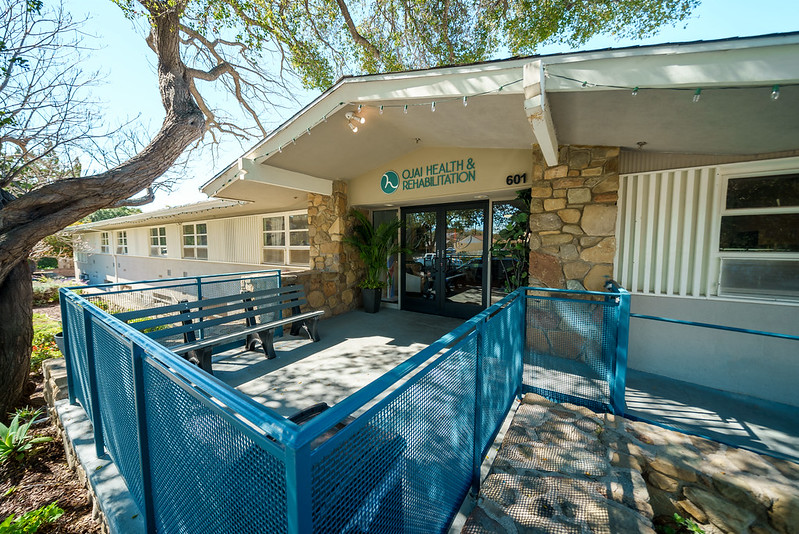
How is Ojai Health & Rehabilitation Staffed?
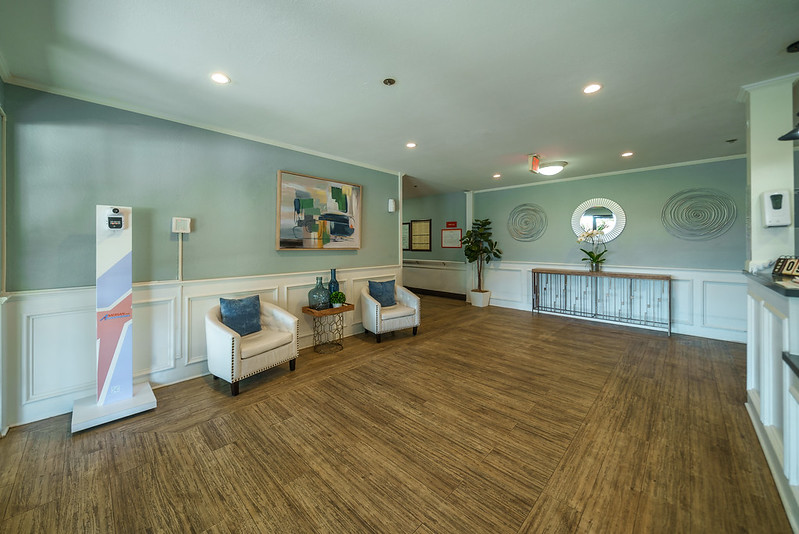
CMS rates Ojai Health & Rehabilitation's staffing level at 2 out of 5 stars, which is below average compared to other nursing homes. Staff turnover is 54%, compared to the California average of 46%.

What Have Inspectors Found at Ojai Health & Rehabilitation?

State health inspectors documented 38 deficiencies at Ojai Health & Rehabilitation during 2021 to 2025. These included: 1 that caused actual resident harm and 37 with potential for harm. Deficiencies causing actual harm indicate documented cases where residents experienced negative health consequences.

Who Owns and Operates Ojai Health & Rehabilitation?

Ojai Health & Rehabilitation is owned by a for-profit company. For-profit facilities operate as businesses with obligations to shareholders or private owners. The facility is operated by PACS GROUP, a chain that manages multiple nursing homes. With 74 certified beds and approximately 69 residents (about 93% occupancy), it is a smaller facility located in Ojai, California.

How Does Ojai Health & Rehabilitation Compare to Other California Nursing Homes?

Compared to the 100 nursing homes in California, Ojai Health & Rehabilitation's overall rating (4 stars) is above the state average of 3.2, staff turnover (54%) is near the state average of 46%, and health inspection rating (3 stars) is at the national benchmark.

What Should Families Ask When Visiting Ojai Health & Rehabilitation?

Based on this facility's data, families visiting should ask: "Can you walk me through typical staffing levels on day, evening, and night shifts?" "Can I visit during a mealtime to observe dining assistance and food quality?" "How do you handle medical emergencies, and what is your hospital transfer rate?" "Can I speak with family members of current residents about their experience?" These questions are particularly relevant given the below-average staffing rating.

Is Ojai Health & Rehabilitation Safe?

Based on CMS inspection data, Ojai Health & Rehabilitation has a clean safety record: no substantiated abuse findings (meaning no confirmed cases of resident harm), no Immediate Jeopardy citations (the most serious violation level indicating risk of serious injury or death), and is not on the Special Focus Facility watch list (a federal program monitoring the lowest-performing 1% of nursing homes). The facility has a 4-star overall rating and ranks #1 of 100 nursing homes in California. While no facility is perfect, families should still ask about staff-to-resident ratios and recent inspection results during their visit.

Do Nurses at Ojai Health & Rehabilitation Stick Around?

Ojai Health & Rehabilitation has a staff turnover rate of 54%, which is 8 percentage points above the California average of 46%. Moderate turnover is common in nursing homes, but families should still ask about staff tenure and how the facility maintains care continuity when employees leave.

Was Ojai Health & Rehabilitation Ever Fined?

Ojai Health & Rehabilitation has no federal fines on record. CMS issues fines when nursing homes fail to meet care standards or don't correct problems found during inspections. The absence of fines suggests the facility has either maintained compliance or corrected any issues before penalties were assessed. This is a positive indicator, though families should still review recent inspection reports for the full picture.

Is Ojai Health & Rehabilitation on Any Federal Watch List?

Ojai Health & Rehabilitation is not on any federal watch list. The most significant is the Special Focus Facility (SFF) program, which identifies the bottom 1% of nursing homes nationally based on persistent, serious quality problems. Not being on this list means the facility has avoided the pattern of deficiencies that triggers enhanced federal oversight. This is a positive indicator, though families should still review the facility's inspection history directly.