MEADOW CREEK POST-ACUTE
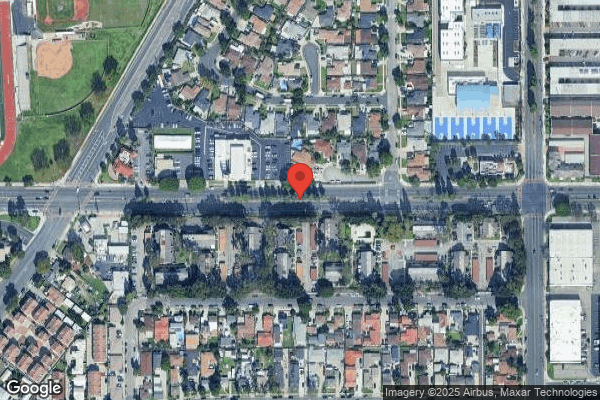

7039 ALONDRA BLVD, PARAMOUNT, CA 90723 (562) 531-0990
For profit - Limited Liability company 104 Beds LINKS HEALTHCARE GROUP Data: November 2025
Trust Grade
25/100
#1065 of 1155 in CA
Last Inspection: April 2025

Within standard 12-15 month inspection cycle. Federal law requires annual inspections.

Overview

Meadow Creek Post-Acute in Paramount, California, has received a Trust Grade of F, indicating significant concerns about the facility's operations and care quality. Ranking #1065 out of 1155 in California means they are in the bottom half of facilities statewide, and at #320 out of 369 in Los Angeles County, they are among the least favorable options available. The facility's trend is stable, with 33 issues reported in both 2024 and 2025, but the staffing rating of 2 out of 5 stars and a high turnover rate of 55% raises concerns about consistent care. There have been serious incidents, including a resident who used a ventilator being improperly assisted during repositioning, which could have led to harm, and another resident falling from a bed and sustaining lacerations due to inadequate staff assistance during transfer. While RN coverage is average, the $29,693 in fines suggests ongoing compliance issues that families should carefully consider.

Trust Score
F
25/100
In California
#1065/1155
Bottom 8%
Safety Record
Moderate
Needs review
Inspections
Holding Steady
33 → 33 violations
Staff Stability
⚠ Watch
55% turnover. Above average. Higher turnover means staff may not know residents' routines.
Penalties
✓ Good
$29,693 in fines. Lower than most California facilities. Relatively clean record.
Skilled Nurses
✓ Good
Each resident gets 43 minutes of Registered Nurse (RN) attention daily — more than average for California. RNs are trained to catch health problems early.
Violations
⚠ Watch
94 deficiencies on record. Higher than average. Multiple issues found across inspections.
★☆☆☆☆
1.0
Overall Rating
★★☆☆☆
2.0
Staff Levels
★★★☆☆
3.0
Care Quality
★☆☆☆☆
1.0
Inspection Score
Stable
2024: 33 issues
2025: 33 issues

The Good

  • Full Sprinkler Coverage · Fire safety systems throughout facility
  • No fines on record

Facility shows strength in fire safety.

The Bad

1-Star Overall Rating

Below California average (3.1)

Significant quality concerns identified by CMS

Staff Turnover: 55%

Near California avg (46%)

Higher turnover may affect care consistency

Federal Fines: $29,693

Below median ($33,413)

Moderate penalties - review what triggered them

Chain: LINKS HEALTHCARE GROUP

Part of a multi-facility chain

Ask about local staffing decisions and management

The Ugly 94 deficiencies on record

2 actual harm
Sept 2025 2 deficiencies 1 Harm
SERIOUS (G) 📢 Someone Reported This

A family member, employee, or ombudsman was alarmed enough to file a formal complaint

Actual Harm - a resident was hurt due to facility failures

Accident Prevention (Tag F0689)

A resident was harmed · This affected 1 resident

**NOTE- TERMS IN BRACKETS HAVE BEEN EDITED TO PROTECT CONFIDENTIALITY** Based on interview and record review, the facility failed to ensure a resident, who used a ventilator (a machine used in healthc...

Read full inspector narrative →
**NOTE- TERMS IN BRACKETS HAVE BEEN EDITED TO PROTECT CONFIDENTIALITY** Based on interview and record review, the facility failed to ensure a resident, who used a ventilator (a machine used in healthcare to assist or perform breathing for a patient who cannot breathe adequately on their own), had a functional limitation in range of motion ([ROM] the direction a joint can move to its full potential) to both her upper and lower extremities (arms and legs) and required a two person physical assist with bed mobility, including turning and repositioning, did not sustain a facial injury for one of three sampled residents (Resident 2). The facility failed to: 1. Ensure Certified Nurse Assistant (CNA) 2 did not turn and reposition Resident 2 by herself, without assistance, placing Resident 2 on the tubing of a ventilator circuit (a system of tubes connecting a ventilator). 2. Ensure CNA 2 followed the facility's Policy and Procedure (P/P) titled, Repositioning revised on 5/2013, which indicated .use two people while tuning or moving the resident in bed. 3. Ensure CNA 2 followed the facility's P/P titled, Safety and Supervision of Residents, revised 7/2017, which indicated .resident safety, supervision, and assistance to prevent accidents are facility wide priorities. The care team shall target interventions to reduce individual risks related to hazards in the environment. These deficient practices resulted in Resident 2 sustaining a skin tear (a traumatic wound caused by friction when the upper layer of the skin becomes torn from the underlying layers) with minimal bleeding to her left upper lip, measuring 0.3 centimeters ([cm] a unit of measurement) x 0.1 cm x 0.1 cm.Findings: During a review of Resident 2's admission Record (Face Sheet), the Face Sheet indicated Resident 2 was initially admitted to the facility on [DATE] and readmitted on [DATE] with diagnoses including cerebrovascular accident ([CVA] stroke, loss of blood flow to a part of the brain), diabetes mellitus ([DM] a disorder characterized by difficulty in blood sugar control and poor wound healing), dependency on a ventilator and residing on the facility's Sub Acute Unit (a medical care setting for Residents who need more intensive care than a standard nursing home). During a review of Resident 2's Minimum Data Set ([MDS] a resident assessment tool) dated 7/22/2025, the MDS indicated Resident 2's cognitive (thought process) skills for daily decision making were severely impaired. The MDS indicated Resident 2 had a functional limitation in ROM to her bilateral (both) upper extremities (arms), her bilateral lower extremities (legs) and was dependent (helper does all of the effort, resident does none of the effort to complete the activity or the assistance of 2 or more helpers is required for the resident to complete the activity) when rolling left and right. During a review of Resident 2's 48 Hour Baseline Care Plan dated 3/21/2025, the Care Plan indicated Resident 2 needed a two-person physical assist for bed mobility and was totally dependent on all aspects of self-care. During a review of Resident 2's Nurses Progress Note dated 9/5/2025, the Nurses Progress Note indicated Resident 2 had a skin tear to her left upper lip measuring 0.3 cm x 0.1 cm x 0.1 cm with a peri wound (the area of skin immediately surrounding an open wound) discoloration and minimal bleeding. During a review of Resident 2's Situation, Background, Assessment, Recommendation ([SBAR] a communication tool used by healthcare workers when there is a change of condition among the residents) dated 9/5/2025, the SBAR indicated Resident 2 was lying on her ventilator circuit while being cleaned by CNA 2, sustaining a skin tear on her left upper lip. During a review of Resident 2's Physicians Order Summary dated 9/5/2025, the Physicians Order Summary indicated to apply Vitamin A&D Ointment (a skin protectant that helps soothe, moisturize, and protect minor skin irritations) topically (applied directly to the skin) to the skin tear on Resident 2's upper lip every shift for 14 Days. During a telephone interview on 9/9/2025 at 10:47 a.m., Resident 2's Family Member (FM) 1 stated she received a phone call on 9/5/2025 from a Licensed Vocational Nurse (LVN 1) notifying her that Resident 2 sustained a cut on her face. FM 1 stated she asked LVN 1 how Resident 2 got the cut on her face because Resident 2 was unable to move her hands, LVN 1 could not tell her what happened. FM 1 stated later that day she received a phone call from the facility's Administrator (ADM) informing her that upon investigation he determined that CNA 2, when repositioning Resident 2, placed Resident 2 on top of her ventilator circuit on her left side, which caused Resident 2 to sustain an injury to her face. During an interview on 9/9/2025 at 12:11 p.m., the Treatment Nurse (LVN 1) stated on 9/5/2025, she entered Resident 2's room to perform a wound treatment to Resident 2 and observed her lying on her left side. LVN 1 stated following the wound treatment, she and CNA 2 turned Resident 2 on her back, that's when they both noticed blood on Resident 2's face and on her ventilator circuit. LVN 1 stated Resident 2 required a two-person assist for care and CNA 2 should have gotten another person to assist her when turning Resident 2 in bed. During an interview and on 9/10/2025 at 9:52 a.m., the Director of Staff Development (DSD) stated nurses who work on the Sub-Acute Unit, upon hire, they were instructed not to turn or reposition any of the residents by themselves. During an interview on 9/10/2025 at 11:52 a.m., the Respiratory Therapy Manager (RTM) stated nurses who work on the Sub-acute Unit should turn and reposition residents using two people and make sure the ventilator circuit tubing is not on the resident's face or head. During an interview and on 9/10/2025 at 3:48 p.m., the Director of Nursing (DON) stated the nursing staff were trained on how to prevent accidents or injuries by using a two-person assist while turning or repositioning residents. During a review of the facility's Policy and Procedure (P/P) titled, Repositioning revised on 5/2013, the P/P indicated repositioning is critical for a resident who is immobile or dependent upon staff for repositioning. The P/P indicated to. use two people while tuning or moving the resident in bed. During a review of the facility's P/P titled, Safety and Supervision of Residents, revised 7/2017, the P/P indicated the facility strives to make the environment as free from accident hazards as possible. Resident safety supervision and assistance to prevent accidents are facility wide priorities. The care team shall target interventions to reduce individual risks related to hazards in the environment, including adequate supervision.
CONCERN (D) 📢 Someone Reported This

A family member, employee, or ombudsman was alarmed enough to file a formal complaint

Potential for Harm - no one hurt, but risky conditions existed

Report Alleged Abuse (Tag F0609)

Could have caused harm · This affected 1 resident

**NOTE- TERMS IN BRACKETS HAVE BEEN EDITED TO PROTECT CONFIDENTIALITY** Based on interview and record review, the facility failed to report immediately, or no later than 24 hours, an injury of unknown...

Read full inspector narrative →
**NOTE- TERMS IN BRACKETS HAVE BEEN EDITED TO PROTECT CONFIDENTIALITY** Based on interview and record review, the facility failed to report immediately, or no later than 24 hours, an injury of unknown origin for one of three sampled residents (Resident 1). Resident 1 was found with swelling to his left elbow and an X-Ray (a procedure that takes pictures of the inside of the body to diagnose broken bones and other injuries) taken on 9/4/2025 confirmed Resident 1 had a left shoulder dislocation (an injury where the ends of bones at a joint are forced out of their normal position). Resident 1 was transferred to a General Acute Care Hospital (GACH) for further evaluation. This deficient practice resulted in the inability of the California Department of Public Health (CDPH) to investigate the injury of unknown injury in a timely manner and had the potential for facts related to Resident 1's injury to be lost and/or forgotten. Findings: During a review of Resident 1's admission Record (Face Sheet), the Face Sheet indicated Resident 1 was initially admitted to the facility on [DATE] and readmitted on [DATE] with diagnoses including metabolic encephalopathy (a brain disorder that occurs when an underlying condition causes a chemical imbalance in the blood that affects the brain), epilepsy (a chronic disorder of the brain characterized by recurrent brief episodes of involuntary movement that may involve a part of the body or the entire body, and are sometimes accompanied by loss of consciousness and control of bowel or bladder function), and intellectual disability (a person has limitations in their ability to learn, think, and solve problems, along with difficulties in practical, social, and communication skills needed for daily life). During a review of Resident 1's Minimum Data Set ([MDS] a resident assessment tool), dated 4/22/2025, the MDS indicated Resident 1 had severe cognitive (thought process) impairment. During a review of Resident 1's History and Physical (H&P) dated 8/29/2025, the H&P indicated Resident 1 did not have the capacity to understand and make decisions. During a review of Resident 1's SBAR ([situation, background, assessment, recommendation] a communication tool used by healthcare workers when there is a change of condition among the residents) dated 9/4/2025 and timed at 11:18 a.m., the SBAR indicated Resident 1's left elbow had redness in a circular shape surrounding the entire left elbow and part of the posterior (refers to the back or rear of a structure or organism) arm, edema (abnormally swollen due to an excess buildup of fluid in the body's tissues) and was warm to touch. The SBAR indicated Resident 1's physician ordered an X-Ray of Resident 1's left arm. During a review of Resident 1's Physicians Order Summary Report, dated 9/4/2025, the Physicians Order Summary Report indicated to obtain an X-Ray of Resident 1's left humerus (upper arm bone), and left shoulder to rule out a fracture, and to transfer Resident 1 to a GACH for further evaluation. During a review of Resident 1's X-Ray Report date 9/4/2025, the X-Ray Report indicated Resident 1 had moderate joint osteoarthritis (a progressive disorder of the joints, caused by a gradual loss of cartilage [a specialized connective tissue that covers the ends of bones in joints]) and a dislocation at the glenohumeral joint (a ball and socket joint that connects the upper end of the humerus to the glenoid cavity [socket] of the scapula [shoulder blade]). During a review of Resident 1's the Physician Discharge Note dated 9/5/2025 and timed at 5:14 a.m., the Physician Discharge Note indicated Resident 1 was transferred to a GACH due to a left shoulder dislocation at the glenohumeral joint. During an interview on 9/12/2025 at 10:53 a.m., and a subsequent interview on 9/15/2025 at 9 a.m., the Director of Nursing (DON) stated she did not report this to CDPH because when they searched Resident 1's records from previous hospitalizations they found that Resident 1 had a shoulder issue from a long time ago. The DON stated they considered Resident 1's shoulder dislocation a chronic (persist for a long time, typically, for more than 12 months) issue not an acute (develops suddenly) issue. During an interview on 9/17/2025 at 1:13 p.m., the Administrator (ADM) stated Resident 1's left shoulder dislocation was not reported to CDPH because it was considered a chronic issue. The ADM stated the facility had a 24-hour window to report injuries from an unknown origin, and the facility found out why Resident 1's left shoulder was dislocated during their investigation and before 24 hours had surpassed. During a review of the facility's Policy and Procedure (P/P) titled, Abuse, Neglect, Exploitation or Misappropriation - Reporting and Investigating dated 9/2022, the P/P indicated the facility will report all resident abuse (including injuries of unknown origin) to local, State and Federal agencies (as required by current regulations) and thoroughly investigate by facility management. Findings of all investigations are documented and reported. 1. If an injury of an unknown source is suspected, the suspicion must be reported immediately to the administrator and to other officials according to state law. 2. The investigator notifies the ombudsman that an investigation is being conducted. The ombudsman is invited to participate in the review process. 3. Within five (5) business days of the incident, the administrator will provide a follow-up investigation report.
Aug 2025 1 deficiency
CONCERN (E) 📢 Someone Reported This

A family member, employee, or ombudsman was alarmed enough to file a formal complaint

Potential for Harm - no one hurt, but risky conditions existed

ADL Care (Tag F0677)

Could have caused harm · This affected multiple residents

**NOTE- TERMS IN BRACKETS HAVE BEEN EDITED TO PROTECT CONFIDENTIALITY** Based on interview and record review, the facility to ensure ten of ten sampled residents (Resident's 4, 5, 10, 11, 12, 13, 14, ...

Read full inspector narrative →
**NOTE- TERMS IN BRACKETS HAVE BEEN EDITED TO PROTECT CONFIDENTIALITY** Based on interview and record review, the facility to ensure ten of ten sampled residents (Resident's 4, 5, 10, 11, 12, 13, 14, 15, 16, and 17) were provided showers on their scheduled shower day. This deficient practice resulted in incomplete personal hygiene care provided to Resident's 4, 5, 10, 11, 12, 13, 14, 15, 16, and 17, and had the potential to result in a negative impact on their quality of life and self-esteem. Findings:a. During a review of Resident 4's admission Record (Face sheet), the Face Sheet indicated Resident 4 was originally admitted to the facility on [DATE] and readmitted on [DATE] with diagnoses including respiratory failure (a serious condition that makes it hard to breathe) with tracheostomy (a surgical procedure that creates an opening through the neck into the windpipe that provides an air passage to help you breathe when the usual route for breathing is obstructed or impaired) and end stage renal disease ([ESRD] when the kidneys are no longer able to work at a level needed for day-to-day life).During a review of Resident 4's Minimum Data Set ([MDS] a resident assessment tool) dated 3/25/2025, the MDS indicated Resident 4 was able to make decisions that were consistent and reasonable. During a review of Resident 4's MDS dated [DATE], the MDS indicated Resident 4 required two or more person assistance from staff to complete her activities of daily living ([ADLs] activities such as bathing, dressing and toileting a person performs daily). During an interview on 8/7/2025 at 11:48 a.m., Resident 4 stated the Certified Nursing Assistants (CNA) and the Respiratory Therapists ([RT] a healthcare professional who specializes in the treatment and management of breathing disorders) assist her on her shower days. Resident 4 stated the RT must accompany her to the shower room to assist with her tracheostomy. Resident 4 stated she likes to take a shower on her scheduled shower day because she likes to feel fresh and clean but doesn't always get showered on her assigned shower days. Resident 4 stated when she doesn't get showered, she feels dirty. During a review of the facility's undated Resident Shower Schedule, the Shower Schedule indicated Resident 4 was to receive a shower on 7/26/2025.During a review of Resident 4's Documentation Survey Report Bathing Task dated 7/2025, the report indicated Resident 4 did not receive a shower on 7/26/2025.b. During a review of Resident 5's admission Record (Face Sheet), the Face Sheet indicated Resident 5 was originally admitted to the facility on [DATE] and readmitted on [DATE], with diagnoses including respiratory failure, tracheostomy, dependency on a ventilator (a medical device to help support or replace breathing), and end stage renal disease.During a review of Resident 5's MDS, dated [DATE], the MDS indicated Resident 5 was not able to understand or be understood by others. The MDS indicated Resident 5 required two or more person assistance from staff to complete her ADLs. During a review of Resident 5's untitled Care Plan dated 7/20/2023 and revised on 8/5/2025, the Care Plan indicated Resident 5 had an ADL self-care performance deficit related to dementia (a decline in mental ability severe enough to interfere with daily life which includes memory loss, difficulty with language, poor judgement and changes in personality and behavior), impaired balance (trouble staying steady on one's feet whether standing, sitting or moving), stroke (a condition that occurs when blood flow to the brain is disrupted) and respiratory failure. The Care Plan interventions indicated providing total ADL care as indicated.During a telephone interview on 8/6/2025 at 12:38 p.m. with Resident 5's Responsible Party 1 (RP 1). RP 1 stated she called the facility on 7/26/2025 (exact time undisclosed) to check on Resident 5's condition. RP 1 stated she was told by an unknown licensed nurse that there were no showers given to the residents that day because there was only one RT in Station 1. RP 1 stated Resident 5 missed her scheduled routine shower and felt the care of Resident 5 was unsatisfactory and incomplete. RP 1 stated she was worried that Resident 5 will acquire rashes on her skin, as Resident 5 only gets showered twice a week in the facility. During a review of the facility's undated Resident Shower Schedule, the Shower Schedule indicated Resident 5 was to receive a shower on 7/26/2025.During a review of Resident 5's Documentation Survey Report Bathing Task dated 7/2025, the report indicated Resident 5 did not receive a shower on 7/26/2025.c. During a review of Resident 10's admission Record (Face sheet), the face sheet indicated Resident 10 was originally admitted to the facility on [DATE] and readmitted on [DATE] with diagnoses including respiratory failure, tracheostomy, and generalized muscle weaknesses. During a review of Resident 10's MDS dated [DATE], the MDS indicated Resident 10 had severe cognitive impairment and required two or more person assistance from staff to complete his ADLs. During a review of Resident 10's untitled Care Plan dated 5/22/2025, the Care Plan indicated Resident 10 had an ADL self-care performance deficit related to impaired mobility (difficulty moving around or experiencing limitations in their physical movement). The Care Plan goal indicated all of Resident 10's ADL needs will be met daily. During a review of the facility's undated Resident Shower Schedule, the Shower Schedule indicated Resident 10 was to receive a shower on 7/26/2025.During a review of Resident 5's Documentation Survey Report Bathing Task dated 7/2025, the report indicated Resident 10 did not receive a shower on 7/26/2025.d. During a review of Resident 11's admission Record (Face sheet), the Face Sheet indicated Resident 11 was originally admitted to the facility on [DATE] and readmitted on [DATE] with diagnoses including respiratory failure, tracheostomy, and epilepsy (a brain disorder in which a person has repeated seizures [uncontrolled movement]).During a review of Resident 11's MDS dated [DATE], the MDS indicated Resident 11 was unable to make decisions for his care needs and required two or more person assistance from staff to complete his ADLs. During a review of Resident 11's untitled Care Plan dated 10/9/2023 and revised 4/3/2025, the Care Plan indicated Resident 11 had an ADL self-care performance deficit related to respiratory failure and impaired mobility. The Care Plan goal indicated to keep Resident 11 clean, dry and well-groomed, with interventions including assist Resident 11 with ADLs as needed and provide total ADL care as indicated.During a review of the facility's undated Resident Shower Schedule, the Shower Schedule indicated Resident 11 was to receive a shower on 7/26/2025.During a review of Resident 11's Documentation Survey Report Bathing Task dated 7/2025, the report indicated Resident 11 did not receive a shower on 7/26/2025.e. During a review of Resident 12's admission Record (Face sheet), the face sheet indicated Resident 12 was admitted to the facility on [DATE] with diagnoses including respiratory failure with tracheostomy and epilepsy.During a review of Resident 12's MDS dated [DATE], the MDS indicated Resident 12 had severe cognitive impairment and required two or more person assistance from staff to complete his ADLsDuring a review of Resident 12's untitled Care Plan dated 7/18/2023 and revised 2/10/2025, the Care Plan indicated Resident 12 had an ADL self-care performance deficit related to respiratory failure and weakness. The Care Plan indicated Resident 12 had interventions which included assisting Resident 12 with ADLs as needed and providing ADL care as indicated.During a review of the facility's undated Resident Shower Schedule, the Shower Schedule indicated Resident 12 was to receive a shower on 7/26/2025.During a review of Resident 12's Documentation Survey Report Bathing Task dated 7/2025, the report indicated Resident 5 did not receive a shower on 7/26/2025.f. During a review of Resident 13's admission Record (Face sheet), the face sheet indicated Resident 13 was originally admitted to the facility on [DATE] and readmitted on [DATE] with diagnoses including respiratory failure, tracheostomy, and intracerebral hemorrhage (a condition where there is bleeding between the skull and the brain tissue).During a review of Resident 13's MDS dated [DATE], the MDS indicated Resident 13 was unable to make decisions for his care needs and required two or more person assistance from staff to complete his ADLs.During a review of Resident 13's untitled Care Plan dated 5/3/2025 and revised 8/8/2025, the Care Plan indicated Resident 13 had an ADL self-care performance deficit related to limited mobility and stroke ([cerebrovascular accident (CVA)] loss of blood flow to part of the brain. The Care Plan interventions indicated Resident 13 needs assistance with bathing. During a review of the facility's undated Resident Shower Schedule, the Shower Schedule indicated Resident 13 was to receive a shower on 7/26/2025.During a review of Resident 13's Documentation Survey Report Bathing Task dated 7/2025, the report indicated Resident 13 did not receive a shower on 7/26/2025.g. During a review of Resident 14's admission Record (Face sheet), the Face Sheet indicated Resident 14 was admitted to the facility on [DATE] with diagnoses including respiratory failure, tracheostomy, dependency on a ventilator, and cerebral infarction.During a review of Resident 14's MDS dated [DATE], the MDS indicated Resident 14 had severe cognitive impairment and required two or more person assistance from staff to complete her ADLs. During a review of Resident 14's untitled Care Plan dated 2/14/2025, the Care Plan indicated Resident 14 had an ADL self-care performance deficit related to cognitive impairment (a condition when a person has problems remembering things, concentrating, making decisions and solving problems). The Care Plan goal indicated to provide assistance to Resident 14 with her ADLs daily. During a review of the facility's undated Resident Shower Schedule, the Shower Schedule indicated Resident 14 was to receive a shower on 7/26/2025.During a review of Resident 14's Documentation Survey Report Bathing Task dated 7/2025, the report indicated Resident 14 did not receive a shower on 7/26/2025.h. During a review of Resident 15's admission Record (Face sheet), the Face Sheet indicated Resident 15 was originally admitted to the facility on [DATE] and readmitted on [DATE], with diagnoses including respiratory failure, tracheostomy, dependency on a ventilator, and cerebral palsy (a group of disorders that affect movement and muscle control due to damage to the developing brain). During a review of Resident 15's MDS dated [DATE], the MDS indicated Resident 15 had severe cognitive impairment and required two or more person assistance from staff to complete his activities of daily living (ADLs) such as bathing, dressing, personal hygiene and toileting a person performs daily care for themselves.During a review of the facility's undated Resident Shower Schedule, the Shower Schedule indicated Resident 15 was to receive a shower on 7/26/2025.During a review of Resident 15's Documentation Survey Report Bathing Task dated 7/2025, the report indicated Resident 15 did not receive a shower on 7/26/2025.i. During a review of Resident 16's admission Record (Face sheet), the face sheet indicated Resident 16 was admitted to the facility on [DATE] with diagnosis including respiratory failure, tracheostomy, dependency on a ventilator and metabolic encephalopathy (a change in how the brain brains works due to underlying condition with symptoms such as confusion, memory loss, difficulty concentrating and changes in personality).During a review of Resident 16's MDS dated [DATE], the MDS indicated Resident 16 had severe cognitive impairment and required two or more person assistance from staff to complete his activities of ADLs.During a review of Resident 16's untitled Care Plan dated 7/11/2025, the Care Plan indicated Resident 16 had an ADL self-care performance deficit related to dementia (a progressive state of decline in mental abilities). The Care Plan goal indicated to provide ADL care to Resident 16 daily. During a review of the facility's undated Resident Shower Schedule, the Shower Schedule indicated Resident 16 was to receive a shower on 7/26/2025.During a review of Resident 16's Documentation Survey Report Bathing Task dated 7/2025, the report indicated Resident 16 did not receive a shower on 7/26/2025.j. During a review of Resident 17's admission Record (Face Sheet), the Face Sheet indicated Resident 17 was originally admitted to the facility on [DATE] and readmitted on [DATE] with diagnoses including respiratory failure, tracheostomy, and cerebrovascular disease.During a review of Resident 17's MDS dated [DATE], the MDS indicated Resident 17 had severe cognitive impairment and required two or more person assistance from staff to complete her ADLs.During a record review of the facility's resident census on 7/26/2025, the facility census indicated there were 43 residents located in Station 1.During a record review of the facility's Respiratory Therapist (RT) July 2025 Schedule dated 7/26/2025, the RT Schedule indicated there were two respiratory therapists scheduled to work 12 hours each in Station 1 from 6:00 a.m. to 6:30 p.m.During a record review of the facility's Staff Time Clock Log dated 7/26/2025, the Staff Time Clock Log indicated there were two RTs who each worked three to four hours overtime, respectively from the previous night on 7/25/2025. The Staff Time Clock Log indicated only one RT continued to work at Station 1 for eight hours on 7/26/2025 from 6 a.m. to 6:30 p.m. shift.During an interview on 8/7/2025 at 12:02 p.m., with the Respiratory Therapist 1 (RT 1), RT 1 stated on 7/26/2025 at 6 a.m. to 6:30 p.m., there were 2 respiratory therapists who stayed over from the night shift to help administer the first round of residents' breathing treatments at Station 1. RT 1 stated he continued to work by himself for the rest of the remaining eight hours at Station 1 and was unable to assist with the resident's scheduled showers. During an interview on 8/7/2025 at 1:08 p.m., with Certified Nursing Assistant 1 (CNA 1), CNA 1 stated when she worked on 7/26/2025 from the 7 a.m. to 3 p.m. shift, CNA 1 stated the residents scheduled for a shower were only provided with bed baths because there was only one RT who worked that day. CNA 1 stated the residents from Station 1 must be accompanied by an RT during their shower to prevent accidental removal of their tracheostomy tube and to make sure the residents are safely connected to the ventilator while the nursing assistants perform the task. CNA 1 stated it was important for the residents to be assisted and provided with their ADLs such as a shower because they need to be cleaned well and they will feel comfortable. CNA 1 stated if there were enough RTs that day, the residents wouldn't have missed their scheduled showers.During an interview and record review on 8/8/2025 at 10 a.m., with Treatment Nurse 2 (TN 2), TN 2 stated and confirmed there were 10 residents who were scheduled to have a shower on 7/26/2025 at Station 1. TN 2 stated Resident 4, Resident 5, Resident 10, Resident 11, Resident 12, Resident 13, Resident 14, Resident 15, Resident 16, and Resident 17 were all dependent on the nursing staff and needed respiratory care assistance when showering. TN 2 stated if there were not enough delegated staff to assist the residents during their ADLs, such as showering, the delivery of care of the residents would be delayed and/or missed.During an interview on 8/8/2025 at 12:17 p.m., with the Director of Staff Development (DSD), the DSD stated one of the nursing assistants who worked at Station 1 on 7/26/20205 at 7 a.m. to 3 p.m. shift informed her that the 10 residents who were scheduled to have a shower on that day were given a bed baths because there was not enough respiratory therapists to assist them with the task. The DSD stated it was necessary for the nursing assistant and the respiratory therapist to work hand in hand while providing a shower for the residents located at Station 1. The DSD stated the RT must assist the CNAs to make sure the residents tracheostomy site remains patent and free from accidental dislodgement that could lead to harm and/or death.During an interview on 8/8/2025 at 3:34 p.m., with the Director of Nursing (DON), the DON stated it was important for the facility to be adequately staffed with respiratory therapists in Station 1 during the morning shift so the nursing staff and the RTs can assist the residents during their shower to ensure the residents needs are met and they are monitored for any changes in condition and prevent complications of skin integrity such as rashes and other skin problems. During an interview on 8/82025 at 3:55 p.m., with the [NAME] President and Regional Director (VPRD), the VPRD stated it was the facility staff's responsibility to ensure all residents are assisted with their ADLs such as a shower so the residents feel clean, comfortable and dignified.During a review of the Facility Assessment, revised 2/14/2025, the Facility Assessment indicated the following:a. the facility offers services and care based on the residents' needs including, but not limited to activities of daily living, mobility and fall/injury prevention, bowel and bladder, skin integrity, mental health and behavior, medications, pain management, infection control and prevention, management of medical conditions, special care needs such as subacute and dialysis, nutrition, person-centered psycho/social/spiritual/social support and therapy services such as respiratory therapy.b. the facility provides resources needed to provide competent support and care for the resident population every day and during emergencies by ensuring there is adequate staff including but not limited to nursing services and therapy services such as respiratory therapists, andc. the facility shall ensure there is sufficient staff to meet the needs of the residents at any given time by the licensed nurses and other services such as respiratory therapists to assist the residents and ensure ADLs are completed and the residents' changing needs are provided.During a review of the facility's Policy and Procedure (P&P) titled, Activities of Daily Living (ADL), Supporting, revised 3/2018, the P&P indicated the facility shall be provided with care, treatment and services appropriate to maintain or improve their ability to carry out activities of daily living (ADLs). The P&P indicated the residents who are unable to carry out activities of daily living independently will receive the services necessary to maintain good nutrition, grooming and personal and oral hygiene.
May 2025 3 deficiencies
CONCERN (E) 📢 Someone Reported This

A family member, employee, or ombudsman was alarmed enough to file a formal complaint

Potential for Harm - no one hurt, but risky conditions existed

Deficiency F0676 (Tag F0676)

Could have caused harm · This affected multiple residents

Based on interview and record review the facility failed to ensure one of two sampled residents (Resident 2) received oral care. This deficient practice placed Resident 2 at risk for poor dental hygie...

Read full inspector narrative →
Based on interview and record review the facility failed to ensure one of two sampled residents (Resident 2) received oral care. This deficient practice placed Resident 2 at risk for poor dental hygiene and increased the risk for oral infections. Findings: During a review of Resident 2 ' s admission record, the admission record indicated the facility initially admitted Resident 2 on 1/17/2023, with diagnoses including muscle weakness, abnormalities of gait and mobility, and dementia (a progressive state of decline in mental abilities). During a review of Resident 2 ' s Minimum Data Set (MDS), a resident assessment tool, dated 1/19/2025, the MDS indicated moderately impaired cognition of Resident 2. The MDS indicated Resident required supervision (helper provides verbal cues and touching assistance) with oral hygiene and personal hygiene. During an interview and record review on 5/20/2025 at 9:15 a.m., with Licensed Vocational Nurse (LVN) 2, Resident 2 ' s Point of Care Response History, Task :oral care was reviewed. The history indicated to provide Resident 2 with oral care every shift and as needed. The history indicated from 4/21/2025 until 5/19/2025, Resident 2 did not receive oral care every shift. LVN 2 stated nursing had three shifts in the facility (day shift, afternoon shift, and night shift. LVN 2 stated staff need to ensure Resident 2 performed or received oral care every shift and as needed. During an interview with the Director of Nursing (DON) on 5/20/2025 a 10:13 a.m., the DON stated if it was not documented it was not done. The DON stated oral care should be provided to each resident at least every shift to improve quality of life and care. During a review of the facility ' s policy and procedure (P&P) titled, Mouth Care, revised 2/2018, the P&P indicated the purpose of this procedure were to keep residents ' lips and oral tissues moist, to cleanse and freshen the resident ' s mouth, and to prevent oral infection. Oral care provided should be recorded in the residents ' medical record: the date and time the mouth care was provided, the name and title of the individual who provided the mouth care. Based on interview and record review the facility failed to ensure one of two sampled residents (Resident 2) received oral care. This deficient practice placed Resident 2 at risk for poor dental hygiene and increased the risk for oral infections. Findings: During a review of Resident 2's admission record, the admission record indicated the facility initially admitted Resident 2 on 1/17/2023, with diagnoses including muscle weakness, abnormalities of gait and mobility, and dementia (a progressive state of decline in mental abilities). During a review of Resident 2's Minimum Data Set (MDS), a resident assessment tool, dated 1/19/2025, the MDS indicated moderately impaired cognition of Resident 2. The MDS indicated Resident required supervision (helper provides verbal cues and touching assistance) with oral hygiene and personal hygiene. During an interview and record review on 5/20/2025 at 9:15 a.m., with Licensed Vocational Nurse (LVN) 2, Resident 2's Point of Care Response History, Task :oral care was reviewed. The history indicated to provide Resident 2 with oral care every shift and as needed. The history indicated from 4/21/2025 until 5/19/2025, Resident 2 did not receive oral care every shift. LVN 2 stated nursing had three shifts in the facility (day shift, afternoon shift, and night shift. LVN 2 stated staff need to ensure Resident 2 performed or received oral care every shift and as needed. During an interview with the Director of Nursing (DON) on 5/20/2025 a 10:13 a.m., the DON stated if it was not documented it was not done. The DON stated oral care should be provided to each resident at least every shift to improve quality of life and care. During a review of the facility's policy and procedure (P&P) titled, Mouth Care , revised 2/2018, the P&P indicated the purpose of this procedure were to keep residents' lips and oral tissues moist, to cleanse and freshen the resident's mouth, and to prevent oral infection. Oral care provided should be recorded in the residents' medical record: the date and time the mouth care was provided, the name and title of the individual who provided the mouth care.
CONCERN (E) 📢 Someone Reported This

A family member, employee, or ombudsman was alarmed enough to file a formal complaint

Potential for Harm - no one hurt, but risky conditions existed

Pressure Ulcer Prevention (Tag F0686)

Could have caused harm · This affected multiple residents

**NOTE- TERMS IN BRACKETS HAVE BEEN EDITED TO PROTECT CONFIDENTIALITY** Based on interview and record review the facility failed to ensure wound treatments were administered for three out of six sampl...

Read full inspector narrative →
**NOTE- TERMS IN BRACKETS HAVE BEEN EDITED TO PROTECT CONFIDENTIALITY** Based on interview and record review the facility failed to ensure wound treatments were administered for three out of six sampled residents ( Resident 7,8,9) with pressure ulcers (localized damage to the skin and/or underlying tissue usually over a bony prominence) on 5/4/2025. This deficient practices had the potential to result in poor wound healing. Findings: During a review of Resident 7 ' s admission record, the admission record indicated the facility initially admitted Resident 7 on 4/9/2025, with diagnoses including Metabolic encephalopathy (brain disorder), attention to gastrostomy (G- tube - a surgical opening fitted with a device to allow feedings to be administered directly to the stomach common for people with swallowing problems). During a review of Resident 7 ' s Minimum Data Set (MDS), a resident assessment tool, dated 5/7/2025, the MDS indicated intact cognition of Resident 7. The MDS indicated Resident 7 was dependent (staff does all the effort to complete task) on staff for oral hygiene, toileting hygiene, and showering. The MDS indicated the resident had several presure ulcers present when admitted to the facility. During a review of Resident 7 ' s Treatment Administration Record (TAR), 5/4/2025, the TAR indicated the following orders were not administered in the day shift: 1. Betadine external solution (chemical agent to kill germs) to right foot 1,2,3, toes topically daily for Deep tissue injury (type of skin injury) for days cleanse with normal saline (NS- cleansing solution) pat dry, apply iodine (chemical agent to kill germs) and leave open to air. 2. Santyl External Ointment 250 UNIT/Gram (Collagenase - ointment used to remove damaged tissue from chronic skin ulcers and severely burned areas), Apply to Left lower extremity, right anterior leg, left medial heel, left lateral lower extremity, right ischium (hip bone), right lateral malleolus (ankle bone), left medial heel, sacral coccyx (Tail bone), topically every day shift for 30 Days, cleanse with normal saline, pat dry, apply Santyl ointment, cover with foam dressing. 3. Zinc Oxide External Ointment 20% (topical ointment to prevent and treat skin irritation), Apply to scrotum (sac of the male external genitalia located at the base of the penis) topically every shift for moisture associated skin damage (MASD - skin problem) for 30 Days cleanse with soap and water, pat dry, apply zinc oxide ointment, leave open to air. During a review of Resident 8 ' s admission record, the admission record indicated the facility initially admitted Resident 8 on 10/11/2024, with diagnoses including Hemiplegia (total paralysis of the arm, leg, and trunk on the same side of the body) and hemiparesis (weakness or the inability to move on one side of the body) following cerebral infarction (area of brain tissue that due to cessation of blood flow) affecting the left dominant side and attention to gastrostomy. During a review of Resident 8 ' s MDS, dated [DATE], the MDS indicated severely impaired cognition of Resident 8. The MDS indicated Resident 8 was dependent on staff for all Activities of Daily Living (ADLs- activities such as bathing, dressing and toileting a person performs daily).The MDS indicated the resident had a presure ulcer present when admitted to the facility. During a review of Resident 8 ' s Treatment Administration Record (TAR), 5/4/2025, the TAR indicated the order for Sanyl was not administered. The order was for Santyl External Ointment 250 UNIT/Gram, Apply to Sacral coccyx (tail bone) topically every day shift for 30 days cleanse with NS pat dry apply Santyl collagen and alginate (type of dressing for wound). During a review of Resident 9 ' s admission record, the admission record indicated the facility initially admitted Resident 9 on 11/4/2024, with diagnoses including Hemiplegia and hemiparesis following cerebral infarction affecting the left dominant side and attention to gastrostomy. During a review of Resident 9 ' s MDS, dated [DATE], the MDS indicated severely impaired cognition of Resident 9. The MDS indicated Resident 9 was dependent on staff for all ADL's. During a review of Resident 9's Skin Assessment (No-pressure injury), dated 4/22/2025 at 4 p.m., the assessment indicated Resident 9 was admited with left heel scab (dry crust over a wound). During a review of Resident 9 ' s Treatment Administration Record (TAR), 5/4/2025, the following orders were not administered in the day shift: 1. Left medial heel ulcer (skin wound): cleanse with NS, Pat dry, paint iodine, leave open to air and off-load (reduce pressure) daily x 30 days then re-evaluate. Everyday shift for 30 Days. 2. May apply Vitamin A&D ointment (medication ointment to prevent or treat minor skin irritations) to generalized body daily as skin maintenance every day shift. 3. Medi honey Wound & Burn Dressing External Paste (medication for wounds): Apply to Left heel topically every day shift for diabetic ulcer related to for 30 Days cleanse with NS pat dry apply medi honey and apply foam dressing. During an interview and record review on 5/19/2025 at 2:20 p.m. with Treatment (TX) Nurse 2, Resident 7, 8, and 9 ' s Treatment Administration Record (TAR) for 5/4/2025 were reviewed and theTAR indicated treatments were not administered on 5/4/2025 for Resident 7,8, and 9. TX Nurse 2 stated, if it was not signed it was not administered and treatments should be completed as ordered for the residents condition to improve. During an interview with the Director of Nursing (DON) on 5/20/2025 a 9:20 a.m., the DON stated if it was not documented it was not done. The DON stated treatment orders need to be administered as ordered for quality of life and care. During a review of the facility ' s policy and procedure (P&P) titled, Administering Medications, revised 4/2019, the P&P indicated medications were administered in a safe and timely manner as prescribed. The P&P indicated topical medications used in treatments are recorded in the residents ' treatment record. During a review of the facility ' s policy and procedure (P&P) titled, Wound Care, revised 10/2010, the P&P indicated the purpose of the policy was to provide guidelines for the care of wounds to promote healing. The P&P indicated the physician order will be verified and implemented. The P&P indicated wound care will be documented in the medical records after performed. During a review of the facility ' s Job description: Licensed Nurse/Medication/ Treatment Nurse, undated, the job description indicated the treatment nurse will provide direct nursing care to all residents including medication management and skin care treatments. The treatment nurse will administer medications and treatments as ordered by the physician Based on interview and record review the facility failed to ensure wound treatments were administered for three out of six sampled residents ( Resident 7,8,9) with pressure ulcers (localized damage to the skin and/or underlying tissue usually over a bony prominence) on 5/4/2025. This deficient practices had the potential to result in poor wound healing. Findings: During a review of Resident 7's admission record, the admission record indicated the facility initially admitted Resident 7 on 4/9/2025, with diagnoses including Metabolic encephalopathy (brain disorder), attention to gastrostomy (G- tube - a surgical opening fitted with a device to allow feedings to be administered directly to the stomach common for people with swallowing problems), During a review of Resident 7's Minimum Data Set (MDS), a resident assessment tool, dated 5/7/2025, the MDS indicated intact cognition of Resident 7. The MDS indicated Resident 7 was dependent (staff does all the effort to complete task) on staff for oral hygiene, toileting hygiene, and showering. The MDS indicated the resident had several presure ulcers present when admitted to the facility. During a review of Resident 7's Treatment Administration Record (TAR), 5/4/2025, the TAR indicated the following orders were not administered in the day shift: 1. Betadine external solution (chemical agent to kill germs) to right foot 1,2,3, toes topically daily for Deep tissue injury (type of skin injury) for days cleanse with normal saline (NS- cleansing solution) pat dry, apply iodine (chemical agent to kill germs) and leave open to air. 2. Santyl External Ointment 250 UNIT/Gram (Collagenase - ointment used to remove damaged tissue from chronic skin ulcers and severely burned areas), Apply to Left lower extremity, right anterior leg, left medial heel, left lateral lower extremity, right ischium (hip bone), right lateral malleolus (ankle bone), left medial heel, sacral coccyx (Tail bone), topically every day shift for 30 Days, cleanse with normal saline, pat dry, apply Santyl ointment, cover with foam dressing. 3. Zinc Oxide External Ointment 20% (topical ointment to prevent and treat skin irritation), Apply to scrotum (sac of the male external genitalia located at the base of the penis) topically every shift for moisture associated skin damage (MASD – skin problem) for 30 Days cleanse with soap and water, pat dry, apply zinc oxide ointment, leave open to air. During a review of Resident 8's admission record, the admission record indicated the facility initially admitted Resident 8 on 10/11/2024, with diagnoses including Hemiplegia (total paralysis of the arm, leg, and trunk on the same side of the body) and hemiparesis (weakness or the inability to move on one side of the body) following cerebral infarction (area of brain tissue that due to cessation of blood flow) affecting the left dominant side and attention to gastrostomy. During a review of Resident 8's MDS, dated [DATE], the MDS indicated severely impaired cognition of Resident 8. The MDS indicated Resident 8 was dependent on staff for all Activities of Daily Living (ADLs- activities such as bathing, dressing and toileting a person performs daily).The MDS indicated the resident had a presure ulcer present when admitted to the facility. During a review of Resident 8's Treatment Administration Record (TAR), 5/4/2025, the TAR indicated the order for Sanyl was not administered. The order was for Santyl External Ointment 250 UNIT/Gram, Apply to Sacral coccyx (tail bone) topically every day shift for 30 days cleanse with NS pat dry apply Santyl collagen and alginate (type of dressing for wound). During a review of Resident 9's admission record, the admission record indicated the facility initially admitted Resident 9 on 11/4/2024, with diagnoses including Hemiplegia and hemiparesis following cerebral infarction affecting the left dominant side and attention to gastrostomy. During a review of Resident 9's MDS, dated [DATE], the MDS indicated severely impaired cognition of Resident 9. The MDS indicated Resident 9 was dependent on staff for all ADLs. During a review of Resident 9's Skin Assessment (No-pressure injury), dated 4/22/2025 at 4 p.m., the assessment indicated Resident 9 was admited with left heel scab (dry crust over a wound). During a review of Resident 9's Treatment Administration Record (TAR), 5/4/2025, the following orders were not administered in the day shift: 1. Left medial heel ulcer (skin wound): cleanse with NS, Pat dry, paint iodine, leave open to air and off-load (reduce pressure) daily x 30 days then re-evaluate. Everyday shift for 30 Days. 2. May apply Vitamin A&D ointment (medication ointment to prevent or treat minor skin irritations) to generalized body daily as skin maintenance every day shift 3. Medi honey Wound & Burn Dressing External Paste (medication for wounds): Apply to Left heel topically every day shift for diabetic ulcer related to for 30 Days cleanse with NS pat dry apply medi honey and apply foam dressing. During an interview and record review on 5/19/2025 at 2:20 p.m. with Treatment (TX) Nurse 2, Resident 7, 8, and 9's Treatment Administration Record (TAR) for 5/4/2025 were reviewed and theTAR indicated treatments were not administered on 5/4/2025 for Resident 7,8, and 9. TX Nurse 2 stated, if it was not signed it was not administered and treatments should be completed as ordered for the residents condition to improve. During an interview with the Director of Nursing (DON) on 5/20/2025 a 9:20 a.m., the DON stated if it was not documented it was not done. The DON stated treatment orders need to be administered as ordered for quality of life and care. During a review of the facility's policy and procedure (P&P) titled, Administering Medications , revised 4/2019, the P&P indicated medications were administered in a safe and timely manner as prescribed. The P&P indicated topical medications used in treatments are recorded in the residents' treatment record. During a review of the facility's policy and procedure (P&P) titled, Wound Care , revised 10/2010, the P&P indicated the purpose of the policy was to provide guidelines for the care of wounds to promote healing. The P&P indicated the physician order will be verified and implemented. The P&P indicated wound care will be documented in the medical records after performed. During a review of the facility's Job description: Licensed Nurse/Medication/ Treatment Nurse , undated, the job description indicated the treatment nurse will provide direct nursing care to all residents including medication management and skin care treatments. The treatment nurse will administer medications and treatments as ordered by the physician
CONCERN (E) 📢 Someone Reported This

A family member, employee, or ombudsman was alarmed enough to file a formal complaint

Potential for Harm - no one hurt, but risky conditions existed

Tube Feeding (Tag F0693)

Could have caused harm · This affected multiple residents

**NOTE- TERMS IN BRACKETS HAVE BEEN EDITED TO PROTECT CONFIDENTIALITY** Based on interview and record review, the facility failed to cleanse and change the gastrostomy ( G- tube - a surgical opening f...

Read full inspector narrative →
**NOTE- TERMS IN BRACKETS HAVE BEEN EDITED TO PROTECT CONFIDENTIALITY** Based on interview and record review, the facility failed to cleanse and change the gastrostomy ( G- tube - a surgical opening fitted with a device to allow feedings to be administered directly to the stomach common for people with swallowing problems) site dressing on 5/4/2025 for three out of siix sampled residents (Residents 7, 8, 9). This deficient practices had the potential to result in G-tube site infections. Findings: During a review of Resident 7 ' s admission record, the admission record indicated the facility initially admitted Resident 7 on 4/9/2025, with diagnoses including Metabolic encephalopathy (brain disorder) and attention to gastrostomy. During a review of Resident 7 ' s Minimum Data Set (MDS), a resident assessment tool, dated 5/7/2025, the MDS indicated intact cognition of Resident 7. The MDS indicated Resident 7 was dependent (staff does all the effort to complete task) on staff for oral hygiene, toileting hygiene, and showering. During a review of Resident 7 ' s Treatment Administration Record (TAR), 5/4/2025, the TAR indictaed the order to Cleanse G-Tube site with nomal saline (NS - wound cleaning solution), pat dry and apply dry dressing and secure with tape daily and assess for signs and symptoms of infection during treatment was not completed. During a review of Resident 8 ' s admission record, the admission record indicated the facility initially admitted Resident 8 on 10/11/2024, with diagnoses including hemiplegia (total paralysis of the arm, leg, and trunk on the same side of the body) and hemiparesis (weakness or the inability to move on one side of the body) following cerebral infarction (area of brain tissue that due to cessation of blood flow) affecting the left dominant side and attention to gastrostomy. During a review of Resident 8 ' s MDS, dated [DATE], the MDS indicated severely impaired cognition of Resident 8. The MDS indicated Resident 8 was dependent on staff for all Activities of Daily Living (ADLs- activities such as bathing, dressing and toileting a person performs daily). During a review of Resident 8 ' s TAR, 5/4/2025, the TAR indicated the order to Cleanse G-Tube site with NS, pat dry and apply dry dressing and secure with tape daily and assess for signs and symptoms of infection during treatment was not completed. During a review of Resident 9 ' s admission record, the admission record indicated the facility initially admitted Resident 9 on 11/4/2024, with diagnoses including hemiplegia and hemiparesis following cerebral infarction affecting the left dominant side and attention to gastrostomy. During a review of Resident 9 ' s MDS, dated [DATE], the MDS indicated severely impaired cognition of Resident 9. The MDS indicated Resident 9 was dependent on staff for all ADL's. During a review of Resident 9 ' s TAR, 5/4/2025, the TAR indicated the order to Cleanse G-Tube site with NS, pat dry and apply dry dressing and secure with tape daily and assess for signs and symptoms of infection during treatment was not completed. During an interview and record review on 5/19/2025 at 2:20 p.m. with Treatment (TX) Nurse 2, Resident 7, 8, and 9 ' s Treatment Administration Record (TAR) for 5/4/2025 were reviewed and the TAR indicated that G tube sites were not cleaned and dressing was not changed on 5/4/2025 for Resident 7, 8, and 9. TX Nurse 2 stated, if ithe TAR was not signed it was not administered and treatments should be completed as ordered for the residents condition to improve. During an interview with the Director of Nursing (DON) on 5/20/2025 a 9:20 a.m., the DON stated if it was not documented it was not done. The DON stated treatment orders need to be administered as ordered for quality of life and care. During a review of the facility ' s policy and procedure (P&P) titled, Gastrostomy/Jejunostomy Site Care, revised 10/2011, the P&P indicated the purpose of the policy was to promote cleanliness and to protect the gastrostomy site from irritation, breakdown, and infection. The P&P indicated the person performing the procedure will document date and time procedure was performed in the medical record. During a review of the facility ' s Job description: Licensed Nurse/Medication/ Treatment Nurse, undated, the job description indicated the treatment nurse will provide direct nursing care to all residents including medication management and skin care treatments. The treatment nurse will administer medications and treatments as ordered by the physician. Based on interview and record review, the facility failed to cleanse and change the gastrostomy ( G- tube - a surgical opening fitted with a device to allow feedings to be administered directly to the stomach common for people with swallowing problems) site dressing on 5/4/2025 for three out of siix sampled residents (Residents 7, 8, 9). This deficient practices had the potential to result in G-tube site infections. Findings: During a review of Resident 7's admission record, the admission record indicated the facility initially admitted Resident 7 on 4/9/2025, with diagnoses including Metabolic encephalopathy (brain disorder) and attention to gastrostomy. During a review of Resident 7's Minimum Data Set (MDS), a resident assessment tool, dated 5/7/2025, the MDS indicated intact cognition of Resident 7. The MDS indicated Resident 7 was dependent (staff does all the effort to complete task) on staff for oral hygiene, toileting hygiene, and showering. During a review of Resident 7's Treatment Administration Record (TAR), 5/4/2025, the TAR indictaed the order to Cleanse G-Tube site with nomal saline (NS - wound cleaning solution), pat dry and apply dry dressing and secure with tape daily and assess for signs and symptoms of infection during treatment was not completed. During a review of Resident 8's admission record, the admission record indicated the facility initially admitted Resident 8 on 10/11/2024, with diagnoses including hemiplegia (total paralysis of the arm, leg, and trunk on the same side of the body) and hemiparesis (weakness or the inability to move on one side of the body) following cerebral infarction (area of brain tissue that due to cessation of blood flow) affecting the left dominant side and attention to gastrostomy. During a review of Resident 8's MDS, dated [DATE], the MDS indicated severely impaired cognition of Resident 8. The MDS indicated Resident 8 was dependent on staff for all Activities of Daily Living (ADLs- activities such as bathing, dressing and toileting a person performs daily). During a review of Resident 8's TAR, 5/4/2025, the TAR indicated the order to Cleanse G-Tube site with NS, pat dry and apply dry dressing and secure with tape daily and assess for signs and symptoms of infection during treatment was not completed. During a review of Resident 9's admission record, the admission record indicated the facility initially admitted Resident 9 on 11/4/2024, with diagnoses including hemiplegia and hemiparesis following cerebral infarction affecting the left dominant side and attention to gastrostomy. During a review of Resident 9's MDS, dated [DATE], the MDS indicated severely impaired cognition of Resident 9. The MDS indicated Resident 9 was dependent on staff for all ADLs. During a review of Resident 9's TAR, 5/4/2025, the TAR indicated the order to Cleanse G-Tube site with NS, pat dry and apply dry dressing and secure with tape daily and assess for signs and symptoms of infection during treatment was not completed. During an interview and record review on 5/19/2025 at 2:20 p.m. with Treatment (TX) Nurse 2, Resident 7, 8, and 9's Treatment Administration Record (TAR) for 5/4/2025 were reviewed and the TAR indicated that G tube sites were not cleaned and dressing was not changed on 5/4/2025 for Resident 7, 8, and 9. TX Nurse 2 stated, if ithe TAR was not signed it was not administered and treatments should be completed as ordered for the residents condition to improve. During an interview with the Director of Nursing (DON) on 5/20/2025 a 9:20 a.m., the DON stated if it was not documented it was not done. The DON stated treatment orders need to be administered as ordered for quality of life and care. During a review of the facility's policy and procedure (P&P) titled, Gastrostomy/Jejunostomy Site Care , revised 10/2011, the P&P indicated the purpose of the policy was to promote cleanliness and to protect the gastrostomy site from irritation, breakdown, and infection. The P&P indicated the person performing the procedure will document date and time procedure was performed in the medical record. During a review of the facility's Job description: Licensed Nurse/Medication/ Treatment Nurse , undated, the job description indicated the treatment nurse will provide direct nursing care to all residents including medication management and skin care treatments. The treatment nurse will administer medications and treatments as ordered by the physician.
Apr 2025 22 deficiencies
CONCERN (D)

Potential for Harm - no one hurt, but risky conditions existed

Deficiency F0572 (Tag F0572)

Could have caused harm · This affected 1 resident

**NOTE- TERMS IN BRACKETS HAVE BEEN EDITED TO PROTECT CONFIDENTIALITY** Based on interview and record review the facility failed to ensure two of two sampled residents (Resident 60 and Resident 75) we...

Read full inspector narrative →
**NOTE- TERMS IN BRACKETS HAVE BEEN EDITED TO PROTECT CONFIDENTIALITY** Based on interview and record review the facility failed to ensure two of two sampled residents (Resident 60 and Resident 75) were aware of their rights. This failure had the potential l to violate the resident rights and had the potential to not allow the opportunity for residents to exercise their right. Findings: During a review of Resident 60's admission Record (Face Sheet) , the Face Sheet indicated, Resident 60 was admitted to the facility on [DATE] with diagnoses of but not limited to respiratory failure occurs when the lungs can not properly exchange gases, causing abnormal levels of carbon dioxide and/or oxygen in the arteries), osteoarthritis (a progressive disorder of the joints, caused by a gradual loss of cartilage), and atrial fibrillation (a rapid heart rate). During a review of Resident 60's History and Physical (H&P), dated 2/20/2025, the H&P indicated Resident 60 had the capacity to understand and make decisions. During a review of Resident 60's Minimum Data Set (MDS) , dated 3/8/2025, the MDS indicated, Resident 60 was dependent on staff for toileting, showering, lower body dressing and putting on and taking off footwear. The MDS indicated Reside 60 required substantial to maximal assistance from nursing staff for upper body dressing, personal hygiene, sitting, standing and transferring. During a review of Resident 75's admission Record (Face Sheet) , the Face Sheet indicated, Resident 75 was originally admitted to the facility on [DATE] with diagnoses of but not limited to hemiplegia, hemiparesis, cardiac arrest, acute respiratory failure and heart failure. During a review of Resident 75's Minimum Data Set (MDS - a resident assessment tool) , dated 4/2/2025, the MDS indicated, Resident 75 had the ability to express ideas and wants. The MDS indicated Resident 75 had the ability to understand others with clear comprehension (the action or capability of understanding something). During an interview on 4/23/2025 at 10:00 am with the Resident Council (an organized group of residents in the nursing home, that works to address resident concerns, improve living conditions, and promote engagement) , Resident 60 stated in Spanish she was not aware of her rights. Resident 60 stated the facility took one of her shower days off and now she only takes a shower two days a week and wanted three days a week and the staff did not allow her to shower three days a week. Resident 65 stated she was not aware of her rights and did not know what her rights were During an interview on 4/24/2025 at 10:58 a.m., with Certified Nursing Assistant (CNA) 9, CNA 9 stated shower days are twice a week on Mondays and Thursdays and Wednesdays and Saturdays. CNA 9 stated the facility does not shower residents on Sunday unless it is a special request for alert residents. During an interview on 4/25/2025 at 4:52 p.m., with Certified Nursing Assistant (CNA) 10, CNA 10 stated residents have set shower days that are set up by the licensed staff. CNA 10 stated residents are not allowed to shower on Sundays. During an interview on 4/25/2025 at 5:33 p.m., with Social Worker (SW), the SW stated the Administrator just asked her to go around to residents and explain resident rights. The SW stated she had not explained the resident rights to Resident 60. The SW stated she will give a copy of the resident rights to Resident 60 in Spanish. The SW stated the residents should have been given a copy of the residents right now upon admission. During an interview on 4/25/2025 at 7:47 p.m., with the Director of Nursing (DON), the DON stated the SW is responsible for explaining the resident rights to the residents. The DON stated the SW is supposed to give a copy of the resident rights on admission and at the quarterly meetings. The DON stated this is the residents' home in order for them to function the residents need to know their rights. During a review of the facility's policy and procedure (P&P) titled, Job description: Social Services Clerk, dated revised 8/3/2016, the P&P indicated, .Inform the resident/family of the resident's personal and property rights. Assist resident with information concerning resident rights, living wills. During a review of the facility's policy and procedure (P&P) titled, Resident Rights, date revised 2/2021, indicated, .Federal and state laws guarantee certain basic rights to all residents of this facility. These rights include the resident's right to: . be informed about his or her rights and responsibilities .
CONCERN (D)

Potential for Harm - no one hurt, but risky conditions existed

Deficiency F0604 (Tag F0604)

Could have caused harm · This affected 1 resident

**NOTE- TERMS IN BRACKETS HAVE BEEN EDITED TO PROTECT CONFIDENTIALITY** Based on observation, interview, and record review, the facility failed to follow and implement its policy and procedure (P&P) r...

Read full inspector narrative →
**NOTE- TERMS IN BRACKETS HAVE BEEN EDITED TO PROTECT CONFIDENTIALITY** Based on observation, interview, and record review, the facility failed to follow and implement its policy and procedure (P&P) regarding the use of restraints (any manual method physical or mechanical device, material or equipment attached or adjacent to the resident's body that the individual cannot remove easily which restricts freedom of movement) for one of five sampled residents (Resident 29) by failing to: 1.Ensure physician order had the specific reason for the use of restraint that will benefit the resident's medical symptom. 2.Monitor and assess Resident 29's tolerance while Peek-A-Boo mittens (specialized, padded mittens used to prevent residents from pulling or interfering with medical devices) when removed. These failures had the potential to put Resident 29 at risk for unnecessary prolonged use of restraint that could lead to decline in mobility and injury. Findings: 1.During a review of Resident 29's admission Record, the admission Record indicated Resident 29 was originally admitted to the facility on [DATE] and was readmitted on [DATE] with diagnoses that included tracheostomy (medical procedure where a hole is created in the neck to allow access to the windpipe for breathing), Tourette's disorder ( condition that involves repetitive movements or unwanted sounds that cannot be easily controlled), gastrostomy (a surgical opening fitted with a device to allow feedings to be administered directly to the stomach common for people with swallowing problems), and acute respiratory failure ( lungs cannot adequately provide oxygen and makes it difficult to breathe on your own). During a review of Resident 29's Minimum Data Set (MDS- resident assessment tool) dated 4/11/2025, the MDS indicated Resident 29 had moderately impaired cognitive (ability to think, understand, learn, and remember) skills for daily decision making (decisions are poor and required supervision or cues). The MDS indicated Resident 29 was dependent on staff with bed mobility, transfer to and from a bed to a chair, toileting hygiene, bathing, dressing, and oral hygiene. The MDS indicated Resident 29 did not have any form of restraints in place. During a review of Resident 29's Physician Order Summary Report dated 1/8/2024, the Physician Order Summary Report indicated an order for assistive device: Release Peek-A-Boo Mittens every two hours for 15 minutes and check for skin breakdown. The Physician Order Summary indicated to notify the physician as indicated. During a review of Resident 29's Medication Administration Record (MAR) for the month of April 2025, the MAR indicated an order dated 1/9/2024 for an assistive device: release peek-a-boo mittens every two hours for 15 minutes and check for skin breakdown and documented every 2 hours. The MAR indicated the releasing of mittens and checking for skin breakdown were documented and scheduled at 12:00 a.m., 2:00 a.m., 4:00 a.m., 6:00 a.m., 8:00 a.m.,10:00 a.m., 12:00 a.m., 200 p.m., 4:00 p.m., 6:00 p.m., 8:00 p.m. and 10:00 p.m. During an observation 4/24/2025, at 8:10 a.m. Resident 29 had no peek-a-boo mittens on both hands. Observed no staff member was present in the room of Resident 29. During an observation on 4/24/2025, at 10:00 a.m. in Resident 29's room, Resident 29 had no mittens on both hands. Observed no staff present inside the resident's room. During an interview on 4/24/2025, at 1:13 p.m. with Certified Nursing Assistant (CNA 2), CNA 2 stated when she came in this morning Resident 29 had no peek a boo mitten on both hands because the night shift staff removed them. CNA 2 stated she put in a clean pair of hand mittens at 10:30 a.m. and she made sure the hand mittens were not too tight to prevent impairment of circulation. CNA 2 stated Resident 29 had a habit of pulling his tracheostomy and gastrostomy tube. CNA 2 stated the peek-a-boo mittens were considered restraints because they restrict resident's movement. During an interview on 4/24/2025, at 12:35 p.m. with Licensed Vocational Nurse (LVN 1), LVN 1 stated every two hours the staff release the hand mittens by removing the mittens. LVN 1 stated the CNA placed both mittens back on Resident 29 at 11:45 a.m. LVN 1 stated the bilateral (both) hand mittens were not a form of restraints because the mittens are keeping him safe by preventing the resident to grab the tracheostomy. During an observation on 4/25/2025, at 9:00 a.m. in Resident 29's room, Resident 29 had the hand mittens in placed on both hands. During an observation on 4/25/2025, at 11:41 a.m. and at 12:03 p.m. in Resident 29's room, Resident 29 had no hand mitten on the left hand. Observed no staff member to watch and observe Resident 29 while hand mitten was off on the left hand. During a concurrent interview and record review on 4/25/2025, at 2:42 p.m. with LVN 2 reviewed Resident 29's electronic record. LVN 2 stated a physician order of Assistive Device: release Peek-A-Boo mittens every two hours for 15 minutes and check for skin breakdown dated 1/8/2024. LVN 2 stated Resident 29's bilateral hand mittens were removed one at a time every 4 to 6 hours. LVN 2 confirmed through record review, the hand mittens were removed for 15 minutes and agreed he should be in the room when the mittens were released for resident's safety. LVN 2 stated he should have been there while the left mitten was not on the resident because the resident could pull his tracheostomy and gastrostomy tube. LVN 2 stated properly assessing and monitoring of restraints was important to determine if the resident still needs the restraint because prolonged use could impair circulation and high risk for skin breakdown. During an interview on 4/25/2025, at 6:30 p.m. with the Director of Nursing (DON), the DON stated hand mittens were considered a restraint. The DON stated the facility performed trial reduction of restraints and the licensed nurses were responsible in removing the restraints during assessment. The DON stated the licensed nurses should stay and assess the resident's reaction or behavior while off the restraint. The DON stated it was important for the licensed nurses to stay in the room and observe resident's reaction and behavior while restraints are off to ensure resident's safety. The DON stated the resident could be at risk for accidental decannulation (removal of tracheostomy tube) that could lead to respiratory arrest (medical emergency that occurs when a person stops breathing or breathes inadequately), and death. During a review of facility's policy and procedure (P&P), titled Use of Restraints, revised 04/2017, the P&P indicated Restraints shall be only used upon the written order of a physician and the order will include the specific reason for the restraint and how the restraint will be used to benefit the resident's medical symptom. The P&P indicated the physician order should include the type of restraint, period of time for the use of the restraint and reorder of restraint by the physician should be issued only after a review of the resident's condition by his physician. The P&P indicated a resident placed in a restraint will be observed at least every thirty minutes and on-going reevaluation for the needs of restraints should be conducted. The P&P indicated restraints should not be used for staff convenience or prevention of falls.
CONCERN (D)

Potential for Harm - no one hurt, but risky conditions existed

PASARR Coordination (Tag F0644)

Could have caused harm · This affected 1 resident

**NOTE- TERMS IN BRACKETS HAVE BEEN EDITED TO PROTECT CONFIDENTIALITY** Based on interview and record review, the facility failed to ensure a Preadmission Screening and Resident Review (PASARR- a fede...

Read full inspector narrative →
**NOTE- TERMS IN BRACKETS HAVE BEEN EDITED TO PROTECT CONFIDENTIALITY** Based on interview and record review, the facility failed to ensure a Preadmission Screening and Resident Review (PASARR- a federal requirement to help ensure that individuals are not inappropriately placed in nursing homes for long term care) was accurately documented for one of four reviewed residents (Residents 28). This deficient practice had the potential to result in an inappropriate placement and delay of needed services for Resident 28. Findings: During a review of Resident 28's admission Record, the admission Record indicated Resident 28 was admitted to the facility on [DATE] with diagnoses including anxiety( feelings of worry, nervousness or fear), depression ( persistent feelings of sadness, hopelessness, loss of interest) and post-traumatic stress disorder (PTSD- a health condition that develops after a person experiences or witnesses a traumatic event). During a review of Resident 28's History and Physical (H&P) dated 12/18/2024, the H&P indicated Resident 28 had the capacity to understand and make decisions. During a review of Resident 28's Minimum Data Set (MDS - a resident assessment tool) dated 2/22/2025, the MDS Resident 28's cognition (ability to think, understand, learn, and remember) was severely impaired. The MDS indicated Resident 28 needs partial/moderate assistance (helper does less than half the work) with activities of daily living (ADLs- activities such as bathing, dressing and toileting a person performs daily). The MDS indicated Resident 28 was taking an anti-depressant ( medication that can alter thoughts, emotions and behaviors) and an antipsychotic (a type of medication prescribed to treat mental health problem ) medications and had an active diagnosis of anxiety, depression and PTSD. During a review of Resident 28's PASARR Level 1 dated 2/16/2024 indicated Resident 28's PASARR Level 1 was negative and a PASARR Level 11 was not required. During a review of Resident 28's Physician Order Summary report dated 4/24/2025, the Physician Order Summary report indicated Resident 28 was taking paroxetine (anti-depressant) 10 milligram (mg-unit of measurement) give in the morning for depression manifested by self-isolation started on 3/20/2025. The Physician Order Summary report also indicated Resident 28 was taking risperidone (antipsychotic medication) 1 mg in the morning for PTSD manifested by social isolation started on 9/28/2024. During a concurrent interview and record review on 4/24/2025 at 7:58 .a.m. with the Minimum Data Set Assistant (MDSA ), The MDSA stated Resident 28 have a diagnoses of PTSD, depression and anxiety and was started on paroxetine and risperidone after the PASARR Level 1 screening was done on 2/16/2024. MDSA stated there should have been another PASARR Level 1 done when Resident 28 was started on paroxetine and risperidone. The MDSA stated Resident 28 could have missed out on specialized services. The MDSA stated if we do not provide the right treatments Resident 28 could have a functional and cognitive decline. During an interview on 4/24/2025 at 7:58 a.m. with the Director of Nursing (DON), the DON stated a new PASARR Level 1 should have been completed. Resident 28 does have a diagnoses of depression , anxiety, and PTSD and was taking psychotropic medications. The DON stated Resident 28 may have been able to get some extra services and have a better quality of life. During a review of the facility's policy and procedure (P&P) titled admission Criteria dated 3/2019, the P&P indicated All new admissions and re-admissions are screened for mental disorders (MD), intellectual disabilities (ID), or related disorders (RD) per the Medicaid Pre-admission Screening and Resident review (PASARR) process. The nurse notifies the social worker when the resident is identified as having a possible (or evident) MD, ID or RD. The social worker was responsible for making referrals to the appropriate state-designated authority.
CONCERN (D) 📢 Someone Reported This

A family member, employee, or ombudsman was alarmed enough to file a formal complaint

Potential for Harm - no one hurt, but risky conditions existed

Deficiency F0675 (Tag F0675)

Could have caused harm · This affected 1 resident

**NOTE- TERMS IN BRACKETS HAVE BEEN EDITED TO PROTECT CONFIDENTIALITY** Based on interview and record review, the facility failed to ensure an attempt was made to find the identity for one of one samp...

Read full inspector narrative →
**NOTE- TERMS IN BRACKETS HAVE BEEN EDITED TO PROTECT CONFIDENTIALITY** Based on interview and record review, the facility failed to ensure an attempt was made to find the identity for one of one sampled resident (Resident 192) since being admitted to the facility on [DATE]. This failure had a potential to result in Resident 192 being known as John Doe not receiving adequate care and services to prevent a decline in physical, mental, and psychosocial well-being. Findings: During a review of Resident 192's admission Record (Face Sheet) , the Face sheet indicated, Resident 192 was admitted to the facility on [DATE] with diagnoses of but not limited to hemiplegia(total paralysis of the arm, leg, and trunk on the same side of the body), acute respiratory failure (a serious condition where the lungs struggle to adequately transfer oxygen into the blood or remove carbon dioxide, leading to a potentially life-threatening deficiency in oxygen or a buildup of carbon dioxide), encephalopathy (a group of conditions that cause brain dysfunction) and sepsis ((a life-threatening blood infection). During a review of Resident History and Physical (H&P), dated 4/8/2025, the H&P indicated Resident 192 did not have the capacity to understand and make decisions. During an interview on 4/22/2025 at 10:00 AM with a Social Worker (SW), she stated she was awaiting a call back from the hospital for the past two weeks. SW stated she did not know she needed to call law enforcement to identify Resident 192. The SW stated for all she knows Resident 192 has been a missing person since January 2025 and his family needed to find him. SW stated she will contact law enforcement. During an observation on 4/22/2025 at 12:34 PM Resident 192's room the Administrator and a law enforcement officer were at Resident 192's bedside and the law enforcement officer took picture and fingerprints of Resident 192. During an interview on 4/25/2025 at 5:33 PM with the SW, the SW stated there are no new updates to identify Resident 192. The SW stated she is waiting to hear from a nationwide data base for identification of the fingerprints. During an interview on 4/25/2025 at 7:05 PM with the Director of Nursing (DON), the DON stated when Resident 192 arrived at the facility an effort should have been made to call to find out who Resident 192 is. The DON stated the police are the main source. The DON stated Resident 192's family or loved ones could be looking for him. During a review of the facility's policy and procedure (P&P) titled, Job description: Social Services Clerk, dated revised 8/3/2016, the P&P indicated, . Obtain information concerning the resident's personal and family problems, past illnesses, etc . Interview residents/families as necessary. Assist in providing solutions for social and practical environmental problems including seeking financial assistance, discharge planning (including collaboration with community agencies), and referrals to other community agencies when specialized assistance is required .
CONCERN (D)

Potential for Harm - no one hurt, but risky conditions existed

ADL Care (Tag F0677)

Could have caused harm · This affected 1 resident

**NOTE- TERMS IN BRACKETS HAVE BEEN EDITED TO PROTECT CONFIDENTIALITY** Based on observation, interview and record review the facility failed to ensure one of the one sampled, Resident 4 was treated f...

Read full inspector narrative →
**NOTE- TERMS IN BRACKETS HAVE BEEN EDITED TO PROTECT CONFIDENTIALITY** Based on observation, interview and record review the facility failed to ensure one of the one sampled, Resident 4 was treated for candidiasis (a fungal infection typically on the skin or mucous membranes caused by candida). This failure resulted in Resident 4 having an untreated oral fungal infection since 3/29/2025. Findings: During a review of Resident 4 s admission Record (Face Sheet), the Face Sheet indicated Resident 4 was originally admitted to the facility on [DATE] and readmitted to the facility on [DATE] with diagnoses of but not limited to candidiasis, acute respiratory failure (a serious condition where the lungs struggle to adequately transfer oxygen into the blood or remove carbon dioxide, leading to a potentially life-threatening deficiency in oxygen or a buildup of carbon dioxide) and cardia arrest (when the heart stops beating suddenly). During a review of Resident 4's History and Physical (H&P), dated 3/31/2025, the H&P indicated, Resident 4 did not have the capacity to understand and make decisions. During a review of Resident 4's Minimum Data Set (MDS - a resident assessment tool) , dated 4/4/2024, the MDS indicated Resident 4 was dependent on nursing staff for oral hygiene, toileting, showering, dressing, and personal hygiene. The MDS indicated resident 4 did not attempt to [NAME], walk or transfer to the bed or chair due to medical condition and safety concerns. The MDS indicated, Resident 4 had an active diagnosis of candidiasis. During an observation on 4/22/2025 at 12:25 PM in Resident 4's room, Resident 4 was in bed lying on the right side with a tracheostomy (a surgical procedure where a hole (stoma) is created in the windpipe (trachea) to allow breathing through a tube inserted into the stoma, bypassing the nose and the mouth) connected to ventilator. Resident 4's mouth was dry, and the tongue was white. During an interview on 4/25/2025 at 12:07 PM with Registered Nurse Supervisor (RNS 2), RNS 2 stated all the nursing staff are responsible for oral care. RNS 2 stated Resident 4 has an active diagnosis of candidiasis. RNS 2 stated Resident 4 does not have an order in the resident's chart to treat candidiasis. RNS 2 stated candidiasis is like a yeast infection. RNS 2 stated candidiasis can spread to the lungs. RNS 2 stated Resident 4 could catch pneumonia (an infection that inflames the air sacs in one or both lungs) and the breathing is affected. RNS 2 stated it is important to do mouth care to prevent infection. During an interview on 4/25/2025 at 12:52 PM with Respiratory Therapist Supervisor (RTS), RTS stated the respiratory therapist are responsible for oral suction. The RTS stated he reports to charge nurse any change of condition like signs of thrush. The RTS stated candidiasis is oral thrush and is a yeast. RTS stated he noticed the resident tongue was white but did not report it to anyone. The RTS stated he does not know what could happen to the resident if oral thrush goes untreated. During an interview on 4/25/2025 at 7:42 PM with the Director of Nursing (DON), the DON stated Resident 4 was admitted on [DATE] with candidiasis. The DON stated the licensed staff should have called the doctor for medication to treat the candidiasis. During a review of the facility's policy and procedure (P&P) titled, Activities of Daily living (ADL), Supporting, date revised 3/2018, the P&P indicated, Residents will be provided with care, treatment and services as appropriate to maintain or improve their ability to carry out activities of daily living (ADLs). Residents who are unable to carry out activities of daily living independently will receive the services necessary to maintain good nutrition, grooming, and personal and oral hygiene.
CONCERN (D) 📢 Someone Reported This

A family member, employee, or ombudsman was alarmed enough to file a formal complaint

Potential for Harm - no one hurt, but risky conditions existed

Quality of Care (Tag F0684)

Could have caused harm · This affected 1 resident

**NOTE- TERMS IN BRACKETS HAVE BEEN EDITED TO PROTECT CONFIDENTIALITY** Based on interview and record review, the facility failed to ensure the resident, who had a history of pneumonia and pleural eff...

Read full inspector narrative →
**NOTE- TERMS IN BRACKETS HAVE BEEN EDITED TO PROTECT CONFIDENTIALITY** Based on interview and record review, the facility failed to ensure the resident, who had a history of pneumonia and pleural effusion and verbalized shortness of breath (SOB)/difficulty breathing at rest on 3/23/2025 at 2:13 a.m., blood pressure of 98/57 millimeters of mercury [mmHg] is unit of measurement) on 3/25/2025 at 9:48 a.m. and yellow sputum (mucus cough up from the respiratory tract) , cough, congestion (buildup of mucus in the airways, leading to difficulty breathing), lethargy ( a condition marked by drowsiness and an unusual lack of energy and mental alertness) and SOB on 3/25/2025 at 11:00 p.m. was assessed and monitored for one of four sampled residents (Resident 294). The facility failed to 1. Ensure Licensed Vocational Nurse (LVN unknown) informed Resident 294's medical doctor (MD) when Resident 294's had shortness of breath (SOB)/difficulty breathing at rest on 3/23/2025 at 2:13 a.m. 2. Ensure LVN (unknown) informed Resident 294's MD of Resident 294's systolic blood pressure (SBP- the force of blood pushing against artery wall when the heart contracts and pumps blood) of 98/57 mm/Hg per Resident 294's physician order for sepsis (a life-threatening blood infection) prevention. These deficient practices had the potential for delayed interventions and put Resident 294's at risk for respiratory failure. Findings: During a review of Resident 294's admission Record, the admission Record indicated Resident 294 was admitted to the facility on [DATE], with diagnoses including pneumonia (an infection that inflames the air sacs in one or both lungs), pleural effusion ( fluid in the lungs), heart failure (heart muscle is unable to pump enough blood to meet the body's needs for blood and oxygen) and systemic lupus erythematosus ([SLE] often called lupus, chronic autoimmune disease where the body's immune system attacks healthy tissues and organs). During a review of Resident 294's Physician Order Summary Report, dated 3/11/2025, the Physician Order Summary Report indicated to notify medical doctor (MD) if the patient has any of the following symptoms: systolic blood pressure ( SBP- the force of blood pushing against artery wall when the heart contracts and pumps blood) of less than ( < ) 110 millimeters of mercury (mmHg-unit of pressure) .every shift for sepsis prevention. During a review of Resident 294's Alert Charting dated 3/23/2025 at 2:13 a.m., the Alert Charting indicated, Resident 294 had shortness of breath (SOB)/difficulty breathing at rest. Resident 294 on supplemental oxygen of two (2) liters per minute via nasal cannula (device that gives additional oxygen through your nose) and medication nebulizer (small machine that turns liquid medicine into a mist that can be easily inhaled). During a review of Resident 294's Physician Order Summary Report, dated 3/25/2025, the Physician Order Summary Report indicated, to monitor vital signs every four hours and signs and symptoms of Covid-19 (highly contagious respiratory infection) such as but not limited to shortness of breath .if any, notify MD appropriately. During a review of Resident 294's Situation, Background, Assessment, Recommendation (SBAR) & Initial Change of Condition ([COC] a sudden, clinically important deviation from a patient's baseline in physical, cognitive (ability to think, understand, learn, and remember) behavioral, or functional status which without immediate intervention, may result in complications or death)/Alert Charting & Skilled Documentation dated 3/25/2025 at 11:00 p.m., the SBAR/COC, indicated, Resident 294 with yellow sputum (mucus cough up from the respiratory tract) , cough, congestion (buildup of mucus in the airways, leading to difficulty breathing), lethargy ( a condition marked by drowsiness and an unusual lack of energy and mental alertness) and SOB. The SBAR/COC indicated Resident 294 was tested positive on rapid Covid antigen test (used to quickly detect the presence of the virus that causes COVID-19). The SBAR/COC indicated MD was notified and ordered chest x-ray (imaging of the chest), Zithromax (antibiotic used to treat respiratory infection) 500 milligram (mg-unit of measurement), and Paxlovid (medication used to treat mild to moderate COVID 19 infection). During a review of Resident 294's Minimum Data Set ([MDS], resident assessment tool), dated 3/26/25, the MDS indicated, Resident 294 requires modified independence (some difficulty in new situations only) in cognitive (ability to think, understand, learn, and remember) skills for daily decision-making. Resident 294 was dependent (helper does all the effort. resident does none of the effort to complete the activity) with toileting hygiene, shower/bath self. The MDS indicated Resident 294 required continuous oxygen therapy. During a review of Nurses Progress Notes dated 3/26/2025 timed at 10:34 p.m., the Nurses Progress Notes indicated Resident 294 was transferred to general acute care hospital (GACH) on 3/26/2025 at 4:30 p.m. During a review of Resident 294's general acute care hospital (GACH) History and Physical (H&P) dated 3/26/2025 indicated Resident 294's diagnoses of acute hypercapnic respiratory failure ( a condition where the lungs fail to adequately remove carbon dioxide from the blood, leading to a buildup in the blood), bilateral pleural effusion and gastro jejunostomy tube(GJ tube- is a specialized feeding tube that is placed through the skin, into the stomach and then into the jejunum ( which is the upper part of the small intestine) malfunction. During an interview on 4/23/2025 at 9:25 a.m. with Certified Nurse Assistant (CNA 4), CNA 4 stated Resident 294 had a productive cough and would sneeze frequently since Resident 294's admission on [DATE]. CNA 4 stated Resident 294 would spit up a large amount of yellow mucous (a thick, slippery fluid produced by mucous membranes in the body) frequently. CNA 4 stated she had informed LVN 1 (unknown time) about Resident 254's cough but does not know what interventions were done after LVN 1 was notified. CNA 4 stated a change of condition must be reported immediately to the license staff and CNA 4 must complete a Stop and Watch (is an early warning tool used by staff to identify and communicate potential changes in a resident's condition) documentation. During a concurrent interview and record review on 4/23/2025 at 9:00 a.m. with License Vocational Nurse (LVN 1), reviewed Resident 294's Blood Pressure Summary, dated 3/25/2025. The Blood Pressure Summary, indicated, on 3/25/2025 at 9:48 a.m. Resident 294's blood pressure was 98/57 mmHg. LVN 1 validated the doctor should have been notified immediately because it was a deviation from Resident 294's baseline blood pressure reading. LVN 1 stated Resident 294 was weak and had a productive cough. LVN 1 stated Resident 294 should have been assessed and monitored after her blood pressure reading was 98/57 mmHg to ensure Resident 294 did not have further decline. LVN 1 stated a change of condition could be but not limited to shortness of breath, low blood pressure, weakness, productive cough and change in the residents mental status. LVN 1 stated residents that tested positive with Covid-19 should have their vital signs taken every four hours and documented on the computer. During an interview on 4/25/2025 at 10:15 a.m. with Registered Nurse (RN 1), RN 1 stated Resident 294 required breathing treatments (inhaled mist delivers the medication directly into the lungs, helping to improve breathing and relieve symptoms like wheezing and shortness of breath) due to the resident having shortness of breath. RN 1 stated Resident 294 would have shortness of breath at least once during RN 1 shift and would reduce the shortness of breath temporarily. RN 1 stated Resident 294 had a productive cough with moderate yellow mucous and sneezed frequently. RN 1 stated a change in vital signs, lethargy (a state of extreme tiredness, sluggishness, and a lack of energy or motivation), coughing, and shortness of breath were considered a change of condition and should be reported to the doctor immediately. RN 1 stated residents should be assessed and monitored when a change of condition occurs to identify potential health risks that may occur. During an interview on 4/25/2025 at 5:38 p.m. with Director of Nursing (DON), the DON stated a low blood pressure of 98/57 mmHg could lead to dizziness, fainting, and falls which could be dangerous for the residents, especially if their mobility was impaired. The DON stated assessing and monitoring residents helps to detect underlying conditions which could be causing low blood pressure and allows for timely interventions. The DON stated Covid-19 positive residents vital signs should be done every four hours, staff are to complete a change of condition and documented. During a review of Resident 294's Medication Administration Record (MAR), dated 3/25/2025, the MAR indicated to monitor every four hours vital signs and signs and symptoms of Covid-19 such as but not limited to cough . increased weakness/fatigue .sneezing/cold-like symptoms if any, and notify MD appropriately. During a review of the facility's policy and procedure (P&P) titled Change in a Resident's Condition or Status, dated 2021, the P&P indicated: 1.The nurse will notify the resident's attending physician or physician on call when there has been the following but not limited to .significant change in the resident's physical/emotional/mental condition. 2.The nurse will record in the resident's medical record information relative to changes in the resident's medical/mental condition status. During a review of the facility's policy and procedure (P&P) titled Coronavirus Disease (COVID-19)- Identification and Management of III Residents, dated 9/2022, the P&P indicated, Residents are monitored daily for signs of respiratory infection and/or symptoms of COVID-19, including .cough .shortness of breath .fatigue. During a review of the Job Description: Licensed Vocational Nurse, [undated], the Job Description indicated, Duties and Responsibilities Administrative Functions .Monitors vital signs, administers medications, and observes any changes in condition. During a review of Los Angeles County Department of Public Health Covid-19 Skilled Nursing Facility (SNF) Guidelines dated 12/2023, the Covid-19 SNF Guidelines indicated, All residents should be assessed for symptoms and have their vital signs checked .especially for residents with confirmed COVID-19, for example every 4 hours.
CONCERN (D)

Potential for Harm - no one hurt, but risky conditions existed

Deficiency F0688 (Tag F0688)

Could have caused harm · This affected 1 resident

**NOTE- TERMS IN BRACKETS HAVE BEEN EDITED TO PROTECT CONFIDENTIALITY** Based on observation, interview and record review, the facility failed to implement the necessary services and care on one of fo...

Read full inspector narrative →
**NOTE- TERMS IN BRACKETS HAVE BEEN EDITED TO PROTECT CONFIDENTIALITY** Based on observation, interview and record review, the facility failed to implement the necessary services and care on one of four sampled residents (Resident 78) by failing to: 1.Ensure the Restorative Nursing Services ( nursing interventions that promote the residents' ability to adapt and adjust to living independently and safely) Order was being implemented and followed by restorative nursing assistant (RNA- healthcare professional who focuses on helping patients regain and maintain their physical and functional abilities after an illness or injury). 2. Ensure RNA informed licensed nurse of Resident 78 unable to perform active assisted range of motion( AAROM-type of exercises where a resident uses their muscles to move a body part but the resident receive assistance from an external force like a therapist, a device or even gravity) to bilateral lower extremities and bilateral upper extremities while sitting at the edge of the bed everyday three times a week as tolerated one time a day every Monday, Wednesday and Friday as ordered by Resident 78's physician. These failures had the potential for Resident 78 to have a decline in overall physcial functioning and range of motion that can lead to contracture (loss of motion of a joint associated with stiffness and joint deformity) development. Findings: During a review of Resident 78's admission Record, the admission Record indicated Resident 78 was originally admitted to the facility on [DATE] and readmitted on [DATE] to the facility with diagnoses that included pneumonia (an infection/inflammation in the lungs), candidiasis ( fungal infection caused by an imbalance of healthy bacteria and yeast in the body), dependence on respirator ( a person requires a mechanical breathing machine to support their breathing because they can no longer breathe independently), dependence on renal dialysis ( relying on dialysis treatments to sustain life when one's kidneys have failed to properly filter waste and excess fluid from the blood), gastrostomy (a surgical opening fitted with a device to allow feedings to be administered directly to the stomach common for people with swallowing problems), and tracheostomy(medical procedure where a hole is created in the neck to allow access to the windpipe for breathing). During a review of Resident 78's MDS dated [DATE], the MDS indicated Resident 78 had moderately impaired cognitive skills and was dependent (helper does all the effort) on staff with rolling from lying on back to left or right side on the bed, oral hygiene, toileting hygiene, bathing, dressing and personal hygiene. The MDS indicated Resident 78 was not in a Restorative Nursing Program (RNP- aims to help residents in long-term care maintain or regain their abilities of daily living by promoting independence and preventing functional decline). During a review of Resident 78's Physician Order Summary Report dated 3/25/2025, the Physician Order Summary Report indicated an order for RNA to perform active assisted range of motion( AAROM-type of exercises where a resident uses their muscles to move a body part but the resident receive assistance from an external force like a therapist, a device or even gravity) to bilateral lower extremities and bilateral upper extremities while sitting at the edge of the bed everyday three times a week as tolerated one time a day every Monday, Wednesday and Friday. During a review of Resident 78's Activities of Daily Living (ADL-routine tasks/activities such as bathing, dressing and toileting a person performs daily to care for themselves)) Task dated 3/26/2025 to 4/18/2025, the ADL Task indicated Resident 78 was provided with passive range of motion ([PROM] the range of motion that is achieved when an outside force such as a therapist causes movement of a joint and is usually the maximum range of motion that a joint can move) for 15 minutes. During a concurrent interview and record review on 4/24/2025, at 10:13 a.m. with Restorative Nursing Assistant (RNA1), reviewed Resident 78 ADL Task Screen. RNA 1 confirmed the documentation on the ADL Task Screen indicated PROM was being documented. RNA 1 stated Resident 78 was weaker, that was the reason why Resident 78 will receive Physical Therapy ( a healthcare profession that uses exercises, stretches, and other techniques to improve mobility, reduce pain, and restore function) as of 4/24/2025. RNA 1 admitted she made a mistake and should have been careful in documenting and should follow the RNA Orders. During a concurrent interview and record review on 4/25/2925, at 3:59 p.m. with Director of Rehabilitation (DOR), reviewed Resident 78's electronic health record. The DOR stated Resident 78 was discharged from Physical Therapy Program on 1/31/2025 because Resident 78 had not improved. The DOR stated Resident 78 was under RNA Services on 1/31/2025 and the order was for RNA to perform bilateral lower extremities and bilateral upper extremities active assisted range of motion (AAROM) exercises three times a week as tolerated. The DOR stated on 3/25/2025, an order of RNA Services to perform AAROM bilateral lower extremities and bilateral upper extremities while the resident was sitting on the edge of the bed. The DOR stated they were working on the resident's trunk muscles, but the resident was not able to maintain the sitting position. The DOR stated the RNAs should notify the charge nurse or RN Supervisor if the resident was not getting AAROM exercises as ordered and was only tolerating the passive exercises. The DOR stated the RNAs did not mention about the resident was only receiving passive ROM during meetings and the licensed nurses were responsible in checking if the RNAs had provided the services. The DOR stated Resident 78 could be at risk of not maintaining the level of mobility when the resident was discharged from PT Services on 1/31/2025. During a review of the facility's Job Description of Restorative Nurse Assistant (RNA), the Job Description of RNA indicated RNAS are directly supervised by nursing management and the RNAS should communicate to appropriate staff any significant changes in condition or motivational level of resident. The Job description of RNAs indicated the RNAs should chart appropriately and report to Nursing, PT, OT any residents' problems , referrals, or reassessment needs.
CONCERN (D)

Potential for Harm - no one hurt, but risky conditions existed

Respiratory Care (Tag F0695)

Could have caused harm · This affected 1 resident

**NOTE- TERMS IN BRACKETS HAVE BEEN EDITED TO PROTECT CONFIDENTIALITY** Based on observation, interview, and record review, the facility failed to ensure oral care and oral suctioning were provided to...

Read full inspector narrative →
**NOTE- TERMS IN BRACKETS HAVE BEEN EDITED TO PROTECT CONFIDENTIALITY** Based on observation, interview, and record review, the facility failed to ensure oral care and oral suctioning were provided to one of four sampled residents (Resident 57) when Resident 57 had dried secretions on the mouth. This failure had the potential to put Resident 57 at risk for airway obstruction (a blockage in the airway that prevents air from moving in and out of the lungs), and respiratory infection. Findings: During a review of Resident 57's admission Record, the admission Record indicated Resident 57 was initially admitted to the facility on [DATE] and was readmitted on [DATE] with diagnoses that included tracheostomy (medical procedure where a hole is created in the neck to allow access to the windpipe for breathing), gastrostomy (a surgical opening fitted with a device to allow feedings to be administered directly to the stomach common for people with swallowing problems), dependence on respirator( patient is unable to breathe independently requiring continuous use of mechanical device to support their breathing), respiratory failure( when lungs cannot properly get enough oxygen into the blood and unable to remove carbon dioxide in the body) and quadriplegia( paralysis on both arms and both legs). During a review of Resident 57's Minimum Data Set (MDS- a resident assessment tool) dated 3/22/2025, the MDS indicated Resident 57 had severely impaired cognitive (ability to think, understand, learn, and remember) skills. The MDS indicated Resident 57 was dependent ( helper does all the effort) on staff with rolling from lying on back to left and right side on the bed, oral hygiene, bathing, personal hygiene, dressing, and toileting hygiene. During a review of Resident 57's History and Physical (H&P) undated, the H&P indicated Resident 57 did not have the capacity to understand and make decisions. During a review of Resident 57's Physician Order Summary Report dated 2/26/2025, the Physician Order Summary Report indicated an order to suction Resident 57 as needed every two hours. During a review of Resident 57's Physician Order Summary Report dated 5/10/2024, the Physician Order Summary Report indicated give 15 milliliter (ml- unit of measurement) of Chlorhexidine Gluconate Solution ( germicidal mouthwash that reduces bacteria in the mouth) by mouth every shift as mouthwash and if unable to gargle, use toothettes ( soft foam tipped swabs designed for gentle cleaning and oral care) and apply on the gumline to prevent gingivitis( inflammation of gums). During an observation on 4/22/2025 at 2:10 p.m. in Resident 57's room, Resident 57 had a tracheostomy connected to a ventilator (breathing machine) and was not able to speak. Observed dried secretions covering resident's whole mouth. During a concurrent observation and interview on 4/22/2025 at 2:23 p.m., with Respiratory Therapist (RT)1 in Resident 57's room, RT 1 stated they performed oral care every shift and as needed on residents who are on a ventilator. RT 1 stated Resident 57 needed to be suctioned as soon as possible because of the dried secretions on Resident 57's mouth. RT 1 stated Resident 57's mouth had to be cleared of secretions to prevent infection and maintain her dignity. During an interview on 4/22/2025, at 2:29 p.m., with Licensed Vocational Nurse (LVN 6), LVN 6 stated oral care was important to reduce incidence of ventilator associated with pneumonia ([NAME]- lung infection that develops in a patient who has been on a breathing machine) on residents who were on ventilator (breathing machine). During an interview on 4/25/2025, at 12:38 p.m. with Respiratory Therapy Supervisor (RTS), RTS stated oral care, and oral suctioning was the responsibility of the licensed nurses and respiratory therapists. RTS stated Resident 57 could be at risk for skin breakdown around her mouth and risk to develop [NAME] if oral care and oral suctioning was not performed. During an interview on 4/25/2025, at 10:35 a.m. with Registered Nurse (RN1), RN 1 stated Resident 57 had a lot of oral secretions and oral care, and suctioning should be performed in a timely manner to prevent the resident from getting infection. During a review of facility's policy and procedures (P&P) titled, Ventilator Associated Pneumonia, revised 2018, the P&P indicated Oral care will be provided daily to all patients to maintain oral hygiene and prevent potential complications such as oral infections. During a review of facility's P&P titled, Mouth Care, revised 2/2018, the P& P indicated Mouth care will keep the resident's lips and oral tissues moist by cleansing and freshening the mouth. The P&P indicated mouth care can prevent oral infections.
CONCERN (D)

Potential for Harm - no one hurt, but risky conditions existed

Deficiency F0729 (Tag F0729)

Could have caused harm · This affected 1 resident

**NOTE- TERMS IN BRACKETS HAVE BEEN EDITED TO PROTECT CONFIDENTIALITY** Based on interview and record review the facility failed to ensure the Nurse Assistant Training Program was renewed under the Ca...

Read full inspector narrative →
**NOTE- TERMS IN BRACKETS HAVE BEEN EDITED TO PROTECT CONFIDENTIALITY** Based on interview and record review the facility failed to ensure the Nurse Assistant Training Program was renewed under the California department of Public Health (CDPH) licensing and certification program (L&C) denied application on [DATE]. This failure had the potential to put the residents' safety at risk when not ensuring the facility had an approved Nurse Assistant Training Program. Findings: During a concurrent interview on [DATE] at 9:30 a.m. with the Director of Staff Development (DSD), and record review of the facility's Nurse Assistant Training Program Notice dated [DATE]. The nurse assistant training program notice indicated communication notices were sent on [DATE] and [DATE] outlining the documents or revisions required to complete the application. A Resume with verifiable qualification, one year of verifiable experience in teaching adults or completion of a course of teaching adults was needed. The DSD stated that she was aware that the facility's Nurse Assistant Training Program had expired on [DATE] and that she had just sent in a new application on [DATE] and was still waiting to hear back from CDPH. The DSD stated she did not know how to fill out the application and did not ask anyone for help. During an interview on [DATE] at 11:03 a.m. with the administrator (ADM). The ADM stated the DSD is responsible for educating the Certified Nursing Assistants (CNA's) and that he had only found out in April that the nurse assistant training program had expired on [DATE] and that the facility had sent in a new application on [DATE] and that the facility was still waiting to hear back from the CDPH. The ADM stated that the CNA's would not be able to get their certificates renewed because their education program had been denied but he felt there were other qualified staff that could educate the CNA's. During a review of the DSD job description dated [DATE], the DSD job description indicated the DSD duties included plan, develop, evaluate, and coordinate educational on the job training programs. Secure, develop and maintain records and reports, instructional manuals, reference materials etc., pertinent to in-service educational programs. During a review of the facility's policy and procedure (P&P) titled Staff Development Program dated 5/2019 the P&P indicated staff development is defined as initial orientation, followed by regularly scheduled in-service training programs. The primary objective of our facility's staff development program is to ensure that staff have the knowledge. Skills and critical thinking are necessary to provide excellent resident care.
CONCERN (D)

Potential for Harm - no one hurt, but risky conditions existed

Deficiency F0730 (Tag F0730)

Could have caused harm · This affected 1 resident

Based on interview and record review the facility failed to ensure an annual performance review was conducted for two of two sampled Certified Nursing Assistants (CNA 1 and CNA 2). This deficient prac...

Read full inspector narrative →
Based on interview and record review the facility failed to ensure an annual performance review was conducted for two of two sampled Certified Nursing Assistants (CNA 1 and CNA 2). This deficient practice had the potential for the facility not to be able to assess areas of weakness identified in performance reviews and skills necessary to provide nursing services to assure resident safety. Findings: During a concurrent interview and record review on 4/23/2025 at 11:03 a.m. with the Director of Staff Development Consultant (DSDC), reviewed CNA 1 and CNA 2's employee files. The DSDC stated that she could not find any performance evaluations for CNA 1 and CNA 2. The DSDC stated that CNA's performance evaluations should be done annually. The DSDC stated staff were in-serviced based on the outcomes of their performance evaluations. The DSDC stated we need to educate our staff to assist residents needs and to prevent any negative outcomes to the residents. During a concurrent interview and record review on 4/23/2025 at 11:03 a.m. with the Administrator (ADM). Reviewed CNA 1 and CNA 2's employee files. The ADM stated there were no performance evaluations found for CNA 1 and CNA2. The ADM stated performance evaluations were done annually to point out the growth and the weaknesses in the staff. During a review of the facility's policy and procedures (P&P) titled Performance Evaluation, the P&P indicated, The job performance of each employee shall be reviewed and evaluated at least annually. A performance evaluation will be completed on each employee at the conclusion of his/her 90-day probationary period and at least annually thereafter. The written performance evaluations will contain the directors and or supervisor's remarks and suggestions, any action that should be taken (e.g., further training, etc.), and goals.
CONCERN (D)

Potential for Harm - no one hurt, but risky conditions existed

Pharmacy Services (Tag F0755)

Could have caused harm · This affected 1 resident

**NOTE- TERMS IN BRACKETS HAVE BEEN EDITED TO PROTECT CONFIDENTIALITY** The facility failed to ensure the Narcotic and Hypnotic Record have a prefilled licensed nurse signature in a designated signatu...

Read full inspector narrative →
**NOTE- TERMS IN BRACKETS HAVE BEEN EDITED TO PROTECT CONFIDENTIALITY** The facility failed to ensure the Narcotic and Hypnotic Record have a prefilled licensed nurse signature in a designated signature box for narcotics reconciliation for one of seven facility medication carts (a mobile storage unit used in healthcare settings to safely and efficiently transport and store medications and medical supplies). This deficient practice had the potential for loss of accountability, which affected the controls against drug loss, diversion, or theft. Findings: During a review of Resident 20's admission Record, the admission Record indicated Resident 20 was admitted to the facility on [DATE], with diagnoses including heart failure (the heart cannot pump enough blood to meet the body's needs) and respiratory failure (the lungs cannot adequately provide oxygen to the blood or eliminate carbon dioxide). During a review of Resident 20's Minimum Data Set ([MDS], resident assessment tool), dated 3/18/25, the MDS indicated, Resident 20 was dependent (helper does all the effort. Resident does none of the effort to complete the activity) with toileting hygiene, shower/bath self, and personal hygiene. During a review of Resident 34's admission Record, the admission Record indicated Resident 34 was admitted to the facility on [DATE], with diagnoses including respiratory failure and heart failure. During a review of Resident 34's MDS dated [DATE], the MDS indicated Resident 20 was dependent (helper does all the effort) with toileting hygiene, shower/bath self, and personal hygiene. During a concurrent interview and record review on 4/24/2025 at 11:36 a.m. with License Vocational Nurse (LVN 3), reviewed Resident 20 and Resident 34's Narcotic and Hypnotic Record, dated 4/24/2025. The Narcotic and Hypnotic Record indicated, on 4/24/2024, there were no licensed staff initials in the box for Resident 20's Tramadol 0.5 milligrams, and Resident 34's Hydrocodone ( an opioid pain reliver) 5-325 milligrams to demonstrate the medication was administered. LVN 3 stated there was no documentation on the Narcotic and Hypnotic Record dated 4/24/2025 that indicated Resident 20 received the Tramadol analgesic prescribed to manage moderate to moderately severe pain ) 0.5 milligrams and Resident 34 received Hydrocodone 5-325 milligrams on 4/24/2025. LVN 3 stated that she was responsible for documenting immediately after administering medications to the residents. LVN 3 stated that it was important to document immediately to avoid potential errors from giving the residents a repeat dose which could cause the resident to be over medicated and die. During an interview on 4/25/2025 at 9:09 a.m. with the Director of Nursing (DON), the DON stated licensed staff were responsible for documenting immediately after administering medications in order to avoid giving the residents double doses of medication which could cause the residents breathing problems, low blood pressure, or death. During a review of the facility's policy and procedure (P&P) titled, Administering Medications, dated 2019, the P&P indicated, As required or indicated for a medication, the individual administering the medication records in the resident's medical record: .The signature and title of the person administering the drug.
CONCERN (D)

Potential for Harm - no one hurt, but risky conditions existed

Medication Errors (Tag F0758)

Could have caused harm · This affected 1 resident

**NOTE- TERMS IN BRACKETS HAVE BEEN EDITED TO PROTECT CONFIDENTIALITY** Based on interview and record review the facility failed to ensure one of the sampled residents (Resident 82) did not receive un...

Read full inspector narrative →
**NOTE- TERMS IN BRACKETS HAVE BEEN EDITED TO PROTECT CONFIDENTIALITY** Based on interview and record review the facility failed to ensure one of the sampled residents (Resident 82) did not receive unnecessary psychotropic medication as needed for longer than 14 days and a new prescription required every 14 days after the resident had been evaluated. This failure had the potential to place Resident 82 at risk for adverse reactions associated with the use of psychotropic drugs. Findings: During a review of Resident 82's admission Record (Face Sheet), the Face Sheet indicated, Resident 82 was originally admitted to the facility on [DATE] and readmitted to the facility on [DATE] with diagnoses of but not limited to heart failure (the heart is unable to pump blood around the body properly), and diabetes mellitus (DM-a disorder characterized by difficulty in blood sugar control and poor wound healing). During a review of Resident 82's History and Physical (H&P) dated 1/16/2025, the H&P indicated, Resident 82 can make needs known but cannot make medical decisions. During a review of Resident 82's Minimum Data Set (MDS-), dated 3/11/2025, the MDS indicated, Resident 82 was dependent on nursing staff for oral hygiene, toileting, showering, dressing and transferring. The MDS indicated Resident 82 did not attempt to sit, stand or walk due to medical condition or safety concerns. During a review of Resident 82's Physician Orders, dated 3/3/2025, the Physician Orders indicated, Resident 82 had an order for hydroxyzine (medication used for anxiety and itching) 25 mg every 8 hours PRN (as needed) for itching. During a review of Resident 82's Consultant Pharmacist's Medication Regimen Review , dated 3/17/2025 and 3/18/2025, the Consultant Pharmacist's Medication Regimen Review indicated a new CMS regulations limit the use of PRN psychotropic to 14 days. The Consultant Pharmacist's Medication Regimen Review indicated for psychotropic that the attending physician believes a PRN prescription for longer than 14 days is appropriate, the attending physician can extend the prescription beyond 14 days for the resident by documenting their rationale in the resident's medical record. If the resident requires an anti-psychotic drug on a PRN basis for longer than 14 days, a new PRN prescription is required every 14 days after the resident has been evaluated. During an interview on 4/24/2025 at 11:31 AM with, Registered Nurse Supervisor (RNS) 3, RNS 3 stated Resident 82 has been taking hydroxyzine since 3/3/2025. RNS 3 stated the Registered Nurse Supervisors input orders and notifies the doctor of any recommendations within one day. During an interview on 4/24/2025 at 1:45 PM with Registered Nurse Supervisor (RNS) 3, RNS 3 stated all Registered Nurse Supervisors are responsible for informing the doctor of the pharmacist recommendations and documenting the recommendations in the progress notes. During a concurrent interview on 4/25/2025 at 7:40 PM with the Director of Nursing (DON), and record review of the Consultant Pharmacist's Medication Regimen Review, dated 3/17/2025 and 3/18/2025, The Consultant Pharmacist's Medication Regimen Review indicated on 3/17/2025 and 3/18/2025 there was no documentation of the physician being notified of the pharmacist's recommendations for Resident 82's hydroxyzine 25 milligrams. The DON stated the Registered Nurse Supervisors should have informed the physician of what the pharmacist recommended within 24 hours. During a review of the facility's policy and procedure (P&P) titled, Medication Regimen Reviews, dated revised 5/2019, the P&P indicated,The goal of the MRR is to promote positive outcomes while minimizing adverse consequences and potential risks associated with medication. The MRR involves a thorough review of the resident's medical record to prevent, identify, report and resolve medication related problems, medication errors and other irregularities, for example medications ordered in excessive doses or without clinical indication . The consultant pharmacist provides the director of nursing services and medical director with a written, signed and dated copy of all medication regimen reports. Copies of medication regimen review reports, including physician responses, are maintained as part of the permanent medical record .
CONCERN (D)

Potential for Harm - no one hurt, but risky conditions existed

Food Safety (Tag F0812)

Could have caused harm · This affected 1 resident

Based on observation, interview, and record review the facility failed to ensure fresh fruits were stored properly when an open container with a cantaloupe, and honeydew melon, dated fresh fruit 3/29/...

Read full inspector narrative →
Based on observation, interview, and record review the facility failed to ensure fresh fruits were stored properly when an open container with a cantaloupe, and honeydew melon, dated fresh fruit 3/29/25 expires on 4/5/2025. This failure had the potential to expose residents to food-borne illnesses (any illness resulting from ingestion of food contaminated with bacteria, viruses, or parasites). Findings: During a concurrent observation in the walk-in refrigerator on 4/22/25 at 8:16 am and interview with the Cook, it was observed an open container with a half of a cantaloupe with a date of 4/8/25 on the skin of the fruit and a half of a honeydew melon in a plastic bag dated 4/18/25 the container was dated fresh fruit 3/29/25, expires on 4/18/25. The cook stated that each fruit should have an open date and a use by date to ensure the food is fresh. The cook stated there is a potential for stomach issues if food is served out of date. During an interview on 4/25/25 at 9:11a.m., with the dietary supervisor (DS), The DS stated that they are now using labels with open and best buy dates. The DS stated that open and best buy dates are needed to prevent food born illness. During an interview on 4/25/25 at 9:05 am with the Infection Preventionist Nurse (IPN), the IPN stated that all perishable food items need to have an open date and use-by date. The IP stated there is a potential for a gastrointestinal (GI) infection when food is not stored properly. During an interview on 4/25/25 at 10:38 am with the administrator (ADM) the Adm stated best by and use by dates are needed so that we do not serve expired foods. The ADM stated there is potential for GI concerns. During a review of the facility's policy and procedure (P&P) titled labeling and dating of foods dated 2023, the P&P indicated newly open food items need to be closed and labeled with an open date and use by date that follows the various storage guidelines within this section specially refrigerated storage. All prepared foods need to be covered, labeled and dated. Items can be individual or bulk stored on a tray with masking tape if going to be used for meal service.
CONCERN (D)

Potential for Harm - no one hurt, but risky conditions existed

QAPI Program (Tag F0867)

Could have caused harm · This affected 1 resident

Based on interview and record review, the facility's Quality Assurance Performance Improvement (QAPI- a data driven proactive approach to improvement used to ensure services are meeting quality standa...

Read full inspector narrative →
Based on interview and record review, the facility's Quality Assurance Performance Improvement (QAPI- a data driven proactive approach to improvement used to ensure services are meeting quality standards) failed to maintain and develop an effective plan to correct identified and potential problems by failing to: 1.To provide an effective oversight of the facility and implementation of the facility's plan of correction (POC- specific corrective actions the facility will take to address the deficiencies and the timeline for completion) of the deficient practice regarding pressure injury (localized damage to the skin and/or underlying tissue usually over a bony prominence) and quality of care ( providing the best possible healthcare to residents focusing on safety, effectiveness, and desired health outcomes). These failures had the potential to negatively impact on the care of the residents and individualized needs of the residents not being met. Findings: During a review of facility's CMS 2567 (survey report that documents and justifies a nursing home's compliance with federal health requirements) Recertification Survey dated 4/26/2024, the CMS 2567 indicated the facility failed to assess resident's pressure injury (and initiate wound care treatment in a timely manner. The CMS 2567 Plan of Correction (POC) indicated the Director of Nursing /designee will assign a nursing staff to monitor that weekly skin sweep was performed. The CMS 2567 's POC indicated any new skin change will have a change in condition (COC- a sudden clinically important deviation from a patient's baseline in physical, cognitive, behavioral or functional condition) with follow-up monitoring for 72 hours and more. CMS 2567 indicated the facility failed to assess resident tongue and administer mouthwash used for dry mouth and throat as ordered by the physician. The facility's POC included assigning nursing staff to monitor any changes in condition with mouth assessments. Repeat deficient practices on pressure injury and quality of care were identified during the recent Recertification Survey conducted on 4/22/2025 to 4/25/2025. During an interview on 04/25/2025, at 8:21 p.m. with the Director of Nursing (DON), the DON stated the facility still perform Wound Meeting every Monday and Friday and had started doing skin sweep (thorough inspection of residents' skin by looking for signs of damage or infection) last January 2025. The DON stated the facility provided in-services to the certified nursing assistants (CNA) and restorative nursing assistants (RNAS) on how to properly document. The DON agreed that the implementation plan of correction was not working, and the facility will continue educating staff to help track and identify any problems in residents' care and condition. During an interview on 4/25/2025, at 8:30 p.m. with the Administrator (ADM), the ADM stated the purpose of QAPI was to improve the quality of care in the facility by making plans and reassessing plan of actions. During a record review of facility's policy and procedure (P&P) titled Quality Assurance and Performance Improvement (QAPl) ProgramGovemance and Leadership revised 3/2020, the P&P indicated The quality assurance and performance is overseen and Implemented by the QAPI committee which implemented a system to correct potential and actual Issues In quality of care. The P&P indicated QAPI committee is responsible for coordinating the development implementation, monitoring and evaluation of performance improvement projects to achieve specific goals.
CONCERN (D)

Potential for Harm - no one hurt, but risky conditions existed

Infection Control (Tag F0880)

Could have caused harm · This affected 1 resident

**NOTE- TERMS IN BRACKETS HAVE BEEN EDITED TO PROTECT CONFIDENTIALITY** Based on observation, interview and record review, the facility failed to observe infection control practices by failing to: a. ...

Read full inspector narrative →
**NOTE- TERMS IN BRACKETS HAVE BEEN EDITED TO PROTECT CONFIDENTIALITY** Based on observation, interview and record review, the facility failed to observe infection control practices by failing to: a. Assess and monitor Resident 78's midline catheter (a long, thin , flexible tube inserted into a large vein in the upper arm with the tip just below the armpit used to provide venous access for medications, fluids and blood products) dressing . Resident 78's midline dressing was soiled and soaked with blood. These failures had the potential to result in the spread of diseases and infection to the facility staff, residents, and visitors. Findings: a. During a review of Resident 78's admission Record, the admission Record indicated Resident 78 was originally admitted to the facility on [DATE] and readmitted on [DATE] to the facility with diagnoses that included pneumonia (an infection/inflammation in the lungs), candidiasis ( fungal infection caused by an imbalance of healthy bacteria and yeast in the body), dependence on respirator ( a person requires a mechanical breathing machine to support their breathing because they can no longer breathe independently), dependence on renal dialysis ( relying on dialysis treatments to sustain life when one's kidneys have failed to properly filter waste and excess fluid from the blood), gastrostomy (a surgical opening fitted with a device to allow feedings to be administered directly to the stomach common for people with swallowing problems), and tracheostomy(medical procedure where a hole is created in the neck to allow access to the windpipe for breathing). During a review of Resident 78's Minimum Data Set (MDS- a resident assessment tool) dated 4/5/2025, the MDS indicated Resident 78 had moderately impaired cognitive (ability to think, understand, learn, and remember) skills and was dependent (helper does all the effort) on staff with rolling from lying on back to left or right side on the bed, oral hygiene, toileting hygiene, bathing, dressing and personal hygiene. During a review of Resident 78's Physician Order Summary Report dated 4/20/2025, the Physician Order Summary Report indicated to assess midline site for signs and symptoms of infection every shift and notify the physician if noted every shift. During an observation on 4/22/2025, at 1:36 p.m. in Resident 78's room, midline catheter dressing located on the right upper arm of Resident 78 was soiled, gauze covered by a transparent semi permeable dressing (TSM - dressing preventing entry of bacteria and other contaminants) was soaked with bright red blood and was dated 4/19/2025. During a concurrent observation and interview on 4/24/2025, at 8:21 a.m. with Registered Nurse (RN 2) in Resident 78's room, RN 2 stated Resident 78's midline catheter dressing was soiled , gauze covering the site was saturated with dried brown blood and was s dated 4/19/2025. RN 2 stated the registered nurses are responsible in assessing and monitoring the site of the midline catheter and the dressing should be changed anytime the dressing was dirty, bloody to prevent infection. RN 2 stated Resident 78 could be at risk for infection in the midline catheter site. During an interview on 4/25/2025, at 8:51 a.m. with Infection Preventionist Nurse (IPN), IPN stated the RNs should have monitored and checked the midline catheter site and changed the dressing as soon they saw the dressing was saturated with blood to prevent the risk of infection. During an interview on 4/25/2025, at 6:30 p.m. with the Director of Nursing (DON), the DON stated if the midline catheter dressing was soiled and bloody, the RNs should have changed the dressing to prevent infection. During a review of facility's policy and procedure (P&P), titled Central Venous Catheter Care and Dressing Changes, revised 03/2022, the P&P indicated To change the dressing if it becomes damp, loosened or visibly soiled, at least every 2 days for sterile gauze dressing (including under a transparent semi-permeable membrane dressing) and immediately if the dressing or site appeared compromised.
CONCERN (D)

Potential for Harm - no one hurt, but risky conditions existed

Antibiotic Stewardship (Tag F0881)

Could have caused harm · This affected 1 resident

**NOTE- TERMS IN BRACKETS HAVE BEEN EDITED TO PROTECT CONFIDENTIALITY** Based on interview and record review, the facility failed to implement their protocol for Antibiotic Stewardship for one of one ...

Read full inspector narrative →
**NOTE- TERMS IN BRACKETS HAVE BEEN EDITED TO PROTECT CONFIDENTIALITY** Based on interview and record review, the facility failed to implement their protocol for Antibiotic Stewardship for one of one sampled resident (Resident 84). Resident 84 was prescribed an antibiotic drug without meeting the McGeer Criteria (a set of clinical definitions used for surveillance in long-term care facilities (LTCF) These McGeer criteria require more diagnostic information, such as positive laboratory tests, to meet the criteria for definitive infection.), after being screened for a urinary tract infection (UTI- an infection in the bladder/urinary tract). This failure had the potential to result in Resident 84 developing antibiotic resistance (not effective to treat infection) from unnecessary or inappropriate antibiotic use. Findings: During a review of Resident 84's admission Record (Face Sheet) , the Face Sheet indicated, Resident 84 was admitted to the facility on [DATE] with diagnoses of but not limited to nontraumatic intracranial hemorrhage 9bleeding within the brain not caused by trauma or surgery), respiratory failure (a condition where the lungs struggle to adequately exchange oxygen and carbon dioxide with the blood, resulting in low oxygen levels an/or high carbon dioxide levels), hyperlipidemia (elevated levels of lipids like cholesterol and triglycerides in the blood) and dysphagia (difficulty swallowing). During a review of Resident 84's Minimum Data Sheet (MDS-a resident assessment tool) , dated 3/23/2025, the MDS indicated Resident 84 rarely and never had the ability to express wants, thoughts and understand others. The MDS indicated Resident 84 was dependent on nursing staff for oral hygiene, toileting, showering and dressing. The MDS indicated Resident 84 was dependent on nursing staff for personal hygiene and transferring. The MDS indicated Resident 84 did not attempt to sit, lie down, stand and walk due to medical condition or safety. During a concurrent interview and record review on 4/25/25 at 8:35 AM with Infection Preventionist Nurse (IPN), Resident 84's Infection Screening Evaluation, dated 3/26/2025. The Infection Screening Evaluation indicated there was no documentation of Resident 84 presenting any symptoms of an infection. IPN stated Resident 84 did not meet the Mc Geer's Criteria when the infection screening evaluation was done on 3/26/2025. IPN stated Resident 84 did have a fever, difficulty urinating, or increased urine output The IPN stated when antibiotics are prescribed, and the McGreer Criteria is not met it would be considered unnecessary use of the antibiotic and can kill the normal flora in the resident's body and the ability to fight infections. During a record review of Resident 84's Physician Orders. The Physician Orders indicated on 3/26/2025 to 4/5/2025 Resident 84 had an order for Augmentin Oral Tablet 875-125 MG (Amoxicillin &Pot Phone Clavulanate) Give 1 tablet via G-Tube every 12 hours for UTI (urinary tract infection) for 10 Days 1st dose from E KIT (emergency kit). During an interview on 4/25/2025 at 8:03 PM with the Director of Nursing (DON), the DON stated if the McGeer Criteria is not followed residents can develop resistance to antibiotics or receive the wrong antibiotic. During a review of the facility's policy and procedure (P&P) titled Antibiotic Stewardship, date revised 12/2026, the P&P indicated when a nurse calls a physician/prescriber to communicate a suspected infection, he or she will have the following information available, signs and symptoms, when symptoms were first observed, resident's hydration, status, current medication list, allergy information, infection type, any orders for warfarin and results of last INR, last creatinine clearance or serum creatinine, if available; and time of the last antibiotic dose.
CONCERN (D)

Potential for Harm - no one hurt, but risky conditions existed

Deficiency F0947 (Tag F0947)

Could have caused harm · This affected 1 resident

**NOTE- TERMS IN BRACKETS HAVE BEEN EDITED TO PROTECT CONFIDENTIALITY** Based on interview and record review the facility failed to ensure that the facility's Certified Nursing Assistants (CNAs) were ...

Read full inspector narrative →
**NOTE- TERMS IN BRACKETS HAVE BEEN EDITED TO PROTECT CONFIDENTIALITY** Based on interview and record review the facility failed to ensure that the facility's Certified Nursing Assistants (CNAs) were provided with approved training when their nurse assistant training program expired on [DATE]. This failure had the potential to affect the residents' quality of life due to lack of knowledge. Findings: During a concurrent interview on [DATE] at 9:30 a.m. with the Director of Staff Development (DSD), and record review of the facility's Nurse Assistant Training Program Notice dated [DATE]. The nurse assistant training program notice indicated communication notices were sent on [DATE] and [DATE] outlining the documents or revisions required to complete the application. A Resume with verifiable qualification, one year of verifiable experience in teaching adults or completion of a course of teaching adults was needed. The DSD stated that she was aware that the facility's Nurse Assistant Training Program had expired on [DATE] and that she had just sent in a new application on [DATE] and was still waiting to hear back from the state. The DSD stated she did not know how to fill out the application and did not ask anyone for help. During an interview on [DATE] at 11:03 a.m. with the administrator (ADM). The ADM stated the DSD is responsible for educating the Certified Nursing Assistants (CNA's) and that he had only found out in April that the nurse assistant training program had expired on [DATE] and that the facility had sent in a new application on [DATE] and that the facility was still waiting to hear back from the state. The ADM stated that the CNA's would not be able to get their certificates renewed because their education program had been denied but he felt there were other qualified staff that could educate the CNA's. During a review of the DSD job description dated [DATE], the DSD job description indicated the DSD duties included plan, develop, evaluate, and coordinate educational and on the job training programs. Secure, develop and maintain records and reports, instructional manuals, reference materials etc., pertinent to in-service educational programs. During a review of the facility's policy and procedure (P&P) titled Staff Development Program dated 5/2019 the P&P indicated staff development is defined as initial orientation, followed by regularly scheduled in-service training programs. The primary objective of our facility's staff development program is to ensure that staff have the knowledge. Skills and critical thinking necessary to provide excellent resident care.
CONCERN (E)

Potential for Harm - no one hurt, but risky conditions existed

Resident Rights (Tag F0550)

Could have caused harm · This affected multiple residents

**NOTE- TERMS IN BRACKETS HAVE BEEN EDITED TO PROTECT CONFIDENTIALITY** Based on observation, interview and record review the facility failed to ensure three out of three sampled residents (Residents ...

Read full inspector narrative →
**NOTE- TERMS IN BRACKETS HAVE BEEN EDITED TO PROTECT CONFIDENTIALITY** Based on observation, interview and record review the facility failed to ensure three out of three sampled residents (Residents 67,75 and 347) self- determination was not violated when a monitoring system (contactless cardiorespiratory monitor with cloud service) with microphone and speaker was turned on without giving consent. This failure violated the rights of Residents 67,75 and 347. Findings: During a review of Resident 67 admission Record dated 4/25/25, the admission record indicated Resident 67 was admitted on [DATE] and readmitted [DATE] with diagnosis including anxiety ( feelings of worry, nervousness or fear), depression ( persistent feelings of sadness, hopelessness, loss of interest) diabetes mellitus type two (DM-a disorder characterized by difficulty in blood sugar control and poor wound healing). During a review of Resident 67's History and Physical (H&P) dated 12/18/24, the H&P indicated Resident 28 had the capacity to understand and make decisions. During a review of Resident 67's Minimum Data Set (MDS - a resident assessment tool) dated 4/9/2025 indicated Resident 28's cognitive function was intact. The MDS also indicated that Resident 28 needs set-up or clean up assistance (helper sets up and cleans up) with activities of daily living (ADLs- activities such as bathing, dressing and toileting a person performs daily). During a review of Resident 67's Informed Consent dated 7/7/24, the informed consent indicated that Resident 67's sister had signed consent for the technology system. The Informed consent also indicated the client's responsibility for all services provided by the group for my care. The consent indicated the understanding and agreement that the insurance may be billed for the service and may be responsible for deductibles. During an interview on 4/25/25 at 11:23 a.m. with Resident 67, Resident 67 stated a round dish device with green lights above her bed on the wall was a night light. Resident 67 stated she did not sign any informed consent that she was aware of. Resident 67 stated she did not know it was monitoring her heart rate (HR) or respirations (RR) and did not know there was a speaker in the device. Resident 67 stated not aware the staff can hear all the conversations. During a review of Resident 75's admission Record dated 4/25/25, the admission record indicated Resident 75 was admitted on [DATE] and readmitted [DATE] with diagnosis including heart failure, chronic kidney disease, hypertension (high blood pressure). During a review of Resident 75's psychological consultation dated 3/24/2025, the psychological consultation indicated Resident 75 was alert and judgement intact. During a review of Resident 75's MDS dated [DATE] indicated Resident 75's had moderate cognitive impairment. The MDS also indicated that Resident 75 was dependent (helper does all the work) with activities of daily living (ADLs- activities such as bathing, dressing and toileting a person performs daily). During an interview on 4/25/25 at 11:23 a.m. with Resident 75, Resident 75 stated that she did not know what that device with green lights over the head of her bed. Resident 75 stated that no one ever told her what it is for and not aware it has a speaker. During a review of Resident 342's admission Record dated 4/18/25, the admission record indicated Resident 342 was admitted on [DATE] with diagnosis including osteomyelitis (infection in the bone) left ankle and foot, DM and hypertension. During a review of Resident 342's H&P dated 4/23/35, the H&P indicated Resident 342 had the capacity to understand and make decisions. During an interview on 4/25/25 at 11:30 am with Resident 342, Resident 342 stated that she thought the round dish with greenlights above the head of her bed on the wall was a night light and was never explained to her what it is. During an interview on 4/22/25 at 2:03 pm with the Director of Staff Development (DSD), the DSD stated the device monitoring system is to help lower the rate of rehospitalizations for our residents. The DSD stated that she had not in-serviced any of the staff about the monitoring system. The DSD stated the Administrator (ADM) and Director of Nurses (DON) are responsible for educating the staff about the monitoring system and that the admissions department is responsible for getting consent from the residents. During an interview on 4/25/25 at 3:39 p.m. with the admissions coordinator (AC) The AC stated that monitoring system that uses wireless technology to measure the residents' heart rate, blood pressure, temperature, and respirations in real time it is used to help detect any changes in the resident's vital signs. The system then downloads the information to the Point and Click care (PCC- cloud based software that stores electronic health record used in long term care settings) where the nurse reviews the data. The AC stated when the green lights are on that means the system is activated and monitoring your vital signs when the red lights are on that means the system is not activated. The AC stated customer service for the monitoring system either calls him or emails him when the resident needs to sign a consent. After the admissions department gets the consent signed, they upload the consent into the PCC and allow the monitoring system to have access to the resident's medical record. During a concurrent interview and record review on 4/25/25 at 3:39 p.m. with the AC of the monitoring system informed consents for Resident 67,75 and 342. The AC stated that Resident 67 had a consent, Resident 75 denied consent and Resident 342 was admitted a week ago and that Resident 342 had not signed any admission papers yet. The AC stated that the informed consent did not talk about a speaker on the monitor. During a concurrent interview on 4/25/25 at 3:39 pm with the AC, and record review of the instructions for the monitoring system indicated when a successful connection with the specified Wi-Fi network is established, all LED's will switch to green. The instructions also indicated there was a speaker on the back of the monitor. The AC stated he was not aware there was a speaker on the monitor or about the magnetically susceptible devices and he might have been told about the phone. The AC stated that it is the residents' right to know and it could be an invasion of privacy. During a concurrent observation and interview on 4/25/25 at 4:15 pm with AC in Resident 67 and 342's room, the AC stated Resident 67 and 342's monitoring system were activated because the green lights were on outside monitoring system has an access to Resident 67 and 342's medical record. During an interview on 4/25/25 at 4:39 pm with Licensed vocational Nurse (LVN), LVN 5 stated the LVN 5 stated the residents should be told about the speaker it is an invasion of privacy. LVN 5 stated residents have the right to know about it. During an interview on 4/25/25 at 4:52 pm with Certified Nursing Assistant 5 (CNA), CNA 5 stated he does not know anything about the monitor with the green lights in the residents' rooms on the wall above the beds. CNA5 stated he did not know there was a speaker on the monitor, and he thinks residents should be told about the speaker. CNA5 stated he feels it would be an invasion of privacy and residents should be told what it is. During a concurrent interview and record review on 4/25/25 at 6:03 pm with the Director of Nurses (DON). The DON stated that in the morning the Registered Nurse (RN) turns on the monitoring system on the unit and that the Licensed vocational Nurses (LVN's) do not use them. The DON stated she does not use it for her Quality Assurance and Performance improvement (QAPI- data driven approach to improving the quality of life in nursing homes) because the data is not in real time. The DON stated she did not know there was a speaker on the monitor and that residents should be informed. [NAME] stated it could be an invasion of privacy. During an interview on 4/25/25 at 6:43 pm with the Administrator (ADM), the ADM stated the monitoring system is used as a retrospective tool to help prevent rehospitalizations and that the data is not used in the facility's QAPI plan. The ADM stated residents need to make educated decisions for themselves that's why we have informed consents. The ADM stated that the facility does not pay for the communication feature in the program and that the residents should be told about the speakers on the monitor and that they are not turned on. The ADM stated it is an invasion of privacy when not being informed about monitoring. During a review of the facility's policy and procedure (P&P) titled the Circadian system dated 2/2024 the P&P indicated it is the policy of the center to utilize an additional tool, to help minimize rehospitalization of residents. The system provides retrospective monitoring and not real time data. The system is a predictive tool for potential change in condition for residents and does not replace due nursing process. Residents and /or their interested party will be educated about the process of Circadia virtual monitoring and consent will be obtained. If a resident refuses to consent, the device will not be activated.
CONCERN (E)

Potential for Harm - no one hurt, but risky conditions existed

Assessment Accuracy (Tag F0641)

Could have caused harm · This affected multiple residents

**NOTE- TERMS IN BRACKETS HAVE BEEN EDITED TO PROTECT CONFIDENTIALITY** Based on observation, interview, and record review, the facility accurately assesses and documented on the Minimum Data Set (MDS...

Read full inspector narrative →
**NOTE- TERMS IN BRACKETS HAVE BEEN EDITED TO PROTECT CONFIDENTIALITY** Based on observation, interview, and record review, the facility accurately assesses and documented on the Minimum Data Set (MDS- a resident assessment tool) reflective of the residents' status at the time of assessment on two of five sampled residents (Resident 29 and Resident 78) by failing to: 1.Ensure Resident 29 used bilateral (both) hand mittens was accurately assessed in the MDS as a restraint (any manual method, physical or mechanical device, material or equipment attached or adjacent to the resident's body that the individual cannot remove easily which restricts freedom of movement). 2.Ensure Restorative Nursing Assistant Services (RNA services performed to restore and maintain physical function of a resident as directed by their established care plan) performed for Resident 78 was documented and assessed in the MDS. These failures had the potential of not identifying Resident 29 and Resident 78's relevant care needs and developing a plan of care that will meet Resident 29 and 78's needs. Findings: 1.During a review of Resident 29's admission Record, the admission Record indicated Resident 29 was originally admitted to the facility on [DATE] and was readmitted on [DATE] with diagnoses that included tracheostomy (medical procedure where a hole is created in the neck to allow access to the windpipe for breathing), Tourette's disorder ( condition that involves repetitive movements or unwanted sounds that cannot be easily controlled), gastrostomy (a surgical opening fitted with a device to allow feedings to be administered directly to the stomach common for people with swallowing problems), and acute respiratory failure ( lungs cannot adequately provide oxygen and makes it difficult to breathe on your own). During a review of Resident 29's Minimum Data Set (MDS- resident assessment tool) dated 4/11/2025, the MDS indicated Resident 29 had moderately impaired cognitive (ability to think, understand, learn, and remember) skills for daily decision making (decisions are poor and required supervision or cues). The MDS indicated Resident 29 was dependent on staff with bed mobility, transfer to and from a bed to a chair, toileting hygiene, bathing, dressing, and oral hygiene. The MDS indicated Resident 29 did not have any form of restraints in place. During a review of Resident 29's Physician Order Summary Report dated 1/8/2024, the Physician Order Summary Report indicated an order for assistive device: Release Peek-A-Boo Mittens every two hours for 15 minutes and check for skin breakdown. The Physician Order Summary indicated to notify the physician as indicated. During an observation on 4/22/2025, at 11:18 a.m. in Resident 29's room, observed Resident 29 was laying on a low bed, landing pads (a floor pad designed to help prevent injury should a person fall) on both sides of his bed and hand mittens were in place on both hands. During an interview on 4/24/2025, at 1:13 p.m. with Certified Nursing Assistant (CNA 2), CNA 2 stated when she came in this morning Resident 29 had no peek a boo mitten on both hands because the night shift staff removed them. CNA 2 stated she put in a clean pair of hand mittens at 10:30 a.m. and she made sure the hand mittens were not too tight to prevent impairment of circulation. CNA 2 stated Resident 29 had a habit of pulling his tracheostomy and gastrostomy tube. CNA 2 stated the peek-a-boo mittens were considered restraints because they restrict resident's movement. During a concurrent interview and record review 4/11/2025 on 4/24/2025, at 9:10 a.m. with Minimum Data Set Assistant (MDSA), reviewed Resident 29's MDS dated [DATE]. MDSA confirmed the Peek-A-Boo Mittens were not assessed in the MDS as a restraint. MDSA stated Resident 29 's hand mittens were not considered restraint because the mittens help Resident 29 from removing life saving devices like tracheostomy and gastrostomy tube. MDSA stated as per Resident Assessment Instrument's (RAI- comprehensive assessment and care planning process of residents in the nursing home) definition of a restraint, the Peek-A-Boo mittens are restraints. MDSA stated not assessing accurately Resident 29's Peek-A-Boo mittens in the MDS will affect the data and assessment submitted to Center of Medicare and Medicaid (CMS) and could impact the quality of care and can cause delay of services for Resident 29. 2.During a review of Resident 78's admission Record, the admission Record indicated Resident 78 was originally admitted to the facility on [DATE] and readmitted on [DATE] to the facility with diagnoses that included pneumonia (an infection/inflammation in the lungs), candidiasis ( fungal infection caused by an imbalance of healthy bacteria and yeast in the body), dependence on respirator ( a person requires a mechanical breathing machine to support their breathing because they can no longer breathe independently), dependence on renal dialysis ( relying on dialysis treatments to sustain life when one's kidneys have failed to properly filter waste and excess fluid from the blood), gastrostomy (a surgical opening fitted with a device to allow feedings to be administered directly to the stomach common for people with swallowing problems), and tracheostomy(medical procedure where a hole is created in the neck to allow access to the windpipe for breathing). During a review of Resident 78's MDS dated [DATE], the MDS indicated Resident 78 had moderately impaired cognitive skills and was dependent (helper does all the effort) on staff with rolling from lying on back to left or right side on the bed, oral hygiene, toileting hygiene, bathing, dressing and personal hygiene. The MDS indicated Resident 78 was not in a Restorative Nursing Program (RNP- aims to help residents in long-term care maintain or regain their abilities of daily living by promoting independence and preventing functional decline). During a review of Resident 78's Physician Order Summary Report dated 3/25/2025, the Physician Order Summary Report indicated an order for RNA to perform active assisted range of motion( AAROM-type of exercises where a resident uses their muscles to move a body part but the resident receive assistance from an external force like a therapist, a device or even gravity) to bilateral lower extremities and bilateral upper extremities while sitting at the edge of the bed everyday three times a week as tolerated one time a day every Monday, Wednesday and Friday. During a concurrent interview and record review on 4/25/2025, at 12:25 p.m. with MDSA, reviewed Resident 78's MDS dated [DATE]. MDSA stated RNA program was not coded correctly in Resident 78 MDS. During an interview on 4/25/2025, at 6:30 p.m. with the Director of Nursing (DON), the DON stated hand mittens was a form of restraint and should be coded and assessed as a restraint in the MDS for Resident 29. The DON stated RNA Services performed on Resident 78 should be included in the MDS assessment. The DON stated MDS was an assessment tool used to get a clear picture of the residents' condition and needs. During a review of facility's policy and procedure (P&P) titled, Comprehensive Assessment, revised 3/2022, the P&P indicated Comprehensive assessments are conducted to assist in developing person -centered care plan. During a review of facility's Job Description of MDS Coordinator, the Job Description of MDS Coordinator indicated The MDS Coordinator will ensure that all members of the assessment team are aware of the importance of completeness and accuracy in their assessment functions and are aware of the penalties, including civil money penalties, for false certification. The Job description of MDS Coordinator included developing preliminary and comprehensive assessments of the nursing needs of each resident, utilizing the forms required by current rules and regulations.
CONCERN (E)

Potential for Harm - no one hurt, but risky conditions existed

Deficiency F0645 (Tag F0645)

Could have caused harm · This affected multiple residents

**NOTE- TERMS IN BRACKETS HAVE BEEN EDITED TO PROTECT CONFIDENTIALITY** Based on interview and record review, the facility failed to ensure that a preadmission screening assessment ([PASRR] a federal ...

Read full inspector narrative →
**NOTE- TERMS IN BRACKETS HAVE BEEN EDITED TO PROTECT CONFIDENTIALITY** Based on interview and record review, the facility failed to ensure that a preadmission screening assessment ([PASRR] a federal requirement that evaluates individuals seeking admission to Medicaid-certified nursing facilities to ensure they are not inappropriately placed for long-term care) level II was done for two of 19 residents (Resident 31 and Resident 4) who was diagnosed with a mental illness schizophrenia ( a chronic mental disorder characterized by disruptions in thought processes, perceptions, emotions, and social interactions). This deficient practice had the potential for Resident 31 and Resident 4 not receiving the necessary and appropriate psychiatric level of treatment and evaluation in the facility. Findings: During a review of Resident 31's admission Record, the admission Record indicated Resident 31 was admitted to the facility on [DATE], with diagnoses including schizophrenia, epilepsy (brief episodes of abnormal electrical activity in the brain). During a review of Resident 31's History and Physical (H&P), dated 3/19/2025, the H&P indicated, Resident 31 had the capacity to understand and make decisions. During a review of Resident 31's Minimum Data Set ([MDS], resident assessment tool), dated 3/18/25, the MDS indicated, Resident 31 was dependent (helper does all the effort. Resident does none of the effort to complete the activity) with tub/shower transfer .Is taking antipsychotic medication (a type of drug used to treat symptoms of psychosis). During a review of Resident 31's Preadmission Screening and Resident Review (PASRR) Level l Screening Document dated 3/16/2025, under Section III-Serious Mental Illness is marked No. During a review of Resident 31's Medication Administration Record (MAR) dated 3/2025, the MAR indicated Seroquel 25mg 1 tablet by mouth 2 times a day for schizophrenia. During a concurrent interview and record review on 4/24/2025 at 7:58 a.m. with Minimum Data Set Assistant (MDS A), Resident 31's MDS, Section I-Active Diagnosis .dated 3/22/2025. The MDS indicated, Psychiatric/Mood Disorder is checked for schizophrenia. MDS A validated Resident 31's MDS was marked for schizophrenia. MDS A stated PASRR level I is a tool used to assess residents with mental disorders such as schizophrenia. in order for the residents to receive the necessary care and services that they require. MDS A stated the facility has to review the PASRR referral during admission and readmission. MDS A stated the facility is responsible for ensuring that the residents have the appropriate diagnosis because residents may require medications and treatment that they may not receive, and the residents could have behaviors that could have a negative outcome for the residents and staff. During a review of Resident 4's admission Record, the admission Record indicated Resident 4 was originally admitted to the facility on [DATE] and readmitted to the facility on [DATE] with diagnoses of but not limited to schizoaffective disorder (a mental illness that can affect thoughts, mood, and behavior), bipolar disorder, (sometimes called manic-depressive disorder; mood swings that range from the lows of depression to elevated periods of emotional highs) ). During a review of Resident 4's H&P dated 3/31/2025, indicated, Resident 4 did not have the capacity to understand and make decisions. During a review of Resident 4's MDS dated [DATE], the MDS indicated Resident 4 was dependent on nursing staff for oral hygiene, toileting, showering, dressing, and personal hygiene. The MDS indicated Resident 4 did not attempt to stand, walk or transfer to the bed or chair due to medical condition and safety concerns. The MDS indicated Resident 4 had an active diagnosis of schizophrenia. During a review of Resident 4's Preadmission Screening and Resident Review (PASRR) Level I Am screening), dated 3/28/2025, the Preadmission Screening and Resident Review (PASRR) Level I Screening) indicated, Resident 4 did not have a serious diagnosed mental disorder such as depressive disorder, anxiety disorder, panic disorder, schizophrenia/schizoaffective disorder, or symptoms of psychosis, delusion, and/or mood disturbances. During a concurrent interview and record review on 4/24/2025 at 9:26 AM with Social Worker (SW), Resident 4's Preadmission Screening and Resident Review (PASRR) Level I Screening), dated 3/28/2025 SW stated a level II PASARR is needed when there is a behavior, or diagnosis of schizophrenia, and the resident is receiving psychiatric medications. SW stated Resident 4 had a diagnosis of schizoaffective disorder and bipolar and is considered a mental disease. SW stated upon admission to the facility she checks PASARR level I to see if the resident needs a PASARR level II The SW stated Resident 4's Level I PASARR was documented wrong at the hospital. The SW stated Resident will not receive the proper treatment and care for a mental disease. During an interview on 4/24/2025 at 8:24 a.m. with Director of Nursing (DON), DON stated the PASRR is an important tool used for residents that are diagnosed with a serious mental illness. DON stated the PASRR allows for residents to receive the extra services that may be needed and could improve their quality of life. During a record review the facility's policy and procedure (P&P) dated 2019, the P&P indicated .All new admissions and readmissions are screened for mental disorders (MD), intellectual disabilities (ID), or related disorders (RD) per the Medicaid Pre-admission Screening and Resident Review (PASARR) process.
CONCERN (E) 📢 Someone Reported This

A family member, employee, or ombudsman was alarmed enough to file a formal complaint

Potential for Harm - no one hurt, but risky conditions existed

Pressure Ulcer Prevention (Tag F0686)

Could have caused harm · This affected multiple residents

**NOTE- TERMS IN BRACKETS HAVE BEEN EDITED TO PROTECT CONFIDENTIALITY** 2. During a review of Resident 83's admission Record, the admission Record indicated Resident 83 was initially admitted to the f...

Read full inspector narrative →
**NOTE- TERMS IN BRACKETS HAVE BEEN EDITED TO PROTECT CONFIDENTIALITY** 2. During a review of Resident 83's admission Record, the admission Record indicated Resident 83 was initially admitted to the facility on [DATE] and was readmitted on [DATE], with diagnoses including gastrostomy( GT- a surgical opening fitted with a device to allow feedings to be administered directly to the stomach common for people with swallowing problem), tracheostomy(medical procedure where a hole is created in the neck to allow access to the windpipe for breathing) diabetes mellitus (DM-a disorder characterized by difficulty in blood sugar control and poor wound healing), and dependence on ventilator (a medical device to help support or replace breathing). During a review of Resident 83's MDS dated [DATE], the MDS indicated Resident 83 had severely impaired cognitive skills and was dependent (helper does all the effort) on staff with bed mobility, bathing, toileting hygiene, dressing, oral hygiene, and personal hygiene. The MDS indicated Resident 83 was always incontinent with stool (having no voluntary control over defecation), had no pressure injury (localized, pressure-related damage to the skin and/or underlying tissue usually over a bony prominence) and was at risk to develop pressure injury. During a review of Resident 83's Braden Scale (an assessment tool used to determine patient's risk for developing a pressure injury) dated 4/22/2025, the Braden Scale indicated Resident 83 was a high risk to develop pressure injury. During a review of Resident 83's Physician Order Summary Report dated 4/24/2025, the Physician Order Summary Report indicated an order for Restorative Nursing Aide ([RNA] nursing aide program that helps residents to maintain their function and joint mobility) to apply bilateral knee splints (material used to restrict, protect, or immobilize a part of the body to support function, assist and/or increase range of motion) every day for two and half hours five times a week or as tolerated. During a review of Resident 83's Care Plan titled Resident had an open area on right shin Stage II (characterized by partial-thickness skin loss), pressure injury (prolonged pressure on the skin that results in injury to the skin and underlying tissue, usually occur over bony prominence because of long-term pressure), initiated 3/11/2025 , the Care Plan indicated Resident 83 was readmitted to the facility on [DATE] and the right shin Stage II was unstageable pressure injury ( a type of pressure injury where the depth and extent of the tissue damage cannot be determined). The Care Plan indicated interventions included evaluating skin daily, and treatment as ordered. During a concurrent observation and interview on 4/24/2025, at 10:47 a.m. with RNA 1 and RNA 2 in Resident 83's room, RNA1 and RNA 2 were performing passive range of motion ( an outside force such as a therapist or a machine moves a joint through its full range of motion while the person being moved does not use their own muscles to do the movement) on Resident 83's both upper arms and both legs. RNA 1 and RNA 2 applied the splints on Resident 83's both contracted knees. RNA 1 stated she did not remember any redness on the right leg and the treatment nurse should be notified if there were any skin changes on the resident's legs during application of the splints. During an interview on 4/24/2025, at 1:23 p.m. with Certified Nursing Assistant (CNA 2), CNA 2 stated Resident 83 had redness on his right leg but could not remember when it started and not sure if it came from another facility or hospital. During an interview on 4/24/2025, at 12:03 p.m. with Certified Nursing Assistant (CNA1), CNA1 stated they report to treatment nurses and charge nurses if there was a skin breakdown or any abnormal skin changes. CNA1 stated the CNAs document on the Stop and Watch Form (early warning tool used by CNAs to document any change in the resident's condition) to be given to the charge nurse. During an interview on 4/24/2025, at 2:53 p.m. with CNA 7, CNA7 stated she could not remember Resident 83 had a skin breakdown on his right leg and had the resident multiple times. CNA 7 stated the CNAs were not documented on Stop and Watch Form for any change in skin condition. During a concurrent interview and record review of Resident 83's electronic chart on 4/24/2025, at 1:52 p.m. with Treatment Nurse (TN 2) , TN 2 stated the right anterior (towards the front) leg wound was discovered during their skin rounds with the physician on 3/11/2025. TN 2 stated the staff did not notify her about the Stage II (Partial-thickness loss of skin, presenting as a shallow open sore or wound) on right leg. TN 2 stated certified nursing assistants, restorative nursing assistants abnormal skin observations were relayed to the Treatment Nurses, Charge nurses and Registered Nurses. TN 2 stated that it was a pressure injury on the right leg because it was located on the bony prominence of the right leg and probably from the bilateral knee splints (a device used to support and improve range of motion). TN 2 stated the Stage II pressure injury on the right shin was preventable if it was assessed and reported early when the area was just redness and had not reached to Stage II pressure Injury. During a concurrent interview and record review on 4/25/2025, at 11:25 a.m. with Registered Nurse (RN 2), reviewed Resident 83's electronic record. RN 2 stated an order dated 10/15/2024 indicated bilateral knee splint application for six hours five times a week as tolerated. On 3/6/2025 Resident 83's physician order was changed to bilateral knee splint for three to six hours five times a week. On 4/24/2025, the physician order was changed to bilateral knee splint for two and half hours five times a week as tolerated. RN 2 stated the Stage II injury on the right leg was from positioning or turning and the application of splint on the knees. RN 2 stated everyone was responsible in ensuring the resident's knee splints were applied properly. RN 2 stated applying the knee splints correctly could prevent skin breakdown caused by the pressure on the skin by the splints. RN 2 stated the knee splints skin area should be monitored frequently. During an interview on 4/25/2025, at 3:59 p.m. with Director of Rehabilitation Services (DOR), the DOR stated Resident 83's had a physician order for a bilateral knee splint. The DOR stated the staff should check the skin underneath the splints at least every 2 hours and assess resident's tolerance to the knee splints. The DOR stated the RNA should check the range of motion and skin condition before applying the knee splints. During an interview on 4/25/2025, at 6:30 p.m. with the Director of Nursing (DON), the DON stated CNAs should be observing and reporting any skin breakdown to the licensed nurses and should use the stop and watch form to document any skin breakdown. The DON stated the licensed nurses should assess resident's skin report any abnormal findings to the physician. During a review of facility's policy and procedure (P&P) titled, Prevention of Pressure Injuries, revised 4/2020, the P&P indicated The facility will evaluate, report and document potential changes in the skin and review the interventions for effectiveness on an outgoing basis. The P &P indicated for device related pressure injuries, the facility will monitor regularly for comfort and signs of pressure related injury and will review , select medical devices that will minimize tissue damage, including size, shape , its application and ability to secure the device. The P&P indicated, Reposition all residents with or at risk of pressure injuries on a individualized schedule, as determined by the interdisciplinary care team. Based on observation, interview and record review the facility failed to provide the necessary care and services to prevent development or worsening of pressure injury (injury to skin and underlying tissue resulting from prolonged pressure on the skin) for two of four sampled residents (Resident 53 and Resident 83). The facility failed to 1. Ensure Resident 53's skin assessment was done during shower days on Wednesdays and Saturdays and other remaining days when Resident 53 received a bed bath. 2.Ensure facility followed Resident 53's care plan titled Risk for Skin Breakdown dated 9/2023 with interventions included to turn and reposition resident at least every two hours, reassess skin daily by Certified Nursing Assistant (CNA) and weekly by licensed nurses or treatment nurse. 3. Monitor and assess Resident 83's right leg for skin breakdown. These deficient practices had the potential for Resident 53 and 83's pressure injury to progress and developed new pressure injury. Findings: 1.During a review of Resident 53's admission Record, the admission Record indicated Resident 53 was admitted to the facility on [DATE], with diagnoses including anoxic brain damage (occurs when the brain does not receive enough oxygen, leading to brain damage), and contracture (a permanent tightening of the muscles, tendons, skin, and nearby tissues that causes the joints to shorten and become very stiff, which prevents normal movement of a joint or other body part) of muscle, multiple sites. During a review of Resident 53's History and Physical (H&P), dated 3/3/2025, the H&P indicated, Resident 53 did not have the capacity to understand and make decisions. During a review of Resident 53's Minimum Data Set ([MDS], resident assessment tool), dated 3/18/2025, the MDS indicated, Resident 53 was dependent (helper does all the effort, and resident does none of the effort to complete the activity) with toileting hygiene, shower/bath self, and personal hygiene. The MDS indicated Resident 53 was always incontinent of bowel (no episodes of continent bowel movements. The MDS indicated Resident 53 was at risk of developing pressure ulcers/injuries .resident had one unstageable pressure ulcers/injuries, on skin and ulcer/injury treatments and turning and repositioning program. During a review of Resident 53's Braden Scale (tool used to assess a resident's risk of developing pressure injury) dated 3/2025, the Braden Scale indicated, Resident 53 had a score of eight (score of below 9-very high risk of developing pressure injury). During a review of Resident 53's care plan titled Risk for Skin breakdown dated 7/11/2023, the care plan goal indicated Resident 53's skin will remain intact with no development of new pressure injury for three months. The care plan interventions indicated included to conduct a systematic skin inspection, observe skin integrity during morning and afternoon care, bathe and shower as scheduled, keep Resident 53 clean and dry, evaluate skin weekly, paying particular attention to the bony prominences (areas where bones are close to the skin's surface) and notify the physician and resident representative of all changes in skin condition. During a review of Resident 53's shower schedule, titled Skilled Nursing Facility (SNF) Station Shower Schedule (undated) indicated, Resident 53's shower days were Wednesday and Saturday. During review of Resident 53's shower signs off sheet for Wednesday and Saturday, the shower sign off sheet indicated the following days Resident 53 did not receive bathe/shower: 1.On 2/5/2025- Wednesday 2.On 3/5/2025- Wednesday 3.On 3/8/2025- Saturday 4.On 3/12/2025- Wednesday During an interview 4/23/2025 at 2:52 p.m. with Certified Nurse Assistant (CNA 5), CNA 5 stated it was important that the residents are bathed because it helps to remove dirt, sweat and germs that could cause infection. CNA 5 stated she documents on the skin inspection sheets and shower sign off sheet. CNA 5 stated Resident 53 was totally dependent on care and has a pressure injury to his sacrococcyx, left foot and should be turned/repositioned every two hours and as needed. CNA 5 stated that it was important to turn/reposition residents because they could develop pressure injury. CNA 5 stated that it was her responsibility to turn and reposition residents (in general) and document in Resident 53's electronic health record. During an observation 4/23/2025 at 3:37 p.m. Resident 53 eyes open, lying on his back, non-verbal, responsive to tactile stimulation (nerve signals beneath the skin's surface that inform the body of texture, temperature and other touch-sensation). During an interview on 4/24/2025 at 9:51 a.m. with Certified Nurse Assistant (CNA 6), CNA 6 stated Resident 53 was non-verbal and require total assistance from the staff. CNA 6 stated that he was responsible for turning/repositioning the residents every two hours and as needed in order to prevent Resident 53's pressure injury from getting worse and developing another one. CNA 6 stated he documents turning and repositioning in electronic health record. CNA 6 stated that he was responsible for completing a skin inspection on the residents during shower days and documents on the skin inspection sheet. CNA 6 stated residents are showered twice weekly and as needed. CNA 6 stated the importance of showering residents was to remove the dirt, the skin is inspected at that time and if there are any skin issues they can be found. CNA 6 stated it is the residents right to be showered and to be able to receive proper hygiene. During a concurrent interview and record review on 4/24/2025 at 10:29 a.m. with Treatment Nurse (TN 1), TN 1 stated Resident 53's had pressure injury on his left lateral heel and left lateral ankle head (connects with the bone at the back of the foot). TN 1 stated the pressure injuries were discovered on Wednesday 4/2/2025 while rounding with the wound care doctor. TN 1 stated the pressure injuries had dark discoloration and needed to be debrided (removal of damaged tissue) by the wound care doctor. TN 1 stated the CNAs should do skin inspection during shower o bathing the residents. TN 1 stated the purpose of the skin inspection was to look for any changes to the resident's skin. TN 1 stated CNAs should report abnormal findings immediately to the license nurse and treatment nurse. TN 1 stated the CNA's document on the skin inspection sheets and TN 1 signs afterwards. TN 1 stated Resident 53's skin was assessed daily by her. TN 1 stated showering was important for the residents because it removes sweat, dirt, and bacteria which could contribute to residents developing pressure injury. TN 1 stated turning and repositioning residents was also important because it relieves pressure, aids in their circulation and helps to prevent pressure injuries. TN 1 stated CNA's should document when the residents were turned/repositioned every two hours. Reviewed Resident 53's Turning & Repositioning Schedule for the following dates and times were documented as follows: On 3/26/2025 10:41a.m, 1:32 p.m., and 4:12 p.m., 6:54 p.m., and 10:37 p.m. On 3/27/2025 11:10 a.m., 4:33 p.m., 6:00 p.m., and 9:59 p.m. On 3/28/2025 1:52 p.m., 5:11 p.m., and 9:47 p.m. On 3/31/2025 5:00 a.m., and 10:20 a.m. On 4/1/2025 6:55 a.m., 2:07 p.m., 4:13 p.m., 6:17 p.m., and 10:30 p.m. On 4/2/2025 5:00 a.m., 10:23 a.m., 4:35 p.m., 6:34 p.m., and 10:12 p.m. On 4/3/2025 6:34 p.m., and 10:20 p.m. TN 1 validated and confirmed Resident 53 had not been turned/repositioned every two hours and that could have contributed to the resident developing the pressure injuries. During an interview on 4/24/2025 at 10:45 a.m. with the Director of Nursing (DON), the DON stated Resident 53 was dependent on care and was nonverbal. The DON stated all staff were responsible for turning and repositioning the residents. The DON stated residents that were dependent on care must be turned/repositioned every two hours and as needed. The DON stated repositioning the residents helps to maintain their circulation, redistributes pressure and prevents the development of pressure injuries. The DON stated it was the CNA's responsibility to shower the residents and at that time they are able to inspect their skin. The DON stated cleaning the residents was crucial for preventing the spread of infections and ensuring patient safety. During an observation on 4/24/25 at 11:00 a.m. Resident 53 lying in bed on his back with his eyes open. During an observation on 4/24/25 at 1:30 p.m. Resident 53 lying in bed on his back with his eyes open. During an observation on 4/24/25 at 4:39 p.m. Resident 53 lying in bed on his back, Resident 53 was groaning, sweating, and had facial grimacing.
CONCERN (E)

Potential for Harm - no one hurt, but risky conditions existed

Unnecessary Medications (Tag F0759)

Could have caused harm · This affected multiple residents

**NOTE- TERMS IN BRACKETS HAVE BEEN EDITED TO PROTECT CONFIDENTIALITY** Based on observation, interview, and record review, the facility failed to ensure that medication error rate was less than five ...

Read full inspector narrative →
**NOTE- TERMS IN BRACKETS HAVE BEEN EDITED TO PROTECT CONFIDENTIALITY** Based on observation, interview, and record review, the facility failed to ensure that medication error rate was less than five percent (%). 14 medication errors out of 30 total opportunities contributed to an overall medication error rate of 46.67 percent ( %) for one of three residents (Resident 3) observed during medication administration (MedPass). The deficient practice of failing to administer medications in accordance with the physician orders increased the risk that Residents 3 may experience adverse reactions, complications, that could lead to a decline in the residents' condition, harm, or hospitalization. Findings: During a review of Resident 3's admission Record, the admission Record indicated, Resident 3 was originally admitted to the facility on [DATE] with diagnoses including chronic kidney disease (a condition where the kidney gradually lose their ability to function properly, typically over several months or years), hypertension (HTN-high blood pressure), diabetes mellitus (DM-a disorder characterized by difficulty in blood sugar control and poor wound healing) and osteomyelitis (inflammation of bone, usually due to infection). During a review of Resident 3's History and Physical (H&P), dated 3/29/2025, the H&P indicated, Resident 3 had the capacity to understand and make decisions. During a review of Resident 3's Minimum Data Set (MDS-resident assessment tool), dated 3/23/2025, the MDS indicated, Resident 3 needed substantial to maximal assistance with transferring to a chair and shower. The MDS indicated Resident 3 needed partial to moderate assistance with showering, lower body dressing, personal hygiene and the ability to stand from a sitting position. The MDS indicated Resident 3 needed supervision or touching assistance with toileting, putting on and taking off footwear and walking. During a review of Resident 3's Medication Administration Record (MAR), dated 4/1/2025 to 4/30/2025 indicated, Resident 3 received the following medications: 1. Furosemide (water pill) 40 milligram (mg-unit of measurement) by mouth two time a day for hypertension 2. Isosorbide Mononitrate (medication for hypertension) 30 mg extended release 24 hours one tablet orally in the morning for hypertension 3. Hydralazine (medication for hypertension) 50 mg two tablets by mouth three times a day for hypertension. 4. Ascorbic Acid ( vitamins) 500 mg by mouth two times a day 5. Aspirin enteric coated (EC) 81 mg by mouth one time a day for deep vein thrombosis (blood clot) . 6. Ferrous Sulfate (medication for anemia [low blood count]) 325 mg by mouth two times a day for anemia. 7. Magnesium Oxide (minerals) 400 mg oral one tablet a day. 8. Insulin Glargine ( medication used to treat DM) 8 units subcutaneously (under the skin, or into the tissues just beneath the skin) in the morning for diabetes mellitus. 9. Amlodipine Besylate ( medication for hypertension) 10 mg orally in the morning for hypertension. 10. Apixaban (blood thinner) 2.5 mg one tablet by mouth twice a day for prophylaxis deep vein thrombosis. 11. Finasteride 5mg one tablet by mouth one time a day for urinary retention. 12. gabapentin 300 mg one capsule orally two times a day for neuropathic pain (type of chronic pain). 13. docusate (stool softener) 100 mg one capsule orally two times a day for bowel management. 14. allopurinol 100mg orally two times a day for gout (type of arthritis [inflammation or destruction of one or more joints, causing pain, stiffness, and swelling]). During a concurrent observation and interview during medication pass on 4/25/2025 at 11:21 a.m., with Licensed Vocational Nurse (LVN) 1, in front of resident room, Resident 3 was seated in a wheelchair in front of the door. LVN 1 stated she was running late administering Resident's 3 medication. LVN 1 stated the doctor was notified Resident 3's medications will be administered late. During an interview and record review on 4/25/2025 at 8:21 p.m., with the Director of Nursing (DON), reviewed the facility's policy and procedure (P&P), titled Medication Administration Schedule, date revised 11/2020. The P&P indicated medications given daily, every morning, two times a day and three times a day the first dose is given at 9 a.m. The P&P indicated insulin ordered daily was given at 9 a.m., The DON stated scheduled medications should be administered within one hour of their prescribed time, unless otherwise specified. During a review of the facility's policy and procedure (P&P) titled Administering Medications, date revised 4/2019, the P&P indicated, .Medications are administered in accordance with prescriber orders, including any required time frame. Medication administration times are determined by the resident need and benefit, not staff convenience. Factors that are considered include enhancing optimal therapeutic effect of the medication, preventing potential medication or food interactions and honoring resident choices and preferences, consistent with his or her care plan .
Feb 2025 3 deficiencies
CONCERN (D) 📢 Someone Reported This

A family member, employee, or ombudsman was alarmed enough to file a formal complaint

Potential for Harm - no one hurt, but risky conditions existed

Notification of Changes (Tag F0580)

Could have caused harm · This affected 1 resident

**NOTE- TERMS IN BRACKETS HAVE BEEN EDITED TO PROTECT CONFIDENTIALITY** Based on interview and record review, the facility failed to ensure nursing staff notified the physician in a timely manner when...

Read full inspector narrative →
**NOTE- TERMS IN BRACKETS HAVE BEEN EDITED TO PROTECT CONFIDENTIALITY** Based on interview and record review, the facility failed to ensure nursing staff notified the physician in a timely manner when one out of three residents (Resident 1) had blood pressure and temperature readings below the baseline, possibly leading to hypotension (low blood pressure) and/or hypothermia (abnormally low body temperature). This deficient practice had the potential of a delay in services for Resident 1 who was being monitored for sepsis prevention. Findings: During a review of Resident 1's admission Record, the admission Record indicated Resident 1 was admitted to the facility on [DATE] with diagnoses including acute respiratory failure (a life-threatening condition where the lungs cannot adequately exchange oxygen and carbon dioxide, leading to low blood oxygen levels),), gastrostomy (a surgical opening fitted with a device to allow feedings to be administered directly to the stomach common for people with swallowing problems), tracheostomy (a surgical procedure that creates an opening in the front of the neck and inserts a tube to provide an airway), urinary trach infections ([UTI], an infection of the urinary tract, which includes the kidneys, bladder, ureters, and urethra). During a review of Resident 1's history and physical (H/P), dated 11/16/24, the H/P indicated decision making capacity cannot be determined. During a review of Resident 1's Minimum Data Set ([MDS], a resident assessment tool) dated 11/22/24, the MDS indicated Resident 1 was rarely or never understood and was dependent (helper does all of the effort) with self-care abilities such as oral hygiene, toileting hygiene, shower/bathe, upper body dressing, lower body dressing, putting on/taking off footwear, and personal hygiene. The MDS also indicated Resident 1 was dependent with mobility abilities such as rolling left and right, sit to lying position, and tub/shower transfer. The lying to sitting, sit to stand, bed to chair transfer, toilet transfer and shower transfer were not attempted due to resident's medical conditions or safety concerns. During a review of Resident 1's Order Summary Report, the Order Summary Report indicated notify the medical doctor if the patient has any of the following symptoms such as temperature less than 96.8 or more than 99.0, heart rate more than 90 beats per minute, respiratory rate more than 20, acute change in mental status, oxygen saturation less than 90%, systolic blood pressure of less than 100 millimeter per mercury (mmHg) but if baseline is already less than 100 mmHg, than more than 5 mmHg lower than the baseline every shift every 12 hours for sepsis prevention. During a review of Resident 1's electronic medication administration record ([EMAR], a standardized record that organizes essential information about a patient and their prescribed medications) for January 2025, the MAR indicated a blood pressure reading of 98/66 on 1/6/25, 96/68 on 1/7/25, 96/66 on 1/13/25, 94/65 on 1/20/25, 97/67 on 1/28/25, and 94/66 on 1/29/25. The MAR also indicated temperature reading of 96.6 on 1/6/25, 96.4 and 92.4 on 1/13/25, and 96.5 on 1/17/25. During a review of Resident 1's MAR for February 2025, the MAR indicated a blood pressure reading of 95/65 on 2/5/25, 92/67 on 2/10/25, 96/63 and 93/66 on 2/17/25. During a review of Resident 1's Situation, Background, Assessment, and Recommendation (SBAR)/Change of Condition (COC) assessments for January 2025 and February 2025, there was no notification that the medical doctor was notified on the blood pressure or temperature changes. During a review of Resident 1's Nurses Notes for January 2025 and February 2025, there was no notification that the medical doctor was notified on the blood pressure or temperature changes. During a concurrent interview and record review on 2/18/25 at 1:35 p.m. with Licensed Vocational Nurse (LVN) 1, the MAR for January 2025 and February 2025. LVN 1 stated Resident 1 has an order to check the vital signs such as heart rate, blood pressure, temperature, respiratory rate, oxygen saturation every 12 hours for sepsis prevention. LVN 1 stated the medical doctor should have been notified of the blood pressure and temperature changes. There was no documentation of the doctor being notified of the changes in blood pressure or temperature in the SBAR/COC or Nurses Notes. It was important to let the doctor know before the resident got worse because the resident can deteriorate quickly, especially since Resident 1 has a tracheostomy and gastrostomy. During a concurrent interview and record review on 2/18/25 at 2:00 p.m. with LVN 2, the MAR for January 2025 and February 2025 ,LVN 2 stated the medical doctor should have been made aware of the changes in blood pressure and temperature because it was a change in condition. There was an order to notify the doctor if the resident had any of the following symptoms, but the medical doctor was not notified, and there was no documentation indicating that the medical doctor was notified. During an interview on 2/19/25 at 3:17 p.m. with Director of Nursing, DON stated the medical doctor should have been notified on any changes in condition from the residents and should be following the doctor's orders to notify the doctor if the residents was displaying any symptoms, especially for sepsis prevention. During a review of the facility's policy and procedure (P/P) titled Change in a Resident's condition or Status, revised May 2017, indicated facility shall promptly notify the resident, his or her Attending Physician, and representative (sponsor) of changes in the resident's medical/mental condition and/or status (e.g., changes in level of care, billing/payments, resident rights, etc.) .the nurse will notify the resident's Attending Physician or physician on call when there has been a specific instruction to notify the Physician of changes in the resident's condition. During a review of the facility's P/P titled Blood Pressure, Measuring, revised September 2010, indicated hypotension is defined as blood pressure less than 100/60 mm/Hg hypotension should be reported to the physician. During a review of the facility's P/P titled Temperature, Axillary (Digital Thermometer), revised September 2013, indicated temperatures below 97-degree Fahrenheit and above 99 degree Fahrenheit must be rechecked with another thermometer and must be reported to the nurse supervisor.
CONCERN (D) 📢 Someone Reported This

A family member, employee, or ombudsman was alarmed enough to file a formal complaint

Potential for Harm - no one hurt, but risky conditions existed

Deficiency F0658 (Tag F0658)

Could have caused harm · This affected 1 resident

**NOTE- TERMS IN BRACKETS HAVE BEEN EDITED TO PROTECT CONFIDENTIALITY** Based on interview and record review, the facility failed to ensure one out of three sampled residents (Resident 1) received con...

Read full inspector narrative →
**NOTE- TERMS IN BRACKETS HAVE BEEN EDITED TO PROTECT CONFIDENTIALITY** Based on interview and record review, the facility failed to ensure one out of three sampled residents (Resident 1) received consultation care for his suprapubic catheter (a thin, flexible tube that is inserted through a small incision in the lower abdomen (pubic area) into the bladder). This deficient practice had the potential for Resident 1 to become septic because of recurrent urinary tract infections ([UTI], an infection of the urinary tract, which includes the kidneys, bladder, ureters, and urethra). Findings: During a review of Resident 1's admission Record, the admission Record indicated Resident 1 was admitted to the facility on [DATE] with diagnoses including acute respiratory failure (a life-threatening condition where the lungs cannot adequately exchange oxygen and carbon dioxide, leading to low blood oxygen levels), quadriplegia (paralysis from the neck down, including legs, and arms, usually due to a spinal cord injury), gastrostomy (a surgical opening fitted with a device to allow feedings to be administered directly to the stomach common for people with swallowing problems), tracheostomy (a surgical procedure that creates an opening in the front of the neck and inserts a tube to provide an airway), urinary trach infections. During a review of Resident 1's history and physical (H/P), dated 11/16/24, the H/P indicated decision making capacity cannot be determined. During a review of Resident 1's Minimum Data Set ([MDS], a resident assessment tool) dated 11/22/24, the MDS indicated Resident 1 was rarely or never understood and was dependent (helper does all of the effort, resident does none of the effort to complete the activity. Or the assistance of 2 or more helpers is required for the resident to complete the activity) with self-care abilities such as oral hygiene, toileting hygiene, shower/bathe, upper body dressing, lower body dressing, putting on/taking off footwear, and personal hygiene. During a concurrent interview and record review on 2/18/25 at 3:54 p.m. with Quality Assurance (QA) Nurse, the Order Summary Report and comprehensive care plan was reviewed. QA Nurse stated Resident 1 was receiving antibiotics off and on since he was admitted to the facility in November 2024 for UTIs. QA Nurse stated Resident 1 should have had a consultation with the urology specialist for the suprapubic catheter, especially since Resident 1 was getting UTIs and receiving antibiotics almost every month since he was admitted . QA Nurse stated the importance of Resident 1 having a urology consultation was to make sure the suprapubic catheter was in place and functioning correctly and to monitor for signs and symptoms of infection. QA Nurse stated the urology specialist deals with all types of catheters, and they would be the one to know how to care for it. QA Nurse also stated Resident 1 needed to have a more comprehensive care plan because of his suprapubic catheter and frequent UTIs. During an interview on 2/19/25 at 3:17 p.m. with Director of Nursing (DON), DON stated Resident 1 should have had urology consulted on the case especially when Resident 1 was getting recurrent UTIs possibly due to the suprapubic catheter and the antibiotics kept changing. The urology specialist should have been consulted from the beginning when Resident 1 was receiving antibiotics due to the UTI. During a review of the facility's policy and procedure (P/P) titled Care Plans, Comprehensive Person-Centered, revised December 2016, indicated a comprehensive, person-centered care plan that includes measurable objectives and timetables to meet the resident's physical, psychosocial and functional needs is developed and implemented for each resident the Interdisciplinary Team (IDT), in conjunction with the resident and his/her family or legal representative, develops and implements a comprehensive, person-centered care plan for each resident the comprehensive, person-centered care plan will reflect treatment goals, timetables and objectives in measurable outcomes; identify the professional services that are responsible for each element of care; aid in preventing or reducing decline in the resident's functional status and/or functional levels Assessments of residents are ongoing, and care plans are revised as information about the residents and the residents' conditions change.
CONCERN (D) 📢 Someone Reported This

A family member, employee, or ombudsman was alarmed enough to file a formal complaint

Potential for Harm - no one hurt, but risky conditions existed

Infection Control (Tag F0880)

Could have caused harm · This affected 1 resident

**NOTE- TERMS IN BRACKETS HAVE BEEN EDITED TO PROTECT CONFIDENTIALITY** Based on observation, interview and record review, the facility failed to ensure one of three sample residents (Resident 1) who ...

Read full inspector narrative →
**NOTE- TERMS IN BRACKETS HAVE BEEN EDITED TO PROTECT CONFIDENTIALITY** Based on observation, interview and record review, the facility failed to ensure one of three sample residents (Resident 1) who had a suprapubic catheter: A. did not touch the floor while hanging on the side of the bed. B. was changed often in a timely manner. These failures had the potential to result in the transmission of infectious microorganisms to the suprapubic bag and increase risk of infection for Resident 1 who was on antibiotics for urinary tract infection ([UTI], an infection of the urinary tract, which includes the bladder, urethra, kidneys, and ureters). Findings: During a review of Resident 1's admission Record, the admission Record indicated Resident 1 was admitted to the facility on [DATE] with diagnoses including acute respiratory failure (a life-threatening condition where the lungs cannot adequately exchange oxygen and carbon dioxide, leading to low blood oxygen levels), quadriplegia (paralysis from the neck down, including legs, and arms, usually due to a spinal cord injury), gastrostomy (a surgical opening fitted with a device to allow feedings to be administered directly to the stomach common for people with swallowing problems), tracheostomy (a surgical procedure that creates an opening in the front of the neck and inserts a tube to provide an airway), UTI. During a review of Resident 1's history and physical (H/P), dated 11/16/24, the H/P indicated defer to psychiatry (a medical specialty that focuses on mental health, including diagnosing and treating mental, emotional, and behavioral disorders) and neurology (a medical specialty that focuses on diagnosing and treating conditions affecting the brain, spinal cord, and nerves) as decision making capacity cannot be determined. During a review of Resident 1's Minimum Data Set ([MDS], a resident assessment tool) dated 11/22/24, the MDS indicated Resident 1 was rarely or never understood and was dependent (helper does all of the effort, resident does none of the effort to complete the activity. Or the assistance of 2 or more helpers is required for the resident to complete the activity) with self-care abilities such as oral hygiene, toileting hygiene, shower/bathe, upper body dressing, lower body dressing, putting on/taking off footwear, and personal hygiene. The MDS also indicated Resident 1 was dependent with mobility abilities such as rolling left and right, sit to lying position, and tub/shower transfer. The lying to sitting, sit to stand, bed to chair transfer, toilet transfer and shower transfer were not attempted due to resident's medical conditions or safety concerns. During a review of Resident 1's Order Summary Report, the Order Summary Report indicate change suprapubic catheter drainage bag as needed for neurogenic bladder with extensive hydronephrosis ordered on 11/21/24. The Order Summary Report also indicated change the suprapubic catheter as needed if clogged, leaking, or accidently pulled as needed for neurogenic bladder with extensive hydronephrosis ordered on 12/11/24. During a review of Resident 1's electronic treatment administration record (TAR), for December 2024, January 2025 and February 2025, the TAR indicated the suprapubic catheter drainage bag was changed as needed for neurogenic bladder with extensive hydronephrosis on 12/11/24. The TAR also indicated the suprapubic catheter was changed as needed if clogged, leaking, or accidently pulled for neurogenic bladder with extensive hydronephrosis on 12/11/24. There were no other times the catheter and/or catheter bag was changed in January 2025 or February 2025. During an observation on 2/18/25 at 10:06 a.m. in Resident 1's room, Resident 1 lying on the bed with the head of bed up. Resident 1 had a tracheostomy with oxygen flowing at 2.5 liters and a tube feeding line attached to Resident 1's gastrostomy tube. The catheter bag hanging on the left side of Resident 1's bed. The catheter bag was in a privacy bag and the privacy bag was touching the floor. During a concurrent observation and interview on 2/18/25 at 10:06 a.m. in Resident 1's room with the Registered Nurse Supervisor (RNS), RNS stated the catheter bag should not be touching the floor. RNS stated it was an infection control issue and the catheter bag touching the floor was high risk for infection. The catheter bag did not have a date on it indicating when the bag was changed. RNS stated Resident 1 was already on antibiotics for UTI and the catheter bag on the floor can increase his risk for infection even more. RNS stated the signs and symptoms of infection were abnormal vital sign such as fever, and restlessness from the resident. During a concurrent interview and record review on 2/18/25 at 10:28 a.m. in Resident 1's room with RNS, the TAR for December 2024, January 2025 and February 2025. RNS stated the catheter bag was changed on 2/14/25 and on 2/17/25 but the TAR for February 2025 did not indicate the catheter bag was changed on those date. RNS stated if there was no documentation of the catheter change, the task was not done. RNS stated the importance of changing out the catheter and/or catheter bag was to decrease the risk of infection for Resident 1. RNS stated the catheter and catheter bag should be changed out monthly. During an interview on 2/19/25 at 2:51 p.m. with Director of Staff Development (DSD), DSD stated staff should be doing rounds on residents to make sure the catheter bags are not touching the floor due to infection control. During an interview on 2/19/25 at 3:17 p.m. with Director of Nursing (DON), DON stated catheter bags should not be touching the floor as it was an infection control issue. The catheter bags should be in the privacy bag hanging off the side of the resident's bed and not touching the floor. DON stated it was important for staff to do daily rounding to make sure the residents and lines connected to the residents are checked daily. Catheter bag and line should be changed out more frequently especially if the resident was getting recurrent UTI's. During a review of the facility's policy and procedure (P/P) titled Suprapubic Catheter Care, revised October 2010, indicated the purpose of this procedure is to prevent skin irritation around the stoma site and to prevent infection of the resident's urinary tract observe the resident for signs and symptoms of urinary tract infection and urinary retention. Report findings to your supervisor. During a review of the facility's P/P titled Suprapubic Catheter Replacement, revised October 2010, indicated documentation of the following information should be recorded in the resident's medical record such as the date and time the procedure was performed, the name and title of the individual(s) who performed the procedure, all assessment data obtained during the procedure, how the resident tolerated the procedure and signature and title of the person recording the data. During a review of the facility's P/P titled Infection Prevention and Control Program, revised on October 2022, indicated prevention of infection important facets of infection prevention include identifying possible infections or potential complications of existing infections; instituting measures to avoid complications or dissimilation: educating staff and ensuring that they adhere to proper techniques and procedures.
Jan 2025 2 deficiencies
CONCERN (E) 📢 Someone Reported This

A family member, employee, or ombudsman was alarmed enough to file a formal complaint

Potential for Harm - no one hurt, but risky conditions existed

Pressure Ulcer Prevention (Tag F0686)

Could have caused harm · This affected multiple residents

**NOTE- TERMS IN BRACKETS HAVE BEEN EDITED TO PROTECT CONFIDENTIALITY** Based on interview and record review, the facility failed to turn and reposition every two hours, more often as needed, one of o...

Read full inspector narrative →
**NOTE- TERMS IN BRACKETS HAVE BEEN EDITED TO PROTECT CONFIDENTIALITY** Based on interview and record review, the facility failed to turn and reposition every two hours, more often as needed, one of one dependent (helper does all the effort) resident (Resident 1) who was assessed at a very high risk for developing a pressure injury (localized, pressure-related damage to the skin and/or underlying tissue usually over a bony prominence). This deficient practice increased Resident 1 ' s risk for developing a facility-acquired, Stage II (Partial-thickness loss of skin, presenting as a shallow open sore or wound) pressure injury on the right posterior lower leg area measuring 2 centimeters [(cm) unit of measurement] in length, 4 cm in width and 0.3 cm in depth. Findings: During a review of Resident 1 ' s admission Record, the admission Record indicated Resident 1 was admitted to the facility on [DATE] with diagnoses including Acute Respiratory failure (condition where the person cannot breath), dependence on renal dialysis (a treatment to cleanse the blood of wastes and extra fluids artificially through a machine when the kidney(s) have failed), attention to tracheostomy (a surgical airway management procedure which consists of making an incision on the front of the neck to open a direct airway to the trachea), dependent on ventilator (a medical device to help support or replace breathing), type 2 diabetes mellitus ([DM]-a disorder characterized by difficulty in blood sugar control and poor wound healing), aphasia (a disorder that makes it difficult to speak), dementia (a progressive state of decline in mental abilities), and need for assistance of personal care. During a review of Resident 1 ' s Minimum Data Set ([MDS], a resident assessment tool), dated 10/23/2024, the MDS indicated Resident 1 ' s cognitive skills (ability to think and reason) for daily decision-making were severely impaired. The MDS indicated Resident 1was dependent (helper/or assistance of one or two persons does all the effort to complete activity) with all activities of daily living (ADLs- activities a person performs daily) like toileting hygiene and rolling left and right (ability to roll from lying on back to left and right side and return to lying on back on the bed). The MDS indicated Resident 1 was at risk for developing pressure injuries. The MDS indicated Resident 1 was in a turning/ repositioning program (a set of practices for moving a patient to relieve pressure on their skin and soft tissues to prevent pressure injuries). During a review of Resident 1 ' s Braden Scale (a scoring tool used to predict residents ' risk of developing a pressure injury, total scores range from 6 - 23. A lower score indicating a higher risk of developing a pressure injury) assessment, dated 11/6/2024, the Braden Scale assessment indicated Resident 1 ' s score was 9 indicating Resident 1 was at very high risk for developing a pressure injury. The Braden Scale indicated Resident 1 ' s skin was very moist, the resident was bedfast (confined to bed), was completely immobile (does not make even slight changes in body or extremity position without assistance, required moderate to maximum assistance when moving, complete lifting without sliding sheets was impossible, and the resident frequently slides down in bed requiring frequent repositioning with maximum assistance. During a review of Resident 1 ' s (untitled) care plan, dated 5/7/2024, the care plan indicated Resident 1 had a pressure ulcer. The care plan goal indicated The pressure ulcer will show signs of healing and remain free from infection. The Care Plan intervention indicated to turn and reposition Resident 1 every two hours, more often as needed. During a concurrent interview and record review on 1/29/2025 at 10:33 a.m., with the TX, Resident 1 ' s Task: Turning and repositioning every 2 hours and as needed, from 12/31/2024 to 1/29/2025, was reviewed and the document indicated Resident 1 was not turned and repositioned every 2 hours and as needed. TX stated if it was not documented it was not done and charting indicated Resident 1 was not turned and repositioned every 2 hours and as needed on 12/31/2024, 1/1/2025, 1/3/2025 1/4/2025, 1/5/2025, 1/6/2025, 1/16/2025, 1/17/2025, 1/18/2025, 1/20/2025, 1/22/2025, 1/25/2025, and 1/28/2025. During a concurrent interview and record review on 1/29/2025 at 10:33 a.m., with the Treatment Nurse (TX) Resident 1 ' s Skin Assessment Pressure Injury, dated 1/7/2025, was reviewed and the document indicated Resident 1developed a facility acquired a Stage II Pressure injury on the right posterior lower leg measuring 2.0 cm in length, by 4 cm in width, and 0.3 cm in depth, No drainage, no odor, no redness, no signs and symptoms of any infection. The pressure injury was 20% eschar (dry, hard crusty layer of dead tissue),80% epithelial (new, pink, shiny tissue that grows from the edges of the wound, representing the final stage of healing where the skin is regenerating to cover the damaged area). The document indicated the Podiatrist (DPM - specialist in the prevention, diagnosis, and treatment of lower extremity disorders, diseases and injuries) ordered to cleanse the pressure injury with normal saline (sterile clear solution to irrigate wounds), pat dry, apply Santyl (ointment used to remove damaged tissue from skin ulcers) daily, then cover with dry dressing. TX stated this pressure ulcer on the right lower posterior leg was preventable since the staff did not turn and reposition Resident 1. Resident 1 was at very high risk for developing pressure ulcers. During an interview with a Certified Nurse Assistant (CNA) 2 on 1/29/2025 at 11:38 a.m., CNA 2 stated she was not able to turn all the residents every two hours. During an interview on 1/29/2025 at 2:10 p.m., with the Director of Nursing (DON), the DON stated if nursing care was not documented it was not done. The DON stated staff need to turn and reposition the residents at least every 2 hours and as needed and need to document that it was completed to prevent pressure injury development. During a review of Pressure Injury Prevention Points Portable Document Format (PDF) published by the National Pressure Injury Prevention Advisory Panel, copyright 2020, the PDF indicated the following pressure injury prevention points: 1. Consider bedfast and chairfast individuals to be at risk for development of pressure injury. 2. Develop a plan of care based on the areas of risk, rather than on the total risk assessment score. For example, if the risk stems from immobility, address turning, repositioning, and the support surface. 3. Turn and reposition all individuals at risk for pressure injury, unless contraindicated due to medical condition or medical treatments. 4. Continue to reposition an individual when placed on any support surface. 5. Reposition weak or immobile individuals in chairs hourly (www.npiap.com) During a review of the facility ' s policy and procedure (P&P) titled, Pressure Ulcers/Skin Breakdown revised 4/2018, the P&P indicated the facility will assess and document residents risk factors for developing pressure ulcers. The P&P indicated the physician will order pertinent wound treatments, including pressure relieving surfaces, wound cleansing approaches. During a review of the facility ' s P&P titled admission Criteria, reviewed 12/2016, the P&P indicated the facility will admit only those residents who ' s medical and nursing care needs can be met. The physician will identify medical interventions related to wound management. The P&P indicated the physician will guide the care plan as appropriate, especially when new wounds develop despite existing interventions. The P&P indicated current approaches should be reviewed for whether they remain pertinent to the resident/patient's medical conditions, are affected by factors influencing wound development or healing, and the impact of specific treatment choices made by the resident/patient or a substitute decision-maker. During a review of the facility ' s P&P titled Care Plans, Comprehensive Person Centered, reviewed 12/2016, the P&P indicated A comprehensive, person-centered care plan that includes measurable objectives and timetables to meet the resident's physical, psychosocial and functional needs is developed and implemented for each resident.
CONCERN (E) 📢 Someone Reported This

A family member, employee, or ombudsman was alarmed enough to file a formal complaint

Potential for Harm - no one hurt, but risky conditions existed

Deficiency F0725 (Tag F0725)

Could have caused harm · This affected multiple residents

**NOTE- TERMS IN BRACKETS HAVE BEEN EDITED TO PROTECT CONFIDENTIALITY** Based on interview and record review, the facility failed to ensure sufficient nurse staffing to provide care for one of one dep...

Read full inspector narrative →
**NOTE- TERMS IN BRACKETS HAVE BEEN EDITED TO PROTECT CONFIDENTIALITY** Based on interview and record review, the facility failed to ensure sufficient nurse staffing to provide care for one of one dependent (helper does all the effort) resident (Resident 1) in the subacute unit (dedicated area within the facility that provides a higher level of intensive nursing care compared to the standard Skilled Nursing Facility care). This deficient practice resulted in Resident 1 not being turned and repositioned every two hours, increased Resident 1 ' s risk for developing a facility-acquired, Stage II (Partial-thickness loss of skin, presenting as a shallow open sore or wound) pressure injury (localized, pressure-related damage to the skin and/or underlying tissue usually over a bony prominence), and has the potential to affect thirty seven Subacute residents in the facility. Findings: During a review of Resident 1 ' s admission Record, the admission Record indicated Resident 1 was admitted to the facility on [DATE] with diagnoses including Acute Respiratory failure (condition where the person cannot breath), dependence on renal dialysis (a treatment to cleanse the blood of wastes and extra fluids artificially through a machine when the kidney(s) have failed), attention to tracheostomy (a surgical airway management procedure which consists of making an incision on the front of the neck to open a direct airway to the trachea), dependent on ventilator (a medical device to help support or replace breathing), type 2 diabetes mellitus ([DM]-a disorder characterized by difficulty in blood sugar control and poor wound healing), aphasia (a disorder that makes it difficult to speak), dementia (a progressive state of decline in mental abilities), and need for assistance of personal care. During a review of Resident 1 ' s Minimum Data Set ([MDS], a resident assessment tool), dated 10/23/2024, the MDS indicated Resident 1 ' s cognitive skills (ability to think and reason) for daily decision-making were severely impaired. The MDS indicated Resident 1was dependent (helper/or assistance of one or two persons does all the effort to complete activity) with all activities of daily living (ADLs- activities a person performs daily) like toileting hygiene and rolling left and right (ability to roll from lying on back to left and right side and return to lying on back on the bed). The MDS indicated Resident 1 was at risk for developing pressure injuries. The MDS indicated Resident 1 was in a turning/ repositioning program (a set of practices for moving a patient to relieve pressure on their skin and soft tissues to prevent pressure injuries). During a review of Resident 1 ' s (untitled) care plan, dated 5/7/2024, the care plan indicated Resident 1 had a pressure ulcer. The care plan goal indicated The pressure ulcer will show signs of healing and remain free from infection. The Care Plan intervention indicated to turn and reposition Resident 1 every two hours, more often as needed. During a phone interview on 1/29/2025 at 8:25 a.m., with Certified Nurse Assistant (CNA) 3, CNA 3 stated the CNAs were assigned ten residents each and the heavy acuity (level of medical complexity and care needs a resident requires) of the residents in the subacute unit makes it difficult to realistically and adequately care for residents. During a concurrent interview and record review on 1/29/2025 at 10:33 a.m., with the Treatment Nurse (TX), Resident 1 ' s Task: Turning and repositioning every 2 hours and as needed, from 12/31/2024 to 1/29/2025, was reviewed and the document indicated Resident 1 was not turned and repositioned every 2 hours and as needed. TX stated if it was not documented it was not done and charting indicated Resident 1 was not turned and repositioned every 2 hours and as needed on 12/31/2024, 1/1/2025, 1/3/2025 1/4/2025, 1/5/2025, 1/6/2025, 1/16/2025, 1/17/2025, 1/18/2025, 1/20/2025, 1/22/2025, 1/25/2025, and 1/28/2025. TX stated Resident 1 was at very high risk for developing pressure ulcers and the pressure ulcer on the right lower posterior leg was preventable since the staff did not turn and reposition Resident 1. TX 1 stated 10 dependent residents per CNA is very difficult. During a concurrent interview and record review on 1/29/2025 at 10:33 a.m., with the Treatment Nurse (TX) Resident 1 ' s Skin Assessment Pressure Injury, dated 1/7/2025, was reviewed and the document indicated Resident 1developed a facility acquired a Stage II Pressure injury on the right posterior lower leg measuring 2.0 cm in length, by 4 cm in width, and 0.3 cm in depth, No drainage, no odor, no redness, no signs and symptoms of any infection. The pressure injury was 20% eschar (dry, hard crusty layer of dead tissue),80% epithelial (new, pink, shiny tissue that grows from the edges of the wound, representing the final stage of healing where the skin is regenerating to cover the damaged area). During an interview with a CNA 2 on 1/29/2025 at 11:38 a.m., CNA 2 stated she was not able to turn all the residents every two hours. CNA 2 stated they are overworked and need help. CNA 2 stated on 1/19/2025 each CNA was assigned 11-12 residents each. During an interview on 1/29/2025 at 2:10 p.m., with the Director of Nursing (DON), the DON stated staffing should be based on acuity to ensure adequate care is rendered. During an interview and record review on 1/29/2025 at 2:27 p.m., with the administrator (ADMIN), the Subacute ' s Nursing Staffing Assignment/ Sign in Sheet, dated 1/19/2025, was reviewed and the sheet indicated, in the AM shift (6:30 a.m. to 2:30 p.m.), each CNAs had 11- 12 residents each. The ADMIN stated the 4th CNA on the schedule was sent home because census (number of residents) was low. The ADMIN stated staffing was based on in-house census and not based on residents ' acuity. During a review of the facility ' s policy and procedure (P&P) titled, Staffing revised 10/2017, the P&P indicated the staffing numbers, and the skills requirements f direct care staff are determined by the needs of each resident ' s plan of care and the facility assessment. During a review of the facility ' s P&P titled admission Criteria, reviewed 12/2016, the P&P indicated the facility will admit only those residents who ' s medical and nursing care needs can be met. During a review of the facility ' s P&P titled Care Plans, Comprehensive Person Centered, reviewed 12/2016, the P&P indicated A comprehensive, person-centered care plan that includes measurable objectives and timetables to meet the resident's physical, psychosocial and functional needs is implemented for each resident. During a review of the facility ' s Facility Assessment 2024, revised 2/14/2024, the facility assessment indicated the facility provides services that furnished to attain or maintain the residents ' highest practicable physical, mental, and psychological wellbeing. The assessment indicated the facility will have sufficient staff to meet the needs of the residents at any given time and the facility will consider the census and acuity levels impacting staffing needs. Cross-reference F686
Nov 2024 3 deficiencies
CONCERN (D) 📢 Someone Reported This

A family member, employee, or ombudsman was alarmed enough to file a formal complaint

Potential for Harm - no one hurt, but risky conditions existed

Medical Records (Tag F0842)

Could have caused harm · This affected 1 resident

**NOTE- TERMS IN BRACKETS HAVE BEEN EDITED TO PROTECT CONFIDENTIALITY** Based on interview and record review, the facility failed to ensure Restorative Nurse Assistant 1 (RNA 1) did not falsify record...

Read full inspector narrative →
**NOTE- TERMS IN BRACKETS HAVE BEEN EDITED TO PROTECT CONFIDENTIALITY** Based on interview and record review, the facility failed to ensure Restorative Nurse Assistant 1 (RNA 1) did not falsify records for one of eight sampled residents (Resident 1) indicating Resident 1 received RNA services that were not provided to her. These deficient practices resulted in RNA 1 documenting Resident 1 was provided seven minutes of passive range of motion ([PROM] the movement of a joint when an outside force, such as a person or machine, moves the body part while the person is relaxed) exercises, to her bilateral lower extremities ([BLE] both of her leg) and a splint (a rigid material or apparatus used to support an impaired joint) was applied to her right knee on 11/22/2024 at 2:59 p.m., when those services were not provided. These deficient practices resulted in Resident 1 ' s RNA services as ordered by the physician, not being provided as documentation indicated and placed Resident 1 at risk for development of contractures (loss of motion of a joint) further decline in mobility and physical functioning. Findings: During a review of Resident 1 ' s admission Record (Face Sheet), the Face Sheet indicated Resident 1 was admitted to the facility on [DATE] with diagnoses including hemiplegia (total paralysis of the arm, leg, and trunk on the same side of the body), hemiparesis (weakness or an inability to move on one side of the body) and dementia (a progressive state of decline in mental abilities). During a review of Resident 1 ' s History and Physical (H&P) dated, 6/13/2024, the H&P indicated Resident 1 did not have the capacity to understand and make decisions. During a review of Resident 1 ' s Minimum Data Set ([MDS] a federally mandated resident assessment tool) dated 9/12/2024, the MDS indicated Resident 1 ' s cognition was severely impaired, and she sometimes had the ability to understand and be understood by others. The MDS indicated Resident 1 was totally dependent on staff for rolling left to right in bed, bed to chair transfers, chair to bed transfers, and personal hygiene. The MDS indicated Resident 1 had functional limitation in ROM (limited ability to move a joint that interferes with daily functioning, including activities of daily living, or places the resident at risk for injury) in one upper (shoulder, elbow, wrist, and hand) and one lower (hip, knee, ankle, and foot) extremity. The MDS indicated Resident 1 did not walk during the assessment period. During a review of the facility ' s Order Listing Report dated 11/20/2024, the Order Listing Report indicated Resident 1 had the following orders: 1. On 10/31/2024 –RNA to perform PROM exercises to Resident 1 ' s right LE five times a week, as tolerated. 2. On 10/31/2024 – RNA to apply a splint to Resident 1 ' s right knee three to six hours daily, five times a week, as tolerated. During an observation on 11/22/2024 at 8:30 a.m., in Resident 1 ' s room, Resident 1 was observed in bed, lying on her back. Resident 1 ' s knee splint was observed sitting on top of her nightstand. During an observation on 11/22/2024 at 11:52 a.m., in Resident 1 ' s room, Resident 1 was observed in bed, lying on her left side. Resident 1 ' s knee splint was observed sitting on top of her nightstand. During an observation on 11/22/2024 at 12:55 p.m., in Resident 1 ' s room, Resident 1 ' s knee splint was observed sitting on top of her nightstand. During an observation on 11/22/2024 at 2:25 p.m., in the facility ' s front lobby, Resident 1 was observed sitting in her wheelchair without a knee splint on her right knee. During an observation on 11/22/2024 at 3:01 p.m., in the facility ' s front lobby, Resident 1 was observed sitting in her wheelchair without a knee splint on her right knee nor was she receiving RNA therapy. During a phone interview on 11/22/2024 at 9:16 a.m. Resident 1 ' s Family Member (FM 1), stated he was concerned that Resident 1 was not receiving RNA services which included ROM exercises and a right knee splint application. FM 1 stated when he visited Resident 1, he would never see the RNA perform ROM exercises on Resident 1 nor would he see Resident 1 wearing her right knee splint. FM 1 stated he brought this to the facility ' s attention several times, and the facility stated per documentation, Resident 1 was in fact receiving RNA services as ordered. During a concurrent interview and record review on 11/22/2024 at 3:40 p.m., with RNA 1, Resident 1 ' s Task Report dated 11/22/2024 was reviewed. The Task Report indicated Resident 1 received seven minutes of PROM on her BLE on 11/22/2024 at 2:59 p.m. RNA 1 stated on 11/22/2024, she documented she performed PROM on Resident 1 ' s BLE at 2:59 p.m. but she must have accidentally documented she provided those services by mistake because she did not perform PROM exercises to Resident 1. RNA 1 stated she was the only RNA on the skilled side of the facility for over 30 residents who required RNA services, along with her providing RNA services, she also assisted the Certified Nursing Assistants (CNAs) with transfers, passing snacks to residents, and helping change and reposition residents. During a concurrent interview and record review on 11/22/2024 at 3:45 p.m. with RNA 1, Resident 1 ' s Task Report dated 11/22/2024 was reviewed. The Task Report indicated RNA 1 applied Resident 1 ' s splint to her right knee on 11/22/2024 at 2:59 p.m. RNA 1 stated she documented she applied Resident 1 ' s right knee splint but admitted she did not apply the splint. During an interview on 11/26/2024 at 1:01 p.m., the Director of Staff Development (DSD) stated it was not appropriate for RNA 1 to document in Resident 1 ' s clinical record that RNA services were provided to Resident if she (RNA 1) did not provide those services to Resident 1. The DSD stated the RNA documentation must accurately reflect the care and/or services provided. During an interview on 11/26/2024 at 1:47 p.m., the Director of Nursing (DON), stated RNAs should not document that RNA services were provided when they (RNAs) have not actually provided the care to the resident. The DON stated missed RNA treatments could potentially cause a resident to experience a decline in overall function, mobility, and activities of daily living ([ADLs] routine tasks/activities such as bathing, dressing, and toileting a person performs daily to care for themselves). During a review of the facility ' s RNA Job Description, dated 6/12/2009, the Job Description indicated the RNAs duties and responsibilities include charting appropriately. During a review of the facility ' s policy and procedure (P&P) titled, Charting and Documentation, revised 7/2017, the P&P indicated documentation in the medical record will be accurate.
CONCERN (E) 📢 Someone Reported This

A family member, employee, or ombudsman was alarmed enough to file a formal complaint

Potential for Harm - no one hurt, but risky conditions existed

Deficiency F0676 (Tag F0676)

Could have caused harm · This affected multiple residents

**NOTE- TERMS IN BRACKETS HAVE BEEN EDITED TO PROTECT CONFIDENTIALITY** Based on observation, interview and record review, the facility failed to ensure one of eight sampled resident ' s (Resident 6),...

Read full inspector narrative →
**NOTE- TERMS IN BRACKETS HAVE BEEN EDITED TO PROTECT CONFIDENTIALITY** Based on observation, interview and record review, the facility failed to ensure one of eight sampled resident ' s (Resident 6), call light was answered in a timely manner. This deficient practice resulted in Resident 6, who was continent (ability to voluntarily control her ability to urinate and deficate) or bowel and bladder functions, having to urinate on herself, making her feel ignored and disrespected. This deficient practice had the potential for Resident 6 to developed skin related issues related to being left wet with urine and/or soiled with feces. Findings: During a review of Resident 6 ' s admission Record (Face Sheet), the Face Sheet indicated Resident 6 was initially admitted to the facility on [DATE] and readmitted on [DATE] with diagnoses including cerebral infarction (a stroke) with left side hemiplegia (paralysis [inability to move] to one side of the body), and dependency on a ventilator (a machine that breathes for the person of helps the person to breathe). During a review of Resident 6 ' s MDS, dated [DATE], the MDS indicated Resident 6 was able to make decisions that were consistent and reasonable, was always continent (full control) of bladder and bowel functions and was dependent on two or more persons to complete her ADLs. ily to care for themselves). During a review of Resident 6 ' s Order Summary report (Physician ' s Order) dated 10/8/2024, the Physician ' s Order indicated to cleanse Resident 6 ' s skin with soap and water, pat dry, apply a barrier cream, and leave the skin open to air every day and every shift. During a review of Resident 6 ' s Care Plan regarding impaired physical functioning and ADL self-care deficit dated 1/29/2024, the goal of the Care Plan was for Resident 6 to be kept clean, dry, and well-groomed with interventions for the nursing staff to assist and/or provide total ADL care to Resident 6 as needed. During a review of Resident 6 ' s care plan on at risk for skin breakdown related incontinence, and dependency on staff for ADL assistance dated 1/29/2024. The Care Plan ' s goal was for Resident 6 to be free from development of open skin areas or skin breakdown with interventions including to keep Resident 6 clean and dry. During an observation on 11/22/2024, on Nursing Station Two at 2:48 p.m., the call light panel was observed with a light and an audible sound was heard to indicate Resident 6 needed assistance. There were five nursing staff at the nursing station talking to each other, but they did not respond to the call light. At 2:54 p.m., one nurse was observed sitting at the nursing station charting, multiple nurses were observed walking past the nursing station, another nurse was observed standing by a medication cart that was located close to the nursing station, and none of the nurses responded to the lighted call light panel or audible alarm to see what resident(s) needed assistance. At 2:58 p.m., while in the hallway near Nursing Station Two an alarm was heard indicating the call light in Resident 6 ' s room was activated. Three nurses were observed sitting near the hallway near Nursing Station Two and none of them responded to the call light alarm to see what resident was requesting assistance. During an observation on 11/22/2024, on Nursing Station One at 3:11 p.m., the call light indicator above Resident 6 ' s room was lit and an alarm indicating a resident(s) needed assistance could be heard. Two nurses were observed sitting near the hallway close to the front Nursing Station One. The two nurses looked at the call light indicator, which was lit up, above Resident 6 ' s room, but none of them responded to see what resident needed assistance. During an interview on 11/22/2024 at 3:36 p.m., Resident 6 stated she pressed her call light about thirty minutes prior because she needed assistance using her bed pan (a devices used under a resident who is unable to leave her bed to go to the restroom) to urinate. Resident 6 stated she could not hold her urine anymore and had to urinate on herself, which made her feel uncomfortable and undignified. Resident 6 stated one nursing staff responded to her call light but left and did not return as promised and other facility staff passed her room but did not stop to ask what she needed. Resident 6 stated this made her feel ignored and disrespected. During an interview on 11/22/2024 at 4:30 p.m., Registered Nurse Supervisor 2 (RNS 2) stated the nursing staff must not allow the residents to be exposed to their wastes for a long time because the residents will feel neglected and undignified and will potentially have complications of skin breakdown and infection. During an interview on 11/25/2024 at 10:01 a.m., the Director of Nursing (DON) stated all nursing staff were responsible for answering call lights immediate to assist with resident care need, emergencies and safety concerns. During a review of the facility ' s Policy and Procedure (P/P) titled, Activities of Daily Living (ADL), Supporting revised 3/2018, the P/P indicated the residents who are unable to carry out activities of daily living independently will receive services necessary to maintain good grooming, personal hygiene, elimination (toileting) and mobility. During a review of the facility ' s P/P titled, Quality of Life- Dignity revised 8/2009, the P/P indicated each resident of the facility shall be cared for in a manner that promotes and enhances quality of life, dignity, and respect to maintain the residents ' grooming, hygiene and promptly responding to the residents ' request for toileting assistance. During a review of the facility ' s P/P titled, Call Lights revised 3/2018, the P/P indicated the call lights in the facility are provided to each resident to assure residents receive prompt assistance, regardless of who is assigned to each resident.
CONCERN (E) 📢 Someone Reported This

A family member, employee, or ombudsman was alarmed enough to file a formal complaint

Potential for Harm - no one hurt, but risky conditions existed

Deficiency F0688 (Tag F0688)

Could have caused harm · This affected multiple residents

**NOTE- TERMS IN BRACKETS HAVE BEEN EDITED TO PROTECT CONFIDENTIALITY** Based on observation, interview, and record review, the facility failed to ensure Restorative Nursing Assistant 1 (RNA 1) provid...

Read full inspector narrative →
**NOTE- TERMS IN BRACKETS HAVE BEEN EDITED TO PROTECT CONFIDENTIALITY** Based on observation, interview, and record review, the facility failed to ensure Restorative Nursing Assistant 1 (RNA 1) provided range of motion ([ROM] full movement potential of a joint) exercises and/or a splint application for two out of eight sampled residents (Residents 1 and 8). These deficient practices resulted in Resident 1 ' s order for passive range of motion ([PROM] the movement of a joint when an outside force, such as a person or machine, moves the body part while the person is relaxed) exercises to her lower extremity ([LE] leg), active assistive range of motion ([AAROM] a type of ROM exercise that involves moving an injured body part with assistance from another person or mechanical device) exercises to her bilateral (both) upper extremities ([BUE] arms), and LLE, a splint application to her right knee and Resident 8 ' s order for PROM to his BLE not being completed. These deficient practices placed Resident 1 and Resident 8 at risk for decline in ROM, mobility, physical functioning, and contractures (loss of motion of a joint). Findings: a. During a review of Resident 1 ' s admission Record (Face Sheet), the Face Sheet indicated Resident 1 was admitted to the facility on [DATE] with diagnoses including hemiplegia (total paralysis of the arm, leg, and trunk on the same side of the body), hemiparesis (weakness or an inability to move on one side of the body) and dementia (a progressive state of decline in mental abilities). During a review of Resident 1 ' s History and Physical (H&P) dated, 6/13/2024, the H&P indicated Resident 1 did not have the capacity to understand and make decisions. During a review of Resident 1 ' s Minimum Data Set ([MDS] a federally mandated resident assessment tool) dated 9/12/2024, the MDS indicated Resident 1 ' s cognition was severely impaired, and she sometimes had the ability to understand and be understood by others. The MDS indicated Resident 1 was totally dependent on staff for rolling left to right in bed, bed to chair transfers, chair to bed transfers, and personal hygiene. The MDS indicated Resident 1 had functional limitation in ROM (limited ability to move a joint that interferes with daily functioning, including activities of daily living, or places the resident at risk for injury) in one upper (shoulder, elbow, wrist, and hand) and one lower (hip, knee, ankle, and foot) extremity. The MDS indicated Resident 1 did not walk during the assessment period. During a review of the facility ' s Order Listing Report dated 11/20/2024, the Order Listing Report indicated Resident 1 had the following orders: 1. On 10/31/2024 –RNA to perform PROM exercises to Resident 1 ' s right LE five times a week, as tolerated. 2. On 10/31/2024 - RNA to perform AAROM to Resident 1 ' s BUE and LLE five times a week, as tolerated. 3. On 10/31/2024 – RNA to apply a splint to Resident 1 ' s right knee three to six hours daily, five times a week, as tolerated. During a review of Resident 1 ' s untitled Care Plan, initiated 10/31/2024, the Care Plan indicated Resident 1 required RNA program for BUE and BLE. The Care Plan goal indicated for Resident 1 to maintain current RUE and RLE ROM and strength through the target date of 3/11/2025. Under this Care Plan, the interventions included RNA to perform AAROM exercises on Resident 1 ' s BUE and LLE five times a week as tolerated, PROM exercises on Resident 1 ' s RLE five times a week as tolerated, and for the RNA to apply a splint to Resident 1 ' s right knee three to six hours per day, five times a week as tolerated. During an observation on 11/22/2024 at 8:30 a.m., in Resident 1 ' s room, Resident 1 was observed in bed, lying on her back. Resident 1 ' s knee splint was observed sitting on top of her nightstand. During an observation on 11/22/2024 at 11:52 a.m., in Resident 1 ' s room, Resident 1 was observed in bed, lying on her left side. Resident 1 ' s knee splint was observed sitting on top of her nightstand. During an observation on 11/22/2024 at 12:55 p.m., in Resident 1 ' s room, Resident 1 ' s knee splint was observed sitting on top of her nightstand. During an observation on 11/22/2024 at 2:25 p.m., in the facility ' s front lobby, Resident 1 was observed sitting in her wheelchair without a knee splint on her right knee. During an observation on 11/22/2024 at 3:01 p.m., in the facility ' s front lobby, Resident 1 was observed sitting in her wheelchair without a knee splint on her right knee nor was she receiving RNA therapy. During a phone interview on 11/22/2024 at 9:16 a.m. Resident 1 ' s Family Member (FM 1), stated he was concerned that Resident 1 was not receiving RNA services which included ROM exercises and a right knee splint application. FM 1 stated when he visited Resident 1, he would never see the RNA perform ROM exercises on Resident 1 nor would he see Resident 1 wearing her right knee splint. FM 1 stated he brought this to the facility ' s attention several times, and the facility stated per documentation, Resident 1 was in fact receiving RNA services as ordered. During a concurrent interview and record review on 11/22/2024 at 3:40 p.m., with RNA 1, Resident 1 ' s Task Report dated 11/22/2024 was reviewed. The Task Report indicated Resident 1 received seven minutes of PROM on her BLE on 11/22/2024 at 2:59 p.m. RNA 1 stated on 11/22/2024, she documented she performed PROM on Resident 1 ' s BLE at 2:59 p.m. but she must have accidentally documented she provided those services by mistake because she did not perform PROM exercises to Resident 1. RNA 1 stated she was the only RNA on the skilled side of the facility for over 30 residents who required RNA services, along with her providing RNA services, she also assisted the Certified Nursing Assistants (CNAs) with transfers, passing snacks to residents, and helping change and reposition residents. During a concurrent interview and record review on 11/22/2024 at 3:43 p.m. with RNA 1, Resident 1 ' s Task Report dated 11/22/2024 was reviewed. The Task Report indicated not applicable was documented on 11/22/2024. RNA 1 stated if she was unable to perform RNA therapy for a resident, she would document on the Task Report not applicable since the therapy was not provided. RNA 1 stated on 11/22/2024 she documented not applicable because she was not able to perform PROM to Resident 1. During a concurrent interview and record review on 11/22/2024 at 3:45 p.m. with RNA 1, Resident 1 ' s Task Report dated 11/22/2024 was reviewed. The Task Report indicated RNA 1 applied Resident 1 ' s splint to her right knee on 11/22/2024 at 2:59 p.m. RNA 1 stated she documented she applied Resident 1 ' s right knee splint but admitted she did not apply the splint. b. During a review of Resident 8 ' s Face Sheet, the Face Sheet indicated Resident 8 was admitted to the facility on [DATE] with diagnoses including a contracture (a stiffening/shortening at any joint, that reduces the joint ' s range of motion) of the right and left knees, abnormal posture, and dementia. During a review of Resident 8 ' s H&P dated 10/19/2024, the H&P indicated Resident 8 had the capacity to understand and make decisions. During a review of Resident 8 ' s MDS dated [DATE], the MDS indicated Resident 8 had mild cognitive impairment and had the ability to understand and be understood by others. The MDS indicated Resident 8 required substantial/maximum assistance (helper does more than half of the effort) from staff for rolling left to right in bed, oral hygiene, upper body dressing, and personal hygiene. The MDS indicated Resident 8 did not walk during the assessment period. During a review of the facility ' s Order Listing Report dated 11/20/2024, the Order Listing Report indicated for the RNA to provide PROM exercises to Resident 8 ' s BLE, five times a week as tolerated, ordered on 10/29/2024. During a review of Resident 8 ' s untitled Care Plan, initiated 10/29/2024, the Care Plan indicated Resident 8 required an RNA to provide ROM exercises. The Care Plan ' s goal indicated Resident 1 would not have further loss of joint mobility, prevent decline, and to maintain Resident 8 ' s current ROM. Under this Care Plan, the interventions indicated the RNA would perform PROM exercises on Resident 8 ' s BLE five times a week as tolerated. During a concurrent interview and record review on 11/25/2024 at 3:08 p.m. with RNA 1, Resident 8 ' s Task Report dated 11/25/2024 was reviewed. The Task Report indicated not applicable was documented on 11/25/2024. RNA 1 stated on 11/25/2024, she documented not applicable because she was not able to perform PROM exercises to Resident 8 ' s BLEs because she got behind with her workload and was not able to get to Resident 8. During an interview on 11/25/2024 at 3:54 p.m., the Director of Rehabilitation (DOR) stated, residents receive RNA services to maintain their ROM, and to prevent further decline to their extremities. The DOR stated if residents were not getting RNA services as ordered by the physician, it placed the resident at risk for developing contractures and further decline in ROM. During an interview on 11/26/2024 at 1:01 p.m., the Director of Staff Development (DSD), stated she oversees the RNA program, and audits the RNA weekly summary report, but stated she did not compare the RNA Task Report to the RNA weekly summary report to ensure RNA services were being provided. The DSD stated RNA services needed to be provided as ordered because the residents who don ' t receive RNA therapy could be at risk for a further decline in their ROM. During an interview on 11/26/2024 at 1:47 p.m., the Director of Nursing (DON), stated the purpose of the RNA program was to maintain resident ' s current level of function to their joints. The DON stated missed RNA treatments could potentially cause a resident to experience a decline in overall function, mobility, and activities of daily living ([ADLs] routine tasks/activities such as bathing, dressing, and toileting a person performs daily to care for themselves). During a review of the facility ' s RNA Job Description, dated 6/12/2009, the Job Description indicated the RNAs duties and responsibilities include interacting with the assigned resident on an individualized basis to improve and maintain function in physical abilities and ADLs and to prevent further impairment. The Job Description indicated the RNA is to perform all assigned task in accordance with the facility ' s established P&Ps, and as instructed by the supervisors. The Job Description indicated for the RNA to follow work assignments, and/or work schedules in completing and performing the assigned tasks. During a review of the facility ' s policy and procedure (P&P), titled Resident Mobility and Range of Motion, revised 7/2017, the P&P indicated residents with limited ROM will receive treatment and services to increase and/or prevent a further decrease in ROM. The P&P indicated residents with limited mobility will receive appropriate services, equipment, and assistant to maintain or improve mobility unless reduction in mobility was unavoidable. During a review of the facility ' s P&P, titled Restorative Nursing Services, revised 7/2017, the P&P indicated residents will receive restorative nursing care as needed to help promote optimal safety and independence. The P&P indicated restorative goals may include but are not limited to supporting and assisting the resident in adjusting or adapting to changing abilities; developing, maintaining, or strengthening his/her physiological and psychosocial resources; and maintaining his/her dignity, independence, and self-esteem.
Oct 2024 1 deficiency
CONCERN (E) 📢 Someone Reported This

A family member, employee, or ombudsman was alarmed enough to file a formal complaint

Potential for Harm - no one hurt, but risky conditions existed

Resident Rights (Tag F0550)

Could have caused harm · This affected multiple residents

**NOTE- TERMS IN BRACKETS HAVE BEEN EDITED TO PROTECT CONFIDENTIALITY** Based on interview and record review, the facility failed to treat three out of four sampled residents (Resident 1, Resident 2, ...

Read full inspector narrative →
**NOTE- TERMS IN BRACKETS HAVE BEEN EDITED TO PROTECT CONFIDENTIALITY** Based on interview and record review, the facility failed to treat three out of four sampled residents (Resident 1, Resident 2, and Resident 3) with dignity and respect when certified nursing assistant (CNA 1) talked rudely (offensively impolite or ill-mannered) to the residents. This deficient practice had the potential to cause Resident 1, Resident 2, and Resident 3 to feel hurt, disappointed, offended, upset, angry, frustrated, and unsafe in their own home (the facility). Findings: 1. During a review of Resident 1 ' s admission Record, the admission Record indicated Resident 1 was admitted to the facility 9/5/2024 with diagnosis of malignant neoplasm of the cerebellum (brain cancer), repeated calls, hemiplegia affecting the left side (unable to move the left side of body), and cerebral edema (brain swelling). During a review of Resident 1 ' s Minimum Data Set (MDS – a federally mandated resident assessment tool) dated 9/12/2024, the MDS indicated Resident 1 was moderately cognitively impaired (Problems with a person's ability to think, learn, remember, use judgement, and make decisions). The MDS indicated Resident 1 required substantial/ maximum assistance (staff does more than half the effort) for most activities of daily living (ADLs- routine tasks/activities such as bathing, dressing and toileting a person performs daily to care for themselves) including toileting, bathing, dressing, and personal hygiene. 2. During a review of Resident 2 ' s admission Record, the admission Record indicated Resident 2 was admitted to the facility 2/16/2024 with diagnosis of anxiety disorder (a mental illness that causes excessive and uncontrollable feelings of fear and worrying that can significantly impair a person's daily life), need for assistance with personal care, major depressive disorder (is a common and serious mental health condition that can impact how a person feels, thinks, and functions in daily life), and fall from bed. During a review of Resident 2 ' s MDS dated [DATE], the MDS indicated Resident 2 was cognitively intact. 3. During a review of Resident 3 ' s admission Record, the admission Record indicated Resident 3 was admitted to the facility 10/6/2021 with diagnosis of epilepsy (seizures), cerebral palsy (a group of neurological disorders that affect a person's ability to move, balance, and maintain posture), and encephalopathy (a group of conditions that cause brain dysfunction. Brain dysfunction can appear as confusion, memory loss, personality changes and/or coma in the most severe form). During a review of Resident 3 ' s MDS dated [DATE], the MDS indicated Resident 3 was cognitively intact. 4. During a review of Resident 4 ' s admission Record, the admission Record indicated Resident 4 was admitted to the facility 7/6/2024 with diagnosis of cellulitis (a skin infection that causes swelling and redness) of the left lower limb (left leg), hypertension (high blood pressure) and type 2 diabetes (DM-a disorder characterized by difficulty in blood sugar control and poor wound healing). During a review of Resident 4 ' s MDS dated [DATE], the MDS indicated Resident 4 was cognitively intact. During an interview on 10/11/2024 at 2 p.m., Resident 4 (room mate of Resident 1) stated on the night of 9/29/2024, he pressed the call light for Resident 1 because he told him he was wet, and they waited almost two hours for CNA 1 to answer the call light and when she did come into the room she said loudly and rudely, What! Who pressed the call button!? and Resident 4 informed CNA 1, Resident 1 was wet and needed assistance. Resident 4 stated CNA 1 went over to Resident 1 ' s side of the room quickly and began changing him, and it did not sound like she was being patient with him, but he could not really see what was happening because the privacy curtain was pulled shut, but he heard Resident 1 say ouch. Resident 4 stated that later Resident 1 had told him when CNA 1 was removing Resident 1 ' s shirt over his head, Resident 1 ' s hair got caught in the shirt and pulled his hair. Resident 4 stated CNA 1 just had a bad attitude, not friendly, and made it seem as though she did not want to help them. Resident 4 stated it was just unfortunate because the facility was their home. During an interview on 10/11/2024 at 2:18 p.m., Resident 3 stated, CNA 1 was not nice, had an attitude when changing him, and a bad tone of voice. Resident 3 stated CNA 1 did not make him feel good. During an interview on 10/11/2024 at 2:30 p.m., the social services director (SSD) stated on 9/30/2024 she was called over by the speech therapist (ST 1) to help interpret what Resident 1 was trying to say about abuse because he had a communication problem related to his brain tumor. The SSD stated when she interviews Resident 1, he kept saying abuse, abuse, peepee, 2 hours, pointing at his pelvic region, and she interpreted as he was left wet for 2 hours. When she asked him about which staff it was, he shook his head yes to the CNA Mirella ' s name who was assigned to him for the 3p.m.- 11 p.m. shift on 9/29/2024. The SSD stated this was not the first complaint against CNA 1 for her behavior against the residents. The SSD stated she talked to four Residents who were also being cared for by CNA 1 on 9/29/2024 and three out of four of those residents (including Resident 2 and Resident 3) all said the same thing, that CNA 1 was rude to them. During an interview on 10/11/2024 at 3:09 p.m., the director of staff development (DSD) stated CNA 1 was on her final warning before being let go due to complaints from residents about CNA 1 ' s care. The DSD stated that the facility was the resident ' s home and staff should not be rude to them in their home, it can make them feel uncomfortable and it should not happen. During an interview on 10/11/2024 at 3:41 p.m., Resident 2 stated CNA 1 was rude and rough when she provided care. Resident 2 stated CNA 1 just did things abruptly when he was not expecting it and felt as though she talks down to him. During an interview on 10/11/2024 at 4:03 p.m., the director of nursing (DON) stated Resident ' s rights were very important because the facility was their home, and the residents are individuals and must exercise their rights. The DON stated staff being rude to residents was not tolerable and against their resident rights. The DON stated that being rude to residents could affect their emotional well-being. During an interview on 10/11/2024 at 4:11 p.m., the administrator (ADMIN) stated CNA 1 was on her final warning of being written-up for resident complaints. During a review of the facility ' s policy and procedure (P/P) titled Resident Rights dated 12/2016, the P/P indicated employees were to treat residents with kindness, respect, and dignity.
Aug 2024 1 deficiency
CONCERN (D) 📢 Someone Reported This

A family member, employee, or ombudsman was alarmed enough to file a formal complaint

Potential for Harm - no one hurt, but risky conditions existed

Free from Abuse/Neglect (Tag F0600)

Could have caused harm · This affected 1 resident

**NOTE- TERMS IN BRACKETS HAVE BEEN EDITED TO PROTECT CONFIDENTIALITY** Based on interview and record review, the facility failed to ensure one of five sampled resident's (Resident 1) was not subjecte...

Read full inspector narrative →
**NOTE- TERMS IN BRACKETS HAVE BEEN EDITED TO PROTECT CONFIDENTIALITY** Based on interview and record review, the facility failed to ensure one of five sampled resident's (Resident 1) was not subjected to abuse by Resident 2 while left alone in the facility's dining room. This deficient practice resulted in Resident 2 physically assaulting Resident 1 by pulling Resident 1's hair while both residents were left unattended in the facility's dining room on 8/20/2024. This deficient practice had the potential for other residents who were left alone in the facility's dining room to have abusive behavior and or be subjected to abusive behavior. During a review of the Resident 1's admission Record (Face Sheet), the Face Sheet indicated Resident 1 was initially admitted to the facility on [DATE] and readmitted on [DATE] with diagnoses including dementia (progressive loss of memory) without behavioral disturbance, major depressive disorder ([MDD] a mental disorder that causes a persistent low moods and loss of interest in activities), age related osteoporosis (disease that causes bones to become weak), and reduced mobility. During a review of Resident 1's Minimum Data Set [(MDS) a standardized assessment and care screening tool], dated 7/23/2024, the MDS indicated Resident 1's cognitive skills (the mental action or process of acquiring knowledge and understanding through thought, experience, and the senses) were moderately impaired. The MDS indicated Resident 1 utilized a wheelchair for mobility and did not have any impairments to both of her upper and lower extremities (arms and legs). During a review of Resident 1's Situation, Background, Assessment, and Recommendation ([SBAR] a form of communication between members of a health care team regarding the condition of the resident) dated 8/20/2024, the SBAR indicated Resident 1 complained that Resident 2 was wearing her (Resident 1) clothes and when Resident 1 approached Resident 2 about her (Resident 1) clothes, Resident 2 pulled Resident 1's hair. During a review of the Resident 2's admission Record (Face Sheet) the Face Sheet indicated Resident 2 was admitted to the facility on [DATE] with a diagnosis of generalized anxiety disorder (persistent and excessive worry that can affect daily activities). During a review of Resident 2's MDS dated [DATE], the MDS indicated Resident 2's cognitive skills were moderately impaired. The MDS indicated Resident 2 had verbal behavioral symptoms directed towards others (threatening, screaming). During a review of Resident 2's SBAR dated 8/20/2024, the SBAR indicated Resident 1 tugged Resident 2's shirt and Resident 2 then pulled Resident 1's hair. During an interview on 8/26/2024 at 10:33 a.m., Resident 1 stated she was in the dining room when she saw a lady (Resident 2) wearing her blouse and pants and when she confronted Resident 2, Resident 2 started hitting her. Resident 1 stated Resident 2 goes into other resident's rooms, takes their clothes, and wears them. During an interview on 8/26/2024 at 10:45 a.m., Resident 2 stated she did not recall a resident asking her about a blouse she was wearing, and she did not recall hitting anyone. During an interview on 8/26/2024 at 1:34 p.m., the Activities Director (AD) stated on the day of the incident (8/20/2024), she stepped out of the dining room for a moment and when she left there were no other staff members present. The AD stated there should always be a staff person in the dining room since you never know what could happen. AD stated this incident could have been avoided if someone was present in the dining room when residents were there. During a review of the facility's policy and procedure (P&P), titled, Resident Rights, revised 12/2016, the P&P indicated Federal and State laws guarantee certain basic rights to all residents of this facility. These rights include the resident's right to be free from abuse.
Aug 2024 2 deficiencies 1 Harm
SERIOUS (G) 📢 Someone Reported This

A family member, employee, or ombudsman was alarmed enough to file a formal complaint

Actual Harm - a resident was hurt due to facility failures

Accident Prevention (Tag F0689)

A resident was harmed · This affected 1 resident

**NOTE- TERMS IN BRACKETS HAVE BEEN EDITED TO PROTECT CONFIDENTIALITY** Based on interview and record review, the facility failed to ensure the resident, who was assessed as being at risk for falls, d...

Read full inspector narrative →
**NOTE- TERMS IN BRACKETS HAVE BEEN EDITED TO PROTECT CONFIDENTIALITY** Based on interview and record review, the facility failed to ensure the resident, who was assessed as being at risk for falls, did not fall and sustained multiple lacerations (a cut refers to a skin wound) required hospitalization and suturing (stitches that holds wound edges together) for one of three sampled residents (Resident 1). The facility failed to: 1. Ensure Certified Nurse Assistant (CNA 1) asked another staff to assist transferring Resident 1 from a shower chair back to bed via a mechanical lift in attempt to remove linen and the sling from the lift underneath the resident while the resident was positioned too close to the edge of bed. 2. Ensure Resident 1's care plan titled, Self-care performance deficit included how staff will transfer the resident between surfaces to prevent falls. These deficient practices resulted in Resident 1 falling from a bed when CNA 1 was removing a mechanical lift sling and linen from a bed underneath the resident on 7/26/24. Resident 1 sustained two lacerations on the scalp (head), one on the right side of the head and another on the front of the head (unspecified location) and the right arm skin tear. On 7/26/24 at 12:15 p.m., Resident 1 was transferred to a General Acute Care Hospital (GACH), where the resident underwent suturing of lacerations and was admitted to the GACH's telemetry unit (unit for cardiac [heart] monitoring) for further evaluation and treatment. As of 8/7/2024, Resident 1 remains at the hospital. Findings: During a review of Resident 1's admission Record, the admission Record indicated Resident 1 was admitted to the facility on [DATE] and readmitted [DATE] with diagnoses including hemiplegia (paralysis of one side of the body), hemiparesis (weakness of one side of the body) following cerebral infarction (damage to the brain from interruption of its blood supply), type 2 diabetes mellitus (a condition in which the body fails to process sugar correctly), unspecified dementia (loss of memory, language, problem-solving and other thinking abilities) and limitation of activities due to disability. During a review of Resident 1's Minimum Data Set ([MDS] a standardized assessment and care-screening tool) dated 5/21/2024, the MDS indicated Resident 1 had severely impaired cognitive (ability to think, understand, learn, and remember) skills for daily decision making. The MDS indicated Resident 1 was dependent (helper does all the effort, assistance of two or more helpers is required for the resident to complete the activity) on staff for transfer between surfaces and all activities of daily living (ADLs) including dressing, personal hygiene, oral hygiene, toileting, and showering. The MDS indicated Resident 1 was incontinent (inability to control bladder and bowel functions) of urine and bowel and had a history of falls with injuries. The MDS did not indicate the resident's need for mechanical lift. During a review of Resident 1's History and Physical (H&P) dated 12/20/23, the H&P indicated Resident 1 had no capacity to make decisions. During a review of Resident 1's care plan titled Resident at risk for fall related to poor safety awareness, cognitive loss, and behavior of getting up unassisted, putting legs by the edge of the bed dated 5/21/2024, the care plan indicated the resident was recognized as risk for falls. The care plan goal for Resident 1 was to minimize episode of falls through the next review date of 9/7/2024. The Care Plan interventions included to provide extensive staff assistance to Resident 1 with getting in and out of bed and to conduct frequent visual check. During a review of Resident 1's care plan titled Self-care performance deficit dated 5/21/24, related to impaired function and mobility, cognition, diagnosis of dementia, and depression (persistent feeling of sadness and loss of interest in activities) indicated staff will assist Resident 1 with ADLs as needed. The care plan did not include information about mechanical lift for resident's transfer between surfaces or what staff approach would be During a review of Resident 1's Nurses Progress Note dated 7/26/24, the Nurses Progress Note indicated Resident 1 fell on 7/26/24 at 9:20 a.m., while CNA 1 was transferring the resident from shower chair to bed by using a mechanical lift by herself. The Nurses Progress Notes indicated Resident 1 was totally dependent on staff and required two-persons assistance with care. The Nurses Progress Note indicated Resident 1 sustained a bump on the forehead, skin tear on the right arm, and laceration on the right side of the head. The Nurses Progress Note indicated 911 (a phone number used to contact emergency services) was called and the resident was transferred to the GACH on 7/26/2024 at 12:15 p.m. During a review of Resident 1's GACH report titled History of Present Illness (HPI), the HPI indicated Resident 1, was being helped after shower to transfer back to bed when he fell from the bed to the floor and hit his head. The HPI indicated Resident 1 sustained two lacerations to his scalp which were repaired with sutures (a stitch or row of stitches holding together the edges of a wound) by emergency department (ED) physician. During a review of Resident 1's GACH report titled Clinical Impression, the report indicated Resident 1 had a head injury, fall after getting a shower, pneumonia (an infection of the lungs), and acute respiratory failure (caused by a disease or injury that affects the breathing) with hypoxia (low levels of oxygen). The Clinical Impression report indicated Resident 1's, lacerations were treated/repaired, oxygen three liter per minute ([L/min]-unit of oxygen flow measurement) via nasal cannula (a thin, small flexible tubes placed into nostrils that delivers oxygen) and antibiotic (medication to treat infection) was ordered for Resident 1. The Clinical Impression report indicated Resident 1 was admitted to the telemetry unit for further evaluation and treatment. During an interview on 8/7/24 at 12: 46 p.m., CNA 1 stated she had a high workload and responsibilities that included residents' hygiene care, residents' feeding, bathing, ambulation (walking) assistance, and monitoring the resident's vital signs. CNA 1 stated she was attempting to transfer Resident 1 by using a mechanical lift from a shower chair to the bed after the resident was showered. CNA 1 stated she was intended to change the bed linens. CNA 1 stated when she lowered the lift's sling down the resident was positioned closed to the edge of the bed so when she was removing the sling and bed linen underneath the resident, the resident's leg slipped, causing him to fall. CNA 1 stated Resident 1 landed on the floor, resulting in a head injury and a skin tear on the arm. CNA 1 stated given how busy the facility's staff were, and her having assigned nine residents to care for with three of nine residents needed a shower on 7/26/2024, she felt she could not request an assistance from other staff to transfer Resident 1 to bed. CNA 1 stated Resident 1 needed a two-person assistance due to his weight and his total dependance on staff for assistance with all transfers. CNA 1 stated Resident 1's fall was avoidable if she had asked a second person to assist her with use of mechanical lift to transfer Resident 1 to bed. During an interview on 8/7/24 at 2:06 p.m., the Licensed Vocational Nurse (LVN 1) stated she was passing medications when the incident (Resident 1's fall) happened on 7/26/2024. LVN 1 stated a Restorative Nursing Assistant (RNA 1) summoned her to go to Resident 1's room. LVN 1 stated when she walked in Resident 1's room, the resident was on the floor and was bleeding from his head and a skin tear on his right arm. LVN 1 stated CNA 1 was removing Resident 1 linen and the sling from a mechanical lift underneath the resident when she rolled Resident 1 over that was when the resident fell. LVN 1 stated CNA 1 should have had an assistance from another staff to place Resident 1 back to bed as Resident 1 was very tall. LVN 1 stated Resident 1 fall was avoidable if CNA 1 had another staff to assist her with Resident 1 transfer to bed. During an interview on 8/7/24 at 3:09 p.m., the Occupational Therapist ([OT 1] a professional who provides services to increase and/or maintain a person's ability to participate in everyday life activities) stated Resident 1 required a two-persons assistance during care. The OT 1 stated CNAs and licensed staff were instructed to use two-persons assistance during Resident 1 transfers between surfaces as Resident 1 was a high risk for fall. The OT 1 stated Resident 1's fall could have been avoided if the resident had not been positioned so close to the edge of the bed, especially given his size. OT 1 stated when the resident shifted his body weight, he was too near the edge of the bed, which led to the fall. OT 1 stated for transfers Resident 1 required a mechanical lift with the assistance from two persons . During an interview on 8/7/24 at 4 p.m., the Administrator (ADM) stated on 7/26/2024 Resident 1 was transferred out to the GACH due to injuries related to his fall. The ADM stated Resident 1's fall was avoidable because if CNA 1 had used two persons assistance to transfer the resident back to bed, the resident would not have fallen. During a review of facility's policy and procedures (P&P) titled Falls Management dated 5/26/2021, indicated Residents will be assessed for fall risk as part of the nursing assessment process. Those determined to be at risk will receive appropriate interventions to reduce risk and minimize injury. During a review of facility's P&P titled Safe Lifting and Movement of Residents dated 7/2017 indicated Nursing staff in conjunction with the rehabilitation staff, shall assess individual resident's needs for transfer assistance on an ongoing basis, staff will document resident's transferring and lifting needs in the care plan, such assessment shall include resident's preferences for assistance, resident's mobility (degree of dependency), resident's size, weight bearing ability, and the resident cognitive status.
CONCERN (D) 📢 Someone Reported This

A family member, employee, or ombudsman was alarmed enough to file a formal complaint

Potential for Harm - no one hurt, but risky conditions existed

Assessment Accuracy (Tag F0641)

Could have caused harm · This affected 1 resident

**NOTE- TERMS IN BRACKETS HAVE BEEN EDITED TO PROTECT CONFIDENTIALITY** Based on interview and record review, the facility failed to provide accurate information in the Minimum Data Set ([MDS] compreh...

Read full inspector narrative →
**NOTE- TERMS IN BRACKETS HAVE BEEN EDITED TO PROTECT CONFIDENTIALITY** Based on interview and record review, the facility failed to provide accurate information in the Minimum Data Set ([MDS] comprehensive assessment and care screening tool) assessment for one of three sampled residents (Resident 1). This deficient practice had the potential to result in inaccurate care and services for the residents due to inappropriate MDS assessment and care screening tool practices. Findings: During a review of Resident 1's admission Record ( Face Sheet), the Face sheet indicated Resident 1 was admitted to the facility on [DATE] and readmitted on [DATE], with diagnoses including diabetes mellitus (blood sugar level too high), major depressive disorder (sad mood disorder), and hypertension (high blood pressure). During a review of Resident 1's MDS entry assessment, dated 8/13/2024, the MDS assessment under J1800 Health Conditions indicated the resident had no falls since admission/entry or reentry or the prior assessment, whichever is more recent. The MDS assessment was signed on 8/20/2024. During a review of Resident 1's Interdisciplinary Team ([IDT] different health care disciplines come together to help resident receive the care they need) Falls Progress Notes dated 8/12/2024, the IDT Falls Progress Notes indicated that Resident 1 had an unwitnessed fall on 8/10/2024 at 5:30 p.m. The IDT Falls Progress Notes also indicated the resident ' s most recent fall was in 5/2024 before the fall on 8/10/2024. During a concurrent interview and record review on 9/5/2024 at 12:40 p.m. with Minimum Data Set Coordinator, reviewed MDS 3.0 Section J-Health Conditions dated 8/13/2024. The MDSC stated she miscoded the assessment for Resident 1's MDS assessment on 8/20/2024 and then was trying to fix the mistake she made when she coded the resident ' s assessment. The MDSC stated she was aware that the resident had falls but do not know why it was coded with no falls. During a concurrent interview and record review on 9/5/2024 at 2:20 p.m. with the Director of Nursing (DON), reviewed MDS 3.0 Section J-Health Conditions dated 8/13/3024. The DON stated the MDSC was supposed to work with licensed staff and look over the medication list to plan the care needed for the resident. The DON stated the MDS assessment needed to be coded correctly because the assessment goes to the Center for Medicare/Medicaid Services (CMS). During a review of the facility ' s policy and procedure (P/P) titled, Resident Assessments, revised March 2022, the P/P indicated The resident assessment coordinator is responsible for ensuring that the interdisciplinary team conducts timely and appropriate resident assessments and reviews, and all persons who have completed any portion of the MDS resident assessment form must sign the document attesting to the accuracy of such information. During a review of the facility ' s job description, titled MDS Coordinator, (undated) the job description indicated Inform all assessment team members of the requirements for accuracy and completion of the resident assessment (MDS), ensure that each portion of the assessment is signed and dated by the person completing that portion of the MDS, and ensure that all members of the assessment team are aware of the importance of completeness and accuracy in their assessment functions and that they are aware of penalties including civil money penalties, for false certification.
Jul 2024 1 deficiency
CONCERN (D) 📢 Someone Reported This

A family member, employee, or ombudsman was alarmed enough to file a formal complaint

Potential for Harm - no one hurt, but risky conditions existed

Accident Prevention (Tag F0689)

Could have caused harm · This affected 1 resident

**NOTE- TERMS IN BRACKETS HAVE BEEN EDITED TO PROTECT CONFIDENTIALITY** Based on interview and record review, the facility failed to ensure one of three sampled resident's (Resident 1) Permacath (a lo...

Read full inspector narrative →
**NOTE- TERMS IN BRACKETS HAVE BEEN EDITED TO PROTECT CONFIDENTIALITY** Based on interview and record review, the facility failed to ensure one of three sampled resident's (Resident 1) Permacath (a long, thin, flexible tube with surgically inserted into a vein used for short-term dialysis [procedure to remove waste products and excess fluid from the blood when the kidneys stop working properly) was not dislodged (displacement of a device thought to be securely in position) when Certified Nurse Assistant 1 (CNA 1) turned Resident 1 without assistance during care. This deficient practice resulted in approximately 400 milliliters (ml) of blood loss to Resident 1 and transfer of Resident 1 to a General Acute Care Hospital (GACH) via 911, where Resident 1 required surgical intervention on 7/23/2024 to replace the dislodged Permacath. Findings: During a review of Resident 1's admission Record (Face Sheet), the Face Sheet indicated Resident 1 was admitted to the facility on [DATE] with diagnosis including acute (sudden onset) respiratory failure (a serious condition that makes it difficult to breathe on your own), tracheostomy (a hole that surgeons make though the front of the neck and into the trachea [windpipe] to insert a tube to provide an air passage to help a person breathe when the usual route for breathing is somehow blocked or reduced), ventilator dependence status, and dependence on renal (kidney) dialysis. During a review of Resident 1's admission Nursing Assessment, dated 7/18/2024, the admission Nursing Assessment indicated Resident 1 was bedbound and totally dependent on staff for personal hygiene, bathing, and transfers, and required assistance from staff for bed mobility. The admission Nursing Assessment indicated Resident 1 had a right upper chest Permacath in place. During a review of Resident 1's CNA (Certified Nursing Assistant) Mobility Task Documentation dated 7/2024, The CNA Mobility Task Documentation indicated Resident 1 was totally dependent for rolling left to right, rolling from his back to his left and right side and returning to his back, and/or required assistance of two or more helpers to complete the activity. During a telephone interview on 7/23/2024 at 2:42 p.m., Resident 1's Family Member (FM) 1 stated on 7/20/2024, CNA 1 provided care to Resident 1 alone after he returned from being showered. FM 1 stated she could not see what CNA 1 was doing because the privacy curtain was closed around Resident 1's bed. FM 1 stated she saw CNA 1 run out of Resident 1's room and return with Registered Nursing Supervisor 1 (RNS) and then saw Licensed Vocational Nurse 1 (LVN 1) run into Resident 1's room. FM 1 stated she realized something was wrong and looked behind the privacy curtain where she saw LVN 1 holding a towel on Resident 1's right chest area. FM 1 stated she asked LVN 1 what happened and LVN 1 and RNS 1 stated Resident 1's dialysis catheter (Permacath) fell out. During a review of Resident 1's Situation, Background, Assessment a Recommendation ([SBAR] a technique which provides a framework for communication between members of the health care team about a patient's condition), dated 7/20/2024 and timed at 4:04 p.m., the SBAR indicated LVN 1 was called to Resident 1's room by CNA 1. The SBAR indicated upon LVN 1 entering Resident 1's room, LVN 1 noticed active bleeding coming from Resident 1's right upper chest area and Resident 1's Permacath dislodged approximately halfway out. During a review of Resident 1's Incident Report, dated 7/20/2024, the Incident Report indicated Emergency Medical Response ([EMS] a system that provides emergency medical care) was called to the facility. The Incident Report indicated upon arrival; EMS found Resident 1's Permacath was dislodged with an estimated blood loss of 400 ml. Resident 1 was subsequently transferred to a GACH emergency department (ED). During a review of Resident 1's ED Provider Note dated 7/20/2024, the ED provider note indicated, Resident 1's right chest Permacath was partially extruding (to force, press, or push out) by eight inches. During an interview on 7/24/2024 at 4:23 p.m., CNA 1 stated on 7/20/2024, she turned Resident 1 from his back to his left side, by herself, to place his incontinence brief under him, then turned him on his back. CNA 1 stated, after she finished turning Resident 1 on his back, she saw blood gushing out the right side of his chest. CNA 1 stated she did not know exactly where the blood was coming from because Resident 1 had a gown on. CNA 1 stated she did get help from another staff member to turn Resident 1 because he was not a large person and two people were needed for turning and repositioning if the resident was heavy. CNA 1 stated she had not received in-services or training on caring for residents with dialysis catheters, residents who have a tracheostomy catheter or who were ventilator dependent. During a review of the facility's Certified Nursing Assistant Competency Checklist for CNA 1 dated 1/10/2024, the Certified Nursing Assistant Competency Checklist indicated there was no documentation to indicate CNA 1 was in-serviced/trained to care for residents with dialysis catheters, ventilator dependent residents, or residents with tracheostomies. During an interview on 7/25/2024 at 3:04 p.m., the Director of Staff Development (DSD) stated when a resident had any kind of lines and/or tubes (dialysis catheter, ventilator, or tracheostomy) staff should be aware of the lines and/or tubes when repositioning a resident and avoid repositioning a resident, who is on a ventilator, alone because it poses a risk of accidentally pulling out the lines and/or tubes. The DSD stated she does not have any documentation to indicate in-service/training was provided to the licensed nurses and CNAs regarding proper turning and repositioning of a resident with a tracheostomy, dialysis catheter or who was on a ventilator. During an interview on 7/25/2024 at 5:25 p.m., the Director of Nursing (DON) stated Resident 1's dislodgement could have been prevented if CNA 1 was instructed on caring for a resident with a dialysis catheter upon hire, so that she (CNA 1) would have been aware of what precautions to take when repositioning a resident with a dialysis catheter. The DON stated if CNA 1 had gotten assistance from another staff member when turning Resident 1, the accidental dislodgement of Resident 1's Permacath could have been prevented. The DON stated all residents who are on a ventilator are required to have two staff members present when repositioning the resident. During a review of the facility's Turning and Repositioning Safety Precautions on Invasive Sites In-Service, dated 7/25/2024, the in-service lesson plan indicated for staff to be aware of where tubing was at, at all times when delivering care. All residents with tracheostomy tubes will be repositioned by two staff members. During a review of the facility's policy and procedure (P/P) titled, Safety and Supervision of Residents, revised 7/2017, the P/P indicated our facility strives to make the environment as free form accident hazards as possible. Resident safety and supervision and assistants are facility-wide priorities. Employees shall be trained on potential accident hazards and demonstrate competency on how to identify and report accident hazards and try to prevent avoidable accidents. Implementing interventions to reduce accident risk and hazards shall include providing training, as necessary.
Jul 2024 4 deficiencies
CONCERN (D) 📢 Someone Reported This

A family member, employee, or ombudsman was alarmed enough to file a formal complaint

Potential for Harm - no one hurt, but risky conditions existed

Report Alleged Abuse (Tag F0609)

Could have caused harm · This affected 1 resident

**NOTE- TERMS IN BRACKETS HAVE BEEN EDITED TO PROTECT CONFIDENTIALITY** Based on interview, and record review, the facility failed to report an injury of unknown origin for one out of 10 sampled resid...

Read full inspector narrative →
**NOTE- TERMS IN BRACKETS HAVE BEEN EDITED TO PROTECT CONFIDENTIALITY** Based on interview, and record review, the facility failed to report an injury of unknown origin for one out of 10 sampled residents (Resident 1) when Resident 1 was assessed with a non-displaced fracture (a bone that cracks or breaks but stays in place) of the left elbow to the California Department of Public Health ([CDPH] a state agency that works to protect the health of California residents and visitors) and law enforcement. This deficient practice resulted in the inability of Resident 1 ' s left elbow fracture to be investigated by CDPH in a timely manner and had the potential for other injuries of unknown origin to not be reported by the facility. Findings: During a review of Resident 1 ' s admission record (Face sheet), the Face Sheet indicated, Resident 1 was originally admitted to the facility on [DATE] and re-admitted on [DATE]. The Face Sheet indicated Resident 1 had a diagnosis of epilepsy (a chronic, noncommunicable brain condition that causes people to have repeated seizures [brief episodes of involuntary movement that can affect part or all of the body and can cause loss of consciousness and control of bladder or bowel function]). During a review of Resident 1 ' s History and Physical (H&P), dated 4/21/2024, the H&P indicated, Resident 1 had a history of encephalopathy (damage or disease that causes brain dysfunction) and was unresponsive but opens eyes to tactile stimuli (sensations that are perceived through touch). During a review of Resident 1 ' s Minimum Data Set ([MDS] a standardized assessment and care screening tool) dated 5/10/2024, the MDS indicated Resident 1 was dependent on staff to complete activities of daily living ([ADLs] tasks such as bathing or showering, dressing, getting in and out of bed or a chair, walking, using the toilet and eating) bed mobility and transfers. During an interview on 7/11/2024, at 12:05pm, with the family member (FM 1), stated, when acquaintance (A1) was exercising Resident 1 ' s left arm to see how far Resident 1 could go, A1 noticed that Resident 1 was in pain by Resident 1 frown on his face and notified Licensed Vocational Nurse (LVN 1) and the Registered Nurse Supervisor (RNS) which neither LVN 1 or RNS 1 noticed anything was wrong with Resident 1 ' s arm. When LVN 1 and RNS 1 lifted Resident 1 ' s arm, Resident 1 frowned and LVN 1 and RNS 1 continued to monitor Resident 1 ' s arm. The next day the doctor came and FM 1 requested the doctor to examine Resident 1 left arm. The doctor did not see anything wrong and requested an x-ray (a type of invisible electromagnetic energy beams to produce images of internal tissues, bones, and organs on film or digital media), the x-ray was done and showed a fracture on the left arm so Resident 1 was transferred to the General Acute Care Hospital (GACH). The emergency room (ER) doctor also did an x-ray and said he didn ' t think Resident 1 required surgery but make sure the arm did not move and the arm was splinted (an external device used to immobilize an injury or joint). The ER doctor wanted Resident 1 to follow up with orthopedic (a branch of medicine that focuses on the care of the skeletal system and its interconnecting parts) surgeon which is today 7/11/2024. During an interview on 7/12/2024, at 6:25 a.m., with RNS 1, stated, when making rounds at 7 p.m., and reviewing doctor orders, he saw a physician order for x-ray of the left elbow and then went to Resident 1 ' s room and spoke to FM 1 to see why the x- ray was ordered from the doctor. RNS 1 asked FM 1 what did the doctor tell you and FM 1 responded by stating the doctor did not think the arm looked off but ordered an x-ray of the left arm per family request. RNS 1 checked the arm by touching the elbow, no prescence of facial grimacing to indicate pain , no redness or swelling noted. RNS 1 was told a few weeks earlier the arm looked a little off by FM 1 and the arm was checked, no facial grimacing, swelling, or redness noted. Resident 1 can ' t move his arms at all. The x-ray was ordered at 10 p.m., on Wednesday and completed on Thursday evening. The x-ray indicated the fracture was age indeterminate doctor was notified of the x-ray results and received an order to transfer to the GACH. RNS further stated, he spoke to the LVN 1, the physician, and notified the Director of Nursing (DON). RNS 1 wasn ' t 100% sure how it happened and should have been investigated and wasn ' t sure about what happened after the DON was notified. During a review of the physician order, dated 6/19/2024, the physician order indicated, chest xray, x-ray of left elbow one time only to rule out respiratory infection and pain for one day. During a review of Resident 1 ' s Situation, Background, Assessment, and Recommendation ([SBAR] a communication tool used to share information about the condition of a patient between members of a health care team) Communication form, dated 6/20/2024, the SBAR indicated at 10 p.m., Resident 1 had an age-indeterminate (the age of the fracture could not be determined or established), nondisplaced fracture at medial (toward the middle or center of the body or closer to the midline) humeral condyle (elbow). During a review of Resident 1 ' s Xray (a type of medical imaging that creates pictures of the bones and soft tissues such as organs) Report, dated 6/20/2024, the Xray report indicated, at 7:42 p.m., an age indeterminate, nondisplaced fracture at medial humeral condyle is noted. During an interview on 7/11/2024, at 2:10 p.m., the Administrator (ADM), stated, Resident 1 ' s fracture was not reported to CDPH because, per the Xray report, Resident 1 ' s fracture was old and therefore not an unusual occurrence. The ADM stated, he was not sure how Resident 1 ' s fracture happened but Resident 1 was transferred to the General Acute Care Hospital (GACH) multiple times, and per Resident 1 ' s physician, it probably happened when the emergency medical technicians (EMTs) transported Resident 1 to the GACH. During an interview on 7/11/2024, at 2:20 p.m., the Director of Nursing (DON) stated Resident 1 ' s fractured arm was not reported to CDPH because the Xray indicated Resident 1 ' s fracture was age indeterminate meaning the fracture was old and Resident 1 ' s physician stated, it probably happened during Resident 1 ' s transfer to the GACH. The DON acknowledged she did not know how Resident 1 ' s fracture happened. During a review of the facility ' s policy and procedure (P/P) titled, Abuse Investigation and Reporting, dated 6/2017, the P/P indicated, all reports of resident abuse, neglect, exploitation, misappropriation of resident property, mistreatment and/or injuries of unknown source (abuse) shall be promptly reported to local, state, and federal agencies (as determined by current regulations).
CONCERN (D) 📢 Someone Reported This

A family member, employee, or ombudsman was alarmed enough to file a formal complaint

Potential for Harm - no one hurt, but risky conditions existed

Investigate Abuse (Tag F0610)

Could have caused harm · This affected 1 resident

**NOTE- TERMS IN BRACKETS HAVE BEEN EDITED TO PROTECT CONFIDENTIALITY** Based on interview, and record review, the facility failed to ensure a thorough investigation was conducted when one out of ten ...

Read full inspector narrative →
**NOTE- TERMS IN BRACKETS HAVE BEEN EDITED TO PROTECT CONFIDENTIALITY** Based on interview, and record review, the facility failed to ensure a thorough investigation was conducted when one out of ten sampled residents (Resident 1) was found to have a non-displaced fracture (a bone that cracks or breaks but stays in place) of the left elbow. This deficient practice resulted in the facility ' s inability to determine how Resident 1 ' s fracture occurred and had the potential for other injuries of unknown origin to not be investigated. Findings: During a review of Resident 1 ' s admission record (Face sheet), the Face Sheet indicated Resident 1 was originally admitted to the facility on [DATE] and re-admitted on [DATE]. The Face Sheet indicated Resident 1 had a diagnosis of epilepsy (a brain disorder in which a person has repeated seizures [uncontrolled movement]). During a review of Resident 1 ' s Minimum Data Set ([MDS] a standardized assessment and care screening tool) dated 5/10/2024, the MDS indicated Resident 1 was dependent on staff to complete his activities of daily living ([ALDs] task such as bathing or showering, dressing, getting in and out of bed or a chair, walking, using the toilet and eating) bed mobility and transfers During an interview on 7/11/2024, at 12:05 p.m., Resident 1 ' s family member (FM) stated, she visited Resident 1 (6/19/2024) with a friend of the family who exercised Resident 1 ' s arm and noticed that Resident 1 was in pain because of the frown on his (Resident 1) face. FM 1 stated she reported this to Licensed Vocational Nurse 1 (LVN 1) and Registered Nurse Supervisor 1 (RNS 1) but neither one of them could find anything wrong with Resident 1 ' s arm. FM 1 stated Resident 1 ' s physician was at the facility at the time and assessed Resident 1 but could not find anything wrong with Resident 1 ' s arm either but he still ordered an Xray (a type of medical imaging that creates pictures of the bones and soft tissues such as organs). FM 1 stated the Xray showed Resident 1 ' s left arm was fractured. During a review of Resident 1 ' s Physician ' s Order, dated 6/19/2024, the Physician ' s Order indicated to obtain an Xray of Resident 1 ' s left elbow to rule our pain. During a review of Resident 1 ' s Xray report, dated 6/20/2024, the Xray report indicated, Resident 1 had an age-indeterminate (the age of the fracture could not be determined or established), nondisplaced fracture at the medial (toward the middle or center of the body or closer to the midline) humeral condyle (elbow). During an interview on 7/11/2024, at 2:10 p.m., the administrator (ADM), stated, because the Xray indicated Resident 1 ' s fracture was old and it was healed an investigation was not done. During a review of the facility ' s policy and procedure titled, Abuse Investigation and Reporting, dated 6/2017, indicated, all reports of resident abuse, neglect, exploitation, misappropriation of resident property, mistreatment and/or injuries of unknown source (abuse) shall be thoroughly investigated by facility management.
CONCERN (D) 📢 Someone Reported This

A family member, employee, or ombudsman was alarmed enough to file a formal complaint

Potential for Harm - no one hurt, but risky conditions existed

Deficiency F0692 (Tag F0692)

Could have caused harm · This affected 1 resident

**NOTE- TERMS IN BRACKETS HAVE BEEN EDITED TO PROTECT CONFIDENTIALITY** Based on observation, and interview, the facility failed to ensure the enteral feeding (a method of supplying liquid nutrients d...

Read full inspector narrative →
**NOTE- TERMS IN BRACKETS HAVE BEEN EDITED TO PROTECT CONFIDENTIALITY** Based on observation, and interview, the facility failed to ensure the enteral feeding (a method of supplying liquid nutrients directly into the stomach) tube for one out of six sampled residents (Resident 3) was connected to Resident 3 ' s Gastric Tube ([GT] a small tube surgically inserted through the abdomen to deliver nutrition and/or medication directly into the stomach) port. This deficient practice resulted in Resident 3 ' s enteral nutrition to spill on the floor and had the potential for Resident 3 to receive the incorrect amount of nutrients that could contribute to weight loss, hunger and/or malnutrition. Findings: During a review of Resident 3 ' s admission Record (Face Sheet) the Face Sheet indicated Resident 3 was admitted to the facility on [DATE]. The Face Sheet indicated Resident 3 had diagnoses including unspecified severe protein-calorie malnutrition (a nutritional condition that occurs when the body doesn ' t have enough nutrients), placement of a GT, and dysphagia (difficulty swallowing). During a review of Resident 3 ' s Minimum Data Set ([MDS] a standardized assessment and care screening tool), dated 6/26/2024, the MDS indicated Resident 3 ' s cognitive skills for decision making were severely impaired. During a review of Resident 3 ' s Care Plan, dated 3/20/2024, the Care Plan indicated Resident 3 required a GT to be placed related to Resident 3 ' s diagnosis of dysphagia. The Care Plan ' s goal indicated Resident 3 would maintain adequate nutrition and hydration. The Care Plan ' s interventions indicated feeding tube as ordered, and to check the feeding tube placement before feeding. During a review of Resident 3 ' s Order Summary Report (Physician Orders), dated 5/23/2024, the Physician Orders indicated, enteral feeding every shift, Nepro (a type of nutrition used to help meet the specialized needs of people on [dialysis] a process to remove waste products and excess fluid from the blood when the kidneys are not working) at 65 milliliters ([ml] a unit of measurement) for 18 hours via a GT at 1170 ml per hour to total 2106 calories. Turn on at 12 p., and turn off at 6 a.m., or after the dose is completed. During an observation on 7/12/2024, at 12:26 p.m., Resident 3 was observed lying in bed on his back, tan colored fluid was noted dripping from Resident 3 ' s enteral feeding pump (a medical device that is used to deliver liquid nutrients directly into the stomach of a patient who is unable to take food or liquids orally) and an approximate 18 inch puddle of the tan colored liquid was observed on the floor next to Resident 3 ' s bed. During a concurrent observation and interview on 7/12/2024, at 1:05 p.m., Licensed Vocational Nurse 2 (LVN 2), LVN 5, and the Director of Nursing (DON) were present in Resident 3 ' s room and witnessed tan fluid dripping from Resident 3 ' s enteral feeding pump and a large puddle of tan liquid on the floor next to Resident 3 ' s bed. LVN 2 stated Resident 3 ' s GT was disconnected at 11:13 a.m. (7/12/2024), when she (Resident 3) went to physical therapy ([PT] exercises and various treatments used to relieve pain and strengthen weakened muscles to help move better). LVN 2 stated Resident 3 returned from PT at 12 p.m., and she (LVN 2) stated she thought she reconnected Resident 3 ' s enteral feeding at that time (12p.m.) LVN 2 stated it appeared Resident 3 ' s enteral feeding was not reconnected until 1:05 p.m., when it was brought to her attention that the enteral feeding was dripping on the floor. LVN 2 stated Resident 3 did not receive his enteral feeding for approximately one hour and 45 minutes. During a review of the facility ' s policy and procedure (P/P), titled, Enteral Feedings Safety Precautions, dated 5/2024, the P/P indicated, the purpose is to ensure the safe administration of enteral nutrition and for preventing misconnection errors, and regularly inspect tubing for proper and secure connections.
CONCERN (D) 📢 Someone Reported This

A family member, employee, or ombudsman was alarmed enough to file a formal complaint

Potential for Harm - no one hurt, but risky conditions existed

Deficiency F0761 (Tag F0761)

Could have caused harm · This affected 1 resident

Based on observation, and interview, the facility failed to ensure keys were not left on a Respiratory Therapist (medical professionals who helps patients with breathing problems) medication cart, tha...

Read full inspector narrative →
Based on observation, and interview, the facility failed to ensure keys were not left on a Respiratory Therapist (medical professionals who helps patients with breathing problems) medication cart, that contained Levalbuterol Inhalation Solution (a medication used to prevent or relieve the wheezing, shortness of breath, coughing, and chest tightness), Ipratropium Bromide (a Albuterol Sulfate (a medication used to treat wheezing and shortness of breath) and Budesonide Inhalation Suspension (a medication used to decrease inflammation of the airways to make breathing easier). This deficient practice resulted in an unsafe environment for residents by giving them access to unauthorized medications and had the potential for residents ' accidental ingestion of medications that could lead to adverse side effects such as blurred vision, diarrhea, chest pain, swelling of the face, eyes, lips, tongue or throat, chest pain, and increased heart rate, Findings: During an observation and concurrent interview on 7/13/2024, at 3:16 p.m., with Respiratory Therapist 1 (RT 1) an unattended RT medication cart was observed in the subacute hallway with keys hanging from a pole on top of the medication cart. RT 1 and the Administrator in Training (AIT) stated the keys to the RT medication cart should not have been left on top of the medication cart because medications there. During an interview on 7/13/2024, at 4:45 p.m., RT 2, stated, RT 5 gave him report, but he (RT 2) forgot to get the keys from RT 5 prior to RT 5 going home. RT 2 stated the keys should not be left on top of the medication cart because anyone passing by the cart could use the keys to open the cart and take the medications which could cause them harm. During a review of the facility ' s policy and procedure (P&P) titled, Security of Medication Cart, dated 4/2007, the P&P indicated, the nurse must secure the medication cart during the medication pass to prevent unauthorized entry.
May 2024 1 deficiency
CONCERN (D) 📢 Someone Reported This

A family member, employee, or ombudsman was alarmed enough to file a formal complaint

Potential for Harm - no one hurt, but risky conditions existed

Pharmacy Services (Tag F0755)

Could have caused harm · This affected 1 resident

**NOTE- TERMS IN BRACKETS HAVE BEEN EDITED TO PROTECT CONFIDENTIALITY** Based on interview and record review, the facility failed to implement their policy ensuring the accurate receiving and reconcil...

Read full inspector narrative →
**NOTE- TERMS IN BRACKETS HAVE BEEN EDITED TO PROTECT CONFIDENTIALITY** Based on interview and record review, the facility failed to implement their policy ensuring the accurate receiving and reconciliation (process of verifying physician orders to medication) of home medications for one of one sampled resident (Resident 1). The facility failed to track and document the date, time, or quantity of fidaxomicin (medication used to treat diarrhea caused by an infection with Clostridium difficile [bacteria that causes colitis, a serious inflammation of the colon]) when nursing staff received the medication from Resident 1 ' s Responsible Party (RP). This deficient practice had the potential for inaccurate inventory of medications causing medication shortages and underdosage of medication. Findings During a review of Resident 1 ' s admission Record, the record indicated Resident 1 was admitted on [DATE] with the diagnosis including enterocolitis (inflammation throughout the intestines) due to clostridium difficile. During a review of Resident 1 ' s Minimum Data Set (MDS), a standardized assessment and care-screening tool, dated 5/14/2024, the MDS indicated Resident 1 had severe cognitive impairment (ability to think, learn, remember, use judgement, and make decisions). During a review of Resident 1 ' s Physician Order, dated 5/9/2024, the order indicated to administer fidaxomicin tablet 200 milligrams (mg- unit of measurement), one tablet via gastrostomy tube ([GT] tube inserted through the belly that brings nutrition directly to the stomach), every 12 hours for 16 doses. During an interview on 5/31/2024 at 12:17 p.m. with the Director of Nursing (DON), the DON stated Licensed Vocational Nurse 1 (LVN 1) reported Resident 1 ' s responsible party (RP) brought thirteen doses of fidaxomicin from the pharmacy. The DON stated Resident 1 ' s RP was informed Resident 1 required more doses of fidaxomicin and Resident 1 ' s RP needed to get more medication from the pharmacy. The DON stated it could not be determined who received the medication or how many doses were brought in by Resident 1 ' s RP from the pharmacy. During an interview on 5/31/2024 at 2:21 p.m. with the DON, the DON stated LVN 1 did not document the quantity of fidaxomicin that was brought in by Resident 1 ' s RP. The DON stated, the facility has a policy indicating the proper process to track medications brought from home which nursing staff did not implement but should have. The DON stated by failing to document and the track the receipt of home medication, the nursing staff cannot verify and assure the medications were received and administered per physician ' s order. During a review of facility ' s policy titled Medications brought to the facility by physicians or residents/family members dated 1/2028, the policy indicated the delivery and receipt of medications brought to the facility by other than the designated pharmacist or agent must be documented as with any other medication on a common receipt log or in the individual resident ' s record.
May 2024 1 deficiency
CONCERN (E) 📢 Someone Reported This

A family member, employee, or ombudsman was alarmed enough to file a formal complaint

Potential for Harm - no one hurt, but risky conditions existed

Deficiency F0725 (Tag F0725)

Could have caused harm · This affected multiple residents

**NOTE- TERMS IN BRACKETS HAVE BEEN EDITED TO PROTECT CONFIDENTIALITY** Based on interview and record review the facility failed to provide sufficient staffing to accommodate two out of five residents...

Read full inspector narrative →
**NOTE- TERMS IN BRACKETS HAVE BEEN EDITED TO PROTECT CONFIDENTIALITY** Based on interview and record review the facility failed to provide sufficient staffing to accommodate two out of five residents' (Residents 1 and 2) needs by not answering call lights in a timely matter. This deficient practice could have resulted in residents not receiving needed services in a timely matter. Findings: During a review of Resident 1 admission Records (face sheet), the face sheet indicated Resident 1 was admitted to the facility on [DATE] with the diagnoses of chronic respiratory failure (lungs cannot get enough oxygen [element needed for life] into the body), morbid obesity (overweight), and heart failure (heart does not pump enough blood). During a review of Resident 1's MDS Minimum Data Set (MDS), a standardized assessment and care screening tool, dated 3/3/2024, the MDS indicated that Resident 1's cognitive (process of thinking) skills were intact for daily decision making. The MDS indicated Resident 1 was dependent (assistance of 2 or more helpers is required for the resident to complete the activity) for activities of daily living ([ADLs] activities related to personal care, they include bathing, dressing, getting in and out of a chair, toileting and eating). During a review of Resident 2's face sheet, the face sheet indicated Resident 2 was admitted to the facility on [DATE] with the diagnoses of atrial fibrillation (irregular heartbeat), contracture (deformity) of both knees, and dementia (loss of cognitive functioning). During a review of Resident 2's MDS, dated [DATE], the MDS indicated that Resident 2's cognitive skills were moderately impaired for daily decision-making. The MDS indicated Resident 2 was dependent on staff with all ADLs. During a review of the Facility's document titled 'Resident Council Minutes', dated 4/10/2024 and 5/8/2024, the document indicated call lights were not answered in a timely matter and that it occurs on all shifts. During a review of the Facility's Census and Direct Hours per Patient Day (DHPPD), a measure of amount of nursing hours performed by direct caregivers per patient day, for dates 5/1/2024, 5/2/2024, 5/10/2024 and 5/11/2024, the required nursing hours for certified nurse assistant was below the required 2.4 hours per patient. During an interview on 5/16/2024 at 3:47 p.m. Resident 1 stated that it takes a while for staff to answer call lights. Resident 1 stated that it occurs on all shifts and usually during the 'busy' times. Resident 1 stated busy times was during bath/shower times and medication pass when the nurses are all busy. Resident 1 stated they did not have enough staff. During a concurrent interview and record review on 5/16/2024 at 4:17 p.m., with the administrator (ADM), the facility's DHPPD hours for 5/1/2024, 5/2/2024, 5/10/2024 and 5/11/2024 was reviewed. The ADM stated that he was aware of the facility being understaffed and low on DHPPD numbers and was addressing the problem by hiring more staff and having staff work overtime. During an interview on 5/16/2024 at 4:51 p.m., Resident 2 stated that staff takes time to answer call lights and it can get 'frustrating'. Resident 2 stated that when staff don't answer the call lights that it makes her feel like they are not listening to her. During an interview on 5/16/2024 at 4:54 p.m., the Director of Staff Development (DSD), the DSD stated that call lights was used for the residents to communicate with staff and that answering call lights were important and needs to be answered quickly because the resident might be having an emergency. During a review of the facility's policy and procedure (P/P) titled Call Lights revised March 2018, the P/P indicated call lights will be answered to ensure residents receive prompt assistance. During a review of the facility's P/P titled Staffing, revised October 2017, the P/P indicated the facility provides sufficient numbers of staff with the skills and competency necessary to provide care and services for all residents in accordance with resident care plans and the facility assessment.
Apr 2024 14 deficiencies
CONCERN (D) 📢 Someone Reported This

A family member, employee, or ombudsman was alarmed enough to file a formal complaint

Potential for Harm - no one hurt, but risky conditions existed

Notification of Changes (Tag F0580)

Could have caused harm · This affected 1 resident

**NOTE- TERMS IN BRACKETS HAVE BEEN EDITED TO PROTECT CONFIDENTIALITY** Based on observation, interview and record review, the facility failed to ensure the licensed nurses, in charge of resident asse...

Read full inspector narrative →
**NOTE- TERMS IN BRACKETS HAVE BEEN EDITED TO PROTECT CONFIDENTIALITY** Based on observation, interview and record review, the facility failed to ensure the licensed nurses, in charge of resident assessment initiate a change of condition report and informed resident physician of open wound on the left buttock and the two wounds on the right inner buttock on 4/23/2024 for one of one sampled resident (Resident 62) These failures had the potential to result in Resident 62 not receiving proper treatment to Resident 62 redness on the left buttock on 4/22/2024 progressing to an open area to the left buttock (an injury that involves a break in the skin and leave the internal tissue exposed) on 4/23/2024 measuring 2.0 cubic centimeters ([cm] a unit of measurement) in length x 2.0 cm in width. Resident 62's right inner buttock with 2 small open areas one measuring 0.2 x 0.2 cm and a second one to the right inner buttock measuring 0.2x0.3 cm. Findings: During a review of Resident 62's admission Record, the admission Record indicated Resident 62 was originally admitted to the facility on [DATE] and readmitted on [DATE] with a diagnoses including hemiplegia and hemiparesis (muscle weakness of or loss of the ability to move) following cerebral infarction (damage to the brain from interruption of its blood supply), aphasia (difficulty with language or speech) and essential hypertension (high blood pressure). During a review of Resident 62's History and Physical (H&P) dated 2/2/2024 indicated Resident 62 did not have the capacity to understand and make decisions. During a review of Resident 62's Minimum Data Set ([MDS], a standardized assessment and care screening tool) dated 1/6/2024, the MDS indicated Resident 62's was dependent (helper does all the effort, resident does none of the effort to complete the activity) for personal hygiene, and toilet use, upper body, and lower body dressing. The MDS indicated Resident 62 was at risk of developing pressure ulcers/injuries (injury to skin and underlying tissue resulting from prolonged pressure on the skin). The MDS indicated Resident 62 had one pressure ulcer to the coccyx (tail bone) upon admission on [DATE] that was healed. During a review of Resident 62's Skin Inspection assessment dated [DATE] indicated Resident 62's skin was intact. During a review of Resident 62's Care Plan titled At risk for pressure injury development and skin breakdown, expect slow wound healing process related to incontinence, poor bed mobility, hemiplegia and hemiparesis following stroke .dated 9/26/2023, the care plan goals indicated Resident 62 will not have further skin breakdown. The Care Plan interventions including to monitor, document and report to the doctor changes in skin status, notify the nurse immediately of any new areas of skin breakdown . During a concurrent telephone interview and record review on 4/26/2024 at 12:00 p.m. with Resident 62's family member 1 (FM 1) sent a picture of Resident 62's left buttock. FM 1 stated on 4/23/2024 it took more than an hour for staff to change Resident 62's incontinent brief (diaper), she and FM2 decided to change Resident 62's diaper. FM 1 stated she observed redness on the resident left buttock. FM 1 stated she informed the LVN 6 on 4/24/2024 about Resident 62's redness on the left buttock. FM 1 stated the treatment nurse told her she will apply a cream and patch to the left buttock. During a concurrent observation and interview on 4/26/2025 at 1:30 p.m., with LVN 6, LVN 6 verified Resident 62 has an open wound to the left buttock and two open wounds to the right inner buttock. LVN 6 stated she was not aware Resident 62 had any open area to the left outer buttock, she stated she was not informed by CNA 5. LVN 6 stated skin assessments were done weekly, and skin checks were done on all residents who have wounds. LVN 6 stated CNAs were responsible to inform the charge nurse and the treatment nurse of any residents' skin breakdown or condition like redness, excoriation (skin damages) from mechanical injury or bruises. LVN 6 stated she was not aware of Resident 62's open wound and the two open areas to the right inner buttock, there was no change of condition report made and Resident 62 physician was not notified, LVN 6 stated plan of care, change of condition and treatment was not initiated for Resident 62's open wound on the left buttock and the two wounds on the right inner buttock. LVN 6 stated if no assessment and treatment initiated when Resident 62's redness on the right inner buttock was seen by CNA 5 it could get worse. During an interview on 4/26/2024 at 5:00 p.m., with the Director of Nursing (DON), the DON stated she was not aware of Resident 62's open wound on the left buttock and the two wounds to the right inner buttock. DON stated skin assessments were done by the CNA's daily every shift when providing shower, bed baths and personal care to residents. DON stated the CNA are to report and chart skin changes on the shower form and notify the charge nurse of resident's skin condition. DON stated the LVN needs to assess the resident, fill out a change of condition, notify the primary doctor, notify the family and initiate treatment. DON stated it was very important the CNA report a skin injury in a timely manner, so charge nurse can inform the physician and provide treatment as needed. During a review of facility's policy and procedure titled Change in a Resident 's Condition or Status (revised 5/2017) indicated The facility shall promptly notify the resident, his or her attending physician, and representative of changes in the resident's medical/mental condition and /or status. CROSS REFERENCE F686
CONCERN (D)

Potential for Harm - no one hurt, but risky conditions existed

Deficiency F0582 (Tag F0582)

Could have caused harm · This affected 1 resident

**NOTE- TERMS IN BRACKETS HAVE BEEN EDITED TO PROTECT CONFIDENTIALITY** Based on interview and record review, the facility failed to ensure one of three sample residents (Resident 190) received Advanc...

Read full inspector narrative →
**NOTE- TERMS IN BRACKETS HAVE BEEN EDITED TO PROTECT CONFIDENTIALITY** Based on interview and record review, the facility failed to ensure one of three sample residents (Resident 190) received Advance Beneficiary Notice ([ABN] notice to provide information to residents/beneficiaries if they wish to continue receiving skilled services that may not be paid by Medicare and assume financial responsibility). This failure had the potential for Resident 190 to be uninformed of what services are covered. Findings: During a record review of Resident 190's admission Record, the admission Record indicated the resident was admitted on [DATE] to the facility with diagnoses that included diabetes ( high blood sugar), primary osteoarthritis ( degenerative joint disease in which the tissues in the joint break down over time)of knee and acute osteomyelitis (inflammation or swelling of bone tissue that is usually as a result of an infection) of left ankle and foot. During a record review of Resident 190's History and Physical (H&P) dated 4/23/2024, indicated the Resident 190 had the capacity to understand and make decisions. During a record review of Minimum Data Set ([MDS] standardized assessment and care screening tool) dated 4/14/2024, the MDS indicated Resident 190 required set up or clean up assistance for eating, dressing and oral hygiene. The MDS indicated Resident 190 required maximal assistance with chair to bed transfer. During a record review of Skilled Nursing Facility (SNF) Advance Beneficiary Notice of Non-Coverage indicated last covered day of Medicare Part A service( federal health insurance for people age [AGE] or older that covers care in a skilled nursing facility) was 11/16/2023 and was not signed by the resident. During a concurrent interview and record review of Resident 190's ABN with Administrator (ADM) on 4/25/2024, 10:49 a.m., ADM validated the SNF Advance Beneficiary Notice was not signed or filled up by Resident 190. ADM stated the resident should have signed the ABN and Notice of Medicare non-Coverage (NOMNC- notice given to residents/beneficiaries when their Medicare covered services are ending). ADM stated the social worker was responsible in ensuring these forms were signed. During a concurrent interview and record review of Resident 190's ABN on 4/24/2024, 11:05 a.m. with Social Services (DSS), DSS stated ABN was not filled up or signed by the resident. DSS stated ABN was important to be given to the resident or family representative so they will be informed as to why their benefits or coverage had ended and to ensure the residents will not receive unexpected services or payments. During a record review of facility's policy and procedure (P&P) titled Medicare Advance Beneficiary Notice dated 4/2021, the P&P indicated residents are informed in advance when changes will occur to their bills. The P&P indicated the facility issues the Skilled Nursing Facility Advanced Beneficiary Notice to the resident prior to providing care that Medicare usually covers but may not pay for because the care is considered not medically reasonable and necessary. The P&P indicated the resident or representative may choose to continue receiving the skilled services that may not be covered and assumed financial responsibility.
CONCERN (D)

Potential for Harm - no one hurt, but risky conditions existed

Deficiency F0604 (Tag F0604)

Could have caused harm · This affected 1 resident

**NOTE- TERMS IN BRACKETS HAVE BEEN EDITED TO PROTECT CONFIDENTIALITY** Based on observation, interview, and record review, the facility failed to: 1. Ensure one of three sampled residents (Resident 6...

Read full inspector narrative →
**NOTE- TERMS IN BRACKETS HAVE BEEN EDITED TO PROTECT CONFIDENTIALITY** Based on observation, interview, and record review, the facility failed to: 1. Ensure one of three sampled residents (Resident 62) were free from physical restraint (any action or procedure that prevents a person's free body movement to a position of choice) by placing a hand mitten restraint on the resident without a doctor's order. 2. Ensure continuous appropriate assessment and monitoring of a restraint. These failures resulted in the absence of continued assessment and monitoring of a restraint and had the potential to result in risk for complications of restraint use such as skin breakdown and severe injuries. Findings: During a record review of Resident 62's admission Record, the admission Record indicated the resident was admitted on [DATE] and re-admitted on [DATE] to the facility with diagnoses that included diabetes (a condition in which the body fails to metabolize (process) glucose (sugar) correctly ), contracture (a permanent tightening of muscles, tendons, skin, and nearby tissues that causes the joints to shorten and become very stiff) on the right elbow, contracture on the right hand, right knee, left knee and right and left ankle . During a record review of Resident 62's History and Physical (H&P) dated 12/11/2023, the H&P indicated the resident does not have the capacity to understand and make decisions. During a record review of Resident 62's Minimum Data Set ([MDS] standardized assessment and care screening tool) dated 4/7/2024, the MDS indicated Resident 62 has short- and long-term memory problem. The MDS indicated Resident 62 has both impairment on upper and lower extremity. The MDS also indicated that Resident 62 is not on restraints or alarms. During a concurrent observation and interview on 4/25/2024 at 12:02 p.m., with Respiratory Therapist (RT) 1, RT 1 stated Resident 62 has a left mitten (a type of glove with a single part for all the fingers but the thumb, which is in a separate part) restraint because he pulls at his tracheostomy (surgical procedure to help air and oxygen to reach the lungs by creating an opening into the windpipe from outside the neck). During a concurrent observation and interview on 4/25/2024 at 12:32 p.m., with Registered Nurse Supervisor (RNS) 2, RNS 2 stated Resident 62 has a left-hand restraint and could not find a doctor's order or documentation of monitoring or assessments for the hand mitten restraint. During an interview on 4/25/2024 at 12:32 p.m., with Licensed Vocational Nurse (LVN) 2, stated the licensed nurses are responsible for obtaining restraint orders from the doctor, get consent from the responsible party and ensuring restraints are monitored and assessed. LVN 2 unable to locate an order for Resident 62's restraints or any documentation of monitoring or assessments for the mitten restraint. During an interview on 4/26/2024 at 8:16 p.m., with Director of Nursing (DON), stated it is required to get an order and document monitoring and assessments for restraints. DON stated it is important to monitor and assess restraint's because if they are not, a resident can develop skin breakdown and poor circulation. DON stated that it needs an order and consent from responsible party. During a review of the facility's policy and procedure (P&P), titled Use of Restraints, revised April 2017, indicated restraints shall only be used upon the written order of a physician and after obtaining consent from the resident and/or representative (sponsor). Documentation regarding the use of restraints shall include observation, range of motion and repositioning flow sheets.
CONCERN (D)

Potential for Harm - no one hurt, but risky conditions existed

Comprehensive Care Plan (Tag F0656)

Could have caused harm · This affected 1 resident

**NOTE- TERMS IN BRACKETS HAVE BEEN EDITED TO PROTECT CONFIDENTIALITY** Based on observation, interview, and record review the facility failed to implement a care plan for restraints(any action or pro...

Read full inspector narrative →
**NOTE- TERMS IN BRACKETS HAVE BEEN EDITED TO PROTECT CONFIDENTIALITY** Based on observation, interview, and record review the facility failed to implement a care plan for restraints(any action or procedure that prevents a person's free body movement to a position of choice) for one of three sampled residents (Resident 62). This deficient practice had the potential to negatively affect the delivery of necessary care and place the resident at risk for skin breakdown and injuries. Findings: During a record review of Resident 62's admission Record, the admission Record indicated the resident was initially admitted on [DATE] and was readmitted on [DATE] to the facility with diagnoses that included hemiplegia following cerebral infarction affecting right dominant side( paralysis or weakness on the right side of the body following a stroke), tracheostomy( procedure to help air and oxygen reach the lungs by creating an opening into the windpipe from outside the neck), chronic obstructive pulmonary disease ([COPD] group of lung diseases causing restricted airflow and breathing problems), and gastrostomy(a surgical procedure to make an opening in the stomach to insert a tube for nutritional support). During a record review of Resident 62's Minimum Data Set ([MDS] standardized screening tool)dated 4/7/2024, the MDS indicated the resident had impaired cognitive skills( person had trouble remembering, learning new things, using judgement, and making decisions) and dependent on staff with bathing, dressing, toileting hygiene, personal hygiene, and bed mobility. During a record review of Resident 62's History and Physical(H and P) dated 2/2/2024, the H and P indicated the resident did not have the capacity to understand and make decisions. During the initial tour on 4/23/2024 at 10:09 a.m., Resident 62 was observed in bed, with a left-hand mitten restraint. During a record review on 4/24/2024 of Resident 62's care plan, there was no care plan for Resident 62's restraints. During a concurrent observation and interview on 4/25/2024 at 12:02 p.m., in Resident 62's room with Respiratory Therapist (RT) 1, RT 1 verbally confirmed that Resident 62 has a left-hand mitten restraint, stated it's to prevent Resident 62 from pulling out his tracheostomy (surgical procedure to help air and oxygen to reach the lungs by creating an opening into the windpipe from outside the neck). During a concurrent interview and record review on 4/25/2024 at 12:32 p.m., with Registered Nurse Supervisor (RNS) 2, RNS 2 stated Resident 62 has a left-hand mitten restraint to prevent him from pulling out his tracheostomy. RNS 2 stated there is no care plan for the left-hand restraint in Resident 62's record and stated there should be one. During a concurrent interview and record review on 4/25/2024 at 12:32 p.m., with Licensed Vocational Nurse (LVN) 2, stated there is no care plan for Resident 62's left-hand mitten restraint and there should be one, so the staff know to monitor for skin breakdown, poor circulation, and pain for Resident 62. During a review of the facility's policy and procedure (P&P), revised April 2017, titled Use of Restraints, indicated care plans for residents in restraints will reflect interventions that address not only the immediate medical symptom(s), but the underlying problems that may be causing the symptom(s); care plans shall also include the measures taken to systematically reduce or eliminate the need for restraint use.
CONCERN (D)

Potential for Harm - no one hurt, but risky conditions existed

Deficiency F0676 (Tag F0676)

Could have caused harm · This affected 1 resident

**NOTE- TERMS IN BRACKETS HAVE BEEN EDITED TO PROTECT CONFIDENTIALITY** Based on observation, interview and record review, the facility failed to ensure one of five sample residents (Resident 24) was ...

Read full inspector narrative →
**NOTE- TERMS IN BRACKETS HAVE BEEN EDITED TO PROTECT CONFIDENTIALITY** Based on observation, interview and record review, the facility failed to ensure one of five sample residents (Resident 24) was assisted out of bed to wheelchair as ordered by the physician. This failure had the potential for Resident 24 to have a further decline in physical strength and mobility. Findings: During a record review of Resident 24's admission Record, the admission Record indicated the resident was admitted on [DATE] to the facility with diagnoses that included contracture(permanent tightening of the muscles, connective tissue, skin and tendons which prevents normal movement)of right and left ankle, unspecified osteoarthritis(progressive degenerative joint disease, in which the tissues in the joints break down overtime) and Parkinson's disease ( brain disorder that affects the nervous system causing unintended or uncontrollable movements). During a record review of Resident 24's Minimum Data Set ([MDS] standardized assessment and care screening tool) dated 5/20/2024, the MDS indicated the resident had an intact cognition (thought process) and was dependent on the staff with transfer to and from a bed to a wheelchair. The MDS indicated the resident had an impairment on one side of the upper (shoulder, elbow, wrist) and lower (hip, knee, ankle, and foot) extremities. During a record review of Resident 24's History and Physical (H&P) dated 4/22/2024, the H and P indicated the resident had the capacity to understand and make decisions. During a record review of Resident 24's Physician Order dated 1/15/2024, the Physician's Order indicated an order for Certified Nursing Assistant to assist patient to get in a wheelchair, every day shift every Tuesday and Thursday. During an interview on 4/23/2024, at 2:28 p.m. with Resident 24, Resident 24 stated he was supposed to get up in a wheelchair and the staff was not assisting him to get out of bed to the wheelchair. During a concurrent interview and record review of Resident 24's Activity of Daily Living Tasks(ADL's- fundamental skills needed to care for oneself independently) on 4/25/2024, at 11:32 a.m. with Certified Nursing Assistant (CNA 6), confirmed there was no documentation the resident got out of bed in the wheelchair. CNA 6 stated the resident needed assistance in getting out bed into the wheelchair and gets out of bed only for appointment or going to the shower room. CNA 6 stated the resident did not get out of bed today. During an interview on 4/26/2024, at 2:30 p.m. with Restorative Nursing Assistant (RNA 2), RNA 2 stated they provide assistance to the CNA if there is a recommendation for RNA to get a resident out of bed to wheelchair. RNA 2 stated the Resident 24 would usually stay in the bed. During concurrent interview and record review on 4/25/2024, 12;10 p.m. with Licensed Vocational Nurse (LVN 7), LVN stated the resident refused to use the wheelchair the facility was offering him and prefers the reclining wheelchair from the rehabilitation department ( special healthcare services that help a person regain physical, mental, and cognitive abilities that had been lost as a result of a disease). LVN 6 stated they should have notified the physician about resident's refusal to get out of bed to a wheelchair and document the refusal in the chart. LVN 7 confirmed there was no documentation in the chart about resident's refusal or CNA assisting the resident to get out of bed into the wheelchair. LVN 7 stated the resident could decline in mobility and would feel upset or frustrated if his preference was not addressed or the physician's order to get the resident out of bed to wheelchair was not followed as ordered. During an interview on 4/26/2024, at 8:13 p.m. with Director of Nursing (DON), DON stated the resident could have a decline in his activity of daily living if he was not able to obtain assistance from CNA from getting out of bed into the wheelchair. During a record review of facility's policy and procedure (P&P) titled Activities of Daily Living (ADL), Supporting revised 3/2018, the P/P indicated residents who are unable to carry out activities of daily living independently will receive the services necessary to maintain grooming, personal hygiene, mobility, and oral hygiene. The P/P indicated appropriate care and services are provided to prevent and minimize functional decline including mobility (transfer and ambulation).
CONCERN (D)

Potential for Harm - no one hurt, but risky conditions existed

Quality of Care (Tag F0684)

Could have caused harm · This affected 1 resident

**NOTE- TERMS IN BRACKETS HAVE BEEN EDITED TO PROTECT CONFIDENTIALITY** Based on interview and record review the facility failed to ensure one of 21 sampled residents (Resident 22) was administered me...

Read full inspector narrative →
**NOTE- TERMS IN BRACKETS HAVE BEEN EDITED TO PROTECT CONFIDENTIALITY** Based on interview and record review the facility failed to ensure one of 21 sampled residents (Resident 22) was administered medication as ordered by the physician on 2/13/2024. This failure had the potential to cause Resident 22 increased dryness and inflammation of the mouth. Findings: During a review of Resident 22 admission Record indicated Resident 22 was originally admitted to the facility on [DATE] with diagnoses including dysphagia (difficulty in swallowing), Huntington's disease (a condition that leads to progressive degeneration of nerve cells in the brain that affect movement, cognitive functions, and emotions), gastrostomy (the creation of an artificial opening into the stomach for nutritional support or gastric decompression), and epilepsy (a brain disorder that causes recurring seizures). During a review of Resident 22's History and Physical (H&P) dated 12/15/2023, the H&P indicated Resident 22 could make needs known but could not make medical decisions. During a review of Resident 22's Minimum Data Set ([MDS] a standardized assessment and care screening tool) dated 4/8/2024, the MDS indicated Resident 22 was dependent on staff for oral hygiene, toileting, showering, upper and lower body dressing, putting on and taking off shoes, personal hygiene, rolling from left to right, transferring from chair to bed, transferring to the shower. During a review of Resident 22's Physician Order Summary dated 2/13/2024, indicated Resident 22 had an order for Biotene dry mouth and throat liquid (mouthwash) give 15 milliliters (ml-unit of volume) by mouth every 12 hours as needed for dry mouth, swab mouth with oral solution to prevent mucositis (painful inflammation and ulceration of the mucous membranes lining the digestive tract). During an observation on 4/23/2024 at 11:27 a.m. Resident 22 was lying in bed, observed Resident 22's tongue was red, dry, and peeling. During an interview on 4/25/2024, at 1:57 p.m. with Registered Nurse Supervisor (RNS) 1, RNS 1 stated Resident 22's mouth was always open. RNS 1 stated Resident 22 has an order for biotene as needed for dry mouth . RNS 1 stated biotene had not been given to Resident 22 since 2/13/24 to prevent mucositis. During a concurrent interview and record review on 4/25/2024 at 2:25 p.m. with Licensed Vocational nurse (LVN)1, Resident 22's Medication Administration, Record (MAR) dated 4/2024 was reviewed. LVN 1 stated she did not know Resident 22 had an order for biotene and did not administer it to Resident 22. During an interview on 4/26/2024 at 8:21 p.m. with the Director of Nursing, the DON stated biotene was ordered on 2/13/2024 for Resident 22's dry mouth every shift. The DON stated if Resident 22 was not receiving the biotene as ordered Resident 22's condition can worsen. During a review of the facility's policy and procedure (P&P) titled, Administering Medications, dated 4/2019, the P&P indicated, Medications are administered in a safe and timely manner, and as prescribed Medications are administered within one (1) hour of their prescribed time, unless otherwise specified (for example, before and after meal orders). During a review of the facility's P&P titled Activities of Daily Living (ADL), Supporting, dated 3/2018, the P&P indicated, Residents who are unable to carry out activities of daily living independently will receive the services necessary to maintain good nutrition, grooming, and personal and oral hygiene.
CONCERN (D) 📢 Someone Reported This

A family member, employee, or ombudsman was alarmed enough to file a formal complaint

Potential for Harm - no one hurt, but risky conditions existed

Pressure Ulcer Prevention (Tag F0686)

Could have caused harm · This affected 1 resident

**NOTE- TERMS IN BRACKETS HAVE BEEN EDITED TO PROTECT CONFIDENTIALITY** Based on observation, interview and record review, the facility failed to ensure: a. The licensed nurses, initiate an assessmen...

Read full inspector narrative →
**NOTE- TERMS IN BRACKETS HAVE BEEN EDITED TO PROTECT CONFIDENTIALITY** Based on observation, interview and record review, the facility failed to ensure: a. The licensed nurses, initiate an assessment for one of three sampled residents (Resident 62) when Certified Nursing Assistant (CNA) 5 informed licensed vocational nurse (LVN 6) of Resident 62' redness on the buttocks. b. Treatment was initiated for Resident 62's open wound on the left buttock and the two wounds on the right inner buttock on 4/23/2024. These failures had the potential to result in Resident 62 not receiving proper treatment to Resident 62 redness on the left buttock on 4/22/2024 progressing to an open area to the left buttock (an injury that involves a break in the skin and leave the internal tissue exposed) on 4/23/2024 measuring 2.0 cubic centimeters ([cm] a unit of measurement) in length x 2.0 cm in width. Resident 62's right inner buttock with 2 small open areas one measuring 0.2 x 0.2 cm and a second one to the right inner buttock measuring 0.2x0.3 cm. Findings: During a review of Resident 62's admission Record, the admission Record indicated Resident 62 was originally admitted to the facility on [DATE] and readmitted on [DATE] with a diagnosis including hemiplegia and hemiparesis (muscle weakness of or loss of the ability to move) following cerebral infarction (damage to the brain from interruption of its blood supply), aphasia (difficulty with language or speech) and essential hypertension (high blood pressure). During a review of Resident 62's History and Physical (H&P) dated 2/2/2024 indicated Resident 62 did not have the capacity to understand and make decisions. During a review of Resident 62's Minimum Data Set ([MDS], a standardized assessment and care screening tool) dated 1/6/2024, the MDS indicated Resident 62's was dependent (helper does all the effort, resident does none of the effort to complete the activity) for personal hygiene, and toilet use, upper body, and lower body dressing. The MDS indicated Resident 62 was at risk of developing pressure ulcers/injuries (injury to skin and underlying tissue resulting from prolonged pressure on the skin). The MDS indicated Resident 62 had one pressure ulcer to the coccyx (tail bone) upon admission on [DATE] that was healed. During a review of Resident 62's Skin Inspection assessment dated [DATE] indicated Resident 62's skin was intact. During a review of Resident 62's Braden Scale (scoring tool used to predict pressure sore risk) dated 4/5/2024, the Braden Scale indicated Resident 62's score was 11 (9 and below severe risk of developing pressure sore, 10-12 high risk, 13-14 moderate risk, 15-18 mild risk) indicating Resident 62 was at high risk for developing pressure sores. During a review of Resident 62's Care Plan titled At risk for pressure injury development and skin breakdown, expect slow wound healing process related to incontinence, poor bed mobility, hemiplegia and hemiparesis following stroke .dated 9/26/2023, the care plan goals indicated Resident 62 will not have further skin breakdown. The Care Plan interventions including to monitor, document and report to the doctor changes in skin status, notify the nurse immediately of any new areas of skin breakdown , Certified Nurse Assistant (CNA) to provide good peri care (washing the private parts) after each elimination, turn and reposition every two hours and when necessary apply moisture barrier cream / A& D ointment ( a protective barrier ) to areas of pressure, notify nurse immediately of any areas of skin breakdown ; redness, blister ( a small pocket of body fluid within the upper layers of skin), bruises (a mark on the skin that has not been broken but darker in color) , discoloration noted during bed bath or daily care, apply a low air loss mattress ( a mattress designed to prevent and treat pressure wounds) to relieve pressure points. During a concurrent telephone interview and record review on 4/26/2024 at 12:00 p.m. with Resident 62's family member 1 (FM 1) sent a picture of Resident 62's left buttock. FM 1 stated on 4/23/2024 it took more than an hour for staff to change Resident 62's incontinent brief (diaper), she and FM2 decided to change Resident 62's diaper. FM 1 stated she observed redness on the resident left buttock. FM 1 stated she informed the LVN 6 on 4/24/2024 about Resident 62's redness on the left buttock. FM 1 stated the treatment nurse told her she will apply a cream and patch to the left buttock. During an interview on 4/26/2024 at 12:55 p.m. with CNA 5, CNA 5 stated on 4/23/2024 while doing peri care with Resident 62 she observed redness to Resident 62's left buttock. CNA 5 stated she reported the redness to the Licensed Vocational Nurse (LVN) 6. CNA stated LVN 6 told her she will assess the redness on Resident 62's left buttock. During a concurrent observation and interview on 4/26/2024 at 1:00 p.m., with CNA 5 in Resident 62's room, observed CNA 5 providing peri care to Resident 62. CNA 5 removed the bandage to the left buttock, I observed an open wound, pink in color the size of a silver dollar, no drainage, and a white paste around the surrounding wound and to the right inner buttock two small areas that were pink and no drainage. CNA 5 stated if there were any skin issues, she reports to the charge nurse and treatment nurse and document on the resident's shower sheet. CNA 5 stated she should have documented the redness on Resident 62's shower sheet when she observed the redness on 4/23/2024 but did not because it was not Resident 62's shower day. CNA 5 stated it was important to report to licensed nurse and document the day she found the redness on Resident 62's left hip. CNA 5 stated it was important to document so the resident can get the care he needs. During a concurrent observation and interview on 4/26/2025 at 1:30 p.m., with LVN 6, LVN 6 verified Resident 62 has an open wound to the left buttock and two open wounds to the right inner buttock. LVN 6 stated she was not aware Resident 62 had any open area to the left outer buttock, she stated she was not informed by CNA 5. LVN 6 stated skin assessments were done weekly, and skin checks were done on all residents who have wounds. LVN 6 stated CNAs were responsible to inform the charge nurse and the treatment nurse of any residents' skin breakdown or condition like redness, excoriation (skin damages) from mechanical injury or bruises. LVN 6 stated she was not aware of Resident 62's open wound and the two open areas to the right inner buttock, there was no change of condition report made and Resident 62 physician was not notified, LVN 6 stated plan of care, change of condition and treatment was not initiated for Resident 62's open wound on the left buttock and the two wounds on the right inner buttock. LVN 6 stated if no assessment and treatment initiated when Resident 62's redness on the right inner buttock was seen by CNA 5 it could get worse. During an interview on 4/26/2024 at 4:39 p.m., with the Director of Staff Development (DSD), the DSD stated he was not aware of Resident 62's open wound on the left buttock and two wounds on the right inner buttock. DSD stated the CNAs were responsible for doing a head-to-toe assessment on all their residents when changing them and giving showers. DSD stated when the CNAs notice any type of changes to the resident's skin (redness and open areas), they are to notify the charge nurse and document findings to resident in the electronic health record (EHR). During an interview on 4/26/2024 at 5:00 p.m., with the Director of Nursing (DON), the DON stated she was not aware of Resident 62's open wound on the left buttock and the two wounds to the right inner buttock. DON stated skin assessments were done by the CNA's daily every shift when providing shower, bed baths and personal care to residents. DON stated the CNA are to report and chart skin changes on the shower form and notify the charge nurse of resident's skin condition. DON stated the LVN needs to assess the resident, Fill out a change of condition, notify the primary doctor, notify the family and initiate treatment. DON stated it was very important the CNA report a skin injury in a timely manner, so charge nurse can inform the physician and provide treatment as needed. During a review of the facility's policy and procedure (P&P) titled, Job Description, undated, the P&P indicated essential responsibilities of a treatment nurse to effectively assess, planning, implementing, and evaluating wound care for residents. Consistently monitoring residents' condition and initiate appropriate nursing intervention. During a review of the facility's (P&P) titled Pressure Ulcers/Skin Breakdown -Clinical Protocol, indicated The nursing staff and practitioner will assess and documented an individual's significant risk factors for developing pressure ulcers; for example, immobility, recent weight loss, and a history of pressure ulcers. CROSS REFERENCE F580
CONCERN (D)

Potential for Harm - no one hurt, but risky conditions existed

Deficiency F0688 (Tag F0688)

Could have caused harm · This affected 1 resident

**NOTE- TERMS IN BRACKETS HAVE BEEN EDITED TO PROTECT CONFIDENTIALITY** Based on observation, interview, and record review, the facility failed to ensure appropriate care and services to maintain and ...

Read full inspector narrative →
**NOTE- TERMS IN BRACKETS HAVE BEEN EDITED TO PROTECT CONFIDENTIALITY** Based on observation, interview, and record review, the facility failed to ensure appropriate care and services to maintain and improve range of motion for two of five sample Residents ( Resident 9 and Resident 42) are provided by failing to: 1.Ensure Restorative Nursing Assistant (RNA- assist the patient in performing task that restore or maintain physical function)Services consisting of passive range of motion( PROM- someone is physically stretching or moving a part of body) on both upper extremities (arm, forearm, wrist and hand) and bilateral lower extremities( legs from the hip to the toes) as tolerated five times a week as ordered was provided to Resident 9. 2.Ensure Resident 42 who had limited mobility received RNA Services after being readmitted to the facility under hospice care. These failures had the potential to result in further decline of Resident 9 and Resident 42 range of motion and mobility. Findings: During a record review of Resident 9's admission Record, the admission Record indicated the resident was admitted on [DATE] to the facility with diagnoses that included multiple sclerosis(disease which the immune system eats away the protective covering of the nerves), functional quadriplegia(complete immobility due to severe disability or frailty from another medical condition without injury to the brain) and dysphagia( difficulty of swallowing). During a record review of Resident 9's Minimum Data Set ([MDS] standardized screening tool) dated 2/13/2024, the MDS indicated the resident had an intact cognition (thought process) and dependent on staff with bed mobility, bathing, personal hygiene, toileting, and dressing. During a record review of Resident 9's History and Physical (H and P) dated 2/8/2024, the H and P indicated the resident had the capacity to understand and make decisions. During a record review of Resident 9's Order Summary Report dated 12/9/2023, the Order Summary Report indicated RNA order to do passive range of motion on bilateral upper extremities and bilateral lower extremities as tolerated everyday 5 times a week and encourage active assisted range of motion (AAROM- joint receives partial assistance from an outside force) on bilateral upper extremities. During a record review of Resident 9's Care Plan initiated 12/1/2023, the Care Plan indicated the resident had an actual or at risk for developing an impairment in functional joint mobility related to multiple sclerosis. The Care Plan's interventions included RNA order to do PROM on both upper and lower extremities , as tolerated everyday five times a week. During an interview on 4/23/2024, at 12:08 p.m. with Resident 9, Resident 9 stated the staff would perform exercises on my legs and arms once a week and they did not come all the time. Resident 9 stated his schedule for exercises is supposed to be done four times a week. During an interview on 4/26/2024, 1:44 p.m. with Restorative Nursing Assistant (RNA 1), RNA 1 stated Resident 9 received passive range of motion exercises on both upper and lower extremities five times a week. During a record review of Resident 9's ADL Task Record, the ADL Task Record for RNA Order to do PROM for bilateral upper and lower extremities indicated not applicable was documented on 4/1/2024, 4/3/2024, 4/4/2024,4/8/2024, 4/9/2024,4/11/2024, 4/12/2024, 4/14/2024, 4/16/2024, 4/22/2024, and 4/25/2024. During a concurrent interview and record review of Resident 9's Activity of Daily Living (ADL- fundamental skills required to take care of oneself independently) Task on 4/26/2024,at 2:08 p.m. with RNA 2 , RNA 2 stated when it was documented not applicable (N/A) on the task indicating number of minutes spent providing passive range of motion meant it was not done or performed. RNA 2 stated that sometimes she got pulled out to the floor to do resident care and she did not perform any RNA services on those days. RNA 2 stated it could cause a decline in his mobility and would get more contracted if the resident would not receive the exercises for his legs and arms. During a record review of Resident 42's admission Record, the admission Record indicated the resident was initially admitted on [DATE] and was readmitted on [DATE] to the facility with diagnoses that included traumatic subdural hemorrhage ( bleeding in the brain caused by an external force), chronic respiratory failure ( condition that occurs when the lungs cannot get enough oxygen into the blood )and encounter for Palliative care( specialized care given to improve the quality of life and help reduce pain in people who have serious illnesses or life threatening illnesses). During a record review of Resident 42's Care Plan initiated 7/23/2024, the Care Plan indicated the resident had impaired physical functioning and ADL self-care deficit related to traumatic brain injury( brain dysfunction caused by an outside force), epilepsy( brain condition that causes recurring seizures) and chronic respiratory failure . The Care Plan interventions included RNA Program, physical therapy referral and observe any significant changes in functional status. During an interview on 4/26/2024, at 1:31 p.m. with RNA 1, RNA 1 stated Resident 42 was under hospice care and residents who are under hospice care( focuses on the care, comfort, and quality of life of a person with serious illness who is approaching the end of life of care) do not receive RNA services unless the family requested it. RNA 1 stated Director of Rehabilitation (DOR) supposed to assess the resident if RNA Services is needed. During an interview on 4/26/2024, at 2:40 p.m. with DOR, DOR stated the resident was readmitted recently and was now under hospice care. DOR stated when the resident was on hospice care RNA services will not be provided unless the family wanted it and the hospice team will order it. DOR stated if there is an RNA order from the hospice team, joint mobility assessment( provides an indicator of a patient's joint flexibility, pain levels and progress in therapy) will be performed by the therapist. DOR stated there is a potential the resident could have a decline in their mobility if RNA services is not performed. During a concurrent interview and record review on 4/26/2024, at 4:02 p.m. with RN Supervisor (RNS 1) , RNS 1 confirmed the RNA Service order was discontinued on 4/15/32024 when the resident was readmitted to the facility because the order was from previous admission. RNS 1 stated hospice meant end of life care and did not mean RNA services should not be provided. RNS 1 stated it would still be the responsibility of the facility to assess and monitor what the resident needs. RNS 1 stated the resident could further decline in his mobility and contracture could get worse. During an interview on 4/26/2024, at 8:13 p.m. with Director of Nursing (DON), DON stated it was still the responsibility of the facility to monitor and assess residents' needs like RNA Service even they are under hospice care. DON stated residents could decline in their functional mobility if RNA services are not provided consistently. During a review of facility's policy and procedure (P/P) titled Resident Mobility and Range of Motion revised 7/2017, the P/P indicated residents would not experience an avoidable reduction in range of motion (ROM) and residents with limited range of motion would receive treatment and services to increase or prevent further decrease in ROM. The P/P indicated as part of comprehensive assessment, the nurse would identify conditions that placed residents at risk for complications related to ROM and mobility.
CONCERN (D)

Potential for Harm - no one hurt, but risky conditions existed

Accident Prevention (Tag F0689)

Could have caused harm · This affected 1 resident

**NOTE- TERMS IN BRACKETS HAVE BEEN EDITED TO PROTECT CONFIDENTIALITY** During an interview and record review the facility failed to ensure safety precautions were implemented on one of 21 sampled res...

Read full inspector narrative →
**NOTE- TERMS IN BRACKETS HAVE BEEN EDITED TO PROTECT CONFIDENTIALITY** During an interview and record review the facility failed to ensure safety precautions were implemented on one of 21 sampled residents (Resident 21) when Resident 21 fall back on the reclining high back wheelchair (a reclining high back wheelchair designed to allow the backrest to tilt back or recline). The facility failed to: 1. Ensure Certified Nursing Assistant (CNA) 3 and night shift staff were trained on how to use the reclining high back wheelchair. 2. Provide Resident 21 an appropriate wheelchair for her size and what she was used to transport in the past. These failures resulted in Resident 21 falling back on the high back wheelchair and was transferred to general acute care hospital (GACH) on 2/28/2024 and treated for left and right shoulder contusion (a bruise in the muscle by a direct, blunt blow), head injury and neck strain. Findings: During a review of Resident 21's admission Record, the admission Record indicated Resident 21 was admitted to the facility on [DATE] with diagnoses including quadriplegia (paralysis of all four limbs), acute hematogenous osteomyelitis (an infection in the bone), hypotension (low blood pressure), and chronic pain. During a record review of Resident 21's History and Physical (H&P), dated 2/20/2024, the H&P indicated, Resident 21 had the capacity to understand and make decisions. During a review of Resident 21's Minimum Data Set (MDS- a standardized assessment and care screening tool) dated 2/27/2024, the MDS indicated Resident 21 was dependent on nursing staff for toileting, showering, upper and lower body dressing, putting on and taking off footwear, personal hygiene, rolling from left to right, transferring from a chair to the bed and transferring to the shower. The MDS indicated Resident 21 needed setup or clean-up assistance with eating and oral hygiene. The MDS indicated Resident 21 did not attempt to reposition from sitting to lying down due to medical condition or safety. During an interview on 4/23/2024 at 12:20 p.m. with Resident 21, Resident 21 stated she had a doctor's appointment on 2/28/2024 and was being assisted in a wheelchair. Resident 21 stated the wheelchair was not wide enough and once she was seated in the wheelchair, she handed the nurse her cell phone and fell backwards in the wheelchair and hit the back of her head. Resident 21 stated she has pain to her neck and back and does not want to go out on pass to visit her family as much as she used too. During an interview on 4/25/2024 at 12:18 p.m. with Licensed Vocational nurse (LVN) 1, LVN 1 stated Resident 21 had a witness fall on 2/28/2024 at 5:37 a.m. while getting ready for a doctor's appointment. LVN 1 stated Resident 21 told CNA 3 she was not comfortable in the wheelchair that was provided for her to be transported to her doctor's appointment in because the wheelchair was too small and too low. LVN 1 stated CNA 3 was present, and Resident 21 fell back in the wheelchair with her legs upward . LVN 1 stated Resident 21 was transported to the GACH on 2/28/2024 for evaluation. LVN 1 stated staff was educated on safety use of high back reclining wheelchair and positioning of the reclining back. During an interview on 4/25/2024 at 1:15 pm with Registered Nurse Supervisor (RNS 1), RNS 1 stated on 2/28/2024 Resident 21 had an appointment and was assisted in a reclining high back wheelchair and Resident 21 fell backwards in the wheelchair and was transferred to GACH with head pain. RNS 1 stated after Resident 21 fell staff was re-educated on safety strategies with the reclining high back wheelchair and positioning of the residents in the reclining high back wheelchair. During an interview on 4/26/2024 at 4:04 pm with Certified Nurse Assistant (CNA) 2, CNA 2 stated in 2/2024 had a training on using the reclining high back wheelchair. CNA 2 stated when using the reclining high back wheelchair, brakes should be locked and not to recline the high back all the way down. CNA 2 stated if the reclining high back wheelchair was all the way down the resident can fall backwards. CNA 2 stated after the fall Resident 21 had complaints of upper back pain and headache and ask for pain medication. During an interview on 4/26/2024 at 7:32 p.m. with CNA 3, CNA 3 stated on 2/28/2024 she was supposed to accompany Resident 21 to a doctor's appointment. CNA 3 stated Resident 21 complained about the size of the wheelchair and, did not feel comfortable using the wheelchair that was provided. CNA 3 stated facility staff could not provide Resident 21 with the wheelchair she wanted because it was locked in the physical therapy (PT, licensed professional aimed in the restoration, maintenance, and promotion of optimal physical function) room. CNA 3 stated, Resident 21 decided to cancel her doctor's appointment and told CNA 3 to grab Resident 21's phone. CNA 3 stated when she turned to grab the phone Resident 21 fell backwards in the reclining high back wheelchair. CNA 3 stated after the fall Resident 21 complained of a headache. CNA 3 stated if Resident 21 would not have gotten in the reclining high back wheelchair because we just wanted to see if the reclining high back wheelchair would work for her and if we would have listened to Resident 21 and brought her the wheelchair she was using before the fall it could have prevented the accident. CNA 3 stated she did not receive training on the reclining high back wheelchair prior to use to Resident 21. CNA 3 stated she did not receive any training for the used of high back wheelchair after Resident 21's fall. During an interview on 4/26/2024 at 8:28 p.m. with the Director of Nursing (DON), the DON stated the Rehabilitation Department trained staff on the use of reclining high back wheelchairs. DON stated she does not know why CNA 3 used the reclining high back wheelchair to transport Resident 21 to her doctor's appointment. The DON stated if CNA 3 used a wheelchair that does not recline, it could have prevented the fall. During an interview on 4/26/2024 at 8:52 p.m. with the Director of Rehabilitation (DOR) stated, Resident 21 was recommended the used of reclining high back wheelchair for comfort and prevent tiredness. The DOR stated the staff on the night shift does not get trained on reclining high back wheelchairs because most of the transferring of resident was done during the day shift. The DOR stated Resident 21 was reclined in the high back wheelchair and when Resident 21 reached back her center of gravity changed and the momentum of her reaching back made the wheelchair fall backwards. DOR stated she has re-educated staff after the incident on positioning of the reclining high back wheelchair and on how not to tilt the reclining high back wheelchair too much when assisting residents in the reclining high back wheelchair. During a review of Resident 21's Patient Education & Visit Summary from the GACH, dated 2/28/2024, the Patient Education & Visit Summary indicated, Resident 21 had a diagnosis of left and right shoulder contusion (a bruise in the muscle by a direct, blunt blow), head injury and neck strain. During a review of the facility's policy and procedure (P&P) titled, Safety Precautions, General, dated 11/2019, the P&P indicated, Use only equipment that you have been trained to use.
CONCERN (D)

Potential for Harm - no one hurt, but risky conditions existed

Respiratory Care (Tag F0695)

Could have caused harm · This affected 1 resident

**NOTE- TERMS IN BRACKETS HAVE BEEN EDITED TO PROTECT CONFIDENTIALITY** Based on observation, interview, and record review the facility failed to ensure one of 21 sampled residents Resident 140's oxyg...

Read full inspector narrative →
**NOTE- TERMS IN BRACKETS HAVE BEEN EDITED TO PROTECT CONFIDENTIALITY** Based on observation, interview, and record review the facility failed to ensure one of 21 sampled residents Resident 140's oxygen humidifier (devices that add moisture to supplemental oxygen) was changed weekly. This failure had the potential to result in Resident 140 developing a respiratory infection. Findings: During a review of Resident 140's admission Record, the admission Record, indicated Resident 140 was admitted to the facility on [DATE], with diagnoses including atelectasis (the collapse of a lung or part of the lung), sepsis (an infection of the bloodstream), diabetes (a condition in which the body fails to metabolize (process) glucose (sugar) correctly), and atrial fibrillation (an abnormal heart rhythm). During a review of Resident 140' s History and Physical (H&P) dated 4/11/2024, the H&P indicated Resident 140 has the capacity to understand and make decisions. During a review of Resident 140's Minimum Data Set ([MDS]- a standardized assessment and care screening tool), dated 4/15/2024, the MDS indicated Resident 140 was dependent on staff for transferring from chair to chair or bed. The MDS indicated Resident 140 required maximal assistance with toileting, showering, lower body dressing, putting on and taking off shoes, personal hygiene. The MDS indicated Resident 140 needed maximal assistance from staff with upper body dressing. The MDS indicated Resident 140 needed supervision or touching assistance with lying to sitting on the side of the bed and sitting to lying in bed. The MDS indicated Resident 140 needed set up or clean up assistance with eating, and oral hygiene. During an observation on 4/23/2024 at 11:43 a.m., in Resident 140's room, the oxygen humidifier was dated 4/15/2024. Resident 140 was lying in bed receiving continuous oxygen via nasal cannula (device that delivers extra oxygen through a tube and into your nose) at two liters per minute with oxygen humidifier attached. During an interview on 4/25/2024 at 1:08 p.m. with Registered Nurse Supervisor (RNS )1, RNS 1 stated Resident 140 was receiving two liters of oxygen by nasal cannula and the oxygen humidifier was changed every Sunday by the night shift charge nurse. RNS 1 stated the oxygen humidifier should have been changed on the 4/22/2024. During an interview on 4/26/2024 at 8:16 p.m. with the Director of Nursing (DON), the DON stated the oxygen humidifier dated 4/15/2024 should have been changed on 4/22/2024. DON stated the oxygen humidifier needs to be changed weekly to prevent infection. The DON stated the oxygen humifiers located on the post-acute side of the facility are changed every Saturday and the oxygen humidifiers located on the skilled nursing side of the facility were changed every Sunday and as needed. During a review of the facility's policy and procedure (P&P) titled Respiratory Therapy Equipment Change Schedule for the post-acute residents in the facility, (undated) indicated oxygen humidifiers are changed every Saturday by the nigh shift or mid shift. During a review of the facility's Skilled Nursing Facility Oxygen Equipment Change Schedule, indicated oxygen humidifiers are changed every Sunday and as needed.
CONCERN (D)

Potential for Harm - no one hurt, but risky conditions existed

Deficiency F0698 (Tag F0698)

Could have caused harm · This affected 1 resident

**NOTE- TERMS IN BRACKETS HAVE BEEN EDITED TO PROTECT CONFIDENTIALITY** Based on observation, interview and record review, the facility failed to ensure one of three sampled residents (Resident 70) wh...

Read full inspector narrative →
**NOTE- TERMS IN BRACKETS HAVE BEEN EDITED TO PROTECT CONFIDENTIALITY** Based on observation, interview and record review, the facility failed to ensure one of three sampled residents (Resident 70) who received hemodialysis ([HD], a medical procedure to remove fluid and waste products from the body), had an appropriate supply available inside an emergency kit. This failure had the potential for delayed intervention during accidental bleeding from the hemodialysis site for Resident 70. Findings: During a record review of Resident 70's admission Record indicated Resident 70 was admitted to the facility on [DATE] and was re-admitted on [DATE] with diagnoses including end stage renal disease [(ESRD) the kidneys no longer support body's needs], dependence on renal dialysis ( to remove fluids and waste products from the body), anemia (low red blood cells to carry oxygen to other body tissues), type 2 diabetes mellitus (abnormal blood sugar), hypertension (high blood pressure), and atrial fibrillation (irregular fast heart rate ). Resident 70 had a hemodialysis fistula (a connection that's made between an artery and a vein for dialysis access) on his left upper arm. During a record review of Resident 70's Minimum Data Set (MDS), a standardized assessment and care screening tool) dated 3/29/2024, the MDS indicated Resident 70's cognition (thought process) was intact, and the resident required minimal assistance with mobility. During a record review of Resident 70's physician's order dated 12/17/2023, indicated hemodialysis was to be done at an outpatient facility scheduled for Monday, Wednesday, Friday. During a record review of Resident 70's care plan titled Impaired renal function related to diagnosis of ESRD on hemodialysis three times a week initiated 10/02/2023, the care plan indicated to inspect the fistula after dialysis for bleeding and patency and monitor and report to the doctor as needed for signs and symptoms of bleeding, hemorrhage (loss of blood from a damaged blood vessel), bacteremia (bacteria in the blood), septic shock (a body wide infection causing low blood pressure). During an observation on 4/23/2024 at 12:15 p.m. in Resident 70's room, Resident 70's displayed the contents of emergency kit at the bedside which contained one hemodialysis access site clamp, and one roll of self-adherent elastic wrap. During a concurrent observation and interview on 4/23/2024 at 12:35 p.m. with Registered Nurse Supervisor (RNS) 1, RNS 1 stated the contents of the hemodialysis emergency kit should contain gauze, to provide pressure to the hemodialysis access site. The RNS 1 stated there would be a delay of care for the resident because staff will need to go out of the room, find gauze and come back to the resident's room. During a concurrent observation and interview on 4/25/2024 at 9:15 a.m. with Patient Care Technician (PCT) 1, PCT 1 stated a hemodialysis emergency kit contains a clamp, a lot of gauze and tape. PCT 1 stated staff use the gauze and tape when applying pressure to the dialysis site to slow and stop bleeding. PCT 1 stated if any supplies are missing, there would be nothing to apply pressure to the site to stop the bleeding. During a concurrent observation and interview on 4/25/2024 at 9:45 a.m. with Patient Care Technician (PCT 2), PCT 2 stated gauze and pressure are applied to the hemodialysis site to stop the bleeding. PCT 2 stated residents who have a catheter dialysis access, the registered nurse in charge would come and assess the dialysis site. PCT 2 stated the resident would keep bleeding if the dialysis emergency kit does not contain the supplies needed to stop the bleeding. During an interview on 4/26/2024 at 8:55p.m. with the Director of Nursing (DON), the DON stated the licensed staff use the dialysis emergency kit consisting of a clamp, gauze, and scissors in case of accidental bleeding. The DON stated licensed staff were responsible in ensuring the contents of the dialysis emergency kit and that the kit was hanging on the wall near the resident's bed. The DON also stated if the dialysis site was bleeding, it will continue to bleed without the gauze. During a record review of the facility's policy and procedure (P&P) titled End-Stage Renal Disease, Care of a Resident with, undated, the P&P indicated residents with end stage renal disease (ESRD) will be cared for according to currently recognized standards of care. The P&P indicated staff caring for residents with ESRD including residents receiving dialysis care outside the facility, shall be trained in the care and special needs of these residents. The P&P also indicated that education and training of all staff includes knowing signs and symptoms of worsening condition and/or complications of ESRD, how to recognize and intervene in medical emergencies such a hemorrhages and septic infection, how to recognize and manage equipment failure or complications, and the care of grafts and fistulas.
CONCERN (E)

Potential for Harm - no one hurt, but risky conditions existed

Deficiency F0805 (Tag F0805)

Could have caused harm · This affected multiple residents

Based on observation, interview and record review, the facility failed to ensure three out of 42 residents (Resident 6, 14 and 24 who were on chopped meat diet (modified diet with food prepared approx...

Read full inspector narrative →
Based on observation, interview and record review, the facility failed to ensure three out of 42 residents (Resident 6, 14 and 24 who were on chopped meat diet (modified diet with food prepared approximately ½ inch x ½ inch) received meat texture in form that meet their needs when cook served large chunks of meat instead of chopped meat per resident diet orders and preferences as indicated on the meal tickets. This failure had the potential to result in decreased intake related to large chunks of meat and increased choking risk. Findings: During a review of the facility lunch menu on 4/23/24, the following items will be served: Roast Turkey (3 ounces (oz.)), Cranberry ginger citrus sauce; bread dressing; seasoned peas; three bean salad, vanilla mousse, and milk. During a concurrent observation and interview on 4/23/2024 at 11:40 a.m. with [NAME] (Cook) 1, on the tray line (system of food preparation, used facility, in which trays move along an assembly line.) Cook1 stated the alternative to roast turkey meal and for residents who don't want turkey were roast beef three ounces (oz-unit of weight). During an observation of the tray line service for lunch on 4/23/2024 at 11:45a.m., residents who were on chopped meat diet, [NAME] 1 served three oz of sliced roasted turkey with serving tongs placed it on the serving plate and then using the serving tongs, pressed on the sliced roasted turkey and pulled it apart into 3-4 pieces. During a dining observation on 4/23/24 at 12:30 p.m., Resident 14 was asleep, and her lunch tray was on the meal cart outside of Resident 14 room. During the same observation of the tray Resident 14 tray there was large pieces of roast beef on the plate. Resident 14 had finished the beverage in the cup and some food around the roast beef. The roast beef was still on the plate. During a concurrent observation and interview on 4/23/2024 at 12:30 p.m. with Dietary Supervisor (DS), DS stated chopped meat diet means the meat should be chopped into 1-inch pieces. DS stated Resident 14 and Resident 24 were on chopped meat diet per preference. DS stated the residents have limited movement and hand coordination to cut meat and the kitchen chops the meat so they can easily eat. DS stated the roast beef pieces on Resident 14 tray was large for a chopped meat diet and does not look chopped meat, it should be cut smaller. During a dining observation on 4/23/24 at 12:45p.m., Resident 24 was asleep and did not eat the lunch. Resident 24 had large pieces of roast turkey on the tray. During an interview on 4/23/2024 at 1:30 p.m. with [NAME] 1, [NAME] 1 stated she made a mistake and did not serve chopped meat to residents on chopped meat diet. [NAME] 1 stated she was nervous and forgot to prepare and cut the meat in advance. [NAME] 1 stated chopped meat should be small one inch cut, and she served large pieces to residents on chopped meat diet. Cook1 stated someone on chopped diet can choke if they have large pieces of meat. During an interview on 4/23/2024 at 2:00 p.m. with Registered Dietitian (RD)1, RD1stated the chopped meat was the resident's preference. RD 1 stated diet orders should be followed and for chopped meat the meat cut should be either 1 inch or ½ inch and should be in consistent size. During a review of Resident 14 meal ticket and diet order indicated regular chopped meat diet. During a review of Resident 24 meal ticket and diet order indicated regular chopped meat diet. During a review of Resident 6 meal ticket and diet order indicated regular small portion chopped meat diet. During a review of facility's policy and procedure (P&P) titled Regular Mechanical Soft Diet (dated 2023) indicated, The regular diet is modified by mechanically altering, by chopping or grinding. Food items that may need to be modified include proteins, raw vegetables, raw fruits. Chopped meat only allowed when ordered by speech therapist. Size of meat should be specified in diet order. Chopped to cut or chop into very small pieces, less than ½ inch.) During a review of facility spreadsheet (portion and serving guide) dated 4/23/24 indicated, chopped is ½ inch or less or specify otherwise.
CONCERN (E) 📢 Someone Reported This

A family member, employee, or ombudsman was alarmed enough to file a formal complaint

Potential for Harm - no one hurt, but risky conditions existed

QAPI Program (Tag F0867)

Could have caused harm · This affected multiple residents

**NOTE- TERMS IN BRACKETS HAVE BEEN EDITED TO PROTECT CONFIDENTIALITY** Based on interview, and record review, the facility failed to identify, monitor, and track incidence of pressure injury ( breakd...

Read full inspector narrative →
**NOTE- TERMS IN BRACKETS HAVE BEEN EDITED TO PROTECT CONFIDENTIALITY** Based on interview, and record review, the facility failed to identify, monitor, and track incidence of pressure injury ( breakdown of skin and underlying tissue due to pressure) as part of their Quality Assurance and Performance Improvement (QAPI- data driven, proactive approach to improving the quality of life, care, and services in nursing homes) activities for prevention of pressure injury in the facility by failing to: 1.Identify and monitor Resident 62's skin for pressure injury and implement action plan for reducing occurrence of pressure injury. This failure had the potential to negatively impact the care of the residents and cause delay of care and treatment for Resident 62. Findings: During a record review of Resident 62's admission Record, the admission Record indicated the resident was initially admitted on [DATE] and was readmitted on [DATE] to the facility with diagnoses that included hemiplegia following cerebral infarction affecting right dominant side( paralysis or weakness on the right side of the body following a stroke), tracheostomy( procedure to help air and oxygen reach the lungs by creating an opening into the windpipe from outside the neck), chronic obstructive pulmonary disease ([COPD] group of lung diseases causing restricted airflow and breathing problems), and gastrostomy(a surgical procedure to make an opening in the stomach to insert a tube for nutritional support). During a record review of Resident 62's Minimum Data Set ( [MDS] standardized screening tool)dated 4/7/2024, the MDS indicated the resident had impaired cognitive skills( person had trouble remembering, learning new things, using judgement, and making decisions) and dependent on staff with bathing, dressing, toileting hygiene, personal hygiene, and bed mobility. During a record review of Resident 62's History and Physical( Hand P) dated 2/2/2024, the H and P indicated the resident did not have the capacity to understand and make decisions. During an interview on 4/26/2024, at 9:20 p.m. with Director of Nursing (DON), DON stated that one of their activities for quality assurance improvement program is prevention of pressure injury. DON stated the licensed nurse and certified nursing assistant (CNA) performed body check daily, wound care comes every Tuesday , and the CNA's performed stop and watch during shower days of the residents. DON stated if there is any skin problem observed during shower or bathing the CNA would notify the licensed nurse . DON stated she will investigate what happen why a pressure injury developed on Resident 62. DON stated incidence of pressure injury will increase if the facility will not be able to track, identify and monitor residents' pressure injuries. During a record review of facility's policy and procedure (P/P) titled Quality Assurance and Performance Improvement (QAPI)Program- Governance and Leadership revised 3/2020, the P/P indicated the quality assurance and performance is overseen and implemented by the QAPI committee which implemented a system to correct potential and actual issues in quality of care. The P/P indicated QAPI committee is responsible for coordinating the development , implementation, monitoring and evaluation of performance improvement projects to achieve specific goals.
CONCERN (F) 📢 Someone Reported This

A family member, employee, or ombudsman was alarmed enough to file a formal complaint

Potential for Harm - no one hurt, but risky conditions existed

Room Equipment (Tag F0908)

Could have caused harm · This affected most or all residents

**NOTE- TERMS IN BRACKETS HAVE BEEN EDITED TO PROTECT CONFIDENTIALITY** Based on observation, interview and record review, the facility failed to ensure that dryer 1 was maintained in an operational c...

Read full inspector narrative →
**NOTE- TERMS IN BRACKETS HAVE BEEN EDITED TO PROTECT CONFIDENTIALITY** Based on observation, interview and record review, the facility failed to ensure that dryer 1 was maintained in an operational condition for 90 of 90 residents by failing to: 1.Ensure the temperature of dryer 1 is being monitored daily. 2.Ensure the temperature gauge of dryer 1 was working properly. These failures had the potential to affect the resident's health and put residents at risk for the spread of infection. Findings: During a concurrent laundry room tour observation and interview on 4/26/2024 at 8:05 a.m., with the Laundry Aide (LA) 1, dryer 1's thermometer was not working and LA 1 stated it has been broken but she monitors the temperature by touching the glass on the outside of the dryer to make sure it's hot enough. During a concurrent laundry room tour observation and interview on 4/26/2024 at 8:30 a.m., with the Maintenance Supervisor (MS) 1, MS 1 stated they do not have a temperature monitoring log for the dryers. MS 1 they should have a temperature log, so they know that the dryers are at the correct temperature to kill the bacteria. MS 1 states dryer 1's thermometer is broken and has been for two days. During a subsequent interview with LA 1 on 4/26/2024 at 11:07 a.m., LA 1 stated she was told two days ago that the thermometer was broken but forgot to tell MS 1. During a subsequent interview with MS 1 on 4/26/2024 at 11:07 a.m., MS 1 stated the dryer temperature should be between 150-160 degrees but has no record of the dryer temperatures. During an interview with Infection Prevention Nurse (IPN) on 4/26/2024 at 6:46 p.m., IPN stated there should be a temperature monitoring log for the dryers so they can monitor that the dryers are drying at the correct temperature to kill bacteria and pathogens. During a record review of the facility's Job Description: Laundry Aide, dated 6/15/2024, it states under section Safety and Sanitation, report all hazardous conditions or equipment to your supervisor. Ensure that established infection control and universal precautions practices are maintained when performing laundry procedures. The facility failed to ensure dryer's thermometer was working properly. The facility failed to monitor Temperatures of dryer. FACILITY Infection Control 04/24/24 03:39 PM Met with [NAME] Jumaoas Infection Preventionist. Has worked here since 2018. Is the full-time IP nurse and the DSD is his backup when he is not here. LVN license expires 5/31/25. IPC Resources certification and certificate of Training in Infection Prevention and Control certificate reviewed (spoke with supervisor [NAME] and states these certs are acceptable). Total hours of training was 19.75 per the CDC Nursing Home Infection Preventionist Training Course. DSD is also a certified IP LVN, had 19.75 per the CDC Nursing Home Infection Preventionist Training Course. 04/26/24 08:05 AM Entered laundry room, laundry tech mopping the floor on the dirty side in her PPE. Hand washing station located on the dirty side. [NAME], laundy tech, has worked here for 10 years, limited English. Showed me the lint traps which were clear, log updated (picture taken). Log indicates lint trap cleaned at 7:30 am. 2 dryers running, the left temp gauge is broken. CNA Viki [NAME] translating for me. Asked where the temp log is for the dryers, none located. Asked what the temp is of the left dryer, states the temp gauge is broken, verbally confirmed by Viki and [NAME]. Viki states [NAME] states that she goes off memory with how long the dryer should be running to dry the clothes. There is a a low, medium, high button for the dryer on the left. Asked to speak with the laundry supervisor or manager, [NAME] the ADM states he will be here in 20 minutes. 04/26/24 08:30 AM: Observation and interview with [NAME], maintenance director, worked here for 9 months. Process for linens, dirty linen from the resident's placed in a cart in the back outside, [NAME] gets the cart, brings to the dirty side of the laundry room, washed, brought to the clean side and dried. States there is no log for the temps of the washer or dryer. Asked how they know if the temp is at the correct temp, states [NAME] puts the button at moderate because at the high level the clothes are too hot for her to touch. Asked why it's important to make sure the temp is at the correct temp and he stated to make sure it's hot enough so the bacteria is killed. Process for isolation resident linens, states the staff tells the laundry staff which resident's are on isolation and she then separates them to washed and dried. No color coding for isolation linens. States its important to keep them separate so other residents do not get Covid. 04/26/24 06:46 PM Interview with [NAME] Jamaoas, IP nurse. States the dryers in the laundry room are set at high heat settings. States maintenance should have the logs but maintenance would them. States its important to ensure the dryer temps are at the correct temps so they are able to kill bacteria and pathogens. States if the dryer is not drying at the right temp, places the residents at risk for infection.
Apr 2024 2 deficiencies
CONCERN (D) 📢 Someone Reported This

A family member, employee, or ombudsman was alarmed enough to file a formal complaint

Potential for Harm - no one hurt, but risky conditions existed

Notification of Changes (Tag F0580)

Could have caused harm · This affected 1 resident

**NOTE- TERMS IN BRACKETS HAVE BEEN EDITED TO PROTECT CONFIDENTIALITY** Based on interview and record review, the facility failed to ensure one of one resident's (Resident 1) Power of Attorney/Respons...

Read full inspector narrative →
**NOTE- TERMS IN BRACKETS HAVE BEEN EDITED TO PROTECT CONFIDENTIALITY** Based on interview and record review, the facility failed to ensure one of one resident's (Resident 1) Power of Attorney/Responsible Party (POA 1) was informed immediately after Resident 1 had an abnormal blood glucose (a blood sugar level less than 140 milligrams [mg, one thousandth of a gram]/deciliter [dL, a metric unit of capacity] is considered normal) reading of 444 mg/dL on 3/28/2024 at 9 p.m. This deficient practice resulted in the POA/responsible party being unaware of Resident 1's elevated blood glucose and had the potential for the POA/responsible party's inability to ask questions regarding to Resident 1's plan of care. Findings: During a review of Resident 1's admission Record (Face Sheet), the Face Sheet indicated Resident 1 was originally admitted to the facility on [DATE] and re-admitted on [DATE] with diagnosis including type 2 diabetes mellitus (a chronic disease characterized by elevated levels of blood glucose or blood sugar in the bloodstream). During a review of Resident 1's History and Physical (H&P), dated 2/7/2023, the H&P indicated Resident 1 can make needs known but cannot make medical decisions. During a review of Resident 1's Minimum Data Set ([MDS], a standardized assessment and care screening tool), dated 1/18/2024, the MDS indicated Resident 1 had severe cognitive impairment and was able to usually understand and be understood by others. The MDS indicated Resident 1 required partial/moderate assistance from staff for toileting hygiene, showering/bathing, personal hygiene, and lower body dressing. During a review of Resident 1's Advance Healthcare Directive Documents dated 1/14/2023, the documents indicated POA 1 was appointed as POA for Resident 1 as the primary healthcare agent. During a review of Resident 1's Situation, Background, Assessment, and Recommendation ([SBAR] a communication framework between members of the health care team about a patient's condition) & Initial Change of Condition (COC) /Alert Charting & Skilled Documentation, dated 3/28/2024 and timed at 9:10 p.m., the SBAR/COC indicated Resident 1 had a blood glucose reading of 477 mg/dL and then 444 mg/dL after it was rechecked. The SBAR/COC indicated no documented evidence Resident 1's POA was notified of Resident 1's elevated blood sugar readings. During an interview on 4/11/2024 at 2:33 p.m., with Registered Nurse (RN 1), RN 1 stated on 3/28/2024 at 9 p.m., Resident 1's blood glucose levels were elevated. RN 1 stated the POA was not notified of the elevated glucose levels. RN 1 stated she thought Resident 1 was self-responsible and did not know Resident 1 had a POA. RN 1 stated she did not look at the face sheet to check if Resident 1 was self-responsible. RN 1 stated when a resident has a POA, licensed nurses must notify the POA when a resident has a change of condition. During a review of the facility's policy and procedure (P&P) titled, Change in a Resident's Condition or Status, revised 5/2017, the P&P indicated, or facility shall promptly notify the resident, his or her Attending Physician, and representative (sponsor) of changes in the resident's medical/mental condition and/or status.
CONCERN (E) 📢 Someone Reported This

A family member, employee, or ombudsman was alarmed enough to file a formal complaint

Potential for Harm - no one hurt, but risky conditions existed

Deficiency F0761 (Tag F0761)

Could have caused harm · This affected multiple residents

Based on observation, interview and record review, the facility failed to ensure one of one medication cart (a movable piece of equipment used in healthcare facilities to store, transport, and dispens...

Read full inspector narrative →
Based on observation, interview and record review, the facility failed to ensure one of one medication cart (a movable piece of equipment used in healthcare facilities to store, transport, and dispense medicines, medical supplies, and emergency equipment.) was locked. This deficient practice resulted in resident's, visitors, and other staff having immediate access to medications and had the potential for theft, loss, and unauthorized consumption of medications. Findings: During an observation on 4/11/2024 at 3:04 p.m. in the facility hallway, there was an unlocked and unattended medication cart. During an interview on 4/11/2024 at 3:05 p.m., with Registered Nurse (RN 2), RN 2 confirmed the medication cart was unlocked. RN 2 stated the medication cart was unlocked because the lock button was popped out and the drawers can be opened. RN 2 stated the licensed nurse assigned to that medication cart must make sure it was kept locked prior to stepping away from it. During an interview on 4/11/2024 at 3:10 p.m., with Licensed Vocational Nurse (LVN 1), LVN 1 stated she forgot to lock the medication cart prior to her stepping away from the cart. LVN 1 stated if the medication cart was left unlocked, everyone in the building had access to the medications in the cart. LVN 1 stated there was a potential for the residents, staff, or visitors to take the medications from the cart and possibly consume the medications. LVN 1 stated if a resident consumed medications that were not prescribed to them, it can potentially lead to complications including change of condition which could possibly require hospitalization and death. During a review of the facility's policy and procedure (P&P) titled, Medication Storage in the Facility, revised 1/2018, the P&P indicated medications and biologicals were stored safely, securely, and properly. The P&P indicated, the medication supply was accessible only to licensed nursing personnel, pharmacy personnel, or staff members lawfully authorized to administer mediations. The P&P indicated medication rooms, carts, and medical supplies were locked when not attended by persons with authorized access.
Feb 2024 3 deficiencies
CONCERN (D) 📢 Someone Reported This

A family member, employee, or ombudsman was alarmed enough to file a formal complaint

Potential for Harm - no one hurt, but risky conditions existed

Comprehensive Care Plan (Tag F0656)

Could have caused harm · This affected 1 resident

**NOTE- TERMS IN BRACKETS HAVE BEEN EDITED TO PROTECT CONFIDENTIALITY** Based on interview and record review, the facility failed to ensure a care plan was developed and implemented for one of five sa...

Read full inspector narrative →
**NOTE- TERMS IN BRACKETS HAVE BEEN EDITED TO PROTECT CONFIDENTIALITY** Based on interview and record review, the facility failed to ensure a care plan was developed and implemented for one of five sampled residents (Resident 1) after the responsible party 1 (RP 1) reported that Resident 1 was assisted during peri care (washing private areas) with water that was too hot. This deficient practice resulted in the lack of interventions and left Resident 1 unmonitored for potential skin complications that may occur from being exposed to hot water during incontinence care. Findings: During a review of Resident 1's admission Record (Face sheet), the face sheet indicated Resident 1 was admitted to the facility on [DATE] with a diagnosis that included cerebral infarction (blood flow to the brain is interrupted) with right side hemiplegia (paralysis to the right side of the body), and diabetes mellitus (a disease that occurs when the blood glucose, also known as blood sugar, is too high). During a review of Resident 1's Minimum Data Set (MDS), a standardized assessment and care screening tool, dated 1/6/2024, the MDS indicated Resident 1 was conscious to himself and surroundings and was rarely understood and rarely understands. The MDS indicated Resident 1 was either totally dependent on staff to needing 2-person assist to complete activities of daily (ADLs) such as personal hygiene and toileting and Resident 1 was incontinent (having no control) of bladder and bowel functions. During a review Resident 1's medical record titled, Nurses Notes dated 2/13/2024 at 4:26 p.m., the nurses' notes indicated RP 1 reported the certified nursing assistant used hot water on Resident 1 during incontinence care. The nurses' notes indicated no injuries were assessed and Resident 1 will be continuously monitored for any changes that may occur. During a review Resident 1's comprehensive medical record, dated February 2024, there was no succeeding documentation of any change of condition and/ or 72- (seventy-two) hour monitoring of Resident 1 after alleged incident on 2/13/2024 at 4:26 p.m. During a review of Resident 1's comprehensive care plans, there was no care plan developed to address Resident 1's skin after RP 1 reported the water used during incontinence care was too hot on 2/13/2024 at 4:26 p.m. During an interview and record review on 2/20/24 at 4:49 p.m., with the Registered Nurse Supervisor 2 (RNS 2), Resident 1's care plans were reviewed. RNS 2 confirmed there was no plan of care and interventions specifically directed to address Resident 1's skin integrity and stated it was the duty of the facility to ensure Resident 1 was safe and unhurt. RNS 2 stated monitoring of Resident 1's skin integrity should have been done because there was a possibility that blisters can develop within hours. During an interview and record review on 2/20/2024 at 5:15 p.m., with the Director of Nursing Services (DON), the DON stated there should have been a care plan developed and implemented to address any findings/ complications after the report made by RP 1. The DON stated a 72-hour monitoring should have been conducted to monitor Resident 1's condition. During a review of the facility's Policy and Procedure (P/P) titled, Care plans, Comprehensive Person-Centered, revised 12/ 2016, the P/P indicated the facility must develop and implement a comprehensive, person-centered care plan that includes measurable objectives and timetables to meet the residents' physical, psychosocial and functional needs. The P/P indicated the purpose of resident care plan(s) was to incorporate identified problem areas, risk factors, treatment goals, identification of professional services responsible for the residents' care thereby preventing and/ or reducing decline in the residents' functional status and/ or functional levels and helping the residents to attain or maintain the highest practical level of physical, mental, and psychosocial well-being.
CONCERN (D) 📢 Someone Reported This

A family member, employee, or ombudsman was alarmed enough to file a formal complaint

Potential for Harm - no one hurt, but risky conditions existed

Quality of Care (Tag F0684)

Could have caused harm · This affected 1 resident

**NOTE- TERMS IN BRACKETS HAVE BEEN EDITED TO PROTECT CONFIDENTIALITY** Based on interview and record review, the facility failed to ensure monitoring was implemented for one of five sampled residents...

Read full inspector narrative →
**NOTE- TERMS IN BRACKETS HAVE BEEN EDITED TO PROTECT CONFIDENTIALITY** Based on interview and record review, the facility failed to ensure monitoring was implemented for one of five sampled residents (Resident 1) when the responsible party 1 (RP 1) reported that Resident 1 was provided with peri care (cleaning the private parts) using water that was too hot. This failure left Resident 1's skin condition unmonitored for potential skin complications that may occur from being exposed to hot water during incontinence care. Findings: During a review of Resident 1's admission Record (Face sheet), the face sheet indicated Resident 1 was admitted to the facility on [DATE] with a diagnosis that included cerebral infarction (when blood flow to the brain is disrupted) with right side hemiplegia (unable to move the right side of the body), and diabetes mellitus (a disease that occurs when the blood glucose, also known as blood sugar, is too high). During a review of Resident 1's Minimum Data Set (MDS), a standardized assessment and care screening tool, dated 1/6/2024, the MDS indicated Resident 1 was conscious to himself and his surroundings and was rarely understood and rarely understands. The MDS indicated Resident 1 was either totally dependent on staff to needing 2-person assist to complete activities of daily (ADLs) such as personal hygiene and toileting and Resident 1 was incontinent (having no control) of bladder and bowel functions. During a review of Resident 1's care plan (CP) titled, At risk for skin breakdown/ further skin breakdown due to decreased mobility and incontinence, dated 2/8/2024, the CP indicated a goal for Resident 1 to be free from further development of new open areas with interventions that included skin check during ADL care and to report significant findings. During a review of Resident 1's care plan (CP) titled, ADL self-care performance deficit and at risk for ADL decline dated 10/18/2023, the CP indicated a goal for Resident 1 to maintain his current level of function with interventions that included a requirement to inspect Resident 1's skin as needed for redness, open areas, scratches, cuts, and report/ intervene for any changes. During a review Resident 1's medical record titled, Nurses Notes dated 2/13/2024 at 4:26 p.m., the nurses' notes indicated RP 1 reported the certified nursing assistant used hot water on Resident 1 during peri care. During a review Resident 1's comprehensive medical record, dated February 2024, there was no succeeding documentation of any change of condition and/ or 72- (seventy-two) hour monitoring of Resident 1 after alleged incident on 2/13/2024 at 4:26 p.m. During an interview and record review on 2/20/2024 at 3:58 p.m., with Licensed Vocational Nurse 1 (LVN 1), Resident 1's comprehensive medical record was reviewed. LVN 1 confirmed there was no 72-hour monitoring conducted for Resident 1. LVN 1 stated the monitoring of Resident 1's skin condition after the alleged incident was missed. During an interview and record review on 2/20/24 at 4:49 p.m., with the Registered Nurse Supervisor 2 (RNS 2), RNS 2 stated monitoring of Resident 1's skin integrity should have been done because there was a possibility that blisters can develop within hours. RNS 2 stated it was the duty of the facility to ensure Resident 1 was safe and unhurt. During an interview and record review on 2/20/2024 at 5:00 p.m., with the Director of Staff Development (DSD), the DSD stated the licensed nurses must ensure the residents' concerns were followed up and monitored to identify any complications that need to be addressed. During an interview and record review on 2/20/2024 at 5:15 p.m., with the Director of Nursing Services (DON), the DON stated a 72-hour monitoring should have been conducted for Resident 1 to monitor Resident 1's condition for any findings/ complications that may follow. During a review of the facility's Policy and Procedure (P/P) titled, Prevention of Pressure Ulcers/ Injuries revised 7/2017, the P/P indicated the facility, and its nursing staff must evaluate, report and document potential changes in the skin integrity of the residents. During a review of the facility's Policy and Procedure (P/P) titled, Acute Condition Changes- Clinical Protocol revised 3/2018, the P/P indicated the facility (physician and nursing staff) must help identify residents with a significant risk for having acute changes in condition. The P/P indicated the nursing staff must monitor and document the residents' progress and responses to treatment until the problem and/or condition has resolved or stabilized.
CONCERN (E) 📢 Someone Reported This

A family member, employee, or ombudsman was alarmed enough to file a formal complaint

Potential for Harm - no one hurt, but risky conditions existed

Infection Control (Tag F0880)

Could have caused harm · This affected multiple residents

During an observation, interview and record review, the facility failed to ensure one of one direct care staff, Respiratory Therapist 1 (RT1), followed infection control policies when RT 1: a. Failed...

Read full inspector narrative →
During an observation, interview and record review, the facility failed to ensure one of one direct care staff, Respiratory Therapist 1 (RT1), followed infection control policies when RT 1: a. Failed to doff (remove) a used glove after exiting resident care areas of Resident 6 and 7, walking in the hallway, and touching bedside equipment for Resident 8 and 9; and b. Failed to perform hand hygiene prior to exiting Resident 6 and 7's room, prior to entering Resident 8 and 9's room, and prior to donning (putting on) new gloves. These deficient practices had the potential to result in cross contamination (physical transfer of germs from one person, object, or place to another) that could be harmful to the residents' health and well-being. Findings: During a review of Resident 6's admission Record (face sheet), the face sheet indicated Resident 6 was admitted at the facility on 6/21/2023 with a diagnosis that included respiratory failure (a condition that develops when the lungs can't get enough oxygen into the blood), sepsis (infection in the blood) and dependency on ventilator (a condition when a person cannot breathe independently and need to be on a breathing machine). During a review of Resident 7's admission Record (face sheet), the face sheet indicated Resident 7 was admitted at the facility on 5/1/2023 with a diagnosis that included respiratory failure, pressure ulcer of the right buttock and sacrum (ulcerated area of the skin on the right buttock and the tailbone of the body), history of scabies (infestation of the skin caused by the human itch mite, which is highly contagious) and dependency on ventilator. During a review of Resident 8's admission Record (face sheet), the face sheet indicated Resident 8 was admitted at the facility on 3/20/2023 with a diagnosis that included pneumonitis (inflammation of the lung tissue), respiratory failure, end stage renal disease (the final stage of the chronic disease where the kidneys have declined in its function and can no longer function on their own) and dependency on ventilator. During a review of Resident 9's admission Record (face sheet), the face sheet indicated Resident 9 was admitted at the facility with a diagnosis that included cerebral infarction (impaired blood flow to the brain), respiratory failure, end stage renal disease and dependency on ventilator. During an observation on 2/20/2024 at 7:20 p.m., with the RT 1, RT 1 left the room of Resident 6 and 7 with a dirty glove on his right hand, walked the hallways of the resident care areas, entered the room of Resident 8 and 9, touched the bedside table of Resident 9. RT 1 then doffed the glove from his right hand, donned on new set gloves without using the sanitizing gel or perform handwashing and RT 1 proceeded to check and perform tracheal suctioning (procedure performed to remove secretions in the trachea [the airway that leads from the voice box to the large airways that lead to the lungs] with a suction catheter [a medical device used to remove bodily secretions, such as mucus or saliva]) to Resident 8 and 9. During an interview on 2/20/2024 at 7:32 p.m. with RT 1, RT 1 stated he was supposed to remove the soiled gloves before leaving resident rooms and perform hand hygiene and was not supposed to walk the hallways with gloves on. RT 1 stated he should have performed hand hygiene prior to entering the room of other residents and putting gloves on. RT 1 stated it was his responsibility to ensure his practices were safe and free from cross contamination. During an interview on 2/20/2024 at 7:42 p.m., with Registered Nurse Supervisor 3 (RNS 3), RNS 3 stated proper hand hygiene, personal protective equipment uses, and disposal must be inherent to all staff of the facility to prevent spread of infection amongst the residents and the staff. During an interview on 2/20/2024 at 7:42 p.m., with the Director of Nursing (DON), the DON stated the facility has zero tolerance to poor infection control practices and the staff must be diligent in following the facility's infection control procedure for the safety and well-being of the residents and the staff. During a review of the facility's policy and procedure (P/P) titled Personal Protective Equipment-Using Gloves revised 9/2010, the P/P indicated the facility provides single-use gloves and the facility staff must discard used gloves into the waste receptacle inside the resident care areas after each resident care and treatment. During a review of the facility's policy and procedure (P/P) titled Handwashing/ Hand hygiene revised 8/2019, the P/P indicated all facility personnel shall follow the handwashing/ hand hygiene procedures to prevent the spread of infection to other personnel, residents, and visitors.
Dec 2023 2 deficiencies
CONCERN (D) 📢 Someone Reported This

A family member, employee, or ombudsman was alarmed enough to file a formal complaint

Potential for Harm - no one hurt, but risky conditions existed

Deficiency F0773 (Tag F0773)

Could have caused harm · This affected 1 resident

**NOTE- TERMS IN BRACKETS HAVE BEEN EDITED TO PROTECT CONFIDENTIALITY** Based on interview and record review, the facility failed to confirm the physician received the urinalysis (urine test to check ...

Read full inspector narrative →
**NOTE- TERMS IN BRACKETS HAVE BEEN EDITED TO PROTECT CONFIDENTIALITY** Based on interview and record review, the facility failed to confirm the physician received the urinalysis (urine test to check for infections of problems, UA) results for one out of three sampled residents (Resident 1). This deficient practice had the potential to result in an untreated infection which can lead to sepsis (blood infection). Findings: During a review of Resident 1 ' s admission record dated 12/19/2023, the admission record indicated, Resident 1 was admitted on [DATE]. Diagnosis included Type 2 Diabetes Mellitus (chronic condition that affects how the body processes sugar), essential hypertension (occurs when you have abnormally high blood pressure that ' s not the result of a medical condition), hemiplegia and hemiparesis (inability to move on one side of the body) following cerebral infarction (damage to tissues in the brain). During a review of Resident 1 ' s History and Physical (H&P), dated 3/7/2023, the H&P indicated Resident 1 had fluctuating capacity to understand and make decisions. During a review of Resident 1 ' s Minimum Data Set (MDS- a screening tool), dated 12/16/2023, the MDS indicated, Resident 1 had the ability to express ideas and wants and had the ability to understand others. The MDS indicated Resident 1 had severe cognitive impairment. The MDS indicated the resident was dependent on staff with toileting hygiene, dressing, and personal hygiene. During a review of Resident 1 ' s Situation, Background, Assessment, and Recommendation/ Change of Condition charting, dated 8/12/2023, the charting indicated Resident 1 complained of burning sensation during urination and orders were received from the physician for urinalysis, culture and sensitivity (test to determine the germ causing the infection). During a review of Resident 1 ' s physician order dated 8/12/2023, the order indicated to test urine for a urinalysis with culture and sensitivity. During a review of Resident 1 ' s urinalysis with microscopic (a laboratory examination that separates liquid in the urine from any solid components to look for signs of infection), Random test results, collected 8/12/2023, resulted 8/13/2023, printed 8/16/2023, the test results indicated the following abnormal results: a. urine clarity was turbid (presence of protein or excess material associated with infections and other diseases that affect the urinary tract), b. protein= 20 (protein in the urine is a sign that your kidneys are damaged), c. leukocyte esterase (white blood cells) = large (a screening test indicating infection) in the urine, d. red blood cells = 6 (normal range 0-3), e. white blood cells= 83 (indicate infection), and f. bacteria= few (normal range= none). During a review of Resident 1 ' s Nurse Notes, dated 8/16/2023, the Nurse notes indicated, the lab urinalysis results were relayed to the doctor and pending response. There is no documentation indicating the doctor response to the urinalysis laboratory results. During a concurrent interview and record review on 12/19/2023, at 3:34 p.m., with Registered Nurse Supervisor 2 (RNS 2), the UA results resulted on 8/13/2023 and nurse progress notes were reviewed. The UA laboratory results indicated UA laboratory results were abnormal. The nurse notes dated from 8/12/2023 to 8/16/2023 did not indicate the doctor received the lab results and did not indicate the physician response to the urinalysis laboratory results. RNS 2 stated there wasn ' t any documentation indicating the physician response to the abnormal UA or if the culture and sensitivity results were received by the physician. RNS 2 stated lab results should have been followed up to know the physician response so the treatment could be started immediately. When there is a delay in the physician receiving the UA and C&S results or not responding then the resident can develop sepsis. RNS 2 further stated, if the primary physician did not respond back to the phone call made, then the medical director should be contacted. During a concurrent interview and record review on 12/19/2023, at 5:49 p.m., with the Director of Nursing (DON), the UA microscopic laboratory results and nurse notes were reviewed. After looking at the UA microscopic laboratory results, the DON stated the laboratory results indicated a possible urinary tract infection and the physician should have been notified and followed up so physician orders could have been given. The DON stated there was no documentation indicating the physician response to the abnormal UA laboratory results. The DON stated the importance of following up with the physician with UA laboratory results is so that Resident 1 could have been treated and does not develop sepsis. During a review of the facility ' s policy and procedure titled, Lab and Diagnostic Test Results- Clinical Protocol, dated 9/2012, the policy indicated, a nurse will review all results. If the staff who first receive or review lab results cannot follow the remainder of this procedure for reporting and documenting the results and their implications, another nurse in the facility should follow or coordinate the procedure. If the attending or covering physician does not respond to immediate notification within an hour, the nursing staff should contact the medical director for assistance.
CONCERN (E) 📢 Someone Reported This

A family member, employee, or ombudsman was alarmed enough to file a formal complaint

Potential for Harm - no one hurt, but risky conditions existed

Quality of Care (Tag F0684)

Could have caused harm · This affected multiple residents

**NOTE- TERMS IN BRACKETS HAVE BEEN EDITED TO PROTECT CONFIDENTIALITY** Based on interview and record review, the facility failed to ensure three of three licensed nurses (charge nurse 1[CN 1], licens...

Read full inspector narrative →
**NOTE- TERMS IN BRACKETS HAVE BEEN EDITED TO PROTECT CONFIDENTIALITY** Based on interview and record review, the facility failed to ensure three of three licensed nurses (charge nurse 1[CN 1], licensed vocational nurse 2 (LVN 2) and Registered Nurse Supervisor [RNS 1]) knew the location of glucagon (an emergency medication used to increase blood sugar). This deficient practice had the potential to result in the provision of inadequate care and services for residents who suffer from hypoglycemia (low blood sugar), a potentially fatal complication of diabetes (condition that affects how the body processes sugar). Findings: During a review of Resident 1 ' s admission record dated 12/19/2023, the admission record indicated, Resident 1 was admitted on [DATE]. Diagnosis included Type 2 Diabetes Mellitus (chronic condition that affects how the body processes sugar), essential hypertension (occurs when you have abnormally high blood pressure that ' s not the result of a medical condition), hemiplegia and hemiparesis (inability to move on one side of the body) following cerebral infarction (damage to tissues in the brain). During a review of Resident 1 ' s History and Physical (H&P), dated 3/7/2023, the H&P indicated Resident 1 had fluctuating capacity to understand and make decisions. During a review of Resident 1 ' s Minimum Data Set (MDS- a screening tool), dated 12/16/2023, the MDS indicated, Resident 1 had the ability to express ideas and wants and had the ability to understand others. The MDS indicated Resident 1 had severe cognitive impairment. The MDS indicated the resident was dependent on staff with toileting hygiene, dressing, and personal hygiene. During a review of Resident 1 ' s care plan dated 7/20/2023, the care plan indicated, for potential for hypoglycemia related to Diabetes Mellitus type 2, if altered level of consciousness and non-responsive or nothing by mouth, give Glucagon 1 milligram ([mg] unit of measurement) intramuscular ([IM], inside of the muscle) immediately and may be taken from the emergency kit. During a review of Resident 1 ' s Order Recap Report, dated 12/2/2023, the Order Recap Report indicated, Diabetic Orders if altered level of consciousness and nonresponsive or nothing by mouth, give Glucagon 1 mg IM immediately, may be taken from emergency kit. During a review of Resident 1 ' s Nurse Notes dated 12/16/2023, the Nurse Notes indicated, RNS 1 was called to assess Resident 1 being less responsive. Upon assessment Resident 1 was lethargic (decrease in consciousness), hard to arouse, blood sugar registered unable to read, blood sugar levels being low. The note indicated Resident 1 was unable to take oral juices or Glucagon. During a review of the Situation, Background, Assessment, and Recommendation and initial Change of Condition charting note, dated 12/16/2023 at 3:16 p.m., the note indicated, at 2:55 p.m., Resident 1 was noted to be lethargic and slow responding. Blood sugars were checked. Blood sugar level read low. Glucose gel (sugar gel used to increase blood sugar) was administered to Resident 1 with ineffective results. The note did not indicate glucagon was administered. During an interview on 12/19/2023, 3:59 p.m., with RNS 1, RNS 1 stated, Resident 1 was lethargic. 911 was called and glucose gel was administered but was ineffective. RNS 1 stated she and CN 1 couldn ' t locate the glucagon. RNS 1 stated, knowing the location of the glucagon was important so the medication can be given immediately to prevent the blood sugar from dropping and prevent the resident from possibly dying. During a concurrent observation and interview on 12/19/2023, at 5:34 p.m., with Registered Nurse Supervisor (RNS 2), Director of Nursing (DON), and LVN 2, LVN 2 was observed to be unable to locate the glucagon. LVN 2 stated she did not know what glucagon was and did not know the location of the glucagon. During an interview on 12/19/2023, at 5:49 p.m., with the DON, the DON stated the nurses were oriented upon hire to where the glucagon was kept and the contents of the emergency kit. The DON stated staff was supposed to know where the glucagon was located. During an interview on 1/9/2024 at 2:25 p.m., with CN 1, CN 1 stated on 12/16/2023 at 2:55 p.m., when CN 1 and the oncoming charge nurse doing rounds, CN 1 went to introduce self and called Resident 1 ' s name and Resident 1 ' s eyes were opening and closing, and Resident 1 did not respond, and blood sugar reading indicated low. CN1 called RNS 1 who grabbed and brought the crash cart (portable cart with emergency medications, used when an emergency occurs). RNS 1 looked for the glucagon but could not locate it, so 911 was called. Glucose gel was administered in Resident 1 cheeks, however the glucose meter still read low. CN 1 wasn ' t aware the glucagon was in the intravenous emergency kit. During a review of the facility ' s policy and procedure titled, Nursing Care of the Resident with Diabetes Mellitus, Revised 12/2015, the policy indicated, the purpose of this guideline was to: recognize, manage, and document the treatment of complications commonly associated with diabetes.
Sept 2023 1 deficiency
CONCERN (D) 📢 Someone Reported This

A family member, employee, or ombudsman was alarmed enough to file a formal complaint

Potential for Harm - no one hurt, but risky conditions existed

Quality of Care (Tag F0684)

Could have caused harm · This affected 1 resident

Based on observation, interview and record review the facility failed to ensure one of four sampled residents (Resident 2)received the necessary treatment services by: a. Failing to ensure Resident 2 ...

Read full inspector narrative →
Based on observation, interview and record review the facility failed to ensure one of four sampled residents (Resident 2)received the necessary treatment services by: a. Failing to ensure Resident 2 ' s toenails were trimmed and failing to address Resident 2's red big toe on the right foot. b. Failing to assist to schedule a follow-up appointment with an endocrinologist (a medical specialist who treats people with a range of conditions including diabetes[disease that affect how the body uses sugar]). This deficient practice had the potential for Resident 2 ' s to experience delay of care and treatment due to lack of assessment and follow up. Findings: During a review of Resident 2 ' s admission Records (face sheet), the face sheet indicated Resident 2 was admitted at the facility on 1/17/2023 with a diagnosis that included diabetes mellitus (a condition that happens when the blood sugar is too high), Major Depressive Disorder (a mental health disorder characterized by persistently depressed mood or loss of interest in life ' s activities) and Chronic Obstructive Pulmonary Disease (a group of lung diseases that block the airflow and make it difficult to breathe). During a review of Resident 2 ' s Minimum Data Set (MDS), a standardized assessment and care screening tool, dated 9/24/2023, the MDS indicated Resident 2 was able to make simple decisions despite periods of forgetfulness, required one-person assist with to complete her activities of daily living (ADLs) task such as personal hygiene and dressing. a. During a review of Resident 2 ' s Physician Order Report, dated 8/10/2023, the report indicated Resident 2 had an order for podiatry (the medical and treatment of the human foot) care every 2 months and as needed for mycotic (a fungal infection that affects the toenails), hypertrophic(toenails grow abnormally thick and overtime the nails may become curled and turn white or yellow) nails, corns (thick hardened layer of skin)and calluses (thicken skin on soles of feet). During a review of Resident 2 ' s care plan titled, At risk for self- care deficit and require assistance in ADLs such as personal hygiene and dressing, initiated 7/27/2023, the care plan goal for Resident 2 was to be kept clean, dry, and well- groomed with an intervention that included assisting Resident 2 with ADLs and podiatry consult. During an observation and interview on 10/2/2023 at 11:05 a.m. with Resident 2, Resident 2 allowed observation of her feet in the presence of Treatment Nurse 1 (TX 1) and Resident 2 ' s toenails to both feet were untrimmed, thick, and the big toe on the right foot looked red. Resident 2 stated it was getting to be uncomfortable. During an interview on 10/2/2023 at 11:15 a.m. with Social Services Director (SSD), the SSD stated Resident 2 was due for podiatry consult every 2 months and was last seen by the podiatrist on 8/1/2023. The SSD stated she could have set an appointment for Resident 2 to be seen by the podiatrist on a sooner time if she was informed by the licensed nurses of Resident 2 ' s big toe on the right foot was red. During an interview on 10/2/2023 at 12:21 p.m. with Certified Nursing Assistant 2 (CNA 2), CNA 2 stated Resident 2 was diabetic, the staff must take care of her feet to prevent problems and the licensed nurses must know if there are concerns about Resident 2 ' s feet and/ toenails. During an interview on 10/2/2023 at 12:36 p.m. with Licensed Vocational Nurse 3 (LVN 3), LVN 3 stated the certified nursing assistants (CNAs) should be able to identify any concerns with Resident 2 ' s feet because they assist the residents with their ADLs. LVN 3 stated Resident 2 might refuse care and assessment at certain times; however, the nurses must encourage/ and or remind Resident 2 at a later time to check her feet and toenails to ensure there are no redness and untrimmed nails that can cause complications to Resident 2, who was a diabetic. During an interview on 10/2/2023 at 11:03 a.m. with the Director of Nursing (DON), the DON stated the licensed staff and the CNAs should have seen Resident 2 ' s untrimmed toenails and the redness to Resident 2 ' s big toe on the right foot, during rounds, assessments and when the Resident 2 was assisted with her ADLs such as shower/ bed bath, incontinence care, personal hygiene, and dressing/ change of clothes. The DON stated the facility will schedule podiatry care as soon as possible for Resident 2. During a review of the facility ' s Policy and Procedure (P/P) titled, Resident Examination and Assessment, revised 2/2014, the P/P indicated the residents need to be examined and assessed for any abnormalities in health status, which provides a basis for the care plan. During a review of the facility ' s P/P titled, Fingernails/ Toenails, Care of, revised 2/2018, the P/P indicated it was important to keep the residents ' nail beds clean and trimmed to prevent infections, watch for/ and or report any changes in the color of the skin around the nail bed, signs of poor circulation, cracking between the toes, swelling, bleeding and report to the licensed nurses for evidence of ingrown nails, infection, pain or if the nails are too hard/ thick to cut/ trim with ease. b. During a review of Resident 2 ' s Physician Order Report, the report indicated medication orders: a. On 8/9/2023, Lispro (a fast acting insulin that lowers the blood sugar) subcutaneously (administered under the layers of the skin) before meals four times a day to administer a dose based on the result of Resident 2 ' s blood sugar checks b. On 8/9/2023, Lantus (a long acting insulin) 20 units subcutaneously every day for diabetes management. c. On 9/26/2023, Lantus 10 units subcutaneously every day for diabetes. During a review of Resident 2 ' s Medication Administration Record (MAR), dated 9/1/2023 to 9/29/2023, the MAR indicated Resident 2 ' s blood sugar levels ranged between low 70 to high 300 milligrams per deciliter (unit of measure [mg/d]) when checked four times a day before meals. During a review of Resident 2 ' s Resident Progress Notes, the notes indicated Resident 2 was last seen via telehealth by an endocrinologist for a follow-up and regulation of Resident ' s anti- diabetic medications on 11/17/2022 at 1:48 p.m. and Resident 2 agreed to have a follow- up appointment with the endocrinologist after six weeks to discuss blood sugar control. During a review of Resident 2 ' s General Acute Care Hospital (GACH) records (Face sheet), the face sheet indicated Resident 2 was admitted at the hospital on 9/24/2023 at 3:47 p.m., with a diagnosis of hypoglycemia. During a review of Resident 2 ' s General Acute Care Hospital (GACH) records titled, Chemistry Comprehensive (CC), dated 9/24/2023 at 4:34 p.m., the lab report indicated the glucose level of Resident 2 was 37 mg/dl (normal range of 70 to 110 mg/dl). During a review of Resident 2 ' s GACH records titled Consult Note Endocrinology, dated 9/25/2023 at 6:06p.m.,the note indicated Resident 2 was seen by an endocrinologist at GACH for uncontrolled diabetes mellitus with hypoglycemia (low blood sugar) and hyperglycemia (high blood sugar) and the endocrinologist decreased Resident 2 ' s Lantus to 10 units subcutaneously every day to reduce the risk of hypoglycemia. During a review of Resident 2 ' s GACH Patient Discharge Instructions, dated 9/26/2023, the instructions indicated Resident was discharged back to the facility with a diagnosis of hypoglycemia, altered mental status, weakness, and chronic anemia (a condition in which the body does not have enough red blood cells). During an observation and intervention on 9/29/2023 at 11:05 a.m. with Resident 2, Resident 2 stated she went to the hospital (unable to specify date and time) because she felt weak and did not feel good at the facility and the doctor at the hospital informed her blood sugar was low. Resident 2 stated she was worried when it happened. During an interview on 9/29/2023 at 2:23 p.m., with Licensed Vocational Nurse 2 (LVN 2), LVN 2 stated Resident 2 has not been seen and followed up by the endocrinologist since late 2022 and was recently sent via 911 twice in 9/2023 due to altered level of consciousness and initial blood sugar level of 91 mg/dl. During an interview on 10/2/2023 at 12:52 p.m. with Registered Nurse Supervisor 1 (RNS 1), RNS 1 stated it was important for Resident 2 to be seen by the endocrinologist because Resident 2 ' s blood sugar levels were erratic (unpredictable) and it could be that blood sugar levels of 90 is low for Resident 2 ' s tolerance and her insulin medication must be regulated. During an interview on 10/2/2023 at 11:03 a.m. with the Director of Nursing (DON), the DON stated Resident 2 was seen by the endocrinologist thru telehealth last 11/2022 and Resident 2 ' s diabetic medications such as insulin (a medication to treat diabetes) were regulated at that time. DON stated Resident 2 ' s insulin medication was recently regulated by an endocrinologist at GACH when Resident 2 was transferred to GACH for altered level of consciousness. During a review of the facility ' s P/P titled, Diabetes- Clinical Protocol, revised 9/2017, the P/P indicated the staff will identify and report issues that may affect, or be affected by, a patient ' s diabetes and diabetes management. The P/P indicated the physician and staff will summarize factors that are contributing to, or conditions that are affected by, the resident ' s diabetes and will assess the impact of diabetes on the individual ' s function and quality of life.
Sept 2023 1 deficiency
CONCERN (D) 📢 Someone Reported This

A family member, employee, or ombudsman was alarmed enough to file a formal complaint

Potential for Harm - no one hurt, but risky conditions existed

Pharmacy Services (Tag F0755)

Could have caused harm · This affected 1 resident

**NOTE- TERMS IN BRACKETS HAVE BEEN EDITED TO PROTECT CONFIDENTIALITY** Based on interview and record review , the facility failed to ensure Prolia (injectable medicine to treat osteoporosis[disease t...

Read full inspector narrative →
**NOTE- TERMS IN BRACKETS HAVE BEEN EDITED TO PROTECT CONFIDENTIALITY** Based on interview and record review , the facility failed to ensure Prolia (injectable medicine to treat osteoporosis[disease that weaken the bones] at high risk for fracture[broken bones]) was continued and administered for one of three residents (Resident 1) as prescribed by the physician. This failure resulted in omission of Prolia ' s dose and had the potential to increase the risk of fracture for Resident 1. Findings: During a review of Resident 1 ' s admission Record (Face Sheet), the Face Sheet indicated Resident 1 was initially admitted to the facility on [DATE] and was readmitted on [DATE]. The Face Sheet indicated Resident 1 had diagnoses that included age-related osteoporosis, atrial fibrillation (abnormal and irregular heartbeat), and dementia (group of symptoms affecting memory, thinking and social abilities that can interfere with daily life). During a review of Resident 1 ' s Minimum Data Set ([MDS] a standardized assessment and care screening tool), dated 7/16/2023, the MDS indicated Resident 1 had severely impaired cognition (person ' s ability to think, learn, remember, use judgement, and make decisions) and required a one person assist with bed mobility, transfers, dressing, and toilet use. During a review of Resident 1 ' s Physician Order, dated 1/20/2023 and with an end date of 1/24/2023, the order indicated Prolia 60 milligrams ([mgs] unit of measurement per milliliter ([ml] unit of measurement) to be administered subcutaneously (injection is given in the fatty tissue under the skin), inject 60 mgs. every 6 months. During a review of Resident 1 ' s Medication Administration Record (MAR) for 1/2023, the MAR indicated Resident 1 received Prolia 60 mgs subcutaneous on 1/23/2023, at 9:00 a.m. During a review of Resident 1 ' s MAR for June 2023 to August 2023, the MAR indicated no documentation Prolia was administered to the resident. During a concurrent interview and record review on 9/21/2023, at 10:48 a.m. with Licensed Vocational Nurse (LVN) 1, LVN 1 stated Prolia was administered on 1/23/2023, but no documentation Prolia was administered in June 2023 .LVN 1 stated Prolia is used to treat osteoporosis and osteoporosis could worsen and could put resident at risk for broken bones if a dose is missed. During an interview on 9/21/2023, at 4:12 p.m. with LVN 2, LVN 2 stated licensed nurses should have called the physician to clarify the order of Prolia because the Physician ' s Order indicated the medicine ' s frequency was every 6 months and the order should not have an end date. LVN 2 stated Resident 1 could be a high risk for fracture when a fall occurs, and it was important not to miss a dose of Prolia so treatment will be continued. During a review of facility ' s Job Description of LVN, the job description indicated the LVN will administer and transcribe medications as ordered by the physician. During a review of facility ' s Job description of RN , the job description indicated the RN will ensure medications are ordered, received and transcribed on a routine or in a timely manner. The RN Job Description indicated the RN will maintain a current and accurate listing of all resident medications.
Sept 2023 1 deficiency
CONCERN (D) 📢 Someone Reported This

A family member, employee, or ombudsman was alarmed enough to file a formal complaint

Potential for Harm - no one hurt, but risky conditions existed

Deficiency F0557 (Tag F0557)

Could have caused harm · This affected 1 resident

**NOTE- TERMS IN BRACKETS HAVE BEEN EDITED TO PROTECT CONFIDENTIALITY** Based on interview and record review, the facility failed to secure the personal belongings for one of three sampled residents (...

Read full inspector narrative →
**NOTE- TERMS IN BRACKETS HAVE BEEN EDITED TO PROTECT CONFIDENTIALITY** Based on interview and record review, the facility failed to secure the personal belongings for one of three sampled residents (Resident 1). This deficient practice resulted in facility misplacing Resident 1 ' s iPad( small tablet computer) and had the potential to negatively affect Resident 1 ' s psychosocial wellbeing. Findings: During a review of Resident 1 ' s admission Record (Face Sheet), the Face Sheet indicated Resident 1 was admitted to the facility on [DATE]. The Face Sheet indicated Resident 1 had diagnoses that included atrial fibrillation (abnormal and irregular heartbeat), dementia (group of symptoms affecting memory, thinking and social abilities that can interfere with daily life) and gastro-esophageal reflux disease (occurs when stomach acid repeatedly flows back into the tube connecting your mouth and stomach). During a review of Resident 1 ' s Minimum Data Set ([MDS] a standardized assessment and care screening tool), dated 7/16/2023, the MDS indicated Resident 1 had severely impaired cognition (person ' s ability to think, learn, remember, use judgement, and make decisions) and required one person assist with bed mobility, transfers, dressing, and toilet use. During a review of Resident 1 ' s Clothing and Possessions List, the list indicated, on 2/2/2023, the resident was admitted with an iPad and a red iPad case. The list indicated the Responsible Party (RP) and a facility staff signed the form. During a review of facility ' s Theft and Loss Prevention Log from 1/20/2023 to 7/13/2023 indicated Resident 1 ' s iPad was not listed. During an interview on 9/14/2023, at 1:55 p.m. with Licensed Vocational Nurse(LVN 1), LVN 1 stated last time she had seen the iPad was when resident left to visit her family member (FM1) a while ago and that it was missing. During a concurrent interview and record review of Resident1's Progress Notes (PN) with the Social Service staff (SS) on 9/14/2023, at 2:29 p.m., the PN was reviewed and there was no documentation about the missing iPad or RP ' s refusal to file for a theft and loss report. The SS stated she knew the iPad was missing. The SS stated she did not document about Resident 1 ' s missing iPad or refusal of the RP to file a theft and loss Report. The SS stated she was not able to find any documentation about the missing iPad or RP ' s refusal to file for a theft and loss. The SS stated if a resident's personal property was missing, SS would look for the item and document on the theft and loss log. The SS stated missing items not found will be replaced with something similar or the resident will be reimbursed. During a subsequent interview on 9/14/2023, at 2:40 p.m. with the SS, the SS stated she should have documented Resident 1 ' s iPad was missing and filed the missing item in the Theft and Loss log so the missing IPAD will be thoroughly investigated. During a telephone interview on 9/14/2023, at 4:39 p.m. with the RP, the RP stated the Resident 1's iPad was missing. The RP stated he did not tell the facility not to file for theft and loss or not to follow the procedure of the facility when the iPad was missing. During an interview on 9/14/2023, at 3:35 p.m. with Director of Nursing (DON), the DON stated Resident 1 will be sad because of her lost iPad. The DON stated she was not aware Resident 1 ' s iPad was missing and if a personal belonging of a resident was lost, SS would conduct an investigation and document the missing item in the Theft and Loss Log. During a review of facility ' s policy and procedure (P/P) titled Personal Property revised 9/2012, the P/P indicated the facility will promptly investigate any complaints of misappropriation or mistreatment of resident property and resident ' s personal belongings shall be inventoried and documented upon admission and such items are replenished. During a review of facility ' s policy and procedure (P/P)titled Theft and Loss Prevention Policy, the P/P indicated upon discovery of resident ' s item is missing the following steps should be taken: a. The immediate area shall be searched for the item. b. The Supervisor and staff in the area where the loss occurred shall be notified. c. The Administrator or designee will be notified and will document missing in the log at the end of shift. d. A log of Resident Missing Property shall be maintained by the Administrator or designee. Property valued at $25.00 or more will be listed, including description of the article, estimated value of article, the date, place and time the theft or loss was discovered, and action taken.
Aug 2023 1 deficiency
CONCERN (E) 📢 Someone Reported This

A family member, employee, or ombudsman was alarmed enough to file a formal complaint

Potential for Harm - no one hurt, but risky conditions existed

Deficiency F0691 (Tag F0691)

Could have caused harm · This affected multiple residents

**NOTE- TERMS IN BRACKETS HAVE BEEN EDITED TO PROTECT CONFIDENTIALITY** Based on observation, interview and record review, the facility failed to assess and treat the skin surrounding one of two sampl...

Read full inspector narrative →
**NOTE- TERMS IN BRACKETS HAVE BEEN EDITED TO PROTECT CONFIDENTIALITY** Based on observation, interview and record review, the facility failed to assess and treat the skin surrounding one of two sampled resident's (Resident 1) ileostomy (a surgically created opening through the stomach for the purpose of evacuating feces) from 8/28/2023 to 8/30/2023. This deficient practice resulted in the skin surrounding Resident 1's ileostomy going untreated until 8/31/2023, three days after the skin surrounding Resident 1's ileostomy site was noted to be red, causing a delay in the care and treatment to Resident 1's skin. Findings: During a review of Resident 1's admission Record (Face Sheet), the Face Sheet indicated Resident 1 was admitted to the facility on [DATE]. The Face Sheet indicated Resident 1 had diagnoses that included atrial fibrillation (abnormal and irregular heartbeat), dementia (group of symptoms affecting memory, thinking and social abilities that can interfere with daily life) and gastro-esophageal reflux disease (occurs when stomach acid repeatedly flows back into the tube connecting your mouth and stomach). During a review of Resident 1's Minimum Data Set ([MDS] a standardized assessment and care screening tool), dated 7/16/2023, the MDS indicated Resident 1 had severely impaired cognition (person's ability to think, learn, remember, use judgement, and make decisions) and required a one person assist with bed mobility, transfers, dressing, and toilet use. The MDS indicated Resident 1 had an ostomy (surgically created opening in the abdomen that allows waste or urine to leave the body). During a review of Resident 1's Care Plan (CP) related to his ileostomy, dated 7/27/2023, the CP goal indicated Resident 1 would be free of skin irritation and excoriation on the skin around the stoma (small opening in the abdomen which is used to remove body waste, such as feces and urine, into a collection bag) daily. The CP's interventions included assessment of skin around the ileostomy site for redness and irritation when the ileostomy bag (container attached to the resident's skin around the stoma and it collects the feces) is changed, notification of the physician for early signs of skin breakdown, and provision of ileostomy care daily and as needed. During a review of Resident 1's medical records, there was no documented evidence of an assessment of the skin surrounding Resident 1's ileostomy from 8/28/2023 to 8/30/2023. During a review of Resident 1's Skin Assessment (Non-pressure injury) dated 8/28/2023, and timed at 8:29 p.m., there were no documented evidence of an assessment of the skin surrounding Resident 1's ileostomy. During a review of Resident 1's Situation Background Assessment Request and Initial Change of Condition/ Alert Charting and Skilled Documentation (SBAR), dated 8/31/2023 timed at 9:46 a.m., the SBAR indicated at 9:33 a.m. on 8/31/2023, skin redness was noted around the stoma of Resident 1's ileostomy. During an observation of Resident 1's ileostomy care on 8/31/2023 at 8:30 a.m., with Licensed Vocational Nurse (LVN) 1, the skin on Resident 1's right lower abdomen that surrounded his ileostomy was noted to be red. During an interview on 8/31/2023, at 9:11 a.m., LVN 1 stated on 8/28/2023 she observed the skin surrounding Resident 1's stoma to be pinkish and reported it to Registered Nurse Supervisor 1 (RNS 1) on the same date (8/28/2023). LVN 1 stated, she observed Resident 1's ileostomy on 8/26/2023 and the skin around Resident 1's ileostomy site was not red at that time. During a telephone interview on 8/31/2023, at 9:43 a.m., RNS 1 stated, Resident 1 left the faciity on an out on pass on 8/26/2023 and returned to the facility on 8/28/2023 at around 9 p.m. RNS 1 stated she does not recall if LVN 1 informed her of Resident 1's pink skin around the stoma site. RNS 1 stated she did not assess Resident 1's skin surrounding the stoma. During an interview on 8/31/2023, at 11:49 a.m., the Director of Nursing (DON) stated the RNS 1 should have assessed the skin surrounding Resident 1's stoma to identify any problems and to ensure proper treatment was obtained. During a review of facility's Job Description (JD) of the Nurse/Wound Care Nurse, the JD indicated responsibilities of the nurse included consistent monitoring of resident conditions, initiating appropriate nursing interventions, and consistent, accurate performing reassessments during each shift and when the resident condition changes with the emphasis on skin management. During a review of facility's policy and procedure (P/P) titled, Colostomy/Ileostomy Care, revised 10/2020, the P/P indicated the facility will evaluate and document the condition of resident's skin for breaks in skin, excoriation, and signs of infection (purulent discharge, pain, redness) during ileostomy care.
Jul 2023 1 deficiency
CONCERN (E) 📢 Someone Reported This

A family member, employee, or ombudsman was alarmed enough to file a formal complaint

Potential for Harm - no one hurt, but risky conditions existed

Deficiency F0940 (Tag F0940)

Could have caused harm · This affected multiple residents

Based on interview and record review, the facility failed to ensure: a. three of three random registry (staff acquired from an agency) Certified Nursing Assistants (CNAs) were provided facility orient...

Read full inspector narrative →
Based on interview and record review, the facility failed to ensure: a. three of three random registry (staff acquired from an agency) Certified Nursing Assistants (CNAs) were provided facility orientation prior to working their first shift in the facility b. one of three registry CNAs (CNA 1) had received required abuse and dementia (term used for loss of memory, language and thinking abilities) training and certification from the registry. The deficient practice had the potential to result in incompetent nurse staffing that can decrease the quality of care of the residents. Findings: During a review of three registry CNA's employee files, the files indicated no documentation of facility orientation. Review also indicated CNA 1 did not have proof of dementia and abuse training from the registry. During an interview on 7/26/2023 at 11:00a.m. with CNA 1, CNA 1 stated it was her first shift working at the facility. CNA 1 stated she did not receive orientation prior to working at the facility. During an interview on 7/26/2023 at 11:48 a.m. with the Director of Staff Development (DSD), the DSD stated when registry staff work at the facility, there is no verification of training or certification done by the facility. The DSD stated the facility trusts the registry company has validated the registry staff has completed the required training and has the proper certification. The DSD stated there is no facility orientation provided to the registry staff prior to starting their shift. The DSD confirmed CNA 1 ' s training and certification from the registry was not validated prior to them working their first shift (7/26/2023). During an interview on 7/26/2023 at 11:50 a.m. with the Director of Staff Development Regional consultant (DSDC), the DSDC stated registry staff should have training and certification validated by the DSD or designated staff prior to working at the facility and facility orientation should be provided to registry staff. During an interview on 7/26/2023 at 3:17 p.m. with the Registered Nurse Supervisor 1 (RNS1), the RNS 1 stated no documented evidence of a facility orientation for CNA 1 was completed prior to shift start. During an interview on 7/26/2023 at 2:38 p.m. with the Director of Nursing (DON), the DON stated the staff member who is coordinating the registry staff should be validating their files regarding certification and training before they work at the facility. The DON stated the RNS should be providing the facility orientation and document it on the orientation checklist. During a subsequent interview on 7/26/2023 at 3:27 pm the DON stated registry staff should be provided orientation because they may not know what to do for the residents which could affect the quality of care they provide. A review of the facility ' s policy and procedure (P/P) titled Orientation program for registry personnel revised 3/30/2020 indicated all registry personnel must be oriented to the nursing unit and the facility. The P/P indicated a checklist is used to record the materials reviewed. The P/P indicated the facility ' s orientation program included a review of the facility ' s in-service training program. The P/P indicated a written record is maintained of each participant ' s orientation program.
Jul 2023 1 deficiency
CONCERN (F) 📢 Someone Reported This

A family member, employee, or ombudsman was alarmed enough to file a formal complaint

Potential for Harm - no one hurt, but risky conditions existed

Infection Control (Tag F0880)

Could have caused harm · This affected most or all residents

**NOTE- TERMS IN BRACKETS HAVE BEEN EDITED TO PROTECT CONFIDENTIALITY** Based on interview, and record review, the facility failed to report a suspected scabies (infection of the skin caused by a mite...

Read full inspector narrative →
**NOTE- TERMS IN BRACKETS HAVE BEEN EDITED TO PROTECT CONFIDENTIALITY** Based on interview, and record review, the facility failed to report a suspected scabies (infection of the skin caused by a mite) outbreak (2 or more cases) to the Department of Public Health (DPH) when three (3) of three (3) sample residents (Residents 1, 2, 3)had skin rashes and were treated with Ivermectin (medication pill that is swallowed and used to kill scabies) and Permethrin (medication cream used to treat scabies by killing the mites and their eggs). This deficient practice placed all the residents in the facility at risk for potential infestations that could cause itching, pain, psychological harm, infection leading to sepsis and other potential declines in residents' health and quality of life. Findings: During a review of Resident 1's admission Record (AR) , the AR indicated Resident 1 was admitted to the facility on [DATE] and had the most recent readmission on [DATE] with diagnoses including encephalopathy (damage or disease that affects the brain), urinary tract infection ( infections affecting parts of the body involving urethra and urinary tract) and diabetes mellitus type 2 (body cannot control the amount of sugar in the blood). During a review of Resident 1's Wound Management Detail (WMD) report, dated 6/13/2023, the report indicated Resident 1 was complaining of being itchy and skin was noted with small red bumps and brown bumps scattered on the upper body. A review of Resident 1 s Medication Administration History (MAH) Report dated 6/10/2023 to 7/10/2023 indicated Resident 1 first received Ivermectin tablet (medication swallowed), 12 milligrams (mg-unit of measurement) on 6/15/2023 and Permethrin cream ( medication applied on the skin) on 7/3/2023. During a review of Resident 2's AR, the AR indicated Resident 2 was admitted to the facility on [DATE] with diagnoses including encephalopathy, hypertension (high blood pressure- blood pumping with more force on blood vessels) and dementia (condition that affects ones thinking, memory and speech). During a review of Resident 2's WMD report, dated 6/13/2023, the report indicated Resident 2 was noted to be scratching and was complaining of being itchy. A review of Resident 2's MAH dated 6/10/2023 to 7/10/2023 indicated Resident 2 first received Ivermectin tablet, 9 mg on 6/14/2023 and Permethrin cream on 7/5/2023. During a review of Resident 3's AR, the AR indicated Resident 3 was admitted to the facility on [DATE] with diagnoses including dysphagia (difficulty swallowing), diabetes mellitus, epilepsy (uncontrolled body movements). A review of Resident 3's MAH dated 6/10/2023 to 7/10/2023 indicated Resident 3 first received Ivermectin tablet, 9 mg on 6/27/2023 and Permethrin cream on 6/14/2023. During an interview on 7/5/2023 at 12:22 p.m., with Licensed Vocational Nurse (LVN) 1, LVN 1 stated he was aware of several residents receiving medication to treat scabies. During an interview on 7/5/2023 at 1:23 p.m., with the Infection Preventionist (IP) Nurse, the stated she did not report the outbreak to DPH. During an interview on 7/5/2023 at 2:30 p.m., with the Director of Nursing (DON), the DON stated she was not aware she needed to report the residents presenting with skin rashes and being treated for scabies to Department of Public Health (DPH). The DON stated, the facility's dermatologist ordered skin scrapings tests to confirm the presence of mites on the residents undergoing scabies treatments. The DON stated all the affected residents' test results were concluded to be negative and she did not report the incident. During a review of the facilities policy and procedure (P&P) titled, Scabies Identification, Treatment and Environmental Cleaning, (revised 8/2016), the P&P did not indicate reporting of scabies outbreak to the Department of Public Health. During a review of the Acute Communicable Disease Control Manual ( B-73) titled, Scabies atypical or crusted and outbreaks, revised 9/22/2022, the B-73 indicated outbreaks in a healthcare facility are defined as two or more clinically suspect or confirmed cases of scabies identified in residents, healthcare workers, volunteers or visitors during a six week period.
Jun 2023 2 deficiencies
CONCERN (D) 📢 Someone Reported This

A family member, employee, or ombudsman was alarmed enough to file a formal complaint

Potential for Harm - no one hurt, but risky conditions existed

ADL Care (Tag F0677)

Could have caused harm · This affected 1 resident

**NOTE- TERMS IN BRACKETS HAVE BEEN EDITED TO PROTECT CONFIDENTIALITY** Based on observation, interview, and record review, the facility failed to ensure the fingernails of one of seven sampled reside...

Read full inspector narrative →
**NOTE- TERMS IN BRACKETS HAVE BEEN EDITED TO PROTECT CONFIDENTIALITY** Based on observation, interview, and record review, the facility failed to ensure the fingernails of one of seven sampled residents (Resident 3) were clean and trimmed. This deficient practice resulted in brown debris (an accumulation of waste) under Resident 3's fingernails and had the potential to cause infection and impaired (diminished and/or damaged) skin integrity. Findings: During a review of Resident 3's admission Record (face sheet), the face sheet indicated Resident 3 was admitted to the facility on [DATE] with a diagnosis that included metabolic encephalopathy (a problem in the brain caused by a chemical imbalance in the body), cerebral infarction (stroke-loss of blood flow to part of the brain) with hemiplegia (paralysis affecting one side of the body) and hemiparesis (weakness to one side of the body) and diabetes mellitus (a disease that causes high blood sugar because the body cannot make or is not producing enough insulin [a hormone that regulates the amount of sugar in the blood]). During a review of Resident 3's Minimum Data Set (MDS), a standardized assessment and care screening tool, dated 4/19/2023, the MDS indicated Resident 3 was alert but was not able to make consistent independent decisions and was totally dependent to 2- persons assist to complete her activities of daily living (ADLs) task such as grooming and personal hygiene. During a review of Resident 3's comprehensive care plans, the comprehensive care plans did not indicate Resident 3 has non- compliance and/or refusal to care and treatment. During a review of Resident 3's care plan on ADLs, dated 3/7/2023 and revised 5/11/2023, the goal of the care plan was for Resident 3 to be clean and well-groomed with interventions that included assistance with ADLs as needed and assistance with grooming and trimming of fingernails. During an observation and interview with Resident 3 on 6/28/2023 at 11:30 a.m., , Resident 3 had a concerned expression on her face and stated she had a shower yesterday, but her fingernails were untrimmed and unclean because of the brown debris under her long fingernails. During a concurrent observation and interview with Certified Nursing Assistant 1 (CNA 1) on 6/28/2023 at 11:50 a.m., CNA 1 confirmed through observation that Resident 3's fingernails were untrimmed and unclean. CNA 1 stated that Resident 3 refuses shower and prefer bed bath at times; however, grooming and trimming of the fingernails is part of the residents' daily care routine and should never be forgotten. During an interview with Licensed Vocational Nurse 1 (LVN 1) on 6/28/2023 at 12:06 p.m., LVN 1 stated Resident 3 have difficulty with her personal hygiene and the certified nursing assistants should always include cleaning and trimming of the residents' fingernails during showers and/ or bed bath and as needed to prevent skin injuries and infection. During an interview with Registered Nurse Supervisor 1 (RNS 1) on 6/28/2023 at 2:41 a.m., , RNS 1 stated cleaning and trimming of the residents' fingernails has always been part of the certified nursing assistants' duties. RNS 1 further stated poor grooming is a sign of poor care and neglect. During an interview with the Director of Nursing Services (DON) on 6/29/2023 at 12:29 p.m., the DON stated there was no excuse for Resident 3's personal hygiene and grooming to be missed at any time. During a review of the facility's Policy and Procedure (P/P), titled, Activities of Daily Living (ADL), Supporting , revised 3/2018, the P/P indicated the facility must provide services to residents who are unable to carry out activities of daily living such as grooming and personal hygiene. During a review of the facility's P/P, titled, Fingernails/Toenails, Care of , revised 2/2018, the P/P indicated the facility must perform nail trimming and cleaning of the residents' fingernails to prevent infection and accidental scratching and/or injuring their integumentary (skin) system.
CONCERN (D) 📢 Someone Reported This

A family member, employee, or ombudsman was alarmed enough to file a formal complaint

Potential for Harm - no one hurt, but risky conditions existed

Quality of Care (Tag F0684)

Could have caused harm · This affected 1 resident

**NOTE- TERMS IN BRACKETS HAVE BEEN EDITED TO PROTECT CONFIDENTIALITY** Based on observation, interview and record review, the facility failed to ensure one of seven sampled residents (Resident 3) ski...

Read full inspector narrative →
**NOTE- TERMS IN BRACKETS HAVE BEEN EDITED TO PROTECT CONFIDENTIALITY** Based on observation, interview and record review, the facility failed to ensure one of seven sampled residents (Resident 3) skin integrity was thoroughly assessed during nursing rounds and ADL (activities of daily living) care. This failure has the potential for the facility staff to overlook any abnormal changes in Resident 3's skin condition and will inadvertently delay care and treatment. Findings: During a review of Resident 3's admission Record (face sheet), the face sheet indicated Resident 3 was admitted to the facility on [DATE] with a diagnosis that included metabolic encephalopathy (a problem in the brain caused by a chemical imbalance in the body), cerebral infarction (stroke-loss of blood flow to part of the brain) with hemiplegia (paralysis affecting one side of the body) and hemiparesis (weakness to one side of the body) and diabetes mellitus (a disease that causes high blood sugar because the body cannot make or is not producing enough insulin{a hormone that regulates the amount of sugar in the blood}). During a review of Resident 3's Minimum Data Set (MDS), a standardized assessment and care screening tool, dated 4/19/2023, the MDS indicated Resident 3 was alert but was not able to make consistent independent decisions and was totally dependent to 2- persons assist to complete her activities of daily living (ADLs) task such as grooming, personal hygiene and bed mobility (repositioning and turning in bed). During a review of Resident 3's care plan on Risk for pressure ulcer and/ or skin breakdown dated 3/7/2023 and revised 5/11/2023, the goal of the care plan is for Resident 3's skin integrity to be maintained and no further skin breakdown with an intervention to turn and/ or reposition Resident 3 every 2 hours and as needed. During a review of Resident 3's care plan on Generalized Body Rash: Tinea Corporis (rash caused by fungal infection) Upper Back dated 5/24/2023 and revised 6/25/2023, the goal of the care plan is for Resident 3's rashes to disappear and medical intervention to be implemented with interventions that included routine care and skin check as indicated, monitoring, and recording any complaints of pain/ itching/ discomfort and observation for new rashes or increased itching. During an observation and interview on 6/28/2023 at 11:30 a.m., with Resident 3, Resident 3 stated the nurses do not perform skin inspection when they reposition or assist her with incontinence care, During an interview on 6/28/2023 at 11:35 a.m., with Responsible Party 2 (RP 2), RP 2 stated she was concerned about how the staff was checking on her mother's rashes, which she has noticed for quite some time now. During a concurrent observation and interview on 6/28/2023 at 11:50 a.m., with Certified Nursing Assistant 1 (CNA 1), CNA 1 stated she repositioned and cleaned Resident 3 at the start of the shift (after 7:00 a.m.) and she did not notice anything unusual except Resident 3 has a patch on her sacrum (bone located at the base of the spine). Resident 3 allowed observation of her back with CNA 1 turning her and had some dark pigmented rashes on her right shoulder and right arm which were dry and non- crusty. CNA 1 stated there were rashes on her right shoulder and right arm and the licensed nurses are aware of it and the nursing staff are monitoring it. During an interview on 6/28/2023 at 12:06 p.m., with Licensed Vocational Nurse 1 (LVN 1), LVN 1 stated LVN 1 assessed Resident 3 this morning, pulled the sheets off her to check her skin and did not see any rashes or other concerning abnormalities. LVN 1 stated Resident had no concerns to be monitored at this time. During an interview on 6/29/2023 at 12:00 p.m., with Treatment Nurse 1 (TX 1), TX 1 stated Resident 3's rashes were reclassified as tinea corporis on 6/21/2023 by the dermatologist (doctor specializing in the diagnosis and treatment of skin disorders). TX 1 stated the residents' skin integrity is every licensed nurse's concern and thorough assessments should be done during the shift to identify the residents' response to the treatment and if there is a need for re- evaluation, as based on their plan of care. During an interview on 6/28/2023 at 2:41 p.m., with Registered Nurse Supervisor 1 (RNS 1), RNS 1 stated the CNAs, and the Licensed Nurses perform detailed skin assessment anytime during the shift, may it be during turning/ repositioning, nursing rounds, incontinence care, shower and/ or bed bath and during admission and or discharge. RNS 1 further stated residents' missed concerns and other change in condition is unfortunately poor care and will delay the delivery of care and treatment. During an interview on 6/29/2023 at 12:29 p.m., with the Director of Nursing Services (DON), the DON stated the nursing staff are expected to perform assessment of the residents during walking rounds, routine care, and treatment and even during the ADL care to identify resolved and/ or worsened residents' skin condition and other concerns. The DON further stated it is the duty of the facility and its staff to ensure the residents are safe and cared for and if not done, the quality of care will go down. During a review of the facility's Policy and Procedure (P/P), titled Pressure Ulcers/ Skin Breakdown-Clinical Protocol revised 4/2018, the P/P indicated the nursing staff and practitioner will assess and document the residents' significant risk factors for developing pressure ulcers, skin breakdown and other abnormalities; for example, immobility and history of pressure ulcers and to examine the skin of the newly admitted residents for evidence of existing pressure ulcers or other skin conditions.
Apr 2023 2 deficiencies
CONCERN (D) 📢 Someone Reported This

A family member, employee, or ombudsman was alarmed enough to file a formal complaint

Potential for Harm - no one hurt, but risky conditions existed

Deficiency F0563 (Tag F0563)

Could have caused harm · This affected 1 resident

**NOTE- TERMS IN BRACKETS HAVE BEEN EDITED TO PROTECT CONFIDENTIALITY** Based on interview and record review the facility failed to provide one of three sampled residents (Resident 1) the right to hav...

Read full inspector narrative →
**NOTE- TERMS IN BRACKETS HAVE BEEN EDITED TO PROTECT CONFIDENTIALITY** Based on interview and record review the facility failed to provide one of three sampled residents (Resident 1) the right to have visitors in the facility for times that was acceptable to the resident and family members. The deficient practice had the potential to increase feelings of loneliness and isolation for residents who reside in the facility by limiting visiting time. Findings: During a review of Resident 1 ' s the admission Record (face sheet), the record indicated Resident 1 was initially admitted to the facility on [DATE] and last readmitted on [DATE] with diagnoses including cerebral palsy (a disorder of movement, muscle tone or posture), developmental delay, chronic kidney disease, bilateral nephrostomy tubes (tubes that allow the resident to drain urine), liver issues, colon cancer and with colostomy (an opening in the belly in which the colon is diverted to bypass a damaged portion of the colon). During a review of Resident 1 ' s Minimum Data Set (MDS), a standardized assessment and care planning tool, dated 3/3/2023, the MDS indicated that the resident was moderately impaired in making decisions regarding tasks of the daily living, and required extensive assistance from staff with bed mobility, dressing, toilet use, and total dependence on staff for personal hygiene. During an interview on 4/26/2023, at 9:05 a.m., with Family Member (FM 1) via phone, FM 1 stated, visiting time was limited to Monday, Wednesday, Friday and one weekend day for family members. During a concurrent record review and interview on 4/27/2023 at 9:20 a.m. with Social Service Director (SSD 1), a screenshot of 2 text messages during a conversation with SSD 1 and FM 1, text messages indicated, SSD 1 instructed FM 2 to only visit Monday, Wednesday, and Friday because that ' s when department heads are here. A second text message from SSD 1 indicated, Have her stop coming completely because she is doing more harm than good . for now she will continue to visit Monday, Wednesday, Friday. SSD 1 confirmed that she had sent these texts and did not think she was doing anything wrong. SSD 1 stated this issue was not brought up with the interdisciplinary team meeting (IDT [a meeting that is designed to allow team members to review and discuss information and make recommendations that are relevant to the participant's needs]) and only had these conversations with FM 1 and FM 2. SSD 1 stated, In a way you can say I did restrict her. The SSD 1 stated bringing outside food was not an appropriate reason to restrict visitation and that the resident had the right to have visitors. During an interview on 4/26/2023, at 12:50 p.m., with Certified Nurse Assistant (CNA 1), CNA 1 stated that the facility cannot restrict any visitor from seeing a resident just because of the food that they bring the resident. CNA 1 stated that it was the right of the resident to have visitors. During an interview on 4/27/2023, at 11:23 a.m., with Director of Nursing (DON), the DON stated, she was not aware of any issue regarding a visitation restriction for Resident 1. The DON stated, I would not restrict any one from coming into facility just because of food. The DON stated that restricting visitation can potentially lead to a resident becoming depressed. During a record review on 5/1/2023 of the facility ' s Assumption of the Risk forms dated on the following dates: 2/1/2023, 2/3/2023, 2/4/2023, 2/6/2023, 2/8/2023, 2/10/2023, 2/12/2023, 2/13/2023, 2/15/2023, 3/10/23,3/13/23, 3/14/23, 3/15/23 indicated that the FM 2 signed the forms and visited Resident 1 on these dates. During a review of the facility ' s policy and procedure titled, Visitation (undated), the policy indicated the facility provides 24-hour access to all individuals visiting with the consent of the resident. Some visitations may be subject to reasonable restrictions that protect the security of the facility's residents such as: A. Limiting or supervising visits from persons who are known or suspected to be abusive or exploitative to a resident; B. Denying access to individuals who are found to have been committing criminal acts; and C. Denying access to visitors who are inebriated or disruptive. During a review of the facility ' s policy and procedure titled, Resident Rights (undated), the policy indicated residents have the right to visit and be visited by others from outside the facility. Based on interview and record review the facility failed to provide one of three sampled residents (Resident 1) the right to have visitors in the facility for times that was acceptable to the resident and family members. The deficient practice had the potential to increase feelings of loneliness and isolation for residents who reside in the facility by limiting visiting time. Findings: During a review of Resident 1's the admission Record (face sheet), the record indicated Resident 1 was initially admitted to the facility on [DATE] and last readmitted on [DATE] with diagnoses including cerebral palsy (a disorder of movement, muscle tone or posture), developmental delay, chronic kidney disease, bilateral nephrostomy tubes (tubes that allow the resident to drain urine), liver issues, colon cancer and with colostomy (an opening in the belly in which the colon is diverted to bypass a damaged portion of the colon). During a review of Resident 1's Minimum Data Set (MDS), a standardized assessment and care planning tool, dated 3/3/2023, the MDS indicated that the resident was moderately impaired in making decisions regarding tasks of the daily living, and required extensive assistance from staff with bed mobility, dressing, toilet use, and total dependence on staff for personal hygiene. During an interview on 4/26/2023, at 9:05 a.m., with Family Member (FM) 1 via phone, FM 1 stated, visiting time was limited to Monday, Wednesday, Friday and one weekend day for family members. During a concurrent record review and interview on 4/27/2023 at 9:20 a.m. with Social Service Director (SSD) 1, a screenshot of 2 text messages during a conversation with SSD 1 and FM 1, text messages indicated, SSD 1 instructed FM 2 to only visit Monday, Wednesday, and Friday because that's when department heads are here . A second text message from SSD 1 indicated, Have her stop coming completely because she is doing more harm than good . for now she will continue to visit Monday, Wednesday, Friday. SSD 1 confirmed that she had sent these texts and did not think she was doing anything wrong because she felt FM 2 was causing the resident harm. SSD 1 stated this issue was never brought up in interdisciplinary team meeting (IDT [a meeting that is designed to allow team members to review and discuss information and make recommendations that are relevant to the participant's needs]) and only had these conversations with FM 1 and FM 2. SSD 1 stated, In a way you can say I did restrict her. The SSD 1 stated bringing outside food was not an appropriate reason to restrict visitation and that the resident had the right to have visitors. During an interview on 4/26/2023, at 12:50 p.m., with Certified Nurse Assistant (CAN 1), CNA 1 stated that the facility cannot restrict any visitor from seeing a resident just because of the food that they bring the resident. CNA 1 stated that it was the right of the resident to have visitors. During an interview on 4/27/2023, at 11:23 a.m., with Director of Nursing (DON), the DON stated, she was not aware of any issue regarding a visitation restriction for Resident 1. The DON stated, I would not restrict any one from coming into facility just because of food. The DON stated that restricting visitation can potentially lead to a resident becoming depressed. During a record review on 5/1/2023 of the facility's Assumption of the Risk forms dated on the following dates: 2/1/2023, 2/3/2023, 2/4/2023, 2/6/2023, 2/8/2023, 2/10/2023, 2/12/2023, 2/13/2023, 2/15/2023, 3/10/23,3/13/23, 3/14/23, 3/15/23 indicated that the FM 2 signed the forms and visited Resident 1 on these dates. During a review of the facility's policy and procedure titled, Visitation (undated), the policy indicated the facility provides 24-hour access to all individuals visiting with the consent of the resident. Some visitations may be subject to reasonable restrictions that protect the security of the facility's residents such as: A. Limiting or supervising visits from persons who are known or suspected to be abusive or exploitative to a resident; B. Denying access to individuals who are found to have been committing criminal acts; and C. Denying access to visitors who are inebriated or disruptive. During a review of the facility's policy and procedure titled, Resident Rights (undated), the policy indicated residents have the right to visit and be visited by others from outside the facility.
CONCERN (D) 📢 Someone Reported This

A family member, employee, or ombudsman was alarmed enough to file a formal complaint

Potential for Harm - no one hurt, but risky conditions existed

Deficiency F0573 (Tag F0573)

Could have caused harm · This affected 1 resident

**NOTE- TERMS IN BRACKETS HAVE BEEN EDITED TO PROTECT CONFIDENTIALITY** Based on interview and record review, the facility failed to provide a copy of medical records within a timely manner for one of...

Read full inspector narrative →
**NOTE- TERMS IN BRACKETS HAVE BEEN EDITED TO PROTECT CONFIDENTIALITY** Based on interview and record review, the facility failed to provide a copy of medical records within a timely manner for one of three sampled residents (Resident 1). This deficient practice violated the rights of Resident 1's representative to obtain copy of the records within a timely manner. Findings: During a review of Resident 1 ' s the admission Record (face sheet), the record indicated Resident 1 was initially admitted to the facility on [DATE] and last readmitted on [DATE] with diagnoses including cerebral palsy (a disorder of movement, muscle tone or posture), developmental delay, chronic kidney disease, bilateral nephrostomy tubes (tubes that allow the resident to drain urine), liver issues, colon cancer and with colostomy (an opening in the belly in which the colon is diverted to bypass a damaged portion of the colon). During a review of Resident 1 ' s Minimum Data Set (MDS), a standardized assessment and care planning tool, dated 3/3/2023, the MDS indicated that the resident was moderately impaired in making decisions regarding tasks of the daily living, and required extensive assistance from staff with bed mobility, dressing, toilet use, and totally dependent on staff for personal hygiene. During an interview on 4/26/2023, at 11:16 a.m., with Medical Record Director (MDR 1), the MDR 1 stated she was the medical records director at the time and stated the request from Resident 1 ' s representative (RP) was received by the facility on 2/28/2023. The MDR 1 stated the records were ready and provided in less than three weeks. The MDR 1 stated from what I am aware, the goal (to provide records) is within 30 business days. During an interview on 4/26/2023, at 11:16 a.m. with Medical Records Director 2 (MDR 2) and Medical Director Assistant (MDA) stated delaying medical records was against resident rights and can be seen as withholding information from the family or resident. During an interview with the Director of Nursing (DON) on 4/27/2023, at 11:43p.m., the DON stated medical records should not have been delivered within 48 hours and it was not the practice to have requested medical documents given by 30 business days. The DON stated delay of issuing medical documents goes against resident rights. During a review of the Personal Representative Request for Access to Protected Health Information form dated 2/28/23, indicated the facility received a request for release of Resident 1's records on 2/28/2023. During a review of a receipt of the medical records (RMC) dated 4/1/2023, the RMC indicated Resident 3 ' s representative received the medical records on 4/1/2023. During a review of the facility ' s policy and procedure (P&P) titled, Resident/ Personal Representative Access to Protected Health Information (PHI), undated, the P&P indicated that requested PHI shall be provided timely, within 24 hours to review or inspect (excluding weekends and holidays), or to purchase photocopies with 2 working days advance notice. Based on interview and record review, the facility failed to provide a copy of medical records within a timely manner for one of three sampled residents (Resident 1). This deficient practice violated the rights of Resident 1's representative to obtain copy of the records within a timely manner. Findings: During a review of Resident 1's the admission Record (face sheet), the record indicated Resident 1 was initially admitted to the facility on [DATE] and last readmitted on [DATE] with diagnoses including cerebral palsy (a disorder of movement, muscle tone or posture), developmental delay, chronic kidney disease, bilateral nephrostomy tubes (tubes that allow the resident to drain urine), liver issues, colon cancer and with colostomy (an opening in the belly in which the colon is diverted to bypass a damaged portion of the colon). During a review of Resident 1's Minimum Data Set (MDS), a standardized assessment and care planning tool, dated 3/3/2023, the MDS indicated that the resident was moderately impaired in making decisions regarding tasks of the daily living, and required extensive assistance from staff with bed mobility, dressing, toilet use, and totally dependent on staff for personal hygiene. During an interview on 4/26/2023, at 11:16 a.m., with Medical Record Director (MDR 1), the MDR 1 stated she was the medical records director at the time and stated the request from Resident 1's representative (RP) was received by the facility on 2/28/2023. The MDR 1 stated the records were ready and provided in less than three weeks. The MDR 1 stated from what I am aware, the goal (to provide records) is within 30 business days. During an interview on 4/26/2023, at 11:16 a.m. with Medical Records Director 2 (MDR 2) and Medical Director Assistant (MDA) stated delaying medical records was against resident rights and can be seen as withholding information from the family or resident. During an interview with the Director of Nursing (DON) on 4/27/2023, at 11:43p.m., the DON stated medical records should not have been delivered within 48 hours and it was not the practice to have requested medical documents given by 30 business days. The DON stated delaying medical documents goes against resident rights. During a review of the Personal Representative Request for Access to Protected Health Information form (PRRAPHI) , dated 2/28/23, indicated the facility received a request for release of Resident 1's records on 2/28/2023. During a review of a receipt of the medical records (RMC) dated 4/1/2023, the RMC indicated Resident 3's representative received the medical records on 4/1/2023. During a review of the facility's policy and procedure (P&P) titled, Resident/ Personal Representative Access to Protected Health Information (PHI) , undated, the P&P indicated that requested PHI shall be provided timely, within 24 hours to review or inspect (excluding weekends and holidays), or to purchase photocopies with 2 working days advance notice.
Mar 2023 3 deficiencies
CONCERN (D) 📢 Someone Reported This

A family member, employee, or ombudsman was alarmed enough to file a formal complaint

Potential for Harm - no one hurt, but risky conditions existed

Notification of Changes (Tag F0580)

Could have caused harm · This affected 1 resident

**NOTE- TERMS IN BRACKETS HAVE BEEN EDITED TO PROTECT CONFIDENTIALITY** Based on interview and record review, the facility's licensed nurses failed to notify the physician for one of two sampled resid...

Read full inspector narrative →
**NOTE- TERMS IN BRACKETS HAVE BEEN EDITED TO PROTECT CONFIDENTIALITY** Based on interview and record review, the facility's licensed nurses failed to notify the physician for one of two sampled residents (Resident 1) of the resident's low hemoglobin level of 6.3 grams per deciliter (g/dL) ([Hgb] the protein contained in red blood cells that is responsible for delivery of oxygen to the tissues [Normal Reference Range [NRR] Male: 13.8 to 17.2 g/dL or 138 to 172 grams per liter (g/L) Female: 12.1 to 15.1 g/dL or 121 to 151 g/L]) and low hematocrit level of 19.2 percent (%) (Hct, blood test that measures the percentage of red blood cells in your blood; NRR, Normal level for men range from 41 % to 50%. Normal level for women is 36% to 48%) on 10/4/2022, and failed to assess, monitor, and address Resident 1's low Hgb and Hct level for 8 days. These deficient practices resulted in a delay in care and services. Resident 1's physician was notified on 10/12/2022 (8 days later) of the resident's Hgb level of 6.3 g/dL and ordered a transfer to the general acute care hospital (GACH). Resident 1 was admitted to the GACH and received 2 units of packed red blood cells (PRBC, prepared by removing plasma from whole blood, typically used to transfuse anemia patients who require infusion of red blood cells [RBC] to restore tissue oxygenation). Findings: During a review of Resident 1's admission Record (face sheet), the face sheet indicated Resident 1 was initially admitted to the facility on [DATE] and was last readmitted on [DATE] with diagnoses including chronic respiratory failure (condition that occurs when the lungs cannot get enough oxygen into the blood or eliminate enough carbon dioxide from the body), hypertension (condition in which the force of the blood against the artery walls is too high), dependence on renal dialysis (procedure to remove waste products and excess fluid from the blood when the kidneys stop working properly), and end stage renal disease (ESRD, medical condition in which a person's kidneys cease functioning on a permanent basis leading to the need for a regular course of long term dialysis treatment or a kidney transplant to maintain life). During a review of Resident 1's Minimum Data Set ([MDS], resident assessment and care-screening tool), dated 1/2/2023, the MDS indicated Resident 1 was able to understand others and was able to be understood. The MDS indicated Resident 1 required supervision with bed mobility and eating, and limited assistance with transfer, walking in the room and in the corridor, locomotion on and off the unit, toilet use, personal hygiene, and dressing. During a record review of Resident 1's care plan titled, Chronic anemia . (condition in which the blood does not have enough healthy red blood cells) related to dated 5/17/2022, the care plan indicated Resident 1 was at risk for chronic anemia related to iron malabsorption secondary to ESRD manifested by: inadequate iron intake, decreased Hgb, ineffective tissue perfusion/insufficient oxygen manifested by headache, dizziness, fatigue, dyspnea (difficulty or labored breathing), pallor (unhealthy pale appearance) of the skin and mucous membranes (the moist inner lining of some organs and body cavities). The approach indicated to assess Resident 1's level of fatigue, normal sleep pattern, communicate with dialysis center as indicated, iron replacement as ordered, monitor fluid balance as indicated, notify physician and responsible party regarding change of condition (COC), and administer Venofer (medication used to treat the symptoms of iron deficiency anemia) during dialysis as ordered. During a record review of the Resident's 1 laboratory (lab) blood test results, the lab results indicated the following hemoglobin (Hgb) levels on the following dates: a. 10/4/2022: Hgb 6.3 grams per deciliter (g/dl). Hct 19.2% b. 12/5/2022: Hgb 6.5 g/dl and Hematocrit 19. c. 12/7/2022: Hgb 6.1 g/dl and Hct 18.0 %. d. 1/5/2023: Hgb 5.7 g/dl and Hct 17.4%. e. 1/9/2023: Hgb 6.0 g/dl and Hct 17.5%. During a record review of Resident 1's Interdisciplinary Team (IDT, group of different disciplines working together towards a common goal of a resident) meeting notes, electronically signed by facility staff and dialysis treatment center staff dated 10/7/2023, the notes indicated Resident 1's Hgb level was 6.3 g/dl on 10/4/2022. The notes indicated staff would continue erythropoiesis stimulating agents (ESA, substance that stimulates the bone marrow to make more red blood cells) weekly. The notes indicated if Resident 1's Hgb dropped below 7.5 g/dl, licensed staff may start Hgb determination (blood draw) weekly on Mondays and relay results. The notes indicated to continue to monitor Resident 1's Hgb/Hct and adjust ESA, accordingly, continue to monitor Iron panel (blood test, iron is a mineral the body needs to make Hbg), restart intravenous (IV, through the vein) Iron per protocol. During an interview on 2/21/2023 at 11:30 a.m., with the Dialysis (process of purifying the blood of a person whose kidneys are not working normally) Treatment Center Registered Nurse (DRN), the DRN stated he drew Resident 1's blood from the resident's dialysis access site (surgically placed to allow blood to travel through soft tubes to the dialysis machine where it is cleaned as it passes through a special filter, called a dialyzer). The DRN stated the treatment center had their own lab to process results. The DRN stated the DRN from the dialysis treatment center endorsed in person, after the resident's dialysis treatment, and verbally relayed all abnormal lab results to the facility's Registered Nurse (RN) or charge nurse. The DRN stated he did not know if the facility staff documented the abnormal lab results because the dialysis treatment center had a different documentation system than the facility. The DRN stated residents receiving dialysis treatments were at high risk for electrolyte imbalances like potassium (mineral that maintains normal levels of fluid inside our cells) and phosphorous (nonmetallic element found in the blood, muscles, nerves, bones, and teeth), and low Hbg and Hct (H&H) which could cause dizziness, weakness and sometimes a need for a blood transfusion. During a telephone interview on 2/21/2023 at 12:01p.m., with the DRN, the DRN stated residents undergoing dialysis needed to be provided medication for anemia (condition in which the body does not have enough healthy red blood cells) management because the dialysis residents were not making enough of the hormone called erythropoietin (hormone secreted by the kidneys that increases the rate of production of red blood cells). The DRN stated at the end of his shift, the RN from the facility and the dialysis treatment center RN make rounds and endorse any critical lab results, change of condition, or any changes in vital signs so the facility staff can monitor the residents. The DRN stated every time the dialysis treatment shift was over, the DRN made rounds with the facility's RN supervisor. During an interview on 2/29/2023 at 4:45 p.m., with the Dialysis Treatment Center Nurse Practitioner (DNP), the DNP stated he visited the facility every week to check the lab results of the residents receiving dialysis treatment and attend the Interdisciplinary Team (IDT, group of different disciplines working together towards a common goal of a resident) meeting with the staff at the facility. The DNP stated staff from the facility and dialysis treatment center collaborate with each other and discuss the care of each dialysis resident. The DNP stated the facility was aware of Resident 1's low Hgb and his responsibility was to recommend that the facility call the resident's primary care physician (PCP) and transfer the resident to a general acute care hospital (GACH). The DNP stated he recommended Resident 1 transfer to the GACH, but it was still the PCP's order that should be followed. The DNP stated he had standing orders to transfer residents to the GACH if the Hgb was below 7.5 g/dl. The DNP stated staff from the facility was aware of Resident 1's Hgb level of 6.3 g/dl during the IDT on 10/7/2023. The DNP stated it was the facility's responsibility to call Resident 1's PCP. The DNP stated that as an outside vendor, he expected the facility to be more involved with the resident's care because the facility staff were present 24/7. During a concurrent interview and record review on 3/1/2023 at 11:25 a.m., with Licensed Vocational Nurse (LVN) 1, Resident 1's IDT meeting notes and progress notes dated 10/17/2023 were reviewed. LVN 1 stated there were two licensed nurses that attended Resident 1's IDT meeting on 10/17/2023 and the facility was made aware of the resident's low Hgb but could not find any documentation indicating the physician was notified or that a change of condition (COC) was initiated. LVN 1 stated there was no standing physician's order to transfer Resident 1 to the GACH if the resident's Hgb dropped below 7.5 g/dl and there was no order for weekly determination of Hgb. LVN 1 stated it was a dialysis order the facility's licensed nurses expected the DRN to carry out. LVN 1 stated 10 days later (10/13/2022), Resident 1 was transferred to the GACH because of a critically low lab result and other clinical symptoms. The progress notes dated 10/13/2022 indicated Resident 1 had an elevated temperature, productive cough (a cough that produces mucus or phlegm), and an elevated white blood cell (WBC) count. LVN 1 stated complications from having a low Hgb level included weakness, diarrhea, fatigue, and a fast or irregular heartbeat. LVN 1 stated Resident 1's Hgb should have been addressed and documented to properly provide care necessary for Resident 1. During an interview on 3/1/2023 at 1:05 p.m. with the Director of Nursing (DON), the DON stated she was not aware of Resident 1's critically low Hgb and Hct lab results. The DON stated she expected the licensed nurses to initiate a change of condition (COC) / Situation, Background, Assessment, Recommendation (SBAR, internal communication tool for licensed staff) for residents with any changes who needed to be monitored closely. The DON stated she was not present during the IDT meeting but one of the licensed staff was there to represent the nursing department. The DON stated staff were to monitor each resident so any complications or changes would be addressed as soon as possible. During a telephone interview on 3/2/2023 at 2:45 p.m. with the contracted Dialysis Medical Physician (DMD), DNP, Dialysis Coordinator (DC), and Nurse Manager (NM), the DMD stated they collaborated care with the facility to continuously provide care to the residents. The DMD stated whatever they endorsed to the facility after the resident's hemodialysis treatment would be addressed by the resident's PCP. The DMD stated it was the facility's responsibility to call the PCP and relay the dialysis treatment center's order for the residents receiving dialysis. During a record review of Resident 1's Progress Note dated 10/13/2022 at 6:16 a.m., the note indicated Resident 1 was being monitored for elevated temperature, productive cough, and abnormal laboratory results. The note indicated Resident 1 would be transferred to a GACH for further evaluation. The note indicated the licensed nurse would endorse to the next shift. During a record review of Resident 1's GACH records dated 10/19/2022, the records indicated Resident 1 was admitted to the GACH due to a low Hbg level of 6.3 g/dl and a gram-positive cocci blood culture (test used to detect bacteria or fungi in a person's blood). The GACH records indicated Resident 1 reported coughing upon admission and the resident was admitted for a workup of leukocytosis (high level of white blood cells in the blood), positive blood culture and elevated lactic acid (abnormal results mean that body tissues are not getting enough oxygen and can lead to muscle weakness). The GACH records indicated Resident 1 received 2 units of PRBCs. During a record review of the facility's Coordination of Services Agreement signed 7/25/2022, provided on 2/23/2023, the agreement indicated that 4.1 the facility and the provider would establish procedures for 24/7 communication between the two entities. The agreement indicated the provider would provide the facility an on-call schedule with the names and contact information of contracted physicians and/or the contracted provider's RN to be called for emergencies. The facility and contracted provider would coordinate the assessment and care planning for the ESRD resident to ensure the ESRD and facility's IDT appropriately assess the resident's suitability for home dialysis and would meet to develop and revise the plan of care, in accordance with the Facility and Provider regulatory requirements and the individual resident's needs and preferences. The agreement indicated the following: a. 4.1.1 The provider's IDT will coordinate with Facility staff for the development and implementation of an individualized care plan based on the ESRD Patient's assessment. b. 4.1.12 both the provider and the facility are responsible for monitoring and addressing any medial or non- medical needs that are identified. Any identified barriers or issues that are preventing residents from meeting the established goals identified through a patient assessment and/ or identified in the plan of care, will be promptly communicated between the Provider IDT and the facility IDT. Provider and facility will schedule monthly Resident IDT Care Conference meetings between appropriate members ( Nephrologist and/ or Nurse Practitioners(NP), Registered Nurse (RN), Registered Dietician (RD) and Social Worker (SW) of the respective IDT to attend in the monthly Resident IDT Care conference meetings to review each End Stage Renal Disease(ESRD) patient record to assess plan of care and potential problems or issues that could hamper treatment goals and any barriers experienced by ESRD patient and recommend re assessment and/or any necessary update to plan of care.
CONCERN (D) 📢 Someone Reported This

A family member, employee, or ombudsman was alarmed enough to file a formal complaint

Potential for Harm - no one hurt, but risky conditions existed

Comprehensive Care Plan (Tag F0656)

Could have caused harm · This affected 1 resident

**NOTE- TERMS IN BRACKETS HAVE BEEN EDITED TO PROTECT CONFIDENTIALITY** Based on interview and record review, the facility failed to develop and implement a comprehensive resident-centered care plan ...

Read full inspector narrative →
**NOTE- TERMS IN BRACKETS HAVE BEEN EDITED TO PROTECT CONFIDENTIALITY** Based on interview and record review, the facility failed to develop and implement a comprehensive resident-centered care plan for three of three sampled residents (Resident 1, 2, and 4), by failing to: a. Initiate and implement a care plan that addressed Resident 1 and 2's administration of Mircera (medication which helps the body make more blood). b. Initiate and implement a care plan that addressed Resident 4's diagnosis of diabetes (a condition that affects the way the body regulates glucose [sugar]) and hypoglycemic (low blood glucose) episodes. These deficient practices had the potential to result in lack of adequate and safe care rendered to Resident 1, Resident 2, and Resident 4. Findings: a. During a review of Resident 1's admission Record (face sheet), the face sheet indicated Resident 1 was initially admitted to the facility on [DATE] and was last readmitted on [DATE] with diagnoses including end stage renal disease (ESRD, medical condition in which a person's kidneys cease functioning on a permanent basis leading to the need for a regular course of long term dialysis [procedure to remove waste products and excess fluid from the blood when the kidneys stop working properly] treatment or a kidney transplant to maintain life) dependent on dialysis. During a review of Resident 1's Minimum Data Set ([MDS], resident assessment and care-screening tool), dated 1/2/2023, the MDS indicated Resident 1 was able to understand others and was able to be understood. The MDS indicated Resident 1 required supervision with bed mobility and eating, and limited assistance with transfer, walking in the room and in the corridor, locomotion on and off the unit, toilet use, personal hygiene, and dressing. During a record review of Resident 1's Physician's Order Summary Report for the month of December 2022, the order summary report indicated starting on 9/27/2022, Mircera to be administered every two weeks provided by the hemodialysis registered nurse. During a record review of Resident 1's medical records, the records indicated no documented evidence of a care plan ever initiated addressing the resident's use of Mircera. During a review of Resident 2's face sheet, the face sheet indicated the resident was initially admitted to the facility on [DATE] with diagnoses including anemia (not enough healthy red blood cells in the body), ESRD dependent on renal dialysis, and acute gastric ulcer (open sores in the lining of the stomach) with hemorrhage (bleeding). During a review of Resident 2's MDS, dated [DATE], the MDS indicated Resident 2 was rarely understood and rarely understands others. The MDS indicated Resident 2 was totally dependent on staff for help with bed mobility, dressing, eating, toilet use, and personal hygiene. During a record review of Resident 2's Physician's Order Summary Report for the month of February 2023, the order summary report indicated starting on 11/1/2022, Mircera to be given by the hemodialysis registered nurse. The order summary report dialysis provider to provide medication as ordered. During a record review of Resident 2's medical records, the records indicated no documented evidence of a care plan ever initiated addressing the resident's use of Mircera. During an interview and concurrent record review with Licensed Vocational Nurse (LVN) 1, on 3/1/2023 at 10:55 a.m., Resident 1 and 2's medical records were reviewed. LVN 1 stated Residents 1 and 2 did not have a care plan for the administration of Mircera. LVN 1 stated Residents 1 and 2 were not monitored for side effects of Mircera but should have been. LVN 1 stated Resident 1 and 2 should have been monitored for stuffy nose, vomiting, muscle aches, cough, diarrhea, and constipation. LVN 1 stated care plans and monitoring were important to make sure to avoid any adverse reactions. LVN 1 stated Residents 1 and 2 should have had a care plan for Mircera. During an interview with the Director of Nursing (DON) on 3/1/2023 at 12:36 p.m., the DON stated all residents receiving Mircera should have had a care plan and should have been on monitoring for side-effects. b. During a review of Resident 4's face sheet, the face Sheet indicated Resident 4 was admitted to the facility on [DATE] with diagnoses including diabetes (a condition that affects the way the body regulates glucose). During a record review of Resident 4's MDS, dated [DATE], the MDS indicated Resident 4's cognitive skills for daily decision making was intact. The MDS indicated Resident 4 required extensive assistance with eating, and was totally dependent on staff with dressing, bed mobility, toilet use and personal hygiene. During a record review of Resident 4's medical records, the records indicated no documented evidence of a care plan ever initiated addressing the resident's diabetes diagnosis. During a record review of Resident 4's Progress Notes, the notes indicated the following: a. On 9/13/2022 at 3:02 p.m., and again on 9/20/2022 at 10:22 a.m., the dietician documented the resident's laboratory results on 9/2022 indicated a blood glucose level of 54 milligrams per deciliter (mg/dL, unit of measurement) Normal Reference Range (NRR) 90 to 150 mg/dl. b. On 10/5/2022 at 8:30 a.m., the resident's level of consciousness (state of alertness) was altered, the resident was lethargic and just responsive to painful stimuli. Resident 4 was given Glucagon 1 mg (medication used to treat low blood sugar) by injection and glucose level was rechecked and it was 46 mg/dL. Resident 4 became more responsive, awake, and started following commands after the Glucagon was administered. Glucose gel was given orally two more times due to glucose remaining less than 70 mg/dL. c. On 11/1/2022 at 1:32 p.m., the laboratory called the facility and reported a critical blood glucose lab of 47 mg/dL. During a record review of Resident 4's medical records, the records indicated no documented evidence of a care plan ever initiated addressing the resident's hypoglycemia (low blood sugar). During a telephone interview and concurrent record review with LVN 1 on 3/3/2023 at 1:11 p.m., Resident 4's medical records were reviewed. LVN 1 stated Resident 4's records indicated the resident had diabetes and hypoglycemic episodes. LVN 1 stated Resident 4 should have had a care plan addressing both issues to guide care rendered. During a record review of the facility's policy and procedure (P&P) titled, Care Plans, Comprehensive Person-Centered, (revised 12/2016), the P&P indicated a comprehensive, person-centered care plan that includes measurable objectives and timetables to meet the resident's physical, psychosocial and functional needs is developed and implemented for each resident. The P&P indicated the care plan will: a) Describe the services that are to be furnished to attain or maintain the resident's highest practicable physical, mental, and psychosocial well-being; b) Incorporate identified problem areas; c) Reflect treatment goals, timetables and objectives in measurable outcomes; d) Identify the professional services that are responsible for each element of care; e) Aid in preventing or reducing decline in the resident's functional status and/or functional levels; and f) Reflect currently recognized standards of practice for problem areas and conditions.
CONCERN (D) 📢 Someone Reported This

A family member, employee, or ombudsman was alarmed enough to file a formal complaint

Potential for Harm - no one hurt, but risky conditions existed

Deficiency F0658 (Tag F0658)

Could have caused harm · This affected 1 resident

**NOTE- TERMS IN BRACKETS HAVE BEEN EDITED TO PROTECT CONFIDENTIALITY** Based on interview and record review, the facility failed to provide care for one of one sample resident (Resident 4) by failing...

Read full inspector narrative →
**NOTE- TERMS IN BRACKETS HAVE BEEN EDITED TO PROTECT CONFIDENTIALITY** Based on interview and record review, the facility failed to provide care for one of one sample resident (Resident 4) by failing to follow the physician's orders to administer Glucagon (medication increases blood glucose [sugar]) when the resident was found unresponsive with a blood glucose level of 55 milligram per deciliter ([mg/dL, unit of measurement] Normal Reference Range [NRR] 85 to 125 mg/dl]) on 12/25/2022 at 7 a.m. The physician's order indicated to administer Glucagon for a blood glucose level of 70 mg/dl or less, if resident had altered level of consciousness, and if the resident was unresponsive. This deficient practice resulted in an untreated hypoglycemic episode (low blood glucose that can cause unconsciousness and even death) that increased the risk of Resident 4's morbidity. Resident 4 expired 44 minutes after the hypoglycemic episode was identified. Findings: During a review of Resident 4's Face Sheet (admission records), the Face Sheet indicated Resident 4 was admitted to the facility on [DATE] with diagnoses including chronic respiratory failure (a respiratory condition that causes trouble breathing and fatigue [constant weakness]), end stage renal disease (ESRD, medical condition in which the kidneys [organ that filters waste from the blood] cease functioning), diabetes (a condition that affects the way the body regulates glucose), and hypertension (high blood pressure [amount of force it takes for the heart to pump the blood in the body]). The face sheet also indicated Resident 4 had a history of five prior cardiac arrest episodes (when the heart suddenly and unexpectedly stops pumping). During a record review of Resident 4's Minimum Data Set (MDS), a standardized assessment and care screening tool, dated 11/21/2022, the MDS indicated Resident 4's cognitive (the ability to understand or to be understood by others) skills for daily decision making was intact. The MDS indicated Resident 4 required extensive assistance with eating, and was totally dependent on staff with dressing, bed mobility, toilet use and personal hygiene. During a record review of Resident 4's Physician's Orders Report for the month of December 2022, the physician's orders report indicated the following starting on 11/14/2022: a. If blood sugar (BS) is less than 70 mg/dL, call the physician. b. If altered level of consciousness and non-responsive give Glucagon 1 milligram (mg) intramuscular ([IM] injection to the muscle) STAT (as soon as possible), notify the physician, recheck blood glucose in 15 minutes, as needed. c. If BS less than 70 mg/dl and able to take oral intake, give glucose gel orally then recheck BS after 15 minutes, one cup of orange juice or apple juice can be substituted as needed. d. If BS continues to be low, give another glucose gel or juice then notify the physician as needed. During a record review of Resident 4's Progress Notes, the notes indicated the following: a. On 9/13/2022 at 3:02 p.m., and again on 9/20/2022 at 10:22 a.m., the dietician (an expert in the field of food and nutrition) documented Resident 4's laboratory results for the month of September 2022 indicated a blood glucose of 54 mg/dL. b. On 10/5/2022 at 8:30 a.m., the resident's level of consciousness (state of alertness) was altered, the resident was lethargic (lack of energy) and only responsive to painful stimuli. Resident 4 was given Glucagon 1 mg by injection and glucose level was rechecked and was 46 mg/dL. Resident 4 became more responsive, awake, and started following commands after Glucagon was administered. Glucose gel was given orally two more times due to glucose remaining less than 70 mg//dL. c. On 11/1/2022 at 1:32 p.m., the laboratory called the facility and reported a critical laboratory result of a blood glucose of 47 mg/dL. During a record review of Resident 4's Progress Note dated 12/25/2022 at 7:45 a.m., the note indicated the following: a. At 6 a.m., Clonidine (medication to lower blood pressure) was given by mouth for a blood pressure ([BP] pressure needed for blood to pump) of 175/86 milliliters of mercury ([mmHg], NRR less than 120/80 mmHg). b. At 7 a.m., Resident 4 was unresponsive, non-reactive to stimuli, the BP was 110/69 mmHg, heart rate was 115 (NRR 60 – 100 beats per minute), oxygen saturation (amount of oxygen in the blood) was 74 percent (%) (NRR between 95% and 100%), and blood sugar of 55 mg/dL. Rate or quality of respirations was not assessed. Cardiopulmonary resuscitation (CPR, lifesaving procedure performed when the heart stops beating) was initiated and the staff called 911. During a record review of Resident 4's As Needed Medication Administration History dated 12/1/2022 to 12/25/2022, the history indicated if altered level of consciousness and non-responsive: Give Glucagon 1 mg STAT as needed, notify the physician, and recheck blood glucose in 15 minutes. The history indicated Glucagon was not documented as administered on 12/25/2022. During a record review of Resident 2's Los Angeles County Paramedic Notes dated 12/25/2022, the notes indicated on 12/25/2022, the paramedics arrived at the facility at 7:08 a.m. and took over CPR. The notes indicated Resident 4 had a patent airway, had apnea (no airflow), was unresponsive, pale, had bilateral (pertaining to both) fixed and dilated pupils. The notes indicated after 37 minutes of CPR; the resuscitative efforts were terminated. During a record review of Resident 4's Record of Death dated 12/25/2022, the record indicated the resident expired on 12/25/2022 at 7:44 a.m. During a telephone interview with Licensed Vocational Nurse (LVN) 1 and concurrent record review on 3/3/2023 at 1:11 p.m., Resident 4's progress notes were reviewed. LVN 1 stated on 12/25/2022, as Resident 4 was noted to be unresponsive with a blood sugar of 55 mg/dL, Glucagon should have been given as ordered. During a record review of the facility's policy and procedure (P&P) titled, Nursing Care of the resident with Diabetes Mellitus, (reviewed 1/2023), the P&P indicated hypoglycemia usually has the onset and may include unconsciousness and coma (alive but unable to move). The P&P indicated for symptomatic and unresponsive residents with hypoglycemia immediately administer oral glucose paste to the buccal mucosa, intramuscular glucagon, or Intravenous (medication given to the vein) 50% dextrose, per facility protocol and notify the physician for further orders. The P&P indicated if the resident remained unresponsive, call 911.
Feb 2023 1 deficiency
CONCERN (E) 📢 Someone Reported This

A family member, employee, or ombudsman was alarmed enough to file a formal complaint

Potential for Harm - no one hurt, but risky conditions existed

Quality of Care (Tag F0684)

Could have caused harm · This affected multiple residents

**NOTE- TERMS IN BRACKETS HAVE BEEN EDITED TO PROTECT CONFIDENTIALITY** Based on interview and record review, the facility failed to ensure a physician's order to administer Docusate Sodium a medicati...

Read full inspector narrative →
**NOTE- TERMS IN BRACKETS HAVE BEEN EDITED TO PROTECT CONFIDENTIALITY** Based on interview and record review, the facility failed to ensure a physician's order to administer Docusate Sodium a medication used to treat occasional constipation [having fewer than three bowel movements a week]) with parameters to hold the medication for loose bowel movement (LBM) was followed, for one of three sampled residents (Resident 1) As a result of this deficient practice Resident 1 who had a history of moisture-associated skin damage ([MASD] inflammation and erosion of the skin from prolonged exposure of moisture) to her sacral coccyx (commonly known as the tailbone), experienced episodes of LBMs but continued to receive Docusate. Findings: During a review of Resident 1's admission Records (Face Sheet), the Face Sheet indicated Resident 1 was originally admitted to the facility on [DATE] and readmitted on [DATE], with diagnoses including constipation. During a review of Resident 1's Minimum Data Set [(MDS), a standardized assessment and screening tool], dated 11/11/2022, the MDS indicated Resident 1 required extensive one-person physical assist with bed mobility, transferring, dressing, toilet use and personal hygiene. During a review of Resident 1's Physician's Order Report (POR), dated 9/23/2022, the POR indicated to administer Docusate Sodium 100 milligrams ([mg] a unit of measurement) two times per day, for bowel management, hold for LBMs. During a review of Resident 1's Vitals Report, Resident 1 had documented episodes of LBMs on the following days: 11/12/2022, 11/13/2022, 11/17/2022, 11/18/2022, 11/21/2022, 11/24/2022, 11/28/2022, 12/2/2022, 12/3/2022 and 12/4/2022 During a review of Resident 1's Medication Administration Record (MAR), dated 11/2022 and 12/2022, the MAR indicated Resident 1 received Docusate 100 mg two times per day from 11/7/2023-12/8/2023 on the following dates after her LBM began: During an interview on 2/10/2023, at 8:30 a.m., with Resident 1's Responsible Party (RP), the RP stated, in 11/2022 Resident 1 had LBMs the entire month of 11/2022. During an interview on 3/1/2023, at 8:30 a.m., with Certified Nurse Assistant 1 (CNA 1), CNA 1 stated, she could not recall when Resident 1's LBMs began but stated Resident 1 would have three to four LBMs during her shift that she reported to the charge nurse. During an interview and concurrent record review with the DON, Resident 1's MAR dated 11/2022 was reviewed. The DON confirmed that licensed nurse's signatures under administration times of 9 a.m., and 9 p.m., for Docusate Sodium, indicated the medication was administered to Resident 1. The DON stated if physician's orders were not followed residents could have a negative outcome. During an interview on 3/1/2023, at 12:32 p.m., with the Treatment Nurse (TN), the TN stated Resident 1 had LBMs at least three-four times during her shift and stated she notified the charge nurse about Resident 1's LBMs, so staff were aware. During an interview on 3/1/2023, at 5:30 p.m., with License Vocational Nurse 1 (LVN 1), LVN 1 stated, Resident 1 had frequent LBMs. LVN 1 stated, if a resident has LBMs and Docusate Sodium is given, the resident could develop a pressure ulcer due to moisture on their skin from the LBMs. LVN 1 stated, if a resident has medication parameters the parameters should be followed because it could affect the resident negatively. During a concurrent interview and record review on 3/7/ 2023 at 10:12 a.m., with LVN 2, Resident 1's MAR dated 11/2022 was reviewed. The MAR indicated, on 11/24/2022 at 9 a.m., LVN 2 initialed the MAR indicating she administered Docusate Sodium 100 mg to Resident 1. LVN 2 stated, residents could be negatively affected if given Docusate and they have LBMs because the Docusate could cause the resident to have more diarrhea and the diarrhea could cause the resident's skin to break down, causing a pressure ulcer to develop. During a review of the facility's policy and procedure (P&P) titled, Administering Medications, dated 2019, the P&P indicated, medications are administered in accordance with prescriber orders, including any required time frame. If a dosage is believed to be inappropriate or excessive for a resident, or a medication has been identified as having potential adverse consequences for the resident or is suspected of being associated with adverse consequences, the person preparing or administering the medication will contact the prescriber, the resident's attending physician or the facility's medical director to discuss the concerns. During a review of the facility's P&P, titled, Bowel (Lower Gastrointestinal Tract) Disorders - Clinical Protocol, The staff and physician will identify risk factors related to bowel dysfunction; for example, severe anxiety disorder, recent antibiotic use, or taking medications that are used to treat, or that may cause or contribute to, gastrointestinal erosion, bleeding, diarrhea, dysmotility, etc.
Dec 2022 1 deficiency
CONCERN (E) 📢 Someone Reported This

A family member, employee, or ombudsman was alarmed enough to file a formal complaint

Potential for Harm - no one hurt, but risky conditions existed

Infection Control (Tag F0880)

Could have caused harm · This affected multiple residents

Based on observation, interview, and record review, the facility failed to ensure facility staff followed its policy and procedure for wearing PPE (specialized clothing or equipment worn for protectio...

Read full inspector narrative →
Based on observation, interview, and record review, the facility failed to ensure facility staff followed its policy and procedure for wearing PPE (specialized clothing or equipment worn for protection against infectious materials) to prevent COVID infection (an infectious viral disease that causes respiratory illness that can be spread through the air) by failing to: 1. Ensure the DSD and CNA 3 wore a gown and CNA3 wore gloves before entering a resident's room in the yellow zone area. 2. Ensure the DSD used an alcohol-based hand sanitizer when exiting the room of a resident in the yellow zone area. 3. Ensure CNA 1, RN and new staff hired after 4/25/22 were fit tested (to verify an N95 respirator properly fits and seals the face). 4. Ensure the IP did not wear a N95 respirators (respiratory protective device designed to achieve a close facial fit and filter airborne particles) with facial hair. 5. Ensure the Registered Nurse (RN) and CNA1 wore the proper N95 respirator. 6. Ensure the RNA did not wear a N95 which had a missing metal nose piece. This deficient practice had the potential to result in the spread ofrespiratory infection (COVID) to other residents, visitors, and staff in the facility. Findings: During an observation on 12/13/2022 at 12:03 p.m., the Director of Staff Development (DSD) entered a yellow isolation room without wearing a gown and exited the room without using an alcohol-based hand sanitizer. During a subsequent interview on 12/13/2022 at 12:07 p.m., the DSD stated she went into the room to talk to the resident. The DSD stated according to the Centers for Disease Control and Prevention (CDC), the proper PPE and proper hand hygiene for the yellow isolation room includes gloves, gowns, N95 respirator, and a face shield, and hand sanitizer needed to be used when exiting the room. The DSD stated she could potentially contaminate the clean area around them by not using hand sanitizer after exiting the room which could spread Covid-19 to other residents. During an observation on 12/14/2022 at 1:33 p.m., Certified Nurse Assistant (CNA 3) entered a yellow isolation room without a gown or gloves. During a subsequent interview on 12/14/2022 at 1:35 p.m., CNA 3 stated she went into the room to check on a resident who was yelling and she was required to wear a gown and gloves before entering a yellow room. CNA 3 stated by not putting on the proper PPE, she could spread infection to other rooms and spread Covid 19 to other residents. During an observation and concurrent interview with Resident 4 on 12/14/2022 at 2:20 p.m. in a yellow isolation room, Resident 4 stated not everyone who comes into the room wearsPPE. During a review of Resident 4's History and Physical (H&P), dated 10/10/2022, the H&P indicated Resident 4 was self-responsible. During an interview with the Director of Nursing (DON) on 12/14/2022 at 3:50 p.m., the DON stated staff are required to wear a gown, gloves, face shield or goggles, and an N95 before going into the yellow zone rooms, otherwise they can cause disease to spread to residents. During a review of the CDC's guidance titled, Interim Infection Prevention and Control Recommendations for Healthcare Personnel During the Coronavirus Disease 2019 (COVID-19) Pandemic, dated 9/23/2022, the guidance indicated healthcare workers who enter a resident's room with suspected or confirmed Covid-19 should use a N95, gown, gloves, and eye protection. During an observation and concurrent interview on 12/13/2022 at 3:11 p.m., the Infection Preventionist (IP) was observed wearing a N95 respirator with facial hair. The IP stated he was fit tested by the previous IP with facial hair. The IP stated facial hair can cause an improper seal which can cause a potential exposure to pathogens. The IP stated fit testing was supposed to be done without facial hair. During an observation and concurrent interview on 12/13/2022 at 3:55 p.m., CNA 1 was observed to be wearing a BYD N95 respirator CNA 1 stated she started working at the facility two months prior and was never fit tested for the BYD N95 respirator. CNA 1 stated the purpose of a fit test was to make sure they had the correct mask to protect themselves. During an observation and concurrent interview on 12/14/2022 on 12:24 p.m., the Restorative Nursing Assistant (RNA) wore a N95 respirator with a missing metal nose piece. RNA stated she removed the nose piece of the N95 because the metal hurts her nose. RNA stated the N95 must have a metal nose piece to have a proper seal and without it, it could cause a gap and an infection. During an observation and concurrent interview on 12/14/2022 on 2:08 p.m., the Registered Nurse Supervisor (RN) wore a Honeywell N95 respirator without a bottom strap. All other N95s worn had a bottom strap. RN stated she does not know when the bottom strap was missing. RN stated a N95 without a bottom strap has a broken seal, and it could cause an infection and get other people sick. RN stated she never fit tested for the Honeywell N95 when she started the job. RN stated she fit tested for another brand of N95 two to three years ago while in nursing school. During an interview and concurrent record review on 12/14/2022 at 2:44 p.m., the IP reviewed the fit test records for the staff and the records indicate there were no tests done since 4/25/2022. The IP stated there was a gap in the fit testing and some staff who were hired since April, were not tested. The IP stated the IP was required to keep track of the fit test record, but he just started the job a week prior and did not perform any fit testing and was unsure if the previous IP performed fit testing since April. The IP stated new staff are requiredto be fit tested upon hire but was not sure where the records were or if they were done. The IP stated it is a potential problem when staff are not wearing the proper PPE and they could become sick. During a review of the United States Department of Labor Occupational Safety and Health Administration's (USOSHA, a government agency that enforces workplace safety) regulation titled, Respiratory Protection , dated 9/19, the guide indicated employees must be fit tested with the same respirator that was used and facial hair that interferes with the sealing of the respirator was not permitted. The regulation indicated fit testing is required before the initial use of a respirator in the workplace, whenever a different respirator is used, and at least annually. During a review of the facility's Policy and Procedure (P&P) titled, Handwashing/Hand Hygiene dated 8/2019, the P&P indicated all personnel staff should follow handwashing/hand hygiene procedures to help prevent the spread of infections to other personnel, residents, and visitors. During a review of the facility's P&P titled, Coronavirus Disease (Covid-19)-Using Personal Protective Equipment dated 9/2022, the P&P indicated personnel who enter the room of a resident with suspected or confirmed Covid-19 infection should use an N95 or higher-level respirator, gown, gloves, and eye protection.
Apr 2021 11 deficiencies
CONCERN (D)

Potential for Harm - no one hurt, but risky conditions existed

Deficiency F0604 (Tag F0604)

Could have caused harm · This affected 1 resident

**NOTE- TERMS IN BRACKETS HAVE BEEN EDITED TO PROTECT CONFIDENTIALITY** Based on observation, interview and record review, the facility failed to ensure consistent monitoring as ordered for 6 of 10 sa...

Read full inspector narrative →
**NOTE- TERMS IN BRACKETS HAVE BEEN EDITED TO PROTECT CONFIDENTIALITY** Based on observation, interview and record review, the facility failed to ensure consistent monitoring as ordered for 6 of 10 sampled residents (27, 369, 420, 73, 169 and 9) who were placed in hand mitten restraints (a mitten used as a restraint to cover a resident's hand, limiting a resident's freedom of movement or ability to grasp objects and cannot be removed by the resident in the same manner as it was applied by staff) and failed to document ongoing re-evaluation of the need for restraints. This deficient practice had the potential to place residents 27, 369, 420, 73, 169 and 9 at risk for decline in physical functioning, impaired muscle strength, risk for development of contractures, skin breakdown around the area where the restraint was applied or skin integrity issues related to the use of the restraint, agitation, aggression, anxiety, depression, or reduced social contact due to the loss of autonomy. Findings: During a review of the Residents' medical records, the following information was missing: Resident 27 (admitted on [DATE]) did not have consistent documentation of monitoring or releasing the hand mitten restraints Resident 369 (admitted on [DATE]) did not have consistent of monitoring or releasing the hand mitten restraints Resident 420 (admitted on [DATE]) did not have consistent documentation of monitoring or releasing the hand mitten restraints Resident 73 (originally admitted on [DATE] and re-admitted on [DATE]) did not have consistent documentation of monitoring or releasing the hand mitten restraints Resident 169 (admitted on [DATE]) did not have consistent documentation of monitoring or releasing the hand mitten restraints Resident 9 (originally admitted on [DATE] and re-admitted on [DATE]) did not have consistent documentation of monitoring or releasing the hand mitten restraints During a concurrent interview and record review on 4/15/2021 at 2:31 p.m., the Director of Nursing (DON) reviewed the residents' (27, 369, 420, 73, 169 and 9) physician's orders and stated the orders indicated the restraints were supposed to be released every two hours. The DON stated there was some documentation for a few residents, but there was not consistent documentation for release and monitoring every two hours as ordered. DON stated the facility had implemented a new flow sheet into the Medication Administration Record (MAR) starting today (4/15/21) and moving forward the facility staff would use the flowsheet to ensure consistency in monitoring. The DON stated she began conducting inservices to staff today about documenting the release of restraints and monitoring of residents in restraints. During a review of the facility's policy and procedure (P/P) titled, Restraints, revised April 2017, the P/P indicated hand mitts were considered physical restraints. The P/P indicated a resident placed in a restraint would be observed at least every thirty minutes by nursing personnel and an account of the resident's condition would be recorded in the resident's medical record, and an opportunity for motion and exercise would be provided for a period of not less than ten minutes during each two hours in which restraints are employed. The P/P indicated restrained individuals would be reviewed regularly to determine whether they were candidate for restraint reduction, less restrictive methods of restraint, or total restraint elimination.
CONCERN (D)

Potential for Harm - no one hurt, but risky conditions existed

Comprehensive Care Plan (Tag F0656)

Could have caused harm · This affected 1 resident

**NOTE- TERMS IN BRACKETS HAVE BEEN EDITED TO PROTECT CONFIDENTIALITY** Based on observation, interview and record review, the facility failed to develop a care plan for two of two samples residents (...

Read full inspector narrative →
**NOTE- TERMS IN BRACKETS HAVE BEEN EDITED TO PROTECT CONFIDENTIALITY** Based on observation, interview and record review, the facility failed to develop a care plan for two of two samples residents (27, 33). a. Resident 27 was placed in hand mitten restraints (a mitten used to cover the hand, which the resident is unable to remove, restricting movement and ability to grasp objects) to prevent the resident from pulling out life-sustaining tubes. The facility did not develop a care plan for Resident 27's hand mitten restraints. b. Resident 33 had cataracts (cloudy area in the lens of the eye, making vision blurry, hazy, or less colorful) in both eyes. The facility did not develop a care plan for Resident 33's diminished vision. These deficient practices had the potential to negatively impact the residents' quality of life, as well as the quality of care and services received. Findings: a. During a review of Resident 27's admission Record, the record indicated the resident was admitted to the facility on [DATE]. Resident 27's diagnoses included: intracranial hemorrhage (bleeding in the brain), acute respiratory failure, aphasia (a disorder caused by damage to the parts of the brain that control language, making it difficult to read, write, and say what one intends to say) muscle weakness, and epilepsy (a neurological disorder causing seizures or periods of unusual behavior and sensations). During a review of Resident 27's Minimum Data Set (MDS), a standardized assessment and care screening tool, dated 1/14/2021, the MDS indicated Resident 27's cognition (mental capacity to make decisions, ability to remember, learn, and understand) was severely impaired. The MDS indicated Resident 27 required total assistance with bed mobility, dressing, eating, toileting, and bathing. The MDS indicated restraints were not used on Resident 27. During a review of Resident 27' s physician's order, dated 2/6/2021, the order indicated to apply right hand peek a boo mitten (a mitten with an opening to view one's fingers) to reduce risk of pulling life sustaining tubes. During a concurrent observation and interview on 4/13/21 at 4:23 p.m., Resident 27 was observed lying in bed with a hand mitten restraint, fully covering the resident's right hand. An attempt was made to interview Resident 27; however, the resident did not answer. Licensed Vocational Nurse (LVN 10) stated the restraint was there because the resident kept pulling out his feeding tube (a tube surgically inserted through the skin into the stomach for feeding and medication administration). During a concurrent interview and record review on 04/15/21 at 11:26 a.m., Licensed Vocational Nurse (LVN 5) stated nurses usually document the restraints on the residents' Medication Administration Record (MAR) or the nurses' notes. LVN 5 looked through Resident 27's electronic medical record and stated she did not see any documentation about restraints, except the physician's order. LVN 5 stated she did not see a care plan for the mitten restraints and stated there should be a care plan. LVN 5 stated, I can add one now; normally it should match the orders, so it was missed. During a review of the facility's policy and procedure (P/P) titled, Care Plans, Comprehensive Person-Centered, revised December 2016, the P/P indicated a person-centered care plan that included the resident's physical, psychosocial and functional needs would be developed for each resident. The P/P indicated the care plan would incorporate identified problem areas, risk factors associated with identified problems, reflect treatment goals, and reflect currently recognized standards of practice. b. During a review of Resident 33's admission Record, the record indicated the resident was originally admitted to the facility on [DATE] and re-admitted on [DATE]. Resident 33's diagnoses included: diabetes mellitus (disease in which blood glucose/blood sugar levels are too high), peripheral vascular disease (blood vessels in arms or legs become narrowed and can block blood flow), functional quadriplegia (a loss of sensation, function, or movement in arms and legs) and cataracts (cloudy area in the lens of the eye, making vision blurry, hazy, or less colorful) in both eyes. During a review of Resident 33's Minimum Data Set (MDS), a standardized assessment and care screening tool, dated 4/9/2021, the MDS indicated Resident 33's cognition (mental capacity to make decisions, ability to remember, learn, and understand) was intact. The MDS indicated Resident 33 required extensive assistance with bed mobility, dressing, toileting, and bathing. The MDS indicated resident 33's vision was adequate. During an interview on 4/13/21 at 3:43 p.m. Resident 33 stated he had cataracts in both eyes, and it was difficult for him to see because most everything looked blurry. Resident 33 stated he had seen the eye doctor but was waiting to see the eye specialist. During a concurrent interview and record review on 4/15/21 at 3:42 p.m., the social services director (SSD) reviewed Resident 33's electronic medical record and stated Resident 33 was seen by an optometrist (eye doctor) on 3/19/21 and it was recommended to refer the Resident to an ophthalmologist (specialist doctor who performs surgery on the eye) because Resident 33 had cataracts in both eyes. SSD stated that Resident 33 was scheduled to see the ophthalmologist this month (April 2021). During a concurrent interview and record review on 4/19/21 at 9:10 a.m., Licensed Vocational Nurse (LVN 12) reviewed Resident 33's electronic medical record and stated it was noted upon admission that Resident 33 had problems with his vision. LVN 12 stated there should have been a care plan and she did not know why the Resident did not have one. LVN 12 stated she would create a care plan today. During a review of the facility's policy and procedure (P/P) titled, Care Plans, Comprehensive Person-Centered, revised December 2016, the P/P indicated a person-centered care plan that included the resident's physical, psychosocial and functional needs would be developed for each resident. The P/P indicated the care plan would incorporate identified problem areas, risk factors associated with identified problems, reflect treatment goals, and reflect currently recognized standards of practice.
CONCERN (D)

Potential for Harm - no one hurt, but risky conditions existed

Deficiency F0692 (Tag F0692)

Could have caused harm · This affected 1 resident

**NOTE- TERMS IN BRACKETS HAVE BEEN EDITED TO PROTECT CONFIDENTIALITY** Based on observation, interview and record review, the facility failed to administer gastrostomy tube feeding (nutrition given v...

Read full inspector narrative →
**NOTE- TERMS IN BRACKETS HAVE BEEN EDITED TO PROTECT CONFIDENTIALITY** Based on observation, interview and record review, the facility failed to administer gastrostomy tube feeding (nutrition given via feeding tube to the stomach) timely, for one out of three sampled residents, (Resident 85). This deficient practice placed Resident 85 at risk for continued weight loss and had the potential to affect the highest practicable physical, mental, and emotional being of Resident 85. Findings: During a review of Resident 85's Face Sheet (admission record) indicated Resident 85 was admitted to the facility on [DATE]. Resident 85's diagnoses included chronic respiratory failure with hypoxia (a condition in which your lungs have a hard time loading your blood with oxygen or removing carbon dioxide), dysphagia (difficulty of swallowing), tracheostomy status (a surgical procedure which consists of making an incision on the anterior aspect of the neck and opening a direct airway through an incision in the trachea), gastrostomy status (creation of an artificial external opening into the stomach for nutritional support or gastric decompression) and contracture (permanent tightening of the muscles, tendons, skin, and nearby tissues that causes the joints to shorten and become very stiff) of the right arm. During a review of Resident 85's Minimum Data Set (MDS a comprehensive assessment and care planning tool) dated 03/21/2021 indicated Resident 85 is totally dependent with GT feeding. During a review of the clinical record indicated the following weights for Resident 85: 164 pounds (lbs.) unit of measurement on 01/03/2020, 157 lbs. on 02/01/2021, 156 lbs. on 02/07/2021, 154 lbs. on 02/14/2021, 155 lbs. on 03/02/2021. During an observation and concurrent interview on 04/13/2021 at 03:02 p.m., Resident 85 feeding machine was off and indicated resident received only 73 ml of feeding. Licensed Vocational Nurse (LVN 2) stated, the feeding was started at 11:30 a.m. LVN 2 further stated that maybe the staff assigned to clean her (Resident 85) forgot to turn the feeding machine back on. During an interview on 04/15/2021 at 08:39 a.m., Registered Nurse (RN 2) stated the process of turning the feeding machine on and off is the job of the licensed nurse and if the resident is not getting the required amount of calories the resident should be receiving, then it affects the healing process if resident has a wound and it also affects the recovery of the resident. Also stated if the resident is not getting the desired intake, it will make the resident weak and tired with less energy. During a concurrent interview and RR on 04/15/2021 at 08:51 a.m., RN 2 stated to consider a significant weight loss, there must be a weight loss of five lbs. in a month. RR indicated there was a weight loss of seven lbs. from the month of January to February of 2021. If forgetting to turn the feeding machine back on regularly then this practice can be a reason why resident is losing weight. During an interview on 04/15/2021 at 11:18 a.m., Certified Nurse Assistant (CNA 2) stated it is the responsibility of the licensed nurse to turn on and off the feeding machine and we need to inform the licensed nurse when the feeding machine needs to be turn off and needs to be disconnected to the resident when providing care. During a review of facility's P/P titled, Enteral Tube Feeding via Continuous Pump dated 03/2015 indicated: the purpose of this procedure is to provide nourishment to the resident who is unable to obtain nourishment orally.
CONCERN (D)

Potential for Harm - no one hurt, but risky conditions existed

Room Equipment (Tag F0908)

Could have caused harm · This affected 1 resident

Based on observation, interview, and record review, the facility laundry room staff failed to check the lint screens for two of two laundry dryers. This deficient practice had the potential for a fire...

Read full inspector narrative →
Based on observation, interview, and record review, the facility laundry room staff failed to check the lint screens for two of two laundry dryers. This deficient practice had the potential for a fire. Findings: During an observation of the laundry room and concurrent interview with the laundry room aids (LRA 1 and 2), on 4/14/21, at 3:35 p.m., both laundry dryers were in use. LRA 1 and 2 confirmed there is no documented evidence the lint screens were checked every two hours as indicated by the dryer lint log. During an interview with LRA 2 with LRA 1 as an interpreter, on 4/14/21, at 3:45 p.m., LRA 2 stated that the dryer lint screens should be checked every two hours. LRA 1 confirmed this process. LRA 1 stated the dryer lint screens were not checked because her ink pen stopped writing. LRA 1 stated a fire could start if too much lint got on the dryer lint screens. During an interview with the laundry room supervisor (LRS), on 4/21/21 at 2:35 p.m., the LRS stated both dryers were not checked from lint every two hours from 11:30 a.m. to 3:30 p.m. on 4/21/21 A review of the undated policy Dryer Lint Log indicated dryers should be check for lint every two hours laundry staff.
CONCERN (E)

Potential for Harm - no one hurt, but risky conditions existed

MDS Data Transmission (Tag F0640)

Could have caused harm · This affected multiple residents

**NOTE- TERMS IN BRACKETS HAVE BEEN EDITED TO PROTECT CONFIDENTIALITY** Based on interview and record review, the facility failed to complete and encode (enter information into the facility minimum da...

Read full inspector narrative →
**NOTE- TERMS IN BRACKETS HAVE BEEN EDITED TO PROTECT CONFIDENTIALITY** Based on interview and record review, the facility failed to complete and encode (enter information into the facility minimum data set [MDS, a federally mandated comprehensive assessment tool used for care planning] software in the computer) resident assessments for two of eight sampled residents (5 and 7). a. Resident 5 was discharged on [DATE], however, a discharge assessment was not completed. b. Resident 7 expired (died) at the facility on [DATE], however the facility did not complete a death assessment until [DATE]. These deficient practices had the potential to prevent the facility from monitoring each resident's decline and progress over time. Findings: a. During a concurrent interview and record review on [DATE] at 12:17 p.m., the minimum data set (MDS) nurse (MDS 1) reviewed the MDS records for Resident 5 and stated the resident was discharged on [DATE], but that a discharge assessment was not completed within 14 days of the discharge date . MDS 1 stated she was still in the process of completing the discharge assessment for Resident 5. MDS 1 stated the discharge assessment should have been completed on [DATE]. MDS 1 stated she had only been working at the facility for three months and she had been trying to catch up on late MDS assessments. During a review of the facility's policy and procedure (P/P) titled, MDS Completion and Submission Timeframes, revised [DATE], the P/P indicated timeframes for completing and submission of assessments was based on the current requirements published in the Resident Assessment Instrument Manual (RAI). During a review of the facility's policy and procedure (P/P) titled, CMS's RAI Version 3.0 Manual; Chapter 5: Submission and Correction of the MDS Assessments, dated [DATE], the P/P indicated a discharge assessment should have been completed within 14 days of the discharge date . b. During a concurrent interview and record review on [DATE] at 12:20 p.m., the minimum data set (MDS) nurse (MDS 1) reviewed the MDS records for Resident 7 and stated Resident 7 expired on [DATE], however the death assessment was not completed until [DATE]. MDS 1 stated the death assessment was supposed to have been done within seven days of the death. During a review of the facility's policy and procedure (P/P) titled, MDS Completion and Submission Timeframes, revised [DATE], the P/P indicated timeframes for completing and submission of assessments was based on the current requirements published in the Resident Assessment Instrument Manual (RAI). During a review of the facility's policy and procedure (P/P) titled, CMS's RAI Version 3.0 Manual; Chapter 5: Submission and Correction of the MDS Assessments, dated [DATE], the P/P indicated a death assessment should be completed within seven days of the date of death .
CONCERN (E)

Potential for Harm - no one hurt, but risky conditions existed

ADL Care (Tag F0677)

Could have caused harm · This affected multiple residents

**NOTE- TERMS IN BRACKETS HAVE BEEN EDITED TO PROTECT CONFIDENTIALITY** Based on observation, interview, and record review, the facility failed to maintain good grooming, and personal and oral hygiene...

Read full inspector narrative →
**NOTE- TERMS IN BRACKETS HAVE BEEN EDITED TO PROTECT CONFIDENTIALITY** Based on observation, interview, and record review, the facility failed to maintain good grooming, and personal and oral hygiene for seven of seven samples residents (Residents 29, 41, 74, 78, 82, 85, & 114). The residents were observed to have dry lips and an accumulation of light brown mucous to the top of the tongue and lips. This deficient practice had the potential for redness, cracking, itching to the lips and mouth, and infection. Findings: a. A review of Resident 74's undated Face Sheet (admission record) indicated the facility admitted Resident 74 on 9/08/2020, with diagnoses including a tracheostomy (breathing tube inserted through the neck) requiring a ventilator (breathing machine) and a gastrostomy (an artificial external opening into the stomach for nutritional support). A review of Resident 74's Minimum Data Set (MDS - a comprehensive assessment and care planning tool), dated 3/14/2021, indicated Resident 74 is totally dependent with personal hygiene. A review of Resident 74's Care Plan (CP) for respiratory care/oral hygiene, dated 9/09/2020, indicated to provide oral care to the lips, teeth, tongue, buccal (cheek) wall and pharynx (throat). The CP also indicated the removal of oropharyngeal (throat behind the mouth) secretions: use Yankuer (suction catheter) with sterile saline (salt water), suction swab for teeth and tongue, and apply lip balm as needed. During an observation, on 4/13/2021, at 10:27 a.m., Resident 74 was observed with dry lips and an accumulation of light brown mucous to the top of the tongue and lips. b. A review of Resident 41's undated Face Sheet indicated the facility originally admitted Resident 41 on 4/20/2020 and was readmitted on [DATE], with diagnoses including the presence of a tracheostomy and gastronomy, and dysphagia (difficulty swallowing). A review of Resident 41's MDS, dated [DATE], indicated Resident 41 is totally dependent with personal hygiene. A review of Resident 41's CP for respiratory care/oral hygiene, dated 12/11/2020, indicated to provide oral care to the lips, teeth, tongue, buccal wall and pharynx. The CP also indicated the removal of oropharyngeal secretions: use Yankuer with sterile saline, suction swab for teeth and tongue, and apply lip balm as needed. During an observation, on 04/13/2021, at 09:23 a.m., Resident 41 was observed with dry lips and an accumulation of light brown mucous to the top of the tongue and lips. c. A review of Resident 78's undated Face Sheet the facility originally admitted Resident 78 on 1/20/2021 and readmitted on [DATE], with diagnoses including the presence of a tracheostomy and gastronomy, and dysphagia. A review of Resident 78's MDS, dated [DATE], indicated Resident 78 is totally dependent with personal hygiene. A review of Resident 78's CP for respiratory care/oral hygiene, dated 3/02/2021, indicated to provide oral care to the lips, teeth, tongue, buccal wall and pharynx. The CP also indicated the removal of oropharyngeal secretions: use Yankuer with sterile saline, suction swab for teeth and tongue, and apply lip balm as needed. During an observation, on 4/13/2021 at 09:57 a.m., Resident 78 was observed with dry lips and an accumulation of light brown mucous to the top of the tongue and lips. d. A review of Resident 114's undated Face Sheet indicated the facility admitted Resident 114 on 12/22/2020, with diagnoses including the presence of a tracheostomy and gastronomy, and dysphagia. A review of Resident 114's MDS, dated [DATE], indicated Resident 114 is totally dependent with personal hygiene. A review of Resident 114's CP for respiratory/oral hygiene, dated 9/09/2020, indicated to provide oral care to the lips, teeth, tongue, buccal wall and pharynx. The CP also indicated the removal of oropharyngeal secretions: use Yankuer with sterile saline, suction swab for teeth and tongue, and apply lip balm as needed. During an observation, on 4/13/2021 at 10:09 a.m., Resident 114 was observed with dry lips and an accumulation of light brown mucous to the top of the tongue and lips. e. A review of Resident 29's undated Face Sheet indicated the facility originally admitted Resident 29 on 4/16/2019 and readmitted on [DATE], with diagnoses including the presence of a tracheostomy and gastronomy, and dysphagia. A review of Resident 29's MDS, dated [DATE], indicated Resident 29 is totally dependent with personal hygiene. A review of Resident 29's CP for respiratory care/oral hygiene, dated 4/17/2019, indicated to provide oral care to the lips, teeth, tongue, buccal wall and pharynx. The CP also indicated the removal of oropharyngeal secretions: use Yankuer with sterile saline, suction swab for teeth and tongue, and apply lip balm as needed. During an observation on, 4/13/2021 at 09:27 a.m., Resident 29 was observed with dry lips and an accumulation of light brown mucous to the top of the tongue and lips. f. A review of Resident 85's undated Face Sheet indicated the facility admitted Resident 85 on 12/14/2020, with diagnoses including the presence of a tracheostomy and gastronomy, and dysphagia. A review of Resident 85's MDS, dated [DATE], indicated Resident 85 is totally dependent with personal hygiene. A review of Resident 85's CP for respiratory care/oral hygiene, dated 12/15/20, indicated to perform tracheostomy care and oral care daily and as needed. A review of Resident 85's CP for feeding tube care, dated 03/18/2021, assess for dehydration, monitor for signs of malnutrition, monitor and record intake of foods and fluids, monitor and record output, assess for poor skin turgor, muscle wasting, notification of physician of significant weight variances and/or abnormal lab values. During an observation, on 04/13/2021 at 09:36 a.m., Resident 85 was observed with dry lips and an accumulation of light brown mucous to the top of the tongue and lips. g. A review of Resident 82's undated Face Sheet indicated the facility originally admitted Resident 82 on 4/20/2020 and re-admitted on [DATE], with diagnoses including the presence of a tracheostomy and gastronomy, and dysphagia. A review of Resident 82's MDS, dated [DATE], indicated Resident 82 is totally dependent with personal hygiene. A review of Resident 82's CP for respiratory care/oral hygiene, dated 12/24/2020, indicated to provide oral care to the lips, teeth, tongue, buccal wall and pharynx. The CP also indicated the removal of oropharyngeal secretions: use Yankuer with sterile saline, suction swab for teeth and tongue, and apply lip balm as needed. During an observation, on 4/13/2021 at 09:42 a.m., Resident 82 was observed with dry lips and an accumulation of light brown mucous to the top of the tongue and lips. During an interview, on 4/13/2021 at 02:55 p.m., a licensed vocational nurse (LVN 2) stated it's the responsibility of every staff to provide oral care to keep the residents mouth clean to make them comfortable. I really don't have any excuses about this situation, Sir. During an interview, on 4/13/2021 at 03:16 p.m., LVN 3 stated if the staff does not provide oral care as ordered, it does not provide a comfortable state and if the lips gets really dry it will lead to bleeding to the lips and it affects the quality of life and quality of care to the residents involved. During an interview, on 4/15/2021 at 10:30 a.m., the Registered Nurse (RN 2) stated if oral care was provided as ordered, there should be no reason that residents lips and mouth will be dry and surrounded with light brown colored mucous and it's both Respiratory therapist (RT) and licensed nurse responsibilities to provide oral care. During an interview, on 4/15/2021 at 11:03 a.m., LVN 6 stated oral care are responsibilities for both licensed nurse and RT and there's should be no reason that resident's mouth would be dry and crack and surrounded with dried mucous if oral care was provided according to the order. During an interview, on 4/15/2021 at 11:25 a.m., RT 2 stated for ventilators residents it is our primary responsibilities to provide oral care but for tracheostomy residents, licensed nurse are able to provide oral care to make sure the lips and mouth does not look dry and cracked and no dried mucosa around the mouth area. A review of the policy Activities of Daily Living (ADL), Supporting, dated 03/2018, indicated: Residents will be provided with care, treatment and services as appropriate to maintain or improve their ability to carry out activities of daily living (ADLs). Residents who are unable to carry out activities of daily living independently will receive the services necessary to maintain good nutrition, grooming, and personal and oral hygiene.
CONCERN (E)

Potential for Harm - no one hurt, but risky conditions existed

Pharmacy Services (Tag F0755)

Could have caused harm · This affected multiple residents

Based on observation, interview, and record review, the facility failed to accurately account for the use of controlled substances (medications with a high potential for abuse) in three of five medica...

Read full inspector narrative →
Based on observation, interview, and record review, the facility failed to accurately account for the use of controlled substances (medications with a high potential for abuse) in three of five medication carts inspected and for five sampled residents (Resident 38, 6, 47, 104, and 117). The deficient practice of failing to accurately account for the use of controlled substances had the potential for residents to not receive the medication to meet their needs, potential for duplication of therapy, and increased risk for controlled substances loss, diversion (transfer of a medication from a legal to an illegal use), or accidental exposure to controlled substances. Findings: 1. On 4/14/21 at 10:12 a.m. during an observation of Nursing Station 2, Medication Cart 2, with Licensed Vocation Nurse (LVN 15) discrepancies were found between the Controlled Drug Record (a log signed by the nurse with the date and time each time a controlled substance is given to a resident) and the Medication Administration Record (MAR - a legal record of the drugs administered to a resident at a facility by a nurse) for Resident 38's prescription for Temazepam (a medication used to help sleep) 7.5 milligram (mg). On 4/14/21 at 10:12 a.m., during a review Resident 38's Controlled Drug Record with LVN 15 indicated resident last received Temazepam 7.5 mg on 4/13/21 at 10 p.m. However, the MAR indicated Resident 38 last dose of Temazepam 7.5 mg administration was on 4/12/21 at 9:41 p.m. During a concurrent interview, LVN 15 stated Resident 38's Temazepam 7.5 mg administration was not documented on the resident's MAR and should have been. LVN 21 stated documentation in the MAR should occur immediately after the medication administration to the resident. 2. On 4/14/21 at 10:54 a.m. during an observation of Nursing Station 2, Medication Cart 1, with LVN 20 discrepancies were found between Controlled Drug Record and MAR for Resident 6's prescription for Oxycodone/ Acetaminophen (a medication used to treat moderate pain) 5/325 mg and for Resident 47's prescription for Oxycodone IR (Immediate Release) 15 mg. a. A review of Resident 6's Controlled Drug Record for Oxycodone/Acetaminophen 5/325 mg with LVN 20 indicated the medication was given to Resident 6 on the following days: 12/10/20 at 5 p.m. 12/14/20 at 7:30 p.m. 12/17/20 at 8:30 p.m. 12/25/20 at 8:30 p.m. 12/26/20 at 4:30 a.m. 12/29/20 at 5:30 p.m. 12/31/20 at 8 p.m. However, a review of Resident 6's MAR for the month of December 2020 with LVN 20 on 4/14/20 at 10:54 a.m. indicated there was no signatures confirming Oxycodone/Acetaminophen 5/325 mg administration to the resident for seven doses on the dates and times documented in the Controlled Drug Record. b. A review of Resident 47's Controlled Drug Record for Oxycodone IR 15 mg with LVN 20 indicated the medication was given to Resident 47 on 4/12/21 at 9:50 p.m. However, a review of Resident 47's MAR for the month of April 2021 with LVN 20 on 4/14/21 at 10:54 a.m., indicated there was no signatures confirming Oxycodone IR 15 mg was administered to the resident on 4/12/21 at 9:50 p.m. 3. On 4/14/21 at 2:30 p.m. during an observation of Subacute Nursing Station, Medication Cart 1, with LVN 21 discrepancies were found between Controlled Drug Record and MAR for Resident 104's prescription Lorazepam (a medication used to treat anxiety) 1 mg and for Resident 117's prescription Hydrocodone/Acetaminophen (a medication used to treat moderate pain) 5/325 mg. a. A review of Resident 104's Controlled Drug Record for Lorazepam 1 mg with LVN 21 on 4/14/21 at 2:30 p.m., indicated the medication was given to Resident 104 on 3/21/21 at 2:05 p.m., 3/24/21 at 11 a.m., and 3/26/21 at 9:06 a.m. On 4/14/2021 at 2:30 p.m., during an interview and review of Resident 104's MAR for the month of March 2021 with LVN 21, LVN 21 stated she worked on 3/24/21 and 3/26/21 and forgot to document the medications on the MAR and that there was no excuse. LVN 21 stated the documentation on the MAR should have immediately after administration to Resident 104. b. A review of Resident 117's Controlled Drug Record for Hydrocodone/Acetaminophen 5/325 mg with LVN 21 on 4/14/21 at 2:30 p.m., indicated the medication was given to Resident 117 on 4/1/21 at 5:30 p.m. On 4/14/21 at 2:30 p.m., during an interview and review of Resident 117's MAR for the month of April 21 LVN 21 stated the dose of Hydrocodone/Acetaminophen 5/325 mg was not documented on Resident 117's MAR to confirm the administration of the medication to the resident. LVN 21 stated she should have documented the medication administration. On 4/16/21 at 12:59 p.m., during an interview with the Director of Nursing (DON) stated controlled substances administration by the nurses should be documented in the electronic MAR right after the administration to the residents. DON stated the medication nurses should not go to the next resident before documenting the administration of the medication, especially with it comes to controlled substances. DON stated missed doses of medication could cause the resident to suffer in pain or be administered too much medication if the administration is not documented. DON stated the failure to document could increase the potential for drug diversion. According to the facility's policy titled, Controlled Substances, revised 4/2019, indicated, Controlled substances are reconciled upon receipt, administration, disposition, and at the end of each shift .Upon Administration .The nurse administering the medication is responsible for recording: (1) Name of the resident receiving the medication (2) Name, strength and dose of the medication (3) Time of administration (4) Method of administration (5) Quantity of the medication remaining and (6) Signature of nurse administering medication .
CONCERN (E)

Potential for Harm - no one hurt, but risky conditions existed

Medication Errors (Tag F0758)

Could have caused harm · This affected multiple residents

**NOTE- TERMS IN BRACKETS HAVE BEEN EDITED TO PROTECT CONFIDENTIALITY** Based on observation, interview and record review, for three of three sampled residents , the facility failed to: a. identify an...

Read full inspector narrative →
**NOTE- TERMS IN BRACKETS HAVE BEEN EDITED TO PROTECT CONFIDENTIALITY** Based on observation, interview and record review, for three of three sampled residents , the facility failed to: a. identify and address medical, physical, functional, psychological, emotional, psychiatric, social, and environmental causes of behavioral symptoms before administering Quetiapine (Seroquel - a psychotropic medication used to treat mania [frenzied, abnormally excited or irritated mood] or depression in patients with bipolar disorder [manic depressive disorder; a disease that causes episodes of depression [loss of interest in activities], episodes of mania, and other abnormal moods]) (Resident 73); b. complete a gradual dose reduction (GDR - tapering of a dose to determine if symptoms, conditions, or risks can be managed by a lower dose or if the medication can be discontinued altogether) on at least two separate quarters for a resident who was on Trazodone (medication used to treat depression and insomnia) (Resident 85); and, c. discontinue one of the two antidepressants (Celexa and Lexapro - medications used to treat depression) the resident (Resident 75) was taking in accordance with the pharmacist's recommendation to avoid duplication of therapy. This deficient practice had the potential for Resident 73 to experience side effects of Seroquel such as constipation, drowsiness, upset stomach, tiredness, weight gain, blurred vision, or dry mouth, and unintended overdose of medication for Resident 75. This deficient practice resulted in Resident 85's sleepiness. Findings: a. A review of the undated admission record indicated the facility originally admitted Resident 73 on 2/19/2021 and readmitted on [DATE] with the diagnosis of sepsis (potentially life-threatening condition that occurs when the body's response to an infection damages its own tissues) due to Pseudomonas (a germ that causes many drug-resistant diseases), acute respiratory failure, presence of a tracheostomy ( breathing tube inserted through the neck), dependence on a respirator (breathing machine), presence of a gastrostomy (a tube inserted through the abdomen into the stomach that may be used for feeding), hypertension (high blood pressure), and diabetes mellitus (may cause high blood sugar). A review of Resident 73's Minimum Data Set (MDS - a standardized assessment and care screening tool), dated 3/17/2021, indicated Resident 73 has moderately impaired cognitive skills for decision making and needed total assistance from the staff for activities of daily living. A review of Resident 73's History and Physical, dated 3/21/2021, indicated Resident 73 does not have the capacity to understand and make decisions. A review of Resident 73's progress note by a nurse practitioner (NP 1), dated 4/13/2021, indicated Resident 73 has a history of anxiety, .and presents restless, agitated, labile, uncooperative disorganized, agitated and often attempts to pull out his life sustaining tubes. A review of Resident 73's physician's order, dated 4/13/2021, indicated the physician ordered Quetiapine tablet 25 milligrams (mg - a unit of measure) via gastronomy tube every 12 hours. The end date of the medication was open ended. A review of Resident 73's antipsychotic care plan, dated 4/13/2021, indicated Resident 73 has episodes of schizoaffective disorder (a mental health disorder marked with schizophrenia symptoms, such as hallucinations or delusions, and mood disorder symptoms, such as depression or mania) manifested by pulling out life sustaining tube. During an interview with Resident 73's family, on 4/16/2021, at 10:30 a.m., Resident 73's family stated Resident 73 used to take medication for diabetes, for the heart. Resident 73's family denied that Resident 73 had any current or past confusion, hearing voices, seeing things that are not present. Resident 73's family stated the resident was never seen by a psychiatrist in the past and had no mental health issues. Resident 73's family stated the doctor from the facility spoke with her over the phone and mentioned about giving medication to Resident 73 for relaxation. The doctor did not say for how long Resident 73 will stay on the medication. During an interview with a respiratory therapist (RT2), on 4/16/2021, at 11:21 a.m., RT2 stated, Every patient responds differently when suctioned, some cough, some try to grab you, pull at you, some do not respond. RT2 stated, it is a natural reaction to stop. We reassess based on how they react and suction every two hours and/or as needed. It is an invasive and uncomfortable for resident. It is natural reaction for resident to stop you. During a concurrent observation and interview with another respiratory therapist (RT1), on 4/16/2021, at 11:36 a.m., RT1 stated Resident 73 sometimes gets agitated, anxious, and tends to move his arms during treatment. Resident 73 has some episodes of pulling tubes here and there, he doesn't do it intentionally. Resident 73 moves and the tubes are within reach and are in the way. The staff redirect him and he calms down. RT1 stated the facility also has extra ties to secure the tracheostomy. Resident 73 is not fully aware and forgetful but is able to follow direction and is able to comprehend despite his past brain injury. Resident 73 cannot answer in full sentences; mostly yes or no. Resident 73 is not trying to pull out the tubes because of confusion or behavioral issue, it is because the tubes are in the way. He has not been threatening or violent to other people. Antipsychotic medications are prescribed only when residents have behavioral problems. Resident 73 was observed to make his needs known by nodding yes or no to questions. Resident 73 was following simple directions and was not observed to have agitation or aggressive behavior. During an interview with a licensed vocational nurse (LVN19), on 4/16/2021, at 12:55 p.m., LVN 19 stated Resident 73 is directable, but forgetful, he is prescribed Seroquel which is an antipsychotic medication. Some of the nonpharmacological intervention are I will speak with him and do frequent checks, assess for pain and make sure he is comfortable. LVN 19 stated Resident 73 understands me. During an interview with a licensed vocational nurse (LVN5), on 4/19/2021, at 8:07 a.m., LVN 5 stated she is part of the behavior management meeting that happens once a month. LVN 5 stated psychotropic medications are reviewed monthly. LVN 5 stated, if a resident comes in with a psychiatric diagnosis, they will be seen by psychiatrist. If new onset of symptoms and if resident verbalizes seeing things, hearing things, or gets upset often, they will be evaluated by the doctor. During an interview with a nurse practitioner (NP 1), on 4/19/2021, at 8:35 a.m., NP 1 stated Resident 73 was started on Seroquel because he was pulling out the tubes. NP 1 confirmed Resident 73 did not have any psychiatric diagnosis in the past. NP 1 agreed that Seroquel should not have an open end date but did. NP 1 stated Seroquel should be reevaluated in 90 days. During an interview with the Director of Nursing (DON), on 4/19/2021, at 8:51 a.m., the DON stated, [the QA nurse (LVN 5)] attends the behavior management team IDT (interdisciplinary team - a group of health care professionals with various areas of expertise who work together toward the goals of their residents) meetings. The DON stated she participates in the IDT; I review and do pharmacy reports. The DON stated, I spoke with the RN. They put mittens on him. The DON stated the respiratory therapists reported that Resident 73 attempted to pull the tubes during treatment but does not behaviors such as hallucinations, delusions, aggressiveness. The behavior management team will reevaluate Resident 73's behavior. The DON stated nursing should attempt nonpharmacological measures prior to giving a psychotropic medication especially for someone without no psychotic symptoms and prior psychiatric diagnosis but did not for Resident 73. Nursing staff should document all nonpharmacological interventions in the progress notes and care plan. During an interview with Pharmacy Consultant (Pharmacist 1) on 4/19/2021 at 8:51 a.m., Pharmacist 1 stated indications for starting Seroquel are bipolar disorder, Major Depressive Disorder, Schizophrenia, off label for aggression, and anxiety disorder. Seroquel is given as a routine medication for symptoms of hallucinations, delusions, aggressiveness. A review of the facility's policy and procedure, titled Antipsychotic Medication Use, revised December 2016, indicated antipsychotic medications may be considered for residents with dementia but only after medical, physical, functional, psychological, emotional, psychiatric, social, environmental causes of behavioral symptoms have been identified and addressed. In the case of emergency situation (an acute onset) the use of antipsychotic medication must meet the following additional requirements: a. the acute treatment period is limited to seven days or less. A review of the facility's policy and procedure, titled Behavior Assessment, Intervention and Monitoring, revised March 2019, indicated that as part of the comprehensive assessment, staff will evaluate , based on input from the resident, family, and caregivers, review medical record and general observation. The nursing staff will identify, document, and inform the physician about specific details regarding changes in an individual's mental status, behavior and cognition. The interdisciplinary team will thoroughly evaluate new or changing behavioral symptoms in order to identify underlying cause and address any modifiable factors that may have contributed to the resident's change in condition. b. During an observation, on 4/13/2021, at: 09:36 a.m., Resident 85 was observed sleeping. 10:18 a.m., Resident 85 was observed sleeping. 11:22 a.m., Resident 85 was observed sleeping. 01:16 p.m., Resident 85 was observed sleeping. 02:25 p.m., Resident 85 was observed sleeping. 03:20 p.m., Resident 85 was observed sleeping. 04:33 p.m., Resident 85 was observed sleeping. During an observation, on 4/14/2021, at: 10:03 a.m., Resident 85 was observed sleeping. 11:21 a.m., Resident 85 was observed sleeping. 12:37 p.m., Resident 85 was observed sleeping. 01:39 p.m., Resident 85 was observed sleeping. 02:41 p.m., Resident 85 was observed sleeping. 03:32 p.m., Resident 85 was observed sleeping. 04:28 p.m., Resident 85 was observed sleeping. During an observation, on 4/15/2021, at: 08:23 a.m., Resident 85 was observed sleeping. 10:22 a.m., Resident 85 was observed sleeping. 11:19 a.m., Resident 85 was observed sleeping. 12:31 p.m., Resident 85 was observed sleeping. 01:30 p.m., Resident 85 was observed sleeping. 02:23 p.m., Resident 85 was observed sleeping. 03:11 p.m., Resident 85 was observed sleeping. 04:38 p.m., Resident 85 was observed sleeping. A review of the physician's orders (MD 1) for Resident 85, dated 12/14/2020, indicated the physician ordered, Trazodone 50 milligrams (mg - a unit of measure) by mouth daily for depression (mental health disorder characterized by persistently depressed mood or loss of interest in activities) manifested by inability to sleep. The order indicated to monitor episodes of depression every shift and to tally by hashmarks. A review of the Psychotherapeutic Drug Quarterly Review, dated 3/05/2021, indicated Resident 85 was to continue taking Trazodone 50 mg one tablet via gastrostomy tube ([GT] a tube inserted through the belly that brings nutrition directly to the stomach) every night at bedtime for depression persistent feeling of sadness or loss of interest. Also indicated with team recommendations, no gradual dose reduction needed at this time and discussed with MD 1 and resident's drug therapy appears appropriate, and at baseline level with no plans for reduction at this time. A review of the monthly behavior monitoring flow sheet for Resident 85, the flowsheets of December 2020, January, February, March and April 2021, indicated there was only one episode for the month of January and nine episodes for month of February 2021 for inability to sleep and for the past five months Resident 85 was taking Trazodone 50 mg via GT at bedtime. A review of a pharmacy note from Pharmacist 1, dated 03/13/2021 and 03/15/2021, indicated there was no changes with Trazodone order and recommended that Resident 85 needs to continue taking the medications. During an interview with a registered nurse (RN 2) and concurrent record review on, 04/19/2021, at 10:40 a.m., stated that the effectiveness of the Trazodone medication was achieved as manifested by (M/B) excessive sleeping. RN 2 confirmed that there was no documented evidence a GDR was done. RN 2 further stated if the Pharmacist 1 reviewed it thoroughly, she could have recommended GDR to MD 1. RR indicated per Pharmacist 1 recommendation, next review for GDR would be 06/21/2021 as scheduled. During a telephone interview with Pharmacist 1, on 04/19/2021, at 10:57 a.m., Pharmacist 1 stated that normally the MD will do GDR for psychotropic medications twice a year. Further stated, the efficacy will take place after three days resident will take the medication. Also stated if staff had communicated with MD 1, there might be a chance that MD will decrease the dosage of the medication and it would still be beneficial to Resident 85. During a review of facility's policy, Summary of OBRA Psychoactive & Hypnotic Regulations dated 11/2017. Indicated: A Gradual Dose Reduction (GDR) should be attempted during at least two separate quarters (with at least one month between the attempts), unless clinically contraindicated. After the first year, a GDR should be attempted annually, unless clinically contraindicated. The GDR may be considered clinically contraindicated if: the continued use is in accordance with relevant current standards of practice, and the physician has documented the clinical rationale for why any attempted dose reduction would be likely to impair the resident's function or cause psychiatric instability by exacerbating an underlying medical or psychiatric disorder; OR, The resident's target symptoms returned or worsened after the most recent GDR within the care center, and the physician has documented the clinical rationale for why any additional attempted dose reduction at that time would be likely to impair the resident's function or cause psychiatric instability by exacerbating an underlying medical or psychiatric disorder. c. During an observation in the presence of a certified nurse assistant (CNA 20), on, 4/14/21, at 11:15 a.m., Resident 75 was observed lying in bed on the left side with their eyes open. Resident 75 verbally acknowledged to his name. Resident 75 stated he was okay. A review of the undated admission record, indicated the facility originally admitted Resident 75 on 10/29/20 and re-admitted on [DATE] with diagnoses including hemiplegia (a condition caused by brain damage or spinal cord injury that leads to paralysis on one side of the body), hemiparesis (a slight weakness such as mild loss of strength in a leg, arm, or face), dementia (a group of thinking and social symptoms that interferes with daily functioning) without behavior disturbance. A review of the MDS, dated [DATE], indicated Resident 75 was moderately impaired in making daily decision making. Resident 75 required extensive assistance with activities of daily living (ADLs). The MDS indicated Resident 75 required ongoing assessment from the nursing staff regarding psychotropic medication. A review of Resident 75's care plan, dated 11/10/21, indicated psychotropic (Lexapro/Celexa) drugs use from same category was problem of concern. The long-term goal of benefits of drug use will outweigh risks/adverse effects of drug use time three months. The interventions to reach the goal included to administer medication as ordered, and for resident to verbalize depression manifest by verbalization of feelings of sadness. A review of the physician's order indicated the following medications were prescribed: 1. 11/10/20 Lexapro 10 mg daily at 9:00 a.m. by mouth for depression as manifested by verbalization of feelings sadness 2. 11/10/20 Celexa 20 mg tablet daily at 9:00 a.m. by mouth for depression as manifested by verbalization of feelings of sadness A review of the nurses' progress notes, dated 1/30/21, at 12:45 p.m., indicated Resident 75 was seen lying in his bed at 10:30 a.m. However, at 12:25 p.m. the resident was found on the floor in the bathroom by a certified nurse attendant (CNA) on his left side. The resident stated he fell but did not know why he got out of bed. The resident as assessed to be alert, and oriented time two. The resident had two centimeter (cm) by three cm discoloration of temple, redness on right knee, left knee, and left lateral hip. The resident did not require general acute care hospital (GACH) per RP and physician. A review of the IDT meeting progress note, dated 2/1/21, indicated one of the contributing factors to Resident 75 fall in the bathroom could have been related to multiple medications such as antidepressants. A review of the medication administration record (MAR) for the months of 11/10/20 - 4/19/21, indicated Celexa 20 mg and Lexapro 10 mg was administered as ordered. A review of the MAR dated 11/10/20 - 4/19/21, indicated the staff was not monitoring Resident 75 for behaviors of verbalizing feelings of sadness. A review of the monthly medication regimen review report dated 1/9/21, indicated the pharmacist's recommendation specifically address the psychiatrist for Celexa 20 mg and Lexapro 10 mg to provide clinical rationale, if resident taken both agents. The pharmacist recommended to assess Resident 75 and consider the discontinuation of one of the antidepressants at this time because of potential duplicate therapy. A review of the nurses' notes, dated 11/30/20, at 4:02 p.m., indicated LVN 5 informed the NP that Resident 75 had no behavioral episodes of verbalizing depression since being admitted to the facility related to Abilify, Celexa and Lexapro medications. LVN 5 also informed NP the RP did not want to discontinue above medications, or gradual drug reduction (GDR) due to resident previous physical aggression at another facility. During an interview with Resident 75's family (RP), on 4/19/21, at 11:20 a.m., the RP admitted she was not aware of Resident 75 taking two antidepressants (Lexapro/Celexa). The RP stated agreed with the nurse to continue the use of Abilify only. RP stated she thought the Lexapro was discontinued. The RP also stated the nurse did not mention the risks and benefits of Resident 75 administering two antidepressants. A review of the Nurse Practitioner (NP) progress note visit for a hospice service, dated 12/2/20, indicated Resident 75 was at skill nursing facility (SNF) with a hospice diagnosis of cerebral vascular accident (CVA - blood flow to your brain stops and brain cells start to die). The NP indicated LVN 5 spoke with RP over the phone about the administration of Lexapro 5 mg orally every other day for seven days (Tuesday, Thursday Saturday and Monday) then discontinue. The two antidepressants were not discontinued by the facility. In fact, the Lexapro was increased to 10 mg. During an interview with CNA 20, on 4/19/21, at 11:30 a.m. CNA 20 who was routinely assigned to Resident 75 stated resident is very alert. CNA 20 stated the resident will tell her, if the resident in need of something. CNA 20 denied that Resident 75 verbalized feeling of sadness. During an interview with the DON, on 4/19/21, at 3:30 p.m., the DON stated the psychiatrist was not notified as recommended by the facility consulting pharmacist. The DON stated LVN 5 called the primary physician by phone informing the primary physician about the pharmacist's recommendation of needing rationale for the two antidepressants. During a concurrent record review of LVN 5's Note to Attending Physician/Prescriber, the DON confirmed LVN documented that RP, and family requested to continue the medication as ordered. The DON stated the primary physicians signed the form but did not provide a rationale for the use of two antidepressants provided. The DON agreed documentation of the family requesting for Resident 75 to continue the medications were not rationale. During a telephone interview with the facility consultant pharmacist, on 4/23/21, at 1:45 p.m., the pharmacist stated the family's request to continue two antidepressants were not justification or clinical rationale to continue them. The pharmacist stated there was a concern about the adverse consequences of administering duplicate therapies of antidepressants. During an interview with LVN 5, on 4/23/21, at 2:30 p.m., LVN 5 stated she notified the family of the risk and benefits of administering duplicate antidepressants but did not document it. A review of the policy Antipsychotic Medication Use, revised December 2016, indicated antipsychotic medications will be prescribed at the lowest possible dosage for the shortest period of time and are subject to gradual dose reduction and review. Residents will only receive antipsychotic medications when necessary to treat specific conditions for which they are indicated and effective. The Physician shall respond appropriately by changing or stopping problematic doses or medications, or clearly documenting (based on assessing the situation) why the benefits of the medication outweigh the risks or suspected or confirmed adverse consequences.
CONCERN (E)

Potential for Harm - no one hurt, but risky conditions existed

Unnecessary Medications (Tag F0759)

Could have caused harm · This affected multiple residents

**NOTE- TERMS IN BRACKETS HAVE BEEN EDITED TO PROTECT CONFIDENTIALITY** Based on observation, interview, and record review, the facility failed to ensure it was free of medication error rate of five p...

Read full inspector narrative →
**NOTE- TERMS IN BRACKETS HAVE BEEN EDITED TO PROTECT CONFIDENTIALITY** Based on observation, interview, and record review, the facility failed to ensure it was free of medication error rate of five percent (5%) or greater. As evidenced by the identification of four medication errors out of 25 opportunities (observations during medication administration) for error, to yield a cumulative error rate of 16% for one out of three residents observed during the medication administration facility task (Resident 48). For Resident 48, facility failed to administer the full and correct doses of Docusate Sodium (stool softener for bowel management), Vitamin D3 (supplement), and Folic Acid (supplement) as ordered. These deficient practices had the potential to result in harm to Residents 48 by not administering medication as prescribed by the physician in order to meet their individual medication needs. Findings: a. A review of Resident 48's Face Sheet indicated the resident originally admitted to the facility on [DATE] and readmitted on [DATE]. Resident 48's diagnoses included anemia (low number of red blood cells); Age-related osteoporosis (a disease in which bones become fragile and more likely to break); an Encounter for attention to gastrostomy (surgical procedure used to insert a tube, referred to as a G-tube, through the abdomen and into the stomach to provide tube feeding and medication administration). A review of Resident 48's Minimum Data Set (MDS - a standardized assessment and screening tool) dated 1/31/2021 indicated resident was rarely or never understood or able to communicate wants or needs. The MDS indicated the resident is totally dependent on staff for activities of daily living (ADLs - tasks of everyday life that include eating, dressing, getting into or out of a bed or chair, taking a bath or shower, and using the toilet). On 4/13/21 at 8:45 a.m., during medication pass observation on Subacute Unit, a Licensed Vocational Nurse (LVN 14) observed preparing and administering medications for Resident 48 through a G-tube. LVN 14 crushed and placed each tablet individually in medication cups added a small amount of water to each cup prior to administration through the G-tube which included the following medications. * Docusate Sodium 100 milligrams (mg - unit of measurement of mass), one tablet (100 mg) crushed * Vitamin D3 1000 IU (International Units - an internationally accepted amount of a substance based on measured biological activity or effect), one tablet (1000 IU) crushed * Folic Acid 1 mg, one tablet (1 mg) crushed On 4/13/21 at 9:14 a.m., during an observation and interview with LVN 14 after the administration of medications to Resident 48, residual (something left behind) of medication was observed inside the medication cups for Docusate Sodium, Vitamin D3 and Folic Acid. LVN 14 stated, Not the full doses were given to the resident (Resident 48), because medications were stuck to the medication cups. About half of the doses remained in the medication cups. I should have used a straw to mix and dilute the medications. On 4/13/21 at 10:56 a.m., during a review of Resident 48's April 2021 Physician Orders indicated to administer to Resident 48: * Docusate Sodium 100 mg give two tablets (200 mg) via gastric tube (G-tube) once a day for bowel management with an order date of 5/15/20. * Vitamin D3 1000 IU give four tablets (4000 IU) via gastric tube once a day as supplement with an order date of 3/31/20. * Folic Acid 1 mg, give one tablet via gastric tube once a day with an order date of 3/31/20. On 4/13/21 at 12:37 p.m., during an interview LVN 14 stated, one tablet of Docusate Sodium 100 mg and one tablet of Vitamin D3 1000 IU was administer to Resident 48 during the morning medication pass earlier on the same day. During a concurrent review of Resident 48's April 21 Physician Orders LVN 14 stated Docusate Sodium should have been 200 mg (two 100 mg tablets) and not one tablet of 100 mg and Vitamin D3 should have been 4000 IU (four 1000 IU tablets) and not one tablet of 1000 IU. On 4/13/21 at 4:20 p.m., during an interview the Director of Nursing (DON) stated Resident 48 should have been administered the full doses of medication as ordered. A review of the facility's policy titled, Specific Medication Administration Procedures, effective date 08/2010, indicated, Administer the medication as prescribed . A review of another facility policy titled, Administering Medications through an Enteral Tube, revised 11/2018 indicated, Check the label and confirm the medication name and dose with the MAR (Medication Administration Record) . Follow . procedures for crushing, diluting and/or mixing prior to administration .Dilute medications . Dilute crushed (powdered) medications with at least 30 milliliters (ml) purified water (or prescribed amount) .Pour diluted medication into the barrel of the syringe .
CONCERN (E)

Potential for Harm - no one hurt, but risky conditions existed

Deficiency F0761 (Tag F0761)

Could have caused harm · This affected multiple residents

**NOTE- TERMS IN BRACKETS HAVE BEEN EDITED TO PROTECT CONFIDENTIALITY** Based on observation, interview, and record review the facility failed to: 1. Store three unopened insulin (a medication used to...

Read full inspector narrative →
**NOTE- TERMS IN BRACKETS HAVE BEEN EDITED TO PROTECT CONFIDENTIALITY** Based on observation, interview, and record review the facility failed to: 1. Store three unopened insulin (a medication used to control abnormal blood sugar levels) pen devices (an injection device containing insulin) labeled for three individual residents (Resident 48, Resident 104, and Resident 25) and one opened bottle of a dietary supplement ordered for Resident 48 in the refrigerator. Facility failed to store medications according to the manufacturer's specifications in two of five inspected medication carts (Subacute Nursing Station, Medication Cart 1 and Nursing Station 2, Medication Cart 1). 2. Accurately document on the Refrigerator Temperature Log the twice-daily refrigerated temperature at the times indicated on the form of 12 midnight and 12 noon for refrigerated medications stored in one of two-medication storage rooms (Subacute Medication Room) on 4/13/2021. Findings: 1. On 4/13/2021 at 9:49 a.m., during an observation of Subacute Nursing Station, Medication Cart 1, the following medications were found stored in a manner contrary to their respective manufacturer's requirements or not labeled with an open date as required by their respective manufacturer's specifications: 1a. For Resident 48 one unopened Levimir FlexPen (a brand of insulin pen) insulin, pen device along with an open bottle of Riovida (a liquid dietary supplement) both stored at room temperature and not labeled with an open date or a date at which room temperature storage began A review of Resident 48's Face Sheet indicated the resident originally admitted to the facility on [DATE] and readmitted on [DATE]. Resident 48's diagnoses included Type 2 Diabetes Mellitus (a disease characterized by high levels of blood glucose, or blood sugar, and the body's inability to make or use insulin [a hormone that controls the level of glucose in the blood] well) 1b. For Resident 104 one unopened Humalog KwikPen (a brand of insulin pen) insulin, pen device stored at room temperature and not labeled with an open date or a date at which room temperature storage began. A review of Resident 104's Face Sheet indicated the resident originally admitted to the facility on [DATE] and readmitted on [DATE]. Resident 104's diagnoses included Type 2 Diabetes Mellitus According to the manufacturer's product labeling, unused (unopened) LEVEMIR® should be stored in the refrigerator between 36° to 46 (°F) degrees Fahrenheit (2° and 8 [°C] degrees Celsius). Once stored at room temperature, the pens should be used or discarded within 42 days. According to the manufacturer's product labeling, unopened Humalog should be stored in a refrigerator between 36° to 46°F (2° and 8°C). Once stored at room temperature, the pens should be used or discarded within 28 days. According to the manufacturer's product labeling for Riovida, the instructions indicated, refrigerate after opening. On 4/13/ 21 at 9:04 a.m., during an observation and interview a Licensed Vocational Nurse (LVN 14) stated the open bottle of Riovida observed inside the medication cart did not have an open dated and LVN 14 was unaware when room temperature storage first began. LVN 14 after reading the Riovida label stated refrigeration after opening was required. LVN 14 stated will discard the bottle and dose prepared and request a new bottle of medication for Resident 48. On 4/13/21 at 9:49 a.m., during an interview LVN 14 stated once the Levimir and Humalog insulins were removed from the refrigerator for Resident 48 and Resident 104 respectively and once stored at room temperature the insulins should be dated. LVN 14 stated if the insulin is not stored or labeled correctly there was a risk it might not work as expected for the resident and increases the potential for poor blood sugar control and possible harm to Resident 48 and Resident 104 that could include hospitalization or death. 1c. On 4/14/21 at 10:54 a.m., during an observation of Nursing Station 2, Medication Cart 1, with LVN 20 for Resident 24 one unopened Semglee (a brand of insulin pen) insulin, pen device stored at room temperature and not labeled with an open date or a date at which room temperature storage began. A review of Resident 25's Face Sheet indicated the resident originally admitted to the facility on [DATE] and readmitted on [DATE]. Resident 25's diagnoses included Type 2 Diabetes Mellitus On 4/14/21 at 10:54 a.m., LVN 20 stated Resident 25's unopened Semglee insulin was already in the medication cart at the start of LVN 20's shift on 4/14/21 at 7 a.m. LVN 20 stated the insulin should be stored in the refrigerator until needed and dated once opened. LVN 20 stated the insulin once stored at room temperature should be used or discarded within 28 days. On 4/16/21 at 12:59 p.m., during an interview Director of Nursing (DON) stated, Insulin before opened should be stored in the refrigerator. Should not be stored unopened in the medication cart because it can reduce the effectiveness of the medication and negatively affect the residents (Resident 48, 104, and 25). According to the manufacturer's product labeling, unopened Semglee should be stored in a refrigerator between 36° to 46°F (2° and 8°C). Once stored at room temperature, the pens should be used or discarded within 28 days. According to the facility's policy titled, Storage of Medications, revised 4/2019, indicated, Medications requiring refrigeration are stored in a refrigerator located in the drug room at the nurses' station or other secured location. 2. On 4/13/21 at 9:38 a.m., during an observation and interview with LVN 14 inside the Subacute Nursing Station Medication Room, LVN 14 stated the thermometer inside the refrigerator indicated the current refrigerator temperature was 41°F. A concurrent interview with LVN 14 stated facility's Refrigerator Temperature Log indicated by documentation the temperature for medication storage last checked on 4/13/21 at 12 noon. LVN 14 acknowledged the current time on 4/13/21 was 9:38 a.m. LVN 14 stated the early documentation might have been a mistake. On 4/13/21 at 12:02 p.m., during an interview a Registered Nurse (RN 2) stated the refrigerator temperature on 4/13/21 should have been documented with the correct time in accordance with the facility's form titled, Refrigerator Temperature Log, that indicated to check twice daily at specified times of 12 midnight and 12 noon daily. RN 2 stated it was important to ensure proper temperature storage of medication to prevent the potential for residents to receive medication with a decrease in effectiveness.
CONCERN (E)

Potential for Harm - no one hurt, but risky conditions existed

Infection Control (Tag F0880)

Could have caused harm · This affected multiple residents

**NOTE- TERMS IN BRACKETS HAVE BEEN EDITED TO PROTECT CONFIDENTIALITY** b. A review of Resident 1's undated admission record, indicated the facility originally admitted Resident 1 on 6/12/2020 with th...

Read full inspector narrative →
**NOTE- TERMS IN BRACKETS HAVE BEEN EDITED TO PROTECT CONFIDENTIALITY** b. A review of Resident 1's undated admission record, indicated the facility originally admitted Resident 1 on 6/12/2020 with the most recent re-admission on [DATE]. Resident 1's diagnoses included: sepsis (generalized bloodstream infection), acute respiratory failure, pseudomonas (type of bacteria [germ] that causes infection in the lungs), dysphagia (difficulty swallowing), chronic obstructive pulmonary disease ([COPD], a disease that damages the lung's airways, so less air can be breathed in and out) dementia (a progressive loss of brain function affecting memory, thinking, and behavior that interferes with daily functioning) and a history of COVID-19 (a highly contagious infection, caused by a virus that can spread from person to person). A review of Resident 1's Minimum Data Set (MDS), a standardized assessment and care screening tool, dated 1/14/2021, indicated Resident 1 had memory problems and some difficulty with daily decision making. The MDS indicated Resident 1 required total assistance with bed mobility, dressing, eating, toileting, and bathing. The MDS indicated Resident 1 was using oxygen. A review of Resident 1' s physician's order, dated 4/9/2020, indicated oxygen (O2) at 2-4 Liters (L) per minute via nasal cannula (a tube connected from the oxygen supply to the nose) as needed for shortness of breath. The orders also indicated to change oxygen humidifier (a container of water, used to add moisture as the oxygen is delivered) as needed when consumed, as needed, and every seven days. During a concurrent observation and interview on 4/13/21 at 4:33 PM, Resident 1 was observed lying in bed, receiving oxygen, via nasal cannula. The oxygen tubing was connected to a humidifier bottle. There was no date or label on the humidifier and the bottle was almost empty. Licensed Vocational Nurse (LVN 10) stated they are supposed to change the humidifier bottle when it runs out of water. LVN 10 looked at the humidifier bottle and stated they should have labeled it with the date they opened it. LVN 10 stated the humidifier usually last 4 days, but she was not sure exactly how often it was supposed to be changed. When asked how long Resident 1's humidifier bottle had been there, LVN 10 stated she did not know. An attempt was made to interview Resident 1; however, the resident did not answer. During a a concurrent interview and record review on 4/15/21 at 11:52 a.m., Licensed Vocational Nurse (LVN 5), stated she was the quality assurance nurse for the facility and stated that oxygen tubing and humidifiers are supposed to be changed every Sunday and as needed or if the bottle was empty or soiled. When asked if the humidifier is supposed to be labeled with the date it was opened, LVN 5 stated, Yes. LVN 5 stated she had made a table with that included the oxygen equipment change schedule and that everything should be changed on Sundays and as needed. During a concurrent observation and interview on 4/15/21 at 2:03 p.m., Licensed Vocational Nurse (LVN 13) observed Resident 1's oxygen humidifier and stated it should be labeled with a date. LVN 13 stated she thought it was changed on Sundays but was not sure. LVN 13 stated, They are supposed to label it; I will change it now because it is almost empty. During an interview on 4/19/2021 at 10:35 a.m., the Director of Nursing (DON) stated humidifiers should be labeled and she expected her staff to write the date on the bottle. The DON stated, It's important to keep track of how long the resident has had the humidifier; that's the only way to keep track of how long it's been sitting there. When asked how often should the humidifier be changed, the DON stated she was not sure and stated did not know what the facility's policy indicated. During a review of the facility's undated policy and procedure (P/P) titled, Oxygen Administration, the P/P did not indicate if the humidifier should be dated or the frequency the humidifier should be changed. Based on observation, interview, and record review, the facility failed to observe maintain infection control measures and precautions by: a. storing one of one laundry baskets containing clean linen with used lined in the non-clean area of the laundry room; and b. label and date a humidifier bottle for one of one sample residents (Resident 1) who was receiving oxygen therapy. These deficient practices had the potential of spreading infection. Findings: a. During an observation of the laundry room, on 4/14/21, at 3:30 p.m., a laundry basket containing clean laundry was observed next to a laundry basket with used linen. Both baskets were in the non-clean side of the laundry room. During an interview with a laundry room aid (LRA 2) with translation by LRA 1, on 4/14/21, at 3:35 p.m., LRA 2 could not identify which laundry basket at clean or used linens. During an interview with LRA 1, on 4/14/21, at 3:45 p.m., LRA 1 confirmed the laundry basket that did not have the linen inside a clear plastic bag was clean linen. LRA 1 stated that clean laundry should not be stored with used linen which may be infectious in the non-clean side of the laundry room but was. During an interview with the Maintenance Supervisor (MS), on 4/16/21, at 1:50 p.m., the MS stated the problem was corrected in the laundry room. The laundry room staff will no longer put infectious linen inside a clear plastic bag in a laundry basket. Instead, clean linens will be stored in a clear plastic bag in the clean side of the laundry room. A review of the policy Departmental (Environmental Services) Laundry and Linen, revised January 2014, indicated separation soiled and clean linen at all times for the purpose of proving a process for the safe and aseptic handling, washing and storage of linen.
Understanding Severity Codes (click to expand)
Life-Threatening (Immediate Jeopardy)
J - Isolated K - Pattern L - Widespread
Actual Harm
G - Isolated H - Pattern I - Widespread
Potential for Harm
D - Isolated E - Pattern F - Widespread
No Harm (Minor)
A - Isolated B - Pattern C - Widespread

Questions to Ask on Your Visit

  • "Can I speak with families of current residents?"
  • "What's your RN coverage like on weekends and overnight?"

Our Honest Assessment

Strengths
  • • Licensed and certified facility. Meets minimum state requirements.
Concerns
  • • 94 deficiencies on record, including 2 serious (caused harm) violations. Ask about corrective actions taken.
  • • $29,693 in fines. Higher than 94% of California facilities, suggesting repeated compliance issues.
  • • Grade F (25/100). Below average facility with significant concerns.
Bottom line: Trust Score of 25/100 indicates significant concerns. Thoroughly evaluate alternatives.

About This Facility

What is Meadow Creek Post-Acute's CMS Rating?

CMS assigns MEADOW CREEK POST-ACUTE an overall rating of 1 out of 5 stars, which is considered much below average nationally. Within California, this rating places the facility higher than 0% of the state's 100 nursing homes. A rating at this level reflects concerns identified through health inspections, staffing assessments, or quality measures that families should carefully consider.
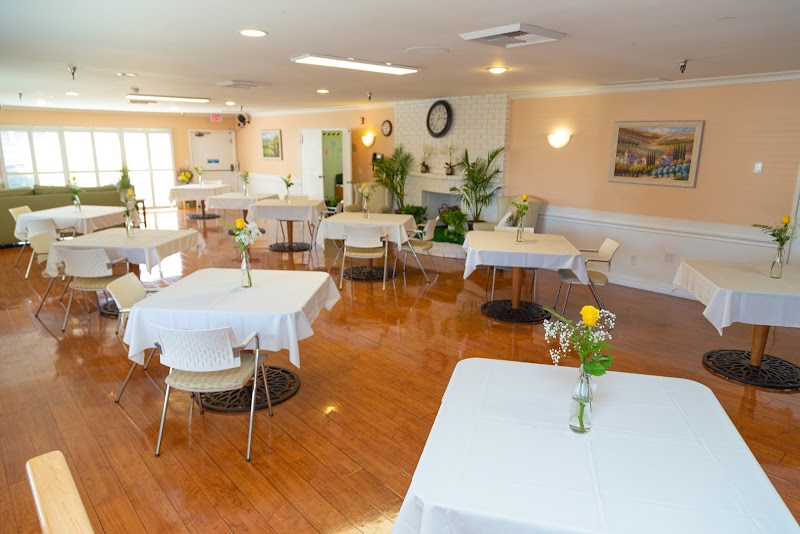
How is Meadow Creek Post-Acute Staffed?

CMS rates MEADOW CREEK POST-ACUTE's staffing level at 2 out of 5 stars, which is below average compared to other nursing homes. Staff turnover is 55%, compared to the California average of 46%.

What Have Inspectors Found at Meadow Creek Post-Acute?

State health inspectors documented 94 deficiencies at MEADOW CREEK POST-ACUTE during 2021 to 2025. These included: 2 that caused actual resident harm and 92 with potential for harm. Deficiencies causing actual harm indicate documented cases where residents experienced negative health consequences.

Who Owns and Operates Meadow Creek Post-Acute?

MEADOW CREEK POST-ACUTE is owned by a for-profit company. For-profit facilities operate as businesses with obligations to shareholders or private owners. The facility is operated by LINKS HEALTHCARE GROUP, a chain that manages multiple nursing homes. With 104 certified beds and approximately 89 residents (about 86% occupancy), it is a mid-sized facility located in PARAMOUNT, California.
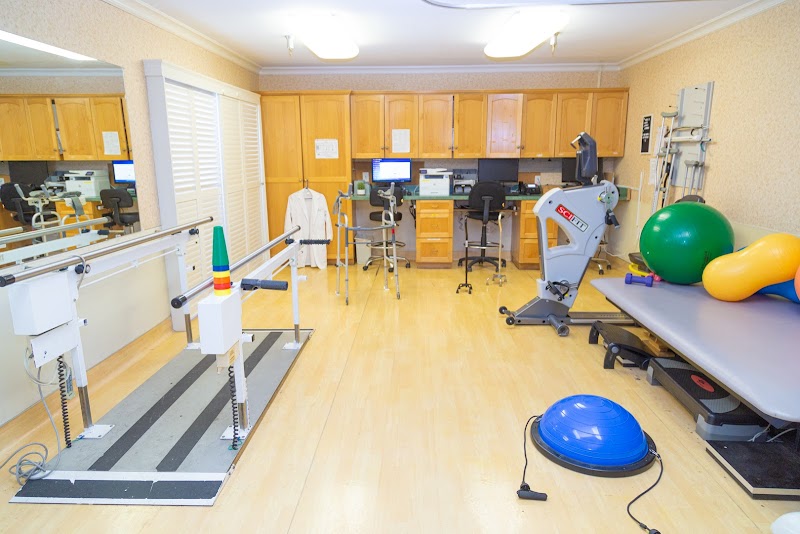
How Does Meadow Creek Post-Acute Compare to Other California Nursing Homes?

Compared to the 100 nursing homes in California, MEADOW CREEK POST-ACUTE's overall rating (1 stars) is below the state average of 3.1, staff turnover (55%) is near the state average of 46%, and health inspection rating (1 stars) is much below the national benchmark.

What Should Families Ask When Visiting Meadow Creek Post-Acute?

Based on this facility's data, families visiting should ask: "Can you walk me through typical staffing levels on day, evening, and night shifts?" "Can I visit during a mealtime to observe dining assistance and food quality?" "How do you handle medical emergencies, and what is your hospital transfer rate?" "Can I speak with family members of current residents about their experience?" These questions are particularly relevant given the below-average staffing rating.

Is Meadow Creek Post-Acute Safe?

Based on CMS inspection data, MEADOW CREEK POST-ACUTE has a clean safety record: no substantiated abuse findings (meaning no confirmed cases of resident harm), no Immediate Jeopardy citations (the most serious violation level indicating risk of serious injury or death), and is not on the Special Focus Facility watch list (a federal program monitoring the lowest-performing 1% of nursing homes). The facility has a 1-star overall rating and ranks #100 of 100 nursing homes in California. While no facility is perfect, families should still ask about staff-to-resident ratios and recent inspection results during their visit.

Do Nurses at Meadow Creek Post-Acute Stick Around?

MEADOW CREEK POST-ACUTE has a staff turnover rate of 55%, which is 9 percentage points above the California average of 46%. Moderate turnover is common in nursing homes, but families should still ask about staff tenure and how the facility maintains care continuity when employees leave.

Was Meadow Creek Post-Acute Ever Fined?

MEADOW CREEK POST-ACUTE has been fined $29,693 across 3 penalty actions. This is below the California average of $33,376. While any fine indicates a compliance issue, fines under $50,000 are relatively common and typically reflect isolated problems that were subsequently corrected. Families should ask what specific issues led to these fines and confirm they've been resolved.

Is Meadow Creek Post-Acute on Any Federal Watch List?

MEADOW CREEK POST-ACUTE is not on any federal watch list. The most significant is the Special Focus Facility (SFF) program, which identifies the bottom 1% of nursing homes nationally based on persistent, serious quality problems. Not being on this list means the facility has avoided the pattern of deficiencies that triggers enhanced federal oversight. This is a positive indicator, though families should still review the facility's inspection history directly.