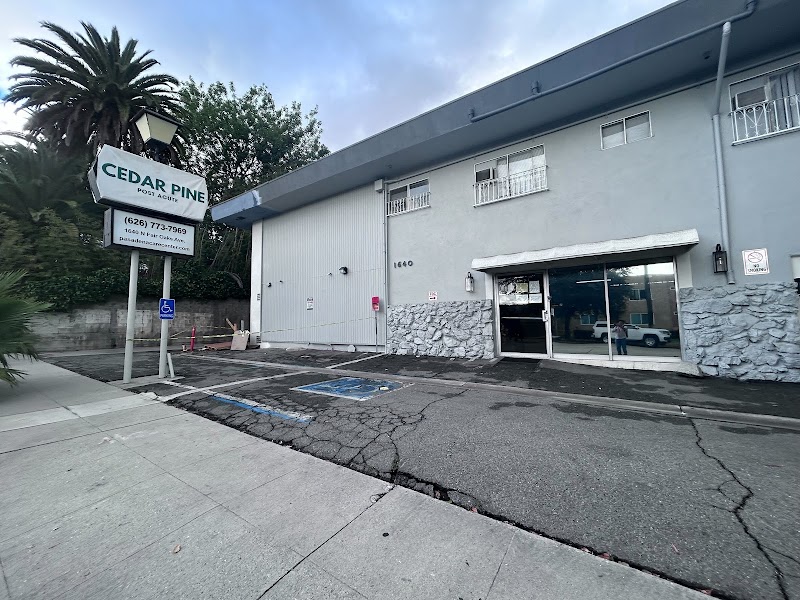
Cedar Pine Post Acute
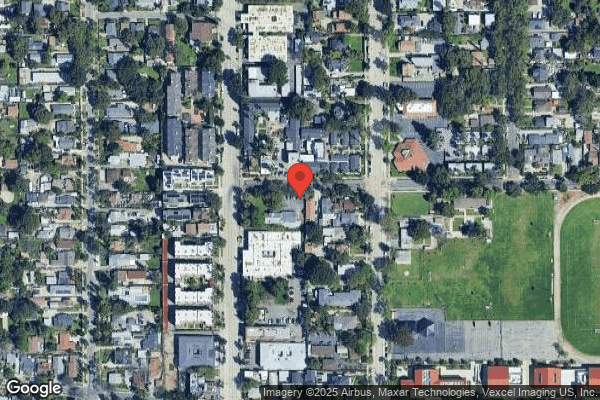

1640 N. FAIR OAKS AVENUE, PASADENA, CA 91103 (626) 773-7969
For profit - Corporation 99 Beds EVA CARE GROUP Data: November 2025 3 Immediate Jeopardy citations
Trust Grade
4/100
#782 of 1155 in CA
Last Inspection: May 2025

Inspected within the last 6 months. Data reflects current conditions.

Overview

Cedar Pine Post Acute in Pasadena, California, has a Trust Grade of F, indicating significant concerns about the facility's operations and care. It ranks #782 out of 1155 facilities in California, placing it in the bottom half, and #177 out of 369 in Los Angeles County, showing that many local options are potentially better. The facility's situation is worsening, with issues increasing from 28 in 2024 to 30 in 2025. Staffing is rated average with a 3/5 score and a turnover rate of 44%, which is close to the state average. However, the facility has received concerning fines totaling $38,213, which is higher than 77% of facilities in California, indicating potential compliance issues. There are serious weaknesses, highlighted by critical findings such as expired food items being stored in the kitchen, which poses a risk of foodborne illness, and a failure to protect a resident at risk of elopement, who left the facility unsupervised without proper procedures being followed. On a positive note, the facility has a 5/5 rating for quality measures, showing that some aspects of care might be performed well. However, families should weigh these strengths against the significant deficiencies before making a decision.
Trust Score
F
4/100
In California
#782/1155
Bottom 33%
Safety Record
High Risk
Review needed
Inspections
Getting Worse
28 → 30 violations
Staff Stability
○ Average
44% turnover. Near California's 48% average. Typical for the industry.
Penalties
○ Average
$38,213 in fines. Higher than 65% of California facilities. Some compliance issues.
Skilled Nurses
○ Average
Each resident gets 38 minutes of Registered Nurse (RN) attention daily — about average for California. RNs are the most trained staff who monitor for health changes.
Violations
⚠ Watch
85 deficiencies on record. Higher than average. Multiple issues found across inspections.
★★☆☆☆
2.0
Overall Rating
★★★☆☆
3.0
Staff Levels
★★★★★
5.0
Care Quality
★☆☆☆☆
1.0
Inspection Score
Stable
2024: 28 issues
2025: 30 issues

The Good

  • 5-Star Quality Measures · Strong clinical quality outcomes
  • Full Sprinkler Coverage · Fire safety systems throughout facility
  • No fines on record
  • Staff turnover below average (44%)

    4 points below California average of 48%

Facility shows strength in quality measures, fire safety.

The Bad

2-Star Overall Rating

Below California average (3.1)

Below average - review inspection findings carefully

Staff Turnover: 44%

Near California avg (46%)

Typical for the industry

Federal Fines: $38,213

Above median ($33,413)

Moderate penalties - review what triggered them

Chain: EVA CARE GROUP

Part of a multi-facility chain

Ask about local staffing decisions and management

The Ugly 85 deficiencies on record

3 life-threatening 1 actual harm
Aug 2025 1 deficiency 1 Harm
SERIOUS (G) 📢 Someone Reported This

A family member, employee, or ombudsman was alarmed enough to file a formal complaint

Actual Harm - a resident was hurt due to facility failures

Incontinence Care (Tag F0690)

A resident was harmed · This affected 1 resident

**NOTE- TERMS IN BRACKETS HAVE BEEN EDITED TO PROTECT CONFIDENTIALITY** Based on interview and record review, the facility failed to provide the appropriate treatment and service to prevent urinary tr...

Read full inspector narrative →
**NOTE- TERMS IN BRACKETS HAVE BEEN EDITED TO PROTECT CONFIDENTIALITY** Based on interview and record review, the facility failed to provide the appropriate treatment and service to prevent urinary tract infection (UTI- infection of the urinary tract) to one (1) of two (2) sampled residents (Resident 1) who was admitted at the facility with indwelling urinary catheter (a thin, flexible tube inserted into the bladder to drain urine when a person is unable to urinate on their own) by failing to: 1. Monitor and document Resident 1's change of condition (COC) that was observed by facility staff on 8/14/2025 and on 8/21/2025 of dark/ brown colored urine (normal urine color is clear and yellow) in the indwelling catheter bag. 2. Notify Resident 1's physician (MD 1) of the resident's (COC) of dark/ brown colored urine noted on 8/14/2025 and 8/21/2025 in accordance with the resident's Care Plan for at risk for UTI. These failures resulted in Resident 1 to continue having dark/ brown urine color and experience shortness of breath with an oxygen saturation (O2sat- the amount of oxygen you have circulating in your blood) of 89 percent (normal value is between 95% to 100%), heart rate of 143 beats per minute (bpm- normal value is 60 to 100 bpm), and temperature of 101 Fahrenheit (temperature scale, which is used to measure body temperature. Normal value is between 97 to 99) on 8/22/2025. On 8/22/2025, Resident 1 was transferred to General Acute Care Hospital (GACH) via 911 (the number that you call to contact the emergency services) and in GACH's Emergency Department (ED- medical facility that provides immediate care for patients with serious or life-threatening conditions), Resident 1 was noted to have dark turbid urine in indwelling catheter bag, and the resident was intubated (placing a breathing tube through the mouth and down the throat into the lungs) in GACH's ED. Resident 1 was subsequently admitted to GACH's Intensive Care Unit (ICU- a specialized hospital department for patients with life-threatening illnesses or injuries requiring constant monitoring and advanced life support) with diagnosis of septic shock (a dangerously low blood pressure occurs, preventing vital organs like the heart, brain, and kidneys from receiving enough blood and oxygen, leading to potential organ failure and death) due to UTI associated with indwelling urinary catheter.Findings:During a review of Resident 1's admission Record, the admission Record indicated Resident 1 was initially admitted to the facility on [DATE], with diagnosis which included UTI, dysphagia (difficulty or discomfort in swallowing), severe intellectual disability.During a review of Resident 1's admission Nursing assessment dated [DATE], it indicated Resident 1 has an indwelling urinary catheter, and with urine color of yellow and clear. During a review of Resident 1's Minimum Data Set (MDS, a resident assessment tool), dated 8/11/2025, the MDS indicated Resident 1's cognitive skills (processes of thinking and reasoning) for daily decision making was severely impaired (never/rarely made decisions). The MDS also indicated Resident 1 was dependent on personal hygiene, toileting hygiene, shower bath self. The MDS also indicated, the resident is with an indwelling urinary catheter.During a review of Resident 1's Order Summary Report, indicated an order dated on 7/30/2025 for Resident 1 to have indwelling catheter French 16 (size) with 10 cubic centimeters (the volume of sterile water, expressed in cubic centimeters (cc) used to inflate the retention balloon of a indwelling catheter to hold it in place inside the bladder) attached to gravity urine drainage bag (bag attached to the indwelling urinary catheter to collect the urine) for urinary retention (not being able to urinate). During a review of Resident 1's Care Plan Report date initiated on 7/30/2025, the care plan report indicated focus is at risk for UTI related to indwelling urinary catheter use. The care plan report indicated intervention included, observe urine output for foul odor, sediments (solid particles found in urine), color, amount, abdominal pain and distention (a condition where the abdomen appears swollen or enlarged). The care plan report also indicated to notify physicians as needed for any signs and symptoms of UTI present. During a review of Resident 1's Output: Urine dated 8/14/2025 to 8/22/2025, Resident 1's output: urine indicated, on 8/14/2025 at 2:31 PM and 8/21/2025 at 6:59 AM and 8/22/2025 at 6:59 AM, Resident 1's urine characteristic was noted to be brown /dark in color.During a review of Resident 1's electronic medical charts (EMC) dated from 8/14/2025 to 8/22/2025, Resident 1's EMC did not indicate documented evidence that MD 1 was notified of Resident 1's brown/ dark urine color on 8/14/2025 and 8/21/2025 and that the COC was monitored for the urine color and for signs and symptoms of UTI. During a review of Resident 1's Progress Notes, dated 8/22/2025 at 8:57AM, the progress note indicated Resident 1 was noted with shortness of breath, with O2sat of 89 percent, with temperature of 101 Fahrenheit, and with heart rate of 143 bpm. The progress notes also indicated Resident 1 was transferred to GACH via 911. During a review of Resident 1's Order Summary Report, indicated on 8/22/2025, to transfer Resident 1 to GACH via 911. During a review of Resident 1's GACH ED Provider Note dated 8/22/2025 entered by ED doctor at 3:21 PM, the GACH ED provider note indicated Resident 1 was brought in by 911 from the facility with chief complaint of shortness of breath, respiratory distress, tachypnea (elevated heart rate) and hot to touch. The ED provider notes also indicated at 11:17 AM (on 8/22/2025) Resident 1's heart rate is 136 bpm and respiratory rate of 34 breaths per minute. In addition, the ED provider note indicated, Resident 1 has Foley (indwelling catheter) with dark turbid (urine that appears cloudy or opaque. It is caused by the presence of various substances in the urine such as bacteria) urine in bag. The ED provider note indicated Resident 1's lactic acid (activates immune cells and promotes inflammation. increased production of lactic acid or a decreased ability of the body to break it down due to severe infection) level was 2.8 millimole per liter (mmol/L- unit of measurement. Normal value is 0.5 to 1.9mmol/L) and urinalysis (UA, a medical test that analyzes a urine sample to assess the health of the urinary system and other organs) showed Resident 1's urine is cloudy with white blood cell (WBC- type of blood cell that plays a crucial role in the body's immune system. Elevated level indicated infection) level of 686 per high- powered field (HPF. Normal level is less than 0.2/HPF) and moderate bacteria. During a review of Resident 1's GACH ED Provider Note dated 8/22/2025, it indicated under Medical Decisions Making, Resident 1 was intubated and placed on ventilator (a machine or device used medically to support or replace the breathing of a person who is ill, injured), the resident was given 3 Liters (L) of intravenous fluids (solutions administered directly into a patient's veins through a small plastic tube called a catheter), and broad- spectrum antibiotics (antibiotics that are effective against a wide range of bacteria). The ED Provider Note also indicated, 45 minutes of critical care was provided to Resident 1 to manage life threatening critical condition including respiratory failure (a medical condition where the lungs are unable to adequately exchange oxygen and carbon dioxide, leading to low oxygen levels in the blood and other parts of the body) and septic shock. In addition, the ED provider note indicated, date and time of disposition (final decision) is on 8/22/2025 at 2:14 PM and Resident 1's diagnosis is septic shock - UTI associated with indwelling urinary catheter and the resident was admitted to ICU. During a concurrent interview and record review on 8/27/2025 at 3:59 PM with the License Vocational Nurse (LVN 1), Resident 1's EMC dated on 8/14/2025 to 8/22/2025 and Resident 1's Output: Urine for the month of 8/14/2025 to 8/22/2025 were reviewed. LVN 1 stated Resident 1's urine output characteristic on 8/14/2025 at 2:31 PM, 8/21/2025 at 6:59 AM and 8/22/2025 at 6:59 AM, was noted to be brown /dark in color. LVN 1 stated, dark/ brown urine color was not normal for Resident 1 and may indicate possible dehydration (a condition that occurs when the body loses too much water and other fluids that it needs to work normally. It is usually caused by fever or urinating more than normal) or infection. LVN 1 stated, Resident 1's COC of dark/ brown urine color noted on 8/14/2025 and 8/21/2025 should have been reported to MD 1 to obtain orders. LVN 1 also stated, the COC should have been monitored and documented in the resident's progress notes and Resident 1's care plan for at risk for UTI should have been revised. In addition, LVN 1 stated there was no documented evidence in Resident 1's EMC that Resident 1's COC noted on 8/14/2025 and 8/21/2025 was reported to MD1 and that the COC was monitored for progress. During an interview on 8/28/2025 at 6:14 AM with LVN 2, LVN 2 stated, on 8/14/2025 at 2:31 PM and 8/21/2025 at 6:59 AM, there was no monitoring and COC notes/ documentation initiated for Resident 1's dark/ brown urine color found in the resident's EMC. LVN 2 also stated she was the LVN assigned to Resident 1 on 8/21/2025 and 8/22/2025 and that she did not assess Resident 1's urine characteristic and monitored the resident for signs and symptoms of UTI. LVN 2 also stated for residents with indwelling urinary catheter, the licensed nurses should monitor the resident for signs and symptoms of UTI and document the amount of urine, color, and smell. LVN 2 also stated Resident 1's brown/ dark urine color should have been reported to MD 1.During an interview on 8/28/2025 at 6:46 AM with the Certified Nursing Assistant (CNA 1), CNA 1 stated she observed and documented Resident 1's urine color was dark/ brown on 8/21/2025 at 6:59 AM and 8/22/2025 6:59 AM. CNA 1 further stated she did not report it to the licensed nurse. CNA1 stated dark brown urine may indicate infection and that the licensed nurse should be notified of this COC.During an interview on 8/28/2025 at 10:14 AM with Registered Nurse (RN 1), RN 1 stated there was no documentation in Resident 1's medical chart that MD1 was informed regarding Resident 1's urine output was noted to be brown/ dark in color last 8/14/2025 at 2:31 PM and 8/21/2025 at 6:59AM. RN 1 stated the charge nurse/ licensed nurse should have reported it to MD1 to know the underlying reason for the dark/ brown colored urine and to obtain orders to treat and/ or prevent worsening of the condition. RN 1 stated the dark/ brown urine color of Resident 1 could be one of the signs and symptoms of UTI. During an interview on 8/28/2025 at 1:32 PM with the Director of Nursing (DON), the DON stated Resident 1 dark/ brown urine color was not monitored for possible UTI on 8/14/2025 at 2:31 PM and 8/21/2025 at 6:59 AM. The DON stated Resident 1 should have been assessed and monitored for COC noted on 8/14/2025 at 2:31 PM and 8/21/2025 at 6:59 AM. The DON stated that brown/ dark urine color could indicate a possible infection and part of Resident 1's Care Plan for at risk of UTI is that the licensed nurses were supposed to observe and assess the urine output of the resident. The DON also stated any COC such as Resident 1's abnormal urine color should be communicated to MD 1. The DON stated the facility did not follow its policy to implement the resident's care plan because the facility failed to notify MD 1 of Resident 1's COC noted on 8/14/2025 at 2:31 PM and on 8/21/2025 at 6:59 AM. During an interview on 8/28/2025 at 2:40 PM with MD1, MD1 stated, Resident 1's COC of dark/ brown urine color on 8/14/2025 and 8/21/2025 were not reported. MD 1 stated if it had been reported, MD1 would have ordered US to check for infection. During a record review of the facility's Policy and Procedures (P&P) titled Catheter Care date revised 6/2012, the P&P indicated it is the policy of this facility to improve hygiene and reduce infection by ensuring that catheter care is done every shift to residents who are using foley catheter (indwelling catheter). The P&P also indicated the following steps will be observed and implemented in providing the foley catheter care:> Observed urine for any sediments or change in color> Notify MD as well as resident's representative for any sediments noted in the urine flow and for any other significant condition. During a record review of the facility's P&P titled Change in Condition date revised 8/2025, the P&P indicated It is the policy of this facility that all changes in residents' condition will be communicated to the physicians. The P&P also indicated the P&P is to clearly define guidelines for timely notification of a change in resident condition for immediate intervention. The P&P also indicated all nursing actions / interventions will be documented in the license progress notes as soon as possible after residents' needs have been met. The P&P indicated sudden or change in a resident's condition will be communicated to the physician immediately within 30 minutes to 1 hour. During a record review of the facility's P&P titled Care Plan Comprehensive Person Centered, the P&P indicated a comprehensive, person-centered care plan that includes measurable objectives and timetable to meet the resident's physical, psychosocial and functional needs to be developed and implemented for each resident. The P&P also indicated each resident's comprehensive person-centered care plan is consistent with residents' rights to participate in the development and implementation of his or her plan of care, including the right to receive the services and / or items included in the plan of care.
Aug 2025 1 deficiency
CONCERN (D) 📢 Someone Reported This

A family member, employee, or ombudsman was alarmed enough to file a formal complaint

Potential for Harm - no one hurt, but risky conditions existed

Accident Prevention (Tag F0689)

Could have caused harm · This affected 1 resident

**NOTE- TERMS IN BRACKETS HAVE BEEN EDITED TO PROTECT CONFIDENTIALITY** Based on observation, interview and record review, the facility staff failed to implement fall interventions in accordance with ...

Read full inspector narrative →
**NOTE- TERMS IN BRACKETS HAVE BEEN EDITED TO PROTECT CONFIDENTIALITY** Based on observation, interview and record review, the facility staff failed to implement fall interventions in accordance with the care plan to frequently observe and place one of two Residents (Resident 1) who was assessed as high risk for fall in a supervised area while out of bed. This deficient practice resulted in a fall (unintentionally coming to rest on the ground, floor, or other lower level, but not as a result of an overwhelming external force) on 5/10/2025, which placed Resident 1 at risk for serious injury like fractures (break in the bone) and head injury (injury that damages your head, including the skull [bony framework of the head, enclosing the brain and supporting the face] and brain), hospitalization and even death.Findings: During a review of Resident 1's admission Record, the admission Record indicated the facility admitted Resident 1 on 10/25/2024 and readmitted on [DATE], with diagnoses including, but not limited to left sided hemiplegia (complete or severe paralysis of one side of the body) and hemiparesis (weakness or partial paralysis on one side of the body) following nontraumatic (without traumatic cause) intracerebral hemorrhage (bleeding within the brain tissue that extends into the ventricular system), epilepsy (a brain condition that causes recurring seizures), paroxysmal atrial fibrillation (type of irregular heartbeat where episodes of atrial fibrillation start and stop on their own), muscle weakness (actual decrease in muscle strength of one or more muscles, making it difficult to perform tasks that would normally be easy), and difficulty walking (abnormal walking pattern, often caused by an underlying medical issue, injury, or physical limitation). During a review of Resident 1's Minimum Data Set (MDS-a resident assessment tool) dated 5/8/2025, the MDS indicated Resident 1 had modified independence (some difficulty in new situations only) with cognitive skills (mental action or process of acquiring knowledge and understanding) for daily decision making. The MDS indicated Resident 1 required partial/moderate assistance (Helper does less than half the effort. Helper lifts, holds, or supports trunk or limbs, but provides less than half the effort) with eating. The MDS indicated Resident 1 required substantial/maximal assistance (Helper does more than half the effort. Helper lifts of holds trunks or limbs and provide more than half the effort) with upper body dressing and was dependent (Helper does all of the effort. Resident does none of the effort to complete the activity or the assistance of two or more helpers is required for the resident to complete the activity) with showering /bathing self, lower body dressing, putting on /taking off footwear, oral, toileting, and personal hygiene. The MDS indicated Resident 1 was also dependent with sit to lying (ability to move from sitting to lying flat on the bed), lying to sitting on the side of the bed (ability to move from lying on the back to sitting on the side of the bed), chair/bed to chair transfer (ability to transfer from a bed to a chair, and tub/shower transfer (the ability to get in and out of a tub/shower. The MDS indicated Resident 1 had three falls since admission on [DATE]. During a concurrent interview and record review on 8/13/2025 at 9:50 AM with Registered Nurse Supervisor (RN 1), the fall risk assessments for Resident 1, dated 10/25/2024, 12/16/2024, 2/15/2025, 4/25/2025, and 5/10/2025 were reviewed. Resident 1 was assessed as high risk for fall as indicated on the following scores (The fall risk assessment score of 10 or higher was high risk and 0-9 was low risk):1. 10/25/2024 was 12. 2. 12/16/2024 was 16. 3. 2/15/2025 was 17.4. 4/25/2025 was 16.5. 5/10/2025 was 16. A review of Resident 1's Care Plan, initiated on 10/28/2024 and revised on 1/14/2025, the Care Plan indicated Resident 1 was at risk for fall/recurrent fall. Resident 1 had episodes of attempting to get up from bed/wheelchair unassisted. Resident 1 had history of falls dated 12/16/2024, 2/15/2025, 4/24/2025, and 5/10/2025. The staff interventions included were: May use floor mats on both sides of the bed for resident's safety Staff will observe frequently and place Resident 1 in a supervised area when out of bed such as in activity or close to nursing station. Provide resident with safety device/appliance for fall prevention program: low bed, wheelchair, according to physician (MD-Doctor of Medicine) order. Refer to the rehabilitation department for evaluation and possible treatment according to MD order. During a concurrent interview and record review on 8/13/2025 at 10:15 AM with RN 1, Resident 1's nurses' progress notes were reviewed, which indicated: On 12/16/2025 at 9:26 AM, Resident 1 was found on the floor in a sitting position. RN 1 confirmed that according to the progress notes dated 12/16/2025 at 10:35 PM, this was a witnessed fall. On 2/15/2025 at 5:15 PM, Resident 1 was heard yelling. Resident 1 was found lying on his back, on the floor. RN 1 confirmed that according to the progress notes dated 2/16/2025 at 4:52 AM, this was an unwitnessed fall. On 4/24/2025 at around 6:10 AM, Certified Nurse Assistant (CNA 1) found Resident 1 sitting on the floor when the bed alarm went off. According to the progress notes, Resident 1 stated he slid on the mat. RN 1 confirmed that this was an unwitnessed fall as documented on the notes. On 5/10/2025 at 6:25 PM, Resident was found by a housekeeper on the floor in the dining room. RN 1 stated this fall was avoidable if there was staff supervising the resident or residents remaining in the dining room. During an interview on 8/13/2025 at 10:30 AM with RN 1, RN 1 stated the fall incident on 5/10/2025 was avoidable. RN 1 stated it was the housekeeper that informed LVN 3 at the nurse's station that Resident 1 was on the floor. LVN 3 stated since Activity staff leave at 6 PM, they need to endorse to nursing staff if there are still residents in the dining room waiting to be brought back to their rooms. RN 1 stated Resident 1 was a high fall risk and should not be left unattended or unsupervised RN 1 stated there were no staff in the dining room when Resident 1 fell on 5/10/2025. RN 1 added that if there was a staff present in the dining room at that time, Resident 1's fall could have been prevented. During an interview on 8/13/2025 at 12 PM with Licensed Vocational Nurse (LVN 2), LVN 2 stated Resident 1 would try to get up from his wheelchair and stand, placing him at high risk for fall. LVN 2 stated there should have been an MD order for one-to-one observation (continuous monitoring by a staff member, like a nurse or patient sitter, to ensure the safety of patients at risk of self-harm or harm to others or falls due to cognitive impairment or physical health issues) to prevent Resident 1 from falling. During an interview on 8/14/2025 at 9:25 AM with LVN 3, LVN 3 stated she was at the nurse's station on 5/10/2025 when the housekeeper notified her that Resident 1 was found on the floor in the dining room. LVN 3 stated she cannot recall how many residents were still in the dining room at that time. LVN 3 stated, after the residents on wheelchairs are done eating in the dining room, they are wheeled back to their respective rooms by the CNAs. LVN 3 stated she recalls the facility policy indicating high fall risk residents should always be in an area where they can be supervised. If there was a staff in the dining room with the remaining residents, Resident 1 would have been under supervision of that staff, and fall could have been prevented. LVN 3 stated the facility policy was not followed since Resident 1 was able to attempt standing up from his wheelchair and subsequently fell. During a concurrent interview and record review on 8/15/2025 at 11:25 AM with the Physical Therapist (PT-a healthcare professional specializing in evaluating, diagnosing, and treating movement disorders [neurological conditions that cause disruptions in motor control] and musculoskeletal injuries (damage to any part of the body's framework that supports movement, including the muscles, bones, joints, ligaments, tendons, and nerves), the PT treatment encounter notes dated 5/9/2025 and 5/12/2025 were reviewed. The encounter notes on 5/9/2025 indicated: for wheelchair mobility, Resident 1 required minimal assistance with distance of 40 feet (a unit of length). PT stated Resident 1 needed help when propelling the wheelchair, so staff need to be propelling Resident 1's wheelchair. Resident 1 was able to walk on level surfaces of 40 feet with moderate assistance The PT stated that PT and Occupational Therapist (OT-helps people perform daily tasks by restoring or improving skills needed for living and working, or by providing adaptive equipment [a tool, device, or machine that helps people with disabilities or impairments perform everyday tasks, such as dressing, eating, or moving, which they might otherwise struggle with] and strategies to help them achieve independence and participate in meaningful activities), evaluated Resident 1 on initial admission on [DATE]. PT stated Resident 1 had a functional mobility decline (gradual loss of a person's ability to move independently and safely to perform daily tasks). The PT stated that Resident 1 was always a fall risk secondary to Resident 1's hemiplegia and hemiparesis from his stroke and poor safety awareness. During an interview on 8/15/2025 at 12:26 PM with the MDS Nurse, the MDS Functional Abilities section dated 5/8/2025 was reviewed. The Functional Abilities section indicated Resident 1 was wheelchair bound, was dependent on chair to bed, sit lying, tub/shower transfer. The MDS Nurse stated that according to the assessment, Resident 1 needed staff to assist with Activities of Daily Living (ADLs-tasks a person does to take care of the body and overall well-being) all the time. The MDS nurse stated that if Resident 1 was not assisted, it could lead to possible falls that could possibly cause harm and injury to the resident. The MDS nurse stated Resident 1 was assessed as having memory problems and with episodes of confusion. The MDS nurse stated Resident 1 should not have been left unattended or unsupervised on 5/10/2025. The MDS nurse stated that with supervision from staff, the falls could have been prevented. During a review of the facility's Policy and Procedures (P&P) titled, Fall Risk Assessment, revised 3/2024, the P&P indicated: The nursing staff, in conjunction with the Attending MD, consultant pharmacist, therapy staff and others, will seek to identify and document resident risk factors for falls and establish a resident-centered fall prevention plan based on relevant assessment information.During a review of the facility's P&P, titled Fall Risk Intervention and Monitoring, revised 12/2024, the P&P indicated: If falling recurs despite initial interventions, staff will implement additional or different interventions or indicate why the current approach remains relevant. If underlying causes cannot be readily identified or corrected, staff will try various interventions, based on assessment of the nature or category of falling, until falling is reduced or stopped, or until the reason for the continuation of falling is identified as unavoidable. For monitoring subsequent falls and fall risk, the staff will monitor and periodically document the resident's response to interventions intended to reduce falling or the risks of falling. If the resident continues to fall, staff will re-evaluate the situation and whether it is appropriate to continue or change current interventions. The MD may help the staff reconsider possible causes that may not previously have been identified.
Jul 2025 1 deficiency
CONCERN (D) 📢 Someone Reported This

A family member, employee, or ombudsman was alarmed enough to file a formal complaint

Potential for Harm - no one hurt, but risky conditions existed

Comprehensive Care Plan (Tag F0656)

Could have caused harm · This affected 1 resident

**NOTE- TERMS IN BRACKETS HAVE BEEN EDITED TO PROTECT CONFIDENTIALITY** Based on interview and record review, the facility failed to create and implement a comprehensive person-centered care plan for ...

Read full inspector narrative →
**NOTE- TERMS IN BRACKETS HAVE BEEN EDITED TO PROTECT CONFIDENTIALITY** Based on interview and record review, the facility failed to create and implement a comprehensive person-centered care plan for one (1) of two (2) sampled residents (Resident 1) to address Resident's 1's diagnosis of alcohol dependence (also known as alcohol use disorder [[NAME]], a chronic disease characterized by a compulsive need to drink alcohol despite negative consequences).This failure resulted in Resident 1 going out on pass (OOP - a non-medical visit outside of the facility most commonly used for visits with family or friends) from the facility on 7/15/2025 at 11:45 AM and not returning. The facility was notified by the local police on 7/15/2025 at 10:51 PM that Resident 1 was found at the general acute care hospital (GACH) emergency department. Findings:During a review of Resident 1's admission Record, the admission Record indicated the resident was initially admitted to the facility on [DATE] and readmitted on [DATE] with diagnoses of alcohol abuse (drinking in a manner, situation, amount, or frequency that could cause harm to the person who drinks or to those around them) with intoxication (the condition of having physical or mental control markedly diminished by the effects of alcohol or drugs) and hypotension (the pressure of blood circulating around the body is lower than normal). During a review of Resident 1's History and Physical Examination (H&P), dated 6/18/2025, the H&P indicated Resident 1 had a diagnosis of alcohol abuse.During a review of Resident 1's Minimum Data Set (MDS - a resident assessment tool), dated 6/29/2025, the MDS indicated the resident had an intact cognitive (ability to think, remember, and reason) skills for daily decision making. Resident 1 needed partial/moderate assistance (helper does less than half the effort) with walking 10 feet, chair/bed-to-chair transfers, going from a sitting position to standing, rolling left and right in bed, putting on/taking off footwear and lower body dressing (the ability to dress and undress below the waist). Resident 1 needed supervision or touching assistance (helper provides verbal cues and/or touching/steadying and/or contact guard assistance as resident completes activity) with upper body dressing (the ability to dress and undress above the waist), personal hygiene and eating. During a review of Resident 1's Nurses Note dated 7/15/2025 timed at 5:41 PM by Registered Nurse 2 (RN 2), Resident 1's Nurses Note indicated RN 2 had called Resident 1's friend (listed on the face sheet as alternate contact) to inform them that Resident 1 had not returned to the facility from his OOP from that morning and was inquiring if they knew Resident 1's whereabouts. Resident 1's friend informed RN 2 that they had not spoken to or seen Resident 1. RN 2 then informed MD of situation on 7/15/2025 at 5:47 PM. During a review of Resident 1's Nurses Note, dated 7/15/2025, timed at 8:49 PM by RN 2, Resident 1's Nurses Note indicated that Resident 1 had not returned from his OOP from 11:45 AM on 7/15/2025 and indicated the following timeline: 7:44 PM: RN 2 notified the DON and ADM that Resident 1 had not come back from being OOP. 9:27 PM: Called Resident 1's friend a second time to see if they had any update on Resident 1. Resident 1's friend had not heard anything from Resident 1. 9:30 PM: RN 2 contacted the local police to report resident's status. 9:43 PM: RN 2 left a message for the California Department of Public Health (CDPH). 10:02 PM: the local police department arrived at the facility to investigate and (local police) left around 10:12 PM. 10:51 PM: the local police called the facility to inform them that Resident 1 was found at the general acute care hospital (GACH) emergency department (ED) and were on their way to check on the resident. 10:56 PM: RN 2 contacted GACH ED and spoke with Resident 1's assigned nurse who stated Resident 1 was seen lying down in the street with bottles of alcohol around him and was transported to ED around 7:13 PM and was being treated for alcohol intoxication and hypotension and might be admitted to the GACH. During a review of Resident 1's GACH Discharge summary, dated [DATE], the GACH Discharge Summary indicated Resident 1 was found unconscious outside by Emergency Medical Services (EMS) after drinking approximately 48 ounces (oz) of beer. Resident 1 had no recollection of events prior to coming to the ED. However, he had been staying at a Skilled Nursing Facility (SNF) and got a one day pass to leave, which is when he bought the alcohol and consumed it. During an interview on 7/30/2025 at 11:40 AM with RN 2, RN 2 stated, on 7/15/2025 around 5 PM, she had called Resident 1's friend to see if he knew where Resident 1 was since he had not returned. RN 2 stated after the local police visited the facility and left, RN2 then received a call from local police letting RN 2 know the local police had found Resident 1 in the GACH EDDuring an interview on 7/30/2025 at 1:43 PM with RN 1, RN 1 stated she obtained an OOP order from MD for Resident 1 on 7/14/2025. MD was made aware that Resident 1 was AAOx4, self-responsible and ambulatory without assist. RN 1 stated she did not relay to the MD that Resident 1 had a history of alcohol dependence.During a concurrent interview and record review on 7/30/2025 at 1:50 PM with RN 1, Resident 1's admission Record dated 6/16/2025 and Care Plan dated June 2025 were reviewed. RN 1 stated Resident 1 did have an admitting diagnosis of alcohol dependence and stated that there was no care plan initiated or implemented specifically to address Resident 1's alcohol dependence. RN 1 stated some interventions that would be implemented to address a resident's diagnosis or history of alcohol dependence would normally include things such as diversional activities (engaging activities that shift one's focus away from negative or stressful thoughts and feelings, promoting relaxation and enjoyment) so the resident does not think of alcohol, observing the resident for signs and symptoms of alcohol withdrawal, and encouraging the resident to verbalize his feelings and thoughts as to why he is dependent on alcohol. RN 1 stated a care plan should have been initiated and implemented to address Resident 1's alcohol dependence so that the facility staff and nurses would know how to provide care for Resident 1's history of alcohol dependence. During a concurrent interview and record review on 7/30/2025 at 2:03 PM with the DON, Resident 1's Care Plan dated June 2025 was reviewed. Resident 1's Care Plan indicated there was no care plan developed or implemented to address Resident 1's diagnosis of alcohol dependence. The DON stated interventions that would have normally been implemented for residents with a history of alcohol dependence would have included diversional activities such as going to activities, smoking, and allowing the residents to express themselves. The DON stated Resident 1 should have had a care plan developed and implemented to address his alcohol dependence so that the facility staff and nurses would know to observe and address any potential behaviors that Resident 1 could have exhibited such as alcohol withdrawal symptoms of expressing the need or want to have alcohol. During the same interview on 7/30/2025 at 2:03 PM with the DON, the DON stated on 7/15/2025 Resident 1 had stated he was going out to go to the bank and get a haircut, however when the resident went out, he got money and decided to buy alcohol. During an interview on 7/30/2025 at 2:52 PM with RN 1, RN 1 stated since Resident 1 did not have a care plan specifically to address the resident's diagnosis of alcohol dependence, there was a risk for the resident (Resident 1) going out and reverting to his dependence on alcohol. RN 1 further stated this could have led to the resident leaving to go OOP and seeking alcohol. During an interview on 7/30/2025 at 3:04 PM with MDS Nurse, MDS Nurse stated Resident 1 did not have a care plan developed specifically to address the resident's diagnosis of alcohol dependence. MDS Nurse stated a care plan should have been developed so that the facility staff would know what interventions they could implement such as informing the MD of the resident's diagnosis of alcohol dependence, monitoring for any behaviors, and the resident's physical appearance for any signs and symptoms of seeking alcohol.During a review the facility's P&P titled, Care Plans, Comprehensive, Person-Centered, (undated), the P&P indicated, A comprehensive, person-centered care plan that includes measurable objectives and timetables to meet the resident's physical, psychosocial and functional needs is developed and implemented for each resident. The P&P further indicated:A. The interdisciplinary team (IDT), in conjunction with the resident and his/her family or legal representative, develops and implements a comprehensive, person-centered care plan for each resident.B. The care plan interventions are derived from a thorough analysis of the information gathered as part of the comprehensive assessment.C. The comprehensive, person-centered care plan:a. Describes the services that are to be furnished to attain or maintain the resident's highest practicable physical, mental, and psychosocial well-being.b. Reflect currently recognized standards of practice for problem areas and conditions.
May 2025 15 deficiencies
CONCERN (D)

Potential for Harm - no one hurt, but risky conditions existed

Deficiency F0578 (Tag F0578)

Could have caused harm · This affected 1 resident

**NOTE- TERMS IN BRACKETS HAVE BEEN EDITED TO PROTECT CONFIDENTIALITY** Based on observation, interview, and record review, the facility failed to follow up on a resident's request on [DATE] to formul...

Read full inspector narrative →
**NOTE- TERMS IN BRACKETS HAVE BEEN EDITED TO PROTECT CONFIDENTIALITY** Based on observation, interview, and record review, the facility failed to follow up on a resident's request on [DATE] to formulate an Advance Directive (legal document that provide instructions for medical care and only go into effect if you cannot communicate your own wishes) for one of three sampled residents (Resident 16). This failure resulted in a delay of seven (7) years in addressing Resident 16's request and had the potential for the staff not to carry out the resident's wishes regarding health care decisions during an emergency. Findings: During a review of Resident 16's admission Record, the admission Record indicated Resident 16 was initially admitted to the facility on [DATE] and readmitted on [DATE] with diagnosis malignant neoplasm (cancer) of right breast and blindness on one eye. During a review of Resident 16's Minimum Data Set (MDS- resident assessment tool), dated [DATE], indicated Resident 16 had intact cognitive skills (ability to reason, think, and make decisions) for daily decision making. The MDS indicated Resident 16 required supervision (helper provides verbal cues and or touching as resident competes activity. Assistance may be provided throughout the activity or intermittently) for eating, oral hygiene, toileting hygiene, upper and lower body dressing, putting on taking off footwear, personal hygiene, rolling left and right, sit to lying, lying to sitting on side of bed, sit to stand, chair/bed transfer, toilet and shower transfer, and walking ten feet. The MDS indicated Resident 16 required partial assistance (helper does less than half the effort to lift, hold, or support trunk or arms and legs, but provides less than half the effort) to shower. During a review of Resident 16's Advanced Directive Acknowledgement, dated [DATE], and revised on [DATE], the Advance Directive Acknowledgement indicated Resident 16 expressed she had not executed an Advance Directive, but she wished to execute one. During a review of Resident 16's Progress Notes, dated [DATE], the Progress Notes written by the Social Services Worker (SSW), indicated Resident 16 had verbalized If the facility staff found me not breathing, I still want to have CPR (Cardiopulmonary Resuscitation- It is an emergency life-saving procedure that is performed when a person's heart has stopped beating effectively or they are not breathing) done but I do not want to be transferred to the hospital, I prefer to stay at the facility. During a review of Resident 16's Care Plan (CP- a tool that helps nurses and other care team members organize aspects of patient care according to a timeline, and allows them to think critically and holistically in a way that supports the patient's physical, psychological, social, and spiritual care), dated [DATE], the CP indicated Resident will have all forms of advance directives honored by facility staff, review and evaluation in 90 days and as indicated. Interventions: Re-address the advance directive status quarterly to update resident and family options to reinforce current directives. During an interview on [DATE] at 9:25 AM with Resident 16, Resident 16 stated she requested assistance in formulating an Advance Directive as early as [DATE], with follow up requests noted during care plan meetings in February 2025 after she was readmitted to the facility following an emergency evacuation. Resident 16 stated she required assistance filling out the form because she was blind on one eye and needed help filling out the form, and she did not wish to designate someone to make decisions for her because she was capable of making her own decisions. During an interview on [DATE] at 12:14 PM with the SSW, the SSW acknowledged Resident 16 had requested to complete an Advance Directive (AD) but stated she didn't have any children to designate as a decision maker. The SSW stated he usually reaches out to the Ombudsman (an advocate for residents of nursing homes, board and care centers, and assisted living facilities) via email and gives him a list of residents who wish to formulate an AD so that he can visit each resident and help them fill out and witness the form. The SSW stated he meets every three months with the interdisciplinary team (IDT- is a group of individuals from various professional disciplines who collaborate to achieve a common goal, such as providing patient care, conducting research, or solving complex problems. These teams leverage the diverse expertise and knowledge of their members to address the multifaceted nature of complex issues) to review the AD, but stated he failed to communicate with the Ombudsman regarding Resident 16, and had not gotten around to it. During an interview on [DATE] at 11:01 AM with the Director of Nursing (DON), the DON stated it is important to ensure residents formulate an AD if they wish to do so because if something happens to them where they are unable to make decisions for themselves, the facility can comply with the residents' wishes stated on the AD. The DON stated the AD is offered to everyone by social services, upon admission, IDT meetings which occur quarterly or as needed, and usually take about a week to formulate if the resident wishes to have one. The DON stated the AD can be witnessed by any alert-oriented person such as a visitor, another resident or the Ombudsman, except the facility staff. The DON stated the facility needed to revise the policy to include the Ombudsman's role in formulating the AD. During an interview on [DATE] at 12:26 PM with the Administrator, the Administrator stated the statement by the SSW reflects misinformation provided to Resident 16, as cognitively intact individuals are legally able to formulate an AD and make decisions regarding their own care preferences without a designee. The Administrator stated the Ombudsman could serve as a witness, or any other person that is not the facility staff and not having children does not constitute that they cannot fill out an AD. During a review of the facility's policy and procedure (P&P) titled, Advance Directives, dated 9/2022, the P&P indicated inquiries from the community regarding advance directives are referred to the DON. Written information is provided upon request and includes, as a minimum, a summary of the state law outlining the rights of residents to formulate advance directives and a copy of the facility's policies governing advance directives. The staff development coordinator is responsible for ensuring that staff remains informed about the resident's rights to formulate advance directives. The IDT will review annually with the resident his or her advance directives to ensure that such directives are still the wishes of the resident. Residents have the option to execute their advance directives, and the facility staff will offer assistance in establishing advance directives. Nursing staff will document in the medical record the offer to assist and the resident's decision to accept or decline assistance.
CONCERN (D)

Potential for Harm - no one hurt, but risky conditions existed

Notification of Changes (Tag F0580)

Could have caused harm · This affected 1 resident

**NOTE- TERMS IN BRACKETS HAVE BEEN EDITED TO PROTECT CONFIDENTIALITY** Based on interview and record review, the facility failed to notify the physician of significant changes in condition (a major d...

Read full inspector narrative →
**NOTE- TERMS IN BRACKETS HAVE BEEN EDITED TO PROTECT CONFIDENTIALITY** Based on interview and record review, the facility failed to notify the physician of significant changes in condition (a major decline or improvement in the resident's status that will not normally resolve itself without further intervention by staff or by implementing standard disease-related clinical interventions) for one of two sampled resident (Resident 51), who experienced eight (8) episodes of hypotension (low blood pressure when blood pressure is much lower than normal and varies from one person to another. This condition occurs when a person's blood pressure drops as little as 20 mmHg (millimeters of mercury- a unit of measurement to quantify the pressure exerted by blood against the walls of the arteries) reducing blood flow to the heart, brain, and other parts of the body) related to the use of Losartan Potassium-HCTZ (medication to treat high blood pressure). This deficient practice resulted in delayed treatment for repeated hypotensive episodes for Resident 51 placing him at risk of adverse outcomes (undesirable effects) such as falls, syncope (commonly known as fainting or passing out, is a temporary loss of consciousness caused by a sudden drop in blood flow to the brain), and organ hypoperfusion (a condition where there is inadequate blood flow to tissues and organs, leading to insufficient delivery of oxygen and nutrients). Findings: During a review of Resident 51's admission Record, the admission Record indicated Resident 51 was admitted to the facility on [DATE] with diagnosis of subdural hemorrhage (a collection of blood that accumulates between the brain and the inner lining of the skull), syncope (a temporary loss of consciousness caused by a sudden, temporary drop in blood flow to the brain) and collapse, end stage renal disease (ESRD- Condition in which the kidneys cease functioning on a permanent basis leading to the need for regular course of long-term dialysis or kidney transplant to maintain life) with dependence on renal (kidney) dialysis (a treatment that removes waste and excess fluid from the blood when the kidneys are no longer functioning properly), atherosclerotic heart disease (the buildup of fats, cholesterol and other substances in and on the artery walls), and atrial fibrillation (a common heart rhythm disorder characterized by an irregular, rapid heartbeat that starts in the upper chambers [atria] of the heart. This irregular electrical activity can cause the heart to pump blood inefficiently, leading to potential complications like blood clots, stroke, and heart failure). During a review of Resident 51's Minimum Data Set (MDS- resident assessment tool) dated 2/13/2025, indicated Resident 51 had intact cognition (ability to think, remember and make decisions) for daily decision making. The MDS indicated Resident 51 was dependent (helper does all of the effort, resident does none of the effort to complete the activity) on staff for eating, required maximal assistance (helper does more than half the effort to lift or hold trunk or limbs and provides more than half the effort) for toileting, showering, lower body dressing, putting on taking off footwear, supervision (helper provides verbal cues and or touching as resident competes activity. Assistance may be provided throughout the activity or intermittently) for oral hygiene, and partial assistance (helper does less than half the effort to lift, hold, or support trunk or arms and legs, but provides less than half the effort) for upper body dressing, personal hygiene, rolling left and right, sit to lying, lying to sitting on side of bed, sit to stand, char bed transfer, toilet transfer and shower transfer. During a review of Resident 51's Order Summary Report for the month of 5/2025, the Order Summary report indicated to give one (1) tablet of Losartan Potassium-HCTZ by mouth in the morning related to hypertension and HOLD IF SYSTOLIC (the top number in a blood pressure reading, indicating the pressure in the arteries when the heart beats) BLOOD PRESSURE (BP) IS LESS THAN 110. This order was active on 2/12/2025 and discontinued on 5/21/2025. During a review of Resident 51's Weights and Vitals Exceptions, dated 5/23/2025, the record indicated Resident 51 had 8 episodes of BP with systolic below 110 mmHg on the following dates: 4/11/2025: BP 102/58 5/8/2025: BP 103/59 5/10/2025: BP 102/58 5/12/2025: BP 102/56 5/14/2025: BP 96/54 5/15/2025: BP 106/59 5/21/2025: BP 102/56 5/22/2025: BP 100/57 During a review of Resident 51's medical record, the medical record did not indicate that the physician was notified regarding any of these hypotensive episodes. There was no documentation of physician orders or interventions related to these events, nor evidence that the resident's responsible party was notified. During an interview on 5/21/2025 at 9:12 AM with Resident 51, Resident 51 stated he has dialysis every Monday, Wednesday, and Friday, and has been experiencing syncope during his dialysis treatments and when he is in his bed at the facility. Resident 51 stated he believed these symptoms started when he started taking a new blood pressure medication prescribed by the doctor and told Licensed Vocational Nurse (LVN) he feels like he is fainting when he is in his bed and at the dialysis center. During an interview on 5/21/2025 at 12:54 PM with LVN, the LVN stated Resident 51 had reported to her that he had passed out at the dialysis center and was experiencing symptoms of syncope. The LVN stated she had held Resident 51's blood pressure medication on 5/12/2025, 5/14/2025, 5/20/2025, and 5/21/2025 due to low blood pressure readings, but had failed to notify the physician and the responsible party .The LVN stated Resident 51's baseline systolic blood pressure is usually around 130-150 mmHg, and if Resident 51 was having symptoms of syncope licensed nurse should report these to the physician as it would be considered a change of condition. LVN confirmed that no calls were made to the physician, and no change of condition was documented in the medical record regarding Resident 51's low blood pressure readings. During an interview on 5/23/2025 at 9 AM with the Director of Nursing (DON), the DON stated any change in a resident baseline is considered a change of condition and should be communicated to the physician immediately to help identify any underlying causes and provide timely and appropriate treatment. The DON stated hypotension is defined based on the patient's baseline blood pressure, and any deviation more than 10 mmHg from resident's baseline should be reported to the physician, as well as any medication that is held due to parameters that are out of range. The DON stated, despite reassessing the residents, any parameters that are below or above desired range should be communicated to the physician, and a Change of Condition (COC) should be documented by the licensed nurse. The DON stated not reporting Resident 51's symptoms of syncope and low blood pressure readings placed Resident 51 at risk for falls, heart rate abnormalities, confusion, and reduced blood flow to organs. During a review of the facility's policy and procedure titled Change of Condition dated 7/2022, indicated any sudden or serious change in a resident's condition manifested by a marked change in physical or mental behavior will be communicated to the physician with a request for care evaluation by the licensed nurse prior to end of assigned shift.
CONCERN (D)

Potential for Harm - no one hurt, but risky conditions existed

Assessment Accuracy (Tag F0641)

Could have caused harm · This affected 1 resident

**NOTE- TERMS IN BRACKETS HAVE BEEN EDITED TO PROTECT CONFIDENTIALITY** Based on observation, interview and record review, the facility failed to ensure an accurate range of motion (ROM, means how far...

Read full inspector narrative →
**NOTE- TERMS IN BRACKETS HAVE BEEN EDITED TO PROTECT CONFIDENTIALITY** Based on observation, interview and record review, the facility failed to ensure an accurate range of motion (ROM, means how far and in what direction you can move a joint or muscle) assessment on the Minimum Data Set (MDS, a resident assessment tool) for one (1) of 2 sampled residents (Resident 50) as indicated in the facility's policy. This deficient practice had the potential to result in an incorrect plan of care which could negatively affect the delivery of necessary care and services to Resident 50. Findings: During a review of Resident 50's admission Record, the admission Record indicated Resident 50 was admitted to the facility on [DATE] and re-admitted on [DATE]. During a review of Resident 50 History and Physical (H&P), dated 3/1/2025, the H&P indicated Resident 50's diagnoses that included cerebrovascular accident (CVA, stroke, loss of blood flow to a part of the brain) with bilateral lower extremity contractures (stiffening/ shortening at any joint, that reduces the joint's range of motion) and left upper extremity contractures, and hypertension (high blood pressure) During a review of Resident 50's MDS, dated [DATE], the MDS indicated the resident's cognitive skills (ability to understand and make decisions) for daily decision making was intact. The MDS indicated Resident 50 was dependent (helper does all of the effort, resident does none of the effort to complete the activity) for toileting hygiene, shower/bathe self, lower body dressing, putting on/ taking off footwear, roll left and right, sit to lying, lying to siting on side of bed, chair/bed-to-chair transfer, and tub/shower transfer. The MDS also indicated Resident 50 needed substantial/ maximal assistance (helper does more than half the effort. helper lifts, holds trunk or limbs, and provides more than half the effort) in oral hygiene, upper body dressing and personal hygiene. The MDS also indicated that there was no impairment in the Resident's functional limitation in ROM. During a record review of Resident 50's admission Nursing Assessment (ANA) dated 2/1/2025, the ANA indicated Resident 50 had left upper extremity and bilateral lower extremity contractures. During an observation and interview on 5/20/2025 at 10:13 AM inside Resident 50's room, Resident 50's sitting up on his bed with left upper extremity contracted on his chest. Resident 50 stated he cannot use his left hand because he has left side weakness. During an observation and interview on 5/21/2025 at 12:09 PM, inside Resident 50's room, Resident 50 was waving his right hand. Resident 50 was on right side-lying position with his left upper extremity placed across his chest and his left hand tucked under his right armpit. Resident 50 stated his arms were getting numb and asked to be repositioned. During a concurrent interview and record review on 5/22/2025 at 11:09 AM, with MDS Nurse (MDSN), the MDS Nurse stated Resident 50's MDS dated , 2/14/2025 indicated MDS functional limitation in ROM indicated no impairment. MDSN stated, Resident 50's MDS was inaccurately assessed. MDSN stated the MDS should have reflected an impairment on 1 side. During an interview on 5/22/2025 at 11:10 AM with MDSN, MDSN stated, It is important for the MDS to be accurate because it will be the basis of the plan of care for the resident. It was my fault, I overlooked. I should have checked the MDS thoroughly. During a review of the undated facility's Policy & Procedure (P&P) titled, Resident Assessment, the P&P indicated to assess Resident's physical, mental & psychosocial needs beginning on admission and thereafter, at least once in every quarter, annually, upon significant change in condition and on an as needed basis.
CONCERN (D)

Potential for Harm - no one hurt, but risky conditions existed

ADL Care (Tag F0677)

Could have caused harm · This affected 1 resident

**NOTE- TERMS IN BRACKETS HAVE BEEN EDITED TO PROTECT CONFIDENTIALITY** Based on observation, interview, and record review, the facility failed to assist one of one sampled resident (Resident 46) who ...

Read full inspector narrative →
**NOTE- TERMS IN BRACKETS HAVE BEEN EDITED TO PROTECT CONFIDENTIALITY** Based on observation, interview, and record review, the facility failed to assist one of one sampled resident (Resident 46) who were unable to carry out activities of daily living (ADL) to maintain good grooming, and personal and oral hygiene by failing to assist Resident 46 with oral care. This failure placed Resident 46 at risk to develop dental caries (or tooth decay- a progressive destruction of bone or tooth), teeth and gum infections and/ or lung infection, that could lead to hospitalization. Findings: During a review of Resident 46's admission Records, the admission Records indicated Resident 46 was admitted to the facility on [DATE] and re-admitted on [DATE] with diagnoses including dementia (loss of memory, language, problem-solving and other thinking abilities that are severe enough to interfere with daily life), mild, without behavioral disturbance; type 2 diabetes mellitus (a medication condition characterized by the body's inability to regulate blood sugar level); and gastroesophageal reflux disease (GERD- a digestive disorder, occurs when stomach acid flows back into the tube [esophagus] connecting the mouth and stomach). During a review of Resident 46's Minimum Data Set (MDS-a resident assessment tool), dated 5/8/2025, indicated Resident 46's cognitive skill (mental action or process of acquiring knowledge and understanding for daily decision-making) for daily decision making was impaired. The MDS also indicated Resident 46 was assessed to be dependent (helper does all of the effort, resident does none of the effort to complete the activity) staff with sit to stand, chair/bed-to-chair transfer, and toilet transfer. During an observation on 5/21/2025 at 1:23 PM in Resident 46's room, Resident 46 was observed to be awake and alert, and lying on her left side in the bed. Resident 46 was observed drooling on the corner of her mouth, with dried and cracked lips, tongue with yellow patch, and teeth yellowish in color. Resident 46 stated, Resident 46 did not receive daily oral care since admitted in the facility. During a concurrent observation and interview on 5/21/2025 at 1:27 PM in Resident 46's room with the Certified Nursing Assistant 1 (CNA 1), CNA1 stated Resident 46 did not get oral care regularly. CNA 1 stated, if Resident 46 received oral car daily then Resident 46 would not have yellow patch building up on the tongue, dry and chapped lips, and teeth that is yellowish in color. During an interview on 5/24/2025 at 2:26 PM with the Director of Nursing (DON), the DON stated oral hygiene should be done daily and as needed to prevent oral health problems such as gum disease and keep germs under control. During a review of facility's policy and procedure titled, Oral Hygiene, revised dated April 2024, indicated that facility to aid resident in cleaning their mouth, teeth, and gums, and removing particles of food, bacteria, and odors.
CONCERN (D)

Potential for Harm - no one hurt, but risky conditions existed

Pharmacy Services (Tag F0755)

Could have caused harm · This affected 1 resident

**NOTE- TERMS IN BRACKETS HAVE BEEN EDITED TO PROTECT CONFIDENTIALITY** Based on observation, interview, and record review, the facility failed to provide pharmaceutical services to meet the needs of ...

Read full inspector narrative →
**NOTE- TERMS IN BRACKETS HAVE BEEN EDITED TO PROTECT CONFIDENTIALITY** Based on observation, interview, and record review, the facility failed to provide pharmaceutical services to meet the needs of two (2) of seven (7) sampled residents (Resident 50 and 51) as indicated on the facility policy and physician's order by failing to: 1. Administer Resident 50's carvedilol (a medicine used to treat hypertension [high blood pressure]) with food on 5/23/2025. 2. Administer Resident 51's sevelamer (a medicine to treat hyperphosphatemia [too much phosphate in the blood]) with food on 5/23/2025. This deficient practice had the potential to result in Residents 50 and 51 not obtaining the therapeutic level (medicine levels in your blood are in a range that is medically helpful but not dangerous) of the medication, which could lead to complications and harm to the residents. Findings: 1. During a review of Resident 50's admission Record, the admission Record indicated the resident was originally admitted to the facility on [DATE] and was re admitted on [DATE], with diagnosis of hypertension, osteoarthritis (a progressive disorder of the joints, caused by a gradual loss of cartilage), and encephalopathy (a term for any disease or disorder of the brain that affects its function or structure). During a review of Resident 50's Minimum Data Set (MDS- a resident assessment tool), dated 2/14/2025, the MDS indicated Resident 50's cognitive (ability to think and reason) skills for daily decision making was independent (decisions consistent/reasonable). The MDS indicated Resident 50 required partial/moderate assistance (helper does less than half the effort) with eating. The MDS indicated Resident 50 required substantial/maximal assistance (helper does more than half the effort) with oral hygiene, upper body dressing and personal hygiene. The MDS indicated Resident 50 was dependent on shower, lower body dressing, and put on/take off footwear. During a review of Resident 50's Order Summary Report dated, 5/23/2025, timed 11:08 AM, the Order Summary Report indicated an order of carvedilol oral tablet 3.125 milligrams (mg, unit of measurement), give 1 tablet by mouth one time a day related to hypertension. Give with food. Ordered on 2/1/2025. During a medication administration observation on 5/23/2025 at 8:32 AM, with Licensed Vocational Nurse 1 (LVN 1), LVN 1 prepared and administered the following six (6) medications: Lisinopril (medication to treat high blood pressure) 5 mg tablet. Eliquis (medication to prevent and treat blood clots) 5 mg tablet. Carvedilol 3.125 mg tablet Iron (supplement used to treat or prevent anemia) tablet. Multivitamins with minerals tablet. Lactulose (medication used to treat constipation) solution 30 milliliters (ml, unit of measurement). Resident 50 was observed taking all 6 medications. LVN 1 did not offer food to Resident 50 during the entire medication administration, including when carvedilol was administered. During a concurrent record review and interview with LVN 1 on 5/23/2025 at 11:34 AM, Resident 50's electronic medication administration record was reviewed. LVN 1 verified that she did not administer carvedilol medication with food. During an interview on 5/23/2025 at 11:49 AM with Director of nursing (DON), the DON stated it was important to administer medication as ordered to get the full benefit of the medication and to prevent complications of inconsistent timing of medication administration. The DON stated, If medications were not administered on time, for example blood pressure medications, it can affect the blood pressure of the residents which can cause a change in the residents' condition. The DON stated, Resident 50's carvedilol order was to control the resident's blood pressure, and if it was not given timely, Resident 50 can develop uncontrolled high blood pressure and/ or chest pain that can cause complications such as death. 2. During a review of Resident 51's admission Record, the admission Record indicated the resident was originally admitted to the facility on [DATE] and was re admitted on 1/1302025, with diagnosis of end stage renal disease (ESRD, irreversible kidney failure), anemia (a condition where the body does not have enough healthy red blood cells), and syncope (temporary loss of consciousness). During a review of Resident 51's MDS, dated [DATE], Resident 51's cognitive skills for daily decision making was independent. The MDS indicated Resident 51 required supervision (helper provides verbal cues) with oral hygiene. The MDS indicated Resident 51 required partial/moderate assistance with upper body dressing and personal hygiene. The MDS indicated Resident 51 required substantial/maximal assistance with toileting hygiene, shower, lower body dressing and putting on/taking off footwear. The MDS indicated Resident 50 was dependent on eating. During a review of Resident 51's Order Summary Report dated, 5/23/2025, timed 11:04 PM, the Order Summary Report indicated an order of sevelamer oral tablet 800 mg, give 2 tablets by mouth three times a day for supplement. Give with meals. Ordered on 4/4/2025. During a medication administration observation on 5/23/2025 at 8:46 AM, LVN 2 prepared and administered the following medications in Resident 51's room with no breakfast meal observed at bedside. Sevelamer 800 mg, 2 tablets. Amiodarone (medication used to control heart rate) 200 mg tablet. Nifedipine (medication to treat high blood pressure) 60 mg tablet. Lacosamide (used to treat seizure [(a sudden, uncontrolled electrical disturbance in the brain which can cause uncontrolled jerking, blank stares, and loss of consciousness)15 ml. Levetiracetam (used to treat seizure)10 ml. During an interview on 5/23/2025 at 9:25 AM with Resident 51, Resident 51 verified he was given his medications after breakfast meal. Resident 51 stated he had eaten breakfast when he got back from dialysis around 8 AM, and he was given medications almost 9 AM. During an interview on 5/23/2025 at 11:34 AM with Registered Nurse 1 (RN 1), RN 1 stated medications that was ordered to be given with meals should be followed because these medications might cause stomach upset if not given with food or medication might not be effective. During a review of facility's undated Policy and Procedure titled, Medication Administration, the Policy and Procedure indicated Drugs must be administered in accordance with the written orders of the attending physician.
CONCERN (D)

Potential for Harm - no one hurt, but risky conditions existed

Deficiency F0790 (Tag F0790)

Could have caused harm · This affected 1 resident

Based on interview and record review, the facility failed to assist one of one sampled resident (Resident 42) in obtaining dental services when the Social Service Director (SSD) did not follow up with...

Read full inspector narrative →
Based on interview and record review, the facility failed to assist one of one sampled resident (Resident 42) in obtaining dental services when the Social Service Director (SSD) did not follow up with the dental office regarding Resident 42 ' s eligibility for dental services. This failure resulted in Resident 42 feeling frustrated at not having his dental needs met and having difficulty chewing food. Findings: During a review of Resident 42 ' s admission Record, the admission Record indicated the facility admitted Resident 42 on 5/24/2024 and readmitted of 1/31/2025 with diagnoses including cerebral infarction (a condition where brain tissue dies due to lack of oxygen supplying the brain), anxiety disorder (a condition characterized by excessive and persistent worry, fear, and nervousness), and chronic pain syndrome (a condition where pain persist for a long time and can interfere with daily life activities). During a review of Resident 42 ' s Minimum Data Set (MDS - a resident assessment tool), dated 2/13/2025, the MDS indicated Resident 42 ' s cognitive (the ability to think and process information) skills for daily decision making were intact. During a review of Resident 42 ' s Order Summary Report (OSR), dated 5/22/2025, the OSR indicated a dental consult and follow treatment as needed was ordered on 1/31/2025. During a review of Resident 42 ' s Care Plan titled, Resident 42 experiences mouth pain related to health condition, poor oral hygiene, with an initiation date of 4/4/2025 and a revision date of 5/15/2025, the Care Plan indicated an intervention of Dental evaluation and intervention as needed. During an interview on 5/20/2025 at 11:27 AM with Resident 42, Resident 42 stated that he did not have teeth and would like to get some dentures. During an interview on 5/21/2025 at 2:19 PM with the SSD, the SSD stated when residents are admitted to the facility, the SSD would refer residents to the dentist if they needed to be seen. The SSD stated Resident 42 was on the 3/3/2025 list to be checked for eligibility with the dental office used by the facility. The SSD stated upon investigation today (5/21/2025) he realized Resident 42 had been overlooked by the dental office. The SSD stated it is the facility ' s policy to assist residents with dental services as it was important for their dignity and well-being. During an interview on 5/21/2025 at 2:42 PM with Resident 42, Resident 42 stated he would like to have dentures because he had trouble chewing his food. Resident 42 stated he asked facility staff (could not remember who) several times over the past three months to assist him in getting dentures. Resident 42 stated he is frustrated that he has not been able to get the dental assistance he requested. During an interview on 5/22/2025 at 11:07 AM with the Director of Nursing (DON), the DON stated it is the policy of the facility to make sure each resident receives dental care. The DON stated the SSD should have followed up with the dental office to make sure Resident 42 received dental care. The DON stated the importance of the resident seeing dental services is to honor the resident ' s rights and respect their dignity. During a review of the facility ' s undated policy and procedure (P&P) titled, Dental Services, the P&P indicated, Routine and emergency dental services are available to meet the resident ' s oral health services in accordance with the resident ' s assessment and plan of care Social services representatives will assist residents with appointments, transportation arrangements, and for reimbursement of dental services under the state plan, if eligible.
CONCERN (D)

Potential for Harm - no one hurt, but risky conditions existed

Deficiency F0804 (Tag F0804)

Could have caused harm · This affected 1 resident

**NOTE- TERMS IN BRACKETS HAVE BEEN EDITED TO PROTECT CONFIDENTIALITY** Based on observation, interview and record review the facility failed to provide food that is palatable and attractive for one (...

Read full inspector narrative →
**NOTE- TERMS IN BRACKETS HAVE BEEN EDITED TO PROTECT CONFIDENTIALITY** Based on observation, interview and record review the facility failed to provide food that is palatable and attractive for one (1) out of 22 residents (Resident 19) based on the facility's policy. This deficiency has resulted Resident 19 being served his disliked foods which had the potential to negatively affect Resident 19's psychosocial (pertaining to the influence of social factors on an individual's mind or behavior) well-being. Findings: During a review of Resident 19's admission Record, the admission Record indicated Resident 19 was admitted to the facility on [DATE] and re-admitted on [DATE], with diagnoses that included morbid obesity (weight more than 100 pounds over your ideal body weight and experiencing severe health effects), Gastroesophageal reflux disease (GERD, happens when stomach acid flows back up into the esophagus and causes heartburn [a painful, burning feeling in the middle of your chest]) and major depressive disorder ( or also called clinical depression, it affects how you feel, think and behave and can lead to a variety of emotional and physical problems). During a review of Resident 19's Minimum Data Set (MDS, a resident assessment tool) dated 2/14/2025, the MDS indicated the resident's cognitive skills (ability to understand and make decisions) for daily decision making was intact. The MDS indicated Resident 19 needed supervision or touching assistance (helper provides verbal cues and/or touching/ steadying and/or contact guard assistance as resident completes activity) for eating, oral hygiene, upper body dressing, personal hygiene, roll left and right, sit to lying, lying to sitting on side of the bed, sit to stand and walk 10 feet. During a record review of Resident 19's Dietary notes dated 3/21/2025, Resident 19 does not always eat the food because of the taste, and sometimes too dry. During a concurrent observation and interview on 5/20/2025 at 12:52 PM with Resident 19 inside Resident 19's room, Resident 19 was sitting on his bed, while watching on his laptop and the resident's lunch tray was just sitting on the foot part of Resident 19's bed, the main dish plate was uncovered and has not been touched. The main dish plate had green beans, yellow squash and green peas that looked mushy/ pasty consistency. Resident 19 stated, Food was meh. I did not like it. It does not look appetizing Resident 19 stated did not each his lunch plate. During a concurrent observation and interview on 5/21/2025 at 12:47 PM with Resident 19, Resident 19's lunch tray has a piece of meat that looked dry and vegetables that looked mushy/ pasty. Resident 19 stated, the food does not look like appetizing. The barbeque pork was so dry looking similar to a cardboard. The vegetables were mushy, if they wanted to preserve the nutrients and flavor, they should steam it rather than boil and overcook it like this. I will just drink water and take a nap, and I will be fine. I already told them (unable to recall name of dietary staff) about it but still nothing changed. During an interview on 5/21/2025 at 12:50 PM with Resident 19, Resident 19 stated, it was like eating sandpaper. I cannot eat this dry food (barbeque pork). I like carrots and zucchini, but I hate overcooked vegetables, they should cook it right. If it was mushy, they should just throw blender and make it pureed. I want to eat healthy, but it was like eating garbage and that is what I feel about it. During an interview on 5/22/2025 at 12:14 PM with the Dietary Supervisor (DTS), DTS stated, Resident 19 often requests alternate menus like egg sandwich. Resident 19 wants Ceasar's salad, but I have to tell him that we do not carry some croutons. Resident 19 does voice out his concerns, and he was very particular with his food preferences. During an interview on 5/22/2025 at 12:19 PM with the DTS, DTS stated, Resident 19 likes his vegetables not overcooked, mushy and soft. Resident 19 was very particular with his vegetables. If the food was not cooked the way the resident requested it, the resident will not eat the food. They will not have the mood to eat it. During a review of the facility's policy & procedure (P&P) titled, Accommodation of Needs, revised 3/2021, the P&P indicated the resident's individual needs and preferences are accommodated to the extent possible, except when the health and safety of the individual or other residents would be endangered. During a review of the facility's P&P titled, Food Preferences, dated 2023, the P&P indicated Resident's food preferences will be adhered to within reason.
CONCERN (D)

Potential for Harm - no one hurt, but risky conditions existed

Deficiency F0810 (Tag F0810)

Could have caused harm · This affected 1 resident

**NOTE- TERMS IN BRACKETS HAVE BEEN EDITED TO PROTECT CONFIDENTIALITY** Based on observation, interview, and record review, the facility failed to ensure one of 22 sampled resident (Resident 1) who re...

Read full inspector narrative →
**NOTE- TERMS IN BRACKETS HAVE BEEN EDITED TO PROTECT CONFIDENTIALITY** Based on observation, interview, and record review, the facility failed to ensure one of 22 sampled resident (Resident 1) who required adaptive feeding equipment (modified utensils, accessories, glasses, and plates to help improve residents' comfort and independence) utilize a weighted spoon (specialized utensil with built up handle designed to assist residents with limited or weakened grasping strength) and plate guard (unique spill guard which prevents food from accidentally being pushed off the plate) during meal, as indicated on the physician's order. This deficient practice placed Resident 1 at risk for further decline in physical functioning and decline to perform self-feeding skills. Findings: During a review of Resident 1's admission Record indicated the resident admitted to the facility on [DATE] and got readmitted on [DATE], with diagnoses including but not limited to dementia (impaired ability to remember, think, or make decisions that interferes with doing everyday activities), osteoarthritis (a progressive disorder of the joints, caused by a gradual loss of cartilage) and schizophrenia (a mental illness that is characterized by disturbances in thought). During a review of Resident 1's Minimum Data Set (MDS- a resident assessment tool) dated 2/8/2025, indicated Resident 1 was dependent (helper does all the effort) with eating, oral hygiene, toileting hygiene, shower, and upper body dressing, lower body dressing, putting on/taking off footwear and personal hygiene. During a review of the Resident 1's Order Summary Report dated 5/22/2025, timed 2:28 PM, the Order Summary Report indicated the following orders: Kitchen to provide plate guard for resident to perform self-feeding task. Ordered on 3/13/2025. Kitchen to provide weighted spoon for resident to perform self-feeding task. Ordered on 3/21/2025. During a review of Resident 1's Care Plan, initiated on 4/3/2025 indicated Resident 1's has nutritional problem. Staff intervention included for Occupational Therapist (healthcare professional who helps people of all ages overcome challenges with daily activities) to screen and provide adaptive equipment for feeding as needed. During an observation on 5/22/2025 at 12:38 PM, Resident 1 was in dining room and was being fed by Restorative Nursing Assistant 1 (RNA 1). Resident 1's meal tray was observed to have a plate guard and black colored spoon which was different from other residents' spoon. RNA 1 was using the black colored spoon to feed Resident 1. During an interview on 5/22/2025 at 3:07 PM with MDS Nurse (MDSN), MDSN verified that she observed RNA 1 feeding Resident 1 today during lunch meal in the dining room. MDSN verified that RNA 1 was the one using the weighted spoon while feeding Resident 1. MDSN stated RNA 1 needed to feed Resident 1 because he can't feed himself. MDSN stated that Resident 1's spoon is heavy and special, unlike another resident's spoon. During an interview on 5/23/2025 at 10:11 AM with Occupational Therapists (OT), OT stated that Resident 1 has an order of plate guard and weighted spoon for all meals since March of this year. OT stated that this assistive device would promote Resident 1's ability to self-feed and independence. OT stated that if Resident 1 is unable to use the assistive device during meals, nurses should communicate to them, and evaluation will be done to Resident 1 if assistive devices during meals is still appropriate. OT stated that she did not know that Resident 1 was being assisted by staff during meals. During an interview on 5/23/2025 at 11 AM with the Director of Nursing (DON), the DON stated that Resident 1 has an order to have plate guard and weighted spoon during meals. The DON stated assistive devices for meals are supposed to be used by residents and not staff. During a review of Facility's Policy and Procedure (P&P) titled, Assistive Devices and Equipment, revised January 2020, the P&P indicated Facility maintains and supervises the use of assistive devices and equipment for residents. It also indicated certain devices and equipment that assist with resident mobility, safety and independence are provided for residents. These may include specialized eating utensils and equipment.
CONCERN (D)

Potential for Harm - no one hurt, but risky conditions existed

Infection Control (Tag F0880)

Could have caused harm · This affected 1 resident

**NOTE- TERMS IN BRACKETS HAVE BEEN EDITED TO PROTECT CONFIDENTIALITY** Based on observation, interview, and record review the facility failed to implement its policy and procedure on infection contro...

Read full inspector narrative →
**NOTE- TERMS IN BRACKETS HAVE BEEN EDITED TO PROTECT CONFIDENTIALITY** Based on observation, interview, and record review the facility failed to implement its policy and procedure on infection control for four (1) of 22 sampled residents (Resident 30) when staff did not use personal protective equipment (PPE, used to prevent or minimize exposure and to protect from potential transmission of biological agents that can be transferred from person to person by direct and indirect contact) while rendering wound care to Resident 30 who was on enhanced barrier precaution (EBP, use of PPE beyond anticipated blood and body fluid exposures) on 5/23/2025. This deficient practice had the potential to result in a widespread infection in the facility that could compromise the health of the residents, visitors, and staff. Findings: During a review of Resident 30's admission Record, the admission Record indicated the resident was originally admitted to the facility on [DATE] and was re admitted on [DATE], with diagnosis of hypertension (high blood pressure), pain, and epilepsy (a brain disease where nerve cells don't signal properly, which causes seizures [a sudden, uncontrolled electrical disturbance in the brain which can cause uncontrolled jerking, blank stares, and loss of consciousness]). During a review of Resident 30's Minimum Data Set (MDS- a resident assessment tool), dated 2/14/2025, indicated Resident 30's cognitive (ability to think and reason) skills for daily decision making was modified independence (some difficulty in new situations only). The MDS indicated Resident 30 required supervision (helper provides verbal cues) with eating. The MDS indicated Resident 30 required partial/moderate assistance (helper does less than half the effort) with personal hygiene. The MDS indicated Resident 30 required substantial/maximal assistance (helper does more than half the effort) with oral hygiene and upper body dressing. The MDS indicated Resident 30 was dependent with toileting hygiene, shower, lower body dressing, and putting on/taking off footwear. During a concurrent record review and interview on 5/23/2025 at 8:53 AM, Resident 30's electronic treatment administration record was reviewed with Registered Nurse 2 (RN 2). RN 2 stated Resident 30 has the following treatment orders: Amlactin (a brand of lotion, to treat dry skin) lotion to both feet every day for dry scaly skin. Right lateral (the side of the body) heel stage 1 (reddened skin and does not turn white when pressed on). Clean with normal saline, pat dry. Apply A and D (vitamin) ointment. Cover with abdominal pad and wrap with kerlix (a type of bandage roll used for wound care) every day and as needed. Ordered on 5/13/2025, until 5/27/2025. During an observation on 5/23/2025 at 9:20 AM, RN 2 entered Resident 30's room. RN 2 did not don (put on) isolation gown PPE prior to entering Resident 30's room. During a treatment administration observation on 5/23/2025 at 9:22 AM, with RN 2 and Certified Nursing Assistant 2 (CNA 2), RN 2 was observed removing Resident 30's old treatment dressing in Resident 30's right foot. CNA 2 was observed lifting Resident 30's foot from bed. Both RN 2 and CNA 2 are touching Resident 30's bed. During a concurrent observation and interview on 5/23/2025 at 9:25 AM, RN 2 and CNA 2 was observed with RN 1, RN 1 verified RN2 and CNA2 were not wearing PPE while rendering wound treatment to Resident 30. RN 1 stated RN 2 and CNA 2 did not follow enhanced barrier precaution (EBP, use of PPE beyond anticipated blood and body fluid exposures) as indicated on the facility's policy. RN 1 stated that RN2 and CNA 2 should wear proper PPE which included isolation gown, gloves and mask when taking care of Resident 30. RN 1 added that wearing PPE is important to protect Resident 30 who has a wound. RN 1 stated staff giving care to him should wear the proper PPE for infection control. During an interview on 5/23/2025 at 11:50 AM with the Director of Nursing (DON), the DON stated that Resident 30 has a treatment order for his right foot, and EBP should be implemented when rendering direct care. The DON stated that EBP is to protect residents from infections and viruses. During a review of Facility's Policy and Procedure titled, Enhanced Barrier Precautions, revised 4/2025, indicated the following: EBPs are used as an infection prevention and control intervention to reduce the spread of multi-drug-resistant organisms (MDRO, bacteria that have become resistant to certain antibiotics) to residents. EBPs employ targeted gown and glove use during high contact resident care activities when contact precautions do not otherwise apply. a. Gloves and gown are applied prior to performing the high contact resident care activity (as opposed to before entering the room). b. Personal protective equipment (PPE) is changed before caring for another resident. c. Face protection may be used if there is also a risk of splash or spray. Examples of high-contact resident care activities requiring the use of gown and gloves for EBPs include: ¢ dressing. ¢ bathing/showering. ¢ transferring. ¢ providing hygiene. ¢ changing linens. ¢ wound care (any skin opening requiring a dressing).
CONCERN (D)

Potential for Harm - no one hurt, but risky conditions existed

Deficiency F0919 (Tag F0919)

Could have caused harm · This affected 1 resident

**NOTE- TERMS IN BRACKETS HAVE BEEN EDITED TO PROTECT CONFIDENTIALITY** Based on observation, interview, and record review, the facility failed to ensure one of 22 sampled residents (Resident 42) had ...

Read full inspector narrative →
**NOTE- TERMS IN BRACKETS HAVE BEEN EDITED TO PROTECT CONFIDENTIALITY** Based on observation, interview, and record review, the facility failed to ensure one of 22 sampled residents (Resident 42) had a call light (a device used to call for assistance) within reach. This failure had the potential to result in Resident 42 being unable to call for assistance resulting to unmet needs and possibly being injured when trying to reach the call light. Findings: During a review of Resident 42's admission Record, the admission Record indicated the facility admitted Resident 42 on 5/24/2024 and readmitted on [DATE] with diagnoses including cerebral infarction (a condition where brain tissue dies due to lack of oxygen supplying the brain), anxiety disorder (a condition characterized by excessive and persistent worry, fear, and nervousness), and chronic pain syndrome (a condition where pain persist for a long time and can interfere with daily life activities). During a review of Resident 42's Minimum Data Set (MDS - a resident assessment tool), dated 2/13/2025, the MDS indicated Resident 42's cognitive (the ability to think and process information) skills for daily decision making were intact. The MDS indicated Resident 42 had upper and lower extremity impairment on one side and required partial to moderate assistance with eating. The MDS indicated Resident 42 was dependent (a helper does all the effort to complete the activity) with oral hygiene, toileting hygiene, bathing, upper and lower body dressing, putting on/taking off footwear, personal hygiene, and all mobility tasks. During an observation on 5/20/2025 at 11:20 AM in Resident 42's room, Resident 42 was observed lying in bed. The call light for Resident 42 was lying on the floor beneath the bed. During an interview on 5/20/2025 at 11:23 AM with Certified Nurse Assistant 1 (CNA1), CNA 1 stated the call light for Resident 42 was out of reach of the resident and should be within reach so the resident could call for help if needed. CNA 1 stated Resident 42 could possibly fall out of bed and could get hurt if the call light was out of reach. During an interview on 5/22/2025 with Licensed Vocational Nurse 1 (LVN1), LVN 1 stated it is the policy of the facility for call lights to be within reach of the residents to maintain safety and prevent falls. During an interview on 5/22/2025 with the Director of Nursing (DON), the DON stated call lights should be within reach of the residents. The DON stated if the call light is on the floor, the resident may get hurt while trying to reach for the call light. During a review of Resident 42's Care Plan titled, Resident 42 is at risk for further decline in activities of daily living related to hemiplegia and hemiparesis (mild to complete paralysis on one side of the body) following cerebral infarction affecting left non dominant side ., with an initiation date of 1/31/2025 and a revision date of 2/10/2025, the Care Plan indicated an intervention to Keep call light within easy reach and answer promptly. During a review of the facility ' s undated policy and procedure (P&P) titled, Call Light/Bell, the P&P indicated, It is the policy of this facility to provide the resident a means of communication with nursing staff Call light only be out of reach during resident care to prevent injury during the time when residents are out of bed but would immediately be within reach after care or when resident is back to bed .place the call device within resident ' s reach before leaving room.
CONCERN (E)

Potential for Harm - no one hurt, but risky conditions existed

Resident Rights (Tag F0550)

Could have caused harm · This affected multiple residents

**NOTE- TERMS IN BRACKETS HAVE BEEN EDITED TO PROTECT CONFIDENTIALITY** Based on interview, observation, and record review, the facility failed to promote dignity and respect for two of three sampled ...

Read full inspector narrative →
**NOTE- TERMS IN BRACKETS HAVE BEEN EDITED TO PROTECT CONFIDENTIALITY** Based on interview, observation, and record review, the facility failed to promote dignity and respect for two of three sampled residents (Resident 35 and Resident 5) for dignity and respect as indicated on the facility's policy by failing to ensure: 1. Resident 35 wore the resident's personal clothing. 2. Resident 5 was kept clean and without white colored food debris around the resident's mouth and a brown stain on the left upper should of the resident's gown. These deficient practices had the potential to negatively affect Resident 35 and Resident 5's self-worth, self-esteem and psychosocial (pertaining to the influence of social factors on an individual's mind or behavior) well-being. Findings: 1. During a review of Resident 35's admission Records, the admission Records indicated the Resident 35 was admitted to the facility on [DATE] and re-admitted on [DATE] with diagnoses including hemiplegia (severe or complete loss of strength on one side of the body) and hemiparesis (loss of strength on one side of the body) following cerebral infarction (stroke - damage to the tissues in the brain due to a loss of oxygen to the area) affecting left non-dominant side, type 2 diabetes mellitus (a medication condition characterized by the body's inability to regulate blood sugar level), and insomnia (persistent problems falling and staying asleep). During a review of Resident 35's Minimum Data Set (MDS-resident assessment tool), dated 2/11/2025, the MDS indicated Resident 35's cognitive skill (mental action or process of acquiring knowledge and understanding for daily decision-making) for daily decision making was moderately impaired. The MDS also indicated Resident 35 was assessed to be dependent (helper does all of the effort, resident does none of the effort to complete the activity) on staff with eating, toileting hygiene, shower/bathe self, and lower body dressing. During a review of Resident 35's Personal Property Inventory Record (PPIR - a list of every item of value a person owns), dated 1/29/2025, PPIR indicated Resident 35 had seven (7) blouses, eleven (11) pants, and five (5) sweaters. During an observation on 5/23/2025 at 9:45 AM in Resident 35's room, Resident 35 was observed wearing a hospital gown and was resting in bed. Resident 35 stated, No one bothered to ask what I wanted to wear. Certified Nursing Assistant (CNA - no identifier) dressed me up with hospital gown to make their jobs easier. Resident 35 further stated, They do not care about our feelings. During an observation on 5/23/2025 at 9:55 AM of Resident 35's closet, there were three blouses, and two pants were hung up, and two plastic bags full of clothes in the closet. During a concurrent observation and interview on 5/23/2025 at 9:57 AM in Resident 35's room with the CNA 4, CNA4 stated Resident 35 told CNA4 was not happy wearing a hospital gown. During an interview on 5/24/2025 at 2:23 PM with Administrator (ADM), ADM stated staff should preserve residents' dignity by giving them a choice of what to wear. During a review of facility's policy and procedures titled, Quality of Life - Dignity, revised dated 02/2022, indicated each resident shall be cared for in a manner that promotes and enhances his or her sense of well-being, level of satisfaction with life, feeling of self-worth and self-esteem. 2. During a review of Resident 5's admission Record, the admission Record indicated Resident 5 was admitted to the facility on [DATE] and re-admitted on [DATE], with diagnoses that included chronic obstructive pulmonary disease (COPD, a chronic lung disease causing difficulty in breathing), epilepsy (a chronic brain disorder characterized by recurrent, unprovoked seizures [are brief episodes of abnormal electrical activity in the brain that can cause a variety of symptoms, including involuntary movements, loss of consciousness, and changes in behavior]) and Parkinson's disease (a progressive disease of the nervous system marked by tremor, muscular rigidity, and slow, imprecise movements). During a review of Resident 5's MDS dated [DATE], the MDS indicated the resident's cognitive skills for daily decision making was severely impaired. The MDS indicated Resident 5 was dependent for oral hygiene, toileting hygiene, shower/bathe self, upper and lower body dressing, putting on/ taking off footwear, personal hygiene, sit to lying, lying to sitting on side of the bed, chair/bed-to-chair transfer and tub/shower transfer. The MDS also indicated Resident 5 needed substantial/ maximal assistance (helper does more than half the effort. helper lifts, holds trunk or limbs, and provides more than half the effort) in eating and roll left and right. During an observation on 5/20/2025 at 9:42 AM, in Resident 5's room, Resident 5 was lying in bed, there were white colored food debris around the resident's mouth and a brown stain on the left upper shoulder of the resident's gown. During a concurrent observation and interview on 5/20/2025 at 10:54 AM with Licensed Vocational Nurse 3 (LVN 3) inside Resident 5's room, Resident 5 still has food debris on the resident's mouth and had a brown colored stain on the left upper shoulder of the resident. LVN 3 stated Resident 5's gown was not clean, it has brown stain on it, and the resident's mouth has some food particles. LVN 3 did not answer when asked if it is acceptable to have a dirty gown and food particles around the Resident 5's mouth. LVN 3 stated she will get the Certified Nurse Assistant (CNA) assigned to Resident 5, then left the room right away. During a concurrent observation and interview on 5/20/25 at 10:56 AM with CNA 3, CNA 3 stated Resident 5's gown was not clean. CNA 3 stated Resident 5 had a brown stain on the resident's gown probably from the resident's nutritional drink. CNA 3 also stated, there was white colored dry skin around the resident's mouth, and it was dry skin. CNA 3 stated it is important to keep the residents clean so they can look presentable if the family comes in and if the residents were clean, it can make the resident feel good and puts them in good mood. During a review of the facility's Policy & Procedure (P&P) titled, Quality of Life-Dignity, revised 2/2022, the P&P indicated each resident shall be cared for in a manner that promotes and enhances his or her sense of well-being, level of satisfaction with life, feeling of self- worth and self-esteem. The P&P indicated residents are always treated with dignity and respect.
CONCERN (E)

Potential for Harm - no one hurt, but risky conditions existed

Comprehensive Care Plan (Tag F0656)

Could have caused harm · This affected multiple residents

**NOTE- TERMS IN BRACKETS HAVE BEEN EDITED TO PROTECT CONFIDENTIALITY** Based on observation, interview and record review, the facility failed to develop and implement a comprehensive resident centere...

Read full inspector narrative →
**NOTE- TERMS IN BRACKETS HAVE BEEN EDITED TO PROTECT CONFIDENTIALITY** Based on observation, interview and record review, the facility failed to develop and implement a comprehensive resident centered care plan (a formal process that correctly identifies existing needs and recognizes a resident's potential needs or risks to achieve healthcare outcomes) in accordance with the facility's care plan policy for two (2) of 2 sampled resident (Residents 41 and 51) by failing to ensure: 1. Resident 41 had a care plan to address the resident's central venous catheter (a type of access used for hemodialysis [a procedure removing metabolic waste products or toxic substances from the bloodstream]). This deficient practice had the potential to not be able to provide the specific interventions such as monitoring Resident 41's access site for bleeding and infection, which could result in harm. 2. Resident 51 had a care plan to address use of a heart monitor. This deficient practice had the potential for Resident 51 not to receive specific interventions such as skin integrity check and monitoring of heart rhythm, which could result in delay of treatment and services. Findings: 1. During a review of Resident 41's admission Record, the admission Record indicated the resident was originally admitted to the facility on [DATE] and was re admitted on [DATE], with diagnoses of chronic kidney disease (a condition where the kidneys are damaged and cannot filter blood effectively), anemia (a condition where the body does not have enough healthy red blood cells), and hypertension (high blood pressure). During a review of Resident 41's Minimum Data Set (MDS- a resident assessment tool), dated 2/20/2025, indicated Resident 41's cognitive (ability to think and reason) skills for daily decision making was independent (decisions consistent/reasonable). The MDS indicated Resident 41 required supervision (helper provides verbal cues) with eating, oral hygiene, toileting hygiene, upper body dressing and personal hygiene. The MDS indicated Resident 41 goes to hemodialysis. During a review of Resident 41's Order Summary Report, , the Order Summary Report indicated an order of right upper chest tunnel dialysis catheter (a thin, flexible tube inserted into a large vein in the neck or chest, then tunneled under the skin for hemodialysis)site: Dressing change at the dialysis center during dialysis days and as needed in the facility when soiled and if there's bleeding, ordered on 3/31/2025. During a review of Resident 41's Care Plan regarding risk for complication related to hemodialysis, initiated on 3/31/2025, revised on 4/8/2025, the Care Plan indicated the following interventions: Avoid taking blood pressure or drawing blood samples in shunt extremity, initiated on 3/31/2025. Instruct patient not to sleep on side with shunt or carry packages, books, purse on affected extremity, initiated 3/31/2025. Palpate skin around shunt for warmth, initiated 3/31/2025. During a concurrent record review and interview on 5/22/2025 at 2:33 PM, Resident 41's care plan was reviewed with Licensed Vocational Nurse 2 (LVN 2), LVN 2 verified that the following interventions were not appropriate for Resident 41 because Resident 41 did not have a shunt for dialysis access: Avoid taking blood pressure or drawing blood samples in shunt extremity, initiated on 3/31/2025. Instruct patient not to sleep on side with shunt or carry packages, books, purse on affected extremity, initiated 3/31/2025. Palpate skin around shunt for warmth, initiated 3/31/2025. During an interview on 5/22/2025 at 3:31 PM with Registered Nurse 1 (RN 1), RN 1 stated Resident 41 has a central venous catheter dialysis access and not a shunt. RN 1 stated Resident 41's care plan should have indicated the correct dialysis access site because the care and monitoring for the right upper chest tunnel which was a central venous catheter was different from shunt care and monitoring. During a concurrent record review and interview with MDS Nurse (MDSN) on 5/22/2025 at 3:32 PM, Resident 41's care plan was reviewed. MDSN verified that Resident 41's care plan interventions were: Avoid taking blood pressure or drawing blood samples in shunt extremity. Instruct patient not to sleep on side with shunt or carry packages, books, purse on affected extremity. Palpate skin around shunt for warmth. MDSN stated that Resident 41's care plan was inaccurate because it indicated a shunt which Resident 41 never had. MDSN stated Resident 41 has a right upper chest tunneled central catheter, which was in accordance with the Resident 41's dialysis order. MDSN stated that it was important to reflect the right dialysis access and appropriate interventions on the care plan for the entire care team to know the specific care for Resident 41's dialysis access. 2. During a review of Resident 51's admission Record, the admission Record indicated Resident 51 was admitted to the facility on [DATE] with diagnosis of subdural hemorrhage (a collection of blood that accumulates between the brain and the inner lining of the skull), syncope and collapse, end stage renal disease (ESRD- Condition in which the kidneys cease functioning on a permanent basis leading to the need for regular course of long-term dialysis or kidney transplant to maintain life) with dependence on renal (kidney) dialysis (a treatment that removes waste and excess fluid from the blood when the kidneys are no longer functioning properly), atherosclerotic heart disease (the buildup of fats, cholesterol and other substances in and on the artery walls), and atrial fibrillation (a common heart rhythm disorder characterized by an irregular, rapid heartbeat that starts in the upper chambers (atria) of the heart. This irregular electrical activity can cause the heart to pump blood inefficiently, leading to potential complications like blood clots, stroke, and heart failure). During a review of Resident 51's MDS, dated [DATE], the MDS indicated Resident 51 had intact cognition (ability to think, remember and make decisions) for daily decision making. The MDS indicated Resident 51 was dependent (helper does all of the effort, resident does none of the effort to complete the activity) on staff for eating, required maximal assistance (helper does more than half the effort to lift or hold trunk or limbs and provides more than half the effort) for toileting, showering, lower body dressing, putting on taking off footwear, supervision (helper provides verbal cues and or touching as resident competes activity. Assistance may be provided throughout the activity or intermittently) for oral hygiene, and partial assistance (helper does less than half the effort to lift, hold, or support trunk or arms and legs, but provides less than half the effort) for upper body dressing, personal hygiene, rolling left and right, sit to lying, lying to sitting on side of bed, sit to stand, char bed transfer, toilet transfer and shower transfer. During a concurrent observation and interview on 5/21/2025 at 9:12 AM with Resident 51 in Resident 51's room, Resident 51 was sitting on the side of his bed and stated he had a medical device on his chest but did not know what it was for. Resident 51 lifted his sweater to reveal an external round plastic device that was adhered to the center of his chest with the words Zio Patch (a small, adhesive patch that continuously monitors heart rhythm for up to 14 days. It's designed to be worn discreetly and comfortably, allowing patients to record their heart activity during normal daily routines, including sleeping, showering, and exercise. The device records every heartbeat and can help detect arrhythmia like atrial fibrillation, pauses, and fast heart rhythms) on it. Resident 51 stated he had this placed on 5/12/2025 by his cardiologist (a doctor who specializes in diagnosing, treating, and preventing diseases and conditions related to the heart and blood vessels) during a scheduled appointment and told the licensed nurse when he returned to the facility that he had a device placed on his chest, but no one explained to him what it was or how to take care of it. Resident 51 stated he had a heart attack five (5) months ago requiring heart surgery and also brain surgery due to a stroke (a condition when blood flow to the brain is blocked or there is sudden bleeding in the brain. The brain cannot get oxygen and nutrients from the blood. Without oxygen and nutrients, brain cells begin to die within minutes). Resident 51 stated the only thing he knew was that he had to remove and return the device by 5/26/2025. During an interview on 5/23/2025 at 10:36 AM with the MDS Nurse, the MDS Nurse confirmed the presence of the Zio Patch on Resident 51's chest and acknowledged that there was no care plan developed. During an interview on 5/23/2025 at 11:04 AM with the Director of Nursing (DON), the DON stated that before and after residents go out of the facility such as to a physician's appointments, the charge nurse should conduct a thorough body assessment to determine vital signs, body checks, mental status, and note any new medications, orders, or treatments when they return back to the facility and carry out any interventions as well as update the care plan to guide nurses in caring for resident needs. The DON stated Resident 51 should have been provided with a thorough assessment to identify the Zio Patch and address it in the Care Plan to educate Resident 51 not to put lotion around the site, get it wet, assess for any skin integrity complications, and ensure the device was returned promptly as indicated by the physician. The DON stated the failure to develop a Care Plan for the Zio Patch represents a lack of comprehensive planning, which could result in missed arrhythmia detection, failure to monitor resident response, or device complications such as skin breakdown or malfunction. During a review of the facility's Policy and Procedure (P&P) titled, Care Plans, dated 1/2024, the P&P indicated a comprehensive, person-centered care plan that includes measurable objectives and timetables to meet the resident's physical psychosocial afunctional needs is developed and implemented for each resident. Assessments of residents are ongoing, and care plans are revised as information about the residents and the resident's condition change.
CONCERN (E)

Potential for Harm - no one hurt, but risky conditions existed

Unnecessary Medications (Tag F0759)

Could have caused harm · This affected multiple residents

**NOTE- TERMS IN BRACKETS HAVE BEEN EDITED TO PROTECT CONFIDENTIALITY** Based on observation, interview, and record review, the facility failed to ensure its medication error (the observed or identifi...

Read full inspector narrative →
**NOTE- TERMS IN BRACKETS HAVE BEEN EDITED TO PROTECT CONFIDENTIALITY** Based on observation, interview, and record review, the facility failed to ensure its medication error (the observed or identified preparation or administration of medications or biologicals which are not in accordance with the prescriber's order; manufacturers specifications / accepted professional standards and principles) rate was less than five (5) percent (%). Two (2) medication errors out of 30 total opportunities for error, to yield an overall medication error rate of 6.67 % for two (2) of seven (7) sampled residents (Residents 50 and 51) observed for medication administration. This deficient practice had the potential to result in Residents 50 and 51 experiencing adverse medication effects (unwanted, uncomfortable, or dangerous effects that a medication may have) that could negatively affect the residents' health and well-being. Findings: 1. During a review of Resident 50's admission Record, the admission Record indicated the resident was originally admitted to the facility on [DATE] and was re admitted on [DATE], with diagnosis of hypertension, osteoarthritis (a progressive disorder of the joints, caused by a gradual loss of cartilage), and encephalopathy (a term for any disease or disorder of the brain that affects its function or structure). During a review of Resident 50's Minimum Data Set (MDS- a resident assessment tool), dated 2/14/2025, the MDS indicated Resident 50's cognitive (ability to think and reason) skills for daily decision making was independent (decisions consistent/reasonable). The MDS indicated Resident 50 required partial/moderate assistance (helper does less than half the effort) with eating. The MDS indicated Resident 50 required substantial/maximal assistance (helper does more than half the effort) with oral hygiene, upper body dressing and personal hygiene. The MDS indicated Resident 50 was dependent on shower, lower body dressing, and put on/take off footwear. During a review of Resident 50's Order Summary Report dated, 5/23/2025, timed 11:08 AM, the Order Summary Report indicated an order of carvedilol oral tablet 3.125 milligrams (mg, unit of measurement), give 1 tablet by mouth one time a day related to hypertension. Give with food. Ordered on 2/1/2025. During a medication administration observation on 5/23/2025 at 8:32 AM, with Licensed Vocational Nurse 1 (LVN 1), LVN 1 prepared and administered the following six (6) medications: Lisinopril (medication to treat high blood pressure) 5 mg tablet. Eliquis (medication to prevent and treat blood clots) 5 mg tablet. Carvedilol 3.125 mg tablet Iron (supplement used to treat or prevent anemia) tablet. Multivitamins with minerals tablet. Lactulose (medication used to treat constipation) solution 30 milliliters (ml, unit of measurement). Resident 50 was observed taking all 6 medications. LVN 1 did not offer food to Resident 50 during the entire medication administration, including when carvedilol was administered. During a concurrent record review and interview with LVN 1 on 5/23/2025 at 11:34 AM, Resident 50's electronic medication administration record was reviewed. LVN 1 verified that she did not administer carvedilol medication with food. During an interview on 5/23/2025 at 11:49 AM with Director of nursing (DON), the DON stated it was important to administer medication as ordered to get the full benefit of the medication and to prevent complications of inconsistent timing of medication administration. The DON stated, If medications were not administered on time, for example blood pressure medications, it can affect the blood pressure of the residents which can cause a change in the residents' condition. The DON stated, Resident 50's carvedilol order was to control the resident's blood pressure, and if it was not given timely, Resident 50 can develop uncontrolled high blood pressure and/ or chest pain that can cause complications such as death. 2. During a review of Resident 51's admission Record, the admission Record indicated the resident was originally admitted to the facility on [DATE] and was re admitted on 1/1302025, with diagnosis of end stage renal disease (ESRD, irreversible kidney failure), anemia (a condition where the body does not have enough healthy red blood cells), and syncope (temporary loss of consciousness). During a review of Resident 51's MDS, dated [DATE], Resident 51's cognitive skills for daily decision making was independent. The MDS indicated Resident 51 required supervision (helper provides verbal cues) with oral hygiene. The MDS indicated Resident 51 required partial/moderate assistance with upper body dressing and personal hygiene. The MDS indicated Resident 51 required substantial/maximal assistance with toileting hygiene, shower, lower body dressing and putting on/taking off footwear. The MDS indicated Resident 50 was dependent on eating. During a review of Resident 51's Order Summary Report dated, 5/23/2025, timed 11:04 PM, the Order Summary Report indicated an order of sevelamer oral tablet 800 mg, give 2 tablets by mouth three times a day for supplement. Give with meals. Ordered on 4/4/2025. During a medication administration observation on 5/23/2025 at 8:46 AM, LVN 2 prepared and administered the following medications in Resident 51's room with no breakfast meal observed at bedside. Sevelamer 800 mg, 2 tablets. Amiodarone (medication used to control heart rate) 200 mg tablet. Nifedipine (medication to treat high blood pressure) 60 mg tablet. Lacosamide (used to treat seizure [(a sudden, uncontrolled electrical disturbance in the brain which can cause uncontrolled jerking, blank stares, and loss of consciousness)15 ml. Levetiracetam (used to treat seizure)10 ml. During an interview on 5/23/2025 at 9:25 AM with Resident 51, Resident 51 verified he was given his medications after breakfast meal. Resident 51 stated he had eaten breakfast when he got back from dialysis around 8 AM, and he was given medications almost 9 AM. During an interview on 5/23/2025 at 11:34 AM with Registered Nurse 1 (RN 1), RN 1 stated medications that was ordered to be given with meals should be followed because these medications might cause stomach upset if not given with food or medication might not be effective. During an interview on 5/23/2025 at 11:34 AM with Registered Nurse 1 (RN 1), RN 1 stated medications that was ordered to be given with meals should be followed because these medications might cause stomach upset if not given with food or medication might not be effective. RN 1 stated breakfast meal is being served at 7 AM - 7:30 AM, resident should be offered food when administering sevelamer after breakfast meal is served. During a review of facility's undated Policy and Procedure titled, Medication Administration, the Policy and Procedure indicated Drugs must be administered in accordance with the written orders of the attending physician. It also indicated All medications will be administered following the scheduled medication administration for routine medication unless otherwise specified by Doctor which is different from the routine medication administration schedule.
CONCERN (E)

Potential for Harm - no one hurt, but risky conditions existed

Deficiency F0761 (Tag F0761)

Could have caused harm · This affected multiple residents

**NOTE- TERMS IN BRACKETS HAVE BEEN EDITED TO PROTECT CONFIDENTIALITY** Based on observation, interview, and record review, the facility failed to follow the facility's policy and procedure on disposa...

Read full inspector narrative →
**NOTE- TERMS IN BRACKETS HAVE BEEN EDITED TO PROTECT CONFIDENTIALITY** Based on observation, interview, and record review, the facility failed to follow the facility's policy and procedure on disposal of discontinued medications when three (3) unidentified pills were observed on the floor of the medication storage room. This deficient practice increased the risk for residents to accidentally receive the medication that had become ineffective or toxic due to improper storage possibly leading to health complications, which may result to harm and hospitalization. Findings: During a concurrent observation on [DATE] at 9:38 AM, in the medication room, and interview with Infection Preventionist Nurse (IPN), IPN verified that there were 3 loose pills on the floor of the medication room. IPN described the following pills as: 1. Light purple in color, round. 2. Yellow in color, oblong. 3. White colored round pill. IPN was unable to determine what kind of pills were found on the floor. IPN stated the loose pills on the floor has the possibility of being kicked out of the medication room, and end up in the hallway, where residents could access and ingest the medications. During an interview on [DATE] at 11:48 AM with Registered Nurse 1 (RN 1), RN 1 stated having loose pills on the floor was not acceptable since the pills might end up in the hallway and be accessed by residents. RN 1 stated discontinued medications should be disposed in the container inside the medication storage room for incineration (burn). During a review of Facility's Policy and Procedure (P&P) titled, Disposal/Destruction of Expired or Discontinued Medications, revised [DATE], the P&P indicated the following: Facility staff should destroy and dispose of medications in accordance with Facility policy and Applicable Law. Facility should place all discontinued or outdated medications in a designated, secure location which is solely for discontinued medications or marked to identify the medications are discontinued and subject to destruction.
CONCERN (E)

Potential for Harm - no one hurt, but risky conditions existed

Food Safety (Tag F0812)

Could have caused harm · This affected multiple residents

Based on observation, interview, and record review, the facility failed to follow proper food handling practices in accordance with its policy and procedure by failing to label food items in the refri...

Read full inspector narrative →
Based on observation, interview, and record review, the facility failed to follow proper food handling practices in accordance with its policy and procedure by failing to label food items in the refrigerators, and freezers in the kitchen with item name, date opened and used by date and discard one (1) expired food items. These deficient practices had the potential to result in pathogen (germ) exposure to residents, which could place the residents at risk for developing foodborne illness (example food poisoning with symptoms including upset stomach, stomach cramps, nausea, vomiting, diarrhea, and fever) and can lead to other serious medical complications and hospitalization. Findings: During a concurrent observation and interview on 5/20/2025 at 8:01 AM with [NAME] 1, Refrigerator #2 had a 1-gallon (gal, unit of volume) container of Thousand Island dressing with no label of open date. [NAME] 1 stated, I just opened it yesterday, I just forgot to put the opened date. We need to write down the open date and used by date so we will know when it will be expired. During a concurrent observation and interview on 5/20/2025 at 8:05 AM with Dietary Staff 1 (DS 1), Refrigerator #2 had 3 cups of vanilla pudding with used by date of 5/18/2025. DS 1 stated, We (kitchen staff) should have thrown them away yesterday (5/19/2025) because it is already considered spoiled. It can make the residents sick. During a concurrent observation and interview on 5/20/2025 8:11 AM with DS 1, Freezer # 2 has a tray full of ice cream cups with no date and label of use by date and/ or expiration date. DS 1 stated, We need to put the dates on the ice cream cups so we will know until what date we can still serve it (ice cream). During a review of the facility's policy & procedure (P&P) titled, Labeling and Dating of Foods dated 2023, the P&P indicated all food items in the storeroom, refrigerator, and freezer need to be labeled and dated. The P&P indicated newly opened food items will need to be closed and labeled with an open date and used by date that follows the various storage guidelines. The P&P also indicated all prepared foods need to be covered, labeled, and dated.
Apr 2025 2 deficiencies 1 IJ
CRITICAL (J) 📢 Someone Reported This

A family member, employee, or ombudsman was alarmed enough to file a formal complaint

Immediate Jeopardy (IJ) - the most serious Medicare violation

Accident Prevention (Tag F0689)

Someone could have died · This affected 1 resident

Based on observation, interview, and record review the facility failed to ensure one (1) of 1 sampled resident (Resident 1) who was assessed at risk for elopement (a resident who is incapable of adequ...

Read full inspector narrative →
Based on observation, interview, and record review the facility failed to ensure one (1) of 1 sampled resident (Resident 1) who was assessed at risk for elopement (a resident who is incapable of adequately protecting himself, and who departs the health care facility unsupervised and undetected) did not elope after going out- on- pass (OOP, temporary permission of a resident to leave the facility in a specified time) on 4/15/2025 at 6 PM by failing to: 1. Develop a care plan and interventions to address Resident 1's risk for elopement. 2. Implement procedures based on the facility's Elopement Risk policy to search for Resident 1 when Resident 1 did not return to the facility while OOP. 3. Ensure facility staff implement its elopement policy by failing to report to local police, administrator, and resident representative within two (2) hours and to California Department of Public Health (CDPH) within 24 hours from when Resident 1 eloped on 4/15/2025. 4. Ensure the facility has a system in place to identify risks for residents who independently go OOP such as wandering, falling, and/or injuries. As a result, Resident 1 left the faciity on OOP unsupervised on 4/15/2025 and did not return. This had the potential to be exposed to harsh environmental conditions including excessive heat and or cold, potential of being hit by a car and medical complications including malnutrition (lack of proper nutrition, caused by not having enough to eat, not eating enough of the right things, or being unable to use the food that one does eat), dehydration (body loses too much water and other fluids that it needs to work normally), heat stroke (a life-threatening condition where the body's temperature rises dangerously high), and death. On 4/17/2025 at 10:16 PM, while onsite at Facility 1, the California Department of Public Health (CDPH) identified an Immediate Jeopardy situation (IJ, a situation in which the provider's noncompliance with one or more requirements of participation has caused or is likely to cause serious injury, harm, impairment, or death of a resident) was called in the presence of Director of Nursing (DON) and Administrator ( ADM) due to the facility's failure to supervise Resident 1 to prevent Resident 1's elopement from the facility. On 4/19/2025 at 4:35 PM the facility submitted an acceptable IJ removal plan (IJRP). After verification of IJRP implementation through observation, interview, and record review, the IJ was in the presence of the DON and ADM The IJ Removal Plan dated 4/19/2025, included the following: A. On 04/18/2025, all seven residents with out on pass order was reviewed and updated including the duration, purpose, and companion. If the resident will not return after specified duration, facility will call resident/family/companion for update on whereabouts and the time of return. If resident request to go out on pass independently, resident must meet all of the following criteria to be considered eligible and Interdisciplinary Team will review request to go out unaccompanied and document in Interdisciplinary notes. a. Cognitive Competency (Recent BIMS) b. Behavioral Stability (No recent history of elopement) c. Medical Stability (Medically cleared by Attending Physician) d. Functional Mobility B. MDS Coordinator and Registered Nurse Supervisor, re-assessed all seven residents with out on pass order and baseline care plan was updated. Elopement Risk Assessment was done for all 56 residents. Of those, 54 residents were identified as low risk for elopement and two residents were identified as high risk. C. Elopement Risk Policy and Procedures was revised and updated on 04/18/2025. The license personnel were in-serviced and educated on 04/18/2025 regarding timely assessment and identification of residents with high risk of elopement. Any episode of elopement reported and communicated to the Director of Nursing and Administrator so the facility leadership will be able to inform residents family, physician, regulatory Police Department, Ombudsman, California Department of Public Health and other regulatory agencies. D. Director of Staff Development/Director of Nursing in-service the license personnel regarding Policy and Procedure for elopement to emphasize in reporting to local police, administrator, and residents' representative within 2 hours and to California Department of Public Health within 24 hours when resident elopement. E. All residents with out on pass order was reviewed and updated including the duration, purpose, companion, and return time within four hours. A log was available to both nursing stations, regarding the time out and estimated time to return to the facility. Other residents who have potential to be affected by the deficient practice: A. Residents on high risk for elopement are potentially affected by the deficient practice. There were two residents identified as high risk after reviewing clinical records. The identified residents were re-assessed, care plan was developed and implemented, including monitoring every two hours. Log was available in the nursing station. B. An in-service was provided to License Nurses and direct care giver on 04/18/2025 by the Director of Staff Development and Social Service Director pertaining to: How to alert staff about resident elopement or missing How to locate or search the resident Reporting to governing agencies within 2 hours and CDPH within 24 hours. Measures that will be put in place to ensure that a deficiency will not occur A. The Director of Nursing/ Designee and Director of Staff Development conducted in-service to License Nurses and Certified Nursing Assistants on 04/18/2025 pertaining to the following: 1. Revised Policy and Procedure for Out on Pass Physician order for out on pass Duration and companion Protocol if the resident did not return after Specific duration Resident's decision against medical advice 2. Policy and Procedure for Elopement B. During daily angel rounds the Department Managers will check the out on pass log and discuss in the daily stand-up meeting. Monitoring A. The Director of Nursing Services/Registered Nurse Supervisor is responsible for monitoring the residents on a daily basis to ensure that the deficient practice will not be impacted. Results of the findings will be submitted and discussed to QAPI Committee during the monthly/quarterly QAPI meeting of its effectiveness. Findings: During a review of Resident 1's admission record, the admission record indicated the facility admitted Resident 1 on 3/11/2025. Resident 1's diagnoses of psychoactive substance abuse(drug addiction, is a disease that affects a person's brain and behavior and leads to an inability to control the use of a legal or illegal drug or medicine), unspecified alcohol- induced disorder (a medical condition characterized by an impaired ability to stop or control alcohol use despite adverse social, occupational, or health consequences), generalized muscle weakness (a decrease in muscle strength), and unsteadiness on feet (the person is walking in an abnormal, uncoordinated, or unsteady manner). During a record review of Resident 1's Elopement Risk Assessment, dated 3/11/2025, the elopement risk indicated Resident 1 was at risk for elopement. During a review of Resident 1's Order Summary Report, dated 3/18/2025, the Order Summary Report indicated Resident 1 may go out on pass two times a week. During a review of Resident 1's Minimum Data Set (MDS, standardized care and screening tool), dated 3/24/2025, the MDS indicated Resident 1 had an intact cognitive (process of thinking and reasoning) skills for daily decision making. The MDS also indicated Resident 1 required partial moderate assistance (Helper does less than half the effort. Helper lifts, holds or support trunk or limbs, but provides less than half the effort) with walking 10 feet (ft., a unit to measure the length or distance) once standing and walking 50 ft. with two turns (once standing, the ability to walk at least 50 ft. and make 2 turns). During a concurrent review of Resident 1's Out on Pass (OOP)/ Leave of Absence log and interview with Registered Nurse 1 (RN1) on 4/17/2025 at 2:04 PM, RN1 stated Resident 1 left the facility by himself to go to the store and did not return at the expected time on 4/15/2025 at 9PM. During a review of Resident 1's nurses progress notes, dated 4/15/2025 at 11:08 PM, the progress notes indicated resident has not returned from OOP. The progress notes also indicated Licensed Vocational Nurse 1 (LVN1) called Resident 1 on his cellular phone, but the resident did not answer. During a review of Resident 1's nurses progress notes, dated 4/16/2025 at 5:58 AM, the progress notes indicated Resident 1 had not returned to the facility. During a review of Resident 1's nurses progress notes on 4/16/2025 from 10:33 AM to 1:27 PM, the nurses progress notes indicated Resident 1 was OOP. During a review of Resident 1's nurses progress notes from 4/16/2025 at 1:28 PM to 4/17/2025 at 7:59 AM, the nurses progress notes did not have any further documentation on the resident's whereabouts. During a review of Resident 1's nurses progress notes, dated 4/17/2025 at 8AM, the progress notes indicated, a late entry for 4/16/2025 at 8:30 AM that Resident 1 had not returned to the facility. Registered Nurse 1 (RN1) attempted to call Resident 1 but there was no response. RN 1 informed the medical doctor (MD1, primary physician), the Director of Nursing (DON), Administrator (ADM) and Social Service Director (SSD) that Resident 1 was not back from OOP. There were no new orders received from MD1. During a concurrent interview and record review on 4/17/2025 at 2:10 PM with RN1, Resident 1's Order Summary Report was reviewed. RN 1 stated order summary report dated 3/18/2025 indicated may go out on pass two times a week. RN1 stated Resident 1's OOP order was not specific because it did not indicate who will accompany the resident and for how long the resident may go OOP. During an interview on 4/17/2025 at 4:35 PM with LVN 1, LVN1 stated Resident 1 left the faciity on 4/15/2025 at 6PM for OOP and was expected to return at 9PM the same night (4/15/2025). LVN 1 stated Resident 1 was not back at 9PM (4 hours after Resident 1 left) so LVN 1 called Resident 1 on his cellular phone to verify the resident's whereabouts but did not get a reply. LVN1 stated he did not inform the DON, ADM or the police department. LVN 1 also stated he did not search for Resident 1 when he did not return as expected at 9PM or throughout his shift (3PM to 11PM on 4/15/2025). During an interview on 4/17/2025 at 4:40 PM with RN1, RN1 stated she notified MD1, DON, ADM and SSD on 4/16/2025 at 8:30 AM (11 hours and 30 minutes after) that Resident 1 has not been back at the facility since Resident 1 had gone OOP on 4/15/2025 at 6PM and was expected to return on 4/15/2025 at 9PM. RN1 also stated the facility did not search for the resident and neither did RN 1 report to the police nor to the department of public health about the Resident 1 not being back to the facility after OOP on 4/15/2025. During a review of Resident 1's Social Service Notes, dated 4/17/2025 at 5:42 PM, the Social Service notes indicated Resident 1 went OOP on 4/15/2025 at 4PM according to the signed OOP log. Resident 1 has not been back to the facility since 4/15/2025. During an interview on 4/17/2025 at 4:55 PM with the DON, the DON stated the facility did not search the facility and surrounding streets for Resident 1 on 4/15/2025 to 4/16/2025 because her understanding is that Resident 1 was not returning to the facility and did not consider it as an elopement. The DON confirmed that Resident 1 was in fact missing. The DON stated RN 2 reported to the police on 4/17/2025 at 3:15 PM (45 hours and 15 minutes from when resident left the facility) that Resident 1 has not been back to the facility since 4/15/2025 when resident went OOP. The DON stated she along with the IPN and SSD started calling hospitals and searched the facility surroundings on 4/17/2025 at 1:40 PM. During an interview on 4/17/2025 at 4:48 PM, the DON stated Resident 1 was at risk for elopement according to the elopement risk. The DON stated Resident 1 should have a care plan for elopement to ensure resident safety. During a concurrent interview and record review on 4/18/2025 at 12:45 PM with RN1, Resident 1's care plan was reviewed. RN1 stated Resident 1 does not have care plan for OOP and risk for elopement. RN 1 stated Resident 1 should have a care plan when going OOP and for risk for elopement. During an interview on 4/17/2025 at 6:48 PM with the DON, the DON stated any resident can go OOP even at nighttime if the resident is alert and oriented times four (4) and based on the resident's assessment such as if the resident is able to walk and can go by themselves. During a review of the facility's OOP policy, revised 7/2024, the policy indicated the resident may go out by him /herself if he/she is self-responsible depending upon physician's order. During a concurrent interview and record review on 4/17/2025 at 6:50 PM with the Administrator, Resident 1's Order Summary Report, dated 3/15/2025 was reviewed. The ADM stated Resident 1's order to may go out on pass two times a week was a blanket order because it is not specific. The ADM stated the order did not indicate how long was Resident 1 allowed to be OOP and did not indicate if Resident 1 can go OOP independently or be accompanied by a responsible person while OOP. During a concurrent interview and record review on 4/17/2025 at 6:55 PM with the Administrator, the Policy and Procedure titled, Out on Pass/ Against Medical Advice (AMA)/ Doctors Appointment, revised 7/20/2024 was reviewed. The ADM stated the policy did not have a timeframe indicating a duration of time for when the resident can be OOP. The ADM further stated facility staff should know procedures to follow when the resident does not return from OOP that include searching for residents if residents have not returned within a 4-hour timeframe, report to the responsible party, MD, ADM, DON, local police, and California Department of Public Health. During a concurrent interview and record review on 4/17/2025 at 7 PM with the Administrator, the Policy and Procedure titled, Elopement Risk Precautions and Procedures revised 7/2024 was reviewed. The ADM stated according to the policy, if the resident is not found within 2 hours, notify the local police, administrator, and resident representative and to notify California Department of Public Health (CDPH) within 24 hours from when Resident 1 eloped. The ADM confirmed that IPN reported Resident 1 missing to the local law enforcement on 4/17/2025 at 3:15 PM. During a review of the facility's Policies and Procedure (P&P) titled, Out on Pass/ Against Medical Advice/ Doctors Appointment, revised 7/2024, the P&P indicated to provide opportunity for the resident to participate in family and community life to maintain optimal functioning, the facility will respect resident's rights to be OOP unless otherwise contraindicated to the resident's medical needs. The P&P indicated the resident may go out by him /herself if he/she is self-responsible depending upon physician's order. During a review of the facility's P&P titled, Care Plan, revised 4/2024, the P&P indicated a care plan is a summation of the residents' concerns, goals, approaches and interventions in order to meet the goals and help minimize if not totally eradicate residents' problem. The P&P also indicated the resident care plan is developed within 7 days upon resident's admission, reviewed quarterly, annually or as often as needed as there is a change in condition. The evidence of a care plan that has been reviewed should include but not limited to the new interventions that have been added in addition to the current ones. These interventions should be in chronological order as implemented and carried out. During a review of the facility's P&P titled, Elopement Risk Precautions and Procedures, revised 7/2024, indicated the facility to identify residents who are wanderers or who are a threat to leaving the facility unattended without the knowledge of the facility staff. The P&P indicated to ensure the resident's safety utilizing the least restrictive means available. It also indicated when a resident believed to be missing, the following steps will be implemented: 1. The charge nurse shall be alerted that the resident is missing 2. The charge nurse of designee shall alert staff about the resident elopement or missing. All employees are to report to the nurse station. The charge nurse/ supervisor will explain the situation and designate where each staff person is to search. 3. Search the building: closet, shower, bathrooms and ground thoroughly. 4. If the facility search is unsuccessful, the surrounding streets and yards will be searched. 5. If the resident was not found within 2 hours, notify local police, administrator and responsible party. 6. Give the police a description and current photo of the missing resident. 8. If resident is not found within 24 hours even with the assistance of the police department of if found and resident sustains injury, department of public services will be notified in 24 hours.
CONCERN (D) 📢 Someone Reported This

A family member, employee, or ombudsman was alarmed enough to file a formal complaint

Potential for Harm - no one hurt, but risky conditions existed

Deficiency F0740 (Tag F0740)

Could have caused harm · This affected 1 resident

**NOTE- TERMS IN BRACKETS HAVE BEEN EDITED TO PROTECT CONFIDENTIALITY** Based on interview and record review, the facility failed to ensure one of two samples residents (Resident 1) received appropria...

Read full inspector narrative →
**NOTE- TERMS IN BRACKETS HAVE BEEN EDITED TO PROTECT CONFIDENTIALITY** Based on interview and record review, the facility failed to ensure one of two samples residents (Resident 1) received appropriate treatment and services to correct the assessed problem and provided behavioral health services for Resident 1, whose primary diagnosis includes alcohol use, unspecified with unspecified alcohol-induced disorder (alcohol use without specific details about the extent or nature of the related disorder), other psychoactive (a drug or other substance that affects how the brain works and causes changes in mood, awareness, thoughts, feelings, or behavior) substance abuse, uncomplicated (many illegal drugs and substances including alcohol, caffeine, nicotine, marijuana, and certain pain medicines), imprisonment and other incarceration (confinement to a jail, prison or other penal institution or correctional facility) by failing to: 1. Ensure to refer Resident 1 to a psychologist (a professional who practices psychology [the scientific study of human mind and its functions, especially those affecting behavior in a given contect] and studies mental states, perceptual, cognitive, emotional, and social processed and behavior) for appropriate counseling and behavioral services for alcohol use, unspecified with unspecified alcohol-induced disorder and psychoactive substance abuse. 2. Develop and implement person-centered care plan (a holistic approach to planning and providing services that focuses on the individual's unique needs, preferences, and goals) that included and support the behavioral health care needs for Resident 1's alcohol use, unspecified with unspecified alcohol-induced disorder and psychoactive substance abuse. These deficient practices had the potential to cause complications (an unfavorable result of a disease, health condition, or treatment) of Resident 1's alcohol use and psychoactive substance abuse which can negatively affect Resident 1's quality of life. Findings: During a review of Resident 1's admission record, the admission record indicated the facility admitted Resident 1 on 3/11/2025. Resident 1's diagnoses included psychoactive substance abuse, unspecified alcohol- induced disorder, generalized muscle weakness (a decrease in muscle strength), and unsteadiness on feet (the person is walking in an abnormal, uncoordinated, or unsteady manner). During a review of Resident 1's admission record, the admission record indicated the facility admitted Resident 1 on 3/11/2025. Resident 1's diagnoses included psychoactive substance abuse, unspecified alcohol- induced disorder, generalized muscle weakness (a decrease in muscle strength), and unsteadiness on feet (the person is walking in an abnormal, uncoordinated, or unsteady manner). During a concurrent record review of Resident 1's Out on Pass (OOP)/ Leave of Absence log and interview with Registered Nurse 1 (RN1) on 4/17/2025 at 2:04 PM, RN1 stated the OOP log indicated on 4/15/2025 at 6PM Resident 1 left the facility alone to go to the store (not accompanied by facility staff or family). During a concurrent interview and record review on 4/17/2025 at 2:10 PM with Registered Nurse (RN1) Resident 1's Order Summary Report was reviewed. RN 1 stated order summary report dated 3/18/2025 indicated may go out on pass two times a week. RN1 stated, the residents usually go OOP for 4 hours. RN1 also stated Resident 1's OOP order was not specific because it did not indicate who will accompany the resident and for how long the resident will be out of on pass. During an interview and record review with RN1 on 4/17/2025 at 2:12 PM, Resident 1's paper clinical record and electronic health records (EHR) dated from 3/11/2025 to 4/15/2025 were reviewed. Resident 1's paper clinical record and EHR did not have no documented evidence the facility developed and implemented a person-centered care plan for Resident 1's behavioral health care needs specific to Resident 1's alcohol use, with unspecified alcohol-induced disorder and psychoactive substance abuse. RN1 stated there were no care plans develop to address Resident 1's alcohol use and no CP the address Resident 1's psychoactive substance abuse. During a concurrent interview with RN1 on 4/18/2025 at 1:25 PM, RN1 stated Resident 1's CP should have been developed and implemented to address Resident 1's alcohol use and psychoactive substance abuse the ensure safety of the resident since it was possible that the resident will be using psychoactive substance or drinking alcohol while in the facility or when resident is OOP. During an interview with the Director of Nurses (DON) on 4/18/2025 at 4:20 PM, the DON stated, Resident 1 should have a CP developed and discussed during Interdisciplinary Care Team (IDT- a team of healthcare professionals who collaborate to provide comprehensive care for residents, encompassing their medical, social, and emotional needs) to have interventions in place for Resident 1's alcohol use, with unspecified alcohol-induced disorder and psychoactive substance abuse. The DON stated interventions in the CP should be Resident 1 to be monitored frequently, and the need for behavioral health services such as psychologist counseling or referrals should have been addressed, because of the potential for complications from alcohol use and psychoactive substance abuse which can place Resident 1 at risk for accidents or injury. During a concurrent interview and record review with the DON on 4/18/2025 at 5:00 PM, Resident 1's paper clinical record and EHR from admission [DATE]) up to 4/15/2025 were reviewed. The DON stated, Resident 1's paper clinical record and EHR did not indicate documented evidence that a CP for Resident 1's alcohol use and psychoactive substance abuse were developed for Resident 1 or any person-centered interventions were implemented to provide behavioral health services to Resident 1 that included counseling for Resident 1's alcohol use and psychoactive substance abuse. The DON stated, there was no documented evidence there was an order/ or referral placed for Resident 1 for psychiatrist/ psychologist consult. The DON stated, not having a plan of care, and behavioral services, Resident 1 had the potential for worsening alcoholic condition, alcoholic behavior or even possible elopement. A record review of the facility's Policies and Procedures (P&P) titled Care Plan revised date 4/2024 indicated Policy: A care plan is a summation of the residents' concerns, goals, approaches and interventions in order to meet the goals and help minimized if not totally eradicate residents' problem. The P&P also indicated the resident care plan is developed within 7 days upon resident's admission, reviewed quarterly, annually or as often as needed as there is a change in condition. The evidence of a care plan that has been reviewed should include but not limited to the new interventions that have been added in addition to the current ones. These interventions should be in chronological order as implemented and carried out. During a review of the facility's P&P titled Substance Use Disorder dated 1/20/2025, the P&P indicated, Residents who are admitted to the facility with substance use disorder (SUD) will receive the necessary behavioral health care and services to attain and maintain the highest practicable physical, mental and psychosocial well-being, provided by the facility and in accordance with the comprehensive assessment and care plan. The P&P also indicated the policy interpretation and implementation includes: ¢ Substance use disorder (SUD) is defined as recurrent use of alcohol and/or drugs that causes clinically and functionally significant impairment, such as health problems, disability, and failure to meet major responsibilities at work, school, or home. ¢ The care plan will address the individualized needs the resident may have related to the mental disorder or the SUD. ¢ The resident's history of substance use disorder and risk for using substances which could lead to an overdose while in the facility are identified to the extent possible and documented in the medical record. ¢ In addition, safety and health concerns specific to the resident and his or her history are identified: Health and safety considerations related to substance use disorder may include potential for wandering and elopement. ¢ Care plan interventions are directed at maintaining the safety of the resident, staff and other residents and not necessarily on addressing the underlying addictive behaviors. Examples of appropriate care interventions for a resident with SUD include: a. monitoring the resident for signs and symptoms of substance use (changes in behavior, unexplained lethargy, odors, new needle marks, slurred speech, lack of coordination, etc.) and overdose, especially after returning from a leave of absence or during/after visitation. b. increasing supervision of the resident and, if needed, the resident's visitors; and c. supporting the resident's efforts to prevent substance use such as coordinating behavioral health services, medication assisted treatment, and 12-step meetings. During a record review of the facilities undated P&P titled Problematic Behavioral Management, indicated, As part of the initial assessment, the multidisciplinary team and physician will identify individuals with a history of impaired cognition (for example, dementia or mental retardation), problematic behavior, or mental illness (for example, bipolar disorder or schizophrenia). The P&P indicated licensed nurse will identify, document, and inform the Physician about an individual's mental status, behavior, and cognition. This will include details about any problematic behavior such as onset, frequency, and precipitating factors. Nursing staff will document the nature, duration, and associated features of any changes over time in behavior, cognition, or mood.
Apr 2025 1 deficiency
CONCERN (D) 📢 Someone Reported This

A family member, employee, or ombudsman was alarmed enough to file a formal complaint

Potential for Harm - no one hurt, but risky conditions existed

Free from Abuse/Neglect (Tag F0600)

Could have caused harm · This affected 1 resident

**NOTE- TERMS IN BRACKETS HAVE BEEN EDITED TO PROTECT CONFIDENTIALITY** Based on observation, interview, and record review, the facility failed to ensure one of three sampled residents (Resident 2) we...

Read full inspector narrative →
**NOTE- TERMS IN BRACKETS HAVE BEEN EDITED TO PROTECT CONFIDENTIALITY** Based on observation, interview, and record review, the facility failed to ensure one of three sampled residents (Resident 2) were free from physical abuse (the willful infliction of injury, unreasonable confinement, intimidation, or punishment with resulting physical harm, pain or mental anguish), when Resident 1 allegedly scratched Resident 2's face on 3/18/2025. This deficient practice resulted in Resident 1 had a scratch to his nose and had the potential to negatively affect Resident 1's comfort and psychosocial (having to do with the mental, emotional, social, and spiritual effects of a disease) well-being which can lead to hospitalization and/ or death. Findings: During a review of Resident 1's admission Record, indicated Resident 2 was admitted to the facility on [DATE] with diagnoses that included Alzheimer's disease (a disease characterized by a progressive decline in mental abilities), dementia (a progressive state of decline in mental abilities), and lack of coordination. During a review of Resident 1's Minimum Data Set (MDS, a resident assessment tool), dated 3/18/2025, the MDS indicated Resident 1's cognitive (ability to think and reason) skills for daily decision making was severely impaired (never/rarely made decisions). The MDS indicated Resident 1 required substantial/maximal assistance (helper does more than half the effort) with eating. The MDS indicated Resident 1 is dependent (helper does all the effort) with oral hygiene, toileting hygiene, shower/bath, upper body dressing, lower body dressing, and putting on/taking off footwear. The MDS indicated Resident 1 is dependent with sit to stand and chair/bed to chair transfer. During a review of Resident 1's late entry progress notes dated 3/18/2025, timed 10:30 PM, documented by Licensed Vocational Nurse (LVN) 1, indicated a situation of alleged minor altercation. The progress notes indicated Resident 1 was observed exhibiting verbal aggression, yelling at staff, wandering the hallways and goes room to room. The progress notes indicated Certified Nurse Assistant (CNA) 1 followed Resident 1 closely and indicated Resident 1 abruptly entered Room A and scratched another resident (Resident 2) on the nose. The progress notes also indicated CNA 1 was unable to prevent the incident as it occurred suddenly. During a review of Resident 2's admission Record, indicated Resident 2 was admitted to the facility on [DATE] and readmitted on [DATE] with diagnoses that included cellulitis (a common bacterial skin infection that affects the deeper layers of the skin and underlying tissues, often characterized by redness, swelling, pain, and warmth) of lower limbs, benign prostatic hyperplasia (common condition in men, particularly as they age, where the prostate gland [small gland located below the bladder], grows larger than normal), and gastro-esophageal reflux disease (when stomach contents, including acid, flow backward from the stomach). During a review of Resident 2's MDS dated [DATE], the MDS indicated Resident 2's cognitive skills was intact for daily decision making was with modified independence (some difficulty in new situations only). The MDS indicated Resident 2 required supervision or touching assistance (helper provides verbal cues and/or touching/steadying and/or contact guard assistance as resident completes activity) with eating. The MDS indicated Resident 2 required substantial/maximal assistance with oral hygiene, upper body dressing, and personal hygiene. The MDS also indicated Resident 2 is dependent with toileting hygiene, shower/bathe, lower body dressing, and putting on/taking off footwear. During a review of Resident 2's SBAR (situation, background, assessment, recommendation-a communication tool used by healthcare workers when there is a change of condition among the residents) dated 3/18/2025, by Registered Nurse (RN) 1, indicated a situation of alleged physical abuse by another resident, and sustained scratch on nose. The SBAR indicated treatment order to nose scratch was obtained from Resident 2's Doctor. During a review of Resident 2's Treatment Administration Record for the month of March 2025, indicated a treatment to scratch in nose area, cleanse with normal saline (a sterile solution of 0.9% of sodium chloride in water used for hydration and wound cleaning/ flushing solution), solution, pat dry and leave open to air, once a day for 7 days, ordered on 3/19/2025. During a concurrent observation and interview on 4/1/2025 at 2:30 PM with Resident 2, in Resident 2's room, Resident 2 was observed lying in bed, and Resident 2 stated a female resident (Resident 1) came to my room a few nights ago, and she (Resident 1) scratched my face, and end up having scratched in my nose. Resident 2 stated there was a staff (CNA 1) standing behind Resident 1's wheelchair, and did not do anything to prevent Resident 1 from getting up from the wheelchair and attacked Resident 2 while he was lying in bed that night. During an interview on 4/1/2025 at 3:50 PM with CNA 1, CNA 1 stated he was working on 3/18/2025, evening shift (3 PM - 11 PM). CNA 1 stated CNA 1 was following Resident 1 who was sitting in wheelchair and wheeling himself (Resident 1) around, from west station where Resident 1's room is, until Resident 1 entered east station and got up from wheelchair and entered Room A and attacked Resident 2 who was in bed. CNA 1 added, CNA 1 he turned his head away from Resident 1 and when he turned back his head to look at Resident 1, Resident 1 was already standing next to Resident 2's bed, and Resident 1 was attacking Resident 2's face in scratching manner. During an interview on 4/1/2025 at 4 PM with LVN 2, LVN 2 stated he is familiar with Resident 1, and stated He was not working when the incident of Resident 1 scratching Resident 2's face on 3/18/2025. LVN 2 added Resident 1 required supervision when Resident 1 started getting verbally aggressive because there is probability of Resident 1 becoming physically aggressive to staff and to other residents as well. LVN 2 also added, Resident 1 is new to the facility, and they are still monitoring Resident 1's aggressive behavior and the staff following and supervising Resident 1 could have prevented Resident 1 from entering another resident's room if that staff is really watching Resident 1. During an interview on 4/1/2025 at 4:10 PM with Registered Nurse (RN), RN stated she was made aware on 3/19/2025 that there was a resident-to-resident altercation between Resident 1 and 2 in Resident 2's room (Room A). RN stated she went to Resident 2's room, where the alleged incident happened, and RN observed Resident 2 in bed, with a scratch on Resident 2's nose. RN stated Resident 2 claimed that Resident 1 attacked Resident 2, and that Resident 2 end up obtaining a scratch in his nose. RN stated based on the nurse's notes that was documented, dated 3/18/2025, evening shift by LVN 1, RN stated that Resident 1 seemed to be out of her room that evening and is being followed by CNA 1, and suddenly, Resident 1 got up from the wheelchair and entered Room A, and attacked Resident 2 who was in bed. RN stated, Resident 1's room is in another station (east station), and Resident 2 is in another station (west station), and the incident could have been prevented when licensed nurse and other staff members such as the CNAs working on that shift, redirected Resident 1 accordingly and maneuvered the wheelchair when Resident 1 seemed to be going further from her room or entering another resident's room. During a review of the facility's Policy and Procedure (P&P), titled Abuse and Neglect Prevention Management, revised in April 2024, indicated the facility will ensure our residents safe and free from abuse. The P&P indicated the residents have the right to be free from abuse by anyone, including staff members, other residents, visitors, volunteers, family, friends, or any other individual. During a review of Facility's P&P titled Dementia-Clinical Management, revised in April 2024, indicated the staff will monitor the individual with dementia.
Mar 2025 1 deficiency
CONCERN (D) 📢 Someone Reported This

A family member, employee, or ombudsman was alarmed enough to file a formal complaint

Potential for Harm - no one hurt, but risky conditions existed

Infection Control (Tag F0880)

Could have caused harm · This affected 1 resident

**NOTE- TERMS IN BRACKETS HAVE BEEN EDITED TO PROTECT CONFIDENTIALITY** Based on observation, interview, and record review, the facility failed to ensure standard infection prevention control practice...

Read full inspector narrative →
**NOTE- TERMS IN BRACKETS HAVE BEEN EDITED TO PROTECT CONFIDENTIALITY** Based on observation, interview, and record review, the facility failed to ensure standard infection prevention control practices (a set of practices that prevent or stop the spread of infections and or diseases in the healthcare setting) were followed in accordance with the facility's Enhanced Barrier Precaution (EBP- infection control practices in nursing homes that focuses on reducing the spread of multi drug resistant organisms [MDRO - bacteria that have become resistant to certain antibiotics, and these antibiotics can no longer be used to control or kill the bacteria] by using targeted gown and gloves use during high-contact resident care activities [activities involving a lot of physical touching or close interaction with the resident, potentially increasing the risk of spreading germs or infections], rather than isolating residents) policy when: 1. Certified Nurse Assistant 1 (CNA 1) did not wear an isolation gown while changing the diaper on one (1) of two (2) sampled residents on EBP (Resident 1). 2. Isolation gowns were unavailable for three (3) of five (5) sampled rooms (Rooms A, B, and C) requiring EBPs. These deficient practices had the potential for cross contamination (the physical movement or transfer of harmful bacteria from one person, object, or place to another) and spread infection to residents, staff, and visitors in the facility. Findings: During a review of Resident 1's admission Record, the admission Record indicated the resident was initially admitted to the facility on [DATE] and readmitted on [DATE], with diagnosis including but not limit to, stroke that affected right side, diabetes (DM-body unable to use insulin correctly and sugar builds up high in the blood), hypertension (high blood pressure), and intestinal malabsorption (problems with the body's ability to absorb nutrients from food). During a review of Resident 1's Minimum Data Set (MDS- a resident assessment tool), dated 2/21/2025, the MDS indicated Resident 1 had severe impairment in cognitive (mental action or process of acquiring knowledge and understanding) skills for daily decision making. The MDS also indicated Resident 1 was dependent (helper does all the effort) with eating, oral, toileting and personal hygiene, shower, upper and lower body dressing and putting on/taking off footwear. The MDS further indicated Resident 1 had a Percutaneous Endoscopic Gastrostomy (PEG - a feeding tube placed directly into the stomach through the abdominal wall, used for patients who cannot eat or drink adequately orally) while a resident in the facility. During an observation on 3/25/2025 at 2 PM, an EBP sign was posted outside of Room A. Certified Nursing assistant 1 (CNA 1) changed Resident 1's soiled diaper without wearing an isolation gown. During an interview on 3/25/2025 at 2:25 PM, CNA 1 stated he should have used an isolation gown to protect him and the residents from contracting infections. During a concurrent observation and interview on 3/25/2025 at 2:12 PM, there were no isolation gowns on the gown holder attached to the right side of the wall inside Room A and confirmed by the DSD and Licensed Vocational Nurse 1 (LVN 1). LVN 1 stated Resident 1 and her 2 roommates were on EBP. During a concurrent observation and interview on 3/25/2025 at 2:27 PM, CNA 2 confirmed the isolation gown holder inside Room B (an EBP room) was missing isolation gowns. CNA 2 also stated isolation gowns should be worn when providing care to the resident to prevent cross contamination to other residents and to herself. During an interview on 3/25/25 at 2:33 PM, LVN 1 confirmed there was no isolation gown inside Room C. LVN 1 also stated Room A, B, and C are all EBP rooms and isolation gowns should be available on those rooms for the staff to use when providing care to the residents to prevent the spread of infections from resident to resident. LVN 1 further stated the staff should have easy access of Personal Protective Equipment (PPE - clothing and equipment that is worn or used to provide protection against hazardous substances and/or environments) to use for EBP rooms. During an interview on 3/25/2025 at 2:48 PM, the Infection Prevention Nurse (IPN) stated CNA 1 should have worn an isolation gown while doing high contact activity with Resident 1. The IPN also stated EBP residents are more susceptible to contracting infections and wearing isolation gown could help prevent the spread of infection. During a review of the facility's policy and procedure titled, Enhanced Barrier Precautions, revised February 2025, indicated that EBP's are utilized to prevent the spread of MDRO to residents. The policy also indicated some of the examples of high contact resident care activities requiring the use of gown and gloves for EBPs included providing hygiene and changing briefs or assisting with toileting.
Feb 2025 1 deficiency
CONCERN (D) 📢 Someone Reported This

A family member, employee, or ombudsman was alarmed enough to file a formal complaint

Potential for Harm - no one hurt, but risky conditions existed

Medical Records (Tag F0842)

Could have caused harm · This affected 1 resident

**NOTE- TERMS IN BRACKETS HAVE BEEN EDITED TO PROTECT CONFIDENTIALITY** Based on interview and record review, the facility (Facility 1) failed to maintain complete and accurate medical records in acco...

Read full inspector narrative →
**NOTE- TERMS IN BRACKETS HAVE BEEN EDITED TO PROTECT CONFIDENTIALITY** Based on interview and record review, the facility (Facility 1) failed to maintain complete and accurate medical records in accordance with the accepted professional standards (a set of guidelines and expectations that define the competent level of care a healthcare professional should deliver) and practices and follow facility's Policy and Procedures (P&P) for one of one sampled resident (Resident 1) by failing to document resident-initiated discharge (when a nursing home resident or their representative gives notice that they want to leave the facility) coordination of Resident 1 to Facility 3 on 1/20/2025. This deficient practice had the potential to confuse members of the health care team and negatively impact the delivery of services. Findings: During a review of Resident 1's admission Record, the admission Record indicated the facility admitted Resident 1 on 11/1/2024 with diagnoses that included but not limited to atrial fibrillation (irregular heart beat that occurs when the upper chambers of the heart beat too fast and erratically), paranoid schizophrenia (type of schizophrenia characterized by delusions [or false beliefs such as persecution or grandiosity] and paranoia [feeling distrustful and suspicious of others]), suicide attempt (an act in which an individual tries to kill themselves but survives) by jumping from a high place, and fractures (a break or discontinuity in a bone) of the right femur (thigh bone), right tibia and fibula (two bones that make up the lower leg, together they connect the knee to the ankle joint), right patella (knee cap) and right foot, right and left mandible (horseshoe-shaped bone that forms the lower part of the face and supports the lower teeth), left foot, left radius (one of the two long bones in the forearm), and fractures of multiple ribs (curved, elongated bones that form part of the rib cage to help protect internal organs). During a review of Resident 1's Minimum Data Set (MDS-a resident assessment tool) dated 11/14/2024, the MDS indicated that Resident 1had intact cognition and required supervision or touching assistance (Helper provides verbal cues and/or touching/steadying and/or contact guard assistance as resident completes activity) with eating. The MDS indicated Resident 1 required partial/moderate assistance (Helper does less than half the effort. Helper lifts, holds or supports trunk or limbs) with upper body dressing, personal hygiene, and from sitting to lying in bed and lying to sitting on side of the bed. The MDS also indicated Resident 1 required substantial/maximal assistance (Helper does more than half the effort. Helper lifts or holds trunk or limbs and provides more than half the effort) with oral and toileting hygiene, shower/bathing self, lower body dressing and putting on/taking off footwear and was dependent (Helper does all the effort. The MDS indicated Resident 1 does none of the effort to complete the activity or the assistance of two or more helpers is required for the resident to complete the activity) with chair/bed-to-chair transfer and tub/shower transfer. During an interview on 2/12/2025 at 1:30 PM with the Administrator (ADM- administrator of Facility 1), ADM stated Resident 1 was evacuated to Facility 2 due to the [NAME] fire on 1/8/2025. ADM stated she was informed by SSD 1 that Resident 1 was calling other skilled nursing facilities (SNFs-a place where people can receive medical care and rehabilitation after an injury or illness; also known as convalescent hospitals, nursing homes or rehabilitation centers) located around the city where Resident 1's friends are located to check if other SNFs can accept and admit the resident. ADM stated, she was also informed that Resident 1 verbalized that the resident does not want to be in Facility 2 and wanted to be placed close to her friends and outside doctors. ADM also stated on 1/20/2025, Resident 1 was discharged to Facility 3 from Facility 2 as a permanent resident of Facility 3 and not an evacuee. During an interview on 2/12/2025 at 1:50 PM with Social Services Designee 1 (SSD 1) from Facility 1, SSD 1 stated he did not know Resident 1 was discharged to Facility 3 until 1/20/2025 when Resident 1's friend picked up Resident 1's belongings. SSD 1 recalled calling Resident 1 to obtain Resident 1's consent to release the resident's belongings to Resident 1's friend and Resident 1 stated that Resident 1 did not need SSD 1's help looking for placement anymore as she had already found Facility 3. SSD 1 stated he did not document that phone conversation with Resident 1 on that date and time. SSD 1 stated, he had spoken with SSD 2 (social worker from Facility 2) on 1/22/2025 and SSD 2 informed SSD 1 that Resident 1 was discharged to Facility 3 on 1/20/2025 and Resident 1 was the one who requested to be transferred to a new facility closer to where Resident 1 lived. During a concurrent interview and record review on 2/12/2025 at 2 PM with SSD 1, Resident 1's physician order from Facility 1 dated 1/14/2025 was reviewed. The physician order indicated may transfer Resident 1 to Facility 2 due to Facility 1 evacuation. SSD 1 stated it was a late entry because the evacuation happened on 1/8/2025. During an interview on 2/12/2025 at 2:04 PM with Admissions Coordinator (AC), the AC stated she received a conference telephone call from Facility 3 DC and Resident 1 on 2/3/2025. AC stated during the call, Resident 1 verbalized she did not want to go back to Facility 1 and there was a bed for Resident 1 at Facility 4 the following week. AC stated she did not document the Resident 1's request to be transferred to Facility 4 in the resident's electronic medical chart and did not inform the Director of Nursing (DON). During the same interview with AC, AC stated she received another telephone call from Facility 3 DC that Facility 3 was sending Resident 1 back to Facility 1 as resident has been requesting to go back. AC stated she failed to document this telephone conversation in Resident 1's medical chart and failed to document that AC notified the Director of Nursing (DON), SSD 1 and ADM. During a concurrent interview and record review on 2/12/2025 at 2:30 PM with the ADM, the DON, SSD 1, and Director of Staff Development (DSD), the Transfer or Discharge, Resident-Initiated Policy dated April 2024, was reviewed. The Transfer or Discharge, Resident-Initiated Discharge policy indicated the policy and implementation included documentation. ADM stated, Facility 1 cannot provide documented evidence of the process of discharge of Resident 1 from Facility 1 to Facility 3. ADM stated documentation should have been done to reflect in the Resident's 1 medical record about Resident 1's wishes/preferences, referrals to other SNFs, refusal to return to Facility 1 and physician notification. ADM stated the facility policy for discharge documentation was not followed. ADM stated it was important to follow the policy and document the process of transfer and discharge of Resident 1 and all other residents to avoid confusion, delays, and for all members of the healthcare team to be aware if discharge was Resident 1's decision/preference, who were involved in the process, what was the progress of the discharge, where Resident 1 was going, and when discharge took place. During the same concurrent interview and record review, SSD 1 stated and verified he failed to document discussions with Resident 1 detailing the resident wanting to be moved to another SNF close to Resident 1's home, temple (place of worship), friends, and physician's clinics. SSD 1 stated he did not document that Resident 1 was the one looking for and calling facilities that would accept her at the area of her preference. SSD 1 stated it was necessary and important to document what was done in the resident's medical records to help coordinate Resident 1's wishes/preferences and discussions as it happened to avoid confusion and delay of services and coordinating transfers and discharges according to Resident 1's preferences. During a review of the facility's P&P titled Transfer or Discharge, Resident-Initiated, dated April 2024, the P&P indicated: 1 For resident-initiated discharges, the medical record contains: a. Documentation or evidence of the resident's or resident representative's verbal or written notice of intent to leave the facility. b. A discharge plan c. Documented discussions with the resident, or if appropriate, his/her representative, containing details of discharge planning and arrangements for post-discharge care.
Feb 2025 1 deficiency
CONCERN (D) 📢 Someone Reported This

A family member, employee, or ombudsman was alarmed enough to file a formal complaint

Potential for Harm - no one hurt, but risky conditions existed

Report Alleged Abuse (Tag F0609)

Could have caused harm · This affected 1 resident

**NOTE- TERMS IN BRACKETS HAVE BEEN EDITED TO PROTECT CONFIDENTIALITY** Based on observation, interview, and record review, the facility failed to report an allegation of abuse (any intentional or uni...

Read full inspector narrative →
**NOTE- TERMS IN BRACKETS HAVE BEEN EDITED TO PROTECT CONFIDENTIALITY** Based on observation, interview, and record review, the facility failed to report an allegation of abuse (any intentional or unintentional actions that cause harm or distress to a patient or person in their care) within two hours to local police department, state survey agency and ombudsman (an advocate for residents of nursing homes, board and care centers, and assisted living facilities) after the allegation of physical abuse (inflicting physical injury such as hitting and slapping) was made by one of one sampled resident (Resident 1). This deficient practice resulted in delayed reporting which could have resulted in ongoing abuse, leading to worsening physical, emotional, or psychological (mental or emotional) harm for Resident 1. Findings: During a review of Resident 1's admission Record dated 2/5/2025, indicated Resident 1, was admitted to the facility on [DATE] with diagnosis of functional quadriplegia (inability to move due to severe disability frailty caused by another medical condition without physical injury or damage to the spinal cord). During a review of Resident 1's Minimum Data Set: (MDS- resident assessment tool) dated 1/7/2025, it indicated Resident 1 had intact cognition (ability to think, remember, reason and make decisions). The MDS indicated Resident 1 was dependent (helper does all of the effort, resident does none of the effort to complete the activity) on staff for toileting, dressing, transfer to and from a bed to a chair, and required maximal assistance (helper does more than half the effort to lift or hold trunk or limbs and provides more than half the effort) to roll left and right. During a review of Resident 1's Order Summary dated 1/31/2025 at 1:35 PM, it indicated Resident 1 had a physician's order for X RAY (Radiograph - type of medical imaging that creates pictures of bones and soft tissue) of left hand for further evaluation due to complaint of pain. During a concurrent observation and interview on 2/5/2025 at 10:25 AM with Resident 1, in Resident 1's room, Resident 1 stated he does not remember the incident very well because he was asleep but believes there were two males and one female who tried to pull him up in bed using the bed sheets but was done very aggressively (unable to recall date). Resident 1 stated staff (unable to recall who) told him to grab his headboard, so he complied and that was when he hurt his hand because his hand was smashed in between the wall and the headboard. Resident 1 did not have a headboard at the time of observation and interview. Resident 1 stated he refused the XRAY ordered by the physician because his left hand was feeling better, and he wanted to talk to his family and go to his primary physician to get recommendations on what to do next. During an interview on 2/5/2025 at 11:09 AM with Social Services Worker (SSW), SSW stated on 1/31/2025 at 10 AM, he received report from the charge nurse (CN) via a communication page on the electronic health system (EHS) that Resident 1 had reported an incident of alleged abuse on 1/31/2025 at around 2:30 AM against Certified Nursing Assistant 1 (CNA1). SSW stated he initiated an investigation by interviewing Resident 1 regarding the alleged abuse and reported the allegation made by Resident to the Administrator, state survey agency, police department, and Ombudsman on 1/31/2025 at 10 AM (eight hours after the alleged abuse was initially reported by Resident 1). During an interview on 2/5/2025 at 11:41 AM with CNA1, CNA1 stated Resident 1 had accused CNA1 of hurting the resident while CNA1assisted the resident in turning to the resident's left side on his bed at around 1:30 AM on 1/31/2025. During an interview with the Director of Nursing (DON) on 2/5/2025 at 12PM, the DON stated the CN has been at the facility a long time, has received in service about abuse reporting, and should have notified the Administrator immediately within two (2) from the allegation of abuse by CNA1 to Resident 1. During an interview on 2/5/2025 at 12:36 PM with the Administrator, Administrator stated she is the Abuse Coordinator for the facility and is aware that staff is to report any alleged abuse to the authorities such as local police department, state survey agency and ombudsman within two hours of the allegation of abuse was made. Administrator stated the CN should have done the SOC 341 (a form that documents the information given by the reporting party on the suspected incident of abuse or neglect of an elder or dependent adult), call Ombudsman, notify law enforcement (local police department), and state agency (state survey agency). Administrator stated the CN has worked at the facility a long time and knows what she was supposed to do but maybe was overwhelmed and forgot. Administrator stated she was notified regarding the alleged abuse on 1/31/2025 at around 10 AM by the SSW which is past the two-hour time frame mandate for reporting abuse. During a review of the facility's policy and procedure titled Abuse Policy dated October 2022, the policy indicated all alleged violations involving abuse are reported immediately to the administrator and must also be reported by the facility to officials in accordance with state law, including to the state survey agency and adult protective services immediately, but no later than two (2) hours if the alleged violation involves abuse or results in bodily injury.
Jan 2025 6 deficiencies
CONCERN (D) 📢 Someone Reported This

A family member, employee, or ombudsman was alarmed enough to file a formal complaint

Potential for Harm - no one hurt, but risky conditions existed

Accident Prevention (Tag F0689)

Could have caused harm · This affected 1 resident

Based on observation, interview, and record review, the facility failed to provide padded side rails (metal or plastic bars positioned along the side of a bed) as indicated on the physician's order fo...

Read full inspector narrative →
Based on observation, interview, and record review, the facility failed to provide padded side rails (metal or plastic bars positioned along the side of a bed) as indicated on the physician's order for one of two sampled Residents (Resident 3) who has a diagnosis of seizure (a sudden, uncontrolled electrical disturbance in the brain which can cause uncontrolled jerking, blank stares, and loss of consciousness). This failure had the potential for Resident 3 to sustain an injury or harm in an event of a seizure episode. Findings: During a review of Resident 3's admission Record, the admission Record indicated the facility admitted Resident 3 on 1/31/2003. Resident 3's diagnoses included seizure, schizophrenia (a mental illness that is characterized by disturbances in thought), and repeated falls. During a review of Resident 3's Minimum Data Set (MDS - a resident assessment tool) dated 12/11/2024, the MDS indicated Resident 3 was moderately impaired (decisions poor; cues/supervision required) with cognitive (processes of thinking and reasoning) skills for daily decision making. The MDS indicated Resident 3 required supervision (helper provides verbal cues) with eating, oral hygiene, toileting hygiene, and personal hygiene. The MDS indicated Resident 3 required partial/moderate assistance (helper does less than half the effort) with shower/bathe self, upper body dressing, lower body dressing and putting on/taking off footwear. The MDS indicated Resident 3 has a diagnosis of seizure disorder. During a review of Resident 3's Order Summary Report, dated 1/2/2025, timed 1:17 PM, the Order Summary Report indicated an order to may use padded (cushion) one fourth (¼) side rail at upper bilateral (both) sides as non-restrictive device for seizure precaution (a measure taken in advance to prevent something dangerous, unpleasant, or inconvenient from happening), ordered on 11/28/2023. During a review of Resident 3's Care Plan titled, Resident (Resident 3) uses padded ¼ side rails at upper bilateral sides as non-restrictive device for seizure precaution, revised on 7/31/2024, the care plan indicated staff interventions were the following: may use padded ¼ side rails at upper bilateral sides as non-restrictive device for seizure precaution. Provide frequent staff monitoring when resident in bed and side rails are used. Re-evaluate the need for the bed rails. During a review of Resident 3's Physical Restraint Assessment, dated 12/10/2024, the Physical Restraint Assessment indicated a use of ¼ length both side rails for enabler (assist with movement) due to associated diagnosis and for seizure precaution. During an observation on 1/2/2025 at 6:34 AM in Resident 3's room, Resident 3's bed has no side rails. During a concurrent observation and interview on 1/3/2025 at 6:55 AM with Licensed Vocational Nurse 1 (LVN 1) in Resident 3's room, LVN 1 stated Resident 3 has no side rails because Resident 3 does not need it. During a concurrent interview and record review on 1/3/2025 at 6:58 AM with LVN 1, Resident 3's active orders were reviewed. LVN 1 stated Resident 3 has order for padded side rails for seizure precautions. LVN 1 verified Resident 3 has a seizure disorder. LVN 1 stated it was important to have padded side rails to prevent any injuries when residents have seizure episodes. During a concurrent observation and interview on 1/3/2025 at 11:45 AM with LVN 3 in Resident 3's room, Resident 3 was observed sleeping in bed with side rails up. LVN 3 stated it was her first time to see Resident 3's bed with side rails. LVN 3 verified that the side rails were not padded and should have been padded because Resident 3 has a seizure disorder. During an interview on 1/3/2025 at 12:40 PM with MDS nurse (MDSN), MDSN stated padded side rails is important for residents with seizure disorder to prevent injury in an event of seizure episodes. During a concurrent interview and record review on 1/3/2025 at 1 PM with Registered Nurse 3 (RN 3), RN 3 verified Resident 3 has a physician's order for padded ¼ siderails at upper bilateral sides for seizure precaution since 11/28/2023. RN 3 stated it is important for Resident 3 to have padded side rails because if Resident 3 has a seizure episode, unpadded side rails might cause trauma to Resident 3's body parts. RN 3 stated they should have checked Resident 3 periodically to make sure padded side rails were implemented. During a review of Facility's undated Policy and Procedure titled, Policy and Procedures on Side Rails, the Policy and Procedure indicated Padding of side rails may be required to protect resident from any injury as a result of the use of side rails, such as skin irritation and/or skin tear due to unnecessary, involuntary body movement secondary to some medical problems or diagnosis. It includes but not limited to those who are having seizure activity.
CONCERN (D) 📢 Someone Reported This

A family member, employee, or ombudsman was alarmed enough to file a formal complaint

Potential for Harm - no one hurt, but risky conditions existed

Deficiency F0825 (Tag F0825)

Could have caused harm · This affected 1 resident

**NOTE- TERMS IN BRACKETS HAVE BEEN EDITED TO PROTECT CONFIDENTIALITY** Based on interview, and record review, the facility failed to provide Occupational Therapy (OT, improving the patient's ability ...

Read full inspector narrative →
**NOTE- TERMS IN BRACKETS HAVE BEEN EDITED TO PROTECT CONFIDENTIALITY** Based on interview, and record review, the facility failed to provide Occupational Therapy (OT, improving the patient's ability to perform activities of daily living) and Physical therapy (PT, treatment that helps you improve how your body performs physical movements) for one (1) of two (2) sampled residents (Resident 2) as indicated on the Physician's order, care plan, and facility assessment tool. This deficient practice placed Resident 2 at risk for decline in physical functions and developing contractures (condition of shortening and hardening of muscles, tendons, or other tissue, often leading to deformity and rigidity of joints), which could negatively affect the resident's overall wellbeing. Findings: During a review of Resident 2's admission Record, the admission Record indicated the facility admitted Resident 2 on 11/7/2024. Resident 2's diagnoses included muscle weakness, gastrostomy a surgical opening fitted with a device to allow feedings to be administered directly to the stomach common for people with swallowing problems) and end stage renal disease (ESRD-irreversible kidney failure). During a review of Resident 2's Minimum Data Set (MDS - a resident assessment tool), dated 11/20/2024, the MDS indicated Resident 2 was moderately impaired (decisions poor; cues/supervision required) with cognitive (processes of thinking and reasoning) skills for daily decision making. The MDS indicated Resident 2 required supervision (helper provides verbal cues) with oral hygiene. The MDS indicated Resident 2 required partial/moderate assistance (helper does less than half the effort) with upper body dressing and personal hygiene. The MDS indicated Resident 2 required substantial/maximal assistance (helper does more than half the effort) with toileting hygiene, shower/bathe self and lower body dressing. The MDS indicated Resident 2 was dependent (helper does all the effort) with eating [NAME] putting on/taking off footwear. The MDS indicated Resident 2 has no functional limitation in range of motion on upper extremity (shoulder, elbow, write, hand) and lower extremity (hip, knee, ankle, foot). The MDS indicated Occupational therapy start date of 11/8/2024 with zero (0) minutes. The MDS indicated Physical therapy start date of 11/8/2024 with zero (0) minutes. During a review of Resident 2's care plan initiated on 11/7/2024 and revised on 12/27/2024, the care plan indicated Resident 2 is at risk for further decline in Activities of Daily Living (ADLs- activities such as bathing, dressing and toileting a person performs daily). The facility interventions were the following: Assist in transfer Encourage to continue participating in performing activities of daily living (ADLs) within his capability including but not limited to washing face, combing hair, feeding self, raising arm during care, dressing and bathing. Follow Occupational Therapy (OT, improving the patient's ability to perform activities of daily living) recommendations. During a review of Resident 2's Rehabilitation (Rehab) Screening Form, dated 12/2/2024, the Rehab Screening form indicated the Director of Rehab (DOR) had reviewed Resident 2's chart and due to the resident's medical diagnosis or condition, resident may require rehab intervention. The form indicated Resident 2 has left side upper and lower extremities impairment. During a review of Resident 2's Order Summary Report, dated 1/2/2025, timed 12:44 PM, the Order Summary Report indicated an order for Physical therapy (PT, treatment that helps you improve how your body performs physical movements) and OT evaluation and treatment if indicated pending authorization. During a review of Resident 2's insurance request form for pre-service review dated 12/8/2024, the form indicated a request for service from 12/9/2024 to 1/10/2025. The form also indicated treatment provided by referring physician (Doctor) that includes requesting skilled (medical and nursing services provided by licensed healthcare professionals, such as nurses, therapists, and doctors, to individuals who require ongoing medical attention and assistance with daily activities) level for PT/OT/Speech Therapy (ST, training to help people with speech and language problems to speak more clearly) services. During a concurrent interview and record review on 1/2/2025 at 7:41 AM with Registered Nurse 1 (RN 1), Resident 2's Electronic medical records for active orders were reviewed. The active orders indicated an order of PT and OT evaluation and treatment if indicated pending authorization, with order date of 12/5/2024. RN 1 stated Resident 2 did not receive PT/OT because the authorization from insurance was pending. During an interview on 1/2/2025 at 9:36 AM with DOR, the DOR stated Resident 2 had been in and out of the facility. The DOR stated Resident 2 was re-admitted back to the facility on [DATE] and Rehab screening was done on 12/2/2024 indicating Resident 2's need for PT and OT because Resident 2 was assessed to be weaker than before. The DOR stated while waiting for insurance authorization, Resident 2 was placed on RNA. The DOR stated Business Office Manager (BOM) manages the insurance authorization and notifies the Rehab department once the insurance approves the authorization for Rehab department to provide PT/OT to the residents. The DOR stated the importance for residents to receive PT/OT services were to minimize a decline of range of motion, ambulation, promote the highest level of functioning, and prevent contractures and any further decline. During an interview on 1/3/2025 at 11:54 AM with BOM, she stated the insurance authorization request for Resident 2's PT and OT services was submitted on 12/8/2024. BOM stated as of today (1/3/2025), the insurance have not responded, therefore she has not communicated to DOR that PT and OT services can be provided to Resident 2. DOR stated that with cases of insurance denial of service, the Facility's Administrator (ADMIN) will be notified. BOM added the ADMIN makes the decision if the resident will be provided PT/OT service for free of charge. BOM stated on 12/17/2024, she followed up the insurance authorization request and the status was still pending. During an interview on 1/3/2025 at 12:50 PM with MDS nurse (MDSN), MDSN stated Resident 2 was readmitted to the facility on [DATE] and has an order for PT/OT evaluation and treatment if indicated (pending authorization) on 12/3/2024. MDSN verified Resident 2 did not receive PT/OT services since 11/29/2024. MDSN stated contractures and decline can be prevented by providing PT services to the residents. MDSN stated PT/OT services should have been provided to Resident 2 per physician's order. During a review of Facility Assessment tool, dated 12/19/2024, indicated services the facility provides include the following: Physical Therapy Occupational Therapy Speech Therapy Long-Term care Skilled Care During a concurrent interview and record review on 1/3/2025 at 12:13 AM with ADMIN, the Facility Assessment tool, dated 12/19/2024 was reviewed. The Facility assessment tool indicated PT, OT and speech are services and care offer based on residents' needs. The ADMIN stated that Facility Assessment tool did not indicate that PT, OT, ST services should be given to residents after insurance authorization or payment verification. The ADMIN stated she did not know what happened to Resident 2's insurance authorization. The ADMIN stated that she did not have a knowledge of Resident 2 not being provided with PT and OT services because of pending insurance authorization. ADMIN added PT and OT should have been provided because it was in the order.
CONCERN (E) 📢 Someone Reported This

A family member, employee, or ombudsman was alarmed enough to file a formal complaint

Potential for Harm - no one hurt, but risky conditions existed

Assessment Accuracy (Tag F0641)

Could have caused harm · This affected multiple residents

**NOTE- TERMS IN BRACKETS HAVE BEEN EDITED TO PROTECT CONFIDENTIALITY** Based on observation, interview and record review, the facility failed to ensure accurate assessment of oxygen (O2) use for thre...

Read full inspector narrative →
**NOTE- TERMS IN BRACKETS HAVE BEEN EDITED TO PROTECT CONFIDENTIALITY** Based on observation, interview and record review, the facility failed to ensure accurate assessment of oxygen (O2) use for three of three sampled residents (Residents 4, 5 and 6) on the Minimum Data Set (MDS- a resident assessment tool) as indicated on the facility policy. This deficient practice had the potential for the facility to not develop and implement an individualized care plan for Residents 4, 5, and 6, which could negatively affect the resident's overall wellbeing. Findings: 1. During a review of Resident 4's admission Record, the admission Record indicated the facility initially admitted the resident on 9/2/2024 and was readmitted on [DATE] with diagnoses that included, but not limited to end stage renal disease (ESRD-irreversible kidney failure) requiring hemodialysis (a treatment to cleanse the blood of wastes and extra fluids artificially through a machine when the kidneys have failed), type II diabetes mellitus (DM-a disorder characterized by difficulty in blood sugar control and poor wound healing), congestive heart failure (CHF-a heart disorder which causes the heart to not pump the blood efficiently, sometimes resulting in leg swelling), sleep apnea (a sleep disorder characterized by pauses in breathing during sleep), dependence on supplemental oxygen therapy (a treatment that provides extra oxygen to people who have breathing problems or low oxygen levels in their blood) and methicillin resistant staphylococcus aureus blood stream infection (MRSA bacteremia-a severe infection that occurs when MRSA is present in the blood and a bacteria that does not respond to antibiotics). During a review of Resident 4's MDS, dated [DATE], the MDS indicated Resident 4 had moderate impairment with cognitive (mental processes that take place in the brain, including thinking, attention, language learning, memory, and perception skills for daily decision making) skills for daily decision making. The MDS also indicated Resident 4 required partial/moderate assistance (Helper lifts, holds, or supports trunk or limbs but provides less than half the effort) with eating. MDS also indicated Resident 4 required substantial/maximal assistance (Helper lifts or holds trunk or limbs and provides more than half the effort) with oral, personal hygiene and upper body dressing. The MDS further indicated Resident 4 was dependent (Resident does none of the effort to complete the activity or the assistance of two or more helpers is required for the resident to complete the activity) with toileting hygiene, showering/bathing self, lower body dressing and putting on/taking off footwear. The MDS did not indicate the use of oxygen. During an observation on 1/2/2024 at 5:40 AM at Resident 4's room, Resident 4 was still asleep, on O2 at 1.5 liters per minute (LPM-unit of measurement for oxygen a patient receives) via nasal cannula (NC-a small plastic tube, which fits into the person's nostrils for providing supplemental oxygen). During a concurrent interview and record review on 1/3/2025 at 9:12 AM with MDS Nurse (MDSN), the Medical Doctor (MD) order, MDS dated [DATE] and Care plan for Resident 4 were reviewed. MDSN stated there was an MD order for O2 use since Resident was admitted back in 9/2024. MDSN stated the MDS assessment which included identification of any special treatments, procedures, and programs received or performed during the assessment period did not reflect Resident 4's O2 therapy. MDSN stated there was no care plan initiated for O2 therapy. MDSN further stated she did not properly assess the resident during the look back period. MDSN stated she should have included Resident 4's use of oxygen in the MDS. 2. During a review of Resident 5's admission record, the admission Record indicated the facility initially admitted Resident 5 on 4/1/2024 and was readmitted on [DATE] with diagnoses that included, but not limited to acute respiratory failure with hypoxia (occurs when the lungs [pair of organs in the chest that help you breathe] have trouble exchanging oxygen with the blood, resulting in low oxygen levels in the body's tissues), dementia (chronic condition that causes a person to lose cognitive functioning such as thinking, remembering, and reasoning to the point that it interferes with daily life), subarachnoid hemorrhage (bleeding that occurs in the space between your brain and the membrane that covers it), presence of gastrostomy (surgical opening fitted with a device to allow feedings to be administered directly to the stomach common for people with swallowing problems), quadriplegia (paralysis from the neck down, including legs, and arms, usually due to a spinal cord injury), and dependence on supplemental oxygen therapy (a treatment that provides extra oxygen to people who have breathing problems or low oxygen levels in their blood). During a review of Resident 5's MDS, dated [DATE], the MDS indicated Resident 5 had severe impairment with cognitive skills for daily decision making and was dependent with eating, oral/toileting/personal hygiene, shower/bathing self, upper and lower body dressing, and putting on/taking off footwear. The MDS did not indicate the use of oxygen. During a record review on 1/2/2025 at 7:10 AM with Licensed Vocational Nurse 1 (LVN 1), the MD order was reviewed. LVN 1 stated Resident 5's O2 order indicated at 2 LPM via nasal cannula for shortness of breath (SOB), wheezing (a high-pitched sound made when breathing is restricted/obstructed in the lungs), chest pain, Oxygen saturation (O2 sat- percentage of oxygen carried by red blood cells in the bloodstream. A resting O2 sat level between 95% to 100% is regarded as normal for a healthy person at sea level) less than 90% room air and notify the doctor. The order was not as needed or pro re nata (PRN-given as needed or requested). During an observation on 1/2/2025 at 7:18 AM in Resident 5's room, with LVN 1, observed O2 level was at 4 LPM via NC. During a concurrent interview and record review on 1/3/2025 at 9:20 AM with MDSN, MD order, MDS dated [DATE] and Care plan for Resident 5 were reviewed. MDSN stated there was an MD order for O2 use on 10/26/2024. MDSN stated the MDS assessment which included identification of any special treatments, procedures, and programs received or performed during the assessment period did not reflect Resident 5's O2 therapy. MDSN stated there was no care plan initiated for O2 therapy. MDSN further stated she did not properly assess the resident during the look back period. MDSN stated she should have included Resident 5's use of oxygen in the MDS. 3. During a review of Resident 6's admission Record, the admission Record indicated the facility initially admitted the resident on 5/7/2021 and was readmitted on [DATE] with diagnoses that included, but not limited to chronic obstructive pulmonary disease (COPD- a chronic lung disease causing difficulty in breathing) and heart failure (also known as CHF). During a review of Resident 6's MDS, dated [DATE], the MDS indicated Resident 6 had intact cognitive skills for daily decision making. The MDS also indicated Resident 6 required partial/moderate assistance with eating, substantial/maximal assistance with oral and personal hygiene and upper body dressing. The MDS further indicated the resident was dependent with toileting hygiene, showering/bathing self, lower body dressing and putting on/taking off footwear. The MDS did not indicate the use of oxygen. During a record review on 1/2/2025 at 7:20 AM with LVN 1, Resident 6's MD order for O2 was reviewed. LVN 1 stated the order indicated 2LPM via NC for SOB, wheezing, chest pain, O2 sat less than 90% room air and notify the doctor. The order was not PRN. During an observation on 1/2/2025 at 7:46 AM at Resident 6's room with RN 2, O2 level was observed at 5LPM via NC. During a concurrent interview and record review on 1/3/2025 at 9:30 AM with MDSN, MD order, MDS dated [DATE] and Care plan for Resident 6 were reviewed. MDSN stated there was an MD order for O2 use on 7/15/2024. MDSN stated the MDS assessment which included identification of any special treatments, procedures, and programs received or performed during the assessment period did not reflect Resident 6's O2 therapy. MDSN stated there was no care plan initiated for O2 therapy. MDSN further stated she did not properly assess the resident during the look back period. MDSN stated she should have included Resident 6's use of oxygen in the MDS. During an interview on 1/3/2025 at 9:45 AM with MDSN, MDSN stated the MDS should accurately reflect O2 therapy status. MDS stated that it was important to have an accurate comprehensive assessment of each resident since the MDS is transmitted to the Centers for Medicare and Medicaid Services (CMS) and helps nursing home staff identify health problems. During a review of the facility's policy and procedure (P&P) titled, Resident Assessments, revised 12/2024, the P&P indicated the resident assessment coordinator (or MDSN) is responsible for ensuring that the interdisciplinary team conducts timely and appropriate resident assessments. During a review of the facility's P&P titled, Policy and Procedure on Documentations, dated 12/2024, the P&P indicated that it is the policy of the facility to document all pertinent data and information of each resident in their respective medical record. The P&P also indicated that documentations should reflect all findings after assessment was done and reflect concern or problems of the resident.
CONCERN (E) 📢 Someone Reported This

A family member, employee, or ombudsman was alarmed enough to file a formal complaint

Potential for Harm - no one hurt, but risky conditions existed

Respiratory Care (Tag F0695)

Could have caused harm · This affected multiple residents

**NOTE- TERMS IN BRACKETS HAVE BEEN EDITED TO PROTECT CONFIDENTIALITY** Based on observation, interview, and record review, the facility failed to provide the necessary respiratory care services for t...

Read full inspector narrative →
**NOTE- TERMS IN BRACKETS HAVE BEEN EDITED TO PROTECT CONFIDENTIALITY** Based on observation, interview, and record review, the facility failed to provide the necessary respiratory care services for three (3) of 3 sampled residents (Residents 4, 5, and 6) by failing to: a. Ensure oxygen (O2, a colorless, odorless gas necessary for most living organisms to breathe and function properly) was administered to the residents via nasal cannula (NC- a small plastic tube, which fits into the person's nostrils for providing supplemental oxygen) according to the physician's orders. b. Label the humidifier (medical devices that increase the humidity in your oxygen while using supplemental oxygen. These devices look like water bottles and have a special cap with a wing nut on top used for attaching the humidifier to an oxygen concentrator.) with resident's name and date as indicated in the facility's oxygen policy and procedure (P&P). These deficient practices placed Resident 4, 5, and 6 at risk for experiencing complications such as respiratory distress (a condition that occurs when the body needs more oxygen, resulting in difficulty breathing, rapid breathing, and low blood oxygen level) that can lead to serious illness and/or death. Findings: 1. During a review of Resident 4's admission Record, the admission Record indicated the facility initially admitted the resident on 9/2/2024 and was readmitted on [DATE] with diagnoses that included, but not limited to end stage renal disease (ESRD-irreversible kidney failure) requiring hemodialysis (a treatment to cleanse the blood of wastes and extra fluids artificially through a machine when the kidneys have failed), type II diabetes mellitus (DM-a disorder characterized by difficulty in blood sugar control and poor wound healing), congestive heart failure (CHF-a heart disorder which causes the heart to not pump the blood efficiently, sometimes resulting in leg swelling), sleep apnea (a sleep disorder characterized by pauses in breathing during sleep), dependence on supplemental oxygen therapy (a treatment that provides extra oxygen to people who have breathing problems or low oxygen levels in their blood) and methicillin resistant staphylococcus aureus blood stream infection (MRSA bacteremia-a severe infection that occurs when MRSA is present in the blood and a bacteria that does not respond to antibiotics). During a review of Resident 4's Minimum Data Set (MDS-a resident assessment tool) dated 12/16/2024, the MDS indicated Resident 4 had moderate cognitive (mental processes that take place in the brain, including thinking, attention, language learning, memory, and perception skills for daily decision making) impairment. The MDS also indicated Resident 4 required partial/moderate assistance (Helper lifts, holds, or supports trunk or limbs but provides less than half the effort) with eating. MDS also indicated resident required substantial/maximal assistance (Helper lifts or holds trunk or limbs and provides more than half the effort) with oral, personal hygiene and upper body dressing. The MDS further indicated the resident was dependent (Resident does none of the effort to complete the activity or the assistance of two or more helpers is required for the resident to complete the activity) with toileting hygiene, showering/bathing self, lower body dressing and putting on/taking off footwear. During an observation on 1/2/2024 at 5:40 AM at Resident 4's room, Resident 4 was asleep and was on oxygen at one and a half (1.5) liters per minute (LPM-unit of measurement for oxygen a patient receives) via NC. There was no label with resident's name and date on the humidifier. During a review of Resident 4's Physician's order, dated 12/30/2024, the Physician's order indicated O2 at 2 LPM via NC for shortness of breath (SOB), wheezing (a high-pitched sound made when breathing is restricted/obstructed in the lungs), chest pain, and O2 saturation (O2 sat- percentage of oxygen carried by red blood cells in the bloodstream. A resting O2 sat level between 95% to 100% is regarded as normal for a healthy person at sea level) for less than 90% room air. During a concurrent observation and interview on 1/2/2025 at 7:03 AM at Resident 4's room with Licensed Vocational Nurse 1 (LVN 1), LVN 1 stated that the oxygen level was at 1.5 LPM. LVN 1 stated the order was two to three (2-3) LPM. During a concurrent interview and record review on 1/2/2025 at 7:10 AM with LVN 1, Resident 4's Physician Order, Nurses' Progress Notes and Care Plans were reviewed. LVN 1 stated the O2 order indicated 2 LPM via NC for SOB, wheezing, chest pain, O2 saturation less than 90% room air and notify the doctor. LVN 1 further stated, the order was not as needed or pro re nata (PRN-given as needed or requested). LVN 1 stated there was no documentation that O2 level was changed, no documentation of physician notification and there was no care plan for O2 therapy in Resident 4's records. LVN 1 stated if Resident 4 was not on the prescribed O2 level, resident can desaturate and become hypoxic (having a low level of oxygen) and transferred to the acute care hospital. 2. During a review of Resident 5's admission record, the admission Record indicated the facility initially admitted Resident 5 on 4/1/2024 and was readmitted on [DATE] with diagnoses that included, but not limited to acute respiratory failure with hypoxia (occurs when the lungs [pair of organs in the chest that help you breathe] have trouble exchanging oxygen with the blood, resulting in low oxygen levels in the body's tissues), dementia (chronic condition that causes a person to lose cognitive functioning such as thinking, remembering, and reasoning to the point that it interferes with daily life), subarachnoid hemorrhage (bleeding that occurs in the space between your brain and the membrane that covers it), presence of gastrostomy (surgical opening fitted with a device to allow feedings to be administered directly to the stomach common for people with swallowing problems), quadriplegia (paralysis from the neck down, including legs, and arms, usually due to a spinal cord injury), and dependence on supplemental oxygen therapy (a treatment that provides extra oxygen to people who have breathing problems or low oxygen levels in their blood). During a review of Resident 5's MDS, dated [DATE], the MDS indicated Resident 5 had severely impaired cognitive skills for daily decision making and was dependent with eating, oral/toileting/personal hygiene, shower/bathing self, upper and lower body dressing, and putting on/taking off footwear. During a review of Resident 5's Physician's order, dated 10/26/2024, the Physician's order indicated O2 at 2 LPM via NC for SOB, wheezing, chest pain, O2 saturation less than 90% room air and notify the doctor as needed. During an observation on 1/2/2025 at 7:18 AM in Resident 5's room with LVN 1, the O2 level was observed at 4 LPM via NC and there was no label with resident's name and date on the humidifier. During a concurrent interview and record review on 1/2/2025 at 7:20 AM with LVN 1, Resident 5's Physician Order for O2, Nurses' Progress Notes and Care Plans were reviewed. LVN 1 stated the order indicated 2LPM via NC for SOB, wheezing, chest pain, O2 sat less than 90% room air and notify the doctor. The order was not PRN. LVN 1 also stated, she did not check the O2 level at the start of her shift and could not find documentation that Resident 5's O2 was increased, what the cause was and if the physician was notified. LVN 1 further stated there was no care plan addressing O2 therapy in Resident 5's records and O2 level cannot be decreased or increased without physician's orders. 3. During a review of Resident 6's admission Record, the admission Record indicated the facility initially admitted the resident on 5/7/2021 and was readmitted on [DATE] with diagnoses that included, but not limited to chronic obstructive pulmonary disease (COPD- a chronic lung disease causing difficulty in breathing) and heart failure (also known as CHF). During a review of Resident 6's MDS, dated [DATE], the MDS indicated Resident 6 had intact cognitive skills for daily decision making. The MDS also indicated Resident 6 required partial/moderate assistance with eating, substantial/maximal assistance with oral and personal hygiene and upper body dressing. The MDS further indicated the resident was dependent with toileting hygiene, showering/bathing self, lower body dressing and putting on/taking off footwear. During a review of Resident 6's Physician's order, dated 7/15/2024, the Physician's order indicated O2 at 2 LPM via NC for SOB, wheezing, chest pain, and to keep O2 saturation above 92%. May increase to 3 LPM via NC if not contraindicated and if oxygen level decreased to less than 90% every shift. During an observation on 1/2/2025 at 7:46 AM at Resident 6's room with RN 2, O2 level was observed at 5LPM via NC. RN 2 verified that level was at 5LPM and there was no label with resident's name and date on the humidifier. During a concurrent interview and record review on 1/2/2025 at 8:03 AM with RN 2, Resident 6's Physician Order, Nurses' Progress Notes and care plans were reviewed. RN 2 stated order indicated 2LPM via NC for SOB, wheezing, chest pain and to keep O2 sat above 92%. May be increased to 3LPM if not contraindicated and if O2 sat level decreased to below 90% every shift. RN 2 stated she could not find documentation when O2 was increased to 5LPM or what the cause was and if the physician was notified. RN2 further stated there was no care plan addressing O2 therapy in Resident 6's records, that O2 levels cannot be changed without physician's orders. During a concurrent interview and record review on 1/2/2025 at 8:05 AM, RN 2 stated it was important for humidifiers to be labeled with resident's name and date so staff would know when to change the humidifier and tubing. During a review of the facility's P&P titled, Oxygen Therapy, revised 1/2024, the P&P indicated that oxygen therapy is administered, as ordered by the physician or as an emergency measure until the order can be obtained. The P&P also indicated to label the humidifier with resident name and date.
CONCERN (E) 📢 Someone Reported This

A family member, employee, or ombudsman was alarmed enough to file a formal complaint

Potential for Harm - no one hurt, but risky conditions existed

Medical Records (Tag F0842)

Could have caused harm · This affected multiple residents

Based on interview and record review, the facility failed to maintain an accurate resident medical records for one of two sampled Residents (Resident 1) by failing to ensure vital signs (measurements ...

Read full inspector narrative →
Based on interview and record review, the facility failed to maintain an accurate resident medical records for one of two sampled Residents (Resident 1) by failing to ensure vital signs (measurements of the body's most basic functions that include body temperature, blood pressure, pulse rate, breaths per minute, and the amount of oxygen circulating in blood, also known as oxygen saturation [level of oxygen in the blood]) were not documented on 12/22/2024, 12/23/2024, 12/24/2024 and 12/25/2024 while Resident 1 was in the General Acute Hospital (GACH, a health facility having a duly constituted governing body with overall administrative and professional responsibility and an organized medical staff that provides 24-hour inpatient care.) This deficient practice had the potential for staff to not know the resident's actual condition resulting to necessary services and care not provided to the resident. Findings: During a review of Resident 1's admission Record, the admission Record indicated the facility admitted Resident 1 on 9/30/2021. Resident 1's diagnoses included epilepsy (happens as a result of abnormal electrical brain activity, kind of like an electrical storm inside your head), human immunodeficiency virus (HIV, is a virus that attacks the body's immune system), and gastrostomy (a surgical opening fitted with a device to allow feedings to be administered directly to the stomach common for people with swallowing problems) During a review of Resident 1's Minimum Data Set (MDS - a resident assessment tool), dated 11/26/2024, the MDS indicated Resident 1 was severely impaired with cognitive (processes of thinking and reasoning) skills for daily decision making. The MDS indicated Resident 1 was dependent (helper does all the effort) with eating, oral hygiene, toileting hygiene, shower / bathe self, upper body dressing, lower body dressing and putting on/taking off footwear and personal hygiene. During a review of a facility form titled, SBAR (Situation, Background, Assessment, Recommendation, a communication tool used by healthcare workers when there is a change of condition among the residents) Communication Form and Progress Notes, dated 12/20/2024, timed at 11:14 PM, the form indicated Resident 1 was transferred to hospital via 911 (emergency telephone number) due to tachycardia (a heart rate that's faster than normal). During a review of Facility's census (a count of the number of people receiving care at a facility at a given time), dated 12/21/2024, the census indicated Resident 1 was on bed hold (a resident's right to keep a bed vacant and available for seven days after their transfer to the hospital in anticipation of their return to the facility). During a review of Facility's Census, dated 12/22/2024, 12/23/2024, 12/24/2024, and 12/25/2024, the census indicated Resident 1 was on bed hold. During a review of Resident 1's weights and vitals summary, dated 1/3/2025, the following dates and vital signs were recorded by Registered Nurse 1 (RN 1): On 12/22/2024, timed 12:27 AM, blood pressure (a measurement that tells how hard the heart is pumping to move blood) of 126/70. On 12/22/2024, timed 12:30 AM, temperature of 97.6 Fahrenheit (F, unit of measurement) On 12/22/2024, timed 12:33 AM, respiration (the act of breathing) of 19 breaths per minute. On 12/22/2024, timed 12:31 AM, pulse rate (a measurement of how many times the heart beats in a minute) of 76 beats per minute. On 12/22/2024, timed 12:34 AM, oxygen saturation (a measurement of how much oxygen is in your blood) rate of 97 percent (%), room air (the air we breathe in everyday environments). On 12/23/2024, timed 1:29 AM, blood pressure of 123/69. On 12/23/2024, timed 1:30 AM, temperature of 97.9 F On 12/23/2024, timed 1:34 AM, respiration of 18 breaths per minute. On 12/23/2024, timed 1:31 AM, pulse rate of 71 beats per minute. On 12/23/2024, timed 1:35 AM, oxygen saturation rate of 98 %, room air. On 12/24/2024, timed 1:50 AM, blood pressure of 102/75. On 12/24/2024, timed 2:26 AM, respiration of 18 breaths per minute. On 12/24/2024, timed 2:24 AM, pulse rate of 71 beats per minute. On 12/24/2024, timed 2:28 AM, oxygen saturation rate of 97 %, room air. On 12/25/2024, timed 2:11 AM, blood pressure of 125/70. On 12/25/2024, timed 2:13 AM, temperature of 97.6 F On 12/25/2024, timed 2:15 AM, respiration of 19 breaths per minute. On 12/25/2024, timed 2:14 AM, pulse rate of 76 beats per minute. On 12/25/2024, timed 2:17 AM, oxygen saturation rate of 97 %, room air. During a concurrent interview and record review on 1/3/2025 at 7:03 AM with RN 1, Resident 1's vital signs were reviewed. RN 1 stated that she was made aware on 12/20/2024 night that Resident 1 was transferred to the hospital due to change of condition. RN 1 stated the vital signs documented for Resident 1 on 12/22/2024, 12/23/2024, 12/24/2024, and 12/25/2024 were inaccurate because Resident 1 was in GACH during this time. RN 1 stated documenting vital signs should be after each assessment for accuracy of documentation and to avoid having mistakes. During a review of RN 1's written statement, dated 1/3/2025, the written statement indicated, For Resident (Resident 1)'s vital signs on 12/22/2024 to 12/25/2024, I admitted that those numbers are made up. During a concurrent interview and record review on 1/3/2025 at 12:45 PM with MDS nurse (MDSN), Resident 1's vitals signs were reviewed, MDSN stated there were vital signs documented for Resident 1 on 12/22/2024 to 12/25/2024 by RN 1 during the night shift (11 PM to 7 AM). MDSN stated that Resident 1 was not in the facility during those days. MDSN stated it is not an accurate documentation because Resident 1 was not in the facility from 12/22/2024 to 12/25/2024. MDSN stated, there should be no vital signs recorded for Resident 1 from 12/22/2024 to 12/25/2024. MDSN nurse stated wrong documentation can lead to wrong treatment and might cause harm to any residents. During a concurrent interview and record review on 1/3/2025 at 1:01 PM with RN 3, Resident 1's vital signs and discharge notes were reviewed. RN 3 stated Resident 1 was transferred to GACH on 12/20/2024 because of change of condition. RN 3 verified that there were vital signs documented for Resident 1 on 12/22/2024 to 12/25/2024 while Resident 1 was not in the facility. RN 3 stated it is not the facility's practice to document on the resident's records when the resident is not in the facility. RN 3 stated the vital signs documented on 12/22/2024 to 12/25/2024 were inaccurate because Resident 1 was not in the facility. RN 3 stated that vital signs are used by nurses and other staff for purpose of determining if some medications are to be given or not. RN 3 also stated, if vital signs are falsified, it could cause harm to the resident. RN 3 added vital signs are also used as part of the assessment process to ensure residents are stable. During a review of Facility's Policy and Procedure, titled Policy and Procedure on documentation, dated December 2024, policy indicated the facility to document tall pertinent data and information of each resident in their perspective medical record. Procedure indicated documentations should reflect all findings after assessment was done and reflect concern or problems of resident.
CONCERN (E) 📢 Someone Reported This

A family member, employee, or ombudsman was alarmed enough to file a formal complaint

Potential for Harm - no one hurt, but risky conditions existed

Infection Control (Tag F0880)

Could have caused harm · This affected multiple residents

**NOTE- TERMS IN BRACKETS HAVE BEEN EDITED TO PROTECT CONFIDENTIALITY** Based on observation, interview and record review, the facility did not ensure staff followed the facility's isolation (separati...

Read full inspector narrative →
**NOTE- TERMS IN BRACKETS HAVE BEEN EDITED TO PROTECT CONFIDENTIALITY** Based on observation, interview and record review, the facility did not ensure staff followed the facility's isolation (separation of residents with an infection from residents without an infection) and enhanced barrier precautions (EBP- refers to an infection control intervention designed to reduce transmission of multidrug-resistant organisms [MDROs] that employs targeted gown and glove use during high contact resident care activities) policies for two of two sampled residents (Residents 4 and 7) and four of eight rooms (Rooms 3, 7, 9, and 11) with residents on EBP by: 1. Resident 4 did not have isolation signage posted outside the room door or wall. 2. Staff did not wear personal protective equipment (PPE-equipment worn to minimize exposure to hazards that cause serious workplace injuries and illnesses. PPEs may include gloves, safety glasses and shoes, gowns, or coveralls) when providing care to Resident 7 who has a gastrostomy (a surgical opening fitted with a device to allow feedings, fluids, and medications to be administered directly to the stomach common for people with swallowing problems) tube. 3. PPE carts were not located outside Rooms 3, 7, 9, and 11 with residents on EBP. These deficient practices had the potential to result in residents developing an infection and spread infection among staff and other residents. Findings: 1. During a review of Resident 4's admission Record, the admission Record indicated the facility initially admitted the resident on 9/2/2024 and was readmitted on [DATE] with diagnoses that included, but not limited to end stage renal disease (ESRD-irreversible kidney failure) requiring hemodialysis (a treatment to cleanse the blood of wastes and extra fluids artificially through a machine when the kidneys have failed), type II diabetes mellitus (DM-a disorder characterized by difficulty in blood sugar control and poor wound healing), congestive heart failure (CHF-a heart disorder which causes the heart to not pump the blood efficiently, sometimes resulting in leg swelling), sleep apnea (a sleep disorder characterized by pauses in breathing during sleep), dependence on supplemental oxygen therapy (a treatment that provides extra oxygen to people who have breathing problems or low oxygen levels in their blood) and methicillin resistant staphylococcus aureus blood stream infection (MRSA bacteremia-a severe infection that occurs when MRSA is present in the blood and a bacteria that does not respond to antibiotics). During a review of Resident 4's Minimum Data Set (MDS-a resident assessment tool), dated 12/16/2024, the MDS indicated Resident 4 had moderate impairment with cognitive (mental processes that take place in the brain, including thinking, attention, language learning, memory, and perception skills for daily decision making) skills for daily decision making. The MDS also indicated Resident 4 required partial/moderate assistance (Helper lifts, holds, or supports trunk or limbs but provides less than half the effort) with eating. MDS also indicated resident required substantial/maximal assistance (Helper lifts or holds trunk or limbs and provides more than half the effort) with oral, personal hygiene and upper body dressing. The MDS further indicated the resident was dependent (Resident does none of the effort to complete the activity or the assistance of two or more helpers is required for the resident to complete the activity) with toileting hygiene, showering/bathing self, lower body dressing and putting on/taking off footwear. During a review of Resident 4's Physician's order, the order contact isolation (a set of precautions used to prevent the spread of infectious diseases caused by bacteria and viruses) for MRSA of the blood. During an observation on 1/2/2025 at 5:40 AM outside Resident 4's door, there was no isolation or EBP signage posted. 2. During a review of Resident 7's admission Record, the admission Record indicated the facility initially admitted the resident on 2/6/2024 and was readmitted on [DATE] with diagnoses that included, but not limited to hemiplegia (total paralysis of the arm, leg, and trunk on the same side of the body) and hemiparesis (one sided muscle weakness) following cerebral infarction (also known as an ischemic stroke, is a serious condition that occurs when blood flow to the brain is blocked) affecting the right dominant side, dysphagia (difficulty swallowing), GT status, protein calorie malnutrition (a nutritional status in which reduced availability of nutrients leads to changes in body composition ad function), paraplegia (loss of movement and/or sensation, to some degree, of the legs), and dementia (a progressive state of decline in mental abilities). During a review of Resident 7's History and Physical (H&P), dated 2/7/2024, the H&P indicated the resident had fluctuating capacity to understand and make decisions. During a review of Resident 7's MDS dated [DATE], the MDS indicated Resident 7 required substantial/maximal assistance (Helper lifts or holds trunk or limbs and provides more than half the effort) with upper body dressing and personal hygiene. The MDS also indicated Resident 7 was dependent with eating, oral/toileting hygiene, showering/bathing self, lower body dressing and putting on/taking off footwear. During an interview at 1/2/2025 at 6:56 AM, Certified Nurse Assistant 1 (CNA 1), CNA1 stated she only wore gloves since 11 PM last night when she changed Resident 7. CNA1 stated there was no cart with gowns outside Resident 7's door. CNA 1 also stated germs (refers to microscopic bacteria, viruses, fungi, and protozoa that can cause disease) can be spread from resident to resident if staff do not wear gloves and gown. During a phone interview on 1/2/2025 at 1:23 PM with Registered Nurse 1 (RN 1), RN 1 verified that when she checked Resident 7's GT placement and flushed his GT with water at 12 AM and 6 AM on 1/2/2025, she was not and should have worn a gown. RN 1 stated there was no PPE cart, no gowns ready for use by Resident 7's door. 3. During an observation on 1/2/2025 at 5:43 AM, Rooms 3, 7, 9, and 11 were observed with EBP signage by their respective doors but there were no PPE carts. During a concurrent observation and interview on 1/2/2025 at 5:47 AM outside room [ROOM NUMBER] and room [ROOM NUMBER], with RN 1, RN 1 verified that there was an EBP signage outside rooms [ROOM NUMBERS] but there were no PPE carts for immediate use. RN 1 stated room [ROOM NUMBER]B's resident has a GT so resident is on EBP. RN 1 further stated that if staff had no PPE to use during resident care, there was potential for germs to spread from resident to resident via staff. During a concurrent observation and interview on 1/2/2025 at 6:32 AM outside room [ROOM NUMBER], with CNA 2, CNA 2 was observed entering room [ROOM NUMBER] carrying linens. CNA 2 was not wearing gloves and did not wear a gown. CNA 2 stated she saw the EBP signage but there was no PPE cart with gowns since she started her shift at 11 PM last night. During a concurrent observation and interview on 1/3/2025 at 12:35 PM, IPN stated she was aware that the staff working on 11 PM to 7 AM shift on 1/2/2025 did not use gowns while caring for EBP residents as there were no gowns available outside the rooms. IPN further stated it was not acceptable that gowns were not worn during care of EBP residents as infection control was not followed. During a review of the undated EBP P&P, the P&P indicated EBPs are utilized to prevent the spread of multi-drug resistant organisms (MDROs) to residents. EBPs employ targeted gown and glove use during high contact resident care activities when contact precautions do not otherwise apply. Examples of high contact resident care activities requiring the use of gown and gloves for EBPs include but not limited to: a. Dressing b. Providing hygiene c. Changing linens d. Changing briefs or assisting with toileting e. Device care or use (central line, urinary catheter, feeding tube) The P&P also indicated that signs are posted in the door or wall outside the resident room indicating the type of precautions and PPE required. PPE is available outside the resident rooms. During a review of the Isolation P&P, the P&P indicated when the resident is placed on transmission-based precautions, appropriate notification is placed on the room entrance door and on the front of the chart so that personnel and visitors are aware of the need for and the type of precaution. The signage informs the staff of the type of Centers for Disease Control and Prevention (CDC) precautions, instructions for use of PPE, and/or instructions to see a nurse before entering the room.
Jun 2024 27 deficiencies
CONCERN (D)

Potential for Harm - no one hurt, but risky conditions existed

Resident Rights (Tag F0550)

Could have caused harm · This affected 1 resident

**NOTE- TERMS IN BRACKETS HAVE BEEN EDITED TO PROTECT CONFIDENTIALITY** Based on observation, interview and record review, facility failed to treat one of three sampled residents (Resident 8) dignity ...

Read full inspector narrative →
**NOTE- TERMS IN BRACKETS HAVE BEEN EDITED TO PROTECT CONFIDENTIALITY** Based on observation, interview and record review, facility failed to treat one of three sampled residents (Resident 8) dignity and respect by failing to secure the privacy curtain during resident care as indicated in facility's policy and procedure (P&P). This failure resulted in the violation of Resident 8's rights, with the potential for Resident 8 to experience negative feelings (including disrespect). Findings: A review of Resident 8's admission Record indicated Resident 8 was readmitted to the facility on [DATE], with diagnoses that included fracture (a break) of left humerus (upper arm bone), major depressive disorder (MDD - a mental health disorder characterized by persistently depressed mood or loss of interest in activities, causing significant impairment in daily life), chronic pain syndrome, and contracture (a condition of shortening and hardening of muscles, tendons, or other tissue, often leading to deformity and rigidity of joints). A review of Resident 8's Minimum Data Set (MDS - a standardized resident assessment care screening tool), dated 5/19/2024, indicated Resident 8 has severely impaired (difficulty with or unable to) cognitive (ability make decisions, learn, remember things) skills for daily decision making. Resident 8 was dependent (resident does none of the effort to complete activity) with toileting, bathing, and dressing. The MDS also indicated Resident 8 was always incontinent (lacking control of bowel and/or bladder). A review of Resident 8's History & Physical (H&P), dated 5/13/2023, indicated Resident 8 does not have the capacity to understand and make decisions. During an observation on 6/11/24 at 10:26 AM at Resident 8's bedside, Certified Nurse Assistant 1 (CNA1) was observed assisting Resident 8 with incontinent brief (a type of disposable underwear that allows the wearer to urinate or defecate without using a toilet) care. Resident 8's privacy curtain was observed pulled to cover only half of the curtain track, exposing Resident 8's private areas during care. During an interview on 6/11/2024 at 10:34 AM with CNA 1, CNA 1 stated he assisted Resident 8 and was unable to provide full privacy due to Resident 8's privacy curtain being a partial curtain, meaning it will only close halfway. CNA 1 stated there should be a full curtain for Resident 8 to protect, provide dignity and safety while providing care. During an interview on 6/11/2024 at 12:04 PM with the Director of Nursing (DON), the DON stated facility policy is to provide privacy when assisting residents with care like changing the briefs. The DON stated staff need to make sure the curtain is closed completely for privacy and to maintain the dignity of the residents. The DON also stated, If care is given and privacy is not given, like the curtain not closed, the resident will feel their privacy is invaded, they are not being respected and their rights are not being met. A review of facility's P&P titled, Incontinent Care, revised 7/2012, indicated facility will provide residents provide privacy by closing door and securing privacy curtain. A review of facility P&P titled Resident's Rights & Dignity, revised 12/2014, indicated facility will ensure the resident's rights/dignity are strictly complied (to obey a particular rule) with and that privacy will be strictly complied with during care.
CONCERN (D)

Potential for Harm - no one hurt, but risky conditions existed

Deficiency F0558 (Tag F0558)

Could have caused harm · This affected 1 resident

**NOTE- TERMS IN BRACKETS HAVE BEEN EDITED TO PROTECT CONFIDENTIALITY** Based on observation, interview, and record review, the facility failed to ensure the call light device (a device used by a resi...

Read full inspector narrative →
**NOTE- TERMS IN BRACKETS HAVE BEEN EDITED TO PROTECT CONFIDENTIALITY** Based on observation, interview, and record review, the facility failed to ensure the call light device (a device used by a resident to signal his or her need for assistance) was within reach for one of 23 sampled residents (Resident 56) who had a history of cerebrovascular accident (CVA, stroke- loss of blood flow to a part of the brain) and left-side hemiparesis (weakness or the inability to move on one side of the body), in accordance with the facility policy. This deficient practice had the potential to result in delayed provision of care and services for Resident 56. Findings: A review of Resident 56's admission Record indicated Resident 56 was admitted on [DATE] with diagnoses that included occlusion and stenosis of right carotid artery (condition that happens when the large artery on either side of the neck becomes blocked), anxiety disorder (persistent and excessive worry that interferes with daily activities), and major depressive disorder (a mood disorder that causes a persistent feeling of sadness and loss of interest) and essential hypertension (high blood pressure). A review of Resident 56's History and Physical, dated 5/28/2024, indicated Resident 56 had a diagnosis of CVA with left-side hemiparesis. A review of Resident 56's Minimum Data Set (MDS, a comprehensive assessment and care-screening tool), dated 3/22/2024, indicated Resident 56 was moderately impaired with cognitive skills (ability to think, understand, and reason) for daily decision making. The MDS indicated Resident 56 required partial assistance (helper does less than half the effort) with eating. It also indicated that Resident 56 required substantial assistance (helper does more than half the effort) with oral hygiene, upper body dressing and personal hygiene. Resident 61 was dependent to staff with toileting hygiene, shower, lower body dressing and putting on/taking off footwear. A review of Resident 56's Care Plan indicated resident is at risk for further decline in activities in daily living (ADLs) related to cerebral infarction ( stroke, refers to damage to tissues in the brain due to a loss of oxygen to the area), initiated on 12/8/2023, and revised on 1/12/2024, indicated a goal that Resident 56 will have less episodes of further decline in ADLs. The Care Plan indicated a staff intervention to keep call light within easy reach and answer promptly. During a concurrent observation in Resident 56's room and interview with Resident 56 on 6/13/2024, at 9:35 AM, Resident 56 was heard screaming for help and was sitting on his wheelchair next to his bed. Resident 56's call light string was observed away from the resident, on top of the empty bed next to his bed. Resident 56 stated he could not reach his call light, so he needed to scream to ask for staff assistance to get him out of his room. Resident added, That call light should have been near me, and not placed on that empty bed. During a concurrent observation in Resident 56's room and interview with Certified Nursing Assistant 2 (CNA 2) on 6/13/2024, at 3:35 PM, CNA 2 confirmed that the call light on the wall in between Resident 56's bed and the empty bed belongs to Resident 56 and should have not place to the empty bed. CNA 2 stated, It is important for Resident to be able to reach his call light so he can call for help especially during an emergency. CNA 2 stated it is important to ask Resident 56 where he prefers his call light to be placed because he is unable to move his left arm. During an interview with Registered Nurse 1 (RN 1) on 6/14/2024 at 2:15 PM, RN 1 stated, The call light needs to be within the resident's reach always so the resident can call for assistance. A review of the facility's Policy and Procedure (P&P) titled, Accommodation of Needs, revised on 4/24/2024, indicated, .facility's environment and staff behaviors are directed toward assisting the Resident in maintaining and/or achieving safe independent functioning, dignity, and well-being. The P&P also indicated, The resident's individual needs and preferences are accommodated the extent possible, except when the health and safety of the individual or other residents would be endangered.
CONCERN (D)

Potential for Harm - no one hurt, but risky conditions existed

Deficiency F0578 (Tag F0578)

Could have caused harm · This affected 1 resident

**NOTE- TERMS IN BRACKETS HAVE BEEN EDITED TO PROTECT CONFIDENTIALITY** Based on interview and record review, the facility failed to ensure residents' medical records were updated to show documentatio...

Read full inspector narrative →
**NOTE- TERMS IN BRACKETS HAVE BEEN EDITED TO PROTECT CONFIDENTIALITY** Based on interview and record review, the facility failed to ensure residents' medical records were updated to show documentation that advance directives (legal written instructions of a person's wishes regarding medical treatment made to ensure those wishes are carried out should the person be unable to communicate them to a doctor) were discussed and written information were provided to the residents and/or responsible parties (RP) for three of the seven sampled residents (Resident 5, 47 and 43). This deficient practice violated the Residents 5, 47 and 43 and/or the representatives' right to be fully informed of the option to formulate their advance directives and had the potential to cause conflict with the residents' wishes regarding health care. Findings: 1. A review of Resident 5's admission Record indicated Resident 5 was readmitted to the facility on [DATE], under full code status (full life saving support which includes cardiopulmonary resuscitation (CPR), if there is no heartbeat or breathing), with diagnoses that included pneumonitis (inflammation in your lungs that can affect how well you breathe and cause other bodily symptoms, epilepsy (a disorder in which nerve cell activity in the brain is disturbed, causing seizures), Chronic Obstructive Pulmonary Disease (COPD - a lung disease that blocks airflow and make it difficult to breathe), and malignant neoplasm (cancer cells) of kidney. A review of Resident 's Minimum Data Set (MDS - a standardized resident assessment care screening tool), dated [DATE], indicated Resident 5 is rarely/never able to express needs or understand others and has a severely impaired ability to make decisions regarding daily life. The MDS also indicated Resident 5 is dependent (staff does all effort needed to complete activity) with toileting, bathing, dressing and oral hygiene, while maximal assistance (staff does more than half the effort) with eating and personal hygiene. During a concurrent interview on [DATE] at 9:59 AM with Social Services Director (SSD), Resident 5's electronic medical chart dated from [DATE] to [DATE] was reviewed. The electronic chart failed to indicate Resident 5 and/or Resident 5's RP were provided written information regarding the resident`s right to formulate an advance directive. SSD stated there is no documentation in Resident 5's chart that indicated information was given regarding advance directives to Resident 5, or the RP and it should have been in the resident's medical chart. SSD stated when information is given regarding the advance directive, it is documented in the medical record and the importance of informing residents of an advance directive is in case any [emergency] situations do happen, the facility would know the process the resident wanted and can follow it. 2. A review of Resident 37's admission Record indicated Resident 37 was initially admitted to the facility on [DATE] and was readmitted on [DATE] with diagnoses that included benign lipomatous neoplasm (a non-cancerous lump that forms due to an overgrowth of fat cells), type 2 diabetes mellitus (a disease that occurs when the blood sugar is too high), and hemiplegia (paralysis on one side of the body) and hemiparesis (weakness or the inability to move one side of the body) following unspecified cerebrovascular disease affecting left non-dominant side (a group of disorders that affect the blood vessels and blood supply to the brain). A review of Resident 37's History and Physical Examination (H&P), dated [DATE], indicated Resident 37 had the capacity to understand and make decisions. A review of Resident 37's Minimum Data Set (MDS, a standardized assessment and care planning tool), dated [DATE], indicated Resident 37 had intact memory and cognitive (mental action or process of acquiring knowledge and understanding) skills for daily decision making and was dependent (helper does all of the effort, resident does none of the effort to complete the activity) with toileting hygiene, shower/bathe self, upper body dressing, lower body dressing, and personal hygiene. During a concurrent interview and record review with Social Services Director (SSD), on [DATE], at 12:02 PM, Resident 37's Advance Directive Acknowledgement form dated [DATE] was reviewed. SSD stated the Advance Directive Acknowledgement form, dated [DATE], indicated Resident 37 had executed an Advance Directive. SSD stated the facility was not able to obtain a copy of Resident 37's Advance Directive from the resident's husband. SSD stated a copy of Resident 37's Advance Directive should be in Resident 37's chart to know what Resident 37's plans and decisions are regarding the resident's medical treatment. SSD stated it is important to have a copy of Resident 37's Advance Directive for the facility to know who to contact if a decision needs to be made regarding Resident 37's medical treatment. SSD stated no follow up was done to obtain a copy of the Advance Directive. 3. A review of Resident 43's admission Record indicated Resident 43 was initially admitted to the facility on [DATE] and was readmitted on [DATE] with diagnoses that included hemiplegia and hemiparesis following cerebral infarction affecting left-non dominant side (when the blood supply to part of the brain is blocked or reduced causing muscle weakness or partial paralysis on the left side of the body), chronic obstructive pulmonary disease with acute exacerbation (COPD- a lung disease characterized by long term poor airflow), and type 2 diabetes mellitus. A review of Resident 43's MDS, dated [DATE], indicated Resident 43 had severely impaired cognitive skills for daily decision making and was dependent with toileting hygiene, shower/bathe self, lower body dressing, and toilet transfer. During a concurrent interview and record review with SSD, on [DATE], at 8:38 AM, Resident 43's chart was reviewed dated from [DATE] to [DATE]. SSD stated Resident 43 did not have an Advance Directive Acknowledgement form in the chart. SSD stated residents must sign the Advance Directive Acknowledgement form upon admission to indicate that they were provided by the facility with information regarding Advance Directives. SSD stated the Advance Directive Acknowledgement form was important to indicate if the resident was interested or not interested in obtaining an Advance Directive or if the resident had an Advanced Directive. SSD stated it was the SSD's responsibility to make sure Resident 43's chart had a signed copy of the Advance Directive Acknowledgement form. During an interview with Registered Nurse 1 (RN 1), on [DATE], at 4:12 PM, RN 1 stated the Advance Directive Acknowledgement form needs to be completed and signed by the resident or the responsible party. RN 1 stated the Advance Directive Acknowledgement form is important because it provides the facility with information regarding the resident's Advance Directive or if the resident need assistance or information on how to write an Advance Directive. RN 1 stated Resident 43's Advance Directive Acknowledgement form should have been in Resident 43's chart. A review of the facility's policy and procedure (P&P), titled, Advance Directive Policy and Procedure, dated 2017, indicated, The resident has the right and the facility will assist the resident to formulate an advance directive at their option. The facility will inform and provide resident with a written description of the facility's policy to implement advance directives. The P&P also indicated upon admission, facility will identify if the resident has an advance directive and if not, determine if the resident wishes to formulate an advance directive and SSD or facility designee will provide residents with a written description of the facility's policy to implement advance directives and All advance directive document copies will be obtained and located in the hardcopy chart behind the face sheet, in the business office file, and/or uploaded in the Electronic Medical Record (EMR) under 'other.'
CONCERN (D)

Potential for Harm - no one hurt, but risky conditions existed

Deficiency F0645 (Tag F0645)

Could have caused harm · This affected 1 resident

**NOTE- TERMS IN BRACKETS HAVE BEEN EDITED TO PROTECT CONFIDENTIALITY** Based on interview and record review, the facility failed to ensure the preadmission screening and annual resident review assess...

Read full inspector narrative →
**NOTE- TERMS IN BRACKETS HAVE BEEN EDITED TO PROTECT CONFIDENTIALITY** Based on interview and record review, the facility failed to ensure the preadmission screening and annual resident review assessment (PASARR, preventing individuals with mental illness, developmental disability, intellectual disability, or related conditions from being inappropriately placed in nursing homes for long term care) form was accurately completed for a resident who had a mental illness for one of four sampled residents (Resident 52). This deficient practice led Resident 52 to not receive the necessary and appropriate psychiatric level of treatment and evaluation in the facility. Findings: A review of the Resident 52's admission Record indicated Resident 52 was admitted to the facility on [DATE], with diagnoses of schizoaffective disorder (a mental illness that causes loss of contact with reality) bipolar type (mental disorder characterized by episodes of mania [extreme highs] and depression [extreme lows]), and anxiety disorder (persistent and excessive worry that interferes with daily activities). A review of the Minimum Data Set (MDS, an assessment and care screening tool), dated 6/6/2024, indicated Resident 52's cognitive (mental action or process of acquiring knowledge and understanding) patterns were intact. The MDS indicated Resident 52 had an impairment in the upper extremity (shoulder, elbow, wrist, hand) and an impairment in the lower extremity (hip, knee, ankle, foot). The MDS indicated Resident 52 was dependent (helper does all of the effort, resident does none of the effort to complete the activity) for toileting hygiene, shower/bathe self, upper and lower body dressing, roll left and right, sit to lying, lying to sitting, chair/bed-to-chair transfer, and tub/shower transfer. The MDS also indicated Resident 52 had a psychiatric (relating to mental illness or its treatment)/mood disorder and an anxiety disorder. A review of Resident 52's Physician Order Summary Report, dated 5/24/2024, indicated the following orders: - Buspirone hydrochloric acid (buspirone HCl, medication used to treat anxiety) oral tablet 5 milligram (mg, unit of measurement): Give one table by mouth two times a day for anxiety manifested by (m/b) poor impulse control. - Divalproex sodium (medication used to treat bipolar disorder) oral tablet delayed release 500 mg: Give one tablet by mouth two times a day for schizoaffective disorder bipolar type m/b mood swings. A review of Resident 52's Care Plan, dated 5/24/2024, indicated Resident 52 was on psychotropic medications for psychosis (a mental disorder characterized by a disconnection from reality), schizophrenia bipolar disorder as manifested by mood swings. The care plan indicated staff interventions included were to give divalproex medication as ordered, monitor behavior of mood swings every shift, and monitor adverse side effects of meds every shift. A review of Resident 52's Care Plan, dated 5/24/2024, indicated Resident 52 exhibited signs and symptoms of anxiety as manifested by poor impulse control. The care plan indicated staff interventions included were to monitor behavior of poor impulse control every shift, encourage to verbalize and express feelings and concerns, and administer medications as physician ordered. A review of Resident 52's PASARR Level I Screening, dated 5/24/2024, indicated the PASARR Level I was negative (there was no suspected mental illness or intellectual/developmental disability or related condition). The PASARR Level I Screening also indicated under Section three Resident 52 did not have a serious diagnosis of mental disorder such as depressive disorder, anxiety disorder, panic disorder, schizophrenia (a chronic and severe mental disorder that affects how a person thinks, feels, and behaves)/schizoaffective disorder, or symptoms of psychosis, delusions (believed to be true or real but is actually false or unreal), and/or mood disturbance. In addition, it indicated Resident 52 was not prescribed psychotropic medications (drug or other substance that affects how the brain works and causes changes in mood, awareness, thoughts, feelings, or behavior) for mental illness. During a concurrent interview and record review of Resident 52's PASARR Level I Screening dated 5/24/2024, on 6/13/2024 at 9:55 AM with Registered Nurse 2 (RN 2), RN 2 stated Resident 52's PASARR was completed when Resident 52 was admitted to the facility on [DATE]. RN 2 stated Resident 52's PASARR indicated the resident was negative for the Level I Screening. RN 2 stated section three of the PASARR indicated Resident 52 had no mental disorder and no psychotropic medications for mental illness. RN 2 stated Resident 52's PASARR Level I Screening was incorrectly completed since Resident 52 had a diagnosis of schizophrenia and the resident was prescribed psychotropic medications (buspirone HCL and divalproex sodium). During a concurrent interview and record review of Resident 52's PASARR Level I Screening dated 5/24/2024, on 6/13/2024 at 2:46 PM with Minimum Data Set Nurse (MDSN), MDSN stated she completed Resident 52's PASARR Level I Screening on 5/24/2024. MDSN stated she was informed Resident 52 was on hospice (a program that gives special care to residents who are near the end of life and have stopped treatment to cure or control their disease), therefore she did not check Resident 52's medical records and completed the resident's PASARR incorrectly. MDSN stated she indicated in Resident 52's PASARR Level I Screening that Resident 52 did not have a serious mental illness but Resident 52 had a diagnosis of schizophrenia and anxiety upon admission. MDSN also stated she indicated in Resident 52's PASARR Level I Screening that Resident 52 was not prescribed psychotropic medications for his mental illness but Resident 52 was prescribed and was administered psychotropic medications upon admission. MDSN stated the PASARR screening should be accurately completed and was required to ensure correct placement of residents in the facility. A review of the facility's policy and procedure titled, Preadmission Screening and Annual Resident Review (PASARR), undated, indicated the PASARR process consists of the completion of a Level I screen per State and Federal requirements as well as the review and implementation of the Level II recommendations upon admission into the facility. The PASARR process requires that all applicants be given assessment to determine whether they might have a serious mental illness. Those individuals who test positive at Level I are then evaluated in depth, called Level II PASARR. The results of this evaluation result in a determination of need, determination of appropriate setting, and a set of recommendations for services to inform the individual's plan of care.
CONCERN (D)

Potential for Harm - no one hurt, but risky conditions existed

Deficiency F0679 (Tag F0679)

Could have caused harm · This affected 1 resident

**NOTE- TERMS IN BRACKETS HAVE BEEN EDITED TO PROTECT CONFIDENTIALITY** 2. A review of Resident 29's admission Record indicated Resident 29 was readmitted to the facility on [DATE] with diagnoses that...

Read full inspector narrative →
**NOTE- TERMS IN BRACKETS HAVE BEEN EDITED TO PROTECT CONFIDENTIALITY** 2. A review of Resident 29's admission Record indicated Resident 29 was readmitted to the facility on [DATE] with diagnoses that included dysphagia (difficulty swallowing), neuromuscular dysfunction of bladder (a condition when a person does not have bladder control because of brain, spinal cord, or nerve problems), gastrostomy (a surgical creation of an opening in the abdominal wall into the stomach for drainage or a feeding tube), and anemia (a condition in which the blood doesn't have enough healthy red blood cells and hemoglobin to carry oxygen all through the body). A review of Resident 29's History & Physical (H&P), dated 4/27/2024, indicated Resident 29 had fluctuating capacity to understand and make decisions. The H&P also indicated Resident 29 as blind. A review of Resident 29's Minimum Data Set (MDS - a standardized resident assessment care screening tool), dated 5/8/2024, indicated Resident 29 had a moderately impaired cognitive (ability to make decisions regarding tasks of daily life) skills for daily decision making. Resident 29 was assessed with highly impaired vision and was dependent (resident does none of the effort to complete the activity) with oral/personal hygiene, toileting, bathing, and dressing. A review of Resident 29's Activity Assessment, dated 4/29/2024, indicated it was very important to Resident 29 to go outside when the weather is good, to participate in religious services or practices, to keep up with the news and to participate in his favorite activities. The assessment also indicated it is somewhat important to Resident 29 to listen to music he likes and do things with groups of people and not very important to Resident 29 to have books, newspapers, and magazines for reading. A review of Resident 29's Interdisciplinary Team (IDT) Care Conference Notes, dated 5/1/2024, indicated Resident will be provided resident room visits/sensory stimulation three (3) times per week. During an interview on 6/12/2024 at 8:52 AM with Resident 29, Resident 29 stated he does not have any entertainment from facility including radio and would like that to change. During an interview on 6/14/2024 at 10:56 AM Licensed Vocational Nurse 1 (LVN) 1, LVN 1 stated activities provided for Resident 29 included staff visits in the resident's room, and magazines to read for activities. LVN 1 also stated Resident 29 is legally blind (level of visual impairment that limits the activities performed by individuals without assistance). During an interview on 6/14/2024 at 11:38 AM with Resident 3 (Resident 29's roommate), Resident 3 stated when activities staff visit Resident 29, they talk with him but have not heard or seen activities staff provide resident 29 with a radio to listen to music. During an interview on 6/14/2024 at 12:03 PM with Activities Director (AD), AD stated Resident 29 receives activities of hand massage and magazines. AD also stated Resident 29 does not have a radio to listen to, but she advised the resident to listen to the televisions of his roommates for his audio activities. During a concurrent record review of Resident 29's Comprehensive Care Plan and interview on 6/14/20244 at 2:57 PM, with Registered Nurse 1 (RN) 1, RN 1 stated the facility failed to indicate a care plan for Resident 29's activities. RN 1 stated there was no activity care plan for Resident 29. RN 1 stated a care plan should have been developed to include Resident 29's tolerance to activities, goals, interventions like assessments, indications of appropriate activities and the results of the evaluations. RN 1 also stated without a care plan directed to the activities for Resident 29, facility is not providing the complete care Resident 29 should be receiving due to the lack of care plan for activities. A review of the facility Policy and Procedure (P&P) titled, Activity Program, revised 4/24/2024, indicated facility will provide individualized and group activities that reflect the choices, rights, cultural and religious interests of the residents. Based on observation, interview, and record review, the facility failed to provide an activity based on resident's preference and activity assessment for two of two sampled residents (Residents 52 and 29) in accordance with the facility policy. This deficient practice had the potential not to meet Residents 52 and 29's interests and activity needs, which could affect the physical, mental, and psychosocial well-being of each resident. Findings: 1. A review of Resident 52's admission Record indicated Resident 52 was admitted to the facility on [DATE], with diagnoses of schizoaffective disorder (a mental illness that causes loss of contact with reality) bipolar type (mental disorder characterized by episodes of mania [extreme highs] and depression [extreme lows]), anxiety disorder (persistent and excessive worry that interferes with daily activities), and hemiplegia (a condition caused by brain damage or spinal cord injury that leads to paralysis [loss of motor function in one or more muscles] on one side of the body) and hemiparesis (weakness on one side of the body) following cerebral infarction (a stroke, damage to tissue in the brain due to loss of oxygen to the area) affecting the left non-dominant side. A review of the Minimum Data Set (MDS, an assessment and care screening tool), dated 6/6/2024, indicated Resident 52's cognitive (mental action or process of acquiring knowledge and understanding) skills for daily decision making were intact. The MDS indicated Resident 52 was dependent (helper does all of the effort, resident does none of the effort to complete the activity) for oral hygiene, toileting hygiene, shower/bathe self, upper and lower body dressing, putting on/taking off footwear, personal hygiene (combing hair, shaving, washing/drying face and hands), roll left and right, sit to lying, lying to sitting, chair/bed-to-chair transfer, and tub/shower transfer. The MDS indicated Resident 52's activity preferences for very important included listening to music, doing favorite activities, and going outside to get fresh air when the weather was good. A review of Resident 52's Activity Assessment, dated 5/30/2024, indicated during Resident 52's interview Resident 52 stated it was very important to go outside to get fresh air when the weather was good. A review of Resident 52's Care Plan, initiated 5/30/2024, indicated activity participation was complicated by activity intolerance related to body weakness and mobility impairment. The care plan interventions were to assess the resident's activity preference, provide a monthly calendar in room, and assist the resident to group activities. During a concurrent observation and interview in Resident 52's room on 6/13/2024 at 3:43 PM, Resident 52 was lying in bed. Resident 52 stated he wanted to get out of bed, but staff never asked or assisted him out of bed. Resident 52 stated he wanted to go out of his room, but he did not have a wheelchair and required assistance. Resident 52 stated he had lying in bed since he was admitted on [DATE]. During a concurrent interview and record review on 6/14/2024 at 3:34 PM of Resident 52's Activity Assessment with the Director of Nursing (DON), the DON stated the Resident 52 indicated it was very important for Resident 52 to go outside. The DON stated the Activities Director (AD) did not and needed to communicate with the nursing, hospice, and rehab team about Resident 52's activity preference. A review of the facility's Policy and Procedure titled, Activity Program, revised 4/24/2024, indicated our activity program consists of individual, and small and large group activities which are designed to meet the needs and interests of each resident and includes outdoor activities.
CONCERN (D)

Potential for Harm - no one hurt, but risky conditions existed

Deficiency F0685 (Tag F0685)

Could have caused harm · This affected 1 resident

**NOTE- TERMS IN BRACKETS HAVE BEEN EDITED TO PROTECT CONFIDENTIALITY** Based on interview and record review, the facility failed to assist one (1) of two sampled residents (Resident 12) in making app...

Read full inspector narrative →
**NOTE- TERMS IN BRACKETS HAVE BEEN EDITED TO PROTECT CONFIDENTIALITY** Based on interview and record review, the facility failed to assist one (1) of two sampled residents (Resident 12) in making appointment of vision services as ordered by the physician. This deficient practice resulted in Resident 12 not having his vision examined to maintain and/or improve his vision. Findings: A review of Resident 12's admission Record indicated Resident 12 was admitted to the facility on [DATE] with diagnoses that included unspecified cataract (a cloudy area in the clear part of the eye that helps to focus light)and unspecified glaucoma (the result of pressure of the eye that damages the nerve that carries messages from the retina to the brain which can lead to permanent vision loss or blindness). A review of Resident 12's History and Physical Examination (H&P), dated 2/7/2024, indicated Resident 12 had fluctuating capacity to understand and make decisions. A review of Resident 12's Minimum Data Set (MDS, a standardized assessment and care planning tool), dated 5/21/2024, indicated Resident 12 had intact memory and cognition (mental action or process of acquiring knowledge and understanding) skills for daily decision making and required substantial/maximal assistance (helper does more than half the effort) with toileting hygiene, lower body dressing, putting on/taking off footwear, sit to stand, and toilet transfer. A review of Resident 12's Care Plan, dated 2/6/2024, indicated Resident 12 was at risk for further impaired vision related to Glaucoma. The Care Plan interventions indicated to keep eye appointments as scheduled. During an interview with Resident 12, on 6/11/2024, at 10:45 AM, Resident 12 stated he had poor vision and needed glasses. Resident 12 stated he was still waiting for the ophthalmologist (physician who examines, diagnoses, and treats the eyes) to come and see him since his admission on [DATE]. During a concurrent interview with the Social Services Director (SSD 1) on 6/13/2024, at 8:11 AM, Resident 12's Physician order dated 2/6/2024 was reviewed. SSD 1 stated Resident 12 was ordered for optometry (the practice or profession of examining the eyes for visual defects and prescribing corrective lenses)/ophthalmology (the branch of medicine concerned with the diagnosis and treatment of disorders of the eye) consult as needed on 2/6/2024. SSD 1 stated he has not sent Resident 12's optometry/ ophthalmologist consult order to the ophthalmology clinic because he was busy on the day the consult was ordered. SSD 1 stated Resident 12's optometry/ophthalmologist consult order should have been sent to the ophthalmology clinic as soon as it was ordered by the physician so we can get an appointment for Resident 12. SSD 1 stated it was important for Resident 12 to get his eyes checked as soon as it was ordered to make sure the resident received the procedure and treatment needed for his vision. During an interview with Registered Nurse 1 (RN 1), on 6/14/2024, at 3:44 PM, RN 1 stated Resident 12's order for optometry/ophthalmologist consult should have been coordinated with the SSD by the licensed nurse as soon as it was ordered by the physician on 2/6/2024. RN 1 stated SSD was responsible for sending consultation referrals to the physicians. RN 1 stated, for Resident 12 to have to wait for four months for an optometry/ophthalmologist consult was too long. RN 1 stated it was important for Resident 12 to get an appointment with optometry/ophthalmologist without delay so Resident 12 can receive the correct treatment in a timely manner and to prevent his vision from deteriorating. A review of the facility's policy and procedure (P&P), titled, Visually Impaired Resident, Care of, revised on 4/24/2024, indicated, Residents with visual impairment will be assisted with activities of daily living as appropriate. The P&P also indicated, while it is not required that our facility provide devices to assist with vision, it is our responsibility to assist the resident and representatives in scheduling appointments and arranging transportation to obtain needed services.
CONCERN (D)

Potential for Harm - no one hurt, but risky conditions existed

Respiratory Care (Tag F0695)

Could have caused harm · This affected 1 resident

Based on observation, interview, and record review, the facility failed to provide necessary respiratory care services for one of two sampled resident (Resident 26) by failing to ensure Resident 26's ...

Read full inspector narrative →
Based on observation, interview, and record review, the facility failed to provide necessary respiratory care services for one of two sampled resident (Resident 26) by failing to ensure Resident 26's nebulizer mask (a drug delivery device used to deliver drugs in the form of atomized inhalation into the lungs) and tubing were changed weekly per facility's policy. This deficient practice had the potential for Resident 26 to develop a respiratory infection. Findings: A review of Resident 26's admission Record indicated Resident 26 was admitted to the facility 5/3/2024, with diagnoses of atrial fibrillation (an irregular, often rapid heart rate that commonly causes poor blood flow), hypothyroidism (condition in which the thyroid gland does not produce enough thyroid hormone), and anxiety disorder (persistent and excessive worry that interferes with daily activities). A review of Resident 26's Minimum Data Set (MDS, a standardized assessment and care planning tool), dated 5/16/2024, indicated Resident 26's cognitive (mental action or process of acquiring knowledge and understanding) skills for daily decision making were severely impaired. The MDS indicated Resident 26 was dependent (helper does all of the effort, resident does none of the effort to complete the activity) for oral hygiene, toileting hygiene, shower/bathe self, upper and lower body dressing, personal hygiene (includes combing hair and washing/drying face and hands), sit to lying, lying to sitting on side of bed, sit to stand, and chair/bed-to-chair transfer. A review of Resident 26's Physician Order Summary Report, dated 6/13/2024, indicated Albuterol Sulfate (a bronchodilator that relaxes muscles in the airways and increases air flow to the lungs) Inhalation Nebulization (changes medication from a liquid to a mist that can be inhaled into the lungs) Solution 0.63 milligram (mg, unit of measurement)/three milliliter (ml, unit of volume) - Three ml inhale orally via nebulizer (a device for breathing mist treatment) every six hours as needed for wheezing (a high-pitched, lung sound produced by airflow through an abnormally narrowed or compressed airway)/shortness of breath (SOB) for 30 days. During an observation on 6/11/2024 at 10:26 AM in Resident 26's room, Resident 26's used nebulizer mask was placed on the nightstand table not labeled with date or covered in a bag. The nebulizer mask had multiple white spots all over the inside of the nebulizer mask. During a concurrent observation in Resident 26's room and interview on 6/11/2024 at 11:39 AM with Licensed Vocational Nurse 2 (LVN 2), LVN 2 stated resident's nebulizer mask and tubing were not and should have been dated. LVN 2 stated Resident 26 used the nebulizer this morning. LVN 2 stated the used nebulizer mask was placed directly on top of the nightstand table. During an interview on 6/14/2024 at 10:10 AM with Registered Nurse 2 (RN 2), RN 2 stated the nebulizer mask should be placed in a plastic bag after resident use. RN 2 stated the tubing and the bag holding the nebulizer mask should be dated. RN 2 stated without a date on the tubing and mask, there was no way to tell how old and how long they have been used. RN 2 stated continued use of the nebulizer mask and tubing could be a source of infection for Resident 26. RN 2 also stated the nebulizer mask should not be placed directly on the nightstand to prevent infection and should be placed in a dated plastic bag. During an interview on 6/14/2024 at 3:15 PM with the Director of Nursing (DON), the DON stated nebulizer and tubing should be dated and changed weekly. The DON stated the nebulizer mask should be placed in a plastic bag after use to prevent any cross contamination (the process where bacteria or other microorganisms are unintentionally transferred from one substance or object to another with harmful effect). The DON stated when the nebulizer and tubing are not changed weekly and not properly stored, it could result in the respiratory distress and an infection for the resident. A review of the facility's Policy and Procedure titled, Oxygen Therapy, revised 4/2024, indicated oxygen tubing is to be replaced once a week. Oxygen masks or nasal prongs are to be replaced once a week. Replace oxygen mask or oxygen cannula as necessary if indication of contamination.
CONCERN (D)

Potential for Harm - no one hurt, but risky conditions existed

Medication Errors (Tag F0758)

Could have caused harm · This affected 1 resident

**NOTE- TERMS IN BRACKETS HAVE BEEN EDITED TO PROTECT CONFIDENTIALITY** Based on interview, and record review, the facility failed to ensure one (1) of five (5) sampled residents (Resident 61) was fre...

Read full inspector narrative →
**NOTE- TERMS IN BRACKETS HAVE BEEN EDITED TO PROTECT CONFIDENTIALITY** Based on interview, and record review, the facility failed to ensure one (1) of five (5) sampled residents (Resident 61) was free from an unnecessary psychotropic drug (any medication capable of affecting the mind, emotions, and behavior) in accordance with the facility policy and procedure by failing to ensure Resident 61 had a specific target behavior for the use of Zyprexa (medication used to treat certain mental/mood disorders). This deficient practice had the potential to place Resident 61 at risk for significant adverse (harmful) consequences from the use of unnecessary psychotropic drug. Findings: A review of Resident 61's admission Record indicated Resident 61 was originally admitted to the facility on [DATE]. Resident 61's diagnoses included anxiety disorder (persistent and excessive worry that interferes with daily activities), major depressive disorder (depression, is a mood disorder that causes a persistent feeling of sadness and loss of interest), and insomnia (a common sleep disorder that can make it hard to fall asleep or stay asleep). A review of Resident 61's Minimum Data Set (MDS, a comprehensive assessment and care-screening tool), dated 5/16/2024, indicated Resident 61 was severely impaired with cognitive skills [ability to think, understand, and reason]) for daily decision making. The MDS indicated Resident 61 required partial assistance (helper does less than half the effort) with eating, upper body dressing and personal hygiene. It also indicated that Resident 61 required substantial assistance (helper does more than half the effort) with oral hygiene, lower body dressing and putting on/taking off footwear. Resident 61 was dependent to staff with toileting hygiene and shower. A review of Resident 61's Order Summary Report, dated 5/3/2024, indicated Zyprexa 10 milligrams (mg, unit of measurement) tablet by mouth three times daily for mood stabilizer. A review of Consultant's Pharmacist's Medication Regimen Review, dated 5/28/2024, indicated a recommendation to verify the diagnosis for Resident 61's use of Zyprexa 10 mg three times a day and to indicate the behavior manifestation in the physician's order. During a concurrent record review of Resident 61's medication report and interview with Registered Nurse 1 (RN1) on 6/14/2024 at 2:44 PM, RN 1 stated the Zyprexa originally ordered on 5/3/2024 was incomplete because it did not include the specific diagnosis and specific target behavior it was indicated for. RN 1 stated it was important to include the specific target behavior so the licensed nurses would know what behavior to monitor and to be tallied by hashmark. RN 1 added antipsychotic medication needs monitoring of specific target behavior so the facility would know if the medication was effective or not. RN 1 stated Resident 61's order of Zyprexa for mood stabilizer should have been clarified when it was ordered on 5/3/2024. RN 1 added, The licensed nurses should have monitored Resident 61's behavior, tally by hashmarks to monitor the effectiveness of Zyprexa and the need for medication adjustment if necessary. During a concurrent record review of Resident 61's Consultant's Pharmacist's MRR, dated 5/28/2024, and interview with the Pharmacist Consultant (PC) on 6/14/2024 at 5:30 PM, the PC stated Resident 61's Zyprexa order should have been indicated for anxiety manifested with a specific behavior Resident 61 was experiencing such as getting out of bed or screaming. The PC added, behavior monitoring and tally by hashmarks should have been ordered for Resident 61's use of Zyprexa to check the effectiveness of the medication. The PC stated Resident 61 was not and should have been monitored for specific behavior for resident's use of Zyprexa since 5/3/2024 until present (6/14/2024). The PC stated that an order of Zyprexa for mood stabilizer was incomplete because it did not indicate Resident 61's diagnosis. A review of facility's Policy and Procedure titled, The use of psychotropic medication, revised in 6/2013, policy indicated Physicians and mid-level providers such as Psychiatrists (a medical doctor who specializes in mental health) will use psychotropic medications appropriately working with the interdisciplinary team to ensure appropriate use, evaluation, and monitoring. Procedure indicated that orders for psychotropic medication only for the treatment of specific medical and/ or psychiatric conditions or when the medication meets the needs of the resident to alleviate significant distress for the resident not met by the use of non-pharmacologic approaches. Procedure also indicated to document rationale and diagnosis for use and identifies target symptoms.
CONCERN (D)

Potential for Harm - no one hurt, but risky conditions existed

Deficiency F0810 (Tag F0810)

Could have caused harm · This affected 1 resident

**NOTE- TERMS IN BRACKETS HAVE BEEN EDITED TO PROTECT CONFIDENTIALITY** Based on observation, interview, and record review, the facility failed to ensure one of 23 sampled resident (Resident 22) who r...

Read full inspector narrative →
**NOTE- TERMS IN BRACKETS HAVE BEEN EDITED TO PROTECT CONFIDENTIALITY** Based on observation, interview, and record review, the facility failed to ensure one of 23 sampled resident (Resident 22) who required adaptive feeding equipment (modified utensils, accessories, glasses, and plates to help improve residents' comfort and independence) utilize a plate guard (unique spill guard which prevents food from accidentally being pushed off the plate) during meal, as indicated on the physician's order. This deficient practice placed Resident 22 at risk for further decline in physical functioning and decline to perform self-feeding skills. Findings: A review of Resident 22's admission Record indicated the resident was admitted to the facility on [DATE] and readmitted on [DATE], with diagnoses including but not limited to aphasia (loss of ability to understand or express speech, caused by brain damage) following cerebral infarction (stroke, a loss of blood flow to part of the brain), dementia (impaired ability to remember, think, or make decisions that interferes with doing everyday activities), hemiplegia (paralysis of one side of the body) and hemiparesis (muscle weakness or partial paralysis on one side of the body that can affect the arms, legs, and facial muscles) affecting right dominant side. A review of Resident 22's Minimum Data Set (MDS, a resident assessment and care screening tool), dated 5/1/2024, indicated Resident 22's cognitive (ability to think and reason) skills for daily decision making was severely impaired. The MDS indicated Resident 22 required partial/moderate assistance (helper does less than half the effort) with eating. It also indicated Resident 22 required substantial/maximal assistance (helper does more than half the effort) with oral hygiene, toileting, upper body dressing, and personal hygiene. Resident 22 was dependent to staff with shower, lower body dressing and putting on/taking off footwear. A review of the Resident 22's Order Summary Report, dated 6/14/2024, indicated the following Physician's Order for kitchen to provide: Plastisol coated big grips spoon for resident to perform self-feeding task, ordered on 2/14/2024. Divided section plate for resident to perform self-feeding task. A review of Resident 22's Care Plan titled, At risk for further decline in activities of daily living (ADLs), revised on 1/17/2024, indicated staff intervention to encourage to continue participating in performing ADLs within his capability including but not limited to washing face, combing hair, feeding self. raising arm during care, dressing, and bathing. During a lunch observation in the dining room on 6/11/2024 at 12:35 PM, Resident 22 was eating lunch with his left hand, without using the utensils that were on the resident's tray. Resident 22's meal tray was observed to have a plate guard and weighted utensils (spoon, fork, and knife). During a lunch observation in the dining room on 6/12/2024 at 12:34 PM, Resident 22 was eating lunch without using the weighted spoon. that was on the resident's tray. Resident 22's meal tray was observed to have a plate guard and weighted utensils (spoon, fork, and knife) which were placed on the right side of the resident's plate. During a concurrent observation in the dining room and interview with Director of Rehabilitation (DOR) on 6/13/2024 at 12:40 PM, Resident 22's meal tray was observed to have a plate guard and weighted utensils (spoon, fork, and knife). Resident 22 was eating a bowl of dessert using his left hand and not the weighted utensil that was provided. DOR stated that Resident 22 has right side weakness, and only able to move with his left hand. DOR verified that Resident 22 was eating with his hand, and the weighted utensils were set up on the right side of the plate. DOR stated that utensils should have been placed where Resident 22 could easily reach them, which was on his left side. DOR stated Resident 22 should be checked periodically during meals to make sure that he was eating properly and using the spoon and plate guard. During an interview on 6/14/2024 at 11:25 AM, Treatment Nurse (TN) stated that Resident 22 was able to feed himself using his left hand only because he has right sided weakness. TN stated Resident 22 should be reminded and redirected during mealtimes to use the weighted utensils and utilize the plate guard. During an interview on 6/14/2024 at 1:57 PM, Registered Nurse 1 (RN 1) stated Resident 22 requires assistance with feeding, wherein staff should set up the plate, drinks, utensils. RN 2 stated the staff should provide instructions and ensure for the resident to use the weighted spoon while eating. RN 1 also stated staff should remind the resident to use the spoon if he goes back on using his hand. RN 1 stated assistive devices are to aid residents with eating and utensils should be placed on the resident's strongest side. RN 1 stated this will ensure resident will have an easier access to the assistive devices, be able to properly eat, promote independence, and prevent weight loss. During a concurrent record review of Resident 22's medical records and interview with DOR on 6/14/2024 at 3:20 PM, DOR stated Resident 22 did not and should have a care plan on the use of assistive devices/ weighted utensils and plate guard. A review of facility's Policy and Procedure titled, Assistive Eating Devices, revised on 12/2014, indicated assistive eating devices will be provided for those residents for whom it would be beneficial.
CONCERN (D)

Potential for Harm - no one hurt, but risky conditions existed

Deficiency F0868 (Tag F0868)

Could have caused harm · This affected 1 resident

Based on interview and record review, facility failed to conduct a monthly Quality Assessment and Assurance (QAA, process to evaluate activities under the Quality Assurance and Performance Improvement...

Read full inspector narrative →
Based on interview and record review, facility failed to conduct a monthly Quality Assessment and Assurance (QAA, process to evaluate activities under the Quality Assurance and Performance Improvement [QAPI, process used to ensure services are meeting quality standards and assuring care reaches a certain level) program, such as identifying issues with respect to which QAA activities, including PI projects required under the QAPI program, are necessary) meeting as indicated in the facility policy and procedure (P&P). This failure had the potential to result in inadequate, incomplete provision of care and services provided to residents throughout the facility, decreasing their quality of life. Findings: During an interview on 6/14/2024 at 5:47 PM with Infection Preventionist Nurse (IPN), IPN stated every department in the facility makes a report to identify what needs to be improved and the QAPI meetings are for all departments to come together to present what areas need to be improved and to discuss solutions that can be implemented after the meeting. IPN stated QAPI has not had consistent monthly meetings but should. IPN stated QAPI improves the care of the residents, which means better quality care with the possibility of better and faster solutions to concerns and residents can be negatively affected by having a slower outcome to solutions. During a concurrent record review and interview on 6/14/2024 at 5:57 PM with the Director of Nursing (DON), the facility's QAPI binder was reviewed. The binder did not have any QAPI meeting conducted for the months of 10/2023, 11/2023, 12/2023, 1/2024, 2/2024, 3/2024, and 5/2024. The DON stated, the most recent QAPI meetings held were on 4/25/2024 and 9/28/2023. The DON stated the purpose of QAPI is to ensure residents receive quality healing care and their needs are being attended to. The DON also stated residents benefit from QAPI meetings because staff can evaluate if the approaches (to resident's care) are effective, and if QAPI meetings are not being done per policy, the residents [health, condition] will decline. A review of the facility P&P titled QAPI, revised 4/24/2024, indicated the facility is to maintain an ongoing, facility- wide, data-driven QAPI program that is focused on indicators of the outcomes of care and quality of life for residents and meetings are to be monthly to review reports, evaluate data and monitor QAPI related activities and make adjustments to the plan.
CONCERN (E)

Potential for Harm - no one hurt, but risky conditions existed

Deficiency F0561 (Tag F0561)

Could have caused harm · This affected multiple residents

**NOTE- TERMS IN BRACKETS HAVE BEEN EDITED TO PROTECT CONFIDENTIALITY** Based on interview and record review, the facility failed to provide reasonable accommodation to meet the choices of two of two ...

Read full inspector narrative →
**NOTE- TERMS IN BRACKETS HAVE BEEN EDITED TO PROTECT CONFIDENTIALITY** Based on interview and record review, the facility failed to provide reasonable accommodation to meet the choices of two of two sampled residents (Resident 37 and Resident 38) by failing to assign female Certified Nursing Assistants (CNA) as per the residents' request. This deficient practice had the potential to affect Resident 37 and Resident 38's quality of life and negatively impact their psychosocial well-being. Findings: 1. A review of Resident 37's admission Record indicated Resident 37 was initially admitted to the facility on [DATE] and was readmitted on [DATE] with diagnoses that included benign lipomatous neoplasm (a non-cancerous lump that forms due to an overgrowth of fat cells), type 2 diabetes mellitus (a disease that occurs when the blood sugar is too high), and hemiplegia (paralysis on one side of the body) and hemiparesis (weakness or the inability to move one side of the body) following unspecified cerebrovascular disease affecting left non-dominant side (a group of disorders that affect the blood vessels and blood supply to the brain). A review of Resident 37's History and Physical Examination (H&P), dated 6/23/2023, indicated Resident 37 had the capacity to understand and make decisions. A review of Resident 37's Minimum Data Set (MDS, a standardized assessment and care planning tool), dated 4/10/2024, indicated Resident 37 had intact memory and cognitive (mental action or process of acquiring knowledge and understanding) skills for daily decision making and was dependent (helper does all of the effort, resident does none of the effort to complete the activity) with toileting hygiene, shower/bathe self, upper body dressing, lower body dressing, and personal hygiene. A review of the facility's, Nursing Staffing Assignment and Sign-In Sheet dated from 6/1/2024 to 6/11/2024, indicated Resident 37 was assigned a male CNA on the following days and shifts: 6/1/2024 7AM - 3PM and 3PM - 11PM shift 6/2/2024 7AM - 3PM and 3PM - 11PM shift 6/3/2024 3PM - 11PM shift 6/4/2024 7AM - 3PM and 3PM - 11PM shift 6/5/2024 7AM - 3PM and 3PM - 11PM shift 6/6/2024 7AM - 3PM and 11PM - 7AM shift 6/7/2024 7AM - 3PM shift 6/8/2024 7AM - 3PM and 3PM - 11PM shift 6/9/2024 7AM - 3PM and 3PM - 11PM shift 6/10/2024 7AM - 3PM and 3PM - 11PM shift 6/11/2024 7AM - 3PM and 3PM - 11PM shift During an interview with Resident 37, on 6/11/2024, at 10:04 AM, Resident 37 stated she has asked facility staff numerous times to assign her a female CNA to assist her with her diaper change but she keeps getting male CNAs assigned to take care of her. Resident 37 stated her husband has also informed facility staff regarding Resident 37's preference to have female CNAs assigned to her. Resident 37 stated she did not like male CNAs because they do not clean her as well as the female CNAs. Resident 37 stated she was assigned to a male CNA today. Resident 37 stated facility staff does not listen to her request. During an interview with Restorative Nurse Assistant 1 (RNA 1), on 6/12/2024, at 4:44 PM, RNA 1 stated Resident 37 informed her numerous times that she preferred female CNAs over male CNAs because female CNAs can clean Resident 37's private area better. RNA 1 stated Resident 37 also informed the day shift Charge Nurses (CN) and the previous Director of Nursing (DON) that the resident preferred a female CNA to take care of her. RNA 1 stated female residents prefer female CNAs because they feel embarrassed being seen naked by male CNAs. RNA 1 stated the request of the female residents to be assigned to a female CNA should be followed especially if the female residents are uncomfortable having a male CNA assigned to them. RNA 1 stated Resident 37 has informed her that Resident 37 felt like no one was listening to her requests. RNA 1 stated the residents needs and preferences should be heard. During an interview with CNA 3, on 6/13/2024, at 9:23 AM, CNA 3 stated since Resident 37 was admitted to the facility, the resident requested from that the resident preferred a female CNA because the resident felt more comfortable with them. CNA 3 stated facility staff were aware that Resident 37 preferred female CNAs. CNA 3 stated it was important for female residents to be assigned to female CNAs for their safety and privacy. CNA 3 stated alert and oriented female residents do not want to be seen by male CNAs. CNA 3 stated Resident 37's right and preference to have a female CNA should have been followed. During an interview with Licensed Vocational Nurse 1 (LVN 1), on 6/13/2024, at 2:52 PM, LVN 1 stated he was aware that Resident 37 has been requesting for female CNAs to take care of the resident. LVN 3 stated residents have a right to ask for a female CNA. LVN 1 stated the request and preferences of the residents should be considered and honored. LVN 1 stated there are some female residents who feel uncomfortable being seen by male CNAs. During an interview with the Director of Staffing Development (DSD), on 6/13/2024, at 3:30 PM, DSD stated residents have the right to request to be assigned to a female CNA. DSD stated resident requests should be honored. DSD also stated the facility was the residents' home and the residents should be comfortable in their home. The DSD stated female residents should also be assigned to female CNAs for their dignity and privacy. 2. A review of Resident 38's admission Record indicated Resident 38 was initially admitted to the facility on [DATE] and was readmitted on [DATE] with diagnoses that included obesity (a disorder that involves having too much body fat which increases the risk of health problems), schizoaffective disorder bipolar type (a mental health problem where a person experiences loss of contact with reality as well as episodes of extreme highs and severe lows), and muscle weakness. A review of Resident 38's MDS, dated [DATE], indicated Resident 38 had moderately impaired cognitive skills for daily decision making and required substantial/maximal assistance (helper does more than half the effort) with toileting hygiene, shower/bathe self, and lower body dressing. A review of the facility's, Nursing Staffing Assignment and Sign-In Sheet, indicated Resident 38 was assigned a male CNA on the following days: 6/1/2024 7AM - 3PM and 3PM - 11PM shift 6/2/2024 7AM - 3PM and 3PM - 11PM shift 6/3/2024 3PM - 11PM shift 6/4/2024 7AM - 3PM and 3PM - 11PM shift 6/5/2024 3PM - 11PM shift 6/6/2024 7AM - 3PM, 3PM - 11PM and 11PM - 7AM shift 6/7/2024 7AM - 3PM shift 6/8/2024 7AM - 3PM and 3PM - 11PM shift 6/9/2024 7AM - 3PM and 3PM - 11PM shift 6/10/2024 7AM - 3PM and 3PM - 11PM shift 6/11/2024 3PM - 11PM shift 6/12/2024 7AM - 3PM and 3PM - 11PM shift 6/13/2024 7AM - 3PM shift During an interview with Resident 38, on 6/13/2024, at 1PM, Resident 38 stated she felt uncomfortable every time she had a male CNA assist her with bathing and diaper change. Resident 38 stated she informed facility staff that she preferred a female CNA to help her shower and with personal hygiene. Resident 38 stated she continuous to get assigned male CNAs even after she informed facility staff she preferred female CNAs. During an interview with Registered Nurse 1 (RN 1), on 6/14/2024, at 3:58 PM, RN 1 stated it was important for residents to be able to choose the gender of their CNAs. RN 1 stated it was important for the dignity of a female resident to be assigned to a female CNA. RN 1 stated residents' requests should be honored as much as possible. RN 1 stated residents can feel unheard if their request was not honored. A review of the facility's policy and procedure (P&P), titled, Accommodation of Needs, revised on 4/24/2024, indicated the facility's environment and staff behaviors are directed toward assisting the resident in maintaining and/or achieving safe independent functioning, dignity, and well-being. The P&P indicated, The resident's individual needs and preferences are accommodated to the extent possible, except when the health and safety of the individual or other residents would be endangered.
CONCERN (E)

Potential for Harm - no one hurt, but risky conditions existed

Safe Environment (Tag F0584)

Could have caused harm · This affected multiple residents

**NOTE- TERMS IN BRACKETS HAVE BEEN EDITED TO PROTECT CONFIDENTIALITY** 2. A review of Resident 31's admission Record indicated Resident 31 was admitted to the facility on [DATE] with diagnoses that i...

Read full inspector narrative →
**NOTE- TERMS IN BRACKETS HAVE BEEN EDITED TO PROTECT CONFIDENTIALITY** 2. A review of Resident 31's admission Record indicated Resident 31 was admitted to the facility on [DATE] with diagnoses that included type 2 diabetes mellitus with hyperglycemia (a disease that occurs when the blood sugar is too high), essential hypertension (HTN-high blood pressure), and difficulty in walking. A review of Resident 31's History and Physical Examination (H&P), dated 9/30/2023, indicated Resident 31 had the capacity to understand and make decisions. A review of Resident 31's Minimum Data Set (MDS- a standardized assessment and planning tool), dated 5/4/2024, indicated Resident 31 had intact memory and cognitive (mental action or process of acquiring knowledge and understanding) skills for daily decision making and required supervision or touching assistance with eating, oral hygiene, toileting hygiene, shower/bathe self, upper and lower body dressing, personal hygiene, and toilet transfer. During on observation of Resident 31's bathroom, on 6/11/2024, at 10:17 AM, Resident 31's bathroom was observed to have four white tiles missing on the wall located at the right side of the toilet bowl. During an interview with Resident 31, on 6/11/2024, at 3:15 PM, Resident 31 stated the bathroom did not look nice because it had four missing tiles on the wall located at the right side of the toilet bowl. Resident 31 stated the tiles had been missing for a while and unable to recall for how long. Resident 31 stated it would be nice if the facility replaced the missing tiles. Resident 31 stated the bathroom would feel like home if it was replaced. During an interview with the Infection Preventionist Nurse (IPN 1), on 6/12/2024, at 5:40 PM, IPN 1 stated the tiles in Resident 31's bathroom should have been replaced once it was discovered missing. IPN 1 stated the missing tiles in Resident 31's bathroom made the bathroom look like it was falling apart and not homelike. IPN 1 stated it is the responsibility of all facility staff to document what rooms need to be repaired in the Maintenance log. During an interview with the Maintenance Supervisor (MS 1), on 6/13/2024, at 9:41 AM, MS 1 stated it would only take 10-15 minutes to replace the missing tiles in Resident 31's bathroom. MS 1 stated residents would not feel comfortable using a bathroom that had tiles missing on the wall. MS 1 stated the facility bathrooms should always be in good condition to maintain the resident's dignity and respect. MS 1 stated facility staff should immediately report rooms that need repair to the Maintenance Department. MS 1 stated the Maintenance Department needs to fix what is broken as soon as possible. MS 1 stated the facility should make the residents feel like they are home. During an interview with Registered Nurse 1 (RN 1), on 6/14/2024, at 3:38 PM, RN 1 stated it is important for residents to have a nice room and bathroom so they will feel good about themselves. RN 1 stated having a room and bathroom that is not homelike can make the residents sad. RN 1 stated it is the responsibility of the Maintenance Department to replace the tiles in Resident 31's bathroom. RN 1 stated the facility staff should have reported the missing tiles in Resident 31's bathroom to the Maintenance Department as soon as it was discovered missing. A review of the facility's policy and procedure (P&P), titled, Accommodation of Needs, revised on 4/24/2024, indicated the facility's environment and staff behaviors are directed toward assisting the resident in maintaining and/or achieving safe independent functioning, dignity, and well-being. A review of the facility's P&P, titled, Maintenance Service, revised on 4/2024, indicated, Maintenance service shall be provided to all areas of the building, grounds, and equipment. The P&P indicated Functions of maintenance personnel include but are not limited to providing routinely scheduled maintenance service to all areas. Based on interview and record review, the facility failed to provide a safe and homelike environment (having qualities associated with home; comfortable, familiar, cozy) for two (2) of 23 sampled resident (Resident 31 and 64) by: 1. Facility failed to provide protection of Resident 64's personal property from theft or loss, when Resident 64's responsible party (RP) reported missing personal belongings. 2. Facility failed to provide a bathroom to Resident 31 that did not have four missing tiles on the wall. These deficient practices resulted in the violation of the Resident 64 and 31's right of having a safe and clean environment and had the potential to cause emotional distress to the resident. Findings: 1. A review of Resident 64's admission Record indicated Resident 64 was admitted to the facility 5/7/2024, with diagnoses of malignant (cancerous) neoplasm (abnormal growth of cells in the body) of unspecified part of unspecified bronchus (one of the two tubes that carry air into the lungs from the trachea) or lung, pleural effusion (fluid buildup in the space between the lung and the chest wall), and atelectasis (collapse of a lung or part of a lung due to air loss in the air sacs). A review of Resident 64's Minimum Data Set (MDS, a standardized assessment and care planning tool), dated 5/20/2024, indicated Resident 64's cognitive (mental action or process of acquiring knowledge and understanding) skills for daily decision making were moderately impaired. The MDS indicated Resident 64 was dependent (helper does all of the effort, resident does none of the effort to complete the activity) for sit to stand and chair/bed-to-chair transfer. The MDS indicated Resident 64 required substantial/maximal assistance (helper does more than half the effort, helper lifts or holds trunk or limbs and provides more than half the effort) for toilet hygiene, shower/bathe self, roll left and right, sit to lying, and lying to sitting on side of bed. A review of Resident 64's Care Plan, initiated 5/7/2024, indicated Resident 64 was at risk for communication problem secondary to language barrier. Staff interventions were to use resident's preferred language - Language 1 , encourage family participation, and ask simple questions requiring a yes or no answer. A review of Resident 64's Discharge Instructions Document Valuables and Belongings from the General Acute Care Hospital (GACH), dated 5/7/2024, indicated Resident 64 was discharged and had the following items: - Coat/Jacket, Pajamas, Pants, Shoes, Slippers, Socks - Cell phone, charger - Purse/wallet - Glasses, dentures lower, dentures upper. A review of Resident 64's Resident Belongings List, dated 5/7/2024, indicated Certified Nursing Assistant 4's (CNA 4) name on the signature of facility representative and the following items: - Three pairs of socks - Two reading eyeglasses - One pants color black - One sweater color light blue - Top and lower dentures - One phone charger - One iPhone cell phone - One pair of shoes The Resident Belongings List did not have the signature of the Resident/Responsible Party, Resident's name, and other facility representative's signature. The Resident Belongings List did not have a reason the resident was unable to sign. The form indicated if the resident is unable to sign, to state reason. A review of Resident 64's Social Service Assessment, dated 5/10/2024, indicated Resident 64's family member 1 (FM 1) was her RP. A review of the Complaint and Grievance Report Form (claim by a resident or resident's representative regarding dissatisfaction of the service provided and/ or reports of loss or theft), dated 5/21/2024, indicated Resident 64's RP stated a black purse with miscellaneous cards and passport went missing upon admission. Complainant informed of decision and corrective action and response was due to not being in inventory, facility was not able to reimburse lost item. The form did not have the signature and date for the Grievance Official and Administrator. During an interview on 6/12/2024 at 12:10 PM with FM 1, FM 1 stated FM 1 attended a meeting at the facility on 5/14/2024. FM 1 stated she went to Resident 64's room to look for her purse and wallet since the facility requested for Resident 64's documents. FM 1 stated Resident 64 was missing her purse and wallet. FM 1 stated Resident 64 had her social security, three (2) medical insurance card and residency identification card in the resident's wallet. FM 1 stated the missing cards were very important and difficult to obtain replacement cards once lost. FM 1 stated she had spent $450 dollars to replace Resident 64's residency identification card. FM 1 stated she was Resident 64's RP and the facility staff never went over the inventory items on the Resident Belongings List (inventory form/list) for Resident 64. FM 1 stated she requested Resident 64's inventory list once she found Resident 64's belongings were lost on 5/14/2024. FM 1 stated she had asked several nurses (unable to recall names) for the inventory list but had never received a copy of Resident 64's Resident Belongings List. During the same interview on 6/12/2024 at 12:10 PM with FM 1, FM 1 stated she went to the GACH to talk with the GACH nurse. FM 1 stated the GACH nurse showed her Resident 64's list of belongings when discharged from GACH on 5/7/2024. FM 1 stated the GACH record indicated Resident 64 still had her purse and wallet before she was sent to the facility on 5/7/2024. FM 1 stated on 5/21/2024 the Social Service Director (SSD) said he would text her Resident 64's inventory list. FM 1 stated she had not received a copy of Resident 64's inventory list. During an interview on 6/12/2024 at 4:50 PM with CNA 5, CNA 5 stated resident's inventory list (resident belongings list) were completed upon admission. CNA 5 stated the facility staff entered the resident's personal belongings on the form, signed, and had the resident or responsible party sign the resident belongings list form to verify the items. During an interview on 6/12/2024 at 5:27 PM with Treatment Nurse/Registered Nurse (TN/RN), TN/RN stated two nurses should sign the resident belongings list when the resident or resident's RP was not able to sign. The TN/RN stated the resident belongings list could also be signed by the CNA and the resident or the RP. TN/RN stated if the resident or responsible party was not able to sign, then two nurses should verify the resident's items and sign the resident belongings list. TN/RN stated this ensured resident inventory items were accurate and confirmed valuable items. During an interview on 6/12/2024 at 5:46 PM with CNA 4, CNA 4 stated CNA4 completed the inventory list for Resident 64 when admitted to the facility on [DATE]. CNA 4 stated Resident 64 stated that the resident was not able to sign the inventory list. CNA 4 stated Resident 64's RP was not present when the inventory list was completed on 5/7/2024. CNA 4 stated CNA 4 informed TN/RN Resident 64 did not sign the inventory list and gave TN/RN the resident belongings list. CNA 4 stated TN/RN did not verify Resident 64's belongings with CNA 4. CNA 4 stated two nurses should sign the resident belongings list to provide evidence that all the resident's belongings were checked and written down. During an interview on 6/13/2024 at 10:04 AM with RN 2, RN 2 stated the CNA would complete the resident belongings list and the alert resident would sign the form for verification when admitted . RN 2 stated the licensed nurse would also co-sign the resident belongings list to verify the resident's items were present upon admission. RN 2 stated there could be missing items not documented on the resident belongings list if only the CNA signed the inventory form. RN 2 stated the importance to have a resident belongings list verified by the resident, RP, or licensed nurse was in case the resident or RP reported a lost item. RN 2 stated when a resident or RP reported a lost item, the resident belongings list was the first document reviewed to determine if they had the item or not. RN 2 stated a grievance form would be completed and submitted to the SSD to follow up with the lost item(s). During an interview on 6/13/2024 at 10:41 AM with the SSD, SSD stated when a resident was admitted to the facility the CNA was accountable to inform the charge nurse and the RN supervisor when a resident was not able to sign the resident belongings list. SSD stated the CNA, charge nurse, and RN supervisor would sign the resident belongings list to confirm that the resident's items have all been inventoried. SSD stated the three staff signatures confirmed the resident's belongings list had been completed at the time of admission. SSD stated SSD was responsible to reviewing the resident belongings list when a resident was admitted within 24 hours or on Monday if a resident was admitted during the weekend. SSD stated when a resident or family member reported a missing item, an investigation needed to be conducted. SSD stated SSD kept track of missing items in the theft and loss folder. SSD stated the reported missing items in the theft and loss folder would be given to the Administrator (ADM) to validate. During a concurrent record review and interview of the Theft and Loss Report on 6/13/2024 at 11:00 AM with SSD, SSD stated there was nothing in the theft and lost report for this year (2024). SSD stated there was a grievance on 5/21/2024 for Resident 64. SSD stated Resident 64's responsible party informed SSD of a missing black purse. SSD stated he spoke with CNA 4 and reviewed the resident belongings list. SSD stated there was no black purse in Resident 64's resident belongings list. SSD stated he notified the responsible party on 5/21/2024 and stated the responsible party could not be reimbursed since the facility's policy indicated the purse was not on the resident belongings list. SSD stated when a resident or RP requested for a copy of the Resident Belongings List, a copy should be provided to the RP within the day. During a concurrent record review and interview of Resident 64's Resident Belongings List on 6/13/2024 at 11:11 AM with SSD, SSD stated the resident belongings list did not have the resident's signature and the charge nurse and RN supervisor did not sign the resident belongings list. SSD stated Resident 64 had a RP when Resident 64 was initially admitted to the facility on [DATE]. SSD stated Resident 64's resident belongings list was only signed by one staff, CNA 4, on 5/7/2024. SSD stated he had not followed up on Resident 64's resident belongings list since admission on [DATE]. SSD stated he could not confirm that all Resident 64's personal items were fully accounted for on Resident 64's Resident Belongings List since there was only one staff who signed. SSD also stated the grievance form was supposed to be turned in, reevaluated, and signed by the Grievance Official and ADM within 24 to 48 hours after 5/21/2024. SSD stated he had not turned in the grievance form to the Grievance Official and ADM. During an interview on 6/14/2024 at 3:46 PM with the Director of Nursing (DON), the DON stated when the Resident 64 was admitted , there should be two nurses to verify the Resident Belongings List since Resident 64 came from hospice (a program that gives special care to residents who are near the end of life and have stopped treatment to cure or control their disease) and was not alert and oriented. The DON stated the CNA needed to inform the charge nurse and have the charge nurse go inside Resident 64's room to verify the inventory written down in the resident belongings list. The DON stated the day after Resident 64's admission, 5/8/2024, the SSD should review the resident belongings list. The DON stated when the Resident Belongings List was not verified by two nurses, then items may become lost, not properly marked, or not properly addressed on the list. The DON stated the reported missing items also needed to be included in the theft and lost report so staff could follow up with the missing item(s). The DON stated Resident 64's grievance form was given to the SSD and when the SSD was unable to find the items, the SSD needed to inform the ADM and the DON. The DON stated the ADM and DON would ensure the grievance was thoroughly investigated, try to resolve the problem, and ensure proper communication done with the family member. A record review of the facility's policy and procedure titled, Personal Property, revised 7/2012, indicated completed inventory (resident belongings list) form will be signed by both facility staff and resident or resident representative . A record review of the facility's policy and procedure titled, Theft and Loss, revised 7/2012, indicated the facility will make every effort to find property which has been reported as lost or stolen. A theft and loss record report will be made out by the supervisor to whom the theft or loss of property of a patient, visitor, employee, or facility is reported and whose estimated value is $25.00 or more and if requested. The Administrator/SSD will investigate the situation to determine whether the report item can be found. The Theft and Loss Record report is to be forwarded to the SSD/Administrator immediately for follow-up investigation and actions. The Administrator/SSD will retain the Theft and Loss Record reports for a 12-month period. A record review of the facility's policy and procedure titled, Grievances, revised 12/2014, indicated the Grievance/Complaint Report is to be immediately forwarded to the Administration after completion. The Administrator is responsible to thoroughly investigate, assure resolution of the grievance/complaint and complete documentation of the facility's actions.
CONCERN (E) 📢 Someone Reported This

A family member, employee, or ombudsman was alarmed enough to file a formal complaint

Potential for Harm - no one hurt, but risky conditions existed

Comprehensive Care Plan (Tag F0656)

Could have caused harm · This affected multiple residents

**NOTE- TERMS IN BRACKETS HAVE BEEN EDITED TO PROTECT CONFIDENTIALITY** Based on interview and record review, facility failed to develop care plans (a document that outlines the facility's plan to pro...

Read full inspector narrative →
**NOTE- TERMS IN BRACKETS HAVE BEEN EDITED TO PROTECT CONFIDENTIALITY** Based on interview and record review, facility failed to develop care plans (a document that outlines the facility's plan to provide personalized care to a resident that includes measurable objectives and timeframes to meet a resident's medical, nursing, and mental and psychosocial needs) for three of four residents (Resident 21, 32, and 52) per facility policy, facility failed to: 1. Develop a care plan for Resident 21 after having 4 incidents of falling. 2. Develop a care plan for Resident 32's compromised oral condition. 3. Resident 52 did not have an individualized care plan for limited range of motion on the resident's left side of body. These failures resulted in Residents 21, 3, and 52 receiving care that was not comprehensive and personalized to meet the specific needs identified above, with the potential to result in decreased quality of care and quality of life for Residents 21,32 and 52. Findings: 1. A review of Resident 21's admission Record indicated Resident 21 was readmitted into the facility on 5/24/2024 with diagnoses that included cellulitis (a bacterial infection of your skin and the tissue beneath your skin) of the right and lower legs, gastro esophageal reflux disease (GERD - chronic digestive disease where the contents of the stomach refluxes and irritates the esophagus), morbid obesity (condition of being severely overweight), and depression (mood disorder that causes a persistent feeling of sadness and loss of interest in life). A review of Resident 21's History & Physical (H&P), dated 8/1/2023, indicated Resident 21 has the capacity to understand and make decisions. A review of Resident 21's Minimum Data Set (MDS - a standardized resident assessment care screening tool), dated 5/16/2024, indicated Resident 21 with an intact ability to think, reason, and remember and supervision or touching assistance (staff provides verbal cues and/or touching/steadying/contact guard assistance) with eating, toileting, dressing, oral and personal hygiene, standing and transfers. The MDS also indicated Resident 21 is maximal assistance (staff does more than half the effort) with walking 10 feet. A review of Resident 21's Fall Investigation Forms, indicated Resident 21 had falls in the facility on 4/9/2024, 5/21/2024 and 6/8/2024. A review of Resident 21's Fall Risk Assessments, dated 6/8/2024, 5/24/2024, 5/21/2024, and 4/9/2024, indicated Resident 21 as a high risk for falls. A review of Resident 21's Risk for Fall/Recurrent Fall Care Plan, dated 8/18/2023, failed to indicate and provide interventions for Resident 21's fall incidents on 6/8/2024, 5/24/2024, 5/21/2024, and 4/9/2024. During a concurrent interview and record review on 6/14/2024 at 10:56 AM with Licensed Vocation Nurse (LVN) 1, Resident 1's comprehensive (complete) care plan was reviewed. The comprehensive care plan failed to indicate a care plan was created for Resident 21's falls on 6/8/2024, 5/24/2024, 5/21/2024, and 4/9/2024. LVN 1 stated there were no care plans created for these falls, but should have been because per facility's protocol, a care plan is to be created every time a resident has a fall. LVN 1 stated Resident 21 is ambulatory and independent (no assistance) with walking but has had a lot of falls in the facility with the most recent being last week (6/8/2024); and Resident 21 needed a new care plan because each fall is different so the interventions should have been different. LVN 1 also stated care plans are interventions and set goals for patients and Resident 21 having 4 falls without an updated care plan, it could negatively affect his progress of healing, increase the chance of having another fall and negatively affect the resident's safety. 2. A review of Resident 32's admission Record indicated Resident 32 was readmitted to the facility on [DATE], with diagnoses that included seizures (a sudden disruption of the brain's normal electrical activity accompanied by altered consciousness and/or other neurological and behavioral manifestations), hemiplegia (paralysis of one side of the body) and hemiparesis (inability to move one side of the body) and cerebral infarction (also known as a stroke; refers to damage to the tissues in the brain due to a loss of oxygen to the area). A review of Resident 32's MDS, dated 3/1/2024, indicated Resident 32 is rarely/never able to express needs or understand others and is dependent (staff does all effort needed to complete activity) with toileting, bathing, dressing, oral and personal hygiene. The MDS also indicated Resident 32 has a feeding tube (a medical device used to provide nutrition to people who cannot obtain nutrition by mouth, are unable to swallow safely, or need nutritional supplementation). A review of Resident 32's H&P, dated 4/18/2024, indicated Resident 32 with a changing capacity to understand and make decisions. During a review of Resident 32's Dental Progress Notes, dated 7/20/2023, indicated Resident 32 has 16 missing teeth, heavy calculus (a hard, calcified deposit that forms and coats the teeth and gums, that can cause gum disease) on all remaining teeth, cavities (a hole in a tooth that develops from tooth decay) and incisal (surface of a tooth) wear bone loss. During a concurrent record review and interview on 6/13/2024 at 3:50 PM with Registered Nurse 3 (RN 3), Resident 32's comprehensive care plan was reviewed. The comprehensive care plan failed to indicate a care plan was created for Resident 32's oral status including conditions of missing teeth, cavities, or tooth calculus. RN 3 stated there is no care plan for Resident 32's oral health or oral care to be given and there should have been one created. RN 3 stated it is important for Resident 32 to have a care plan for her oral health because being NPO (nothing by mouth,) causes her mouth to be dry which increases her risk of tooth decay. RN 3 also stated the purpose of care plans is for residents to receive consistent care from staff, and to ensure care is given and does not put the resident at risk for new symptoms. A review of facility's policy and procedure (P&P) titled Care Plans Comprehensive Person- Centered, revised 4/24/2024, indicated the comprehensive, person-centered care plan: a. includes measurable objectives and timetables to meet the resident's physical, psychosocial and functional needs is developed and implemented for each resident. b. describes the services that are to be furnished to attain or maintain the resident's highest practicable physical, mental, and psychosocial well-being, care plans are revised as information about the residents and the residents' conditions change. c. care plans are revised as information about the residents and the residents' conditions change. 3. A review of the Resident 52's admission Record indicated Resident 52 was admitted to the facility on [DATE], with diagnoses of schizoaffective disorder (a mental illness that causes loss of contact with reality) bipolar type (mental disorder characterized by episodes of mania [extreme highs] and depression [extreme lows]), anxiety disorder (persistent and excessive worry that interferes with daily activities), and hemiplegia (a condition caused by brain damage or spinal cord injury that leads to paralysis [loss of motor function in one or more muscles] on one side of the body) and hemiparesis (weakness on one side of the body) following cerebral infarction (a stroke, damage to tissue in the brain due to loss of oxygen to the area) affecting the left non-dominant side. A review of the MDS, dated [DATE], indicated Resident 52's cognitive (mental action or process of acquiring knowledge and understanding) patterns were intact. The MDS indicated Resident 52 had an impairment in the upper extremity (shoulder, elbow, wrist, hand) and an impairment in the lower extremity (hip, knee, ankle, foot). The MDS indicated Resident 52 was dependent (helper does all of the effort, resident does none of the effort to complete the activity) for oral hygiene, toileting hygiene, shower/bathe self, upper and lower body dressing, putting on/taking off footwear, personal hygiene (combing hair, shaving, washing/drying face and hands), roll left and right, sit to lying, lying to sitting, chair/bed-to-chair transfer, and tub/shower transfer. A review of Resident 52's Care Plan, initiated 5/24/2024, indicated Resident 52 was at risk for further decline in activities of daily living (ADLs) related to hemiplegia and hemiparesis following cerebral infarction affecting left non-dominant side. The care plan indicated staff interventions were to assist in transfer, encourage to continue participating in performing ADLs within capability, and explain procedure before and during care. During a concurrent observation and interview in Resident 52's room on 6/13/2024 at 3:43 PM, Resident 52 was lying in bed with left arm close to body, left lower arm was positioned towards left side of chest, and the left hand made a fist. Resident 52 stated since he had a stroke, his left arm, left hand, and left leg could not move. Resident 52 stated he was admitted to the facility about a month ago and no one had come to move or do any exercises to his left arm and left legs, and it felt more stiff and painful since they were not moved. Resident 52 asked if there was any way he could get help with exercising his arm, hand, hip, and leg. Resident 52 stated no one had asked him if he wanted assistance with range of motion on his left side since admission. Resident 52 stated he wanted to get out of bed, but staff never asked or assisted him out of bed. Resident 52 stated he wanted to go out of his room, but he did not have a wheelchair and required assistance. Resident 52 stated he had been lying in bed since he was admitted on [DATE]. During an interview on 6/13/2024 at 3:51 PM with Registered Nurse 4 (RN 4), RN 4 stated when residents had a limited range of motion, the doctor should be notified so the rehabilitation team could evaluate the resident. RN 4 stated she admitted Resident 52 on 5/24/2024 and that Resident 52 had limited range of motion on the left arm and left leg. RN 4 stated Resident 52's left hand was contracted. During concurrent record review and interview on 6/13/2024 at 4:12 PM of Resident 52's care plan with RN 4, RN 4 stated a care plan was only created for Resident 52's ADLs. RN 4 stated Resident 52's care plan should specify the interventions since Resident 52 had immobility on the left side. RN 4 stated a care plan for limited range of motion on the left side should be included along with interventions for the limited range of motion. RN 4 stated communication and coordination of care for Resident 52 was important to allow Resident 52 to have basic needs of life to ensure quality of life and quality of care. During an interview on 6/14/2024 at 8:46 AM with Restorative Nursing Assistant 2 (RNA 2), RNA 2 stated Resident 52 was bed bound. RNA 2 stated Resident 52's left hand was contracted. RNA 2 stated Resident 52's arm looked like he was hugging his body. RNA 2 stated RNA services would be beneficial for Resident 52 to receive when he was initially admitted since Resident 52 was very contracted. RNA 2 stated RNA services would help prevent Resident 52 from becoming more contracted. During an interview on 6/14/2024 at 10:13 AM with RN 2, RN 2 stated it was important for Resident 52 to perform exercise to the area with limited range of motion to promote blood circulation. RN 2 stated the plan would help in preventing any complications that could result from being immobile. RN 2 stated since there was no plan of care and interventions provided for Resident 52's limited range of motion for the past three weeks, this would result in a large decline in Resident 52's ADLs. RN 2 stated this would not assist in Resident 52's stroke recovery. During a concurrent interview and record review of Resident 52's MDS on 6/14/2024 at 12:14 PM with the Minimum Data Set Nurse (MDSN), MDSN stated Resident 52 had a functional limitation in range of motion. MDSN stated Resident 52 had an impairment on one side of the upper extremity and an impairment on the lower extremity. MDSN stated a care plan should be included for Resident 52's limited range of motion. MDSN stated if the care plan is specific for Resident 52's needs will help the nurses to know the limited range of motion on Resident 52's left side if the body and how to care for the part of the body. A review of the facility's policy and procedure titled, Comprehensive Person-Centered Care Plans, revised 4/24/2024, indicated each resident's comprehensive person-centered care plan is consistent with the resident's rights to participate in the development and implementation of his or her plan of care, including the right to participate in establishing the expected goals and outcomes of care. The resident is informed of his or her right to participate in his or her treatment and provide advanced notice of care planning conference.
CONCERN (E)

Potential for Harm - no one hurt, but risky conditions existed

Deficiency F0657 (Tag F0657)

Could have caused harm · This affected multiple residents

**NOTE- TERMS IN BRACKETS HAVE BEEN EDITED TO PROTECT CONFIDENTIALITY** Based on observation, interview, and record review, the facility failed to update and revise the care plans for two of 23 sample...

Read full inspector narrative →
**NOTE- TERMS IN BRACKETS HAVE BEEN EDITED TO PROTECT CONFIDENTIALITY** Based on observation, interview, and record review, the facility failed to update and revise the care plans for two of 23 sampled residents in accordance with the facility policy by failing to ensure: 1. Resident 64's care plan was revised when the diet was changed. 2. Resident 63's dialysis (a lifesaving treatment for residents with kidney failure) care plan was updated and revised to address intake and output (I & O) monitoring. These deficient practices have the potential to negatively affect the provisions of care and services for the residents. Findings: 1. A review of Resident 64's admission Record indicated Resident 64 was admitted to the facility 5/7/2024, with diagnoses of malignant (cancerous) neoplasm (abnormal growth of cells in the body) of unspecified part of unspecified bronchus (one of the two tubes that carry air into the lungs from the trachea) or lung, pleural effusion (fluid buildup in the space between the lung and the chest wall), and atelectasis (collapse of a lung or part of a lung due to air loss in the air sacs). A review of Resident 64's Minimum Data Set (MDS, a standardized assessment and care planning tool), dated 5/20/2024, indicated Resident 64's cognitive (mental action or process of acquiring knowledge and understanding) skills for daily decision making were moderately impaired. The MDS indicated Resident 64 required supervision or touching assistance (helper provides verbal cues and/or touching/steadying and/or contact guard assistance as resident completes activity) for eating. The MDS indicated Resident 64 was dependent (helper does all of the effort, resident does none of the effort to complete the activity) for sit to stand and chair/bed-to-chair transfer. The MDS also indicated Resident 64 required substantial/maximal assistance (helper does more than half the effort, helper lifts or holds trunk or limbs and provides more than half the effort) for toilet hygiene, shower/bathe self, roll left and right, sit to lying, and lying to sitting on side of bed. A review of Resident 64's Care Plan, initiated 5/24/2024, indicated Resident 64 had a nutritional problem or potential nutritional problem. The care plan interventions were to provide and serve diet as order, provide food preferences per menu, and regular diet texture thin liquids consistency. A review of Resident 64's Physician's Orders are as follows: - 5/8/2024, regular diet regular diet texture, thin liquids consistency. - 6/3/2024, NPO (nothing by mouth, no consumption of any food or liquids) as today due to unable to swallow. - 6/5/2024, thin liquids as tolerated for oral gratification, aspiration (inhaling small particles of food or drops of liquid into the lungs) precaution. During a current interview and record review on 6/14/2024 at 9:41 AM of Resident 64's Physician's Orders with Licensed Vocational Nurse 2 (LVN 2), LVN 2 stated Resident 64 initially had a regular diet with thin liquids consistency when admitted . LVN 2 stated on 6/3/2024, the physician ordered for Resident 64 to be NPO. LVN 2 stated on 6/5/2024, the physician changed Resident 64's order from NPO to liquids for oral gratification as tolerated. During a current interview and record review on 6/14/2024 at 9:43 AM of Resident 64's care plans with LVN 2, LVN 2 stated Resident 64's care plans indicated Resident 64 was still on a regular diet. LVN 2 stated the care plan should have been updated to reflect Resident 64's current diet of liquids for oral gratification as tolerated. During a concurrent record review of Resident 64's care plan and interview on 6/14/2024 at 11:14 AM with the MDS Nurse (MDSN), MDSN stated the licensed nurse who received the order from the physician to change Resident 64's diet should have updated the care plan. MDSN stated Resident 64's current diet order on 6/5/2024 was for liquids for oral gratification. MDSN stated Resident 64's care plan had not been updated since the care plan still showed Resident 64 had a regular diet. MDSN stated Resident 64's care plan should have been revised with the latest diet order to prevent Resident 64 from eating a regular diet. MDSN stated the continuance of Resident 64's regular diet could cause Resident 64 to aspirate. The MDSN stated Resident 64's care plan for the liquid diet should had been updated on 6/5/2024 when the physician ordered a diet change. A review of the facility's Policy and Procedure (P&P) titled, Food and Nutrition Services, 4/24/2024, indicated a resident-centered diet and nutrition plan will be based on this assessment. A review of the facility's P&P titled, Comprehensive Person-Centered Care Plans, 4/24/2024, indicated assessments of residents are ongoing and care plans are revised as information about the residents and the residents' conditions change. 2. A review of Resident 63's admission Record indicated Resident 63 was initially admitted to the facility 4/30/2024 and readmitted on [DATE], with diagnoses end stage renal disease (advanced stage kidney failure), chronic kidney disease (gradual loss of kidney damage where kidneys cannot filter the blood the way they should) stage 4 (severe), and hypertension (high blood pressure). A review of Resident 63's Physician Order Summary Report are as follows: - 4/30/2024: Monitor intake and output every shift for 30 days every shift for 30 days. - 4/30/2024: Dialysis on Tuesdays, Thursdays, and Saturdays. A review of Resident 63's MDS, dated [DATE], indicated Resident 63's cognitive skills for daily decision making were moderately impaired. The MDS indicated Resident 63 was dependent on toileting hygiene, sit to lying, lying to sitting on side of bed, sit to stand, and chair/bed-to-chair transfer. The MDS indicated Resident 63 required partial/moderate assistance (helper does less than half the effort, helper lifts or holds trunk or limbs and provides more than half the effort) for upper body dressing and personal hygiene (combing hair, shaving, washing/drying face and hands). The MDS indicated Resident 63 was on dialysis. A review of Resident 63's Care Plan, initiated on 4/30/2024, indicated Resident 63 was at risk for complication related to hemodialysis (medical procedure that filters the blood of waste products when the kidneys are not able to) with diagnosis of end stage renal disease. The care plan interventions included were to avoid taking blood pressure or drawing blood samples in shunt (provides vascular access for hemodialysis) extremity, monitor signs and symptoms of bleeding from the access site, I & O monitoring as ordered; monitor I&O every shift every shift for 30 days. During a concurrent review of Resident 63's Physician's Order Summary Report and care plan and interview on 6/14/2024 at 9:53 AM with Registered Nurse 2 (RN 2), RN 2 stated RN 2 stated there were no orders for fluid restriction and fluid monitoring. RN 2 stated Resident 63 had monitoring for I&O for 30 days which was initiated on 4/30/2024. RN 2 stated the I&O monitoring for Resident 63 had been discontinued after the 30 days from 4/30/2024. RN 2 stated Resident 63's physician needed to be contacted for re-evaluation for I&O monitoring and fluid restrictions since Resident 63 was a dialysis resident. RN 2 stated Resident 63's care plan needed to be updated and revised since Resident 63 did not have a care plan for I&O monitoring or fluid restriction for his dialysis condition. During an interview on 6/14/2024 at 11:26 AM with MDSN, MDSN stated since Resident 63 was on dialysis, Resident 63 should be on a fluid restriction. MDSN stated the license nurse needed to contact the physician to verify if the physician wanted to continue monitoring Resident 63's I&O since the admission order only indicated to monitor the I&O for 30 days. The MDSN stated the care plan for Resident 63's dialysis should be updated and revised to include if Resident 63 still needed I&O monitoring and fluid restriction if ordered. The MDSN stated the care plan intervention initiated and revised on 4/30/2024 only included I&O monitoring for 30 days. During an interview on 6/14/2024 at 2:54 PM with the Director of Nursing (DON), the DON stated Resident 63 should have I&O monitoring and fluid restriction included in Resident 63's plan of care. The DON stated the nurses needed to monitor Resident 63's I&O to prevent Resident 63 from fluid overload (condition where body has too much fluid causing the heart to overwork leading to heart failure and buildup of fluid in the lungs) which were potential problems for Resident 63. A review of the facility's P&P titled, Comprehensive Person-Centered Care Plans, 4/24/2024, indicated assessments of residents are ongoing and care plans are revised as information about the residents and the residents' conditions change. The comprehensive person-centered care plan reflects currently recognized standards of practice for problem areas and conditions. A review of the facility's P&P titled, Dialysis Services, revised 4/2024, indicated the facility will provide adequate and appropriate care to dialysis clients in coordination with the dialysis center, under the management and direction of the resident's attending physician. The facility may be required to monitor of fluid gain and loss, including assessment of weight, blood pressure, and intake and output. A review of the facility's P&P titled, Intake and Output, revised 4/2024, indicated the facility will maintain intake and output record when needed to monitor residents for adequate fluid balance for resident admitted with dialysis and fluid restrictions for 30 days, then re-evaluate and continue with MD order. Residents care plans will be updated, as necessary.
CONCERN (E)

Potential for Harm - no one hurt, but risky conditions existed

Pressure Ulcer Prevention (Tag F0686)

Could have caused harm · This affected multiple residents

**NOTE- TERMS IN BRACKETS HAVE BEEN EDITED TO PROTECT CONFIDENTIALITY** Based on observation, interview and record review, the facility failed to ensure three of four sampled residents (Resident 37, 4...

Read full inspector narrative →
**NOTE- TERMS IN BRACKETS HAVE BEEN EDITED TO PROTECT CONFIDENTIALITY** Based on observation, interview and record review, the facility failed to ensure three of four sampled residents (Resident 37, 48, and 60) were provided necessary treatment and services to prevent formation of and promote healing of pressure injury (pressure ulcers- injury to the skin and underlying tissue resulting from prolonged pressure on the skin) in accordance with the facility's policy and procedure (P&P) and physician's order by: 1. Facility failed to ensure Resident 37's low air loss mattress (LALM/ LAL mattress- an air mattress covered in tiny holes designed to let out air very slowly which helps keep the skin dry and [NAME] away any moisture) was set up according to the resident's weight. Resident 37 was observed with the LALM set at approximately 200 pounds ([lbs]- unit of measurement) and Resident 37 weighed 121 lbs. This deficient practice placed Resident 37 at risk to develop pressure injury. 2. Failed to reposition Resident 48 every two (2) hours as per physician order and plan of care. This deficient practice placed Resident 48 at risk for progression of pressure injury and had the potential to cause delayed healing of Resident 48's pressure injuries. 3. Facility failed to obtain an order, and application of LALM for Resident 60 who had a stage 4 pressure ulcer (full thickness tissue loss with exposed bone, tendon, or muscle), since admission in the facility on 5/3/2024. Findings: 1. A review of Resident 37's admission Record indicated Resident 37 was initially admitted to the facility on [DATE] and was readmitted on [DATE] with diagnoses that included benign lipomatous neoplasm (a non-cancerous lump that forms due to an overgrowth of fat cells), type 2 diabetes mellitus (a disease that occurs when the blood sugar is too high), and hemiplegia (paralysis on one side of the body) and hemiparesis (weakness or the inability to move one side of the body) following unspecified cerebrovascular disease affecting left non-dominant side (a group of disorders that affect the blood vessels and blood supply to the brain). A review of Resident 37's History and Physical Examination (H&P), dated 6/23/2023, indicated Resident 37 had the capacity to understand and make decisions. A review of Resident 37's Minimum Data Set (MDS, a standardized assessment and care planning tool), dated 4/10/2024, indicated Resident 37 had intact memory and cognitive (mental action or process of acquiring knowledge and understanding) skills for daily decision making and was dependent (helper does all of the effort, resident does none of the effort to complete the activity) with toileting hygiene, shower/bathe self, upper body dressing, lower body dressing, and personal hygiene. A review of Resident 37's Braden Scale for Prediction of Pressure Sore Risk, with an observation date 4/10/2024, indicated Resident 37 had a score of 14 which indicated Resident 37 was at moderate risk for developing pressure injuries. A review of Resident 37's Order Summary Report, dated 6/14/2024, indicated a physician order, with a start date of 6/24/2022, to have LALM for skin maintenance. A review of Resident 37's Weight and Vitals Summary, dated 6/14/2024, indicated Resident 37 weighed 121 lbs. on 6/6/2024. During a concurrent observation of Resident 37's room and interview with Restorative Nurse Assistant 1 (RNA 1), on 6/11/2004, at 10:04 AM, Resident 37 was observed in bed with the LALM pressure adjustment knob at 220 lbs. RNA 1 stated the LALM setting was approximately 220 lbs. which was too high for Resident 37. RNA 1 stated Resident 37 only weighed around 120 lbs. During a concurrent interview with the Infection Preventionist Nurse (IPN) and record review, on 6/12/2024, at 4:59 PM, Resident 37's weight taken on 6/6/2024 was reviewed on the electronic medical record (EMR). The IPN stated Resident 37 weighed 121 lbs. on 6/6/2024. The IPN stated the LALM setting should be based on the Resident 37's weight. The IPN stated a LALM setting of approximately 200 lbs. was too high for Resident 37 and the LALM pressure adjustment knob arrow should be pointed below 140 lbs. During the same interview with IPN on 6/12/2024 stated a LALM was used for skin maintenance, wound management, pressure injury prevention, and to prevent a pressure injury from getting worse. The IPN stated having the wrong LALM setting defeats the purpose of what a LALM is used for. The IP stated licensed nurses were responsible for making sure the LALM was on the correct setting. During an interview with Treatment Nurse (TN), on 6/13/2024, at 3:44 PM, TN stated the LALM setting should be based on the resident's weight. TN stated a LALM prevents pressure injuries by distributing the resident's body weight on the bed. TN stated it is important for the LALM to be at the correct setting to prevent pressure injuries from getting worse and to help with the resident's circulation. A review of the facility's P&P, titled, Policy and Procedure on Air Loss Mattress, revised on 4/24/2024, indicated the facility will ensure that resident skin integrity is maintained and to aid in healing decubitus ulcer. The P&P indicated, The air pressure of the air loss mattress will be adjusted based on the resident's weight to serve its purpose. 2. A Review of Resident 48's admission Record indicated Resident 48 was initially admitted to the facility on [DATE] and was readmitted on [DATE] with diagnoses that included sepsis (infection of the blood), pressure ulcer of left buttock stage 2 (open wounds like an ulcer with swelling, discoloration, and pain), pressure ulcer of sacral region stage 4, and pressure ulcer of left ankle stage 4. A review of Resident 48's MDS, dated [DATE], indicated Resident 48 had severely impaired cognitive skills for daily decision making and was dependent with toileting hygiene, shower/bathe self, upper/lower body dressing, personal hygiene, rolling left and right, sit to lying, and lying to sitting on side of bed. A review of Resident 48's Braden Scale for Prediction of Pressure Sore Risk, with an observation date 4/26/2024, indicated Resident 48 had a score of 11 which indicated Resident 38 was a high risk for developing pressure injuries. A review of Resident 48's Care plan, dated 4/5/2024, indicated Resident 48 was at risk for skin breakdown related to (r/t) diabetes mellitus (DM- a disease that occurs when the blood sugar is too high), capillary (delicate blood vessels that are found throughout the body) skin fragility, admitted with pressure injuries. Care Plan interventions indicated to turn and reposition every 2 hours and to keep bony prominences from direct contact with one another will pillows and other soft material to relieve pressure. A review of Resident 48's Care plan, dated 4/8/2024, indicated Resident 48 was admitted with pressure injury unstageable (base of the wound is covered by a layer of dead tissue that may be yellow, grey, green, brown, or black that is why it is difficult to determine the stage) on right lateral 4th toe. Care Plan interventions indicated to turn and reposition every (q) 2 hours and as needed. A review of Resident 48's Care plan, dated 4/8/2024, indicated Resident 48 was admitted with pressure injury stage 4 on left lateral malleolus and another care plan for the resident's stage 4 on sacrum (the triangular bone at the base of the spine). Care Plan interventions indicated to turn and reposition q2 hours and as needed. A review of Resident 48's Care plan, dated 4/8/2024, indicated Resident 48 was at risk for infection related to Moisture-associated skin damage (MASD- inflammation or skin erosion caused by prolonged exposure to a source of moisture such as urine, stool, sweat, wound drainage, saliva, or mucus) on left buttock. Care Plan interventions indicated to keep pressure off of skin, turn and reposition at least every 2 hours and as needed. During an interview with the IPN, on 6/12/2024, at 5:10 PM, the IPN stated Resident 48 had sacral, foot, knee, and abdominal wounds. During an observation of Resident 48, on 6/13/2024, at 9:02 AM, Resident 48 was observed asleep in bed. Resident 48 was on her back while slightly leaning towards the left side of the bed. During an observation of Resident 48, on 6/13/2024, at 12:41 PM, Resident 48 was observed asleep in bed. Resident 48 was on her back while slightly leaning towards the left side of the bed (same position when seen at 9:02 AM). During a concurrent observation and interview of Resident 48, on 6/13/2024, at 2:32 PM, Resident 48 was awake in bed. Resident 48 continued to be on her back and slightly leaning towards the left side of the bed. Resident 48 stated she does not like getting turned in bed. Resident 48 stated no one has turned her in bed today. Resident 48 sated she has been laying on her back all day. During a concurrent observation and interview with Resident 48 and Certified Nurse Assistant 9 (CNA 9), on 6/13/2024, at 2:57 PM, CNA 9 stated Resident 48 did not like to be turned in bed because of pain CNA 9 stated he placed a pillow under Resident 48's back sometime this morning to offload (minimize or remove weight to help prevent and heal ulcers). Resident 48 stated CNA 9 did not place a pillow under her back this morning. During a concurrent interview with Licensed Vocational Nurse 1 (LVN 1) and record review of Resident 48's care plan for risk for skin breakdown r/t DM dated 4/5/2024, on 6/13/2024, at 3:02 PM, LVN 1 stated Resident 48 screams and refuses to be turned every 2 hours in bed. LVN 1 stated Resident 48 had multiple wounds and pressure injuries on her left side, and it was important for Resident 48 to be turned every 2 hours in bed to prevent her pressure injuries from worsening. LVN 1 stated it was important for Resident 48 to have a care plan that addressed Resident 48's refusal to be turned every 2 hours in bed so facility staff knows what other interventions to follow when Resident 48 refuses to be turned in bed. LVN 1 stated licensed nurses and the Minimum Data Set Nurse (MDSN) were responsible for creating and revising care plans. LVN 1 stated Resident 48 did not have a care plan that addressed Resident 48's refusal to be turned in bed. During an interview with Treatment Nurse (TN), on 6/13/2024, at 3:50 PM, TN stated Resident 48's wounds are on the left side of her body. TN stated Resident 48 favored her left side and always leaned towards her left when in bed. TN stated it was important to turn Resident 48 every 2 hours in bed to promote wound healing. During a follow up interview with CNA 9, on 6/14/2024, at 12:19 PM, CNA 9 stated he was assigned to Resident 48 today. CNA 9 stated he has not turned Resident 48 today. CNA 9 stated it was important to turn Resident 48 every 2 hours because the resident had multiple wounds. CNA 9 stated the purpose of turning Resident 48 was to promote healing and prevent her wounds from opening up or getting worse. CNA 9 stated the charge nurse should be informed when Resident 48 refuses to be turned every 2 hours in bed. During an interview with Registered Nurse 1 (RN 1), on 6/14/2024, at 4:01 PM, RN 1 stated residents with pressure injuries should be turned every 2 hours in bed to prevent the development and progression of the pressure injury. RN 1 stated facility staff should attempt to turn the resident three (3) times and educate the resident on the benefits of turning if a resident refuses to be turned. RN 1 stated facility staff should also inform the charge nurse or the nursing supervisor if the resident continued to refuse to be turned after the third attempt. During the same interview with RN 1 on 6/14/2024 at 4:01 PM, RN 1 stated the Resident 48's physician and responsible party should have been informed if the resident continued to refuse to be turned every 2 hours in bed. RN 1 added, there was not documented evidence to show that facility have called Resident 48's physician regarding not being able to reposition the resident every 2 hours. RN 1 stated Resident 48's refusal to be turned every 2 hours in bed should be documented and care planned with resident specific interventions that staff can follow. A review of the facility's P&P, titled, Care Plans, Comprehensive Person-Centered, revised on 4/24/2024, indicated, A comprehensive, person-centered care plan that includes measurable objectives and timetables to meet the resident's physical, psychosocial and functional needs is developed and implemented for each resident. The P&P indicated, Assessments of residents are ongoing and care plans are revised as information about the residents and the residents' conditions change. The P&P further indicated, The interdisciplinary team reviews and updates the care plan when there has been a significant change in the resident's condition. A review of the facility's P&P, titled, Pressure Ulcer Treatment, revised on 4/2024, indicated, It is the policy of the facility to provide guidelines for the care of existing pressure ulcers and the prevention of additional pressure ulcers. The P&P indicated, Pressure ulcer treatment requires a comprehensive approach including maximizing the potential for healing. The P&P further indicated under Reporting to: Notify the supervisor if the Resident refuses the procedure of interventions. If the Resident is refusing care, an evaluation of the basis for refusal, and the identification and evaluation of potential alternatives is indicated. 3. A review of the admission record indicated Resident 60 was admitted to the facility on [DATE] with diagnoses including diabetes mellitus (high blood sugar), peripheral vascular disease (the reduced circulation of blood to a body part other than the brain or heart), pressure ulcer of right buttocks. A review of Resident 60's Braden Scale for Predicting Pressure Sore Risk assessment (an assessment that was developed to foster early identification of patients at risk for forming pressure sores), dated 3/5/2024, indicated a score of 15 which means that Resident is at risk for developing pressure ulcer/injury. The form did not indicate interventions were checked for skin and ulcer treatments. A review of Resident 60's Care Plan, initiated on 3/5/2024, revised on 4/18/202, indicated Resident 60 was admitted with pressure injury stage 4 on right ischium (bone forming the lower and back sides of the hip bone). The Care Plan indicated interventions included were to provide treatment as doctor's ordered and turn and reposition every 2 hours as needed . A review of Resident 60's Minimum Data Set (MDS, standardized care and screening tool), dated 3/17/2024, indicated Resident 60's cognitive skills (processes of thinking and reasoning) for daily decision making was moderately impaired. The MDS indicated Resident 60 was dependent (helper does all the effort) on toileting, shower /bath self, lower body dressing, and putting on/taking off socks. The MDS also indicated the resident was at risk for developing pressure ulcer/ injuries and the resident has 1 or more unhealed pressure ulcers / injuries. The MDS also indicated skin and ulcer/ injury treatment included pressure reducing device for chair, pressure reducing device for bed, turning/ repositioning program, nutrition hydration intervention to manage skin problems, and pressure injury care. During an observation in Resident 60's room on 6/11/2024 at 4 PM, Resident 60 was observed in bed sleeping with no LAL mattress. During a concurrent observation in Resident 60's room and interview with Resident 60 on 6/12/2024 at 7:40 AM, Resident 60 stated, she has a deep wound on her back, she stated that's she's been on the same mattress since she was admitted in the facility. Resident 60 was not ono LAL mattress at this time. During a concurrent observation in Resident 60's room and interview on 6/14/2024 at 8:24 AM with the Treatment Nurse (TN), TN confirmed that LAL mattress was newly placed yesterday (6/13/2024). TN stated Resident 60 has stage 4 pressure injury in right ischium since admission on [DATE]. TN stated she forgot to inform Resident 60's primary physician and obtain an order to apply LAL mattress since Resident 60's admission in the facility on 3/5/2024. TN stated that LAL mattress is important especially for Resident 60, the resident should be in LAL mattress because of the resident's pressure injury and to prevent worsening of the resident's pressure injury. During a concurrent record review of Resident 60's order summary report as of 6/10/2024, and interview with Registered Nurse 1 (RN 1) on 6/14/2024 at 1:45 PM, RN 1 stated Resident 60 has no order to be placed in LAL mattress. RN 1 stated that for Resident 60 who was admitted with a stage 4 pressure injury in right ischium, order of LAL mattress should have been obtained from the resident's primary physician. RN 1 stated that LAL mattress could lower the risk for further skin breakdown, prevent deterioration of wound because LAL mattress provides less pressure on resident's bony prominences (areas where bones are close to the surface). A review of the facility's Policy and Procedure (P&P) titled, Policy and Procedure on air loss mattress, revised on 4/24/2024, policy indicated to ensure that resident skin integrity is maintained and to aid in healing decubitus ulcer. The P&P indicated the following procedure: 1. Assessment of resident admitted or in house with stage 3 and 4. Based on assessment, appropriate intervention will be implemented. 2. Doctor (MD/ primary physician) will be notified by the licensed nurse. Skin assessment result especially the stage 3 and 4 decubitus ulcers (a bed sore, the consequence of lying or sitting in one position too long) noted during assessment. 3. Pressure relieving device, while in bed or up in wheelchair, will be applied based on MD's order and as nursing intervention. 4. Air Loss Mattress will be applied on the resident's bed as MD's order which will aid in the healing process and wound management. A review of the facility's P&P titled, Pressure Ulcer Treatment, revised April 2024, indicated It is the policy of the facility to provide guidelines for the care of existing pressure ulcers and the prevention of additional pressure ulcers. It also indicated that the pressure ulcer treatment program should focus on the following strategies: a. Assessing the resident and the pressure ulcer(s). b. Managing tissue loads. c. Pressure ulcer care.
CONCERN (E)

Potential for Harm - no one hurt, but risky conditions existed

Deficiency F0698 (Tag F0698)

Could have caused harm · This affected multiple residents

**NOTE- TERMS IN BRACKETS HAVE BEEN EDITED TO PROTECT CONFIDENTIALITY** Based on observation, interview, and record review, the facility failed to provide two of two sampled residents (Resident 63 and...

Read full inspector narrative →
**NOTE- TERMS IN BRACKETS HAVE BEEN EDITED TO PROTECT CONFIDENTIALITY** Based on observation, interview, and record review, the facility failed to provide two of two sampled residents (Resident 63 and 60) safe and appropriate care for the provision of dialysis (a lifesaving treatment for residents with kidney failure) consistent with professional standards of practice by: 1.a. Facility failed to assess Resident 60's left upper chest dialysis catheter (a catheter [thin tube] that is placed under the skin in a vein, allowing long-term access to the vein) on 5/14/2024 and 6/1/2024, in accordance with the facility's policy. 1.b. Facility failed to revise Resident 60's dialysis care plan when the resident's left upper arm Antero ventricular shunt (AV shunt, (vascular access in patients receiving regular hemodialysis) vascular access in patients receiving regular hemodialysis) was placed on 5/29/2024. These deficient practices had the potential for unnoticed or missed excessive bleeding and infection on the Resident 60's dialysis access sites. 2. Facility failed to ensure the following for Resident 63: a. Resident 63's order for intake and output was re-evaluated after 30 days and continued per physician's order. b. Facility failed to ensure licensed nurses contacted the physician for fluid restriction for dialysis Resident 63. c. Resident 63's intake and output record were documented per facility policy and procedure. d. Facility failed to ensure an Interdisciplinary Team (IDT, a group of healthcare professionals from diverse fields who work in a coordinated manner toward a common goal for the resident) was conducted to discuss Resident 63's medical treatment and nurse plan of care. Findings: 1. A review of the admission record indicated Resident 60 was admitted to the facility on [DATE] with diagnoses that included end stage renal disease (kidneys suddenly become unable to filter waste products from your blood that can develop rapidly over a few hours or a few days), peripheral vascular disease (the reduced circulation of blood to a body part other than the brain or heart), and hypertension (high blood pressure). A review of Resident 60's Minimum Data Set (MDS, standardized care and screening tool), dated 3/17/2024, indicated Resident 60's cognitive skills (processes of thinking and reasoning) for daily decision making was moderately impaired. The MDS indicated Resident 60 was dependent (helper does all the effort) on toileting, shower /bath self, lower body dressing, and putting on/taking off socks. A review of Resident 60's order summary report dated 6/14/2024, indicated dialysis order that consist of left upper chest permacath (a special catheter used for short-term dialysis treatment) and chair time every Tuesday, Thursday, and Saturday at 9 AM ordered on 3/5/2024. During a concurrent record review of Resident 60's dialysis communication records, dated 5/14/2024 and 6/1/2024, and interview with Registered Nurse 3 (RN 3) on 6/14/2024 at 6:05 PM, RN 3 stated Resident 60's dialysis communication record on 5/14/2024 indicated a documentation of right upper chest access site location. RN 3 also stated, it was also documented that bruit (a sound created when blood flows through a narrowed space) were present and audible, and thrill (vibration caused by blood flow) were normal. RN 3 also verified that on the same dialysis communication record, the following questions were not answered in the pre dialysis assessment and communication: - Time left. - Time unto when was the fasting blood sugar was obtained and insulin dosage was left blank. RN 3 stated Resident 60's access site documentation on 5/14/2024 was incorrect and incomplete . RN 3 stated Resident 60's correct type of dialysis access site which is left upper chest catheter and not on the right upper chest. RN 3 added the bruit, and thrill assessment should have not circled because Resident 60 did not have a AV shunt on 5/14/2024. RN 3 stated the documentation might cause confusion when delivering care to Resident 60. RN 3 verified that facility's post dialysis check was not done on 6/1/2024, she added that all licensed nurses can assess Resident when getting back from dialysis center. During the same interview and record review on 6/14/2024 at 6:05 PM, RN 3 stated Resident 60's dialysis communication records dated 6/1/2024, the facility's post dialysis check which should have been done when the resident came back from facility was not filled out. RN 3 stated facility's post dialysis check for Resident 60 should have indicated the following: - Date and time of return. - Mental status - Access site and location - Access site shunt (AV shunt) assessment - Dressing site - Breath sounds - Vital signs - New order - Signature of receiving licenses nurse and date. During a concurrent record review of Resident 60's dialysis communication record dated 6/1/2024, and interview with Licensed Vocational Nurse 3 (LVN 3) on 6/14/2024 at 6:15 PM, LVN 3 stated, Resident 60's post dialysis check was not done on 6/1/2024. LVN 3 stated there was no documentation on Resident 60's electronic nurses notes regarding the assessments that is being asked in the facility's post dialysis check. LVN 3 stated the dialysis communication record for Resident 60 should be completed by the charge nurse upon the resident's return from dialysis on 6/1/2024 to know the status of the resident. During a follow up interview with RN 3 on 6/14/2024 at 6:18 PM, RN 3 the facility did not initiate a care plan for Resident 60's newly placed left upper arm AV shunt on 5/29/2024. RN 3 verified that Resident 60's hemodialysis care plan that was initiated on 3/5/2024 did not indicate the resident's dialysis access site on the left upper arm AV shunt. RN 3 stated Resident 60's care plan should have been initiated or revised on 5/29/2024, where in Resident 60's newly placed left upper arm AV shunt and interventions such as no blood draw and blood pressure check in left upper extremity should have been indicated in the care plan. During a concurrent record review of Resident 60's dialysis communication records, dated 5/14/2024 and 6/1/2024, and interview with Director of Nursing (DON) on 6/14/2024 at 6:22 PM, the DON stated since Resident 60 has a left upper chest central line, the assessment on the Dialysis Communication Record for presence of bruit and thrill was a wrong assessment on 5/14/2024. During the same concurrent record review and interview on 6/14/2024 at 6:22 PM, the DON stated, Resident 60's dialysis communication record on 6/1/2024 was incomplete because facility's post dialysis check for Resident was not filled out. The DON stated, it was important to properly assess residents, document accurately, and complete the Dialysis Communication Record to make sure that resident will receive the proper care. The DON stated, The importance of post dialysis check was to make sure that resident's blood pressure did not lower too much. Charge nurses need to check vital signs and dialysis access needs to be observed and documented. The DON stated that hemodialysis care plan should have been initiated or revised for Resident 60 to reflect the presence of left upper arm AV shunt. A review of the facility's form titled, Nurse's Dialysis Communication Record, revised October 2008, indicated facility's post dialysis check is to be filled out by facility's receiving licensed nurse. A review of facility's Policy and Procedure (P&P) titled Dialysis Services, revised April 2024, procedure indicated development and implementation of the residents' plan of care will be done by the Facility in coordination with the dialysis unit. Facility may be required to provide monitoring for signs and symptoms of infection on shunt site for dialysis residents. It also indicated that the assessment of resident before and after dialysis are the following: - Dialysis accesses site for bruit and thrill - Assess for any sign of bleeding or swelling. - Check for any sign of maceration around the access site. - The routine check for any sign and symptoms of infection around the shunt or access site. 2. A review of Resident 63's admission Record indicated Resident 63 was initially admitted to the facility 4/30/2024 and readmitted on [DATE], with diagnoses end stage renal disease (advanced stage kidney failure), chronic kidney disease (gradual loss of kidney damage where kidneys cannot filter the blood the way they should) stage 4 (severe), and hypertension (high blood pressure). A review of Resident 63's Physician Order Summary Report are as follows: - 4/30/2024: monitor intake and output (I&O) every shift for 30 days every shift for 30 days. - 4/30/2024: dialysis on Tuesdays, Thursdays, and Saturdays. A review of Resident 63's MDS, dated [DATE], indicated Resident 63's cognitive skills for daily decision making were moderately impaired. The MDS indicated Resident 63 was dependent on toileting hygiene, sit to lying, lying to sitting on side of bed, sit to stand, and chair/bed-to-chair transfer. The MDS indicated Resident 63 required partial/moderate assistance (helper does less than half the effort, helper lifts or holds trunk or limbs and provides more than half the effort) for upper body dressing and personal hygiene (combing hair, shaving, washing/drying face and hands). The MDS indicated Resident 63 was on dialysis. A review of Resident 63's Care Plan, initiated on 4/30/2024, indicated Resident 63 was at risk for complication related to hemodialysis (medical procedure that filters the blood of waste products when the kidneys are not able to) with diagnosis of end stage renal disease. The care plan interventions were to avoid taking blood pressure or drawing blood samples in AV shunt extremity, monitor signs and symptoms of bleeding from the access site, and I&O monitoring as ordered: monitor I&O every shift every shift for 30 days. A review of Resident 63's Medication Administration Record (MAR, a medical record used by healthcare providers to document the administration of a medication or treatment), dated 5/2024, indicated as follows: - 5/1/2024: Total In: 560 cubic centimeters (cc, measurement of volume); Total Out: x 3. - 5/2/2024: Total In: 300 cc; Total Out: 100 cc - 5/3/2024: Total In: 300 cc; Total Out: 100 cc - 5/4/2024: Total In: 560 cc; Total Out: x 2 - 5/5/2024 and 5/6/2024: Total In: not done; Total Out: not done - 5/7/2024: Total In: 500 cc; Total Out: x 3 - 5/8/2024: Total In: 600 cc; Total Out: x 3 - 5/9/2024: Total In: 300 cc; Total Out: 100 cc - 5/10/2024: Total In: 300 cc; Total Out: 100 cc - 5/11/2024: Total In: 300 cc; Total Out: 100 cc - 5/12/2024: Total In: 920 cc; Total Out: x 4 - 5/13/2024: Total In: 600 cc; Total Out: x 4 - 5/14/2024: Total In: 470 cc; Total Out: x 3 - 5/15/2024: Total In: 560 cc; Total Out: x 3 - 5/16/2024: Total In: 250 cc; Total Out: 150 cc - 5/17/2024: Total In: 500 cc; Total Out: x 3 - 5/18/2024: Total In: 600 cc; Total Out: x 1 - 5/19/2024: Total In: 620 cc; Total Out: x 5 - 5/20/2024: Total In: 600 cc; Total Out: x 3 - 5/21/2024: Total In: 500 cc; Total Out: x 3 - 5/22/2024: Total In: 600 cc; Total Out: x 3 - 5/23/2024: Total In: 600 cc; Total Out: x 3 - 5/24/2024: Total In: 600 cc; Total Out: x 3 - 5/25/2024: Total In: 380 cc; Total Out: x 3 - 5/26/2024: Total In: not done; Total Out: not done - 5/27/2024: Total In: 600 cc; Total Out: x 3 - 5/28/2024: Total In: 600 cc; Total Out: x 3 - 5/29/2024: Total In: 650 cc; Total Out: x 3 During an observation on 6/11/2023 at 11:42 AM in Resident 63's room, Resident 63's urinal (receptable for urine which includes measurement lines) containing urine was at the bedside. During an interview on 6/13/2024 at 10:25 AM with Certified Nursing Assistant 7 (CNA 7), CNA 7 stated there was no difference with the plan of care for dialysis residents versus residents who did not receive dialysis. During an interview on 6/14/2024 at 9:53 AM with Registered Nurse 2 (RN 2), RN 2 stated Resident 63 received dialysis treatment. RN 2 stated nursing staff should monitor dialysis residents' fluid intake, output and if there was any fluid restrictions. RN 2 stated it was necessary to monitor Resident 63's fluids since Resident 63's had kidney failure. RN 2 stated fluid retention (buildup of excess fluid which causes swelling) could result if Resident 63 drank too much water or fluids. RN 2 also stated Resident 63 could have a difficult time producing urine. During the same interview and concurrent review of Resident 63's Physician's Order Summary Report for the month of June 2023 with RN 2 on 6/14/2024 at 9:53 AM, RN 2 stated there were no orders for fluid restriction and fluid monitoring for Resident 63. During the same interview and concurrent review of Resident 63's Hemodialysis Care Plan, initiated on 4/30/2024, with RN 2 on 6/14/2024 at 9:53 AM, RN 2 stated Resident 63 had monitoring for intake and output (I&O) for 30 days which was initiated on 4/30/2024. RN 2 stated the I&O monitoring for Resident 63 had been discontinued after the 30 days from 4/30/2024. RN 2 stated Resident 63's physician should have been conducted after the I&O order was discontinue for re-evaluation and to continue I&O monitoring and fluid restrictions since Resident 63 was a dialysis resident. RN 2 stated Resident 63's care plan needed to be updated and revised since Resident 63 did not have a care plan for I&O monitoring or fluid restriction for his dialysis condition. During an interview on 6/14/2024 at 10 AM with RN 2, RN 2 stated upon admission, dialysis residents' I&Os were monitored for 30 days. RN 2 stated the licensed nurses needed to re-evaluate the resident and contact the physician. to see if the physician wanted to continue the I&O monitoring. RN 2 stated the physician should also be asked if the physician wanted to place Resident 63 on a fluid restriction. During the same interview on 6/14/2024 at 10 AM and review of the Resident 63's SBAR (an acronym for Situation-Background-Assessment-Recommendation is a technique used to provide a framework for communication between members of the health care team) and nurses notes dated from 5/1/2024 to 6/14/2024, did not indicate the licenses nurses had contacted the physician regarding Resident 63's I&O monitoring or fluid restrictions. A concurrent record review of Resident 63's MAR dated 5/2024 with RN 2, RN 2 stated the I&O documentation totaled all of Resident 63's intake and output for each shift. RN 2 stated Resident 63 was able to void in the urinal therefore the total output should be included since the urine could be measured in the urinal. RN 2 stated licensed nurses needed to document the actual measurement of urine output since Resident 63 used a urinal. RN 2 stated staff should not have put x 1, x 2, and x 3 for Resident 63's output. RN 2 stated she was unsure what the recommended intake and output amount were for dialysis residents. During an interview on 6/14/2024 at 11:26 AM with the Minimum Data Set Nurse (MDSN), MDSN stated Resident 63 was a dialysis resident. MDSN stated Resident 63 should be on a fluid restriction. A concurrent record review of Resident 63's Physician Order for June 2024 with MDSN, MDSN stated it did not indicate an order for fluid restrictions and the licensed nurse should have contacted the physician and ask if the physician wanted to place Resident 63 on a fluid restriction. MDSN also stated the license nurse also needed to contact the physician to verify if the physician wanted to continue monitoring of Resident 63's I&O since the I&O on the admission order set only monitored the I&O for 30 days. The MDSN stated the care plan for Resident 63's dialysis should be updated and revised to include if Resident 63 still needed I&O monitoring and fluid restriction if ordered. The MDSN stated the care plan for hemodialysis intervention initiated and revised on 4/30/2024 only included I&O monitoring for 30 days. During an interview on 6/14/2024 at 2:54 PM with the Director of Nursing (DON), the DON stated Resident 63's hemodialysis plan of care should include I&O monitoring and fluid restriction. The DON stated the nurses needed to monitor Resident 63's I&O to prevent Resident 63 from fluid overload (condition where body has too much fluid causing the heart to overwork leading to heart failure and buildup of fluid in the lungs) which were potential problems for Resident 63. The DON stated I&O should be continuous and should have contacted Resident 63's physician to verify if the physician wanted to continue or discontinue with the I&O monitoring. The DON stated it was imperative for the nurses to document the actual amount of I&O in cc for Resident 63 and not just the number of times the resident voided for that day or shift. During a concurrent interview and record review on 6/14/2024 at 3:14 PM of Resident 63's IDT notes dated from 4/30/2024 to 6/14/2024 with the DON, the DON stated an IDT meeting was not done for Resident 63. The DON stated IDT meetings were done with the family or resident three to seven days after admission, then quarterly, and as needed. The DON stated the IDT meeting was supposed to be done to discuss Resident 63's expectations and covered all areas of care. A review of the facility's P&P titled, Comprehensive Person-Centered Care Plans, 4/24/2024, indicated assessments of residents are ongoing and care plans are revised as information about the residents and the residents' conditions change. The comprehensive person-centered care plan reflects currently recognized standards of practice for problem areas and conditions. A review of the facility's P&P titled, Dialysis Services, revised 4/2024, indicated the facility will provide adequate and appropriate care to dialysis clients in coordination with the dialysis center, under the management and direction of the resident's attending physician. The facility may be required to monitor of fluid gain and loss, including assessment of weight, blood pressure, and intake and output. A review of the facility's P&P titled, Intake and Output, revised 4/2024, indicated the facility will maintain intake and output record when needed to monitor residents for adequate fluid balance for resident admitted with dialysis and fluid restrictions for 30 days, then re-evaluate and continue with MD order. Residents care plans will be updated, as necessary. A review of the facility's P&P titled, Care Planning/Interdisciplinary Team, revised 4/2024, indicated the Interdisciplinary Team shall meet as necessary to assure that each resident's care plan includes measurable objectives and timetables to meet the resident's medical, nursing, and psychosocial needs as defined on the resident's assessment.
CONCERN (E)

Potential for Harm - no one hurt, but risky conditions existed

Deficiency F0700 (Tag F0700)

Could have caused harm · This affected multiple residents

**NOTE- TERMS IN BRACKETS HAVE BEEN EDITED TO PROTECT CONFIDENTIALITY** Based on observation, interview, and record review, the facility failed to assess risk for entrapment (an event in which a resid...

Read full inspector narrative →
**NOTE- TERMS IN BRACKETS HAVE BEEN EDITED TO PROTECT CONFIDENTIALITY** Based on observation, interview, and record review, the facility failed to assess risk for entrapment (an event in which a resident is caught, trapped, or entangled in the space in or about) and attempt alternatives prior to the use of side rails (adjustable metal or rigid plastic bars that attach to the bed) for two (2) of three (3) sampled Residents (Resident 32 & 61) as indicated on the facility policy. 1. Resident 32 did not have a reassessment for the use of side rails 2. Resident 61 did not have an assessment for the use of side rails. This failure had the potential to result in the inappropriate use of side rails for Resident 32 and 61, which could pose a safety risk and result in injury or harm. Findings: 1. A review of Resident 32's admission Record indicated Resident 32 was readmitted to the facility on [DATE], with diagnoses that included seizures (a sudden disruption of the brain's normal electrical activity accompanied by altered consciousness and/or other neurological and behavioral manifestations), hemiplegia (paralysis of one side of the body) and hemiparesis (inability to move one side of the body), and cerebral infarction (also known as a stroke; refers to damage to the tissues in the brain due to a loss of oxygen to the area). A review of Resident 32's Minimum Data Set (MDS - a standardized resident assessment care screening tool), dated 3/1/2024, indicated Resident 32 was rarely/never able to express needs or understand others and had moderately impaired cognitive skills for daily decision making. Resident 32 was dependent (staff does all effort needed to complete activity) with toileting, bathing, dressing, oral and personal hygiene. The MDS also indicated Resident 32 was dependent with rolling, position changes and transfers and bed rails are used daily. A review of Resident 32's History & Physical (H&P), dated 4/18/2024, indicated Resident 32 with a changing capacity to understand and make decisions. A review of Resident 32's Order Summary Report, dated 6/14/2024, indicated to use both 1/4 padded upper bilateral side rails as non-restrictive device for mobility aid to assist Resident 32 to turn, reposition, transfer in bed and seizure precaution. A review of Resident 32's care plan titled, 1/4 Padded Side Rails, dated 6/13/2024, indicated a staff intervention to re-evaluate the need for bed rails quarterly (every 3 months). During a concurrent interview and record review of Resident 32's Physical Restraint Assessments on 6/13/2024 at 9:16 AM with Registered Nurse 2 (RN 2), RN 2 stated the most current assessment completed was on 11/27/2023. RN 2 stated, The Physical Restraint assessments are protocol for use of side rails up (on both sides) and assessments are done every 3 to four (4) months to assess for safety. RN 1 also stated, The resident should have had another assessment completed in 3/2024. During a concurrent interview and record review of Resident 32's medical chart on 6/13/2024 at 9:44 AM with Minimum Data Set Nurse (MDSN), MDSN stated facility failed to complete Resident 32's Physical Restraint Assessment in 2/2024 and 5/2024. MDSN stated she is responsible for completing the assessments annually and quarterly and did not complete the quarterly assessment for Resident 32 as indicated in facility policy. MDSN stated it was important to complete the assessment to ensure the use of side rails was beneficial and safe for the resident. During an interview on 6/14/2024 at 2:57 PM with RN 1, RN 1 stated the physical restraints assessments were done quarterly to reassess if the resident needs the side rails. RN 1 stated, It is reassessed to evaluate if it is it good for the resident's condition or does the intervention to use bed side rails need to be discontinued. RN 1 also stated, If the assessment is not done, it may cause the resident to experience limited mobility, a type of restraint. 2. A review of Resident 61's admission Record indicated Resident 61 was originally admitted to the facility on [DATE]. Resident 61's diagnoses included anxiety disorder (persistent and excessive worry that interferes with daily activities), major depressive disorder (depression, is a mood disorder that causes a persistent feeling of sadness and loss of interest), and insomnia (a common sleep disorder that can make it hard to fall asleep or stay asleep). A review of Resident 61's MDS, dated [DATE], indicated Resident 61 was severely impaired with cognitive skills (ability to think, understand, and reason) for daily decision making. The MDS indicated Resident 61 required partial assistance (helper does less than half the effort) with eating, upper body dressing and personal hygiene. It also indicated that Resident 61 required substantial assistance (helper does more than half the effort) with oral hygiene, lower body dressing and putting on/taking off footwear. Resident 61 required maximal assistance (helper does more than half the effort) with rolling left and right in bed. Resident 61 was dependent to staff with bed to chair transfer, toileting hygiene and shower. During an observation on 6/11/2024 at 2:40 PM in Resident 61's room, Resident 61 was observed lying down in bed with his left upper half side rail up. During a concurrent observation and interview on 6/13/2024 at 2:45 PM with Certified Nursing Assistant 6 (CNA 6) inside Resident 61's room, Resident 61 was observed asleep in bed. CNA 6 verified Resident 61's left upper half side rail was up. During a concurrent observation and interview on 6/13/2024 at 2:50 PM with, Licensed Vocational Nurse 2 (LVN 2), inside Resident 61's room, Resident 61 was observed lying in bed with left upper side rail up. LVN 2 stated that the staff keep one side rail up since the resident can turn on his own in bed. During a concurrent record review of Resident 61's Electronic Health Record (EHR, an electronic version of a resident's medical history), dated 5/3/2024 to 6/14/2024 and interview with LVN 2 on 6/14/2024 at 10:05 AM, LVN 2 stated Resident 61's EHR did not have an order for the use of side rails. LVN 2 stated that Resident 61 should have an order for side rails so the staff could refer to it for the resident's safety. During a concurrent record review of Resident 61's hospice (care designed to give supportive care to residents in the final phase of a terminal illness and focus on comfort and quality of life, rather than cure) binder and interview with LVN 4 on 6/14/2024 at 10:35 AM, LVN 4 stated that there was no order indicating Resident 61's need for side rails while in bed. A concurrent record review of Resident 61's HER, dated 5/3/2024 to 6/14/2024 and interview with RN 1 on 6/14/2024 at 2:32 PM, RN 1 stated that there was no documentation found in the EHR indicating that Resident 61 was assessed for the use of side rails. RN 1 also stated all four side rails should never be up because it could be considered a restraint and it could also put the resident at risk for getting hurt. RN 1 stated the use of side rails must first be evaluated and assessed for the resident to ensure that it is needed. RN 1 stated this was important to prevent the use of side rails as a restraint for resident safety. RN 1 further stated that after side rails are assessed, a physician order should be obtained, and a care plan should be developed. A review of the facility's Policy and Procedure (P&P) titled, Policy and Procedures - Usage of bedside rails, revised July 2009, the policy indicated the facility assesses every resident admitted in the facility within seven days upon admission, quarterly, annually, and as often as needed. It is done to make sure that all concerns are noted for proper intervention. This includes but is not limited to the proper use of bed side rails. For any purpose of bedside rails usage, it is a must to have consent of the resident/ resident's representative or both and MD order. The facility will ensure that appropriate and proper usage of the bedside rails are implemented for resident benefits.
CONCERN (E)

Potential for Harm - no one hurt, but risky conditions existed

Pharmacy Services (Tag F0755)

Could have caused harm · This affected multiple residents

**NOTE- TERMS IN BRACKETS HAVE BEEN EDITED TO PROTECT CONFIDENTIALITY** Cross reference F759 Based on observation, interview, and record review, the facility failed to provide pharmaceutical services ...

Read full inspector narrative →
**NOTE- TERMS IN BRACKETS HAVE BEEN EDITED TO PROTECT CONFIDENTIALITY** Cross reference F759 Based on observation, interview, and record review, the facility failed to provide pharmaceutical services to meet the needs of one of seven sampled residents (Resident 50) in accordance with the facility policy by: 1. Failing to administer Dexamethasone (medication that provides relief for inflamed areas of the body) two milligrams (mg, unit of measurement) tablet timely as ordered on 6/14/2024. 2. Failing to administer the following 9 AM due medications on 6/14/2024: a. Cozaar (medication to lower blood pressure) oral tablet 50 mg b. Lasix (medication to treat fluid retention and swelling) oral tablet 20 mg c. Norvasc (medication to lower blood pressure) oral tablet 5 mg d. Docusate Sodium (stool softener) oral Capsule 100 mg e. Levetiracetam (medication to treat seizures [a sudden, uncontrolled burst of electrical activity in the brain]) oral tablet 750 mg f. Lidocaine Patch 4 percent (medication, a patch to relieve pain) These deficient practices had the potential for Resident 50 to experience tachycardia (a fast heartbeat of more than 100 times per minute), high blood pressure, constipation, seizures, and pain, and decline in overall health status. Findings: A review of Resident 50's admission Record indicated the resident was admitted to the facility on [DATE] with diagnosis including angioneurotic edema (unpredictable frequent edematous episodes of cutaneous and mucosal tissues such as lips, eyes, oral cavity, larynx, and gastrointestinal system), hypertension (high blood pressure), and seizures. A review of the Minimum Data Set (MDS, a standardized assessment and care-screening tool), dated 2/27/2024, indicated Resident 50 had intact cognitive skills (mental action or process of acquiring knowledge and understanding) in decision making. The MDS indicated Resident 50 required partial/moderate assistance (Helper does less than half the effort) from staff with eating. It also indicated that Resident 50 was dependent from staff with oral hygiene, toileting, shower, upper and lower body dressing, putting on/taking off footwear and personal hygiene. During a concurrent observation of medication administration and interview with the Licensed Vocational Nurse 1 (LVN 1) on 6/14/2024 at 8:56 AM, LVN 1 was observed preparing the following medications for Resident 50: 1. Dexamethasone 2 mg tablet 2. Eliquis 5 mg tablet (prevents blood clots) 3. Senna 8.6 mg tablet, two tablets (for constipation) 4. Magnesium Citrate (used to treat constipation) 200 mg, half a tablet 5. Gabapentin (used to treat nerve pain) 300 mg capsule, one capsule LVN 1 stated there were five total morning medications to administer for Resident 50. During an observation on 6/14/2024 at 9:18 AM, in Resident 50's room, Resident 50 was observed taking the five medications by mouth with yogurt and fluids. During a concurrent record review of Resident 50's Order Summary Report (a summary of all currently active physician orders) and interview on 6/14/2024 at 10:55 AM, LVN 1 stated he failed to administer the following: 1. Cozaar oral tablet 50 mg, give 1 tablet by mouth one time a day for hypertension. Hold if systolic blood pressure (SBP, the top number in a blood pressure reading) is less than120. With order date of 6/6/2024. 2. Lasix oral tablet 20 mg, give 1 tablet by mouth one time a day for edema. Hold if SBP is less than 110. With order date of 6/7/2024. 3. Norvasc oral tablet 5 mg, give 1 tablet by mouth one time a day for hypertension. Hold if SBP is less than 110. With order date of 6/6/2024. 4. Docusate Sodium oral capsule 100 m. Give 1 capsule by mouth two times a day for bowel management, hold for loose stool. With order date of 6/7/2024. 5. Levetiracetam oral tablet 750 mg. Give 2 tablet by mouth two times a day for Seizures. With order date of 6/6/2024. 6. Lidocaine patch 4 percent for pain. Apply to right hip topically (used on the outside of the body) every 12 hours. With order date of 6/7/2024. LVN 1 stated failing to administer medication to a resident per the physician's order can lead to medical complications possibly resulting in hospitalization. LVN 1 confirmed that the order of dexamethasone oral tablet 2 mg, to give 1 tablet by mouth every eight (8) hours related to malignant neoplasm (abnormal cells grow, multiply and spread to other parts of your body) of brain, with order date of 6/6/2024, was given at 9:18 AM. LVN 1 stated, per physician's order, it should be given at 2 PM. Medication Administration Record indicated that 6 AM dose was already given. During an interview with Registered Nurse 1 (RN 1) on 6/14/2024 at 2:30 PM, RN 1 confirmed LVN 1 did not give all Resident 50's medication and administered dexamethasone at wrong time. RN 1 added that dexamethasone administration time was scheduled at 6 AM, 2 PM and 10 PM. RN 1 stated that missed blood pressure medications might lead to uncontrolled high blood pressure. RN 1 stated that Resident who was not given Levetiracetam might have seizure. A review of the facility`s Policy and Procedure (P&P) titled, Policy and Procedure in Medication Administration, revised in 7/2013, indicated all medications will be administered following the scheduled medication administration for routine medication unless otherwise specified by Doctor which is different from the routine medication administration schedule. A review of the facility`s P&P titled, Administering Medications, revised in 4/24/2024, indicated a policy that medications are administered in a safe and timely manner, and as prescribed. It also indicated that medications are administered in accordance with prescriber orders, including any required time frame.
CONCERN (E)

Potential for Harm - no one hurt, but risky conditions existed

Drug Regimen Review (Tag F0756)

Could have caused harm · This affected multiple residents

**NOTE- TERMS IN BRACKETS HAVE BEEN EDITED TO PROTECT CONFIDENTIALITY** Based on interview and record review, the facility failed to report to the resident's primary physician the irregularities (incl...

Read full inspector narrative →
**NOTE- TERMS IN BRACKETS HAVE BEEN EDITED TO PROTECT CONFIDENTIALITY** Based on interview and record review, the facility failed to report to the resident's primary physician the irregularities (includes, but is not limited to, use of medications without adequate indication, without adequate monitoring, in excessive doses, and/or in the presence of adverse consequences, as well as the identification of conditions that may warrant initiation of medication therapy) on the medication regimen review (MRR, or Drug Regimen Review, a thorough evaluation of the medication regimen of a resident, with the goal of promoting positive outcomes and minimizing adverse consequences and potential risks associated with medication), dated 5/28/2024, for two (2) of five (5) sampled residents (Resident 12 and Resident 61) in accordance with the facility policy. 1. Recommendation to evaluate whether taking Vascazen (helps reduce the risk of heart disease) 1 gram (g, unit of measurement) every night and Vascepa (medicine used to reduce the risk of heart attack, and certain types of heart issues requiring hospitalization in adults with heart disease) 1 g twice a day was indicated for Resident 12. 2. Recommendation to verify the diagnosis and specific target behavior for the use of Zyprexa (medication used to treat certain mental/mood disorders) 10 milligrams (mg, unit of measurement) three times a day for Resident 61. This deficient practice had the potential for Residents 12 and 61 to be administered unnecessary medication, which could result to serious harm. Findings: 1. A review of Resident 12's admission Record indicated an admission to the facility on 2/6/2024 with diagnoses of heart failure (occurs when the heart muscle doesn't pump blood as well as it should), presence of cardiac pacemaker (a small device used to help your heartbeat at a normal rate and rhythm), and hyperlipidemia (a condition in which there are high levels of fat particles in the blood). A review of Resident 12's Minimum Data Set (MDS, a comprehensive standardized assessment and screening tool), dated 5/21/2024, indicated Resident 12 was moderately impaired (decisions poor, cues/supervision required) with cognitive (mental action or process of acquiring knowledge and understanding) skills for daily decision making. The MDS indicated Resident 12 required supervision with eating and required partial assistance (helper does less than half the effort) with oral hygiene, upper body dressing, and personal hygiene. The MDS indicated Resident 12 required substantial assistance (helper does more than half the effort) with toileting, lower body dressing, and putting on/taking off footwear and was dependent (helper does all the effort) with shower/bathing. A review of Resident 12's Order Summary Report, dated 6/14/2024, indicated the following orders: a. Vascazen oral capsule 1 g, give 1 capsule by mouth at bedtime related to hyperlipidemia, with order date of 2/6/2024. b. Vascepa oral capsule 1 g, give 2 capsules by mouth two times a day related to hyperlipidemia, with order date of 3/19/2024. A review of Consultant's Pharmacist's MRR, dated 5/28/2024, indicated a recommendation to evaluate whether taking Vascazen and Vascepa was indicated for Resident 12. 2. A review of Resident 61's admission Record indicated Resident 61 was originally admitted to the facility on [DATE]. Resident 61's diagnoses included anxiety disorder (persistent and excessive worry that interferes with daily activities), major depressive disorder (depression, is a mood disorder that causes a persistent feeling of sadness and loss of interest), and insomnia (a common sleep disorder that can make it hard to fall asleep or stay asleep). A review of Resident 61's MDS, dated [DATE], indicated Resident 61 was severely impaired with cognitive skills for daily decision making. The MDS indicated Resident 61 required partial assistance with eating, upper body dressing and personal hygiene. It also indicated that Resident 61 required substantial assistance with oral hygiene, lower body dressing and putting on/taking off footwear and was dependent to staff with toileting hygiene and shower. A review of Resident 61's Order Summary Report, dated 5/3/2024, indicated Zyprexa 10 mg tablet by mouth three times daily for mood stabilizer. A review of Consultant's Pharmacist's MRR, dated 5/28/2024, indicated a recommendation to verify the diagnosis for Resident 61's use of Zyprexa 10 mg three times a day and to indicate the behavior manifestation in the physician's order. During an interview with the Director of Nursing (DON) on 6/14/2024 at 4:40 PM, the DON stated that facility did not follow up the MRR for the month of May in timely manner. The DON stated that MRR was done end of May, and she only followed up to the Pharmacist Consultant (PC) on 6/10/2024. The DON stated that recommendations should be reviewed by facility and should have been reported to resident's Doctors if they agree or disagree with the recommendations. The DON stated it was important to act upon the pharmacist recommendation for Resident 12's MRR to evaluate use of Vascazen and Vascepa to make sure that Resident 12 was not taking 2 medications with the same action. The DON also stated it was important to act upon the pharmacist recommendation for Resident 61's MRR to verify the diagnosis for the use of Zyprexa and that the behavior manifestation should be indicated in the order to prevent unnecessary medication. During a concurrent record review of Residents 12 and 61's Pharmacy Consultant's (PC) MRR, dated 5/28/2024, and interview with the PC on 6/14/2024 at 5:35 PM, the PC stated her recommendation for Resident 12 was to make sure resident was not receiving medications with the same effect. PC stated her recommendation was to verify Resident 61's order of Zyprexa to indicate the diagnosis and specific target behavior. A review of facility's Policy and Procedure titled, Medication Regimen Reviews, revised in 1/2015, indicated that the primary purpose of the review is to help the facility maintain each resident's highest practicable level of functioning by helping them utilize medications appropriately and prevent or minimize adverse consequences related to medication therapy to the extent possible. It also indicated that the Consultant Pharmacist will provide the Director of Nursing Services and Medical Director with a written, signed, and dated copy of the report, listing the irregularities found and recommendations for their solutions.
CONCERN (E)

Potential for Harm - no one hurt, but risky conditions existed

Unnecessary Medications (Tag F0759)

Could have caused harm · This affected multiple residents

**NOTE- TERMS IN BRACKETS HAVE BEEN EDITED TO PROTECT CONFIDENTIALITY** Cross reference: F755 Based on observation, interview, and record review, the facility failed to ensure that its medication erro...

Read full inspector narrative →
**NOTE- TERMS IN BRACKETS HAVE BEEN EDITED TO PROTECT CONFIDENTIALITY** Cross reference: F755 Based on observation, interview, and record review, the facility failed to ensure that its medication error rate was less than five (5) percent (%). There were seven (7) medication errors out of 25 total opportunities for error, to yield an overall medication error rate of 28 % for one (1) of seven (7) residents observed for medication administration (Residents 50). The medication errors were as follows: 1. During a Medication Pass observation, Licensed Vocational Nurse 1 (LVN 1) failed to administer Dexamethasone (medication that provides relief for inflamed areas of the body) two milligrams (mg, unit of measurement) tablet timely as ordered on 6/14/2024. 2. During a Medication Pass observation, LVN 1 failed to administer the following 9 AM due medications on 6/14/2024: a. Cozaar (medication to lower blood pressure) oral tablet 50 mg b. Lasix (medication to treat fluid retention and swelling) oral tablet 20 mg c. Norvasc (medication to lower blood pressure) oral tablet 5 mg d. Docusate Sodium (stool softener) oral Capsule 100 mg e. Levetiracetam (medication to treat seizures [a sudden, uncontrolled burst of electrical activity in the brain]) oral tablet 750 mg f. Lidocaine Patch 4 percent (medication, a patch to relieve pain) These deficient practices had the potential to result in Resident 50 to experience medication adverse effects (unwanted, uncomfortable, or dangerous effects that a medication may have) and the potential to result in Residents health and well-being to be negatively impacted. Findings: A review of Resident 50's admission Record indicated the resident was admitted to the facility on [DATE] with diagnosis including angioneurotic edema (unpredictable frequent edematous episodes of cutaneous and mucosal tissues such as lips, eyes, oral cavity, larynx, and gastrointestinal system), hypertension (high blood pressure), and seizures. A review of the Minimum Data Set (MDS, a standardized assessment and care-screening tool), dated 2/27/2024, indicated Resident 50 had intact cognitive skills (mental action or process of acquiring knowledge and understanding) in decision making. The MDS indicated Resident 50 required partial/moderate assistance (Helper does less than half the effort) from staff with eating. It also indicated Resident 50 was dependent from staff with oral hygiene, toileting, shower, upper and lower body dressing, putting on/taking off footwear and personal hygiene. During a concurrent observation of medication administration and interview with LVN 1 on 6/14/2024 at 8:56 AM, LVN 1 was observed preparing the following medications for Resident 50: 1. Dexamethasone 2 mg tablet 2. Eliquis 5 mg tablet (prevents blood clots) 3. Senna 8.6 mg tablet, two tablets (for constipation) 4. Magnesium Citrate (used to treat constipation) 200 mg, half a tablet 5. Gabapentin (used to treat nerve pain) 300 mg capsule, one capsule LVN 1 stated there were five total morning medications to administer for Resident 50. During an observation on 6/14/2024 at 9:18 AM, in Resident 50's room, Resident 50 was observed taking the five medications by mouth with yogurt and fluids. During a concurrent record review of Resident 50's Order Summary Report (a summary of all currently active physician orders) and interview on 6/14/2024 at 10:55 AM, LVN 1 stated he failed to administer the following: 1. Cozaar oral tablet 50 mg, give 1 tablet by mouth one time a day for hypertension. Hold if systolic blood pressure (SBP, the top number in a blood pressure reading) is less than120. With order date of 6/6/2024. 2. Lasix oral tablet 20 mg, give 1 tablet by mouth one time a day for edema. Hold if SBP is less than 110. With order date of 6/7/2024. 3. Norvasc oral tablet 5 mg, give 1 tablet by mouth one time a day for hypertension. Hold if SBP is less than 110. With order date of 6/6/2024. 4. Docusate Sodium oral capsule 100 mg. Give 1 capsule by mouth two times a day for bowel management, hold for loose stool. With order date of 6/7/2024. 5. Levetiracetam oral tablet 750 mg. Give 2 tablet by mouth two times a day for Seizures. With order date of 6/6/2024. 6. Lidocaine patch 4 percent for pain. Apply to right hip topically (used on the outside of the body) every 12 hours. With order date of 6/7/2024. LVN 1 stated, If medications were not administered on time, for example blood pressure medications, it can affect the blood pressure of the residents which can cause a change in the residents' condition. LVN 1 confirmed that the order of dexamethasone oral tablet 2 mg, to give 1 tablet by mouth every eight (8) hours related to malignant neoplasm (abnormal cells grow, multiply and spread to other parts of your body) of brain, with order date of 6/6/2024, was given at 9:18 AM and per physician's order, it should be given at 2 PM. Medication Administration Record indicated the 6 AM dose was given. During an interview with Registered Nurse 1 (RN 1) on 6/14/2024 at 2:30 PM, RN 1 confirmed LVN 1 did not administer all of Resident 50's medication. RN 1 stated LVN 1 administered Resident 50's dexamethasone at a wrong time. RN 1 added that dexamethasone administration time was scheduled at 6 AM, 2 PM and 10 PM. RN 1 stated that missed blood pressure medications might lead to uncontrolled high blood pressure. RN 1 stated that a resident who was not given Levetiracetam might have a seizure. RN 1 stated that it was important to administer medication as ordered to get the full benefit of the medication and to prevent complications of inconsistent timing of medication administration. A review of the facility`s Policy and Procedure (P&P) titled, Policy and Procedure in Medication Administration, revised in 7/2013, indicated all medications will be administered following the scheduled medication administration for routine medication unless otherwise specified by the Doctor which is different from the routine medication administration schedule. A review of the facility`s P&P titled, Administering Medications, revised in 4/24/2024, indicated a policy that medications are administered in a safe and timely manner, and as prescribed. It also indicated that medications are administered in accordance with prescriber orders, including any required time frame. A review of the facility's undated Policy and Procedure titled, Job Description and Performance Standards, it indicated primary functions and responsibilities of charge nurse is to administer and document direct resident care, medications and treatments per physician's order and accurately record all care provided.
CONCERN (E)

Potential for Harm - no one hurt, but risky conditions existed

Deficiency F0761 (Tag F0761)

Could have caused harm · This affected multiple residents

**NOTE- TERMS IN BRACKETS HAVE BEEN EDITED TO PROTECT CONFIDENTIALITY** Based on observation, interview, and record review the facility failed to follow its Medication Storage policy by failing to: 1....

Read full inspector narrative →
**NOTE- TERMS IN BRACKETS HAVE BEEN EDITED TO PROTECT CONFIDENTIALITY** Based on observation, interview, and record review the facility failed to follow its Medication Storage policy by failing to: 1. Remove a box of expired eye gel from medication storage room [ROOM NUMBER] (MSR 1). 2. Remove a box of expired eye drops from MSR 1 This deficient practice increased the risk for Residents on insulin to receive medication that had become ineffective or toxic due to improper storage possibly leading to health complications, which may result to harm and hospitalization. 3. Store four (4) unopened Basaglar Kwik Pen (a medication used to control high blood sugar) in the refrigerator. 4. Store 4 unopened Trulicity (a medication used to lower blood sugar) in the refrigerator. This deficient practice caused the residents to be exposed to adverse side effects of using expired eye gel and eye drops such as signs of an allergic reaction, like rash, itching, severe dizziness, trouble breathing and blindness if it was used. 5. Defrost (become free of accumulated ice) Refrigerator 1. This deficient practice had the potential to affect the temperature quality of Refrigerator 1 which might affect the efficacy of the refrigerated medications for the residents. Findings: During a concurrent observation in the MSR 1 and interview with Licensed Vocational Nurse 1 (LVN 1) on [DATE] at 12 PM, LVN 1 verified that an opened box of Refresh (brand of an eye lubricant, used for temporary relief of burning, irritation, and discomfort) lubricating eye gel with 20 single use containers were expired in February 2024. LVN 1 also verified that another box of unopened eye drops was also expired, with expiration date of [DATE]. LVN 1 stated the eyedrops should have been removed from MSR 1 when they expired. LVN 1 stated that storing expired supplies increase the risk to be mistakenly used and can cause possible harm to the residents. During a concurrent observation of Medication Cart 2 (MC 2) and interview with LVN 2 on [DATE] at 12:24 PM in Nursing Station 2 (NS 1), 4 unopened Basaglar Kwik Pen and 4 unopened Trulicity were found in the plastic bag on the bottom drawer of MC 2 at room temperature. LVN 2 stated 4 unopened Basaglar Kwik Pen and 4 unopened Trulicity should have been stored in the refrigerator. LVN 2 stated according to the product labeling, unopened), 4 unopened Basaglar Kwik Pen and 4 unopened Trulicity should be stored in the refrigerator. During an interview with the Director of Nursing (DON) on [DATE] at 1 PM, the DON stated that using expired eye gel, eye drops, and supplies might not be beneficial and could cause harm to the residents. The DON stated the 4 unopened Basaglar Kwik Pen and 4 unopened Trulicity were considered expired and were not safe to administer to the residents since they were not stored in the refrigerator and the DON cannot determine when they were stored at room temperature. The DON stated insulin that was not stored properly could be ineffective at controlling the resident's blood sugar which could cause medical complication to the residents leading to harm and hospitalization. The DON stated that medication refrigerators should be defrosted and cleaned weekly. The DON stated, I don't know when the refrigerator was cleaned and defrosted by licensed nurses since there was no log. During a concurrent observation of Refrigerator 1 and interview with Registered Nurse 2 (RN 2) on [DATE] at 12:13 PM, RN 2 stated that half of the freezer space was accumulated with built up ice. RN 2 stated the refrigerator should have been defrosted because it can impact the temperature quality of refrigerator. RN 2 stated, It might damage and cause problem with preservation of efficacy of the stored refrigerated medication for the residents. RN 2 was unable to provide documented evidence when was the last time Refrigerator 1 was defrosted. A review of facility's Policy and Procedure (P&P) titled, Labeling and Storing Medications, revised in [DATE], indicated the resident's medication will be properly labeled and stored in the locked medication room/carts. It also indicated medications requiring refrigeration will be stored in the refrigerator at the appropriate temperature. Weekly defrosting and cleaning of the refrigerator to be done by 11 PM to 7 AM shift every Friday. Drugs required to be stored at room temperature shall be stored at a temperature between 15 degrees Celsius (C, unit of measurement), 59 degrees Fahrenheit (F, unit of measurement) and 30 degrees C, 86 degrees F. Drugs requiring refrigeration shall be stored in a refrigerator between 2 degrees C and 36 degrees F and 8 degrees C and 46 degrees F. And Medications no longer in use or medications which have expired will be disposed of in accordance with Federal and State Laws.
CONCERN (E)

Potential for Harm - no one hurt, but risky conditions existed

Food Safety (Tag F0812)

Could have caused harm · This affected multiple residents

Based on observation, interview, and record review, the facility failed to follow proper food handling practices in accordance with its policy and procedure by failing to: a. Label foods in the kitche...

Read full inspector narrative →
Based on observation, interview, and record review, the facility failed to follow proper food handling practices in accordance with its policy and procedure by failing to: a. Label foods in the kitchen with item 'use by' date (the last date recommended for the use of the product) or open date. b. Discard expired food in the kitchen. c. Store dishes in the kitchen in a sanitary manner. d. Ensure water filter line had an air gap and did not touch the drain on the floor. e. Ensure plunger was stored in accordance with professional standards. These deficient practices had the potential to result in pathogen (germ) exposure to residents and placed residents at risk for developing foodborne illness (food poisoning) with symptoms including upset stomach, stomach cramps, nausea, vomiting, diarrhea, and fever and can lead to other serious medical complications and hospitalization. Findings: During a concurrent observation in the kitchen and interview with the Dietary Supervisor (DS) on 6/11/2024 at 8:36 AM, the following were observed: a. resident's personal container with a used napkin on top of the Beef Base seasoning b. opened and undated [NAME] spray. DS stated the resident's dishes were not supposed to be on the shelf with the food seasoning. The DS stated the [NAME] spray was opened but was not and should have been labeled with the open or use by date. The DS stated when an item is opened, staff were supposed to date it with open and use by date. During a concurrent observation in the dry storage of the kitchen and interview on 6/11/2024 at 8:40 AM with the DS, an opened pack of bread was observed on the shelf. The DS stated the bread was not and should have been dated with open and used by date. During a concurrent observation in the kitchen and interview on 6/11/2024 at 8:46 AM with the DS, the following were observed: a. a bowl on the floor under the dish washing machine. b. water line filter touched the drain on the floor and went inside the floor drain (plumbing fixture installed in the floor designed to direct water to a sewer or municipal storm drain so floor stays dry, and rooms do not flood). c. bathroom plunger under the receiving station next to the dish washing machine. The DS stated dishes should not be kept on the floor since it was unsanitary. The DS stated the water line filter should not touch or go inside the drain on the kitchen floor. The DS she was unaware there was a plunger in the kitchen and stated the plunger was not supposed to be inside the kitchen. During a concurrent observation in the kitchen's refrigerator and interview on 6/11/2024 at 8:55 AM with the DS, turkey was placed inside a clear container with use by date 6/10/2024. The DS stated the turkey was expired and should have been discarded. During an interview on 6/11/2024 at 9:01 AM with the DS, the DS stated the resident's personal container containing a used napkin was not supposed to be stored with clean kitchen seasoning supplies. The DS stated improper storage could result in cross contamination (the transfer of harmful substances or disease-causing microorganisms to food by hands, food contact surfaces, sponges, cloth towels, or utensils which are not cleaned after touching raw food, and then touch ready-to-eat foods) and infection especially since the resident's container had a used napkin inside. The DS stated food items were supposed to be discarded after use by date to avoid serving to residents which could result in food poisoning. The DS stated used dishes should be placed in the dirty sink area and not placed on the floor to avoid contamination. The DS stated the water filter line that entered and touched the drain could be contaminated and could also result in backflow (dirty water flowing back into a clean water supply line) into the water system. The DS also stated the plunger could also cause cross contamination. The DS stated she did not know if the plunger was used prior. The DS stated plungers were usually used in the bathroom to unclog the toilet. A review of the facility's Policy and Procedure (P&P) titled, Labeling and Dating of Foods, dated 2020, indicated newly opened food items will need to be closed and labeled with an open date and used by date. A review of the facility's P&P titled, Storage of Food and Supplies, dated 2020, indicated food and supplies will be stored properly and in a safe manner. The policy indicated items and other cleaning supplies should be store in entirely separate and specific areas. The policy also indicated no food will be kept longer than the expiration date on the product. A review of the facility's P&P titled, Refrigerators and Freezers, revised 4/2024, indicated use by dated will be completed with expiration dates on all prepared food in refrigerators. Supervisors will be responsible for ensuring food items in pantry, refrigerators, and freezers are not expired or past perish dates. A review of the facility's P&P titled, Accident Prevention - Safety Precautions, revised 4/2024, indicated if a connection exists between the system and a source of contaminated water during times of negative pressure, contaminated water may be drawn into and foul the entire system. An air gap between the water supply inlet (drainpipe) and the flood level rim of the plumbing fixture (floor sink drain), equipment or non-food equipment shall be at least twice the diameter of the water supply inlet and may not be less than one inch.
CONCERN (E)

Potential for Harm - no one hurt, but risky conditions existed

Deficiency F0813 (Tag F0813)

Could have caused harm · This affected multiple residents

**NOTE- TERMS IN BRACKETS HAVE BEEN EDITED TO PROTECT CONFIDENTIALITY** Based on observation, interview, and record review, the facility failed to follow its policy to monitor the refrigerator and fre...

Read full inspector narrative →
**NOTE- TERMS IN BRACKETS HAVE BEEN EDITED TO PROTECT CONFIDENTIALITY** Based on observation, interview, and record review, the facility failed to follow its policy to monitor the refrigerator and freezer's temperature containing residents' food brought from home to ensure that it was within acceptable temperatures for four of five sampled residents (Residents 18, 31, 47, and 50). This deficient practice had the potential to result in food-borne illnesses (food poisoning) with symptoms including upset stomach, stomach cramps, nausea, vomiting, diarrhea and fever, other serious medical complications, and hospitalization. Findings: A review of Resident 18's admission Record indicated Resident 18 was initially admitted to the facility on [DATE] and readmitted on [DATE], with diagnoses of malignant (cancerous) neoplasm (abnormal growth of cells in the body) of unspecified site of right female breast. A review of Resident 31's admission Record indicated Resident 31 was initially admitted to the facility on [DATE], with diagnosis of Type 2 Diabetes Mellitus (a disease that occurs when there is a problem in the way the body regulates and uses sugar as fuel) with hyperglycemia (high blood sugar). A review of Resident 47's admission Record indicated Resident 47 was initially admitted to the facility on [DATE] and readmitted on [DATE], with diagnoses of urinary tract infection (UTI, an infection of the bladder and urinary system) and Type 2 Diabetes Mellitus with hyperglycemia. A review of Resident 51's admission Record indicated Resident 51 was initially admitted to the facility on [DATE], with diagnoses of hemiplegia (a condition caused by brain damage or spinal cord injury that leads to paralysis [loss of motor function in one or more muscles] on one side of the body) and hemiparesis (weakness on one side of the body) following cerebral infarction (a stroke, damage to tissue in the brain due to loss of oxygen to the area) affecting the left non-dominant side. During on observation on 6/11/2024 at 11:59 AM of the facility's residents' refrigerator, a log titled, Break Room dated 6/2024 was posted in front of the refrigerator door. The sign indicated the refrigerator's temperature should be at of 35 degrees (°) Fahrenheit (F) to 40° for refrigerators and 0° F or less for freezers. The log included the date, recorded by, time, temperature for the refrigerator and freezer, and comments section to be completed by staff. The staff's first name or initials were entered in the log for 7 AM from 6/1/2024 to 6/11/2024, but the section for temperature of the refrigerator and freezer, and comments sections were left blank. During the same observation on 6/11/2024 at 11:59 AM of the facility's residents' refrigerator and freezer, an undated signage titled, Refrigerator Temperature Guide, indicated as follows: -Above 40°: Any temperature above 40°F may allow bacteria to multiply rapidly. -At 40°: The U.S. Food and Drug Administration (FDA, responsible for protecting the public health by ensuring the safety of the nation's food supply and assumes primary responsibility for preventing foodborne illness) indicated the recommended refrigerator temperature is below 40°F. -Between 35° and 38°: The ideal refrigerator temperature is between 35°F, below the safety threshold outlined by the FDA and above freezing. It's not uncommon for refrigerators to be a few degrees off the mark you set, so err on the side of too cold to avoid food spoiling more quickly or potential food safety issues. -At 32°: At 32°F and below, the food in your refrigerator will start to freeze. Keep your refrigerator temperature above 32°F to avoid this, and if you want anything frozen, put it in the freezer, which should be kept below 0°F. During a concurrent observation and interview on 6/13/2024 at 2:39 PM with the Dietary Supervisor (DS), the DS stated the housekeepers were in charge of checking the residents' food items in the residents' refrigerator. The DS stated the housekeeper did not record any temperatures for the refrigerator or freezer from 6/1/2024 to 6/11/2024. The DS stated the monitoring of temperatures ensured the residents' foods were stored at a safe temperature. The DS stated the residents' refrigerator and freezer contained resident food items brought by residents' families and visitors. The DS stated the current refrigerator temperature was at 50°F. The DS stated the residents' refrigerator temperature was in the danger zone since the temperature was above 40°F. The DS stated it was unsafe for the residents to consume food stored at 50°F. The DS stated food kept at a temperature of 50°F could cause food poisoning to the residents. A review of the facility's Policy and Procedure titled, Refrigerators and Freezers, revised 4/2024, indicated monthly tracking sheets for all refrigerators and freezers will be posted to record temperatures. Food service supervisors or designated employees will check and record refrigerator and freezer temperatures daily. Acceptable temperatures should be 35°F to 41°F for refrigerators.
CONCERN (E)

Potential for Harm - no one hurt, but risky conditions existed

Deficiency F0848 (Tag F0848)

Could have caused harm · This affected multiple residents

Based on interview and record review, facility failed to ensure the arbitration agreement (a contract in which the right to bring certain claims to court for resolution is given up) included for the s...

Read full inspector narrative →
Based on interview and record review, facility failed to ensure the arbitration agreement (a contract in which the right to bring certain claims to court for resolution is given up) included for the selection of a venue that is convenient (a location in which to carry out arbitration proceedings which should be agreed upon and suitable to both parties (facility and residents) for two of three sampled residents (Resident 3 and 21). This failure resulted in violation of Residents 3 and 21's right to be informed of all information related to an arbitration agreement. Findings: A review of an Arbitration Agreement signed by Resident 3 on 3/25/2019, failed to indicate information to address the selection of a venue convenient to both parties. A review of an Arbitration Agreement signed by Resident 21 on 5/29/2024, failed to indicate information to address the selection of a venue convenient to both parties. During a concurrent record review of the facility's Resident - Facility Arbitration Agreement and interview on 6/13/2024 at 11:48 AM with the Admissions Coordinator (AC), AC stated the agreement failed to indicate any mentions or providence of a convenient location for any arbitrations. The AC stated the agreement does not indicate the selection of a convenient venue to use for arbitrations. The AC stated her role was to present the arbitration agreement to residents (or family) and only present what was listed on the arbitration agreement when explaining it to the residents (or family). The AC stated she does not make mention of the selection of a venue that is convenient to both parties. AC stated she does not know when residents would be made aware of the right to a convenient location to be used for arbitration.
CONCERN (E)

Potential for Harm - no one hurt, but risky conditions existed

Deficiency F0849 (Tag F0849)

Could have caused harm · This affected multiple residents

**NOTE- TERMS IN BRACKETS HAVE BEEN EDITED TO PROTECT CONFIDENTIALITY** Based on interview and record review, the facility failed to ensure a coordination of care between the facility and hospice (car...

Read full inspector narrative →
**NOTE- TERMS IN BRACKETS HAVE BEEN EDITED TO PROTECT CONFIDENTIALITY** Based on interview and record review, the facility failed to ensure a coordination of care between the facility and hospice (care designed to give supportive care to people in the final phase of a terminal illness and focus on comfort and quality of life, rather than cure) staff for three of three sampled residents (Residents 61, 52, and 64) in accordance with the facility's hospice policy and hospice agreement by failing to ensure: 1. Hospice staff visited Resident 61 per Hospice calendar. 2. and 3. Residents 52 and 64 had a hospice comprehensive assessment to include the frequency of hospice staff visits This deficient practice had the potential for Resident's 61, 52, and 64 not to receive the hospice care and services necessary to promote comfort and quality of life. Findings: 1. A review of Resident 61's admission Record indicated Resident 61 was originally admitted to the facility on [DATE]. Resident 61's diagnoses included end stage heart failure (heart's inability to pump an adequate supply of blood), hypertension (chronic elevated blood pressure), and seizures (sudden, uncontrolled electrical disturbance in the brain which can cause changes in behavior, movements, feelings, and consciousness). A review of Resident 61's Minimum Data Set (MDS, a comprehensive assessment and care-screening tool), dated 5/16/2024, indicated Resident 61 was severely impaired with cognitive skills [ability to think, understand, and reason]) for daily decision making. The MDS indicated Resident 61 required partial assistance (helper does less than half the effort) with eating, upper body dressing and personal hygiene. It also indicated that Resident 61 required substantial assistance (helper does more than half the effort) with oral hygiene, lower body dressing and putting on/taking off footwear. Resident 61 was dependent to staff with toileting hygiene and shower. A review of Resident 61's Order Summary Report, dated 6/14/02024, indicated Resident 61 was under hospice, ordered on 5/3/2024. A review of Resident 61's Hospice Care Plan, initiated on 5/3/2024, indicated a goal that Resident 61's choice for desired level of care will be honored daily. Interventions were as follows: Certified Home Health Aide (CHHA) visits twice a week, initiated on 5/3/2024 and revised on 5/6/2024. Hospice Nurse visits twice a week, initiated on 5/3/2024 and revised on 5/6/2024. Social Worker visit one to two times a month, initiated on 5/3/2024 and revised on 5/6/2024. Pastoral counseling visit, frequency of visit was left blank, initiated on 5/3/2024. A review of Resident 61's hospice binder indicated the following: a. Hospice plan of care (POC, a written care plan established, maintained, reviewed and revised as necessary, to intervals established by the Hospice Interdisciplinary Team [Hospice employees]) summary dated 5/10/2024, indicated hospice staff nurse frequency of visit of twice a week with a start date of 5/14/2024, hospice CHHA visit frequency of once a week after admission and twice a week on succeeding weeks for Activity of Daily Living (ADL's) and personal care with start date of 4/27/2024, hospice social worker frequency of once a month and as needed with start date of 4/27/2024. b. Hospice calendar of visit starting 5/5/2024 to 6/7/2024 indicated that there should be five (5) hospice Registered Nurse (RN) visits, eight (8) hospice Licensed Vocational Nurse (LVN) visits, 10 hospice CHHA visits, and one (1) hospice staff visit for spiritual support, prayers, and counseling. c. Patient Calendar for the month of May 2024 indicated 12 signatures from hospice staff. d. Hospice flow sheet from 5/5/2024 to 6/6/2024 indicated 14 hospice staff visits. During a concurrent record review of Resident 61's hospice binder and interview with Hospice LVN (HLVN) on 6/14/2024 at 10 AM, HLVN stated that resident on hospice has their hospice binder, which contains all the Resident's hospice records. HLVN stated that having a hospice binder was important for the facility staff because it was where they check hospice nurses' visits and documentation. HLVN stated they communicate with the facility staff and would document resident visit under flow sheet. HLVN stated that hospice CHHA has no documentation of visits, nor a signature from hospice CHHA was documented in the patient calendar. HLVN added hospice CHHA visit should be documented for the facility to know which ADL's and hygiene was provided to Resident 61. HLVN stated that they are required to document in hospice flow sheet regarding their visit. HLVN added that all hospice staff including Doctor, Nurse Practitioner, RN, LVN, CHHA, Social worker, and Pastor should document in the hospice flow sheet and patient calendar. During a concurrent record review of Resident 61's hospice binder and interview with Registered Nurse 1 (RN 1) on 6/14/2024 at 2:50 PM, RN 1 stated hospice calendar of visit starting 5/5/2024 to 6/7/2024 indicated that there should be 5 hospice RN visits, 8 hospice LVN visits, 10 hospice CHHA visits, and 1 hospice staff visit for spiritual support, prayers, and counseling. RN 1 stated that there should have been total of 24 hospice staff visits from 5/5/2024 to 6/7/2024. RN 1 confirmed that not all hospice staff that was indicated in the hospice calendar from 5/5/2024 to 6/7/2024 has a documentation in the hospice flow sheet and resident calendar. RN 1 stated that facility staff has no documentation in electronic nurse's notes whenever hospice staff visited in the past. RN 1 stated that hospice staff should communicate with the facility staff when they plan to visit or have visited a resident. RN1 stated that hospice flow sheet was important so facility would know what hospice staff did during their visit to Resident 61. RN 1 stated that hospice binder has the Hospice plan of care summary that indicated hospice staff nurse frequency of visit of twice a week, hospice CHHA visit frequency of once a week after admission and twice a week on succeeding weeks for ADL's and personal care, and hospice social worker frequency of once a month and as needed. RN 1 stated the frequency of hospice staff visits was not reflected on the hospice flow sheet, and not the same to the hospice care plan on resident's facility chart. A review of facility's Policy and Procedure (P&P) titled, Hospice, revised in 4/2024, indicated the facility shall maintain documentation in the patient's health record that will demonstrate the patient terminal status and the coordination of hospice service to the patient by the interdisciplinary team (IDT). The hospice staff is an integral part of the facility's IDT. It also indicated the various Hospice staff shall wire progress notes and entries during each visit to the patient. A review of the Hospice Agreement dated 5/3/2024, duties and obligations of the facility indicated facility and Hospice shall prepare and maintain complete medical records for Hospice Clients receiving facility services in accordance with this agreement and shall include all treatments, progress note, authorizations, Physician orders and other patient's information. Copies of all documents of services provided by Hospice at Hospice office, Facility and Hospice shall each have access to the Hospice Client's records maintained by the other party for verification of patient care and financial information pertinent to the Agreement. Access to Hospice Clients' records shall be provided during routine hours of business and each party shall give reasonable notice to the other of its intent to review such records. It also indicated duties and obligations of Hospice to maintain a complete and timely clinical record on each Hospice Client relating to all service rendered. Alt records of service and treatment are part of the Hospice record. 2. A review of the Resident 52's admission Record indicated Resident 52 was admitted to the facility on [DATE], with diagnoses of schizoaffective disorder (a mental illness that causes loss of contact with reality) bipolar type (mental disorder characterized by episodes of mania [extreme highs] and depression [extreme lows]), anxiety disorder (persistent and excessive worry that interferes with daily activities), and hemiplegia (a condition caused by brain damage or spinal cord injury that leads to paralysis [loss of motor function in one or more muscles] on one side of the body) and hemiparesis (weakness on one side of the body) following cerebral infarction (a stroke, damage to tissue in the brain due to loss of oxygen to the area) affecting the left non-dominant side. A review of the MDS, dated [DATE], indicated Resident 52's cognitive patterns were intact. The MDS indicated Resident 52 had an impairment in the upper extremity (shoulder, elbow, wrist, hand) and an impairment in the lower extremity (hip, knee, ankle, foot). The MDS indicated Resident 52 was dependent (helper does all of the effort, resident does none of the effort to complete the activity) for oral hygiene, toileting hygiene, shower/bathe self, upper and lower body dressing, putting on/taking off footwear, personal hygiene (combing hair, shaving, washing/drying face and hands), roll left and right, sit to lying, lying to sitting, chair/bed-to-chair transfer, and tub/shower transfer. The MDS also indicated Resident 52 received hospice care. A review of Resident 52's Care Plan, initiated 5/24/2024, indicated Resident 52 was admitted under hospice level of care. The care plan interventions were CHHA visits, hospice nurse visits, and pastoral counseling visit. A review of Resident 52's Physician Order Summary Report, dated 5/24/2024, indicated hospice level of care with terminal diagnosis (medical prognosis illness or condition is not curable and likely to result in death) of cerebral infarction due to unspecified occlusion of stenos of right mid cerebral artery (rare but potentially devastating cause of stroke). A review of Resident 52's Hospice Plan of Care Summary Orders indicated as follows: - 5/24/2024: Frequency of Visits: Certified Home Health Aide (CHHA) visit one time a week for the first week after admission and two times a week on succeeding weeks for activities of daily living (ADLs) and personal care. - 5/24/2024: Frequency of Visits: Registered Nurse (RN) Supervisory visit. -5/24/2024: Frequency of Visits: Spiritual Counselor (SC) initial and one time a month and three as needed for spiritual support, prayers, and counseling. - 5/25/2024: Frequency of Visits: Skilled Nurse (SN) visits two times a week plus three as needed for change in condition and symptoms management. A review of Resident 52's Hospice Resident Calendar and Flow Sheet, dated 5/24/2024 to 5/31/2024, indicated as follows: - RN (unknown) visit on 5/24/2024, 5/25/2024, and 5/27/2024. - SN (unknown) visit on 5/30/2024. There were no CHHA and SC visits and SN visits conducted two times a week for May 2024. A review of Resident 52's Hospice Resident Calendar and Flow Sheet, dated 6/1/2024 to 6/14/2024, indicated as follows: - SN (unknown) visit on 6/3/2024, 6/6/2024, and 6/14/2024. - RN (unknown) visit on 6/10/2024. - SC (unknown) visit on 6/11/2024. There were no CHHA visits for the month of June 2024. SN visits were not done two times a week, and there was only one RN visit. There was no hospice calendar for staff frequency of visits for the months of May and June 2024. 3. A review of Resident 64's admission Record indicated Resident 64 was admitted to the facility 5/7/2024, with diagnoses of malignant (cancerous) neoplasm (abnormal growth of cells in the body) of unspecified part of unspecified bronchus (one of the two tubes that carry air into the lungs from the trachea) or lung, pleural effusion (fluid buildup in the space between the lung and the chest wall), and atelectasis (collapse of a lung or part of a lung due to air loss in the air sacs). A review of Resident 64's MDS, dated [DATE], indicated Resident 64's cognitive skills for daily decision making were moderately impaired. The MDS indicated Resident 64 was dependent (helper does all of the effort, resident does none of the effort to complete the activity) for sit to stand and chair/bed-to-chair transfer. The MDS indicated Resident 64 required substantial/maximal assistance (helper does more than half the effort, helper lifts or holds trunk or limbs and provides more than half the effort) for toilet hygiene, shower/bathe self, roll left and right, sit to lying, and lying to sitting on side of bed. The MDS also indicated Resident 64 received hospice care. A review of Resident 64's Care Plan, initiated 5/7/2024, indicated Resident 64 required comfort care/hospice care. The care plan interventions were Resident 64 was under the hospice care, CHHA visits as ordered, hospice nurse visits, and pastoral counseling visit. A review of Resident 64's Physician Order Summary Report, dated 5/8/2024, indicated admit hospice level of care with terminal diagnosis of malignant neoplasm of unspecified bronchus or lung cancer. A review of Resident 64's Hospice Plan of Care Summary Orders indicated as follows: - 5/7/2024: Frequency of Visits: CHHA two times a week for the first week after admission and two times a week on succeeding weeks for ADLs and personal care. - 5/7/2024: Frequency of Visits: RN Supervisory visit. -5/7/2024: Frequency of Visits: SC initial and one time a month and three as needed for spiritual support, prayers, and counseling. - 5/12/2024: Frequency of Visits: SN visits two times a week plus three as needed for change in condition and symptoms management. A review of Resident 64's Hospice Resident Calendar and Flow Sheet, dated 5/7/2024 to 5/31/2024, indicated as follows: - RN (unknown) visit on 5/7/2024, 5/9/2024, 5/12/2024, 5/16/2024, 5/23/2024, 5/27/2024, and 5/31/2024. - SN (unknown) visit on 5/8/2024, 5/15/2024, and 5/30/2024. There were no CHHA and SC visits and SN visits were not done two times a week for May 2024. A review of Resident 64's Hospice Resident Calendar and Flow Sheet, dated 6/1/2024 to 6/14/2024, indicated as follows: - RN (unknown) visit on 6/5/2024, 6/7/2024, and 6/10/2024. - SN (unknown) visit on 6/3/2024, 6/4/2024, and 6/6/2024. - SC (unknown) visit on 6/11/2024. There were no CHHA visits and SN visits conducted two times a week for the month of June 2024. There was no hospice calendar for staff frequency of visits for the months of May and June 2024. During a concurrent review of Residents 52 and 64's Hospice Plan of Care Summary Orders an interview on 6/14/2024 at 9:06 AM with RN 2, RN 2 stated the order for Hospice RN did not specify the frequency of RN visits. RN 2 stated RN 2 was unaware of how often hospice RNs were supposed to visit Residents 52 and 64. RN 2 stated RN 2 relied on the hospice calendar to coordinate Residents 52 and 64's care with hospice staff. RN 2 stated hospice usually provide a calendar indicating hospice staff visit frequency and days. RN 2 stated based on the hospice calendar, RN 2 could follow up with hospice if hospice staff were scheduled and did not show up. RN 2 stated RN 2 did not know which hospice staff was scheduled to visit or when the specific hospice staff were supposed to visit Residents 52 and 64. RN 2 stated the importance of having a hospice calendar was to ensure a collaboration of care between hospice and the facility. RN 2 also stated the absence of the hospice calendar could result in Residents 52 and 64's to not receive the care that was supposed to be provided from hospice. During an interview on 6/14/2024 at 9:49 AM with Licensed Vocational Nurse 4 (LVN 4), LVN 4 stated the hospice RN was scheduled to visit every two weeks for stable residents but can come more often when the resident was unstable. During an interview on 6/14/2024 at 3:17 PM with the Director of Nursing (DON), the DON stated the hospice binder was the communication between the hospice staff and facility staff. The DON stated the hospice staff's communication of care was documented in the binder. The DON stated the hospice staff should sign in legibly so the licensed nurses could see who came to visit the hospice resident. The DON stated a hospice calendar should be included in the hospice binder to ensure continuity of care. The DON stated the hospice calendar would show when the CHHA, SN, and RN were scheduled to visit. The DON stated without a hospice calendar, the facility was unaware of the hospice staff schedule. The DON stated if the hospice staff did not visit per schedule and the facility staff were unaware of the hospice schedule and did not follow up this would result in neglect of the hospice residents. A review of the facility's Policy and Procedure titled, Hospice, revised 4/2024, indicated the Hospice Team shall be responsible for providing the following documentation in the patient's health record: the various Hospice staff shall wire progress notes and entries during each visit to the patient. A review of the Hospice and Nursing Facility Services Letter of Agreement, updated 3/24/2023, the agreement indicated Hospice shall assess the individual's need for care and services upon admission and on an ongoing basis. Hospice shall be responsible for the professional management and coordination of the plan of care. Hospice shall collaborate with facility on a coordinated plan of care developed jointly between hospice and facility.
CONCERN (E)

Potential for Harm - no one hurt, but risky conditions existed

Infection Control (Tag F0880)

Could have caused harm · This affected multiple residents

**NOTE- TERMS IN BRACKETS HAVE BEEN EDITED TO PROTECT CONFIDENTIALITY** Based on observation, interview and record review, the facility failed to implement appropriate infection control practices for ...

Read full inspector narrative →
**NOTE- TERMS IN BRACKETS HAVE BEEN EDITED TO PROTECT CONFIDENTIALITY** Based on observation, interview and record review, the facility failed to implement appropriate infection control practices for one of two sampled residents (Resident 62) as indicated on the facility's policy and procedure (P&P) by failing to ensure availability and use of EPA (Environmental Protection Agency) approved disinfectant solution in cleaning a contact isolation (used when a resident has an infectious disease that may be spread by touching either the resident of other objects the resident has handled) room with Clostridium difficile (C. diff- a bacteria that causes diarrhea), This deficient practice placed the residents, staff, and visitors at higher risk for cross-contamination, and increased spread of C. diff infection in the facility and the community. Findings: A review of resident 62's admission Record indicated Resident 62 was admitted to the facility on [DATE] with diagnoses that included acute (severe and sudden onset) and chronic (long lasting) respiratory failure with hypoxia (a condition where there's not enough oxygen or too much carbon dioxide in the body), enterocolitis (inflammation of both the small intestine and the colon) due to Clostridium difficile not specified as recurrent, and sepsis (infection in the blood). A review of resident 62's Minimum Data Set (MDS, a standardized assessment and care planning tool), dated 5/2/2024, indicated Resident 62 was assessed having moderately impaired (decisions poor; cues/supervision required) cognitive (mental action or process of acquiring knowledge and understanding) skills with daily decision making and was dependent (helper does all of the effort) with eating, toileting hygiene, shower/bathe self, upper/lower body dressing, and personal hygiene. A review of Resident 62's Order Summary Report, dated 6/14/2024, indicated a physician order, with a start date of 6/10/2024, for contact isolation secondary to C. Diff colitis (inflammation of the large intestines). A review of Resident 62's Order Summary Report, dated 6/14/2024, indicated a physician order, with a start date of 6/10/2024 fir Vancomycin HCL ( a medication to treat infection) Oral Solution Reconstituted (diluted) 25 milligrams (mg- unit of measurement)/milliliters (ml- unit of measurement), give 10 ml via G-tube (a flexible tube surgically inserted through the wall of the abdomen directly into the stomach for feeding, fluid, and medication administration) four times a day for C. Diff until 6/20/2024 at 11:59 PM. A review of Resident 62's Care Plan, dated 6/10/2024, indicated Resident 62 was on contact isolation precautions related to C. Diff colitis. Resident 62's care plan intervention indicated to implement appropriate isolation techniques by staff, resident, visitors. During a concurrent observation of Resident 62's room and interview with Licensed Vocational Nurse 2 (LVN 2), on 6/11/2024 at 11:37 AM, LVN 2 stated Resident 62 was on contact isolation for C. Diff. LVN 2 stated Resident 62 was currently taking antibiotic (a medicine that inhibits the growth of or destroys microorganisms) for C. Diff. During an interview with Housekeeping 1 (HKP 1), on 6/13/2024, at 3:17 PM, HKP 1 stated she cleaned Resident 62's room last today because it was an isolation room. HKP 1 stated she used Cleaning Solution 1 (CS 1) to clean Resident 62's floor. HKP 1 stated she also used CS 1 to clean the floors in the facility. HKP 1 stated she did not know if CS 1 contained bleach. During an interview with HKP 2, on 6/14/2024, at 9:03 AM, HKP 2 stated Resident 62 was on contact isolation but did not know what type of infection Resident 62 was isolated for. HKP 2 stated she used CS 2 to clean the floor in Resident 62's room. HKP 2 stated Resident 62's room was supposed to be cleaned with bleach (a chemical used to sterilize or disinfect). HKP 2 stated she did not know if CS 2 had bleach. HKP 2 stated the infection can be on the floor and if it is not cleaned with the proper cleaning solution the infection can be spread to other areas in the facility. During an interview with the Infection Preventionist Nurse (IPN), on 6/14/2024, at 10:37 AM, the IPN stated Resident 62 currently had active C. diff. The IPN stated a room isolated for C. diff should only be disinfected with bleach or cleaning solutions listed on the EPA's registered Antimicrobial Products Effective Against Clostridioides difficile (C. diff) Spores [List K] list. The IPN stated that according to the EPA, the cleaning solutions under List K are the only cleaning solutions than can effectively kill C. diff. The IPN stated it is important to use the proper cleaning solution in C. diff rooms to prevent the spread of C. diff to other residents. During an interview with Registered Nurse 1 (RN 1), on 6/14/2024, at 3:41 PM, RN 1 stated Resident 62 was isolated because she had an active C. diff infection. RN 1 stated residents and facility staff can get exposed to C. diff if the room is not cleaned properly with a bleach solution. RN 1 stated residents who get infected with C. diff can get sick and possible transferred to the hospital. During a concurrent interview and record review with the IPN, on 6/14/2024, at 5:18 PM, the IPN stated CS 1 and CS 2 were not included in the EPA's registered Antimicrobial Products Effective Against Clostridioides difficile (C. diff) Spores [List K] list. During the same concurrent interview and record review with the IPN, on 6/14/2024, at 5:18 PM, the manufacturer's guideline for CS 1 and CS 2 were reviewed. The IPN stated CS 1 did not include bleach as an active ingredient. The IPN stated the manufacturer's guideline for CS 1 did not indicate CS 1 was an effective cleaning solution for disinfecting C. diff. The IPN stated the manufacturer's guideline for CS 2 did not indicate CS 2 was an effective cleaning solution for disinfecting C. diff. A review of the facility's P&P, titled, Clostridium Difficile, revised on 4/24/2024, indicated, Measures are taken to prevent the occurrence of Clostridium Difficile infections (CDI) among residents. Precautions are taken while caring for resident with C. Difficile to prevent transmission to other residents. The P&P indicated, Environmental cleaning in rooms of residents with CDI is done with a disinfecting agent recommended for C. difficile (example: household bleach and water solution or an EPA registered germicidal agent effective against C. difficile spores).
CONCERN (E)

Potential for Harm - no one hurt, but risky conditions existed

Safe Environment (Tag F0921)

Could have caused harm · This affected multiple residents

Based on observation and interview, the facility staff failed to provide a safe environment in the kitchen by failing to: 1. Ensure the portable air conditioner unit was safely plugged into the wall o...

Read full inspector narrative →
Based on observation and interview, the facility staff failed to provide a safe environment in the kitchen by failing to: 1. Ensure the portable air conditioner unit was safely plugged into the wall outlet. 2. Ensure the wall outlet was free of tape covering the plug and outlet when the generator was plugged into the wall outlet. This deficient practice had the potential to result in a fire which placed residents, staff, and visitors at risk. Findings: During on observation on 6/11/2024 at 8:52 AM in the kitchen, there was a double gang box switch and outlet combo (device that combines a switch and an electrical outlet in the same enclosure box) between the kitchen sink and towel dispenser. The bottom of outlet combo had an extension cable plugged in. The extension cable had a bug zapper, a phone charger, a large black portable air conditioning unit Portacool plugged in (about the height of the sink). Approximately a foot below the double gang box switch and outlet combo was a wall outlet with two outlets. The wall outlet had multiple layers of blue tape covering the bottom outlet and generator plug. The generator's orange cable was observed coming out of the blue tape from the bottom outlet. There was a sign Please do not disconnect cable from wall outlet thank you to the right of the blue tape. During a concurrent observation and interview on 6/11/2024 at 9:22 AM of the outlets in the kitchen with the Maintenance Supervisor (MS), MS stated the black portable air conditioner was not supposed to be connected to the extension cord. The MS stated the extension cord used did not have a safety switch and could catch on fire. The MS stated the portable air conditioner needed to be directly connected to the outlet and not connected to the extension cord. The MS also stated the plug connected to the outlet covered with blue tape could catch on fire and cause a fire in the kitchen. The MS stated the generator had an orange cable which was not supposed to be used for regular outlets, but only for hospital outlets. The MS stated the generator plugged inside the kitchen was located outside of the kitchen. The MS stated the generator was temporarily being used since the facility's generator was being in serviced. The MS stated the facility building could not operate without a generator. A review of the facility's Policy and Procedure (P&P) titled, Accident Prevention - Safety Precautions, revised 4/2024, indicated do not use equipment with frayed or ungrounded cords and plugs. A review of the facility's P&P titled, Maintenance Service, revised 4/2024, indicated the maintenance department was responsible for maintaining equipment in a safe manner at all times. Functions of maintenance personnel include maintaining the building free from hazards.
Jan 2024 1 deficiency
CONCERN (E) 📢 Someone Reported This

A family member, employee, or ombudsman was alarmed enough to file a formal complaint

Potential for Harm - no one hurt, but risky conditions existed

Accident Prevention (Tag F0689)

Could have caused harm · This affected multiple residents

**NOTE- TERMS IN BRACKETS HAVE BEEN EDITED TO PROTECT CONFIDENTIALITY** Based on observation, interview, and record review, the facility failed to provide adequate supervision to a resident assessed a...

Read full inspector narrative →
**NOTE- TERMS IN BRACKETS HAVE BEEN EDITED TO PROTECT CONFIDENTIALITY** Based on observation, interview, and record review, the facility failed to provide adequate supervision to a resident assessed as high risk for fall by not providing a one-to-one sitter (1:1, staff who provides constant observation to ensure the safety of a resident who may be suffering from cognitive [thought process and ability to reason or make decisions] impairment or may be at risk for falls or of causing harm to themselves or others) for one of three sampled residents (Resident 1), in accordance with the resident ' s physician ' s order. This deficient practice resulted in Resident 1 ' s unwitnessed fall on 12/22/23 and resulted in the following: 1. A six (6) centimeter (cm, unit of measurement) laceration (a deep cut or tear in the skin) to Resident 1 ' s posterior occiput (back of the head) requiring 12 staples 2. Acute (severe and sudden in onset) Thoracic (T) 2 vertebral (the second bone in the spinal column) body fracture (broken bone) 3. Acute mild to moderate anterior (front) compression fracture (when the bone collapses and the front part of the vertebral body forms a wedge shape) on the Lumbar (L) 1 vertebral body (the topmost section of the lumbar spinal column 4. Acute on chronic (continues over an extended period of time) moderate central compression fracture in the L3 vertebral body (located in the middle of the lumbar spine). Findings: A review of Resident 1 ' s admission Record indicated Resident 1 was initially admitted to the facility on [DATE] and was readmitted on [DATE]. Resident 1 ' s diagnoses included nontraumatic acute subdural hematoma (a bleed inside the head that occurs within the skull but outside the actual brain tissue), repeated falls, muscle weakness, seizures (abnormal electrical activity in the brain that happens quickly), and Alzheimer ' s Disease (a brain disorder that slowly destroys memory and thinking skills and eventually the ability to carry out the simplest tasks). A review of Resident 1 ' s History and Physical Examination (H&P), dated 11/16/23, indicated Resident 1 did not have the capacity to understand and make decisions. A review of Resident 1 ' s Minimum Data Set (MDS, a standardized assessment and care planning tool), dated 11/28/23, indicated Resident 1 was assessed with severely impaired cognitive (mental action or process of acquiring knowledge and understanding ) skills for daily decision making. Resident 1 was dependent (helper does all the effort) with oral/toileting hygiene, shower, upper/lower body dressing, and walking 10 feet (ft, unit of measurement). Resident 1 was assessed requiring substantial/maximum assistance (helper does more than half the effort) with personal hygiene, toilet transfer, and sit to stand (ability to come to a standing position from sitting in a chair, wheelchair, or on the side of the bed). Resident 1 was assessed as frequently incontinent (seven or more episodes of urinary incontinence, but at least one episode of continent voiding). Resident 1 was also assessed as frequently incontinent with bowel (2 or more episodes of bowel incontinence, but at least one continent bowel movement). A record review of Resident 1 ' s Interdisciplinary Team (IDT, a group of healthcare professionals who work together to help people receive the care they need) Post Fall Follow-Up Report, dated 12/8/23, indicated according to the Registered Nurse (RN) Supervisor at night shift, Resident 1 was trying to get out of bed. Certified Nurse Assistant 1 (CNA1) stayed by the door of Resident 1 ' s room until 7AM to watch the resident. At 7:20 AM, RN Supervisor was called by Certified Nursing Assistant 1 (CNA 1) to Resident 1 ' s room and noted that the resident had a laceration in his occipital area. The IDT report indicated, It is possible that the resident was able to get up without calling for assistance after 7:00 AM, lost his balance and fell hitting his head against the floor and sustained the laceration on his occipital area. The IDT report further indicated new intervention recommended was for a 1:1 sitter provided prior to hospital transfer. A review of Resident 1 ' s Care Plan, dated 12/8/23, indicated Resident 1 was at risk for fall/recurrent fall related to muscle weakness (generalized), seizures, Alzheimer ' s Disease, hypertension (high blood pressure), recent fall and history of fall. The staff interventions included were to assess and analyze resident ' s falls to determine pattern/trend, to have a 1:1 sitter for 24 hours (initiated on 12/13/23), and to provide toileting assistance every 2 hours or as often as needed. A review of Resident 1 ' s Fall Risk Assessment, dated 12/11/23, indicated a total fall risk score of 15 (a score of 10 or higher indicated high risk for falls. A review of Resident 1 ' s Order Summary Report, for the month of December 2023 indicated a Physician Order, dated 12/13/23, that Resident 1 may have 1:1 sitter for 24 hours every day. A record review of Resident 1 ' s General Acute Care Hospital ' s (GACH) H&P, dated 12/22/23, indicated Resident 1 had a laceration 6cm curvilinear (consisting of curve lines) to posterior left occiput. A record review of Resident 1 ' s GACH ' s Computerized Tomography (CT, shows detailed images of any part of the body)Chest Abdomen Pelvis with intravenous (IV) Contrast, dated 12/22/23, indicated the resident ' s following: 1. Acute T2 vertebral body fracture 2. Acute mild to moderate compression fracture in the L1 vertebral body 3. Acute on chronic moderate compression fracture in the L3 vertebral body During an observation in Resident 1 ' s room, on 1/5/24, at 10:43 AM, Resident 1 was observed sitting up in bed. Private Caregiver (CGV) was sitting on a chair next to Resident 1 ' s bed. CGV stated Resident 1 tries to get out of bed, gets aggressive, and shouts when the resident ' s diaper is wet or when he needs to use the bathroom. CGV stated Resident 1 prefers to use the bathroom and can walk to the bathroom with assistance. CGV stated she has been Resident 1 ' s one-to-one sitter since 1/3/24. During an interview with CNA 1 on 1/5/24, at 11:45 AM, CNA 1 stated she was assigned to Resident 1 on 12/22/23. CNA 1 stated Resident 1 would try to get out of bed when he needs to use the bathroom. CNA 1 stated Resident 1 was able to walk and stand with assistance. CNA 1 stated Resident 1 had a history of falls. CNA 1 stated on 12/22/23, at around 10:50 AM, CNA1 checked on Resident 1 in his room and saw that he was asleep in bed. CNA 1 stated she went to another room to get supplies and approximately 10-15 minutes later, heard a loud noise from Resident 1 ' s room. CNA 1 stated she found Resident 1 on the floor on his back next to the roommate ' s bed with blood coming from his head. CNA 1 stated 911 (a phone number used to contact the emergency services) was called and Resident 1 was transferred to the hospital. CNA 1 stated Resident 1 did not have a 1:1 sitter at the time resident fell. CNA 1 stated Resident was at risk for falls and was on fall precautions (any action taken to help reduce the number of accidental falls suffered by susceptible individuals). During an interview with Licensed Vocational Nurse 1 (LVN 1) on 1/5/24, at 12:15 PM, LVN 1 stated Resident 1 would try to get out of bed and walk without assistance when he would want to go to the bathroom. LVN 1 stated Resident 1 uses a walker with assistance from 2 facility staff when he walks around the facility. LVN 1 stated Resident has a 1:1 sitter when he gets agitated. LVN 1 stated the charge nurse decides if Resident 1 gets a sitter on the next shift. LVN 1 stated the charge nurse does not assign a sitter when Resident 1 is calm. LVN 1 stated Resident 1 was asleep in his room when CNA 1 checked on him on 12/22/23 at around 10:50 AM. LVN 1 stated she heard a loud sound from Resident 1 ' s room a couple of minutes after CNA 1 left. LVN 1 stated she found Resident 1 on the floor with a cut on the back of his head when she entered Resident 1 ' s room. LVN 1 stated this is the second time Resident 1 had a fall. LVN 1 stated Resident 1 had another fall incident on 12/8/23. During an interview with Registered Nurse (RN 1) on 1/5/24, at 1:25 PM, RN 1 stated Resident 1 had mood swings, history of trying to get out bed, and was on fall precautions. RN 1 stated Resident 1 sustained compression fractures and a laceration on the back of his head from the second fall, on 12/22/23. RN 1 stated Resident 1 currently receives pain medication around the clock. RN 1 stated Resident 1 did not have a 1:1 sitter 24 hours a day because the facility did not always have an extra staff available. RN 1 stated Resident 1 was moved to a room near the East Station since the facility did not always have a sitter. RN 1 stated Resident 1 was moved after the first fall incident so he can be supervised closely. During a concurrent interview of RN 1 and observation of Resident 1 ' s room from the East Nursing Station on 1/5/24, at 1:30 PM, RN 1 sat on one of the chairs facing Resident 1 ' s room and confirmed she had no clear vision of the resident from where she was sitting. RN 1 stated she could only see the foot of Resident 1 ' s bed from the East Nurses Station. RN 1 stated facility staff would have to stand against the wall next to the nurse ' s station to be able to get a clear view of Resident 1 ' s bed. RN 1 stated the charge nurse would inform the Director of Nursing (DON) when Resident 1 has an aggressive behavior which would trigger assigning a 1:1 sitter. RN 1 stated the fall could have been prevented if Resident 1 had a 1:1 sitter on 12/22/23. During an interview with the Infection Preventionist (IP), on 1/5/24, at 1:40 PM, the IP stated Resident 1 has a history of trying to get out of bed in the morning and needs to be supervised more during the day. IP stated Resident 1 is provided a 1:1 sitter when there is an available staff. IP stated the staff are informed when Resident 1 does not have an available sitter. IP stated it is important for Resident 1 to have a 1:1 sitter to ensure resident is supervised for his safety. IP stated staff does not have a hundred percent clear view of Resident 1 from the East Nursing Station. IP stated the fall could have been prevented if Resident 1 had a 1:1 sitter. During an interview with the Director of Nursing (DON) on 1/5/24, at 4:41 PM, the DON stated the order for a 1:1 sitter from 12/13/23 should have been followed. The DON stated a 1:1 sitter was ordered because of Resident 1 ' s history of falls and trying to stand and get out of bed. The DON stated Resident 1 ' s fall could have been prevented if he had a 24-hour sitter. The DON stated Resident 1 did not have a sitter on 12/22/23 because they did not have enough staff. A review of the facility ' s policy and procedure (P&P) titled, Fall Risk Intervention & Monitoring, revised on 12/2014, indicated, It is the policy of the company based on completed fall evaluation and current data to identify interventions related to the resident ' s specific risks and causes to try and prevent the resident from falling and to try to minimize complications from falling. The P&P indicated, If interventions have been successful in preventing falling, staff will continue the interventions or reconsider whether the measures are still needed if an underlying problem that required intervention, such as vertigo or confusion, has resolved.
Dec 2023 2 deficiencies
CONCERN (D) 📢 Someone Reported This

A family member, employee, or ombudsman was alarmed enough to file a formal complaint

Potential for Harm - no one hurt, but risky conditions existed

Assessment Accuracy (Tag F0641)

Could have caused harm · This affected 1 resident

**NOTE- TERMS IN BRACKETS HAVE BEEN EDITED TO PROTECT CONFIDENTIALITY** Based observation, interview, and record review, the facility failed to accurately assess the resident's functional abilities fo...

Read full inspector narrative →
**NOTE- TERMS IN BRACKETS HAVE BEEN EDITED TO PROTECT CONFIDENTIALITY** Based observation, interview, and record review, the facility failed to accurately assess the resident's functional abilities for one (1) of five (5) sampled residents (Resident 1) on the Minimum Data Set (MDS- an assessment and care screening tool) as indicated on the facility policy. This deficient practice had the potential to not develop and implement an individualized care plan for Resident 1, which could result in injury/harm and negatively affect the resident's overall wellbeing. Findings: A review of the admission Record indicated Resident 1 was initially admitted to the facility on [DATE] and readmitted on [DATE]. Resident 1's diagnoses of osteoarthritis (disease that causes the joints to become very painful and stiff), atrial fibrillation (irregular heart beat), and dementia (long term and often gradual decrease in the ability to think and remember severe enough to affect a person's daily functioning). A review of Resident 1's MDS, dated [DATE], indicated the resident was severely impaired with cognitive (mental action or process of acquiring knowledge and understanding) skills for daily decision making. The MDS indicated Resident 1 required total dependence (full staff performance every time during entire seven [7] day period) with one (1) person physical assistance with bed mobility, locomotion (how resident moves from between locations), dressing, eating, toilet use, personal hygiene, and bathing. The MDS indicated Resident 1 required total dependence with two (2) people assistance with transfer. During an interview on 12/6/23 at 2:47 PM, Licensed Vocational Nurse 2 (LVN 2) stated Resident 1 required 2 people assistance with activities of daily living (AD)L. LVN 2 stated, She had contractures (deformity from permanent shortening of muscle, tendon, or scar tissue). It was not safe for 1 person to change her. She needs 2 people. She is almost paralyzed (loss of voluntary movement [motor function]). During an interview on 12/6/23 at 3:17 PM, the Director of Nursing (DON) stated Resident 1 is totally dependent for all her needs and needed at least 2 people for safety. During an interview on 12/7/23 at 9:50 AM, Registered Nurse (RN) stated Resident 1 was total care ever since RN started working at the facility (a year and 3 months). RN stated, It has always been 2 persons to change her. We always tell everyone in huddle to ask Restorative Nurse Assistant (RNA) for assistance. During an interview on 12/7/23 at 10:58 AM, Certified Nurse Assistant 3 (CNA3) stated, Everytime I take care of Resident 1, I always have to call someone to help me because she is total care and totally dependent. During a concurrent interview with MDS nurse and record review of Resident 1's MDS assessment on 12/7/23 at 11:29 AM, the MDS Nurse stated Resident 1 required total assistance with 2 people because of dementia. MDS nurse stated, Maybe more than a year that resident has been totally dependent with 2 people. MDS Nurse stated Resident 1's MDS need to be corrected because it was inaccurate. MDS nurse stated Resident 1's bed mobility, dressing, toilet use, and showering should have been coded as 2 person assist. A review of the facility's undated policy and procedure titled, MDS with Signatures, indicated that each staff has a certain section in the MDS to be completed. It also indicated that the information entered by each respective staff, resident plan of care and services are formulated and carried out.
CONCERN (D) 📢 Someone Reported This

A family member, employee, or ombudsman was alarmed enough to file a formal complaint

Potential for Harm - no one hurt, but risky conditions existed

Comprehensive Care Plan (Tag F0656)

Could have caused harm · This affected 1 resident

**NOTE- TERMS IN BRACKETS HAVE BEEN EDITED TO PROTECT CONFIDENTIALITY** Based observation, interview, and record review, the facility failed to develop a resident centered care plan for one (1) of fiv...

Read full inspector narrative →
**NOTE- TERMS IN BRACKETS HAVE BEEN EDITED TO PROTECT CONFIDENTIALITY** Based observation, interview, and record review, the facility failed to develop a resident centered care plan for one (1) of five (5) sampled residents (Resident 1) to address resident's specific functional abilities during activities of daily living as indicated on the facility policy. This deficient practice had the potential to not develop and implement an individualized care plan for Resident 1, which could result in injury/harm and negatively affect the resident's overall wellbeing. Findings: A review of the admission Record indicated Resident 1 was initially admitted to the facility on [DATE] and readmitted on [DATE]. Resident 1's diagnoses of osteoarthritis (disease that causes the joints to become very painful and stiff), atrial fibrillation (irregular heart beat), and dementia (long term and often gradual decrease in the ability to think and remember severe enough to affect a person's daily functioning). A review of Resident 1's MDS, dated [DATE], indicated the resident was severely impaired with cognitive (mental action or process of acquiring knowledge and understanding) skills for daily decision making. The MDS indicated Resident 1 required total dependence (full staff performance every time during entire seven [7] day period) with one (1) person physical assistance with bed mobility, locomotion (how resident moves from between locations), dressing, eating, toilet use, personal hygiene, and bathing. The MDS indicated Resident 1 required total dependence with two (2) people assistance with transfer. During an interview on 12/6/23 at 2:47 PM, Licensed Vocational Nurse 2 (LVN 2) stated Resident 1 required 2 people assistance with activities of daily living (AD)L. LVN 2 stated, She had contractures (deformity from permanent shortening of muscle, tendon, or scar tissue). It was not safe for 1 person to change her. She needs 2 people. She is almost paralyzed (loss of voluntary movement [motor function]). During an interview on 12/6/23 at 3:17 PM, the Director of Nursing (DON) stated Resident 1 is totally dependent for all her needs and needed at least 2 people for safety. During an interview on 12/7/23 at 9:50 AM, Registered Nurse (RN) stated Resident 1 was total care ever since RN started working at the facility (a year and 3 months). RN stated, It has always been 2 persons to change her. We always tell everyone in huddle to ask Restorative Nurse Assistant (RNA) for assistance. During a concurrent interview with MDS nurse and record review of Resident 1's MDS assessment and care plan on 12/7/23 at 11:29 AM, the MDS Nurse stated Resident 1 required total assistance with 2 people because of dementia. MDS nurse stated, Maybe more than a year that resident has been totally dependent with 2 people. MDS Nurse stated Resident 1's MDS need to be corrected because it was inaccurate. MDS nurse stated Resident 1's bed mobility, dressing, toilet use, and showering should have been coded as 2 person assist. MDS Nurse stated there should have been a care plan for Resident 1's ADLs. MDS Nurse stated, the care plan should have included what kind of assistance Resident 1 needs such as if requiring 1 or 2 persons assistance. During an interview on 12/7/23 at 1:08 PM, the DON stated Resident 1's care plan did not and should have reflected how many people to assist the resident so the staff would know what to follow. The DON stated the care plan did not and should have indicated Resident's contractures is totally dependent for all her needs and needed at least 2 people for safety. A review of the facility's policy and procedure (P&P) titled, Care Plan, dated 9/2009, indicated that a care plan is the summation of the resident concerns, goals, approaches, and interventions in order to meet the goals and help minimize if not totally eradicate resident's problems. P&P indicated that each individual resident has a comprehensive care plan which is objective, measurable and time framed. It also indicated this is based on the Resident Assessment Protocol area triggered in the MDS. The Resident care plan is developed within 7 days upon resident's admission, reviewed quarterly, annually or as often as needed as there is a change in condition.
Dec 2023 1 deficiency
CONCERN (D) 📢 Someone Reported This

A family member, employee, or ombudsman was alarmed enough to file a formal complaint

Potential for Harm - no one hurt, but risky conditions existed

Resident Rights (Tag F0550)

Could have caused harm · This affected 1 resident

**NOTE- TERMS IN BRACKETS HAVE BEEN EDITED TO PROTECT CONFIDENTIALITY** Based on interview and record review, the facility failed to promote dignity and respect for one of five sampled residents (Resi...

Read full inspector narrative →
**NOTE- TERMS IN BRACKETS HAVE BEEN EDITED TO PROTECT CONFIDENTIALITY** Based on interview and record review, the facility failed to promote dignity and respect for one of five sampled residents (Resident 2) as indicated on the facility policy. This deficient practice had the potential to cause a decline in Resident 2's individuality, self-esteem, and self-worth. Findings: A review of the admission Record indicated Resident 2 was admitted to the facility on [DATE]. Resident 2's diagnoses included cerebral infarction (area of dead tissue in the brain resulting from blockage or narrowing in the arteries supplying blood and oxygen to the brain), hypertension (chronic elevated blood pressure), and hypothyroidism (abnormally low activity of the thyroid gland, resulting in retardation of growth and mental development in children and adults). A review of the History and Physical, dated, 10/16/23, indicated Resident 2 has fluctuating capacity to understand. H&P indicated diagnosis included dementia (long term and often gradual decrease in the ability to think and remember severe enough to affect a person's daily functioning). A review of Resident 2's Minimum Data Set (MDS, an assessment and screen tool), dated 10/21/23, indicated Resident 2 had difficulty communicating some words or finishing thoughts, but was able if prompted or given time. Resident 2 also was assessed as missing some part/intent of the message but comprehends most of the conversation . Resident 2 was moderately impaired with cognitive (mental action or process of acquiring knowledge and understanding) skills for daily decision making. The MDS indicated Resident 2 required partial/moderate assistance (Helper does less than half the effort. Helper lifts, holds or supports trunk or limbs, but provides less than half the effort) with eating, oral hygiene, upper body dressing, personal hygiene. Resident 2 was assessed as dependent (Helper does all the effort. Resident does none of the effort to complete the activity) for toileting hygiene, shower, and putting on/taking off footwear. Resident 2 required substantial/maximal assistance (helper does more than half the effort) for lower body dressing. A review of Resident 2's Situation, Background, Assessment, Recommendation (SBAR) Communication Form and Progress Note, dated 11/22/23, timed at 5:28 pm, indicated on 11/22/23, Resident 2 had an unappealing conversation with staff during lunch time. During an interview with Activities Director (AD) on 12/6/23 at 12:24 PM, AD stated, on 11/22/23 during lunch, Restorative Nurse Assistant (RNA) took the bread away from Resident 2 because Resident 2 was on pureed (blended food to the consistency of a soft creamy paste) diet. AD stated Resident 2 said, Give me the sh_t so AD responded, You cannot have the sh_t and tomorrow, you cannot have turkey because you are puree. AD further stated, This was the first time I used curse words while talking to Resident 2. What happened was just so fast and so quick. It was not right to say that to her. AD stated, Assistant Administrator told me to not repeat what the resident said, to you just walk away or do not say it. During an interview on 12/7/23 at 1:08 PM, the Interim Director of Nursing (DON) stated it was important not to use inappropriate words when talking to the residents because it could result in resident's emotional distress. The DON stated, We are here to take care of the residents and not here to give them stress. A review of the facility's undated policy and procedure titled, Quality of Life - Dignity, indicated Residents are treated with dignity and respect at all times. It also indicated staff speak respectfully to residents at all times. staff. P&P indicated that staff are expected to treat cognitively impaired residents with dignity and sensitivity.
Nov 2023 1 deficiency
CONCERN (D) 📢 Someone Reported This

A family member, employee, or ombudsman was alarmed enough to file a formal complaint

Potential for Harm - no one hurt, but risky conditions existed

Deficiency F0685 (Tag F0685)

Could have caused harm · This affected 1 resident

**NOTE- TERMS IN BRACKETS HAVE BEEN EDITED TO PROTECT CONFIDENTIALITY** Based on interview and record review, the facility failed to ensure one out of one sampled resident (Resident 1) received proper...

Read full inspector narrative →
**NOTE- TERMS IN BRACKETS HAVE BEEN EDITED TO PROTECT CONFIDENTIALITY** Based on interview and record review, the facility failed to ensure one out of one sampled resident (Resident 1) received proper services to maintain the resident's vision by failing to arrange the resident's appointment with an ophthalmologist (are eye doctors who perform medical and surgical treatments for eye condition). This deficient practice resulted in Resident 1 not receiving his vision services by not making his ophthalmologist appointment to maintain his vision. Findings: A review of an admission Records indicated resident 1 was originally admitted to the facility on [DATE] and re-admitted on [DATE] with diagnoses including glaucoma (a diseases that damage the nerve at the back of your eye) and schizoaffective disorder (a mental illness that causes loss of contact with reality.) A Review of Physician Order, date 6/28/23 indicated Resident 1 may have eye consult with ophthalmologist. A review of the Minimum Data Set (MDS, a standardized assessment and care-screening tool), dated 8/25/23, indicated Resident 1'scognitive (relating to the process of acquiring knowledge and understanding) and decision-making skills were intact. The MDS indicated Resident 1's vision was highly impaired (object identification in question). The MDS indicated Resident 1 required limited assistance (resident highly involved in activity; staff provide guided maneuvering of limbs or other non-weight bearing assistance) from staff for transfer and personal hygiene. A review of the Resident 1's History and Physical (H&P) dated 9/22/23, indicated the resident has the capacity to understand and make his own decisions. During an observation and interview on11/7/23 at 10:08AM, Resident 1 stated he had not seen an ophthalmologist since last year. Resident 1 stated he had blurry vision, only sees shadows and bright light due to his glaucoma and his vision did not improve in the last six months. Resident 1 further stated, he is still concerned about his vision. Resident 1 further stated that he attempted (unable to recall when) to schedule his own ophthalmology appointment but was unsuccessful. During an interview on 11/7/23 at 11:12 AM, Registered Nurse (RN) 1 stated it is the duty of a licensed nurse to notify the primary doctor and obtain the ophthalmology consult order. RN1 stated the licensed nurse then schedules an appointment with the ophthalmology office. RN1 stated it should have been done but she forgot to make the call for Resident 1's consult on 6/28/23. During an interview on 11/7/23 at 11:39 AM, the administrator (ADM) stated, RN1 failed to follow through with scheduling the appointment for Resident 1 with the ophthalmologist. ADM stated because the ordered eye consult/ ophthalmologist visit was not carried out by RN 1, the potential for damage to resident 1's eye significantly increased. A review of the facility's undated policy and procedure titled Special Consultations, indicated each resident will be provided with the needed professional consultation. This includes but not limited to EENT, Podiatrist (a specialist in care for the feet), Dentist, optometrist, psychologist, psychiatrist, and the like. Licensed nurse will obtain from MD (Doctor of Medicine) professional service routinely and as needed. Licensed nurse and/or Social Service Director (SSD) will inform resident or resident's representative or both consultation appointment. This could be done in the facility or outside institutions.
Oct 2023 1 deficiency
CONCERN (E) 📢 Someone Reported This

A family member, employee, or ombudsman was alarmed enough to file a formal complaint

Potential for Harm - no one hurt, but risky conditions existed

Accident Prevention (Tag F0689)

Could have caused harm · This affected multiple residents

**NOTE- TERMS IN BRACKETS HAVE BEEN EDITED TO PROTECT CONFIDENTIALITY** Based on observation, interview, and record review, the facility failed to provide supervision to prevent accidents for three of...

Read full inspector narrative →
**NOTE- TERMS IN BRACKETS HAVE BEEN EDITED TO PROTECT CONFIDENTIALITY** Based on observation, interview, and record review, the facility failed to provide supervision to prevent accidents for three of five sampled smoking residents (Resident 1, 2, and 3) in accordance with the facility's Smoking Policy and guidelines. a. Residents 1, 2 and 3 had a lighter and cigarette in their possession and not kept at the designated locked storage cabinet for smoking paraphernalia. b. Resident 3 was observed smoking outside the designated smoking area without staff supervision and threw a lighted cigarette butt (end of cigarette) on the regular trash can on 10/24/2023. This deficient practice had the potential to result in an accidental fire in the facility, which could lead to harm and injury to the residents and staff. Findings: a. During a review of Resident 1's admission Record (face-sheet) indicated Resident 1 was admitted to the facility on [DATE], with diagnoses of post-traumatic stress disorder (PTSD is a disorder that develops in some people who have experienced a shocking, scary, or dangerous event), nasal congestion (stuffy nose) and insomnia (inability to sleep). During a review of Resident 1's Minimum Data Set (MDS, a comprehensive standardized assessment and care screening tool), dated 7/23/2023, indicated Resident 1's cognition (refers to mental abilities and processes) was intact. The MDS also indicated Resident 1 required limited assistance (resident highly involved in activity; staff provide guided maneuvering of limbs or other non-weight-bearing assistance) for dressing, toilet use and personal hygiene. Resident 1 required supervision (oversight encouragement or cueing) for bed mobility (how resident moves to and from lying position, turns side to side, and positions body while in bed or alternate sleep furniture), transfer, walk in room and corridor, locomotion on and off unit (how resident moves to and returns from off-unit locations), and eating. During a review of Resident 1's Smoking Risk Assessment (tool that is used to determine the needs of a resident who smokes), dated 10/10/2023, indicated Resident 1 smokes safely with minimal supervision. During a record review of Resident 1's Care Plan on risk for injury related to smoking, initiated on 7/17/2023, indicated the goal was for Resident 1 to be free from injury daily. The Care Plan indicated intervention is for staff to supervise Resident 1 per facility smoking policy while resident is smoking, and to store smoking material per facility policy. During a review of Resident 2's admission Record indicated Resident 2 was admitted to the facility on [DATE], with diagnoses of lack of coordination, muscle weakness, and acute embolism and thrombosis of deep veins of right upper extremity. During a review of Resident 2's MDS dated [DATE], indicated Resident 2's cognition was intact. The MDS also indicated Resident 2 required setup or clean-up assistance (helper sets up or cleans up; resident completes activity. Helper assists only prior to or following the activity) for eating. Resident 2 required supervision or touching assistance (helper provides verbal cues and/or touching/steadying and/or contact guard assistance as resident completes activity. Assistance may be provided throughout the activity or intermittently) for oral hygiene, toileting hygiene, upper and lower body dressing, putting on/taking off footwear, and personal hygiene. Resident 2 required partial/moderate assistance (helper does less than half the effort. Helper lifts, holds, or supports trunk or limbs, but provides less than half the effort) for shower. During a review of Resident 2's Smoking Risk Assessment, dated 10/10/2023, indicated Resident 2 smokes safely with minimal supervision. During a review of Resident 2's Care Plan on risk for injury related to smoking, initiated on 6/12/2023, indicated the goal was for Resident 2 to be free from injury daily. The Care Plan indicated interventions was for staff to supervise Resident 2 per facility smoking policy while resident is smoking, and to explain facility smoking policy to resident and family. b. During a review of Resident 3's admission Record indicated Resident 3 was admitted to the facility on [DATE] with diagnoses of difficulty in walking, muscle weakness, and hypertension (high blood pressure). During a review of Resident 3's MDS, dated [DATE], indicated Resident 3's cognition was intact. The MDS also indicated Resident 3 required limited assistance for dressing, toilet use and personal hygiene. Resident 3 required supervision for bed mobility, transfer, walk in room, walk in corridor, locomotion on and off unit and eating. During a review of Resident 3's Smoking Risk Assessment, dated 10/23/2023, indicated Resident 3 has the ability to use ashtray to self-extinguish cigarette and manage ashes, and that Resident 3 smokes safely with minimal supervision. During a review of Resident 3's Care Plan on risk for injury related to smoking, initiated on 7/17/2023, with revision date of 7/24/2023, indicated the goal was for Resident 3 to be free from injury daily. The Care Plan indicated intervention of facility staff to supervise Resident 40 per facility smoking policy while resident is smoking, store smoking material per facility policy (location: locked storage cabinet), and to follow smoking schedule. During an interview on 10/24/2023 at 11:53 AM, Resident 1 stated that she kept her smoking material like lighter with her and refused to show to the surveyor. During an observation in Resident 3's room and interview on 10/24/2023 at 12:50 PM, Resident 3 stated that he keeps his smoking material like lighter and cigarettes with him. Resident 3 was lying in bed and showed surveyor a box of cigarettes and blue colored lighter that he pulled from his bedside drawer. During a concurrent observation in the facility's garden and interview on 10/24/2023 at 1:15 PM with the Director of Nursing (DON), the DON stated Resident 3 was smoking without staff supervision and Resident 3 is smoking in the garden which is a non- designated smoking area. During an interview on 10/24/2023 at 3:30 PM, Resident 2 stated, she keeps her smoking material like lighter and cigarettes with her. Resident 2 refused to show surveyor her smoking materials. During a concurrent observation in the activity room and interview on 10/24/2023 at 3:20 PM with activity assistant (AA), AA stated, Resident 1, 2 and 3's smoking materials were not being kept in their box. Resident's 4 and 5 smoking materials were the only smoking materials observed in the designated locked storage cabinet. During an observation in the facility garden on 10/24/2023 at 3:50 PM, Resident 3 was observed smoking outside the designated smoking area without supervision, during unscheduled smoking time, and Resident 3 was observed throwing his cigarette butt on the regular trash can. During an interview on 10/24/2023 with Certified Nursing Assistant 1 (CNA 1), CNA 1 stated a cigarette butt was thrown in the regular trash can. CNA 1 stated, cigarettes should only be thrown in the designated ash tray to avoid having accidents that can lead to fire. CNA 1 stated the residents who smoke should always have a staff watching them to remind residents to stay in designated smoking area while smoking and to use the ashtrays located in the designated smoking area. During an interview on 10/24/2023 with housekeeper 1 (HSK 1), HSK 1 stated, a cigarette was thrown on the regular trash can, HSK 1 stated, cigarettes are not to be thrown in the regular trash can because it can cause fire. During a concurrent interview and record review on 10/25/23, at 11 AM, MDS nurse stated that Residents 1, 2 and 3 are smokers and their care plan interventions related to smoking indicated supervision while smoking and smoking material should be stored per facility policy. The MDS nurse stated, these interventions were not being followed because Residents 1, 2 and 3 go out and smoke whenever they want and have the cigarette and lighter in their possession. The MDS Nurse stated the facility staff should supervise the residents while smoking and should keep the smoking materials in the designated locked storage cabinet to ensure safety of residents in the facility. During a concurrent observation in the smoking patio and interview with the Activity Director (AD) on 10/25/23 at 1:45 PM, AD stated Residents 1, 2 and 3 are independent and comes out anytime they want to smoke. AD stated, scheduled supervised smoking times are from 10 AM to 10:30 AM, 1 PM to 1:30 PM, 6pm to 6:30 PM and 8 PM to 8:30 PM. AD stated Residents 1, 2 and 3's smoking materials are not being kept in the activity room. AD stated that cigarettes are to be thrown in the designated receptacles with ashtrays in the designated smoking area. A review of the facility`s undated Policy titled, Smoking Policy and Guideline, indicated that it is the facility's policy that all residents would need staff supervision and must smoke only at supervised smoking times. Supervised smoking times will be posted and are also listed below: Supervised Smoking Times 10:00 A.M. -10:30 A.M. 1:00 P.M. -1:30 P.M. 6:00 P.M. - 6:30 P.M 8:00 P.M. -8:30 P.M. The facility's Smoking Policy and guidelines also indicated staff determines safety risks related to smoking. Residents are: 1. Not allowed to keep cigarettes, matches, or lighters in your possession. 2. Only be allowed to smoke at the supervised smoking times under staff supervision
Aug 2023 1 deficiency
CONCERN (D) 📢 Someone Reported This

A family member, employee, or ombudsman was alarmed enough to file a formal complaint

Potential for Harm - no one hurt, but risky conditions existed

Abuse Prevention Policies (Tag F0607)

Could have caused harm · This affected 1 resident

**NOTE- TERMS IN BRACKETS HAVE BEEN EDITED TO PROTECT CONFIDENTIALITY** Based on interview and record review, the facility failed to implement written policies and procedures that prohibit and prevent...

Read full inspector narrative →
**NOTE- TERMS IN BRACKETS HAVE BEEN EDITED TO PROTECT CONFIDENTIALITY** Based on interview and record review, the facility failed to implement written policies and procedures that prohibit and prevent misappropriation of resident property by not having a signed inventory list (Resident Belonging List) for one of three sampled residents (Resident 1). This deficient practice had the potential to result in a loss of Resident 1's and other residents' personal belongings. Findings: A review of Resident 1's admission Record indicated the resident was admitted to the facility on [DATE] with a diagnosis that included malignant neoplasm of the rectum (cancer of the rectum) and encephalopathy (a brain disease, disorder, or damage). A review of Resident 1's History and Physical (H&P), dated [DATE], indicated Resident 1 does not have the capacity to understand and make decisions. A review of Resident 1's Progress Notes indicated the resident expired on [DATE] under hospice care (care designed to give supportive care to people in the final phase of a terminal illness and focus on comfort and quality of life, rather than cure). During a concurrent record review of Resident 1's Belonging List and interview with the Social Services Director (SSD) on [DATE] at 10:48 am, SSD stated Resident 1's Belonging List did not and should have the signature of the resident's family or responsible party (RP) to confirm the personal belongings of Resident 1. SSD added, the Resident Belonging List was supposed to be signed by Resident 1's family member or RP and by one of the facility staff, which was either the Charge Nurse, Certified Nursing Assistant (CNA), or the Social Worker. The SSD further stated if the resident's family or RP is not able to come to the facility, the staff was to call and verbally inform the resident's family or RP. The SSD stated this telephone interaction with the resident's family/RP will be documented on the Belonging List. During an interview on [DATE] at 11 am, CNA 1 stated, The staff was supposed to check Resident 1's Belonging List again when the resident passed away and have it signed by the resident's family or RP to acknowledge its return. During an interview on [DATE] at 11:55 am, the Registered Nurse (RN) stated she did not notify the family of Resident 1's personal belongings after her passing since she was only thinking of the hospice equipment. The RN also stated it was important for the Resident 1's RP/ family to be made aware of what personal belongings Resident 1 left behind because they have the right to get them back. During a concurrent interview and record review of the facility document titled, Resident Belonging List, on [DATE] at 12:51 pm, CNA 4 confirmed she checked and signed Resident 1's belongings on [DATE]. CNA4 stated Resident 1's Belonging List did not indicate a signature from another staff nor a signature from Resident 1's family member or RP as indicated on the facility's policy. CNA 4 stated Resident 1 was admitted before her shift and was asked by her supervisor to complete the list. CNA 4 further stated 2 staff should perform inventory list in case any of the valuables went missing. During an interview on [DATE] at 2:38 pm, the Director of Nursing (DON) stated the Admitting Nurse and unlicensed nurse were supposed to do the inventory of Resident 1's personal belongings upon admission. The DON also stated the admitting nurse should have called the residents RP to confirm Resident 1's belongings. During an interview on [DATE] at 3:47 pm, the Administrator (ADM) in training stated inventories of Resident belongings should be done by 2 staff members. A review of the facility's policy and procedure titled, Personal Property, revised in [DATE], indicated that the facility's completed inventory form will be signed by both facility staff and resident or residents ' representative. A review of the facility's undated policy and procedure titled, Theft and Loss Prevention, indicated an inventory and surrender of personal effects and valuables following the death of a resident to the authorized representative in exchange of a signed receipt.
Jun 2023 16 deficiencies
CONCERN (D)

Potential for Harm - no one hurt, but risky conditions existed

Deficiency F0578 (Tag F0578)

Could have caused harm · This affected 1 resident

**NOTE- TERMS IN BRACKETS HAVE BEEN EDITED TO PROTECT CONFIDENTIALITY** Based on interview and record review, the facility failed to provide documented evidence to ensure that resident/representative ...

Read full inspector narrative →
**NOTE- TERMS IN BRACKETS HAVE BEEN EDITED TO PROTECT CONFIDENTIALITY** Based on interview and record review, the facility failed to provide documented evidence to ensure that resident/representative received a written information to formulate an advance directive (written statement of a person's wishes regarding medical treatment made to ensure those wishes are carried out should the person be unable to communicate them to a doctor) for one of ten sampled residents (Resident 26). This deficient practice violated Resident 26 and/or the representative's right to be fully informed of the option to formulate their advance directives and had the potential to cause conflict with the residents' wishes regarding health care. Findings: During a review of Resident 26's admission Record indicated the resident was initially admitted to the facility on [DATE], and was readmitted on [DATE] with diagnoses that included hyperlipidemia (an abnormally high concentration of fats or lipids in the blood), dysphagia ( difficulty swallowing), hypertension ( a long-term medical condition in which the blood pressure in the arteries is persistently elevated), and dementia (decline in mental ability severe enough to interfere with daily functioning/life). During a review of Resident 26's Minimum Data Set (MDS, a comprehensive standardized assessment and care-screening tool), dated 5/2/2023, indicated that Resident 26's cognitive (the mental action or process of acquiring knowledge and understanding through thought, experience, and the senses) skills for daily decision making was severely impaired (never/rarely made decisions). Resident 26 required limited assistance (resident highly involved in activity; staff provided guided maneuvering of limbs or other non-weight-bearing assistance) for bed mobility (how resident moves to and from lying position, turns side to side, and positions body while in bed), dressing, eating, toilet use and personal hygiene. Resident 26 required extensive assistance (staff provide weight-bearing support) with transfer. The MDS indicated Resident 1's advance directive was not completed. During an interview and concurrent record review of the Interdisciplinary Team Care (IDT, a coordinated group of experts from several different fields) Conference Notes on 6/28/2023 at 8:26 AM with Registered Nurse 1 (RN 1), RN 1 stated Resident 26's IDT Conference Notes, dated 4/6/2022, indicated that this was Resident 26's initial admission conference and there was no documentation that Resident 26 or a family member were provided written information regarding the resident`s right to formulate an advance directive. RN 1 stated that advance directive should be discussed during the IDT Conference upon Resident 26's initial admission to the facility on 4/4/2023. During an interview and concurrent record review of the IDT Care Conference and clinical record on 6/29/2023 at 1:30 PM, the DON stated Resident 26 did not have an advance directive. The DON stated Resident 26's latest IDT Care Conference Notes, dated 6/7/2023 indicated that this was Resident 26's readmission conference conducted with the IDT team and Resident 26's son. The DON confirmed that advance directive was not discussed with Resident 26 and Resident 26's son on all the IDT meetings held since Resident's initial admission on [DATE]. During an interview with the Social Services Designee (SSD) and a concurrent record review of Resident 26's medical records on 6/29/2023 at 1:43 PM, the SSD stated she did not find a copy of advance directives in the resident's records. The SSD stated she was responsible in providing the residents and or the responsible party a written information on how to formulate an advance directive. The SSD stated she did not and should have provided the written information on the choice and how to formulate an advance directive to Resident 26 /representative. The SSD stated this was important to ensure staff will be made aware of resident's wishes regarding medical treatment and will be honored. A review of the facility`s revised policy, dated July 2012, titled Advance Directive, indicated that prior to or upon admission of a resident to the facility, the Social Services Director or designee will provide written information to the resident concerning his/her right to make decisions concerning medical care, including the right to accept or refuse medical or surgical treatment, and the right to formulate advance directives. Prior to or upon admission of a resident, the Social Services Director or designee will inquire of the resident, and/or his/her family members, about the existence of any written advance directives. The Interdisciplinary Team will review annually with the resident his or her advance directives to ensure that such directives are still the wishes of the resident. Such reviews will be made during the annual assessment process and recorded on the resident assessment instrument (MDS).
CONCERN (D)

Potential for Harm - no one hurt, but risky conditions existed

Deficiency F0655 (Tag F0655)

Could have caused harm · This affected 1 resident

**NOTE- TERMS IN BRACKETS HAVE BEEN EDITED TO PROTECT CONFIDENTIALITY** Based on observation, interview, and record review, the facility failed to develop and implement a baseline careplan for one of ...

Read full inspector narrative →
**NOTE- TERMS IN BRACKETS HAVE BEEN EDITED TO PROTECT CONFIDENTIALITY** Based on observation, interview, and record review, the facility failed to develop and implement a baseline careplan for one of 22 sampled Residents (Resident 50) to include resident-specific interventions to address communication needs and risk for falls. This deficient practice had the potential for Resident 50 to not receive appropriate care and treatment specific to his needs, which could affect the Resident's overall well-being. Findings: A review of Resident 50's admission Record indicated Resident 50 was initially admitted to the facility on [DATE] with diagnoses of pneumonia (lung inflammation) and syncope (fainting) and collapse. admission Record indicated the English language was not the Resident 50's primary language. A review of Resident 50'S Minimum Data Set (MDS - a standardized resident assessment care screening tool), dated 4/10/23, indicated Resident 50 had a preferred language (need or want an interpreter to communicate with a doctor or healthcare staff). Resident 50 was assessed as moderately impaired with cognitive skills (mental action or process of acquiring knowledge and understanding) for daily decision making. Resident 50 required total dependence (full staff performance every time during entire 7-day period) for transfer (how resident moves to and from bed, chair, wheelchair, standing position) and toilet use (how resident uses the toilet room). During an observation on 6/26/23, at 10:08 AM, at Resident 50's room, Resident 50 was observed lying in his bed on his back, with eyes closed. Resident 50 was lying halfway down the bed with his head positioned in the middle of the bed. Resident 50's right leg was touching the end of the bed and his left leg was hanging off the side of the bed. Resident 50's left foot was touching the floor. Resident 50 wore non-slip socks. During a phone interview on, 6/27/23, at 8:49 AM, with Resident 50's Family Member 1 (FM1), FM 1 stated, Resident 50's primary language spoken,was foreign. Resident 50 can communicate if spoken to in Resident 50's primary language. During a review of Resident 50's Interdisciplinary Team Chart (IDT, involving two or more disciplines or fields of study) Conference Notes, dated 3/29/23, indicated Resident 50 is alert and oriented, verbally responsive in his own language. During an interview on 6/28/23, at 10:32 AM, with Certified Nurse Assistant 1 (CNA 1), CNA 1 stated Resident 50 speaks his primary language and has a communication board (a sheet of symbols, pictures, or photos that one can use by point to, to communicate with those around them) located behind his room door. During a review of Resident 50's Fall Risk Assessment, dated 3/28/23 and 6/11/23, the Fall Risk Assessment indicated Resident 50 was at high risk for falls. During an interview on 6/29/23, at 8:38AM, with MDS Nurse (MDSN), MDSN stated she completes the initial assessment, quarterly, and annual MDS assessments for residents. MDSN stated that she completes the initial care plan within 48 hours after completing the MDS. MDSN stated long term fall risk care plans should be created upon discharge report from hospital, and a short-term fall risk care plan, with a duration of three days, is created if the resident had a fall during the stay in the facility. MDSN stated, included in a fall risk care plan are interventions such as assessing resident, answer call light promptly. During a concurrent interview and record review, on 6/29/23, at 8:40 AM, MDSN stated Resident 50's Fall Risk Assessment, dated 3/28/23 and 6/11/23 indicated Resident 50 had a history of falls in the past 30 days and was at high risk for falls. MDSN stated, the admitting nurse does a fall risk assessment upon assessment, and whenever there is a fall if the assessment results high risk, the nurse should initiate a care plan. MDSN stated a long-term fall risk care plan should have been created on admission based on resident's diagnosis of syncope and collapse. During a concurrent interview and record review of Resident 50's care plan, on 6/29/23, at 8:58 AM, MDSN stated Resident 50's Care Plan indicated there was no fall risk care plan for Resident 50. MDSN stated it was important for Resident 50 to have a fall care plan to prevent falls as much as possible. MDSN stated Resident 50's Care Plan also indicated [Resident 50] is at risk for communication problem secondary to language barrier: Foreign language speaking, dated 6/27/23. Staff interventions included were to provide communication board/binder as needed. MDSN stated a care plan for communication should have been done immediately after initial assessment, but it was only created on 6/27/23. MDSN stated the communication care plan was not created when Resident 50 was admitted in March 2023 when the initial assessment was done. During a concurrent interview and record review of Resident 50's Care Plans, on 6/29/23, at 9:50 AM, the Director of Nursing (DON) stated Resident 50 did not have a fall risk care plan. DON stated Resident 50 does not have a fall risk care plan at this time, and one should have been made when he was admitted . During a review of the facility's policy and procedure titled, Policy and Procedure - Care Plan, dated September 2009, indicated, The resident care plan is developed within 7 days upon resident's admission, reviewed quarterly annually or as often as needed as there is a change of condition. During a review of the facility's policy and procedure titled, Falls Management, dated December 2014, indicated, Licensed nurses/designee will gather data from the resident, family of interested party about the resident's history of falling. Treatable medical disorders, functional disturbances and other underlying medical conditions should be considered when determining the root cause of resident's fall risk(s) and individualized care plan. The multi-disciplinary team, in collaboration with the physician, will identify pertinent interventions to try and reduce the risks associated with subsequent falls and to address risks of serious consequences of falling, following completion of the resident's fall evaluation. The licensed nurse will document interventions in the resident's plan of care; and will re-evaluate the continued relevance of interventions, periodically and as needed. During a review of the facility's policy and procedure titled, Reduction of Communication Barriers, dated December 2012, indicated, It is the policy of this facility to provide methods of communication to assume adequate communication between the resident and staff. The facility will make arrangements for interpreters or alternate means of communication, such as pictures, sign language, Braille, etc., to improve communication between the resident and staff. Methods instituted to aid the resident in communicating their needs will be identified in the resident's plan of care.
CONCERN (D)

Potential for Harm - no one hurt, but risky conditions existed

Comprehensive Care Plan (Tag F0656)

Could have caused harm · This affected 1 resident

**NOTE- TERMS IN BRACKETS HAVE BEEN EDITED TO PROTECT CONFIDENTIALITY** Cross reference with F926 Based on observation, interview, and record review, the facility failed to implement care plan related...

Read full inspector narrative →
**NOTE- TERMS IN BRACKETS HAVE BEEN EDITED TO PROTECT CONFIDENTIALITY** Cross reference with F926 Based on observation, interview, and record review, the facility failed to implement care plan related to smoking interventions for four of twenty-two sampled residents (Resident 5, 30, 40 and 42). This deficient practice had the potential to result in injury and harm to Resident 30 and 40 and had the potential to cause accidental fire in the facility which could lead to injury to the residents and staff. a. During a review of Resident 5's admission Record (face-sheet) indicated Resident 5 was admitted to the facility on [DATE] and re-admitted on [DATE], with diagnoses of epilepsy (a chronic disorder of the brain characterized by recurrent brief episodes of involuntary movement that may involve a part of the body or the entire body , and are sometimes accompanied by loss of consciousness), bipolar type schizoaffective disorder (mental illness that causes dramatic shifts in a person's mood, energy and ability to think clearly), and nicotine dependence. During a review of Resident 5's Minimum Data Set (MDS, a comprehensive standardized assessment and care screening tool), dated 2/25/2023, indicated Resident 5's cognition (refers to mental abilities and processes) was intact. The MDS also indicated Resident 5 required limited assistance (resident highly involved in activity; staff provide guided maneuvering of limbs or other non-weight-bearing assistance) for walk in room, walk in corridor and dressing. Resident 5 required supervision (oversight. encouragement or cueing) for bed mobility (how resident moves to and from lying position, turns side to side, and positions body while in bed or alternate sleep furniture), transfer, locomotion on unit (how resident moves to and returns from off-unit locations), eating, toilet use and personal hygiene. During a review of Resident 5's Smoking Risk Assessment evaluation, dated 6/26/2023, indicated Resident 5 smokes safely with minimal supervision. During a record review of Resident 5's Care Plan on risk for injury related to smoking, initiated on 2/11/2021, with revision date of 3/16/2023, indicated the goal was for Resident 5 to be free from injury daily. Staff interventions were to supervise Resident 5 per facility smoking policy while resident is smoking, store smoking material per facility policy, and to follow smoking schedule. During an observation on 6/28/23 at 1:53 PM, Resident 5 pulled a box of cigarette and lighter from his pants. Resident 5 refused to answer questions regarding smoking. During a concurrent interview and record review of Resident 5's Smoking Contract on 6/29/23 at 2 PM, Activity Director (AD) confirmed Resident 5 signed the contract on 3/30/2023 agreeing to adhere to the facility's smoking policy. b. During a review of Resident 30's admission Record indicated Resident 30 was admitted to the facility on [DATE], with diagnoses of obesity (overweight), type 2 diabetes mellitus (high blood sugar), and hypertension (high blood pressure). During a review of Resident 30's MDS dated [DATE], indicated Resident 30's cognition was intact. The MDS also indicated Resident 30 required limited assistance for dressing. Resident 30 required supervision for bed mobility, transfer, walk in room, walk in corridor, locomotion on unit, eating, toilet use and personal hygiene. During a review of Resident 30's Smoking Risk Assessment evaluation, dated 6/26/2023, indicated Resident 30 smokes safely with minimal supervision. During a review of Resident 30's Care Plan on risk for injury related to smoking, initiated on 4/13/2021, with revision date of 8/9/2022, indicated the goal was for Resident 30 to be free from injury daily. Staff interventions were to supervise Resident 30 per facility smoking policy while resident is smoking, store smoking material per facility policy, and to follow smoking schedule. During a concurrent record review of Resident 30's Smoking Contract and interview with Activity Director on 6/29/23 at 2PM, AD confirmed Resident 30 signed the contract on 3/30/2023 agreeing to adhere to the facility's smoking policy. During a concurrent observation in the smoking patio and interview with the AD on 6/27/23 at 10:45 AM, Resident 30 was observed being supervised by AD in the facility patio designated as smoking area. The AD stated Resident 30 is independent and can come out anytime she wants to smoke. Resident 30 was observed with a cigarette and lighter. Resident 30 stated she smoked a few times a day and kept the lighter and cigarettes in her possession. AD confirmed residents who smoked kept their cigarettes and lighter with them. During an observation in Resident 30's room and interview on 6/28/23 at 1:41 PM, Resident 30 had a cigarette box and a lighter were observed in Resident 30's bed side table. Resident 30 stated that she has been keeping her smoking materials ever since she has been a resident at the facility. c. During a review of Resident 40's admission Record indicated Resident 40 was admitted to the facility on [DATE], with diagnoses of chronic obstructive pulmonary disease (COPD, a lung disease), type 2 diabetes mellitus (high blood sugar), and hypertension (high blood pressure). During a review of Resident 40's MDS, dated [DATE], indicated Resident 40's cognition was intact. The MDS also indicated Resident 40 required limited assistance for bed mobility, transfer, dressing, toilet use and personal hygiene. Resident 40 required supervision for walk in room, walk in corridor, and locomotion on unit and eating. During a review of Resident 40's Smoking Risk Assessment evaluation, dated 6/26/2023, indicated Resident 40 smokes safely with minimal supervision. During a review of Resident 40's Care Plan on risk for injury related to smoking, initiated on 12/15/2021, with revision date of 12/20/2021, indicated the goal was for Resident 40 to be free from injury daily. Staff interventions were to supervise Resident 40 per facility smoking policy while resident is smoking, store smoking material per facility policy, and to follow smoking schedule. During an observation in the smoking patio and interview on 6/28/2023 at 11:53 AM, Resident 40 was smoking by herself with no supervision. Resident 40 stated that she would come out anytime she wants for smoking. Resident 40 stated that she keeps her smoking devices with her. During an observation in the resident's room and interview on 6/28/2023 at 1:38 PM, Resident 40 was lying in bed and showed surveyor a box of cigarettes and red colored lighter that she pulled under the pillow. During a concurrent observation in the smoking patio and interview on 6/29/23 at 11:58 AM, licensed vocational nurse 1 (LVN 1) confirmed that Resident 40 was smoking without supervision and not during the facility's smoking schedule as indicated in the smoking policy. During a concurrent record review of Resident 40's Smoking Contract and interview with Activity Director on 6/29/23 at 2PM, AD confirmed Resident 40 signed the contract on 3/30/2023 agreeing to adhere to the facility's smoking policy. d. During a review of Resident 42's admission Record indicated Resident 42 was admitted to the facility on [DATE], with diagnoses of hypertension, muscle weakness, and difficulty in walking. During a review of Resident 42's MDS dated [DATE], indicated Resident 42's cognition was intact. The MDS also indicated Resident 42 required limited assistance for dressing, toilet use and personal hygiene. Resident 42 required supervision for bed mobility, transfer, walk in room, walk in corridor, locomotion on and off unit, and eating. During a review of Resident 42's Smoking Risk Assessment evaluation, dated 6/26/2023, indicated Resident 42 smokes safely with minimal supervision. During a review of Resident 42's Care Plan on risk for injury related to smoking, initiated on 6/26/2023, indicated the goal was for Resident 42 to be free from injury daily. Staff interventions were to supervise Resident 42 per facility smoking policy while resident is smoking, and to obtain signed smoking contract from resident. During an observation in Resident 42's room and interview on 6/28/23 at 01:58 PM, Resident 42 showed a box of cigarettes and lighter. Resident 42 stated that he can go out to smoke when he wants. During a concurrent record review of Resident 42's Smoking Contract and interview with Activity Director on 6/29/23 at 2PM, AD confirmed Resident 42 signed the contract on 6/26/2023 agreeing to adhere to the facility's smoking policy. During an interview on 6/28/23, at 2:59 PM, Certified Nurse Assistant 2 (CNA2) stated that Residents 5, 30, 40 and 42 are smokers and they go out and smoke whenever they want. CNA 2 stated that Residents 5, 30, 40 and 42 kept their own cigarette and lighter with them. CNA 2 stated the facility's smoking schedule was as follows: 10AM, 1PM, 6PM, and 8PM. CNA 2 stated that the smoking schedule was not being followed because Residents 5, 30, 40 and 42 go out and smoke whenever they want. CNA 2 confirmed that Residents 5, 30, 40 and 42 keep their smoking materials with them. During a concurrent interview and record review on 6/29/23, at 11:36 AM, MDS nurse stated that Residents 5, 30, 40 and 42 are smokers and their care plan interventions related to smoking indicated supervision while smoking and smoking material should be stored per facility policy. The MDS nurse stated that these interventions were not being followed because Residents 5, 30, 40 and 42 go out and smoke whenever they want and have the cigarette and lighter in their possession. The MDS Nurse stated the facility staff should supervise the residents while smoking and should keep the smoking materials to ensure safety. The MDS nurse did not know who among the facility staff should store the smoking materials. A review of the facility's policy and procedure titled, Care Plan, revised September 2009, indicated that a care plan is the summation of the resident concerns, goals, approaches, and interventions in order to meet the goals and help minimize, if not totally eradicate residents' problems. The facility's procedure also indicated a comprehensive care plan identifies the professional services and the responsible person that evaluates the concerns and carried out the interventions to prevent or reduce re-occurrences of the same problems/ concerns. It furthers prevents, if feasible, further declines and deterioration of resident's function or status. It illustrates how the approaches being provided like rehabilitation program enhance the functioning of the resident. A review of the facility`s undated Policy titled, Smoking Policy and Guideline, indicated that it is the facility's policy that all residents would need staff supervision and must smoke only at supervised smoking times. Supervised smoking times will be posted and are also listed below. Supervised Smoking Times 10:00 A.M. -10:30 A.M. 1:00 P.M. -1:30 P.M. 6:00 P.M. - 6:30 P.M 8:00 P.M. -8:30 P.M The facility's guidelines also indicated staff determines safety risks related to smoking: o Residents will not be allowed to keep cigarettes, matches, or lighters in residents' possession. o Residents will only be allowed to smoke at the supervised smoking times under staff supervision o Plan of Care will document the concern or interventions about resident smoking.
CONCERN (D)

Potential for Harm - no one hurt, but risky conditions existed

Deficiency F0657 (Tag F0657)

Could have caused harm · This affected 1 resident

**NOTE- TERMS IN BRACKETS HAVE BEEN EDITED TO PROTECT CONFIDENTIALITY** Based on interview, observation, record review, the facility failed to revise and update the care plan addressing diagnosis of u...

Read full inspector narrative →
**NOTE- TERMS IN BRACKETS HAVE BEEN EDITED TO PROTECT CONFIDENTIALITY** Based on interview, observation, record review, the facility failed to revise and update the care plan addressing diagnosis of urinary tract infection (UTI - an infection in any part of the urinary system, kidneys, bladder or urethra) for one of 22 sampled residents (Resident 1). This deficient practice had the potential for a delay in care regarding Resident 1's UTI. Findings: A review of Resident 1's admission Record indicated Resident 1 was initially admitted to the facility 3/31/23 and was readmitted on [DATE] with a diagnoses of pressure ulcer of sacral region, stage 4 (full thickness skin and tissue loss with exposed or directly palpable fascia, muscle, tendon, ligament, cartilage or bone in the ulcer on the tailbone region), methicillin resistant staphylococcus aureus (MRSA - methicillin-resistant Staphylococcus aureus, a type of bacteria that is resistant to several antibiotic) infection, benign prostatic hyperplasia with lower urinary tract symptoms (age-associated prostate gland enlargement that can cause urination difficulty), and paraplegia (paralysis of the lower part of the body, including the legs). A review of Resident 1'S Minimum Data Set (MDS - a standardized resident assessment care screening tool), dated 5/30/23, indicated the resident was cognitively intact (ability to think, remember, and reason). Resident 1 required extensive assistance (resident involved in activity, staff provide weight-bearing support) for transfer, dressing, toileting, and personal hygiene. During a review of Resident 1's General Acute Care Hospital (GACH) Discharge summary, dated [DATE], the GACH discharge summary indicated Resident 1 was sent to GACH for replacement of foley catheter (Foley catheter [brand name] for urinary indwelling catheter - a flexible tube [a catheter] inserted into the bladder that remains [dwells] there to provide continuous urinary drainage) and, with plan to replace foley catheter for chronic urinary incontinence. The GACH discharge summary also indicated medications added during discharge to skilled nursing facility (SNF), including instructions start Bactrim ([brand name], antibiotic medication) for 14 days, for diagnoses of MRSA and UTI. During a review of Resident 1's Nurses Notes, dated 6/23/23, the Nurses Note indicated Resident 1 was admitted to the facility with an admitting diagnosis of MRSA of wound to buttocks and UTI. Foley was intact and patent. During a concurrent record review and interview, on 6/28/23, at 1:30PM, with Treatment Nurse 1 (TN 1), Resident 1's Physician Orders were reviewed. The Physician order indicated Resident 1 has a medication order for Bactrim, revised 6/24/23, with instructions of one (1) tablet by mouth two (2) times a day for MRSA of wound and UTI for 14 days. TN 1 stated Resident 1 is still currently receiving the Bactrim as treatment for UTI. During a concurrent record review and interview, on 6/28/23, at 1:32PM, with TN 1, Resident 1's care plan was reviewed. Resident 1's care plan indicated Resident 1 is at risk for urinary tract infection related to indwelling foley catheter use, revised on 5/18/23. Staff interventions included were to notify physician for any signs and symptoms of UTI, and educate resident about the risk of long-term use of an indwelling foley catheter such as UTI. TN 1 stated Resident 1 does not have a care plan for UTI, only for the risk of UTI. TN 1 stated she updates or creates a care plan whenever there is a new order; TN 1 stated care plan should have been updated when the order of Bactrim for UTI treatment was placed. During a concurrent record review and interview, on 6/29/23, at 9:06AM, with the MDS Nurse (MDSN), Resident 1's Care Plan was reviewed. Resident 1's care plan indicated Resident 1 is at risk for urinary tract infection related to indwelling foley catheter use, revised on 5/18/23. MDSN stated Resident 1 has a diagnosis of UTI. MDSN stated the care plan has not and should have been updated to reflect Resident 1's current diagnosis of UTI. MDSN stated Resident 1's updated care plan for UTI should have interventions including checking foley catheter tubing for odor or sediments in urine, and assessing resident for fever. During a concurrent record review and interview, on 6/29/23, at 9:43AM, with Director of Nursing (DON), Resident 1's Care Plan was reviewed. Resident 1's Care plan indicated care plan for risk for UTI was revised 5/18/2023. The DON stated care plan should have been updated when Resident 1 was readmitted to facility with UTI.The DON stated RN (registered nurse) supervisor and charge nurse were responsible for updating the care plan upon readmission. During a review of the facility's policy and procedure titled, Policy and Procedure - Care Plan, dated September 2009, indicated, A care plan is the summation of the resident concerns, goals, approaches and interventions in order to meet the goals and help minimize if not totally eradicate residents' problems. The resident care plan is developed within seven (7) days upon resident's admission, reviewed quarterly, annually, or as often as needed as there is a change of condition. The evidence of a care plan that has been reviewed should include but not be limited to the new interventions that have been added in addition to the current ones.
CONCERN (D)

Potential for Harm - no one hurt, but risky conditions existed

Deficiency F0676 (Tag F0676)

Could have caused harm · This affected 1 resident

**NOTE- TERMS IN BRACKETS HAVE BEEN EDITED TO PROTECT CONFIDENTIALITY** Based on observation, interview and record review, the facility failed to ensure a resident was provided a communication device ...

Read full inspector narrative →
**NOTE- TERMS IN BRACKETS HAVE BEEN EDITED TO PROTECT CONFIDENTIALITY** Based on observation, interview and record review, the facility failed to ensure a resident was provided a communication device (a tool used to communicate with someone) readily available in a language that the resident could understand, and the resident's primary language spoken for one of six sample residents (Resident 16). This deficient practice may result in the resident not to effectively communicate her care needs with the staffs, which could lead to a delay in receiving appropriate care/treatment when needed. Findings: A review of the admission Record (AR, face sheet) indicated Resident 16 was admitted to the facility on [DATE], with diagnoses that included visual disturbances (sudden loss of vision), muscle weakness, and hyperlipidemia (a condition in which there are high levels of fat particles (lipids) in the blood). The AR indicated Resident 16 's primary language was a foreign language. A review of the Minimum Data Set (MDS - a comprehensive assessment and screening tool), dated 5/19/23, indicated the resident usually made self-understood and understood others with moderate impairment in cognitive skills (the ability to understand. remember and reason). The MDS indicated Resident 16 required total dependence (full staff performance every time) from staff for transferring, dressing, eating, and toileting. A review of the Care Plan, dated on 6/27/23, indicated Resident 16 was at risk for communication problem secondary to language barrier. The goal of the plan of care was for Resident 16 to be able to express her needs to staff daily and interventions included to provide resident with communication board/binder (a device that displays photos, symbols, or illustrations to help people with limited language skills express themselves) as needed. During the concurrent interviews and observations, on 6/27/23 at 9:17 AM, Resident 16 was observed speaking in a language that was not the primary language spoken in the facility. License Vocational Nurse 1 (LVN 1) stated Resident 16 does not speak the facility ' s primary language. LVN 1 stated, the LVN did not understand the resident and did not know what the resident needed. LVN 1 stated the communication board was located behind resident's door (not visible and out Resident 16's reach ). LVN 1 stated she did not know Resident 16 did not read the language on the communication board and it should have some pictures. During an interview with Resident 16, on 6/27/23 at 9:20 AM. Resident 16 stated she did not know the communication board was behind the door. Resident 16 stated she did not know how to read the languages on the communication board since it was not written in the primary language she can speak and understand. Resident 16 stated it would be nice to have a nurse who spoke her primary language or at minimum, have an accessible communication board written in the primary language that she speaks and understand, or have some pictures on the communication board. During an interview, on 6/27/23 at 11:09 AM, the Director of Nursing (DON) stated that residents should have a communication board by their bedside if their primary language is not the dominant/ primary language used in the facility. The DON stated some easy recognition photos would be added to the communication board if it helped residents to communicate needs to the staff. A review of the facilities policy titled Reduction of Communication Barrier, revised date December 2012, indicated that the facility will make arrangements for interpreters or alternate means of communication such as pictures, sign language, Braille (tactile reading and writing system that is used by people who are blind or visually impaired), etc. to improve communication between the resident and staff.
CONCERN (D)

Potential for Harm - no one hurt, but risky conditions existed

Pressure Ulcer Prevention (Tag F0686)

Could have caused harm · This affected 1 resident

**NOTE- TERMS IN BRACKETS HAVE BEEN EDITED TO PROTECT CONFIDENTIALITY** Based on observation, interview, and record review, the facility failed to ensure one of three sampled residents (Resident 46) r...

Read full inspector narrative →
**NOTE- TERMS IN BRACKETS HAVE BEEN EDITED TO PROTECT CONFIDENTIALITY** Based on observation, interview, and record review, the facility failed to ensure one of three sampled residents (Resident 46) received care consistent with professional standards of practice, to prevent pressure ulcers (are localized areas of injury that occur when skin and underlying tissue are compressed between a bony prominence and an external surface such as a mattress) by failing to reposition Resident 1 every two hours in accordance with the care plan and facility policy on prevention of pressure ulcers. This failure had the potential for Resident 46 to develop a stage 1 pressure ulcer (observable, pressure-related alteration of intact skin with non-blanchable [do not disappear with pressure] redness of a localized area usually over a bony prominence) on sacrococcygeal (pertaining to both the sacrum and coccyx [tailbone]) area. Findings: A review of Resident 46's admission Record (AR) indicated Resident 46 was admitted to the facility on [DATE] and readmitted on [DATE], with diagnoses including generalized muscle weakness, end stage renal disease (kidney function has declined to the point that the kidneys can no longer function on their own) on dialysis (procedure to remove waste product from the blood), atherosclerosis of aorta (hardening of the heart vessel), and hypertensive heart disease (heart problems that occur because of high blood pressure that is present over a long time). During a review of Resident 46's Braden's Scale (BS - prediction of pressure sore risk), dated 4/17/23, indicated the resident score was 13 with interpretation of moderate risk. During a review of Resident 46's Order Summary Report (OSR), dated 5/2/23, and 6/1/23, indicated there was no ordered skin cream treatment or specialty bed for skin injury prevention. During a review of Resident 46's Minimum Data Set (MDS - a standardized assessment and screening tool), dated 5/15/23, indicated the Resident 46 was moderately impaired with cognitive skills for daily deicion making. The MDS indicated Resident 46 was totally dependent with bed mobility and transfer. During a review of Resident 46's Care Plan (CP) for risk for skin breakdown, indicated staff interventions were to turn and reposition Resident 46 every two hours, and report any signs of skin breakdown. During a concurrent observation in Residents 46's room and interview with Licensed Vocational Nurse 3 (LVN 3 ) on 6/26/23, at 11:14 AM, Resident 46 was observed on a regular bed lying on his back. Resident 46 was noted to have redness on the sacrococcygeal area, without any cream or dressing. LVN 3 confirmed the observation and stated, it may need a preventable treatment. During a review of Resident 46's New Order (NO), dated 6/26/23, at 12:10 PM, indicated May use low air loss mattress (a mattress designed to prevent and treat pressure wounds) in bed for wound prevention. During a review of Resident 46's NO, dated 6/26/23, at 4:45 PM, indicated treatment to redness on sacral area. It inidcated to cleanse with Normal saline (cleansing solution), apply with zinc oxide (cream to treat and prevent skin irritation), then cover with dry dressing daily and as needed. During an observation on 6/28/23 at 08:00 AM in Resident 46's room, Resident 46 in bed lying on his back asleep on an air loss mattress During an observation on 6/28/23 at 10:00 AM in Resident 46's room, Resident 46 was awake and remained lying on his back on an air loss mattress. During a concurrent observation and interview on 6/28/23, at 10:20 AM with Treatment Nurse 1 (TN1 ) in Resident 46's room, noted Resident 46 remained lying in bed on his back on an air loss mattress. TN1 stated, she was not aware of Resident 46's sacrococcygeal pressure injury, the new skin treatment, and the new mattress not until Monday afternoon on 6/26/23. TN1 stated, she considered the pressure injury as a stage 1 pressure ulcer.TN1 stated, charge nurse or a (Certified Nurse Assistant) CNA reports to her if a resident needs a treatment for a skin injury. TN1 stated, to prevent pressure injury for bedfast (confined to bed) residents, they need diaper change and repositioning every two (2) hours. During an interview on 6/28/23 at 10:32 AM with CNA 4, CNA 4 stated, she was Resident 46's assigned CNA. CNA 4 stated she did not know Resident 46 had a pressure ulcer not until yesterday, 6/27/23. CNA 4 stated, diaper change and repositioning every 2 hours would help prevent pressure ulcer for bedfast resident. During a review of the facility's policy and procedure (P&P) titled, Prevention of Pressure Ulcers, (undated), the P&P indicated, for bedfast residents; change position at least every two hours or more frequently if needed, and use special mattress that contains foam, air, gel, or water, as indicated.
CONCERN (D)

Potential for Harm - no one hurt, but risky conditions existed

Deficiency F0688 (Tag F0688)

Could have caused harm · This affected 1 resident

Based on interview and record review, the facility failed to ensure one of two sampled residents (Resident 25) received appropriate service for Active Assisted Range of Motion (AAROM - performance of ...

Read full inspector narrative →
Based on interview and record review, the facility failed to ensure one of two sampled residents (Resident 25) received appropriate service for Active Assisted Range of Motion (AAROM - performance of full movement potential of a joint with any assistance or effort of another person) to both legs on 5/5/23 (Friday) and 5/19/23 (Friday). This deficient practice had the potential for Resident 25 to experience a decline in Range of Motion (ROM- full movement potential in a joint) in both legs. Findings: A review of Resident 25's admission Record indicated Resident 25's diagnoses include lack of coordination, muscle weakness, and dementia (decline in mental ability severe enough to interfere with daily life). A review of Resident 25's Minimum Data Set (MDS, a standardized assessment and care-screening tool), dated 5/6/23, indicated Resident 25 had severe cognitive impairment (difficulty with or unable to make decisions, learn, remembering things). The MDS indicated Resident 25 was totally dependent for bed mobility, transfer, toileting, and personal hygiene. A review of the History and Physical Examination dated 1/28/23, indicated Resident 25 does not have the capacity to understand and make decisions. A review of Resident 25's Order Summary Report dated 6/1/23 at 3:03 PM, indicated restorative nursing assistant (RNA nursing aide program that helps residents to maintain their function and joint mobility) to safely perform AAROM to both legs five times per week, one time a day every Monday, Tuesday, Wednesday, Thursday, and Friday. A review of Resident 25's Restorative Care Flow Record for 5/1/23 to 5/31/23 indicated Resident 25 did not receive RNA exercise program on 5/5/23 and 5/19/23. During an interview on 6/28/23 at 10:47 AM, RNA 2-stated there were currently two RNAs for all the residents in the facility and they were pulled to cover for certified nurse assistant (CNA's) role (provides physical support to assist patients/residents/clients or inmates in performing daily living activities, including rising out of bed, bathing, dressing, feeding, toileting, walking or exercising, ). RNA 2 stated she was assigned to do CNA duties on 5/5/23 and 5/19/23, therefore she could not provide RNA exercise program to Resident 25. During an interview and record review on 6/29/23 at 9:16 AM, the Director of Nursing (DON) reviewed Resident 25' Restorative Care Flow Record for 5/1/23 to 5/31/23 and stated there were no RNA service provided for the resident on 5/5/23 and 5/19/23. The DON also stated missing AAROM treatment could potentially place Resident 25 at risk for further ROM decline. A review of the facility's undated policies and procedures titled Restorative Program, indicated the Restorative Program focus on achieving and maintaining optimal physical, mental, and psychological functioning of the resident to attain/maintain each resident's highest practicable functioning. The facility provides Restorative Programs to promote the resident's ability to adapt and adjust to living as independently and safely as possible.
CONCERN (D)

Potential for Harm - no one hurt, but risky conditions existed

Incontinence Care (Tag F0690)

Could have caused harm · This affected 1 resident

**NOTE- TERMS IN BRACKETS HAVE BEEN EDITED TO PROTECT CONFIDENTIALITY** Based on interview, observation, record review, the facility failed to ensure one of two sampled residents (Resident 1) had a ph...

Read full inspector narrative →
**NOTE- TERMS IN BRACKETS HAVE BEEN EDITED TO PROTECT CONFIDENTIALITY** Based on interview, observation, record review, the facility failed to ensure one of two sampled residents (Resident 1) had a physician order for the continuous use of a urinary indwelling catheter (Foley Catheter [brand name]- a flexible tube [a catheter] inserted into the bladder that remains (dwells) there to provide continuous urinary drainage). This deficient practice had the potential to negatively affect the provision of care and services for Resident 1. Findings: A review of Resident 1's admission Record indicated Resident 1 was initially admitted to the facility 3/31/23 and was readmitted on [DATE] with a diagnoses of pressure ulcer of sacral region, stage 4 (full thickness skin and tissue loss with exposed or directly palpable fascia, muscle, tendon, ligament, cartilage or bone in the ulcer on the tailbone region), methicillin resistant staphylococcus aureus (MRSA - methicillin-resistant Staphylococcus aureus, a type of bacteria that is resistant to several antibiotic) infection, benign prostatic hyperplasia with lower urinary tract symptoms (age-associated prostate gland enlargement that can cause urination difficulty), and paraplegia (paralysis of the lower part of the body, including the legs). A review of Resident 1's Minimum Data Set (MDS - a standardized resident assessment care screening tool), dated 5/30/23, indicated the resident was cognitively intact (ability to think, remember, and reason). Resident 1 required extensive assistance (resident involved in activity, staff provide weight-bearing support) for transfer, dressing, toileting, and personal hygiene. During a review of Resident 1's General Acute Care Hospital (GACH) Discharge summary, dated [DATE], the GACH discharge summary indicated Resident 1 was sent to GACH for replacement of foley catheter, with plan to replace foley catheter for chronic urinary incontinence. During a review of Resident 1's Nurses Notes, dated 6/23/23, the Nurses Note indicated Resident 1 was admitted to the facility with admitting diagnosis of MRSA of wound to buttocks and UTI. Foley is intact and patent. During a concurrent interview and record review, on 6/28/23, at 1:13PM, with Licensed Vocational Nurse 1 (LVN 1), LVN 1 stated Resident 1 was sent out to the hospital on 6/20/23 because nursing staff were not able to reinsert his foley catheter, which Resident 1 has for wound treatment. Resident 1 was discharged from the hospital and readmitted to the facility 6/23/23. LVN 1 stated Resident 1 currently has a foley catheter. During a review of Resident 1's medical records, LVN 1 stated she could not find an order for Resident 1 to have foley catheter, or an order for routine care. During a concurrent interview and record review, on 6/28/23, at 1:15PM, with LVN 1, Resident 1's Treatment Administration Record (TAR), dated June 2023, was reviewed. LVN 1 stated there is nothing in TAR that indicates resident is receiving treatment for foley catheter. LVN 1 stated the treatment nurse provides care of the foley catheter. During a concurrent interview and record review, on 6/28/23, at 1:30PM, with Treatment Nurse 1 (TN 1), TN 1 stated Resident 1 was sent out of facility to get a foley catheter inserted. TN 1 stated there should be an order for Resident 1 to have a foley catheter. During a review of Resident 1's medical record, TN 1 stated she could not find an order for Resident 1 having foley catheter, or orders for routine care of foley catheter. TN 1 stated that the date of foley catheter insertion, size of the foley catheter, and instructions for care cannot be determined because there was no order. During an interview on 6/29/23, at 9:00AM, with the MDS Nurse (MDSN), MDSN stated Resident 1 currently has a foley catheter. MDSN stated the order for the foley catheter should have been done by admitting nurse when Resident 1 was admitted with the foley catheter. MDSN stated it is a problem because there should be an order for foley catheter care regarding cleaning, when to replace the catheter, and that the catheter bag should not be touching the floor. During an interview on 6/29/23, at 9:43AM, with Director of Nursing (DON), the DON stated Resident 1 should have had an order for the foley catheter upon coming back from the hospital on 6/23/23. in order to be carried out on the first day of admission. A review of an undated Charge Nurse Job Description and Performance Standards, indicated the primary functions and responsibilities of the charge nurse are to administer and document direct resident care, medications and treatments per physician's orders and accurately record all care provided.
CONCERN (D)

Potential for Harm - no one hurt, but risky conditions existed

Tube Feeding (Tag F0693)

Could have caused harm · This affected 1 resident

**NOTE- TERMS IN BRACKETS HAVE BEEN EDITED TO PROTECT CONFIDENTIALITY** Based on observation, interview, and record review, the facility failed to ensure one of three sampled residents (Resident 36) w...

Read full inspector narrative →
**NOTE- TERMS IN BRACKETS HAVE BEEN EDITED TO PROTECT CONFIDENTIALITY** Based on observation, interview, and record review, the facility failed to ensure one of three sampled residents (Resident 36) who is given nutrition via gastrostomy tube (G-Tube - tube surgically inserted into the stomach to deliver nutrition) received appropriate treatment and services : 1. No date on the G-Tube dressing. 2. Allowing the resident to remain connected to the feeding pump after feeding was completed. 3. Head of bed elevated more than a forty-five- (45) degree angle. The deficient practice had the potential to cause complications including infection at the G-Tube insertion site, G-Tube dislodgment, G-Tube clog from the formula left sitting in the tube, and aspiration pneumonia (accidental breathing in of food or fluid into the lungs causing pneumonia). Findings: A review of Resident 36's admission Record indicated Resident 36 was admitted to the facility originally on 9/30/2021, with diagnoses including but not limited to epilepsy (seizure disorder), deep venous thrombosis (blood clot that forms in the veins), major neurocognitive deficit with chronic nonverbal status (decreased mental function and loss of ability to do daily tasks including the inability to voice needs). During a review of Resident 36's MDS, dated [DATE], indicated Resident 36's cognitive skills for daily decision making was severely impaired. Resident 36 required full staff performance with all activities. During a review of Resident 36's Order Summary Report (ORS), dated for the month June 2023, indicated Resident 36 may use Jevity (calorically dense, fiber-fortified therapeutic nutrition for long-term or short-term tube feedings)1.2 Calories Liquid at 80 milliliters (ml)/hour (hr) via G-Tube, provide 1600 cubic centimetes (cc) per day/1920 kcal/day via pump. On 1400 off at 1000 or until feeding is consumed. During a review of Resident 36's ORS, dated 2/10/2022, indicated to keep head of the bed elevated at 35-45 degrees while GT feeding is on. During a review of Resident 36's ORS, dated 2/10/2022 , indicated to cleanse G-Tube stoma site with normal saline solution, pat dry, cover with dry dressing daily and as needed. During an observation on 6/26/2023 , at 09:20 AM, in Resident's 36 room, Resident 36 was observed lying in bed with his eyes closed. The G-Tube feeding was turned off with the bottle labeled with date, time bottle was started, and staff's initials. During a concurrent observation and interview on 6/26/2023 , at 3:29 PM, with Registered Nurse 1 (RN 1) in the resident's room, RN1 performed a dressing change on resident 36's stoma. The date was missing on the dressing covering prior to removal. RN1 stated, The dressing needs to be dated so we know when it was last changed. During a concurrent observation and interview on 6/28/2023 , at 9:21 AM, with LVN 1, in Resident's 36 room, observed feeding pump running at 80 ml/hr with Resident's head of the bed elevated. LVN 1 was asked how many degrees the head of the bed should be and the LVN 1 stated, I'm not sure, I think up to forty-five degrees. LVN 1 was then asked if the head of the bed for resident 36 was at forty-five degrees and the LVN 1 stated no. LVN 1 then lowered the head of the bed and adjusted the pillows under Resident 36's head and was asked how she knew the angle of the bed and she stated, It's visual. LVN 1 was then asked if there was tool to measure the degrees or if the bed showed the degrees and LVN 1 stated, I'm not sure, I'll go find out. During an observation on 6/28/2023 , at 10:38 AM, in Resident's 36 room, Resident 36 was still connected to the tube feeding machine with an empty bottle of formula hanging. During a concurrent interview and observation on 6/28/2023, at 10:43 AM, with RN 1, RN 1 stated tube feedings are to start at 2:00 PM then end at 10:00 AM or until total volume is completed. RN 1 stated the head of the bed should be elevated at least 45 and up and we remove the bottle and tubing as soon as everything is done. Observed Resident 36 still connected to the tube feeding with RN 1. RN 1 was asked to verify that Resident 36 was still connected to the feeding machine. RN 1 stated, Resident 36 was still connected and should be disconnected from the feeding machine because his feeding was complete. RN 1 stated the potential risk for Resident 36 would be, G-Tube to be pulled out, empty bottle still hanging potential to introduce air into the stomach because someone can come and accidentally turn the machine on. Potential gas pain and chance for clogging of the G-Tube. During an observation on 6/28/2023 , at 11:03 AM, in Resident's 36 room, Resident 36 was still connected to the tube feeding machine with an empty bottle of formula hanging. Registered Nurse 1 (RN 1) went to get LVN 1 and instructed LVN 1 to remove the tubing from the resident and flush the gastrostomy tube with water. During an interview on 6/28/2023 , at 2:34 PM, with Director of Nursing (DON), DON stated, when the feeding is complete, they must change the tubing and the feeding. Once it is complete, they can take it out or leave in a certain time. DON was asked to clarify her statement and stated, they should remove it immediately. DON stated if the tubing is not disconnected then the resident may have discomfort. A review of Resident 36's undated Care Plan indicated Resident 36 is at risk for aspiration related to receiving nourishment and hydration via enteral tube and should elevate the head of the bed 35-45 degrees. During a review of the facilities Job Description and Performance Standards for charge nurses, (No date), charge nurses are to competently perform basic nursing skills.
CONCERN (D)

Potential for Harm - no one hurt, but risky conditions existed

Deficiency F0698 (Tag F0698)

Could have caused harm · This affected 1 resident

**NOTE- TERMS IN BRACKETS HAVE BEEN EDITED TO PROTECT CONFIDENTIALITY** Based on observation, interview, and record review, the facility failed to ensure one of one sampled resident (Resident 46) rece...

Read full inspector narrative →
**NOTE- TERMS IN BRACKETS HAVE BEEN EDITED TO PROTECT CONFIDENTIALITY** Based on observation, interview, and record review, the facility failed to ensure one of one sampled resident (Resident 46) received care consistent with professional standards of practice, by not assessing Permacath (intravenous catheter into the blood vessel used for dialysis treatment) dressing (a type of bandage to cover a wound to help prevent infection) for a date. This failure had the potential in resident 46 to develop an infection that could negatively impact Resident 46's quality of life. Findings: A review of Resident 46's admission Record (AR) indicated Resident 46 was admitted to the facility on [DATE] , and readmitted on [DATE], with diagnoses including generalized muscle weakness, end stage renal disease (kidney function has declined to the point that the kidneys can no longer function on their own) on dialysis (procedure to remove waste product from the blood), atherosclerosis of aorta (hardening of the heart vessel), and Hypertensive heart disease (heart problems that occur because of high blood pressure that is present over a long time). During a review of Resident 46's Minimum Data Set (MDS - a standardized assessment and screening tool), dated 5/15/23, indicated Resident was moderately impaired gith cognitive skills for daily decision makinh. The MDS indicated Resident 46 was totally dependent with bed mobility, transfer, dressing and personal hygiene. During a review of Resident 46's Care Plan (CP) for risk for complication related to hemodialysis with diagnosis of End Stage Renal Disease- right upper chest catheter site, dated 3/27/23, indicated staff interventions were to assess skin around access site noting redness, swelling, and tenderness. During a concurrent observation and interview on 6/26/23, at 11:14 AM with Licensed Vocational Nurse 3 (LVN 3 ) in Residents 46's room, noted Resident 46's Permacath dressing on right upper chest did not have a date. The observation was validated by LVN 3. LVN 3 stated, the dialysis clinic should have dated it, but the admitting nurse should have assessed the dressing when Resident 46 came back from dialysis. During a concurrent observation and interview on 6/27/23, at 3:50 PM with LVN 3 in Resident 46's room, noted Resident 46's Permacath dressing did not have a date. The observation was validated by LVN 3. LVN 3 stated, Resident 46 just came back from the dialysis clinic, and they should have dated the dressing. LVN 3 stated, the admitting nurse should have checked the dressing for a date and notify the clinic if it doesn't. LVN 3 stated, not knowing the dressing if it is new or old because it is undated, has a potential for the site to get infected. During an interview on 6/28/23 at 11:22 AM with Infection Preventionist Nurse (IPN) , IPN stated, dialysis dressing should have a date. IPN stated, if a dressing is without a date, just change it, date it and initial it. IPN stated, if a dressing does not have a date, I would have doubt and assess the site for any signs of infection. During a review of the facility's policy and procedure (P&P) titled, IV Administration of Drugs, (undated), the P&P indicated, all dressings should be labeled with a date, time, and nurse's initial.
CONCERN (D)

Potential for Harm - no one hurt, but risky conditions existed

Pharmacy Services (Tag F0755)

Could have caused harm · This affected 1 resident

**NOTE- TERMS IN BRACKETS HAVE BEEN EDITED TO PROTECT CONFIDENTIALITY** Based on observation, interview, and record review the facility failed to provide pharmaceutical services for one of three sampl...

Read full inspector narrative →
**NOTE- TERMS IN BRACKETS HAVE BEEN EDITED TO PROTECT CONFIDENTIALITY** Based on observation, interview, and record review the facility failed to provide pharmaceutical services for one of three sampled residents (Resident 20) by ensuring licensed nurses administered medications which included Abemaciclib (Verzenio-is used to treat breast cancer) 50 milligram (mg, a unit of measurement) in accordance with the physician's order, to inform the doctor for a missed medication, and to investigate and document discrepancy of medications if it was given or not. This deficient practice placed Resident 20 for possible complications of late drug administration or administering the medication more than the prescribed dose which can lead to serious injury or illness. Findings: A review of Resident 20's admission Record indicated the resident admitted to the facility on [DATE] with diagnoses that included malignant neoplasm of right breast (a cancer that forms in the cells of the breast) and insomnia (persistent problems falling and staying asleep). A review of Resident 20's Minimum Data Set (MDS, a standardized assessment and care-screening tool), dated 3/22/23, indicated resident 20 's cognitive (relating to the process of acquiring knowledge and understanding) and decision-making skills were intact. Resident 20 required supervision (oversight, encouragement, or cueing) with activities of daily living, such as bed mobility, transfer, toileting, and personal hygiene. A review of the History and Physical Examination dated 11/1/22, indicated Resident 20 has the capacity to understand and made decisions. A review of Resident 20's Physician Order dated 8/29/22 indicated an order for Abemaciclib one tablet by mouth (PO) two times a day for malignant neoplasm of unspecified site of right female breast. During a medication pass observation, on 6/28/23 at 8:08 AM, Resident 20 was observed walking toward the medication cart where Licensed Vocational Nurse 1 (LVN 1) was preparing medication. Resident 20 told LVN 1 that she had not taken the Verzenio this morning (6/28/23). During a concurrent interview and observation on 6/28/23 at 8:10 AM, LVN 1 was observed initiating a medication reconciliation for Resident 20 and confirmed the count they have in stock for Verzenio was plus one (1), meaning there was 1 dose that was not given to the resident. LVN 1 stated that night shift nurse (NSN, shift start 11 PM - 7 AM) must have electronically signed the electronic medication administration record (eMAR) on 6/28/23 at 7AM but the medication was not given at that time. During an observation on 6/28/23 at 8:16 AM, LVN 1 was observed popping the Verzenio out of the bubble AM packaging which indicated for day 28, LVN 1 then went to Resident 20's room. LVN 1 asked Resident 20 if she had received the Verzenio this morning and Resident 20 told LVN 1 that resident went to take a shower right after breakfast and at no time did, she ever take the medication from the previous NSN. LVN 1 administered the medication but failed to sign the eMAR with her initials at the time it was given and did not document in Resident 20's medical records that eMAR was already signed with NSN's initials on 6/28/23 at 7 AM. A review of Resident 20's eMAR) for 6/1/23 - 6/30/23, indicated that the NSN charted the Verzenio 50 mg, 1 tab by mouth was administered on 6/28/23 at 7AM. During an interview on 6/28/23 at 9:53 AM, after medication pass, LVN 1 stated she should have completed her documentation by adding a communication note or in Resident 20's nurse's notes indicating she administered the medication to resident 20 around 8:16 AM (1 hour late from the scheduled dose). LVN1 further stated she should have reported to the Director of Nursing (DON) that NSN signed the eMAR for Verzenio on 6/28/23 at 7 AM, but the medication is still in the bubble pack for the AM dose from day 28. During an interview on 6/28/23 at 10:02 AM, the DON stated to prevent medication errors, license nurse should chart immediately following the administering of medication. The DON stated license nurse should clarify with NSN prior to administering the Verzenio whether it was given on 6/28/23 at 7 AM. The DON stated if in doubt or have questions about medication, license nurse should discuss with the physician and pharmacist. A review of the facility's policies and procedures titled Policy and Procedure in medication administration, revised dated July 2013, indicated as follows: 1. Should there be any doubt of administering medication, the physician should be notified to verify order, 2. Medications shall be administered by the same person preparing the dosage for administration, and 3. Medication must be immediately charted following the administration by the license nurse who administered the medication.
CONCERN (D)

Potential for Harm - no one hurt, but risky conditions existed

Deficiency F0801 (Tag F0801)

Could have caused harm · This affected 1 resident

Based on observation, interviews and record reviews, the facility failed to ensure staff were competent in checking sanitizing solution when: a. Dietary Aid 1 (DA1) did not know the acceptable range f...

Read full inspector narrative →
Based on observation, interviews and record reviews, the facility failed to ensure staff were competent in checking sanitizing solution when: a. Dietary Aid 1 (DA1) did not know the acceptable range for dishwasher sanitizer concentration. DA 1 did not know the correct sanitizer test strip to use for the quaternary ammonium concentration (QAC sanitizer agent - type of sanitizing solution). b. Dietary Aid 2 (DA2) did not know how to properly check QAC. These deficient practices had the potential to result in unsafe and unsanitary food production that could place forty six out of fifty two residents in the facility who received food at risk for foodborne illnesses. Findings: a. During an observation on 6/26/23, at 9:00 a.m., in the kitchen, DA1 and DA2 were working, DA1 were rinsing trays, and DA2 removing clean dishes from the dish machine. During an observation on the dish machine sanitizer check on 6/26/23, at 9:07 a.m., in the dishwashing area, DA1 dipped a chlorine test strip in the rinsing water, then compared the test strip color to each of the color chart on the test strip container. Test strip showed a color match for 50 parts per million (PPM- unit of concentration measurement). Then DA1 stated she is not aware that 50 PPM is normal. During a concurrent record review and interview on 6/26/23, at 9:25 a.m., the QAC showed the log with 200PPM instead of 50 PPM. DA1 stated she documented the 200 PPM by following what other people documented before her instead of the actual test strip result. During a concurrent an observation and interview on 6/26/2023 at 9:30 am, DA1 used the chlorine sanitizer strip instead of using the correct test strip to check QAC sanitizer inside the red bucket. The test strip did not change color since it was the wrong strip. Dietary Service Supervisor (DSS) stated, DA1 was using a wrong test strip. b. During an observation and interview with QAC and [NAME] 1 during sanitizer check on 6/26/2023 at 9:45 am, DA2 dipped the test paper tape in the red bucket sanitizer for one second then removed it out of the solution. The test paper did not change color. DA2 attempted again for another two times with the same result. Cook1 then told DA1 to keep it inside the solution for at least 10 seconds per manufacture's direction written on the test paper tape. Test paper changed color to 200PPM. During an interview on 6/27/23 at 8:47 a.m., with DSS, DSS stated DA1 was using the wrong test strip to check for QAC the test strip should be immersed in the solution for at least ten seconds to get the correct result per manufacture's guideline, when done incorrectly, it can affect the residents due to food born illness. A review of facility's policy and procedure titled Dish washing, dated 2018, indicated The chlorine should read 50-100 PPM on dish surface in final rinse. A review of facility's policy and procedure titled Quaternary Ammonium Log Policy, dated 2018, indicated The food and nutrition worker will place the solution in the appropriate bucket labeled for its contents and will test the concentration of the sanitation solution. The solution will be replaced when the reading is below 200 PPM. Read instructions on quaternary container and the test strips for proper concentration, length of time the strip needs to be in contact with the solution. Follow container and test strip instructions.
CONCERN (D)

Potential for Harm - no one hurt, but risky conditions existed

Deficiency F0919 (Tag F0919)

Could have caused harm · This affected 1 resident

**NOTE- TERMS IN BRACKETS HAVE BEEN EDITED TO PROTECT CONFIDENTIALITY** Based on observation, interview, and record review, the facility failed to provide a functioning call light (device used by a pa...

Read full inspector narrative →
**NOTE- TERMS IN BRACKETS HAVE BEEN EDITED TO PROTECT CONFIDENTIALITY** Based on observation, interview, and record review, the facility failed to provide a functioning call light (device used by a patient to signal his or her need for assistance from professional staff. It typically consists of a wireless remote control at the bedside) for three of twenty two sampled residents (Resident 17, Resident 36, and Resident 46). This deficient practice had the potential to result in a delay in meeting the resident's needs for assistance and had the potential to lead into accidental falls/accidents. Findings: A review of Resident 46's admission Record indicated the resident was admitted to the facility on [DATE], with diagnoses that included cardiomyopathy (a condition in which heart muscle becomes thicker than usual, making it difficult for the heart to function properly.) and calculus bladder (also known as bladder stones- hardened mineral clumps that form in the bladder.). A review of Resident 46's Minimum Data Set (MDS, a standardized assessment and care-screening tool), dated 5/15/23, indicated Resident 46 has moderate cognition (a mental process of acquiring knowledge and understanding) impairment. The MDS indicated, Resident 46 required total dependence on staff for transferring, dressing, toilet use, and personal hygiene. During an observation in Resident 46's room on 6/26/23 at 11:17 AM, Resident 46 pressed on the call light button and the call light was not functioning properly; it did not provide audible (able to be heard) sound to alert the staff and the light located above the door was not flashing to indicate the call light was activated. During a concurrent interview with Licensed Vocational Nurse 1 (LVN 1) and observation in Resident 46's room on 6/26/23 at 12:38 PM, LVN 1 repeatedly pushed the Resident 46's call light and manipulated the call light cable by pushing it to the connecting panel in the wall several times and it did not work. LVN 1 stated, Resident 46' call light was not functioning, and this should have been reported immediately to the Maintenance Supervisor (MS) to ensure resident can use the call light when they need assistance. During a concurrent interview and observation on 6/26/23 at 12:58 PM, the Director of Nursing (DON) stated call lights is the primary means of residents to communicate with their nursing staff especially when they need assistance. The DON stated, malfunction of the call light can cause negative medical outcome such as fall and accidents. A review of facility's undated policy and procedure titled, Call Light/Bell indicated the facility will provide the resident a mean of communication with nursing staff. If the call light is defective, promptly report this information to the unit supervisor for immediate repair or replacement.
CONCERN (D)

Potential for Harm - no one hurt, but risky conditions existed

Smoking Policies (Tag F0926)

Could have caused harm · This affected 1 resident

**NOTE- TERMS IN BRACKETS HAVE BEEN EDITED TO PROTECT CONFIDENTIALITY** Cross reference with F656 Based on observation, interview, and record review, the facility failed to implement the facility's sm...

Read full inspector narrative →
**NOTE- TERMS IN BRACKETS HAVE BEEN EDITED TO PROTECT CONFIDENTIALITY** Cross reference with F656 Based on observation, interview, and record review, the facility failed to implement the facility's smoking policy for four of twenty two sampled smoking residents (Resident 5, 30, 40 and 42). a. Residents 5, 30, 40 and 42 had a lighter and cigarette in their possession after designated smoking times. b. Residents 30 and 40 were observed smoking outside the designated smoking schedule without staff supervision in the facility's patio. This deficient practice had the potential to result in an accidental fire in the facility, which could lead to harm and injury to the residents and staff. Findings: a. During a review of Resident 5's admission Record (face-sheet) indicated Resident 5 was admitted to the facility on [DATE] and re-admitted on [DATE], with diagnoses of epilepsy (a chronic disorder of the brain characterized by recurrent brief episodes of involuntary movement that may involve a part of the body or the entire body , and are sometimes accompanied by loss of consciousness), bipolar type schizoaffective disorder (mental illness that causes dramatic shifts in a person's mood, energy and ability to think clearly), and nicotine dependence. During a review of Resident 5's Minimum Data Set (MDS, a comprehensive standardized assessment and care screening tool), dated 2/25/2023, indicated Resident 5's cognition (refers to mental abilities and processes) was intact. The MDS also indicated Resident 5 required limited assistance (resident highly involved in activity; staff provide guided maneuvering of limbs or other non-weight-bearing assistance) for walk in room, walk in corridor and dressing. Resident 5 required supervision (oversight. encouragement or cueing) for bed mobility (how resident moves to and from lying position, turns side to side, and positions body while in bed or alternate sleep furniture), transfer, locomotion on unit (how resident moves to and returns from off-unit locations), eating, toilet use and personal hygiene. During a review of Resident 5's Smoking Risk Assessment evaluation, dated 6/26/2023, indicated Resident 5 smokes safely with minimal supervision. During a record review of Resident 5's Care Plan on risk for injury related to smoking, initiated on 2/11/2021, with revision date of 3/16/2023, indicated the goal was for Resident 5 to be free from injury daily. Staff interventions were to supervise Resident 5 per facility smoking policy while resident is smoking, store smoking material per facility policy, and to follow smoking schedule. During an observation on 6/28/23 at 1:53 PM, Resident 5 pulled a box of cigarette and lighter from his pants. Resident 5 refused to answer questions regarding smoking. During a concurrent interview and record review of Resident 5's Smoking Contract on 6/29/23 at 2 PM, Activity Director (AD) confirmed Resident 5 signed the contract on 3/30/2023 agreeing to adhere to the facility's smoking policy. b. During a review of Resident 30's admission Record indicated Resident 30 was admitted to the facility on [DATE], with diagnoses of obesity (overweight), type 2 diabetes mellitus (high blood sugar), and hypertension (high blood pressure). During a review of Resident 30's MDS dated [DATE], indicated Resident 30's cognition was intact. The MDS also indicated Resident 30 required limited assistance for dressing. Resident 30 required supervision for bed mobility, transfer, walk in room, walk in corridor, locomotion on unit, eating, toilet use and personal hygiene. During a review of Resident 30's Smoking Risk Assessment evaluation, dated 6/26/2023, indicated Resident 30 smokes safely with minimal supervision. During a review of Resident 30's Care Plan on risk for injury related to smoking, initiated on 4/13/2021, with revision date of 8/9/2022, indicated the goal was for Resident 30 to be free from injury daily. Staff interventions were to supervise Resident 30 per facility smoking policy while resident is smoking, store smoking material per facility policy, and to follow smoking schedule. During a concurrent record review of Resident 30's Smoking Contract and interview with Activity Director on 6/29/23 at 2PM, AD confirmed Resident 30 signed the contract on 3/30/2023 agreeing to adhere to the facility's smoking policy. During a concurrent observation in the smoking patio and interview with the AD on 6/27/23 at 10:45 AM, Resident 30 was observed being supervised by AD in the facility patio designated as smoking area. The AD stated Resident 30 is independent and can come out anytime she wants to smoke. Resident 30 was observed with a cigarette and lighter. Resident 30 stated she smoked a few times a day and kept the lighter and cigarettes in her possession. AD confirmed residents who smoked kept their cigarettes and lighter with them. During an observation in Resident 30's room and interview on 6/28/23 at 1:41 PM, Resident 30 had a cigarette box and a lighter were observed in Resident 30's bed side table. Resident 30 stated that she has been keeping her smoking materials ever since she has been a resident at the facility. c. During a review of Resident 40's admission Record indicated Resident 40 was admitted to the facility on [DATE], with diagnoses of chronic obstructive pulmonary disease (COPD, a lung disease), type 2 diabetes mellitus (high blood sugar), and hypertension (high blood pressure). During a review of Resident 40's MDS, dated [DATE], indicated Resident 40's cognition was intact. The MDS also indicated Resident 40 required limited assistance for bed mobility, transfer, dressing, toilet use and personal hygiene. Resident 40 required supervision for walk in room, walk in corridor, and locomotion on unit and eating. During a review of Resident 40's Smoking Risk Assessment evaluation, dated 6/26/2023, indicated Resident 40 smokes safely with minimal supervision. During a review of Resident 40's Care Plan on risk for injury related to smoking, initiated on 12/15/2021, with revision date of 12/20/2021, indicated the goal was for Resident 40 to be free from injury daily. Staff interventions were to supervise Resident 40 per facility smoking policy while resident is smoking, store smoking material per facility policy, and to follow smoking schedule. During an observation in the smoking patio and interview on 6/28/2023 at 11:53 AM, Resident 40 was smoking by herself with no supervision. Resident 40 stated that she would come out anytime she wants for smoking. Resident 40 stated that she keeps her smoking devices with her. During an observation in the resident's room and interview on 6/28/2023 at 1:38 PM, Resident 40 was lying in bed and showed surveyor a box of cigarettes and red colored lighter that she pulled under the pillow. During a concurrent observation in the smoking patio and interview on 6/29/23 at 11:58 AM, licensed vocational nurse 1 (LVN 1) confirmed that Resident 40 was smoking without supervision and not during the facility's smoking schedule as indicated in the smoking policy. During a concurrent record review of Resident 40's Smoking Contract and interview with Activity Director on 6/29/23 at 2PM, AD confirmed Resident 40 signed the contract on 3/30/2023 agreeing to adhere to the facility's smoking policy. d. During a review of Resident 42's admission Record indicated Resident 42 was admitted to the facility on [DATE], with diagnoses of hypertension, muscle weakness, and difficulty in walking. During a review of Resident 42's MDS dated [DATE], indicated Resident 42's cognition was intact. The MDS also indicated Resident 42 required limited assistance for dressing, toilet use and personal hygiene. Resident 42 required supervision for bed mobility, transfer, walk in room, walk in corridor, locomotion on and off unit, and eating. During a review of Resident 42's Smoking Risk Assessment evaluation, dated 6/26/2023, indicated Resident 42 smokes safely with minimal supervision. During a review of Resident 42's Care Plan on risk for injury related to smoking, initiated on 6/26/2023, indicated the goal was for Resident 42 to be free from injury daily. Staff interventions were to supervise Resident 42 per facility smoking policy while resident is smoking, and to obtain signed smoking contract from resident. During an observation in Resident 42's room and interview on 6/28/23 at 01:58 PM, Resident 42 showed a box of cigarettes and lighter. Resident 42 stated that he can go out to smoke when he wants. During a concurrent record review of Resident 42's Smoking Contract and interview with Activity Director on 6/29/23 at 2PM, AD confirmed Resident 42 signed the contract on 6/26/2023 agreeing to adhere to the facility's smoking policy. During an interview on 6/28/23, at 2:59 PM, Certified Nurse Assistant 2 (CNA2) stated that Residents 5, 30, 40 and 42 are smokers and they go out and smoke whenever they want. CNA 2 stated that Residents 5, 30, 40 and 42 kept their own cigarette and lighter with them. CNA 2 stated the facility's smoking schedule was as follows: 10AM, 1PM, 6PM, and 8PM. CNA 2 stated that the smoking schedule was not being followed because Residents 5, 30, 40 and 42 go out and smoke whenever they want. CNA 2 confirmed that Residents 5, 30, 40 and 42 keep their smoking materials with them. During a concurrent interview and record review on 6/29/23, at 11:36 AM, MDS nurse stated that Residents 5, 30, 40 and 42 are smokers and their care plan interventions related to smoking indicated supervision while smoking and smoking material should be stored per facility policy. The MDS nurse stated that these interventions were not being followed because Residents 5, 30, 40 and 42 go out and smoke whenever they want and have the cigarette and lighter in their possession. The MDS Nurse stated the facility staff should supervise the residents while smoking and should keep the smoking materials to ensure safety. The MDS nurse did not know who among the facility staff should store the smoking materials. A review of the facility`s undated Policy titled, Smoking Policy and Guideline, indicated that it is the facility's policy that all residents would need staff supervision and must smoke only at supervised smoking times. Supervised smoking times will be posted and are also listed below. Supervised Smoking Times 10:00 A.M. -10:30 A.M. 1:00 P.M. -1:30 P.M. 6:00 P.M. - 6:30 P.M 8:00 P.M. -8:30 P.M. The facility's guidelines also indicated staff determines safety risks related to smoking. Residents will: o not be allowed to keep cigarettes, matches, or lighters in your possession. o only be allowed to smoke at the supervised smoking times under staff supervision o Plan of Care will document the concern or interventions about your smoking.
CONCERN (E)

Potential for Harm - no one hurt, but risky conditions existed

Menu Adequacy (Tag F0803)

Could have caused harm · This affected multiple residents

Based on observation, interview, and record review, the facility failed to follow the recipe for Salisbury Steak with Onions and provide an accurate portion for pureed diet Salisbury steak (affected r...

Read full inspector narrative →
Based on observation, interview, and record review, the facility failed to follow the recipe for Salisbury Steak with Onions and provide an accurate portion for pureed diet Salisbury steak (affected residents received less amount) to nine of forty seven sampled residents (residents receiving pureed diet). This failure had the potential to result in meal dissatisfaction and weight loss due to taste and inadequate protein and calorie intake. Findings: According to the lunch menu on 6/26/23, the Salisbury steak (the amount of food that is given to one person at a meal) portion is as follows: regular diet 3oz. steak/ 1oz. gravy, mechanical soft diet green scoop #8 (4 oz.) moistened with gravy, and regular portion pureed diet scoop #6 (5 1/3 oz.). During an observation on 6/26/23 at 12:10 PM in the kitchen during the tray line service, noted pureed Salisbury steak to be orange in color compared to regular and mechanical soft Salisbury steak which was brown in color. During an observation on 6/26/23 at 12:40 PM in the kitchen during the tray line service, noted the cook (COOK 1) used scoop #8 (4 oz.) to all pureed diet Salisbury steak. During an interview on 6/26/23 at 12:45 PM with COOK 1, COOK 1 stated, the reason the pureed Salisbury steak is orange in color because he added tomato sauce to make the texture softer. COOK 1 did not respond when ask why he used scoop #8 (4 oz.), instead of scoop #6 (5 1/3 oz.) for all regular portion pureed Salisbury steak. During a concurrent observation and interview on 6/26/23 at 12:50 PM with Dietary Service Supervisor (DSS) in the conference room to do a taste test of the three textured Salisbury steak (regular, mechanical soft, and pureed). DSS tasted the three textures of the Salisbury steak. DSS stated, the pureed Salisbury steak taste different compared to the other textured Salisbury steak, and it may cause for residents to not like the food. During an interview on 6/26/23 at 12:55 PM with DSS, DSS stated, the wrong scoop was used to plate the pureed Salisbury steak, it should be scoop #6 (5 1/3 oz.), and not scoop #8 (4 oz.). DSS added, residents on pureed diet did not get the right amount of nutrients because a smaller scoop was used, and it may result to weight loss. During a review of the facility's Summer Menus (SM), dated 6/26/23, the SM indicated to use scoop #6 (5 1/3 oz.) for pureed regular portion Salisbury steak. During a review of the facility's recipe of Salisbury Steak with Onions (SSO), undated, the SSO did not indicate to use tomato sauce in the recipe. During a review of the facility's policy and procedure (P&P) titled, Food Preparation, undated, the P&P indicated as follows: -Recipes are specific as to portion yield, method of preparation, and amounts of ingredients. -Scoops are sized by number, the smaller the number the larger the size.
CONCERN (E)

Potential for Harm - no one hurt, but risky conditions existed

Food Safety (Tag F0812)

Could have caused harm · This affected multiple residents

Based on observation, interview and record review, the facility failed to ensure safe and sanitary food storage in the kitchen when: 1.Six packaged Meat stored in the reach in freezer, was not labele...

Read full inspector narrative →
Based on observation, interview and record review, the facility failed to ensure safe and sanitary food storage in the kitchen when: 1.Six packaged Meat stored in the reach in freezer, was not labeled after they were removed from original container and one package of frozen sliced turkey stored in the reach in freezer was not covered and exposed to the freezer environment. 2.One box of spaghetti stored in the dry storage was open and not covered and one serving scoop was stored inside a bulk container of powdered dry milk where the handle of the scoop was touching the dry milk. These failures had the potential to result in harmful bacteria growth and cross contamination that could lead to food borne illness in 46 out of 52 residents who received food from the kitchen. Findings: 1.During an observation in the kitchen on 06/23/2023 at 8:25AM there were six packages of meat stored in reach in freezer with no label and date. During a concurrent observation and interview on 06/23/2023 with Cook, cook 1 stated that he just received deliveries and is putting away the packages. He stated the meat in the packages is chicken. During the same observation there was ready to eat sliced turkey package that was cut open. The turkey meat was open to freezer environment and had formed ice crystals on the slices. During an interview with Dietary Supervisor DS on 06/23/2023 at 9:30AM, DS said that every time a food item is removed from original packages it should be labeled with date and name of the meat to identify the contents. DS also said that when receiving food from vendors staff should examine food for quality, DS then discarded the sliced turkey stating that it was delivered with a compromised package and cannot be used. A review of facility's policy titled Procedure for Refrigerated Storage (dated 2019) No.6.11 indicated, Individual packages of refrigerated or frozen food taken from the original packaging box need to be labeled and dated. Food that has been freezer burned must be discarded. A review of facility's policy titled Procedure for Freezer Storage (dated 2018) No.6.16 indicated, Store frozen foods in an airtight moisture-resistant wrapper such as a plastic bag or freezer paper to prevent freezer burn. All frozen food should be labeled and dated. 2.During an observation in the kitchen on 06/23/2023 at 9:45 AM, there was a bulk dry food storage bin stored in the dry storage room. The Bin contained powdered dry milk and the scoop was stored in the bin so that the handle of the scoop was touching the dry powdered milk. During a concurrent interview with DS, he stated the scoops are stored outside of the bin in the designated space. DS said the scoop and its handle should not touch food to prevent cross contamination. During the same observation in the dry storage room on 06/23/2023 at 9:45AM, there was a large box that contained spaghetti noodles. The box was open, and the spaghetti was not covered. During a concurrent interview with DS, he sated that the spaghetti should be transferred into a container that can be sealed. DS said the spaghetti is open and exposed to contaminants and could attract pests in the dry storage area. A review of facility's policy titled Storage of Food and Supplies (dated 2020) No.6.4 indicated, Scoops should not be left in the containers. Remove foods from the packing boxes upon delivery. This is to minimize pests. Dry food items which have been opened, such as pudding, gelatin, biscuit mix, pancake mix, cereal, noodles, etc. will be tightly closed, labeled, and dated.
May 2023 2 deficiencies
CONCERN (D) 📢 Someone Reported This

A family member, employee, or ombudsman was alarmed enough to file a formal complaint

Potential for Harm - no one hurt, but risky conditions existed

Comprehensive Care Plan (Tag F0656)

Could have caused harm · This affected 1 resident

**NOTE- TERMS IN BRACKETS HAVE BEEN EDITED TO PROTECT CONFIDENTIALITY** Based on interview and record review, the facility failed to develop and implement a care plan for toileting assistance for one ...

Read full inspector narrative →
**NOTE- TERMS IN BRACKETS HAVE BEEN EDITED TO PROTECT CONFIDENTIALITY** Based on interview and record review, the facility failed to develop and implement a care plan for toileting assistance for one of two sampled residents (Resident 1). This deficient practice resulted in Resident 1 not receiving the assistance needed with toileting which resulted to an unwitnessed fall, injury and transfer to the general acute care hospital (GACH) for a right hip hemiarthroplasty (a procedure for the treatment of femoral [relating to the femur or thigh] neck fractures [a break in the bone] where the femoral head is removed and replaced) surgery on 5/18/2023. Findings: A review of the admission Record indicated Resident 1 was initially admitted to the facility on [DATE] and readmitted on [DATE], with diagnoses of right femur fracture, right artificial (damaged joint removed and placed with a metal, plastic, or ceramic device) hip joint, fracture of skull and facial bones, altered mental status (AMS, a disruption in how the brain works that causes a change in behavior including confusion, poor judgement, and poor regulation of emotions), and history of fall. A review of Resident 1's Minimum Data Set (MDS, a standardized assessment and care-screening tool), dated 3/10/2023, indicated Resident 1 was rarely or never understood. Resident 1 required limited assistance (Resident highly involved in activity; staff provided guided maneuvering of limbs or non-weight bearing assistance) and one-person physical assist for bed mobility, transfer, walking in room, locomotion on unit, toilet use, and personal hygiene. A review of the Nurses Notes, dated 5/18/2023, indicated at 2 PM, Resident 1 was seen sitting on the floor in his room. Resident 1 had limited range of motion (ROM, extent of movement of a joint)) on the right lower extremity due to pain. A review of the Nurses Notes, dated 5/18/2023, indicated at 7:15 PM Resident 1 displayed guarding behavior after the fall. Resident 1 had an abnormal x-ray (photographic or digital image of the internal composition of something, especially a part of the body) finding and received an order to be transferred to the GACH for further evaluation and treatment status post (S/P -a term to refer to a treatment [often a surgical procedure], diagnosis or an event, that a resident has experienced previously) fall. During an interview with Resident 2 on 5/31/2023 at 1 PM, Resident 2 stated there was a commode placed over the toilet seat used by Resident 3 and Resident 1 was trying to slide it out of the restroom and fell. Resident 2 stated there was not enough room in the restroom when the toilet seat stand was left in the restroom. During an interview with Licensed Vocational Nurse (LVN ) on 5/31/2023 at 1:46 PM, LVN stated CNA 2 informed LVN that Resident 1 fell because he was moving the commode out from the restroom to Resident 2's bed while using his cane. LVN stated the commode belonged to the resident in the adjoining room (Resident 3). LVN stated the two rooms had a shared restroom. LVN stated before Resident 1's fall, the commode was usually left in the restroom or in Resident 3's room. LVN stated Resident 1 needed assistance when using the restroom to prevent falls and injury. During an interview with CNA 2 on 5/31/2023 at 2:17 PM, CNA 2 stated on 5/18/2023 she saw Resident 1 on the floor next to bed C. CNA 2 stated Resident 1 told her Resident 1 was trying to pull out the commode from the bathroom to place it near bed C, then turned back to use the restroom when he fell. CNA 2 stated the commode was supposed to be taken out from the restroom to Resident 3's room after use. CNA 2 stated commodes were not supposed to be left in the restrooms to prevent falls for other residents using the restroom. CNA 2 stated Resident 1 was at risk for falls prior to the unwitnessed fall. During a concurrent interview and record review of the MDS on 5/31/2023 at 3:46 PM, the MDS Nurse (MDSN) stated Resident 1 required limited assistance to use the restroom. MDSN stated Resident 1 was unsteady and was not supposed to use the restroom by himself. During a concurrent interview and record review of Resident 1's undated Care Plans on 5/31/2023 at 4:13 PM, MDSN stated Resident 1 was at risk for falls and interventions included were to give resident verbal reminders not to ambulate/transfer without assistance and observe frequently and place in supervised area when out of bed such as activity or close to nursing station. MDSN stated Resident 1's comprehensive care plan did not and should have included assistance with toileting, so the team knows to assist Resident 1 to prevent accidents or falls. A review of the facility's policy and procedure titled, Care Plan, revised September 2009, indicated individual comprehensive care plan identifies the professional services and the responsible person that evaluates the concerns and carried out the interventions to prevent or reduce re-occurrences of the same problems/concerns.
CONCERN (D) 📢 Someone Reported This

A family member, employee, or ombudsman was alarmed enough to file a formal complaint

Potential for Harm - no one hurt, but risky conditions existed

Accident Prevention (Tag F0689)

Could have caused harm · This affected 1 resident

**NOTE- TERMS IN BRACKETS HAVE BEEN EDITED TO PROTECT CONFIDENTIALITY** Based on interview and record review, the facility failed to identify and keep the environment free from accident risks and haza...

Read full inspector narrative →
**NOTE- TERMS IN BRACKETS HAVE BEEN EDITED TO PROTECT CONFIDENTIALITY** Based on interview and record review, the facility failed to identify and keep the environment free from accident risks and hazards for one of two sampled residents (Resident 1) by failing to remove a commode (portable toilet that looks like a chair and has a bucket-like receptable beneath it which can be removed) in a shared restroom, which limited the restroom area for mobility during toileting. This deficient practice resulted in Resident 1 suffering an unwitnessed fall on 5/18/2023 causing an injury which required a transfer to the general acute care hospital (GACH) for a right hip hemiarthroplasty (a procedure for the treatment of femoral [relating to the femur or thigh] neck fractures [a break in the bone] where the femoral head is removed and replaced) surgery. Findings: A review of the admission Record indicated Resident 1 was initially admitted to the facility on [DATE] and readmitted on [DATE], with diagnoses of right femur fracture, right artificial (damaged joint removed and placed with a metal, plastic, or ceramic device) hip joint, fracture of skull and facial bones, altered mental status (AMS, a disruption in how the brain works that causes a change in behavior including confusion, poor judgement, and poor regulation of emotions), and history of fall. A review of Resident 1's Minimum Data Set (MDS, a standardized assessment and care-screening tool), dated 3/10/2023, indicated Resident 1 was rarely or never understood. Resident 1 required limited assistance (Resident highly involved in activity; staff provided guided maneuvering of limbs or non-weight bearing assistance) and one-person physical assist for bed mobility, transfer, walking in room, locomotion on unit, toilet use, and personal hygiene. A review of Resident 1's Fall Risk Assessment, dated 4/6/2023, indicated Resident 1 was at high risk for falls. A review of Resident 1's Radiology Report, dated 5/18/2023, indicated Resident 1 had an angulated (distorted), displaced, and impacted sub capital femoral neck fracture (fracture occurring in the neck of the thighbone). A review of the Nurses Notes, dated 5/18/2023, indicated at 2 PM, Resident 1 was seen sitting on the floor in his room. Resident 1 had limited range of motion (ROM, extent of movement of a joint) on the right lower extremity due to pain. A review of the Nurses Notes, dated 5/18/2023, indicated at 7:15 PM Resident 1 displayed guarding behavior after the fall. Resident 1 had an abnormal x-ray (photographic or digital image of the internal composition of something, especially a part of the body) finding and received an order to be transferred to the GACH for further evaluation and treatment status post (S/P -a term to refer to a treatment [often a surgical procedure], diagnosis or an event, that a resident has experienced previously) fall. A review of the SBAR (Situation-Background-Assessment-Recommendation, is a technique used to provide a framework for communication between members of the health care team) Communication Form, dated 5/18/2023, at 5:30 PM, indicated Resident 1 x-ray results showed a right hip fracture and was transferred to GACH. A review of the GACH Progress Note, dated 5/24/2023, indicated on 5/22/2023 Resident 1 had right hip hemiarthroplasty surgery. During an interview with Resident 2 on 5/31/2023 at 1 PM, Resident 2 stated there was a commode placed over the toilet seat used by Resident 3 and Resident 1 was trying to slide it out of the restroom and fell. Resident 2 stated there was not enough room in the restroom when the toilet seat stand was left in the restroom. During an interview with Licensed Vocational Nurse (LVN ) on 5/31/2023 at 1:46 PM, LVN stated CNA 2 informed LVN that Resident 1 fell because he was moving the commode out from the restroom to Resident 2's bed while using his cane. LVN stated when she assisted Resident 1 to his bed, she noticed Resident 1 had a limp. LVN stated the commode belonged to the resident in the adjoining room (Resident 3). LVN stated the two rooms had a shared restroom. LVN stated before Resident 1's fall, the commode was usually left in the restroom or in Resident 3's room. LVN stated Resident 1 needed assistance when using the restroom to prevent falls and injury. During an interview with CNA 2 on 5/31/2023 at 2:17 PM, CNA 2 stated on 5/18/2023 she saw Resident 1 on the floor next to bed C. CNA 2 stated Resident 1 told her Resident 1 was trying to pull out the commode from the bathroom to place it near bed C, then turned back to use the restroom when he fell. CNA 2 stated the commode was supposed to be taken out from the restroom to Resident 3's room after use. CNA 2 stated commodes were not supposed to be left in the restrooms to prevent falls for other residents using the restroom. CNA 2 stated Resident 1 was at risk for falls prior to the unwitnessed fall. During a concurrent interview and record review of the MDS on 5/31/2023 at 3:46 PM, the MDS Nurse (MDSN) stated Resident 1 required limited assistance to use the restroom. MDSN stated Resident 1 was unsteady and was not supposed to use the restroom by himself. During a concurrent interview and record review of Resident 1's undated Care Plans on 5/31/2023 at 4:13 PM, MDSN stated Resident 1 was at risk for falls and interventions included were to give resident verbal reminders not to ambulate/transfer without assistance and observe frequently and place in supervised area when out of bed such as activity or close to nursing station. MDSN stated Resident 1's comprehensive care plan did not and should have included assistance with toileting, so the team knows to assist Resident 1 to prevent accidents or falls. During a concurrent interview and record review of Resident 1's Fall Risk Assessment and MDS on 5/31/2023 at 4:24 PM, the Director of Nursing (DON) stated Resident 1 was at high risk for falls. The DON stated Resident 1 required one person assist with toileting according to the MDS. The DON stated Resident 1 should have been assisted when using the restroom. The DON stated when residents were done using the commode, the CNA or licensed nurse should have removed the commode from the restroom after use and should have placed it close to the respective resident's bed whom the commode belongs to. The DON stated commodes should not be left in the restroom after a resident finished using the commode to prevent injury. The DON stated, Resident 1 had surgery done at GACH on his right hip from his fall. During an interview on 5/31/2023 at 4:24 PM, the DON stated based on the facility's policies and procedure commodes should not be left in the restroom after a resident finished using it, to prevent fall risks and hazards. A review of the facility's policy and procedure titled, Fall Risk Intervention and Monitoring, revised 12/2014, indicated prioritizing approaches to managing falls and fall risk include rearrangement of room furniture to try and prevent the resident from falling. A review of the facility's policy and procedure titled, Falls Management, revised 12/2014, indicated the facility to provide consistent process for evaluating, managing, and reducing falls to minimize risks and improve quality of life for resident who are at risk for falls including risk factors such as environmental hazards.
Apr 2023 3 deficiencies 2 IJ (2 affecting multiple)
CRITICAL (K) 📢 Someone Reported This

A family member, employee, or ombudsman was alarmed enough to file a formal complaint

Immediate Jeopardy (IJ) - the most serious Medicare violation

Food Safety (Tag F0812)

Someone could have died · This affected multiple residents

**NOTE- TERMS IN BRACKETS HAVE BEEN EDITED TO PROTECT CONFIDENTIALITY** 2. During a concurrent observation in the kitchen and interview with KS 3 on 4/6/2023 at 10:10 AM, a large container of cottage ...

Read full inspector narrative →
**NOTE- TERMS IN BRACKETS HAVE BEEN EDITED TO PROTECT CONFIDENTIALITY** 2. During a concurrent observation in the kitchen and interview with KS 3 on 4/6/2023 at 10:10 AM, a large container of cottage cheese with a best by date of 4/5/2023 and a large container of sour cream with concealed expiration date were stored inside the kitchen refrigerator. KS 3 stated cottage cheese was supposed to be discarded after the best by date and the sour cream should show the expiration date, so kitchen staff know when to discard it. During an interview on 4/6/23 at 10:20 AM, the DSS stated expired and past the used by dates in the refrigerator should be discarded to prevent the items from being used and residents from getting sick. During an interview on 4/8/23 at 2 PM, KS 4 stated it is important to check expiration and use by dates on the ingredients used for cooking and discard them if labels are unclear and past the used by dates, so they do not give out food to residents that's expired and get them sick. A review of the facility's Policy and Procedure titled, Refrigerated Storage Practice, revised December 2014, indicated to check expiration dates of milk and other dated foods. Based on observation, interview and record review, the facility failed to follow safe food handling practices for two of two sampled residents (Resident 1 and 2) to prevent an unknown gastrointestinal (GI) outbreak (a sudden rise in the number of cases of an infectious disease) by: 1. Failed to ensure Kitchen Staff 1 (KS 1) did not work in the facility kitchen and prepare food for the residents on 3/27/2023 and from 3/30/2023 to 4/3/2023 while KS 1 was experiencing diarrhea (the passage of three or more loose or liquid stools per day) abdominal pain, vomiting, nausea, fever, and loss of appetite. 2. Failed to store refrigerated food items in accordance with professional standards for food service. Facility kept food items with unclear expiration dates and past used by dates in the refrigerator on 4/6/2023. These deficient practices placed the residents, facility staff and visitors at risk for contracting gastrointestinal (GI) infection and resulted to 21 residents (Residents 1,2, 3, 4, 5, 6, 7, 8, 9, 10, 11, 12, 13, 14, 15, 16, 17, 18, 19, 20 and 21) and 5 facility staff (KS 2, Certified Nurse Assistant (CNA) 1, CNA 2, CNA 3, and CNA 4) to experience diarrhea, abdominal pain, vomiting, nausea, fever, and/ or loss of appetite. Resident 3, who experienced nausea, vomiting and diarrhea, was sent to the general acute care hospital (GACH) on 4/7/2023. Resident 4, who also experienced nausea, vomiting and diarrhea, was sent to the GACH on 4/5/2023. On 4/14/23 timed at 6:55 PM an Immediate Jeopardy (IJ: a situation in which the facility's' noncompliance with one or more requirements of participation has caused, or is likely to cause, serious injury, harm, impairment, or death to a resident) was identified in the presence of the facility's Administrator (ADM), Administrator In Training (AIT), and the Director of Nursing (DON) regarding the facility's failure to ensure KS 1 was not working in the facility kitchen and prepare food for the residents on 3/27/2023 and 3/30/2023 to 4/3/2023. On 4/16/2023 at 5:36 PM, the IJ was removed after the facility submitted an acceptable IJ Removal Plan (interventions to correct the deficient practices). The surveyor verified and confirmed the implementation of the Plan of Action (POA) while onsite by observation, interview, and record review. The IJ was removed in the presence of the ADM and DON. The acceptable IJ Removal Plan included the following: 1. On 4/15/2023, ADM, provided counseling to KS 1 member that reported to work without informing her supervisor or any other department head that she was experiencing symptoms. 2. Facility has done in-service to dietary staff on 4/15/2023, given by back-up Infection Preventionist (IP) nurse, and DON, regarding the following topics: 2.a Employee screening: the importance of notifying the department heads when they are feeling sick and/or are experiencing any symptoms such as cough, fever, sore throat, chills, headache, diarrhea, muscle pain, fatigue (condition marked by extreme tiredness and inability to function due to lack of energy), nausea, vomiting, new loss of taste or smell, congestion, or runny nose 2.b Personal Hygiene, Safe Food Handling, Safe Food Handling/Handwashing, and the seriousness of food borne illness regarding how quickly it spreads, the potential and actual harm it can cause residents, and that it could lead to death. 3. The Supervisor of Dietary Services (DSS) and Manager of the Day (MOD) will monitor the new employee screening form which asks the staff member if they have experienced diarrhea, vomiting, nausea, stomach pain, cramping in the past 12-48 hours. as well as supervisors will randomly ask staff how they feel. Anyone who complains about sign or symptoms will immediately be asked to leave the premises until no longer experiencing signs and symptoms and a release letter has been issued from the physician. Department heads will inform the DON, ADM, and AIT if any of the above symptoms occur. 4. On 4/15/2023, the back-up Infection Preventionist nurse (IP) 2 and DON have in service to dietary staff on 4/15/2023 regarding the importance of notifying the department heads when they are feeling sick and/or are experiencing any symptoms such as cough, fever, sore throat, chills, headache, diarrhea, muscle pain, fatigue, nausea, vomiting, new loss of taste or smell, congestion, or runny nose. 5. The DSS and any other department heads will randomly ask dietary staff how they are feeling and if they are experiencing any symptoms every week. The Department heads will inform the DON, ADM, and the AIT if any of the above symptoms occur. 6. Counseling provided to Director of Dietary Services, on 4/15/2023, regarding requiring anyone who complains about signs or symptoms to immediately be asked to leave the premises until no longer experiencing signs and symptoms and a release letter has been issued from the physician. 7. Separate screening form, regarding GI symptoms, will be provided for the dietary department for them to complete on a daily basis to be monitored by the DSS or MOD and will report the findings to the ADM. All collected information will be taken to the Quality Assurance and Performance Improvement (QAPI) meeting and discussed for recommendations by the team to be implemented every month times 3 and then quarterly times 3. All in- services to be completed prior to the start of employee's next shift. Findings: 1. During an interview on 4/14/2023 at 2:45 PM, KS 1 stated, she first experienced symptoms of abdominal pain, diarrhea, vomiting, nausea, fever, and loss of appetite on 3/27/2023. KS 1 stated she worked at the facility as a dishwasher on 3/27/2023 and did not report her symptoms to DSS. KS 1 stated from 3/30/2023 to 4/3/2023 she was still having the same symptoms of abdominal pain, diarrhea, vomiting, nausea, fever, and loss of appetite. KS 1 stated she worked as a kitchen cook at the facility and prepared meals for the residents from 3/30/2023 to 4/3/2023 and she did not report to DSS or any of the facility staff that she was experiencing GI symptoms. A review of KS 1's Time and Attendance - Employee Punch History (timecard) dated 3/27/2023 to 4/14/2023, indicated KS 1 worked at the facility on 3/27/2023 from 9:38 AM to 6:14 PM. The timecard also indicated, KS 1 worked at the facility on 3/30/2023 to 4/3/2023 on different shifts (morning between 5 AM to 2:30 PM] or afternoon shift [between 2 PM to 7 PM]). During an interview on 4/14/2023 at 2:49 PM, Dietary Service Supervisor (DSS) stated that KS 1 did not report feeling sick on 3/27/2023 or on 3/30/2023 to 4/2/2023. The DSS stated, on 4/3/2023 after KS 1 finished working her entire shift KS 1 told DSS that she felt sick experiencing diarrhea. During an interview on 4/14/2023 at 3:50 PM, the DON stated, the staff identified to have first experienced the GI symptoms was KS 1. The DON stated, KS 1 had GI symptoms of abdominal pain, diarrhea, vomiting, nausea, fever, and loss of appetite which started on 3/27/2023 but KS 1 did not report being sick until 4/3/2023 at the end of her shift. The DON stated KS 1 was supposed to report her symptoms to DSS before coming to work on 3/27/2023. The DON stated it is important to report feeling sick if staff work in the kitchen to prevent the food from being contaminated, the residents from getting sick and from unknown GI outbreak to occur. A review of the facility's Acute Gastroenteritis (inflammation of the stomach and intestines resulting from bacterial toxins or viral infection and causing symptoms such as diarrhea, abdominal cramps, nausea, vomiting and fever) Surveillance Line List dated 4/5/2023 indicated on 3/28/2023, KS 1 experienced abdominal pain, diarrhea, nausea, vomiting, fever, and loss of appetite. A review of Resident 1's admission Record (AR) indicated the Resident 1 was admitted to the facility on [DATE], with diagnoses that included type 2 diabetes (a disease in which a person's blood glucose, or blood sugar, levels are too high). A review of Resident 1's Minimum Data Set (MDS - a comprehensive assessment and care-screening tool) dated 4/4/23, indicated Resident 1's cognition (mental processes, ability to understand and make decision) was intact. A review of Resident 1's Situation Background Assessment Recommendation (SBAR - written communication tool) dated 4/2/2023, indicated, Resident 1 had three (3) episodes of yellow- colored loose bowel movement (LBM). A review of Resident 2's AR indicated the resident was admitted to the facility on [DATE], with diagnoses that included convulsions (a condition in which muscles contract and relax quickly and cause uncontrolled shaking of the body). A review of Resident 2's MDS dated [DATE], indicated Resident 2's cognition was severely impaired. A review of Resident 2's SBAR dated 4/4/2023, indicated, Resident 2 had episodes of nausea, vomiting and LBM. A review of Resident 3's AR indicated the resident was initially admitted to the facility on [DATE], with diagnoses that included type 2 diabetes (a disease in which a person's blood glucose, or blood sugar, levels are too high). A review of Resident 3's MDS dated [DATE], indicated Resident 3's cognition (ability to understand and make decision) was intact. A review of Resident 3's SBAR dated 4/4/2023 timed at 4:02 PM, indicated Resident 3 noted to have loose bowel movement (LBM/ diarrhea) with nausea and vomiting (not indicated how many times). A review of Resident 3's Nurses Progress Note (NPN) dated 4/4/2023 timed at 9:37 PM indicated Resident 3 had 1 episode of LBM (diarrhea) in moderate amount. A review of Resident 3's Acute Gastroenteritis Surveillance Line List dated 4/5/2023, indicated, on 4/3/2023 Resident 3 experienced diarrhea, nausea, and vomiting. A review of Resident 3's NPN dated 4/6/2023 times at 2:31 PM, indicated LBM (diarrhea) was noted at this time. A review of Resident 3's physician order dated 4/7/2023 indicated an order to transfer Resident 3 to GACH. A review of Resident 3's NPN dated 4/7/2023 times at 8:20 AM, indicated resident sent to GACH via 911 at 2:35 AM. A review of Resident 4's AR indicated the resident was initially admitted to the facility on [DATE], with diagnoses that included anemia (a condition in which the number of red blood cells within body is lower than normal). A review of Resident 4's MDS dated [DATE], indicated Resident 4's cognition was intact. A review of Resident 4's SBAR dated 4/4/2023, indicated, Resident 4 was experiencing nausea, vomiting and LBM (diarrhea). A review of Resident 4's SBAR dated 4/5/2023, indicated, Resident 4 was transferred to GACH. A review of the facility's Acute Gastroenteritis Surveillance Line List dated 4/5/23 indicated as follows for residents: a. On 4/2/2023, Resident1 and 2 experienced diarrhea, nausea, and vomiting. b. On 4/3/2023, Resident 3 and 13 experienced diarrhea, nausea, and vomiting. c. On 4/4/2023, Resident 4, 5, 6, 7, 8, 9, 10, 11, and 12 experienced diarrhea, nausea, and vomiting. d. On 4/5/2023, Resident 14 experienced diarrhea, nausea, and vomiting, and Resident 15 experienced diarrhea and nausea. e. On 4/6/2023, Resident 16 experienced vomiting and loss of appetite, Resident 17 experience diarrhea, nausea, and vomiting, and Resident 18 and 19 experienced nausea and vomiting. f. On 4/7/2023, Resident 20 experienced nausea, vomiting, and loss of appetite. g. On 4/8/2023, Resident 21 experienced diarrhea. A review of the facility's Acute Gastroenteritis Surveillance Line List dated 4/5/23 indicated as follows for staff: a. On 4/6/2023, KS 2 experienced diarrhea and vomiting. b. On 4/8/2023, CNA 1 experienced abdominal pain and nausea. c. On 4/9/2023, CNA 2 experienced abdominal pain, diarrhea, nausea and vomiting, CNA 3 experienced diarrhea and CNA 4 experienced nausea and vomiting. A review of the facility's P&P for Outbreak Investigation revised January 2023, indicated the facility will recognize and contain infectious disease outbreaks and outbreak measures will be instituted whenever there is evidence of an outbreak as outlined: - Goals of outbreak investigation and management are for prompt identification that an outbreak exits and to implement prompt resident placement, transmission- based precautions, and PPE in order to prevent the spread of outbreak. - The Infection Preventionist or designee will review details of signs or symptoms of infection for employee's call in sick and develop line listing of cases with signs or symptoms, onset date and details of illness for residents and employees. - To contain, control and prevent more cases facility will investigate potential cause of outbreak.
CRITICAL (K) 📢 Someone Reported This

A family member, employee, or ombudsman was alarmed enough to file a formal complaint

Immediate Jeopardy (IJ) - the most serious Medicare violation

Infection Control (Tag F0880)

Someone could have died · This affected multiple residents

**NOTE- TERMS IN BRACKETS HAVE BEEN EDITED TO PROTECT CONFIDENTIALITY** 3. A review of Resident 12's admission Record indicated the resident was initially admitted to the facility on [DATE] and readmi...

Read full inspector narrative →
**NOTE- TERMS IN BRACKETS HAVE BEEN EDITED TO PROTECT CONFIDENTIALITY** 3. A review of Resident 12's admission Record indicated the resident was initially admitted to the facility on [DATE] and readmitted on [DATE] with diagnoses that included paraplegia (paralysis affecting your legs, but not your arms) and stage 4 pressure ulcer (deep wound reaching the muscles, ligaments, or bones) of sacral (a large, flat, triangular shaped bone nested between the hip bones and positioned below the last lumbar vertebra) region. A review of Resident 12's MDS dated [DATE] indicated Resident 12 has no cognitive impairment. A review of Resident 8's admission Record indicated the resident was initially admitted to the facility on [DATE] and readmitted on [DATE] with diagnoses that included major depressive disorder (a mood disorder that causes persistent feeling of sadness and loss of interest) and unspecified dementia (a mental disorder in which a person loses the ability to think, remember, learn, make decisions, and solve problems). A review of Resident 8's MDS dated [DATE] indicated Resident 8 has moderately impaired cognitive status. During a concurrent observation and interview on 4/6/2023 at 12:25 PM, CNA 6 entered Resident 12's room, set up the resident's lunch tray then touched the bed control at the foot of the bed without using gloves. CNA 6 proceeded to come out of Resident 12's room and puts his hands in his pockets performing hand hygiene. CNA 6 stated, he forgot to wear his gloves before he entered Resident 12's room who was on contact isolation and forgot to perform hand hygiene before exiting the resident's room. CNA 6 also stated gloves should be worn and hand hygiene should be done to prevent from contracting the infection. During an interview on 4/6/2023 at 12:40 PM, the LVN 1 stated staff are supposed to wear gloves when performing residents care to prevent the spread of the microorganism to other staffs and residents. During an observation on 4/6/2023 at 1 PM, the Treatment Nurse (TN) provided wound care and dressing change to Resident 1's wound on left foot with gloves on and TN was not wearing isolation gown. TN acknowledged she should have worn an isolation gown to protect herself from the infection that Resident 1 might have while performing wound care. During a concurrent observation and interview on 4/6/2023 at 1:40 PM, CNA 5 touched Resident 8 (who was observed with vomit all over the bed, clothes, and hands) and the call light system (device used by residents to call facility staff when they need help) without wearing gloves then immediately touched her (CNA 5) hair without performing hand hygiene. CNA 5 stated she should have used an isolation gown and gloves before touching the resident and performed hand hygiene to prevent getting the infection and spreading them to other residents and staffs. During an interview on 4/6/2023 at 4:45 PM, the DON stated staffs were advised to wear gowns and gloves before entering isolation rooms and touching the residents with suspected infections especially now with the unknown GI outbreak to prevent from spreading and getting the infections. During a concurrent observation and interview on 4/6/2023 at 5 PM, CNA 5 entered Resident 8's room without performing hand hygiene and without wearing isolation gown and gloves. CNA 5 stated she should have worn her PPE (isolation gown and gloves) and performed hand hygiene before and after going in and out of the room to prevent cross contamination to other residents and staff. 4. During an observation outside Resident 7's room on 4/6/2023 at 1:15 PM, there was no trash bin designated to discard used PPEs inside Resident 7's room. During an observation outside Resident 8's room on 4/6/2023 at 1:30 PM, Resident 8's room did not have a contact isolation sign posted outside the resident's room visible to facility staff and visitors to warn the residents, facility staff and/ or visitor on what PPE to use prior to entering the room. During an interview on 4/6/2023 at 4:45 PM, the DON stated contact isolation signs should be posted outside the isolation rooms to let the facility staff know what precautions to use before entering the room. The DON also stated trash bins to discard used PPEs inside isolation room is necessary for infection control so germs does not spread and will be confined in the trash can. The DON further stated if staff throws the PPEs they used in the resident's bathroom, other uninfected residents using the bathroom can possibly get exposed to whatever germs that is in the used PPEs. A review of the facility's policy and procedure titled, Infection Control, Standard Precautions, revised March 2001, indicated that standard precautions (set of infection control practices used to prevent transmission of diseases that can be acquired by contact with blood, body fluids, non-intact skin) will be used in the care of regardless of their diagnosis or presumed infection status. The policy indicated to perform hand washing after touching , body fluids, , and contaminated items, whether gloves are worn or not. The policy also stated to wear gloves when touching contaminated items and to wear a gown to protect skin and prevent soiling of clothing during procedures and resident care activities that are likely to generate splashes or sprays of , body fluids, secretions, or excretions. A review of the facility's policy and procedure titled, Categories of Infection Precautions, revised July 2012, indicated that along with the standard precautions, implement contact precautions for individuals assessed, known, or suspected to be infected with microorganisms that can be transmitted by direct contact with the resident or indirect contact with environment surfaces or patient-care items in the resident's environment. The facility also stated Gastrointestinal infections as one of the infections requiring contact precautions. Based on observation, interview, and record review the facility failed to implement their policy and procedure for infection control to prevent infectious disease outbreak (a sudden rise in the number of cases of an infectious disease) for two of two residents (Resident 1 and 2) by: 1. Failed to ensure Kitchen Staff 1 (KS 1) did not work in the facility kitchen and prepare food for the residents on 3/27/2023 and from 3/30/2023 to 4/3/2023 while KS 1 was experiencing diarrhea (the passage of three or more loose or liquid stools per day) abdominal pain, vomiting, nausea, fever, and loss of appetite. 2. Facility failed to recognize an unknown gastrointestinal (GI, stomach and intestines) outbreak, identify organism/ source of infection, monitor, and control the spread of infectious disease when Resident 1 and Resident 2 had symptoms of diarrhea and vomiting on 4/2/2023 in accordance with the facility's policy and procedure. 3. Facility failed to ensure three (3) staff (Certified Nurse Assistant [CNA] 6, Treatment Nurse [TN, licensed nurse in charge of performing wound care] and CNA 5) were wearing Personal Protective Equipment (PPE) when working with residents on contact isolation (used when a patient has an infectious disease that may be spread by touching either the patient or other objects the patient has handled) precautions. 4. Facility failed to ensure supplies (gloves) necessary for the care of residents on contact precautions are accessible and available for staff and visitors use. These deficient practices placed all the other 34 residents in the facility, facility staff and visitors at risk for contracting gastrointestinal (GI) infection and resulted in 21 residents (Residents 1, 2, 3, 4, 5, 6, 7, 8, 9, 10, 11, 12, 13, 14, 15, 16, 17, 18, 19, 20 and 21) and 5 facility staff (KS 2, Certified Nurse Assistant (CNA) 1, CNA 2, CNA 3, and CNA 4) experiencing vomiting and diarrhea. Resident 3, who developed symptoms of diarrhea, nausea, and vomiting, was sent to general acute care hospital (GACH) on 4/7/2023, and Resident 4 who also developed symptoms of diarrhea, nausea, and vomiting, was sent to GACH on 4/5/2023. On 4/14/23 timed at 6:55 PM an Immediate Jeopardy (IJ: a situation in which the facility's' noncompliance with one or more requirements of participation has caused, or is likely to cause, serious injury, harm, impairment, or death to a resident) was identified in the presence of the facility's Administrator (ADM), Administrator In Training (AIT) and the Director of Nursing (DON) regarding the facility's failure to ensure KS 1 was not working in the facility kitchen and preparing food for the residents from 3/27/2023 and 3/30/2023 to 4/3/2023, failure to recognize an unknown GI outbreak, identify organism or source of infection, monitor, and control the spread of infectious disease when Resident 1 and 2 experienced diarrhea and vomiting on 4/2/2023 and facility failed to report the unknown GI outbreak to the local public health (PHN) and district office / California Department of Public Health (CDPH) when Resident 1 and Resident 2 had diarrhea and vomiting on 4/2/2023. On 4/16/2023 at 5:36 PM the IJ was removed after the facility submitted an acceptable IJ Removal Plan (interventions to correct the deficient practices). The surveyor verified and confirmed the implementation of the Plan of Action (POA) while onsite by observation, interview, and record review. The IJ was removed in the presence of the ADM and DON. The acceptable IJ Removal Plan included the following: 1. On 4/15/2023, ADM, provided counseling to KS 1 member that reported to work without informing her supervisor or any other department head that she was experiencing symptoms. 2. Facility has done in-service to dietary staff on 4/15/2023, given by back-up Infection Preventionist nurse (IP) 1, and DON, regarding the following topics: 2.a Employee screening: the importance of notifying the department heads when they are feeling sick and/or are experiencing any symptoms such as cough, fever, sore throat, chills, headache, diarrhea, muscle pain, fatigue (a condition marked by extreme tiredness and inability to function due to lack of energy), nausea, vomiting, new loss of taste or smell, congestion, or runny nose 2.b Personal Hygiene, Safe Food Handling, Safe Food Handling/Handwashing, and the seriousness of food borne illness in regarding how quickly it spreads, the potential and actual harm it can cause residents, and that it could lead to death. 3. Separate screening form, regarding GI symptoms, will be provided for the dietary department for them to complete daily. Dietetic Service Supervisor (DSS)/weekend Manager of the Day (MOD) will monitor and will report the findings to the ADM. 4. The facility's consultant, Registered Dietician provided an in-service on 4/18/2023 to the dietary department, for safe food handling, coming to work sick, and the seriousness of food borne illness, pertaining to seriousness and negative impact on resident's wellbeing. 5. On 4/15/2023, the ADM re-educated the DON on the policy and procedure of infection prevention and control. On 4/15/2023, IP 1 was in-serviced via telephone by ADM, on our in-house Outbreak Policy and Procedure, with specific emphasis on monitoring and recognizing signs of infection and the requirement to report two or more incidents of GI symptoms to the Department of Health completed using information from interviews of affected residents and staff, in order to find a root cause. 6. In-service was given by IP 1, on 4/15/2023, to licensed staff regarding change of condition (COC), recognizing symptoms of a potential viral outbreak, according to our in-house Outbreak Policy and Procedure, and how to report timely to the DON, ADM, and AIT. In-services will be completed prior to licensed staff next shift. 7. PHN was contacted 4/17/2023 to request reinforcement in-service on GI symptoms, Outbreak Management, and recognizing all symptoms that can lead to outbreak. 8. PHN requested the facility to add polymerase chain reaction (PCR) Biofire (a test used to identify pathogens [microorganisms that cause disease] associated with gastroenteritis [inflammation of the stomach and intestines, typically resulting from bacterial toxins or viral infection and causing vomiting and diarrhea]) laboratory test for Resident 21 (the last resident affected), who is 27th on the Line List since the resident was the last resident to come down with symptoms (diarrhea and vomiting), PHN felt that the sample would be most viable. The facility's laboratory cannot do the test, the facility is waiting for the laboratory to inform the facility whether the laboratory's out of -state- branch can assist with the test request. If the laboratory out- of- state branch is unable to provide the test facility will contact PHN department for further instructions and guidance. On 4/17/2023, facility will contact Laboratory 1 to see if they are able to do the PCR Biofire test. 9. IP 2 will compile data gathered during the outbreak and examine for improvement opportunities in identification and management of the disease. IP will develop a written report of the outbreak detail which will identify strategies that could be implemented to prevent future outbreaks or improve the process. Facility will implement the following strategies: - Re-educate staff on proper handwashing techniques, PPE (equipment worn to protect against infections) usage, initiate enhanced barrier protection (an approach of targeted gown and glove use during high contact resident care activities), contact isolation precautions (methods used for individuals with suspected infections to prevent the spread of it), disinfection, encourage fluid intake for residents, notifying facility/ supervisor when symptoms occur. - Interview all staff, from all departments, including department heads if any have GI signs or symptoms. - The physician of all symptomatic residents will be notified and requested to order stool culture (a test on a stool sample to find germs such as bacteria or a fungus [yeasts or molds] that can cause an infection). - Will be in close contact with the medical director - Utilize disinfectant cleaning solution as approved by the U.S. Environmental Protection Agency (EPA) - We will follow the recommendations from PHN in regards to activities and communal dining, and visitation. - Educate residents on handwashing and use of hand sanitizer - Residents with suspected symptoms of GI infection will be added to the line list to begin the tracking process. - Reinforce all departments on being observant when going into resident room, for COC. - Implement cleaning solutions in compliance with List G products (cleaning products used for Norovirus [very contagious virus that causes vomiting and diarrhea. You can get it from having direct contact with an infected person, consuming contaminated food or water and/ or touching contaminated surfaces and then putting your unwashed hands in your mouth. Outbreak can occur anytime but occur most often from November to April]). This information will be collected by medical records taken to the Quality Assurance and Performance Improvement (QAPI) meeting and discussed for recommendations by the team to be implemented every month x 3 and then quarterly x3. 10. Residents 1 and 2 had stool cultures done (Resident 1 on 4/2/2023 and Resident 2 on 4/5/2023) and Resident 1 also had complete blood count (CBC, a blood test that measures different parts of the blood) & complete metabolic panel (CMP, a test that measures several different substances in the blood) test on 4/2/2023. Findings: 1. During an interview on 4/14/2023 at 2:45 PM, KS 1 stated, she first experienced symptoms of abdominal pain, diarrhea, vomiting, nausea, fever, and loss of appetite on 3/27/2023. KS 1 stated she worked at the facility as a dishwasher on 3/27/2023 and did not report her symptoms to DSS. KS 1 stated from 3/30/2023 to 4/3/2023 she was still having the same symptoms of abdominal pain, diarrhea, vomiting, nausea, fever, and loss of appetite. KS 1 stated she worked as a kitchen cook at the facility and prepared meals for the residents from 3/30/2023 to 4/3/2023 and she did not report to DSS or any of the facility staff that she was experiencing GI symptoms. A review of KS 1's Time and Attendance - Employee Punch History (timecard) dated 3/27/2023 to 4/14/2023, indicated KS 1 worked at the facility on 3/27/2023 from 9:38 AM to 6:14 PM. The timecard also indicated, KS 1 worked at the facility on 3/30/2023 to 4/3/2023 on different shifts (morning between 5 AM to 2:30 PM] or afternoon shift [between 2 PM to 7 PM]). During an interview on 4/14/2023 at 2:49 PM, DSS stated that KS 1 did not report feeling sick on 3/27/2023 or on 3/30/2023 to 4/2/2023. The DSS stated, on 4/3/2023 after KS 1 finished working her entire shift KS 1 told DSS that she felt sick experiencing diarrhea. During an interview on 4/14/2023 at 3:50 PM, the DON stated, the staff identified to have first experienced the GI symptoms was KS 1. The DON stated, KS 1 had GI symptoms of abdominal pain, diarrhea, vomiting, nausea, fever, and loss of appetite which started on 3/27/2023 but KS 1 did not report being sick until 4/3/2023 at the end of her shift. The DON stated KS 1 was supposed to report her symptoms to DSS before coming to work on 3/27/2023. The DON stated it is important to report feeling sick if staff work in the kitchen to prevent the food from being contaminated, the residents from getting sick and the unknown GI outbreak that occurred. A review of the facility's Acute Gastroenteritis (inflammation of the stomach and intestines resulting from bacterial toxins or viral infection and causing symptoms such as diarrhea, abdominal cramps, nausea, vomiting and fever) Surveillance Line List dated 4/5/2023, indicated, on 3/28/2023 (as per KS 1 her GI symptoms started on 3/27/2023), KS 1 experienced abdominal pain, diarrhea, nausea, vomiting, fever, and loss of appetite. A review of the facility's Policy and Procedure (P&P) titled Norovirus Prevention and Control, revised August 2011, indicated the facility personnel who work with, prepare, or distribute food will be excluded from work if they develop symptoms of acute gastroenteritis and personnel will not return to work until 48 hours after the resolution of symptoms or longer as required by local health regulations. 2. A review of Resident 1's admission Record (AR) indicated Resident 1 was admitted to the facility on [DATE], with diagnoses that included type 2 diabetes (a disease in which a person's blood glucose, or blood sugar, levels are too high) and atrial fibrillation (a serious abnormal heart rhythm). A review of Resident 1's Minimum Data Set (MDS - a comprehensive assessment and care-screening tool) dated 4/4/2023, indicated Resident 1's cognition (mental processes, ability to understand and make decision) was intact. A review of Resident 1's Situation Background Assessment Recommendation (SBAR - written communication tool) dated 4/2/2023, indicated that Resident 1 had three (3) episodes of yellow- colored diarrhea. A review of Resident 1's physician telephone order dated 4/3/2023 indicated an order for stool culture to rule out (R/O) Clostridium difficile (C. diff - a germ [bacteria] that causes life-threatening diarrhea). A review of Resident 1's Order Summary Report dated 4/6/2023, indicated, on 4/6/2023 (4 days from GI symptoms onset) resident was to be placed on contact isolation (the creation of barriers and other protection such as gloves, masks, or gowns to prevent the spread of an infection). A review of Resident 2's AR indicated the resident was admitted to the facility on [DATE], with diagnoses that included convulsions (a condition in which muscles contract and relax quickly and cause uncontrolled shaking of the body). A review of Resident 2's MDS dated [DATE], indicated Resident 2 cognition was severely impaired. A review of Resident 2's SBAR dated 4/4/2023, indicated, Resident 2 was experiencing nausea, vomiting and loose bowel movement (LBM/ diarrhea). A review of Resident 2's physician telephone order dated 4/4/2023 indicated an order for stool culture. A review of Resident 3's AR indicated the resident was initially admitted to the facility on [DATE], with diagnoses that included type 2 diabetes. A review of Resident 3's MDS dated [DATE], indicated Resident 3's cognition was intact. A review of Resident 3's SBAR dated 4/4/2023 timed at 4:02 PM, indicated Resident 3 noted to have LBM (diarrhea) with nausea and vomiting (not indicated how many times). A review of Resident 3's Nurses Progress Note (NPN) dated 4/4/2023 timed at 4 PM indicated Resident 3 had LBM (diarrhea)) with nausea and vomiting. A review of Resident 3's NPN dated 4/4/2023 timed at 9:37 PM indicated Resident 3 had 1 episode of LBM in moderate amount. A review of Resident 3's Gastroenteritis Surveillance Line List dated 4/5/2023, indicated on 4/3/2023 (not consistent with Resident 3's SBAR dated 4/4/2023) Resident 3 experienced diarrhea, nausea, and vomiting. A review of Resident 3's NPN dated 4/6/2023 timed at 2:31 PM, indicated LBM was noted at this time. A review of Resident 3's physician order dated 4/7/2023 indicated an order to transfer Resident 3 to GACH. A review of Resident 3's NPN dated 4/7/2023 times at 8:20 AM, indicated resident sent to GACH via 911 at 2:35 AM. A review of Resident 3's physician's order dated from 4/4/2023 to 4/6/2023, did not indicate resident was to be placed on contact isolation. A review of Resident 4's AR indicated the resident was initially admitted to the facility on [DATE], with diagnoses that included anemia (a condition in which the number of red blood cells within body is lower than normal). A review of Resident 4's MDS dated [DATE], indicated Resident 4 cognition was intact. A review of Resident 4's SBAR dated 4/4/2023, indicated, Resident 4 was experiencing nausea, vomiting and LBM (diarrhea). A review of Resident 3's physician's order dated from 4/4/2023 to 4/6/2023, did not indicate resident was to be placed on contact isolation. A review of Resident 4's SBAR dated 4/5/2023, indicated Resident 4 was transferred to the GACH. A review of the facility's Acute Gastroenteritis Surveillance Line List dated 4/5/2023 indicated the following: a. On 4/2/2023, Resident 1 and 2 experienced diarrhea, nausea, and vomiting. b. On 4/3/202, Resident 3 (not consistent with SBAR when Resident 3 had GI symptoms onset on 4/4/2023) and Resident 13 experienced diarrhea, nausea, and vomiting. c. On 4/4/2023, Resident 4, 5, 6, 7, 8, 9, 10, 11, and 12 experienced diarrhea, nausea, and vomiting. d. On 4/5/2023, Resident 14 experienced diarrhea, nausea, and vomiting, and Resident 15 experienced diarrhea and nausea. e. On 4/6/2023, Resident 16 experienced vomiting and loss of appetite, Resident 17 experienced diarrhea, nausea, and vomiting, and Resident's 18 and 19 experienced nausea and vomiting. f. On 4/7/2023, Resident 20 experienced nausea, vomiting, and loss of appetite. g. On 4/8/2023, Resident 21 experienced diarrhea. A review of the facility's Acute Gastroenteritis Surveillance Line List dated 4/5/2023 indicated the following: a. On 4/6/2023, KS 2 experienced diarrhea and vomiting. b. On 4/8/2023, CNA 1 experienced abdominal pain and nausea. c. On 4/9/2023, CNA 2 experienced abdominal pain, diarrhea, nausea, and vomiting. It also indicated, CNA 3 experienced diarrhea and CNA 4 experienced nausea and vomiting. During an interview on 4/14/2023 at 4 PM, DON stated she cannot explain the reason as to why the contact isolation precautions were not done for Resident 1 and Resident 2 from 4/2/2023 to 4/5/2023. The DON stated the order should have been obtained from the resident's attending physician and implemented on 4/2/2023. The DON stated it was important to place residents (resident 1 and 2) on contact isolation to stop the spread of the infection. During a concurrent interview and record review on 4/14/2023 at 4:10 PM, ADM stated per facility's policy and procedure for outbreak investigation when two (2) or more residents are experiencing GI symptoms (diarrhea, vomiting, nausea, abdominal pain and/ or fever), outbreak control measures should be implemented. The ADM stated the facility's unknown GI outbreak which started on 4/2/2023 was reported to CDPH (via electronic notification) late on 4/5/2023. The electronic notification sent by the facility to CDPH, indicated the report of 14 cases (13 residents and 1 staff) with GI symptoms was sent on 4/5/2023. During an interview on 4/14/23 at 4:20 PM, DON stated the unknown GI outbreak was reported via electronic notification to CDPH on 4/5/2023 when a total of 14 cases: 1 Staff (KS 1) and 13 residents (Residents 1 to 13) were experiencing symptoms. The DON stated only a few symptomatic residents (Resident 1, 2, 3, 7, 10, 12, 13, 16,17, 20 and 21) were tested for stool culture that were experiencing GI symptoms (diarrhea and/ or nausea and vomiting). The DON stated she only got 4 stool culture test result from the 11 residents. The DON stated the 10 residents (Residents 4, 5, 6, 8, 9, 11, 14, 15, 18 and 19) have not been tested and the DON was unable to explain as to why the remaining 10 resident stool culture was not done. The DON stated, it was important to ensure correct laboratory test was done to ensure facility have recognized the source of infection and/ or type of bacteria or virus the facility need treat and prevent the spread. During the same interview on 4/14/2023 at 4:20 PM, DON stated outbreak was reported to PHN and CDPH (via electronic notification) on 4/5/2023 (3 days after the first 2 symptomatic residents). The DON stated, the IPN did not communicate with her why the GI outbreak was not reported until 4/5/2023 when it should have been reported on 4/2/2023. The DON stated it was important to ensure the facility report their outbreak to ensure they get guidance from PHN and to help control and manage the unknown GI outbreak. During an interview on 4/14/23 at 4:30 PM, DON stated she cannot explain the reason as to why there were inaccurate information in the facility's Acute Gastroenteritis Surveillance Line List dated 4/5/2023 such as the date when KS 1 first experienced symptoms of diarrhea, vomiting and fever. The DON stated, the line list indicated KS 1 symptoms started on 3/28/2023 wherein it should be 3/27/2023. The DON stated it was also inaccurate for Resident 3's onset of GI symptoms it should be 4/4/2023 instead of 4/3/2023. The DON stated, it is important to ensure the facility investigate, have an accurate monitoring and tracking of symptomatic residents and staff to be able to see trend and/ or possible source of infection in that way facility can provide the appropriate treatment and or control the spread of infection. A review of the facility's P&P for Outbreak Investigation revised January 2023, indicated the facility will recognize and contain infectious disease outbreaks and outbreak measures will be instituted whenever there is evidence of an outbreak as outlined: - Goals of outbreak investigation and management are for prompt identification that an outbreak exits and to implement prompt resident placement, transmission- based precautions, and PPE in order to prevent the spread of outbreak. - The Infection Preventionist or designee will review details of signs or symptoms of infection for employee's call in sick and develop line listing of cases with signs or symptoms, onset date and details of illness for residents and employees. - To contain, control and prevent more cases facility will investigate potential cause of outbreak. A review of the facility's P&P for Outbreak Investigation revised January 2023, indicated the facility will recognize and contain infectious disease outbreaks and outbreak measures will be instituted whenever there is evidence of an outbreak as outlined: Facility will notify State and local health officials as required by State Law, Public Health Codes or Ordinances, report reportable disease, illnesses, and new or unusual infections to public health agencies as soon as possible.
CONCERN (D) 📢 Someone Reported This

A family member, employee, or ombudsman was alarmed enough to file a formal complaint

Potential for Harm - no one hurt, but risky conditions existed

Deficiency F0919 (Tag F0919)

Could have caused harm · This affected 1 resident

**NOTE- TERMS IN BRACKETS HAVE BEEN EDITED TO PROTECT CONFIDENTIALITY** Based on observation, interview, and record review, the facility failed to ensure there was a functioning communication system f...

Read full inspector narrative →
**NOTE- TERMS IN BRACKETS HAVE BEEN EDITED TO PROTECT CONFIDENTIALITY** Based on observation, interview, and record review, the facility failed to ensure there was a functioning communication system from the bedside for one (1) of five (5) sampled residents (Resident 8) in which her calls are received and answered by staff and in accordance with the facility's Policy and Procedure. This deficient practice had the potential for Resident 8 not being able to call the facility's staff for help or assistance especially during an emergency. Findings: A review of Resident 8's admission Record indicated the resident was initially admitted to the facility on [DATE] and readmitted on [DATE] with diagnoses that included major depressive disorder (a mood disorder that causes persistent feeling of sadness and loss of interest) and unspecified dementia (a mental disorder in which a person loses the ability to think, remember, learn, make decisions, and solve problems). A review of Resident 8's Minimum Data Set (a standardized resident assessment care screening tool), dated 2/4/2023 indicated Resident 8 has moderately impaired cognitive status and required extensive assistance (resident involved in activity, staff provide weight-bearing support) with bed mobility, transfer, dressing, and toilet use. During an observation and interview on 4/6/2023 at 1:30 PM, Resident 8 was found lying in bed full of yellowish vomit on the upper part of her bed, front of her clothes, and on her sleeves. Resident 8 was observed holding and pressing the call light (a device used by a patient to signal his or her need for assistance) with her right hand without any visible sound or light outside her room alerting staffs of the call. During an observation and interview on 4/6/2023 at 1:40 PM, Certified Nursing Assistant 4 (CNA 4) verified and acknowledged the call light of Resident 8 was not working after testing the system herself. CNA 4 stated a working call light is important so the staff can attend to the resident's needs right away when they need help. A review of the logbook documentation for nurse call system test indicated it was last checked on 4/1/2023 and passed (functioning without any concerns). During an interview on 4/6/2023 at 5 PM, CNA 5 stated call lights had to be working properly so the staff can attend to the resident's needs rights away. A review of the facility's Policy and procedure titled, Call Light/Bell, revised July 2012, indicated it is the policy of the facility to provide the resident a means of communication with nursing staff. The policy also stated, if the call light is defective, to promptly report this information to the unit supervisor for immediate repair or replacement. A review of the facility's policy and procedure titled, Call Light System, revised December 2014, indicated, the call light system should be inspected and tested daily. The policy also indicated the maintenance supervisor or his/her designee will inspect repairs and/or replace every call light cord in each resident room daily.
Understanding Severity Codes (click to expand)
Life-Threatening (Immediate Jeopardy)
J - Isolated K - Pattern L - Widespread
Actual Harm
G - Isolated H - Pattern I - Widespread
Potential for Harm
D - Isolated E - Pattern F - Widespread
No Harm (Minor)
A - Isolated B - Pattern C - Widespread

Questions to Ask on Your Visit

  • "What changes have you made since the serious inspection findings?"
  • "Can I speak with families of current residents?"
  • "What's your RN coverage like on weekends and overnight?"

Our Honest Assessment

Strengths
  • • 44% turnover. Below California's 48% average. Good staff retention means consistent care.
Concerns
  • • Multiple safety concerns identified: 3 life-threatening violation(s), 1 harm violation(s), $38,213 in fines. Review inspection reports carefully.
  • • 85 deficiencies on record, including 3 critical (life-threatening) violations. These warrant careful review before choosing this facility.
  • • $38,213 in fines. Higher than 94% of California facilities, suggesting repeated compliance issues.
  • • Grade F (4/100). Below average facility with significant concerns.
Bottom line: This facility has 3 Immediate Jeopardy findings. Serious concerns require careful evaluation.

About This Facility

What is Cedar Pine Post Acute's CMS Rating?

CMS assigns Cedar Pine Post Acute an overall rating of 2 out of 5 stars, which is considered below average nationally. Within California, this rating places the facility higher than 0% of the state's 100 nursing homes. A rating at this level reflects concerns identified through health inspections, staffing assessments, or quality measures that families should carefully consider.

How is Cedar Pine Post Acute Staffed?

CMS rates Cedar Pine Post Acute's staffing level at 3 out of 5 stars, which is average compared to other nursing homes. Staff turnover is 44%, compared to the California average of 46%. This relatively stable workforce can support continuity of care. RN turnover specifically is 64%, which is notably high. RNs provide skilled clinical oversight, so turnover in this role can affect medical care quality.

What Have Inspectors Found at Cedar Pine Post Acute?

State health inspectors documented 85 deficiencies at Cedar Pine Post Acute during 2023 to 2025. These included: 3 Immediate Jeopardy (the most serious level, indicating potential for serious harm or death), 1 that caused actual resident harm, and 81 with potential for harm. Immediate Jeopardy findings are rare and represent the most serious regulatory concerns. They require immediate corrective action.

Who Owns and Operates Cedar Pine Post Acute?

Cedar Pine Post Acute is owned by a for-profit company. For-profit facilities operate as businesses with obligations to shareholders or private owners. The facility is operated by EVA CARE GROUP, a chain that manages multiple nursing homes. With 99 certified beds and approximately 58 residents (about 59% occupancy), it is a smaller facility located in PASADENA, California.

How Does Cedar Pine Post Acute Compare to Other California Nursing Homes?

Compared to the 100 nursing homes in California, Cedar Pine Post Acute's overall rating (2 stars) is below the state average of 3.1, staff turnover (44%) is near the state average of 46%, and health inspection rating (1 stars) is much below the national benchmark.

What Should Families Ask When Visiting Cedar Pine Post Acute?

Based on this facility's data, families visiting should ask: "What changes have been made since the serious inspection findings, and how are you preventing similar issues?" "Can I visit during a mealtime to observe dining assistance and food quality?" "How do you handle medical emergencies, and what is your hospital transfer rate?" "Can I speak with family members of current residents about their experience?" These questions are particularly relevant given the facility's Immediate Jeopardy citations.

Is Cedar Pine Post Acute Safe?

Based on CMS inspection data, Cedar Pine Post Acute has documented safety concerns. Inspectors have issued 3 Immediate Jeopardy citations (the most serious violation level indicating risk of serious injury or death). The facility has a 2-star overall rating and ranks #100 of 100 nursing homes in California. Families considering this facility should ask detailed questions about what corrective actions have been taken since these incidents.

Do Nurses at Cedar Pine Post Acute Stick Around?

Cedar Pine Post Acute has a staff turnover rate of 44%, which is about average for California nursing homes (state average: 46%). Moderate turnover is common in nursing homes, but families should still ask about staff tenure and how the facility maintains care continuity when employees leave.

Was Cedar Pine Post Acute Ever Fined?

Cedar Pine Post Acute has been fined $38,213 across 2 penalty actions. The California average is $33,461. While any fine indicates a compliance issue, fines under $50,000 are relatively common and typically reflect isolated problems that were subsequently corrected. Families should ask what specific issues led to these fines and confirm they've been resolved.

Is Cedar Pine Post Acute on Any Federal Watch List?

Cedar Pine Post Acute is not on any federal watch list. The most significant is the Special Focus Facility (SFF) program, which identifies the bottom 1% of nursing homes nationally based on persistent, serious quality problems. Not being on this list means the facility has avoided the pattern of deficiencies that triggers enhanced federal oversight. This is a positive indicator, though families should still review the facility's inspection history directly.