FOOTHILL HEIGHTS CARE CENTER
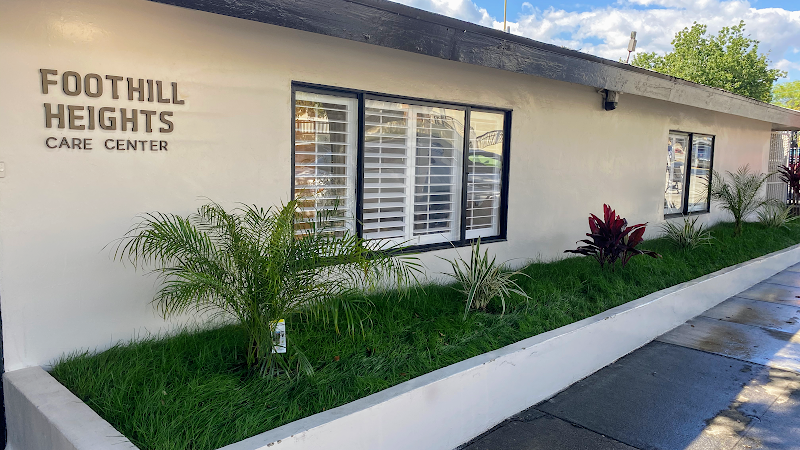
1515 NORTH FAIR OAKS AVE, PASADENA, CA 91103 (626) 798-1111
For profit - Limited Liability company 49 Beds HELENE MAYER Data: November 2025
Trust Grade
58/100
#578 of 1155 in CA
Last Inspection: April 2025

Within standard 12-15 month inspection cycle. Federal law requires annual inspections.

Overview

Foothill Heights Care Center has a Trust Grade of C, which means it is average and in the middle of the pack for nursing homes. It ranks #578 out of 1155 facilities in California, placing it in the bottom half, but it is #105 out of 369 in Los Angeles County, indicating that only a few local options are better. The facility is showing improvement, reducing issues from 23 in 2024 to 15 in 2025. Staffing is a concern, with a below-average rating of 2 out of 5 stars and a turnover rate of 49%, higher than the state average. The facility has faced $9,390 in fines, which is average, and has average RN coverage, meaning there are enough registered nurses to oversee care. However, there have been some troubling findings. For example, food storage was not managed safely, with expired items potentially being served, which could lead to foodborne illnesses. Additionally, infection control measures were not followed correctly for some residents, exposing them to risks. Lastly, there were delays in submitting important discharge paperwork, which could affect the quality assessment of care. While there are strengths in the facility's quality measures, these weaknesses warrant careful consideration for families looking for a nursing home.

Trust Score
C
58/100
In California
#578/1155
Top 50%
Safety Record
Low Risk
No red flags
Inspections
Getting Better
23 → 15 violations
Staff Stability
⚠ Watch
49% turnover. Above average. Higher turnover means staff may not know residents' routines.
Penalties
⚠ Watch
$9,390 in fines. Higher than 97% of California facilities. Major compliance failures.
Skilled Nurses
⚠ Watch
Each resident gets only 24 minutes of Registered Nurse (RN) attention daily — below average for California. Fewer RN minutes means fewer trained eyes watching for problems.
Violations
⚠ Watch
49 deficiencies on record. Higher than average. Multiple issues found across inspections.
★★★☆☆
3.0
Overall Rating
★★☆☆☆
2.0
Staff Levels
★★★★☆
4.0
Care Quality
★★★☆☆
3.0
Inspection Score
Stable
2024: 23 issues
2025: 15 issues

The Good

  • 4-Star Quality Measures · Strong clinical quality outcomes
  • Full Sprinkler Coverage · Fire safety systems throughout facility
  • No fines on record

Facility shows strength in quality measures, fire safety.

The Bad

3-Star Overall Rating

Near California average (3.1)

Meets federal standards, typical of most facilities

Staff Turnover: 49%

Near California avg (46%)

Higher turnover may affect care consistency

Federal Fines: $9,390

Below median ($33,413)

Minor penalties assessed

Chain: HELENE MAYER

Part of a multi-facility chain

Ask about local staffing decisions and management

The Ugly 49 deficiencies on record

Jul 2025 2 deficiencies
CONCERN (D) 📢 Someone Reported This

A family member, employee, or ombudsman was alarmed enough to file a formal complaint

Potential for Harm - no one hurt, but risky conditions existed

Comprehensive Care Plan (Tag F0656)

Could have caused harm · This affected 1 resident

**NOTE- TERMS IN BRACKETS HAVE BEEN EDITED TO PROTECT CONFIDENTIALITY** Based on observation, interview, and record review, the facility failed to formulate comprehensive person-centered care plans fo...

Read full inspector narrative →
**NOTE- TERMS IN BRACKETS HAVE BEEN EDITED TO PROTECT CONFIDENTIALITY** Based on observation, interview, and record review, the facility failed to formulate comprehensive person-centered care plans for one (1) of 3 sampled residents (Resident 1) as indicated on the facility's policy by failing to: Having care plan and document evidence to monitor the side effects and effectiveness of the use of two antibiotic medications (a drug used to treat infections caused by bacteria and other microorganisms) Document evidence of Resident 1's Right hip dislocation and care plan to implement hip precautions and monitor Resident 1's condition. These deficient practices had the potential negative effects, worsening outcomes/conditions and lead to hospitalization for Resident 1. Findings:During a review of Resident 1's admission Record, the admission record indicated Resident 1 was admitted to the facility on [DATE] and re-admitted [DATE]. Resident 1's diagnoses included right hip prosthesis sequela (refers to the long-term consequences or complications arising from a right hip replacement. These can include pain, stiffness, limited range of motion, and issues related to the prosthesis itself, such as loosening or infection), sepsis (a life-threatening condition that occurs when the body's immune system overreacts to an infection) and right hip dislocation (occurs when the ball (femoral head) of the hip joint is forced out of it's socket (acetabulum) on the right side) During a review of Resident 1's Minimum Data Set (MDS, a resident assessment tool), dated 5/23/2025, the MDS indicated Resident 1 has intact cognitive (mental action or process of acquiring knowledge and understanding) skills for daily decision making. The MDS indicated Resident 1 was dependent (helper does all of the effort, resident does none of the effort to complete the activity) in eating, oral hygiene, toileting hygiene, shower/ bathe self, upper and lower body dressing, putting on/ taking off footwear, roll left and right, sit to lying, and lying to sitting on the side of bed. During a record review of Resident 1's X-Ray Results of the Right hip in General Acute Hospital (GACH 1) dated 5/14/2025. The X-ray Result indicated there was superolateral dislocation of right total hip prosthesis. During a record review of Resident 1's Physician's Order, dated 5/18/2025, the physician's order indicated 1. Cefepime Hydrochloride (used to treat bacterial infections in many different parts of the body) Use 1 gram (gm, unit of measure) intravenously (IV, fluids/medication given directly into the blood stream) every 12 hours for Right hip wound abscess until 5/21/2025.2. Vancomycin hydrochloride (antibiotic used to treat severe bacterial infections) Use 1 gram intravenously every 12 hours for Right hip wound abscess until 5/22/2025. During an interview on 7/23/2025 at 2:37PM with Licensed Vocational Nurse 2 (LVN 2), LVN 2 stated the staff who admitted Resident 1 should have initiated the care plan within 24 hours if Resident 1 came back with Right hip dislocation. If there were no care plan and interventions it means, there was no assessment performed to Resident 1 or did not complete his/her work. During a concurrent interview and record review on 7/23/2025 at 2:39 PM with LVN 1, The Treatment Administration Record (TAR) dated May 2025 was reviewed. The TAR did not indicate Resident 1's right hip dislocation and there was no hip precaution interventions noted. LVN 1 stated, the hip precaution interventions on the dislocated Right hip should be on TAR. LVN 1 stayed quiet and looked at the surveyor when asked if where was the documentation for Resident 1's hip precaution interventions. During a concurrent interview and record review on 7/23/2025 at 2:40 PM with LVN 1, Resident 1's Nurses' Progress Notes (NPN) dated 5/18/2025 to 7/8/2025 were reviewed. The NPN indicated no documentation for monitoring or interventions for Resident 1's right hip dislocation. LVN 1 just looked at the surveyor and did not answer when asked if she could show the documentation for the hip precaution interventions. During an interview on 7/3/2025 at 3:35 PM with Physical Therapist 1 (PT 1), PT 1 stated, If a resident was transferred back to the facility with hip dislocation, We should update the care plan for hip precautions and follow interventions like using the abduction pillow and flex the leg a bit so the Resident's hip can be placed in proper position so the hip will be in the proper placement. If hip precaution interventions were not followed, the hip dislocation can get worse. During a concurrent interview and record review on 7/23/2025 at 4:14 PM with Director of Nursing (DON), Resident 1 Care Plan (CP) from 4/28/2025-7/8/2025 were reviewed. There was no care plan indicated for Resident 1's right hip dislocation on 5/18/2025. DON stated, there was no care plan for Resident 1's right hip dislocation. We should have a specific CP to Resident 1's hip dislocation to address his problem, what needs to be done, and right interventions can be implemented. During a concurrent interview and record review on 7/23/2025 at 4:16 PM, Resident 1 CP from 5/18/2025-7/8/2025 was reviewed. The CP did not indicate Resident 1's use of 2 antibiotics last May 19-22,2025. DON stated, If Resident 1 was using Antibiotics, we should have formulated a care plan. It is important to have a care plan to see if the problem is resolved, if we reached our goal, we have monitored and implemented the needed interventions. During a concurrent interview and record review on 7/23/2025 at 4:19 PM with DON, Resident 1's NPN dated 5/18/2025 to 7/8/2025 were reviewed. The NPN did not have documentation of hip precautions for Resident 1's Right hip dislocation. DON stated, there was no documentation of Resident 1's Right Hip dislocation interventions implementation like using an abduction pillow, repositioning the Resident. We should have documentation for using abduction pillow, to make sure we monitor placement and Resident 1's right hip. During a review of the undated facility's policy and procedure (P&P) titled, Care Plans, Comprehensive Person-Centered, the P&P indicated a comprehensive, person-centered care plan that includes measurable objectives and timetables to meet the resident's physical, psychosocial and functional needs is developed and implemented for each resident. 2. The comprehensive, person-centered care plan is developed within seven (7) days of the completion of the required MDS assessment (Admission, Annual or Significant Change in Status), and no more than 21 days after admission.7. The comprehensive, person-centered care plan:a. includes measurable objectives and timeframes.e. reflects currently recognized standards of practice for problem areas and conditions.9. Care plan interventions are chosen only after data gathering, proper sequencing of events, careful consideration of the relationship between the resident's problem areas and their causes, and relevant clinical decision making.10. When possible, interventions address the underlying source(s) of the problem area(s), not just symptoms or triggers.11. Assessments of residents are ongoing, and care plans are revised as information about the residents and the residents' conditions changes.
CONCERN (D) 📢 Someone Reported This

A family member, employee, or ombudsman was alarmed enough to file a formal complaint

Potential for Harm - no one hurt, but risky conditions existed

Quality of Care (Tag F0684)

Could have caused harm · This affected 1 resident

**NOTE- TERMS IN BRACKETS HAVE BEEN EDITED TO PROTECT CONFIDENTIALITY** Based on observation, interview, and record review, the facility failed to provide the necessary wound care and treatment for on...

Read full inspector narrative →
**NOTE- TERMS IN BRACKETS HAVE BEEN EDITED TO PROTECT CONFIDENTIALITY** Based on observation, interview, and record review, the facility failed to provide the necessary wound care and treatment for one (1) of three (3) sampled residents (Resident1) accordance with facility's policy ( Wound Care) when: a. Licensed Nursing staff did not monitor Resident 1 for signs and symptoms of infection, pain and discomfort of the right hip abscess (collection of pus in any part of the body) on every shift from 6/1/2025 - 6/23/2025.b. Treatment orders were not provided on every shift from 6/1/2025 - 6/23/2025. These deficient practices had the potential to delay in healing Resident 1's right hip abscess which can lead to worsening of the wound and affect the resident's overall well-being and quality of life. Findings: During a review of Resident 1's admission Record, the admission record indicated Resident 1 was admitted to the facility on [DATE] and re-admitted [DATE]. Resident 1's diagnoses included right hip prosthesis sequela (refers to the long-term consequences or complications arising from a right hip replacement. These can include pain, stiffness, limited range of motion, and issues related to the prosthesis itself, such as loosening or infection), sepsis (a life-threatening condition that occurs when the body's immune system overreacts to an infection) and right hip dislocation (occurs when the ball (femoral head) of the hip joint is forced out of socket (acetabulum) on the right side). During a record review of Resident 1's History and Physical (H&P) in General Acute 1 (GACH 1) dated 5/15/2025, the H&P indicated Resident 1 presents to the emergency department with a right hip abscess noted 3 days ago. Resident 1 appeared systemically ill with signs of sepsis, including fever, tachycardia (heart rate [HR] faster than normal, over 100 beats per minute at rest), tachypnea (respiratory rate [RR] exceeding normal, more than 20 breaths per minute), and hypotension (low blood pressure). Laboratory studies reveal leukocytosis (high white blood cell [WBC], a condition characterized by an elevated number of white blood cells {leukocytes} in the bloodstream, often a response to various stimuli, including infections, inflammation, or other immune system challenges) of 11.6 (normal range 4.5-11.0) During a review of Resident 1's Minimum Data Set (MDS, a resident assessment tool), dated 5/23/2025, the MDS indicated Resident 1 has intact cognitive (mental action or process of acquiring knowledge and understanding) skills for daily decision making. The MDS indicated Resident 1 was dependent (helper does all of the effort, resident does none of the effort to complete the activity) in eating, oral hygiene, toileting hygiene, shower/ bathe self, upper and lower body dressing, putting on/ taking off footwear, roll left and right, sit to lying, and lying to sitting on the side of bed. During a record review of Resident 1's Physician's Order indicated, 1. On 5/18/2025, a. Treatment: Monitor for signs and symptoms of pain/discomfort to right hip every shift b. Treatment: Monitor wound for any signs and symptoms of infection such as increase in drainage, odor, color of drainage, swelling, redness to surrounding area, then notify MD if observed every shift.2. On 5/20/2025, Treatment: Cleanse with Normal Saline (NS), Pat dry, paint with Betadine on outer side of wound allow to dry, apply dry extra absorbent every shift for right hip abscess.3. On 6/3/2025, Treatment: Cleanse with NS, pat dry, apply A&D ointment, and cover with foam dressing and as needed (PRN) when soiled or dislodged every shift for right hip abscess. During a concurrent interview and record review of Treatment Administration Record (TAR) on 7/23/2025 at 2:44 PM with Licensed Vocational Nurse 2 (LVN 2), Resident 1's TAR dated 6/1/2025-6/30/2025 was reviewed. There was no signature on 6/1/2025, 6/3/2025, 6/6/2025-6/8/2025, 6/11/2025, 6/13/2025-6/15/2025, 6/23/2025. LVN 2 stated, the empty spaces meant they were not done, because they were not signed. During a concurrent interview and record review of TAR on 7/23/2025 at 2:45 PM with LVN 1, Resident 1's TAR dated 6/1/2025-6/30/2025 was reviewed. There was no signature on 6/1/2025, 6/3/2025, 6/6/2025-6/8/2025, 6/11/2025, 6/13/2025-6/15/2025, 6/23/2025. LVN 1 stated, the dates that were not signed were mostly registry staff. I cannot answer that question if what was the reason that it was not signed. I just work here. I am not responsible for other people's work. During a concurrent interview and record review of TAR on 7/23/2025 at 4:04 PM with Director of Nursing (DON), Resident 1's TAR dated 6/1/2025-6/30/2025 was reviewed. There was no signature on 6/1/2025, 6/3/2025, 6/6/2025-6/8/2025, 6/11/2025, 6/13/2025-6/15/2025, 6/23/2025 for Resident 1's wound treatment on the right hip. DON stated, I am sure the staff did the treatment, but they just forgot to sign the TAR. If it was not signed, it means we did not do it. It is an inaccurate documentation. During a concurrent interview and record review of TAR on 7/23/2025 at 4:06 PM with DON, Resident 1's TAR dated 6/1/2025-6/30/2025 was reviewed. There was no signature on 6/1/2025 (AM and PM shift), 6/6/2025-6/8/2025 (AM shift), 6/10/2025 (NOC shift), 6/11/2025 (AM shift), 6/13/2025(AM shift), 6/14/2025-6/15/2025(AM and PM shift), 6/23/2025 (AM shift) for Resident 1's right hip wound monitoring for infection, pain and discomfort. DON stated, The staff did not sign the wound monitoring and assessment which indicates it was not done. There were no assessment and monitoring performed on Resident 1 if those dates and shifts were not signed. During a review of the undated facility's Policy & Procedure (P&P) titled, Wound Care, The P&P indicated, the purpose of this procedure is to provide guidelines for the care of wounds to promote healing. Documentation: The following information should be recorded in the resident's medical record:1. The type of wound care given.2. The date and time-the wound care was given.4. The name and title of the individual performing wound care.5. Any change in the resident's condition.6. All assessment data (i.e., wound bed color, size, drainage, etc.) obtained when inspecting the wound.1 0. The signature and title of the person recording the data
May 2025 2 deficiencies
CONCERN (D) 📢 Someone Reported This

A family member, employee, or ombudsman was alarmed enough to file a formal complaint

Potential for Harm - no one hurt, but risky conditions existed

Report Alleged Abuse (Tag F0609)

Could have caused harm · This affected 1 resident

**NOTE- TERMS IN BRACKETS HAVE BEEN EDITED TO PROTECT CONFIDENTIALITY** Based on interview and record review, the facility failed to report allegation of sexual abuse for one of three sampled resident...

Read full inspector narrative →
**NOTE- TERMS IN BRACKETS HAVE BEEN EDITED TO PROTECT CONFIDENTIALITY** Based on interview and record review, the facility failed to report allegation of sexual abuse for one of three sampled residents (Resident 2) to the California Department of Public Health (CDPH), the Ombudsman (an official appointed to investigate individuals' complaints against maladministration), and to the local law enforcement in accordance with the facility ' s policy and procedure. This deficient practice potentially delays the investigation and prevention of abuse, and put Resident 2 and other residents in the facility at risk of further abuse. Findings: During a review of Resident 2's admission Record (AR), the AR indicated the facility readmitted to the facility on [DATE] with diagnoses that including but not limited to sequelae of cerebral infarction (long-term effects of a stroke {damage to the brain from blood supply interruption}), anxiety disorders (feelings of worry , anxiety, or fear that interfere with daily living), and depressive episodes (loss of interest in activities). During a review of Resident 2 ' s History & Physical (H&P), dated 12/7/24, the H&P indicated Resident 1 had fluctuating mental status/capacity (periods of capacity followed by periods of cognitive {ability to understand and process thoughts}). During a review of Resident 2's Minimum Data Set (MDS, a resident assessment tool), dated 3/7/25, the MDS indicated Resident 1 was cognitively intact and required substantial/maximal assistance with shower/bathe self and partial/moderate assistance with toileting. During an interview on 5/31/25, at 5:54 pm with FAM1, FAM1 stated Resident 2 made allegations of sexual abuse when Resident 2 first came to the facility. FAM1 spoke with DON asked DON to keep him aware when Resident 2 makes abuse allegations. During an interview, on 5/31/25, at 7:23 p.m., with the Director of Nursing (DON), the DON stated there were no sexual inappropriate allegations made by Resident 2 or sexual abuse that the DON was aware of. The DON stated we have something for fabrication of stories, that ' s it. During a record review of the interview with the Administrator (ADM), the ADM stated Resident 1 ' s abuse allegations are all part of Resident 1 ' s past history. During a record review of the facility ' s Policy and Procedure (P&P), titled, Abuse, Neglect, Exploitation, or Misappropriation- Reporting and Investigating, dated April 2021, indicated all reports of resident abuse (including injuries of unknown origin), neglect, exploitation, or theft/misappropriation of resident property are reported to local, state, and agencies (as required by current regulations), and thoroughly investigated by facility management. Findings of all investigations are documented and reported. Immediately is defined as a) whthin two hours of an allegation involving abuse or result in serious bodily injury; b) within 24 hours of an allegation that does not involve abuse or result in serious bodily injury.
CONCERN (D) 📢 Someone Reported This

A family member, employee, or ombudsman was alarmed enough to file a formal complaint

Potential for Harm - no one hurt, but risky conditions existed

Deficiency F0919 (Tag F0919)

Could have caused harm · This affected 1 resident

**NOTE- TERMS IN BRACKETS HAVE BEEN EDITED TO PROTECT CONFIDENTIALITY** Based on observation, interview, and record review the facility failed to ensure the call light system was functioning for one o...

Read full inspector narrative →
**NOTE- TERMS IN BRACKETS HAVE BEEN EDITED TO PROTECT CONFIDENTIALITY** Based on observation, interview, and record review the facility failed to ensure the call light system was functioning for one out of three sampled residents (Resident 1). This deficient practice at risk in delay response to resident's requests, ensure resident's safety and fulfill the needs of resident's care. Findings: During a review of Resident 1's admission Record (AR), the AR indicated the facility readmitted to the facility on [DATE] with diagnoses that including but not limited to Parkinson's disease (affects movement often including tremors), chronic obstructive pulmonary disease (lung disease), and schizophrenia (disorder that affects ability to think, feel, and behave clearly). During a review of Resident 1's History & Physical (H&P), dated 4/27/24, the H&P indicated Resident 1 had fluctuating mental status/capacity (periods of capacity followed by periods of cognitive {ability to understand and process thoughts}). During a review of Resident 1's Minimum Data Set (MDS, a resident assessment tool), dated 5/21/25, the MDS indicated Resident 1 was moderately cognitively impaired (ability to understand and process thoughts), and was independent for personal hygiene and required supervision/touching assistance with toileting hygiene. During a concurrent observation and interview, on 5/31/25, at 4:25 p.m., with Resident 1, Resident 1 stated Resident 1 needed a Certified Nurse Assistant (CNA). Resident 1 was observed sitting on the side of Resident 1's bed and Resident 1 was wearing no diaper. Resident 1 stated Resident 1's diaper was wet, and Resident 1 took Resident 1's diaper off. Resident 1's diaper was observed on Resident 1's bedside table. Resident 1 stated Resident 1 had been awake and waiting for help for about an hour. Resident 1 stated Resident 1's call light was not working. Resident 1 was observed pressing Resident 1's call light from Resident 1's bed and there was no audible sound and there was no visual light observed illuminating above bed and above door. During a concurrent observation and interview, on 5/31/25, at 4:27 p.m., with the Director of Nursing (DON), Resident 1 pressed Resident 1's call light while seated on the side of Resident 1's bed and no audible sound was heard, and there was no visual light observed. The DON stated the call light came out of the wall. During an interview, on 5/31/25, at 5:35 p.m., with the Maintenance Supervisor (MS), the MS stated it is important to check the residents' call light to ensure it functioning properly for the care and safety of residents and for emergency. During an interview, ON 5/31/25, at 7:27 p.m., the DON stated it is important for the residents' call light to be working for the patient and patient needs. During a record review of the facility's Policy and Procedure (P&P), titled, Answering the Call Light, indicated be sure that the call light is plugged in and functioning at all times.
Apr 2025 10 deficiencies
CONCERN (D)

Potential for Harm - no one hurt, but risky conditions existed

Resident Rights (Tag F0550)

Could have caused harm · This affected 1 resident

**NOTE- TERMS IN BRACKETS HAVE BEEN EDITED TO PROTECT CONFIDENTIALITY** Based on interview and record review, the facility failed to provide dignity and respect for one of one sampled resident (Reside...

Read full inspector narrative →
**NOTE- TERMS IN BRACKETS HAVE BEEN EDITED TO PROTECT CONFIDENTIALITY** Based on interview and record review, the facility failed to provide dignity and respect for one of one sampled resident (Resident 36) when Certified Nursing Assistant 4 (CNA 4) took food items from Resident 36's bedside table and washed Resident 36's boots without asking permission. These deficient practices have the potential to negatively affect Resident 36's sense of self-esteem and self-worth and can lead to social isolation/ distress. Findings: During a review of Resident 36's admission Record, the admission Record indicated Resident 36 was admitted to the facility on [DATE] with diagnoses that included other sequelae of cerebral infarction (long term deficits or impairments that can result from loss of blood flow to the brain), chronic obstructive pulmonary disease (COPD- a chronic lung disease causing difficulty in breathing), and respiratory failure. During a review of Resident 36's Minimum Data Set (MDS- a resident assessment tool), dated 2/14/2025, the MDS indicated Resident 36 was assessed having moderately impaired cognitive (mental action or process of acquiring knowledge and understanding) skills for daily decision making. Resident 36 required setup or clean-up assistance with lower body dressing and putting on/taking off footwear. Resident 36 was independent (resident completes the activity by themselves with no assistance from a helper) with eating, oral hygiene, upper body dressing, personal hygiene, sit to stand, and walking 150 feet (ft- unit of measurement). During an interview on 4/14/2025, at 9:15 AM, Resident 36 stated she won five individually packed Moon Pies (three chocolate and two vanilla) from playing bingo in the Activity Room and placed them inside her bedside table. Resident 36 stated on 4/13/2025, CNA 4 cleaned her closet and bedside table and took the Moon Pies without letting her know. Resident 36 stated what CNA 4 did was an invasion of her privacy. Resident 36 stated she informed the Director of Nursing (DON) about the incident with CNA 4 and was informed that facility staff went through her closet and bedside table to make sure it was clean. Resident 36 stated she wanted her bedside table and closet locked so facility staff can leave her belongings alone. During an interview on 4/14/2025, at 9:15 AM, with Resident 36, Resident 36 stated that a couple of weeks ago (date unknown), CNA 4 told her that her boots smelled bad and needed to be washed. Resident 36 stated she did not give CNA 4 permission to wash her boots because it did not smell bad. Resident 36 stated she left her boots in her room and walked outside her room and when she returned, her boots were gone. Resident 36 stated she cried and was very upset when she could not find her boots. Resident 36 stated Resident 15 (roommate) informed her that CNA 4 took her boots and brought it to the laundry. Resident 36 said her boots were returned to her two days later. During an interview on 4/14/2025. At 9:30 AM, with Resident 15, Resident 15 stated she was in the room when CNA 4 cleaned Resident 15's closet and bedside table. Resident 15 stated she saw CNA 4 take Resident 36's Moon Pies. Resident 15 stated she did not know why CNA 4 took Resident 36's Moon Pies. Resident 15 stated she was also in the room when CNA 4 took Resident 36's boots. During an interview on 4/15/2025, at 2:52 PM, with CNA 4, CNA 4 stated the residents' closets and bedside tables were cleaned weekly. CNA 4 stated Resident 36 had a history of leaving snacks and food inside her bedside table. CNA 4 stated Resident 36 keeps old cookies from the Activity Room and puts them inside her bedside table. CNA 4 stated Resident 36 informed her that she saves the cookies for the night. CNA 4 stated she took the cookies in Resident 36's bedside table because it had been in there for more than 2 days. CNA 4 stated she did not inform Resident 36 that she was going to take the cookies away. During an interview on 4/15/2025, at 2:52 PM, with CNA 4, CNA 4 stated she was passing out the breakfast tray in Resident 36's room and noticed that Resident 36's boots were wet and smelled bad. CNA 4 stated she asked Resident 36 if laundry could wash her boots but Resident 36 refused. CNA 4 stated she informed the Charge Nurse (CN) that the bad smell in the room came from Resident 36's boots. CNA 4 stated the CN told her to take the shoes to laundry to get it washed quickly. CNA 4 stated she did not inform Resident 36 that she was going to get her boots washed. During an interview on 4/16/2025m, at 9:15 AM, with Licensed Vocational Nurse 1 (LVN 1), LVN 1 stated she remembered seeing Resident 36, on an unknown date, upset while walking in the hallway. LVN 1 stated Resident 36 informed LVN 1 she was upset because her boots were washed without her permission. LVN 1 stated Resident 36 informed her that she was told that her boots needed to be washed because there was an odor that came from her boots after she removed them. LVN 1 stated Resident 36 was also upset the beginning of the week because her bedside table was cleaned, and her Moon Pies were taken. LVN 1 stated facility staff should have asked for Resident 36's permission before taking her boots to get washed and removing her Moon Pies from her bedside table. LVN 1 stated if a resident refuses to have her clothes washed or food inside her bedside table taken away then facility staff should respect that decision, inform the Supervisor, and talk to the resident again later. LVN 1 stated the facility was Resident 36's home and she should be treated with respect. During an interview on 4/16/2025, at 10:28 AM, Activities Director (AD), stated Moon Pies were given out as prices for winning games in the Activity Room. AD stated residents loved the Moon Pies because it reminded them of their childhood. AD stated the expiration dates of the Moon Pies were checked before they were given out as prices to the residents. AD stated none of the Moon Pies were about to expire. AD stated Resident 36 informed her that she accumulated the Moon Pies from winning bingo. AD stated Resident 36 informed her that she was saving the Moon Pies in case she needed to eat them later. AD stated Resident 36 informed her that her Moon Pies were taken from her bedside table and thrown out by CNA 4. AD stated Resident 36 informed her that she only gave CNA 4 permission to clean her bedside table but not to throw away her Moon Pies. AD stated Resident 36 was upset and did not understand why her Moon Pies were taken if the bags were sealed. AD stated not all residents can afford to by snacks like Moon Pies so they should not have been thrown out if the bags were still sealed. AD stated residents will feel horrible if food items that they won are taken away from them without permission. During an interview on 4/16/2025, at 10:34 AM, with LVN 2, LVN 2 stated winning prices in the Activity Room made residents happy and excited. LVN 2 stated taking away prices that residents won from playing games in the Activity Room would be upsetting to residents. LVN 2 stated it was Resident 36's right to be informed that her boots were going to be washed. LVN 2 stated residents would feel violated and disrespected if their belongings were taken away without permission. During an interview on 4/16/2025, at 1:56 PM, with the Director of Nursing (DON), the DON stated facility staff clean the residents' closets and bedside tables once a week to make sure there are no old food and dirty items inside. The DON stated facility staff need to inform the residents and get permission from them before taking their belongings to laundry or throwing their food items. The DON stated the resident's room is their home and taking things from their home without asking will affect their dignity. During a review of the facility's policy and procedure (P&P) titled, Personal Property, revised on 8/2022, the P&P indicated, Resident belongings are treated with respect by facility staff, regardless of perceived value. During a review of the facility's P&P titled, Resident Rights Guidelines for All Nursing Procedures, revised on 10/2010, the P&P indicated the purpose of the P&P was to provide general guidelines for resident rights while caring for the resident. The P&P, under General Guidelines, indicated for any procedure that involves direct resident care to: Explain the procedure to the resident. Answer any questions he/she may have Ask permission to implement the procedure. If the Resident refuses, notify your supervisor. If permission is obtained, proceed with the procedure.
CONCERN (D)

Potential for Harm - no one hurt, but risky conditions existed

Deficiency F0688 (Tag F0688)

Could have caused harm · This affected 1 resident

**NOTE- TERMS IN BRACKETS HAVE BEEN EDITED TO PROTECT CONFIDENTIALITY** Based on observation, interview, and record review, the facility failed to have a documented evidence that restorative nursing (...

Read full inspector narrative →
**NOTE- TERMS IN BRACKETS HAVE BEEN EDITED TO PROTECT CONFIDENTIALITY** Based on observation, interview, and record review, the facility failed to have a documented evidence that restorative nursing (a program available in nursing homes that helps residents maintain any progress made during rehabilitation therapy treatments, enabling the residents to function at a high capacity) care was provided on 4/1/2025 to 4/8/2025 and 4/10/2025 to 4/13/2025 for one of two sampled residents (Resident 18) with limited range of motion (ROM- the extent of movement of a joint) and limited mobility: This deficient practice placed Resident 18 at risk for further decline in physical function and contractures (condition of shortening and hardening muscles, tendons, or other tissue, often leading to deformity and rigidity of joints). Findings: During a review of Resident 18's admission Record, the admission Record indicated Resident 18 was initially admitted to the facility on [DATE] and was readmitted on [DATE] with diagnoses that included other secondary parkinsonism (movement disorders similar to Parkinson's disease [a movement disorder of the nervous system that worsens over time] caused by factors other than the disease itself, such as medications, brain injuries or other underlying illnesses), type 2 diabetes mellitus (DM- a disorder characterized by difficulty in blood sugar control and poor wound healing), and muscle wasting (weakening, shrinking, and loss of muscle) and atrophy (wasting away or decrease in size of a cell, organ, or tissue). During a review of Resident 18's Minimum Data Set (MDS- a resident assessment tool), dated 1/22/2025, the MDS indicated Resident 18 was assessed having moderately impaired (decisions poor, cues/supervision required) cognitive (mental action or process of acquiring knowledge and understanding) skills for daily decision making. Resident 18 had functional limitation in range of motion and impairment on both sides of the lower extremities (hip, knee, ankle, foot). Resident 18 was dependent (helper does all of the effort) with eating, oral/personal hygiene, toileting hygiene, shower/bathe self, lower/upper body dressing, and roll left and right. During a review of Resident 18's Joint Mobility Screening, dated 1/22/2025, the Joint Mobility Screening indicated Resident 18 had severe (greater than 50%) joint mobility loss on his right hip, left hip, right knee, and left knee. The Joint Mobility Screening indicated Resident 18 had minimal to severe loss of LE PROM and Resident 18 had a diagnosis/condition that puts him at risk for contracture development. During a review of Resident 18's Physical Therapy Discharge summary, dated [DATE], the Physical Therapy Discharge Summary under Discharge Status and Recommendations indicated the following: Orthotic Management- Splint/Orthotic Recommendations: It is recommended the patient wear a knee extension splint on left knee and on right knee for four hours in order to maintain joint integrity and maintain joint mobility. Restorative Nursing Program (RNP)- RNP/Functional Maintenance Program (FMP- physical therapy): It is recommended that patient wear a knee extension splint on left knee and on right knee for four hours in order to maintain joint integrity and maintain joint mobility. During a review of Resident 18's Order Summary Report, dated 4/15/2025, the Order Summary Report indicated a physician order, with a start date of 3/2/2025, for Restorative Nursing Assistant (RNA- a certified nursing assistant [CNA] that focuses on helping residents regain or maintain their ability to perform activities of daily living [ADLs] through therapeutic interventions like ROM and physical therapy) to apply splint (a medical device used to support and prevent a body part from moving) to bilateral (both) knees, everyday (qd) five times a week, for four hours or as tolerated. During a review of Resident 18's Order Summary Report, dated 4/15/2025, the Order Summary Report indicated a physician order, with a start date of 3/2/2025, for RNA to perform passive range of motion (PROM- when the Resident applies to effort to move the joint which moved through a variety of stretching exercises) to bilateral lower extremities (LE- legs) and bilateral upper extremities (UE- arms) qd five times a week as tolerated. During a review of Resident 18's Care Plan for Restorative Nursing, revised on 4/2/2025, the care plan indicated Resident 18 required the RNA program to maintain joint mobility, to prevent further decline in function, and to prevent contracture. The care plan indicated staff interventions included were for RNA to perform PROM to BLE qd 5 times a week as tolerated, PROM exercise to both UE as tolerated qd 5 times a week, and RNA to apply splint to right knee, qd 5 times a week for 4 hours or as tolerated. During an observation on 4/14/2025, at 2:22 PM, in Resident 18's room, Resident 18 was observed lying on his right side in bed. Resident 18 did not have a splint on both knees. During an observation on 4/15/2025, at 11:30 AM, in Resident 18's room, Resident 18 was asleep in bed. Resident 18 did not have a splint on both knees. During an observation on 4/15/2025, at 12:41 PM, in Resident 18's room, Resident 18 was observed being fed his lunch in bed with the assistance of Certified Nurse Assistant 5 (CNA5). CNA 5 stated Resident 18 did not have a splint on both knees. During an interview on 4/15/2025, at 12:50 PM, with CNA 2, CNA 2 stated he also worked in the facility as an RNA and applies the residents' splints and assists the residents with RNA exercises. CNA 2 stated he was working as an RNA today and was assigned to Resident 18. CNA 2 stated Resident 18 was ordered for bilateral knee splints for four hours five days a week. CNA 2 stated he applied Resident 18's bilateral knee splints at approximately 9 AM this morning and removed them at around 11 AM before his shower. CNA 2 stated he did not reapply Resident 18's bilateral knee splints when Resident 18 returned from his shower because he went on his lunch break. CNA 2 stated the knee splint was ordered to prevent Resident 18's contractures from getting worse. CNA 2 stated Resident 18's RNA order to apply the splint to his bilateral knees was not followed. During the same interview on 4/15/2025, at 12:50 PM, with CNA 2, CNA 2 stated Resident 18 was ordered for PROM to his BLE and BUE every day five times a week. CNA 2 stated PROM exercises included moving the joints and stretching the legs and arms by straightening them as tolerated. CNA 2 stated PROM exercises are important to prevent muscle atrophy (condition that causes a progressive loss of muscle mass, strength and power) and contractures. CNA 2 stated he does not document applying the bilateral splints and providing PROM exercises on the Documentation Survey Report. CNA 2 stated he only documents it in the progress notes once a week. During an interview on 4/15/2025, at 12:57 PM, with RNA 1, RNA 1 stated he was assigned to Resident 18 on 4/14/2025. RNA 1 stated he forgot to put Resident 18's bilateral knee splints on 4/14/2025. RNA 1 stated it was important to put Resident 18's bilateral knee splints to prevent his knees from getting stiffer. During a record review on 4/15/2025, at 3:10 PM, Resident 18's Documentation Survey Report for 4/2025 was reviewed. Resident 18's Documentation Survey Report indicated CNA 2 and RNA 1 documented Resident 18's bilateral knee splints were applied, and PROM exercises were provided as ordered on 4/14/2025 and 4/15/2025. During a concurrent interview and record review on 4/15/2025, at 3:57 PM, with the Director of Nursing (DON), Resident 18's Documentation Survey Report for 4/2025 was reviewed. The DON stated there was no documentation that Resident 18's bilateral knee splints and PROM were done from 4/1/2025 to 4/8/2025 and 4/10/2025 to 4/13/2025. The DON stated if it was not documented then it was not done. The DON stated the RNA treatments should be documented on the Documentation Survey Report right after it was provided to the resident. The DON stated Resident 18 had contractures on both knees and was ordered to wear bilateral knee splints and PROM exercises to prevent the contractions from progressing. During a review of the facility's policy and procedure(P&P), titled, Restorative Nursing Services, revised 7/2017, the P&P indicated Residents will receive restorative nursing care as needed to help promote optimal safety and independence.
CONCERN (D)

Potential for Harm - no one hurt, but risky conditions existed

Tube Feeding (Tag F0693)

Could have caused harm · This affected 1 resident

**NOTE- TERMS IN BRACKETS HAVE BEEN EDITED TO PROTECT CONFIDENTIALITY** Based on observation, interview, and record review, the facility failed to provide appropriate care to prevent complications of ...

Read full inspector narrative →
**NOTE- TERMS IN BRACKETS HAVE BEEN EDITED TO PROTECT CONFIDENTIALITY** Based on observation, interview, and record review, the facility failed to provide appropriate care to prevent complications of a gastrostomy tube (g-tube; a surgical opening fitted with a tube device to allow feedings to be administered directly to the stomach common for people with swallowing problems) for one (1) of four (4) sampled residents (Resident 32) in accordance with the facility's policy and procedure (P&P) by not ensuring Licensed Vocational Nurse 2 (LVN 2) checked Resident 32's g-tube placement prior to administering a water flush (the process of gently pushing water through the g-tube to keep it from clogging) and medication administration. This failure had the potential to result in Resident 32 aspirating (when something enters the airway of lungs by accident) which could lead to lung problems such as pneumonia (a lung infection) and result in death. Findings: During a review of Resident 32's admission Record, the admission Record indicated the resident was initially admitted to the facility on [DATE] and readmitted [DATE] with diagnoses of dysphagia (difficulty swallowing) and pneumonia. During a review of Resident 32's Minimum Data Set (MDS - a resident assessment tool), dated 2/12/2025, the MDS indicated the resident was severely impaired (difficulty with or unable to make decisions, learn, remember things) with cognitive (ability to think, remember, and reason) skills for daily decision making. Resident 32 was dependent (helper does all of the effort; resident does none of the effort to complete the activity) with going from lying to sitting on the side of the bed, rolling left and right in bed, upper and lower body dressing (the ability to dress and undress above and below the waist), putting on/taking off footwear and personal hygiene. Resident 32 was also assessed to have a feeding tube upon admission and while a resident at the facility. During a review of Resident 32's Order Summary Report, dated 4/16/2025, the Order Summary Report indicated an enteral feed (a method of delivering nutrition directly into the gastrointestinal tract [the organs and system involved in the digestion and absorption of food] through a feeding tube) order on 2/5/2025 to check tube placement before initiation of formula, medication administration, and flushing the tube every shift. During a review of Resident 32's Order Summary Report, dated 4/16/2025, the Order Summary Report indicated an enteral feed order from 2/5/2025 indicated to check tube feeding residuals (the amount of liquid left in the stomach after a feeding) every shift, if residual is greater than 100 ml (milliliters; unit of volume), hold the feeding for 1 hour and then recheck and resume the feeding if the residual is less than 100 ml. The order further indicated to call the physician (MD) if the residual remains greater than 100 ml. During a review of Resident 32's Enteral Feed Care Plan, dated 3/13/2025, the Care Plan indicated a staff intervention to check for tube placement and gastric (stomach) contents/residual volume per facility protocol and record. Hold feed if greater than 10 cubic centimeter (cc; a unit of volume equal to 1 milliliter) aspirate (to draw out). During an observation of Resident 32's medication pass in Resident 32's room on 4/16/2025 at 9:18 AM with LVN 2, LVN 2 was observed pausing the resident's feeding and then proceeded to give Resident 32 a 50 ml water flush via (by) gravity into Resident 32's g-tube. After the water flush was given, LVN 2 was then observed pushing air into Resident 32's g-tube and listening to their abdomen with her stethoscope to check for g-tube placement. During a concurrent interview and record review on 4/16/2025 at 9:51 with LVN 2, Resident 32's Order Summary Report, dated 4/16/2025 was reviewed. Resident 32's Order Summary Report indicated an enteral feed order on 2/5/2025 indicating to check tube placement before initiation of formula, medication administration, and flushing the tube every shift. LVN 2 stated she did not check Resident' 32's g-tube placement prior to giving the initial water flush. LVN 2 stated that for checking g-tube placement, she was under the impression that she could either check for residual or push air through the g-tube while listening to the resident's abdomen for a whooshing sound. LVN 2 further stated it is important to check for g-tube placement to ensure the resident's tube is in place. During an interview on 4/17/2025 at 10:16 AM with the Director of Nursing (DON), the DON stated prior to giving a resident a flush or medication administration through the g-tube, placement must first be checked with either checking residual or giving 10-20 cc of air through the g-tube and listening with a stethoscope for a whooshing sound. The DON stated that residual should also be checked prior to medication administration because if the residual is greater than 100 cc, the resident's feeding needs to be stopped since checking residual lets staff know if the resident is tolerating their g-tube feeding. The DON further stated it is important to check for g-tube placement to make sure whatever is being administered is going where it is supposed to be going prior to giving a water flush and medication administration. During a concurrent interview and record review on 4/17/2025 at 11:43 AM with the DON, the facility's policy and procedure (P&P) titled, Enteral Feedings - Safety Precautions, revised November 2018 was reviewed. The P&P indicated its purpose is to ensure the safe administration of enteral nutrition and preventing aspiration, the P&P indicated to check enteral tube placement every four (4) hours and prior to feeding or administration of medication and to check gastric residual volume as ordered. The DON agreed with the policy and stated the way enteral tube placement should be checked is by checking residual. During a review of the facility's P&P titled, Administering Medications through an Enteral Tube, revised November 2018, the P&P indicated the purpose of the procedure was to provide guidelines for the safe administration of medication through an enteral tube. The P&P also indicated: Steps in the Procedure a. Verify placement of feeding tube a. If you suspect improper tube positioning, do not administer feeding or medication. Notify the Charge Nurse of Physician. b. Stop feeding and flush tubing with at least 15 ml warm purified water (or prescribed amount).
CONCERN (D)

Potential for Harm - no one hurt, but risky conditions existed

Respiratory Care (Tag F0695)

Could have caused harm · This affected 1 resident

**NOTE- TERMS IN BRACKETS HAVE BEEN EDITED TO PROTECT CONFIDENTIALITY** Based on observation, interview, and record review, the facility failed to post a No Smoking/Oxygen in Use sign outside of the r...

Read full inspector narrative →
**NOTE- TERMS IN BRACKETS HAVE BEEN EDITED TO PROTECT CONFIDENTIALITY** Based on observation, interview, and record review, the facility failed to post a No Smoking/Oxygen in Use sign outside of the room entrance door for one of one sampled resident (Resident 98) to indicate the presence of oxygen as indicated in the facility's policy and procedure (P&P). This deficient practice had the potential to place the residents, staff, and visitors at risk for injury in an event of a fire. Findings: During a review of Resident 98's admission Record, the admission Record indicated Resident 98 was admitted to the facility on [DATE] with diagnoses that included respiratory disorders in diseases classified elsewhere, dyspnea (shortness of breath), and atelectasis (complete or partial collapse of a lung or a section of a lung). During a review of Resident 98's Minimum Data Set (MDS- a resident assessment tool), dated 4/2/2025, the MDS indicated Resident 98 was assessed having intact cognitive (mental action or process of acquiring knowledge and understanding) skills for daily decision making. Resident 98 required supervision or touching assistance with eating and oral/personal hygiene. Resident 98 required substantial/maximal assistance (helper does more than half the effort) with lower body dressing, putting on/taking off footwear, roll left and right, sit to lying, and lying to sitting on side of bed. The MDS indicated Resident 98 was on continuous oxygen therapy. During a review of Resident 98's physician's order, dated 4/12/2025, the physician's order indicated an order for oxygen at 2-3 liters per minute (LPM), nasal cannula (a small plastic tube, which fits into the resident's nostrils for providing supplemental oxygen) or face mask, humidification (the process of adding moisture to the air), continuous. During an observation on 4/14/2025, at 10:31 AM, in Resident 98's room, Resident 98 was observed in bed with the head of the bed elevated. Resident 98 was on 3 LPM of oxygen via nasal cannula. Resident 98 did not have an No Smoking/Oxygen in Use sign posted outside his door. During a concurrent observation and interview on 4/15/2025, at 11:23 AM, with Treatment Nurse (TN) outside Resident 98's room, TN stated Resident 98 was ordered for oxygen continuously. TN stated Resident 98 did not have a No Smoking/Oxygen in Use sign posted outside his door. TN stated it was important to have the sign outside Resident 98's door to inform visitors and staff that oxygen was being used in the room and to keep flammables out of the room. TN stated residents, staff, and visitors' safety are placed at risk if a fire breaks out in the facility. During an interview on 4/15/2025, at 3:55 PM, the Director of Nursing (DON), the DON stated the facility's policy to post a No Smoking/Oxygen in Use sign outside a resident on oxygen therapy was not followed. The DON stated it was important to post a No Smoking/Oxygen in Use sign outside Resident 98's door to inform the staff and visitors that oxygen was in use and smoking around the room was a fire hazard. During a review of the facility's P&P titled, Oxygen Administration, revised on 10/2010, the P&P indicated the following: The purpose of this procedure is to provide guidelines for safe oxygen administration. The following equipment and supplies will be necessary when performing this procedure: No Smoking/Oxygen in Use sign. Place an Oxygen in Use sign on the outside of the room entrance door. Place an Oxygen in Use sign in a designated place on or over the resident's bed
CONCERN (D)

Potential for Harm - no one hurt, but risky conditions existed

Medication Errors (Tag F0758)

Could have caused harm · This affected 1 resident

**NOTE- TERMS IN BRACKETS HAVE BEEN EDITED TO PROTECT CONFIDENTIALITY** Based on interview, and record review, the facility failed to ensure psychotropic medications (any drug that affects brain activ...

Read full inspector narrative →
**NOTE- TERMS IN BRACKETS HAVE BEEN EDITED TO PROTECT CONFIDENTIALITY** Based on interview, and record review, the facility failed to ensure psychotropic medications (any drug that affects brain activities associated with mental processes and behavior) were not used unnecessarily for one of five sampled residents (Resident 35) reviewed for unnecessary medications by failing to: 1. Implement the gradual dose reduction (GDR- is the stepwise tapering of a dose to determine if symptoms, conditions, or risks can be managed by a lower dose or if the dose or medication can be discontinued) recommendation from the consulting pharmacist to decrease Resident 35's Lexapro (medication used to treat depression [mood disorder characterized by a persistent sad, hopeless, or empty mood that can interfere with daily life] and anxiety [a feeling of apprehension, worry, or nervousness, often related to an impending threat of danger]). 2. Monitor and document for efficacy (effectiveness), and specific target behaviors: extreme sadness causing social withdrawal a state of decreased or absent interaction with others, often accompanied by a preference for solitude and a lack of engagement in social activities) and social isolation (a state where an individual experiences a lack of social contact or a minimal number of social interactions with others) for Resident 35's use of Lexapro. These deficient practices had the potential to result in use of unnecessary psychotropic medications for Resident 35 and can lead to adverse effects and consequences such as decline in quality of life and functional capacity. Findings: During a review of Resident 35's admission Record, the admission Record indicated Resident 35 was initially admitted to the facility on [DATE] and was readmitted on [DATE] with diagnoses that included other specified depressive (depression) episodes, other schizoaffective disorders (a mental illness that can effect thoughts, mood and behavior), and dementia (a progressive state of decline in mental abilities) without behavioral disturbance, psychotic disturbance (a state where an individual experiences a significant disruption in their ability to distinguish between reality and fantasy leading to a loss of contact with reality), mood disturbance, and anxiety. During a review of Resident 35's Minimum Data Set (MDS- a resident assessment tool), dated 4/9/2025, the MDS indicated Resident 35 was assessed having severely impaired cognitive (mental action or process of acquiring knowledge and understanding) skills for daily decision making. The MDS also indicated Resident 35 required partial/moderate assistance (helper does less than half the effort) with oral hygiene, upper body dressing, roll left and right in bed, and chair/bed-to-chair transfer. The MDS indicated Resident 35 required substantial/maximal assistance (helper does more than half the effort) with sit to lying, lying to sitting on side of bed, sit to stand, and walk 10 feet (ft- unit of measurement). The MDS indicated Resident 35 was dependent (helper does all of the effort) with toileting/personal hygiene, shower/bathe self, and lower body dressing. Resident 35 was taking antipsychotic (type of drug used to treat symptoms of psychosis) and antidepressant medications. During a review of Resident 35's physician order, dated 2/6/2025, the physician's order indicated for behavior monitoring- antidepressants: document number of episodes per shift of target behavior (specify m/b extreme sadness causing social withdrawal and social isolation) every shift for behavior monitoring Lexapro use. During a review of Resident 35's physician's order, dated 3/7/2025, the physician's orders indicated, Lexapro oral tablet 5 milligrams (mg- unit of measurement), give 0.5 tablet (2.5 mg) by mouth two times a day for other specified depressive episodes manifested by (m/b- observable or perceptible signs and symptoms of a disease or condition) extreme sadness causing social withdrawal and social isolation. During a review of Resident 35's Progress Note, dated 3/7/2025, under Behavioral Note, the progress note indicated Psychiatrist (Psych- a medical practitioner specializing in the diagnosis and treatment of mental illness) consulted with Resident 35 today (3/7/2925) and reviewed all medications and reports given by nurse and no increase in behaviors have been noted. The progress note indicated, Resident 35's emotional well-being has been stable, and Psych recommends slight GDR and staff to monitor and report any changes in behavior. The progress notes also indicated, Resident 35 currently stable, calm, able to comply with care and medications, some prompting or redirection at times needed. The progress note indicated GDR Lexapro 2.5 mg once daily (qd) (previous order 0.5 mg to twice a day). During a review of Resident 35's Progress Note, dated 3/7/2025, signed at 6:42 PM, by licensed nurse, under Order Note (a note that would document details like the medication's any specific instructions or contraindications related to the order) , the progress note indicated the order for Lexapro oral tablet 5 mg, give 0.5 tablet by mouth two times a day for other specified depressive episodes m/b extreme sadness causing social withdrawal and social isolation was outside of the recommended dose or frequency. The progress note indicated the frequency of 2 times per day exceeds the usual frequency daily. During a review of Resident 35's Care Plan, dated 4/12/2025, the care plan indicated Resident 35 had depression m/b extreme sadness causing social isolation withdrawal and social isolation and was at risk for side effects due to (d/t) medication usage. Resident 35's care plan interventions included to: Administer medications as ordered. Monitor/document for side effects and effectiveness- Lexapro oral tablet 5 mg, give 0.5 tablet by mouth two times a day for other specified depressive episodes m/b extreme sadness causing social withdrawal and social isolation Monitor/document/report as needed (prn) any signs and symptoms (s/sx) of depression, including: hopelessness, anxiety, sadness, insomnia (difficulty falling asleep, staying asleep, or waking up too early), anorexia (an eating disorder that causes people to weigh less than is considered healthy for their age and height, usually by excessive weight loss), verbalizing, negative statements, repetitive anxious or health-related complaints, tearfulness During a review of Resident 35's Documentation Survey Report, dated 04/2025, the Documentation Survey Report indicated Resident 35's behavior symptoms were not monitored on 4/7/2025 during the Dayshift (7 AM to 3PM), 4/10/2025 during the Dayshift, and 4/12/2025 during the Nightshift (11 PM to 7AM). During a concurrent interview and record review on 4/16/2025, at 3:38 PM, with the Director of Nursing (DON), Resident 35's Note to Attending Physician/Practitioner form, dated 2/20/2025 was reviewed. The Resident 35's Note to Attending Physician/Prescriber form indicated Resident 35's psychotropic medications were due for assessment of GDR. The DON stated the form indicated Resident 35 was currently on Lexapro 5 mg daily for depression since 3/2024. The DON stated, according to the form Resident 35's physician agreed to the consultant pharmacist's GDR recommendation to decrease Lexapro to 2.5 mg every day on 3/7/2025. During the same concurrent interview and record review with the DON, on 4/16/2025, at 3:38 PM, Resident 35's Medication Administration Record (MAR) from 3/8/2025 to 3/31/2025 and 4/1/2025 to 4/16/2025 and Resident 35's physician's order, dated 3/7/2025 were reviewed. The physician's orders indicated, Lexapro oral tablet 5 mg, give 0.5 tablet by mouth two times a day. The DON stated the physician order placed on 3/7/2025 did not reflect the physician's response to the pharmacist consultant's recommendation to decrease Resident 35's Lexapro 2.5 mg to once daily. The DON stated the MAR indicated Resident 35's Lexapro order was 2.5 mg twice daily. The DON stated according to Resident 35's MAR, Resident 35 continued to receive 2.5 mg of Lexapro two times a day from 3/8/2025 to 4/16/2025 instead of 2.5 mg of Lexapro once a day. The DON stated it was important to follow the consultant pharmacist's recommendation for GDR to see if the medication can be administered at a lower dose. The DON stated the GDR helps determine if the resident's current dose was still needed or if it can be reduced to a lower dose. The DON stated it was possible for Resident 35 to get more medication than what the resident needed if the GDR was not followed. The DON stated the RN Supervisor was responsible for making sure when the physician agrees to the consultant pharmacist's recommendation it was reflected in the physician's order and MAR. During a concurrent interview and record review on 4/17/2025, at 2:45 PM, with the MDSC and DON, Resident 35's MAR for Behavior Monitoring of antidepressants from 4/1/2025 to 4/30/2025 was reviewed. MDSC stated Resident 35's specific target behavior that needed to be monitored was extreme sadness causing social withdrawal and social isolation. MDSC stated Resident 35's specific target behavior monitoring was not done from 4/1/2025 to 4/16/2025 because the order was not carried over for the 4/2025 MAR from the 3/2025 MAR when the licensed nurses did the medication recap (reviewing the medication administration records for the next month). The DON stated if an action was not documented then it was not done. The DON and MDSN stated it was important to monitor Resident 35's specific target behavior to determine the effectiveness and necessity of his Lexapro medication. During a review of the facility's P&P, titled Psychotropic Medication Use, reviewed on 1/28/2025, the P&P indicated the following: 1) Residents do not receive psychotropic medications that are not clinically indicated and necessary to treat a specific condition document in the medical record. 2) Medications in the following categories are considered psychotropic medications and are subject to prescribing, monitoring, and review requirements specific to psychotropic medications in [NAME] antidepressant. 3) Psychotropic medication management is an interdisciplinary process that involves the resident, family, and/or representatives and includes: a) Determining adequate indications for use. b) Establishing appropriate dose (including duplicate therapy) and duration. c) Adequate monitoring for efficacy and adverse consequences. d) Determining appropriateness of gradual dose reduction (GDR); and 4) The prescribed dose and duration are based on the resident's diagnoses, signs and symptoms, current condition, age, existing medication regimen, labs and other test results, the type of medication, manufacturer's recommendation, accepted standards of practice for dosing, and input from the IDT about the resident's goals and preferences. 5) Residents receiving psychotropic medication are monitored and the response to treatment is documented. 6) Monitoring may include progress notes, behavior flow sheets, medication administration records, and the drug regimen review for the consultant pharmacist. 7) Residents on psychotropic medication receive gradual dose reductions (coupled with non-pharmacological interventions), unless clinically contraindicated, to determine whether the continued use of the medication is benefitting the resident, to find an optimal dose, or in an effort to discontinue the medication.
CONCERN (D)

Potential for Harm - no one hurt, but risky conditions existed

Medical Records (Tag F0842)

Could have caused harm · This affected 1 resident

**NOTE- TERMS IN BRACKETS HAVE BEEN EDITED TO PROTECT CONFIDENTIALITY** Based on interview and record review, the facility failed to ensure a bowel and bladder assessment was documented accurately for...

Read full inspector narrative →
**NOTE- TERMS IN BRACKETS HAVE BEEN EDITED TO PROTECT CONFIDENTIALITY** Based on interview and record review, the facility failed to ensure a bowel and bladder assessment was documented accurately for one (1) of 12 sampled residents (Resident 33) as indicated in the facility policy. This failure had the potential for Resident 33 not to receive the appropriate incontinent (unable to control the blader or bowels resulting in the involuntary release of urine or feces) bowel and bladder care, which could lead to skin breakdown. Findings: During a review of Resident 33's admission Record, the admission Record indicated the resident was initially admitted to the facility on [DATE] and readmitted [DATE] with diagnoses of metabolic encephalopathy (a brain disorder caused by problems with the body's chemistry and metabolism) and Alzheimer's Disease (a disease characterized by a progressive decline in mental abilities). During a review of Resident 33's Minimum Data Set (MDS - a resident assessment tool), dated 2/20/2025, the MDS indicated the resident was severely impaired with cognitive (ability to think, remember, and reason) skills for daily decision making. Resident 33 was dependent (helper does all of the effort; resident does none of the effort to complete the activity) with chair/bed-to-chair transfers, going from lying to sitting on the sided of the bed, upper and lower body dressing (the ability to dress and undress above and below the waist), putting on/taking off footwear, personal hygiene and eating. Resident 33 was also assessed to be always incontinent of bowel and bladder. During a review of Resident 33's Admission/re-admission Data Tool dated 1/20/2025, Resident 33's bowel and bladder habits were both marked as incontinent. During a concurrent interview and record review on 4/16/2025 at 10:54 AM with Director of Staff Development (DSD), Resident 33's Bowel and Bladder assessment dated [DATE] was reviewed. Resident 33's Bowel and Bladder Assessment indicated Resident 33 always voided appropriately without incontinence. DSD stated this was incorrect since Resident 33 was incontinent of both bowel and bladder DSD further stated since the Bowel and Bladder Assessment was done incorrectly, it could potentially affect the resident receiving the proper care. During a concurrent interview and record review on 4/16/2025 at 11:04 AM with DSD, Resident 33's MDS, dated [DATE] was reviewed. Resident 33's MDS indicated the resident was always incontinent of bowel and bladder. DSD stated Resident 33's Bowel and Bladder Assessment was incorrect since it indicated Resident 33 always voided appropriately without incontinence. During a concurrent interview and record review on 4/16/2025 at 11:04 AM with the Director of Nursing (DON), Resident 33's Bowel and Bladder Assessment, dated 2/20/2025 was reviewed. Resident 33's Bowel and Bladder Assessment indicated Resident 33 always voided appropriately without incontinence. The DON stated Resident 33 was incontinent, bed bound and unable to get up out of bed and therefore the documentation on the resident's Bowel and Bladder Assessment was incorrect. The DON stated that she along with the MDS consultants and Medical Records audit resident's charts weekly to ensure documentation was accurate, however Resident 33's Bowel and Bladder Assessment from 2/20/2025 must have been missed. The DON further stated it was important to ensure a resident's documentation is correct so that it shows the right status for the resident, and staff are aware of what needs to be done for the resident. During a review of the facility's policy and procedure (P&P) titled, Charting and Documentation, revised July 2017, the P&P indicated, Documentation in the medical record will be objective (not opinionated or speculative), complete, and accurate.
CONCERN (D)

Potential for Harm - no one hurt, but risky conditions existed

Deficiency F0919 (Tag F0919)

Could have caused harm · This affected 1 resident

**NOTE- TERMS IN BRACKETS HAVE BEEN EDITED TO PROTECT CONFIDENTIALITY** Based on observation, interview, and record review, the facility failed to ensure the call light (a visible and audible alarm ac...

Read full inspector narrative →
**NOTE- TERMS IN BRACKETS HAVE BEEN EDITED TO PROTECT CONFIDENTIALITY** Based on observation, interview, and record review, the facility failed to ensure the call light (a visible and audible alarm activated by a call button) for one of 12 sampled residents (Resident 23) was within reach as indicated on care plan and facility's policy. This failure placed Resident 23 at risk for experiencing a delay in receiving assistance from facility staff which could lead to a fall or accident. Findings: During a review of Resident 23's admission Record, the admission Record indicated the resident was initially admitted to the facility on [DATE] and readmitted [DATE] with diagnoses of rhabdomyolysis (a serious medical condition where muscle tissue breaks down, releasing harmful substances into the bloodstream) and lack of coordination. During a review of Resident 23's Minimum Data Set (MDS - a resident assessment tool), dated 1/24/2025, the MDS indicated the resident was severely impaired (difficulty with or unable to make decisions, learn, remember things) with cognitive (ability to think, remember, and reason) skills for daily decision making. Resident 23 was dependent (helper does all of the effort; resident does none of the effort to complete the activity) for lower body dressing (the ability to dress and undress below the waist) and needed substantial/maximal assistance (helper does more than half the effort) with walking 10 feet, chair/bed-to-chair transfers, and going from a sitting to standing position. Resident 23 also needed partial/moderate assistance (helper does less than half the effort) with putting on/taking off footwear, upper body dressing (the ability to dress and undress above the waist) and eating. During a review of Resident 23's Care Plan, dated 11/2/2024, Resident 23's Care Plan indicated Resident 23 was at risk for unavoidable declines related to current medical diagnosis. The staff interventions included were to ensure call light was within reach and attend to resident's needs promptly. During a review of Resident 23's Care Plan, dated 10/29/2024, Resident 23's Care Plan indicated Resident 23 was at risk for falls related confusion, gait/balance problems, incontinence (a condition where a person experiences involuntary loss of bodily fluids, such as urine or stool), poor communication/comprehension, psychoactive drug (a chemical substance that alters brain function and produces changes in perception, mood, consciousness, cognition or behavior) use, unaware of safety needs and vision problems. The staff interventions included were to ensure the resident's call light is within reach and encourage resident to use it for assistance as needed. The care plan indicated Resident 23 needs prompt response to all requests for assistance. During a review of Resident 23's Care Plan dated 10/29/2024, Resident 23's Care Plan indicated Resident 23 has a communication problem related to a diagnosis of Alzheimer's disease (a disease characterized by a progressive decline in mental abilities). The staff interventions included was to ensure/provide a safe environment: call light in reach. During a concurrent observation in Resident 23's room and interview on 4/14/2025 at 9:27 AM with Resident 23, Resident 23's call light was observed hanging against the wall to the left side of his head of bed. Resident 23 stated he did not know where his call light was. During a concurrent observation and interview on 4/14/2025 at 9:34 AM with Certified Nursing Assistant 4 (CNA 4) in Resident 23's room, Resident 23's call light was observed hanging against the wall to the left side of his head of bed. CNA 4 stated Resident 23's call light was hanging behind his head of bed and out of reach. During an interview on 4/15/2025 at 11:53 AM with Licensed Vocational Nurse 2 (LVN 2), LVN 2 stated the purpose of a call light was for residents to use to get in touch with anyone on the floor to ask for help and assistance. LVN 2 stated if a call light is out of reach, the resident would be at risk for not being able to get the attention and help they need. During an interview on 4/15/2025 at 3:33 PM with the Director of Nursing (DON), the DON stated the purpose of a call light was for residents to ask for help when they need it and if a call light is not within reach, it could result in the resident not being able to get the assistance needed and could possibly fall. During a review of the facility's policy and procedure (P&P) titled, Answering the Call Light, revised March 2021, the P&P indicated, The purpose of this procedure is the ensure timely responses to the resident's requests and needs, and indicated under General Guidelines: When the resident is in bed or confined to a chair be sure the call light is within easy reach of the resident.
CONCERN (E)

Potential for Harm - no one hurt, but risky conditions existed

Food Safety (Tag F0812)

Could have caused harm · This affected multiple residents

Based on observation, interview, and record review, the facility failed to ensure the storage of food was done in a safe and sanitary conditions according to the facility's policy and procedure (P&P) ...

Read full inspector narrative →
Based on observation, interview, and record review, the facility failed to ensure the storage of food was done in a safe and sanitary conditions according to the facility's policy and procedure (P&P) for twelve (12) residents reviewed for kitchen by failing to ensure: 1. Opened container of pancake and waffle syrup and creamy Italian dressing were dated with the use by date. 2. Frozen vegetables stored in the freezer were labeled with the name of the food item and dated with the use by. This deficient practice had the potential to result in residents ingesting expired food which can result in foodborne illnesses (food poisoning) with symptoms including upset stomach, vomiting, diarrhea, and fever and had the potential for the facility to serve food items not included in the scheduled menu. Findings: During a concurrent observation and interview on 4/14/2025, at 7:37 AM, of the facility kitchen, with the Dietary Supervisor (DS), the following were observed: a. One opened container of Creamy Italian Dressing in the refrigerator with a handwritten label on the lid indicating, D 3/18/25. b. One opened container of Pancake & Waffle Syrup on the bottom of the steam table with a handwritten label indicating, R 2/11/25. c. Three stacks of 16 bags of unlabeled frozen green vegetables in Freezer 1 (FR1) DS stated the date written on the opened container of Creamy Italian Dressing was the delivery date. DS stated the Creamy Italian Dressing container did not have a use by date on it. DS stated the date written on the opened container of Pancake & Waffle Syrup was the received date. DS stated the container of Pancake & Waffle Syrup did not have a use by date on it. DS stated the first two stacks of ten (10) bags of unlabeled frozen vegetables were pre-cut green beans. DS stated the third stack of six (6) bags of unlabeled frozen vegetables were pre-cut asparagus. DS stated the sixteen frozen bags were all unlabeled. DS stated the frozen green beans and asparagus looked very similar to each other. During an interview on 4/17/2025, at 11/22 AM, DS stated it was important that food items stored in the kitchen, refrigerator, and freezer were labeled and dated with the use by date to make sure the food served to the residents were not expired. DS stated the frozen bags of green beans and asparagus looked very similar to each other and should have been labeled with the name of the vegetable. DS stated the kitchen staff can easily pick up and cook the wrong bag of frozen vegetables because there were not labeled. DS stated there was a possibility the wrong ingredient can be added to the menu because of the unlabeled frozen bags of vegetables. DS stated the facility's P&P to label and date food items with the use by date was not followed. During a review of the facility's P&P, titled, Food Receiving and Storage, revised on 10/2017, the P&P indicated the following: Foods shall be received and stored in a manner that complies with safe food handling practices. Dry foods that are stored in bins will be removed from original packaging, labeled, and dated (use by date). Such foods will be rotated using a first in-first out system. All foods stored in the refrigerator or freezer will be covered, labeled, and dated (use by date).
CONCERN (E)

Potential for Harm - no one hurt, but risky conditions existed

Infection Control (Tag F0880)

Could have caused harm · This affected multiple residents

**NOTE- TERMS IN BRACKETS HAVE BEEN EDITED TO PROTECT CONFIDENTIALITY** Based on observation, interview, and record review, the facility failed to observe infection control measures for five (5) of ni...

Read full inspector narrative →
**NOTE- TERMS IN BRACKETS HAVE BEEN EDITED TO PROTECT CONFIDENTIALITY** Based on observation, interview, and record review, the facility failed to observe infection control measures for five (5) of nine (9) sampled residents (Residents 9, 40, 42, 150 and 17) as indicated on the facility policy and procedure (P&P) when the facility failed to: 1-4. Ensure facility staff donned (put on) full personal protective equipment (PPE; clothing and equipment that is worn or used to provide protection against hazardous substances and/or environments) and/or a N95 respirator (a disposable face mask that covers the user's nose and mouth which offers protection from small solid or liquid droplets found in the air) before entering a Coronavirus (SARS-CoV-2/COVID-19; a disease caused by coronavirus characterized mainly by fever and cough and can progress to severe symptoms) positive room under contact (a type of transmission-based precaution [TBP; infection control measures used in healthcare settings to prevent the spread of pathogens] used for residents with diseases caused by microorganisms [bacteria and viruses] that are spread through direct and indirect contact) and droplet (a type of TBP used to prevent the spread of infectious agents that are transmitted through respiratory droplets) isolation for Residents 9, 40, 42, and 150 . 5. Ensure Resident 17's soiled clothes and diaper were not thrown and left on the floor. These failures had the potential to result in the spread of bacteria and virus to other residents in the facility. Findings: 1. During a review of Resident 9's admission Record, the admission Record indicated the resident was initially admitted to the facility on [DATE] and readmitted [DATE] with diagnoses of chronic obstructive pulmonary disease (COPD; a chronic lung disease causing difficulty in breathing) and contact with and (suspected) exposure to COVID-19. During a review of Resident 9's Minimum Data Set (MDS - a resident assessment tool), dated 3/21/2025, the MDS indicated the resident was severely impaired (difficulty with or unable to make decisions, learn, remember things) with cognitive (ability to think, remember, and reason) skills for daily decision making. The MDS also indicated, Resident 9 was dependent (helper does all of the effort; resident does none of the effort to complete the activity) with chair/bed-to-chair transfers (the ability to transfer to and from bed to a chair or wheelchair), going from lying to sitting on the side of the bed, putting on/taking off footwear (the ability to put on and take off socks and shoes or other footwear that is appropriate for safe mobility and lower body dressing (the ability to dress and undress below the waist). The MDS indicated Resident 9 needed supervision/touching assistance (helper provides verbal cues and/or touching/steadying and/or contact guard assistance as resident completes activity) with upper body dressing (the ability to dress and undress above the waist), needed setup or clean-up assistance (helper sets up or cleans up; resident completes activity) with personal hygiene and was independent with eating. During a review of Resident 9's Physician Order dated 4/7/2025, the Physician Order indicated an order to place Resident 9 on COVID-19 TBP due to COVID-19 exposure. 2. During a review of Resident 40's admission Record, the admission Record indicated the resident was initially admitted to the facility on [DATE] with diagnoses of heart failure (a condition where the heart muscle is weakened or stiff, making it difficult for the heart to pump blood effectively) and COVID-19. During a review of Resident 40's MDS dated [DATE], the MDS indicated the resident was cognitively intact with cognitive skills for daily decision making. The MDS also indicated Resident 40 needed partial/moderate assistance (helper does more than half the effort) with walking 50 feet and putting on/taking off footwear. The MDS indicated Resident 40 needed supervision or touching assistance with transfers (how resident move to and from bed, chair, wheelchair, chair/bed-to-chair transfers), lower body dressing and personal hygiene and needed setup or clean-up assistance with going from lying to sitting on the side of the bed, upper body dressing and eating. During a review of Resident 40's Physician Order dated 4/7/2025, the Physician Order indicated to place Resident 40 on COVID-19 transmission-based precautions due to being COVID-19 positive. 3. During a review of Resident 42's admission Record, the admission Record indicated the resident was initially admitted to the facility on [DATE] with diagnoses of asthma (a chronic lung condition that causes the airways to become inflamed and narrow making it difficult to breathe) and contact with and (suspected) exposure to COVID-19. During a review of Resident 42's MDS dated [DATE], the MDS indicated the resident was cognitively intact with cognitive skills for daily decision making. The MDS also indicated Resident 42 needed supervision or touching assistance with walking 150 feet, chair/bed-to-chair transfers, putting on/taking off footwear and lower body dressing. The MDS indicated Resident 42 needed setup or clean-up assistance with going from lying to sitting on side of bed and personal hygiene and was independent with upper body dressing and eating. During a review of Resident 42's Physician Order dated 4/7/2025, the Physician Order indicated to place Resident 42 on COVID-19 transmission based precautions due to COVID-19 exposure. During a review of Resident 42's Care Plan dated 4/7/2024, the Care Plan indicated Resident 42 was at risk for COVID-19 respiratory infection due to exposure to COVID-19 positive roommate and included an intervention indicated to start on transmission-based precautions. 4. During a review of Resident 150's admission Record, the admission Record indicated the resident was initially admitted to the facility on [DATE] with diagnoses of type two (2) diabetes mellitus (DM2; a disorder characterized by difficulty in blood sugar control and poor wound healing) and contact with and (suspected) exposure to COVID-19. During a review of Resident 150's MDS, dated [DATE], the MDS indicated the resident was severely impaired with cognitive skills for daily decision making. The MDS also indicated Resident 150 needed partial/moderate assistance with walking 10 feet and chair/bed-to-chair transfers. The MDS indicated Resident 150 needed supervision or touching assistance with going from lying to sitting on the side of the bed, putting on/taking off footwear and lower body dressing, needed setup or clean-up assistance with personal hygiene and upper body dressing and was independent with eating. During a review of Resident 150's Physician Order dated 4/7/2025, the Physician Order indicated to place Resident 150 on COVID-19 transmission based precautions due to COVID-19 exposure. During a review of Resident 150's Care Plan dated 4/7/2025, the Care Plan indicated Resident 150 was at risk for COVID-19 due to COVID-19 positive roommate exposure and included an intervention indicating to start Resident 150 on transmission-based precautions. During an observation on 4/14/2025 at 9:13 AM, in the hallway outside of Residents 9, 40, 42 and 150's room, a contact and droplet precaution sign was observed. The contact precautions sign indicated for everyone entering the room to clean hands and wear a gown and gloves on room entry. The droplet precaution sign indicated everyone entering the room must clean their hands prior to entering the room and to make sure their eyes, nose and mouth are fully covered before room entry. During an observation on 4/14/2025 at 9:19 AM, in the hallway outside of Residents 9, 40, 42 and 150's room, Certified Nursing Assistant 2 (CNA 2) was observed entering the Residents 9, 40, 42 and 150's room wearing an N95 mask and did not don (put on) a gown, gloves or face shield or goggles. During an observation on 4/14/2025 at 10:09 AM, outside of Resident 9, 40, 42 and 150's room, Housekeeping (HK) was observed inside the room wearing only a gown, gloves and a surgical mask (a loose-fitting device that creates a physical barrier between the mouth and nose of the wearer and potential contaminants in the immediate environment). HK was not wearing face shield/ goggles and N95 mask. During an interview on 4/14/2025 at 10:22 AM with HK, HK stated she was inside Residents 9, 40, 42 and 150's room wearing a gown, gloves, and surgical mask and did not wear face shield/ goggles and N95 mask. During an observation on 4/14/2025 at 10:25 AM outside of Residents 9, 40, 42 and 150's room, CNA 2 was observed wearing an N95 mask and donning a gown and gloves and entered the room without a face shield or goggles. During an interview on 4/16/2025 at 1:44 PM with Infection Preventionist (IP), IP stated when staff enter a COVID-19 isolation room (Residents 9, 40, 42 and 150's room), they must wear full PPE including an N95 mask, gown, gloves and face shield or eye protection to help minimize the spread or potential of catching COVID-19. During an interview on 4/17/2025 at 10:05 AM with IP, IP stated regardless of what a staff member is doing, prior to entering a COVID-19 isolation room, they need to don full PPE including wearing an N95 mask, gown, gloves and face shield or eye protection. During a review of the facility's P&P titled, Isolation - Categories of Transmission-Based Precautions revised October 2018, the P&P indicated: a. Transmission-based precautions are additional measures that protect staff, visitors and other residents from becoming infected. These measures are determined by the specific pathogen and how it is spread from person to person. The three types of transmission-based precautions are contact, droplet and airborne. Contact Precautions a. Contact precautions may be implemented for residents known or suspected to be infected with microorganisms that can be transmitted by direct contact with the resident or indirect contact with environmental surfaces or resident-care items in the resident's environment. b. Staff and visitors will wear gloves (clean, non-sterile) when entering the room. c. Staff and visitors will wear a disposable gown upon entering the room and remove before leaving the room and avoid touching potentially contaminated surfaces with clothing after gown is removed. Droplet Precautions a. Droplet precautions may be implemented for an individual documented or suspected to be infected microorganisms transmitted by droplets (large-particle droplets [larger than 5 microns (unit of measurement) in size] that can be generated by the individual coughing, sneezing, talking, or by the performance of procedures such as suctioning). b. Masks will be worn when entering the room. c. Glove, gown and goggles should be worn if there is risk of spraying respiratory secretions. During a review of the facility's policy and procedure (P&P) titled, Coronavirus Disease (COVID-19) - Infection Prevention and Control Measures revised May 2023, the P&P indicated, This facility follows infection prevention and control (IPC) practices recommended by the Centers for Disease Control and Prevention (CDC; the nation's leading science-based, data-driven, service organization that protects the public's health) to prevent the transmission of COVID-19 within the facility. The P&P further indicated: a. The infection prevention and control measures that are implemented to address the SARS-CoV-2 (COVID-19) pandemic are incorporated into the infection prevention and control plan. These measures include: i. Implementing universal use of PPE for staff; ii. Following current environmental infection prevention and control recommendations. During a review of the CDC's guidance titled, Infection Control Guidance: SARS-CoV-2 dated 6/24/2024, the guidance indicated: a. This guidance applies to all U.S. settings where healthcare is delivered, including nursing homes and home health. The recommendations in this guidance continue to apply after the expiration of the federal COVID-19 Public Health Emergency. a. Implement Source Control Measures i. Source control refers to the use of respirators or well-fitting facemasks or cloth masks to cover a person's mouth and nose to prevent the spread of respiratory secretions when they are breathing, talking, sneezing or coughing. ii. Source control for healthcare personnel (HCP) include: 1. A National Institute for Occupational Safety and Health (NIOSH; the federal institute responsible for conducting research and making recommendations for the prevention of work-related injury and illness) Approved particulate respirator with N95 filters or higher; 2. A well-fitting facemask. a. When used solely for source control, any of the options listed above could be used for an entire shift unless they become soiled, damaged, or hard to breathe through. If they are used during the care of patient for which a NIOSH Approved respirator or facemask is indicated for personal protective equipment (PPE) (e.g. [for example] NIOSH Approved particulate respirators with N95 filters or higher during the care of a patient with SARS-CoV-2 infection, facemask during surgical procedure or during care of a patient on droplet precautions), they should be removed and discarded after the patient care encounter and a new one should be donned. b. Source control is recommended for individuals in healthcare settings who: i. Have suspected or confirmed SARS-CoV-2 infection or other respiratory infection (e.g. those with runny nose, cough sneeze); or ii. Had close contact (patients and visitors) or a higher-risk exposure (HCP) with someone with SARS-CoV-2 infection, for 10 days after their exposure. c. Implementing Universal Use of Personal Protective Equipment for HCP i. Eye protection (i.e. goggles or a face shield that covers the front and sides of the face) worn during all patient care encounters. d. Personal Protective Equipment i. HCP who enter the room of a patient with suspected or confirmed SARS-CoV-2 infection should adhere to Standard Precautions and use a NIOSH Approved particulate respirator with N95 filters or higher, gown, gloves, and eye protection (i.e. [that is], goggles or a face shield that covers the front and sides of the face). 5. During a review of Resident 17's admission Record, the admission Record indicated the resident was initially admitted to the facility on [DATE] and readmitted [DATE] with diagnoses of sequelae (an after effect of a disease, condition or injury) of cerebral infarction (a condition where brain tissue dies due to lack of blood blow and oxygen) and lack of coordination. During a review of Resident 17's MDS, dated [DATE], the MDS indicated the resident was moderately impaired with cognitive skills for daily decision making. The MDs also indicated Resident 17 needed partial/moderate assistance with walking 50 feet, chair/bed-to-chair transfers, going from lying to sitting on side of bed, putting on/taking off footwear, lower body dressing. The MDS indicated Resident 17 needed supervision or touching assistance with personal hygiene, upper body dressing and eating. During a concurrent observation and interview on 4/14/2025 at 9:48 AM inside Resident 17's room with CNA 3, Resident 17's soiled diaper and dirty clothes were observed on the floor along with a plastic bag on the floor with some clothes inside. CNA 3 stated she left it there for a second and stated that the resident's dirty clothes and soiled diaper should not have been left on the floor like that. During an interview on 4/15/2025 at 3:05 PM with CNA 4, CNA 4 stated when assisting a resident with changing, there should be one plastic bag for the resident's soiled diaper, and one plastic bag for their dirty clothes. CNA 4 stated the resident's soiled diaper should immediately be placed inside the plastic bag and thrown away in the dirty hamper. CNA 4 stated both Resident 1's soiled diaper and clothes should not be thrown onto the floor for infection control especially since some residents like to walk around not wearing any socks. During an interview on 4/16/2025 at 9:45 AM with IP, IP stated soiled diapers, linen and clothes are to be placed in the dirty linen and dirty hamper. IP stated all CNA's have access to clear plastic bags and the dirty linen, dirty clothes and soiled diaper should be thrown into the appropriate receptacle and not on the floor. IP also stated if a resident's dirty clothes and soiled diaper are thrown on the floor, the infection control policy is not being followed and when someone steps on the floor, it could harbor bacteria and cause cross contamination and in turn someone could step on the area and bring that bacteria to another resident's room and potentially take it back to their home. During a review of the facility's P&P titled, Laundry and Bedding, Soiled, revised October 2018, the P&P indicated, Soiled laundry/bedding shall be handled, transported and processed according to the best practices for infection prevention and control. The P&P also indicated: a. All used laundry is handled as potentially contaminated until it is properly bagged and labeled for appropriate processing. Contaminated laundry is placed in a bag or container at the location where it is used and not sorted or rinsed at the location of use. During a review of the facility's P&P titled, Infection Prevention and Control Program, revised 1/28/2025, the P&P indicated, An infection prevention and control program (IPCP) is established and maintained to provide a safe, sanitary and comfortable environment and to help prevent the development and transmission of communicable diseases and infections.
MINOR (B)

Minor Issue - procedural, no safety impact

Deficiency F0912 (Tag F0912)

Minor procedural issue · This affected multiple residents

**NOTE- TERMS IN BRACKETS HAVE BEEN EDITED TO PROTECT CONFIDENTIALITY** Based on observation, interview and record review, the facility failed to ensure 13 of 21 resident rooms (rooms 1, 9, 10, 11, 12...

Read full inspector narrative →
**NOTE- TERMS IN BRACKETS HAVE BEEN EDITED TO PROTECT CONFIDENTIALITY** Based on observation, interview and record review, the facility failed to ensure 13 of 21 resident rooms (rooms 1, 9, 10, 11, 12, 14, 15, 16, 17, 18, 19, 20, and 21) met the square footage requirement of 80 square feet (sq. ft., unit of measurement) per resident in a multiple resident room. This failure had the potential to affect the residents' personal space, decrease freedom of mobility, and could compromise the provision of care. Findings: During an observation on 4/14/2025 from 9 AM to 1 PM , Rooms 1, 9, 10, 11, 12, 14, 15, 16, 17, 18, 19, 20, and 21 did not meet the minimum requirement of 80 sq. ft. per resident. The residents in these rooms were able to ambulate and/or move around in their wheelchairs freely. Nursing staff were observed to have enough space to provide safe quality care and there was enough space for beds, side tables, dressers, and other medical equipment. During a review of the facility's room waiver request, dated 4/7/2025, the facility's room waiver indicated the 10 rooms with 2 beds and 3 rooms with 4 beds are in accordance with the needs of the residents with adequate space and do not have any adverse effects on the residents' health and safety. The facility's room also indicated the following: Room Sq. Ft. Beds: room [ROOM NUMBER] - 137.61 sq. ft. - 2 beds room [ROOM NUMBER]- 142.50 sq. ft. - 2 beds room [ROOM NUMBER] -142.50 sq. ft. - 2 beds room [ROOM NUMBER] 142.50 sq. ft. - 2 beds room [ROOM NUMBER] - 142.50 sq. ft. - 2 beds room [ROOM NUMBER] - 142.50 sq. ft. - 2 beds room [ROOM NUMBER] - 142.50 sq. ft. - 2 beds room [ROOM NUMBER] - 142.50 sq. ft. - 2 beds room [ROOM NUMBER] - 142.50 sq. ft. - 2 beds room [ROOM NUMBER] - 142.50 sq. ft. - 2 beds The minimum square footage for a 2-bedroom is 160 sq. ft. room [ROOM NUMBER] - 283.40 sq. ft. - 4 beds room [ROOM NUMBER] - 294.70 sq. ft. - 4 beds room [ROOM NUMBER] - 294.70 sq. ft. - 4 beds The minimum square footage for a 4-bedroom is 320 sq. ft. During an interview on 4/15/2025 at 12:24 PM with Certified Nursing Assistant 1 (CNA1), CNA 1 stated she has enough room to provide care to the residents to ensure safely in all the resident's rooms including Rooms 1, 9, 10, 11, 12, 14, 15, 16, 17, 18, 19, 20, and 21. During an interview on 4/15/2025 at 1:31 PM with Licensed Vocational Nurse 1 (LVN1), LVN 1 stated that all the resident's rooms including Rooms 1, 9, 10, 11, 12, 14, 15, 16, 17, 18, 19, 20, and 21 have enough room for her to provide proper and safe care to the residents. During interviews with residents in Rooms 1, 9, 10, 11, 12, 14, 15, 16, 17, 18, 19, 20, and 21 both individually and collectively, the residents did not express any concerns regarding the size of their rooms. The Department would be recommending the room waiver for Rooms 1, 9, 10, 11, 12, 14, 15, 16, 17, 18, 19, 20, and 21 as requested by the facility.
Mar 2025 1 deficiency
CONCERN (D) 📢 Someone Reported This

A family member, employee, or ombudsman was alarmed enough to file a formal complaint

Potential for Harm - no one hurt, but risky conditions existed

Report Alleged Abuse (Tag F0609)

Could have caused harm · This affected 1 resident

**NOTE- TERMS IN BRACKETS HAVE BEEN EDITED TO PROTECT CONFIDENTIALITY** Based on interview and record review the facility failed to report an allegation of alleged sexual abuse (the act of engaging in...

Read full inspector narrative →
**NOTE- TERMS IN BRACKETS HAVE BEEN EDITED TO PROTECT CONFIDENTIALITY** Based on interview and record review the facility failed to report an allegation of alleged sexual abuse (the act of engaging in sexual activity with someone without their consent, or by using force or coercion) for one (1) of three sampled residents (Residents 1) within 2-hour timeframe to the State Survey Agency (SA, where state law provides for jurisdiction in long-term care facilities), ombudsman (OMB) (advocates for residents of nursing homes, board and care homes and assisted living facilities), and local law enforcement when OMB and local law enforcement went to the facility to investigate the allegation of sexual abuse made by Resident 1 on 3/5/2025. This deficient practice had the potential to compromise or impede the protection of Resident 1, which could affect resident's physical, emotional, and mental wellbeing. Findings: During a review of Resident 1's admission Record, the admission Record indicated Resident 1 was admitted to the facility on [DATE] with diagnoses of diabetes mellitus type 1 (DM type 1 , is a life-long autoimmune disease that prevents the pancreas from making insulin), schizoaffective disorders a mental health condition that combines symptoms of schizophrenia and a mood disorder, such as depression or bipolar disorder), and anxiety disorders (a group of mental health conditions that cause excessive fear and worry). During a review of Resident 1's Minimum Data Set (MDS - resident assessment tool), dated 2/28/2024, the MDS indicated Resident 1 had modified independence (some difficulty in new situations only) of cognitive skills (ability to understand and make decisions) for daily decision making. The MDS also indicated Resident 1 needed supervision or touching assistance (helper provides verbal cues and/or touching/steadying and /or contact guard assistance as resident completes activity. Assistance may be provided throughout the activity or intermittently) in shower/ bathe self, lower body dressing, and putting on/taking off footwear, lying and sitting on the side of the bed, sit to stand position, toilet transfer and tub/shower transfer. During an interview with Licensed Vocational Nurse (LVN) on 3/7/2025 at 10:33 AM, LVN stated she is a mandated reporter, she must report any abuse incident or allegation of abuse to the ADM as soon as possible, she can also call police, ombudsman to report the abuse. LVN stated there is a form of SOC 341 (form used by Californian to report suspected dependent adult or elder abuse) that needs to be filled out in case of any abuse and suspected abuse happened to residents. During an interview with the Director of Nursing (DON) on 3/7/2025 at 10:43 AM, The DON stated facility staff need to report to the Administrator (ADM) for any abuse or allegation of abuse within two- hour time frame. During an interview with the Administrator (ADM) on 3/7/2025 at 12:28 PM, ADM stated sexual abuse allegation happened to Resident 1 according to the resident back in December 2024 when Resident 1 is still residing at Facility 2. ADM stated OMB came to the facility on 3/5/2025 and OMB called the police for Resident 1 after OMB listened to Resident 1's story and the resident made the sexual abuse allegation. ADM stated, police came to the facility for Resident 1 on 3/5/2025 to investigate the allegation of sexual abuse and the police also went to Facility 2 and did the investigation over at Facility 2 with the OMB. ADM stated she did not start any investigation and reported to SA when the facility was made aware that Reisdent 1 made an allegation for sexual abuse on 3/5/2025. ADM also stated she will start the investigation right away and report it to the agencies only if there is a real abuse case. During an interview with Director of Staff Development (DSD) on 3/7/2025 at 12:48 PM, DSD stated staffs are mandated reporters and the facility need to report any abuse incident or allegation of abuse within two hours to SA, ombudsman and local law enforcement. During a review of the facility's Policy and Procedure (P&P) titled, Abuse Investigation and Reporting, undated, the P&P indicated all alleged violations involving abuse will be reported by the facility administrator, or his/her designee, to the following persons or agencies: a. The State licensing/certification agency (SA) responsible for surveying/licensing the facility b. The local/State Ombudsman c. The Resident's Representative (Sponsor) of Record d. Adult Protective Services (where state law provides jurisdiction in long-term care) e. Law enforcement officials The P&P also indicated an alleged violation of abuse or mistreatment (including injuries of unknown source and misappropriation of resident property) will be reported immediately, but not later than two (2) hours if the alleged violation involves abuse During a review of the facility's Policy and Procedure (P&P) titled, Abuse, Neglect (fail to care for properly), Exploitation (treating someone unfairly in order to benefit from their work) and Misappropriation (unauthorized use of another's name. likeness, identity, property without permission resulting to harm to that person)- Reporting and Investigating, undated, the P&P indicated if resident abuse, neglect, exploitation, misappropriation of resident property or injury of unknown source is suspected, the suspicion must be reported immediately to the administrator and to other officials according to state law. The P&P indicated the Administrator or the individual making the allegation immediately reports his or her suspicion to the following persons or agencies: a. The state licensing /certification agency responsible for surveying/licensing the facility b. The local/state ombudsman c. The Resident's Representative of Record d. Adult Protective Services e. Law enforcement officials The P&P also indicated, Immediately is defined as within 2 hours of an allegation involving abuse or result in serious bodily injury.
Sept 2024 1 deficiency
MINOR (B) 📢 Someone Reported This

A family member, employee, or ombudsman was alarmed enough to file a formal complaint

Minor Issue - procedural, no safety impact

Staffing Information (Tag F0732)

Minor procedural issue · This affected multiple residents

Based on observation, interview, and record review, the facility failed to ensure to post the accurate and complete Census and Direct Care Service Hours Per Patient Day (DHPPD, refers to the actual ho...

Read full inspector narrative →
Based on observation, interview, and record review, the facility failed to ensure to post the accurate and complete Census and Direct Care Service Hours Per Patient Day (DHPPD, refers to the actual hours of work performed per patient day by a direct caregiver) in accordance with the facility's policy and procedure by: 1. Facility did not post the DHPPD on 9/16/2024 in a prominent place readily accessible to resident and visitors. 2. Facility failed to ensure the posted DHPPD for 9/8/2024 to 9/12/2024 were complete and indicated the total number and actual hours of licensed and unlicensed nursing staff who worked and directly responsible for resident care. These deficient practices had the potential for the Nurse Staffing Information not to be available to the residents and visitors at any given time. Findings: During an observation at the facility entrance on 9/16/2024 at 11:21 AM, there was no DHPPD Form posted by the entrance. During a concurrent record review of the DHPPD Form dated 9/11/2024 and interview with the Director of Staff Development (DSD) on 9/16/2024 at 11:22 AM, DHPPD Projected hours dated 9/11/2024 was the one posted on the wall at the facility entrance. DSD stated, DHPPD form was not updated, and she was not able to create and post the DHPPD form for 9/16/2024. DSD stated, she is responsible in posting the DHPPD form at the facility entrance and not anywhere else in the facility to ensure it is visible to residents and visitors. During an observation and record review of the DHPPD Forms dated 9/8/2024 to 9/12/2024 posted at the entrance of the facility on 9/16/2024 at 11:35 AM, DHPPD forms dated 9/8/2024 to 9/12/2024 in the posting were incomplete. The DHPPD forms only indicated the projected hours of the DHPPD forms posted on the wall with the following dates: 9/8/2024, 9/9/2024, 9/10/2024, 9/11/2024, and 9/12/2024. During a concurrent record review of the DHPPD Forms dated 9/8/2024 to 9/12/2024 and interview with DSD Consultant (DSDC) on 9/16/2024 at 11:38 AM, DSDC verified the DHPPD Forms dated 9/8/2024 to 9/12/2024 were incomplete, the actual direct service hours were not added. DSDC stated, The DHPPD projected forms should be completed within 24 hours, after the staff completed the working hours. During a concurrent record review of the DHPPD Form dated 9/11/2024 and interview with Accounts Payable and Payroll Director (APPD) on 9/16/2024 at 11:40 AM, APPD stated, The actual DHPPD dated 9/11/2024 was not completed after 24 hours. I was sick. I was working remotely. I need to get the staff hours to complete the time for the actual DHPPD. I was not able to do the actual DHPPD form for 9/11/2024 and the other dates (9/8/2024-9/12/2024). I have until today (9/16/2024) to complete it. During an interview with the DSD on 9/16/2024 at 11:47 AM, DSD stated she is the one responsible for the posting of the DHPPD Projected hours of staffing, but the APPD is the one who completes the Actual DHPPD Form because APPD collects the hours of the staff who worked from the previous day. During a concurrent record review of the facility's policy and procedure titled, Posting Direct Care Daily Staffing Numbers revised date on 7/2016, and interview with the DSD on 9/16/2024 at 12:35 PM, DSD stated the DHPPD Form is posted within two (2) hours at the beginning of each shift. DSD stated, I am the one responsible for posting that (DHPPD form). I was not able to do it today because I was busy to help with issue in the kitchen. The purpose of the posting was for the staff to see if we have enough staffing for the whole shift, and for the family/visitors to see and assuring them we have enough staff. If the APPD is sick, I have to be the one who covers her. She informed us that she was sick, but she did not endorse the completion of the actual DHPPD form. DSD stated, the DSD was busy with other residents that is why DSD was not able to complete the DHPPD Form for 9/16/2024. During an interview with APPD on 9/16/2024 at 1:05 PM, APPD stated, Actual DHPPD Form is part of my daily responsibility. We complete the actual NHPPD daily unless it is holiday/weekend. If I am sick no one has access to payroll, they need must have the actual hours. The DSD can do it and they can use the sign in sheet to compute the actual hours. The purpose of staffing to inform the staff that we have enough coverage for the staffing. During a concurrent record review of the facility's policy titled, Posting Direct Care Daily Staffing Numbers revised on 7/2016 and interview with the DSD on 9/16/2024 at 1:11PM, the policy indicated within two (2) hours of the beginning of each shift, the number of licensed nurses (RNs, LPNs, and LVNs) and the number of unlicensed nursing personnel (CNAs) directly responsible for resident care will be posted in a prominent location(accessible to residents and visitors) and in a clear and readable format. Within two (2) hours of the beginning of each shift, the shift supervisor shall compute the number of direct care staff and complete the Nursing Staff Directly Responsible for Resident Care Form. DSDC stated, the policy indicated the posting of DHPPD has to be 2 hours at the beginning of each shift and it t is the DSD's responsibility. DSDC stated we missed it today (9/16/2024) and the purpose of staffing is to inform everyone that we have enough coverage for the staffing. During a review of the facility's policy and procedure titled, Posting Direct Care Daily Staffing Numbers revised on 07/2016, indicated the previous shift's forms shall be maintained with the current shift form for a total of 24 hours of staffing information in a single location. Once a form is removed, it shall be forwarded to the director of nursing services' office and filed as a permanent record.
Aug 2024 1 deficiency
CONCERN (D) 📢 Someone Reported This

A family member, employee, or ombudsman was alarmed enough to file a formal complaint

Potential for Harm - no one hurt, but risky conditions existed

Deficiency F0558 (Tag F0558)

Could have caused harm · This affected 1 resident

**NOTE- TERMS IN BRACKETS HAVE BEEN EDITED TO PROTECT CONFIDENTIALITY** Based on observation, interview, and record review, the facility failed to ensure that the call light (a device used by patients...

Read full inspector narrative →
**NOTE- TERMS IN BRACKETS HAVE BEEN EDITED TO PROTECT CONFIDENTIALITY** Based on observation, interview, and record review, the facility failed to ensure that the call light (a device used by patients to call for assistance from hospital staff) was within reach (an arm's length) of one of three sampled residents (Resident 2). This deficient practice had the potential to result in delayed provision of services, delay in care and not receiving assistance with activities of daily living (ADLS, activities related to personal care. They include bathing or showering, dressing, getting in and out of bed or a chair, walking, using the toilet, and eating). Findings: During a review of the admission record indicated Resident 2 was initially admitted to the facility on [DATE] and re admitted on [DATE], with diagnoses that included but not limited to difficulty in walking, other lack of coordination, unspecified protein calorie malnutrition (a disorder caused by a lack of proper nutrition or an inability to absorb nutrients from food), unspecified dementia (a term used to describe a group of symptoms affecting memory, thinking and social abilities). During a review of Resident 2's History and Physical dated 1/21/2024 indicated Resident 2 does not have the capacity to understand and make decisions. During a review of the Minimum Data Set (MDS- a standardized assessment and care screening tool) dated 7/09/2024, indicated Resident 2 has impaired cognitive skills for daily decision making, and needed partial to moderate assistance (helper does less than half the effort) from the staff for the activities of daily living such as shower, and dressing, sit to stand, toilet transfers and chair to bed transfers. During a record review of Resident 2's care plan initiated on 7/06/2023 and revised on 8/24/2024 indicated Resident 2 was at risk for ADL self-care performance deficit related to unsteady gait, poor balance. The care plan interventions indicated to encourage the resident to use bell to call for assistance and to be sure the residents' call light is within reach and encourage the resident to use it for assistance as needed and the resident needs prompt response to all requests for assistance. During an observation in Resident 2's room and interview on 8/20/2024 at 8:08 am, Resident 2 was sitting up at the side of bed and call light was not placed within Resident 2's reach. Resident 2 stated she did not know where her call light was. Resident 2 stated, I do not know where my call light is, someone took it. I do not have one, but I have had one before, somebody just took it. If I have a fall, I do not know how I would call for help. During an observation in Resident 2's room and interview with Certified Nurse Assistant (CNA1) on 8/20/2024 at 8:12 am, CNA1 confirmed there was no call light near and within Resident 2's reach. CNA1 stated, The call light is not here, maybe it fell. I do not see it anywhere. Observed CNA1 trying to find call light cord around Resident 2's surrounding and found it behind privacy curtains. CNA1 stated, It (call light) was behind the curtains. It should be plugged in and clipped on to the resident's pillow for easy access. CNA1 confirmed it was not safe for the resident to not have a call light within reach. CNA1 stated, if she (Resident 2) needs something she cannot get help. She can have an accident and that can cause harm to the patient. During an interview with LVN1 on 8/20/2024 at 8:19 am, LVN1 stated, It is very important for the call light to be within resident's reach because if they cannot use the call light, then they (residents) cannot call for assistance. They may have an accident or a fall. During an interview with Registered Nurse (RN) on 8/20/2024 at 8:44 am, RN stated, it is dangerous for a resident to not have the call light readily available to them, it should be clipped to the pillow. RN also stated it would be dangerous for a resident and it is important for residents to always have the call light within reach so they can call for assistance. RN also stated if a resident does not have the call light within reach, they can fall and get injured, and it can bring harm to a patient not having the call light within reach. During an interview with the Director of Nursing (DON) on 8/20/2024 at 9:18 am, the DON stated, A resident should always have a call light within reach because if they need any help, they can call the nurses or staff. If a patient cannot call for help it can cause them to have an accident. During an interview with Director of Staff Development (DSD) on 8/20/2024 at 10:11 am, DSD stated, The call light has to be within the resident's reach. It is not a proper place to keep the call light behind the curtain, it is forbidden. How can the patient reach it if it was behind the curtain, or they cannot see it. It is for safety issues a patient can fall reaching for the call light. It can cause possible harm to the patient. During an interview with CNA2 on 8/20/2024 at 2:48 pm, CNA2 stated, it is important to answer the call light right away and to ensure the call light is within reach. During a review of the facility's Policy titled Answering the Call Light undated, indicated, The purpose of this procedure is to ensure timely responses to the resident's requests and needs. The policy also indicated be sure that the call light is plugged in and always functioning and when resident is in bed or confined to a chair be sure the call light is within easy reach of the resident. During a review of the facility's Policy titled, Activities of Daily Living (ADL), Supporting, revised on 3/2018 indicated, Residents who are unable to carry out activities of daily living independently will receive the services necessary to maintain good nutrition, grooming and personal and oral hygiene.
Jun 2024 1 deficiency
CONCERN (D) 📢 Someone Reported This

A family member, employee, or ombudsman was alarmed enough to file a formal complaint

Potential for Harm - no one hurt, but risky conditions existed

Accident Prevention (Tag F0689)

Could have caused harm · This affected 1 resident

**NOTE- TERMS IN BRACKETS HAVE BEEN EDITED TO PROTECT CONFIDENTIALITY** Based on observation, interview and record review, the facility failed to prevent a fall (unintentionally coming to rest on the ...

Read full inspector narrative →
**NOTE- TERMS IN BRACKETS HAVE BEEN EDITED TO PROTECT CONFIDENTIALITY** Based on observation, interview and record review, the facility failed to prevent a fall (unintentionally coming to rest on the ground, floor, or other lower level, but not as a result of an overwhelming external force) for one (1) out of three (3) sampled residents (Resident 1). On 5/26/2024, Resident 1 was trying to transfer to bed, Certified Nurse Assistant (CNA) 1 was present in the room and did not assist the resident while transferring to bed. This deficient practice has resulted to Resident 1 had a fall on 5/26/2024 and sustained laceration (measurement not indicated) on her left eyebrow. Findings: A review of Resident 1's admission Record indicated the resident was admitted to the facility on [DATE] with diagnoses of dementia (impaired ability to remember, think, or make decisions that interferes with doing everyday activities), history of falling, fracture of left lateral orbital wall (occurs when one or more of the bones around the eyeball break, often caused by a hard blow to the face), lack of coordination and difficulty of walking. A review of Resident 1's Minimum Data Set (MDS, a standardized assessment and care-screening tool), dated 4/29/2024, indicated Resident 1 has severely impaired cognitive skills (mental action or process of acquiring knowledge and understanding) for daily decision making. The MDS indicated Resident 1 required partial/moderate assistance (helper does less than half the effort, helper lifts, holds, or supports trunks or limbs, but provides less than half the effort) in toileting hygiene, shower/bathe self, lower body dressing, putting on/taking off footwear, sit to lying, and lying to sitting on side of the bed, sit to stand, chair /bed-to-chair transfer, toilet transfer and walk 10 feet. A review of Resident 1's Care Plan (CP) initiated on 5/20/2024, Resident 1 was on Falling Star Program (involves assessing patients or residents for their risk of falls and then identifying those at high risk with a visible symbol, usually a falling star graphic placed on the resident's door): At risk for falls related to: Antihypertensive medications, balance deficit, cognitive impairment, decreased strength/endurance, history of falls, non- compliant with request for assistance/non-use of call light. The care plan indicated the following interventions: - Attach a call light to bed within access of Resident. - Falling Star Program - star signs on the door by Resident name, on head of the bed to identify Resident is high risk. - Frequent visual monitoring - Place Resident close to the nursing station for close observation. The CP did not indicate intervention to assist resident during transfer to bed. A review of Resident 1's GACH 1 and 2's Discharge summary dated on 4/7/2024, GACH 1 (where Resident 1 came from prior to admission to the facility) indicated, Resident 1 has a history of dementia who had a ground level fall. A review of Resident 1's Change of Condition (COC) dated 5/26/2024 at 6 PM, Resident 1 fell in the room while going to get in the bed. Certified Nurse Assistant 1 (CNA 1) witnessed Resident 1 fell. Resident 1 has a laceration to the face to her left eyebrow. During an observation in the Resident 1's room and interview with Resident 1 on 6/11/2024 at 11:50 AM, Resident 1 was walking inside her room with no staff present in the room to supervise the resident. Resident 1 stated she fell before, and it happened months ago, and it was in the afternoon. Resident 1 also stated, she fell on the floor on the left side of her bed (unable to recall exact date) and only remembers that she stood up from her bed and lean forward and then she just fell on the floor. During a concurrent record review of Resident 1's MDS and interview with the MDS Consultant (MDSC) on 6/11/2024 at 4:19 PM, MDS dated [DATE] indicated Resident 1 needs partial/ moderate assist in transfer and mobility. MDSC stated, Resident 1's Section GG meant there should be one physical person there to assist the resident a MDSC also stated, Resident 1, needed partial moderate assistance which meant that the nurse or the CNA would have to do physical assistance where they were doing some physical support to assist the patient with any ADL such as transfer and mobility/bed mobility. During a concurrent review of Resident 1's COC dated 5/26/2024 and interview with the MDSC on 6/11/2024 at 4:29 PM, MDSC stated, Resident 1 needs assistance obviously for all Activities of Daily Living (ADLs, are activities related to personal care including bathing or showering, dressing, getting in and out of bed or a chair, walking, using the toilet, and eating). MDSC also stated, on 5/26/2024, Resident 1 should have had assistance by the facility staff to go to bed because it looked like that the reason why the resident fell in her room while she was going to get in the bed. MDSC added, if there was a staff in Resident 1's room to assist the resident to transfer to bed on 5/26/2024, then the resident's fall could have been prevented. During a concurrent record review of Resident 1's COC dated on 5/26/2024 and interview with the Director of Nursing (DON) on 6/11/2024 at 4:49 PM, COC dated 5/26/2024 at 10:53PM, the DON stated, Resident 1 fell going into her bed. There was a cut on her (Resident 1) face and left eyebrow. The DON also stated, per the DON's interview with CNA 1, CNA 1 was not able to grab Resident 1 before she fell because she was far from Resident 1 and was not assisting Resident 1 to transfer to bed. During a concurrent review of Resident 1's Fall Risk assessment dated [DATE] and interview with the DON on 6/11/2024 at 5:18 PM, Fall Risk Assessment is the post fall evaluation for 5/26/2024, score is 7 which indicated Resident 1 was low risk for fall. The DON stated the Fall Risk Assessment post fall evaluation for 5/26/2024 done by registry (temporary assignment that requires you to travel to a medical facility to provide coverage when it lacks staff for the day) licensed nurse was incorrect. The DON stated it was missing points on the score because the licensed nurse who completed the form did not mark the other items that needed to be marked (such as history of fall), Resident 1 supposed to be at least on moderate fall risk. During a concurrent review of Resident 1's MDS dated [DATE] and interview with the DON on 6/11/2024 at 5:15 PM, the DON stated, Resident 1's MDS Section GG indicated resident need partial moderate assist means Resident 1 needs assistance from the staff all the time to perform the ADL's. A review of facility's policy and procedure titled, Assessing Falls and Their Causes revised on 3/2018, indicated residents must be assessed upon admission and regularly afterward for potential risk of falls. The policy also indicated, relevant risk factors must be addressed promptly and when a resident falls, the following information should be recorded in the resident's medical record: appropriate intervention taken to prevent future falls. A review of facility's policy and procedure titled, Fall and Fall Risk, managing revised on 3/2018, indicated the staff will identify interventions related to the resident's specific risks and causes to try to prevent the resident from falling and to try to minimize complications from falling. The staff will monitor and document each resident's response to interventions intended to reduce falling or the risks of falling.
May 2024 1 deficiency
CONCERN (D) 📢 Someone Reported This

A family member, employee, or ombudsman was alarmed enough to file a formal complaint

Potential for Harm - no one hurt, but risky conditions existed

Safe Transfer (Tag F0626)

Could have caused harm · This affected 1 resident

**NOTE- TERMS IN BRACKETS HAVE BEEN EDITED TO PROTECT CONFIDENTIALITY** Based on interview and record review, the facility failed to readmit one of one sampled resident (Resident 1) back to the facili...

Read full inspector narrative →
**NOTE- TERMS IN BRACKETS HAVE BEEN EDITED TO PROTECT CONFIDENTIALITY** Based on interview and record review, the facility failed to readmit one of one sampled resident (Resident 1) back to the facility on 5/22/2024 after the resident was hospitalized at the General Acute Care Hospital (GACH). This deficient practice resulted in the violation of Resident 1's right to resume residency at the facility and had the potential to cause psychosocial harm. Findings: A review of Resident 1's admission Record indicated Resident 1 was originally admitted to the facility on [DATE] and readmitted on [DATE] with diagnoses that included type 2 diabetes mellites (DM2 - condition that results in too much sugar circulating in the blood), hemiplegia (paralysis of one side of the body) and hemiparesis (inability to move one side of the body) affecting right dominant side, acute kidney failure (the sudden and rapid loss of kidney's ability to filter waste and balance fluid in blood), acute respiratory failure (a sudden condition in which not enough oxygen passes from the lungs into the blood), and amyotrophic lateral sclerosis (ALS - a progressive nervous system disease that affects nerve cells in the brain and spinal cord, eventually causing the loss of muscle control). A review of Resident 1's History and Physical, dated 2/2024, indicated Resident 1 does not have the capacity to understand and make decisions and bedridden (confined to bed because of illness or injury). A review of Resident 1's Minimum Data Set (MDS, a standardized assessment and care planning tool), dated 4/22/2024, indicated Resident 1 was moderately impaired with cognitive (mental action or process of acquiring knowledge and understanding) skills for daily decision making. Resident 1 needed moderate assistance (staff does less than half the effort to complete activity) with dressing, toileting, bathing, and personal hygiene and independent with eating. Resident 1's MDS also indicated Resident 1 was always incontinent of bowel and bladder. A review of Resident 1's Order Summary Report, dated 4/25/2024, indicated an order to transfer Resident 1 to GACH 1 with bed hold (the right of the resident to resume facility residency after being away from the facility due to hospitalization) for seven days. A review of Resident 1's GACH discharge order, dated 5/21/2024, indicated an order for Resident 1 to be discharged . A review of facility's Resident Room Roster, dated 5/21/2024, indicated three (3) available beds in rooms A and B. A review of the facility's Daily Census, dated 5/21/2024, indicated facility had 3 available (open) beds with one resident room change. A review of the facility's Daily Census, dated 5/22/2024, indicated facility had 1 discharge, four (4) available beds and 3 resident room changes. A review of Resident 1's GACH progress notes written by GACH Case Manager (GCM), dated 5/22/2024, indicated: 1. At 9:54 AM, GCM was provided a bed in Room B for Resident 1's readmission by Admissions (AD). 2. At 10:19 AM, Responsible Party (RP) was told by Director of Nursing (DON), Resident 1 would need to be on hospice (care designed to give supportive care to residents in the final phase of a terminal illness and focus on comfort and quality of life, rather than cure) before being readmitted into facility. 3. At 1:39 PM, per facility, a bed was no longer available for Resident 1. A review of Resident 1's GACH progress notes written by GACH Social Worker (GSW), dated 5/29/2024, the note indicated GSW spoke with DON and DON initially stated Resident 1 could not be readmitted back to the facility until Resident 1's hospice consents are signed. During an interview on 5/30/2024 at 3:49 PM with Business Office Manager (BOM), BOM stated if facility has an empty room [no residents], there is no rule to make it a male or female. BOM stated facility does not have a specific number to limit beds for male or female residents. BOM stated if census indicated an empty room with F (female) that does not indicate that only a female resident will be placed in that room. BOM stated the room can be given to male residents as well if empty. During an interview on 5/30/2024 at 4 PM with Administrator (ADM), ADM stated the facility's Resident's Room Roster, used by facility will indicate the calendar day prior to the [actual] current day. Admin also stated neighboring rooms can be housed with residents of different sexes (males and female) if all residents in the rooms are bedbound and not using the shared bathroom. During an interview on 5/30/2024 at 5:31 PM with the DON, the DON stated facility was full and facility could not designate an entire room to Resident 1 for a single occupancy [rooms can occupy two - four residents]. The DON stated Resident 1 needed to be on isolation and facility cannot give one room to accommodate Resident 1's isolation status every time he gets transferred to GACH and returns to the facility. The DON stated if Resident 1 returns to facility on hospice, Resident 1 will not need to go back and forth to the hospital. During an interview on 5/30/2024 at 5:41 PM with the ADM, ADM stated, The resident's physician recommended hospice because the infection is a part of his body. Every time he goes out, he comes back on isolation, and there are a lot of things we have to supply. The ADM also stated at the time Resident 1 wanted to return to the facility, there was no bed available. During an interview on 5/31/2024 at 4:55 PM with GACH CM, GACH CM stated that facility was made aware on 5/21/2024 of Resident 1's MD order to discharge the resident home and Resident has been living at the facility since 1/2022, and the facility was considered Resident 1's home. CM stated the DON agreed to accept Resident 1 back to the facility for readmission and provided CM a bed in Room B for Resident 1, but after a few hours, facility rescinded the acceptance stating the resident can only be accepted back to the facility if under hospice care since the resident always get sick and gets transferred to the hospital. A review of the facility's undated policy and procedure (P&P) titled, Bed-Holds and Returns, indicated: 1. Residents may return to and resume residence in the facility after hospitalization or therapeutic leave as outlined in the policy. 2. A Medicaid (a public health insurance program were most or all of health care services are paid for by United States federal, state, and local governments) resident who exceeds the state bed-hold period, will be permitted to return to the facility to his or her previous room (if available) or immediately upon first availability of a bed in a semi-private room provided that the resident requires the facility's services and is eligible for Medicare skilled nursing services or Medicaid nursing services. 3.The resident will be permitted to return to an available bed in the location of the facility that he or she previously resided. A review of the facility's P&P titled, admission Criteria, revised 3/2019, indicated Skilled Nursing Facility (SNF) can adequately treat conditions including diabetes and neuromuscular disorders [amyotrophic lateral sclerosis, affects nerve cells in the brain and spinal cord that control voluntary muscle movement and breathing], and adequately meet medical needs including medication management, limited mobility, and incontinence. The P&P also indicated the admission policies apply to all residents admitted to the facility regardless of race, color, creed, national origin, age, sex, religion, handicap, ancestry, marital or veteran status, and/or payment source.
May 2024 2 deficiencies
CONCERN (D) 📢 Someone Reported This

A family member, employee, or ombudsman was alarmed enough to file a formal complaint

Potential for Harm - no one hurt, but risky conditions existed

Report Alleged Abuse (Tag F0609)

Could have caused harm · This affected 1 resident

**NOTE- TERMS IN BRACKETS HAVE BEEN EDITED TO PROTECT CONFIDENTIALITY** Based on interview and record review, the facility failed to report an alleged violation of abuse within two hours AND to Califo...

Read full inspector narrative →
**NOTE- TERMS IN BRACKETS HAVE BEEN EDITED TO PROTECT CONFIDENTIALITY** Based on interview and record review, the facility failed to report an alleged violation of abuse within two hours AND to California Department of Public Health (CDPH) for one of one resident (Resident 1) as indicated in the facility's policy and procedure (P&P). This failure resulted in the facility not reporting the occurrence of alleged abuse to all entities indicated in facility policy. Findings During a review of Resident 1's admission Record indicated Resident 1 was admitted to the facility on [DATE] with diagnoses that include legal blindness, anxiety disorder (mental disorder involves persistent and excessive worry that can interfere with daily activities) and type 2 diabetes mellitus (DM2 - condition that results in too much sugar circulating in the blood). During a review of Resident 1's Minimum Data Sheet (MDS, a standardized assessment and screening tool) dated 5/7/2024, indicated Resident 1 has an intact ability to think, remember and reason and is supervision or touching assistance (staff provides verbal cues and/or touching/steadying and/or contact guard assistance as resident completes activity) for eating, dressing, oral and personal hygiene. During an interview with Resident 1 on 5/30/2024 at 2:58 PM with Resident 1, Resident 1 stated earlier that day Social Services (SS) screamed, yelled, and made hurtful and insulting statements to him, and that he reported this to the Director of Staff Development (DSD) after it happened. During an interview with DSD on 5/30/2024 at 3:23 PM, DSD stated that around 10:30 AM when she went to speak with Resident 1 [regarding the alleged incident], Resident 1 was upset and told her that he was insulted by SS. During a record review of Resident 1's Nursing Progress Notes, dated 5/30/2024, the note indicated Resident 1 told DSD he felt insulted by SS after their conversation [SS making insulting statements to him]. During an interview with DSD on 5/30/2024 at 4:30 PM, DSD stated If a resident complains he was insulted by staff, that is emotional abuse. DSD stated after becoming aware of the alleged violation of abuse to Resident 1, she did not report to Administrator (ADMIN), the facility abuse coordinator, because she was busy with work throughout the day, and the facility policy is to report to ADMIN Right away, within two hours. DSD also stated the importance of reporting the alleged abuse is to prevent further aggravation of the resident and to minimize the effect of the kind of abuse the resident in alleging . During an interview with ADMIN on 5/30/2024 at 4:58PM, ADMIN stated she will not report alleged violation of abuse [to CDPH] as indicated in the facility policy, stating This is not abuse but a grievance. During an interview on 5/30/2024 at 5:18PM with SS, SS stated she and Resident 1 were having a conversation regarding a concern of Resident 1's and it appeared Resident 1 was getting agitated with her responses and turning the conversation around, and in response she stated to Resident 1, if the facility is not meeting his needs, facility can find somewhere else that meets his needs. SS stated Resident 1 then felt that was a threat to him, so SS left room and told DSD to speak to Resident 1. During a record review of facility's P&P titled, Abuse Investigating and Reporting, revised 7/2017, indicated: 1. All alleged violations involving abuse, neglect, exploitation, or mistreatment, including injuries of an unknown source and misappropriation of property will be reported by the facility administrator, or his/her designee, to the following persons or agencies: a. The State licensing/certification agency responsible for surveying/licensing the facility; b. The local/State Ombudsman; c. The Resident's Representative (Sponsor) of Record; d. Adult Protective Services (where state law provides jurisdiction in long term care); e. Law enforcement officials; f. The resident's attending physician; and g. The facility medical director. 2. An alleged violation of abuse, neglect, exploitation or mistreatment (including injuries of unknown source and misappropriation of resident property) will be reported immediately, but not later than two (2) hours if the alleged violation involves abuse.
CONCERN (D) 📢 Someone Reported This

A family member, employee, or ombudsman was alarmed enough to file a formal complaint

Potential for Harm - no one hurt, but risky conditions existed

Investigate Abuse (Tag F0610)

Could have caused harm · This affected 1 resident

**NOTE- TERMS IN BRACKETS HAVE BEEN EDITED TO PROTECT CONFIDENTIALITY** Based on interview and record review, the facility failed to prevent further allegations of abuse against the Social Services (S...

Read full inspector narrative →
**NOTE- TERMS IN BRACKETS HAVE BEEN EDITED TO PROTECT CONFIDENTIALITY** Based on interview and record review, the facility failed to prevent further allegations of abuse against the Social Services (SS) by failing to suspend SS after initial alleged violation and failing to submit the 5 day follow up investigation report to California Department of Public Health (CDPH) for one of one sampled resident (Resident 1) as indicated in facility's policy & Procedure (P&P). This deficient practice resulted in the facility's failure to provide evidence that the alleged violation of abuse was thoroughly investigated and had the potential risk of failure to protect Resident 1 from abuse. Findings: During a review of Resident 1's admission Record indicated Resident 1 was admitted to the facility on [DATE] with diagnoses that include legal blindness, anxiety disorder (mental disorder involves persistent and excessive worry that can interfere with daily activities) and type 2 diabetes mellitus (DM2 - condition that results in too much sugar circulating in the blood). During a review of Resident 1's Minimum Data Sheet (MDS, a standardized assessment and screening tool) dated 5/7/2024, indicated Resident 1 has an intact ability to think, remember and reason and is supervision or touching assistance (staff provides verbal cues and/or touching/steadying and/or contact guard assistance as resident completes activity) for eating, dressing, oral and personal hygiene. During an interview with Resident 1 on 5/30/2024 at 2:58 PM with Resident 1, Resident 1 stated earlier that day Social Services (SS) screamed, yelled and made hurtful and insulting statements to him, and that he told the Staff Development (DSD) what happened. During an interview with ADMIN on 5/30/2024 at 4:58PM, ADMIN stated she was just made aware of allegation from Resident 1 that SS insulted him. ADMIN stated she will do an investigation of the alleged incident, but she will not suspend Social Services (SS). During an interview with ADMIN on 5/30/2024 at 6:39 PM, ADMIN stated I am not sending you [CDPH] my investigation report and I am not suspending my staff [SS]. During a review of CDPH records for facility, facility failed to send a 5 day follow up investigation report for the alleged incident regarding Resident 1 and SS, as indicated in their policy. During a record review of facility's P&P titled, Abuse Investigating and Reporting, revised 7/2017, indicated the administrator will suspend immediately any employee who has been accused of resident abuse, pending the outcome of the investigation and the administrator, or his/her designee, will provide the appropriate agencies (including CDPH) with a written report of the findings of the investigation within five (5) working days of the occurrence of the incident.
May 2024 16 deficiencies
CONCERN (D)

Potential for Harm - no one hurt, but risky conditions existed

Deficiency F0552 (Tag F0552)

Could have caused harm · This affected 1 resident

**NOTE- TERMS IN BRACKETS HAVE BEEN EDITED TO PROTECT CONFIDENTIALITY** Based on interview and record review, the facility failed to obtain informed consents (a process in which a health care provider...

Read full inspector narrative →
**NOTE- TERMS IN BRACKETS HAVE BEEN EDITED TO PROTECT CONFIDENTIALITY** Based on interview and record review, the facility failed to obtain informed consents (a process in which a health care provider educates a resident about the risks, benefits, and alternatives of a given procedure or intervention) for the use of psychotropic medications (medications that affect the mind, emotions, and behavior) for two (2) of five (5) sampled residents (Resident 44 and Resident 101) as indicated on the facility policy and procedure. 1. Facility failed to obtain an informed consent from Resident 44's Responsible Party (RP) prior to use of Seroquel (Antispychotic medication). 2. Facility failed to obtain an informed consent from Resident 101 prior to use of lorazepam (Antianxiety medication) and quetiapine (Seroquel). This failure resulted in violating resident's right to be fully informed of the risks and benefits of proposed care and treatment and not be able to make a choice on the treatment alternatives. Findings: 1. During a review of Resident 44's admission Record indicated Resident 44 was admitted on [DATE], with diagnoses that included dementia (loss cognitive function of thinking, remembering and reasoning that interferes with a person's daily lift and activities) and psychosis (a severe mental condition in which thought, and emotions affected that contact is lost with external reality). During a review of Resident 44's Minimum Data Set (MDS, a resident assessment and care screening tool), dated 3/22/2024, indicated, Resident 44 was severely impaired with cognitive ((mental action or process of acquiring knowledge and understanding) skills for daily decision making. Resident 44 had clear speech, sometimes understood others and sometimes made self-understood. During a review of Resident 44's Order Summary Report indicated, Resident 44 was prescribed Seroquel (psychotropic medication) 100 milligram (mg, units of measure) two times a day for schizoaffective disorder on 9/21/2023. During a review of Resident 44's medical record, indicated, there was no informed consent obtained for Resident 44's use of Seroquel. During an interview and concurrent record review on 5/5/2024 at 4:08 pm, the Infection Preventionist (IP) stated, there was no informed consent for Seroquel use for Resident 44 in Resident 44's medical record. The IP stated, any psychotropic medication required an informed consent before administered to resident so the resident would know risks and benefits for use of psychotropic medication. The IP stated, it was resident's right to be informed risks and benefits of psychotropic medication because it would affect resident' mind, emotion, and behavior. 2. During a review of Resident 101's admission Record, the admission Record indicated Resident 101 was admitted to the facility on [DATE] with diagnoses which included anxiety disorder (fear characterized by behavioral disturbances) and schizophrenia (a serious mental illness that interferes with a resident's ability to think clearly, manage emotions, make decisions, and relate to others). During a review of Resident 101's History and Physical (H&P, physician's clinical evaluation and examination of the resident), the H&P indicated Resident 101 was able to make decisions for activities of daily living (ADL, basic self-care tasks which includes bathing or showering, dressing, personal hygiene, getting in and out of bed or a chair, walking, using the toilet, and eating). During an interview on 5/4/2024 at 10:06 AM with the Licensed Vocational Nurse 2 (LVN 2), LVN 2 stated Resident 101 was dependent on staff for ADL care. During a review of Resident 101's Physician's Order, dated 4/26/2024, the Physician's Order indicated quetiapine 50 milligrams (mg, a unit of measure) three times a day for hitting, striking, spitting at staff without provocation during ADL care. During a review of Resident 101's Medication Administration Record (MAR), dated 4/1/2024 - 4/30/2024, the MAR indicated LVN 2 gave the first dose of quetiapine 50 mg to Resident 101 on 4/27/2024 at 9 AM. During a review of Resident 101's Physician's Order, dated 4/30/2024, the Physician's Order indicated lorazepam 0.5 mg every 8 hours as needed for anxiety. During a review of Resident 101's MAR, dated 5/1/2024 - 5/31/2024, the MAR indicated LVN 1 gave Resident 101 the first dose of lorazepam 0.5 mg on 5/1/2024 at 2:40 PM. During a concurrent record review of Resident 101's clinical record and interview on 5/5/2024 at 12:01 PM with the IP, the IP stated was unable to find an informed consent from Resident 101 or RP for quetiapine and for lorazepam. The IPN stated informed consent must be obtained from the resident or RP prior to giving the medication to the resident. During a review of the facility's undated Policy and Procedure titled, Informed Consent, indicated, It is the policy of the facility to involve residents in their care decisions by facilitating information and obtaining consent for the use psychotropic drugs, physical restraints (any manual method or physical mechanical device, material or equipment attached or adjacent to the resident's body that the individual cannot remove easily which restricts freedom of movement or normal access to one's body) and medical devices that may lead to the inability of patient to regain use of a normal bodily functions after prolonged use. When initiating a new order or an increase in psychotropic drugs, the Attending physician must obtain informed consent from resident or responsible party.
CONCERN (D)

Potential for Harm - no one hurt, but risky conditions existed

Deficiency F0558 (Tag F0558)

Could have caused harm · This affected 1 resident

**NOTE- TERMS IN BRACKETS HAVE BEEN EDITED TO PROTECT CONFIDENTIALITY** Based on observation, interview, and record review, the facility failed to ensure the call light (a device used by a resident to...

Read full inspector narrative →
**NOTE- TERMS IN BRACKETS HAVE BEEN EDITED TO PROTECT CONFIDENTIALITY** Based on observation, interview, and record review, the facility failed to ensure the call light (a device used by a resident to signal their need for assistance from staff) was within sight and within reach for four (4) of 14 sampled residents (Residents 16, 35, 41, and 100) while in bed. This failure had the potential for Residents 16, 35, 41, and 100 to not be able to call for assistance if the residents desired to. Findings: 1. During a review of Resident 16's admission Record, the admission Record indicated Resident 16 was readmitted to the facility on [DATE] with diagnoses which included dementia (loss of memory, language, problem-solving and other thinking abilities that are severe enough to interfere with daily life) and Parkinsonism (brain conditions that cause slowed movements, rigidity/stiffness, and tremors). During a review of Resident 16's Minimum Data Set (MDS, a standardized assessment and care planning tool), dated 3/25/2024, the MDS indicated Resident 16's cognitive skills (functions that the brain uses to think, pay attention, process information, and remember things) for daily decision making was severely impaired. The MDS indicated Resident 16 was dependent on others for activities of daily living (ADL, basic self-care tasks which includes bathing or showering, dressing, personal hygiene, getting in and out of bed or a chair, walking, using the toilet, and eating). During an observation on 5/3/2024 at 6:45 PM in Resident 16's room, Resident 16 was observed resting in bed. Resident 16 was turned in bed, facing the left side. Resident 16's call light was observed clipped to the right side of his pillow and was out of Resident 16's sight and reach. 2. During a review of Resident 35's admission Record, the admission Record indicated Resident 35 was admitted to the facility on [DATE] with diagnoses which included cerebral infarction (stroke, damage to tissues in the brain which occurs because of disrupted blood flow to the brain) and encephalopathy (disturbance of the brain's functioning that leads to problems like confusion and memory loss). During a review of Resident 35's MDS, dated [DATE], the MDS indicated Resident 35's cognitive skills was severely impaired. The MDS indicated Resident 35 was dependent on others for ADL but only needed partial/moderate assistance (helper does less than half the effort) for eating. During a concurrent observation in Resident 35's room and interview on 5/3/2024 at 6:16 PM, Resident 35 was observed resting in bed. Resident 35 stated needing something but could not reach the call light clipped to the right side of his pillow. Resident 35's call light was noted to have a short red cord which was only long enough to reach the side of Resident 35's pillow and was out of resident's sight and reach. During a concurrent observation in Resident 35's room and interview on 5/3/2024 at 6:16 PM, Resident 35 was observed resting in bed. Resident 35 stated needing something but could not reach the call light clipped to the right side of his pillow. Resident 35's call light was noted to have a short red cord which was only long enough to reach the side of Resident 35's pillow and was out of resident's sight and reach. During a concurrent observation in Resident 35's room and interview on 5/3/2024 at 6:20 PM with Assistant Director of Staff Development (ADSD), the ADSD adjusted Resident 35's call light and stated the call light cord was too short. ADSD stated she would inform maintenance staff to replace the call light. 3. During a review of Resident 41's admission Record, the admission Record indicated Resident 41 was readmitted to the facility on [DATE] with diagnoses which included encephalopathy. During a review of Resident 41's MDS, dated [DATE], the MDS indicated Resident 41's cognitive skills was moderately impaired. The MDS indicated Resident 41 was dependent on others to perform personal hygiene, to shower/bathe, to dress and undress below the waist, and to put on and take off footwear. The MDS indicated Resident 41 needed substantial/maximal assistance (helper does more than half the effort) for oral and toileting hygiene. During a concurrent observation in Resident 41's room, and interview on 5/3/2024 at 6:47pm, Resident 41 was observed resting in bed. The call light was clipped to the left side of Resident 41's pillow and was too short to reach the resident. Resident 41 stated, They give me a gadget to call for assistance. Resident 41's call light was out of Resident 41's sight and reach. 4. During a review of Resident 100's admission Record, the admission Record indicated Resident 100 was admitted to the facility on [DATE] with diagnoses which included fracture (a partial or complete break in the bone) of the fourth lumbar vertebra (one of the small bones forming the backbone/spine) and dementia. During a review of Resident 100's MDS, dated [DATE], the MDS indicated Resident 100's cognitive skills was severely impaired. The MDS indicated Resident 100 needed substantial/maximal assistance with eating, toileting hygiene, upper and lower body dressing, and putting on and taking off footwear. During a concurrent observation in Resident 100's room and interview on 5/3/2024 at 6:32 PM, Resident 100 was observed resting in bed. Resident 100 stated, I feel bad. Resident 100's call light was clipped to the left side of her pillow. The call light was noted to have a short red cord which was only long enough to reach the left side of Resident 100's pillow. Resident 100 stated she did not know and could not see where the call light was. During a concurrent observation in Resident 100's room and interview on 5/3/2024 at 6:35 PM with Licensed Vocational Nurse 4 (LVN 4) and Certified Nursing Assistant 1 (CNA 1), LVN 4 and CNA 1 stated Resident 100's call light cord was too short. LVN 4 stated, Some call lights in the facility were long but the red ones, like that one (Resident 100's call light) are a little short. A review of the facility's policy and procedure (P&P) titled, Answering the Call Light, undated, the P&P indicated, When the resident is in bed or confined to a chair be sure the call light is within easy reach of the resident .
CONCERN (D)

Potential for Harm - no one hurt, but risky conditions existed

Deficiency F0578 (Tag F0578)

Could have caused harm · This affected 1 resident

**NOTE- TERMS IN BRACKETS HAVE BEEN EDITED TO PROTECT CONFIDENTIALITY** Based on interview and record review, the facility failed to ensure the responsible party (RP, responsible for guiding, informin...

Read full inspector narrative →
**NOTE- TERMS IN BRACKETS HAVE BEEN EDITED TO PROTECT CONFIDENTIALITY** Based on interview and record review, the facility failed to ensure the responsible party (RP, responsible for guiding, informing, assisting, and advocating for residents in the healthcare system) for one (1) of two (2) sampled residents (Resident 38), who did not have the capacity to understand, received information regarding resident's right to formulate an advance directive (a legal document that states resident's wishes about receiving medical care if that resident is no longer able to make medical decisions because of a serious illness or injury). This failure had the potential to violate Resident 38's and Resident 38's RP's right to formulate an advance directive. Findings: During a review of Resident 38's admission Record, the admission Record indicated Resident 38 was admitted to the facility on [DATE] with diagnosis which included dementia (loss of memory, language, problem-solving and other thinking abilities that are severe enough to interfere with daily life). During a review of Resident 38's Advance Directives Acknowledgement Form (ADAF), dated 1/22/2024, the ADAF indicated Resident 38 signed the ADAF. During a review of Resident 38's History and Physical (H&P, physician's clinical evaluation and examination of the resident), dated 1/23/2024, the H&P indicated Resident 38 was not competent to understand medical condition. During a review of Resident 38's Minimum Data Set (MDS, a standardized assessment and care planning tool), dated 3/10/2024, the MDS indicated Resident 38's cognitive (mental action or process of acquiring knowledge and understanding through thought, experience, and the senses) skills for daily decision making was severely impaired. The MDS indicated Resident 38 required partial/moderate assistance (helper does less than half the effort) with upper body dressing and with putting on/taking off footwear. The MDS indicated Resident 38 required substantial/maximal assistance (helper does more than the effort) with lower body dressing and was dependent (helper does all the effort) with toileting hygiene and showering. During a concurrent record review of Resident 38's ADAF and clinical record and interview on 5/5/2024 at 9:57 AM with the Social Services Designee (SSD), the SSD stated the SSD was unable to find documentation that the advance directive was discussed with Resident 38's RP. The SSD stated the advance directive was supposed to be discussed and explained to Resident 38's RP and not with Resident 38 because Resident 38 lacked the capacity to understand medical condition. During a review of the facility's policy and procedure (P&P) titled, Advance Directives, dated 12/2016, the P&P indicated, Upon admission, the resident will be provided with written information concerning the right to refuse or accept medical or surgical treatment and to formulate an advance directive if he or she chooses to do so .If the resident is incapacitated or unable to receive information about his or her right to formulate an advance directive, the information may be provided to the resident's legal representative .
CONCERN (D) 📢 Someone Reported This

A family member, employee, or ombudsman was alarmed enough to file a formal complaint

Potential for Harm - no one hurt, but risky conditions existed

Notification of Changes (Tag F0580)

Could have caused harm · This affected 1 resident

**NOTE- TERMS IN BRACKETS HAVE BEEN EDITED TO PROTECT CONFIDENTIALITY** Based on interview and record review, the facility failed to notify the physician (MD) of a change of condition for one of 14 sa...

Read full inspector narrative →
**NOTE- TERMS IN BRACKETS HAVE BEEN EDITED TO PROTECT CONFIDENTIALITY** Based on interview and record review, the facility failed to notify the physician (MD) of a change of condition for one of 14 sampled residents (Resident 22) after a fall on 4/24/2024. This deficient practice had the potential to not provide the necessary care and services needed by Resident 22, which can affect resident's overall wellbeing. Findings: During a review of Resident 22's admission Record, the admission Record indicated Resident 22 was readmitted to the facility on [DATE] with diagnoses which included head injuries, end stage renal disease (ESRD, when the kidneys can no longer clean the blood), and dependence on renal dialysis (a procedure where a machine cleans the blood because the kidneys can no longer clean the blood). The admission Record indicated Resident 22 had a history of falling. During a review of Resident 22's History and Physical (H&P, physician's clinical evaluation and examination of the resident), dated 1/24/2024, the H&P indicated Resident 22 was competent to understand Resident 22's medical condition. During a review of Resident 22's Minimum Data Set (MDS, a comprehensive standardized assessment and screening tool), dated 3/31/2024, the MDS indicated Resident 22's cognitive skills (functions that the brain uses to think, pay attention, process information, and remember things) for daily decision making was severely impaired. The MDS indicated Resident 22 needed partial/moderate assistance (helper does less than half the effort) for toileting hygiene, for upper and lower body dressing, to put on and take off footwear, to transfer to and from a bed to a wheelchair, and to walk 10 feet. The MDS indicated Resident 22 needed substantial/maximal assistance (helper does more than half the effort) to shower/bathe and for personal hygiene. The MDS indicated Resident 22 did not have a fall prior to readmission to the facility on 1/24/2024. During a review of Resident 22's Situation, Background, Appearance, Review (SBAR, a standardized communication tool between healthcare providers), dated 4/24/2024 and timed 4:59 PM, Licensed Vocational Nurse 3 (LVN 3) indicated on the SBAR that Resident 22 fell off the wheelchair and sustained a laceration (skin wound) to the right eyebrow on 4/24/2024. The SBAR indicated Resident 22 appeared to be mildly confused and with poor judgement. The SBAR indicated, LVN 3 sent a message to the MD on 4/24/2024 at 5:15 PM. During a concurrent observation and interview on 5/3/2024 at 8:45 PM, LVN 3 stated he left a message for the MD but did not talk to the MD on 4/24/2024 at 5:15 PM. LVN 3 stated after a few minutes of not hearing back from the MD, LVN 3 sent a text message to the MD. LVN 3 stated in an emergency, the nurse would call the resident's primary MD, and if there was no response from the primary MD, the nurse would call the Medical Director. LVN 3 stated Resident 22's primary MD was the Medical Director. LVN 3 stated he only called and sent a text message to the MD once because Resident 22 was stable. LVN 3 stated he should have kept calling the MD. During an interview on 5/3/2024 at 9:51 PM with LVN 4, LVN 4 stated in an emergency, if the resident's primary MD did not respond, LVN 4 would call the Medical Director. LVN 4 stated she would call, and not send a text message to the MD. LVN 4 stated when a resident sustains a laceration on the head, the MD would usually order stat (immediately) X-ray (photographic or digital image of the internal composition of something, especially a part of the body). During a phone interview on 5/4/2024 at 8 AM with Dialysis (process of removing waste products and excess fluid from the body) Nurse (DN), DN stated when Resident 22 went to dialysis on 4/25/2024, Resident 22 had a discoloration on the forehead and around the eyes, and a one-inch laceration above the right eyebrow with two thin adhesive bandages on it. DN stated Resident 22 was unable to explain what happened and how he sustained the laceration and discoloration around the eyes. DN stated Resident 22 complained of pain whenever dialysis nurses pointed to the discoloration around his eyes and to the laceration on his right eyebrow. DN stated the charge nurse in the dialysis center informed the Physician Assistant (PA) of Resident 22's discoloration around the eyes, the laceration on the eyebrow, and complaint of pain. The PA instructed the dialysis nurses to send Resident 22 to the general acute care hospital 1 (GACH 1) right away. DN stated Resident 22 left the dialysis center for GACH 1 on 4/25/2024 between 9 AM to 9:15 AM. During an interview on 5/4/2024 at 8:51 AM with the Director of Nursing (DON), the DON stated calling and sending a text message to the MD once after Resident 22 fell with a head injury was not enough. The DON stated LVN 3 should have called 911 (number to call during an emergency, which is any situation that requires immediate assistance from the police, fire department or ambulance) and should have sent Resident 22 out for evaluation when the MD did not respond. The DON stated Resident 22 was a fall risk and occasionally tried to get up out of the wheelchair without assistance. During an interview on 5/4/2024 at 1:15 PM, the MD stated for any unwitnessed fall with a head injury, the MD would instruct the nurses to send the resident to GACH for imaging (the process of using specialized techniques to produce an image of internal body organs), for evaluation, and for any repair which was the standard practice for unwitnessed fall with head injury. The MD stated if the resident's primary physician did not respond, the nurses usually reach out to the Medical Director. The MD stated if the nurse could not get a hold of the Medical Director and the resident's injury was severe then the nurse should send the resident to the hospital or reach out to the DON or try to call the MD again. The MD stated the nurses should make multiple attempts to get a hold of the MD. The MD stated, If I called back and (Resident 22) was with laceration, I definitely would send (Resident 22) to the hospital. During an interview on 5/4/2024 at 6:50 PM, LVN 1 stated for a resident who had an unwitnessed fall with a head injury, LVN 1 would assess the resident, inform the resident's physician, and then call 911. LVN 1 stated in an emergency, she would call the resident's physician at least two (2) to three (3) times. LVN 1 stated, I did not call the physician when I saw the resident's (Resident 22) discoloration around both eyes because a long time had already passed since his fall and I thought he (Resident 22) would be fine. A review of the facility's P&P titled, Assessing Falls and Their Causes, dated 3/2018, the P&P indicated, If a resident has just fallen, or is found on the floor without a witness to the event, evaluate for possible injuries to the head, neck, spine, and extremities .If there is evidence of injury, provide appropriate first aid and/or obtain medical treatment immediately .When a fall results in a significant injury or condition change, notify the practitioner immediately by phone .Within 24 hours of a fall, begin to try to identify possible or likely causes of the incident .
CONCERN (D)

Potential for Harm - no one hurt, but risky conditions existed

Deficiency F0655 (Tag F0655)

Could have caused harm · This affected 1 resident

**NOTE- TERMS IN BRACKETS HAVE BEEN EDITED TO PROTECT CONFIDENTIALITY** Based on observation, interview and record review, the facility failed to develop a baseline care plan (initial goals based on a...

Read full inspector narrative →
**NOTE- TERMS IN BRACKETS HAVE BEEN EDITED TO PROTECT CONFIDENTIALITY** Based on observation, interview and record review, the facility failed to develop a baseline care plan (initial goals based on admission orders which provides instructions for immediate care of the resident) for one (1) of 14 sampled residents (Resident 101) within 48 hours of Resident 101's admission to the facility. This failure had the potential for Resident 1 to not receive adequate and appropriate care. Findings: During a review of Resident 101's admission Record, the admission Record indicated Resident 101 was admitted to the facility on [DATE] with diagnoses which included anxiety disorder, schizophrenia (a serious mental illness that interferes with a person's ability to think clearly, manage emotions, make decisions, and relate to others), and malnutrition (occurs when the body does not get enough nutrients). During a review of Resident 101's History and Physical (H&P, physician's clinical evaluation and examination of the resident), the H&P indicated Resident 101 was able to make decisions for activities of daily living (ADL, basic self-care tasks which includes bathing or showering, dressing, personal hygiene, getting in and out of bed or a chair, walking, using the toilet, and eating). During an observation on 5/3/2024 at 7:15 PM in Resident 101's room, Resident 1 was noted to be on contact isolation precautions (used for infections, diseases, or germs that are spread by touching the resident or items in the room). Resident 101 was noted to be on gastrostomy tube (G-tube, a feeding tube inserted through the abdomen that brings nutrition directly to the stomach) feeding (liquid nutrition given through the G-tube). During an interview on 5/4/2024 at 10:06 AM, Licensed Vocational Nurse 2 (LVN 2) stated Resident 101 was dependent on staff for ADL care. During a concurrent record review of Resident 101's clinical record and interview on 5/4/2024 at 6:26 PM with Minimum Data Set (MDS, a comprehensive standardized assessment and screening tool) Consultant 2 (MDSC 2), the MDSC stated, was unable to find a baseline care plan. The MDSC 2 sated baseline care plans must be initiated upon the resident's admission to the facility and must be completed within 48 hours of admission. A review of the facility's Policy and Procedure (P&P) titled, Care Plans - Baseline, dated 12/2016, the P&P indicated, A baseline plan of care to meet the resident's immediate needs shall be developed for each resident within forty-eight (48) hours of admission .The baseline care plan will be used until the staff can conduct the comprehensive.
CONCERN (D) 📢 Someone Reported This

A family member, employee, or ombudsman was alarmed enough to file a formal complaint

Potential for Harm - no one hurt, but risky conditions existed

Comprehensive Care Plan (Tag F0656)

Could have caused harm · This affected 1 resident

**NOTE- TERMS IN BRACKETS HAVE BEEN EDITED TO PROTECT CONFIDENTIALITY** Based on interview and record review, the facility failed to develop and implement a care plan to address resident's behavior of...

Read full inspector narrative →
**NOTE- TERMS IN BRACKETS HAVE BEEN EDITED TO PROTECT CONFIDENTIALITY** Based on interview and record review, the facility failed to develop and implement a care plan to address resident's behavior of getting up out of the wheelchair unassisted for one of 14 sampled residents (Resident 22) as indicated on the facility policy and procedure. This deficient practice had the potential for Resident 22 to fall and result in injury. Findings: During a review of Resident 22's admission Record, the admission Record indicated Resident 22 was readmitted to the facility on [DATE] with diagnoses which included head injuries, end stage renal disease (ESRD, when the kidneys can no longer clean the blood), and dependence on renal dialysis (a procedure where a machine cleans the blood because the kidneys can no longer clean the blood). The admission Record indicated Resident 22 had a history of falling. During a review of Resident 22's History and Physical (H&P, physician's clinical evaluation and examination of the resident), dated 1/24/2024, the H&P indicated Resident 22 was competent to understand Resident 22's medical condition. During a review of Resident 22's Minimum Data Set (MDS, a comprehensive standardized assessment and screening tool), dated 3/31/2024, the MDS indicated Resident 22's cognitive skills (functions that the brain uses to think, pay attention, process information, and remember things) for daily decision making was severely impaired. The MDS indicated Resident 22 needed partial/moderate assistance (helper does less than half the effort) for toileting hygiene, for upper and lower body dressing, to put on and take off footwear, to transfer to and from a bed to a wheelchair, and to walk 10 feet. The MDS indicated Resident 22 needed substantial/maximal assistance (helper does more than half the effort) to shower/bathe and for personal hygiene. The MDS indicated Resident 22 did not have a fall prior to readmission to the facility on 1/24/2024. During a review of Resident 22's Quarterly Fall Risk Assessment, dated 4/1/2024 and timed at 10:43 AM, the Fall Risk Assessment indicated Resident 22 had balance problems while standing and walking, and had decreased muscular coordination. The Fall Risk Assessment indicated Resident 22 was at high risk to fall. During an interview on 5/4/2024 at 8:51 AM with the Director of Nursing (DON), the DON stated Resident 22 was a fall risk and occasionally tried to get up out of the wheelchair without assistance. During an interview on 5/5/2024 at 2:21 PM, Certified Nurse Assistant 4 (CNA 4) stated CNA 4 would put Resident 22 in the activity's hallway by the window or somewhere where staff would see him because he would try to get up while in the wheelchair. CNA 4 stated she would not leave Resident 22 in the room when resident is up in the wheelchair because Resident 22 would try to get on the bed by himself. During a concurrent record review of Resident 22's clinical record and interview with Infection Preventionist Nurse (IPN) on 5/5/2024 at 3:10 PM, IPN stated Resident 22 did not and should have a care plan to address Resident 22's behavior of getting up out of the wheelchair without assistance to prevent falls. A review of the facility's Policy and Procedure titled, Care Plans, Comprehensive Person-Centered, dated 12/2016, indicated, A comprehensive, person-centered care plan that includes measurable objectives and timetable to meet the resident's physical, psychosocial, and functional needs is developed and implemented for each resident .
CONCERN (D)

Potential for Harm - no one hurt, but risky conditions existed

Incontinence Care (Tag F0690)

Could have caused harm · This affected 1 resident

**NOTE- TERMS IN BRACKETS HAVE BEEN EDITED TO PROTECT CONFIDENTIALITY** Based on observation, interview and record review, the facility failed to ensure a nephrostomy (a surgical opening from the outs...

Read full inspector narrative →
**NOTE- TERMS IN BRACKETS HAVE BEEN EDITED TO PROTECT CONFIDENTIALITY** Based on observation, interview and record review, the facility failed to ensure a nephrostomy (a surgical opening from the outside of the body to the renal pelvis [part of the kidney that collects urine] connected by a urinary tube/catheter [a plastic like tube placed in the body to drain and collect urine from the bladder {sac like that collects urine}]) bag was positioned below the bladder, the nephrostomy bag was placed on bed next to the resident, for one of two sampled residents (Resident 26), This deficient practice had the potential for urinary tract infection if the urine in the tubing or drainage bag back flow into kidney. Findings: During a review of Resident 26's admission Record indicated Resident 26 was readmitted to the facility on [DATE], with diagnoses that included acute kidney failure (kidney suddenly become unable to filter waste products from blood) and infection (involves tissue invasion by microorganisms) and inflammatory (the body's response to a potentially damaging stimulus) reaction due to nephrostomy catheter. During a review of Resident 26's Minimum Data Set (MDS, a resident assessment and care screening tool) dated 2/17/2024, indicated Resident 26 had clear speech, usually understood others, and usually made self-understood. Resident 26 had impaired cognition (ability [NAME] understand and make decision). Resident 26 required substantial/maximal assistant (helper does more than half the effort-helper lifts or holds trunk or limbs and provides more than half the effort) for personal hygiene, roll left and right and sit to lying. Resident 26 had indwelling catheter (nephrostomy tube). During an observation in Resident 26's room and interview with Licensed Vocational Nurse 3 (LVN 3) on 5/3/2024 at 7:01 pm, in Resident 26's room, Resident 26 was lying in bed, Resident 26 had one nephrostomy bag on top of the bed near resident's left side of abdomen and one on top of the bed near the resident's right side of abdomen Resident 26's nephrostomy bags were placed next to the resident at same level of kidneys. LVN 3stated, Resident 26's nephrostomy bags should not placed at the resident's kidney level and ensure it is positioned lower the kidney level to avoid urine back flow to kidney causing infection and inflammation of the kidneys and decline of the resident's health condition. During an interview on 5/4/2024 at 10:18 am, the Director of Nursing (DON) stated, resident's nephrostomy bag should be placed below kidney level for proper draining of urine waste, making sure the urine would not back flow to kidney causing infection and for improve resident's health conditions. During a review of the facility's policy and procedure titled, Nephrostomy Tube, Care of, revised 10/2010, indicated, Drainage (nephrostomy bag) should be below the level of the kidneys.
CONCERN (D)

Potential for Harm - no one hurt, but risky conditions existed

Drug Regimen Review (Tag F0756)

Could have caused harm · This affected 1 resident

**NOTE- TERMS IN BRACKETS HAVE BEEN EDITED TO PROTECT CONFIDENTIALITY** Based on interview and record review, the facility failed to act upon the pharmacist's recommendations for A1C blood test (a blo...

Read full inspector narrative →
**NOTE- TERMS IN BRACKETS HAVE BEEN EDITED TO PROTECT CONFIDENTIALITY** Based on interview and record review, the facility failed to act upon the pharmacist's recommendations for A1C blood test (a blood test that provides information about levels of blood sugar over the past 3 months, used to diagnose type 2 diabetes [a disease that occurs when blood sugar is too high] and prediabetes) from medication regimen review (MRR, a thorough evaluation of the medication regimen of a resident, with the goal of promoting positive outcomes and minimizing adverse consequences associated with medication by pharmacist) for one (1) of 14 sampled residents (Resident 44). This failure had the potential to result in resident had uncontrolled blood sugar level that cause affect their health conditions. Findings: During a review of Resident 44's admission Record indicated Resident 44 was admitted on [DATE], with diagnoses that included type 2 diabetes and psychosis (a severe mental condition in which thought, and emotions affected that contact is lost with external reality). During a review of Resident 44's Minimum Data Set (MDS, a resident assessment and care screening tool), dated 3/22/2024, indicated, Resident 44 had clear speech, sometimes understood others, and sometimes made self-understood. During a review of the facility's MRR including Resident 44's Note to Attending Physician/Prescriber dated 1/4/2024, indicated, Resident 44 had diabetes, but a recent A1C was not available in the resident record. Please consider monitoring an A1C on the next convenient laboratory day and then every 3 months if therapy has changed or goals are not being met. Or every 6 months if meeting treatment goals. During an interview and concurrent review of Resident 44's laboratory results from 1/4/2024 to 5/4/2024 on 5/4/2024 at 4:08 am with Infection Preventionist (IP), indicated, there was no A1C test performed. The IP stated, there was a blood test done on 4/5/2024 since 1/4/2024 and A1C test was not included. The IP stated, the facility did not follow the pharmacist's recommendation made on 1/4/2024 for performing A1C test. The IP stated, Resident 44 had diabetes, and it was important to have A1C blood test result to ensure Resident 44 received correct dose of blood sugar control medications for the resident. The IP stated, wrong dose of blood sugar control medication might cause resident's blood sugar too low or too high, and both will affect resident's health condition like kidney disease and heart disease. During a review of the facility's Policy and Procedure titled,Consultant Pharmacist Reports, effective 6/2021, indicated, The consultant pharmacist reviews the MRR of each resident at least monthly either on site or remotely. Recommendations are acted upon and documented by the facility by the facility staff and or the prescriber.
CONCERN (D)

Potential for Harm - no one hurt, but risky conditions existed

Deficiency F0761 (Tag F0761)

Could have caused harm · This affected 1 resident

**NOTE- TERMS IN BRACKETS HAVE BEEN EDITED TO PROTECT CONFIDENTIALITY** Based on observation, interview, and record review, the facility failed to ensure safe keep of medications when medications were...

Read full inspector narrative →
**NOTE- TERMS IN BRACKETS HAVE BEEN EDITED TO PROTECT CONFIDENTIALITY** Based on observation, interview, and record review, the facility failed to ensure safe keep of medications when medications were left unattended during a medication administration observation for one of four sampled residents (Resident 34). This failure had the potential to result in loss of medications and/or other residents accessing the medications which could result in adverse effect (a harmful and undesired effect resulting from a medication or intervention) in the event that the medications were ingested. Findings: During a review of Resident 34's admission Record, the admission Record indicated Resident 34 was readmitted on [DATE], with diagnoses that included hypertensive heart disease with heart failure (heart problem caused by high blood pressure) and respiratory failure (a serious condition that makes it difficult to breathe on your own). During a medication administration observation at the hallway on 5/4/2024 at 8:17 am, Licensed Vocational Nurse 2 (LVN2) took out Resident 34's six medications and placed them individually in medication cups. LVN 2 left the six medication cups, with medications in them, on top of medication cart (a movable piece of equipment used in healthcare facilities to store, transport, and dispense medicines, medical supplies, and emergency equipment) unattended. There were residents and visitors observed passing by the hallway where the medication cart was with the medications in the medication cups. LVN2 went into Resident 34's room to take Resident 34's blood pressure. The medication cart was out of sight of LVN 2 when LVN 2 was inside Resident 34's room. During a concurrent interview on 5/4/2024 at 8:30 am, LVN 2 stated, Resident 34's medications should not have been left unattended in the hallway, which was an open area, while LVN2 was inside the resident's room. LVN 2 stated, Anyone who would have walked by, residents or visitors, could have taken these medications and cause harm to their health conditions if they accidentally took these medications. LVN 2 stated, It was for resident's safety that staff should keep medication in a safe place. During an interview on 5/4/2024 at 10:14 am, the Director of Nursing (DON) stated, licensed staffs should not leave medication unattended on the medication cart in hallway open area. The DON stated, Anyone could pass by and take the medications. The DON added, if other residents have taken the medications, it could cause adverse reaction to them and could cause harm to their health conditions. During a review of the facility's Policy and Procedure titled, Storage of Medications, revised 11/2020, indicated, Drugs and biologicals used in the facility are stored in locked compartments under proper temperature, light and humidity controls.
CONCERN (D)

Potential for Harm - no one hurt, but risky conditions existed

Deficiency F0883 (Tag F0883)

Could have caused harm · This affected 1 resident

**NOTE- TERMS IN BRACKETS HAVE BEEN EDITED TO PROTECT CONFIDENTIALITY** Based on interview and record review, the facility failed to implement its Policy and Procedure (P&P) for Influenza (a highly co...

Read full inspector narrative →
**NOTE- TERMS IN BRACKETS HAVE BEEN EDITED TO PROTECT CONFIDENTIALITY** Based on interview and record review, the facility failed to implement its Policy and Procedure (P&P) for Influenza (a highly contagious viral illness that infect the nose, throat, and lungs) and Pneumococcal (pneumonia, infection of one or both lungs) Vaccination (treatment to a particular infectious disease) for one (1) of five (5) sampled residents (Resident 12) by failing to ensure: a. Resident 12's influenza vaccine and pneumococcal vaccine administration was recorded in Resident 12's Immunization Record. b. Resident 12 was monitored for side effects after Resident 12 received an influenza and a pneumococcal vaccine. These failures had the potential for Resident 12 to not receive care and treatment for side effects from the influenza and pneumococcal vaccines. Findings: During a review of Resident 12's admission Record, the admission Record indicated Resident 12 was admitted to the facility on [DATE] with diagnoses which included colon (main part of the large intestines, which absorb water and electrolytes from food that has remained undigested) cancer (a disease in which abnormal cells divide uncontrollably and destroy body tissue). During a review of Resident 12's History and Physical (H&P, physician's clinical evaluation and examination of the resident), the H&P indicated Resident 12 was competent to understand Resident 12's medical condition. During a review of Resident 12's Minimum Data Set (MDS, a standardized assessment and care planning tool), dated 3/20/2024, the MDS indicated Resident 12's cognitive (mental action or process of acquiring knowledge and understanding through thought, experience, and the senses) skills for daily decision making was intact. The MDS indicated Resident 12 walked independently and required supervision or touching assistance to partial/moderate assistance (helper does less than half the effort) with activities of daily living (ADL, basic self-care tasks which includes bathing or showering, dressing, personal hygiene, getting in and out of bed or a chair, walking, using the toilet, and eating). During an interview on 5/3/2024 at 6:30 PM, Resident 12 stated, I received an influenza shot on my right shoulder a week ago on Monday. Resident 12 stated her right shoulder was sore from the influenza shot. During a concurrent record review of Resident 12's Clinical/Medical Record and interview on 5/4/2024 at 5:59 PM with the Infection Prevention Nurse (IPN), the IPN stated was unable to find documentation of Resident 12's influenza vaccination and pneumococcal vaccination. The IPN stated Resident 12's Influenza and Pneumococcal Vaccination Consent Forms, dated 4/16/2024, which indicated Resident 12 received both vaccinations, were and should not have been kept in the IPN's logbook. The IPN stated administration of influenza and pneumococcal vaccines must be documented on the Immunization Record and kept in Resident 12's clinical record. The IPN stated Resident 12 should have been monitored by licensed nurses for side effects every shift for 72 hours after administration of influenza and/or pneumococcal vaccine. The IPN reviewed Resident 12's nurses' notes and was unable to find any evidence Resident 12 was monitored for side effects after Resident 12 received influenza vaccine and pneumococcal vaccine. During an interview on 5/5/2024 at 3:49 PM with Registered Nurse 1 (RN 1), RN 1 stated after any immunization or vaccination, licensed nurses should monitor resident for side effects and any reaction to vaccine, monitor for fever, and injection site. During a review of the facility's undated Policy and Procedure (P&P) titled, Influenza Program: Vaccination, it indicated, The vaccine administration shall be documented in the Immunization Record in the resident's medical records and shall include the vaccine expiration date, lot number, date given, and signature .The resident's response to the vaccine .shall be observed and documented in the nurses' notes and/or the treatment record . During a review of the facility's P&P titled, Pneumococcal Vaccine, undated, the P&P indicated, Administration of the pneumococcal vaccines or revaccinations will be made in accordance with current Centers for Disease Control and Prevention (CDC) recommendations at the time of the vaccination . The P&P did not indicate where to document pneumococcal vaccine administration and did not indicate the resident's response to pneumococcal vaccine should be observed and documented in the resident's clinical record.
CONCERN (E)

Potential for Harm - no one hurt, but risky conditions existed

MDS Data Transmission (Tag F0640)

Could have caused harm · This affected multiple residents

**NOTE- TERMS IN BRACKETS HAVE BEEN EDITED TO PROTECT CONFIDENTIALITY** Based on interview and record review, the facility failed to transmit a Minimum Data Set (MDS, a standardized assessment and car...

Read full inspector narrative →
**NOTE- TERMS IN BRACKETS HAVE BEEN EDITED TO PROTECT CONFIDENTIALITY** Based on interview and record review, the facility failed to transmit a Minimum Data Set (MDS, a standardized assessment and care-screening tool) Discharge Tracking Form (DTF, submitted when a resident has been discharged from the facility) to CMS (Centers for Medicare and Medicaid Services) within 31 days after a resident's DTF was completed for two of four sampled resident (Resident 17 and 37). This failure had the potential to result in an inaccurate assessment of the facility's quality indicators (standardized, evidence-based measures of health care quality that can be used with readily available in the healthcare setting) and/or care area concerns for review. Findings: A record review of Resident 17's admission Record (AR), the AR indicated Resident 17 was admitted to the facility on [DATE] with multiple diagnoses including type 2 diabetes mellitus (a chronic condition that affects the way the body processes blood sugar), dementia (a group of thinking and social symptoms that interferes with daily functioning), and hyperlipidemia (a condition in which there are high levels of fat particles [lipids] in the blood). The AR indicated Resident 15 was discharged from the facility on 12/29/2023 to another facility. A record review of Resident 37's AR, the AR indicated Resident 37 was admitted to the facility on [DATE] with multiple diagnoses including Huntington's disease (a condition in which nerve cells in the brain break down over time), dementia, and acute respiratory failure (when the lungs can't get enough oxygen into the blood). The AR indicated Resident 37 was discharged from the facility on 1/20/2024 to General Acute Care Hospital (GACH). During an interview on 5/4/2024 at 3:34 pm with the MDS Consultant (MDSC), the MDSC stated Resident 17 was discharged from the facility on 12/29/2023. The MDSC stated Resident 17 was discharged home. The MDSC stated since Resident 17 was discharged home then the facility should have completed a Discharge Return not Anticipated (a DTF) and submitted Resident 17's DTF to CMS within 14 days of Resident 17 being discharged home. The MDSC stated Resident 17's DTF had not been submitted to CMS since resident was discharged from the facility last 12/29/2023. During the same interview on 5/4/2024 at 3:34 pm with the MDSC, MDSC stated Resident 37 was discharged from the facility on 1/20/2024. The MDSC stated Resident 37 was discharged to GACH. The MDSC stated since Resident 37 was discharged to GACH then the facility should have completed a Discharge Return Anticipated (a DTF) and submitted Resident 37's DTF to CMS within 14 days of Resident 37 being discharged to GACH. MDSC stated Resident 37's DTF had not been submitted to CMS. MDSC stated CMS needed the resident's (in general) DTF to keep track of resident data. The MDSC stated CMS needed accurate data about the residents. MDSC stated CMS wanted to know the length of stay at facilities for all residents. A record review of the facility's Manual titled, CMS's Resident Assessment Instrument (RAI, helps nursing home staff in gathering definitive information on a resident's strengths and needs) Version2.0 Manual, dated December 2002, indicated, With MDS Version 2.0, two new forms have been developed to track each resident's whereabouts in the health care system. The Discharge and Reentry Tracking forms provide key information to identify and track the movement of residents in and out of the facility. The Manual indicated, A Discharge-return not anticipated (Discharge Tracking Form) is completed when it is determined that the resident is being discharged with no expectation of return after a comprehensive admission assessment has been completed. A discharge with return not anticipated can be a formal discharge to home, to another facility, or when the resident dies. The Manual indicated the Discharge Tracking Form was to be submitted no later than 31 days after the resident was discharged from the facility. A record review of the facility's Job Description titled, MDS Coordinator, undated, indicated, the MDS Coordinator was responsible to conduct and coordinate the development and completion of the resident assessment in accordance with current federal, state, and local standards that govern the facility . The Job description indicated the MDS Coordinator was responsible for the Coordination of RAI process including completion of MOS, CAA's and development of a comprehensive care plan of each resident as needed following RAI guidelines and facility policies.
CONCERN (E)

Potential for Harm - no one hurt, but risky conditions existed

Food Safety (Tag F0812)

Could have caused harm · This affected multiple residents

Based on observation, interview, and record review, the facility failed to remove and discard ground beef from the refrigerator after it was past the use by date according to the facility's policy and...

Read full inspector narrative →
Based on observation, interview, and record review, the facility failed to remove and discard ground beef from the refrigerator after it was past the use by date according to the facility's policy and procedure (P&P) titled, Refrigerators and Freezers. This failure had the potential to result in residents to experience food-borne illnesses (an illness that comes from eating contaminated food. The onset of symptoms may occur within minutes to weeks and often presents itself as flu-like symptoms, as the ill person may experience symptoms such as nausea, vomiting, diarrhea, or fever). Findings: During a concurrent observation, interview, and record review on 5/3/2024 at 5:57 pm with the [NAME] (CK) in the kitchen, a package of unfrozen ground beef was observed in the refrigerator. The package of ground beef was sitting in a stainless-steel pan that had a label on it indicating, ground beef for dinner 4/13/2024. The Meat Thawing Schedule, dated April 2024 was posted on the door of the refrigerator. The Meat Thawing Schedule indicated on 4/26/2024, frozen ground beef was placed in the refrigerator to thaw. The Meat Thawing Schedule indicated the ground beef should have been used by 4/28/2024. CK stated the ground beef was expired and should have been discarded. CK stated thawed meet was only good for three days once it was thawed. The CK stated the ground beef was placed from the freezer to the refrigerator on 4/26/2024 and it has been past three days. The CK stated the expired ground beef could get the residents sick. During an interview on 5/04/2024 at 10:40 am with the Dietary Supervisor (DS), the DS stated kitchen staff put frozen meat in the refrigerator to thaw. The DS stated after ground meats are thawed, they are only good for one or two days. The DS stated all thawing meats needed to have a used by date and kitchen staff had to throw away any meat, if not used by the used by date. The DS stated if the meat was not removed after the used by date, it could cause foodborne illness to the residents. The DS stated the old ground meat could cause germs to spread in the refrigerator to other items the residents might eat. A record review of the facility's P&P titled, Refrigerators and Freezers, revised December 2014, indicated, the facility will observe food expiration guidelines. The P&P indicated, Supervisors will be responsible for ensuring food items in pantry, refrigerators, and freezers are not expired or past perish dates.
CONCERN (E)

Potential for Harm - no one hurt, but risky conditions existed

Deficiency F0847 (Tag F0847)

Could have caused harm · This affected multiple residents

**NOTE- TERMS IN BRACKETS HAVE BEEN EDITED TO PROTECT CONFIDENTIALITY** Based on interview and record review, the facility failed comply with requirements of Binding Arbitration Agreements (require th...

Read full inspector narrative →
**NOTE- TERMS IN BRACKETS HAVE BEEN EDITED TO PROTECT CONFIDENTIALITY** Based on interview and record review, the facility failed comply with requirements of Binding Arbitration Agreements (require that persons who signed them resolve any disputes by binding arbitration [alternative dispute resolution in which both parties agree to have their case heard by a neutral party instead of a judge and jury], rather than in court before a judge and/or jury) for three of three sampled residents (Residents 12, 19, and 200) when: 1. Facility failed to ensure Resident 12, who signed an Arbitration Agreement, dated 3/13/2024, understand what a Binding Arbitration Agreement was. 2. Facility failed to ensure Resident 19's Arbitration Agreement, dated 11/20/2020 was not signed in two locations/ options. It indicated, Resident 19 agreed to enter a Binding Arbitration Agreement and indicated the resident declined to enter a Binding Arbitration Agreement with the facility. 3. Facility failed to ensure Resident 200's (who is self-responsible) Arbitration Agreement, dated 4/30/2024, was not signed in two locations/ options. It indicated Resident 200 agreed to enter a Binding Arbitration Agreement and indicated the resident declined to enter a Binding Arbitration Agreement with the facility and the signature on the document was not Resident 200's signature. These failures had the potential to result in Resident 12, 14, and 200 to not be able to make an informed decision and/or their rights to be denied. Findings: 1. A record review of Resident 12's admission Record (AR), indicated Resident 12 was admitted to the facility on [DATE] with multiple diagnoses including malignant neoplasm of cecum (colon cancer), back pain, and atrial fibrillation (an irregular, often rapid heart rate that commonly causes poor blood flow). A record review of Resident 12's Minimum Data Set (MDS, a standardized assessment and care screening tool), dated 3/20/2024, indicated Resident 12 had no impairment in cognitive skills (able to make daily decisions). The MDS indicated Resident 12 required partial/moderate (helper does less than half the effort) from staff for toileting hygiene and dressing. The MDS indicated Resident 12 required substantial/maximal assistance (helper does more than half the effort) from staff for bathing. A record review of Resident 12's Arbitration Agreement, dated 3/13/2024, indicated Resident 12 agreed to enter a binding arbitration agreement with the facility. During a concurrent interview and record review on 5/4/2024 at 4:00 PM with Resident 12, Resident 12 stated she signed the Arbitration Agreement, dated 3/13/2024. Resident 12 stated it was midnight when she was admitted to the facility. Resident 12 stated she did not know what a Binding Arbitration Agreement meant when facility asked her to sign it. Resident 12 stated it was very late when she signed the admission paperwork (including the Arbitration Agreement). Resident 12 stated no one explained the Arbitration Agreement to her before she signed it on 3/13/2024. 2. A record review of Resident 19's AR, indicated Resident 19 was admitted to the facility on [DATE] with multiple diagnoses including metabolic encephalopathy (brain disease that alters brain function or structure), adult failure to thrive (a decline in older adults that manifests as a downward spiral of health and ability), chronic obstructive pulmonary disease (COPD, a group of diseases that cause airflow blockage and breathing-related problems). A record review of Resident 19's MDS, a standardized assessment and care screening tool), dated 2/21/2024, indicated Resident 19 was severely impaired (never/rarely made decisions) in cognitive skills (ability to make daily decisions). The MDS indicated Resident 19 was dependent on staff for all care. A record review of Resident 19's Arbitration Agreement, dated 11/20/2020, was signed in two locations, indicated Resident 19 agreed to enter a Binding Arbitration Agreement and declined to enter a Binding Arbitration Agreement with the facility. 3. A record review of Resident 200's AR, indicated Resident 200 was admitted to the facility on [DATE] with multiple diagnoses including legal blindness, type 2 diabetes mellitus (a chronic condition that affects the way the body processes blood sugar), and cerebral infarction (also called ischemic stroke, occurs as a result of disrupted blood flow to the brain). A record review of Resident 200's History and Physical (H&P), dated 5/4/2024, indicated Resident 200 had fluctuating capacity to understand and make decisions . A record review of Resident 200's Arbitration Agreement, dated 4/30/2024, was signed in two locations, indicated Resident 200 agreed to enter a Binding Arbitration Agreement and declined to enter a Binding Arbitration Agreement with the facility. The signature on Resident 200's Arbitration Agreement was illegible. A record review of Resident 200's Consent for Medical Treatment, Bed Hold Notification Form, Advanced Healthcare Directive Acknowledgement Form and Physician Orders for Life Sustaining Treatment (POLST), dated 5/1/2024, the forms had a signature (by Resident 200) that indicated a first name, middle initial, and last name. The signatures were legible and similar to each other, and different from the signature on Resident 200's Arbitration Agreement. During an interview on 5/4/2024 at 6:08 pm with Accounts Payable/Admissions (AA), AA stated she assisted the Admissions department in explaining and getting signatures from residents for Arbitration Agreements. AA stated the facility did not have any evidence Resident 12 understood the Arbitration Agreement before they signed the Arbitration Agreement. During an interview on 5/5/2024 at 11:39 am with AA, AA stated Arbitration Agreement is an important part of the admission process. AA stated it was important residents (in general) understood what arbitration agreement was about because if residents signed the Arbitration Agreement, they would not be able to sue the facility. AA stated most residents did not sign an Arbitration Agreement. During a concurrent interview and record review on 5/5/2024 at 11:25 am with Resident 200, Resident 200's stated the signature on Resident 200's Arbitration Agreement was not Resident 200's signature. Resident 200 stated the Arbitration Agreement meant Resident 200 could not sue the facility if there was medical malpractice (refers to professional negligence by a health care provider that leads to substandard treatment, resulting in injury to a patient). Resident 200 stated he would never agree to that. Resident 200 stated to compare the signature to the other documents (Resident 1's Consent for Medical Treatment, Bed Hold Notification Form, Advanced Healthcare Directive Acknowledgement Form and POLST) Resident signed at the facility to see the difference from the signature on Resident 200's Arbitration Agreement. A record review of the facility's job description titled Admissions Coordinator, undated, indicated the duties and responsibilities of the Admissions Coordinator included: o Assist in the resident admission orientation program in accordance with our established policies and procedures. o Admit and prepare identification records for residents in accordance with established policies and procedures. o Provide residents with admission information packet (e.g., resident rights, notice of privacy practices, admissions contract, etc.) Review as necessary. o Obtain the resident/guardian's signature on all required permits, releases, authorizations, etc.
CONCERN (E)

Potential for Harm - no one hurt, but risky conditions existed

Infection Control (Tag F0880)

Could have caused harm · This affected multiple residents

**NOTE- TERMS IN BRACKETS HAVE BEEN EDITED TO PROTECT CONFIDENTIALITY** Based on observation, interview and record review, the facility staff failed to maintain an infection control measure designed t...

Read full inspector narrative →
**NOTE- TERMS IN BRACKETS HAVE BEEN EDITED TO PROTECT CONFIDENTIALITY** Based on observation, interview and record review, the facility staff failed to maintain an infection control measure designed to provide safe, sanitary equipment and prevent the development and transmission of disease and infection by failing to sanitize blood pressure cuff (device for measure blood pressure) between residents' use for two of six sampled residents (Residents 12 and 34). This deficient practice has the potential for communicable disease (also known as contagious disease, an infection transmissible by direct contact with an affected individual or the individual's body fluids or by indirect means like contaminated object) to spread out to others. Findings: During a review of Resident 34's admission Record indicated, Resident 34 was readmitted on [DATE], with diagnoses that included hypertensive heart disease with heart failure (heart problem caused by high blood pressure) and respiratory failure (a serious condition that makes it difficult to breathe on your own). During a review of Resident 12's admission Record indicated, Resident 12 was admitted on [DATE], with diagnoses that included disorder involving the immune mechanism (a part of the immune system is missing or not working properly) and after care flowing surgery for neoplasm (surgically remove an abnormal mass of tissue that forms when cells grow and divide more than they should). During a medication administration observation on 5/4/2024 at 8:17 am for Resident 34, with Licensed Vocational Nurse 2 (LVN2), LVN 2 took blood pressure for Resident 34 using a blood pressure cuff (the cuff is wrapped around your upper arm and inflated). LVN 2 did not sanitize with disinfectant wipes the blood pressure cuff and left it on medication cart (a movable piece of equipment used in healthcare facilities to store, transport, and dispense medicines, medical supplies, and emergency equipment). During a continuous medication administration observation on 5/4/2024 at 8:57 am for Resident 12, with LVN 2, LVN 2 used the same blood pressure cuff that was left on the medication cart, without sanitizing with a disinfectant wipe, and applied to Resident 12. During an interview on 5/4/2024 at 9:21 am, LVN 2 stated, LVN 2 did not sanitize the blood pressure cuff that used on Resident 12 after using the same blood pressure cuff for Resident 34. LVN 2 stated, LVN 2 should clean blood pressure cuff between residents' use to prevent possible bacteria transmission from one resident to another. LVN 2 stated, it was for infection control. During an interview o 5/4/2024 at 9:21 am, Infection Preventionist (IP) stated, staffs should sanitize medical device like blood pressure cuff between residents' use to prevent transmission of bacteria between residents. IP stated, infections could cause harm and declining health condition to residents. During a review of the facility's policy and procedure titled, Cleaning and Disinfection of Resident-Care Items and Equipment, revised 10/2018, indicated, Reusable items are cleaned and disinfected or sterilized between residents.
MINOR (B)

Minor Issue - procedural, no safety impact

Deficiency F0912 (Tag F0912)

Minor procedural issue · This affected multiple residents

Based on observation, interview and record review, the facility failed to ensure 13 out of 21 rooms (1, 9, 10, 11, 12, 14, 15, 16, 17, 18, 19, 20 and 21) met the square footage requirement of 80 squar...

Read full inspector narrative →
Based on observation, interview and record review, the facility failed to ensure 13 out of 21 rooms (1, 9, 10, 11, 12, 14, 15, 16, 17, 18, 19, 20 and 21) met the square footage requirement of 80 square feet (sq. ft., unit of measurement) per resident in multiple resident rooms. This deficient practice has the potential to cause the residents in these rooms not to have enough room for activities of daily living and hinder staff from providing care to the residents. Findings: During an observation on 5/5/2024, from 9:09 am to 10:30 am, Rooms 1, 9, 10, 11, 12, 14, 15, 16, 17, 18, 19, 20 and 21 did not meet the minimum requirement of 80 sq. ft. per resident. The residents in these rooms were able to ambulate freely and/or maneuver in their wheelchairs freely. Nursing staff had enough space to provide care to these residents with dignity and privacy. There was space for beds, side tables, dressers, and other medical equipment. During an interview with the Administrator (ADM) on 5/5/2024, at 10:30 am, regarding these 13 resident rooms that did not meet the minimum requirement of 80 sq. ft. per resident in multiple resident rooms. The ADM stated that the ADM prepared a room waiver and would submit a room wavier for these resident rooms. A review of the facility's room waiver dated 5/4/2024, indicated that there was enough space for each resident's nursing and the health and safety of the residents occupying these rooms. The room waiver indicated these rooms were in accordance with the needs of the residents and would not have an adverse effect on the residents' health and safety or impede the ability of any resident to attain his or her highest practicable well-being. The room waiver showed the following: Room Sq. Ft. Beds 1 137.61 2 9 142.54 2 10 142.54 2 11 142.54 2 12 142.54 2 14 142.54 2 15 142.54 2 16 142.54 2 17 142.54 2 18 158.38 2 19 281.67 4 20 294.7 4 21 294.7 4 The minimum square footage for 2-bed rooms is 160 sq. ft. The minimum square footage for 3-bed rooms is 240 sq. ft. During interviews with residents both individually and collectively, they did not express any concerns regarding the size of their rooms. The Department would be recommending the room waiver for Rooms 1, 9, 10, 11, 12, 14, 15, 16, 17, 18, 19, 20 and 21 as requested by the facility.
MINOR (B)

Minor Issue - procedural, no safety impact

Deficiency F0940 (Tag F0940)

Minor procedural issue · This affected multiple residents

Based on interview and record review, the facility failed to develop, implement, and maintain an effective training program for its staffs. This failure had the potential to result in staff not appro...

Read full inspector narrative →
Based on interview and record review, the facility failed to develop, implement, and maintain an effective training program for its staffs. This failure had the potential to result in staff not appropriately trained to improve resident safety, enhances the resident's quality of care and quality of life, and reduce the number of adverse events or other resident complications. Findings: During a concurrent interview with Infection Preventionist (IP) and record review on 5/5/2024 at 11:14 am of the facility's training program, and a review of the facility's In-Service Sign in Sheet (ISS), there were seven ISS sheets which was signed by staffs. These ISS sheets did not indicate the date of in-services, the length of training, topic, and brief summary of the lecture. The IP stated, all in services logs should include the in-service date, topic, summary of the lesson, duration and signatures from staffs who attended the in-services. The IP stated, without these (date of in-services, the length of training, topic, and brief summary of the lecture) information, the facility would not be able to know what training had been provided to the staffs, on which day and for how long. The IP stated it was very important to have an effective training program in place to make sure staffs received necessary training that may improve resident's quality of life and quality of care. During a review of the facility's policy and procedure titled, Staff Development Program, revised 5/2019, indicated, All personnel must participate in initial orientation and regularly scheduled in -service training classes. The primary objective of our facility's staff development program is to ensure that staff have the knowledge, skills, and critical thinking necessary to provide excellent resident care. All staff development classes attended by the employee are entered on the respective employee's employee training attendance record by the department director or other person designated by that director.
Feb 2024 1 deficiency
CONCERN (D) 📢 Someone Reported This

A family member, employee, or ombudsman was alarmed enough to file a formal complaint

Potential for Harm - no one hurt, but risky conditions existed

Comprehensive Care Plan (Tag F0656)

Could have caused harm · This affected 1 resident

**NOTE- TERMS IN BRACKETS HAVE BEEN EDITED TO PROTECT CONFIDENTIALITY** Based on observation, interview and record review, the facility failed to develop a comprehensive resident - centered care plan ...

Read full inspector narrative →
**NOTE- TERMS IN BRACKETS HAVE BEEN EDITED TO PROTECT CONFIDENTIALITY** Based on observation, interview and record review, the facility failed to develop a comprehensive resident - centered care plan for one (1) of three (3) sampled residents (Resident 1) per facility ' s policy. This deficient practice had the potential for Resident 1 to not receive specific interventions to prevent decline in the resident ' s functional ability, which could result in injury and harm. Findings: A review of Resident 1 ' s admission Record indicated the resident was admitted to the facility on [DATE] and re-admitted on [DATE]. Resident 1's diagnoses included cerebral infarction (refers to damage to tissues in the brain due to a loss of oxygen to the area), Parkinson ' s disease (a brain disorder that causes unintended or uncontrollable movements, such as shaking, stiffness, and difficulty with balance and coordination), and osteoporosis (disease which makes bones weak and fragile). A review of Resident 1 ' s Minimum Data Set (MDS, a standardized assessment and care-screening tool) dated 1/30/2024, indicated Resident 1 has severely impaired cognitive skills (mental action or process of acquiring knowledge and understanding) for daily decision making. The MDS indicated, Resident 1 was dependent (helper does all of the effort. Resident 1 does none of the effort. Helper lifts, holds, or supports trunk or limbs, but provides [NAME] than half the effort) in eating, oral hygiene, toileting hygiene, upper and lower body dressing, putting on / taking off footwear, roll left and right, sit to lying and lying to sitting on side if bed. A review of Resident 1 ' s Physician ' s order, dated 2/5/2024, indicated an order Calcium 500 plus D Oral tablet 500-5 milligram (MG, unit of measure)-microgram (MCG, unit of measure) (Calcium Carbonate [a common supplement for people with low calcium levels. It is important to help build and maintain strong bones in your body] -Cholecalciferol [vitamin D3, helps your body absorb the calcium]) Give 1 tablet by mouth two times a day for Vitamin D supplement. During a concurrent interview with the Director of Nursing (DON) and Administrator (ADM) on 2/8/2024 at 6:03PM, DON stated, Resident 1 was diagnosed with age related osteoporosis on 1/28/2024 by the Primary Physician (PMP). ADM stated, PMP was the one who gave the diagnosis of osteoporosis, based on the result of Resident 1 ' s X-ray (is an imaging study that takes pictures of bones and soft tissues) result of the right lower extremity. During a concurrent interview and record review with the Minimum Data Set Nurse (MDSN) on 2/8/2024 at 6:20 PM, MDSN stated Resident 1 ' s care plan for osteoporosis included inappropriate interventions. MDSN stated he has chosen the general interventions built in the software. MDSN stated Resident 1 was non ambulatory so the weight bearing intervention was incorrect. MDSN added Resident 1 did not have hip fracture and was not using adaptive devices because Resident 1 was total care. During a concurrent interview and record review of Resident 1's care plan on osteoporosis with the MDSN on 2/8/2024 at 6:29PM, MDSN stated, I need to update and revise the care plan so that we can remove the not applicable interventions and we can only have interventions specific to Resident 1 ' s condition. During a concurrent interview and record review with the MDSN on 2/8/2024 at 6:32 PM, MDSN stated, Care plan interventions should only have interventions that was indicated and appropriate to Resident 1. During an interview with the ADM on 2/8/2024 at 6:33PM, ADM stated The order for calcium was just added when Resident 1 was diagnosed with osteoporosis. The medication was indicated for the diagnosis. During an interview with the DON on 2/8/2024 at 6:34PM, the DON stated, Vit D + calcium supplement medication was used to help maintain strong bones. During a concurrent interview and record review with the MDSN on 2/8/2024 at 6:37 MDSN stated, Vit D + calcium supplement medication was not included in the care plan. It was supplement for bones and calcium, it should be included the intervention. During a concurrent interview and record review with the MDSN on 2/8/2024 at 6:40 PM, MDSN stated, Care plan should be resident centered, and we should be putting the appropriate interventions for the Resident 1's diagnosis. A review of facility ' s policy and procedure (P&P) titled, Comprehensive Plan of Care, dated 12/2016, indicated to ensure a comprehensive, person-centered care plan will incorporate identified problem areas, reflect currently recognized standards of practice for problem areas and conditions.
Dec 2023 1 deficiency
CONCERN (D) 📢 Someone Reported This

A family member, employee, or ombudsman was alarmed enough to file a formal complaint

Potential for Harm - no one hurt, but risky conditions existed

Deficiency F0726 (Tag F0726)

Could have caused harm · This affected 1 resident

Based on interview, and record review, the facility failed to ensure the Licensed Vocational Nurses (LVNs) annual competency skills were checked and completed based on the facility's policy and proced...

Read full inspector narrative →
Based on interview, and record review, the facility failed to ensure the Licensed Vocational Nurses (LVNs) annual competency skills were checked and completed based on the facility's policy and procedure. This failure had the potential to not meet the specific competency requirements of the Licensed Nurses competency skills annually, which could affect the residents during provision of nursing services. Findings During an interview with the Director of Staff Development (DSD) 1 on 12/27/2023 at 3:32 PM, DSD 1 stated she does not have a licensed competency skills log for the licensed nurses. During an interview with the Director of Nursing (DON) on 12/27/2023 at 3:41 PM, the DON stated, Annual competency is conducted on the Licensed Nurse's anniversary date, which is every year on the LVN's employment date. DSD 1 is in charge of the annual competency of the licensed nurses and the nursing assistants in the facility because that is part of her job as the staff developer. The DON did not answer and stayed silent when asked how does DSD 1 track down the annual skills competency of the licensed nurses. During an interview with Licensed Vocational Nurse (LVN) 1 on 12/27/2023 at 3:49 PM, LVN 1 stated, I have not signed any competency skills form. I have not seen the skills competency check list form before. There was no competency skills log in sheet in the facility. During an interview with LVN 2 on 12/27/2023 at 3:56 PM, LVN 2 stated, I have been employed less than a year and I have not completed the Licensed Nurse competency skills. During concurrent interview with the DON and record review of the Competency Nursing Staff Policy on 12/27/2023 at 4:22 PM, the DON stated the policy indicated all nursing staff must meet the specific competency requirements of their respective licensure and certification requirements. The DON added that per policy, the following factors are considered in the creation of the competency-based staff development and training program: a method to track, assess, plan, implement and evaluate the effectiveness of training. The DON stated the policy did not include a specific method of tracking the licensed staff. During an interview with the DSD 1 on 12/27/2023 at 4:33 PM, DSD 1 stated, I conduct in services regularly, but I did not enter it on Licensed Nurse Skills Competency form. I just got busy and did not get the chance to fill up the form. DSD 1 stated she does not have a Licensed Nurse Skills Competency Log Form for the Licensed Nurses. During a concurrent interview with the DSD and record review of employee files on 12/27/2023 at 4:36 PM, DSD 1 stated LVN 1 and LVN 2 employee files do not have the licensed nurse annual competency skills checklist forms. A review of the facility's policy and procedure (P&P) titled, Staff Development Record Keeping, revised 2/2008, indicated the in-service training coordinator is responsible for assuring that appropriate records are completed by the department supervisor or instructor conducting the class. A review of the facility's policy and procedure (P&P) titled, Competency of Nursing Staff, revised 10/2017, indicated all nursing staff must meet the specific competency requirements of their respective licensure and certification requirements. The following factors are considered in the creation of the competency-based staff development and training program; a method to track, assess, plan, implement and evaluate the effectiveness of training. A review of the facility's policy and procedure (P&P) titled, Staff Development Program, revised 2/2019, P&P indicated, Records are filed in the employee's personnel file or maintained by the department director.
Nov 2023 1 deficiency
CONCERN (D) 📢 Someone Reported This

A family member, employee, or ombudsman was alarmed enough to file a formal complaint

Potential for Harm - no one hurt, but risky conditions existed

Respiratory Care (Tag F0695)

Could have caused harm · This affected 1 resident

**NOTE- TERMS IN BRACKETS HAVE BEEN EDITED TO PROTECT CONFIDENTIALITY** Based on observation, interview, and record review, the facility failed to provide oxygen therapy (treatment that provides suppl...

Read full inspector narrative →
**NOTE- TERMS IN BRACKETS HAVE BEEN EDITED TO PROTECT CONFIDENTIALITY** Based on observation, interview, and record review, the facility failed to provide oxygen therapy (treatment that provides supplemental, or extra oxygen) and necessary respiratory care services for one (1) of five (5) sampled residents (Resident 1) in accordance with the facility's policy and procedure when: 1. Resident 1's oxygen humidifier bottle was empty and did not have sterile water (water that is free of any microbes [tiny living things that are found all around us and are too small to be seen by a naked eye], used to prevent growth of organisms and bacteria in the water). This deficient practice had the potential to create discomfort and dryness to the nasal passages which can lead to serious complications. 2. Resident 1's nasal cannula (a device that delivers extra oxygen through a tube and into your nose) was properly placed on her nostrils (two openings in the nose through which air moves when you breathe). This deficient practice placed 1 at risk for shortness of breath and/or hypoxia (low levels of oxygen in the body tissues) which could lead to serious injury or death. Findings: A review of Resident 1's admission Record indicated the resident was admitted to the facility on [DATE] with diagnoses which included pneumonia (an infection that affects one or both lungs), acute respiratory failure (occurs when you do not have enough oxygen in your blood) with hypoxia (a dangerous condition that happens when your body doesn't get enough oxygen), and pulmonary edema (when fluid collects in the air sacs of the lungs, making it difficult to breathe). A review of Resident 1's Minimum Data Set (MDS, assessment and care screening tool), dated 10/8/2023, indicated the resident had severely impaired cognitive skills (mental action or process of acquiring knowledge and understanding). The MDS also indicated Resident 1 was dependent with transfers, shower/ bathing, dressing, toileting hygiene, and personal hygiene. A review of Resident 1's Order Summary Report, dated 8/21/2023, 1. Oxygen at two (2) to three (3) liters per minute or 92% via nasal cannula, venturi mask (also known as an air-entrainment mask, a medical device to deliver a known oxygen concentration to patients on controlled oxygen therapy), humidification continuously every shift. 2. Change oxygen / nebulizer tubing, humidification bottle and clean filter every Sunday of the week as needed, and every night shift every Sunday. During a concurrent observation in Resident 1's room and interview on 11/7/2023 at 12:31 PM, Resident 1 was seen with oxygen concentrator set up at 2 liters per minute (lpm, unit of measure) via nasal cannula with an oxygen humidifier which was dry and empty. Resident 1 stated, I was wearing oxygen cannula all the time because I am not that strong. During a concurrent observation in Resident 1's room on 11/7/2023 at 12:35 PM, Resident 1 was not wearing her nasal cannula. Resident 1 found the nasal cannula hanging on the left side of the bed and was observed putting it on her nostrils. During a concurrent observation in Resident 1's room and interview with the Licensed Vocational Nurse 2 (LVN 2) on 11/7/2023 at 12:37 PM, LVN 2 checked the oxygen concentrator and confirmed that the humidifier was empty. LVN 2 stated, the humidifier adds humidity on the oxygen. During an interview with LVN 1 on 11/7/2023 at 12:39 PM, LVN 1 stated Resident 1 was on oxygen all the time. LVN 1 stated, she did not check the humidifier earlier. During a concurrent interview with LVN 1 on 11/7/2023 at 12:43 PM, LVN 1 stated, It was important for Resident 1 to have oxygen so she can breathe, and she can eat. During an interview with Infection Preventionist (IP) Nurse on 11/7/2023 at 1:14 PM, IP Nurse stated Resident 1 was wearing oxygen to maintain oxygen saturation (level of oxygen found in a person's blood) 95% and higher. IP Nurse stated, Charge nurses should check humidifier and filter when they do the rounds. Humidifiers prevent nasal dryness because of the oxygen. During an interview with IP Nurse on 11/7/2023 at 1:17 PM, IP Nurse stated Resident 1 has acute respiratory failure with hypoxia, pneumonia, and congestive heart failure (serious condition in which the heart does not pump blood as efficiently as it should). IP Nurse stated oxygen was important to maintain Resident 1's oxygen level. During an interview with the Director of Nursing (DON) on 11/7/2023 at 1:18 PM, the DON stated, Resident 1 has acute respiratory failure, pneumonia. The DON stated, Oxygen is important for Resident 1 to keep saturation at 95%. During a concurrent interview with the DON and record review of the policy and procedure (P&P) titled, Departmental (Respiratory Therapy) - Prevention of Infection, on 11/7/2023 at 1:25 PM, P&P indicated, observe the resident upon set up and periodically thereafter to be sure oxygen is being tolerated. The DON stated, The facility staff should do their rounds and check on the residents. We only have few residents with oxygen. The facility staff should have monitored the resident closely to make sure she has her oxygen. During an interview with LVN 1 on 11/7/23 at 1:47 PM, LVN 1 stated, I do not know when they did change the humidifier for Resident 1, probably the weekend. I do not work the weekend. LVN 1 stated, The LVNs should be the ones changing the humidifier. During an interview with IP Nurse on 11/7/2023 at 1:57 PM, IP Nurse stated, The LVNs has to monitor the humidifier and change it if it is already empty and do not wait for one week. A review of facility's policy and procedure (P&P) titled, Oxygen Administration, dated 10/2010, indicated The purpose of this procedure is to provide guidelines for safe oxygen administration. Place appropriate oxygen device on the resident. Adjust the oxygen delivery device so that it is comfortable for the resident and the proper flow of oxygen is being administered. Observe the resident upon set up and periodically thereafter to be sure oxygen is being tolerated. The policy further indicated To make sure there is water in the humidifying jar (oxygen humidifier) and that the water level is high enough that the water bubbles as oxygen flows through. A review of facility's policy and procedure (P&P) titled, Departmental (Respiratory Therapy) - Prevention of Infection, dated 10/2010, indicated to Mark bottle with date and initials upon opening and discard after twenty- four (24) hours. Check water level of any pre-filled humidifier when the water level becomes low. Change pre-filled humidifier when the water level becomes low. Change the oxygen cannula and tubing every seven (7) days, or as needed.
Aug 2023 2 deficiencies
CONCERN (D) 📢 Someone Reported This

A family member, employee, or ombudsman was alarmed enough to file a formal complaint

Potential for Harm - no one hurt, but risky conditions existed

Deficiency F0676 (Tag F0676)

Could have caused harm · This affected 1 resident

**NOTE- TERMS IN BRACKETS HAVE BEEN EDITED TO PROTECT CONFIDENTIALITY** Based on interview and record review the facility failed to ensure certified nurse assistant (CNA) 1 provided care and services ...

Read full inspector narrative →
**NOTE- TERMS IN BRACKETS HAVE BEEN EDITED TO PROTECT CONFIDENTIALITY** Based on interview and record review the facility failed to ensure certified nurse assistant (CNA) 1 provided care and services for one of 4 sampled residents (Resident 1) with activities of daily living for toilet use. This deficient practice resulted in Resident 1 falling and sustaining head abrasion (scratch). Resident was transferred to a General Acute Care Hospital (GACH) for further eval due to unwitnessed fall. Findings: A review of the Face Sheet (admission Record) indicated Resident 1 was originally admitted on [DATE] and was readmitted in 7/30/2023 with diagnoses including but not limited to difficulty in walking, dementia (brain disease causing memory problems), diabetes mellitus (high blood sugar), and cerebral infarction (lack of blood flow resulted in severe damage to some of the brain tissue). A review of the Minimum Data Set (MDS - a comprehensive assessment and screening tool), dated 4/21/2023, indicated Resident 1's cognitive skill (mental action or process of acquiring knowledge and understanding) for daily decision-making were severely impaired. The MDS also indicated Resident 1 required extensive assistance (resident is involved in activity, staff provide weight-bearing support) with one person assistance for bed mobility, transfer, walk in room, walk in corridor, dressing, toilet use and personal hygiene. The MDS also indicated Resident 1 was not steady and only able to stabilize with staff assistance when moving from seated to standing position, walking, turning around and surface to surface transfer. A review of Resident 1 ' s care plan (CP) that focuses on Resident 1 ' s risk for falls/injury related to history of falls, impaired cognition, and poor body balance/control, dated 5/4/23, listed a goal for Resident 1 was to reduce risk of falls and injury daily. One of the interventions was to visibly observe Resident 1 frequently. A review of Resident 1 ' s CP that focuses on Resident 1 ' s self- care deficits that require extensive assistance in ADL ' s related to cognitive deficits, poor balance, and current medical condition, dated 5/4/23, listed a goal for Resident 1 was to remain clean, dry, and well-groomed daily. One of the interventions was to provide a safe environment. During an interview on 7/31/23 at 2:55 p.m. with certified nursing assistant (CNA) 1, CNA 1 stated she left Resident 1 alone sitting in the toilet to get a clean gown and towel. CNA 1 stated did not know the resident should not have been left alone while sitting in the toilet. CNA 1 stated that if she knew that Resident 1 needed close supervision, she should have called for help instead of leaving Resident 1 alone. During an interview on 7/31/23 at 3:40 p.m. with licensed vocational nurse (LVN) 1, LVN 1 stated that Resident 1 was forgetful and did not use the call light (device to call for assistance). LVN 1 stated that Resident 1 required close monitoring and should not be left alone during toilet use. LVN 1 stated that CNA 1 should have stayed with Resident 1 and called for assistance rather than leaving Resident 1 alone while Resident 1 is using the toilet. LVN 1 added that CNA 1 should have asked for help and asked other staff member to get the things that she needed. During a concurrent interview and record review on 7/31/23 at 4:10 p.m. with MDS nurse, latest comprehensive MDS, dated [DATE] was reviewed. The MDS indicated the resident required extensive assistance with one-person physical assist during toilet use. MDS nurse explained that this means that Resident 1 should not be left alone during toilet use, and that one staff should be assisting the resident during this activity of daily living (ADL). The MDS nurse stated that CNA 1 should have asked another staff to assist with getting needed supplies during ADLs, or CNA 1 could have prepared supplies before assisting Resident 1 with ADL ' s. During a review of latest fall in-service, dated 7/15/23, the class titled Fall prevention, indicated at the end of this in-service, participants will be able to have the knowledge of when, how, and where resident falls can be prevented. The in-service also indicated fall risk interventions for adults in long-term care settings such as designing an individualized plan of care for preventing falls. Provide a plan of care that is individualized to the patient's unique needs. Planning an individualized fall prevention program is essential for nursing care in any healthcare environment and needs a multifaceted approach. Avoid relying too much on universal fall precautions as different individuals have different needs. Universal fall precautions are established for all patients to reduce their risk of falling. These standard strategies, in general, help develop a safe environment that reduces accidental falls and delineates core preventive measures for all patients. A review of the facility ' s policy and procedure (P/P) titled, Activities of Daily Living, Supporting, revised 3/2018, the P/P indicated residents will be provided with care, treatment, and services as appropriate to maintain or improve their ability to carry out activities of daily living. Residents who are unable to carry out activities of daily living independently will receive the services necessary to maintain good nutrition, grooming and personal and oral hygiene. A resident ' s ability to perform ADLs will be measured using clinical tools, including the MDS. Functional decline or improvement will be evaluated in reference to the assessment reference date (ARD) and the following MDS definitions: a. Independent – Resident completed activity with no help or staff oversight at any time during the last 7 days. b. Supervision – Oversight, encouragement or cueing provided 3 or more times during the last 7 days. c. Limited Assistance – Resident highly involved in activity and received physical help in guided maneuvering of limb(s) or other non-weight bearing assistance 3 or more times during the last 7 days. d. Extensive Assistance – While resident performed part of activity over the last 7 days, staff provided weight-bearing support. e. Total Dependence – Full staff performance of an activity with no participation by resident for any aspect of the ADL activity. Resident was unwilling or unable to perform any part of the activity over entire 7-day look-back period.
CONCERN (D) 📢 Someone Reported This

A family member, employee, or ombudsman was alarmed enough to file a formal complaint

Potential for Harm - no one hurt, but risky conditions existed

Accident Prevention (Tag F0689)

Could have caused harm · This affected 1 resident

**NOTE- TERMS IN BRACKETS HAVE BEEN EDITED TO PROTECT CONFIDENTIALITY** Based on interview and record review the facility failed to ensure one of four sample residents (Resident 1) who is at risk for ...

Read full inspector narrative →
**NOTE- TERMS IN BRACKETS HAVE BEEN EDITED TO PROTECT CONFIDENTIALITY** Based on interview and record review the facility failed to ensure one of four sample residents (Resident 1) who is at risk for falls was assisted by staff during toilet use as indicated in the resident's functional assessment. This deficient practice resulted in Resident 1 falling and sustaining a head abrasion (scratch) on the right side of his head. Resident was transferred to a General Acute Care Hospital (GACH) for further evaluation due to unwitnessed fall. Findings: A review of the Face Sheet (admission Record) indicated Resident 1 was originally admitted on [DATE] and was readmitted in 7/30/2023 with diagnoses including but not limited to difficulty in walking, dementia (brain disease causing memory problems), diabetes mellitus (high blood sugar), and cerebral infarction (lack of blood flow resulted in severe damage to some of the brain tissue). A review of the Minimum Data Set (MDS - a comprehensive assessment and screening tool), dated 4/21/2023, indicated Resident 1's cognitive skill (mental action or process of acquiring knowledge and understanding) for daily decision-making were severely impaired. The MDS also indicated Resident 1 required extensive assistance (resident is involved in activity, staff provide weight-bearing support) with one person assistance for bed mobility, transfer, walk in room, walk in corridor, dressing, toilet use and personal hygiene. The MDS also indicated Resident 1 was not steady and only able to stabilize with staff assistance when moving from seated to standing position, walking, turning around and surface to surface transfer. A review of Resident 1's care plan (CP) that focuses on Resident 1's risk for falls/injury related to history of falls, impaired cognition, and poor body balance/control, dated 5/4/23, listed a goal for Resident 1 was to reduce risk of falls and injury daily. One of the interventions was to visibly observe Resident 1 frequently. A review of Resident 1's CP that focuses on Resident 1's self-care deficits that require extensive assistance in activities of daily living (ADL) related to cognitive deficits, poor balance, and current medical condition, dated 5/4/23, listed a goal for Resident 1 was to remain clean, dry, and well-groomed daily. One of the interventions was to provide the resident a safe environment. A review of Resident 1's COC (Change of Condition)/Interact Assessment Form - Situational Background Assessment and Recommendation (SBAR), dated 7/27/2023, at 10:45 a.m., indicated Resident 1 was found on the floor between the bathroom door and foot of his bed. The SBAR indicated the charge nurse was informed by housekeeping staff the resident was seen lying on the floor. The SBAR also indicated that an unspecified open wound was found located on the right side of Resident 1's head measuring 1centimeter (cm-a unit of measurement) x 0.2 cm superficial abrasion. A review of Resident 1's Nurses Progress Note (NPN), dated 7/27/23 and timed at 10:45 a.m., indicated Resident 1 was lying on the floor on his right side. The NPN indicated Resident 1 was given Tylenol 325 mg t tablets as ordered for mild pain. The NPN indicated Resident 1 was picked up by transportation service and transported to GACH for further evaluation and Computerized Tomography [(CT) procedure that uses a computer linked to an x-ray machine to make a series of detailed pictures of areas inside the body) scan. A review of Resident 1's Physician's Order Summary Report with an order dated 7/27/2023, indicated an order to transfer Resident 1 to a GACH for CT scan, for further evaluation due to status post unwitnessed fall. A review of Resident 1's CT scan of head report dated 7/28/23 at 12:39 a.m., indicated results of a suspected scalp hematoma (a bad bruise) overlying the vertex (roof of the skull) of the skull. A review of Resident 1's GACH History and Physical (H&P) notes dated 7/28/23 at 11:32 a.m., indicated Resident 1 had an unwitnessed fall, head contusion and scalp abrasion, with associated symptoms of headaches. A review of Resident 1's Physician's Order Summary Report (POSR), dated 7/31/2023, indicated an order for physical therapy ([PT] therapy focused on improving the residents' ability to move their body) services every day, five times a week for four weeks for therapy exercise and therapy activity. The POSR indicated an order for occupational therapy ([OT] therapy focused on improving the residents' ability to perform activities of daily living). During an interview on 7/31/23 at 2:55 p.m. with certified nursing assistant (CNA) 1, CNA 1 stated she left Resident 1 alone sitting in the toilet to get a clean gown and towel. CNA 1 also stated she asked Resident 1 to use the call light for help. CNA 1 stated that she did not know that the resident should not have been left alone while sitting in the toilet. CNA 1 stated that if she knew that Resident 1 needed close supervision, she should have called for help instead of leaving Resident 1 alone. During a concurrent interview and record review on 7/31/23 at 4:10 p.m. with MDS nurse, latest comprehensive MDS, dated [DATE] was reviewed. The MDS indicated the resident required extensive assistance with one-person physical assist during toilet use. MDS nurse explained Resident 1 should not be left alone during toilet use, and that one staff should be assisting resident during this activity of daily living (ADL). The MDS nurse stated that CNA 1 should have asked another staff to assist with getting needed supplies during ADLs, or CNA 1 could have prepared supplies before assisting Resident 1 with ADL's. During a review of latest fall Inservice, dated 7/15/23, the class titled Fall prevention, indicated at the end of this in-service, participants will be able to have the knowledge of when, how, and where resident falls can be prevented. The Inservice also indicated fall risk interventions for adults in long-term care settings such as designing an individualized plan of care for preventing falls. Provide a plan of care that is individualized to the patient's unique needs. Planning an individualized fall prevention program is essential for nursing care in any healthcare environment and needs a multifaceted approach. Avoid relying too much on universal fall precautions as different individuals have different needs. Universal fall precautions are established for all patients to reduce their risk of falling. These standard strategies, in general, help develop a safe environment that reduces accidental falls and delineates core preventive measures for all patients. A review of the facility's policy and procedure (P/P) titled, Activities of Daily Living, Supporting, revised 3/2018, the P/P indicated residents will be provided with care, treatment, and services as appropriate to maintain or improve their ability to carry out activities of daily living. Residents who are unable to carry out activities of daily living independently will receive the services necessary to maintain good nutrition, grooming and personal and oral hygiene. A resident's ability to perform ADLs will be measured using clinical tools, including the MDS. Functional decline or improvement will be evaluated in reference to the assessment reference date (ARD) and the following MDS definitions: a. Independent - Resident completed activity with no help or staff oversight at any time during the last 7 days. b. Supervision - Oversight, encouragement or cueing provided 3 or more times during the last 7 days. c. Limited Assistance - Resident highly involved in activity and received physical help in guided maneuvering of limb(s) or other non-weight bearing assistance 3 or more times during the last 7 days. d. Extensive Assistance - While resident performed part of activity over the last 7 days, staff provided weight-bearing support. e. Total Dependence - Full staff performance of an activity with no participation by resident for any aspect of the ADL activity. Resident was unwilling or unable to perform any part of the activity over entire 7-day look-back period.
Mar 2023 1 deficiency
CONCERN (D) 📢 Someone Reported This

A family member, employee, or ombudsman was alarmed enough to file a formal complaint

Potential for Harm - no one hurt, but risky conditions existed

Deficiency F0573 (Tag F0573)

Could have caused harm · This affected 1 resident

**NOTE- TERMS IN BRACKETS HAVE BEEN EDITED TO PROTECT CONFIDENTIALITY** Based on interview and record review, the facility failed to provide copies of the requested medical records within two working ...

Read full inspector narrative →
**NOTE- TERMS IN BRACKETS HAVE BEEN EDITED TO PROTECT CONFIDENTIALITY** Based on interview and record review, the facility failed to provide copies of the requested medical records within two working days for one of two sampled Residents (Resident 1) as indicated in the facility policy and procedure. This deficient practice had the potential for Resident 1/Resident Representative not to obtain requested medical records and had the potential to violate Resident 1's rights. Findings: A review of the Resident 1's admission Record indicated Resident 1 was initially admitted on [DATE] and was readmitted on [DATE] with diagnoses of epilepsy (a disorder in which nerve cell activity in the brain is disturbed, causing seizures) and anxiety disorder (fear characterized by behavioral disturbances). A review of the Minimum Data Set (MDS, a standardized resident assessment and care planning tool), dated 8/26/21, indicated Resident 1 was cognitively intact (ability to acquire knowledge and understanding). The MDS indicated Resident 1 required extensive two-person assistance (resident involved in activity, staff provide weight-bearing support) with bed mobility and transfer. A review of the Request form, dated 1/20/23, indicated a request for Resident 1's medical and billing records. A review of a second Request form, dated 2/6/23, indicated a request for Resident 1's medical and billing record. A review of a third Request form, dated 2/15/23, indicated a request for Resident 1's medical and billing record. A review of an email correspondence from Resident 1's representative's sent to the Medical Records (MR), dated 2/6/23 at 11:10 am and 2/21/23 at 10:15 am indicated Resident 1's representative's request for Resident 1's medical records. During an interview on 3/8/23 at 11:39 pm, MR stated if a resident or Resident Representative, including a lawyer, requested for medical records, the facility would provide the medical records within 72 hours. MR stated, It is a long time for the lawyer to wait for medical records. MR also stated he received the request form in mid-January 2023, the beginning of February 2023 and mid-February 2023. MR also stated only some, but not all of the medical records were sent to the recipient. MR stated the medical records were currently being reviewed by the facility before it can be sent to the recipient. During an interview on 3/8/23 at 12:43 pm, the Director of Nursing (DON) stated the resident/Representative should receive their medical record request at least 24 to 48 hours after request was made. The DON stated, the residents/ Representative should have already received the requested paperwork because it has been requested since 1/20/23. The DON stated, It is not ok that they had to wait a long time for the medical records. A review of the facility's policy and procedure, revised in November 2009, titled, Release of Information, indicated the resident has the right to access personal and medical records pertaining to him or herself. Facility policy also indicated a resident may obtain photocopies of his or her records by proving the facility with at least a 48 hours (excluding weekends and holidays) advance notice of such request.
Nov 2021 6 deficiencies
CONCERN (D)

Potential for Harm - no one hurt, but risky conditions existed

Deficiency F0657 (Tag F0657)

Could have caused harm · This affected 1 resident

**NOTE- TERMS IN BRACKETS HAVE BEEN EDITED TO PROTECT CONFIDENTIALITY** Based on interview and record review, the facility failed to review and revise one of ## sampled resident's (Resident 27) care p...

Read full inspector narrative →
**NOTE- TERMS IN BRACKETS HAVE BEEN EDITED TO PROTECT CONFIDENTIALITY** Based on interview and record review, the facility failed to review and revise one of ## sampled resident's (Resident 27) care plan. The facility did not revise a care plan for Resident 27 after a fall (on 10/30/2021). This deficient practice had the potential to not receive appropriate care/services after a fall and/or implement interventions to decrease injuries. Findings: During an observation and interview, on 11/2/2021 at 3:56 p.m., Resident 27 was sitting in her wheelchair next to her bed and observed with both hands contracted and bilateral (both) splints (a supportive device that protects a broken bone or injury) on. Resident 27 stated she fell from the bed while trying to get up to go to the bathroom. Resident 27 stated that she called for help, but no one came to assist her. Resident 27 stated she was not able to walk alone. During an interview, on 11/4/2021 at 9:47 a.m., the Director of Staff Development (DSD) stated that Resident 27's care plan should be updated after a fall (10/30/2021). During an interview on 11/05/2021 at 10:09 a.m., a Registered Nurse 1 (RN 1) stated that care plans should be updated every three (3) months and/or after a change of condition assessment was done to update interventions. A review of Resident 27's Minimum Data Set (MDS, a standardized assessment and care-screening tool), dated 8/31/2021, indicated the resident admitted to the facility on [DATE]l. The MDS indicated the resident had severe impairment in cognitive skills (ability to make daily decisions) and sometimes made self-understood or understood others. The MDS indicated the resident required total dependence (full staff performance every time) from staff for transferring, toileting, and personal hygiene. A review of Resident 27's Situation Background Assessment Recommendation (SBAR, a communication framework between healthcare team about a patient's condition), dated 10/30/2021 at 7:45 p.m., indicated Resident 27 was found sitting on the floor. A review of Resident 27's nurse's Progress Notes, dated 10/30/2021 at 8:40 p.m., indicated the resident was found sitting on the floor and was assisted (back) to bed, the assessment was done, the staff placed the call light within reach, redirected the resident of her need for assistance, the facility notified Resident 27's physician and responsible party, and the facility received new orders. A review of Resident 27's Morse Fall Scale (a method of assessing patient's likelihood of falling), dated 10/30/2021 at 8:59 p.m., indicated Resident 27 had a score of 35 (which indicated a moderate risk for falls, score of 25 to 44). A review of Resident 27's care plan titled, The resident is high risk for falls related to ., initiated on 11/20/2020 and was last revised on 9/8/2021. The care plan did not have documentation indicating that new interventions were implemented after the fall on 10/30/2021. A review of the facility's policy and procedure, Care Plans, Comprehensive Person-Centered, dated 12/2016, indicated assessment of residents were ongoing and care plans were revised as information about the residents and residents condition changed. The P&P indicated the interdisciplinary team must review and update the care when there has been a significant change in the resident's condition.
CONCERN (D)

Potential for Harm - no one hurt, but risky conditions existed

Unnecessary Medications (Tag F0759)

Could have caused harm · This affected 1 resident

**NOTE- TERMS IN BRACKETS HAVE BEEN EDITED TO PROTECT CONFIDENTIALITY** Based on observation, interview, and record review, the facility failed to ensure it was free of a medication error rate of five...

Read full inspector narrative →
**NOTE- TERMS IN BRACKETS HAVE BEEN EDITED TO PROTECT CONFIDENTIALITY** Based on observation, interview, and record review, the facility failed to ensure it was free of a medication error rate of five percent or greater, as evidenced by the identification of three medication errors out of 28 opportunities for error, to yield a cumulative error rate of 10.71 percent for one of five sampled residents (Resident 37). During a medication pass observation, a Licensed Vocational Nurse 3 (LVN 3) crushed three medications: Quetiapine (a medication used to treat mood disorder), Depakote (a medications used to treat mood disorder), and senna (a medication used to treat constipation), mixed all three medications together, and administered it to Resident 37. This deficient practice had the potential for drug-to-drug interactions and for the resident to be at risk for adverse reactions. Findings: During a medication pass observation, on 11/3/2021 at 4:53 p.m., LVN 3 was observed crushing the following medications in the same pill crusher pouch then transferred to the medication cup for administration to Resident 37: 1. Quetiapine Fumarate 25 milligrams (mg, a unit of measurement) one tablet 2. Depakote 125 mg one tablet 3. Senna 8.6 mg one tablet. During an interview on 11/3/2021 at 4:53 p.m., LVN 3 stated that Resident 37 preferred to crush all his medications. LVN 3 stated medications were given altogether anyway, so I mixed them together. LVN 3 paused for a few minutes and stated, I guess it was not safe to mix the medication together, it could have drug-to-drug interactions and adverse effect. During an interview on 11/4/2021 at 5:19 p.m., the Director of Nursing, (DON) stated mixing medications can be dangerous because it may have a higher risk for drug interactions. DON stated she will ensure licensed nurses have proper medication administration training with the facility's pharmacy consultant. During an interview on 11/5/2021 at 9:58 a.m., a Registered Nurse 1 (RN 1) stated that licensed nurses should never crush and mix medications because of drug-to-drug interactions, medication's chemical reaction, and/or adverse effect. RN 1 stated certain medications cannot be crushed. RN 1 stated that when the resident could not take a whole pill, the licensed nurse could obtain a liquid form of the medication order from the resident's physician. A review of Resident 37's admission Record indicated the resident admitted to the facility on [DATE] with diagnoses that included depression (a mood disorder that causes a persistent feeling of sadness and loss of interest), hypertension (chronic elevated blood pressure), and cerebral ischemic (disruption of the blood supply to the brain). A review of Resident 37's Minimum Data Set (MDS, a standardized assessment and care-screening tool), dated 9/20/2021, indicated resident made self-understood and understood others and had moderate impairment in cognitive skills (ability to make daily decision). Resident 37 required limited assistance (resident highly involved in activity) from staff for transferring, toileting, and personal hygiene. A review of Resident 37's monthly physician's order for November 2021, indicated the resident was ordered for the following medications to be administered: 1. quetiapine fumarate 25 milligram (mg, a unit of measurement) give 1 tablet by mouth (PO) two times a day (BID) for psychotic mood disorder manifested by paranoia delusions (unfounded feelings that someone or some group is out to mistreat, harm, and sabotage you or someone close to you). 2. depakote delayed release 125 mg give 1 tablet PO three times a day (TID) for mood disorder (a mental health problem that primarily affects a person's emotional state) manifested by anger outburst. 3. senna Tablet 8.6 mg give 1 tablet PO BID for bowel management. A review of the facility's policies and procedures titled, Medicating Medication, dated 4/2019, indicated medications were administered in safe and timely manner, and as prescribed. Factors that were considered included the following: a. Enhancing optimal therapeutic effect of the medication; b. Preventing potential medication or food interactions; and c. Honoring resident choices and preferences, consistent with his or her care plan.
CONCERN (D)

Potential for Harm - no one hurt, but risky conditions existed

Deficiency F0761 (Tag F0761)

Could have caused harm · This affected 1 resident

**NOTE- TERMS IN BRACKETS HAVE BEEN EDITED TO PROTECT CONFIDENTIALITY** Based on observation, interview, and record review, the facility failed to ensure safe provision of pharmaceutical services for ...

Read full inspector narrative →
**NOTE- TERMS IN BRACKETS HAVE BEEN EDITED TO PROTECT CONFIDENTIALITY** Based on observation, interview, and record review, the facility failed to ensure safe provision of pharmaceutical services for one of five sampled residents (Resident 41). The Pharmacy mislabeled Resident 41's hydrocodone (a controlled substance medication used to treat severe pain) bubble pack (pre packaged medications sealed for daily use) by not indicating that the medication was an as needed (PRN) medication. Resident 41's physician's order indicated to administer hydrocodone 5-325 milligram (mg, a unit of measurement) by mouth (PO) every six (6) hours PRN pain. This deficient practice had the potential for the nurse to administer the medication routinely and/or overly sedate the resident. Findings: A review of Resident 41's admission Record indicated the resident admitted to the facility on [DATE] with diagnoses that included dementia (a group of thinking and social symptoms that interferes with daily function) and fracture of left pubis (broken bone of the bone above the hip bone), and fracture of greater trochanter of left femur (hip bone). A review of Resident 41's Minimum Data Set (MDS, a standardized assessment and care-screening tool), dated 10/9/2021, indicated the resident had moderate impairment in cognitive skills (ability to make daily decisions). The MDS also indicated Resident 41 required total dependence (full staff performance every time) from staff for transferring, dressing, toileting, and personal hygiene. A review of Resident 41's Physician Order, dated 7/5/2021, indicated an order for the resident to receive hydrocodone-acetaminophen 5-325 mg one (1) tablet PO every 6 hours PRN for severe pain. On 11/4/2021 at 9:59 a.m., during an inspection of medication cart 2 and interview, a Licensed Vocational Nurse 1 (LVN 1) stated that Resident 41's hydrocodone bubble pack had 28 tabs remaining (out of 30 tablets) with a fill date of 7/6/2021. The label on the bubble pack indicated instructions for hydrocodone/APAP 5-325 mg take 1 tablet by mouth every 6 hours. LVN 1 stated that the hydrocodone label on the bubble pack did not indicate that the medication was as needed. LVN 1 stated that the pharmacy missed the as needed on the label. LVN 1 stated the licensed nurse should check the resident's physician order against the pharmacy's bubble pack label to ensure that it matched the physician's order. A review of the facility's policies and procedures titled, Labeling of Medication Container, with revision date of 4/2019, indicated all medications maintained in the facility were properly labeled in accordance with current state and federal guidelines and regulations. Any medication packaging or containers that were inadequately or improperly labeled were returned to the issuing pharmacy.
CONCERN (D)

Potential for Harm - no one hurt, but risky conditions existed

Infection Control (Tag F0880)

Could have caused harm · This affected 1 resident

**NOTE- TERMS IN BRACKETS HAVE BEEN EDITED TO PROTECT CONFIDENTIALITY** Based on observation, interview, and record review, the facility failed to ensure proper use of personal protective equipment (P...

Read full inspector narrative →
**NOTE- TERMS IN BRACKETS HAVE BEEN EDITED TO PROTECT CONFIDENTIALITY** Based on observation, interview, and record review, the facility failed to ensure proper use of personal protective equipment (PPE, such as gowns, gloves, goggles/faceshields, and/or masks) for one of three sampled residents (Resident 92, room [ROOM NUMBER]), who was a person under investigation (PUI, person placed on quarantine/isolation to determine status of Covid-19, an infectious disease that is spread through droplets in the air), which required the facility staff/visitors to wear gown, goggle, mask, and gloves. This deficient practice had the potential to result in the spread of Covid-19. Findings: A review of Resident 92's admission Record indicated the resident admitted to the facility on [DATE] with diagnoses that included pneumonia (infection that inflames air sacs in one or both lungs, which may fill with fluid) and dysphagia (difficulty swallowing). A review of Resident 92's initial physician's untitled record (history and physical), dated 10/28/21, indicated the resident was competent to understand her medical condition and resident's rights. A review of Resident 92's monthly physician's orders for October 2021, indicated an order, dated on 10/26/21, for the resident to be placed as a PUI for 14 days. During an observation on 11/2/21 at 1:14 p.m., a Stop sign was posted on Resident 92's door that indicated to all who entered should wear PPE (gown, goggle, mask, and gloves), and to wash hands with soap and water. The sign also indicated for visitors to check with the registered nurse before entering the room, due to a highly infectious disease contained in the room. During an observation on 11/2/21 at 1:14 p.m., a Certified Nursing Assistant 2 (CNA 2) was observed in the room without a gown or gloves. CNA 2 was observed talking to Resident 92 and exited the room without washing her hands. During an interview on 11/2/21 at 1:16 p.m., CNA 2 stated that PPE and hand washing were important for the prevention of the spread of infection. During an interview on 11/5/21 at 10:06 a.m., Infection Preventive Nurse (IPN) stated that the facility staff must use PPE such as a gown, goggle, N95 mask (a respiratory protective device designed to achieve a very close facial fit and very efficient filtration of airborne particles) and gloves prior to entering Resident 92's room. IPN also stated that hand washing was necessary when leaving a room with a highly infectious and contagious disease. A review of the facility's undated policy and procedure titled, Covid-19 Mitigation Plan, indicated Covid-19 transmission-based precaution as airborne, contact, droplet, plus eye protection. Healthcare personnel should follow personal protective equipment guidelines. This included a minimum of: a. N95 respirator mask b. Gloves c. Eye protection (face shield and/or goggles) d. A disposable gown for each patient interaction. e. Perform hand hygiene which would include use of alcohol-based rub and hand washing.
CONCERN (E)

Potential for Harm - no one hurt, but risky conditions existed

Food Safety (Tag F0812)

Could have caused harm · This affected multiple residents

Based on observation, interview, and record review, the facility failed to ensure food was stored, prepared, served, and distributed in accordance with professional standards for food service safety. ...

Read full inspector narrative →
Based on observation, interview, and record review, the facility failed to ensure food was stored, prepared, served, and distributed in accordance with professional standards for food service safety. The following were observed during an initial tour of the kitchen with the Dietary Supervisor 1 (DS 1): 1. an opened sausage box with opened date of 10/24/2021. No use by date (expiration) was observed in the freezer. 2. tray of sandwich with two turkey club sandwiches inside the refrigerator with a white tape labeled 11/3/2021. 3. three paper bowls with soup were observed in the facility's refrigerator and did not have a date opened or expiration date. 4. disposable napkins and a plastic bag of individually packaged vinegar were observed on top of a sandwich tray in the facility's refrigerator. These deficient practices had the potential to result in foodborne illness. Findings: During a kitchen tour with the DS 1, on 11/4/2021 at 12:05 p.m., the following were observed: 1. an opened sausage box with opened date of 10/24/2021. No use by date (expiration) was observed in the freezer. 2. tray of sandwich with two turkey club sandwiches inside the refrigerator with a white tape labeled 11/3/2021. 3. three paper bowls with soup were observed in the facility's refrigerator and did not have a date opened or expiration date. 4. disposable napkins and a plastic bag of individually packaged vinegar were observed on top of a sandwich tray in the facility's refrigerator. During an interview on 11/4/2021 at 12:08 p.m., DS 1 stated the Administrator (ADM) told her to place the tray (of sandwhiches) in the refrigerator. DS 1 stated that the sandwiches were leftovers from yesterday's (11/3/2021) staff lunch. DS stated that she did not know if the sandwiches were for staff or residents. DS 1 stated that the refrigerator inside the kitchen was used for residents only. During an interview on 11/4/2021 at 12:11 p.m., DS 1 stated the three soup bowls came with the sandwich party tray from yesterday's (11/3/2021) staff lunch. DS 1 stated that she was unsure if the soup bowls were for the staff or residents. During an interview on 11/4/2021 at 12:12 p.m., DS 1 stated ADM told her to place the disposable napkin and the bag of (individually packaged) vinegar in the refrigerator. DS 1 stated that the napkins and the bag of vinegar were considered dry supplies and did not belong inside the refrigerator. A review of the facility's policy and procedure, Refrigerators and Freezer, dated 12/2014, indicated all food shall be appropriately dated to ensure proper rotation by expiration dates. Received dates (date of delivery) will be marked on cases and on individual items removed from the cases for storage. Use by dates will be completed with expiration on all prepared food in refrigerators. Expiration dates on unopened food will be observed and use by dates indicated once food is opened. A review of the facility's policy and procedure Food Receiving and Storage, dated 10/2017, indicated all food stored in the refrigerator or freezer will be covered, labeled, and dated (use by date). A review of the facility's policy and procedure Food Receiving and Storage, dated 10/2017, indicated partially eaten food may not be kept in the refrigerator. A review of the facility's policy and procedure, Food Receiving and Storage, dated 10/2017, indicated non-refrigerated foods, disposable dishware and napkins would be stored in a designated dry storage unit which was temperature and humidity controlled, free of insects and rodents, and kept clean.
MINOR (B)

Minor Issue - procedural, no safety impact

Deficiency F0912 (Tag F0912)

Minor procedural issue · This affected multiple residents

**NOTE- TERMS IN BRACKETS HAVE BEEN EDITED TO PROTECT CONFIDENTIALITY** Based on observation, interview and record review, the facility failed to ensure that 11 of 21 resident rooms (Rooms 1, 9, 10, 1...

Read full inspector narrative →
**NOTE- TERMS IN BRACKETS HAVE BEEN EDITED TO PROTECT CONFIDENTIALITY** Based on observation, interview and record review, the facility failed to ensure that 11 of 21 resident rooms (Rooms 1, 9, 10, 11, 12, 14, 15, 16, 17, 18, and 19) meet the minimum requirement of 80 square feet (sq. ft.) per resident in multiple resident rooms. Ten resident Rooms 1, 9, 10, 11, 12, 14, 15, 16, 17, 18 had two beds inside each room and one resident room [ROOM NUMBER] had four beds inside the room. These rooms could lead to possible inadequate nursing care to the residents. Findings: On 11/2/21, between 1:04 p.m. and 3:36 p.m., during an initial tour of the resident rooms, it was observed that 11 of 21 resident rooms (Rooms 1, 9, 10, 11, 12, 14, 15, 16, 17, 18, and 19) did not meet the requirement of 80 sq. ft. per residents in multiple bed rooms. It was noticed that the residents in these 11 rooms were able to ambulate freely and/or maneuver in their wheelchairs, the nursing staff had enough space to provide care to these residents, and there was space for the beds, side tables, dressers and any other medical equipment. A review of the room waiver the facility submitted, dated 11/5/2021, indicated there was enough space for each resident's care, dignity and privacy. It also mentioned that these rooms were in accordance with the special needs of the residents and would not have an adverse effect on the residents' health and safety or impede the ability of any residents in the rooms to attain his or her highest practicable well-being. The room waiver indicated the following total sq. ft. for each room: Rm Beds Sq. Ft. 1 2 137.61 9 2 142.50 10 2 142.50 11 2 142.50 12 2 142.50 14 2 142.50 15 2 142.50 16 2 142.50 17 2 142.50 18 2 158.33 19 4 283.40 The minimum square footage for 2-bed rooms is 160 sq. ft. and for 4-bed rooms is 320 sq. ft. These rooms were below the minimum requirement, between 22.39 and 36.60 sq. ft., and could lead to possible inadequate nursing care to the residents in these rooms. During the survey period from 11/2/21 to 11/5/21, residents and family members who were visiting the residents were interviewed and presented no complaints regarding the size of their rooms. A review of the facility's untitled document (census, list of residents residing in the facility), dated 11/1/21, indicated that Rooms 1A, 12A and 12B, and 19A were not occupied by any residents. The Department is not recommending the room waiver for the 3 rooms (rooms [ROOM NUMBER]) due to the unoccupied beds in these multiple resident rooms.
Understanding Severity Codes (click to expand)
Life-Threatening (Immediate Jeopardy)
J - Isolated K - Pattern L - Widespread
Actual Harm
G - Isolated H - Pattern I - Widespread
Potential for Harm
D - Isolated E - Pattern F - Widespread
No Harm (Minor)
A - Isolated B - Pattern C - Widespread

Questions to Ask on Your Visit

  • "Can I speak with families of current residents?"
  • "What's your RN coverage like on weekends and overnight?"

Our Honest Assessment

Strengths
  • • No major safety red flags. No abuse findings, life-threatening violations, or SFF status.
Concerns
  • • 49 deficiencies on record. Higher than average. Multiple issues found across inspections.
  • • Grade C (58/100). Below average facility with significant concerns.
Bottom line: Mixed indicators with Trust Score of 58/100. Visit in person and ask pointed questions.

About This Facility

What is Foothill Heights's CMS Rating?

CMS assigns FOOTHILL HEIGHTS CARE CENTER an overall rating of 3 out of 5 stars, which is considered average nationally. Within California, this rating places the facility higher than 0% of the state's 100 nursing homes. This mid-range rating indicates the facility meets federal standards but may have areas for improvement.

How is Foothill Heights Staffed?

CMS rates FOOTHILL HEIGHTS CARE CENTER's staffing level at 2 out of 5 stars, which is below average compared to other nursing homes. Staff turnover is 49%, compared to the California average of 46%.

What Have Inspectors Found at Foothill Heights?

State health inspectors documented 49 deficiencies at FOOTHILL HEIGHTS CARE CENTER during 2021 to 2025. These included: 44 with potential for harm and 5 minor or isolated issues.

Who Owns and Operates Foothill Heights?

FOOTHILL HEIGHTS CARE CENTER is owned by a for-profit company. For-profit facilities operate as businesses with obligations to shareholders or private owners. The facility is operated by HELENE MAYER, a chain that manages multiple nursing homes. With 49 certified beds and approximately 44 residents (about 90% occupancy), it is a smaller facility located in PASADENA, California.

How Does Foothill Heights Compare to Other California Nursing Homes?

Compared to the 100 nursing homes in California, FOOTHILL HEIGHTS CARE CENTER's overall rating (3 stars) is below the state average of 3.1, staff turnover (49%) is near the state average of 46%, and health inspection rating (3 stars) is at the national benchmark.

What Should Families Ask When Visiting Foothill Heights?

Based on this facility's data, families visiting should ask: "Can you walk me through typical staffing levels on day, evening, and night shifts?" "Can I visit during a mealtime to observe dining assistance and food quality?" "How do you handle medical emergencies, and what is your hospital transfer rate?" "Can I speak with family members of current residents about their experience?" These questions are particularly relevant given the below-average staffing rating.

Is Foothill Heights Safe?

Based on CMS inspection data, FOOTHILL HEIGHTS CARE CENTER has a clean safety record: no substantiated abuse findings (meaning no confirmed cases of resident harm), no Immediate Jeopardy citations (the most serious violation level indicating risk of serious injury or death), and is not on the Special Focus Facility watch list (a federal program monitoring the lowest-performing 1% of nursing homes). The facility has a 3-star overall rating and ranks #100 of 100 nursing homes in California. While no facility is perfect, families should still ask about staff-to-resident ratios and recent inspection results during their visit.

Do Nurses at Foothill Heights Stick Around?

FOOTHILL HEIGHTS CARE CENTER has a staff turnover rate of 49%, which is about average for California nursing homes (state average: 46%). Moderate turnover is common in nursing homes, but families should still ask about staff tenure and how the facility maintains care continuity when employees leave.

Was Foothill Heights Ever Fined?

FOOTHILL HEIGHTS CARE CENTER has been fined $9,390 across 2 penalty actions. This is below the California average of $33,173. While any fine indicates a compliance issue, fines under $50,000 are relatively common and typically reflect isolated problems that were subsequently corrected. Families should ask what specific issues led to these fines and confirm they've been resolved.

Is Foothill Heights on Any Federal Watch List?

FOOTHILL HEIGHTS CARE CENTER is not on any federal watch list. The most significant is the Special Focus Facility (SFF) program, which identifies the bottom 1% of nursing homes nationally based on persistent, serious quality problems. Not being on this list means the facility has avoided the pattern of deficiencies that triggers enhanced federal oversight. This is a positive indicator, though families should still review the facility's inspection history directly.