PASADENA NURSING CENTER
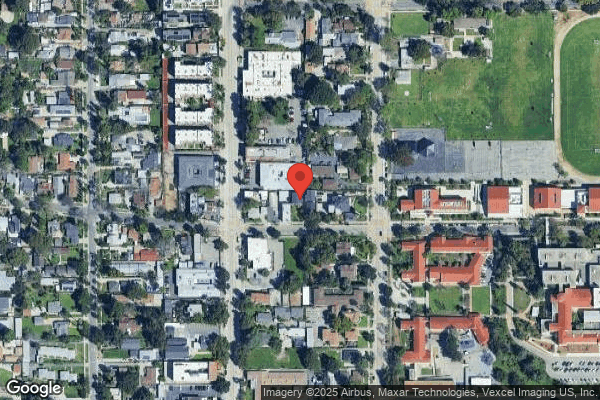
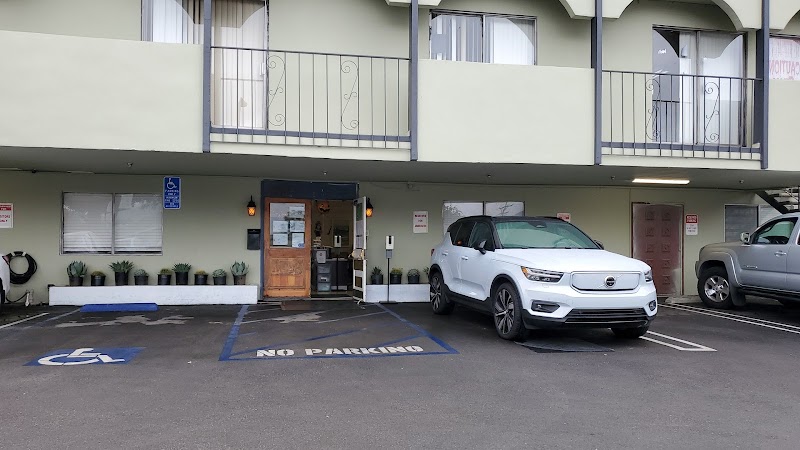
1570 NORTH FAIR OAKS AVE, PASADENA, CA 91103 (626) 798-0558
For profit - Limited Liability company 52 Beds Independent Data: November 2025
Trust Grade
23/100
#876 of 1155 in CA
Last Inspection: March 2025

Within standard 12-15 month inspection cycle. Federal law requires annual inspections.

Overview

Pasadena Nursing Center has received a Trust Grade of F, indicating significant concerns and a poor reputation among California nursing homes. It ranks #876 out of 1,155 facilities statewide, placing it in the bottom half, and #225 of 369 in Los Angeles County, meaning there are only a few local options that perform better. While the facility's trend shows improvement, with issues decreasing from 28 in 2024 to 19 in 2025, the staffing situation is a concern with a 60% turnover rate, which is much higher than the state average. The facility has faced $23,160 in fines, which is higher than 80% of California facilities, suggesting ongoing compliance problems. Specific incidents noted include a failure to properly investigate an allegation of physical abuse involving a resident and not ensuring appropriate fall precautions for another resident, which raises serious safety concerns. Overall, while there are some positive aspects, such as good quality measures, families should weigh these strengths against the significant weaknesses in staffing and recent issues found during inspections.

Trust Score
F
23/100
In California
#876/1155
Bottom 25%
Safety Record
High Risk
Review needed
Inspections
Getting Better
28 → 19 violations
Staff Stability
⚠ Watch
60% turnover. Above average. Higher turnover means staff may not know residents' routines.
Penalties
⚠ Watch
$23,160 in fines. Higher than 97% of California facilities. Major compliance failures.
Skilled Nurses
⚠ Watch
Each resident gets only 18 minutes of Registered Nurse (RN) attention daily — below average for California. Fewer RN minutes means fewer trained eyes watching for problems.
Violations
⚠ Watch
85 deficiencies on record. Higher than average. Multiple issues found across inspections.
★★☆☆☆
2.0
Overall Rating
★★☆☆☆
2.0
Staff Levels
★★★★☆
4.0
Care Quality
★★☆☆☆
2.0
Inspection Score
Stable
2024: 28 issues
2025: 19 issues

The Good

  • 4-Star Quality Measures · Strong clinical quality outcomes
  • Full Sprinkler Coverage · Fire safety systems throughout facility
  • No fines on record

Facility shows strength in quality measures, fire safety.

The Bad

2-Star Overall Rating

Below California average (3.1)

Below average - review inspection findings carefully

Staff Turnover: 60%

14pts above California avg (46%)

Frequent staff changes - ask about care continuity

Federal Fines: $23,160

Below median ($33,413)

Minor penalties assessed

Staff turnover is elevated (60%)

12 points above California average of 48%

The Ugly 85 deficiencies on record

1 actual harm
Mar 2025 2 deficiencies
CONCERN (D) 📢 Someone Reported This

A family member, employee, or ombudsman was alarmed enough to file a formal complaint

Potential for Harm - no one hurt, but risky conditions existed

Investigate Abuse (Tag F0610)

Could have caused harm · This affected 1 resident

**NOTE- TERMS IN BRACKETS HAVE BEEN EDITED TO PROTECT CONFIDENTIALITY** Based on observation, interview, and record review, the facility failed to conduct a thorough investigation of an allegation of ...

Read full inspector narrative →
**NOTE- TERMS IN BRACKETS HAVE BEEN EDITED TO PROTECT CONFIDENTIALITY** Based on observation, interview, and record review, the facility failed to conduct a thorough investigation of an allegation of physical abuse (intentional act causing injury or trauma to another person by way of bodily contact such as hitting/ scratching/ pinching) to one of three sampled residents (Resident 1) who was found with scratch marks on the right side of his face and the resident stated someone else had done it on 3/26/2025. This deficient practice resulted in compromising the safety of Resident 1 and placed the resident at risk for further physical abuse. Cross reference with F607 Findings: 1.During a review of Resident 1's admission Record, indicated Resident 1 was admitted to the facility on [DATE] with diagnosis of schizophrenia (a mental illness that is characterized by disturbances in thought) and extrapyramidal (a group of involuntary movements that can occur as side effects of certain medications, most commonly antipsychotic drugs) and movement disorder. During a review of Resident 1's Minimum Data Set: (MDS- resident assessment tool), dated 1/7/2025, the MDS indicated Resident 1 had moderate cognitive impairment (ability to think, reason, and make decisions) skills for daily decision making. The MDS indicated Resident 1 was independent (resident completes the activity by themself with so assistance from a helper) to eat, perform oral and personal hygiene, for toileting, showering, upper and lower body dressing, putting on and taking off footwear, rolling left and right, sit to lying, sit to stand, and chair/bed transfer. During a review of Resident 1's Change of Condition, dated 3/26/2025, indicated Resident 1 had been found with scratches on the right side of his face and had stated someone else had done it. During a review of Resident 1's Orders, dated 3/26/2025, indicated, Resident 1 had a new order to treat scratches on Resident 1's face with normal saline (a sterile solution of 0.9% of sodium chloride in water used for hydration and wound cleaning/ flushing solution), and antibiotic ointment. 2.During a review of Resident 2's admission Record, indicated Resident 2 was admitted to the facility on [DATE] with diagnosis of exposure to disaster, war and other hostilities, schizoaffective disorder (a mental illness that can affect thoughts, mood, and behavior), and pulmonary edema (a condition where fluid accumulates in the lungs, making it difficult to breathe). During a review of Resident 2's Care Plan (CP), dated 11/22/2024, indicated Resident 2 had struck another resident in the face, and interventions included monitor closely for aggressive behavior, separate resident from others, and remove resident from situation. The CP, initiated on 3/28/2024, indicated Resident 2 had aggressive behavior directed towards others and staff was to monitor closely for aggressive behavior and separate resident from others when behavior present. During a review of Resident 2's MDS, dated [DATE], indicated Resident 2 had moderate cognitive impairment skills for daily decision making. The MDS indicated Resident 2 required setup or clean up assistance (helper sets up or cleans up; resident completes activity. Helper assists only prior to or following the activity) for eating, Supervision (helper provides verbal cues and or touching as resident competes activity. Assistance may be provided throughout the activity or intermittently) for oral hygiene and upper body dressing, partial/moderate assistance (helper does less than half the effort to lift, hold, or support trunk or arms and legs, but provides less than half the effort) for toileting, lower body dressing, putting on taking off footwear, rolling left to right, sit to lying, lying to sitting on side of bed, sit to stand, chair/bed transfer, toilet transfer, and maximal assistance (helper does more than half the effort to lift or hold trunk or limbs and provides more than half the effort) to shower. During a review of Resident 2's Change of Condition, dated 3/26/2025 indicated Resident 2 was noted verbally and physically aggressive towards staff and roommate (Resident 1), increasingly agitated, striking out at staff. During a review of Resident 2's Order Summary, indicated Resident 2 was placed on one to one (1:1) monitoring (a caregiver or health worker who provides constant, one- on- one supervision and care to the patient) for 72 hours on 3/26/2025. During a review of Resident 2's Medication Administration Record (MAR), the MAR indicated Resident 2 had two (2) behavioral episodes of yelling on the evening of 3/26/2025. During a review of the facility's Nursing Staffing Assignment Sign-In Sheet, dated 3/26/2025, indicated Certified Nursing Assistant 1 (CNA1) was assigned to care for residents in room [ROOM NUMBER] (previous room of Resident 1 and 2). During an interview of 3/27/2025 at 4:25 PM, with CNA1, the CNA1 stated she was scheduled to work from 3 PM to 11 PM on 3/26/2025 and was assigned to take care of Resident 1 and 2 who were in room [ROOM NUMBER]. CNA1 stated on 3/26/2025 at around 5 PM or 6 PM during evening care for Resident 2, Resident 2 kept throwing towels on the floor and pressing the call light for staff to assist the resident. CNA1 stated she asked Resident 2 not to throw the towels on the floor, and when she was assisting Resident 2 during perineal hygiene, Resident 2 began to yell and punch her on the left side of her chest. CNA1 stated ran out of the room to find the charge nurse to report the incident. CNA1 stated during the time that she was out trying to find the charge nurse, Residents 1 and 2 got into an altercation. CNA1 stated one of the Licensed Vocational Nurse (LVN- CNA 1 cannot recall the name) began to reprimand Resident 2 for allegedly hitting Resident 1. CNA1 stated she reported the altercation and aggressive behavior of Resident 2 to the licensed nurses (unable to recall name), but the licensed nurses refused to report this altercation to law enforcement, the administrator, and state agency. CNA1 stated her and another male CNA with gray hair (CNA 1 unable to recall name of CNA) helped CNA 1 move Resident 1 from room [ROOM NUMBER]B to another room. CNA1 stated no one had reported the alleged physical abuse by Resident 2 to Resident 1. During a concurrent observation and interview on 3/28/2025 at 9:45 AM with Resident 2 in the resident's room, Resident 2 was laying down in bed, had a tenses jaw, furrowed brows, and had prolonged eye contact. Resident 2's body language was rigid and had clenched fists. Resident 2 stated he was moved from his room because he beat somebody up (unable to recall when). During an interview on 3/28/2025 at 9:58 AM with LVN1, the LVN1 stated Resident 2 was occupying bed C in room [ROOM NUMBER] and Resident 1 was in 18B on the evening of 3/26/2025. LVN1 verified, Resident 1 was moved to room [ROOM NUMBER]A, and Resident 2 was moved to 20A that same evening (3/26/2025). During a concurrent observation and interview on 3/28/2025 at 10:04 AM with Resident 1, in the activity room, Resident 1 was observed in the activity room sitting down, with gestures were slow and controlled and had a soft tone of voice. Resident 1 had dried up blood stains on the right side of his face, and a scratch and bruise on his right eye. Resident1 stated I was attacked yesterday (3/27/2025) or the day before (3/26/2025) by my roommate. Resident 1 stated he was in room [ROOM NUMBER]B before they moved him to 15A because he got into a fight with his roommate. Resident 1 stated no one helped him. During an interview on 3/28/2025 at 10:25 AM with LVN 2, the LVN2 stated Resident 2 was on 1:1 supervision order 3/26/25 due to his Behavior of being verbally and physically aggressive towards staff and roommate. The LVN 2 stated there should always be a staff member present watching Resident 2. During an interview on 3/28/2025 at 11:44 AM with LVN 3, the LVN 3 stated on 3/26/2025, she was in the office, which is located next to room [ROOM NUMBER], when CNA1 came to notify her that Resident 2 had attacked her. LVN 3 stated, at the same time she overhead the charge nurse say that Resident 1 had scratches on his face. The LVN 3 stated when she walked into room [ROOM NUMBER], she found Resident 1 with a scratch to his nose and face while Resident 2 was noted to be yelling at everyone in the room. LVN 3 stated she asked Resident 1 what happened, to which Resident 1 answered someone else did it. LVN 3 stated she did not report this to the administrator because she believed Resident 1 had done this to himself, despite not having witnessed it. LVN 3 stated since she did not witness what happened to Resident 1, it was considered an unknown injury or allegation of physical abuse. LVN 3 stated it is a possibility that Resident 1 could have gotten triggered by watching Resident 2 hit CNA1 and causing him to get aggressive as well. LVN 3 stated the different types of abuse include physical, seclusion (isolation), and misappropriation (unauthorized use of funds, personal property) and are supposed to be reported immediately to the Administrator to ensure a thorough investigation will be conducted. During an interview on 3/28/2025 at 4 PM, with CNA3, the CNA3 stated on 3/26/2025 he was in room [ROOM NUMBER], when he noted Resident 1 walked out of room [ROOM NUMBER] pointing to his face which was swollen. The CNA3 stated he notified LVN 3. During an interview on 3/28/2025 at 3 PM with the Administrator, the Administrator stated no one from the facility notified her to report the unknown injuries, resident-resident altercation and/ or any allegation if abuse to Resident 1 that occurred on 3/26/2025. The Administrator stated the facility staff are required to notify the Administrator when allegations of abuse and/or unknown injury occur, and she had not started an internal investigation to identify potential causes. During a review of the facility's policy and procedure (P&P) titled Unusual Occurrence Reporting dated December 2007, indicated the facility is to report events that threaten the welfare and safety or health of residents to the appropriate agencies within 24 hours of such incident, and a written report detailing the incident and actions taken by the facility delivered to the state agency within 48 hours of reporting the event. During a review of the facility's P&P titled Abuse Investigation and Reporting dated July 2017, indicated the individual conducting the investigation of the incident or suspected incident of resident abuse, mistreatment, or injury of unknown source is to interview any witnesses to the incident, interview staff members on all shifts who have had contact with the resident during the period of the alleged incident, and interview the resident's roommate, and review all events leading up to the alleged incident. The P&P indicated all reports of resident abuse, unknown source shall be promptly reported to local, state, and federal agencies and thoroughly investigated by facility management immediately, but no later than 2 hours.
CONCERN (E) 📢 Someone Reported This

A family member, employee, or ombudsman was alarmed enough to file a formal complaint

Potential for Harm - no one hurt, but risky conditions existed

Abuse Prevention Policies (Tag F0607)

Could have caused harm · This affected multiple residents

**NOTE- TERMS IN BRACKETS HAVE BEEN EDITED TO PROTECT CONFIDENTIALITY** Based on observation, interview, and record review, the facility failed to implement the facility's policy and procedure (P&P) f...

Read full inspector narrative →
**NOTE- TERMS IN BRACKETS HAVE BEEN EDITED TO PROTECT CONFIDENTIALITY** Based on observation, interview, and record review, the facility failed to implement the facility's policy and procedure (P&P) for Abuse Investigation and Reporting for two of three residents (Resident 1 and Resident 2) by failing to: 1. Conduct a thorough and complete investigation of an allegation of physical abuse to Resident 1 who was found with scratch marks on the right side of his face and the resident stated someone else had done it on 3/26/2025. 2. Report an allegation of physical abuse to Resident 1 to the State Survey Agency (SA, where state law provides for jurisdiction in long-term care facilities), ombudsman (OMB- advocates for residents of nursing homes, board and care homes and assisted living facilities), and local law enforcement within two (2) hour timeframe from when the allegation was made by the resident on 3/26/2025. 3. Ensure facility staff provided Resident 2 with one-to-one (1:1) supervision (a dedicated staff member provides constant, continuous observation and care to a single resident, ensuring their safety and well-being) on 3/28/2025 in accordance with the physician's order. These deficient practices placed Resident 1 at risk for further physical abuse and for Resident 2 for potentially abusing another resident in the facility. Cross reference with F610 Findings: 1.During a review of Resident 1's admission Record, indicated Resident 1 was admitted to the facility on [DATE] with diagnosis of schizophrenia (a mental illness that is characterized by disturbances in thought) and extrapyramidal (a group of involuntary movements that can occur as side effects of certain medications, most commonly antipsychotic drugs) and movement disorder. During a review of Resident 1's Minimum Data Set: (MDS- resident assessment tool), dated 1/7/2025, the MDS indicated Resident 1 had moderate cognitive impairment (ability to think, reason, and make decisions) skills for daily decision making. The MDS indicated Resident 1 was independent (resident completes the activity by themself with so assistance from a helper) to eat, perform oral and personal hygiene, for toileting, showering, upper and lower body dressing, putting on and taking off footwear, rolling left and right, sit to lying, sit to stand, and chair/bed transfer. During a review of Resident 1's Change of Condition, dated 3/26/2025, indicated Resident 1 had been found with scratches on the right side of his face and had stated someone else had done it. During a review of Resident 1's Orders, dated 3/26/2025, indicated, Resident 1 had a new order to treat scratches on Resident 1's face with normal saline (a sterile solution of 0.9% of sodium chloride in water used for hydration and wound cleaning/ flushing solution), and antibiotic ointment. 2.During a review of Resident 2's admission Record, indicated Resident 2 was admitted to the facility on [DATE] with diagnosis of exposure to disaster, war and other hostilities, schizoaffective disorder (a mental illness that can affect thoughts, mood, and behavior), and pulmonary edema (a condition where fluid accumulates in the lungs, making it difficult to breathe). During a review of Resident 2's Care Plan (CP), dated 11/22/2024, indicated Resident 2 had struck another resident in the face, and interventions included monitor closely for aggressive behavior, separate resident from others, and remove resident from situation. The CP, initiated on 3/28/2024, indicated Resident 2 had aggressive behavior directed towards others and staff was to monitor closely for aggressive behavior and separate resident from others when behavior present. During a review of Resident 2's MDS, dated [DATE], indicated Resident 2 had moderate cognitive impairment skills for daily decision making. The MDS indicated Resident 2 required setup or clean up assistance (helper sets up or cleans up; resident completes activity. Helper assists only prior to or following the activity) for eating, Supervision (helper provides verbal cues and or touching as resident competes activity. Assistance may be provided throughout the activity or intermittently) for oral hygiene and upper body dressing, partial/moderate assistance (helper does less than half the effort to lift, hold, or support trunk or arms and legs, but provides less than half the effort) for toileting, lower body dressing, putting on taking off footwear, rolling left to right, sit to lying, lying to sitting on side of bed, sit to stand, chair/bed transfer, toilet transfer, and maximal assistance (helper does more than half the effort to lift or hold trunk or limbs and provides more than half the effort) to shower. During a review of Resident 2's Change of Condition, dated 3/26/2025 indicated Resident 2 was noted verbally and physically aggressive towards staff and roommate (not indicated who), increasingly agitated, striking out at staff. During a review of Resident 2's Order Summary, indicated Resident 2 was placed on 1:1 monitoring (1:1 supervision) for 72 hours on 3/26/2025. During a review of Resident 2's Medication Administration Record (MAR), the MAR indicated Resident 2 had two (2) behavioral episodes of yelling on the evening of 3/26/2025. During a review of the facility's Nursing Staffing Assignment Sign-In Sheet, dated 3/26/2025, indicated Certified Nursing Assistant 1 (CNA1) was assigned to care for residents in room [ROOM NUMBER] (previous room of Resident 1 and 2). During an interview of 3/27/2025 at 4:25 PM, with CNA1, the CNA1 stated she was scheduled to work from 3 PM to 11 PM on 3/26/2025 and was assigned to take care of Resident 1 and 2 who were in room [ROOM NUMBER]. CNA1 stated on 3/26/2025 at around 5 PM or 6 PM during evening care for Resident 2, Resident 2 kept throwing towels on the floor and pressing the call light for staff to assist the resident. CNA1 stated she asked Resident 2 not to throw the towels on the floor, and when she was assisting Resident 2 during perineal hygiene, Resident 2 began to yell and punch her on the left side of her chest. CNA1 stated ran out of the room to find the charge nurse to report the incident. CNA1 stated during the time that she was out trying to find the charge nurse, Residents 1 and 2 got into an altercation. CNA1 stated one of the Licensed Vocational Nurse (LVN- CNA 1 cannot recall the name) began to reprimand Resident 2 for allegedly hitting Resident 1. CNA1 stated she reported the altercation and aggressive behavior of Resident 2 to the licensed nurses (unable to recall name), but the licensed nurses refused to report this altercation to law enforcement, the administrator, and state agency. CNA1 stated her and another male CNA with gray hair (CNA 1 unable to recall name of CNA) helped CNA 1 move Resident 1 from room [ROOM NUMBER]B to another room. CNA1 stated no one had reported the alleged physical abuse by Resident 2 to Resident 1. During an interview on 3/28/2025 at 9:37 AM with the Director of Staff Development (DSD), the DSD stated facility staff are required to report to SA, OMB and local law enforcement any type of abuse immediately and no later than two hours of the alleged abuse occurring. During a concurrent observation and interview on 3/28/2025 at 9:45 AM with Resident 2, in Resident 2's room, Resident 2 was laying down in bed, had a tenses jaw, furrowed brows, and had prolonged eye contact. Resident 2's body language was rigid and had clenched fists. Resident 2 stated he was moved from his room because he beat somebody up (unable to recall when). During an interview on 3/28/2025 at 9:58 AM with LVN1, the LVN1 stated Resident 2 was occupying bed C in room [ROOM NUMBER] and Resident 1 was in 18B on the evening of 3/26/2025. LVN1 verified, Resident 1 was moved to room [ROOM NUMBER]A, and Resident 2 was moved to 20A that same evening (3/26/2025). During a concurrent observation and interview on 3/28/2025 at 10:04 AM with Resident 1, in the activity room, Resident 1 was observed in the activity room sitting down, with gestures were slow and controlled and had a soft tone of voice. Resident 1 had dried up blood stains on the right side of his face, and a scratch and bruise on his right eye. Resident1 stated I was attacked yesterday (3/27/2025) or the day before (3/26/2025) by my roommate. Resident 1 stated he was in room [ROOM NUMBER]B before they moved him to 15A because he got into a fight with his roommate. Resident 1 stated no one helped him. During an interview on 3/28/2025 at 10:25 AM with LVN 2, the LVN2 stated Resident 2 was on 1:1 supervision order 3/26/25 due to his Behavior of being verbally and physically aggressive towards staff and roommate. The LVN 2 stated there should be a staff member present at all times watching Resident 2, and any licensed nurse can report abuse to the administrator and appropriate agencies immediately and within a two-hour window of when the suspected/ allegation of abuse was made or from when the abuse was identified. During an interview on 3/28/2025 at 11:05 AM with Social Services (SS) staff, the SS staff stated he visited Resident 1 on 3/27/2025 to ask how the resident was doing and SS staff noted that Resident 1 had a scratch on the resident's face. SS staff stated, he did not report it to the licensed nurses nor the Administrator but should have reported it since SS staff does not know the cause of injury and could be a result of an abuse. During an interview on 3/28/2025 at 11:44 AM with LVN 3, the LVN 3 stated on 3/26/2025, she was in the office, which is located next to room [ROOM NUMBER], when CNA1 came to notify her that Resident 2 had attacked CNA 1. LVN 3 stated, at the same time she overhead the charge nurse say that Resident 1 had scratches on the resident's face. LVN 3 stated when she walked into room [ROOM NUMBER], LVN 3 found Resident 1 with a scratch to his nose and face while Resident 2 was noted to be yelling at everyone in the room. LVN 3 stated she asked Resident 1 what happened, to which Resident 1 answered someone else did it. LVN 3 stated she did not report this to the administrator because she believed Resident 1 had done this to himself, despite not having witnessed it. LVN 3 stated since she did not witness what happened to Resident 1, it was considered an unknown injury or allegation of physical abuse. LVN 3 stated the different types of abuse include physical, seclusion (isolation), and misappropriation (unauthorized use of funds, personal property) and are supposed to be reported immediately to the Administrator to ensure a thorough investigation will be conducted, however LVN 3 stated she did not report to the Administrator like she's supposed to. During a concurrent observation in Resident 2's room (room [ROOM NUMBER]) and interview on 3/28/2025 at 12:35 PM with CNA2, CNA2 stated he was watching resident in room [ROOM NUMBER] Bed B and Resident 2 was in room [ROOM NUMBER] Bed A. CNA2 stated he was not observing Resident 2 because he was not assigned to provide 1:1 sitter to Resident 2. CNA2 stated he was assigned to the resident room [ROOM NUMBER] in Bed B. Observed the resident in Rom 20 Bed A got up from his bed and left the room, and CNA2 followed the other resident and left the room, while Resident 2 was left in the room without other facility staff to provide 1:1 supervision to the resident. During an interview on 3/28/2025 at 4 PM, with CNA3, the CNA3 stated on 3/26/2025 he was in room [ROOM NUMBER], when he noted Resident 1 walked out of room [ROOM NUMBER] pointing to his face which was swollen. The CNA3 stated he notified LVN 3. During an interview on 3/28/2025 at 3 PM with the Administrator, the Administrator stated no one from the facility notified her to report the unknown injuries, resident-resident altercation and/ or any allegation if abuse to Resident 1 that occurred on 3/26/2025. The Administrator stated the facility staff are required to notify the Administrator when allegations of abuse and/or unknow injury occur, and she had not started an internal investigation to identify potential causes. During a review of the facility's policy and procedure (P&P) titled Unusual Occurrence Reporting dated December 2007, indicated the facility is to report events that threaten the welfare and safety or health of residents to the appropriate agencies within 24 hours of such incident, and a written report detailing the incident and actions taken by the facility delivered to the state agency within 48 hours of reporting the event. During a review of the facility's P&P titled Abuse Investigation and Reporting dated July 2017, indicated the individual conducting the investigation of the incident or suspected incident of resident abuse, mistreatment, or injury of unknown source is to interview any witnesses to the incident, interview staff members on all shifts who have had contact with the resident during the period of the alleged incident, and interview the resident's roommate, and review all events leading up to the alleged incident. The P&P indicated all reports of resident abuse, unknown source shall be promptly reported to local, state, and federal agencies and thoroughly investigated by facility management immediately, but no later than 2 hours.
Mar 2025 13 deficiencies
CONCERN (D)

Potential for Harm - no one hurt, but risky conditions existed

Deficiency F0558 (Tag F0558)

Could have caused harm · This affected 1 resident

**NOTE- TERMS IN BRACKETS HAVE BEEN EDITED TO PROTECT CONFIDENTIALITY** Based on observation, interview, and record review, the facility failed to ensure that the call light (a device used by resident...

Read full inspector narrative →
**NOTE- TERMS IN BRACKETS HAVE BEEN EDITED TO PROTECT CONFIDENTIALITY** Based on observation, interview, and record review, the facility failed to ensure that the call light (a device used by residents to call for assistance) was placed within reach (an arm's length) for two of 17 sampled residents (Resident 11 and Resident 37). This deficient practice had the potential to result in delayed provision of services and care and assistance with activities of daily ling (ADLs- refers to basic self-care tasks that are necessary for maintaining daily life) which could result in harm to Residents 11 and 17. Findings: 1. During a review of the admission Record, the admission Record indicated Resident 11 was initially admitted to the facility on [DATE] and re admitted on [DATE] with diagnoses that included but not limited to type 2 diabetes mellitus (a disease in which your blood glucose, or blood sugar, levels are too high), unspecified dementia (a term used to describe a group of symptoms affecting memory, thinking and social abilities), and bipolar disorder (extreme mood swings that include mania [emotional highs] and depression [mood disorder that causes a persistent feeling of sadness and loss of interest] which may lead to impaired functioning). During a review of Resident 11's Minimum Data Set (MDS, a resident assessment tool), dated 1/27/2025, the MDS indicated Resident 11 was severely impaired in cognitive (mental action or process of acquiring knowledge and understanding) skills for daily decision making. Resident 11 needed substantial assistance (helper does more than half the effort) from the staff for activities of daily living such as eating and upper body dressing and was total dependent (helper does all of the effort) for oral and toilet hygiene, shower, and lower body dressing. During a record review of Resident 11's Care Plan, initiated on 2/26/2024 and revised on 12/13/2024, the Care Plan indicated Resident 11 was moderate risk for falls related to gait/balance problems and weakness. The Care Plan interventions indicated to ensure the resident's call light was within reach and to encourage the resident to use it (call light) for assistance as needed. The Care Plan indicated Resident 11 required prompt response to all requests for assistance and required a safe environment. The Care Plan indicated Resident 11 required a working and reachable call light. During an observation on 3/17/2025 at 9:28 AM in Resident 11's room, Resident 11 was observed in bed sleeping. A soft touch call light (a type of call light that activates when lightly touched, rather than requiring a firm press, making it easier for residents with limited dexterity or mobility to signal for help) was observed placed on the top left side of Resident 11's head of bed not within Resident 11's reach. During a concurrent observation and interview on 3/19/2025 at 10:56 AM, with Certified Nurse Assistant 2 (CNA2), Resident 11's call light was observed. CNA 2 stated Resident 11's call light was not within reach since it was placed on the upper left side by Resident 11's shoulder. CNA 2 stated Resident 11 could not reach for the call light. During a concurrent observation and interview on 3/19/2025 at 10:59 AM, with CNA 2, Resident 11 was observed. CNA 2 stated Resident 11 call light should be placed within Resident 11's reach. CNA 2 was observed handing Resident 11 the call light, but Resident 11 could not reach or extend his hand to grab the call light. CNA 2 stated Resident 11 was unable to use the call light to call for help since the call light was not within reach. CNA 2 stated since Resident 11 could not reach the call light, Resident 11 could fall since sometimes he slides off the bed and this could definitely cause a potential harm to him such as an injury. CNA2 stated, the CNAs know to place the call lights within reach for a patient. I don't know why his call light was so far away from him, it was placed behind his head on the other side of the bed, it was too high. During an interview with CNA 3 on 3/19/2025 at 11:07 AM, CNA 3 stated, the resident has a Touch call light because he is not able to use a regular call light due to his arms and hands being contracted at times. CAN 3 stated, the call light has to be on top of him so he can touch it easily and call for help. CNA 3 stated Resident 11 there was no way Resident 11 could call for assistance since the call light was not placed within Resident 11's reach. During an observation inside Resident 11's room on 3/19/2025 at 11:09 AM, Resident 11 was observed unintentionally pressing the call light more than one time. After staff came into check in Resident 11, Resident 11 stated not needing any assistance. CNA 3 was observed placing the call light on Resident 11's chest and stated, sometimes when a resident has a sensitive call light, they accidentally call multiple times and maybe that's why the call light had been placed away from him. During an interview with CNA 4 on 3/19/2024 at 11:12 AM, CNA 4 stated that the residents call light needs to be next to the pillows, pinned on pillowcase, close to patient where the residents can reach it and call in case they need to. CNA 4 stated, when a resident could not reach or use the call light, we must check the residents every 5 to 10 mins and check to see if they are ok. CNA 4 stated we must continue to go in and check on them, we are not supposed to be ignoring a patient no matter how many times they call. CNA 4 stated call lights should not be removed or placed away from the resident even if the resident presses the call light multiple times. During an interview with License Vocational Nurse (LVN) 1 on 3/19/2025 at 11:15 AM, LVN1 stated, Call lights need to be within reach of the residents. The residents that can't move have a sensitive call light it's more of a touch and it's very sensitive for easier use. If a resident keeps on using the call light to call us, then we must keep checking on them, and the staff are aware they are not allowed to move the call light away from the resident, it must be within reach for any emergency because it can potentially be harmful to the patient and it's not acceptable. LVN 1 stated the call light should not be above the residents' shoulder, since that was too high for Resident 11 to reach. LVN 1 stated the call light should not be hanging from the head of bed away from the resident, it must be visible to the resident and within the residents' reach. During an interview with the Director of Nursing (DON) on 3/19/2025 at 11:16 AM, the DON stated, the residents call light should always be within reach. It is not appropriate for the call light to be placed away from the resident, especially if it's a touch sensitive call light. The resident cannot call for help or assistance. 2. During a review of Resident 37's admission Record, the admission Record indicated Resident 37 was admitted to the facility on [DATE] with diagnosis that included fracture (break in bone) of right femur (long bone of leg), schizoaffective disorder (a mental illness that can affect thoughts, mood, and behavior) and bipolar disorder. During a review of Resident 37's MDS, dated [DATE], the MDS indicated the resident was assessed to have moderately impaired cognition (capable of remembering, learning new things, concentrating, or making decisions that affect everyday life) and required partial/moderate assistance (helper does less than half the effort) for toileting. The MDS indicated Resident 37 required supervision (helper provides verbal cues or touching assistance) for oral hygiene, showering, upper/lower body dressing and putting on/taking off footwear and set up or clean up assistance (helper sets up or cleans up) for eating. During a concurrent observation and interview on 3/17/2025 at 10:20 AM with Certified Nursing Assistant1 (CNA1), Resident 37's call light was observed clipped to a light pull string behind Resident 37's bed. CNA 1 stated, The call light is not in reach of the resident (Resident 37). It's important to have the call light in reach so the resident can call for help if he has a medical emergency like a heart attack ( a blockage of blood flow to the heart muscle) and can get help. During a concurrent interview and record review on 3/20/2025 at 8:48 AM with the Director of Nursing (DON), the facility's P & P titled, Answering the Call Light, dated 3/2021 was reviewed. The P & P indicated the purpose of the P&P was to ensure timely response to the resident's requests and needs. The P&P indicated when the resident is in bed to be sure the call light is within easy reach of the resident. The DON stated, The call light should be within the reach of the resident because that is the only way they can call for help. The DON stated a resident's condition could worsen since the resident could not reach the call light to call for assistance such as if they cannot breathe. The DON stated Resident 37's call light was not within reach because it was tied to a light pull string behind Resident 37's bed. The DON stated the policy indicated the call light should be easily reached. During review of the facility's Policy and Procedure (P&P) titled Answering the Call Light revised 3/2021, indicated, the purpose of the P&P was to ensure timely responses to the residents' request and needs. The P&P general guidelines indicated when the resident is in bed or confined to a chair be sure the call light is within easy reach of the resident and that Some residents may not be able to use their call light. The P&P indicated to be sure you check these residents frequently.
CONCERN (D)

Potential for Harm - no one hurt, but risky conditions existed

Notification of Changes (Tag F0580)

Could have caused harm · This affected 1 resident

**NOTE- TERMS IN BRACKETS HAVE BEEN EDITED TO PROTECT CONFIDENTIALITY** Based on observation, interview and record review, the facility failed to inform the physician (MD) of a change in condition (an...

Read full inspector narrative →
**NOTE- TERMS IN BRACKETS HAVE BEEN EDITED TO PROTECT CONFIDENTIALITY** Based on observation, interview and record review, the facility failed to inform the physician (MD) of a change in condition (any noticeable deviation from a patient's baseline or expected state of health, requiring prompt assessment and intervention) for one (1) of five (5) sampled residents in accordance with the facility's policy and procedure (P&P) titled, Change in a Resident's Condition or Status, after Resident 152 exhibited increased aggression and physically assaulted certified nurse assistant 5 (CNA5) on 3/18/25. This deficient practice had the potential to result in a delay of care and services, which could negatively affect Residents 152's overall wellbeing. Findings: During a review of Resident 152's admission Record, the admission Record indicated Resident 152 was admitted to the facility on [DATE] with diagnoses of schizoaffective disorder (a mental illness that can affect thoughts, mood, and behavior), anxiety (a group of mental health conditions that cause excessive fear and worry), and hallucinations (seeing, hearing, smelling, tasting, or feeling that seem real but are not). During a review of Resident 152's History and Physical (H & P) dated 3/13/2025, the H & P indicated Resident 152 is not competent to understand his/her medical condition and patient's bill of rights, therefore the staff is instructed to present this information to a family member, guardian, or conservator. During a review of Resident 152's situation, background, assessment, recommendation record (SBAR, a communication tool used by healthcare workers when there is a change of condition among the residents), dated 3/18/2025, timed at 3:35 AM and written by Licensed Vocational Nurse 3 (LVN 3), the SBAR indicated at 1:30 AM Resident 152 came out of his room and suddenly attack CNA 5 and hit CNA 5 on the left side of his face without apparent reason. The SBAR indicated Charge nurse (LVN 4) went to CNA 5 and approached Resident 152 in calm manner to stop Resident 152 from further hurting CNA 5. The SBAR indicated Resident 152 was very agitated, physically aggressive and cursing and yelling at staff. The SBAR indicated Haldol (medication to treat nervous, emotional, and mental condition) 5 milligrams (mg, unit of measurement) intramuscular (IM, a medical procedure where a medication is injected directly into a muscle) was administered as needed (PRN) to subdue Resident 152's aggression. During an observation on 3/18/2025 at 8 AM, Resident 152 was observed pacing the hallway. During an interview on 3/20/2025 at 6:50 AM with LVN 3, LVN 3 stated Resident 152 had a change of condition on 3/18/2025 around 1 AM. LVN 3 stated LVN 4 was the licensed nurse (LN) assigned to Resident 152, and that LVN 4 was the one who administered the PRN Haldol to Resident 152 after being physically aggressive towards CNA 5. LVN 3 stated documenting on Resident 152's SBAR but did not inform Resident 152's MD regarding Resident 152's change of condition related to physical aggression. During a concurrent interview and record review on 3/20/2025 at 6:54 AM with LVN 4, Resident 152's medical records were reviewed. LVN 4 stated that on 3/18/2025, after 1 AM, Resident 152 became physically aggressive and punched (strike with the fist) CNA 5 on the left side of the face, after asking to smoke outside of the facility. LVN 4 stated PRN Haldol was administered to Resident 152 and stated this was the first time that Resident 152 became aggressive to staff and punched a CNA. LVN 4 stated not informing Resident 152's MD regarding this change of condition and physical aggression towards staff, however there was not documented evidence indicating the MD was informed. LVN 4 stated for any change in condition, such as physical aggression from a resident, the MD must be informed to prevent a recurrence of the incident and potential new physician orders to control behaviors During a concurrent observation and interview on 3/20/2025 at 7:10 AM with CNA 5, CNA 5 was observed with left face swelling and redness. CNA 5 stated Resident 152 punched him (closed fist) on 3/18/2025. During a review of Facility's P&P titled, Change in a Resident's Condition or Status, revised February 2021, indicated facility promptly notifies the resident, his or her attending physician, and the resident representative of changes in the resident's medical/mental condition and/or status. The P&P also indicated the nurse will notify the resident's attending physician or physician on call when there has been a(an) accident or incident involving the resident and/or significant change in the resident's physical/emotional/mental condition.
CONCERN (D)

Potential for Harm - no one hurt, but risky conditions existed

Quality of Care (Tag F0684)

Could have caused harm · This affected 1 resident

**NOTE- TERMS IN BRACKETS HAVE BEEN EDITED TO PROTECT CONFIDENTIALITY** Based on observation, interview, and record review, the facility failed to ensure germicidal disposable wipes (disinfectant wipe...

Read full inspector narrative →
**NOTE- TERMS IN BRACKETS HAVE BEEN EDITED TO PROTECT CONFIDENTIALITY** Based on observation, interview, and record review, the facility failed to ensure germicidal disposable wipes (disinfectant wipes designed to kill a wide range of microorganisms [a living thing that is so small it must be viewed with a microscope] on hard, non-porous surfaces [examples of hard nonporous surfaces include stainless steel, metal, glass, hard plastic, and varnished wood] and not intended to be used on the resident's skin) were not used to sanitize one of 17 sampled residents' (Resident 17) hands prior to providing nail care. This deficient practice had the potential to result in skin irritation and harm to Resident 11. Findings: During a review of the admission Record, the admission record indicated Resident 11 was initially admitted to the facility on [DATE] and re admitted on [DATE] with diagnoses that included but not limited to type 2 diabetes mellitus (a disease in which your blood glucose, or blood sugar, levels are too high), unspecified dementia (a term used to describe a group of symptoms affecting memory, thinking and social abilities), and bipolar disorder (mood disorder that causes intense shifts in mood, energy levels and behavior). During a review of Resident 11's Minimum Data Set (MDS, a resident assessment tool), dated 1/27/2025, indicated Resident 11 was severely impaired with cognitive skills (mental action or process of acquiring knowledge and understanding) for daily decision making. Resident 11 needed substantial assistance (helper does more than half the effort) to dependence with the staff for activities of daily living. During a review of Resident 11's Care Plan initiated 2/26/2024 indicated Resident 11 has an ADL self-care performance decline & reduced mobility and is dependent on staff for all aspects of ADLs. Staff interventions indicated for staff to monitor and provide ADL assistance to extent necessary to meet needs, to keep him clean and well-groomed daily. During a concurrent observation and interview with CNA4 on 3/19/2025 at 11:27 AM, CNA4 stated that he was assigned to cut the residents fingernails on that day, which included Resident 11. CNA4 stated, I use the purple wipes to disinfect the residents' hands before I clip their nails, then I disinfect the clipper with the same purple wipes. Observed CNA4 walk over to the purple top container of wipes hanging from the hallway wall, pointed and confirmed that the wipes he used on the residents' hands was the germicidal disposable wipes. During an observation and interview with Director of Nursing (DON) on 3/19/2025 at 11:32 AM, the DON stated according to the picture/ instruction on the germicidal disposable wipes container, it should not be used on residents skin because it can cause harm to the residents since they have fragile skin. The DON stated, The staff can use it to sanitize equipment only not on residents' skin, it can potentially cause harm if the residents have sensitive skin. During an interview with Infection Prevention Nurse (IPN) on 3/19/25 at 12:48 PM, IPN stated that germicidal wipes are used for disinfecting areas, surfaces, medical shared equipment, and the nursing stations. Per IPN, germicidal wipes are not supposed to use on skin or to disinfect the residents' hands. Per IPN, the staff should use the preferred method of hand washing or use the hand sanitizers in the facility. IPN stated, We have the spectrum advanced hand sanitizer container if they are not able to wash their hands. It's not acceptable to use germicidal wipes on residents' hands because it can make them susceptible for skin breakdown as indicated on the container. During a concurrent interview with IPN on 3/19/2025 at 1:00 PM, IPN stated, The CNAs know they are supposed to wash the residents' hands with soap and water not use the germicidal wipes before they can clip their nails. During an interview with Director of Staff Development (DSD) on 3/19/25 at 1:04 PM, DSD stated that germicidal wipes are used for disinfecting surfaces that have been touch. Per DSD, the staff should not use germicidal wipes on residents' hands. DSD stated the label of the germicidal wipes container indicated not to use on skin or as baby wipes. DSD stated germicidal wipes should not be used on any resident's skin because the elderly population can be prone to skin reaction if it's used on them. During a review of the facility's policy titled, Care of Fingernail/Toenails, revised 2/2018, indicated that the purposes of this procedure are to clean the nail bed, to keep nails trimmed, and to prevent infections. Steps in the procedure: 3. Fill the wash basin one-half full of warm soapy water. 4. Allow first hand or foot to soak in the warm soapy water for approximately fie (5) minutes. Encourage the resident to exercise his or her fingers or toes while they are soaking. 6. Rinse the hand or foot that has been in the soapy water with clear, warm water. 7. Dry the hand or foot with a towel. 12. Do not trim nails below the skin line or cut the skin
CONCERN (D) 📢 Someone Reported This

A family member, employee, or ombudsman was alarmed enough to file a formal complaint

Potential for Harm - no one hurt, but risky conditions existed

Accident Prevention (Tag F0689)

Could have caused harm · This affected 1 resident

Based on interview and record review, the facility failed to prevent the elopement (a form of unsupervised wandering that leads to the resident leaving the facility) for one of two residents (Resident...

Read full inspector narrative →
Based on interview and record review, the facility failed to prevent the elopement (a form of unsupervised wandering that leads to the resident leaving the facility) for one of two residents (Resident 252) assessed as at risk for elopement by failing to implement the facility's Wandering and Elopement Policy and Procedures (P&P) by failing to: 1. Develop a care plan to ensure Resident 252 received interventions to prevent elopement when assessed as elopement risk on 11/4/2024. 2. Have documented evidence of Resident 252's family and physician notification when resident eloped and was found on 11/16/2025. 3. Have documented evidence that Resident 252 was examined for injuries upon return on 11/16/2025 and have the relevant information documented in the resident's medical record. This deficient practice resulted in Resident 252 eloping from the facility on 11/16/2024 which placed the resident at risk for exposure to extreme weather, medical complications, injury, serious harm, and/or death. Findings: During a review of Resident 252's admission Record, the admission Record indicated the facility admitted Resident 252 on 11/4/2024 with diagnoses that included but not limited to dementia with psychotic disturbance (also known as dementia-related psychosis, occurs when individuals with dementia [a loss of memory, language, problem-solving and other thinking abilities that are severe enough to interfere with daily life] experience delusions[believing someone is trying to harm them] or hallucinations [false sensory perceptions]), hypertension (when the blood pressure, [the force of blood flowing through the blood vessels], is consistently too high), generalized muscle weakness (widespread feeling of weakness or loss of muscle strength in multiple areas of the body), and unsteadiness on feet (walking in an abnormal, uncoordinated, or unsteady manner). During a review of Resident 252's Minimum Data Set (MDS-a resident assessment tool), dated 11/11/2024, the MDS indicated Resident 252 had intact cognitive skills (mental action or process of acquiring knowledge and understanding through thought, experience and the senses) for daily decision making. The MDS indicated Resident 252 required set up or clean up assistance (Helper sets up or cleans up, resident completes the activity. Helper assists only prior to or following the activity) with eating and oral hygiene. The MDS indicated Resident 252 required supervision or touching assistance (Helper provides verbal cues and/or touching/steadying and/or contact guard assistance as resident completes activity. Assistance may be provided throughout the activity or intermittently with upper body dressing, walking 10 feet (ft-unit for measuring length) and walking 50 ft with two turns and required partial/moderate assistance (Helper lifts, holds, or supports trunk or limbs, but provides less than half the effort) with walking 10 ft on uneven surfaces. During a concurrent interview and record review on 3/20/2025 at 9:03 AM with the Director of Nursing (DON), the admission Assessment for elopement risk dated 11/4/2024 and care plan were reviewed. The admission Assessment for elopement risk indicated Resident 252 was at risk for elopement. The DON stated there was no care plan for elopement in Resident 252's medical record initiated on 11/4/2024 when the resident was assessed as at risk for elopement. The DON stated it was important to initiate the elopement care plan immediately after conducting the elopement risk assessment so the staff would know what interventions to do to prevent resident from eloping such as how frequent the resident should be monitored, documenting resident's behavior of wandering and looking for exits, and notifying the MD and family representative if elopement occurs. The DON stated that if the care plan was initiated as soon as elopement risk was identified, the incident could have been prevented. The DON also stated that she was not aware of any elopement incident for Resident 252 on 11/16/2024 because she was off duty that day. During a concurrent interview and record review on 3/20/2025 at 9:25 AM with the DON, the Progress notes for Resident 252 were reviewed. There was no documentation of Resident 252's elopement incident on 11/16/2025. The DON stated any elopement incidents should be documented in the resident's medical record. During an interview on 3/20/2025 at 10:30 AM with MDS Nurse (MDSN), the MDSN stated the care plan for at risk for wandering/elopement should have been initiated on 11/4/2024 when Resident 252's was identified as at risk for wandering/elopement. The MDSN stated she does not know why the care plan was only initiated on 11/18/2024. The MDSN stated that care plans are initiated so all staff are aware and should implement interventions to prevent of elopement. During a phone interview on 3/20/2025 at 11:04 AM with Licensed Vocational Nurse 3 (LVN 3), LVN 3 stated she was on duty on 11/16/2024 from 7AM to 3PM and she recalled Resident 252 went missing that day (11/16/2024). LVN 3 stated she called the police department and when the police office arrived at the facility, the police officer called Resident 252's family representative (Family 1) to inquire any contact with the resident. LVN 3 stated Resident 252 was found later that day (11/16/2024) and was brought back to the facility by the police officer. LVN 3 stated according to Family 1, Resident 252 had called Family 1 using a bystander's phone to let them know she was lost and where she was. Family 1 had called the police to inform them where Resident 252 can be found. LVN 3 stated that the Administrator was informed by Registered Nurse Supervisor (RN 1) of Resident 252's elopement incident on 11/16/2024. LVN 3 stated Administrator came to the facility and reviewed the video surveillance with her, the police, and RN 1. LVN 3 stated through the video surveillance, it was determined Resident 252 used the staff elevator and exited through the facility entrance door. LVN 3 stated RN 1 documented the elopement incident in Resident 252's medical records. During an interview on 3/20/2025 at 12:53 PM with Medical Records Director (MRD), the MRD stated she could not find any documentation regarding Resident 252 eloping on 11/16/2024. MRD stated that Resident 252 was being monitored for elopement since admission but no documentation in the medical records that Resident 252 did elope. MRD also stated that there was no Situation, Background, Assessment, and Recommendation (SBAR- a communication tool used by healthcare workers when there is a change of condition among the residents) regarding the elopement incident for Resident 252, no resident assessment upon return, or family and physician notification of the elopement found in Resident 252's medical record. During a concurrent interview and record review on 3/20/2025 at 1:13 PM with the Infection Prevention Nurse (IPN), Resident 252's Progress notes were reviewed. There was no documentation of elopement incident on 11/16/2024. During a phone interview on 3/20/2025 at 3:25 PM with Family 1, Family 1 stated Police Officer 1 had called her and left a voice message around 9 AM to 9:20 AM notifying her that they were called by the nursing facility to help search for Resident 252 and to call the Police dispatch if the resident called her. Family 1 stated she was driving to the facility when she received a call from Resident 252 using Bystander's phone saying she was lost. Family 1 spoke with Bystander 1 and requested her to stay with the resident until a police officer picked her up to be brought back to the nursing facility. Family 1 stated Bystander was walking around Recreation Park 1 when Resident 252 approached her around 10:15 AM stating she was lost and if she could use her phone to call Family 1. Family 1 stated she then called the Police Dispatch to notify them where to find Resident 252. Family 1 stated nursing facility staff did not notify her that Resident 252 went missing, and it was the Police officer who provided the information. During a review of the facility's P&P titled, Wandering and Elopements, revised March 2019, the P&P indicated the facility will identify residents who are at risk of unsafe wandering and strive to prevent harm while maintaining the least restrictive environment for residents. The P&P also indicated: 1. If identified as at risk for wandering, elopement, or other safety issues, the resident's care plan will include strategies and interventions to maintain the resident's safety. 2. If a resident is missing, initiate the elopement/missing resident emergency procedure: if the resident was not authorized to leave, initiate a search of the building(s) and premises; and if the resident is not located, notify the Administrator and the DON, resident's legal representative, the attending physician, law enforcement officials. 3. When the resident returns to the facility, the DON or charge nurse shall: examine the resident for injuries; contact attending physician and report findings and condition of the resident; notify resident's legal representative; complete and file an incident report and document relevant information in the resident's medical record. During a review of the facility's P&P titled, Accidents and Incidents - Investigating and Reporting, revised July 2017, the P&P indicated: 1. The nurse supervisor/charge nurse and/or the department director or supervisor shall promptly initiate and document investigation of the incident. 2. The following data, as applicable, shall be included on the Report or Incident/Accident Form: date and time the incident took place; the circumstances surrounding the incident; the names of witnesses and their accounts of the incident; the date and time the attending physician and family were notified; disposition of the resident; any corrective action taken; follow up information; and the signature and title of the person completing the report.
CONCERN (D)

Potential for Harm - no one hurt, but risky conditions existed

Tube Feeding (Tag F0693)

Could have caused harm · This affected 1 resident

**NOTE- TERMS IN BRACKETS HAVE BEEN EDITED TO PROTECT CONFIDENTIALITY** Based on observation, interview and record review the facility failed to administer the correct gastrostomy tube (g-tube, tube i...

Read full inspector narrative →
**NOTE- TERMS IN BRACKETS HAVE BEEN EDITED TO PROTECT CONFIDENTIALITY** Based on observation, interview and record review the facility failed to administer the correct gastrostomy tube (g-tube, tube inserted through the belly that brings nutrition directly to the stomach) formula feeding as ordered by the physician (MD) for one (1) of two (2) sampled residents (Resident 102) in accordance with the facility's policy and procedure (P&P) titled, Enteral Tube Feeding via Continuous Pump. This deficient practice had the potential to cause Resident 102 to have uncontrolled blood sugar, and inappropriate nutrition and worsening of Resident 102's health condition. Findings: During a review of Resident 102's admission Record, the admission Record indicated Resident 102 was admitted to the facility on [DATE] with diagnosis that included: type two (2) Diabetes (DM-a disorder characterized by difficulty in blood sugar control and poor wound healing), dysphagia (difficulty swallowing), schizophrenia (a mental illness that is characterized by disturbances in thought) and shortness of breath. During a review of Resident 102's history and physical (H&P) dated 8/20/2024, the H&P indicated Resident 102 was able to understand his medical condition. During a review of Resident 102's Minimum Data Set (MDS; a resident assessment tool) dated 1/20/2025, the MDS indicated the resident had intact cognition (capable of remembering, learning new things, concentrating, or making decisions that affect everyday life) and required set up or clean up assistance (helper sets up or cleans up) for eating. The MDS indicated Resident 102 required supervision (helper provides verbal cues or touching assistance) for oral hygiene, toileting hygiene, upper/lower body dressing and putting on/taking off footwear and partial/moderate Assistance (helper does less than half the effort) for showering. During a review of Resident 102's Medication Administration Records (MAR - a daily documentation record used by a licensed nurse to document medications and treatments given to a resident) dated 3/1/2025 to 3/31/2025, the MAR indicated Resident 102 was ordered Glucerna (a nutritional supplement for people with diabetes) tube feeding on 3/14/2025. During a review of Resident 102's Care Plan Report dated 3/17/2025, the Report indicated Resident 102 required g-tube feeding due to dysphagia. The Report indicated a goal for Resident 102 to maintain adequate nutrition. The Report indicated interventions were to check MD's orders for current the feeding orders and to administer Glucerna via g-tube feeding. During an observation on 3/18/2025 at 12:17 PM in Resident 102's room, Resident 102's tube feeding was observed and infusing Jevity (high protein, fiber fortified therapeutic nutrition) via g-tube. During a review of Resident 102's Interdisciplinary Team Review (IDT) dated 3/18/2025 at 12:28 PM, the IDT indicated Resident 102 was given the incorrect tube feeding when he was given Jevity instead of Glucerna. During a concurrent observation and interview on 3/18/2025 at 12:30 PM, with Licensed Vocational Nurse (LVN), Resident 102's tube feeding was observed. LVN 1 stated, he is getting Jevity 1.2 and not Glucerna 1.2 as ordered. This can be bad because he may be getting inappropriate nutrition if he's receiving the incorrect feeding and his condition may worsen. LVN 1 stated Resident 102 had the potential for weight loss and uncontrolled blood sugars. During a concurrent interview and record review on 3/20/2025 at 8:52 AM with the Director of Nursing (DON), the facility's P & P titled, Enteral Tube Feeding via Continuous Pump dated 11/2018 was reviewed. The P & P indicated to verify that there was a physician's order for this procedure. The P&P indicated to check the tube feeding label against the order before administration and to check they type of formula. The DON stated, Staff should check the order for tube feeding and ensure the feeding matches the ordered feeding. The DON stated when a feeding supplement was not available, the MD should be notified, and a new order must be obtained to administer a different feeding supplement. The DON stated licensed nurses (LN) should never hang a different feeding supplement than the one ordered by the MD. The DON stated Glucerna is not the same as Jevity because Glucerna is for patients with diabetes. The patient's blood sugar can get high if they receive a formula that is not ordered for them. If a diabetic patient's sugar gets high, they might feel dizzy and may get confused, they might get transferred to the hospital.
CONCERN (D)

Potential for Harm - no one hurt, but risky conditions existed

Drug Regimen Review (Tag F0756)

Could have caused harm · This affected 1 resident

**NOTE- TERMS IN BRACKETS HAVE BEEN EDITED TO PROTECT CONFIDENTIALITY** Based on observation, interview, and record review the facility failed to conduct a monthly Medication Regimen Review (MRR, a mo...

Read full inspector narrative →
**NOTE- TERMS IN BRACKETS HAVE BEEN EDITED TO PROTECT CONFIDENTIALITY** Based on observation, interview, and record review the facility failed to conduct a monthly Medication Regimen Review (MRR, a monthly thorough evaluation by the consulting pharmacist of a resident's medication regimen, with the goal of promoting positive outcomes and minimizing adverse consequences and potential risks associated with medication) for one (1) of five (5) sampled residents (Resident 16) in accordance with the facility's Medication policy and procedure. This deficient practice had the potential to cause Resident 16 to receive unnecessary medication and to potentially have adverse reactions from medications. Findings: During a review of Resident 16's admission Record indicated Resident 16 was admitted on [DATE] with diagnosis that included: chronic obstructive pulmonary disease (COPD-a chronic lung disease causing difficulty in breathing), anxiety (persistent and excessive worry that interferes with daily activities), bipolar disorder (sometimes called manic-depressive disorder; mood swings that range from the lows of depression to elevated periods of emotional highs) and dementia (a progressive state of decline in mental abilities). During a review of Resident 16's history and physical (H&P) dated 7/4/2024, the H&P indicated Resident 37 was able to make decisions for activities of daily living (ADLs- routine tasks/activities such as bathing, dressing and toileting a person performs daily to care for themselves) During a review of Resident 16's Minimum Data Set (MDS; a care assessment and screening tool) dated 2/18/2025, indicated the resident was not able to be assessed for cognition (capable of remembering, learning new things, concentrating, or making decisions that affect everyday life) and required supervision (helper provides verbal cues or touching assistance) for eating, oral hygiene, and upper body dressing. The MDS indicated Resident 16 required partial/moderate Assistance (helper does less than half the effort) for lower body dressing, putting on/taking off footwear and personal hygiene, and required substantial/maximal Assistance (helper does more than half the effort) for toileting and showering. During a review of Resident 16's Clinical Physician Orders (CPO) dated 2/2025 to 3/2025, the CPO indicated Resident 16 was prescribed Aricept (medication for dementia) 5 milligram (mg; unit of measurement for medication dose), Zyprexa (medication for bipolar) 15 mg, Namenda (medication for dementia) 10 mg, and klonopin (medication for anxiety) 1 mg. During a concurrent interview and record review on 3/19/2025 at 11:48 AM with the Director of Nursing (DON), the facility's MRR for 1/2025 to 3/2025 records were reviewed. The MRR records indicated there was no documented evidence of Resident 16's medications reviewed on the receiving an MRR. DON stated, this resident [Resident 16] does not have an MRR done. The purpose of the MRR is to monitor if a resident needs to continue taking certain medications. It is done for the patient's safety and to discontinue unnecessary medications. During an interview on 3/20/2025 at 2:05 PM with the facility's Consultant Pharmacist (CP) 1, CP1 stated, it's a state law that medications are reviewed monthly by doing a MRR to safeguard the resident and ensure that they are not receiving unnecessary medications. CP 1 stated MRR was conducted for the residents' safety. During a concurrent interview and record review on 3/20/2025 at 8:44 AM with the Director of Nursing (DON), the facility's P & P titled, Medication Therapy dated 4/2007. The P & P indicated the pharmacist would review an individual's current medication regimen, and that each resident's medication regimen shall include only those medications necessary to treat existing conditions and address significant risks. The P&P indicated the consultant pharmacist shall review each resident's medication regimen monthly, as requested by the staff or when a clinically significant adverse consequence was confirmed or suspected. The DON stated, the pharmacist conducts the MRR monthly. The DON stated Resident 16 should have should have been reviewed during the pharmacists MRR review since the medications prescribed to Resident 16 was he is receiving for dementia. The DON stated the MRR for Resident 16 was not conducted for the month of 2/2025. The DON stated when an MRR was not conducted, the pharmacist did not check if there was an adverse reaction or if the prescribed medication should be continued.
CONCERN (D)

Potential for Harm - no one hurt, but risky conditions existed

Medical Records (Tag F0842)

Could have caused harm · This affected 1 resident

**NOTE- TERMS IN BRACKETS HAVE BEEN EDITED TO PROTECT CONFIDENTIALITY** Based on interview and record review, the facility failed to maintain an accurate resident medical records for one of 17 sampled...

Read full inspector narrative →
**NOTE- TERMS IN BRACKETS HAVE BEEN EDITED TO PROTECT CONFIDENTIALITY** Based on interview and record review, the facility failed to maintain an accurate resident medical records for one of 17 sampled Residents (Resident 102) by failing to ensure electronic medication administration (eMAR, a daily documentation record used by a licensed nurse to document medications and treatments given to a resident) record was signed after administering resident's 8 AM medications on 3/19/2025. This deficient practice had the potential for staff to not know the medications that were administered to Resident 102 which could result in duplication or no administration of medications which could affect the resident's over all wellbeing. Findings: During a review of Resident 102's admission Record, the admission Record indicated Resident 102 was admitted to the facility on [DATE] with diagnoses of schizophrenia (a mental illness that is characterized by disturbances in thought), seizure (a sudden, uncontrolled electrical disturbance in the brain which can cause uncontrolled jerking, blank stares, and loss of consciousness dysphagia (difficulty swallowing), and gastrostomy (G-tube, a surgical opening fitted with a device to allow feedings to be administered directly to the stomach common for people with swallowing problems) status. During a review of Resident 102's Minimum Data Set (MDS; a resident assessment tool) dated 1/20/2025, indicated the resident had intact cognitive (capable of remembering, learning new things, concentrating, or making decisions that affect everyday life) skills for daily decision making and required: 1. Set up or clean up assistance (helper sets up or cleans up) for eating 2. Supervision (helper provides verbal cues or touching assistance) for oral hygiene, toileting hygiene, upper/lower body dressing and putting on/taking off footwear. 3. Partial/Moderate Assistance (helper does less than half the effort) for showering. During a review of Resident 102's medication administration record (MAR) dated 3/19/2025, timed at 8:30 AM, the following medications due at 9 AM did not have licensed nurse's initials/ signature: Losartan Potassium (medication to treat high blood pressure) tablet 25 milligrams (mg, unit of measurement), give 1 tablet via gastrostomy (G-tube, a surgical opening fitted with a device to allow feedings to be administered directly to the stomach common for people with swallowing problems) one time a day. Carvedilol (medication to treat high blood pressure) 12.5 mg tablet, give 2 tablets via G-Tube two times a day. Divalproex sodium (medication used to treat certain types of seizures) delayed release sprinkle 125 MG, give four (4) capsule via G-Tube two times a day. Carbidopa-Levodopa (medication to treat Parkinson's disease [a progressive disease of the nervous system marked by tremor, muscular rigidity, and slow, imprecise movements]) 25-100 mg tablet, give 1 tablet via G-Tube three times a day. Insulin Lispro (a hormone that removes excess sugar from the blood, can be produced by the body or given artificially via medication) injection solution, three times a day. Ipratropium-Albuterol (medication to control symptoms of lung diseases) inhalation solution 0.5-2.5 (3) MG/3milliter (ml, unit of measurement) via nebulizer three times a day. Lactobacillus (supplement) capsule, give 1 capsule via G-Tube three times a day. During an observation in another resident rooms and interview on 3/19/2025 at 8:35 AM with Licensed Vocational Nurse (LVN) 1, LVN 1 stated she's about to give medication to another resident and LVN 1 already administered Resident 102's all morning medications due for 9 AM around 8 AM. LVN 1 stated she did not sign the eMAR yet because she is rushing to give all residents medication that is assigned to her medication cart. LVN 1 stated she did not and should have signed the eMAR right after administering medications to Resident 102. During a concurrent record review and interview on 3/19/2025 at 8:44 AM with MDS nurse (MDSN), Resident 102's eMAR dated 3/19/2025, timed 8:30 AM was reviewed. The eMAR did not have licensed nurse's initials/ signature on seven (7) medications (Losartan Potassium, Divalproex sodium, Carbidopa-Levodopa, Insulin Lispro, Ipratropium-Albuterol and Lactobacillus). MDSN stated Resident 102's due to be given at 9 AM today did not have the licensed nurse's signature which meant it was not administered yet. MDSN stated the proper way to administer medications is to sign the box for the medications that was administered for accurate documentation that it was given. During an interview on 3/20/2025 at 8:35 AM with LVN 2, LVN 2 stated documentation after administration of medication is part of the five rights (recommendations to reduce medication errors and harm) of medication administration for resident's safety and to prevent/avoid medication errors (any preventable event that may cause or lead to inappropriate medication use). During a review of Facility's Policy and Procedure (P&P) tilted Charting and Documentation, revised in July 2017, indicated documentation of procedures and treatments will include care-specific details, including: The date and time the procedure/treatment was provided. Whether the resident refused the procedure/treatment. The signature and title of the individual documenting. During a review of Facility's P&P tilted Administering Medication, revised in April 2019, indicated the following: Only persons licensed or permitted by this state to prepare, administer and document the administration of medications may do so. The individual administering the medication initials the resident's MAR on the appropriate line after giving each medication and before administering the next ones. As required or indicated for a medication, the individual administering the medication records in the resident's medical record: a. the date and time the medication was administered. b. the dosage. c. the route of administration. d. the injection site (if applicable). e. any complaints or symptoms for which the drug was administered. f. any results achieved and when those results were observed; and g. the signature and title of the person administering the drug.
CONCERN (D)

Potential for Harm - no one hurt, but risky conditions existed

Infection Control (Tag F0880)

Could have caused harm · This affected 1 resident

**NOTE- TERMS IN BRACKETS HAVE BEEN EDITED TO PROTECT CONFIDENTIALITY** Based on observation, interview and record review the facility failed to maintain an infection prevention control program by fai...

Read full inspector narrative →
**NOTE- TERMS IN BRACKETS HAVE BEEN EDITED TO PROTECT CONFIDENTIALITY** Based on observation, interview and record review the facility failed to maintain an infection prevention control program by failing to label the oxygen tubing (the flexible hose or tube that connects an oxygen source (like a concentrator or cylinder) to a device that delivers oxygen to a resident, such as a nasal cannula [a flexible tube with two prongs, used to deliver supplemental oxygen through the nostrils, often for individuals experiencing breathing difficulties or needing oxygen therapy] or mask [ a device worn over the nose and mouth through which oxygen is delivered]) and enteral feeding tube (a flexible, thin tube inserted into the gastrointestinal [GI] tract [the series of organs and structures that process food and absorb nutrients from it] to provide nutrition or medication directly into the stomach or small intestine) for two (2) of 17 sampled residents (Resident 102 and 29) in accordance with the facility's policy and procedure (P&P) titled Infection Prevention and Control Program by failing to: 1. Label the enteral tube feeding with the date it was opened and initially used for Resident 29. 2. Label the enteral feeding tube and oxygen tube with the date it was opened/ initially use for Resident 102. These deficient practices had the potential to cause Resident 102 to develop a respiratory (anything related to how we breath) related infectious disease and placed Resident 102 and 29 at risk for developing gastrointestinal (related to the stomach and digestive system) infection. Findings: 1. During a review of the admission record, the admission record indicated Resident 29 was initially admitted to the facility on [DATE] and readmitted on [DATE] with diagnoses that included but not limited to unspecified protein calorie malnutrition (a disorder caused by a lack of proper nutrition or an inability to absorb nutrients from food), schizoaffective disorder (is a chronic mental illness that causes a person to experience dramatic changes in their thoughts, moods, and behaviors) other lack of coordination (a medical condition, often called ataxia, characterized by a loss of muscle coordination, leading to clumsy or jerky movements, unsteady gait, and difficulty with balance and fine motor skills) dysphagia, oropharyngeal phase (difficulty swallowing due to problems in the oropharynx [mouth and throat area], specifically during the oral and pharyngeal phases of swallowing, leading to impaired bolus [food/liquid mass] movement from the mouth to the esophagus), encounter for attention to gastrostomy (a medical visit or procedure focused on the care, maintenance, or management of a gastrostomy tube [G-tube-an artificial opening in the stomach used for feeding or medication delivery]). During a review of Resident 29's Minimum Data Set (MDS, a resident assessment tool), dated 2/05/2025, indicated Resident 29 was severely impaired in cognitive skills (ability to understand and make decisions) for daily decision making. Resident 29 needed substantial assistance (helper does more than half the effort) from the staff for the activities of daily living such as eating, oral hygiene and upper body dressing and was totally dependent (helper does all of the effort) for toilet hygiene, shower, and lower body dressing. During a review of Resident 29's care plan, initiated on 1/30/2025 and revised on 3/03/2025, the care plan indicated Resident 29 is at risk for infection from stoma (an opening on the skin used to deliver food and liquids into the digestive system or intestine). The goal indicated the resident's insertion site will be free of s/sx (signs and symptoms) of infection. During an observation in Resident 29's room on 3/17/2025 at 9:14 AM, Resident 29 was awake, resting in bed, and was connected to enteral feeding tube hanging by the pole at bedside. The enteral feeding tube line did not have label to indicate the date when the enteral feeding tube was hung or initially used for Resident 29. During an interview with the IPN on 3/19/2025 at 12:48 PM, IPN stated, the enteral feeding tube is only good for use for 24 hours. IPN stated, the resident's enteral feeding tube must be labeled with the date when enteral feeding tube was hung or started on the resident. IPN then proceeded to confirm, per the facility's infection control policy, enteral feeding tubing must have a label with the date it was initially used on the resident. IPN stated, The tubing (enteral feeding tube) comes with a label (date of open/ started on the resident), not just the bottle, the tubing too. If the tubing (enteral feeding tube) is not changed, it is considered contaminated because it collects bacteria, or a virus and resident could get sick. We want to protect the residents as much as possible. If it does not have a date, we do not know when it (enteral feeding tube) was hung or when it needs to be changed. During an interview with the Director of Nursing (DON) on 3/19/2025 at 1:16 PM, the DON stated, The enteral feeding tube lines should have a date to help the nurses know when the enteral feed was hung and when it needed to be changed. The DON stated it was important to know when to change the entera feeding tube to prevent an infection that may come from the enteral feeding tube that is old/ has not been changed 24 hours after it was hung causing the resident harm. 2. During a review of Resident 102's admission Record, the admission record indicated Resident 102 was admitted on [DATE] with diagnosis that included type 2 Diabetes (DM-a disorder characterized by difficulty in blood sugar control and poor wound healing), dysphagia (difficulty swallowing), schizophrenia (a mental illness that is characterized by disturbances in thought), and shortness of breath. During a review of Resident 102's history and physical (H&P) dated 8/20/2024, the H&P indicated Resident 102 was able to understand his medical condition. During a review of Resident 102's MDS dated [DATE], the MDS indicated the resident had intact cognition and required: 1. Set up or clean up assistance (helper sets up or cleans up) for eating 2. Supervision (helper provides verbal cues or touching assistance) for oral hygiene, toileting hygiene, upper/lower body dressing and putting on/taking off footwear. 3. Partial/Moderate Assistance (helper does less than half the effort) for showering. During a review of Resident 102's Clinical Physician Orders (CPO) dated 3/9/2025, the CPO indicated Resident 102's oxygen tubing and feeding tubing (enteral feeding tube) had to be labeled with date. During an observation on 3/17/2025 at 9:02 AM, Resident 102's oxygen tubing was observed not labeled with date it was initially used for Resident 102. During a concurrent observation and interview on 3/18/2025 at 9:09 AM with the Director of Staff Development (DSD), Resident 102's oxygen tubing was observed without a label of the date it was initially used for Resident 2. DSD stated, there was no label on the tubing (oxygen tubing), there should be a label and a date on the tubing for infection control. During a concurrent interview and observation on 3/18/2025 at 12:40 PM with Licensed Vocational Nurse (LVN) 1, Resident 102's tube feeding tubing was observed not labeled with the date it was first used for Resident 102. LVN 1 stated, the tubing (enteral feeding tube) is not labeled with a date and time. It must be changed every 24 hours. If it is not dated, we do not know if it has been changed and the tubing can grow bacteria which may get the resident sick. During an interview with the Infection Preventionist Nurse (IPN) on 3/19/2025 at 12:59 PM, IPN stated, The tubing of the tube feeding (enteral feeding tube) should be labeled with a date, and it should be changed every 24 hours. The feeding can go bad in the tubing and grow bacteria. Then if the resident receives the feeding (formula) they can get sick or get an infection. The oxygen tubing should be changed once a week, or if any part of it touches the floor because it grows bacteria over time. The oxygen tubing collects bacteria, and the resident could get sick with a respiratory infection if it is not changed. If it is not dated the tubing is considered dirty and it needs to be changed. During a concurrent interview and record review on 3/20/2025 at 8:59 AM with the Director of Nursing (DON), the facility's P & P titled, Infection Prevention and Control Program dated 12/2023. The P & P indicated: 1. An infection prevention and control program (IPCP) is established and maintained to provide a safe, sanitary and comfortable environment and to help prevent the development and transmission of communicable diseases and infections. 2. Important facets of infection prevention include identifying possible infections or potential complications of existing infections. The DON stated, The tubing of the enteral feeding and oxygen should be labeled with the date it was initially used for the resident because of infection control. If a tubing (enteral feeding tube and oxygen tubing) is not changed it grows bacteria that can cause a respiratory infection or stomach infection.
CONCERN (D)

Potential for Harm - no one hurt, but risky conditions existed

Safe Environment (Tag F0921)

Could have caused harm · This affected 1 resident

Based on observation, interview, and record review, the facility failed to dispose garbage (mostly decomposable food waste or yard waste) and keep two (2) of 2 garbage dumpsters/refuse (dry material s...

Read full inspector narrative →
Based on observation, interview, and record review, the facility failed to dispose garbage (mostly decomposable food waste or yard waste) and keep two (2) of 2 garbage dumpsters/refuse (dry material such as glass, paper, cloth, or wood that does not readily decompose) containers covered and/or not overfilled with trash as indicated on the facility policy. These deficient practices had the potential to attract vermin (animals that are believed to be harmful, carry diseases such as rodents, parasitic worms, or insects), pests (any living thing that has a negative effect on humans), and wildlife (undomesticated animal species) that could potentially infiltrate the facility, affect the resident care areas and pose a disease threat to the residents and staff of the facility. Findings: During initial observation of the facilities parking lot on 3/17/2025 at 7:30 AM, observed facility parking lot area where garbage bins were located to have a total of 2 large metal garbage dumpsters that were overfilled with trash bags, both were not covered/ sealed and there was also visible trash on the floor surrounding the parking lot area. During a concurrent observation of the same facility parking lot area on 3/18/2025 at 5:30 AM, observed multiple empty carboard boxes, a large black bin with trash bags inside and multiple trash bags placed on the floor of the parking lot. During an interview with Dietary Staff Supervisor (DSS) on 3/19/2025 at 9:00 AM, DSS stated the facility staff placed the trash on the floor and that could be a possible effect on vermin (animals that are believed to be harmful to crops, or that carry diseases) and other animals being attracted to the trash and potentially be harmful to the facility kitchen area affecting the food being served to the residents and potentially causing the residents' harm. During an interview with Housekeeper Staff (HKP1) on 3/19/2025 at 11:43 AM, HKP1 stated yesterday (3/18/2025), there was trash that needed to be thrown out in the afternoon, but the garbage dumpsters were not back from when they were picked up, they were across the street, so it was placed outside the facility's parking lot. HKP1 stated the trash that was on the floor were empty supply boxes from supplies that were delivered yesterday and/ or trash from kitchen. HKP1 stated since the trash dumpsters were not back before the last housekeeper left at 6:00 PM, the trash were placed on the floor outside in the parking lot. HKP1 stated the next day the janitor who comes in at 5:00 AM was supposed to make sure all the trash that was on the floor was placed inside the metal garbage dumpsters, but he was upstairs mopping and did not put the trash in the bins. KHP1 stated, I placed the trash in the dumpsters today when I came in at 6:00 AM, meaning the trash was out on the floor the whole night. During a concurrent interview with HKP1 on 3/19/2025 at 11:50 AM, HKP1 stated if trash is left outside on the floor instead of inside the garbage dumpsters, it can attract vermin/ rodents like rats or cockroaches. HKP1 stated, some of the black trash bags that were left outside on the floor had dirty diapers and that could potentially attract dogs, cats or rodents and they can rip through the bags leaving dirty diapers all over the parking lot. HKP1 stated, it is not acceptable to leave trash on the floor, we should not leave it outside it is infection control and it is not hygienic (clean, especially in order to prevent disease). During an observation outside in the facilities parking lot on 3/19/25 12:41 PM in the presence of HKP1, observed Laundry Staff (LS1) walk outside with two large plastic trash bags and placed them next to a car in the parking lot by the area where the trash dumpsters should be. HKP1 stated, the trash will be placed on the floor and left outside because we do not have the trash dumpsters here accessible for us. During an interview with Infection Preventionist (IP) on 3/19/25 12:41 PM, IP stated everyone must practice infection control, to prevent the spread of viruses (particles that can cause disease) and bacteria keep the residents healthy. Ip stated leaving trash outside in the facilities parking lot instead of placing the trash inside the garbage dumpster it can potentially cause harm to the residents by inviting vermin, insects, rodents and cockroaches because they carry disease and can be potential for infestation (the presence of an unusually large number of insects or animals in a place, typically so as to cause damage or disease). During a concurrent interview with IP on 3/19/2025 at 12:49 PM, IP stated it is not acceptable to leave the trash outside on the floor because that is infection control issue, and the trash is not supposed to be on the floor because it is susceptible to rodents. IP stated, I am aware that this is happening. There is a gazebo (a roofed structure that offers an open view of the surrounding area, typically used for relaxation or entertainment) area near the trash area that is used for smoking area for the residents. It is not acceptable to leave the trash outside on the floor because the residents are in that area and potentially, they can come in contact with the trash and be exposed to bacteria due to dirty diapers or contamination in the area. During an interview with the facility Administrator (Admin) on 3/20/25 at 7:23 AM, Admin stated that depending on how long it takes for the garbage dumpsters to be put back in the parking lot after they are emptied out by the garbage pick- up company, the facility staff are instructed to place the trash on the floor in the parking lot. During an interview with Laundry Staff (LS1) on 3/20/2025 at 10:00 AM, LS1 stated, I am supposed to take out the trash before I leave at the end of my shift and leave my area clean for the next shift. When there is no garbage dumpster outside, I leave the trash on the floor in the parking lot. I know that the trash should be placed inside the garbage dumpsters and not placed outside or on the floor because it can leave bacteria, it is not hygienic, and it is possible for bacteria to spread. LS1 stated that the animals can come and rip the trash bags open, and all the trash can go all over the parking lot. During a review of the facility's Policy and Procedure (P&P) titled, Pest Control revised 5/2008, the P&P indicated, Our facility shall maintain an effective pest control program. The P&P indicated garbage and trash are not permitted to accumulate and are removed from the facility daily. During a review of the facility's Policy and Procedure (P&P) titled, Waste Disposal, revised 1/2012, the P&P indicated, All infectious and regulated waste (waste potentially contaminated with blood, body fluids, or other materials that could spread infections, requiring specific handling and disposal methods) shall be handled and disposed of in a safe and appropriate manner. During a review of the facilities P&P titled Homelike Environment revised 2/2021, indicated Residents are provided with a safe, clean, comfortable and homelike environment. The P&P also indicated the facility staff and management maximizes, to the extent possible, the characteristics of the facility that reflect a personalized, homelike setting and these characteristics include clean, sanitary and orderly environment.
CONCERN (E)

Potential for Harm - no one hurt, but risky conditions existed

Pressure Ulcer Prevention (Tag F0686)

Could have caused harm · This affected multiple residents

**NOTE- TERMS IN BRACKETS HAVE BEEN EDITED TO PROTECT CONFIDENTIALITY** Based on observation, interview, and record review, the facility failed to ensure the low air loss mattress (LALM- a specialized...

Read full inspector narrative →
**NOTE- TERMS IN BRACKETS HAVE BEEN EDITED TO PROTECT CONFIDENTIALITY** Based on observation, interview, and record review, the facility failed to ensure the low air loss mattress (LALM- a specialized medical mattress designed to prevent and treat pressure ulcer [wound that occurs as a result of prolonged pressure on a specific area of the body]) by maintaining a cool, dry environment through constant airflow, which helps regulate temperature and moisture) was on the correct setting for two (2) of 2 sampled residents (Resident 11 and Resident 29) in accordance with the physician's orders and LALM operator's manual instructions. This deficient practice placed Residents 11 and 29 at risk of poor wound healing and deterioration (something once in good condition is now weakened, worn out, or otherwise in decline) of current pressure ulcers. Findings: 1. During a review of the admission Record, the admission record indicated Resident 11 was initially admitted to the facility on [DATE] and re admitted on [DATE] with diagnoses that included but not limited to type 2 diabetes mellitus (a disease in which your blood glucose, or blood sugar, levels are too high) unspecified protein calorie malnutrition (a disorder caused by a lack of proper nutrition or an inability to absorb nutrients from food), unspecified dementia (a term used to describe a group of symptoms affecting memory, thinking and social abilities), schizoaffective disorder , bipolar type (combines symptoms of both schizophrenia [like hallucinations and delusions] other lack of coordination (a medical condition, often called ataxia, characterized by a loss of muscle coordination, leading to clumsy or jerky movements, unsteady gait, and difficulty with balance and fine motor skills), and unspecified atrial fibrillation (a condition where the upper chambers of the heartbeat irregularly and rapidly). During a review of Resident 11's physician's orders, dated 1/25/2025, the physician's orders indicated May have LALM to be set at 202 pounds (lbs., unit of mass) every shift for wound management with one layer over mattress. During a review of Resident 11's Minimum Data Set (MDS- a resident assessment tool), dated 1/27/2025, the MDS indicated Resident 11 was severely impaired in cognitive skills (mental action or process of acquiring knowledge and understanding) for daily decision making. Resident 11 needed substantial assistance (helper does more than half the effort) from the staff for the activities of daily living such as eating and upper body dressing and was total dependent (helper does all of the effort) for oral and toilet hygiene, shower, and lower body dressing. During a review of Resident 11's Weekly Wound Observation Tool (a record used to track the progress and characteristics of a wound over time, typically assessed and documented every week, to monitor healing and identify any potential issues or changes), dated 2/18/2025, the tool indicated Resident 11 is on LALM as a special equipment for preventable measure due to left heel having a diabetic/ ischemic (a condition where there is an inadequate blood supply to a specific tissue or organ) and wound tissue being unstable and purple with wound measurements of length 2 centimeters (cm, units of measure), width 0.5cm, depth unstageable, full thickness skin or tissue loss - Depth Unknown (UTD- indicates a wound where the true depth cannot be determined due to the presence of slough [dead tissue that is usually yellow, tan, gray, or green in color, usually moist and stringy in texture, that may be found in wounds] or eschar [dead tissue that is hard or soft in texture; usually black, brown, or tan in color, and may appear scab-like, usually firmly attached to the base, sides and/or edges of the wound and over time falls off] obscuring the wound bed). During a review of Resident 11's Care Plan initiated on 2/26/2025, the care plan indicated Resident 11 is incontinent (unable to control the excretion of urine or the contents of the bowels) with bowel and bladder elimination. Staff interventions indicated were to assess/record/monitor wound healing and to use low air loss mattress due to resident requiring the bed as flat as possible to reduce sheer (minimizing the forces that cause tissues to slide or move in opposite directions, which can lead to skin damage and pressure ulcers, particularly in individuals with limited mobility). During a review of Resident 11's weight, resident's weight indicated the following: 3/7/2025 -190 lbs. 2/7/2025 - 188 lbs. During observation in Resident 11's room on 3/17/2025 at 9:21 AM, observed Resident 11 resting in bed with LALM setting at 280 lbs. During a concurrent observation in Resident 11's room on 3/19/2025 at 10:58 AM, observed Resident 11 resting in bed with LALM setting at 190 lbs. During an interview with Certified Nursing Assistant 2 (CNA2) on 3/19/2025 at 11:59 AM, CNA2 stated, The setting of the bed was set at 190 lbs. The bed settings are done by the charge nurse, treatment nurse or supervisor. As a CNA, if the settings of the bed are off or the machine starts beeping, we call the nurse to come and fix it. 2. During a review of the admission Record, the admission record indicated Resident 29 was initially admitted to the facility on [DATE] and readmitted on [DATE] with diagnoses that included but not limited to unspecified protein calorie malnutrition (a disorder caused by a lack of proper nutrition or an inability to absorb nutrients from food), encounter for attention to gastrostomy (a medical visit or procedure focused on the care, maintenance, or management of a gastrostomy tube [G-tube-an artificial opening in the stomach used for feeding or medication delivery]), edema (swelling or puffiness caused by an excessive accumulation of fluid in the body's tissues), unspecified soft tissue disorder related to use, overuse and pressure multiple sites (conditions affecting muscles, tendons, ligaments, and other soft tissues due to repetitive movements, excessive strain, or pressure, often occurring in multiple areas of the body), and pressure ulcer of unspecified heel and stage (the medical provider or clinician cannot determine the depth or stage of the ulcer due to a lack of documentation or because the ulcer is covered by eschar or slough). During a review of Resident 29's physician's orders, dated 11/31/2025, timed at 9:59 AM, indicated, May have LALM with settings at 129 lbs. monitor functioning well, every shift for would management. During a review of Resident 29's MDS, dated [DATE], indicated Resident 29 was severely impaired with cognitive skills for daily decision making. Resident 29 needed substantial assistance from the staff for the activities of daily living such as eating, oral hygiene and upper body dressing and was total dependent for toilet hygiene, shower, and lower body dressing. During a review of Resident 29's weight, the resident's weight indicated the following: 2/7/2025 - 136 lbs. 3/7/2025 -128 lbs. During a review of Resident 29's Braden scale for predicting pressure sore risk (a tool used in healthcare to assess a resident's risk of developing pressure ulcers by evaluating six factors: sensory perception, moisture, activity, mobility, nutrition, and friction/shear), dated 2/20/2025, timed at 8:03 PM, indicated Resident 29 was at high risk for pressure sores due toa score of 10. During a review of Resident 29's Interdisciplinary Team (IDT- a group of professionals from different disciplines who collaborate to achieve a common goal, leveraging their diverse expertise and perspectives to solve complex problems or address multifaceted issues) meeting, dated 3/19/2025, indicated Resident 29 has bilateral (pertaining to both sides) heels wound, right arm discoloration, back of right shoulder discoloration, and edema on both lower legs. During observation in Resident 29's room on 3/17/2025 at 9:21 AM, observed Resident 29 resting in bed with LALM setting at approximately 300 lbs. During observation in Resident 29's room on 3/18/2025 at 7:21 AM, observed Resident 29 resting in bed with LALM setting at 160 lbs. During observation in Resident 29's room on 3/19/2025 at 11:09 AM, observed Resident 29 resting in bed with LALM setting at 150 lbs. During an interview with CNA3 on 3/19/2025 at 11 AM, CNA3 confirmed Resident 29's LALM setting was set at 150 lbs. CNA3 stated the CNAs don't touch the settings for the LALM because that responsibility falls on the licensed nurses since the reason for the LALM is to help reduce the pressure on the resident's skin and prevent a pressure sore causing the resident harm. During an interview with Licensed Vocational Nurse 1 (LVN1) on 3/19/2025 at 11:15 AM, LVN1 stated, LAL mattress settings are set by the treatment nurse, but the charge nurses check it too. We know how to place the settings because it's according to the resident's weight. LVN3 stated, the LALM setting is set according to the physician's order. LVN 3 added that the LALM setting should be based on the resident's weight. LVN1 stated not setting the LALM correctly according to the directions or physician's orders will not help the residents' wounds or skin condition since the LALM was to prevent skin damage or relieve pressure from the resident's skin. During an interview with LVN2 on 3/19/2025 at 9:52 AM, LVN2 stated the LALM should be set as indicated on the doctors' orders and/ resident's weight. LVN2 stated, If the settings are off, the LALM may not have enough pressure relief and that will cause more harm than good to the resident. It doesn't help the resident to have a hard mattress, that can cause skin breakdown, and it can be a potential for infection, especially if the resident is incontinent. The whole use for the LALM is to prevent any further damage to the patient's skin. That is why we must follow the doctors order which is to set the settings to the resident's weight. During a review of the facility's Policy and Procedure (P&P) titled, Support Surface Guidelines, revised 9/2013, the P&P indicated, The purpose of this procedure is to provide guidelines for the assessment of appropriate pressure reducing and relieving devices for residents at risk of skin breakdown. During a review of the Operator's Manual for the facilities pressure low air mattress system for operating instructions, the manual indicated to determine the resident's weight and set the control knob to that weight setting on the control unit.
CONCERN (E)

Potential for Harm - no one hurt, but risky conditions existed

Smoking Policies (Tag F0926)

Could have caused harm · This affected multiple residents

**NOTE- TERMS IN BRACKETS HAVE BEEN EDITED TO PROTECT CONFIDENTIALITY** Based on observation, interview, and record review, the facility failed to implement the facility's smoking policy for three (3)...

Read full inspector narrative →
**NOTE- TERMS IN BRACKETS HAVE BEEN EDITED TO PROTECT CONFIDENTIALITY** Based on observation, interview, and record review, the facility failed to implement the facility's smoking policy for three (3) of 3 sampled smoking residents (Resident 4, 14, and 152). Residents 4, 14, and 152 were observed smoking without an apron on 3/17/2025 in accordance with the Smoking Safety Assessment anad/care plan. This deficient practice had the potential to result in harm and injury to the residents in the event of an accidental fire in the facility. Findings: 1. During a review of Resident 4's admission Record, the admission Record indicated Resident 1 was admitted to the facility on [DATE] with diagnoses of schizophrenia a (a mental illness that is characterized by disturbances in thought), anxiety (a group of mental health conditions that cause excessive fear and worry), and limitation of activities due to disability. During a review of Resident 4's Admission/re-admission Data Tool, dated 12/19/2024, timed at 11 AM. The tool indicated Resident 4's smoking safety evaluation, includes supervision and 1:1 assistance is needed. The tool indicated plan of care has been developed for safe smoking. During a review of Resident 4's Minimum Data Set (MDS - resident assessment tool), dated 1/30/2025, the MDS indicated Resident 4 had moderately impaired (decisions poor; cues/supervision required) of cognitive skills (ability to understand and make decisions) for daily decision making. The MDS indicated Resident 4 is independent (resident completes the activity by themself with no assistance from a helper) with eating. The MDS indicated Resident 4 required setup or clean-up assistance (helper sets up or cleans up; resident completes activity) with oral hygiene and upper body dressing. The MDS indicated Resident 4 required supervision or touching assistance (helper provides verbal cues and/or touching/steadying and /or contact guard assistance as resident completes activity. Assistance may be provided throughout the activity or intermittently) with toileting hygiene, shower/ bathe self, lower body dressing, and putting on/taking off footwear, and picking up object. During a review of Resident 4's Care Plan (CP), initiated on 3/8/2025, the CP indicated Resident 4 is a smoker, and intervention includes Apron for smoking safety will be provided During an observation on 3/17/2025 at 8:55 AM with Resident 4, in the smoking area, Resident 4 was observed sitting in the bench, and smoking without a smoking apron. During an interview on 3/18/2025 at 11:40 AM with Resident 4, Resident 4 stated he never used an apron when smoking, and he added that it was never offered to him. During an interview on 3/20/2025 at 9:30 AM with Activity Director (AD), AD stated Resident 4 never used smoking apron, and she never seen Resident 4 used smoking apron. During an interview on 3/20/2025 at 10:19 AM with MDS Nurse (MDSN), MDSN verified Resident 4's care plan indicated to use apron while smoking. MDSN stated there is no other CP indicating Resident 4's refusal to wear apron while smoking. 2. During a review of Resident 14's admission Record, the admission Record indicated Resident 14 was admitted to the facility on [DATE] with diagnoses of schizophrenia, anxiety (a group of mental health conditions that cause excessive fear and worry), schizoaffective disorder (a mental illness that can affect thoughts, mood, and behavior), and Intermittent Explosive Disorder (IED, a mental health condition characterized by recurrent episodes of impulsive, aggressive, or violent behavior). During a review of Resident 14's Smoking Safety assessment dated [DATE], timed at 6:21 PM, indicated Resident 14 requires smoking apron. During a review of Resident 14's MDS, dated [DATE], the MDS indicated Resident 14 had moderately impaired cognitive skills for daily decision making. The MDS indicated Resident 14 is independent with eating. The MDS indicated Resident 14 required setup or clean-up assistance with oral hygiene and upper body dressing. The MDS indicated Resident 14 required supervision or touching assistance with toileting hygiene, shower/ bathe self, lower body dressing, and putting on/taking off footwear, and picking up object. During an observation on 3/17/2025 at 8:56 AM with Resident 14, in the smoking area, Resident 14 was observed standing in the smoking area, holding a stuff toy, and smoking without a smoking apron. During an interview on 3/20/2025 at 9:31 AM with AD, AD stated Resident 14 never used smoking apron, she never seen Resident 14 used smoking apron. During an interview on 3/20/2025 at 10:20 AM with MDSN, MDSN verified Resident 14's smoking safety assessment dated [DATE] indicated for Resident 14 to use smoking apron. MDSN added, smoking apron is for resident's safety, for them not to burn themselves. 3. During a review of Resident 152's admission Record, the admission Record indicated Resident 152 was admitted to the facility on [DATE] with diagnoses of schizoaffective disorder, anxiety, and hallucinations (seeing, hearing, smelling, tasting, or feeling that seem real but are not). During a review of Resident 152's History and Physical (H & P) dated 3/13/2025, the H & P indicated Resident 152 is not competent to understand his/her medical condition and patient's bill of rights, therefore the staff is instructed to present this information to a family member, guardian, or conservator. During a review of Resident 152's Admission/re-admission Date Tool, dated 3/12/2025, timed at 8:02 PM, the tool indicated Resident 152's smoking safety evaluation indicated includes adaptive equipment such as supervision and smoking apron is needed. The tool indicated plan of care has been developed for safe smoking. During an observation on 3/20/2025 at 8:47 AM with Resident 152, in the smoking area, Resident 152 was observed smoking without a smoking apron. During an interview on 3/20/2025 at 9:32 AM with Activity Director (AD), AD stated Resident 152 never used smoking apron since he got admitted here in the facility this month. During an interview on 3/20/2025 at 10:21 AM with MDSN, MDSN verified Resident 152's smoking assessment from the Admission/re-admission Data Date Tool, dated 3/12/2025, the tool indicated for Resident 14 to use smoking apron. MDSN also stated, Resident 152's CP for smoking was only initiated on 3/18/2025, and should have been initiated on 3/12/2025, upon Resident 152's admission in the facility. During a review of Facility's Policy and Procedure (P&P), titled Smoking Policy-Resident, revised July 2017, indicated facility shall establish and maintain safe resident smoking practices. The P&P indicated the resident will be evaluated on admission to determine if he or she is a smoker or non-smoker. The P&P indicated a resident's ability to smoke safely will be re-evaluated quarterly, upon a significant change (physical or cognitive) and as determined by the staff. The P&P also indicated any smoking-related privileges, restrictions, and concerns (for example, need for close monitoring) shall be noted on the care plan, and all personnel caring for the resident shall be alerted to these issues.
MINOR (B)

Minor Issue - procedural, no safety impact

Staffing Information (Tag F0732)

Minor procedural issue · This affected multiple residents

Based on observation, interview and record review, the facility failed to ensure staffing information was complete and posted in a visible and prominent place daily in accordance with the facility's p...

Read full inspector narrative →
Based on observation, interview and record review, the facility failed to ensure staffing information was complete and posted in a visible and prominent place daily in accordance with the facility's policy and procedure (P&P) titled, Posting Direct Care Daily Staffing Numbers. As a result, the total number of staff and the actual hours worked by the staff was not readily accessible to residents, staff, and visitors. Findings: During a concurrent observation and interview on 3/18/2025 at 10:38 AM with the Director of Staff Development (DSD), the Census and Direct Care Service Hours Per Patient Day (DHPPD; a form that provides staffing information for the day) posted near the facility's entrance was observed. The DSD stated, the DHPPD is not complete, it's missing the bottom documentation that shows the actual staffing, the top completed part is the projected staffing and was not done on 3/16/25 and 3/15/25. The DSD stated the DHPPD posting informs the staff, residents and visitors the actual staffing for that specific day, and that if the DHPPD was incomplete or not posted, the staff, residents and visitors would not be informed on the facility staffing. During an interview on 3/18/25 at 10:46 AM with the DSD, the DSD stated, the DHPPD should be posted on the second floor near the nursing station but was not. During a concurrent interview and record review on 3/20/2025 at 9:22 AM with the DSD, the facility's P & P titled, Posting Direct Care Daily Staffing Numbers dated 7/16 was reviewed. The P & P indicated the facility would post, on a daily basis for each shift, the number of nursing personnel responsible for providing direct care to residents. The P&P indicated the information recorded on the form shall include the actual time worked during a shift for each nursing staff and the total number of licensed and unlicensed staff. The P&P indicated staffing information must be posted within two (2) hours of the beginning of each shift with the total number of direct care staff. The DSD stated, the DHPPD was incomplete and that the DHPPD was not updated since the weekend.
MINOR (B)

Minor Issue - procedural, no safety impact

Deficiency F0912 (Tag F0912)

Minor procedural issue · This affected multiple residents

Based on observation, interview, and record review, the facility failed to provide the minimum 80 square feet (sq. ft., unit of measurement) per resident in multiple resident bedrooms for one (1) of 2...

Read full inspector narrative →
Based on observation, interview, and record review, the facility failed to provide the minimum 80 square feet (sq. ft., unit of measurement) per resident in multiple resident bedrooms for one (1) of 21 resident's rooms (Room A) in the facility. This failure had the potential to affect the residents' personal space, decrease freedom of mobility (the ability to move or be moved freely and easily) and could compromise the provision of care. Findings: During an observation and initial tour of the facility on 3/17/2025 at 10 AM, Room A did not meet the minimum requirement of 80 sq. ft. per resident. During a review of the facility's, Client Accommodation Analysis Form, dated 3/17/2025, indicated Room A, measured 158.2 sq. ft, which did not meet the 80 square footage requirement per resident. During a review of the room waiver (an agreement that you do not have to pay or obey) dated 3/17/2025, indicated: Room # of beds Sq. Ft. Sq. Ft. per bed 1 (Room A) 2 158.2 79.1 During a review of the facility's Room Waiver Request, dated 3/17/2025, indicated the facility's request for a waiver for Room A that measures less than 80 sq. ft. per resident. The Room Waiver Request also indicated that, There is enough space to provide for each resident's care, dignity and privacy, and The rooms are in accordance with the special needs of the residents and do not have any adverse effect on the residents' health and safety or impede the ability of any residents and the room to attain his/her highest practicable well-being. During a concurrent record review and interview with the Administrator (ADM) on 3/17/2025 at 2 PM, the Client Accommodations Analysis form (record of client accommodations approved for licensed care), dated 3/17/2025 was reviewed. The Client Accommodations Analysis form indicated Room A, measured 158.2 sq. ft. The ADM verified that all the residents' rooms aside from Room A met the required square footage per resident. ADM further stated, there have been no complaints about Room A being too small to accommodate the needs of the residents who reside in that room. During random observations and interviews from 3/17/2025 to 3/20/2025, Room A was observed with adequate (acceptable) ventilation (the movement of fresh air around a closed space) and lighting. The residents in the rooms have bathroom and toilet facilities. The residents were observed to have privacy curtains around their beds, which assured privacy. And there was adequate space for getting in and out of the wheelchairs and residents were afforded sufficient freedom of movement in the rooms. The residents verbalized they did not have complain regarding the space in their room. Observed that there was enough space for the staff to provide care and enough storage for residents' belongings and residents that are wheelchair bound were able to move in the room without difficulty.
Mar 2025 1 deficiency
CONCERN (D) 📢 Someone Reported This

A family member, employee, or ombudsman was alarmed enough to file a formal complaint

Potential for Harm - no one hurt, but risky conditions existed

Report Alleged Abuse (Tag F0609)

Could have caused harm · This affected 1 resident

**NOTE- TERMS IN BRACKETS HAVE BEEN EDITED TO PROTECT CONFIDENTIALITY** Based on interview and record review Facility 1 failed to report an allegation of alleged sexual abuse (non-consensual sexual co...

Read full inspector narrative →
**NOTE- TERMS IN BRACKETS HAVE BEEN EDITED TO PROTECT CONFIDENTIALITY** Based on interview and record review Facility 1 failed to report an allegation of alleged sexual abuse (non-consensual sexual contact of any type with a resident) for one (1) of two sampled residents (Residents 1) within 2-hour timeframe to the State Survey Agency (SA, where state law provides for jurisdiction in long-term care facilities), ombudsman (OMB) (advocates for residents of nursing homes, board and care homes and assisted living facilities), and local law enforcement when OMB and local law enforcement (PD) went to the Facility 1 to investigate the allegation of sexual abuse by Resident 1 to Resident 2. This deficient practice had the potential to result in unidentified abuse in the Facility 1 and failure to protect other residents from abuse. Findings: During a review of Resident 1's admission Record, the admission Record indicated Resident 1 was admitted to the Facility 1 on 9/21/2024 with diagnoses of schizophrenia a (a mental illness that is characterized by disturbances in thought), anxiety (a group of mental health conditions that cause excessive fear and worry), and limitation of activities due to disability. During a review of Resident 1's Minimum Data Set (MDS - resident assessment tool), dated 1/30/2025, the MDS indicated Resident 1 had moderately impaired (decisions poor; cues/supervision required) of cognitive skills (ability to understand and make decisions) for daily decision making. The MDS indicated Resident 1 is independent (resident completes the activity by themself with no assistance from a helper) with eating. The MDS indicated Resident 1 required setup or clean-up assistance (helper sets up or cleans up; resident completes activity) with oral hygiene and upper body dressing. The MDS indicated Resident 1 required supervision or touching assistance (helper provides verbal cues and/or touching/steadying and /or contact guard assistance as resident completes activity. Assistance may be provided throughout the activity or intermittently) with toileting hygiene, shower/ bathe self, lower body dressing, and putting on/taking off footwear, lying and sitting on the side of the bed, sit to stand position, toilet transfer and tub/shower transfer. During a review of Resident 2's admission Record, the admission Record indicated Resident 2 was admitted to the Facility 1 on 12/26/2024 with diagnoses of diabetes mellitus type 1 (DM type 1 , is a life-long autoimmune disease that prevents the pancreas from making insulin), schizoaffective disorders a mental health condition that combines symptoms of schizophrenia and a mood disorder, such as depression or bipolar disorder), and anxiety disorders (a group of mental health conditions that cause excessive fear and worry). During a review of Resident 2's MDS, dated [DATE], the MDS indicated Resident 2 had intact (sufficient judgment, planning, organization, self-control, and the persistence needed to manage the normal demands of the participant's environment) cognitive skills (ability to understand and make decisions) for daily decision making. The MDS indicated Resident 2 required set up or clean-up assistance with eating. The MDS indicated Resident 2 required supervision or touching assistance with oral hygiene, shower/bathe, upper body dressing, and personal hygiene. The MDS indicated Resident 2 required partial/moderate assistance (helper does less than half the effort) with toileting hygiene, lower body dressing, and putting on/taking off footwear. During a review of Resident 2's Discharge summary dated [DATE], timed at 5:10 PM, indicated Resident 2 was transferred to Facility 2 for change of environment. During an interview on 3/7/2025 at 4:54 PM with Licensed Vocational Nurse (LVN), LVN stated Police Department (PD, local law enforcement) was at Facility 1 on 3/5/2025 to interview Resident 1. LVN stated she should have asked PD the nature of the PD's visit to Resident 1. LVN stated after few days (unable to recall when), she found out that Resident 1 was being accused of sexual abuse to Resident 2 (a previous resident in the facility). LVN stated Facility 1 staff need to report to the Administrator (ADM) for any abuse or allegation of abuse within two (2) hour time frame. During an interview on 3/7/2025 at 4:27 PM with Infection Preventionist Nurse (IPN), IPN stated staffs are mandated reporters and the Facility 1 need to report any abuse incident or allegation of abuse within two hours to SA, ombudsman and local law enforcement. IPN stated that on 3/5/2025, PD was in the Facility 1 and spoke to Resident 1. IPN stated she asked PD regarding the reason for the visit to Resident 1, IPN stated PD mention sexual encounter. IPN stated she informed ADM through telephone call. IPN stated I assumed it was the Director of Nursing (DON) who reported it to the PD, that is why PD came to interview Resident 1. IPN stated there is a form titled SOC 341 (form used by Californian to report suspected dependent adult or elder abuse) that needs to be filled out in case of any abuse and suspected abuse happened to residents. IPN stated that she did not review and should have reviewed if there is a SOC 341 completed for the allegation of sexual abuse by Resident 1 to Resident 2 when PD came to investigate the allegation of sexual abuse on 3/5/2025. During an interview with the ADM on 3/7/2025 at 6 PM, ADM stated OMB was in the other Facility 2 on 3/5/2025 and OMB called the police for a female resident (Resident 2) who was previously residing at the Facility 1 after OMB listened to Resident 2's story and the resident made the sexual abuse allegation by Resident 1 that happened during the time Resident 2 was still at the Facility 1. ADM stated, PD went to the Facility 1 on 3/5/2025 to investigate the allegation of sexual abuse and the police also went to Facility 2 (where Resident 2 is currently residing) and did the investigation over at Facility 2 with the OMB. ADM stated she did not start any investigation and reported to SA when Facility 2 was made aware regarding Resident 2's allegation for sexual abuse by Resident 1 on 3/5/2025. ADM also stated she will start the investigation right away and report it to the agencies only if there is a real abuse case. During a review of the Facility 1's Policy and Procedure (P&P) titled, Abuse Investigation and Reporting, revised July 2017, the P&P indicated all reports of resident abuse, neglect (the failure of the facility, its employees or service providers to provide goods and services to a resident that are necessary to avoid physical harm, pain, mental anguish or emotional distress), exploitation (treating someone unfairly in order to benefit from their work) and misappropriation (unauthorized use of another's name. likeness, identity, property without permission resulting to harm to that person) of resident property, mistreatment and/or injuries of unknown source (abuse) shall be promptly reported to local, state and federal agencies (as defined by current regulations) and thoroughly investigated by facility management. Findings of abuse investigations will also be reported.
Feb 2025 2 deficiencies
CONCERN (D) 📢 Someone Reported This

A family member, employee, or ombudsman was alarmed enough to file a formal complaint

Potential for Harm - no one hurt, but risky conditions existed

Free from Abuse/Neglect (Tag F0600)

Could have caused harm · This affected 1 resident

**NOTE- TERMS IN BRACKETS HAVE BEEN EDITED TO PROTECT CONFIDENTIALITY** Based on observation, interview, and record review, the facility failed to prevent physical abuse (willful infliction of injury ...

Read full inspector narrative →
**NOTE- TERMS IN BRACKETS HAVE BEEN EDITED TO PROTECT CONFIDENTIALITY** Based on observation, interview, and record review, the facility failed to prevent physical abuse (willful infliction of injury which includes, but is not limited to, hitting, slapping, punching, biting, and kicking) for one (1) of 2 sampled residents (Resident 1). This failure resulted to Resident 1 striking Resident 2 on the head on 2/7/2025, leaving a lump on the left side of Resident 2 ' s head while Resident 1 suffered right hand swelling. Findings: 1.During a review of Resident 1 ' s admission Record, the admission record indicated Resident 1 was admitted to the facility on [DATE] and re- admitted on [DATE]. Resident 1 ' s diagnoses included schizoaffective disorder (a chronic mental illness that causes a person to experience dramatic changes in their thoughts, moods, and behaviors), bipolar disorder (a mental illness that causes unusual shifts in a person's mood, energy, activity levels, and concentration), mood affective disorder (a type of mental health condition where there is a disconnect between actual life circumstances and the person's state of mind or feeling), and anxiety disorder (a disorder characterized by nervousness characterized by a state of excessive uneasiness and apprehension, typically with compulsive behavior [repetitive, persistent, and often uncontrollable actions that a person feels driven to perform] or panic attacks). During a review of Resident 1 ' s Minimum Data Set (MDS, a resident assessment tool), dated 12/30/2024, the MDS indicated Resident 1 has intact cognitive (mental action or process of acquiring knowledge and understanding) skills for daily decision making. The MDS indicated Resident 1 was independent (resident completes the activity by themself with no assistance from a helper) in eating, oral hygiene, toileting hygiene, upper and lower body dressing, putting on and taking off footwear, roll left and right, sit to lying, sit to stand, chair/ bed-to-chair transfer, toilet transfer, walk 10, 50, and 150 feet. During a review of Resident 1 ' s Change of Condition (COC) notes, dated 2/7/2025, timed at 11:25 AM, the COC indicated Resident 1 had swelling on the right hand. The COC indicated that Resident 1 had behavior exacerbation, with audio and visual hallucinations (are sensory experiences where a person perceives sounds and sights that are not present in reality) causing him to get angry and strike his roommate (Resident 2) on the forehead on 2/7/2025. During a review of Resident 1 ' s Care Plan (CP), initiated on 1/5/2025, the CP indicated altered behavior patterns related to schizophrenia (a serious mental illness that affects how a person thinks, feels, and behaves) manifested by slamming doors, yelling at nurses and stated the walls told him they put shit in the food. The staff interventions included were to: a. Notify any risk/consequences as a result of non-compliance. b. Provide explanation /rationale of care for better compliance of Resident c. de-escalate (methods and actions taken to decrease the severity of a conflict, whether of physical, verbal or another nature) redirect and medicateResident 1 d. Notify doctor of resident ' s physical aggression (behavior intended to cause or threaten physical harm to others, encompassing actions like hitting, kicking, biting, or using weapons) e. Discuss goals with the Resident once he calmed down and encourage him to discuss concerns, letting staff know when he feels he is hearing voices directing him to destroy items. Resident was agreeable to communicating with staff expressing feelings and concerns to prevent episodes. f. Respect Resident ' s rights During a review of Resident 1 ' s CP, initiated on 1/25/2025, the CP indicated Resident 1 had an episode of non -contact physical aggression by punching the TV in his room and tore it off the wall. The staff interventions included were to: a. Notify any risk/consequences as a result of non-compliance. b. Provide explanation /rationale of care for better compliance of Resident c. de-escalate redirect and medicate Resident 1 d. Notify doctor of resident ' s physical aggression. e. Discuss goals with the Resident once he calmed down and encourage him to discuss concerns, letting staff know when he feels he is hearing voices directing him to destroy items. Resident was agreeable to communicating with staff expressing feelings and concerns to prevent episodes. f. Respect Resident ' s rights During a review of Resident 1 ' s CP, initiated on 2/1/2025, the CP indicated Resident 1 continues to have episodes of delusion (an unshakeable belief in something that is untrue, even when there is evidence that it is not real), non-contact aggression towards items, yelling and screaming towards the staff. The staff interventions included were to: a. Notify any risk/consequences as a result of non-compliance. b. Provide explanation /rationale of care for better compliance of Resident c. de-escalate, redirect and medicate Resident 1 d. Notify doctor of resident ' s physical aggression. e. Discuss goals with the Resident once he calmed down and encourage him to discuss concerns, letting staff know when he feels he is hearing voices directing him to destroy items. Resident was agreeable to communicating with staff expressing feelings and concerns to prevent episodes. f. Respect Resident ' s rights 2. During a review of Resident 2 ' s admission Record, the admission record indicated Resident 2 was admitted to the facility on [DATE] and re- admitted on [DATE]. Resident 2 ' s diagnoses included dementia (a mental disorder in which a person loses the ability to think, remember, learn, make decisions, and solve problems), anxiety disorder depression (a mood disorder that causes a persistent feeling of sadness and loss of interest.) and bipolar disorder. During a review of Resident 2 ' s MDS, dated [DATE], the MDS indicated Resident 2 has severely impaired cognitive skills for daily decision making. The MDS indicated Resident 2 needed supervision or touching assistance (helper provides verbal cues and/or touching/ steadying and/or contact guard assistance as resident completes activity) in eating, oral hygiene, upper and lower body dressing, roll left and right, sit to lying, sit to stand, chair/ bed-to-chair transfer, and toilet transfer. Resident 2 needed partial/ moderate assistance (helper does less than half the effort, helper lifts, hold, or supports trunk or limbs but provides less than half the effort) in toileting hygiene, shower and bathe self, putting on and taking off footwear, walk 10, and 50 feet. During a review of Resident 2 ' s Change of Condition (COC) notes, dated 2/7/2025, timed at 11:58 AM, the COC indicated Resident 2 was a victim of a physical altercation (a dispute between individuals in which one or more persons sustain bodily injury arising out of the dispute) with another Resident (Resident 1) who had a small lump on the resident ' s left temple (the flat area on either side of the head, behind the eye, and between the forehead and ear) The COC indicated that Resident 2 was a victim of physical assault (when someone uses violence to injure or threaten another person. It can include using weapons, pushing, kicking, punching, or throwing things) by another resident (Resident 1). During an interview with Resident 1 on 2/25/2025 at 8:46AM, Resident 1 stated Resident 2 would not stop flipping the lights on and off even when asked to stop. Resident 1 stated, When I went to talk to him (Resident 2), both his fists were up and positioned on a fighting mode. I felt antagonized (to cause someone to feel hostile or angry) so I hit the top of his (Resident 2) head. I do not remember how many times I hit him, but he (Resident 2) did not hit me back. I did it as long as I can. During an observation in Resident 2 ' s room on 2/25/2025 at 8:53AM, Resident 2 was observed on an empty bed next to his, in a side lying position. Resident 2 was mumbling words when answering questions and smiling. Resident 2 ' s pillow and bed sheet were on the floor. During an interview with MDS Nurse (MDSN) on 2/25/2025 at 8:59 AM, MDSN stated, I just heard Resident (Resident 1 ) cursing and going off, so I came out of my office to see what was going on. I went inside the residents ' (Resident 1 and 2) room, I saw the resident (Resident 1) hitting the other resident (Resident 2) in the head multiple times. During an interview with the Administrator (ADM) on 2/25/2025 at 9:13 AM, ADM stated Resident 2 was a very difficult resident and needed one to one monitoring. ADM also stated Resident 2 has dementia, was aggressive, and wants to hit everybody. ADM also stated Resident 1 broke his TV before. During an interview with the Director of Nursing (DON) on 2/25/2025 at 9:15 AM, the DON stated, Resident (Resident 2) was very aggressive, his behavior was unpredictable. He will just try to punch anyone. Duringan interview with Certified Nursing Assistant 1 (CNA1) on 2/25/2025 at 9:17AM, CNA 1 stated, Resident (Resident 2) was aggressive. He removes his clothes and throws everything like pillow, linen, and water pitcher on the floor. Resident (Resident 2) pulled the call light cord and broke it. He tried to punch somebody, but a staff somebody saw it and stopped it. He cannot stay with another resident. He was aggressive and confused all the time. He always does play the gun motion towards the staff. He was not behaving normal. Now, he is calmer because he is alone in his room after re-admission on [DATE], but when you open the door, he will slam the door in front of you. During an interview with the ADON on 2/25/2025 at 11:40 AM, ADON stated Resident 2 has episodes of spitting, hitting the staff, being agitated, and resistant to participate with Activities of Daily Living (ADLs, are activities related to personal care including bathing or showering, dressing, getting in and out of bed or a chair, walking, using the toilet, and eating), displays gesture of pretending to shoot people using his fingers, and wandering around the hallways. The ADON stated the facility should have addressed these behaviors by implementing interventions to prevent Resident 2 from being a trigger for aggression of other residents. During an interview with MDSN on 2/25/2025 at 11:58AM, MDSN stated, Resident ' s (Resident 2) behaviors should be on the Medication Administration Record (MAR) to ensure that they were monitored. We should have formulated a care plan for the aggressive behaviors, monitored his behavior, and informed the physician. We could have adjusted his medications and revised the care plan. During a concurrent record review of the CNA Documentation Survey Report and interview with ADON on 2/25/2025 at 12:33PM, Report indicated on 2/5/2025 and 2/7/2025, Resident 2 had two episodes of pushing and two episodes of yelling and screaming. ADON stated there was no documentation in the licensed nurses ' notes regarding Resident 2 ' s behaviors and that they were addressed. ADON stated interventions should have included administration of PRN medications, redirection and providing diversion such as taking the resident to the patio/activity room, provide some snacks and provide calm relaxing environment. During an interview with Licensed Vocational Nurse 1 (LVN 1) on 2/25/2025 at 3:54 PM, LVN 1 stated Resident 1 hit Resident 2 on the head because Resident 2 was turning off the lights and turning it back on. LVN 1 stated Resident 2 had a left forehead bump. LVN 1 stated Resident 2 was constantly getting up and down his bed, walks around and with episodes of yelling. During an interview with LVN 1 on 2/25/2025 at 3:59 PM, LVN 1 stated, Prior the physical altercation incident, Resident (Resident 2) had an episode of kicking a CNA (unidentified). During a review of the facility ' s Policy and Procedure (P&P) titled, Abuse Prevention and Management, revised 12/2016, the P&P indicated our residents have the right to be free from abuse, neglect, misappropriation of resident property (the illegal use of another person's property for personal gain) and exploitation (the act of using someone or something unfairly for your own advantage). This includes but is not limited to freedom from corporal punishment (a punishment which is intended to cause physical pain to a person), involuntary seclusion (involuntary confinement of a person alone in a room or an area where the person is physically prevented from leaving), verbal (the use of oral, written, or gestured communication, or sounds, to residents within hearing distance, regardless of age, ability to comprehend, or disability), mental (the use of verbal or nonverbal conduct which causes or has the potential to cause the resident to experience humiliation, intimidation, fear, shame, agitation, or degradation), sexual (non-consensual sexual contact of any type with another person) ,or physical abuse, and physical restraint (any mechanical or personal restriction that immobilizes or reduces the free movement of a person's arms, legs or head) or chemical restraint (any drug that is used for discipline or convenience and not required to treat medical symptoms) not required to treat the resident ' symptoms. As part of the resident abuse prevention, the administration will: protect our residents from abuse by anyone including, but not limited to facility staff, other residents, consultants, volunteers, staff from other agencies, family members, legal representatives, friends, visitors, or any other individual. Implement measures to address factors that may lead to abusive situations. During a review of facility ' s P&P titled, Abuse and Neglect- Clinical Protocol, revised on 3/2018, P&P indicated the nurse will assess the individual and document related findings. Assessment data will include c. current behavior; h. behavior over last 24 hours (aggressive behavior). Treatment/ Management: The facility management and staff will institute measures to address the needs of residents and minimize the possibility of abuse and neglect. The physician and staff will address appropriate causes of problematic resident behavior where possible.
CONCERN (D) 📢 Someone Reported This

A family member, employee, or ombudsman was alarmed enough to file a formal complaint

Potential for Harm - no one hurt, but risky conditions existed

Medication Errors (Tag F0758)

Could have caused harm · This affected 1 resident

**NOTE- TERMS IN BRACKETS HAVE BEEN EDITED TO PROTECT CONFIDENTIALITY** Based on interview, and record review, the facility failed to ensure one (1) of two (2) sampled residents (Resident 2) was free ...

Read full inspector narrative →
**NOTE- TERMS IN BRACKETS HAVE BEEN EDITED TO PROTECT CONFIDENTIALITY** Based on interview, and record review, the facility failed to ensure one (1) of two (2) sampled residents (Resident 2) was free from unnecessary psychotropic drug (any medication capable of affecting the mind, emotions, and behavior) use as indicated in the facility ' s policy and procedure by failing to monitor the behaviors for the use of Klonopin (used to prevent and treat anxiety disorders [fear characterized by behavioral disturbances] and seizures [sudden, uncontrolled electrical disturbance in the brain which can cause uncontrolled jerking, blank stares, and loss of consciousness]), Lithium (a mood stabilizer that is used to treat or control the manic [extremely elevated and excitable mood] episodes ), Trazodone (used to treat depression [a mood disorder that causes a persistent feeling of sadness and loss of interest]), and Zyprexa (medication that works in the brain to treat schizophrenia [a mental illness that is characterized by disturbances in thought]). The deficient practice increased the risk for Resident 2 to experience adverse effects (unwanted, uncomfortable, or dangerous effects that a drug may have) related to psychotropic drugs possibly leading to impairment or decline in the resident ' smental, physical, and /or psychosocial status. Findings: 1. During a review of Resident 2 ' s admission Record, the admission record indicated Resident 2 was admitted to the facility on [DATE] and re- admitted on [DATE]. Resident 2 ' s diagnoses included dementia (a mental disorder in which a person loses the ability to think, remember, learn, make decisions, and solve problems), anxiety disorder, depression, and bipolar disorder (mental illness that causes unusual shifts in a person's mood, energy, activity levels, and concentration). During a review of Resident 2 ' s Minimum Data Set (MDS, a resident assessment tool), dated 2/3/2025, the MDS indicated Resident 2 has severely impaired cognitive skills for daily decision making. The MDS indicated Resident 2 needed supervision or touching assistance (helper provides verbal cues and/or touching/ steadying and/or contact guard assistance as resident completes activity) in eating, oral hygiene, upper and lower body dressing, roll left and right, sit to lying, sit to stand, chair/ bed-to-chair transfer, and toilet transfer. Resident 2 needed partial/ moderate assistance (helper does less than half the effort, helper lifts, hold, or supports trunk or limbs but provides less than half the effort) in toileting hygiene, shower and bathe self, putting on and taking off footwear, walk 10, and 50 feet. During a review of Resident 2 ' s physician ' s order, the physician ' s order indicated the following: 1. Klonopin Oral Tablet 1 milligram (mg, unit of measurement) Give 1 tablet by mouth three times a day for anxiety manifested by inability to cope with daily living activities causing anger and stress (ordered 1/29/2025) 2. Behavior Monitoring for Klonopin use: Document number of episodes per shift of target behavior manifested by inability to cope with daily living activities causing anger and stress (ordered 1/29/2025). 3. Trazodone Hydrochloride oral tablet 50 mg. Give 1 tablet by mouth at bedtime for depression manifested by inability to sleep (ordered 1/29/2025). 4. Behavior Monitoring for Trazodone use: Document number of episodes of target behavior manifested by inability to sleep every evening and night shift (ordered 1/29/2025). 5. Lithium Carbonate oral capsule 300 mg. Give 1 capsule by mouth once a day for bipolar disorder manifested by recurrent behavior fluctuation from depressed behavior to manic behavior vice versa (ordered 1/29/2025). 6. Behavior Monitoring for Lithium use: Document number of episodes per shift of target behavior manifested by recurrent behavior fluctuation from depressed behavior to manic behavior vice versa (ordered 1/30/2025). 7. Zyprexa oral tablet disintegrating 15 mg. Give 1 tablet by mouth one time a day for schizoaffective disorder (a chronic mental illness that causes a person to experience dramatic changes in their thoughts, moods, and behaviors) (ordered 1/29/2025) 8. Behavior monitoring for Zyprexa use: Document number of episodes per shift of target behavior manifested by extreme negative thoughts interfering with daily living activities causing fear and social isolation (ordered 1/29/2025). During a concurrent record review of Resident 2 ' s care plan and interview with the Director of Nursing (DON) on 2/25/2025 at 10:13 AM, the DON stated, We do the care plans when we admit the resident. If a newly admitted resident was on psychotropic medications, a care plan should be developed right away because we have to monitor the manifested behavior and side effects of the medications. If we do not have a care plan, it means we do not have interventions implemented such as monitoring specific behavior for psychotropic use to help prevent potential resident altercation (a physical confrontation or fight that may involve injury) During a concurrent review of the Medication Administration Record (MAR) and interview with the Assistant Director of Nursing (ADON) on 2/25/2025 at 11:54 AM, ADON stated Resident 2 ' s MAR on 2/6/2025 for the night shift (11 PM to 7 AM) did not show documented evidence that Resident 2 ' s behaviors and side effects for the use of Klonopin, Lithium, Zyprexa, and Trazodone were monitored. ADON stated it was important to monitor the behaviors and side effects for the use of psychotropic medications to prevent unnecessary medication use. During a concurrent review of the MAR and interview with the ADON on 2/25/2025 at 11:56 AM, ADON stated Resident 2 ' s MAR on 2/4/2025 for the evening shift (3 PM to 11 PM) showed 2 episodes of extreme negative thoughts interfering with daily living activities causing fear and social isolation and 2 episodes of inability to sleep. ADON stated there was no documentation as to what staff interventions were implemented and Resident 2 ' s response. During a review of facility ' s Policy and Procedure (P&P) titled, Psychotropic Medication Use, dated October 2017, the P&P indicated the facility staff should monitor the resident ' s behavior pursuant to facility policy using a behavioral monitoring chart or behavioral assessment record for residents receiving psychotropic medications. It also indicated facility staff should monitor behavioral triggers, episodes and symptoms. Facility staff should document the number and /intensity of symptoms and the resident ' s response to staff interventions. It also indicated all medications used to treat behaviors must have a clinical indication . and should be monitored for efficacy, risks, benefits, harm or adverse consequences.
Jan 2025 1 deficiency
CONCERN (E) 📢 Someone Reported This

A family member, employee, or ombudsman was alarmed enough to file a formal complaint

Potential for Harm - no one hurt, but risky conditions existed

Safe Transfer (Tag F0626)

Could have caused harm · This affected multiple residents

**NOTE- TERMS IN BRACKETS HAVE BEEN EDITED TO PROTECT CONFIDENTIALITY** Based on observation, interview, and record review, the facility failed to readmit three of seven residents (Resident 1, 2, and ...

Read full inspector narrative →
**NOTE- TERMS IN BRACKETS HAVE BEEN EDITED TO PROTECT CONFIDENTIALITY** Based on observation, interview, and record review, the facility failed to readmit three of seven residents (Resident 1, 2, and 3) after Facility 1 was cleared to repopulate (transfer back residents to the facility from the previous temporary location when residents were evacuated) back their residents on 1/17/2025. This deficient practice resulted in: 1. Resident 1 residing at Facility 2 from 1/17/2025 to 2/7/2025 (22 days) without the knowledge and consent from the resident's responsible party (RP-an individual, or a placement agency, who assists the resident in placement or assumes varying degrees of responsibility for the well-being of the resident, as designated by the resident in writing) to permanently place resident at Facility 2. 2. Resident 2 residing at Facility 2 from 1/17/2025 to 2/7/2025 (22 days) without the knowledge and consent from the resident's conservator (an appointed person to act or make decisions for the person who needs help) to permanently place the resident at Facility 2. 3. Resident 3 residing at Facility 3 from 1/17/2025 to 2/7/2025 (22 days) without the knowledge and consent from her RP to permanently place the reisdent at Facility 3. This placed Patients 1, 2, and 3 at risk for psychosocial harm and compromised continuity of care. Findings: 1.During a review of Resident 1's admission Record (from Facility 1), indicated Resident 1 was admitted at Facility 1 on 11/26/2024 with diagnosis of dementia (progressive impaired ability to think, remember or make decisions that interferes with doing everyday activities). During a review of Resident 1's Minimum Data Set (MDS- a standardized resident assessment and care screening tool) dated 12/2/2024, indicated Resident 1 had moderate cognitive impairment (inability to think, learn, remember, or make decisions). The MDS indicated Resident 1 required supervision (helper provides verbal cues and or touching as resident competes activity. Assistance may be provided throughout the activity or intermittently) for toileting, bathing, lower body dressing, personal hygiene, rolling left and right, sitting on the side of the bed to lying flat on the bed, sitting up, and transferring from a bed to a chair. During a review of Resident 1's Physician's Discharge Summary, undated and unsigned by a physician, indicated Resident 1 was transferred to Facility 2 on 1/8/2025 due to emergency evacuation. During an interview on 1/27/2025 at 11:30 AM with Administrator 2 at Facility 2, Administrator 2 stated Facility had taken back some of the residents that were evacuated, and only two residents (Resident 1 and 2) remained at Facility 2, but the plan was for them (Residents 1 and 2) to go back to Facility 1 once Facility 1 was cleared for their residents to repopulate. During a concurrent observation and interview on 1/27/2025 at 11:45 AM with Resident 1, in Facility 2's dining room, Resident 1 stated she is waiting to go back to Facility 1 but has not been informed nor asked if she desires to return to Facility 1. During an interview on 1/28/2025 at 9:30 AM with Administrator 1 (administrator of the facility), Administrator 1 stated Resident 1 was evacuated to Facility 2 on 1/8/2025 and that Facility 2 was a better fit for the resident and therefore Resident 1 would not return Facility 1. During an interview on 1/28/2025 at 10:20 AM with Licensed Vocational Nurse (LVN- licensed nurse from the facility), LVN stated Facility 1 was responsible for notifying resident's responsible party, if the residents had any cognitive impairment regarding transfers and discharges, and other necessary information that requires consent. LVN stated the reason Resident 1 was not readmitted back to Facility 1 was because LVN did not think it was safe for Resident 1 to reside at Facility 1 due to Resident 1 being older, and because LVN thought Facility 2 was a better fit for Resident 1. LVN stated Facility 1 did not inform and get consent from Resident 1's RP's and interdisciplinary team regarding Resident 1 not coming back to Facility 1. During a phone interview on 1/28/2025 at 10:49 AM with Resident 1's RP's, the RP stated she had not been notified about Resident 1 not being able to return to Facility 1, and RP stated she wants her mom (Resident 1) to be transferred back to Facility 1 because she does not want her mom to stay at Facility 2. 2. During a review of Resident 2's admission Record (from Facility 1), indicated Resident 2 was admitted at the facility on 1/1/2014 with diagnosis of intellectual disabilities (a lifelong condition that affects a person's ability to learn, communicate, and perform daily tasks), bipolar disorder (sometimes called manic-depressive disorder; mood swings that range from the lows of depression to elevated periods of emotional highs), encephalopathy (disease of the brain that alters brain function or structure) disturbance of brain function, it causes confusion, memory loss and coma in severe cases), and dementia. During a review of Resident 2's MDS, dated [DATE], the MDS indicated Resident 2 had severely impaired cognition (ability to think, learn, and make decisions). The MDS indicated Resident 2 was dependent (helper does all of the effort, resident does none of the effort to complete the activity) on staff for toileting, bathing, dressing, personal hygiene, and required maximal assistance (helper does more than half the effort to lift or hold trunk or limbs and provides more than half the effort) for oral hygiene, roll left and right, sit to lying, sit to stand, and chair/bed transfer. During a review of Resident 2's Physician's Discharge Summary, undated and unsigned by a physician, indicated Resident 2 was transferred to Facility 2 on 1/8/2025 due to emergency evacuation. During an interview on 1/28/2025 at 10:25 AM with LVN, LVN stated Resident 2 was not readmitted back to Facility 1 as of 1/28/2025. LVN stated Facility 1 did not inform and get consent from Resident 2's RP to have Resident 2 permanently admitted at Facility 2. During an interview on 1/28/2025 at 10:42 AM with the Director of Nursing (DON) from the facility, stated she was not part of the decision-making process to determine if the residents (Resident 1, 2, and 3) who were evacuated were to return to Facility 1 after Facility 1 was cleared to repopulate on 1/17/2025. During a phone interview on 1/28/2025 at 11:05 AM with Resident 2's RP, the RP stated she could not find any documentation regarding Resident 2 would not return to Facility 1. RP stated Administrator 1 had left a voicemail stating Facility 1 would not take Resident 2 back because the resident causes a lot of problems and the staff is exhausted and RP stated, RP never gave consent for that decision. 3. During a review of Resident 3's admission Record (from Facility 1), indicated Resident 3 was admitted to the facility on [DATE] with diagnosis of encephalopathy, dementia, and Alzheimer's disease (a disease characterized by a progressive decline in mental abilities). During a review of Resident 3's MDS, dated [DATE], the MDS indicated Resident 3 had intact cognition. The MDS indicated Resident 3 required partial assistance (helper does less than half the effort to lift, hold, or support trunk or arms and legs, but provides less than half the effort) on staff for toileting, bathing, dressing, roll left and right, sit to lying, sit to stand, and chair/bed transfer. During a review of Resident 3's Physician's Discharge Summary, undated and unsigned by a physician, indicated Resident 3 was transferred to Facility 2 on 1/8/2025 due to emergency evacuation. During an interview on 1/28/2025 at 10:29 AM with LVN, LVN stated the reason Resident 3 was not readmitted back to Facility 1 was because LVN believed it was not safe for Resident 3 to be at Facility 1 due to the resident's older demographic, since currently Facility 1 had a younger demographic. LVN stated Facility 1 did not inform Resident 3's RP that Resident 3 would not be coming back to Facility 1. During a phone interview on 1/28/2025 at 12:37 PM with Resident 3's RP, RP stated she had not been notified by Facility 1 that Resident 3 would not be returning to Facility 1. RP stated she found out Resident 3 was moved to Facility 2 and from Facility 2, the resident was moved to Facility 3 on 1/22/2025. RP stated it was Facility 2 who contacted the RP to inform RP that Resident 3 had been transferred to Facility 3 on 1/22/2025. RP stated, currently, Resident 3 resides at Facility 3, and RP wanted Patient 3 to go back to Facility 1 where the patient was evacuated from. During an interview on 1/27/2025 at 1:05 PM with the DON 3 (DON of Facility 3), stated she had Resident 3 from the facility and had not been informed by Facility 1 staff if or when Resident 3 would be returning to the Facility 1 where resident was evacuated from. The DON 3 stated she had not been informed why Resident 3 was still at Facility 3, nor if the reisdent chose to stay at Facility 3. During a review of the facility's census dated 1/27/2025 indicated the facility had 12 beds available. During a review of the facility 1's policy and procedure titled Transfer or Discharge Notice, dated December 2016, the policy indicated the resident and/or representative will be notified in writing of the following information: a. The reason for the transfer or discharge. b. The effective date of the transfer or discharge. c. The location to which the resident is being transferred or discharged . d. A statement of the resident's rights to appeal the transfer or discharge, including: (1) the name, address, email and telephone number of the entity which receives such requests. (2) information about how to obtain, complete and submit an appeal form; and (3) how to get assistance completing the appeal process. The policy further indicated the reasons for the transfer or discharge will be documented in the resident's medical record. At the time of notification, the facility will provide each resident and responsible party with the following information: a. The plan for the transfer and adequate relocation of the resident. b. The date by which the transfer/relocation will be completed; and c. Assurances that the resident will be transferred to the most appropriate facility or setting to meet his or her needs in terms of quality, service and location. In determining the transfer location for a resident, the decision to transfer to a particular location will be determined by the needs, choices and best interests of that resident. During a review of the facility's policy and procedure titled admission Criteria, dated March 2019, the policy indicated prior to admission, the resident or representative is informed of any service limitations or special characteristics of the facility. The interdisciplinary team determines whether the facility is capable of meeting the needs and services of the potential resident that are outlined in the evaluation.
Oct 2024 1 deficiency 1 Harm
SERIOUS (G) 📢 Someone Reported This

A family member, employee, or ombudsman was alarmed enough to file a formal complaint

Actual Harm - a resident was hurt due to facility failures

Accident Prevention (Tag F0689)

A resident was harmed · This affected 1 resident

**NOTE- TERMS IN BRACKETS HAVE BEEN EDITED TO PROTECT CONFIDENTIALITY** Based on interview, and record review, facility failed to prevent a fall (move downward, typically rapidly and freely without co...

Read full inspector narrative →
**NOTE- TERMS IN BRACKETS HAVE BEEN EDITED TO PROTECT CONFIDENTIALITY** Based on interview, and record review, facility failed to prevent a fall (move downward, typically rapidly and freely without control, from a higher to a lower level) of one of two sampled residents (Resident 1) by: 1. Failing to revise Resident 1's care plan for moderate risk for fall related to gait/ balance problems after the resident's Minimum Data Set (MDS, standardized care and screening tool) and Physical Therapy Treatment Encounter Notes (PT Note - documents sequential implementation (executing one task at a time, in order)of the plan of care established by the physical therapist, including changes in patient/client status and variations and progressions of specific interventions used) were completed on 7/15/2024 and 7/16/2024 to reflect the resident's, need for partial moderate assistance (helper does less than half the effort. Helper lifts, holds or support trunk or limbs. But provides less than half the effort) and contact guard assist (CGA, maintaining close contact with the resident to provide immediate support and prevent falls without fully taking over their movements) when ambulating. 2. Failing to provide partial moderate assistance and/ or CGA to Resident 1 when the resident was ambulating on 9/22/2024 in the dining/ activity room in accordance with the resident's MDS and PT note. These deficient practices resulted in Resident 1 falling on 9/22/2024 at 3:20 PM. On 9/23/2024 at 9 AM, Resident 1 complained of left hip pain and was sent to general acute care hospital (GACH) 1 at 6:12 PM and was found to have sustained left sub capital fracture (these fractures occur in the neck of the thighbone). On 9/24/2024 at 5:07 PM, Resident 1 had surgery of left total hip arthroplasty (the surgical reconstruction or replacement of a joint). Findings: During a review of Resident 1's admission record indicated the facility admitted Resident 1 on 4/8/2024 with diagnosis which include lack of coordination, anxiety (a feeling of fear, dread, and uneasiness), and dementia (loss of memory, language, problem-solving and other thinking abilities that are severe enough to interfere with daily life). During a review of Resident 1's History and Physical (H&P) dated 4/9/2024 indicated Resident 1 is not competent to understand his medical condition. During a review of Resident 2's Minimum Data Set (MDS, standardized care and screening tool), dated 7/16/2024, indicated Resident 1 was assessed to be cognitively impaired (process of thinking and reasoning). The MDS also indicated Resident 1 was assessed to need partial moderate assistance (helper does less than half the effort. Helper lifts, holds or support trunk or limbs. But provides less than half the effort) on walk 10 feet ([ft., a unit to measure the length or distance] once standing, the ability to walk at least 10 ft. in a room, corridor, or similar space) and walk 50 ft. with two turns (once standing, the ability to walk at least 50 ft. and make 2 turns). During a concurrent interview and record review on 10/2/2024 at 11:33 AM with the License Vocational Nurse (LVN 1), Resident 1's Fall Risk Assessment (checks to see how likely it is that you will fall) dated 4/8/2024 and timed at 4:09PM was reviewed. LVN 1 stated the Fall Risk Assessment score was nine (9) which means the resident is at moderate risk for fall. During a concurrent interview and record review on 10/2/2024 at 11:40 AM with LVN 1, Resident 1's Situation, Background, Assessment, and Recommendation (SBAR- is a structured communication framework that can help teams share information about the condition of a patient or team member or about another issue your team needs to address) dated 9/22/2024 and timed at 9:28 PM was reviewed. The SBAR indicated Resident 1 had a fall in the afternoon, resident lost his balance in the dining room/activity room. During a concurrent interview and record review on 10/2/2024 at 11:45 AM with LVN 1, Resident 1's SBAR dated 9/23/2024 and timed at 9 AM was reviewed. The SBAR indicated Resident 1 was complaining of pain on his left hip and primary physician (PMD) ordered STAT (without delay) X-ray (imaging creates pictures of the inside of your body) of the left hip. The SBAR indicated X-ray result indicated acute left sub capital fracture. PMD ordered to transfer Resident 1 to GACH 1. During a review of Resident 1's Radiology (a branch of medicine that uses imaging technology to diagnose and treat disease) Result Report (done in the facility) examination date 9/23/2024 timed at 12:15 PM, the radiology result report indicated the resident have a left sub capital fracture with 2.3- centimeter (cm, unit of measure in the metric system) displacement and with history of falling. During a review of Resident 1's Order Summary Report for the month of September 2024, indicated an order dated 9/23/2024 to transfer Resident 1 to GACH 1 for further evaluation, due to status post fall and fracture of left hip X-ray result. During a review of Resident 1's progress notes dated 9/23/2024 timed at 3:45 PM, the progress notes indicated, Resident 1 was sent to GACH 1. During an interview on 10/2/2024 at 11:55 AM, with the Certified Nursing Assistant (CNA 1), CNA 1 stated Resident 1 ambulates and used wheelchair as a walker with no assistance or supervision by staff on 9/22/2024. CNA 1 also stated on 9/22/2024 at around 3 to 4 PM, in the activity room, CNA 1 saw Resident 1 on the floor laying flat on his left side and called the charge nurse for help. During an interview on 10/2/2024 at 1:49 PM with Registered Nurse (RN 1), RN1 stated on 9/22/2024 prior to Resident 1's fall incident in the activity room, RN 1 saw Resident 1 walking using the back of the wheelchair and no facility staff was assisting the resident at the hallway. RN 1 stated, RN 1 was not aware that Resident 1 needs partial moderate assistance or contact guard assist while walking. During a concurrent interview and record review on 10/2/2024 at 1:55 PM with RN 1, Resident 1's GACH 1's record was reviewed. RN1 stated the GACH 1 record indicated under MD (medical doctor) Progress notes entered on 9/24/2024 timed at 5:07 PM, Resident 1 had left hip arthroplasty. RN1 also stated, Resident 1 had left total hip arthroplasty with 10 cm incision. During a concurrent interview and record review on 10/2/2024 at 2:30 PM with the RN 1, Resident 1's MDS dated [DATE] was reviewed. RN 1 stated Resident 1's MDS indicated partial/moderate assistance on walk 10 ft. and walk 50 ft. with 2 turns. RN 1 stated this means Resident 1 needs assistance while the facility staff holds the resident's back when walking. RN 1 also stated if somebody was there to provide partial moderate assistance while Resident 1 was ambulating/ walking, we could have prevented Resident 1 from falling on 9/22/2024 which caused the resident to have left hip fracture and surgical procedure. Resident 1 stayed at GACH 1 for 5 days from 9/23/2024 to 9/27/2024. During an interview on 10/2/2024 at 2:54 PM with Activity Coordinator (AC), AC stated on 9/22/2024 between 3:30 PM to 4 PM while AC was in the activity room and giving snacks to the other residents, Resident 1 went to activity to get his snacks. Resident 1 walked to the activity room by walking behind the wheelchair and pushing on the handles to walk by himself with no assistance by the facility staff. AC also stated, AC heard the thud sound and when she turned around to check, Resident 1 was on the floor lying flat on his left side. AC also stated if facility staff was with Resident 1 at that time to provide moderate assistance while Resident 1 was walking, the fall could have been prevented. During a concurrent interview and record review on 10/2/2024 at 4PM with LVN 2, Resident 1's MDS dated [DATE] and the PT notes dated 7/15/2024 timed at 8:59AM was reviewed. LVN 2 stated, Resident 1's MDS and PT note indicated the resident needed assistance when walking and it was not implemented on 9/22/2024. LVN 2 stated, it was important to follow the MDS and PT note recommendation to give the resident the care they needed. During a concurrent interview and record review on 10/3/2024 at 3:56 PM with LVN 1, Resident 1's Care Plan for moderate risk for fall dated 5/1/2024 was reviewed. LVN 1 stated the care plan indicated Resident 1 is at moderate risk for fall related to gait/ balance problem. LVN 1 stated Resident 1's care plan was not person- centered (focusing care on the needs of the individual) and it should be indicated in the care plan that Resident 1 should be assisted during ambulation/ when walking. LVN 1 also stated, there should be a care plan to address Resident 1's need for partial moderate assistance in accordance with the resident's MDS completed on 7/16/2024. LVN 1 also stated, Resident 1's care plan should have reflected the resident's need for CGA with gait/ when walking in accordance with Resident 1's PT note that was completed on 7/15/2024. During a concurrent interview and record review on 10/3/2024 at 9:40 PM with the Physical Therapy Assistant (PTA), Resident 1's PT note dated 7/15/2024 entered at 8:59 AM was reviewed. The PT note indicated for Resident 1's gait the resident needed CGA x 225 ft with four-wheel walker (FWW). PTA stated CGA means to hold and guide the resident while walking. PTA also stated, a facility staff needs to be with the resident when ambulating to assist the resident while holding the resident's back area when walking for safety and to prevent the resident from falling. During a review of facility's P&P titled Care Plans, Comprehensive Person Centered revised date12/2016 indicated a comprehensive, person-centered care plan that includes measurable objectives and timetables to meet the resident's physical, psychosocial and functional needs is developed and implemented for each resident. During a review of facility's Policies and Procedure (P&P) titled Falls and Fall Risk, Managing revised date 3/2018 indicated, based on previous evaluations and current data, the staff will identify interventions related to the resident's specific risks and causes to try to prevent the resident from falling and to try to minimize complications from falling. The P&P also indicated the staff will implement resident centered fall prevention plan to reduce the specific risk factor(s) of fall for each resident at risk or with history of fall.
Sept 2024 1 deficiency
CONCERN (D) 📢 Someone Reported This

A family member, employee, or ombudsman was alarmed enough to file a formal complaint

Potential for Harm - no one hurt, but risky conditions existed

Transfer Notice (Tag F0623)

Could have caused harm · This affected 1 resident

**NOTE- TERMS IN BRACKETS HAVE BEEN EDITED TO PROTECT CONFIDENTIALITY** Based on interview and record review the facility failed to ensure the Notice of Transfer/Discharge was completed in its entiret...

Read full inspector narrative →
**NOTE- TERMS IN BRACKETS HAVE BEEN EDITED TO PROTECT CONFIDENTIALITY** Based on interview and record review the facility failed to ensure the Notice of Transfer/Discharge was completed in its entirety for one of three sampled residents (Resident 1). This deficient practice resulted in an incomplete documentation of Resident 1 ' s transfer/discharge notice which was necessary to communicate information to receiving providers to prevent inappropriate, unnecessary, and untimely transfers and discharges. Findings: During a review of Resident 1 ' s admission Record, the admission Record indicated the resident was admitted to the facility on [DATE] with diagnoses that included dementia (loss of memory, language, problem-solving and other thinking abilities that are severe enough to interfere with daily life) and chronic obstructive pulmonary disease (COPD; a chronic inflammatory lung disease that causes obstructed airflow from the lungs). During a review of Resident 1 ' s Minimum Data Set (MDS; a care assessment and screening tool) dated 5/6/24, indicated the resident was assessed to have intact cognition (capable of remembering, learning new things, concentrating, or making decisions that affect everyday life) and required partial assistance (helper does less than half the effort) for toileting hygiene. MDS indicated, Resident 1 required supervision for eating, oral hygiene, showering, dressing, putting on footwear and personal hygiene. During a review of Resident 1 ' s Physician Orders, dated 8/26/24, the orders indicated, May discharge to assisted living facility. During an interview on 9/3/24 at 10:00 AM with the Ombudsman (OMB), OMB stated, the notice of Transfer/Discharge that was faxed to the state long term ombudsman was not completed in its entirety since the notice was missing the ombudsman ' s contact information, which included the ombusmans office address, telephone nummber, facimile (fax) number and electronic mail (email) address. During a concurrent interview and record review on 9/3/24 at 11:56 AM with Resident 1 ' s Conservator (RC), Resident 1 ' s Notice of Transfer/discharge date d 8/26/24 was reviewed. The Notice of Transfer/Discharge indicated that there was no documented evidence of the Ombudsman ' s Address, Phone Number, fax or email address. RC stated, there ' s no ombudsman contact information in the ombudsman section in the copy of the discharge notice I received. During a concurrent interview and record review on 9/3/24 at 3:00 PM with the Administrator (ADM), the facility ' s policy and procedure (P & P) titled, Transfer and Discharge Rights dated 7/15/22 was reviewed. The P & P indicated, before transferring or discharging a resident the facility must provide a written notice which contains the following information. If any of the following items are missing, the notice is not valid: the name, mailing address and phone number of the l ong-term Ombudsman. The AMD stated, the copy that was given to RC did not include the Ombudsman ' s contact information.
May 2024 1 deficiency
CONCERN (D) 📢 Someone Reported This

A family member, employee, or ombudsman was alarmed enough to file a formal complaint

Potential for Harm - no one hurt, but risky conditions existed

Notification of Changes (Tag F0580)

Could have caused harm · This affected 1 resident

**NOTE- TERMS IN BRACKETS HAVE BEEN EDITED TO PROTECT CONFIDENTIALITY** Based on observation, interview, and record review, the facility failed to notify the physician and the responsible party for on...

Read full inspector narrative →
**NOTE- TERMS IN BRACKETS HAVE BEEN EDITED TO PROTECT CONFIDENTIALITY** Based on observation, interview, and record review, the facility failed to notify the physician and the responsible party for one (1) of two (2) sampled resident (Resident 3) regarding the resident's bruises on the right flank (the side of a person between the ribs and hip) area as indicated in the facility policy. This deficient practice could potentially result in a delay in treatment for Resident 3 affecting the health and well-being of the resident and had violated Resident 3's right to be informed of the care and services provided. Findings: A review of Resident 3's admission Record indicated the resident was admitted to the facility on [DATE] and was readmitted on [DATE]with diagnosis of abnormalities in gait and mobility and chronic obstructive pulmonary disease (COPD, a constriction of the airway making it hard and uncomfortable to breathe). A review of Resident 3's Minimum Data Set (MDS, standardized assessment and care screening tool), dated 4/3/24, indicated Resident 3 had severe impairment in cognitive (mental action or process of acquiring knowledge and understanding) skills for daily decision making. The MDS also indicated Resident 3 required partial assistance (helper does less than half the effort) with lower body dressing and putting on/taking off footwear and required supervision (helper provides verbal cues) with toileting, shower, and upper body dressing. During a concurrent observation and interview on 5/10/24 at 11: 40 AM, Resident 3 was seen with 4.5x1.5-inch bruises on the right flank area. Licensed Vocational Nurse (LVN 1) stated he saw the bruises before but unable to recall the exact day. LVN 1 also stated there was a change of condition (COC, sudden change in the resident's usual physical, cognitive, behavioral, or functional status) on Resident 3's recent fall (unable to recall when) that was why the physician and residents responsible party was not notified when the bruises on Resident 3's right flank area was noted. LVN further stated the bruises should have been investigated to find out what happened to ensure it was not related to abuse and should have reported to the Administrator (ADM) and the physician should have been notified. During an interview on 5/10/24 at 11:45 AM, Resident 3 stated he did not know what happened why he had a bruise on his right flank and did not remember falling nor being hit by someone. During an interview on 5/10/24 at 12: 02 PM, LVN 2 stated she saw the bruises prior to the 5/5/2024 fall incident, when Resident 3 was out of the room without his shirt on. LVN 2 stated she notified LVN 1 of her observation on the same day. LVN 2 further stated that whenever the staff saw bruises like what Resident 3 had prior to 5/5/2024, they had to notify the physician and the ADM. During an interview on 5/10/24 at 12:59 PM, the Certified Nursing Assistant 1 (CNA 1) stated she saw Resident 3's big bruise on the flank area when she took him for a shower a week and a half ago and notified LVN 1 of her observation. CNA 1 also stated, Resident 3's bruises should have been reported because it was something the staff did not know how the resident got the bruise so that the facility would be able to investigate what happened. A review of Resident 3's medical records did not indicate any documented evidence that the resident's representative and the resident's physician was notified of the Resident 3's right flank bruises that was noted by CNA 1 and LVN 2. During an interview on 5/10/24 at 3:25 PM, the ADM stated, Resident 3's physician and responsible party was not notified because everyone thought Resident 3's right flank bruises was related to the previous fall on April 26, 2024. ADM also stated Resident 3's right flank bruises was also not reported as an unusual occurrence. A review of the facility's policy and procedure titled, Unusual Occurrence Reporting, revised December 2007, indicated that as required by Federal or state regulations, the facility reports unusual occurrences or other reportable events which affects the health, safety, or welfare of their residents. A review of the facility's policy and procedure titled, Change in a Resident's Condition or Status, revised February 2021, indicated the facility promptly notifies the resident, his attending physician, and the resident representative of changes in the residents medical/mental condition and/or status. The policy also indicated, the nurse would notify the residents attending physician or physician on call when there has been a discovery of injuries of an unknown source.
Apr 2024 2 deficiencies
CONCERN (D) 📢 Someone Reported This

A family member, employee, or ombudsman was alarmed enough to file a formal complaint

Potential for Harm - no one hurt, but risky conditions existed

Free from Abuse/Neglect (Tag F0600)

Could have caused harm · This affected 1 resident

**NOTE- TERMS IN BRACKETS HAVE BEEN EDITED TO PROTECT CONFIDENTIALITY** Based on interview and record review the facility failed to prevent and stop an incident of verbal abuse (a range of words or be...

Read full inspector narrative →
**NOTE- TERMS IN BRACKETS HAVE BEEN EDITED TO PROTECT CONFIDENTIALITY** Based on interview and record review the facility failed to prevent and stop an incident of verbal abuse (a range of words or behaviors used to manipulate, intimidate, and maintain power and control over someone) for one of two sampled residents (Resident 1) when Resident 2 called Resident 1 racial (discrimination and prejudice against people based on their race or ethnicity) slurs (an insinuation or allegation about someone that is likely to insult them or damage their reputation) and Resident 2 attempted to hit and spitted at Resident 1. This failure placed Resident 1 at risk for psychosocial harm such as feeling unsafe and anxious. Findings: 1. During a review of Resident 1's admission Record, admission Record indicated the resident was initially admitted to the facility on [DATE] with diagnoses of post-traumatic stress disorder (PTSD; a disorder that develops when a person has experiences or witnessed a scary, shocking, terrifying, or dangerous event) and anxiety disorder (a condition which a person has excessive worry and feelings of fear, dread, and uneasiness). During a review of Resident 1's History and Physical Examination (H&P), dated 3/30/2024, H&P indicated the resident is competent to understand her medical condition and patient bill of rights (a document that provides patients with information on how they can reasonably expect to be treated during the course of their medical stay) as presented by the staff. During a review of Resident 1's Minimum Data Set (MDS - a standardized resident assessment care screening tool), dated 4/4/2024, the MDS indicated the resident was cognitively intact (ability to think, remember, and reason), and needed supervision or touching assistance (helper provides verbal cues and/or touching/steadying and/or contact guard assistance as resident completes activity) for transfers (how resident moves to and from bed, chair, wheelchair, standing position), walking, toileting, dressing (how a resident puts on, fastens and takes off all items of clothing), and personal hygiene and was independent with eating. 2. During a review of Resident 2's admission Record, admission Record indicated the resident was initially admitted to the facility on [DATE] diagnoses of metabolic encephalopathy (damage or disease that affects the brain) and cerebral infarction (damage to the tissues in the brain due to a loss of oxygen). During a review of Resident 2's H&P, dated 1/19/2024, H&P indicated the resident is not competent to understand her medical condition and patient's bill of rights. During a review of Resident 2's MDS, dated [DATE], MDS indicated the resident was severely impaired (difficulty with or unable to make decisions, learn, remember things) with cognitive (ability to think, remember, and reason) decision making, and needed supervision or touching assistance with transfers, walking, dressing and personal hygiene and was independent with eating. During a record review of Resident 1's progress note dated 4/9/2024 at 11:12 PM signed by Licensed Vocational Nurse 1 (LVN 1), Resident 1's progress note indicated Resident 1 came to the nurses station to complain to LVN 1 that Resident 2 was using racist slur language towards her and that LVN 1 observed Resident 2 attempt to hit Resident 1 and spitted at Resident 1. During an interview on 4/17/2024 at 10:05 AM with Resident 1, Resident 1 stated that on 4/9/2024, she got into an argument with her roommate, Resident 2, about leaving their bedroom door open. Resident 1 also stated, after speaking with LVN 1 at the nurses station, Resident 1 stated, as she was walking back inside her room, Resident 2 called her a racial slur in front of LVN 1. Resident 1 then stated that moments later at the nurse's station again, she was expressing to LVN 1 that she did not feel safe due to being called a racial slur by Resident 2, and in that moment Resident 2 came out of the room yelling at her and continuing to call her racial slurs and spit at her in front of LVN 1. During an interview on 4/17/2024 at 10:54 AM with LVN 1, LVN 1 stated on 4/9/2024 around 10:30 PM, Resident 1 came up to the nurse's station stating that Resident 2 had called Resident 1 a racial slur and did not want Resident 2 in her room. LVN 1 then stated Resident 2 overheard them talking and started yelling at Resident 1and spit at her. During an interview on 4/17/2024 at 11:26 AM with Certified Nursing Assistant (CNA), CNA stated that on 4/9/2024, Resident 1 and Resident 2 got into a disagreement and when Resident 1 came up to the nurse's station to ask LVN 1 to change rooms or de-escalate (to decrease in intensity) the situation, Resident 2 came out and called Resident 1 a racial slur. CNA also stated that after Resident 2 was separated from Resident 1, the staff had her sitting in the hallway where Resident 2 continued to yell out the racial slurs toward Resident 1 for about 5 to 10 minutes. During an interview on 4/17/2024 at 12:01 PM with Minimum Data Set Nurse (MDSN), MDSN stated that he would consider a person yelling out racial slurs towards another person as verbal abuse and that someone trying to hit and spit would also be considered abuse. During an interview on 4/17/2024 at 12:15 PM with LVN 2, LVN 2 stated he would consider someone yelling racial slurs at another person verbal abuse. During a concurrent interview and record review on 4/17/2024 at 12:26 PM with Registered Nurse (RN), Resident 1's progress note dated 4/9/2024 at 11:12 PM signed by LVN 1 was reviewed. Resident 1's progress note indicated an altercation of Resident 2 calling Resident 1 a racial slur and attempting to hit and spitted at her. RN stated that she would consider calling someone a racial slur as verbal abuse and stated in the incident between Resident 1 and Resident 2, they should have been immediately separated and monitored to make sure the residents were okay. RN also stated the incident should have been reported as well as the residents' primary doctors called to see if there were any interventions that needed to be ordered such as a psychiatry (the branch of medicine focused on the diagnosis, treatment and prevention of mental, emotional and behavioral disorders) consultation. During an interview on 4/17/2024 at 1:40 PM with Social Services Director (SSD), SSD stated she considers derogatory (intended to lower the reputation of a person or thing) terms and racial slurs verbal abuse and stated that in that instance, Resident 1 and 2 should have been separated and monitored to make sure the residents were okay. SSD also stated that it is important to assess residents for their possible triggers so that they could feel safe in the facility and if ever Resident 1 expressed feelings of not feeling safe RN would monitor Resident 1 and ask the resident what RN could do to help change that. During a review of the facility's police and procedure (P&P) titled Preventing Resident Abuse revised December 2013, the P&P indicated, Our facility will not condone any form of resident abuse and will continually monitor our facility's policies, procedures, training programs, systems, etc., to assist in preventing resident abuse, with the policy interpretation and implementation stating: The facility's goal is the achieve and maintain an abuse-free environment. Instructing staff about how cultural, religious and ethnic differences can lead to misunderstanding and conflicts; Monitoring staff on all shifts to identify inappropriate behaviors towards residents (for example [e.g.], using derogatory language). During a review of the facility's policy and procedure (P&P) titled Abuse Prevention Program revised December 2016, the P&P indicated, Our residents have the right to be free from abuse. The P&P also indicated the abuse includes verbal abuse and the administration will: Protect our residents from abuse by anyone including, but not necessarily limited to: facility staff, other residents, consultants, volunteers, staff from other agencies, family members, legal representatives, friends, visitors, or any other individual. Identify and assess all possible incidents of abuse.
CONCERN (D) 📢 Someone Reported This

A family member, employee, or ombudsman was alarmed enough to file a formal complaint

Potential for Harm - no one hurt, but risky conditions existed

Report Alleged Abuse (Tag F0609)

Could have caused harm · This affected 1 resident

**NOTE- TERMS IN BRACKETS HAVE BEEN EDITED TO PROTECT CONFIDENTIALITY** Based on interview and record review the facility failed to report within two hours to the state agency (CDPH; California Depart...

Read full inspector narrative →
**NOTE- TERMS IN BRACKETS HAVE BEEN EDITED TO PROTECT CONFIDENTIALITY** Based on interview and record review the facility failed to report within two hours to the state agency (CDPH; California Department of Public Health), the state ombudsman (advocates for residents of nursing homes, board and care homes and assisted living facilities), and local law enforcement (Local PD) of an allegation of verbal abuse (a range of words or behaviors used to manipulate, intimidate, and maintain power and control over someone) for one of two sampled residents (Resident 1). This failure resulted in the facility not reporting the alleged verbal abuse and putting Resident 1 at further risk of more episodes of verbal abuse by Resident 2. Findings: 1. During a review of Resident 1's admission Record, admission Record indicated the resident was initially admitted to the facility on [DATE] with diagnoses of post-traumatic stress disorder (PTSD; a disorder that develops when a person has experiences or witnessed a scary, shocking, terrifying, or dangerous event) and anxiety disorder (a condition which a person has excessive worry and feelings of fear, dread, and uneasiness). During a review of Resident 1's History and Physical Examination (H&P), dated 3/30/2024, H&P indicated the resident is competent to understand her medical condition and patient bill of rights (a document that provides patients with information on how they can reasonably expect to be treated during the course of their medical stay) as presented by the staff. During a review of Resident 1's Minimum Data Set (MDS - a standardized resident assessment care screening tool), dated 4/4/2024, the MDS indicated the resident was cognitively intact (ability to think, remember, and reason), and needed supervision or touching assistance (helper provides verbal cues and/or touching/steadying and/or contact guard assistance as resident completes activity) for transfers (how resident moves to and from bed, chair, wheelchair, standing position), walking, toileting, dressing (how a resident puts on, fastens and takes off all items of clothing), and personal hygiene and was independent with eating. 2. During a review of Resident 2's admission Record, admission Record indicated the resident was initially admitted to the facility on [DATE] with diagnoses of metabolic encephalopathy (damage or disease that affects the brain) and cerebral infarction (damage to the tissues in the brain due to a loss of oxygen). During a review of Resident 2's H&P, dated 1/19/2024, H&P indicated the resident is not competent to understand her medical condition and patient's bill of rights. During a review of Resident 2's MDS, dated [DATE], the MDS indicated the resident was severely impaired (difficulty with or unable to make decisions, learn, remember things) with cognitive decision making, and needed supervision or touching assistance with transfers, walking, dressing and personal hygiene and was independent with eating. During a record review of Resident 1's progress note dated 4/9/2024 at 11:12 PM signed by Licensed Vocational Nurse 1 (LVN 1), Resident 1's progress note indicated Resident 1 came to the nurses station to complain to LVN 1 that Resident 2 was using racist (discrimination and prejudice against people based on their race or ethnicity) slur (an insinuation or allegation about someone that is likely to insult them or damage their reputation) language towards her and that LVN 1 observed Resident 2 attempted to hit Resident 1 and spitted at Resident 1. During an interview on 4/17/2024 at 10:05 AM with Resident 1, Resident 1 stated, on 4/9/2024, she got into an argument with her roommate (Resident 2) about leaving their bedroom door open. Resident 1 also stated, after speaking with LVN 1 at the nurse's station, Resident 1 stated that as she was walking back inside her room, Resident 2 called her a racial slur in front of LVN 1. Resident 1 then stated that moments later at the nurse's station again, she was expressing to LVN 1 that she did not feel safe due to being called a racial slur by Resident 2, and in that moment Resident 2 came out of the room yelling at her and continuing to call her racial slurs and spit at her in front of LVN 1. During an interview on 4/17/2024 at 10:54 AM with LVN 1, LVN 1 stated on 4/9/2024 around 10:30 PM, Resident 1 came up to the nurse's station stating that Resident 2 had called her a racial slur and did not want Resident 2 in her room. LVN 1 then stated that Resident 2 overheard them talking and started yelling at Resident 1 and spitted at Resident 1. LVN 1 further stated after the incident, Resident 2 was moved to another room and that she did not report the incident at all and only charted about it and mentioned it to the next shift. During an interview on 4/17/2024 at 11:26 AM with Certified Nursing Assistant (CNA), CNA stated that on 4/9/2024, Resident 1 and Resident 2 got into a disagreement and when Resident 1 came up to the nurse's station to ask LVN 1 to change rooms, Resident 2 came out and called Resident 1 a racial slur. CNA also stated that after Resident 2 was separated from Resident 1, the staff had her sitting in the hallway where Resident 2 continued to yell out the racial slurs toward Resident 1 for about 5 to 10 minutes. During an interview on 4/17/2024 at 12:01 PM with Minimum Data Set Nurse (MDSN), MDSN stated that he would consider a person yelling out racial slurs towards another person as verbal abuse and that someone trying to hit, and spit would also be considered abuse. MDSN also stated that all allegations of suspected and/ or witnessed abuse need to be reported within two hours from the incident to the appropriate agencies including the police, ombudsman, and CDPH. During an interview on 4/17/2024 at 12:15 PM with LVN 2, LVN 2 stated he would consider someone yelling racial slurs at another person verbal abuse and would report any allegation of abuse immediately to the facility's Administrator who is their abuse coordinator, CDPH, the ombudsman and the police. During a concurrent interview and record review on 4/17/2024 at 12:26 PM with Registered Nurse (RN), Resident 1's progress note dated 4/9/2024 at 11:12 PM signed by LVN 1 was reviewed. Resident 1's progress note indicated an altercation of Resident 2 calling Resident 1 a racial slur and attempting to hit and spit at her. RN stated the incident should have been reported and that she would consider calling someone a racial slur as verbal abuse. RN further stated the timeline for reporting is within 2 hours after being made aware of the abuse allegation and that it's integral that it is reported for the safety of the residents. During an interview on 4/17/2024 at 1:40 PM with Social Services Director (SSD), SSD stated she considers derogatory (intended to lower the reputation of a person or thing) terms and racial slurs verbal abuse and stated that any allegation of abuse should be reported within 2 hours. SSD further stated that it's important to report any abuse allegation for the resident's safety. During a concurrent interview and record review on 4/17/2024 at 2:36 PM with MDSN, Resident 1's progress note dated 4/9/2024 at 11:12 PM signed by LVN 1 was reviewed, Resident 1's progress note indicated an altercation of Resident 2 calling Resident 1 a racial slur and attempting to hit and spit at her. MDSN stated that the incident should have been reported by LVN 1. During an interview on 4/17/2024 at 3:15 PM with LVN 1, LVN 1 stated the incident she witnessed between Resident 1 and 2 on 4/9/2024 should have been reported to CDPH, local PF and ombudsman. LVN 1 also stated she should have documented better and called the Administrator to let her know about the situation. During a review of the facility's policy and procedure (P&P) titled Abuse Prevention Program revised December 2016, the P&P indicated, As part of the resident abuse prevention program, the administration will investigate and report any allegation of abuse within timeframes as required by federal requirements. During a review of the facility's policy and procedure (P&P) titled Abuse Investigation and Reporting revised July 2017, the P&P indicated: All alleged violation involving abuse, neglect (a situation in which you do give enough care or attention to someone or something), exploitation (the act of selfishly taking advantage of someone or a group of people in order to profit from them or otherwise benefit oneself), or mistreatment (when behavior shows disrespect for the dignity of others), including injuries of an unknown source and misappropriation of property will be reported by the facility administrator, or his/her designee, to the following persons or agencies: o The State licensing/certification agency responsible for surveying/licensing the facility; o The local/State Ombudsman; o The Resident's Representative (Sponsor) of Record; o Law enforcement officials; An alleged violation of abuse, neglect, exploitation or mistreatment (including injuries of unknown source and misappropriation of resident property) will be reported immediately but no later than: o Two (2) hours if the alleged violation involves abuse OR has resulted in serious bodily injury; or
Apr 2024 22 deficiencies
CONCERN (D)

Potential for Harm - no one hurt, but risky conditions existed

Resident Rights (Tag F0550)

Could have caused harm · This affected 1 resident

Based on observation, interview, and record review the facility failed to promote respect and dignity for one (1) of 1 sampled resident (Residents 40) for the dignity care area by not ensuring: 1. Res...

Read full inspector narrative →
Based on observation, interview, and record review the facility failed to promote respect and dignity for one (1) of 1 sampled resident (Residents 40) for the dignity care area by not ensuring: 1. Resident 40's indwelling catheter (soft, plastic or rubber tube that is inserted into the bladder to drain the urine) urine collection bag was inside the dignity bag (a bag used to the cover and hold the catheter drainage/collection bag, so it is not visible). 2. Resident 40's rectal bag (soft, silicone catheters with a retention balloon intended to hold the catheter within the rectum and create a seal, may be used for the temporary management of diarrhea and fecal incontinence, to protect perineal skin and wounds, and to prevent cross infection) was inside the dignity bag. Findings: A review of Resident 40's admission Record indicated the facility admitted Resident 40 on 10/5/2023 with the diagnoses that included lack of coordination, muscle weakness, sepsis (the body's extreme response to an infection) A review of Resident 40's History and Physical Examination, indicated Resident 40 has fluctuating capacity to understand and make decisions. A review of Resident 40's Minimum Data Set (MDS, standardized care and screening tool), dated 3/1/2024, indicated Resident 40 was moderately impaired with cognitive (processes of thinking and reasoning) skills for daily decision making. The MDS indicated Resident 40 required substantial maximal assistance (helper does more than half of the effort) on eating, oral hygiene, toileting hygiene, shower bathe self, upper body dressing, lower body dressing putting on/taking off footwear and personal hygiene. During concurrent observation and interview on 4/3/2024 at 3:29 PM with the Registered Nurse Supervisor (RNS 1), the RNS 1 stated the foley catheter and rectal tube of Resident 40 were not in a dignity bag. The foley catheter tubing was observed touching the floor. The RNS1 further stated having the catheter and rectal tube in a dignity bag was important to ensure dignity and avoid Resident 40 to feel embarrassed. During interview on 4/5/2024 at 9:50 AM with the Interim Director of Nursing (IDON) ,the IDON stated the foley catheter and the rectal bag should be in a dignity bag. The IDON stated, The catheter was not supposed to be touching the floor. This was not only for dignity but also for infection control. A record review of the facility's Policy and Procedure (P&P) titled Dignity, revised 2/2021 indicated each resident cared for will be in a manner that promotes and enhances his or her sense of well-being, level of satisfaction with life, and feelings of self-worth and self-esteem. The P&P also indicated demeaning practices and standards of care that compromise dignity was prohibited. Staff are expected to promote dignity and assist residents; for example, helping the resident to keep the urinary catheter bags covered.
CONCERN (D)

Potential for Harm - no one hurt, but risky conditions existed

Deficiency F0638 (Tag F0638)

Could have caused harm · This affected 1 resident

**NOTE- TERMS IN BRACKETS HAVE BEEN EDITED TO PROTECT CONFIDENTIALITY** Based on interview and record review, the facility failed to ensure the quarterly Minimum Data Set (MDS, a comprehensive standar...

Read full inspector narrative →
**NOTE- TERMS IN BRACKETS HAVE BEEN EDITED TO PROTECT CONFIDENTIALITY** Based on interview and record review, the facility failed to ensure the quarterly Minimum Data Set (MDS, a comprehensive standardized assessment and screening tool) assessment was completed within the required time frame for one (1) of two (2) sampled residents (Resident 12), for Resident Assessment care area, as indicated on the facility Resident Assessment policy. This deficient practice had the potential to not be able to track Resident 12's status between comprehensive assessments to ensure critical indicators of gradual change in resident's status are monitored. Findings: A review of Resident 12's admission Record indicated the resident was admitted to the facility on [DATE]. A review of Resident 12's admission (comprehensive) Minimum Data Set indicated an assessment reference date (ARD, observation end date) of 11/13/2023, and completion date of 12/7/2023. During a concurrent record review of Resident 12's MDS and interview with MDS Nurse (MDSN) on 4/4/2024 at 7:40 PM, MDSN stated a Resident 12 did not and should have had a quarterly MDS assessment completed on the month of February 2024. During an interview with Interim Director of Nursing (IDON) on 4/4/2024 at 7:50 PM, IDON verified that quarterly MDS was not done for Resident 12. IDON stated it was important to complete the MDS timely because MDS reflects the status of Resident 12. A review of the facility's policy and procedure titled Resident Assessments, revised in November 2019, indicated the resident assessment coordinator is responsible for ensuring that the interdisciplinary team conducts timely and appropriate resident assessments and reviews according to the following requirements: - Quarterly Assessment - Conducted not less frequently than three (3) months following the most recent Omnibus Budget Reconciliation Act ([OBRA], also known as the Nursing Home Reform Act of 1987, has dramatically improved the quality of care in nursing homes over the last twenty years by setting federal standards of how care should be provided to residents) assessment of any type.
CONCERN (D)

Potential for Harm - no one hurt, but risky conditions existed

Comprehensive Care Plan (Tag F0656)

Could have caused harm · This affected 1 resident

**NOTE- TERMS IN BRACKETS HAVE BEEN EDITED TO PROTECT CONFIDENTIALITY** Based on interview and record review, the facility failed to develop a person-centered behavioral care plan for one of 21 sample...

Read full inspector narrative →
**NOTE- TERMS IN BRACKETS HAVE BEEN EDITED TO PROTECT CONFIDENTIALITY** Based on interview and record review, the facility failed to develop a person-centered behavioral care plan for one of 21 sampled residents (Resident 49). This failure had the potential to result in Resident 49 not receiving the proper care and interventions. Findings: A review of Resident 49's admission Record indicated the resident was initially admitted to the facility on [DATE] with diagnoses of schizophrenia (a serious mental disorder in which people interpret reality abnormally and may result in some combination of hallucination, delusions, and extremely disordered thinking and behavior that impairs daily functioning) and dementia (a loss of brain function that affects brain functions such as memory, thinking, language, judgement, or behavior). During a review of Resident 49's Minimum Data Set (MDS, a standardized resident assessment care screening tool), dated 2/19/2024, indicated the resident was moderately impaired with cognitive (ability to think, remember, and reason) skills for daily decision making. Resident 49 needed substantial/maximal assistance with transfers, needed partial/moderate assistance (helper does less than half the effort) with dressing and toileting and needed supervision or touching assistance (helper provides verbal cues and/or touching/steadying and/or contact guard assistance as resident completes activity) with rolling left to right and sitting up in bed and was independent with eating. A review of Resident 49's Order Summary Report, dated 4/1/2024, indicated Resident 49 had an order to take Risperdal (an antipsychotic medication used to treat schizophrenia) twice a day and an order to monitor behavior episodes of schizophrenia manifested by irritability, striking out during activities of daily living (ADL; activities related to personal care) care and to tally it with hashmarks for each episode on the residents medication administration record (MAR) every shift for his Risperdal usage. During a concurrent record review of Resident 49's Electronic Health Record (EHR; an electronic version of a patient's medical history), dated 2/13/2024 to 4/5/2024, and interview with the MDS Nurse on 4/5/2024 at 10:03 AM, the MDS Nurse stated, The resident did not have any care plans for his schizophrenia diagnosis, his specific behaviors, or the psychotropic medications he is on. MDS stated that there should have been a care plan established for the resident's schizophrenia diagnosis, behaviors, and psychotropic (any drug that affects behavior, mood, thoughts, or perception) medications because it allows the staff to establish proper goals and interventions so the staff could properly monitor the resident's behaviors and to be aware if any new changes develop. During an interview on 4/5/2024 at 10:15 AM with Interim Director of Nursing (IDON), IDON stated that Resident 49 should have had a patient centered care plan regarding his specific behaviors and the medications the resident is on to address those behaviors so that staff are aware of both the resident's current issues and the interventions to address them. A review of the facility's policy and procedure (P&P) titled, Care Plans, Comprehensive Person-Centered revised December 2016, indicated, A comprehensive, person-centered care plan that includes measurable objectives and timelines to meet the resident's physical, psychosocial and functional needs is developed and implemented for each resident, with the policy interpretation and implementation stating: - The comprehensive, person-centered care plan will: - Incorporate identified problem areas; - Incorporate risk factors associated with identified problems; - Reflect treatment goals, timetables and objectives in measurable outcomes; - Identifying problem areas and their causes, and developing interventions that are targeted and meaningful to the resident, are the endpoint of an interdisciplinary process.
CONCERN (D)

Potential for Harm - no one hurt, but risky conditions existed

Deficiency F0657 (Tag F0657)

Could have caused harm · This affected 1 resident

**NOTE- TERMS IN BRACKETS HAVE BEEN EDITED TO PROTECT CONFIDENTIALITY** Based on observation, interview and record review, the facility failed to revise the activity care plan for two of 21 sampled re...

Read full inspector narrative →
**NOTE- TERMS IN BRACKETS HAVE BEEN EDITED TO PROTECT CONFIDENTIALITY** Based on observation, interview and record review, the facility failed to revise the activity care plan for two of 21 sampled residents (Residents 7 and 21) to reflect current needs, preference, abilities, and limitations, in accordance to the facility policy. This failure had the potential to not provide Residents 7 and 21's activities, which could affect residents' mental and emotional well-being. Findings: 1. A review of Resident 7's admission Record indicated the resident was initially admitted to the facility on [DATE] and readmitted [DATE] with diagnoses of Alzheimer's disease (a brain disorder that slowly destroys memory and thinking skills and eventually the ability to carry out the simplest tasks) and major depressive disorder (a mood disorder that causes a persistent feeling of sadness and loss of interest). A review of Resident 7's Minimum Data Set (MDS, a standardized resident assessment care screening tool), dated 3/6/2024, MDS indicated the resident had adequate hearing (no difficulty in normal conversation, social interaction, listening to TV) and unclear speech (slurred or mumbled words). Resident 7 was rarely able to express his ideas and wants and sometimes understood and responded adequately to simple, direct communication only. Resident 7 had severe impairment (never/rarely made decision) with cognitive (ability to think, remember and reason) skills for daily decision making. Resident 7 was totally dependent (helper does all of the effort) with toileting and showering and needed substantial/maximal assistance (helper does more than half the effort) with transfers (how resident moves to and from bed, chair and wheelchair), eating, dressing (how a resident puts on, fastens and takes off all items of clothing), and personal hygiene. A review of the Activities Log Sheets, dated March 2024, indicated Resident 7 did not attend any activities in the activity room for the month of March 2024. During an interview on 4/4/2024 at 8:33 AM with Certified Nursing Assistant 1 (CNA 1), CNA 1 stated that the resident was always sleeping, preferred to stay in bed, and does not like to get up or sit on the wheelchair. A review Resident 7's Activities Care Plan, dated 12/21/2023, the indicated the resident required assistance and encouragement in attending and/or participating with planned activities program, it also indicated resident preferred activities related to behavioral symptoms. The goal for the care plan was for the resident to participate in activities of ability at least three times a week with interventions that included to invite and assist resident to activities daily. During a concurrent record review of Resident 7's activities care plan and interview on 4/4/2024 at 4:40 PM with Activities Director (AD), AD stated Resident 7's activities care plan indicated to encourage the resident in attending and/or participating in activities. AD stated that they do not provide any in room activities for Resident 7 because he refuses and that he doesn't like to attend any activities in the activities room. 2. A review of Resident 21's admission Record indicated the resident was initially admitted to the facility on [DATE] and readmitted [DATE] with diagnoses of polyosteoarthritis (when five or more joins have arthritis [pain and stiffness] at the same time) and dementia (a loss of brain function that affects memory, thinking, language, judgement or behavior). A review of Resident 21's H&P, dated 6/3/2023, H&P indicated the resident does not have the capacity to understand and make decisions. A review of Resident 21's MDS, dated [DATE], MDS indicated the resident was severely impaired (difficulty with or unable to make decision, learn, remember things) in cognitive (ability to think, remember, and reason) skills for daily decision making. Resident 21 needed partial/moderate assistance (helper does less than half) for rolling left to right in bed, going from a sitting to a lying down position in bed and upper body dressing (the ability to dress and undress above the waist), needed supervision or touching assistance (helper provides verbal cues and/or touching/steadying and/or contact guard assistance as resident completes activity) with eating and personal hygiene. Resident 21 needed substantial/maximal assistance (helper does more than half the effort) with lower body dressing (the ability to dress and undress below the waist). A review of the Activities Log Sheets, dated March 2024, indicated Resident 21 did not attend any activities in the activity room for the month of March 2024. A review of Resident 21's Order Summary Report , dated 4/1/2024, indicated, Activities as tolerated not in conflict with treatment plan. A review of Resident 21's Activities Care Plan, dated 11/14/2023, indicated the resident had little or no activity involvement and had a goal of the resident participating in one on one (1:1) activities 1 to two times a week with interventions including reminding the resident that she may leave activities at any time and is not required to stay for the entire activity. A review of Resident 21's Care Plan, dated 12/21/2023, indicated the resident requires assistance and encouragement in attending and/or participating with planned activities program. It indicated Resident 21 preferred activities related to behavioral symptoms with goals including for the resident to participate in activities of ability at least three times a week. It also included an intervention indicated to identify resident lifestyle, occupation and hobbies and invite and assist resident to activities daily. During an interview on 4/4/2024 at 8:37 AM with CNA 1, CNA 1 stated that Resident 21 likes to stay in bed. During an interview on 4/4/2024 at 4:40 PM with AD, AD stated that she has no documentation of providing any 1:1 activities to Resident 21. AD further stated that it's important to offer residents to participate in activities so that it can help them feel better. During an interview on 4/4/2024 at 6:52 PM with Infection Preventionist (IP), IP stated that for resident activities, there should be a plan for visiting, a care plan and documentation that they were visited by activities staff as well as documentation of whether the staff had tried to encourage the resident to participate in activities and if the resident refuses. IP also stated Resident 7 and 21's care plan should have been modified because they do not participate in or refuse to participate in activities. IP stated the interventions need to be reassessed because if the current interventions are not working, then they need to be changed. IP further stated that offering activities to residents helps with the residents' emotional well-being. IP added offering activities helps the residents socialize, not feel isolated, and be able to interact with others especially with those residents who are depressed, During an interview on 4/5/2024 at 12:20 PM with Interim Director of Nursing (IDON), IDON stated that it's important for residents to participate in activities because it allows them to improve their mental health and enhance their daily life. IDON further stated that it's also important to have documentation of attempts to have the resident participate in activities or if they refuse so that they could figure out what's going on for those who are refusing. IDON stated the rest of the interdisciplinary team (IDT, a group of health care professionals with various areas of expertise who work together toward the goals of their clients) can reassess the resident's needs and update their care plan and interventions. During a review of the facility's policy and procedure (P&P) titled, Care Plans, Comprehensive Person-Centered revised December 2016, the P&P indicated: - Assessments of residents are ongoing and care plans are revised as information about the residents and the residents' condition change. - The interdisciplinary team must review and update the care plan: - When there has been a significant change in the resident's condition; - When the desired outcome is not met; - The resident has the right to refuse to participate in the development of his/her care plan and medical and nursing treatments. Such refusals will be documented in the resident's clinical record in accordance with established policies.
CONCERN (D)

Potential for Harm - no one hurt, but risky conditions existed

Deficiency F0676 (Tag F0676)

Could have caused harm · This affected 1 resident

**NOTE- TERMS IN BRACKETS HAVE BEEN EDITED TO PROTECT CONFIDENTIALITY** Based on observation and interview, the facility failed to ensure one of 21 sampled resident (Resident 45) for the Activities of...

Read full inspector narrative →
**NOTE- TERMS IN BRACKETS HAVE BEEN EDITED TO PROTECT CONFIDENTIALITY** Based on observation and interview, the facility failed to ensure one of 21 sampled resident (Resident 45) for the Activities of Daily Living (ADLs) care area was provided a communication board (a device that displays photos, symbols, or illustrations to help people with limited language skills express themselves) that was readily accessible with the language they're able to understand. This failure had the potential to result in Resident 45 experiencing a delay in receiving appropriate care and treatment due to the staff not being able to properly communicate with the resident. Findings: During a review of Resident 45's admission Record, admission Record indicated the resident was initially admitted to the facility on [DATE] with diagnoses of encephalopathy (damage or disease that affects the brain) and dementia (a loss of brain function that can affect memory, thinking, language, judgement, or behavior). During a review of Resident 45's History and Physical Examination (H&P), dated 1/24/24, H&P indicated the resident is unable to understand his medical condition or his bill of rights (a patient's rights and responsibilities). During a review of Resident 45's Minimum Data Set (MDS - a standardized resident assessment care screening tool), dated 2/5/2024, MDS indicated the resident had adequate hearing (no difficulty in normal conversation, social interaction, listening to TV), clear speech (distinct intelligible words), had the ability to express his ideas and wants, understood others with clear comprehension, had no evidence of a new change in mental status, did not exhibit any behaviors of inattention, disorganized thinking or altered level of consciousness (a change in a patient's state of awareness [ability to relate to self and the environment] and arousal [alertness]), and needed setup or clean-up assistance (helper sets up or cleans up; resident completes activity) with transfers (how resident moves to and from bed, chair and wheelchair), eating, toileting, dressing (how a resident puts on, fastens and takes off all items of clothing) and personal hygiene. During an observation on 4/2/2024 at 9:32 AM in Resident 45's room, no communication board was observed hanging on or near the bed or on the bedside table. During an observation on 4/3/2024 at 7:50 AM in Resident 45's room, no communication board was found near his bed or on top of his bedside table. During an interview on 4/3/2024 at 9:12 AM with Resident 45, Resident 45 stated English is not his primary language that is why there is not much communication between himself and the staff and that the staff do not use a communication board when attempting to speak with him. During a review of Resident 45's Communication Care Plan dated 1/30/2024, the Communication Care Plan indicated Resident 45 had a communication problem related to language barrier with a goal to improve communication function by using a communication board with interventions including monitoring the effectiveness of communication strategies and assistive devices communication board. During a concurrent observation and interview on 4/4/2024 at 8:43 AM with Licensed Vocational Nurse 1 (LVN 1) in Resident 45's room, no communication board was found around or near the resident's bed, or inside or on top of his bedside table. LVN 1 stated, that no communication board could be found. LVN 1 also stated, it is important to have a communication board at the bedside so that staff could communicate with the resident when needed. During an interview on 4/4/2024 at 8:50 AM with Certified Nursing Assistant 2 (CNA 2), CNA 2 stated, if ever she needs to communicate with Resident 45 regarding something more than basic needs, she calls a supervisor to help so they could use a non-facility provided translating application on their personal phone since CNA 2 did not know if the facility had professional translation service. CNA 2 also stated, she does not know of any other resources she could use to help translate or communicate with the resident and that it is important to speak with the resident in a language that they understand so that they can identify what the resident needs and attend to them. During an interview on 4/4/2024 at 8:55 AM with Registered Nurse 1 (RN 1), RN 1 stated the only means of communication that the facility provides for non-English speaking residents is a communication board and stated that communication boards should be readily accessible at the resident's bedside. During an interview on 4/4/2024 at 9:10 AM with Social Services Director (SSD), SSD stated, the only means of communication they use at the facility for those residents who do not speak English is by providing them with a communication board. SSD also stated communication boards should always be easily accessible at the resident's bedside to both staff and residents because it is important to speak with non-English speaking residents in a language that they understand so that they could be more comfortable and would be able to fully understand what is being spoken to them by staff. During an interview on 4/4/2024 at 9:32 AM with LVN 1, LVN 1 , a resident's communication board always needs to be accessible and at the bedside hanging by the bed or on the table. During an interview on 4/4/2024 at 2:53 PM with Infection Preventionist (IP) with the Interim Director of Nursing (IDON) present, IP stated the facility mainly uses communication boards and sometimes personal cell phones for translation application for residents who do not speak English. IP also stated, communication boards should be readily accessible so that they could meet the needs of the resident especially for any emergency, safety issue or if they are in pain since the resident will need to be able to communicate with the staff and so the staff can provide them with the resident's needs. IP further stated staff should be assessing to make sure when they check on the resident that their communication board is readily accessible and should also bring it up during shift change report. During a review of the facility's policy and procedure (P&P) titled, Translation and/or Interpretation of Facility Services, revised November 2020, the P&P indicated, It is understood that in order to provide meaningful access to services provided by this facility, translation and/or interpretation must be provided in a way that is culturally relevant and appropriate to the limited English proficiency (LEP) individual. During a review of the facility's policy and procedure (P&P) titled, Activities of Daily Living (ADL), Supporting, revised March 2018, the P&P indicated, Appropriate care and services will be provided for residents who are unable to carry out ADLs independently, with the consent of the resident and in accordance with the plan of care, including appropriate support and assistance with: communication (speech, language, and any functional communication systems).
CONCERN (D)

Potential for Harm - no one hurt, but risky conditions existed

Tube Feeding (Tag F0693)

Could have caused harm · This affected 1 resident

**NOTE- TERMS IN BRACKETS HAVE BEEN EDITED TO PROTECT CONFIDENTIALITY** Based on observation, interview, and record review, the facility failed to check the gastrostomy tube (GT - a flexible tube surg...

Read full inspector narrative →
**NOTE- TERMS IN BRACKETS HAVE BEEN EDITED TO PROTECT CONFIDENTIALITY** Based on observation, interview, and record review, the facility failed to check the gastrostomy tube (GT - a flexible tube surgically inserted into the abdomen to stomach for feeding and medication administration) placement before flushing a GT with water for one of two (2) sampled residents (Resident 37) in tube feeding care area. This deficient practice had high risk for Resident 37 to have complications including aspiration. Findings: A review of Resident 37's admission Record indicated resident was admitted to the facility on [DATE] and readmitted on [DATE]. Resident 37's diagnoses included dementia (progressive brain disorder that slowly destroys memory and thinking skills), psychosis (a collection of symptoms that affect the mind, where there has been some loss of contact with reality) and epilepsy (a result of abnormal electrical brain activity, also known as a seizure, kind of like an electrical storm inside your head). A review of Resident 37's Minimum Data Set (MDS, a standardized assessment and care screening tool), dated 1/26/2024, indicated Resident 37's cognition (ability to think and reason) was severely impaired (never/rarely made decisions). The MDS indicated Resident 33 was dependent (helper does all the effort) with eating, oral hygiene, toileting hygiene, shower/bath, upper and lower body dressing, putting on/taking off footwear and personal hygiene. A review of Resident 37's order summary report dated 4/1/2024, indicated an order on 12/21/2023 to check GT placement before initiation of formula, medication administration and water flushing at least every eight (8) hours. The order summary report also indicated an order on 12/21/2023 to flush GT with 50 ml of water before GT feeding administration. During a medication administration observation on 4/5/2024 at 8:24 AM with Licensed Vocational Nurse 1 (LVN 1), LVN 1 flushed 30 milliliters (ml, unit of measurement) of water to Resident 37's GT. LVN 1 attempted to flush another 30 ml of water while she's wearing her stethoscope (medical device used for listening to internal sounds of a human body such as lungs or abdomen) to check placement of GT. During a concurrent observation in Resident 37's room, and interview with LVN 2 on 4/5/2024 at 8:30 AM, LVN 2 stated, using water flush is not needed to check GT placement. LVN 2 stated that air should be pushed while stethoscope is placed near the GT site to check placement. During an interview on 4/5/2024 at 9:30 AM with Interim Director of Nursing (IDON), IDON stated the right practice to check GT placement is to flush small amount of air to the GT and hear a sound around GT site using stethoscope. IDON stated flushing water before verifying GT placement might cause harm to resident if GT was not actually in place. IDON stated complications like stomach perforation (a full-thickness injury of the wall of the organ) might happen that can lead to discomfort, pain and hospitalization. A review of facility's Policy and Procedure titled Enteral Feedings-Safety Precautions, revised in November 2018, it indicated the facility would remain current in and follow accepted best practices in enteral nutrition. It also indicated to check enteral tube placement every 4 hours and prior to feeding or administration of medication.
CONCERN (D)

Potential for Harm - no one hurt, but risky conditions existed

Respiratory Care (Tag F0695)

Could have caused harm · This affected 1 resident

Based on observation, interview, and record review, the facility staff failed to ensure one (1) of two (2) sampled residents (Resident 10) received two 2 liters per minute (LPM) of oxygen (the odorles...

Read full inspector narrative →
Based on observation, interview, and record review, the facility staff failed to ensure one (1) of two (2) sampled residents (Resident 10) received two 2 liters per minute (LPM) of oxygen (the odorless gas that is present in the air and necessary to maintain life) as needed according to physician's order. This deficient practice had the potential to cause complications associated with oxygen therapy (a treatment that provides you with extra oxygen to breathe in). Findings: A review of Resident 10's admission Record indicated the facility admitted Resident 10 on 9/7/2023 with the diagnoses that included lack of coordination, abnormalities of gait and mobility, and chronic obstructive pulmonary disease (COPD is a group of lung diseases that make it hard to breathe and get worse over time). A review of Resident 10's History and Physical (H&P) indicated Resident 10 was competent to understand her medical condition and patients' bill of rights as presented by the staff. A review of Resident 10's Minimum Data Set (MDS, standardized care and screening tool), dated 3/7/2024, indicated Resident 10 was moderately impaired with cognition (processes of thinking and reasoning) skills for daily decision making. The MDS indicated Resident 10 was supervision or touching assistance (helper provides verbal cues and/ or touching/steadying and/ or contact guard assistance us resident completes activity. Assistance may be provided throughout the activity or intermittently) on eating, oral hygiene, shower/bath self, personal hygiene. Partial/moderate assistance (helper does less than half the effort) on toileting hygiene upper body dressing, lower body dressing, putting on/taking off socks. During observation on 4/2/2024 at 9:18AM, Resident 10 was in bed with the oxygen on via nasal canula (flexible tube that goes around your head and into your nose) at 8 LPM. During concurrent observation and interview on 4/3/2024 at 11:13 AM with Registered Nurse Supervisor (RNS 1), the RNS 1 stated Resident 10 was in bed using oxygen via nasal canula, the oxygen setting was at 10 LPM The RNS 1 also stated oxygen humidifier (filled with sterile water, used to moisten the oxygen) was dated 3/23/2024, the RNS 1 stated it was supposed to be changed last 3/30/2024. During concurrent interview and record review on 4/4/2024 at 7:34 PM with the infection preventionist (IP), the IP stated Resident 10 had COPD, 10 LPM was not acceptable for Resident 10. IP further stated Resident 10's oxygen order was 2 LPM via nasal cannula as needed date ordered on 9/18/2023. The IP also stated the nurse should be administering and monitoring the Resident 10's oxygen flowmeter (an equipment used to control oxygen flow delivery in patients undergoing oxygen therapy). A review of facility's Policies and Procedure (P&P) titled Medication and Treatment date revised 7/2016, indicated the orders for medication and treatment will be consistent with principles of safe ineffective order writing. The P&P also indicated medications shall be administered only upon written order of person duly licensed and authorized to prescribed medication in this state. A review of facility's Policies and Procedure (P&P) titled Oxygen date revised 10/2010 indicated the purpose of this procedure is to provide guidelines for safe oxygen administration.
CONCERN (D) 📢 Someone Reported This

A family member, employee, or ombudsman was alarmed enough to file a formal complaint

Potential for Harm - no one hurt, but risky conditions existed

Deficiency F0698 (Tag F0698)

Could have caused harm · This affected 1 resident

**NOTE- TERMS IN BRACKETS HAVE BEEN EDITED TO PROTECT CONFIDENTIALITY** Based on interview and record review, the facility failed to ensure one of two sampled resident (Resident 32) for dialysis (a pr...

Read full inspector narrative →
**NOTE- TERMS IN BRACKETS HAVE BEEN EDITED TO PROTECT CONFIDENTIALITY** Based on interview and record review, the facility failed to ensure one of two sampled resident (Resident 32) for dialysis (a process by which dissolved substances are removed from a patient's body by diffusion from one fluid compartment to another across a semipermeable membrane) care area, who was receiving hemodialysis (process of removing waste products and excess fluid from the body) treatment was provided dialysis care and services in accordance with the facility policy. This deficient practice had the potential for unnoticed or missed excessive bleeding and infection on Resident 32's dialysis arteriovenous (AV) fistula (vascular access in patients receiving regular hemodialysis). Findings: A review of Resident 32's admission Record indicated the resident was originally admitted to the facility on [DATE] and readmitted on [DATE], with diagnoses that included end stage renal disease (kidneys suddenly become unable to filter waste products from your blood that can develop rapidly over a few hours or a few days), dependence on renal (kidney) dialysis, and hypertension (high blood pressure). A review of Resident 32's Minimum Data Set (MDS, a standardized assessment and care screening tool), dated 1/16/2024, indicated Resident 32's cognitive (ability to think and reason) skills for daily decision making was moderately impaired. The MDS indicated Resident 32 was dependent (helper does all the effort) with eating, oral hygiene, toileting hygiene, upper and lower body dressing, putting on/taking off footwear and personal hygiene. A review of Resident 32's order summary report, dated 4/1/2024, indicated an order on 1/14/2024, that two (2) hours post dialysis, monitor pressure dressing and assess site for bleeding and skin integrity every evening shift every Monday, Wednesday, and Friday. A concurrent record review of Resident 32's Dialysis Communication Record, dated 4/3/2024, and interview with Licensed Vocational Nurse 1 (LVN 1) on 4/3/2024 at 3:35 PM, indicated the resident's dialysis communication record was not filled out completely when the resident returned from dialysis on 4/3/2024 afternoon. The post dialysis assessment, which included cognitive status, vital signs, dialysis access site, site location, cough, sore throat, shortness of breath, fever, breathing patterns/breath sounds, licensed nurse signature was not completed on 3/20/2024 and 3/27/2024. LVN 1 stated the dialysis communication record for Resident 32 should be completed by the charge nurse upon resident's return from dialysis to know the status of the resident. LVN 1 stated Resident 32's post dialysis assessment on the Dialysis Communication Record was not completed for Resident 32 on 4/3/2024 because she did not know that Resident 32 was already back from dialysis. LVN 1 stated it was important to properly assess resident, document accurately, and complete the dialysis communication record to make sure that resident will receive the proper care. LVN 1 added Charge nurses need to check vital signs (clinical measurements of pulse rate, temperature, respiration rat and blood pressure) and the resident's dialysis access needs to be observed and documented. During a concurrent record review of Resident 32's Dialysis Communication Record and interview on 4/4/2024 at 11:26 AM, with Registered Nurse Supervisor 1 (RNS1), RNS 1 stated Resident 32's Dialysis Communication Record was not filled out completely on 3/20/2024 and 3/27/2024. RNS 1 stated assessing resident after dialysis is important to make sure Resident 32's dialysis arteriovenous (AV) fistula (vascular access in patients receiving regular hemodialysis) is not bleeding, and to know if Resident 32's vital signs were within normal range after dialysis. RNS 1 stated the importance of post dialysis monitoring by stating facility want to make sure that blood pressure did not lower too much, charge nurses need to check vital signs and dialysis access needs to be observed and documented. A review of the facility's Policy and Procedure titled, Hemodialysis, Care of Residents, dated August 2017, it indicated, the facility provides residents with safe, accurate, and appropriate care, assessments, and interventions to improve resident outcomes. General care indicated a Dialysis Communication Record is initiated and sent to the dialysis center each appointment; Ensure it is received upon return and to check vital signs upon arrival post dialysis according to physician's order.
CONCERN (D)

Potential for Harm - no one hurt, but risky conditions existed

Deficiency F0700 (Tag F0700)

Could have caused harm · This affected 1 resident

**NOTE- TERMS IN BRACKETS HAVE BEEN EDITED TO PROTECT CONFIDENTIALITY** Based on observation, interview, and record review, the facility failed to assess risk for entrapment (an event in which a resid...

Read full inspector narrative →
**NOTE- TERMS IN BRACKETS HAVE BEEN EDITED TO PROTECT CONFIDENTIALITY** Based on observation, interview, and record review, the facility failed to assess risk for entrapment (an event in which a resident is caught, trapped, or entangled in the space in or about) and attempt alternatives prior to the use of side rails (adjustable metal or rigid plastic bars that attach to the bed) for one of 21 sampled Residents (Resident 7) as indicated on the facility policy. This failure had the potential to result in the inappropriate use of side rails for Resident 7, which could pose a safety risk and result in injury or harm. Findings: A review of Resident 7's admission Record indicated the resident was initially admitted to the facility on [DATE] and readmitted [DATE] with diagnoses of Alzheimer's disease (a brain disorder that slowly destroys memory and thinking skills and eventually the ability to carry out the simplest tasks) and major depressive disorder (a mood disorder that causes a persistent feeling of sadness and loss of interest). A review of Resident 7's History and Physical Examination (H&P), dated 4/7/2023, indicated the resident does not have the capacity to understand and make decisions. A review of Resident 7's Minimum Data Set (MDS, a standardized resident assessment care screening tool), dated 3/6/2024, indicated the resident was severely impaired (never/rarely made decisions) with cognitive (ability to think, remember and reason) skills for daily decision making. Resident 7 was totally dependent (helper does all of the effort) with toileting and showering and needed substantial/maximal assistance (helper does more than half the effort) with transfers (how resident moves to and from bed, chair and wheelchair), eating, dressing (how a resident puts on, fastens and takes off all items of clothing) and personal hygiene. During an observation on 4/2/2024 at 9:04 AM in Resident 7's room, Resident 7 was observed sleeping in bed with both his side rails up which were each one long rail per side that was the length of the bed. During an observation on 4/2/2024 at 10:01 AM in Resident 7's room, Resident 7 was observed lying down in bed with both of his side rails up which were each one rail as long as the length of the bed. During an observation on 4/3/2024 at 3:08 PM in Resident 7's room, Resident 7 was observed asleep in bed with both of his side rails up which were each one rail as long as the length of the bed. During an interview on 4/4/2024 at 10:12 AM with Certified Nursing Assistant 1 (CNA 1), CNA 1 stated that there are times where they have both of Resident 7's side rails up to prevent the resident from falling. During a concurrent observation and interview on 4/4/2024 at 3:08 PM with Licensed Vocational Nurse 1 (LVN 1) inside Resident 7's room, Resident 7 was observed lying in bed with his left side rail up. LVN 1 stated that they like to keep one side rail up for the resident to help support him in turning since the resident can turn on his own in bed. LVN 1 further stated that there should never be a time where the resident has both side rails up since that could be considered a restraint (a device that limits a patient's movement). During a concurrent record review of Resident 7's Electronic Health Record (EHR; an electronic version of a resident's medical history), dated 7/19/2022 to 4/4/2024 and interview with the MDS Nurse on 4/4/2024 at 3:39 PM, MDS Nurse stated Resident 7's. EHR did not have an order for the use of side rails. MDS Nurse stated that Resident 7 should have an order for side rails if he has a need for it so that staff could refer to it for the resident's safety. A concurrent record review of Resident 7's Electronic Health Record, dated 7/19/2022 to 4/4/2024 and interview with Infection Preventionist (IP) on 4/4/2024 at 7:21 PM, IP stated that there was no documentation found in the EHR indicating that Resident 7 was assessed for the use of side rails. IP also stated that unless the resident themselves requests for the resident to have both their side rails up, they should never be up because it could be considered a restraint and it could also put the resident at risk for getting hurt. During an interview on 4/5/2024 at 12:16 PM with Interim Director of Nursing (IDON), IDON stated the use of side rails must first be evaluated and assessed for the resident to ensure that it is needed since it could be considered as a restraint. IDON further stated that after side rails are assessed, a physician order is obtained and a care plan is developed. A review of the facility's policy and procedure (P&P) titled, Proper Use of Side Rails, revised December 2016, the P&P indicated: - Side rails are considered a restraint when they are used to limit the resident's freedom of movement (prevent the resident from leaving his/her bed). - Side rails are only permissible if they are used to treat a resident's medical symptoms or to assist with mobility and transfer of residents. - An assessment will be made to determine the resident's symptoms, risk of entrapment and reason for using side rails.
CONCERN (D)

Potential for Harm - no one hurt, but risky conditions existed

Deficiency F0761 (Tag F0761)

Could have caused harm · This affected 1 resident

**NOTE- TERMS IN BRACKETS HAVE BEEN EDITED TO PROTECT CONFIDENTIALITY** Based on observation, interview, and record review, the facility failed to follow the facility's policy and procedure on storage...

Read full inspector narrative →
**NOTE- TERMS IN BRACKETS HAVE BEEN EDITED TO PROTECT CONFIDENTIALITY** Based on observation, interview, and record review, the facility failed to follow the facility's policy and procedure on storage of controlled medication (a prescription medicine that is subject to strict legal controls) when a bottle of liquid lorazepam (medication used to treat anxiety) was not stored inside a permanently affixed locked box/compartment inside the refrigerator. This deficient practice had the potential for improper use of controlled medication due to easier access which can lead to medication error and to cause residents to be exposed to adverse side effects of the medication. Findings: During a concurrent observation of medication cart 1 (MC 1) and interview with Licensed Vocational Nurse 2 (LVN 2) on 4/4/2024 at 2:55 PM, a bottle of lorazepam liquid with open date of 4/2/2024 was inside the narcotic drawer. LVN 2 stated that lorazepam liquid does not need refrigeration so it was stored in MC1. During a concurrent observation of medication room [ROOM NUMBER] (MR 1) and interview with LVN 1 on 4/4/2024 at 3:08 PM, medication refrigerator was observed with three (3) shelves. LVN 1 stated that the plastic bin on the third shelf was removable and it is where refrigerated narcotics are stored. LVN 1 stated that liquid lorazepam was a controlled medication and needed to be refrigerated. During a concurrent MR 1 observation, record review of liquid lorazepam's manufacturer storage direction, and interview with Interim Director of Nursing (IDON) on 4/5/2024 at 3:30 PM, IDON stated that refrigerated narcotic medications, including liquid lorazepam, should be kept on a separate locked box which should be permanently affixed inside the refrigerator. IDON stated that the manufacturer's recommendation for liquid lorazepam indicated to store at cold temperature, refrigerate at two (2) to eight (8) degrees Celsius. A review of the facility's Policy and Procedure titled Storage of Medications, revised November 2020, indicated medications requiring refrigeration are stored in a refrigerator located in the drug room at the nurses' station or other secured location. Medications are stored separately from food and are labeled accordingly. It also indicated controlled medications are stored in separately locked, permanently affixed compartments. Access to controlled medication is separate from access to non-controlled medications.
CONCERN (D)

Potential for Harm - no one hurt, but risky conditions existed

Infection Control (Tag F0880)

Could have caused harm · This affected 1 resident

**NOTE- TERMS IN BRACKETS HAVE BEEN EDITED TO PROTECT CONFIDENTIALITY** Based on observation, interview, and record review the facility failed to implement its policy and procedure on infection contro...

Read full inspector narrative →
**NOTE- TERMS IN BRACKETS HAVE BEEN EDITED TO PROTECT CONFIDENTIALITY** Based on observation, interview, and record review the facility failed to implement its policy and procedure on infection control for two (2) of 21 sampled residents (Resident 33 and 106) when: 1. Hospice staff (HS) did not use personal protective equipment (PPE, used to prevent or minimize exposure and to protect from potential transmission of biological agents that can be transferred from person to person by direct and indirect contact) while rendering care to Resident 33 who has an order for enhanced standard precaution (ESP, use of PPE beyond anticipated blood and body fluid exposures). 2. Resident 106's nasal canula (medical device to provide supplemental oxygen therapy to people who have lower oxygen levels) was not changed per Doctor's (MD) order. These deficient practices have the potential to result in a widespread infection in the facility that could compromise the health of the residents, visitors, and staff. Findings: 1. A review of Resident 33's admission Record indicated resident was admitted to the facility on [DATE] and readmitted on [DATE]. Resident 33's diagnoses included dementia (progressive brain disorder that slowly destroys memory and thinking skills), Alzheimer's disease (a brain disorder that slowly destroys memory and thinking skills, and eventually, the ability to carry out the simplest tasks), and anxiety (a feeling of fear, dread, and uneasiness). A review of Resident 33's History and Physical, dated 7/22/2023, indicated a diagnosis of gastrostomy tube (GT - a flexible tube surgically inserted into the abdomen to stomach for feeding and medication administration). It also indicated that Resident 33 does not have the capacity to understand and make decisions. A review of Resident 33's Minimum Data Set (MDS, a standardized assessment and care screening tool), dated 1/11/2024, indicated Resident 33's cognitive (ability to think and reason) skills for daily decision making was severely impaired (never/rarely made decisions). The MDS indicated Resident 33 was dependent (helper does all the effort) with eating, oral hygiene, toileting hygiene, shower/bath, upper and lower body dressing, putting on/taking off footwear and personal hygiene. A review of Resident 33's Order Summary report, dated 4/1/2024, indicated an order, dated 2/7/2024, for ESP, monitor GT, and wound sites for signs of possible infection and vital signs. It also indicated to notify MD if suspected infection, every shift for ESP monitoring. During an observation on 4/2/2024 at 8 AM, Resident 33's room was observed with ESP signage outside the door. During an observation on 4/4/2024 at 10 AM, HS entered Resident 33's room carrying a bag with wound dressing supplies. HS did not don (put one) PPE prior to entering Resident 33's room. During an observation on 4/4/2024 at 10:10 AM in Resident 33's room, HS was observed standing close to Resident 33's bed with gloves on both hands but was not wearing an isolation gown. During an interview on 4/4/2024 at 10:12 AM with Certified Nurse Assistant 4 (CNA 4), CNA 4 verified that HS is not wearing the complete PPE needed for ESP residents. CNA 4 stated that HS should wear proper PPE which included isolation gown, gloves and mask when taking care of Resident 33. CNA 4 added that wearing PPE in an ESP room is important to protect resident, Resident 33 has a GT and wound, staff giving care to her should wear the proper PPE for infection control. During an interview on 4/4/2024 at 3:22 PM with Director of Staff Development (DSD), she stated that Resident 33's room is an ESP room wherein everybody including staff, visitors, and contracted staff who goes to the room to render direct care to residents needs to follow the ESP isolation directions that's on the signage that is posted outside Resident 33's room A. DSD stated that ESP is to protect residents from infections and viruses. DSD stated an inservice on ESP was provided to staff on 3/25/2024, but not all staff received the inservice. DSD stated there was no follow inservice given to the staff who missed the inservice on 3/25/2024. DSD added, Infection control inservice should be for all staff. A review of facility's Policy and Procedure titled, Enhanced Standard Precautions, dated 6/20/2023, indicated ESP is defined as to the use of PPE beyond anticipated blood and body fluid exposures. PPE are to be used during high contact resident care activities that have demonstrated to result in transfer of multidrug resistant organisms (MDROs, bacteria that resist treatment with more than one antibiotic) to the hands and/ or clothing of healthcare personnel, even if blood and body fluid exposure is not anticipated. It indicated the residents at high risk for MDRO colonization and transmission: Presence of indwelling devices: urinary catheter, feeding tube, tracheostomy tube, vascular catheters Wounds or presence of pressure ulcer (unhealed). It also indicated to don PPE outside the resident's room or upon entry before beginning activity. 2. A review of Resident 106's admission Record indicated resident was admitted to the facility on [DATE]. Resident 106's diagnoses included psychosis (a collection of symptoms that affect the mind, where there has been some loss of contact with reality), depression (mood disorder that causes a persistent feeling of sadness and loss of interest) and bipolar disorder (a mental illness that causes unusual shifts in a person's mood, energy, activity levels, and concentration). A review of Resident 106's order summary dated 4/1/2024, indicated an order on 3/19/2024, to change oxygen nasal cannula every week on Monday and as needed (PRN) and to label with the resident's name and date it when it was changed. During an observation on 4/2/2024 at 9:59 AM in Resident 106's room, an oxygen concentrator was observed on the right side of the resident's bed. A nasal cannula tubing was attached to it and was labeled, 3/19/2024. During a concurrent observation in Resident 106's room and interview with Director of Staff Development Assistant (DSDA) on 4/4/2024 at 11:20 AM, DSDA verified that the nasal cannula tubing attached to the oxygen concentrator which was placed on the right side of the resident's bed was dated 3/19/2024. DSDA stated that it should have been changed and labeled with the date on Monday, 4/1/2024 DSDA stated it was important to change the nasal cannula weekly for infection control. During a concurrent record review of Resident 106's Order Summary report, dated 4/1/2024, and interview with Licensed Vocational Nurse 2 (LVN 2) on 4/4/2024 at 2:28 PM, LVN 2 stated that Doctor's order indicated to change resident's nasal cannula every Monday and as needed, and to label it with the date when it was changed. LVN 2 stated that it is important to change nasal cannula weekly to avoid collection of bacteria. A review of facility's Policy and Procedure (P&P) titled, Standard Precautions, revised December 2007, indicated that standard precautions (used for all resident care) will be used in the care of all residents regardless of their diagnoses or suspected or confirmed infection status. Standard Precautions presume that all blood, body fluids, secretions, and excretions (except sweat), non-intact skin and mucous membranes may contain transmissible infectious agents. A review of facility's P&P titled, Oxygen Administration, revised October 2010, it indicated to review the physician's orders or facility protocol for oxygen administration.
CONCERN (D)

Potential for Harm - no one hurt, but risky conditions existed

Safe Environment (Tag F0921)

Could have caused harm · This affected 1 resident

**NOTE- TERMS IN BRACKETS HAVE BEEN EDITED TO PROTECT CONFIDENTIALITY** Based on observation, interview, and record review the facility failed to maintain safe, clean, comfortable sanitary and home li...

Read full inspector narrative →
**NOTE- TERMS IN BRACKETS HAVE BEEN EDITED TO PROTECT CONFIDENTIALITY** Based on observation, interview, and record review the facility failed to maintain safe, clean, comfortable sanitary and home like environment for one (1) of four (4) sampled residents (Resident 10) by not ensuring that Resident 10's bathroom trash can was not overflowing with trash, and bathroom toilet was free of fecal matter. These deficient practices caused an unsanitary and had a potential for residents to be placed at risk for injury. Findings: A review of Resident 10's admission Record indicated the facility admitted Resident 10 on 9/7/2023 with the diagnoses that included lack of coordination, abnormalities of gait and mobility, chronic obstructive pulmonary disease (COPD is a group of lung diseases that make it hard to breathe and get worse over time). A review of Resident 10's History and Physical indicated Resident 10 was competent to understand her medical condition and patients' bill of rights as presented by the staff. A review of Resident 10's Minimum Data Set (MDS, standardized care and screening tool), dated 3/7/2024, indicated Resident 10 was moderately impaired with cognition (processes of thinking and reasoning) skills for daily decision making. The MDS indicated Resident 10 was independent (resident completes the activity by themselves with no assistance from helper). During observation on 4/2/2024 at 9:28 AM in Room B, observed room [ROOM NUMBER]'s bathroom trashcan was overflowing with used toilet paper and soiled diaper. In addition, fecal matter (bodily waste matter derived from ingested food and the secretions of the intestines and discharged through the anus) brownish in color specks outside the toilet bowl, and on the bottom part of the bathroom wall near the toilet. During an interview on 4/5/2024 at 9:41 AM with the Assistant Director of Staff and development (ADSD), the ADSD stated the rooms and bathrooms are supposed to be clean, trash cans were not supposed to be overflowing for infection control. ADSD also stated, there should be no clutters on the floor to prevent accidents like falling, it was for the safety of everybody. The facility needs to be clean, safe, and sanitary environment to prevent infection. During an interview on 4/5/2024 at 9:50 AM with the Interim Director of Nursing (IDON) described the picture of Room B's bathroom taken on 4/2/2024 at 9:26 AM, the IDON stated the trashcan was overflowing with soiled diaper and used toilet paper and these were infection control issue. The IDON stated with the type of residents that the facility has, the residents might get the habits of picking up the trash. IDON also described the toilet bowl with fecal matter, brown colored specks outside the toilet bowl, IDON further stated it is infection control. A review of facility's Policies and Procedure (P&P) titled Homelike Environment date revised 2/2021, indicated residents are provided with safe, clean, comfortable, and homelike environment and encourage to use their personal belongings. The facility staff and management maximize, to the extent possible, the characteristics of the facility that reflects a personalized home like setting. These characteristics include clean sanitary in orderly environment. A review of facility's P&P titled Standard Precautions revised date 10/2007 indicated under environmental control to ensure that the environmental surfaces, bed, bedrails, bedside equipment, and other frequently touched surfaces are appropriately clean.
CONCERN (E)

Potential for Harm - no one hurt, but risky conditions existed

Deficiency F0578 (Tag F0578)

Could have caused harm · This affected multiple residents

**NOTE- TERMS IN BRACKETS HAVE BEEN EDITED TO PROTECT CONFIDENTIALITY** Based on interview and record review the facility failed to follow their policy and procedure titled Advance Directive (a writte...

Read full inspector narrative →
**NOTE- TERMS IN BRACKETS HAVE BEEN EDITED TO PROTECT CONFIDENTIALITY** Based on interview and record review the facility failed to follow their policy and procedure titled Advance Directive (a written statement of a person's wishes regarding medical treatment, often including a living will, made to ensure those wishes are carried out should the person be unable to communicate them) for three (3) of 5 sampled residents (Residents 45, 7 and 8) for the advance directive care area by: 1. Not ensuring the Advance Directive Acknowledgement Form notifying Resident 45 of his right to execute an advance directive was fully filled out. 2. Not ensuring a copy of the Advance Directive was readily accessible in Resident 7 and 8's medical chart. This deficient practice violated the residents' and/or the representatives' right to be fully informed of the option to formulate their advance directives and had the potential to cause conflict with the residents' wishes regarding health care. In addition, this failure had the potential to result in nursing staff not knowing if Residents 45, 7 and 8 had specific resident wishes to follow in case of an emergency. Findings: 1. During a review of Resident 45's admission Record, admission Record indicated the resident was initially admitted to the facility on [DATE] with diagnoses of encephalopathy (damage or disease that affects the brain) and dementia (a loss of brain function that can affect memory, thinking, language, judgement, or behavior). During a review of Resident 45's History and Physical Examination (H&P), dated 1/24/24, H&P indicated the resident is unable to understand his medical condition or his bill of rights (a patient's rights and responsibilities). During a review of Resident 45's (MDS - a standardized resident assessment care screening tool), dated 2/5/2024, MDS indicated the resident had adequate hearing (no difficulty in normal conversation, social interaction, listening to TV), clear speech (distinct intelligible words), had the ability to express his ideas and wants, understood others with clear comprehension, had no evidence of a new change in mental status, did not exhibit any behaviors of inattention, disorganized thinking or altered level of consciousness (a change in a patient's state of awareness [ability to relate to self and the environment] and arousal [alertness]), and needed setup or clean-up assistance (helper sets up or cleans up; resident completes activity) with transfers (how resident moves to and from bed, chair and wheelchair), eating, toileting, dressing (how a resident puts on, fastens and takes off all items of clothing) and personal hygiene. During a concurrent interview and record review on 4/4/2024 at 2:02 PM with Social Services Consultant (SSC), Resident 45's Advance Healthcare Directive (AHCD) Acknowledgement Form dated 1/23/2024 was reviewed. The AHCD Acknowledgement Form was not fully filled out and did not indicate whether the resident had executed an advance directive or not. SSC stated the form should have been completely filled out so that the resident knows and understands his rights about advance directives and also so that staff could refer to it to see if the resident had executed an advance directive or not. 2. During a review of Resident 7's admission Record, admission Record indicated the resident was initially admitted to the facility on [DATE] and readmitted [DATE] with diagnoses of Alzheimer's disease (a brain disorder that slowly destroys memory and thinking skills and eventually the ability to carry out the simplest tasks) and major depressive disorder (a mood disorder that causes a persistent feeling of sadness and loss of interest). During a review of Resident 7's H&P, dated 4/7/2023, H&P indicated the resident does not have the capacity to understand and make decisions. During a review of Resident 7's MDS, dated [DATE], MDS indicated the resident had adequate hearing, unclear speech (slurred or mumbled words), was rarely able to express his ideas and wants, sometimes understood and responded adequately to simple, direct communication only, had a short-term and long-term memory problem, was totally dependent (helper does all of the effort) with toileting and showering and needed substantial/maximal assistance (helper does more than half the effort) with transfers, eating, dressing and personal hygiene. During a concurrent interview and record review on 4/4/24 at 3:56 PM with SSC, Resident 7's medical chart dated 7/19/2022-4/4/2024 was reviewed. No advance directive was found in Resident 7's medical chart. SSC stated, there was no advanced directive in Resident 7's medical chart and stated that it was important for the advance directive to be in the resident's medical chart so that staff could refer to it to ensure they are meeting the residents needs in case of an emergency. During a concurrent interview and record review on 4/4/24 at 4:23 PM with SSC, the facility's policy and procedure (P&P) titled, Advance Directives revised December 2016 was reviewed. The P&P indicated, Information about whether or not the resident has executed an advance directive shall be displayed prominently in the medical record. SSC stated that she agrees with the P&P and that the AHCD Acknowledgement Form should be filled out in its entirety and if the resident has an advance directive, it should also be present in the resident's medical chart so that staff can refer to it in case of an emergency. 3. A review of Resident 8's admission Record indicated Resident 8 was initially admitted to the facility on [DATE] and readmitted on [DATE], with diagnoses of dementia (progressive brain disorder that slowly destroys memory and thinking skills), Alzheimer's disease (a brain disorder that slowly destroys memory and thinking skills, and eventually, the ability to carry out the simplest tasks), and chronic obstructive pulmonary disease (COPD- disease that causes obstructed airflow from the lungs). A review of Resident 8's Minimum Data Set (MDS - a standardized assessment and care planning tool), dated 1/11/2024, indicated Resident 8 had severe cognitive (mental action or process of acquiring knowledge and understanding) impairment for daily decision making. The MDS indicated Resident 8 required supervision (helper provides verbal cues and/or touching/steadying and/or contact guard assistance as resident completes activity) for toileting hygiene, shower, lower body dressing and putting on/taking off footwear. The MDS also indicated that Resident 8 has no advance directive. During an interview on 4/3/2024 at 9:57 AM with Social Services Director (SSD), SSD stated Resident 8's Physician Orders for Life-Sustaining Treatment (POLST, a form designed to improve patient care by creating a portable medical order form that records patients) dated 11/18/2023 indicated that advance directive is available and reviewed. SSD stated advance directive was not available in Resident 8's hard chart (physical chart), and it is not in electronic record as well. SSD stated advance directive is important to follow Resident 8's wishes. During a concurrent record review of Resident 8's POLST dated 11/18/2023, and social service notes dated 11/21/2021 and 11/25/2021 and interview with Social Service consultant (SSC) on 4/4/2024 at 2:35 PM, SSC stated, POLST indicated that Resident 8 has advance directive, SSC stated Resident 8's advance directive was not available in Resident 8's medical records because it was never obtained from Resident 8's responsible party. SSC stated social service notes on 11/21/2021 and 11/25/2021 are the only time facility followed up with Resident 8's responsible party regarding the resident's advance directive. SSC stated that SSD should have followed up until advance directive was obtained from the Resident 8's responsible party. A review of facility's Policy and Procedure titled Advance Directives, revised in December 2016, indicated a policy that prior to or upon admission of a resident, the social services director or designee will inquire of the resident, his/her family members and/or his or her legal representative, about the existence of any written advance directives. The policy also indicated the interdisciplinary team will review annually with the resident, his or her advance directives to ensure that such directives are still the wishes of the resident. Such reviews will be made during the annual assessment process and recorded on the resident assessment instrument (MDS).
CONCERN (E)

Potential for Harm - no one hurt, but risky conditions existed

Deficiency F0604 (Tag F0604)

Could have caused harm · This affected multiple residents

**NOTE- TERMS IN BRACKETS HAVE BEEN EDITED TO PROTECT CONFIDENTIALITY** Based on observation, interview and record review, the facility failed to conduct an assessment and utilize other alternatives p...

Read full inspector narrative →
**NOTE- TERMS IN BRACKETS HAVE BEEN EDITED TO PROTECT CONFIDENTIALITY** Based on observation, interview and record review, the facility failed to conduct an assessment and utilize other alternatives prior to use of physical restraints (any manual method or physical or mechanical device, material, or equipment attached or adjacent to the resident's body that the resident cannot remove easily which restricts freedom of movement) for three(3) of four (4) sampled resident (Residents 50, 37, and 33) for restraint care area, in accordance with the facility policy. This deficient practice had the potential to result in injury to Residents 50, 37and 33's and decline in the residents' quality of life, psychosocial and physical functioning. Findings: 1. A review of Resident 50's admission Record indicated the facility admitted Resident 50 on 2/20/2024 with the diagnoses that included lack of coordination, anxiety (feeling of fear, dread, and uneasiness), abnormalities of gait and mobility. A review of Resident 50's History and Physical, indicated Resident 50 had fluctuating capacity to understand and make decisions. A review of Resident 50's Minimum Data Set (MDS, standardized care and screening tool), dated 2/28/2024, indicated Resident 50 's cognitive (processes of thinking and reasoning) skills for daily decision making was severely impaired. The MDS indicated Resident 50 required substantial maximal assistance (helper does more than half of the effort) for eating, oral hygiene, toileting hygiene, upper body dressing, and personal hygiene. The MDS also indicated Resident 50 was not using any mobility device like cane, walker, wheelchair, limb prosthesis). The MDS also indicated restraints and alarm was not used. During observation on 4/2/2024 at 9:41 AM, Resident 50 was at the hallway sitting on a wheelchair with lap buddy (device that hooks to the wheelchair thereby preventing the resident from standing or falling, which could be considered as a restraint if it impairs the resident's ability to move). During concurrent observation at the facility hallway and interview on 4/5/2024 at 3:08 PM with the Certified Nursing Assistant (CNA 3), Resident 50 was observed on the wheelchair at the hallway with lap buddy cross his lap. CNA3 stated Resident 50 had lap buddy every time he's out of bed and on his wheelchair. During concurrent observation, record review of Resident 50's medical record, and interview on 4/5/2024 at 3:16 PM with the Registered Nurse Supervisor (RNS 1), RNS 1 stated Resident 50 does not have an order for lap buddy. The RNS 1 also stated there was no consent obtained, no care plan developed, or assessment conducted prior to use of the lap buddy. RNS1 stated they should have obtained the consent prior and assessed Resident 50. A record review of the facility's Policies and Procedure (P&P) titled, Use of Restraint, revised 4/2017, indicated restraint shall only be used for the safety and wellbeing of the resident(s) and only after other alternatives have been tried unsuccessfully. Restraints shall only be used to treat the resident's medical symptoms and never for discipline or staff convenience, or for the prevention of fall. The P&P also indicated restraints shall only be used upon the written order of a physician and after obtaining consent from the resident and/ or representative. The P&P also indicated care plans for residents in restraints will reflect interventions that addresses not only the immediate medical symptoms but the underlying problems that may be causing the symptoms. 2. A review of Resident 33's admission Record indicated resident was admitted to the facility on [DATE] and readmitted on [DATE]. Resident 33's diagnoses included dementia (progressive brain disorder that slowly destroys memory and thinking skills), Alzheimer's disease (a brain disorder that slowly destroys memory and thinking skills, and eventually, the ability to carry out the simplest tasks), and anxiety (a feeling of fear, dread, and uneasiness). A review of Resident 33's Minimum Data Set (MDS, a standardized assessment and care screening tool), dated 1/11/2024, indicated Resident 33's cognition (ability to think and reason) was severely impaired (never/rarely made decisions). The MDS indicated Resident 33 was dependent (helper does all of the effort) with eating, oral hygiene, toileting hygiene, shower/bath, upper and lower body dressing, putting on/taking off footwear and personal hygiene. MDS indicated restraints was not used for Resident 33. During an observation with Resident 33 on 4/3/2024 at 10:20 AM, in the activity room, Resident 33 was in a Geri chair (Geri chair, a large, padded, and mobile reclining chair that prevented the resident from rising). During a concurrent observation and interview with Director of Staff Development assistant (DSDA) on 4/3/2024 at 10:25 AM, DSDA stated Resident 33 is on a Geri chair, and Resident 33 usually comes in the activity room in a Geri chair. DSDA stated that she had seen Resident 33 in Geri chair even before, and never seen her in a wheelchair. During a concurrent record review of Resident 33's medical records and interview with Director of Staff Development (DSD) on 4/5/2024 at 1:57 PM, DSD stated Geri chair can be a form of restraint, DSD added, the purpose of Geri chair should be indicated in the physician's order. DSD also stated, restraints need to have a consent from family or responsible party. DSD stated Resident 33 did not have an active physician's order for Resident 33's use of Geri chair. DSD stated assessment should be done prior to using Geri chair on a resident. During the same interview with DSD on 4/5/2024 at 1:57 PM, DSD stated she did not know if Resident 33 was assessed by rehabilitation department prior to use of Geri chair. DSD was not able to provide documentation of the assessment for Resident 33 and a consent form for the use of Geri chair. DSD stated that she had seen Resident 33 in a Geri chair. 3. A review of Resident 37's admission Record indicated resident was admitted to the facility on [DATE] and readmitted on [DATE]. Resident 37's diagnoses included dementia (progressive brain disorder that slowly destroys memory and thinking skills), psychosis (a collection of symptoms that affect the mind, where there has been some loss of contact with reality) and epilepsy (a result of abnormal electrical brain activity, also known as a seizure, kind of like an electrical storm inside your head). A review of Resident 37's MDS, dated [DATE], indicated Resident 37's cognition was severely impaired (never/rarely made decisions). The MDS indicated Resident 33 was dependent (helper does all the effort) with eating, oral hygiene, toileting hygiene, shower/bath, upper and lower body dressing, putting on/taking off footwear and personal hygiene. The MDS indicated restraints was not used for Resident 37. During an observation of Resident 37 on 4/4/2024 at 10:30 AM, in the resident's room, Resident 37 was in a Geri chair. During a concurrent observation and interview with DSDA on 4/4/2024 at 10:35 AM, DSDA stated Resident 37 is on a Geri chair while the resident is in his room. DSDA stated she had seen Resident 37 in Geri chair even before, and never seen Resident 37 in a regular wheelchair. During a concurrent record review of Resident 37's medical records and interview with MDS Nurse (MDSN) on 4/4/2024 at 11:45 AM, MDSN stated he had seen Resident 37 in Geri Chair. MDSN stated the facility's process with Geri chair use is to have rehabilitation department assess and evaluate the use of Geri chair, outcome will be coordinated to nursing department, and Doctor (MD) will be notified and carry out MD's order (physician's order) accordingly. MDSN also stated there is no order for Resident 37 to use Geri chair, and MDSN added that it is not a good practice to use Geri chair without a MD's order because it looks like Geri chair is being used as restraints. MDSN stated Resident 37 has no Geri chair assessment on the medical records. MDSN also stated Resident 37 has no care plan for Geri chair use. A review of facility's Policy and Procedure titled Use of Restraints, revised in April 2017, it indicated examples of devices that are/may be considered physical restraints include leg restraints, arm restraints, hand mitts, soft ties or vest, wheelchair safety bars, Geri-chairs, and lap cushions and trays that the resident cannot remove. Practices that inappropriately utilize equipment to prevent resident mobility are considered restraints and are not permitted, including placing a resident in a chair that prevents the resident from rising. The policy also indicated prior to placing a resident in restraints, there shall be a pre-restraining assessment and review to determine the need for restraints. The assessment shall be used to determine possible underlying causes of the problematic medical symptom and to determine if there are less restrictive interventions (programs, devices, referrals, etc.) that may improve the symptoms. In addition, the policy indicated, restraints shall only be used upon the written order of a physician and after obtaining consent from the resident and/or representative (sponsor). The order shall include the following: a. The specific reason for the restraint (as it relates to the resident's medical symptom); b. How the restraint will be used to benefit the resident's medical symptom; and c. The type of restraint, and period for the use of the restraint.
CONCERN (E)

Potential for Harm - no one hurt, but risky conditions existed

Deficiency F0645 (Tag F0645)

Could have caused harm · This affected multiple residents

**NOTE- TERMS IN BRACKETS HAVE BEEN EDITED TO PROTECT CONFIDENTIALITY** 2. A review of Resident 14's admission Record indicated the resident was initially admitted to the facility on [DATE] with diagn...

Read full inspector narrative →
**NOTE- TERMS IN BRACKETS HAVE BEEN EDITED TO PROTECT CONFIDENTIALITY** 2. A review of Resident 14's admission Record indicated the resident was initially admitted to the facility on [DATE] with diagnoses of encephalopathy (damage or disease that affects the brain) and schizoaffective disorder (a type of mental illness characterized by symptoms of both schizophrenia [a mental disorder characterized by disruptions in thought processes, perceptions, emotional responsiveness and social interactions] and a mood disorder which includes mania [extreme highs] or severe depression [severe lows]), bipolar type (a mental illness that causes unusual shifts in a person's mood, energy, activity levels and concentration). A review of Resident 14's History and Physical Examination (H&P), dated 6/30/2023, H&P indicated the resident was able to make decisions for activities of daily living. A review of Resident 14's Minimum Data Set (MDS, a standardized resident assessment care screening tool), dated 1/29/2024, MDS indicated the resident had severe impairment with cognitive decision making (difficulty with or unable to make decisions, learn, remember things). Resident 14 required partial/moderate assistance (helper does less than half the effort) with transfers (how resident moves to and from bed, chair, wheelchair, standing position) and walking 10 feet. Resident 14 required supervision or touching assistant (helper sets up or cleans up; resident completes activity) with dressing (how a resident puts on, fastens and takes off all items of clothing) and personal hygiene and was independent with eating. During a concurrent record review of Resident 14's PASSAR 2 screening letter, dated 2/25/2024 and interview with Registered Nurse 1 (RN1) on 4/4/2024 at 2:24 PM, the PASSAR 2 screening letter indicated that it was not scheduled due to the resident being discharged from the facility. RN 1 stated that the information was incorrect, and Resident 14 was not discharged at that time, and she should have submitted another PASSAR level 1 screen to reopen the case. RN 1 further stated that it's important that residents get properly screen for PASSAR so that they can receive the proper benefits they need for their mental health. A review of the facility's Policy and Procedure titled, admission Criteria, revised March 2019, indicated if the level I screen indicates that the individual may meet the criteria for a mental disorder (MD), intellectual disabilities (ID), or related disorders (RD), he or she is referred to the state PASARR representative for the Level II (evaluation and determination) screening process. (1) The admitting nurse notifies the social services department when a resident is identified as having a possible (or evident) MD, ID or RD. (2) The social worker is responsible for making referrals to the appropriate state-designated authority. Based on interview, and record review, the facility failed to follow through with the Preadmission Screening and Resident Review (PASARR, a federal requirement to help ensure that individuals are not inappropriately placed in nursing homes for long term care) recommendation to obtain a PASARR level II (a resident-centered evaluation that is completed for anyone identified by the Level 1 Screening as having, or suspected of having, a PASRR condition, i.e., serious mental illness (SMI), intellectual disability (ID), developmental disability (DD), or related condition (RC)) evaluation for two of four sampled residents (Residents 27 and 14), for PASARR care area, in accordance with the facility policy. This deficient practice had the potential to result in inappropriate placement and unidentified specialized services necessary for Residents 14 and 27's wellbeing. Findings: 1. A review of the admission Record indicated Resident 27 was re-admitted to the facility on [DATE], with diagnoses that included schizophrenia (a chronic and severe mental disorder that affects how a person thinks, feels, and behaves), diabetes mellitus (high blood sugar), and hypertension (elevated blood pressure). A review of Resident 27's PASARR completed on 1/10/2024, indicated the need for Level II PASARR evaluation. A review of Minimum Data Set (MDS, a comprehensive assessment and screening tool), dated 1/26/2024, indicated Resident 27 had moderately impaired cognitive (mental action or process of acquiring knowledge and understanding) skills for daily decision making. The MDS indicated Resident 27 required supervision (helper provides verbal cues and/or touching/steadying and/or contact guard assistance as resident completes activity) with eating and oral hygiene and required partial/moderate assistance (helper does less than half the effort. Helper lifts, holds, or supports trunk or limbs, but provides less than half the effort) with toileting hygiene, shower, upper and lower body dressing, putting on/taking off footwear and personal hygiene. The MDS also indicated Resident 27 was receiving antipsychotic (medication primarily used to manage psychosis [collection of symptoms that affect the mind, where there has been some loss of contact with reality] principally in schizophrenia). During an interview on 4/4/2024 at 11:58 AM, with Registered Nurse Supervisor 1 (RNS 1), she stated she was responsible for overseeing PASARR. RNS 1 stated that she did not follow through with a PASARR representative regarding the need for Resident 27's Level II evaluation. RNS 1 stated that Level II evaluation was to determine appropriate placement and/or the need for specialized services.
CONCERN (E)

Potential for Harm - no one hurt, but risky conditions existed

Deficiency F0679 (Tag F0679)

Could have caused harm · This affected multiple residents

**NOTE- TERMS IN BRACKETS HAVE BEEN EDITED TO PROTECT CONFIDENTIALITY** Based on observation, interview, and record review the facility failed to provide appropriate and consistent activities for two ...

Read full inspector narrative →
**NOTE- TERMS IN BRACKETS HAVE BEEN EDITED TO PROTECT CONFIDENTIALITY** Based on observation, interview, and record review the facility failed to provide appropriate and consistent activities for two of two sampled residents (Resident 7 and 21) for the activities care area. This failure had the potential to decrease the physical wellbeing, sense of belonging and emotional health for Resident 7 and 21. Findings: 1. During a review of Resident 7's admission Record, admission Record indicated the resident was initially admitted to the facility on [DATE] and readmitted on [DATE] with diagnoses of Alzheimer's disease (a brain disorder that slowly destroys memory and thinking skills and eventually the ability to carry out the simplest tasks) and major depressive disorder (a mood disorder that causes a persistent feeling of sadness and loss of interest). During a review of Resident 7's History and Physical Examination (H&P), dated 4/7/2023, H&P indicated the resident does not have the capacity to understand and make decisions. During a review of Resident 7's Minimum Data Set (MDS - a standardized resident assessment care screening tool), dated 3/6/2024, MDS indicated the resident had adequate hearing (no difficulty in normal conversation, social interaction, listening to TV), had unclear speech (slurred or mumbled words), was rarely able to express his ideas and wants, sometimes understood and responded adequately to simple, direct communication only, had a short-term and long-term memory problem, was totally dependent (helper does all of the effort) with toileting and showering and needed substantial/maximal assistance (helper does more than half the effort) with transfers (how resident moves to and from bed, chair and wheelchair), eating, dressing (how a resident puts on, fastens and takes off all items of clothing) and personal hygiene. During a review Resident 7's Activities Care Plan dated 12/21/2023, the Activities Care Plan indicated the resident required assistance and encouragement in attending and/or participating with planned activities program and resident preferred activities related to behavioral symptoms. The goal for the care plan was for the resident to participate in activities of ability at least three times a week with interventions that included to invite and assist resident to activities daily. During a review of Resident 7's Activities Participation Care Plan dated 3/12/2024, the Activities Participation Care Plan indicated that the resident had activity participation challenged by behavioral symptoms with goals including the resident will have activities to avoid the use of antipsychotics (medication to treat psychosis [a severe mental disorder in which a person loses the ability to recognize reality or relate to others]) and to reduce behavioral and psychological symptoms of dementia (BPSD) with interventions that stated to allow the resident to attend activities related to lifestyle and activities of daily living (ADL; activities related to personal care) and to bring to activities as indicated. During a review of the Activities Log Sheets, dated March 2024, the Activities Log Sheets indicated that Resident 7 did not attend any activities in the activity room for the month of March 2024. During a review of Resident 7's Order Summary Report dated 4/1/2024, the Order Summary Report indicated, Activities as tolerated not in conflict with treatment plan. During an observation on 4/2/2024 at 9:04 AM in Resident 7's room, Resident 7 was observed sleeping in bed. During an observation on 4/2/2024 at 10:01 AM in Resident 7's room, Resident 7 was observed sleeping in bed. During an observation on 4/2/2024 at 12:30 PM in Resident 7's room, Resident 7 was observed lying down and asleep in bed. During an interview on 4/4/2024 at 8:33 AM with Certified Nursing Assistant 1 (CNA 1), CNA 1 stated the Resident 7 is always sleeping, prefers to stay in bed and does not like to get up or sit in his wheelchair. During an interview on 4/4/2024 at 4:40 PM with Activities Director (AD), AD stated that they did not offer and provide any in room activities for Resident 7 since the resident does not like to attend any activities in the activities room. 2. During a review of Resident 21's admission Record, admission Record indicated the resident was initially admitted to the facility on [DATE] and readmitted [DATE] with diagnoses of polyosteoarthritis (when five or more joins have arthritis [pain and stiffness] at the same time) and dementia (a loss of brain function that affects memory, thinking, language, judgement or behavior). During a review of Resident 21's H&P, dated 6/3/2023, H&P indicated the resident does not have the capacity to understand and make decisions. During a review of Resident 21's MDS, dated [DATE], MDS indicated the resident was severely impaired (difficulty with or unable to make decision, learn, remember things) in cognitive (ability to think, remember, and reason) skills for daily decision making, needed partial/moderate assistance (helper does less than half) for rolling left to right in bed, going from a sitting to a lying down position in bed and upper body dressing (the ability to dress and undress above the waist), needed supervision or touching assistance (helper provides verbal cues and/or touching/steadying and/or contact guard assistance as resident completes activity) with eating and personal hygiene and needed substantial/maximal assistance (helper does more than half the effort) with lower body dressing (the ability to dress and undress below the waist). During a review of Resident 21's Activities Care Plan, dated 11/14/2023, the Activities Care Plan indicated that the resident had little or no activity involvement and had a goal of the resident participating in one on one (1:1) activities one to two times a week with interventions that including reminding the resident that she may leave activities at any time and is not required to stay for the entire activity. During a review of Resident 21's Care Plan dated 12/21/2023, the Care Plan indicated the resident requires assistance and encouragement in attending and/or participating with planned activities program and resident preferred activities related to behavioral symptoms with goals including the resident will participate in activities of ability at least three times a week and intervention that stated identify resident lifestyle, occupation and hobbies and invite and assist resident to activities daily. During a review of the Activities Log Sheets, dated March 2024, the Activities Log Sheets indicated that Resident 21 did not attend any activities in the activity room for the month of March 2024. During a review of Resident 21's Order Summary Report dated 4/1/2024, the Order Summary Report indicated, Activities as tolerated not in conflict with treatment plan. During an observation on 4/2/2024 at 8:53 AM in Resident 21's room, Resident 21 was observed lying in bed. During an observation on 4/2/2024 at 12:03 PM in Resident 21's room, Resident 21 was observed lying in bed. During an observation on 4/2/2024 at 2:40 PM in the hallway in front of Resident 21's room, Resident 21 was observed lying in bed. During an interview on 4/4/2024 at 8:37 AM with CNA 1, CNA 1 stated Resident 21 likes to stay in bed. During an interview on 4/4/2024 at 4:40 PM with AD, AD stated she has no documentation of providing any 1:1 activities to Resident 21 and further stated that it is important to offer residents to participate in activities so that it can help them feel better. During an interview on 4/4/2024 at 4:43 PM with AD, AD stated she has no documentation about whether there was any attempt to encourage any of the residents to participate in activities or if any of the residents refuse because she did not know she had to document those situations. During an interview on 4/4/2024 at 6:52 PM with Infection Preventionist (IP), IP stated for Resident 7 and 21'st activities, there should be a plan for visiting, a care plan and documentation that they were visited by activities staff as well as documentation of whether the staff had tried to encourage the resident to participate in activities and if the resident refuses. IP further stated offering activities to residents in accordance to the resident's preference, helps with the residents' emotional well-being and helps them socialize and interact a bit with others especially with those residents who are depressed, it is better that they not be isolated. During an interview on 4/5/2024 at 12:20 PM with Interim Director of Nursing (IDON), IDON stated it is important for residents to participate in activities because it allows them to improve their mental health and enhance their daily life. IDON further stated it is also important to have documentation of attempts to have the resident participate in activities or if they refuse so that they could figure out what's going on for those who are refusing, and they can communicate with the rest of the interdisciplinary team (IDT; a group of health care professionals with various areas of expertise who work together toward the goals of their clients) to reassess the resident's needs. During a review of the facility's policy and procedure (P&P) titled, Activity Programs, revised June 2018, the P&P indicated, Activity programs are designed to meet the interest of and support the physical, mental and psychosocial well-being of each resident, with its policy interpretation and implementation stating: - The activities program is provided to support the well-being of resident and to encourage both independence and community interaction. - Activities offered are based on the comprehensive resident-centered assessment and the preferences of each resident. - The activities program is ongoing and includes the facility-organized group activities, independent individual activities and assisted individual activities. - Our activities programs are designed to encourage maximum individual participation and are geared to the individual residents' needs. - All activities are documented in the resident's medical record.
CONCERN (E)

Potential for Harm - no one hurt, but risky conditions existed

Pressure Ulcer Prevention (Tag F0686)

Could have caused harm · This affected multiple residents

**NOTE- TERMS IN BRACKETS HAVE BEEN EDITED TO PROTECT CONFIDENTIALITY** 2. A review of Resident 6's admission Record indicated the facility admitted Resident 6 on 1/15/2024. Resident 6's diagnoses inc...

Read full inspector narrative →
**NOTE- TERMS IN BRACKETS HAVE BEEN EDITED TO PROTECT CONFIDENTIALITY** 2. A review of Resident 6's admission Record indicated the facility admitted Resident 6 on 1/15/2024. Resident 6's diagnoses included hemiplegia (refers to a severe or complete loss of strength), and hemiparesis (refers to a relatively mild loss of strength), lack of coordination, anxiety (feeling of fear, dread, and uneasiness. It might cause you to sweat, feel restless and tense, and have a rapid heartbeat). A review of Resident 6's History and Physical (H&P) dated 2/8/2024 indicated Resident 6 does not have the capacity to understand and make decisions. A review of Resident 6's Minimum Data Set (MDS, standardized care and screening tool), dated 2/12/2024, indicated Resident 6's was severely impaired on cognition (processes of thinking and reasoning skills for daily decision making). The MDS indicated Resident 6 required partial/ moderate assistance (helper does less than half of the effort) on eating, oral hygiene, and upper body dressing. The MDS also indicated the resident was dependent (helper does all the effort) on toileting, shower bathe self, putting on, taking off footwear and personal hygiene. The MDS indicated skin and ulcer /injury treatments, turning and repositioning program, nutrition or hydration interventions, application of non-surgical dressings, applications of ointments/ medications and application of dressings to feet. A review of the Braden Scale (developed to foster early identification of residents at risk for forming pressure sores), dated 12/14/2023 indicated a score of 12 (a score of 12 indicated high risk for developing pressure ulcer). A review of Resident 6's Weights and Vitals Summary dated 3/4/2024 at 8:46 AM indicated Resident 6 weight was 161 pounds (lbs. unit of measuring mass) and Resident 6 was 164 lbs. on 4/2/2024 at 10:47AM. During observation on 4/2/2024 at 9:09 AM Resident 6 was in bed with the low air loss mattress (LAL) setting was 400. During concurrent observation in Resident 6's room and record review on 4/3/2024 at 3:19 PM with RNS 1, RNS 1 stated Resident 6 LAL mattress setting was set at 240. The RNS 1 stated Resident 1's weight was 164 lbs. RNS 1 also stated if the setting of the LAL mattress was not right and accordance with the resident's weight, if will outweigh the benefits of the LAL mattress. The LAL mattress setting should be on the 160's Resident 6 weight was 164 lbs. 3. A review of Resident 29's admission Record indicated the facility admitted Resident 29 on 1/5/2022. Resident 29's diagnoses included anxiety (feeling of fear, dread, and uneasiness. It might cause you to sweat, feel restless and tense, and have a rapid heartbeat), functional quadriplegia (a form of paralysis that affects all four limbs, plus the torso), anemia (a condition in which the body does not have enough healthy red blood cells). A review of Resident 29's H&P dated 3/13/2023 indicated Resident 29 does not have the capacity to understand and make decisions. A review of Resident 29's MDS, dated [DATE], indicated Resident 29's was severely impaired on cognition (processes of thinking and reasoning skills for daily decision making). The MDS indicated Resident 29 required substantial/maximal assistance (helper does more than half of the effort) on eating, oral hygiene, upper body dressing, lower body dressing. Dependent (helper does all the effort). On toileting, shower bathe self, putting on, taking off footwear. The MDS indicated determination of pressure ulcer/ injury risk, B. Formal assessment tool. C. Clinical assessment. The MDS also indicated Resident 29 was high risk of developing pressure ulcer/injuries (Damage to an area of the skin caused by constant pressure on the area for a long time). The MDS indicated skin and ulcer/ injury treatments, A. Pressure reducing device for chair, B. Pressure reducing device on bed, C. Turning and repositioning program. A review of Resident 29's Braden Scale, dated 2/2/2024 indicated a score of 12. A review of Resident 29's Weights and Vitals Summary dated 3/4/2024 at 8:46 AM indicated Resident 6 weight was 154 pounds (lbs. unit of measuring mass) and Resident 29 's was 150 lbs. on 4/2/2024 at 10:47AM. A review or Resident 29's Care plan, date revised 2/7/2024 indicated focus, skin integrity, at risk for skin breakdown and moderate risk for pressure injury. Interventions/ task LAL mattress for skin management and offloading pressure point areas. During observation on 4/2/2024 at 9:04 AM observed Resident 29 on bed with the LAL mattress setting set at 350. During interview on 4/3/2024 at 4:02 PM with the RNS 1, the RNS 1 stated the LAL mattress setting should be set at the correct level based on resident's weight. A review of the user manual for Satin Air Low Air Loss Mattress, (undated) indicated, Intended use the Satin Air Low Air Loss Mattress System was intended to reduce the incidence of pressure ulcer while optimized patient comfort. A review of the facility Policies and Procedure (P&P) titles Support Surface Guidelines revised on 9/2013 indicated the purpose of this procedure is to provide guidelines for the assessment of appropriate pressure reducing and relieving devices for resident at risk for skin breakdown. Steps in the procedure, guidelines for selecting appropriate pressure relieving devices. 1.Any individual at risk for developing pressure ulcer should be placed on a redistribution support surface, such as foam, gel, static air, alternating air, or air loss or gel when lying in bed. 2.Use of pressure risk scale such as the Braden scale to help determine need of an appropriate type of pressure relieving devices. Based on observation, interview and record review, the facility failed to ensure the Low Air Loss mattress (LAL mattress, designed to distribute the resident's body weight over a broad surface area and help prevent skin breakdown) was set up accurately for two (3) of three (3) sampled residents (Resident 33, 6, and 29) for pressure ulcer (refers to localized damage to the skin and/or underlying soft tissue usually over a bony prominence or related to a medical or other device) care area. This deficient practice had the potential for Resident 33 to develop a new pressure ulcer and for Residents 6 and 29's pressure ulcer to worsen. Findings: 1. A review of the admission Record indicated Resident 33 was initially admitted to the facility on [DATE] and readmitted on [DATE]. Resident 33's diagnoses included dementia (progressive brain disorder that slowly destroys memory and thinking skills), dysphagia (difficulty swallowing), and difficulty in walking. A review of Resident 33's Minimum Data Set (MDS, a standardized assessment and care screening tool), dated 1/11/2024, indicated Resident 33's cognitive (ability to think and reason) skills for daily decision making was severely impaired (never/rarely made decisions). The MDS indicated Resident 33 was dependent (helper does all the effort) with eating, oral hygiene, toileting hygiene, shower/bath, upper and lower body dressing, putting on/taking off footwear and personal hygiene. MDS indicated Resident 33 was at risk for pressure ulcer. MDS indicated Resident have one or more unhealed pressure ulcers. Resident 33's skin and ulcer treatments were the use of pressure reducing device for bed turning/repositioning program, nutrition, or hydration to manage skin problems and pressure ulcer care. A review of Resident 33's Care Plan, dated 1/24/2023, indicated Resident 33 is at risk for developing pressure ulcer, bruising, and other types of skin breakdown. Interventions were to use pressure relieving devices as needed. A review of Resident 33's Care Plan, dated 8/18/2023, indicated Resident 33 has an unstageable pressure ulcer in coccyx (commonly referred to as the tailbone) or potential for pressure ulcer development related to immobility. Staff interventions included were to follow facility policies/protocols for the prevention/treatment of skin breakdown. A review of Resident 33's Weights and Vitals Summary, dated 4/5/2024 at 4:29 PM, indicated Resident 33's weight as follows: On 4/2/2024 - 136 pounds (Lbs., unit of measurement) On 3/4/2024 - 136 Lbs. On 2/2/2024 - 136 Lbs. On 1/4/2024 - 136 Lbs. During an observation in Resident 33's room on 4/3/2024 at 8:30 AM, Resident 33 was on a LAL mattress, which was set at 350 Lbs. During a concurrent observation in Resident 33's room and interview with Restorative Nurse Assistant 1 (RNA1) on 4/4/2024 at 10:15 AM, RNA verified that Resident 33's mattress was set at 350 lbs. RNA 1 stated, Resident's weight is not even close to 350 lbs. We set the LAL mattress by the resident's weight. RNA 1 also stated, the licensed nurses must do their rounds when they come in and make sure the LAL mattress is on and is set correctly according to resident's current weight. During an interview on 4/5/2024 at 1:40 PM, Licensed Vocational Nurse 2 (LVN2) stated using a LAL mattress was important for residents that have wounds especially for those who cannot reposition by themselves. LVN 2 added LAL mattress should be set based on resident's weight to provide the therapeutic purpose. A review of the facility's Policy and Procedure titled, Prevention of Pressure Injuries, revised April 2020, indicated to select appropriate support surfaces based on the resident's risk factors, in accordance with current clinical practice. A review of facility's Policy and Procedure titled, Support Surface Guidelines, revised in September 2013, indicated that redistributing support surfaces are to promote comfort for all bed- or chairbound residents, prevent skin breakdown, promote circulation, and provide pressure relief or reduction. It also indicated that any individual at risk for developing pressure ulcers should be placed on a redistribution support surface, such as foam, static air, alternating air, gel, or air-loss device, when lying in bed.
CONCERN (E)

Potential for Harm - no one hurt, but risky conditions existed

Pharmacy Services (Tag F0755)

Could have caused harm · This affected multiple residents

**NOTE- TERMS IN BRACKETS HAVE BEEN EDITED TO PROTECT CONFIDENTIALITY** Cross reference F759 Based on observation, interview, and record review, the facility failed to provide pharmaceutical services ...

Read full inspector narrative →
**NOTE- TERMS IN BRACKETS HAVE BEEN EDITED TO PROTECT CONFIDENTIALITY** Cross reference F759 Based on observation, interview, and record review, the facility failed to provide pharmaceutical services to meet the needs of residents as indicated on the facility policy by: 1. Failing to ensure the narcotic (drug that produces analgesia [pain relief], narcosis [state of stupor or sleep], and addiction [physical dependence on the drug]) count sheet contained two Licensed Nurses' signatures for one of two medication cart 1 (MC 1). This deficient practice had the potential for inaccurate record of narcotic medication use and loss of accountability, which could result to drug loss, diversion, and could potentially harm the resident if ingested. 2. Licensed Vocational Nurse (LVN 2) failed to administer Metoprolol (a medication that lowers your blood pressure and heart rate) twice daily for Resident 38 as indicated in the Physician's order. 3. LVN 2 failed to administer Resident 157's medications within one hour of scheduled time of 9 AM. 4. LVN 2 failed to administer Resident 40's medications within one hour of scheduled time of 9 AM. These deficient practices had the potential to result in Residents 38, 157, and 40 to suffer an adverse effect and cause deterioration in residents' health. Findings: 1. A review of the narcotic count sheet indicated the following: a. On 3/6/2024, the night shift (11 PM to 7 AM shift) licensed nurse did not sign off the NCS for the start of the shift narcotic count and end of shift narcotic count. b. On 3/8/2024, the day shift (7AM to 3 PM shift) licensed nurse did not sign off the NCS for the start of the shift narcotic count and end of shift narcotic count. c. On 3/14/2024, the evening shift (3PM to 11PM) licensed nurse did not sign off the NCS for the end of the shift narcotic count. d. On 3/22/2024, the evening shift licensed nurse did not sign off the NCS for the start of the shift narcotic count and end of shift narcotic count. e. On 3/29/2024, the evening shift licensed nurse did not sign off the NCS for the start of the shift narcotic count and end of shift narcotic count. The night shift licensed nurse did not sign off the NCS for the start of the shift narcotic count and end of shift narcotic count. f. On 3/30/2024, the evening shift licensed nurse did not sign off the NCS for the start of the shift narcotic count and end of shift narcotic count. g. On 4/3/2024, the evening shift licensed nurse did not sign off the NCS for the end of the shift narcotic count. During a concurrent record review of the NCS and an interview with Licensed Vocational Nurse 2 (LVN 2) on 4/4/2024 at 3:15 PM, LVN 2 stated the NCS had missing licensed nurse's signature from either one or both licensed nurses on 3/6/2024, 3/8/2024, 3/14/2024, 3/22/2024, 3/29/2024, 3/30/2024 and 4/3/2024 for both the start of the shift count and/or end of the shift narcotic count. During an interview with Interim Director of Nursing (IDON) on 4/5/2024 at 2:35 PM, IDON stated narcotic medications must be counted at every shift change by two licensed nurses and then compared against the controlled substance administration records. IDON stated after completing the count, both licensed nurses are also required to sign the NCS. IDON stated that doing the narcotic count, and signing the NCS is important for accountability. A review of the facility's undated form titled, Narcotic count sheet, instructions indicated that by signing below, you acknowledge that you have counted the controlled drugs on hand a have found the quantity of each medication counted is in agreement with the quantity on the Controlled Drug Record. 2. A review of Resident 38's admission Record indicated Resident 38 was admitted on [DATE] and readmitted on [DATE] with diagnoses that included sepsis (infection of the blood) of unspecified organism, type 2 diabetes mellitus (a disease that occurs when your blood sugar is too high), and hypertension (high blood pressure). A review of Resident 38's Minimum Data Set (MDS, a standardized assessment and care planning tool), dated 3/12/2024, indicated Resident 38 had moderately impaired cognitive (thought process and ability to reason or make decisions) skills for daily decision making and required partial/moderate assistance (helper does less than half the effort) with shower/bathing, lower body dressing and putting on/taking off footwear. It also indicated that Resident 38 required supervision (helper provides verbal cues and/or touching/steadying and/or contact guard assistance as resident completes activity) with eating, oral hygiene, toileting hygiene, upper/lower body dressing and personal hygiene. During an observation of the medication administration for Resident 38 on 4/4/2024, at 8:58 AM, LVN 2 administered Metoprolol Succinate Oral Capsule extended relief (ER) 24 hour sprinkle 25 mg by mouth. During a concurrent record review of Resident 38's medication orders, and interview with LVN 2 on 4/4/2024 at 10:11 AM, LVN 2 stated that Resident 38 has an order of metoprolol succinate oral capsule for hypertension, to give every day with meals, ordered since 12/30/2023. LVN 2 stated did not and should have administered Metoprolol with meals. 3. A review of Resident 157's admission Record indicated resident was admitted to the facility on [DATE]. Resident 's diagnoses included anxiety (a feeling of fear, dread, and uneasiness), suicidal ideations, and major depressive disorder (depression, causes a persistently low or depressed mood and a loss of interest in activities that you used to enjoy). A review of Resident 157's Order Summary, dated 4/5/2024, indicated an order for Zoloft (medication used to treat certain mental/mood disorders) oral tablet 50 mg to give 1 tablet by mouth one time a day for depression on 3/31/2024. During an observation of the medication administration on 4/5/2024, at 10:08 AM, LVN 2 administered Zoloft oral tablet 50 mg by mouth to Resident 157. 4. A review of Resident 40's admission Record indicated the facility admitted Resident 40 on 10/5/2023 with diagnoses that included lack of coordination, muscle weakness, and sepsis (the body's extreme response to an infection). A review of Resident 40's MDS, dated [DATE], indicated Resident 40's cognitive skills for daily decision making was moderately impaired. The MDS indicated Resident 40 required substantial maximal assistance (helper does more than half of the effort) with eating, oral hygiene, toileting hygiene, shower bathe self, upper body dressing, lower body dressing putting on/taking off footwear and personal hygiene. A review of Resident 40's Order Summary, dated 4/5/2024, indicated the following: o Ascorbic Acid (vitamins) oral tablet, give 500 mg by mouth two times a day for supplement, ordered on 3/26/2024. o Aspirin (beneficial in reducing the risks of heart disease) oral tablet Chewable 81 mg, give 1 tablet by mouth one time a day for cerebral vascular accident (CVA or a brain attack, is an interruption in the flow of blood to cells in the brain) prophylaxis, ordered on 3/26/2024. o Baclofen (used to help relax certain muscles in your body) oral tablet 10 mg, give 1 tablet by mouth three times a day related to muscle spasm of back, ordered on 3/26/2024. o Ferrous Sulfate (a medication used to treat anemia [a lack of red blood cells caused by having too little iron in the body) oral tablet 325 mg, give 1 tablet by mouth one time a day for anemia, ordered on 3/26/2024. o Metoprolol oral tablet 25 mg, give 1 tablet by mouth every 12 hours related to essential hypertension, hold if systolic blood pressure is less than 110 or heart rate less than 60, ordered on 3/26/2024. o Pro-Stat Oral Liquid (ready-to-drink medical food), give 30 ml by mouth two times a day for supplement, ordered 4/3/2024. During an observation of the medication administration for Resident 40 on 4/5/2024, at 10:15 AM, LVN 2 administered the following medications by mouth: o Ascorbic Acid oral tablet 500 mg o Aspirin oral tablet chewable 81 mg 1 tablet o Baclofen oral tablet 10 mg 1 tablet o Ferrous Sulfate oral tablet 325 mg 1 tablet o Metoprolol Tartrate oral tablet 25 mg 1 tablet o Pro-Stat oral liquid 30 ml by mouth During an interview with LVN 2 at 4/5/2024 at 10:36 AM, LVN 2 confirmed the medications administered for Residents 60 and 40 were medications scheduled for 9 AM. LVN 2 stated, It is important for residents to get their medications on time for their health. LVN 2 added that residents can have a change in condition if medications were not given on time. During an interview with LVN 1 at 4/5/2024 at 10:44 AM, LVN 1 stated that medications can be administered one hour before or after the scheduled time. LVN 1 stated, If medications were not administered on time, for example blood pressure medications, it can affect the blood pressure of the residents which can cause a change in the residents' condition. A review of facility's Policy and Procedure titled, Administering Medications, revised in April 2019, indicated medications are administered in a safe and timely manner, and as prescribed. Medications are administered in accordance with prescriber orders, including any required time frame. Medications are administered within one (1) hour of their prescribed time, unless otherwise specified (for example, before and after meal orders).
CONCERN (E)

Potential for Harm - no one hurt, but risky conditions existed

Unnecessary Medications (Tag F0759)

Could have caused harm · This affected multiple residents

**NOTE- TERMS IN BRACKETS HAVE BEEN EDITED TO PROTECT CONFIDENTIALITY** Cross reference: F759 Based on observation, interview, and record review, the facility failed to ensure that its medication erro...

Read full inspector narrative →
**NOTE- TERMS IN BRACKETS HAVE BEEN EDITED TO PROTECT CONFIDENTIALITY** Cross reference: F759 Based on observation, interview, and record review, the facility failed to ensure that its medication error rate was less than five (5) percent (%). Eight (8) medication errors out of 27 total opportunities contributed to an overall medication error rate of 29.63 % for three (3) ouf six (6) sampled residents (Residents 38, 157 and 40) observed during medication administration (med pass). 1. Licensed Vocational Nurse (LVN 2) failed to administer Metoprolol (a medication that lowers your blood pressure and heart rate) twice daily for Resident 38 as indicated in the Physician's order. 2. LVN 2 failed to administer Resident 157's medications within one hour of scheduled time of 9 AM. 3. LVN 2 failed to administer Resident 40's medications within one hour of scheduled time of 9 AM. These deficient practices had the potential to result in harm to Residents 38, 157 and 40 by not administering medications as prescribed by the physician to meet their individual medication needs. Findings: 1. A review of Resident 38's admission Record indicated Resident 38 was admitted on [DATE] and readmitted on [DATE] with diagnoses that included sepsis (infection of the blood) of unspecified organism, type 2 diabetes mellitus (a disease that occurs when your blood sugar is too high), and hypertension (high blood pressure). A review of Resident 38's Minimum Data Set (MDS, a standardized assessment and care planning tool), dated 3/12/2024, indicated Resident 38 had moderately impaired cognitive (thought process and ability to reason or make decisions) skills for daily decision making and required partial/moderate assistance (helper does less than half the effort) with shower/bathing, lower body dressing and putting on/taking off footwear. It also indicated that Resident 38 required supervision (helper provides verbal cues and/or touching/steadying and/or contact guard assistance as resident completes activity) with eating, oral hygiene, toileting hygiene, upper/lower body dressing and personal hygiene. During an observation of the medication administration for Resident 38 on 4/4/2024, at 8:58 AM, LVN 2 administered Metoprolol Succinate Oral Capsule extended relief (ER) 24 hour sprinkle 25 mg by mouth. During a concurrent record review of Resident 38's medication orders, and interview with LVN 2 on 4/4/2024 at 10:11 AM, LVN 2 stated that Resident 38 has an order of metoprolol succinate oral capsule for hypertension, to give every day with meals, ordered since 12/30/2023. LVN 2 stated did not and should have administered Metoprolol with meals. 2. A review of Resident 157's admission Record indicated resident was admitted to the facility on [DATE]. Resident 's diagnoses included anxiety (a feeling of fear, dread, and uneasiness), suicidal ideations, and major depressive disorder (depression, causes a persistently low or depressed mood and a loss of interest in activities that you used to enjoy). A review of Resident 157's Order Summary, dated 4/5/2024, indicated an order for Zoloft (medication used to treat certain mental/mood disorders) oral tablet 50 mg to give 1 tablet by mouth one time a day for depression on 3/31/2024. During an observation of the medication administration on 4/5/2024, at 10:08 AM, LVN 2 administered Zoloft oral tablet 50 mg by mouth to Resident 157. 4. A review of Resident 40's admission Record indicated the facility admitted Resident 40 on 10/5/2023 with diagnoses that included lack of coordination, muscle weakness, and sepsis (the body's extreme response to an infection). A review of Resident 40's MDS, dated [DATE], indicated Resident 40's cognitive skills for daily decision making was moderately impaired. The MDS indicated Resident 40 required substantial maximal assistance (helper does more than half of the effort) with eating, oral hygiene, toileting hygiene, shower bathe self, upper body dressing, lower body dressing putting on/taking off footwear and personal hygiene. A review of Resident 40's Order Summary, dated 4/5/2024, indicated the following: o Ascorbic Acid (vitamins) oral tablet, give 500 mg by mouth two times a day for supplement, ordered on 3/26/2024. o Aspirin (beneficial in reducing the risks of heart disease) oral tablet Chewable 81 mg, give 1 tablet by mouth one time a day for cerebral vascular accident (CVA or a brain attack, is an interruption in the flow of blood to cells in the brain) prophylaxis, ordered on 3/26/2024. o Baclofen (used to help relax certain muscles in your body) oral tablet 10 mg, give 1 tablet by mouth three times a day related to muscle spasm of back, ordered on 3/26/2024. o Ferrous Sulfate (a medication used to treat anemia [a lack of red blood cells caused by having too little iron in the body) oral tablet 325 mg, give 1 tablet by mouth one time a day for anemia, ordered on 3/26/2024. o Metoprolol oral tablet 25 mg, give 1 tablet by mouth every 12 hours related to essential hypertension, hold if systolic blood pressure is less than 110 or heart rate less than 60, ordered on 3/26/2024. o Pro-Stat Oral Liquid (ready-to-drink medical food), give 30 ml by mouth two times a day for supplement, ordered 4/3/2024. During an observation of the medication administration for Resident 40 on 4/5/2024, at 10:15 AM, LVN 2 administered the following medications by mouth: o Ascorbic Acid oral tablet 500 mg o Aspirin oral tablet chewable 81 mg 1 tablet o Baclofen oral tablet 10 mg 1 tablet o Ferrous Sulfate oral tablet 325 mg 1 tablet o Metoprolol Tartrate oral tablet 25 mg 1 tablet o Pro-Stat oral liquid 30 ml by mouth During an interview with LVN 2 at 4/5/2024 at 10:36 AM, LVN 2 confirmed the medications administered for Residents 60 and 40 were medications scheduled for 9 AM. LVN 2 stated, It is important for residents to get their medications on time for their health. LVN 2 added that residents can have a change in condition if medications were not given on time. During an interview with LVN 1 at 4/5/2024 at 10:44 AM, LVN 1 stated that medications can be administered one hour before or after the scheduled time. LVN 1 stated, If medications were not administered on time, for example blood pressure medications, it can affect the blood pressure of the residents which can cause a change in the residents' condition. A review of facility's Policy and Procedure titled, Administering Medications, revised in April 2019, indicated medications are administered in a safe and timely manner, and as prescribed. Medications are administered in accordance with prescriber orders, including any required time frame. Medications are administered within one (1) hour of their prescribed time, unless otherwise specified (for example, before and after meal orders).
CONCERN (E)

Potential for Harm - no one hurt, but risky conditions existed

Food Safety (Tag F0812)

Could have caused harm · This affected multiple residents

Based on observation, interview, and record review, the facility failed to ensure that the kitchen utensils and equipment's were kept clean and maintained in good condition, and to discard expired foo...

Read full inspector narrative →
Based on observation, interview, and record review, the facility failed to ensure that the kitchen utensils and equipment's were kept clean and maintained in good condition, and to discard expired foods and not stored in the kitchen. These deficient practices had the potential to result in pathogen (germ) exposure to residents and placed residents at risk for developing foodborne illness (food poisoning) with symptoms including upset stomach, stomach cramps, nausea, vomiting, diarrhea, and fever and can lead to other serious medical complications and hospitalization. Findings: During observation in the facility's kitchen with Dietary Supervisor (DS) on 4/2/2024 at 7:40 AM, the following were observed: 1. One (1) can opener base was dirty with gunk (material that is dirty, sticky, or greasy) and has amber color rust on the metal sharp part. DS stated the kitchen staff uses the can opener to open the canned food. 2. A jar of parsley flakes spice container was dirty. The DS stated there were black spots around the lid. 3. A jar of ground Cumin, a jar of paprika, and a jar of cayenne, container was not properly sealed. 4. Bread toaster was not clean with burnt food debris inside. 5. Nine (9) pouches of vanilla instant pudding labeled with date delivered on 11/14 (did not indicate year) and was not labeled with expiration date. labeled with date open on 2/22/2024 and expiration date on 3/22/2024. 6. Three (3) knives with white handle and one (1) knife with wooden handle were dirty, with black specks (black spots) discoloration on the handles and blades. 7. Refrigerator door dirty, with brown color (mud like substance) on the door hinge on the bottom right. In addition, rust noted from the inside of the freezer on the bottom left front corner. 8. Spatula handle peeling off with black speck on the handle. 9. Yellow lemon squeezer has chipped paint, with blackish gray discoloration. 10. Strainer for food was dirty, with dry blackish to yellowish particles on the fine mesh (material made of a network of wire or thread). During concurrent observation in the facility kitchen and interview on 4/4/2024 at 7:33 AM with the Dietary Aid (DA), the DA stated all the can opener needs to be clean all the time after used, it should have no food particles or no gunk on the sharp part and at base. DA stated all containers of powdered seasonings (ground cumin, paprika, and cayenne) are supposed to be sealed properly so that the insects cannot get inside the container, it will contaminate the food. The DA also stated the inside of the bread toaster was dirty, DA further stated it was hard to clean the inside of the toaster. DA also stated everything in the kitchen needs to be cleaned properly and in good working condition such as no peeling/ chipped parts, no black specks, no rust, and discoloration to prevent food contaminations. During observation interview and record review on 4/5/2024 at 7:40 AM with the Dietary Supervisor (DS), the DS stated the facility Policy and Procedure (P&P) titled Sanitation date revised 10/2008 indicated policy statement the food services area shall be maintained in a clean and sanitary manner. Policy interpretation and implementation: 1. All the utensils, counters, shelves, and equipment's should be kept clean, maintained in good repair and shall be free from breaks, corrosion, open seams, cracks, and chipped areas that may affect their use or proper cleaning. Seals, hinges, and fasteners will be kept in good repair. 2. All equipment's, food contact surface and utensils shall be washed to remove or completely loosened soils by using the manual or mechanical means necessary and sanitize using hot water and/ or chemical sanitizing solutions. A review of facility's P&P title Food Receiving and Storage revised date 10/2017 indicated food shall be received and store in a manner that complies with safe food handling practices. Dry foods that are stored in bins will be removed from original packaging, label and dated.
MINOR (B)

Minor Issue - procedural, no safety impact

Staffing Information (Tag F0732)

Minor procedural issue · This affected multiple residents

Based on observation, interview and record review, the facility failed to ensure staffing information was posted and placed in a visible and prominent place on 4/2/2024. As a result, the total number ...

Read full inspector narrative →
Based on observation, interview and record review, the facility failed to ensure staffing information was posted and placed in a visible and prominent place on 4/2/2024. As a result, the total number of staff and the actual hours worked by the staff was not readily accessible to residents and visitors. Findings: During an observation, on 4/2/2024 at 7:41 AM, no visible daily staffing information posting was found at the Subacute and North Nursing Station. During an interview, on 4/5/2024 at 1:05 PM, Director of Staff Development Assistant (DSDA) stated they never posted the number of licensed nurses (Registered Nurse [RN] and Licensed Vocational Nurse [LVN]) and the number of unlicensed nursing personnel (Certified Nurse Assistants [CNA]) directly responsible for resident care since DSDA started to work at the facility (cannot recall date). DSDA stated she did not know why the facility never practice posting the number of Directly responsible for resident care (means that individuals are responsible for residents' total care or some aspect of the residents' care including, but not limited to, assisting with activities of daily living [ADLs], giving medications, supervising care given by CNAs, and performing nursing assessments to admit residents or notify physicians of changes of condition). During an interview, on 4/5/2024 at 1:10 PM with Director of Staff Development (DSD), She stated that they never posted the shift staffing information that consist of the census, the total number of RN, LVN and CNA's working each shift. DSD added this posting should be easily seen and read by residents, visitors, and staff. She said that it should be posted on both floors of the building. A review of the facility's policy and procedure titled Posting Direct Care Daily Staffing Numbers, revised July 2016, policy indicated facility will post on a daily basis for each shift, the number of nursing personnel responsible for providing direct care to residents.
MINOR (B)

Minor Issue - procedural, no safety impact

Deficiency F0912 (Tag F0912)

Minor procedural issue · This affected multiple residents

Based on observation, interview, and record review, the facility failed to provide the minimum 80 square feet (sq. ft.) per resident in multiple resident bedrooms for one (1) of 21 Resident rooms (Roo...

Read full inspector narrative →
Based on observation, interview, and record review, the facility failed to provide the minimum 80 square feet (sq. ft.) per resident in multiple resident bedrooms for one (1) of 21 Resident rooms (Room C) in the facility. This failure had the potential to affect the residents' personal space, decrease freedom of mobility and could compromise the provision of care. Findings: A review of the facility's, Client Accommodation Analysis Form, dated 4/2/2024, indicated Resident Room C, measured 158.2 sq. ft , which did not meet the 80 square footage requirement per resident. During an observation and initial tour of the facility on 4/2/2024 at 9:30 AM, Room C did not meet the minimum requirement of 80 sq. ft. per resident. A review of the room waiver, dated 4/2/2024, indicated the following: Room #Beds Sq.Ft. Sq.Ft. per Bed 2 (Room C) 2 158.2 79.1 A review of the facility's Room Waiver Request, dated 4/2/2024, indicated the facility's request for a waiver for Room C that measures less than 80 sq. ft. per resident. The Room Waiver Request also indicated that, There is enough space to provide for each resident's care, dignity and privacy, and, Are in accordance with the special needs of the residents and do not have any adverse effect on the residents' health and safety or impede the ability of any residents and the room to attain his/her highest practicable well-being. During a concurrent record review of the Client Accommodations Analysis form, dated 4/2/2024, and interview with the Administrator (ADM) on 4/5/2024 at 3:54 PM, the Client Accommodations Analysis form indicated the square footage of all the rooms in the facility. ADM verified that all the residents' rooms aside from Room C met the required square footage per resident. ADM further stated that there have been no complaints about Room C being too small to accommodate the needs of the residents who reside in that room. During the recertification survey from 4/2/2024 to 4/5/2024, Room C was observed with adequate ventilation and lighting. The residents in the rooms have bathroom and toilet facilities. The residents have privacy curtains around their beds, which assured privacy. There was adequate space for getting in and out of the wheelchairs and residents were afforded sufficient freedom of movement in the rooms. The residents did not complain regarding the space in their room. There was enough space for the staff to provide care and enough storage for residents' belongings. Residents that are wheelchair bound were able to move in the room without difficulty. The Department, therefore, would be recommending the waiver request for Room C
Feb 2024 1 deficiency
CONCERN (D) 📢 Someone Reported This

A family member, employee, or ombudsman was alarmed enough to file a formal complaint

Potential for Harm - no one hurt, but risky conditions existed

Accident Prevention (Tag F0689)

Could have caused harm · This affected 1 resident

**NOTE- TERMS IN BRACKETS HAVE BEEN EDITED TO PROTECT CONFIDENTIALITY** Based on interview and record review, the facility failed to address the wandering behavior of one of four sampled residents (Re...

Read full inspector narrative →
**NOTE- TERMS IN BRACKETS HAVE BEEN EDITED TO PROTECT CONFIDENTIALITY** Based on interview and record review, the facility failed to address the wandering behavior of one of four sampled residents (Resident 2) who had episodes of confusion and wandering into other residents ' rooms. This deficient practice resulted in Resident 2 wandering into Resident 1 ' s room and while in the room getting pushed to the floor by Resident 5. Findings: 1. A review of Resident 1 ' s admission Record indicated Resident 1 was admitted to the facility on [DATE] with diagnoses that included schizophrenia (a mental disorder that affects the way a person thinks, acts, expresses emotions, perceives reality, and relates to others), Parkinson ' s Disease with dyskinesia (a brain disorder that causes unintended or uncontrollable movements), and chronic obstructive pulmonary disease (COPD - a lung disease characterized by long term poor airflow). A review of Resident 1 ' s History and Physical (H&P), dated 9/8/2023, indicated Resident 1 Was competent to understand her medication condition and patient ' s bill of rights as presented by the staff. A review of Resident 1 ' s Minimum Data Set (MDS, a standardized assessment and care planning tool), dated 9/13/2023, indicated Resident 1 was assessed being moderately impaired in cognition (mental action or process of acquiring knowledge and understanding) for daily decision making and required extensive assistance (resident involved in activity, staff provide weight-bearing support) with one person physical assistance with transfer and one-person physical assistance with bed mobility, transfer, dressing, toilet use, and personal hygiene. Resident 1 required limited assistance (resident involved in activity; staff guided maneuvering of limbs or other non-weight-bearing assistance) with one-person physical assistance with locomotion (how resident moves) on and off unit. 2. A review of Resident 2 ' s admission Record indicated Resident 2 was admitted to the facility on [DATE] with diagnoses that included psychotic disorder with delusions (a brief or altered reality) due to known physiological condition, altered mental status (a change in a person ' s mental function), and unspecified dementia (a brain disorder that results in memory loss, poor judgment, and confusion). A review of Resident 2 ' s H&P, dated 1/23/2024, indicated Resident 2 did not have the capacity to understand and make decisions. A review of Resident 2 ' s MDS, dated [DATE], indicated Resident 2 was assessed being severely impaired in cognition for daily decision making and required substantial/maximal assistance (helper does more than half the effort) with toileting hygiene, lower body dressing, putting on/taking off footwear, and toilet transfer. Resident 2 required partial/moderate assistance (helper does less than half the effort) with upper body dressing, sit to stand, and walking 10 feet ([ft] unit of measurement) (once standing, the ability to walk at least 10 feet in a room, corridor, or similar space). A review of Resident 2 ' s Progress Notes, dated 1/23/2024, at 9:02 PM, indicated, Resident in bed, sleeping but easy to arouse. Confused and disoriented. Unable to redirect, noted wandering around the facility, going in and out on other patient ' s room, no aggressive behavior noted. 3. A review of Resident 5 ' s admission Record indicated Resident 5 was admitted to the facility on [DATE] with diagnoses that included schizoaffective disorder (a mental health problem where a person experiences loss of contact with reality as well as mood symptoms), bipolar disorder (a mental illness that causes unusual shifts in a person ' s mood, energy, activity levels, and concentration), and attention-deficit hyperactivity disorder (a chronic condition including attention difficulty, hyperactivity, and impulsiveness). A review of Resident 5 ' s H&P, dated 10/21/2023, indicated Resident 5 did not have the capacity to understand and make decisions. A review of Resident 5 ' s MDS, dated [DATE], indicated Resident 5 had intact memory and cognition for daily decision making and required partial/moderate assistance with toileting hygiene, shower/bathe self, toilet transfer, and walking 10 feet. Resident 5 required supervision or touching assistance with upper and lower body dressing, oral hygiene, and personal hygiene. During an interview with Resident 1, on 2/1/2024, at 10:01 AM, Resident 1 stated she screamed when she saw Resident 2 in her room. Resident 1 stated Activities Assistant (AA) and Resident 5 entered the room after she screamed. Resident 1 stated Resident 5 shoved Resident 2 to the ground. During an interview with Resident 5, on 2/1/2024, at 10:42 AM, Resident 5 stated he heard Resident 1 yell and saw Resident 2 standing next to Resident 1 ' s bed, looking at Resident 1. Resident 5 stated he entered Resident 1 ' s room because he wanted to help Resident 1. Resident 5 stated he knocked Resident 2 on the floor. Resident 5 stated AA, Charge Nurse (CN 2), and Certified Nursing Assistant (CNA 2) entered the room after him. During an interview with charge nurse (CN) 1, on 2/1/2024, at 10:53 AM, CN 1 stated Resident 2 had a history of confusion and wandering into resident ' s rooms. CN 1 stated on the day of the incident he watched Resident 2 in his room and informed CN 2 about Resident 1 ' s wandering behaviors, since CN1 was taking a break. CN 1 stated CN 2 reported to him when he returned from his break that Resident 2 wandered into Resident 1 ' s room and found Resident 2 on the floor when he entered the room. During an interview with CN 2, on 2/1/2024, at 11:23 AM, CN 2 stated he heard Resident 1 scream in her room and entered the Resident 1 ' s room with CNA 1. CN 2 stated he found Resident 2 laying on the floor when he entered Resident 1 ' s room. CN 2 stated Resident 2 was confused and had a history of wandering into other resident ' s rooms. During an interview with CNA 2, on 2/1/2024, at 3:41 PM, CNA 2 stated he was in the hallway when he heard a resident yell and saw Resident 5 enter Resident 1 ' s room. CNA 1 entered Resident 1 ' s room to assist. During an interview with activity assistant (AA) on 2/1/2024, at 4:18 PM, AA stated she was standing by the Activity Room when she saw Resident 5 run to Resident 1 ' s room. AA stated she followed Resident 5 and saw Resident 2 standing next to Resident 1 ' s bed. AA stated she saw Resident 5 hold Resident 2 and push him to the floor. AA stated she asked Resident 5 to leave the room. AA stated Resident 5 said he pushed Resident 2 because he was trying to help Resident 1. AA stated she informed CN 2 that she saw Resident 5 push Resident 2. During a concurrent interview and record review with the Director of Nursing (DON) and the Infection Prevention Nurse (IPN), on 2/1/2024, at 4:48 PM, the DON stated Resident 2 was confused and entered other resident ' s rooms. The DON confirmed that Resident 2 did not have a care plan for wandering. The DON stated Resident 2 should have had a care plan for wandering into other resident ' s rooms. The DON stated a care plan should be specific to the resident and it is a way to communicate with the facility staff on how to address the resident ' s wandering behavior. The DON stated the care plan could have minimized the tendency for Resident 2 to wander into another resident ' s room. A record review of the facility ' s policy and procedure (P&P), titled, Safety and Supervision of Residents, revised on 7/2017, the P&P indicated the following: 1. Our facility strives to make the environment as free from accident hazards as possible. Resident safety and supervision and assistance to prevent accidents are facility-wide priorities. 2. Our individualized, resident-centered approach to safety addressed safety and accident hazards for individual residents. 3. The interdisciplinary care team shall analyze information obtained from assessments and observations to identify any specific accident hazards or risks for individual residents. 4. The care team shall target interventions to reduce individual risks related to hazards in the environment including adequate supervision and assistive devices. 5. The facility-oriented and resident-oriented approaches to safety are used together to implement a systems approach to safety, which considers the hazards identified in the environment and individual resident risk factors, and then adjusts interventions accordingly. 6. Resident supervision is a core component of the systems approach to safety. The type and frequency of resident supervision is determined by the individual resident ' s assessed needs and identified hazards in the environment.
Dec 2023 6 deficiencies
CONCERN (D) 📢 Someone Reported This

A family member, employee, or ombudsman was alarmed enough to file a formal complaint

Potential for Harm - no one hurt, but risky conditions existed

Deficiency F0558 (Tag F0558)

Could have caused harm · This affected 1 resident

**NOTE- TERMS IN BRACKETS HAVE BEEN EDITED TO PROTECT CONFIDENTIALITY** Based on interview and record review, the facility failed to accommodate the preference of one of three sampled residents (Resid...

Read full inspector narrative →
**NOTE- TERMS IN BRACKETS HAVE BEEN EDITED TO PROTECT CONFIDENTIALITY** Based on interview and record review, the facility failed to accommodate the preference of one of three sampled residents (Resident 15) to have privacy and not share the resident's restroom with other residents in the facility. This deficient practice had the potential to violate resident's rights, which could result in psychosocial harm Findings: A review of the admission Record indicated Resident 15 was admitted to the facility on [DATE], with diagnoses including chronic obstructive pulmonary disease (COPD, chronic inflammatory lung disease that causes obstructed airflow from the lungs), chronic pain syndrome (occurs when pain remains long after an illness or injury has healed), and anxiety disorder (a disorder characterized by nervousness characterized by a state of excessive uneasiness and apprehension, typically with compulsive behavior or panic attacks). A review of Resident 15's Minimum Data Set (MDS, a standardized assessment and care planning tool), dated 12/28/2023, indicated the Resident 15's cognitive (abilities to understand and make decisions) skills for daily decision making was moderately impaired. Resident 15 required set up or clean-up assistance (helper sets up or cleans up; resident completed activity. Helper assists only prior to or following the activity) in eating, oral hygiene, and upper body dressing. Resident 15 required supervision or touching assistance (helper provides verbal cues and/or touching /steadying and/or contact guard assistance as resident completes activity. Assistance may be provided throughout the activity or intermittently) in toileting hygiene, shower/bathe self, lower body dressing, putting on/taking off footwear and personal hygiene. During an interview with Resident 15 on 12/26/2023 at 2:38 PM, Resident 15 stated, There were other residents from other rooms coming inside our room to use our restroom. It was not okay, because I do not want to get germs and get sick. During an interview with the Director of Staff Development 1 (DSD 1) on 12/26/2023 at 2:50 PM, DSD 1 stated, They should have fixed the restroom in Rooms A and B immediately, so residents in that room do not have to go to Rooms C and D just to use the restroom. During an interview with DSD 2 on 12/26/2023 at 2:57 PM, DSD 2 verified residents in Rooms A and B have to use the restroom in Rooms C and D with other residents. DSD 2 stated, We need to respect the residents' rights because some residents were okay and some were not. During an interview with the Social Service Director (SSD) on 12/26/2023 at 3:21 PM, SSD stated, I forgot to ask Resident 15 if it was okay to share their restroom with other female residents. A review of the facility's policy and procedure (P&P) titled, Accommodation of Needs, revised 3/2021, P&P indicated, in order to accommodate individual needs and preferences, staff attitudes and behaviors are directed towards assisting the residents in maintaining independence, dignity and well-being to the extent possible and in accordance with the residents.
CONCERN (D) 📢 Someone Reported This

A family member, employee, or ombudsman was alarmed enough to file a formal complaint

Potential for Harm - no one hurt, but risky conditions existed

Report Alleged Abuse (Tag F0609)

Could have caused harm · This affected 1 resident

**NOTE- TERMS IN BRACKETS HAVE BEEN EDITED TO PROTECT CONFIDENTIALITY** Based on interview and record review the facility failed to report within two (2) hour timeframe, an allegation of abuse (the wi...

Read full inspector narrative →
**NOTE- TERMS IN BRACKETS HAVE BEEN EDITED TO PROTECT CONFIDENTIALITY** Based on interview and record review the facility failed to report within two (2) hour timeframe, an allegation of abuse (the willful infliction of injury, unreasonable confinement, intimidation, or punishment with resulting physical harm, pain or mental anguish) on 12/20/23 to the State Survey Agency (SA, where state law provides for jurisdiction in long-term care facilities) and local law enforcement for one of two sampled residents (Resident 6), in accordance to facility policy. This deficient practice had the potential to result in unreported abuse in the facility and failure to protect other residents from abuse. Findings: A review of the admission Record indicated Resident 6 was admitted to the facility on [DATE], with diagnoses including anxiety (a disorder characterized by nervousness characterized by a state of excessive uneasiness and apprehension, typically with compulsive behavior or panic attacks), schizophrenia (a serious mental illness that affects how a person thinks, feels, and behaves), and suicidal ideations (thinking about suicide or wanting to take your own life). A review of Resident 6's History and Physical, dated 12/5/2023, indicated Resident 6 was able to make decisions for activities of daily living. A review of Resident 6's Minimum Data Set (MDS, a standardized assessment and care planning tool), dated 11/20/2023, indicated the Resident 6's cognitive (abilities to understand and make decisions) skills for daily decision making was intact. Resident 6 required set up or clean-up assistance (helper sets up or cleans up; resident completed activity. Helper assists only prior to or following the activity) in eating, toileting, upper and lower body dressing, and personal hygiene. During an interview with the Administrator (ADM) on 12/21/2023 at 4:18 PM, ADM stated, The abuse report was over 2 hours, it's not okay to report after 2 hours. We should have reported the abuse incident to Department of Public Health within 2 hours. During an interview with the Medical Records Director (MRD) on 12/21/2023 at 4:55 PM, MRD stated, I was not able to report to the Administrator because I was busy with the document request. It was my mistake that I was not able to inform the Administrator even though I informed the Interim Director of Nursing (IDON) 2. I informed the IDON 2 immediately, but I was not able to inform the Administrator. During an interview with the Licensed Vocational Nurse (LVN) 1 on 12/26/2023 at 10:46 AM, LVN 1 stated, I did report it late to the administrator. I think it was 2 hours late, so it was more later in the afternoon. It was the end of my shift when I remember to report it to the administrator, it has passed 2 hours. During a review of the facility's policy and procedure (P&P) titled, Abuse, Neglect, Exploitation or Misappropriation- Reporting and Investigating, revised 4/2021, P&P indicated, reporting allegations to the administrator and authorities immediately defined as within two hours of an allegation involving abuse or result in serious bodily injury.
CONCERN (D) 📢 Someone Reported This

A family member, employee, or ombudsman was alarmed enough to file a formal complaint

Potential for Harm - no one hurt, but risky conditions existed

Safe Transfer (Tag F0626)

Could have caused harm · This affected 1 resident

**NOTE- TERMS IN BRACKETS HAVE BEEN EDITED TO PROTECT CONFIDENTIALITY** Based on interview and record review, the facility failed to permit one of one sampled resident (Resident 6) back to Skilled Nur...

Read full inspector narrative →
**NOTE- TERMS IN BRACKETS HAVE BEEN EDITED TO PROTECT CONFIDENTIALITY** Based on interview and record review, the facility failed to permit one of one sampled resident (Resident 6) back to Skilled Nursing Facility 1 (SNF 1) after the resident was hospitalized at the General Acute Care Hospital (GACH). This deficient practice resulted in the violation of Resident 6's right to resume residency at the facility and had the potential to cause psychosocial harm. Findings: A review of the admission Record indicated Resident 6 was admitted to the facility on [DATE], with diagnoses including anxiety (a disorder characterized by nervousness characterized by a state of excessive uneasiness and apprehension, typically with compulsive behavior or panic attacks), schizophrenia (a serious mental illness that affects how a person thinks, feels, and behaves), and suicidal ideations (thinking about suicide or wanting to take your own life). A review of Resident 6's History and Physical, dated 12/5/2023, indicated Resident 6 was able to make decisions for activities of daily living. A review of Resident 6's Minimum Data Set (MDS, a standardized assessment and care planning tool), dated 11/20/2023, indicated the Resident 6's cognitive (abilities to understand and make decisions) skills for daily decision making was intact. Resident 6 required set up or clean-up assistance (helper sets up or cleans up; resident completed activity. Helper assists only prior to or following the activity) in eating, toileting, upper and lower body dressing, and personal hygiene. A review of Resident 6's General Acute Care Hospital (GACH) Discharge Summary Records dated 12/25/2023 at 11:47 AM, indicated per Physician (PHY) 1, Resident 6 can be discharged back to SNF 1. A review of Resident 6's Nurses Notes dated: 1. 12/25/23 at 2:34 PM, indicated Case Manager 1 (GACH CM 1) placed a call to PHY 2 who cleared Resident 6 to be discharged back to SNF 1. 2. 12/25/23 at 2:18 PM, indicated transportation arrived and report was called to SNF 1 by assigned Registered Nurse (RN), however SNF 1 was reporting that Administrator (ADM) will not accept Resident 6 today and will need to review case prior to acceptance tomorrow. Notes indicated, Seven (7)-day bed hold is up tomorrow. 3. 12/26/23 at 2:34 PM, indicated CM 1 spoke to ADM. CM 1 explained that Resident 6 had been cleared to be discharged by Psychiatry. It also indicated Resident 6 was agreeable to return. ADM agreed for Resident 6 to return to SNF1, however Administrator (ADM) stated must speak first with the resident whom Resident 6 allegedly assaulted 4. 12/27/2023 at 10:02 AM, indicated a late entry by CM1 for 12/26/2023. It indicated CM1 received a call from Social Services Director (SSD) at SNF 1 with a notification that ADM cannot accept Resident 6 back to SNF 1 at this time due to an incident of Resident 6 assaulting another resident in the facility, who had filed a police report. A review of the facility's daily census for 12/25/2023 and 12/26/2023, indicated there were two (2) bed holds and 2 open beds. During an interview with the SSD on 12/26/2023 at 4:46 PM, SSD stated I spoke to the CM 1 from GACH and informed CM 1 to call the ADM. SSD further stated, I went to the police station to file a restraining order against Resident 6 that is why we cannot readmit the resident. During an interview with the ADM on 12/26/2023 at 5:05 PM, ADM stated, I called CM 1 back. I informed her that we are not going to readmit Resident 6 because of the resident safety of other residents. Resident 6 unprovokedly hit the other resident. We filed a restraining order against Resident 6. We do not have the restraining order yet, but we are waiting for the police to call us back. The SSD went to Pasadena Police to file a restraining order to Resident 6 today. That is the reason why we cannot re-admit Resident 6. During an interview with the [NAME] President of Operations (VPO) on 12/26/2023 at 5:31 PM, VPO stated, I am not re-admitting Resident 6 because we pressed charges with the Pasadena Police for Resident 6. My ADM spoke to the CM 1 from GACH that we cannot re-admit Resident 6 because we filed a report and pressed charges against Resident 6. During an interview with the ADM on 12/26/2023 at 5:35 PM, ADM stated, I told CM 1 that we will call them back. Our SSD called CM 1 and informed her that we are not admitting Resident 6 because we pressed charges against him with the Pasadena Police. We are waiting for the decision for the restraining order. We do not have the restraining order right now. During an interview with the VPO on 12/26/2023 at 5:36PM, VPO stated, No, we do not have the restraining order for Resident 6. We still have to wait for few days for the police to process it. During an interview with the SSD on 12/28/2023 at 11:15AM, SSD stated, We have open beds to admit residents since 12/20/2023. But for admission, they need to ask the VPO. During an interview with the admission Coordinator (ADC) on 12/28/2023 at 11:31 AM, ADC stated, We have open beds since 12/20/23. Right now, we have 2 open beds, 2 bed hold. We have no update yet regarding Resident 6's readmission. Resident 6 was transferred to GACH for certain reason and it's up to the VPO's decision to re-admit the resident. The VPO has not communicated anything to me yet. A review of the facility's policy and procedure (P&P) titled, readmission to the Facility revised in March 2017, indicated residents who have been discharged to the hospital or for therapeutic leave will be given priority in readmission to the facility. readmission procedures apply equally to all residents regardless of race, color, creed, national origin, or payment source.
CONCERN (D) 📢 Someone Reported This

A family member, employee, or ombudsman was alarmed enough to file a formal complaint

Potential for Harm - no one hurt, but risky conditions existed

Assessment Accuracy (Tag F0641)

Could have caused harm · This affected 1 resident

**NOTE- TERMS IN BRACKETS HAVE BEEN EDITED TO PROTECT CONFIDENTIALITY** Based on observation, interview, and record review, the facility failed to complete an accurate Minimum Data Set (MDS, a compreh...

Read full inspector narrative →
**NOTE- TERMS IN BRACKETS HAVE BEEN EDITED TO PROTECT CONFIDENTIALITY** Based on observation, interview, and record review, the facility failed to complete an accurate Minimum Data Set (MDS, a comprehensive assessment and care planning tool) for one of three sampled residents (Resident 2) who fell on 9/14/2023. This failure resulted in inaccurate assessment of the resident information submitted to the Federal database. Findings: A review of Resident 2's admission Record indicated the facility admitted Resident 2 on 9/1/2022 with diagnoses including drug induced parkinsonism (drug-induced movement disorder), lack of coordination, unsteadiness on feet, and history of fall. During a review of Resident 2's Change of Condition (COC) - SBAR (Situation, Background, Assessment, and Recommend; document to communicate changes in a resident ' s condition), dated 9/14/2023, the Change of Condition - SBAR indicated Resident 2 had an unwitnessed fall onto both knees in the bedroom. During a review of Resident 2's MDS, dated [DATE], the MDS indicated Resident 2 did not have any falls since the prior assessment. During an observation on 12/26/2023 at 9:55 AM in the therapy gym, Resident 2 was performing exercises with the Director of Rehabilitation (DOR). Resident 2 performed sit to stand transfers without any physical assistance but required minimal assistance [requires less than 25 percent (%) physical assistance to perform the task] from the DOR while walking due to slight unsteadiness and overall slow movement. During an observation on 12/26/2023 at 10:57 AM, Resident 2 was observed sitting on a chair in the hallway. Resident 2 performed sit to stand transfers and slowly walked in the hallway without any assistance or supervision. Resident 2 attempted to turn knobs of locked doors and then walked backward, approximately two to three feet (unit of measuring distance), to return to sitting on the chair in the hallway. During an observation on 12/26/2023 at 12:40 PM, Resident 2 was observed sleeping in bed. A name plate mounted just outside Resident 2 ' s door had a large yellow star positioned next to Resident 2 ' s name. During an interview on 12/26/2023 at 12:49 PM with the Director of Staff Development (DSD 2), the DSD 2 stated the yellow star on the name plate indicated the resident was a fall risk. During an interview and record review on 12/26/2023 at 2:59 PM with the MDS Coordinator (MDS 1), MDS 1 reviewed Resident 2's Change of Condition - SBAR, dated 9/14/2023, which indicated Resident 2 had an unwitnessed fall. MDS 1 stated Resident 2's fall should have been but was not included in the MDS assessment, dated 11/25/2023. MDS 1 stated Resident 2's MDS, dated [DATE], was uploaded to the Federal database on 12/13/2023 and did not have accurate information regarding Resident 2's fall. During an interview and record review on 12/26/2023 at 5:55 PM with the Interim Director of Nursing (IDON), the IDON stated MDS 1 completed the section of Resident 2's MDS, dated [DATE], regarding falls and should have ensured it was accurate. During a review of the facility's Policy and Procedure (P&P) titled, Certifying the Accuracy of the Resident Assessment, revised 12/2019, the P&P indicated, Any person who completes any portion of the MDS assessment .is required to sign the assessment certifying the accuracy of that portion of that assessment.
CONCERN (E) 📢 Someone Reported This

A family member, employee, or ombudsman was alarmed enough to file a formal complaint

Potential for Harm - no one hurt, but risky conditions existed

Medical Records (Tag F0842)

Could have caused harm · This affected multiple residents

**NOTE- TERMS IN BRACKETS HAVE BEEN EDITED TO PROTECT CONFIDENTIALITY** Based on observation, interview, and record review, the facility failed to ensure three of three sampled residents (Resident 1, ...

Read full inspector narrative →
**NOTE- TERMS IN BRACKETS HAVE BEEN EDITED TO PROTECT CONFIDENTIALITY** Based on observation, interview, and record review, the facility failed to ensure three of three sampled residents (Resident 1, 2, and 3) receiving therapy services had complete clinical records. 1. For Resident 3, the facility failed to: a. Complete a weekly Physical Therapy (PT, profession aimed in the restoration, maintenance, and promotion of optimal physical function) Progress Note, which was due on 12/20/2023, and b. Ensure Resident 3 ' s weekly Occupational Therapy [OT, profession aimed to increase or maintain a person's capability of participating in everyday life activities (occupations)] Progress Note was based on an objective assessment (collection of data observed and measured) of Resident 3 ' s performance with self-care. 2. For Resident 1, the facility failed to: a. Complete a weekly PT Progress Note, which was due on 12/23/2023. b. Complete the Fall Risk Assessment upon admission on [DATE], and 3. For Resident 2, the facility failed to complete a weekly PT Progress Note, which was due on 12/20/2023. These failures resulted in incomplete clinical records to ensure Resident 1, 2, and 3 received treatment and services to ensure their safety and improve their functional status. Findings: 1. A review of Resident 3 ' s admission Record indicated the facility admitted Resident 3 on 11/8/2023. Resident 3 ' s diagnoses included chronic obstructive pulmonary disease (COPD, lung disease that causes constriction of the airways making it difficult or uncomfortable to breathe), peripheral vascular disease (circulation disorder), unsteadiness on feet, and lack of coordination. During a review of Resident 3 ' s Minimum Data Set (MDS, a comprehensive assessment and care planning tool), dated 11/14/2023, the MDS indicated Resident 3 had clear speech, clear understanding, clear comprehension, and had intact cognitive (ability to think, understand, learn, and remember) skills for daily decision making. The MDS indicated Resident 3 required supervision or touching assistance (helper provides verbal cues and/or touching/steadying assistance) for eating, upper body dressing, lower body dressing, and putting on/taking off footwear. The MDS also indicated Resident 3 required partial/moderate assistance (helper does less than half the effort) for sit to stand transfers, bed or chair transfers, and walking 50 feet (unit of measuring distance) with two turns. a. A review of Resident 3 ' s PT Evaluation and Plan of Treatment, dated 11/9/2023, indicated Resident 3 required minimal assistance [requires less than 25 percent (%) physical assistance to perform the task] for bed mobility, transfers, and gait (manner of walking) with hand-held assistance. The PT Plan of Treatment included therapeutic exercises (movement prescribed to correct impairments and restore muscle function), neuromuscular reeducation (technique used to restore movement patterns through repetitive motion to retrain the brain), gait training therapy, and therapeutic activities (tasks to improve performance), five times per week for four weeks. A review of Resident 3 ' s weekly PT Progress Report, signed on 12/17/2023 at 4:51 PM, indicated Resident 3 ' s progress with PT treatment from 12/7/2023 to 12/13/2023. A review of Resident 3 ' s PT Treatment Encounter Notes indicated Resident 3 participated in PT treatment on 12/14/2023, 12/16/2023, 12/17/2023, 12/18/2023, 12/20/2023, 12/21/2023, 12/23/2023, and 12/24/2023. A review of Resident 3 ' s clinical record did not include any additional weekly PT Progress Reports. During a concurrent observation and interview on 12/26/2023 at 11:09 AM, Resident 3 independently (without any assistance or assistive device) walked in the facility ' s hallway and back into the bedroom. Resident 3 stated Resident 3 walked without any assistance. Resident 3 stated Resident 3 worked with the therapists five times per week to perform exercises to get back into shape. Resident 3 independently walked from the bedroom, down the hallway, and into the therapy room. During an interview on 12/26/2023 at 12:43 PM with Certified Nursing Assistant 1 (CNA 1), CNA 1 stated Resident 3 walked independently without any assistance. During a concurrent interview and record review on 12/26/2023 at 1:26 PM with the Director of Rehabilitation (DOR), the DOR reviewed Resident 3 ' s PT clinical records. The DOR stated Resident 3 ' s clinical record was missing a weekly PT Progress Note, which was supposed to be completed on 12/20/2023. The DOR stated the weekly Progress Note was important to evaluate a resident ' s (in general) progress and to continue to progress the resident to a higher level of function. During a review of the facility ' s undated job description titled, Physical Therapist, the job description indicated essential duties and responsibilities, including Appropriately and effectively completes documentation including evaluations, daily progress notes, summaries, or monthly reports as required. b. A review of Resident 3 ' s OT Evaluation and Plan of Treatment, dated 11/9/2023, indicated Resident 3 required supervision (verbal cues, no physical assistance needed) for self-feeding, standby assistance (verbal cues, no physical assistance needed) for upper body dressing, and contact guard assistance (steadying assistance) for lower body dressing. The OT Plan of Treatment included therapeutic exercises, neuromuscular reeducation, therapeutic activities, and self-care management training, five times per week for four weeks. A review of Resident 3 ' s OT Treatment Encounter Notes for treatment on 12/19/2023, 12/22/2023, and 12/24/2023 indicated Resident 3 participated in self-care tasks. The OT Treatment Encounter Notes did not include any objective assessment of Resident 3 ' s performance during self-care tasks. A review of Resident 3 ' s OT Progress Report, signed at 12/26/2023 timed at 8:07 AM, indicated Resident 3 ' s progress with OT services from 12/19/2023 to 12/26/2023. The OT Progress Note indicated Resident 3 was modified independent (required an assistive device or more time to perform the activity) for upper body dressing, set-up assist (set-up the task but person does not require any physical assistance) for lower body dressing, and self-feeding was not assessed. During a concurrent observation and interview on 12/26/2023 at 11:09 AM, Resident 3 wore a t-shirt, pants, socks, indoor slippers, and a baseball hat. Resident 3 stated the facility provided all the clothes and dressed without any assistance. Resident 3 stated Resident worked with the therapists five times per week to perform exercises to get back into shape. During an interview on 12/26/2023 at 12:43 PM, CNA 1 stated CNA 1 provided Resident 3 with clothes this morning but Resident 3 did not require any assistance to dress. During a concurrent observation and interview on 12/26/2023 at 12:52 PM in the therapy gym, Resident 3 was sitting on a chair while using a bicycle which provided resistance to both arms and both legs. The Occupational Therapy Assistant (OT 1) stated Resident 3 was participating in an OT treatment session. During a concurrent interview and record review on 12/26/2023 at 1:26 PM with the DOR, the DOR reviewed Resident 3 ' s OT Treatment Encounter Notes from 12/19/2023 to 12/26/2023. The DOR stated the OT Treatment Encounter Notes did not include any objective measurement of Resident 3 ' progress with self-care skills. The DOR reviewed Resident 3 ' s weekly Progress Note, dated 12/26/2023 timed at 8:07 AM. The DOR stated Resident 3 ' s Progress Note was written prior to Resident 3 ' s treatment session with OT 1. The DOR stated Resident 3 ' s weekly Progress Note was based on Resident 3 ' s verbal report and not on objective measurements of Resident 3 ' s performance with self-care. During a review of the facility ' s Policy and Procedure (P&P) titled, Charting and Documentation, revised 7/2017, the P&P indicated Documentation in the medical record will be objective (not opinionated or speculative), complete, and accurate. 2. A review of Resident 1 ' s admission Record indicated the facility admitted Resident 1 on 12/16/2023. Resident 1 ' s diagnoses included COPD, epilepsy (abnormal electrical activity in the brain marked by sudden, recurrent episodes of loss of consciousness or uncontrolled body shaking), atrial fibrillation (irregular and often very rapid heart rate), and the presence of a pacemaker (an artificial device for stimulating the heart muscle and regulating its contractions). A review of Resident 1 ' s History and Physical, dated 12/17/2023, indicated Resident 1 was not competent to understand Resident 1 ' s medical condition. During an observation on 12/26/2023 at 8:30 AM in front of the facility ' s entrance, Resident 1 walked from the outside of the facility into the facility ' s entrance carrying a front wheeled walker (FWW, assistive device with used for stability when walking). Both legs of the FWW were folded inward, and Resident 1 was not using the FWW for stability while walking. During an interview on 12/26/2023 at 9:12 AM, Resident 1 stated Resident 1 used the walker sometimes in the facility but usually walked with a cane. Resident 1 stated Resident 1 did not go to the therapy room often since Resident 1 was just admitted to the facility. During a concurrent observation and interview on 12/26/2023 at 12:28 PM, Resident 1 walked independently without the FWW in the hallway. Resident 1 stated Resident 1 refused therapy this morning and went to therapy once since admission to the facility. During an interview on 12/26/2023 at 12:45 PM with CNA 2, CNA 2 stated it was the first time working with Resident 1 today but had seen Resident 1 walking in the hallway independently last week. CNA 2 stated Resident 1 continued to walk without any assistance. a. A review of the PT Evaluation and Plan of Treatment, dated 12/18/2023, indicated Resident 1 required minimal assistance with transfers and walking 20 feet using a FWW. The PT goal for Resident 3 indicated to safely walk 30 feet using the FWW with contact guard assistance. The PT Plan of Treatment for Resident 1 included therapeutic exercises, neuromuscular reeducation, gait training therapy, and therapeutic activities, five times per week for four weeks. A review of Resident 1 ' s PT Treatment Encounter Notes indicated Resident 1 participated in PT treatment on 12/18/2023, 12/19/2023, 12/20/2023, 12/21/2023, 12/23/2023. A review of Resident 1 ' s clinical record did not include a weekly PT Progress Report. During a concurrent interview and record review on 12/26/2023 at 1:05 PM with the DOR, the DOR reviewed Resident 1 ' s PT clinical records. The DOR stated Resident 1 ' s Treatment Encounter Note, including 12/23/2023, did not include the distance or assistance Resident 1 required to walk. The DOR also stated Resident 1 ' s clinical record was missing a weekly PT Progress Note, which was supposed to be completed on 12/23/2023. During a concurrent observation and interview on 12/26/2023 at 1:20 PM with the DOR, Resident 1 was standing in the facility ' s hallway without any assistive device or physical assistance. Resident 1 proceeded to walk independently down the hallway and then turned to continue walking down another hallway. The DOR stated Resident 1 walked more than 150 feet without an assistive device. During an interview on 12/23/2023 at 1:26 PM, the DOR stated the weekly Progress Note was important to evaluate a resident ' s (in general) progress and to continue to progress the resident to a higher level of function. During a review of the facility ' s undated job description titled, Physical Therapist, the job description indicated essential duties and responsibilities, including Appropriately and effectively completes documentation including evaluations, daily progress notes, summaries, or monthly reports as required. b. A review of Resident 1 ' s admission Fall Risk Assessment, signed on 12/26/2023, indicated Resident 1 was a low risk for fall. During a concurrent interview and record review on 12/26/2023 at 1:57 PM with the Registered Nurse Supervisor (RN 1), RN 1 stated admission assessments, including the Fall Risk Assessment, should be completed within 72 hours of a resident ' s (in general) admission. RN 1 reviewed Resident 1 ' s Fall Risk Assessment and stated RN 1 completed the admission Fall Risk Assessment today (10 days after admission to the facility). RN 1 stated no one from the facility completed Resident 1 ' s assessment upon admission. During a concurrent interview and record review on 12/23/223 at 5:55 PM with the Interim Director of Nursing (IDON), the IDON stated Resident 1 ' s admission Fall Assessment should have been completed upon admission on [DATE]. The IDON stated there were other RN Supervisors on different shifts that should have completed the assessment to evaluate Resident 1 ' s safety upon admission. During a review of the facility ' s P&P titled Fall Risk Assessment, revised 3/2018, the P&P indicated Upon admission, the nursing staff and the physician will review a resident ' s record for history o f falls, especially falls in the last 90 days and recurrent or periodic bouts of falling over time. During a review of the P&P titled, Charting and Documentation, revised 7/2017, the P&P indicated Documentation in the medical record will be objective (not opinionated or speculative), complete, and accurate. 3. A review of Resident 2 ' s admission Record indicated the facility admitted Resident 2 on 9/1/2022 with diagnoses including drug induced parkinsonism (drug-induced movement disorder), lack of coordination, unsteadiness on feet, and history of fall. A review of the PT Evaluation and Plan of Treatment, dated 11/28/2023, indicated Resident 2 required minimal assistance with transfers and walking 15 feet with hand-held assistance. The PT Plan of Treatment for Resident 2 included therapeutic exercises, neuromuscular reeducation, gait training therapy, and therapeutic activities, three times per week for four weeks. A review of Resident 2 ' s weekly PT Progress Report, signed on 12/10/2023 at 5:41 PM, indicated Resident 2 ' s progress with PT treatment from 11/28/2023 to 12/10/2023. A review of Resident 2 ' s MDS, dated [DATE], indicated Resident 2 had difficulty communicating some words or finishing through but was able if promoted to given time, comprehended most conversation, and was moderately impaired for cognition. The MDS indicated Resident 2 required supervision or touching assistance for sit to stand transfers, chair or bed transfers, and walking 50 feet with two turns. The MDS indicated Resident 2 required partial/moderate assistance to walk 150 feet. A review of Resident 2 ' s PT Treatment Encounter Notes indicated Resident 2 participated in PT treatment on 12/12/2023, 12/14/2023, 12/18/2023, 12/19/2023, 12/20/2023, and 12/21/2023. A review of Resident 2 ' s clinical record did not include any additional weekly PT Progress Reports. During an observation on 12/26/2023 at 10:57 AM, Resident 2 was sitting on a chair in the hallway. Resident 2 performed sit to stand transfers and slowly walked in the hallway without any assistance or supervision. Resident 2 attempted to open locked doors and then walked backward, approximately two to three feet, to return to sitting on the chair in the hallway. During a concurrent interview and record review on 12/26/2023 at 12:55 PM with the DOR, the DOR reviewed Resident 2 ' s PT clinical records. The DOR stated Resident 2 ' s clinical record was missing a weekly PT Progress Note, which was supposed to be completed on 12/20/2023. On 12/26/2023 at 1:26 PM, the DOR stated the weekly Progress Note was important to evaluate a resident ' s progress and to continue to progress the resident to a higher level of function. During a review of the facility ' s undated job description titled, Physical Therapist, the job description indicated essential duties and responsibilities, including Appropriately and effectively completes documentation including evaluations, daily progress notes, summaries, or monthly reports as required. During a review of the P&P titled, Charting and Documentation, revised 7/2017, the P&P indicated Documentation in the medical record will be objective (not opinionated or speculative), complete, and accurate.
CONCERN (E) 📢 Someone Reported This

A family member, employee, or ombudsman was alarmed enough to file a formal complaint

Potential for Harm - no one hurt, but risky conditions existed

Safe Environment (Tag F0921)

Could have caused harm · This affected multiple residents

Based on observation, interview, and record review, the facility failed to maintain a safe and healthy environment due to the presence of mold-like substances inside the facility. This deficient pract...

Read full inspector narrative →
Based on observation, interview, and record review, the facility failed to maintain a safe and healthy environment due to the presence of mold-like substances inside the facility. This deficient practice has the potential to cause symptoms (coughing, postnasal drip, sneezing, itchy eyes, nose, or throat, or nasal congestion) in individuals who have respiratory/mold sensitivity (individuals with a weakened immune system or underlying lung disease are more susceptible to fungal infections) and could trigger respiratory complications. Findings: During a concurrent observation and interview on 12/26/2023, at 12:15 p.m., with the Administrator, in the Conference Room, a black, mold-like substance was observed on the interior portion of a wall that had been opened. The Administrator stated that the wall had been opened due to a plumbing issue from a bathroom above the conference room. The Administrator stated that the black substance on the inside of the wall appeared to be mold. During a concurrent observation and interview, on 12/26/2023, at 12:57 p.m., with Resident 8, in Room A, Resident 8 stated that they believed that there might be a possible mold issue in the shared restroom, and that was why the restroom was not available for use. Resident 8 stated that the restroom has been closed for approximately six weeks. The restroom was observed with the floor and the base of the wall next to the sink, torn open with the interior of the wall exposed. The wood from the inside of the wall was observed with a black substance on it. During a review of the record titled Maintenance Service last revised 12/2009, the policy indicated, The maintenance department is responsible for maintaining the buildings, grounds, and equipment in a safe and operable manner at all times and Functions of maintenance personnel include but are not limited to maintaining the building in good repair and free from hazards. During a review of the record titled Homelike Environment last revised on 2/2021, the policy indicated The facility staff and management maximizes, to the extent possible, the characteristics of the facility that reflect a personalized, homelike setting. These characteristics include clean, sanitary and orderly environment.
Dec 2023 1 deficiency
CONCERN (E) 📢 Someone Reported This

A family member, employee, or ombudsman was alarmed enough to file a formal complaint

Potential for Harm - no one hurt, but risky conditions existed

Accident Prevention (Tag F0689)

Could have caused harm · This affected multiple residents

**NOTE- TERMS IN BRACKETS HAVE BEEN EDITED TO PROTECT CONFIDENTIALITY** Based on interview and record review, the facility failed to provide supervision for two of three sampled residents (Resident 1 ...

Read full inspector narrative →
**NOTE- TERMS IN BRACKETS HAVE BEEN EDITED TO PROTECT CONFIDENTIALITY** Based on interview and record review, the facility failed to provide supervision for two of three sampled residents (Resident 1 and 2), when Resident 2 was found naked while sitting next to Resident 1 who was in bed on 12/1/23. Resident 1 was also found naked on the lower part of her body. This deficient practice had the potential for Resident 1 to be sexually assaulted (sexual contact or behavior that occurs without explicit consent of the victim) by Resident 2. Findings: A review of Resident 1's admission Record indicated the facility admitted Resident 1 on 9/7/23 with diagnoses that included schizophrenia (disorder that affects a person's ability to think, feel, and behave clearly) and unspecified dementia (condition characterized by progressive or persistent loss of intellectual functioning, especially with impairment of memory and abstract thinking, and often with personality change, resulting from organic disease of the brain) with other behavioral disturbance. A review of Resident 1's History and Physical, dated 9/8/23, indicated Resident 1 was assessed to be not competent to understand her medical condition. A review of Resident 1's Minimum Data Set (MDS, a standardized tool for resident assessment), dated 9/15/23, indicated Resident 1 had trouble remembering words and the year, month, and day of the week. The MDS also indicated Resident 1 could not move herself in bed without assistance. A review of Resident 2's admission Record, indicated the facility admitted Resident 2 on 11/24/23 with a history of dementia. A review of Resident 2's Medical History and Physical, dated 11/22/23, indicated Resident 2 had dementia and had a history of physical aggression. A review of Resident 2's MDS, dated [DATE], indicated Resident 2 had mild difficulty remembering words and the year, month, and day of the week. The MDS also indicated Resident 2 could walk and use a wheelchair with minimal or no assistance. A review of Resident 1's Nursing Progress Note, dated 12/1/23, indicated, at 2:45 a.m. of 12/1/23, Licensed Vocational Nurse (LVN) 1 entered the room of Resident 1 and found Resident 2 without shirt and Resident 1 was pulling up his pants inside out while Resident 2 was lying in bed on her left side facing the wall wearing a white shirt without adult briefs. A review of Resident 1's Emergency Department History and Physical, dated 12/1/23, indicated Resident 1, .was allegedly sexually assaulted by another nursing home resident. During an interview on 12/5/23 at 3:32 p.m., Licensed Vocational Nurse (LVN) 1 stated she witnessed Resident 2 with his pants halfway down and without a shirt on, while sitting on the bed of Resident 1 on 12/1/23. LVN 1 stated Resident 1 was observed without under garments or her adult brief and, looked upset. During an interview on 12/5/23 at 3:38 p.m., Certified Nursing Assistant (CNA) 1 stated she heard a resident yelling and followed the sound to the room of Resident 1 where she found Resident 2 who was naked, sitting next to Resident 1 in bed. CNA 1 stated, Resident 1 was found without under garments or her adult brief and screaming in distress. During a concurrent interview on 12/6/23, 12:36 p.m., with Administrator (ADM) 1, and a review of the facility policy titled, Preventing Resident Abuse (the willful infliction of physical harm, pain or mental anguish), dated 03/2013, the document indicated, The facility's goal is to achieve and maintain an abuse-free environment, and one of the interventions was to monitor residents, with needs and behaviors that may lead to conflict. ADM 1 stated on the night of 12/1/23, the facility staff did not supervise Resident 2 and did not know Resident 2 had gone into the room of Resident 1 until a staff member heard Resident 1 screaming in distress. ADM 1 stated the facility staff did not monitor Resident 2 according to its policy titled, Preventing Resident Abuse, which resulted in him being able to enter Resident 1's room which placed Resident 1 at risk of accidents or incidents such as being abused by Resident 1. During a concurrent interview on 12/14/2 at, 2:05 p.m., with MDS coordinator (MDSC 1), and review of the facility's policy titled, Preventing Resident Abuse (the willful infliction of physical harm, pain or mental anguish), dated 03/2013, the document indicated, The facility's goal is to achieve and maintain an abuse-free environment, and one of the intervention was to monitor residents, with needs and behaviors that may lead to conflict. MDSC 1 stated the facility staff did not monitor Resident 2 and was not aware he had wheeled himself through the facility and into the room of Resident 1, until CNA 1 heard Resident 1 screaming in distress. MDSC 1 stated therefore the facility did not follow its own policy titled, Preventing Resident Abuse, which indicated the facility staff will monitor residents with needs and behaviors that may lead to conflict. During an interview on 12/14/23, 2:07 PM, with IP 1 stated the facility staff did not monitor Resident 2 on 12/1/23 and was not aware that Resident 2 had wheeled himself into the room of Resident 1, until CNA 1 heard Resident 1 screaming in distress. IP 1 stated therefore, the facility did not follow its own policy titled, Preventing Resident Abuse, which indicated the facility staff will monitor residents with needs and behaviors that may lead to conflict. IP 1 stated that not monitoring Resident 2 allowed him to go into Resident 1's room, remove his clothing and sit on Resident 1's bed next which placed Resident 1 at risk for an injury or being abused. A review of the facility's policy titled, Preventing Resident Abuse, dated 2013, the document indicated, the facility's goal is to achieve and maintain an abuse-free environment and one of the interventions was to monitor residents with needs and behaviors that may lead to conflict.
Nov 2023 1 deficiency
CONCERN (D) 📢 Someone Reported This

A family member, employee, or ombudsman was alarmed enough to file a formal complaint

Potential for Harm - no one hurt, but risky conditions existed

Pharmacy Services (Tag F0755)

Could have caused harm · This affected 1 resident

Based on interview and record review the facility failed to ensure one of four sampled residents (Resident 2) received medication as prescribed by the physician and to inform the physician of the miss...

Read full inspector narrative →
Based on interview and record review the facility failed to ensure one of four sampled residents (Resident 2) received medication as prescribed by the physician and to inform the physician of the missed medications. This deficient practice had the potential for Resident 2 to have aggressive behavior towards self and other resident in the facility. Findings: A review of Resident 2's admission Record indicated resident was admitted at the facility on 10/09/23 with the following diagnosis of schizoaffective disorder (mental illness that can affect your thoughts mood and behavior), bipolar type (episodes of mania and sometimes depression) and anxiety disorder (a feeling of fear, dread, and uneasiness). A review of Resident 2's Minimum Data Set (MDS; a standardized assessment and care screening tool), dated 10/15/23, indicated resident is cognitively (ability to understand and make decisions) intact for daily decision making. The MDS also indicated resident required partial to moderate assistance with walking 10 feet on uneven surfaces, 1 step (curb): the ability to go up and down a curb and/or up and down one step and picking up an object. A review of Resident 2's Wandering (when a confused person roams around in different locations and places the person at risk for harm and injury) Risk Assessment, dated 10/9/23, indicated resident is at moderate risk for wandering. A review of Resident 2's physician orders, dated 10/9/23, indicated an order of Zyprexia (olanzapine; can treat mental disorders including schizophrenia and bipolar disorder) oral tablet 10 milligrams (mg; unit of measure) give one (1) tablet by mouth at bedtime for schizophrenia manifested by paranoid delusion (reflect profound fear and anxiety along with the loss of the ability to tell what's real and what's not real) with aggressive behavior making threats to strike out. A review of Resident 2's Progress notes, dated 11/5/23 at 5:08 PM, indicated Resident 2 was being aggressive with herself and others. The Progress notes also indicated Resident 2 hit Resident 1 in the face. A review of Resident 2's care plan for resident uses psychotropic medications (a drug with a chemical substance that changes the function of the nervous system and results in alterations of perception, mood, cognition, and behavior) and potential for injury to self or other (undated), indicated intervention initiated on 10/09/23 is to administer psychotropic medications as ordered by physician. During a concurrent interview and record review on 11/15/23 at 12:20 PM of Resident 2's Medication Administration Record (MAR; helps the facility track of every dose of medication that the individual takes or misses for whatever reason) for 11/2023, Interim Director of Nursing (IDON) stated Zyprexa was not administered on the following days: 1. 11/2/23, it was coded 5 (meaning it was on hold) 2. 11/3/23, it was coded 7 (meaning the resident was sleeping) 3. 11/5/23, it was coded 7 (meaning the resident was sleeping) 4. 11/6/23, it was coded 7 (meaning the resident was sleeping) During a concurrent interview and record review of the facility's Order Audit Report on 11/15/23 at 12:44 PM, Medical Records (MR) stated according to the Order Audit Report the Zyprexia was exhausted, meaning there were no stock in the faiclity and it was reordered from the pharmacy on 11/2/23. The MR stated the facility had the Zyprexia on hand and available to administer to Resident 2 on 11/6/23. MR also stated, there was no documentation from the licensed nurse of the reason why the medication was on hold 11/2/23 and there was no physician's order to hold it. During an interview on 11/15/23 at 12:48 PM, IDON stated is not okay that Resident 2 did not get her medication on 11/2/23, 11/3/23, 11/5/23 and 11/6/23 because it can cause the resident to have an aggressive behavior. IDON also stated it is not indicated in the facility's policy that licensed nurse needs to try to administer Resident 2's medication even though resident is asleep, not unless resident refuses. IDON also stated, if resident refuses to take the medication or if there was no medicine in stock, the licensed nurse should have called the physician to get an alternative order. During a concurrent interview and record review on 11/15/23 at 2 PM, the facility's policy and procedure titled Administering Medications, revised 4/2021 was reviewed, IDON stated it did not indicate in the administering medications policy that the doctor should be called if Resident 2 did not her medications. IDON also stated there was no documented evidence in Resident 2's medical records that Physician 1 (Resident 2's physician) was called and informed that Zyprexa was not given to the resident on 11/2/23, 11/3/23, 11/5/23 and 11/6/23. During an interview with Licensed Vocational Nurse (LVN) 4 on 11/15/23 at 2:37 PM, LVN 4 stated she did not inform Physician 1 that Resident 2 did not receive her medications on 11/2/23, 11/3/23, 11/5/23 and 11/6/23. LVN 4 also stated she should have informed the doctor in case the resident has an aggressive behavior. During an interview with Physician 1 on 11/15/23 at 2:40 PM, Physician 1 stated I looked through my text and my phone calls and did not receive any record of them (the facility licensed nurse) contacting me. Physician 1 also stated he was not informed that Resident 1 was not given his olanzapine on 11/2/23, 11/3/23, 11/5/23 and 11/6/23. A review of the facility's policy and procedure titled Administering Medications, revised 4/2021, indicated medications are administered in a safe and timely manner, and as prescribed.
Oct 2023 2 deficiencies
CONCERN (D) 📢 Someone Reported This

A family member, employee, or ombudsman was alarmed enough to file a formal complaint

Potential for Harm - no one hurt, but risky conditions existed

Notification of Changes (Tag F0580)

Could have caused harm · This affected 1 resident

**NOTE- TERMS IN BRACKETS HAVE BEEN EDITED TO PROTECT CONFIDENTIALITY** Based on interview and record review the facility failed to notify the doctor for the treatment of a laceration (a deep cut or t...

Read full inspector narrative →
**NOTE- TERMS IN BRACKETS HAVE BEEN EDITED TO PROTECT CONFIDENTIALITY** Based on interview and record review the facility failed to notify the doctor for the treatment of a laceration (a deep cut or tear in skin or flesh) to the upper lip for one of four sampled residents (Resident 1). This deficient practice placed Resident 1 at risk for infection and pain on the upper lip. Findings: A review of Resident 1's admission Record indicated Resident 1 was admitted to the facility on [DATE], with diagnoses of major depressive disorder (a mental health disorder characterized by persistently depressed mood or loss of interest in activities, causing significant impairment in daily life), age-related cognitive (mental action or process of acquiring knowledge and understanding) decline, and hypertension (high blood pressure). A review of Resident 1's Minimum Data Set (MDS - a standardized assessment and care planning tool) dated 8/9/2023, indicated Resident 1 had moderate cognitive (ability to understand and make decision) impairment for daily decision making. The MDS indicated Resident 1 was assessed and required limited assistance (resident highly involved in activity, staff provide guided maneuvering of limbs) for walking in the corridor, dressing and personal hygiene (practices conducive to maintaining health and preventing disease, especially through cleanliness). A review of the Change of Condition (COC - tool used by health care professionals when communicating about critical changes in a patient's status) dated 10/11/2023 at 8:30 AM, indicated the doctor was notified Resident 1 received a laceration of the left upper lip from an altercation between Resident 1 and Resident 2 and doctor ordered to transfer Resident 1 to the nearest hospital. A review of Resident 1's General Acute Care Hospital (GACH) Emergency Department Provider Note record dated 10/11/2023, indicated Resident 1 had a full-thickness (damage extends below the epidermis and dermis [all layers of the skin] into the subcutaneous (bottom layer of skin) tissue or beyond [into muscle, bone, tendons, etc.]) laceration to the lip. The GACH record also indicated Resident 1 had two (2) subcutaneous repair sutures (a stitch or row of stiches holding together the edges of a wound or surgical incision) and six (6) sutures to close the skin. A review of Resident 1's Nurses Notes dated on 10/11/2023 at 9:48 PM, indicated Resident 1 was transported back to the facility from the hospital on [DATE] at 3:30 PM. During an interview on 10/25/2023 at 2:45 PM with the Interim Director of Nursing (IDON), the IDON stated Resident 1 had a change of condition when the resident returned from GACH with sutures for her laceration. The IDON stated the doctor needed to be notified and updated when Resident 1 returned to the facility with sutures. The IDON further stated, the licensed nurse did not notify the doctor when Resident 1 came back to the facility with sutures on the upper lip laceration on 10/11/2023. During an interview with Licensed Vocational Nurse 1 (LVN 1) on 10/25/2023 at 4:24 PM, LVN 1 stated when she took care of Resident 1, she did not monitor the treatment for Resident 1's laceration. LVN 1 stated when residents (general) had treatment orders, the nurses needed to mark off when the treatment was completed in the Treatment Administration Record (TAR - a document that records the medication and treatment given to a patient). A concurrent record review of Resident 1's TAR with LVN 1, indicated there was no TAR for Resident 1. During an interview on 10/25/2023 at 4:38 PM with LVN 2, LVN 2 stated Resident 1 should have had a treatment ordered to monitor her laceration with sutures. LVN 2 stated the nurse should had contacted the doctor when Resident 1 returned from the hospital on [DATE] and obtained the treatment order for her laceration. LVN 2 stated the treatment order was needed so the nurses would be able to see what type of treatment and what monitoring was needed for Resident 1's laceration with sutures to ensure it was healing and to avoid infection. During the same interview and concurrent record review with LVN 2 on 10/25/2023 at 4:38 PM, Resident 1's medical records dated from 10/11/2023 to 10/25/2023 was reviewed, there was no documented evidence that indicated Resident 1's doctor was not notified for treatment for her upper lip laceration with sutures. A review of the facility's policy and procedure titled, Change in a Resident's Condition or Status, revised 02/2021 indicated, the nurse will notify the resident's attending physician or physician on call when there has been a significant change in the resident's physical condition or the need to alter the resident's medical treatment. Based on interview and record review the facility failed to notify the doctor for the treatment of a laceration (a deep cut or tear in skin or flesh) to the upper lip for one of four sampled residents (Resident 1). This deficient practice placed Resident 1 at risk for infection and pain on the upper lip. Findings: A review of Resident 1's admission Record indicated Resident 1 was admitted to the facility on [DATE], with diagnoses of major depressive disorder (a mental health disorder characterized by persistently depressed mood or loss of interest in activities, causing significant impairment in daily life), age-related cognitive (mental action or process of acquiring knowledge and understanding) decline, and hypertension (high blood pressure). A review of Resident 1's Minimum Data Set (MDS - a standardized assessment and care planning tool) dated 8/9/2023, indicated Resident 1 had moderate cognitive (ability to understand and make decision) impairment for daily decision making. The MDS indicated Resident 1 was assessed and required limited assistance (resident highly involved in activity, staff provide guided maneuvering of limbs) for walking in the corridor, dressing and personal hygiene (practices conducive to maintaining health and preventing disease, especially through cleanliness). A review of the Change of Condition (COC - tool used by health care professionals when communicating about critical changes in a patient's status) dated 10/11/2023 at 8:30 AM, indicated the doctor was notified Resident 1 received a laceration of the left upper lip from an altercation between Resident 1 and Resident 2 and doctor ordered to transfer Resident 1 to the nearest hospital. A review of Resident 1's General Acute Care Hospital (GACH) Emergency Department Provider Note record dated 10/11/2023, indicated Resident 1 had a full-thickness (damage extends below the epidermis and dermis [all layers of the skin] into the subcutaneous (bottom layer of skin) tissue or beyond [into muscle, bone, tendons, etc.]) laceration to the lip. The GACH record also indicated Resident 1 had two (2) subcutaneous repair sutures (a stitch or row of stiches holding together the edges of a wound or surgical incision) and six (6) sutures to close the skin. A review of Resident 1's Nurses Notes dated on 10/11/2023 at 9:48 PM, indicated Resident 1 was transported back to the facility from the hospital on [DATE] at 3:30 PM. During an interview on 10/25/2023 at 2:45 PM with the Interim Director of Nursing (IDON), the IDON stated Resident 1 had a change of condition when the resident returned from GACH with sutures for her laceration. The IDON stated the doctor needed to be notified and updated when Resident 1 returned to the facility with sutures. The IDON further stated, the licensed nurse did not notify the doctor when Resident 1 came back to the facility with sutures on the upper lip laceration on 10/11/2023. During an interview with Licensed Vocational Nurse 1 (LVN 1) on 10/25/2023 at 4:24 PM, LVN 1 stated when she took care of Resident 1, she did not monitor the treatment for Resident 1's laceration. LVN 1 stated when residents (general) had treatment orders, the nurses needed to mark off when the treatment was completed in the Treatment Administration Record (TAR – a document that records the medication and treatment given to a patient). A concurrent record review of Resident 1's TAR with LVN 1, indicated there was no TAR for Resident 1. During an interview on 10/25/2023 at 4:38 PM with LVN 2, LVN 2 stated Resident 1 should have had a treatment ordered to monitor her laceration with sutures. LVN 2 stated the nurse should had contacted the doctor when Resident 1 returned from the hospital on [DATE] and obtained the treatment order for her laceration. LVN 2 stated the treatment order was needed so the nurses would be able to see what type of treatment and what monitoring was needed for Resident 1's laceration with sutures to ensure it was healing and to avoid infection. During the same interview and concurrent record review with LVN 2 on 10/25/2023 at 4:38 PM, Resident 1's medical records dated from 10/11/2023 to 10/25/2023 was reviewed, there was no documented evidence that indicated Resident 1's doctor was not notified for treatment for her upper lip laceration with sutures. A review of the facility's policy and procedure titled, Change in a Resident's Condition or Status, revised 02/2021 indicated, the nurse will notify the resident's attending physician or physician on call when there has been a significant change in the resident's physical condition or the need to alter the resident's medical treatment.
CONCERN (D) 📢 Someone Reported This

A family member, employee, or ombudsman was alarmed enough to file a formal complaint

Potential for Harm - no one hurt, but risky conditions existed

Comprehensive Care Plan (Tag F0656)

Could have caused harm · This affected 1 resident

**NOTE- TERMS IN BRACKETS HAVE BEEN EDITED TO PROTECT CONFIDENTIALITY** Based on interview and record review the facility failed to create a resident centered care plan for one of four sampled residen...

Read full inspector narrative →
**NOTE- TERMS IN BRACKETS HAVE BEEN EDITED TO PROTECT CONFIDENTIALITY** Based on interview and record review the facility failed to create a resident centered care plan for one of four sampled residents (Resident 1) when Resident 2 hit Resident 1 and Resident 1 sustained a laceration (a deep cut or tear in skin or flesh) to the upper lip. This deficient practice placed Resident 1 at risk for pain and infection of the laceration on the upper lip. Findings: A review of Resident 1's admission Record indicated Resident 1 was admitted to the facility on [DATE], with diagnoses of major depressive disorder (a mental health disorder characterized by persistently depressed mood or loss of interest in activities, causing significant impairment in daily life), age-related cognitive (mental action or process of acquiring knowledge and understanding) decline, and hypertension (high blood pressure). A review of Resident 1's Minimum Data Set (MDS - a standardized assessment and care planning tool) dated 8/9/2023, indicated Resident 1 had moderate cognitive (ability to understand and make decision) impairment for daily decision making. The MDS indicated Resident 1 was assessed and required limited assistance (resident highly involved in activity, staff provide guided maneuvering of limbs) for walking in the corridor, dressing and personal hygiene (practices conducive to maintaining health and preventing disease, especially through cleanliness). A review of Resident 2's admission Record indicated Resident 1 was initially admitted to the facility on [DATE] and readmitted on [DATE], with diagnoses of dysphagia (difficulty swallowing) following cerebral infarction (disrupted blood flow to the brain due to problems with the blood vessels that supply it), dementia (progressive brain disorder that slowly destroys memory and thinking skills) with other behavioral disturbance, and bipolar disorder (mental disorder characterized by episodes of mania and depression). A review of Resident 2's MDS dated [DATE], indicated Resident 2 had severe cognitive impairment for daily decision making. The MDS indicated Resident 2 required limited assistance (resident highly involved in activity; staff provide guided maneuvering of limbs or other non-weight-bearing assistance) with setup help only for bed mobility (how resident moves to and from lying position, turns side to side, and positions body while in bed), transfer (how resident moves between surfaces including to or from bed, chair, wheelchair, and standing position), walk in room, walk in corridor, dressing eating, toilet use, and personal hygiene. A review of the Change of Condition (COC - tool used by health care professionals when communicating about critical changes in a patient's status) dated 10/11/2023 at 8:30 AM, indicated the doctor was notified Resident 1 obtained a laceration of the left upper lip from an altercation between Resident 1 and Resident 2 and doctor ordered to transfer Resident 1 to the nearest hospital. A review of Resident 1's General Acute Care Hospital (GACH) Emergency Department Provider Note record dated 10/11/2023, indicated Resident 1 had a full-thickness (damage extends below the epidermis and dermis [all layers of the skin] into the subcutaneous (bottom layer of skin) tissue or beyond [into muscle, bone, tendons, etc.]) laceration to the lip. The GACH record also indicated Resident 1 had two (2) subcutaneous repair sutures (a stitch or row of stiches holding together the edges of a wound or surgical incision) and six (6) sutures to close the skin. A review of Resident 1's Nurses Notes dated on 10/11/2023 at 9:48 PM, indicated Resident 1 was transported back to the facility from the hospital on [DATE] at 3:30 PM. During an interview on 10/25/2023 at 2:45 PM with the Interim Director of Nursing (IDON), the IDON stated Resident 1 had a change of condition when the resident returned from GACH with sutures for her laceration. The IDON stated the doctor needed to be notified and updated when Resident 1 returned to the facility with sutures. The IDON also stated Resident 1's care plan for laceration with sutures should have been initiated on 10/11/2023. During the same concurrent interview and record review on 10/25/2023 at 2:45 PM, Resident 1's care plan dated from 10/11/2023 to 10/25/2023 was reviewed, the DON stated there was no care plan created for Resident 1's laceration on 10/11/2023. The IDON stated the licensed nurse did not initiated the care plan for Resident 1's laceration. The IDON stated a care plan should be created to prevent any infection to the laceration and to ensure healing. During a concurrent interview and record review on 10/25/2023 at 3:10 pm of Resident 1's care plans with the Minimum Data Set Nurse (MDSN), MDSN stated the charge nurse was supposed to initiate the care plan on 10/11/2023 when resident came back from the hospital and had sutures on the upper lip laceration. MDSN stated he was unable to find a care plan for Resident 1's laceration on 10/11/2023. MDSN stated a care plan should had been created for Resident 1's laceration with sutures so nurses could maintain the integrity of the suture site and make sure treatment was being provided and what interventions were needed for the laceration with suture on the upper lip. A review of the facility's policy and procedure titled, Goals and Objectives, Care Plans revised 2009, indicated goals and objectives are reviewed and/or revised when there has been a significant change in the resident's condition. Based on interview and record review the facility failed to create a resident centered care plan for one of four sampled residents (Resident 1) when Resident 2 hit Resident 1 and Resident 1 sustained a laceration (a deep cut or tear in skin or flesh) to the upper lip. This deficient practice placed Resident 1 at risk for pain and infection of the laceration on the upper lip. Findings: A review of Resident 1's admission Record indicated Resident 1 was admitted to the facility on [DATE], with diagnoses of major depressive disorder (a mental health disorder characterized by persistently depressed mood or loss of interest in activities, causing significant impairment in daily life), age-related cognitive (mental action or process of acquiring knowledge and understanding) decline, and hypertension (high blood pressure). A review of Resident 1's Minimum Data Set (MDS - a standardized assessment and care planning tool) dated 8/9/2023, indicated Resident 1 had moderate cognitive (ability to understand and make decision) impairment for daily decision making. The MDS indicated Resident 1 was assessed and required limited assistance (resident highly involved in activity, staff provide guided maneuvering of limbs) for walking in the corridor, dressing and personal hygiene (practices conducive to maintaining health and preventing disease, especially through cleanliness). A review of Resident 2's admission Record indicated Resident 1 was initially admitted to the facility on [DATE] and readmitted on [DATE], with diagnoses of dysphagia (difficulty swallowing) following cerebral infarction (disrupted blood flow to the brain due to problems with the blood vessels that supply it), dementia (progressive brain disorder that slowly destroys memory and thinking skills) with other behavioral disturbance, and bipolar disorder (mental disorder characterized by episodes of mania and depression). A review of Resident 2's MDS dated [DATE], indicated Resident 2 had severe cognitive impairment for daily decision making. The MDS indicated Resident 2 required limited assistance (resident highly involved in activity; staff provide guided maneuvering of limbs or other non-weight-bearing assistance) with setup help only for bed mobility (how resident moves to and from lying position, turns side to side, and positions body while in bed), transfer (how resident moves between surfaces including to or from bed, chair, wheelchair, and standing position), walk in room, walk in corridor, dressing eating, toilet use, and personal hygiene. A review of the Change of Condition (COC - tool used by health care professionals when communicating about critical changes in a patient's status) dated 10/11/2023 at 8:30 AM, indicated the doctor was notified Resident 1 obtained a laceration of the left upper lip from an altercation between Resident 1 and Resident 2 and doctor ordered to transfer Resident 1 to the nearest hospital. A review of Resident 1's General Acute Care Hospital (GACH) Emergency Department Provider Note record dated 10/11/2023, indicated Resident 1 had a full-thickness (damage extends below the epidermis and dermis [all layers of the skin] into the subcutaneous (bottom layer of skin) tissue or beyond [into muscle, bone, tendons, etc.]) laceration to the lip. The GACH record also indicated Resident 1 had two (2) subcutaneous repair sutures (a stitch or row of stiches holding together the edges of a wound or surgical incision) and six (6) sutures to close the skin. A review of Resident 1's Nurses Notes dated on 10/11/2023 at 9:48 PM, indicated Resident 1 was transported back to the facility from the hospital on [DATE] at 3:30 PM. During an interview on 10/25/2023 at 2:45 PM with the Interim Director of Nursing (IDON), the IDON stated Resident 1 had a change of condition when the resident returned from GACH with sutures for her laceration. The IDON stated the doctor needed to be notified and updated when Resident 1 returned to the facility with sutures. The IDON also stated Resident 1's care plan for laceration with sutures should have been initiated on 10/11/2023. During the same concurrent interview and record review on 10/25/2023 at 2:45 PM, Resident 1's care plan dated from 10/11/2023 to 10/25/2023 was reviewed, the DON stated there was no care plan created for Resident 1's laceration on 10/11/2023. The IDON stated the licensed nurse did not initiated the care plan for Resident 1's laceration. The IDON stated a care plan should be created to prevent any infection to the laceration and to ensure healing. During a concurrent interview and record review on 10/25/2023 at 3:10 pm of Resident 1's care plans with the Minimum Data Set Nurse (MDSN), MDSN stated the charge nurse was supposed to initiate the care plan on 10/11/2023 when resident came back from the hospital and had sutures on the upper lip laceration. MDSN stated he was unable to find a care plan for Resident 1's laceration on 10/11/2023. MDSN stated a care plan should had been created for Resident 1's laceration with sutures so nurses could maintain the integrity of the suture site and make sure treatment was being provided and what interventions were needed for the laceration with suture on the upper lip. A review of the facility's policy and procedure titled, Goals and Objectives, Care Plans revised 2009, indicated goals and objectives are reviewed and/or revised when there has been a significant change in the resident's condition.
Sept 2023 1 deficiency
CONCERN (E) 📢 Someone Reported This

A family member, employee, or ombudsman was alarmed enough to file a formal complaint

Potential for Harm - no one hurt, but risky conditions existed

Deficiency F0680 (Tag F0680)

Could have caused harm · This affected multiple residents

Based on observation, interview, and record review, the facility failed to ensure that the facility ' s activities program was directed by a certified Activities Director since 6/13/2023 in accordance...

Read full inspector narrative →
Based on observation, interview, and record review, the facility failed to ensure that the facility ' s activities program was directed by a certified Activities Director since 6/13/2023 in accordance with the facility policy. This failure had the potential to not be able to provide an activity program based on Residents ' needs, which can affect the residents ' quality of life. Findings: A record review of the facility ' s job description for Activity Director indicated the purpose of the job position was to assist in the planning and implementation of activities to assure they meet the needs of the resident care plans in accordance with current federal, state, and local standards that govern the facility, as directed by the operator. The qualification indicated was a minimum of three (3) years of experience, in directing and planning activities at a skilled nursing facility (A facility [which meets specific regulatory certification requirements] which primarily provides inpatient skilled nursing care and related services to patients who require medical, nursing, or rehabilitative services but does not provide the level of care or treatment available in a hospital). During an interview on 9/19/2023, at 2:30 PM, Activity Aide (ACA) 1 stated, she started as Activity Director (ACD) some time on 6/2023 (ACA 1 does not remember the date). ACA 1 stated she started the activity certification class at the end of August this year (2023). ACA 1 stated she has to take the test next weekend (9/23/2023) to get the certification for the Activity Director. During an interview on 9/19/2023, at 2:59 PM, Interim Director of Nursing (IDON) stated, ACA 1 was waiting for her certificate and she was working as the Activity Aide/Assistant in the facility. The IDON stated, I am not sure if we have an Activity Director at this time. During an interview on 9/19/2023, at 3:07 PM, Human Resources Personnel (HRP) stated, ACA 1 cannot be the Activity Director because there was no certification provided to Human Resources department (the division of a company that is responsible for effectively managing a company's human resources or employees). HRP stated, ACA 1 has Activity Aide position on her payroll. During a concurrent observation in the activity room and interview with ACA 1 on 9/19/2023, at 3:30 PM, There were 6 residents observed watching television. ACA 1 stated, There was no Activity Director right now. ACD left last 6/12/2023 so the facility did not have Activity Director since then. ACA 1 she completed resident activity assessment at this time. During an interview on 9/19/2023, at 3:35 PM, HRP stated, The ACD was the Activity Director before but her last day was 6/12/2023. The facility did not have Activity Director after she left. During an interview and record review on 9/19/2023, at 4:02 PM, with the Minimum Data Set Nurse (MDSN) stated, he is the one completing the activity care plan for all the residents. During an interview on 9/19/2023, at 4:15 PM, the Administrator (ADM) stated , ACD was the Activity Director before. We were planning to hire but we just decided to send ACA 1 to go to school to become the Activity Director. ACA 1 started with her class last month (8/2023) and will be finished this week. We do not have certified Activity Director right now. During a concurrent interview with ADM and record review of the facility ' s policy on 9/19/2023, at 5:02 PM, the ADM stated the facility ' s policy, and procedure (P&P) titled, Activity Program- Staffing indicated the activity program is under the direct supervision of a qualified professional who is a qualified therapeutic recreation specialist or an activities professional who is licensed or registered, if applicable, by the state in which practicing. The ADM stated, The facility needs to have a certified Activity Director. ACA 1 has no certificate as an Activity Director at this time. A review of facility ' s undated policy and procedure (P&P) titled, Activity Program- Staffing, indicated our activity program is staffed with personnel who have appropriate training and experience to meet the needs and interests of each resident. Our activity program is under the supervision of a qualified professional, who is a qualified therapeutic recreation specialist or an activities professional who is licensed or registered, if applicable by the state in which practicing; and is eligible for certification as a therapeutic recreation specialist or as an activities professional; by a recognized accrediting body on or after 10/1/1990 or has two (2) years of experience in a social or recreational program within the last five (5) years, one (1) of which was full time in resident activities program in a health care setting or has completed a training course approved by the State; or should our facility not employ a full-time qualified professional to supervise our daily activity program, consultant services will be provided through a contractual arrangement.
Jul 2023 1 deficiency
CONCERN (D) 📢 Someone Reported This

A family member, employee, or ombudsman was alarmed enough to file a formal complaint

Potential for Harm - no one hurt, but risky conditions existed

Accident Prevention (Tag F0689)

Could have caused harm · This affected 1 resident

**NOTE- TERMS IN BRACKETS HAVE BEEN EDITED TO PROTECT CONFIDENTIALITY** Based on observation, interview and record review, the facility failed to provide adequate supervision to prevent Resident 2 fro...

Read full inspector narrative →
**NOTE- TERMS IN BRACKETS HAVE BEEN EDITED TO PROTECT CONFIDENTIALITY** Based on observation, interview and record review, the facility failed to provide adequate supervision to prevent Resident 2 from wandering into another resident's rooms for three of five sampled residents (Resident 1, 2 and 5). This deficient practice may result to Resident 2 wandering into another resident's room and may lead into a resident- to- resident altercation and/ or harm to Resident 2 and other resident in the facility. Findings: A review of Resident 1's admission Record indicated the resident was admitted to the facility on [DATE] with the following diagnosis of psychosis (a severe mental condition in which thought, and emotions are so affected that contact is lost with external reality) and depression (a mental health disorder characterized by persistently depressed mood or loss of interest in activities, causing significant impairment in daily life). A review of Resident 1's History and Physical (H&P), dated 4/8/2023, indicated Resident 1 has fluctuating capacity to understand and make decisions. A review of Resident 1's Minimum Data Set (MDS, a standardized care screening and assessment tool), dated 4/12/2023, indicated Resident 1 was moderately impaired with cognitive (mental action or process of acquiring knowledge and understanding) skills for daily decision making. The MDS also indicated Resident 1 required extensive one person assistance (resident involved in activity, staff provide weight bearing support) with bed mobility, transfer, and locomotion (resident moves to and from) on and off unit A review of Resident 2's admission Record indicated Resident 2 was admitted to the facility on [DATE] with the following diagnosis of depression and dementia (a group of thinking and social symptoms that interferes with daily functioning). A review of Resident 2's care plan, created on 1/9/23, indicated the resident is at risk or elopement/ wandering and the resident wanders aimlessly. A review of Resident 2's Wandering Risk Assessment, dated 12/21/2022, indicated resident is at moderate risk for wandering. A review of Resident 2's Elopement Risk Evaluation, dated 12/21/2022, indicated resident is at risk for elopement. A review of Resident 2's H&P, dated 1/9/2023, indicated resident has fluctuating capacity to understand and make decisions. A review of Resident 2's MDS, dated [DATE], indicated Resident 2 was severely impaired with cognitive skills for daily decision making. Resident 2 required extensive one person assistance with personal hygiene and required supervision set up (oversight, encouragement, or cueing) with walking in room and corridor and locomotion (resident moves to and from) on and off unit. A review of Resident 2's Change in Condition (a sudden clinically important deviation from a resident's baseline in physical, cognitive, behavioral, or functional domains) - Situation, Background, Assessment and Recommendation (SBAR; framework for communication between members of the health care team about a patient's condition), dated 5/19/2023, indicated at 3 PM Resident 2 was wandering in the hallway, stopped at the treatment cart, and started to play with a box of gloves. A review of Resident 5's admission Record indicated the resident was admitted to the facility on [DATE] with the following diagnoses of schizophrenia (a disorder that affects a person's ability to think, feel and behave clearly) and depressive disorder (a mental health disorder characterized by persistently depressed mood or loss of interest in activities, causing significant impairment in daily life). A review of Resident 5's MDS, dated [DATE], indicated Resident 5 was moderately impaired with cognitive (mental action or process of acquiring knowledge and understanding) skills. The MDS also indicated Resident 5 required supervision (oversight, encouragement, or cueing) and required setup help only when performing activities of daily living. During an observation on 6/1/2023 at 9:45 AM, Resident 2 was observed wandering in the hallway near the nurse's station. During an interview on 6/1/2023 at 9:48 AM, Licensed Vocational Nurse 1 (LVN 1) stated Resident 2 has a tendency of going into other residents' room. LVN 1 also stated Resident 2 had an incident with Resident 5 (unable to recall when). Resident 2 went into Resident 5's room and scratched Resident 5 as he was escorting Resident 2 out of the room. LVN 1 stated she did not report to the registered nurse (RN) supervisor the incident between Resident 5 and Resident 2 and did not think it was an abuse or something that needed to be addressed. LVN 1 stated no interventions done to address Resident 2's behavior and Resident 2 was not on close monitoring or supervision. During an observation on 6/1/23 at 9:55 AM, Resident 2 was observed wandering within the facility hallways. Resident 2 was observed approaching the surveyors, stopping in front of the surveyors while remaining still and there was no facility staff who was in the vicinity monitoring, supervising and/ or redirecting Resident 2. During an interview on 6/1/23 at 10:17 AM, Resident 1 stated, Resident 2 came into his room (unable to recall exact date) and lay on his bed. During an observation on 6/1/23 at 12:57 PM, Resident 2 was observed wandering in the hallway without any facility staff in the area monitoring, supervising and/ or redirecting the resident. A review of the facility's policy and procedure titled Safety and Supervision of Residents, revised July 2017, indicated the facility has an individualized, resident-centered approach to safety addresses safety and accidents hazards for individual residents. Policy also indicated resident supervision is a core component of the systems approach to safety. The type and frequency of resident supervision is determined by the individual resident's assessed needs. A review of the facility's policy and procedure titled Wandering and Elopements, revised March 2019, indicated the facility will identify residents who are at risk of unsafe wandering and strive to prevent harm while maintaining the least restrictive environment.
Jun 2023 1 deficiency
CONCERN (D) 📢 Someone Reported This

A family member, employee, or ombudsman was alarmed enough to file a formal complaint

Potential for Harm - no one hurt, but risky conditions existed

Deficiency F0657 (Tag F0657)

Could have caused harm · This affected 1 resident

**NOTE- TERMS IN BRACKETS HAVE BEEN EDITED TO PROTECT CONFIDENTIALITY** Based on observation, interview and record review, the facility failed to revise a care plan for elopement (to run away secretly...

Read full inspector narrative →
**NOTE- TERMS IN BRACKETS HAVE BEEN EDITED TO PROTECT CONFIDENTIALITY** Based on observation, interview and record review, the facility failed to revise a care plan for elopement (to run away secretly)/wandering (traveling aimlessly from place to place) risk for one of four sampled residents (Resident 1). This deficient practice had the potential for Resident 1 not to receive specific interventions to prevent elopement/ wandering, which could harm the Resident and other residents. Findings: A review of Resident 1's admission Record, indicated Resident 1 was originally admitted on [DATE] and was readmitted on [DATE] with the diagnosis of dementia (a group of thinking and social symptoms that interferes with daily functioning) and depressive disorder (a mental health disorder characterized by persistently depressed mood or loos of interest in activities, causing significant impairment in daily life). A review of Resident 1's Minimum Data Set (MDS, a standardized care screening and assessment tool), dated 4/16/2023, indicated Resident 1 was severely impaired with cognitive (relating to, being, or involving conscious intellectual activity (such as thinking, reasoning, or remembering) skills for daily decision making. The MDS also indicated Resident 1 required one-person extensive assistance (resident involved in activity, staff provide weight-bearing support) with bed mobility, dressing, toilet use, and personal hygiene. Resident 1 required one-person limited assistance (resident highly involved in activity, staff provide guided maneuvering of limbs or other non-weight-bearing assistance) with transfer and eating. Resident 1 also required supervision with walk in room or corridor and locomotion (resident moves to and from) on and off unit. A review of Resident 1's Wandering Risk Assessment, dated 3/23/2023, indicated Resident 1 was at moderate risk for wandering. A review of Resident 1's Change of Condition - Situation, Background, Assessment, Recommendation (SBAR, a written communication tool between members of the healthcare team), dated 6/2/2023, indicated Resident 1 was punched in the face by Resident 2 when he was wandering and stopped in front of that resident which resulted in a fall with an injury to the head. During an observation on 6/15/23 at 10:17 AM, Resident 1 was observed wandering in the hallway, stopped and stood next to Licensed Vocational Nurse 1 (LVN 1) while she was passing medications. During a concurrent interview with the Interim Director of Nursing (IDON) and record review of Resident 1's care plan on 6/15/2023 at 1 PM, the DON stated Resident 1 was a risk for elopement/ wandering. The IDON stated the care plan was revised on 7/19/2022. The IDON stated Resident 1's care plan should have been revised quarterly (every 3 months) or during a change of condition. IDON also stated Resident 1's care plan was not reevaluated and there were no new interventions that were added to it after the resident-to-resident altercation, which happened on 6/2/2023. During an interview on 6/15/2023 at 1:10 PM, Registered Nurse (RN) stated a care plan should be revised every 3 months or when a Resident has a change of condition. RN also stated the resident's care plan should be revised especially after the incident of resident-to-resident altercation. A review of the facility's policy and procedure titled, Care Plans, Comprehensive Person-Centered, revised on 12/ 2016, indicated assessment of residents are ongoing and care plans are revised as information about the residents and the residents' condition change. A review of the facility's policy and procedure titled, Goals and Objectives, Care Plans, revised 4/2009, indicated goals and objectives are reviewed and revised when there has been a significant change in the resident's condition and at least quarterly.
Jun 2023 1 deficiency
CONCERN (D) 📢 Someone Reported This

A family member, employee, or ombudsman was alarmed enough to file a formal complaint

Potential for Harm - no one hurt, but risky conditions existed

Safe Transfer (Tag F0626)

Could have caused harm · This affected 1 resident

**NOTE- TERMS IN BRACKETS HAVE BEEN EDITED TO PROTECT CONFIDENTIALITY** Based on interview and record review, the facility failed to readmit one of one sampled resident (Resident 1) back to the facili...

Read full inspector narrative →
**NOTE- TERMS IN BRACKETS HAVE BEEN EDITED TO PROTECT CONFIDENTIALITY** Based on interview and record review, the facility failed to readmit one of one sampled resident (Resident 1) back to the facility on 6/9/2023 after hospitalization at the General Acute Care Hospital (GACH). This deficient practice resulted in the violation of Resident 1's rights to resume residency at facility. Findings: A review of the admission Record indicated Resident 1 was admitted to the facility on [DATE], with diagnosis including type 2 diabetes mellitus (DM, persistently high levels of sugar in the blood), congestive heart failure (CHF, a type of heart failure in which the heart is unable to maintain adequate circulation of blood in the tissue of the body), and dependence on renal dialysis (treatment which helps the body remove extra fluid and waste products from the blood when the kidneys are not able to). A review of Resident 1's History and Physical, dated 5/11/2023, indicated Resident 1 does not have the capacity to understand and make decisions. A review of Resident 1's Minimum Date Set (MDS, a standardized assessment and care screening tool), dated 5/13/2023, indicated Resident 1 was severely impaired with cognitive skills (abilities to understand and make decisions) for daily decision making. Resident 1 required total dependence (full staff performance every time during entire 7-day period) with transferring, toilet use, and bed mobility (how resident moves to and from lying position, turns side to side, and positions body while in bed or alternate sleep furniture). Resident 1 required extensive assistance (resident involved in activity, staff provide weight-bearing support) with locomotion (how resident moves between location in his/her room and adjacent corridor on same floor. If in wheelchair, self-sufficiency once in chair), walking, and personal hygiene. A review of Situation Background Assessment Recommendation (SBAR, a technique used to provide a framework for communication between members of the health care team), indicated on 5/18/2023, Resident 1 had a blood urea nitrogen (BUN, measures how much urea nitrogen is in your blood, which indicates how kidneys are working) laboratory test result of 50 mg/dl (milligram per deciliter) (normal BUN level between 6 and 21). Licensed Nurse notified Resident 1's physician of the BUN results. A review of Resident 1's Physician Order, dated 5/19/2023, indicated for Resident 1 to be sent to GACH emergency room (ER) for dialysis, per Resident 1's representative's request. A review of the facility form titled, admission and Bedhold (retaining a bed or room for a patient during the time the patient is temporarily absent from the facility) Acknowledgement, dated 5/9/2023, indicated Resident 1/representative was informed that if the hospitalization or therapeutic leave exceeds the bed-hold period, the resident has the right to be readmitted to the facility immediately upon the first availability of a bed. A review of Resident 1's GACH Discharge Physician's Order, dated 5/26/2023, at 2:17 PM, indicated for Resident 1 to be discharged back to the Skilled Nursing Facility (SNF, a facility which primarily provides inpatient skilled nursing care and related services to residents who require medical, nursing it rehabilitative services but does not provide the level of care or treatment available in GACH) with same current medications and when there is a bed availability at the facility. A review of Resident 1's GACH Case Management (CM)/Social Service Progress Notes, dated 6/9/2023, indicated GACH CM 1 called the facility on 6/9/2023 at 10:15 AM and was informed by DON 1 (Director of Nursing) that the facility was unable to readmit Resident 1 back to the facility because they cannot provide hemodialysis (a procedure removing metabolic waste products or toxic substances from the bloodstream) which Resident 1 continued to refuse, but a treatment Resident 1 needed as part of her plan of care. During an interview on 6/14/2023 at 11:45 AM, Administrator (ADM) stated, The decision was made by the DON 1, who resigned today, and I to not readmit Resident 1 because of her refusal of care, medication, and hemodialysis. During an interview on 6/14/2023 at 12:15 PM, DON 2 stated, I agree with ADM, I would not readmit Resident 1 because of her refusal for all the treatments she needs. During an interview on 6/14/2023 at 12:24 PM, Social Worker (SW) stated, federal regulations dictated to readmit resident if we can provide care for them and have a bed available. The SW added that they should have admitted Resident 1 on 6/9/2023. During an interview on 6/14/2023 at 3:30 PM, the GACH CM2 stated Resident 1 had a physician order, dated 5/26/2023, to transfer Resident 1 back to SNF when there is an available bed, with same current medication orders. The GACH CM 2 stated that there were no available beds at the SNF on 5/26/2023. During an interview on 6/14/2023 at 3:49 PM, the [NAME] President of Operations (VPO) stated, I did not know DON 1 refused Resident 1's readmission. The VPO stated not to readmit Resident 1 was not right. The VPO stated, We are not to refuse admission to any Residents, we will be cited. A review of the facility policy and procedure titled, Bed-Holds and Returns, revised March 2017, indicated Resident may return to and resume residence in the facility after hospitalization or therapeutic leave as outlined in this policy.
May 2023 1 deficiency
CONCERN (D) 📢 Someone Reported This

A family member, employee, or ombudsman was alarmed enough to file a formal complaint

Potential for Harm - no one hurt, but risky conditions existed

Report Alleged Abuse (Tag F0609)

Could have caused harm · This affected 1 resident

**NOTE- TERMS IN BRACKETS HAVE BEEN EDITED TO PROTECT CONFIDENTIALITY** Based on interview and record review, the facility failed to report immediately, not later than two (2) hours after the allegati...

Read full inspector narrative →
**NOTE- TERMS IN BRACKETS HAVE BEEN EDITED TO PROTECT CONFIDENTIALITY** Based on interview and record review, the facility failed to report immediately, not later than two (2) hours after the allegation of abuse (improper usage or treatment of a thing, often to gain benefit unfairly or improperly. Abuse can come in many forms such as: mental, neglect, verbal, physical, sexual, financial or isolation is some of the other types of aggression) was made to the State Survey Agency for 2 of four (4) sampled residents (Resident 1 and 2) in accordance with the facility's policy and procedure. This deficient practice had the potential to place the Resident 1 and 2 for further abuse. Findings: A review of Resident 1's admission Record indicated the resident was originally admitted on [DATE] and was readmitted on [DATE] with the following diagnosis anxiety disorder (a mental health disorder characterized by feelings of worry, anxiety, or fear that are strong enough to interfere with one's daily activities) and Alzheimer's disease (a progressive disease that destroys memory and other important mental functions). A review of Resident 1's Minimum Data Set (MDS; a standardized care screening and assessment tool), dated 4/3/2023, indicated Resident 1 is severely impaired with cognitive (mental action or process of acquiring knowledge and understanding) skills. The MDS also indicated Resident 1 required two- person extensive assistance with bed mobility and transfer. The MDS indicated the resident required one- person extensive assistance (resident involved in activity, staff provide weight-bearing support) and personal hygiene. A review of Resident 2's admission Record indicated the resident was originally admitted on [DATE] and was readmitted on [DATE] with the following diagnosis dementia (a group of thinking and social symptoms that interferes with daily functioning) and bipolar disorder (a disorder associated with episodes of mood swings ranging from depressive lows and manic highs). A review of Resident 2's MDS indicated resident is moderately impaired for cognitive skills for daily decision making (decisions poor; cues/supervision required). The MDS also indicated Resident 2 required setup help and supervision with activities of daily living. During an interview on 5/18/2023 at 10:36 AM, Resident 1 stated Resident 2 just got up and started punching him (unable to recall when). Resident 1 also stated he got punched on the lip and was bleeding. During an interview on 5/18/2023 at 10:45AM, Registered Nurse (RN) stated the Certified Nursing Assistant (CNA) reported Resident 1 was bleeding in his mouth and Resident 1 stated he was hit by Resident 2 on 4/28/2023. During an interview on 5/18/2023 at 11 AM, CNA stated on 4/28/2023 at around 10 AM she observed Resident 1's lip was bleeding and Resident 1 stated that he was punched by Resident 2. During a review of the facility's fax confirmation to State Survey Agency of the abuse report regarding the incident between Resident 1 and 2, indicated it was faxed on 4/28/2023 at 2:53PM (more than 4 hours from Resident 1 and 2's altercation). During an interview on 5/18/2023 at 12:20 PM, Administrator (ADM) stated she faxed the abuse report regarding the incident between Resident 1 and 2, indicated on the fax confirmation 4/28/2023 at 2:53 PM (more than 4 hours from Resident 1 and 2's altercation). ADM stated the fax machine had the right date and time stamp. During an interview on 5/18/2023 at 12:35 PM, Medical Records (MR) stated the fax machine time set is correct and reflects the time a fax was sent out in the fax confirmation form. A review of the facility's policy and procedure titled Abuse, Neglect, Exploitation or Misappropriation - Reporting and Investing, revised April 2021, indicated the facility making the allegation immediately reports his or her suspicion to the state licensing/certification agency responsible for surveying/licensing the facility. Policy also indicated immediately is defined as within two hours of an allegation involving abuse.
Mar 2023 1 deficiency
CONCERN (D) 📢 Someone Reported This

A family member, employee, or ombudsman was alarmed enough to file a formal complaint

Potential for Harm - no one hurt, but risky conditions existed

Report Alleged Abuse (Tag F0609)

Could have caused harm · This affected 1 resident

**NOTE- TERMS IN BRACKETS HAVE BEEN EDITED TO PROTECT CONFIDENTIALITY** Based on observation, interview and record review, the facility failed to report immediately, not later than two hours (2) after...

Read full inspector narrative →
**NOTE- TERMS IN BRACKETS HAVE BEEN EDITED TO PROTECT CONFIDENTIALITY** Based on observation, interview and record review, the facility failed to report immediately, not later than two hours (2) after the allegation of abuse (willful infliction of injury, unreasonable confinement, intimidation, or punishment with resulting physical harm, pain or mental anguish) was made to the State Survey Agency for two of seven sampled residents (Residents 2 and 3) in accordance with the policy and procedure. This deficient practice had the potential to place the residents at risk for elder abuse. Findings: A review of Resident 2 ' s admission Record indicated the resident was admitted to the facility on [DATE] with the following diagnoses of schizophrenia (a disorder that affects a person ' s ability to think, feel and behave clearly) and depressive disorder (a mental health disorder characterized by persistently depressed mood or loss of interest in activities, causing significant impairment in daily life). A review of Resident 2 ' s Minimum Data Set (MDS, a standardized care screening and assessment tool), dated 3/14/23, indicated Resident 2 was moderately impaired with cognitive (mental action or process of acquiring knowledge and understanding) skills for daily decision making. The MDS also indicated Resident 2 required supervision (oversight, encouragement or cueing) for bed mobility, transfer, walking, locomotion, dressing, eating, toilet use and personal hygiene. A review of Resident 3's admission Record indicated the resident was admitted to the facility on [DATE] with the following diagnoses of depression (a group of conditions associated with the elevation or lowering of a resident's mood) and dementia (group of thinking and social symptoms that interferes with daily functioning). A review of Resident 3's MDS, dated [DATE], indicated Resident 3 was severely impaired with cognitive skills for daily decision making. The MDS also indicated Resident 3 required supervision with bed mobility, transfer, walking, eating, and locomotion on and off unit. The MDS also indicated Resident 3 required extensive one person assistance (resident involved in activity, staff provide weight-bearing support) with dressing, toilet use and personal hygiene. During a concurrent observation outside Resident 2 ' s room and interview with Certified Nursing Assistant 3 (CNA 3) on 3/23/23 at 10:23 AM, Resident 2 was observed with five (5) brownish scabs measuring 0.5 centimeters (cm, unit of measurement) by 0.5 cm on Resident 2 ' s left hand. Resident 2 stated that he reported to Licensed Vocational Nurse 1 (LVN 1) on 3/21/23 that Resident 3 had scratched him while escorting him out of Resident 2 ' s room. CNA 3 verified the observation which showed Resident 2 ' s scabs on the left hand. During an interview on 3/23/23 at 10:55 AM, LVN 1 stated Resident 2 had reported that another resident had scratched him, but LVN 1 stated she did not report it because she did not think it was an abuse. During an interview on 3/23/23 at 11:55 AM, Administrator (ADM) stated if one resident scratched another resident, that would be considered abuse. ADM also stated he never heard about the incident with Resident 2. ADM stated it was not acceptable for the staff to not report the incident. ADM stated he would need to continue to educate the staff regarding abuse. ADM stated this incident needed to be reported within 2 hours. A review of the facility ' s Policy and Procedure (P&P) titled, Reporting and Investigating Abuse, Neglect, Exploitation or Misappropriation, revised April 2021, indicated all reports of residents ' abuse are reported to local, state and federal agencies. The P&P also indicated if resident abuse is suspected, the suspicion must be reported immediately to the administrator and other officials according to state law. The P&P indicated Immediately is defined as within two hours of an allegation involving abuse.
Mar 2023 2 deficiencies
CONCERN (D) 📢 Someone Reported This

A family member, employee, or ombudsman was alarmed enough to file a formal complaint

Potential for Harm - no one hurt, but risky conditions existed

Safe Environment (Tag F0921)

Could have caused harm · This affected 1 resident

**NOTE- TERMS IN BRACKETS HAVE BEEN EDITED TO PROTECT CONFIDENTIALITY** Based on observation, interview and record review, the facility failed to provide a safe environment for two (2) of 2 sampled re...

Read full inspector narrative →
**NOTE- TERMS IN BRACKETS HAVE BEEN EDITED TO PROTECT CONFIDENTIALITY** Based on observation, interview and record review, the facility failed to provide a safe environment for two (2) of 2 sampled residents (Residents 2 and 3) by not addressing the ceiling damage due to water leak in Residents 2 and 3's room in accordance with facility policy and procedure. This deficient practice had the potential for residents to be placed at high risk for injury and hazard from a potential collapsed ceiling and a breeding ground for mold which could compromise the well-being of the residents and staff. Findings: A review of Resident 2's admission Record indicated an admission to the facility on 8/31/2022. Resident 2's diagnoses included Traumatic Subdural Hemorrhage (bleeding in the area between the brain and the skull) and type 2 diabetes mellitus (a condition that causes the level of sugar to become too high). A review of Resident 2's Minimum Data Set (MDS, assessment and care screening tool), dated 2/7/2023, indicated Resident 2's cognition (the process of learning, remembering, and using knowledge) was moderately impaired. Resident 2 required supervision (oversight, encouragement or cueing) with bed mobility, transfer and dressing. Resident 2 required limited assistance (resident highly involved in activity; staff provide guided maneuvering of limbs or other non-weight bearing assistance) with walking, locomotion, toilet use and personal hygiene. A review of Resident 3's admission Record indicated an admission to the facility on [DATE]. Resident 3's diagnoses included Alzheimer's disease (a brain disorder that slowly destroys memory and thinking skills) and schizophrenia (is a serious mental health condition that affects thoughts, behaviors, and feelings) A review of Resident 3's MDS, dated [DATE], indicated Resident 3's cognition was severely impaired. Resident 3 required extensive assistance with bed mobility, transfer, locomotion, dressing, toilet use and personal hygiene. During a concurrent observation and interview on 3/4/2023 at 4:25 PM, Licensed Vocational Nurse (LVN 1) stated, I see the water damage on the ceiling of room [ROOM NUMBER] over bed C. LVN 1 further stated this was her first time observing the damage. LVN 1 stated the damage has the potential for the residents to get injured from a slip and fall when it rains, which could cause for the ceiling to leak. During a concurrent observation and interview on 3/4/23 at 5:10 PM, the Director of Nursing (DON) confirmed that there was water damage on the ceiling in room [ROOM NUMBER], Residents 2 and 3's room. The DON further stated the damage has a potential for residents to get injured from a water leaking from the ceiling onto the floor and causing a fall. A review of the facility's Policy and Procedure, titled Maintenance Service, revised 12/2009, indicated the maintenance department is responsible for maintaining the building, grounds, and equipment in a safe and operable manner at all times. The policy further indicates the function of maintenance personnel include maintaining the building in good repair and free from hazards.
CONCERN (D) 📢 Someone Reported This

A family member, employee, or ombudsman was alarmed enough to file a formal complaint

Potential for Harm - no one hurt, but risky conditions existed

Deficiency F0925 (Tag F0925)

Could have caused harm · This affected 1 resident

Based on observation, interview, and record review, the facility failed to maintain an effective pest control program as indicated in the facility policy and procedure for one (1) of three (3) sampled...

Read full inspector narrative →
Based on observation, interview, and record review, the facility failed to maintain an effective pest control program as indicated in the facility policy and procedure for one (1) of three (3) sampled residents (Resident 1) when an ant infestation (presence of unusually large number of insects or animals in a place, typically so as to cause damage or disease) was observed in Resident 1 ' s room. This deficient practice had the potential to harm residents from ant bites which could result to resident discomfort. Findings: A review of Resident 1 ' s admission Record indicated an admission to the facility on 2/18/2022. Resident 1 ' s diagnoses included Parkinson ' s disease (disease of the nervous system marked by tremor) , epilepsy (characterized by abnormal electrical brain activity) and type 2 diabetes mellitus (a condition that causes the level of sugar to become too high). A review of Resident 1 ' s Minimum Data Set (MDS, is an assessment tool that measures health status in nursing home residents ), dated 2/14/2023, indicated Resident 1 was independent with cognitive skills for daily decision making. Resident 1 required extensive assistance with bed mobility, transfer, locomotion, dressing, and toilet use. During an interview on 3/4/23 at 4:57 PM, Resident 1 stated that after the rain two days ago he had noticed a lot of ants around the floorboards and some ants were on his bed. During a concurrent observation and interview on 3/4/23 at 5:10 PM, the Director of Nursing (DON) confirmed that there were 6 ants coming from the cracks of the floor baseboard in Resident 1 ' s room. The DON further stated, If the ant infestation does not get resolved, their numbers could multiply and they could get in the resident ' s bed. The DON stated the ants can bite which could cause injury to the residents. A review of the facility ' s Policy and Procedure, titled Pest Control, revised 5/2008, indicated the facility shall maintain an effective pest control program. The policy further indicated the facility maintains an on-going program to ensure that the building is kept free of insects and rodents.
Feb 2023 1 deficiency
CONCERN (D) 📢 Someone Reported This

A family member, employee, or ombudsman was alarmed enough to file a formal complaint

Potential for Harm - no one hurt, but risky conditions existed

Accident Prevention (Tag F0689)

Could have caused harm · This affected 1 resident

**NOTE- TERMS IN BRACKETS HAVE BEEN EDITED TO PROTECT CONFIDENTIALITY** Based on observation, interview and record review, the facility failed to supervise and monitor one of three sampled residents (...

Read full inspector narrative →
**NOTE- TERMS IN BRACKETS HAVE BEEN EDITED TO PROTECT CONFIDENTIALITY** Based on observation, interview and record review, the facility failed to supervise and monitor one of three sampled residents (Resident 1) assessed as at risk for elopement ( a form of unsupervised wandering that leads to the resident leaving the facility) by failing to keep the emergency exit door alarm on, in accordance with the facility's policy and procedure. This deficient practice resulted in Resident 1 to elope the facility on 2/6/2023, which placed the resident at risk for injury and serious harm. Findings: A review of the admission Record indicated Resident 1 was initially admitted to the facility on [DATE] with a diagnosis of schizophrenia (mental disorder characterized by abnormal social behavior and failure to understand what is real), anxiety disorder (fear characterized by behavioral disturbances), and epilepsy (a disorder of the nervous system that can cause people to suddenly become unconscious and to have violent, uncontrolled movements of the body). A review of Resident 1's Minimum Data Set (MDS, care screening tool), dated 12/13/2022, indicated Resident 1's cognitive skills (mental action or process of acquiring knowledge and understanding) for daily decision making was severely impaired. Resident 1 required extensive assistance (resident involved in activity, staff provide weight-bearing support) with bed mobility (moves to and from lying position, turns side to side, and positions body while in bed or alternate sleep furniture), transfer (moves between surfaces including to or from bed, chair, wheelchair, or standing position), walking, dressing (puts on, fastens and takes off all items of clothing), toilet use, personal hygiene and locomotion on unit (how resident moves between locations in his/her room and adjacent corridors on same floor). A review of Resident 1's Baseline Care Plan, dated 12/28/2022, indicated resident was at risk for elopement related to behavioral problems. The staff interventions included were to monitor for frequent intervals, redirect resident to alternatives, and to notify Physician /Responsible party for any changes. A review of Resident 1's undated Care Plan, indicated resident was at risk for elopement related to wandering behavior, history of elopement, impaired cognition , mood problems and attempts to leave the facility. The staff interventions included were to closely monitor resident every hour, orient resident to the environment and the facility's routine and to provide measures for safety. A review of Resident 1's Elopement Risk Assessment, dated 12/31/2022, indicated resident had an elopement score of 16 (a score of 10 or higher was considered a risk for elopement). It indicated appropriate interventions have been initiated, reviewed and modified, which included frequent visual checks to prevent elopement and provide reorientation to reality as needed. A review of Resident 1's Change of Condition (COC) report, dated 2/6/2023, indicated Resident 1 was given Ativan (used to treat anxiety) at 2AM due to restlessness and anxiety. The COC report indicated at 3:30 PM, Certified Nurse Assistant reported that Resident 1 can not be found and Resident 1 eloped the facility. On 2/22/2023 at 11: 35 AM, during initial tour and observation, the facility's side emergency exit door was unlocked with alarm turned off. There were no staff observed around the area of the emergency exit door. On 2/22/2023 at 11:47 AM, during a concurrent observation and interview, the Director of Nursing (DON) stated the side entrance door's alarm was off. The DON stated it was off because it was being used for tray delivery from the kitchen. The DON stated the alarm was usually on but since they were waiting for lunch, the staff had turned it off. The DON stated the alarm should always be turned on when there are no staff monitoring the door or using the door. The DON stated the staff might have forgotten to turn the alarm back on. The DON added the Registered Nurse 1 (RN 1) has the key to turn the alarm on and off. The DON stated RN 1 or anyone who has access to the key needs to ensure the alarm was always turned on since there was a resident who had eloped through the door. On 2/22/2023 at 11:56 AM, during a concurrent observation and interview with RN 1, she confirmed that the side door alarm was off because the laundry staff needed to bring the trash bins outside. RN 1 stated the alarm should always be on and the staff who turned it off should turn the alarm back on. RN 1 stated this will prevent residents from wandering out of the facility and for safety concerns. RN 1 stated, We do have staff who monitors the emergency exit doors but sometimes they can be busy so it is important to have the alarm on as a safety precaution. On 2/22/2023 at 12 PM, during an interview, Licensed Vocational Nurse (LVN 1) stated she turned off the alarm since 7AM and has not turned it back on since noon because staff uses the emergency exit door as entrance for the red zone (area for residents who have laboratory confirmed COVID-19 [a severe infection mainly respiratory disease that could spread from person to person]) staff to enter and exit. LVN 1 also stated laundry staff uses this door to bring supplies in. LVN 1 stated it was more convenient to leave the alarm off so the staff do not have to call her to disable the alarm since she was in the red zone. LVN 1 added it was difficult for her to come in and out of the zone just to disable the alarm. On 2/22/2023 at 12:58 PM, during interview, the DON stated if the resident was high-risk for elopement, facility staff will closely monitor the resident. The DON stated Resident 1 left the facility using the side door. The DON stated the door alarm was to be kept on because residents do not have wander guards (bracelets that residents wear, which is a tracking device to alert staff when a resident exits the facility) at the facility. The DON stated if there were no staff paying close attention to the door, the door will alarm and this will notify the staff that a resident was trying to leave the facility. On 2/22/2023 at 1:24 PM, during a concurrent observation and interview with Activities Assistant (AA), the emergency side door alarm was observed turned off. The AA stated the emergency exit door alarm was off because there were staff who were taking the linens and trays outside to the kitchen. The AA stated that the trays have already been taken outside to the kitchen so the emergency exit door alarm should have been turned back on. A review of the facility policy and procedure titled, Safety and Supervision of Residents, dated July 2017, indicated the facility strives to provide an environment a free from accident hazards as possible and resident safety and supervision and assistance to prevent accidents, through facility-oriented approach to safety.
Jul 2021 19 deficiencies
CONCERN (D)

Potential for Harm - no one hurt, but risky conditions existed

Deficiency F0558 (Tag F0558)

Could have caused harm · This affected 1 resident

Based on observation, interview, and record review, the facility failed to ensure one of one sampled resident's (Resident 12) call light was within reach. This deficient practice had the potential to ...

Read full inspector narrative →
Based on observation, interview, and record review, the facility failed to ensure one of one sampled resident's (Resident 12) call light was within reach. This deficient practice had the potential to result in Resident 12 not receiving assistance when needed. Findings: A review of the admission Record indicated Resident 12 was admitted to the facility 6/2/19 with diagnoses that included, mild intellectual disabilities, anxiety disorder, and schizophrenia (mental disorder characterized by loss of contact with the environment). On 7/6/21 at 9:40 am., during an observation and concurrent interview, Resident 12 stated that to call staff, the resdient pulls something, Resident 12 was moving her hand around the bed but was unable to find the call light. Resident 12's call light was observed on top of the bedside dresser, not within the resident's reach. On 7/6/21 at 9:42 am., during an call light observation and concurrent interview, Licensed Vocational Nurse 2 (LVN 2) stated Resident 12 was unable to reach the call light and, it shouldn't be like that. I will have to move the bed a little closer or have maintenance get a longer cord. A review of the Quality of Life - Accommodation of Needs policy and procedure revised August 2009 indicates that the facility's environment and staff behaviors are directed toward assisting the resident in maintaining and achieving independent functioning, dignity and well-being. The resident's individual needs and preferences shall by accommodated to the extent possible.
CONCERN (D)

Potential for Harm - no one hurt, but risky conditions existed

Deficiency F0565 (Tag F0565)

Could have caused harm · This affected 1 resident

Based on interview and record review, the facility failed to act upon resident concern made during a resident council meeting held on 6/9/21. During the meeting, the residents wanted more variety of f...

Read full inspector narrative →
Based on interview and record review, the facility failed to act upon resident concern made during a resident council meeting held on 6/9/21. During the meeting, the residents wanted more variety of foods. This deficient practice had the potential to result in residents' requests to be ignored. Findings: A review of the Resident Council Minutes dated 6/9/21 indicates the residents in attendance had a dietary concern and wanting more of a variety of food options. A review of the Resident Council Resolution dated 6/10/21 indicates the facility department's response to the resident council meeting. The dietary response was not addressed indicating no dietary concern. On 7/8/21 at 8:51 am., during an interview, Dietary Supervisor (DS) stated the Activity Director (AD) informed him that residents wanted more variety of foods. DS stated there was no variety of food added to the menu because to make dietary changes, he would have to go through the dieticians that make the menu. DS stated he had not follow up on this matter or spoke to administration regarding this residents concern from the council meeting. DS stated his plan is to wait for the next resident council meeting to talk to residents and ask the residents what variety of foods they want. On 7/8/21 at 11:00 am., during an interview, AD stated that today was the resident council meeting and DS did not attend. A review of the Resident Food Preferences policy and procedure revised July 2017 indicates that the food services department will offer a variety of foods at each scheduled meal as well as access to nourishing snacks throughout the day and night. A review of the Resident Council policy and procedure revised February 2021 indicates that a resident council response form will be utilized to track issues and their resolution. The facility department related to any issues will be responsible for addressing the items of concern.
CONCERN (D)

Potential for Harm - no one hurt, but risky conditions existed

Deficiency F0574 (Tag F0574)

Could have caused harm · This affected 1 resident

Based on observations, interviews, and record reviews, the facility failed to provide list of names, addresses (mailing and email), and telephone numbers of all pertinent State regulatory agencies and...

Read full inspector narrative →
Based on observations, interviews, and record reviews, the facility failed to provide list of names, addresses (mailing and email), and telephone numbers of all pertinent State regulatory agencies and resident advocacy groups such as the State Survey Agency, the State licensure office, and the State Long-Term Care Ombudsman program according to facility's policy and procedure. The deficient practice had the potential for facility residents' rights to have the ability the reach out to all pertinent State regulatory agencies and resident advocacy groups such as the State Survey Agency, the State licensure office, and the State Long-Term Care Ombudsman program not available. Findings: During an observation, on 7/7/ 2021 at 12:37 p.m., the second floor unit areas had no federal, state, or local agencies contact information displayed in the halls or nursing station for the residents to view except Ombudsman contact information in the Activity Room which is only open for 2 hours and 45 minutes (from 1:00 p.m. to 1:45 p.m. and 3:00 p.m.to 5:00 p.m. daily). On 7/7/2021 at 10:13 a.m., during Resident Council Meeting interview, Resident 48 stated not knowing how to file a grievance with the Ombudsman. On 7/7/2021 at 10:26 a.m., during Resident Council Meeting interview, Resident 48 stated being unaware of Ombudsman information and was not told of how to obtain the information. During an interview, on 7/8/2021 at 8:06 a.m. the Social Services Director (SSD) stated usually Residents tell me if they have any issues. The SSD stated if I am not available, the nurses inform me of the residents' situation as well as provide direction to residents of where they can find ombudsman information to file a grievance. During an interview, on 7/8/2021 at 2:36 p.m., the Administrator (ADM) he indicated the Activity Director (ACTD) was responsible for informing residents of the ombudsman information. Admitting Department informs the residents of Ombudsman upon admission or the Social Services Director (SSD) and the Front Lobby Receptionist Screener (FLRS). During an interview, on 7/8/2021 at 3:05 p.m., the FLRS indicated taking new residents upstairs and directs them to their room and get started on admission packet. FLRS stated the admitting packet had not information about the Ombudsman, but FLRS informed new residents verbally of the Ombudsman information being available in the facility's activity room. A review of facility's policy and procedure for Examination of Survey Results, revised date 4/2007, indicated a listing of federal, state and local agencies responsible for the enforcement of rules and regulations governing the facility was posted at the main entrance and at each nurses' station and/or other designated areas. This list includes the names, addresses, telephone numbers, and contact persons (where available) for the state survey office, the state and/or local ombudsman office, the state and/or local legal service office, and the federal, state, and local office of the Department of Human Services.
CONCERN (D)

Potential for Harm - no one hurt, but risky conditions existed

Deficiency F0577 (Tag F0577)

Could have caused harm · This affected 1 resident

Based on interviews and record reviews, the facility failed to provide adequate information of the most recent standard survey, including any subsequent extended surveys, follow-up revisits reports, a...

Read full inspector narrative →
Based on interviews and record reviews, the facility failed to provide adequate information of the most recent standard survey, including any subsequent extended surveys, follow-up revisits reports, along with state approved plans of correction of noted deficiencies in an area frequented by most residents, such as the main lobby or resident activity room. The deficient practice had the potential for facility residents and/or family representative not having access to review information of the facility's survey results. Findings: On 7/8/2021 at 10:30 a.m., during an interview, the Administrator (ADM) stated it was the resident rights to view last survey results. The residents have access to the survey. Only one copy is available in the front of lobby (located on the first floor consisting of administrative offices, conference room, and facility kitchen). Residents were allowed to come downstairs (first floor) with supervision and if anyone requests to see it (facility survey results), we will gladly show it (facility survey results) to them. Residents should know about access to survey results. Any department manager or director can let residents know or remind them they have access to survey results. A review of facility's policy and procedure for Examination of Survey Results, revised date 4/2007, indicated a copy of the most recent standard survey, including any subsequent extended surveys, follow-up revisits, along with state approved plans of corrections of noted deficiencies was to be located in an area frequented by most residents, such as the main lobby or resident activity room.
CONCERN (D)

Potential for Harm - no one hurt, but risky conditions existed

Deficiency F0645 (Tag F0645)

Could have caused harm · This affected 1 resident

**NOTE- TERMS IN BRACKETS HAVE BEEN EDITED TO PROTECT CONFIDENTIALITY** Based on interview and record review the facility staff failed to complete the Pre-admission Screening Resident Review (PASRR) f...

Read full inspector narrative →
**NOTE- TERMS IN BRACKETS HAVE BEEN EDITED TO PROTECT CONFIDENTIALITY** Based on interview and record review the facility staff failed to complete the Pre-admission Screening Resident Review (PASRR) for one of 12 sampled residents (Resident 31). The deficient practice had the potential for Resident 31 to not be screened or receive services related to mental illness and intellectual disabilities. Findings: A review Resident 39's admission Record indicated Resident 39 was admitted to the facility on [DATE] with diagnoses that included anxiety (intense, excessive and persistent worry and fear about everyday situations) and dementia (a group of thinking and social symptoms that interferes with daily functioning and has symptoms such as memory loss and judgement). A review of a Minimum Data Set (MDS, a comprehensive standardized assessment and care screening tool), dated 5/4/21, indicated Resident 39 was rarely/never understood, sometimes able to understand others and skills for daily decision making were severely impaired. The MDS indicated Resident 39 received antidepressant medication. A review of Resident 31's PASRR Level 1 Screening Document, dated 5/26/20, indicated the screening was incomplete, many of the questions were not answered. During an interview, on 7/9/21 at 10:29 a.m., the Director of Nursing (DON) stated the PASRR was completed upon admission by nursing. The DON stated if a resident has a PASRR on file from a previous admission, the PASRR does not have to be completed in its entirety, but stated Resident 31 did not have a PASRR on file and it (PASRR) should have been completed. The facility was not able to provide a policy and procedure regarding facility process for completing a PASRR.
CONCERN (D)

Potential for Harm - no one hurt, but risky conditions existed

Quality of Care (Tag F0684)

Could have caused harm · This affected 1 resident

Based on observation, interview, and record review the facility failed to assess and provide treatment for a resident's wound for one of twelve sampled residents (Resident 31). Resident 31 had a wound...

Read full inspector narrative →
Based on observation, interview, and record review the facility failed to assess and provide treatment for a resident's wound for one of twelve sampled residents (Resident 31). Resident 31 had a wound on the right shin that was untreated. This deficient practice had the potential for Resident 31 at risk for infection due to the untreated right shin wound and experience pain. Findings: A review of Resident 31's admission Record indicated Resident 31 admitted to the facility, on 1/1/2014, with diagnoses that included atrophy (the loss of skeletal muscle mass) and dementia (a group of thinking and social symptoms that interferes with daily functioning and has symptoms such as memory loss and judgement). A review of Resident 31's Minimum Data Set (MDS, a standardized assessment and care screening tool), dated 10/19/2020, indicated Resident 31 rarely/never made self-understood and rarely/never understood others. Resident 31 required extensive assistance (resident involved in activity, staff provided weight-bearing support) with one-person physical assistance from staff for activities of daily living (ADL, basic tasks of daily life that most people are used to doing without assistance such as transferring, walking, eating, toileting, and personal hygiene). A review of Resident 31's care plan, dated 10/1/19, indicated Resident 31 has an activities of daily living (ADL) self-care performance deficit related to dementia, seizures (sudden, uncontrolled electrical disturbance in the brain causing changes in behavior, movements, or feelings, and levels of consciousness), diabetes (a group of diseases that result in too much sugar in the blood) and Schizophrenia (a mental disorder involving a breakdown in the relation between thought, emotion, and behavior leading to withdrawal from reality). The care plan interventions included a skin inspection every shift, observe for redness, open areas, scratches, cuts, bruises and report changes to the nurse. A review of Resident 31's Minimum Data Set (MDS, a standardized assessment and care screening tool), dated 10/19/2020, indicated Resident 31 rarely/never made self-understood and rarely/never understood others. Resident 31 required extensive assistance (resident involved in activity, staff provided weight-bearing support) with one-person physical assistance from staff for activities of daily living (ADL, basic tasks of daily life that most people are used to doing without assistance such as transferring, walking, eating, toileting, and personal hygiene). During an observation and concurrent interview with Licensed Vocational Nurse 2 (LVN 2), on 7/6/21 at 10:24 a.m., Resident 31 was observed with an open wound right shin. The right shin wound was observed as having an irregular calloused edge and a pink/red moist center. LVN 2 described the wound as the skin had been peeled off in the center. LVN 2 stated the right shin wound had been present for some time. During an interview, on 7/6/21 at 11:17 a.m., Certified Nursing Assistant (CNA) 1 stated Resident 31 had a wound to the right shin for some time. CNA 1 stated Resident 31 was given a bed bath the previous day. CNA 1 stated the hospice nurse had given Resident 31 a shower in the morning but CNA 1 stated she had not noticed that Resident 31's skin had peeled off and it (right shin wound) was red. CNA 1 stated any bruises or injuries to the skin should be reported to the charge nurse immediately. A review of a policy, Acute Condition Changes-Clinical Protocol, dated March 2018, indicated direct care staff, including nursing assistants will be trained in recognizing subtle but significant changes in the resident (for example, a decrease in food intake, increased agitation, changes in skin color or condition) and how to communicate these changes to the nurse.
CONCERN (D)

Potential for Harm - no one hurt, but risky conditions existed

Deficiency F0688 (Tag F0688)

Could have caused harm · This affected 1 resident

Based on observation, interview, and record review the facility failed to provide range of motion exercises (ROM, activity aimed at improving movement of a specific joint, a point where two bones make...

Read full inspector narrative →
Based on observation, interview, and record review the facility failed to provide range of motion exercises (ROM, activity aimed at improving movement of a specific joint, a point where two bones make contact) for one of one sampled resident (Resident 31). This failure had the potential for Resident 31 to experience pain and/or decline in mobility. Findings: A review of Resident 31's admission Record indicated Resident 31 admitted to the facility, on 1/1/2014, with diagnoses that included atrophy (the loss of skeletal muscle mass) and dementia (a group of thinking and social symptoms that interferes with daily functioning and has symptoms such as memory loss and judgement). A review of Resident 31's Minimum Data Set (MDS, a standardized assessment and care screening tool), dated 10/19/2020, indicated Resident 31 rarely/never made self-understood and rarely/never understood others. Resident 31 required extensive assistance (resident involved in activity, staff provided weight-bearing support) with one-person physical assistance from staff for activities of daily living (ADL's, such as transferring, walking, eating, toileting, and personal hygiene). A review of Resident 31's initial Joint Mobility Assessment, dated 5/27/2020, indicated Resident 31 had decreased strength and decreased activity of daily living (ADL, basic tasks of daily life that most people are used to doing without assistance) performance. A review of Resident 31's quarterly Joint Mobility Assessment, dated 3/15/2021, indicated the resident was on hospice (specialized care for people who were nearing the end of life). A review of Resident 31's Interdisciplinary Team (IDT, a team of professionals that plan, coordinate and deliver a personalized health care) Conference Record, dated 11/11/2020, indicated IDT met regarding the resident's changing status to hospice care. All meds, diagnoses, diet, weight, labs POLST (Physician's orders for life sustaining treatment) and ADL's were discussed. During an interview, on 7/9/2021 at 7:44 a.m., a Restorative Nursing Assistant 1 (RNA 1) stated Resident 31 did not receive any range of motion (ROM, the extent of movement of a joint) exercises. RNA 1 stated she was unaware of the Resident 31's ROM capabilities. During an interview, on 7/9/21 at 7:47 a.m., the Rehabilitation Coordinator stated all therapies such as physical therapy (PT, care that aims to ease pain and help you function, move, and live better) and occupational therapy (OT, a treatment for problems with movement and coordination of everyday activities)] for Resident 31 were discontinued when Resident 31 was placed on hospice care. During another interview, on 7/9/21 at 8:40 a.m., the Director of Nursing (DON) was asked what the facility staff was doing to prevent further deterioration of Resident 31's ROM. The DON stated when residents were discharged to hospice, skilled services were terminated such as PT, OT, and RNA (nursing aide program that helps residents maintain their function and joint mobility). During an observation on 07/09/21 08:46 a.m., Resident 31 was observed grimacing and shaking when the left arm was slightly extended (straightened out) during ADL care. A review of the facility's policy and procedure titled, Resident Mobility and Range of Motion, dated 7/2017, indicated residents would not experience an avoidable reduction in ROM. Residents with limited ROM would receive treatment and services to increase and/or prevent a further decrease in ROM.
CONCERN (D)

Potential for Harm - no one hurt, but risky conditions existed

Tube Feeding (Tag F0693)

Could have caused harm · This affected 1 resident

Based on observation, interview, and record review, the facility's staff failed to flush a resident's gastrostomy tube (G-tube, a tube inserted through a small incision in the abdomen into the stomach...

Read full inspector narrative →
Based on observation, interview, and record review, the facility's staff failed to flush a resident's gastrostomy tube (G-tube, a tube inserted through a small incision in the abdomen into the stomach and is used for long-term nutrition and medication administration), with water in between medication administration for one of thirteen sampled residents (Resident 31) as ordered by Resident 31's physician. This deficient practice had the potential to result in clogging of the feeding tube and/or causing a drug-to-drug interaction (interaction between a drug and another substance that prevents the drug from performing as expected). Findings: A review of Resident 31's admission Record indicated the resident admitted to the facility, on 1/1/14, and re-admitted , on 5/26/20, with diagnoses that included diabetes mellitus (high sugar in the blood system), attention to gastrostomy tube (G-tube, a tube inserted through a small incision in the abdomen into the stomach and is used for long-term nutrition and medication administration), and hypertension (high blood pressure). A review of Resident 31's Minimum Data Set (MDS, a standardized assessment and care planning tool), dated 5/14/21, indicated Resident 31 had severe impairment in cognitive skills (mental processes involved in gaining knowledge and comprehension, includes thinking, knowing, remembering, judging, problem-solving), and required total dependence (full staff performance every time) from staff for bed mobility, dressing, eating, and hygiene. During a medication pass observation with Licensed Vocational Nurse 2 (LVN 2), on 07/07/21 at 8:17 a.m., LVN 2 administered Resident 13's medications via a G-tube. LVN 2 administered a total of five medications through the G-tube without flushing with water between each medication. During an interview on 7/7/21 at 11 a.m., LVN 2 stated that she did not flush with water between administration of each medication for Resident 31. LVN 2 stated that there was no order for flushing in between medications. A review of Resident 13's Order Summary Report, dated 6/29/2021, indicated a physician order, dated 9/2/2021, to flush (with water) Resident 31's G-tube with at least 10 milliliter (ml, unit of measurement) before and after medication administration. During an interview with the Director of Nursing (DON), on 7/7/21 at 3:30 p.m., DON stated that it was a standard of practice to flush the G-Tube with water between each medication administered. According to the American Journal of Health-System Pharmacy, Medication Administration Through Enteral Feeding Tubes, indicated feeding tubes should be properly flushed with water before and after each medication was administered. Precautions should be implemented to prevent tube occlusions, and immediate intervention was required when blockages occurred. https://www.medscape.com/viewarticle/585397
CONCERN (D)

Potential for Harm - no one hurt, but risky conditions existed

Deficiency F0745 (Tag F0745)

Could have caused harm · This affected 1 resident

**NOTE- TERMS IN BRACKETS HAVE BEEN EDITED TO PROTECT CONFIDENTIALITY** Based on interview and record review, the facility failed to ensure that sufficient and appropriate social services were provide...

Read full inspector narrative →
**NOTE- TERMS IN BRACKETS HAVE BEEN EDITED TO PROTECT CONFIDENTIALITY** Based on interview and record review, the facility failed to ensure that sufficient and appropriate social services were provided to meet the resident's needs in a timely manner for one of one sampled resident (Resident 16). Resident 16's representative requested on 5/4/21 for the resident to transfer to another facility closer to the resident's home was not initiated in a timely manner. The facility did not attempt to assist the resident and resident's representative until 6/15/21. This failure resulted in the resident not being able to see family as often and caused feelings of anger and frustration from the family. Finding: A review of Resident 16's admission Record indicated that the resident admitted to the facility on [DATE] with diagnoses of Schizophrenia (a disorder that affects a person's ability to think, feel, and behave clearly), encephalopathy (a broad term for any brain disease that alters brain function or structure), and seizures (sudden, uncontrolled electrical disturbance in the brain that can cause changes in your behavior, movements, or feelings, and in levels of consciousness). During an interview on 7/7/21 at 10:58 a.m., Representative 1 stated that she wanted Resident 16 at a facility closer to home. Representative 1 stated it was too far to visit the resident regularly because it was a four-hour drive. Representative 1 stated that she asked the facility's Social Services Director (SSD) to assist with transferring Resident 16 to another facility since the resident admitted to the facility. Representative 1 stated that she met with the SSD again on 6/15/21 and requested again to assist with the transfer. Representative 1 stated that she felt frustrated because the SSD was not helping. During an interview on 7/7/21 at 11:51 a.m., the SSD stated that when family requested for transfers to another facility, the SSD would fax inquiries to the facility the family chose or other facilities in the area of choice. The SSD stated that the other facility had to then decide to accept the transfer or not based on insurance coverages. During a follow up interview on 7/8/21 at 8:11 a.m., the SSD stated that she contacted four facilities in June 2021 for Resident 16's representative. The SSD stated that it was hard to residents to do lateral transfers (transfer between two facilities of the same type of services provided). During a follow up interview on 7/8/21 at 2:09 p.m., Representative 1 stated that she made her first request over the phone on 5/4/21 with SSD regarding transfer closer to home. A review of a Representative 1's email correspondence to the facility, dated 5/5/21 sent at 10:48 a.m. to SSD, indicated that she wanted Resident 16 transferred close to home. Representative 1 indicated a local facility and other preferred cities closer to the resident's home. A review of Resident 16's Social Work Progress Notes, dated 6/15/21, indicated that SSD referred Resident 16 to four nursing homes closer to the resident's home. During an interview and record review, on 7/8/21 at 9:10 a.m., SSD provided fax confirmations sent on 6/15/21 to other nursing homes. SSD stated that she only just sent the faxes in June after Representative 1 last visited (on 6/15/21). During an interview on 7/9/21 at 8:43 a.m., Ombudsman 1 stated that Representative 1 had been trying to get Resident 16 transferred and the facility had not done anything and the facility was dragging their feet. A Review of Resident 16's Discharge Care Plan, dated 6/22/21, indicated that Resident 16 wished to be discharged to another facility close to their house. A review of the facility's admission package forms titled, California Standard admission Agreement For Skilled Nursing Facilities and Intermediate Care Facilities, undated, indicated that the facility would help arrange for the resident's voluntary discharge or transfer to another facility.
CONCERN (D)

Potential for Harm - no one hurt, but risky conditions existed

Pharmacy Services (Tag F0755)

Could have caused harm · This affected 1 resident

Based on interview and record review, the facility failed to ensure a system for the reconciliation of controlled drugs on one of two medication carts (Medication Cart 1) that were inspected. The faci...

Read full inspector narrative →
Based on interview and record review, the facility failed to ensure a system for the reconciliation of controlled drugs on one of two medication carts (Medication Cart 1) that were inspected. The facility staff failed to ensure that all Controlled Drug Count Records were signed by licensed nurses for multiple dates on various shifts from the months of July 2020 to July 2021. This deficient practice could lead to incorrect reconciliation of the narcotic medications and risk for diversion. Findings: During an observation, interview, and record review with the Director of Staff Development (DSD) on 7/7/21 at 11 a.m., the Controlled Drug Count Record from Medication Cart 1 had missing signatures. The DSD stated that she counted the narcotics (controlled substance medications) with the outgoing licensed nurse at the beginning of the shift but did not sign the drug count record. During an interview on 7/7/21 at 2:30 p.m., the Director of Nursing (DON) stated that the licensed nurses were to sign the Controlled Drug Count Record at the beginning and at the end of their shifts. However, further review of the Controlled Drug Count Record with the DON, indicated that were multiple dated and shifts the licensed nurses failed to sign for the controlled drug records during their working shift. A review of the facility's policy and procedure titled, Controlled Medication Storage, dated 8/2014, indicated at each shift change, a physical inventory of all controlled medications, including the emergency supply was conducted by two licensed nurses and was documented on the controlled medication accountability record.
CONCERN (D)

Potential for Harm - no one hurt, but risky conditions existed

Deficiency F0773 (Tag F0773)

Could have caused harm · This affected 1 resident

Based interview and record review, the facility failed to obtain a physician order for routine labs for Simvastatin (medication to decrease cholesterol levels in the blood) for one of one sampled resi...

Read full inspector narrative →
Based interview and record review, the facility failed to obtain a physician order for routine labs for Simvastatin (medication to decrease cholesterol levels in the blood) for one of one sampled resident (Resident 32). This deficient practice resulted with Resident 32 not getting his cholesterol levels checked every six months and could have resulted with high cholesterol levels for the resident. Findings: A review of the admission Record indicated Resident 32 was originally admitted to the facility 8/17/15 with diagnosis that included hemiplegia (paralysis to one side of the body) following cerebrovascular disease (stroke), aphasia (loss of ability to understand or express speech), Type 2 diabetes (a chronic condition that affects the way the body processes blood sugar) and hypertension (high blood pressure). A review of Resident 32's active physician's order, dated 8/20/18, indicated a physician order for Simvastatin tablet of 20 milligrams (mg, unit of measurement), one table to be given by mouth during bedtime hours for hyperlipidemia (high levels of fat particles in the blood). A review of the National Center of Biotechnology Information last updated 12/12/20, indicates that to gauge therapeutic effectiveness of Simvastatin, a lipid profile is evaluated four weeks after initiation and periodically after and liver function tests are also performed at baseline and subsequently, as clinically necessitated, to evaluate liver toxicities. https://www.ncbi.nlm.nih.gov/books/NBK532919/ A review of the Appendix 3: Medication Issues of Particular Relevance in Older Adults (undated and provided by the facility as medication resource used for Simvastatin) indicated that monitoring for Simvastatin includes liver function test that are performed prior to initiation of therapy, at 12 weeks following start of therapy and during any increase in dose, and periodically semiannually thereafter. This resource does not indicate routine lipid levels. A review of the Diagnostic Laboratories and Radiology results indicated that on 11/19/20 a lipid panel (indicate fat levels in the blood) was done and Resident 32 had high levels of triglycerides (541 milligram/decilitre (unit of measurement), high triglycerides increase the risk of heart disease and stroke). Normal triglyceride levels are less than 150 mg/dL. A second blood collection was done 6/13/21, this collection did not include a lipid panel.
CONCERN (D)

Potential for Harm - no one hurt, but risky conditions existed

Medical Records (Tag F0842)

Could have caused harm · This affected 1 resident

**NOTE- TERMS IN BRACKETS HAVE BEEN EDITED TO PROTECT CONFIDENTIALITY** Based on interview and record review, the facility failed to ensure accuracy in documentation of medical records. The code statu...

Read full inspector narrative →
**NOTE- TERMS IN BRACKETS HAVE BEEN EDITED TO PROTECT CONFIDENTIALITY** Based on interview and record review, the facility failed to ensure accuracy in documentation of medical records. The code status on the resident's admission Record for two of two sampled residents (Residents 48 and 257) did not reflect the same code status on their POLST (Physician Orders for Life-Sustaining Treatment, a form that gives seriously ill patients more control over their care during a medical emergency). This deficient practice resulted in inaccurate documentation of medical records and had the potential for errors in emergent situations. Findings: a. A review of Resident 48's admission Record indicated the resident admitted to the facility on [DATE] with diagnoses that included abnormalities of gait (walk) and muscle weakness. The advance directive (legal documents that allow you to spell out your decisions about end-of-life care ahead of time) portion of the admission record indicated Resident 48 was a full code for cardiopulmonary resuscitation (CPR, selection of full medical treatment). A review of Resident 48's POLST, dated [DATE], indicated a Do Not resuscitate (DNR, code status to allow natural death). b. A review of Resident 257's admission Record indicated the resident originally admitted to the facility on [DATE] and readmitted on [DATE] with diagnoses that included hemiplegia (paralysis to one side of the body) and paranoid schizophrenia (mental disorder characterized by loss of contact with the environment). The admission record did not indicate the resident's code status. A review of Resident 257's POLST, dated [DATE], indicated a full treatment attempt resuscitation CPR code status. On [DATE] at 8:28 a.m., during an interview and record review, Medical Records (MedR) stated that he and the Director of Nursing (DON) updated the residents' admission records. MedR stated when residents were admitted from the hospital, the facility nurses would call the resident's physician to review the POLST and then write an order. MedR stated that the POLST was then added onto the resident's admission record. MedR stated that if changes were made then the facility nurses would let him know and he would update the information as needed. MedR stated that Resident 48's admission Record did not reflect the resident's POLST information (DNR) accurately and it should. On [DATE] at 8:28 a.m., during the same interview and record review, MedR stated that Resident 257's admission Record did not have a code status because he missed it. A review of the facility's policy and procedure titled, Health Information Record Manual, revised on [DATE], indicated clinical records, electronic and/or manual, would be kept for each resident admitted for care. Records would be reviewed periodically for accuracy and completion, while the resident was in the facility.
CONCERN (D)

Potential for Harm - no one hurt, but risky conditions existed

Safe Environment (Tag F0921)

Could have caused harm · This affected 1 resident

**NOTE- TERMS IN BRACKETS HAVE BEEN EDITED TO PROTECT CONFIDENTIALITY** Based on observation, interview, and record review, the facility failed to ensure a wheelchair was maintained clean for one of o...

Read full inspector narrative →
**NOTE- TERMS IN BRACKETS HAVE BEEN EDITED TO PROTECT CONFIDENTIALITY** Based on observation, interview, and record review, the facility failed to ensure a wheelchair was maintained clean for one of one sampled resident (Resident 32). This deficient practice resulted in the resident to sit in an unsanitary wheelchair which could put the resident at risk for infections. Findings: A review of the Resident 32's admission Record indicated the resident originally admitted to the facility on [DATE] with diagnosis that included hemiplegia (paralysis to one side of the body) following a cerebrovascular disease (stroke), and aphasia (loss of ability to understand or express speech). On 7/6/21 at 10:10 a.m., during an observation, Resident 32 was sitting on his wheelchair in his room watching television. Resident 32's wheelchair had dry particles and dark dried dirt spots on the wheelchair. On 7/6/21 at 10:22 a.m., during an interview, a Housekeeping Staff 1 (HS 1) stated that he was responsible for cleaning residents' wheelchairs. HS 1 stated that he cleaned the wheelchairs every Friday. HS 1 stated that the certified nursing assistants took the wheelchairs out to the patio where they were to be washed. HS 1 stated when he washed the wheelchairs, he did not know which wheelchair belonged to which resident. HS 1 also stated that he did not know if all the residents' wheelchairs were washed. On 7/8/21 at 10:27 a.m., during an interview, the Infection Preventionist Nurse (IPN) stated that wheelchairs were cleaned once a week by the housekeeping staff out in the patio with soap and water. IPN stated that right now, the facility had no system to ensure that all the residents' wheelchairs got washed. A review of the facility's policy and procedure titled, Cleaning and Disinfection of Environmental Surfaces, revised 6/09, indicated that environmental surfaces would be cleaned and disinfected according to current Centers for Disease Control and Prevention's recommendations for disinfection in healthcare facilities. Environmental surfaces would be disinfected/cleaned on a regular basis and when surfaces were visibly soiled. The facility could not provide a specific policy to provide guidance on the process of washing wheelchairs.
CONCERN (E)

Potential for Harm - no one hurt, but risky conditions existed

Safe Environment (Tag F0584)

Could have caused harm · This affected multiple residents

**NOTE- TERMS IN BRACKETS HAVE BEEN EDITED TO PROTECT CONFIDENTIALITY** Based on observation, interview and record review, the facility failed to provide comfortable water temperatures between 105 to ...

Read full inspector narrative →
**NOTE- TERMS IN BRACKETS HAVE BEEN EDITED TO PROTECT CONFIDENTIALITY** Based on observation, interview and record review, the facility failed to provide comfortable water temperatures between 105 to 120 degree Fahrenheit for the following: 1. Kitchen hand washing sink with high temperature of 138 degree Fahrenheit, 2. room [ROOM NUMBER] hand washing sink with low temperature of 95 degree Fahrenheit, RM [ROOM NUMBER] & 18 hand washing sink with low temperature of 86.6 degree Fahrenheit 3. room [ROOM NUMBER] water flow has low pressure, These deficient practices had the potential to result in negative resident, and staff outcomes such as scalding from high water temperature. Findings: During an observation and interview with the Maintenance Supervisor (MS) on July 09, 2021 at 12:50 p.m., room [ROOM NUMBER], water temperature from bathroom sink was 95 degree Fahrenheit; room [ROOM NUMBER] and 18 share a bathroom and water from the bathroom sink was 86.6 degree Fahrenheit; water temperature in the kitchen's hand washing sink was 138 degree Fahrenheit. In addition, room [ROOM NUMBER] had low water flow pressure. The MS stated he checks hot water temperature when he is on duty. The MS stated he did not work last weekend (07/03/21 - 07/04/21) and Monday (07/05/21). The MS stated he checks different rooms to ensure that hot water used by residents is heating in between 105 degree Fahrenheit and 120 degree Fahrenheit. The last water temperature check in rooms were done this morning (07/09/21). The MS stated none of the staff and residents have notified him of the water is being too cold or too hot. A review of the facility's policy and procedure titled, Water Supply and Distribution, indicated temperature control values shall be provided to automatically regulate the temperature of hot water delivered to plumbing fixtures used by patients to a range of 105 F (40 C) minimum to 120 F (49 C) maximum. High temperature alarm set at 125F (52 C) shall be provided. The audible/visual device for the high temperature alarm should go off at a continuously occupied location. A review of the Hot Water Temperature Check Record indicated hot water temperature within the range of 105F -120F for rooms 1, 2, 3, 4, 5, 6, 7, 8, 9, 10, 11, 12, 14, 15, 16, 17, 18, 20, 21, 22, 23. No Hot Water Temperature Check Record for kitchen.
CONCERN (E)

Potential for Harm - no one hurt, but risky conditions existed

Comprehensive Care Plan (Tag F0656)

Could have caused harm · This affected multiple residents

**NOTE- TERMS IN BRACKETS HAVE BEEN EDITED TO PROTECT CONFIDENTIALITY** Based on interview and record review, the facility failed to develop, review, and update an individualized care plan according t...

Read full inspector narrative →
**NOTE- TERMS IN BRACKETS HAVE BEEN EDITED TO PROTECT CONFIDENTIALITY** Based on interview and record review, the facility failed to develop, review, and update an individualized care plan according to the facility's policy for two out of 12 sampled residents (Resident 16 and Resident 31). A. 1. There was no care plan developed for Resident 16's use of Apixaban (a medication used to treat and prevent blood clots from forming in the body) and Temazepam (a medication used to treat insomnia (trouble sleeping), no care plan was developed. This failure had the potential for side effects and the effectiveness for the use of the medications to be left unmonitored. 2. There was no intervention developed for Resident 16's discharge plan. This failure had the potential for Resident 16's discharge to a place of choice to be delayed. B. 1. There was no care plan developed for Resident 31's right shin's wound. This failure had the potential for the delayed healing of Resident 31's wound. 2. There was no revision of Resident 31's care plan for activities of daily living (ADL's). This failure had the potential to cause inability to improve and further decline of Resident 31's ability to function physically. Findings: A. 1. A review of Resident 16's admission record, indicated that Resident 16 was admitted on [DATE] with a diagnosis including Schizophrenia (a disorder that affects a person's ability to think, feel, and behave clearly) and seizure disorder (sudden, uncontrolled electrical disturbance in the brain. During a review of Residents 16's physician order dated 4/21/21, indicated an order for Apixaban 5 milligram (mg) tablet to be taken two times a day for blood clot prevention. A physician's order dated 5/16/21, indicated an order for Temazepam 7.5 mg capsule to be taken at bedtime for insomnia. During a review of Resident 16's Care Plan, there was no care plan was developed to monitor the side effects nor effectiveness for the use of Apixaban and Temazepam medications. During an interview on 7/8/21, at 8:41am, the Director of Nursing (DON), the DON confirmed, there was no careplan for Resident 16's use of Apixaban, but there should have been, in order for staff know how to monitor for bleeding. During an interview on 7/8/21, at 3:13pm, with Licensed Vocational Nurse (LVN) 1, LVN 1 stated, there should have been a care plan for Apixaban. LVI 1 confirmed, the careplan is needed to monitor for signs of bleeding, bruising and bleeding gums. A review of the facility's policy and procedure (P&P) titled, Comprehensive Plan of Care, dated December 2016, indicated that the facility staff will develop goals and approaches for each problem and or condition that are realistic, specific, measurable and include interventions/approaches that relate to each stated long or short-term goal 2. A Review of Resident 16's discharge care plan, indicated that Resident 16 wishes to be discharged to another facility close to their house. The care plan was created on 6/22/21, with a target date of 7/6/21. There was no interventions to achieve successful discharge. During an interview on 7/8/21, at 2:46pm, with DON, the DON stated that it is the responsibility of the MDS coordinator, Charge Nurse, or the DON to update the discharge care plan. DON confirmed, there should be documentation with updates on the discharge plan. A review of the facility's policy and procedure (P&P) titled, Comprehensive Plan of Care, dated December 2016, indicated to ensure that interventions specify the frequency of service provided and the resident's progress toward goal achievement is evaluated on or before the target date. B. 1. A review of admission face sheet indicated Resident 31 was admitted to the facility on [DATE] with diagnoses that included muscle wasting and atrophy (the loss of skeletal muscle mass) and dementia (a group of thinking and social symptoms that interferes with daily functioning and has symptoms such as memory loss and judgement). A review of a Minimum Data Set (MDS), a standardized assessment and care screening tool, dated 5/14/21, indicated Resident 31 was rarely/never understood and rarely/never able to understand others. During an observation on 7/6/21 at 10:24 am, and concurrent interview with licensed vocational nurse (LVN) 2 an open wound was observed on Resident 31's right shin. The wound was observed as having an irregular calloused edge and a pink/red moist center. LVN 2 described the wound, stating it looked as if the skin had been peeled off in the center. During an interview on 7/9/21 at 11:28 am, the minimum data set (MDS) nurse stated a care plan should have been created for the wound to Resident 31's shin. The MDS nurse stated a care plan had not been created. A review of the policy, Comprehensive Plan of Care, dated December 2016, indicated the facility staff will develop goals and approaches for each problem and or condition that are realistic, specific, measurable and include interventions/approaches that relate to each stated long or short-term goal. 2. An admission face sheet indicated Resident 31 was admitted to the facility on [DATE] with diagnoses that included muscle wasting and atrophy (the loss of skeletal muscle mass) and dementia (a group of thinking and social symptoms that interferes with daily functioning and has symptoms such as memory loss and judgement). A review of a Minimum Data Set (MDS), a standardized assessment and care screening tool, dated 5/14/21, indicated Resident 31 was rarely/never understood and rarely/never able to understand others. Resident 31 required extensive assistance with one person staff assist for ADL's. A review of a care plan dated 10/1/19, indicated Resident 31 has an activities of daily living (ADL's) self care performance deficit related to Dementia, seizures, diabetes and Schizophrenia (a mental disorder involving a breakdown in the relation between thought, emotion, and behavior leading to withdrawal from reality). Interventions included restorative nursing (RNA, nursing aide program that helps residents maintain their function and joint mobility) for passive (the movement of a part of the body with assistance) range of motion (ROM, the full movement potential of a joint) to bilateral lower extremities every day six times per week as tolerated. During an interview on 7/9/21 at 7:44 am, restorative nursing assistant (RNA) 1 stated Resident 31 does not receive any range of motion. During an interview on 7/9/21 at 9:01 am, the minimum data set (MDS) nurse stated the nurses are responsible for creating and revising care plans. When an issue is resolved the care plan should be updated and indicate that the concern is resolved. The MDS nurse stated there was no order for the discharge of services for Resident 31 when she was admitted to hospice. According to the MDS nurse, registry was working at the time of discharge to hospice and made an error which was why the resident's care plans were not updated and revised. A review of the policy, Comprehensive Plan of Care, dated December 2016, indicated the facility staff will develop goals and approaches for each problem and or condition that are realistic, specific, measurable and include interventions/approaches that relate to each stated long or short-term goal.
CONCERN (E)

Potential for Harm - no one hurt, but risky conditions existed

Deficiency F0697 (Tag F0697)

Could have caused harm · This affected multiple residents

**NOTE- TERMS IN BRACKETS HAVE BEEN EDITED TO PROTECT CONFIDENTIALITY** Based on observation, interview, and record review, the facility failed to manage a resident's pain for one of two sampled resid...

Read full inspector narrative →
**NOTE- TERMS IN BRACKETS HAVE BEEN EDITED TO PROTECT CONFIDENTIALITY** Based on observation, interview, and record review, the facility failed to manage a resident's pain for one of two sampled residents (Resident 17) by failing to: 1. Assess and monitor Resident 17's pain level on 7/5/2021, 7/6/2021, and 7/7/2021. 2. Administer pain medication as ordered by Resident 17's physician on 7/5/2021 and 7/6/2021. This deficient practice resulted in Resident 17 experiencing unnecessary pain and was observed moaning and tearing, on 7/6/22021. Findings: A review of Resident 17's admission Record indicated resident was admitted to the facility on [DATE] with diagnoses that included hypertension (high blood pressure), major depressive disorder (a disorder characterized by persistently depressed mood or loss of interest in activities, causing significant impairment in daily life), and Type 2 diabetes (a chronic condition that affects the way the body processes blood sugar). A review of Resident 17's medical record, titled, Fall, dated 7/1/2021 timed at 11:32 a.m., indicated Resident 17 's mental status was oriented to person and place. Resident 17 was found sitting on the floor next to the foot of the bed. Resident 17 complained of pain on the lower back. Resident 17's medical doctor (MD) was notified, X-ray (imaging that creates pictures of the inside of the body), and pain medication. A review of Resident 17's Order Summary Report, dated 7/8/2021, indicated a physician order, dated 7/1/2021, for Tramadol hydrochloride (HCL) (a medication used to relieve moderate to severe pain) 50 milligram (mg, unit of measurement) one tablet by mouth every 12 hours as needed. The report also indicated Resident 17 had a physician order, dated 2/21/2021, for Tylenol (Acetaminophen, pain medication) 325 mg two tablets every 6 hours as needed for pain level 1-10 (pain scale with zero for no pain to 10 for severe pain). A review of Resident 17's Medication Administration Record (MAR) for the month of July 2021 indicated the Resident 17 was not administered any Tylenol and Tramadol HCL for pain for 7/5/21 and 7/6/21. A review of Resident 17's Controlled Drug Record indicated Resident 17 was administered Tramadol HCL 50mg one tablet by mouth on 7/2/2021, 7/7/2021, and 7/8/2021 for moderate to severe pain (4-10). The record indicated no Tramadol HCL was administered on 7/5/2021 and 7/6/2021. A review of Resident 17's Pain Assessment Flow Sheet for the month of July 2021, the Faces Pain Rating Scale was used to assess resident 17's pain level. The Pain Assessment Flow Sheet indicated there was no documentation whether the nursing staff assessed resident 17 for pain on 7/52021, 7/6/2021, and 7/7/ 2021. A review of Resident 17's Progress Notes for the month of July 2021, indicated there was no documentation whether the nursing staff assessed Resident 17 for pain or administrated of pain medication on 7/5/2021, 7/6/2021, and 7/7/2021. During an observation and interview on 07/06/2021, at 9:32AM, Resident 17 was moaning and tearing. Resident 17 stated she was in pain with pain level 10 out of 10 and pointed to her lower back. Resident stated she was experiencing back pain since she fell. Resident 17 stated the nurse did not give her pain medication. Resident 17 stated that she wanted to go home. Resident 17 stated that the facility tortured her by giving her only Tylenol. Resident 17 stated Tylenol did not relief her back pain. Resident 17 asked for different pain medications. During an observation, on 7/6/2021, at 10:03 a.m., Licensed Vocational Nurse 3 (LVN 3) observed walking inside Resident 17's room. Resident 17 observed using her right hand touching her lower back non-verbally gesturing location of her pain. Resident 17 observed also moaning, and had facial grimacing. LVN 3 stated Resident 17's doctor will be notified and left Resident 17's room. A review of Resident 17's care plan with the focus, Alteration in comfort/pain due to fall, initiated on 7/1/2021, indicated interventions that included to anticipate the resident's need for pain relief and respond immediately to any complaint of pain, administer analgesia pain medications as per order, monitor, record, and report to Nurse, resident's complaints of pain or requests for pain treatment. The care plan indicated sign and symptoms of non-verbal pain were changes in breathing (noisy, deep/shallow, labored, fast/slow); vocalizations (grunting, moans, yelling out, silence); mood/behavior (changes, more irritable, restless, aggressive, squirmy, constant motion); eyes (wide open/narrow slits/shut, glazed, tearing, no focus); face (sad, crying, worried, scared, clenched teeth, grimacing); body (tense, rigid, rocking, curled up, thrashing). A review of the facility's policy and procedure for Pain Assessment and Management, revised date 3/2020, indicated guideline to assess the potential for pain, recognizing the presence of pain, developing and implementing approaches to pain management, and monitoring for the effectiveness of intervention. The policy and procedure indicated pain management interventions shall be consistent with the resident's goals for treatment. Such goals will be specifically defined and documented. For example, freedom from pain with minimal medication side effects.
CONCERN (E)

Potential for Harm - no one hurt, but risky conditions existed

Medication Errors (Tag F0758)

Could have caused harm · This affected multiple residents

**NOTE- TERMS IN BRACKETS HAVE BEEN EDITED TO PROTECT CONFIDENTIALITY** Based on interview and record review, the facility failed to ensure residents were not given psychotropics (medications used to ...

Read full inspector narrative →
**NOTE- TERMS IN BRACKETS HAVE BEEN EDITED TO PROTECT CONFIDENTIALITY** Based on interview and record review, the facility failed to ensure residents were not given psychotropics (medications used to treat mental disorders) unless medically necessary to treat a specific condition and that behavior monitoring was accurate for the use of psychotropic medications for one of 12 sampled residents (Resident 39). Resident 39 was administered Lexapro (an antidepressant used to treat depression and general anxiety) without accurate behavior monitoring. This deficient practice had the potential for the resident to receive unnecessary medications. Findings: A review of Resident 39's admission Record indicated the resident admitted to the facility on [DATE] with diagnoses that included anxiety (intense, excessive and persistent worry and fear about everyday situations) and dementia (a group of thinking and social symptoms that interferes with daily functioning and has symptoms such as memory loss and judgement). A review of Resident 39's care plan dated 8/7/19, indicated the resident used anti-anxiety medications related to (r/t) anxiety disorder and striking out. Nursing interventions included to monitor/record occurrence of target behavior symptoms. A review of Resident 39's History and Physical (H & P) from the general acute care hospital (GACH), dated 1/19/21, indicated Resident 39 had an anxiety disorder. A review of Resident 39's physician's order dated 4/28/21, indicated to administer Lexapro 10 milligrams (mg) give one tablet by mouth one time a day for depression manifested by verbalization of sadness. Review of Resident 39's Minimum Data Set (MDS, a comprehensive standardized assessment and care screening tool), dated 5/4/21, indicated the resident rarely/never made self-understood and sometimes understood others. The MDS indicated the resident had severe impairment in cognitive skills. The MDS indicated Resident 39 received antidepressant medications. A review of Resident 39's Medication Administration Record (MAR), for the month of June 2021, indicated to monitor behaviors of depression manifested by verbalization of sadness and tally with hashmarks for each episode on the MAR every shift. During an interview on 7/8/21 at 8:05 a.m., the Director of Nursing (DON) stated the reason for the use of the anti-depressant (Lexapro) for Resident 39 was because she moved around in her bed a lot and was very restless. The DON stated the manifested behavior of verbalizing sadness for the use of the antidepressant (Lexapro) was incorrect because Resident 39 was non-verbal. During another interview on 7/8/21 at 2:55 p.m., the DON stated Resident 39 was admitted from the GACH with the antidepressant medication (Lexapro), so the medication was continued in the facility. A review of the policy and procedure titled, Antipsychotic Medication Use, dated 12/2016, indicated antipsychotic medications may be considered for residents with dementia but only after medical, physical, functional, psychological, emotional psychiatric, social, and environmental causes of behavioral symptoms had been identified and addressed. Residents would only receive antipsychotic medications when necessary to treat specific conditions for which they were indicated.
CONCERN (E)

Potential for Harm - no one hurt, but risky conditions existed

Deficiency F0761 (Tag F0761)

Could have caused harm · This affected multiple residents

Based on observation, interview, and record review, the facility failed to: 1. Discard expired medications after the expiration date, which had the potential to result in unsafe medication administra...

Read full inspector narrative →
Based on observation, interview, and record review, the facility failed to: 1. Discard expired medications after the expiration date, which had the potential to result in unsafe medication administration. 2. Ensure that emergency medication kits (e-kits) were replaced according to the facility's policy and procedure. This failure could result in the unavailability of medications during emergent situations. 3. Ensure the locked cabinet for discontinued and on hold medications were labeled as discontinued or on hold medications. This had the potential to cause confusion and unsafe usage if these medications were to be used. Findings: 1. On 7/7/21 at 11:04 a.m., during an inspection of the facility's medication room the following were observed: a. six boxes of Fluarix quadrivalent vaccine (a vaccine indicated for active immunization for the prevention of disease caused by influenza A subtype viruses and type B viruses contained in the vaccine) of 10 disposable single dose pre-filled syringes, 0.5 milliliter (ml, a unit of measurement), 15 micrograms (mcg, a unit of measurement) that expired on 6/30/21. b. 23 Flulaval quadrivalent influenza vaccine (vaccine to protect against four different flu viruses, including two influenza A viruses and two influenza B viruses) of 10 disposable single dose pre-filled syringes containing 0.5 ml dose that expired on 6/30/21. c. five Bisacodyl suppositories (a type of laxative that can help you empty the bowels when constipated, 10 milligrams (mg) that expired on 5/21/21. d. three Acetaminophen (a pain reliever and a fever reducer) liquid bottle, 160 mg/5 ml that expired on 6/30/21. e. one oyster shell (used to prevent or treat low blood calcium levels in people who do not get enough calcium from their diets) bottle of 500 mg that on expired 7/20. During a concurrent interview with a Registered Nurse 1 (RN 1) on 7/7/21 at 11:40 a.m., she stated that these medications should have been removed from the medication room after the expiration date. A review of the facility's policy and procedure titled, Storage of Medications, dated 4/2008, indicated that if a medication expired, or a prescriber discontinued a medication, the discontinued drug container should be marked or otherwise identified or should be stored in a separate location designated for this purpose. The date the medication was discontinued should be indicated on the medication container. Outdated, contaminated or deteriorated, and those in containers that were cracked, soiled or without secure closures should be immediately removed from the stock, disposed of according to procedures for medication disposal and reordered from the pharmacy if a current order existed. 2. During the same inspection, on 7/7/21 at 11:04 a.m., a refrigerated e-kit that contained insulin (hormone that lowered the level of blood sugar) and Ativan (drug used to treat anxiety) was opened on 6/13/21 and was not replaced within 72 hours after opening. During an interview with the Director of Staff Development (DSD) on 7/7/21 at 11:20 a.m., she stated that the pharmacy did not send a replacement since the facility requested on 6/15/21. A review of the facility's policy and procedure titled, Emergency Pharmacy Service and Emergency Kits, dated 8/2014, indicated that the used sealed e-kits were replaced with new e-kits within 72 hours of opening. 3. During the same inspection and interview, on 7/7/21 at 11:04 a.m., an unlabeled bag of medications and loose packets of multiple residents' medications were observed in the locked cabinet in the medication room. RN 1 stated the medications inside the bag were for a resident who was transferred to the hospital and was expected to return. RN 1 also stated that the loose packets were discontinued medications and should have been labeled discontinued and placed in a different storage area to prevent accidental usage. RN 1 stated that the cabinet should have been cleaned routinely. A review of the facility's policy and procedure titled, Storage of Medications, dated 8/2014, indicated medication storage areas were kept clean, well-lit and free of clutter and extreme temperatures. The policy and procedure indicated that medication storage conditions were monitored routinely and corrective action should be taken if problems were identified. The facility's policy and procedure titled, Discontinued Medications, dated 12/18, indicated that when medications were expired, discontinued by a prescriber, a resident was transferred or discharged and did not take medications with him/her, or in the event of a resident's death, the medication were marked as discontinued' or stored in a separate location and later destroyed.
CONCERN (E)

Potential for Harm - no one hurt, but risky conditions existed

Infection Control (Tag F0880)

Could have caused harm · This affected multiple residents

**NOTE- TERMS IN BRACKETS HAVE BEEN EDITED TO PROTECT CONFIDENTIALITY** Based on observation, interview, and record review, the facility failed to ensure infection control practices: a. One of three s...

Read full inspector narrative →
**NOTE- TERMS IN BRACKETS HAVE BEEN EDITED TO PROTECT CONFIDENTIALITY** Based on observation, interview, and record review, the facility failed to ensure infection control practices: a. One of three sampled residents (Resident 32) had a urinal that was unlabeled and hung on a trash bin. b. Two of three sampled residents (Residents 18 and 257) were not offered hand hygiene prior to eating their meals. c. One of three sampled residents (Resident 18) was not wearing a face mask and the facility did not offer or encourage Resident 18 to wear a face mask. These deficient practices had the potential to result in the spread of infection amongst it's residents and staff. Findings: a. A review of Resident 32's admission Record indicated the resident originally admitted to the facility on [DATE] with diagnosis that included hemiplegia (paralysis to one side of the body) following a cerebrovascular disease (stroke) and aphasia (loss of ability to understand or express speech). On 7/6/21 at 10:10 a.m., during an observation and interview, Resident 32 was sitting on his wheelchair watching television. Resident 32's urinal was hung on a trash bin located next to his bed and the urinal was unlabeled. A Licensed Vocational Nurse 2 (LVN 2) stated that the urinal should not be hung on the trash bin and should be placed in a urinal holder. On 7/8/21 at 10:27 a.m., during an interview, the Infection Prevention Nurse (IPN) stated that it was the facility's practice for all the residents' urinals to be labeled with a name and date. The IPN stated that resident's urinals should be kept on the side of their bed and hooked to the bed rail and not hung on the trash bin. The IPN stated it was important to follow these practices to prevent the spread of infection. The facility could not provide a policy for storage and labeling of urinals. b. On 7/6/21 at 12:15 p.m., during an observation, Residents 18 and 257 were eating their meals in their rooms. A Certified Nursing Assistant 2 (CNA 2) was providing meal assistance for Resident 18 and the resident was touching his food and eating with his hands. On 7/6/21 at 12:23 p.m., during an interview, CNA 2 stated that she did not clean Resident 18 and 257's hands prior to eating their meals. CNA 2 stated that she did not clean Resident 18's hands before his meal because she had cleaned him this morning and Resident 18 did not get up to go anywhere. A review of Resident 18's admission Record indicated the resident admitted to the facility on [DATE] with diagnoses that included Alzheimer's Disease (Irreversible progressive mental deterioration), hypertension (high blood pressure), and muscle wasting. A review of Resident 257's admission Record indicated the resident originally admitted to the facility on [DATE] and readmitted on [DATE] with diagnoses that included hemiplegia (paralysis to one side of the body) and hypertension. A review of the facility's policy and procedure titled, Preparing the Resident for a Meal, revised 9/10, indicated that the staff prepare the resident and the environment to help make mealtimes pleasant for the resident. The policy and procedure also indicated to encourage the residents to wash their hands and assist as needed. c. On 7/7/21 from 10:40 a.m. to 11:04 a.m., during an observation, Resident 18 was standing leaning against a medication cart located by the nurse's station in the hallway. Resident 18 was not wearing a face mask while multiple staff walked past the resident. No staff offered a face mask or encouraged Resident 18 to wear one. On 7/8/21 from 10:47 a.m. to 10:50 a.m., during another observation, Resident 18 was sitting on a chair in the hallway and not wearing a face mask. A review of Resident 18's admission Record indicated the resident admitted to the facility on [DATE] with diagnoses that included Alzheimer's Disease (Irreversible progressive mental deterioration), hypertension (high blood pressure), and muscle wasting. A review of the facility's COVID-19 (an infectious respiratory disease that is spread through droplets in the air) Mitigation Plan indicated that it was the facility's duty to protect the residents, staff, and others who may be in the facility from harm during emergency events. Residents leaving their room would be asked to wear a facemask.
Understanding Severity Codes (click to expand)
Life-Threatening (Immediate Jeopardy)
J - Isolated K - Pattern L - Widespread
Actual Harm
G - Isolated H - Pattern I - Widespread
Potential for Harm
D - Isolated E - Pattern F - Widespread
No Harm (Minor)
A - Isolated B - Pattern C - Widespread

Questions to Ask on Your Visit

  • "What safeguards are in place to prevent abuse and neglect?"
  • "Why is there high staff turnover? How do you retain staff?"
  • "Can I speak with families of current residents?"
  • "What's your RN coverage like on weekends and overnight?"

Our Honest Assessment

Strengths
  • • Licensed and certified facility. Meets minimum state requirements.
Concerns
  • • Multiple safety concerns identified: Federal abuse finding, 1 harm violation(s). Review inspection reports carefully.
  • • 85 deficiencies on record, including 1 serious (caused harm) violation. Ask about corrective actions taken.
  • • $23,160 in fines. Higher than 94% of California facilities, suggesting repeated compliance issues.
  • • Grade F (23/100). Below average facility with significant concerns.
Bottom line: This facility has a substantiated abuse finding. Extreme caution advised. Explore alternatives.

About This Facility

What is Pasadena Nursing Center's CMS Rating?

CMS assigns PASADENA NURSING CENTER an overall rating of 2 out of 5 stars, which is considered below average nationally. Within California, this rating places the facility higher than 0% of the state's 100 nursing homes. A rating at this level reflects concerns identified through health inspections, staffing assessments, or quality measures that families should carefully consider.

How is Pasadena Nursing Center Staffed?

CMS rates PASADENA NURSING CENTER's staffing level at 2 out of 5 stars, which is below average compared to other nursing homes. Staff turnover is 60%, which is 14 percentage points above the California average of 46%. High turnover can affect care consistency as new staff learn residents' individual needs. RN turnover specifically is 86%, which is notably high. RNs provide skilled clinical oversight, so turnover in this role can affect medical care quality.

What Have Inspectors Found at Pasadena Nursing Center?

State health inspectors documented 85 deficiencies at PASADENA NURSING CENTER during 2021 to 2025. These included: 1 that caused actual resident harm, 80 with potential for harm, and 4 minor or isolated issues. Deficiencies causing actual harm indicate documented cases where residents experienced negative health consequences.

Who Owns and Operates Pasadena Nursing Center?

PASADENA NURSING CENTER is owned by a for-profit company. For-profit facilities operate as businesses with obligations to shareholders or private owners. The facility operates independently rather than as part of a larger chain. With 52 certified beds and approximately 50 residents (about 96% occupancy), it is a smaller facility located in PASADENA, California.

How Does Pasadena Nursing Center Compare to Other California Nursing Homes?

Compared to the 100 nursing homes in California, PASADENA NURSING CENTER's overall rating (2 stars) is below the state average of 3.1, staff turnover (60%) is significantly higher than the state average of 46%, and health inspection rating (2 stars) is below the national benchmark.

What Should Families Ask When Visiting Pasadena Nursing Center?

Based on this facility's data, families visiting should ask: "What safeguards and monitoring systems are in place to protect residents from abuse or neglect?" "How do you ensure continuity of care given staff turnover, and what is your staff retention strategy?" "Can you walk me through typical staffing levels on day, evening, and night shifts?" "Can I visit during a mealtime to observe dining assistance and food quality?" These questions are particularly relevant given the substantiated abuse finding on record, the facility's high staff turnover rate, and the below-average staffing rating.

Is Pasadena Nursing Center Safe?

Based on CMS inspection data, PASADENA NURSING CENTER has documented safety concerns. The facility has 1 substantiated abuse finding (meaning confirmed case of resident harm by staff or other residents). The facility has a 2-star overall rating and ranks #100 of 100 nursing homes in California. Families considering this facility should ask detailed questions about what corrective actions have been taken since these incidents.

Do Nurses at Pasadena Nursing Center Stick Around?

Staff turnover at PASADENA NURSING CENTER is high. At 60%, the facility is 14 percentage points above the California average of 46%. Registered Nurse turnover is particularly concerning at 86%. RNs handle complex medical decisions and coordinate care — frequent RN changes can directly impact care quality. High turnover means new staff may not know residents' individual needs, medications, or preferences. It can also be disorienting for residents, especially those with dementia who rely on familiar faces. Families should ask: What is causing the turnover? What retention programs are in place? How do you ensure care continuity during staff transitions?

Was Pasadena Nursing Center Ever Fined?

PASADENA NURSING CENTER has been fined $23,160 across 3 penalty actions. This is below the California average of $33,310. While any fine indicates a compliance issue, fines under $50,000 are relatively common and typically reflect isolated problems that were subsequently corrected. Families should ask what specific issues led to these fines and confirm they've been resolved.

Is Pasadena Nursing Center on Any Federal Watch List?

PASADENA NURSING CENTER is not on any federal watch list. The most significant is the Special Focus Facility (SFF) program, which identifies the bottom 1% of nursing homes nationally based on persistent, serious quality problems. Not being on this list means the facility has avoided the pattern of deficiencies that triggers enhanced federal oversight. This is a positive indicator, though families should still review the facility's inspection history directly.